

Deb McCormick
Ann Martin
Meridith Jones
Sylvia Smith Mollie Shipman
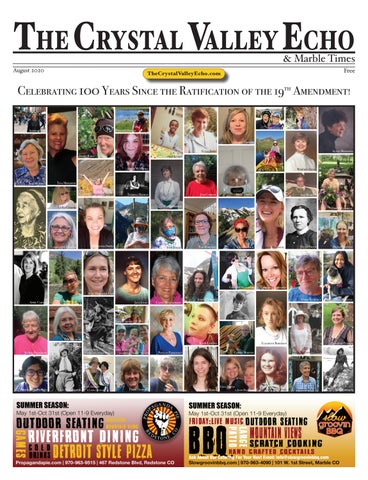
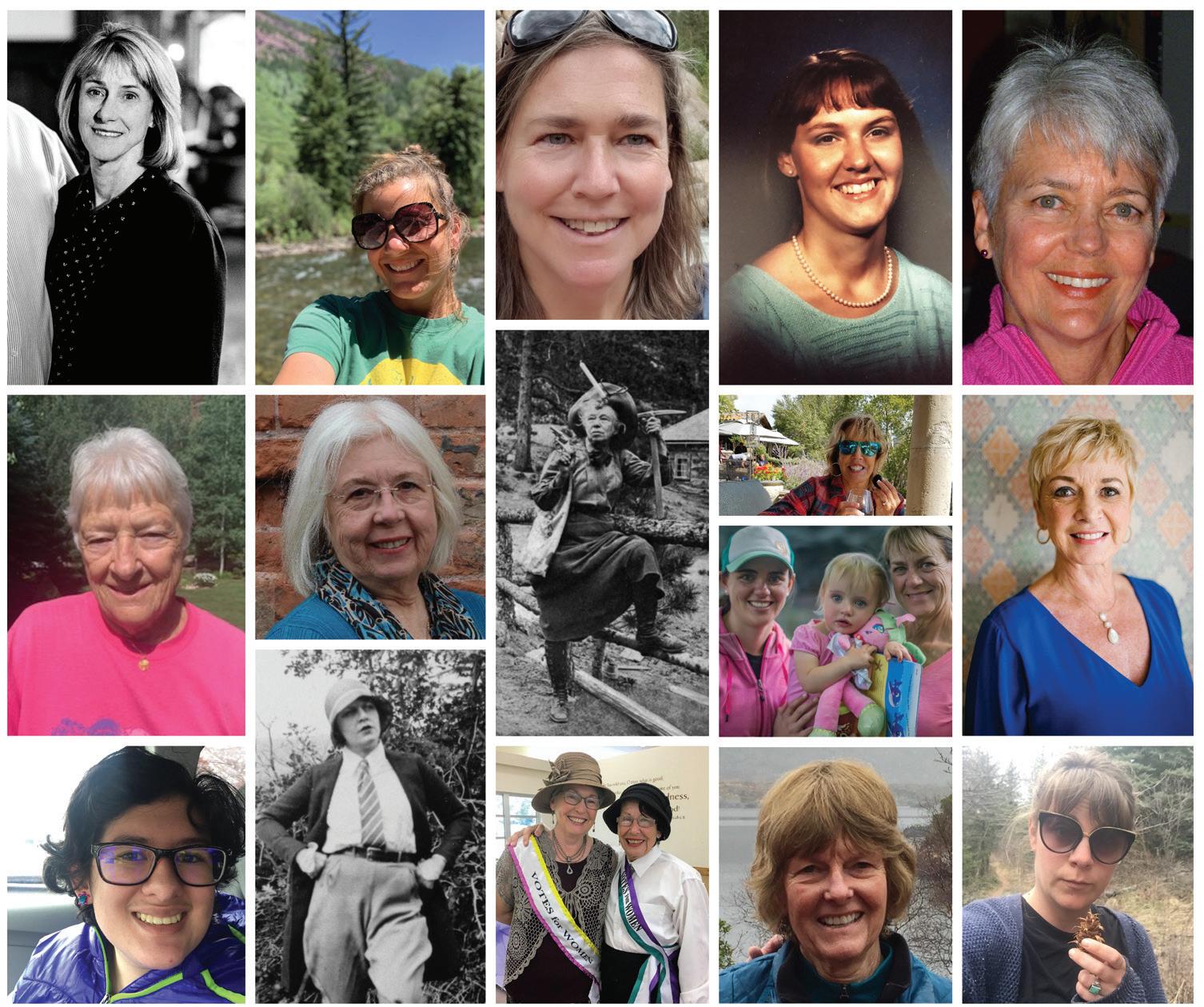
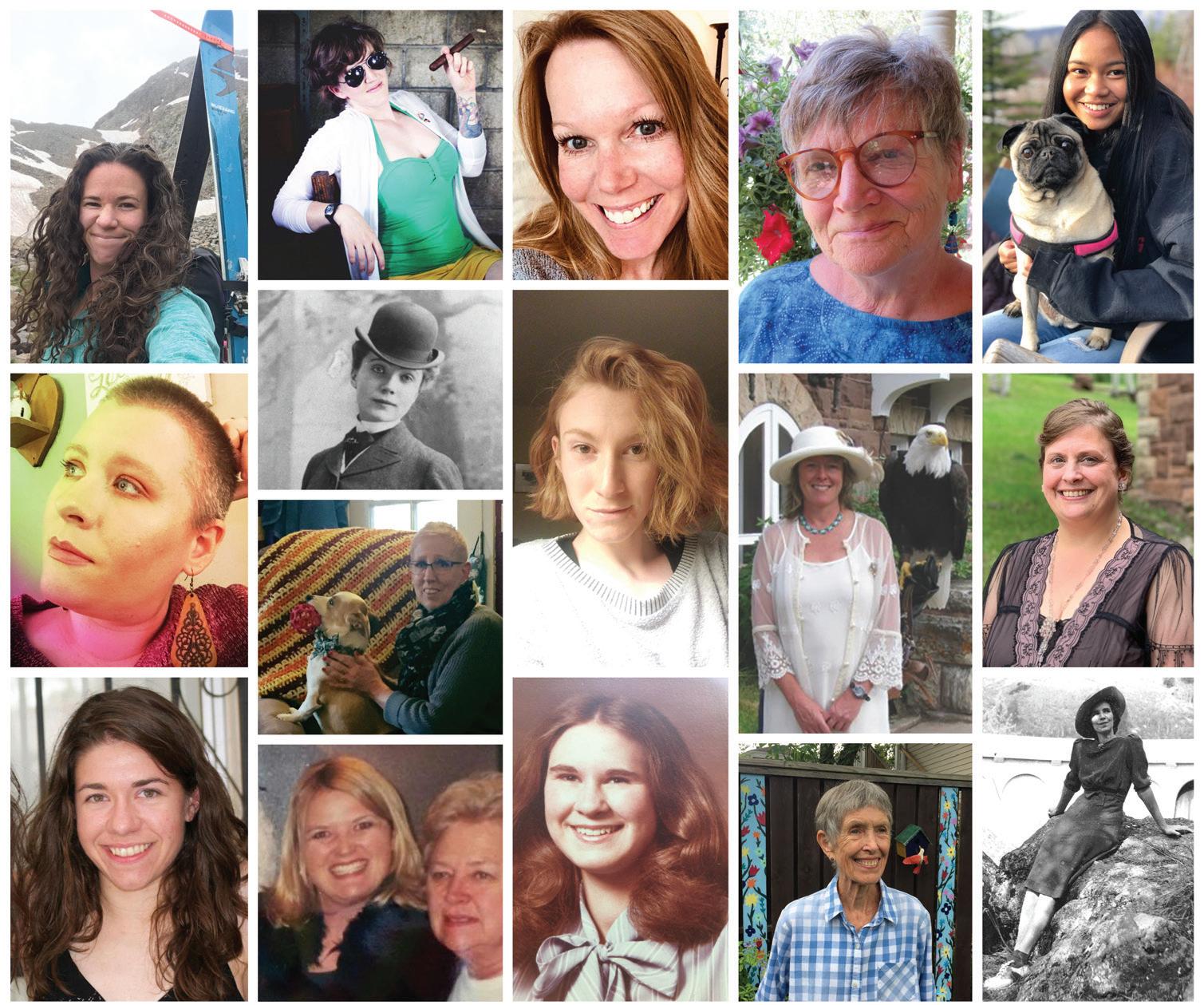
We here at The Crystal Valley Echo are thrilled to be celebrating the sacrifices made by those 100-years ago to gain women the right to vote, even though minority groups, mainly in southern states, were still restricted.
The Women’s Suffrage movement began before the Civil War and met many roadblocks along the way. In the mid-to-late 1860s, the movement began gaining steam in the United Kingdom, and many American women hopped the pond in support. By 1868, the 14th Amendment was ratified, extending Constitutional protection to all citizens including former slaves, but defined citizens as male
Originally, the language of the 15th Amendment gave all citizens the right to vote; however, due concerns regarding ratification, it was tailored and later accepted to the Constitution as only giving African American men the right to vote. An act that seems to have merely furthered the sentiments of racism in our country. With growing hesitations for the public’s view of their cause, women of color were repeatedly asked not to participate in Suffragette Movement events.
On November 7, 1893, Colorado became the first state to enact women’s suffrage by popular referendum granting women the right to vote “in the same manner in all respects as male persons are.” Jumping forward to early 1916, the Suffrage Special embarked on a five-week train tour to garner support from women who already had the right to
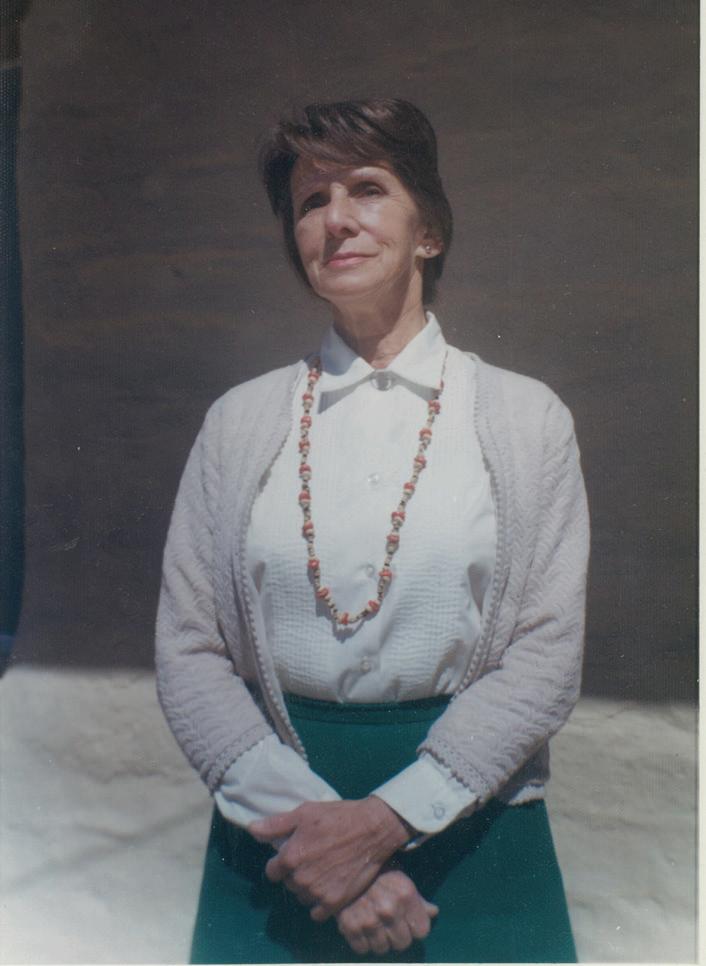
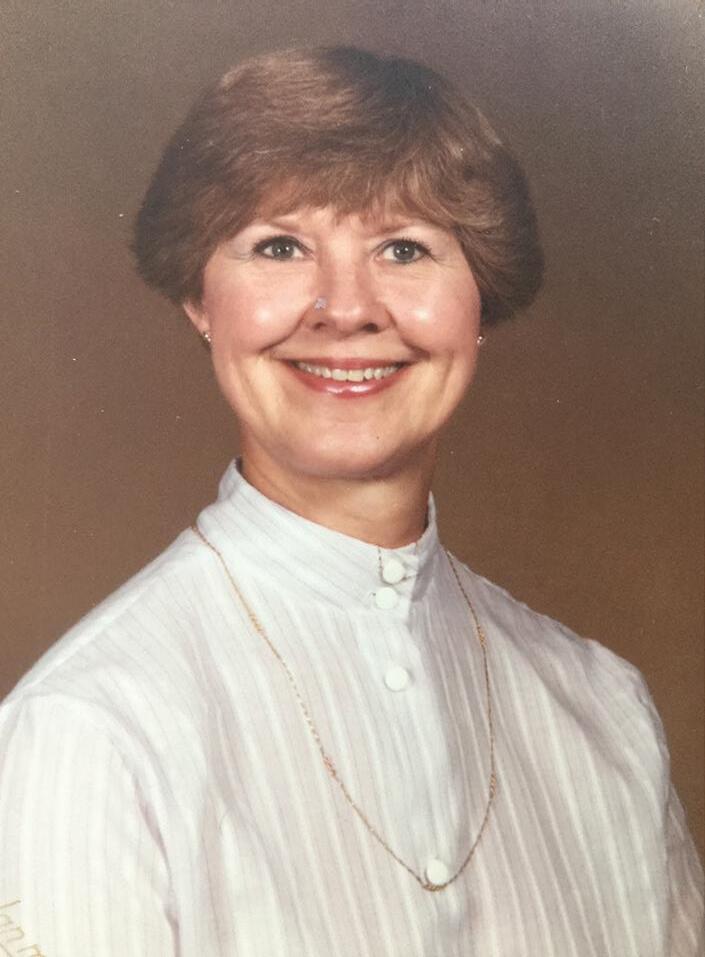
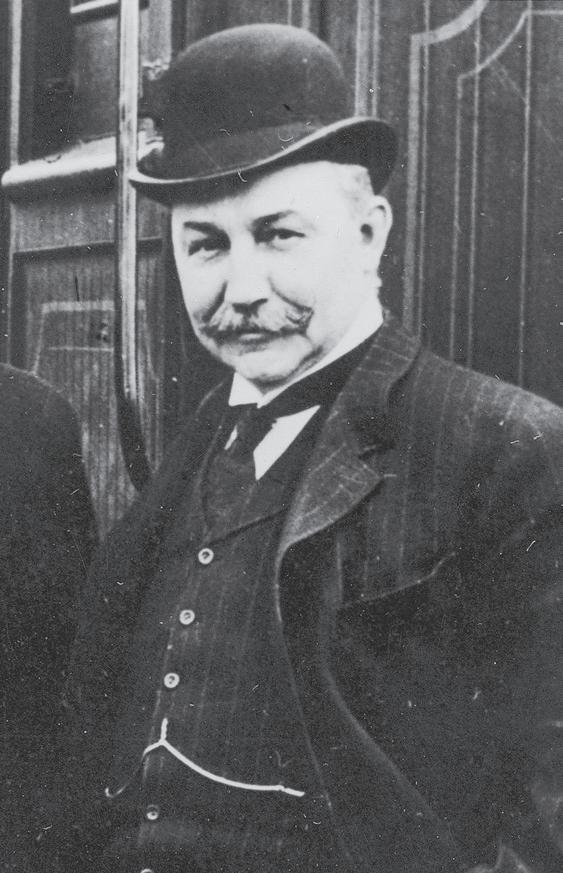
Paula Mechau, wife of the artist, Frank Mechau, and Redstone resident until her death in 2005. Her love of Redstone and the Crystal River valley began one day in 1937 when her husband brought her to the nearly vacant village. She was enchanted and declared it the place she wanted to live and raise their children. And so they did.
She was a lioness in defense of the valley from any threats to its beauty and integ-
vote, and included stops in Colorado. Those on the tour included 23 Congressional Union for Woman Suffrage members. However, this campaign was largely unsupported as the women of the west simply did not care for a cause that seemed to only benefit women of the east.
In the last years of battle, women were jailed for picketing outside of the White House, the most militant display from the movement. Inside their cells, the Suffragettes launched a massive hunger strike in which they were brutally force-fed for five weeks! The national amendment was finally ratified on August 18, 1920; the amendment did extend the right to all women, yet it was not applied equally throughout the states. It wasn’t until the Voting Rights Act was passed in 1965 that all American citizens, regardless of race or gender, gained the right to vote.
Today, I’d like to take the time to recognize the sacrifices of all women before us and celebrate women of today. We may enjoy many freedoms within this country, but those rights have always and will always come at a price.
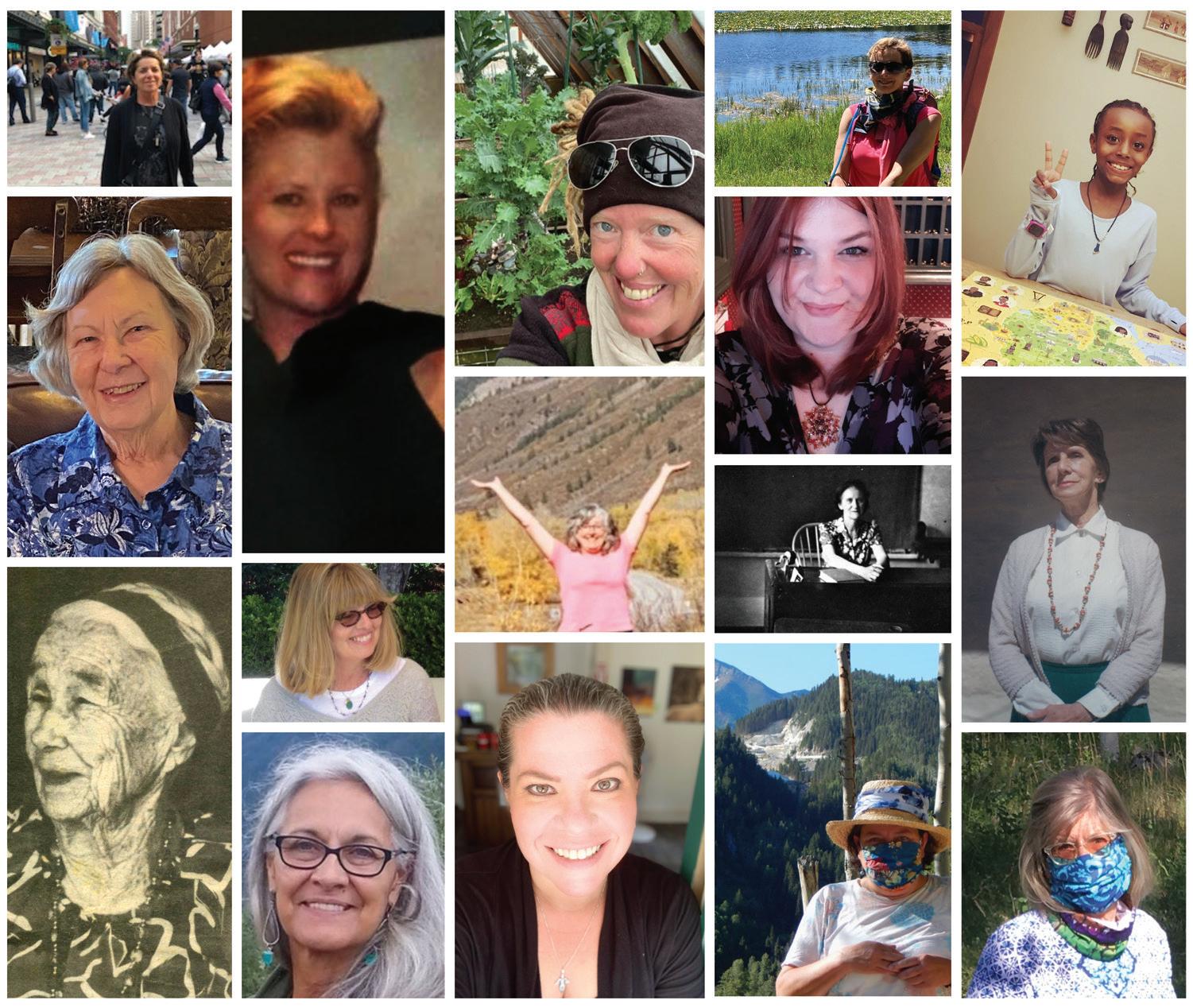
I also want to thank the 64 women you see on our cover, past and present residents, for your help in making the Crystal River Valley such a special place; I am honored to be among you, and, below, we’d highlight a couple of unique submissions we received.
Gentrye
Houghton, editor
rity and effective in persuading others to join in that effort. To those ends she was a sustaining force in the Crystal Valley Environmental Protection Association which mounted opposition to the Marble Ski Area, the Placita Dam, and support for Wild and Scenic designation for the Crystal River.
Paula was widowed in 1946 with four young children; she resourcefully created a family singing group to help make ends meet by performing folk songs and ballads before various audiences. Over the decades of her life in the valley she devoted much energy and passion to protecting and preserving its great beauty for generations to come.
- Michael Mechau
Paula Mechau was born before the women's suffrage debates, but was too young to participate. That was fortunate for those taking the opposing side. Her personality, outspoken public comments, and persistence gave her an influence on local affairs, that far exceeded her diminutive size and her one vote. She was active in opposition to the proposed Placita Reservoir, kept watch on Mid-Continent's coal mines, and frequently gave her opinions to the Pitkin County Commissioners.
However Paula did lose one battle. In 1971, she actively opposed formation of the Redstone Water and Sanitation District. She believed expanded water and
Mission Statement: To provide a voice for Crystal Valleyites; to bring attention to the individuals and local businesses that are the fabric of the Crystal Valley region; to contribute to the vitality of our small town life.
Editor • Gentrye Houghton
Publisher • Ryan Kenney CONTRIBUTORS
Charlotte Graham • Amber McMahill
Russ Cunningham
ADVERTISING SALES
Gentrye Houghton • 970-963-1495
GentryeH@hotmail.com
DISTRIBUTION
The Crystal Valley Echo is published monthly, and is distributed throughout the Crystal Valley.
NEWSPAPER BOX LOCATIONS:
Carbondale City Market (inside) • Village Smithy
Carbondale Post Office • Redstone Inn
Propaganda Pie • Marble Hub
FOR SUBSCRIPTIONS
Please send $40 for print or $25 for digital editions along with address information to:
The Crystal Valley Echo 364 Redstone Blvd. Redstone, CO 81623
sanitation services would lead to rampant development, which did not occur. Yet in the context of the early 1970s, her fears were justified. Gunnison County was giving preliminary approval for thousands, yes thousands, of lots for the Marble Ski Area and a would be Redstone developer was speaking of a row of condominiums, from Redstone to the Castle.
- Bill Jochems
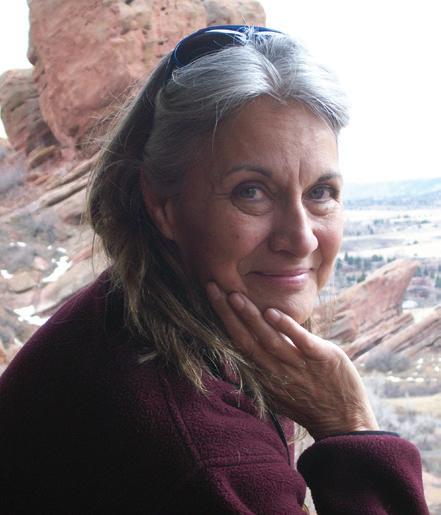
The Jones family first fell in love with the valley in 1960. For two weeks in August, they would tent camp in Bogan Flats. Then in 1976, they purchased three lots across State Street from the Marble Church, and during the summer of 1977, the Jones’ leased the Marble General Store from Bill Deem. Two of their daughters, Susan, age 12 at the time, and Kathlynn, age 16, operated the store, while their son Michael helped build their family home.
Towards the end of that year, Deem offered to sell the store, and, for the next 30-years, they opened and operated the store from Memorial Day until Labor Day. In 1988, they purchased the land across from the store on Park Street and developed Meri-Daes RV Park. When Susan and Kathy had graduated from college, married and moved away, their daughter-in-law, Jane Dick Jones, in which their son had a fortunate meeting during Jane’s visit to Marble, and the two took over the General Store until they finally sold both the park and store in 2007.
They were active members of the church and the Historical Society, and continue to maintain their vacation home in Marble where their children and grandchildren love to spend time there. - Meri Jones
This Redstone couple’s story unfolded such as to make me think of a boomerang. Here’s why.
Darrell and Jane first ventured up the Crystal Valley in the early 1970s. Jane’s father had bought a rustic cabin on Capital Creek, near Snowmass. “My father loved Colorado,” she said fondly.
They’d come out during summers, and occasionally winters too, from their home in Canyon, a small town named for the Palo Duro Canyon in the Texas Panhandle.
ested in John Osgood and Redstone. I wanted to do more work on him. He is very important in national history, and certainly to Colorado, but was a largely forgotten man. I [wanted] to reintroduce him — where he belongs.”
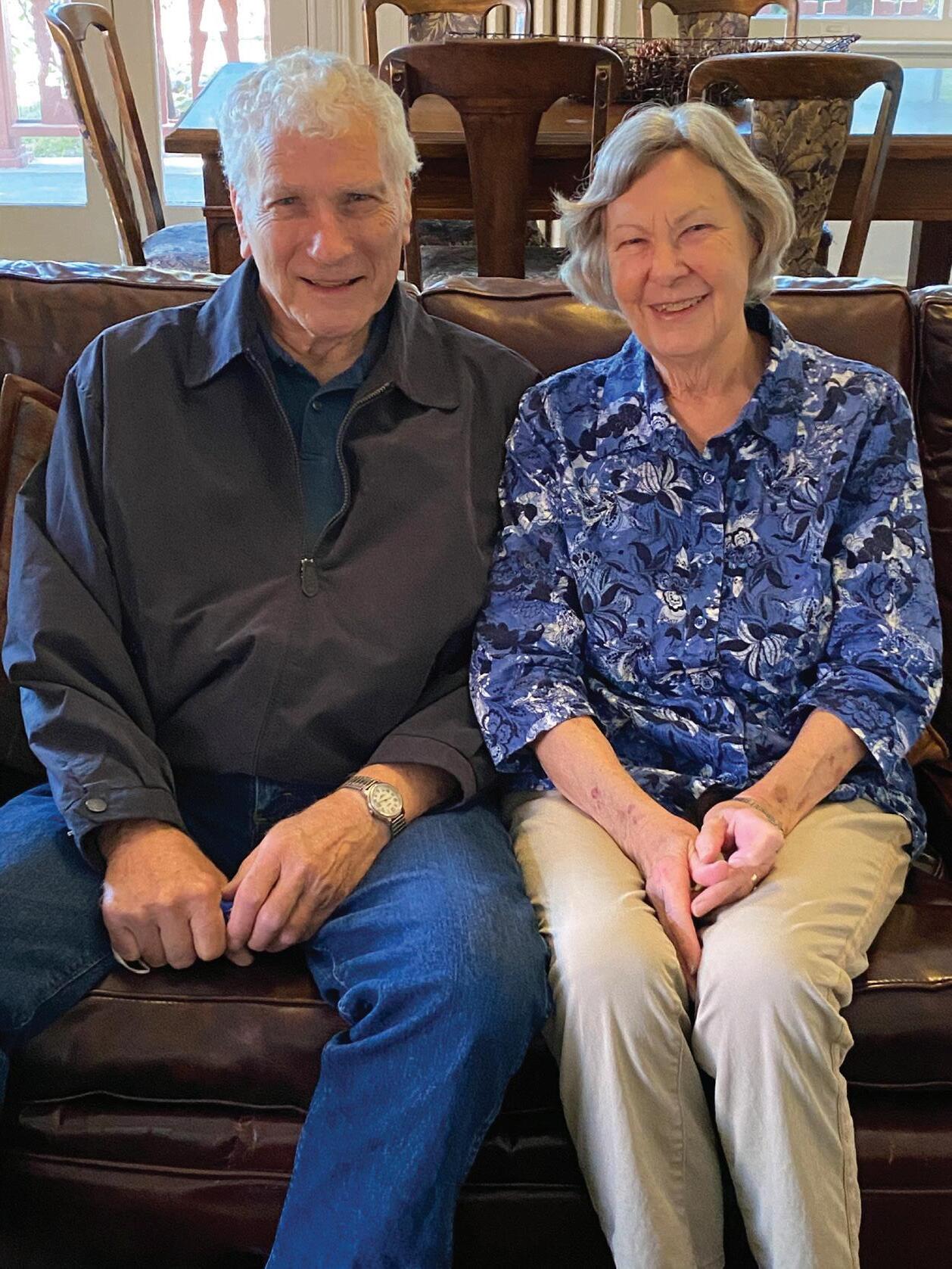
Jane recalled watching John Denver perform his Colorado love songs on one side of the valley as she and Darrell explored all around the other ends of the Roaring Fork and Crystal rivers.
Darrell said, “Redstone was really quiet then. Carbondale’s Main Street wasn’t even paved.”
Twenty-some years later, they bought a house on the Crystal River across from BRB (now KOA) campground. They rented it out until they retired and moved here full-time in 1997.
I caught up with them at the Redstone Inn recently, just as they were packed up to head back to Canyon, going back home for the “greatgrand” phase of their lives.
“We have a six-month-old grandson. Of course, he’s darling, precious, all that. We’re looking forward to time with him,” Jane said.
One can only imagine how occupied he will keep them. Good thing we had them here first. Because they were sure busy during what I’d call The Munsell Retirement Years, Colorado edition
In their 24-years here, Darrell penned three local history books, beginning with From Redstone to Ludlow, to Colorado Artist Jack Roberts: Painting the West, and his latest, Protecting a Valley and Saving a River about the imitable Crystal Valley Environmental Protection Association (CVEPA.)
They both had strong backgrounds for these gifts they’ve left for the future generations of this Crystal River Valley.
Darrell left West Texas A&M University, in Canyon, as Professor Emeritus where he taught modern English and European history.
Jane also taught high school English, Advance Placement, and was head of that department for years. “My interest was always in Literature and English and a lot of historical background. We found a common bond in research and finding information about everything.”
Darrell added, “When we moved here, I had no plans to research or write, but I became inter-
Jane was right there with him along the way as a chief researcher and editor.
Darrell looked to his wife of 57-years, “She was marvelous with [the research on] Osgood’s three wives.” Little wonder. Jane had become a tour guide in 2001 at Redstone Castle and worked along with Sue McEvoy and Michelle Sorter to help bring to life the John Osgood era.
“I first went through the Castle in the mid-70s when Ken Johnson owned it. I loved the area. I had no idea we’d be back and [that] I’d be included in Darrell’s research. It was almost kind of a fated thing,” Jane mused.
Another fated, maybe even magical turn of events, she described before they even had any idea of the future, was how, in January 1995 before moving here, they happened to stay at the Redstone Castle for a night.
Jane said, “The Castle was beautifully decorated for Christmas. We stayed in the Morgan Room and were the only people there that night. We wandered around, feeling like the lord and lady of the manor. It was a really exciting event.”
Before they left the valley, they were able to return for another night — in the same room.
“It was like a grand finale of the Osgood era for us,” Jane said. “April and Steve Carver made it a very special evening. We are so thrilled with what they’ve done bringing it back to life. A marvelous job.”
Carvers have a history as knowledgeable and responsible hotel owners. Darrell said, “They have maintained the historical integrity of the building. [The Castle is] such an important component to the local history and the community is so fortunate to have that here.”
Darrell would know, as he was president of the Redstone Historical Society in 2003 when the IRS came in and seized the Castle from a previous owner … and everything in it.
“The Society was shocked. We had to do something. The community did not want someone to come in and build condos out of it, which some thought was a good idea at the time. Ultimately, the Society was able to save the Castle. That was really important to us. The Castle is one of the very few buildings that included interior historic easements.
“We didn’t want the Tiffany chandeliers to


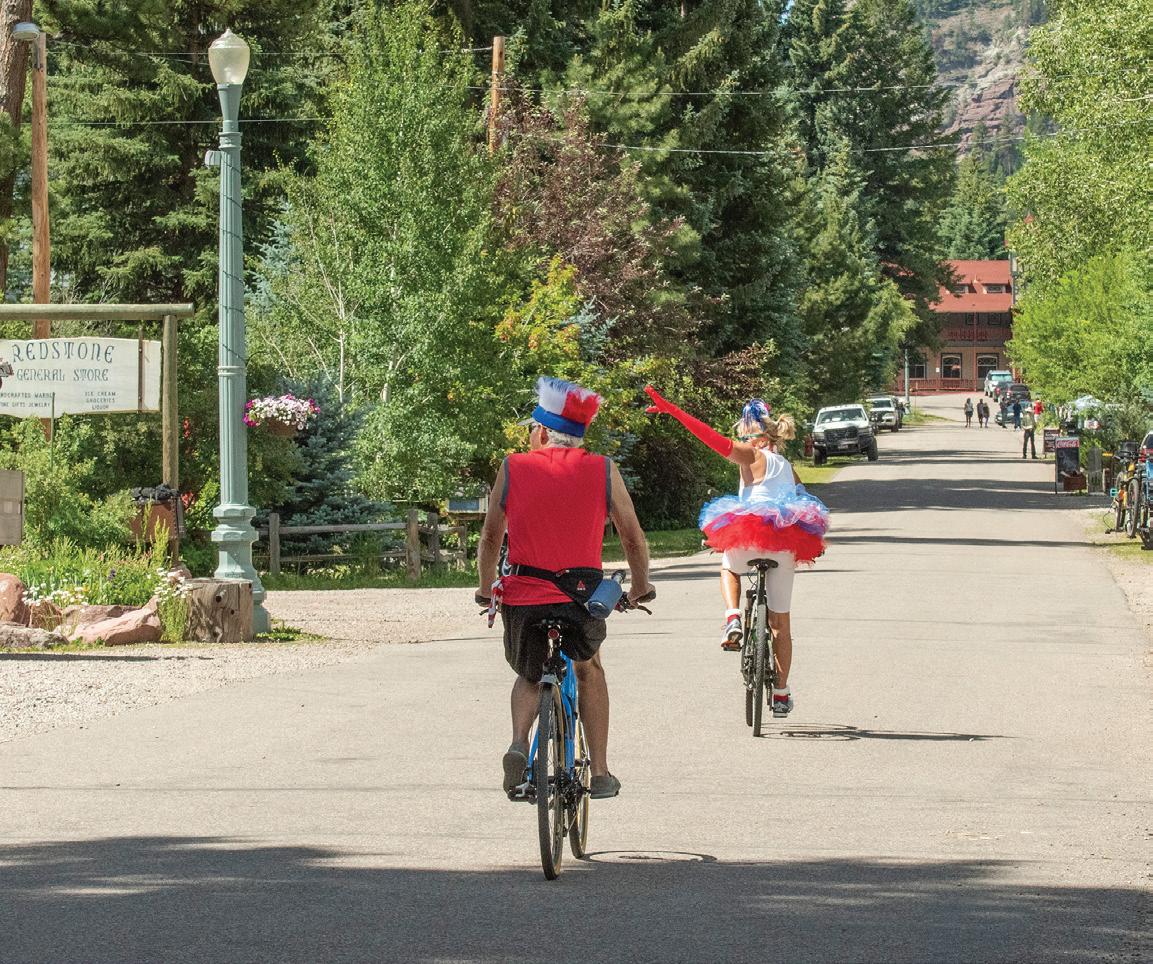
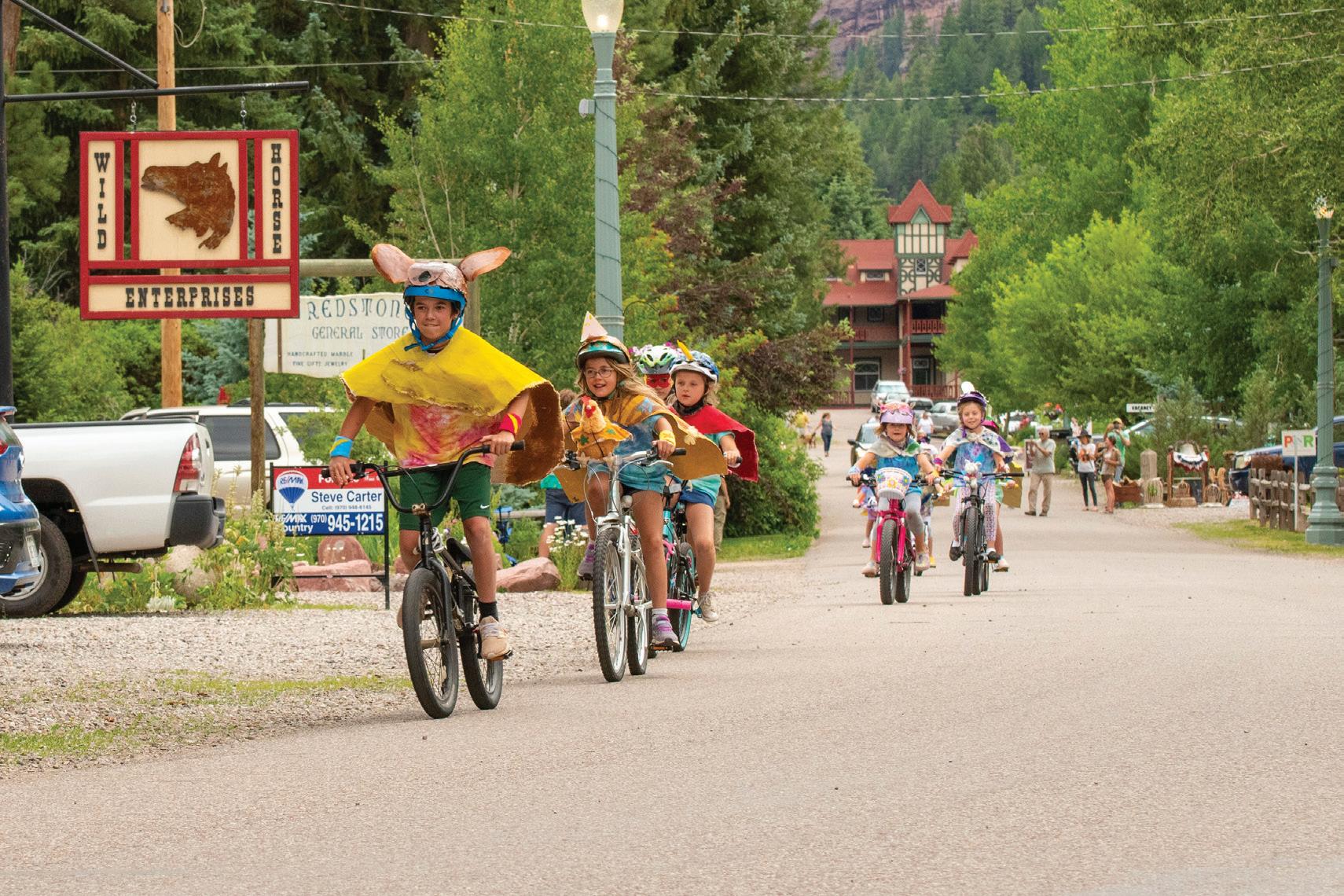
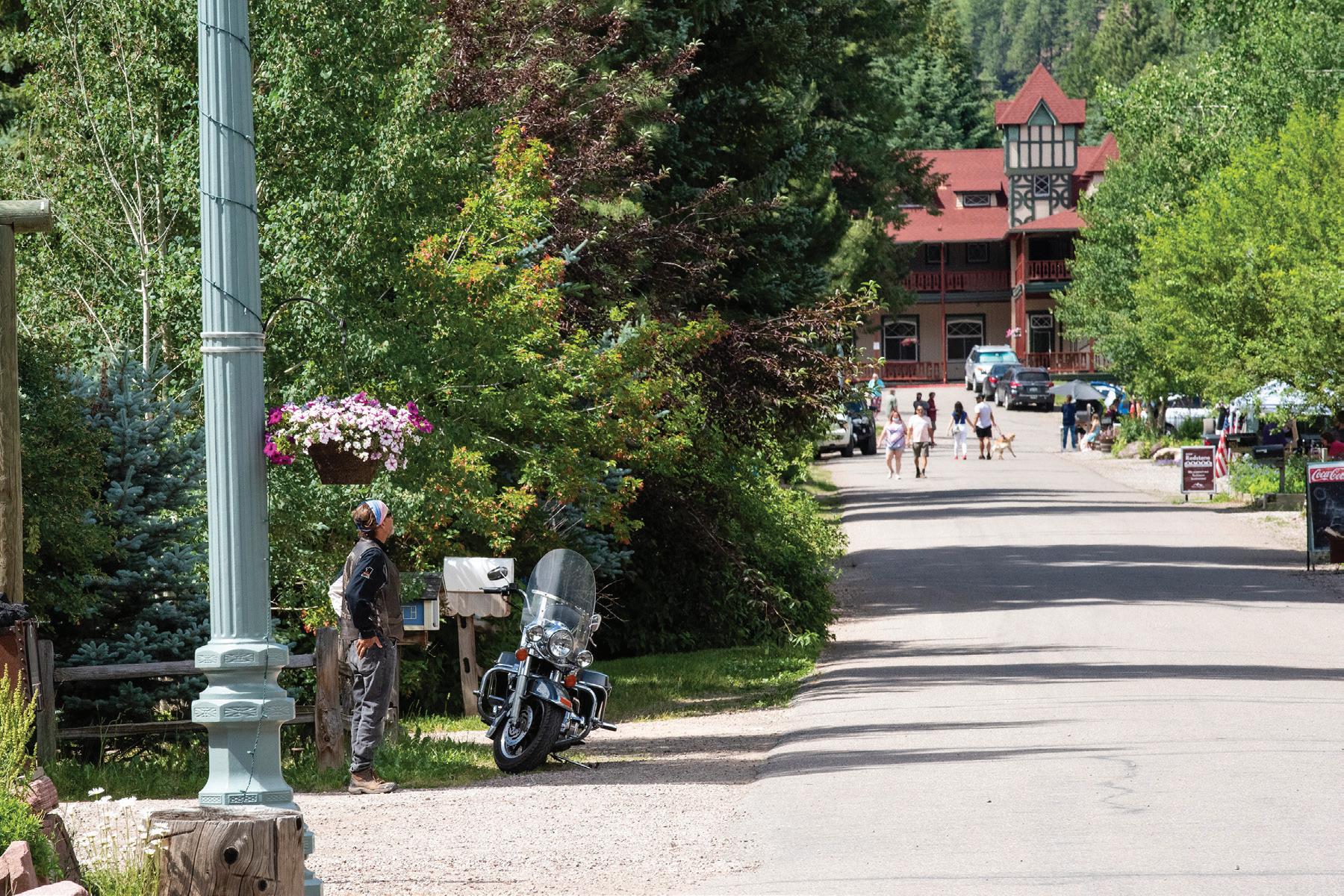
Above and Below: The Yellow Canary summer art camp spent a week making superhero animal cosutmes, and then road down the Redstone Boulevard on July 2nd
"Thank you to Sonya Moore for an awesome, festive social distancing camp," wrote Kirsten Pamp-Friel on Moore's Facebook. "These kids were so happy to swing into a tad bit of normalcy and a Redstone parade to boot!"
disappear,” Darrell added.
Once the Osgood book was published in 2011 and they'd joined the Redstone Art Foundation, Darrell’s local history fascination shifted to Redstone artist Jack Roberts.
On an RAF tour of Robert’s art studio, he met Gary Miller, Jack’s son, who bemoaned the fact that he had “all these papers” of his dad’s and didn’t know what to do with them. Darrell looked through them and asked Gary, “Do you mind if I write a book on Jack?”
Gary answered, “Tell the story, warts and all!” Darrell winked at me with a smile, saying he was paraphrasing Gary’s actual response. “Oh, yes,” Jane said. “Everyone had a story about Jack Roberts.”
When I asked the highlights of their life here, Darrell and Jane responded, intertwining their thoughts and answers as only 50-plusyear-partners could.
“We are a bit unusual in that we don’t ski, we don’t fish, we don’t hunt, and we don’t golf. Some would ask, ‘Why are you here if you don’t do any of those things?’ We just enjoy the scenery, the lifestyle—“
“— The beauty of the valley, the rivers, the trees, there’s a magical quality of being part of Redstone; the rich history and the people we’ve met here. We’ve enjoyed every bit of it.”
When Jane mentioned the part about the all wonderful people they’ve met while living here, it turns out our Echo editor, Gentrye Houghton, is one of those people.
Gentrye’s father, Don Houghton, and her grandfather both were Doctors of Optometry in Amarillo, about 20-miles from the Munsell’s home in Canyon. Their family were patients of Dr. Houghton’s during the Texas phase of their lives. They even returned to Amarillo for their annual eye appointments until Doctor Don retired in 2017.
Gentrye got to know Jane once she joined one Redstone Book Club in 2018. She remembers Jane saying, “Dr. Houghton was the only one who could ever figure out what to do with my eyes.” A sentiment she’s heard all her life by the majority of his patients. Seems everyone loved him for his devotion to each and every one of them.
See what I mean by Munsells reminding me of a boomerang? As we parted, Darrell and Jane assured me they would return to the Crystal Valley again, and I believe them.
“It’s been 24-years of bright light here,” said Darrell. Then added, “It’s been a good ride.”


Years ago I built a birdhouse, and hung it on my workshop wall, And swallows flew right in and nested, violet green they were. Year after year they always come back, generation by generation. We have a symbiosis, they give me pleasure, and I give them protection. Swallows hunt in graceful curving swoops, that I delight to see, And fledglings in their nest are safe, as long as I’m around.
But we have a curious conflict in our relationship. The birdhouse hangs only a few feet from my workshop door. In and out that door I go, several times a day and they protest. And I mow the grass right under their house and that upsets them too. Swallows dive down on me like strafing Luftwaffe, right for my face. Yet they keep nesting, I keep mowing, and they keep protesting.





- Bill Jochems



by
The first groups of humans to visit the Crystal River Valley traveled on foot and horseback. Eventually, wagons and stagecoaches offered a new, but still uncomfortable, method of transportation in the valley.
As early as the 1880s Crystal City’s newspaper, The Crystal River Current, said the talk of the day was for better transportation.
In the East, railroads were hauling passengers and freight in relative comfort. But constructing railroads in the mostly mountainous and still “wild” West was difficult and expensive.
In the 1880s and 1890s, several railroads were created in the valley. Some were only paper companies while others actually raised funds and began construction. A few became legitimate railroads and fulfilled a desperate need.
track. Still, the firm created a grade for the railroad that followed the Crystal River. Much of today’s Highway 133 follows along and on top of this grade.
The first railroad to actually be constructed in the valley was the Aspen and Western, incorporated in 1886. The 13-mile railroad was built at a cost of nearly $400,000 and connected Carbondale with the mines on Thompson Creek.
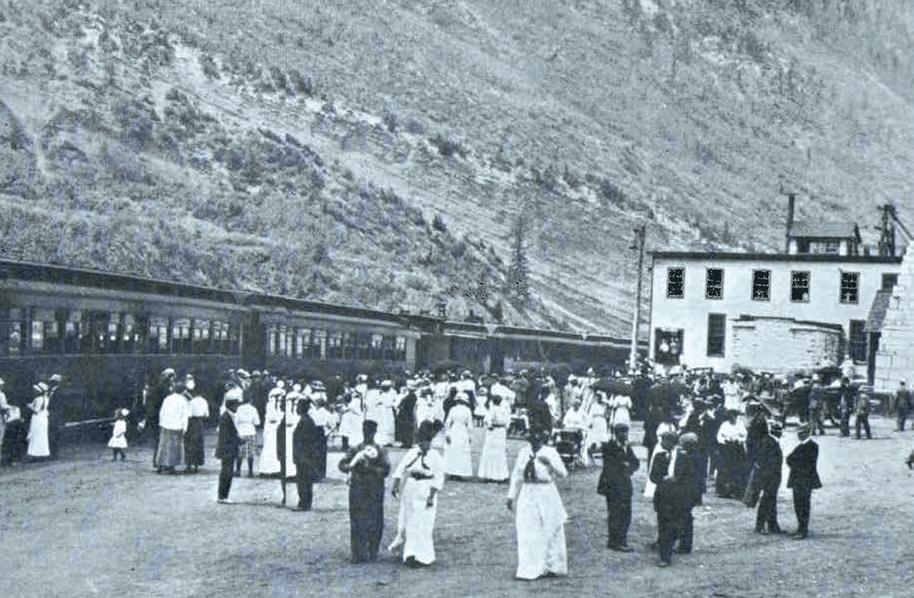
In 1892, the Crystal River Railroad was incorporated. Called the Columbine Route by Osgood, it combined the properties of the Elk Mountain, the Aspen & Western, and the Colorado & Utah railway companies and the Crystal River Toll Road Company.
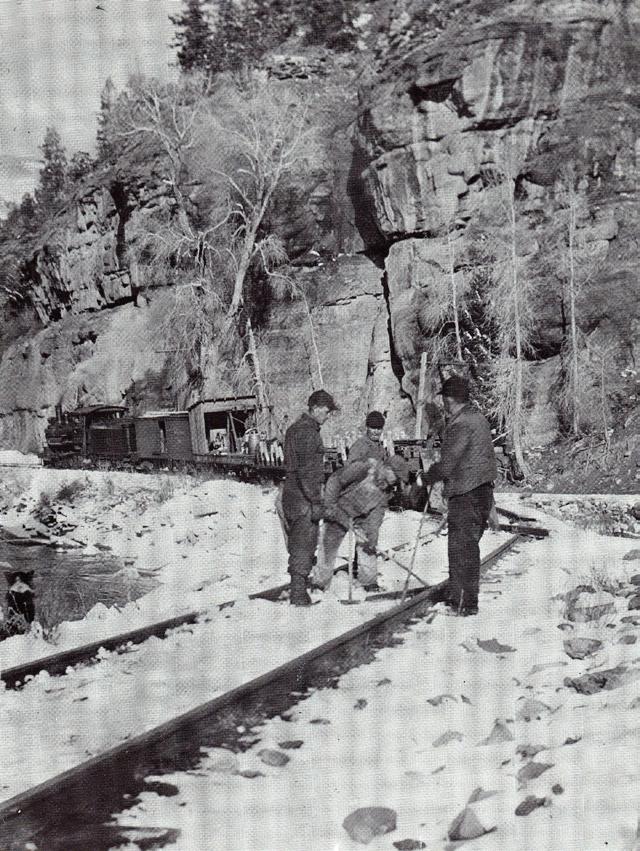
as roads and highways were built and improved, and when large trucks began the job of carrying coal and marble, the railroads began the laborious job of removing the track and heavy ties.
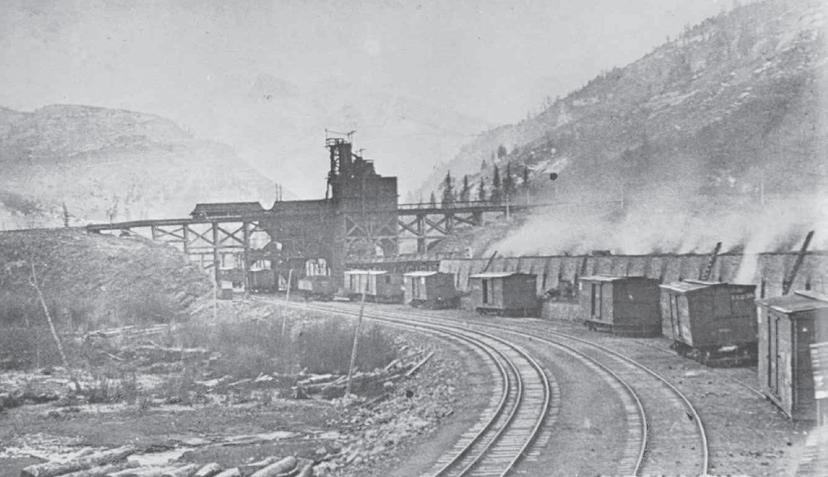
Evidence of the importance of railroads to the valley is seen in many locations along the river which show deteriorating railroad beds – in some places two beds are visible, one above the other. In addition, the row of coke ovens along the highway just outside Redstone gives mute testimony to the history of coal mining that once defined this small community.
Now, the Crystal River Valley has entered a new era that has been built less on coal, marble, and other ores and more on its history, beautiful scenery, and outdoor recreation.
The history of railroading in the Crystal Valley is complicated. This article touches only briefly on some of the highlights and illustrates how the “iron horse” impacted the valley.
In April of 1887, the Aspen Daily Times reported “there is no part of the state of Colorado that has greater resources than has the Rock Creek Country [in those days the Crystal River was officially known as Rock Creek]. Though this territory has been but little explored, its value is by no means unknown. Four railways-- the Midland, the B and M, the UP and the Aspen and Western -- all have lines surveyed up the valley and there is considerable grading done.”
A few years later the Aspen Daily Chronicle quoted John Torrey, a deputy road overseer, about the Rock Creek wagon road. “Mr. Torrey represents that the Crystal River Railway company, in building its line along the wagon road, has in many places obstructed said road as to make it impassable.” He said the County Commissioners needed to take steps “for the correcting of the evil.”
In the early 1880s, Midwestern financier and founder of the CF&I Steel Corporation, J. C. Osgood, purchased large bodies of coal lands and potential marble quarries in the southern part of the valley. At the same time, there was considerable coal mining up Thompson Creek, a few miles south of Carbondale. Railroads were urgently needed.
In 1886 the Colorado and Utah Railway Company authorized $1 million of capital stock and purchased right-of-way from Carbondale to the head of Coal Creek, west of today’s Redstone. By 1892, Osgood and CF&I controlled ownership through stock purchases.
In 1898, this railroad was purchased by the Crystal River Railroad Co. It consisted of a standard gauge line from Carbondale to Placita, and also included the Coalbasin Branch – or “High Line” as it was called – which connected Redstone with the mining town of Coalbasin, some eight miles to the west at an altitude of 9,500-feet.
With the advent of this new railroad, the company asked the Department of the Interior to change the name of Rock Creek to the Crystal River, as there were already at least ten streams named Rock Creek in Colorado.Although it had long been called the Crystal River, the name was officially changed in 1901.
Other railroads were formed and actually existed for varying lengths of time before the nationwide Panic of 1893. This event affected several areas critical to the state’s economy: Railroads, farming, and silver. In the 1880s, almost unfettered expansion had included the building of railroads, but in 1893, several major railroads failed and a financial panic ensued.
When the Federal government repealed the Sherman Silver Purchase Act the price of silver dropped precipitously from 82 cents to 62 cents per ounce. The era of silver mining was coming to an end and, with it, the decline of railroading. Soon,
Larry K. Meredith is the author of This Cursed Valley, a novel about the Crystal River Valley from 1880 to the 1930s; Cast A Giant Shadow: Hollywood Movie Great Ted White and the Evolution of American Movies and TV in the 20th Century; and Real, Rural: Growing Up Rural in the 1950s


COVID-19 has many of us uncertain. Everyone is handling the pandemic differently, and many of us are struggling because of it. I would like to help with that.
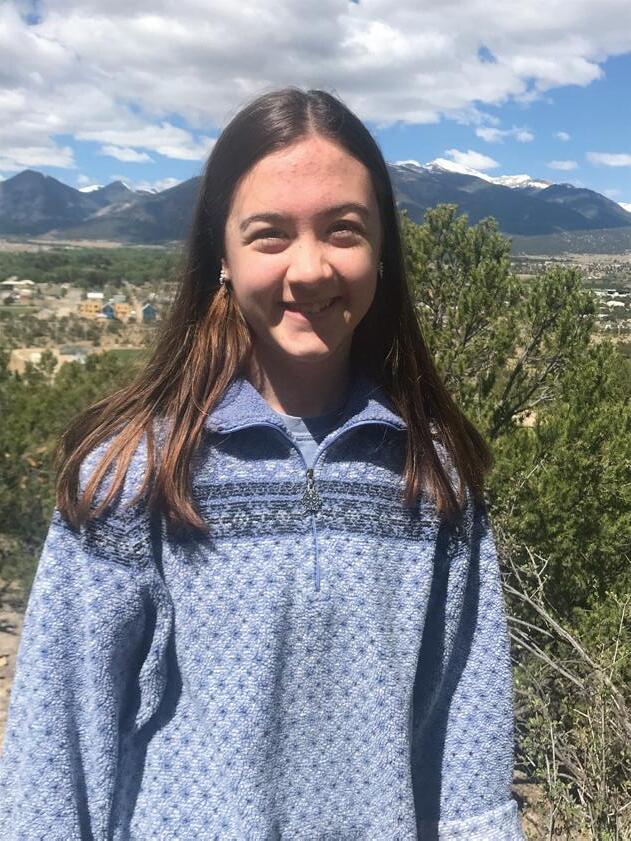
My name is Sophia Moon. I am going into my senior year at Roaring Fork High School, and I’d like to give you a chance to help our community by giving you an opportunity to nominate someone you know who may be going through hard times. They’ll be put in a drawing for a $1000 City Market gift card and multiple $500, $200, and $100 City Market gift cards. There will be many winners, and the person you nominate will have a great chance of winning. I am calling this “Love Redstone.”
Love Redstone was created to help spread love and kindness throughout the Redstone and Marble area. By nominating someone, you are thinking of others, caring for them, and showing them love. Love is something that we need to get through a time like this, so I encourage you all to participate.
I have partnered with the Church at Redstone to make this drawing possible. They have helped out a tremendous amount and I couldn’t be more grateful. But I also need your help. If you can, donate to Love Redstone to help us give away more gift cards. Help us love our community more. Remember, the more donations we receive, the more gift cards to go around. That means more winners!
We greatly encourage you to nominate someone you know who is struggling, possibly financially or emotionally. Please make sure they live in the Crystal River Valley, from the KOA campground to Marble. Just think about how happy and grateful they would be to receive a gift like this and to know someone has been thinking about them. Everyone needs a good boost of morale every once in a while. And besides, love is what it's all about!
So, how do you nominate someone?
Go to www.churchatredstone.com/loveredstone
*You may only nominate people who live anywhere from the KOA campground to Marble*
The deadline for nominations is 11:59 p.m. on August 31st. We will be drawing names on September 1st!
How to Donate:
Send an email to LoveRedstone2020@gmail.com and we will connect with you with information on how to make a donation. The deadline for donations is 11:59 p.m. on August 20th
Marble... A salon experience in a natural setting.
Redstone... a convenient location for all your beauty needs.


Marble's newest business owner, Nicole Farrell, knows a lot of really sick kids. In 2017, her oldest son Colton was diagnosed with Medulloblastoma, a cancerous brain tumor often found in children, when he was 5-yearsold. Since then, the Farrell family has endured one of the most intense journeys a family could go through.

"It was something we both loved doing,” says Farrell, “and something the boys could help with and learn. A kind of tradition."
And so, Marble Candle Company was formed.
A portion of the proceeds from each candle goes to fight childhood disease, and they have adopted the phrase "A Light in the Darkness" to define their mission.
and an image of unnamed children in bed gowns. For those whose lives have been irrevocably touched by children afflicted with different diseases, like the Farrell's, the fight becomes both desperate and personal.
"You hear words like Rasmussen Disease, and it can seem so distant. But now, for me, there is a name attached to it,” Farrell says. “I can see a specific child's face - hear their laughter. Just knowing that we might be able to help even one person, to pass it on in some way, it really has become our driving passion."
Amber McMahill
They have prevailed through three years of hospital stays, radiation, hair loss, chemotherapy, and the many staggering side effects, all while trying to create typical childhood experiences for Colton and his little brother Torin. It was a journey that took them from their home in Marble to Denver and then across the country to MD Anderson in Texas.
Along the way, they lived in both Ronald McDonald House and Brent's Place, special housing dormitories designed for seriously ill children and their families. It was there that Farrell met all those sick kids.
"It was astonishing to me all the horrible diseases these kids have to deal with,” she remembers, "Colton made some strong connections and still keeps in contact with quite a few of them online.
"We received so much love and an outpouring of support, even from people we've never met. It is both beautiful and humbling to be lifted up like that." Farrell says, recalling times when they had to dip into their GoFundMe account just for gas money to make the long trips to Texas. "You realize that all the little amounts do make a difference, and we kept thinking of ways we could be the helpers — that we could give back."
Her thoughts kept circling back to a past hobby shared by her and her husband of 21 years, Kevin. The two grew up together in New Jersey, where his mother was a chandler, making and selling candles in her store.
"We let Colton and Torin pick the first disease and, of course, they picked Childhood Cancer since that is what has affected their lives so much,” Farrell explains. “My dream is to create a candle for every child we know — that we met — something that really reflects them and that I know they would enjoy, and then all proceeds from their candle would go towards the fight against their disease."
Colton was declared Cancer free in the summer of 2019, and the family settled back into life in Marble. Kevin, a farrier by trade, was able to resume work with clients who had stuck with him through the years of turmoil. Nicole picked up whatever work she could, including bookkeeping, cleaning, and gardening all while experimenting and perfecting their candles.
Even when doctors, who were concerned about "bright spots" apparent in Colton's regular MRIs this spring, placed him back on oral chemo treatments, they kept their dream going. One year and 400 pounds of wax later, they finally launched sales of their candles on July 4th!
"Bob and Deb McCormick let us set up in front of their property on Redstone Boulevard that weekend, and we ended up selling a lot of candles,” Farrell beamed. Since then, DJ, at the Redstone Mountain Mercantile, has let them set up a table to sell candles; The Marble Gallery has also started carrying their candles. She hopes that other Valley businesses are soon to follow.
For many of us, childhood disease is a phrase





We would like to thank Lt. Col Michael Gommel and three fellow pilots from Colorado Air National Guard's 140th Wing for the flyover performed on July 4th! Even if it was a quite day on the 4th, the flyover is one event our community looks forward to year after year.
The F-16 Fighting Falcon launched from Buckley Air Force Base in Aurora before also flying over Monument, Lake City, and Parker.
Gentrye Houghton President Ron Phaneuf Vice President Katie Lowery Treasurer Sara Lewis Secretary
Josh Wambolt David (DJ) Johnson Nathan Helfenbein Steve Pavlin
Alternate Member: Cathy Montgomery
The RCA has created a marketing subcommittee to promote Redstone's accomodations, attractions, activities, and amenities to increase tourism revenues in Redstone. It is responsible for creating, overseeing, and revewing the tourism marketing program of the RCA. Business owners are invited to attend meetings held before the regular RCA Board meetings the first Tuesday each month at 6:00 p.m. at the Redstone Inn. If you have questions please feel free to contact DJ at DJredstone68@gmail.com
Now’s an excellent time for a fresh summer vegetable stir-fry or salad with your greens, and all your hard work should be starting to pay off.
Squash, green beans, and peas should all be ready about now. Pull them as soon as they become ripe. Keeping them on the plant will only slow down production. You may need to support the fruiting branches on your plants as they get heavier, just loosely tying them to a stick can help them to not break under the weight. Vining plants like pole beans, peas, some squash, and cucumbers will appreciate having a stake, trellis, or fence to climb.
Your greens should be producing enough for you to be enjoying salads regularly, and some of them may be trying to bolt, or flower and make seeds. This means it might be a good time to start thinking about a fall crop.
Radishes, beets, spinach, mustard, and onions still have time to produce. Frost may claim some of them if we have an early winter; kale and turnips will produce right up until they are buried in snow, and will green up quickly once they melt off in the spring.
If you planted open-pollinated heirloom seeds you can let some of your flowering greens go to seed and collect them for next year. This is easily researched online and is an extremely rewarding venture.
Some plants, like squash and tomatoes, will not produce unless they’re pollinated. If you are growing inside a greenhouse or an area that is not accessible for our beneficial bug pollinator friends, you can help them along with an artist’s paintbrush.
You may need to look up pictures online to help you differentiate between the male and female blossoms with your squash plants. Once you’ve sexed your plants, take your paintbrush and very gently dab around the male blossom to collect the pollen, then simply swish it around the female flowers.
Tomatoes have male and female pollen within the same flower. Generally, when these plants are visited by bees, the vibrations of their wings and their bumping around trying to get to the nectar bumps the male pollen down to where it needs to be. You can simulate the bee’s buzzing
A Gardening Column by
Vickie Branson and Kari Duame
by brushing the back of an electric toothbrush gently along the flowers, or by carefully moving your paintbrush from side to side just inside the blossoms.
Be sure to remove any dying or decaying flowers, stems, or fruits. These will encourage pests and mold to attack your plants. These are easily composted. While out weeding, harvesting, or just enjoying your garden, make sure you are keeping a vigilant eye for pests and other problems. The earlier you catch an issue, the easier it is to correct.
As the days grow hotter, make sure you’re not watering in the heat of the day. Steamed vegetables are great, but not while they’re still on the plant!
Little droplets of water left on the leaves when the sun is at its strongest will magnify the light and sunburn them. Always check the depth of the moisture before you water again. Seedlings should not be allowed to dry out, but the soil around adult plants should be allowed to dry to about two inches deep before watering.
With all this growing and fruiting going on, it’s easy for plants to become nutrient deficient. If you amended your soil really well in the spring you may only need to introduce a few more nutrients by way of a liquid or top dressing fertilizer.
Signs of nutrient deficiencies include yellowing, stunted or misshapen leaves, spots, and droopy lifeless plants. A good quality fertilizer will help perk them back up. Be sure to carefully follow application guidelines since nitrogen burn is still a danger.
If you are worried about burning your plants look for organic options since they tend to have lower NPK values than synthetic based fertilizers. Make sure to mark on a calendar or journal what days you treated your plants with pesticides or fertilizers.
Gardening is an excellent project to do with kids. Researching to keep up with the inquisitive questions of little ones is a great way to bolster your own knowledge of gardening, and children that help with growing their own vegetables are much more likely to eat them.
If you have space, a small raised bed or
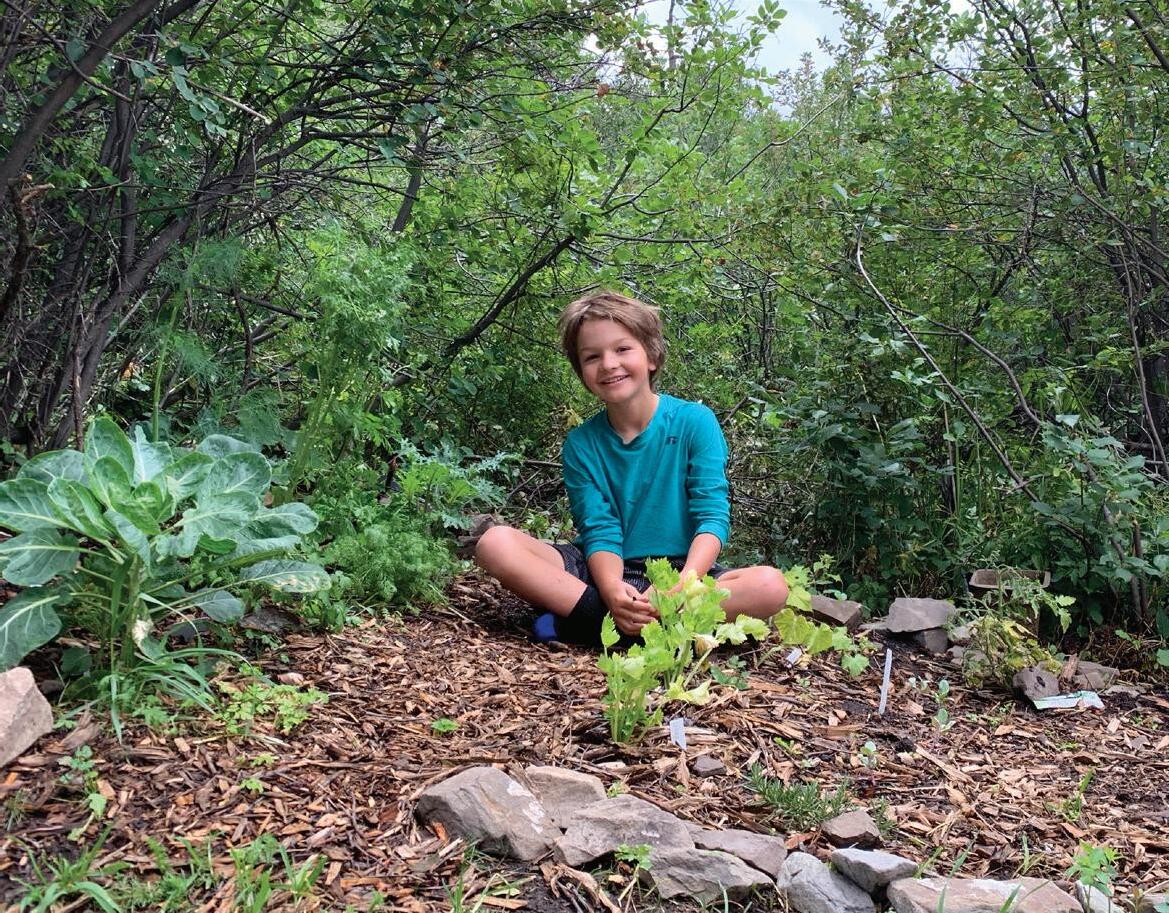
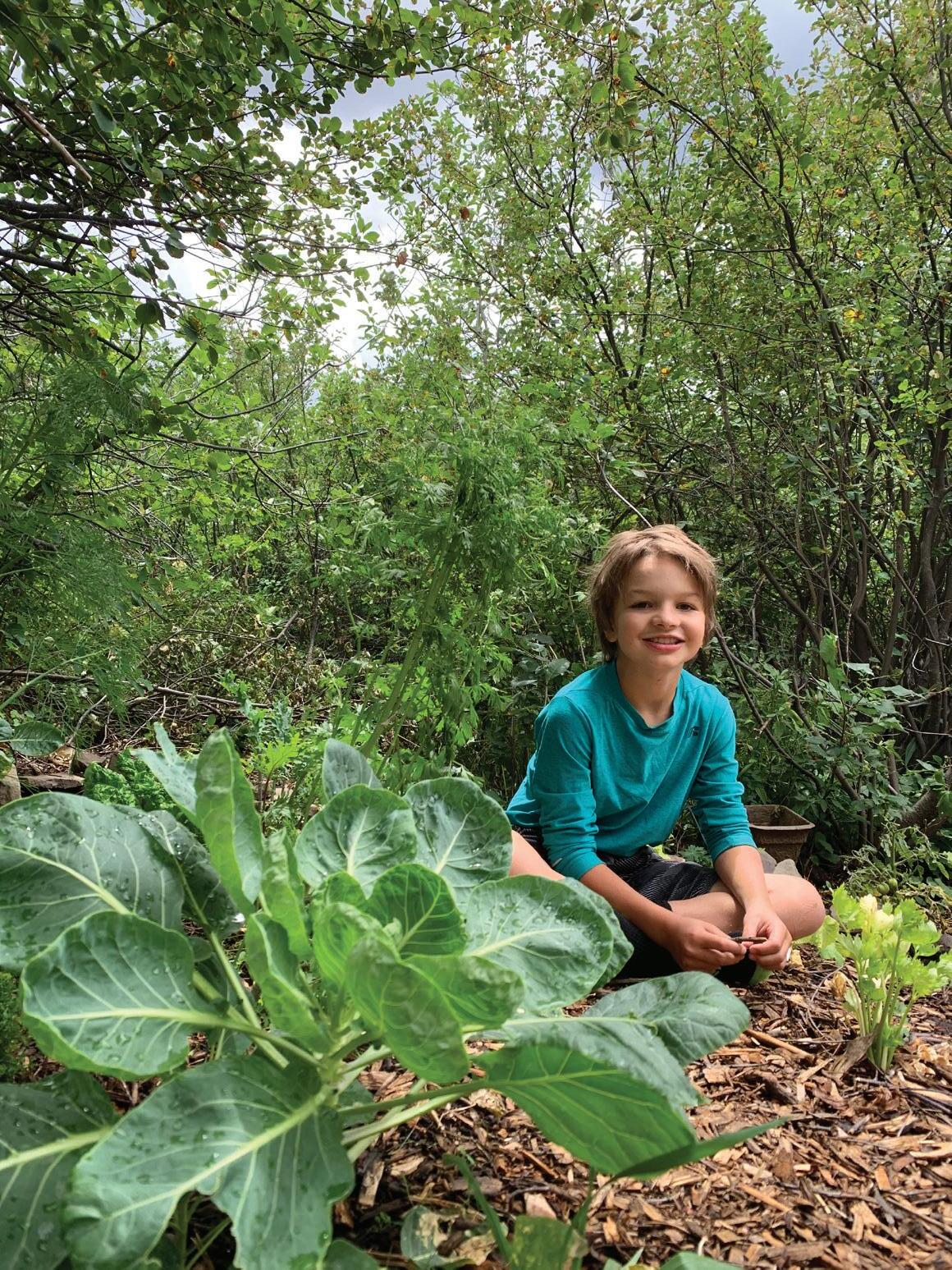
corner of the garden for them to plant things they are interested in is an excellent way to get them involved and teach responsibility. Identifying changes in plants, the differences between beneficial and harmful bug visitors, and documenting the life cycle of their garden also makes an excellent at-home science experiment. Little eyes and ears around the garden might even help you catch things you don’t notice.
Have our gardening tips helped you? Do you have more questions or want to show off the fruits of your labor? Send us an email at mirkwoodgreenhouse@gmail.com
When John C. Osgood built his company town in the late 1890s, he had to give it a name. So in a moment of creative genius, he named it Redstone in honor of the surrounding outcrops of the Maroon Formation.
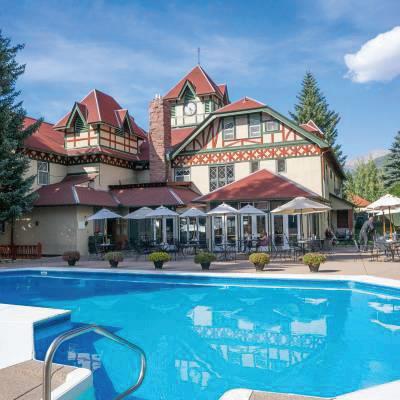
The town afforded his coal miners and their families a place to live, work, and obtain provisions. The cottages were built for families while the bachelors lived in a community boarding house. The community “bachelor pad” was converted to a destination resort hotel in 1926 that we now know as the Redstone Inn.
Gondwanaland, which was comprised mostly of modern-day South American and African continents.
Russ Cunningham
How did the red rocks that line the Crystal River Valley and create the iconic peaks of the Maroon Bells near Aspen form?
To answer this question we will have to fire up Mr. Peabody’s Wayback Machine again and venture back in time about 300 million years ago (mya) to the Pennsylvanian Period of the geologic time scale. Upon arriving in the region of central Colorado, we notice the sun’s path is high in the sky all day because we are very close to the equator, in a warm, arid to semiarid climate.
In the first days after arriving, we feel the ground shake violently as we experience a huge earthquake centered to the southwest of our location. The earthquake occurred along faults that are uplifting mountains in the region of the Uncompahgre Plateau west of the present-day towns of Delta and Montrose. We’re not sure of the earthquake magnitude since the Richter scale wasn’t invented until 1935!
This plate collision caused stresses to build up in the earth’s crust, which formed faults along zones of crustal weaknesses in the regions of the Uncompahgre Plateau to the southwest, and the Front Range Mountains to the northeast. Therefore, the steep mountains of these two ranges created the central Colorado Trough in between that received eroded sediments from both areas.
This trough was not covered by an expansive sea but rather was dry land similar to what exists today in the desert environments of the western United States. The Maroon Formation sediments were principally derived from the Uncompahgre Plateau located to the southwest of the Crystal River Valley. The Precambri-
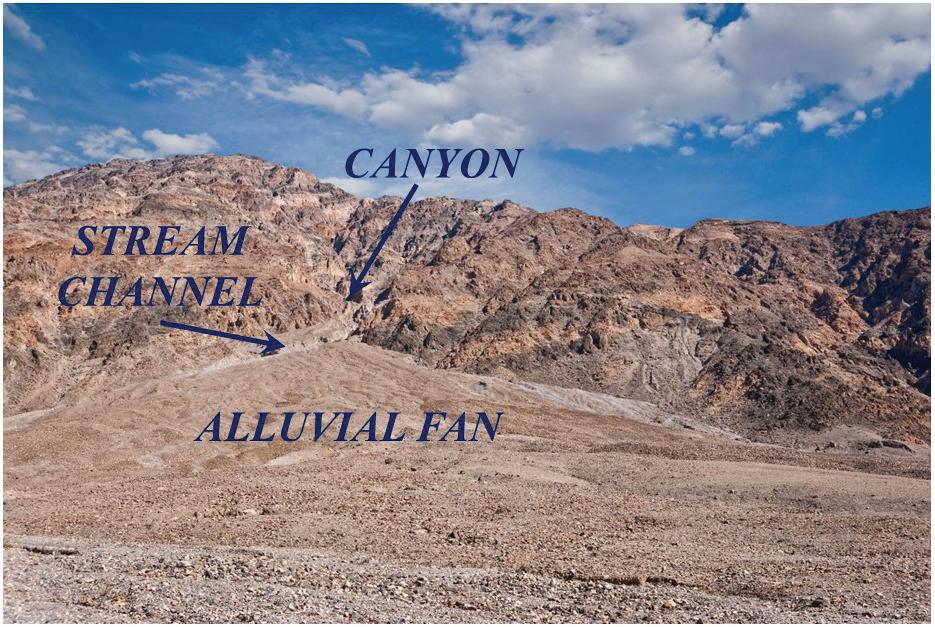
The combination of the dry climate with steep surrounding mountains created optimum conditions to develop alluvial fans. Rivers that flow from mountain canyons out onto the depositional plain create alluvial fans (Figure 1).
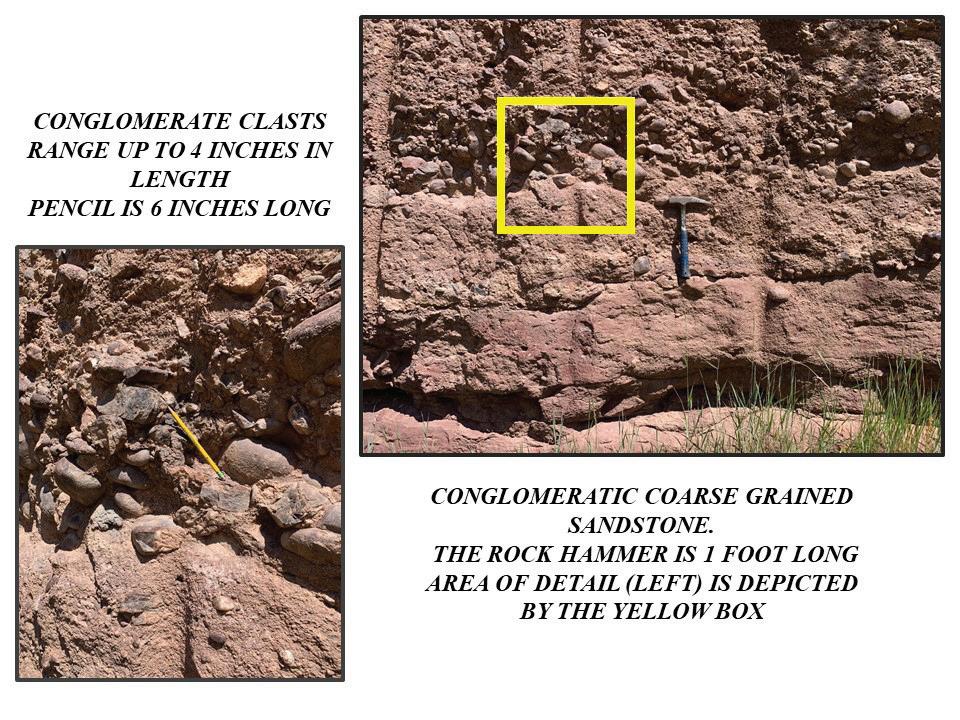
Alluvial fans are characterized by conglomeratic sandstones, coarse-grained sandstones, siltstones, and occasionally shales. Conglomerates contain large clasts (composed of fragments of pre-existing rocks and minerals) of variable size derived from the eroded mountains and deposited in relatively close proximity to the sediment source (Figure 2).
The sandstone and siltstones were deposited in the more distal regions of the fan, usually by braided river systems that developed due to the decreased slope of the fan downstream from the canyon mouth. Braided rivers have wide, shallow channels as the water flows in branching and reuniting stream channels.
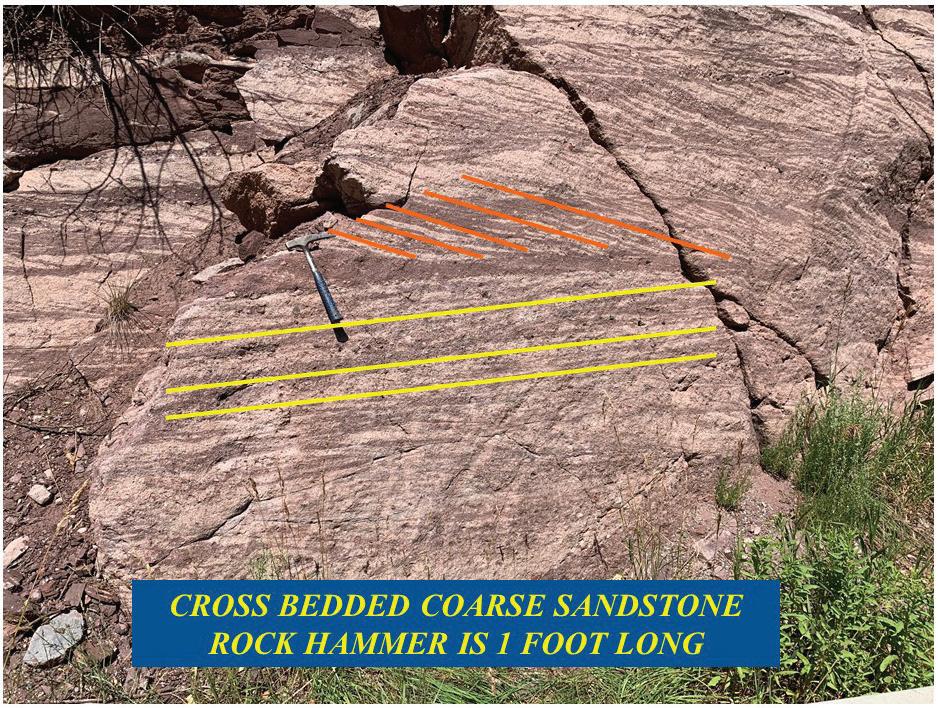
The stream forms ripple marks in the sandy river bottom because of unidirectional water flow, these ripple marks migrate downstream in the direction of flow. If these sediments are preserved by rapid burial by overlying sedimentary units, the migrating ripple marks appear as cross-bedding in the rock record (Figure 3).
After the alluvial fan deposits are preserved by subsequent sedimentation, they are subjected to diagenesis. Simply stated, diagenesis is the process that changes the fabric of the original sediments. The changes are caused by compaction, percolating surface waters, and water chemistry. The percolating waters dissolve some minerals and deposit cement in the tiny spaces between grains (pore spaces).
The water chemistry is important because minerals in the sediment have variable resistance to dissolution. The important chemical characteristics include salinity, acidity (pH), and dissolved particles. The salinity of surface waters exhibits seasonal variability. For example, during high water periods (runoff) the waters have low salinity, but during low flow periods (late fall) the salinity increases.
The Pennsylvanian Period was a time of significant tectonic activity caused by continent to continent collisions along the southern margin of the North American continent with
an age (older than 600 mya) Uncompahgre rocks are primarily igneous (having solidified from lava or magma) and metamorphic (rock that has undergone transformation by heat, pressure, or other natural agencies) units with varying amounts of quartz, feldspars, and ironrich minerals.

This phenomenon is also the driving force of the Wildebeest migration on the Serengeti Plain of Tanzania and Kenya. The Wildebeest follows the rains so they have fresh water to drink, because, once the water partially evaporates, the salinity increases and the water is not potable. Pardon the digression, however, the small changes in water chemistry affect how the sediments are altered during diagenesis.
In addition to the water salinity, the dissolved carbon dioxide (CO2)affects mineral solubility. The sediments contain ironrich minerals and clays derived from the eroded source rocks. Further, the arid climate is conducive to an oxidizing subsurface environment.
Oxidation of iron-rich minerals is a technical term for “the rocks are rusted,” which gives them their reddish color. In a similar fashion, if you leave your hammer outside and an afternoon thundershower occurs, the next morning the hammer is oxidized, i.e. rusted.
Well campers, that’s a brief summary of the Maroon Formation genesis in the Crystal River valley. We considered the global plate tectonic setting, sediment dispersal patterns, and diagenetic water chemistry. As you drive through the valley

admiring the views, and looking at the rocks around you, just appreciate all of the earth processes that were involved in giving us this spectacular setting.
All materials are provided by Russ Cunningham, who is a geologist living part-time in the Crystal River Valley. He has been practicing geology over 40-years after receiving a Master of Science degree in 1978. Cunningham has worked internationally as well as in numerous regions of the United States while in the oil and gas industry helping America become energy independent.

The Pitkin County Commissioners hold weekly work sessions on Tuesdays and bi-monthly public hearings on Wednesdays in our BOCC meeting room at the Pitkin County Administration and Sheriff’s Building. Both meetings are televised live and repeated on locater CG12 TV. They are also streamed live and available on the County website. Agendas are posted in the Aspen/Glenwood newspapers and on-line at www.pitkincounty.com. In this column, your District 5 Commissioner, George Newman offers his take on current matters. You can reach him at george.newman@pitkincounty.com
The following guest commentary was written by the Pitkin County Attorney’s Office regarding issues of household water use and recent letters and communications directed to some of our neighbors in the Crystal River Valley:
Six years ago one heck of a party was held in Redstone. The “End of the Dam Affair” celebrated Pitkin County’s successful cancellation of three proposed dams in the Crystal River watershed. The dams were championed by the Colorado River District and the West Divide Water Conservancy District. The dams had been part of their development plans since the 1950s and were renewed every six years until the cancellation.
If built, the resulting reservoirs would have flooded great portions of the Crystal Valley and its essential wetlands with reservoirs with a combined size in excess of Ruedi Reservoir. Remembering victories as we work to protect our beautiful valley is important and cements our ongoing commitment to the health, safety, and welfare of Pitkin County citizens and the environment of the Crystal River Valley. While Pitkin County successfully defeated these historic water rights, the possibility remains that future water projects will be built that could impact and diminish native river flow.
Lately, the threat of shutting off household well water to some residents has been brought to the Valley. This threat has been coupled with the concept of building multiple reservoirs or a single reservoir large enough to eliminate the threat. This proposal has been offered by the same Colorado River and West Divide Districts which previously pursued damming the Crystal River. These two Districts have also obtained a grant through the Colorado River Basin Roundtable utilizing Colorado Water Conservation Board funds to begin to study the feasibility of building a reservoir or reservoirs in unspecified locations in the Crystal Valley.
This threat of losing household well water has not been analyzed to determine if a reservoir is needed or if dams are even worth pursuing. The likelihood of this threat actually shutting off domestic water or how the State would administer water rights in the Valley in a manner that would cut off domestic water to some of our neighbors is unknown.
Consequently, the practical necessity or advisability of a reservoir system has not been analyzed. Neither have the problems of the feasibility of where such reservoirs would be located, the difficulty of building water retention in the Valley, or how such a solution would be paid for or what other goals might be part of such a plan to make it viable been analyzed.
To say nothing of the environmental impacts of such construction. Pitkin County has been conducting engineering analysis and compiling data that should have been done prior to discussing dams and reservoirs and to determine whether or not the actual presence of a threat to domestic water use exists. We are continuing to work to understand and identify the actual problem.
While we don’t know if there is a realistic risk of loss of household well water, the Pitkin County Commissioners have determined is that if any one of our residents are told to shut off their existing household water use in the Crystal that the County will defend the continuation
of that use and defend against any order to stop domestic water use.
Years ago, the White River National Forest conducted a study and determined the middle and upper reaches of the Crystal River are eligible for wild and scenic designation. This determination of eligibility offers some interim protection against any new large dams from being constructed on the main stem of the Crystal River. Representations from those seeking to develop future water projects in the Crystal that they will not place a dam on the main stem of the Crystal are disingenuous. It’s fairly easy to say you won’t build in the main channel when there is no readily available way to do so.
Pitkin County remains supportive of the local efforts of individual Crystal River residents to obtain an official wild and scenic designation for appropriate reaches of the river. Not prohibited under the current wild and scenic eligibility determination, but of concern would be dams and storage projects on tributaries to the Crystal River. Dams off the main stem of the Crystal would absolutely affect water quality and quantity in the Crystal River basin.
Recently, concerned citizens have reached out to Pitkin County elected officials regarding letters they received from the Division 5 Water Engineer’s Office in Glenwood Springs. These letters along with communications from the Districts regarding possible future curtailment of domestic wells in the Crystal River Valley and possible storage


projects related to domestic wells have caused great concern.
If you have been contacted regarding possible curtailment of your in-house domestic well, please contact the Pitkin County Attorney’s Office at attorney@pitkincounty.com. These wells, homes, and uses date back for many decades. Speculative future water use, most especially, any future use outside of the valley, should not drive any discussion of ensuring continued domestic water for existing homes.
The Crystal River’s current free-flowing condition, a rarity in modern Colorado, deserves our protection. Before there is any serious and sincere discussion of curtailing any domestic wells or siting and constructing storage projects, the entire situation of water use in the Valley begs to be re-examined.
Right now, any storage project in the Crystal River Valley appears to be a solution in need of a problem. Choosing between continued household well use for existing homes or large-scale water projects is a false choice. The Board of County Commissioners remains committed to not only our citizens and property owners but also the environment in which we thrive.
Sincerely, The Pitkin County Attorney’s Office






























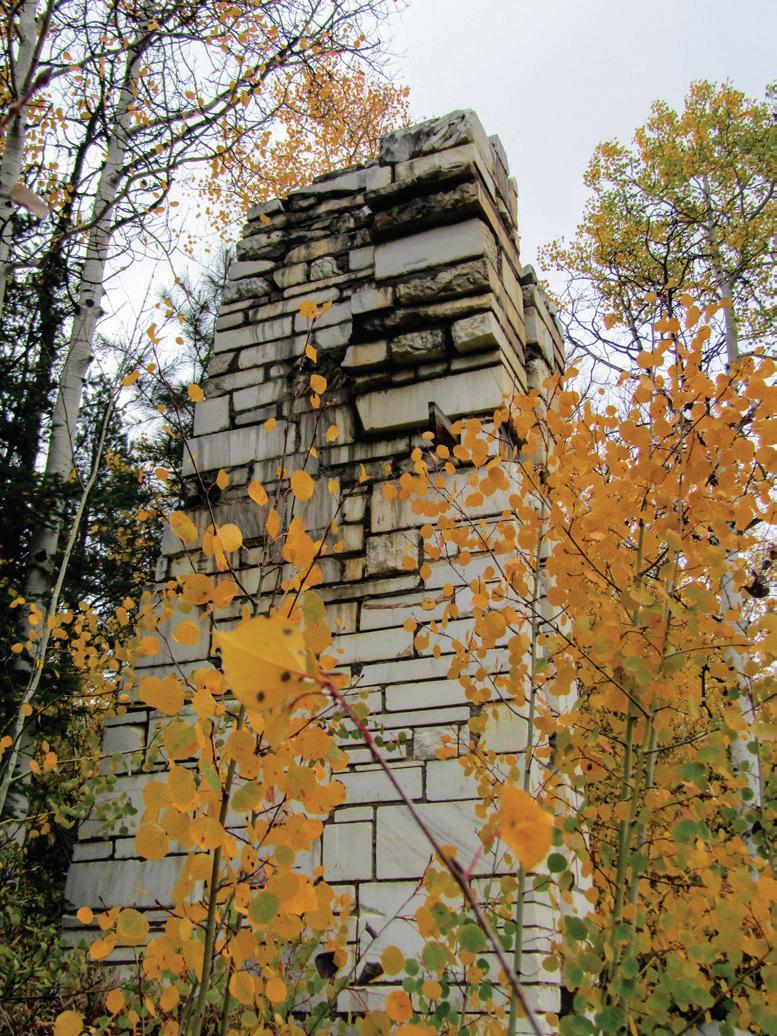
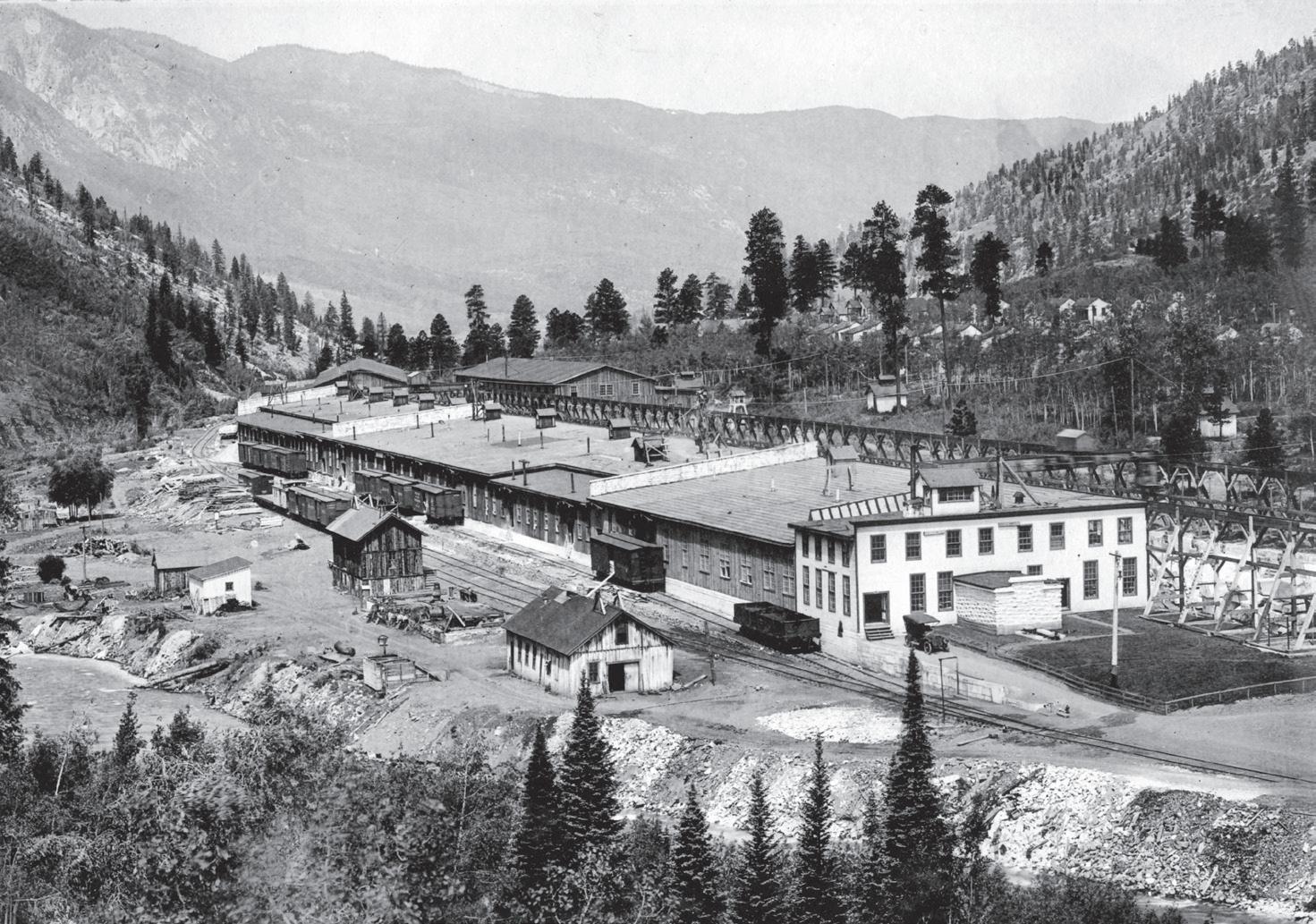
Prospectors came into the Marble Valley, seeking precious metals and coal; instead, they found the white stone that came to define the town. Of all the places marked by history in the area, perhaps none speaks so strongly of what Marble was and is than the Historic Marble Millsite. Here the natural beauty so prized coils today around the remnants of one of Colorado's most prominent industrial enterprises.
Once wooden walls and ceilings encased the workshops and mills, a quaking green canopy of aspen leaves now stands. Those who wander its paths can glimpse foxes lurking in the now crumbled concrete water system or marmots peeking from the gaps in the firewalls.
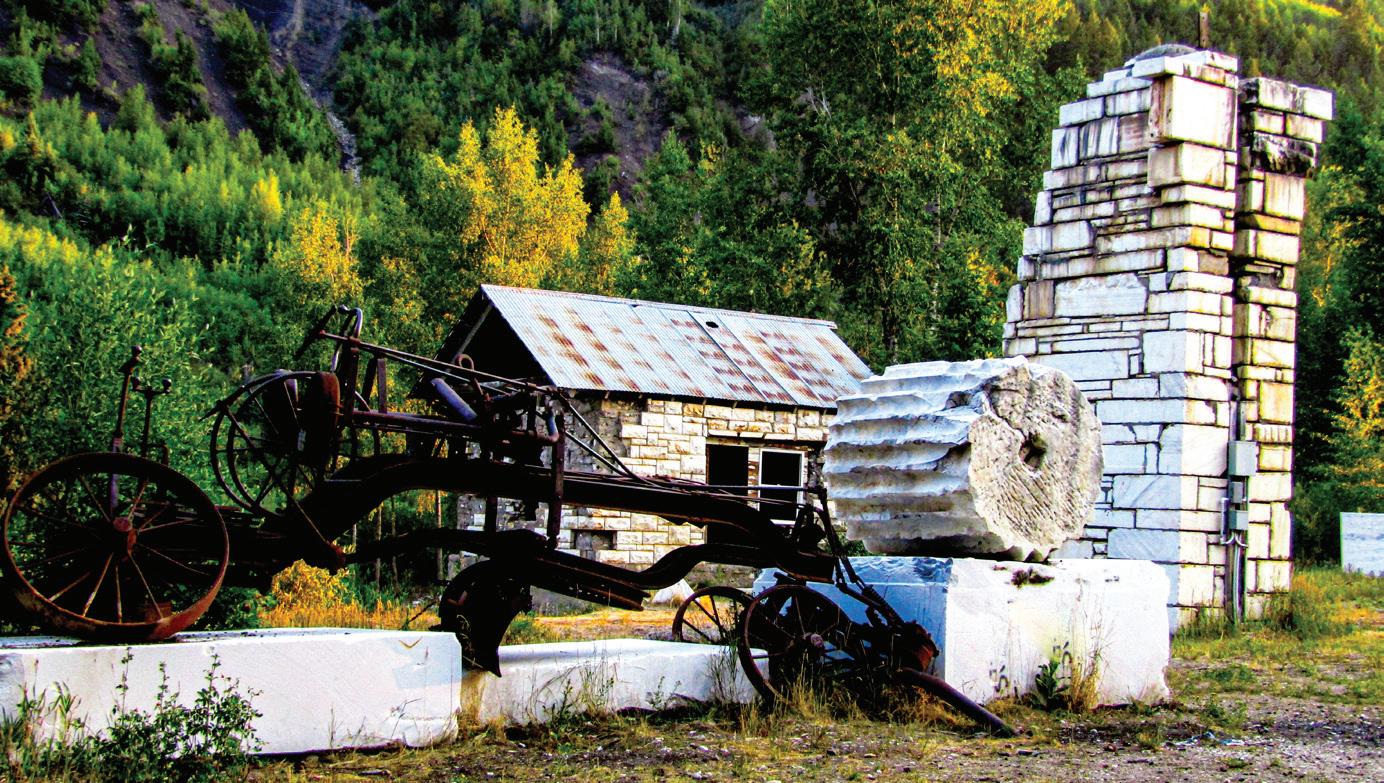
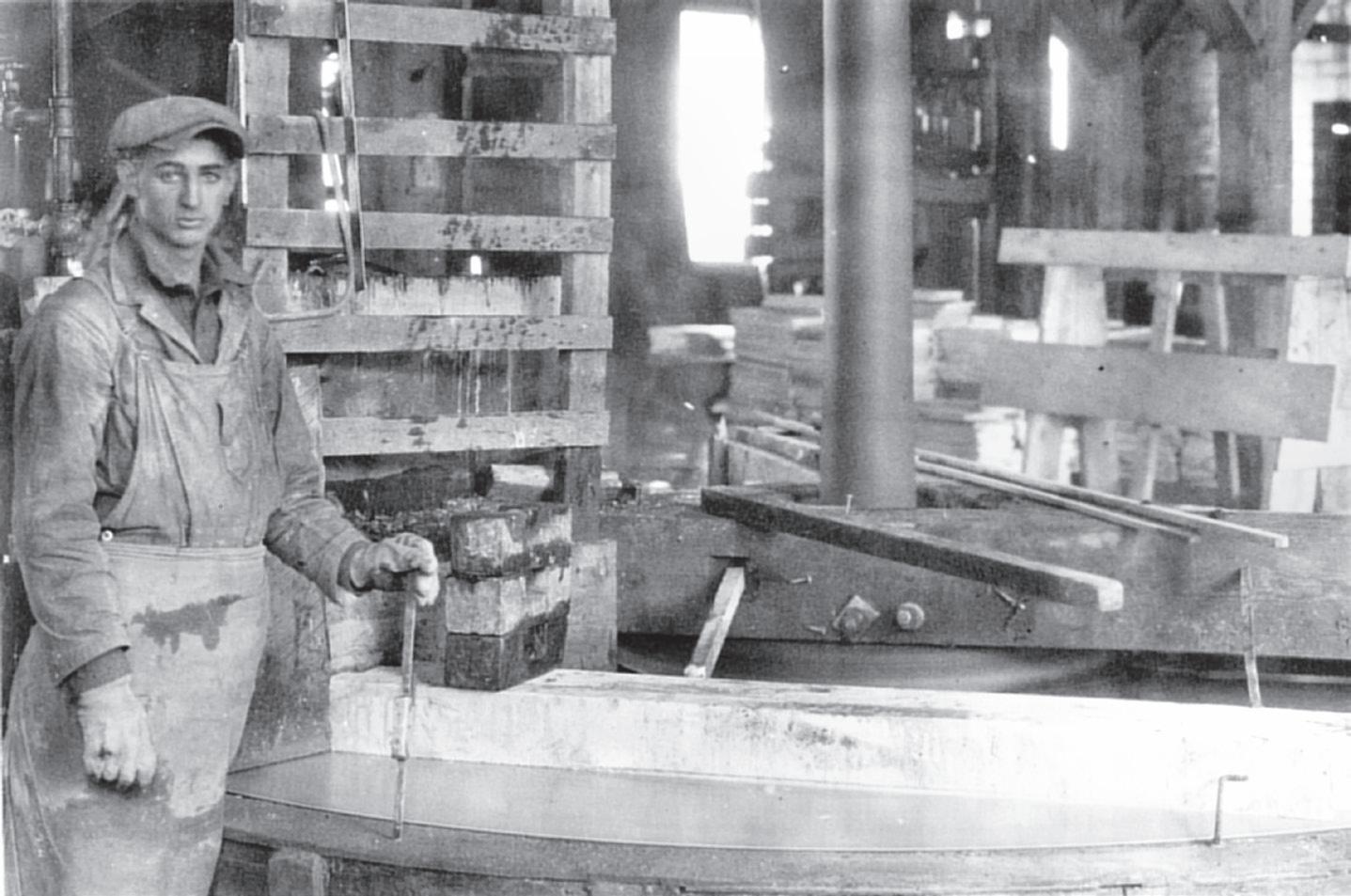
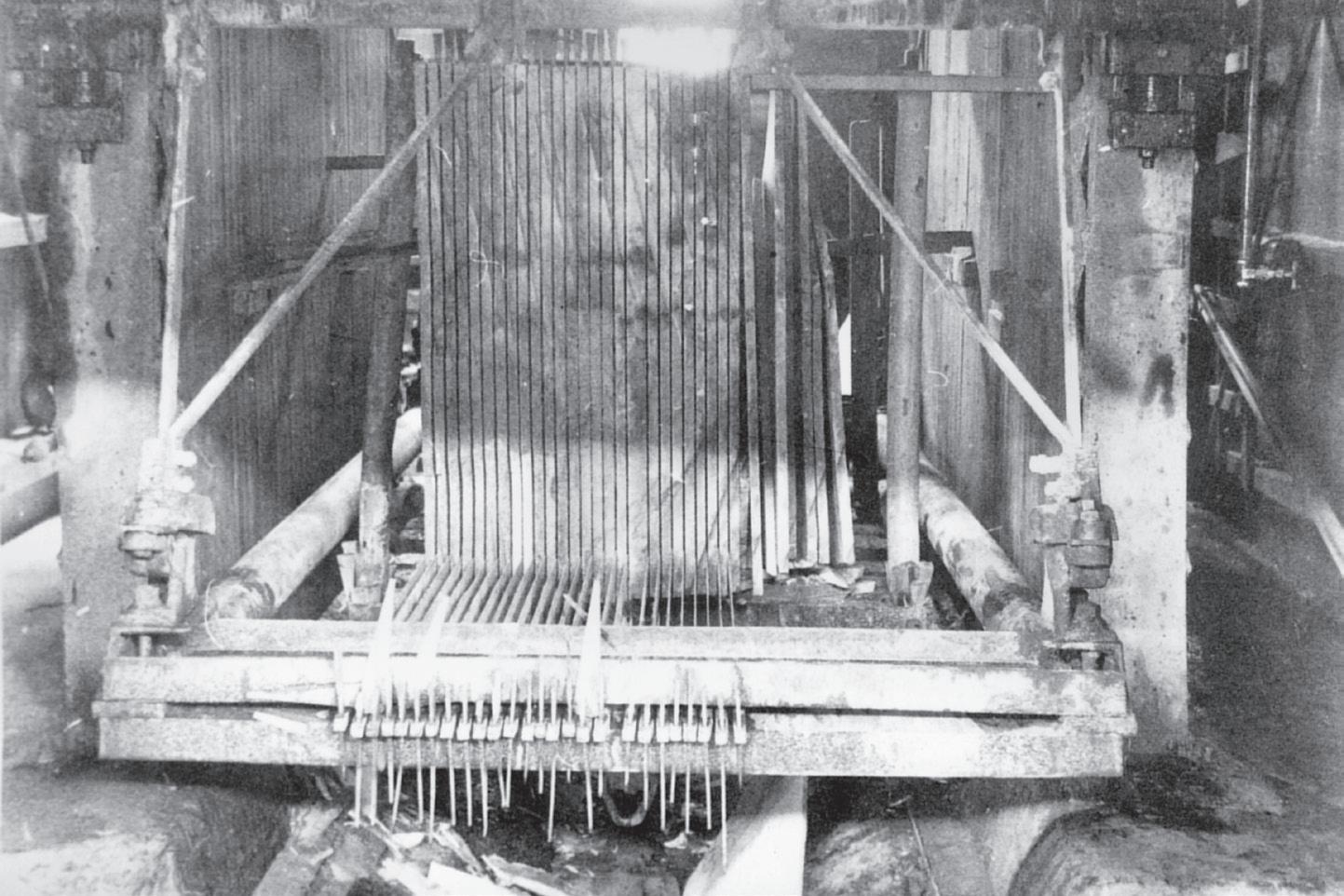
The Marble Millsite was Channing Meek's crowning accomplishment. While it operated from around 1907 until 1941 it was abuzz with activity. Pillars built of Marble hosted a large crane that would lift the fresh quarried marble blocks and move them around the yard. Within the workshops and mills, hundreds of workers cut the Marble with large water-powered saws. Circular polishing beds used to weight and sand to finish the slabs. An entire fin-
ishing shop of sculptors put the finishing touches on columns and decorative pieces, including the Tomb of the Unknown Soldier.
After enduring avalanches, fires, and world wars the Mill finally closed on November 15, 1941. Much of the machinery was sold off as scrap, and for a brief time, the excess Marble was ground up intended to be used as chicken feed. Slowly nature began to reclaim the land and the forest crept in. Little remains of the original structure now from the large marble
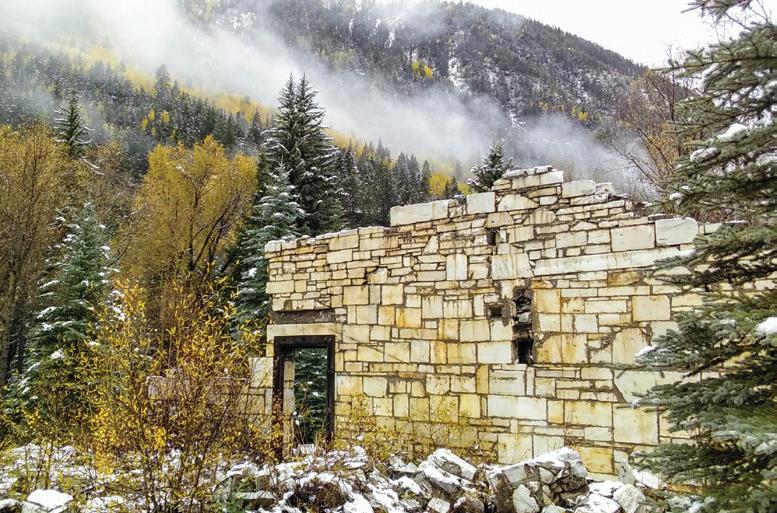
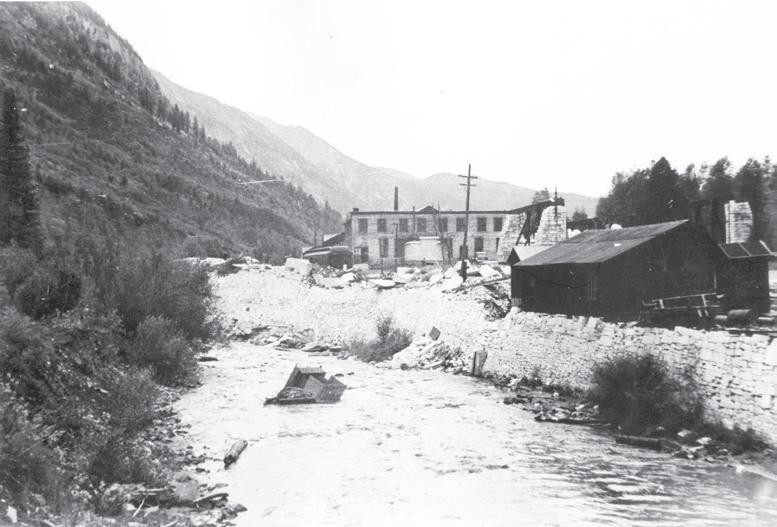
blocks, walls, and columns scattered throughout the park. Local kids have created bike tracks and a skate park on the old concrete Mill floor.
At the far end of the Millsite, the tradition of art lives on. For ten days, sculpturists live and work to create a beautiful new memory out of simple history. Sculptors come from all over the world each July for the Marble Marble Symposium. They live and work within the forest in a communal learning experience as they carve the white Marble. Statues and art decorate everything in the Symposium, creating a feast for the eyes.
But, perhaps, the greatest reflection of the community past and present is the air of discovery and magic. No matter how many times you walk the paths of the Millsite you can always see new sights to discover or mysteries to stumble upon. It is a testament to the tenacity of nature and mankind.
from Alex Menard
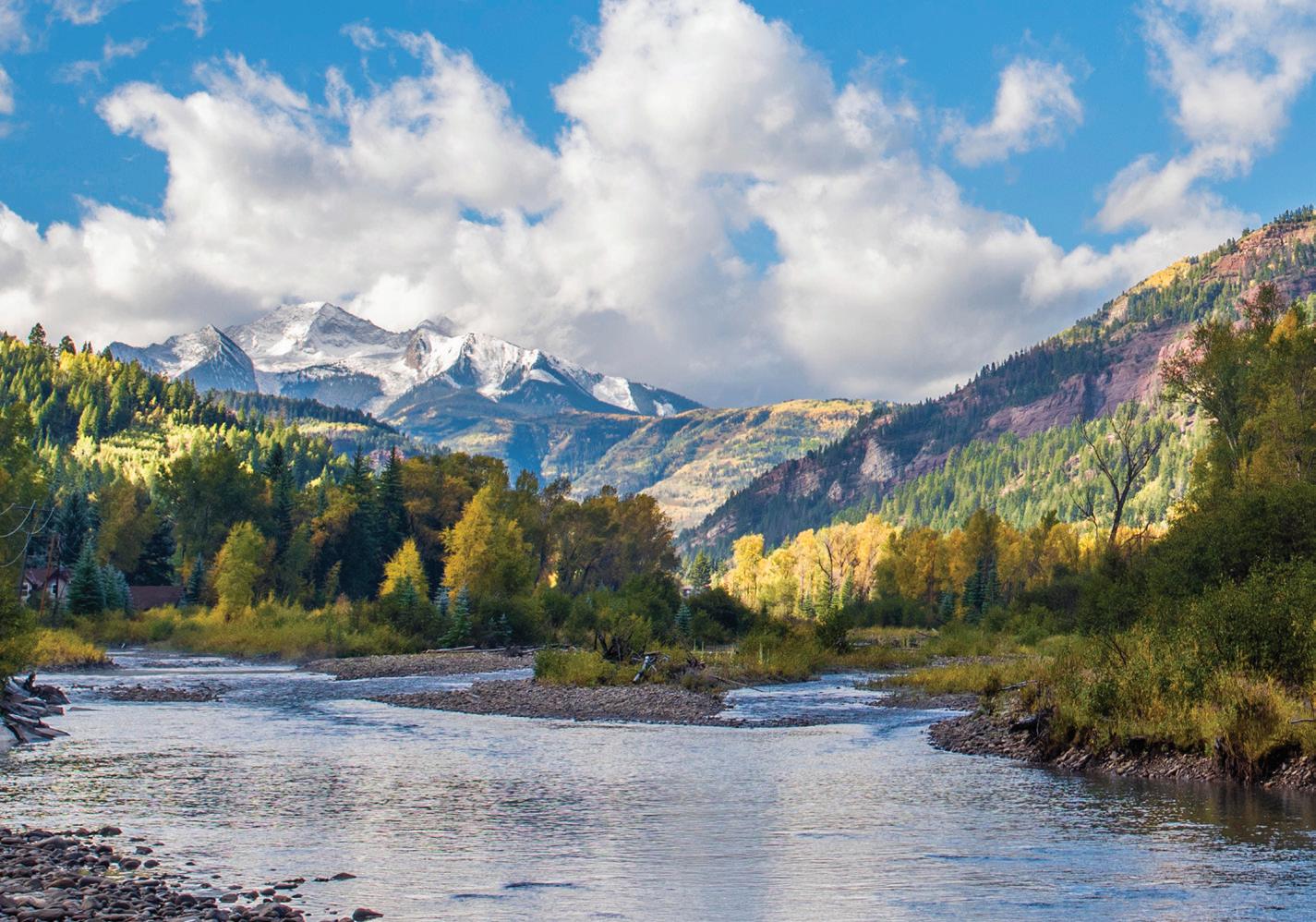
Trying to enter a wild, natural area using a motorized machine is like chasing a mirage or a rainbow; The closer you approach, the further they recede. The mirage and rainbow are ephemeral, optical events that disappear because your position relative to the angle of incidence and reflection changes as you approach. The real and significant changes made on natural areas by men on machines cause the wilderness to actually recede.
An ecologist would identify different wild communities as a wetland, alpine meadow, mixed forest, and many others. But another way of classification has just two distinctions: either natural, undisturbed native vegetation or disturbed areas invaded by noxious weeds and subject to erosion. Any time you drive or park on living vegetation, you damage or kill it. What comes back is not beautiful columbines, it is ugly thistles or other invasive weeds. Never drive or park on living vegetation.
Traveling under power is quick and easy. But, what do you miss? Our brothers, the eagle, and heron have soared away, disturbed by the noise. The bear, moose, and others have run away. The path you travel is deep with loose dust, which your machine stirs up. In fact, the vegetation on both sides of your path is coated with dirt.
Do you see the yellow bumblebee visit the purple penstemon? Can you smell the flowers? Do you hear the birds calling? In an urban environment of buildings, pavement, and chain stores you don't miss much traveling by machine. If you are seeking another type of experience here in Marble, why travel the same way?
When the Spanish reintroduced the horse to the west, it changed the way the natives interacted with their environment and with each other. The power of the horse suddenly made being a pedestrian a disadvantage in hunting, war, or trading. Those who seek to travel to the Crystal Mill on foot (and there are many) are at a distinct disadvantage from vehicle noise and dust, and generally being overpowered and overwhelmed. Does spending $10k - 20k on a machine confer some special power for the driver to intimidate others?
Of all the machines that enter natural areas, ATVs may have the largest impact. They even look like assault vehicles. What kind of attitudes do users have when they purchase models named: Prowler, Defender, Intimidator, Renegade, Dominator, Raptor, Enforcer, Grizzly, Punisher, or Razor? These are actual model names.
All-Terrain Vehicle means that the machine is designed to travel off established roads and trails. Canyonlands National Park recognized this in its travel management plan. On the extensive 4-wheel road system, jeeps are welcome, but no ATVs have ever been allowed. There are three reasons for this are: There are other places for ATVs to go, ATVs are noisier, and most importantly, there is no way to keep them on established paths.
Don't all these reasons apply to the Lead King Loop? When an area starts to be damaged by heavy use, it is time to restrict use to less impactful activities. How many pedestrian user days equal the impact of one ATV user day? A management plan for an irreplaceable natural area should always err on the side of conservation.
Exercise physiologists have determined that an hour of vigorous exercise provides a benefit of two hours of additional lifetime. My role model should be yours too. Roger Paris skied, climbed, kayaked and cycled through this valley for more than half a century and was still skiing a few weeks before he passed at the age of 90.
During his last year, he still cycled on an electric bike a mile up a steep road to his cabin. If you must have motor assistance, why not ride the wave of the future on a silent renewably powered electric bike?

Get ready for a great day of running through the spectacular fall colors in the heart of Colorado’s Elk Mountain range. Run, walk, or hike the 25k loop around Lead King Basin, zipping past the Crystal Mill and ghost town of Crystal. Cheer the kids on as they run the 2.5k loop around Marble, or linger in Thompson Park after the race and enjoy a delicious homemade lunch including Slow Groovin’ BBQ (lunch included with race entry). All proceeds bene t The Marble Charter School


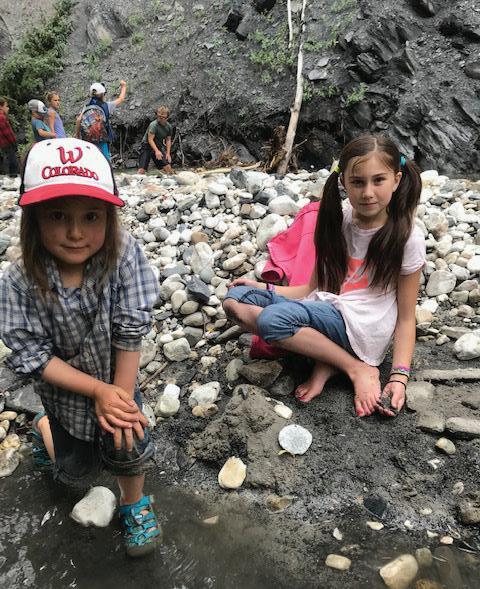
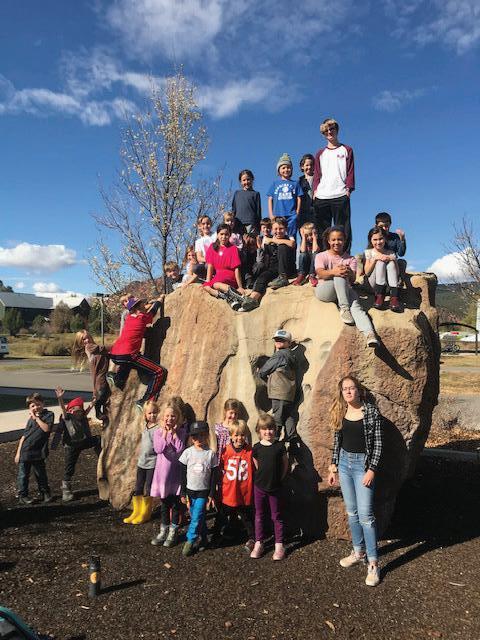

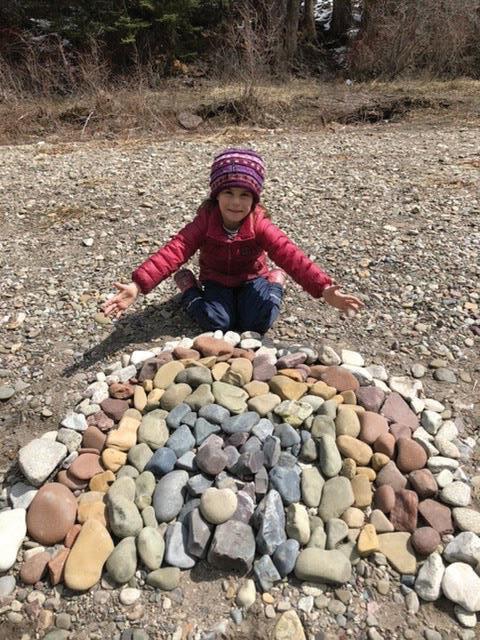
The Marble Historical Society wants to thank the community for its continued support to display the history of our Valley. Yeah!...for a beautiful building for children to attend school.
The Marble Historical Society (MHS) and the Marble Charter School (MCS) agree to make certain both organizations sustain their valuable contributions to Marble. Working together we hope to find grants, funding, contributions to secure the maintenance of the historic school building. The MHS rents a portion of the building to the MCS for $0 per year to increase classroom availability. We are finding ourselves in need of funds to maintain the building. Our children and tourists are valuable assets to the community, and if you have time, talent, or treasures that you would like to contribute to the building fund, the MHS would be pleased to accept your contributions.
Please feel free to contact Kimberley or Tom at 970-963-9815, or send a donation to:
Marble Historical Society 412 W. Main Street Marble, CO 81623
MCS is seeking substitutes for grades K-8th. Anyone with schooling experience or someone who enjoys the school setting and would be willing to help out occasionally would be an excellent candidate. We are also hiring substitutes/fill-ins for the Marble Sprouts Preschool.
All eligible persons must pass a background check, and may send inquires to Karly Anderson, kanderson@gunnisonschools.net.


A tuition free, public charter school serving K-8th grade students in the Crystal River Valley.
Mission: Marble Charter School teaches a growth mindset in a unique and nurturing environment while exceeding state standards.
• Daily bus service to and from Carbondale Middle School
• Homemade Hot Lunch prepared with fresh, organic ingredients served daily
• Focus on Outdoor Education
• Low student to teacher ratios
Now enrolling for the 2020-2021 School Year
Please call or email for information and to schedule a tour of our school.
Email: marblecharter@gunnisonschools.net
Website: marblecharter.gunnisonschools.net