Mission Statement: To provide a voice for Crystal Valleyites; to bring attention to the individuals and local businesses that are the fabric of the Crystal Valley region; to contribute to the vitality of our small town life.
Editor • Gentrye Houghton
Publisher • Ryan Kenney CONTRIBUTORS
Charlotte Graham • Dan Sohner
Amber McMahill • Russ Cunningham
ADVERTISING SALES
Gentrye Houghton • 970-963-1495
GentryeH@hotmail.com
DISTRIBUTION
The Crystal Valley Echo is published monthly, and is distributed throughout the Crystal Valley.
NEWSPAPER BOX LOCATIONS:
Carbondale City Market (inside) • Village Smithy
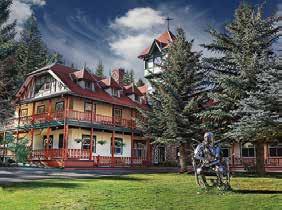
Carbondale Post Office • Redstone Inn
Redstone General Store • Marble Hub
Propaganda Pie
FOR SUBSCRIPTIONS
Please send $40 for print or $25 for digital editions along with address information to:
The Crystal Valley Echo 364 Redstone Blvd. Redstone, CO 81623
Lulu Moore shares drops of sunshine with the Redstone Community.
Happy Rocks: Art Collaboration Spreads
“My day was amazing!” Lulu said from behind a huge smile and a popsicle as she sat in the sun at her family’s home in Redstone on a cloudless Friday afternoon. The 7-and-a-half-year old, who further noted that remote school is also “amazing,” had just finished some schoolwork and was full of positive energy — her smile contagious.
“This is Lulu, she’s so into life and full of joy,” Sonya Moore said, describing her daughter’s vibrance.
It’s hard to imagine, sitting with Lulu and Sonya, that there’s a global pandemic unfolding on a massive scale. Small businesses have been closed, thousands of people have seen relatives and friends succumb to an almost unstoppable virus, and the public discourse as we know it has been forever altered. And Lulu, along with other youth in Redstone, have had to reimagine their relationships with friends and the rest of the world. It has been stressful, awkward, and scary to say the least, but the stress of the unknown can lead to beautiful things.
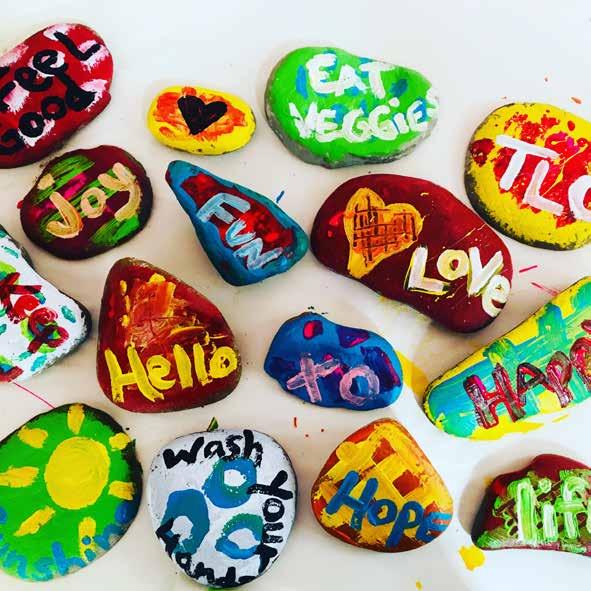
Lulu and her mother recently took on a public art project and are responsible for a large majority of the painted rocks which are appearing on “The Boulevard.” The rocks, painted with simple, yet powerful messages like “Wash Your Hands,” “Hope,” and “Joy,” are one way that Lulu has been able to better understand the global COVID crisis
that has affected so many communities around the world.
They have been making and distributing rocks since March and started the project as a way to refocus their energy from all of the negativity happening in the world back into their community at a time when simple things, which were so easy and common before, have been practically unattainable even in a small town like Redstone. For Lulu, it’s the simple pleasure of just riding bikes with her friends.
“I really want to have a friend ride bikes,” Lulu said, “down past the firehouse and to the beach for a picnic.” Since current social distancing mandates make something like this very difficult, she has had to redefine the world she lives in and look for new outlets to channel the creativity and the energy that comes with being a 7-year-old.
While there are all kinds of ways to process the local effects of a global pandemic, Lulu and Sonya are using art.
“Art makes your house pretty and reminds you of the people you love. It makes you feel joy and flowers,” Lulu said as she arranged a few of the rocks she and her mother made. “Giving also makes me happy,” she continued.
Sonya, like many parents, has had to figure out ways to explain the pandemic to her daughter — walking the fine line between rationalizing the severity of the situation and keeping fear at manageable levels. She doesn’t shy away from the fact that at first, Lulu had some trouble understanding
exactly what was happening. There was a lot of confusion and some crying, but after a while, the pandemic became less scary.
“If I showed my fear that would be a disservice. As a mom I have to be calm and patient; if I can’t show her now how to react, when else can I show her?” Sonya said.
“I’m trying to show her what it is to be kind and loving. Lulu taught me that as long as you’re loved and you're having fun, it's ok. Little things make us happy,” she added.
“My mom made up the idea, thought it was a good idea so we kept making more and more,” Lulu said of the painted rocks.
“It takes so much energy to be mean and scared,” Sonya said, “if you can just spread a bit of love, why wouldn’t you?”
Lulu sees the project in similar terms and says that it makes her feel good to know she is helping improve her community. It has even started to inspire others in town to paint their own rocks. She hopes her works of art will remain in Redstone but understands that people may want to keep some they find because it makes them happy.
“A trend wasn’t the point, it was just to put smiles on people’s faces,” Sonya said. “Sometimes it takes a huge thing for people to come together and appreciate the smaller things in life.” Sonya has also adapted the project for her art program, Yellow Canary, through the Ross Montessori School in Carbondale.
For this mother-daughter collaborative project, Lulu notes that there are three main steps in the creative process.
First, find a flat rock. Then, wash and dry it. Finally, write something on the rock that “makes people feel good and is helpful in life.”
We could all heed that advice right now.
As the global community recovers and slowly returns to normal, we have to remember that everyone has their way of coping and managing the transition. We also all hold different beliefs and ideas which are sometimes accepted and sometimes contested.
While some things, like riding your bike and picnicking with friends, may go back to normal, there are other things which will not. Through it all, we have to remember that making people feel good and remaining helpful to our neighbors and friends will still go a long way, no matter the situation. These simple things can help us all deal with uncertainty and bring light to even the darkest days.
And with that in mind, it makes perfect sense that the one rock Lulu kept for herself simply says “Sunshine.”
Dan Sohner
From Mud to Monumental Marble
In April’s digital edition of The Crystal Valley Echo, we learned the Leadville Limestone was formed by the deposition of calcium carbonate mud in a shallow sea about 340 million years ago (mya). The mud was lithified, the process of turning materials into hard rock, by compaction and diagenetic processes over millions of years. Diagenesis is the process that describes both physical and chemical changes in sediments caused by increasing temperate and pressure as it gets buried in the Earth’s crust.
The rock remained buried in the subsurface as younger sediments were deposited on top of the limestone. Dinosaurs tromped around on near-equatorial swamps of present-day Colorado through the Mesozoic Period (250-60 mya) that culminated in the uplift of the Rocky Mountains in Late Cretaceous, around 60 mya (Laramide Orogeny).
The late stages of the mountain building processes were characterized by emplacement of igneous magmas (discussed in our March issue) deep in the earth’s crust during the Early Tertiary period, approximately 40 mya. This mountain-building phase is significant because not only does it uplift the overlying rocks into a dome shape by pressure, but it also imparts heat into those rocks that come in contact with hot magma.
The heat is conducted through the overlying units but dissipates with the distance away from the hot rocks. The pressure and heat “cooks” the overlying sedimentary rocks and causes them to recrystallize changing the rock fabric. This change in the rocks is called contact metamorphism (from Greek: “meta" = change and “morph” = form).
Examples of this process are: Quartz-rich sandstone becomes quartzite, shale becomes slate, then with extended time, changes into schist, limestone recrystallizes into marble, and an original Pre-Cambrian (older than 600 my) granite basement rocks changes into a gneiss. Recrystallization of the rock fabric forms new rocks that are much harder than the original rock unit.
The Treasure Mountain Dome, located about three
miles southeast of the town of Marble, is an example of an igneous intrusion uplifting overlying rock units and exerting both pressure and temperature on these units. The diagram below is a simplified cross-section cartoon of the earth’s crust across Treasure Mountain.
It’s analogous to cutting a layered birthday cake and looking at the side of the cake. The pink represents the late stage igneous intrusion, the brown is the basement gneiss, overlying the basement are early Paleozoic (600-360 mya) quartzite, mixed dolomitic limestone and marble (orange), blue is the Yule Marble/Leadville Limestone, green are younger sandstones and shales, including the Mancos Shale partially metamorphosed into a lowgrade fissile slate.
The magma rose through the rock layers due to buoyant forces and then spread out along zones of weakness forming the dome shape. Geochemical analysis indicates the magma was approximately 1,300°F. The surrounding rocks absorbed the heat and were metamorphosed into their respective texture and mineral association. For example, the basement rocks changed into gneiss (about 1,000°F), the Leadville Limestone experienced approximately 800°F and changed into marble (hooray for the hometown stone marble!!).
ishes it’s marketability as well.
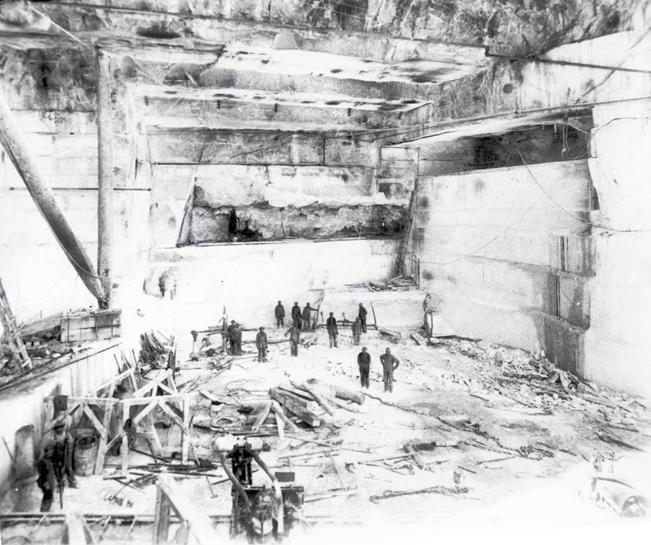
The monument quality Yule Marble is renowned for its purity of 99+% calcium carbonate content and the fine texture due to the relatively uniform crystal size. These physical characteristics make the Yule Marble of comparable quality to the world-famous Italian Carrara Marble and the Greek Pentelic Marble. All three of these marbles have the structural integrity to be used as building stones and the beauty for both sculptures and monuments alike. The Carrara Marble is quarried in northern Tuscany, Italy, and was used by the ancient Romans to create cities and statues that are now displayed worldwide. The Pentelic Marble is mined just outside of Athens, Greece, and was used in the Parthenon construction of the Athenian Acropolis in 5 BC.
Notable uses of the Yule Marble include the Lincoln Memorial in Washington D.C., the Tomb of the Unknown Soldier in the Arlington National Cemetery, and the state capitol building in Denver. Yule Marble is found in buildings and sculptures across the entire United States from California to Colorado, the Midwest and all along the Eastern Seaboard.
The Leadville Limestone is approximately 240-feet thick on the western flank of Treasure Mountain. However, the monument quality marble is between 100-125-feet thick near Yule Creek. The lower ± 125-feet is a dolomitic marble with thin beds of sandy limestone/marble that is not marketable monument grade marble. The upper ± 30-feet are streaked with red and gray impurities which dimin-
Greg Tonozzi, the renowned sculptor, longtime Marble resident, and co-founder of the Marble Symposium held every summer for the past 31 years, says the Yule Marble “sparkles like fresh snow on a moonlit night.” Mr. Tonozzi’s sculptures can be found as public displays and in personal collections.
He further states, “I’m always grateful to the quarry workers, past and present, who work so hard to get the stone out of the quarry so that so many people have access to this beautiful stone.”
The Yule Marble was discovered in the mid-1870s, the initial quarry operation began in the early 1890s. Commercial mining at the site of the present-day quarry was commenced in 1905, and is now operated by Colorado Stone Quarries and is owned by R.E.D. Graniti. They also have a production and shipping yard near Delta, Colorado.
All the people in the Crystal River Valley area should be proud to have such a national treasure as the Yule Marble right in our backyard… that’s why they call it Treasure Mountain!
Russ Cunningham
The Church at Redstone launches an initiative to help boost the economy in the Crystal Valley. “Shop Redstone” seeks to support local businesses and will offer discounts to consumers.
Redstone Economic Stimulus
Pastor Chris Moon shared in an email that the church leaders are always looking for ways to help out the community. “The idea is to encourage people to shop in Redstone,” he wrote.
“The concept actually is patterned after a program I read about in McCook, Nebraska,” Moon continued, “where a church and the community foundation in that town sold what they called 'COVID Cash’ to help out the local businesses. I thought we could do something like that in Redstone, and the leaders of our church jumped on board quickly.”
Fifteen hundred certificates in $10 cash increments were printed for their initial sale on Saturday, May 23, and nearly 40% were sold.
So, what’s the deal? For every $20 spent, the Church gives you an additional $10 to spend like cash with the 18 participating businesses.
The next sale will be Thursday, June 4 from 5 - 7 p.m. in front of the church. Can’t make it? No problem, shoot Moon an email at pastor@churchatredstone.com for remote sales. Interested businesses may still join the program by contacting Moon.
Though there is currently a cap of $200 per transaction, The Crystal Valley Echo encourages everyone to get out there and shop local! The “Shop Redstone” initiative expires Labor Day weekend.
Participating businesses:
Avalanche Outfitters
Avalanche Ranch Cabins & Hot Springs
Crystal Dreams Bed & Breakfast and Spa
Crystal River Crafts
Crystal River Villas
The Crystal Valley Echo
Diane Gallagher, Licensed Massage Therapist
Dooley Creek Farm
FoxBerry Sweets
Gentrye Houghton, Licensed Massage
Therapist
Ink by Rebecca
Propaganda Pie
Redstone Art Gallery
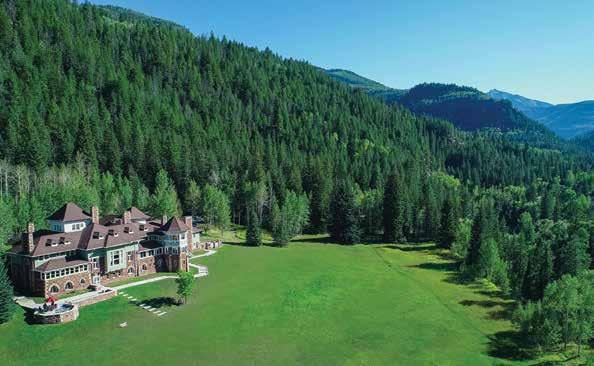
Redstone Castle
Redstone Cliffs Lodge
Redstone Inn
Redstone Mountain Mercantile
Redstone Trading Station
Gentrye Houghton
Patrons gather at The Church at Redstone to purshase Shop Redstone certificates.
Redstone Community Association Bulletin RCAredstone@gmail.com
Call for Nominees
RCA's elections are just around the corner! This non-profit organization is run by a board of nine volunteers, whose mission is to promote and stimulate both civic and business interests while preserving the small-town charm and historic character of Redstone.
Our main objectives are planning events that promote a sense of community as well as bringing patrons to our town. There's loads of new things going on within RCA! If you are interested in joining the board please send an email to RCAredstone@gmail.com
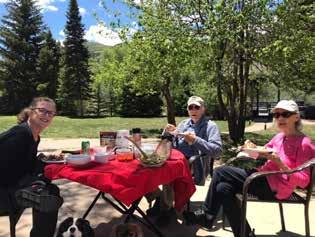
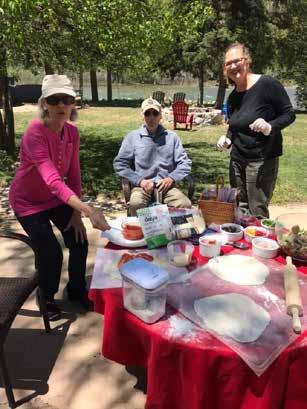
Honoring and rememboring our veterans during Memorial Day, Julie Jordan prepared a vegan-friendly pizza for neighbors Frank and Beverly Hill.
All RCA meetings and events are canceled until further notice.
Due to issues with limiting the spread of COVID-19 and restrictions put in place both by the State of Colorado and Pitkin County, many of our meetings and events through the summer may be postponed, rescheduled, or cancelled.
Please sign up for our weekly e-blast, follow us on Facebook, and check out our monthly page in The Crystal Valley Echo to stay up-to-date on all our happenings.
Business Subcommittee
COMMUNITY ASSOCIATION BOARD OF DIRECTORS
Gentrye Houghton President Ron Phaneuf Vice President Katie Lowery Treasurer Sara Lewis Secretary
Josh Wambolt David (DJ) Johnson Nathan Helfenbein Steve Pavlin
Alternate Member: Cathy Montgomery
MEMBERSHIP FORM
Thank You for your support! REDSTONE
The RCA has created a business subcommittee to create a stage for business owners to meet and discuss what it takes to own and maintain a business in our beautiful little town. All business owners are invited to attend and provide their input on their trials and tribulations. Meetings are held before the regular RCA Board meetings the 1st Tuesday each month at 6:00 p.m. at the Redstone Inn. If you have questions please feel free to contact DJ at DJredstone68@gmail.com
Redstone is an unincorporated village that relies completely on donations and volunteerism spearheaded by the Redstone Community Association (RCA)
Your membership dues directly fund RCA projects and events.
Getting to Know You
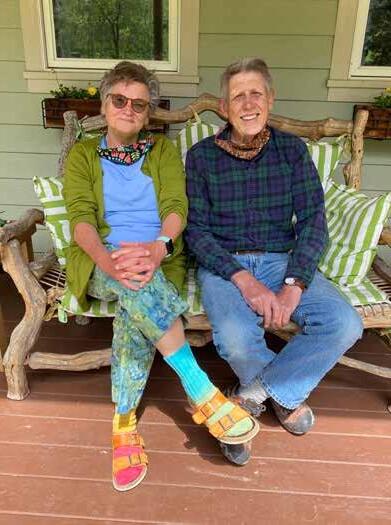
There’s hardly a chance that one could be in Redstone for more than a day or so and not run into Jimmie Benedict or her husband of forty years, Ron Phaneuf.
They’re everywhere! “One way to get to know people is to get out and do things. You meet everybody,” Ron said.
This I learned when visiting with them recently in their Redstone home since 2013.
Within three months of moving here, Ron joined the board of the Redstone Community Association (RCA) as its Vice President. Before too long, he became Chairman of the Redstone Water and Sanitation Board and helped Harry Reimers with the recycling program. After several community volunteers started the skating rink, Ron has helped every season since by stepping in to help manage oversight and regular maintenance.
the late 80s, we came to Aspen to ski. On the way home, we stopped in Redstone. We thought it was a neat little place. That one day sled dog races were going on; they were running the dogs up the Castle road. But I didn’t think about it again for 30 years.” Ron said, “If you had told me then, I was going to retire and live here, I would never have believed it.”
Charlotte Graham
Jimmie added, “I came up to the dog races again in 2007 with my grandson. I think it was its last year because of the unpredictable snow. We still have our dog race ball caps. We finally moved here because our youngest son, Peter, has worked at Colorado Rocky Mountain School (CRMS) for 20 years. We have three grandchildren and didn’t get to see them very much. One day, I said, ‘I wish we saw the kids more.” Ron said, ‘I’m retiring soon, we don’t have to stay in Reno.’ I asked the kids first, they answered within ten minutes. ‘That would be perfect!’ So, we started looking.”
The Magical Moments stage for summer concerts was built by Ron in his garage. “We tested it with our grandkids; after them jumping on it all afternoon, it held up,” he said, “and six years later, it’s still in great shape. We have a crew of old guys, median age 75, that put it up and take it down every week.”
Yes, readers, that can be construed as a solicitation of younger, stronger helpers for this year.
When he met Jimmie through friends in the late 70s, Ron was a physicist at Oak Ridge National Laboratory (ORNL) near Knoxville, Tennessee. He said that he was “working in research.” This writer’s research found that, according to Wikipedia, ORNL is “…the U.S. Department of Energy’s largest science and energy laboratory with over 4,600 staff from more than 100 countries…providing solutions to strengthen the nation’s leadership in keys areas of science…,” and that Ron received citations for his research in numerous ORNL publications, eg: “several merged-beam experiments involving hydrogen atoms and oxygen or nitrogen ions…” Whatever that all means, I have no idea, but now I know someone who does!
Ron said, “In my mid-forties, I wanted to do something different, so I applied at the University of Nevada in Reno as Chair for the Physics department.” He and Jimmie did a lot of skiing while in Nevada, often meeting friends in Colorado. “In
After nearly three decades of service in the department of Atomic, Molecular, Optical, and Chemical Physics, Ron left as a Foundation Professor Emeritus. But he wasn’t all that well-suited to just be a retiree who sits on the front porch of their home and howl at the moon… oh wait, they do that, too! Howling commenses promptly at 8 p.m. with their Crystal River Park neighbors, honoring COVID-19 health workers.
Otherwise, when he’s not volunteering for community boards, he has spent his time working on beautifying their fixer-upper house, “It looked awful when we moved in.”
As for Jimmie: she’s never met a piece of cloth she felt she shouldn’t have. “I have hundreds of yards of fabric strips I have cut up over the years.” Word on the street is that her art studio is a testament to that fact. Case in point, The Echo’s May issue featured photos of a few different fabrics for the 322 masks and 119 scrub caps she helped make with neighbors for Valley View Hospital.
Jimmie lived in Knoxville from 1967-1992, and would drive to Asheville, North Carolina, to join Southern Highland Craft Guild, the second-oldest craft organization in America, with some 800 members. “I worked in fiber arts and held several committee positions including Chairman of the Board. Working in that media eventually caused trouble with my hands. I switched to sewing,
pieced landscaping arts, and a lot of clothing.” To this day, she is a walking model attired in one-of-a-kind garments made with her expertise in fabrics and yarn.
When they moved to Reno, the town had no craft organizations, so in 1995, “I founded WILD Women Artists. It has intentionally stayed small, 6-14 artists, and still active today,” Jimmie said.
Aside from her knitting, exercise, ukulele, and book club activities with the same dozen or so women friends, she’s President of the Redstone Art Foundation. And faced with the uncertainty of the 25th anniversary Labor Day show this coming September. “We may have to postpone until next year.”
Fond of traveling, Ron and Jimmie love camping in their MBZ van. Their annual mud season trip was cut short in March with the pandemic. “But if you have to be stuck somewhere,” Ron waved his arm at the many greens budding between us and their red rock canyon view, “this isn’t bad. Every time we go away, we come back and say this is as nice as anything else we ever see.”
Looking forward to seeing everyone soon!
Jimmie Benedict and Ron Phaneuf
Photos provided by Charr Graham
Vintage Valley
All materials provided by the Redstone Historical Society
Redstone: John Cleveland Osgood’s Sociological Experiment
by Darrell Munsell
The village of Redstone is one of the earliest and best examples of a model industrial village founded at the turn of the twentieth century on the progressive-era concept of welfare capitalism.
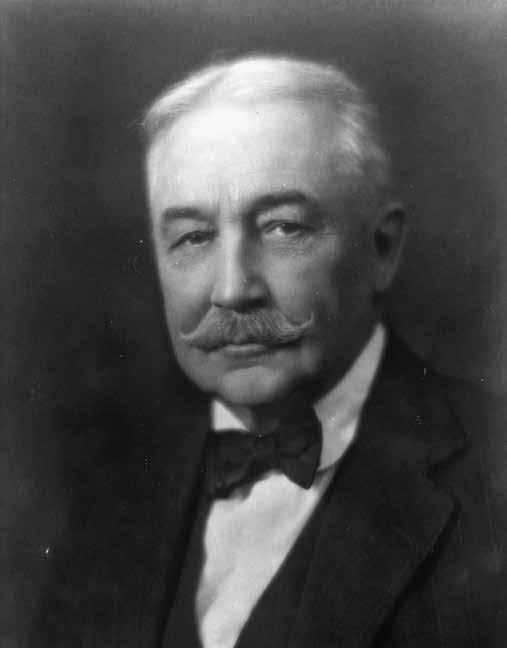
Established by John Cleveland Osgood, the “Fuel King of the West” and founder of the Colorado Fuel and Iron Corporation (CF&I), Redstone embodied his vision of a progressive future for his corporation’s employees. It was his grand model village, his workers’ paradise, designed, according to George McGovern, “to safeguard the worker, and his output, from boredom, indignity, drink, and disgust.”
Although it lost that purpose many years ago and no is longer an industrial village, this brief historical review reminds us of why Redstone’s creation over a century ago was an important chapter in Colorado history.
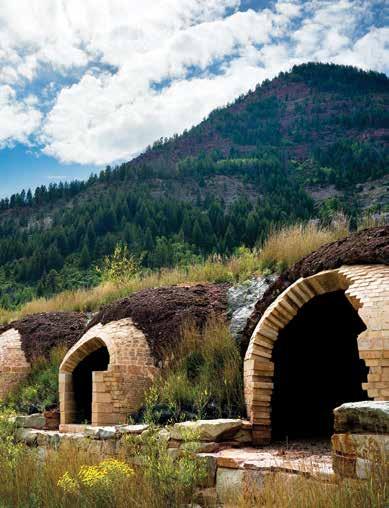
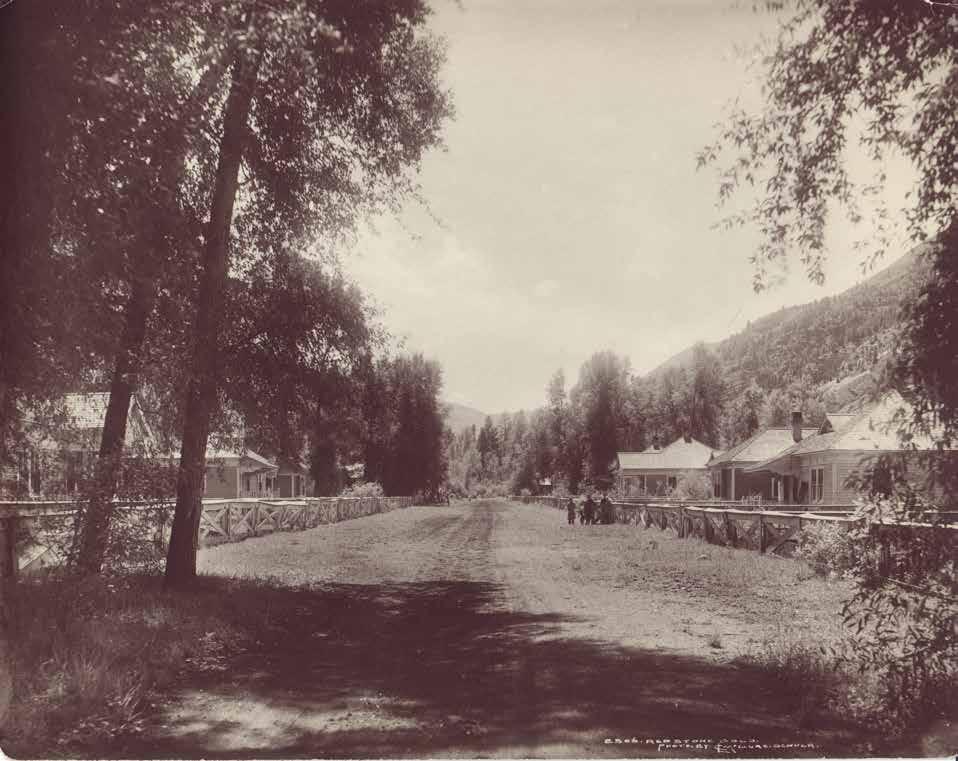
Redstone sprang to life after the Crystal River Railroad reached the confluence of Coal Creek and the Crystal River in 1899. The first train load of coal from the Coal Basin mines a few miles west passed through the Redstone tipple on the way to the coke ovens in November 1900.
Across the river to the east, 84 cottages were being erected to house the “cokers,” who manned the coke ovens, plus other work-
ers and company employees. Italian and Austrian stonemasons and skilled craftsmen were also busy building the village’s public buildings, and Osgood’s country estate, known then as Clevholm Manor.
Undoubtedly, it was an amazing scene of intense activity as hundreds of workers — using native stone as well as material brought in by the rail — made Redstone and the Cleveholm estate realities in a remarkably brief period of three years.
Redstone was Osgood’s laboratory for CF&I’s newly adopted labor-management strategy of industrial betterment. By providing quality housing, improved sanitary conditions, educational and recreational opportunities, health care, and entertainment, the corporation hoped to create a generation of contented and productive workers that would free communities from strife and want.
The village was CF&I’s most elaborate and expensive effort to eliminate labor unrest through planning and social control. Redstone was “the jewel” of the corporation’s new industrial betterment towns built between 1901 and 1903.
This concept was reflected in several ways, each representing some aspect of Osgood’s progressive agenda. He provided the best school in the entire CF&I system, where students from kindergarten through the primary grades were taught by two teachers. Adult education and vocational training were also offered.
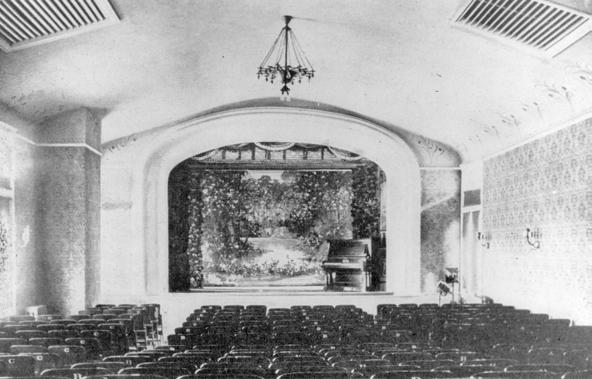
The clubhouse was the most prestigious
in the corporation’s system, and according to the New York Times “for completeness” rivaled “many a city club.” It was the pride of the village. A large ball room was located on the second floor and an auditorium with a stage equipped with scenery, electric lights, and all the modern features was located on the third floor.
Other public or commercial buildings in Redstone included the Big Horn Lodge, Redstone Inn, and Colorado Supply Company Store, which was second in the CF&I system only to the Pueblo store in size and operation.
All the public buildings and Cleveholm Manor were heated with steam heat, a feature well in advance of many buildings in cities across the nation. Electricity and plumbed water were also luxuries to all Redstone residents that were not available for many in Denver and New York City.
Redstone served Osgood well in generating positive press for his sociological experiment. The glowing reports from social-reform national periodicals and major newspapers portrayed Osgood and CF&I’s general manager Julian Kebler as benevolent executives whose social betterment work had produced grateful and contented employees.
Redstone was frequently noted as the corporation’s model for demonstrating the benefits of progressive paternalism. From all indications, workers in Redstone and neighboring Coalbasin seemed satisfied with their working and living conditions.
Unlike most of their fellow workers in Colorado’s southern coalfields, they did not go on strike in 1903-1904. The complaints of abusive control heard in the towns and camps in southern Colorado were absent in Redstone, and the workers in this model village continued to enjoy the positive aspects of industrial betterment — better-qual-
John Cleveland Osgood — Fuel King of the West.
The Clubhouse was the pride of the village with a ballroom and theater.
ity housing, a more sanitary environment, more extensive entertainment offerings, and better educational opportunities than the old company towns provided.
Yet, the glory of Osgood’s welfare capitalism was short-lived. The closing of the Coal Basin mines and the abandonment of Redstone in 1909 symbolically marked the end of CF&I’s participation in the early progressive-era social reform movement that Osgood had instituted. After 1911, Redstone became a virtual ghost town, but its mark in national social-economic history, however brief, was nonetheless significant.
Darrell is the author of From Redstone to Ludlow: John Cleveland Osgood’s Struggle against the United Mine Workers of America, Protecting a Valley and Saving a River: The Crystal River Environmental Protection Association, and recently co-authored with his wife, Jane, Redstone: John Cleveland Osgood’s “Ruby of the Rockies.
The Redstone Castle and the most historic part of the village are listed in the Redstone National Historic District.
Electricity and plumbed water were also luxuries for the 85 Redstone cottages.
What's Up with Pitkin County?
The Pitkin County Commissioners hold weekly work sessions on Tuesdays and bi-monthly public hearings on Wednesdays in our BOCC meeting room at the Pitkin County Administration and Sheriff’s Building. Both meetings are televised live and repeated on locater CG12 TV. They are also streamed live and available on the county website. Agendas are posted in the Aspen/Glenwood newspapers and on-line at www.pitkincounty.com. In this column, your District 5 Commissioner, George Newman, offers his take on current matters. You can reach him at george. newman@pitkincounty.com.
BOCC ANNUAL RETREAT
Amidst all that is going on with COVID-19, we are still trying to maintain normal county business and continue to work on our ongoing initiatives. As you are receiving this column, we should have amended our Public Health Orders again, further opening up the county for economic and social activity. Protocols such as social distancing and wearing face coverings in public places will continue as critical deterrents for preventing the spread of the virus.
The Commissioners’ Annual Retreat this past January allowed us to prioritize key issues for the Board to focus on this year. As in past retreats, we had the opportunity to look back on 2019 and assess successes, challenges, and key learnings and provide direction on priorities and desired outcomes moving forward.
Our annual Community Panel Discussion is always a high point for us. This year was no exception with the theme focused on growth; how the county is managing growth, what are the impacts of growth and how should we be mitigating those impacts. As one governmental entity within the Roaring Fork Valley, which we share with two other counties and four municipalities, one of the challenges we face is how to mitigate growth beyond our borders. This requires regional cooperation, and we have had success in such areas as health and human services, emergency services, and mass transit (RFTA and EOTC). Challenges remain in other areas such as land-use.
Panel members included:
• Cindy Houben, Pitkin County Community Development Director.
• Gabe Preston, Principal — RPI Consulting, Durango, CO. Preston is a community and land-use planner as well as an economic analyst.
• Richard Shaw, Principal — Design Workshop, Aspen. Shaw has been involved in resort development throughout the US and beyond.
Houben provided us with a historical snapshot of growth management during her 35-year tenure at the county. The 1970s were a boom time, experiencing a growth rate of 10-12% annually. Downzoning and adoption of the Growth Management Quota System (GMQS) came into being as a way to control growth through a competitive allotment.
The 1980s were quiet years for land-use codes, while the 1990s saw new land-use codes setting a 15,000 square-feet cap on house size and creating rural and remote zoning plus the Transferable Development Rights (TDR) program. The 2000s saw major changes in reducing house size by right to the current 5,750 square-feet as well as allowing the landing of TDR’s in rural areas of the county. New residential construction in unincorporated Pitkin County peaked in 2002 with 103 units and has dropped consistently since then to 22 new units in 2018.
Preston provided data comparing Pitkin, Eagle, Summit Counties along with Teton County, Wyoming, highlighting trends in population, employment, and personal income by region. From 1970—2018, the population of Pitkin County grew from 6,330 to
17,950 people, with the greatest growth occurring during the 1970s. The years 2017 and 2018 saw a slight decrease in population. Jobs peaked in 2008 with a modest growth of 1.2% annually since then. Employment has grown from 4,463 to 25,110 over the same period.
Shaw noted a majority of communities around the country rely on traditional zoning and are just now addressing ways to deal with growth impacts. Comparing communities such as Teton County; Lake Tahoe, California; and Banff, Alberta, Shaw considers Pitkin County the most mature in regards to land-use policies and speaks to our 44-year success in controlling growth. He notes Pitkin County has changed its focus on land-use codes from density issues in the 1970s to “intensity of use” today. The next shift will require viewing land-use from the lens of carbon footprint.
We wrapped up our retreat by identifying the following five key issues/priorities for this coming year:
• Airport — Our three community Airport Task Forces completed their work and passed on their reports to the Vision committee. The Vision committee presented their recommendations to the BOCC in regards to a possible new terminal and widening of the airfield. We are hoping to have some public meetings in the near future.
• Affordable Housing — Planning con-
tinues for Phillips Trailer Park; APCHA (Housing Authority) governance and updating policies remains a pressing issue
• Energy/Climate Change — ensure all land-use decisions and internal departments comply with our climate action plans in all their work. New energy code amendments were recently passed by the BOCC.
• Growth — update land-use and building codes, GMQS, TDR, and house size discussions. Work has begun on updating GMQS with the intent of making residential building applications more competitive through reduced annual allotments.
• Pitkin County Jail — now 36-years-old, built as a community supervision jail, the current building is not adequate for handling our changing incarceration population (mental health, substance abuse, and length of stay issues)
Other ongoing efforts include our Broadband initiative with the continued rebuilding of translator sites; improvements such as waste diversion and facility expansion at the Landfill; exploring Mental Health and Healthcare opportunities; and completing the remodel of our historic courthouse.
Along with the rest of the Community, COVID-19 has taken over as our top priority, in which continued updates can be found on our site www.pitkincounty.com.
George Newman Pitkin County Comissioner District 5
Jeff Kelley Edie Engstrom
jeff kelley@compass com / 970 274 0361
edith engstrom@compass com / 970 404 1123
Getting Out in the White River National Forest
By now, the Crystal River is quite close to peak runoff and much of the snow has melted in the high country; during normal years, most of the access to recreational trails and campgrounds have been accessible for quite some time, however, things look a little different with the unprecedented times that we are all living through.
The Crystal Valley Echo reached out to David Boyd, Public Affairs Officer for the White River National Forest, for an update on what to expect this month in and around the backcountry.
According to Boyd, the lower road gate allowing access to the Avalanche Creek Trailhead opened in late May with hopes of opening the campground in early June. The bridge crossing Hell Roaring Creek, approximately 2.5-miles beyond the trailhead, is still out with no expected date for replacement. Users are advised to be cautious while crossing, which is currently discouraged because of high run-off.
The Bogan Flats campground will most likely open towards the middle of June, and Lead King Loop along with the road to Crystal opened May
21st. However the road is only passable as conditions warrant, and as of this publication, only the road to Crystal is clear.
A permit system was put into place last year for access to Hanging Lake, however much of what was put in place has now changed. This year, permits are limited to 128 people per day, and the shuttle system will not run. Reservations are required and now open by going to VisitGlenwood.com/HangingLake.
Boyd also included information for access to the Maroon Bells. He writes, “The parking area opens June 8, and the shuttle system starts June 28. Reservations will be necessary for both and will be available beginning June 2 at www.aspenchamber.org."
Also, please note that not all facilities and restrooms are open, so prepare accordingly and practice Leave No Trace Principals; remember to follow state and local guidelines and practice social distancing.
Lastly, “If you see an area that is getting crowded, find an alternate location,” suggests Boyd. “If you see a busy trailhead, keep driving, and find a trail with fewer people.”
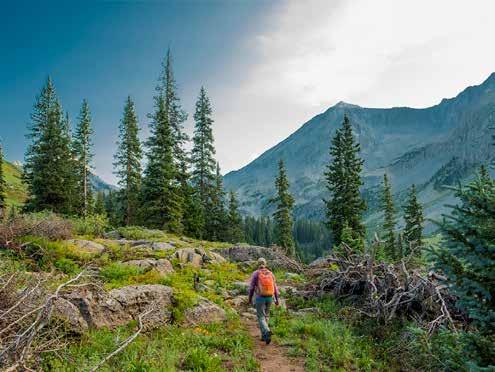
Gentrye Houghton hiking near Geneva Lake.
THE MARBLE TIMES
September 20, 2020
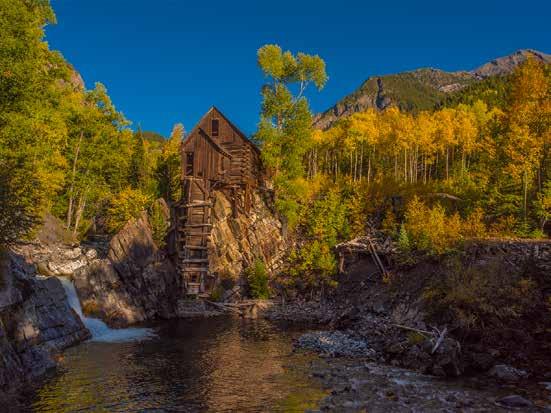
Get ready for a great day of running through the spectacular fall colors in the heart of Colorado’s Elk Mountain range. Run, walk, or hike the 25k loop around Lead King Basin, zipping past the Crystal Mill and ghost town of Crystal. Cheer the kids on as they run the 2.5k loop around Marble, or linger in Thompson Park after the race and enjoy a delicious homemade lunch including Slow Groovin’ BBQ (lunch included with race entry).
Marble Charter School
A tuition free, public charter school serving K-8th grade students in the Crystal River Valley.
Mission: Marble Charter School teaches a growth mindset in a unique and nurturing environment while exceeding state standards.
• Daily bus service to and from Carbondale Middle School
• Homemade Hot Lunch prepared with fresh, organic ingredients served daily
• Focus on Outdoor Education
• Low student to teacher ratios Now enrolling for the 2020-2021 School Year
Please call or email for information and to schedule a tour of our school. 418 West Main Street, Marble, Colorado 81623 970-963-9550
Email: marblecharter@gunnisonschools.net Website: marblecharter.gunnisonschools.net Another school year is now on the books, and we'd like to thank all of our staff, students, and parents for your patience, understanding, and ingenuity, especially during the last couple of months. Congratulations to our graduating 8th graders, Aniayh, Nina, and Zaida! Good
Lead King Loop Work Group Enters Data Gathering Phase
The increased popularity of backcountry trails around Marble has led to a variety of issues for the small town and surrounding area as well as increasing tension among residents. To help address these issues, and specifically the backcountry usage, the Town Board of Trustees spearheaded the formation of the Lead King Loop Working Group.
This group is comprised of governing agencies of the Lead King Loop (the loop), Marble, Crystal City, and Western Colorado University. Early on, Town Administrator Ron Leach reached out to Western Colorado University to enlist the help of Master in Environmental Management candidate, Corinne Truesdell, who joined the group as Project Manager. "Corinne is a high-quality individual, brilliant and curious." said Leach, "and I know she will be successful in any field she enters."
Truesdell dove into the project with gusto, spending much of last summer camping in the area while she studied the loop and its issues. She joined locals at various events and immersed herself in the Marble culture, all while working with Leach to solidify the working group.
"Once formed, our first goal was to develop the capacity to work as a long-term collaborative," explained Corinne. "We've secured some funding through donations and grants, and I was able to perform preliminary research to characterize the problem, review relevant case studies, and establish research framework and data gathering methodology for the summer."
Now approaching its second year, the group is gearing up for the data-gathering phase. They will be utilizing several tools in this effort, including a survey to OHV users, traffic counters in Crystal City, and a series of neighborhood meetings to seek solutions and insight from residents.
Town of Marble Mayor Ryan Vinciguerra, who is also a member of the working group, is hopeful about the meetings that are slated to start in June. "I am looking forward to the initiative of reaching out to various neighborhoods. I think we can get a good database of information about people's thoughts on what is happening out on the loop and creative solutions on how to maintain it."
Truesdell will be facilitating the community focus groups throughout the summer for residents most impacted and to check on progress as well as gaining new insights. Planned groups include Crystal City, the Town of Marble, Serpentine Trail, Hermit's Hideaway, and Redstone.
"Our outcomes for the project will only be as good as our data," she explains. "My job has been to get a bird's eye view of the situation to learn what kinds of questions need answering and how I can go about finding those answers.
"The neighborhood meetings were initially a chance to update the town on my plans for the project," Truesdell continues, "but have become an opportunity to learn more about the town culture, values, and attitudes of the community. The meetings teach me about Marble's social dynamics and town happenings that help me gain deeper insight, support, and visibility for the project. They are also a nice way to meet folks that I otherwise may not encounter without a formal introduction."
In addition to meetings, Truesdell is planning to digitally disseminate surveys to OHV recreators throughout the Western Slope to get their perspectives on effective management strategies and user preferences, as well as conducting on the ground surveys of visitors to the loop.
"My target audience is OHVers," says Truesdell, "because less research has been done on motorized recreation compared to other recreation forms. The Lead King Loop is historically a motorized trail, and many impacts on the loop and surrounding communities are associated with the high volume OHV visitation.
She continues, "Our goal is to get in the field and begin gathering data on who visits the loop, how long they stay, what their experience was like, what benefits they bring, and what assists them with regulation compliance. We also want to track motor vehicles on the loop with traffic counters as well as quantifying the number of emergency incidents on the trail."
Data collection alone can be a long process. "This project is not meant to be a quick fix, but the beginning of a robust, sustainable, and effective plan, which can only come with help from the community,"
However, the Lead King Loop Working Group is in it for the long haul. "I see this group as being a perpetual group that is constantly looking for ways to save the ecology and the environment of the loop while making it as accessible to people as possible," explains Leach. "We are a solutions-oriented group, who beleive the Lead King Loop is worth saving."
said Truesdell. Similar cases of recreation management development, such as Penny Hot Springs and Conundrum Hot Springs, took several years to gather sufficient data.
Amber McMahill
Gettin' Your Hands Dirty
A
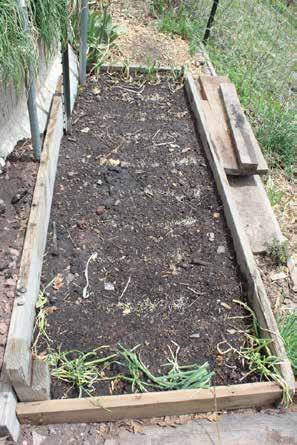
As spring paints the Aspens green and the snow retreats upon the mountain tops, it becomes a very busy time to be a gardener. It is still too early to put out most non-frost resistant plants, but just because they’re not in the ground yet, doesn’t mean it’s time to sit back and wait for the last frost. Now is the time to dig in and prepare your soil as the perfect home for those plants. Having improper soil conditions can be the root cause of many failed gardens.
If starting with native soil, it’s a good idea to order a soil test. You can get one for $35 from Colorado State University, which provides suggestions about what to add to improve your soil. Do it yourself options can be found online, but a professional analysis will give you a better idea of where to start.
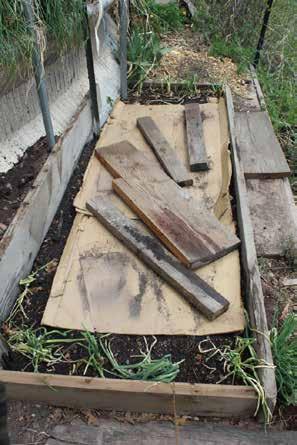
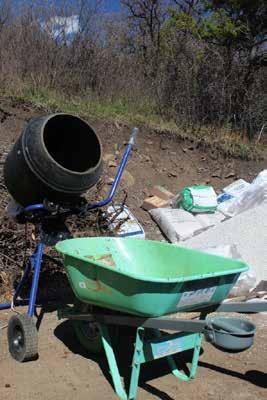
To begin, cover the ground with black plastic or cardboard for two weeks to kill existing plants. After clearing the ground, use a shovel and turn the soil over at least 15-inches and remove all roots and rocks. The building blocks for healthy soil are aeration, water retention, and nutrients.
Gardening Column by Vickie Branson and Kari Duame
Aeration in the form of pumice or vermiculite allows airflow for healthy roots. Sand helps loosen the soil and lets water penetrate. Adding peat moss or coconut fiber is important for our soil to retain water.
Balancing the presence of hydrogen (pH) is very important for plant nutrient uptake. A pH meter or test strips, the kind you use for pools, can be used to test pH. Most annuals want a neutral pH level or slightly lower. Peat moss is on the acidic side and coconut fiber is more neutral, so test your pH after adding these. Crushed limestone can be used to balance the acidity in your soil. For more information search the internet for a pH nutrient uptake chart.
Compost adds important nutritional value and water retention to your soil. Worm castings and organic compost mixes can be purchased. Aged manure can be picked up for free. Poultry and livestock manure are good options, but it’s extremely important to be sure that it has aged at least a year. Putting fresh manure on your plants will harm them.
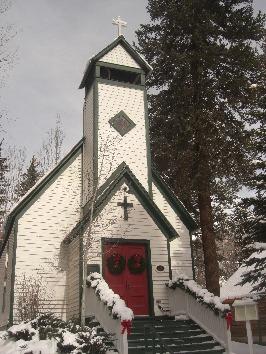
Marble Community Church
Mineral mixes are also necessary for your plants to have all the right micronutrients to thrive. Be cautious with nitrogen-heavy, animal-derived compost meal as it can burn your plants. Slow-release fertilizers such as kelp or alfalfa meal are safer. Thoroughly mix your ingredients and make sure it is properly wetted. When you squeeze a handful, you want to see a couple of drops of water come out but not a trickle.
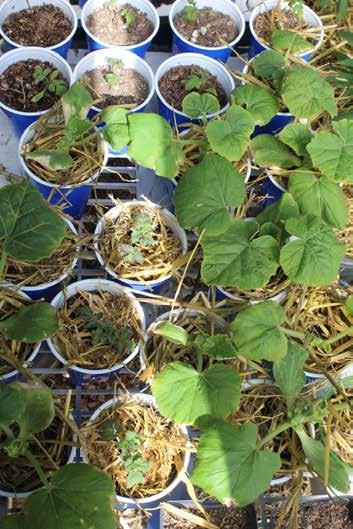
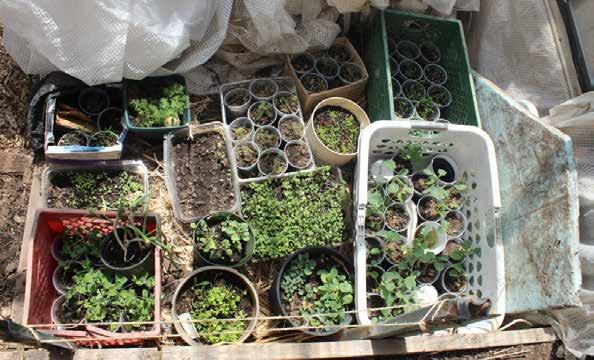
If you’re not able or ready to go all-in on a full garden, containers are an excellent way to grow vegetables. Keep in mind that smaller containers dry out quickly. Repurposing five gallons buckets or storage tubs is a cost-effective alternative to buying pots.
When repurposing containers, drill plenty of holes in the bottom for drainage. Put a 2-3-inch layer of spacing material in the bottom of the container to allow drainage, keep soil in, and reduce the amount of soil needed. Rocks or something lighter such as small scraps of an untreated wood (not mulch), crushed plastic drink bottles, or upside-down pie pans are useful.
When deciding what to plant keep in mind our short
For anyone needing help stretching their food budget, Gunnison County Officials currently have boxes of food available distributed through the Marble Community Church. There is no charge to the recipient and no reservation is needed; boxes are available for an individual or up to a family of four and contain enough meals to last approximately three days.
Please call Pastor Jon Stovall at the church to arrange a pickup time for your box today, (970) 963-1464.
season and cool weather. Marble sits at USDA Hardiness Zone 5. Some seed companies list hardiness zones for their plants, so that’s a good place to begin. A local gardening friend or high elevation seed producer is a great source of seeds for our climate. Most seed packages have important information about a plant’s ideal growing conditions. You should follow these directions as best as you can.
For beginning gardeners good plants for our climate are potatoes, onions, beets, broccoli, cabbage, kale, mustard, bokchoy, peas, green beans, and zucchini. Successively planting salad greens every few weeks allows the continual harvest of fresh, new leaves for your delicious summer salads! Edible flowers like nasturtiums are a fun, easy project for kids.
June 15th is the official last frost date for Marble, but different microclimates and years vary greatly. Keep an eye on nighttime lows. Upturned milk jugs or similar containers with the tops cut off can protect young squashes and herbs from an untimely freeze.
Our local wildlife will be very interested in the salad bar you’re setting up for them. A fence at least 6-feet tall will help protect your harvest. A high visibility wire running along the top will help keep deer from trying to jump the fence.
Hardware cloth added to the lower several feet and buried 12-inches into the ground helps prevent animals from digging under the fence. Companion planting strong-smelling plants with your vegetables can help deter unwanted insect guests and encourage pollinators to visit your garden.
Take advantage of this season’s wonderful weather and get your hands dirty. Happy Gardening!
Photos by Alden Laufeyjarson
ESTATE SALE
Furniture, tools, woodworking machines, yard implements, snow blower, numerous miscellaneous items. Easy access off Hwy 133. Contact Darrell at 704-9539 for appointment.