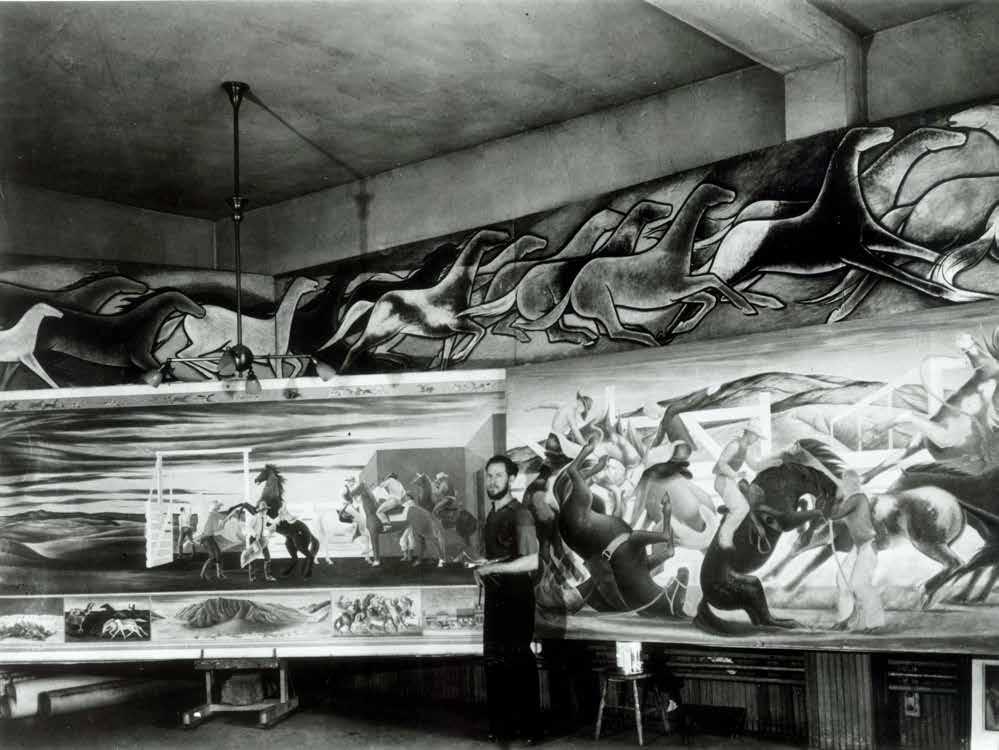

Photo provided by the Mechau family
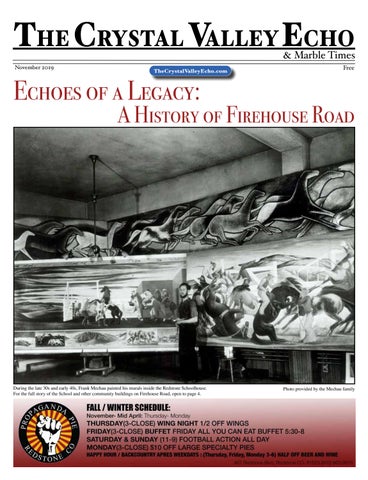
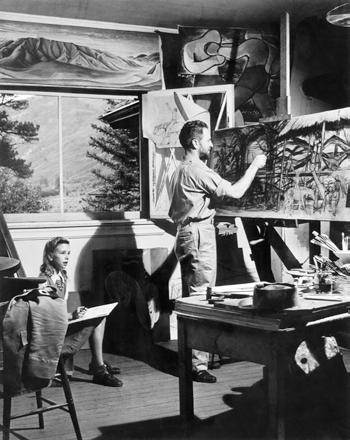
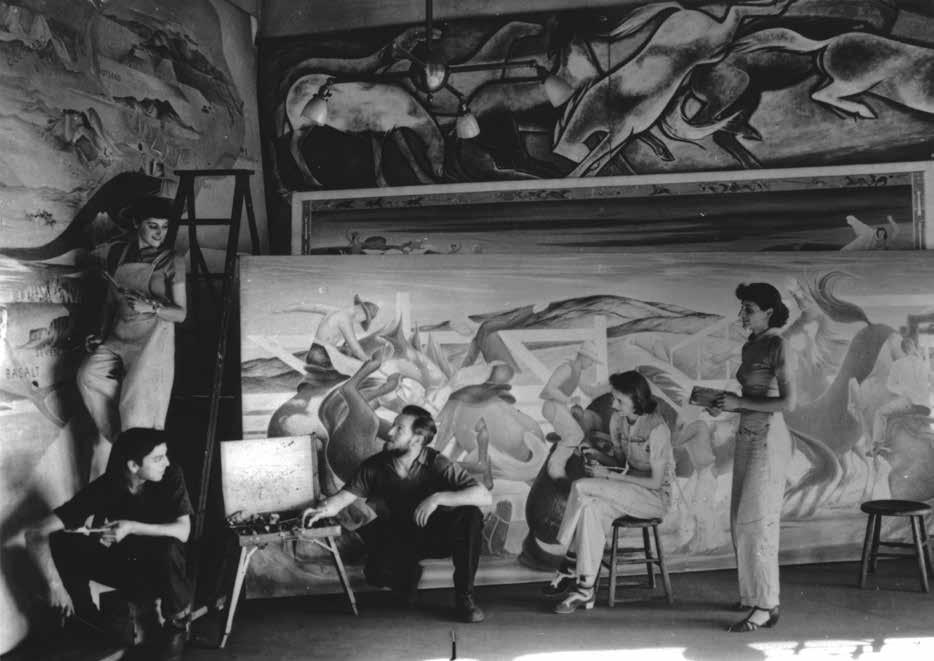
During the late 30s and early 40s, Frank Mechau painted his murals inside the Redstone Schoolhouse. For the full story of the School and other community buildings on Firehouse Road, open to page 4.
The Crystal Valley Echo is running a holiday special for local artisans and tradespeople: For $100 you’ll receive a 1/5 page ad in our December issue, with a 200-300 word profile, and an additional photo, turning your coverage into 1/2 page. In addition to your spread in our print and digital editions, we’ll also feature each artist with a blast on our Facebook.

Email GentryeH@hotmail.com to reserve your space by November 10th; ad copy is due no later than November 15th.
Mission Statement: To provide a voice for Crystal Valleyites; to bring attention to the individuals and local businesses that are the fabric of the Crystal Valley region; to contribute to the vitality of our small town life.
Editor • Gentrye Houghton
Publisher • Ryan Kenney
Contributor • Charlotte Graham
Contributor • Dan Sohner
ADVERTISING SALES
Gentrye Houghton • 970-963-1495
GentryeH@hotmail.com
DISTRIBUTION
The Crystal Valley Echo is published monthly, and is distributed throughout the Crystal Valley.
NEWSPAPER BOX LOCATIONS: Carbondale City Market (inside) • Marble Hub
Carbondale Post Office • Redstone Inn
Redstone General Store • Marble Hub Propaganda Pie FOR SUBSCRIPTIONS
Please send $40 for print or $25 for digital editions along with address information to:
The Crystal Valley Echo 364 Redstone Blvd., Redstone, CO 81623

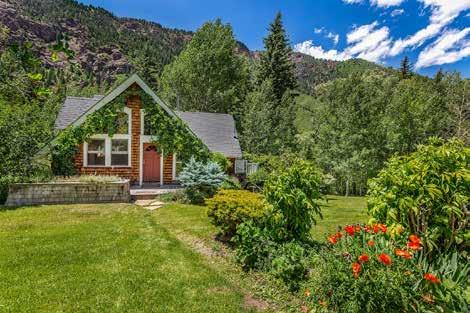

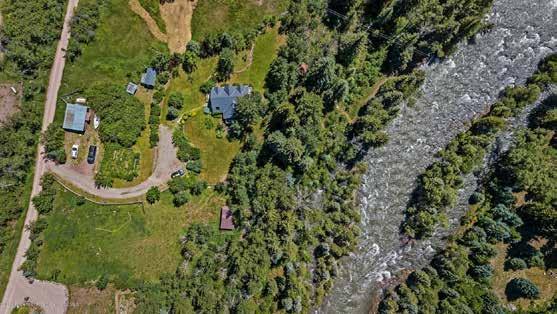
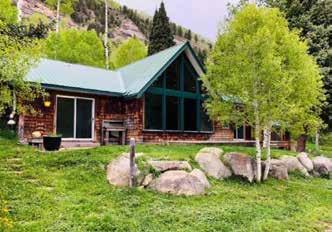
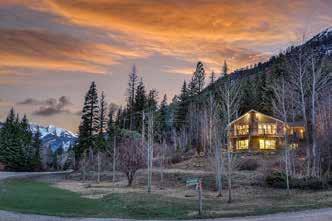

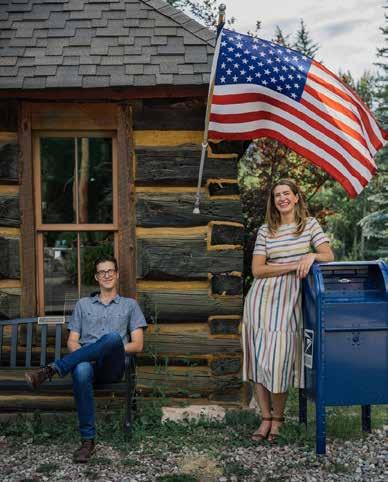
Did Redstone folks know ‘new kids on the block’ are two of Redstone Boulevard’s newest north-end homeowners? And no. I don’t mean the band by the same name.
Daniel and Janelle Sohner, newlyweds as of this mid-September, purchased and moved into a miner’s cabin last June 2018. I caught up with them at the Redstone Inn.
“What got you to Redstone?”
Dan immediately answered.
a friend helped pull me out of a funk I was in and we ended up riding bicycles out to Boulder from Ohio. I stayed. Janelle came out later.”
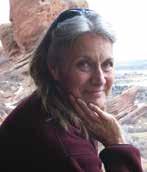
Charlotte Graham
“Mike Shook.” He then added, “Mike is a professional fly-fishing expert and also in real estate sales. He became a quick friend of ours and was helping us, learning who we were. He knew we were looking for a sense of community and a home we could work on. He suggested Redstone. He told us there were a lot of houses up here that need love.”
Dan went on to explain why he wasn’t afraid to take on remodeling a hundred-plus-yearold home, “When Mike showed us our future home, we saw that the bones were good, but it definitely needed ‘love.’” He laughed and went on, “My dad was a general contractor. He designed the floor plan and built our house in a subdivision that was kind of like RVR (River Valley Ranch).”
Janelle continued, “We’d been living in Carbondale the previous two years. We wanted to more permanently put down roots. We hadn’t given Redstone much thought since we lived and work downtown in Carbondale. But when we came up here, we both fell in love with the Crystal River Valley. The first neighbor we met was Diane Owens. Everyone has been so welcoming.”
Janelle works in Public Relations at Backbone Media. Dan splits his time with a web-building company, Footsteps Marketing, and as a freelance photographer.
Turns out this happy, enthusiastic young couple sitting before me were college sweethearts. They originally hail from Ohio.
“I grew up in a rural farming community, maybe three hundred people,” Janelle begins. “I called Dan a ‘city boy’ because he grew up in Columbus–in the suburbs.”
As most can relate, Dan describes a time of life when one decides to take flight from the coop.
“While working in the restaurant business,
Janelle picked up the story. “I have a really large, close-knit family. It took me longer to leave.” She made several trips to visit Dan in Colorado before moving. “One day during the government shut-down, we were going to go to Rocky Mountain National Park, but it was closed. Dan had a hare-brained idea, ”Let’s go to Aspen!”
I noticed how Janelle and Dan looked over at each other with tender smiles as she continued. “It was the first week in October. All the colors. The last weekend of Aspen Farmers Market. We were in awe of the natural beauty. It was all there. I remember driving by Carbondale and saying ‘oh, what a cute town.’ Kinda funny, but it put the wheels in motion for us.” It was May the following year that she made the full-time move out to Colorado.
It just so happened—gee, how many of my Crystal Valley stories have those four words in them?—that her PR company had been growing through mergers and acquisitions. When she gave her resignation, they told her they were acquiring an agency in Denver and that she could continue to work from there. That sealed the deal.
“Denver gave us time to transition. It was our first time to live in a really urban area and was great fun. It gave us a chance to come to the mountains and get a taste of mountain life before moving to Carbondale.”
“We knew we were looking for something different from Denver. Now we have a National Forest in our backyard!” Dan exclaimed.
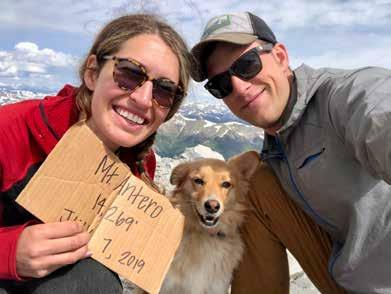
Speaking of the outdoors, they aren’t really into any competitive sports, but they do have thirty Fourteener climbs under their belts since moving to Colorado. “We’ve hiked Mt. Sopris every year we’ve been here,” Janelle said.
Dan nods. “We do a bit of everything. For instance, I go down to the river to fish, but [rather than] catch fish, I go to watch the sunset. The outdoors to us is just ‘being.’ We can go to the fire road back here and see so much. It puts everything in perspective.”
Indeed, it does. Welcome to the ’hood, Kids!

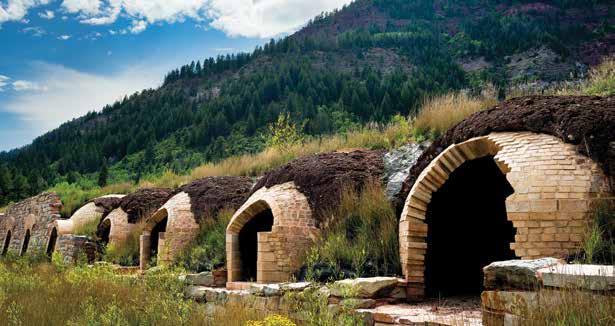
In an attempt to squash unions, deter strikes, and improve his company’s image, John Cleveland Osgood embarked on a journey during the turn of the 20th century of welfare capitalism and Redstone became his crowning jewel for a grand social experiment. This trial ultimately created the community of Redstone, in which Colorado Fuel and Iron (CF&I) would build a town for their stonemasons, coke workers, and their families.
In discussing the design plans and why Cleveholm Manor (now "The Castle”) is situated a mile from the rest of town, Norma Kenney’s book, “The Hidden Place: Redstone,” claims that “the Osgoods did not intend to mingle with the working class.” It was their belief they would have nothing in common and differing social interests with the workers and their families.
However, it is in the construction of the community buildings that we see their interest for the people who worked and lived here; especially in building the Redstone Schoolhouse and Clubhouse. Both buildings sat up on the hill from the Redstone Inn, and, according to Kenney, they “were beautifully constructed with stone foundations and with fitted stone that formed the archways of entrances.”

CF&I controlled every aspect of life up the Crystal, including all of the homes, community buildings, and programs offered to residents. In July 1901, Dr. Richard Corwin, who had already been in charge of the company’s hospital at Bessemer for a couple of decades, was appointed the head of CF&I’s Sociological Department. Corwin was enthusiastic about the task to improve conditions in the camps, and immediately launched programs in education, social training, housing, and communications.
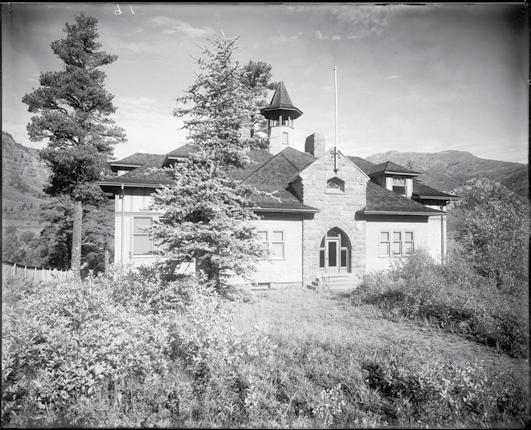
Built overlooking the village on the property that is now 102 Firehouse Road, the Schoolhouse was probably more important to the community and their welfare than any other building. With large classrooms full of windows, electric lights, adjustable desks, and slate blackboards, the furnace rooms were located in the basement along with lockers and “modern lavatories with hot and cold water,” describes Kenney, the school epitomized the administrative interests in an individual’s advancements.
As a direct reflection on the social betterment of their workers, John and Alma, Osgood’s second wife, took a personal interest in the educational work in all of CF&I’s camps, but especially in Redstone. “He made certain that Redstone had the finest school building… It was an imposing structure with a stone entrance tower and massive Tudor arch,” a description from Darrell and Jane
Munsells’ 2019 book, “Redstone: John Cleveland Osgood’s ‘Ruby of the Rockies.’” Munsell continues, that by “December 1903, 23 kindergarteners, 28 primary pupils, and 18 fourth through seventh graders were enrolled under the supervision of two teachers.”
Munsell also explains that the educational programs set forth by Corwin were designed to provide cultural assimilation for the immigrants who resided here. Domestic sciences in the way of cooking, sewing, and other household affairs were offered to girls and women, with vocational training for boys, and night school for adults that included courses in English, algebra, geometry, and American history. To teach American values and “proper” gender roles, clubs were established for both boys and girls.
“Lady Bountiful,” as Redstone’s citizens referred to Alma, “was especially fond of the children,” describes Munsell, “and the village school was a special project. She made certain that the library contained the best reference books available as well as a large collection of literary titles selected to promote a well-rounded education.” The library in the Redstone Schoolhouse featured 422 volumes of work, including such authors as Irving, Cooper, Scott, Kipling, and Dickens.
She threw lavish Christmas parties in which the Osgoods would come from “the big house” to attend. Although these parties were hosted in the Clubhouse, these gatherings also promoted an educational agenda. Assimilation took many
forms, not only did Alma ask the children to write letters to Santa, which were delivered directly to her, but Christmas parties, and other school programs, were used by the Sociological Department for the “Americanization” of Redstone’s large immigrant population and a prime time to introduce and practice standards of etiquette.
“Beginning in 1901,” describes Munsell, “the company provided each child in the CF&I community with a small gift of oranges and a halfpound of candy, and, if age-appropriate, each girl received a doll and every boy a drum. By 1904, the gifts were diversified. The Colorado Supply Store, a CF&I auxiliary, continued to provide dolls and drums but also building blocks, baseballs and bats, locomotives, stuffed animals, storybooks, toy kitchen dishes and utensils, and toy automobiles. In Redstone, the Osgoods augmented the company’s contributions with generous gifts of their own,” often traveling to New York to retrieve such trinkets for the nearly 400 residents.
Although Osgood lost his shareholder majority of CF&I by 1903, the February 6, 1904, issue of Camp and Plant, the weekly company-funded publication that was widely distributed throughout all the camps, claims in a caption underneath a photograph of the Redstone Schoolhouse, “This almost ideal structure, which was built and presented to the school district by John C. Osgood, has ample provision for kindergarten,

domestic science, and manual training work.”
Even after the Osgoods left Redstone, around 1911, Kenney asserts that “always there was a school at Redstone. Pupils living around the village and ranch made up the enrollment. The large Schoolhouse overlooking the town was used most of the time but when the enrollment dropped, rooms in different cottages were used to accommodate the children and teacher in a rural type of school situation.” A sentiment that was also shared during our interview with Michael Mechau, who was once a student of Mrs. Kenney’s. Classes were held in various places until 1960 when the state mandated the reorganization of the district, and Redstone became part of the Roaring Fork School District.
Kenney was born in Aspen in 1899 and sent to Redstone in 1922 upon her very first teaching assignment. She and her husband, John, resided in a home on the Redstone Boulevard and were both instrumental in keeping the town alive after Osgood’s death. Though the schoolhouse itself would meet its demise a couple of decades later.
The Redstone Clubhouse was built for $25,000, approximately
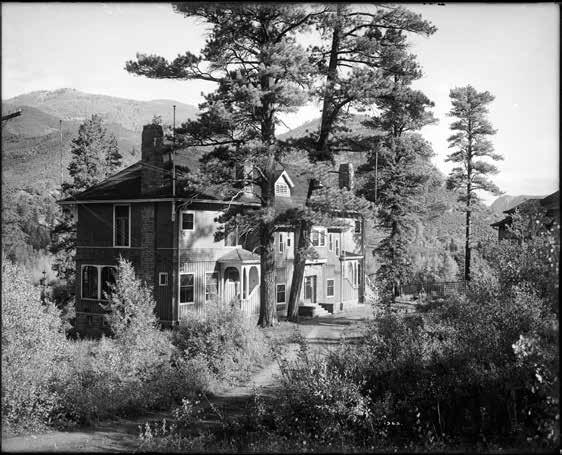
$724,000 today, for the workers’ rest and leisure after a hard day at the coke ovens. The miners were even encouraged to shower at the Club before returning to their tidy homes and families. It's also no surprise that the Redstone Clubhouse was the most pretentious in the entire CF&I system.
Sylia Ruland’s “Lion of Redstone,” states that “the miners of the model village enjoyed the most elaborate of the company’s clubhouses. Along with the bar, lounge, and game rooms found in other company clubhouses, the Redstone Club boasted the only theater complete with dressing rooms, electric lights, scenery, and an arch-illuminated stereopticon.” (From oxforddictionary.com, a stereopticon is a slide projector that combines two images to create a three-dimensional effect.)
On the first floor, there was a large lounging area complete with furniture from the Gustav Stickley firm, a reading room and library, billiard and pool room, and of course, the bar. Also on the ground level was an apartment to house the manager and his family. The reading room contained papers in different languages and the best of the weekly magazines; while the showers, baths, and dressing rooms were found in the basement.
A well-lit stage was located on the south end of the second story as part of a large ballroom that hosted school plays, home theatricals, and the acclaimed Christmas parties. According to Kenney, “The narrow boards of the floor, when properly waxed, made an excellent dance floor. The grand march, dreamy waltzes, the fast
two-step, polkas,” and others were danced to music provided by local musicians; on these special occasions, “supper” was served by the management at midnight. Kenney also observed that when the chairs were placed evenly in the dance hall, the room could accommodate close to 300!
“The third floor featured a large auditorium,” describes Munsell, “with a stage equipped with … all the modern features required for theater productions. All kinds of activities — including lectures, lantern shows, plays, concerts, and talent shows — were held in the facility. Concerts by the Redstone band … and performances by the mandolin club were popular attractions. Osgood prided triple silver plate instruments, ‘the best that could be had from Lyon and Healy of Chicago,’ and uniforms for the band members.”
While the Clubhouse seemed to be the center of Redstone’s social life, in “The Hidden Place: Redstone,” Kenney points out that “men who loved their wives and children did not want to spend evenings at the Clubhouse. …The use of the community Clubhouse actually became secondary. I have not, as yet, found proof that it was used and enjoyed by the majority of the laborers. People loved their homes more and found rest and leisure there in preference to outside activities.” She claims that the school was widely used for public gatherings, including elections, over the use of the Clubhouse itself.
Camp and Plant outlines the management and membership structure:
“The Club is incorporated for social purposes, and is governed by a board of directors
composed of 13 active members who elect a president, vice president, secretary, and treasurer. Active memberships are required to pay an initiation fee of $1 and six months dues in advance, at 50¢ a month.”
Women were denied membership, quite possibly one root deterrent for Clubhouse use that Kenney mentions, although they were not completely barred from participation. Women were invited to special events, as well as a “Ladies Evening at the Club” held on Wednesday nights for the wives, daughters, and visiting friends of members.
A placard was placed in the entrance hall with the Clubhouse rules written in English, German, and Italian. Among these was the “No Treating” rule, which was also displayed over the bar in each of the CF&I clubhouses. “Believing that widespread abuse of alcohol in the camps was a serious problem that affected job performance and created unsafe working conditions,” says Munsell, “both Osgood and Richard Corwin were reluctant to allow workers access to alcohol, but Osgood accepted saloons as a necessity of camp life.”
Corwin, initially, removed the sale of alcohol throughout the camps, and instead of complying, the miners resorted to bootlegging. Ruland states, "As a result drunkenness became more of a problem than before. In the town of Coalbasin, the miners anticipated the Fourth of July by smuggling into town eight barrels of beer, four kegs of whiskey, and a large amount of wine. The drinking spree incapacitated the camp for
1. The Clubhouse will be open for use of members from 9:00 a.m. to 10:00 p.m. daily except Saturdays, when it remains open until 11:00 p.m.
2. Members whose occupations are such as require special working clothes are requested not to remain in the Clubrooms in their working clothes.
3. No credit will be given to members or visitors. All charges must be paid at the time they are incurred.
4. No gambling will be allowed in the Club, but playing games for small stakes will be permitted, the stakes in no event to exceed the following limit:
Poker - Penny ante and 25¢ limit
Billiards - 25$ a cue
Pool - 10¢ a cue
5. Women or children residing in or near Coalbasin will not be allowed to visit the Club Rooms except at such times as may be specified by the Board of Directors.
6. Strangers, including women and children, will be permitted to visit Club rooms for purposes of inspection between 9 a.m. and 5 p.m., except Sundays and holidays, if provided with a permit from the Board of Directors.
7. No books or papers shall be taken from the Clubrooms.
8. Members will be charged for any damage done to the furniture or fixtures of the Club due to their carelessness or design.
9. No subscription paper shall be circulated nor any article exposed for sale in the Clubhouse without the authority of the Board of Directors.
10. All talking in the reading room is prohibited.
11. No member shall use the billiard or pool tables for more than three successive games to the exclusion of others desiring to play.
“No Treating” Rule
12. In order to promote the temperate use of wine, beer, and liquors which maybe be sold in the Clubhouse, no member or visitor shall be permitted to purchase or pay for a drink or drinks for any other member or visitor.
13. Notices shall not be posted on the bulletin board except upon authority of the Board of Directors.
days.” Thus the inception of the "No Treating” rule.
“This time the clubhouses were allowed to serve liquor but with well-defined rules,” continues Ruland. “Osgood spoke at the ceremonies for the Coalbasin Club: ‘The club will sell to its members or visitors, wine, beers, and liquors, but in order to promote their temperate use and believing that each member has the intelligence to buy what he wants, when he wants without suggestion from anyone, no treating will be allowed.’”
Although the rule seemed to work, neither Osgood nor Corwin was satisfied with their efforts; yet, CF&I received national cognizance for steering thousands of employees and their families from the affliction of drunkenness.
Ruland claims that the Firehouse was built after the decorated tree caught fire one year during a Christmas party at the Clubhouse. “At Alma’s insistence,” Ruland says, “a firehouse was built near the clubhouse and by the following Christmas all fears of another ruined party were erased.”
Today, the Firehouse still stands on a hill behind the Redstone Inn and originally at the back of the school. “Being well equipped with a hose cart (still present today) and carbon dioxide chemical cart,” describes Kenney, “firefighters could get down the hill in a hurry. It was built with all the necessary conveniences of a home and had living quarters on the second floor.”
Kenney continues, “Adjoining the fireman’s apartment was the large practice room. It was here the volunteer firemen could meet and do some necessary exercises to keep themselves in trim. They also could practice sliding down the pole, as a strong metal pole connected the big practice room with the ground floor. The big room served as a practice room for the Redstone band and as a storage place for their instruments. On the roof, a bell in the bell tower was ready to send the alarm should a fire have started.” During our interview, Harry Remmers gives a little chuckle when talking about the bell, “It’s really loud, and rivals the Church
at Redstone should we ring the bells at the same time.”
Out of sympathy for their brothers in the east, miners walked out of nine CF&I camps in 1903 and left the company weakened financially. Osgood burrowed heavily from heirs of Jay Gould and both John D. Rockefeller Junior and Senior to successfully defend a take over bid from John "Bet a Million" Gates. While Osgood won that battle, he no longer retained the shareholder majority nor his title as the “Fuel King of the West;” he continued to own the town and manor but CF&I controlled the mines; however, the grand social experiment had come to an end.
The village began to gradually shut down after 1909, and Redstone seemed to no longer have a purpose. With only a small caretaker and railroad staff, “between 1910 and 1924,” explains Munsell, “the larger buildings were literally packed away in mothballs. Maintenance workers prevented the major buildings and the underground water system from deteriorating completely.”
John Kenney, Norma's husband, was brought on in 1921 as the maintenance superintendent until his death in 1960. It is quite evident that the Osgoods leaned heavily on Kenney to keep the town going, especially during the Great Depression and World War II years.




John and Alma divorced during the first World War when she traveled to Europe to provide aid under the American Red Cross. Osgood married for a third time to Lucille Reid during October 1920, and the couple returned to Redstone in the fall of 1924 with plans to reopen the manor. Osgood’s health began to deteriorate, and “by the summer of 1925, however, it became apparent that her role was about to change,” says Munsell. Suffering from cancer, John Osgood perished in his room in Cleveholm on January 4, 1926.
Lucille, as his named beneficiary, inherited a fortune and remarried in 1933 to Huntley MacDonald; shortly after, they returned to the Crystal Valley and reopened the Inn. However, the depression years followed by WWII complicated their efforts to revitalize the town. “In a move to lower taxes, Lucille began the process of dismantling or selling properties,” Munsell says. “In 1937, she accepted a down payment on property from Frank Mechau, the well-known artist, who moved to Redstone with his family the following year to establish a progressive art studio and apprentice program for selected students.”
At the time, the Mechaus resided in Glenwood Springs, and in “A Life Well-Rooted: Women of Colorado’s Roaring Fork Valley,” Paula, Frank’s wife, shared with the author, Meredith Ogilby, the couple's experience of traveling to Redstone in the late 30s:
“Let’s go look at the clocktower,” Frank said to Paula, speaking of the Redstone Inn. Paula brings the moment up close. “Mrs. MacDonald, the third wife of JC Osgood, saw us there, welcomed us, and asked where we were from. As we visited she told us that for the first time she was selling houses individually and wondered if we were interested. Frank leaned over and whispered to me, ‘Do you realize nobody lives here?’ I didn’t care, it was so beautiful and I answered ‘What is the price?’”
The family resided on eleven acres that included the Firehouse and moved into the home now at 81 Fire-
house Road. “The Schoolhouse nearby provided invaluable studio space for Frank,” explains Michael Mechau, Frank and Paula's son, “because of its large rooms and high ceilings. This enabled him to paint several murals there and accommodate teaching four of his students."
He continues, “In 1944, Mrs. MacDonald made the terrible decision to tear down and sell the materials of the Redstone Schoolhouse and the magnificent Clubhouse next door. As a result of the loss of the wonderful studio space that the school had provided, for a year or so Frank painted in the Firehouse."
However, in 1945 the family traded Lucille for a home two miles upriver. This home remains in the family today, owned by their four children, this is also the home where the Osgoods resided while Cleveholm was built, and is also where Frank did his last paintings before his untimely death in 1946.
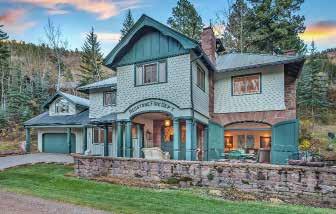
Today, the original Redstone Firehouse has seen three owners since Frank Mechau used it as his studio. The Reisners purchased the property in the late 40s, converted it into a home with the help of Aspen architect Fritz Benedict, who was a former student of Frank Lloyd Wright's, and are buried on the property. The sandstone porch you see today came from Mt. Casa and it's believed once belonged to both the school and clubhouse.
Clark and Bonnie Cretti purchased the Firehouse in 1980 and installed the beautiful garden landscape that you see today. In 1998, the Firehouse as well as the home across the street, once home to the Schoolhouse and now a home that was completed in 1989 by Peter and Ann Martin, were both featured in "Colorado's Great Gardens.” That same year the Firehouse once again changed hands, to Harry and Marlene Remmers, who resided in Boulder at the time.
Around the year 2000, the Remmers embarked on a massive renovation project that would end up taking
13 years to complete. Restoring structural integrity was the name of the game for this project, as well as updating the interior. “It was so dark, and there was so much wood — on the floors, on the walls, on the ceiling — I felt like I was living in an acorn,” jokes Marlene.
Although the original fireman’s pole was not standing in the home at the time of purchase, the Remmers sonin-law found it a little further up the hill but still on the property. Marlene continued to teach first grade at the Boulder Country Day School and only came to Redstone during the summers, “That's probably why it took us so long," she chuckles. With pride and excitement, Marlene showed us the home describing the love and hard work they poured into it.
"There were so many leaks, and the chimney was falling apart. We even found original window framing under the drywall in our living room and were able to put the glass back in them, but the foundation business was the most challenging,” she says. Not only did they level the foundation, but they also saved the exterior columns that were rotting from the ground up.
“My students and their parents got so interested in the project,” Marlene exclaims, “at the beginning of the school year, they'd want to hear all about the work we'd accomplished over the summer. They ended up contributing the hummingbird chandelier in the kitchen because they knew how much I love hummingbirds.” As a finishing touch, she'd chosen a cast bronze sink that gave an option for varying designs on the front plate. What did Marlene choose? Hummingbirds of course!
Though, Lucille ended up tearing down 25 of the original cottages and sold the mansion in 1944. The Osgood legacy carries on as the Crystal Valley community continues to breathe life into these old sites and structures. As both the Martins and Remmers prepare to move on to their next chapters, it is through the lips of each of us, that the whispers of heritage live on.

If you’re just passing through, the pulloff to Penny Hot Springs just looks like another picturesque scene unfurling along Highway 133, just with a funny smell.
The canyon walls meet the sky in a clash of blue and red and cast massive shadows which parallel the highway. The valley floor shines golden in the afternoon sun as the wind leaves the slightest ripples on the surface of the river. If you sit and listen for a minute, you hear the wind and water and expanse of the valley become one.
But here, every so often, cars, trucks and RVs rumble in. People touching every spectrum of the makeup of this valley, this area, hop out of cars and saunter down to the river, all with their own stories. The man made pools of geothermically heated water fill with visitors quickly.
A longtime staple in the Crystal Valley, Penny Hot Springs, located near Filoha Meadows on Highway 133, has recently received some much needed attention.
During a review of the Filoha Meadows Management Plan, Pitkin County identified significant need to address Penny Hot Springs as a separate management opportunity and after receiving over 200 responses to a user survey on the area…
The main concerns identified in that survey are similar to the issues addressed with Conundrum Hot Springs, the Northstar Nature preserve, and Hanging Lake.
Public response identified that there were no negative sentiments with the free hot spring, but that there certainly was room for improvement. Residents of the Crystal Valley and users alike unified around the common theme that the parking lot and highway interface needed to be addressed as the increasing popularity of the hot springs was creating a dangerous scenario for traffic.
“A majority of the hot springs actually belongs to CDOT,” said Lindsey Utter, Planning and Outreach Manager for Pitkin County Open Space and Trails. “Success here is based on our relationship with CDOT.”
“CDOT and The Carbondale Chamber have been very supportive partners,” she continued.
In an effort to create a safe environment for future users, the board will discuss ways to mitigate traffic issues.
Other issues which arose form the survey were dogs, camping and human waste, access down to the river and continued erosion, parking and trash, and the influence of social media and the internet.
These issues will all be addressed by the board. “Our focus is on education and how to be a good user,” Utter said.
“Reducing the speed limit and perhaps signage in that section might help with safety.” noted Redstone Community Association’s Vice President Ron Phaneuf.
Additionally, there were several comments from the public indicating that there was a fear of the hot springs becoming a resource which the public would have to pay to use, in which
Utter maintained that the natural resources will remain free to the public.
After the Nov 7 board meeting, public comment will be open until Jan 17. They will also present at the Crystal Caucus November 14 and Redstone Community Association December 3; the final plan will be set for adoption on March 3.




Nov. 1: Taco Night at Propaganda Pie. All you can eat buffet $15 from 5:30-8:00.
For more information: 970-963-9515
Nov. 1: Dia de los Muertos; Festivities & Altar Exhibition 5pm at the Third Street Center, Procession 6:15pm from TSC to Thunder River Theatre Company, Folklorico (7:30 & 8:30pm) & Dance of the Sacred Fire (7:45pm) at 4th & Main Streets.
Nov. 5: The Redstone Community Association meets for their regular board meeting. 7 p.m. at the Redstone Inn.
Nov. 7: The Town of Marble holds their regular council meeting at the Marble Community Church, 7 p.m.
Nov. 8: All you can eat buffet (not pizza) at Propaganda Pie. $15 from 5:30-8:00.
For more information: 970-963-9515
Nov. 12: The Redstone Water & Sanitation District meets for their regular board meeting at the Redstone Inn, 7 p.m. For more information, please e-mail Ryan.E.Kenney@gmail.com
Nov. 14: Crystal River Caucus Annual Meeting, 7p.m., at the Church at Redstone. Agenda includes bylaws updates, board member elections, Penny Hot Springs Draft Management Plan, and a proposed backup water supply plan for the Crystal River. Propaganda Pie will provide pizza downstairs at the church starting at 6 p.m.
Nov. 15: All you can eat buffet (not pizza) at Propaganda Pie. $15 from 5:30-8:00.
For more information: 970-963-9515
Nov. 16: Marble Community Thanksgiving Dinner at the fire station. Gather at 5:30, serving will begin at 6:00 p.m. Turkeys by Slow Groovin', paper goods & iced tea provided. Bring a dish to share as well as any needed serving utensils. Bingo will follow dinner, hosted by 7th and 8th graders from the MCS. Proceeds go towards funding their spring trip. Co-sponsored by Slow Groovin', the Hub, the Marble Charter School
Send event information to gentryeh@hotmail.com
and the Marble Community Church. For more information or to volunteer to help: TerryLangley1@msn.com
Nov. 22: All you can eat buffet (not pizza) at Propaganda Pie. $15 from 5:30-8:00.
For more information: 970-963-9515
Nov. 29: Grand Illumination. Come celebrate Redstone's annual Christmas kickoff celebration. Starting at
5pm
Santa and Mrs. Clause join the carolers for song and dance at the Redstone General Store. Then join the caroling procession to the Redstone Inn.
5:30pm
Santa and his Elves visit the Redstone Inn
6pm
Bonfire, music & caroling at the Redstone Inn, bonfire lighting by the fire department
Redstone Castle Tours: Guided tours of the recently restored and renovated Historic Redstone Castle. Reservations required online at TheRedstoneCastle.com, by phone at 970-963-9656, or at the Redstone Inn. $25 adults, $20 Seniors(65+), $10 children (5-18).
Propaganda Pie: Monday Night Football Pizza Special at Propaganda Pie. Receive 10% off all large specialty pizzas. With the NFL Ticket, we have every single game all season long. For more information: (970) 963-9515
The Redstone Knitting Group meets every 1st, 3rd, and if there is a 5th, Wed. of the month at the Redstone Inn from 4-6 p.m. All levels welcome, or just come to visit. Call Kay at 970-963-9811.

Steve's Guitars in downtown Carbondale offers a range of live music in an intimate setting. Carbondale Recreation Department offers classes and programs for kids and adults.
carbondalerec.com. 970-704-4190.
Body Fusion Class with Lisa Wagner. Meets every Tuesday and Thursday, 8:30-10 am at the Church at Redstone. All are welcome!
First Fridays in Carbondale celebrates the arts, shopping, dining and music from 5 pm on the first Friday of every month downtown.
carbondale.com
Yoga and a Soak at Avalanche Ranch Hot Springs. $25 cash. All levels welcome. Bring your mat, towel, swimsuit, water and snacks. Call 970-963-2846 to reserve your spot.
Mondays - 9am with Shannon Jones Wednesdays - 6pm with Whitney Roginski Saturdays - 9am with Sarah Coburn
The Redstone Community Association board meets the First Tuesday of the month at 7pm at the Redstone Inn. All meetings are open to the public!
Country Dancing every Tuesday night in the Round Room at Third Street Center in Carbondale. Lesson at 7, open dance 7:30-9:30. $8 per person. No partner or experience necessary. BillyPat4@gmail.com. 970-366-6463.
New this Season. Second Saturdays in Marble with a variety of activities at multiple locations throughout Marble. Please check out the Marble Hub for more information.
Ongoing events at The Marble Hub include art studio tours, cooking classes, outdoor movies, community dinners, MarbleFest, Marble Living History Day, book club, and other activities. Watch the Hub website for more information. themarblehub.org. All events meet at the Marble Hub. 105 West Main St. Marble. 970-963-1141
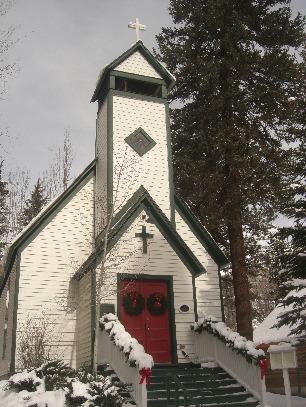
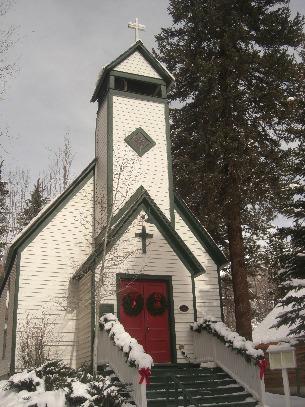
Is your vehicle here? If not, VISIT US! We’ll save you a parking place
Or walk, ride your bike or ATV, snowshoe, ride your llama JUST COME ON IN!

Traditional worship >Sundays at 10:00 a.m. 970.963.1464 >Pastor Jon Stovall www. marblecommunitychurch.org Marble Community Church
Free Food Boxes Available in Marble
For anyone needing help stretching their food budget, Gunnison County Officials currently have boxes of food available distributed through the Marble Community Church. There is no charge to the recipient and no reservation is needed; boxes are available for an individual or up to a family of four and contain enough meals to last approximately three days.
Please call Pastor Jon Stovall at the church to arrange a pickup time for your box today, (970) 963-1464.
Written By Larry K. Meredith, Author of “This Cursed Valley”
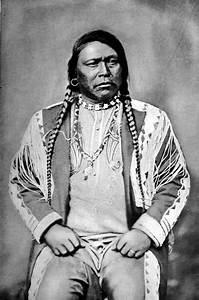
Little remains of the first residents of the Crystal River Valley – the Ute Indians. However, many individuals have discovered arrowheads and other Ute items on properties up and down the valley. Old-timers say a stone barricade on the crest of Red Hill, just north of Carbondale, for example, was a Ute fortification during a battle with marauding Arapahos.
FROM CREATION TO LEG ACY
Dr. Mark Coffey • Friday, November 1 • 1:00
There is evidence that the first contact between the Ute Indians and white Europeans occurred early in the 1700s when the Utes traded captive slaves with the Spaniards in New Mexico.
In 1776, Fray Francisco Atanasio Dominguez and Fray Silvestre Velez de Escalante, sent by the Spanish government in New Mexico to seek a new route to the California coast, became the first recorded Europeans to see the Upper Grand valley of the Colorado and encountered their first Ute Indians. They traveled more than 1,000 miles during their incredible journey. The Spaniards were followed by fur trappers and mountain men, prospectors and traders. Utes often served as guides and became friendly with such men like Jim Bridger, Uncle Dick Wootton, and Kit Carson.
The Utes acquired horses in the 1600s and expanded their hunting territories while enlarging their tribal groups, which pitted them in wars against invading Arapahos, Cheyennes, and Kiowas. They reached the peak of their power when they achieved a population of around 8,000 by 1750.
With increasing pressure from the white settlement in the 1860s and 1870s, the U.S. government recognized Ouray, translated “The Arrow,” as Chief of the Ute Nation, as the many bands of Utes were collectively called. The Utes themselves did not recognize a central leader who could speak for all, each group having individual leaders. Ouray’s father was an Uncompahgre, and his mother a Jicarilla Apache. He learned the languages and customs of Americans, and when the time came for a diplomatic Ute to deal with the whites, Ouray seemed well-suited.
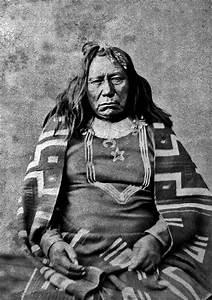
However, Ouray’s non-violent nature did not appeal to all Utes. Among those who opposed him was the sub-chief Colorow. Born an Apache and allegedly captured by a Ute war party when he was a child, Colorow was raised by the Utes. When white settlers began flood ing into the Crystal Valley, Colorow reportedly broke his lance across his
An overview the nature of mythology and cover categories including Creation, Olympians, Monsters, Geography, Heroes, Tragic Figures, and Legacy. Mythology cuts across many disciplines including anthropology, sociology, psychology, political science, literature, philosophy, and religious studies. It has enduring appeal: whatever modern variations there may be, it continues to this day.
knee in defiance, vowing to fight for his beloved homeland.
LITERATURE
Sunday,
Following the Meeker Massacre, Colorow refused to capitulate and led raids from the Utah reservation, where he had been sent. Many say he returned to the Crystal Valley every autumn to hunt in his old stomping grounds.
Author visit with Thomas W. Sherwood
Colorow and many other Utes had soaked and rested in the (now called) Penny Hot Springs on their migrations to their favorite bear and elk hunting grounds in the Muddy Divide area, which they reached by an old trail over what is now called McClure Pass.
November 6 • 1:00 pm
Author Tom Sherwood will discuss his thrilling mystery novel.
It's trails like these that the first explorers followed through Western Colorado.
What happens when domestic violence becomes a murder scene, and the son finally emerges from the cocoon of depression and hypersomnia caused by growing up with the daily verbal lacerations of an abusive father, and worsened by a football injury that left him listless and detached from the world?
Material from a wide variety of sources including: “Elk Mountains Odyssey” by Paul Andersen and Ken Johnson Published by the West Elk
and

The Redstone programs are for residents & visitors of the Crystal Valley. RSVP: (970) 920-5432
10:30 am Tai Chi ($5) 11:30 am Restorative Yoga ($5)
12:30 pm lunch (RSVP by 10 am the Friday prior, $5) 1:30 pm Program (see details below)
November 5
CJ Brafford, Oglala Lakota and Director of the Ute Indian Museum, will share the storytelling of the Ute People and the preservation of their identity.
November 19
Dr. Mark Hilberman will lead a thought-provoking discussion about complex decision-making and ethical principles.
Also available Nov. 19: Massage with Gentrye 11:30-2:00 Sign up when you arrive. No charge, donations accepted.



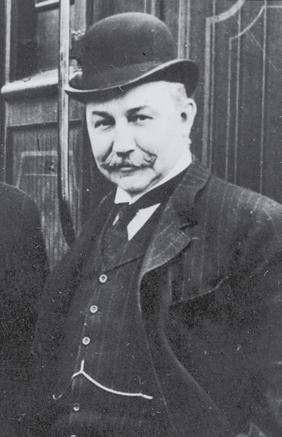
The Pitkin County Commissioners hold weekly work sessions on Tuesdays and bi-monthly public hearings on Wednesdays in our BOCC meeting room at the Pitkin County Administration and Sheriff’s Building. Both meetings are televised live and repeated on locater CG12 TV. They are also streamed live and available on the County website. Agendas are posted in the Aspen/Glenwood newspapers and on-line at www.pitkincounty.com. In this column, your District 5 Commissioner, George Newman offers his take on current matters. You can reach him at george.newman@pitkincounty. com.
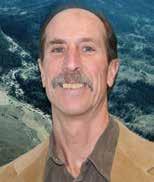
The BOCC recently approved two budgetary supplements for collaborative projects referred by Open Space and Trails: one with a local conservation leader and the other with a nationally recognized organization.
The Aspen Valley Land Trust (AVLT) is developing its first-ever land conservation plan for its service area, which includes the entire Roaring Fork Watershed and the Colorado River valley from Glenwood to Debeque. The Trust requested our financial assistance with the Roaring Fork Valley portion of the plan, which encompasses all of Pitkin County as well as parts of Eagle, Garfield, and Gunnison Counties. They will similarly engage the other counties in the Roaring Fork Watershed. The BOCC recognizes that Pitkin County citizens benefit from AVLT’s acquisitions and land conservation successes throughout the watershed, and this plan will help guide conservation efforts that are central to the mission of the Pitkin County Open Space Department. It will also likely facilitate co-funding opportunities for future open space projects.
With massive growth, the rapid loss of biodiversity, and a changing climate threatening communities and ecosystems worldwide, we realize the Roaring Fork Valley and Western Colorado are not exempt. AVLT’s goal is to accelerate the pace and quality of conservation and maximize their conservation successes throughout our region, from Independence Pass to the Roan Plateau, before it’s too late, by expanding and making the most effective use of conservation resources. Pitkin County’s financial support will significantly strengthen AVLT’s capacity to analyze both environmental and jurisdictional concerns for the watershed as a whole. Together we have partnered on scores of conservation projects, and it seems obvious that a similar planning partnership is appropriate.
The second project supports the National Wildlife Federation in the Upper Crystal River area where the U.S. Forest Service domestic sheep grazing allotment is located in one of the highest elevation and most remote areas of Colorado. The allotment sits largely inside the spectacular Maroon Bells-Snowmass Wilderness Area and has been used by a sheep ranching family for decades. But this extremely rugged mountain range, high in the Elk Mountains provides an ideal habitat for Rocky Mountain bighorn sheep, who rely on the very type of high-elevation meadows and peaks found here. In fact, the area under this allotment is home to one of the highest priority herds of bighorn sheep in Colorado. Unfortunately, domestic sheep carry a number of respiratory pathogens that can and often do, decimate entire herds of these iconic ungulates.
During the Carbondale to Crested Butte Trail planning, protecting and enhancing biodiversity was a major component of the plan. An action item in the plan called for bighorn resiliency to enhance the health of the declining herd in the Crystal River
watershed, which uses Filoha Meadows Nature Preserve and has historically used other open space properties in the past when herd size was larger. Removing pathogen transmission is the most important way to begin improving the health of the bighorns and helping to fund this grazing allotment agreement will directly benefit biodiversity in the Crystal Valley.
The good news is that National Wildlife Federation has successfully negotiated a financial agreement with the rancher that holds the permit to this allotment, allowing him to voluntarily waive his allotment.
This will significantly reduce the risk of contact between these domestic sheep and the bighorns. The final buy-out is still being negotiated, but an anonymous donor has committed $32,000 and the BOCC has approved Open Space and Trails staff’s recommendation to match this donation. The rest is being raised from the Rocky Mountain Bighorn Society, Wild Sheep Foundation, and other individual donors.
Partnering with AVLT’s planning supports our current partnership with Colorado State University’s Roaring Fork Watershed project, while our collaboration with the National Wildlife Federation provides a great opportunity to promote and enhance the County’s biodiversity policy.
with your Pitkin County Government online at
Watch Board of Pitkin County Commissioners Meetings LIVE online! Also find help with:
ELECTIONS — register to vote or change voter registration
VEHICLES — renew motor vehicle registration
LIBRARY — request a library book
MAPS — design and print a custom map of the area
MARRIAGE — obtain marriage and civil union license
JOBS — find job openings
RECORDS — research birth, death & property records
TRAILS — navigate to local trails
Pitkin County Administration & Sheriff's Office
530 E. Main Street Aspen, CO 81611 Questions? 920-5200



The school year is off to a great start! We have the most students enrolled that the school has ever had since its opening as a public charter school in 1995. We have a whopping 48 students Kindergarten thru 8th grade for the 2019-2020 school year.
The last few weeks have flown by and we want to welcome back Ms. Marja! She returned last month to teach K-8 Spanish and 3-8 Science. Along with welcoming her back...We want to give a big Thank You to Ms. Jaime and Ms. Chrissy for filling in for her while Marja finished up her maternity leave. Our community is so lucky to have such willing and talented people that are involved in our school.
The MCS students and staff would like to share that we have continued to meet and exceed national and state standards in English Language Arts and Mathematics on CMAS test scores (Colorado Measures of Academic Success). The 2019 Colorado Department of Education results show that the Marble Charter School has met and exceeded Academic Achievement and Growth scores at 92% with 53% being the expected performance framework for schools in Colorado. We are proud of our students and staff. They work hard and it shows!

by Nina, Zaida and Aniayh (Grade 8); Chris and Ruby (Grade 7)
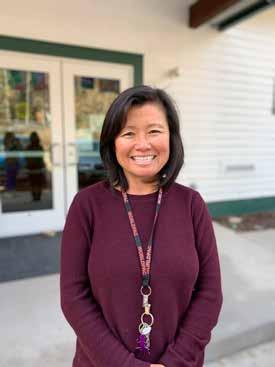
Kelly is a teacher’s aide in the K-2 classroom, but somehow finds her way into everyone’s hearts. We interviewed Kelly recently and this is what she told us:
I love working at the Marble Charter school because I love the children and it’s close to my house. My favorite thing about Marble is its natural surroundings, the mountains, and the scenery. I like my job because I get to teach kids and work with them. I have not worked at other schools before. My goal is to have a good relationship with the kids at Marble. I love eating and cooking and teaching math. I believe that everyone should be nice to one another and there should be more human interaction. I have one dog and I love to cook, eat, and party when I’m not working. I went to school in Seattle, Washington. I was born in Korea and grew up in Hawaii and Washington state. I liked when I came to the U.S. I have two sons and a daughter. My divorce and being separated from my kids has made me a better person. I moved to Marble soon after being reunited with my high school sweetheart, Scott Wilson. We were married on June 23, 2018.
A tuition free, public charter school serving K-8th grade students in the Crystal River Valley Mission: Marble Charter School teaches a growth mindset in a flexible, unique, and nurturing environment that empowers our learning community to explore significant ideas and exceed state standards.
• Common core curriculum with an emphasis on growth mindset and character building
• Focus on Outdoor Education
• Low student to teacher ratios
• Daily bus service to and from Carbondale Middle School
Please call or email for information and to schedue a tour of our school.
418 West Main Street, Marble, Colorado 81623 970-963-9550
Email: marblecharter@gunnisonschools.net Website: marblecharter.gunnisonschools.net
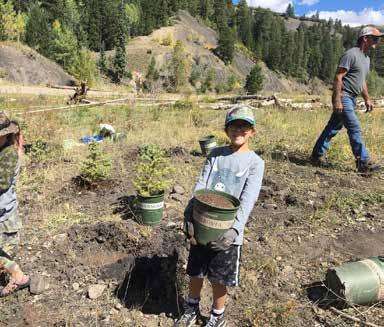
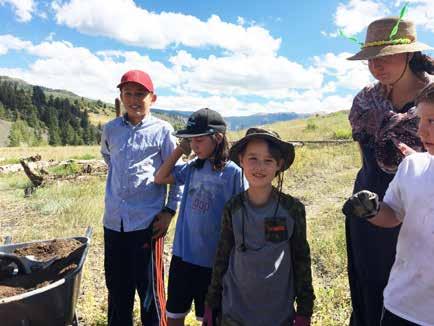
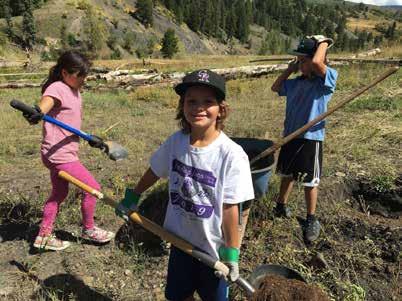
On Thursday September 19th, 2019, we went to Coal Basin by Redstone with Lee Bowers and his friend Peter. Lee explained that he and his friends were digging a hole for a lake to make the land look more natural, but there were sprouting trees and his friends said they were going have to go over them. Lee said, “How about we just have the Marble Charter School replant ‘em for us.” So, he brought us along and we planted two species; Douglas Fir, and the state tree; Blue Spruce. He said he dug out 45 but nine of them died, so we only had 36 to plant. He showed us how to plant them, and we split into three groups of four and started planting them.
When we finished, we washed our hands in Coal Creek, which he said will get so big that it would burst through the creek and erode the sides when it rains on the mountain above. Then he gave us snacks and before we left, we had two minutes to look for fossils (we had no luck!).
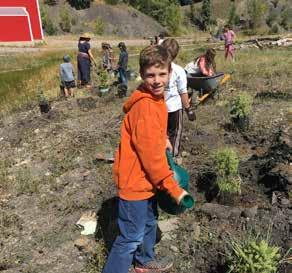
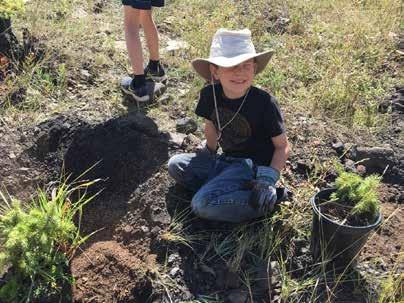
Eli Sorensen 5th Grade
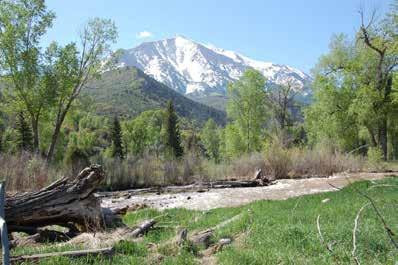
By John Emerick, Chairperson, Crystal River Caucus
Last month marked 25 years that the Crystal River Caucus (CRC) has served the citizens of the Crystal River Valley. Officially created by resolution of the Pitkin County Board of Commissioners on October 25, 1994; the CRC encompasses the largest geographical area of any of the nine designated caucuses in the county.
CRC encompasses the Pitkin County portion of the Crystal River Valley, and membership is given to any person owning property or claiming primary residence in the area. The caucus provides opportunities for its members to learn about and comment on various issues of interest; although the caucus only recommends courses of action to the county commissioners, these recommendations provide important guidance for our elected and appointed officials.
In the last year, the caucus discussed the Crystal River Recreational Trail, gas storage near Thompson Divide, Crystal River restoration, safety and environmental concerns regarding Penny Hot Springs, changes to Pitkin County energy and land use codes, various land use applications, and other topics important to those who reside in the valley.
During the next meeting on November 14th, which is CRC’s official annual meeting, the caucus will be voting on bylaws changes and electing board members. There will be a presentation by Pitkin County Open Space and Trails on the new draft management plan for Penny Hot Springs, as well as a report on a new proposed backup water supply plan for the Crystal River (potentially creating a reservoir near Marble).
The caucus represents the best of grass-roots politics. Meetings allow any valley citizen to voice their opinion on how we are being governed by Pitkin County. Decisions are already being made for the valley now, and you are encouraged to come to speak your mind. Every voice counts!
Regular public meetings are held on the second Thursday of every odd-numbered month with its annual meeting on Thursday, November 14th. All meetings are held inside the Church at Redstone at 7:00 p.m. Propaganda Pie will provide pizza during the next meeting, served downstairs at 6:00 p.m. Please come and support your Caucus!
7 p.m. , November 14, at the Church at Redstone, on the Boulevard 6 p.m. Pizza from Propaganda Pie downstairs at the church!
Proposed Bylaws Changes Board elections
Penny Hot Springs Draft Management Plan
Proposed Backup Water Supply Plan for the Crystal River Call 963-2143 for more information , or visit
www.pitkincounty.com/949/About-the-Crystal-River-Caucus
caucus!

“Letters in a Helmet: A Story of Fraternity and Brotherhood” is a sweeping tale of two men, covering five decades of friendship and brotherhood. An interlocking bond carries fraternity brothers Ron Sorter and Bob Tierno across a transformative landscape of military service, career transitions, marriages, war wounds, cancer battles and bereavement.
The war in Vietnam split American society, placing both authors on opposite sides but their friendship overcame any of their differences. Ron’s severe wounds received in combat triggered a mad scramble on Bob’s part, using his dad’s contacts at the Pentagon, to keep Ron’s family apprised each day of the progress of Ron’s return to America.
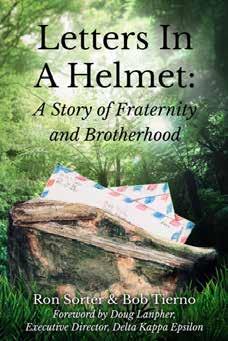
The accelerated maturity of early adulthood followed, and later on, the accumulation of wisdom as they enter their eighth decade of life. This is an inspiring chronicle of American life, bridging the 20th and 21st centuries with an enduring mantra: Your brothers are always there for you.
Thank you for supporting this exciting and inspirational collaboration. The paperback and Kindle ebook are for sale on Amazon.

The Redstone Castle has part-time and on-call staffing needs for the following positions: Housekeeping, breakfast assistant, light maintenance, and grounds. If you have an interest in working for the Castle, please submit an email to info@ theredstonecastle.com. No phone calls, please. In your email, include your positions of interest and associated skill levels.
(Pursuant to 29-1-106, C.R.S.)
NOTICE is hereby given that a proposed budget has been submitted to the Redstone Water and Sanitation District for the ensuing year of 2020; a copy of such proposed budget has been presented to the Board and has been posted online at: www.RedstoneWater.com, where the same is open for public inspection; such proposed budget will be considered at the regular December meeting of the Redsone Water & Sanitation District to be held at 7:00 pm on December 10th at the Redstone Inn.
Any interested elector may inspect the proposed budget and file any objections at any time prior to the final adoption of the budget.
Dana Strong with over 40 years experience in Plumbing and Heating, Master Plumber, BSCE. Certified Backflow tester and installer Marble to Aspen


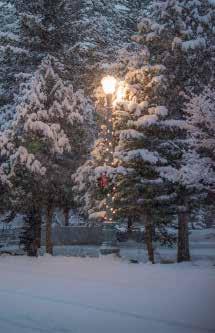
Help us make Grand Illumination spectacular! RCA is sponsoring a decorating contest for Boulevard residents; visitors to Redstone will vote on their favorite house the evening of Grand Illumination.
1st and 2nd Prizes will be awarded:
A night at the Redstone Castle Massage from Gentrye Houghton
Gift Certificate from the Redstone Inn Soak for Four at Avalanche Ranch
Asks
the bonfire pile

Friday, November 29th
Come celebrate Redstone's annual Christmas kickoff celebration. Starting at
5pm
Santa and Mrs. Clause join the carolers for song and dance at the Redstone General Store. Then join the caroling procession to the Redstone Inn.
5:30pm
Santa and his Elves first visit at the Redstone Inn
6pm
Bonfire, music & caroling at the Redstone Inn, bonfire lighting by the fire department

Redstone is an unincorporated village that relies completely on donations and volunteerism spearheaded by the Redstone Community Association (RCA)
Your membership dues directly fund RCA projects and events.
Thank You for your support!