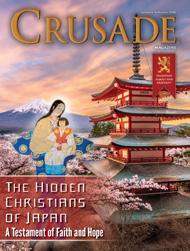
The hidden C hrisT ians of Japan
A Testament of Faith and Hope
Saint Paul Did Not “Tone
Down” Christ’s Teachings
“. . . To make men know Jesus Christ better and better, and to make that knowledge have a bearing, moreover, not only on their faith, but on their lives as well, was the object of [Saint Paul’s] every endeavour. This was the object of every throb of his apostolic heart. Therefore, all Christ’s doctrines and commands, even the sterner ones, were so proclaimed by Saint Paul that he did not restrict, gloss over or tone down what Christ taught regarding humility, self-denial, chastity, contempt of the world, obedience, forgiveness of enemies and the like, nor was he afraid to tell his hearers that they had to make a choice between the service of God and the service of Belial, for they could not serve both, and that when they leave this world, a dread judgment awaits them; that they cannot bargain with God; they may hope for life everlasting if they keep His entire law, but if they neglect their duty and indulge their passions, they will have nothing to expect but eternal fire.

“For our ‘Preacher of Truth’ never imagined that he should avoid such subjects, because, owing to the corruption of the age, they appeared too stern to his hearers. Therefore, it is clear how unworthy of commendation are those preachers who are afraid to touch upon certain points of Christian doctrine lest they should give their hearers offense. Does a physician prescribe useless remedies to his patient merely because the sick man rejects effective ones? The test of the orator’s power and skill is his success in making his hearers accept the stern truth he is preaching.” n
Benedict XV, Humani Generis Redemptionem [Encyclical Letter on Preaching the Word of God to the Patriarchs, Primates, Archbishops, Bishops, and Other Ordinaries in Peace and Communion with the Apostolic See], The Holy See, June 15, 1917, sec. 19, https://www.vatican.va/content/benedict-xv /en/encyclicals/documents/hf_ben-xv_enc_15061917_humani -generis-redemptionem.html.
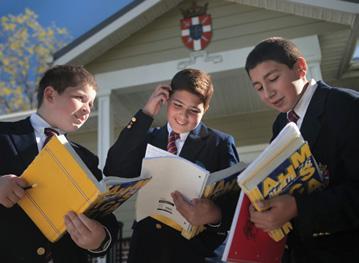
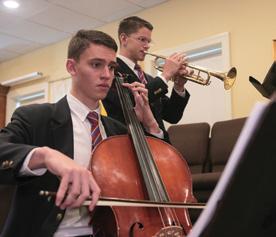
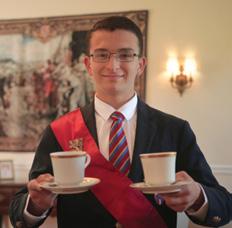
At St. Louis de Montfort Academy in Herndon, Pa., boys become men of faith, purity and courage. While the world mocks virtue, our students embrace it as strength. In an age of apostasy, 98% of our graduates remain faithful Catholics uncompromising, disciplined and ready to defend all that is good, true and beautiful. United as brothers and guided by the light of chivalry, they learn that manhood is synonymous with sainthood.
St. Louis de Montfort Academy:

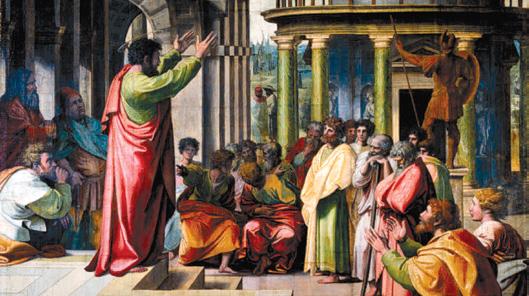
Saint Paul the Apostle had no concern for "political correctness" when he was preaching in the city of Athens. (Raphael, 1515)
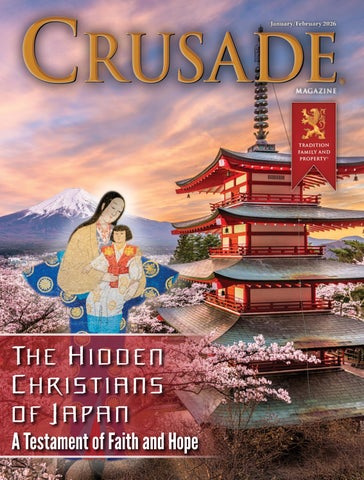
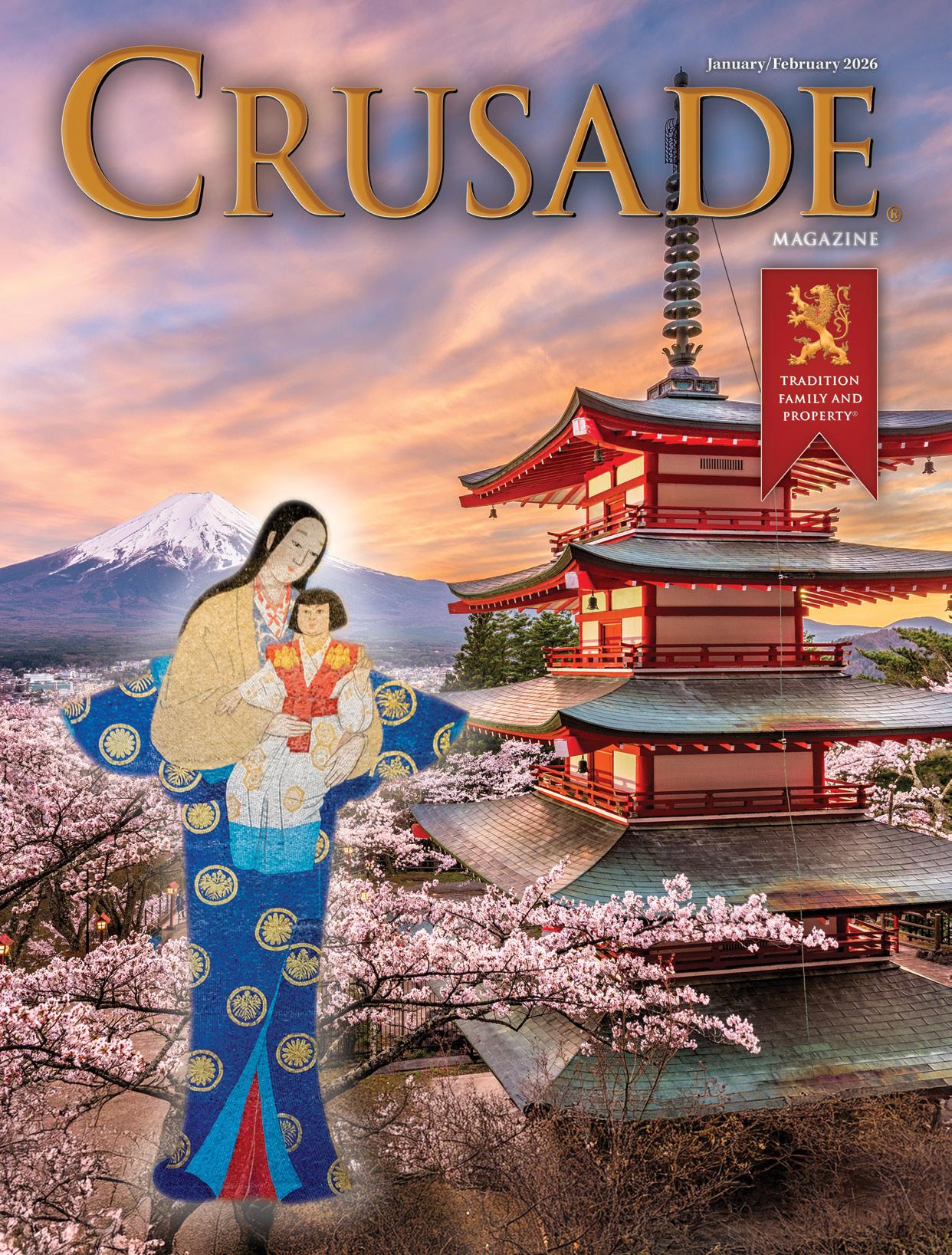
Mount Fujiyama, Japan, in springtime, with a Japanese mosaic of the Madonna and Child displayed in the Basilica of the Annunciation in Nazareth, Israel (inset)
Crusade Magazine is a publication of The American Society for the Defense of Tradition, Family and Property (TFP). Direct all requests and inquiries to: Crusade Magazine, P.O. Box 341, Hanover, PA 17331 or email to: crusade@ TFP.org. Web: www.TFP.org, Tel.: (888) 317-5571. © 2025 by The Foundation for a Christian Civilization, Inc. This publication may include images from iStockphoto™ and Dreamstime™ which are protected by copyright laws of the U.S. and elsewhere. ISSN 1096-3782 LCCN 98-641433 M-199 (HF2601)

Crusade
Editor: Michael Gorre
Associate Editor: C. Michael Drake
Contributing Editors:
James Bascom
Nelson Fragelli
Vincent Gorre
Stacie Hiserman
John Horvat II
Tonia Long
Gustavo Solimeo
Luiz Solimeo
American TFP The American Society for the Defense of Tradition, Family and Property (TFP) is an organization of lay Catholic Americans concerned about the moral crisis shaking the remnants of Christian civilization. Its earliest origins date back to January 1971, when the first TFP members started to group around the publication Crusade for a Christian Civilization. It is a civic, cultural and nonpartisan organization which, inspired by the traditional teachings of the Supreme Magisterium of the Roman Catholic Church, works in a legal and peaceful manner in the realm of ideas to defend and promote the principles of private ownership, family and perennial Christian values with their twofold function: individual and social. The TFP’s words and efforts have always been faithfully at the service of Christian civilization. The first TFP was founded in Brazil by the famous intellectual and Catholic leader Prof. Plinio Corrêa de Oliveira in 1960. His work inspired the formation of other autonomous TFP sister organizations across the globe, thus constituting the world’s largest anticommunist and antisocialist network of Catholic inspiration.
Rosary
The Holy Eucharist: source of strength in times of aridity
© Sean Pavone, Brian Maudsley
in Action
There Is Only One Counter-Revolutionary Option
The 2025 National Conference of the American Society for the Defense of Tradition, Family and Property (TFP) took place at its National Headquarters in Spring Grove, Pa., on October 25–26, 2025.
As is the tradition at the end of these gatherings, Prince Bertrand of OrleansBraganza delivered the closing remarks. Prince Bertrand is a distinguished member of the Plinio Corrêa de Oliveira Institute, a TFP sister organization in São Paulo, Brazil. This outspoken Catholic is also the present heir to the imperial throne of Brazil. His message of confidence and devotion to Our Lady stirred the conference’s nearly 200 participants. We are pleased to present the full text of this inspiring talk below.
Reverend Fathers, TFP directors and members, TFP friends and supporters, ladies and gentlemen:
This grace-filled TFP Supporter Conference has come to a close as we gather around a common cause: to fight the Revolution that is destroying what remains of Christian civilization.
To accomplish this vital task, we need to make sure we are all on the same page. And this conference helps us do exactly that.
The talks and conversations at the American TFP’s National Conference helped us discern what the Revolution was trying to do and discover how the Counter-Revolution can best respond. All of this is done according to the book, Revolution and Counter-Revolution, by Professor Plinio Corrêa de Oliveira.
However, this task is becoming more and more difficult. Confusion grows in the conservative and traditional ranks. Everyone seems to have a different solution to the Revolutionary crisis. Thus, it becomes difficult to discern where to focus. Some ask why we can’t all unite under a common banner to fight the Revolution?
For this, there is a simple answer.
From the very beginning, the devil has employed his tools to corrupt souls. In the Garden of Eden, what did the serpent do? He deceived and misled mankind. We suffer the consequences to this day. The devil has not abandoned his deceptive ways after the Fall of Adam. He is called the Father of Lies for a reason.
The devil does not want our eyes to be fixed upon Our Lady.
One specific tactic the devil likes to use, especially within Catholic circles, is to lead faithful souls astray, to get them off the straight and narrow path. He proposes distractions, which can be very dangerous.
The devil cannot compete with the Church, which fills us with admiration and love with her saints, miracles and the Blessed Sacrament. Thus, he resorts to false solutions and alternatives that distract our attention.
On the surface, these alternatives may not appear evil, and may even seem to be
good! But these distractions tear countless souls away from Our Lady’s cause.
One example is the so-called “Benedict Option.” This idea claims that today’s crisis is so severe that the only way out is for Catholics to retreat to small enclaves, abandon the culture war and wait out the crisis in isolation.
This may sound innocent, but upon further reflection, we must ask ourselves: “What could be worse for God’s cause than a plan that encourages those in the ranks of the Church Militant to retreat and go into hiding?” This supposed solution only succeeds in placing society into the devil’s hands!
As members of the Church Militant, we have a duty to oppose the world, the flesh and the devil. But the “Benedict Option” tells us it is better to retreat from the fight.
Another false alternative is the rise of those conservatives who promote strong measures against liberalism yet do not seek moral solutions. They might oppose specific parts of the woke agenda, but not oppose abortion, same-sex “marriage” and other moral aberrations. It is what some authors call a godless crusade. It is an effort that uses a lot of Christian rhetoric and imagery but does not profess belief in God and the practice of virtue.
Other alternatives follow libertarian
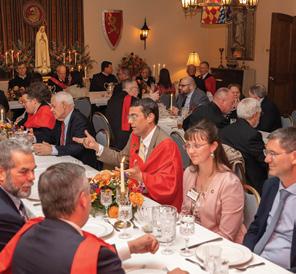
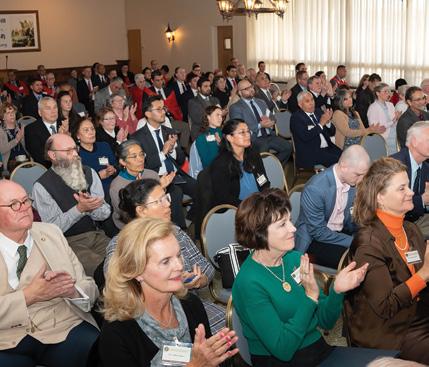
Devoted children of Mary applaud speakers at the annual National Conference of the American Society for the Defense of Tradition, Family and Property.
and nationalistic models that do not consider God or His Church. Others want to imitate authoritarian regimes like that of Putin and others. Some might even suggest we leave the Catholic Church because of the crisis.
The devil’s list of distractions could go on and on. All of these are dangerous errors that distract us from the real problem, and for that matter, the real solution. They are all false alternatives.
All of them are trying to distract us from something. What is this something that so threatens the Revolution? What must we do to destroy the Revolution and bring about the Reign of Mary? The answer is found in the theme of this year’s conference—our focus is on the triumph of Our Lady.
The devil does not want our eyes to be fixed upon Our Lady. Satan has always hated the Blessed Mother.
Some Church scholars believe that Satan decided to revolt when it was revealed to him that Our Lady, a mere human, would become the Mother of God and Queen of all Creation, and therefore be superior to the angels.
His pride was hurt to such a degree that he revolted against this Divine plan and became God’s eternal enemy.
Thus, Our Lady is she who will crush the serpent’s head and will guide us
amidst all this confusion and help us go where we need to go.
One of history’s greatest Marian devotees was Saint Bernard of Clairvaux. This great saint is believed to have written one of the most widely recited prayers in the Church: The Memorare.
Bearing in mind the theme of this year’s conference, I believe it is appropriate to read some words of Saint Bernard, which reinforce the need to keep our eyes on Our Lady.
He says, “Turn not away thine eyes from the splendor of this guiding star, unless thou wish to be submerged by the storm!
“If the winds of temptation arise, if you are driven upon the rocks of tribulation, look to the star, call on Mary.
“When battered by pride, or ambition, or hatred, or jealousy, look at the star, call upon Mary.”
With this in mind, I ask you: Please, never, never take your eyes off Our Lady. We cannot afford to distract ourselves with the devil’s false alternatives.
This was especially the teaching of Dr. Plinio. He constantly called upon us to have more devotion to Our Lady. He made Our Lady’s cause his cause. He called upon us to remain focused and united together under the banner of Our Lady. Through her, not through some “Benedict Option,” her reign on Earth will come.
In fact, we should be like Saint Benedict. If there is anyone who did not follow the “Benedict Option,” it was Saint Benedict. He was not afraid to engage the culture and understood well the struggle between good and evil. He could be seen overthrowing the idols, burning the pagans’ sacred forests and preaching to those near his monastery.
Because of his activism, he was hated in his days, something very familiar to Dr. Plinio and us! He faced immense persecution, like from that of an envious priest who tried to poison his bread and wine.
However, after blessing his food, a raven came and took away the bread, and
his cup shattered instantly. From this, we can see that Our Lady will watch over us if we take up her cause.
Saint Benedict’s example shows us that the devil hates those who oppose him in the public square, not those who hide away and let him seduce the world.
To help us remember the true spirit of Saint Benedict, this year’s conference memento is a beautiful Saint Benedict Medal—which represents a counter-revolutionary option, not a “Benedict Option.” This sacramental is known as a most effective means to fight the devil since it has exorcist qualities.
We are taking part in a battle between angels and demons. Therefore, this medal will help us persevere in the fight against Satan, his pomps and his works.
When the devil tries to distract us with his false alternatives, let us recall the initials inscribed on the back of Saint Benedict’s medal, which stand for the following words:
“Begone, Satan! Never tempt me with your vanities! What you offer me is evil. Drink the poison yourself!”
I ask you to please continue fighting against the Revolution as Dr. Plinio taught us, and keep your eyes focused on Our Lady. If we do this, then the devil has no chance. n
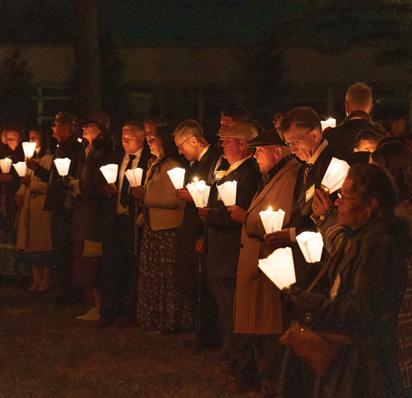
No TFP National Conference is complete without the traditional Holy Rosary procession by candlelight, culminating in the singing of the “Salve Regina.”
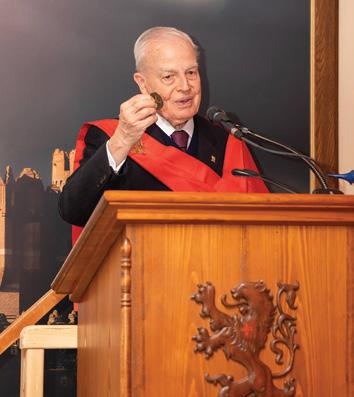
This year's honored guest speaker, Prince Bertrand of Orleans-Braganza, holds up a Saint Benedict Medal. Each participant was gifted one of these powerful sacramentals of Holy Mother Church.
TFP in Action
Fighting the good fight for moral values
Is Socialism Really Popular? Pennsylvanians Say NO!
OnOctober 23, 2025, young men with the American Society for the Defense of Tradition, Family and Property (TFP) embarked on a week-and-ahalf road trip to oppose the spread of socialism, which they call a caravan. It is an initiative of TFP Student Action.
The first stop was Penn State University in State College, Pa. Some students recognized the TFP volunteers from a previous visit to the campus, some weeks before, when they protested against the sin of abortion. The student newspaper even published an article about the campaign.
Socialism Is Popular with Some Students at Penn State
Unfortunately, some students saw nothing wrong with socialism, while others
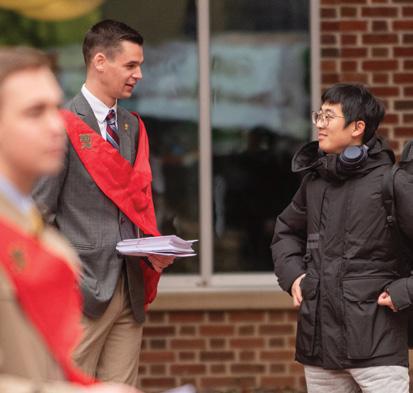
were even in favor of the dismal ideology. One Chinese student said he was proMao. Mao Zedong (1893–1976) was the communist leader responsible for the “Great Leap Forward,” which murdered tens of millions of people in the space of about four years. When asked about the millions of people murdered under Mao, he just shrugged and said, “Communism has not progressed enough yet. Technology must advance more so that we do not need to rely on people.”
Unfortunately, many students were in favor of socialism, but there were also several who opposed it. One said, “Yeah… a lot of students are just tired of all this woke craziness.”
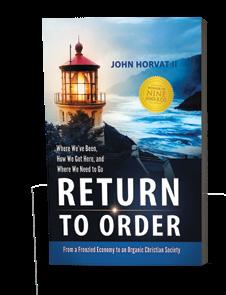
Student Action volunteer Damien Murphy spoke with a curious man about the American TFP’s book, Return to Order: From a Frenzied Economy to an Organic Christian Society—Where We’ve Been, How We Got Here and Where We Need to Go. He explained how Catholic social doctrine directs people on how to live virtuous lives that would solve the social problems that socialism seeks yet fails to address. Mr. Murphy also mentioned that relying solely on governments to provide safety nets, such as welfare, results in a socialist mentality of dishonesty, entitlement and laziness.
Socialism: A Failed System Since 1845
One man told TFP member Kenneth Murphy that socialism had generally failed, but largely because it had not
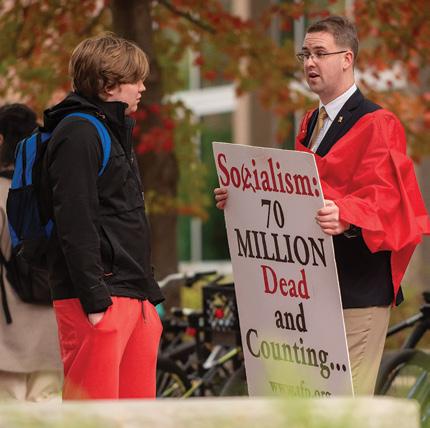
been tried properly. Kenneth explained that socialists have been trying since 1845, and it is still not working. Socialist advocates commonly use the argument of inadequate implementation as an excuse for their failure. However, different types of socialism and communism have all been tried and found wanting.
Survivors of Communist Regimes Have No Illusions About Socialism
The campaigners found people who had experienced the disaster of living under Marxist regimes. One Cuban man, for example, described the situation in his country, where there is no right to freedom. He added that it was really good to see young men against socialism. Socialism does not only exist in Cuba but also in America.
A TFP member gave an anti-socialism leaflet to a man who commented, “I escaped Cuba and know what socialism is like.”
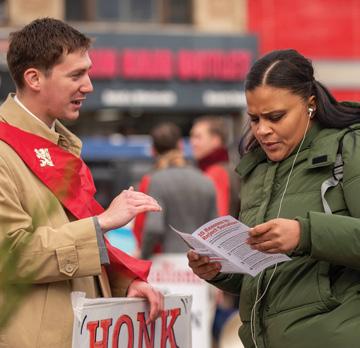
The TFP caravan later campaigned in other parts of Pennsylvania by visiting Reading and Camp Hill. At busy intersections, the young men held a banner displaying the message, “May God Protect America from Socialism,” while some held signs for traffic to see, such as “Honk to Reject Socialism— Keep America Free” and “God Bless America!” The level of local support was evident from the number of enthusiastic honks.
Please keep the young TFP volunteers in your prayers as they continue to oppose socialism in this new year. n
A young man listens attentively as a TFP member explains the evils of socialism.
A student at Penn State declared that “Communism has not progressed enough yet,” a shocking statement that resonates on America's college campuses.
Ten Reasons to Reject Socialism
1. Socialism and Communism Are the Same Ideology
Communism is but an extreme form of socialism. From the ideological standpoint, there is no substantial difference between the two. In fact, the communist Soviet Union called itself the Union of Soviet Socialist Republics (1922–1991) and communist China, Cuba and Vietnam define themselves as socialist nations.
2. Socialism Violates Personal Freedom
Socialism seeks to eliminate “injustice” by transferring rights and responsibilities from individuals and families to the State. In the process, socialism actually creates injustice. It destroys true liberty: the freedom to decide all matters that lie within our own competence and to follow the course shown by our reason, within the laws of morality, including the dictates of justice and charity.
3. Socialism Violates Human Nature
Socialism is anti-natural. It destroys personal initiative—a fruit of our intellect and free will—and replaces it with State control. It tends to totalitarianism, with its government and police repression, wherever it is implemented.
4. Socialism Violates Private Property
Socialism calls for “redistributing the wealth” by taking from the “rich” to give to the poor. It imposes taxes that punish those who have been able to take greater advantage of their productive talents, capacity to work or thrift. It uses taxation to promote economic and social egalitarianism, a goal that will be fully achieved, according to The Communist Manifesto, with the “abolition of private property.”
5. Socialism Opposes Traditional Marriage
Socialism sees no moral reason for peo-
ple to restrict sex to marriage, that is, to an indissoluble union between a man and a woman. Furthermore, socialism undermines private property, which Friedrich Engels, founder of modern socialism and communism along with Karl Marx, saw as the foundation of traditional marriage.
6. Socialism Opposes Parental Rights in Education
Socialism has the State, and not par ents, control the education of chil dren. Almost from birth, children are to be handed over to public institu tions, where they will be taught what the State wants, regardless of paren tal views. Evolution must be taught. School prayer must be forbidden.
7.
Socialism Promotes Class Struggle
8. Socialism Promotes Atheism
Belief in God, Who unlike us is infinite, omnipotent and omniscient, clashes head-on with the principle of absolute equality. Socialism therefore rejects the spiritual, claiming that only matter exists. According to Karl Marx, religion is “the opium of the people.” Lenin said: “Religion is opium for the people. Religion is a sort of spiritual booze in which the slaves of capital drown their human image, their demand for a life more or less worthy of man.”
9. Socialism Promotes Relativism
Socialism rejects absolute or revealed truths that establish moral standards of conduct that apply to everyone, everywhere and always. It claims everything evolves, including right and wrong, good and evil. Socialism has no place for the Ten Commandments, either in private or in the public square.
10. Socialism Scorns Honor
The principle of absolute equality among all is the fundamental assumption of socialism. It sees any inequality as unjust in itself. As a consequence, it does not foster respect for those who rightly excel, including our military heroes who selflessly put their lives on the line and deserve our homage. n
One of the main tenets of socialism is the concept of class struggle. Socialists do not foster class harmony but promote agitation by taking advantage of existing conflicts to favor their agenda. They pit the poor against the rich; employees against employers; children against parents; students against teachers; wives against husbands; laity against clergy; and soldiers against officers.
A lady on the street reviews the anti-socialism flyer distributed by a TFP member. Even if just one soul is open to the truth about socialism, the caravan was victorious.
How to Profit from Spiritual Dryness at Holy Communion
Iwill address a subject that will benefit many who receive Holy Communion. Indeed, I have the pleasure of seeing many people go to Communion often. As to the number of communions, they are excellent. However, what can be said about their quality?
When it comes to Communion, quality is worth more than quantity. This does not dispense with quantity. I do not adhere to the theory that “A few magnificent communions are worth more than many communions received in a correct but not marvelous way.” Indeed, I believe the opposite to be true. As long as Communion is received in a sufficiently correct manner, it is invaluable, and one should receive Communion as often as possible.
Putting aside this problem of frequency, I often think: How many of these communions are received with much aridity? How many people who receive Communion with aridity are aware of what they should think about aridity in Communion?
What is aridity? What is a consolation? Consolation is the opposite of aridity. Consolation in Communion occurs when we feel piety, fervor and enthusiasm upon receiving Our Lord. We thus perceive the excellence of the qualities that exist in our souls that are accentuated when we receive.
However, the Church teaches us that other states of mind frequently occur when receiving Communion, and these can last for years. Thus, a person can receive daily for five or ten years without any consolation. When receiving, he feels nothing—no fervor, no piety; just nothing. He reaches the point of being afraid of making an automatic and therefore unworthy Communion.
Nothing is more encouraging for a soul in aridity than to think of the true joy that Our Lord will have by being received amid this aridity.
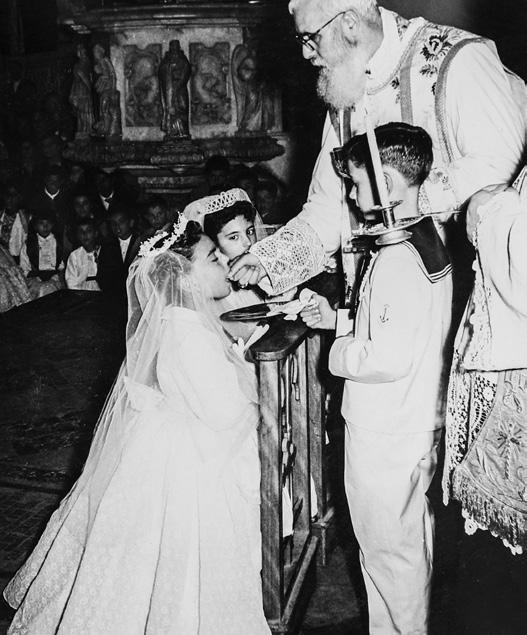
Thus, the person drags himself along in his Eucharistic life without understanding the treasures he is receiving. He experiences a state of inner discouragement, which is naturally harmful to the development of his spiritual life. That is why we need to say a word about this aridity.
First of all, we should not think that consolation is normal and aridity abnormal. Quite the contrary. Aridity is common even among very fervent souls. Consolations are out of the ordinary.
A saint who was a model of arid piety was Saint Thérèse of the Child Jesus. When praying the Office or singing in the choir, she often experienced such profound aridity that she would sometimes fall asleep. She compared her arid soul to a brazier full of ashes. She said that she kept adding straw to the ashes because she knew that underneath them were some embers, and the straw would eventually catch fire.
The spiritual benefits of receiving Holy Communion in a state of grace are a timeless proof that Our Lord will never abandon His One, Holy, Catholic and Apostolic Church.
Spiritual progress is unrelated to aridity. The person can be doing very badly or very well in the spiritual life. Aridity is not a sign of progress or regression. The soul may be feeling the greatest aridity or dryness at the time of Communion, yet may be progressing perfectly well.
Saint Francis de Sales, who always made excellent comparisons, puts it this way: Imagine a singer who is singing for a king. He sings very well and hears his own voice, by which he knows he is singing well. He experiences the double delight of hearing his own good voice and knowing that the king is hearing him sing well.
On the contrary, imagine if the singer goes deaf and thus cannot hear his own voice. He must continue to sing to delight the king, who is listening. Because he sings only to delight the king, the deaf singer has more merit than the singer who hears his voice and delights both the king and himself.
The same thing happens, he says, with an arid Eucharistic soul. He knows that Our Lord likes to be received and that he will give Our Lord a true pleasure when received by him. However, he feels nothing. God sees what the person does not see. God sees the person’s good dispositions, righteousness and desire to sanctify himself. And God gives more value to that Communion received with the greatest aridity than if the aridity did not exist.
Thus, many times a Communion made with aridity may be worth much more than one without it. A person experiencing aridity should consider this point as a means to prepare for Communion. He should make an act of faith in this truth.
He should say, “My God, I am in the state of grace. If my aridity is due to a lack of fervor, I will receive Thee so that Thou may increase my fervor. If it is not due to a lack of fervor but to a mysterious plan of Thine (as happens very frequently in Thy guidance of souls), give me the grace to be unperturbed and receive Thee with confidence. Thus, this aridity comes from Thee. All things coming from Thee to me are always a gift and a favor. I can, therefore, exclaim, O blessed aridity!”
The person in aridity can then meditate or briefly recall what it means and receive Communion with confidence and joy.
In aridity, a person who cannot receive Communion joyfully can do so in peace with the thought that, in today’s troubled days, we can recall that Our Lord takes a real pleasure in being received into our souls. As long as we are not in the state of mortal sin, Our Lord delights in coming to us. His mercy is so great that, despite our possible defects and misery, He is pleased to come into our souls. Thus, we receive a Divine Guest Who is full of condescension and comes joyfully into our souls. In the tabernacle, Our Lord, so to speak, joyfully awaits the moment of the day when each of us will receive Him.
Nothing is more encouraging for a soul in aridity than to think of the true joy that Our Lord will have by being received amid this aridity. Another very encouraging thought is to make an act of confidence in Our Lord, which is very commendable when in aridity.
We must ask how we should behave during our thanksgiving after Communion when in aridity. More importantly, how should one prepare for Communion in this state?
We can prepare by telling Our Lord some things that will not impress us in this state, but we know cannot fail to please Him. For example, tell Him that we love Him and understand the good that His visit will do to our souls. We can tell Him we are sorry not to receive Him in better conditions, and ask Him to prepare our soul for His visit.
Ask Him everything through Our Lady, without whom no prayer is heeded. Be confident that by asking her, she will come to prepare us. n
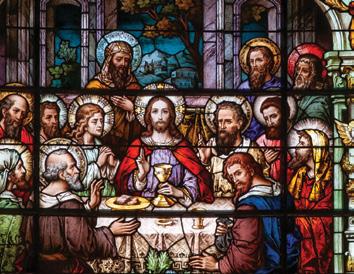
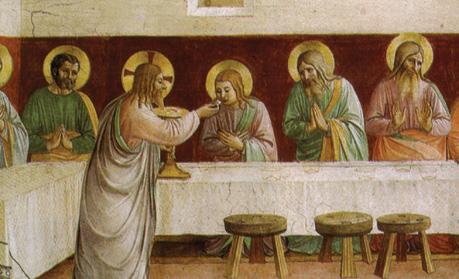
The Last Supper: Communion of the Apostles , painted in 1441 by Blessed Fra Angelico, exudes the serene spirituality present in the upper room the night before Christ's Passion and Death.
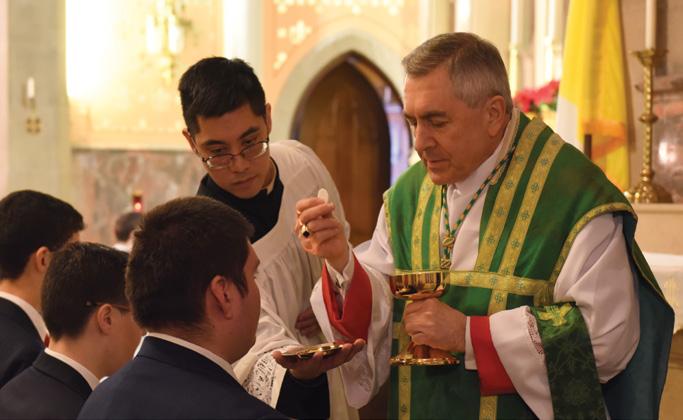
As long as we are not in a state of mortal sin, Our Lord's mercy is so great that He delights in coming to us in Holy Communion, despite our defects and misery.
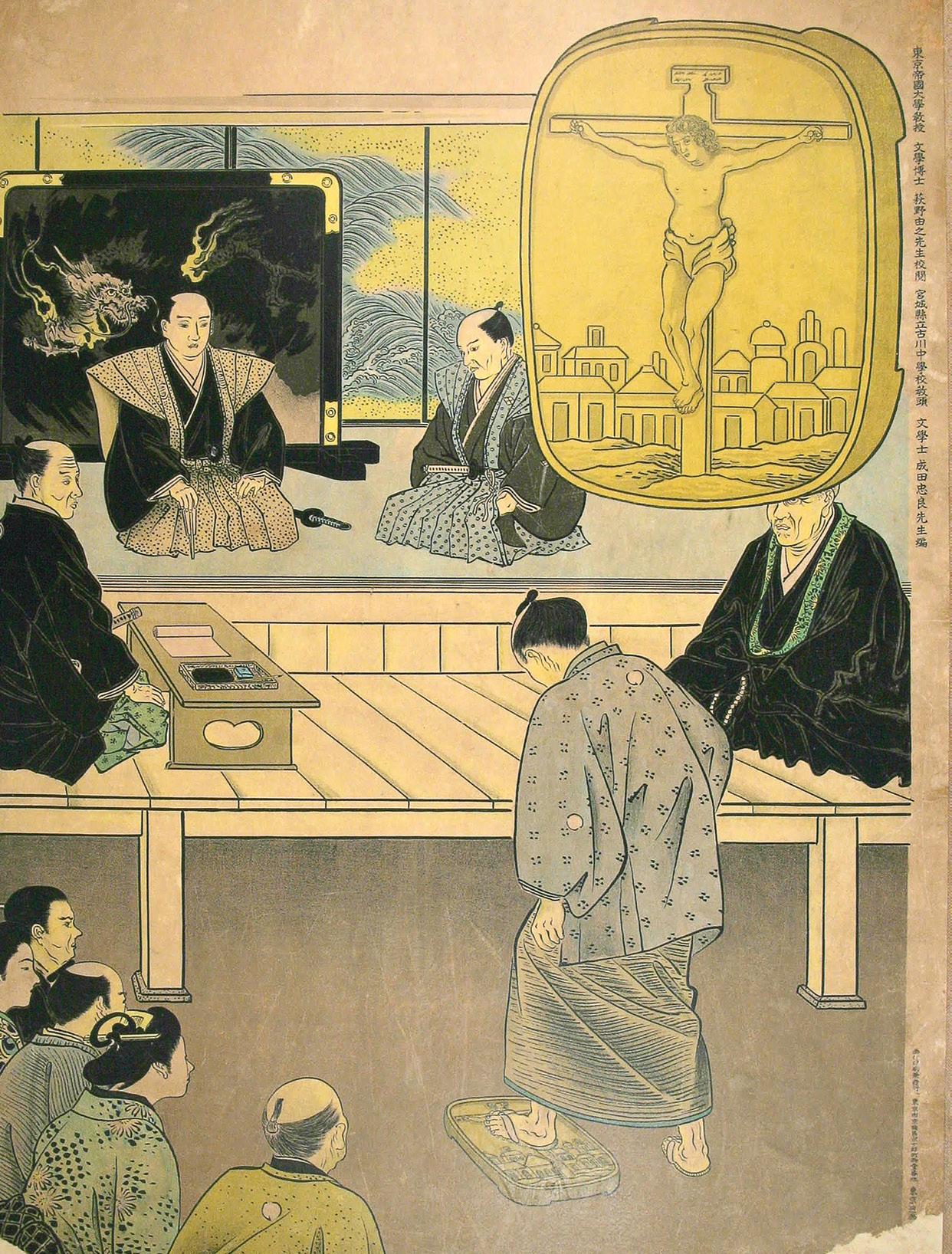
People who protested or were reluctant to step on pictures of Christ or the Virgin Mary were identified as Christian, taken to Nagasaki and ordered to renounce their religion. Those who refused faced torture, imprisonment or execution.
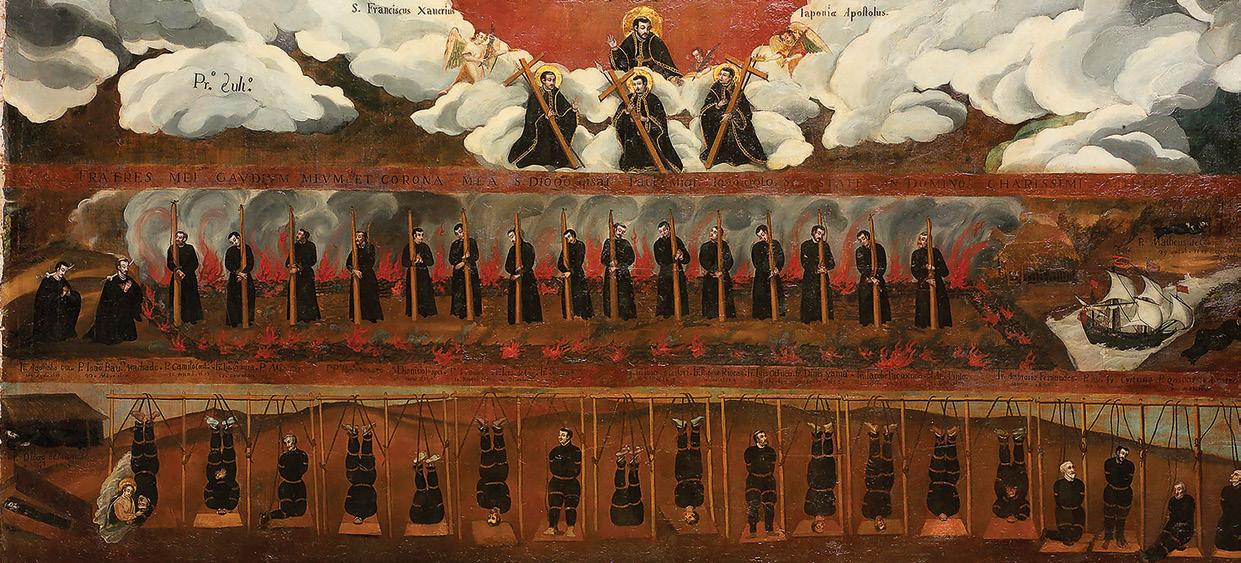
What happens when Catholics lose their priests and bishops, and are thereby unable to receive the sacraments except for Baptism? This happened in seventeenth-century Japan, when Christianity was outlawed and banned by the ruling Tokugawa Shogunate, the military government of Japan during the Edo period (1603–1868). As a result, missionaries were expelled, churches were destroyed and thousands of Japanese Catholics were martyred. Among them were the twenty-six Martyrs of Nagasaki, who were crucified in 1597. The Church commemorates them collectively as Saint Paul Miki and Companions, Martyrs of Japan. Pope Pius IX canonized them on June 8, 1862, and their feast day is February 6.
The unique story of Japanese Catholics, known as Kakure Kirishitan (Hidden Christians), is a testament to the power of faith, the institution of the traditional family and the endurance of Christian hope. Despite a brutal and bloody persecution and hundreds of years of no Catholic clergy, the Catholic Faith endured and remained in Japan. For over 250 years, the faithful had no access to Holy Communion, Confession or Extreme Unction. The only sacraments possible without a priest had been Baptism and Holy Matrimony. Yet, there were thousands of “Hidden Christians.” How were they able to sustain their faith? This is their unique and incredible story.
Saint Francis Xavier and the Arrival and Growth of Catholicism
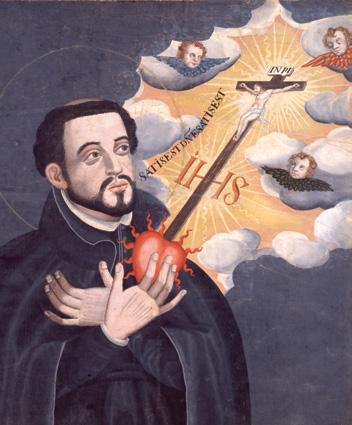
Saint Francis Xavier, co-founder of the Jesuits, was sent to Goa, India, in 1542, by Pope Paul III, at the request of the King of Portugal and Saint Ignatius. His mission was to serve the Portuguese settlers and bring the Gospel to the local population. For several years, he tirelessly worked along the Indian coastline, in Ceylon (now Sri Lanka), and in other parts of Southeast Asia. During this time, he encountered a Japanese man named Anjirō, a former samurai who fled Japan seeking Baptism. Anjirō told Saint Francis that the Japanese were a noble and intelligent people who respected truth and learning. Intrigued by this and filled with apostolic zeal, Saint Francis sought permission to go to Japan and share the Gospel there.
Saint Francis arrived in Kagoshima,
Japan, in 1549. This marked the beginning of Catholicism in the country. He spent more than two years learning the language, studying Japanese customs and trying to present the Catholic Faith in a way that the Japanese could understand. While Saint Francis was learning the language, he was accompanied by Anjirō, who served as a bridge between the missionary and the local people. Through Anjirō, Saint Francis learned about Japanese culture and began translating prayers into the local language.
The Faith was lived in whispers, but with great depth and reverence.
Despite resistance from Buddhist monks and some local rulers, he obtained permission to preach in various domains and baptized many converts, including some Japanese nobles. Over time, he and the Jesuits learned enough to communicate basic doctrine and continued adapting as needed. Their respectful approach helped gain the attention and respect of local leaders. His humility, patience and willingness to adapt helped establish a strong foundation for the Church in Japan. Although he left in 1551 and died a year later while waiting to enter China, the seeds he planted would eventually lead to a flourishing Catholic community in Japan.
Persecution and Official Banning of Catholicism
After decades of growth, the Church faced growing suspicion, which led to the first signs of persecution.
At first, Japanese rulers were curious and even welcoming of Catholicism. But over time, they grew increasingly suspicious. One major reason was that Catholicism came from Europe—especially Portugal and Spain—which were powerful colonial nations. Japanese leaders feared that missionaries were the first step toward foreign control or invasion. The Catholic Church taught loyalty to the pope, which seemed to compete with loyalty to the Japanese Emperor or Shogun.
In addition, Japanese Catholics refused to take part in traditional Buddhist
or Shinto rituals. This challenged the unity of Japanese society and appeared to threaten the established religious and cultural order. The Catholic Faith was also spreading rapidly, even among powerful feudal lords. By the early 1600s, the Catholic Church had become so widespread that the government viewed it as a potential threat to both its political and spiritual interests. To maintain control and unity, Japanese rulers began banning the Faith, expelling missionaries and persecuting converts—driving the Church underground for centuries.
In 1587, Toyotomi Hideyoshi, the chief advisor to the emperor, issued an edict expelling missionaries, though at first it was not fully enforced. By 1614, however, under Shogun Tokugawa Ieyasu, Catholicism was officially banned across Japan. Churches were destroyed, public worship was outlawed and Catholics were forced to trample on crucifixes as a sign of renunciation. Those who refused faced torture, imprisonment or execution.
Between 1614 and the early 1620s, almost all foreign missionaries were expelled. Those who stayed in secret were eventually captured or martyred. By the 1650s, Japan had completely sealed its borders under the policy of sakoku (closed country), and the Catholic Faith was driven entirely underground. It would remain hidden—preserved in secret by faithful families—for more than two centuries until missionaries were allowed to return in the nineteenth century.
How Catholic Families Practiced Their Faith in Secret
During Japan’s long period of persecution and isolation—from the early 1600s until the late 1800s—Catholic families were left without priests, churches or sacraments (except Baptism and Holy Matrimony). Yet, the Catholic Faith survived underground for over 250 years. The reason for this astonishing continuity was the strength and central role of the Catholic family. The home became a faith-centered sanctuary where parents handed on the teachings, prayers and hope of the Catholic Faith.
With no access to the official Church, the family home became the center of spiritual life. Fathers and mothers led daily prayers. Altars to the Blessed Virgin Mary
were set up in secret, often disguised as Buddhist shrines. Families observed the liturgical calendar and feast days, preserving their devotional life in hidden ways. The Faith was lived in whispers, but with great depth and reverence.
In the absence of catechism books or written scripture, the Faith was handed down by word of mouth. Children learned the prayers, hymns and stories of the Gospels from their parents and grandparents. These oral traditions—often preserved in ancient Portuguese or Latin pronunciations—were carefully memorized. Through this, essential teachings on God, Our Lord Jesus Christ, Our Lady, the saints and salvation were passed on accurately for centuries.
Although all other sacraments were lost during the isolation period, Baptism remained alive. The ability to baptize was passed down through families— particularly to lay leaders known as doshiyaku. These men (and sometimes women) were trained within the household to perform the Sacrament of Baptism validly, in the name of the Blessed Trinity, ensuring that the Faith was reborn in each new generation.
The Critical Role of Mothers
One of the most touching aspects of Japan’s Hidden Christian story is the quiet, persevering role of mothers and grandmothers in transmitting the Faith. In the absence of priests, they assumed the responsibility of catechizing children,
teaching them to pray the Holy Rosary, memorize sacred stories and observe the Church’s feast days. Many would gather the children and whisper prayers after dark, sometimes using small Marian images hidden behind household furnishings. They were keepers of hope and protectors of the Faith, nurturing one child at a time with gentleness, courage and conviction. Without these unsung heroines, the Faith might have perished within a generation.
Hidden Catholic Symbols
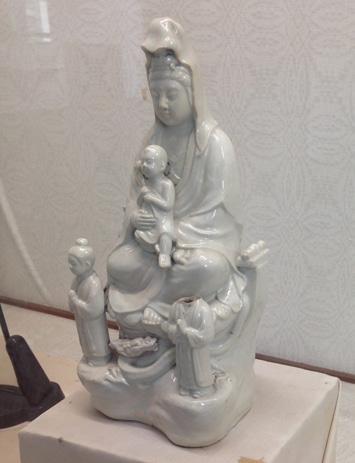
To survive under constant threat of discovery, the Hidden Christians developed ways to disguise their practices. Statues of the Blessed Virgin Mary were carved in the style of Buddhist Kannon figures, and crucifixes were hidden in household items. The prayers were adapted to resemble the local language and cadence, yet retained the truths of the Apostles’ Creed and devotion to Mary. For example, the Orasho—adapted oral prayers resembling the Holy Rosary—were passed down through generations from memory. These subtle yet deeply faithful adaptations speak to the creativity and unbreakable devotion of a people who refused to abandon their belief in Jesus Christ.
[Japanese mothers] were keepers of hope and protectors of the Faith, nurturing one child at a time with gentleness, courage and conviction.
Japanese Cultural Nobility and Catholic Virtues
Japanese culture highly values honor, loyalty and self-sacrifice—qualities that harmonize beautifully with Catholic virtues. This cultural alignment may help explain why the Catholic Faith took such deep root in Japan. The Martyrs of Nagasaki, for instance, embraced suffering with a sense of dignity and resolve that resonated with the samurai ethos. Children who faced death did so with serenity, reflecting both Catholic hope in eternal life and cultural discipline. In many ways, the story of the Hidden Christians is not only about reli-
gious perseverance but also a fusion of cultural nobility and supernatural faith.
Martyrdom and the Preservation of the Catholic Faith
The willingness of the Japanese Hidden Christians to die as martyrs was not only a testimony of heroic faith, but also a vital force in preserving the Catholic Faith during over 250 years of persecution and isolation. These sacrifices became a spiritual anchor for families and communities who carried the Faith forward in secret. Japanese Catholics believed deeply in the truth of the Faith and the promise of eternal life. They chose death rather than deny Christ. Stories of the martyrs were passed down through generations, giving meaning and strength to families in hiding. These martyrs became models of courage, and their memory strengthened identity, hope and perseverance in the darkness.
Stories of the unwavering spirit of Japan’s early Catholics upon hearing of the coming persecutions are a marvel to hear. Many of them responded not with fear but with joy—seeing martyrdom as a privilege, an honor and even a wedding feast with Heaven. Nobles, children, elderly warriors and brides all prepared to die for Our Lord with extraordinary peace and beauty. One queen, sewing splendid dresses with her daughters as they prepared to meet death, stood as a symbol of serene faith. A boy, only twelve years old, embraced the cross on the hill of Nagasaki, imitating Our Lord. An-
Saint Francis Xavier crossed oceans and empires to bring the Gospel to the Orient—fearless, burning with zeal and ready to win souls for Christ at any cost.
A “Maria Kannon” statue imported from kilns in southern China. Creating Catholic imagery in Japan was dangerous, and importing these statues was a courageous act of faith.
These stories, steeped in courage and purity, show how grace touched Japanese souls deeply, producing saints in a land far from Rome yet close to the heart of the Church.
other child courageously rebuked his father for urging him to deny the Faith. A noble young bride refused a prince’s offer and spent forty years in exile among fishermen rather than renounce her vow to God—a quiet martyrdom of love and fidelity. These stories, steeped in courage and purity, show how grace touched Japanese souls deeply, producing saints in a land far from Rome yet close to the heart of the Church.
The French Missionaries and Rebirth of the Church
After more than 250 years of persecution, Japan reopened to the world in the mid-nineteenth century. This change began after the arrival of Western powers, particularly the United States under Commodore Matthew Perry in 1853, which pressured Japan to end its self-imposed isolation.
With the 1858 Treaty of Amity and Commerce, France secured rights for its missionaries to enter Japan under
limited conditions, mainly to minister to foreign residents. This opened a small but significant door.
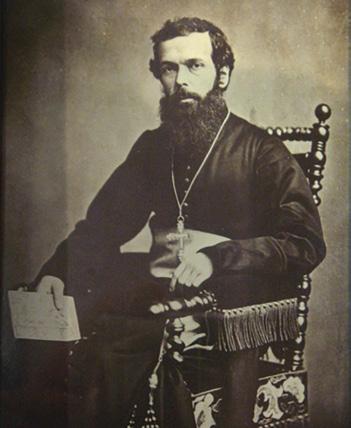
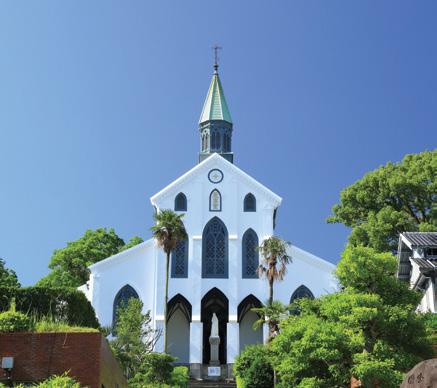
The Paris Foreign Missions Society (Société des Missions Étrangères de Paris or MEP)—a community of secular priests dedicated to missionary work— was among the first to seize the opportunity. In 1865, Father Bernard-Thaddée Petitjean, one of the MEP missionaries, constructed a small wooden chapel in Nagasaki, known as the Ōura Church, to serve the French Catholic community.
In 1873, the Japanese government finally lifted the ban on Catholicism. From there, the Catholic Church slowly reestablished itself in Japan—through catechism, sacraments and new vocations. The blood of martyrs and the fidelity of the Hidden Christian families had prepared fertile ground for revival.
The Discovery of Japan’s Hidden Christians
On a quiet March morning in 1865, at the newly built Ōura Church in Nagasaki, a moment of grace unfolded. French missionary Father Petitjean, believing Christianity had vanished in Japan, knelt in prayer before the altar. Then, quietly, a group of Japanese villagers entered the church.
One woman stepped forward. She spoke softly, but with conviction: “Our hearts and your heart are the same.” Startled, the priest asked who they were and where they came from. The woman replied, “From Urakami . . . there,
almost all have the same heart.”
Then, with tears in her eyes and a trembling voice, she asked: “Where is the statue of Santa Maria?” It was a question loaded with centuries of hidden faith, whispered prayers and secret family catechesis.
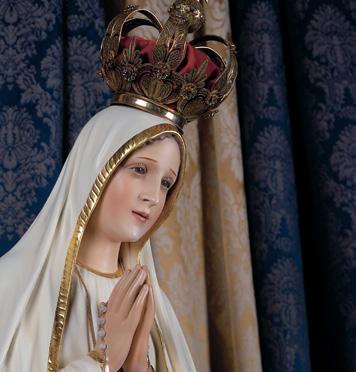
Father Petitjean led them to a marble statue of Our Lady holding the Infant Jesus. As they gazed upon it, the villagers wept. Some bowed, others reverently touched the folds of her robe. This was more than a statue—it was a sign. A promise fulfilled. Proof that their faith had not been kept in vain.
In a letter to his fellow priests, Fa-
This painting shows forty-four Jesuit martyrs of Japan tortured and executed at Nagasaki in the sixteenth century. The top level represents Heaven; the second level shows Catholics burned at the stake, decapitated and those who lived in secrecy (hut) or exiled (ship). The bottom level shows Catholics hung over a pit filled with excrement.
Father Petitjean, missionary to Japan, constructed the first Catholic chapel in Nagasaki in 1865. It was into this church that the first "Hidden Christians" entered.
ther Petitjean wrote joyfully: “Let your heart rejoice! We have just found out that there are many descendants of the Kirishitan from of old near us, and that they have been there all along!”
This encounter showed the Church— and the world—that even without priests, churches or all the sacraments, the Faith had survived in the hearts and homes of the faithful. Hidden. Silent. But alive!
These Japanese Catholics had protected the flame of Faith for over 250 years. They remembered the prayers. They baptized their children. They waited for the day when the Church would return. And when they saw the cross, the altar and the statue of Our Lady, they knew God had not forgotten them.
Defending the Traditional Family Is a Sacred Duty
In the story of the Japanese Christians, one finds a shining and inspiring confirmation of a truth that Professor Plinio Corrêa de Oliveira, founder and inspirer of the Tradition, Family and Property (TFP) movement worldwide, consistently taught: the traditional family is one of the indispensable pillars of Christian civilization. For over two centuries, when the institutional Church in Japan was destroyed and priests were banished, it was not political movements, schools or cultural programs that preserved the Catholic Faith—it was the family.
The family—rooted in fatherly authority, maternal devotion and the formation of children—is not merely a private unit, but a cell of social and spiritual order. When the family is strong, tradition is transmitted. When the family lives according to God’s law, faith is preserved, even in darkness.
In Japan, amid violent persecution, it was within the humble walls of the home that Catholic prayers were whispered, baptisms were made and martyrdom stories were told. The family was the institutional Church. The family was the altar of sacrifice.
Amid the moral and spiritual confusion prevailing today, the defense of the traditional family is not optional—it is a sacred duty. If Christian civilization is to withstand the storms of secularism and relativism, it must return to the hearth: the God-centered family, governed by
order, charity and fidelity to truth.
Professor Corrêa de Oliveira warned of revolutionary forces that seek to destroy the family in the name of modernity. But Japan’s Hidden Christians give hope. Their example shows that when a family remains faithful, the Faith stays alive.
Fatima and the Japanese Catholics
There is a profound spiritual connection between the centuries-long persecution of Japanese Catholics and the message Our Lady gave at Fatima in 1917. Both point to the triumph of the Catholic Faith through suffering, fidelity and the power of prayer—especially the rosary.
At Fatima, Our Lady asked for prayer, penance and the daily rosary to bring about peace and the conversion of sinners. She warned of persecution and godless ideologies, yet promised: “Finally, my Immaculate Heart will triumph.” Similarly, in Japan, Catholics clung to their faith without sacraments or churches for over 250 years, guided by a love of Our Lady and the Holy Rosary. When they met the French missionary in 1865, their first question was: “Where is the statue of the Virgin Mary?”
Just as Our Lady chose humble shepherd children at Fatima, the Faith in Japan was preserved by humble families and lay faithful who passed down prayers and hope. Their quiet heroism echoes the Fatima call to persevere in faith even when the world turns hostile.
As modern Catholics face new challenges and persecutions, the Hidden Christians of Japan and the message of Fatima together remind the faithful that the family, the rosary, and fidelity to truth can carry the Church through even the darkest centuries, until her triumph shines again.
We Must Fight to Preserve and Grow Our Faith
Faithful Catholics have endured persecution from the very beginning of the Church’s 2,000-year history. From the persecution under the Roman emperors to the brutal communist repression of the Underground Church in China, to the wholesale slaughter and enslavement of Catholics in Nigeria and Sudan, the devil and his agents have instigated furious attempts to annihilate the Faith of generations of Catholics. With the
names of Jesus and Mary on their lips, persecuted Catholics throughout history have persevered and overcome insurmountable odds.
The story of the Catholic Japanese is a glorious example of the enduring fight to pass on and continually grow the Faith, even when outlawed. Inspired by their example, we must spiritually prepare and culturally adapt to adversity in our neo-pagan world. Just as the Japanese Hidden Christian family was key to preserving their faith, we too should have the same sense of mission inside and outside our homes today.
Praying the family rosary in public and in private, doing penance, and consecrating oneself to the Immaculate Heart of Mary are not empty or sterile devotions. Our Lady gave the tools to resist the errors of our time and be faithful Catholics, come what may. Invoking Our Lady, Mediatrix of All Graces, and inspired by the Hidden Catholics of Japan, the call is for all believers to keep the Faith with courage and to set future generations on fire for God and for Holy Mother Church. n
References:
1. John Dougill, In Search of Japan’s Hidden Christians: A Story of Suppression, Secrecy and Survival (Tuttle Publishing, 2015).
2. Frederick Vincent Williams, The Martyrs of Nagasaki (Academy Library Guild, 1956).
3. Stephen R. Turnbull, The Kakure Kirishitan of Japan: A Study of Their Development, Beliefs and Rituals to the Present Day ( Psychology Press, 1998).
4. Nippon.com, “The Hidden Christians of Ikitsukishima: Japanese Islanders Who Kept the Faith,” https://www.nippon.com/en/japan -topics/c12905/.
5. New Advent, “Society of Foreign Missions of Paris,” https://www.newadvent.org /cathen/14079a.htm.
The Ōura Catholic Church, built by French missionaries in the late 1800s, now stands tall in Nagasaki, Japan, as the fruit of the martyrs who died there.
© Nagasaki Prefecture Tourism Association
America Needs Fatima ®
January/February 2026 PROGRESS
REPORT

From the Desk of Robert Ritchie
Dear Soldier of Our Lady, Saints Jacinta and Francisco displayed the perfect example of the power of prayer when Our Lady of Fatima appeared to them more than 108 years ago. The relevance of her Fatima message is more urgent than ever! Same-sex unions, blasphemy, Satanism, transgenderism and abortion are promoted and defended with impunity—the “errors of Russia” mentioned by Our Lady of Fatima are in plain sight!
And that’s why it’s important that we follow in the footsteps of these young saints who courageously dedicated their short lives to the rosary and offered sacrifices for poor souls. Let us, too, participate in the promise of Our Lady’s triumph by helping to raise awareness of her message.
I’m grateful for your loving faithfulness as a child of Mary, and for responding to her call to pray the rosary. That’s why I pray you’ll join me for a special rosary rally campaign on February 21.
Gather your friends, family and community members in a public space on Saturday, February 21, at noon your local time and lead them in praying the rosary to bring peace to the world, encourage devotion to her Immaculate Heart and in honor of Saints Jacinta and Francisco.
It’s easy to sign up: just email Protest@TFP.org. Saints Jacinta and Francisco devoted their lives to Our Lady in the hope of world peace and salvation. I pray that you will do the same and answer Our Lady’s call by joining me in public prayer.
Devotion to the Most Holy Rosary and Our Lady’s Immaculate Heart will leadustoGod!
Sincerely, In Jesus and Mary,
Robert E. Ritchie Executive Director
Connecticut Group Crushes Satan at Three Rallies Against Paranormal Cirque
Muhsian, a rally captain, organized three rallies protesting against a Paranormal Cirque show in Clinton, Conn. Since the Paranormal Cirque is open to all ages, Muhsian wanted to be sure that parents knew the event was evil and not something for children.
Muhsian held the rallies on three consecutive days in a busy parking lot near the show so that passersby would get a good view of them praying in protest of the wicked and immoral “circus show,” often described as “unique and creepy.”
The group felt honored to defend God and Our Lady by praying for an end to the spread of Satanism.
“It was a successful three days. My belief is that doing this work is most important,” Muhsian said.
Victory! Washington Court Blocks Attempt to Force Priests to Violate the Seal of Confession
Thanks to protests from faithful Catholics, God and Our Lady achieved a triumphant victory in Washington State!
A court judgment permanently stopped state officials from attempting to force priests to violate the Seal of Confession or face imprisonment.
Your prayers and petitions worked! Last year, thousands of TFP-ANF friends and supporters prayed and signed our petitions to stop this draconian bill.
Although the shameful law originally passed, Our Lady heard the eternal effects of those petitions and prayers. Her powerful intervention caused the lawmakers to ultimately reverse their decision.
Our Lady gained this victory, yet we know the fight is not over. Evil persists. So when the anti-Catholic agenda digs in its heels, TFP-ANF friends and supporters—strengthened by Mary’s help—dig even deeper to rout it out.
Thank you for your continued support to help us stop attacks upon the One, Holy, Catholic and Apostolic Church.
Denouncing Boston Church for Sponsoring LGBTQ Ministry
Sheila, a rally captain, and her friends hosted a peaceful pro-
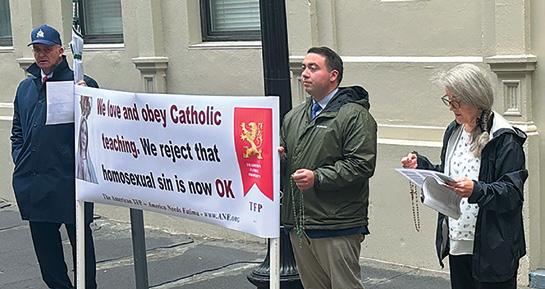
test rally outside of Saint Anthony Shrine in Boston, Mass., to protest the church’s LGBTQ+ Ministry.
Although a priest at the church told parishioners the ministry is not associated with the shrine, the event was still prominently displayed on its website.
TFP-ANF friends decided to hold the rally to make reparation for the shrine announcing this immoral ministry on their website, which is described as “a welcoming and affirming group for lesbian, gay, bisexual, transgender and queer Catholics to explore, share and celebrate their faith.”
Kenneth, a rally participant, said it was essential to the group to let parishioners of Saint Anthony Shrine know about this blasphemous ministry. “The priest told twenty parishioners exiting Sunday Mass that the rally is not associated with the shrine. But we hope that later they will check the shrine’s website and begin to ask questions,” he said.
First Time Captain Rallies Against Drag Show
Although he never hosted a protest rally before, Michael in Chicago, Ill., wasn’t afraid to protest against a Drag Queen Story Time in his city.
Michael gathered a group of friends and prayed on a public street corner in a neighborhood where many people with LGBTQ ideologies live. Although they encountered a hostile crowd, Michael and his friends were determined to hold the peaceful, public rally.
“We prayed three consecutive rosaries and stayed for around an hour,” he said. “I was really glad my friend Leo was
Boston, Mass.
You can help TFP-ANF defend the Faith by hosting a rally close to your home. Just text PROTEST to 87837 or contact Jose Ferraz toll-free at (844) 830-3570!
there because he was a strong presence and has strong faith. I was really inspired by him to hold the rally.”
One Rosary, One Soul Equals a Powerful Combination
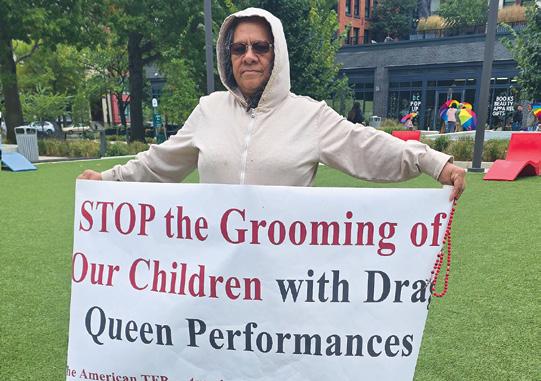
When Noemi, a dedicated rally captain, found out about a Drag Queen event at The DC Pop-UP in Washington, D.C., she jumped into action to host a peaceful protest rally against the immoral event.
Although she was praying by herself, Noemi was determined to prove that every prayer matters and each person can make a difference. As she was praying, she saw a family come to the event with two children, one as young as five years old. She knew she made the right decision to lift her voice in prayer to God and Our Lady.
“A nice lady passing by took a picture for me but everyone else just passed by without saying or doing anything. But I was thankful for the opportunity to be there interceding for those poor children. I’m already planning to go back and pray again.”
Noemi, with her rosary in hand and her Guardian Angel by her side, stood in protest of the LGBTQ event–a courageous act that shows that even one soul can answer Our Lady’s call to publicly pray.
Update: SatanCon Is Kaput!
Satan has been crushed through the power of peaceful and legal public protests.
In 2023, we first reported on The Satanic Temple’s “SatanCon” in Boston. This special event was billed as a “weekend of blasphemy” and was considered to be the biggest satanic event in history, featuring satanic rituals and horrific conferences titled, “Raising your Children in a Satanic Household” and “Abortion as a Religious Right.”
TFP-ANF organized a protest outside the convention that drew hundreds of Catholics from around the country–garnering international attention. Rosaries and hymns were loudly proclaimed and resounded through the conference center’s walls. The prayerful protest continued for the entire weekend of the conference.
Although SatanCon continued as planned in 2023, the attention given to the 2023 event appears to have caused major problems for the movement. The satanic event has not been held the past two years. Reports of a massive internal schism appear to have brought about not only the demise of the convention, but also the end of The Satanic Temple. What was
once an international organization, The Satanic Temple has now been reduced to just a few Satanist groups who work on a much smaller scale.
The end of SatanCon proves public protests work. With the help of Our Lady, we can stop Satan. Our Lady will be victorious!
Persevere in Prayer for Poor Sinners!
The theme for the upcoming February 21 rosary rally effort is taken from the little Fatima shepherds’ example of prayer and sacrifice. They never doubted Our Lady’s message, but persevered with extraordinary courage to answer her request to pray, and especially for poor sinners!
We were reminded of this when we heard about Mary Jane, a faithful rally captain from Clarksburg, W. Va.
For many years, Mary Jane held an annual October rosary rally. However, as she started to become ill, she contemplated giving up the rally. As she left her office to tell her family that she no longer would host her rally, she heard a loud crash. She returned to her office and found that a ceramic statue of Our Lady had fallen off a shelf, but did not break. Everything else on the shelf was intact and only the statue fell down.
Mary Jane knew this was Our Lady’s way of telling her she should continue organizing and holding the rallies. And she did–until she was called home to God. Mary Jane faithfully answered Our Lady’s call and left behind a legacy of prayer and sacrifice. n Washington, D.C.
Touching Souls
“Thank Your Mother!”
As a customer service representative for America Needs Fatima (ANF), I often hear incredible stories from donors after they receive something from us in the mail. One of those memorable conversations I had was with Sandy Nguyen.
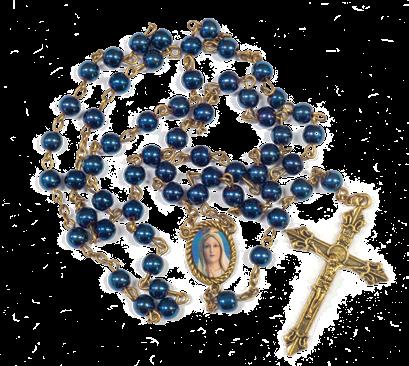
Sandy recently received our blue Star of the Sea rosary. When she looked at the picture on the back of the centerpiece with the sailing ship and the prayer, “Mary, Star of the Sea, guide me!” she exclaimed, “That looks like the ship that saved us!”
Originally from South Vietnam, Sandy Nguyen was the fifth of seven children born to a Chinese mother and a Vietnamese father. Her family was Buddhist until her father’s extraordinary conversion when she was eight years old.
Sandy’s father was a very sickly man and frequently ended up in the hospital. While there, Catholic missionary priests visited him and told him that Our Lord performed many miracles and healed the sick. Her father said to the priests, “You pray to your God that I be free from sickness for three years in a row, and if He listens, I will agree to be baptized.”
The missionaries prayed for Sandy’s father, and for the next three years, he never suffered from any serious illnesses. Thus, he kept his promise. He received instruction in the Faith and agreed to be baptized together with his family.
Five years later, when Sandy was thirteen years old, the communists took over all of Vietnam. Terrified of being executed, numerous civilians fled the country. The government permitted the Chinese citizens to leave, but not the Vietnamese. All of Sandy’s siblings had Chinese citizenship, and they could go legally. The parents planned for all the children to leave on separate ships and head to the United States, with the parents following shortly thereafter.
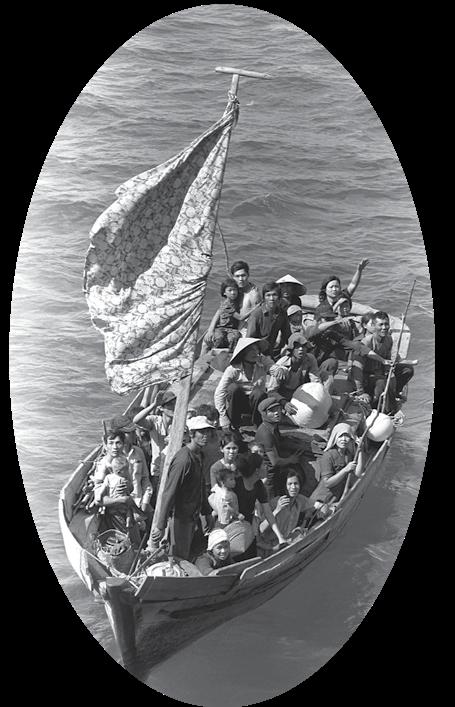
Unfortunately, the ship Sandy was aboard lost its course after being battered by relentless storms. After twenty-four days at sea, the passengers were suffering from starvation and dehydration. Delirious, Sandy cried out to Our Lady for help, resembling the plea on the Star of the Sea rosary, “Mary! Mary! Mary! Help us! Send us another ship, or we are all going to die here! I know you are my Mother! Save us!”
The Buddhist passengers thought she was going crazy. Sandy passed out. When she awoke, the Buddhists kept urging her, “Thank her! Thank your Mother! Thank Mary!” While Sandy had passed out, a ship resembling the one on the ANF Star of the Sea rosary had come to their aid and rescued them!
Through Our Lady’s protection, Sandy was ultimately reunited with her family in the United States. Since her Vietnamese name was too difficult for Americans to pronounce, she changed her name to Sandy, after the scripture verse, “Remember, man, thou art dust and unto dust thou shalt return.” “In Vietnam,” Sandy explained, “we only have sand, so I called myself Sandy.”
I am grateful to be a member of ANF’s customer service team, as I have the opportunity to document miracles and graces like Sandy’s. Years ago, Sandy cried out, echoing the plea found on the Star of the Sea rosary, and Our Lady came to her aid. Now, through ANF, Sandy received a meaningful gift that symbolizes her faith in Mary, Star of the Sea.

Fleeing from communism, Vietnamese “boat people” wait to be taken aboard a United States military vessel, their bridge to freedom.
Our Readers and Viewers Write
From our readers:
TFP-ANF Apostolate
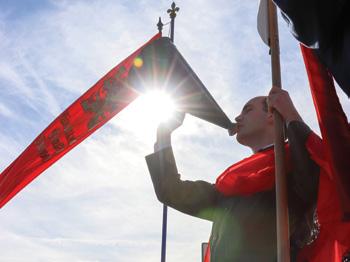
“When Our Lady needs someone to defend her honor or that of her Son, she always knows where to look, because there the TFP will be, doing what no one else will! When those crimson banners unfurl and the men in red capes step up to the curb, you get a chill rush over you and you know truth is about to be unveiled and that, in Heaven, their Heavenly Lady is beaming down upon her earthly sons with a joy like no other, for she is a Mother like no other, maligned like no other. Thank you for consoling her muchabused Immaculate Heart! Keep unfurling those banners and trumpeting out the battle call of those bagpipes, TFP— the USA needs you!”
J.T., Philadelphia, Pa.
“America Needs Fatima? AMEN!!!
More than ever now, I don’t want socialists to run our nation—this is One Nation Under GOD!”
F.S., Oxnard, Calif.
“Your appeal is one that I felt compelled to respond to. The rosary beads will surely be used, and your message was so true! I had the privilege of visiting Fatima many years ago. I look forward to using the rosary booklet, and those address labels you sent me at the beginning of the year. I think that perhaps by using them, I will bring the charitable hearts of new donors to you. I
do pray the rosary every morning now, thanks to the tireless promptings of your organization.”
Rosary Crusade
E.A., Harrisburg, Pa.
“Thank you, this rosary is GORGEOUS. My friend Judy is dying. So, when I visit her next, I will give her this beautiful and comforting rosary, as no one brings peace the way the Blessed Virgin does. May it be a source of consolation as she approaches the final end we all must face.”
people in the town were captivated by what was going on and applauded us for what we were doing. Others paid no attention to it and moved along. I have nothing against public prayer. It’s the American right.” @alanbourbeau24
“America Needs Fatima (ANF) does a great job supporting anyone interested in having a rosary rally. ANF is how we started our movement across the great state of Maine.” @MaineNeedsFatima
K.G., Golden, Colo.
“This rosary is beautiful! Thank you! Our Lady must have really wanted this rosary to reach me because the envelope it was enclosed in had been trampled on, torn and taped in many places due to a rough mail transit—but the rosary arrived safely at my door. Faith kept it going to arrive at my doorstep! God willed it!”
H.S., Harrisburg, Pa.
“I keep my rosary in my pocket to keep Our Lady close, and pray on it every day. The Virgin Mary should be loved throughout the whole world! Thank you for your work towards accomplishing just that.”
N.S., Zionsville, Ind.
From our Viewers:
“Blessed Mary, I love you with my entire heart!! I will die for you, my Blessed Mother Mary!! I will live for you, blessed Mary, and honor you, for you are my mother!!! Thank you for your boundless love, protection and graces! Nowhere on earth have I been so loved by anyone, like you love me! May my life always be pleasing to you, blessed Mary!” @robertmaneaal528
“This past October, my brother in the Knights of Columbus and I held a rosary prayer crusade along with the America Needs Fatima organization. It was in the town of West Hartford, Conn. Most
“The power of the rosary brought me out of despair and miraculously brought me my wife (Patti) of thirty-five years. We continue to pray the rosary every day for the salvation of souls and peace in the world. We encourage all to do so, for miracles will come.” @edmundwojcik3451
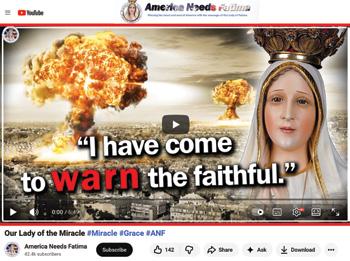
“Truly amazing!!! I believe this (survival of eight Jesuit missionaries who lived only eight blocks from the center of the atomic blast in Hiroshima, Japan) to be a miracle because of the intercession of Mary, the mother of Jesus. The presence of Our Lady of Fatima in the world is real. I know it from my paternal grandmother, who bought a statue of Our Lady of Fatima, which was relegated to a small country church outside of town. A massive flood swept that church away in 1954, and when it was found downstream, everything in that church was destroyed except for that statue, which was still standing on its pedestal.” @tonygibson6436

Young Americans Are Self-Identifying as: Normal
A recent report concludes that, “trans, queer and bisexual identities are in rapid decline among young educated Americans.”
As the “LGBTQ+” alphabet grew ever longer over the years, it became trendy to identify as something other than male and female. Pronouns proliferated to correspond to a confusing array of newly minted “genders.” Non-binary identification—those calling themselves neither male nor female—surged as people sought to be what they were not.
It now appears the identity craze is winding down. A poll of young Americans reveals that an increasing number of them are self-identifying differently. No more pronoun tyranny. No more strange gender designations. Just plain normal. Male and female.
Trans Identifying in Free Fall
The evidence for normality is compelling. Two major studies have recently confirmed the trend. The BTQ+ part of the LGBTQ+ equation is dramatically declining among the young, especially in elite American universities. Youth are abandoning non-binary designations by as much as one-half or more. In addition, trans identifying is reportedly in “free fall.”
Science Is Speaking
Professor Eric Kaufmann has just published a study titled: “The Decline of Trans and Queer Identity among Young Americans.” His conclusions are based on five different sources, including one survey that often involves over 55,000 students. The work was sponsored by the Centre for Heterodox Social Science at the University of Buckingham in England.
The other study was that of Professor Jean Twenge of San Diego State University. She published her research that found that the number of eighteen-to-twenty-
two-year-old Americans self-identifying as transgender diminished from just over six percent to slightly over three percent from 2022 to 2024. Those claiming to be non-binary went from five percent to two percent during the same period.
Both studies noted a surge in young people identifying as non-binary, which peaked in 2023. Nearly one-third of those surveyed identified as non-heterosexual (which includes homosexuals) two years ago. That percentage has now decreased to less than twenty percent. The Kaufmann report concludes that, “trans, queer and bisexual identities are in rapid decline among young educated Americans.”
Losing Popularity
Other findings show that this trend will extend into the near future. College freshmen are now less likely to identify as BTQ+ than seniors, indicating that the decline will continue downward.
With scores of obscure “genders” to choose from, many of these young people are just opting out.
Looking at the data from younger generations, the Kaufmann study concludes: "It appears that trans and queer are going out of fashion among young people, especially in elite settings.
Looking for Connections
The decline in BTQ+ identification does not seem to be directly connected to political shifts to the right or to the rejection of woke ideology. Some commentators do say the change of the government attitude against non-binary tyranny has influenced the debate by making it easier for people to break out of the BTQ+ categories.
However, the study did find a more personal political correlation by noting that very liberal students are much more

likely to be non-heterosexual than conservatives. Another significant contributing factor is the stress level, which increases the likelihood of BTQ+ identification. “Very liberal, trans and non-heterosexual students are also more likely than other students to be anxious and depressed.”
Thus, the Kaufmann study makes a correlation between mental health and non-binary identification. While the study did not go so far as to say that mental stress, anxiety and depression were the causes for identification, it did conclude that better mental health reduced BTQ+ identification.
Immense Implications
If this trend continues among young Americans, the implications are enormous. Professor Kaufmann believes that it will represent “a momentous and unanticipated post-progressive cultural shift in American society which is distinctly out of phase with the expectations of cultural left observers in educational institutions and legacy media.”
Indeed, this move away from non-binary labels was not supposed to happen. According to gender theory ideologues, non-binary identity should be growing, not diminishing. More “genders” should be emerging, not fewer.
Yet worse for these theorists is the conclusion that the surge toward normality reinforces the notion that the gender declaration game is abnormal. The rapid change back from non-binary to binary of so many demonstrates that people are not “born that way.” Following the science now means the evidence supports the normal sexual development of exclusively men and women.
People are sick of the gender war games. It is time to return to normal. Young people are leading the way. n
Never Underestimate the Power of a Well-Placed TFP Banner
In the small town of Questa, N.M., someone put up a simple sign with a strong moral message in front of the local Catholic church. The large sign reads, “God’s Marriage = 1 man + 1 woman.”
In normal times, such a message would hardly be controversial. Nothing is more Christian and natural than affirming what makes up a marriage. It is an uplifting message reinforcing American values.
However, in these times, liberals consider the sign offensive and subversive. Such strong convictions cannot be tolerated in today’s age of tolerance. They must be canceled lest the idea spread.
Such is the implied message of an article in the local Taos Times and the Santa Fe New Mexican. Reporter Dylan Crabb saw the sign and immediately investigated how it got there and what might be done to remove it.
He wrote a story about the sign. It goes beyond simple journalism and includes a touch of activism. He gives readers reasons why it should be taken down and employs tactics that are typical of the left.
Attack the Maker of the Sign
The reporter’s first tactic is attacking
the messenger, not the message. Mr. Crabb notes that the sign displays the name and website of the American Society for the Defense of Tradition, Family and Property (TFP.org). From his perusal of the site, he concludes that the TFP is a “vehemently anti-LGBTQ+ group” that opposes most liberal causes, including ecology, pacifism and unilateral nuclear disarmament.
Thus, he insinuates that the anti-liberal positions of the messenger alone should be enough to take the sign down.
Attack the Owner of the Sign Site
Armed with the information about the messenger, Mr. Crabb then questioned the parish priest in charge of the church property where the sign stands.
He must have thought that a complaint would trigger a “charitable” response from a progressive pastor. However, the new priest replied with common sense and zeal for souls.
“The Church is not here to conform to society, we’re here to convert society,” he said. “The Church does not condemn people who struggle with same-sex attractions, but we do con-

demn the acts themselves.”
He further added that the sign is on private property and, therefore, protected by free speech.
Appealing to the Government to Solve the Program
When all else fails, the left can always turn to the government to find a way. Finding no opening with the priest, the reporter reached out to city government officials to explore ways to have the sign removed. He noted that cities can enact regulations that govern the placement, lighting and size of signs.
Questa City Mayor John Ortega replied that he could do nothing because it is a matter of freedom of speech.
Questa village counselor Jason Gonzalez was more direct. “If you don’t like it [the Church’s position], don’t go to that church. If the sign offends you, don’t look at it.”
Anything But the Message
Thus, the report on the sign ends. The reporter seemed willing to discuss anything but the message. There can be no discussion about the morality of the sign’s affirmation of traditional marriage. It is automatically assumed that the message is wrong, and the matter is not even open to debate.
The news story shows how effective such public signs are. They fortify those with faith to affirm themselves even more. For those wavering in their faith, a public affirmation of moral truth can buttress their conviction. Those opposed to the message are irritated and intimidated. Such signs break the myth that everyone is against Christian morality.
The TFP banner hit the mark by raising moral questions that are too often forgotten.
Never underestimate the power of a well-placed sign. It is an excellent way to put God’s law and marriage in the public square and hearts. n
When attacked for displaying a banner like this one, the priest in Questa, N. M., declared, "The Church is not here to conform to society, we're here to convert society."

Reviving Sacred Spaces— Conewago Chapel’s Journey Through Church Restoration
Manyhistoric parishes around the United States rejected the architectural embellishments that marked them as distinctively Catholic during the roughly thirty years after the Second Vatican Council. Many parishioners mourned as high altars, murals, windows and other features were carted away, covered over or simply destroyed. Others silently wept as sacred decorations provided by the sacrifices of their ancestors gradually faded and decayed as time’s ravages became increasingly visible.
Fortunately, it appears that the wanton vandalism has ceased. In recent years, many historic parishes have restored their buildings to their rightful places as beacons of the faith in an increasingly ugly world.
Well-Earned Recognition
Recently, Preservation Pennsylvania, a state-chartered nonprofit organization, gave its annual Restoration Award to the Basilica of the Sacred Heart in
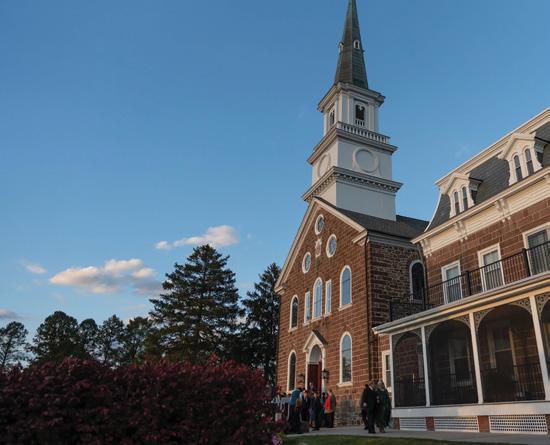
Hanover, Pa. It is also known by its historical name, Conewago Chapel.
Until recently, it was an impressive structure, but peeling paint and the residue of years were obvious. Now that its plasterwork and murals are restored, it glows.
Preservation Pennsylvania noted the magnificent work in a brief statement:
“A landmark of American Catholic history, the Basilica underwent an extraordinary restoration to uncover and conserve its nineteenth-century Baroque interior, including the largest historic paint exposure the conservation team had ever encountered. The work restored original decorative painting, fine art, woodwork, marble altars and illusionistic artistry—reviving the sacred space’s spiritual and artistic power.”
Mother Church of the Harrisburg Diocese
The parish, designated a minor basilica in 1962, has a long and distinguished history. The Jesuits founded it in 1730,
and it served as the headquarters of the order’s missionary efforts in Pennsylvania and western Maryland. The current structure—then the largest Catholic church structure in the new United States—was completed in 1787, although it has been expanded frequently in the intervening years.
In 1937, the sesquicentennial of the building’s dedication, thenBishop George L. Leech of Harrisburg summarized its importance:
“Conewago belongs to America, not merely to a parish or a diocese because it was the gateway through which passed the saintly founders and zealous missionaries who carried the light of the true faith eastward and westward into the frontiers of our land, long generations before the founding of our beloved nation.”
Baroque on the Frontier
Stylistically, the Basilica is clearly the result of many hands. Its exterior is rather plain, especially since it was initially built without its prominent tower and steeple, which was added in 1851 and 1873, respectively.
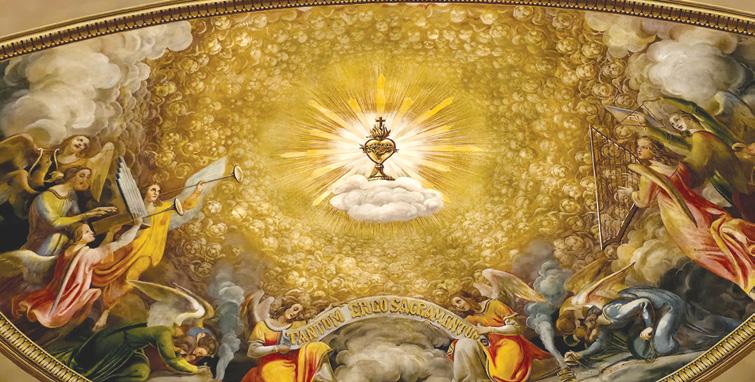
The interior is an altogether different matter. In the 1840s, the Jesuits brought in a muralist, known today only as Gebhart of Philadelphia, who had decorated their Gesù Church in Philadelphia, to paint the ceilings and walls in the Baroque revival style. The highlight of Mr. Gebhart’s work is a magnificent depiction of Our Lady’s Assumption on the ceiling.
About 1850, the building’s interior assumed its current size and shape. In addition to the tower, the Jesuits added the transept and apse. They
B y e dwin B enson
Stunning devotional imagery like this has made Conewago Chapel a landmark of American Catholic history.
brought in Austrian artist Franz Stecher to complete the new spaces in a style that would complement Mr. Gebhart’s work.
Gradual Deterioration
Mr. Stecher’s work did not remain untouched for long. About 1887, the apse sustained significant water damage, and the area was redecorated by the Philadelphia “artist and decorator,” Lorenzo Scattaglia and Filippo Costaggini. Mr. Costaggini is better known for his work in the U.S. Capitol Building. In 1901, Mr. Stecher’s painted Stations of the Cross were replaced with bas-relief representations. That same year, the Jesuits turned over Conewago Chapel’s administration to the Diocese of Harrisburg.
Throughout the twentieth century, natural forces of deterioration affected the painted Baroque decoration. As the murals needed repairs, less skilled hands overpainted the originals. Rather than spending parishioners’ donations on restoring “old-fashioned” panels, some were simply painted over.
The Forces of Modernism
However, such common factors were as nothing compared to the wholesale butchery that happened in many parishes as a result of “the spirit of Vatican II.” The National Conference of Catholic Bishops’ 1978 Environment and Art in Catholic Worship statement expressed the new mode of church decoration.
The new guidance eschewed monumental buildings. The overall scale of
“worship spaces,” the Conference urged, needed to be “human.” Barriers like altar rails were anathema. Worshippers in the “assembly”—a new word for congregation—should be able to see each other’s faces, especially the priest’s. Being a full participant in the “worship experience” was vital.
In such a milieu, traditional Catholicism’s painted and carved decorations stood no chance. The trend was toward radical simplicity. Traditional decorations distracted the “assembly’s” attention. Simple wooden tables in the midst of the pews substituted for large and heavily carved high altars against the far wall. Simpler designs often replaced ornamental Victorian stained glass. Monumental paintings, such as those in Conewago’s Sacred Heart Basilica, were to be painted over if possible and deliberately ignored if necessary.
A Skillful Restoration
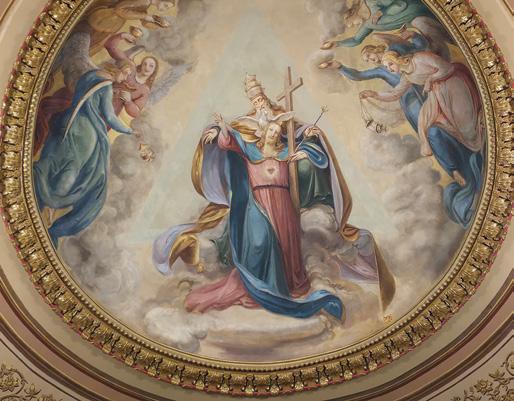
raculous. This turned from a replication project into what we call a conservation or preservation project, where we salvaged all the historic fabric on those ceilings and walls, and then we did repairs to them. And that usually doesn’t happen.”
So, much of the original artwork had been “lost” by the sixties. It fell to the restoration experts at Canning Liturgical Arts to recover and restore some of the Basilica’s nineteenth-century grandeur.
In the National Catholic Register, one of the restorers, Canning’s David Riccio, summarized the process:
“I started to do these huge paint exposures, peeling back layers of paint, and I found the [nineteenth century] decoration fully intact in many cases. It was mi-
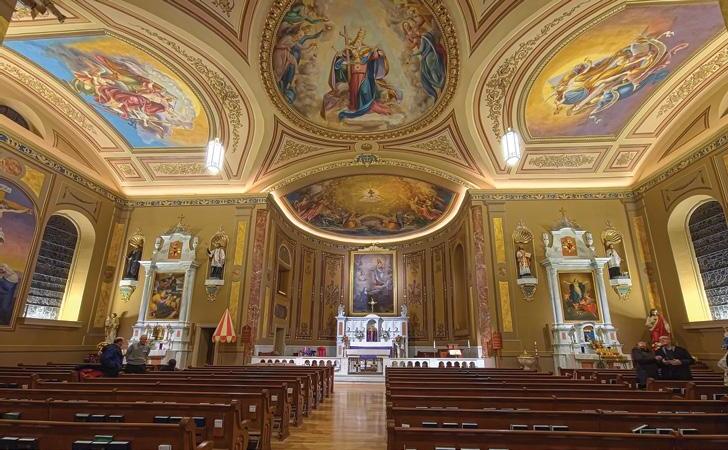
In a series of articles she did for Canning’s website, the company’s resident art historian, Amy Marie Zucca, placed the restoration into its proper perspective. Her conclusion is especially apt:
“In 2023, Canning Liturgical Arts revealed and restored all that the Jesuit missionary priests sought to raise on that rural hill in Hanover: A Mother Church in her own right. The ‘Mother Church to the Pennsylvania missions.’ The ‘Mother Church of the Diocese of Harrisburg.’ The ‘Mother Church of Pennsylvania west of the Susquehanna.’ In 2023 Catholics can look to Conewago again.”
Reclaimed Magnificence
Now, congregants could see the Basilica as John T. Reily presented it in his 1885 book, Conewago: A Collection of Local Catholic History:
“Watch the old building with anxious care. Guard it as best you may. . . . Count its stones as you would jewels of a crown. . . . And do this tenderly, and reverently, and continually, and many a generation will still be born and pass away beneath its shadow.”
When surveying the newly-restored magnificence of Sacred Heart Basilica, one can almost envision a day when the beauty of traditional Catholicism can wash away some of the self-inflicted wounds of the sixties.
Restoration experts at Canning Liturgical Arts recovered and restored the Basilica's nineteenthcentury grandeur so that it could elevate the souls of all who enter far into the future.
Painted over in the wake of the Second Vatican Council, this Baroque representation of the Blessed Trinity was recently restored to its former glory.
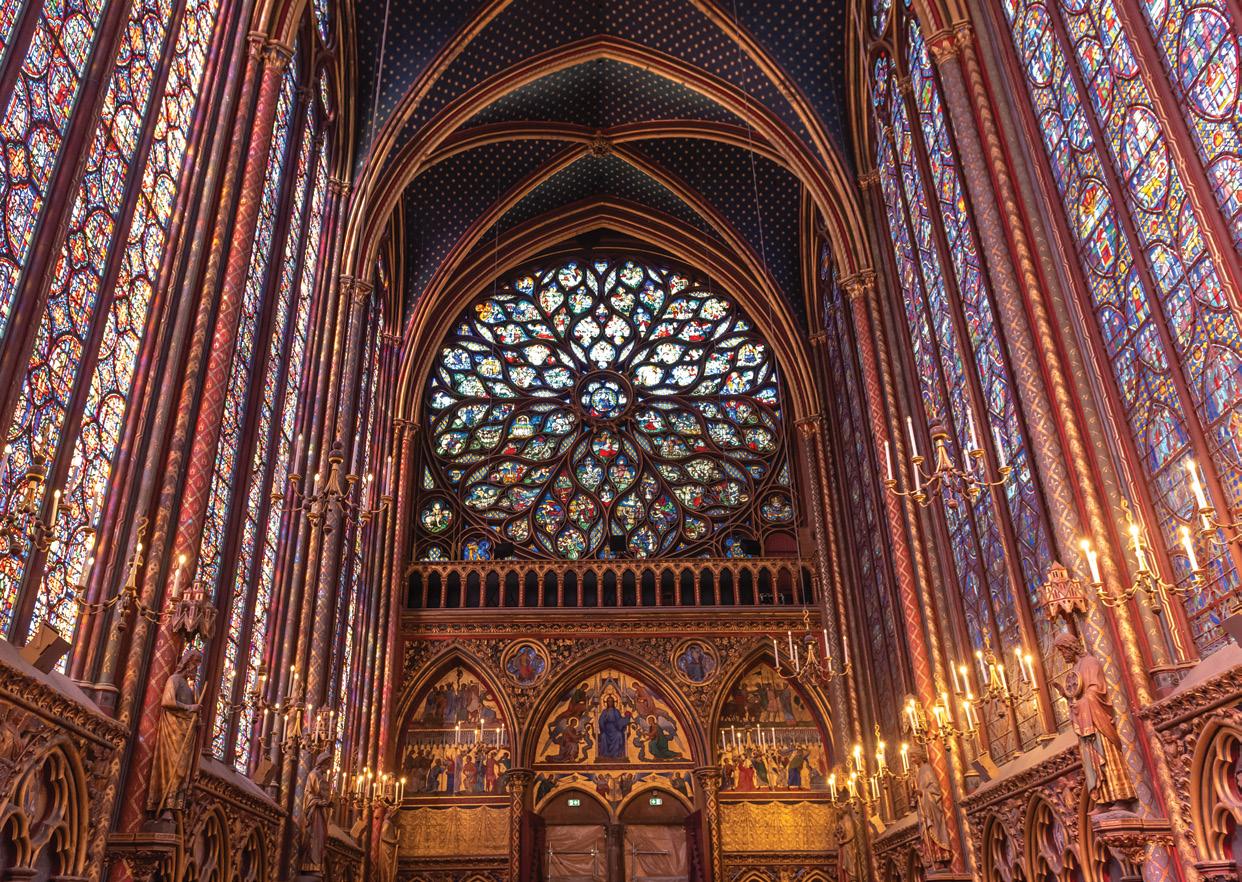
Why We Need Beauty in Our Lives
God created beauty for the life of the soul. It has no corporal usefulness. It does not satisfy hunger, shelter us from a storm or provide warmth. For the life of the body, it is perfectly useless.
However, beauty is more useful than food, shelter and warmth. This is because beauty is useful to the soul, and the soul is worth more than the body.
Let us say, for example, that a city has no bread. Without food, everyone dies. But can a soul live in a world without beauty?
When the Jewish nation under the Machabee family revolted against the foreign pagan domination of their country, the first Machabee, the one who started the revolt, launched it with this cry: “It is better to die than to live in a land devastated and without honor.” We could say: “It is better to die than to live in a land devastated and without
beauty.” The beauty of the things of the earth is one of the reasons for their existence. Beauty makes life worth living. Because of this, one who wants to love God must be sensitive to beauty. Normally, a person insensitive to art is insensitive to God. In Catholic civilizations, art is cultivated as much as possible. That is why a church building as a whole is beautiful, or at least attempts to be beautiful. That is why even in the catacombs in the bowels of the earth, we find chapels that were attempts at beauty. The worship of God ought to take place in beautiful circumstances so that the soul might be truly led to God by means of the worship rendered. This is beauty’s reason for being. Since everything that is beautiful leads to God, it is natural that those who would destroy Christian civilization would want to diminish and eliminate beauty from the world. n
The Rose Window of the Apocalypse of Sainte Chapelle in Paris, France.