F .
D U I G A N
&
N E I G H B O R S
P AT E R S O N :
ART & THE MILLS
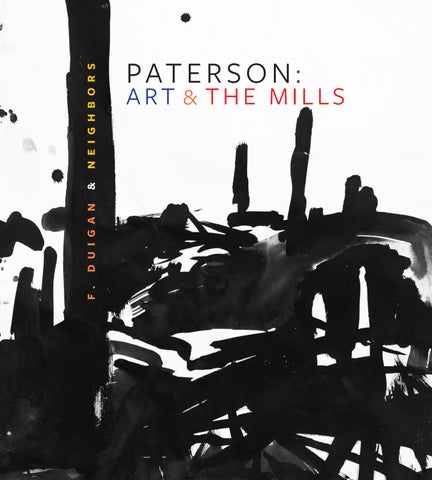
ON THE COVER, DETAIL: FA C T O RY D R AW I N G , 1 9 9 3 , A C RY L I C O N PA P E R , 2 4 x 2 0 ”
F. DUIGAN & NEIGHBORS
P AT E R S O N :
ART & THE MILLS
THE PATER SON MUSEUM M AY 1 1 - J U LY 3 1 , 2 0 2 6 T H E PAT E R S O N M U S E U M • 2 M A R K E T ST R E E T • PAT E R S O N, N E W J E R S E Y 0 7 5 0 1
F R E D D U I G A N | P AT E R S O N M I N D | 1 9 8 9 , O I L A N D H O U S E P A I N T, 6 0 x 4 2 ” 2
P AT E R S O N : A R T & T H E M I L L S | F. D U I G A N & N E I G H B O R S
CURATOR'S NOTE
In 1983, Paterson initiated subsidized housing for artists in two old abandoned mills in the newly designated Great Falls / SUM Historic District. These two former silk mills were among many empty factory buildings in the district that had once manufactured a variety of products including locomotives, guns, cotton, and especially silk and multiple kinds of machinery. Manufacturing had moved to the U.S. South and Abroad over the decades and silk had been replaced by rayon. In the 1980s all types of artists were invited to apply to live in the new housing—painters, musicians, poets, photographers, and arts workers with the hopes of establishing a creative community and a shop and gallery center for the City. Paterson: Art & the Mills — F. Duignan & Neighbors focuses on the visual artists who lived in the refurbished mills from the 1980s to the early 2000s and some who still live there today. This exhibition asks what artist housing can do for the artists and what it can, or sometimes cannot, do for the community. This heterogenous group of art makers shared this housing, the neighborhood, and engaged in a raucous, creative interaction. It was much like a ragtag university housing with open studio doors, lots of noise (jazz musicians!), aesthetic arguments, good parties and bars. The work and role of painter Fred Duignan acts as an anchor for the exhibition, because of his expressive views of the Mills, the Great Falls, and his portraits of many of the early artist residents. Among other things, Duignan played a role as organizer of exhibitions and made tenuous connections to New York City. For a handful of years, he was Curator of Contemporary Art at the Paterson Museum within the District, (1992-97), bringing shows and eccentrics from NYC, exhibits from Korea, and showcasing Mills artists. Many of the core artists are in this exhibition. Their work gives an idea of the breaking of creative boundaries fostered by this unorthodox community and period. One finds crossovers of painting, sculpture, creative photography with poetry, music, technology, and the probing of the industrial and social/political realities. There is darkness and light, conscious and deep unconscious, and the urban realities of this raw, energetic place. Though not fully supported by the City in terms of development of needed studio, exhibition, and café spaces, the artists offered to the neighborhood and to the broader city, artistic outreach, critical investigations, teachers, local characters, help with arts programs, school murals, and books of photography which show the changing, deteriorating, beautiful historic roots of Paterson. Not quite a new Soho but a new ragged, significant energy center developed.
SARA LYNN HENRY, PhD Professor of Art History NEH Distinguished Professor of Humanities Emerita, Drew University
3
P AT E R S O N : A R T & T H E M I L L S | F. D U I G A N & N E I G H B O R S
TA L E S O F A RT & T H E M I L LS
From archival newspaper articles and conversations of the artists with curator Sara Lynn Henry, October 2025 through April 2026. Artist sources are marked by initials; full name can be found in Exhibition Checklist. Comments are in interviews in the archive collection of the Paterson Museum.
ART & LIFE IN THE MILLS • 1970 the 119 acre Great Falls / S.U.M. Historic District was created. Plans included two 19th c. silk mills turned into
artist housing by 1983. Propelled by the mayor’s wife, Mary Ellen Kramer; but neglected for 8 years by the next mayor. Frank X Graves Jr. (Mayor 1960-66, 1982-90), who, instead, concentrated on a tough crime fighting image; “Graves often accompanied the police on its rounds, leading raids, and would always carry a series of two-way radios and telephones with him as he went about his day. Graves was noted for driving through every Paterson neighborhood seven days a week inspecting the areas and calling the proper authorities when he saw something that he determined to be wrong (litter, graffiti, etc.).” (Wikipedia). • During Graves time many of the empty Mills burned because of vagrants and/or for insurance scams. • Mayor Graves did favors for people, even when he had the funds to set up an historical commission and finally got
around to it—much was transactional. (JA + MH)
Affordable housing for the artists; it meant that contemporary art was taken seriously, not just suburban nudes & landscapes. • "Everyone had their door open all day, and they’d go in an out and stuff,” (GS & MH ) an open exchange! • The walls were thin; loud, great noises blasted from the jazz musicians. (JA ,ED, SF) • Artists infighting at times. Some artists as a result kept to themselves. (ED, SF). Heated discussions for hours over cigarettes and beers, about following one’s authenticity or selling out, actually philosophically about how art relates to commerce. (BG) • There were a lot of talented people here but not too many artists who were in tune with marketing or a gallery or even with having a little group show or something. (GS) • It was a heterogeneous group of people, a melting pot of sorts, one learned from their different origins. (BG) • Some artists came around who did not live in the Mills but would hang out in the Italian coffee shops to be part of
the scene. (BG)
continued
5
TALES OF ART & THE MILLS
ART & LIFE IN THE MILLS, CONT'D
The Essex Building had a beautiful view of the Cliffs and Falls (SFG) • “I could see the Great Falls from my window.. Oh my God, it was that close...it was like having a natural place back there with the river and the Falls and all the abandoned mills.” And there were lots of homeless living in the mills, as many as 100. You could see their campfires. (MH) • I could work in my darkroom, get a coffee on Cianci St, then sit by the Falls, while the film rinsed, then walk home,
sometimes as late as 1 am. (ED) • Geologically is where a mountain and the river meet. It was of interest for rocks and crystals, as are the
Paterson quarries. (SF)
Difficulties: • Fires in the abandoned buildings, no one was ever sure they were from arson (for insurance purposes) or from the homeless. Every few weeks we would have a fire drill, piling out in our pajamas, standing outside while they made sure our place wasn’t on fire. (ED) • There were indications of toxic conditions from the dye building next to the Phoenix and with the water raceway
accompanying the Phoenix itself. Remediation has finally been going on. (ED)
T H E E A R LY Y E A R S • It was the best time of our lives when we did our best work. (GS QUOTES ED) • “...the highs were so high, and the lows were so low...there were things that were good, that were like so transcendent,
as a friend of a friend said Paterson is one of the cosmic centers of the Universe.” (JA) • Currently the Mills housing has less commitment to having artists in the housing, not much of a scene is left. (GS)
6
P AT E R S O N : A R T & T H E M I L L S | F. D U I G A N & N E I G H B O R S
KIDS IN THE MILLS • “...we were generally unsupervised. “We were very much a world of our own, like, you know, my dad was working,
and when I wasn’t at school, and if I wasn’t tied to the table, trying to do my homework, I was out and about; I was running around the Mills....there was this whole world that was ours, and no one else knew about it, because we didn’t talk to our parents about it. They just thought, okay, my kids are safe, they’re in a building; they’re not out on the streets.” (ZD) • “Meanwhile, we’re taking service doors up to parts of the building still under construction or part of the old factory
that had never been renovated. We were throwing rocks over the top of the gate and watching them hit the street. We were getting into fights with each other. We were playing “Manhunt” across the entire Mills.” (ZD) • “We found one of the garbage shoots and didn’t know where it went, so my friend just climbed in and slid down.” (ZD) • “Well, it was pretty wild, so interesting, but also a wild Lord of the Flies.” (ZD)
THE NEIGHBORHOOD • In the Mills area is Cianci Street, all Italian back then, with a dozen of these clubs and a sports bar, many had cafés
inside. We used to go to the Roma Café. A lot of mob activity in the area. (MH) Like the first years of SoHo. (SLH) “There was a block on Cianci Street where you could walk up and down the street and see all the guys at the social clubs. Ellen and I did a little book together of writing and photographs about it, called Traveling Small Distances, (1993) and another called Cianci Street: A World Time Forgot.” (1996) (JA) • There was a bar I went where “I would sit at the bar to have something to eat and he’d make pasta fazool (pasta fagioli)
and give me his kick-ass wine, and I’d try to pay him, and he’s like, no, no, you pay me when you’re famous.” (ED)
The Question Mark Bar, historically was a gathering place for silk workers to discuss labor actions during the early 20th century, specifically during the 1913 silk strike. It thus played a part in the founding of the modern labor movement. • The Question Mark Bar was just across the Street from the Phoenix. We used to congregate there; there was a lot of
drinking, also some shady stuff going on in the Bar—drugs, gambling machines.” (MH ) continued
7
TALES OF ART & THE MILLS
THE NEIGHBORHOOD, CONT'D • There would be Mills resident poetry readings with a Mills jazz assemble at the Bar. The jazz was top notch. (MH ) • There were questionable goings on in back rooms. The police would make a show of a raid, then would evidently
a deal. “So I look inside and the cash register and everything has a $10 bill under it. He goes, well, they do this once a month,and you know...they’ll bring the machines back or they let them get more or something.” (ED) • Other bars, some drugs, fights on the streets, problems with homeless and vagrants. (JA) • “So we go in the back of the bar, and he says, can you read that sign? It said, in Italian, my grandfather lived to be
100 because he kept his mouth shut... And I said yes, OK. So now whenever we went into any of those clubs, they’d go, Oh, its you, OK!” (ED) • Now — the old stores, the clubs, are gone. It is sad. (JA)
EXHIBITIONS AND OUTREACH • The district needed an alternative-space cultural center for gatherings and exhibitions and inexpensive studio
space for the artists. The artists were told this would be part of the development, but the town did not come through. Some artists rented studio space elsewhere. (JA) • Duignan called himself Executive Director of the Essex-Phoenix Artist Association and played a role in getting folk
together (MH). He, Furman, and Gorcica initiated 4-5 exhibitions at the Colt Building in town. (KJ) They also put together an occasional, xeroxed art and poetry magazine they called “Uncover.” Some considered Duignan a promoter, so-to-speak, but he had a generous nature (SF) and wanted to help get the artists involved with things (MH). • Duignan decided with the Director that he was going to be Curator of Contemporary Art at the Paterson Museum,
(unpaid). He went out and made calling cards before he even got launched. (ED) Between 1992-7 Duignan curated 12 shows of art from the Mills, New York, and Korea for the Museum. He also brought in curator/promoter Baird Jones to curate some contemporary exhibitions of NYC art for the Museum. (FD)
8
P AT E R S O N : A R T & T H E M I L L S | F. D U I G A N & N E I G H B O R S
CONNECTIONS TO THE COMMUNITY
Most of the core artists became teachers and professors at area associations, lower schools, high schools, and universities (e.g., Passaic County Community College, William Paterson University, Montclair State, Newark State College, Italian Catholic Center, Paterson Public Schools) and one eventually moved to Minnesota to become a distinguished member of the art faculty of St. Cloud State University. Many did community art outreach: • Gilbert Riou was active in Paterson even before his Mills residency, working with CETA; opening an inner-city coffee house and a cooperative gallery for art, music, and poetry; helping the city create a census of commercial lofts available for studio rental; participating in the early planning of the Mills Artist Housing with the developer. • Don Kommit had a group of kids he worked with who did artwork on the streets, sidewalks and walls. (ED) • Ellen Denuto and Kate Jelly participated in inner city afterschool programs. Denuto worked with the Paterson Youth
Project for photography at public housing, and Jelly with an Arts Program at School #2. Jelly also worked with the Inner City Ensemble, helping graffiti artists and former gang members with painting and hip hop dance. • June Avignone started a small local newspaper. It was idealistic, as she explains. It was supposed to join the voices of
labor with the artists and the students. (JA)
NEW YORK CITY CONNECTION • Manhattan was only a 45+ minute drive by car, but there was no easily accessible public transportation, no train stop nearby. • In the later 1980s Duignan regularly went into NYC for East Village art events and the Lower Manhattan club scene, such as
the latter-day Studio 54, Webster Hall, and The Tunnel, helping his promoter friend Baird Jones and Hoop, the art-car sidekick to Jones. Fred was known to park his own car up front at Baird-promoted events and greet visitors and make introductions. (KJ) Others occasionally accompanied Fred. This connection was brought back to the Mills and to the Paterson Museum by curated shows. • New York being so close made it potentially more difficult for the Mills to attract a North Jersey art public. (GS)
COMPILED BY S. HENRY AND THE ARTISTS
9
FRED DUIGAN | SELF PORTRAIT | 1986, OIL AND ACRYLIC ON CANVAS, 32 x 2O" 10
11
E L L E N D U N O T O | G E R A L D S L O T A | LATE 1 9 9 0 S , P H O T O G R A P H 12
13
G R EG O RY VA N M A A N E N | U N T I T L E D | 2 0 0 9 , AC RY L I C O N B OA R D, 2 9 x 2 3 ” , ( G V M 1 8 0 4 ) 14
15
MARK HILLRINGHOUSE | SPRUCE STREET FIGURE WITH FACTORY WALL: HOMMAGE TO GEORGE TICE | 2008, PHOTOGRAPH 16
17
G E R A L D S LO TA | S U N R AY M A N | 2 0 2 4 , P H O T O G R A P H A N D M I X E D M E D I A O N M E TA L L I C PA P E R , 1 2 x 1 2 ” 18
19
ANNACARINA SINOCCI | E. LUCEVAN LE STELLE | 2025, MIXED MEDIA: CYANOTYPE PHOTOGRAPH, A C R Y L I C P A I N T, O R G A N Z A , P A I N T E D D U C K C A N V A S , 3 4 x 2 3 . 5 ” 20
21
BILL GORCICA | FOREST ENERGY | 2022, ENCAUSTIC, 3D MODELED AND CARVED BY CNC ROUTER FROM AN IPAD DRAWING, 11.125 x 15 x 0.76” 22
23
GILBERT RIOU | APPROACHING PEMAQUID POINT LIGHTHOUSE | 2001, OIL ON CANVAS, 12 x 16” 24
25
D O N KO M M I T | M R. S E R R A N O - R E STAU R AT E U R I N PAT E R S O N | 1 9 7 8 , O I L O N C A N VA S, 2 2 x 2 4 ” 26
27
K AT E J E L LY | M A H A F A LY W O M A N | 1 9 8 0 , C A S T B L A C K C E M E N T, 3 . 7 5 ' x 3 ' x 3 ' ,
500 LB. STOLEN FROM
ART STUDENTS LEAGUE, NYC. PHOTO: FINISHED CLAY SCULPTURE BEFORE BEING CAST 28
29
SCOT T FURMAN | GLIS SANDO | 2024, WATERCOLOR, PENCIL, COMPUTER GRAPHICS, 32 x 24” 30
31
FRED DUIGAN | FREIGHT TRAIN BLUES (TRIXIE SMITH SINGER) | 2022 [BLUES SERIES], OIL & ACRYLIC ON CANVAS, 18 x 24” 32
33
top left: E L L E N D U N O T O | F R E D A N D Z A K 2 , c . 1 9 9 8 , P H O T O G R A P H top right: Z A K D U I G A N | L O S T M I L L E N N I A L D R E A M , 2 0 2 4 , M I X E D M E D I A O N C A N A V A S , 2 4 x 1 8 " left: Z A K D U I G A N | S E L F P O R T R A I T | 2 0 2 5 , P H O T O G R A P H 34
35
WORKS IN THE EXHIBITION
JUNE AVIGNONE: BOOKS: TRAVELING SMALL DISTANCES, SANTA ROSA PUBLICATIONS, 1993; CIANCI STREET: A NEIGHBORHOOD IN TRANSITION, ITALIAN GIRLS PRESS, 1996; IMAGES OF AMERICA: DOWNTOWN PATERSON, ARCADIA PRESS, 1999. POEM: WOLF NOSE, (EXCERPT), 2019. ELLEN DENUTO: BOOKS: TRAVELING SMALL DISTANCES (photos), 1993; THE ARTIST AS ART, 1996; CIANCI STREET: A NEIGHBORHOOD IN TRANSITION, 1996; PORTRAIT PHOTOS: SELF PORTRAIT; KATE JELLY IN STUDIO; JUNE AVIGNONE; GERALD SLOTA, late 1990s; FRED & ZAK 2, 1998. PEOPLE & PLACES: ATP ON FIRE, 1989; ATP FIRE, 1989; MILL AND VAN HOUTEN STREETS. FINE ART PHOTOS: GREENBAUM WOODWORKING; SHOPPING CARTS IN THE MIST. All photos date 1980s-90s. FRED DUIGNAN: PORTRAITS: SELF PORTRAIT, 1986; SCOTT FURMAN, 1986; BILL GORCICA, 1987; MARK HILLRINGHOUSE, 1986; DON KOMMIT, 1986; GILBERT RIOU, 1986; GREGORY VAN MAANEN, 1986. All portraits are oil & acrylic on canvas, 32”x 20”. OTHER PAINTINGS: Mills & Falls: UNTITLED MILL, c. 1993, acrylic on paper, 24”x 20”; THREE WINDOWS, 1993, acrylic & oil on canvas, 65”x 60” (reproduction); UNTITLED MILL, 1993, acrylic on paper, 24” x 20”; UNDERGROUND, 2000, oil on canvas, 48” x 42”; PATERSON MIND, 1989, oil and house paint, 60”x 42”. ABSTRACTIONS: MEDITATION TWO, Unzipped Series, 2020, oil & acrylic on canvas, 30”x 40”; SKETCHES OF SPAIN (MUSIC BY MILES DAVIS), Blues Series, 2020, oil & acrylic on canvas, 20” x 24”; BUMBLE BEE (MUSIC BY MEMPHIS MILLIE), Blues Series, 2022, oil & acrylic on canvas, 16” x 20”; FREIGHT TRAIN BLUES (MUSIC BY TRIXIE SMITH), Blues Series, 2022, oil & acrylic, 18” x 24”. ZAK DUIGNAN: ARTWORK: LOST MILLENNIAL DREAM, 2024, mixed media collage on canvas, 24” x 18”. PHOTOGRAPH: SELF PORTRAIT, December 2025. SCOTT FURMAN: ARTWORK: GLISSANDO, July 2024, watercolor, pencil, computer graphics, 32” x 24”. MURAL: SCIENCE & TECHNOLOGY MURAL, summer 2019, installed at Jose Marti STEM Academy, Union City, New Jersey (reproduction). BILL GORCICA: FOREST ENERGY, 2022, encaustic, 3D modeled & carved by CNC router from an iPad drawing, 11.125” x 15” x 0.76”; ROOT SPARK, 2022; encaustic, 3D modeled & carved by CNC router from an iPad drawing; 11.125” x 15” x 0.76”. MARK HILLRINGHOUSE: BOOKS: BETWEEN FRAMES, 2012, Serving House Books; PATERSON LIGHT AND SHADOW, 2017, Serving House Books; TALKING ALL NIGHT, 2025, Serving House Books. PHOTOS: ABANDONNED TICKET WINDOW HINCLIFFE STADIUM, May 2004; GREAT FALLS, May, 2009; PATERSON STREET CORNER, May 2004; SILK SPOOLS, June 2006; SPRUCE STREET FIGURE WITH FACTORY WALL: HOMMAGE TO GEORGE TICE, May, 2008. KATE JELLY: MAHAFALY WOMAN, 1980, cast black cement, 3.75’ x 3’ x 3’, 500 lbs. The cement sculpture was stolen from the Art Students League, NYC. The photo is of the finished clay sculpture before being cast. DON KOMMIT: MR. SERRANO – RESTAURATEUR IN PATERSON, 1978, oil on canvas, 36” x 24”. GILBERT RIOU: APPROACHING PEMAQUID POINT LIGHTHOUSE, 2001, oil on canvas, 12”X16”. A CLEAR MARBLE WITH INTERIOR COMPOSITION, 2007, oil on canvas, 22” x 24”. ANNACARINA SINOCCI: ARTWORK: E. LUCEVAN LE STELLE, 2025, mixed media: cyanotype photograph, acrylic paint, organza, painted duck canvas, 34” x 23.5”. PHOTOS: ANNACARINA SINOCCI, SELF PORTRAIT, 2022, two versions. GERALD SLOTA: FReNzY Series: JUMP, 2024, photograph on metallic paper, 12” x 12”; SUNRAY MAN, 2024, photograph on metallic paper, 12” x 12”; MARS FLOWER, 2024, photograph on metallic paper, 12” x 12”. GREGORY VAN MAANEN: UNTITLED, 2009, acrylic on board, 20” x 16” (GVM 1803); UNTITLED, 2009, acrylic on board, 29” x 23”, (GVM 1804).
36
DESIGN: SUSANNA RONNER GRAPHIC DESIGN | SUSANNARONNER.COM