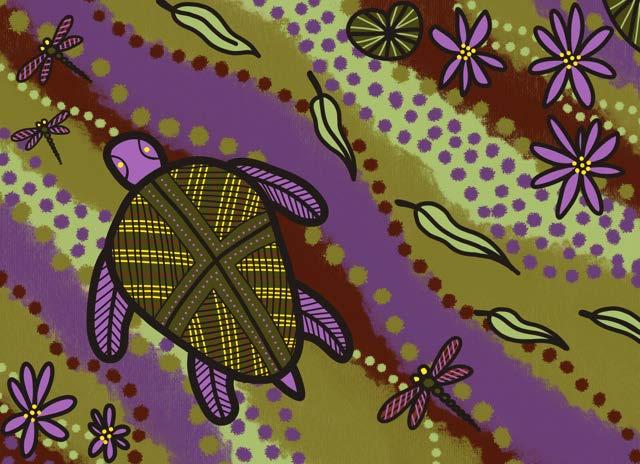
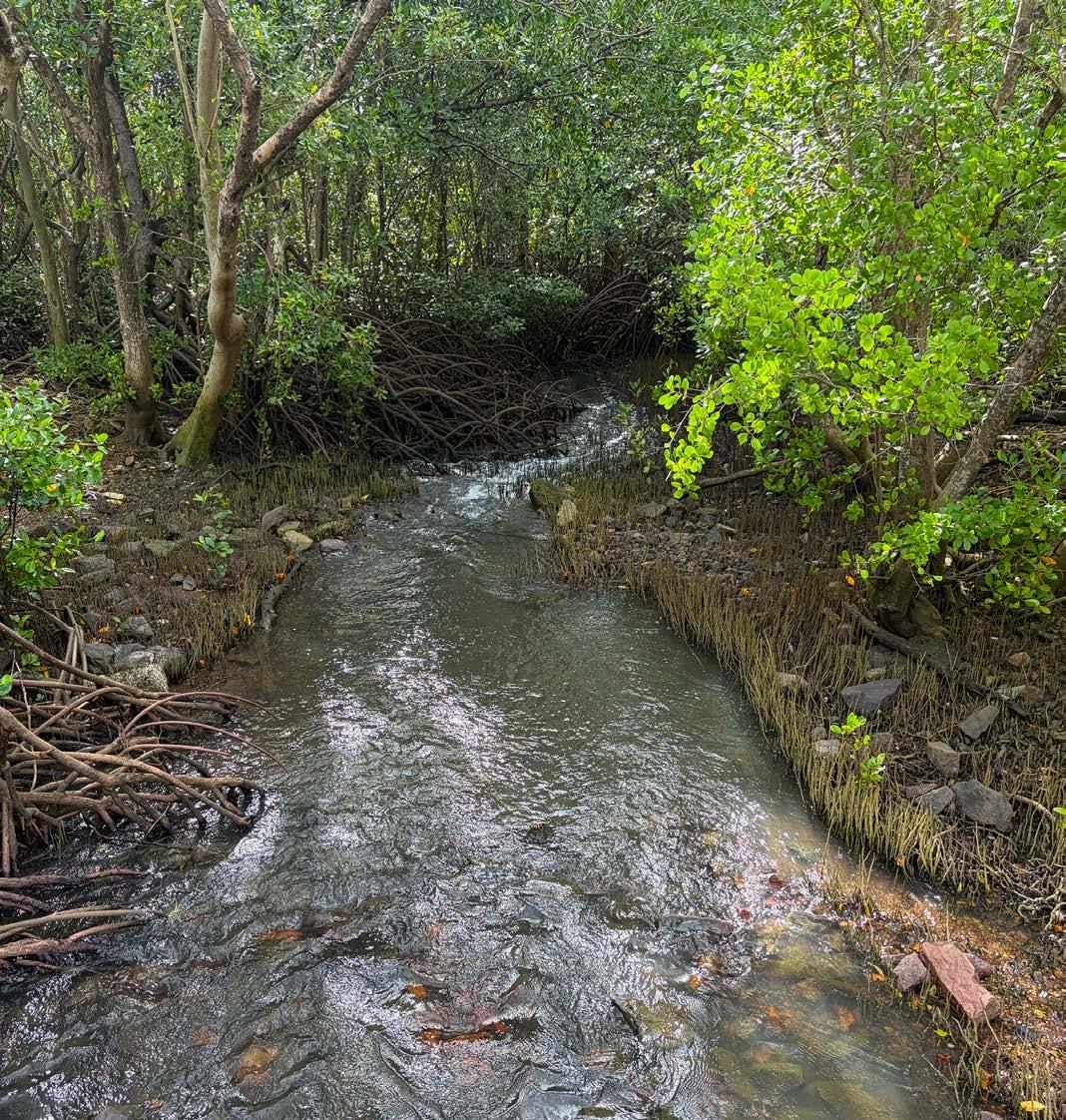
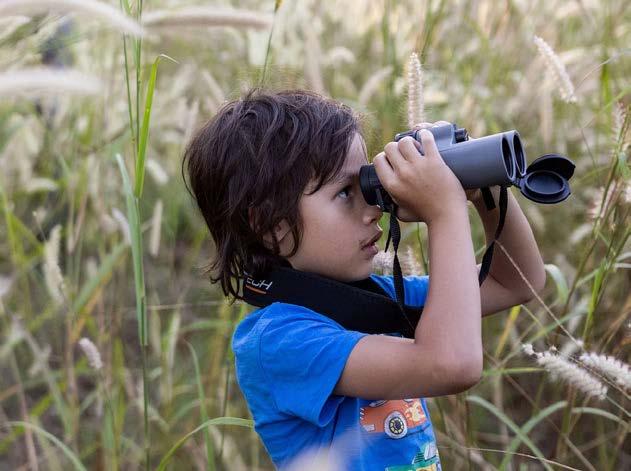
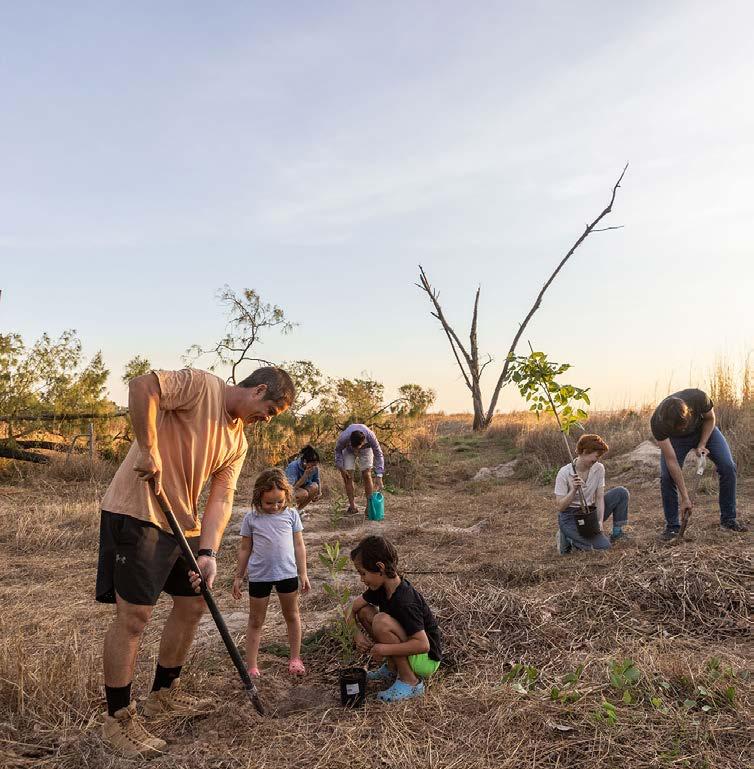
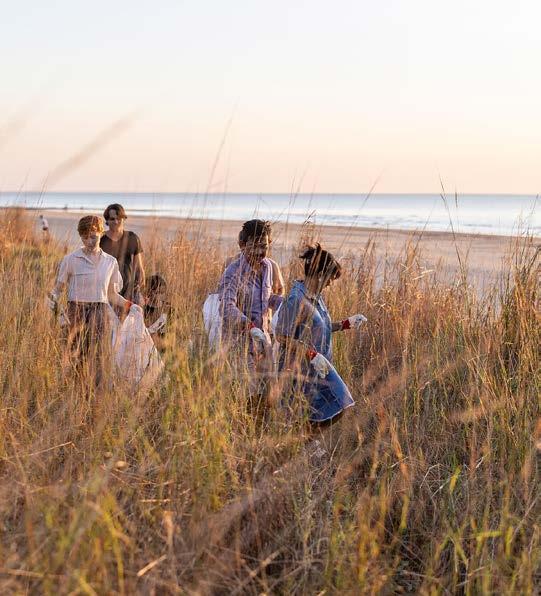
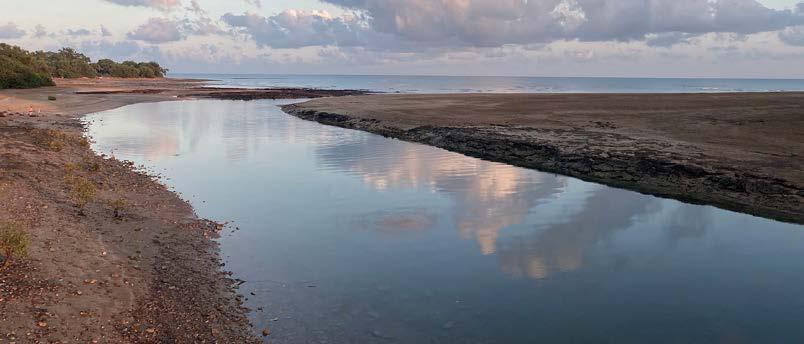
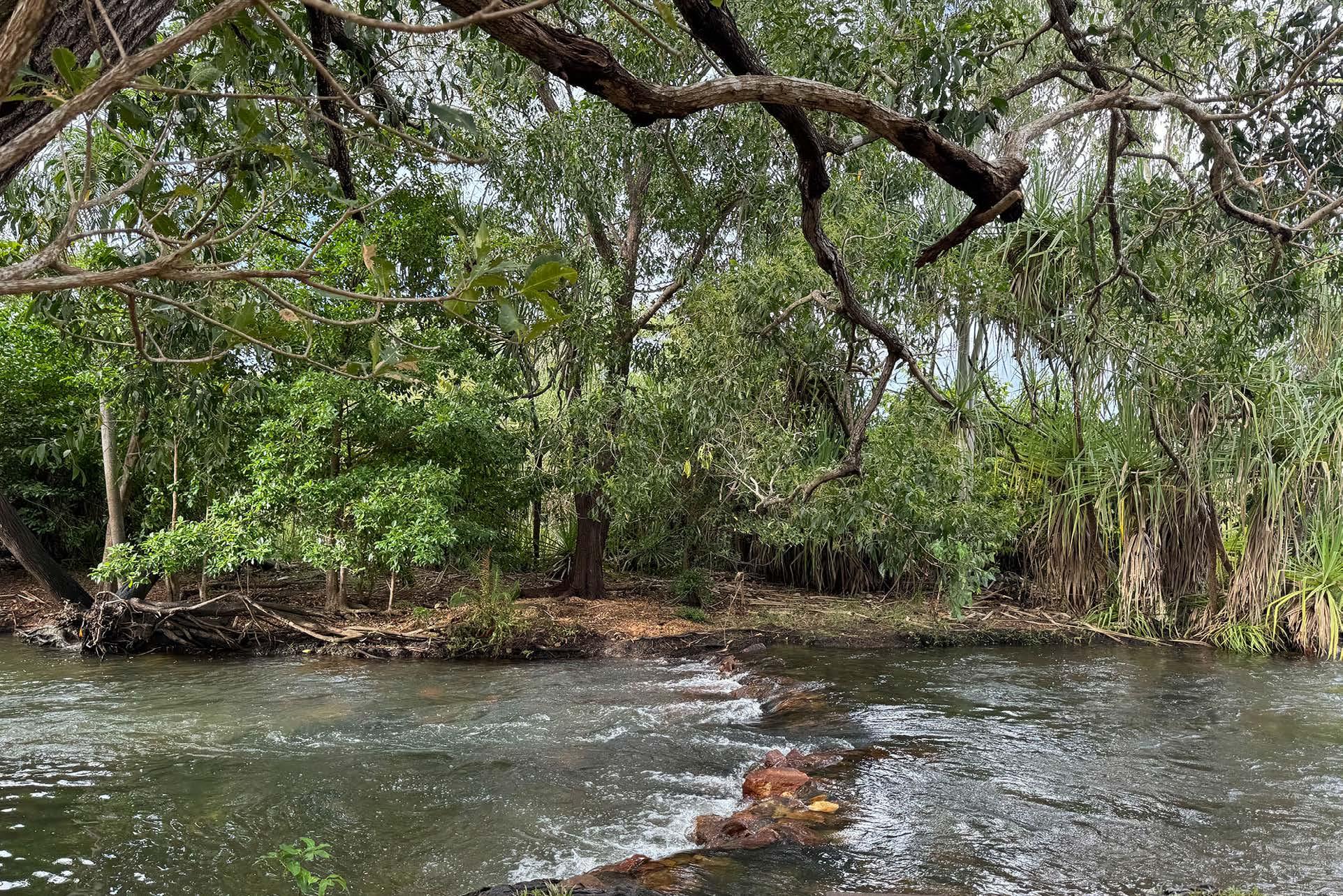
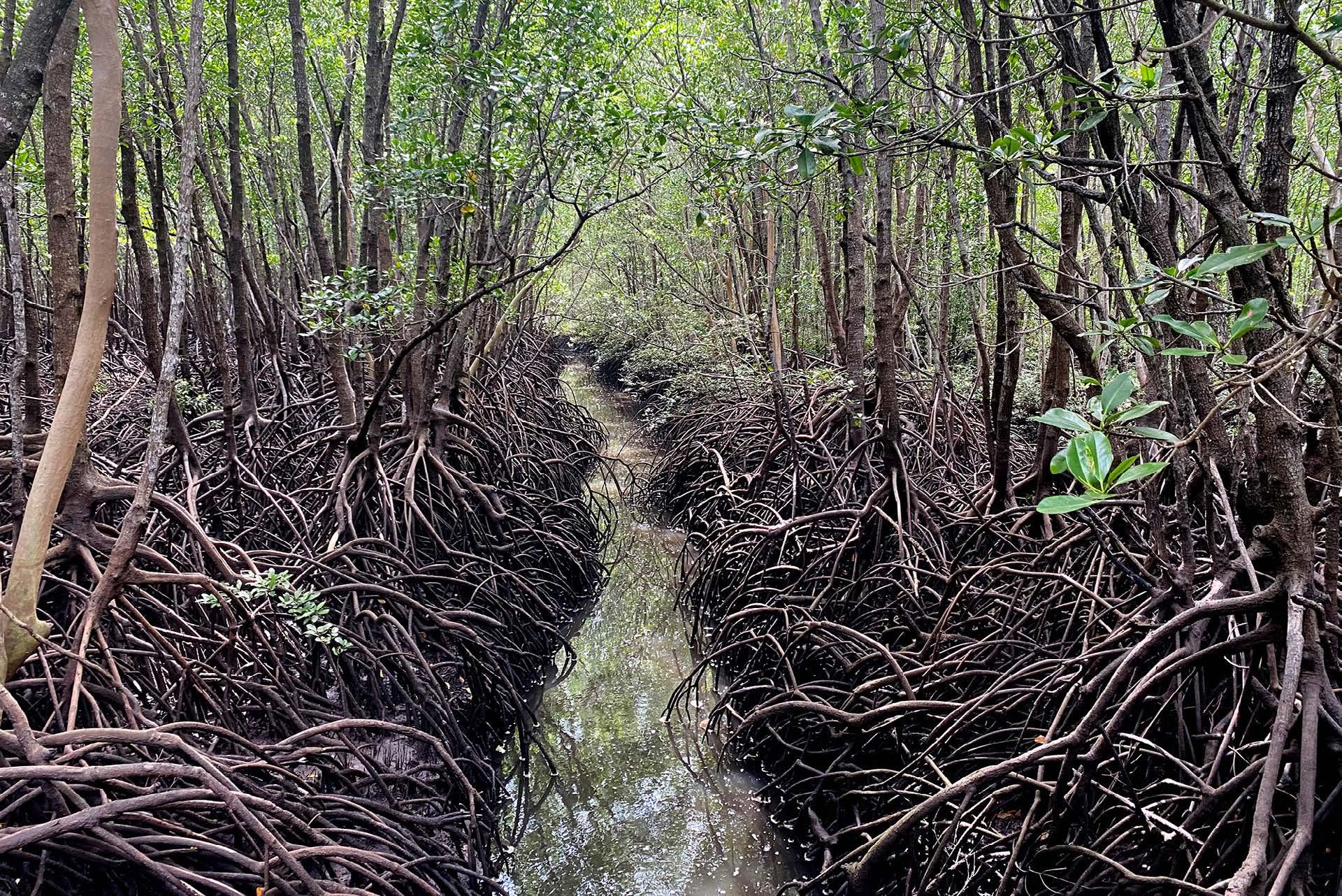
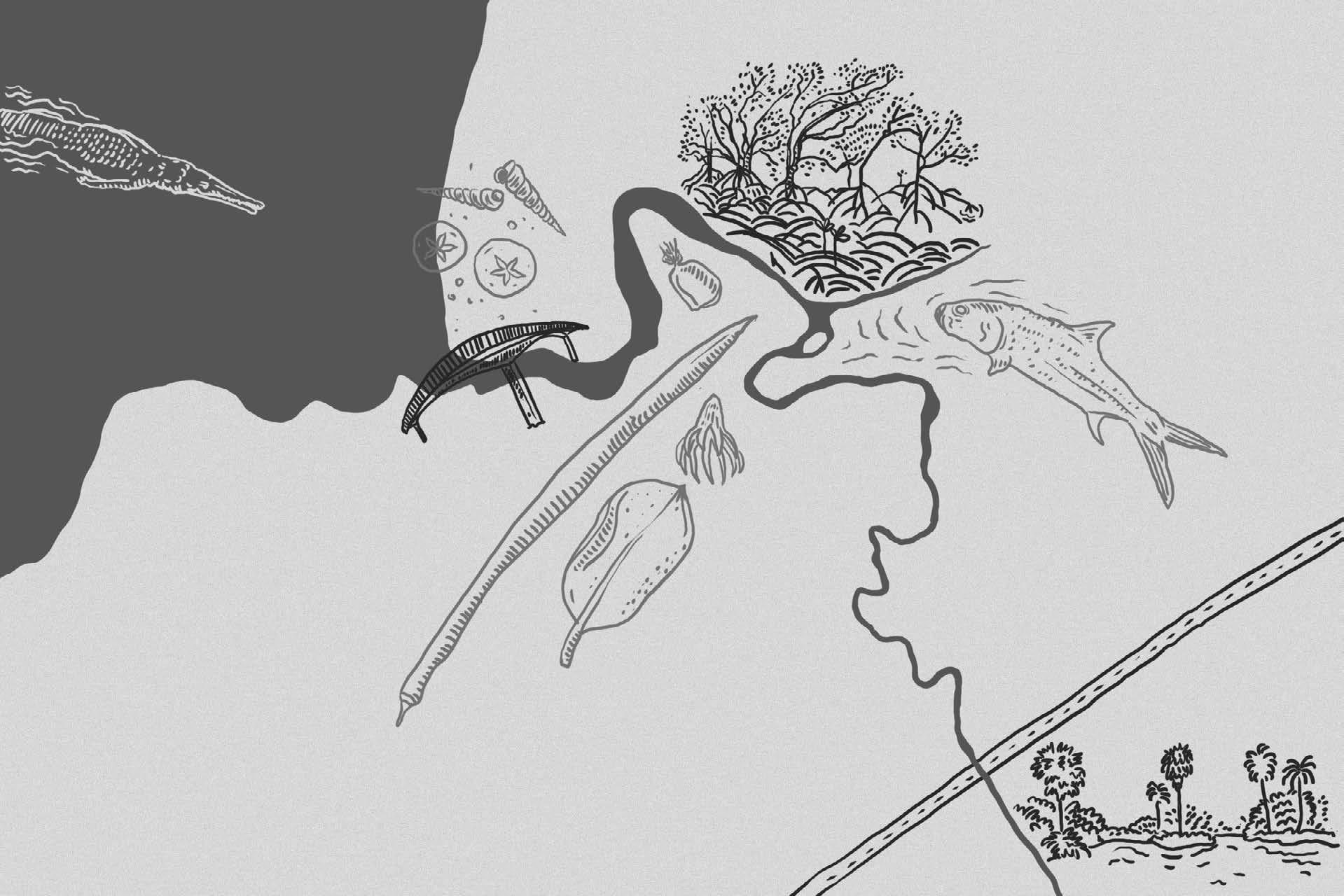
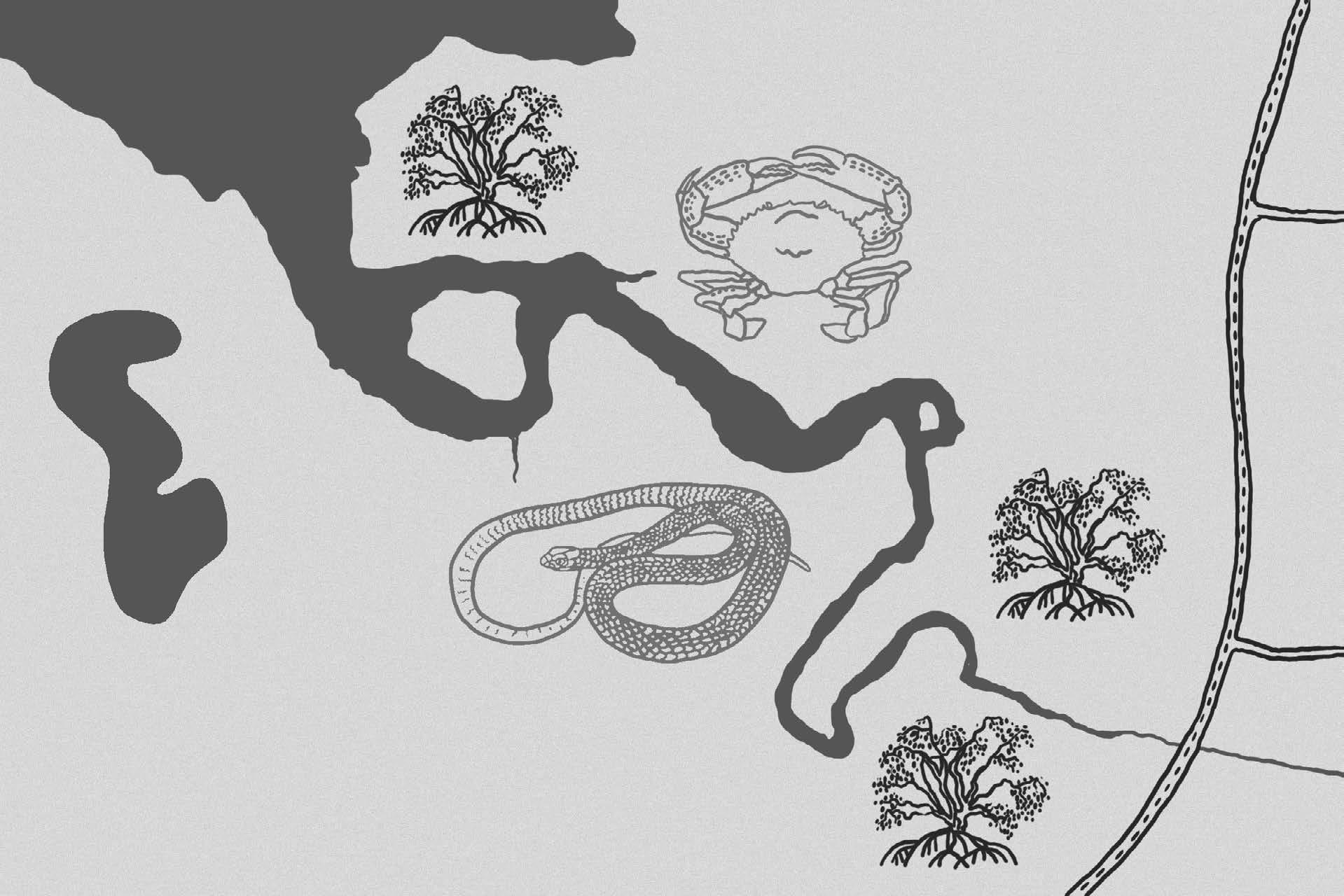
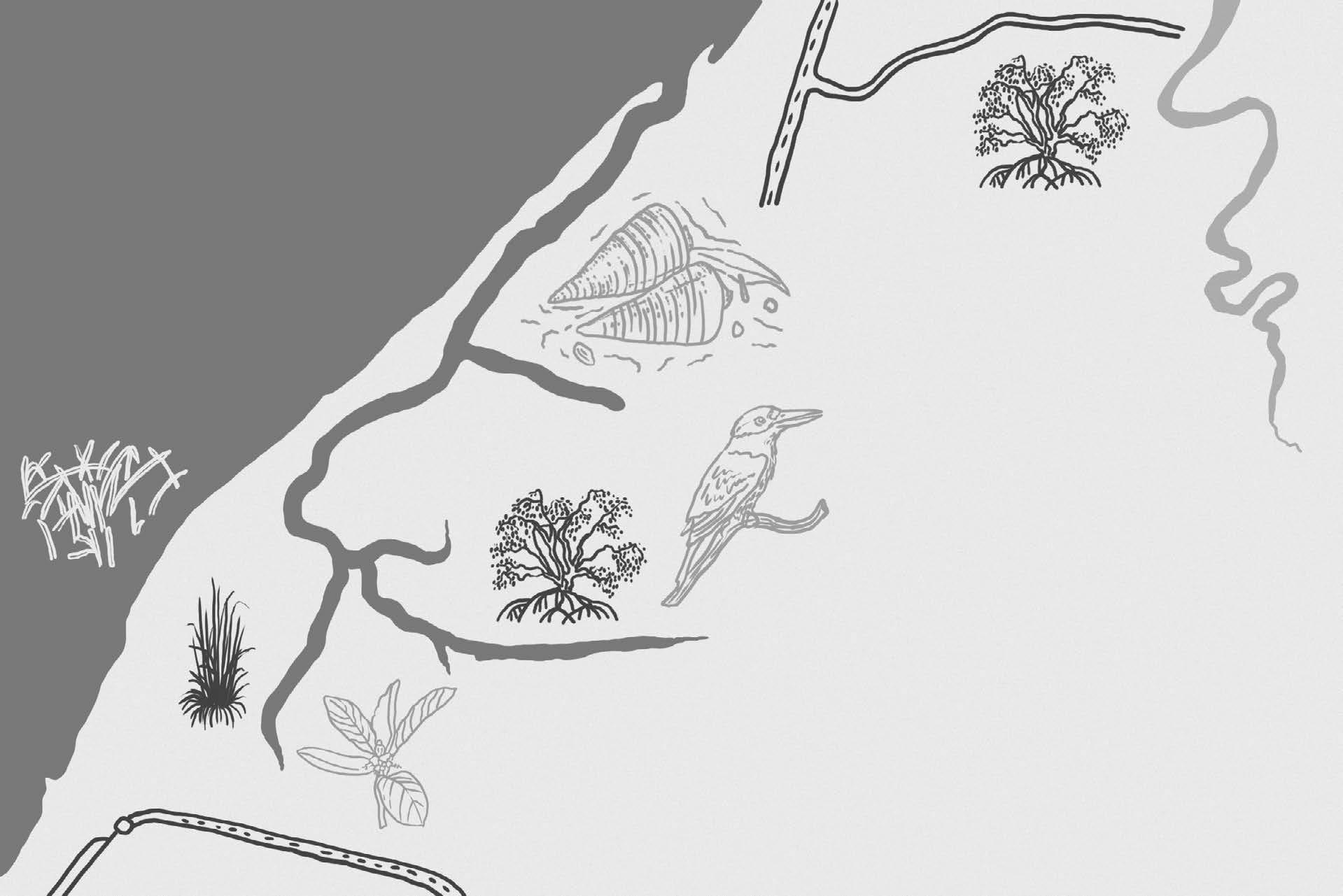
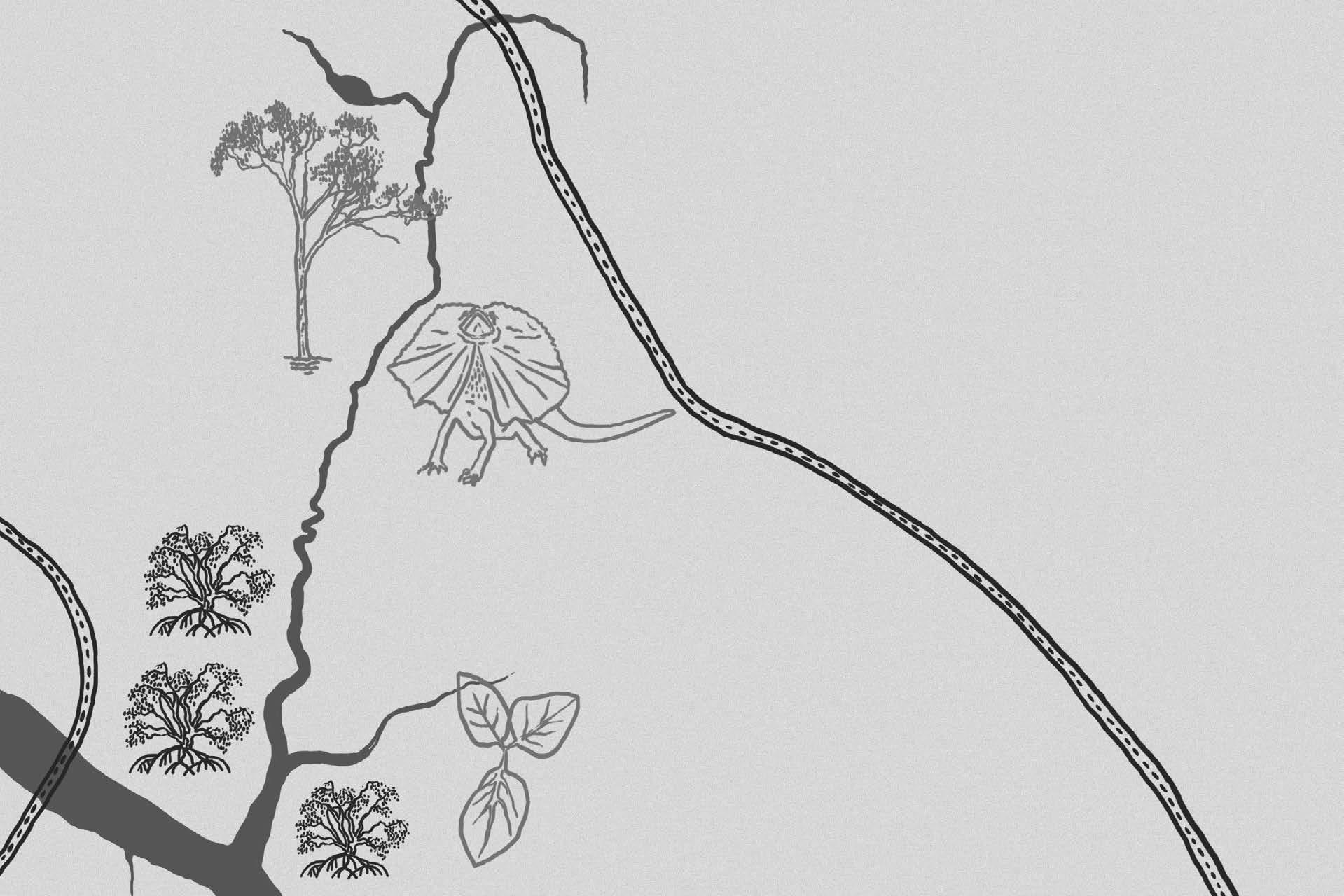
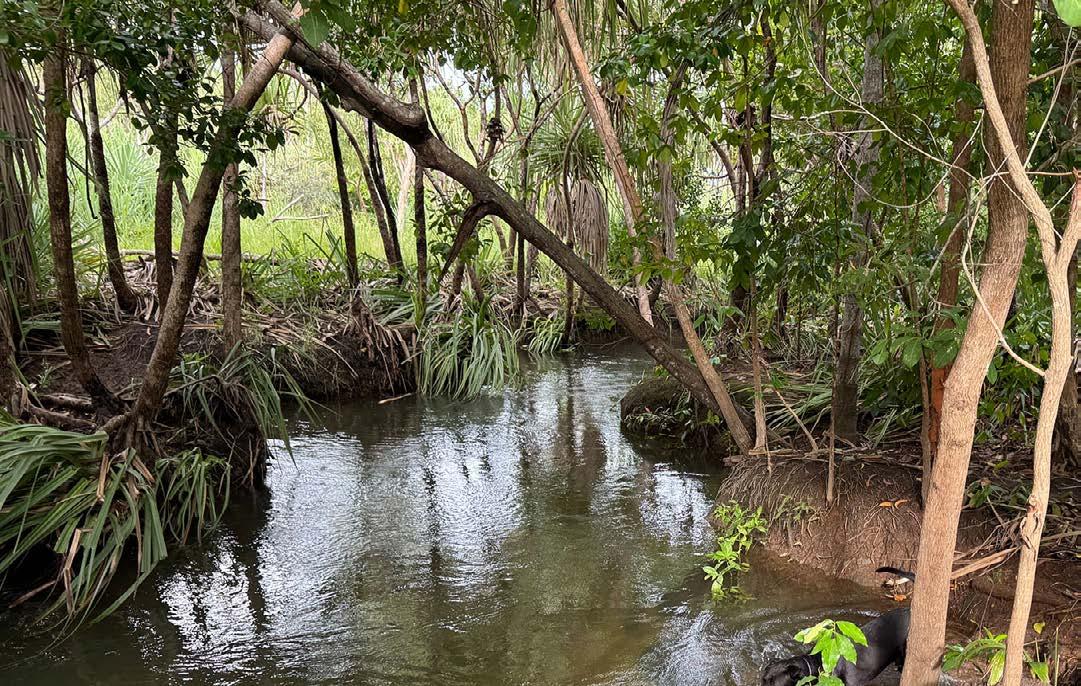
During Mayilema, the dragonflies (Birrdibirripba) arrive, signalling the shift into the cooler months. As Damibilia unfolds, Flatback turtles (Betbiyanba) come ashore to lay their eggs, returning to the beaches throughout the cool season. Eucalyptus trees –Woollybutt (Maminyjuma) and Bloodwood (Galanggwa) –begin to flower, their leaves falling. When Dinidjanggama season settles across Country, waterlilies (Dambilinggwa) rise into full bloom, where Birrdibirripba are seen buzzing around.
Image and text by Mikaela Lee.
A Larrakia, Karrajarri and Wadaman multidisciplinary artist based on Larrakia Country in Darwin.
WELCOME
This publication is an invitation – to walk slowly, to listen deeply, and to connect with the creeks that flow through our communities. These waterways hold stories far older than any of us, and their health is tied to the wellbeing of everything around them: people, plants, animals, and place.
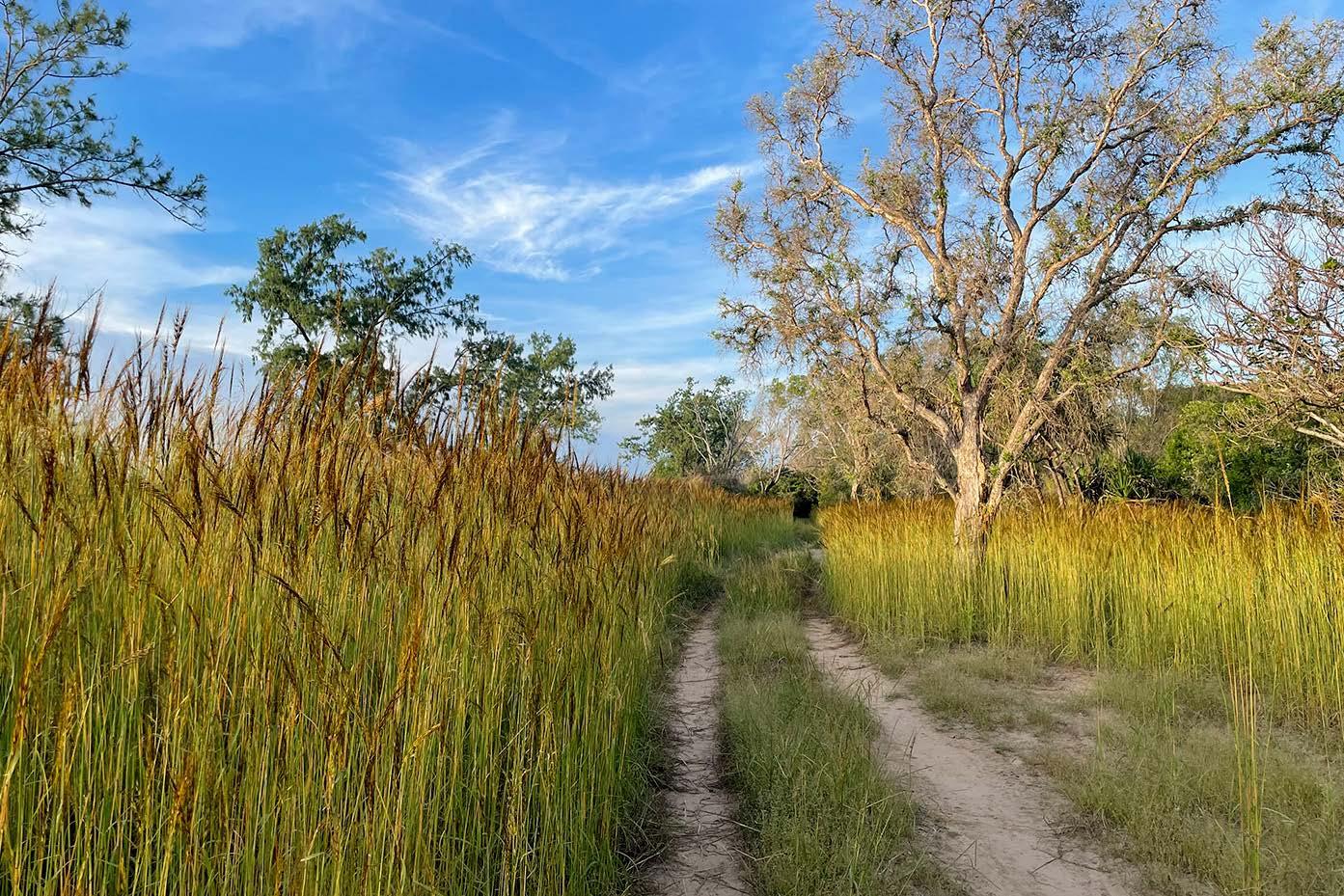
As the Wet season begins to ease, speargrass rises across the landscape – a sign of transition. This year’s big rains have brought life and movement to the creeks, but also an influx of weeds, carried and spread by floodwaters. It’s a time of both abundance and pressure, where care becomes even more important.
In the months ahead, our focus shifts with the season. As Country dries, we move into a time of maintenance, fire management, and hands-on activities. Together, we’ll be walking, weeding, learning, and preparing – supporting the creeks as they move into the Dry.
Creek Connections is part of the Darwin Harbour Catchment Waterways Project, an initiative supported by the Australian Government and led by Landcare NT in collaboration with Larrakia people, Landcare
groups, educators, scientists, artists, and community members. Together, we’re working to care for Rapid Creek, Ludmilla Creek, Sandy Creek, and Mitchell Creek – each with its own rhythm, history, and community.
This work takes place on Larrakia Country, and we acknowledge the ongoing custodianship and deep knowledge of Larrakia people, whose connection to these lands and waters continues to guide us. We are grateful for the relationships that ground this project and the conversations, care, and commitments shared along the way.
Inside these pages you’ll find upcoming events, reflections from contributors, and ways to get involved. Whether you’ve lived near these creeks your whole life or are just getting to know them, we hope this publication offers moments of recognition, curiosity, and care.
EVENTS & ACTIVITIES
OUR CREEKS, OUR STORIES
Our Creeks, Our Stories is a growing community archive capturing memories, photos, drawings and stories connected to our local waterways. Together we are creating a shared record of how people experience, care for and connect with the creeks that shape our place.
Look out for the Creek Connections team at community events and gatherings where you can share your creek memories and contribute to the archive. In time, these stories will help shape a future exhibition celebrating the many ways people connect with our creeks.
You can also add your story anytime through our online Media Hub:
www.creekconnections.org/media-hub
Or you can share your memories through our online portal here
Creek Connections
April School Holiday Program
This Easter school holidays, Landcare NT invites young people to join a series of creative workshops celebrating our urban creeks. Participants can try printing, drawing, sculpture, and clay, making artworks inspired by the local landscape and wildlife. Each creation can be entered into our June Creek Connections Youth Art Exhibition. Workshops are led by local artists Tisha Tejaya, Jasmin Jan, and Janie Andrews, offering hands-on, fun ways to explore, create, and connect with our creeks.
Tues 7 – Sat 11 April 2026
Various times and workshops across Ludmilla, Sandy, and Rapid Creek
Discover what lives along Ludmilla Creek at this Citizen Science BioBlitz, where community and scientists come together to explore and record the plants and animals of this much-loved waterway.
Fri 11 and Sat 12 April 2026
Various times and survey sessions
Ludmilla Creek
creekconnections.org/events
A guided walk designed for all ages – families encouraged to come.
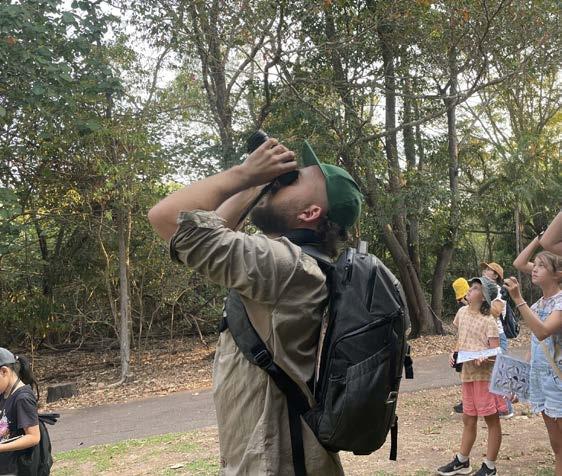
Introduction to Bird Watching is a relaxed walk along some of our special urban creeks. It’s a chance to explore the biodiversity of our creeks while learning how to spot birds and take part in simple survey work.
Each walk is guided by Mitch Rose, a local youth worker, birdwatcher and advocate for our natural spaces. These walks are about noticing local birdlife, learning practical skills and connecting with nature through quiet observation.
Sat, 18th April 2026
8.30–10.30am | Mitchell Creek
Sat, 20th June 2026
8.30–10.30am | Rapid Creek
Creek Knowledge Walks invite the community to slow down and learn more about the places, stories and ecosystems that shape our local waterways. Guided by local knowledge holders, scientists and community members, these relaxed walks explore different aspects of creek life – from plants and wildlife to water, culture and care.
Weeds & Creek Care – 3.00pm
Learn to identify invasive species and understand their impact on local ecosystems, while exploring practical ways the community can help care for and restore our waterways.
Plants of the Creek – 5.00pm
Discover the plants that grow along our creeks, exploring native species, seasonal changes and the important role plants play in healthy waterways.
Walk Dates
Sat 2 May 2026 | Ludmilla Creek Sat 13 June 2026 | Rapid Creek Sat 25 July 2026 | Mitchell Creek
creekconnections.org/events
You’re invited to slow down and listen differently.
These gatherings weave together sound, field recordings and story to explore the rhythms and atmospheres of our waterways.
Sun, 17th May 2026 | 5.30–7.30pm | Rapid Creek
Sun 14th June 2026 | 5.30–7.30pm | Mitchell Creek
A guided walk designed for young people.
Introduction to Butterfly & Insect Watching is a relaxed walk along Ludmilla Creek. It’s a chance to explore monsoon forest and woodland habitats while learning how to spot, photograph, and record butterflies and other insects using the iNaturalist app.
Each walk is guided by Mitch Rose, a local youth worker, naturalist, and conservation advocate.
These walks are about discovering local insects, learning practical citizen-science skills, and contributing to conservation while connecting with nature.
Sat, 9th May 2026
8.30–10.30am | Sandy Creek
creekconnections.org/events
Creations of the Creek: Youth Exhibition
This exhibition celebrates our urban creeks through the eyes of young people. Featuring gel prints, natural sculptures and mixed-media works, the artworks explore the patterns, textures, wildlife and stories of the waterways that weave through our city.
Created through the Creek Connections public art program with local artists, schools and community organisations, the exhibition invites the community to celebrate youth creativity and reconnect with our creeks.
Fri 12 – Sat 27 June 2026
Opening Fri 12 June 5.30pm Gallery opening hours
Wed to Fri 10am–4pm | Sat 10am–2pm UNTiTLED Gallery | Coconut Grove
Drawn
to
the Creek for families
Young people and family members of all ages are invited to join local artist Tisha Tejaya for a short guided walk along Ludmilla Creek, exploring the beauty of the creek and its mangroves. The walk will finish at UNTiTLED Gallery (Darwin Community Arts), where participants will take part in a session focused on deep observation and drawing.
Sat 13 June 2026
9am–12pm | Ludmilla Creek
Spotlighting for families
Get to explore our beautiful creeks with a fun spotlight adventure guided by Landcare educators. Take a sneak peek into what happens after dark and learn about the animals that emerge as the light fades.
Fri 19 June 2026
7–9pm | Rapid Creek
The Magic of Molluscs
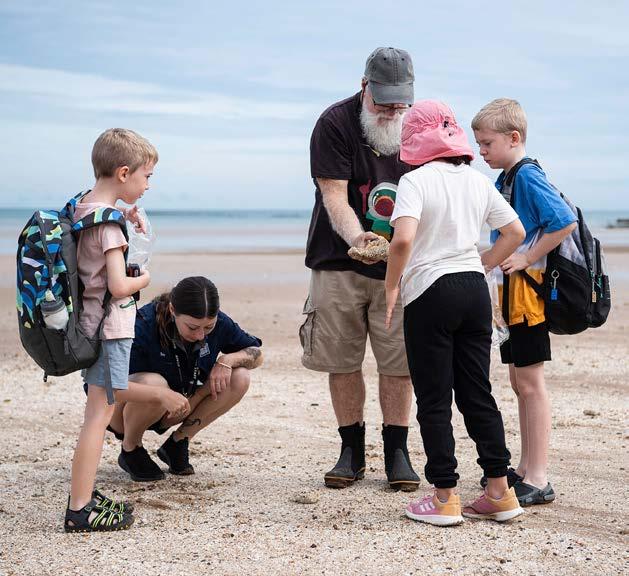
Young people aged 10 and over can join a special field walk at Sandy Creek, presented in collaboration with the Museum and Art Gallery of the Northern Territory (MAGNT).
Led by scientist Richard Willan, Emeritus Curator of Molluscs, this guided walk will explore the fascinating plants and animals that dwell in our tropical creeks. Participants will learn how to spot and identify these remarkable animals while discovering more about the ecosystems of the mangroves and tidal creeks. Return to MAGNT and visit the Transformations Gallery before completing activities in the Discovery Centre.
Thurs 28 June 2026
8am–12pm | Sandy Creek
creekconnections.org/events
Vines and Vinyl
Learn about the invasive weed Ivy Gourd and help remove it while enjoying music at our urban national park the Casuarina Coastal Reserve which is home to Sandy creek. Get your hands dirty, care for the waterways, and stay for a laid back picnic with the community.
Sat 18 July 2026
2–6pm | Sandy Creek
Introduction to observing butterflies
A guided walk designed for all ages - families encouraged to come.
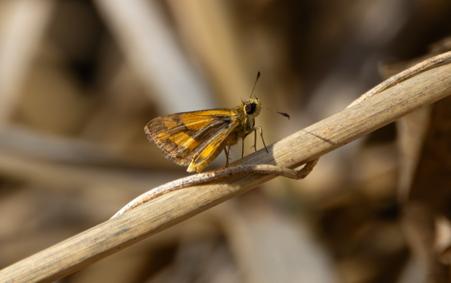
Introduction to Butterfly Watching is a relaxed walk along Ludmilla Creek. It’s a chance to explore monsoon forest and woodland habitats while learning how to spot, identify, photograph, and record butterflies using the iNaturalist app.
Each walk is guided by Mitch Rose, a local youth worker, naturalist, and conservation advocate.
These walks are about discovering local butterfly species, learning practical citizen-science skills, and contributing to conservation while connecting with nature.
Sat 4 July 2026
8.30–10.30am | Ludmilla Creek
creekconnections.org/events
SHORT-FORM WRITING & REFLECTIONS
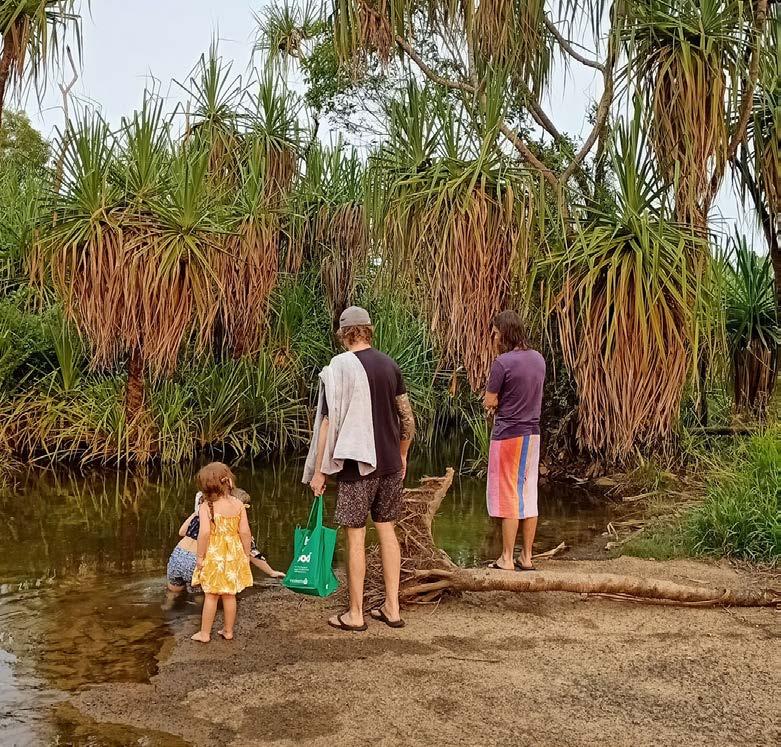
Over the last few school holidays, we’ve been running a series of youth activities along Darwin’s urban creeks including birdwatching, art and nature walks. These activities are designed to help young people and families connect with these places, sometimes for the first time, or to see them through a different lens.
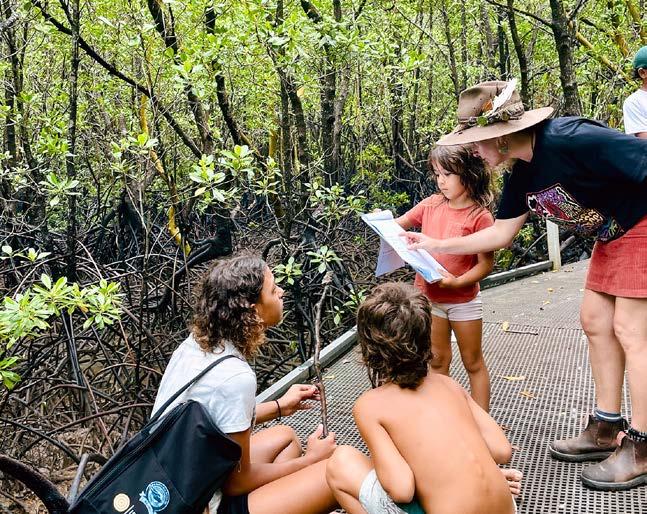
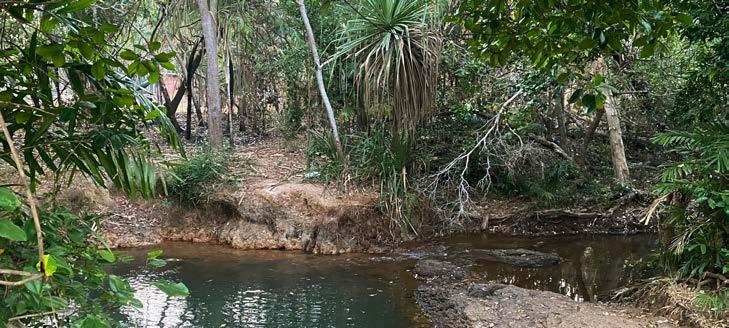
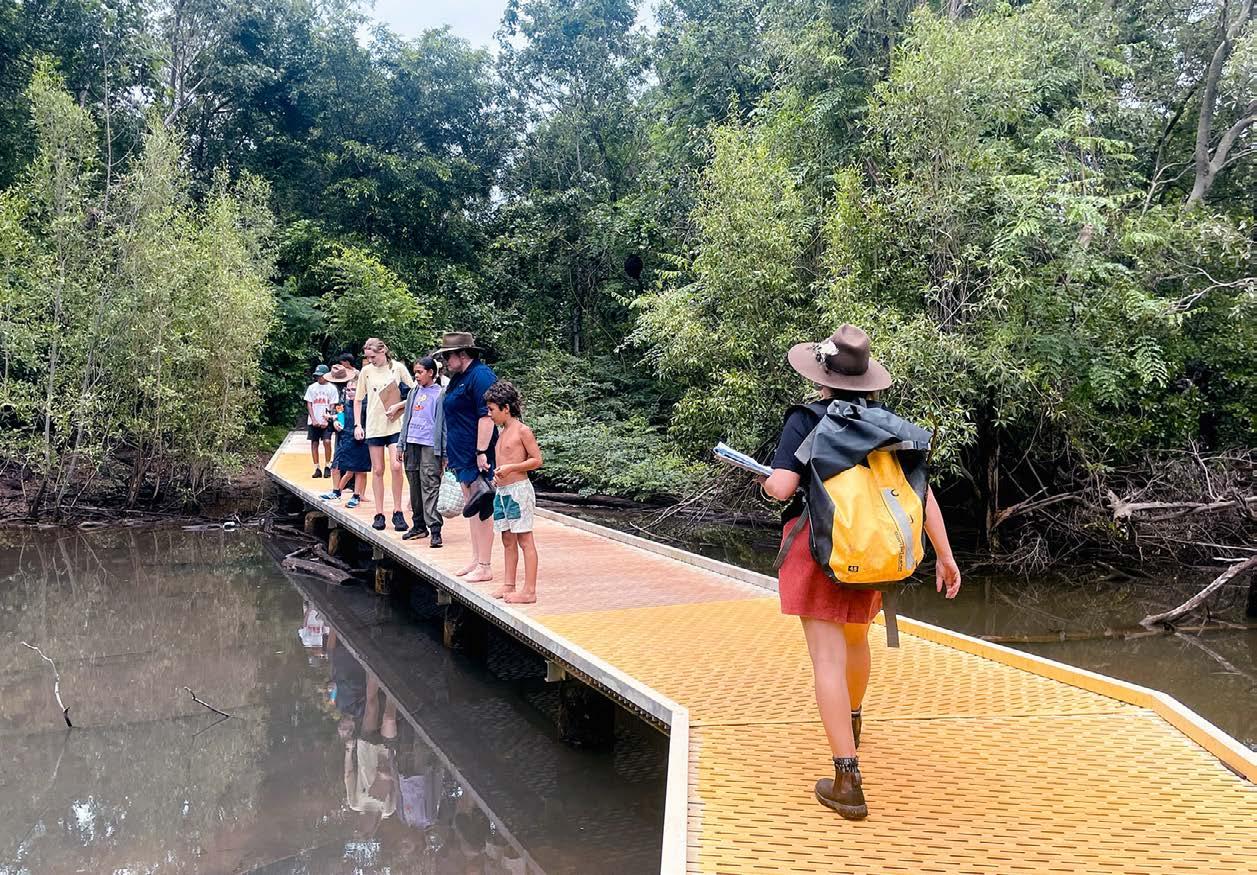
In January, we trialled our first Creek Connections Camp (without the actual camping) across Darwin and Palmerston. It felt like a bit of a risk, with constantly changing wet weather and creeks running full after the rains. But across two weeks and seven program days at Ludmilla, Rapid, Sandy and Mitchell Creeks, more than 30 young people and family members joined us.
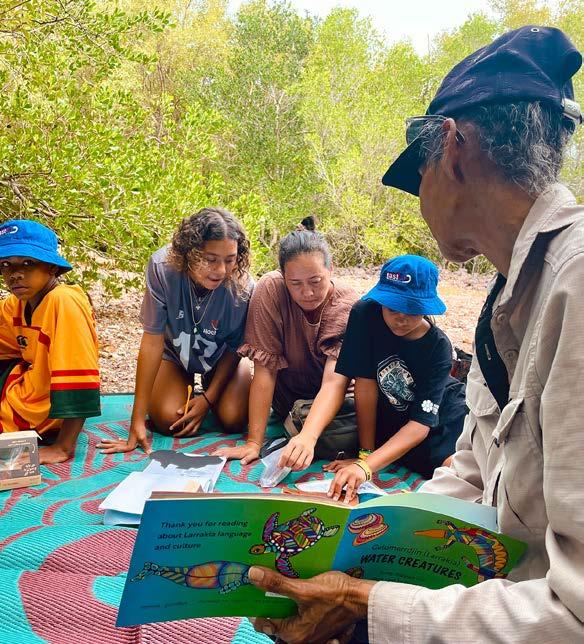
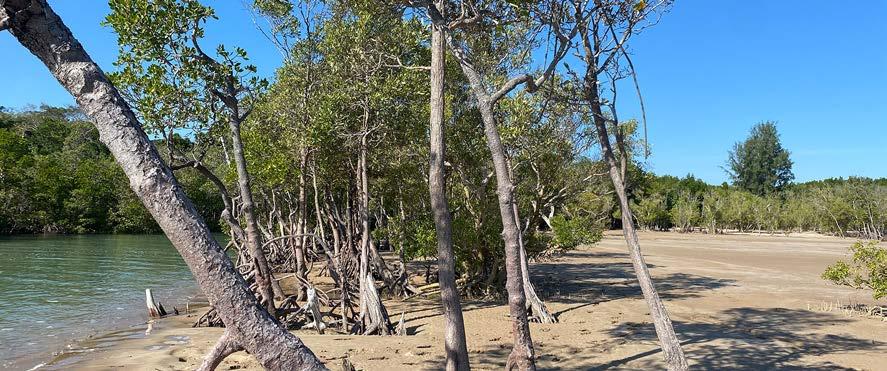
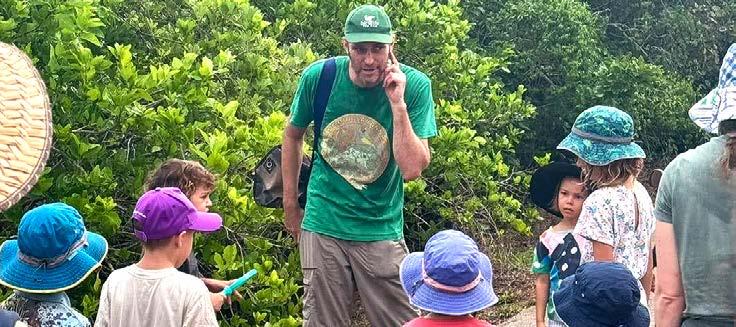
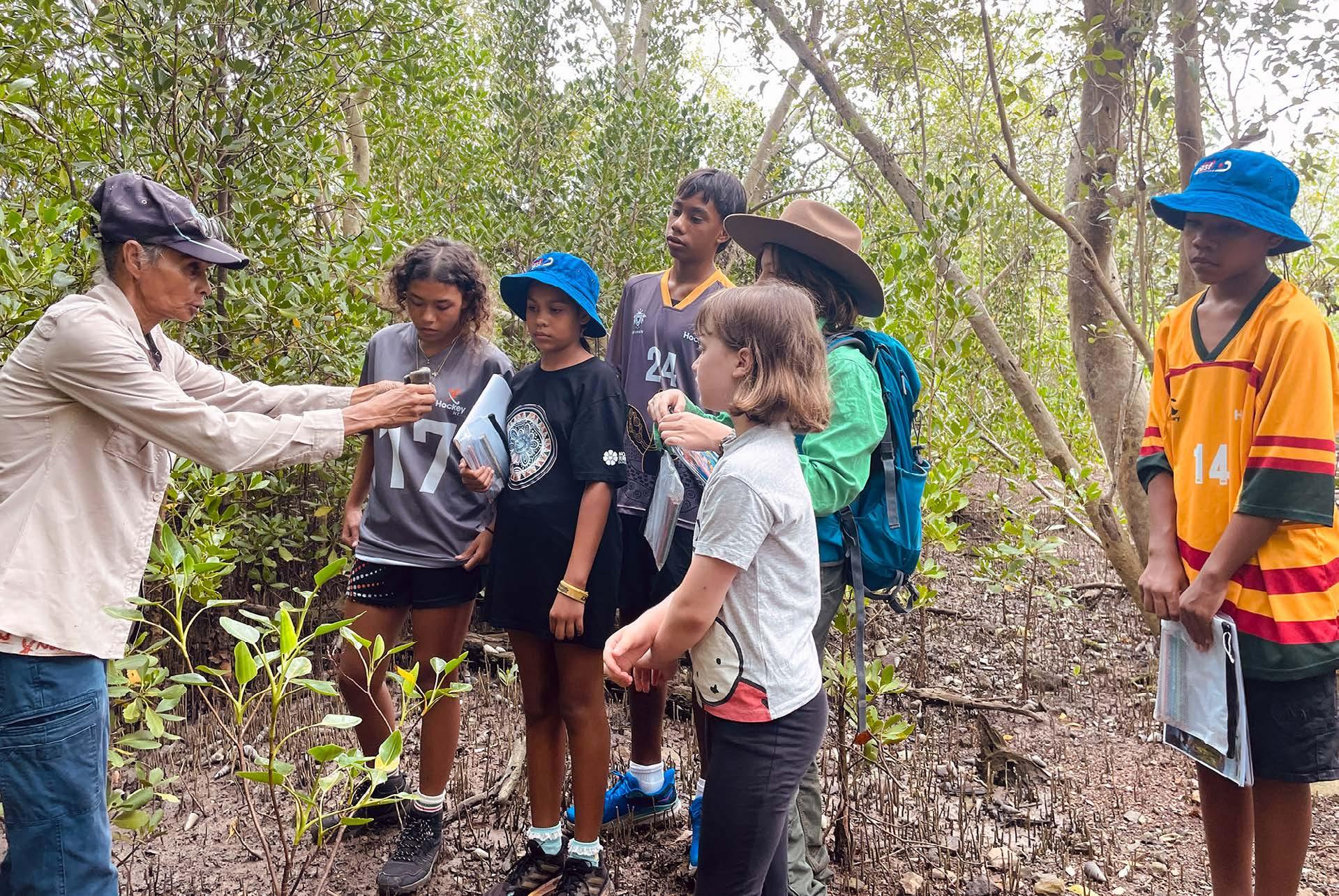
We began in the mangroves, guided by Larrakia perspectives that grounded the program in Country and story before moving into observation, noticing birds, insects and reptiles, and learning to slow down and pay attention to what is already here.
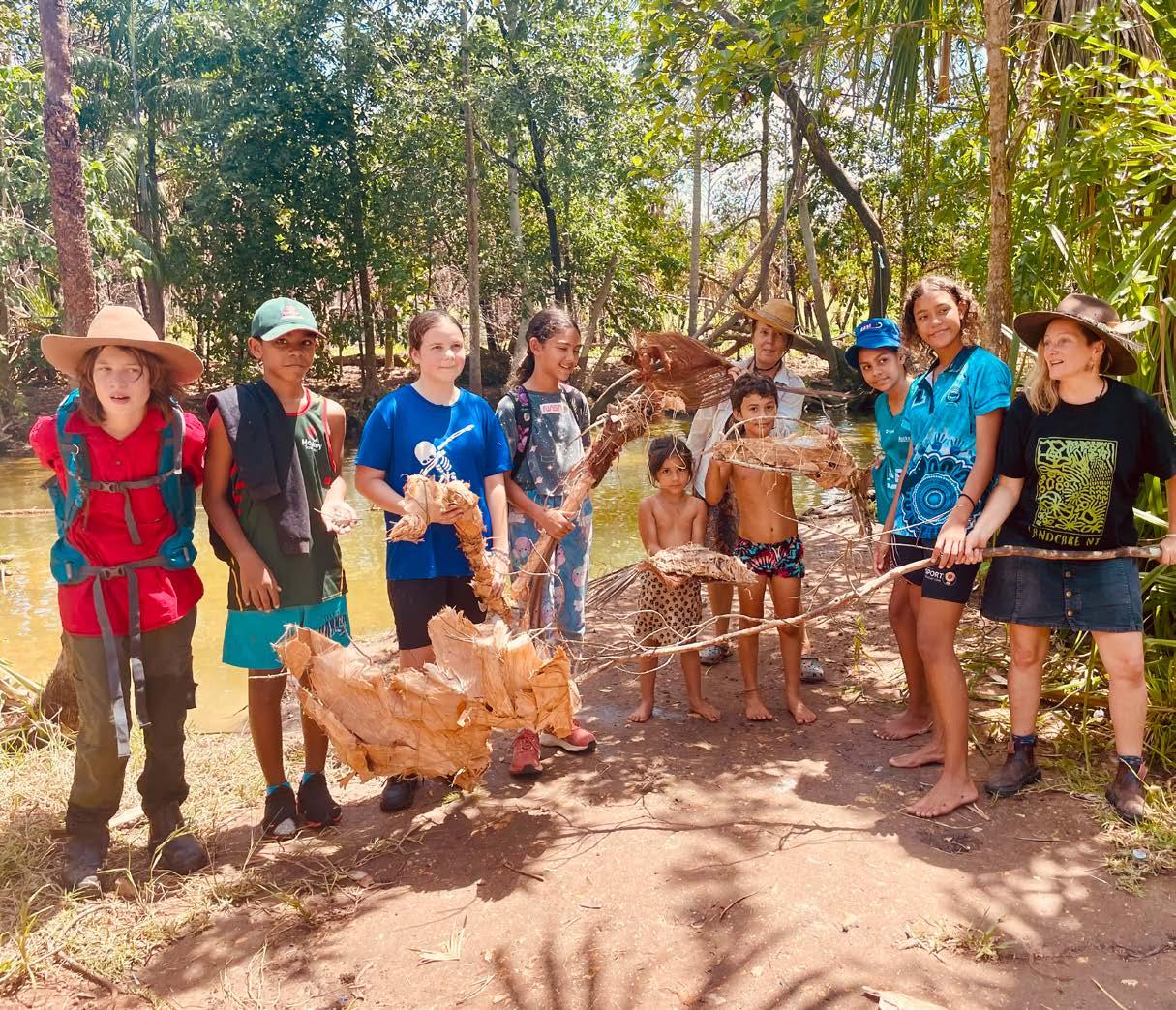
Some days were spent beside a full and flowing Rapid Creek, sculpting with found materials and printing patterns gathered from bark and leaves. There were long walks towards the
mangroves, treasure hunts along the way, and close encounters with wildlife, including a Northern blue-tongued skink and sugar gliders.
The night walks quickly became a highlight. Families joined us for evening spotlighting sessions, gathering at dusk with torches ready, voices quieter, everyone curious about what the
creek might reveal. Moving slowly along Rapid and Mitchell Creeks after dark, we stepped into a different world. In the stillness, eyes adjusted and sounds sharpened.
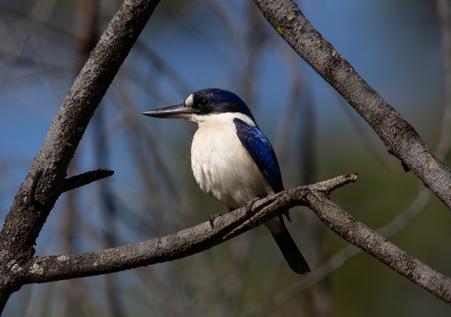
We encountered common Brushtail Possums, sleeping Forest Kingfishers and Friarbirds tucked into branches, Tawny Frogmouths
blending perfectly into bark, and Microbats flying out from drains overhead. Black FlyingFoxes crossed the night sky, and one evening we spotted a small Saltwater Crocodile resting at the water’s edge. On our final walk, an Olive Python moved quietly through the undergrowth beside the path, a moment that left the whole group in awe.
There were insects, spiders and lizards, and, of course, countless cane toads, all part of the layered life found along the creek edges.
By the end of the Creek Connections Camps, it felt like people had connected not only with the creeks, but with each other through shared experience. These places, even where they are fragmented through the city, remain complex living ecosystems that we are part of. There are still many hidden treasures along our creeks, and always more to notice, learn and care for together.
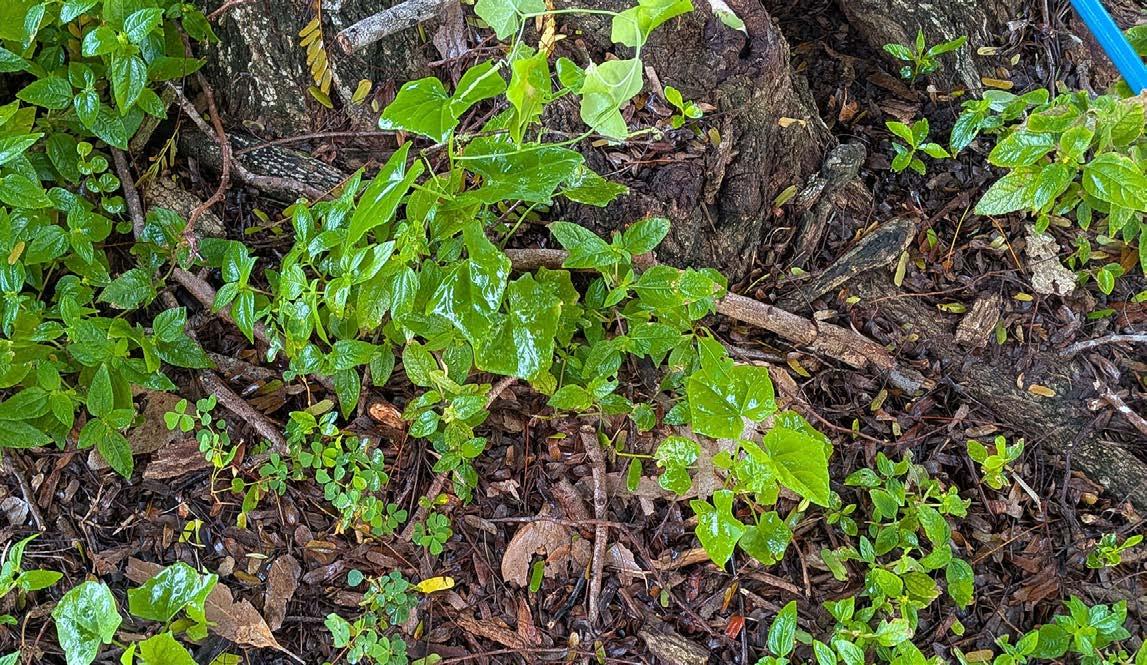
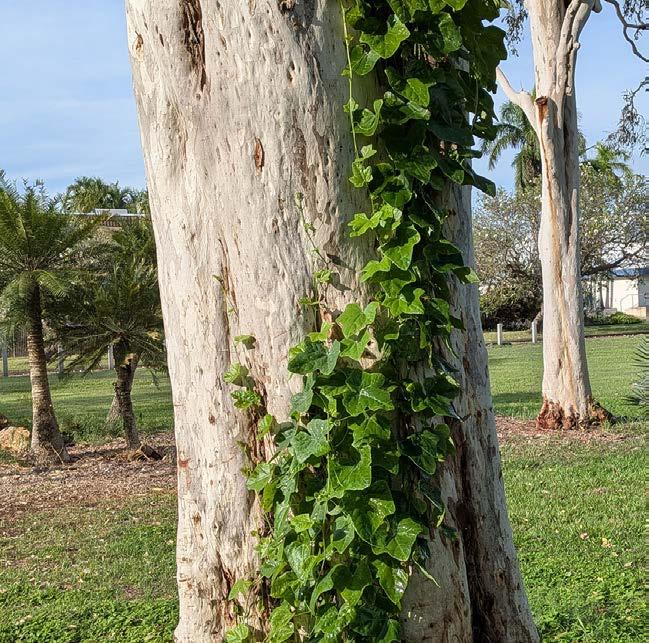
Ivy Gourd (Coccinia grandis)
What is it?
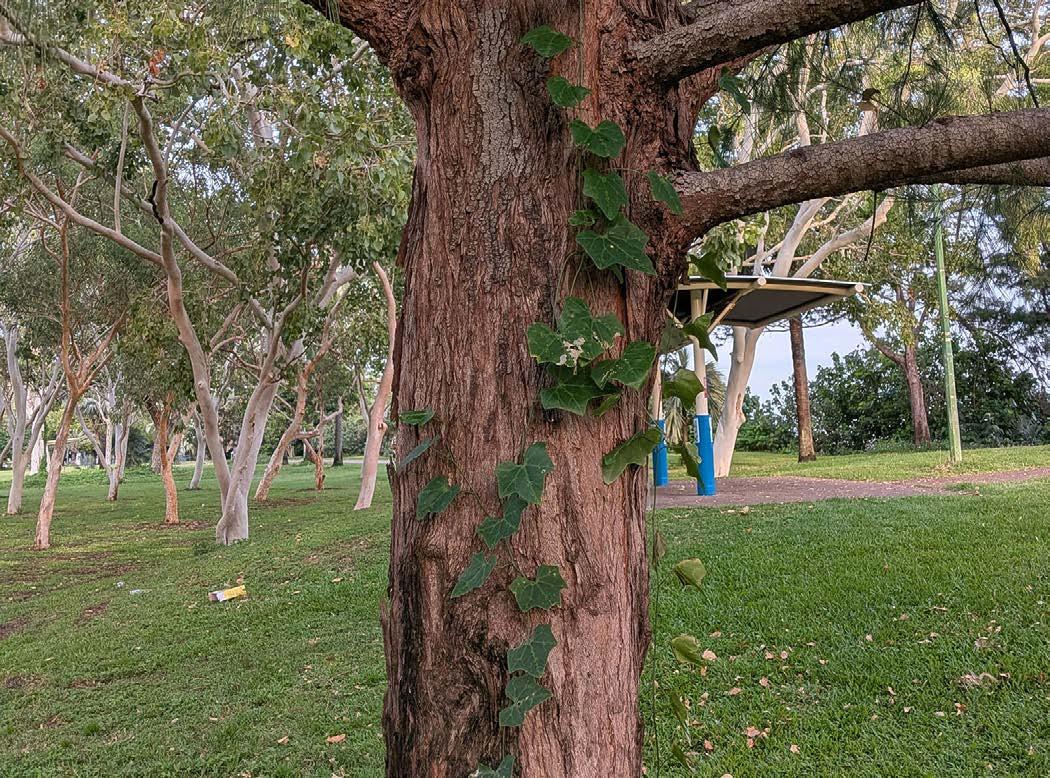
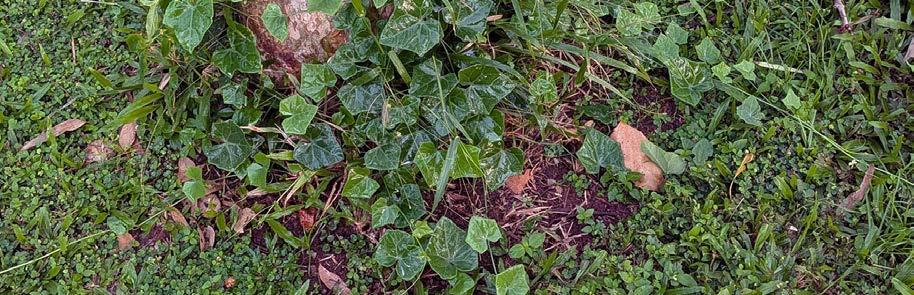
Ivy Gourd is a fast-growing climbing vine that is becoming an increasing concern in Darwin’s bushland and monsoon forest areas. Once established, it can quickly spread across shrubs and trees, forming dense layers of grow at blocks sunlight and crowd out native plants.
The vine climbs using curling tendrils along smooth stems. Its leaves are hairy and deeply lobed, with a hand-like shape, and it produces small white five-petalled flowers where the leaves meet the stem. These develop into fleshy green fruits at contain seeds which germinate easily.
Originally native to parts of Africa, India and Asia, Ivy Gourd has spread across tropical and sub-tropical regions of northern Australia, including e Northern Territory, Queensland and Western Australia. While distinctive in appearance, it can grow quickly through bushland if left unmanaged.
Why is it a concern?
In the right conditions, Ivy Gourd can rapidly take over patches of vegetation. The vine grows over shrubs and trees, forming thick mats that prevent light from reaching plants underneath.
This can:
• smother native vegetation
• slow or prevent new plant growth
• change the structure of monsoon forests
• reduce habitat for local wildlife
Because it spreads both through seeds and fragments of the plant itself, infestations can expand quickly without ongoing management.
Managing Ivy Gourd
Managing Ivy Gourd takes persistence and careful follow-up.
Non-chemical control
Simply cutting the vine is usually not effective, as plants readily resprout. Hand-pulling or grubbing can work in smaller areas, but care is needed as broken fragments may regrow. The good news is that seeds do not remain dormant for long, meaning consistent follow-up can successfully remove plants from defined areas over time.
Chemical control
In larger infestations, herbicide treatment may be required. Multiple applications are often needed, and care must be taken to avoid damage to surrounding native vegetation.
A combination of foliar spraying and cutstump treatment has proven most effective in many situations.
Early detection and responding quickly makes management far easier.
Local work underway
Although Ivy Gourd is not currently listed as a declared weed in the Northern Territory, it poses a growing environmental risk in sensitive habitats.
At Landcare sites in the Darwin region, volunteers and partners have been working to monitor and remove infestations through hand-pulling and ongoing site care. This kind of steady, long-term effort plays an important role in protecting Darwin’s monsoon forests and the creek systems connected to them.
Fire Management in Darwin’s Urban Bushland
by Anthony Kerr
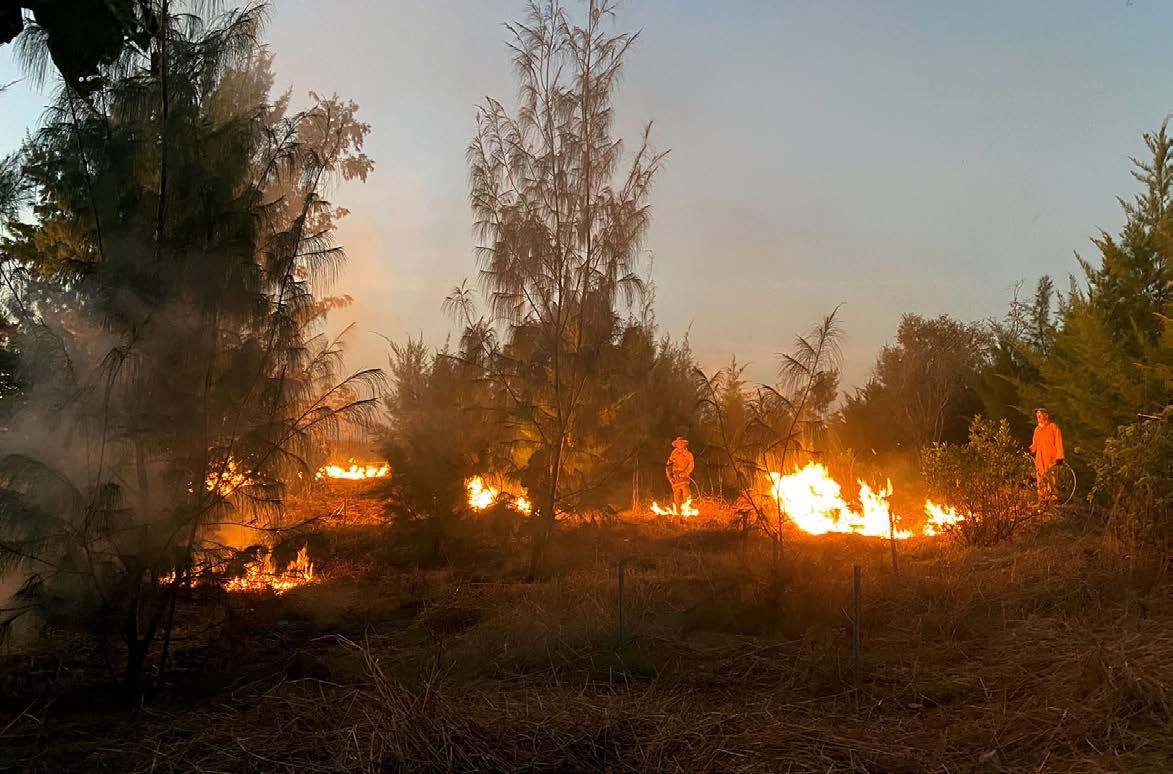
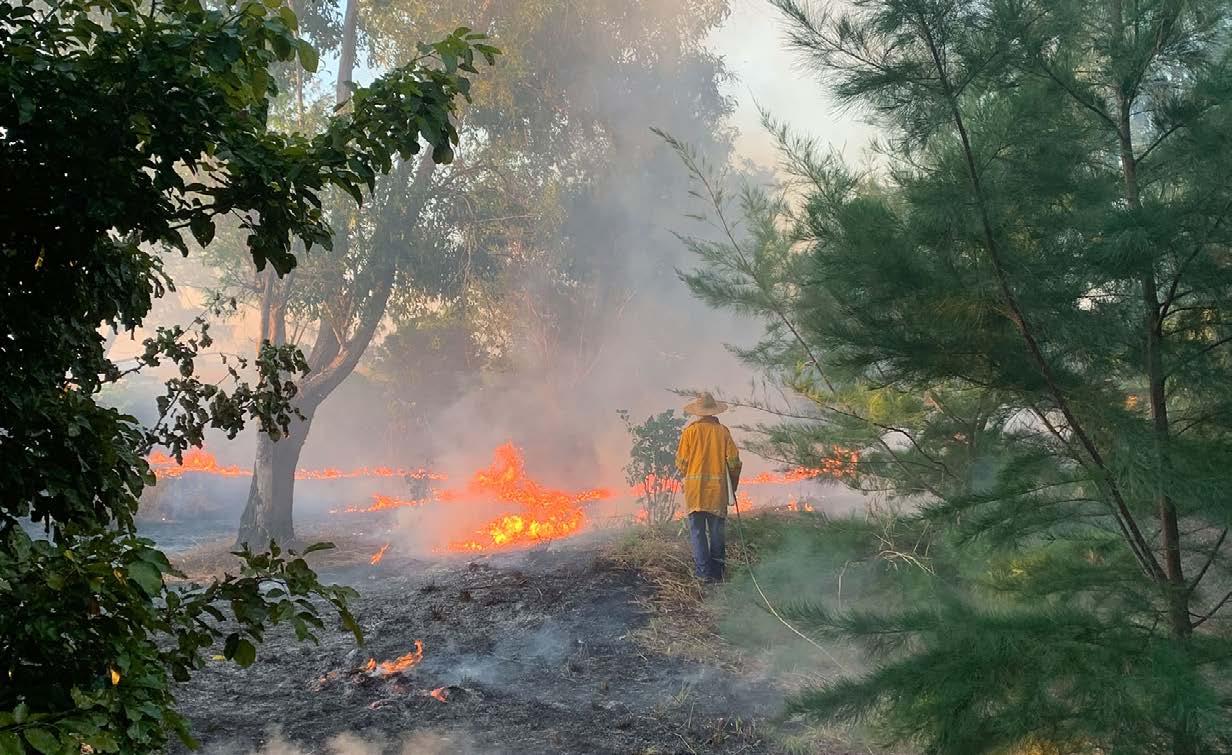
Across Darwin, our suburbs sit closely alongside tropical savanna landscapes shaped by fire for thousands of years. Around creeks and bushland areas in places like Tiwi, Brinkin, Nakara and Rapid Creek, Landcare volunteers spend time caring for these shared spaces, places where fire is part of the natural rhythm, but where managing it has become increasingly complex.
Many of the sites cared for by local groups sit right alongside homes, schools and walking tracks, often following the same creek lines that connect neighbourhoods across the city. Fire management in these areas requires careful balance: supporting healthy ecosystems while keeping nearby communities safe. Late dry season fires can become intense and fastmoving, placing pressure on both biodiversity and infrastructure. While agencies such as Parks and Wildlife Commission of the Northern Territory and Bushfires NT (who generally operate outside of the Darwin urban area) lead large-scale fire management across the region, community groups often contribute through partnerships, local knowledge and ongoing care for place at a finer scale.
Across Darwin’s urban reserves, fire is closely connected to the health of creeks and surrounding habitats. Weeds and feral animals, alongside changing fire patterns, continue to affect biodiversity across the Territory. In places such as Casuarina Coastal Reserve, repeated hot fires can reduce habitat for small mammals and birds and make it harder for
native vegetation to recover along drainage lines and seasonal waterways. Invasive grasses like Gamba grass and Mission grass add further pressure by increasing fuel loads and contributing to hotter fires. For volunteers working along creek corridors and bushland edges, restoring native plants, managing weeds and reducing fire risk are all part of the same conversation.
Caring for these landscapes also means working across many different land managers. Creek systems move through council reserves, NT Government land, Aboriginal land and leasehold areas, each with their own responsibilities and planning processes. Fire management requires coordination, permits and good timing within seasonal burn programs. Engagement with Traditional Owners is an important
part of this work, particularly where cultural burning knowledge can inform early dry season approaches that support healthier, more diverse Country. These practices can help protect sensitive creek environments while reducing the risk of hotter fires later in the dry season. Building these relationships takes time and trust, often supported through long-term collaboration.
Seasonal conditions are also becoming less predictable. Shorter transitions between the wet and dry seasons, along with more variable rainfall, and management of agencies' recources stretched, can narrow safe burning windows and increase late-season fire risk. These shifts are often felt first in the landscapes surrounding creeks, where changes in vegetation, water flow and ground cover influence how fire moves through Country. Volunteers and partner organisations are often adapting in real time, drawing on experience, observation and shared knowledge to respond to changing conditions.
Much of this work happens quietly, through working bees, shared planning, and people returning week after week to care for the places they value. Across Darwin, urban Landcare groups play an important role in supporting the health of bushland and the creeks that connect our communities. Strengthening partnerships, sharing knowledge and supporting communityled stewardship will help ensure these living systems continue to thrive into the future.
The first time I visited Mitchell Creek is a moment that has stayed with me. I’d been asked to run a workshop there and remember thinking, “Mitchell Creek? My name’s Mitchell, but I’ve never even heard of it.” I drove out a couple of days early to have a look before meeting a friend for brunch. From the car park, it didn’t seem like much. But within ten metres, before I’d even opened my eBird checklist, I was stunned.
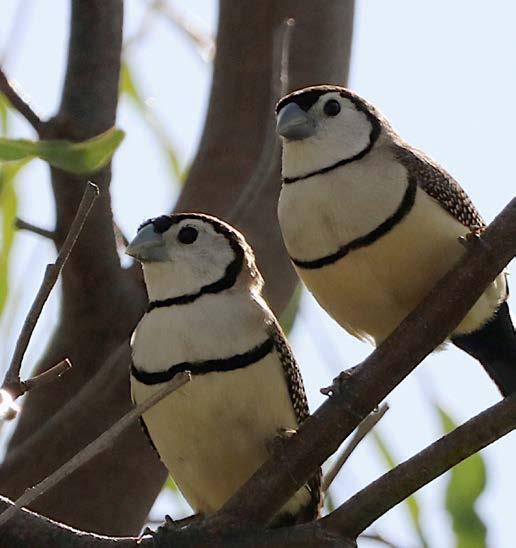
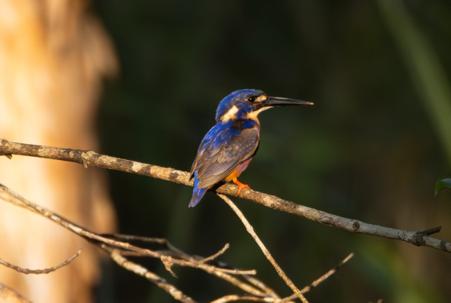
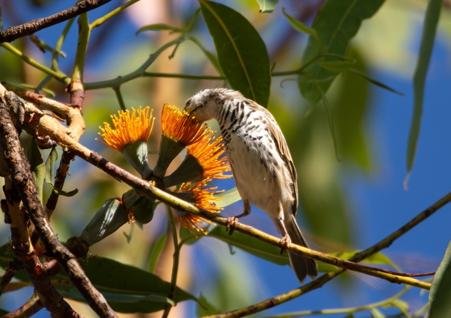
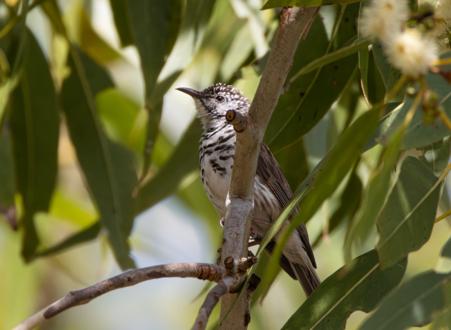
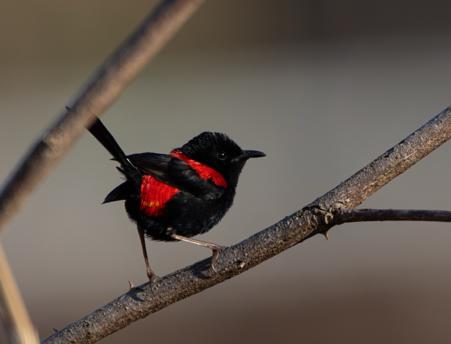
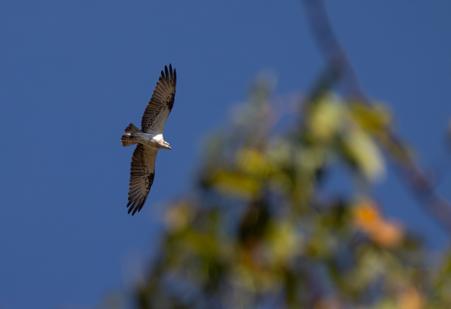
There were 40 or 50 chestnut-breasted mannikins lifting from the grass, goldenheaded cisticolas calling, fairy-wrens fluttering about, a pheasant coucal leaping from the undergrowth, kingfishers flashing past and redtailed black cockatoos flying overhead. On the edge of suburbia in Palmerston, this pocket of life felt extraordinary. I rang my friend and said, “Forget brunch, come birding.” We spent hours wandering the creek, surrounded by birds and butterflies. It was magic.
Since then, these creeks have become really important to both my work and community life. Through the Creek Connections program, I’ve led bird walks for young people and their families, combining my background in youth
work with what began as a personal hobby. Birdwatching is often stereotyped as something for older people, but it’s increasingly a powerful way for folks to connect with nature and with each other. Seeing families build shared rituals around birds has been deeply rewarding.
Living near Rapid Creek has also shaped my connection to these places. From mangroves and migratory shorebirds at the estuary to the community gardens further upstream, it’s a well-loved and protected space. Mitchell Creek, by contrast, feels full of untapped potential – a place still waiting for many locals to truly discover it.
Like most birdwatchers I know, my love of birds grew gradually. I was fairly indifferent growing up, but my six years living in TimorLeste sparked a growing interest. Then, during COVID lockdowns, I visited the same lakes near Dili every day, learning to identify migratory shorebirds. That daily practice turned into an obsession. Moving to the Top End felt like entering another world – not just because of the birds, but because of the passionate, generous birding community here.
Time in the creeks has also deepened my sense of responsibility. These waterways sit on stolen Aboriginal land, cared for by Larrakia people for countless generations. They connect tidal mangroves to suburban headwaters, and local decisions to global systems. What happens in Darwin Harbour affects Mitchell Creek. What we protect, or fail to protect, reflects who we are.
Sometimes all it takes is one bird, one butterfly, one walk to change how someone sees a place. From there, connections grow – between species, between communities, and between us and the future we’re shaping together.
SPOTLIGHTS
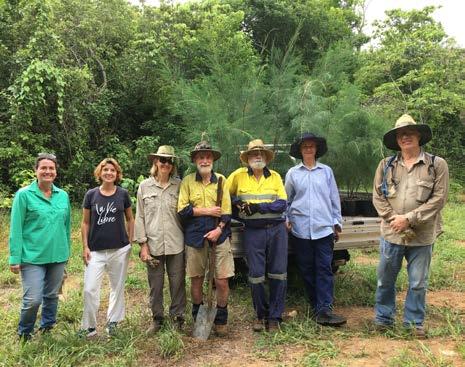
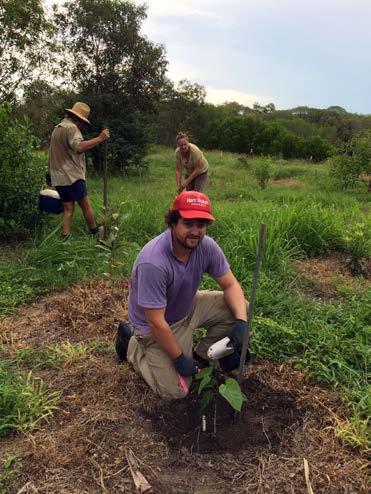
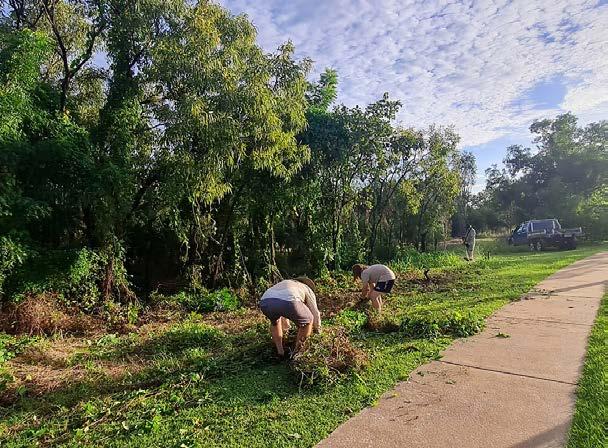
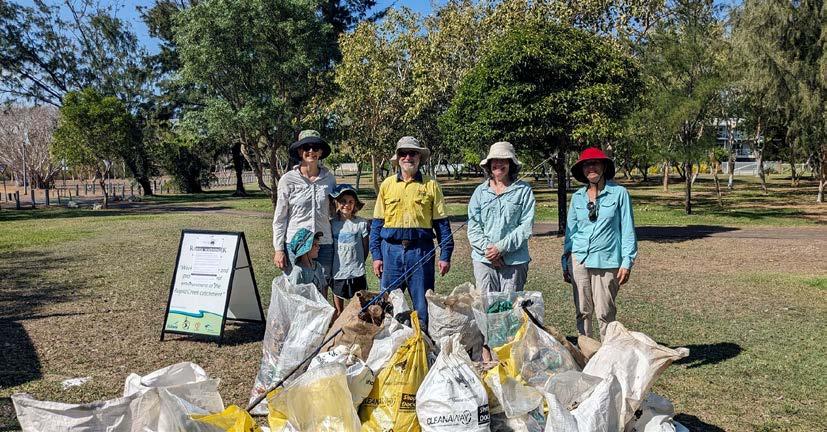
Landcare groups across Darwin and Palmerston are getting their hands dirty to care for local creeks, bushland, and wildlife. Most hold regular working bees and welcome new faces – no experience needed. If you’re keen to connect with nature, meet great people, and help our natural environment thrive, reach out and join in.
Casuarina
Coastal Reserve Landcare Group
Love long beach walks and shady trails? So do they – and they’re working hard to protect them. This group restores coastal forest and dunes, battling weeds and bringing back native plants. Join them for a working bee, spot a tree-rat, and help keep this wild coastline thriving.
Email | Website | Facebook
Ludmilla Creek Landcare group
Right in the heart of the suburbs, Ludmilla Creek is alive with birds, mangroves, and stories. This group has helped care for the creek through planting, weeding, and community events – but it’s currently in a pause phase. Through this project, we hope to revitalise the group. If you’re interested in getting involved, we’d love to hear from you.
We will be delivering a BioBlitz in April – watch this space!
Email | Website | Facebook
Palmerston Conservation Group
Wild bushland in the middle of a growing city? Yes, and this group is keeping it that way. They protect native plants and creeks across Palmerston, run fun events, and welcome anyone who wants to make a difference –no experience needed.
Email | Website | Facebook
Rapid Creek Landcare Group
Rapid Creek – known as Gurambai in Larrakia – is Darwin’s most significant freshwater system. This long-standing group has spent decades restoring its banks, planting native species, and protecting this vital part of our community. Their hands-on care helps the creek stay healthy for all who rely on it – human and more-than-human.
Email | Website | Facebook
HOW TO GET INVOLVED
There are lots of ways to connect with your local creeks and the communities who care for them.
Attend an event
Walk, learn, plant, listen – our seasonal events are open to all and a great way to experience your local catchment.
Follow our socials
Stay updated on citizen science projects, creek stories, and volunteer opportunities.
Become a Landcare member
Click here
Explore the Media Hub
Dive into stories, soundscapes, and videos that will grow over time as the project unfolds.
Join a Landcare group
Get your hands dirty and meet like-minded people helping to restore native ecosystems.
ACKNOWLEDGEMENTS / CONTACT US
With thanks to our community contributors, Landcare groups, and project partners.
This project received funding from the Australian Government’s Urban Rivers and Catchments Program. This project is supported by the NT Government and Larrakia Nation, facilitated by Landcare NT.