WHEELS UP
BY KIM PALMER
Starting May 19, 2023, and initially for less than $500, travelers will be able to y direct to Dublin, Ireland, out of Cleveland Hopkins International Airport four days a week — Monday, Wednesday, Friday and Sunday.

e impact, though, is bigger than that.
Dublin’s airport, an Aer Lingus hub with direct ights to 183 destinations in 20 other countries, “is a gateway to Europe, the Middle East and North Africa,” said Baiju Shah, president and CEO of the Greater Cleveland Partnership. “From a business

community perspective, having the opportunity for a two- ight journey to many of the Dublin airport locations is a big deal.”
JobsOhio, the state’s nonpro t economic development organization, estimates the expanded access to global markets will create $85 million in economic impact to the re-


Helmet maker gets creative
Riddell working to solve pandemic-related riddles
 BY JOE SCALZO
Earlier this summer, Ashtabula Edgewood athletic director Steve Kray discovered what it felt like to go without football helmets.
It made his head hurt.
Kray had ordered helmets for his middle school football program in February, but due to COVID-19-related supply chain problems, he found himself short 15 helmets at the start of training camp.
“ e kids were sharing helmets,” Kray said. “I’d go to Dick’s (Sporting Goods) once a week to see if anything was in stock. Even if it was a green helmet, I’d grab it. I was doing everything I could to nd helmets.”
So was his Riddell representative, Brad Keck. While Keck didn’t have any extra stock — Riddell spends the football o season operating like a pizza place on Friday night — he knew a team that did: Walsh University. So, on a Tuesday morning in August, Keck and Kray drove down to North Canton to purchase 15 small and medium helmets from the Division II program.
gion in the next three years. Getting the Cleveland-to-Dublin ight required lots of work and the promise of a nancial “back-stop” that includes providing revenue guarantees of $600,000 from the city of Cleveland and $825,000 from Cuyahoga County. e Greater Cleveland Partnership, Team NEO and Destination
Cleveland are committing nearly $1 million to the e ort.

Dublin is the only European airport with a U.S. immigration clearance facility, which allows travelers to clear customs before arriving in America. As Shah noted, “ e ability
‘Doing good is good business’
BY LYDIA COUTRÉ
For years, a movement in health care has been reimagining hospitals as more than just places to provide clinical care, but instead as a critical economic, social, environmental and health anchor for the community.
Dr. Akram Boutros, president and CEO of MetroHealth, “has been one of the rst to deliver on the reinvention of the American hospital,” said Dr. Bruce Siegel, president and CEO of America’s Essential Hospitals.
While many become CEOs by being “incredibly conservative and careful,” he said, Boutros was willing to “go out on a limb” and achieved things others are now seeking to replicate.
As Julie Jacono, MetroHealth’s executive vice president and chief strategy and innovation o cer, put it, Boutros leaps and then worries about where he’s going to land.
“After ve years, six years of

working for him, you stopped worrying about not landing on your feet — you started worrying about the sizzle and ash that was going to be in the landing,” she said.
Within months of arriving at MetroHealth, Boutros canceled the system’s contracts with every major insurance company upon realizing it was receiving substantially less than other hospitals providing the same care to patients. He gave the companies until the end of the year to renegotiate the contracts, a move that many people and the board thought was a risky strategy but ultimately resulted in MetroHealth being paid 40% higher than it had been before.
“ at was the beginning of our nancial turnover and permitted us to invest in programs and hire leaders who knew what they were doing to be able to do more in the neighborhoods,” Boutros said.
VOL. 43, NO. 36 l COPYRIGHT 2023 CRAIN COMMUNICATIONS INC. l ALL RIGHTS RESERVED CRAINSCLEVELAND.COM I OCTOBER 3, 2022 CRAIN’S LIST KeyBank continues to dominate deposit market share. PAGE 18 EDUCATION : Teacher shortage takes a toll on Northeast Ohio. PAGE 10
Aer Lingus will y the Airbus A321neo, a more fully e cient, quieter airplane, four times a week from Cleveland to Dublin beginning in May 2023. | CITY OF CLEVELAND
MetroHealth expands access to care, doubles annual revenue under the helm of CEO Boutros
Hopkins’ new ight to Dublin is a sign of things to come for Cleveland
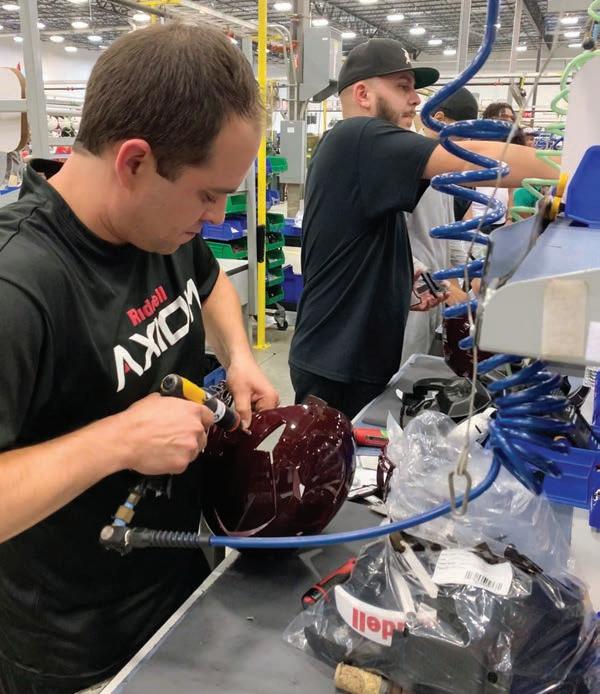
Riddell employee Matthew Vargo assembles a new Axiom helmet at the company’s North Ridgeville plant. | ERIN GRIFFIN/ RIDDELL
See RIDDELL on Page 21 See HOPKINS on Page 20 See METROHEALTH on Page 22
Robin Autopilot receives equity fundraise Champ Titles raises $12.9M
JEREMY NOBILE
Robin Autopilot, a U.S. franchis ing platform for robotic lawn mow ers headquartered in Dallas but owned and operated by Strongsville holding company Fahey Group, has announced a new equity fundraise from Swedish manufacturer Husq varna.
Speci cs of the transaction were not disclosed. However, Logan Fa hey, CEO for the Fahey Group and Robin Autopilot, said the invest ment positions Husqvarna — which continues to hold a minority stake in the business — as Robin’s sec ond-largest shareholder.
“ is is a multimillion-dollar in vestment over the next two years,” Fahey said.
Robin’s customers are primarily lawn and garden companies that buy into its subscription platform.
ose companies then sell subscrip tion services for the robotic mowers — think of a large robotic vacuum but for cutting grass — that are in stalled at the homes and properties of their end-users.
Interested in the sector for Robot ics as a Service (RaaS), Husqvarna has been gradually growing its posi tion in Robin over the years. It stepped up its stake in the business last year, as well.
“We are rm believers in robotic technology and its role in the future of more sustainable lawn care,” said Robert McCutcheon, president of Husqvarna NA, in a statement.
“With our growing partnership with Robin, we are committing to the growth of RaaS in the U.S. market and the evolution of autonomous mowing.”
e capital infusion will support advancement of Robin’s eet man agement software to include a “new automated activity puck,” Fahey
HEALTH CARE
said, which allows landscapers to “not only track assets but monitor the e ciency of the equipment and the human operating it.” e money will also support the hiring of new U.S.-based engineers for the company, as well as general ex pansion e orts. One key market Rob in intends to expand into is Palo Alto, California, where regulations will eliminate the use of gas-powered leaf blowers and lawn mowers in 2024.
“Husqvarna is the world leader in robotic lawnmowing, and its trailblaz ing sustainability goals align directly with Robin’s mission to accelerate the adoption of sustainable energy in the landscaping industry,” Fahey said.
“Our ongoing partnership will allow further development of Robin’s tech nologies and o erings, including its eet management system, which en ables landscapers to utilize autono mous and electric eets more e ciently and pro tably.”
Robin will also improve its access to the supply of Husqvarna robotic mowing products and accessories such as CEORA and EPOS brand au tomowers and solar charging systems.
Robin’s robotic mowers are cur rently available in 50 stores in the U.S. Fahey notes the goal is to be in 150 locations by the end of 2023.
In 2021, Robin rolled up North Carolina-based robotic lawn care
franchising platform Mowbot, which added 16 locations to its net work.
Fahey Group acquired Robin in 2019. Recognizing the popularity of the robotic mowers that were be coming popular overseas, the ex pectation has been that the technol ogy and related service could catch on in North America, as well.
“ e plan is to invest heavily in that market because we think it’s go ing to be huge and will blow up in the next couple years,” Fahey told Crain’s in 2019.
Jeremy Nobile: jnobile@crain.com, (216) 771-5362, @JeremyNobile
NEOMED to pursue development of dental college
LYDIA COUTRÉ
Northeast Ohio Medical Universi ty in Rootstown (NEOMED) plans to develop a College of Dentistry to meet Ohio’s “dire need for more dentists to serve rural and under-re sourced populations,” according to a news release.
At its Sept. 15 meeting, the univer sity’s board of trustees reviewed a needs assessment and granted ap proval for the additional school. e university estimates it will cost about $25 million to successfully launch and sustain NEOMED’s Col lege of Dentistry.
“We want to make sure that we re spond to this critical need as soon as possible, but we also want to ensure that from the admissions process through the many years of formal ed ucation, that intentional decisions are being made to create an educa tional experience that will improve the health disparities and inequities currently being experienced by so many in our community,” said Dr. John T. Langell, president of NEOMED, in a provided statement.
“ at requires nancial commit ments and support by public, civic and private stakeholders.”
With the board approval, the uni versity anticipates receipt of $1 mil lion earmarked by the state of Ohio toward developing a new public dental college, according to the re lease. State Sen. Jerry Cirino, who championed having another dental college in Ohio, and state Rep. Gail Pavliga, who helped gain support in the Ohio House, helped secure the funding through the state, according to the release.
“According to the ADA, many pa tients have limited access to dental treatment due to a variety issues such as socioeconomic status, edu cation and limited access to care; an emergency room visit may be their only option,” Langell said in a pro vided statement. “In Ohio, 77 out of 88 counties are considered HPSAs regarding dental care.”
HSPAs, or Health Professional Shortage Areas, are geographic ar eas, populations or facil ities with a shortage of providers.
nancial sustainability, according to the release.
An external advisory council was established “to develop a multi-di rectional model of health care edu cation that would integrate oral health into primary care and prima ry care into the dental setting,” Langell said in the release.
Startup announced close of Series B investment round
JEREMY NOBILE
Champ Titles, a Cleveland-based startup working to digitize the vehi cle registration process and related documents through block chain-powered technology, has an nounced the close of a $12.9 million Series B investment round.
With this latest fundraise, the com pany has collected $31.4 million in funding over four investment rounds, according to Crunchbase.
Champ Titles was founded in 2018 as one of the startups backed by Ow num, a sort of tech incubator launched by luxury-car-deal er-turned-blockchain-evangelist Bernie Moreno.
“Champ Titles replaces state DMV title and registration systems with its intuitive software while also provid ing technology that enables automo tive retailers and insurance carriers to reduce the amount of time it takes to create, manage, and transfer a ve hicle title to just one day,” according to the company.
“We are thrilled that the industry has spoken: Our recent large con tracts and funding round are proof that the days of old, big, on prem de ployments are over for title and regis tration solutions,” said Champ Titles CEO Shane Bigelow in a statement. “ ere is a real call for low-cost, high e ciency, quickly enabled solutions to speed title and registration trans actions anywhere in the world.”
Lead investors in Champ Titles have included groups like EOS Ven ture Partners and insurance compa ny W. R. Berkley Corp.
“We are delighted to invest in Champ once again,” said EOS Ven tures founding partner Jonathan Kal man in a statement. “ eir leader ship in digitizing the title and registration space is clear, and their momentum is strong. We look for ward to seeing how they change the insurance industry and many other verticals in the years to come.”
As noted in a 2019 story, Champ Title aims to sell its software to state governments that are the reposito ries for car titles.
Langell presented data (from the Ohio Department of Health, the Kai ser Family Foundation and other sources) to the board at its Septem ber meeting showing oral health as the No. 1 unmet health care need of Ohioans, according to the release.
Langell noted that screening for chronic and acute medical condi tions in a dental setting improves not just oral health but overall health, as well.
NEOMED had been hearing from its partners about a maldistribution of dentists and a signi cant shortage of dental practices, particularly in rural areas, according to a release, which notes its clinical network in cludes: Akron Children’s Hospital, Cleveland Clinic Mercy Hospital, Mercy Health — St. Elizabeth Youngstown Hospital, Summa Health, e Cleveland Dental Insti tute and University Hospitals.
e university began exploring the feasibility of a dental college in 2021, considering curricular and training site needs, as well as the
e council set principles for the dental school to meet community needs and prepare leaders for the future of oral health, according to the release, which notes the council will also help establish distributive training site commitments and vet applicants for the college’s inaugu ral dean.
“From providing resources to ad vance the dental profession and im prove dental team skills to improv ing oral health through increased access to care, NEOMED’s goals and objectives are signi cant,” said Frank Beck, chair of the College of Dentistry’s External Advisory Coun cil and program director of the GPR Dental Residency Program, Mercy Health — St. Elizabeth Youngstown Hospital.
Lydia Coutré: lcoutre@crain.com, (216) 771-5479, @LydiaCoutre
However, its titling platform also includes solutions for insurance car riers, nancial institutions and auto retailers.
“Slow and outdated solutions with large upfront fees and many failed deployments across the country are costly to state governments and tax payers,” Bigelow said. “We are replac ing each of those systems, one-byone, with Champ’s DTRS technology, providing a solution to states who want to modernize and to taxpayers and residents who desire a better ex perience at the DMV. Further, our growth on the commercial side of our business and the closing of this over subscribed round reveals to the mar ket that our customers are truly suc ceeding with the use of our software.”
e startup has 62 employees to day, according to a company spokes person, with 46 of those based in Northeast Ohio.
2 CRAIN’S CLEVELAND BUSINESS | O CTOBER 3, 2022 SMALL BUSINESS TECHNOLOGY
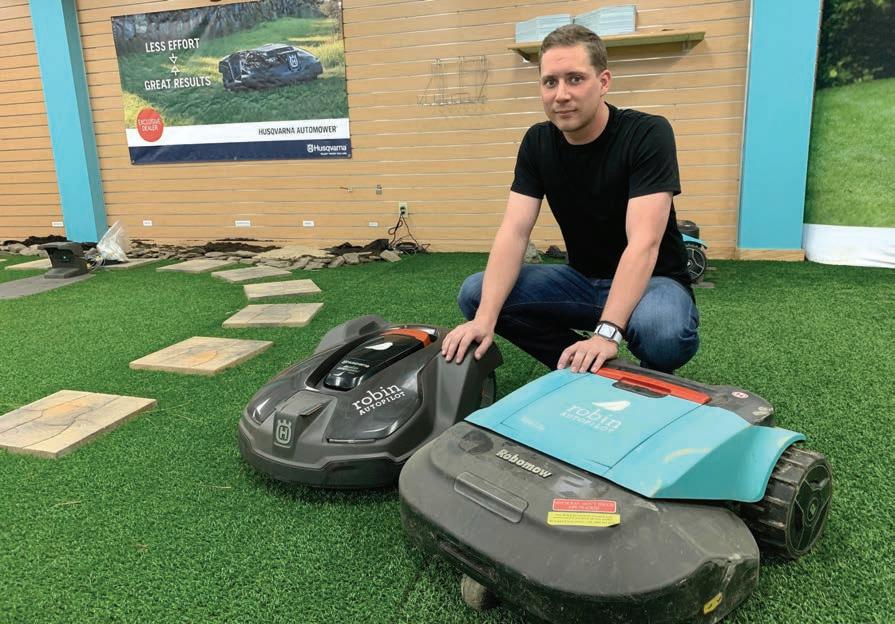
Fahey Group and Robin Autopilot CEO Logan Fahey in 2019 with some of his robotic mowers. | JEREMY NOBILE/CRAIN’S CLEVELAND BUSINESS
“IN OHIO, 77 OUT OF 88 COUNTIES ARE CONSIDERED HPSAS (HEALTH PROFESSIONAL SHORTAGE AREAS) REGARDING DENTAL CARE.”
—Dr. John T. Langell, president of NEOMED
Bank of America local specialists can provide one-on-one financial guidance on everything from buying a home and saving for the future to planning for what’s next and more. Get started today at a financial center or 24/7 in our Mobile Banking app.

Find a location near you at bankofamerica.com/TalkToUs
What would you like the power to do?
®
Wherever you are with your goals, we’re right here in the Cleveland area to help
Mobile Banking requires downloading the app and is only available for select devices. Message and data rates may apply. Deposit products and services are provided by Bank of America, N.A. and affiliated banks, Members FDIC and wholly owned subsidiaries of Bank of America Corporation. Equal Housing Lender. © 2022 Bank of America Corporation.
Two iconic downtown Akron buildings to be auctioned
BY DAN SHINGLER
Two of downtown Akron’s iconic buildings are being put up for auction.
e Canal Square building, a 15-story, 112,000-square-foot apartment building with 79 units, is listed for an online auction set for Oct. 31Nov. 3 with an opening bid of $2.7 million, con rmed Joel Testa, president and COO of Testa Cos., which owns the building.
It will be followed to the block by another iconic Akron building in Testa Cos.’ portfolio, the former City Center Hotel, known more recently as Ascend.
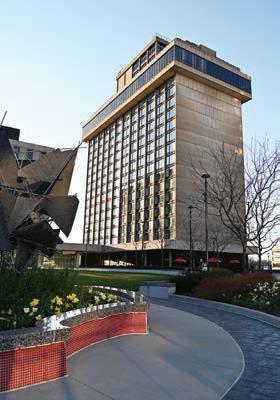
Announced in 2017, the Ascend project was meant to convert the 19-story former hotel into 147 modern apartments, with a two-story pool area, rooftop bar, gym, theater and co-working space.
Testa said that building also is slated to go up for auction soon, but it has not been listed and an opening bid has not been set.
e sales are being prompted by a combination of economic and other factors, Testa said.

“We’re really cherry-picking right now what’s very pro table … and our focus is on construction,” he said. “We want to have cash to be able to buy land.”
Testa Cos. is busy with about $150 million in other developments already on its plate, Testa said, including the construction of the Residences at Good Park, a $20 million, 89-unit residential development led by Alphi Phi Alpha Homes for which Testa is the builder.
“ at’s really our focus right now,” Testa said.
“We’re not trying to re-sale it. If we don’t get what we need, we won’t sell it,” Testa said of the Canal Square building.
Testa said the Ascend project became complicated by the death of Akron developer David Brennan in fall 2018. Brennan had been a major backer of Ascend and was a 50-50 partner with Testa Cos. on the project.
Testa also grew concerned that he’d end up owning two buildings that would compete with each other, since the Ascend project would be o ering newer apartments at rents similar to those at Canal Square, where apartments go for between $1,100 and $1,700 a month.
On top of that, Testa said the decision to auction o the buildings was driven by what he and his company have seen at other auctions for similar projects. He became convinced he could make about as much just selling the building outright as he could redeveloping it, Testa said.
Neither sale, though, is an indication that he has lost con dence in the market for real estate in downtown Akron, Testa said. Far from it; he thinks the city is poised for further growth, including more residential development downtown, due to several drivers.
“We are still very bullish on downtown Akron. With the investment into the infrastructure of the streets, the bikeway, Cascade Plaza and now Lock 3 park, we think Ak-


ron is poised to have a strong rebound once employees come back to work or companies that are in the suburbs and are looking to downsize or expand, where rates continue to rise, will see the bene ts of relocating downtown to more a ordable space,” Testa said.

Other factors are helping, too, he said, such as the continued growth of downtown’s three hospital systems — Cleveland Clinic, Akron Children’s and Summa — which Testa said has helped make projects such as Canal Square a success.
“So, while there are several factors that have us considering selling these two buildings, if we were an outside investor looking to get in at the perfect time, we would be the logical buyers for them both, because we think now is the optimal time to invest in downtown Akron,” Testa said.
Local real estate experts expect the two buildings to attract plenty of bidders and to do well at auction. at includes Gary Cooper, a senior vice president at Colliers International in Cleveland and the broker of record for Canal Square, whose auction is being handled by Ten-X in Cleveland.
“I think it will be a nice blend of regional and local interest,” Cooper said. “ e stu we’ve sold in the last year has gone very heavily to New York and New Jersey folks, along with a couple of local guys. ... I think that will be true for these properties, as well.”
Cooper said East Coast investors are drawn to the Midwest, in part, because rents recently have gone up and have shown some resilience with regard to pricing.
“Year-over-year, we’ve had 11% rent growth. at used to take ve years,” Cooper said. Rents in the local market have been suppressed for years and only now are starting to re ect new market rates, he said.
Catherine Haller, an agent with Berkshire Hathaway HomeServices in Akron, said she still sees high interest in apartments in Akron from investors. She said she knows the Canal Square building and says it’s a high-quality building that will attract signi cant demand.
“I think someone will take advantage of it. I’m hearing from so many out-of-state investors looking for multifamily properties. ... I still have people reaching out to me from overseas and across the country, and I’m still amazed at the prices I’m seeing for multifamily,” Haller said.
She thinks Testa is wisely selling into a strong market at the right time.
“I think they’re taking advantage of this window of opportunity, and I don’t blame them. We haven’t seen this in my lifetime, and I don’t know if we’ll see it again, so good on them,” Haller said.
Ditto for the folks at Institutional Property Advisors in Cleveland, where executive director Joshua Wintermute and executive managing director Michael Barron also say the multifamily market is holding up well in Akron. eir rm o ers real estate services to institutional and high-net-worth investors — the sort who might bid on Testa’s auctions.

“I think with the continuing change in employment drivers throughout Akron (from major hospitals), I’d expect there will be strong interest not just locally but at a national level,” Wintermute said of Canal Square. “It’s an iconic building in downtown Akron. It’s the picturesque building you see when you’re sitting at a RubberDucks game.”

Barron said higher interest rates are a ecting some buyers. At the same time, though, he said other buyers are nding and developing new ways to raise capital online, and that’s o setting to some degree the e ects of higher rates.
“ at increases the ability to raise large sums of money from larger groups of people,” he said.









Meanwhile, strong occupancy rates and increasing rents in Akron and other local communities continue to attract out-of-state investors, Barron said. He predicts the Canal Square building will sell, while the un nished hotel project — where Testa said only some initial demolition work has been done — will depend more on nding the right buyer.
“A hotel redevelopment play? ose are still active, and there are still developers doing those deals. But that’s more opportunistic,” Barron said.
Dan Shingler: dshingler@crain.com, (216) 771-5290


4 CRAIN’S CLEVELAND BUSINESS | OCTOBER 3, 2022 HOW TO FLY WITH SKY QUEST: » On-Demand Charter » Jet Club Memberships » Aircraft Ownership Opportunities 216-362-9904 Charter@FlySkyQuest.com FlySkyQuest.com Private Travel Made Easy FOR LEASE Retail & Restaurant Space at Foxboro Square •Anchoring tenants include: Goodwill, Royal Docks Brewery, McDonalds, AT&T and more! •+1 Acre pad site for build to suit or ground lease •Many national retailers and restaurants in the area 7257 Fulton Dr., Canton, OH 44718 PROPERTY OVERVIEW •High traffic area with combined counts of over 30,000 VPD •Located across from 55,000 SF Mercy Health Center and Jackson High School 216.861.5061 andrewchess@hannacre.com 216.861.5262 randymarkowitz@hannacre.com Andrew ChessRandy Markowitz Personalized Service! • Loans up to $30 Million • No Prepayment Penalties • Investment & Owner-Occupied Commercial Real Estate TEE OFF WITH A LOAN FROM CBS PROVIDING COMMERCIAL REAL ESTATE LOANS THROUGHOUT NORTHEAST OHIO CONTACT JONATHAN A. MOKRI 440.526.8700 • jmokri@cbscuso.com www.cbscuso.com Straight Talk, Smart Deals ® AKRON
The former City Center Hotel in Akron, top, had been slated for a conversion to an apartment building. Canal Square Lofts, above, is a major building in downtown Akron. | CONTRIBUTED
LaCentre o ce buildings in Westlake change hands for $7.3 million
BY MICHELLE JARBOE
e Ohio Carpenters’ Pension Fund has parted ways with two Westlake o ce buildings, nearly 18 years after taking title to the real estate to resolve a foreclosure ght.
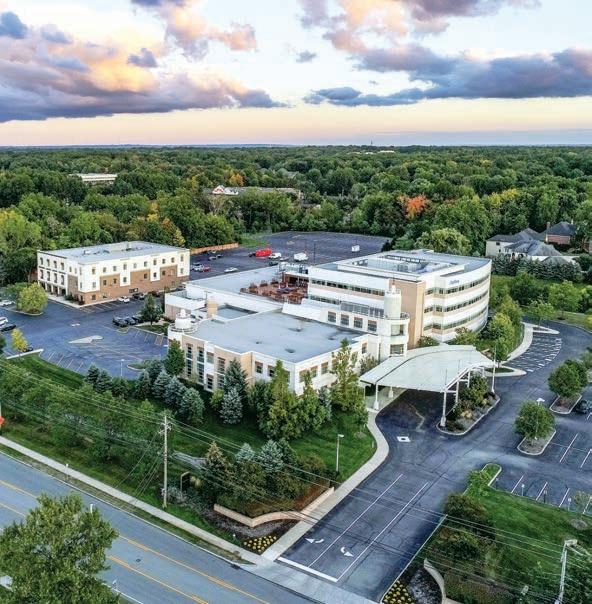
An a liate of JDI Realty recently paid $7.3 million for LaCentre O ce Plaza I and II, according to public records. e buildings, located at 25651 and 25777 Detroit Road, comprise nearly 140,000 square feet and include a banquet and conference center.
“We think these are exceptionally well-located, well-constructed buildings that have a very bright future,” said Mark Nasca, a principal with JDI, a Chicago-based private equity rm with an o ce in Chagrin Falls.

Conference & Banquet Facility. e pension fund took control of both buildings in 2004, in the middle of litigation over a mortgage default. A company a liated with the fund later purchased the properties at a sheri ’s sale, where the buildings failed to attract other compelling bids.
e pension fund tried to sell the portfolio a few years ago but pulled the listing from the market during the pandemic, said Terry Coyne, a vice chairman in the Newmark brokerage’s Cleveland o ce.
Despite broad uncertainty about the future of o ce space, “we actually got a higher o er post-COVID than we did pre-COVID,” said Coyne, who represented the seller with his daughter Claire, a Newmark director.
Newmark also is handling leasing at the properties.
A marketing yer shows that there’s roughly 12,000 square feet of o ce space available at LaCentre O ce Plaza I, a three-story building that was constructed in 1978 and renovated over the years.
Can NFL push virtual reality into mainstream?
BY BLOOMBERG
One of the hurdles to virtual reality going mainstream has been a lack of hit content to lure the masses. e National Football League and two former football players are trying to change that.
A few years ago, Troy Jones, who played quarterback in college, and Andrew Hawkins, a former NFL wide receiver, pitched the league and the NFL Players Association on a virtual reality video game. e duo, co-founders of StatusPro, won the licenses earlier this year, and recently NFL Pro Era debuted for download on Meta Platforms Inc.’s Meta Quest 2 and Sony’s PlayStation VR.

“We know what it’s like to be on the eld,” Hawkins, the company’s president, said in an interview for the latest episode of “Business of Sports,” a series from Bloomberg Quicktake. eir goal is to “make sure every fan of the game also gets to experience that, and this technology is what made that possible.”
Adoption of virtual reality by consumers is picking up steam with retail prices for headsets declining, according to Bloomberg Intelligence. Hardware sales may triple to more than $7 billion by 2024, the researcher said. A game featuring NFL players, teams and stadiums could expand the audience.
One of the most successful franchises in the history of gaming is Electronic Arts Inc.’s Madden NFL, which has the exclusive video game licenses for the NFL and NFLPA. And just like Madden, NFL Pro Era has a star player — in Baltimore Ravens quarterback Lamar Jackson — to be the face of the game.

“Content goes hand in hand with
any hardware and sports is probably what brings the most diverse group of people together,” said Jones, CEO of StatusPro. “I think a lot of people will try VR for the rst time” after the launch of the game, he said.
Jones and Hawkins initially created a VR experience as a training tool. ey won over coaching sta s by pitching the product as a way for players to get virtual reps in the oseason when rules don’t allow in-person practices. Defensive coaches rst utilized the technology as a way to get players more experience identifying o ensive formations and lining up before the snap of the ball.
“We sat in the lab, and we were like: ‘position-by-position, coachby-coach — how do we make their job easier?’” said Hawkins, who played for the Cleveland Browns and the Cincinnati Bengals.
After seeing the positive response from players, the company saw an opportunity to bring the experience to fans. e gameplay puts the player in the shoes of an NFL quarterback who breaks the huddle, takes a snap and looks for receivers downeld, while trying to avoid getting sacked by the defense.
“You’ll gain an appreciation of when you see a quarterback have to break out of the pocket, extend a play and nd a receiver down eld with 280-pound guys running and chasing them down,” Jones said.
While time will tell if this game speeds up adoption of VR headsets, StatusPro is already contemplating expansion.
“We want to create these experiences across sports, not just football,” Hawkins said. To make games “that make people say: ‘I wanna try VR. I wanna put myself in this scenario.’”
JDI focuses on acquisitions and bridge lending. e rm owns another o ce building in the region, at 6200 Oak Tree Blvd. in Independence; is a partner in the Beachwood Apartments by Albion on Chagrin Boulevard; and provided a short-term loan to keep the Westin Cleveland Downtown hotel a oat during a recent foreclosure battle.

In Westlake, JDI snapped up an o ce property that spent nearly two decades in a lender’s hands. e Ohio Carpenters’ Pension Fund was the construction lender on LaCentre O ce Plaza II in the early 2000s. e four-story building, totaling just over 110,000 square feet, opened in 2003 and includes the LaCentre
Another yer identi es the conference and banquet center as available, even though a new operator took over the facilities last year. e venue shut its doors in early 2020. After announcing a lease deal in December, Levoy Hospitality Group LLC celebrated a grand reopening in March.
Nasca would not discuss speci c tenants or comment on the future of the event space.
“We’ve just recently closed on the property,” he said, “and we’re making sure that we’re evaluating every option we have to enhance the returns for our investors.”
OCTOBER 3, 2022 | CRAIN’S CLEVELAND BUSINESS 5
SPORTS BUSINESS
REAL ESTATE
Michelle Jarboe: michelle.jarboe@crain.com, (216) 771-5437, @mjarboe
Former football players Troy Jones, left, and Andrew Hawkins co-founded StatusPro, which debuted the rst NFL-licensed virtual reality video game.
| TOM CONNORS/BLOOMBERG
The
LaCentre O ce Plaza buildings in Westlake recently changed hands in a $7.3 million deal. The buyer is an a liate of JDI Realty, a Chicago-based private equity rm focused on acquisitions and bridge lending. | COSTAR GROUP/AERIAL AGENTS
“WE THINK THESE ARE EXCEPTIONALLY WELLLOCATED, WELL-CONSTRUCTED BUILDINGS THAT HAVE A VERY BRIGHT FUTURE.”
—Mark Nasca, a principal with JDI
What makes a business an employer of choice?



e organization Bethia Burke leads, the Fund for Our Economic Future, recently has surveyed thousands of workers and hundreds of employers. And those surveys make it clear, Burke said, that beyond competitive wages, businesses that want to be an employer of choice need to create workplaces with better communication and more exibility.
e data from the Fund’s “Where are the Workers” report found that a lot of people in Northeast Ohio quit their jobs during the pandemic, and 20% are thinking about quitting in the next year. But of those who said they might leave, about half said there was something their employer could do to make them stay.
Crain’s talked with Burke about what the Fund’s surveys and roundtables found, how employers should interpret the data collected, and what tools are available to help with the talent crisis in the region. is interview has been edited for length and clarity.
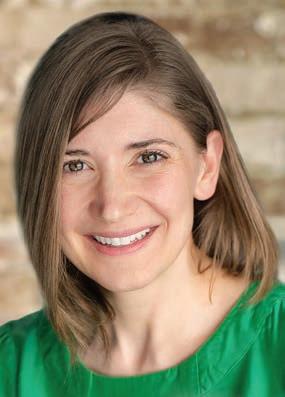


 — Kim Palmer
transportation access. How do people use this resource?

A: The tool is interesting for employers looking at entering the market because it can be used in attraction and relocation decisions. A company can go in with an address and see what talent is in that general radius, and what transportation access is available to those workers. Even if an employer is not moving, there’s a lot of data in that tool, so that they can understand more about talent and
This is important because part of the “Where are the Workers” report found that 52% of adults said transportation is at least somewhat of a barrier to nding work for them. And we know that in the ve-county region around Cleveland, people spend nearly 25% of their annual income monthly on

It helps businesses think about locations di erently. We heard about an employer who decided to invest more in a location instead of a move because when they looked at how people got to work and who they would lose if they moved, it was decided that the move

Q: With the constant talk about a possible recession, which would bring with it job losses and a di erent labor market, do you think some employers just plan to wait out the talent crisis and hope there are fewer worker demands
That needs to be part of the conversation, but also we need to talk about ways to make take-home pay go further. Employers can help by making it cost less for employees to get to work and making sure employees are taking advantage of every tax bene t, whether it’s day care, health care or transportation. This is where nding the right place to move or not move a business comes into play.
Q: In the “Where Are the Workers” report, you found employees putting more stock into a healthy work-life balance when looking for jobs. How can employers create that kind of environment?
A: Flexibility really matters a lot, and job exibility looks di erent person to person. Flexibility for employers can be as simple as creating a shift to accommodate or adjust to times
an observation from an employer working on better time-o policies, and he realized that the industry had been treating workers as expendable for such a long time it was unlikely they would come to management with a problem. So much of our workforce has been treated as expendable for so long that companies should reach out regularly, in both formal and informal ways, because they are probably not going to hear what you need to hear in the rst go-around. It is really about relationship-building between employers and their workers.
Q: In the spring the Fund launched an online tool with Team NEO called ESG to the Power of Place, a map with visual and searchable demographics broken down by occupation, race and information about commute and

A: I think that there are a variety of perspectives out there. But those companies that will be the most competitive are the ones who see this talent shortage as something to respond to and do not look at it as something to get through. While the tightness of the labor market may ease to some degree over time, I don’t think it’s ever bad for people to have a good place to work.
And in Northeast Ohio, we have had a shift in the demographics of who is working and at this point in time. The population of workers is more diverse than it was 20 years ago, and that means our workplaces should be di erent.
There’s no one right answer to that. But it is important that we recognize we are older than other places in the United States, and we are not attracting people back to the region at the rate other places are. We have to work on that.
6 CRAIN’S CLEVELAND BUSINESS | OCTOBER 3, 2022
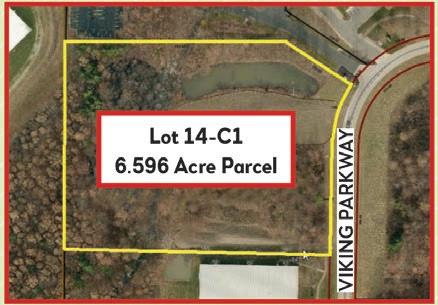
CONTACT US Charles Marshall 330-659-2040 3457 Granger Road, Akron, OH 44333 VISIT OUR WEBSITE www.beaconmarshall.com Property Features •Price for 6.69 lot is $580,000 •One Lot Left • Quick Access to I-90 and Crocker Park • Enterprise Zone • Major Business and Retail Area • Stormwater Pond Installed • Build to Suit Availability THE LAND SCAPE A CRAIN’S CLEVELAND PODCAST WITH DAN POLLETTA NEW EPISODES EVERY TUESDAY AND FRIDAY COMMERCIAL REAL ESTATE SERVICES LEE & ASSOCIATES LEE CLEVELAND GOVERNMENT
COURTESY
“THE NO. 1 THING YOU HAVE TO HAVE TO ATTRACT AND KEEP WORKERS AS AN EMPLOYER IS COMPETITIVE COMPENSATION.”
—Bethia Burke, Fund for Our Economic Future president
Board OKs potential $70M state tax credit for Ford’s plant expansion
MICHELLE JARBOE
Ford Motor Co. stands to receive $70 million in state tax credits tied to a looming 2,000-job expansion at the automaker’s Avon Lake assembly plant.
e Ohio Tax Credit Authority greenlit the incentive Monday, Sept. 26, during a meeting where the board also approved a big sweetener for In tel Corp.’s planned semiconductor facility outside of Columbus. In both cases, the tax credits are perfor mance-based awards, which could rise or fall in value based on hiring and payroll.
Ford announced its plans for the Avon Lake plant in June, as part of a $3.7 billion wave of investment across the Midwest. At the time, the company said it would add 1,800 union jobs at the assembly plant, with an eye on assembling a new electric vehicle there.
e deal approved by the tax credit authority covers union and nonunion hiring. at’s why a project summary provided by the Ohio De partment of Development says that Ford plans to create 2,000 full-time-equivalent positions — not 1,800 — by Dec. 31, 2030.
ose jobs will generate more than $108 million in new annual payroll,
according to the development de partment. Ford will retain 1,660 jobs and nearly $121.3 million in yearly payroll at the plant.
As part of the tax-credit deal, the company must maintain operations at the Avon Lake site for at least 33 years.

e 1.979% tax credit will run for three decades.
Ford is bene ting from the state’s new megaproject incentives, created by the General Assembly last year. e legislature doubled the potential term of job-creation tax credits and other tools, from 15 to 30 years, for projects that involve at least $1 bil lion worth of investments in xed as sets, such as buildings and equip ment, or at least $75 million in new payroll.
In New Albany, Intel is taking ad vantage of that same megaproject provision to support what o cials are calling the largest single econom ic-development project in Ohio his tory.
e tax credit authority approved a 30-year incentive for Intel, which ex pects to create 3,000 full-time jobs and $405 million in payroll at a mas sive chip-making operation before 2029.
But the deal isn’t done. e au thority voted on an incorrect number
— a 3.101% credit, rather than the 3.999% rate that Intel and JobsOhio, the state’s private nonpro t econom ic-development corporation, appar ently agreed upon.


e board will vote on the correct ed gure at a future meeting.
e mistake delayed the state’s an nouncement about all of the projects approved Monday. e tax credit au thority meets once a month, in the morning, and o cials typically re lease details about the awards by ear ly afternoon.
e estimated value of the Intel tax credit is $475 million, according to a spokesman for the development de partment. But that dollar amount is based on the incorrect, lower rate.
O cials did not provide a revised estimate.
e total state and local incentive package for Intel, including grants and property-tax breaks, is expected to surpass $2 billion.
e tax-credit agreement requires Intel to stay put in New Albany for at least 33 years. Intel held a ceremonial groundbreaking this month for its $20 billion project, which is gobbling up nearly 1,000 acres. Production is scheduled to start in 2025.

e tax credit authority also ap proved an incentive for Involta, a cloud computing and data cen



ter-services company that is expand ing its facilities in Akron and Inde pendence.



at award is not a job-creation tax credit, though Involta does plan to add at least 11 jobs. Instead, the com pany will receive a sales-tax exemp tion worth an estimated $6.8 million.
Involta, based in Cedar Rapids, Iowa, has committed to investing $135 million in its data centers, which are linked by a ber ring. e company will claim the sales-tax break on data center equipment pur chases between Jan. 1 of this year and Dec. 31, 2036.
e company must maintain oper ations in Independence and Akron that entire time. A state project sum mary says Ohio was vying against Minnesota and Pennsylvania for the project.
“Involta’s commitment to expand here is a testament to a diverse in dustry base in the Northeast Ohio region, as well as our growing tech nology talent base,” said Bill Koehler, CEO of regional economic-develop ment group Team NEO, in a news re lease. “Along with JobsOhio and our local partners, all of us at Team NEO look forward to supporting Involta’s ongoing success.”
e tax credit authority signs o on agreements negotiated by JobsOhio, its regional partners and private-sec tor employers. On Monday, the board approved incentives for six projects. e other deals were in Franklin County and Champaign County.
Michelle Jarboe: michelle.jarboe@ crain.com, (216) 771-5437, @mjarboe


In a city like this, it takes a team like ours.
At First Commonwealth, our teams know our city and the important role local businesses play in the success of our communities. That’s why we work so hard to be the best bank for the businesses that start and grow here, to help make sure they succeed here.
Talk with our team today about how we can become the best bank for your business.
Matt Zuro Regional President 216.416.0577
Megan Dellapina Commercial Real Estate 216.416.0490 Mike Brainard Corporate Banking 216.212.2724 Kevin Culp Corporate Banking 216.416.0573
Pete Dennis Corporate Banking 330.280.5483 Stanley Magielski Corporate Banking 330.622.5934 Jerry Krieg SBA Lending 216.416.0494 Dale Lenzer SBA Lending 216.416.2535 Brett Cunningham Treasury Management 216.416.0492
OCTO BER 3, 2022 | CR AIN’S CLEVE LAND B USIN E SS 7
Member FDIC
fcbanking.com
REAL ESTATE
Kumar Galhotra (left), president of Ford Blue, speaks with Lt. Gov. Jon Husted and Gov. Mike DeWine after a major expansion announcement at Ford Motor Co.’s Ohio Assembly Plant in Avon Lake in June. | FORD MOTOR CO.
RICH WILLIAMS FOR CRAIN’S CLEVELAND BUSINESS
PERSONAL VIEW
Debt-related license suspensions create an impossible trap
ANNE SWEENEY
More than half of Ohioans face driv er’s license suspensions for reasons other than dangerous driving. Approxi mately 60% of all Ohio driver’s license suspensions are based on a person’s fail ure to pay money owed to a court, to the Ohio Bureau of Motor Vehicles, or to a private third party. Such “debt-related driver’s license suspensions” trap peo ple with limited means in an impossible cycle: ey cannot a ord the required payments, so they need to work to earn money; but they don’t have a valid driv er’s license, so they cannot get to work.
Flight plan
Never been to Dublin? ( e one in Ireland, not near Co lumbus.) It’s about to be easy to remedy that, while si multaneously supporting a key service addition at Cleveland Hopkins International Airport.
Aer Lingus in May 2023 will begin o ering nonstop ights from Hopkins to Dublin, a great city well worth a visit. A bo nus: It’s easy to connect from Dublin to most major European destinations.
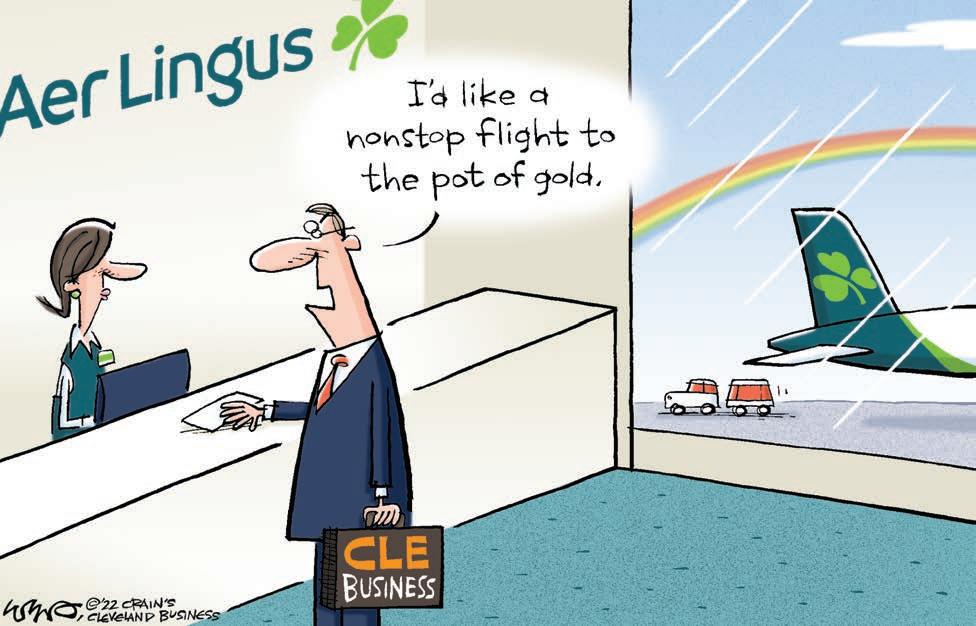
e Dublin ight, formally announced last week with great fanfare, will be the rst time Cleveland has nonstop service to Europe since two Iceland-based carriers in 2018 ended oper ations to Reykjavik. Prior to that, the last carrier to y nonstop to Europe from Cleveland was Continental Airlines, which o ered London service that ended in 2009.
So, our recent experience with nonstop service to Europe has been a little turbulent. Making this new service last will require signi cant support from the business community. Ireland’s tax laws have made Dublin a major corporate desti nation, and those easy connections to other parts of Europe should make the new ight attractive to Northeast Ohio com panies. Baiju Shah, president of the Greater Cleveland Part nership, pointed out that Dublin’s airport o ers U.S. Preclear ance, which allows travelers returning to the United States to clear customs before they board their ight home. is new ight isn’t coming cheap. e price: a three-year, $2.4 million incentive package with $825,000 from Cuyahoga County, $600,000 from the city of Cleveland, $600,000 from GCP, $275,000 from Destination Cleveland and $100,000 from Team NEO, serving as a minimum revenue guarantee payable if Aer Lingus doesn’t meet certain nancial targets.
It says something encouraging about the economic pros pects for the ight, though, that Cleveland is the rst new ser vice for Aer Lingus since the pandemic hit. e service also is a coup for Hopkins, which has been re building passenger tra c as the economy has recovered from the pandemic, but recently ranked 16th among the 18 medi um-sized North American airports surveyed in this year’s J.D. Power satisfaction report.
It’s in the hands of business and leisure travelers to make sure this new ight is a lasting success, not just a short-term con dence boost.
Teamwork
• ere are still a few meaningless regular-season games to play before the Cleveland Guardians get down to the business of the wild card round of the American League playo s. at round features a best-of-three format, with all three games at Progres sive Field, starting with Game 1 on Friday, Oct. 7.
e 2022 Guardians represent the best thing sports can o er: a genuine surprise. Much has been made about the team’s youth, as well as preseason predictions that the Guardians would be lucky to approach a .500 record. Once again, though, the best-run pro sports team in town o ers some valuable les sons for any organization: identify a strategy that ts your bud get, work hard, develop young talent, ignore detractors (as suming you’ve done your homework) and stick to your plan.
If you’re one of those people who jumped o the Cleveland baseball train after the name change, there’s still time to get back on board. You’ll nd a team that’s fun and easy to root for — and looks built to last.
• Two Cleveland institutions that are critical to aiding equi table economic growth — nonpro t DigitalC, which focuses on connecting the digitally unconnected, and the Metro Health System — late last month announced new CEOs who will be taking the jobs soon.
In one case, with DigitalC’s Joshua Edmonds, it will be a homecoming. MetroHealth’s Airica Steed, meanwhile, will be new to town. Both, though, will need and should expect the full support of private- and public-sector leaders, as the suc cesses of DigitalC and MetroHealth will go a long way to bol stering Cleveland and the region.
Edmonds, a Northeast Ohio native and former Cleveland Foundation Public Service Fellow, comes to DigitalC from Detroit, where he was that city’s rst director of digital inclusion. Steed will lead MetroHealth after serving as executive vice president and sys tem chief operating o cer of the big Sinai Chicago Health System. eir fresh perspectives and subject expertise should serve them well here. Northeast Ohio has a big group of new lead ers, in government, nonpro t and business circles, and we look forward to the contributions Edmonds and Steed make as they join that group.
Executive Editor: Elizabeth McIntyre (emcintyre@crain.com)
Managing Editor: Scott Suttell (ssuttell@crain.com)
Contact Crain’s: 216-522-1383
Read Crain’s online: crainscleveland.com
Sweeney is the managing attorney of the Community Engagement Practice at the Legal Aid Society of Cleveland.
is catch-22 disproportionately harms people with low incomes. People in Ohio ZIP codes with the highest pov erty rates faced nearly 40 times as many debt-related suspensions as those in the areas with the least poverty, as reported by Legal Aid in a recent study of BMV data for 2016-20, “Road to Nowhere: Debt-Related Driver’s License Suspensions in Ohio.”
Additionally, the Ohio BMV assesses substantially more fees in ZIP codes with higher poverty rates compared with low poverty rates, and the same residents owe more and pay more. Residents of Ohio’s poorest ZIP codes pay over 20 times more in debt-related suspension costs ($39.3 mil lion) compared with residents of Ohio’s wealthiest ZIP codes ($1.7 million).
e debt-related suspen sion scheme also dispropor tionately harms people of col or. Areas with the highest percentage of people of color experience over 100 times as many suspensions as the areas with the fewest people of color (6.9 million vs. less than 51,000). Such areas also are assessed more, owe more and pay more than people in predominantly white areas of Ohio. e ZIP codes with the highest percentage of people of color paid over $60 mil lion, while predominantly white ZIP codes paid less than $600,000.
To be sure, Ohio can and should regulate driving. Re quirements to have a driver’s license and carry nancial re sponsibility insurance are good public policy. But taking away a person’s ability to earn money because they can’t pay a ne or fee is counterproductive and disparately im pacts Ohio communities.
Many other states have recognized the problems inherent in debt-related driver’s license suspensions. Michigan al lows suspensions based on a driver’s failure to pay nes or fees only for o enses that are public safety-related. Mary land limits suspensions to a driver’s failure to pay nes and fees in criminal cases. New York no longer suspends a per son’s driver’s license for failure to pay tra c nes. e Fines and Fees Justice Center and the Free to Drive Campaign document and support such changes. In Ohio, Neighbor hood Connections, a Cleveland-based nonpro t, recently started focusing on this issue as part of its work to ignite the power of everyday people by connecting, investing and seeking justice.
Ohio should learn from other jurisdictions tackling this issue, and from residents impacted by the debt-related sus pension scheme, in order to more e ectively and equitably support Ohioans’ ability to get to work.
Write us: Crain’s welcomes responses from readers. Letters should be as brief as possible and may be edited. Send letters to Crain’s Cleveland Business, 700 West St. Clair Ave., Suite 310, Cleveland, OH 44113, or by emailing ClevEdit@crain.com. Please include your complete name and city from which you are writing, and a telephone number for fact-checking purposes.
Sound o : Send a Personal View for the opinion page to emcintyre@crain.com. Please include a telephone number for veri cation purposes.
8 CRAIN’S CLEVELAND BUSINESS | O CTOBER 3, 2022
EDITORIAL
THE DEBT-RELATED SUSPENSION SCHEME DISPROPORTIONATELY HARMS PEOPLE OF COLOR.
Quiet quitting is the fakest of fake workplace trends
 BY SARAH GREEN CARMICHAEL BLOOMBERG OPINION









Perhaps you’ve heard of “quiet quitting.” It’s telling that the phrase has taken o on social media — but this is the fakest of fake “workplace trends.” ink of it as the third iteration of dubious pandemic work-related fads. After the original COVID-19 variant, we heard about the Great Resignation, but the data didn’t support it beyond a few sectors hit hard by lockdowns such as hospitality. en came the Delta wave and the “lie at” movement, another trend based largely on anecdata and a catchy phrase. In the aftermath of Omicron, we’ve got quiet quitting.

e reason for bosses to concern themselves with these trends isn’t that they’re describing real behavior, but that so many people nd them appealing. ey speak to employees’ fantasies, not their actual career plans.
As with all spurious trends, the de nition is impossibly broad. Some describe quiet quitting as “doing the bare minimum,” while others say they’re “meeting all their obligations.” Some are “coasting,” while others are “leaving work at 5 p.m.” Some are just hoping for a better work-life balance.



But these are pretty di erent from each other. Consider someone who routinely works from 9 to 5, but typically avoids putting in overtime. Is that person “doing the bare minimum” or are they just incredibly e cient? Should someone who is meeting all their obligations really be considered a slacker? Is it fair to call any of these a form of “quitting”?
Quiet quitting is also something we’re probably talking about more than we’re actually carrying out. A recent Axios poll of younger workers found that 15% were doing the minimum at work, despite large majorities admitting that it sounded “appealing.”
Even if it’s true that some segment of the workforce is mailing it in, this isn’t new.
Workplace engagement has been pretty stable for years. Polling organization Gallup has been tracking it for over two decades, during which time the percentage of “actively disengaged” employees has held largely steady, at between 13% and 20% of employees. e percentage of engaged employees has also been stable for decades, at around 30% of employees.

While Gallup recently rebranded the middle — the people who are neither engaged nor disengaged — as “quiet quitters,” that seems like a leap. Lots of people neither love nor hate their jobs, and they’re not quitters.
Every company needs some people who are content to do their jobs reasonably well and who don’t badger management for bonuses or accolades, people who accept a slower career path as an acceptable price for a lower-stress life. Teams also bene t from long-tenured members who know how things work. If everyone is hustling to move up and out as fast as possible, who is the custodian of the team’s collective knowledge? Who transmits team culture?
Perhaps the TikTokers in Generation Z who coined
“quiet quitting” have simply discovered what their elders eventually learned: that for a sizable number of people, work can be … work. A job is sometimes just a source of income, not deeper meaning. And to get red, some people have to be actively bad at their jobs — not just quietly coasting.


Few of us keep our foot on the gas 100% of the time. ose who do may nd themselves at a higher risk of burnout or workaholism and its attendant health risks.

ere’s an assumption that the most engaged employees are the least burned out, but that’s not always true — sometimes, a high degree of engagement is what makes disconnecting from work so tough. A study at Yale found that one in ve employees reported high levels of simultaneous engagement and exhaustion. Lots of engagement can push you into overdrive for too long.

It’s also normal for workloads and motivation to ebb and ow. Sometimes, the cause is random, but often it’s seasonal. A tax accountant is going to be busier in March than he is in July, for instance — we don’t accuse him of quiet quitting just because he has less to do. I used to feel anxious earlier in my career when I’d have a slow day. (What if someone found out and I got red!) Now I’m wise enough to know that a fallow period never lasts long.
Instead of managers worrying about quiet quitting, I think they should take away one lesson: Don’t rely so heavily on employees going above and beyond their job description.
It’s common for companies to expect employees to take on work outside their normal jobs. But that assumption hurts people who haven’t gotten the unwritten memo. And it leads to the same people always getting saddled with thankless tasks like taking notes and scheduling meetings.
Seen from that perspective, quiet quitting is an understandable response to a workplace in which much is silently expected.
en there are the disgruntled employees taking a much louder route. Cornell’s Labor Action Tracker found roughly 265 major work strikes in 2021. ere have been 273 already in 2022. Among the major complaints we’ve seen recently from workers are 24-hour shifts (where workers are only paid for 13 hours); overwork caused by persistent sta shortages; and having to remain on-call for days or weeks at a time, and called to work at a moment’s notice. ose are legitimate grievances and failures of management.
Maybe bosses should worry a little less about quiet quitters and a little more about that.
Ideas such as lying at and quiet quitting will keep taking o online, even if they’re not widespread trends in real life. Perhaps just talking about them is a necessary corrective to an era in which work has often taken on outsized importance — shaping our identities, providing a source of meaning, even reassuring us that we are, in fact, good and virtuous people. In previous eras, it was often religion or family that o ered these things. But your family — unlike your job — probably loved you back.
OCTOBER 3, 2022 | CRAIN’S CLEVELAND BUSINESS 9
PERSONAL VIEW OPINION
Quality Service You Can Trust Windsor Metal Roofing is a standing seam metal roofing company recognized for our expertise and unparalleled attention to detail. A standing seam roof has the ability to transform the look of your home and is able to withstand harsh weather conditions. Our track record of high-quality projects has built us a reputation for short lead times and quick turn arounds. Mark Wengerd, Owner | Cell: 440-321-9434 | Office: 440-313-5799 Financing Options Available RESIDENTIAL | COMMERCIAL | INDUSTRIAL SPECIALIZING IN STANDING SEAM Zoned PDD • 10,500+ VPD 2 Miles From I-70 • 20 Minutes From Downtown Columbus 11 Miles From the New Intel Factory Directly in Front of Heritage Town Center Apartments GROUND LEASE OR 7200-7256 Hazelton-Etna Rd, Pataskala, Ohio 43062 Lot 1: 1 Acre • Lot 2: .35 Acres BUILD TO SUIT Nichole Booker, PhD. Senior Advisor 330.475.5500 nichole.booker@svn.com Aaron Davis Senior Advisor 330.221.7297 aaron.davis@svn.com SPENCER PLATT/GETTY
STEPS FOR STUDENT LOAN
A barrage of questions follows the Biden administration’s announcement that qualifying borrowers can receive up to $20,000 in forgiveness on federally held student loans.
Teacher shortage strains region
Much has been made about the teacher shortage across the country. e true scope of it in North east Ohio is hard to measure, in part because no one really is.
Scott DiMauro, president of the Ohio Education Association, said the shortage isn’t just a workforce problem; it’s a “data problem.” ere’s just no source to track data on openings at a state level — there’s federal data and there’s dis trict-level data, but nothing state by
state. at makes it tough to pin point the issue, he said, whether it’s a broad shortage across the indus try or whether it’s impacting certain districts or subject areas more.
What he’s seen is that high-poverty districts tended to have more chal lenges lling positions. And certain subject areas, like advanced sci ence, have been tougher to ll.
“Knowing the answer to that question more de nitively will help all of us come up with the best solutions to addressing that,” Di Mauro said.
e Ohio Department of Educa tion doesn’t track educator vacan cies or retention, as it’s not required,
Lacey Snoke, chief of communica tions and press secretary for the de partment, said in an email. Recruit ing and hiring are responsibilities of local districts, she said, and they may track that individually.
e department does track and make public employment data for the state. According to information from the state Department of Edu cation, the total number of teach ers in Ohio has uctuated in the past decade. In 2011, the state re ported 109,045 full-time equiva lent “teacher assignment” employ ees. In 2021, there were 100,271.
As competition grows for a smaller pool of potential educators and education support profession als, recruitment and retention be come ever more critical in North east Ohio’s districts and schools.

As of the third week of Septem ber, the Akron Public Schools still had more than 50 teaching posi tions vacant out of more than 2,000, district recruitment and re tention manager Angela Carter said. She began in July last year, when there were far fewer un lled
positions to start the school year. e district has added some new positions in areas like foreign languages and physical education this year, which may be contribut ing to the discrepancy, Carter said.
Akron is looking to adapt to make it easier for interested par ties to ll some of these roles. For example, physical education teachers have to be able to teach both physical education and health, Carter said. So the district has come up with an agreement
10 | CRAIN’S CLEVELAND BUSINESS | O CTOBER 3, 2022 EDUCATION
FORGIVENESS
PAGE 14
The Akron Public Schools recognizes teachers at its annual Teacher of the Year reception. The district is looking for ways to attract and retain educators amid a teacher shortage.
| MARIANA EDELMAN PHOTOGRAPHY & DESIGN
RACHEL ABBEY MCCAFFERTY
RACHEL ABBEY MCCAFFERTY
Lack of data makes it tough to measure true scopeDistricts look for new ways to recruit and retain educators
“I THINK IF WE DON’T PAY ATTENTION TO IT AND TAKE SOME ACTION NOW, IT COULD REALLY TURN INTO A CRISIS SITUATION IN A YEAR OR TWO DOWN THE ROAD.”
—Scott DiMauro, president of the Ohio Education Association
See EDUCATORS on Page 13Continued on next page
But it wasn’t a straight drop over time. In fact, the 2021 gures are an increase from a low of 98,720 such em ployees in 2018.
And the number of em ployees in the state’s “Sup plemental Service Teaching Assignment (Serves Stu dents with Disability Con ditions Only)” category in creased in that time, from 5,712 in 2011 to 12,284 in 2012.
A recent story from e New York Times highlight ed how much the teacher shortage varies by location — urban schools versus ru ral, but also by state. Dis tricts and states are o ering shorter weeks, easing re quirements or raising salaries to en tice members of the shrinking pool of educators to their schools.
DiMauro said a factor that might be muting the impact of fewer educa tors in Ohio, compared with some other states, is that the K-12 student population has been shrinking, too. In talking to his union’s members, DiMauro said he hadn’t heard that districts started the school year with more openings than normal. at doesn’t mean he doesn’t see cause for concern. He did hear that hiring was tougher, as candidate pools were smaller. Instead of one member getting 100 applicants for an opening, that administrator had to actively recruit for open positions, he
said. Another member started going to job fairs.
And the number of stu dents in teacher educator programs has dropped in the last decade.
e Association of Inde pendent Colleges and Uni versities of Ohio recently shared data that showed a small increase in teacher education program enroll ment in Ohio in 2020, but numbers were far below what they had been in the early 2000s — about 10,000 fewer educators-in-training in 2020 than in 2004.

DiMauro noted that there’s a shortage of substi tute teachers in many dis tricts, too. And he doesn’t think the long-feared wave of teacher retirements has happened here yet, either. e last one was about a de cade ago, after the Great Recession and around a restructuring of the pension system.
“It hasn’t completely caught up to us yet in terms of seeing massive numbers of openings, but given the trend in terms of ... the declining number of people that are in teacher prep programs and the candidate pools, I think if we don’t pay atten tion to it and take some action now, it could really turn into a crisis situa tion in a year or two down the road,” DiMauro said.
In education, teachers are su er ing from the same burnout born of
the pandemic that many workers are, said Bishara Addison, director of job preparation at the Fund for Our Eco nomic Future. ey too had to bal ance work and caregiving or other personal responsibilities at the height of the pandemic. But teachers might be feeling “worse than the av erage worker,” she said.
e Fund for Our Economic Fu ture, alongside partners, helped put together a study on the current state of the workforce from late 2021 to mid-2022. e “Where Are e Work ers” report didn’t aim to identify

shortages, but the whys behind them, Addison said.
Educators in the report — broadly, people working in education, but not just teachers — were more likely on average to say they had too much to do at work, Addison said. More edu cators had reported calling in sick due to burnout in the past year. And while educators weren’t leaving the eld en masse during the pandemic, Addison said she thought they were more likely to leave this year.
Still, about three-quarters of edu cators surveyed for the report said
there were things districts or schools could do to encourage them to stay, Addison said. ose included strong bene ts and “meaningful work,” she said.
DiMauro said compensation is a “signi cant factor,” particularly in teacher recruitment. On the reten tion side, working conditions — class sizes, instruction and planning time, out-of-class supports — are big, he said, as is professional development.
Rachel Abbey McCa erty: (216) 771-5379, rmcca erty@crain.com
OCTO BER 3, 2022 | CR AIN’S CLEVE LAND B USIN E SS | 11 FOCUS | EDUCATION middlefieldbank.bank/business 888.801.1666 MB - MOVING BUSINESSES FORWARD IN OUR COMMUNITY With expertise and extraordinary service, MB powers businesses with the banking solutions you need to successfully run and grow your business in today’s competitive marketplace. ▼ Business Checking ▼ Business Savings ▼ Commercial Real Estate Loans ▼ Business Equipment Term Loans ▼ Equipment Lines of Credit Proudly Serving Greater Cleveland. Contact MB’s Business Banking Team today! Serving Northeast and Central Ohio ▼ Revolving Lines of Credit ▼ Letters of Credit ▼ SBA/Government/USDA Loans ▼ Business Credit Card Program ▼ Cash Management Solutions MB Ad_Moving Businesses Forward_Crains Cleveland-10.25 x 7.indd 1 7/26/22 3:25 PM
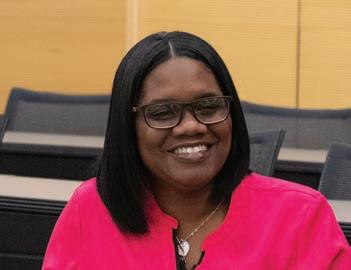
Addison
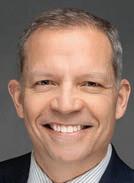
DiMauro
GETTY IMAGES/ISTOCK
Howley Foundation commits $28M to Gilmour Academy
KRISTINE GILL
Meg Howley still remembers going through the cafeteria line in the Commons as a Gilmour Academy student in the early 2000s.
“Back then, it was a big deal that there was this bu et-style picking of the food,” Howley said, laughing.
Nearby, the campus’ ornate 1920s Tudor House was the site of school events including prom.
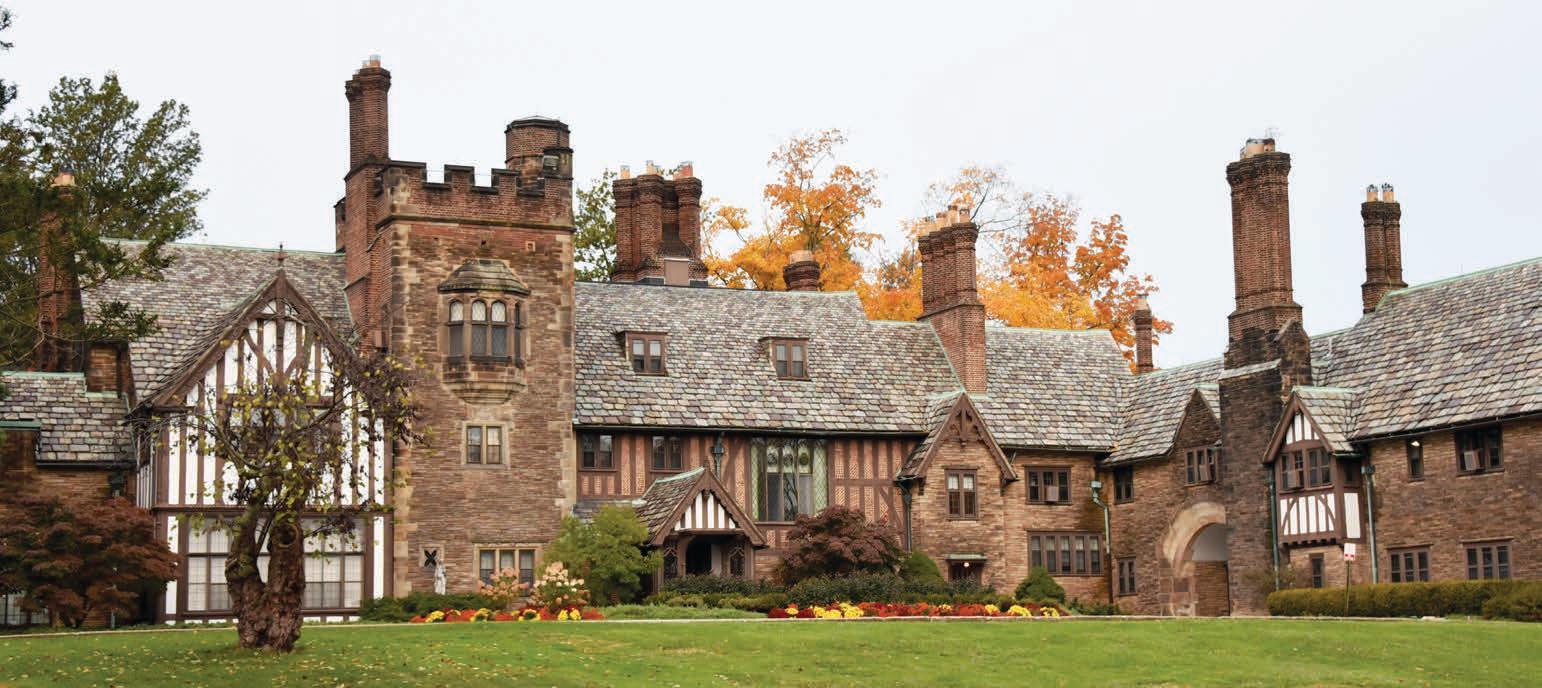
“It was always this grand place that we thought was so big and beautiful,” said Howley, now the executive di rector of her family’s foundation, which does work in Cleveland and Philadelphia. “To see it go would be sad for most alumni.”
Over the years, both buildings have seen wear and tear, so when Howley and her parents considered increas ing their assistance to the school this past year, two renovation projects rose to the top of the list. It began with a meeting between Howley and Head of School Kathleen Kenny.
“We had said, ‘What do you think will be the most di cult to fundraise for?,’ and she said the Tudor House would be the trickiest,” Howley said.
Last month, the Howley Founda tion announced a $28 million com mitment to Gilmour Academy, the largest donation the foundation has made to the school in nearly 20 years of giving. e gift will fund renova tions to the Commons and the Tudor House, as well as provide scholar ships for 48 students each year.
“Words cannot describe our grati tude,” Kenny said.
Meg Howley and her brother Mike Howley attended Gilmour in the ear ly 2000s. After they graduated, their parents, Lorie and Nick Howley, be gan a scholarship at the school, cov ering tuition for one eligible student in need each year. e giving never stopped, and Gilmour became a cor nerstone recipient for the family’s Cleveland-based organization.
“My wife and I very strongly be lieve that the best way to get yourself
out of a tough situation and get that upward social and economic mobili ty is with an education,” said Nick Howley, who is chairman of Cleve land-based aerospace manufactur
Currently, the Howleys fund major scholarships for 11 students at the school. e new scholarship will of fer the lion’s share of tuition for 48 students. Each year, as scholarship
opportunities for the growth of the heart and interpersonal connections that are so important to the students at Gilmour,” Kenny said.
Kenny said 48 is a signi cant por tion of the school’s overall popula tion. With about 750 students, it rep resents more than 6% of the student body able to attend because of the Howley family alone. Tuition is about $33,000 a year for each student, and the Howley scholarships will cover “the lion’s share,” Kenny noted.
As far as the capital projects are concerned, the Tudor House and Tu dor Gardens are in need of a facelift.
After taking the project to archi tects for a bid, the Howleys approved that improvement, as well.
e building is a centerpiece on campus reminiscent of Francis E. Drury’s original home along Million aire’s Row in Cleveland, Kenny said.
e Cleveland industrialist and founder of the Cleveland Foundry Co. commissioned the building, which was completed in 1924.
e rst oor and part of the sec ond oor are currently used for ad ministrative o ces. Parts of the third oor cannot be used due to water damage to the roof.
“We’ll be able to use the building as we once did decades ago,” Kenny said.
e Commons has been in need of changes for years as the school has grown. Currently, four lunch periods eat their meals in the lunchroom, but four more periods must eat in the gym, Kenny said.
“We have to literally wheel hot boxes of food over there, so that’s a critical need,” she said.
With the Howley Foundation gift, the Commons will be expanded so the kitchen and dining space can ac commodate the current student pop ulation. e two capital projects will cost about $11 million, and the other $17 million would be used for the scholarships.

“ ese are buildings of high vol ume, high use, where students come throughout the day and are part of a community,” Kenny said. “And the Tudor House is one where alumni and parents come.”
ing company TransDigm Group. “We decided that’s where we’re going to spend our money, and we’re lucky enough to a ord it.” is year, as Nick Howley and his wife consider full retirement, they’re ramping up their giving, he said.
recipients graduate, the foundation will begin funding more until the 48 goal is reached and maintained in perpetuity.
“Our mission is to educate hearts and minds, and this gift really speaks to the Howleys’ belief in providing
“It has all kinds of structural chal lenges with the roof gutters, win dows, doors, mortar, foundation, so basically Nick (Howley) said, ‘Let’s seal the envelope, seal the entire out side to prevent damage to the interi or,’” Kenny said.
She said the gifts the Howley Foun dation has given over the years have been instrumental to the education of dozens of students, and the capital projects will bene t all students and sta .
“ is is an extreme vote of con dence for their trust in Gilmour and their belief in Gilmour,” Kenny said.
Contact Kristine Gill: clbfreelancer@crain.com
12 | CRAIN’S CLEVELAND BUSINESS | O CTOBER 3, 2022 FOCUS | EDUCATION
The Tudor House at Gilmour Academy, completed in 1924. A grant from the Howley Foundation will help restore the structure. | CONTRIBUTED
A rendering of the Gilmour campus, showing the expanded Commons facility, funded by the Howley Foundation gift. | CONTRIBUTED
“OUR MISSION IS TO EDUCATE HEARTS AND MINDS, AND THIS GIFT REALLY SPEAKS TO THE HOWLEYS’ BELIEF IN PROVIDING OPPORTUNITIES FOR THE GROWTH OF THE HEART AND INTERPERSONAL CONNECTIONS THAT ARE SO IMPORTANT TO THE STUDENTS AT GILMOUR.”
—Kathleen Kenny, Gilmour Academy Head of School
EDUCATORS
From Page 10

that if a teacher is licensed in just one of those areas, they can be hired with the understanding that they’ll earn the other license within a certain amount of time. And the state works to o er supplemental licenses for teachers who already have a license in another area, she said.

e district currently has longterm substitute teachers in its vacant positions, Carter said, and it’s working to help some become full time through the state’s alternative resident educator license program. And it’s been looking at the qualications of its guest teachers, and bringing back some retired teachers for substitute positions, too.
In addition, to attract teachers, Akron has been attending job fairs and running social media campaigns, Carter said. On the retention side, the district has been working to make the Akron schools

employees could easily move their skills into the private sector, said Wayne Luetjes.

“You could take your CDL bus driver and go drive a truck and maybe make more money or get more hours,” Luetjes said.
Luetjes, a bus driver, last year served as the president of the Chardon Association of Classi ed Employees, representing non-teaching sta in the district. e union and the district this summer concluded their most recent round of contract negotiations, which saw pay increases, as well as an expanded number of steps in the pay scale.
And Luetjes thinks the improved compensation at the district has made a di erence, noting that the district was able to recruit new bus drivers this year. People are usually looking for a job to provide sucient money and enough hours for health care, he said.
—Wayne Luetjes, a bus driver, who last year served as president of the Chardon Association of Classi ed Employees
good places to work, paying for teachers’ continuing education, updating facilities and technology, and providing strong bene ts. e district also makes a point to give teachers a voice in decisions and to regularly celebrate their work through events and professional development.
A little under an hour north, the Cleveland Metropolitan School District was able to ll most of its open jobs this year. In his State of the Schools address on Sept. 21, CEO Eric Gordon shared that, amid nationwide shortages, the district is almost 99% sta ed.
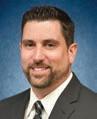






Across the country, schools are having a tough time lling full-time and substitute positions, said Shari Obrenski, president of the Cleveland Teachers Union. And it’s not just teaching positions; it’s paraprofessionals, custodial sta and more.

When it comes to non-teaching sta in school districts, there might be even more competition, as those
Obrenski also cited strong collective bargaining agreements as a reason why Cleveland has been able to withstand some of the national sta ng challenges. e district has strong wages, but also good working conditions, she noted. For example, recent contracts added health professional support to every building, and the Say Yes program has provided family support specialists. at kind of additional sta ng means that teachers don’t have to be responsible for everything in the building. Obrenski said the goal is to take something o a teacher’s plate whenever a new task or responsibility is added.
“So our folks come, and they have a tendency to stay at higher rates than many other places,” Obrenski said.








Where she still sees challenges is in the district’s pool of substitute teachers. Obrenski said that the district has about 500 substitutes “on the books,” but such jobs are still going unfilled every day, as substitutes don’t always pick up the available jobs. Teachers are having to split classes or skip planning periods to make up the difference. Not having enough substitutes is a widespread problem, she said, and one that’s unsustainable.
Rachel Abbey McCa erty: (216) 771-5379, rmcca erty@crain.com
OCTOBER 3, 2022 | CRAIN’S CLEVELAND BUSINESS | 13 CONNECT WITH @CrainsCleveland CrainsCleveland.com 20-0846 Our team will create a safe and innovative experience for your organization. • Business-focused environment • Experienced event planning team • Hybrid meeting technology • State-of-the-art venue • Best-in-class customer service • Award-winning catering Plan your next event at our world-class facility corporatecollege.com 20-0846 CC - Facility Ad Series 6x6.indd 1 10/20/20 2:05 PM PROTECT YOUR BUSINESS AND CUSTOMERS FROM FRAUD AND CYBERSECURITY ISSUES In an age of constantly evolving cybersecurity threats, it’s more important than ever to protect your business’ data, and that of your customers, from fraud and intrusion. Join this free webinar to hear from experts on how to safeguard your digital environment. Kristi Blue Corporate Security O cer Farmers National Bank WEBINAR THURSDAY, OCT 20 | 11AM EST REGISTER TODAY! WWW.CRAINSCLEVELAND.COM/FARMERSNATIONALBANK-WEBINAR
Blake
Drennen Information Security O cer Farmers National Bank
Akron’s Teacher of the Year program highlights educational achievements in a variety of categories, as well as names the best educator in the district for the previous year.
MARIANA EDELMAN PHOTOGRAPHY & DESIGN
“YOU COULD TAKE YOUR CDL BUS DRIVER AND GO DRIVE A TRUCK AND MAYBE MAKE MORE MONEY OR GET MORE HOURS.”
FOCUS | EDUCATION
Follow these 7 steps for student loan forgiveness
e Biden administration’s an nouncement that qualifying borrow ers can receive up to $20,000 in for giveness on federally held student loans rst elicited cheers from many of the 43 million Americans eligible to have their debt wiped. en came a barrage of questions.
e Department of Education has o ered some information on what borrowers can expect and will re lease more in the coming weeks.
For now, there are several key dates to know: Applications will open online early this month and take four to six weeks to process, the department has said. at means that borrowers should ll out forms by Nov. 15, according to a graphic posted by Education Secretary Mi guel Cardona, in order to receive forgiveness by the time a pandem ic-era payment pause ends on Dec.
31. Applications close next year on Dec. 31, 2023.
Separately, applications for limit ed expansion of the Public Service Loan Forgiveness program close on Oct. 31.
Here are some steps you can take to be prepared when applications be come available.
1. Check if you’re eligible.
If you made less than $125,000 in 2020 or 2021 — or if you’re married and you and your spouse made less than $250,000 — and you took out federal student loans prior to June 30, 2022, you’ll qualify for forgiveness.
e number to check is your adjusted gross income, or AGI, on tax returns from either of the past two years.
Pell Grant recipients will receive up to $20,000 in debt forgiveness, and holders of other types of federal loans will receive as much as $10,000.
All federally held student loans — in cluding undergraduate loans, gradu ate loans, spousal loans and Parent PLUS and Graduate PLUS loans — are eligible.
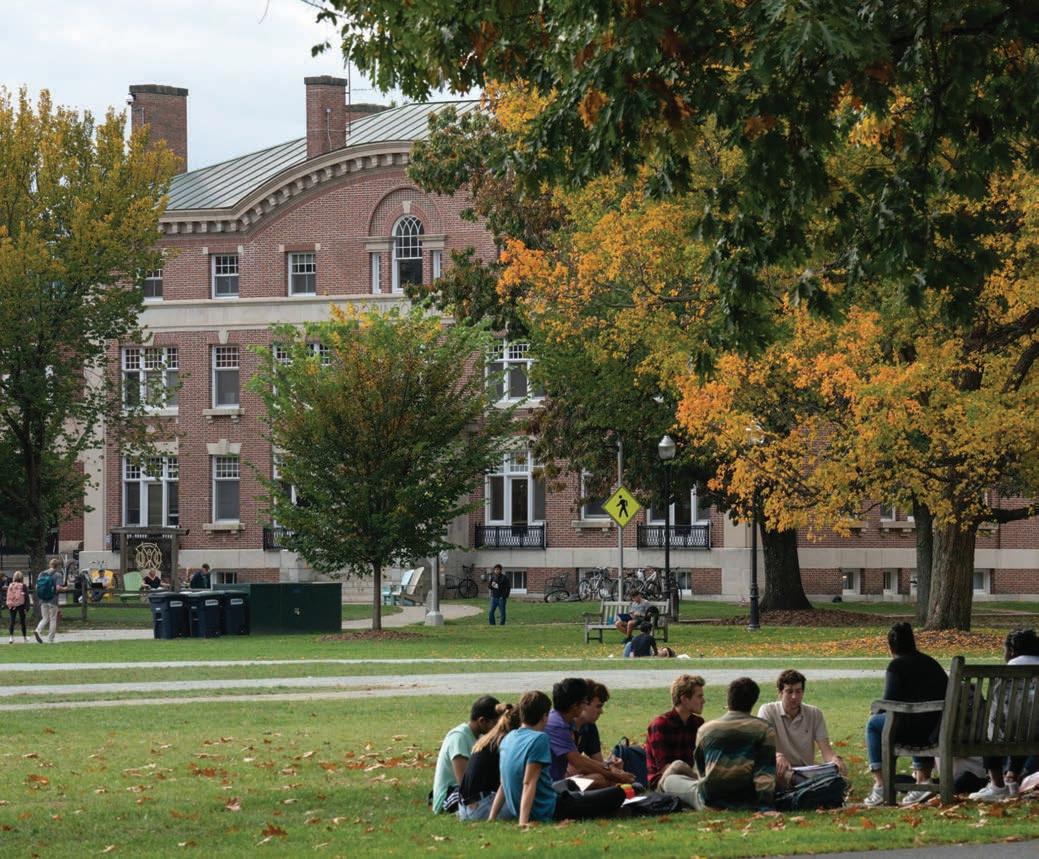
Eight things an accounting adviser might do for you
Painting a clearer picture of accounting
By Deloitte & Touche LLP
Far from the black-and-white world that many outside a company’s accounting function imagine, gray may be accounting’s primary color—many accounting questions are complicated, and there’s often a high degree of judgment required when applying the rules.
Documenting complex transactions and the related accounting conclusions may be extremely challenging given today’s standards for internal controls over nancial reporting. At the same time, nance departments are expected to create value across the entire business and nance leaders are expected to play a key role in many corporate decisions.
With all of this, it’s critical that accounting and nancial reporting are handled ef ciently and with an eye toward what’s best for the organization as a whole.

While an organization’s independent auditors can be helpful in identifying applicable guidance and discussing the application of such guidance in practice, there are limits to the amount and type of advice an independent auditor can provide due to applicable independence regulations.
Accounting advisory services: From confusion to con dence
The accounting world is a tough place to go at it alone, but having an accounting adviser can help you resolve your pressing issues and potentially lower the overall cost of your nancial statement audit. Here are eight things an effective accounting adviser may do for you.
1. Bring an experienced perspective: Need to reach informed accounting conclusions on tough, frequently asked questions?
2. Lead an open dialogue: Want open, early-stage conversa tions about topics that you might not feel ready yet to discuss with your independent auditor?
3. Explain the nuances of accounting guidance: Want to understand the rationale behind the accounting impacts of the strategic decisions your company makes?
4. Advocate for a chosen approach: Looking for help eshing out your approach to a highly judgmental accounting issue, as well as help articulating and supporting your positions to your independent auditor?
5. Examine alternative angles: Want to dig deep to expand your point of view on an accounting issue at hand to achieve the preferred accounting treatment?
6. Address thorny issues early: Need earlier identi cation and resolution of issues so that you may reduce last-minute re drills?
7. Improve internal controls: Looking for an extra layer of control that your independent auditor might appreciate? How about a fresh evaluation of your control environment as a whole?
8. Improve audit readiness: Want to provide your auditor with
a thorough and comprehensive analysis of your accounting position and gain the con dence that your approach to complex accounting issues is sound?
Energize your accounting
When an accounting adviser is used to help navigate complexities and paint a clearer portrait of a well-reasoned accounting approach, the investment may bene t not only your accounting department but also your entire organization. These eight things an accounting adviser may do for you ultimately add up to one result: helping you prepare a better work product. That high er-quality product may reduce independent auditor interaction time and possibly the overall cost of the audit while providing relief from upward pressure on base audit fees over time.
Tapping into the experience and knowledge of an accounting adviser allows you to better understand and address complex accounting challenges. And that can translate to letting you spend less time on your audit and more time and attention on your business.
To nd out more about what accounting and nancial reporting advisers may do for your business, contact Nick Accordino, Accounting and Reporting Advisory Partner, Deloitte & Touche LLP at naccordino@deloitte.com 216-5895237 or Matt Piros, Audit & Assurance Partner, Deloitte & Touche LLP at mpiros@deloitte.com 216-589-1407.

14 | CRAIN’S CLEVELAND BUSINESS | O CTOBER 3, 2022 FOCUS | EDUCATION
SPONSORED CONTENT
This advertising-supported section/feature is produced by Crain’s Content Studio-Cleveland, the marketing storytelling arm of Crain’s Cleveland Business. The Crain’s Cleveland Business newsroom is not involved in creating Crain’s Content Studio content.
BLOOMBERG
8 million borrowers will be
enrolled in the



 | BING GUAN/BLOOMBERG





the








out the Free Application for Federal Student Aid (FAFSA) and another 2 million borrowers who have income-driven repayment plans and have submitted income information for 2020 or 2021. e Department of Education will contact borrowers who are automatically eligible to notify them.

If you are not in that group, you’ll need to complete an application.
3. Sign up for Education Department updates; make sure your contact information is up-to-date with your loan servicer.





To make sure you’re noti ed when the forgiveness application goes live, sign up for updates at the Education Department web page by selecting “NEW!! Federal Student Loan Borrower Updates” and entering your email address.
en, con rm with your loan servicer that your contact information is up-to-date. If you aren’t sure who your loan servicer is, you can check on your personal dashboard at studentaid.gov.

4. Gather your 2020 and 2021 tax returns.


e purpose of the application is to gather income information to determine eligibility, so borrowers should have 2020 and 2021 tax returns on hand in order to nd their adjusted gross income.
5. Decide if you want to consolidate eligible private loans — and if you do, start immediately.

and then forgiven. In some cases, the department said, refunds will be automatic: Borrowers who successfully apply for and receive student loan forgiveness will be automatically refunded the amount of their voluntary payments if those payments “brought your balance below the maximum debt relief amount you’re eligible to receive but did not pay o your loan in full,” according to the department’s FAQ.
Other borrowers with direct, FFEL or Perkins loans that are held by the Department of Education can still receive refunds and then forgiveness for voluntary payments made during the pandemic — they’ll just have to contact their loan servicers.
7. Weigh other forgiveness and repayment options.


e one-time loan forgiveness plan isn’t the only option available to debtors. Last October, the Department of Education announced a one-time expansion of eligibility for public service loan forgiveness. Applications for that program are due on Oct. 31 and are available on the student aid website.

Borrowers should note that forgiveness is not per loan, but rather per borrower — meaning that if you took out multiple federal loans for your own education, or one loan for yourself and one Parent PLUS loan for a child, your forgiveness is still capped at $10,000 or $20,000, said nancial-aid expert Mark Kantrowitz.
Pell Grant recipients who took out one Pell Grant and other federal loans are still eligible for the full $20,000 in forgiveness, even if their grant was for less than that amount.
2. Check if you need to ll out an application.
e vast majority of borrowers will need to ll out an application to receive relief. However, around 8 million borrowers will be automatically enrolled in the program because the Department of Education already has access to their income information.
at includes around 6 million current students who recently lled
Private loans, including Federal Family Education Loans (FFELs) that are backed by the government but were originally held by private companies, are not eligible for relief — but borrowers with FFEL loans can consolidate them into direct federal loans in order to become eligible.

ey can do so by going to the federal student aid website and lling out an application, Kantrowitz said.
Applicants who wish to consolidate their loans into direct loans in order to be eligible for forgiveness should start that process immediately, Kantrowitz said, as it can take 30 to 45 days for consolidation to be processed, and the department recommends that borrowers submit applications by Nov. 15.
6. Check if you are eligible for a refund for any payments you made during the pandemic.
Payments made during the pandemic-era pause can be refunded
e department is also undergoing a one-time adjustment of income-driven repayment plans to address past inaccuracies in counting and eligibility. is adjustment is automatic, so you don’t need to worry about an application. But only borrowers with direct loans are eligible, meaning those with FFEL loans who want to qualify need to consolidate those loans into a direct loan. More information is available on the student aid website.
e Department of Education has proposed a new rule for income-driven repayment that would cap monthly bills at 5% of discretionary income, instead of 10% — cutting payments in half for many borrowers. ose rules likely will not be nalized until several months into 2023, student loan experts say, but borrowers should take note of the potential change for planning purposes.
Borrowers who are in default on direct loans, FFEL loans and Perkins loans held by the Department of Education are eligible for the Fresh Start program, which was announced in April and lasts one year after the payment pause ends on Dec. 31. e department will reach out to eligible borrowers “in the coming months” with instructions on how to access the program, according to the aid website.
OCTOBER 3, 2022 | CRAIN’S CLEVELAND BUSINESS | 15
For over thirty years, the team at Sequoia Financial has been assisting clients craft personal financial plans that achieve their unique goals. Simply put, we’re here to help. SEQUOIA-FINANCIAL.COM | 440 473 1115 Investment advisory services offered through Sequoia Financial Advisors, LLC, an SEC-registered investment advisor. Registration as an investment advisor does not imply a certain level of skill or training. More information about Sequoia can be found here: https://adviserinfo.sec.gov/
SCAN
THIS TO SCHEDULE A MEETING
Tap into
Cleveland.
CRAIN’S CLEVELAND
Crain’s is now in the app store.
President Joe Biden announces a sweeping package of student-debt relief at a news conference Aug. 24. | BONNIE CASH/UPI/BLOOMBERG
Around
automatically
loan forgiveness program because
Department of Education already has access to their income information.
FOCUS | EDUCATION


YOUR AUTHORITY. OUR AUDIENCE. *Close date is three weeks prior to publication; materials due two weeks prior to publication. CRAIN’S THOUGHT LEADER Use Crain’s Thought Leadership to share your expertise on current events, trends, issues, and perennial themes with the Northeast Ohio business community. UPCOMING FORUMS* Oct. 24 - Financial Planning (with special distribution in our 40 Under 40 issue) Nov. 14 – Economic Forecast 2023
WHAT WOULD JESUS BUY
Investor charts course for $2B fund
BLOOMBERG
It’s a good day on Wall Street, high temple of Mammon, when Robert Netzly proclaims the power of God.
At 4 p.m. New York time, 2 p.m. here in Idaho, Netzly takes a break after the market close, gathers his an alysts and sales reps and turns to the Book of Romans. He’s been praying on a question you never hear on the Street: What would Jesus buy?
Netzly has his list: 24,000-or-so stocks that do and don’t conform to his reading of the Bible. A hard no: Amazon.com Inc. Never mind that its stock has appreciated 845% in 10 years. Amazon supports LBGTQ rights and, post-Roe, is covering em ployees’ travel expenses for abor tions — decisions that Netzly, an evangelical Christian whose rm oversees about $2 billion, says dis qualify a company from “God’s port folios.”
Lloyd Blankfein, the former boss of Goldman Sachs Group Inc., once joked that he was doing God’s work. Netzly, a former Wells Fargo wealth adviser, insists he really is doing it. He wants corporate America to an swer to a higher CEO, and he’s pick ing stocks such as gunmaker Sturm Ruger & Co., discount retailer Dollar Tree Inc. and Rupert Murdoch’s Fox Corp. to hasten the day.
Here in Boise — a fast-growing city of Brooklyn-esque lattes and out-ofstate transplants grafted upon deepred America — Netzly is positioning himself as an evangelical answer to big money. His idea is that the U.S. is so riven by politics, culture, faith and more that even the stock market can tear us apart. Netzly’s small rm, In spire Investing — which follows a strategy that he calls biblically re sponsible — is part of something larger: a Republican backlash to the trillions of dollars committed to envi ronmental, social and governance investing.
When one thinks about the role corporations play in American life, solving society’s problems probably isn’t the rst thing that springs to mind. Many would argue that com panies aren’t doing nearly enough, particularly given our overheating planet (Netzly said he cares about the environment but isn’t especially worried about climate change). And yet, prominent gures on the right paint ESG as a threat to the nation.
Former Vice President Mike Pence and Florida Gov. Ron DeSantis insist corporate elites are foisting liberal agendas on everyone else — a claim that resonates with the millions of white evangelicals who embraced Donald Trump as president and re main a potent force in U.S. politics. Looming large are hardening posi tions on race, diversity and repro ductive rights.
Enter Inspire Investing. Netzly’s 7-year-old rm oversees ex change-traded funds with tickers such as BIBL, BLES, GLRY and WWJD, short for “What Would Jesus Do?” is year, his biggest ETF, In spire 100 (ticker BIBL), is posting
wider losses than the S&P 500.
Until recently, Netzly was market ing a Christian, conservative version of ESG. Now, with Republicans trash ing ESG as “woke capitalism,” Netzly has stripped the label from his prod ucts. He said “hard-left liberal activ ists” and “Marxists” have “weapon ized” the whole idea of investing with a broader purpose.
Where Netzly sees providence, others see prejudice. He dreams of a day when all corporations will hew to his evangelical reading of the Bible. He’s aligned himself with Alliance Defending Freedom, an in uential conservative Christian group that’s fought to limit the separation of church and state and to roll back laws on same-sex marriage and reproduc tive rights.
“I love my LBGTQ brothers and sisters, I don’t want them to be dis criminated against,” said the 41-yearold Netzly. “But I don’t want compa nies promoting their ‘lifestyles.’”
Nearly all of corporate America disagrees, according to Bill George, an executive fellow at Harvard Busi ness School. “Companies represent all employees, and LGBTQ employ ees are integral to the work force,’’ he said. Almost three-quarters of Amer icans say they support legal same-sex marriage, according to a May poll conducted by Gallup.
At Inspire’s o ce, 15 minutes west of downtown Boise, the walls are still bare and some rooms are unfur nished. Business has been so brisk that Netzly expanded recently. e vibe is Finance Mod: white walls, white furniture, ping-pong table, cornhole boards. On days when buy orders top sell orders, employees ring a bell on the wall.
publicans outnumber Democrats 4:1.
On this August afternoon, he’s dressed in cropped beige trousers, a blue gingham shirt and flip-flops. He recently returned from Georgia, where he was strategizing with Re publican politicos about their war on ESG.

Mixing faith and finance can get tricky. But in some ways, reli gion-oriented investing isn’t so dif ferent from ESG. The idea dates back to at least the 1700s, when the Quakers forbade their members from owning slaves. Today, a range of faith-driven investment firms — mostly Christian, but Islamic and Jewish, too — form an influential fringe industry.
“They are a niche within a niche,” said Todd Rosenbluth, head of re search at VettaFi, an ETF data and analytics company. In all, the faithbased firms oversee $139 billion under the broad umbrella of sus tainable investments. That’s a tiny fraction of the $2.5 trillion of assets in this category industrywide.
Which companies qualify for “God’s portfolios” at In spire? The lines can get blurry. Inspire screens companies by a variety of categories under the “E,” “S” and “G” of ESG. But it’s the S — social — where things get particularly con tentious for Netzly.
American semiautomatic, are in. Other holdings range from Ferrari NV to Schlumberger NV, plus Dollar Tree and Fox Corp., parent of Fox News.
Inspire recently singled out the 125-year-old J.M. Smucker Co. of Orrville, best known for its jams and peanut butter, for “choosing LGBTQ+ political activism over wholesome family values.” On his website, Netzly urges investors to “push back” with an online petition to CEO Mark Smucker.
Smucker spokesman Frank Cirillo said the company has expressed support for legislation that includes LGBTQ civil rights protections.
“We are committed to ensuring equitable rights for our employees, their families and those in the com munities we serve,” he said.
Netzly said Inspire helped per suade Costco Wholesale Corp., the giant warehouse store club, to stop funding LGBTQ Pride Month pa rades. Costco’s chief nancial o cer hasn’t responded to emails seeking comment.
After the Supreme Court over turned Roe v. Wade in June — a deci sion hailed as a spiritual victory by conservative Christians — Inspire began tracking corporations that are committing to help employees gain access to reproductive health care (in late August, a federal judge blocked Idaho’s near-total abortion ban).
dex during the same period, with most of the underperformance oc curring this year. e Inspire Inter national ETF gained at annual rate of 5% since the start of 2019, exceed ing the 1.6% advance of the MSCI ACWI Excluding U.S. Index.
In Netzly’s telling, there are huge sums of money at stake. He said Christians in the U.S. have about $20 trillion of investments, savings and retirement accounts.
A few months ago, phones began lighting up at Inspire. Elon Musk, the world’s richest person, was at tacking ESG as “the devil incarnate.” DeSantis, the Florida governor and White House hopeful, was piling on. Fox News rebrand Tucker Carlson, along with right-wing radio host Glenn Beck, were blaming ESG for everything from high gasoline prices to economic trouble in Sri Lanka.
If ESG was so bad, Inspire clients wanted to know, why was Netzly wrapping himself in that label? His answer: “I’m not anymore.” He for mally renounced the tag and rallied behind the so-called anti-woke campaign.
“Every conservative pundit is call ing ESG evil. We just can’t counter act that narrative,” Netzly said. “It’s exponentially increasing.”
How Netzly ended up here still surprises him. He grew up in Sali nas, about two hours southeast of San Francisco, and said he found Jesus at age 7. It wasn’t until he was working for Wells Fargo & Co., in tony Carmel-by-the-Sea, where the actor Clint Eastwood used to be mayor, that he found his calling as a Christian investor. Netzly said he was horrified to discover he owned shares in companies that were making what he considered aborti facients.
“I couldn’t do my job,” Netzly re called. “If somebody came to my desk and asked me to place a trade, I couldn’t do it with a clean con science.”
So, he quit in 2011 and began ad vising people about investing in ac cordance with his evangelical be liefs. Two years ago, he moved to Idaho, where the cost of living is cheaper, taxes are lower and Re
“The Pollyanna in me wishes that there could be a two-party ESG system,’’ Netzly said.
Inspire views supporting LGBTQ rights, covering travel for reproduc tive health, stem cell research and in vitro fertilization as big nega tives. So, too, selling alcohol, can nabis, tobacco, gambling and dis tributing pornography. It endorses companies it deems worthy, engag es with those it hopes to convert and excludes or divests from ones that it finds “immoral.”
The result: a list of companies that — while not necessarily de clared “blessed” — generally square with Netzly’s beliefs. As with many things in ESG, the lineup can seem confusing.
Defense contractors such as General Dynamics Corp., manufac turer of M1 Abrams tanks and Stinger missiles, are out. But fire arms companies like Sturm Ruger, maker of the 9-millimeter Ruger
Currently, that list includes al most 50 companies, from Accenture Plc to Zillow Group Inc. At one of them, Dick’s Sporting Goods Inc., Netzly said he may put the issue to a shareholder vote. A company spokesman hasn’t responded to emails seeking comment.
In this ght, Netzly has teamed up with ADF, the conservative legal group, on a “viewpoint diversity” in dex. e measure supposedly scores companies on how they “respect” freedom of expression and religion.
“ ere’s a growing threat within corporations to freedom of speech, especially regarding religious and political viewpoints,” said Jeremy Tedesco, ADF’s senior counsel.
Netzly urges all investors to heed 1 Corinthians 10:31: Whatever you do, do all to the glory of God. But, so far, his investment performance has been mixed. His largest ETF, Inspire 100, has returned an annualized 8.9% since it opened in 2017, com pared with 10.7% for the S&P 500 In
In a blog post, he struck a di er ent tone. “ e burning intolerance of the left has hit a gas line in the ESG party hall, escalating the ames to such heights that it has become necessary for us to abandon the building,” Netzly said on Aug. 18.
As they do most ursdays, Netzly and his family head to a weekly pot luck-dinner-cum-Bible-study at a friend’s place. As the kids play out side, the adults discuss Colossians 3 over burritos. Part of the passage is often interpreted as urging people to focus on spiritual matters rather than earthly ones. Few here realize Netzly oversees billions of dollars — or that he’s part of a conservative movement tilting at corporate America.
Netzly demurs when describing what he does as “stakeholder capi talism.” at’s the label prominent executives have adopted when talking about corporations’ broader social purpose. Like ESG, the phrase has been maligned by conserva tives.
“It’s a loaded term,” Netzly said of the phrase. He prefers a di erent one: Companies, he said, should be a “blessing” to everyone.
OCTO BER 3, 2022 | CR AIN’S CLEVE LAND B USIN E SS | 17 FINANCE
Robert Netzly leads employees in prayer before a meeting at Inspire Investing in Meridian, Idaho.
| KYLE GREEN/BLOOMBERG
“I COULDN’T DO MY JOB. IF SOMEBODY CAME TO MY DESK AND ASKED ME TO PLACE A TRADE, I COULDN’T DO IT WITH A CLEAN CONSCIENCE.”
—Robert Netzly
RANK COMPANY MAIN LOCAL OFFICE
KEYBANKNA 127 Public Square, Cleveland44114 216-689-3000/key.com
HUNTINGTON NATIONAL BANK 200 Public Square, Cleveland44114 800-480-2265/huntington.com
PNC BANK 1900 E. 9th St., Cleveland44114 888-762-2265/pnc.com
4
JPMORGAN CHASE BANKNA 1300 E. 9th St., Cleveland44114 800-935-9935/chase.com
CITIZENS BANKNA 1215 Superior Ave., Cleveland44114 216-277-5326/citizensbank.com
FIFTH THIRD BANK 600 Superior Ave. E., Cleveland44114 216-274-5533/53.com
THIRD FEDERAL SAVINGS AND LOAN 7007 Broadway Ave., Cleveland44105 800-844-7333/thirdfederal.com
U.S. BANK 1350 Euclid Ave., Cleveland44115 216-623-9300/usbank.com
9
10
FARMERS NATIONAL BANK OF CANFIELD 20 S. Broad St., Can eld44406 888-988-3276/farmersbankgroup.com
OHIO SAVINGS BANK(A DIVISION OF NEW YORK COMMUNITY BANK) 1801 E. 9th St., Cleveland44114 216-736-3480/mynycb.com
DOLLAR BANKFSB 950 Main Ave., Cleveland44113 216-736-8934/dollar.bank
PREMIER BANK 275 W. Federal St., Youngstown44503 330-742-0500/yourpremierbank.com
FIRST NATIONAL BANK 55 Public Square, Cleveland44113 800-555-5455/fnb-online.com
FIRST FEDERAL LAKEWOOD 14806 Detroit Ave., Lakewood44107 216-529-2700/ .net
WESTFIELD BANKFSB Two Park Circle, West eld Center44251 800-368-8930/west eld-bank.com
CIVISTA BANK 100 E. Water St., Sandusky44870 419-625-4121/civista.bank
BANK OF AMERICANA 30195 Chagrin Blvd., Pepper Pike44124 800-432-1000/bankofamerica.com
MIDDLEFIELD BANKINGCO. 15985 E. High St., Middle eld44062 440-632-1666/middle eldbank.bank
NORTHWEST BANK 457 Broadway Ave., Lorain44052 440-244-7185/northwest.bank
FIRST COMMONWEALTH BANK 1100 Superior Ave., Cleveland44114 800-711-2265/fcbanking.com
Chagrin Blvd., Woodmere44122
SAVINGS COMMUNITY BANK
N. Market St., Wooster44691
6-30-20226-30-2021% CHANGE LOCAL OFFICES
EMPLOYEES WORLDWIDE (FTE) 6-30-2022
HOLDING COMPANY HEADQUARTERS LOCATION
$55,541.7 1 $32,257.772.2%9718,454KeyCorp Cleveland
$28,262.9$27,607.82.4%16220,143Huntington Bancshares Columbus
$17,765.9$17,297.52.7%9259,691PNC
Financial Services Group Inc. Pittsburgh, Pa.
$13,205.7$12,118.19%80210,348JPMorgan Chase & Co. New York, N.Y.
$11,862.8$12,242-3.1%7519,428Citizens Financial Group Inc. Providence, R.I.
$7,430.9$7,243.22.6%6519,094Fifth Third Bancorp Cincinnati
$6,664.1$6,583.71.2%211,001TFS Financial Corp. Cleveland
$3,720.6$3,731.4-0.3%5669,267U.S. Bancorp Minneapolis, Minn.
$3,376.1$2,460.537.2%40496
Farmers National Banc Corp. Can eld
$2,570.6$2,5640.3%282,789New York Community Bancorp Inc. Hicksville, N.Y.
$2,415.5$2,454.7-1.6%291,323Dollar Mutual Bancorp Pittsburgh, Pa.
$2,110.4$2,381.9-11.4%251,025Premier Financial Corp. Youngstown
$1,915.9$1,852.83.4%263,867F.N.B. Corp. Pittsburgh, Pa.
$1,769.8$1,703.53.9%19419
$1,680.7$1,681.4-0%7189
$1,190$1,151.93.3%13452
First Mutual Holding Co. Lakewood
West eld West eld Center
Civista Bancshares Inc. Sandusky
$1,109.9$1,125.1-1.3%8133,221Bank of America Corp. Charlotte, N.C.
$1,023.2$1,077.7-5.1%11187
Middle eld Banc Corp. Middle eld
$990.8$1,007.4-1.6%122,188Northwest Bancshares Inc. Warren, Pa.
$937.1$882.36.2%101,409First Commonwealth Financial Corp. Indiana, Pa.
$688.2$58817%2117
$527.5$497.86%10101
CF Bankshares Inc. Worthington
TOP LOCAL EXECUTIVE
ChristopherM.Gorman, chairman, president CEO
SeanP.Richardson, regional president, Cleveland
PatPastore, regional president
DaveAllen, Executive Director at J.P.Morgan Private Bank; market executive for Northeast Ohio
JamesM.Malz, Midwest regional market executive
TomPartridge, region president, Northern Ohio
MarcA.Stefanski, chairman, president, CEO
AndiGarten, Indiana/Ohio branch banking market leader
KevinJ.Helmick, president, CEO
AnthonyDonatelli, executive vice president
WilliamM.ElliottJr., executive vice president, regional lending director
GaryM.Small, president, CEO; MatthewGarrity, executive vice president, chief lending o cer
VincentJ.DelieJr., chairman, president, CEO
TimothyE.Phillips, president, CEO
MichaelToth, president, CEO
DennisG.Sha er, president, CEO
JeneenMarziani, Ohio and Cleveland market president
JamesR.HeslopII, president, CEO
JulieHughes, president, southwestern Pennsylvania and Ohio region
JaneGrebenc, executive vice president, chief revenue o cer; MattZuro, regional president, Northeast Ohio
TimothyT.O'Dell, CEO; MarkNykaza, Northeast Ohio market president
JamesR.VanSickleII
Andover
StephenE.Varckette
18 | CRAIN’S CLEVELAND BUSINESS | O CTOBER 3, 2022
1
2
3
5
6
7
8
11
12
13
14
15
16
17
18
19
20
21 CFBANKNA 28879
216-468-3100/cf.bank
22 WAYNE
151
330-264-5767/waynesavings.com
Wayne Savings Bancshares Inc. Wooster
, president, CEO 23 ANDOVER BANK 600 E. Main St., Andover44003 440-293-7256/andoverbankohio.com $484.9$444.39.1%790
Bancorp Inc. Andover
, president, CEO 24 CONSUMERS NATIONAL BANK 614 E. Lincoln Way, Minerva44657 330-868-7701/consumers.bank $419.6$386.58.6%10184 Consumers Bancorp Inc. Minerva RalphJ.LoberII, president, CEO 25 PORTAGE COMMUNITY BANK 1311 E. Main St., Ravenna44266 330-296-8090/pcbbank.com $408.3$409.8-0.4%485 Portage Bancshares Inc. Ravenna KevinT.Lewis, CEO BANKSCRAIN'S LIST | Ranked by Northeast Ohio deposits as of June 30, 2022 NORTHEAST OHIO DEPOSITS (MILLIONS) ResearchbyChuckSoder(csoder@crain.com) |Financialdatacomesfromfdic.gov.Thislistincludesdepositsandlocalo cesin15counties:Ashland,Ashtabula,Cuyahoga,Erie,Geauga,Huron,Lake,Lorain,Mahoning,Medina,Portage,Stark, Summit,TrumbullandWayne.NOTES: 1. KeyBankmadethefollowingstatementrelatedtothisincrease:"DuetointernalchangesinhowKeyBankcalculatesdepositsatourheadquarters,inothermarkets,andoursubmissiontotheFDIC,therecouldbe a signi cant change locally." Get 50 banks and historical deposit data in Excel. Become a Data Member: CrainsCleveland.com/data , CEO
From your name on the door

To your name on the building
Ambition drives your business and helping you reach your goals drives us. With expert advice and banking solutions tailored to you, our team is here to get you from where you are, to where you want to go.


COMMERCIAL BANKING | CAPITAL MARKETS


























PRIVATE WEALTH

Loans subject to credit approval. The CIBC logo is a registered trademark of CIBC, used under license. ©2022 CIBC Bank USA. Products and services o ered by CIBC Bank USA.

















|
cibc.com/US
KeyBank continues to dominate deposit market share
JEREMY NOBILE
KeyBank technically cemented its spot as the largest deposit holder in Northeast Ohio this year, but that comes with a major asterisk.
Key is once again in the No. 1 spot on the Crain’s annual Banks list, which is built with data from the Federal Deposit Insurance Corp. e FDIC data show that Key gained sig ni cant local market share com pared with 2021.
But there is some mathematical magic happening with Key’s num bers, as the bulk of its deposit growth in the local market is attributed to “internal changes in how KeyBank calculates deposits” at its downtown Cleveland headquarters, according to a company spokesperson.

e bank declined to elaborate much beyond that. But those inter nal changes seemingly point to the bank routing existing corporate de posits across its footprint that would have otherwise been accounted for in other markets through its main of ce, which is a common practice for regional banks.
Key reported more than $55.5 bil lion in deposits in the Northeast Ohio region as of June 30, according to the FDIC, giving the bank a local market share of 32.3% in 2022.
ere are 50 depositories operat ing in Northeast Ohio, one fewer than last year.
Cortland Bank fell o the list after
HOPKINS
to get to Europe and back without getting caught in the East Coast air tra c snarl is very attractive.”
Also attractive for big U.S. compa nies, including Northeast Ohio stal warts Eaton and Steris, is Ireland’s 12.5% tax rate, its 25% tax credit against research and development costs, and its double-taxation agree ments with most major trading part ners.
“Certainly for Steris and Eaton, which have active operations in Ire land, this is a fantastic time-saver and connector for those companies that are doing business to and from that country speci cally,” Shah said.
Why Cleveland?
Reid Moody, Aer Lingus chief strategy and planning o cer, said the Cleveland-to-Dublin ight, an nounced Wednesday, Sept. 28, has been in the works for a little under a year. He said this region’s “Irish dias pora,” which Moody estimates makes up 15% to 20% of Northeast Ohio’s population, was one reason the new ight was attractive.
Another key factor came earlier in the week, when Aer Lingus conduct ed the rst ight with its new Airbus A321neo planes from Dublin to Lon don Heathrow.
e single-aisle planes seat 180 to 220 passengers while outputting 20% less harmful emissions and 50% less
getting acquired by e Farmers Na tional Bank of Can eld.
Rounding out the top 10 largest banks by market share in the local area are: Huntington Bank (16.5%); PNC Bank (10.4%); JPMorgan Chase Bank (7.7%); Citizens Bank (6.9%); Fifth ird Bank (4.3%); ird Feder al Savings and Loan Association of Cleveland (3.9%); U.S. Bank (2.2%); e Farmers National Bank of Can eld (1.2%); and New York Commu nity Bank/Ohio Savings Bank (1.5%).
Among that group, the only rank ing changes in the past year are Chase stepping ahead of Citizens by one spot and Farmers jumping ahead of NYCB by one spot — thanks in large part to its Cortland acquisi tion.
Key’s local market share was 22% in 2021. Year over year, its reported deposits for 2022 in the local area surged by more than $23 billion, an increase of 72%, while its number of in-market branches decreased by seven, to 97 locations.
Key’s total companywide deposits, however, grew by just 0.3% over 2021.
So with respect to Northeast Ohio, Key doesn’t seem to have nabbed a signi cant amount of market share from competitors as much as it may seem because the market ballooned as a result of Key’s accounting chang es.
According to a Crain’s analysis, to tal deposits across Northeast Ohio
grew this year by 17.6%.
When removing Key from the equation, though, the regional de posit market grew by just 2.1%.
Because of the massive increase by Key, each of the top 10 banks in this market — besides Key, obvious ly, and Farmers — show a marginal decrease in market share.
Compared with 10 years ago, the Northeast Ohio market today has seven fewer institutions. But total in-market deposits have increased since then by 115%, to nearly $172 billion.
As far as bank o ces go, total in-market branches consolidated from 1,074 to 996 over the past year, a decrease of 7%. at’s the largest an
nual decrease in at least the past ve years.
It’s also a faster consolidation rate than the state at large, as the total number of branches in Ohio de creased by 4.3% in the past year.
Banks with large footprints con tinue to shrink their branch net works here and across the country in a trend that picked up even more during and after the outbreak of COVID-19.
In fact, according to an analysis by S&P Global Market Intelligence, bank branches consolidated by 38% in 2021 over the prior year, setting a new record for the industry.
ere were 2,927 branch closures nationwide last year and 2,126 in
million passengers, and right now we’re forecasting to be back to pre-pandemic levels, a full recovery, next year.”
e recovery in business and lei sure travel helped attract new service to Hopkins using JobsOhio’s reve nue-guarantee program.
What’s known as the Air Service Restoration program is a culmination of a listening tour and study that ex amined air service in Ohio from 2005 to 2019 and found the state lost 113 city pairings. ose losses stemmed in part from the Delta dehubbing in Cincinnati and the Continental/ United dehubbing in Cleveland, ac cording to Terry Slaybaugh, JobsOhio vice president of sites and infrastruc ture.
2020, according to S&P, compared with 1,417 closures in 2019.
Compared with 10 years ago, the number of branches in Northeast Ohio has shrunk by 28% — com pared with a statewide consolidation rate over that same period of 22%.
Huntington Bank continues to have the densest branch footprint in Northeast Ohio and across the state. It consolidated its branches in the local market by 24% in the past year, shrinking from 212 locations to 162 as of June 30. Dozens of those clo sures were in-store Giant Eagle branches.
Jeremy Nobile: jnobile@crain.com, (216) 771-5362, @JeremyNobile
used to entice Alaska Air to establish a nonstop ight from Cleveland to Seattle, which expanded with an ad ditional plane in less than ve months.
Hopkins’ master plan
e Cleveland-to-Dublin route is part of a new type of air travel — one with fewer hub-related delays, in creased fuel savings and reduced carbon emissions — that is critical for the industry and a major in u ence on the planned redesign of Hopkins.
engine noise. e energy-e cient eet has an extended range capable of ying nonstop transatlantic routes, allowing airlines to add global and continental routes not previously ac cessible, Moody said.
“ is is part of the Aer Lingus busi ness plan,” he said. “We have taken delivery of these new, next-genera tion aircraft. ... We plan to bring on another 14 of those types of planes over the next couple of years.”
ese more modern aircraft are designed for the next 20 or 30 years, as airlines are committed to reducing the aviation industry’s carbon output and to targeting slightly smaller air ports.
“It’s the perfect vehicle to service these slightly smaller areas,” Moody said. “We have wide-body aircraft on
the big airport hubs, but as we con tinue our growth and maximizing the potential of the business, cities like Cleveland are the areas we want to target.”

Post-COVID recovery
e emergence of long-range, di rect-service ights is a crucial part of the airline industry’s pandemic re covery — a recovery that has Cleve land’s air tra c rebounding above the national average, according to Cleveland Hopkins interim director Dennis Kramer.
“We’ve maintained a recovery above the national average this entire time,” Kramer said. “ is year, we es timated 9 million passengers. Pre-pandemic, in 2019, we had 10.1
e Air Service Restoration pro gram, rolled out in July 2019, is based on similar programs in Indiana and Pennsylvania and uses subsidies from casino revenue and fracking revenue to attract airlines.
“What we recognize is that every one was going to lose ight service across the country, and that meant the playing eld was going to be lev el,” Slaybaugh said. “We knew were going to have an opportunity, if we had a competitive program, to grab airplanes before other markets in the Midwest could.”
Since its inception, Slaybaugh said, the program has helped bring about 16 routes to airports in Cleve land, Columbus and Akron. ose new routes account for about 20% of all seats at Akron-Canton Airport, Slaybaugh added. e program was
“A $2 billion master plan is under way now for the airport, and once that master plan development kicks o , the hope is that this Aer Lingus ight draws other international ights to Hopkins,” said Cleveland City Councilman Kerry McCormack, who chairs council’s transportation committee.
e long-range, more e cient small aircraft are an integral part of Hopkins’ plan to rebuild passenger terminals to accommodate modern eets.
“We’ve heard in some of the trans portation committee meetings that some of these terminals haven’t been updated since the propeller planes were ying in and out of Hopkins,” McCormack said. “We want to be equipped to really take advantage of these new modern aircraft, and that’s a huge part of what the master plan is.”
Kim Palmer: kpalmer@crain.com, (216) 771-5384, @kimfouro ve
20 | CRAIN’S CLEVELAND BUSINESS | O CTOBER 3, 2022
LIST ANALYSIS
From Page 1
City, county, state and civic leaders joined an Aer Lingus representative to announce a new ight to Dublin at Cleveland Hopkins International Airport. CITY OF CLEVELAND
KeyBank is once again in the No. 1 spot on Crain’s annual Banks list ROGER MASTROIANNI/KEYBANK
He then gave the helmets to one of his assistant coaches who owns a body shop. e coach painted the helmets to match the others. e season was saved.
“It worked out perfect,” Kray said. “I couldn’t have gotten that lucky again in my life. Brad de nitely went above and beyond.”
A few weeks later, Cleveland Col linwood High School had to forfeit its Week 1 game because its helmets didn’t arrive in time, the rst time in recent memory that an Ohio high school had to cancel a football game due to an equipment shortage.
Naturally, media outlets wondered how this could happen, but a better question might be, why doesn’t this happen more often?
Often, it’s because reps are work ing with schools to nd creative solu tions, as when Chardon sourced loaner helmets while theirs were be ing completed, or when Summit County-based Green’s youth pro gram borrowed 56 helmets from Saint Rita CYO in Solon to tide them over until their helmets were com pleted. In both cases, the schools had Riddell rep Doug Harper to thank.
“ ey’re (helmet companies) tak ing a beating over this whole thing, but the supply chains are that bad,” Kray said. “Afterward, Brad and I spent some time together and we were laughing because there are ma jor collegiate programs that didn’t have helmets. ey’re (reps) getting blown up by high school guys (coach es) who don’t have theirs, or some peewee league downtown some where doesn’t have helmets. Mean while, the University of Michigan is missing half their helmets.”
Kray laughed, then added, “It puts things in perspective.”
Cleveland presence
Although based in Chicago since its founding in 1929, Riddell — pro nounced Rih-DEL — has had a pres ence in Cleveland since 1991, when it purchased Elyria-based All-Ameri can Sports Co.
In 2017, Riddell moved from Elyria to a $27 million, 350,000 square-foot
building in nearby North Ridgeville. ere, a group of 380 employees — sometimes more, since they’re al ways hiring — makes new football helmets for all levels of the game, as well as a variety of consumer collect ible helmets, ranging from a minia ture size that retails for under $50, a replica version that goes for about $185 and a real-deal authentic ver sion that can cost as much as $800.
Although there are no o cial numbers, Riddell estimates it has about 76% of the market share for NFL helmets, 85% for Division I col leges and is in the mid-70% for high schools nationwide, said Allison Boersma, Riddell’s CFO and COO. (Riddell is not the equipment suppli er for Collinwood, and hasn’t been for years.) ose numbers have only grown coming out of the pandemic, Boersma said.
“We continue to grow market share and innovate,” said Boersma, who add ed that the company also does busi ness in Canada, Europe and Asia. “ at’s something we’re very proud of.”
Riddell also handles about 60% of the youth helmet market and about 70% of the market for helmet recon ditioning, which is a big part of the business at North Ridgeville. Football helmets have a 10-year life span and must be recerti ed every two years, and that work is split evenly between the North Ridgeville plant and two others in the United States. Of the helmets Riddell receives for recerti cation, 92% are still usable.
“ ey arrive in big brown bags and they come in dirty, used, scu ed up,” said Boersma, who spent nearly 18 years working at Kraft Foods before moving to Riddell in February of 2009. “We open the bags, we decon struct them, we take out all the com ponents and test them to make sure they’re still viable and working as ad vertised. We bu and sand o the paint, we repaint them and then we reassemble them. When they come o the reconditioning line, they look for the most part almost like new.”
While Riddell does make helmets for retail outlets such as Dick’s or Academy Sports, that’s a very, very small percentage of its business. ( e only helmets currently available on line at Dick’s are made by Schutt and Xenith, two of Riddell’s three major competitors along with Vicis.)
Helmet technology improves
North Ridgeville is the only Riddell plant that makes new and consumer helmets, a process that gets more com plicated every year as the helmets get safer and the helmet designs get more elaborate. at trend is fun for the play ers but less so for the painters. (Chrome and matte nishes are particularly tricky, Boersma said.) Helmets are ex pensive to ship, they scu easily and are often customized to individual players, which is why Riddell contin ues to make helmets here. Most of its other football equipment, such as shoulder pads or chin straps, is sourced from Asia.
“We’re actually fairly unusual in that we have such a high percentage of do mestic business,” she said.
While the technology has come a long way since Red Grange was wear ing leather helmets, much of the inno vation has happened in the 21st centu ry. In the last decades of the 20th century, for instance, most of the inno vations were along the lines of, “Let’s add air to the inside padding” or “Let’s improve the facemasks so we don’t look like Lou Groza.”
As concussion research improved and media pressure intensi ed, hel mets got more sophisticated. In 2002, Riddell launched the Revolution, which it calls “the rst modern foot ball helmet.” One of Riddell’s most popular current models is the Axiom, which o ers a custom t based o players scanning their heads with their mobile phone. e data goes through an algorithm, which selects 11 di erent components for each player, including highly engineered polyurethane foam liners that are more comfortable — and more pro tective — than air.
“ e comfort level for the kids is unbelievable,” said Massillon Perry head coach Zach Slates, whose pro gram uses Riddell’s Axiom and SpeedFlex helmets. “When I was playing, (shoot), we had Schutts with those blue webs on the top with the air right on top of the head. at air didn’t do anything. Now you’ve got memory foam custom t to the kid’s head. It’s totally di erent.”
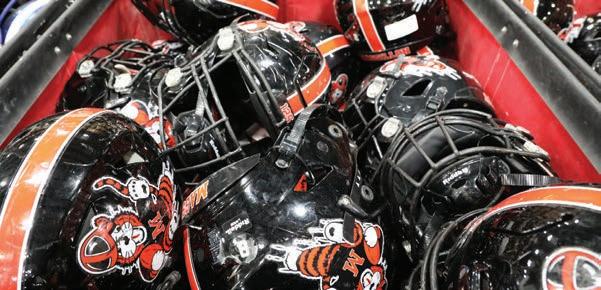
e ip side is, manufacturing hel mets has gotten much more compli cated. While Riddell’s basic models are assembled on a line, helmets like the Axiom or the SpeedFlex are individual ly assembled by their best builders. at makes for better helmets, but it also slows things down. Consequently, Slates normally places his helmet or ders at the end of November or the be ginning of December.
“You can’t wait until May to order the freaking helmets,” Slates said. Earlier this summer, Slates had to cancel one of his freshman scrimmag es because Akron St. Vincent-St. Mary didn’t have enough helmets. (SV-SM was not a Riddell customer.)
“Plenty of those schools have those issues,” Slates said. “We order our hel mets early because, especially after COVID-19, you know there are going to be supply chain issues. You have to be prepared.”
Riddell stopped taking orders in July, and many of its competitors stop even sooner because their helmets are sourced from Asia, Boersma said.
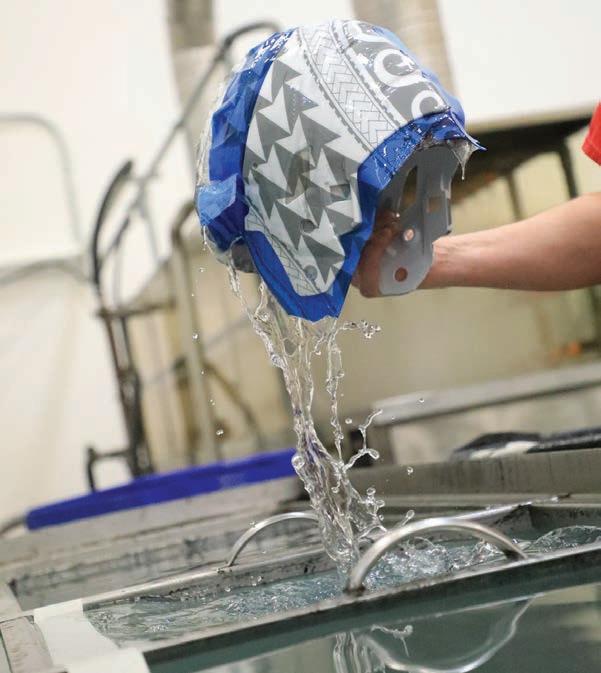

“Demand was so great coming out of the pandemic that once we hit what we knew we could deliver by the end of September, we had to stop taking or ders,” Boersma said. “We’re already at capacity.”
at doesn’t mean the plant goes si lent in the fall. Riddell continues to build new helmets and recondition old ones in-season. It also does things like
repair shoulder pads and wash uni forms.
e North Ridgeville plant was built with expansion in mind, with enough space to put in a mezzanine if it wants to double the capacity of the plant, al though there are no current plans to do that. In the short run, Riddell is bee ng up its second shift.
“We have such a great history here and such a great workforce here,” said Boersma, who noted the company still has some employees who worked for All-American Sports. “And it’s such a great location. When we grew out of our facility in Elyria, we contemplated some di erent places but we wanted to keep our team, so we just moved two miles down the road.”
While North Ridgeville’s plant work ers often schedule their vacations during the fall, Riddell’s reps don’t have that luxury. ey work long hours
during the season, handling every thing from replacement helmets to broken chin straps. You can nd them on the sidelines every Friday and Sat urday night.
“ ey’re literally servicing custom ers 24-7,” Boersma said. “ ey have a relationship with every single team they’re selling to, and they bend over backward. Our reps are very custom er-focused.”
at doesn’t mean they’ll x every problem.
But as Kray will tell you, they’ll cer tainly try.
“It’s getting to be more and more like that,” Kray said of the Walsh helmet purchase. “ ey nd creative ways to come up with di erent solutions. It’s de nitely a di erent world.”
Joe Scalzo: joe.scalzo@crain.com, (216) 771-5256, @JoeScalzo01
POSITION AVAILABLE
Research Director - SME Staf ng
We have a unique opportunity for a senior executive to make an immediate impact on a dynamic industry. You will join a group of dedicated business professionals who, together, constitute the premier source of research, information and analysis on the staf ng industry, contingent workforce management and the workforce solutions ecosystem. In the role of SME Research Director, you will lead and coordinate SIA’s research focused on small and medium sized staf ng rms (annual revenue below $75 million). Visit crain.com/careers/ for more information and available positions.
OCTO BER 3, 2022 | CR AIN’S CLEVE LAND B USIN E SS | 21 CRAIN’S CLEVELAND BUSINESS | SEPTEMBER 3 - 9, 2018 | PAGE 29 EXECUTIVE RECRUITER CLASSIFIEDS Advertising Section To place your listing in Crain’s Cleveland Classi eds, contact Suzanne Janik at 313-446-0455
GLOBAL POLYMER
Riddell employees bu o the paint during the helmet reconditioning process at the North Ridgeville plant. | ASHLEY DEJONGE/RIDDELL
Several Massillon Washington High School football helmets await reconditioning at Riddell’s plant in North Ridgeville. | BRIAN TIMMS/RIDDELL
RIDDELL From Page 1
A helmet goes through the water transfer imaging process at Riddell’s plant in North Ridgeville. | BRIAN TIMMS/RIDDELL
PEOPLE ON THE MOVE
To place
ACCOUNTING
Bober Markey Fedorovich

Steve Mazza, CPA has joined BMF as a Partner in the rm’s Tax Services Group. Steve brings a unique blend of technical accounting expertise with strong business strategy skills in ways that make a signi cant impact for clients. He specializes in tax strategies, trust and estate planning, business and family of ce consulting and mergers and acquisitions. In 2021, he received the Achievements in Excellence Award from the National Sales & Marketing Executives (NSME) Akron/Canton.

Stein
ENGINEERING / CONSULTING
Karpinski Engineering
Evan Hammersmith, PE, LEED AP BD+C, CGD, has been promoted to Principal. He is a mechanical engineer and one of Karpinski’s education sector leaders, with dozens of K-12 and higher education facilities in his portfolio. He has specialized experience with high-ef ciency HVAC design and is one of ve Certi ed Geoexchange Designers in the state of Ohio.

As a principal, Hammersmith joins the leadership team for the award-winning, multidisciplinary rm. Learn more at karpinskieng. com
Frantz Ward is pleased to announce Meghan C. Lewallen joins the rm as an Associate in its Litigation Practice Group. Meghan is an experienced litigator with over nine years of civil litigation and trial experience. She began her career serving the plaintiffs’ bar and is well-versed in all stages of litigation. Meghan earned her J.D., cum laude, from ClevelandMarshall College of Law and her B.S. from Miami University.


METROHEALTH
During his tenure, those leaps have allowed MetroHealth to dramatically expand access to care, add services and embark on a $1 billion transformation of its main campus on West 25th Street — all while also doubling the system’s annual revenue from $785 million to more than $1.5 billion in 2021.
Boutros retires at the end of the year and will be succeeded by Airica Steed, currently an executive in the Sinai Chi cago Health System.
Boutros teamed Jacono up with Craig Richmond, executive vice president and chief nancial and system services o cer. ey’re jointly responsible for MetroHealth’s Transformation and Op timization Division, which launched at the start of 2022, though they’ve worked together much longer in a collaboration that has helped bring to life Boutros’ many visions for MetroHealth.
“We complement one another be cause we look at things through di er ent lenses,” Richmond said.
During Boutros’ tenure, MetroHealth grew to more than 20 community health centers, four hospitals, ve MetroEx pressCare locations and 10 pharmacies. Most visibly, he led the development of the $1 billion transformation of the sys tem’s main campus on West 25th Street.
successful at it,” Siegel said.
Over the past two years, “anticipato ry, innovative and e ective strategies” for managing challenges in workforce and supply chain helped MetroHealth weather the COVID-19 pandemic, Richmond said. e system’s adjusted operating margins for 2020 and 2021, respectively, were 7.6% and 8.2%.
“So we’ve anticipated it, we’ve been innovative about it, and we’ve deployed e ective strategies,” he said. “Also, our operating cash ow growth and in creased liquidity — despite the pan demic — provides operating stability and balance sheet strength.”
In August, S&P Global Ratings up graded its long-term debt ratings for MetroHealth to BBB from BBB- and as signed it a stable outlook, citing “sus tained positive nancial pro le metrics and near completion of its new hospi tal.” Its previous outlook was positive.
Moody’s Investors Service also up graded MetroHealth’s bond rating to Baa2 from Baa3, citing the expected du rability of solid margins and improved liquidity, supported by the bene ts of completing the hospital, patient de mand and growing sources of supple mental Medicaid funding. Moody’s re vised the outlook to stable from positive.
LAW
Frantz Ward
FINANCIAL SERVICES
PNC Private Bank
Marten Granger has joined PNC Private Bank as a Senior Banking Advisor. In his role, Marten delivers complex nancial solutions, including both personal and business cash management services and lending to high-net worth individuals and families around the country. Marten, a BaldwinWallace University graduate and member of the school’s MBA Association, has more than 35 years’ banking experience. He is active in various neighborhood organizations around Strongsville.
ENGINEERING / CONSULTING
Karpinski Engineering
Raymond P. Hoon, PE, LEED AP BD+C, has been promoted to Principal. Hoon has made his mark at Karpinski not only because of his mechanical engineering work, but because of his project management, business development, and client care. His specialty is corporate projects, and he has provided engineering design and leadership for notable Northeast Ohio projects. As a principal, Hoon joins the leadership team for the awardwinning, multidisciplinary rm. Learn more at karpinskieng.com
Frantz Ward is pleased to announce that Katherine E. McLaughlin has joined the rm as an Associate in its Labor & Employment Practice Group. Katie aids in the defense of employers in state and federal courts and before administrative agencies in a wide range of matters. She also assists in providing day-to-day counseling to employers by researching human resources issues. Katie earned her J.D., cum laude, from Cleveland-Marshall College of Law and her B.A. from Wittenberg University.
When planning its reimagined cam pus, MetroHealth considered leaving its current location. Analysis showed that buying land and building new would have saved $100 million to $150 million and cut down on the project’s timeline. But, following one of Boutros’ often-re peated lines — “doing good is good business” — MetroHealth also weighed the e ect its exit would have on the neighborhood.
“We knew this would be an econom ic Chernobyl for the Clark-Fulton neigh borhood and it would never recover,” Boutros said. “So we took the hit.”
With that decided, the West 25th Street transformation plan took shape, complete with 25 acres of green space, when will make the new MetroHealth Glick Center the rst hospital in a park in the country when it opens in October.
“ e one thing that we all live by here at MetroHealth, it’s all about doing the right thing,” Richmond said. “We never look for the easiest way, per se, to maybe accomplish an objective and/or a mis sion.”
roughout Boutros’ tenure, each initiative must meet the system’s mis sion and ll a gap in care, and if another organization can provide services better than MetroHealth could, “they can do it,” he said.
e system ran through these calcu lations when deciding to oversee health care in Cuyahoga County jails, when acquiring community-based outpatient behavioral health services organization Recovery Resources and when it came to an agreement with HealthSpan to transition sites in Cleveland Heights and Parma to MetroHealth, and then when converting those into hospitals.
MetroHealth is focused on the com munity, and Boutros is not quiet about it. He made waves with a 2019 presenta tion at the City Club of Cleveland titled “What Hospitals are Getting Wrong and How We Can Fix It.” He criticized the fo cus on medical care over health care, and told the audience that Cuyahoga County’s infant mortality problem is, in truth, a Black infant mortality crisis
“Akram has said things that have nev er been said before, in a way that it’s hard to ignore,” Jacono said.
INSURANCE / FINANCIAL
OneDigital
OneDigital, a leading insurance, nancial services and HR consulting advisory rm, is pleased to announce Kyle Leyden as a new Client Executive in Cleveland, Ohio. Kyle brings over 15 years of healthcare and bene ts consulting experience to his clients. OneDigital’s streamlined solution pulls multiple offerings together in a tech-forward and thoughtfully human way in order for Ohio-area businesses to work more ef ciently.
ENGINEERING / CONSULTING



Karpinski Engineering
Ryan Smith, RCDD, has been promoted to Principal. As Karpinski’s Director of Technology, Smith leads the rm’s technology team, designs technology infrastructure, and manages project teams. He has worked across a variety of market sectors, with a focus on healthcare. He specializes in large and complex technology infrastructure design and upgrades. As a principal, Smith joins the leadership team for the award-winning, multidisciplinary rm. Learn more at karpinskieng. com
LAW
Schneider Smeltz Spieth Bell LLP is pleased to announce that its former law partner Kyle Gee has rejoined the rm as a partner. Kyle counsels multigenerational families, business owners, duciaries, family of ces, charities, and bene ciaries at all wealth levels in areas of planning, administration, and tax law. He is licensed in Ohio, Pennsylvania, and New Jersey and is a peer-elected ACTEC fellow. The rm’s Trusts & Estates practice is among Ohio’s largest and most sophisticated.

e team looks rst at what is the right thing to do, and then, with those questions answered, gures out the best nancing vehicle that will allow Metro Health to achieve those objectives, he said.
Similarly, MetroHealth could have grown pro ts by expanding access in neighborhoods currently served by fed erally quali ed health centers but opted not to, because it would have hurt these other essential community organiza tions, Boutros said.
MetroHealth has been “a clear leader for all hospitals,” Siegel said. A lot of health care systems are nervous about alternative payment models and pilots for value-based care, because they’re afraid they may not work or are afraid to take risks, he said. Under Boutros, MetroHealth embraced those models.

Early in Boutros’ tenure, Metro Health formed a Medicare Accountable Care Organization to participate in the Medicare Shared Savings Program, a federal value-based payment model for seniors. at started the system shift to ward value-based, risk-based and shared-savings contract models, Rich mond said.

Boutros “is showing that a rede signed health system can prioritize im proving the social determinants of health for the community, and can be
Boutros brought “swagger and con dence and vision” that helped to dra matically shift the culture from surviv ing to thriving, from public safety net to essential hospital, Jacono said.
at mentality of “essential” has been key, because it means the community cannot live without MetroHealth and that failure is not an option, she said. e team has gained con dence over the years in its ability to pull o “more and more impossible things,” she said. If it’s the right thing to do and ts the sys tem strategy, the team would nd a way. e rst week of October, the system is planning a ribbon-cutting for the Cleveland Heights Behavioral Health Center, a $42 million facility connected to the existing medical facility at 10 Sev erance Circle. e three-story hospital will o er 112 inpatient beds (40 initially, with the rest phased in later this year and in 2023) to help meet the rising de mand for mental health services.
“And so if it’s not an option to fail, and you have con dence that you could stick the landing, and you have freedom to gure it out, and autonomy to gure it out, and you surround yourself as a leader — as Akram did — with smart people who want to gure it out, it be comes an exciting challenge,” Jacono said.
22 | CRAIN’S CLEVELAND BUSINESS | O CTOBER 3, 2022
Schneider Smeltz Spieth Bell LLP
LAW
Frantz Ward
Advertising Section
your listing, visit www.crainscleveland.com/people-on-the-move or, for more information, contact Debora
at 917.226.5470 /
dstein@crain.com
Lydia Coutré: lcoutre@crain.com, (216) 771-5479, @LydiaCoutre
From Page 1
GET MORE OUT OF CRAIN’S CLEVELAND BUSINESS
Access the city’s leading business news in print, online or on any mobile device with our new app, now available for download for free with your subscription! Our annual Book of Lists provides you with everything you need to know about Cleveland’s business leaders with exclusive data and contacts from the city’s most in uential companies. Plus, unparalleled custom content opportunities can showcase your business or expertise in each eld.
Visit www.crainscleveland.com today or nd us in the app store.
crainscleveland.com
Publisher and CEO KC Crain Group publisher Jim Kirk (312) 397-5503 or jkirk@crain.com
Executive editor Elizabeth McIntyre (216) 771-5358 or emcintyre@crain.com
Associate publisher Amy Ann Stoessel (216) 771-5155 or astoessel@crain.com
Director of audience and engagement Elizabeth Couch, (313) 446-0419 or elizabeth.couch@crain.com
Managing editor Scott Suttell (216) 771-5227 or ssuttell@crain.com
Assistant managing editor John Kappes (216) 771-5359 or john.kappes@crain.com
Web editor Damon Sims (216) 771-5279 or dpsims@crain.com
Assistant editor Rachel Abbey McCa erty (216) 771-5379 or rmcca erty@crain.com
Art director Kayla Byler (614) 312-7635 or kayla.byler@crain.com
Senior data editor Chuck Soder (216) 771-5374 or csoder@crain.com
Cartoonist Rich Williams
REPORTERS
Stan Bullard, senior reporter, Real estate/construction (216) 771-5228 or sbullard@crain.com
Lydia Coutré, Health care/nonpro ts (216) 771-5479 or lcoutre@crain.com
Michelle Jarboe, Enterprise reporter (216) 771-5437 or michelle.jarboe@crain.com
Amy Morona Higher education (216) 771-5229 or amy.morona@crain.com
Jay Miller Government (216) 771-5362 or jmiller@crain.com
Jeremy Nobile, Finance/legal/beer/cannabis (216) 771-5255 or jnobile@crain.com
Kim Palmer Government (216) 771-5384 or kpalmer@crain.com
Joe Scalzo, Sports business (216) 771-5256 or joe.scalzo@crain.com
Dan Shingler, Energy/steel/auto/Akron (216) 771-5290 or dshingler@crain.com
ADVERTISING
Senior vice president of sales Susan Jacobs (312) 649-5492 or susan.jacobs@crain.com
Events manager Missy Chambless (216) 771-5388 or missy.chambless@crain.com
Marketing manager Cody Smith (330) 419-1078 or cody.smith@crain.com
Sales manager Mara Broderick (917) 612-8414 or mara.broderick@crain.com
Sales and marketing coordinator Shannon Smith (440) 281-6397 or shannon.smith@crain.com
Account executives

Laura Kulber Mintz, Kaylie Moran, Hannah Sekerak
People on the Move manager
Debora Stein, (917) 226-5470, dstein@crain.com
Pre-press and digital production Craig L. Mackey
O ce coordinator Karen Friedman
Media services manager Nicole Spell Billing YahNica Crawford
Credit Thomas Hanovich
CUSTOMER SERVICE
Customer service and subscriptions: (877) 824-9373 or customerservice@crainscleveland.com
Reprints: Laura Picariello (732) 723-0569 or lpicariello@crain.com
Crain’s Cleveland Business is published by Crain Communications Inc.



Chairman Keith E. Crain
Vice chairman Mary Kay Crain
President and CEO KC Crain
Senior executive VP Chris Crain
Chief Financial O cer Robert Recchia G.D. Crain Jr. Founder (1885-1973) Mrs. G.D. Crain Jr. Chairman (1911-1996)
Editorial & Business O ces 700 W. St. Clair Ave., Suite 310, Cleveland, OH 44113-1230 (216) 522-1383

Volume 43, Number 36
Crain’s Cleveland Business (ISSN 0197-2375) is published weekly, except no issue on 1/3/22, combined issues on 5/23/22, 6/27/22, 8/29/22, 11/21/22, at 700 West St. Clair Ave., Suite 310, Cleveland, OH 44113-1230.
Copyright © 2022 by Crain Communications Inc. Periodicals postage paid at Cleveland, OH, and at additional mailing o ces. Price per copy: $2.00.
Postmaster: Send address changes to Crain’s Cleveland Business, Circulation Department, 1155 Gratiot Avenue, Detroit, MI 48207-2912. 1 (877) 824-9373.
Subscriptions: 1 year - $99, Single copy, $2.00. Allow 4 weeks for change of address. For subscription information and delivery concerns send correspondence to Audience Development Department, Crain’s Cleveland Business, 1155 Gratiot Avenue, Detroit, MI, 48207-9911, or email to customerservice@crainscleveland.com, or call (877) 824-9373 (in the U.S. and Canada) or (313) 446-0450 (all other locations), or fax (313) 446-6777.
OCTOBER 3, 2022 | CRAIN’S CLEVELAND BUSINESS | 23













Limited availability in select areas. Reliability based on network availability. AT&T Business Fiber now with Hyper-Gig speeds. Fast internet with the security and reliability you need to make large file transfers a breeze. Learn more at att.com/businessfast or call 1.844.740.FAST Business A business with so much bandwidth it transfers enormous files for fun. T:10" T:13.45"
