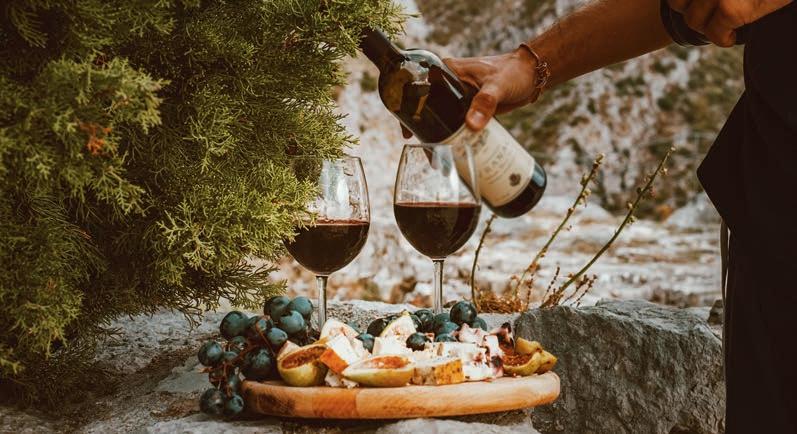
GASTRONOMY IS NOT ONLY ABOUT FOOD. IT IS ABOUT PLACE, HOSPITALITY, HISTORY, AND THE WAY ALL THESE ELEMENTS COME TOGETHER AROUND A TABLE.
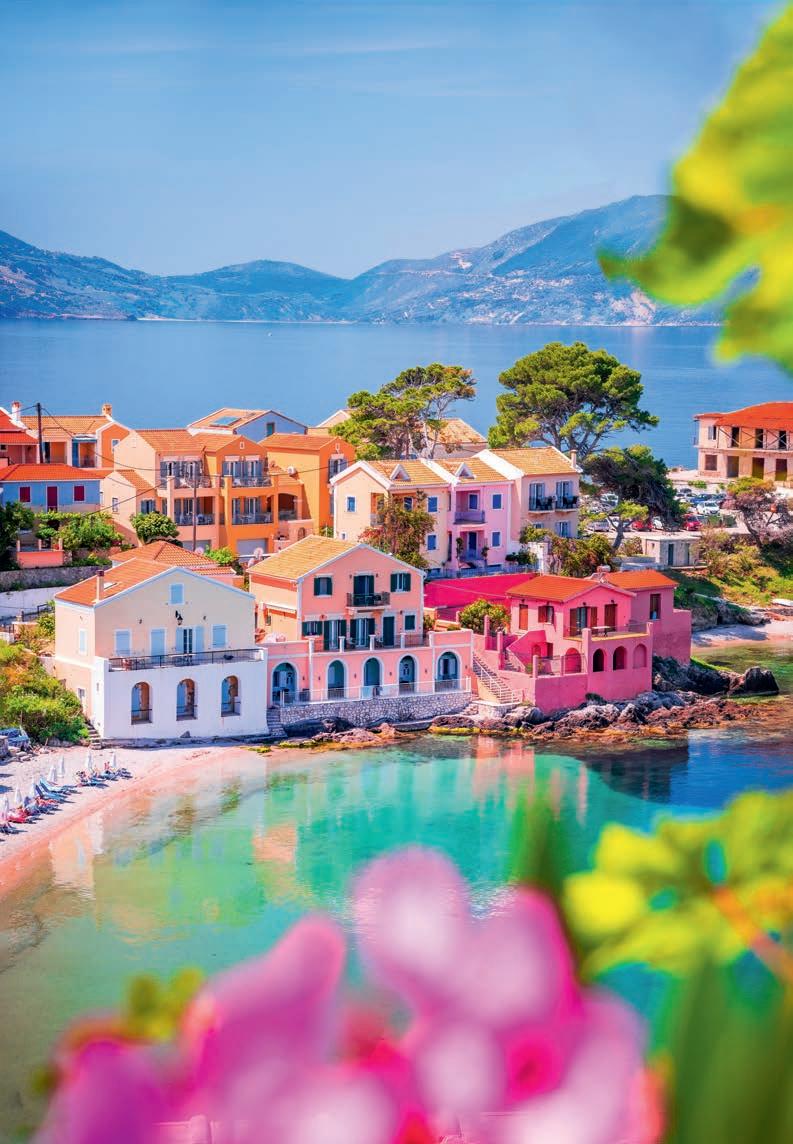
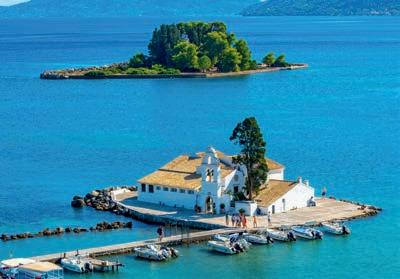
THIS SUMMER, WE LET FLAVORS GUIDE US TO THE IONIAN ISLANDS. WHERE EVERY SIP AND BITE FEEL LIKE A DESTINATION.
ELENI MICHAILIDOU editor-in-chief @e.in.the.mix
Henry Miller once said that “One’s destination is never a place, b ut a new way of seeing things.” And tasting them, I would dare to add. Because every journey changes us –not only in the way we look at the world, but also in the way we experience it. One bite at a time. One sip at a time... I ndeed, taste is a journey. And although this phrase may sound almost self-evident, it holds within it all the magic of gastronomy. Because taste is never static; it is memory, experience, transformation.
I n Greece, this becomes even more vivid in the summer. Beneath the scorching sun reflecting off the blue sea and the rocks, with the saltiness lingering stubbornly on the skin and the sound of the waves becoming the soundtrack to every meal.
With a slice of watermelon casually cut on the beach, a piece of bread with tomato from the garden, seafood that still smells of the sea, a small glass of wine at a seaside tavern...
T hese simple moments are what shape our culinary identity. Not through elaborate techniques or s ophisticated ingredients, but through authenticity. Through that deep, unpretentious relationship with food that follows us on every journey – through time and space.
Somewhere along the way emerges the gastronomy of the Ionian Islands – and what a journey it is! A cuisine that carries influences, stories, and cultures, yet remains deeply Greek at its core. And it is a journey that requires no map. Only the willingness to feel and taste.
B ecause in the end, taste is not only what we try on our plate, but what we carry within our souls.
Α. Papadopoulou & CO L.P. 13th klm ThessalonikisN. Moudanion National Road 57001 Thessaloniki
T. +30 2311 241524 sipandbite.gr ISSN: 3057-5036
MAY NOT BE REPRODUCED, REPUBLISHED, COPIED, SOLD, TRANSMITTED, DISTRIBUTED, PUBLISHED, TRANSLATED OR MODIFIED IN ANY WAY, PARTIALLY OR SUMMARY OF THE CONTENTS OF THE FORM, TEXT AND PHOTOGRAPHS, WITHOUT THE PRIOR WRITTEN PERMISSION OF THE PUBLISHER.
Από
hotspots
Taste what’s new in the food scene
From local hotspots to global trends, here’s your go-to source for the freshest updates in the food world.
BY MANTO KORONAKOU
FLAVORS BY GORDON RAMSAY
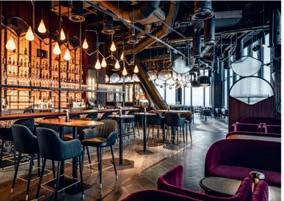
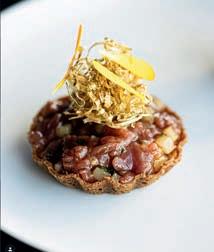
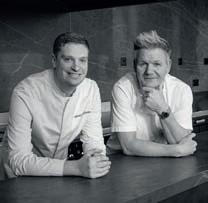
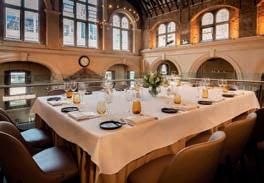
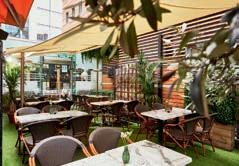
☛The new Bread Street Kitchen & Bar in Bishopsgate brings Gordon Ramsay’s renowned culinary signature to the city center. Showcasing modern British cuisine, the menu combines classic dishes with contemporary twists, from indulgent breakfasts and brunch to impressive dinners and cocktails. With its warm and stylish ambiance, the restaurant promises a dining experience that satisfies even the most discerning palates.
Bedford by Martha Stewart
Foxwoods Resort Casino
Martha Stewart
του Grand Pequot Tower. Με έμπνευση
pierogies, Kurobuta pork chop
EAT LIKE MARTHA STEWART
☛The new restaurant The Bedford by Martha Stewart at Foxwoods Resort Casino brings the iconic signature of Martha Stewart to the heart of the Grand Pequot Tower. Inspired by her classic farmhouse in Bedford, New York, the menu blends comforting homemade flavors with refined dishes, including pierogies, Kurobuta pork chop, and fresh salads, all paired with signature cocktails. The Bedford offers a warm, elegant, and relaxed dining experience, ideal for any time of day.
Το Jacob’s Food Diaries
FROM CARTOONS TO CUISINE
Jacob’s Food Diaries is a creative project that merges art and food, presenting dishes inspired by animated characters and iconic motifs. Its aim is to make food more fun and appealing – especially for children – while showcasing creativity and aesthetics in the kitchen, gaining global recognition in the world of food art.
JOYFUL COOKING WITH DEMI LOVATO
Demi Lovato’s book “One Plate at a Time” is a personal cookbook celebrating the joy of cooking and a balanced relationship with food. Featuring over 80 simple and delicious recipes – from breakfast and comfort food to fast-food classics – Lovato shares stories, photos, and tips to help readers enjoy every meal with ease.
Botrini’s
AWARD-WINNING FLAVORS
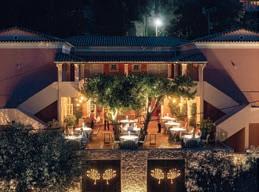
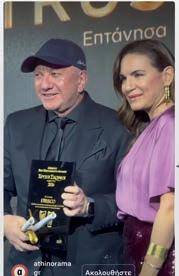
☛At the 33rd Toques d’ Or Awards by Athinorama, 45 of Greece’s top restaurants were honored. Etrusco in Corfu, led by Ettore Botrini, once again stood out, earning two Golden Caps. Also topping the list were Botrini’s Athens and Delta, while numerous standout dining destinations from Athens, the islands, and Halkidiki highlighted the dynamism and quality of the contemporary Greek restaurant scene.
THE COFFEESPIRIT TREND OF 2026
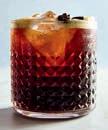
For 2026, the carajillo emerges as a leading trend, combining espresso with spirits such as brandy, rum, or coffee liqueur. This drink bridges coffee culture and the cocktail scene, offering a creative and flavorful experience that continues to win over drink enthusiasts.
hangover.
CLOONEY’S NEXT VENTURE
☛
George Clooney, alongside partners Rande Gerber and Mike Meldman of the successful Casamigos brand, is launching a new non-alcoholic beer, Crazy Mountain, set to debut in selected U.S. markets in 2026. Available in classic lager and lime versions, with approximately 65 calories per serving, this premium beer targets consumers seeking the taste and experience of beer without the hangover.
☛Το “Spain My Way: Eat, Drink, and
JOSÉ ANDRÉS: A CULINARY JOURNEY
☛
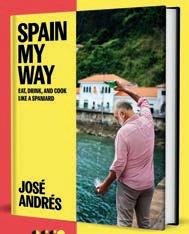
“Spain My Way: Eat, Drink, and Cook Like a Spaniard” by José Andrés is a vibrant collection of beloved Spanish recipes, accompanied by the stories, places, and people behind them. A book that offers an authentic exploration of Spanish cuisine through the personal lens and distinctive style of the award-winning chef.
LESVOS FOOD FEST
Jul 9th - Jul 12th, 2026
Το Lesvos Food Fest
Lesvos Food Fest promotes the gastronomy of Lesvos through local products, flavors, and cultural activities. The festival combines food, tradition, and Mediterranean cuisine.
CYCLADIC GASTRONOMY FESTIVAL “NIKOLAOS
TSELEMENTES”
Sep 17th - Sep 19th, 2026
Τα Galvin Restaurants
Galvin La Chapelle
Galvin Bistrot & Bar
executive chef Arturo Granato
Tom Booton, Tom Brown, Phil Howard, Natty Can Cook, Judy Joo και Tom De Keyser.
A GOURMET MEETING OF STARS
The Cycladic Gastronomy Festival “Nikolaos Tselementes” returns to Sifnos for its 18th year. The event brings together the islands of the Cyclades through local delicacies and traditional music.
ATHENS COFFEE FESTIVAL
Sep 26st - Sep 28st , 2026
Το Athens
blends, espresso, cold brew και workshops. The largest coffee celebration in Greece, featuring specialty blends, espresso, cold brew, and workshops.
Major exhibitions, festivals, tastings, and events from Greece and around the world!
Galvin Restaurants unveil the 2026 Chef Collaboration Series, a lineup of exclusive dining events at Galvin La Chapelle and Galvin Bistrot & Bar in London. Award-winning executive chef Arturo Granato joins forces with leading guest chefs to create one-night-only menus. The lineup includes names such as Tom Booton, Tom Brown, Phil Howard, Natty Can Cook, Judy Joo, and Tom De Keyser.
without borders flavors
YEREVAN WINE DAYS
Jun 5th - Jun 7nd, 2026
This wine festival transforms central Yerevan into a three-day celebration of Armenian wine, featuring numerous producers and labels.
LYON STREET FOOD FESTIVAL
Jun 11th - Jun 14st, 2026
Lyon Street Food Festival,
Lyon once again hosts this landmark event filled with street food creations, workshops with acclaimed chefs, and live concerts.
FOOD & WINE CLASSIC IN ASPEN
Jun 19th - 21th, 2026
Για
For three days, the Aspen festival offers tastings, cooking demonstrations, and seminars dedicated to the world of food and wine.
FETE DU PIMENT
Oct 24th - Oct 25th, 2026
Η Espelette
Fête du Piment d’Espelette,
Espelette hosts the Fête du Piment d’Espelette, a traditional festival dedicated to the famous local chili pepper, featuring markets, culinary experiences, music, and cultural events.
Food & Drink.
FROM VIRAL RECIPES TO FORBES 30 UNDER 30
With over 14 million followers, Tineke “Tini” Younger turns every cooking video into a viral success – from iconic mac & cheese to easy, accessible recipes for every home. A chef, author, and digital creator, she has collaborated with brands such as HelloFresh and Verizon, and in 2026 was named to the Forbes 30 Under 30 list in the Food & Drink category.
Για τον
Ettore Botrini, η
ETTORE BOTRINI
Botrini
For Ettore Botrini, cooking was never merely a choice. It was a journey that had begun long before him. Speaking with passion about Corfiot cuisine, Botrini highlights not only its roots but also its potential to stand confidently on the global gastronomic stage.
where roots become cuisine
BY MINA AFENTOULI
Born in Corfu, he grew up surrounded by kitchens, aromas, and travel, following his chef father to different corners of the world. His relationship with gastronomy feels almost hereditary. His grandmother ran a restaurant in Tuscany, as did his great-grandmother before her, forming a family tradition that spans generations.
His earliest memories are not limited to professional kitchens, but extend to nature itself: gathering wild greens and mushrooms, engaging with raw ingredients in their most authentic form. This was followed by studies in tourism, experience in kitchens abroad, and ultimately a return to Corfu – the place where it all began. Today, Ettore Botrini stands behind major gastronomic ventures as chef–patron of Botrini’s and Etrusco, a restaurant with a distinguished place in Greek culinary history. In 2014, Botrini’s was awarded a Michelin star, a distinction it retains to this day.
The Ionian Islands have strong Venetian and Italian influences. Do you believe this is what gives their cuisine its distinctive character?
The Ionian Islands are essentially a gastronomic crossroads, shaped by the various cultures that have passed through and left their mark. Their recipes reflect strong Venetian influences, but also elements linked to French, German, and British presence. From the British, for example, came the Jerusalem artichoke – known locally as topinambour – which holds a unique place in the island’s culinary tradition. Corfu even once hosted a processing plant for it. However, the strongest imprint comes from the Venetians. From them, Ionian cuisine inherited a love of spices, red pepper, and a broader gastronomic philosophy. The relationship with Venice goes beyond food – it is evident even in the dialect, where words and tonal qualities still echo this long-standing connection.
Your culinary identity seems to balance between two worlds. How much of Greece and how much of Italy speaks within you?
Neither Greek nor Italian cuisine speaks through me – it is Corfiot cuisine that does. Our cuisine has a character entirely its own. While it has been influenced by many cultures, it has absorbed these influences and made them its own. We grew up with dishes like bourdeto, bianco, and tsigarelia.
So, what are the most popular dishes in Corfiot cuisine? Corfiot cuisine has an immense range. Seasons change, and with them, cooking evolves. What we have done is take Corfiot cuisine and carry it into the future – lightening it without losing its identity. In the past, a pastitsada might have been cooked with twenty kilos of onions; today, it can be made with five. We also use different cooking techniques and cuts of meat. Historically, necessity dictated the use of cheaper ingredients – Corfiot cuisine was humble. When people couldn’t afford fish, they made bourdeto with sweet potatoes. These recipes are returning, especially now that many people are choosing vegetarian or vegan diets.
Which flavors of Corfu do you return to most often?
In Corfu, there are dishes and flavors that carry entire histories. Take tsalétia, for example – a type of small crepe once served at breakfast, made with flour and sprinkled with sugar, though some preferred it with a touch of salt. Then there is pastitsio dolce, one of the most distinctive dishes of Corfiot cuisine. Despite “dolce” meaning sweet in Italian, this is a savory dish, made with pasta, quail, poultr y livers, and eggs – a truly unique composition. These are dishes with Venetian roots, still prepared in some homes today.
This year, at Etrusco, we reintroduced tsalétia, pastitsio dolce, and the “Capodistrian potato.” With the potato, we created a more playful dish – a gastronomic narrative about how it arrived in Greece. Our current menu is built around storytelling. Each dish tells a story. One example is manestra kolopimpiri – as we
THE IONIAN ISLANDS ARE ESSENTIALLY A GASTRONOMIC CROSSROADS, SHAPED BY THE VARIOUS CULTURES THAT HAVE PASSED THROUGH AND LEFT THEIR MARK
call it on the island – cooked in tomato water with red pepper and finished with feta and basil. A simple dish, yet with incredible depth. The same applies to desserts, as Corfu has its own confectionery tradition, from mandola to mandolato.
If you had to choose one dish that expresses the soul of Corfu, what would it be?
Every dish has its own joy, identity, and philosophy. For me, however, what truly matters is execution – that’s where a dish is judged. Anyone visiting Corfu will find it hard to leave without trying pastitsada, bianco, or bourdeto. These are the island’s most classic dishes, deeply connected to its gastronomic identity. There is even a place on the island known for making exceptional eel bourdeto.
How demanding is today’s consumer? Are they constantly seeking new flavors, or do they prefer the familiar?
Today’s consumer is educated – by television, magazines, and the fact that cooking has become a trend. People visit restaurants already informed and looking for something distinctive. Greek cuisine has evolved tremendously in recent years. In the coming years, it will be one of the world’s great culinary discoveries. What we have always lacked is consistency. But with advances in technology and gastronomy, we are achieving greater consistency in the products we create.
Is there sufficient production to meet these growing demands?
Our cuisine begins in the field, the garden, with the animals – everything we grow and raise. Without these, there is no cooking. The next rock stars will be the producers. Instead of talking about chefs, we should be talking about the people working the land and cultivating it.
After so many years of creation, do you feel there is a “ceiling” in cooking, or does the pursuit always continue?
There is no ceiling in cooking. It never stops. It continues to evolve for the better.
Amid such demanding conditions, how easy is it for a chef to maintain a balance between professional and personal life?
For me, cooking is a way of life. It is both my profession and my hobby. From morning until night, I am immersed in it. As I often say, it’s a kind of professional obsession. That said, it is demanding- to be in the kitchen, to keep evolving, and to try to survive in today’s conditions.
Where do you see yourself in ten years? In the same kitchens, or in an entirely new adventure?
I hope to be well. Beyond that, we’ll see. Cooking never changes – it never ends. We have several new things in the works. This year, we renovated Etrusco, giving it a new form – a kind of “return to the future.” You will see this reflected in the new menu: dishes from the past, presented in a more evolved way. The opening will take place at the start of the season – quietly and humbly. ■
EVERY DISH HAS ITS OWN JOY, IDENTITY, AND PHILOSOPHY. FOR ME, HOWEVER, WHAT TRULY MATTERS IS EXECUTION –THAT’S WHERE A DISH IS JUDGED.
CUSINA DE LE ISOLE IONIE
BY ELENI MICHAILIDOU ΦΩΤ.: SHUTTERSTOCK.COM
In the Ionian Islands, gastronomy is not merely a daily act; it is narrative, memory, identity. It is the imprint of a restless land, shaped by earthquakes and winds, but also of a history that carries both the delicacy of the East and the refinement of the West. Ionian cuisine – the celebrated Cusina de le Isole Ionie – was born from this very meeting point. On the one hand, the Greek tradition, with its austerity, seasonality, and devotion to raw ingredients. On the other, Venetian influence, which for centuries shaped flavors, techniques, and aesthetics. The result is a cuisine rich in aromas and full of contrasts, much like the islands’ own landscape.
Nature as the first ingredient
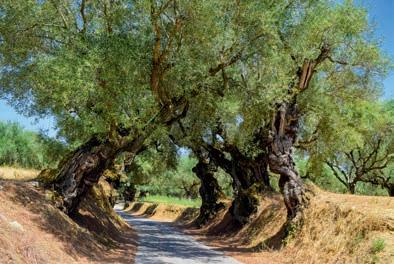
Long before food reaches the plate, its story has already been written in the soil. The Ionian Islands form a paradoxical world: sheer cliffs that seem cut with a knife alongside gentle hills covered in vineyards and olive groves; dense vegetation reminiscent of mainland forests, suddenly giving way to arid lands scented with sulfur.
This contrast gives rise to remarkable abundance. Tiny tomatoes bursting with concentrated flavor, almost wild broccolini, artichokes stuffed with rice and raisins, and wild greens prepared in countless ways. Here, the vegetable garden takes center stage.
On the hillsides, vineyards yield wines of distinctive character: the refined Robola of Kefalonia, with its crisp acidity and miner-
There are places you come to know through their landscapes - and others you only truly understand when you sit at their table. The Ionian Islands unquestionably belong to the latter.
al profile; the rarer Robusta, fuller-bodied and earthier; Vostilidi and Tsaousi, with notes of freshness and aromatic complexity; Mavrodaphne and Muscat, with their luscious sweetness. Each local variety tells its own story in every glass.
Meanwhile, countless ancient olive trees produce an olive oil that seems to condense the very strength of the land. And somewhere in between, bees gather aromas of thyme, lavender, and wild herbs, creating their precious “liquid gold.”
The Venetian shadow and the scent of spices
The history of the Ionian Islands cannot be separated from the long Venetian presence. The Serenissima left behind not only architectural jewels, but also culinary traces that remain vibrant to this day. The famed spezerika – spices used generously in many recipes – lend dishes an almost theatrical intensity. Cinnamon, clove, pepper, and nutmeg meet wine, vinegar, and garlic, creating sauces that are deep, complex, and aromatic.
At the same time, the craft of charcuterie flourished on the islands. Local meat, from animals raised freely in mountainous landscapes, is transformed into refined and rare delicacies. This tradition still endures – stubbornly – like a flavorful bridge to the past.
Corfu:
The Grande Dame of flavors
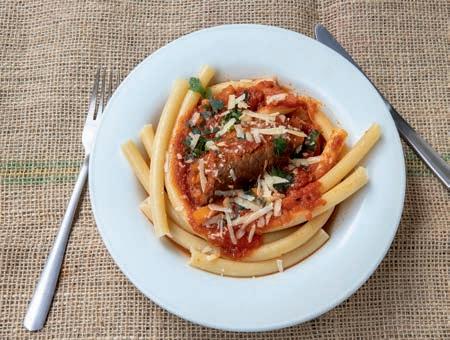
In Corfu, cuisine carries an aristocratic air. Dishes are rich, almost ceremonial. Pastitsada, perhaps the island’s most iconic dish, is a deeply aromatic braised meat cooked in wine and bound with spices, served with pasta. Sofrito, more delicate in flavor, balances garlic, wine, and vinegar, while bourdeto brings the sea to the plate with its spicy red sauce.
Yet Corfu does not end with savory dishes. Its sweets – such as mandolato and mantoles – are an ode to almonds and sugar, while local drinks like kumquat liqueur and ginger beer add a playful note to the island’s gastronomic landscape.
Kefalonia:
The strength of tradition
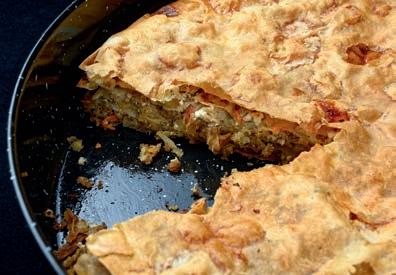
Kefalonia is perhaps the island where tradition is expressed with the greatest authenticity. Its famous meat pie, made with three different kinds of meat, embodies abundance – its rich flavor rivaling the beauty of the island’s deep-blue beaches.
Tsigaridia, humble yet deeply flavorful, highlight the value of simple ingredients – a culinary poem of greens, garlic, onion, tomato, and rice. Prentza, the island’s renowned spreadable cheese, paired with riganada, creates an almost primal experience, filled with earthy aromas.
The island is also a land of cheesemakers and beekeepers. Its feta, though institutionally overlooked, remains exceptional, while its thyme honey ranks among Greece’s most aromatic.
Zakynthos:
The intensity of flavor
In Zakynthos, gastronomy embraces bold flavors and is unafraid to showcase them. Sgatzeto – a traditional goat or lamb offal dish – and polpetes – Italian-inspired meatballs with pecorino cheese – stand among the most authentic expressions of local tradition. Equally important are slow-cooked dishes, such as legumes stewed with tomato, olive oil, and herbs. The Zakynthian ver-
sion of bourdeto, often made with meat rather than fish, once again reveals the freedom with which locals reinterpret their influences.
And then come the sweets... Fytoura, simple yet irresistible, is made from fried semolina transformed into a crisp, warm delight sprinkled with sugar and cinnamon. Frygania, with its syrup-soaked texture and cool cream, evokes memories of celebrations and family gatherings. And of course, the island’s famous currants – exported worldwide – carry with them the very aroma of Zakynthos.
Lefkada: Balance
Lefkadian cuisine balances between mountain and sea. Sofigado with quinces is a dish that unites sweetness with the intensity of meat, while frygadelia and tsigaridia reflect the region’s rural heritage. The island’s renowned air-cured salami and sausages testify to the importance of livestock farming, while its sweets – such as ladopita and the Carnival custard pie – leave behind a lighter, gently sweet aftertaste.
A special place in the island’s culinary landscape belongs to the famed lentils of Englouvi. Cultivated at high altitude, these small lentils are exceptionally flavorful and cook quickly without losing their shape. Their cultivation follows traditional methods passed down through generations, and in summer they are honored in local festivals, where they are served simply – with a drizzle of oil, oregano, and a splash of vinegar – proving that true flavor needs little to move the senses.
s+b _bites of greece
The smaller islands: Authenticity unfiltered
On Othonoi, cuisine remains almost untouched by time. Dishes like pastitsada and polenta take on a simpler, more everyday
In Ithaca, the use of herbs and cooking in the tserepa recalls another era, when food was inseparable from the land and the rhythms of nature. Meanwhile, Kythera offers an almost ritualistic experience. Its honey, famous s, xinochondros, sausages, and fatourada – the sland’s traditional liqueur –compose a table that is authentic, humble, yet deeply satisfying.
A cuisine of contrasts
Ionian cuisine is not static. It is alive, evolving, full of contrasts – rural yet refined, simple yet complex, local yet cosmopolitan. Above all, it is emotional. Every dish carries the memor y of a grandmother, a village feast, a difficult year, or a celebration. It is a cuisine that does not strive to impress, but to tell a story. And perhaps that is its greatest secret... ■
In the Ionian Islands, you don’t simply eat. You take part in a story that has been unfolding for centuries, and a sit at a table that is always ready to welcome you with open arms.
The Chef’s twelve
WITH AROMAS OF THE SEA, RICH SAUCES, AND SELECT LOCAL INGREDIENTS, THE RECIPES OF THE IONIAN ISLANDS TELL STORIES OF CULTURE, HOSPITALITY, AND AUTHENTIC DELIGHT IN EVERY BITE.
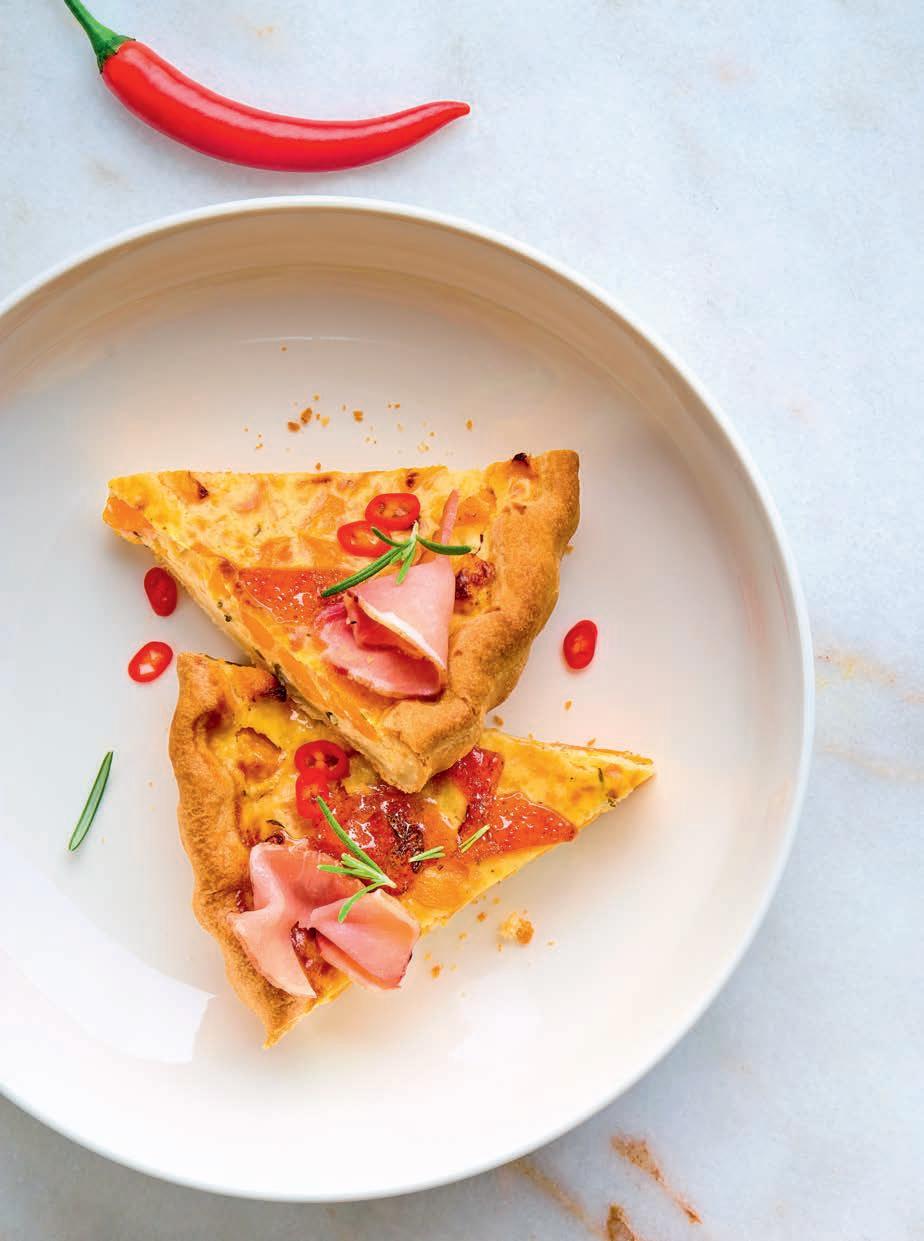
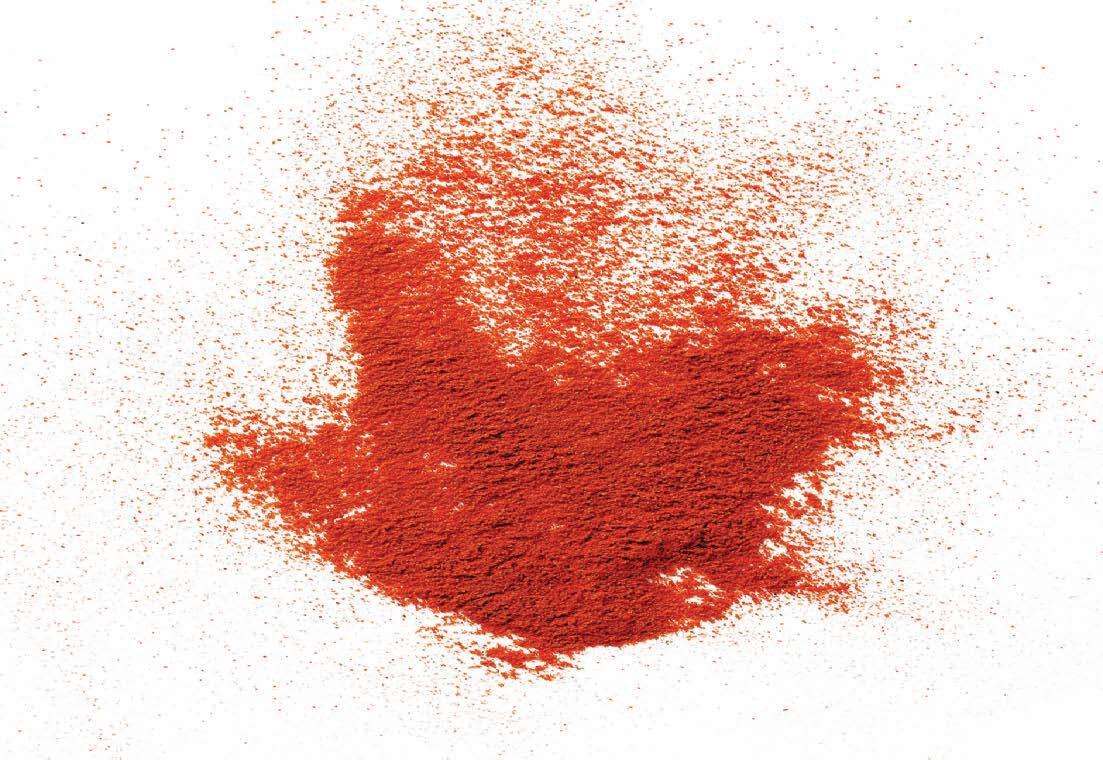
200g nouboulo (cured pork), thinly sliced 1 red chili pepper, finely chopped 80g honey // 10g sweet paprika
FOR THE DOUGH
Sift the flour and set aside. In a bowl, mix the butter, yogurt, and salt until combined. Add the flour and knead until a soft dough forms. Wrap in plastic wrap and refrigerate for 1 hour and 30 minutes. Roll out the dough on a floured surface into a 30 cm disc and place it in a buttered and floured tart pan. Keep refrigerated until ready to use.
FOR THE FILLING
Mix the pumpkin with the herbs, olive oil, salt, and pepper. Transfer to a baking tray lined with parchment paper, cover with foil, and bake at 180°C until soft (about 30-35 minutes). Let it cool slightly, then mix with the yogurt, eggs, and graviera cheese. Pour the mixture into the tart shell and nake in a preheated oven at 180°C for 40-45 minutes.
FOR THE GARNISH
Mix the honey with the chili and paprika. Bake the nouboulo at 130°C (265°F) for about 35 minutes until crispy.
SER VE THE TART WARM OR SLIGHTLY WARM, TOPPED WITH CRISPY NOUBOULO AND DRIZZLED WITH THE AROMATIC HONEY.
s+b _fine flavors
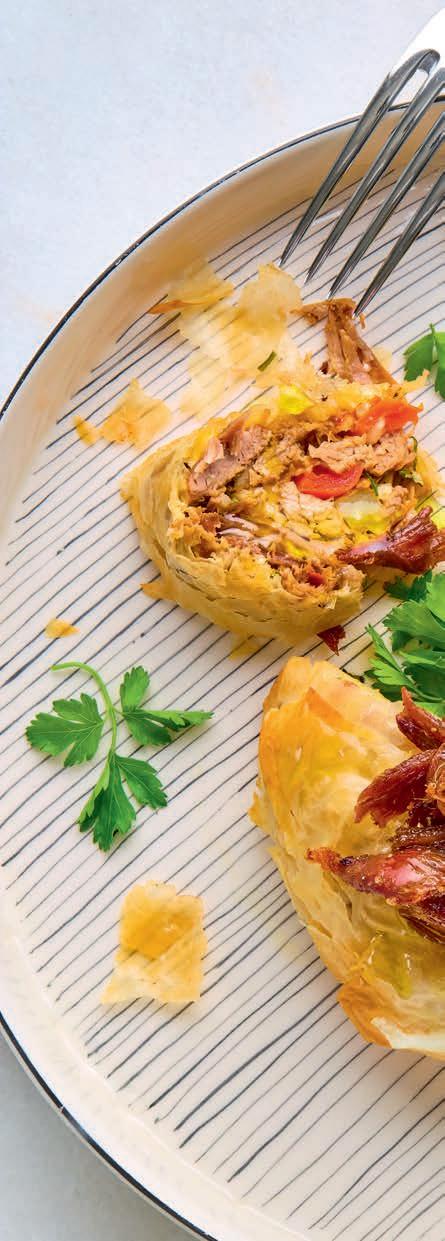
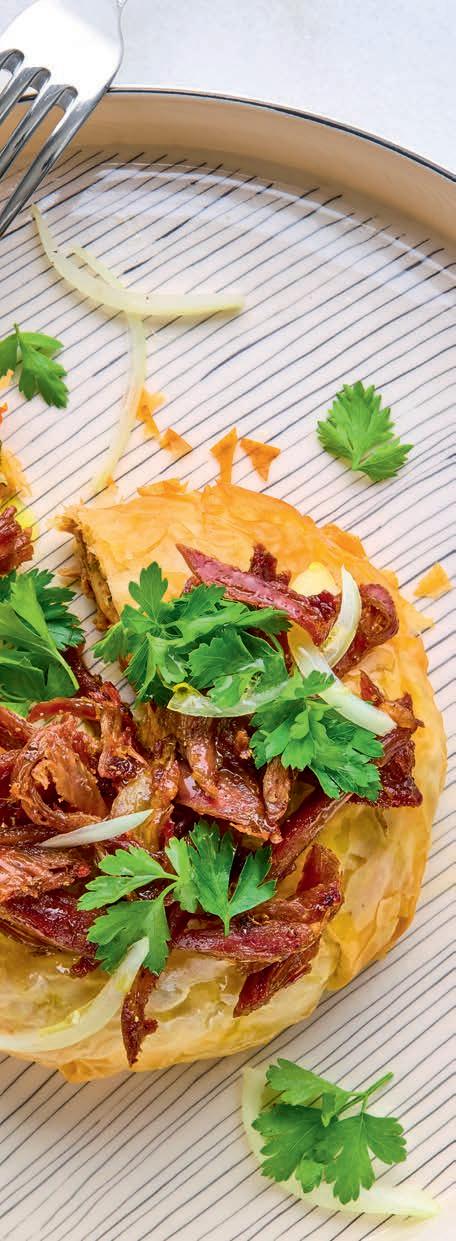
NKEFALONIAN MEAT PIE
2kg goat meat
200ml olive oil (divided into two portions) salt, black pepper
1 bunch parsley (half finely chopped, half as whole leaves)
FOR THE PASTRY
1 package phyllo pastry sheets // olive oil, for brushing
ZFOR THE GOAT MEAT
Place the goat meat in a roasting tray, season generously with salt and pepper, and drizzle with half of the olive oil. Add a small amount of water and roast in a preheated oven at 160°C for approximately 3 hours. Remove from the oven and allow it to cool slightly. Carefully debone the meat and shred it into fine strands. Reserve the cooking juices for later use.
FOR THE FILLING
In a saucepan over low heat, warm the remaining olive oil and sauté the finely chopped onion. Add the diced potato and chopped tomatoes, and cook for a few minutes. Pour in the reserved cooking juices. Stir in the rice and cook until it absorbs the liquid. Then add half of the shredded goat meat. Remove from the heat and allow the mixture to cool slightly. Once it is lukewarm, add the eggs and grated graviera. Brush one sheet of phyllo pastry with olive oil and fold it into quarters. Place 3 tablespoons of filling in the center and fold the edges inward to enclose it. Brush again with olive oil and turn the pie over so that the seam is underneath. Repeat the process with the remaining ingredients. Bake in a preheated oven at 170°C for 45–60 minutes, until the pies are evenly golden and crisp.
FOR THE GARNISH
In a bowl, mix the remaining shredded goat meat with a little olive oil, salt, and pepper. In a separate bowl, combine the parsley leaves with the sliced onion, a drizzle of olive oil, and a pinch of salt.
PLACE AN INDIVIDUAL PIE ON A SHALLOW PLATE. TOP WITH A SMALL PORTION OF SHREDDED GOAT MEAT AND FINISH WITH THE PARSLEY AND ONION SALAD.
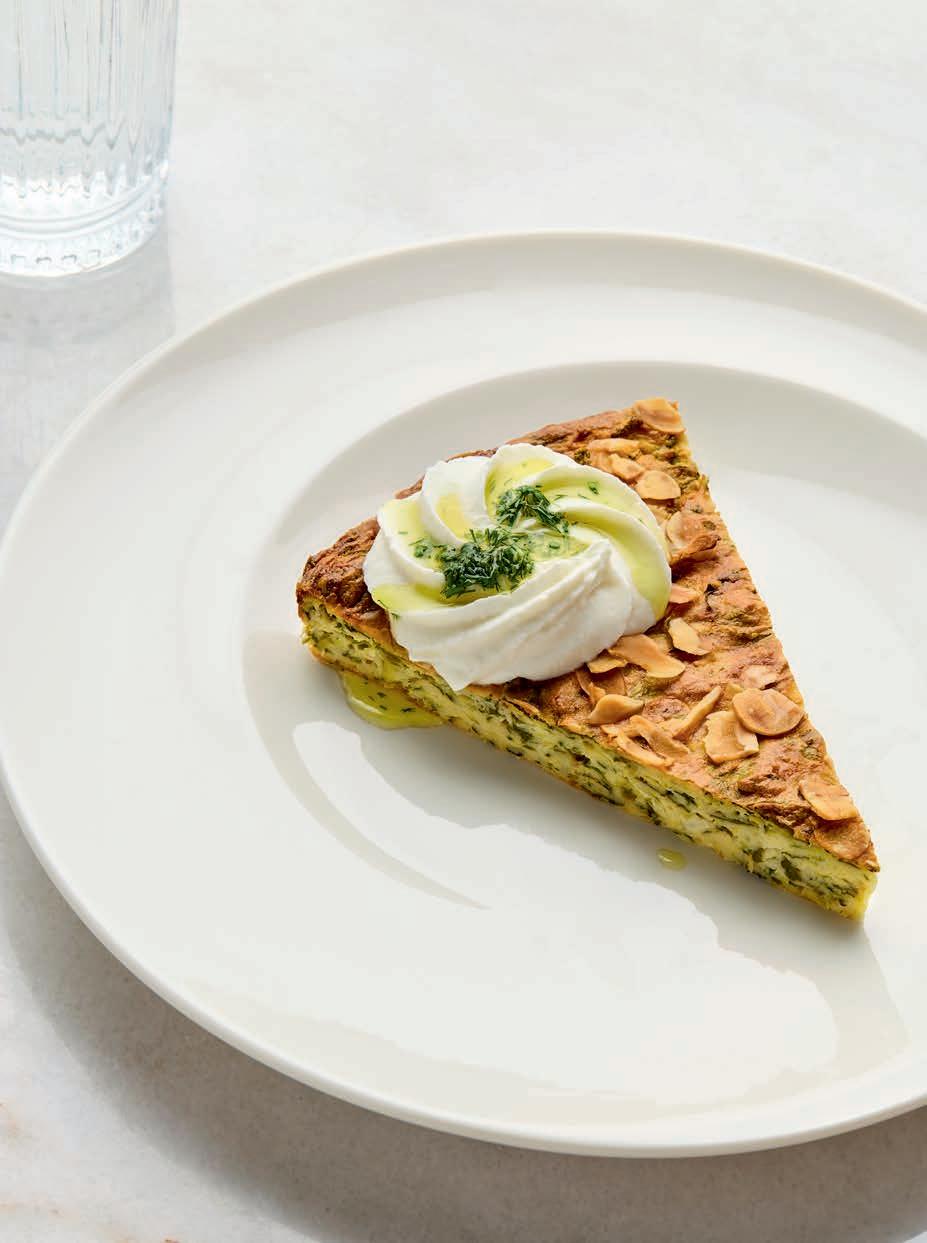
Grate the zucchini using the coarse side of a grater and squeeze out as much moisture as possible. In a large bowl, mix the zucchini with the mint, spring onions, yogurt, eggs, lime zest, and olive oil. Season with salt and pepper and mix well. Add the self-rising flour and stir until a smooth batter forms. Grease a 30 cm round baking pan with margarine and sprinkle with the flaked almonds. Pour in the mixture and spread it evenly. Bake in a preheated oven at 180°C for about 45 minutes, until golden brown. Allow the pie to cool slightly before cutting.
FOR THE FETA CREAM
In a blender, process the feta with the milk, starting at low speed and gradually increasing, until a smooth and creamy texture is achieved. Transfer the cream to a piping bag.
CUT THE ZUCCHINI PIE INTO PIECES AND DECORATE THE TOP WITH A ZIGZAG PATTERN OF FETA CREAM. FINISH WITH A FRESH HERB SALAD (DILL AND MINT) DRESSED WITH OLIVE OIL. ΓΙΑ
500γρ.
200γρ.
N N Z Z
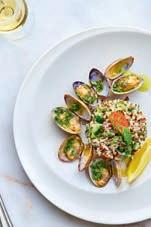
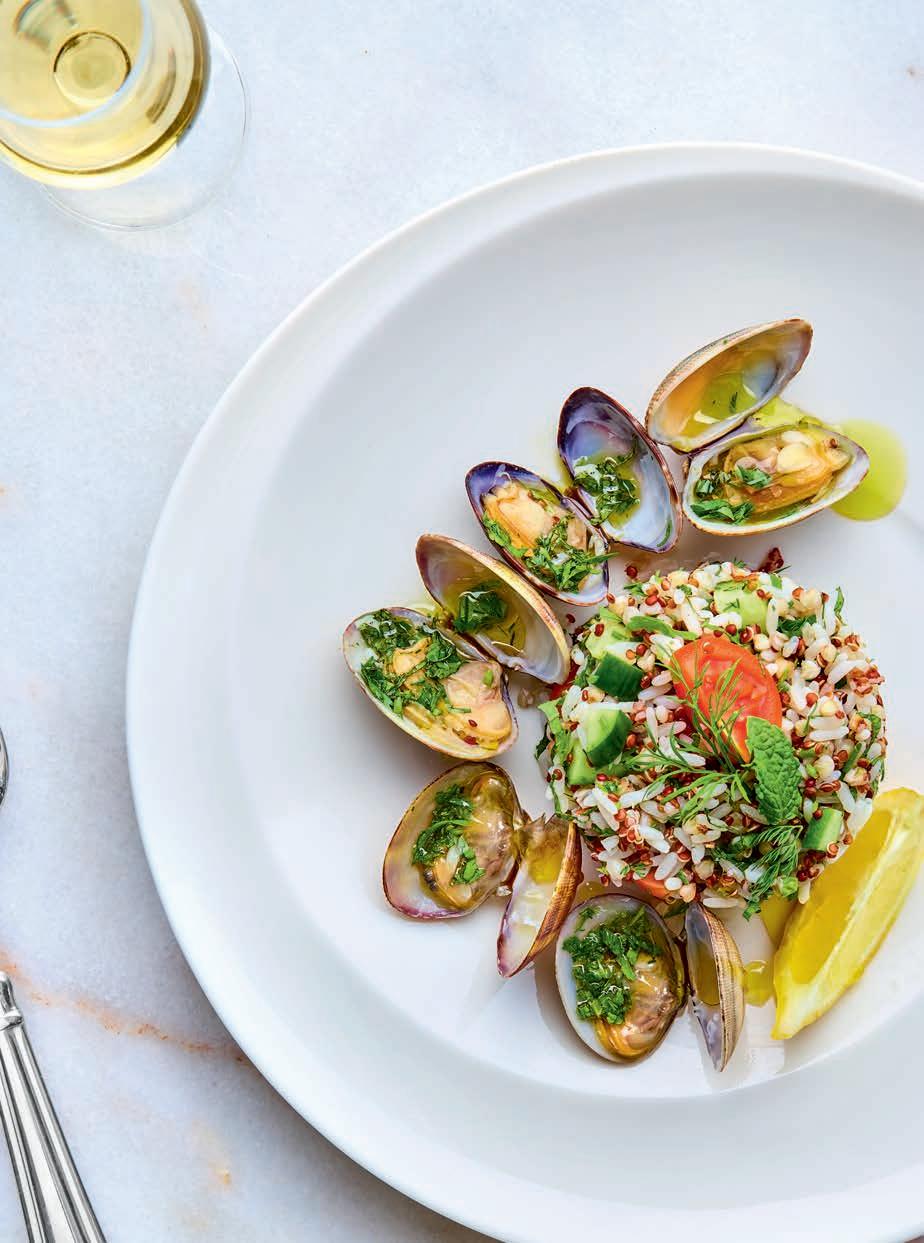
KEFALONIAN “PATELORYZO” WITH LIMPETS AND HERBS
500g limpets or other shellfish
200g bonnet rice
50g black quinoa // 50g buckwheat
1/4 bunch dill, finely chopped
1/5 bunch parsley, finely chopped
a little fresh mint, finely chopped
4 spring onions, finely chopped 1/2 dry onion, finely chopped juice of 1 lemon and 2 limes
200g cherry tomatoes, quartered 1/2 cucumber, cut into small cubes (seedless) olive oil, salt, pepper, vegetable stock
FOR THE SHELLFISH
Blanch the limpets in boiling water for 2–3 minutes, until they open. Remove the flesh from the shells and set it aside. Keep the shells for serving.
FOR THE GRAINS
Cook the rice, quinoa, and buckwheat separately in salted vegetable stock, according to their respective cooking times. Drain and allow them to cool completely.
ASSEMBLY
In a large bowl, mix the rice, quinoa, buckwheat, cherry tomatoes, cucumber, spring onions, and dry onion. Add half of the herbs, the lemon and lime juice, olive oil, salt, and pepper, and mix gently. Transfer the mixture into a mold of your choice and unmold onto a serving platter.
MIX THE SHELLFISH FLESH WITH THE REMAINING HERBS, A LITTLE OLIVE OIL, SALT, AND PEPPER. FILL THE SHELLS AND ARRANGE THEM AROUND THE SALAD BEFORE SERVING.
N N
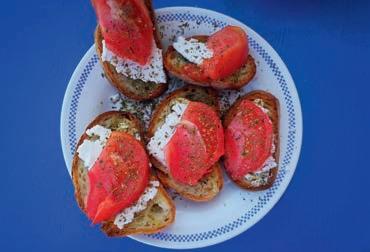
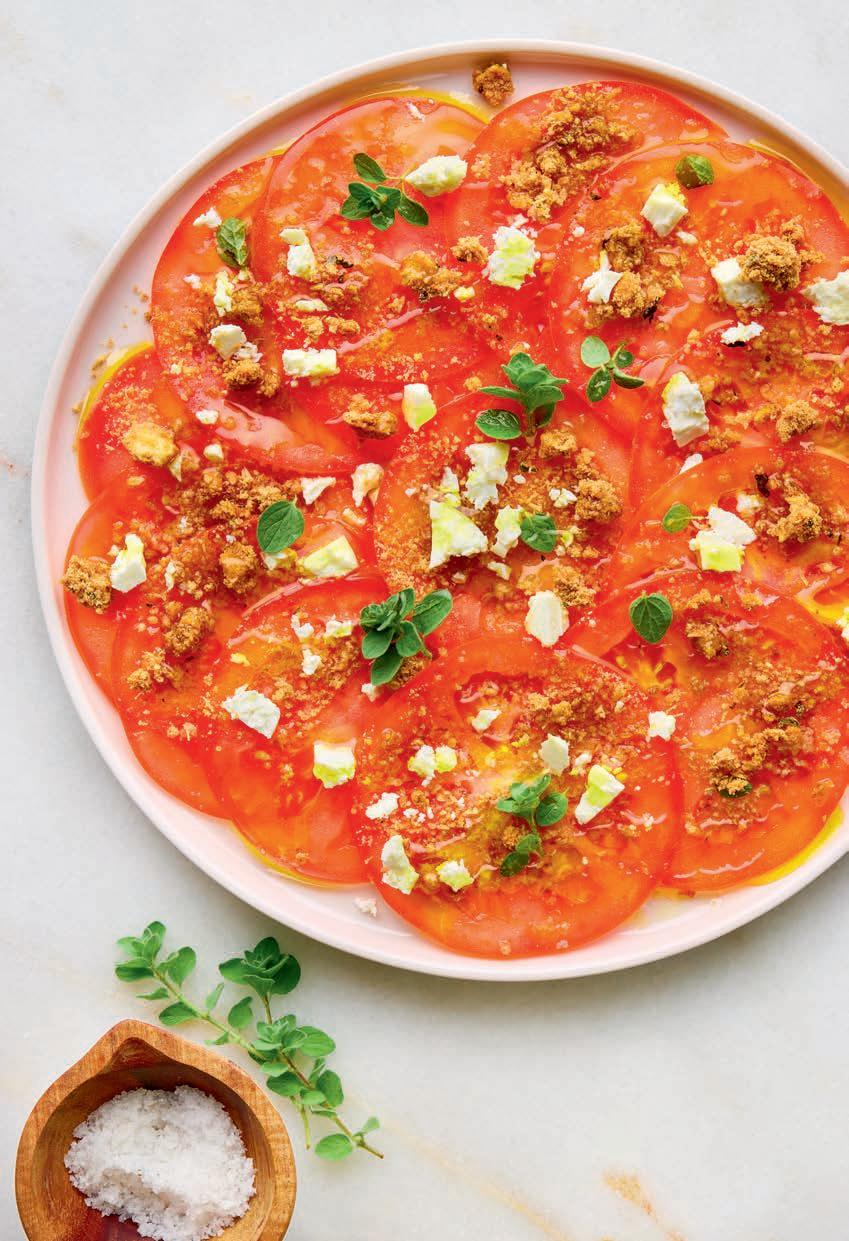
DAKOS-STYLE SALAD (RIGANADA)
WITH KYTHERA RUSKS AND TOMATO CARPACCIO
3 medium tomatoes (ideally in different colors)
100ml olive oil
25ml white vinegar
2 sprigs fresh oregano
100g feta cheese, crumbled
6 Kythera rusks (or barley rusks)
Sea salt flakes
Z Z
Slice the tomatoes into very thin slices and arrange them evenly on a serving platter. Drizzle with half of the olive oil and the white vinegar, and let them marinate for 10–15 minutes.
In a blender, combine the rusks, half of the feta, the remaining olive oil, and half of the fresh oregano (leaves only).
Blend until a compact mixture forms.
Spread the mixture onto a baking tray lined with parchment paper and bake in a preheated oven at 140°C for 15–20 minutes, until lightly golden. Let it cool, then crumble it by hand into a crunchy texture.
SPRINKLE THE MARINATED TOMATOES WITH THE REMAINING FETA AND THE RUSK CRUMBLE. ADD A PINCH OF SEA SALT FLAKES AND FINISH WITH FRESH OREGANO LEAVES.
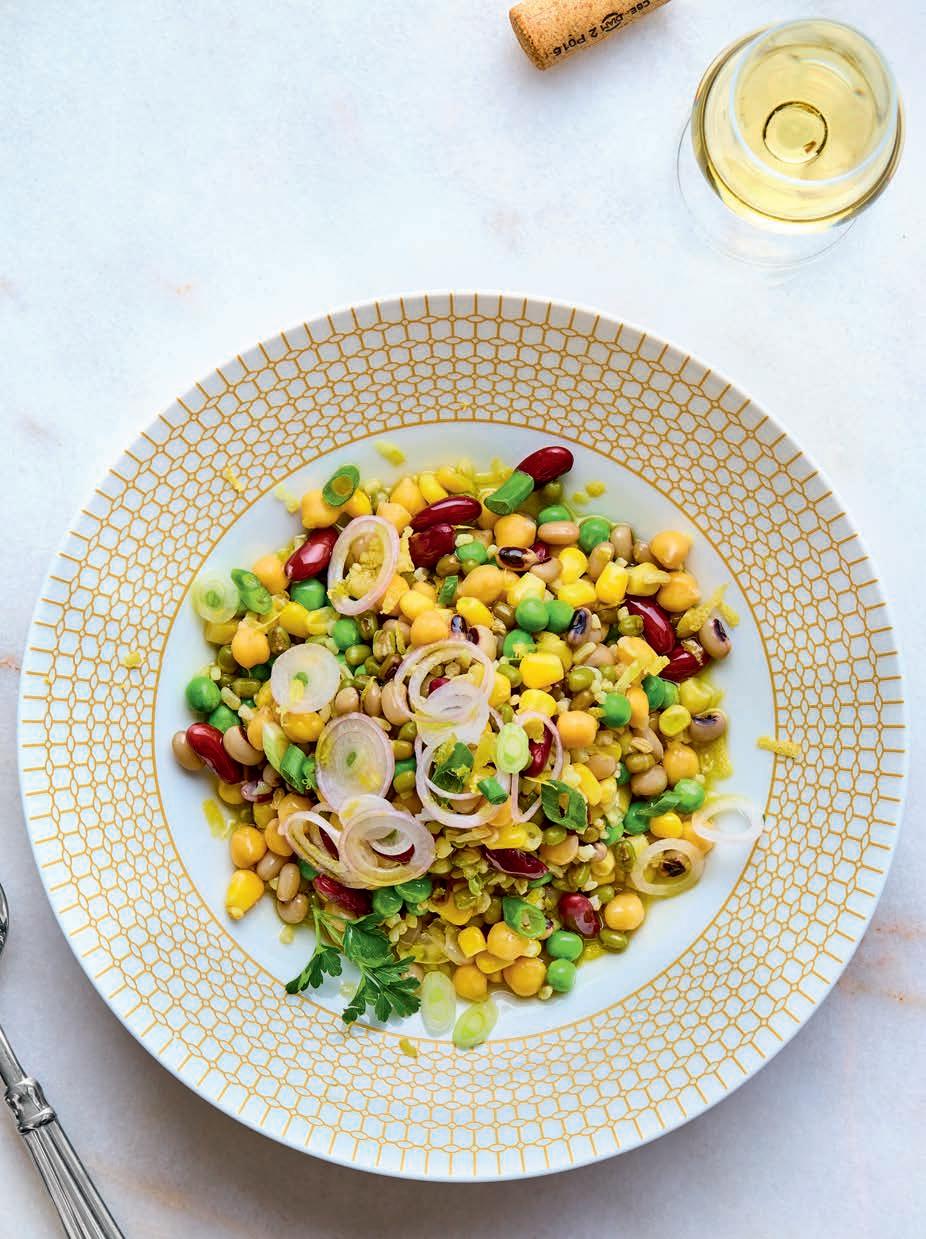
Soak all legumes and wheat overnight. In a large pot, first boil the wheat, chickpeas, corn, and red beans. After about 30 minutes, add the black-eyed beans and cowpeas. Continue cooking, adding the onion, garlic, olive oil, salt, and pepper. Once the mixture begins to thicken, add the peas and remove from heat. Finish with the spring onion, lemon juice, and zest.
SERVE WARM AS A HEARTY SOUP, OR ALTERNATIVELY DRAIN AND PRESENT AS A SALAD, ADDING CHOPPED PARSLEY.
In a wide pot, heat the olive oil over low heat and sauté the white onion, spring onions, and garlic. Add the wild greens gradually, allowing each batch to wilt before adding the next. Stir in the tomato paste and spices, mix well, and cover the pot. Cook over low heat until the greens are completely tender. Remove the lid and allow excess liquid to evaporate. Finish with lemon juice, salt, and pepper.
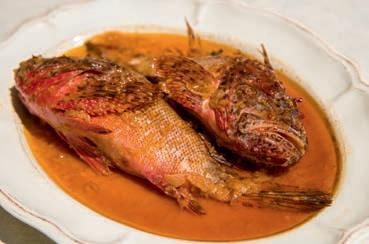
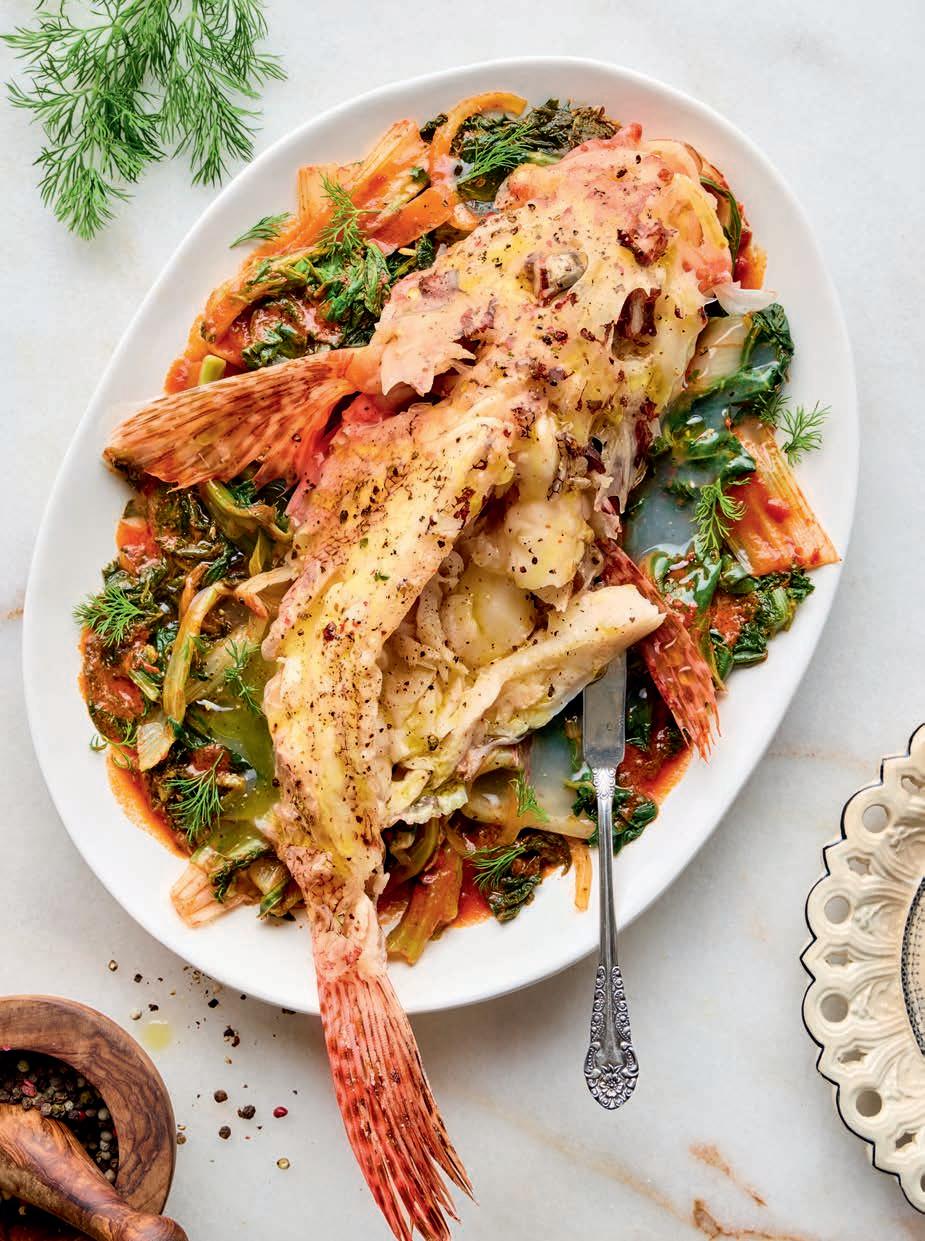
FOR THE STEAMED SCORPIONFISH
Boil the scorpionfish in lightly salted water until cooked through. Carefully remove and fillet. Transfer a small amount of the fish stock to a shallow pan and heat gently. Dissolve the cornflour in a little cold water and add it to the pan, stirring until the sauce lightly thickens. Add the olive oil, lemon juice, salt, and pepper, and simmer gently for a few minutes. Add the fish and dill at the end, gently shaking the pan so the fish is coated in the sauce without breaking apart.
PLACE THE TSIGARIDIA ON A DEEP SERVING PLATTER OR SALAD BOWL AND ARRANGE THE SCORPIONFISH ON TOP WITH ITS LEMON SAUCE. FINISH WITH A DRIZZLE OF OLIVE OIL AND A SPRINKLE OF FRESH DILL. ΓΙΑ ΤΑ
s+b _fine flavors
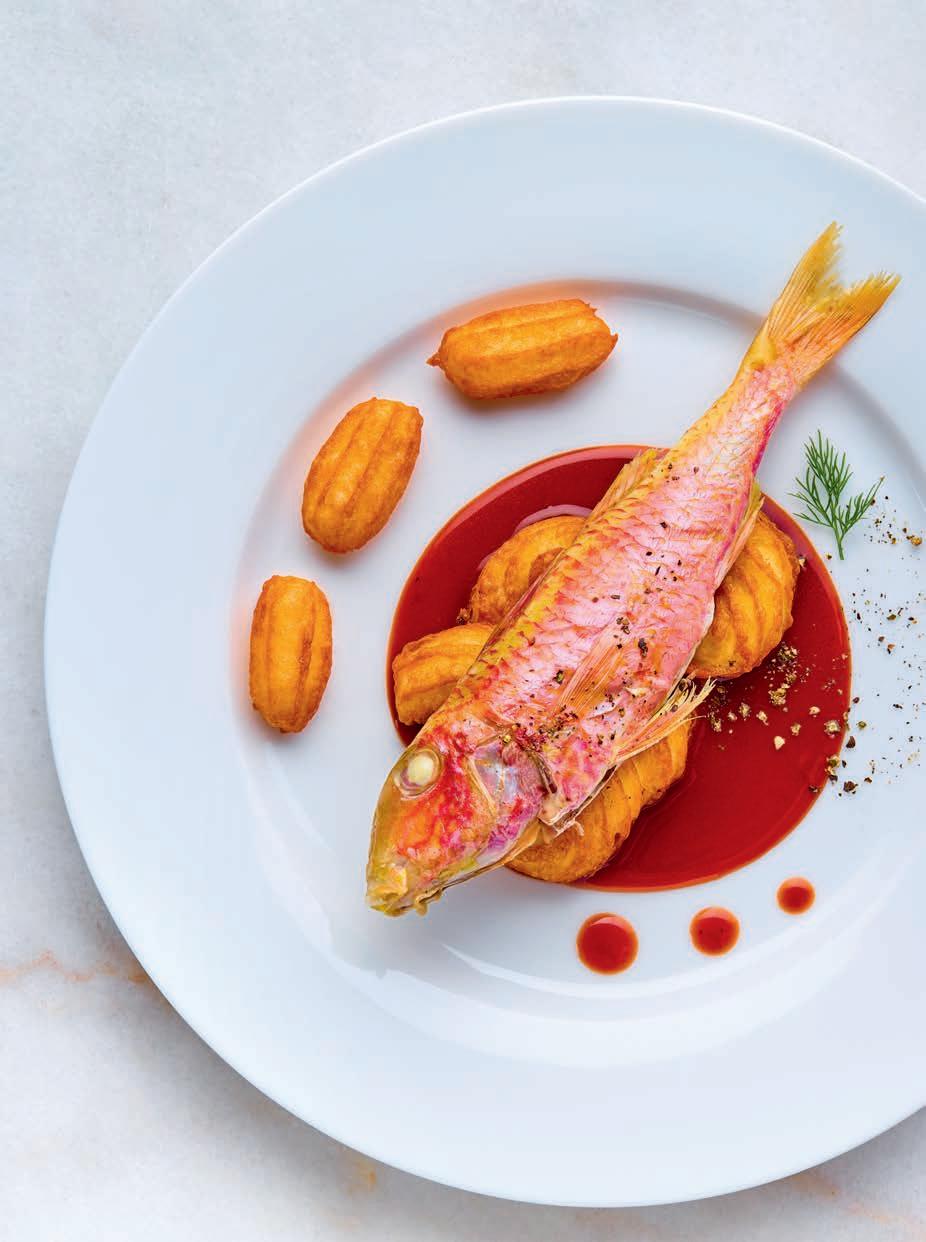
RED MULLET “SAVORO” WITH POTATO TOULOUMBAKIA
FOR THE RED MULLET
1kg red mullet, cleaned // sunflower oil (for frying) // salt
Season the red mullet with salt and cook in an air fryer.
FOR THE SAVORO SAUCE
In a wide saucepan, heat the olive oil and sauté the garlic, rosemary, bay leaves, and peppercorns. Add the tomato paste and a small amount of flour. Deglaze with the red wine and apple cider vinegar, then allow the sauce to simmer until reduced by half. Finish with the grape molasses, then strain the sauce and keep warm.
FOR
THE
POTATO TOULOUMBAKIA
For the potato mixture, boil the potatoes in salted water until tender. Drain and mash. Add the egg yolk, butter, salt, and pepper, mixing until smooth.
For the choux pastry, in a saucepan, combine the water, milk, and butter and bring to a boil. Add the sifted flour, salt, and a pinch of nutmeg. Stir vigorously until a smooth dough forms. Remove from the heat and incorporate the eggs one at a time. Finally, fold in the potato mixture and grated graviera cheese. Transfer the mixture to a piping bag fitted with a star nozzle. Heat plenty of sunflower oil in a deep saucepan and pipe small portions of dough directly into the hot oil.
ARRANGE THE RED MULLET ON A SERVING PLATTER, SPOON OVER THE WARM SAVORO SAUCE AND SERVE ALONGSIDE THE POTATO TOULOUMBAKIA.
1.500γρ.
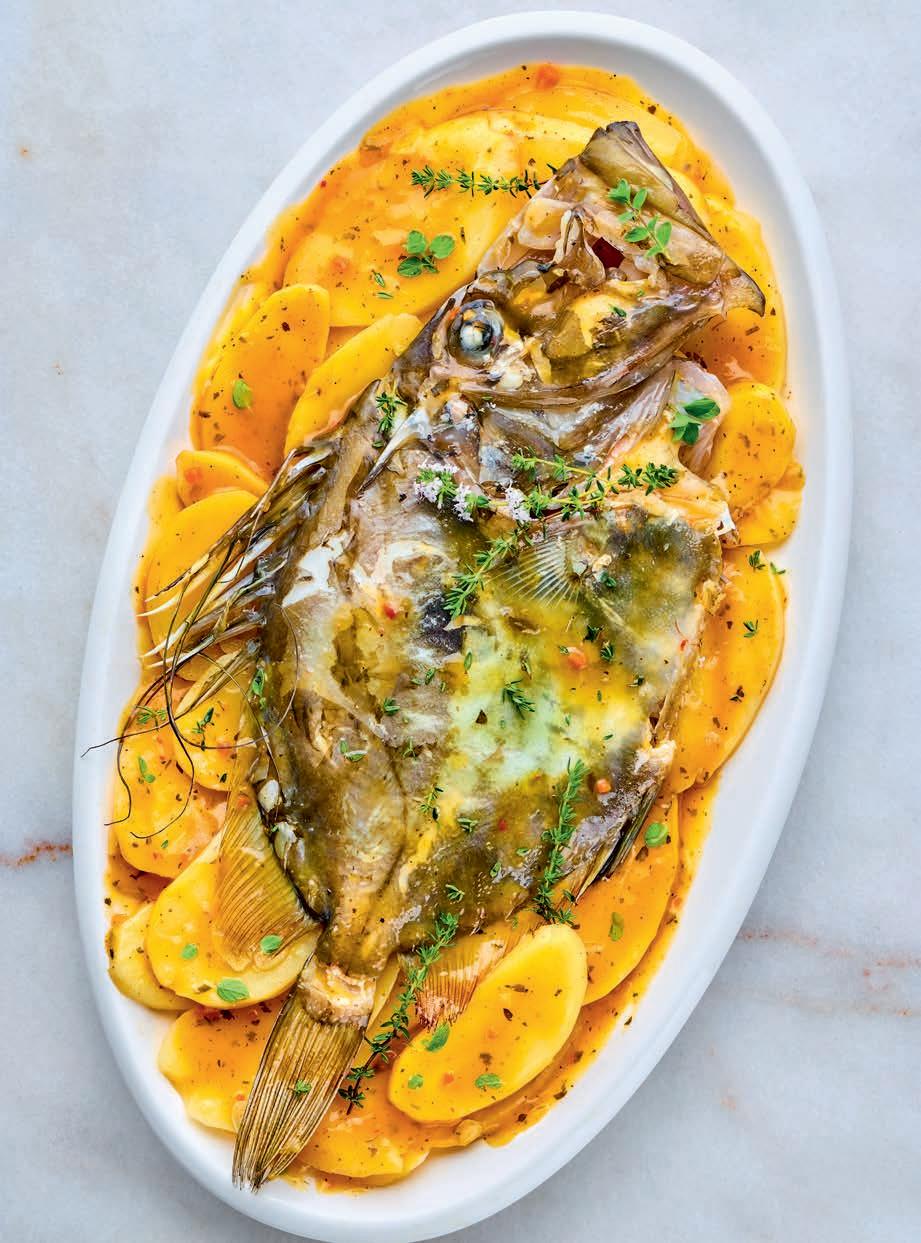
SAN PIETRO
SAN PIETRO (JOHN DORY) IN WHITE SAUCE WITH GRAPE JUICE
1.5kg John Dory (San Pietro), cleaned 1.2kg potatoes, peeled 4 garlic cloves juice of 1/2 lemon juice from 500g unripe sultana grapes 120ml olive oil vegetable stock (as needed) salt, white pepper
In a large pot, arrange the potatoes cut into thick slices on the bottom and add the garlic. Season with salt and pepper and drizzle with olive oil. Place the whole fish on top, also seasoned. Add vegetable stock until the potatoes are well covered, but the fish is not fully submerged. Cook over medium heat, covered, until the potatoes are tender and the fish is properly cooked (about 40-45 minutes). Carefully remove the fish and potatoes and transfer to a serving platter. In the same pot, add the lemon juice and grape juice and let the sauce simmer until slightly thickened. Adjust seasoning with salt and white pepper.
POUR THE WARM, VELVETY SAUCE OVER THE FISH AND POTATOES AND SERVE IMMEDIATELY.
N Z Z
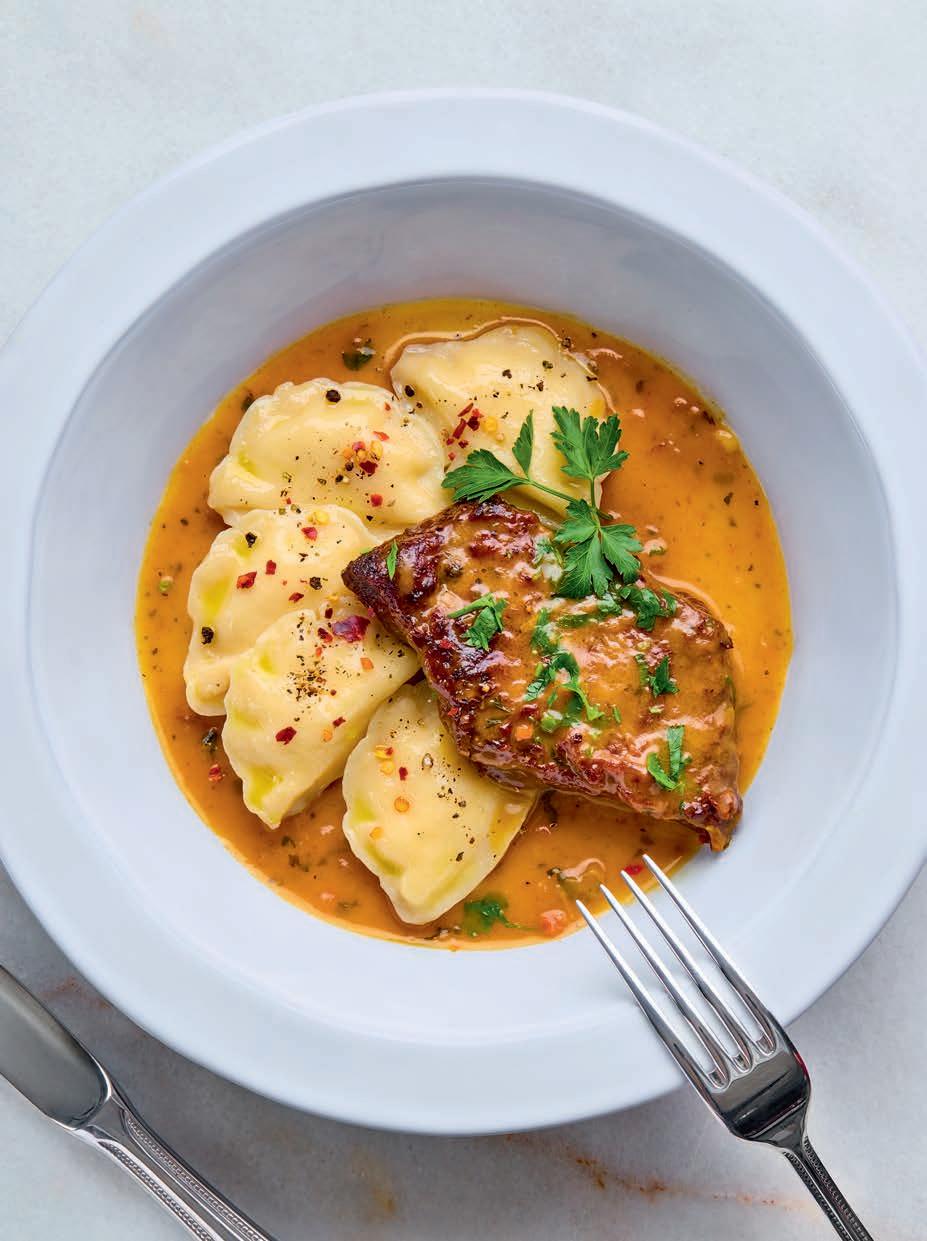
SOFRITO WITH MEZZALUNA
(Ravioli filled with Kefalonian myzithra cheese)
FOR THE SOFRITO
1 kg veal escalopes
100g flour // 100ml olive oil
4 garlic cloves, thinly sliced
1 bunch parsley, finely chopped // 90ml vinegar
180ml white wine
350ml beef stock
Salt, pepper
FOR THE MEZZALUNA
200g “00” flour
180g egg yolks // 250g fresh myzithra cheese
50g breadcrumbs // Salt, pepper
FOR THE SOFRITO
Season the veal with salt and pepper and coat it lightly with flour. In a frying pan over medium-high heat, add the olive oil and fry the veal until browned. Remove and place it on a tray lined with paper towels to absorb excess oil. Arrange the veal pieces upright in a pot. In a clean frying pan, sauté the garlic and deglaze with the wine and vinegar. Allow it to reduce slightly, then add the beef stock. Once it comes to a boil, pour the liquid into the pot with the veal and add the parsley. Add more stock or water if needed. Cook over low heat for about 45–60 minutes, then adjust seasoning with salt and pepper.
FOR THE MEZZALUNA
On your work surface, form a mound with the flour and make a well in the center. Add the egg yolks and mix until a thick dough forms. Knead well until smooth. Wrap the dough in plastic wrap and let it rest for 1–2 hours. In a bowl, combine the myzithra cheese, breadcrumbs, salt, and pepper. Roll out the dough with a rolling pin as thinly as possible. Cut circles with a round cutter about 8 cm in diameter. Place a heaped teaspoon of the myzithra mixture in the center of each circle. Fold over and seal the edges to form a half-moon (mezzaluna) shape. Cook the pasta in a pot of salted boiling water for 2–3 minutes.
PLACE THE MEZZALUNA AT THE BASE OF A DEEP PLATE AND SPOON THE SOFRITO ON TOP. GARNISH WITH A LITTLE CHOPPED PARSLEY.
s+b _fine flavors
N N Z Z
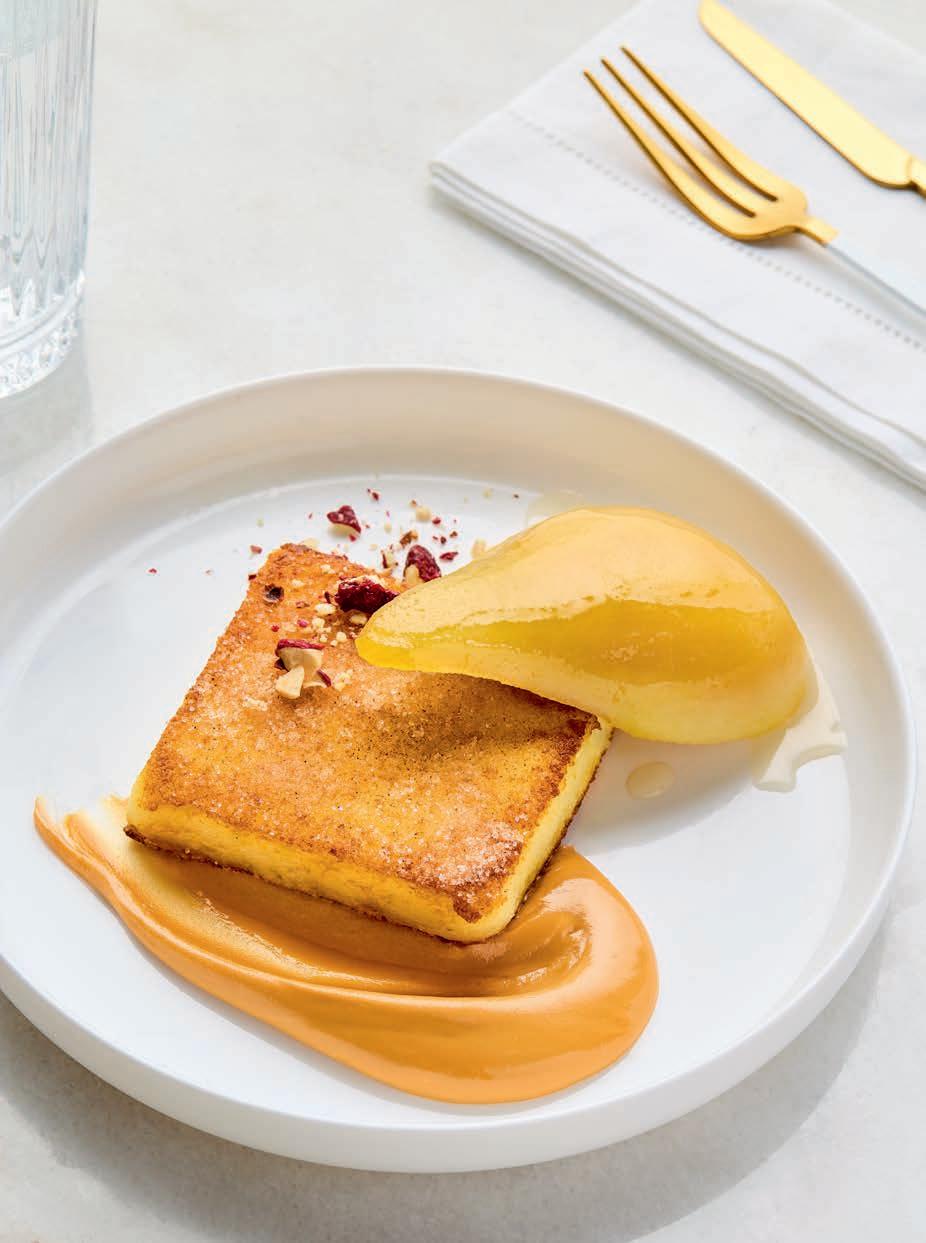
ZAKYNTHIAN FITOURA WITH POACHED PEARS, PEANUT BUTTER & CARAMELIZED PEANUTS
FOR THE FITOURA
300g fine semolina
500ml milk // 600ml water // 10g salt sesame oil, for frying sugar, for dusting // ground cinnamon
FOR THE POACHED PEARS
8 small pears, ripe but firm 1 bottle sweet white wine (Samos-style) 400g sugar
FOR SERVING
300g peanut butter // 100g caramelized peanuts
FOR THE FITOURA
In a deep saucepan, bring the water, milk, and salt to a boil. Gradually add the semolina in a steady stream, whisking continuously to prevent lumps from forming. Continue stirring until a thick, smooth cream forms and starts to pull away from the sides of the pan. Spread the mixture evenly into a tray (approx. 35×25 cm). Cover with cling film directly touching the surface and allow it to set for at least 8 hours. Cut into 16 equal pieces. Heat plenty of sesame oil in a frying pan and fry the pieces until golden and crisp on both sides. Transfer to absorbent paper and dust with sugar and cinnamon.
FOR THE POACHED PEARS
Peel the pears, cut them in half, and remove the cores, creating a small cavity. Place the wine and sugar in a saucepan and add the pears, ensuring they are fully submerged. Simmer gently over low heat until tender but still holding their shape. Remove the pears and continue boiling the liquid until it reduces to a thick, syrupy consistency.
SPREAD THE PEANUT BUTTER ON THE BASE OF A PLATE. PLACE A PIECE OF WARM FITOURA ON TOP, FOLLOWED BY HALF A POACHED PEAR. DRIZZLE WITH THE REDUCED SYRUP AND FINISH WITH CARAMELIZED PEANUTS FOR ADDED CRUNCH.
FOR THE GARNISH roasted hazelnuts, roughly chopped N N Z Z
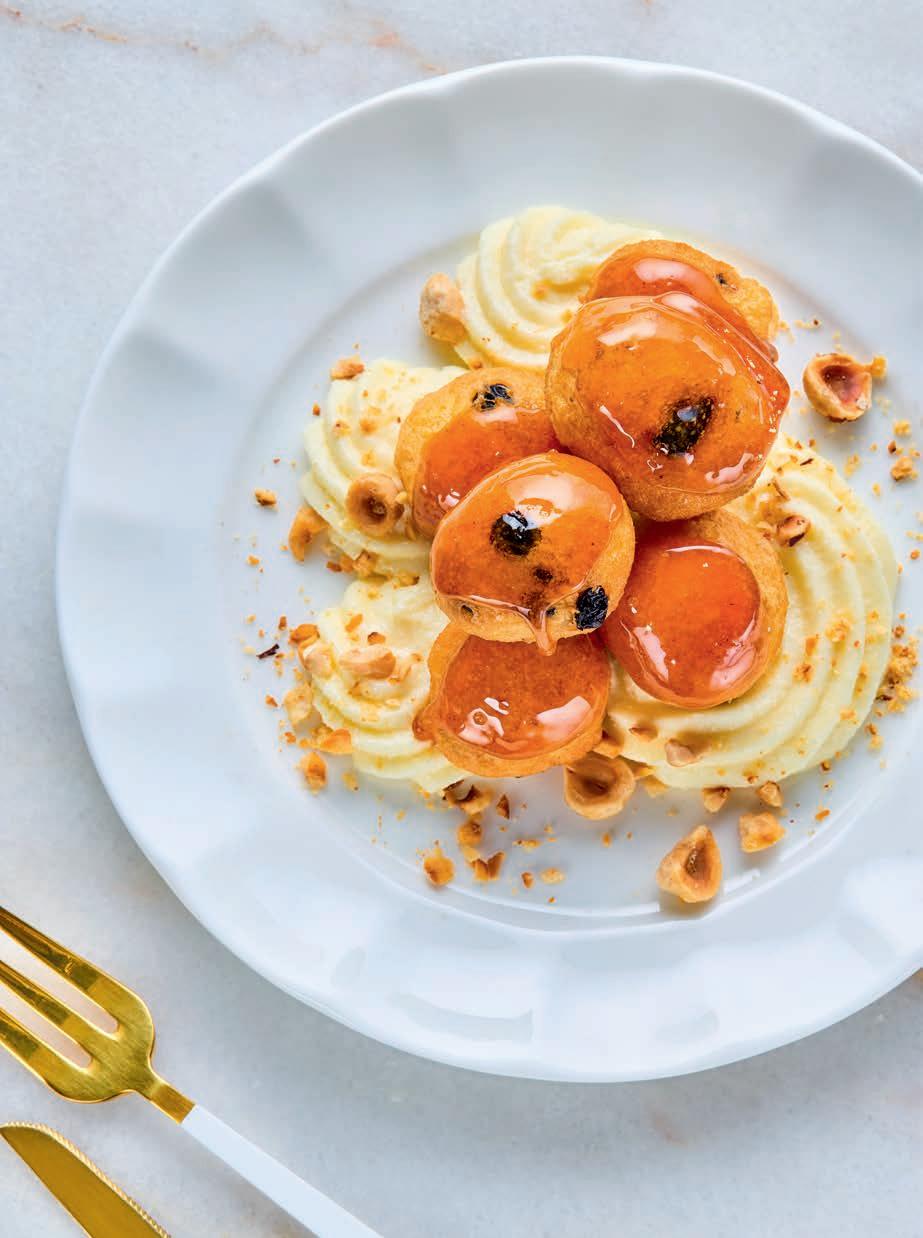
CORFU “TZALETIA” WITH WHITE CHOCOLATE NAMELAKA AND HAZELNUTS FOR THE TZALETIA
2 cups all-purpose flour
1 cup corn flour // 2 tsp dry yeast
1/4 tsp salt // 1 tsp sugar
1 3/4 cups lukewarm water zest of 1 orange 100g black raisins sunflower oil, for frying sugar, for caramelizing
FOR THE WHITE CHOCOLATE NAMELAKA
5g gelatin
190g white chocolate, finely chopped 120g milk // 250g heavy cream
FOR THE TZALETIA
In a large bowl, mix the flour, corn flour, yeast, sugar, orange zest, and raisins. Add the salt and create a well in the center. Gradually pour in the lukewarm water while mixing until a soft dough forms. Let it rest for 45–60 minutes, until it has risen.
Heat plenty of sunflower oil in a deep pot. Using a spoon, drop small portions of dough into the hot oil and fry them like doughnuts until golden. Remove and drain on paper towels.
Melt sugar over low heat until it turns into caramel. Dip one side of each tzaletia into the caramel and let them cool on a non-stick surface.
FOR THE NAMELAKA
Soak the gelatin in cold water until softened. Heat the milk and dissolve the drained gelatin in it. Pour the hot mixture over the white chocolate and blend with a hand blender until smooth. Add the heavy cream and continue blending until fully combined. Let the mixture cool, then whip with a mixer until light and airy. Transfer to a piping bag fitted with a nozzle.
ARRANGE THE TZALETIA ON A ROUND SERVING PLATTER, FORMING A PYRAMID OR TOWER. FILL THE GAPS WITH WHITE CHOCOLATE NAMELAKA AND SPRINKLE WITH ROASTED HAZELNUTS.
Το αλάτι Μεσολογγίου παράγεται στο προστατευόμενο οικοσύστημα (Natura 2000) της λιμνοθάλασσας Μεσολογγίου. Εδώ, το αργιλώδες έδαφος, ο ήλιος και ο αέρας «δουλεύουν» για να δώσουν στο εκλεκτό καρύκευμα τη φυσική κρυστάλλωση,
The white gold of Greek gastronomy messolonghi sea salt
MESSOLONGHI SALT – AND IN PARTICULAR ITS PRIZED FLEUR DE SEL – IS FAR MORE THAN A SIM PLE SEASONING; IT IS A PRECIOUS C ULINARY INGREDIENT IN ITS OWN RIGHT.
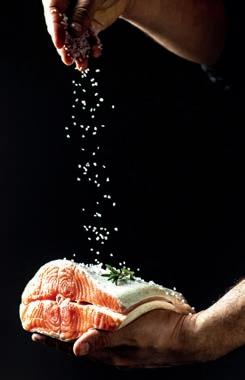
Harvested within the protected ecosys tem (Natura 2000) of the Messolonghi lagoon, this exceptional salt is the result of a delicate natural process. Here, clayrich soil, sun, and sea breeze work in harmony to shape its natural crystallization, distinctive texture, and remarkably full-bodied flavor.
BY MINA AFENTOULI
Messolonghi fleur de sel – also known as the “flower of salt” – is often described as a “living” food. Rich in naturally occurring minerals such as magnesium, potassium, calcium, and trace elements, it contributes to the body’s natural electrolyte balance. It also retains the iodine provided by the sea itself, without the need for artificial fortification.
Unlike conventional table salt, Messolonghi salt is neither refined nor chemically treated. It remains 100% natural, preserving its original crystalline structure and moisture – qualities that give it a milder, more rounded salinity and a less aggressive presence on the palate. Its depth of flavor allows for a lighter hand in use, without compromising the final result.
THE ULTIMATE FINISHING TOUCH
Used as a finishing salt, a pinch of fleur de sel over grilled meats or fish, fresh salads, or seasonal vegetables creates delicate bursts of flavor in every bite. Its ability to enhance the quality of ingredients without overpowering them makes it equally suited to raw preparations such as carpaccio or ceviche. Beyond savory dishes, this delicate salt finds its place in pastry-making as well. A subtle sprinkle can balance sweetness and elevate the aromatic complexity of chocolate, caramel, and other desserts. ■
balsamic vinegar
A sweet-and-sour elixir
BY EVAGGELIA PAPAPASCHALI
BALSAMIC VINEGAR IS ONE OF THE MOST REFINED AND AROMATIC CONDIMENTS OF MEDITERRANEAN GASTRONOMY, WITH ROOTS THAT STRETCH DEEP INTO HISTORY.
Its origins can be traced to the region of Modena in Italy, where as early as the Middle Ages a concentrated, sweetand-sour elixir was produced from grape must. Traditional balsamic, known as “Aceto Balsamico Tradizionale,” is aged for years in wooden barrels, developing complexity, depth, and a velvety texture.
VARIETIES
Balsamico
Today, the market offers a wide range of balsamic categories. The traditional Protected Designation of Origin (PDO) prod uct is the highest quality and most expensive, with intense aromas and a dense texture. On the other hand, “Aceto Bal samico di Modena” with Protected Geographical Indication (PGI) is more accessible, with a shorter aging period and a lighter character. There are also versions with added cara mel or thickeners, intended for everyday culinary use, as well as options infused with honey, citrus fruits, pomegranate, or strawberry. Balsamic creams offer a thicker, sweeter varia tion, ideal for garnishing and enhancing the flavor of salads and dishes
ITS CULINARY VERSATILITY
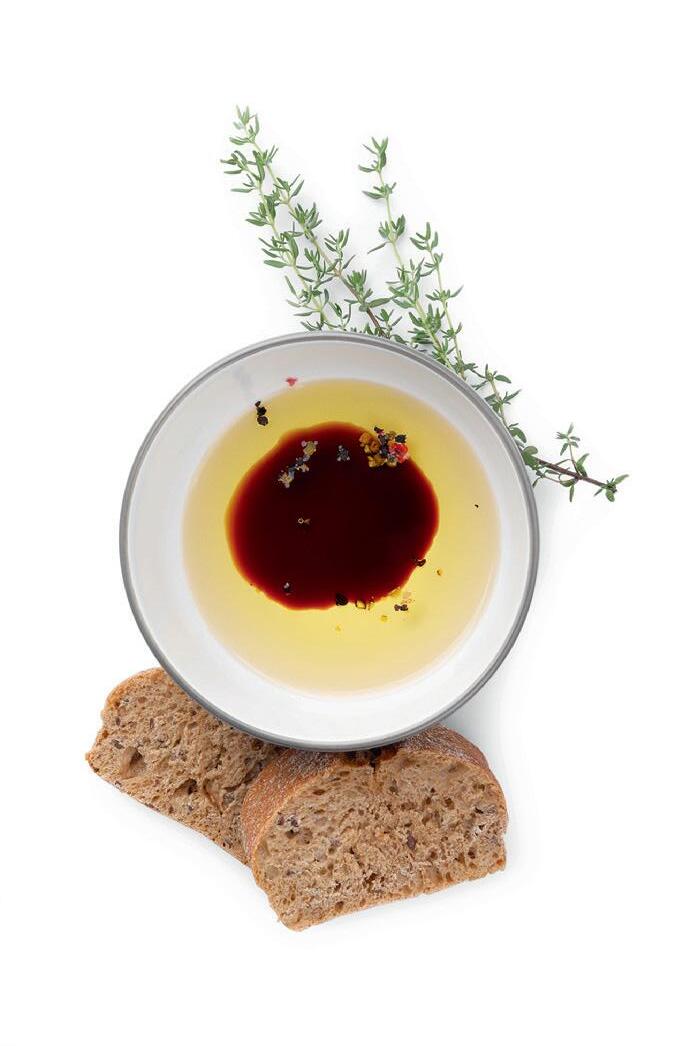
In salads, just a few balsamic drops are enough to ele vate fresh vegetables. A classic combination is with tomato and mozzarella, where its sweet-andsour profile perfectly balances the freshness of the ingredients.
Balsamic can also be used in cooked dish es. It pairs beautifully with red meats such as beef or duck, adding depth and a subtle caramelized finish. It can also be incorpo rated into marinades and sauces, or even reduced to create a thick glaze that comple ments roasted vegetables or cheeses.
It is equally in few drops of balsamic over fresh strawberries –or even vanilla ice cream – can create an unex pectedly harmonious pairing.
ΕΛΑΙΟΛ ΑΔΟ
Βασικό στοιχείο της μεσογειακής διατροφής, πλούσιο σε μονοακό-
λιπαρά και αντιοξειδωτικά.
Προστατεύει την καρδιά, βελτιώ-
νει
Summer Superfoods
BY EVAGGELIA PAPAPASCHALI
DATES
Small and naturally sweet, dates are rich in fiber, potassium, and natural sugars that provide instant energy. Perfect as a snack or for sweetening summer smoothies.
WATERMELON
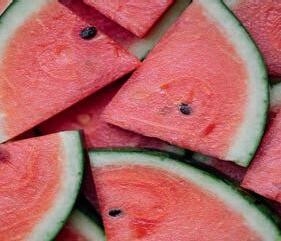
The ultimate summer fruit: high in water and lycopene, low in calories, it hydrates the body, protects the skin from sun exposure, and delivers a refreshing burst of coolness.
OLIVE OIL
A cornerstone of the Mediterranean diet, rich in monounsaturated fats and antioxidants. It supports heart health, aids digestion, and contributes to skin anti-aging.
FIGS
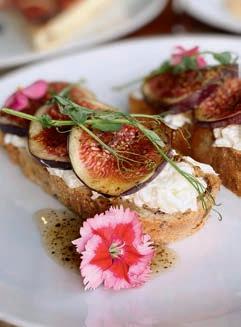
Sweet and nutritious, rich in fiber, calcium, and magnesium. They aid digestion, strengthen bones, and add natural sweetness to desserts and snacks.
Summer is the season when nature offers us its most refreshing and nourishing foods. Seasonal superfoods are not only delicious, but also packed with vitamins, minerals, proteins, and healthy fats that boost energy, support heart and skin health, and help keep us cool under the sun.
ΑΒΟΚ ΑΝΤΟ
SARDINES
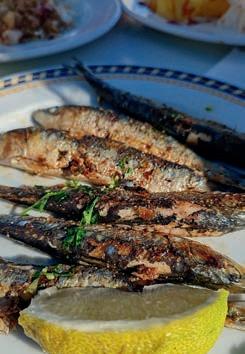
Small but powerful: packed with protein, omega-3 fatty acids, and calcium. They support heart health, strengthen bones, and are perfect grilled or canned.
KEFIR
Rich in protein and probiotics, kefir supports gut flora and digestion, while offering a refreshing and revitalizing option for hot summer days.
CUCUMBER
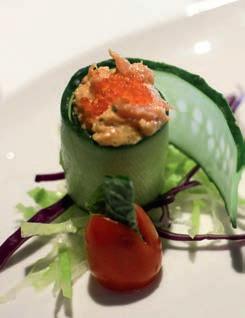
Refreshing and light, with high water content and fiber. Ideal for salads, smoothies, or even face masks, it hydrates the body and supports digestive health.
HYDRATION STARTS ON YOUR PLATE: CHOOSE FOODS WITH HIGH WATER CONTENT.
BLUEBERRIES
Tiny yet loaded with antioxidants and vitamin C. They protect cells from damage, enhance memory, and add a sweet freshness to yogurt, smoothies, and salads.
AVOCADO
Rich in healthy fats, fiber, and vitamins. It provides energy, supports heart health, and can be used in salads, toast, or refreshing creams.
CHERRIES
Sweet and juicy, packed with antioxidants and vitamins that reduce in flammation and protect the heart. Ideal as a snack or in desserts and smoothies. ■
_essentials
VILLEROY & BOCH
FLEUR,
VILLER OY & BOCH FLEUR DINNERWARE SET, PAROUSIASI
KITCHENAID ΜΠΛΕΝΤΕΡ,
KIT CHENAID BLENDER, PAROUSIASI
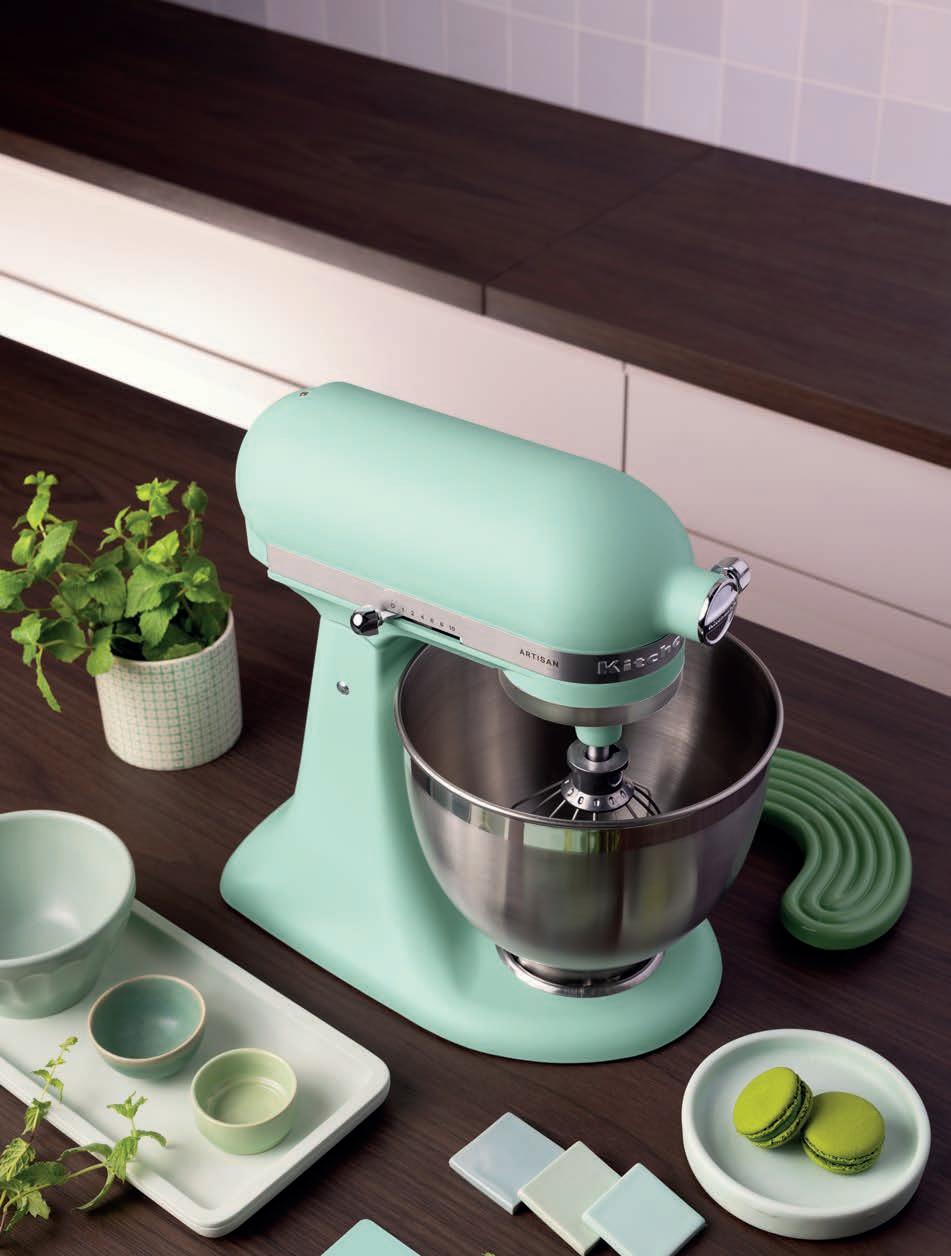
KITCHENAID ΜΙΞΕΡ SPEARMINT,
KIT CHENAID MIXER SPEARMINT, PAROUSIASI
Curated Kitchen
Adamantia Konstantopoulou
Private Cheffing
In the world of contemporary haute cuisine, where luxury is increasingly defined by personalization and experience, private chef Adamantia Konstantopoulou crafts a distinctive culinary narrative –one that is brought directly into the intimacy of your own space. Born and raised in Kalamata, and shaped by a professional journey that includes collaborations in demanding, high-level environments – among them Costa Navarino – she has developed a philosophy that balances technical precision with the authenticity of exceptional raw ingredients. At the heart of her work lies private cheffing: a fully immersive hospitality experience that frees the host from every obligation. Together with her team, she oversees every detail – from sourcing premium ingredients and designing bespoke menus, to cooking in your kitchen, presenting each dish, offering curated wine pairings, and leaving the space impeccably restored. The result is a seamless, high-end dining experience, delivered with absolute ease.
Her services span a wide spectrum of refined experiences. In-home dining introduces elegant dégustation menus for intimate gatherings, tailored to each guest’s preferences. Dining on board transforms a sea escape in the Messinian Gulf into a journey of flavors, while “dinner with live music” experiences blend gastronomy with curated melodies, creating a truly multisensory setting. At the same time, bar gastronomy adds another layer of sophistication, with bespoke cocktails designed in harmony with each menu, while private catering caters to every occasion – from intimate dinners and anniversaries to corporate events. Based in Kalamata, with a presence across Athens and the Peloponnese, Adamantia Konstantopoulou offers more than catering services; she delivers a complete hospitality concept that transforms every meal into an unforgettable experience.
THE PEAK OF VODK A greygoose.com
Η GREY GOOSE
ALTIUS
GREY GOOSE ALTIUS IS AN ULTRA-PREMIUM VODKA INSPIRED BY THE POWER AND PURITY OF THE FRENCH ALPS. CRAFTED FROM EXCEPTIONAL WINTER WHEAT AND ALPINE WATER, IT UNDERGOES A SLOW FILTRATION PROCESS AT LOW TEMPERATURES, RESULTING IN REMARKABLE SMOOTHNESS AND BALANCE. A REFINED SPIRIT DESIGNED TO ELEVATE EVERY MOMENT OF INDULGENCE.
OUR FAVORITES
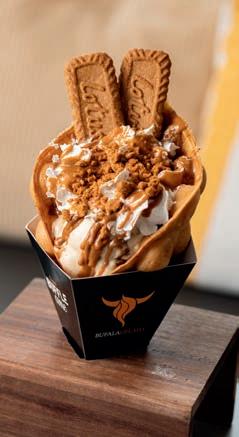
THE NEW ERA OF GOURMET ICE CREAM bufalagelato.com
Bufala Gelato transforms fresh buffalo milk daily into velvety gelato, containing 40% more protein, 58% more calcium, and 30%
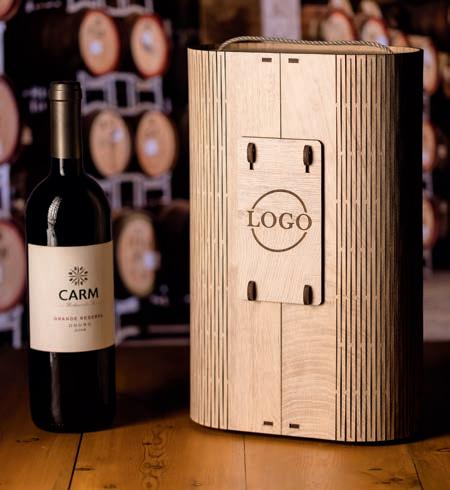
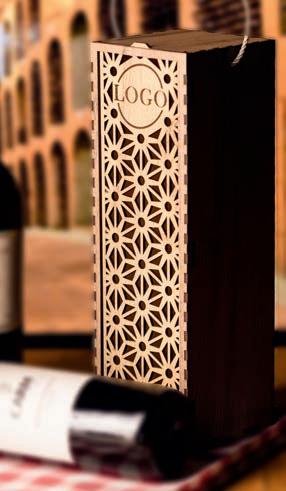
THE ART OF WINE PACKAGING woodenwishes.gr
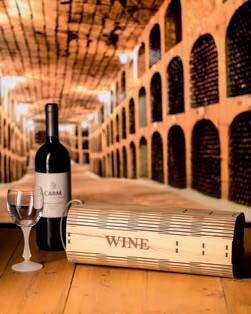
Wooden Wishes creates wooden wine packaging that combines aesthetics, quality, and functionality. Using natural materials such as birch wood and HDF, the company designs boxes and crates for 1 to 6 bottles, ideal for gifts or professional presentation. Each creation both protects and highlights the wine, transforming packaging into a timeless and elegant object of lasting utility.
SE A S ALT
WITH A TW IST @india.spices
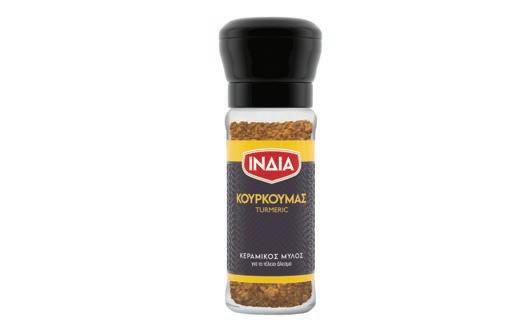
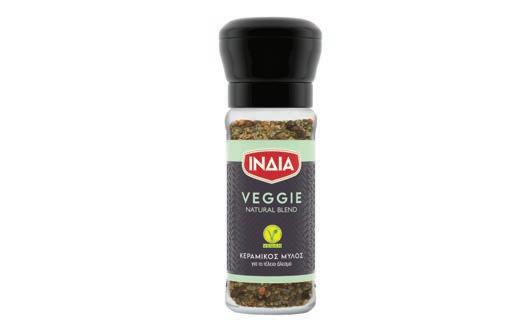
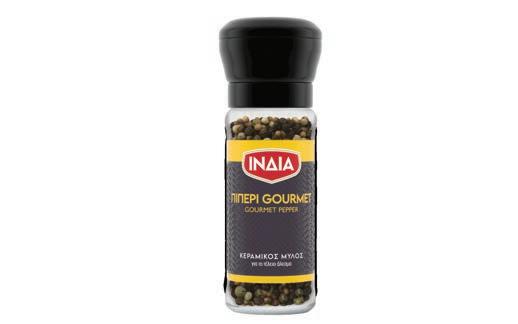
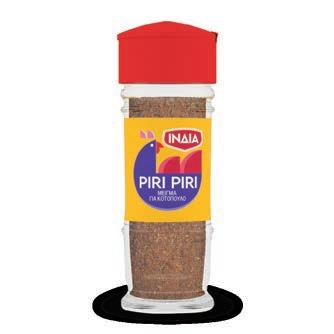
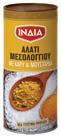
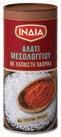
The aromatic sea salts of Messolonghi by India Spices bring a new dimension to flavor through distinctive combinations. Smoked paprika, curry-mustard, green tea, and ginger-lemon blend with pure Greek sea salt, presented in high-aesthetic ceramic grinders. A premium choice for lovers of creative cooking who wish to elevate every dish with unique aromas.
TAILOR-MADE SWEET EXPERIENCE
choureal.com
Pink Grapefruit,
english-gr.greencola.com
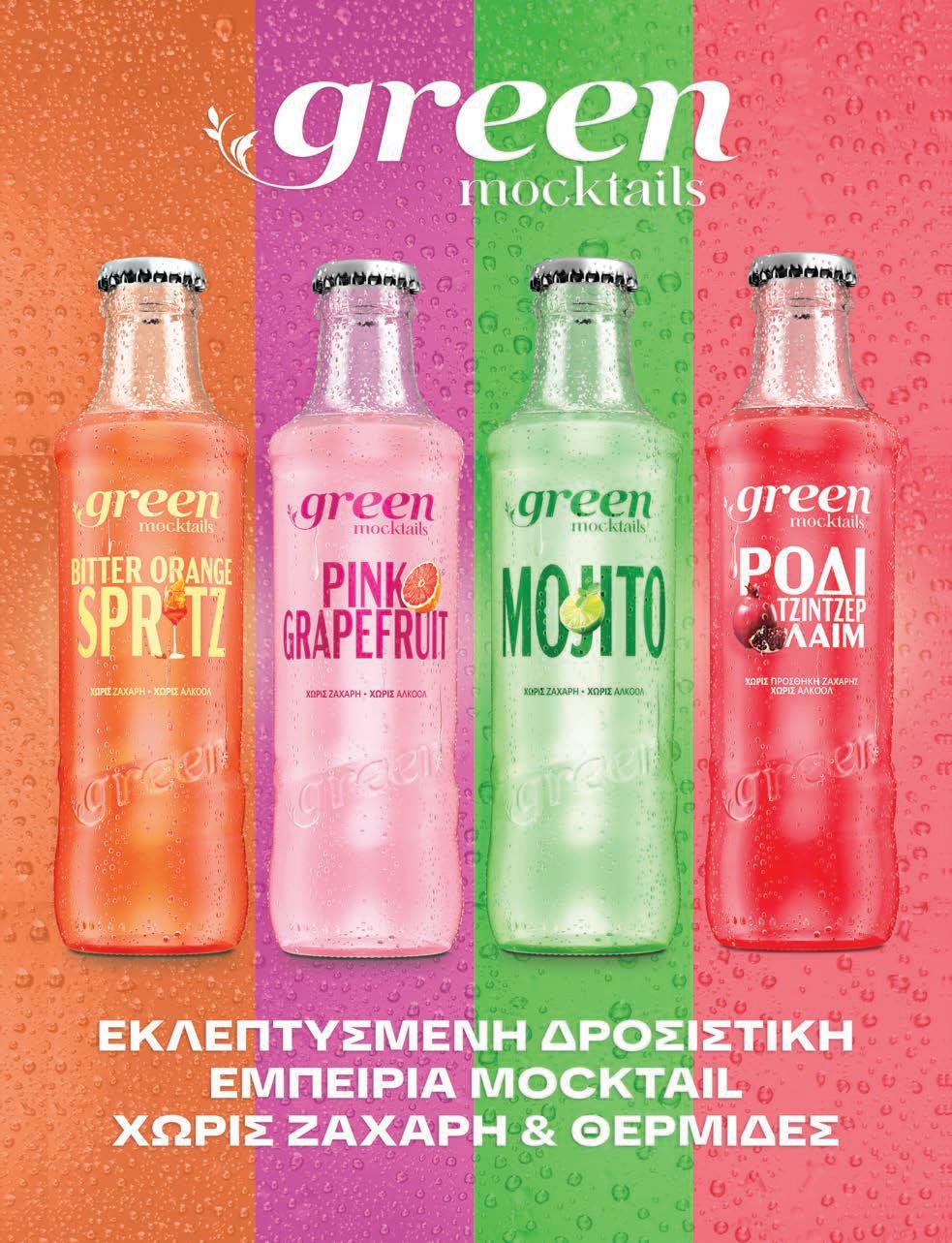
The Green Mocktails range offers a modern enjoyment experience with zero sugar and zero calories. Available in 250ml glass bottles and four distinctive flavors – Bitter Orange Spritz, Pink Grapefruit, Mojito and Pomegranate, Ginger & Lime - it is the perfect choice for any moment of the day. Refreshing, enjoyable, and stylish, Green Mocktails combine quality, flavor, and authenticity without compromise.
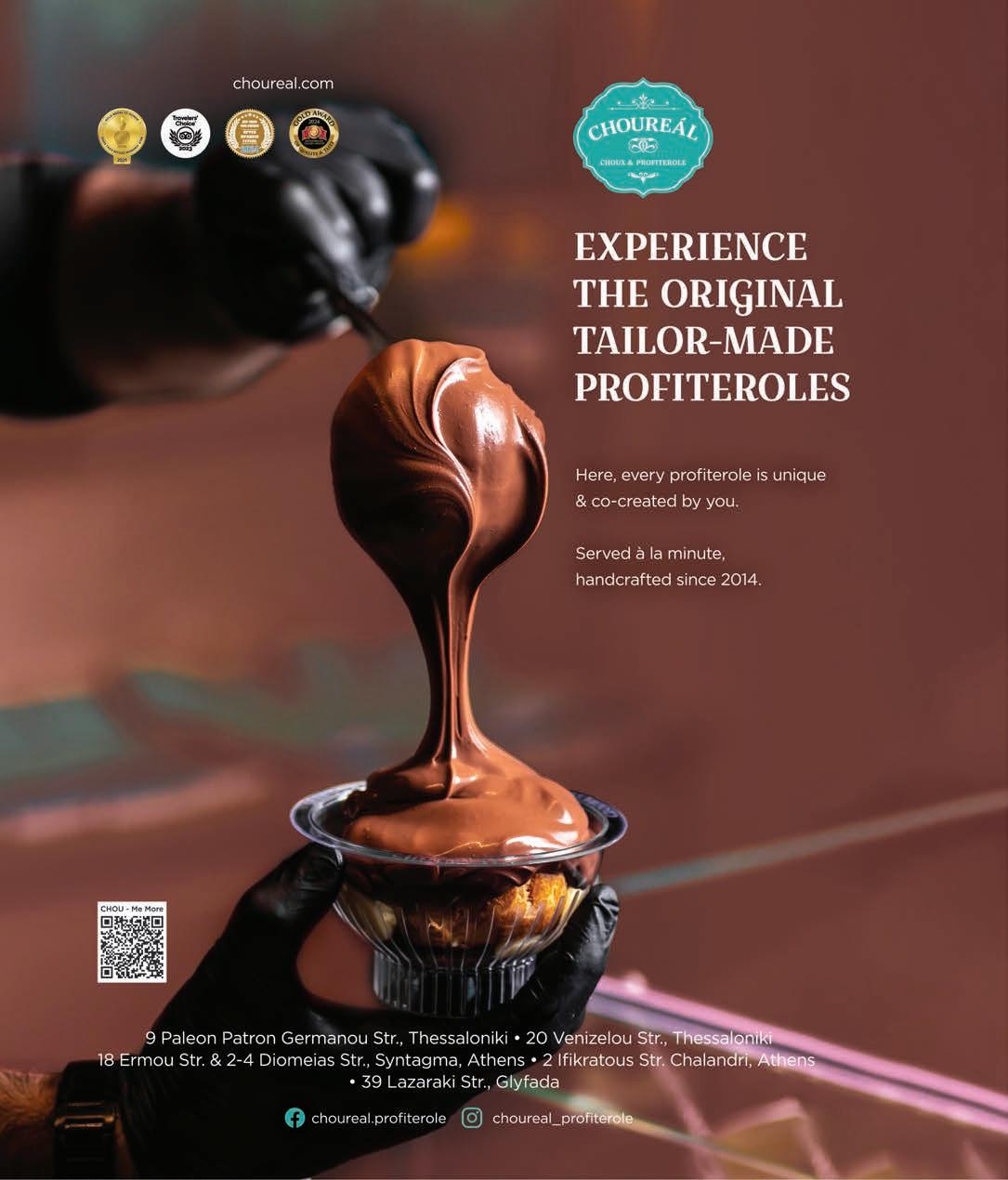
Since 2014, Choureal is a unique concept specialized in tailor-made profiteroles and choux pastry. Each profiterole is prepared à la minute in front of the guest, using freshly baked choux puffs, cream or ice cream, and a selection of fine chocolate - from classic to seasonal flavors. The experience is completed with toppings of your choice, creating a dessert that is entirely personal and unique. The menu also features éclairs, individual choux, and limited-production Paris-Brest, as well as handcrafted, one-of-a-kind ice cream and specialty-grade coffee. Everything is made fresh daily in the workshop, without pre-made mixes or artificial additives, across five locations in Thessaloniki and Athens.
s+b _top choices
A CREATIVE PLATE OF FLAVOR to-manitari.gr
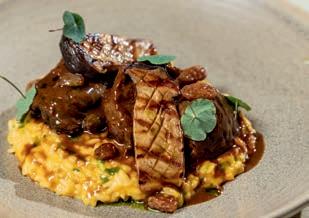
To Manitari restaurant presents a dish full of intensity and balanced flavors: braised Iberico pork cheeks paired with pumpkin risotto cooked with Samos wine and tsalafouti cheese, grilled king oyster mushrooms, and raisins. A creative fine-dining proposal that highlights exceptional ingredients through contemporary techniques and deep, satisfying flavor.
five wines we love 12345
Το Idylle d’Achinos
La Tour Melas
Grenache Noir, Syrah
Plano Μαλαγουζιά
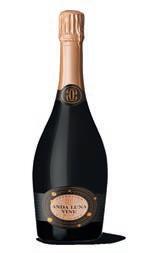
Το ANDA LUNA VINE
Rosé Extra Brut
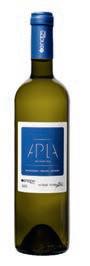
Oenops
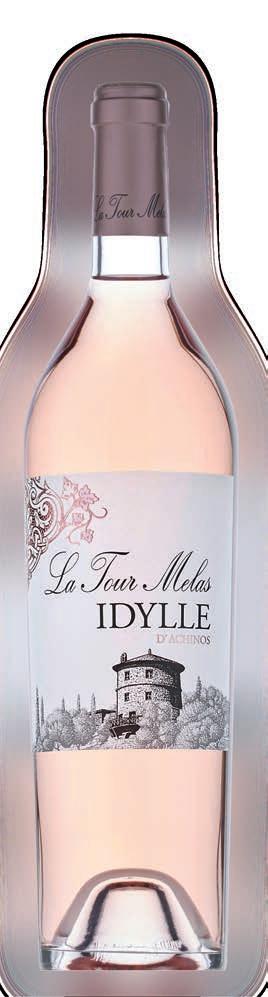
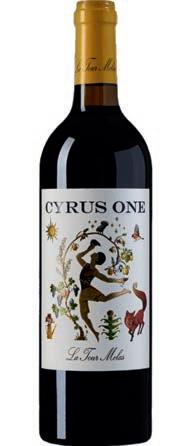
Idylle d’Achinos by La Tour Melas is a refined rosé wine with a delicate peach hue and aromas of flowers, red fruits, and citrus. Grenache Noir, Syrah, and Agiorgitiko varieties come together in a fresh, balanced, and elegant wine with crisp acidity and a pleasant finish.
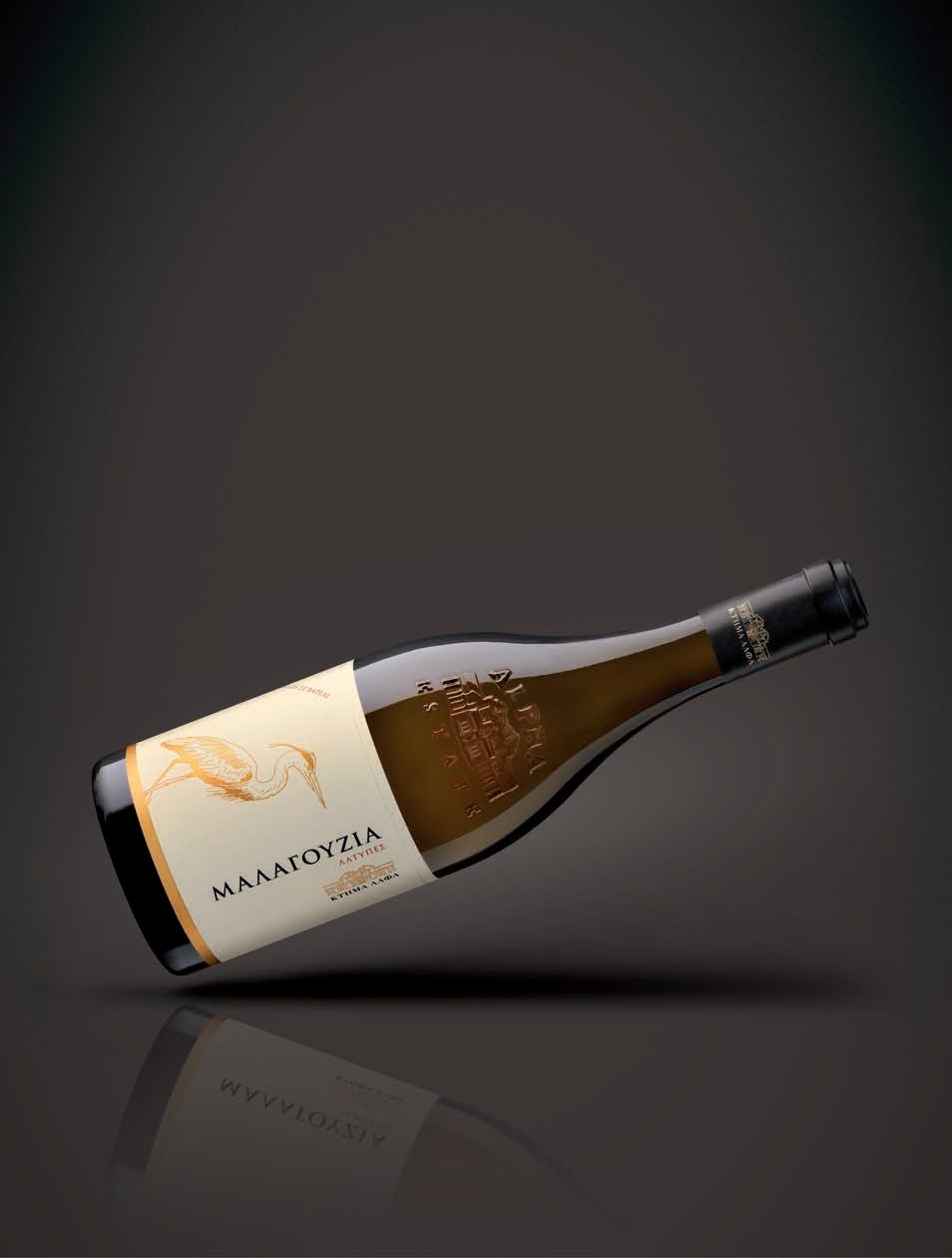
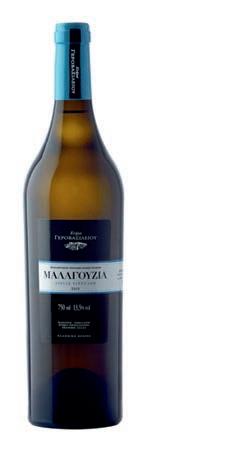
Plano Malagouzia by Wine Art Estate highlights the aromatic character of the variety from Drama, with notes of white-fleshed fruits, citrus, and flowers. Fresh and balanced, with clean acidity and an elegant finish, it is an ideal choice for summer.
ANDA LUNA VINE Rosé
Extra Brut by Alpha Estate showcases Xinomavro through a premium sparkling expression from Amyndeon. Crafted using the traditional method, with secondary fermentation in the bottle and 18 months of lees ageing, it delivers fine bubbles, vibrant acidity, and aromas of brioche, red fruits, and delicate floral notes.
L’Esprit du Lac by Κτima Kir-Yianni comes from selected Xinomavro vineyards over 40 years old in the PDO zone of Amyntaio. With a delicate salmon color and aromas of flowers, stone fruits, and herbal hints, it elegantly expresses the character of its terroir.
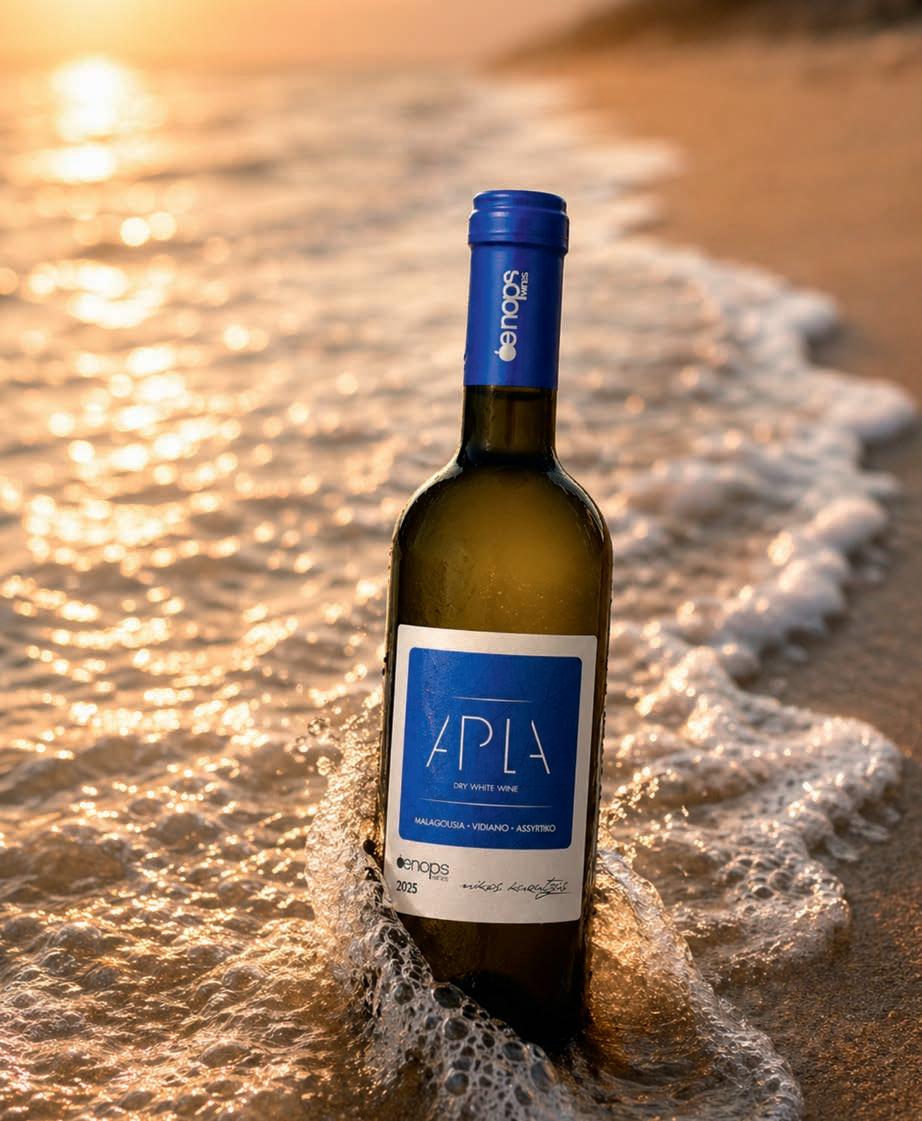
APLA by Oenops Wines combines Malagouzia, Vidiano, and Assyrtiko in a delightful white wine with an intense aromatic profile. Tropical and white-fleshed fruits, floral notes, and refreshing acidity create a full-bodied and balanced result with a long finish.
s+b _top choices &
must try
MODER
@fytra_restaurant
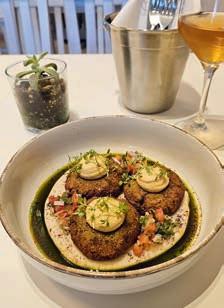
Fytra Restaurant presents chickpea fritters with bean purée, tahini cream, and aromatic herb oil in a dish that creatively combines Greek tradition with modern culinary techniques. Earthy flavors, balanced textures, and exceptional ingredients come together in a delightful experience that highlights the power of simple, high-quality cuisine.
THE ART OF PANINI & APERITI VO
www.mono.com.gr
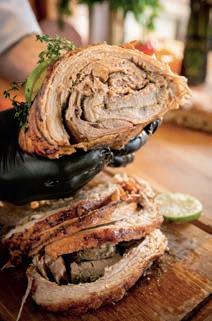
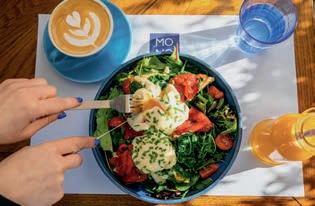
MONO unique fresh introduces Thessaloniki’s first authentic Panineria – Spritzeria, combining gourmet street food with Italian aperitivo culture. Freshly baked sourdough focaccia, premium cold cuts, slow-cooked porchetta, and signature spritz cocktails create a unique all-day experience. From the iconic mortadella panini to the aperitivo platters, every proposal is based on the quality and freshness of the ingredients.
PATR Ό N® EL ALTO IS AN UL TRA-PREMIUM TEQUILA THAT BLENDS RARE AGED TEQUILAS INTO AN EXCEPTIONALLY REFINED EXPRESSION. WITH ITS RICH CHARACTER, VELVETY TEXTURE, AND LAYERED AROMAS, IT EMBODIES THE PERFECT BALANCE BETWEEN TRADITION AND INNOVATION.
CHICKPEA FRITTERS WITH BEAN PURÉE, TAHINI
SPREAD ΦΡΟΥΤΑ
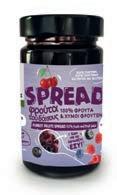
ΤΟΥ ΔΑΣΟΥΣ ΑΠΟ 100% ΦΡΟΥΤΑ & ΧΥΜΟΥΣ ΦΡΟΥΤΩΝ, ΜΑΣΟΥΤΗΣ FOREST FRUIT
SPREAD MADE FROM 100% FRUIT & FRUIT JUICES, MASOUTIS
“ ΑΠΟ ΤΟΝ ΤΟΠΟ ΜΑΣ ”
ΠΑΓΩΤΟ ΞΥΛΑΚΙ ΒΑΝΙΛΙΑ
ΑΛΜΥΡΗ ΚΑΡΑΜΕΛΑ & ΚΑΡΑΜΕΛΩΜΕΝΑ ΚΑΡΥΔΙΑ
PECAN, ΜΑΣΟΥΤΗΣ
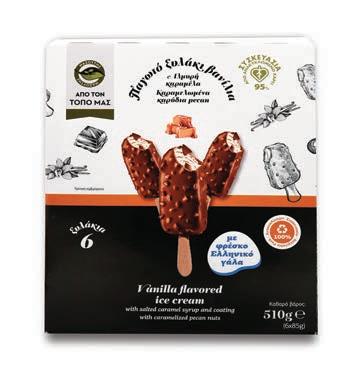
“APO TON TOPO MAS” VANILLA ICE CREAM BAR WITH SALTED CARAMEL & CARAMELIZED PECANS, MASOUTIS
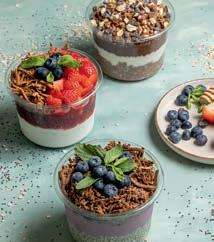
HIGH PROTEIN SUGAR FREE ΠΟΥΤΙΓΚΑ ΒΑΝΙΛΙΑ & ΚΑΚΑΟ, ΜΑΣΟΥΤΗΣ HIGH PROTEIN SUGAR-FREE VANILLA & COCOA PUDDINGS, MASOUTIS
THE
DESIGN MEETS PERFORMANCE
www.franke.com
The Mythos Masterpiece Copper Suspended hood by Franke combines cutting-edge technology with striking design. Its metallic copper aesthetic serves as a statement feature in any contemporary kitchen, while its high extraction performance ensures comfort and a clean atmosphere.
TASTE OF A GOOD DAY
www.paradosiako.net
must try
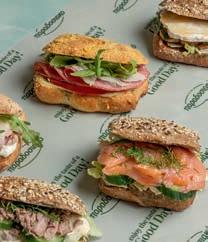
Paradosiako creates handmade snacks and pies daily, combining pure ingredients, homemade care, and balanced nutrition. From traditional country-style pies for breakfast to light all-day options, every product is made with emphasis on quality and flavor. A daily habit that offers authentic enjoyment and the warmth of
AT THE HEADQUARTERS OF MASOUTIS, TIME SEEMS TO FLOW DIFFERENTLY. A MODERN BUSINESS ENVIRONMENT THAT ALSO STANDS AS A LIVING ORGANISM OF MEMORY, NARRATING A 50-YEAR STORY UNFOLDING THROUGH IMAGES, OBJECTS, AND HUMAN STORIES.
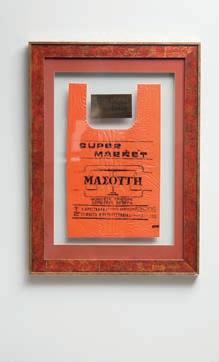
As the tour begins, the first stop at the company’s small museum serves as a quiet introduction to what follows… In a frame, the orange bag from the early years, old cash registers, photographs capturing the starting point of a vision, and countless award plaques that testify to an undeniably successful journey.
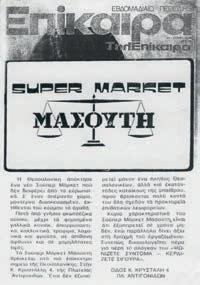
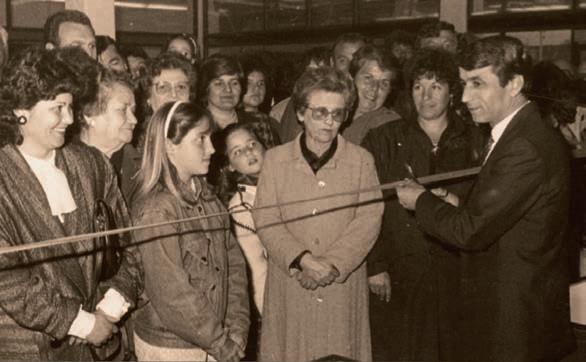
In 1976, at 4 K. Krystalli Street, in the heart of Thessaloniki, the first store was born. Small, simple, yet full of ambition. At the time, the need was straightforward but essential: quality products, affordable prices, and human-centered service. This triptych became the cornerstone upon which an entire journey was built. Ten years later, nine stores were already serving Thessaloniki, proving that the vision had begun to take deep root.
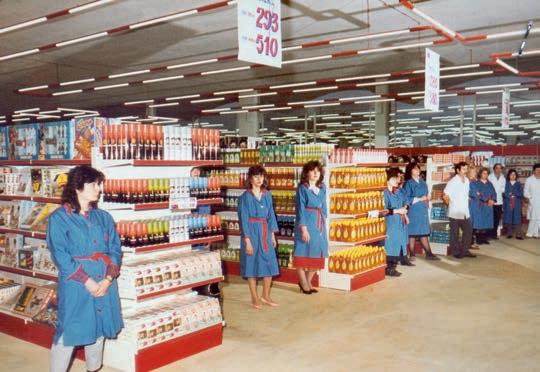
Moving along the museum corridors, the story gains momentum. In 1987, the first Grand Masoutis and the first Cash & Carry store in Thermi marked a new era. Three years later, the company expanded beyond the city limits, reaching Chalkidiki, Katerini, Alexandroupoli, and Orestiada. This was the moment when “local” began transforming into “regional” – and soon into “national.”
The 1990s and 2000s are depicted through maps, contracts, and photographs of acquisitions. Chains such as “Dyo Alfa,” “Afoi Biska,” “Alfa Delta,” and others were integrated into the network, gradually adding hundreds of new stores while securing sustainable jobs for thousands of employees. The loyalty program and mascard made their appearance, bringing the company even closer to the customer. This was not just growth; it was about relationships built and strengthened over time.
Then growth evolved into innovation. The first Green store in Kastoria in 2009 pointed the way toward sustainability. The storage and distribution center in Kavalari, later certified as Zero Waste to Landfill, reflects a company investing not only in expansion but also in the future. And then came MasVision – stores designed for people with visual impairments. Audio navigation, special signage, and the ability for an independent shopping experience reveal the human face of innovation.
The tour continues, and the company’s people take center stage. In one corner of the museum, a book filled with employees’ wishes. Next to it, a framed letter. A woman who had worked for the company for over 40 years writes: “Every step of my journey was illuminated by the guidance of Mr. Diamantis Masoutis… He was my mentor and my support. And you, Mr. Giannis, continue his work, capable of writing an even greater story.” It is a moment when you realize that Masoutis is not merely numbers and stores; it is relationships, trust, a large family.
After all, distinctions as a Best Workplace in Greece and Europe do not come by chance. Behind them are people who grew alongside the company, who developed within an environment of security and opportunity. Today, more than 10,500 employees form its living strength.
The company’s image today speaks clearly. More than 390 stores across Greece. A brand that, in the consumer’s mind,
stands for “affordable and Greek.” With high quality private label products, partnerships with local producers, and digital services such as an e-shop and app, the shopping experience is more complete than ever.
Yet, perhaps the most impressive element is not growth, but Masoutis’ stance alongside society. Programs supporting families, partnerships with organizations, environmental initiatives, social grocery stores, blood donation drives… In every corner of the country, there is a meaningful footprint of contribution.
Difficult moments were not absent. Economic crises were followed by the pandemic, but the company stood strong, adapted, retained its people, and moved forward. Perhaps because its values – quality, family, sustainability, people – were never just words, but actions.
With its gaze set on the top of the Greek market, with investments in digital transformation, and with a steady commitment to sustainability, Diamantis Masoutis SA continues – not merely as a business, but as a promise: to remain by the side of people, families, and society. ■
Spice and Soul PENELOPE
ANASTASOPOULOU
BY ELENI MICHAILIDOU || PHOTOGRAPHER: THEODOSIS GEORGIADIS
|| CHEF: ANDREAS KLAVDIANOS || FOOD STYLIST: STAVROULA FOUTSA || ALL PRODUCTS: MASOUTIS
HAIR & MUA: NATASSA KERAMIDA
“The taste that takes me back to my childhood is the mountain tea my grandmother used to make in Crete, usually in the evenings before I went to bed. She would always place next to it a rusk, a barley biscuit, and a piece of cheese. For me, this combination is the ultimate umami and it always reminds me of my beloved grandmother.”
“If I were to describe myself as a recipe, I would definitely be something spicy, full of peppers. I might also be… fish. A delicate, refined carpaccio, which I absolutely love.”
“In Greece, food is one of the main ways we communicate and enjoy ourselves, even though that’s not its primary role – it’s fuel that keeps us going. Especially in recent years, as gastronomy in Greece has flourished and there are so many wonderful places where you can enjoy thoughtfully prepared food.”
“I love Thessaloniki. Since I married Fotis, I love it even more, because his family is now my family too. Every time I visit, my sister-in-law cooks baked eggplants with cheese for me. For me, this dish is now inseparably connected to the city.”
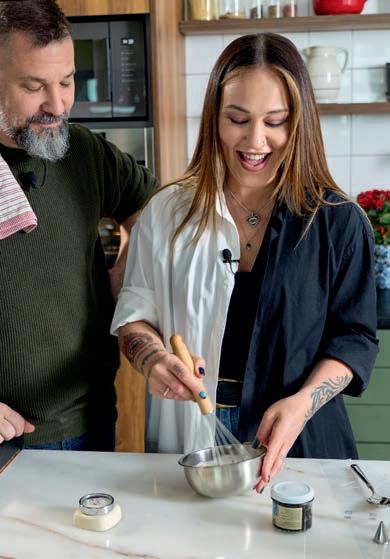
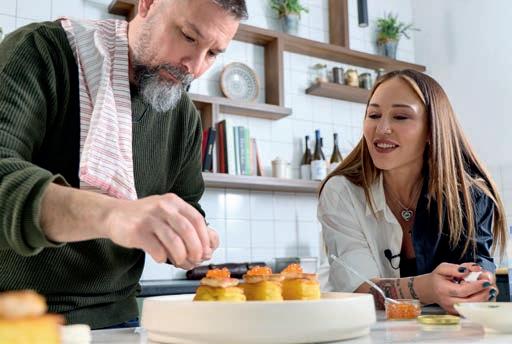
Penelope Anastasopoulou’s life recipe may seem simple, but it is made with the finest ingredients: generous doses of love and kindness, respect for oneself and others, empathy, and compassion. Perhaps that’s why her “flavor” lingers – just like her smile.
s+b _Celebrity Cooking
“The taste that shaped me – although I never accepted it, because it was a traumatic experience – is liver. I was given a bite and I could never process it in my mouth. I think that’s one of the reasons I rejected meat altogether. In general, I don’t like the feeling of chewing something that was once alive. For me, veganism is mainly about the belief that we shouldn’t cause animals to suffer just so we can eat.”
“Motherhood helped me not only become a better person, but also eat better. I’m very happy because my children eat everything. My eldest daughter, in particular, wants to try everything, even when we travel abroad. And if she tastes something she doesn’t like, she simply says, ‘I don’t prefer it.’ I really appreciate that attitude, because sharing a table involves a sense of courtesy. You can’t offend someone who has prepared food for you.”
“Children are our extension. They feel everything, even if you never argue in front of them. Beyond what we teach them about gender equality, Fotis and I are a healthy couple. Even when there are issues that might create tension at home, we handle them without toxicity. And that sets a healthy example. From there on, their daily life, their social interactions at school, even their schoolbooks, provide many opportunities for discussions about the equal role of women in society.”
“For me, the message is always love. Under its ‘umbrella’ are empathy, respect – values that, unfortunately, we have reached a point where we consider them almost elitist. There is so much violence around us – in the media, in politics, on social media. Even the fact that young children have mobile phones in their hands is, to me, the most visible form of violence from parents toward their children.”
“My goal is to stand for certain values and make them feel self-evident, simply by being myself. I believe that the path I’ve followed as a person proves that. I think it takes far more effort to be something other than who you truly are. Being communicative, kind, and polite should come naturally. For me, kindness is the essence of existence.”
“In theater and television, I am a tool of the director, functioning within a larger team. The result is always collective. It ’s like basketball: it’s not enough to have one good player if the rest of the team isn’t at the same level, or if the coordinator isn’t good or doesn’t aim for the best outcome. On the other hand, in singing, on the radio, or in appearances where my own personality is on display, I am always myself. And every day, I try to stay centered, even when dealing with difficult people.”
“Recently, I had to face public commentary about me from people on television, often untrained or lacking the appropriate knowledge. It was something difficult to handle psychologically. That’s why I’ve asked those close to me not to pass on such comments. Now, as I approach 50, I set boundaries where necessary. No matter how polite you are, when something offends you, you need to cut it off immediately. And if you can do that with self-control, it’s a very important strength.”
“Cooking comes from the soul. It involves many elements: love, good ingredients, imagination, talent, taste, perception. I think it is deeply connected to music. I once read a poem that said if you don’t love making bread, then as a baker you give the world bitter bread. If you truly love what you do – especially in the kitchen – that’s what makes all the difference.” ■
1
penelope’s favorite recipe
100 g mayonnaise // 20 g black garlic cream FOR SERVING trout roe // chives // dill N N Z Z
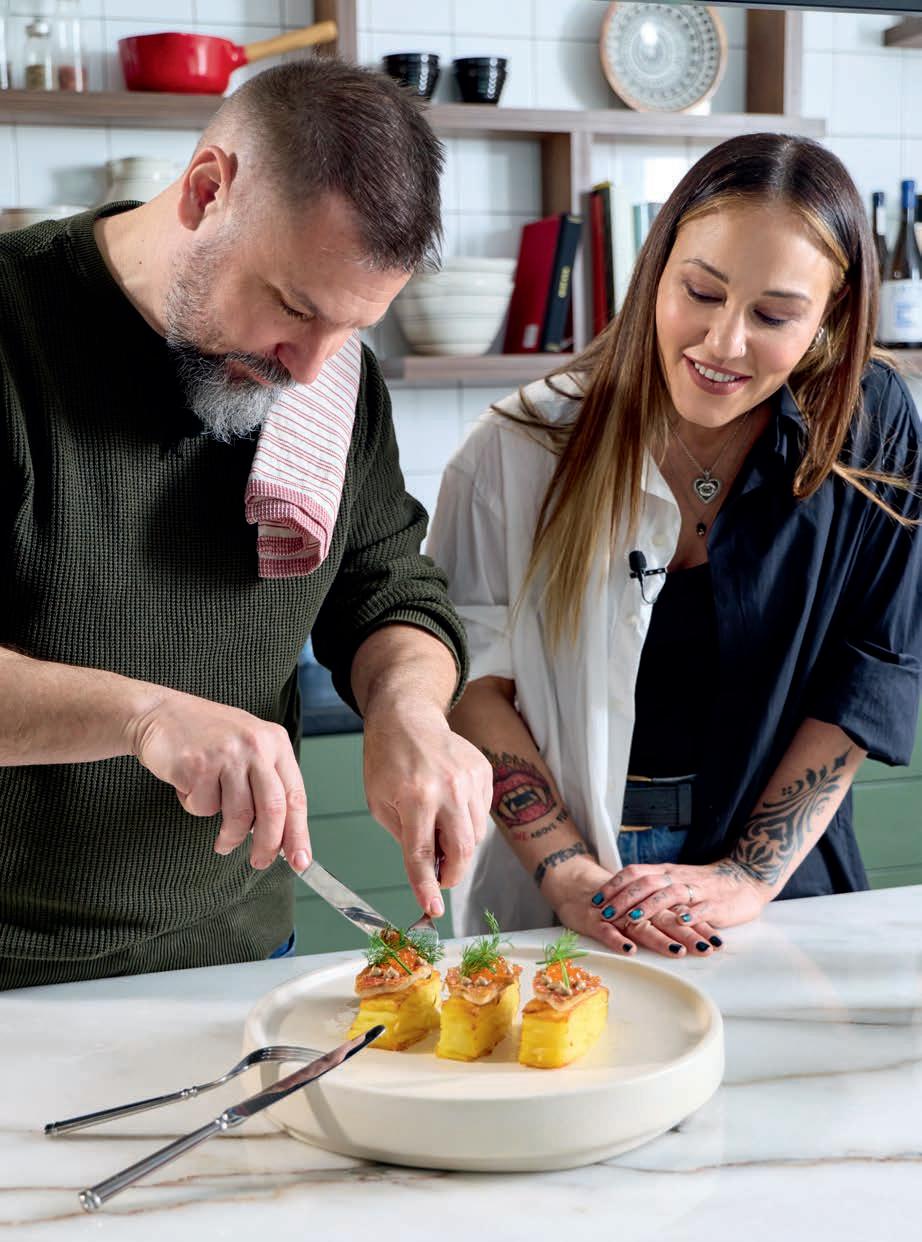
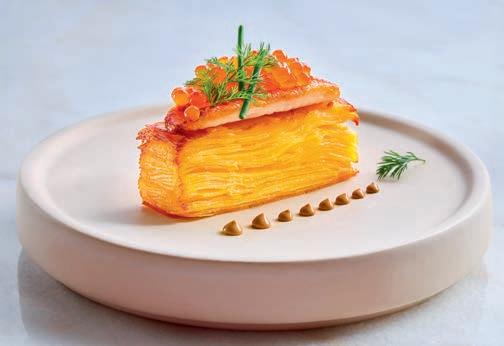
RED MULLET FILLET WITH POTATO TERRINE, BLACK GARLIC CREAM & TROUT ROE
1 kg large red mullet, filleted extra virgin olive oil // salt
FOR THE POTATO TERRINE
800 g potatoes // 200 g fresh butter, melted salt, white pepper FOR THE GARNISH
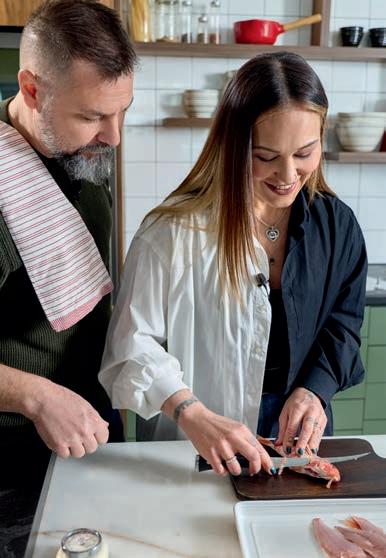
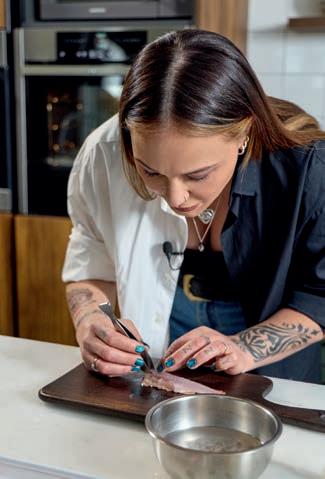
FOR THE RED MULLET: Carefully fillet the red mullet, removing all bones. Heat a little olive oil in a non-stick pan and place the fillets skin-side down. Cook over medium to high heat until the skin becomes crispy and the flesh cooks gently, without turning them. Lightly season with salt.
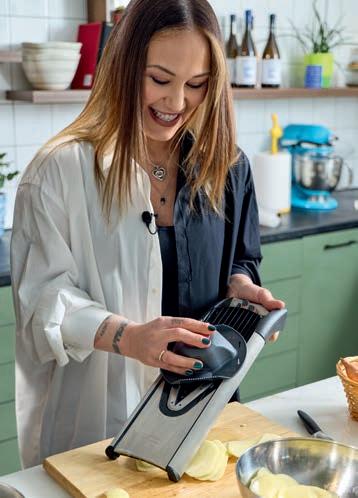
FOR THE POTATO: terrine Peel the potatoes and slice them very thinly, like chips. Place them in a bowl and gently mix with the melted butter, salt, and white pepper. Arrange the slices in overlapping layers in a rectangular dish. Cover with foil and bake at 160°C for about 45 minutes. Allow to cool, then cut into rectangular portions and return to the oven at 180°C for about 20 minutes, until golden.
FOR THE GARNISH: Mix the mayonnaise with the black garlic cream until smooth, then transfer the mixture into a piping bag.
PLACE A PIECE OF POTATO TERRINE ON EACH PLATE AND TOP WITH A RED MULLET FILLET, CRISPY SIDE FACING UP. ADD TROUT ROE, SMALL DOTS OF BLACK GARLIC CREAM, AND FINISH WITH FRESH CHIVES AND DILL.
s+b _spirits
tequila reimagined
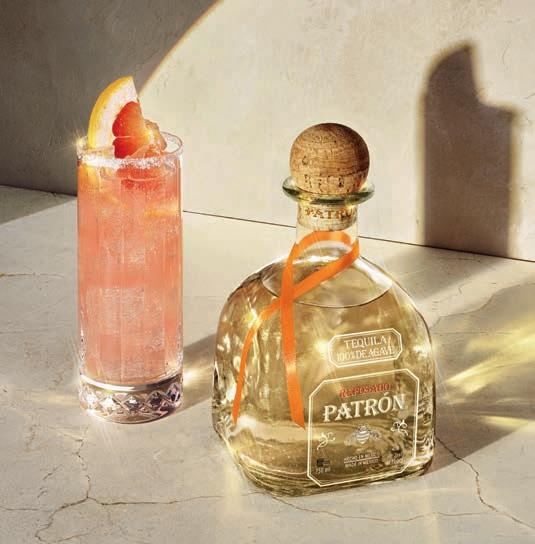
PALOMA
45ml PATRON Reposado
90ml
(1:1) 15ml
Highball
Collins
45ml PATRΌN Reposado
90ml fresh grapefruit juice
15ml agave syrup (1:1)
15ml fresh lime juice
30ml sparkling water
Glass Highball or Collins
Sugar & salt
Grapefruit slice or wedge
Rim the glass with a mixture of sugar and salt and fill with ice.
Add the PATRΟN Reposado tequila, grapefruit juice, agave syrup, and lime juice.
Stir gently.
Top up with sparkling water. Garnish with grapefruit.
COOL, VIBRANT, AND EFFORTLESSLY ELEGANT, THE PALOMA CAPTURES
THE ESSENCE OF SUMMER IN A GLASS. THE PURITY OF TEQUILA MEETS THE NATURAL BITTERNESS OF GRAPEFRUIT AND THE GENTLE
SALINITY ON THE RIM, CREATING A BALANCE THAT REFRESHES WITHOUT OVERWHELMING.
s+b _spirits
Vodka in Style
CLASSIC DRY MARTINI
50ml GREY GOOSE® Vodka
10ml NOILLY PRAT® Original Dry Vermouth
Orange Bitters
Martini
GREY GOOSE® vodka,
martini.
50ml GREY GOOSE® Vodka
10ml NOILLY PRAT® Original Dry Vermouth
1 dash Orange Bitters
Glass Martini
Lemon twist
Add the GREY GOOSE® vodka, vermouth, and bitters into a mixing glass filled with ice.
Stir carefully.
Strain into a chilled martini glass. Garnish with a lemon twist.
REFINED AND TIMELESSLY ENIGMATIC, THE VODKA DRY MARTINI IS AN ODE TO PURITY OF FLAVOR.
EACH SIP REVEALS AN ALMOST ARCHITECTURAL BALANCE BETWEEN THE CRISP CLARITY OF VODKA AND THE DELICATE AROMATIC PRESENCE OF VERMOUTH.
The taste of place
HOW WINE TOURISM CAN SUPPORT A REGION WITHOUT EXPOSING IT.
BY SOMMELIER / WINE CONSULTANT
LEXANDROS BOUZIKAS
Let us begin with two questions that are difficult to answer, yet can no longer be ignored. Can the contemporary evolution of wine tourism – particularly its increasingly close relationship with gastronomy – advance without distorting or exposing the very tradition on which it seeks to rely? And at the same time, can this evolution become a driver of economic survival and growth for a region, without turning it into a mass-produced, tasteless spectacle? These are not rhetorical questions. They are, perhaps, essential reflections that deserve the growing attention of those working in wine, food, and travel. History has shown that when a local culture becomes a mass tourism product, it is often transformed – sometimes for the better, sometimes for the worse, but always, invariably, at a cost. This essay does not aim to provide definitive answers, but rather to map out a path where wine tourism and the evolution of gastronomy do not act as forces that erode local identities, but as catalysts for their promotion, protection, and sustainable continuation. This is not merely a cultural choice; it is also an economic necessity. A region that loses its traditions loses its uniqueness. And a region without uniqueness may, sooner or later, cease to be a destination.
For many years, wine tourism was confined to a stereotypical experience. A winery visit typically meant a brief tour, followed by a tasting of three or four labels, often accompanied by a few cubes of cheese or slices of cured meat. Gastronomy, if present at all, was secondary – or entirely absent. This came at a cost: visitors left quickly, and the region saw little real benefit. Today, however, there are signs that things may be beginning to change – at least in terms of what some travelers seek. The modern traveler is often not simply looking for a good wine, but for a holistic experience: a journey that connects them with a place, its people, and, of course, its table. In short, they are looking to step outside their routine. This demand is giving rise to new forms of wine tourism, where wine and food are presented as a unified narrative – one that speaks of place as a locus of culture.
Yet this reality is far from established or widespread. In most wine-producing regions, the gastronomic dimension remains complementary rather than structural. Could wine tourism be organized around the concept of terroir – not only as a viticultural term, but as a complete sensory system? In other words, could the very soil that shapes the character of wine once again become the foundation of an entire gastronomic philosophy, rooted in local tradition? Every dish served at a winery or in a local restaurant could be prepared exclusively with ingre-
Ά
dients grown alongside the vineyards, or with techniques born within the region itself.
The proposal is not for wineries to become self-sufficient gastronomic centers, but to function as hubs within networks that include small-scale cheesemakers, bakers, producers of raw materials, and even elderly locals who remember recipes that were never written down. In this way, the visitor is not confined to a single stop, but moves through a full route of flavors, with wine acting as the connective thread. This way of thinking aligns with the classic idea of “wine routes,” while enriching it with a rigorous gastronomic dimension.
Why this matters for a region’s economic survival
When a visitor comes to a region and participates only in a tasting, without any meaningful engagement with local gastronomy, their visit offers limited value to the place. They leave quickly, leaving behind little more than a trace. But when they follow a broader route – visiting a winery, then a cheesemaker, then a local tavern that uses exclusively regional ingredients – their presence multiplies in value. More importantly, that value is not concentrated among a few; it is distributed. This is what real economic survival looks like for a region.
Yet is there a risk inherent in this approach? The question is simple in its formulation, but exceedingly difficult to answer: when a tradition becomes a mass tourist experience, does it lose its vitality and turn into a spectacle? In the effort to make it appealing, is it beautified, organized, sterilized? And if that happens, does the region’s economic well-being ultimately come under threat?
An emphasis on local gastronomy can serve as a protective shield against the homogenization often brought about by mass tourism. When a visitor arrives at a winery and connects with a dish or recipe that cannot be found anywhere else – because it is made with ingredients that grow only there and with techniques passed down orally through generations – the experience becomes difficult to replicate. This uniqueness is the strongest competitive advantage. It allows a region to attract more discerning travelers and to build a lasting reputation.
The proposal, therefore, is that the gastronomic dimension should never be treated as just another tool of conventional marketing. Instead, it should be approached as an opportunity to give voice once more to flavors and traditions at risk of disappearing – and at the same time, as a means of supporting an entire region. The reflection must remain ongoing: every step toward progress should be accompanied by the concern that something valuable might be lost along the way. Paradoxical as it may sound, this concern is the most effective form of protection. For as long as one remains wary of distortion, one is unlikely to allow it to occur. And as long as one understands that economic survival depends on the authenticity of place, there will be no rush to dilute it.
Ultimately, perhaps the ideal wine tourism of the future will be neither a clumsy repetition of the past nor a polished, sterilized reinterpretation of it, but a living, open, evolving relationship between those who produce wine and food and those who travel to discover them. A relationship that neither fears change nor disregards it. And this, perhaps, is the only promise worth making – for both the soul of a place and its material existence. ■
Summer’s Wine Guide
BY SOMMELIER / WINE CONSULTANT Ά LEXANDROS BOUZIKAS
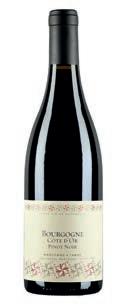
SCAPERDAS FRERES HOMMAGE BRUT BLANC DE NOIRS,
USPARKLING WINES
Essential
Purpura
Reserva, Juvé & Camps, Καταλονία
Η Juvé & Camps αποτελεί
ένα από τα πλέον ιστορικά και ποιοτικά σπίτια Cava
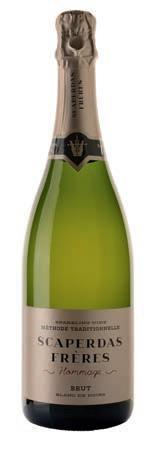
Το Scaperdas Frères Hommage Brut Blanc De Noirs
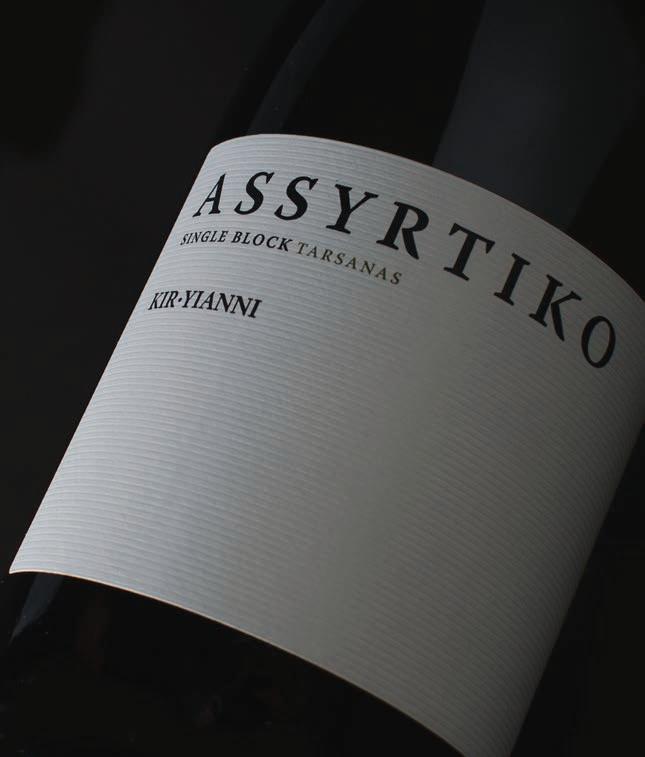
Kir-Yiannis Estate possesses profound expertise in the Xinomavro variety and a constant drive for experimentation, while continuing to explore the expressive potential of this iconic Greek grape.
Scaperdas Frères Hommage Brut Blanc de Noirs is an elegant sparkling wine with exceptionally fine bubbles and remarkable fruit purity. On the nose, aromas of red apple, strawberry, toasted bread, and brioche unfold, while the palate’s lively acidity is beautifully balanced by a creamy texture. Its mineral finish and freshness make it highly gastronomic. Enjoy it as an aperitif or paired with fried seafood and fish tartare.
Η Essential Purpura Reserva, από τις ποικιλίες Macabeo, Pallerada και Xarel lo, έχει
λεπτές φυσαλίδες και αρωματικό χαρακτήρα που ισορ-
ροπεί ανάμεσα στο φρούτο
και τις νότες αυτόλυσης. Στη
μύτη κυριαρχούν αρώματα
πράσινου μήλου, αχλαδιού, λεμονιού και λευκών ανθέων, ενώ ακολουθούν διακριτικές
νύξεις brioche και αμυγδά-
λου. Στο στόμα διαθέτει τραγανή οξύτητα, κρεμώδη
υφή και καθαρή, δροσιστική επίγευση με mineral
χαρακτήρα. Απολαύστε τη ως aperitif ή συνοδεία tapas, jamόn ibérico και τηγανητών θαλασσινών.
Juvé & Camps is one of Catalonia’s most historic and respected Cava houses, with a long-standing tradition in traditional-method sparkling winemaking, focusing on extended ageing and finesse. Made from Macabeo, Parellada, and Xarel lo, Essential Purpura Reserva offers delicate bubbles and an aromatic profile that balances fruit with autolytic notes. The nose reveals aromas of green apple, pear, lemon, and white blossoms, followed by subtle hints of brioche and almond. On the palate, it shows crisp acidity, creamy texture, and a clean, refreshing mineral-driven finish. Enjoy it as an aperitif or alongside tapas, jamόn ibérico, and fried seafood.
Summer tastes of sea salt and carries that carefree feeling that makes everything seem a little lighter. These are the days when we return from the beach and open a chilled bottle on the veranda, the sunsets that call for something refreshing in the glass. From aromatic whites and crisp rosés to light-bodied reds best enjoyed slightly chilled, summer wines place emphasis on freshness, vibrancy, and effortless drinkability.
.// ROSE WINES
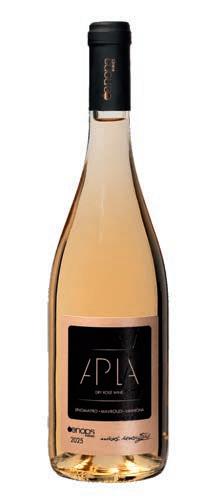
APLA ΡΌΖΕ, OENOPS WINES
Based in Drama, Oenops Wines, founded by Nikos Karatzas, has rapidly established a strong presence in both the Greek and international wine scene through consistent dedication and vision.
For Apla Rosé, Xinomavro (50%) comes from Amyndeon and Naoussa, Limniona (20%) from Messenikola, and Mavroudi (30%) from Thrace. It is an unpretentious yet meticulously crafted wine. Aromatically, it displays notes of strawberry, pomegranate, cherry, and white flowers, with delicate herbal undertones. On the palate, it is fresh, crisp, and highly enjoyable, with balanced acidity and a clean finish. Enjoy it with mezze, dakos with tomato and feta, or grilled shrimp.
Côtes des Roses Rosé, Gérard Bertrand, Languedoc, Γαλλία
Ό Gérard Bertrand είναι
μία από τις σημαντικότερες
προσωπικότητες του γαλλι-
του
κρασιών.
Côtes des Roses Rosé
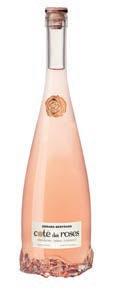
Gérard Bertrand is one of the leading figures of southern France, playing a decisive role in establishing Languedoc as a region capable of producing high-quality, contemporary wines. Côtes des Roses Rosé is perhaps the winery’s most recognizable label, both for its distinctive bottle and its fresh Mediterranean style. The nose is dominated by aromas of strawberry, white peach, pomegranate, and rose petals, while subtle citrus notes add vibrancy. On the palate, it is light yet balanced, with crisp acidity, a soft fruity texture, and a clean, summery finish. Enjoy it with seafood salads, tuna tartare, or simply as an aperitif.
ΡΌΖΕ
ΛΕΥΚΑ
WHITE WINES
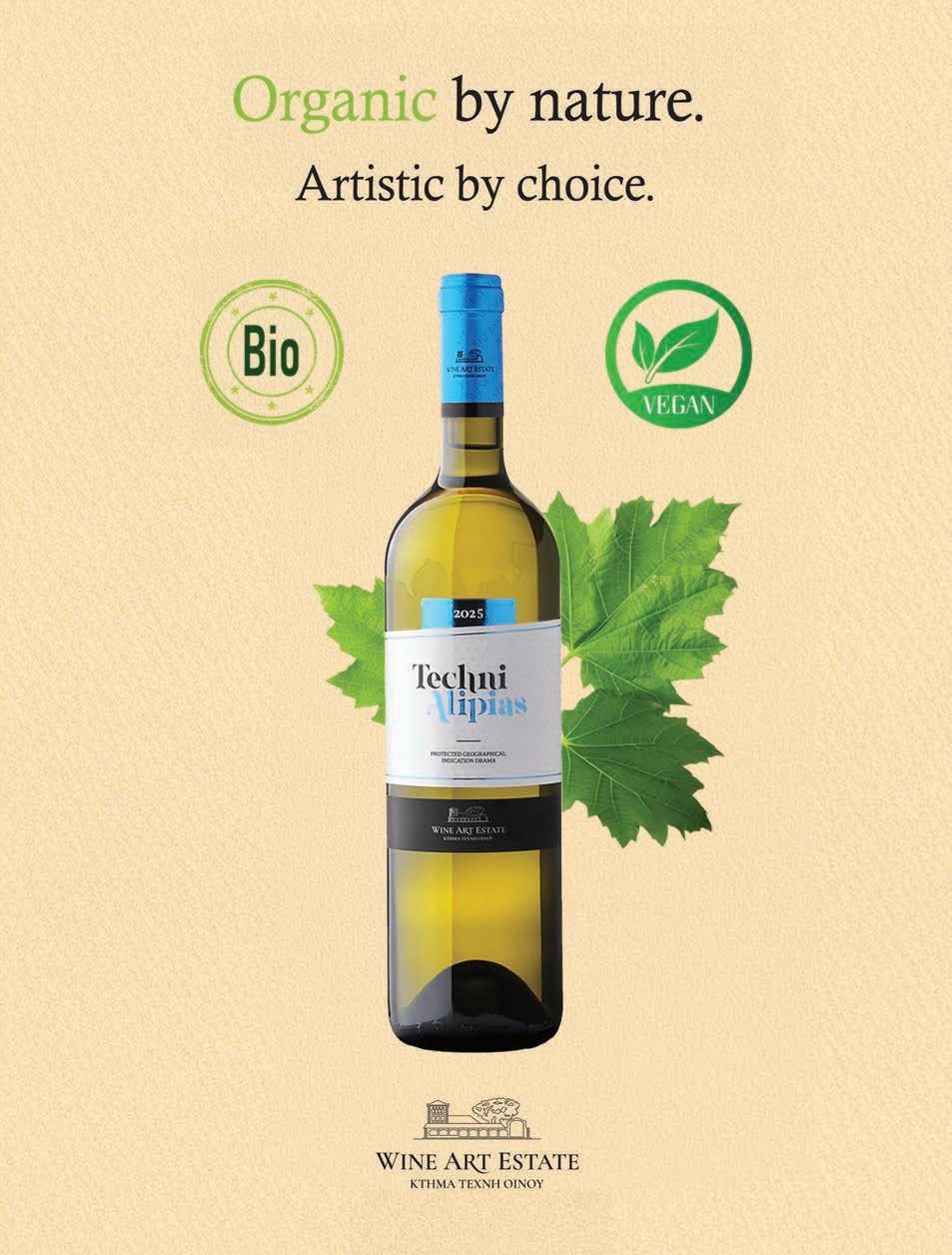
Drama is one of Greece’s most dynamic wine-growing regions, and Techni Oinou Estate is a prime example of the exceptional quality the area can produce.
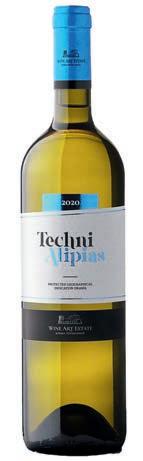
Techni Alypias White is an aromatic blend of the French variety Sauvignon Blanc and Assyrtiko. The nose is dominated by aromas of lime, grapefruit, tropical fruit, and white flowers, while the palate combines refreshing acidity with a subtle richness that adds volume and length. The purity of the fruit and the wine’s mineral dimension make it particularly versatile at the table. Enjoy it with grilled fish, seafood pasta, or green salads with citrus dressing.
Win Win Riesling, Von Winning, Pfalz, Γερμανία
Η Von Winning
οινοποιεία του Pfalz, γνωστό για τα Riesling υψηλής ποιότητας και
προσέγγιση.
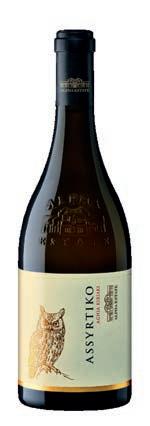
One cannot discuss the rising dynamic of Assyrtiko beyond Santorini without acknowledging Alpha Estate and its contribution to showcasing the cool-climate terroir of Amyndeon.
The Ecosystem Assyrtiko Single Block “Agia Kiriaki” comes from a carefully selected vineyard where the variety develops an especially refined and mineral character. The nose combines aromas of lemon, green apple, and white grapefruit with notes of white flowers, fresh herbs, and subtle minerality. On the palate, it stands out for its vibrant acidity, firm structure, and persistent fruit concentration, while a gentle richness is balanced by the saline character that defines the wine. The finish is long, elegant, and intensely mineral. Enjoy it with raw shellfish, ceviche, sea bass tartare, or grilled red porgy with lemon greens.
Το Win Win Riesling είναι μια δροσερή και
απολαυστική εκδοχή της ποικιλίας. Στη μύτη κυριαρχούν αρώματα lime, πράσινου μήλου, λευκόσαρκου ροδάκινου και
λευκών ανθέων, ενώ
διακριτικές mineral
νότες προσθέτουν φινέτσα. Στο στόμα διαθέτει τραγανή οξύτητα, μέτριο σώμα και εξαιρετική ισορροπία ανάμεσα στη φρεσκάδα και το φρούτο, με καθαρή, λεμονάτη επίγευση. Απολαύστε το με ασιατική κουζίνα, sushi ή τηγανητά ψάρια με λεμόνι.
Von Winning is one of Pfalz’s historic and most influential wineries, renowned for its high-quality Rieslings and its successful combination of tradition and modern winemaking philosophy. Win Win Riesling is a fresh and immensely enjoyable expression of the variety. Aromas of lime, green apple, white peach, and white flowers dominate the nose, while delicate mineral notes add finesse. On the palate, it offers crisp acidity, medium body, and excellent balance between freshness and fruit, leading to a clean, lemony finish. Enjoy it with Asian cuisine, sushi, or fried fish with lemon.
Jules Taylor crafts wines that capture the explosive character of Marlborough with remarkable clarity. With years of winemaking experience and a focus on fruit intensity and natural freshness, her wines have earned a devoted international following. Her Sauvignon Blanc is a classic yet carefully crafted expression of the variety. The nose bursts with aromas of lime, grapefruit, passion fruit, and green apple, while characteristic herbal notes of freshly cut grass and tomato leaf add complexity. On the palate, it is vibrant and refreshing, with crisp acidity, pronounced aromatic intensity, and a clean, persistent finish reminiscent of citrus and tropical fruit. Enjoy it with ceviche, oysters, or salads with fresh herbs and goat cheese.
It is impossible to discuss the modern history of Malagousia without mentioning Vangelis Gerovassiliou. More than any other label, this wine contributed to the revival and international recognition of the variety.
From the vineyards of Epanomi, Gerovassiliou Estate’s Malagousia expresses the aromatic and extroverted character of the grape with remarkable precision. The nose unfolds intense aromas of bergamot, white peach, apricot, and pear, framed by notes of basil, mint, and white blossoms. On the palate, it offers refreshing acidity, a rich texture, and excellent balance between fruit and freshness, while the finish is aromatic and refined. Enjoy it with seafood pasta, grilled squid, or herb risotto.
Soalheiro is considered one of the wineries that brought international recognition to the potential of the Alvarinho variety in northern Portugal. The estate produces wines of remarkable precision and pronounced minerality. Granit Alvarinho is a more restrained, mineral-driven expression of the variety, focused on freshness and detail. The nose reveals aromas of lime, lemon, green apple, and white flowers, while subtle notes of wet stone and herbs add complexity and character. On the palate, it is sharp and vibrant, with high acidity, a lean body, and a saline mineral finish reminiscent of a sea breeze. Enjoy it with shellfish, ceviche, or grilled white fish with olive oil and lemon.
ΕΡΥΘΡΑ
// RED WINES
CYRUS ONE, LA TOUR MELAS
La Tour Melas is a winery that has played a significant role in establishing Fthiotida as a region with strong potential for premium red wine production.
Cyrus One is the epitome of accessible luxury, a generous yet highly elegant blend of 15% Agiorgitiko, 25% Cabernet Franc, and 60% Merlot. The nose opens with aromas of black fruit, cassis, and plum, followed by notes of sweet spices, smoke, cedar, and chocolate. On the palate, it offers ripe tannins, velvety texture, and excellent length, with the oak acting supportively without overshadowing the fruit. Enjoy it with ribeye steak, slow-roasted lamb, or aged hard cheeses.
Η συνεργασία του Καναδού οινοποιού Pascal Marchand με τον Moray Tawse είναι ένα project που έχει κερδίσει ιδιαίτερη αναγνώριση
Βουργουνδία,
και την έμφαση στην καθαρή έκφραση του terroir. Το Bourgogne Côte d’Or Pinot Noir
The collaboration between Canadian winemaker Pascal Marchand and Moray Tawse is a project that has earned significant recognition in Burgundy thanks to its biodynamic approach and emphasis on the pure expression of terroir.
Bourgogne Côte d’Or Pinot Noir is a classic and refined expression of the variety. The nose reveals aromas of cherry, wild strawberry, and red plum, framed by notes of dried flowers, earth, and subtle spice. On the palate, it offers silky tannins, refreshing acidity, and medium body, with the fruit remaining pure and vibrant throughout, while the finish is elegant, earthy, and airy. Enjoy it with duck, sautéed mushrooms, or roast chicken with herbs.
ΑΡΜΕΝΟΒ Ι Λ ΜΕ ΜΑΡ Ε ΓΚΑ & ΓΚ ΑΝ Α Ζ Σ ΟΚΟΛ
170g heavy cream N N Z Z
ARMENOVILLE WITH MERINGUE & CHOCOLATE GANACHE
FOR THE SWISS MERINGUE
200g egg whites // 450g sugar 1 tsp vanilla
FOR THE MIXTURE
10g vanilla paste // 20g cognac
150g toasted almonds
750g heavy cream // 100g Swiss meringue
FOR THE GANACHE
250g dark chocolate couverture
FOR THE SWISS MERINGUE
Place the sugar, egg whites, and vanilla in a bowl over a bain-marie. Whisk continuously until the mixture turns white, thickens, and reaches 70°C. Transfer to a mixer and beat for 5 minutes until stiff.
Reserve 100 g of the meringue. Pipe the remaining mixture into small drops onto a baking tray lined with parchment paper. Preheat the oven to 170°C, then reduce to 70°C once the tray is inside. Bake for about 2 hours until fully dried.
FOR THE MIXTURE
Spread the almonds on a tray and toast in the oven for about 20 minutes. Whip the cream to stiff peaks.
In a large bowl, combine the reserved meringue, cognac, toasted almonds, and dried meringues. Mix gently, then fold in the whipped cream.
Line a loaf pan with parchment paper, transfer the mixture, and freeze for at least 3 hours.
FOR THE GANACHE
Melt the chocolate with the cream over a bain-marie, stirring until smooth.
SERVE THE ARMENOVILLE FROZEN, TOPPED WITH CHOCOLATE GANACHE.
LEMON BAVAROIS
N N
LEMON BAVAROIS (LEMON-SHAPED)
500g milk
200g sugar
8g vanilla paste
140g egg yolks
20g gelatin
750g heavy cream (35%)
1 tsp white chocolate, melted
150g sunflower oil
lemon jam
yellow cocoa butter spray
Z Z
In a saucepan over medium heat, combine the yolks, milk, vanilla, and sugar. Stir constantly with a whisk until the mixture reaches 82°C. Remove from the heat and add the gelatin. Mix well and let cool to 35-40°C.
In a mixer, whip the cream until it reaches a yogurt-like consistency. Gently fold the two mixtures together using a spatula.
Fill 20 lemon-shaped silicone molds and freeze for about an hour. Using a spoon, remove a small amount from the center to create a cavity and fill it with lemon jam.
FREEZE FOR ONE FULL DAY. MELT THE WHITE CHOCOLATE OVER A BAIN-MARIE, REMOVE FROM HEAT, ADD THE SUNFLOWER OIL, AND WHISK UNTIL SMOOTH. UNMOLD THE DESSERTS, GLAZE WITH THE WHITE CHOCOLATE MIXTURE, AND FINISH BY SPRAYING WITH COCOA BUTTER.
RED VELVET CAKE
ΜΕ FROSTING ΤΥΡΙΟ Υ
N
RED VELVET CAKE
WITH CREAM CHEESE FROSTING
FOR THE SPONGE CAKE
330g flour // 500g sugar
40g cocoa powder // 53g cornflour
1 tsp baking powder // 1 tsp baking soda
3 vanilla pods (or sachets)
304g buttermilk
250g water // 100g sunflower oil
211g eggs // 1 tsp vinegar red food coloring
FOR THE FROSTING
250g butter // 453g cream cheese
600g icing sugar // 1 vanilla pod (or sachet)
Z
FOR THE SPONGE CAKE
In a mixer, beat all the liquid ingredients first, then add the dry ingredients. Divide the batter into three 18 cm cake pans and bake at 175°C for 40 minutes.
FOR THE FROSTING
In a mixer, beat all ingredients until light and fluffy. Refrigerate for 2 hours.
CUT EACH SPONGE LAYER IN HALF. ASSEMBLE THE CAKE BY SPREADING CREAM CHEESE FROSTING BETWEEN LAYERS (3 SPONGE LAYERS YIELD 2 CAKES). COVER THE EXTERIOR WITH THE REMAINING FROSTING AND COAT THE SIDES WITH CRUMBLED SPONGE CAKE.
N Z
ΓΙΑ ΤΟ ΠΑΝΤΕΣΠΑΝΙ
FRAISIER
ΜΕ ΚΡ Ε ΜΑ PATISSERIE &
N N
FRAISIER WITH CREME PATISSIERE & AEGINA PISTACHIO
FOR THE CREME PATISSIERE
1 lt milk // 120g sugar
15g vanilla paste
2 large eggs
100g cornstarch // 100g butter
FOR THE SPONGE CAKE
3 eggs // 100g flour // 75g sugar
FOR THE WHIPPED CREAM (CHANTILLY)
700g heavy cream // 50g icing sugar
FOR ASSEMBLY fresh strawberries // ground Aegina pistachios
Z Z
CRΕME PATISSIERE
In a saucepan, bring the milk and half of the sugar to a boil. In a bowl, whisk together the remaining sugar, eggs, cornstarch, and vanilla. Once the milk reaches a boil, gradually incorporate it into the bowl mixture. Return everything to the saucepan and cook until it begins to bubble. Remove from the heat, add the butter, and mix until smooth.
SPONGE CAKE
In a mixer, beat the eggs and sugar thoroughly until light and fluffy. Gently fold in the flour. Divide the mixture between two round pans and bake in a preheated oven at 175°C for about 40 minutes.
CHANTILLY
In a mixer, whip the cream with the icing sugar at high speed until stiff peaks form.
Assembly
PLACE ONE SPONGE LAYER IN THE BASE OF AN 18 CM RING MOLD OR A GL ASS BOWL. ARRANGE SLICED STRAWBERRIES AROUND THE EDGES. SPREAD HALF OF THE CREME PATISSIERE OVER THE SPONGE AND COVER WITH STRAWBERRIES. REPEAT WITH THE SECOND SPONGE L AYER. FINISH WITH WHIPPED CREAM AND SPRINKLE WITH GROUND PISTACHIOS.
WITH PASSION, IMAGINATION, AND A LOVE FOR SWEETS, IRENE AND NIKI TSEREPI FOUNDED THE PASTRY WORKSHOP “PEACE ‘N’ CAKE” IN THESSALONIKI, OFFERING CUSTOM-MADE CAKES AND FRESHLY CRAFTED SWEET CREATIONS.
s+b _Coffee time
Refreshing sips for every moment
BY MANTO KORONAKOU
A refreshing indulgence with rich aroma and invigorating intensity, iced coffees are the perfect choice for every summer day.
During the hot months of the year, can you think of anything better than an iced coffee? Maintaining the rich aroma and signature flavor of coffee, iced coffees are made with ice or cold milk, offering a refreshing and revitalizing experience. And while you might think it’s a trend that gained popularity only in recent years, its history actually goes back quite a long way.
Iced coffee first appeared in the 1840s in Algeria, when French soldiers began searching for a cool drink to enjoy in the heat. They tried mixing coffee with water and syrup, creating the first iced coffee.
3.
Salted Coffee
4+1 cool coffee insights
1. The first iced coffee was called Mazagran.
2. The Greek frappe was invented by chance in 1957 in Thessaloniki, when an employee mixed instant coffee, water, and ice because hot water wasn’t available.
3. Vietnamese Salted Coffee is served with condensed milk and a pinch of salt, offering a surprising sweet-and-salty flavor.
4. Coffee tonic first appeared in Scandinavia, where baristas experimented with espresso and carbonated drinks to create refreshing coffee variations.
+1. Some iced coffees are nitroinfused with nitrogen instead of just being shaken or poured over ice, producing a creamy drink with a Guinness-like texture.
It quickly spread across Europe, where by the late 19th century it had already become a fixture in restaurants. By the 1920s, its popularity had exploded in the United States as well, evolving today into one of the world’s most beloved coffee beverages.
☛
The most popular iced coffee variations cater to every taste, from strong and bold to softer, sweeter options. The freddo espresso, a double espresso shaken with ice, stands out for its intensity, while the freddo cappuccino combines the espresso base with rich cold milk foam for a more balanced experience. Meanwhile, cold brew stands apart due to its brewing method, resulting in a sweeter, less acidic coffee.
☛
Of course, we can’t forget the Greek frappe, synonymous with summer in Greece, while the iced mocha blends coffee, milk, and chocolate for a more decadent version of iced coffee, suitable for those who prefer a sweeter indulgence.
☛
Beyond the classics, there are even more unusual iced coffee creations with unexpected combinations. The Italian shakerato, for instance, is an espresso shaken with ice, creating a frothy texture and a more refined taste. Similarly, espresso tonic pairs coffee with tonic water, offering a refreshing and slightly bitter twist. And in the most creative variations, coffee even meets dessert! The coffee float combines coffee with ice cream, while the Vietnamese iced coffee stands out for its strong flavor and sweetness from condensed milk. ■