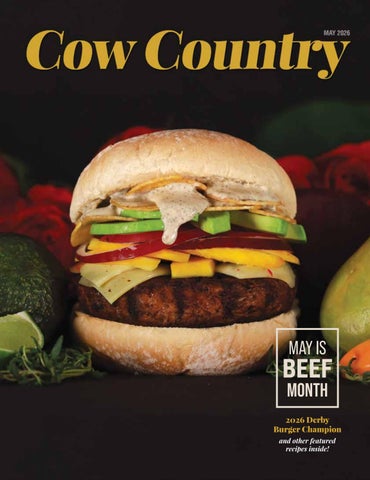
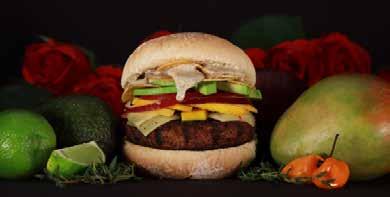
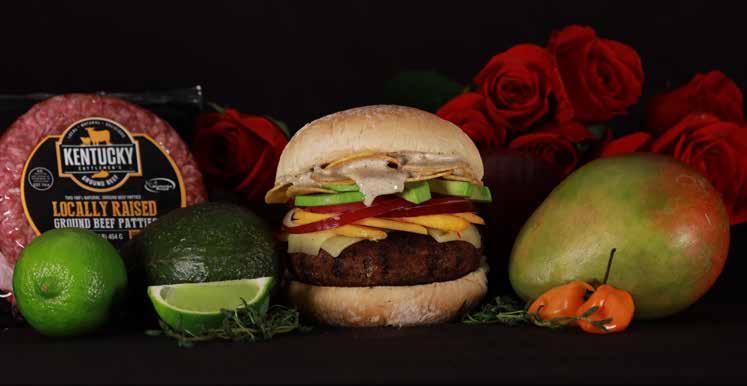
2026 Derby Burger Champion and other featured recipes inside!
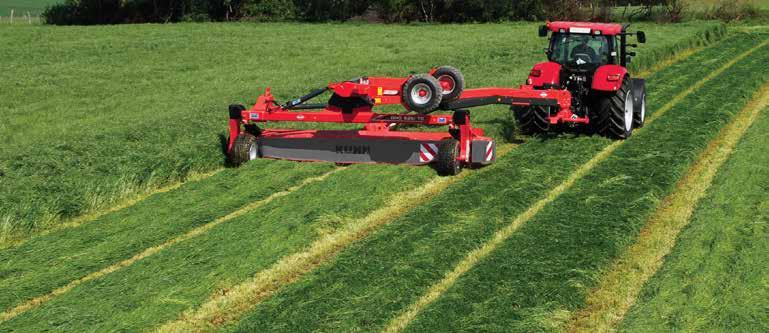
DuraCor® herbicide delivers unmatched broadleaf weed control for grazing acres—packed with benefits cattle raisers and land managers need. With proven grass safety and extended control of 140+ weeds, DuraCor® tackles those already growing and keeps working on those that germinate later. Flexible application options — broadcast by ground or air, spot treatments, or mixing with liquid or dry fertilizer in select states — make DuraCor® the smart, easy choice for pasture weed control.
May Cow Sales
BG Campbellsville Friday, May 1, 2026 7:00 PM
BG South—Stanford Friday, May 15, 2026—6:30 PM
BG Lexington Wednesday, May 27, 2026 6:30 PM
Upcoming Sales
BG Lexington
Special Horse Sale—May 8, 2026
KY Certified Hereford Influence Feeder Sale May 18, 2026
Profit Thru Performance June 1, 2026
BG South—Richmond
Hog, Goat & Sheep Sale Monday, May 11, 2026
Hog, Goat & Sheep Sale Tuesday, May 26, 2026 (Note Date Due to Memorial Day)
BG South—Stanford
KY Traditions Hereford Influence Feeder Sale May 14, 2026
BG Campbellsville
Holstein Sale—May 16, 2026
BG East—Mt. Sterling
Special Horse Sale —June 13, 2026
BG Albany
Sheep & Goat Sales 1st Monday of Month 1:00 PM April May June August September October November
BEEF MONTH
What’s New in the World of Bovine Leukemia Virus?
24 Chris Teutsch Emergency Forage Options
44 Les Anderson Costs Per Pregnancy....Ever Think About It?
FEATURE STORIES
6 Meet Your 2026 KCA Board: Natalie Wesley
14 Kentucky Cattle Producers Aid Farmers Impacted by Wildfires
16 Enthusiastic Learner: Ken Blevins
20 Summer Tick Protection Reminders
KENTUCKY-TENNESSEE LIVESTOCK MARKET GUTHRIE, KENTUCKY SATURDAY, MAY 16, 2026 12:00 NOON CENTRAL
All heifers are guaranteed bred to bulls with genomic enhanced EPDs and have met stringent requirements for health, quality, and pelvic measurements. For more information Contact:
Kevin Laurent, University of Kentucky (270) 625-0994
Mark Barnett, KY-TN Livestock Market (931) 624-7176
Tom Barnett, KY-TN Livestock Market (931) 624-7376
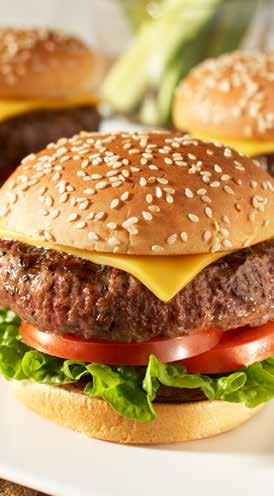
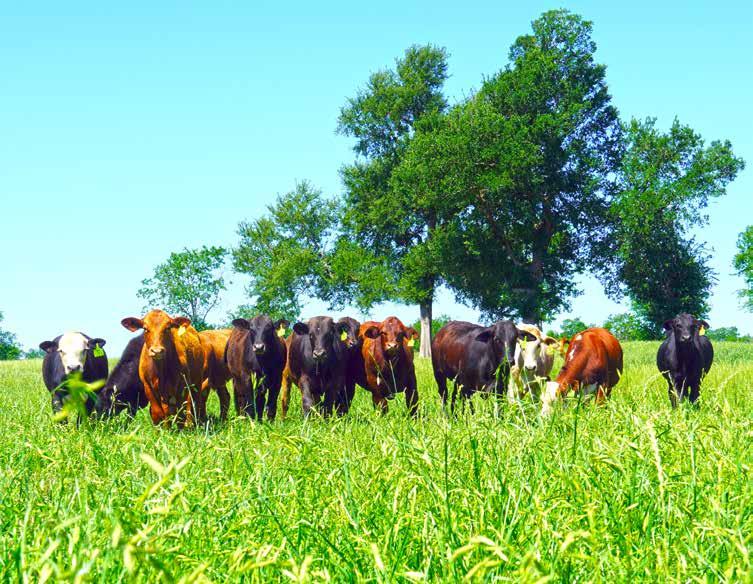
COVER PHOTO BY: Todd Brown See the Derby Burger Recipe by Gregg Yopp
The cost of everything continues to rise. One thing that is continually referenced is the increasing cost of secondary education. In my senior year at the University of Louisville, tuition and fees totaled $9,260. In the most recent academic year, it was $13,614. When researching those numbers, I found the gap wasn’t as extreme as I thought. Part-time college employment wages have certainly outpaced tuition hikes. As an on-campus tutor, I was making a little over $10/hour. That was one of the best on-campus jobs. My work in the cart barn at a local golf course was around $9 per hour. That means it took somewhere around 950 hours of part-time work to pay for a year’s tuition. Part-time college students should be able to find employment with wages in the upper teens now. That means it would take around 700 hours to pay for a year’s tuition.
The greatest difference is probably the cost of living for college students. I lived in a house with six guys a mile from campus and drove the vehicle I had paid for at sixteen. A $20 bar tab was considered “big,” and grabbing takeout was a twice-a-week splurge. When you drive by a college campus today, you can’t throw a stick without hitting an apartment complex with a resort-style pool, brand new vehicles in the parking lot, and a retail space with dining options that are a far cry from ramen noodles and bologna sandwiches. Today’s college student definitely lives a more glamorous life than I did, but what they get for the price tag is much more. For all the talk among my parents’ generation about how you could work all summer as a student to pay for tuition, a quick run of the numbers suggests you probably still can. You might just not have a car on campus, eat out every meal, and have to live in an apartment older than 10 years old.
While state school tuition rates have continued a linear march higher over the last 14 years, the cost of education in the beef industry has gone parabolic. I learned to treat a cold-stressed calf by tubing colostrum and warming up with truck heaters on a $100 calf. Today, that is a $1,200 calf. I was in charge of calf vaccinations and post-weaning treatment on $1,000 (and at times $700) calves, and today those are $2,400. The only way to learn how to handle those things is to be given enough rope to hang yourself. You have to be given the chance to fail, and the cost of failure is high. You learn what stage of cold stress a calf needs to be treated and left or treated and pulled by making the wrong call. It will stick with you when you are wrong.
When I finished school with a master’s in agricultural eco -
nomics and a childhood of work experience on the operation, I say it still took me three years to have a good grasp on the 30,000-foot view of everything. It took me about 5 years to catch every problem and diagnose it. It took me about 7 years to fix 99% of the problems I caught on my own. You could take the sharpest graduate from the best ag school today, and it would probably take them that much time as well. If they came out of university ready to do everything I could do at year 7, I probably needed to be working for them. I don’t know of many people who want to finance that education. Blood relation is about all you can hope for to help with retention. Labor will be the sticking point in herd expansion. Cattle prices are at a level to support paying skilled labor. We can actually compete with other industries for once. However, when the only way to develop those skills is to do so on someone else’s dime. It is a tough partnership for the one footing the bill. Not only have they paid for half a decade’s worth of mistakes for someone else to garner that skill set, but they have also expanded the operation to create an income stream for an additional family unit. I am sure many of you reading this have had your business scaled to a level that supports additional employment. When situations change, and you are left with extra work, it makes you hesitant to do so again. That is the conundrum that the American cattleman is currently in. The education is expensive, and skilled labor is vital. However, the American cattleman is an aging population and will have to figure out how to fill this void with skilled labor. For once, the prices are too good not to.
PRIVATE TREATY BULLS
Joe K. Lowe II
EXECUTIVE
COMMITTEE
OFFICERS:
President
ALLAN BRYANT Eminence
President Elect
DANIEL HAYDEN Whitesville
Vice President
RYAN MILLER Campbellsville
Treasurer
KEN ADAMS Upton
Past President
RANDY WARNER Sharpsburg
KCA Program Chairman
ADAM CHUNGLO Harrodsburg
KBC Chairman
WAYNE ZOGLMANN Lewisport
KBN Manager
AMY WHITE Lexington
Beef Solutions Manager*
DANIEL HAYDEN Whitesville
*ex officio
REGIONAL DIRECTORS:
REGION 1
Chris Milam, John Mark Brown, Dale Gold, Greg Roberson, Gary Woodall, Lincoln Pyle, Susan Zoglmann, Bill Plemmons, Kenton Howard, Britny Williams, Conner Williams
REGION 2
Bryan Manion, Joe Lowe, Allison Nissley, Rayetta Boone, Sammy Boone, David Strater, Kelly Flanders, Andy Joe Moore, Adam Thomas, AJ Mitchell, Jonathan Murley, Kenneth Green, Robert Siddens, Josh Morris, Joe Mike Moore, Amy Cecil
REGION 3
Amanda Hall, Nathan Lawson, Allen Phillips, Stacey Burkhardt, John David Yount, Lincoln Clifford, Abbey Biddle, Ben Tinsley, Crystal Harrod, Phillip Douglas, Tanya Wilson, Craig Retzlaff
REGION 4
Jodi Purvis, Brad Reynolds, Chad Anglin, Phillip Stamm, Danielle Harmon, Brandy Graves, Kelsey Cooper, Bruce Witt, Ronnie Lowe, Logan Carter, Jason Crowe, Rob Amburgey
REGION 5
Phillip Reese, Cary King, John Settles, Natalie Wesley, Brandon Kelly, Freddie Harris, Brent Williams, Anne Bays, Tommy Glasscock, Josh Wethington, Arch Sebastian, Terry Mattingly
Meet Your 2026 KCA Board
Natalie Wesley Casey County
Briefly tell us about your operation.
We run cow calf pairs with custom beef sales on the side. It is a fourth generation farm and there are three generations active. I also run an active Facebook page for our farm where we share information and fun videos from our day to day life on the farm.
Why did you decide to run for state board?
I first ran at 21 years old. Being a young woman, I definitely represent a minority of farmers across the state. I farm full time, so the only way I can be involved in the industry at a level greater than my own is by joining these organizations and proving that I am an important part of agriculture. I am passionate about ag and activism in support of the industry, as well as showing young girls that they can farm too!
How many years have you served on the state board?
Two years.
What do you like the most about the Kentucky Cattlemen's Association?
It gives me a chance to work for the industry that feeds the world. I love the connections you can make and all of the opportunities for education, as well as the community feeling of the group. I have found that no matter how old or young, whether you’re in Pikeville or Paducah, whether you raise 50 or 500, you still get to be treated as a part of one big farming family.
When you aren't taking care of your cows, what are you doing?
Spending time with my husband and our families! We spend a lot of time with our church, where we both teach and play music/sing. We also play a lot of volleyball when it’s warm.
KCA PAST PRESIDENTS:
VOLUME 39 • ISSUE 5
Bradon Burks KBC Director of Education
Rachel Cain Membership and Communications Coordinator
Amelia Carter KBC Director of Industry Relations
Danny Coy Video Production Specialist
Jake Harrod KBN Program Coordinator
Dan Miller KBN Industry Coordinator
Debby Nichols National Advertising Sales, LAN Katie Pratt Communications Manager Alex Scott MS,
Kelly Tucker KCA Collections & Compliance
Nikki Whitaker Director of Operations & Policy
President's Thoughts
Allan Bryant KCA President
Beef cattle are more than a product we raise — they are the foundation of rural life and the backbone of family farms. On operations across Kentucky and beyond, cattle shape our daily routines, guide our decisions and bring families together with a shared purpose. They allow us to make a living from the land, turning grass into a high-quality protein source while keeping farms productive and sustainable.
Cattle also play a vital role in keeping rural communities strong. They support local businesses, from feed stores and veterinarians to sale barns and equipment dealers. When cattle farms succeed, those communities succeed right along with them.
Just as important, cattle give us the opportunity—and the responsibility— to care for the land. Pastures that might otherwise go unused are maintained and improved through grazing, preserving open spaces and supporting the long-term health of our soil and environment. As producers, we don’t just think about the next season—we think about the next generation.
And that may be the most important part of all. On family farms, we’re not just raising cattle—we’re raising children, passing down values and teaching a way of life built on hard work, stewardship and responsibility. The lessons learned on a cattle farm last a lifetime.
For Mary and I, these lessons are deeply meaningful and have guided our lives. We’ve been blessed to see those same values take root in our daughters, Emily and Sarah. Today, we’re proud grandparents to our 8-month-old granddaughter, Lydia— our first. I am also happy to report that she loves beef!
As we enter this wonderful new phase of life and watch Emily and Tyler begin their journey as parents, we’re reminded just how important those
farm values truly are. It’s our hope that, in time, we can help pass those same lessons along to Lydia, just as they were once passed on to us.
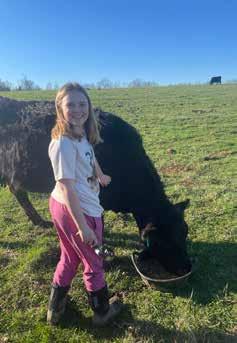
I can already see the beginnings of those same values taking root in my 8-year-old great-niece, Lauralyn. She lives on the same farm as Mary and I with her parents, Megan and Justin, and it’s a joy to watch her grow up on
the farm. One of her favorite things to do is check on her two baby calves and feed their mommas out in the pasture field.
One of my most memorable moments with Lauralyn came as we were moving cows to a new pasture. As usual, the Red 4 cow—who has a habit of running up to the Ranger every time she thinks there might be a little grain involved—came hustling over like clockwork.
Without missing a beat, Lauralyn looked at the cow and said, “That Red 4 sure is annoying… but she’d make good brisket.”
I had to laugh, but at the same time, I couldn’t help but think—she’s already starting to understand something that we as cattle producers sometimes take for granted. On the farm, we care for our animals every day. We watch over them, make sure they’re healthy, and do our best to give them a good life. But we also understand their purpose.
Seeing her enthusiasm reminds me that these values are not only taught— they’re gained through experience, through time spent on the farm, and through a love for the land and livestock. It gives me confidence that the next generation is already learning lessons that will stay with them for a lifetime.
And that’s why our cattle industry matters so much. It’s not just about producing a high-quality, wholesome product—it’s about raising families, teaching responsibility and preserving a way of life that strengthens our rural communities. The future of our industry depends not only on markets and management, but on moments like these—when the next generation develops a passion for agriculture and a respect for the work that goes into it every single day.
Commissioner's Corner
Jonathan Shell Agriculture Commissioner
Kentucky cattle producers, how would you like to improve the nutrition of your herd and reduce your feed cost? If you answer is yes and yes – and I don’t know why it wouldn’t be – then you need to have your forage tested.
The Kentucky Department of Agriculture successfully transitioned its Forage Testing Program earlier this year to the University of Kentucky Division of Regulatory Services and Cooperative Extension Service. The transition made sense for producers because those who are already utilizing the soil lab through their local UK Cooperative Extension agent can now add a follow-up forage analysis and consultation. The result is a more complete soil and forage improvement plan.
Ray Smith, extension forage specialist in the Department of Plant and Soil Sciences at UK Martin-Gatton College of Agriculture, Food and Environment, called the comprehensive nutritional analysis of forage testing “a tremendous benefit to livestock and hay producers in the state.”
Forage makes up more than 80% of most ruminant and equine diets, yet many livestock producers feed hay or ensiled forages without knowing their nutritional value. Most cattlemen wouldn’t buy a bag labeled "cattle feed" without nutrient guarantees.
Jeff Lehmkuhler, extension professor of beef cattle nutrition, says forage testing provides the foundational information to build a cost-effective supplement strategy to meet the nutritional needs of beef cattle and ensure performance goals are met. Without this information, he said, producers are using book values, which may lead to overspending on unnecessary supplements or lost production due to nutritional deficiencies.
For producers who sell hay, forage testing allows them to assess market value, monitor quality changes and make informed sales decisions. They can submit the results to KDA, and their lots will then be assigned a U.S. Department of Agriculture hay quality
grade and included, free of charge, on the KDA Hay for Sale website.
Untested hay may also be listed on the Hay for Sale site, but it will not show a quality grade and will not have an analysis to verify the quality. Submitting the analysis to KDA is as simple as checking the box on the UK Sample Submission Form to email results to “KDA for Marketing.”
Another new addition to the KDA hay program is the monthly hay market report, a collaboration among producers, KDA staff, and USDA. KDA gathers Kentucky hay sales data monthly and submits it to the USDA for publication. Anyone interested in participating in the monthly hay market report by providing their sales data can contact KDA’s hay program coordinator Kimberly Field at Kimberly.Field@ky.gov.
Jenny Combs, agriculture research specialist and administrator of the Forage Testing Program, said producers or extension agents should collect a representative core sample and clearly label the samples and services requested on the sample form. Combs recommends producers and agents complete a free one-hour hay-sampling course offered by the National Forage Testing Association at www. foragetesting.org.
Combs said samples should be delivered or shipped via UPS or FedEx from 8 a.m. to 4 p.m. EDT Monday through Thursday. Haylage should not be shipped on Fridays due to the risk of mold.
Samples should be shipped to: Regulatory Services Attn: Forage Testing Program 103 Regulatory Services Building Lexington, KY 40546-0275
Once testing is complete (a process that averages three business days), producers can work with their local extension agents to interpret the results and balance rations for ruminants or equines. Reports are reviewed for accuracy, and retesting is free if requested within seven days of the report date.
CAUTION: Federal law restricts this drug to use by or on the order of a licensed veterinarian.
INDICATIONS:
VALCOR® is indicated for the treatment and control of the following species of parasites in beef cattle two months of age and older and in replacement dairy heifers less than 20 months of age. Not for use in beef bulls intended for breeding over 1 year of age, dairy calves, and veal calves. Gastrointestinal Roundworms (adults and fourth stage larvae): Ostertagia ostertagi (including inhibited larvae), O. lyrata, Haemonchus placei, Trichostrongylus axei, T. colubriformis, T. longispicularis*, Cooperia oncophora, C. pectinata*, C. punctata, C. surnabada, Bunostomum phlebotomum*, Strongyloides papillosus*, Oesophagostomum radiatum, Trichuris spp.*, Nematodirus helvetianus*. Lungworms (adults and fourth stage larvae): Dictyocaulus viviparus. Eyeworms (adults): Thelazia spp. Grubs (parasitic stages): Hypoderma bovis, H. lineatum.
Sucking Lice: Haematopinus eurysternus, Linognathus vituli, Solenopotes capillatus. Mange Mites: Psoroptes bovis, Sarcoptes scabiei. *Adults only
WARNINGS AND PRECAUTIONS:
WITHDRAWAL PERIODS AND RESIDUE WARNINGS:
Cattle must not be slaughtered for human consumption within 15 days following last treatment with this drug product. Not for use in female dairy cattle 20 months of age or older, including dry dairy cows; use in these cattle may cause drug residues in milk and/or in calves born to these cows or heifers. Not for use in beef calves less than 2 months of age, dairy calves, and veal calves. A withdrawal period has not been established for this product in pre-ruminating calves.
User Safety Warnings: Not for human use. Keep out of reach of children. If accidental eye contact occurs, flush eyes immediately with water for 15 minutes and seek medical attention. If wearing contact lenses, flush eyes immediately with water before removing lenses then continue rinsing for at least 15 minutes. Do not eat, drink or smoke while handling the product. Wash hands after use. Take care to avoid accidental self-injection. If accidental injection occurs, seek medical attention and provide product package insert to medical professional. To obtain a Safety Data Sheet(s), contact Zoetis Inc. at 1-888-963-8471 or www.zoetis.com.
Animal Safety Warnings and Precautions:
Use of levamisole in cattle treated in the last few days with cholinesterase inhibitors such as organophosphates or with morantel may enhance the toxic effects of levamisole. Use together with caution.
Destruction of Hypoderma larvae (cattle grubs) at the period when these grubs are in vital areas may cause undesirable host-parasite reactions including the possibility of fatalities. Killing H. lineatum when it is in the tissue surrounding the gullet may cause bloat; killing H. bovis when it is in the vertebral canal may cause staggering or paralysis. These reactions are not specific to treatment with VALCOR® and can occur with any successful treatment of grubs. Cattle should be treated either before or after these stages of grub development. Consult your veterinarian concerning the proper time for treatment. Follow recommended dosage carefully. Reproductive safety has not been evaluated in bulls intended for breeding.
ADVERSE REACTIONS:
This product is likely to cause swelling at the injection site. Tissue damage at the injection site may also occur, including possible granulomas and necrosis. These reactions have resolved without treatment. Local tissue reaction may result in trim loss of edible tissue at slaughter. A single death attributed to clostridial infection associated with the injection of VALCOR® was reported in a non-pivotal effectiveness study. Observe cattle for injection site reactions. If injection site reactions are suspected, consult your veterinarian. This product is not for intravenous or intramuscular use. Hypersalivation may be observed; however, this reaction will disappear within a few hours. If this condition persists, a veterinarian should be consulted.
Contact Information:
Contact Zoetis Inc. at 1-888-963-8471 or www.zoetis.com. To report suspected adverse drug experiences, contact Zoetis Inc. at 1-888-963-8471. For additional information about reporting adverse drug experiences for animal drugs, contact FDA at 1-888-FDA-VETS or http://www.fda.gov/reportanimalae.
TARGET ANIMAL SAFETY:
Margin of Safety: Subcutaneous administration of VALCOR® was well tolerated in calves as young as 3 months of age at 1, 2, or 3 times the recommended dose. Dose-dependent post-dose hypersalivation was seen in all treated groups compared to the controls. All cases of hypersalivation were mild, transient, and resolved without further medical intervention. Dose-related injection site reactions were observed, and those in the 1X group resolved between 21 and 28 days post injection. Injection site reactions were primarily swelling which resolved between 21 and 28 days post injection. Findings from the injection sites included swelling, edema, inflammation, muscle necrosis and fibrosis.
Female Reproductive Safety: The reproductive safety of VALCOR® was established in two studies with female cattle. First, a single dose of VALCOR® was administered subcutaneously at 3 times the recommended dose at times coinciding with folliculogenesis, implantation, or organogenesis, and had no effects on conception, calving, abortion, and stillbirth rates, and post-natal viability up to 30±2 days post-calving. There were no congenital abnormalities. The only test article-related change was an increase in incidence and duration of swelling at injection sites compared with control, but all swellings eventually resolved. In a second study, a single dose of VALCOR® administered subcutaneously at 3 times the recommended dose at either early or late gestation had no effects on calving, abortion, and stillbirth rates, and post-natal viability up to 30±2 days post-calving. One control calf and two treated calves were born with congenital abnormalities and did not survive. These were not determined to be test article-related. The only test article-related change was an increase in incidence and duration of swelling at injection sites, but all swellings eventually resolved. Not for use in bulls intended for breeding over 1 year of age, as reproductive safety has not been evaluated.
HOW SUPPLIED:
VALCOR® is available in 100 mL, 250 mL and 500 mL multi-dose, rubber-capped glass vials.
STORAGE, HANDLING, AND DISPOSAL:
Store below 25°C (77°F). Do not expose to light for extended periods of time. Do not contaminate water by direct application or by improper disposal of drug containers. Dispose of containers in an approved landfill or by incineration.
Approved by FDA under NADA # 141-553
Distributed by:
TOUGH ON TOUGH WORMS, EASY ON CATTLE PRODUCERS.
You can achieve effective parasite control in one product, where before you may have needed two. Valcor® (doramectin and levamisole injection) is the first prescription cattle dewormer with two active ingredients in one dose. It’s never been easier to be tough. Get tough at ValcorTough.com.
IMPORTANT SAFETY INFORMATION: Do not treat cattle with Valcor within 15 days of slaughter. Not for use in female dairy cattle 20 months of age or older, including dry dairy cows; not for use in beef calves less than 2 months of age, dairy calves, and veal calves. Safety has not been evaluated in breeding bulls. Use with caution in cattle treated with cholinesterase inhibitors. This product is likely to cause injection site swelling; tissue damage (including granulomas and necrosis) may occur. These reactions have resolved without treatment. See Brief Summary of Full Prescribing Information on the next page.
Thoughts From Dave
Dave Maples Executive Vice President
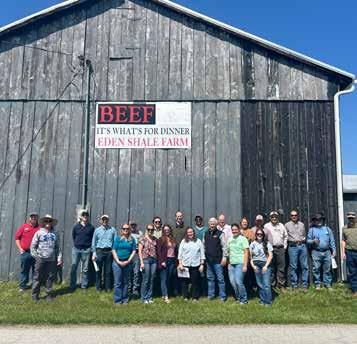
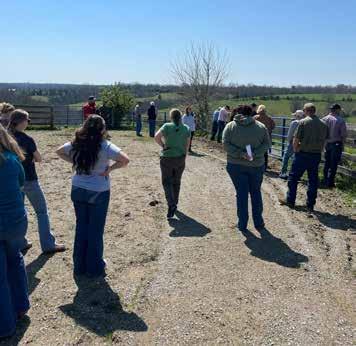
Some of KCA’s leadership team had the opportunity to host several lead researchers from U.S. Department of Agriculture at the Eden Shale Farm this past month. KCA leaders Allan Bryant, Daniel Hayden, Amanda Hall, Cary King and Dr. Gordon Jones got the opportunity to visit with Dr. Steve Moeller and Dr. Peter Vadas, both USDA research program leaders from the office of national programs and several lead scientists from Texas, Arkansas, Wisconsin, Pennsylvania and Utah.
I am not sure of how familiar you are of the USDA ForageAnimal Production Research Unit (FAPRU) that is housed at the University of Kentucky in Lexington. This unit is an awesome opportunity for Kentucky agriculture and the state as a whole. Over the years, KCA has had a great relationship with the unit and its leaders. Currently, Dr. Michael Flythe serves as the research leader of the unit. Dr. Flythe is a rumen and gastrointestinal microbiologist, and he is also a good guy who is easy to talk to. I enjoy running into him at Tractor Supply or Lowe's where we have spent more time than we should blocking customers in the aisle while we were talking cows or about our kids.
We were also very fortunate to have a very good relationship with the former research leader Dr. Glen Aiken. Glen really helped us early on when the Kentucky Beef Network started managing Eden Shale Farm and that relationship has carried over to Dr. Flythe. Glen was always in our office, and Michael makes regular stops to talk with our team about what is happening in the Kentucky beef industry.
You may remember that Sen. Mitch McConnell was in
Lexington over two years ago for a groundbreaking for a new USDA research building on the UK campus. This was a $60 million+ announcement, and this past year, another $10 million was added to the mix for the facility. I am not sure where they are in the process, but I do know that this unit has been and can be very good for our industry. The unit has gotten a recurring $4 million dollar allocation for the past several years. Half of that $4 million goes to the FAPRU unit and the other half goes to UK to do forage-animal production research, and if my memory serves me right, there is a portion that goes to hemp research. USDA and the FAPRU go through a process of doing a five-year plan. That process is beginning this spring. With all the changes going on within USDA, it is important that we stay engaged with the process. Research is very important. You can be a part of the process by observing what is going on in your pastures and with your cows. Many breakthrough advancements were started by farmers making observations of their forages and animals.
With technology advancements in genetics, animal health and nutritional advancements, it is going to be important to see how these animals adapt to our environment. Knowing how to match the genetic-environmental interaction is going to be a big part of your management program. I would encourage you to ask questions to all of our researchers and let them know what is happening in your world so that they find answers to your questions and make the beef business better for all. These research dollars are way too valuable, and they need to be used to solve real-world problems.
BARREN COUNTY NEWS
Carol Spiegl and Ken Wininger
February
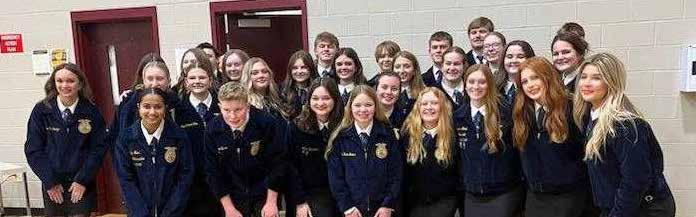
The Barren County Cattlemen's Association February meeting was sponsored by ProSolutions of Hiseville. The program featured the FFA chapters of Glasgow High School, Barren County High School and Barren County Middle School. We are pleased to announce that the 2025-26 school year initiated agricultural classes at Glasgow High School and they began the very first FFA chapter in the school's history. Mattea Wyatt, FFA advisor, discussed the chapter’s work and fundraisers. Barren County High School FFA students gave presentations of their supervised agriculture experiences. Some of those projects were beekeeping, poultry egg production, shooting preserve for quail hunting, agriculture sales and veterinary office co-op.
March
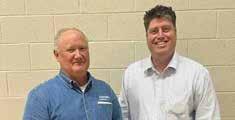
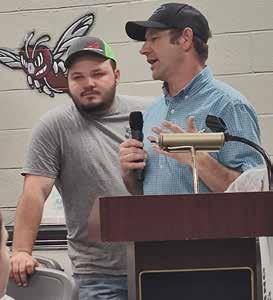
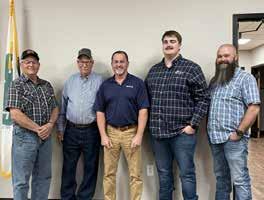
The Barren County Cattlemen’s Association met March 19. The meeting and meal were sponsored by Nutrien Ag Solutions. Randy Gable, Nutrien Ag Solutions representative, discussed fertilizer prices and transportation challenges affecting farm products. He noted that many shipments must move through the narrow waterways around Iran. In the photo, Josh Morris, Barren County Cattlemen’s Association president, thanks Gable for his sponsorship and presentation.
LOGAN COUNTY NEWS
John Walpole
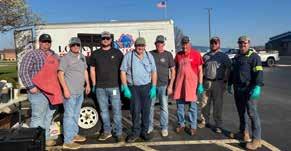
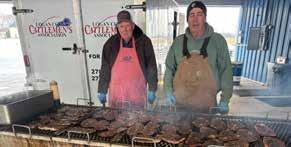
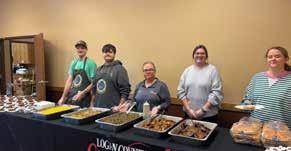
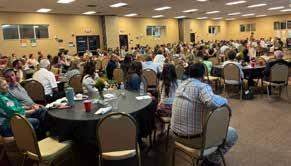
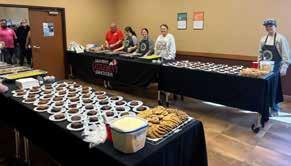
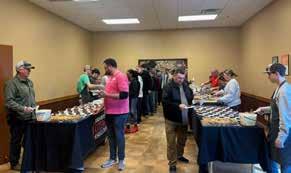
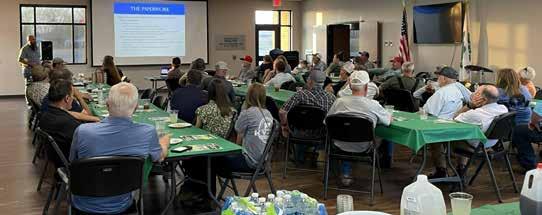
The Logan County Cattlemen were busy in March catering meals for community partners. On March 13, they catered a meal for Champion Pet Food with 275 people in attendance. The Junior Natural Resource Board helped serve the food.
On March 25, the Logan County Cattlemen’s Association catered a meal for the Logan County Conservation District with 275 people attending.
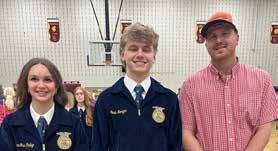
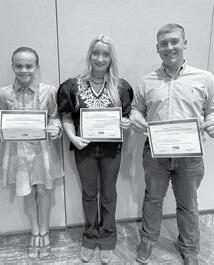
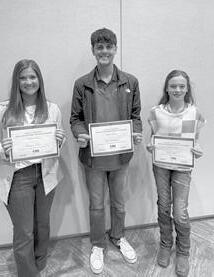
Daniel Crain representing ProSolutions with Glasgow High School FFA members Jenna Pedigo and Noah Morgan.
As always, our ribeyes are provided by Phillips Family Butcher Shop of Glasgow.
FFA Members
METCALFE COUNTY NEWS
Moe Hensley
The Metcalfe County Cattlemen met on March 19 at the Old School Cafe located in the old Metcalfe County High School lunchroom. Renovations are still ongoing at the extension office. There was a really nice turnout for the meeting. Ribeyes, hotdogs and homemade desserts were on the menu for the night.
Metcalfe Farm Supply was the sponsor for the evening's activities. H.J. Hawkins, Brad Carter and members of their sales team were on hand to discuss any needs anyone had in mind. Their store carries feed, seed, mineral, supplies, and they have expanded into the fertilizer business with all new buggies.
Routine business was conducted
TODD COUNTY NEWS
Traci Johnson
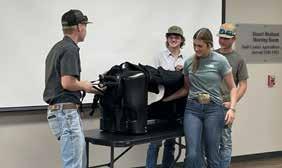
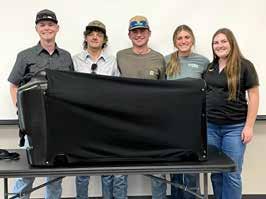
FFA students stole the show at Todd County Cattlemen’s March meeting with their Bovine Birthing Simulator. Students demonstrated the proper way to assist with calving, including correct use of equipment.
BR Knuckles Insurance Agency sponsored the meeting and provided details about Livestock Risk Protection plans.
Our thanks to Todd County Central High School FFA and BR Knuckles Insurance Agency for this learning opportunity and for all they do in our community.
by President Lisa Upchurch. Lynn Hawkins reminded everyone of the scholarship application due date of May 10.
Brandon Bell spoke briefly about soil testing. Soil testing optimizes plant growth and can save farmers money by identifying precise nutrient needs and preventing over-fertilization. Work with your county agent or a reputable fertilizer company to find out what best suits your soils’ needs.
Brad Carter discussed several topics including Agolin Ruminant, Altosid IGR Horn Fly Control and anaplasmosis in Beef Cattle. Agolin Ruminant is a plant-based, essential oil-based feed additive designed for dairy and beef cattle to reduce methane
emissions and improve feed efficiency. For more information on any of these items, contact a member of the sales team.
"If your actions inspire others to dream more, do more and become more. You're a leader." -John Quincy Adams
S (L-R) Joe Anthony Tabor, Nathan Phelps, Will Tabor, Meredith Hampton, and Ag Teacher & FFA Advisor Shayla Berry
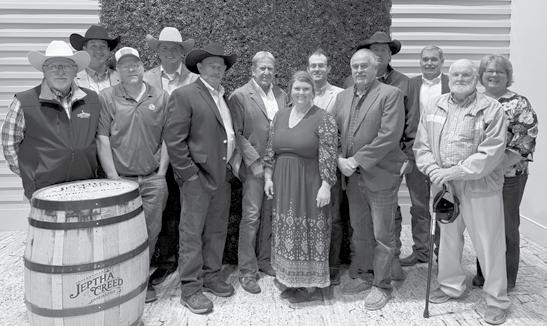
S (L-R) Cattlemen Dee Johnson and Don Laster; Johnny Knuckles, Colin Sharp, and Chris Borders of BR Knuckles Insurance Agency
Kentucky Cattle Producers Aid Farmers Impacted by Wildfires
Sara Roberson Breckinridge County
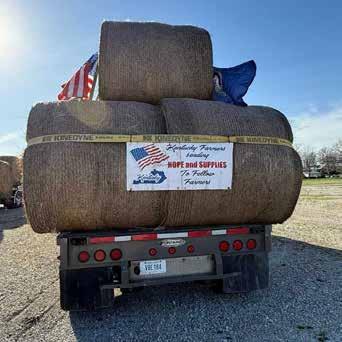
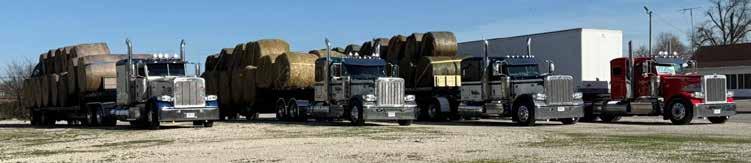
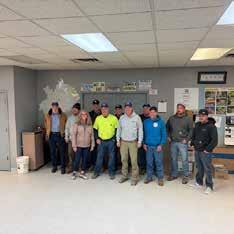
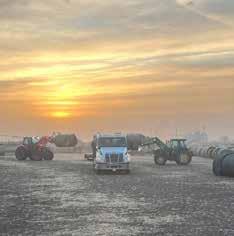
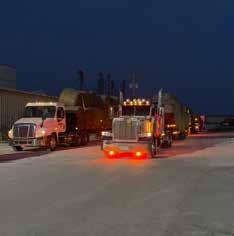
The Breckinridge County Cattlemen’s Association once again led a relief effort to bring hay and supplies to farmers and ranchers who had been impacted by recent wildfires in Kansas and Oklahoma. Our members worked together to gather hay, supplies and transportation from Breckinridge, LaRue and Meade counties.
Breckinridge County was overwhelmed with the willingness of the agriculture community to support this effort. Early Saturday March 14, the convoy of seven semis and five flatbed trailers, carrying 213 round hay bales, 500 square bales, vet supplies and fencing material left from GreenPoint Ag in Hardinsburg and traveled the 800 miles to Knowles, Oklahoma.
We hope that by providing supplies to other herdsmen during their time of need we have allowed them to continue to care for their livestock. We wish them well as their rebuilding efforts continue.
One of our current members actually benefitted from our relief efforts during the 2017 wildfires. He was instrumental
in initiating contact with Collin Domer and the Beaver County Stockyards to coordinate the delivery of supplies. They insisted that there were not adequate words to express their gratitude for our donations. During an interview with Collin, he agreed that they were in a low spot right now, but with the continuous theme of Farmers helping Farmers, they would make it back out of the valley.
Association leaders want to express their appreciation for each person, business or organization that donated supplies, money or time to this effort. This includes Hodges Trucking, French Logging, Ballman Farms, Compton Farms, Barger Farms, Richard French Trucking, The Mast Family, LaRue County Cattlemen’s Association, Meade County Cattlemen’s Association, Bobby Keith Kennedy, Gary Board, Mark Newman, Rick Highbaugh, Arthur Lee Turner, Eddie McAfee, Melinda Norton, Terry Wilson, Bill and Susan Plemmons, Sam Burden, John Hobbs, William Mays, Kevin Compton, Thomas Compton, Scott Jarboe, David O’Donohue, Bobby Bell, Jeremy Armstrong, and Greg and Sara Roberson.
Complete Cattle Saver
•
•
•
• Helps
•
Singles
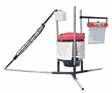
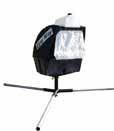
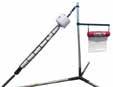
Scratcher assembly available without stand, or on a stand with 1, 2 or 3 scratcher assemblies. The Easy Way Scratcher also comes with or without 3’ Walk-Way Oiler.
3’ Walkway With A Mop Curtain
A durable, low maintenance oiler that fits directly into your cattle’s path for automatic, consistent fly & parasite control. Built tough for pasture or lot use, it keeps your herd protected with minimal effort.
ENTHUSIASTIC learner
MOREHEAD, KY – Rowan County producer Ken Blevins is a longtime student of the cattle industry. Over the years, he’s used the knowledge he gained from educators and fellow producers to make his operation better.
“His management is top-notch,” said Dr. Philip Prater, professor emeritus at Morehead State University. “He has the most teachable spirit of any beef cattle producer I’ve ever met. He is always willing to listen and learn.”
Heifer Development Beginnings
Prater met Blevins when both men were working cattle enrolled in the Eastern Kentucky Heifer Development Program.
The program, led by Larry Clay and located at D&D Ranch in Perry County, helped many of the region’s cattle producers improve their herds during its 18 years of existence. Beginning in 1997, producers brought their heifers to Clay, who would vaccinate, artificially inseminate and raise them until they and their offspring were either sold or returned to the producer’s herd. Blevins began participating in the program during its second year and stayed in it
Pratt Kentucky Cattlemen's Association
until it ended. In addition to enrolling heifers in the program, he also bought heifers from the program’s sale to grow his herd. He still has one cow from that program.
“The Eastern Kentucky Heifer Development Program was the greatest thing that helped the beef cattle industry in the region,” he said.
Learning the Hard Way
However, cattle were not always a part of the equation for Blevins.
“I did not come from a cattle background and have had to learn a lot of things the hard way,” he said.
Originally from Elliott County, Blevins came to Rowan County to attend Morehead State University. After earning a business degree, Blevins became a union pipefitter.
He and his wife Kay, a school teacher, purchased their farm on the eastern side of Morehead at an absolute auction in 1993 with the goal of growing tobacco. Knowing the farm’s rolling topography, Blevins soon purchased two cows – one from his uncle and the other from his pastor.
Room for Improvement
From the time first cows stepped on the farm, Blevins worked to give them the best care he could. To do that he started learning all he could about cattle.
“I’ve been blessed to have met people who can and will help me,” he said.
Today, he attends cattlemen’s meetings and gets advice from University of Kentucky specialists, Dan Miller with the Kentucky Beef Network and KBN facilitators Ron Shrout and Samantha Stamm and former facilitator Jeff Stephens.
Shrout originally met Blevins through their work with the heifer development program.
“He raises good cattle and uses good bulls,” Shrout said. “He has a good facility to work cattle and loves what he’s doing – that’s a really big piece of his success.”
Cattle Caregiver
Blevins is a firm believer in the relationship between cattle body scores and improved fertility. To help cattle maintain their body condition, he gives his pregnant cows a three-way mixture
Katie
of supplemental feed 35-40 days before and after calving.
At the height of his calving season in March, Blevins can be found all hours of the day or night at his calving barn. Like many producers, Blevins farms mostly alone and keeps a close eye on his pregnant heifers and cows and newborn calves in the barn.
He will feed hay, grain and minerals to his herd until after he gets a first cutting of hay. Then he puts them out to pasture.
“I give the best care to my cattle that I possibly can and that includes providing them with clean water, grain, minerals and attention,” he said.
Educating Others
Blevins’ relationship with Dr. Prater strengthened over the years. For nearly a decade, Ken and Kay Blevins allowed Prater and Morehead State vet tech students to come to their farm and use their facilities for hands-on education. At the farm, the students performed pregnancy checks on the cattle.
“I had to be super picky about the farms we took students to because of the safety issue,” Prater said. “I chose farmers that had safe, good
working facilities. Kenny and Kay love learning, and they loved seeing the kids learning.”
Dr. Prater was impressed with Blevin’s tight calving window.
“When we would pregnancy check and ultrasound the cattle, about 90% of all his pregnancies would be within 45 days,” Dr. Prater said.
Vet Access
Along with Dr. Prater, Blevins said he is fortune to have access to many wonderful area large-animal veterinarians who help him care for his herd.
Bath County producer Randy Warner was introduced to Blevins through his wife Tammy. Tammy Warner knew Blevins through her job at the Bath Veterinary Clinic in Owingsville. Over the years, Warner has purchased several animals from him.
“He raises his cattle the right way, and he is knowledgeable about his herd,” Warner said. “He is good to his word. He doesn’t want you to buy something that is not going to make you some money.”
Blevins sells most of his cattle at the
stockyards but also does freezer beef. Today, the majority of his herd is spring calving but he also has 10 that are fall calving.
“I started the fall-calving herd to help spread out my money,” he said.
Needed Help
While nearly all of the farming obligations fall on Blevins since he retired five years ago, Kay and his brother were substantial help with his farms during the years Blevins traveled the country as a pipefitter. At his farming height, Blevins had 102 head of cattle on two farms in Rowan County. But the need to slow down and consolidate led him to selling one of his farms and half of his herd several years ago.
Today, Blevins occasionally gets help from his neighbors. A subdivision was built next to his farm decades ago, and many of the residents have helped with various farming tasks over the years.
Even though he has consolidated and slowed down some. His enthusiasm for cattle and learning has not.
“I wouldn’t want to be anywhere else,” Blevins said. “People watch out for you here and check on me and my cattle.”
photos by Katie Pratt
no one knows livestock insurance like
Summer Tick Protection Reminders
As cattle producers spend more time outdoors, it’s important for them to remember to protect themselves from ticks.
Kentucky can provide an ideal environment for ticks with its warm, humid weather, abundant pastures and forests, and large deer population.
Ticks are associated with multiple diseases and conditions affecting both animals and people. A tick-borne condition of increasing concern to humans is alpha-gal syndrome, “the red meat allergy.” It is primarily transmitted by the lone star tick, which is one of the most common ticks found in the state. The American dog tick, another tick commonly found in the state, can transmit bacteria that causes Rocky Mountain spotted fever. While not as common as other ticks in Kentucky, the blacklegged tick, which is also known as a deer tick, is associated with Lyme disease.
Hannah Tiffin, University of Kentucky assistant extension professor of veterinary entomology, offers these tips to help producers protect themselves from ticks.
• Wear long pants.
• Wear tall socks with pants tucked in and taped or wear tall boots with pants tucked into boots.
• Wear long sleeves when walking through thick brush or tall grasses.
• Buy pre-treated clothing or treat clothes with permethrin.When applying permethrin, follow all label instructions and keep cats away from wet clothing. Permethrin is toxic to cats when wet but safe when dry!
• Re-treat clothing after the number of washes shown on the label.
• Use DEET or other repellents before going into a risky habitat. Find the right repellent by using the Environmental Protection Agency tool: epa.gov/insectrepellents/find-repellent-right-you. Remember to spray your socks and non-rubber boots.
• Do a tick check periodically while outdoors and soon after returning home. It is easiest to do a full tick check in the shower; this will help dislodge any ticks that may not have fully attached yet.
• Focus on areas of the body where ticks could find an easy blood meal — “hidden” locations and spots with increased blood flow are ticks’ favorites, such as behind the ears, within the hairline, armpits, belly button, groin, behind the knees and in between toes (especially on pets).
• Check pets for ticks too, especially if they are indoor/ outdoor animals. They can bring ticks indoors with them and expose you and your family and indoor pets to ticks.
• Dry clothes on HIGH heat. Heating clothes on high for 10 to 15 minutes will kill ticks.
Tiffin encourages producers to make a “tick kit.” Items in the kit should include a magnifying glass, tweezers, hand sanitizer or cleaning towelettes to clean the tick bite after the tick has been removed. For producers who want to send ticks for identification or testing, she suggests they include small pill bottle with identifying information
removed or a Ziplock bag in their kit.
Kentucky residents have two options for submitting ticks they find on themselves or their animals. They can submit ticks for human pathogen testing through the UK Human Tick Surveillance Program or for identification through the UK Extension BITE Lab (Tiffin’s program). If producers suspect they have found Asian longhorned ticks, it is important to submit these for identification so that the invasive tick can be tracked in the state. They are not tested for pathogens in Kentucky, and should be submitted through the Extension BITE Lab for identification and reporting. More information on both programs can be found here: bitelabky.mgcafe.uky.edu/pestvector-management/ticks.
Producers can also visit the following site for chemical control options they can use at animal facilities: veterinaryentomology.org/vetpestx. As always, be sure to follow label instructions and ensure the product is registered for use in Kentucky.
What’s New in the World of Bovine Leukemia Virus?
Michelle Arnold DVM-Ruminant Extension Veterinarian (UKVDL)
What is BLV? Bovine Leukemia Virus (BLV) is an “oncogenic retrovirus” that infects the white blood cells, particularly the B-lymphocytes, in cattle and causes the disease known as “Enzootic Bovine Leukosis” or EBL. The majority of infected cattle, approximately 70%, are asymptomatic and simply act as carriers of the virus. Approximately 30–40 % of infected cattle can develop “persistent lymphocytosis” which is defined as an increase in total lymphocyte count three times above normal (>8000 white cells per ml of blood) and persists for at least three months but with no type of cancerous development. Less than 5% of BLV-infected cattle progress to lymphosarcoma, the fatal form of infection. Lymphosarcoma accounts for 13.5% of beef cattle carcass condemnation in the U.S. slaughter facilities. BLV infection is extremely common and widespread in the U.S. cattle population although at least 20 European countries have successfully eradicated this virus. In dairy cattle, BLV negatively impacts fertility and longevity and is associated with immunosuppression and increased disease risk. Little is known about the impact of BLV in beef cattle, but publications released in 2026 have shed new insights into the effects and diagnosis of this complex virus in beef cattle.
If I test my beef cattle herd for BLV, will I find any positive cattle? Very likely. It is important to understand that Bovine Leukemia Virus (BLV) is an extremely common viral infection in U.S. cattle, with prevalence substantially increasing over the last 15 years. The NAHMS study published in 2010 cited approximately 38% of beef herds had at least one infected animal while 10% of individual beef cattle tested were infected. In contrast, two Midwestern studies published in 2022-2023 reported that 78-95% of beef herds had at least one infected cow and 30-55% of individual beef cows were positive while a 2026 published study of cow/calf operations in Virginia reported over 75% of individual cattle tested positive. These numbers are becoming much closer to reported levels of BLV infection in dairy cattle, currently thought to be nearly
Diagnostic Testing Options
• ELISA = Enzyme-Linked ImmunoSorbant Assay
• Measuring cow's immune response to BLV (positive, negative, or suspect)
• MEasured in blood (serum or plasma) or milk
• Relatively Cheap
• PCR - Polymerase Chain Reaction
• DNA test: measures copies of virus (proviral load or PVL) (high, moderate, low, undetected)
• Measured in whole blood
• More sample processing; more expensive
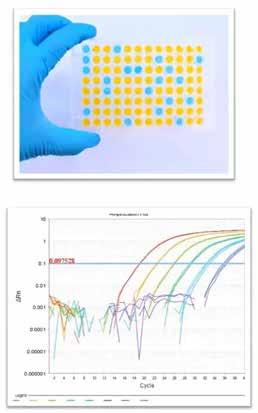
Figure 1: BLV Testing options. Photo retrieved from “What’s the Right Plan for Your Herd?” accessed 4/7/2026 at https://www.canr.msu.edu/blv/management/monitor
94% of U.S. dairy herds contain BLV-infected cattle. Economic losses stem from the inability to sell BLV positive cattle for export or as bull studs, condemnation of carcass at slaughter if tumors are present, and clinical disease/ death loss. Dairy research has shown lost milk production and immune system dysfunction (less response to vaccines and more prone to diseases like mastitis) should also be included. Because the virus is so common, simply testing and culling positive cattle is not an economically feasible approach to combat this challenge in the U.S.
How does this virus spread? Transmission of bovine leukemia virus is mainly horizontal from cow to cow.
Routine cattle working procedures are an important route as they transfer contaminated blood between individuals on surgical equipment, needles and gloves. Rectal palpation without changing sleeves, the re-use of a single needle on multiple cows, dehorning, tattooing, castration and ear tagging without proper sanitation between animals are all are implicated in virus transmission. Biting flies and other blood-feeding insects are also modes of transmission. Vertical transmission can occur from dam to fetus during pregnancy or when nursing since the virus can pass via the placenta, during delivery and in colostrum. One study found approximately 10% of calves
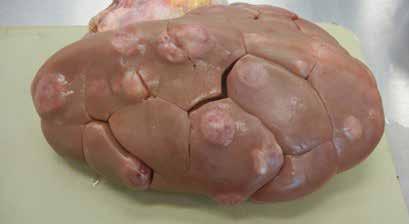
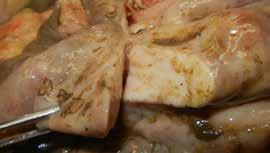
Figure 2: Multiple, firm white tumors may be present in any organ on post-mortem examination. The picture (left) is lymphosarcoma in a bovine kidney; right side is lymphosarcoma in the abomasum. Photos courtesy of the UKVDL.
born to BLV-infected dams are already infected at birth. Although semen is a potential source for vertical BLV transmission, the risk and association of BLV with semen remains unresolved. Direct transmission during natural breeding is known to occur when there is blood or smegma exchange due to minor penile or vaginal trauma.
How is testing for BLV performed?
The diagnostic assays used to detect BLV are probably the most dynamic and promising advancements in current BLV research. Until recently, a simple, inexpensive serum ELISA test was the only assay used to determine if an individual was BLV positive by detecting antibodies to the virus. Once an animal is infected and tests positive, she will test positive for her lifetime. However, there are limitations to testing serum. It takes approximately 60 days after infection with the virus before the serologic response can be detected. In addition, it is recommended to wait until calves reach 8 months of age before serologic testing due to maternal antibody interference from colostrum. Lastly, testing biological fluids such as semen is not possible with an ELISA test. Recently, determination of proviral load (PVL) by PCR has gained attention as a key indicator of infection and disease progression. BLV is an RNA virus. In order to survive, it makes a DNA copy of its own RNA (this copy is known as a “provirus”) and inserts it into the DNA of the host cell, usually a B lymphocyte in cattle. Once it is integrated, this “proviral DNA” gets replicated at the same time as the host’s DNA during normal cellular division. Proviral load (PVL) refers to the amount of proviral DNA integrated into the host’s cells in an animal infected with a retrovirus. It is measured in whole blood (purple top tube), certain tissue types, semen and embryo wash fluid. With this new test, it was discovered that a minority of BLV + cattle have very high concentrations of provirus and are responsible for the majority of BLV transmission within a herd. By combining the two tests, the initial ELISA screening of cattle in serum with follow-up testing by PCR for proviral load in whole blood, the most infectious cattle can be identified for segregation and culling (Figure 1). Proviral load testing is available at several veterinary diagnostic laboratories including Texas A & M, Kansas State,
Wisconsin, and North Dakota State as well as one private laboratory, Central Star. This combination of testing and selective culling can result in dramatic declines in new infections without the need to cull all positive cattle. In future, breeding cattle for resistance to BLV progression holds promise. The identification of the BoLA-DRB3 gene has been linked to variation in the animal’s ability to regulate BLV replication. In other words, depending on the specific genotype, cattle may differ in their ability to limit the virus’ ability to reproduce and spread.
What were the conclusions of the latest research on BLV in beef cattle? As mentioned, several 2026 publications have shed additional light on BLV’s effect on beef cattle. Of note, the Virginia Tech study of cow/calf pairs found that cows with high PVL had reduced pregnancy rates but no statistical effect on calf weaning weights or herd longevity. Another study conducted in Japan between 2019 and 2024, found that BLV prevalence could be effectively reduced in a Japanese Black (Waygu) breeding farm by combining regular PCR testing with certain management interventions that decreased the risk of BLV transmission. The main measures included whole-herd testing of BLV PVLs, physical separation of BLV-positive and BLV-negative cattle, prioritized culling of BLV-positive cattle with high PVLs, BLV screening of purchased cattle and a policy of selecting only BLV-negative animals as replacement cattle. In particular, identifying and culling cattle with high PVLs has been reported to be a highly effective strategy for reducing BLV prevalence over several years.
Are there any clinical signs of BLV infection in cattle? Only if the infected animal reaches the final stage of Enzootic Bovine Leukosis, which is malignant lymphosarcoma. Only a small fraction of BLV-infected cattle, approximately 1-5 %, develop lymphosarcoma after an average incubation period of 7 years after infection with the virus. The sites most commonly affected by tumors are the heart, abomasum (true stomach), uterus, kidney, spinal cord and retrobulbar (the area behind the eyeball). Early signs may include loss of appetite, weight loss, decreased milk production, fever and enlarged lymph nodes. Some affected cattle will show no sign of the disease as approximately 5-20% of cases present as sudden death. Other clinical signs of disease are linked to the organ system affected by the tumor (Figure 2). Often the earliest indicator of cancer is the presence of enlarged lymph nodes which look like fist-size swellings in front of the shoulder, in the flank and other locations. What should a producer do with a BLV ( +) animal? The decision on what to do with a positive animal is best determined through consultation with the herd veterinarian, based on the specific goals of the individual farm. Seed stock producers and especially those who export internationally are more likely to aggressively pursue BLVfree herd status. Segregating or culling BLV + positive cattle with high proviral loads, adding only BLV-negative cattle to the herd, making management changes to reduce transmission such as single-use needles/sleeves and disinfecting equipment between animals, and implementing an integrated pest management program will substantially reduce the BLV prevalence in the herd.
Emergency Forage Options
Chris Teutsch UK Research and Education Center, Princeton KY
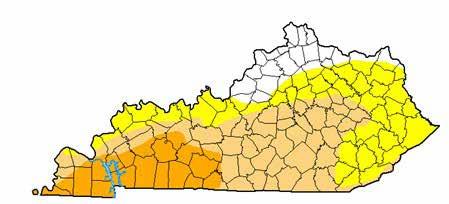
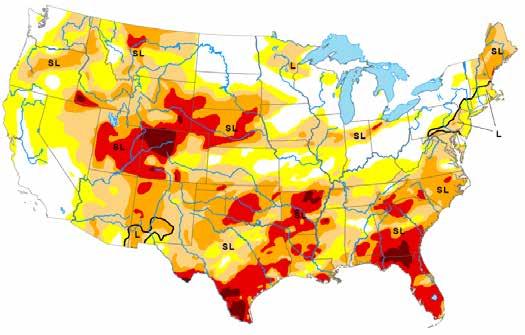
Hopefully by the time you read this article, the rain will have come, and we will be swimming in a sea of forage. Unfortunately, at this time we are dry! It has been an exceptionally dry winter and spring, nice for winter feeding but not good for spring grass. Currently, about 90% of the state is abnormally dry or in a moderate to severe drought (Figure 1).
I observed my first tall fescue seed head this week and there was not a lot of biomass accompanying it. If dry conditions continue, first harvest hay yields could be significantly reduced. The issue is that approximately 50% of the total seasonal yield in cool-season grasses come from the first harvest. As we move into late spring and early summer, coolseason grass growth becomes temperature limited. So even with adequate water, coolseason grass growth is reduced during the summer months.
Options for Emergency Pasture and Hay
Since we are quickly transitioning from spring to summer, our options for emergency forage should focus on warm-season species. Unlike cool-season species, warm-season grasses and legumes have evolved to efficiently carry out photosynthesis at higher temperatures. In fact, warm-season grasses do not reach optimum photosynthesis until a leaf blade temperature of approximately 90 F. In addition, warm-season grasses are much more efficient at utilizing limited water resources during the summer months. They will produce about twice as much dry matter per unit of water used as a cool-season grass. In the remainder of this article, I will outline some of the options for Kentucky and other transition zone states.
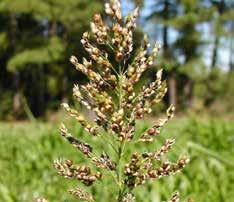
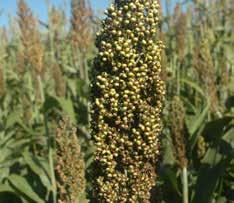
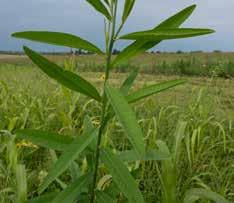
Sudangrass. Sudangrass is a rapidly growing annual grass of the sorghum
Figure 1. As of April 7, approximately 90% of Kentucky is experiencing abnormally dry conditions or moderate and severe drought (National Drought Mitigation Center, University of Nebraska-Lincoln). The Drought Monitor focuses on broad-scale conditions. Local conditions may vary. For more information on the Drought Monitor, go to droughtmonitor.unl.edu/ About.aspx
family. It is medium yielding and well suited for grazing (Figure 2). Sudangrass regrows quickly after harvest and can be grazed several times during summer and early fall. This grass has finer stems than most other summer annuals, making it well suited for hay production. For more information, see AGR-234: Sudangrass and Sorghum-Sudangrass Hybrids.
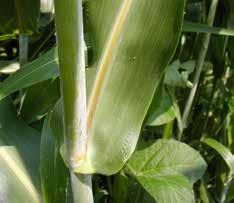
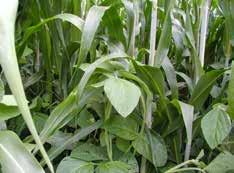
Sorghum-sudangrass. Sorghumsudangrass hybrids are developed by crossing sorghum with true sudangrass (Figure 3). The result is a tall growing annual grass that resembles sudangrass, but has coarser stems, taller growth habit and higher yields. Like sudangrass, hybrids will regrow after grazing if growth is not limited by environmental factors. The coarse stems are difficult to cure as dry hay; therefore, these grasses are best utilized for grazing, chopped silage and baleage. For more information, see AGR-234: Sudangrass and SorghumSudangrass Hybrids.
Forage Sorghum. Forage sorghum can reach 6 to 15 feet and is best harvested as silage (Figure 4). Taller varieties produce high forage yield but can lodge, making them difficult to harvest mechanically. Some varieties have been developed that
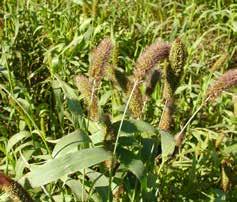
are shorter with increased resistance to lodging. Like corn, forage sorghums are harvested once per season by direct chopping. While forage sorghum yields are similar to corn, they are lower in energy. The primary advantage of utilizing sorghum for silage production is its greater drought tolerance. For more information, see AGR-230: Forage Sorghum. Foxtail millet. Foxtail millet (German millet) is fine stemmed, has no prussic acid potential and is well suited for haymaking (Figure 5). Susceptibility to sugarcane aphid is not known. It is the lowest yielding of the summer annual grasses since it will not regrow after cutting. It is a good smother crop to be
⃣ Abnormally Dry ⃣ Moderate Drought ⃣ Severe Drought
Figure 2. Sudangrass is a sorghum species that has finer stems making it better adapted to dry hay production.
Figure 3. Sorghum-sudangrass is a cross between sudangrass and forage sorghum. It has larger stems and is best grazed for harvested as baleage.
Figure 4. Forage sorghum is normally grown in rows and chopped for silage at the soft dough stage. It is more drought tolerant than corn.
Figure 5. Foxtail millet is a one-cut summer annual grass. Its rapid growth makes it a good candidate for emergency forage.
Featured Video
Warm-Season Forage Options for Kentucky This video can be viewed by visiting the KYForages YouTube Channel. This presentation was given as part of the 2026 Master Haymaker program held on Feb. 7 in Elizabethtown.
Featured Publication
Drought Proofing Your Grazing Systems You can access it at https:// tinyurl.com/5x2jfcdy or by visiting your local extension office.
Forage Management Tips for March
• Seed warm-season annual grasses once soil temperature reaches 60 F.
• Clip, graze or make hay to prevent seedhead formation in cool-season pastures.
• Rotate cool-season pastures when residual is 3-4 inches.
• Consider temporary electric fencing to sub-divide larger pastures and exclude areas for mechanical harvesting.
• Scout pastures for summer annual weeds and control when small.
• Make plans to attend electric fencing school in Frankfort.
used before no-till seeding another crop such as fescue or alfalfa. Foxtail millet is also used as a wildlife planting to produce food and cover for doves, quail and other birds. For more information, see AGR233: Foxtail Millet.
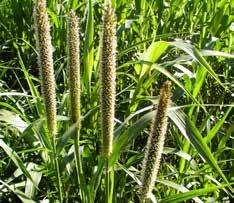
Pearl millet. Pearl millet is not related to foxtail millet and is higher yielding. It will regrow after harvest, does not have prussic acid potential and is not a host of the sugarcane aphid (Figure 6). Dwarf varieties are available which are leafier and better suited for grazing. Pearl millet is better adapted to more acid soils and soils with a lower water holding capacity than sorghum, sudangrass or sorghumsudangrass hybrids. For more information, see AGR-231: Pearl Millet.
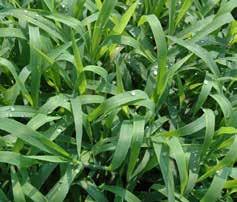
Crabgrass. Crabgrass is sometimes considered a weed, but possesses significant potential for supplying high quality summer forage (Figure 7). Crabgrass does not have prussic acid potential and is a poor host for the sugarcane aphid. Crabgrass is the general term for many Digitaria species. Commercial seed usually contains
Upcoming Events
Electric Fencing for Serious Graziers: Installation and Troubleshooting
June 11 • Kentucky State University Harold R. Benson Research and Demonstration Farm, Frankfort forages.ca.uky.edu/Events
Fencing Tip
Properly build fence brace assemblies. Regardless of the type of fence that you are putting up, the brace assembly is the heart of the fencing system. The most recommended brace assembly for our region is the H-brace. The brace post and corner post should be a CCA-treated post that is 6-8 inches in diameter and 8 feet in length and should be driven small end down. The brace rail should be a CCA-treated post that is 5 inches in diameter and 10 feet in length. The brace rail should be pinned with 0.5-inch Class III galvanized pins that are 4 and 10 inches in length. The brace wire should be two wraps of a 170,000 psi Class III galvanized high tensile wire that is tightened with a heavy duty in-line ratcheting strainer. After tensioning, the brace wires should be pulled together by loosely wrapping piece of high tensile wire on each side of the strainer and pushing the wraps toward the post. To learn how to properly build a brace, make plans to attend the Kentucky Fencing Schools that will be held in October.
Digitaria sanguinalis (large or hairy crabgrass) or D. ciliaris (southern crabgrass). A primary advantage of crabgrass is that it is well adapted to Kentucky and occurs naturally in most summer pastures, especially those that have been overgrazed. It is also highly palatable and a prolific reseeder. Planting an improved variety of crabgrass is recommended because the production of naturally occurring ecotypes varies greatly. Crabgrass is best utilized by grazing. For more information, see AGR-232: Crabgrass.
Sunn Hemp. Sunn hemp is a quick growing summer annual legume with an upright growth habit that matches well with taller growing summer annual grasses such as the sorghum species and pearl millet (Figure 8). It is most often used in cover crop mixes, but can be growth as a summer forage, usually as a component in mixtures. For more information on this species can be found in NRCS Plant Guide: Sunn Hemp.
Soybeans. Although soybeans are commonly grown as a grain crop, they can be grazed or harvested as either a hay or silage crop (Figure 9). This most commonly occurs when the grain potential of the soybean crop has been reduced by drought, hail damage or early frost. A realistic forage yield expectation for drought-stressed soybeans would be 1.5 to 2 tons of dry matter per acre. Consideration for utilizing droughtstressed soybeans for forage can be found in AGR-262: Utilizing Drought-stressed Soybeans for Forage.
Figure 6. Pearl millet is a summer annual forage that does not contain the prussic acid. It is better adapted to more acid soils than the sorghum species.
Figure 7. Crabgrass is often considered a weed but has excellent forage quality and animal performance.
Figure 9. Soybeans can be grown alone or in a mixture with other summer annuals. In most situations, drought-stressed soybeans would be harvested for forage.
Figure 8. Sunn hemp is a summer annual legume that is most commonly grown as a cover crop but it can be grown in a mixture with taller summer annuals grasses such as the sorghum species and pearl millet.
Strong Cattle Prices to Begin Spring
Josh Maples Mississippi State University Extension
Cattle markets have shown continued strength through the first three months of 2026. Spring began with the strongest calf and feeder cattle prices of any March on record. Average prices during the last week of March 2026 were up 21-38% above year-ago levels across the Southeast, depending on weight range and were more than double what they were just three years ago in March 2023.
The chart above shows average weekly prices for 500-600 lb. steers in Mississippi, Arkansas and Kentucky from January 2023 through March 2026. The chart below shows prices for 700-800 lb. steers in these states. There has been a clear uptrend in prices over these 3+ years including so far in 2026.
Feeder cattle supplies are at extremely tight levels. Beef demand has been exceptional in recent years. Both factors are supportive of cattle prices. The higher prices should eventually incentivize expansion, however there are few signs of that expansion occurring yet. When widespread expansion begins and producers begin retaining more heifers, there will be even fewer feeder cattle available in the short run until the larger calf crops show up.
Drought conditions have spread in recent weeks which could put a damper on expansion plans for some producers. Most of the southern U.S. is now in at least Abnormally Dry conditions as shown on the drought map. There are many areas in D3 and some in D4. The length and severity of these conditions will impact production decisions for some producers. The FSA Livestock Forage Disaster Program will provide support for eligible producers depending on county-level drought designation. The strong expectations for cattle prices are leading to attractive risk management opportunities for producers, including those who have calves born in recent months. Whether it be using futures, options or USDA Livestock Risk Protection (LRP), now is a great time to analyze price risk management tools.
⃣ Abnormally Dry
⃣ Moderate Drought
⃣ Severe Drought
⃣ Extreme Drought
⃣ Exceptional Drought
Drought Monitor: March 31, 2026 (Released Thursday, April 2, 2026) droughtmonitor.unl.edu
BEEF CHECKOFF COLLECTION
WHO IS RESPONSIBLE FOR REMITTING THE CHECKOFF ASSESSMENT?
BUYER
Generally the Buyer is responsible for collecting the Beef Checkoff assessment from the Seller
SELLER
50¢
QUALIFIED STATE BEEF COUNCIL
However, both the Buyer and the Seller are responsible for seeing that the Checkoff is collected and paid. or pays $2 to $1.50
Cattlemen’s Beef Board invests in national Checkoff programs, while Kentucky Beef Council invests in state programs.
If you are a producer from one of these seven states - Alaska, Connecticut, Maine, Maryland, Massachusetts, New Hampshire, and Rhode Island - you will remit directly to the Cattlemen’s Beef Board. If you have any questions regarding who is responsible for remitting the Checkoff assessment or how to remit payment, please contact your State Beef Council or the Cattlemen’s Beef Board at (303) 867-6304.
3 Exceptions to Beef Checkoff Collection: 1. Non-producer status: If a person (or company) owns cattle for 10 days or less, purchases the cattle to facilitate the transfer of ownership to a third party, and certifies that any Checkoff dollars due from the previous owner have been collected, then that person qualifies as a “Non-Producer” and the Checkoff assessment is not due when qualified cattle are resold. 2. Organic Exemption: In the 2002 Farm Bill, Congress created a process exemptiing organic producers from paying Checkoff program assessments. 3. Pre-Payment: Producers can also choose to “prepay” the Checkoff assessment when shipping cattle out of state for feeding and still retain ownership on the cattle. This allows the producer to direct half of the $1-per-head national Checkoff assessment to the beef council in the state where the cattle were raised, rather than the state where the cattle will be fed. Note: To claim any of these exemptions, the person selling the cattle must provide the proper ‘document’ to show that the Checkoff assessment is not due at the time of sale. Thus, the rule of thumb for all cattle sales is that the person paying the producer should collect either a “Dollar or a Document.”
LIVESTOCK MARKET - When cattle are sold through a livestock market or video market, the Market collects and remits the Beef Checkoff assessment.
CATTLE DEALER/ORDER BUYER - When cattle are sold to a Cattle Dealer or Order Buyer, the Dealer/Order Buyer collects and remits the Beef Checkoff assessment.
ANOTHER PRODUCER - Both the Buyer and the Seller are responsible for making sure that the Beef Checkoff assessment is collected and remitted. For clarity and consistency, we encourage the Seller to take on this compliance responsibility.
VEAL GROWER - When dairy calves are sold to a Veal Grower, both the Buyer and the Seller are responsible for making sure that the Beef Checkoff assessment is collected and remitted. For clarity and consistency, we encourage the Seller to take on this compliance responsibility.
CATTLE SHOWS AND FAIRS - When producers sell their animals at fairs or cattle shows (4H/FFA shows, Purebred cattle shows, etc.), the Organization that runs the sale collects and remits the Beef Checkoff assessment.
FEEDLOT - When cattle are sold directy to a feedlot, the Feedlot collects and remits the Beef Checkoff assessment.
PACKING PLANT - When cattle are sold to a packing plant, the Packing Plant collects and remits the Beef Checkoff assessment.
DIRECT-TO-CONSUMER BEEF SALES - When producers market their cattle as beef, the Producer is responsible for remitting the Beef Checkoff assessment.
The
Department of Agriculture (USDA) prohibits discrimination in all its programs and activities on the basis of race, color, national origin, age, disability, and where applicable, sex, marital status, familial status, parental status, religion, sexual orientation, genetic information, political beliefs, reprisal, or because all or part of an individual’s income is derived from any public assistance program. (Not all prohibited bases apply to all programs.) Persons with disabilities who require alternative means for communication of program information (Braille, large print, audiotape, etc.) should contact USDA’s TARGET Center at (202) 720-2600 (voice and TDD). To file a complaint of discrimination, write to USDA, Director, Office of Civil Rights, 1400 Independence Avenue, S.W., Washington, D.C. 20250-9410 or call (800) 795-3272 (voice)
MEMBERSHIP
REGIONAL MEETING DATES (TENTATIVE)
⃣ Region 1: October 19 (Daviess Co.)
2025-26 MEMBERSHIP APPLICATION
* MEMBERSHIP YEAR 10/1/25– 9/30/26
NAME SPOUSE NAME FARM NAME
*Payments of KCA membership dues are tax deductible for most members as an ordinary and necessary business expense. However, charitable contributions of gifts to KCA are not tax deductible for Federal Income Tax purposes. Due to new IRS regulations, $2.24 of your dues would not be deductible. Approximately $12 of your dues will go towards the monthly publication Cow Country.
PLEASE CHECK THE MEMBERSHIP(S) YOU WOULD LIKE TO JOIN:
KCA MEMBERSHIP ($30/YR) NEW RENEWAL
Membership dues are $30 unless otherwise listed below
KCA COUPLE MEMBERSHIP
To add your spouse, please add $15 to your KCA Membership
KENTUCKY JUNIOR CATTLEMEN’S ASSOCIATION ($10/YR) NEW RENEWAL
I WOULD LIKE ADDITIONAL INFORMATION ON THE YOUNG PRODUCER’S COUNCIL
TOTAL MEMBERSHIP:
$ KCA
$ KJCA
TOTAL CONTRIBUTIONS:
$ CATTLEMEN’S FOUNDATION DONATION (voluntary)
TOTAL AMOUNT ENCLOSED:
$ ALL DONATIONS TO KCF ARE TAX DEDUCTIBLE
COUNTY DUES
Dues are $30 except for the counties listed below.
Allen...............................$40
Anderson........................$25
Boyle ..............................$35
Bullitt..............................$20
Butler..............................$25
Franklin ..........................$25
Louisville Area ................$20 (Jefferson, & Spencer) Magoffin .........................$20 Menifee ..........................$25
IF YOU WOULD ALSO LIKE TO JOIN THE NATIONAL CATTLEMEN’S BEEF ASSOCIATION The NCBA is now a State Marketing Partner with the KCA. You can pay your dues to both organizations with one check, at the same time.
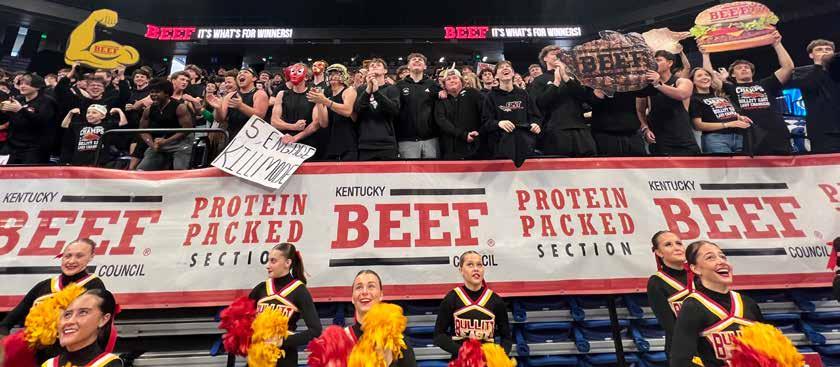
May is Beef Month in Kentucky –Let’s Celebrate Our 32,000 Beef Producers!
Kelly Baird KBC Director of Communications
May is officially Beef Month in Kentucky, and there’s no better time to honor the 32,000 hardworking beef producers who power our agriculture industry across all 120 counties. These dedicated farmers and ranchers are the backbone of Kentucky’s rural communities, ensuring that high-quality beef continues to feed families here and across the nation.
This May, we’re not only recognizing your efforts, but we’re also firing up the grill and putting beef front and center with a mouthwatering lineup of recipes that showcase the bold, satisfying flavor only beef can deliver. Whether you're planning a backyard BBQ or just looking to try something new in the kitchen, these featured recipes are sure to inspire:
Featured Beef Recipes:
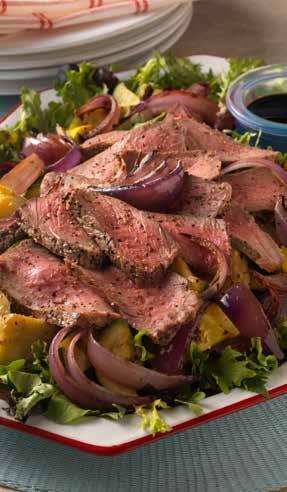
Using value-conscious cuts like skirt, flank and flat iron steak, along with ground beef, is a smart way to stretch your food dollars without sacrificing flavor. These cuts are not only budget-friendly, but they also soak up marinades beautifully, making them perfect for bold, globally inspired dishes. Whether you're grilling skirt steak for tacos, using ground beef in a
creative pasta dish or pan-searing flat iron for a fresh salad, these versatile options prove that innovation in the kitchen doesn’t have to break the bank.
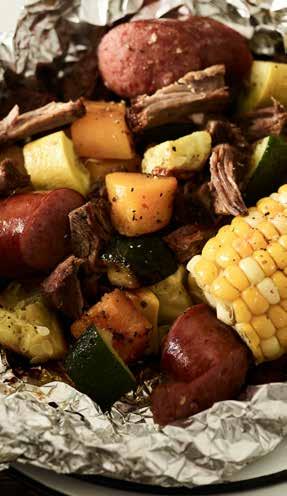
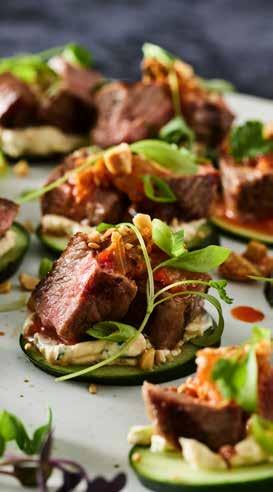
This Beef Month, we have four highlighted recipes on pages 33-34 that will satisfy everyone’s taste buds, shake up the usual menu and kick-off grilling season with serious flavor!
Join Us at These Beef Month Events:
We’re celebrating Kentucky’s beef industry all month long, and so are our counties! Below are just events we know of. Feel free to let us know how best we can support your Beef Month events this May!
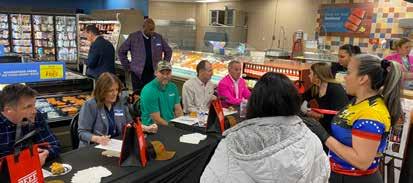
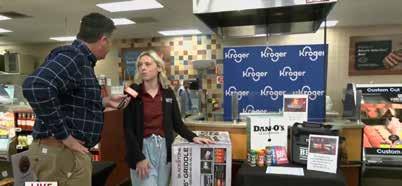
• April 30th and May 1st – Derby Burger Samplings at Kroger
• May 4th – Proclamation Signing with Commissioner of Agriculture Jonathan Shell
• May 5th – Hinton Mills Beef Day
• May 7th – Proclamation Signing with Governor Andy Beshear
• May 8th – Henry County Cattlemen’s Beef Month Cookout
• May 12th – Full Beef Month Takeover Show on Wave Listens Live
• May 12th – Madison County Beef Day
• May 18th – Shelby County Beef Day
• May 20th – Boyle County Beef Day Event
• May 26th – Show on Live from Chevy Chase, WDKY/Fox56
These events are a great way to connect with local farmers, sample delicious beef recipes and learn more about the impact of Kentucky’s cattle industry.
Got a Beef Month Event to Share?
We’d love to help spread the word! If your county or organization is planning a Beef Month celebration, let us know. Together, we can continue to support and spotlight Kentucky’s beef community.
Whether you’re grilling at home, cooking something new in the kitchen or celebrating at a local event, remember to give a big THANK YOU to our beef producers this May. Let’s raise our forks (and burgers) to Kentucky beef! 2026 Official Derby Burger
The 2026 Derby Burger Champion was crowned on March 12 during the live cook-off event held at a Louisville
Kroger store. More than 50 burger recipes were submitted from across the commonwealth and narrowed to eight finalists for the 14th annual competition. Following a public voting period, the top four finalists advanced to compete in the live cooking event. Each contestant prepared and presented their burger to a panel of judges, who evaluated entries based on ease of preparation, creativity, taste and overall consumer appeal.
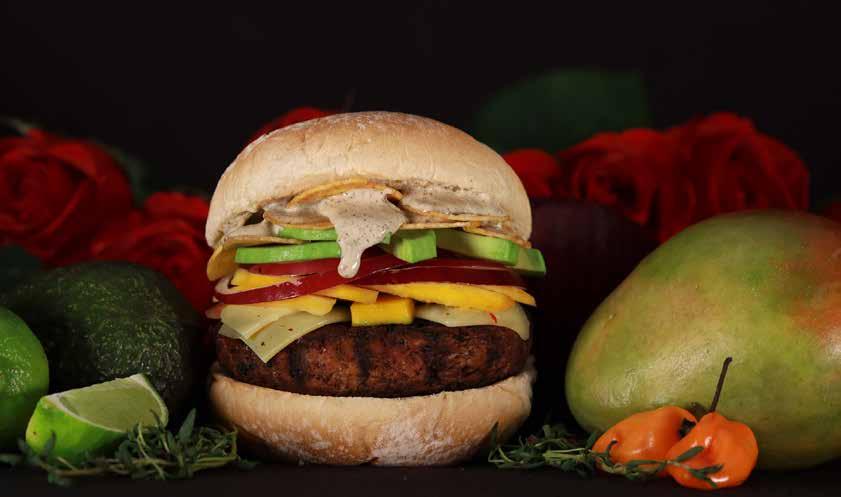
Greg Yopp of La Grange, Kentucky, was named the 2026 Derby Burger Champion with his winning creation, “The Jerk.” This bold and flavorful burger features a Kentucky Cattlemen’s Ground Beef patty seasoned with DanO’s Sweet Caribbean seasoning, topped with pepper jack cheese, fresh mango,
The Jerk
INGREDIENTS
• 1 pound Kentucky Cattlemen’s Ground Beef
• Dan-O’s Sweet Caribbean Seasoning
• 4 slices Pepper Jack Cheese, habanero jack for more heat
• Jerk Paste
• Mayonnaise
• 1 Red Onion, thinly sliced
• 1 Mango, thinly sliced
• 1 Avocado, sliced
• Plantain Chips
• 4 Dave’s Killer Bread Burger Buns
avocado, crispy plantain chips and sliced red onion− all served on a Dave’s Killer White bun. The tropical-inspired flavor profile and unique ingredient combination set it apart, earning its designation as the Official 2026 Derby Burger.
As the official Derby Burger, “The Jerk” will be showcased throughout the Derby Festival season. Yopp will join the Kentucky Beef Council for media appearances and promotional events, helping highlight Kentucky beef to consumers across the state. The winning burger will be featured at Derby Festival favorites, including BourbonVille and Taste of Derby Festival, and will be available for purchase at Fest-a-Ville on the Waterfront.
In the weeks leading up to the Derby, consumers can also sample the burger at Kroger locations, with ingredients and recipe inspiration highlighted in Kroger endcap displays across Central Kentucky stores. This retail activation is expected to drive significant visibility and increase beef sales, while giving shoppers an easy way to recreate the award-winning burger at home.
The Derby Burger Challenge continues to celebrate the creativity of Kentucky cooks while showcasing the quality and versatility of ground beef, making it a staple tradition of Derby season. What better way to celebrate beef month and kick-off grilling season?
PREPARATION
1. Divide the ground beef into equal patties.
2. Season both sides with Dan-O’s Sweet Caribbean seasoning.
3. Grill patties over medium-high heat until fully cooked (USDA recommends 160oF for Ground Beef).
4. During the last minute of cooking, top each patty with pepper jack cheese and allow it to melt.
5. Toast Bun on Grill
6. In a small bowl, blend mayonnaise and jerk seasoning until smooth.
7. Assemble. Spread jerk mayo on the bottom bun, add the grilled patty with melted cheese, top with thinly sliced red onion, mango, and avocado. Add a handful of plantain chips, then place the top bun.
8. Serve immediately and enjoy!
2026 Derby Burger Winner Greg Yopp La Grange, KY
Classic Beef Cheeseburgers
INGREDIENTS
• 1 pound Ground Beef (93% lean or leaner)
• 1-1/2 teaspoons steak seasoning blend
• 4 hamburger buns, split
• 4 slices cheese (such as Cheddar, American, Swiss, etc.)
1. Combine Ground Beef and steak seasoning in large bowl, mixing lightly but thoroughly. Lightly shape into four 1/2-inch thick patties.
2. Place patties on grid over medium, ash-covered coals. Grill, covered, 8 to 10 minutes (over medium heat on preheated gas grill, 7 to 9 minutes) until instant-read thermometer inserted horizontally into center registers 160°F, turning occasionally. About 2 minutes before burgers are done, place buns, cut sides down, on grid. Grill until lightly toasted. During last minute of grilling, top each burger with cheese slice. Cooking times are for fresh or thoroughly thawed ground beef. Ground beef should be cooked to an internal temperature of 160°F. Color is not a reliable indicator of ground beef doneness.
3. Line bottom of each bun with lettuce; top with tomato, burger and toppings, as desired. Close sandwiches.
Grilled Beef, Summer Squash and Onion Salad
INGREDIENTS
• 2 steaks beef Strip Steak Boneless
• 1/4 cup balsamic vinegar
• 1/4 cup olive oil
• 1 large clove garlic, minced
• Salt and pepper
• 2 teaspoons garlicpepper seasoning, divided
• 1 medium red onion, cut into 12 wedges
• 1 medium yellow squash, cut lengthwise in half
• 1 medium zucchini, cut lengthwise in half
• 8 cups mixed salad greens
PREPARATION
1. Bring vinegar to a boil in small saucepan. Reduce heat; simmer 3 minutes or until reduced by half. Whisk vinegar, oil, garlic, 1/4 teaspoon salt and 1/8 teaspoon pepper in small bowl until blended. Set aside.
3. Soak two 10-inch bamboo skewers in water 10 minutes; drain. Thread onion wedges onto skewers. Brush onions and cut sides of squash with oil; sprinkle with remaining teaspoon garlic-pepper seasoning.
4. Place steaks on grid over medium, ash-covered coals; arrange vegetables around steaks. Grill steaks, covered, 11 to 14 minutes (over medium heat on preheated gas grill, 11 to 15 minutes) for medium rare (145°F) to medium doneness (160°F), turning occasionally. Grill squash 8 to 12 minutes (7 to 11 minutes for gas) and onions 12 to 15 minutes (13 to 16 minutes for gas) or until tender, turning occasionally.
5. Cut squash into 3/4-inch pieces. Arrange squash and onions over greens. Carve steaks into slices; season with salt and pepper, as desired. Arrange over salad. Drizzle vinaigrette over salad; toss.
Foil
Packet Beef and Vegetable Meal
INGREDIENTS
• 6 ounces refrigerated fully cooked beef Pot Roast, shredded or fully cooked steak, cubed
• 6 ounces prepared smoked Beef Sausage
• 1 cup butternut squash, diced
• 1 cup zucchini or yellow squash, sliced into 3/4 inch pieces and halved
• 2 ears sweet corn, cut in half
• 4 teaspoons vegetable oil
• 2 teaspoons all-purpose seasoning blend, such as Old Bay
PREPARATION
1. Combine beef and vegetables in large bowl. Add oil and seasoning; toss to coat.
2. Preheat grill to medium heat (approximately 350°F).
3. Place a 12” x 12” square of heavy-duty aluminum foil down on work surface. Add 1/4 of beef and vegetable mixture to center of foil. Fold right and left edges in and roll together to close. Fold top and bottom edges in and roll to close package. Repeat with remaining mixture for a total of 4 packets.
4. Grill for 10 to 12 minutes until vegetables are tender.
Cook’s Tip: Packets can also be prepared in a 350°F oven. Bake for 10 to 12 minutes.
1. Combine cream cheese, green onion, cilantro and soy sauce in small bowl. Cover and refrigerate.
2. Combine gochujang, vinegar, honey and garlic powder in medium bowl; set aside.
3. Place steak on grid over medium, ashcovered coals. Grill, covered 11 to 14 minutes (over medium heat on preheated gas grill, covered, 11 to 15 minutes) for medium rare (145°F) to medium (160°F) doneness, turning occasionally. Remove steaks; keep warm.
4. To assemble, top each cucumber slice with 1 teaspoon cream cheese mixture. Dice steak into bite-size pieces; toss in gochujang mixture. Top cream cheese mixture with steak. Garnish with micro greens, kimchi, peanuts, sesame seeds, cilantro and scallions, if desired.
Putting More Value in Your Calves Before Sale Day
Jake Harrod Program Coordinator, Kentucky Beef Network
As I write this, I am in the midst of preparing for our spring value-added sales that we help support, which will be held in May and June. It is always very encouraging to hear from those who consign cattle to these sales and to listen to their excitement about another opportunity to get the most value out of their calves. These sales include the Kentucky Certified Hereford Influence Sale, the Profit Thru Performance Feeder Calf Sale, and the CPH-45 Sales (Certified Pre-Conditioned for Health). Everyone I know who raises cattle is always looking for more ways to maximize the value of their calves, and these value-added sales are one of those opportunities.
Reading this, you may wonder what “value-added” means. Value-added refers to how a producer markets their cattle by taking steps to increase the value of the animals they are selling. There are numerous ways to add value
to calves intended for sale. These can include basic practices such as weaning calves, castration and testing for BVD. In regard to the sales mentioned above, that is exactly what many producers are doing. These programs have created outlines of basic management practices that consignors must follow in order for their cattle to qualify for the sale. By implementing these practices, producers add value to their animals and, in turn, create the opportunity for greater returns on their investment.
The sales mentioned above utilize a combination of practices designed to increase returns. A good place to start is implementing a vaccination and deworming protocol, which may include vaccinating for IBR, BVD and blackleg. Additional management practices include castrating bull calves and weaning prior to sale. Castrating bull calves can immediately add value and is a practice that can be easily
incorporated into your operation— whether done when calves are young or during routine working. Weaning calves ahead of sale allows them time to adjust to separation from their mothers, helping maintain better health and reducing the risk of illness after sale. Additionally, being able to guarantee that heifers are open can be another effective way to increase value. Overall, implementing these “valueadded” practices can create a stronger marketing path for your cattle. When you take these extra steps, it is important to ensure that potential buyers are aware so you can capture the added value you have created. This can be done in several ways, such as including details in online listings, making note of it for announcements at the stockyards, or consigning calves to value-added sales alongside other producers who follow similar management practices.
Ben Lloyd Whitesville, KY (270) 993-1074
benlloyd0223@gmail.com
Charles Embry Cave City, KY (270) 646-5939 dale.embry@yahoo.com
Cody Burke Frankfort, KY (606) 748-4641
cody.burke2019@gmail.com
Jacob Settles Springfield, KY (859) 805-0724
jacob.settles4@yahoo.com
Samantha Stamm Wallingford, KY (606) 748-7772 sastamm14@outlook.com
Ron Shrout Winchester, KY (859) 397-5151 shroutron@aol.com
Eden Shale Update
Dan Miller Industry Coordinator, Kentucky Beef Network
Along with the normal workload at the farm, we have found time to host several groups for tours and specialized events.
On March 6, we hosted producers from the Buffalo Trace area. There were 25 people in attendance from Mason, Fleming, Bracken and Rowan counties. We toured the farm and highlighted the winter feeding infrastructure and tire water systems.
On March 20, we hosted the Kentucky Junior Cattlemen’s Association’s Cattle Working Contest. That day we had 10 teams come to the farm and compete for a chance to advance to the state contest. It was a fun day. I want to thank all the coaches who prepared and brought teams to Eden Shale to compete.
On April 1, we conducted an ag agent training. We had 30 agents from all over the state attend. The day started with a session on forestry management/ controlling invasive species with aerial application of herbicides using a drone. Sky Farm Drones was on-site demonstrating the technology. Steve Higgins with the University of Kentucky then did a session on winter feeding and tire waterers. The afternoon was spent with Chris Teutsch, UK extension forage specialist, and Katie VanValin, UK extension beef specialist, focusing on forage and grazing management.
Since the first of the year, we have hosted 107 people from 30 counties at the farm. Thank you to all of you who have come out to support Eden Shale Farm and learned about what we do for the cattle industry in Kentucky.
Weed pressure in pastures? Don’t settle for one-size-fits-all control. The Alligare Range & Pasture portfolio gives you targeted solutions based on your weeds, grazing plans, and grass tolerance.
From selective control programs to brush management and integrated fertilizer + herbicide applications, Alligare delivers dependable performance where it matters most, in your pasture. ASK FOR
Kentucky Hereford Association
Kentucky Hereford Association
Toby & Debby Dulworth 2492 S. Kirkman Road LaCenter, KY 42056 (270) 224-2993 • dogwood@brtc.net Herefords that thrive on forages. www.dogwoodherefords.com
“Breeding Polled Herefords for over 58 Years” Breeding cattle for sale at all times. 1999 Walnut Hill Rd. Lexington, KY 40515 (859) 271-9086 cell (859)533-3790
Melinda - 859-625-8660 CATTLE FOR SALE AT ALL TIMES
Tucker Stock Farms
“Registered Angus and Polled Herefords”
“Breeding Polled Herefords for over 58 Years” Breeding cattle for sale at all times. 1999 Walnut Hill Rd. Lexington, KY 40515 (859) 271-9086 cell (859)533-3790
Jimmy Gilles 5160 Lee Rudy Road Owensboro, KY 42301 (270) 929-5370 jcgilles86@gmail.com
Dennis & Emily Gibson (270) 337-2128 or (270) 402-4338 Shawn, Melissa, Devin & Dylan Gibson (270) 337-3072 or (270) 692-5304
RANDOLPH FARM
JOHNSON FARMS ANGUS
6550 Highway 330 Owenton, KY 40359
Gil, Mary, Corbin, Caroline, and Catherine Cowles 500 Rockfield Richpond Road Rockfield, KY 42274 (270) 843-9021 • Fax (270) 843-9005
HERITAGE FARM
Gil, Mary, Corbin, Caroline, and Catherine Cowles 500 Rockfield Richpond Road Rockfield, KY 42274 (270) 843-9021 • Fax (270) 843-9005 Located 7 miles west of Bowling Green, 1/2
Tom McGinnis 1024 Hinkle Lane • Shelbyville, KY (502) 633-1634, home • (502) 633-5100, work (502) 655-0164, cell
Located 7 miles west of Bowling Green, 1/2 mile off Hwy 68/80
Mary Jayne and Victoria Cannon 4619 Cherry Grove Rd Flemingsburg, KY 41041 606-748-5420 www.cannonangusfarm.com
WHITE FARM
TAMME VALLEY FARM
Angus Bulls & Females Slaughters, KY
Carter Randolph: (513) 543-4343
Nick Sarky: (513) 262-9846
patty@randolphfarmoperations.com
Keith: (270) 635-0723 Reese: (270) 635-1137
Registered Black Angus Bulls & Females Available Sold Private Treaty. Inquiries Welcome.
SMITHLAND ANGUS FARM 5202 East Hwy 80, Russell Springs, KY 42642 Charles “Bud” & Pam Smith: (270) 866-3898 Henry & Melissa Smith: (270) 866-2311
Jacob Tamme, Owner-Operator (859) 583-7134 jacob.tamme@gmail.com www.tammevalley.com & Find us on Facebook!
Return to: Shayna Gibson 1535 Fallen Timber Road New Castle, KY 40050 • Annual Dues $35
Tim amd Amy White 3664 Military Pike Lexington, KY 40513 P:(859) 223-0326 • (859) 509-5041 (859) 227-2552 F:(859) 223-0326 whitefarm4@twc.com
President: Jim Shaw
Shayna Gibson
SMITHLAND
TRIPLE D ANGUS
Nathaniel & Darla Denham
KENTUCKY ANGUS NEWS
Distinguished Service Award- Alex Tolbert
Herdsman of the Year- Corbin Cowles, Pleasant Hill Farms
Performance Breeder- Rock Ridge Farms
Family of the Year- Brian Jackson Family
Lifetime Achievement- Sammy Ayres
Queen, McKenna Jackson • Princess, Ellee Marksbury
National Junior Angus Association Bronze and Silver Awards: Blane Smith, Bronze and Silver • McKenna Jackson, Bronze and Silver • Ellee Marksbury, Bronze and Silver • Lucy Jeffries, Bronze and Silver • Josie Phillips, Bronze
2025 KY Junior Angus Roll of Victory Points (Steer): 1. Seth Chunglo 2. Owen Adams 3. Noah Adams
2025 KY Junior Angus Roll of Victory Points (Cow/Calf): 1. Adam McCauley 2.Colby Cooper
2025 KY Junior Angus Roll of Victory Points (Bull): 1. Adam McCauley 2. Blane Smith 3. Adam McCauley
2025 KY Junior Angus Roll of Victory Points (Owned Heifers): 1. Kennedy Evans 2. Katy Cooper 3. Blane Smith
2025 KY Junior Angus Roll of Victory Points (Bred and Owned Heifers): 1. Bryanna Smith 2. Jake Marksbury 3. Norah Nunn
Premier Breeder and Exhibitor: Adam McCauley Show Animal of the Year: McCauley Kingsman 1L2, exhibited by Adam McCauley
Retiring Officers: Anne Patton Schubert, Wes Womack, Eddie Burks
KY Angus Board of Directors: Front, left to right: Danny Lynn, Jeremy Hardin, Jim Shaw, Shayna Gibson, Charles Toll, Larry Jaggers Back, left to right: Adam Chunglo, Josh Jasper, Tom McGinnis, Reese Johnson, Josh Nunn and Amy White Not pictured: Leslie Jeffries and Neal Branscum
SIMMENTAL
KEVIN AND RACHEL BARRON
Crestwood, Ky
(502) 905-5851
rkbarron812@gmail.com
SWAIN SELECT SIMMENTAL 12113 Green Valley Dr. Louisville, KY 40243 swainselect.com swainselect@gmail.com facebook.com/swainselectsimmental
Fred & Phyllis: 502-599-4560 Chi & Angie: 502-287-2116
JUDY AND RONDAL DAWSON 1156 Buzzard Roost Road Shelbyville, KY 40065 502-593-5136 • jrdawson22@outlook.com
JEROD METZGER • 270-779-6260
ROCKING P LIVESTOCK 8308 Orangeburg Road Maysville, KY 41056
BRIAN & HEATHER SWAIN 3906 Pottertown Road Murray, KY 42071 • 270-293-4440
wksbswain@murray-ky.net
SIMMENTAL AND SIMANGUS BULLS FOR SALE
1939 Huntertown Road
Versailles, KY 40383
BULLS FOR SALE
Chris Allen 859-351-4486
callenuky@hotmail.com
Dr. Henry Allen 859-229-0755
Simmental calves are champions of the scale.
They reliably outperform straightbred calves in the feedyard — with better growth, better structure and fewer health problems.
They add pounds without sacrificing marbling, and they come with the IGS Feeder Profit Calculator, which factors genetics, health and management into true value.
Want low-risk, high-potential calves with earning capability?
406-587-4531 • simmental.org
BRET AND LAURA JACKSON 859.533.3718 or 859.707.7200
BRET & LAURA JACKSON Paris, Kentucky (859) 533-3718 (859) 707-7200
CD FARMS Clayton & Debbie Cash • 1214 Ottawa School Road • Brodhead, KY 40409 (606)-308-3247 • (606)-758-8994 • Gelbvieh-Balancer Bulls & Heifers For Sale by Private Treaty
BRIAN W. DYER, DVM
BEE LICK GELBVIEHS
Eddie Reynolds 277 Old Bee Lick Rd. Crab Orchard, KY 40419
606-379-2281(H) 606-305-1972(C)
Owner/Manager
GELBVIEH/BALANCERS
BRIAN W. DYER, DVM Owner/Manager GELBVIEH/BALANCERS 2050 Glasgow Road • Burkesville, KY 42717
Bulls & Females for sale
2050 Glasgow Road Burkesville, KY 42717
Brian, Lauren, Kristen Barry, Emily & Julia • (270) 864-5909
Brian, Lauren, Kristen Barry, Emily & Julia (270) 864-5909
FULL CIRCLE FARMS
PLEASANT MEADOWS FARM
Registered Gelbvieh Cattle
Gary & Pat Tilghman • Carrie & Daryl Derossett Family Lindsey & Garland Gilliam Family • 690 Lick Branch Road Glasgow, KY 42141 • 270.646.7024 pleasantmeadowsfarm@hotmail.com • Registered Gelbvieh & Angus cattle for sale
Call Carrie Derossett for more information. (270) 404-0828
HEDGESPETH LIVESTOCK GELBVIEH/BALANCER CATTLE-COMMERCIAL HEIFERS 543 Pleasant Run Church Road • Campbellsville, KY 42718 sam.hedgespeth@gmail.com • Sam-270.299.5449 Seth-270.932.1615 Dan-606.686.1679 Andrew-270.405.1990
BEE LICK GELBVIEHS
Entry and room information available at www.gelbvieh.org (Juniors/Regional Shows/AGJA Eastern Regional)
Eddie Reynolds 277 Old Bee Lick Rd. Crab Orchard, KY 40419 606-379-2281(H) 606-305-1972(C) Bulls & Females for sale
CD FARMS
BRAY’S GELBVIEH CATTLE
Clayton & Debbie Cash 1214 Ottawa School Road Brodhead, KY 40409 (606)-308-3247 • (606)-758-8994
Brian, Lauren, Kristen Barry, Emily & Julia (270) 864-5909
PLEASANT MEADOWS FARM
FULL CIRCLE FARMS
RICH HILL GELBVIEH
Registered Gelbvieh Cattle
PADON FARMS GELBVIEH BULLS & FEMALES FOR SALE 1012 Shelby Road • Salem, KY 42078 • Thad Padon (270) 836-5518
Gary & Pat Tilghman Lindsey Tilghman Jones Family Carrie & Daryl Derossett Family 690 Lick Branch Road Glasgow, KY 42141 270.646.7024 • pleasantmeadowsfarm@hotmail.
Frank McAninch 1341 Iven Godby Road Liberty, KY 42539 606-787-0120 richhillfarm@windstream.net
ROBINSON GELBVIEH Tim & Lisa Robinson • 2311 Hillspring Road Pleasureville, KY 40057 • Timrobinson0204@gmail.com • 502-643-0581
Niles & Betty K Bray 1568 Bray Ridge Road Bedford, KY 40006 (502) 255-3584
606-843-6583 cell 606-309-4662
Gelbvieh-Balancer Bulls & Heifers For Sale by Private Treaty
Black Replacement Heifers & Bulls Available Embryo
For information on joining the
CD FARMS Clayton & Debbie Cash 1214 Ottawa School Road Brodhead, KY 40409
SALERS THE BALANCED BREED
REGISTERED
ANGUS
PERFORMANCE TESTED PUREBRED ANGUS BULLS FOR SALE Call 270-202-7186 for more info or check out www.oakhollowangus.com for current availability.
POLLED HERFORD BULLS FOR SALE
19–20-month-old Polled Hereford bulls. Good selection. Low birthweight, medium frame. Free Delivery Available. JMS Polled Herefords, Knifley, KY Danny 270-566-2694 Trent 270-5662000
THE FOUNDATION SALE XII Sat. Sept. 19, 2026 1 Pm Ct. United Producers, Bowling Green, Ky Limousin Fullblood,Purebreed,Limflex. For Info. Call Stephen Haynes 270-799-8685 Or 270799-8684
BREEDING AGE HEREFORD BULLS FOR SALE AT ALL TIMES Over 60 years of Line 1 Hereford Genetics. Groups of open and bred heifers available for sale at all times. Chambliss Hereford Farms. 270-668-7126
DIAMOND J SALERS
Donald Johnson • 11660 N. Hwy 1247 • Eubank, KY 42564 606-379-1558
DIAMOND J SALERS
WILLIS FARMS
Donald Johnson • 11660 N. Hwy 1247 • Eubank, KY 42564 606-305-8747
Danny Willis • 964 Johnson Rd • Frankfort, KY 40601 • 502-803-5011 drwc21@aol.com • Purebred + Optimizer Breeding bulls & Heifers for sale.
DEL-SU FARM
WILLIS FARMS
Howard & Sue Edwards • 420 Rose Rd • Somerset, KY 42501 606-679-1675 • Jeriah Privett • 606-416-1154
Danny Willis • 964 Johnson Rd • Frankfort, KY 40601 502-803-5011 • drwc21@aol.com
KNOB LICK FARM - BULLS & HEIFERS FOR SALE
Larry Cox • Tina Cox-Lynch • Amanda Cox Gibson • 1315 Knob Lick Road • Irvine, KY 40336 • 606-723-3077 • 606-975-1716
Registered Angus Bulls • January and February Yearlings • CAIP Elibigle • Semen Checked • Birth Weights and DNA Enhanced EPDs • Calving Ease and Growth • Heifers and Pairs Available Freezer Beef Halves and Quarters Metropolis, IL, 618-638-7693 www.bremerbrothers.com
RED ANGUS, SIMANGUS, CHAROLAIS, ANGUS FOR SALE Red Hill Farms, Lafayette, TN, 615666-3098 Bart, Sarah and Ty Jones Gordon and Susan Jones, 270-991-2663 Visit us online - www.RedHillFarms.net Contact us for cattle and semen availability. Annual Production Sales: More Than a Bull Sale – 3rd Saturday in March • Maternal Monday – 3rd Monday in May Bulls & Females of Fall Sale – Last Saturday in October
BULLS FOR SALE Angus and Lim-Flex Bulls Yearlings to 2-years-old. Delivery available Call or text 270-589-7999
REGISTERED BLACK ANGUS BULLS & HEIFERS FOR SALE EPDs Available Randolph Farm, Owenton, KY (513) 262-9846 www. randolphfarmky.com
2 REGISTERED SIMMENTAL HEIFERS. DOBs 8-17-2005 and 9-19-2025. Very Gentle. $2,500 each OBO. Wayne Works, 859-750-3967 Independence, KY
HOT MAY DEALS: Stoltzfus spreaders-Fertlime- litter. American Harrow Chain Drags. Notill seeders. Manure spreaders- 35 in stock. Artex SB 200- used 100 loads. Artex 350-600-800 all in stock. John Deere 4230- nice-$25,000. Patz 420 tmr mixer $21,000. Meyer 510 F mixer-2021- nice $40,000. Farmco feeder wagons- tmr side bar wagon. Lancaster hammer mills. Silage wagons-12 in stock Rear and front unload combo. John Deere 5085 M- 4wd canopy, $26,500. John Deere 550 M Silage Baler$26,500. Call Charlie 859-608-9745
Do you know an outstanding cattleman?
Nominate them for the Kentucky Cattlemen's Association Hall of Fame.
The Kentucky Cattlemen’s Association Hall of Fame is designed to honor a member of the organization that has given time, service and talent to the betterment of the Cattlemen’s Association at the county and/or state levels.
2026 applications must be received by June 19th.
Call us at (859) 278-0899 with questions. Application available at www.kycattle. org/hall-of-fame
Costs Per Pregnancy....Ever Think About It?
Les Anderson Assistant Extension Specialist, University of Kentucky
I had a producer call last week and ask me if he could afford to run two bulls with his 20 cows. He had done this for years with great success but was
concerned about investing $15,000 into two bulls. First, I indicated that he needs only one bull for his 20 cows if he routinely obtains a breeding soundness
exam. This made me wonder how many cattle producers have stopped to figure out how much each pregnancy costs? To help producers understand the costs associated with producing a pregnant female, we have modernized a paper from Beef Reproductive Extension Specialist Sandy Johnson and co-workers at Kansas State University. Tables 1 and 2 illustrate the costs per pregnancy for bulls that range in price from $4,000 to $9,000 and bull-to-cow ratios from 1:15 to 1:50. These purchase prices seem relevant to today’s market where bulls are averaging $6,000-9,000 in advertised sales. Assumptions of the model included use of the bull for three seasons with a salvage value of $2,880 in three years (1,800-pound bull sold at $1.60 per pound). We also assumed a 10% death loss, a 7% interest rate, and an 8090% pregnancy rate. Bulls were pastured in a 2.5-acre lot for 8 months and fed hay and supplement that amounted to $476. Add in a few dollars for repairs, veterinarian service and the resulting out-of-pocket cost for bull maintenance is $625.
Of course, the investment must be accounted. As the purchase price rises, the depreciation and the interest rise. Death becomes more costly as well. Once the cost of the financial investment is calculated, these costs range from $667 per year to as high as $2,558 for a bull that costs $9,000. Adding the fixed and variable costs together the cost to own a bull each year ranges from $1,292 to $3,184 for bulls purchased at $4,000 and $9,000, respectively.
How does this translate into cost per pregnancy? Cost per pregnancy is impacted by the number of cows exposed to the bull each year and by the overall pregnancy rate at the end of the season. Costs per pregnancy for herds ranging from 15-50 cows with an 80-90% pregnancy rate are shown in Table 2.
For a 20-cow herd, costs per pregnancy ranged from $87-$199 if pregnancy rate was 80%. This cost gets cheaper by adding cows and by increasing pregnancy rate. Even for a 30-cow herd with a pregnancy rate of 90%, the cost per pregnancy for bulls ranging in purchase price from $7,000-$9,000 is $90-$118.
Table 1. Cost to own a bull
Table 2. Cost per pregnancy
For the first time in the beef industry, the use of estrus synchronization and AI (ESAI) can lower the cost per pregnancy. Producers can use a partial budget (Table 3) for enterprise analysis of ESAI. Implementation of ESAI can increase returns by:
• increasing the weaning weight of the calves (both age and genetic effects)
• increasing market price by increasing the uniformity of the calf crop
• improving cow productivity by enhancing the number of high-quality replacement heifers.
ESAI can reduce costs by:
• lowering the number of bulls needed for natural service
• reducing the labor hours at calving due to a more concentrated and predictable calving season
Alternatively, ESAI can reduce potential income because:
• fewer bulls are available to sell as cull bulls
Spring-Calving Cow Herd
• Continue supplying a high magnesium mineral until daytime temperatures are consistently above 60 degrees F.
• Improve or maintain body condition (BCS 5) of cows before breeding season starts. If necessary, increase energy intake even on pasture.
• Bulls should have a breeding soundness evaluation (BSE) well before the breeding season (at least 30 days). Contact your local veterinarian to schedule a BSE for your herd sires. They should also receive their annual booster vaccinations and be dewormed. I often get questions regarding deworming and reduced fertility in bulls. Phil Prater at Morehead State University and I examined this and found no effect of deworming on bull fertility.
• Schedule spring “turn-out” working in lateApril or early-May, i.e. at the end of calving season and before the start of breeding season. Consult with your veterinarian about vaccines and health products for your herd.
“Turn-out” working for the cow herd may include:
• Prebreeding vaccinations
• Deworming
• Replacing lost identification tags
• Sort cows into breeding groups, if using more than one bull
• Insecticide eartags (best to wait until fly population builds up)
“Turn-out” working of calves may include:
• Vaccinate for IBR-PI3, Clostridial diseases and pink eye
• Dehorn, if needed (can be done with electric dehorner and fly repellent during fly season)
• Castrate and implant male feeder calves (if not done at birth)
• Deworm
Budget Effect Source Budget Effect Source
Increased Return
• Heavier calves (earlier average birth date)
• Improved genetics (calves and replacement females)
• Uniformity of calf crop (fewer sires could be used, total breeding season could be shorter)
Decreased Cost
• Fewer bulls to purchase and maintain
• Less labor for more concentrated calving season
• More predictable calving ease
Decreased Return
• Fewer cull bulls to sell
• Insecticide eartags
• Consider breeding yearling replacement heifers one heat cycle (about 21 days) earlier than cows for “head-start” calving. Mate to known calving-ease bulls.
• Record identification of all cows and bulls in each breeding group.
• Begin breeding cows no later than mid-May, especially if they are on high endophyte fescue. Cows should be in good condition so that conception occurs prior to periods of extreme heat.
• Consider synchronizing estrus in all cows. Exposing late-calving cows and first-calf heifers to a progestin (MGA feed or CIDR device) for seven days before bull turn out increases pregnancy rates and shortens the next calving season.
• Choose best pastures for grazing during the breeding season. Select those with the best stand of clover and the lowest level of the fescue endophyte, if known. Keep these pastures vegetative by grazing or clipping. High quality pastures are important for a successful breeding season.
If using artificial insemination:
• Use an experienced inseminator.
• Make positive identification of cows and semen used. This will permit accurate records on date bred, return to heat, calving date and sire.
• Good handling facilities and gentle working of the cows are essential.
• Choose AI sires that will meet your goals and resist the temptation to get your cows bigger. Many breeds have an EPD for mature cow weight which can be used to keep cows’ weights manageable. Using sires with higher accuracy EPDs will reduce risk.
• Observe breeding pastures often to see if bulls
Increased Cost
• Planning and management for synchronization of estreus and AI
• Synchronization products and supplies
• Labor
• Improved Facilities?
are working. Records cows’ heat dates and then check 18-21 days later, for return to heat.
Fall Calving Herd
• Contact your veterinarian and pregnancy diagnose the cow herd. If a large animal veterinarian is not available in your area, consider taking blood samples for pregnancy diagnosis. Remove open cows at weaning time.
• Plan marketing program for calves. Consider various options, such as maintaining ownership and backgrounding in a grazing program, or precondition and sell in a CPH-45 feeder calf sale.
• Initiate fly control for the cows when fly population builds up.
• Calves may be weaned anytime now but you can take advantage of the spring grass by leaving them on the cow a while or weaning and grazing.
Stockers
• Keep calves on good pasture and rotate pastures rapidly during periods of lush growth. Manage to keep pastures vegetative for best performance.
• Provide mineral mix with an ionophore.
• Implant as needed.
• Control internal and external parasites.
General
• Harvest hay. Work around the weather and cut early before plants become too mature. Harvesting forage early is the key to nutritional quality. Replenish your hay supply!
• Rotate pastures as needed to keep them vegetative.
• Clip pastures to prevent seedhead formation on fescue and to control weeds.
• Seed warm-season grasses this month.
TIMELY TIPS
Table 3. Partial budget to evaluate the economic feasibility of AI
• fewer open/cull cows to sell
Also, to perform ESAI, we need to consider the costs for synchronization products and supplies, labor, technician and perhaps facilities. How much does it cost to incorporate ESAI into your cow herd? Several factors affect the cost per pregnancy of ESAI. Conception rate to the AI influences the cost per pregnancy. The pharmaceuticals cost about $30 per cow (CIDR, PG, GnRH, patch), the semen costs $20 per cow, the technician will cost $10 per cow. This totals to $60 out-of-pocket costs for the producer not counting labor. Labor costs for two workers adds $10 per cow (2 workers, 6 hours, $20/hour) adding up to $70 total per cow. If conception rate is 70%, then the cost per pregnancy is $100. This cost rises as conception rate decreases so if conception rate is only 60% then the cost per pregnancy is $116. Thus, it appears that ESAI could be cheaper, but is it?
In most systems, a bull is turned out after ESAI to service the cows that do not conceive to AI. Unfortunately, this management system does not reduce the cost per pregnancy. For example, if we have 25 cows and they are synchronized
and inseminated once and then turned out with the bull. Our cost per pregnancy on the AI is $100 for 17 cows and $306 for the eight bred by the bull. In cow herds that only need one bull, combining ESAI and natural service is even more expensive. The only viable option for reducing the cost per pregnancy for small herds is to shift to a total AI program. Two systems are available now that enable producers to easily adopt total AI programs, but it takes commitment.
However, if producers own over 50 cows and typically run multiple bulls in a single season, the use of ESAI can reduce costs per pregnancy. Producers with more than 35 cows can use ESAI and sell half of their bulls because at least half will be bred via AI. Thus, herds large enough to use multiple bulls can not only take advantage of proven bulls with high accuracy EPDs but they can also potentially save significant costs. But saving money is not the whole story.
Use of ESAI can also improve productivity and revenue. Recent research from Cliff Lamb at Texas A&M examined the short-term economic impact of a breeding system that included fixed-time insemination + natural service or just natural service in about 1,200 females
on eight different farms. The breeding seasons began and ended on the same day in both groups on all farms. A partial budget was used to compare the positive economic impact (added revenue, reduced costs) with the negative economic impact (added costs, reduced revenue). Use of ESAI improved short-term returns by about $50. One of the more interesting aspects of this work is that a positive economic impact was observed in seven of the eight farms and ranged from +$123 to $10 per cow. The lone farm that saw reduced revenue did not observe an increase in overall pregnancy rate or a shift in days to calving. These results indicate that the short-term impact (profit/loss) is dictated by the improved reproductive performance normally observed when ESAI is used. Estrus synchronization and AI are a profitable enterprise for commercial beef cow-calf operations and for the first time in history, may be cheaper than natural service, especially in larger herds. Several options exist for smaller herds to move to total AI with minimal additional labor inputs. If you have ever considered AI, now is the time to try it. It is a sound investment that can pay dividends in the years to come.
7 Oaks Erica of Ellston K101
7 Oaks Erica of Ellston K102
Rita 270
Sire: G A R Home Town Dam: Erica of Ellston T220
Sire: G A R Home Town Dam: Erica of Ellston T220
Sire: BJ Surpass Dam: Cannon Ridge Rita H10
Sire: Poss Rawhide Dam: Pine View Rita E093
Sire: Deer Valley Growth Fund Dam: Basin Chloe 7T26