

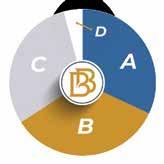
A. $2,500-$4,000 [32%]
B. $4,001-$6,000 [34%]
C. $6,001-$10,000 [30%]
D.
[4%]
Wayward Hill Farm
Chris. 859-351-4486 / Henry. 859-229-0755 / Nathan. 859-576-6738
Swain Select Simmental Chi. 502-287-2116 / Fred. 502-599-4560

A. $2,500-$4,000 [32%]
B. $4,001-$6,000 [34%]
C. $6,001-$10,000 [30%]
D.
[4%]
Wayward Hill Farm
Chris. 859-351-4486 / Henry. 859-229-0755 / Nathan. 859-576-6738
Swain Select Simmental Chi. 502-287-2116 / Fred. 502-599-4560
07 Allan Bryant President's Thoughts
08 Jonathan Shell Commissioner's Corner
10 Dave Maples Thoughts from Dave
42 Dr. Michelle Arnold BVD Virus Control Programs: Why is it So Difficult?
48 Chris Teutsch Investments that Matter…Fencing
76 Jeff Lehmkuhler How Much Barn Space Is Needed?
16 Mountain Mover
20 Design Development Advances For Livestock Innovation Center
24 Meet Allan Bryant, 2026 KCA President
28 KCA Hosts 53rd Convention
32 Beef Industry Supporters and Youth Honored at KCA Convention
34 KCA Elects 2026 Officers
36 County President's Breakfast at KCA Convention
40 2026 Kentucky Cattlemen's Association Hall of Fame
44 Contraction of the US Beef Cattle Herd Continues
46 KCA Welcomes Spring Interns
54 Cary King Elected NCBA Region 1 Vice President
58 Building for the Future Campaign Concludes Successfully

Our customers like the slower pace of our auction. We do as well. If you have never been to or watched our sale online, it is as much a business meeting as an auction. Our customers tell us which bull needs to be delivered where, and the amount to invoice them. We are just there to facilitate the process. I handle the auctioneer role myself. Bidding opens online the week before the sale, with a unique starting bid for each bull. We use the number of bids on bulls before the sale to determine our sale order. If you want a bull to sell early in the sale, bid on him online before the sale, and he will move to the front of the sale order. If you had the bid online before the sale, you have it when we start back up with the live auction. I conduct the sale at a pace that leaves no confusion about which bull we are on or who has the bid, and I give ample time to decide before a bull is announced “sold.” While I say it is a slower pace, I will sell over 60 bulls in about an hour. We have no ring men, no auction company, and don’t run the bulls through a ring. This results in significantly lower transaction costs. It doesn’t cost much over $1,000 a bull in delivery and marketing expense to run the ads, prep the bulls, mail the catalogs, and get them to you. That sounds like a lot, but I can assure you that most seedstock guys reading this are doing a double-take at that figure. I get to keep more of the money that is bid, and my customers get more bull for the money. When it comes to business, it isn’t what you bring in that matters. It is what you get to keep.
When I receive a cold call during bull sale season, and I ask what they are looking for in a bull, if they aren’t breeding heifers, they say they almost always say they need more growth. They aren’t actually looking for more growth. They are looking for more profit. Pounds are a major component of profit, but not the only one. Profit is revenue minus costs. High revenue with high costs just means you’re generating more work at breakeven. A cow is your factory. Cow size is a good indicator of her maintenance requirements and what she will eat. However, how long she stays is just as important as what she costs to feed and what kind of calf she raises. An average-producing cow that is here until she is over 10 is much more profitable than a higher producer that fizzles out at 6. She is a more efficient factory.
I was at dinner at the KCA convention in Owensboro. There was a gentleman across the table, I didn’t know, but I could
tell he was an astute commercial producer. Out of genuine curiosity and not an effort to sell him anything, I asked him what he looked for when sorting out commercial replacement heifers. I have all the data in the world to make my decisions, and I still get it wrong on heifer retention. I can pick the top 25% and the bottom 25%, but in the middle 50%, I might as well flip a coin. He told me that, for him, the main criteria are feet, hair shed, and docility. It made perfect sense. Those are reasons you can see a commercial female fall out of the herd. Those are all things I collect data on for every animal every year, as well as a host of other traits.
Reflecting the next day, I realized I can talk all day about fertility, longevity, udders, and mothering ability. My commercial customers can’t see it in their yearling heifers. Without commercial genomic testing, they don’t even know it’s there. They have to trust me that it is in there. A cow that won’t break down on her feet, is easy to handle, fits the environment, breeds when she is supposed to and for a long time, has an udder the calf can latch onto, and raises a calf to match the rest of the group can make you a lot of money. A cow that does this may not raise your biggest calf, but she will definitely raise your most profitable calf. You just need a whole field like her. After all, when it comes to business, it isn’t what you bring in that matters. It is what you get to keep. Cows like that let you keep more money in your pocket.
OFFICERS:
President
ALLAN BRYANT Eminence
President Elect
DANIEL HAYDEN Whitesville
Vice President
RYAN MILLER Campbellsville
Treasurer
KEN ADAMS Upton
Past President
RANDY WARNER Sharpsburg
KCA Program Chairman
ADAM CHUNGLO Harrodsburg
KBC Chairman
WAYNE ZOGLMANN Lewisport
KBN Manager
AMY WHITE Lexington
Beef Solutions Manager*
DANIEL HAYDEN Whitesville
*ex officio
REGION 1
Chris Milam, John Mark Brown, Dale Gold, Greg Roberson, Gary Woodall, Lincoln Pyle, Susan Zoglmann, Bill Plemmons, Kenton Howard, Britny Williams, Conner Williams
REGION 2
Bryan Manion, Joe Lowe, Allison Nissley, Rayetta Boone, Sammy Boone, David Strater, Kelly Flanders, Andy Joe Moore, Adam Thomas, AJ Mitchell, Jonathan Murley, Kenneth Green, Robert Siddens, Josh Morris, Joe Mike Moore, Amy Cecil
REGION 3
Amanda Hall, Nathan Lawson, Allen Phillips, Stacey Burkhardt, John David Yount, Lincoln Clifford, Abbey Biddle, Ben Tinsley, Crystal Harrod, Phillip Douglas, Tanya Wilson, Craig Retzlaff
REGION 4
Jodi Purvis, Brad Reynolds, Chad Anglin, Phillip Stamm, Danielle Harmon, Brandy Graves, Kelsey Cooper, Bruce Witt, Ronnie Lowe, Logan Carter, Jason Crowe, Rob Amburgey
REGION 5
Phillip Reese, Cary King, John Settles, Natalie Wesley, Brandon Kelly, Freddie Harris, Brent Williams, Anne Bays, Tommy Glasscock, Josh Wethington, Arch Sebastian, Terry Mattingly

Allan Bryant KCA President
If you were able to attend the Kentucky Cattlemen’s Convention this year, I hope you had a great time, learned something along the way and enjoyed catching up with old friends. If you weren’t able to make it, be sure to mark your calendar for next year’s convention, Jan. 21–22 in Lexington. I have always enjoyed attending KCA conventions. I always pick up new ideas, make new friends and build valuable contacts through the trade show. This year, I was especially encouraged by the number of juniors in attendance. Junior participation continues to grow each year, and that bodes well for the future of our industry.
One of my favorite sessions at this year’s convention was Dr. Nevil Speer’s presentation, “Talking Beef Demand: Stay the Course.” Dr. Speer walked us through the past 40 years of the beef industry and showed how we are more durable and resilient than ever. He highlighted how the industry has significantly improved the quality and consistency of beef and how consumers now have ready access to high-quality products.
While many are wondering how long cattle markets will remain at record levels, there are reasons for optimism. In 2025, fresh retail beef sales increased 12.4% in total dollars spent from the previous year, consumption rose 4.3% in total pounds consumed, and prices increased 7.7%, according to Beef Research. We achieved these gains while competing against lower-priced proteins such as pork and chicken. The work of the Beef Checkoff, over the past 40 years, is a primary reason beef demand continues to grow, even at record prices.
Today’s consumer is looking for greattasting protein, and beef is it. Beef is a nutrient-dense, high-quality protein that provides essential amino acids and key nutrients that fits well into a healthy diet. Approximately 65% of fresh beef cuts in the retail case meet
the standard for lean beef. Thanks to improved genetics and better feed efficiency, today’s cattle are leaner; approximately 84% of fed cattle now grade Prime or Choice.
The Beef Checkoff remains the most effective way producers can communicate directly with consumers. It allows us to tell our story—and frankly, I don’t see anyone else telling it for us, nor would I want them to. From digital marketing to social media campaigns, the Beef Checkoff has kept beef relevant for younger audiences, reaching millions with content that connects to their lifestyle. Beef Checkoff-funded research drives improvements in beef tenderness, flavor, safety, sustainability, and production efficiency, keeping beef competitive with other proteins. Through constant monitoring of consumer trends and timely, research-driven marketing, the Beef Checkoff has kept beef the protein of choice.
Through the Beef Checkoff, we’ve been able to address long-standing challenges. Dietitians now engage directly with the medical community, providing up-to-date research on the health benefits of beef and helping dispel outdated studies that have lingered far too long.
the updated Dietary Guidelines for Americans. These guidelines nearly double the recommended daily protein intake. They emphasize building a healthy diet around whole foods, limiting highly processed foods and added sugars, and prioritizing protein at every meal. Beef is specifically identified as a healthy protein option within a balanced diet.
While we had to weather a lot of storms to get to this point and we will undoubtedly continue to face headwinds, and who knows what the next crisis will bring for us, but right now the basic fundamentals of the cattle market are clearly in our favor. The producer-led Beef Checkoff is helping us maintain market share and the revised dietary guidelines will only strengthen our position moving forward.
God Bless!

Charolais Breeder Since
Charolais Breeder Since 1962
The Beef Checkoff continues to deliver value for producers. A recent study by Dr. Harry Kaiser of Cornell University found a return of $13.41 for every Beef Checkoff dollar invested. While that return doesn’t come in the form of a check to producers, it shows up through stronger demand and higher cattle prices, something we’re seeing today in the optimism surrounding feeder calf markets. Additionally, through the Checkoff, the U.S. Meat Export Federation markets beef cuts internationally that are less commonly consumed domestically, adding an average of $415 in value to every animal harvested.
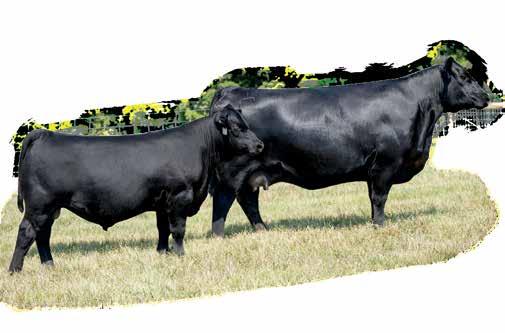
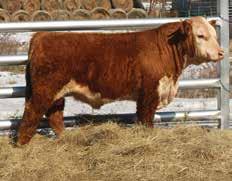
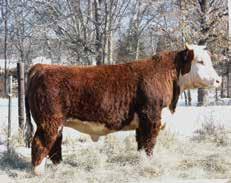
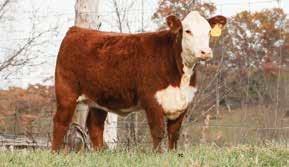
Ø Bull calves out of HCR Answer 2042 and HCR SPIRIT 4007.
Ø Bull calves out of HCR Answer HCR
Ø Bull calves out of HCR Answer 2042 and HCR SPIRIT 4007.
Ø Bred for calving ease and growth.
Ø Bred for calving ease and growth.
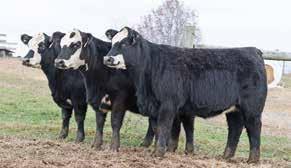
Ø Bulls for both purebred and commercial breeders.
Ø Bred for calving ease and growth.
Ø Yearlings and two-year-olds available.
Ø Bulls for both purebred and commercial Ø Yearlings and two-year-olds available.
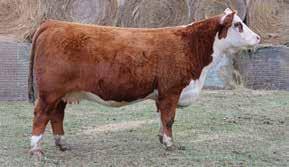
Ø Bred heifers to calve in fall available.
Ø Bulls for both purebred and commercial breeders.
Ø Bred heifers to calve in fall available.
Ø Yearlings and two-year-olds available.
Ø Bred heifers to calve in fall available.
Another positive development for both producers and consumers is
John Allison, Owner 545 Eminence Road New Castle, KY 40050 502-220-3170
John Allison, Owner 545 Eminence Road New Castle, KY 40050 502-220-3170 David Carter,
502-706-0075

Jonathan Shell Agriculture Commissioner
Kentucky farmers donated nearly $1 million to Kentucky’s Ag Tag Fund last year. This year, with your help, we want to hit that $1-million mark and beyond.
Kentucky farmers donated a recordbreaking $995,440.74 to the Ag Tag Program in 2025. It was the largest amount ever donated in a single year and topped the 2024 total by more than $60,000. This year, I’m hoping we can reach another record and create even more positive outcomes for Kentucky’s agricultural youth.
Ag Tag funds are generated through the $10 voluntary donation Kentuckians make each year when they buy or renew their farm vehicle license plates. The money is then split equally between the Kentucky Department of Agriculture (KDA), Kentucky FFA and Kentucky 4-H to support the state’s agriculture youth and other organizations and programs benefiting our farm families.
The $10 donation may seem like a small amount. But by multiplying it by the thousands of Kentuckians that give and then putting those funds in the hands of the department that focuses on the state’s agriculture community and the two leading agriculture youth development organizations, we are providing a strong backbone for Kentucky’s agricultural future.
Starting this year, we have an additional avenue for Kentucky residents to show their appreciation for agriculture and our next generation of farmers. The “Friends of Agriculture” special license plate is now available to any resident, even if you don’t qualify for a farm license plate.
The new plate was made possible after House Bill 157 passed during the 2025 legislative session. It expands the eligibility for a special agriculture license plate. Ten dollars of every purchase or renewal of the new plate will go into the Ag Tag Fund and be divided equally among KDA, Kentucky 4-H, and Kentucky FFA.
Here's how the two plates work:
• The farm license plate is for farmers’ vehicles used for farm-related activities. It’s available to any farmer engaged in the production of crops, livestock or dairy products.
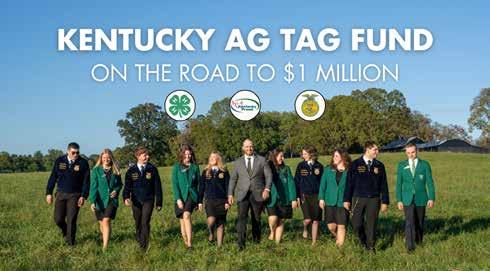
• The new Friends of Agriculture plate can be purchased by any Kentucky driver. There is no special usage attached to the plate.
Both the voluntary donation from the farm truck plate and the mandatory fee from the Friends of Agriculture plate go into the Ag Tag Fund to benefit Kentucky’s leading agricultural youth organizations.
FFA and 4-H have helped shape the lives of many children across the nation by creating experiences that make lasting impacts. 4-H and FFA are the two youth programs at the forefront of the future of Kentucky agriculture, providing direction in life for many of our influential young people. With just the purchase of a license plate, you can help create those lasting impacts.
KDA uses its share of the Ag Tag funds for various programs, such as the Ag Athlete of the Year awards, the Kentucky Leopold Conservation Award, Kentucky Women in Agriculture, the University of Kentucky Grain and Forage Center of Excellence, and the Kentucky Farm to School Stars Recognition Program, which rewards school districts for increasing food purchases directly from Kentucky farmers.
Half of the 4-H and FFA donations are returned to local councils and chapters, meaning leaders in your community can use those funds to cover the cost of 4-H and FFA camp and other leadership programs for our youth. County 4-H
councils use Ag Tag dollars to provide 4-H camp scholarships and travel for life-changing educational experiences to enable local 4-H youth to grow as leaders and engaged citizens. FFA chapters are free to use the money to meet the greatest needs in their community, such as FFA jackets for students in need or helping cover travel costs to leadership events.
That unselfish willingness to help build and prepare Kentucky’s agriculture youth are predominant features of FFA and 4-H. They are two of the leading youth organizations in Kentucky and the nation. While they work to prepare youth to take on the challenges agriculture faces, KDA works every day to promote Kentucky’s farmers, inviting each resident in the commonwealth to realize the importance agriculture plays in the present and in the future. That future is Kentucky’s agriculture youth. That’s why this year’s Ag Tag campaign theme is “Fruitful Futures.” Funding from your voluntary donations helps all three organizations fulfill our mission to sustain Kentucky agriculture for generations to come securing the future of Kentucky agriculture.
This month, as many of you head back to your county clerk’s office to renew your vehicle plates, I hope you will make the choice to contribute to Kentucky’s agricultural future. Together, we can make a lasting impact and ensure a bright future for Kentucky agriculture.


Dave Maples Executive Vice President
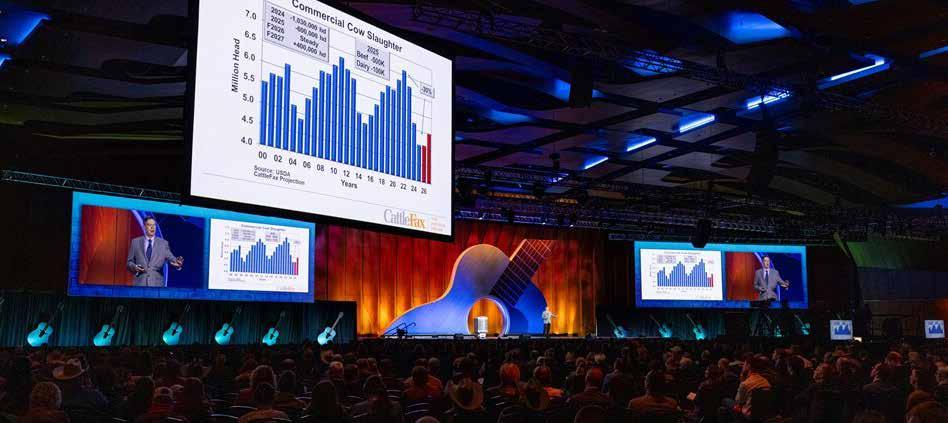
I aways enjoy attending the CattleFax update during the NCBA convention. It is just a good review of what is going on in the cattle world and information about our competitors as well as the weather, crops and what is happening in other countries that could have an impact on cattle prices in our country.
As with all the news from the various ag economists, the inventory data leads the way. The beef cow herd was down another 1%, extending the cattle cycle to at least a 12th year. A 0.9% increase in beef replacement heifers may indicate that the herd is stabilizing. However, little or no growth in the cow herd is possible in 2026 and not much in 2027.
In Randy Blach’s executive summary, he outlined a few points of interest:
• 2026 will be the smallest cyclical slaughter and production
• The cattle herd is beginning the slow expansion phase of the cycle.
• Assumption is that the Mexican border reopens to feeder cattle imports in spring 2026
• Consumers have abundant supplies of meat proteins available.
• Beef demand has grown for the last 17 years and is now at a 40year high!
• Quality grade improvements (more Choice, Upper 2/3rds Choice and Prime) is what drove demand growth!
• Cattle cycle is typically 10-11 years long. When it seems “Too Good to be True, It Probably Is.”
• Government policy can influence markets, is unpredictable and can add volatility. BE CAREFUL!
I think Randy is giving some really good advice about being careful. Over the years, I have seen some really good people get caught on the wrong side of the cattle cycle.
One statement that Randy made about carcass weights was a point of interest to me. That statement was, “In 2024, carcass weights were up 27 lbs. That was the equivalent of harvesting another million head of fed cattle. Last year, carcass weights were up 25 lbs., which is equivalent to
harvesting another 900,000 head of cattle on an annual basis. This year, they’re off and running again. I mean, we could easily end up with weights up another 10 to 15 lbs. this year.”
Another point was to be proud of what you have done as beef producers. You have developed a good product. Beef is in high demand because you have bred good cattle.
From a national perspective to a Kentucky perspective, I though Dr. Kenny Burdine’s recent article in Cattle Market Notes Weekly hit the nail right on the head with his advice for small cow-calf farming operations.
His Three Strategies to Improve Profitability for Small Cow-Calf Operations were
• Keep Overhead Costs in Check
• Outsource Strategically to Save Time and Money
• Explore Value-added Marketing Opportunities
I am not going to rewrite his article but would encourage you to seek out his article because he is giving some good advice for small as well as larger farming operations.
Ken Wininger and Carol Spiegl
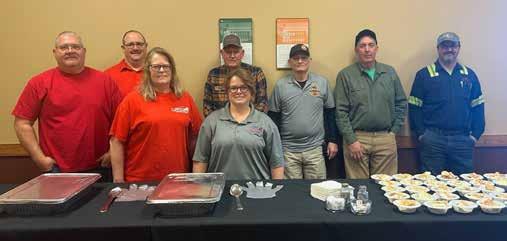
Barren County Cattlemen had the largest number of cattlemen that attended the Kentucky Cattlemen’s Convention in Owensboro on Jan. 14-16 with 35 members present.
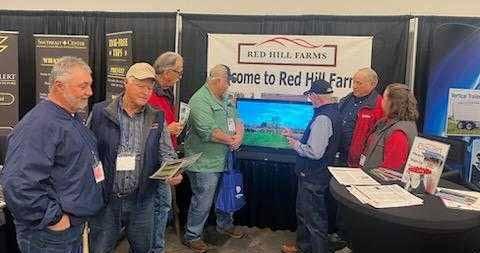
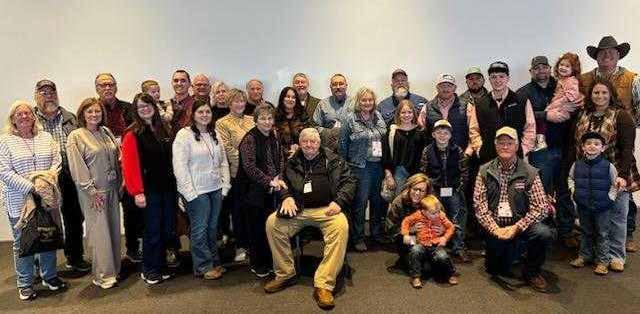
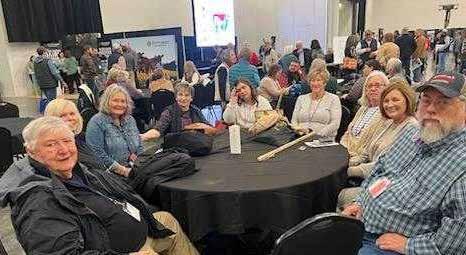
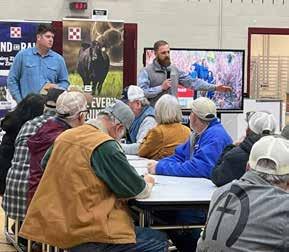
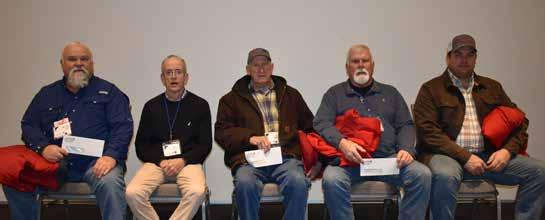
Some of the Barren County Cattlemen members and their spouses took time to sit, relax and talk at the KCA Convention.
The Barren County Cattlemen’s Association
January meeting was sponsored by Southern States Co-op, and the program featured Micah Thomas with Purina Animal Nutrition. Micah fielded many questions from members and also gave a presentation on wind and rain mineral.

Tillman Derossett from Barren County was the winner of a heifer in the Junior Division of the Heifer Initiative Awards Program.
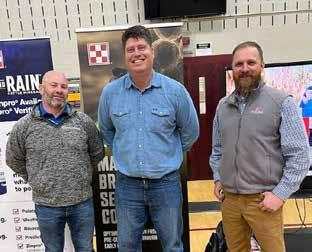
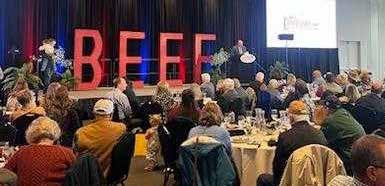
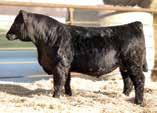
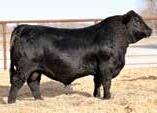
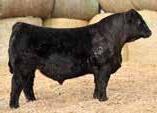
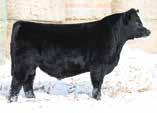
Bradon Burks, a Barren County native, is now the director of education for the Kentucky Beef Council and advisor of the Kentucky Junior Cattlemen’s Association. He is shown here discussing KJCA members’ accomplishments during the Kentucky Cattlemen’s Foundation Luncheon at the KCA Convention.

Kelsey Marcum
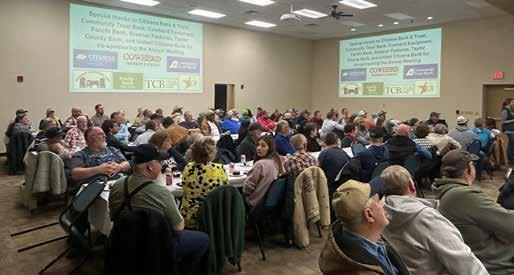
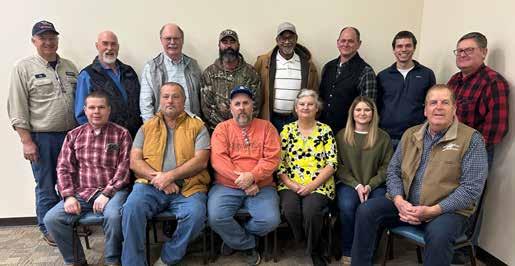
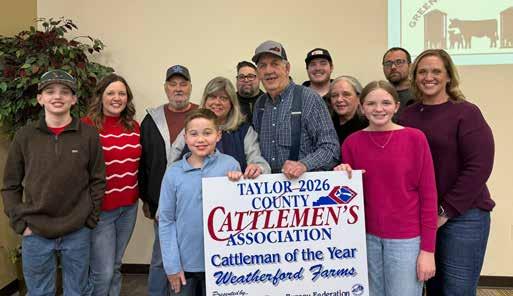
The Taylor County Cattlemen’s Association held their annual meeting on February 3rd.
During the event, the Weatherford Family was recognized as the 2026 Cattleman of the Year. The farm was purchased in 1926 by Benny and Lura Smith. Today, it is run by their grandchildren David Weatherford and Patricia Weatherford Porter with their spouses Pam Weatherford and Ronald Porter along with their own children and grandchildren. Their farm has been in operation for 100 years, and over that time they have raised beef cattle, tobacco, corn, soybeans, wheat, hay and hogs. Their farm represents four generations of family ownership dedicated to carrying on the noble tradition of farming.
Pat Hardesty, retired Taylor County agriculture and natural resources extension agent, was made an honorary director of the Taylor County Cattlemen’s board of directors in recognition and appreciation of his over 40 years of service to Taylor County and the Taylor County Cattlemen’s Association. Our association is extremely grateful for his dedication to preserving agriculture and serving our community.
Outgoing directors, James Malone, Brian Peake, Brian Penick, Nevin Price, Ernie Sharp and Chad Sullivan were recognized for their service on the board. John Wayne Kessler was recognized for his service to the association as president from 2023-2026. The nominating committee presented a slate of officers and directors to the membership. The membership voted unanimously to accept the following: President – William Wallace Evans, Vice President – Isaac Thompson, Secretary – Kelsey Marcum, Treasurer – Morgan Cox, new incoming directors – Jim Ballenger, Dale Boils, Ryan Miller, and Dr. Robert Romines.
The meeting was well attended with 175 people enjoying the ribeye meal, award presentations, door prizes and an evening of fellowship.
Submit your County Cattlemen's Association news to Katie Pratt . kpratt@kycattle.org
Submissions are due by the10th of the month prior to publication.




Katie Pratt Kentucky Cattlemen's Association
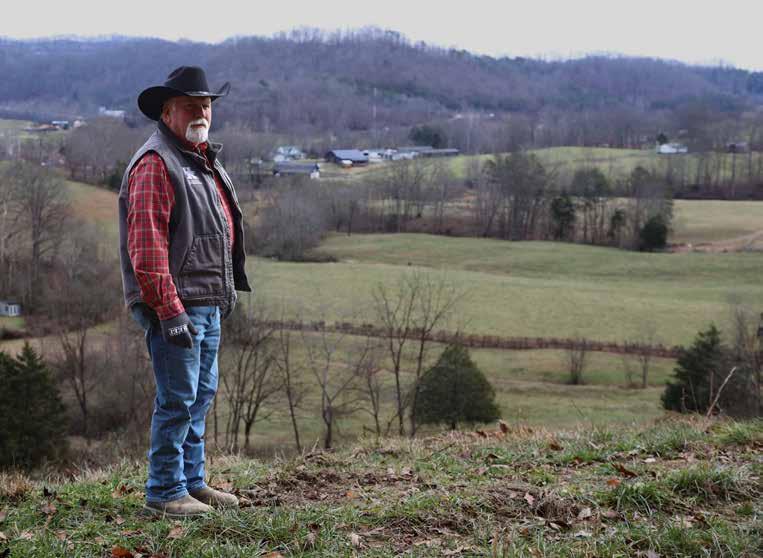
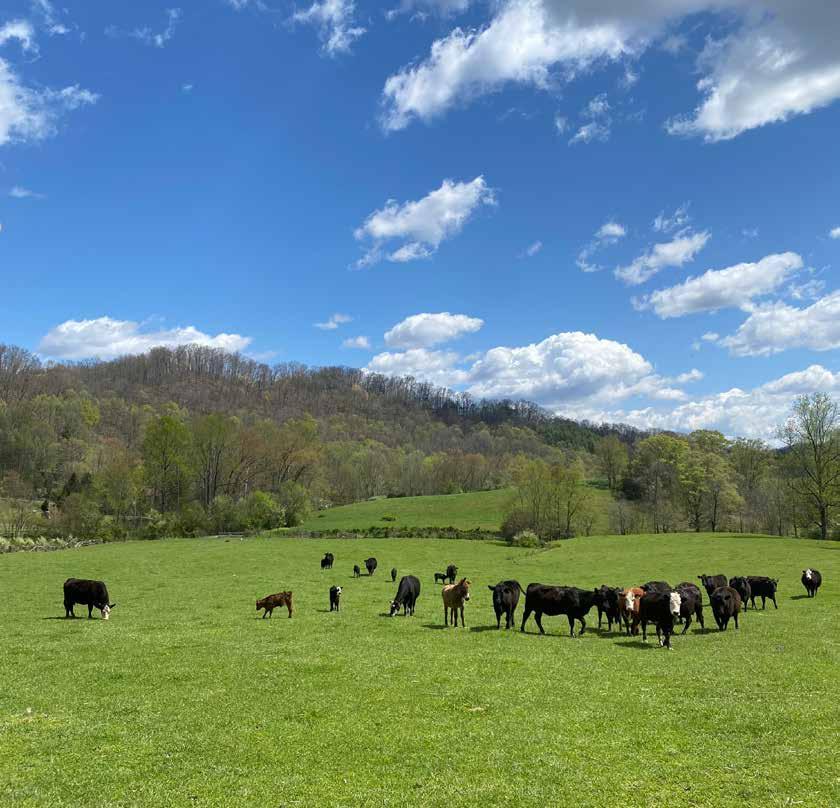
JACKSON, KY− For cattle producer Arch Sebastian, nothing compares to his Breathitt County farm.
“I worked for the Lexington Fire Department on Third Street in downtown Lexington for 23 years and commuted from here. When I was driving home and could starting see the hills, it just felt different. I love it here,” he said.
Sebastian raises around 40 head of cattle on land that’s been in his family for 70 years. The farm was originally purchased by his uncle, who raised some Hereford cattle but mainly had Rocky Mountain horses on its 240 acres. Sebastian helped him, especially as his health declined.
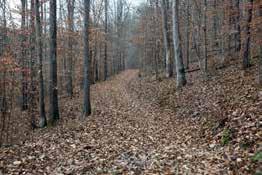
Sebastian purchased the farm from his uncle’s estate 24 years ago. The unique property just about a mile outside of Jackson is a mixture of pastures in the bottoms and hilltop
forest. Sebastian really got interested in cattle through a project with David Ditsch, a University of Kentucky forage researcher at the Robinson Center for Appalachian Resource Sustainability in nearby Quicksand. Ditsch asked Sebastian if he would be willing to let him conduct a co-habitational study with goats and cattle at his farm.
To further improve his commercial herd, Sebastian participated in the Eastern Kentucky Heifer Development Program in Perry County, which is credited with improving cattle genetics in the area. The program helped him learn about producing quality cattle.
“We strive to take care of our cattle. They need quality food, water and mineral,” he said.
Sebastian has a spring-calving herd. He keeps his own replacement heifers and sells his cull cattle and steers.
“All the animals on the farm have been born here,” he said.
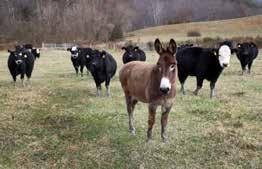
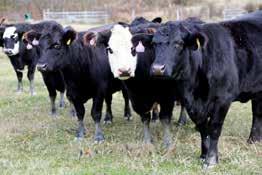
Over the years, he has made and continues to make improvements on his farm. Some of those include fencing, waterers, scales and head gates.
Sebastian has been a member of the Mountain Cattlemen’s Association, which includes 10 Eastern Kentucky counties, since its formation. He is also the association’s longtime president. He also serves as president of the Breathitt County Farm Bureau and is on the Kentucky Cattlemen’s Association board of directors. He is also a recent participant in KCA’s Leadership Program.
“He is a good person and leader,” said Reed Graham, Breathitt County’s agriculture and natural resources extension agent. “He always comes prepared and is somebody that you want on your side.”
For Sebastian, these programs gave him tools to better promote the industry. In the process, he has made lifelong friends, particularly through the KCA Leadership Program.
“We have a responsibility to promote the cattle industry,” he said. “Cattle producers are feeding people, which is absolutely necessary, and we want to provide the best protein possible.”
Community Minded
In 2022, Breathitt County along with Perry, Knott and Letcher counties experienced a devastating flood. The Sebastians were luckier than most. Since their home is situated on higher ground than surrounding pastures, it remained dry. But they still have lines halfway up their corn crib from the floodwater. It was during this time of county-wide devastation that showed Sebastian the selflessness of his fellow cattlemen across the state.
“I remember all these other associations cooked for us and gave us money and supplies when we were flooded,” Sebastian said. “I said we have to do that for other people.”
Sebastian, Graham and others in the Mountain Cattlemen’s Association began cooking for others experienc-
ing losses from natural disasters. In the past three years, they have cooked thousands of burgers for first responders, aid workers and victims and have traveled all over Eastern Kentucky and as far as North Carolina.
Most recently, the Mountain Cattlemen have partnered Appalachian Regional Healthcare to serve Kentucky Cattlemen’s Ground Beef burgers to natural disaster victims in Eastern Kentucky.
Community Minded
“He is a hardworking person who is willing to give of his time anytime you ask him,” Graham said. “He does it to help people and not for any accolades.”
Giving back for Sebastian extends not only to the area association but to his own operation. The Sebastians have converted a barn into an event space. While his wife and daughter run a wedding venue out of it, the Sebastians also offer it as a location
for community events. Over the years, they have hosted the Jackson Independent Schools prom and events for local FFA chapters, extension office and cattlemen’s association.
“I call our farm a community farm,” he said. “We want people to come here and enjoy it.”
Sebastian has two young grandchildren. Each year, he lets them pick out a calf. When that calf sells, he puts the money from the sale into their account. It’s a way to get them involved and excited about the farm while saving for their future.
Sebastian hopes by involving his grandchildren in the operation and allowing the community to come onto the farm, that someone will want to take over the reins from him someday.
“I want to take care of it and leave it to someone who values it and also wants to take care it,” he said.
by
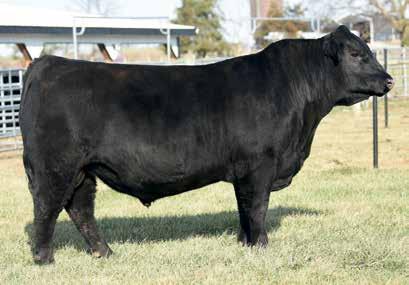
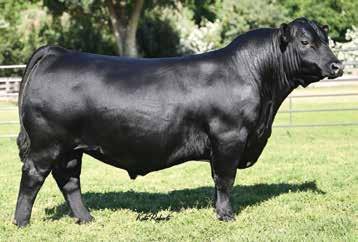
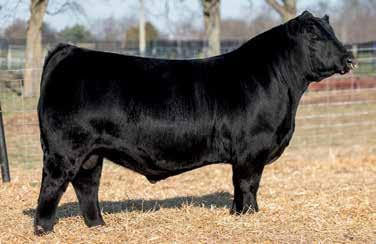
BD: 08-24-2024 • Reg. 21245790
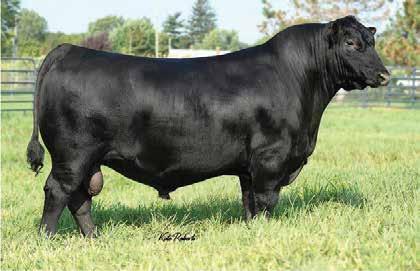
EZAR Step Up 9178 x Connealy Thunder
CED +9, BW +1.5, WW +84, YW +143, Milk +33, CW +61, Marb +.94, RE +1.16, $M +86, $W +89, $B +175, $C +313 A Maternal Brother to Myers Fair-N-Square M39!


MYERS RANGER M854 MYERS MILESTONE M844
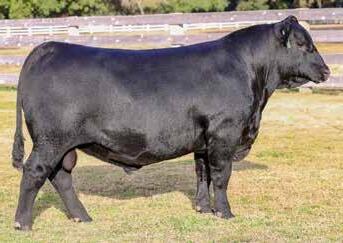
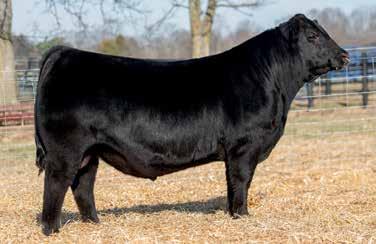
BD: 08-28-2024 • Reg. 21245792
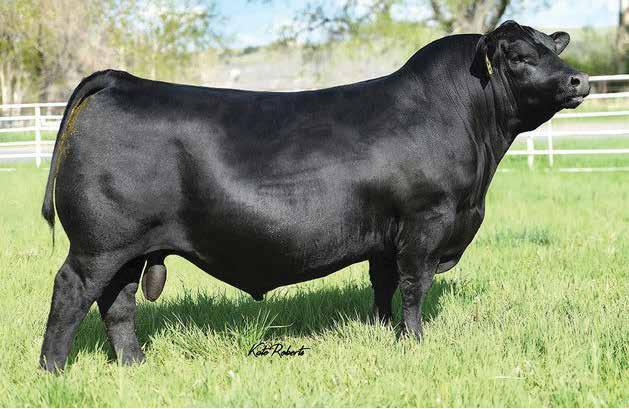
Sitz Barricade 632F x Tehama Tahoe B767
CED -2, BW +5.1, WW +99, YW +160, Milk +20, CW +76, Marb +.79, RE +.71, $M +84, $W +82, $B +169, $C +303 Explosive Power and Performance from one of the Breeds great Tahoe Daughters!
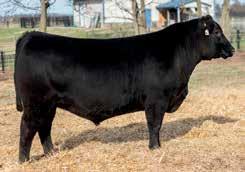
MYERS BARRIER M305
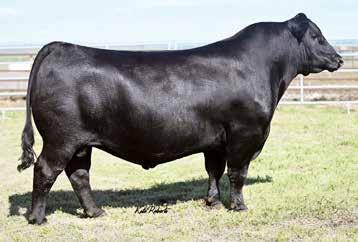
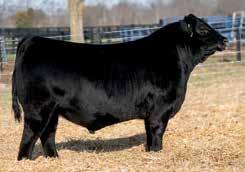
BD: 08-27-2024 • Reg. 21245791
BD: 02-01-2025 • Reg. 21341796
Boyd Bedrock x Tehama Tahoe B767
CED +10, BW -.7, WW +87, YW +151, Milk +29, CW +77, Marb +1.18, RE +.99, $M +104, $W +97, $B +202, $C +366 Calving Ease with Superior Growth and Elite $M and $C Values!
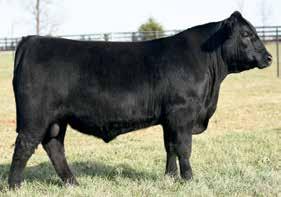
MYERS ETF PLANTATION M265
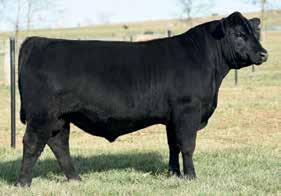
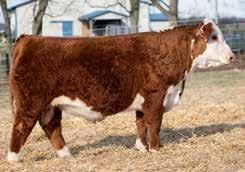
BD: 01-03-2025 • Reg. 21470217 Boyd Bedrock x Yon Chattooga E46
CED +8, BW +1.5, WW +90, YW +159, Milk +29, CW +78, Marb +.68, RE +.94, $M +107, $W +98, $B +176, $C +335
A Maternal Brother to Discipline with Incredible Figures!
Stellpflug Hoffman RiseAbove x Connealy Thunder CED +5, BW +.9, WW +89, YW +142, Milk +27, CW +76, Marb +.58, RE +.91, $M +96, $W +96, $B +176, $C +324 A maternal brother to Myers Fair-N-Square M39 with a super $M/$C Combination!
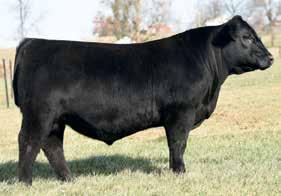
BD: 12-14-2024 • Reg. 21267800
Boyd Bedrock x Sitz Stellar 726D CED -1, BW +3.2, WW +98, YW +167, Milk +20, CW +78, Marb +.69, RE +.50, $M +88, $W +89, $B +163, $C +299 Curve-Bending Growth Values with Superior Foot Quality!






Nikki Whitaker Kentucky Cattlemen's Association
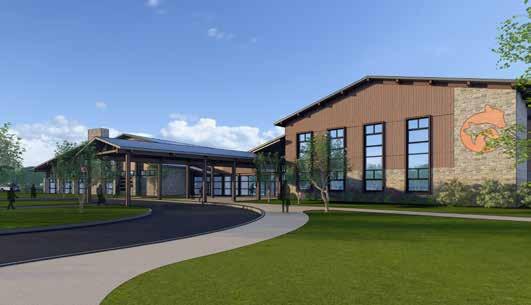
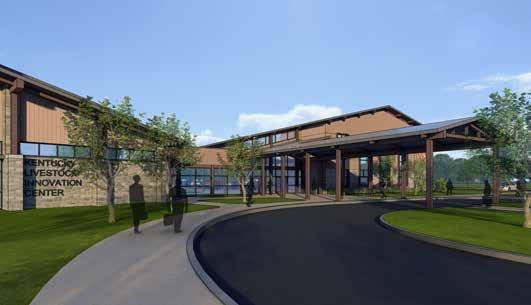
Members attending the KCA Convention and Trade Show got their first look at exterior renderings for the Kentucky Livestock Innovation Center, marking a major milestone in a multi-year effort to bring the facility to life.
“It was an exciting day to see the unveiling of the new Livestock Innovation Center building design to our members,” said Don Pemberton, Christian County KCA member and Construction Oversight Committee member. “The new Center will be fundamental to the future growth,
direction and development of livestock and agriculture industries in the state of Kentucky.”
That sense of excitement and anticipation was shared across the trade show as members stopped to study the renderings and reflect on the project’s long journey from concept to design. Many remarked on what the facility will mean for Kentucky’s livestock industry and expressed eagerness to see it realized. Nearly every conversation ended with the same question: “When will it be completed?”
“This has been a long time coming,” said Grayson County member J.H. Manion, who has been part of the Association through many stages of its growth. He reflected on how far the organization has come since the early days, noting the enthusiasm around what this next chapter will mean for future generations. “It’s exciting to think about what’s ahead.”
Supported by a $22 million investment from the Kentucky General Assembly and developed through stakeholder involvement, the Livestock Innovation Center reflects a long-term commitment to strengthening Kentucky’s livestock industry. Over the past year, the Construction Oversight Committee, along with Branscum Construction and architect/engineer Sherman Carter Barnhart, worked through the detailed decisions needed to move the project from concept toward construction. The final floor plan and exterior renderings were formally approved by the sevenmember Committee in December.
A complimentary feature of the building’s design is its intentional connection to the surrounding landscape at the University of Kentucky C. Oran Little Research Center in Woodford County. Glass elements throughout the building will provide visitors with views of the working farm, reinforcing the Center’s agricultural setting and allowing the land itself to serve as an extension of the educational experience.
The 15-acre site was made possible through a public-private partnership between the Kentucky Cattlemen’s Foundation and the University of Kentucky, placing the Center within one of the Commonwealth’s most productive and scenic agricultural settings. With design development complete and approvals in place, the project now moves into final preparation for construction, expected to begin this Spring, with a projected completion in Fall 2027. More information and updates are available at livestockinnovationcenter.org.

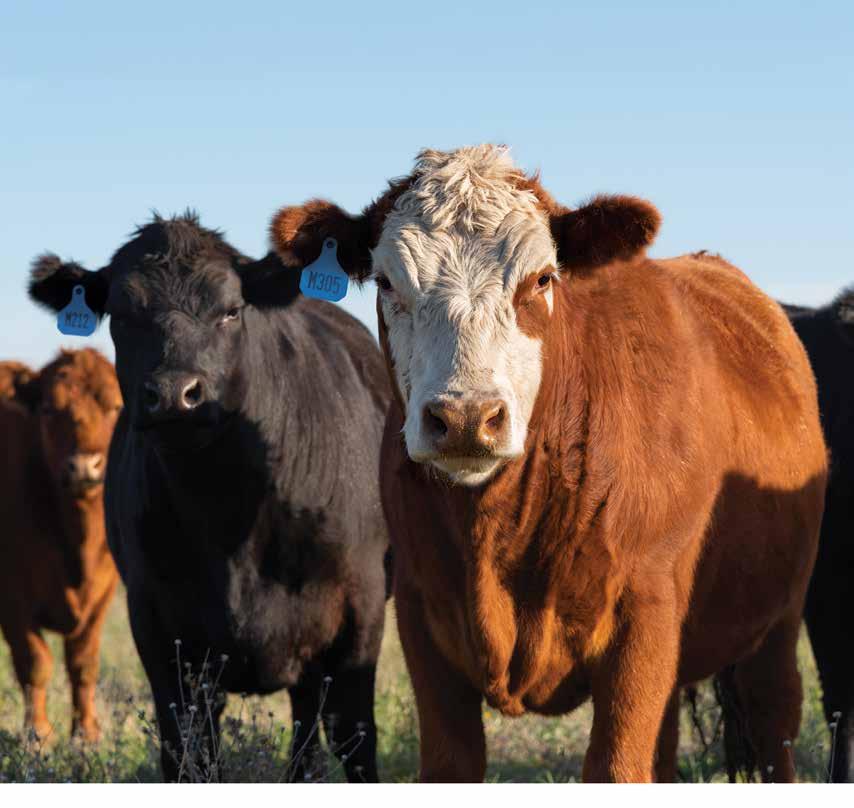

PROUDLY BUILT WITH PRECISION IN THE USA. At Y-TEX ® , we take pride in American craftsmanship. Our All-American ® two-piece and Y-Tags ® one-piece ear tags are made in the USA from advanced thermoplastic polyurethane for exceptional durability, flexibility and retention. Featuring 100% PureLaser™ imprinting with readability guaranteed for the life of the animal, our tags deliver American-made quality ranchers trust.
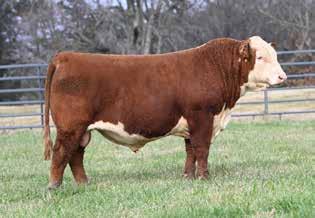
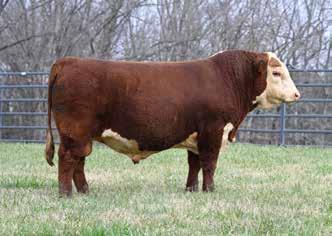
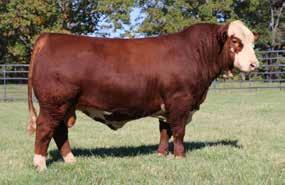
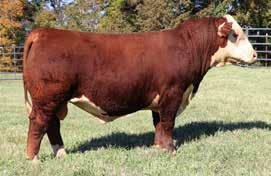
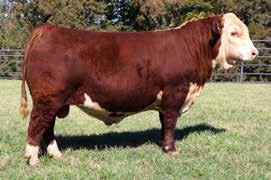
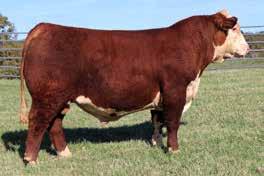



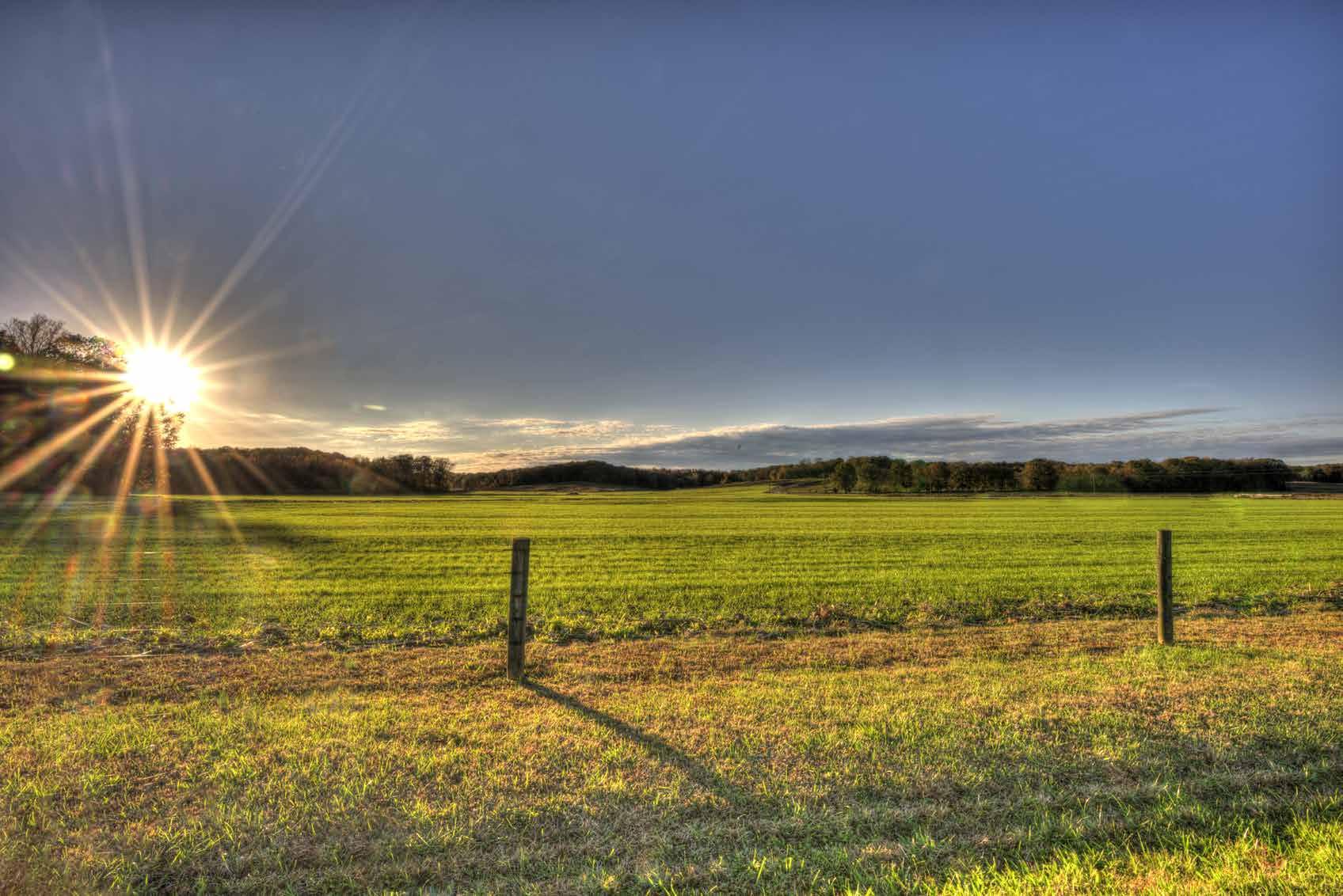
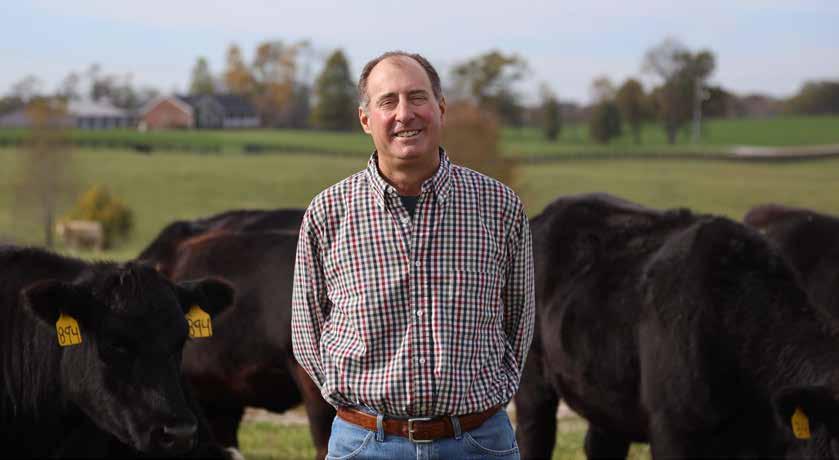
Katie Pratt Kentucky Cattlemen’s Association
EMINENCE, KY− As the newly elected president of the Kentucky Cattlemen’s Association, Allan Bryant hopes to spend the next year being a proactive voice for the state’s cattlemen and rural Kentucky.
“Cattle producers, especially cow-calf operators, have not always been fairly portrayed in the media. I hope to have a positive effect on the cattle industry by promoting, protecting and defending cow-calf producers and the cattle industry,” he said. “I’m also a huge proponent of rural Kentucky. I want farm families to have the same opportunities that Mary and I had to raise our daughters on the farm.”
Allan and his wife Mary live in Eminence in Henry County on land they purchased with his brother Ralph and sister-in-law Terina in 1990. The Bryants have a commercial cow-calf operation of around 200 mama cows. Three-fourths of their herd are spring calving while the remainder calve in the fall. They sell their calves through value-added feeder sales. They also produce hay and haylage on their farm. Prior to 2020, the Bryants also raised around 45 acres of tobacco.
For many years, Allan farmed during the evenings and on weekends, many times until “dark thirty,” while working a full-time job with the Kentucky Department of Environmental Protection. He retired from that position after 22 years in 2011. Since then, he has been a full-time farmer.
Bryant has always had a desire for knowledge. He and Mary met while students at the University of Kentucky, where both earned degrees in agricultural economics in 1988. Allan also completed a second bachelor’s degree in business administration with an emphasis in marketing.
Bryant continues to learn through extension programs, including those funded by the Kentucky Beef Network. His strong support of producer education programs led him to serve as chair of the Kentucky Beef Network from 2022-2025.
“Allan has always gone to extension meetings,” Mary Bryant said. “He always learns something new. He’s also never hesitant to call up his extension agent or UK extension specialists and ask questions to improve the farm.”
In fact, it was his quest for more knowledge about the cattle industry that led him to the Kentucky Cattlemen’s Association. He was a
founding board member of the Henry County Cattlemen’s Association in 2001 and president in 2004.
“I got accepted into the KCA leadership program in 2016, and that was a great program that taught me more about leadership and the industry,” he said.
Bryant was elected a KCA regional director in 2019, Region 3 vice president in 2021 and KCA vice president in 2024.
“I have always had four guiding principles in my life: faith, family, friends and doing something meaningful,” he said. “I feel like my leadership roles with the cattlemen’s association fits right in with those.”
Conservation is a big part of the Bryants’ farming operation, and they have implemented a lot of conservation practices on the farm with assistance from the Natural Resource Conservation Service and through state cost-share opportunities. These practices include a multiuse feeding pad, rotational grazing, fenced off ponds and creeks, and the instillation of water fountains, walkways and pond filter strips.
He is also a big supporter of Eden Shale Farm, which is run by the Ken-
tucky Beef Network and showcases many different conservation practices that have been implemented by UK’s Steve Higgins.
“Eden Shale is a great place that has a lot of good conservation ideas at various price points. Producers can tour that farm and find things that could work for their budget and operation,” he said. “With its steep sloping terrain, if a practice can be successfully implemented at Eden Shale, it can be done anywhere.”
Bryant is past president of the Kentucky Association of Conservation Districts after serving as president for three years. He is also the current chairman of the Henry County Conservation District and has served on the district board since 1994.
Bryant said he got his passion for conservation from his parents, who both came from humble beginnings. His father was born to tenant farmers in 1930, and his mother lost her father when she was 5 years old.
“I learned early on that you don’t waste anything, and that goes for money as well as the land and resources that you have,” he said. “While my dad didn’t set out to teach me about conservation, I learned it through the life that he lived.”
The Bryants consider themselves lucky to have raised their daughters Sarah and Emily in rural Kentucky. Emily is a CPA and married to Tyler Ault. Emily and Tyler are parents to the Bryants’ first grandchild, Lydia Louise. Sarah is married to Chris Charles and works for the Kentucky Department of Agriculture. Allan and Mary are also longtime members of the New Castle Methodist Church. He hopes to help promote and preserve rural life and values during his presidency, especially so Kentucky’s 32,000 beef producers can continue to farm and raise the next generation of producers.
“It’s a blessing to be here for my family and to have raised my daughters on this land,” Allan Bryant said. “Farm kids learn early on to be self-reliant, develop a work ethic and learn about the market place. There’s really nothing else that compares to the education they get on the farm."
Smithland Angus Farm Since 1940
30th Annual Smithland Angus Bull & Female Sale
Friday, March 13, 2026 • 6:30pm cst
Russell Springs Stockyard - Russell Springs, KY
55 Performance Angus Bulls (40 Fall Yearlings, 15 Spring Yearlings)
10 Fall Bred Heifers 15 Open Heifers
Sons of Connealy Craftsman, Deer Valley Growth Fund, Connealy Commerce, Architect, Basin Jameson, SITZ Incentive, BAR Dynamic, HPCA Veracious, & GAR Ashland 10G

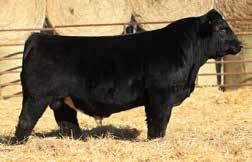
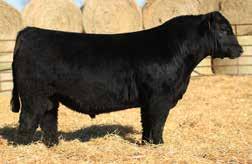
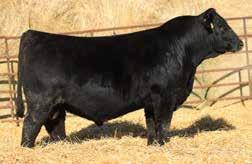
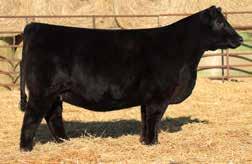

OWENSBORO, KY− Kentucky Cattlemen’s Association recently held its 53rd annual convention and trade show at the Owensboro Convention Center. The two-day event featured new attractions and traditional convention favorites.
Registration - Thursday began with registration. About 330 people pre-registered this year, which helped lead to a smoother registration process.
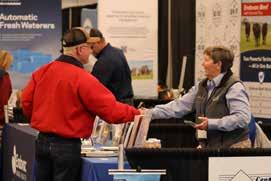
Trade Show - This year’s trade show featured 68 industry partners who shared their products with KCA members. Thanks to all the industry representatives who participated in this year’s trade show, and KCA looks forward to seeing you again at the 2027 KCA Convention and Trade Show in Lexington. This year’s Trade Show featured exclusive Trade Show hours, which gave cattle producers more time to meet and network with vendors. More information about the trade show is available on page XX. Beef Efficiency Conference - The Beef Efficiency Conference, hosted by the Kentucky Beef Network and the
Katie Pratt Kentucky Cattlemen’s Association
University of Kentucky Cooperative Extension Service centered on connecting management and genetics for improvements. The event, sponsored by the Drs. Gordon and Susan Jones Lectureship, included presentations from Dale Woerner, Cargill Endowed Professor of animal and food sciences at Texas Tech University; Trey Patterson, president and CEO of Padlock Ranch Co.; and Daniel Shike, professor at the University of Illinois Urbana-Champaign. Woerner discussed red meat yield, and Patterson discussed strategic decision making in an evolving industry. Shike presented on what makes an ideal cow. Producers then had the opportunity to ask the presenters questions.
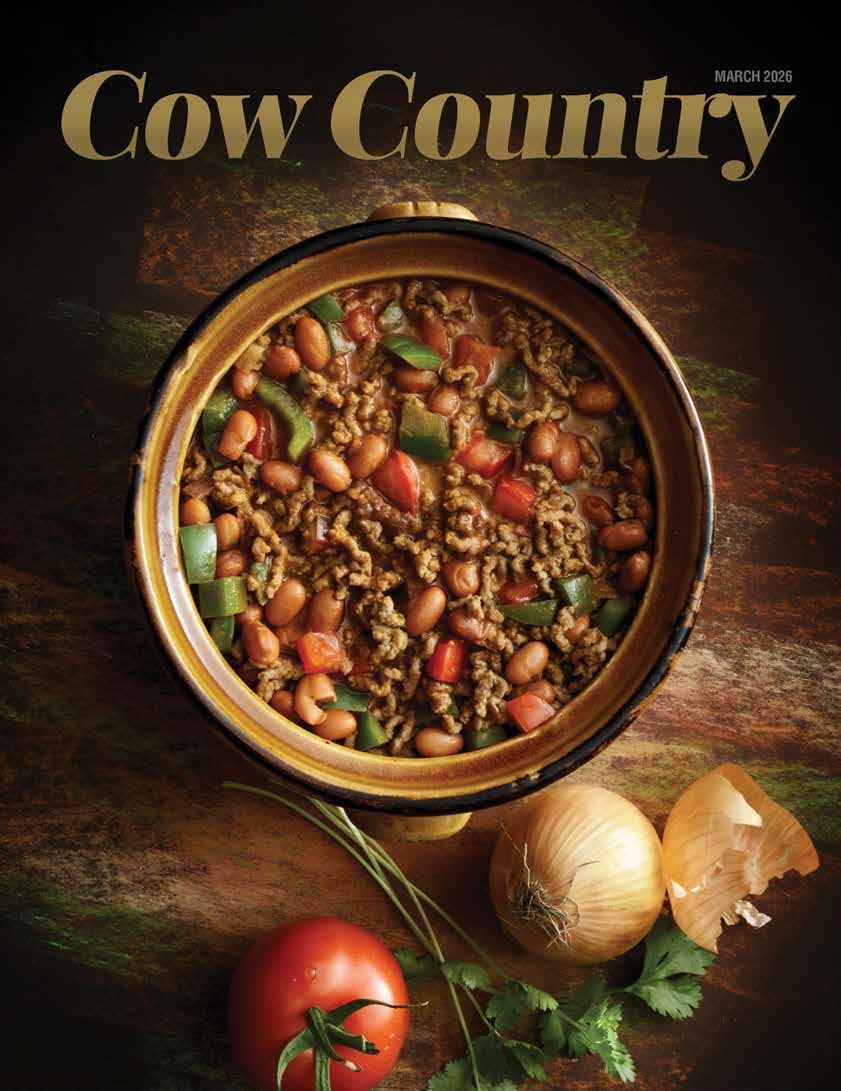
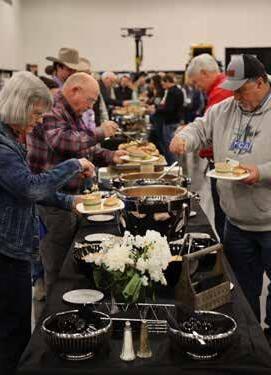
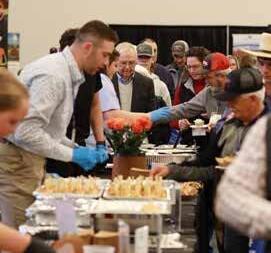
Trade Show Welcome LunchAttendees to Thursday’s Trade Show enjoyed chili and roast beef sliders and visited trade show exhibits.
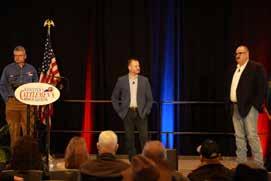
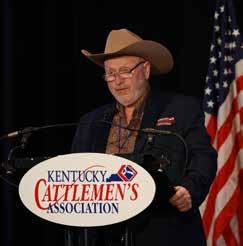
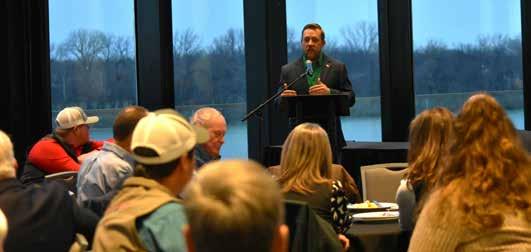
Opening Session- KCA Opening Session was packed with information and presenters. Randy Warner, 2025 KCA president, kicked off the session with a welcome and opening remarks. Ryan Miller, KBC chairman
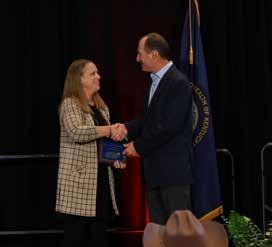
provided a Kentucky Beef Council update. Amelia Carter, KBC director of industry relations, recognized the graduates from the first Beef Advance program, which is designed to give producers the tools they need to become better industry leaders and advocates. Carey Brown, KCA COO, then presented Miller with the KBC Service Award. Miller has served three years as KBC chairman and two terms on the Cattlemen’s Beef Board, which oversees federal Checkoff dollars. Warren Beeler, deputy Kentucky Commissioner of Agriculture, discussed the importance of farm transitions, innovation in agriculture, youth involvement and development and not getting complacent with the cattle markets. Dr. David Williams, Oversight Committee chair, provided an update on the Kentucky Livestock Innovation Center and gave attendees a glimpse at the building’s new renderings. John Hinners, senior vice president of industry relations for the U.S. Meat Export Federation, was one of the keynote speakers. He discussed how USMEF uses Checkoff dollars to work on behalf of U.S. producers
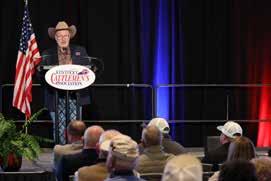
and find international markets for beef cuts that are often underutilized in the United States. Nevil Speer, industry consultant with Turkey Foot Consulting, was the second featured speaker. He discussed the difference between consumption and demand. Allan Bryant, Kentucky Beef Network chairman, provided a KBN update. Then the Beef Quality and Care Assurance Awards were announced. Blue Grass Stockyards received the Marketer Excellence Award for hosting chute-side trainings and educational meetings in partnership with KBN and educating their producers are animal welfare and continuous improvement. The BQCA Educator Excellence Award went to Lindsey Davie, teacher at Henry County High School. Davie teaches BQCA principles to her students and was the coach of Kentucky’s Cattle Working champion team that placed second in the nation. Becky Thompson, KBN director, presented Bryant with the KBN Service Award for his many years as chairman.
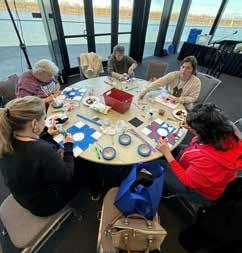
Women’s Program- During the Women’s Program, Liz Curtis with Liz’s Barn Quilts taught participants how to design and paint a quilt block.
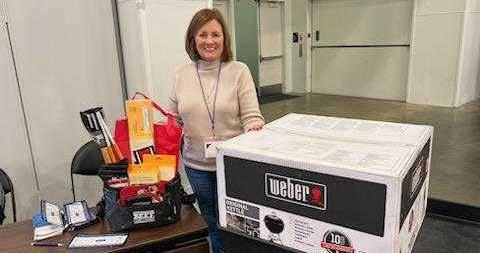
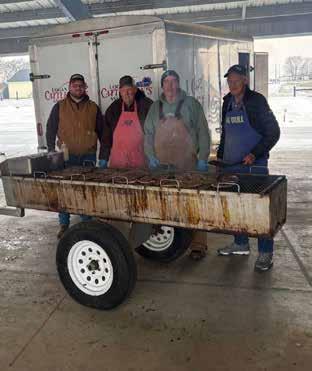
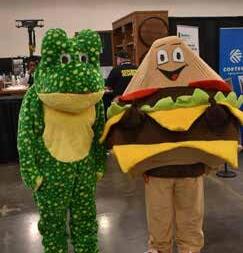
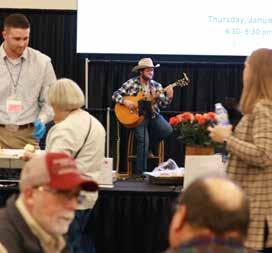
KCA Roundup Reception- Thursday concluded with the Roundup Reception. Held in the tradeshow, the evening event gave producers the opportunity to meet, network and connect with each other, KCA staff and tradeshow vendors. The reception featured the Best Burgers of Owensboro Tasting Event, as well as card games, lively discussions and music by Halek Payne. Tradeshow attendees could also complete a Bingo card by visiting tradeshow vendors for a chance to win a Weber Grill donated by Beef Solutions. Becky Bowman of Barren County was the winner of the grill.
County Presidents’ Breakfast- Friday’s slate of events began with the County Presidents’ Breakfast. Daniel Hayden, KCA president-elect and Daviess County cattleman, recalled growing up in the association and how much it shaped his future.
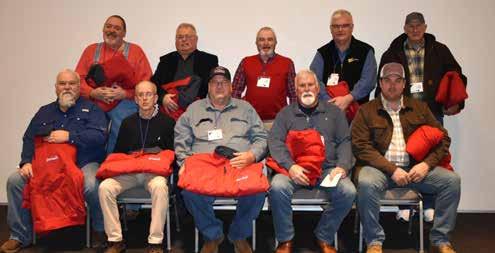
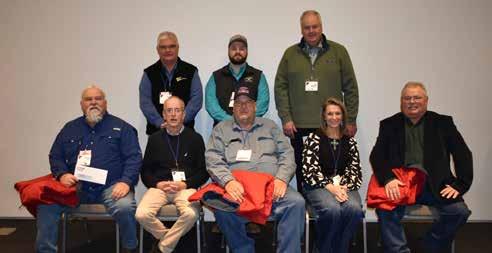
County presidents were honored for increasing their membership.
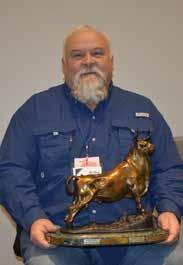
Presidents who had a 10-person membership increase received a Kentucky Cattlemen’s Association red jacket. Presidents that increased their membership by the largest percentage received a cash award for their association. Counties with the most members were also honored. Barren County President Dr. Steve Webb received the KCA bull, which is given to the county with the most members.
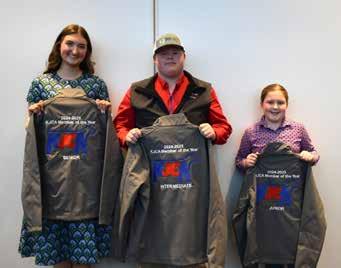
Kentucky Junior Cattlemen’s Association honored its members of the year during the breakfast. To earn this honor, junior cattlemen accumulate points throughout the year by attending and participating in various KJCA and industry functions. Recipients were selected by age groups. Recipients were Senior: Macey Thompson, Breckinridge County; Intermediate: Landon Miller, Nelson County; and Junior: Kelsey Whaley, Scott County.
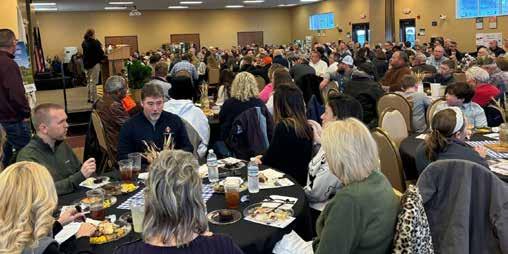
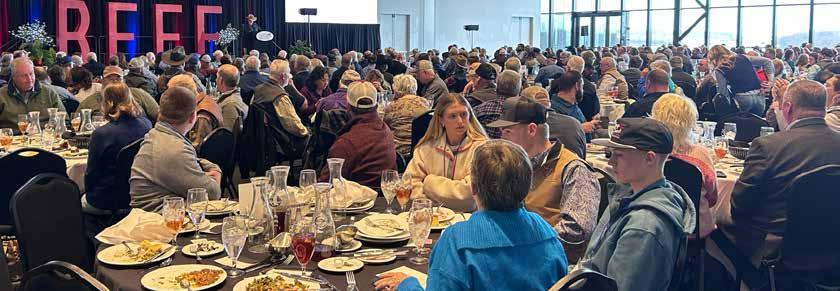
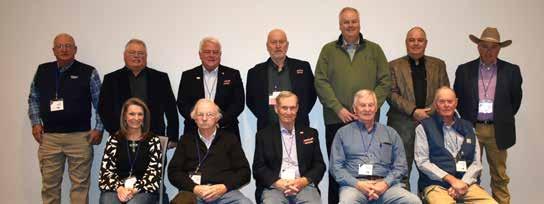
Foundation Luncheon- The Kentucky Cattlemen’s Foundation Luncheon replaced the Evening Banquet this year to allow the convention to progress in a timely manner. Like past banquets, the luncheon featured a dinner, awards and an auction. Dr. David Williams, president of the Kentucky Cattlemen’s Foundation, provided a welcome and more information about the Kentucky Livestock Innovation Center. Special guests and Leadership Development Program Class members were recognized. Platinum event sponsors Blue Grass Livestock Marketing Group and Farm Credit Mid-America were recognized with awards. All other convention sponsors also received recognition
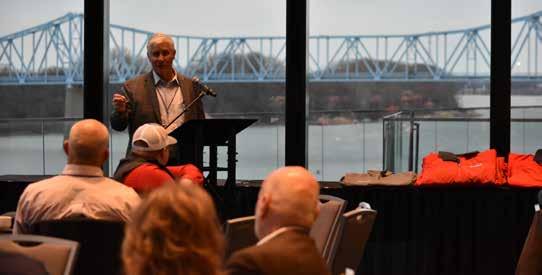
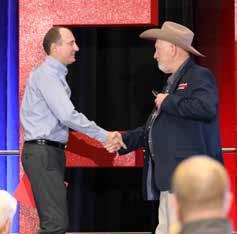
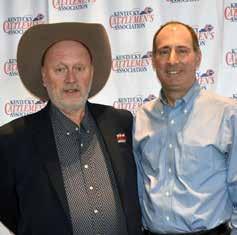
during the luncheon. For a complete list of sponsors, see page XX. During the luncheon, four deserving individuals were inducted into KCA’s Hall of Fame. Youth winners of Farm Credit Mid-America’s Heifer Initiative were honored. The KJCA provided program highlights and Macey Thompson, outgoing KJCA president, discussed what this past year and the organization meant to her. The KJCA The event concluded with a Kentucky Cattlemen’s Foundation auction which raised $XXXXX for the foundation and the Kentucky Junior Cattlemen’s Association. Among the auction items was a heifer donated by Daniel Hayden, Daviess County producer. The group that purchased the heifer agreed to give it to a KJCA member whose name was randomly drawn at the auction. The heifer went to Heather George, a KJCA member from Metcalfe County.
Kentucky-Auburn Veterinary Mentorship Program- Kentucky high school students in the Auburn University College of Veterinary Med-
icine Mentorship Program met during the convention and participated in their own slate of events. The mentorship program, which is led by Dr. Debbie Reed from Auburn University, was recognized during the closing session.
Closing Session- The Closing Business Session began with a welcome by Warner. Ken Adams, KCA secretary/ treasurer providing the association’s 2025 financial review. Dave Maples, KCA executive vice president, gave a 2025 association recap and provided an outlook for 2026. New KJCA officers were announced and recognized. Regional reports were given, and 2026 KCA officers were elected. New officers are Allan Bryant, president, Daniel Hayden, president-elect, Ryan Miller, vice president, Ken Adams, secretary/treasurer and Randy Warner, past president. Warner was honored for his service to the association and received his presidential photo and a gavel from Bryant.
Forages at KCA- Forages at KCA focused on nutrient cycling in grassland ecosystems and was hosted by the Kentucky Forage and Grasslands Council. Chris Teutsch, UK forage extension specialist, welcomed attendees. Ricardo Riberio, UK soil specialist, discussed nutrient cycling; Greg Halich, UK agricultural economist, presented on bale grazing and how it can be successful in Kentucky. Teutsch spoke on optimizing production in grassland ecosystems.
KJCA-Nearly 80 junior cattlemen who attended convention had several opportunities to network, connect and learn. Kentucky Junior Cattlemen’s Association programs were led by Bradon Burks, director of education. Attendees learned about the organization and participated in a trade show scavenger hunt. They heard about career opportunities in the industry during the Alumni Town Hall. KJCA thanks Megan Underwood, Alex Burke, Addie White and Will Banks for serving as this year’s panelists. KJCA members attended the Foundation Luncheon and then showcased their beef knowledge in a Jeopardy tournament. New KJCA officers and board members were elected and will meet soon to plan programs for the year.



Katie Pratt Kentucky Cattlemen’s Association
OWENSBORO, KY − Kentucky Cattlemen’s Association honored industry partners, educators, volunteers and youth were honored for their efforts and years of service to the association and Kentucky cattlemen during the recent annual convention. These awards were given in addition to the KCA Hall of Fame induction ceremony.
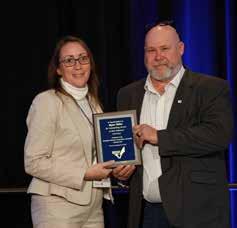
Kentucky Beef Council Service Award - Ryan Miller of Taylor County received the Kentucky Beef Council’s Service Award for being a Checkoff champion. Ryan recently completed his tenure as chair of the KBC. During this time, he worked tirelessly to keep committee meetings meaningful, informative and focused on results. He is a strong advocate for using Checkoff dollars to increase beef demand in Kentucky and across the nation.
Kentucky Beef Network Service Award - Allan Bryant of Henry County received the Kentucky Beef Network’s Service Award. Bryant served as chairman of the network for five years. Bryant was honored for his strong support of producer-focused education, Extension, conservation practices and hands-on demonstration efforts. Bryant understands that KBN’s purpose is to serve cattle producers, and he served with a strong sense of responsibility and commitment to Kentucky’s cattlemen.
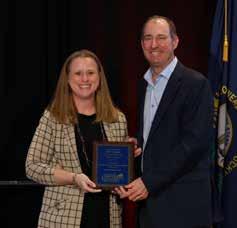
2025 Market Excellence in Beef Quality and Care Assurance Award - Blue Grass Stockyards were recognized for their strong commitment to Beef Quality and Care Assurance and best management practices. Blue Grass supports BQCA by hosting chute-side trainings and educational meetings that emphasize proper cattle handling and animal care. By opening its markets for hands-on learning, Blue Grass helps communicate BQCA principles to producers, youth, the general public and its employees.
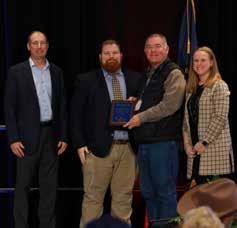
Beef
- Lindsey Davie, agriculture teacher at Henry County High School, was honored for her leadership advancing BQCA through education and hands-on application. As a certified BQCA trainer, Davie provides students with meaningful,
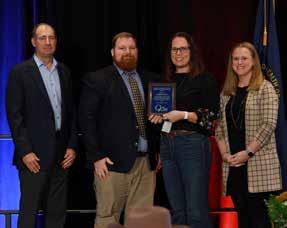
real-world learning opportunities and actively supports youth cattle working contests. Davie partners with a local veterinary office to create opportunities for students to apply proper cattle handing in a real-world setting and has developed BQCA-based curriculum to share with other Kentucky agriculture educators.
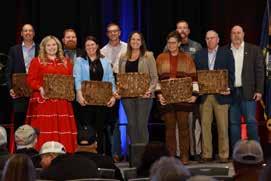
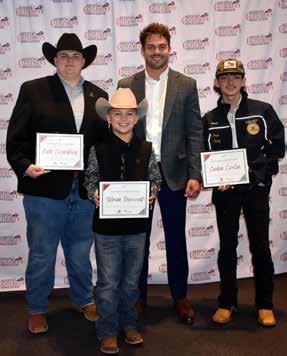
- Three young people were honored by Farm Credit Mid-America and the Kentucky Cattlemen’s Foundation through the Youth Beef Heifer Initiative. These winners, representing different age groups, received up to $2,000 toward the purchase a heifer from a KCA member to either start or grow their own cattle operations. 2026 winners are pictured below.

Bull – Growth – Carcass$Values
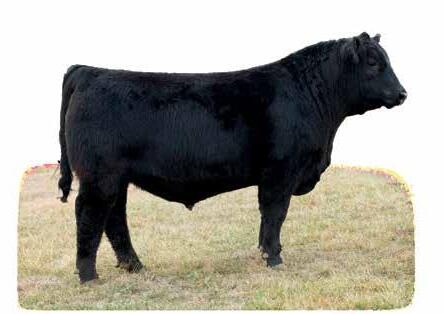
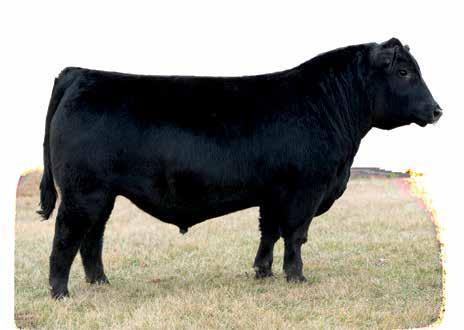
• Whitestone Tigger is a combination of the cattleman’s kind herd sire with all the bells and whistles for many different environments in our industry. Keep an eye out for him on sale day.

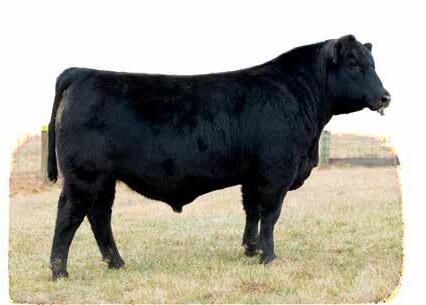
01-03-2025
*21196211 // Tattoo: 5029
*Connealy Clarity
+*Connealy Scotchman
#*Pasha of Conanga 557P
+*WHITESTONE
*Whitestone Evelyn 3052
Whitestone Evelyn R173
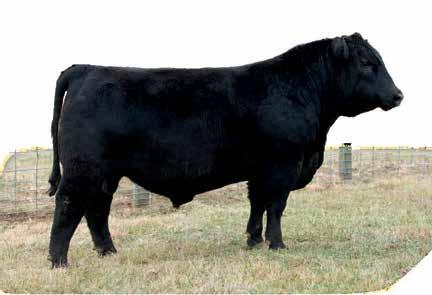
• Whitestone Peyton 5042 is a high-growth bull who will add pounds, length of

Katie Pratt Kentucky Cattlemen’s Association
OWENSBORO, KY−Kentucky Cattlemen’s Association members elected officers for 2026 during their 53rd Annual Convention in January. Allan Bryant, a Henry County producer, became KCA president. Bryant of Eminence has served the association as president-elect, vice president, KBN chairman, Region 3 vice president and regional director. He was also a founding member of the Henry County Cattlemen’s Association and served as its president in 2004. He is the past president of the Kentucky Association of Conservation Districts and the current chair of the Henry County Conservation District. Bryant and his wife Mary have a commercial cow-calf herd of around 200 mama cows.
Others elected to officer positions include: President-Elect: Daniel
Hayden, Whitesville; Vice President: Ryan Miller, Campbellsville; Secretary/Treasurer: Ken Adams, Upton; Past President: Randy Warner, Sharpsburg.
Additional positions on the KCA Executive Committee include KCA Program chair Adam Chunglo, Harrodsburg; Beef Solutions chair: Daniel Hayden, Whitesville; KBN chairman: Amy White, Lexington; and KBC chairman: Wayne Zoglmann, Owensboro.
Association members elected regional vice presidents during the regional meetings at convention. Regional vice presidents include: Region 1- Chris Milam, Logan County; Region 2- Brian Manion, Grayson County; Region 3- Amanda Hall, Scott County; Region 4 - Jodi Purvis, Bath County; Region 5Phillip Reese, Casey County.





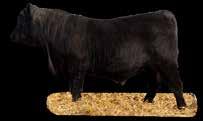


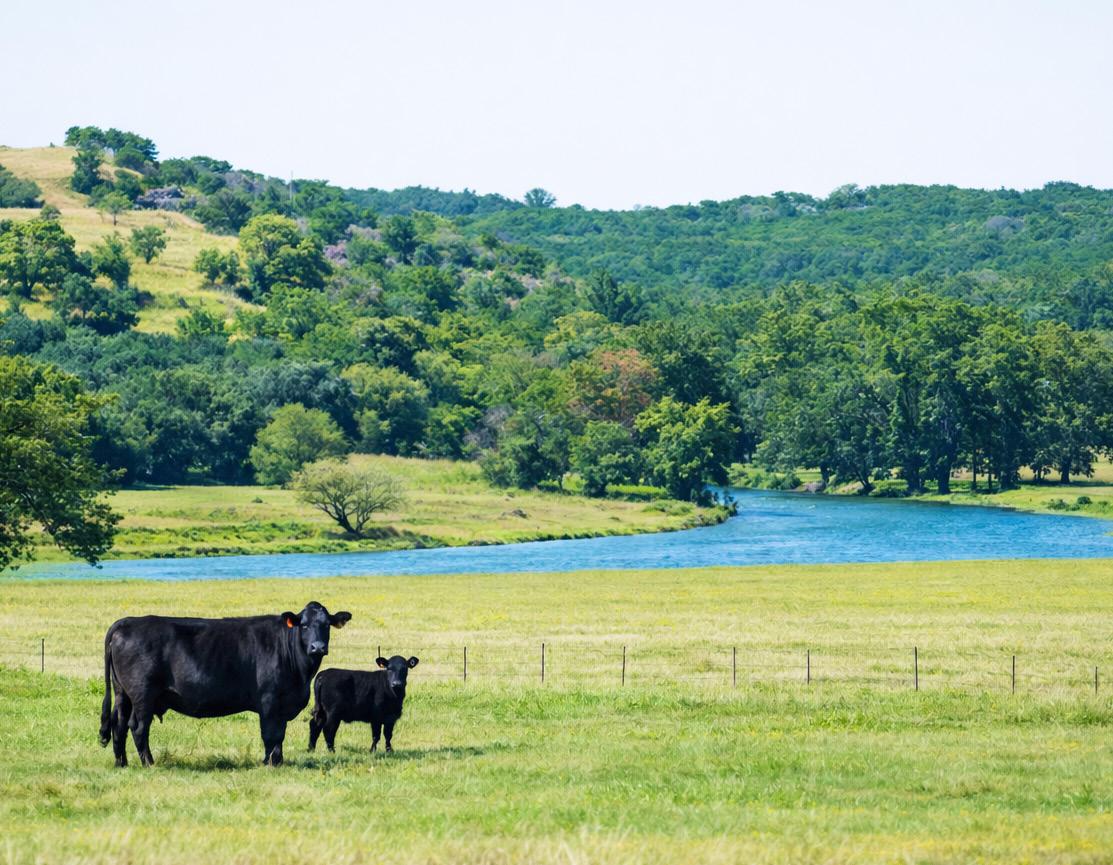
Spring green-up sets the tone for calf gains and cow condition, but winter annuals, biennials, and perennials can threaten both forage and livestock. Poison Hemlock, in particular, is toxic and can be fatal.
February Cow Sales
BG Campbellsville Friday, March 6, 2026 7:00 PM
BG South—Stanford Friday, March 20, 2026 6:30 PM
BG Lexington Wednesday, March 25, 2026 6:30 PM
BG Lexington
Consignment Equipment Sale March 28, 2026
Belles/Bulls of the Bluegrass Simmental Sale April 4, 2026
Bluegrass Longhorn Sale & Futurity April 10-11, 2026
Clifford Farms & Guests Hereford Sale—April 18, 2026
BG South—Stanford
Special All Breed Horse Sale —March 13, 2026
BG East—Mt. Sterling
Spring Horse Sale March 14, 2026
Special Exotic Livestock Sale April 4, 2026
BG Albany
All Breed Horse Sale—March 20, 2026
BG Campbellsville
Holstein Sale—March 21, 2026
Robert “Bobby” Bell Region 1 Breckinridge County producer Robert “Bobby” Bell is known for his tireless support of the cattle industry and young producers.
Bell operates Bells Angus Farm, cowcalf operation known for producing high quality performance bulls. He is the fourth generation to grow up on the farm, and his son, Clayton, is the fifth. Bobby Bell has always juggled the responsibility of his farm along with a full-time job in the agriculture industry. He first worked at the local stockyards in Irvington and then spent 20 years with the Kentucky Department of Agriculture. He currently works as the animal health compliance manager at the Kentucky Exposition Center. In his current position, he is able to be an advocate for the industry on a national level and help promote the industry across urban areas.
Bell has held many leadership roles within his county and state cattlemen’s associations including serving as president of the Breckinridge County Cattlemen’s Association from 20142019. He served as a member of the Kentucky Cattlemen’s Association board of directors from 2016-2019 and KCA Region 1 vice president from 2021-2023.
Bell started showing cattle in 4-H and the cattle show ring had a huge impact on his life. To help other young people have the same experience, he has been a strong supporter of young cattlemen, organizing numerous youth cattle shows and encouraging many youth to enter the show ring. He is also a mentor to many young producers.
His efforts have extended beyond state lines. In March 2017, Bell led a 12-county effort to bring supplies to farmers and ranchers affected by devastating wildfires in Kansas.
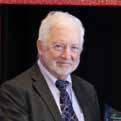
A longtime family physician, Dr. Kenneth Green has used his medical knowledge to help cattle producers improve their health and their herd’s health.
Dr. Green grew up on a dairy cattle farm in Clarkson. In addition to his chores at the dairy, he set tobacco and made hay. After leaving for college, medical school and residency, he returned to the area, purchased his father-in-law’s farm and began raising beef cattle. As a testament to his love of cattle and work ethic, he completed his farming tasks after working all day at his medical practice. Today, he and his family manage a primarily a cow-calf operation. They also do some backgrounding and sell a small amount of freezer beef.
Dr. Green has been a tireless advocate for the importance of protein in people’s diets and has readily shared information with the public. He also contributed to a video about the safety of beef for consumers and had an article published in Cow Country News.
He has been active in his county and state cattlemen’s associations for over 20 years and served as a KCA director for several years. He is a member of Grayson County’s CAIP review board.
Dr. Green has been a member of the Grayson County Board of Health for 40 years. He also served as the medical director for two nursing homes in the county. He received several awards for his service to the medical field including from the Grayson County Chamber of Commerce, Owensboro Health Twin Lakes Hospital, Grayson County Board of Health, SpringView Nursing and Rehab, and Grayson Manor.
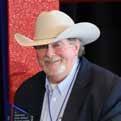
Dr. Philip Prater Region 4
Dr. Philip Prater is an accomplished veterinarian and professor emeritus at Morehead State University known for his work in bovine health and reproduction. Starting when he joined the MSU faculty in 1998, Dr. Prater helped strengthen the university’s veterinary science program by offering students hands-on opportunities to work on the university’s beef herd. Students’ veterinary acceptance rates and veterinary tech scores both increased and the MSU herd improved under his guidance.
During this time, he gave over 100 presentations various groups. Many of these presentations covered County Agricultural Investment Program (CAIP)-eligible topics. He was named MSU’s Distinguished Teacher of the Year in 2008, and in 2025, MSU named their Equine Health and Education Center after him to signify the lasting impact he had on countless students and the veterinary industry.
In addition to his career at MSU, Prater ran a private veterinary practice in Bourbon County. There, he helped develop the reproductive health standards for the county’s Elite Heifer Sale and the Eastern Kentucky Heifer Development sales. Over the years, Dr. Prater brought MSU students to perform reproductive soundness exams and health checks on animals in both sales. They completed over 8,000 exams in both sales over the years. These exams gave the students valuable handson experience and provided producers with a needed service.
Dr. Prater served on the Kentucky Cattlemen’s Association board for 10 years.
He served as president of the Kentucky Veterinary Medical Association from 2011-2012 and received the organization’s Distinguished Service Award in 2018 and Veterinarian of the Year in 2006.
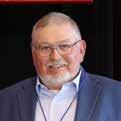
L.J. Watson of Casey County is one of the state’s most respected cattle producers, especially in the area of heifer development. He has worked hard to develop a herd that is adapted to tall fescue and Kentucky’s rolling topography using genetics, crossbreeding and vaccination protocols.
Watson began farming when he was 12 years and became a full-time farmer after graduating from high school. From his beginnings, Watson set out to be the best producer possible and improve his land. He did this by constantly reading, studying, experimenting and evaluating his herd and farming practices.
He currently has a herd of over 200 fall-calving cows. His animals are known for their longevity, docility, calving ease, productivity, low maintenance and sound structure. Each year, he retains about 50 heifers for his breeding program.
Watson was a founding member of and is a leader in the Casey County Cattlemen’s Association. He helped start the county’s popular Liberty Belle Heifer Sale. He hosted a field day at his farm to help other producers learn about raising quality heifers so their animals would bring premium prices in the sale. Since 2019, Watson has donated a heifer at the auction with the proceeds going to fund a scholarship for students pursuing a college degree in an ag-related major. He plays an instrumental and often behind-the-scenes role in many of the association’s charitable efforts.
He enjoys teaching others how to improve their own herds and has hosted numerous field days at his farm on topics such as heifer development, fencing, forages and using genetics to build a quality herd.




SPONSORS Kubota Tractor Corporation
Accu-Steel FabricCovered Buildings
Advanced Ag Products
Ag Spray Equipment
Branch View Angus
Burkmann Nutrition
Central Farm Supply of Kentucky
Cornerstone Equipment
Endovac Animal Health
Green River Meats
H&R Agri-Power, Inc
AirMedCare Network
Kentucky Association of Conservation Districts
Kentucky Farm Bureau
Kentucky Department of Agriculture Raising Hope
Wright Implement

Michelle Arnold DVM-Ruminant Extension Veterinarian (UKVDL)
“BVD” or “Bovine Viral Diarrhea” virus contributes to a wide range of reproductive, respiratory and digestive system diseases in cattle. Although symptoms of the initial virus infection are typically mild such as fever and loss of appetite, there is much more going on than meets the eye. In calves, the BVD virus’ effect is primarily immunosuppressive, predisposing infected calves to secondary bacterial infections, particularly in the lungs. In susceptible adult cows and heifers, infection with the BVD virus may ultimately result in some form of reproductive failure, such as infertility, early embryonic death, abortion, stillbirth, birth of a malformed calf or a weak newborn, depending on the phase of gestation when the female became infected. If a pregnant, susceptible cow or heifer is infected with the BVD virus between approximately 42-125 days of gestation, the virus will also cross the placenta and infect her unborn calf. When this calf is born, it is “persistently infected” or “PI” and is a “carrier” of the virus for its lifetime. Approximately half of PI calves appear normal and their infection can only be detected through laboratory diagnostic tests. Research has shown that over 90% of PI calves are born to dams that experienced a “transient” or short-lived BVD infection in early pregnancy. The remaining PIs are born to PI positive cows that will always produce a PI calf in every pregnancy.
BVD Persistently infected or “PI” cattle are the most unique epidemiological feature of the BVD virus. “PI” animals are the major reservoir for infection of susceptible animals AND are pivotal in maintaining the virus in cattle populations. In the stocker/ backgrounder industry, BVD virus is considered an important contributor to the bovine respiratory disease (BRD) complex, leading to significant increases in treatment cost and death loss from bronchopneumonia.
Although BVD is not the ultimate cause of death, its immunosuppressive impact increases the disease severity and often increases morbidity and mortality rates, especially in recently weaned, lightweight beef calves. A BVD-PI calf is born with the virus and spreads it to other cattle in close contact through life-long, continuous viral shedding primarily concentrated in saliva and nasal discharge. Virus may also be deposited in watering troughs, feed troughs and cattle trailers that can be transmitted indirectly to other cattle in the pen or truck. Currently there is much debate surrounding BVD PI calves, including how to best identify and remove them since one PI animal may expose hundreds of cattle to the virus during shipping, in auctions, when commingled in stocker/backgrounder operations and through fence-line contact with neighboring cattle. However, many questions remain as to how a control program would be implemented, including who would bear the costs of testing and culling.
Several European countries, including Switzerland, Ireland, Scotland and Germany, have substantially reduced or successfully eradicated BVD virus through mandatory national programs based on testing newborn calves and removing those that are PI positive before they ever leave the farm where they were born. In a 2021 article in the journal, Pathogens, titled, “The Long Journey to BVD Eradication,” the authors reviewed the various control programs implemented across Europe from the stakeholder’s perspective and summarized them into the following conclusions: 1) Although all programs began as voluntary efforts, they only succeeded in BVD eradication when they became mandatory and fully funded; 2) The fundamental messages for starting a BVD control program are to set realistic targets, communicate well, keep the program simple and consistent,
and back the scheme up with legislation; 3) A major stumbling block was the underestimation of BVD risk in farming operations resulting in lack of compliance; and 4) The lessons learned from years of control efforts yielded the following list of key components considered essential for success. For any BVD control program to be successful, it must:
• Identify BVD-infected herds then institute (official) identification, testing and timely removal of PI animals in the herd through testing and culling. This typically included mandatory testing for all newborn calves and immediate elimination of all detected PIs.
• Institute biosecurity measures including quarantine rules for incoming animals, test and eliminate any PIs found and vaccinate cattle prior to turnout.
• Include movement restrictions on cattle if their BVD status was unknown or unclear; this included pregnant animals could not be sold until after calving and a negative test result of the offspring since a dam that tests negative can still deliver a PI positive calf.
• Include vaccination of the breeding herd to prevent the next generation of PI calves.
• Maintain solid funding and clear compensation rules.
• Maintain continuous communication and cooperation with stakeholders.
In summary, BVD virus exposure can be quickly and substantially reduced, primarily through early testing and removal of newborn PI calves before they ever leave the farm of origin. Although this control strategy seems simple and straightforward, the truth is that nothing about BVD virus is ever simple or straightforward. For example, what is necessary to legally define an animal as a PI? A diagnos-
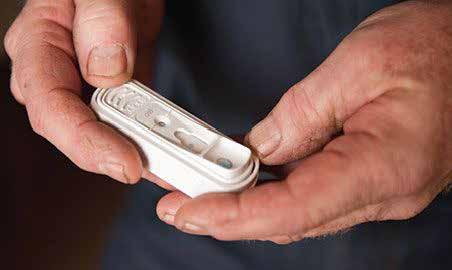
tic test known as an antigen-capture ELISA (ACE) test that detects the BVD virus “antigen” in an ear notch skin sample is the most commonly used test for BVD detection. Serum samples may be used instead of an ear notch, provided the calf is over 3 months old. Molecular tests are also offered at several veterinary diagnostic labs that can detect the BVD virus genome in skin (ear notch), serum, whole blood or milk with a reverse transcription-polymerase chain reaction (RT-qPCR) assay. Additional methods include immunohistochemistry (IHC), virus isolation (VI), and on-farm SNAP tests (Figure 1) to detect transient and persistent BVD infections in cattle. However, no test available at the present time can differentiate PIs (persistently infected) from TIs (transiently or short-term infected) animals from just one sample. To accomplish this, a presumed PI can be confirmed by retesting a second sample collected three weeks after the first positive sample. True PI animals will remain positive after three weeks while those transiently infected (“TI”) will clear the virus and test negative. Once an animal tests negative, it is assumed that no further testing is ever required since PIs are born with the virus and cannot become PIs later in life.
Unfortunately, despite important advances and improvements in diagnostic techniques, factors
such as inconsistent lab practices, cross-reactivity between BVD virus strains, variations in the ability of the different assays to detect virus, and maternal antibody interference can affect test performance and potentially lead to false negative results. A false-negative BVD virus PI result can have significant economic repercussions, because a single undetected PI animal has the potential to infect between 70 and100% of susceptible cattle through direct or indirect contact. An example of a potential cause of false negative results was recently described in an article published in the February 2026 edition of JAVMA titled, “Colostrum-derived immunity reduces detection of calves persistently infected with bovine viral diarrhea virus”. The authors found that testing newborn calves for BVD under 1 week of age, even when using an ear notch, may result in false negative results because antibodies present in colostrum will essentially shield the virus from detection in any sample type and regardless of test used. They concluded that using RT-qPCR, ACE, or the SNAP test on ear notch samples at 1 week of age was acceptable but waiting until ≥14 days of age was best to provide accurate results. Another potential source of false negative results is human error, such as the improper use of commercially available cow-side BVD detection tests such as the BVD SNAP test (Idexx). Although
these offer convenience and rapid turnaround times, it is imperative to follow the directions carefully and precisely for accurate results. Each individual test cassette is designed to test one ear notch only. “Pooling” ear notches, the practice of placing more than one ear notch per test vial to reduce the cost of testing, will not yield reliable results. According to the Idexx website https://www.idexx. com/en/livestock/livestock-tests/ ruminant-tests/idexx-snap-bvdvantigen-test/, “The SNAP BVDV Test is validated and USDA-approved for individual ear-notch samples and individual serum samples. Pooling samples results in a loss of sensitivity and leads to false- negative results. Further, samples in a pool with neutralizing antibodies could also lead to false- negative results.” While pooling samples will reduce testing costs, it will result in lower accuracy and remove the benefit of PI testing altogether.
Many questions remain as to how a control program could be implemented and the effect this reduction in PIs would have on overall cattle health. BVD-infected cow/calf herds experiencing losses in reproductive performance and higher calf morbidity and mortality would ultimately benefit from diagnosing and eliminating BVD virus but at the cost of testing and subsequent culling of PI animals. Is there sufficient value to the beef industry in removing BVD-PIs and reducing the need for antibiotics to create and fund a control program? Should producers receive indemnity payments for true PI calves that must be euthanized and, if so, what is a PI calf’s value? Are calves that test BVD negative worth more or are untested calves worth less? In Kentucky, transportation or sale of known BVD PI positive animals is prohibited by law unless approved by the state veterinarian. PI positive animals may be euthanized, immediately slaughtered (BVD does not affect meat), or quarantined and fed to slaughter in an isolated location or permitted feedlot. Talk to your veterinarian about BVD virus PI testing, vaccination and biosecurity protocols to keep BVD virus out of your operation.
Kenny Burdine University of Kentucky
USDA-NASS released their January 2026 cattle inventory estimates on the afternoon of Jan. 30. Total cattle and calves were estimated at 86.16 million head, which was about 0.4% lower than January 2025. This was largely expected as the 2025 cowherd was smaller and on-feed inventory ran below year-ago levels all last year. While this large, aggregated number does provide some perspective on the overall inventory picture, I want to focus on some other key estimates within the report.
From my perspective, the biggest surprise from the January report was the beef cow inventory estimate. USDA estimated the size of the U.S. beef cow herd at 27.6 million head, which was a full percent smaller than last year. I expected a slight increase in the number of beef cows due to the very low culling rate last year. Despite beef cow slaughter being down more than 500,000 head in 2025, inventory still came in lower and remains at its lowest level since 1961. U.S. beef cow inventory is charted from 1940 to present in Figure 1.
The 2025 calf crop was estimated at 32.9 million head, which was down 1.6% from 2024. The decrease was not surprising given that the 2025 cowherd was smaller. The calf crop estimate includes calves born to both beef and dairy cows, but beef cows represent 74%-75% of the total cow herd. The smaller calf crop is yet another indicator of continued tight cattle supplies going forward. It is worth noting that dairy cow inventory did grow by about 2% last year, so an increase in the number of calves born to dairy cows should be expected.
The January report also provided more perspective on the rate of heifer retention across the country. This most recent report did show a year-over-year increase in heifer retention, but by a pretty modest 1%. While not a major increase, it is significant in that it represents the
first January increase since 2017. As a percentage of beef cow inventory, January estimates put the beef heifer retention rate at 17.1%. While the highest rate since 2022, it still falls about 1% below the average of the last 10 years and certainly does not imply widespread expansion. It is also important to remember that heifer retention is a very fluid number. Some of those heifers being held this winter for replacement purposes will not enter the cow herd and decisions to retain others will be made throughout the year. These decisions, combined with culling rates, will drive inventory change in the new year.
The size of the Kentucky beef cow herd was estimated at 862,000 head, which is down 0.8% from 2025. This puts Kentucky beef cow numbers down nearly 17% from 2018 and at the lowest level seen in the commonwealth since the 1960s. An
increase was estimated in beef heifer retention, which at least suggests potential for stabilization of the Kentucky herd.
The January report supports the ongoing narrative that cattle supplies will remain tight in the near term. A smaller beef cow herd in 2026 suggests another decrease in the size of the calf crop for the current year and heifer retention remains at modest levels. If the pace of heifer retention does increase this year, that will pull feeders out of the system and further tighten supply. Uncertainties remain with respect to live cattle imports from Mexico, beef trade and if / when consumers react to high price levels. But domestic demand has been robust thus far and the supply picture remains encouraging. It should be another good year for the cow-calf sector.
The full USDA cattle inventory report can be accessed at: esmis.nal.usda.gov/sites/default/ release-files/795748/catl0126.pdf.








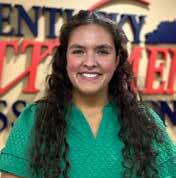
Jenna Diaz is originally from Lawrenceburg and is a sophomore attending the University of Kentucky. She is currently interning with the Kentucky Cattlemen’s Association as their Membership and Policy Intern. She is majoring in agricultural economics and public policy and is on the pre-law track with plans of attending law school in the future. With her education, she hopes to start a career in agricultural law and continue to advocate for agriculturalists across Kentucky and the U.S. Her largest aspiration is to one day work on the Farm Bill. She is actively involved on campus as a student ambassador for the Martin-Gatton College of Agriculture, Food and Environment. As well as being the vice president of philanthropy for her sorority Alpha Gamma Delta, and she is a member of Collegiate Farm Bureau. She is passionate about her goals of advocating for Kentucky producers.
Zoey Ortega is one of the 2026 spring interns for the Kentucky Cattlemen's Association. Originally from California, she followed her love of horses to Lexington and attends the University of Kentucky. Zoey studies community and leadership development with a minor in sustainable agriculture and

a certificate in agricultural leadership. She is involved on campus as a Martin-Gatton College of Agriculture, Food and Environment student ambassador and a Collegiate Farm Bureau member.
Since living in Kentucky and diving deeper into the agricultural industry, Zoey has interned with UK’s Marketing and Agricultural Communications Services and the Mercer County Cooperative Extension office. She has developed a passion for agricultural advocacy and education through experiences like attending the National FFA Convention, visiting Robinson Forest, attending 4-H camps, working county fairs and more.
Zoey wishes to pursue a career in non-traditional agricultural education to help increase food and agricultural literacy. From growing up in an urban environment, she understands how disconnected many people can be from agriculture and the importance of closing that gap. Zoey believes interning with the Kentucky Cattlemen’s Association and working within the Kentucky Beef Council will develop her capacity to promote a deeper understanding of the industry that provides people with their food, fiber and fuel.
Spring is right around the corner, and your operation deserves equipment that’s ready to work. Ag Leasing through UPI Credit Services helps you upgrade or add equipment without tying up your working capital. Flexible terms, competitive rates, and financing built for agriculture so you can focus on a strong start to the season.




Chris Teutsch UK Research and Education Center, Princeton KY
Cash flow on many livestock operations in the commonwealth is pretty good right now. It is tempting to spend money on something that is shiny and bright! Before you do that, make sure to ask yourself the question, “Will that investment help me remain profitable when the cattle prices go back down?” If the answer is yes, then it is a good investment. If the answer is no, maybe or I really want it to be, then it may not be a good investment. When you are answering this question, always keep in mind that the largest portion of the cow-calf budget is winter feed (50% of the total budget). It is critical to remember that some of the most profitable investments will be ones that allow your cows to harvest their own forage more days of the year and reduce the need for hay in grazing systems.
A perfect example of an investment that is not all that shiny and bright but will almost certainly increase productivity of existing pastures is fencing. Replicated research has shown that switching from continuous to rotational grazing increases pasture productivity. Although fencing is an essential component of rotational stocking systems, it can also be a good investment for hayfields and even row crop areas.
Improved pasture growth. A review of the scientific literature shows that rotationally stocked systems are on average 30% more productive than continuously stocked systems (Figure 1). This is a result of being able to rest pastures between grazing events and to control how closely plants are grazed. Leaving some residual leaf area allows the plant to capture sunlight through photosynthesis. The energy captured in the form of sugars and carbohydrates can then be used to fuel regrowth of the plant. Pastures that are rested and not grazed too closely simply regrow faster.
Improved nutrient distribution. In large continuously grazed pastures,
Aiken, 1998
Bertelsen et al, 1993
Bryant et al, 1961
Chapman et al, 2003
Davis and Pratt, 1956
Hoveland et al, 1997
Hull et al, 1967
Matthews et al, 1994b
Popp et al, 1997b
Stewart et al, 2005
Tharel, 1989
Volesky et al, 1994
Volesky, 1994
Average
Figure 1: Proportional advantage of rotational versus continuous stocking. Data adapted from Conservation Outcomes from Pastureland and Hayland Practices: Conservation Outcomes from Pastureland and Hayland Practices: Assessment, Recommendations, and Knowledge Gaps, USDA-NRCS.
animals tend to concentrate nutrients near shade and water sources. As we subdivide larger pastures into smaller ones, we improve nutrient distribution. Animals are encouraged to defecate and urinate in the same areas that are being grazed. The smaller the paddocks, the more uniform the nutrient distribution will be.
Improved drought tolerance. One of the first things that producers notice when switching from a continuous to rotational grazing system is that their pastures grow longer into a drought and recover faster after the drought is over. This is directly related to the health and size of the plant’s root system. Continuously stocked pastures tend to have smaller root systems that explore a smaller soil volume for water.
Fencing in hayfields provides flexibility on how that forage resource is utilized. In years where there is an abundance of hay, fenced fields could simply be grazed. In years when hay is needed, fenced hayfields could also be harvested once and the regrowth stockpiled for deferred grazing. Lastly, fencing around hayfields allows for
the hay that was produced from those fields to be fed back in the same areas. This helps to return the nutrients that were removed during hay production.
Fencing in dedicated cropland provides an opportunity to extend grazing by utilizing crop residues. Since the cost of producing crop residue has already been accounted for in the row crop budget, this is a very low-cost strategy for extending grazing. Fencing crop areas could also allow for the utilization of cover crops. Cover crops not only protect the soil from erosion and enhance soil health but can also provide a very high-quality feed source for grazing livestock.
Well-constructed perimeter fencing limits liability in livestock operations. It is not the end of the world if a steer slips between paddocks in a grazing system, but you certainly don’t want that steer slipping onto a major highway. So, constructing a secure and long-lasting perimeter fence is essential. In the Kentucky Fencing Schools held in the spring and fall of each year, participants learn how to install high tensile fixed
Featured Video
Fence Construction Basics
This presentation was given as part of the 2021 Kentucky Fencing School held in Owensboro and Hopkinsville on May 11 and May 13. It can be viewed by visiting the KYForages YouTube Channel.
Featured Publication
Fence Planning and Installation Guide
This publication is part of the Kentucky Fencing Manual distributed as part of the Kentucky Fencing Schools
Forage Management Tips for March
• Interseed legumes into pastures using a no-till drill.
• Continue hay feeding to allow pastures to rest and spring growth to begin.
• Seed cool-season grass and legumes by mid-March.
• Smooth and reseed hay feeding areas.
• Graze pastures that have been overseeded with clover to control competition.
• Provide free-choice high magnesium mineral to prevent grass tetany.
• Make plans to attend one of the Kentucky Fencing Schools.
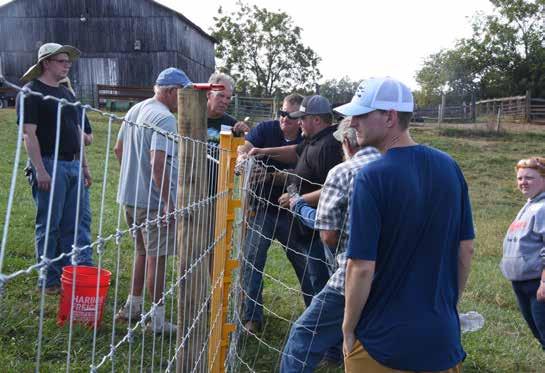
knot woven wire (Figure 2). This is perhaps the most secure and long-lasting fence available. It costs about the same or slightly less than traditional hinge joint woven wire because post spacing is further apart and treated posts are an expensive component in fencing systems. Post spacing for fixed knot woven wire is 15-25 ft., depending on the terrain compared with 8-10 ft. for traditional woven wire. If you do math, you will need 1/2 to 2/3 as many posts.
Fencing for pasture subdivisions can be less substantial than perimeter fencing. In fact, one or two stands of an electrified smooth high tensile fence is more than adequate for most subdivision fencing. The key is to make sure that this fence is properly installed and the voltage always remains above 5,000. In 2025 at our fall fencing school, we installed 800 ft. of a two-wire subdivision fence for around $0.70/ft. This included two, 8-inch end posts and insulated posts from Gallagher every 30-40 ft.
Upcoming Events
Cropland Conversion Workshop Elkton, March 5 grasslandrenewal.org/events
Kentucky Fencing Schools Maysville, April 28 • Elkton, April 30 forages.ca.uky.edu/Events
Kentucky Beginning Grazing School Princeton, April 29 - 30 forages.ca.uky.edu/Events

depending on the terrain (Figure 3). This fence was easy and quick to install and should provide decades of service as long as it remains electrified.
I realize that new fencing is not as shiny as that new pickup or tractor, but it will almost certainly provide a greater return on investment. I would like to invite you to attend one of spring fencing schools. This spring’s schools will be held in Maysville and Elkton. The schools consist of a classroom portion in the morning and hands-on fencing in the afternoon. So put on your gloves and come on!


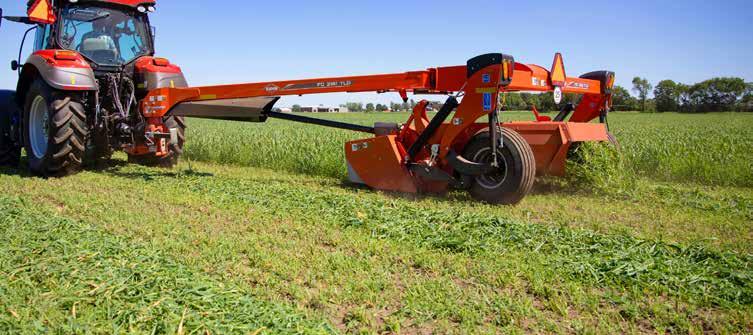


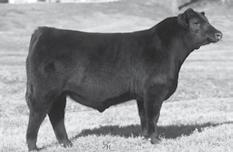

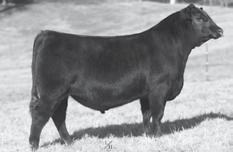



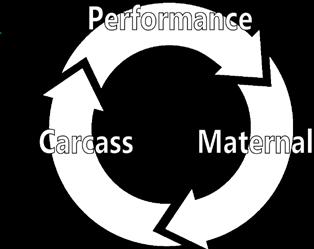
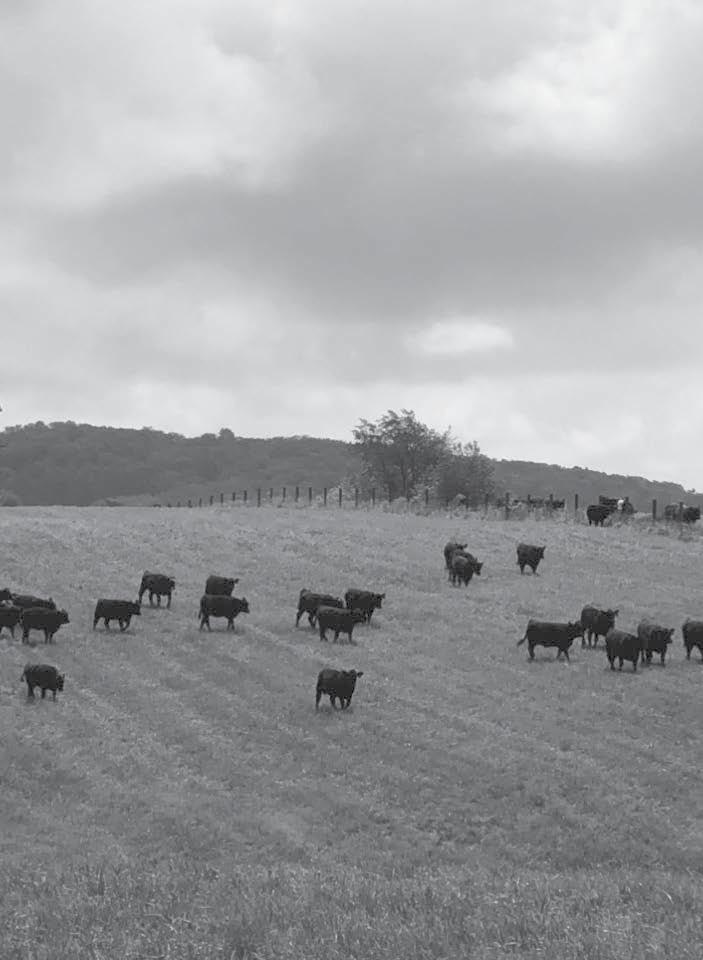
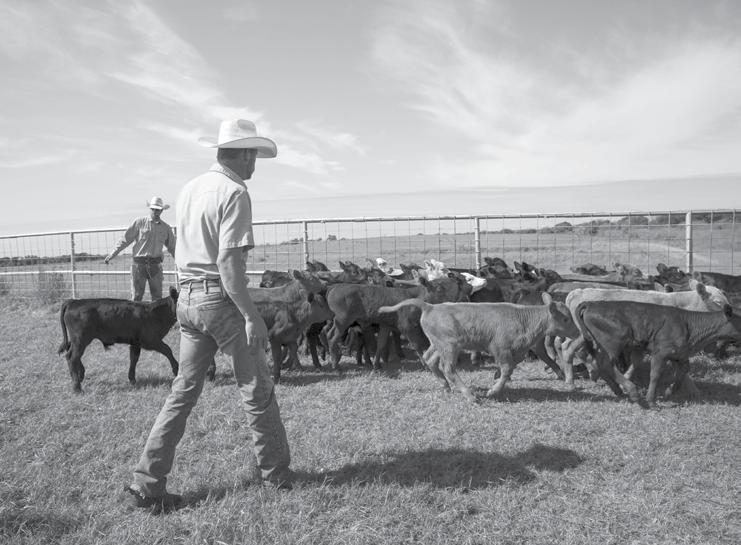



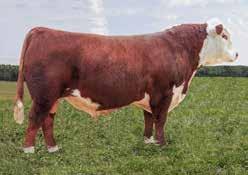
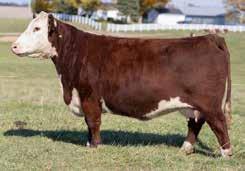




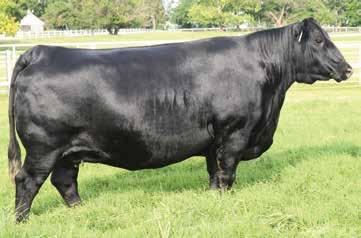
BASIN JOY 9140 *19462949
Sire:
Selling with pregnancies by Grand Slam and Black Gold 4146.
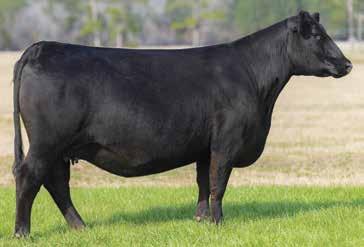
EXAR BLACKCAP 9146 *19395026
Sire: EXAR Stallion 7986 • Dam: EXAR Blackcap 7314
CED +11, BW +.7, WW +81, YW +144, Milk +22, CW +67, MARB +1.36
RE +1.08, FAT -.031, $M +54, $W +78, $F +125, $G +96, $B +222, $C +342
Selling her along with a Draft Pick heifer pregnancy.
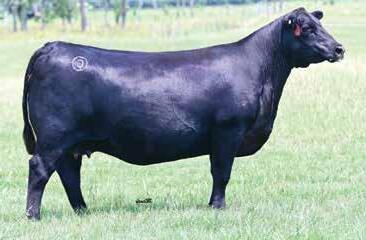
CIRCLE G RITA 1275 *20171199
Sire:
She will sell with a Captain heifer calf at side.
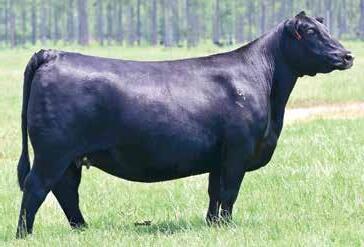
POLLARD BLACKBIRD 2025 +*20361146
Sire: Poss Deadwood • Dam: CAM Goode Advance A442
CED +5, BW +2.5, WW +82, YW +145, Milk +28, CW +71, MARB +1.84 RE +.56, FAT +.010, $M +53, $W +78, $F +121, $G +110, $B +232, $C +354
She will sell with a heifer calf at side by VAR Clear Impact.
NASHVILLE, TENNESSEE- Cary King of Harrodsburg, Kentucky, was elected by Region 1 states to serve a three-year term as their regional vice-president for policy during National Cattlemen’s Beef Association’s annual convention in Nashville, Tennessee. Region 1 represents the northeastern United States including Connecticut, Delaware, Indiana, Kentucky, Maine, Maryland, Massachusetts, Michigan, New Hampshire, New Jersey, New York, Ohio, Pennsylvania, Rhode Island, Vermont, Virginia and West Virginia.
“Cary King is the kind of leader who serves because he believes in the industry and the people in it. He brings integrity, common sense and a strong work ethic to every role he takes on,” said Dave Maples, Kentucky Cattlemen’s Association executive vice president. “I am confident he will serve Region 1 well and be a positive voice on NCBA’s Executive Committee.”
King is a lifelong cattleman and owner of Four Kings Angus in Mercer County, where he and his wife, Kim, care for a 60 head, 240-acre Registered Angus operation.
King has played key leadership roles in developing producer-focused programs in Kentucky. Through his long service on the Kentucky Cattlemen’s Association executive committee and his tenure as chair of the Kentucky Beef Network, he has helped guide initiatives that continue to support cattle producers across the state. Additionally, King served as president of KCA in 2022 and has been an active contributor through the Legislative, Budget, Evaluation, Nominating, and Long-Range Planning committees. He also serves as a trustee of the Kentucky Cattlemen’s Foundation and as a member of the Livestock Innovation Center Oversight Committee. Nationally, King is an active member of the National Cattlemen’s Beef Association and currently serves as vice chair of the NCBA Resolutions Committee.
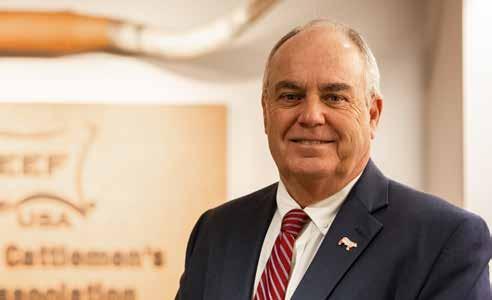
As Region 1 vice president, King will represent Region’s 1 producers’ interests to NCBA as they develop policy. He will also share information with member states about NCBA’s
policy goals. In addition, he will educate members about and help raise funds for the association’s political action committee.
WASHINGTON, D.C., (Feb. 12, 2026) – Today, the National Cattlemen’s Beef Association (NCBA) welcomed the announcement that U.S. beef exports will gain duty-free access to Taiwan under a new trade agreement. The agreement removes both tariff and non-tariff barriers, strengthening one of the most important and fastest growing markets for U.S. beef.




“Strong, science-based trade agreements are essential to adding value for U.S. cattle producers, and Taiwan has emerged as one of the strongest international markets for U.S. beef. Duty-free access improves competitiveness and provides long-term certainty for producers who depend on export markets to maximize the value of every animal,” said NCBA President Gene Copenhaver. “Foreign markets play a critical role in producer profitability with beef exports, accounting for more than $415 per fed cattle processed in 2024. American cattle producers look forward to this expanded market access for years to come thanks to the work of President Trump and U.S. Trade Representative Ambassador Jamieson Greer.”
The Agreement on Reciprocal Trade (ART) between the U.S. and Taiwan is a big victory for U.S. cattle producers and consumers in Taiwan. Taiwan is currently the sixth largest export market for U.S. beef, valued at $709 million in 2024. The landmark trade deal eliminates tariffs on U.S. beef and breaks down non-tariff barriers by reinforcing science-based standards consistent with the World Organization for Animal Health and Codex Alimentarius.





North Missouri Bull Sale
February 28, 2026
Kingsville Livestock, Kingsville, MO
Selling 125 BLACK Balancer & Gelbvieh Bulls! All 18 months old!
Arkansas Bull Sale
March 7, 2026
Hope Livestock, Hope, AR
Selling 75 Angus, Brangus, Balancer & Gelbvieh Bulls! Red & Black! 2 yr olds & 18 months!
Red Reward Bull & Female Sale
March 14, 2026
Wheeler Livestock, Osceola, MO
Selling 70 RED Balancer & Gelbvieh Bulls & RED females! Registered & Commercial!
South Missouri Bull & Female Sale
March 28, 2026
Joplin Regional Stockyards, Carthage, MO
Selling 125 BLACK Balancer & Gelbvieh Bulls! 18 months & yearlings! Also BLACK females! Registered & Commercial!
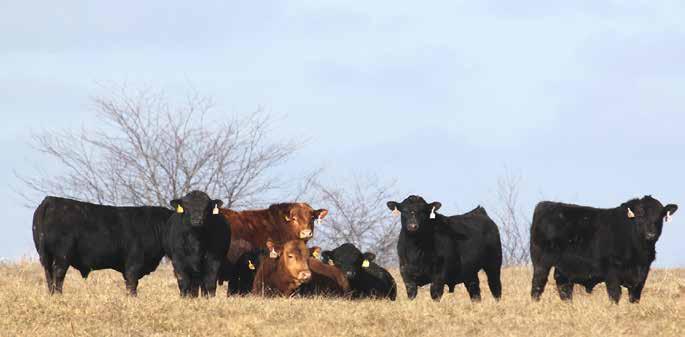
• Guaranteed Sight-Unseen Purchases!
• Free Trucking on every bull! No fine print!
• The best disposition & soundness sort!
• Extensive Data & Genomic EPDs!
• All Bulls Are Semen & Trich Tested!
• Videos of sale bulls the week before the sale! www. dvauction.com or www.seedstockplus.com
Carey Brown COO, Kentucky Cattlemen’s Association
The Kentucky Cattlemen’s Foundation proudly announced the successful conclusion of its Building for the Future Campaign, which officially wrapped up during the Foundation Lunch at the recent Kentucky Cattlemen’s Association Convention.
Thanks to the generosity of Kentucky’s cattlemen and women, industry partners and supporters, the campaign raised a total of $59,230.57. These funds will play a critical role in strengthening the foundation’s mission and ensuring continued support for programs that benefit the beef industry across the commonwealth.
Proceeds from the Building for the Future Campaign will be used to support key foundation priorities, including youth development and leadership programs, educational initiatives, scholarships, and long-term sustainability efforts that help invest in the future of Kentucky’s cattle industry.
“The success of this campaign reflects the commitment our members and supporters have to the next generation of cattle producers,” said Dave Maples, KCA executive vice president.
“Because of their generosity, the foundation is better positioned to expand opportunities, strengthen education, and continue serving the industry for years to come.”
The Kentucky Cattlemen’s Foundation extends its sincere appreciation to everyone who contributed to the campaign — whether through direct donations, pledges or continued advocacy of the Foundation’s work. Their support is a powerful investment in the future of Kentucky agriculture.
For more information about the Kentucky Cattlemen’s Foundation and its programs, visit www. kycattle.org/foundation.
THANK YOU TO OUR DONORS
Curtis Absher
Ken Adams
John Allison
Mike Bach
Andy Bishop
Senator Gary Boswell
Gerry Bowman
Carey Brown
Allan & Mary Bryant
Stacey Burkhardt
Tommie Burton
James Cardwell
Kendra Childress
Larry Clay
Chris Cooper
Chuck Crutcher
Charles Curtis
Tim Dietrich
Steve & Peggy Downs
Noah & Audra Gifford
Kevin Girdley
Tommy Glasscock
Ken & Patsy Green
Gary Greenwell
JoNell Henderson In Memory of Russell Hackley
Steve Hudson
Alonda Imbruglio
Laura Jackson
Gordon Jones
Cary & Kim King
Tom McGinnis
Dave Maples
Charles Miller
Ryan Miller
Harvey Mitchell
Josh Morris
Shirley Ogden
Kaye Peterson
Jeff Pettit
Bill & Susan Plemmons
Debbie Reed
Greg Roberson
Frank & Cynthia Roland
David Rowlette
Arch Sebastian
Becky Settle
John Settles
Jacob Settles
Robert Siddens
Billy Ray Smith
Daniel & Alison Smith
Don Sorrell
Phillip Stamm
Martha Thomas
Becky Thompson
Kelly Tucker
Billy Turpin
Al Warner
Randy & Tammy Warner
Michelle Whitaker
Dr. David Williams
Mark Woodrum
Advanced Ag Products
American Cattle Company
Barren Co. Cattlemen's Association
Bath Co. Cattlemen's Association
Bishop Family
Branch View Angus
Breckinridge Co. Cattlemen's Association
Brie Cox Consulting
Calloway Co. Cattlemen's Association
Cattle Marketing Group Inc
Christian Co. Cattlemen's Association
Cornerstone Equipment
Daviess Co. Cattlemen's Association
First Southern National Bank
GCF Angus
Henry Co. Cattlemen's Association
Hill View Meats
Independence Bank - Mary Courtney
Jeremy Wyles Livestock
Jessamine Co. Cattlemen's Association
K & H Family Farms
Kentuckiana Livestock Market
Kentucky Association of Conservation Districts
Lewis Co. Cattlemen's Association
Marion Co. Cattlemen's Association
Matt Keller - FarmCredit MidAmerica Daviess Co.
McBurney Livestock Equipment
Mercer Co. Cattlemen's Association
Merit Trucking
Needmore Farms
Owensboro Southern States
Paris Stockyards
Peoples Bank
Purchase Area Cattlemen's Association
Robert Edje Insurance
S & B Cattle Company
S&B Livestock
Scott Co. Cattlemen's Association
Tricklin' Creek Farms
Trimble Co. Cattlmen's Assocication
Twin Lakes Cattle Association
Union Co. Bull Sale
Union Co. Cattlemen's Association
Washington Co. Cattlemen Association
Westway Feed Products
Generally the Buyer is responsible for collecting the Beef Checkoff assessment from the Seller
50¢

However, both the Buyer and the Seller are responsible for seeing that the Checkoff is collected and paid. or pays $2 to $1.50
Cattlemen’s Beef Board invests in national Checkoff programs, while Kentucky Beef Council invests in state programs.
If you are a producer from one of these seven states - Alaska, Connecticut, Maine, Maryland, Massachusetts, New Hampshire, and Rhode Island - you will remit directly to the Cattlemen’s Beef Board. If you have any questions regarding who is responsible for remitting the Checkoff assessment or how to remit payment, please contact your State Beef Council or the Cattlemen’s Beef Board at (303) 867-6304.
3 Exceptions to Beef Checkoff Collection: 1. Non-producer status: If a person (or company) owns cattle for 10 days or less, purchases the cattle to facilitate the transfer of ownership to a third party, and certifies that any Checkoff dollars due from the previous owner have been collected, then that person qualifies as a “Non-Producer” and the Checkoff assessment is not due when qualified cattle are resold. 2. Organic Exemption: In the 2002 Farm Bill, Congress created a process exemptiing organic producers from paying Checkoff program assessments. 3. Pre-Payment: Producers can also choose to “prepay” the Checkoff assessment when shipping cattle out of state for feeding and still retain ownership on the cattle. This allows the producer to direct half of the $1-per-head national Checkoff assessment to the beef council in the state where the cattle were raised, rather than the state where the cattle will be fed. Note: To claim any of these exemptions, the person selling the cattle must provide the proper ‘document’ to show that the Checkoff assessment is not due at the time of sale. Thus, the rule of thumb for all cattle sales is that the person paying the producer should collect either a “Dollar or a Document.”
LIVESTOCK MARKET - When cattle are sold through a livestock market or video market, the Market collects and remits the Beef Checkoff assessment.
CATTLE DEALER/ORDER BUYER - When cattle are sold to a Cattle Dealer or Order Buyer, the Dealer/Order Buyer collects and remits the Beef Checkoff assessment.
ANOTHER PRODUCER - Both the Buyer and the Seller are responsible for making sure that the Beef Checkoff assessment is collected and remitted. For clarity and consistency, we encourage the Seller to take on this compliance responsibility.
VEAL GROWER - When dairy calves are sold to a Veal Grower, both the Buyer and the Seller are responsible for making sure that the Beef Checkoff assessment is collected and remitted. For clarity and consistency, we encourage the Seller to take on this compliance responsibility.
CATTLE SHOWS AND FAIRS - When producers sell their animals at fairs or cattle shows (4H/FFA shows, Purebred cattle shows, etc.), the Organization that runs the sale collects and remits the Beef Checkoff assessment.
FEEDLOT - When cattle are sold directy to a feedlot, the Feedlot collects and remits the Beef Checkoff assessment.
PACKING PLANT - When cattle are sold to a packing plant, the Packing Plant collects and remits the Beef Checkoff assessment.
DIRECT-TO-CONSUMER BEEF SALES - When producers market their cattle as beef, the Producer is responsible for remitting the Beef Checkoff assessment.
The
Department of Agriculture (USDA) prohibits discrimination in all its programs and activities on the basis of race, color, national origin, age, disability, and where applicable, sex, marital status, familial status, parental status, religion, sexual orientation, genetic information, political beliefs, reprisal, or because all or part of an individual’s income is derived from any public assistance program. (Not all prohibited bases apply to all programs.) Persons with disabilities who require alternative means for communication of program information (Braille, large print, audiotape, etc.) should contact USDA’s TARGET Center at (202) 720-2600 (voice and TDD). To file a complaint of discrimination, write to USDA, Director, Office of Civil Rights, 1400 Independence Avenue, S.W., Washington, D.C. 20250-9410 or call (800) 795-3272 (voice)
In early February, Kentucky cattle producers and Kentucky Cattlemen’s Association staff attended the National Cattlemen’s Beef Association’s annual convention in Nashville, Tennessee. During the convention, attendees were updated on NCBA’s policy efforts in Washington D.C.; heard from nationally recognized speakers, including Dale Earnhardt Jr. and Robert F. Kennedy Jr., U.S. Secretary of Health and Human Services; networked with producers and trade show vendors from across the country; and enjoyed the Music City. Highlights for the Kentucky delegation included Anderson Countians Mike and Tammy Wilson and their Whispering Hills Farms being recognized as the Region 1 winners of the Environmental Stewardship Award. Mercer County Cattleman Cary King was elected by member states as the Region 1 vice president for policy.
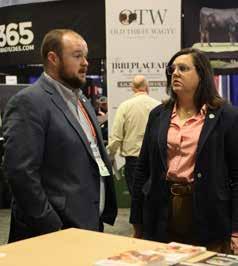
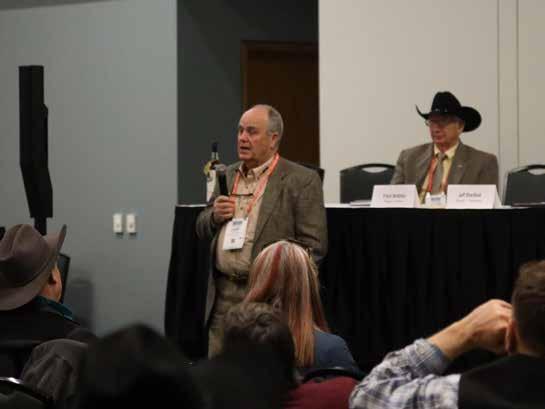
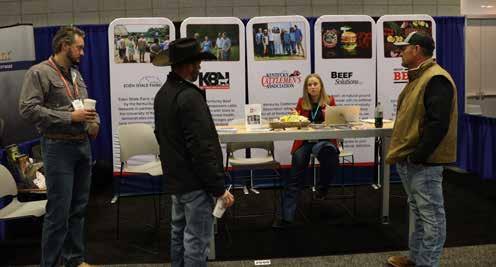
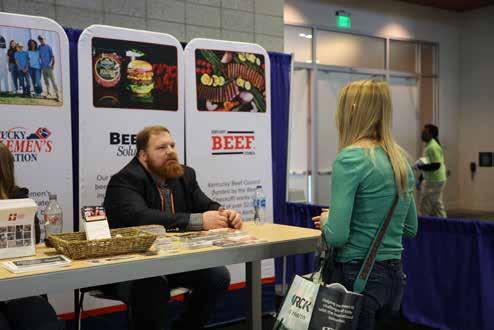
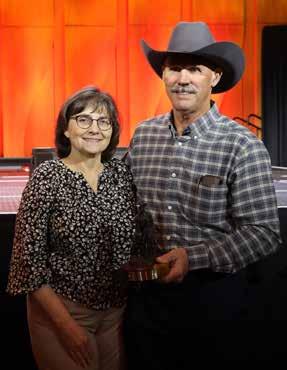
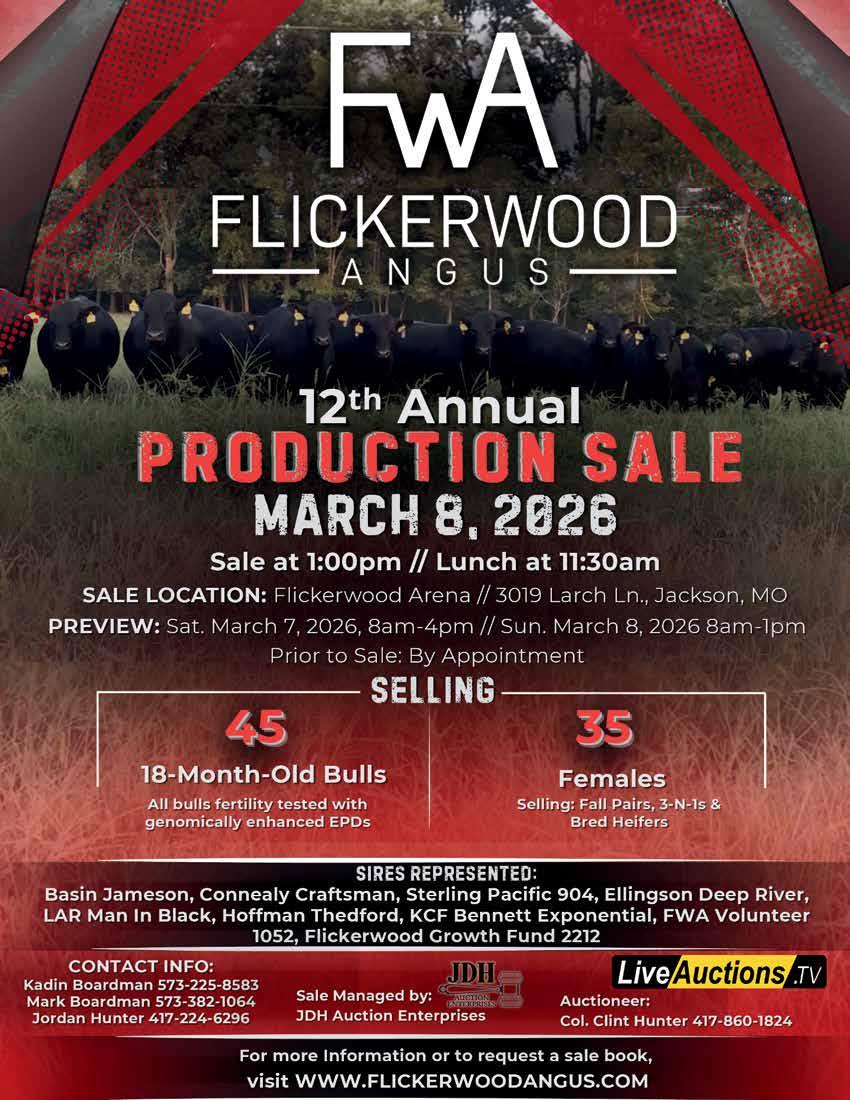







* MEMBERSHIP YEAR 10/1/25– 9/30/26
NAME SPOUSE NAME FARM NAME
*Payments of KCA membership dues are tax deductible for most members as an ordinary and necessary business expense. However, charitable contributions of gifts to KCA are not tax deductible for Federal Income Tax purposes. Due to new IRS regulations, $2.24 of your dues would not be deductible. Approximately $12 of your dues will go towards the monthly publication Cow Country.
PLEASE CHECK THE MEMBERSHIP(S) YOU WOULD LIKE TO JOIN:
KCA MEMBERSHIP ($30/YR) NEW RENEWAL
Membership dues are $30 unless otherwise listed below
KCA COUPLE MEMBERSHIP
To add your spouse, please add $15 to your KCA Membership
KENTUCKY JUNIOR CATTLEMEN’S ASSOCIATION ($10/YR) NEW RENEWAL
I WOULD LIKE ADDITIONAL INFORMATION ON THE YOUNG PRODUCER’S COUNCIL
TOTAL MEMBERSHIP:
$ KCA
$ KJCA
TOTAL CONTRIBUTIONS:
$ CATTLEMEN’S FOUNDATION DONATION (voluntary)
TOTAL AMOUNT ENCLOSED:
$ ALL DONATIONS TO KCF ARE TAX DEDUCTIBLE
COUNTY DUES
Dues are $30 except for the counties listed below.
Allen...............................$40
Anderson........................$25
Boyle ..............................$35
Bullitt..............................$20
Butler..............................$25
Franklin ..........................$25
Louisville Area ................$20 (Jefferson, & Spencer) Magoffin .........................$20 Menifee ..........................$25
Mountain........................$25
(Breathitt, Floyd, Knott, Lee, Leslie, Letcher, Morgan, Owsley, Perry & Wolfe)
Highlands .......................$20 (Boyd, Johnson, Lawrence, & Martin) Hopkins ..........................$35 Laurel.............................$35
IF YOU WOULD ALSO LIKE TO JOIN THE NATIONAL CATTLEMEN’S BEEF ASSOCIATION The NCBA is now a State Marketing Partner with the KCA. You can pay your dues to both organizations with one check, at the same time.

Amelia Carter KBC Director of Industry Relations
LOUISVILLE, KY – The final session of Beef Advance brought participants to Region 3 for an inside look at the systems that protect the beef industry, strengthen the supply chain and shape consumer demand.
Beginning at Sullivan University’s College of Hospitality Studies, participants toured the culinary department and met with faculty to see how future chefs are trained to select, fabricate and prepare beef. Because chefs play a significant role in how beef is presented to consumers and in shaping dining trends, maintaining a strong connection to producers remains essential.
Participants then traveled to the Kentucky Office of Homeland Security for a behindthe-scenes look at the commonwealth’s Fusion Center. The Fusion Center serves as a key information-sharing hub for threats across Kentucky, including agriculture-related concerns such as animal disease outbreaks, supply chain disruptions, and cybersecurity risks.
Later, participants toured Heaven Hill Distillery, where they followed the bourbon production process with a focus on the creation of distiller’s grains. As the bourbon
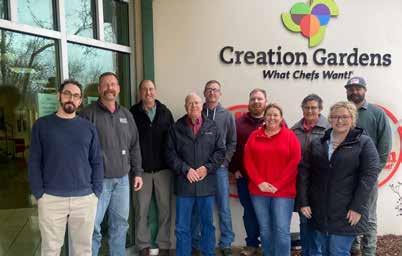
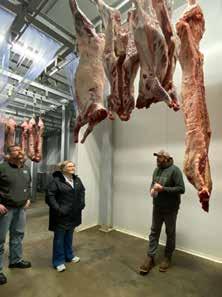
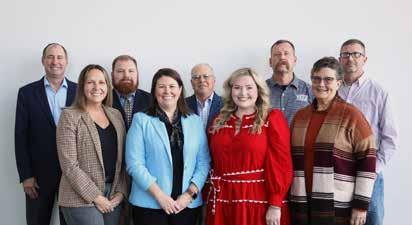
industry continues to grow, utilizing byproducts as a sustainable feed source has become an increasingly popular choice for Kentucky producers.
That evening, the group gathered for a graduation dinner at Volare Italian Ristorante and met with Chef Josh Moore. A chef and farmer himself, Moore shared his experience working with Certified Angus Beef and spoke of his passion for showcasing high-quality ingredients, promoting premium beef, and connecting diners back to the farm.
Day two focused on the processing and foodservice supply chain. Participants toured Oxbow Meats for an inside look at local meat processing, followed by a stop at What Chefs Want, a specialty foods distributor that bridges the gap between processors and foodservice clients. Together, these stops highlighted the many hands involved in getting beef to the consumer’s table.
The final educational component centered on communication. Participants reviewed their individual media training interviews conducted by Sarah Metzler of CBB, reflecting on their growth, providing meaningful feedback and identifying opportunities to continue refining their messaging.
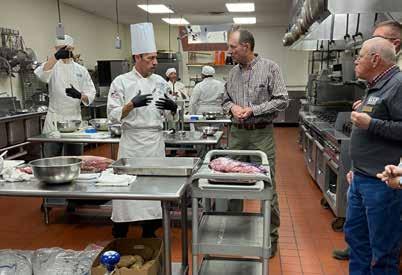
Class I officially graduated during the opening session of the KCA’s Annual Convention, bringing a year of learning and leadership development to a close. While the class has concluded, their involvement in Beef Advance has only just begun. Each will continue on as part of a growing network of industry leaders.
Interest forms for Class II are now available at kybeef.com.
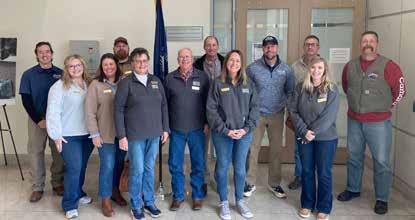
March is National Nutrition Month®, and the theme for this year – “Discover the Power of Nutrition” – is the perfect opportunity to highlight beef as a nutrientdense protein that delivers 10 essential vitamins and minerals in every 3-ounce serving. Beef provides high-quality protein along with nutrients many Americans fall short on, making it a powerful addition to balanced meals at every stage of life.
The weekly messages in March around this theme include:
• Power your day with nutrition: Choose healthful foods from all food groups, alternate your food choices for a variety of nutrients and avoid fad diets that promote unnecessary restrictions.
• Find advice backed by science: Find accurate sources for nutrition information. Meet with a registered dietitian, who can provide personalized nutrition guidance tailored to your unique needs and health goals.
• Stay nourished on any budget: Learn cooking and meal preparation skills that work with the resources you have. Locate community food assistance resources and advocate for nutrition policies that serve your community.
• Feel good with healthy habits: Practice food safety at home. Plan in advance to avoid mealtime stress, and include physical activity in ways that work for you.
These weekly themes reinforce how beef can fit into everyday, science-based eating patterns. Choosing lean beef supports building balanced meals from all food groups without unnecessary restriction. Current research continues to emphasize overall dietary patterns, showing that lean beef can fit into heart-healthy and performance-focused diets when overall eating patterns are balanced, varied, and paired with healthy lifestyle habits. Affordable cuts, ground beef, and simple cooking methods make beef accessible on a variety of budgets, while meal planning, food safety practices, and pairing beef with fruits, vegetables, and whole grains support long-term healthy habits. Together, these messages help demonstrate how beef can play a practical and powerful role in nourishing bodies and supporting overall health.
March 11th is Registered Dietitian Nutritionist Day –making this the perfect time to highlight some of our Kentucky Beef Council dietitians!
Alex Scott, MS, RD, LD Southeast Regional Director of Nutrition
Alex is based in the Kentucky Cattlemen’s Association office but provides nutrition support for beef councils across the region including Kentucky, Tennessee, Michigan, and West Virginia. In her role, she leads health professional nutrition education initiatives, develops science-based resources, and works closely with dietetic students and emerging health professionals to connect nutrition science with modern beef production.
“Working at the intersection of agriculture, food systems, and nutrition, my goal is to help bridge the gap between nutrition professionals and agriculture, recognizing dietitians as trusted sources of nutrition information. Thanks to the guidance of producers and colleagues, I’ve gained hands-on experience in beef production and now help students connect classroom learning to real-world agriculture through on-farm experiences."

Janine Faber, Med, RDN, LD
Contract Dietitian
Janine plays a key role in supporting our health professional outreach – from exhibiting at conferences and leading webinars, to participating in media interviews and helping plan farm tours for dietetic students and interns. Through her work, she helps bridge the gap between nutrition science, agriculture, and real life, building confidence among families and health professionals around how lean beef can fit into balanced, heart-healthy eating patterns.
“One of my favorite parts about partnering with the Kentucky Beef Council is exhibiting at health professional conferences to build connections and share resources around the benefits of lean beef and how it can be a nutritionrich choice benefiting each stage of life. Working together and collaborating to provide the best care and education for our community to help their health."
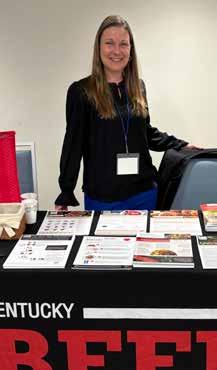

Jake Harrod Program Coordinator, Kentucky Beef Network
The Kentucky Beef Network and the University of Kentucky Extension are pleased to announce a special opportunity for Kentucky cattle producers: Free Beef Quality and Care Assurance (BQCA) certification during the entire month of March 2026.
The BQCA program was developed specifically for Kentucky’s cattle producers by merging the Kentucky Beef Network and UK’s Cattle Handling and Care Program with the national Beef Quality Assurance (BQA) program. This unique combination goes one step further to provide a holistic program for Kentucky producers, by adding cattle handling and animal care components to the training modules. While BQA focuses on national best management practices, the Kentucky BQCA program adds additional components on cattle handling and animal care, tailored to the needs of Kentucky producers.
The program’s training modules provide producers with valuable knowledge on best management practices for handling cattle, ensuring their well-being and protecting the safety of the producer. It also reinforces the principles of producing a safe, high-quality beef supply for consumers. By participating, producers are better equipped to raise cattle responsibly, enhance product quality and strengthen consumer confidence in Kentucky beef and dairy products.
Normally, enrollment in the BQCA program costs $5 for in-person training through a local county extension office or $10 for online training. However, from March 1-31,2026 , the Kentucky Beef Network and UK Extension will sponsor all enrollment fees, making certifications completely free during this promotional period.
Kentucky producers have two convenient ways to take advantage of this offer:
• Online: Visit www.kybeefnetwork. com, click on the Beef Quality & Care
Assurance (BQCA) tab, and complete the certification course. When purchasing the course, enter the free code and make sure to hit apply code. The free code is: BQCA2026100off.
• In-Person: Contact the county extension office to learn about upcoming, local BQCA training opportunities.
Kevin Laurent, UK co-BQCA coordinator, expressed excitement about the opportunity, stating, “We are very excited for this partnership for our Kentucky cattlemen to continue to tell their story to consumers through sound management practices.”
The goal of the BQCA program is to help producers succeed in today’s market by emphasizing cattle well-being, safe
handling and responsible management practices. In addition to improving the safety and quality of the beef supply, BQCA certifications build producers’ credibility with buyers, improve product quality and strengthen consumer confidence.
Producers are encouraged to take advantage of this opportunity to complete their certification at no cost. Whether this will be their first time taking the course or they are just renewing, March is the perfect time to do it. Producers will walk away with practical, sciencebased knowledge they can put to work on their farm right away—and it won’t cost anything.
For more information, visit www. kybeefnetwork.com or contact a county extension office.
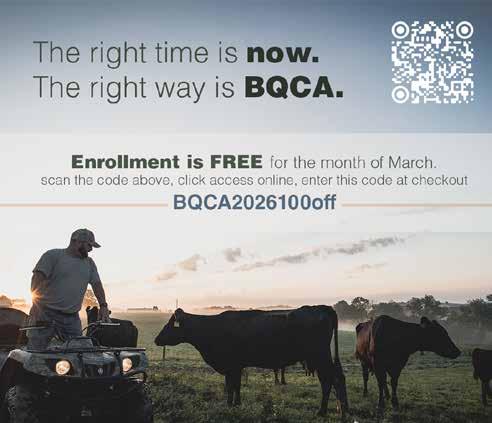


FACILITATORS
Ben Lloyd Whitesville, KY (270) 993-1074 benlloyd0223@gmail.com
Charles Embry Cave City, KY (270) 646-5939 dale.embry@yahoo.com
Cody Burke Frankfort, KY (606) 748-4641 cody.burke2019@gmail.com
Jacob Settles Springfield, KY (859) 805-0724 jacob.settles4@yahoo.com
Samantha Stamm Wallingford, KY (606) 748-7772 sastamm14@outlook.com
Ron Shrout Winchester, KY (859) 397-5151 shroutron@aol.com
This spring marks 70 years since work began at Eden Shale Farm. The following article was written in 1961 by O.D. Hawkins, the farm’s first manager.
Dan
Miller Industry Coordinator, Kentucky Beef Network


In April 1953, a group of farmers and professional agricultural workers met to discuss the need for and the possibilities of getting our University College of Agriculture to establish a test demonstration farm in the Eden Shale soil area. The Eden Shale area includes parts of 32 counties, patterned somewhat like a horseshoe around the central bluegrass counties of Woodford, Fayette, and Jessamine, with the major part of the area in the northern part of the state. This area is commonly known as the Hills of the Bluegrass.
At our first meeting those present agreed unanimously that, since the Eden Shale type of soil is very different from all other soils and is located only in this particular part of Kentucky, there was a great need for the University College of Agriculture to do more work in the Eden Shale soil area than had been done.
A farmer committee met with Dean Frank J. Welch, of the University of Kentucky College of Agriculture
and Home Economics and his staff and obtained from them the opinion that there was a need for a test demonstration farm located in the Eden Shale area. It was agreed that if a farm could be made available to the university, the university would operate it as a test demonstration farm. After this, an organization was set up to raise donations to purchase a farm.
After two years’ work by the organization, a fund of approximately $60,000 was raised. Donations were made by many farmers and other persons, farm organizations, and businesses with agricultural interests, and a gift was also made by the governor of Kentucky from his special state fund.
In the summer 1955, a farm containing of 891.96 acres was bought and deeded to the commonwealth. Since then, an additional 47.7 acres has been bought by the state, making a total of approximately 940 acres.
In the fall 1955, the university started
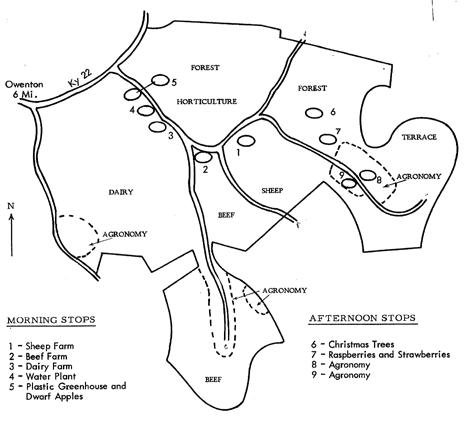
putting the farm in operation; however, very little work got under way until spring 1956. It had already been decided, since the farm was in such a rundown condition, that in order to have houses for people to live in, barns, forage, water and fences for livestock, roads to get around on, it would be necessary to put into effect somewhat of a hurried-up program for the first few years.
As farm manager, I want to tell you some of the things that have been done here on the Eden Shale Farm in the last 5.5 years, in addition to the special work being done in livestock, agronomy, horticulture, entomology, forestry, farm management and soils.
The work includes over 400 acres of land has been cleared of bushes and rocks and seeded to meadows or pastures. A central water system has been installed, furnishing pure water to our houses, livestock barns and to some pasture. One new five-room house has been built. Four other houses have been renovated, including bathrooms. A dairy barn, a beef cattle barn and a sheep barn have been built. Three upright silos and one bunker silo have been built. Six barns used for tobacco, storage and livestock have been completely renovated, and one new tobacco barn has been built. A plastic greenhouse and several other small buildings, such as garages, storage buildings and farm office have been constructed. Two and half miles of all-weather roads have been built. Three farm ponds have been dug; also a small lake measuring 2.5 acres of surface with 20 feet of water depth has been constructed. Approximately 3,000 rods (9.4 miles) of new fence have been built, all the wood posts having been cut on the farm. We grow more than 8 acres of burley tobacco each year and put up forage for our livestock, which at the present time is about 125 animal units. Even though a lot of work has been going on here at Eden Shale Farm, I like to think that we are just about ready to get started toward the objective for which the farm was intended. We now have, I think, our “tents pitched,” and I hope that in the coming years the Eden Shale Farm will be of great service to the farmers of the Eden Shale area.
Dear Cow Country News Reader,
My name is Whitney Peck, and I am honored to serve as this year's Kentucky Junior Cattlemen's Association president. Over the past three years, I've had the privilege to hold various positions on this board, and I am excited and humbled to step into this leadership role. Our KJCA board is filled with hardworking, extremely passionate individuals who are dedicated to creating new and better opportunities for junior members across the state. We are excited to announce the return of the Annual Cattle Working Contest, which is extra exciting this year since we also will be hosting the national contest. This year, the contest structure has been updated to include qualifying events on March 13, 20 and 27, leading up to the state contest on May 1. Utilizing their Beef Quality and Care Assurance certification, this contest allows youth to showcase their skills and knowledge within the industry.
Additionally, we are pleased to bring back the annual KJCA Fall Classic, one-of-a-kind cattle show that provides junior members with a variety of opportunities beyond the show ring. Competitions such as sales talk, photography, ad design and more will be available. We are incredibly grateful to Western Kentucky University’s L.D. Brown Expo Center for hosting us once again from Oct. 2-4. This event holds great significance for our board of directors, who work tirelessly each year to ensure its success.
Our second year of the Kentucky Junior Cattlemen’s Points Program was a great success, and we are eager to see the applications we get this year! This self-monitored program allows members to track their involvement in the beef industry throughout the year. At the end of the season, members will submit their portfolios, and the top participant from each age category, along with the top county, will be recognized at the Kentucky Cattlemen’s Association Convention in January.
We also began our inaugural year of Herd Hangout, an event designed to provide our younger members the opportunity to become more aware of all aspects of the beef cattle industry. Younger members got the opportunity to interact with KJCA board members and participate in various activities on the topic of how they can be involved in the beef industry in the future.
We are eager to see how our association continues to grow in the coming year. If you or someone you know is interested in getting involved, more information can be found on the Kentucky Cattlemen’s Association website at www.kycattle.org. Stay connected with us on Facebook, Instagram, and Cow Country News to follow the incredible achievements of our members within the Kentucky beef industry.
Sincerely,
Whitney Peck, KJCA President
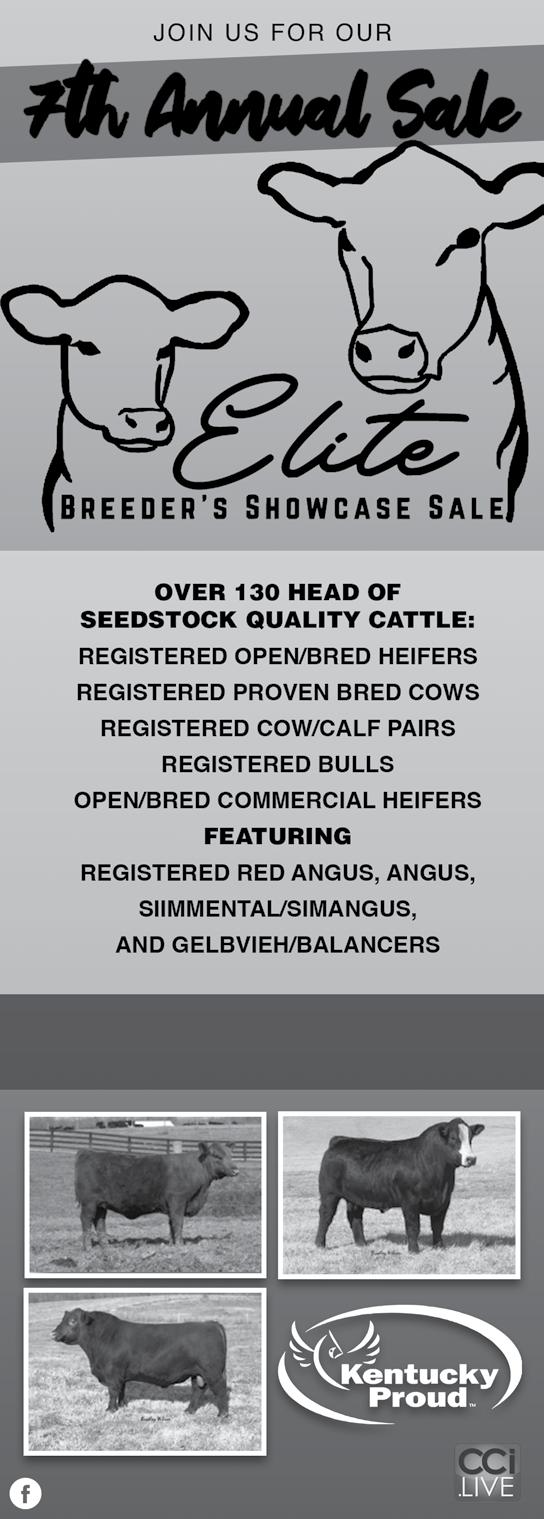


Toby & Debby Dulworth 2492 S. Kirkman Road LaCenter, KY 42056 (270) 224-2993 • dogwood@brtc.net Herefords that thrive on forages. www.dogwoodherefords.com

Codee Guffey • 1815 Grassy Springs Road Versailles, Kentucky 40383 (502) 598-6355 rockridgeherefords@gmail.com www.rockridgeherefords.com
Tony & Kathy Staples
992 Knotts Road
Brandenburg, KY 40108
(270) 945-9277
(270) 422-4220
tstaples@bbtel.com
Registered Polled Herefords
HANSELL PILE, JR.
12045 St. John Rd.
Cecilia, KY 42724
270-735-5192
12 miles West of Elizabethtown
Shannon,
40th Anniversary of the Kentucky Beef Expo March 6-8 Kentucky Exposition Center Louisville, Kentucky.
Hereford Sale Show: March 6th 1pm • Hereford Sale: March 7th 2:30pm
KHA Certified Hereford Influenced Feeder Calf Sale May 18
Polled Herefords
439 Flatwoods Frozen Camp Rd, Corbin KY 40701
Bobby & Brenda Wells (606) 344-0417 wells_farm@yahoo.com
WELLS FARM

Polled Herefords 439 Flatwoods Frozen Camp Rd, Corbin KY 40701
Bobby & Brenda Wells (606) 523-0569 or (606) 344-0417 wells_farm@yahoo.com
Kevin, Angela, Kenlea & Kyler Murray (606) 528-1691 or (606) 682-8413
Toby & Debby Dulworth 2492 S. Kirkman Road LaCenter, KY 42056 (270) 224-2993 dogwood@brtc.net
Herefords that thrive on forages. www.dogwoodherefords.com

6077 Helena Road Mayslick, KY 41055
6077 Helena Road Mayslick, KY 41055
Charlie Boyd II • 606-584-5194 cboyd2@maysvilleky.net www.boydbeef.com
Charlie Boyd II 606-584-5194
Annual Bull Sale second Saturday in March Hereford and Angus Bulls
Annual Bull Sale second Saturday in March Hereford and Angus Bulls
Hereford Farms
Brad, Carla, Clay & Clint Chambliss 1101 Driftwood Lane
Brad, Carla, Clay & Clint Chambliss 1101 Driftwood Lane
Elizabethtown, KY 42701
Elizabethtown, KY 42701
Home (270) 982-3905
Home (270) 982-3905
Cell (270) 668-7126 fax 270-735-9922
Cell (270) 668-7126
fax 270-735-9922
www.chamblissherefordfarms.com
www.chamblissherefordfarms.com
Registered Polled Herefords Bulls & Females for sale
WCN Polled Herefords
Since 1961
Tim & Peggy Wolf
Bill Norris 2220 Celina Road
12939 Peach Grove Road Alexandria, KY 41001
Burkesville, KY 42717
Home: 859-635-0899
Phone (270) 433-7256
Cell: 859-991-3484
Cell (270) 433-1525
“Every calf needs a white face”

Peyton’s Well Polled Herefords
The Lowell Atwood Family 133 Edgewood Drive • Stanford, KY Luke: (606) 669-8121 Beth: (606) 669-2178
Victor-
President: Chris Hopper 606-584-7842
Kevin, Angela, Kenlea & Kyler Murray (606) 528-1691 or (606) 682-8413
Dale Stith 5239 Old Sardis Pike Mays Lick, KY 41055 dalestith@yahoo.com (918) 760-1550
Registered Polled Herefords PAUL L. HANCOCK 8559 KY 56 Owensboro, KY 42301 270-771-4194 270-314-9758
Registered Polled Herefords PAUL L. HANCOCK 8559 KY 56 Owensboro, KY 42301 270-771-4194

Jackson Farms
Secretary/ Treasurer: Melinda Watson 859-625-8660 melindawatson8660@gmail.com
5239
• 502-686-0522
Mays Lick, KY 41055 dalestith@yahoo.com (918)
• 859-625-8660 melindawatson8660@gmail.com
K3 CATTLE REGISTERED HEREFORDS KYLE BUSH K3CATTLE@YAHOO.COM 859-588-4531
K3 CATTLE REGISTERED HEREFORDS
KYLE BUSH
K3CATTLE@YAHOO.COM 859-588-4531
198 HICKS PIKE CYNTHIANA, KY 41031
198 HICKS PIKE CYNTHIANA, KY 41031

Polled Hereford and Gelbvieh Cattle 3459 KY Hwy. 1284 E. Cythiana, KY 41031 (859) 234-6956
Polled Hereford 3459 KY Hwy. 1284 E. Cythiana, KY 41031
Ben (859) 421-7902
Ben, Jane, Shelby and Lincoln
Lincoln (859) 954-0102
Noah (859) 462-2428
Tony Brandenburg, tstaples@bbtel.com
Registered Polled Herefords PO Box 215 Cross Plains, TN 37049
Registered Polled Herefords PO Box 215 Cross Plains, TN 37049 615-478-4483
615-478-4483
billymjackson@aol.com
billymjackson@aol.com
“Farming the Same Land Since 1834”
“Farming the Same Land Since 1834”
Eric & Ronnie Thomas 2396 Union City Rd. Richmond, KY 40475 (859) 623-5734
Eric & Ronnie Thomas 2396 Union City Rd. Richmond, KY 40475
Eric’s Cell (859) 314-8256
Eric’s Cell (859) 314-8256
“Cattle for sale at all times”
“Cattle for sale at all times”
Jackie D. Perkins II 367 Mt. Pisgah Rd. Bremen, KY 42325 (270) 543-3586
Jackie D. Perkins II 367 Mt. Pisgah Rd. Bremen, KY 42325 (270) 543-3586
Breeding to produce good cows since 1981
Breeding to produce good cows since 1981
12 miles

Registered Polled Herefords

Bulls & Females for sale
Tim & Peggy Wolf 12939 Peach Grove Road
L. Wayne Beckley • 1420 Fitchburg Rd. Ravenna, KY 40472 • 606-723-3021 Cell: 859-779-0962
Alexandria, KY 41001
Home: 859-635-0899
Cell: 859-991-3484
L.W. Beckley D.V.M 284 Pyrse Lane • Irvine, KY 40336 Cell: 859-779-1419 • Clinic: 606-726-0000 www.beckleyherefords.com

BECKLEY HEREFORDS
“Breeding Polled Herefords for over 58 Years”
L. Wayne Beckley • 1420 Fitchburg Rd. Ravenna, KY 40472 • 606-723-3021 Cell: 859-779-0962
L.W. Beckley D.V.M

Tucker Stock Farms
284 Pyrse Lane • Irvine, KY 40336
Cell: 859-779-1419 • Clinic: 606-726-0000 www.beckleyherefords.com
Breeding cattle for sale at all times. 1999 Walnut Hill Rd. Lexington, KY 40515 (859) 271-9086 cell (859)533-3790
Matt, Melinda, Harlee, & Wyatt Watson 6196 Mount Sterling Rd Flemingsburg, Kentucky melindawatson8660@gmail.com
Matt - 606-748-1600
Melinda -
“Breeding Polled Herefords for over 58 Years” Breeding cattle for sale at all times.
“Registered Angus and Polled Herefords”
1999 Walnut Hill Rd. Lexington, KY 40515 (859) 271-9086 cell (859)533-3790
John Tucker II 1790 Hidden Valley Lane Hudson, KY 40145 270-617-0301
“Bulls always for Sale”
BOYD BEEF CATTLE
6077 Helena Road
Mayslick, KY 41055
Charlie Boyd II: (606) 584-5194
Blake Boyd: (606) 375-3718 www.boydbeef.com cboyd2@maysvilleky.net
BURTON & SONS ANGUS
Joe D. or Karen Burton


480 Hominy Hill Rd. Nancy, KY 42544
Joe: (606) 305-3081
Located 15 miles West of Somerset • klburton01@windstream.net
Bulls & females sold private treaty. Inquiries Welcome. Sell only what we would buy. Data driven since 1981.
FALL CREEK ANGUS
448 Corder Farm Road
Monticello, KY 42633
Ronnie Corder (606) 348-6588
HILL VIEW FARMS
Jimmy Gilles 5160 Lee Rudy Road Owensboro, KY 42301 (270) 929-5370 jcgilles86@gmail.com
APS ANGUS
4040 Taylorsville Rd
Taylorsville, KY 40071
Gordon Schubert
502-477-2637 • 502-548-8440
Anne Patton Schubert 502-477-2663 • 502-548-2359

TWIN CREEK FARM
HILL VIEW FARMS
BURKS CATTLE CO.
President: Anne Patton Schubert
Vice President: Tom McGinnis
Secretary/Treasurer: Shayna Gibson
927 Old Liberty Pike • Hustonville, KY 40437 (859) 238-0771 • www.branchviewangus.com
James S. & LuAnn Coffey, Donald & Donna Coffey
Annual Production Sale- 2nd Saturday in April
James S. & LuAnn Coffey, Donald & Donna Coffey Annual Production Sale- 2nd Saturday in

531 Rick Rd.
Park City, KY 42160
Eddie Burks • (270) 991-6398 www.burkscattle.com

COFFEY ANGUS FARMS
661 Hopewell Road Liberty, KY 42539
www.burkscattle.com
Matt Coffey: (270) 799-6288
Dewey Coffey: (606) 706-2699
Genetics for Maximum Profitability since 1984

GREAT MEADOWS ANGUS ASSOCIATION
Bulls & females sold private treaty. Inquiries Welcome. Sell only what we would buy. Data driven since 1981.
Dale Brown, President 292 Pea Ridge Road Stamping Ground, KY 40439 859-940-8437
COFFEY ANGUS FARMS
661 Hopewell Road Liberty, KY 42539
www.greatmeadowsangus.com
Matt Coffey: (270) 799-6288

SALES: 3rd Saturday in October • 4th Saturday in April
Dewey Coffey: (606) 706-2699
Genetics for Maximum Profitability since 1984
DAVIS BEND FARMS
LYNN CREEK FARMS
2315 Davis Bend Road
Kris and Sara Lynn 2184 Bardstown Rd Springfield KY 40069 573-721-6663
Canmer, KY 42722
timmothyljeffries@gmail.com www.davisbendfarms.com Tim: (270) 528-6605 • Leslie: (270) 528-6435

FALL CREEK ANGUS
SMITHLAND ANGUS FARM
4437 East Hwy 80 Russell Springs, KY 42642
448 Corder Farm Road Monticello, KY 42633 Ronnie Corder (606) 348-6588
Henry Bryan, Melissa, Bryanna and Blane Smith 606-271-7520 bmsmith@duo-county.com
HAMILTON ANGUS FARMS
Eddie Hamilton 2142 Stilesville Road Science Hill, KY 42553 edjohami@aol.com (606) 271-1286 Bulls and Females for Sale
PLEASANT HILL FARMS
PLEASANT HILL FARMS

DUTCH CREEK ANGUS FORAGE GENETICS
LYNN CREEK FARMS Kris and Sara Lynn 2184 Bardstown Rd Springfield KY 40069 573-721-6663
Doug and Susan Schlosnagle (502) 706-0008
DutchCreekAngus.om
MT. MORIAH ANGUS FARMS
Bob, Kathy, Rob, and Janna Clark (859) 748-5558 1446 Kennedy Bridge Rd. Harrodsburg, KY 40330
Bob: (859)339-2610 • Rob: (859)612-1594 mtmoriahfarms1@gmail.com www.mtmoriahangus.com
HERITAGE FARM
Tom McGinnis 1024 Hinkle Lane • Shelbyville, KY (502) 633-1634, home (502) 633-5100, work (502) 655-0164, cell
FOUR KINGS ANGUS
250 Bright Leaf Dr. • Harrodsburg, KY 40330
Cary & Kim King Carymking@yahoo.com • fourkingsangus.com

jacob.tamme@gmail.com www.tammevalley.com

Cary Cell: (859) 613-3734 • Colby Myers - Purebred Manager
OLD BARK FARM
OLD BARK FARM
370 Ferrill Hill, Buffalo, KY 42716
Kenley Conner (502) 905-7825
370 Ferrill Hill, Buffalo, KY 42716 Kenley Conner (270) 735-5324
Cattle
Registered Angus Cattle
TRIPLE D ANGUS
Nathaniel & Darla Denham
Nathaniel(Bub), Sarah, (606) 423-2457 • (606) tripledangus.com
TRIPLE D ANGUS
Nathaniel & Darla Denham

Nathaniel(Bub), Sarah, Ashley Denham (606) 423-2457 • (606) 875-0780 tripledangus.com
CANNON ANGUS
Shawn, Melissa, Devin & Dylan Gibson (270) 337-3072 or (270) 692-5304
(606) 375-3718
Dennis & Emily 270/337-2128 or 270/402-4338
Jimmy Gilles 5160 Lee Rudy Road Owensboro, KY 42301 (270) 929-5370 jcgilles86@gmail.com
RANDOLPH FARM
JOHNSON FARMS ANGUS

6550 Highway 330 Owenton, KY 40359
Gil, Mary, Corbin, Caroline, and Catherine Cowles 500 Rockfield Richpond Road Rockfield, KY 42274 (270) 843-9021 • Fax (270) 843-9005
HERITAGE FARM
Located 7 miles west of Bowling Green, 1/2 mile off Hwy 68/80
Gil, Mary, Corbin, Caroline, and Catherine Cowles 500 Rockfield Richpond Road Rockfield, KY 42274 (270) 843-9021 • Fax (270) 843-9005 Located 7 miles west of Bowling Green, 1/2
TAMME VALLEY FARM
Angus Bulls & Females Slaughters, KY
Carter Randolph: (513) 543-4343
Keith: (270) 635-0723
Nick Sarky: (513) 262-9846 patty@randolphfarmoperations.com
Reese: (270) 635-1137
Registered Black Angus Bulls & Females Available Sold Private Treaty. Inquiries Welcome.

SMITHLAND ANGUS FARM 5202 East Hwy 80, Russell Springs, KY 42642
Charles “Bud” & Pam Smith: (270) 866-3898
Jacob Tamme, Owner-Operator (859) 583-7134 jacob.tamme@gmail.com www.tammevalley.com & Find us on Facebook!
Tom McGinnis 1024 Hinkle Lane • Shelbyville, KY (502) 633-1634, home • (502) 633-5100, work (502) 655-0164, cell KENTUCKY ANGUS ASSOCIATION MEMBERSHIP APPLICATION
Henry & Melissa Smith: (270) 866-2311

Return to: Shayna Gibson 1535 Fallen Timber Road New Castle, KY 40050 • Annual Dues $35
Mary Jayne and Victoria Cannon 4619 Cherry Grove Rd Flemingsburg, KY 41041 606-748-5420 www.cannonangusfarm.com


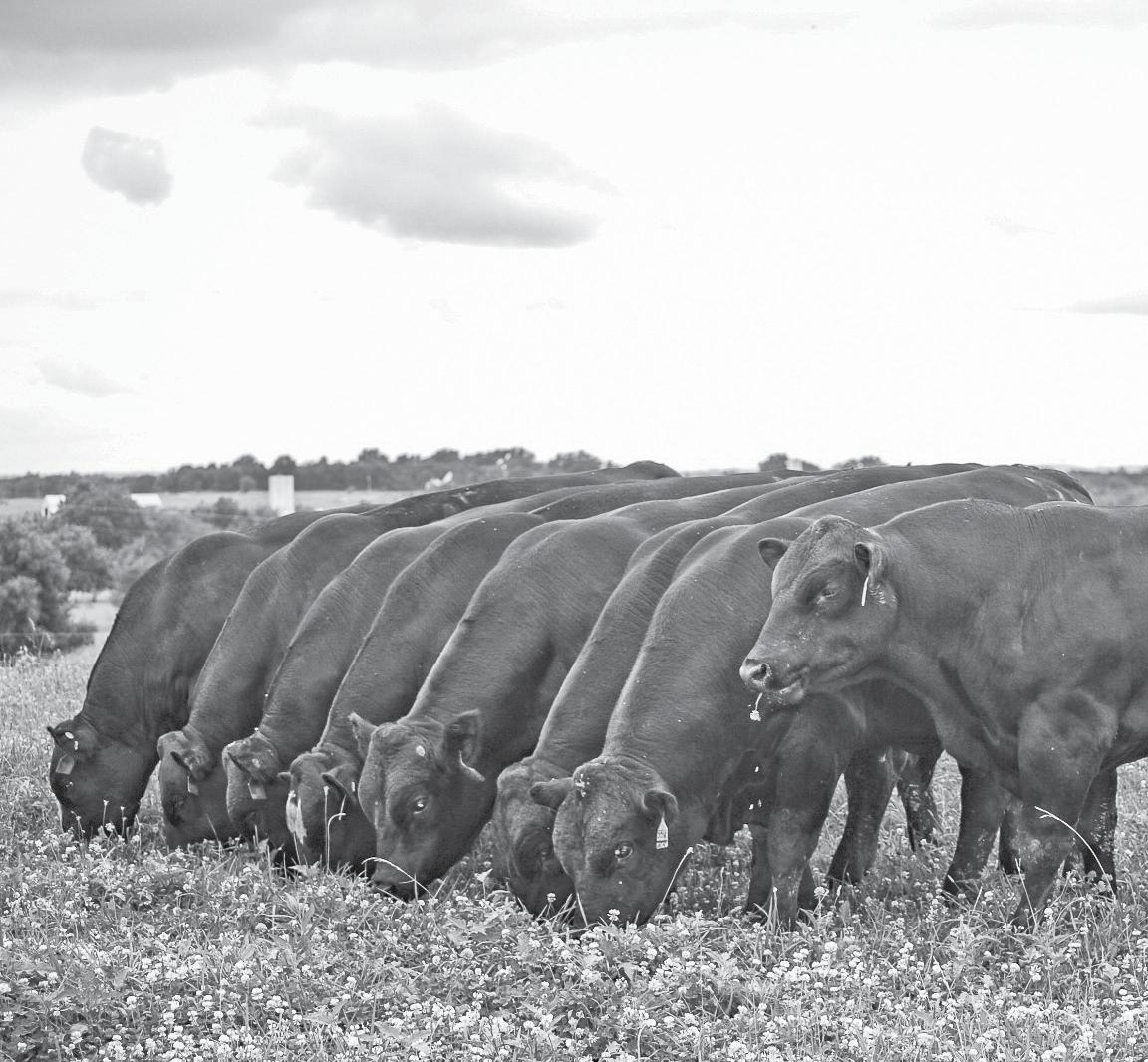
KEVIN AND RACHEL BARRON
Crestwood, Ky
(502) 905-5851
rkbarron812@gmail.com

SWAIN SELECT SIMMENTAL 12113 Green Valley Dr. Louisville, KY 40243 swainselect.com swainselect@gmail.com facebook.com/swainselectsimmental

Fred & Phyllis: 502-599-4560 Chi & Angie: 502-287-2116
JUDY AND RONDAL DAWSON
1156 Buzzard Roost Road Shelbyville, KY 40065 502-593-5136 • jrdawson22@outlook.com

JEROD METZGER • 270-779-6260
ROCKING P LIVESTOCK 8308 Orangeburg Road Maysville, KY 41056
Chan: 606-584-7581
Keith: 606-584-5626
rockingplivestock@maysvilleky.net
BRIAN & HEATHER SWAIN 3906 Pottertown Road Murray, KY 42071 • 270-293-4440
wksbswain@murray-ky.net


SIMMENTAL AND SIMANGUS BULLS FOR SALE
1939 Huntertown Road
Versailles, KY 40383
BULLS FOR SALE
Chris Allen 859-351-4486
callenuky@hotmail.com
Dr. Henry Allen 859-229-0755


Modern-day ranching requires more information to produce better animals. International Genetic Solutions works across breeds to provide more accurate head-to-head comparisons and maximum profitability.
IGS incorporates generations of data and the world’s largest multi-breed database to enable more powerful breeding decisions than ever before.
Better cattle. Better profits.

BRET AND LAURA JACKSON 859.533.3718 or 859.707.7200
BRET & LAURA JACKSON Paris, Kentucky (859) 533-3718 (859) 707-7200

AA LAND & CATTLE
Registered Gelbvieh & Balancers
Daryl Derossett, President..................................................................................................................(270) 670-6232
Cynthiana, KY
LARRY CLARK & SONS LLC
Registered Gelbvieh Cattle
Johnnie Moore, Vice President...........................................................................................................(270) 670-7814
Luke Arthur (859) 298-8323
106 Clark Houk Road • Greensburg, KY 42743
Pat Tilghman, Secretary/Treasurer.......................................................................................................(270)
luke.arthur93@gmail.com
Bulls • Show Prospects • Embryos Bulls sell with GE EPD’s • Show Prospects
Larry Clark, Owner & Operator (270) 299-5167 • (270) 405-6848
Lpclarkandsons@msn.com
Barry, Beth & Ben Racke • Brad Racke • 7416 Tippenhauer Rd. • Cold Spring, KY 41076
BAR IV LIVESTOCK
Barry, Beth & Ben Racke • Brad Racke
CLIFFORD FARMS
Phone (859) 635-3832 • Barry cell (859) 991-1992 • Brad cell (859) 393-3677 • Ben cell (859) 393-3730 Fax (859) 635-3832 • bar4@twc.com
7416 Tippenhauer Rd. • Cold Spring, KY 41076
Phone (859) 635-3832 • Barry cell (859) 991-1992
3459 KY HWY 1284E
Cynthiana, KY 41031
CD FARMS
Brad cell (859) 393-3677 • Ben cell (859) 393-3730 Fax (859) 635-3832 • bar4@twc.com
Clayton & Debbie Cash 1214 Ottawa School Road • Brodhead, KY 40409 (606)-308-3247 • (606)-758-8994
BEE LICK GELBVIEHS
Since 1937 (859) 234-6956
BRIAN W. DYER, DVM
Gelbvieh-Balancer Bulls & Heifers For Sale by Private Treaty
Eddie Reynolds 277 Old Bee Lick Rd. Crab Orchard, KY 40419
BRIAN W. DYER, DVM Owner/Manager
606-379-2281(H) 606-305-1972(C)
GELBVIEH/BALANCERS
Bulls & Females for sale
2050 Glasgow Road • Burkesville, KY 42717
Owner/Manager
GELBVIEH/BALANCERS
2050 Glasgow Road Burkesville, KY 42717
Brian, Lauren, Kristen Barry, Emily & Julia (270) 864-5909
Brian, Lauren, Kristen Barry, Emily & Julia • (270) 864-5909
FULL CIRCLE FARMS
Registered Gelbvieh Cattle
Gary & Pat Tilghman • Carrie & Daryl Derossett Family • Lindsey & Garland Gilliam Family 690 Lick Branch Road Glasgow, KY 42141 270.646.7024 • pleasantmeadowsfarm@hotmail.com
Registered Gelbvieh & Angus cattle for sale
CD FARMS
R&D OWEN FARMS
Brad Burke 989 Metcalf Mill Road • Ewing KY 41039 (H) 606-267-5609 • (C) 606-782-1367 gbb789@windstream.net


GELBVIEH & BALANCERS
Clayton & Debbie Cash 1214 Ottawa School Road Brodhead, KY 40409 (606)-308-3247 • (606)-758-8994
East Bernstadt, KY 606-843-6583
PO Box 781 • Eddyville, KY 42038 (270) 601-6830 • rdowenfarms.com • sales@rdowenfarms.com
Gelbvieh-Balancer Bulls & Heifers
For Sale by Private Treaty
AA LAND & CATTLE
Registered Gelbvieh & Balancers Cynthiana, KY Luke Arthur (859) 298-8323 luke.arthur93@gmail.com
DONE WRIGHT CATTLE FARMS
Casey Wright, Owner 2665 Poplar Corner Road • Lebanon, Kentucky 40033 270-692-7496 * donewrightcattle@hotmail.com
Bulls • Show Prospects • Embryos Bulls sell with GE EPD’s • Show Prospects
Saturday May 15
cell 606-309-4662
Black Replacement Heifers & Bulls Available Embryo transplant & AI sired calves
LARRY CLARK & SONS LLC
Registered Gelbvieh Cattle 106 Clark Houk Road • Greensburg, KY 42743
MOCKINGBIRD HILL FARMS
Registered Gelbvieh Cattle
Larry Clark, Owner & Operator (270) 299-5167 • (270) 405-6848
Lpclarkandsons@msn.com

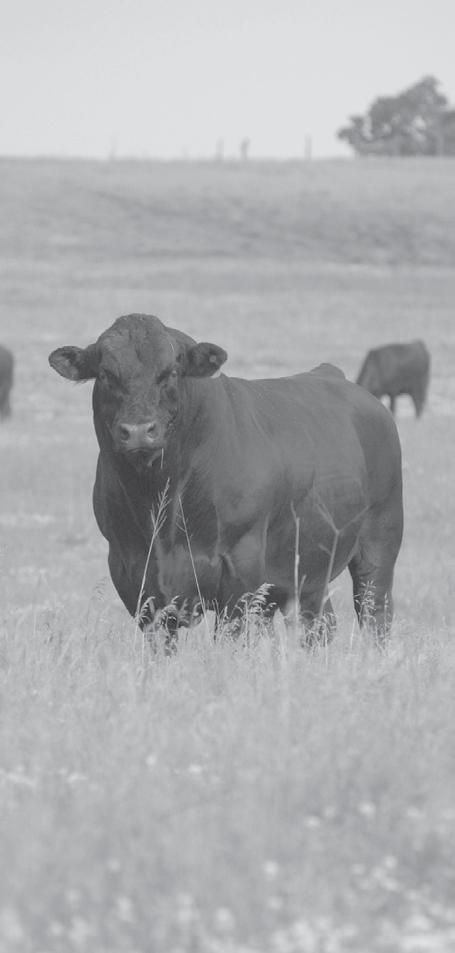
S&S GELBVIEH
ASHWOOD SPRING GENETICS
Kentucky Junior Gelbvieh Show & Learning Clinic
BAR IV LIVESTOCK
Shane Wells 10172 Provo Rd. Rochester, KY H: 270-934-2198 C: 270-791-8196 swells@logantele.com
BREEDING RED & BLACK POLLED GELBVIEH SINCE 1982
Barry, Beth & Ben Racke • Brad Racke 7416 Tippenhauer Rd. • Cold Spring, KY 41076
McIntosh Brothers Farm • 3348 Frankfort Road • Georgetown 10AM Learning Clinic • 12:30PM Show
Luke & Lindsay Arthur Cynthiana, KY 859-298-8323
CLIFFORD FARMS
BRIAN W. DYER, DVM Owner/Manager GELBVIEH/BALANCERS 2050 Glasgow Road Burkesville, KY 42717
David, Jerri & Jon David: 162 Hastings Ln • Fredonia, KY 42411 (270) 556-4259 Arthur & Joyce Slaughter 19068 Marion Rd • Fredonia, KY 42411 (270)545-3455
Phone (859) 635-3832 • Barry cell (859) 991-1992 Brad cell (859) 393-3677 • Ben cell (859) 393-3730 Fax (859) 635-3832 • bar4@twc.com
Call William McIntosh for more information. (502) 867-3132
3459 KY HWY 1284E Cynthiana, KY 41031 Since 1937 (859) 234-6956
Brian, Lauren, Kristen Barry, Emily & Julia (270) 864-5909

Friday May 28 - May 30
FULL CIRCLE FARMS REGISTERED GELBVIEH CATTLE
BAR IV LIVESTOCK
BEE LICK GELBVIEHS
AGJA Eastern Regional Junior Show “Run for the Roses” Burley Fields Livestock Center • 709 Oil Fields Road • Horse Cave
Cattle for sale at all times.
Brad Burke: 989 Metcalfe Mill Rd, Ewing, KY 41039 (H) 606-267-5609 (C) 606-782-1367 gbb789@windstream.net
BRIAN W. DYER, DVM
Eddie Reynolds
Barry, Beth & Ben Racke • Brad Racke 7416 Tippenhauer Rd. • Cold Spring, KY 41076
277 Old Bee Lick Rd. Crab Orchard, KY 40419
Call Carrie Derossett for more information. (270) 404-0828
606-379-2281(H) 606-305-1972(C)
Registered Gelbvieh Cattle
Owner/Manager
GELBVIEH/BALANCERS
PLEASANT MEADOWS FARM

Bulls & Females for sale
Entry and room information available at www.gelbvieh.org (Juniors/Regional Shows/AGJA Eastern Regional)
Phone (859) 635-3832 • Barry cell (859) 991-1992 Brad cell (859) 393-3677 • Ben cell (859) 393-3730 Fax (859) 635-3832 • bar4@twc.com
Gary & Pat Tilghman
2050 Glasgow Road Burkesville, KY 42717
Lindsey Tilghman Jones Family
HEDGESPETH LIVESTOCK GELBVIEH/BALANCER CATTLE-COMMERCIAL HEIFERS 543 Pleasant Run Church Road • Campbellsville, KY 42718 sam.hedgespeth@gmail.com • Sam-270.299.5449 Seth-270.932.1615 Dan-606.686.1679 Andrew-270.405.1990
BEE LICK GELBVIEHS
PADON FARMS
Eddie Reynolds 277 Old Bee Lick Rd. Crab Orchard, KY 40419
606-379-2281(H) 606-305-1972(C) Bulls & Females for sale
GELBVIEH BULLS & FEMALES FOR SALE 1012 Shelby Road • Salem, KY 42078 Thad Padon (270) 836-5518
BRAY’S GELBVIEH CATTLE
Niles & Betty K Bray 1568 Bray Ridge Road Bedford, KY 40006 (502) 255-3584
Brad Burke 989 Metcalf Mill Road • Ewing KY 41039 (H) 606-267-5609 • (C) 606-782-1367 gbb789@windstream.net
Carrie & Daryl Derossett Family 690 Lick Branch Road Glasgow, KY 42141 270.646.7024 • pleasantmeadowsfarm@hotmail.
Brian, Lauren, Kristen Barry, Emily & Julia (270) 864-5909

Registered Gelbvieh Cattle
Frank McAninch 1341 Iven Godby Road Liberty, KY 42539
Brad Burke 989 Metcalf Mill Road • Ewing KY 41039 (H) 606-267-5609 • (C) 606-782-1367 gbb789@windstream.net
606-787-0120 richhillfarm@windstream.net

PERFORMANCE TESTED PUREBRED ANGUS
BULLS FOR SALE Call 270-202-7186 for more info or check out www.oakhollowangus.com for current availability.
POLLED HERFORD BULLS FOR SALE
19–20-month-old Polled Hereford bulls. Good selection. Low birthweight, medium frame. Free Delivery Available. JMS Polled Herefords, Knifley, KY Danny 270-566-2694 Trent 270-566-2000
RED FULLBLOOD LIMOUSIN BLACK
PUREBRED LIMOUSIN For sale year-round at farms. Cows, bulls, heifers and semen. A C H Holdings, Bowling Green, KY • Stephen Haynes 270-799-8685
BREEDING AGE HEREFORD BULLS FOR SALE AT ALL TIMES Over 60 years of Line 1 Hereford Genetics. Groups of open and bred heifers available for sale at all times. Chambliss Hereford Farms. 270-668-7126
DIAMOND J SALERS
Donald Johnson • 11660 N. Hwy 1247 • Eubank, KY 42564 606-379-1558
DIAMOND J SALERS
WILLIS FARMS
Donald Johnson • 11660 N. Hwy 1247 • Eubank, KY 42564 606-305-8747
Danny Willis • 964 Johnson Rd • Frankfort, KY 40601 • 502-803-5011 drwc21@aol.com • Purebred + Optimizer Breeding bulls & Heifers for sale.
DEL-SU FARM
WILLIS FARMS
Howard & Sue Edwards • 420 Rose Rd • Somerset, KY 42501 606-679-1675 • Jeriah Privett • 606-416-1154
Danny Willis • 964 Johnson Rd • Frankfort, KY 40601 502-803-5011 • drwc21@aol.com
KNOB LICK FARM - BULLS & HEIFERS FOR SALE
Larry Cox • Tina Cox-Lynch • Amanda Cox Gibson • 1315 Knob Lick Road • Irvine, KY 40336 • 606-723-3077 • 606-975-1716
$15 FOR FIVE LINES OR GET A BOX THIS SIZE FOR $105 CALL KATIE PRATT (859) 278-0899
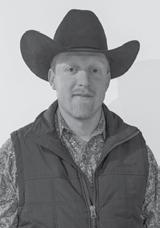
RED ANGUS, SIMANGUS, CHAROLAIS, ANGUS FOR SALE Red Hill Farms, Lafayette, TN, 615-666-3098 Bart, Sarah and Ty Jones Gordon and Susan Jones, 270-991-2663
Visit us online - www.RedHillFarms.net Contact us for cattle and semen availability. Annual Production Sales: More Than a Bull Sale – 3rd Saturday in March • Maternal Monday – 3rd Monday in May • Bulls & Females of Fall Sale – Last Saturday in October
REGISTERED ANGUS YEARLING BULLS
DNA-enhanced EPDs • Calving Ease & Growth, BQA • In April-May, Females, Heifers and Pairs Available. Metropolis, IL, 618-638-7693, www.bremerbrothers.com
BULLS FOR SALE Angus and Lim-Flex Bulls. Yearlings to 2-years-old. Delivery available. Call or text 270-589-7999
REGISTERED BLACK ANGUS BULLS & HEIFERS FOR SALE EPDs Available. Randolph Farm, Owenton, KY (513) 262-9846 www.randolphfarmky.com
HOT MARCH DEALS:
Esch no till 5607-5610-5612 in stock
Artex S 200 vertical beater
3245-3954 Meyer manure spreaders
Manure spreaders-15 in stock
Tye7 ft $15,000
John Deere 4230-$25,000
Farmco feeders- tmr feeders
Artex-200-350-600 -in stock
15 ft plant right - no till drill- new Silage wagons- stock up for spring
Roto Grinder 760-$15,000
Lancaster Hammer mills -in stock
Horning roller mills in stock
Charlie B. Edgington 859-608-9745

Jeff Lehmkuhler Extension Professor, University of Kentucky
Recently I participated in a meeting at the Madison County Extension office to discuss confinement beef cattle. The increase in land pressure and current cattle prices has led to a renewed interest confinement barns. We did our first cattle confinement meeting in 2014 in which Alfredo DiCostanzo, University of Minnesota Extension beef professor at the time, Carla Jenkins, University of Nebraska, and Steve Fogleson of Black Gold Feedlot shared information on confinement beef management. In December 2023, we held a second meeting in Elizabethtown where University of Kentucky specialists covered a variety of topics. Working with local Kentucky farms, we also had three virtual video tours of different beef cattle confinement operations. Given the interest in these facilities I thought I would share a few things regarding beef cattle in confinement that I have pieced together over the 30 years of being around beef confinement barns.
First, I believe that one of the best things anyone can do before deciding to construct a confinement facility is to line up some farm visits. The best information comes from those managing these facilities daily. Schedule stops at a variety of different barn types that include hoop, monoslope and gable-roof barns. Before you make the trip, sit down and develop a list of questions so you are efficient and leave with answers. Below are a few things you may wish to ask and certainly this is not a complete list, but these should get you started thinking about the questions you may need answered.
1. What is the square footage per animal, and what is the length of bunk space per animal?
2. What do you use for bedding, and how much bedding do you budget per animal?
3. How often do you clean out the barn, and how many acres do you spread the manure on?
4. What are the major cattle health issues?
5. What works well, and what would you change?
The spacing needs for beef cattle vary depending on the type and size of animal as well as barn type and bedding management. You can find a variety of information on the web and in resources. When I first started in my career, the “go-to” resource for beef cattle facilities was the information provided by the Midwest Plan Service Beef Housing and Equipment Handbook fourth edition printed in 1987. Recommended space allocation for bedded barns for feeder calves was 20-25 square feet per head and 30-35 square feet for finishing cattle. Later publications, such as the Iowa State Feedlot Systems Manual, increased the square footage recommendation to 40 square feet per head for bedded facilities. Iowa State later conducted a 3-year study with finishing cattle in hoop barns with square footage of either 40, 45 or 50 square feet. Statistically, there were no differences in cattle performance. However, numerically cattle daily gains (~ 0.25 lb/d increase) and feed conversions (~0.5 lb feed DM/lb gain less) were improved with increasing square footage. In my experience, increasing square footage up to 60 square feet per head for feeder calves reduces bunk competition and improves bedding management.
I always try to have producers visualize what spacing recommendations look like as I think many of us are visual learners. As an example, take a 600-pound calf and in your mind estimate how wide is the calf rib to rib and how long is the calf nose to tail? Grab a tape measure and begin pulling it out as you think about how long a 600-lb calf may be to 48 inches, 54 inches and then 60 inches. Researchers collected data for Angus and Hereford calves at weaning from 1983 through 1996 and reported body length from the point of shoul-
der to the pin bone (back hip bone) to be ~ 42 inches and the length from poll to nose was another 13 inches. This puts a weaned calf at 54 inches+ from nose to tail. Width at the top of the hips was only 12 inches, which is narrower than the widest point of the spring of ribs, especially in today’s cattle. We might estimate the width of the spring of ribs to be 18-24 inches. To make the math easy, 60 inches is 5 feet and 24 inches is 2 feet making the square feet for a feeder calf at weaning approximately 10 square feet. Research from mature animals puts lengths from shoulder to pin bone around 55 inches and I’ve seen numbers from nose to tail near 72 inches. Width at widest point of the spring of ribs could easily be 32-36 inches on mature cows. Again, using easy numbers a mature cow may be 6 feet long by 3 feet wide, which equals 18 square feet of area occupied by a standing cow.
If a feeder calf is only occupying 10 square feet why is the recommended barn square footage 40-60 square feet? Or for mature cows that are roughly 18 square feet, why would one need 85-120 square feet in a barn? We must think about animal movement as well as “communal areas”. The “communal areas” for cattle in confined spaces would be the feeding and waterer areas that cattle need access to and shouldn’t be forced lay in due to lack of space. We use the body dimension information again to say that a feeding lane would need to accommodate the length from point of shoulder to tail plus the width of at least two animals to pass behind an animal at the bunk. This would mean a minimum feeding alley width of approximately 10 feet for feeder calves and 12 feet for mature cows. The linear bunk space per animal would then need to be 18-24 inches for feeders and 30-36 inches for cows. The feeding area would then be near 20 square feet per head for feeder calves and 36 square feet for mature cows. Waterers may take another 20-40 square
feet for the pen. The cattle need open space to move among cattle laying down in a bed pack without stepping on them. Cows near calving need additional space to separate from the rest of the cows during parturition. So, the 20-36 square feet in the feeding area per animal, the waterer area, space between animals laying in a pack and then the actual area the animal occupies total up to make the spacing recommendations.
Construction of confinement cattle facilities is expensive. This leads one to desire to maximize the number of animals under the roof. However, I will just ask you to consider this one analogy. Are you more comfortable in an elevator where it is full where you are shoulder to shoulder, your back only a few inches from the front of the person behind you or are you more comfortable when the elevator is half full with an area a person would take
• Observe spring-calving cows closely. Check cows at least twice daily and firstcalf heifers more frequently than that. Be ready to assist those not making progress after 1-2 hours of hard labor. Chilled calves should be dried and warmed as soon as possible.
• See that each calf gets colostrum within an hour of birth or administer colostrum (or a commercial colostrum replacement) with an esophageal feeder, if needed.
• Identify calves with eartags and/or tattoos while calves are young and easy to handle and record birthdate and dam ID. Commercial male calves should be castrated and implanted as soon as possible. Registered calves should be weighed in the first 24 hours.
• Separate cows that have calved and increase their feed. Energy supplementation to cows receiving hay is necessary to prepare them for rebreeding. For example, a 1,250 lb. cow giving 25 lbs./day of milk would need about 25 lbs. of fescue hay and 5 lbs. of concentrate daily to maintain condition. If you need to go from a condition score of 4 to 5, you will need to add about 2 more lbs. of concentrate. Cows must be in good condition to conceive early in the upcoming breeding season.
• Watch for calf scours! If scours become a problem, move cows that have not calved to a clean pasture. Be prepared to give fluids to dehydrated calves. Consult your veterinarian for advice and send fecal samples to diagnostic lab to determine which drug therapy will be most effective. Try to avoid feeding hay in excessively muddy areas to prevent contamination of the dams’ udders.
• Continue grass tetany prevention. Be sure that the mineral mix contains high levels (~15%) of magnesium and that cows consume adequate amounts. You can feed the UK Beef IRM High Magnesium mineral.
• Plan to vaccinate calves for clostridial diseases (Blackleg, Malignant Edema) as soon as possible. You might choose to do this at the prebreeding working in late April or early May.
• Obtain yearling measurements on bulls and heifers this month (weight, height, pelvic area, scrotal circumference, ultrasound data, etc.) if needed for special sales. Heifers should be on target to be cycling by the start of the breeding season.
• Prepare bulls for the breeding season. Increase feed if necessary to have bulls in adequate condition for breeding. Obtain a breeding soundness evaluation (BSE) on bulls, even if they were checked last breeding season. Only use bulls that pass the BSE.
• Finalize plans for your spring breeding program. Purchase new bulls at least 30 days before the breeding. Order semen now, if using artificial insemination.
up open between you and the next person in the elevator allowing you to easily move around?
For more information on confinement cattle facilities be sure to look for our Mid-South stocker virtual farm tour videos and other videos on YouTube as well contact your local county extension office. You can also reach out to me, and I’ll help the best that I can to answer questions you may have.
• Bull(s) should be away from the cows now!
• Plan to pregnancy check cows soon. Contact your herd veterinarian to schedule. You can also blood test for pregnancy as early as 30 days after bull removal.
• Creep feed calves with grain, byproducts, or high quality forage. Calves will not make satisfactory gains on the dam’s milk alone after about 4 months of age – since there isn’t much pasture in March, fall calves need supplemental nutrition. Consider creep grazing on wheat pasture, if available. Calves can also be early weaned. Be sure that feed bunks are low enough that calves can eat with the cows.
• Calves intended for feeders should be implanted.
• Consider adding weight and selling your fall calves as “heavy” feeder calves. Keep them gaining!
• Repair fences, equipment and handling facilities.
• If you have a dry, sunny day, use chainlink harrow to spread manure in areas where cattle have overwintered. This may be done in conjunction with renovation.
• Renovation and fertilization of pastures should be completed.
• Start thistle control. They can be a severe problem in Kentucky pastures. Chemical control must be done early to be effective.
• Watch for lice and treat if needed.
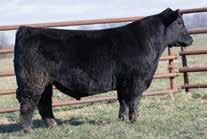
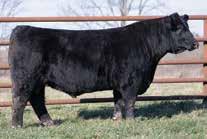
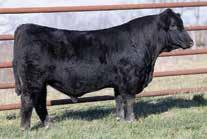
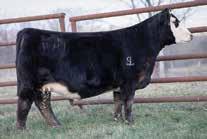
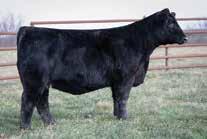




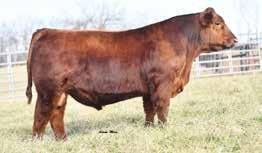
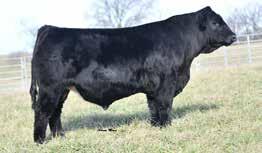
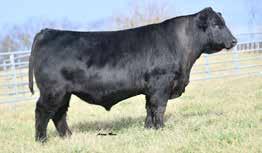
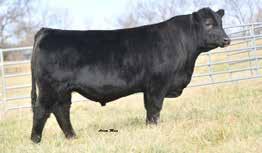
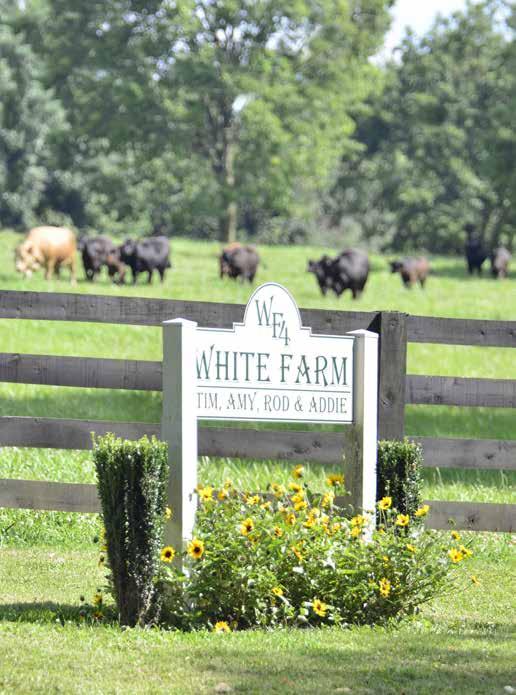

• 4587 has as unique an EPD and index package as you will find.
High calving ease with top 1% WW, 10% YW combined with an outstanding index profile: top 1% $C, $W, $M, 4% $G, 5% $B, 15% $F.
• 4587 rang all the performance bells, recording an 833 WW to ratio 121 with ratios of YW 114, IMF 149, RE 111.
• Upper percentile growth, carcass and performance with an outstanding set of maternal and management traits.
• Excellent set of indexes: Top 1% $F, 2% $B, 5% $C, $G, 25% $W with top 1% YW, 2% WW.
• 4620 range all the performance bells with ratios of WW 111, YW 109, GR 125, IMF 111, RE 110.
• Pathfinder dam, 6571, is one of the best cows we have owned. She shows progeny ratios of WW 5/113, YW 5/109, IMF 43/102, RE 43/102.
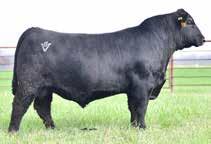
• Second high WW EPD bull in the sale at 105. Top 1% WW, YW, 3% IMF with a top set of indexes, 3% $C, $B, $W, 4% $G, 10% $F.
• 4599 rang all the performance bells with ratios of WW 112, YW 117, GR 119, IMF 144, RE 101.
• Dam maintains a calving interval of 3/345.
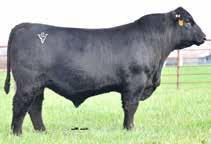
• Add pounds to your calf crop. Top 1% WW, 2% YW with a great set of indexes, top 5% $W, 15% $C, $F, 20% $B, $M, 25% $G.
• 5011 recorded a 765 WW and shows a 100 WW EPD.
• Dam maintains a calving interval of 2/334 with progeny ratios of WW 2/111, YW 1/116, IMF 1/101.