DESIGNED TO THRIVE
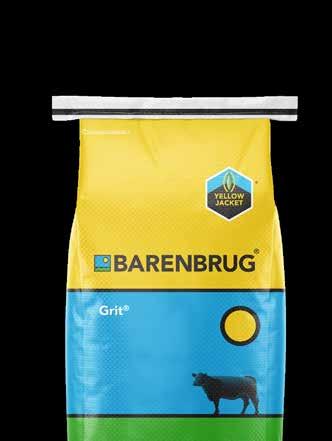
Struggling with pasture performance? Switch to Grit® powered by Yellow Jacket®, only from Barenbrug. This premium bermudagrass blend is designed to thrive in harsh conditions while delivering exceptional nutrition for your cattle. With improved forage quality and higher yields, you’ll save on feed costs and keep your herd healthier, stronger, and more productive year-round. Switch to Barenbrug premium forage grass seed. Scan the code to learn more.


ENTER TO WIN
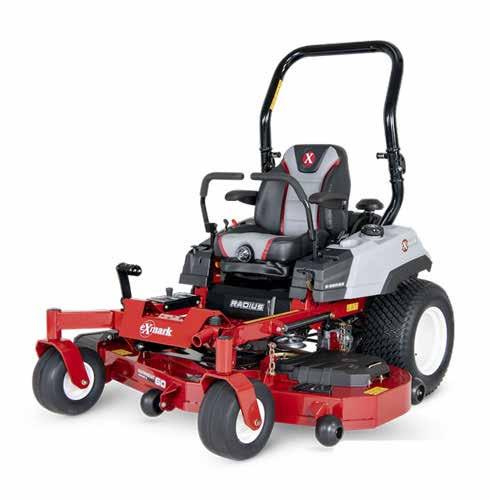
The Kentucky Cattlemen’s Foundation is raffling an Exmark Radius-S Series Zero Turn Mower generously donated by Equine & Ranch Rewards. This raffle will benefit Kentucky Cattlemen’s Foundation Leadership Development Program.
23.5 HP KAWASAKI FX730V V-TWIN 60” ULTRACUTTM SERIES 3 CUTTING DECK DUAL HYDRO-GEAR ZT3100 HYDROSTATIC TRANSMISSION WITH CHARGE PUMPS
1.5” TO 5.0” CUTTING HEIGHT IN 0.25” INCREMENTS • 9.0 MPH TOP SPEED 23 X 10.5-12 TIRES • 7.0-GALLON, SINGLE FUEL TANK • 4-YEAR OR 750 HOURS LIMITED CONSUMER/COMMERCIAL WARRANTY, 3-YEAR ENGINE WARRANTY • INTEGRATED REAR TOW HITCH + HEAVY-DUTY AIR CLEANER
Drawing will take place on October 2 at the WKU Ag Expo Center. Winner not required to be present to win. To purchase tickets, contact the KCA office at 859-278-0899, visit www.kycattle.org, scan the QR code above or mail form with payment to: Kentucky Cattlemen’s Association • Attn: Raffle • 176 Pasadena Drive • Suite 4 • Lexington KY • 40503

6
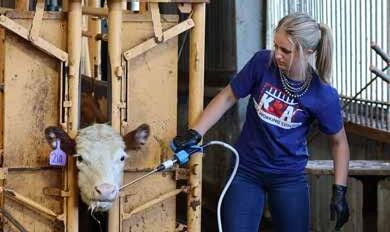
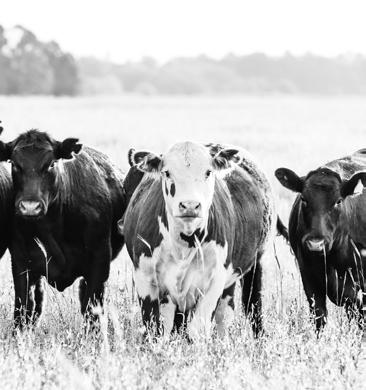
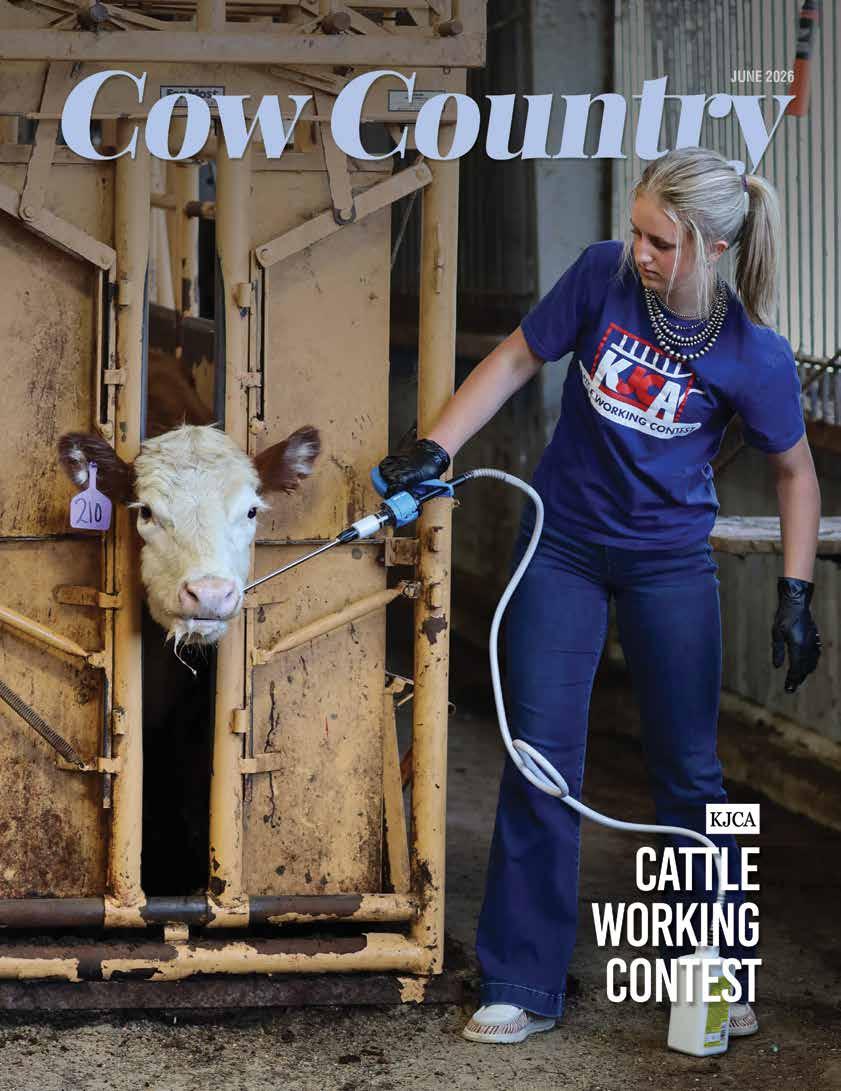
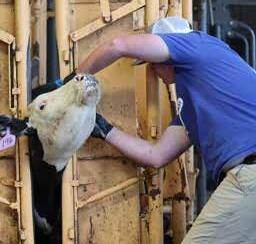
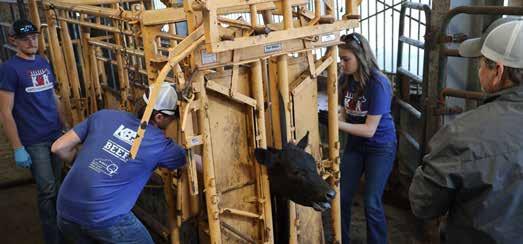
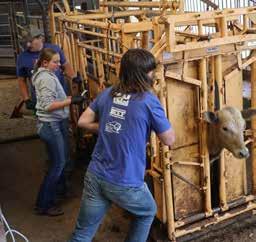
COVER PHOTO BY: Katie Pratt Hallie Hughes from Barren County FFA applies dewormer during the 2026 KJCA Cattle Working State Contest.

We utilized some of the very first genomic tests at weaning in May of 2014. That would put us among the earliest adopters of the technology in the industry. From our earliest adoption, we were genomic testing the entire calf crop and turning in all the data. It has always been paramount that they are used in conjunction. Not long after that, we decided to test the entire cow herd. If memory serves me, the tests were $75 each. That was over $20,000 in DNA testing on animals we already knew were productive contributors to the gene pool, and at the time,the cattle market was in free fall. It was also a technology many were still unsure of. It was not a decision to be taken lightly. The amount of money we have spent on DNA testing over the last twelve years would buy a pretty good farm. It didn’t pay for a farm, but it built a really good cow herd that can.
While we have always been on the cutting edge of data collection and genomic evaluation in our seedstock herd, I have had a hard time wrapping my mind around how to incorporate it into commercial producers’ toolboxes. The power of the breed associations supported the seedstock tests, but questions remained about where the phenotypic data supporting the commercial product and its reliability. Concerns about commercial data have been quieted, but I still had a hard time justifying the additional expense. I simply didn’t know how to apply it to achieve the same ROI we saw on the registered side.
For years, I viewed commercial genomic testing as data to inform commercial heifer retention decisions. Prior to simple DNA collection at birth, it could be logistically very difficult to obtain the information back and have it digested by weaning. I have all the information in the world about our cattle population. The top 25% and bottom 25% of heifers are easy to identify and select. We could probably still do that using only phenotype data. However, even with the extensive information at my fingertips, I might as well flip a coin on the middle 50% of the heifer crop. If I had a hard time applying the information, I could never figure out a way to implement it in a way that made sense for the average Kentucky producer. Like with the registered side, a commercial herd with several hundred head, the application and value were
obvious. In a typical herd in the southeast, I wasn’t so sure.
It finally dawned on me that the best use isn’t necessarily selecting the replacement female. Where it can really help you make progress in your herd is by identifying what you need to improve. Udders, feet, heifer fertility, hair shed, maintenance requirements, and longevity are all unbelievably important to those of you reading this from fescue country. Those traits are also very hard to evaluate before breeding spring replacement heifers for the first time. There is way more variability among half-siblings in those traits than you may think, and genomic testing can pick it up.
The best use of commercial genomic tests is to help you mate the replacement heifers to the best bull to address the deficiencies they have. There are so many traits we can now select for that all cattle have known deficiencies in some areas. That is exactly how I use it in our own mating decisions. When you evaluate your set of replacement heifers prior to breeding using genomic testing, you know whether the bull you buy or breed AI to needs to fix feet, hair shedding, or any of the countless other traits we can now select for. You know what you need to prioritize in your bull selection. The value in commercial genomic testing is not in selecting the best replacement female in the pen but in using it as a tool to create a better pen of replacement females.
Joe K. Lowe II
EXECUTIVE COMMITTEE
OFFICERS:
President
ALLAN BRYANT Eminence
President Elect
DANIEL HAYDEN Whitesville
Vice President
RYAN MILLER Campbellsville
Treasurer
KEN ADAMS Upton
Past President
RANDY WARNER Sharpsburg
KCA Program Chairman
ADAM CHUNGLO Harrodsburg
KBC Chairman
WAYNE ZOGLMANN Lewisport
KBN Manager
AMY WHITE Lexington
Beef Solutions Manager*
DANIEL HAYDEN Whitesville
*ex officio
REGIONAL DIRECTORS:
REGION 1
Chris Milam, John Mark Brown, Dale Gold, Greg Roberson, Gary Woodall, Lincoln Pyle, Susan Zoglmann, Bill Plemmons, Kenton Howard, Britny Williams, Conner Williams
REGION 2
Bryan Manion, Joe Lowe, Allison Nissley, Rayetta Boone, Sammy Boone, David Strater, Kelly Flanders, Andy Joe Moore, Adam Thomas, AJ Mitchell, Jonathan Murley, Kenneth Green, Robert Siddens, Josh Morris, Joe Mike Moore, Amy Cecil
REGION 3
Amanda Hall, Nathan Lawson, Allen Phillips, Stacey Burkhardt, John David Yount, Lincoln Clifford, Abbey Biddle, Ben Tinsley, Crystal Harrod, Phillip Douglas, Tanya Wilson, Craig Retzlaff
REGION 4
Jodi Purvis, Brad Reynolds, Chad Anglin, Phillip Stamm, Danielle Harmon, Brandy Graves, Kelsey Cooper, Bruce Witt, Ronnie Lowe, Logan Carter, Jason Crowe, Rob Amburgey
REGION 5
Phillip Reese, Cary King, John Settles, Natalie Wesley, Brandon Kelly, Freddie Harris, Brent Williams, Anne Bays, Tommy Glasscock, Josh Wethington, Arch Sebastian, Terry Mattingly
Meet Your 2026 KCA Board
Briefly tell us about your operation.
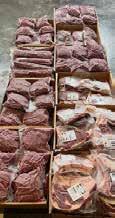
I have approximately 80 cows and I feed all calves to slaughter weights of 1,200-1,600 lbs. and sell all my cattle to the consumer (freezer beef). I raise all the corn and hay to feed them.
Why did you decide to run for state board?
I’ve been a director a couple or three times. I enjoy meeting all the people!
How many years have you served on the state board?
Not sure, a couple terms, maybe three terms!
What do you like the most about the Kentucky Cattlemen's Association?
The people and the industry information! The FACTS tours were the best! Visiting the ranchers and farmers! All the slaughterhouses and feedyards!
When you aren't taking care of your cows, what are you doing? I farm everyday all day long. Moore’s Family Farm is our meat business! We sell beef, pork, lamb every Saturday at our meat shop!
KCA PAST PRESIDENTS:
VOLUME 39 • ISSUE 6
Todd Brown Graphic Designer
Bradon Burks KBC Director of Education
Rachel Cain Membership and Communications Coordinator
Amelia Carter KBC Director of Industry Relations
Danny Coy Video Production Specialist
Jake Harrod KBN Program Coordinator
Dan Miller KBN Industry Coordinator
Debby Nichols National Advertising Sales, LAN
Katie Pratt Communications Manager
Becky Thompson Director of Kentucky Beef Network
Kelly Tucker KCA Collections & Compliance
Nikki Whitaker Director of Operations & Policy

President's Thoughts
Allan Bryant KCA President
I recently had the opportunity to travel to Washington, D.C. to meet with our lawmakers and advocate for legislation important to Kentucky beef producers. Two of the most significant pieces of legislation currently before Congress are the Farm Bill and the annual appropriations bill that fund government programs critical to agriculture. While the One Big Beautiful Bill addressed many priorities for cattle producers last year, several important provisions still need to be finalized through a comprehensive Farm Bill.
Additional issues I believe are important include passage of the Black Vulture Relief Act, maintaining current exemptions for livestock haulers, and funding research to better understand and control the Asian longhorned tick. Trips to Washington are always valuable because they help ensure the voices of Kentucky producers are heard by our congressional delegation. These conversations are essential to providing cattle producers with the certainty, tools and support programs needed to weather volatile markets, rising input costs and the ongoing challenges facing rural Kentucky. A timely Farm Bill is not only important for agriculture—it is vital to the future of family farms, rural communities and the long-term strength of the beef industry.
I also had the opportunity to go on the Kentucky Farm Bureau Beef Tour to Virginia. Virginia ranks 18th nationally in cattle inventory, with approximately 574,000 beef cows, and the areas we traveled through featured beautiful yet steep pastureland. During the tour, we visited a number of outstanding operations, including Whitestone Farm, Knight Cattle Corporation, Bracketts Farm, Quaker Hill Farm, Shenandoah Valley Ag Research & Extension Center, Huffman Livestock, Knoll Crest Farm, G&E Farms, Briar View Farm, Hillwinds Farm, Copenhaver Brothers
Farms, and Bottomley Evergreens & Farms. It was an excellent opportunity to see some of Virginia’s premier farms and learn from their operations. I might add that it was a common theme at just about every farm stop that there are fewer and fewer acres of farmland available due to urban sprawl.
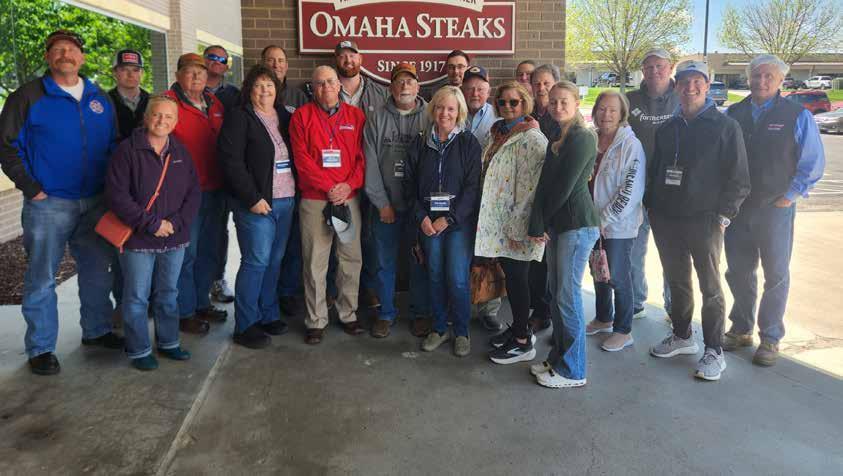
I also went on the Beyond the Bluegrass tour to Kansas and Nebraska. Stops included National Beef Leathers, the American Angus Association, Boehringer Ingelheim, Lienetics Ranch, Neogen GeneSeek, the University of Nebraska–Lincoln Feedlot Innovation Center, Champion Feeders, JBS and Omaha Steaks. This was an outstanding trip that provided valuable insight into several sectors of the cattle industry and was well worth the time invested.
So, when I wasn’t traveling, there was plenty of work to keep me busy
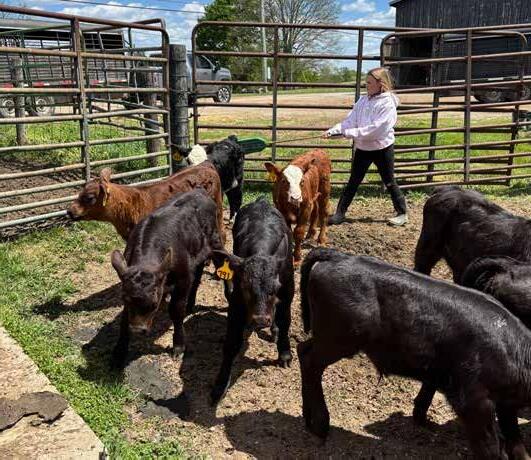
back home. Needless to say, but springtime is always a busy time on the farm. It’s the time we work our spring-calving cows and calves and move them to other farms until the calves are weaned in the fall. As part of this process, the entire family helps, and I am always grateful for those who step in to lend a hand. I am especially proud to see my great-niece, LauraLyn, take an interest in cattle She wants to be involved and help out. I’m certain that these are days she will never forget and memories she will cherish throughout her life growing up on the farm. It truly is a blessing to raise kids on our farms!
God Bless!
Kentucky Cattlemen’s Association President

Commissioner's Corner
Jonathan Shell Agriculture Commissioner
The months of May and June honor Kentucky’s 31,000 cattle farmers.
June is Dairy Month, and for more than 20 years, Kentucky’s official state beverage has been milk. May was Beef Month in Kentucky, which boasts the largest number of beef cattle east of the Mississippi River.
Few things are as refreshing or nutritious on a warm day as a tall glass of cold milk. With essential nutrients such as calcium, potassium and vitamin A, plus protein to help build and repair muscle tissue, milk is a great choice for many active people. Many foods are made with milk, such as butter, cheese, ice cream and yogurt. Summer officially starts June 21, so this month is the perfect time to celebrate dairy foods and the family dairy farms that produce them.
Milk and other dairy products ranked 10th among Kentucky’s leading agricultural commodities based on cash receipts at $192.4 million in 2024, the latest
numbers available. The state had 41,000 dairy cows in 2025, down slightly from the 43,000 in 2024 that produced 826 million pounds of milk, more than 20,000 pounds per head.
Each dairy cow in Kentucky produces an average of nearly 6.7 gallons of milk a day. Each cow generates an average of more than $13,700 in economic ripple effect each year for more than 300 licensed dairy farms across the commonwealth.
As for beef, Kentucky’s 862,000 head of beef cattle is the largest inventory east of the Mississippi River. The state’s 1.85 million cattle and calves were Kentucky’s top ag commodity in 2024 at $1.5 billion. Cattle prices are expected to remain strong and potentially peak, following last year’s high demand. Tight supplies and strong demand drove the market for much of 2025 with Kentucky cattle prices up 20-30% from the previous year. It’s predicted Kentucky’s anticipated strong livestock sector could help maintain overall cash receipts above $8 billion for 2025
with estimates of a record $8.5 billion for 2026.
The U.S. is the world's second-largest producer of beef, primarily high quality, grain-fed beef. Kentucky ranks 14th nationally for total cattle inventory with 1.82 million head and 10th in the nation for beef cattle. Kentucky is home to 31,060 beef cattle producers of the 69,400 total farms in the state.
January 2026 numbers for all cattle inventory are down slightly from last year, matching what’s happening nationally. The U.S. beef cattle reached a 64-year low in 2025. Several factors including low calf prices, high costs and drought across the county played a role in the declining inventory.
In contrast, the lower number of beef cattle has created a higher market demand and driven up the sale prices for farmers. The tight national cattle supply and higher market prices will likely contribute to higher agricultural receipts for the state.
So, with summer fast approaching, enjoy a steak, hamburger or other Kentucky beef product fresh off the grill along with a tall glass of cold milk in honor of our state’s cattle farmers.
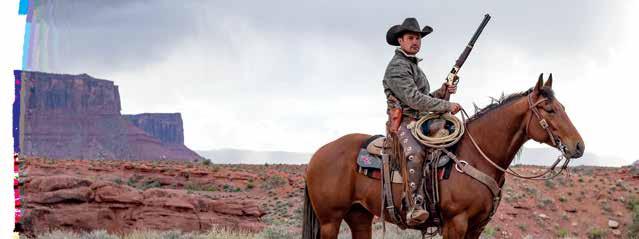
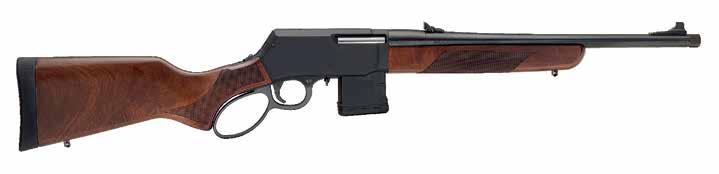
From garden to back pasture, Henry Repeating Arms builds firearms for the work ranch life demands. From keeping your land pest and predator free, to putting food on the table, and protecting what you hold dear, there’s a Henry built for it.
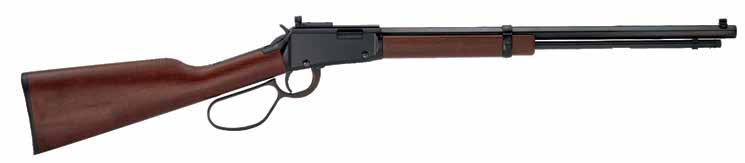
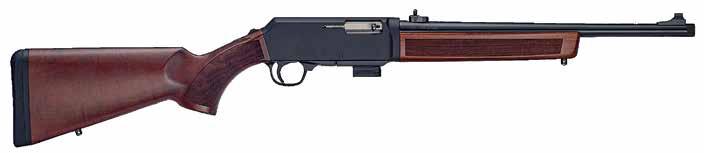
Carbine What’s Yours Remains Yours with this semi-auto carbine designed for home and property protection. 9mm – Glock/Sig/S&W Magazine Compatibility
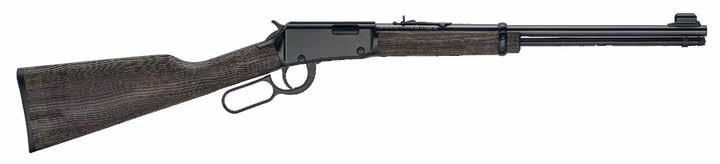


Tracker Rifle & Carbine Fast-handling rimfire rifles built for small game hunting and keeping varmints in check. .22 S/L/LR | .22 Magnum
Homesteader
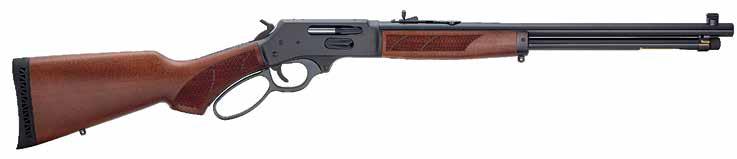
Provider Rifle A hard-hitting lever-action rifle made for dependable deer hunting. .30-30 Win | .45-70 Gov’t
Lever Action Supreme Rifle A modern lever-action rifle built for fast follow-up shots and the accuracy needed for predator hunting. .223 Rem/5.56 NATO | .300 BLK
Garden Gun A handy, easy-to-carry smoothbore rimfire built for close-range pest control around the garden, barn, and outbuildings. .22 S/L/LR | .22 Mag.

Thoughts From Dave
Dave Maples Executive Vice President
I got the opportunity to go on the Beyond the Bluegrass tour with a group of Kentucky cattlemen in April. This is only the second time that I have been able to participate in this event that is supported by the Kentucky Cattlemen’s Association. The program was rebranded a couple of years ago from the FACTS trip that was started back in the 90’s. I know it takes time and comes with a cost, but it was worth the time. The best part of the trip was getting to know the people that traveled with us. There was a wide range of people with various backgrounds as well as the age spread of the group. One of my favorites was Drew Shryock. Drew is an awesome young man, and it was fun watching him work.
Our flight was out of Louisville so several of us carpooled to the airport. I picked up Drew in Versailles. I had met Drew before through some of our
LANE ANDERSON (606) 303-4336
junior cattlemen programs, but I didn’t know him very well. This was a great opportunity to get to know him better. I found out that he went to prom the night before, and he showed me his pictures. I also found out that he had made business cards for the trip.
Drew’s granddad is one of the partners in S and B Cattle Company, one of the larger order buying companies in the country. Now that he has graduated high school, he has started working for the company. As we drove to Louisville, he was telling me about his work and that his job is to load the semi-trucks after the sales. Most often, this is a late afternoon- late night job in the back of cold, dark stockyards. He told me that waiting on the trucks was the hardest part.



JON ANDERSON (606) 305-8859
ALLEN ANDERSON (606) 872-8072

It was rewarding to me as I watched the young man work the crowd. He talked to the beef producers that were on the bus. I watched him have and in-depth conversation with Jack Drake and Josh Morris who were on the trip with us. Jack and Josh were with Bluegrass Hospitality Group (Malone’s, Drake’s and Harry’s restaurants). But the best was watching him give his business card to the manager of Champion Feeders, the 30,000-head feedlot that we visited. I know his granddad would have been very pleased if he could have watched him work.
Allison Charolais
My point is that you need to invest in the next generation. It is a good idea to get them a box of business cards and guide them to situations where they can learn.
We talk about succession planning but what better way to do it than a box of business cards and a trip to Nebraska with a group of cattle producers. KCA has several opportunities that our members and producers can take advantage of. You can learn something new, and you can actually do business with the people that you meet along the way. You just have to recognize the opportunities.
calves out of HCR Answer HCR SPIRIT 4007.
Ø Bull calves out of HCR Answer 2042 and HCR SPIRIT 4007.
Ø Bred for calving ease and growth.
Ø Bulls for both purebred and commercial breeders.
Ø Bred for calving ease and growth.
Ø Yearlings and two-year-olds available.
Ø Bulls for both purebred and commercial Ø Yearlings and two-year-olds available.
Ø Bred heifers to calve in fall available.
Ø Bulls for both purebred and commercial breeders.
Ø Bred heifers to calve in fall available.
Ø Yearlings and two-year-olds available.
Ø Bred heifers to calve in fall available.
Allison, Owner 545 Eminence Road New Castle, KY
Weed pressure in pastures? Don’t settle for one-size-fits-all control. The Alligare Range & Pasture portfolio gives you targeted solutions based on your weeds, grazing plans, and grass tolerance.
From selective control programs to brush management and integrated fertilizer + herbicide applications, Alligare delivers dependable performance where it matters most, in your pasture. ASK
BARREN COUNTY NEWS
Carol Spiegl
The April meeting of the Barren County Cattlemen's Association was sponsored by Barren County Judge Executive Jamie Bewley Byrd. Byrd informed the members of agriculture projects that will be coming to Barren County. She discussed the funding of the $20 million federal grant that was secured for the building of an ag expo center. Other agricultural projects that are in the planning stages include grain elevator and cold storage.
Chris Shalk, UK agriculture and natural resources extension agent discussed poison hemlock and the dangers it exhibits to humans and livestock.
Jonna Ford, Barren County High School FFA, talked about junior cattlemen and how kids can get involved.
MADISON COUNTY NEWS
Andrew Simpson
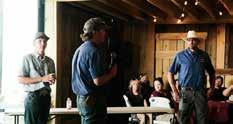
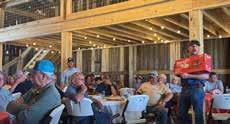
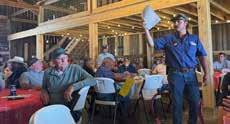
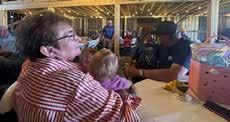
The Madison County Cattlemen’s Association held our annual Farm Field Day at Simpsons Farm Market and Venue. We always take this opportunity to a showcase a farm operation in the county. This year, we showcased how someone can use Kentucky Agricultural Finance Corporation funds to not only purchase property but to build their infrastructure program. Doing so, Andrew Simpson gave a brief speech along with Chris Cooper and a KAFC representative on the steps the Simpson family took to repurpose an old tobacco barn and diversify their operation. We also had a discussion around New World screwworm from Anthony Stephens, a Merck representative. Along with all that, the Kentucky National Guard set up their inflatables for the kids to enjoy. We also took this opportunity to start our first live auction to raise money for our scholarship program, which brought in nearly $2,000. The field day had 160 people in attendance, and we received a significant number of first-time memberships.
Submit your County Cattlemen's Association news to kpratt@kycattle.org
Submissions are due by the10th of the month prior to publication.
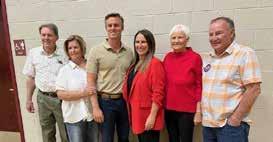
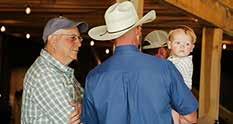
Barren County Judge Executive Jamie Bewley Byrd had several family members attend the meeting in support of her. They are from left Glenn Byrd, Judy Byrd, Daniel Byrd, Jamie Bewley Byrd, Theresa Bewley and Jimmy Bewley.
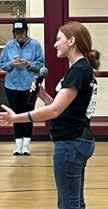
Jonna Ford talking to the membership about junior cattlemen.
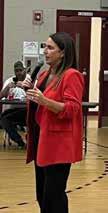
Jamie Bewley Byrd addressing the membership and discussing agriculture projects for Barren County.
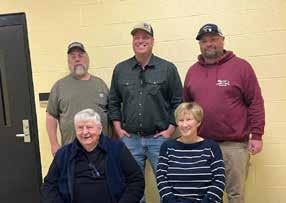
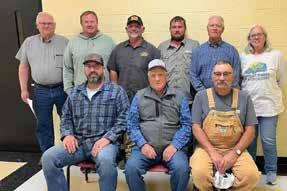
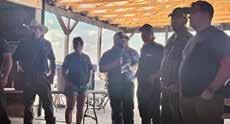
Barren County Cattlemen’s board of directors include from left front Tyler Stewart, Frank Rowland, Jim Guffey. Back row from left: Roger Smith, Hank Layton , Chuck Lyles, Jonathan Murley, Ken Wininger and Edie Siddens.
Barren County Cattlemen’s Association officers include from front row from left Don Wilson, treasurer and Carol Spiegl, reporter. Back row from left Robert Siddens, secretary, Josh Morris, president and A.J. Mitchell, vice president.
Burks Champions Tomorrow’s Leaders in Beef J O I N
Kailyn R.
The nod of encouragement to the Kentucky Junior Cattlemen’s Association board president before she steps onto stage at convention; a “nice job, kiddo,” to an exhibitor as they exit the showring at the KJCA Fall Classic; and the thousands of intentional conversations with producers and educators each year. Although they may seem ordinary, these moments are adding up to an extraordinary impact rippling through the Bluegrass today.
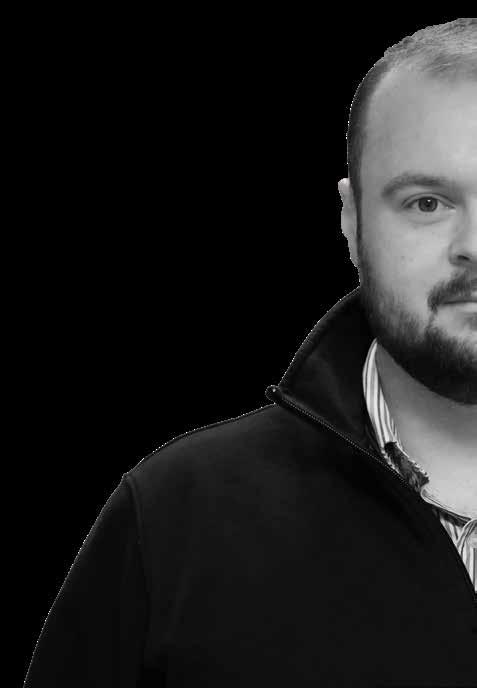
As the Kentucky Beef Council director of education, Bradon Burks fills a unique role that bridges two key pillars of Kentucky’s beef industry. “We’re a two-hat state,” he explained. “Our association and beef council run out of the same office, but they are completely separate. While the association supports membership and junior cattlemen’s events, the beef council is funded through the Checkoff, where $2 from every beef sale in Kentucky goes to support the promotion, research and education of beef products.”
Burks’ heart for educating the public about beef and equipping an entire generation with the tools they need to succeed stems from his roots and those who did so for him. His earliest memories come wrapped in the sights and sounds of a Hereford-Angus operation in south-central Kentucky.
“My first words were ‘moo cow’,” he recalled with a grin. “I grew up showing all kinds of livestock. We started with goats because they were less slobbery than cattle, but cattle have always been our focus.”
The early years he spent showing and raising livestock were a formative foundation in responsibility, patience and stewardship. You can hear it in his voice when he talks about good livestock, but what lingers is the pride in seeing
Stokes Oklahoma State University Student
something thrive, which is just as true for people as it is for livestock.
In every event, conversation and program, he hopes to increase the demand for beef through educational initiatives, whether that’s professional development for educators or youth leadership programs to educate young people about the industry and provide them a look into potential careers.
“Bradon has a way of connecting people to the beef industry that feels natural,” said Macey Thompson, retired KJCA president. “Whether he’s talking with an educator, a producer or a member at their first event, he meets them where they are and helps them see how they can fit into the bigger picture of the industry.”
Burks’ true measure of success is not in numbers or event attendance; it is in the relationships he builds. He hopes people know he genuinely cares about who they are and what is best for them, wherever they’re headed in life. If he knew he could connect someone to their next step, he would make a phone call without hesitation.
“The second something goes left, he is the first person to check up on us, and do whatever he can,” said Callie Derossett, KJCA reporter. “I think that is just a testament to his character and not just developing us as young professionals for the beef industry, but also just as our biggest cheerleader.”
When it comes to preparing young leaders, Burks is clear about the challenges ahead.
“One of the
biggest issues young people face today is accessibility,” he said. “It’s not just about having those who want to be in agriculture, but about giving them real opportunities early on, whether that’s being on tractors or helping to make decisions about bulls or seed varieties. We have to get kids involved. Not just as spectators, but as active participants.”
He points to the KJCA as an example of this philosophy in action. “Juniors run it,” he said. “People say, ‘Bradon, you do a great job,’ but I’m not really doing it, I’m just empowering our kids. They know what needs to be accomplished, and while I may let them productively struggle, I am never going let them fail.”
Burks’
commitment to guiding young leaders while giving them room to grow is a philosophy that shapes every program he touches. Behind the scenes, he focuses on building experiences that challenge juniors to step up, think critically and take ownership of their roles.
“What sets his programs apart from others, is the intentionality behind them,” said Ty Jones, retired KJCA director. “Bradon emphasizes everything we do is intentional, and we can make something meaningful out of almost nothing.” Jones also credits Burks for opening doors that might have otherwise stayed closed.
“I’ve sat in on planning meetings with some of the most influential people in Kentucky agriculture, and Bradon made sure I had a seat at the table, and that kind of opportunity is priceless,” Jones said.
It’s this myriad of intentional mentorship, strategic vision and genuine care that marks Burks’ impact across the state. Burks’ commitment goes beyond organizing events or delivering programs. He cultivates a culture where young people feel seen, heard and empowered. He knows firsthand leadership isn’t something simply handed down; it’s earned through experience, trial and sometimes, failure.
“There’s something
powerful about letting kids make their own decisions,” Burks reflected. “I want them to learn what it means to succeed, but also what it means to stumble, get back up and keep moving forward. That resilience, that grit, is what builds leaders.”
This philosophy shapes how he guides the Kentucky Junior Cattlemen’s Association.
“We don’t just tell the juniors what to do,” he explained. “We give them the tools and space to create, plan and lead. My role is to support, encourage and step in when they need help, not to take over.”
Such empowerment creates ripples across the industry. As these young leaders grow into adults, they carry the confidence and skills he helped nurture. They will soon become mentors themselves, advisors on boards, innovators on farms and ambassadors for beef in communities across Kentucky and beyond.
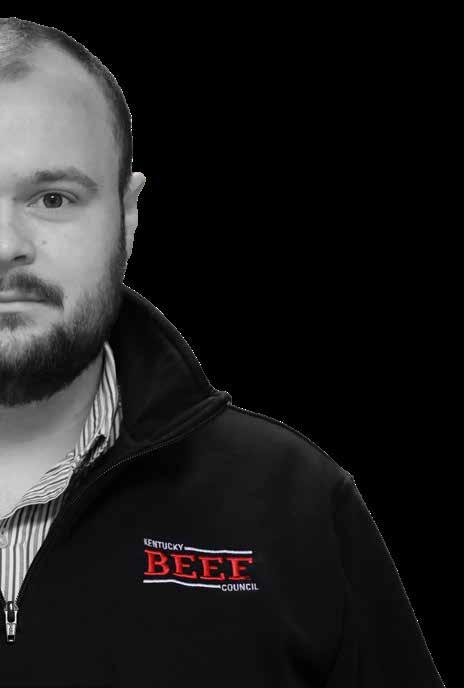
“He’s the kind of mentor who doesn’t just help you while you are a member of the association, but one that sticks around forever,” Thompson said. “He believed in me when I couldn’t believe in myself and gave me the confidence to do things I never thought I could.”
Beyond the youth programs, Burks’ work with educators helps multiply his impact exponentially. By equipping teachers with resources and knowledge about beef and agriculture, he ensures classrooms across Kentucky become places where the next generation can connect with the industry in meaningful ways.
“Teachers are powerful allies,” Burks said. “If we can give them the right tools, they can inspire hundreds of kids, kids who may never set foot on a farm, but will grow up appreciating where their food comes from.”
His dedication to education also reflects a broader vision: strengthening the beef industry by building bridges between producers and consumers, tradition and innovation and generations past and future.
Those who work alongside Burks know his passion runs deeper than a job title.
“I know for a fact he would do anything to help any of us,” Jones said.
At the heart, Burks’ work goes right along with his word when he says, “people join people.” Through encouragement, stewardship, mentorship and genuine care, he is forging a stronger and brighter future for Kentucky’s beef industry.
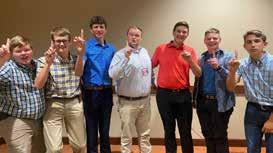
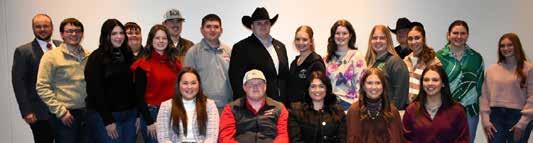
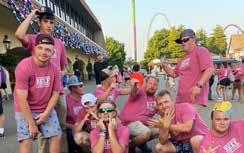
Youth Beef Leadership
program and
showcase how his impact is rippling through countless lives within the Bluegrass and beyond. After graduation, she hopes to pursue a career in the livestock industry educating, developing and telling the stories of tomorrow’s leaders in beef, ensuring that generations of young people to come are afforded the same opportunities she was given to thrive.
about the author: Born and raised on a cow-calf and registered ranch-horse operation in the heart of Western Kentucky, Kailyn Stokes’ passion for the beef cattle industry and the people in it was ignited by the legacy her “Uncle Jim” is creating. Today, she is rising senior at Oklahoma State University, pursuing degrees in agricultural communications and animal science. Having been deeply impacted by the Nebraska
Symposium
Bradon Burks’ mentorship, she wrote this story to
NEBRASKA

Rachel Cain KCA Membership and Communications Coordinator
The third annual Beyond the Bluegrass Ag Industry Tour took place in April. The purpose of this tour is to educate Kentucky’s emerging leaders and producers on segments of the beef industry that occur after cattle leave their farms. A great group of Kentucky producers spent the week exploring Nebraska and surrounding states and learning about various aspects of the beef industry.
This year’s trip was made possible by our incredible sponsors. Thank you to Bluegrass Hospitality Group for
being our primary sponsor! We had the pleasure of being joined by Josh Morris, chief operating officer of Drake’s, and Jack Drake, market partner of Malone’s. Thank you again to Bluegrass Hospitality Group for continuing to be a fantastic partner to the beef industry! Thank you to Farm Credit Mid-America for their continued support of the tour. We were happy to have Austin York from the Bowling Green office join us this year.
We began our trip in St. Joseph, Missouri, where we toured National
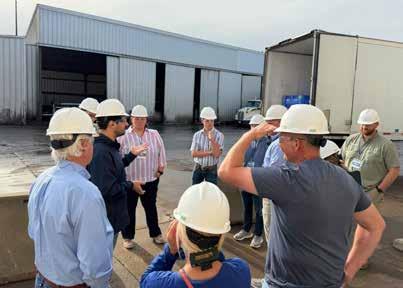
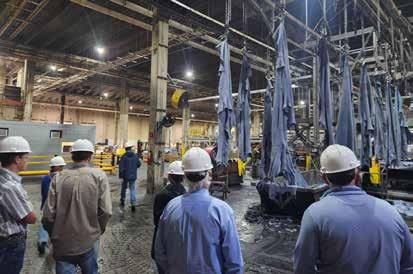
Beef Leathers. The group observed the process of creating “wet blue hides” at the tannery. These hides are semiprocessed and prepared for further finishing and dyeing once they leave the facility. The majority of hides are exported internationally, where finishing hides is more common.
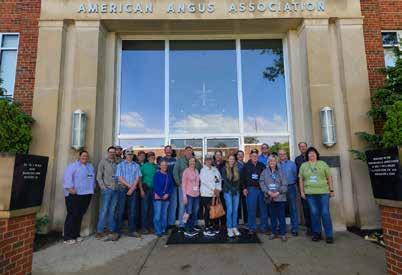
Next, we met with the American Angus Association for a tour of their headquarters and great discussion. Our final stop on Day 1 was an in-depth tour of Boehringer Ingelheim – Animal Health. The group learned about the
photos by Rachel Cain
process of developing pharmaceuticals to meet the medical needs of the industry.
Day 2 began in Martell, Nebraska, where the group visited Lienetics Ranch. Taylon Lienemann and his mother, Torri, shared their family’s journey within the cattle industry. We also visited Neogen’s GeneSeek, where the group learned about the process of genetic testing and had great discussion with lab managers. We then visited the University of Nebraska-Lincoln Feedlot Innovation Center. Joshua Benton,


feedlot manager, led the group on a tour of the feedlot and discussed the different research projects that were currently underway at the facility. We ended Day 2 with a visit to Mead Cattle Company, which is owned by Champion Feeders. Mead Cattle Company has a capacity of 30,000 head and is managed by NCBA Past-President Buck Wehrbein.
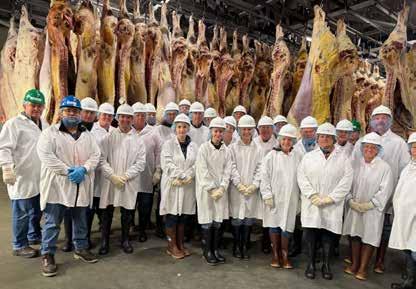
Day 3 began with a visit to JBS Omaha. JBS is the No. 1 global beef producer, with nine beef plants across the United States. JBS staff led us through an immersive tour, beginning with the
fabrication side and ending at the pens where live cattle are held. The JBS plant in Omaha is one of the smaller locations, focusing more on specialty programs such as Imperial American Wagyu Beef. We wrapped up the tour at the Omaha Steaks, where we learned about the history of the company and their unique business model.
If you’re interested in attending the next Beyond the Bluegrass tour, please contact the KCA office or email info@ kycattle.org to be added to the mailing list!

UK Fundamentals of Herd Health: Vaccinations for the Cow-Calf Operation
Michelle Arnold DVM-Ruminant Extension Veterinarian (UKVDL)
Why should vaccines be given every year to help keep the cow-calf herd healthy? Simply stated, skimping on proven disease protection will only cost more down the road due to treatment costs, reproductive failure and death loss. Every farm is unique with regards to the disease risk and other challenges including labor and facilities needed to work the cattle. The basic vaccine guidelines are below but the details of what products to use and when to administer them are best decided by the producer with his or her veterinarian. Your veterinarian is equipped with the knowledge and skills to determine what will work best for your unique situation to reach your goals.
Remember: “Vaccination” (drawing up the vaccine in a syringe and injecting it into the animal) is not the same as “immunization” (the animal mounts an immune response) and “vaccination + immunization” never equals 100% protection from infection, even in the best of circumstances. The vaccines must be handled correctly (proper mixing, right temperature) and cattle in good health (low stress environment, good plane of nutrition, trace mineral needs met, clean water, minimal parasites present) in order to get the most protection from vaccines.
The provided list of vaccines and dewormers is not exhaustive; it is for example purposes only and should not be considered an endorsement of products by the University of Kentucky.
Adult Cows and Bulls
1. Viral respiratory vaccine (IBR, BVD, PI3, BRSV) and 5-way Leptospirosis. If using bulls for breeding, include Campylobacter fetus (Vibriosis). Best administered 4-6 weeks prior to breeding. If cows are open and > 30 days before breeding, select a modified live vaccine (List C1: A or B). If cows are pregnant at the time of vaccination or less than 30 days before breeding, select a killed vaccine (List C2: A or B) to reduce the risk of accidental abortion or interference with conception. Certain modified live vaccines can be used in pregnant animals but only if used strictly according to label
directions. Products with “FP” in the name stands for Fetal Protection from BVD virus.
2. 7-way or 8-way Clostridial (Blackleg)-necessary if under 2 years of age. Strongly encouraged as the cow ages depending on the risk of blackleg to the herd. (List D5: A-D)
3. Deworm-perform at least once per year (spring and possibly fall) and twice per year if under 2 years of age or thin body condition. If only once is possible, deworm in spring (May/June). Deworming in the fall helps to reduce the number of worms that overwinter in the cow but is typically not as important as spring when larvae are active in the pasture. (List D6: A and/or B)
4. Tag cattle for identification and/or retag those that have lost tags.
5. Breeding Soundness Exams are highly recommended for herd bulls and should be conducted 60-75 days prior to turnout. Bulls need the same vaccinations and deworming as the cow herd.
Open Heifers at Least
6 Weeks Prior to Breeding
1. Viral respiratory vaccine (IBR, BVD, PI3, BRSV) with 5-way Leptospirosis. If using bulls for breeding, include Campylobacter fetus (Vibriosis). Two doses of modified live vaccine are strongly encouraged (List C1: A or B) for heifers. Follow all label directions; some vaccines require a booster while others recommend a booster. Timing is very important-if less than 6 weeks away from breeding, use a killed product (List C2: A or B).
2. 7 or 8- way Clostridial (Blackleg) (List D5: A-D)
3. Deworm. (List D6: A and/or B). A heifer has increased nutritional demands because she is still growing herself, trying to reproduce, and young animals do not have the immunity to parasites that adult cattle possess. A very effective combination is to use an oral (white) dewormer from list D6B and an injectable or pour-on dewormer from list D6A, given at the same time.
Calves 1-3 Months Old:
1. Identify with tag.
2. Vaccinate with 7-way Clostridial (Blackleg) vaccine-Although the calves are young, this dose of vaccine will initiate (“jump start”) the immune process, especially cell-mediated immunity. Follow label directions. Do not give blackleg vaccine under 3 weeks of age. (List D5: A-D)
3. Dehorn
4. Castrate-the earlier this is completed, the better. Avoid the first 24 hours after birth.
5. Optional Practices:
a. Implant steers at the time of castration (unless you plan to sell calves in an organic or natural market)
b. Viral Respiratory Vaccine-Killed (List D2) or MLV (List D1 but follow label directions carefully regarding MLV usage in nursing calves). "Intranasal" vaccines are given up the nose.
c. Pinkeye vaccine (administer in late spring just before fly season) (List D7)
d. Deworm-Begin deworming calves at 4-6 weeks old, depending on time of year and expected level of pasture contamination with parasite larvae-consult a veterinarian. (List D6: B)
e. Test for BVD-PI (ear notch)-Consult your veterinarian if this is something to consider. If BVD has been diagnosed in an animal from your farm or there is a history of unexplained abortions, stillbirths, weak calves or other reproductive loss in the herd, testing all calves is the proven first step to find persistently infected (PI) animals. Best to wait until the calf is at least 10-14 days of age to take an ear notch sample.
Calves 2-3 Weeks Pre-Weaning (Best) or Shortly after Weaning:
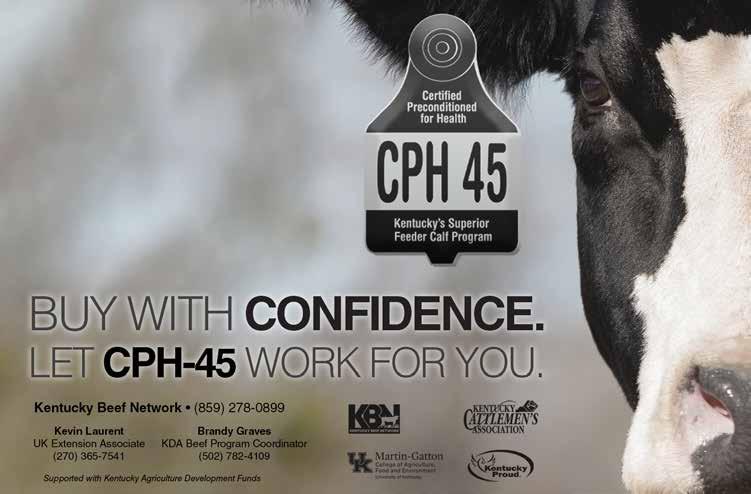
Consult your veterinarian and check your marketing plan since many programs (for example: CPH-45) specify what vaccines must be administered and when in order to participate.
Administer vaccines 2-3 weeks
pre-weaning for best protection. If calves cannot be processed pre-weaning, then begin this protocol after weaning when the stress is essentially over (calves are eating, drinking and the majority have stopped walking and bawling). Booster vaccines if required. If castrations and dehorning were not done earlier, these practices need to be completed as soon as possible. Tetanus vaccination is strongly recommended when performing “late” castration of older, heavier bulls; especially if banding. Consult your veterinarian regarding whether to use a tetanus toxoid or antitoxin or both.
1. Viral respiratory vaccine (IBR, BVD, PI3, BRSV)-Killed (List D2: A or B) or MLV (List D1: A or B) but follow label directions regarding MLV usage in nursing calves if vaccinating before weaning. If using killed, a booster is required. A majority of buyers prefer calves that have received two doses of MLV. [See point #3a below for an additional viral MLV respiratory vaccine option.]
2. For heifers to be kept as replacements: Viral respiratory (as above) with Campylobacter fetus (Vibriosis) and 5-way Leptospirosis vaccine included. Booster according to label directions-MLV is strongly recommended for females to be kept in the herd. (List C1: A or B)
3. Vaccinate with Mannheimia haemolytica toxoid. This vaccine, commonly known as a “Pasteurella shot” or “Pneumonia shot” is given pre-weaning in anticipation of the stress associated with weaning. (List C3)
a. Many combination Mannheimia haemolytica toxoid and MLV Respiratory Virus vaccines are available (List C4). Some of the combination products listed are actually two separate products with one administered in the nose (intranasal) and the other product is injected.
4. Deworm with an endectocide (List D6A) for internal and external parasites. A “drench” or “white” dewormer given by mouth (List D6B) may also be used with a second product for external parasite (lice/flies/ticks) control. The best option is to administer an injectable (or pour-on) dewormer (List D6A) and a drench dewormer (List D6B) at the same time.
5. 7- or 8- way Clostridial vaccine (Blackleg). Clostridial vaccines may be purchased alone or in combination with pinkeye, “somnus” and other antigens. Follow label directions regarding the
need for a booster. (List D5: A-D)
6. Optional:
a. Implant-Follow label directions if re-implanting. Do not implant females to be used for breeding purposes. Do not implant if planning to sell on the natural or organic markets.
b. Pasteurella multocida and/or Histophilus somni (formerly known as Haemophilus somnus) vaccines-consult your veterinarian for current recommendations.
Cows after Calves are Weaned:
1. Check cows for pregnancy by palpation, ultrasound or blood test. If open, strongly consider culling her.
2. Check for other problems: eyes, teeth, udder, feet and legs, body condition, disposition.
3. Scours vaccine (List C8) –Administer to pregnant cows 1-3 months prior to calving. Initially this is a two-shot series then it is given annually. Products vary on when to administer them so follow label directions carefully. Scours vaccines may be given to newborn calves (List D8).
4. If Leptospirosis is a persistent herd problem, cows may need a booster of 5-way Leptospirosis vaccine, such as Spirovac (Zoetis) for continued strong protection throughout pregnancy.
Additional Considerations:
1. *Modified Live Vaccines (MLV) provide fast, broad immunity and are excellent stimulators of cell-mediated immunity. They are preferred in weaned calves and usually required by most preconditioned sales. However, only use modified live vaccines in pregnant cows and in nursing calves if the cows were vaccinated with MLV, usually within the last 12 months (check label for specific requirements; some are less than 12). If this requirement is not met, a killed vaccine should be used until the cow is open and the calf is weaned.
2. Killed respiratory virus vaccines must be given twice (usually 2-3 weeks apart) the first time the vaccine is administered. Annual boosters are required after the initial two-shot sequence. Killed vaccines are safer than MLV vaccines but they do not protect as well nor last as long.
3. If heifers have been allowed to stay with the herd bull until weaning, most likely some are pregnant. A prostaglandin injection (for example: Lutalyse®) can
be given to the heifers once they have been away from the bull a minimum of 10 days. These injections work best in early pregnancy (<75 days) so do not delay administration if needed.
4. Try to minimize the number of injections given at one time as much as possible. Multiple vaccinations cause neck soreness. Multiple Gram-negative vaccines (for example, leptospirosis, vibriosis, pinkeye) may cause cattle to spike a fever and go off feed for a short period of time.
5. Keep good vaccination records. Record date, vaccine name, serial numbers and expiration dates at a minimum.
6. Utilize effective fly control and pinkeye vaccine beginning in late spring. Follow label directions regarding booster vaccines. If using feed/mineral additives for fly control, make sure to start them 30 days before fly season and keep it in until 30 days after fly season is over. See UK publication, ENT-11-Insect Control for Beef Cattle.
7. Anaplasmosis- Kentucky is among the list of states approved by the USDA for sale of the anaplasmosis vaccine marketed by University Products LLC of Baton Rouge, Louisiana. The vaccine is used in cows in all stages of pregnancy with no problems being reported. The recommendation is a 2-dose regimen given 4 weeks apart with annual revaccination required. Protective immunity should develop within 7-10 days according to the manufacturer. The primary or initial dose is typically given to bred heifers and young bulls. Consult your veterinarian for options.
8. Letters in a vaccine name mean:
a. IBR, BVD, BRSV and PI3 : Diseases included in a viral respiratory vaccine.
b. An “FP” in the vaccine name stands for “fetal protection” and means protection against fetal persistent infection and abortion due to the BVD virus.
c. An “HB” in the vaccine name stands for the strain of Leptospira known as “Hardjo bovis” that is a common cause of reproductive failure in cattle.
d. “HS” stands for “Histophilus somni” (formerly known as Haemophilus somnus)
e. L5” stands for the 5 strains of Leptospirosis.
f. “V” stands for “Vibriosis”
Vaccination programs must be designed around the specific needs of your cattle. Talk to your vet!
Examples of Respiratory and Reproductive Vaccines for Adult Cows, Bulls, & Replacement Heifers
C1A Modified Live Virus Vaccines with Leptospirosis
Pyramid 10 (HB)* Boehringer Ingelheim
Bovilis Vista 5 L5 SQ CFP* Merck
Express FP10 (HB)* Boehringer Ingelheim
Bovi-Shield Gold FP5 L5 (HB)* Zoetis
Titanium 5 L5 HB* Elanco
C1B Modified Live Virus Vaccines + Lepto and Vibrio
Express FP 5 VL5 (HB)* Boehringer Ingelheim
Bovi-Shield Gold FP5 VL5* Zoetis
PregGuard Gold FP 10 (No BRSV)* Zoetis
Bovilis Vista 5 VL5 SQ CFP*Merck
C2A Killed Virus Vaccines with Lepto Triangle 10 HB Boehringer Ingelheim
CattleMaster Gold FP5 L5 Zoetis
Vira Shield 6 + L5 (HB) and (HB + Somnus) Elanco
Master Guard 10 HB-contains killed IBR and BVD Elanco
C2B Killed Virus Vaccines + Lepto and Vibrio
CattleMaster 4 +VL5 Zoetis (No BVD Type 2)
Vira Shield 6 + VL5 (HB) and (HB + Somnus) Elanco
Examples of “Pneumonia” Vaccines
C3 Mannheimia (Pasteurella) Vaccines
Presponse HM Boehringer Ingelheim
Presponse SQ Boehringer Ingelheim
One Shot Zoetis
Pulmoguard PHM –1 Huvepharma
Nuplura PH Elanco
Bovilis Once PMH—SQ or IN (intranasal) Merck
C5 Other Respiratory Vaccines
Nuplura PH + BVD (Mannheimia and BVD) Elanco
Nuplura PH + 3 (Mannheimia, BVD, IBR) Elanco
Bovilis Nasalgen IP (intranasal IBR, PI3) Merck
Bovilis Nasalgen 3 (intranasal IBR, PI3, BRSV) Merck
Bovilis Coronavirus (intranasal) Merck for Nursing Calves and Weaned/Feeders
D1A Modified Live Virus Vaccines (Often called “Live Virus”)
Pyramid 5* Boehringer Ingelheim
Bovilis Vista 5 SQ* Merck
Inforce 3 (Intranasal) + Bovi-Shield BVD* Zoetis
Express 5 and FP 5* Boehringer Ingelheim
Bovi-Shield Gold 5 and Gold FP5* Zoetis
Titanium 5* Elanco
Bovilis Vista BVD + Bovilis Nasalgen 3 (Intranasal)* Merck
D1B Modified Live Virus Vaccines + Somnus
Express 5-HS* Boehringer Ingelheim
Resvac 4/Somubac Zoetis
D2A Killed Virus Vaccines
Triangle 5 Boehringer Ingelheim
CattleMaster Gold FP5 Zoetis
Vira Shield 6 Elanco
Master Guard 5-contains killed IBR and BVDElanco
D2B Killed Virus Vaccines + Somnus
Elite 4-HS Boehringer Ingelheim
Vira Shield 6+Somnus Elanco
Examples of Combination Vaccines
C4 Modified Live Respiratory Viruses + Mannheimia
Pyramid 5 + Presponse SQ* Boehringer Ingelheim
Bovilis Vista Once SQ* Merck
Bovi-Shield Gold One Shot*Zoetis
Titanium 5 + PHM* Elanco
RespiVax 5 + PH-M Huvepharma [Not in pregnant cattle]
Inforce 3 (intranasal) + One Shot BVD*Zoetis [2 products]
Bovilis Vista BVD CFP + Bovilis Nasalgen 3-PMH (intranasal)* Merck [2 products]
Examples of Blackleg, Pinkeye and Scours Vaccines and Dewormers
D5A Clostridial (Blackleg) 7 or 8 Way Vaccines
Ultrabac 7 or Ultrachoice 7 Zoetis
Caliber 7 Boehringer Ingelheim
Alpha 7-Single dose No booster Boehringer Ingelheim
Bovilis Vision 7 or 8 with SPUR Merck
Bovilis Calvary 9 or Covexin 8—with tetanus Merck
D5B Clostridial (Blackleg) + Pinkeye
Alpha 7/MB1— No booster Boehringer Ingelheim
Bovilis 20/20 Vision 7 with SPUR Merck
D5C Clostridial (Blackleg) + Somnus
Ultrabac 7/Somubac Zoetis
Bar Vac 7 Somnus Boehringer Ingelheim
Bovilis Vision 7 or 8 Somnus with SPUR Merck
D5D Clostridial (Blackleg) + Pasteurella
One shot Ultra 7 or 8 Zoetis
D7 Pinkeye Vaccines
Maxi/Guard-Addison Labs
Vision 20/20 Merck
i-site XP AgriLabs
Pinkeye Shield XT4 Elanco
Bovilis Piliguard Pinkeye Merck
SolidBac Pinkeye IR/PR Zoetis
Ocu-guard MB-1 Boehringer Ingelheim
Moraxella bovoculi bacterin Merck
D6A Dewormers* (Injectables and Pour-ons)
Deworming at least 2 weeks prior to breeding is recommended.
Cydectin Bayer
Dectomax Zoetis
Ivomec or Ivomec + Boehringer Ingelheim
Eprinex Boehringer Ingelheim
Noromectin Norbrook
LongRange - (extended duration) Boehringer Ingelheim
D6B Drench Dewormers
Deworming at least 2 weeks prior to breeding is recommended.
Valbazen + (Pour on) Zoetis
Safeguard + (Pour on) Merck
Synanthic + (Pour on) Boehringer Ingelheim (“Pour on” for external parasite control—lice, flies)
D8 Scours Vaccines Administered to Calf
Bovilis Coronavirus (Intranasal, Coronavirus Only) Merck
Bar-Guard-99 (Oral, E. Coli K99 Only) Boehringer Ingelheim
Calf-Guard (Oral, Rota– and Coronavirus) Zoetis
First Defense (Oral, E.coli K99, Corona) Immucell Corp
First Defense TriShield (Oral, E.Coli K99 + Rota- +Coronavirus) Immucell Corp
Bovine Ecolizer (Oral, E. coli K99, C. perfringens) Elanco
C8 Scours Vaccines Administered to Pregnant Cow
Bovilis Guardian Merck
ScourGuard 4KC Zoetis
Scour Bos 9 and 4 Elanco
*Labeled for use in pregnant cattle and nursing calves but follow label directions carefully
The provided lists of vaccines and dewormers is for example purposes only and should not be considered an endorsement of products by the University of Kentucky.

YOUTH VIEWS

Adelle Hood
Being involved in agriculture has played a major role in shaping who I am, which is why participating in the Kentucky Junior Cattlemen’s Association Cattle Working Contest was such a valuable experience for me.
Growing up around cattle and being actively involved in the livestock and show industry has given me handson experience, and this contest allowed me to further develop my knowledge and skills in a competitive environment alongside others who share the same passion for agriculture.
Throughout this contest, I gained a deeper understanding of proper cattle handling, teamwork, communication and safety practices within the beef industry. My team and I worked together to complete a variety of tasks that required problem-solving, organization and the ability to remain focused under pressure.
The experience reinforced the importance of handling livestock efficiently while maintaining the health and well-being of the animals. Participating in this contest also helped me grow personally and professionally. It strengthened my leadership abilities, increased my teamwork skills, and expanded my appreciation for the dedication and responsibility required in the agricultural industry.
The KJCA Cattle Working Contest was an incredibly rewarding opportunity that allowed me to apply real-world agricultural skills while continuing to grow as a young leader in the cattle industry.
Andrew Mattingly
Growing up on our family’s farm, working cattle was just one of those chores that came along every once in a while. Like most operations, we handled things the way we always had −quick and practical. Participating in the KJCA Cattle Working Contest opened my eyes to an entirely different side of cattle handling that I had never fully considered: proper vaccine dosing, accurate cost calculations, and correct operation of the squeeze chute. Those were tasks I had always left to Dad.
When our team first sat down with our coach, his opening words were direct, “Forget everything you know about cattle working.” At the time I didn’t fully understand what he meant, but I soon learned this contest demanded precision and a commitment to doing things the correct way. The methods many of us use day-to-day on the farm would not be enough here. Tobacco sticks and “close enough” simply weren’t going to cut it.
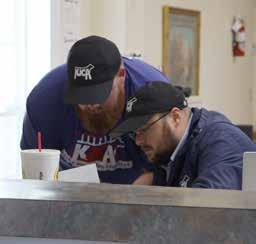
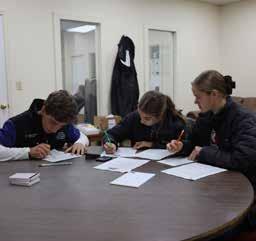
The contest consists of three main components, the first of which is the processing plan. The planning phase proved especially educational. We had to map out exactly where every procedure would take place on each animal. If the tag goes in the left ear, we specified “LEFT” clearly. There was no room for assumptions. We also carefully reviewed every product label for the description, withdrawal period, serial number and expiration date.
Record keeping is a critical part of cattle handling that I had previously overlooked. The contest made its importance clear. For example, if a cow is vaccinated and then culled before the withdrawal period is complete, that animal could end up in your next quarter pounder with cheese. That is not responsible cattle management, and it reflects poorly on all of us as producers.
Then there’s the team problem or the math portion, where dividing doses, figuring price and reading mineral tags are all important parts. This part is to really see what teams are herd managers and not just cattle workers.
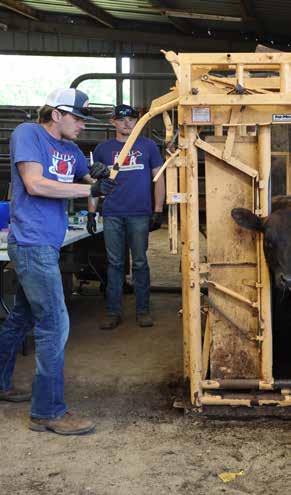
Lastly, we got to the main event chute-side. The first lesson I learned is preparation is key. Before we look at the cattle, we rehydrate vaccines and draw up all doses and review our processing plan, lay everything out and then bring up the cattle because back home cattle working isn't complete without at least three, fourwheeler trips back to the house and some colorful language to go along with it.
Through the entire process from the detailed planning to working the chute under observation, I gained a much deeper appreciation for best management practices. What we sometimes treat as routine on the farm carries real consequences for animal health, food safety and the reputation of our industry.
This experience reinforced that there is always more to learn, even for those of us who have been around cattle our whole lives. The KJCA Cattle Working Contest provides a valuable opportunity to sharpen skills, focus on details and improve the way we handle our herds.
I encourage other young cattle producers across Kentucky to
participate. The knowledge and habits you develop will benefit your own operation and strengthen our industry as a whole.
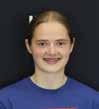
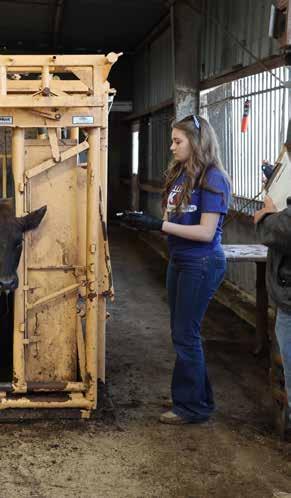
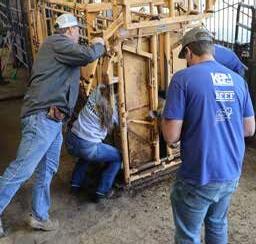
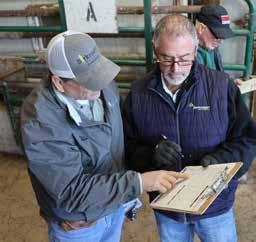
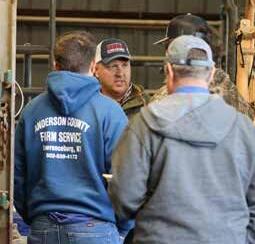
In an industry that continues to evolve every day, the Kentucky Junior Cattlemen’s Association remains the gold standard for developing the next generation of beef producers and advocates. This is best seen at events such as the KJCA Cattle Working Contest, where approximately 20 teams from across the state put their cattle-handling skills to the test. With the goal of working three head of cattle in under 10 minutes, contestants aren’t just racing a clock; they are demonstrating the efficiency, precision and care that define Beef Quality Assurance. Regardless of experience level, every person chuteside is there to prove they can handle cattle safely, professionally and with care.
My name is Samantha Brown, and I am a proud and active member of the Kentucky Junior Cattlemen's Association. This is my second time competing at the KJCA Cattle Working Contest. I have been fortunate enough to have spent the last eight years assisting with my family’s registered Black Angus cowcalf operation. A significant part of my role on the farm involves processing cattle through the chute and administering vaccinations- a task that requires a deep understanding of herd health protocols. My experience on the farm is complemented by my heavy involvement in 4-H, where participating in Livestock Skillathon, Quiz Bowl and Meat Judging has provided me with a foundation in all aspects of beef physiology, management and industry knowledge.
One of the highlights of this contest is the community it builds. I am especially grateful for leaders like Bradon Burks, who works tirelessly to provide diverse opportunities for youth to grow within the beef industry. It is an incredible experience to interact with industry professionals who stand chute-side to score and provide immediate feedback to the teams. Their expertise allows the individuals to correct techniques and minimize deductions in real-time. Beyond the education, I truly value being able to work alongside my close friends on the team, which makes the experience even more rewarding.
The knowledge I’ve gained from this competition has already been applied to our home operation, specifically regarding low-stress handling and Beef Quality Assurance. Looking ahead, I plan to carry these lessons into my future career as a veterinarian. Understanding the daily realities of cattle handling and the precision required for administering medication is essential for any veterinary professional. I am sincerely grateful to the KJCA, the sponsors and the individuals who provide this platform, giving youth a head start on practical labor and professional excellence in the beef industry.

Eli Ballard
This was my second year doing the cattle working contest. While neither year have ended with a first-place finish, it has been a great experience, and I am very thankful that I have had the opportunity to compete.
Growing up on a family farm where we raise direct-to-consumer grass fed beef has allowed me to work a lot of cows. As most of you know, working cows can be very stressful, especially when it’s with your dad who likes to give a lot of aggressive encouragement. With that being said, the cattle working contest has helped me practice working in stressful situations and effectively handle them well using best practices to do so. Being able to work well in stressful situations not only has helped me be able to work cows with my dad better, but it is also a skill that I am able to use at school, working and all throughout the rest of my life.
Currently, I manage my own herd of cattle where I use regenerative ag practices to rotationally graze cattle which I raise and sell back to my parents for beef. Even though in a little more than a year I will be graduating high school and moving on with the next chapter of my life, I would like to bring cattle with me in that next chapter. Through that I will be able to use practices that I have learned though the cattle working contest to effectively manage and handle my cattle.
Overall, the cattle working competition has been a great opportunity for me to not only compete in a competition that showcases an industry that I truly love, but it also has allowed me to work on skills that I will be able to use for the rest of my life. I am very thankful that I have had the opportunity to participate in this competition, and I cannot wait to compete again next year.
Samantha Brown
photos by Katie Pratt
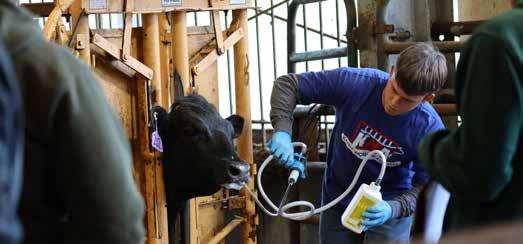
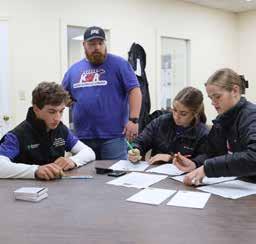
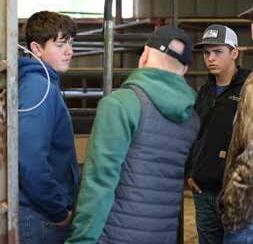
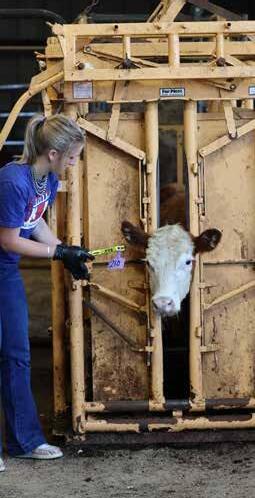
CATTLE WORKING
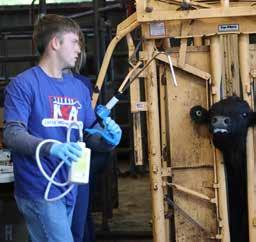
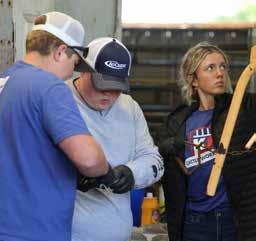
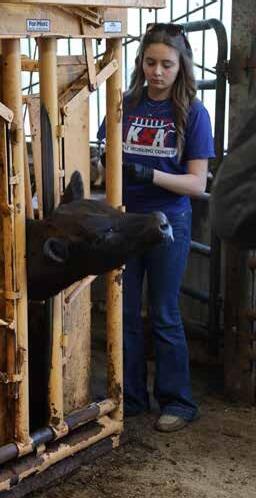
WORKING CONTEST
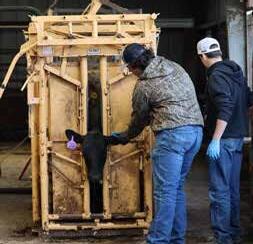
photosbyKatiePratt

Emergency Forage Options
Chris Teutsch UK Research and Education Center, Princeton KY
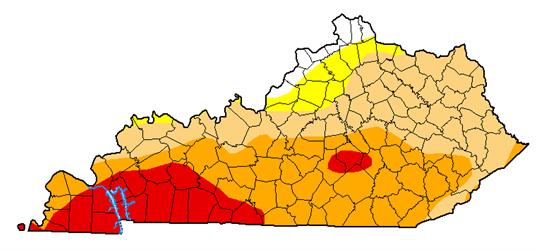
This has been the driest winter and spring that I can remember. I am thankful for the rain that we have been getting the last week or two, but the subsoil is very dry, and we are entering a time of the year where water needs of forage crops increase due to elevated temperatures and active plant growth. In addition, summer rain usually comes fast and hard, which tends to decrease water infiltration and increase runoff. I expect first harvest hay to be 30 to 40% below normal and pasture regrowth to be slow. The objective of this article is to provide some practical suggestions for managing drought-stressed pastures and hayfields in a manner that will allow them to respond to rain when it comes.
Close the gates and feed some hay. Overgrazing during drought makes a bad situation much worse. The result is that overgrazed pastures will be unable to resume normal growth after the rain comes. The single most important thing that you can do is to choose a sacrifice paddock and feed hay BEFORE all pastures have been damaged. This means that majority of the farm will go through the drought with 4 to 5 inches of grass. This helps to reduce soil moisture loss, moderates the temperature at the soil surface and allows grass to adapt to the drought stress.
Rest pastures this summer and fall. The saying is that “time heals all wounds,” and this includes pastures. At this point, it is important to give pastures a little extra time to recover this summer and fall and that is likely going to require a little strategic hay feeding. By limiting grazing in late summer and fall, you are giving your pastures time to rebuild their photosynthetic factory (leaf canopy) and store up sugars and carbohydrates. This will also allow for the accumulation stockpiled grass that can utilized for deferred grazing during the winter months.
Don’t graze closer than 4-5” inches this summer. Even if we keep getting rain, it is important to limit close grazing this summer. Tight summer grazing weakens cool-season grasses and opens sods up allowing weeds to germinate and become established. Leaving as little as 4-5 inches of residual forage decreases soil and plant crown (growing point) temperatures during the summer months and helps to keep summer annual weeds from germinating.
Fertilize pastures according to soil test. Poor soil fertility imposes an additional stress upon cool-season grass stands that are recovering from drought. So, it is important to adjust the soil pH to 6.0 to 6.4, apply phosphorus and potassium according to your soil test, and consider applying 60-80 lbs. nitrogen/A in late summer as cool-season grasses initiate fall growth. This nitrogen will stimulate tillering and promote biomass accumulation for deferred grazing.
Frost seed legumes into thin stands. Legumes such as red and white clover are important components of sustainable grassland ecosystems. They form a symbiotic relationship with rhizobium bacteria in which nitrogen from the air is fixed into a plant available form. They also dilute the toxin in tall fescue infected with the toxic endophyte and in some cases may even reverse the negative effects of the endophyte. Pasture sods that have been thinned by drought and overgrazing provide a perfect opportunity for frost
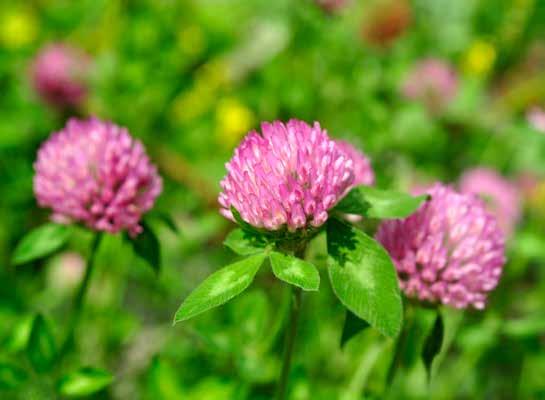
Figure 1. Drought map as of April 30, 2026, approximately 90% of Kentucky was experiencing moderate to extreme drought stress (brown, orange, and red) (The National Drought Mitigation Center, University of Nebraska-Lincoln, Lincoln, NE).
Figure 2. Recent research at the USDA Food Animal Production Unit located in Lexington, found that compounds in red clover can reverse vasoconstriction caused by the toxins in endophyte tall fescue.
Featured Publication
AGR-229, Warm Season Annual Grasses in Kentucky by Chris Teutsch, Ray Smith, Tom Keene, and Jimmy C. Henning. You can access it at https://tinyurl.com/3jztzhnk or visiting your local extension office.
Forage Management Tips for March
• Clip pastures for seedheads and weeds.
• Use temporary fencing to increase paddocks numbers that will allow for longer rest periods as higher temperatures slow plant growth.
• Utilizing naturally occurring summer grasses such as crabgrass and johnsongrass.
• Start to graze summer annual and native warm-season perennial grasses when they reach a height of 18 to 20 inches. Stop grazing at a residual height of 8-10 inches.
• Scout pastures for summer annual weeds and control when small.
• Make plans to attend the upcoming Electric Fencing Troubleshooting School in Frankfort.
seeding clover this winter. For tips to enhance frost seeding success please see AGR-271, Frost Seeding Clover: A Recipe for Success.
Plant cool-season perennial grasses. This fall, pastures that have been impacted by drought can be thickened by interseeding cool-season grasses or a
Featured Video
Managing Drought in Grazing Systems...Mitigation and Recovery by Chris Teutsch. This video can be viewed by visiting the KYForages YouTube Channel.
Upcoming Events
Electric Fencing for Serious Graziers: Installation and Troubleshooting June 11 • Kentucky State University Harold R. Benson Research and Demonstration Farm, Frankfort forages.ca.uky.edu/Events
Fencing Tip
Always connect electrified wires with clamps. Loose connections result in loss of voltage. Connections should NOT be wrapped but rather clamped together with a high-quality clamp that is designed for high tensile fencing. Never use clamps that are constructed of dissimilar metals. Although economy clamps constructed of cast metal are sometimes available, they often fail upon tightening. Saving a few cents on clamps often leads to exponential headaches in the future.
mixture of grasses and legumes. Ideally this done in late summer or early fall.
It is important to remember that drought alone rarely kills well-managed pastures. In most cases, pastures can be revived with rain, rest and a little fertilizer. Weakened sods provide a prime opportunity for incorporating legumes in established
Table 1. Seeding rates for perennial cool-season forage species planted ALONE or in a MIXTURE
†NR,
††Do NOT include
and white clover if herbicides will be used to control broadleaf weeds.

pastureland. With a little tender loving care and rainfall, the productivity of drought stressed pastures can be restored!
More information on reviving drought stressed pastures can be found on the UK Forages webpage or by visiting your local extension office.
OHIO VALLEY LIMOUSIN SPRING SALE REPORT
The Ohio Valley Limousin Association held their annual spring sale May 2nd in Mineral Wells, WV. Several repeat buyers made purchases.
Wulfs Gift 5206G Semen
$35 x 20 = $700
$14,500: BCV Farms consigned BCVF Mission F449M, a HP/HB 68% LF son of Wulfs Envision. He was purchased by William Koehnlein of Richmond OH.
$9,000: SLF Mercedes 72M, a HP/Het Blk PB son of R&R Beefmaker 35C, consigned by Shira Limousin Farm, sold to John McDermott of Danville, KY.
$8,500: RTTB Ritzy 301L, a DP/Blk PB daughter of Wulfs Genius 5293G, sold with her DP/DB March PB Heifer by Wulfs Morris 9467M. Pleasant Home Cattle Co offered the pair purchased by David Early of New Matamoras OH. David Early was also our volume buyer with 5 Lots.
$6,100: The top Fall Bred Female, consigned by Cozzens Farms, was COZN Birdie, a DP/DB 50% LF AI’d to COLE Fortune 12F. She was purchased by John Leek of Middlebourne, WV.
$6,750: BCV Farms offered the top Open Heifer, BCVF Nigella D200N, a HP/HB PB daughter of VL Hunker Down 003H. She was Purchased by Hickory Hollow Farm of Bellville, WV.
KCA Welcomes Summer Intern Maggie Sparks
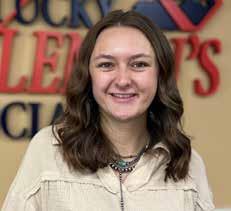
Maggie Sparks, originally from Paris, Kentucky, is serving as the summer Kentucky Beef Council intern with the Kentucky Cattlemen’s Association. She is currently a senior attending the University of Nebraska-Lincoln, majoring in food animal systems, with a minor in agriculture business.
While being a full-time student at UNL, she is also an owner-operator of her own stocker operation in Kentucky. After graduation, she plans to come back to her family’s stocker operation and assume a management position over cooperating grazers.
Maggie is an active student at UNL, and is a member of the Nebraska Cattlemen’s Association, Collegiate Farm Bureau, UNL’s Block & Bridle and UNL Ag Econ. She is especially passionate about advocating for the beef industry and supporting producers across both Kentucky and Nebraska.

We are partnering with the UF/IFAS Center for Public Issues Education in Agriculture and Natural Resources to refine our magazine and improve our communication efforts with you.
Learn more about the project and take the survey at piecenter.com/cattlemag or scan this QR Code with your phone.



Do you know an outstanding cattleman?
Time is running out to nominate them for the 2026 Kentucky Cattlemen's Association Hall of Fame.
The Kentucky Cattlemen’s Association Hall of Fame is designed to honor a member of the organization that has given time, service, and talent to the betterment of the Cattlemen’s Association at the county and/or state levels. 2026 applications must be postmarked by June 19.
Call us at (859) 278-0899 with questions.
Application available at www.kycattle.org/hall-of-fame

Kentucky Cattlemen’s Association Attends NCBA Legislative Conference
Nikki Whitaker Director of Operations and Policy
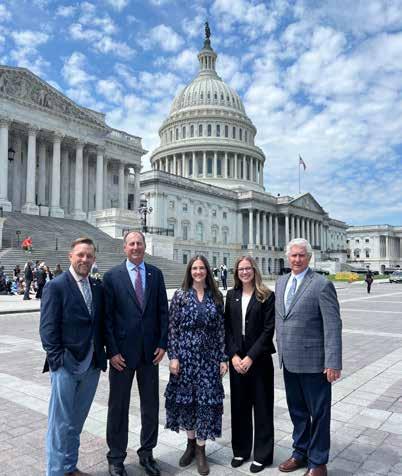
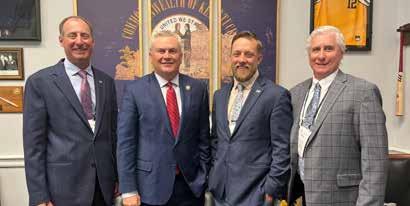
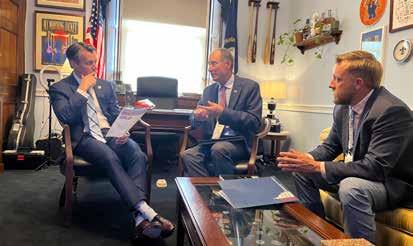
Kentucky Cattlemen’s Association leadership and staff joined cattle producers and state affiliates from across the country in Washington, D.C. for the annual NCBA Legislative Conference in April. This multi-day event focused on advancing industry priorities through direct engagement with federal policymakers and agency leaders.
Representing Kentucky were KCA President Allan Bryant, Henry County; President-Elect Daniel Hayden, Daviess County; along with staff members Dave Maples, executive vice president; Nikki Whitaker, director of operations and policy; and Rachel Cain, membership and communications coordinator.
Throughout the week, the Kentucky delegation met with each member of the state’s Congressional delegation to discuss key issues affecting cattle producers. These conversations centered on several high-priority
topics, including the upcoming Farm Bill, expanding concerns around the lone star tick and Asian longhorned tick, and the need for passage of the Black Vulture Relief Act. For Kentucky producers in particular, the lone star tick was a key discussion point given its growing presence in the state and its link to alpha-gal syndrome, which is increasingly affecting consumers and creating real concerns for beef demand and rural communities.
Beyond legislative meetings, KCA also participated in a focused discussion at the U.S. Department of Agriculture. There, leadership engaged with federal partners on NRCS and FSA program access for Kentucky livestock producers, as well as broader challenges tied to rebuilding the cow herd and strengthening long-term production capacity in the state.
Highlights from the conference included remarks from USDA Deputy Secretary Stephen Vaden, updates
from the Food Safety and Inspection Service, the Animal and Plant Health Inspection Service, and the Environmental Protection Agency, as well as policy discussions with senior officials from the White House and USDA Agricultural Marketing Service. These sessions provided attendees with timely insight into regulatory priorities and ongoing agency initiatives impacting livestock production and marketing.
“Attending the NCBA Legislative Conference in Washington, D.C. is an important opportunity to ensure that the voices of Kentucky cattle producers are heard at the highest levels of government”, Bryant said. “As policies and regulations continue to shape the future of agriculture, it is critical for those directly involved in the industry to engage with lawmakers and advocate for practical, science-based decisions”.
photos by Nikki Whitaker
BEEF CHECKOFF COLLECTION
WHO IS RESPONSIBLE FOR REMITTING THE CHECKOFF ASSESSMENT?
BUYER
Generally the Buyer is responsible for collecting the Beef Checkoff assessment from the Seller
SELLER
50¢

QUALIFIED STATE BEEF COUNCIL
However, both the Buyer and the Seller are responsible for seeing that the Checkoff is collected and paid. or pays $2 to $1.50
Cattlemen’s Beef Board invests in national Checkoff programs, while Kentucky Beef Council invests in state programs.
If you are a producer from one of these seven states - Alaska, Connecticut, Maine, Maryland, Massachusetts, New Hampshire, and Rhode Island - you will remit directly to the Cattlemen’s Beef Board. If you have any questions regarding who is responsible for remitting the Checkoff assessment or how to remit payment, please contact your State Beef Council or the Cattlemen’s Beef Board at (303) 867-6304.
3 Exceptions to Beef Checkoff Collection: 1. Non-producer status: If a person (or company) owns cattle for 10 days or less, purchases the cattle to facilitate the transfer of ownership to a third party, and certifies that any Checkoff dollars due from the previous owner have been collected, then that person qualifies as a “Non-Producer” and the Checkoff assessment is not due when qualified cattle are resold. 2. Organic Exemption: In the 2002 Farm Bill, Congress created a process exemptiing organic producers from paying Checkoff program assessments. 3. Pre-Payment: Producers can also choose to “prepay” the Checkoff assessment when shipping cattle out of state for feeding and still retain ownership on the cattle. This allows the producer to direct half of the $1-per-head national Checkoff assessment to the beef council in the state where the cattle were raised, rather than the state where the cattle will be fed. Note: To claim any of these exemptions, the person selling the cattle must provide the proper ‘document’ to show that the Checkoff assessment is not due at the time of sale. Thus, the rule of thumb for all cattle sales is that the person paying the producer should collect either a “Dollar or a Document.”
LIVESTOCK MARKET - When cattle are sold through a livestock market or video market, the Market collects and remits the Beef Checkoff assessment.
CATTLE DEALER/ORDER BUYER - When cattle are sold to a Cattle Dealer or Order Buyer, the Dealer/Order Buyer collects and remits the Beef Checkoff assessment.
ANOTHER PRODUCER - Both the Buyer and the Seller are responsible for making sure that the Beef Checkoff assessment is collected and remitted. For clarity and consistency, we encourage the Seller to take on this compliance responsibility.
VEAL GROWER - When dairy calves are sold to a Veal Grower, both the Buyer and the Seller are responsible for making sure that the Beef Checkoff assessment is collected and remitted. For clarity and consistency, we encourage the Seller to take on this compliance responsibility.
CATTLE SHOWS AND FAIRS - When producers sell their animals at fairs or cattle shows (4H/FFA shows, Purebred cattle shows, etc.), the Organization that runs the sale collects and remits the Beef Checkoff assessment.
FEEDLOT - When cattle are sold directy to a feedlot, the Feedlot collects and remits the Beef Checkoff assessment.
PACKING PLANT - When cattle are sold to a packing plant, the Packing Plant collects and remits the Beef Checkoff assessment.
DIRECT-TO-CONSUMER BEEF SALES - When producers market their cattle as beef, the Producer is responsible for remitting the Beef Checkoff assessment.
The
Department of Agriculture (USDA) prohibits discrimination in all its programs and activities on the basis of race, color, national origin, age, disability, and where applicable, sex, marital status, familial status, parental status, religion, sexual orientation, genetic information, political beliefs, reprisal, or because all or part of an individual’s income is derived from any public assistance program. (Not all prohibited bases apply to all programs.) Persons with disabilities who require alternative means for communication of program information (Braille, large print, audiotape, etc.) should contact USDA’s TARGET Center at (202) 720-2600 (voice and TDD). To file a complaint of discrimination, write to USDA, Director, Office of Civil Rights, 1400 Independence Avenue, S.W., Washington, D.C. 20250-9410 or call (800) 795-3272 (voice)
MEMBERSHIP
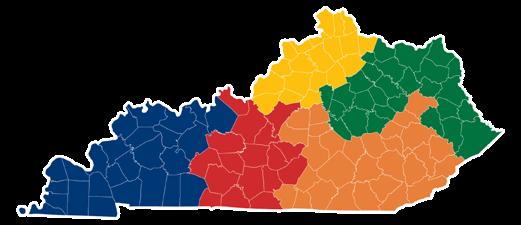
REGIONAL MEETING DATES (TENTATIVE)
⃣
2025-26 MEMBERSHIP APPLICATION
* MEMBERSHIP YEAR 10/1/25– 9/30/26
NAME SPOUSE NAME FARM NAME
*Payments of KCA membership dues are tax deductible for most members as an ordinary and necessary business expense. However, charitable contributions of gifts to KCA are not tax deductible for Federal Income Tax purposes. Due to new IRS regulations, $2.24 of your dues would not be deductible. Approximately $12 of your dues will go towards the monthly publication Cow Country.
PLEASE CHECK THE MEMBERSHIP(S) YOU WOULD LIKE TO JOIN:
KCA MEMBERSHIP ($30/YR) NEW RENEWAL
Membership dues are $30 unless otherwise listed below
KCA COUPLE MEMBERSHIP
To add your spouse, please add $15 to your KCA Membership
KENTUCKY JUNIOR CATTLEMEN’S ASSOCIATION ($10/YR) NEW RENEWAL
I WOULD LIKE ADDITIONAL INFORMATION ON THE YOUNG PRODUCER’S COUNCIL
TOTAL MEMBERSHIP:
$ KCA
$ KJCA
TOTAL CONTRIBUTIONS:
$ CATTLEMEN’S FOUNDATION DONATION (voluntary)
TOTAL AMOUNT ENCLOSED:
$ ALL DONATIONS TO KCF ARE TAX DEDUCTIBLE
COUNTY DUES
Dues are $30 except for the counties listed below.
Allen...............................$40
Anderson........................$25
Boyle ..............................$35
Bullitt..............................$20
Butler..............................$25
Franklin ..........................$25
Louisville Area ................$20 (Jefferson, & Spencer) Magoffin .........................$20 Menifee ..........................$25
Mountain........................$25
(Breathitt, Floyd, Knott, Lee, Leslie, Letcher, Morgan, Owsley, Perry & Wolfe)
Highlands .......................$20 (Boyd, Johnson, Lawrence, & Martin) Hopkins ..........................$35 Laurel.............................$35
IF YOU WOULD ALSO LIKE TO JOIN THE NATIONAL CATTLEMEN’S BEEF ASSOCIATION The NCBA is now a State Marketing Partner with the KCA. You can pay your dues to both organizations with one check, at the same time.
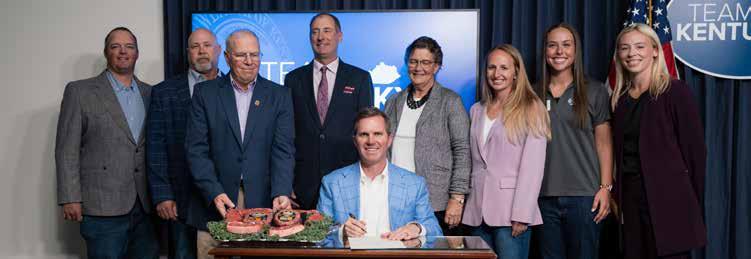
Kentucky Agriculture Celebrates May as Beef Month
Kentucky Department of Agriculture
FRANKFORT, Ky. (May 5, 2026) –Kentucky cattle producers and industry representatives joined Kentucky Commissioner of Agriculture Jonathan Shell Monday as he signed a proclamation commemorating the month of May as Kentucky Beef Month.
“Through the hard work of our cattle farmers, Kentucky retains its distinction as the state with the largest beef inventory east of the Mississippi River with 862,000 head,” Commissioner Shell said. “I join Kentuckians in recognizing the effort, diligence, and perseverance of this important agricultural sector as we celebrate May as Kentucky Beef Month.”
The United States is the world's second largest producer of beef, primarily highquality, grain-fed beef. Kentucky ranks 14th nationally for total cattle inventory with 1.82 million head and 10th in the nation
for beef cattle. According to the National Agricultural Statistics Service, Kentucky is home to 31,060 beef cattle producers of the 69,400 total farms in the state.
"Behind every flavorful bite is a story of care and commitment,” said Kelly Baird, Kentucky Beef Council director of communications and events. “This May, we’re celebrating that delicious product and the people who bring it to our tables. What better way to celebrate our beef producers than behind the grill, explore recipes, cooking tips and what raising beef looks like in Kentucky at kybeef.com.”
January 2026 numbers for all cattle inventory are down slightly from 2025, matching what’s happening nationally.
The U.S. beef cattle reached a 64-year low in 2025. Several factors including low calf prices, high costs and drought across the county played a role in the declining inventory.
In contrast, the lower number of beef cattle has created a higher market demand and driven up the sale prices for farmers. The tight national cattle supply and higher market prices will likely contribute to higher agricultural receipts for the state. The final agricultural cash receipts for 2024, the latest available, show the cattle and calves sector brought in $1.5 billion, ranking it first for Kentucky commodities.
Cattle prices are expected to remain strong and potentially peak, following a year of high demand in 2025. Tight supplies and strong demand drove the market for much of 2025 with Kentucky cattle prices up 20-30% from the previous year. It’s predicted Kentucky’s anticipated strong livestock sector could help maintain overall cash receipts above $8 billion for 2025 with estimates of a record $8.5 billion for 2026.
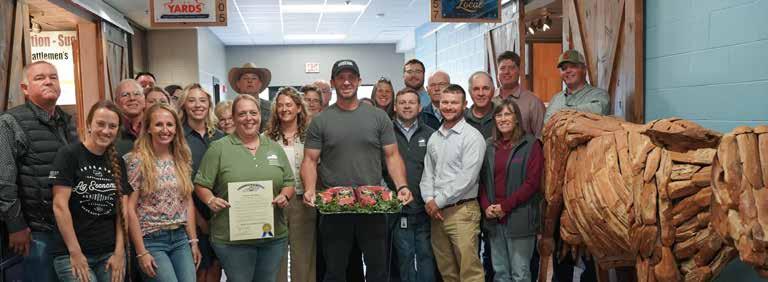
Kentucky is the largest beef cattle state east of the Mississippi River. The top five Kentucky counties for number of beef cattle are Barren, Pulaski, Madison, Breckenridge and Warren.
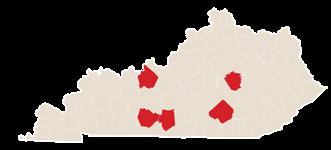

A Worthwhile Investment
Bradon Burks KBC Director of Education
One thing I’ve been very passionate about is helping bridge the gap between agriculture and education. As cattle producers, we know the story of our industry better than anyone, but if we want the next generation to truly understand beef production, sustainability and the science behind what we do, we have to be willing to invest in the educators shaping those conversations in the classroom.
Not every student will take an agriculture class, but all students take science classes. Recently, I had the opportunity to lead a professional development workshop through the Western Kentucky University STEM TIP program alongside my sister, Tristann Burks, a science teacher at Barren County High School. Our session, “Beefing Up Environmental Science,” focused on helping teachers connect environmental science standards to real-world beef production. Tristann brought the perspective of a classroom science educator, while I was able to share insights from the cattle industry and my role with the Kentucky Beef Council.
One of the most rewarding parts of the experience was watching teachers begin to see cattle production through a different lens. We discussed topics like environmental systems, sustainability, human impact and resource management, while also showing how producers care for land, animals and natural resources every day. Teachers walked away with hands-on ideas and classroom-ready strategies they can immediately use with students. I am confident that we addressed several misconceptions during our event, and being able to do this with my sister made it even more special. That workshop is just one part of a larger effort we’re making across Kentucky in the science realm. We have done work alongside the American Farm Bureau Federation and the Kentucky Science Teachers Association, and later this summer we’ll host the Kentucky On The Farm STEM Professional Development for science teachers across the state. This immersive program will bring educators directly onto farms and into agricultural settings where they can learn from producers, scientists and industry leaders. Teachers will explore agricultural phenomena, connect science standards to food and agriculture, and develop lessons that make science more relevant and authentic for students.
In addition, we are continuing our professional development opportunities for agriculture teachers in partnership with the Kentucky Department of Education, by hosting a “Beef Evaluation Day.” This event will give educators hands-on experience with meat science, carcass evaluation, USDA quality and yield grading, and classroom applications tied directly to livestock evaluation and career development events for their FFA contests. Agricultural teachers seem to be intimidated by meat science, especially beef. My hope is that our attendees will walk away feeling more comfortable and confident in teaching this information to their students.
As producers, we often talk about the importance of telling our story. These teacher professional developments are one of the best ways I’ve seen to do exactly that. Every teacher we reach has the opportunity to impact hundreds of students throughout their career; train the trainer, who will train the students. If we want future generations to understand agriculture, science and the importance of the beef industry, investing in educators is one of the strongest things our Checkoff dollars can do.
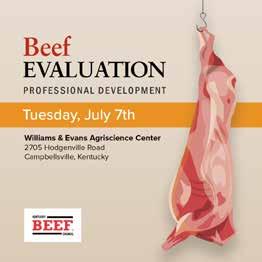
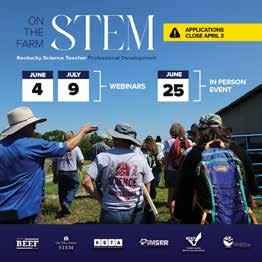
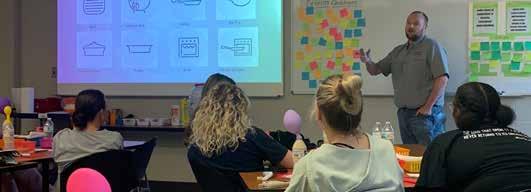
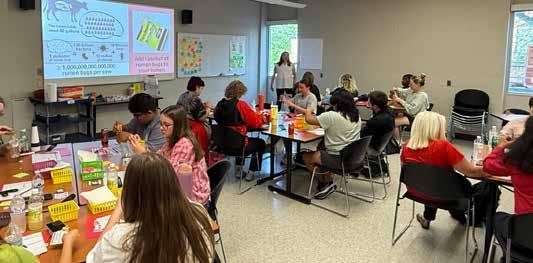
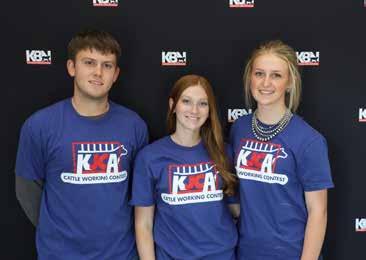
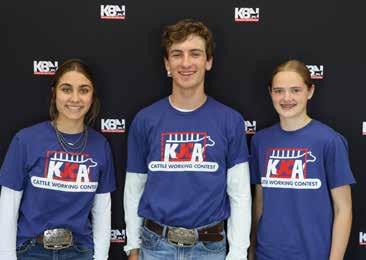
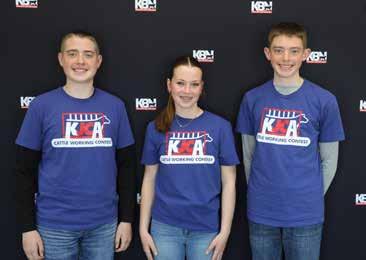
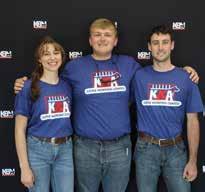
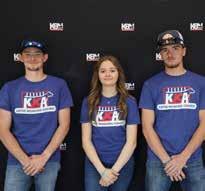
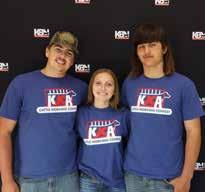
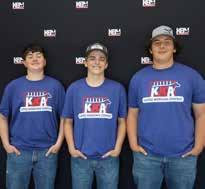
The Kentucky Beef Network and the Kentucky Junior Cattlemen's Association would like to congratulate all the teams that qualified for the state competition of the KJCA Cattle Working Contest. A special congratulations is extended to the top three teams at the state competition: Barren County FFA, Cultivated Cowpokes and The Sorting Crew. Barren County FFA will represent Kentucky at the National Cattle Working Contest this fall in Elizabethtown. We look forward to hosting the event again in 2027.
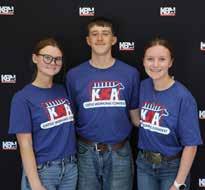
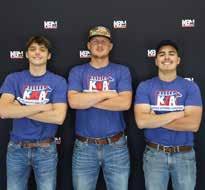
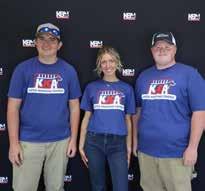
Barren County FFA
Cultivated Cowpokes
The Sorting Crew
Apollo A
Apollo C
Breckinridge County FFA D. Casey County Cowboys No. 1 E. Franklin County No. 1
MMH Cattle Workers
Shelby County 4-H


Ben Lloyd Whitesville, KY (270) 993-1074 benlloyd0223@gmail.com
Charles Embry Cave City, KY (270) 646-5939 dale.embry@yahoo.com
Cody Burke Frankfort, KY (606) 748-4641 cody.burke2019@gmail.com
Jacob Settles Springfield, KY (859) 805-0724 jacob.settles4@yahoo.com
Ron Shrout Winchester, KY (859) 397-5151 shroutron@aol.com
photos by Katie Pratt

Eden Shale Update
Dan Miller Industry Coordinator, Kentucky Beef Network
Calving season was hectic at Eden Shale this spring, but that is exactly how we like it. We prefer to calve as few days as possible, which both shortens the drudgery of the task and creates a uniform calf crop.
This year, we had the entire calf crop on the ground in 57 days. This is our second shortest calving window ever. The chart shows the number of calves born as the season progressed. We had nearly 60% of the calf crop born in the first two weeks!
However, our AI conception rates were not the best last year. I believe most of that trouble is due to the terrible heat during the breeding season last summer. I referenced this in detail in a previous article. Once everything calved, the replacement heifers had an AI conception rate of 56% and the cows’ AI conception was 52%. We had a total of 50 calves born to AI sires this spring.
This winter, we started feeding hay on Jan. 14, and we turned the cows out to
grass on April 21. This gave us a total of 97 hay feeding days, and we are fortunate to be left with 254 bales to carry over for next season.
As seems to be the case everywhere I travel, our grass at Eden Shale is thin and weak this spring. I’m not sure how much first cutting hay we are going to get so the extra hay carried over from last year might be a good thing. Here’s to hoping for more rain and reasonable temperatures.
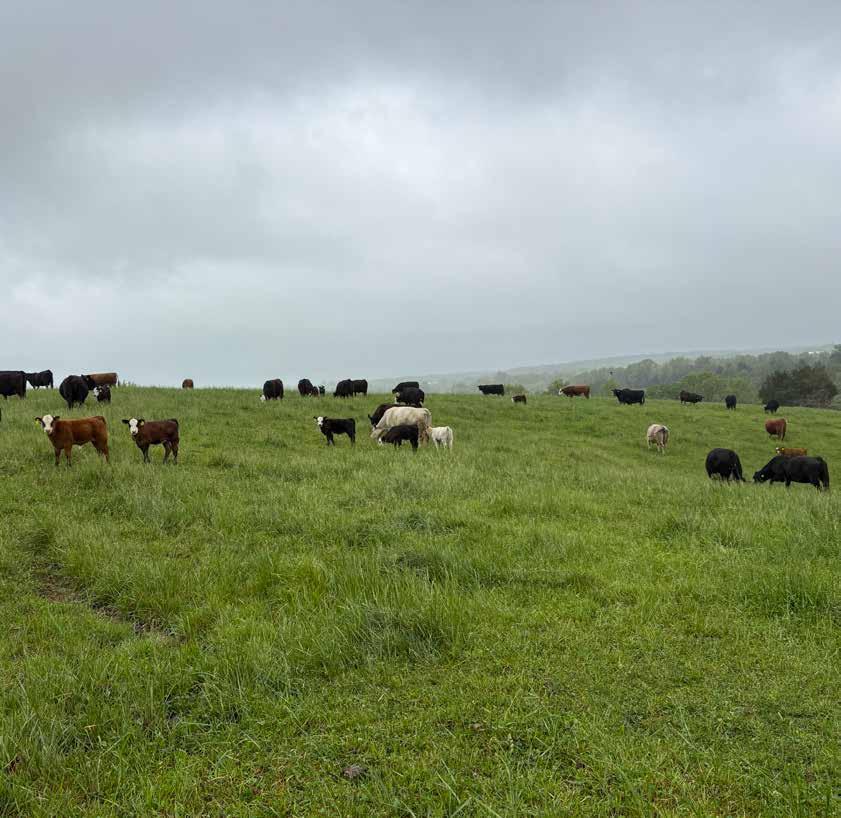

KJCA Directors Attend Youth Beef Industry Congress
Brooklyn Felts KJCA Secretary
Five Kentucky Junior Cattlemen’s Association directors recently traveled to Tampa, Florida to attend the Youth Beef Industry Congress (YBIC), where we had the opportunity to grow as leaders while learning more about the agricultural industry firsthand. Throughout the trip, we participated in leadership sessions, networking opportunities and team-building activities with other young leaders from across the country. One of the highlights of the conference was participating in roundtable discussions with other junior boards, where we exchanged ideas about events, leadership, membership involvement, and ways to improve and grow our organizations. These conversations allowed us to hear different perspectives, share our own experiences and bring home new ideas that can benefit KJCA in the future.
In addition to the industry tours and discussions, we also took part in several self-growth and leadership development activities. Through personality and teamwork exercises, we learned more about ourselves, our leadership styles, and how we can better work with and serve our team. These activities helped us recognize the importance of
communication, understanding different perspectives, and supporting one another in order to be stronger leaders and teammates. The lessons we learned will not only help us as KJCA officers, but also in our future careers and personal lives.
One of the most meaningful parts of the trip was visiting the different agricultural operations and hearing directly from the people involved in them. At Cracker Country, we learned about the history of Florida cattlemen and the perseverance it takes to be a cattle producer through changing times and challenges. Hearing those stories gave us a greater appreciation for the generations of hard work that built the industry. At Fancy Farms, a strawberry farm, we learned about their operation and the ways they are working to combat urbanization. It was eye-opening to see the challenges farmers face while still remaining
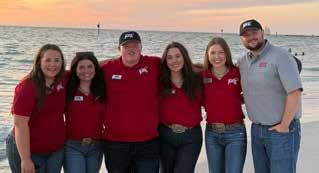
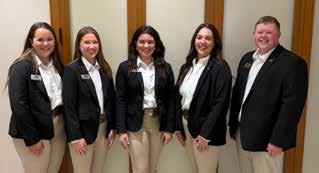
committed to agriculture.
We also toured the Publix Dairy Processing Plant, where we saw how large-scale dairy operations function and how products are processed and distributed efficiently to consumers. At AgAmerica Lending, we learned how the company supports farmers through agricultural lending services while also spreading awareness about the importance of agriculture. Another memorable stop was Circle B Bar Reserve, where we learned about the history of the land and the efforts being made to preserve Florida’s natural resources for future generations. Finally, at the livestock auction market, we were able to observe how the market operates and better understand the important role auctions play within the cattle industry.
Overall, YBIC was an unforgettable experience that allowed us to learn, grow and represent KJCA while building friendships and making memories together. We returned home with a stronger appreciation for agriculture, a better understanding of our industry, and valuable leadership lessons that we can carry forward as board directors and future advocates for agriculture.
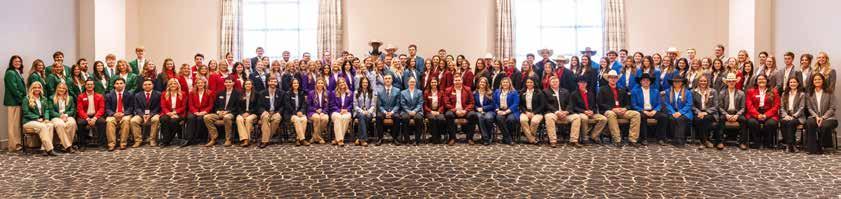
June Cow Sales
BG Campbellsville Friday, June 5, 2026 7:00 PM
BG South—Stanford Friday, June 19, 2026 6:30 PM
BG Lexington Wednesday, June 24, 2026 6:30 PM
Upcoming Sales
BG Lexington
Jeremy Shryock, Manager
Cattle Sales Monday & Tuesday 9:00 AM Cow Sales 4th Wednesday 6:30 PM Profit Thru Performance June 1, 2026
BG South—Richmond
Jim Dause, Manager
Cattle Sales Friday 9:00 AM—Hog, Goat & Sheep Sales 2nd & 4th Monday
Hog, Goat & Sheep Sale—June 8, 2026
Equipment Consignment Sale—June 13, 2026
Hog, Goat & Sheep Sale—June 22, 2026
BG South—Stanford
Dylan Holt, Manager
Cattle Sales Monday & Thursday 8:30 AM —Cow Sales 3rd Friday 6:30 PM
BG Campbellsville
Ronnie Choate, Manager
Cattle Sales Wednesday & Saturday 10:00 AM Cow Sales 1st Friday 7:00 PM
BG East—Mt. Sterling
Jordan McCord, Manager
Cattle Sales Wednesday 9:00 AM
Special Horse Sale June 13, 2026
BG Albany
Jeffrey Cyphers, Manager
Cattle Sales Wednesday 9:30 AM CST
Sheep & Goat Sales 1st Monday of Month 1:00 PM
April May June August September October November
ANGUS THE BUSINESS BREED
Vice
Secretary/Treasurer:
BOYD BEEF CATTLE
6077 Helena Road
Mayslick, KY 41055
Charlie Boyd II: (606) 584-5194
Blake Boyd: (606) 375-3718 www.boydbeef.com cboyd2@maysvilleky.net
BURTON & SONS ANGUS
Joe D. or Karen Burton

927 Old Liberty Pike • Hustonville, KY 40437 (859) 238-0771 • www.branchviewangus.com
James S. & LuAnn Coffey, Donald & Donna Coffey
Annual Production Sale- 2nd Saturday in April

480 Hominy Hill Rd. Nancy, KY 42544
Joe: (606) 305-3081
Located 15 miles West of Somerset • klburton01@windstream.net
Bulls & females sold private treaty. Inquiries Welcome.
Sell only what we would buy. Data driven since 1981.
GREAT MEADOWS ANGUS ASSOCIATION
Dale Brown, President
292 Pea Ridge Road Stamping Ground, KY 40439 859-940-8437 www.greatmeadowsangus.com

SALES: 3rd Saturday in October • 4th Saturday in April
LYNN CREEK FARMS
Kris and Sara Lynn 2184 Bardstown Rd Springfield KY 40069 573-721-6663

SMITHLAND ANGUS FARM
4437 East Hwy 80 Russell Springs, KY 42642
Henry Bryan, Melissa, Bryanna and Blane Smith 606-271-7520 bmsmith@duo-county.com
PLEASANT HILL FARMS
PLEASANT HILL FARMS
Gil, Mary, Corbin, Caroline, and Catherine Cowles

Gil, Mary, Corbin, Caroline, and Catherine Cowles 500 Rockfield Richpond Road Rockfield, KY 42274 (270) 843-9021 • Fax (270) 843-9005
500 Rockfield Richpond Road Rockfield, KY 42274 (270) 843-9021 • Fax (270) 843-9005

BURKS CATTLE CO.
531 Rick Rd. Park City, KY 42160
Eddie Burks • (270) 991-6398 www.burkscattle.com
COFFEY ANGUS FARMS
661 Hopewell Road Liberty, KY 42539
Matt Coffey: (270) 799-6288
Dewey Coffey: (606) 706-2699
Genetics for Maximum Profitability since 1984

HERITAGE FARM
Tom McGinnis
1024 Hinkle Lane • Shelbyville, KY (502) 633-1634, home (502) 633-5100, work (502) 655-0164, cell
661 Hopewell Road Liberty, KY 42539
Matt Coffey: (270) 799-6288 Dewey Coffey: (606) 706-2699
DAVIS BEND FARMS
OLD BARK FARM
2315 Davis Bend Road Canmer, KY 42722
370 Ferrill Hill, Buffalo, KY 42716 Kenley Conner (270) 735-5324
Registered Angus Cattle
since 1984
timmothyljeffries@gmail.com www.davisbendfarms.com Tim: (270) 528-6605 • Leslie: (270) 528-6435
FALL CREEK ANGUS
448 Corder Farm Road Monticello, KY 42633
TRIPLE D ANGUS
FARMS Kris and Sara Lynn 2184 Bardstown Rd Springfield KY 40069 573-721-6663
DUTCH CREEK ANGUS
Doug and Susan Schlosnagle (502) 706-0008 DutchCreekAngus.om
MT. MORIAH ANGUS FARMS
Bob, Kathy, Rob, and Janna Clark (859) 748-5558 1446 Kennedy Bridge Rd. Harrodsburg, KY 40330
Bob: (859)339-2610 • Rob: (859)612-1594
HILL VIEW FARMS
mtmoriahfarms1@gmail.com www.mtmoriahangus.com

www.stclairangus.com
(859) 583-7134
jacob.tamme@gmail.com www.tammevalley.com COFFEY
Jimmy Gilles 5160 Lee Rudy Road Owensboro, KY 42301 (270) 929-5370 jcgilles86@gmail.com
FOUR KINGS ANGUS
250 Bright Leaf Dr. • Harrodsburg, KY 40330
Cary & Kim King Carymking@yahoo.com • fourkingsangus.com
Cary Cell: (859) 613-3734 • Colby Myers - Purebred Manager
APS ANGUS 4040 Taylorsville Rd Taylorsville, KY 40071
Cattle
Gordon Schubert 502-477-2637 • 502-548-8440 Anne Patton Schubert 502-477-2663 • 502-548-2359

TRIPLE D ANGUS
Nathaniel & Darla Denham Nathaniel(Bub), Sarah, (606) 423-2457 • (606) tripledangus.com
Ronnie Corder (606) 348-6588
TWIN CREEK ANGUS
Nathaniel & Darla Denham
HAMILTON ANGUS FARMS
Nathaniel(Bub), Sarah, Ashley Denham (606) 423-2457 • (606) 875-0780 tripledangus.com

Eddie Hamilton 2142 Stilesville Road Science Hill, KY 42553 edjohami@aol.com (606) 271-1286 Bulls and Females for Sale
RANDOLPH FARM
Located 7 miles west of Bowling Green, 1/2 mile off Hwy 68/80
Located 7 miles west of Bowling Green, 1/2 mile off Hwy 68/80
WHITE FARM
SMITHLAND ANGUS
Tim amd Amy White 3664 Military Pike Lexington, KY 40513 P:(859) 223-0326 • (859) 509-5041 (859) 227-2552 F:(859) 223-0326 whitefarm4@twc.com

6550 Highway 330 Owenton, KY 40359
Carter Randolph: (513) 543-4343
HERITAGE FARM
Nick Sarky: (513) 262-9846 patty@randolphfarmoperations.com
Registered Black Angus Bulls & Females Available Sold Private Treaty. Inquiries Welcome.

Tom McGinnis 1024 Hinkle Lane • Shelbyville, KY (502) 633-1634, home • (502) 633-5100, work (502) 655-0164, cell KENTUCKY ANGUS ASSOCIATION MEMBERSHIP
Return to: Shayna Gibson 1535 Fallen Timber Road New Castle, KY 40050 • Annual Dues $35
Dennis & Emily Gibson (270) 337-2128 or (270) 402-4338
Shawn, Melissa, Devin & Dylan Gibson (270) 337-3072 or (270) 692-5304

TAMME VALLEY FARM
Jacob Tamme, Owner-Operator (859) 583-7134 jacob.tamme@gmail.com www.tammevalley.com & Find us on Facebook!

President: Tom McGinnis
President: Jim Shaw
Shayna Gibson
TAMME VALLEY FARM Jacob Tamme, Owner-Operator
Kentucky Hereford Association

Toby & Debby Dulworth 2492 S. Kirkman Road LaCenter, KY 42056 (270) 224-2993 • dogwood@brtc.net Herefords that thrive on forages. www.dogwoodherefords.com

HEREFORDS
Codee Guffey • 1815 Grassy Springs Road Versailles, Kentucky 40383 (502) 598-6355 rockridgeherefords@gmail.com www.rockridgeherefords.com
TK4 Herefords
Tony & Kathy Staples 992 Knotts Road
Brandenburg, KY 40108 (270) 945-9277 (270) 422-4220
tstaples@bbtel.com
PILE STOCK FARM
Registered Polled Herefords
HANSELL PILE, JR.
12045 St. John Rd.
Cecilia, KY 42724
270-735-5192
12 miles West of Elizabethtown
Shannon, Kerry, Emily, Will & Ellie Morgan
13095 Scottsville Rd, Alvaton, Kentucky 42122
www.morganandmorganpolledherefords.com
Shannon: (270) 320-2389
Kentucky Hereford Association
KHA/KJHA State Show
Kentucky Beef Expo Schedule
Annual Meeting & KJHA Benefit Auction
Friday March 1st - Hereford Show - 1pm
June 5th & 6th, Clark County Fairgrounds, Winchester, KY
Saturday March 2nd - Hereford Sale - 1pm

Sunday March 3rd - Open Junior Show - 8am
WELLS FARM
WELLS FARM
Polled Herefords
439 Flatwoods Frozen Camp Rd, Corbin KY 40701
Bobby & Brenda Wells (606) 344-0417 wells_farm@yahoo.com
KHA
OFFICERS
NJB Limited
Polled Herefords 439 Flatwoods Frozen Camp Rd, Corbin KY 40701
Bobby & Brenda Wells (606) 523-0569 or (606) 344-0417 wells_farm@yahoo.com
Kevin, Angela, Kenlea & Kyler Murray (606) 528-1691 or (606) 682-8413
Toby & Debby Dulworth 2492 S. Kirkman Road LaCenter, KY 42056 (270) 224-2993 dogwood@brtc.net
Herefords that thrive on forages. www.dogwoodherefords.com

6077 Helena Road Mayslick, KY 41055
Charlie Boyd II • 606-584-5194 cboyd2@maysvilleky.net www.boydbeef.com
6077 Helena Road Mayslick, KY 41055 Charlie Boyd II 606-584-5194
Annual Bull Sale second Saturday in March Hereford and Angus Bulls
Annual Bull Sale second Saturday in March Hereford and Angus Bulls
Chambliss
Hereford Farms
Chambliss Hereford Farms
Brad, Carla, Clay & Clint Chambliss 1101 Driftwood Lane
Elizabethtown, KY 42701
Home (270) 982-3905
Brad, Carla, Clay & Clint Chambliss 1101 Driftwood Lane Elizabethtown, KY 42701 Home (270) 982-3905 Cell (270) 668-7126 fax 270-735-9922
Cell (270) 668-7126 fax 270-735-9922
www.chamblissherefordfarms.com
www.chamblissherefordfarms.com
WOLF FARM
Registered Polled Herefords Bulls & Females for sale
WCN Polled Herefords
Since 1961
Tim & Peggy Wolf
Bill Norris 2220 Celina Road
12939 Peach Grove Road Alexandria, KY 41001
Burkesville, KY 42717
Home: 859-635-0899 Cell: 859-991-3484
Phone (270) 433-7256
Cell (270) 433-1525
“Every calf needs a white face”

Peyton’s Well Polled Herefords
The Lowell
Kevin, Angela, Kenlea & Kyler Murray (606) 528-1691 or (606) 682-8413
Dale Stith 5239 Old Sardis Pike Mays Lick, KY 41055 dalestith@yahoo.com (918) 760-1550
MPH Farms
Registered Polled Herefords
President: Chris Hopper 606-584-7842
Secretary/ Treasurer: Melinda Watson 859-625-8660 melindawatson8660@gmail.com
Stith 5239 Old Sardis Pike Mays Lick, KY 41055 dalestith@yahoo.com
Melinda Watson • 859-625-8660 melindawatson8660@gmail.com
MPH Farms
PAUL L. HANCOCK 8559 KY 56 Owensboro, KY 42301 270-771-4194 270-314-9758
Registered Polled Herefords PAUL L. HANCOCK 8559 KY 56 Owensboro, KY 42301 270-771-4194

Jackson Farms
Jackson Farms
Registered Polled Herefords
Registered Polled Herefords PO Box 215 Cross Plains, TN 37049 615-478-4483
PO Box 215 Cross Plains, TN 37049 615-478-4483
billymjackson@aol.com
billymjackson@aol.com
“Farming the Same Land Since 1834”
“Farming the Same Land Since 1834”

Registered Polled Herefords Bulls & Females for sale
BECKLEY HEREFORDS
12939 Peach Grove Road
Alexandria, KY 41001
284 Pryse Lane Irvine, KY 40336
Home: 859-635-0899
L.W. Beckley, DVM 859-779-1419
Cell: 859-991-3484
Emily Beckley 859-779-0253 Will Beckley 859-314-7053 www.beckleyherefords.com

K3 CATTLE REGISTERED HEREFORDS
KYLE BUSH K3CATTLE@YAHOO.COM 859-588-4531
198 HICKS PIKE CYNTHIANA, KY 41031
K3 CATTLE REGISTERED HEREFORDS KYLE BUSH K3CATTLE@YAHOO.COM 859-588-4531 198 HICKS PIKE CYNTHIANA, KY 41031
THOMAS FARM
THOMAS FARM
Eric & Ronnie Thomas 2396 Union City Rd. Richmond, KY 40475 (859) 623-5734
Eric & Ronnie Thomas 2396 Union City Rd. Richmond, KY 40475
Eric’s Cell (859) 314-8256
Eric’s Cell (859) 314-8256
“Cattle for sale at all times”
“Cattle for sale at all times”

BECKLEY HEREFORDS

Polled Hereford and Gelbvieh Cattle 3459 KY Hwy. 1284 E. Cythiana, KY 41031 (859) 234-6956
Polled Hereford 3459 KY Hwy. 1284 E. Cythiana, KY 41031
Ben (859) 421-7902
Ben, Jane, Shelby and Lincoln
Lincoln (859) 954-0102
Noah (859) 462-2428
TK4
Tony Brandenburg, tstaples@bbtel.com
Windy Hills Farm
Windy
Hills Farm
Jackie D. Perkins II 367 Mt. Pisgah Rd. Bremen, KY 42325 (270) 543-3586
Jackie D. Perkins II 367 Mt. Pisgah Rd. Bremen, KY 42325 (270) 543-3586
Breeding to produce good cows since 1981
Breeding to produce good cows since 1981

12 miles
Tucker Stock Farms
L. Wayne Beckley • 1420 Fitchburg Rd. Ravenna, KY 40472 • 606-723-3021 Cell: 859-779-0962
L.W. Beckley D.V.M
“Breeding Polled Herefords for over 58 Years” Breeding cattle for sale at all times. 1999 Walnut Hill Rd. Lexington, KY 40515 (859) 271-9086 cell (859)533-3790
“Registered Angus and Polled Herefords”
John Tucker II 1790 Hidden Valley Lane Hudson, KY 40145 270-617-0301
284 Pyrse Lane • Irvine, KY 40336 Cell: 859-779-1419 • Clinic: 606-726-0000 www.beckleyherefords.com “Breeding Polled Herefords for over 58 Years” Breeding cattle
“Bulls always for Sale”
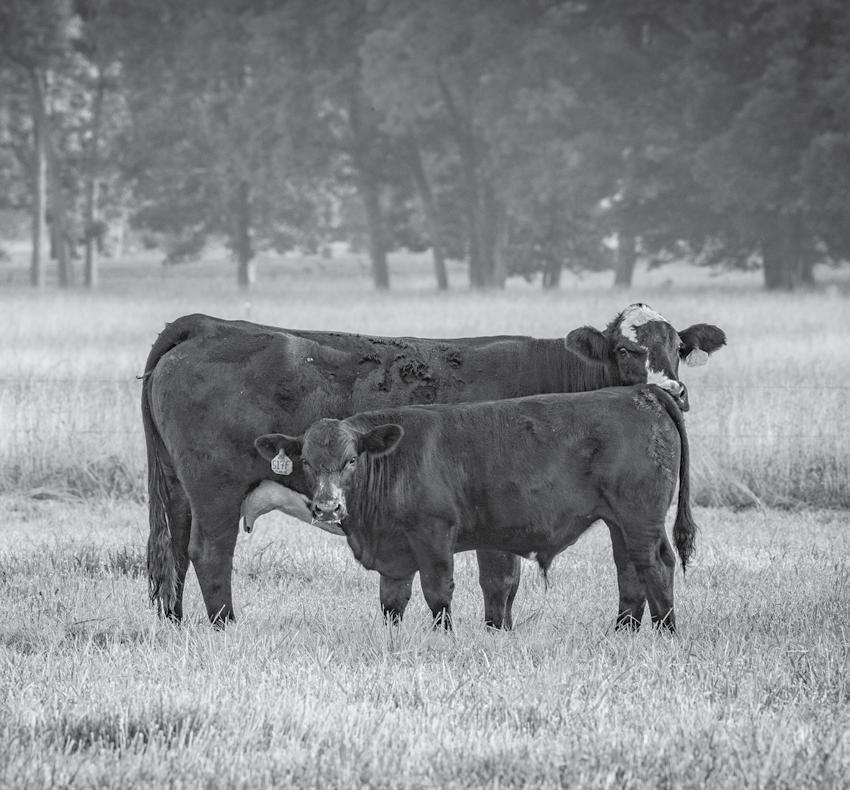
SIMMENTAL
KEVIN AND RACHEL BARRON
Crestwood, Ky
(502) 905-5851
rkbarron812@gmail.com

SWAIN SELECT SIMMENTAL 12113 Green Valley Dr. Louisville, KY 40243 swainselect.com swainselect@gmail.com facebook.com/swainselectsimmental
Fred & Phyllis: 502-599-4560 Chi & Angie: 502-287-2116
JUDY AND RONDAL DAWSON 1156 Buzzard Roost Road Shelbyville, KY 40065 502-593-5136 • jrdawson22@outlook.com

JEROD METZGER • 270-779-6260
ROCKING P LIVESTOCK 8308 Orangeburg Road Maysville, KY 41056
Chan: 606-584-7581
Keith: 606-584-5626
rockingplivestock@maysvilleky.net
BRIAN & HEATHER SWAIN 3906 Pottertown Road Murray, KY 42071 • 270-293-4440
wksbswain@murray-ky.net


SIMMENTAL AND SIMANGUS BULLS FOR SALE
1939 Huntertown Road
Versailles, KY 40383
BULLS FOR SALE
Chris Allen 859-351-4486
callenuky@hotmail.com
Dr. Henry Allen 859-229-0755

The Simmental cow can handle any environment.
She’s built to last in heat, fescue or high altitudes. And thanks to the breed’s built-in adaptability, you can match Simmental genetics to your environment – SimAngus,™ SimAngus HT, Simbrah or proven Simmental genetics.
Meet America’s all-purpose cow – gentle and consistent, with calves that give the heterosis boost commercial cattlemen need to stay profitable.
406-587-4531 • simmental.org

BRET AND LAURA JACKSON 859.533.3718 or 859.707.7200
BRET & LAURA JACKSON Paris, Kentucky (859) 533-3718 (859) 707-7200
KENTUCKY GELBVIEH ASSOCIATION
AA LAND & CATTLE
Registered Gelbvieh & Balancers
KENTUCKY GELBVIEH
Daryl Derossett, President..................................................................................................................(270) 670-6232
Cynthiana, KY
LARRY CLARK & SONS LLC
Registered Gelbvieh Cattle
Johnnie Moore, Vice President...........................................................................................................(270) 670-7814
Luke Arthur (859) 298-8323
106 Clark Houk Road • Greensburg, KY 42743
Pat Tilghman, Secretary/Treasurer.......................................................................................................(270) 670-8449
luke.arthur93@gmail.com
Bulls • Show Prospects • Embryos Bulls sell with GE EPD’s • Show Prospects
BAR IV LIVESTOCK
Larry Clark, Owner & Operator (270) 299-5167 • (270) 405-6848
Lpclarkandsons@msn.com
BAR IV LIVESTOCK Barry, Beth & Ben Racke • Brad Racke • 7416 Tippenhauer Rd. • Cold Spring, KY 41076 Phone (859) 635-3832 • Barry cell (859) 991-1992 • Brad cell (859) 393-3677 • Ben cell (859) 393-3730 Fax (859) 635-3832 • bar4@twc.com
Barry, Beth & Ben Racke • Brad Racke
7416 Tippenhauer Rd. • Cold Spring, KY 41076
Phone (859) 635-3832 • Barry cell (859) 991-1992
Brad cell (859) 393-3677 • Ben cell (859) 393-3730 Fax (859) 635-3832 • bar4@twc.com
CLIFFORD FARMS
3459 KY HWY 1284E
Cynthiana, KY 41031
Since 1937 (859) 234-6956
CD FARMS Clayton & Debbie Cash • 1214 Ottawa School Road • Brodhead, KY 40409 (606)-308-3247 • (606)-758-8994 • Gelbvieh-Balancer Bulls & Heifers For Sale by Private Treaty
BRIAN W. DYER, DVM

BEE LICK GELBVIEHS
Eddie Reynolds 277 Old Bee Lick Rd. Crab Orchard, KY 40419
606-379-2281(H) 606-305-1972(C)
Owner/Manager
GELBVIEH/BALANCERS
BRIAN W. DYER, DVM Owner/Manager GELBVIEH/BALANCERS 2050 Glasgow Road • Burkesville, KY 42717
Bulls & Females for sale
2050 Glasgow Road Burkesville, KY 42717
Brian, Lauren, Kristen Barry, Emily & Julia • (270) 864-5909
Brian, Lauren, Kristen Barry, Emily & Julia (270) 864-5909
FULL CIRCLE FARMS
PLEASANT MEADOWS FARM
Registered Gelbvieh Cattle
Gary & Pat Tilghman • Carrie & Daryl Derossett Family Lindsey & Garland Gilliam Family • 690 Lick Branch Road Glasgow, KY 42141 • 270.646.7024 pleasantmeadowsfarm@hotmail.com • Registered Gelbvieh & Angus cattle for sale
Brad Burke 989 Metcalf Mill Road • Ewing KY 41039 (H) 606-267-5609 • (C) 606-782-1367 gbb789@windstream.net

CD FARMS
R&D OWEN FARMS GELBVIEH & BALANCERS • PO Box 781 • Eddyville, KY 42038 (270) 601-6830 • rdowenfarms.com • sales@rdowenfarms.com
KILBOURNE GELBVIEH
AA LAND & CATTLE
Clayton & Debbie Cash 1214 Ottawa School Road Brodhead, KY 40409 (606)-308-3247 • (606)-758-8994
Johnnie Moore
Gelbvieh-Balancer Bulls & Heifers
Pat
For Sale by Private Treaty
Registered Gelbvieh & Balancers Cynthiana, KY Luke Arthur (859) 298-8323 luke.arthur93@gmail.com
Bulls • Show Prospects • Embryos
Bulls sell with GE EPD’s • Show Prospects
ASHWOOD SPRING GENETICS
BAR IV LIVESTOCK
LARRY CLARK & SONS LLC
East Bernstadt, KY 606-843-6583 cell 606-309-4662
Registered Gelbvieh Cattle
Black Replacement Heifers & Bulls Available Embryo transplant & AI sired calves
106 Clark Houk Road • Greensburg, KY 42743
Larry Clark, Owner & Operator (270) 299-5167 • (270) 405-6848 Lpclarkandsons@msn.com
DONE WRIGHT CATTLE FARMS Casey Wright, Owner • 2665 Poplar Corner Road Lebanon, Kentucky 40033 • 270-692-7496 * donewrightcattle@hotmail.com
BRIAN W. DYER, DVM
MOCKINGBIRD HILL FARMS
Owner/Manager
Registered Gelbvieh Cattle

UPCOMING EVENTS
Barry, Beth & Ben Racke • Brad Racke 7416 Tippenhauer Rd. • Cold Spring, KY 41076
Luke & Lindsay Arthur Cynthiana, KY 859-298-8323
Saturday May 15
Phone (859) 635-3832 • Barry cell (859) 991-1992
GELBVIEH/BALANCERS 2050 Glasgow Road Burkesville, KY 42717
S&S GELBVIEH BREEDING RED & BLACK POLLED GELBVIEH SINCE 1982
David, Jerri & Jon David: 162 Hastings Ln • Fredonia, KY 42411 (270) 556-4259 Arthur & Joyce Slaughter 19068 Marion Rd • Fredonia, KY 42411 (270)545-3455
Kentucky Junior Gelbvieh Show & Learning Clinic
Brad cell (859) 393-3677 • Ben cell (859) 393-3730 Fax (859) 635-3832 • bar4@twc.com
McIntosh Brothers Farm • 3348 Frankfort Road • Georgetown 10AM Learning Clinic • 12:30PM Show
Shane Wells 10172 Provo Rd. Rochester, KY H: 270-934-2198 C: 270-791-8196 swells@logantele.com
CLIFFORD FARMS 3459 KY HWY 1284E Cynthiana, KY 41031
Since 1937 (859) 234-6956

Brian, Lauren, Kristen Barry, Emily & Julia (270) 864-5909
FULL CIRCLE FARMS REGISTERED GELBVIEH CATTLE
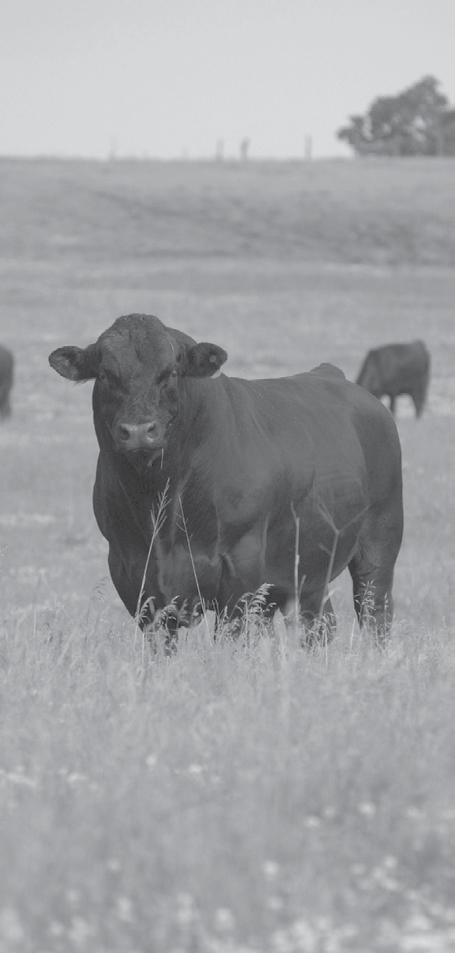
BAR IV LIVESTOCK
Call William McIntosh for more information. (502) 867-3132
BEE LICK GELBVIEHS
Eddie Reynolds
FULL CIRCLE FARMS
Brad Burke: 989 Metcalfe Mill Rd, Ewing, KY 41039 (H) 606-267-5609 (C) 606-782-1367 gbb789@windstream.net
277 Old Bee Lick Rd. Crab Orchard, KY 40419
Friday May 28 - May 30
BRIAN W. DYER, DVM
Owner/Manager
Registered Gelbvieh Cattle
GELBVIEH/BALANCERS

606-379-2281(H) 606-305-1972(C)
Barry, Beth & Ben Racke • Brad Racke 7416 Tippenhauer Rd. • Cold Spring, KY 41076 Phone (859) 635-3832 • Barry cell (859) 991-1992 Brad cell (859) 393-3677 • Ben cell (859) 393-3730 Fax (859) 635-3832 • bar4@twc.com
AGJA Eastern Regional Junior Show “Run for the Roses” Burley Fields Livestock Center • 709 Oil Fields Road • Horse Cave
Cattle for sale at all times.
2050 Glasgow Road Burkesville, KY 42717
Brad Burke 989 Metcalf Mill Road • Ewing KY 41039 (H) 606-267-5609 • (C) 606-782-1367 gbb789@windstream.net
Bulls & Females for sale
Call Carrie Derossett for more information. (270) 404-0828
HEDGESPETH LIVESTOCK GELBVIEH/BALANCER CATTLE-COMMERCIAL HEIFERS 543 Pleasant Run Church Road • Campbellsville, KY 42718 sam.hedgespeth@gmail.com • Sam-270.299.5449 Seth-270.932.1615 Dan-606.686.1679 Andrew-270.405.1990
BEE LICK GELBVIEHS
Entry and room information available at www.gelbvieh.org (Juniors/Regional Shows/AGJA Eastern Regional)
Eddie Reynolds 277 Old Bee Lick Rd. Crab Orchard, KY 40419
606-379-2281(H) 606-305-1972(C) Bulls & Females for sale
CD FARMS
BRAY’S GELBVIEH CATTLE
Clayton & Debbie Cash 1214 Ottawa School Road Brodhead, KY 40409
Brian, Lauren, Kristen Barry, Emily & Julia (270) 864-5909
PLEASANT MEADOWS FARM
FULL CIRCLE FARMS
RICH HILL GELBVIEH
Registered Gelbvieh Cattle
PADON FARMS GELBVIEH BULLS & FEMALES FOR SALE 1012 Shelby Road • Salem, KY 42078 • Thad Padon (270) 836-5518
Gary & Pat Tilghman Lindsey Tilghman Jones Family Carrie & Daryl Derossett Family 690 Lick Branch Road Glasgow, KY 42141 270.646.7024 • pleasantmeadowsfarm@hotmail.

Brad Burke 989 Metcalf Mill Road • Ewing KY 41039 (H) 606-267-5609 • (C) 606-782-1367 gbb789@windstream.net
Frank McAninch 1341 Iven Godby Road Liberty, KY 42539 606-787-0120 richhillfarm@windstream.net
GELBVIEH East Bernstadt, KY
ROBINSON GELBVIEH Tim & Lisa Robinson • 2311 Hillspring Road Pleasureville, KY 40057 • Timrobinson0204@gmail.com • 502-643-0581

606-843-6583 cell 606-309-4662
(606)-308-3247 • (606)-758-8994
Gelbvieh-Balancer Bulls & Heifers For Sale by
Niles & Betty K Bray 1568 Bray Ridge Road Bedford, KY 40006 (502) 255-3584
Black Replacement Heifers & Bulls Available Embryo
CD FARMS
Clayton & Debbie Cash
1214 Ottawa School Road Brodhead, KY 40409

SALERS THE BALANCED BREED
REGISTERED RED ANGUS HEIFERS & BULLS FOR SALE
PERFORMANCE TESTED PUREBRED ANGUS BULLS FOR SALE Call 270-202-7186 for more info or check out www.oakhollowangus.com for current availability.
POLLED HERFORD BULLS FOR SALE
19–20-month-old Polled Hereford bulls. Good selection. Low birthweight, medium frame. Free Delivery Available. JMS Polled Herefords, Knifley, KY Danny 270-566-2694 Trent 270-566-2000
THE FOUNDATION SALE XII Sat. Sept. 19, 2026 1 Pm Ct. United Producers, Bowling Green, Ky Limousin Fullblood,Purebreed,Limflex. For Info. Call Stephen Haynes 270-799-8685 Or 270-799-8684
BREEDING AGE HEREFORD BULLS FOR SALE AT ALL TIMES Over 60 years of Line 1 Hereford Genetics. Groups of open and bred heifers available for sale at all times. Chambliss Hereford Farms. 270-668-7126
DIAMOND J SALERS
Donald Johnson • 11660 N. Hwy 1247 • Eubank, KY 42564 606-379-1558
DIAMOND J SALERS
WILLIS FARMS
Donald Johnson • 11660 N. Hwy 1247 • Eubank, KY 42564 606-305-8747
Danny Willis • 964 Johnson Rd • Frankfort, KY 40601 • 502-803-5011 drwc21@aol.com • Purebred + Optimizer Breeding bulls & Heifers for sale.
DEL-SU FARM
WILLIS FARMS
Howard & Sue Edwards • 420 Rose Rd • Somerset, KY 42501 606-679-1675 • Jeriah Privett • 606-416-1154
Danny Willis • 964 Johnson Rd • Frankfort, KY 40601 502-803-5011 • drwc21@aol.com
KNOB LICK FARM - BULLS & HEIFERS FOR SALE
Larry Cox • Tina Cox-Lynch • Amanda Cox Gibson • 1315 Knob Lick Road • Irvine, KY 40336 • 606-723-3077 • 606-975-1716
Registered Angus Bulls • January and February Yearlings • CAIP Elibigle • Semen Checked Birth Weights and DNA Enhanced EPDs Calving Ease and Growth Freezer Beef Halves and Quarters Metropolis, IL, 618-638-7693 www.bremerbrothers.com
RED ANGUS, SIMANGUS, CHAROLAIS, ANGUS FOR SALE Red Hill Farms, Lafayette, TN, 615666-3098 Bart, Sarah and Ty Jones Gordon and Susan Jones, 270-991-2663 Visit us online - www.RedHillFarms.net Contact us for cattle and semen availability. Annual Production Sales: More Than a Bull Sale – 3rd Saturday in March • Maternal Monday – 3rd Monday in May • Bulls & Females of Fall Sale –Last Saturday in October
HOT JUNE DEALS FROM RED BARN
Artex S-350 Tandem $50,000. Cloverdale 420-650T in stock. Meyer 510 and 815 mixers in stock. Silage wagons- meyer and hs. John Deere 6715- cab - loader 2wd $50,000. Meyer 510 mixer - 38,995. Farmco feeder wagons- 15 in stock. John Deere 5085- $47,500. Lancaster Hammermill-4220- $50,000. 25 ft Wingfield chain drag-$14,000. 8 ton Stoltzfus spreader$36,000. Horning 2-3 corn headers in stock! Finance options on all machines Call Charlie, 859-608-9745
BULLS FOR SALE Angus and Lim-Flex Bulls. Yearlings to 2-years-old. Delivery available. Call or text 270-589-7999
REGISTERED BLACK ANGUS BULLS & HEIFERS FOR SALE EPDs Available. Randolph Farm, Owenton, KY (513) 262-9846 www.randolphfarmky.com
2 REGISTERED SIMMENTAL HEIFERS DOBs 8-17-2005 and 9-19-2025. Very Gentle. $2,500 each OBO. Wayne Works, 859-750-3967 Independence, KY
REGISTERED 5-YEAR-OLD ANGUS BULL FOR SALE Gardiner Angus HomeTown Genetics, Top 2% Marbling and Calving Ease EPDs. Quiet disposition and guaranteed Breeding Soundness Exam provided. For sale due to being related to replacement heifers. Located in Cincinnati. Call Mike at 417-758-8067.

What Can We Learn From Others?
Cattle Research Down Under
Darrh Bullock University of Kentucky
I recently had the opportunity to go to Australia to work on a research project and share ideas on extension with colleagues in Queensland. This was an extremely eye-opening experience, and I believe there are lessons to be learned for us in Kentucky. Some of the big takeaways were the country’s overall commitment to the beef industry. The beef industry’s willingness to fund large-scale research projects and their researchers’ committed focus on improving the genetics of reproduction in beef cattle was evident. On the flip side, they do not have the same level of support for extension to get that information to producers, which results in frustration over the slow progress of implementation. There are two things that are obviously the backbone of the Queensland economy and that is coal and cattle! In a week that we had a break in the research project, we visited several cattle operations across central and southern Queensland, and I saw more train cars of coal in that span of time than I have seen the rest of my life combined. Coal has the biggest impact on their economy, but the industry with the largest footprint was beef cattle. If land was grazable, it had cattle on it. Every billboard that we passed contained print related to the coal industry, the beef industry (products and sales) and insurance; they have a few lawyer ads too! Every menu in every pub had numerous beef items and the grocery stores were fully committed to promoting and selling beef. I have always heard that Australian beef did
not meet our usual expectations, but my eating experiences were very good. I think they have made a lot improvement regarding beef quality.
Most of Queensland is in the tropics, so the cattle were quite different from Kentucky; most had Brahman influence and a high percentage of them were red or light-colored. The other big contrast to Kentucky is the scale of their operations. Most cattle ranches had acreage in the thousands with hundreds or thousands of cattle and several full-time employees. Most of these cattle ranches are still family owned, but some of the extremely large operations are run by corporations. Most of the cattle in this region are finished on grass and a lot of the meat is exported; most of the feedlots are in the southern part of Australia.
The primary source of funding for beef cattle research in Australia is through Meat and Livestock Australia, which is an industry-run organization. Every beef animal that is slaughtered pays a $5 Australian (approximately $3.50 U.S.) levy. Not greatly different from the U.S. Beef Checkoff if you consider we pay $1 every change in ownership and most cattle sell multiple times before slaughter (plus state checkoffs). A big difference is that the Australian government (taxpayers) matches these funds dollar-for-dollar, and MLA receives donor investment from other sources. All these funds are then directed by the industry for the benefit of cattlemen and women, primarily in marketing and research and development. A commitment by in-
dustry and government to enhance beef cattle profitability through improved production efficiency is having a positive impact on the success of producers. The project that I was involved with was fully funded by the MLA and is a longterm project to improve reproduction in tropically adapted beef breeds. The research is being conducted at the Spyglass Research Station, which consists of just under 100,000 acres with a capacity to run about 4,000 head. This is the third phase of the project that has been running for 13 years and has collected production, reproduction and carcass data on over 5,700 cattle, with the current project adding an additional 2,000 records a year. The title of the current project is Repronomics because they are trying to identify genetic markers to improve reproduction in cattle while maintaining production. They are also providing a critical service of developing a reference population to enhance genomic predictions. This is particularly critical due to the large scale of beef operations in the tropics that does not lend itself to extensive data collection on many seedstock operations. With a data rich reference population, the accuracy of genomic-only breeding values (EPDs) would improve. This is done using many highly used, well connected, AI sires in the project that gives a direct link between the cattle across the country that is supported by large amounts of data collected in the research project. When you consider that most high percentage Brahman females do not reach puberty
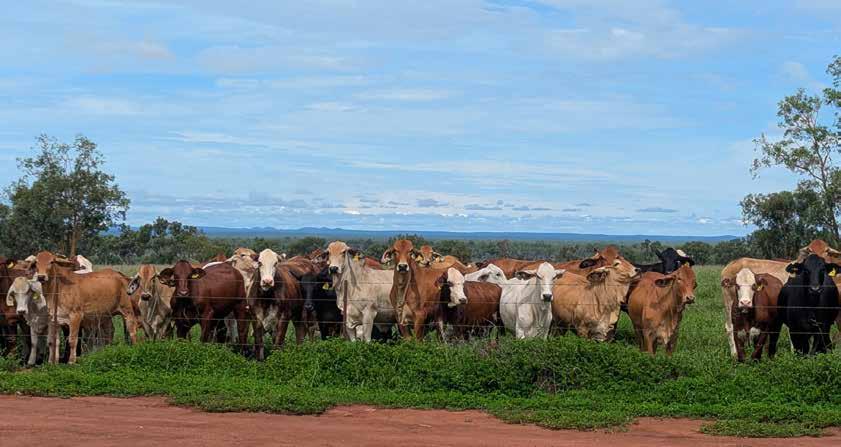
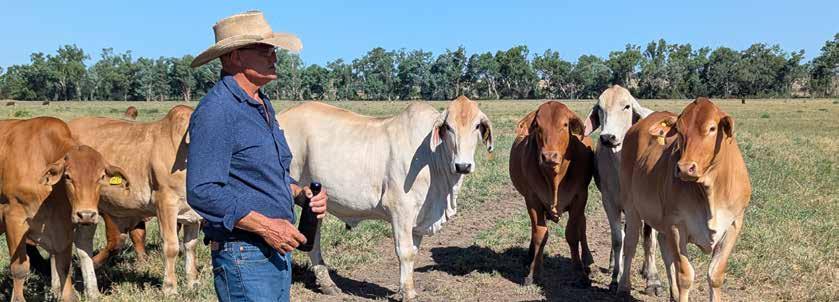
before 2 years of age leading to most operations calving heifers as 3-year-olds, slight improvements could pay extreme dividends. I met several breeders participating in the project, and others that will benefit indirectly, and their level of excitement and support was very refreshing. This project is groundbreaking in terms of the novel traits that data is being collected and the sheer scope of the project. Outcomes have already resulted in new reproduction traits with EBVs (their EPDs), with more to come,
Spring-Calving Cow Herd
• Cows should be on good pasture with clover and preferably low endophyte levels in fescue for the spring breeding season. Keep pastures vegetative by clipping or making hay. They should have abundant shade and water. Our goal is to have cows become pregnant before July when temperatures and heat stress can ruin the “spring” breeding season. Several supplement options are available if your pastures are low in red clover and heat stress appears to be an issue. Contact your ag extension agent for more information.
• Observe the cows and bulls as the breeding season continues. Watch bulls for injury or lameness and change bulls if a high percentage of cows are returning to heat. Record cow breeding dates to determine next year’s calving dates and keep records of cows and bulls in each breeding group.
• Keep a good pasture mineral mix, which contains adequate levels of phosphorus, vitamin A, selenium and copper, available at all times.
• Consider a special area for creep grazing calves, or practice “forward grazing” this summer, allowing calves to graze fresh pasture ahead of the cows. This can be accomplished by raising an electric wire or building a creep gate
and improvements in genomics information.
The area that Kentucky has a distinct advantage is our commitment to extension to facilitate the implementation of research-based practices. There is a form of outreach in Queensland, but it doesn’t have the same direct relationship with producers that we are privileged to enjoy here. I made a presentation to a large group of their extension professionals about the beef programs we
provide in Kentucky, in partnership with the Kentucky Beef Network and the Ag Development Board, and they were in awe. I think the common element to their ability to conduct long-range, impactful production research and our ability to deliver high quality educational programs is funding. Without financial support for both applied production research and educational programming to encourage implementation, neither will be successful and cattlemen and women will ultimately suffer.
Fall Calving Herd
• Pregnancy test cows if not done previously.
• Cull cows at weaning time
• Smooth-mouthed cows
• Cows weaning light weight and/or poorquality calves
• Open cows
• “Problem cows” with bad feet, teats, udders, etc.
• Select replacement heifers on the basis of:
• temperament
• conformation
• weaning weight
• dam and sire records
• Select more than needed to allow for culling after a short breeding season
General
• Finish harvesting excess pasture as hay soon! It should be cut before it becomes too mature. Be sure and replenish your reserves. Try to put up more than you think you will need in case of a late summer drought.
• Pasture should supply adequate energy, protein and vitamins at this time. However, be prepared for drought situations. Don’t overgraze pastures so that recovery time will be faster. Overgrazed pastures will recover very slowly during July/August.
• Keep pastures small for rotational grazing so that nutritive quality can be maintained. They should be small enough so cattle do not graze longer than a week. As the season progresses, you need several paddocks to give each properly stocked pasture about four weeks’ rest.
• Maintain a clean water supply and check it routinely. Water is extremely important in hot weather.
• Control flies. Consider changing insecticides and/or methods of control this year, because insecticide resistant flies may have developed if you have used the same chemical year after year. Consider pour-on and sprays that allow you to put cattle in the corral or through the chute with little stress on them. It will make subsequent trips through the “chute” less stressful.
• Prevent/Control pinkeye
• consider vaccinating
• control flies
• clip tall, mature grass
• treat problems quickly
• Clip grazed-over pastures for weed control and so that seed heads do not irritate eyes. Pastures should be kept in a vegetative state for best quality.
TIMELY TIPS