WHO IS RESPONSIBLE FOR REMITTING THE CHECKOFF ASSESSMENT?
BUYER
Generally the Buyer is responsible for collecting the Beef Checkoff assessment from the Seller
SELLER
However, both the Buyer and the Seller are responsible for seeing that the Checkoff is collected and paid. or pays $2 to
QUALIFIED STATE BEEF COUNCIL
Cattlemen’s Beef Board invests in national Checkoff programs, while Kentucky Beef Council invests in state programs.
If you are a producer from one of these seven states - Alaska, Connecticut, Maine, Maryland, Massachusetts, New Hampshire, and Rhode Island - you will remit directly to the Cattlemen’s Beef Board. If you have any questions regarding who is responsible for remitting the Checkoff assessment or how to remit payment, please contact your State Beef Council or the Cattlemen’s Beef Board at (303) 867-6304.
3 Exceptions to Beef Checkoff Collection: 1. Non-producer status: If a person (or company) owns cattle for 10 days or less, purchases the cattle to facilitate the transfer of ownership to a third party, and certifies that any Checkoff dollars due from the previous owner have been collected, then that person qualifies as a “Non-Producer” and the Checkoff assessment is not due when qualified cattle are resold. 2. Organic Exemption: In the 2002 Farm Bill, Congress created a process exemptiing organic producers from paying Checkoff program assessments. 3. Pre-Payment: Producers can also choose to “prepay” the Checkoff assessment when shipping cattle out of state for feeding and still retain ownership on the cattle. This allows the producer to direct half of the $1-per-head national Checkoff assessment to the beef council in the state where the cattle were raised, rather than the state where the cattle will be fed. Note: To claim any of these exemptions, the person selling the cattle must provide the proper ‘document’ to show that the Checkoff assessment is not due at the time of sale. Thus, the rule of thumb for all cattle sales is that the person paying the producer should collect either a “Dollar or a Document.”
LIVESTOCK MARKET - When cattle are sold through a livestock market or video market, the Market collects and remits the Beef Checkoff assessment.
CATTLE DEALER/ORDER BUYER - When cattle are sold to a Cattle Dealer or Order Buyer, the Dealer/Order Buyer collects and remits the Beef Checkoff assessment.
ANOTHER PRODUCER - Both the Buyer and the Seller are responsible for making sure that the Beef Checkoff assessment is collected and remitted. For clarity and consistency, we encourage the Seller to take on this compliance responsibility.
VEAL GROWER - When dairy calves are sold to a Veal Grower, both the Buyer and the Seller are responsible for making sure that the Beef Checkoff assessment is collected and remitted. For clarity and consistency, we encourage the Seller to take on this compliance responsibility.
CATTLE SHOWS AND FAIRS - When producers sell their animals at fairs or cattle shows (4H/FFA shows, Purebred cattle shows, etc.), the Organization that runs the sale collects and remits the Beef Checkoff assessment.
FEEDLOT - When cattle are sold directy to a feedlot, the Feedlot collects and remits the Beef Checkoff assessment.
PACKING PLANT - When cattle are sold to a packing plant, the Packing Plant collects and remits the Beef Checkoff assessment.
DIRECT-TO-CONSUMER BEEF SALES - When producers market their cattle as beef, the Producer is responsible for remitting the Beef Checkoff assessment.
According to the Paperwork Reduction Act of
an agency may not conduct or
person is
to a
it
to
The
for this
of
and
control
OMB control
collection is 0581-0093. The time required to complete this
collection is estimated to
per response, including the
one
for reviewing instructions, searching existing data sources, gathering and
the
and completing and reviewing the
of
The U.S. Department of Agriculture (USDA) prohibits discrimination in all its programs and activities on the basis of race, color, national origin, age, disability, and where applicable, sex, marital status, familial status, parental status, religion, sexual orientation, genetic information, political beliefs, reprisal, or because all or part of an individual’s income is derived from any public assistance program. (Not all prohibited bases apply to all programs.) Persons with disabilities who require alternative means for communication of program information (Braille, large print, audiotape, etc.) should contact USDA’s TARGET Center at (202) 720-2600 (voice and TDD). To file a complaint of discrimination, write to USDA, Director, Office of Civil Rights, 1400
ENTER TO WIN
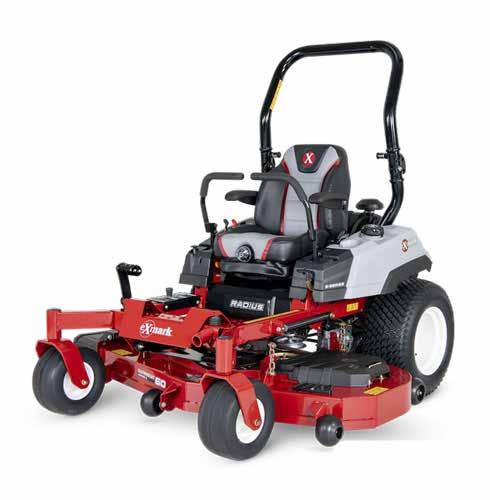
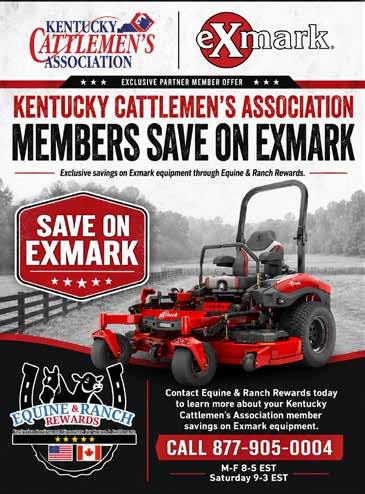
The Kentucky Cattlemen’s Foundation is raffling an Exmark Radius-S Series Zero Turn Mower generously donated by Equine & Ranch Rewards. This raffle will benefit Kentucky Cattlemen’s Foundation Leadership Development Program.
23.5 HP KAWASAKI FX730V V-TWIN 60” ULTRACUTTM SERIES 3 CUTTING DECK DUAL HYDRO-GEAR ZT3100 HYDROSTATIC TRANSMISSION WITH CHARGE PUMPS
1.5” TO 5.0” CUTTING HEIGHT IN 0.25” INCREMENTS • 9.0 MPH TOP SPEED 23 X 10.5-12 TIRES • 7.0-GALLON, SINGLE FUEL TANK • 4-YEAR OR 750 HOURS LIMITED CONSUMER/COMMERCIAL WARRANTY, 3-YEAR ENGINE WARRANTY • INTEGRATED REAR TOW HITCH + HEAVY-DUTY AIR CLEANER
Drawing will take place on October 2 at the WKU Ag Expo Center. Winner not required to be present to win. To purchase tickets, contact the KCA office at 859-278-0899, visit www.kycattle.org, scan the QR code above or mail form with payment to: Kentucky Cattlemen’s Association • Attn: Raffle • 176 Pasadena Drive • Suite 4 • Lexington KY • 40503
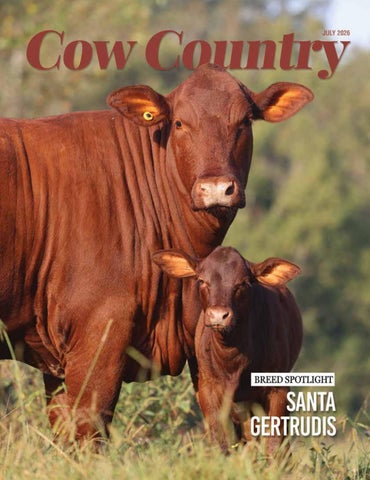
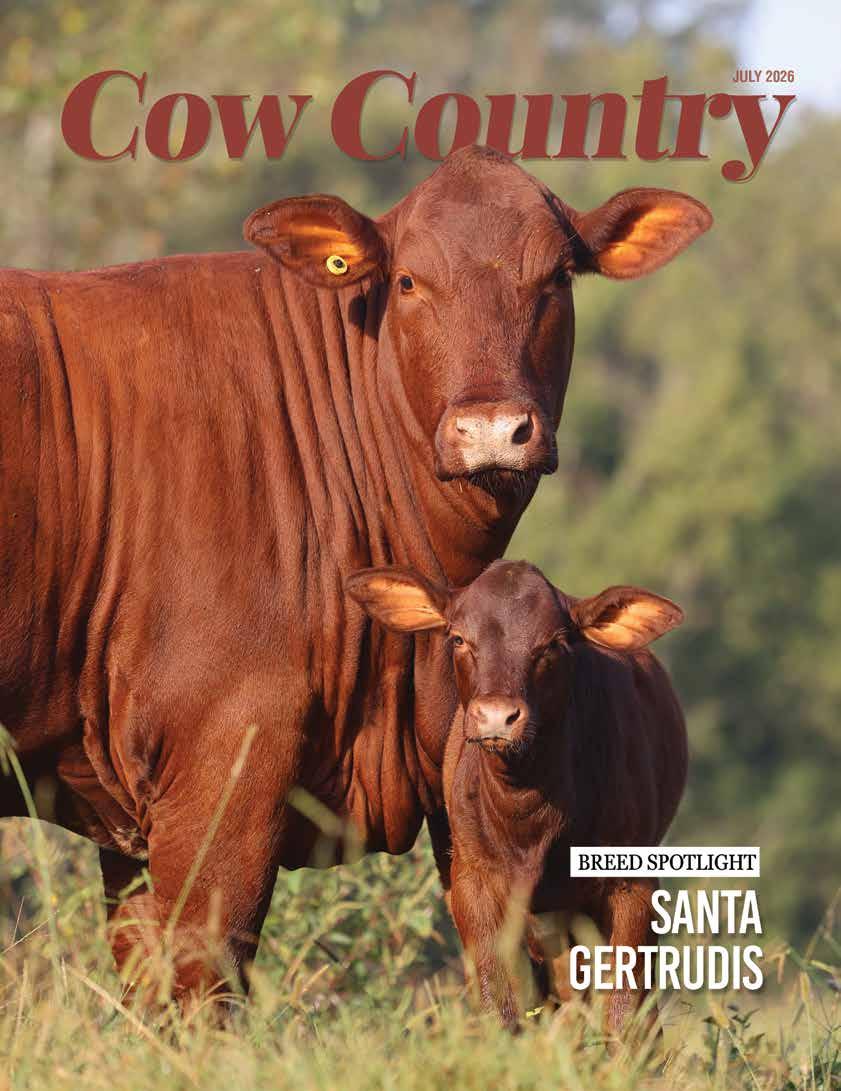
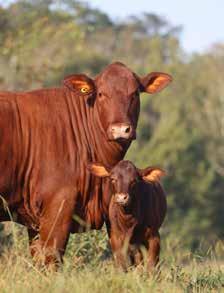
SANTA GERTRUDIS
COLUMNISTS
07 Allan Bryant President's Thoughts
08 Jonathan Shell Commissioner's Corner
10 Dave Maples Thoughts from Dave
22 Dr. Michelle Arnold New World Screwworm: The Importance of Early Recognition
28 Chris Teutsch Investments that Matter…Management
44 Kevin Laurent Advanced PVAP Results and Methods of Experienced Preconditioners
FEATURE STORIES
6 Meet Your 2026 KCA Board, Stacey Burkhardt
11 Kentucky Santa Gertrudis Association President's Column
18 Today's Santa Gertrudis
20 WindCrest Farm is Nurturing the Next Generation of Santa Gertrudis Cattlemen
26 New World Screwworm: A Recent Threat to U.S. Farm Animals 12 County News
We are partnering with the UF/IFAS Center for Public Issues Education in Agriculture and Natural Resources to refine our magazine and improve our communication efforts with you.
Learn more about the project and take the survey at piecenter.com/cattlemag or scan this QR Code with your phone.
Angus News 42 Calendar of Events & Ad Index 43 Classifieds
COVER PHOTO BY: Darren Richmond
“Good enough is the enemy of great.” I can’t remember if I saw that on a gym wall or a social media post. Motivational quotes personally don’t do much for me, but they often have truth. While that statement was in the context of some short-term motivation, it isn’t wrong. How many times have you fixed a fence that was “good enough” to only have a calf get out two days later because it wasn’t done right the first time? How many times did you fix a piece of equipment that was “good enough” to only have to revisit it? It reminds me of another quip I have seen before- if you don’t have time to do it right, how do you have time to do it again?
We weaned four groups of calves late last month. It was during a time when we were trying to do time-sensitive AI and ET work on a large number of spring-calving females. The bulk of our college students were tied up with finals week and unable to help. However, it had not rained in some time at that point, and we needed to get fall calves off the cows and the cows to fields that would hold them great but wouldn’t exactly hold their calves. I am sure many of you know exactly what I am talking about because you have pastures just like them.
It was just my 72-year-old father and me that day. We needed to put CIDRS in 22 recipients, CIDRs in 51 heifers, perform pregnancy check on 80 fall cows, and do weaning processing on 60 calves (20 calves had been done the previous day). The fall cows had been weighed, measured, condition scored, foot scored, and docility scored at least three times already, with many of them having been done upwards of five times in their lifetime. For a split second, we considered bypassing the exercise. It would have saved 60-90 minutes on what was one of the longest work days we have had in some time. What we had done previously would have been “good enough.” We considered skipping this year’s data collection for about 10 seconds. We worked a 14-hour day that day, but we got all our data collected.
The industry got itself in trouble with “good enough” over the years when it came to feet and udders. Good enough is essentially binary decision-making. Feet and udders were not quantified. Instead, they were either “good enough” to
parent the next generation or “bad enough” to get culled. When you have to quantify a trait on a scale, the perspective changes. Are the feet perfect, or could they use improvement? Is a cow’s udder good, great, or a liability on a cold morning? Perspective starts to change about how you breed cattle when it is more than a two-point scale.
What does “good enough” look like in your own operation? Is your 120-day season “good enough” or can you do better? Is that bull with no known genetic value “good enough” to keep daughters out of, or are they a potential liability that you are better off selling in this high market? Is the field you have continuously grazed all spring “good enough” to carry a set of cows, or should you really look into subdividing it? Quantifying phenotype data requires introspection within your own herd. Personally, if there are poor feet or udders on a set of animals I bred, that is a “me” problem. I did not do my job well, whether it be in sire selection, heifer retention decisions, or even development. Now is a good time to take a little introspection into your own operation and think about what you are doing that you should probably do better. In the first paragraph, I said if you don’t have time to do it right, how do you have time to do it again. Similarly, if you won’t allocate resources to make improvements in this record cattle market, when will you?
Joe K. Lowe II
EXECUTIVE COMMITTEE
OFFICERS:
President
ALLAN BRYANT Eminence
President Elect
DANIEL HAYDEN Whitesville
Vice President
RYAN MILLER Campbellsville
Treasurer
KEN ADAMS Upton
Past President
RANDY WARNER Sharpsburg
KCA Program Chairman
ADAM CHUNGLO Harrodsburg
KBC Chairman
WAYNE ZOGLMANN Lewisport
KBN Manager
AMY WHITE Lexington
Beef Solutions Manager*
DANIEL HAYDEN Whitesville
*ex officio
REGIONAL DIRECTORS:
REGION 1
Chris Milam, John Mark Brown, Dale Gold, Greg Roberson, Gary Woodall, Lincoln
Pyle, Susan Zoglmann, Bill Plemmons, Kenton Howard, Britny Williams, Conner Williams
REGION 2
Bryan Manion, Joe Lowe, Allison Nissley, Rayetta Boone, Sammy Boone, David Strater, Kelly Flanders, Andy Joe Moore, Adam Thomas, AJ Mitchell, Jonathan Murley, Kenneth Green, Robert Siddens, Josh Morris, Joe Mike Moore, Amy Cecil
REGION 3
Amanda Hall, Nathan Lawson, Allen Phillips, Stacey Burkhardt, John David Yount, Lincoln Clifford, Abbey Biddle, Ben Tinsley, Crystal Harrod, Phillip Douglas, Tanya Wilson, Craig Retzlaff
REGION 4
Jodi Purvis, Brad Reynolds, Chad Anglin, Phillip Stamm, Danielle Harmon, Brandy Graves, Kelsey Cooper, Bruce Witt, Ronnie Lowe, Logan Carter, Jason Crowe, Rob Amburgey
REGION 5
Phillip Reese, Cary King, John Settles, Natalie Wesley, Brandon Kelly, Freddie Harris, Brent Williams, Anne Bays, Tommy Glasscock, Josh Wethington, Arch Sebastian, Terry Mattingly
Briefly tell us about your operation.
We are a fifth-generation farm family with 50 head cow-calf operation right on the banks of the Ohio River. We sell commercially, do some freezer beef and sell seed stock. I strive to show my sons the importance of sustaining our farm operation and heritage in the future. We enjoy working outdoors and nature on the farm. A typical evening of checking on the cattle includes seeing bald eagles, beavers and herons. It’s our dream life. My involvement with KCA has opened so many personal connections and friendships from folks throughout Kentucky. I’m forever grateful for those lasting relationships and connections made.
Our farm and life motto is: “We’re only on this earth a short amount of time; leave it a little better shape than you found it."
Why did you decide to run for state board?
After completing the KCA Leadership Program, I wanted to build upon those lifelong friendships and connections made during that two-year experience. My hope is to offer a good perspective on the importance needed to inspire farm kids that you can do many different things in life and still maintain your family’s farm and heritage and the importance of it.
How many years have you served on the state board?
This is my first year.
What do you like the most about the Kentucky Cattlemen's Association?
Personal connections with other producers and getting to know KCA’s leadership.
When you aren't taking care of your cows, what are you doing?
I’ve worked for 33 years in quality control at North American Stainless. • Board of Directors of nonprofit Payne Hollow on the Ohio • Bedford Rotary Club • Trimble County Extension Board • Ohio River Way • Trimble County FFA Alumni Group
KCA PAST PRESIDENTS:
Dave Maples Executive Vice President
Carey Brown Chief Operating Officer
Kenny Allen Beef Solutions Operations Manager
Kelly Baird KBC Director of Communications
Todd Brown Graphic Designer
Bradon Burks KBC Director of Education
Rachel Cain Membership and Communications Coordinator
Amelia Carter KBC Director of Industry Relations
Danny Coy Video Production Specialist
Jake Harrod KBN Program Coordinator
Dan Miller KBN Industry Coordinator
Debby Nichols National Advertising Sales, LAN
Katie Pratt Communications Manager
Becky Thompson Director of Kentucky Beef Network
Kelly Tucker KCA Collections & Compliance
Nikki Whitaker Director of Operations & Policy open position KBC Southeast Regional Director of Nutrition
President's Thoughts
Allan Bryant KCA President
At the start of every grilling season, there seems to be a renewed effort by certain activist groups to encourage consumers to reduce or eliminate meat consumption through campaigns such as “Meatless Monday.” While every individual has the right to make personal dietary choices, it is equally important that consumers hear the broader story — the story of America’s farm families, rural communities, and the important role beef plays in both a healthy diet and a sustainable way of life.
For generations, cattle producers have worked tirelessly to provide safe, nutritious and affordable beef to consumers across the nation and around the world. Beef is far more than a product on a grocery store shelf; it represents the dedication and hard work of farm families, like yours and mine, who care for their livestock every day of the year, often while facing difficult weather conditions and volatile markets. Our farms help sustain rural economies, preserve open spaces and maintain a way of life that has shaped communities for generations.
Opposing campaigns such as “Meatless Monday” is not about criticizing personal food choices. Rather, it is about promoting balance, facts and appreciation for the people who produce one of the most nutrient-dense foods available. Beef is an excellent source of highquality protein, iron, zinc and essential vitamins that support muscle development, immune health and overall wellness. For many families, beef continues to be an important part of a balanced and nutritious diet. Unfortunately, many campaigns promoting reduced meat consumption often overlook the significant advancements the beef industry has made in sustainability and animal care. Today we are raising more beef with fewer resources than ever before. The United States produces approximately 20% of the world’s
beef supply with only about 6% of the world’s cattle population. Through advancements in genetics, improved nutrition, conservation practices and responsible land stewardship, the beef industry continues to reduce its environmental footprint while protecting natural resources for future generations. Additionally, approximately 84% of fed cattle today grade Choice or Prime, demonstrating the industry’s commitment to producing a high-quality product, while beef production accounts for only 2% of total greenhouse gas emissions.
In Kentucky and across rural America, our cattle farms also play a vital role in preserving farmland and supporting local economies. Many beef operations are multi-generational family farms where values such as hard work, responsibility and stewardship are passed from one generation to the next. When consumers support beef producers, they are also supporting local feed stores, veterinarians, equipment dealers and countless other rural businesses connected to agriculture. Consumers deserve honest and balanced conversations about food production rather than messaging rooted in fear or misinformation.
Agriculture is not the problem; it is an essential part of the solution. As beef producers, we continue to adapt, improve and innovate while helping feed a growing population and sustain rural communities.
As consumers make decisions about the food they eat, it is important to remember the people behind the product. America’s cattle producers take great pride in raising beef responsibly and humanely while remaining committed to protecting the land and natural resources for future generations. Our story is worth telling not only on Monday, but every day of the week. God bless!
Allison Charolais
Charolais Breeder Since
Charolais Breeder Since 1962
As beef producers, we should welcome discussions about nutrition, sustainability and animal care because we are confident in the work we do every day to produce a safe, wholesome and nutritious product. Most of us have a deep connection to the land and the livestock we care for because it’s our livelihoods — and often our family legacies. We pride ourselves on responsible stewardship and doing things the right way. Rather than focusing solely on campaigns such as “Meatless Monday,” perhaps greater attention should be given to the farmers and ranchers who work every day to provide an abundant supply of safe, high-quality food for our nation.
Ø
Ø Bull calves out of HCR Answer 2042 and HCR SPIRIT 4007.
HCR Answer 2042 and HCR SPIRIT 4007.
Ø Bred for calving ease and growth.
Ø Bred for calving ease and growth.
Ø Bulls for both purebred and commercial breeders.
Ø Bred for calving ease and growth.
Ø Yearlings and two-year-olds available.
Ø Bulls for both purebred and commercial Ø Yearlings and two-year-olds available.
Ø Bred heifers to calve in fall available.
Ø Bulls for both purebred and commercial breeders.
Ø Bred heifers to calve in fall available.
Ø Yearlings and two-year-olds available.
Ø Bred heifers to calve in fall available.
John Allison, Owner 545 Eminence Road New Castle, KY 40050 502-220-3170 David Carter,
John Allison, Owner 545 Eminence Road New Castle, KY 40050 502-220-3170 David Carter, Farm Manager 502-706-0075
Kentucky Cattlemen’s Association President
Commissioner's Corner
Jonathan Shell Agriculture Commissioner
The 2026 Kentucky legislative session was one of the strongest for Kentucky agriculture that we’ve seen in years.
Agriculture is economic growth. With nearly 70,000 farms, agriculture has a nearly $50 billion impact on Kentucky. The support shown by the General Assembly for farm families and rural communities demonstrates a clear commitment to agriculture’s future and positions Kentucky for long-term growth, innovation and success.
During the 2026 legislative session, the Kentucky Department of Agriculture was allocated $20.9 million in General Fund dollars for Fiscal Year 2026 and $22.9 million for Fiscal Year 2027. The budget reflects a continued commitment to programs that strengthen agriculture at every level and support Kentucky communities, including:
• $886,500 in Fiscal Year 2026 and $819,300 in Fiscal Year 2027 for the Raising Hope Initiative, addressing rural mental health, suicide prevention and farm safety;
• $886,500 in Fiscal Year 2026 and $819,300 in Fiscal Year 2027 for the Farms to Food Banks program, connecting Kentucky farmers with food banks to fight food insecurity; and
• $720,000 in Fiscal Year 2026 and $697,500 in Fiscal Year 2027 for County Fair Grants, supporting improvements to local fair facilities and strengthening community agriculture traditions.
In addition to these investments, legislators appropriated $5 million annually from the Budget Reserve Trust Fund for the Kentucky Agricultural Economic Development Board (KAEDB). This funding represents a historic step forward, marking only the second time general fund dollars have been dedicated to agricultural development outside of the Tobacco Master Settlement Agreement.
The KAEDB plays a critical role in driving agricultural innovation, expanding economic opportunities and supporting long-term growth across Kentucky’s rural communities. Through strategic investments, the board is helping position Kentucky agriculture for the future.
Further strengthening the industry, $35.4 million in Fiscal Year 2026 and $32.7 million in Fiscal Year 2027 from the Tobacco Master Settlement Agreement were allocated to the Agricultural Development Fund. These funds support grants, incentives and low-interest loans through the Kentucky Agricultural Development Board and the Kentucky Agricultural Finance Corp., helping farmers modernize operations, diversify and remain competitive.
The General Assembly also advanced key policies to expand markets and improve quality of life for Kentuckians.
Two major legislative wins centered on the connection between agriculture and health:
• Senate Bill 5 (SB5) creates new opportunities for Kentucky farmers by making it easier for schools to purchase Kentucky-grown products. The bill allows school districts participating in USDA Child Nutrition programs greater flexibility in purchasing local food, helping keep Kentucky food on Kentucky trays while supporting local producers.
• Senate Joint Resolution 23 (SJR 23) declares Kentucky a Food is Medicine state, reinforcing the role of agriculture in improving public health. The resolution builds on the partnership between KDA and the Kentucky Hospital Association to expand access to nutritious, locally grown foods through initiatives such as medically tailored meals, produce prescriptions and community-based food programs.
The resolution also directs the Personnel Cabinet to incorporate
community-supported agriculture (CSA) programs into state employee wellness benefits, creating new markets for farmers while improving access to fresh food.
Additional legislative achievements further strengthened Kentucky agriculture:
• Senate Bill 30 supports Kentucky’s dairy industry by allowing milk haulers to operate more efficiently, increasing allowable weights while maintaining safety standards, reducing costs and improving logistics for dairy producers.
• House Bill 869 positions Kentucky as a leader in the emerging alternative aviation fuel industry by establishing a nonrefundable tax credit for producers. This forward-looking policy creates new markets for agricultural products, attracts investment and strengthens the state’s role in a growing energy sector.
• Senate Bill 155 enhances animal health protections by giving the commissioner of agriculture, in consultation with the state veterinarian, the authority to declare animal health emergencies, ensuring swift action to protect livestock, poultry and the broader agricultural industry.
• House Bill 56 modernizes regulatory processes by updating inspection requirements and removing outdated statutes, allowing KDA to operate more efficiently and better serve Kentucky producers.
This legislative session was about more than funding. It was about building momentum for Kentucky agriculture. Through strategic investments, expanded market opportunities and policies that support innovation and rural communities, Kentucky is strengthening its agricultural foundation and ensuring that agriculture continues to drive economic growth for generations to come.
Sheep & Goat Sales 1st Monday of Month 1:00 PM Aug Sept Oct Nov
Farmers Stockyards—Flemingsburg
Corey Story, Manager
Cattle Sales Tuesday 10:00 AM —Cattle & Small Animal Sales Saturday 10:00 AM
Thoughts From Dave
Dave Maples Executive Vice President
I normally read the article in Beef Magazine’s - Beef Daily written by Dr. Nevil Speer. Dr. Speer always has an interesting point of view and is on top of the issues. He is very big on the data. Look at the data, study the data and then make your decisions.
But this article was about luck. He had written an article titled, “You vs You (return on luck).” Dr. Speer had read something from the author James Clear (Atomic Habits) that caught his attention because it was about “luck.” James Clear positions “luck” and provides some perspective on the topic this way:
1. Luck flows through people and travels by conversation.
2. The people you talk to determine the opportunities you find.
3. Keep talking to the same people, keep finding the same opportunities.
4. Start talking to new people, start finding new opportunities.
5. If you want different luck, start walking into different rooms.
This is great advice about the importance of the need to keep moving forward. I have read many times that things don’t go your way - you have to make them go your way.
My family owns a small family farm in Jessamine County, and we have a 20-head, cow-calf business. We just sold our feeder calves and bred heifers the last week of May. We had by far the best outcome that we have had in the 15 years that we have own the farm. Was that outcome “luck” or did it just happen?
When I read the first point from James Clear that luck flows through people and travels by conversation. I go back to being able to buy the farm in the first place. My luck in being able to buy the first parcel was because of a conversation I had with Charles Miller. He knew of a farm that was going to be for sale. Another conversation was with a different person about financing. I had a totally separate conversation with another person that knew of someone that had 13 commercial bred cows for sale. Then when it was time to get in a value-added feeder calf sale, there was a different person and a positive outcome. Then the bred heifers - different people different flow of luck with totally separate conversations.
Yes, we have had a lot of luck getting to where we are today with our cattle business. I would highly agree that the people that I and my wife, Dana, have talked to have determined the opportunities that we have had or our luck.
Finding new people, growing, learning can be uncomfortable. But the effort is worth it. And as explained in Dr. Speer’s “return on luck” what’s most important is NOT the luck itself, but rather what people “did with their luck…”. “Did” being the difference makersomehow, someway, no matter the circumstance, turning the luck into some sort of a positive return.
Dana and I have had our share of “luck,” but we have put in the work. And like most of you, that work has happened after 5 p.m. and on the weekends. About the only way to make it work is to talk to new people and create new opportunities.
PINK EYE IN YOUR HERD?
Win the battle before the battle wears you down!
Treat and relieve eyes suffering from pink eye & other irritations
Safe for lactating dairy animals without a withdrawal period
Low cost per application, can be used as a prophylactic
Longevity. Adaptability. Hybrid Vigor.
HelIo, I would like to introduce myself, Ivye Mattingly, president of the Kentucky Santa Gertrudis Association along with our current board members which include Pat Heath- vice president, Beverly Heath- secretary and treasurer, Cody Mattingly -sales chairman and board of directors Roger Mattingly, Rodney Smith, David Smith and Chip Parker. Currently, we are preparing for our 2026 sale at the stockyards in Bowling Green. Some of the activities planned are meal, show, junior games and photo contest. We will also recognize past board members at that time. A meeting is being planned for later this fall between Thanksgiving and New Years to start planning as well as have quality time with our Santa Gertrudis family for the holidays!
BARREN COUNTY NEWS
Carol Spiegl
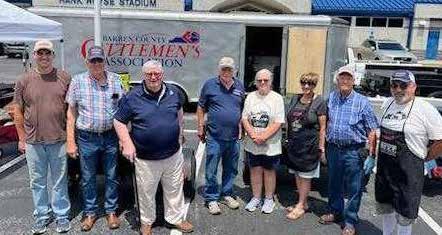
The Barren County Cattlemen’s Association May meeting was cosponsored by Farmers Rural Electric Cooperative and South Central Rural Telephone Cooperative. As always, our wonderful sponsors and members enjoyed a delicious ribeye sandwich meal.
Jeff Eaton with SCRTC and Toby Moss with FRECC each gave a short presentation on the co-ops.
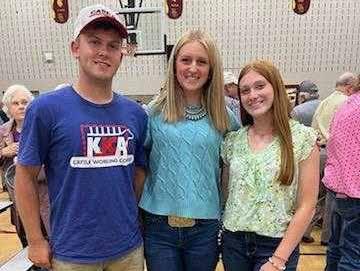
Three Barren County Junior Cattlemen were recognized for their first-place win in the Kentucky Junior Cattlemen’s Association Cattle Working Contest.
Barren County Cattlemen’s Association would like to thank SCRTC and FRECC for the freebie gifts and the great door prizes.
Submit your County Cattlemen's Association news to kpratt@kycattle.org
Submissions are due by the10th of the month prior to publication.
McCLEAN COUNTY NEWS
Nathan Howard
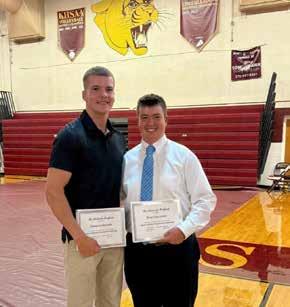
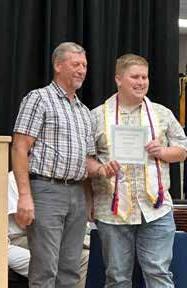
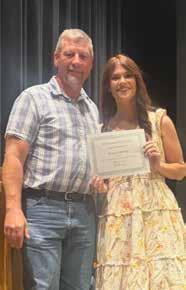
The McLean County Cattlemen’s Association awarded two $500 scholarships to seniors Jackson Reynolds and Wyatt Gatton.
FRECC representatives from left: Caralyne Pennington, Jamie Moss, Toby Moss, Chuck Bishop, Abigail Nuetzman, Cory Jackson, Cornelius Faulknor and Randy London.
SCRTC representatives from left: Jeff Eaton, Christian Kaumanns, Tim Coomer, Lisa Beaty, Kevin Bradshaw and Carla Craine.
Members of the state champion Cattle Working Contest team from Barren County include from left Jay Houchens, Hallie Hughes and Jonna Ford.
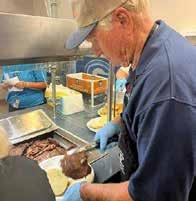
Barren County Cattleman Frank Rowland serves a ribeye to an anxious Glasgow Schools staff member.
Barren County Cattlemen’s Association Cooking Crew was honored to cook ribeyes for Glasgow Independent School’s Staff Appreciation Lunch.
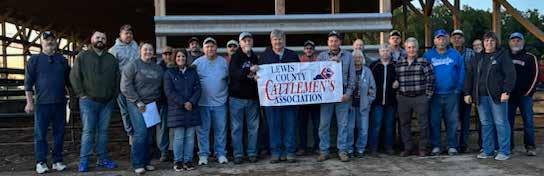
LEWIS COUNTY NEWS
Kim Sparks
LOGAN COUNTY NEWS
John Walpole
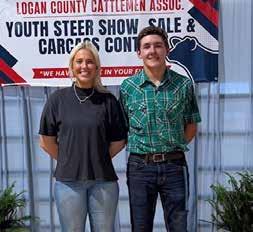
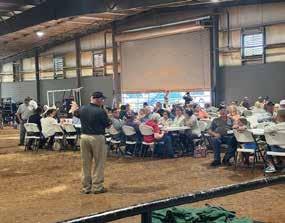
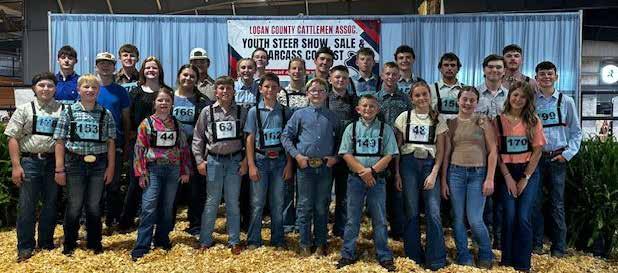
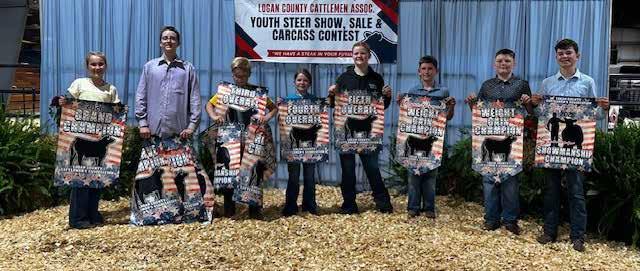
The Logan County Cattlemen’s Association hosted their quarterly meeting May 26 with Warren Beeler serving as the guest speaker. The meeting was held in conjunction with the Logan County Steer Show, Sale and Carcass Contest. The contest gives Logan County youth an opportunity to learn about the full life cycle of a steer as they raise the animal and then compete against their peers for recognition and prizes. This year, 28 participants entered 39 steers into the contest.
The association also awarded scholarships to two students during the meeting. Clay Vansickle was the high school recipient. He will be double majoring in agronomy and ag business at Western Kentucky University this coming fall. Abbi Walpole received the college student scholarship. She is majoring in ag business at WKU.
On a beautiful May evening, members of the Lewis County Cattlemen's Association were treated to a tour of Mark Ripato's 100 cow confinement barn. During a tour of the barn, Mark discussed how his plans came to fruition and issues he had to work out along the way. Overall, the tour provided valuable insight into modern cattle farming practices and the level of care required to maintain the barn to provide a healthy environment for the cattle. We would like to thank our sponsor Lewis County Farm Bureau and Mark for the tour.
Holding the banner is Owner Mark Ripato (left) and President Phillip Stamm (right).
Quarterly Meeting
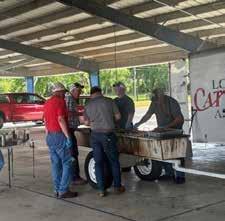
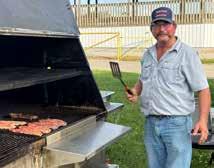
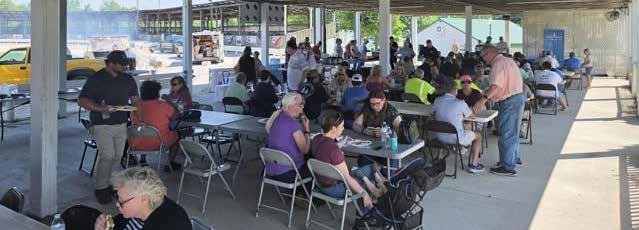
Cooking Crew
Steer Show
Steer Show Winners
Scholarship
SHELBY COUNTY NEWS
Peter Eberle The Sentinel-News
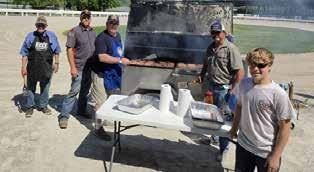
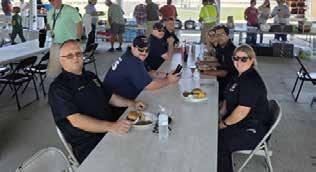
The Shelby County Cattlemen’s Association prepared over 320 hamburgers that were enjoyed by residents, first responders, corporate employees and law enforcement on the county’s annual Beef Day, May 18 at the Shelby County Fairgrounds.
The Shelby County Beef Day event was sponsored by Independence Bank and Kentucky Farm Bureau. The Shelby County Dairy Club was also involved in the Beef Day festivities.
Annual Beef Day events have taken place for over 20 years in Shelby County. This year marks the seventh year the event has been held at the fairgrounds.
The Shelby County Cattlemen’s Association backed up Beef Day by cooking for the crowds at the 164th annual Shelby County Fair and Horse Show. Although Mother Nature didn’t cooperate at first, the fair and horse show is a great event enjoyed by all ages.
The Shelby County Cattlemen’s Association consists of over 300 members and serves as the voice for all Shelby County cattle producers. The association also provides scholarships to qualifying youth in their pursuit of degrees in agriculturerelated fields. In 2025 alone, the SCCA provided $6,000 in scholarships and donated over $2,500 to local charities. The Shelby County Cattlemen’s Association works closely with the 4-H program through the UK Cooperative Extension office by supporting youth programs.
The next quarterly meeting is at 7 p.m. July 21.
GRANT COUNTY NEWS
crowd
A group of cattlemen prepare hamburgers for the hungry crowd during the annual Beef Day.
A group of first responders enjoy their hamburgers during the Shelby County Cattlemen’s Association Beef Day event.
Henry
The Grant County Cattlemen’s Association awarded two, $1,000.00 scholarships to high school seniors. Ava
of Williamstown High School and Jackson
of Grant
School were the recipients of the scholarships. Congratulations to both seniors.
The large
gathers at the Shelby County Fairgrounds to enjoy a fresh grilled meal thanks to the Shelby County Cattlemen’s Association.
Timothy
Lunsford
Traylor
Co. High
WARREN COUNTY NEWS
Joanna Coles
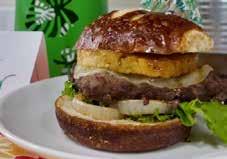
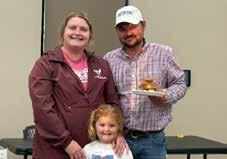
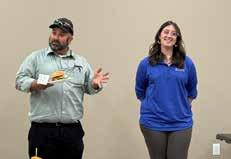
The Warren County Cattlemen’s Association held their annual Burger Cook-Off on Thursday, May 7 at the Warren County Extension office. This event focused on community involvement, encouraging creativity, offered learning opportunities, networking and so much more.
Participants could compete individually or as a team, but one member must be a cattlemen’s member. Teams were also responsible for providing their own equipment and products.
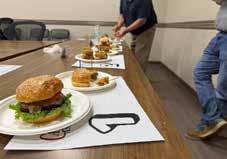
On May 7, four teams planned, grilled, prepared and presented two burgers. One burger was to be cut into four equal pieces and secured with a toothpick in each piece for the judges to sample. The second burger was left whole for presentation judging, allowing the teams to exhibit their creativity through themes and decorations.
The following themes were presented:
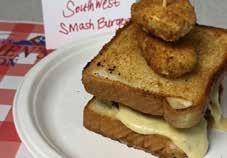
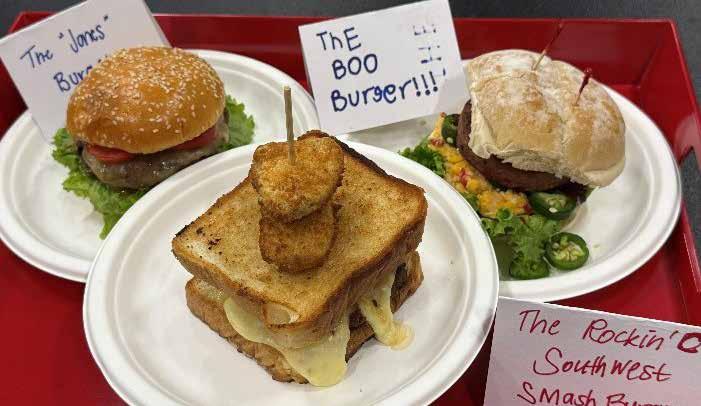
“The Jones Burger,” “The Rockin’ C Southwest Smash Burger,” “The Boo Burger” and “The Aloha Burger.”
Earning third place, along with $25 and bragging rights, was “The Jones Burger” created by members from Morgantown Bank and Trust. The burger was named after the Morgantown Bank and Trust President, Jason Jones.
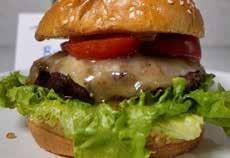
The butcher, the baker, the coffeemaker beef patty on a sesame seed brioche bun, with pepper jack cheese and fig jam.
Earning second place, along with $50 and bragging rights was “The Rockin’ C Southwest Smash Burger” created by Austin, Rachel and Maren Cole.
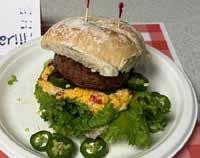
Beef patty on Texas toast with queso cheese, topped with jalapeno poppers.
Taking home first place with $100 was “The Boo Burger” created by Bailey Wahl, Owen Wahl and Oakley Wahl.
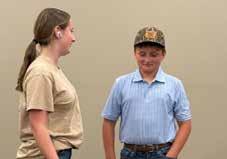
Our participants’ burgers were judged by Bradon Burks with the Kentucky Beef Council and Eric Aldridge, 5th District magistrate.
The cook-off was followed by the monthly Warren County Cattlemen’s meeting where the cook- off participants presented their winning burgers to their fellow cattlemen's members.
The Boo Burger
The Jones Burger
The Rockin’ C Southwest Smash Burger
The Aloha Burger
Burgers were placed on numbers for judging.
First Place Winners
Second Place Winners
Third Place Winners
ESTILL COUNTY NEWS
Annette Anthony
A Legacy That Grows: Estill County Cattlemen Double the Eric Baker Scholarship for 2026
Five years ago, a community lost a good man. This year, that community made sure his name means even more.
The Estill County Cattlemen's Association has awarded the 2026 Eric Baker Scholarship to recent Estill County High School graduate Will Beckley, marking the fifth recipient to carry forward a legacy that began in grief and grew into something remarkable. Beckley will be attending Kansas State University in the fall to pursue a career as a veterinarian.
In a milestone moment, Estill County Cattlemen's President Danny Callahan announced that the scholarship was doubled to $1,000 for this year, a reflection of both the fund's growth and the enduring impact of the man it honors.
The scholarship was established by Callahan and the Estill County
Cattlemen's Association in the wake of Eric Baker's passing, a tribute rooted in friendship, respect and a belief that the best way to honor someone is to invest in the next generation they never got to see. Standing alongside Callahan at the Estill County High School Awards presentation was Karen Baker, Eric's widow, whose presence served as a quiet and powerful reminder of why the work matters.
For the Estill County agricultural community, this scholarship is more than financial support. it is a statement. It says that the people who shaped this county's cattle culture will be remembered, and that their memory will open doors for those who love this land and this way of life just as much.
Danny Callahan and the Estill County Cattlemen started something when they collectively refused to let loss be the last word. Five years and five recipients later, it's clear — Eric Baker's name is only going to reach further.
Longevity. Adaptability. Hybrid Vigor.
Taylor Kelner Santa Gertrudis Breeders International
Longevity. Adaptability. Hybrid Vigor. TODAY'S
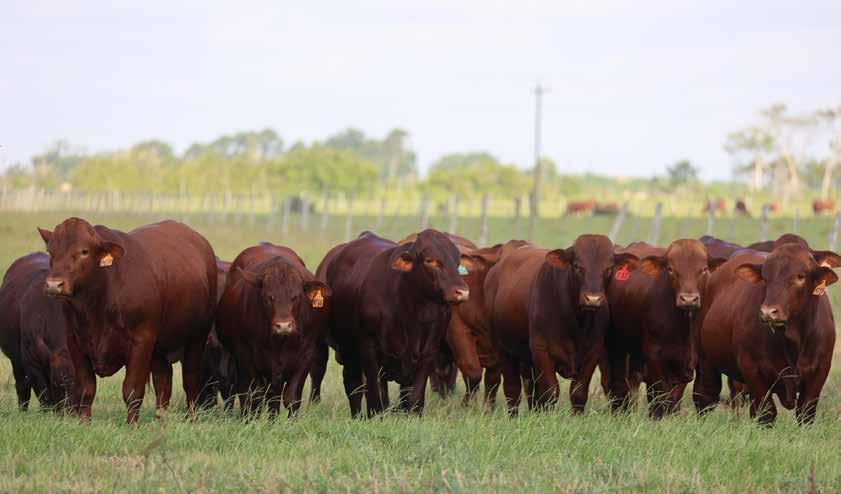
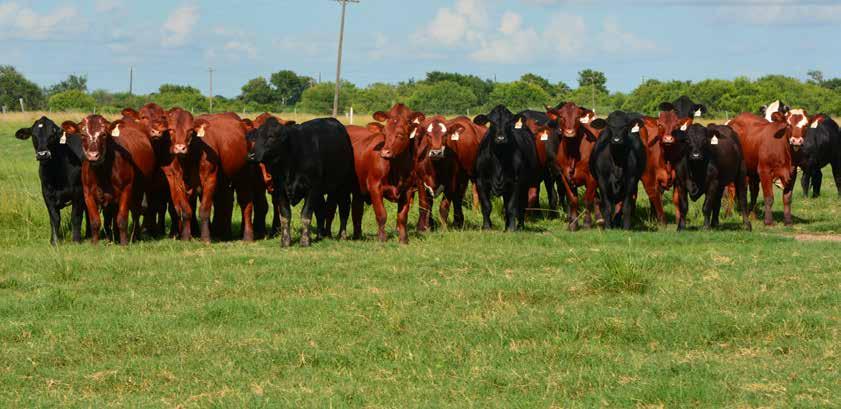
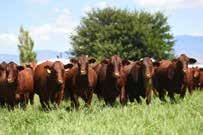
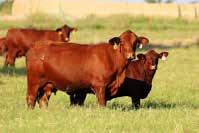
Santa Gertrudis Breeders International continues to prove why the breed remains one of the most versatile and adaptable beef breeds in the industry today. Developed in the United States and backed by decades of performance, Santa Gertrudis genetics are working successfully in a wide range of environments, from the heat and humidity of the Gulf Coast to the cold, rugged conditions of northern Utah.
As the first beef breed developed in the United States, Santa Gertrudis cattle hold a unique place in the American cattle industry. Named for the Spanish land grant where Captain Richard King established the historic King Ranch in South Texas, the breed was developed with one goal in mind: creating cattle that could survive, perform and remain profitable in the harsh conditions of the South Texas brush country.
The foundation of the breed began in the early 1900s when King Ranch systematically crossed Brahman cattle with Shorthorn genetics in search of a more adaptable and productive animal. After years of selective breeding, ranch managers determined that a blend of 3/8 Brahman and 5/8 Shorthorn produced cattle with the ideal balance of hardiness, fertility, growth and
adaptability. In 1920, a legendary bull named “Monkey” was born and would eventually become the foundation sire of the Santa Gertrudis breed. Known for his muscle expression, structural soundness and ability to thrive in difficult conditions, “Monkey” helped establish the traits the breed is still recognized for today.
In 1940, the United States Department of Agriculture officially recognized Santa Gertrudis as a distinct beef
breed, marking a milestone not only for King Ranch but for the American beef industry as a whole. More than 80 years later, the breed continues building on that legacy through modern genetic evaluation, commercial cattleman success and increasing demand for adaptable, efficient cattle that can perform in a variety of climates and management systems.
During the Utah State University heterosis project, Santa Gertrudissired calves demonstrated exceptional hardiness during February calving conditions where average temperatures reached highs of just 26 degrees F and lows near 10 degrees F. The project reported zero Santa Gertrudis calf losses due to freezing, compared to six Angus calf losses under the same conditions. The results continue to reinforce what commercial cattlemen across the country already know: Santa Gertrudis cattle are built for longevity, adaptability and hybrid vigor.
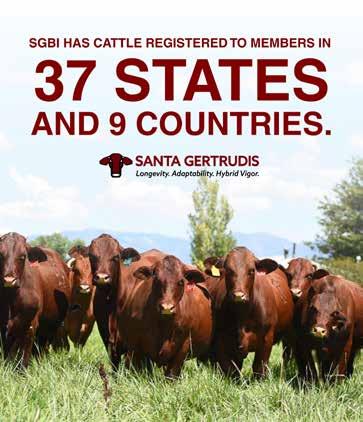
Those traits continue to drive interest in the breed as commercial cattlemen search for genetics that can perform in increasingly demanding environments while maintaining maternal strength, fertility and efficiency. Today, Santa Gertrudis cattle are registered to
breeders in 37 states and nine countries, with genetics continuing to expand into diverse commercial and seedstock operations nationwide.
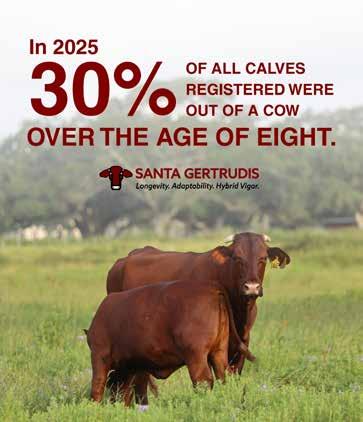
In 2025 alone, 30% of all calves registered through Santa Gertrudis Breeders International were out of cows over the age of 8— a testament to the longevity and long-term productivity the breed is known for. For many producers, keeping productive females in the herd longer directly impacts profitability through lower replacement costs and increased lifetime production.
Under the leadership of Keaton Dodd and Arlin Taylor, along with the rest of the SGBI board of directors and staff, the association continues working to move the breed forward through commercial cattleman outreach,
data-driven genetic progress, youth involvement and expanded breed promotion efforts across the country. That effort includes continued emphasis on performance data, breed improvement and educating producers on the advantages Santa Gertrudis genetics can bring to both commercial and seedstock operations. Across the country, breeders are seeing success utilizing Santa Gertrudis cattle in a variety of programs ranging from purebred seedstock operations to crossbreeding systems focused on maximizing hybrid vigor and maternal efficiency.
From progressive crossbreeding programs focused on heterosis and maternal efficiency to purebred operations emphasizing longevity and
adaptability, Santa Gertrudis genetics are helping producers build practical, profitable cowherds that can withstand environmental and market challenges alike. The breed’s continued expansion into new regions and management systems reflects growing confidence in cattle that are functional, efficient and built to work in real-world conditions.
For producers searching for practical cattle that can withstand environmental stress while maintaining productivity, fertility and longevity, Santa Gertrudis cattle continue to prove themselves in real-world conditions across the United States.
Today’s Santa Gertrudis. Longevity. Adaptability. Hybrid Vigor.
WindCrest Farm is Nurturing the Next Generation of Santa Gertrudis Cattlemen
by Nolan Taylor
In Leitchfield, the WindCrest Farm herd dates back to 1983, when John and Karen Taylor decided to make their first investment in Santa Gertrudis cattle. They bought those foundational "Gerts" from a trusted source: John’s uncle, who owned Circle L Ranch in Elba, Alabama.
From those first Alabama drop-offs, John and Karen set to work. Over the next 40+ years, they continuously paired top-tier genetics with functional traits, striving to improve the herd's quality with every single generation.
That dedication quickly became a family affair. In 1998, John and Karen’s son, Nolan, stepped into the ring as a junior exhibitor. Nolan spent his youth traveling to junior nationals, county fairs and major state fairs, anchoring a lifelong family passion for the competitive cattle industry. Even as Nolan grew into adulthood, the Taylors remained a fixture at open shows and state fairs across the nation.
A Whirlwind Rookie Season
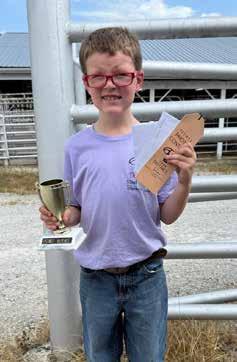
In 2025, a familiar scene played out in show rings across six different states— but with a brand-new face holding the lead. At 8 years old, Nolan and his wife, Emily’s oldest son, Luke, took over the family reins for his official rookie year.
Luke didn't just ease his way into the livestock youth program; he threw himself completely into the deep end. Throughout his first year, Luke competed in a dozen shows across six states. What makes the feat even more impressive is the balancing act he maintained back home in Leitchfield. Luke managed his heavy travel schedule all while maintaining his schoolwork, participating on his school's academic team, and playing football, basketball and baseball.
The absolute peak of Luke's whirlwind debut season was a trip to Chickasha, Oklahoma, for the National Junior Santa Gertrudis Show. Going toe-to-toe with the most talented young exhibitors in the United States, Luke proved he
was much more than just a casual competitor. He fully immersed himself in the educational events designed to build well-rounded cattlemen, competing in:
• The Cattleman’s Contest & Livestock Judging to test his industry knowledge and stock evaluation skills.
• The Prepared Public Speaking Competition to showcase his communication skills.
• The Photography Contest, bringing a piece of his farm life to the national stage.
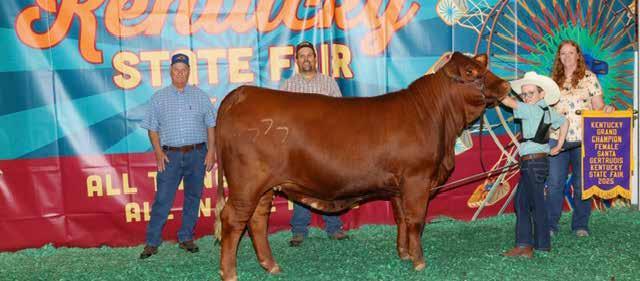
Of course, Luke brought his best to the show ring, too. He competed heavily in showmanship, drove his percentage heifer “Sunny” through the Star 5 show, and led his purebred heifer “Goldy” into the lineup for the purebred division.
Waiting in the Wings
While Luke’s standout season is the current talk of the barn at WindCrest Farm, the next generation is already closing the gap. Luke's younger brother, Thomas, is right on his heels.
Thomas is eagerly waiting in the wings, watching his older brother’s every move, studying how to set a calf's legs and biding his time until he is old enough to officially enter the ring. If the family track record is any indication, Thomas will be a formidable competitor the moment his boots hit the shavings.
Limitless Futures
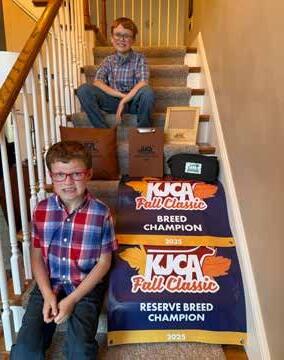
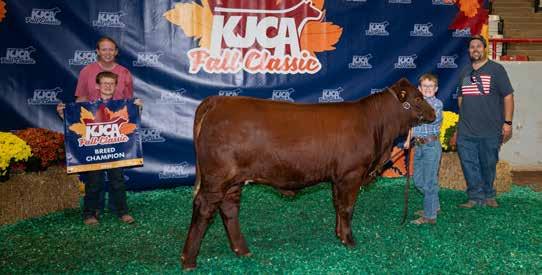
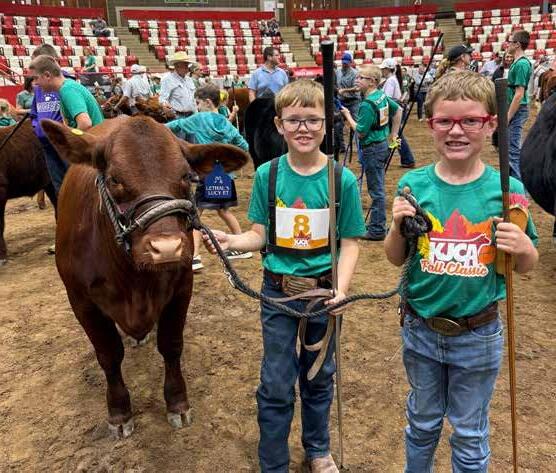
Ultimately, for the Taylor family, the ribbons and banners are secondary to a much larger picture. Livestock programs like the National Santa Gertrudis Junior Show, the Strive for the Drive event, the Kentucky Junior Cattlemen’s Association (KJCA) Fall Classic, and local 4-H clubs offer something far more valuable than a trophy.
These events are actively molding Luke and Thomas into confident leaders, sharp public speakers, and knowledgeable advocates for the beef industry. With the multi-generational foundation of WindCrest Farm beneath them, the future for these two young stockmen looks entirely limitless.
New World Screwworm: The Importance of Early Recognition
Michelle Arnold DVM-Ruminant Extension Veterinarian (UKVDL)
In the first week of June, the United States Department of Agriculture confirmed four cases of New World screwworm (NWS) in Texas, marking the first detections of the parasite in the United States in decades. New World screwworm myiasis is a serious disease caused by the larvae (maggots) of Cochliomyia hominivorax. Unlike many fly larvae that feed on dead tissue, screwworm larvae invade and consume living tissue, resulting in progressive wound enlargement, severe tissue damage, secondary infections and, in some cases, death, if left untreated. The detection has prompted an immediate response from federal and state animal health authorities, including surveillance, containment, movement controls and eradication measures designed to prevent further spread. For veterinarians, livestock producers and animal owners, the cases serve as a reminder of the importance of early recognition, prompt reporting and ongoing biosecurity vigilance as authorities work to contain this foreign animal disease threat.
What is New World screwworm?
New World screwworm, Cochliomyia hominivorax, is a blow fly whose larvae feed on the living tissue of warm-blooded animals, causing a condition known as myiasis. Typical blow fly maggots found in wounds feed primarily on dead or necrotic/rotting tissue. New World screwworm larvae are different. They feed on living tissue, which allows the lesion to enlarge and deepen as the larvae continue to burrow and grow.
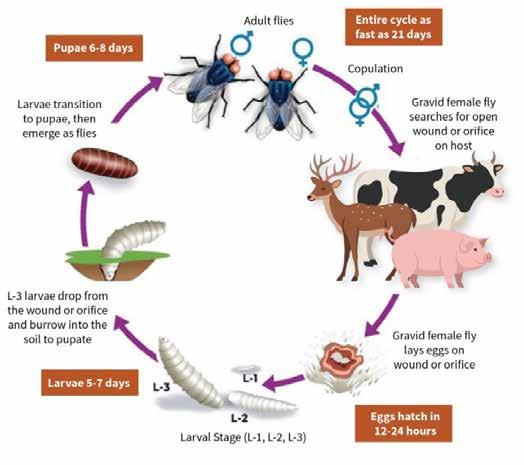
The female fly is attracted to warm-blooded animals and lays her eggs at the edge of wounds or on mucous membranes like nostrils, ears, eye orbits, mouth, anus or genitalia. The female fly lays her eggs in an organized, shingle-like pattern at the wound’s edge. Importantly, a NWS female will not lay her eggs on a dead animal. Within 10-12 hours, the eggs hatch and larvae (maggots) emerge, enter the tissue and begin to feed. As they feed on host fluids and tissues, the wound enlarges and deepens due to damage from their hook-like mouthparts. The
Accessed from www.aphis.usda.gov/livestock-poultry-disease/cattle/ticks/screwworm 6/8/2026
odor, serum and blood coming from the infested wound attracts other female flies to lay their eggs. Five to seven days after hatching, the mature maggots drop from the host and burrow into the ground to pupate, continuing the life cycle. Pupal development is temperature dependent; it may last seven days in 80 degree + weather or as long as 60 days with temperatures in the 50s. Importantly, pupae are killed if the soil is consistently below 46 degrees. Suspected cases must be handled as both a clinical emergency and a biosecurity event. The affected animal requires urgent wound care and pain relief; and the larvae must not be allowed to escape into the environment and establish an adult fly population locally. The take-home message is: If you see larvae in a wound, especially in an animal with travel history or a wound that appears unusually painful, malodorous,
bloody, progressive or deep, New World screwworm must be considered. This is not just a livestock disease; horses and pets are important sources because they are mobile, frequently transported and commonly affected by wounds. Animals that have recently traveled from high-risk regions, been imported, live on mixed-species properties, or have wounds managed without close supervision deserve extra attention.
Clinical signs: what to look for and how this is different from ordinary maggots
New World screwworm should be considered when larvae are found in a wound or body opening, particularly if the lesion appears aggressive, painful, bloody or progressive. A good light source should be used to inspect key areas.
Possible findings include:
• visible maggots in a wound
• in cases where the would is deep or pocket-like with a small opening, minor movement within the wound may be the only sign noted
• larvae in the nose, ears, mouth, genitalia, anus, umbilicus or other body openings
• Distinctive, foul odor
• bloody or purulent (pus) discharge
• wounds that become deeper or larger, even with routine wound care
• pain that seems disproportionate to the wound
• depression or irritability, inappetence, isolation from other animals
• rubbing, stamping, head shaking or self-trauma depending on lesion location
The wound may initially resemble an ordinary maggot infestation. The key distinction is that New World screwworm larvae feed on living tissue, not just necrotic debris. Experts familiar with this disease relate that the smell is distinctly different from the smell of dead or rotting flesh; it is described as similar to the smell of blood or serum. If the lesion is deepening, bleeding, unusually painful or full of larvae, do not dismiss it as “just maggots.” NWS maggots burrow deep into wounds or openings while other species of maggots remain around the outer surface but both may be present at the same time. The first 24-48 hours after a suspected New World screwworm case is identified are critical. Not only is the animal’s immediate need for pain relief and wound care essential, but also the preservation of diagnostic evidence and containment of larvae to stop the spread of a foreign animal disease.
What to do when a potential case is identified
1. Isolate and contain the animal and call your veterinarian
The affected animal must be held in quarantine until official parasite ID is obtained and effective treatment implemented. Immediately move the affected animal into a secure, enclosed and fly-controlled area with minimal insect access. The aim is to reduce the risk of larvae dropping from the wound into
bedding, soil, manure or the surrounding environment where they could pupate. The affected animal should remain on the immediate premises until guidance is received from state or federal animal health officials. The clinical priority is not only the individual wound but also containment, confirmation, treatment, premises management and prevention of local establishment of adult flies.
2. Notify the correct authorities
New World screwworm myiasis is a foreign animal disease concern in the United States. If suspected, contact the state animal health official and the USDA APHIS area veterinarian in charge (AVIC). If the animal has recently been imported, APHIS Live Animal Import should also be notified. This should not be managed as a routine wound case without official notification. In many situations, a foreign animal disease diagnostician or other official animal health representative may be involved in sample collection and investigation. Officials need to determine if the infestation was acquired domestically or from a foreign location. This critical piece of information guides further investigation and movement tracing. Accredited veterinarians will complete this notification step but if a veterinarian is unavailable, animal owners need to inform the authorities. Local county extension agents are being informed and up-to-date about what to do and who to contact.
3. Collect diagnostic samples before applying topical treatment
As of this writing, accredited veterinarians, state animal health officials (SAHO) and APHIS veterinarians must take samples of suspected screwworm maggots and send them to NVSL for official identification. However, this is a fluid situation and regulations surrounding sampling are likely to be modified as the fly progresses into the U.S. Before doing anything such as applying topical products, flushing aggressively or cleaning the wound, it is imperative to collect and preserve diagnostic evidence.
DO NOT rely on social media for diagnosing and treatment protocols. DO NOT rely on visual diagnosis alone. Wear appropriate personal protective equipment (PPE), including disposable gloves. Any person with open cuts, fresh surgical wounds, ulcers, drain-
ing skin lesions or exposed dermatitis must be strictly barred from handling the suspected animal, collecting larvae, cleaning the wound, removing bedding, processing samples or assisting with premises decontamination.
If directed by authorities to collect specimens, use forceps to remove larvae from several areas of the wound including at different depths within the lesion and the deepest part of the wound when possible. This is important because secondary fly larvae may be present near the surface, while the diagnostically important larvae may be deeper in the lesion. If possible, collect larvae of different sizes. Place larvae into a tightly closing vial or tube and submerge them in 70% ethyl or isopropyl alcohol at room temperature. Do not discard any larvae before the appropriate officials have been contacted and given specific instructions to do so.
4. Proceed with wound care after sampling
Once appropriate samples have been collected, proceed with animal welfare and wound management. Once again, your veterinarian is vital for appropriate and effective wound management. This may include:
• mechanical removal of remaining visible larvae and application of an effective topical treatment to kill any remaining larvae
• careful wound cleaning and removal of dead or compromised tissue
• antiseptic wound care
• analgesia for pain management
• systemic antimicrobials where secondary bacterial infection is suspected
• treatment with a long-lasting systemic insecticide with larvicidal activity such as Dectomax-CA1 injectable (Zoetis) or Exzolt Cattle -CA1 (Merck) topical solution for livestock
• re-examination 24 hours after treatment to ensure no live larvae remain
FDA has issued Emergency Use Authorizations and conditional approvals for specific products because New World screwworm presents a significant animal and public health threat. These CONTINUED
authorizations differ by product, species, route of administration, indication, prevention versus treatment, age restrictions, food-animal status, withdrawal periods, milk discard requirements, who is authorized to use or administer the product, and whether use is restricted to an infested zone or adjacent surveillance zone. The key point is do not assume that a product authorized for one species, one indication or one regulatory pathway can automatically be used in another species or situation. Current FDA-authorized or conditionally approved products include those relevant to cattle, horses, sheep, goats, swine, dogs, cats, deer, donkeys, domestic hybrid equids, captive wild or exotic mammals, birds and other species groups, depending on the specific product. Extra label use of drugs in animals is limited to drugs with a full FDA approval, which means it does not include conditional approvals, index listed products, or products with an Emergency Use Authorization. No medicated feed is currently authorized for the prevention or treatment of New World screwworm myiasis in any species. Federal law does not permit extra label use of animal drugs in feed.
Examples of currently available products include:
• F10 Antiseptic Wound Spray with Insecticide and F10 Antiseptic Barrier Ointment with Insecticide: Explicitly authorized under recent 2026 Emergency Use Authorizations for the prevention and treatment of NWS myiasis in multiple species.
• Topical Permethrin and Coumaphos Powders: Authorized for treatment and prevention in cattle, swine, sheep, goats and horses.
• injectable doramectin and ivermectin products with species-specific indications
• oral or topical ectoparasiticides authorized for dogs and cats, which may be relevant on mixed-species properties
Treat the animal, but do not treat the regulatory details casually. Thorough record keeping is required. For a complete list, see www.fda.gov/ animal-veterinary/safety-health/ new-world-screwworm-information-veterinarians
5. Premises management
If a case is confirmed, the environment matters. Larvae can leave the wound and enter the environment to pupate.
Premises management includes:
• collecting expelled larvae into tightly sealed tubes and killing them in alcohol then placing tubes in Ziploc bags before disposal;
• insecticide treatment of holding areas and disposal of any additional larvae or pupal flies as directed above;
• careful bedding removal; APHIS specifically states that “any bedding present in the holding area should be sprayed with insecticide prior to removal and promptly bagged. Prior to disposal, drench the bag contents and spray the outside of the bag with insecticide then close tightly. Put this sprayed bag into another bag, spray the inside and outside of that second bag with insecticide, and close/ seal tightly” before disposal;
• cleaning the area with warm water and soap after insecticide application
• ongoing surveillance after the affected animal has been released as directed by APHIS and state animal health officials which may include fly trapping or monitoring
6. Whole-property and multi-species risk assessment
A suspected case in one animal should trigger a wider property-level assessment.
New World screwworm is not species-specific. Veterinarians will look beyond the index case and ask what other animals are present, whether any have wounds, and whether there has been recent travel, importation, birthing, castration, surgery, de-
horning, branding, trauma or tick infestation. Information on carcass disposal, wildlife access, fly pressure and current insect control measures will also be requested.
Because Cochliomyia hominivorax does not differentiate between animal and human tissue, strict biosecurity is mandatory. If a person develops a suspicious wound, sees larvae in a wound or body opening or has recent exposure to an affected animal, they should seek medical care promptly and inform the clinician about possible New World screwworm exposure.
Be prepared
Preparedness does not need to be complicated; the goal is to avoid delays if a suspicious case appears. The message to animal owners is not to panic or fear; the message is the importance of early recognition. If New World screwworm enters an area, a delay matters. A missed case gives larvae time to mature, leave the wound, enter the environment and continue the life cycle. Early reporting allows animal health officials to identify the parasite, treat the affected animal, manage the premises, trace potential movements and implement control measures. Knowing what to look for, who to call and how to preserve samples could make a significant difference. New World screwworm is in the U.S. but not currently established here. The U.S. food supply remains safe. NWS does not infest meat, fruits, vegetables or other food products. Any affected animal would be identified during USDA Food Safety and Inspection Service inspection, and no contaminated product would enter commerce. NWS is unlikely to spread rapidly in the United States. Screwworms thrive in tropical and subtropical climates and do not tolerate prolonged periods of very dry hot or very cold weather. Unlike a virus, NWS does not spread between animals, and infestations are easy to recognize. Rapid spread in a country is mainly due to humans moving infested animals over large distances. For more information visit Screwworm.gov, the official, centralized U.S. federal portal linking live updates from USDA APHIS, the FDA and the CDC.
Recent news headlines have brought attention to the northward movement of a foreign animal disease into the United States from Mexico: New World screwworm (NWS). This parasite has been eradicated from the United States since 1966 with the most recent outbreak occurring in Florida Key deer in 2016. All living, warm-blooded animals, including birds and humans, can be infested with NWS.
What makes this fly and larvae different?
While our normal, U.S.-borne flies lay eggs that can cause wounds to be infested with maggots (called myiasis), the flies that cause NWS are much more aggressive, and the maggot (NWS) feeds on living flesh.
What causes infestation?
The female NWS fly lays eggs near or on a wound of an animal. The eggs hatch and the larvae (maggots) burrow into living flesh, enlarging the wound, attracting more flies and debilitating the animal. NWS flies seek out wounds from fighting injuries, tick bites, newborn navels and even human-made wounds from castration, ear tagging and dehorning procedures. After a week of feeding in the wound, the larvae drop to the ground and burrow where the adult NWS fly emerges.
What management practices put my herd at risk?
What
strategies are there for control?
Three main tactics are used for controlling NWS. The first two are dependent on veterinarians and animal caretakers and include visual examination of wounds with subsequent treatment and quarantine, as well as movement controls from impacted areas. The third tool, called sterile fly release, takes advantage of the fact that a female fly mates only once in her lifetime. Male NWS larvae can be raised in specialized laboratories, sterilized and released into the wild to mate with females. The female NWS fly’s eggs will not hatch after mating with a sterile male NWS fly.
It has been said that NWS makes for better cowboys and cowgirls. Daily visual inspection of your herd can allow you to pick up on early warning signs of many diseases including NWS. Look for cattle that are off by themselves, depressed, off feed, stand in water for long periods, scratching, frequent head shaking and/or have foul smelling wounds. Specifically look at newborn calves as a fresh navel is a preferred site of infestation. Consider three categories of general risk factors for NWS including: husbandry practices that break the skin (castration, dehorning, branding, ear tagging, hoof trimming and placement of implants), environmental hazards that cause wounds (briars, barbed wire, broken bale feeders, tick bites or predator bites) and rearing practices that decrease close inspection (cattle on range and those that are difficult to restrain).
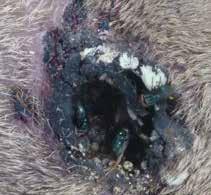
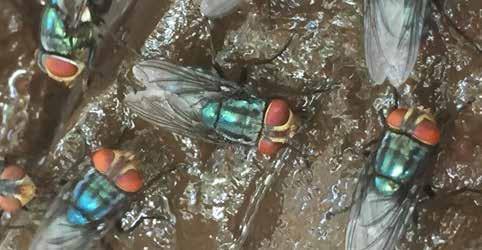
New World screwworm flies, eggs and larvae around and deep within a wound.
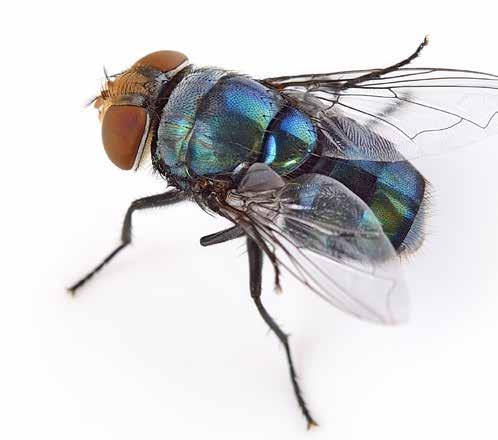
Adult New World screwworm flies resemble the common blowfly but have multiple distinguishing features.
Jennifer Way USDA, Greg Shanks KDA
How can I manage my herd to reduce the risk of New World Screwworm infestation?
Consider modifying your herd management to decrease these risks by scheduling calving, castration, dehorning, ear tagging/branding during low fly season (cold weather). If you cannot change the time of year for calving, increase the number of times you inspect cows/calves and treat fresh navels with an approved NWS product. Consider whether some husbandry practices are absolutely necessary. If practices are necessary, consult your veterinarian and use an approved wound treatment, fly repellant and increase visual inspections. Finally, try to remove environmental objects that could cause wounds.
What is the urgency?
On June 3, the United States Department of Agriculture confirmed the presence of New World screwworm in Texas. USDA and Texas officials took immediate action to contain and eradicate this pest form the United States including deploying trained personnel to the area, implementing quarantines and animal movement restrictions, targeted release of sterile male flies, fly trapping and monitoring local wildlife for signs of infestation. This detection in the United States could cost millions of dollars in livestock losses, trade restrictions and control efforts. Livestock, pets, wildlife and even humans could suffer and die from screwworm infestation. NWS flies and maggots look like the common blowfly and maggot. If you suspect a case of NWS, contact a USDA veterinarian, 502-395-2368 or Kentucky state veterinarian, 502-5730282, for help identifying it. We can work together to protect the United States from the re-establishment of this terrible disease. Find more information at: www.aphis.usda.gov/ livestock-poultry-disease/cattle/ticks/ screwworm.
What steps are being done to keep New World screwworm (NWS) out of Kentucky domestic livestock?
Educating Livestock Producers about NWS: This is very important to educate all livestock producers and stakeholders in the agriculture
community what NWS looks like and what to look for in their livestock. We have brochures available which can be handed out to customers and producers which describe the life cycle, signs of infestations, control and prevention and links to USDA and KDA websites which go into more detail about these areas of concern.
Movement Restrictions: Domestic animals which travel from affected states must be examined by an accredited veterinarian and a statement placed on the CVI stating such. “I have inspected the animals included in this shipment and have found them free of clinical signs of NWS myasis,” or either Kentucky or state of origin premovement inspection forms filled and signed if available. (must accompany movement)
• A CVI is issued within 72 hours prior to entry into Kentucky which includes the signed statement above or the pre-movement inspection form.
• A Kentucky permit number is obtained from the Kentucky Office of the State Veterinarian, 502-5730282.
• All non-equine livestock must have an Official ID (e.g. RFID, Scrapie Tag, OID). Equine movements must be accompanied by valid EIA result forms for each equine.
• Post-movement inspection conducted within 24 hours of reaching destination and Kentucky Post Movement form completed and emailed to state.vet@ky.gov
b.) Supplementary Movement
Requirements from NWS affected/ adjacent counties: Currently, there are specific exposed and adjacent counties within affected states that will require special application and heightened requirements prior to entry into Kentucky. Please call KDA/ OSV at 502-573-0282 for those requirements.
c.) Please check our website for current information prior to shipment as requirements do change as the situation evolves.
Investments that Matter…Management
Chris Teutsch UK Research and Education Center, Princeton KY
Cash flow on many livestock operations in the commonwealth continues to be good with no end in immediate sight. It is tempting to spend money on a new truck or tractor, but before you do that, make sure to ask yourself the question, “Will that investment help me remain profitable when the cattle prices go down?” If the answer is yes, then it is a good investment. If the answer is no, maybe or I really want it to be, then it may not be a good investment. In previous articles, I have talked about investing in fertilizer, fence and water. These are still great investments BUT their value cannot be realized without MANAGEMENT.
Making a commitment to manage your forage-livestock system is the single most important investment that you can make. Unfortunately, in my travels around the state I often see investments that have subdivided large pastures, fenced out ponds and streams, and installed multiple watering points, and all the gates are open. These producers have spent the money for improved infrastructure but are not reaping the benefits from it. The remainder of this article is not groundbreaking science but rather a gentle reminder of what good pasture management entails.
Making Investments Count
Set a sustainable stocking rate. As stocking rate increases, individual animal performance decreases but output per unit land area is higher. However, at some point the entire system becomes unstable resulting in both lower animal performance and reduced total output. In addition, high stocking rates also increase the amount conserved forage needed in a grazing system which drives up production costs. It is important to remember that stocking rate is not static and is impacted by economic drivers such as cattle price and input costs. If hay is cheap and cattle prices are high, then you can afford to increase stocking rate.
Maintain adequate soil fertility. Regular soil testing allows you to track and manage soil fertility in grazing systems. Soil test levels should be maintained
in the medium range and pH should be a 6.0 to 6.4. This provides adequate nutrients for optimal growth when growing conditions are good.
Close the gates. The single most important practice that you can implement is rotational stocking. Rotational stocking allows you to manage leaf area remaining after grazing, duration of grazing, and rest between grazing events. Leaving adequate residual speeds up regrowth and modifies the microclimate at the soil surface resulting in reduced water losses and lower soil and crown temperatures. Rest between grazing events allows plant time to restore carbohydrates that were mobilized to fuel regrowth. The duration of the rest period should be based on regrowth rather than a set time schedule. In general, rest periods will be the shortest during the spring when plant
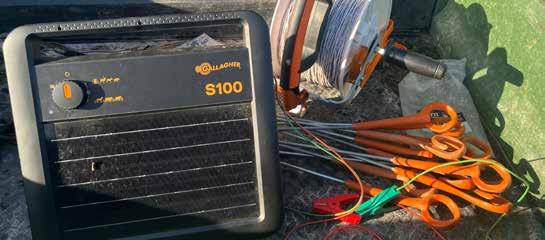
growth is rapid and longest during the summer when plant growth is slowed by high temperatures and low rainfall. Use temporary fencing. Temporary electric fencing is a powerful tool for managing grazing (Figure 1). When combined with a permanent electric offset wire on the perimeter, pastures can be subdivided in an almost infinite manner. The power of a single polywire for intensifying grazing management cannot be understated.
Use a sacrifice area. A designated sacrifice area to hold animals and feed hay is an important part of sustainable grazing systems. If you finish your rotation and the first paddock has not regrown to the designated height, it is important to have an area to hold livestock and feed hay until regrowth is adequate for grazing. Some producers will simply designate a single paddock or area. A
Figure 1. The use of temporary electric fencing is a powerful tool for intensifying grazing management on farms in the commonwealth.
Figure 2. Strategic hay feeding can be used as a low-cost strategy for building nutrient levels and organic matter in pastures. It is essential to move the feeding point around the pasture to promote uniform distribution of nutrients.
Forage Management Tips for March
• Test first-cutting hay and use the results to develop a supplementation strategy for this winter.
• Graze summer annuals pastures and fertilize with 40-60 lbs. N/A if regrowth is desired.
• Identify pastures to stockpile for winter grazing. Pastures should be well drained and have a strong sod. Limit summer grazing so that they are ready to grow as conditions cool and rain comes in late summer.
• Do NOT mow hayfields or graze pastures closer than 4-5 inches.
• Soil test pastures to determine nutrient needs.
• Use UK variety testing results to select varieties that will be planted in the fall.
• If drought occurs, confine animals to one pasture and feed hay.
better approach might be to choose the weakest paddock that needs renovation and use it for hay feeding.
Overseed legumes. Legumes are an important component of sustainable grazing systems. They fix nitrogen from the air into a plant-available form. That nitrogen can then enter the nitrogen cycle via the grazing animal that consumes the legumes, use some of the nitrogen for growth, and recycle the rest through dung and urine deposited
Featured Publication
This month’s featured publication is ID-269: Using Electric Offsets as Part of Fencing Systems. You can access it at https://tinyurl.com/mrdjnnzt or by visiting your local extension office.
Featured Video
Optimizing the Use of Existing Forage Resources on Your Farm by Chris Teutsch. This video can be viewed by visiting the KYForages YouTube Channel.
Upcoming Event
KFGC Summer Field Day August 11 • forages.ca.uky.edu/Events
on the pastures. In Kentucky, red and white clover are our two most important legumes and should be frost seeded onto pastures every two or three years. Feed hay on worst paddocks. Each ton of hay contains 40-60 lbs. of N, 12-15 lbs. P2O5, and 40-60 lbs. K2O. Overtime, hay feeding in pastures builds both soil fertility and organic matter. How you feed this hay has a big impact on whether the value of these nutrients is captured. Ideally, hay feeding points
should be moved around in a manner that uniformly covers the pasture area. In any case, avoid feeding hay in one small area of a pasture
I realize that management is not as much fun as buying a shiny new pickup or tractor, but it will always be a better long-term investment. And it allows you to optimize the use of the other improvements that you have made along the way!
FSA Encourages Producers to Complete Certification of Grazing Land Acres
Kentucky Farm Service Agency reminds producers that annual acreage reporting is an important eligibility requirement to receive financial benefits through the Livestock Forage Disaster Assistance Program (LFP), as well as several other FSA-administered programs.
The next deadline for annual acreage reporting in Kentucky is July 15. This includes common spring-planted crops, such as corn, soybeans, wheat, and grain sorghum, but also includes perennial grass (pasture) and Conservation Reserve Program acres. Even though the acreage reporting deadline is months away, we are encouraging producers with pasture acres and acres planted for grazing purposes to complete certification of those acres as soon as possible to assist us with preparations for potential program implementation.
LFP provides financial assistance to livestock producers and contract growers who also are producers of grazed forage crop acres (native and improved pasture and crops planted specifically for grazing purposes) and who have suffered a loss due to a qualifying drought during the grazing season.
Other points regarding LFP and acreage certification:
• Producers must have a risk in the pasture or hay crop acres in order to complete the acreage certification process.
• If a producer applies for LFP they must be able to support their application with either a written lease or an Annual Lease Certification (CCC-855).
• In addition to the acreage reporting requirement, LFP applicants who lease acres must be able to support their application with either a written lease or an Annual Lease Certification (CCC-855).
• Producers who previously have certified grazing land through a continuous certification may want to contact the county FSA office to ensure that certification remains in place and reflects 2026 producers and shares.
Producers can contact your local FSA office for more information or to make an appointment to report acreage. To find your local FSA office, visit farmers. gov/working-with-us/service-centerlocator.
MEMBERSHIP
REGIONAL MEETING DATES
⃣ Region 1:
2025-26 MEMBERSHIP APPLICATION
* MEMBERSHIP YEAR 10/1/25– 9/30/26
NAME SPOUSE NAME FARM NAME
*Payments of KCA membership dues are tax deductible for most members as an ordinary and necessary business expense. However, charitable contributions of gifts to KCA are not tax deductible for Federal Income Tax purposes. Due to new IRS regulations, $2.24 of your dues would not be deductible. Approximately $12 of your dues will go towards the monthly publication Cow Country.
PLEASE CHECK THE MEMBERSHIP(S) YOU WOULD LIKE TO JOIN:
KCA MEMBERSHIP ($30/YR) NEW RENEWAL
Membership dues are $30 unless otherwise listed below
KCA COUPLE MEMBERSHIP
To add your spouse, please add $15 to your KCA Membership
KENTUCKY JUNIOR CATTLEMEN’S ASSOCIATION ($10/YR) NEW RENEWAL
I WOULD LIKE ADDITIONAL INFORMATION ON THE YOUNG PRODUCER’S COUNCIL
TOTAL MEMBERSHIP:
$ KCA
$ KJCA
TOTAL CONTRIBUTIONS:
$ CATTLEMEN’S FOUNDATION DONATION (voluntary)
TOTAL AMOUNT ENCLOSED:
$ ALL DONATIONS TO KCF ARE TAX DEDUCTIBLE
COUNTY DUES
Dues are $30 except for the counties listed below.
Allen...............................$40
Anderson........................$25
Boyle ..............................$35
Bullitt..............................$20
Butler..............................$25
Franklin ..........................$25
Louisville Area ................$20 (Jefferson, & Spencer) Magoffin .........................$20 Menifee ..........................$25
IF YOU WOULD ALSO LIKE TO JOIN THE NATIONAL CATTLEMEN’S BEEF ASSOCIATION The NCBA is now a State Marketing Partner with the KCA. You can pay your dues to both organizations with one check, at the same time.
KBC Promotes Beef at FFA Convention
Maggie Sparks KBC Intern
Kentucky FFA State Convention was always the highlight of my FFA career. The memories I made, the people I met and the skills I gained in just a few short days were second to none in my book. This year's state convention looked very different to me. I was there, but I wasn’t competing or wearing the famous official dress; I was on the other side.
Being at the Kentucky Beef Council booth this year was an eye-opening experience. As soon as those expo doors opened Tuesday morning, it was clear to me that the FFA was stronger than ever. I am proud to say that we passed out over 1,400 “Beef. It’s What’s For Dinner”
T-shirts, along with over 100 FFA advisors' info packets/folders. Anyone who wanted a shirt had to finish the statement “I advocate for beef by…” and take a picture, then post it on social media. It was amazing to see how eager everyone was!
People often say that agriculture is a dying breed, and I will have to agree, but I know the future is bright for the beef industry. This year, I had the privilege of witnessing 37 students, ranging from 8th-graders to collegiate freshmen, sign the Kentucky Beef Council’s Young Beef Advocate Proclamation. They were joined by Mr. Wayne Zoglmann, Kentucky Beef Council chairman, and Mr. Allan Bryant,
KCA president, as they committed to be the next generation of beef advocates. Each student received a binder packed with educational resources that have been proven to help students better understand where their beef comes from and how to tell their story to producers and consumers.
I remember how excited I was to sign my senior year of high school, and I know the students this year felt the same way. It was an honor to serve students, teachers and vendors this week and be a part of an ever-changing industry. As the FFA Creed states, “I believe in the future of agriculture.”
Addison Mitchell Anderson Aeryn Grimes LaRue Aiden Jake Hampton Anderson
Andrew Mattingly Marion
Aubrey Smith Anderson
Audrey Bush West Carter Averey Scarbrough Anderson Bella Griffith Lawrence
Blake Stacy Lawrence
Brody Hearn Owen
Callie Smith Graves
Clara Fritsch Bourbon
Cooper Probst Woodford Creighton Smith Horizons Eli Thompson Green Elizabeth Atkins Graves Grace Hurley Graves
Hudson Hancock Adair JD Slaughter Caldwell Kadi Standiford Bourbon Kara Barnett Anderson
Kathryn Woolf Graves
Kaycee Voet Pendleton Khloe Maggard Anderson
Klaber Wolfe Pendleton
Landon Miller Nelson Lawson Hardy Hickman
Leeyah Peyton Hickman Levi Wolfe Pendleton Lyanna Willman Anderson Maddox Coffman LaRue Mikka Horn Lawrence
Morgan Burton Graves Savannah Sea Anderson
Shelby Howard Lincoln
Sophia Smith Horizons Tyler Hutchinson Pendleton
Your Voice Matters
Kentucky's beef industry is facing challenges including declining cow numbers, loss of pastureland, labor shortages, rising input costs, and changing market conditions. While no single organization can solve these issues alone, Kentucky has a strong network of producers, Extension, industry partners, agencies, and agricultural organizations working together to identify solutions.
The Kentucky Beef Network was created to connect producers with education, resources, and opportunities that improve profitability and strengthen our industry. But the most important part of that network is the producer. The future of our industry is shaped by the cattlemen and cattlewomen who are willing to share their experiences and identify challenges to help guide future efforts.
Producer participation matters. Every survey response, meeting attendance, field day discussion, and conversation with industry leaders provides valuable insight into the opportunities and challenges facing our farms and communities.
By sharing your perspective, you become part of the solution and help influence the future of Kentucky cattle production. Currently, there are two opportunities for producers to provide valuable feedback that will help guide future industry efforts.
Fescue Toxicosis Survey
University of Kentucky beef and forage specialists have developed a survey to better understand the potential impact of recent weather patterns and fescue-related performance losses. If you are a beef producer, we encourage you to complete the survey. Your responses will help guide future educational programs, research efforts, and funding opportunities aimed at addressing this issue.
Help Cow Country News
The Kentucky Cattlemen's Association is partnering with the Livestock Advertising Network and the University of Florida/IFAS Center for Public Issues Education in Agriculture and Natural Resources to gather feedback on Cow Country and producer communication preferences. Your input will help us better understand what information is most valuable, how producers prefer to receive updates, and how we can continue improving communication across Kentucky's beef industry.
Your feedback continues to help shape future programs and resources. The next step is staying connected to those opportunities. To make that easier, KBN has developed a statewide Calendar of Events where producers can find upcoming meetings, field days, workshops, webinars, and industry events all in one place by visiting: kybeefnetwork. com/calendar-of-events.
Kentucky's beef industry has always been built on producers helping producers. Whether you attend a meeting, participate in a survey, host a demonstration, or simply share your perspective, your voice matters. Together we can continue building a network that supports Kentucky cattlemen today and for generations to come.
Ben Lloyd Whitesville, KY (270) 993-1074 benlloyd0223@gmail.com
Charles Embry Cave City, KY (270) 646-5939 dale.embry@yahoo.com
Cody Burke Frankfort, KY (606) 748-4641 cody.burke2019@gmail.com
Jacob Settles Springfield, KY (859) 805-0724 jacob.settles4@yahoo.com
Ron Shrout Winchester, KY (859) 397-5151 shroutron@aol.com
Eden Shale Update
Dan Miller Industry Coordinator, Kentucky Beef Network
May was busy managing the cow herd through the synchronization process to get everything ready to AI. This year, we had 22 replacement heifers, and 64 cows that were bred artificially.
The replacement heifers were pelvic measured in April, then CIDR’s went in on May 13. The heifers follow a seven-day synchronization protocol, and the CIDR’s came out on May 20. Jason Crowe with GENEX bred the heifers on the afternoon of May 22. The heifers were sorted into two groups, one getting bred to Angus (Honor Roll) and the other to Hereford (Federal). The heifers will get cleaned up with an Angus bull.
The cows also follow the seven-day synchronization protocol. Their CIDR’s went in on May 19 and were pulled on May 26. The 64 cows were bred on May 29 by
David McGlothlin with Genetics Plus. The cows were also sorted into two groups, one getting bred to Angus (Sustain) and the other to Hereford (Smokey). This is the second year that we have used the same semen. We liked the calves from these bulls and wanted to use both sires again. The cows will also get cleaned up with Angus bulls.
The clean-up bulls got turned in on the first week of June and will remain with the cows for approximately 45 days and will get pulled out around July 20. This will give all the cows three heat cycles to get bred and hopefully remain in our tight calving window. Any cows that preg check open in September will get culled.
I want to say Thank You to both GENEX and Genetics Plus for their help developing our herd at Eden Shale Farm.
Pat
SANTA GERTRUDIS DATA DRIVEN • PROFIT PROVEN
KY 42748
270/358-4820
Mattingly Farms 514 Liberty Road Battletown, KY 40104
Kentucky Hereford Association
Toby & Debby Dulworth 2492 S. Kirkman Road LaCenter, KY 42056 (270) 224-2993 • dogwood@brtc.net Herefords that thrive on forages. www.dogwoodherefords.com
Registered Polled Herefords Bulls & Females for sale
BECKLEY HEREFORDS
12939 Peach Grove Road
284 Pryse Lane Irvine, KY 40336
Alexandria, KY 41001
L.W. Beckley, DVM 859-779-1419
Home: 859-635-0899
Cell: 859-991-3484
Emily Beckley 859-779-0253 Will Beckley 859-314-7053 www.beckleyherefords.com
KYLE BUSH K3CATTLE@YAHOO.COM 859-588-4531
198 HICKS PIKE CYNTHIANA, KY 41031
KYLE BUSH K3CATTLE@YAHOO.COM 859-588-4531 198 HICKS PIKE CYNTHIANA, KY 41031
Polled Hereford and Gelbvieh Cattle 3459 KY Hwy. 1284 E. Cythiana, KY 41031 (859) 234-6956
Polled Hereford 3459 KY Hwy. 1284 E. Cythiana, KY 41031
Ben (859) 421-7902
Ben, Jane, Shelby and Lincoln
Lincoln (859) 954-0102
Noah (859) 462-2428
THOMAS FARM
THOMAS FARM
Eric & Ronnie Thomas 2396 Union City Rd. Richmond, KY 40475 (859) 623-5734
Eric & Ronnie Thomas 2396 Union City Rd. Richmond, KY 40475
Eric’s Cell (859) 314-8256
Eric’s Cell (859) 314-8256
“Cattle for sale at all times”
“Cattle for sale at all times”
BECKLEY HEREFORDS
Tony Brandenburg, tstaples@bbtel.com
Windy Hills Farm
Windy
Hills Farm
Jackie D. Perkins II 367 Mt. Pisgah Rd. Bremen, KY 42325 (270) 543-3586
Jackie D. Perkins II 367 Mt. Pisgah Rd. Bremen, KY 42325 (270) 543-3586
Breeding to produce good cows since 1981
Breeding to produce good cows since 1981
L. Wayne Beckley • 1420 Fitchburg Rd. Ravenna, KY 40472 • 606-723-3021 Cell: 859-779-0962
L.W. Beckley D.V.M
“Breeding Polled Herefords for over 58 Years” Breeding cattle for sale at all times. 1999 Walnut Hill Rd. Lexington, KY 40515 (859) 271-9086 cell (859)533-3790
“Registered Angus and Polled Herefords” John Tucker II 1790 Hidden Valley Lane Hudson, KY 40145 270-617-0301
284 Pyrse Lane • Irvine, KY 40336 Cell: 859-779-1419 • Clinic: 606-726-0000 www.beckleyherefords.com “Breeding Polled Herefords for over 58 Years” Breeding cattle for
Jacob Tamme, Owner-Operator (859) 583-7134 jacob.tamme@gmail.com www.tammevalley.com & Find us on Facebook!
President: Tom McGinnis
President: Jim Shaw
Shayna Gibson
TAMME VALLEY FARM
Tamme,
JOIN US!
July 11-18, 2026
Kentucky State Fair & Exposition Center
Louisville, Kentucky
2026 National
Junior Angus Show
A week of elite Angus competition, leadership, development, educational events, and unforgettable memories with junior angus families from across the nation.
SIMMENTAL
KEVIN AND RACHEL BARRON
Crestwood, Ky
(502) 905-5851
rkbarron812@gmail.com
SWAIN SELECT SIMMENTAL 12113 Green Valley Dr. Louisville, KY 40243 swainselect.com swainselect@gmail.com facebook.com/swainselectsimmental
Fred & Phyllis: 502-599-4560 Chi & Angie: 502-287-2116
JUDY AND RONDAL DAWSON
1156 Buzzard Roost Road Shelbyville, KY 40065 502-593-5136 • jrdawson22@outlook.com
JEROD METZGER • 270-779-6260
ROCKING P LIVESTOCK 8308 Orangeburg Road Maysville, KY 41056
Chan: 606-584-7581
Keith: 606-584-5626
rockingplivestock@maysvilleky.net
BRIAN & HEATHER SWAIN 3906 Pottertown Road Murray, KY 42071 • 270-293-4440
wksbswain@murray-ky.net
SIMMENTAL AND SIMANGUS BULLS FOR SALE
1939 Huntertown Road
Versailles, KY 40383
BULLS FOR SALE
Chris Allen 859-351-4486
callenuky@hotmail.com
Dr. Henry Allen 859-229-0755
Modern-day ranching requires more information to produce better animals. International Genetic Solutions works across breeds to provide more accurate head-to-head comparisons and maximum profitability.
IGS incorporates generations of data and the world’s largest multi-breed database to enable more powerful breeding decisions than ever before.
Better cattle. Better profits.
BRET AND LAURA JACKSON 859.533.3718 or 859.707.7200
BRET & LAURA JACKSON Paris, Kentucky (859) 533-3718 (859) 707-7200
CD FARMS Clayton & Debbie Cash • 1214 Ottawa School Road • Brodhead, KY 40409 (606)-308-3247 • (606)-758-8994 • Gelbvieh-Balancer Bulls & Heifers For Sale by Private Treaty
BRIAN W. DYER, DVM
BEE LICK GELBVIEHS
Eddie Reynolds 277 Old Bee Lick Rd. Crab Orchard, KY 40419
606-379-2281(H) 606-305-1972(C)
Owner/Manager
GELBVIEH/BALANCERS
BRIAN W. DYER, DVM Owner/Manager GELBVIEH/BALANCERS 2050 Glasgow Road • Burkesville, KY 42717
Bulls & Females for sale
2050 Glasgow Road Burkesville, KY 42717
Brian, Lauren, Kristen Barry, Emily & Julia • (270) 864-5909
Brian, Lauren, Kristen Barry, Emily & Julia (270) 864-5909
FULL CIRCLE FARMS
PLEASANT MEADOWS FARM
Registered Gelbvieh Cattle
Gary & Pat Tilghman • Carrie & Daryl Derossett Family Lindsey & Garland Gilliam Family • 690 Lick Branch Road Glasgow, KY 42141 • 270.646.7024 pleasantmeadowsfarm@hotmail.com • Registered Gelbvieh & Angus cattle for sale
Call Carrie Derossett for more information. (270) 404-0828
HEDGESPETH LIVESTOCK GELBVIEH/BALANCER CATTLE-COMMERCIAL HEIFERS 543 Pleasant Run Church Road • Campbellsville, KY 42718 sam.hedgespeth@gmail.com • Sam-270.299.5449 Seth-270.932.1615 Dan-606.686.1679 Andrew-270.405.1990
BEE LICK GELBVIEHS
Entry and room information available at www.gelbvieh.org (Juniors/Regional Shows/AGJA Eastern Regional)
Eddie Reynolds 277 Old Bee Lick Rd. Crab Orchard, KY 40419 606-379-2281(H) 606-305-1972(C) Bulls & Females for sale
CD FARMS
BRAY’S GELBVIEH CATTLE
Clayton & Debbie Cash
1214 Ottawa School Road Brodhead, KY 40409
Brian, Lauren, Kristen Barry, Emily & Julia (270) 864-5909
PLEASANT MEADOWS FARM
FULL CIRCLE FARMS
RICH HILL GELBVIEH
Registered Gelbvieh Cattle
PADON FARMS GELBVIEH BULLS & FEMALES FOR SALE 1012 Shelby Road • Salem, KY 42078 • Thad Padon (270) 836-5518
Gary & Pat Tilghman Lindsey Tilghman Jones Family Carrie & Daryl Derossett Family 690 Lick Branch Road Glasgow, KY 42141 270.646.7024 • pleasantmeadowsfarm@hotmail.
Frank McAninch 1341 Iven Godby Road Liberty, KY 42539
ROBINSON GELBVIEH Tim & Lisa Robinson • 2311 Hillspring Road Pleasureville, KY 40057 • Timrobinson0204@gmail.com • 502-643-0581
(606)-308-3247 • (606)-758-8994
Gelbvieh-Balancer Bulls & Heifers For Sale by Private Treaty
Niles & Betty K Bray 1568 Bray Ridge Road Bedford, KY 40006 (502) 255-3584
KENTUCKY STATE FAIR GELBVIEH/BALANCER SHOWS BROADBENT ARENA • LOUISVILLE, KY • ENTRIES
CD FARMS
Clayton & Debbie Cash
SALERS THE BALANCED BREED
DIAMOND J SALERS
Donald Johnson • 11660 N. Hwy 1247 • Eubank, KY 42564 606-379-1558
DIAMOND J SALERS
WILLIS FARMS
Donald Johnson • 11660 N. Hwy 1247 • Eubank, KY 42564 606-305-8747
Danny Willis • 964 Johnson Rd • Frankfort, KY 40601 • 502-803-5011 drwc21@aol.com • Purebred + Optimizer Breeding bulls & Heifers for sale.
DEL-SU FARM
WILLIS FARMS
Howard & Sue Edwards • 420 Rose Rd • Somerset, KY 42501 606-679-1675 • Jeriah Privett • 606-416-1154
Danny Willis • 964 Johnson Rd • Frankfort, KY 40601 502-803-5011 • drwc21@aol.com
KNOB LICK FARM - BULLS & HEIFERS FOR SALE
Larry Cox • Tina Cox-Lynch • Amanda Cox Gibson • 1315 Knob Lick Road • Irvine, KY 40336 • 606-723-3077 • 606-975-1716
PERFORMANCE TESTED PUREBRED ANGUS
BULLS FOR SALE Call 270-202-7186 for more info or check out www.oakhollowangus.com for current availability.
POLLED HERFORD BULLS FOR SALE
19–20-month-old Polled Hereford bulls. Good selection. Low birthweight, medium frame. Free Delivery Available. JMS Polled Herefords, Knifley, KY Danny 270-566-2694 Trent 270-566-2000
THE FOUNDATION SALE XII
Sat. Sept. 19, 2026 1 PM CT. United Producers, Bowling Green, KY Limousin Fullblood,Purebreed,Limflex. For Info. Call Stephen Haynes 270-799-8685 Or 270-7998684
BREEDING AGE HEREFORD BULLS FOR SALE AT ALL TIMES Over 60 years of Line 1 Hereford Genetics. Groups of open and bred heifers available for sale at all times. Chambliss Hereford Farms. 270-668-7126
Registered Angus Bulls • January and February Yearlings • CAIP Elibigle • Semen Checked Birth Weights and DNA Enhanced EPDs Calving Ease and Growth Freezer Beef Halves and Quarters Metropolis, IL, 618-638-7693 www.bremerbrothers.com
RED ANGUS, SIMANGUS, CHAROLAIS, ANGUS FOR SALE Red Hill Farms, Lafayette, TN, 615666-3098 Bart, Sarah and Ty Jones Gordon and Susan Jones, 270-991-2663 Visit us online - www.RedHillFarms.net Contact us for cattle and semen availability. Annual Production Sales: More Than a Bull Sale – 3rd Saturday in March
Maternal Monday – 3rd Monday in May Bulls & Females of Fall Sale – Last Saturday in October
BULLS FOR SALE Angus and Lim-Flex Bulls
Yearlings to 2-years-old Delivery available Call or text 270-589-7999
REGISTERED BLACK ANGUS BULLS & HEIFERS FOR SALE EPDs Available Randolph Farm, Owenton, KY (513) 262-9846 www. randolphfarmky.com
Wess Anglin American Gelbvieh Association Commercial marketing Specialist
Contact: Wess@Gelbvieh.org (662) 292-4582
SIZZLING JULY DEALS FROM REDBARN
Artex S-350 Tandem $50,000
Cloverdale 420-650T in stock
Meyer 510 and 815 mixers in stock
Silage wagons- meyer and hs
John Deere 6715- cab - loader 2wd $50,000
Meyer 510 mixer - 38,995
Farmco feeder wagons- 15 in stock
John Deere 5085- $47,500
Lancaster Hammermill-4220- $50,000
25 ft Wingfield chain drag-$14,000
8 ton Stoltzfus spreader- $36,000
Used silage choppers
Horning 2-3 corn headers in stock!
Finance options on all machines
Charlie B. Edgington 859-608-9745
Advanced PVAP Results and Methods of Experienced Preconditioners
Kevin Laurent Extension Specialist, Department of Animal and Food Sciences, University of Kentucky
One of the biggest marketing challenges that small-to-medium-sized cow-calf producers face is getting adequately paid for adding value to their calves. Although there are numerous preconditioning programs and protocols available, many producers question whether these programs are worth the extra effort and risk.
Results from the Advanced Post-Weaning Value Added Program (PVAP) may help address some of these questions and concerns. The Advanced PVAP program was launched in 2023 with support from the Kentucky Ag Development Board to document the economic benefit of weaning and preconditioning calves prior to marketing. Advanced PVAP was a continued variation of the original PVAP program. Whereas the original
program was aimed at inexperienced producers, the advanced program seeks producers who were experienced at weaning and preconditioning calves. The aim of the PVAP program is to compare the value of the calf at weaning with the value of the calf after a minimum 60-day preconditioning program. Participants must keep track of all expenses during this period and turn in a worksheet along with a copy of their sale check stub. Upon completion of the program, participants receive a one-page closeout that summarizes the profitability of the preconditioning enterprise. As an incentive for participation, producers also receive a payment of $25 per head up to a maximum of $750.
Closeout results from the Advanced
PVAP program are summarized in Table 1. Since 2023, the Advanced PVAP program has analyzed preconditioning data on 2,603 calves from 77 closeouts and 56 producers. On average, producers fed calves an additional 79 days postweaning with an average daily gain of 2.34 pounds resulting in an increase of 185 pounds per head. After feed, health and interest costs, net added value averaged $247.86 per head over selling at weaning. Note that the daily feeding rate averaged 11.3 lbs. of a 14.5% protein concentrate. If you use the midpoint weight of 608 pounds (515-700), this calculates to roughly 1.86% body weight, close to the general recommendation of 2% body weight of concentrate for a 6090 day feeding period.
There are three main factors that impact the profitability of a preconditioning enterprise, market fluctuations between weaning and marketing, weight gain during the feeding period and price premium. Of these three factors, producers have the most control on weight gain through sound weaning and feeding management practices, and as seen in Table 1, the experienced producers in this data set did an excellent job of putting weight on these calves. Although very little can be done about market volatility, how producers sell preconditioned calves can impact price premium. Table 2 shows the differenc-
Table 1: Advanced Post Weaning Value-Added Program (PVAP) July 2023 - June 2026
Table 2: Summary Data - Advanced PVAP by Type of Sale July 2023 - June 2026 Type
es in premium and net added value among three broad categories of sales or marketing methods used by participants. On average, all three categories sold at a premium to the state average for non-value-added cattle as reported the same week, however the 10 closeouts from the six producers selling in the breeder sponsored sales overwhelmingly had the highest premium. This serves as an example of the marketing benefit of known or reputable genetics as another added layer of value that cow-calf producers may consider.
Non-Specific sales include calves represented as preconditioned but sold on regular sale days. Also includes direct sales to buying stations and private treaty.
Special Precondition sales include CPH, Yellow Tag and other stockyard sponsored sales.
Breeder Sponsored sales are precondition sales of calves with known or similar, reputable genetics.
Premium over State Average Price is the sale price as compared to the Kentucky state average of non-value-added (LM 1-2) cattle selling the same week as reported by Market News Service.
Net Added Value = sale value - wean value, feed ($146.75), health ($14.96), interest ($19.01).
To further explore some of the overall management practices of the experienced producers in the Advanced PVAP program, a Qualtrics survey was completed and analyzed in July 2025. At the time, 42 producers representing 52 closeouts had completed the program. Of the 42 operations, 41 completed the survey. Some of the interesting management highlights of this survey are as follows:
• 61% used fence line weaning.
• 73% introduced concentrate feed prior to weaning by creep feeding or limited hand feeding.
• 78% castrated calves prior to 3 months of age.
• 71% implanted their steers.
• 53% fed an ionophore such as Rumensin® or Bovatec® in either the mineral or feed.
Sickness during the postweaning period was reported in only 32 out of the 1,645 calves represented in these closeouts (1.95% morbidity). Of these 32 calves, 28 were on the same farm that must
comingle calves into one central weaning facility from several different herds. Death loss for the 1,645 calves totaled four head for a mortality rate of 0.24%. It should be noted that two of these calves were from operations that castrate at weaning.
The Advanced PVAP program has not only provided valuable real-world data for participants, but it has also provided another opportunity for extension educators to connect with clientele and gain insight and learn from experienced preconditioners as to what management and marketing practices best enhance the value of Kentucky feeder calves. Every closeout entails either phone calls or texts to clarify details on the worksheet and make sure the data is as accurate as possible. I sincerely hope the information received by the participants is as valuable as what I have learned from the process.
If you are interested in participating in the Advanced PVAP program, contact your local county ANR agent or KBN facilitator.
TIMELY TIPS FOR JULY
CREATE FLUFFY, FAST DRYING WINDROWS
• Masterdrive ® GIII double-reduction gearbox for increased reliability during intense use
• Double-curved tine arms form fluffy, uniform windrows for superior raking performance
• One control switch box for all functions from the comfort of the cab
• 3D rotor suspension for improved ground adaptation in changing terrain
Spring-Calving Cow Herd
• Consider removing bulls from the cow herd by the end of the month and keep them away from the cows. A short calving season can concentrate labor during the calving season; group calves by age so that it is easier to find a convenient time to vaccinate, castrate, dehorn, etc. Also, provide a more uniform group of calves at market time.
• Mid-July is a good time to deworm cattle, use a product that is effective against inhibited ostertagia. Re-implant calves which were implanted earlier if the type of implant and amount of time indicate.
Calves which haven’t been vaccinated for blackleg should be. Spraying or using a pour-on for flies while cattle are gathered can supplement other fly control methods. Remember to work cattle early in the morning when it is cool and handle them gently to minimize stress.
• Watch for pinkeye and treat if necessary. Minimize problems by clipping pastures, controlling face flies and providing shade. Monitor the bulls’ activity and physical condition as the breeding season winds down. It’s likely the best time to observe the activity of a bull is near daybreak. Cattle will be coolest early in the morning.
• Fescue pastures tend to go dormant in July and August, so look for alternatives like warm-season grasses during this time. Try to keep the young calves gaining weight. Go to pastures that have been cut for hay to have higher quality regrowth when it is available.
• Consider cutting warm-season grass pastures for hay if reserves have not been restored yet.
• Heat stress can lead to low conception rates, low libido in bulls and embryonic loss (abortion) between days 6 and 45 of pregnancy. Keep a close eye on your herd. Plan to diagnose your herd for pregnancy early this fall to identify open cows for future planning.
Fall Calving Herd
• Deworm calves in mid-July with a product that is effective against inhibited ostertagia.
• Fall-calving cows should be dry and pregnant now. Their nutrient needs are minimal, and they can be maintained on poor pasture to avoid over fattening. Keep a good free-choice mineral mix available at all times. You can use a lower phosphorus mineral supplement now, if you want to save a little money. These cows are regaining body condition after a long winter-feeding period.
• Be aware that heat stress and exposure of pregnant cows to endophyte-infected fescue may lead to exceptional heat stress and the loss of pregnancies. Observe cows for signs of late-term abortions and, if possible, obtain the lost calves and the placenta for diagnostic evaluation to rule-out disease as the cause of the lost pregnancy.
• Get ready for fall calving and plan to have good pasture available at calving and through the breeding season.
Stockers
• Sell heavier grazing cattle before rate of gain decreases or they get into a heavyweight category. This will also relieve grazing pressure as pasture growth diminishes. They can be replaced with lightweight calves after pastures recover.
• Lighter cattle which are kept on pasture need to be rotated to grass-legume or warm-season grass pastures to maintain a desirable level of performance. Reimplant these calves and deworm with a product that is effective against inhibited ostertagia.
General
• Check pastures for downed wild cherry trees after storms (wilted wild cherry leaves are toxic to cattle).
• Be sure that clean water is always available, especially in hot weather. Make routine checks of the water supply. Cattle need 13 to 20 gallons of clean water in hot weather. Cattle should have access to shade.
• Maintain a weed control program in permanent pastures and continue to “spot-spray” thistle, honey locust, etc.
• Have forage analyses conducted on spring-cut hay and have large, round bales covered. Begin planning the winter feeding program now. In most years, most hay is cut late due to a wet spring. We had dry stretches early this spring and the lack of rainfall resulted in lowerthan-average hay yields.
• Start soil testing pastures to determine fertilization needs for this fall.
• Be aware of the heat when planning your cattle handling. Work cattle early in the morning to avoid excessive heat stress.
• Avoid grazing pastures containing endophyte-infected fescue if possible. The alkaloids (chemicals) produced by the fungus exacerbates heat stress in livestock and can lead to numerous negative outcomes including decreased growth rate and decreased conception rate.