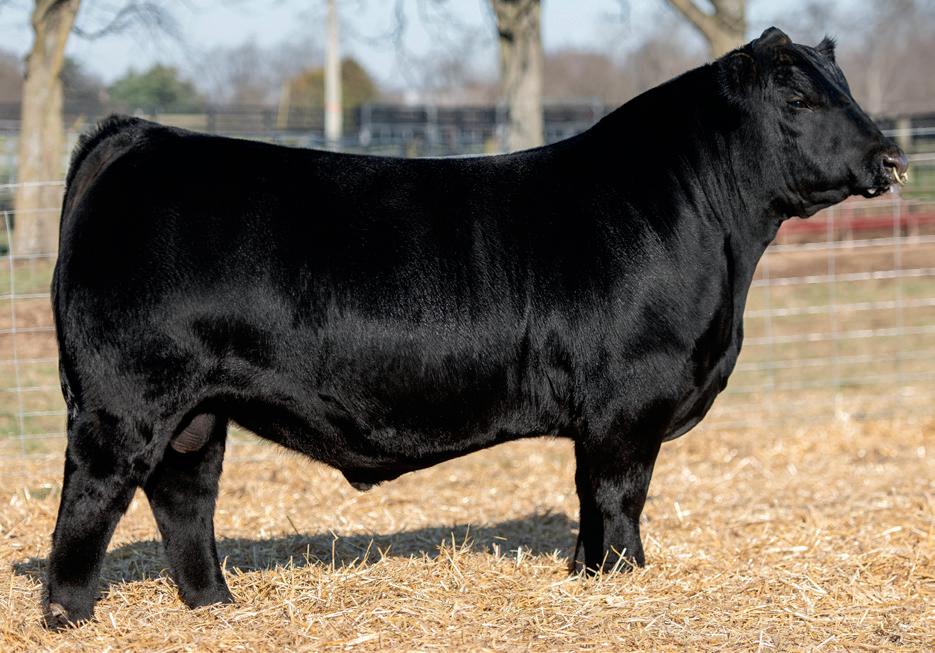
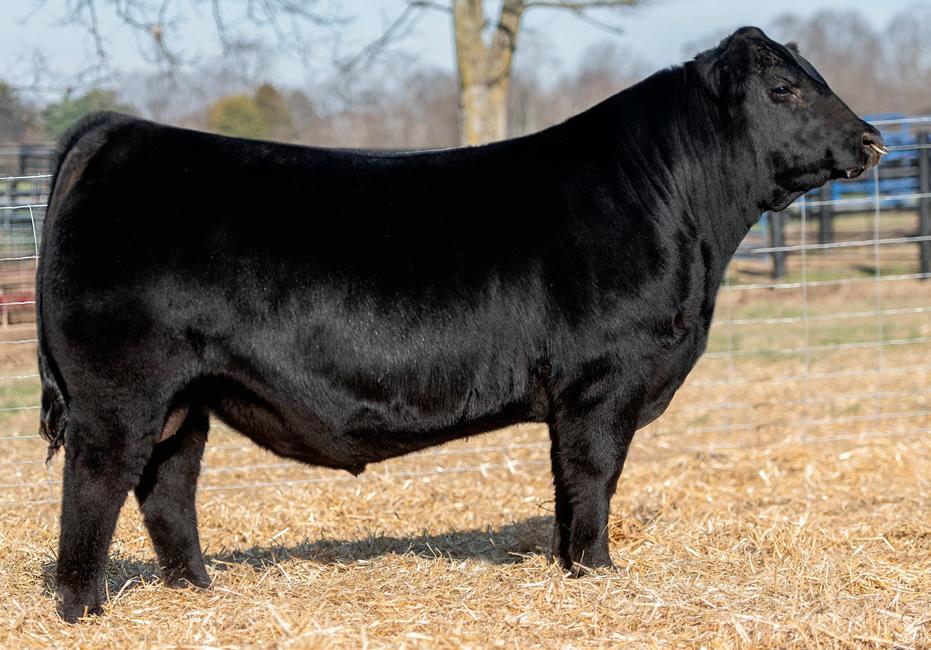
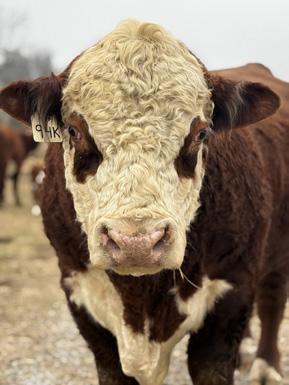
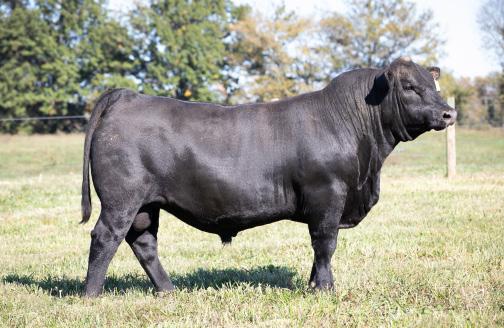
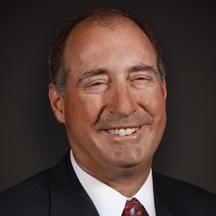
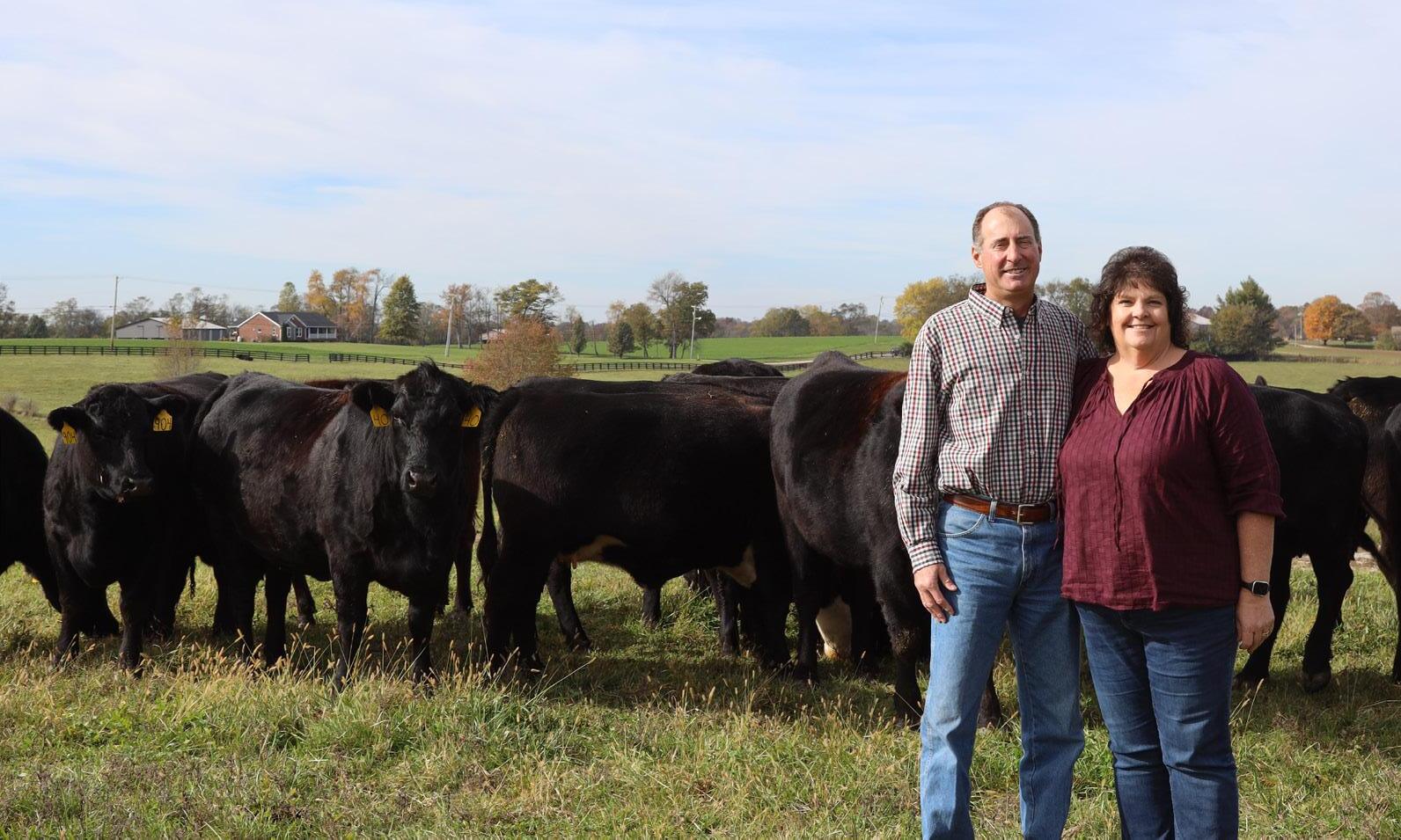
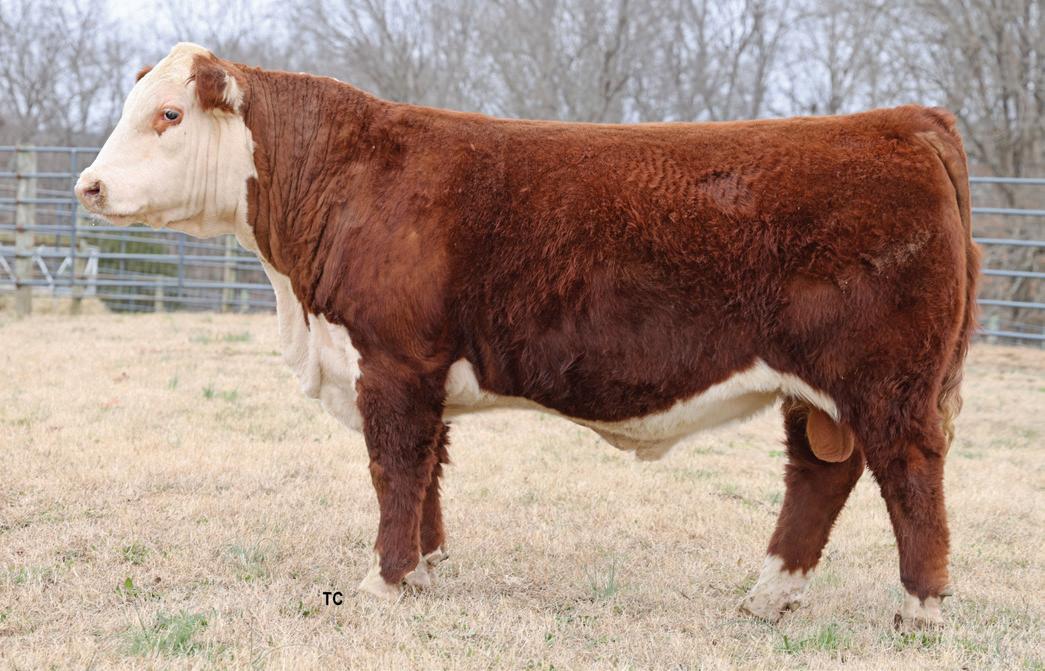
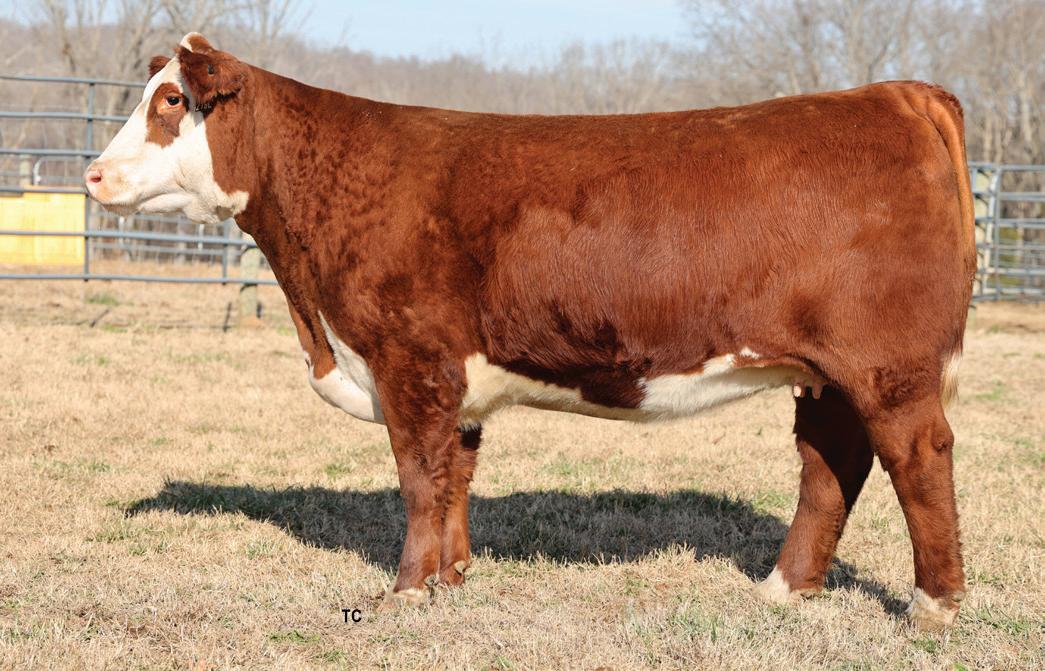
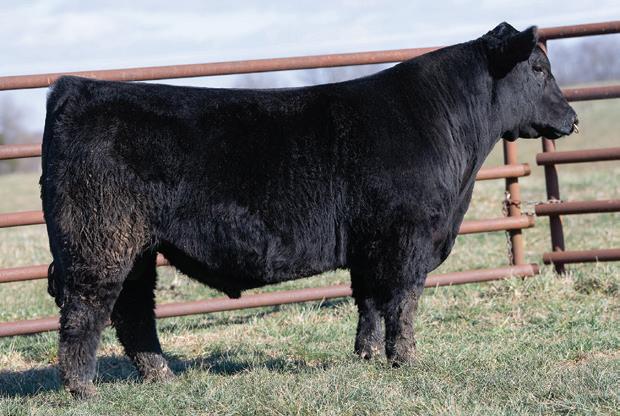
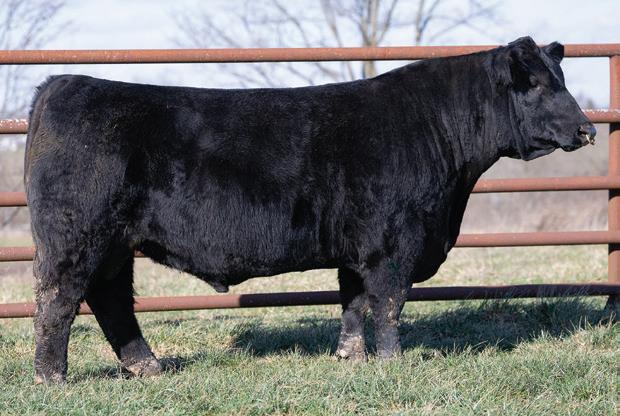
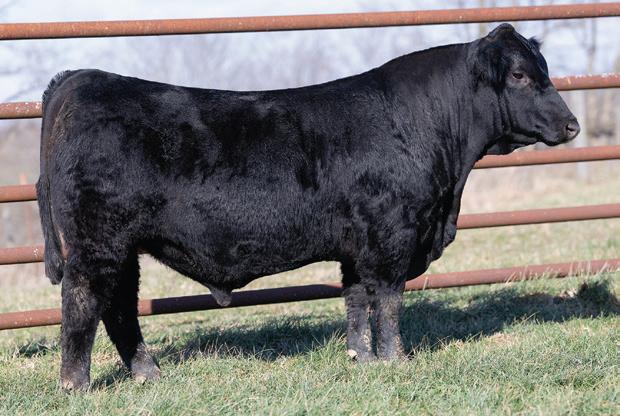
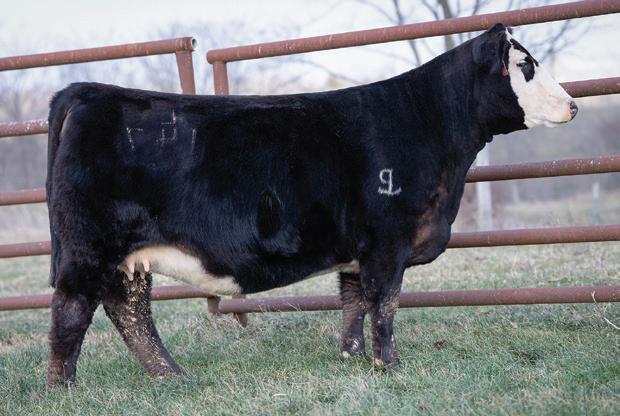
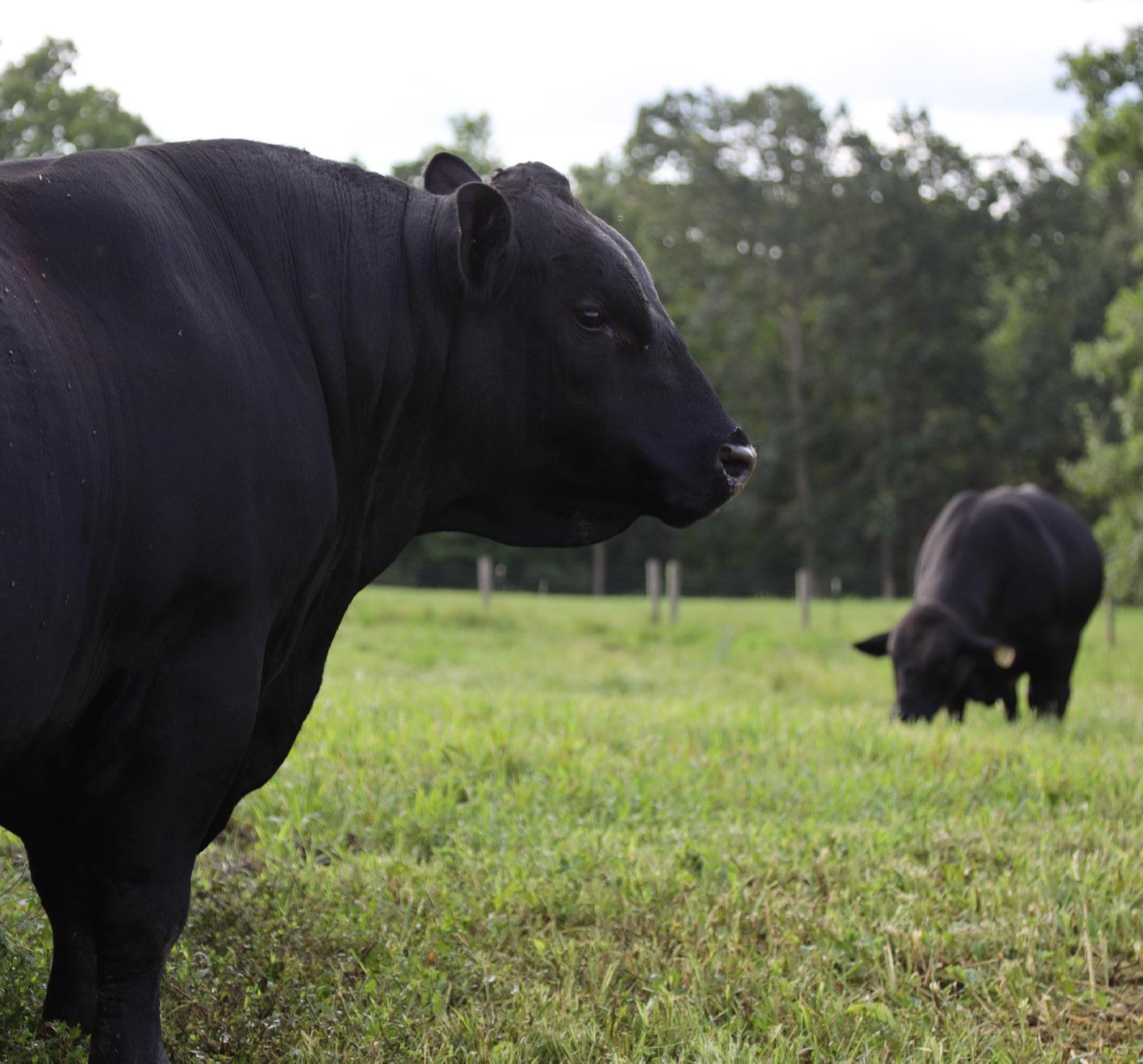
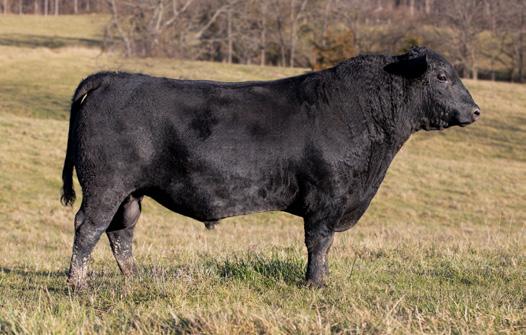
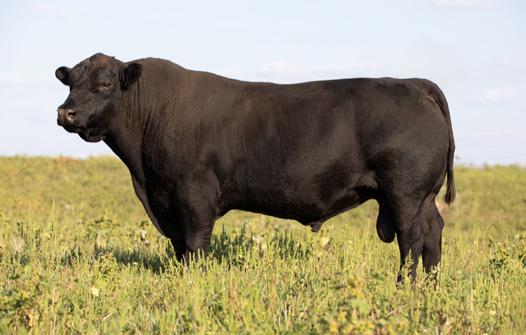
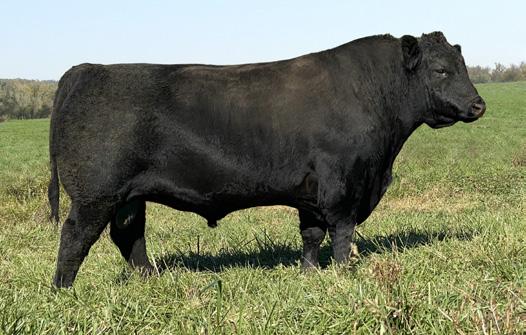
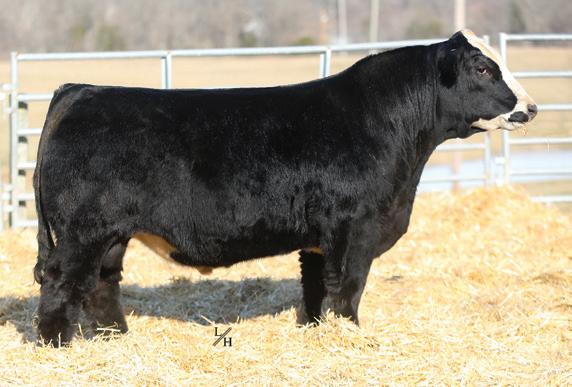
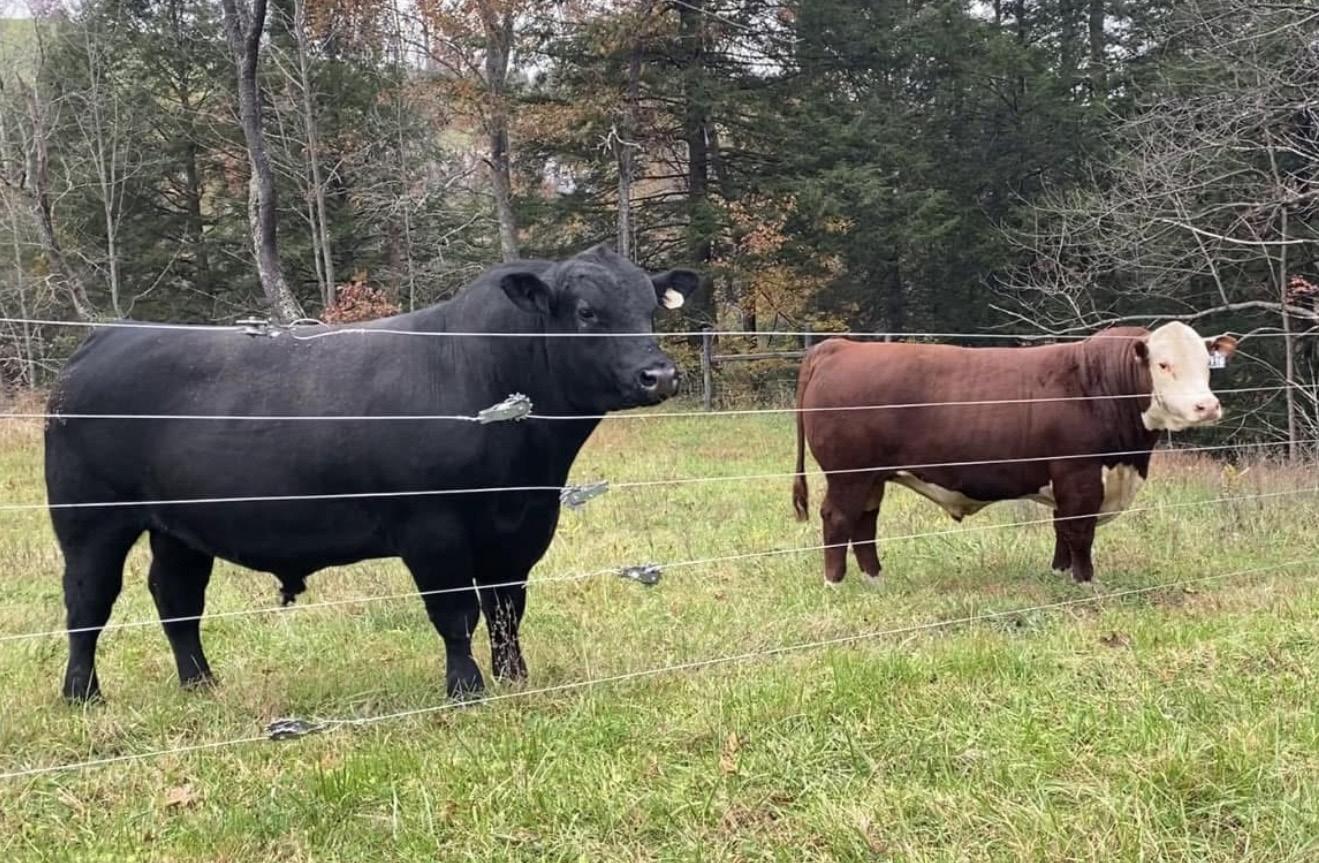
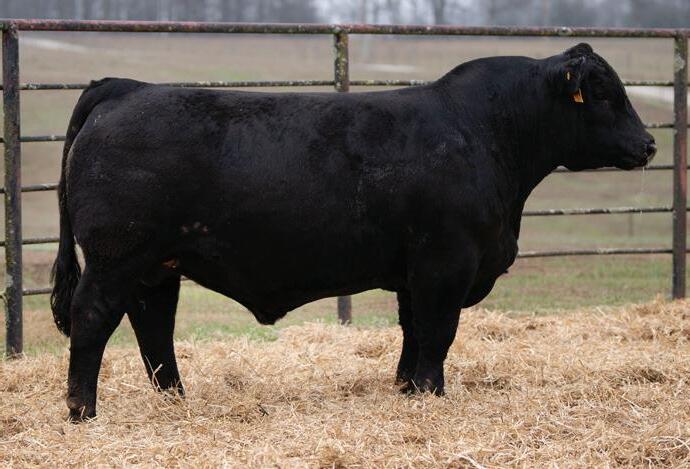
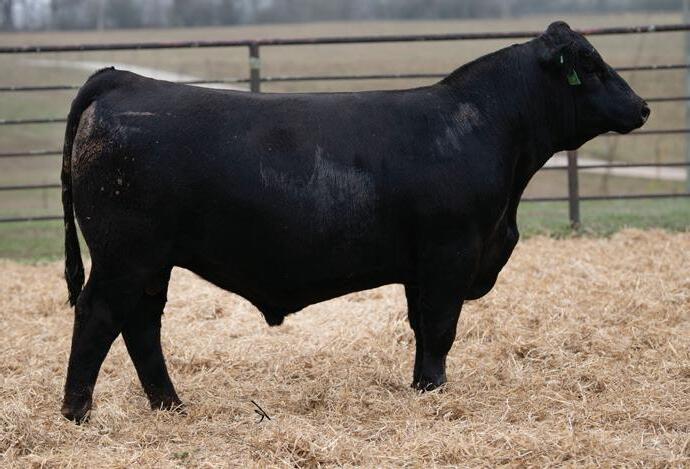
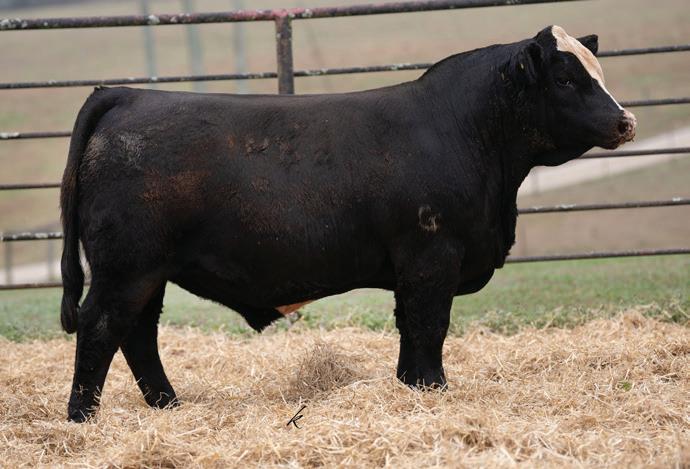
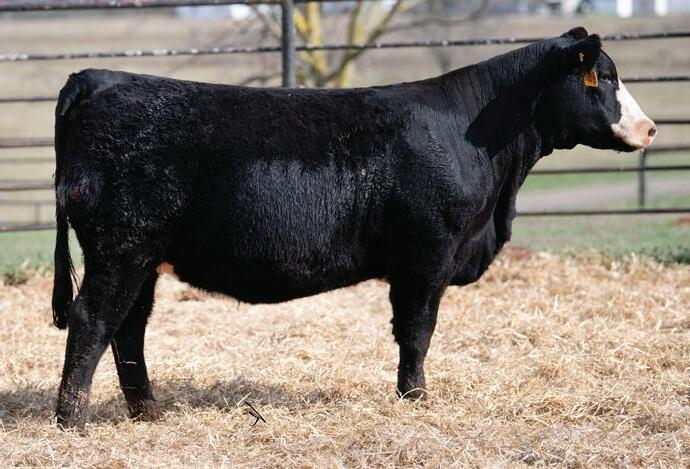
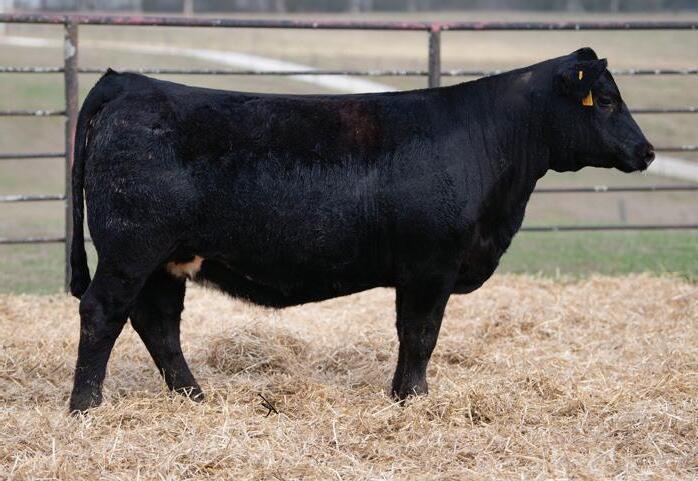
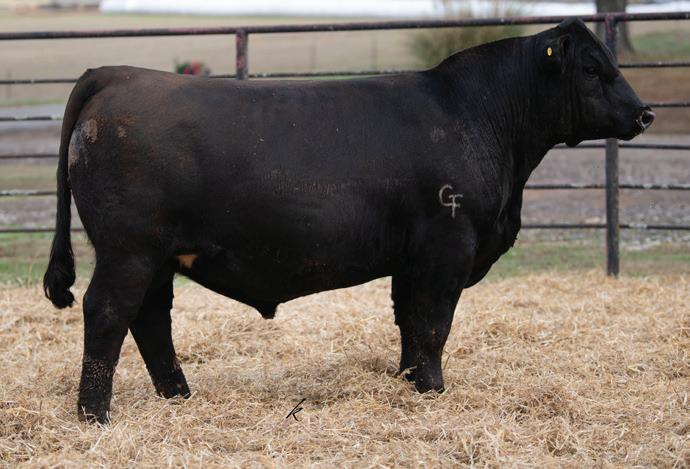
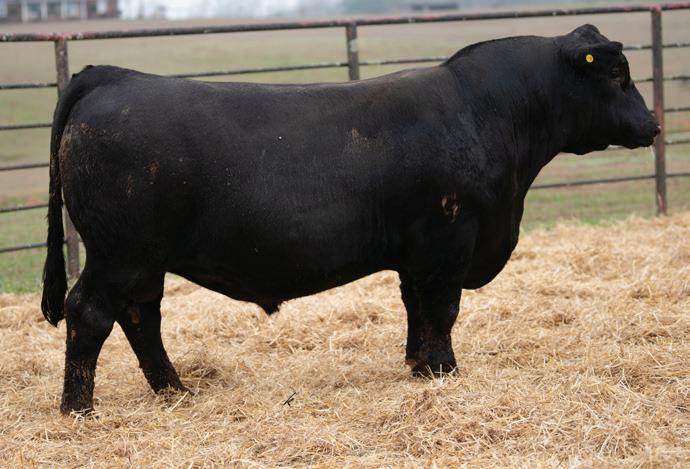
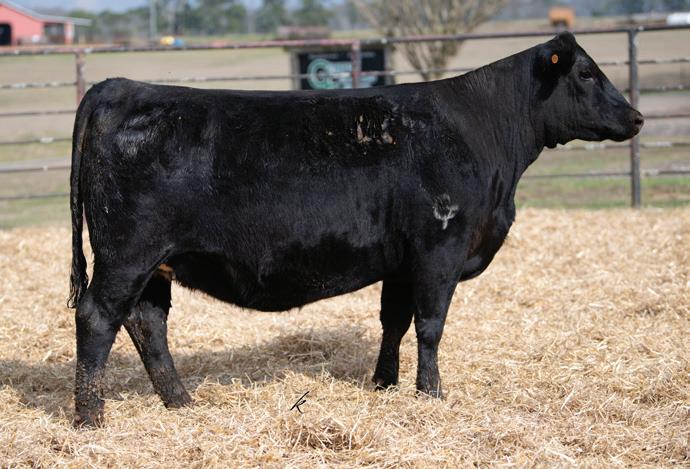
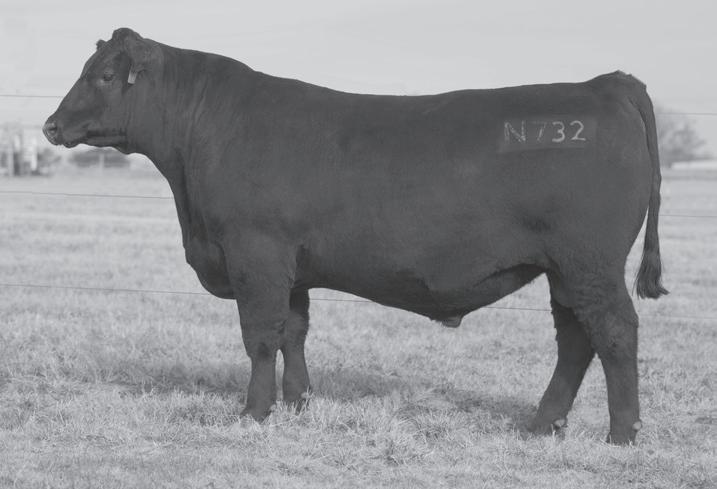
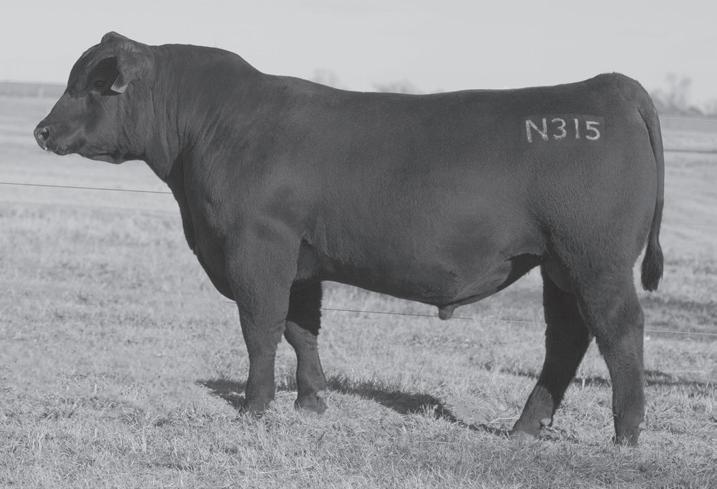
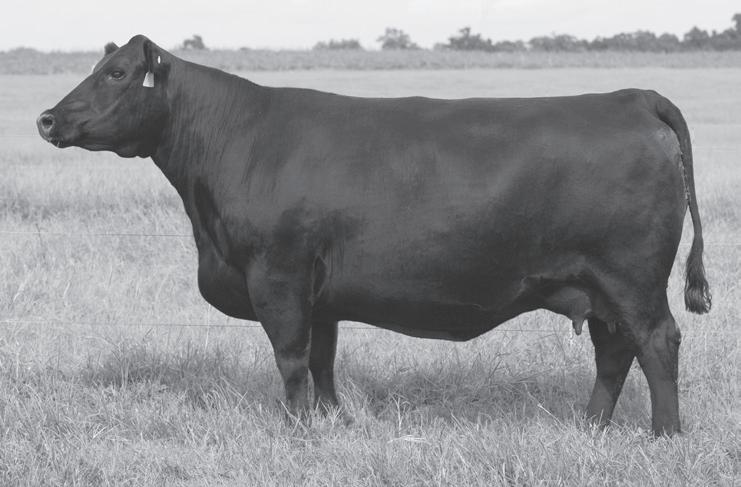
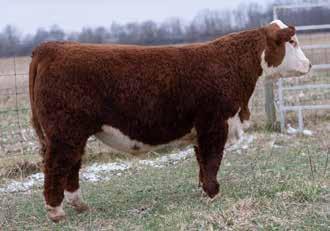
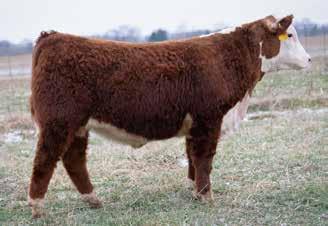
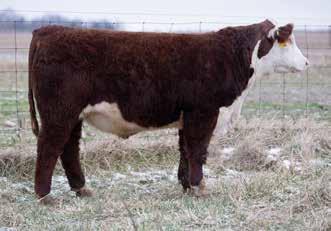
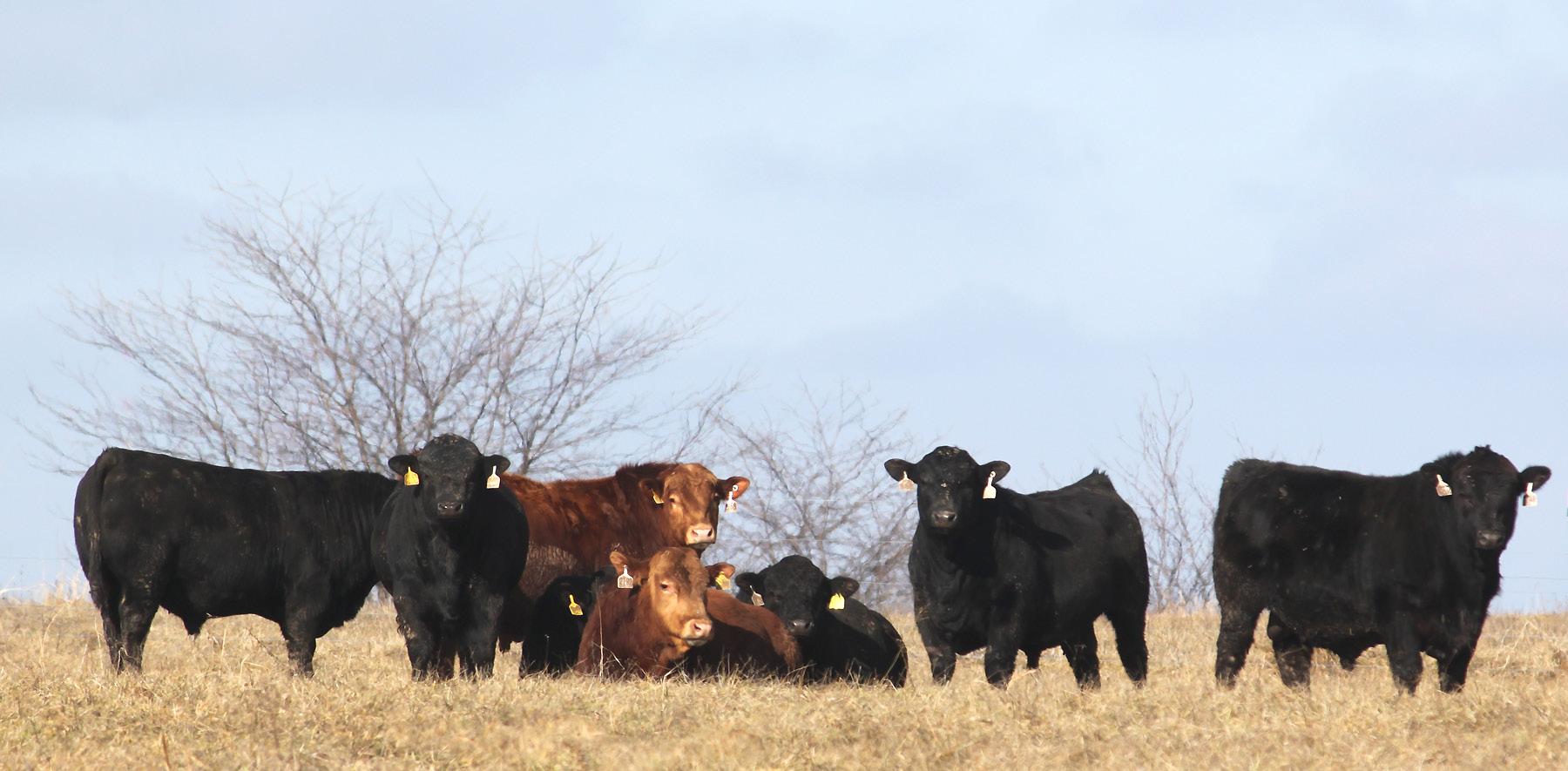
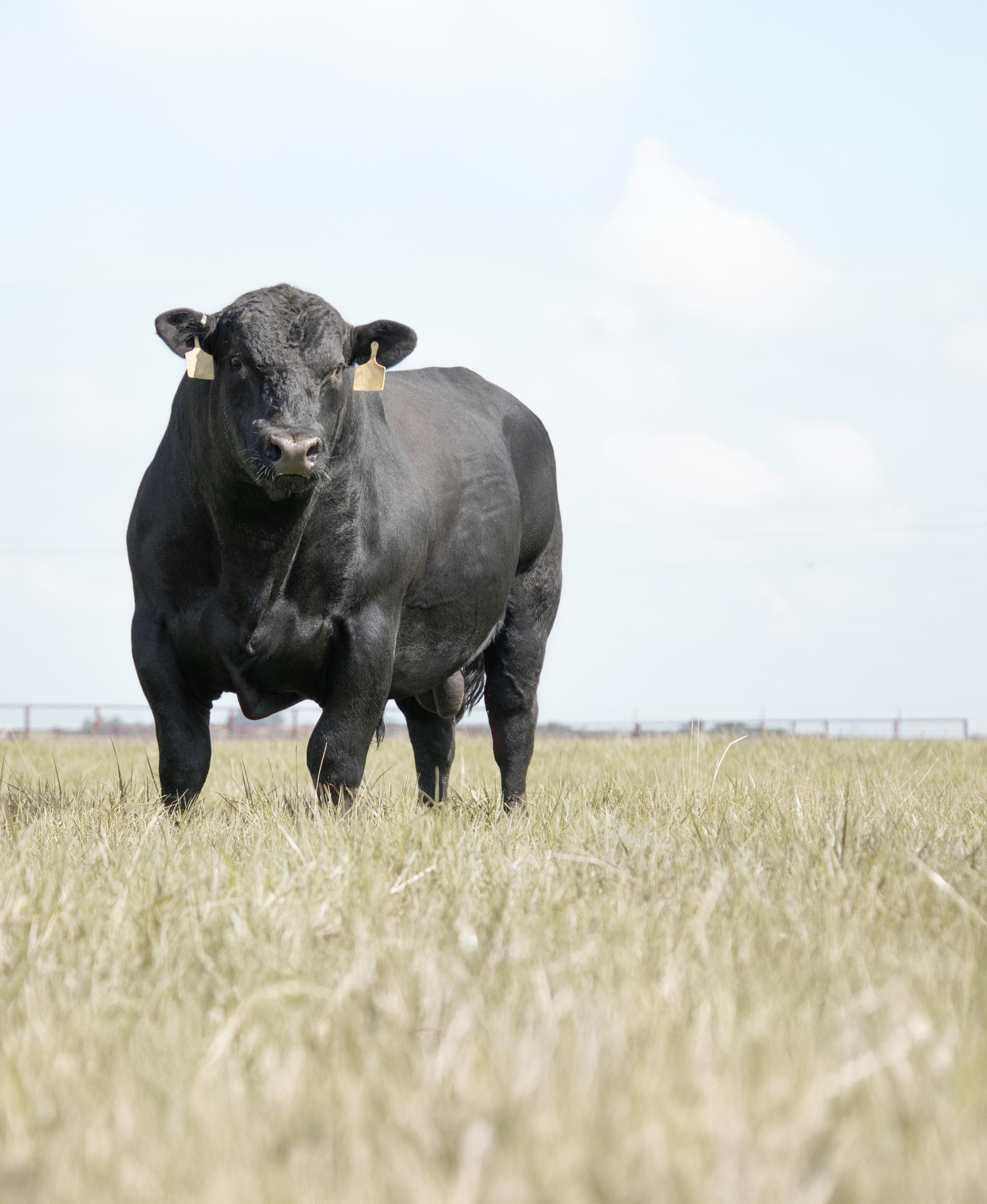
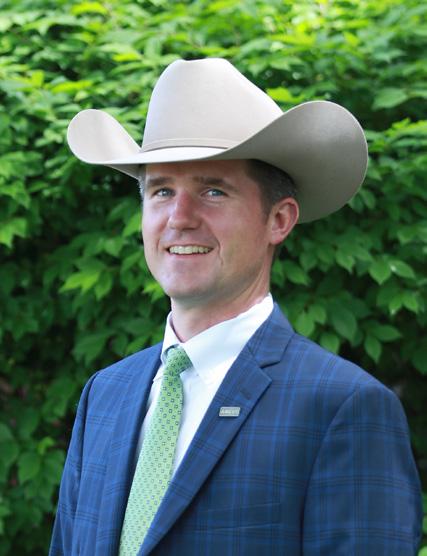
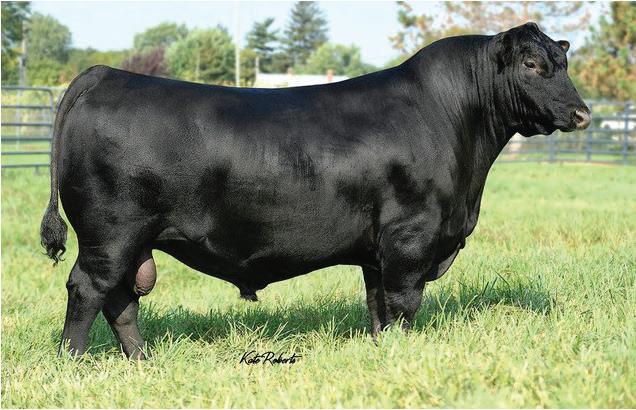
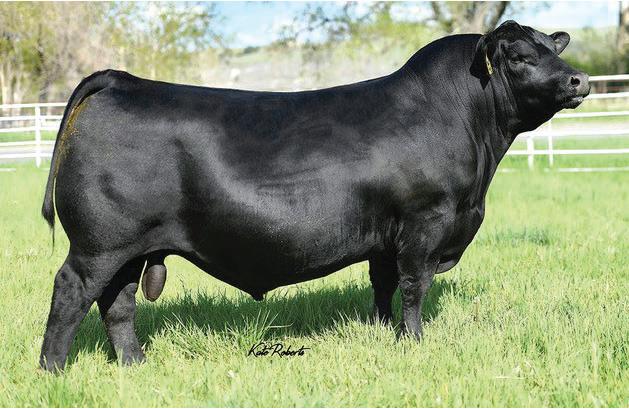
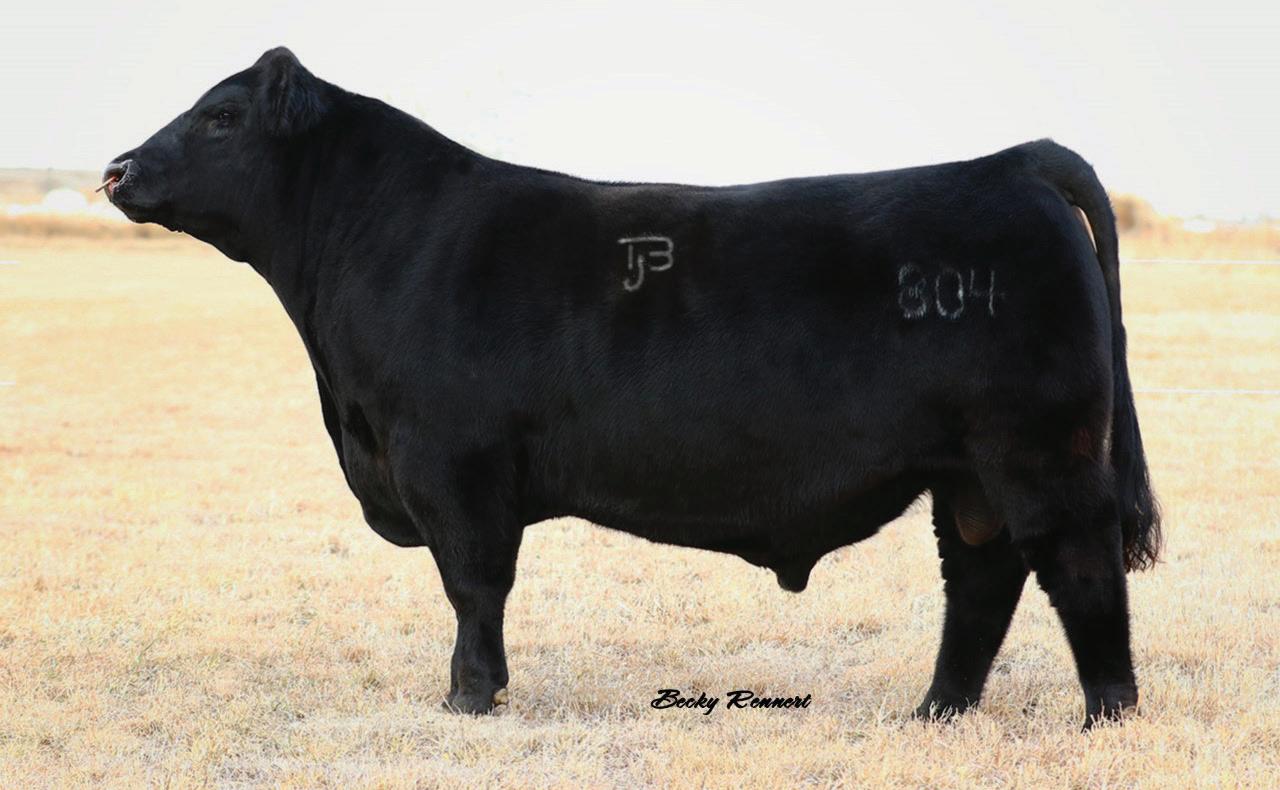
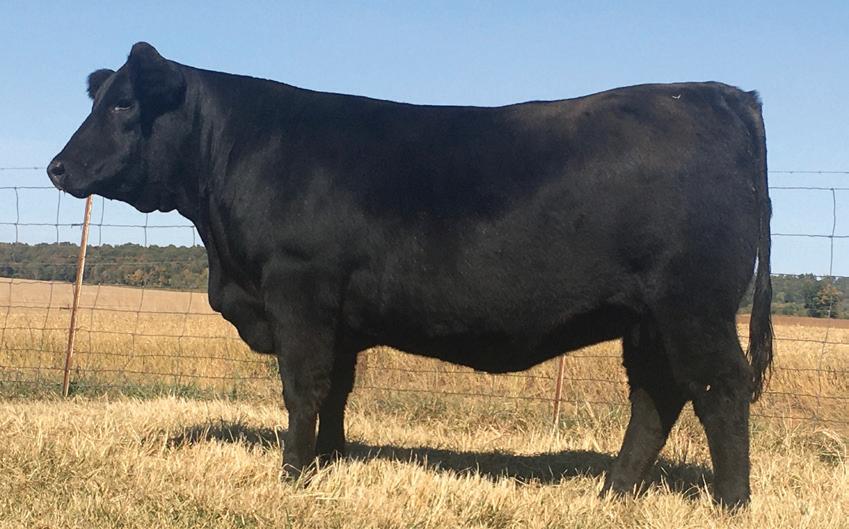
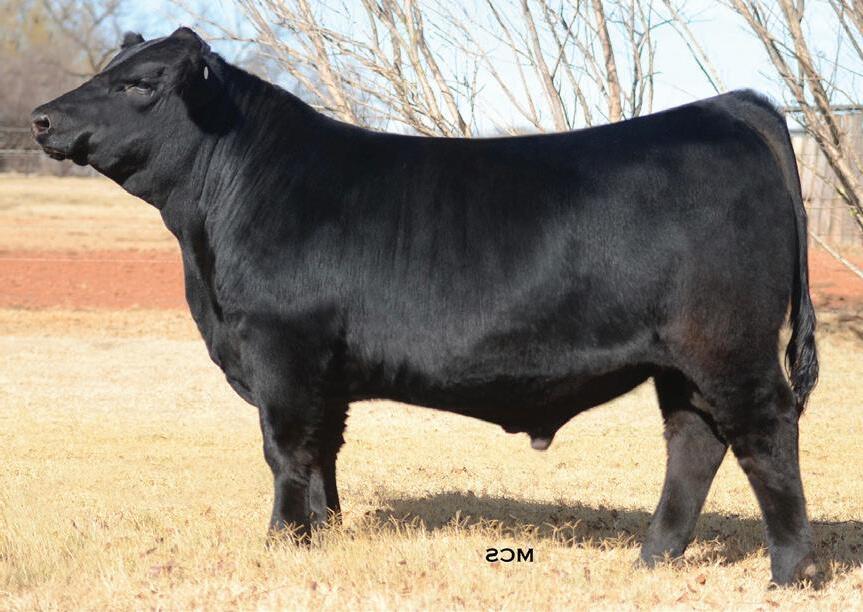
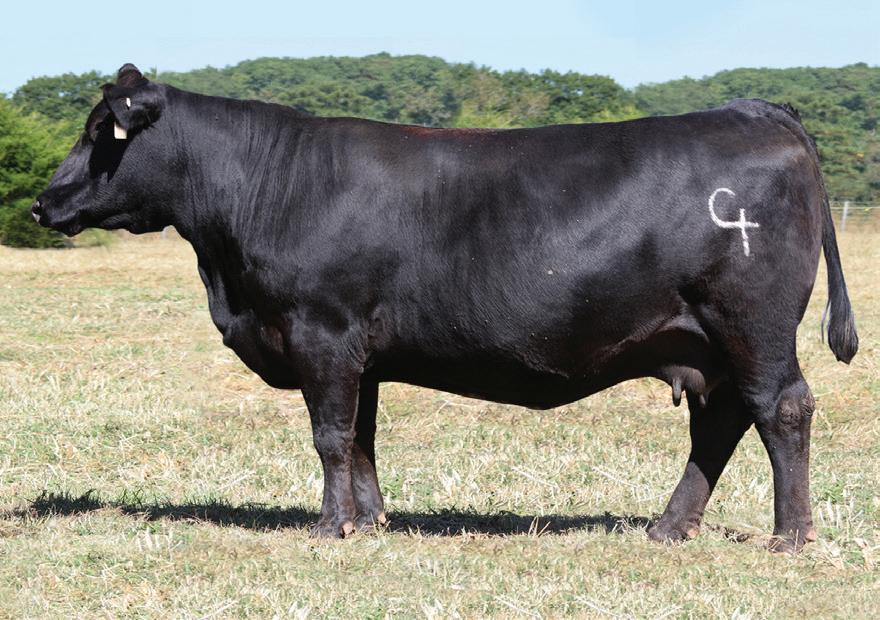
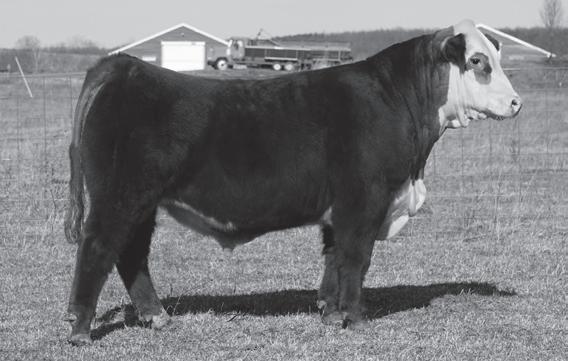
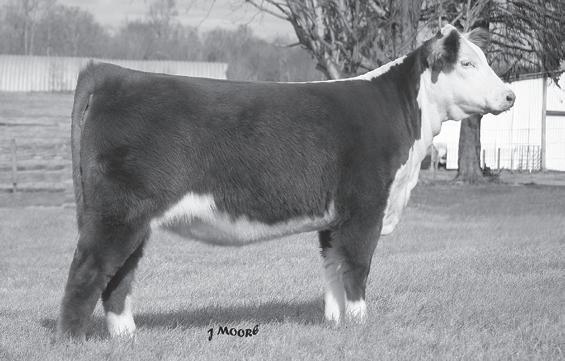
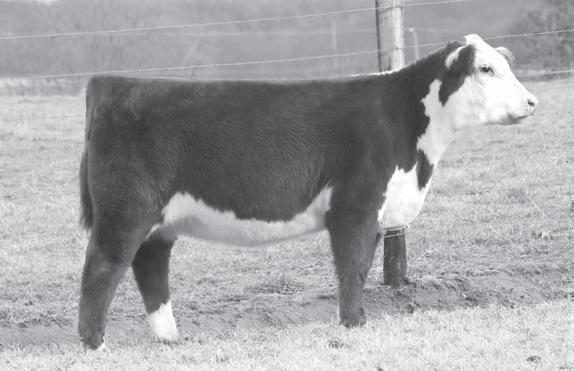
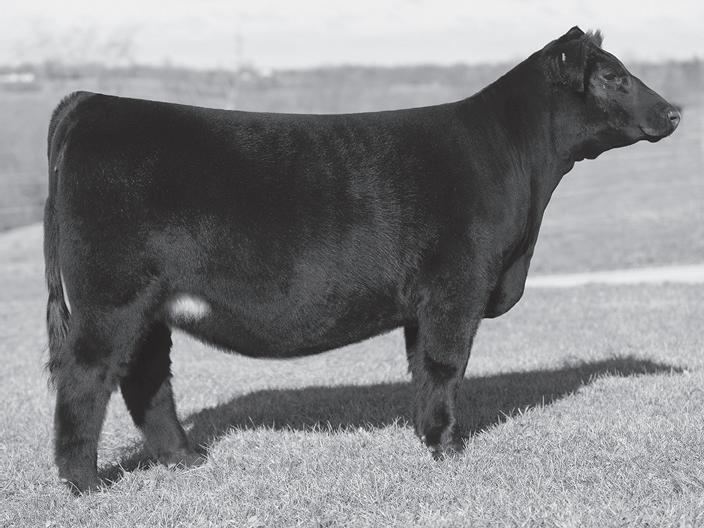
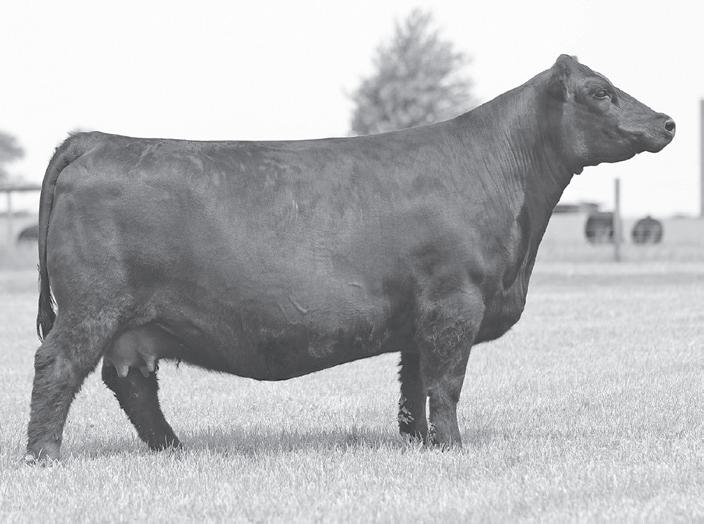
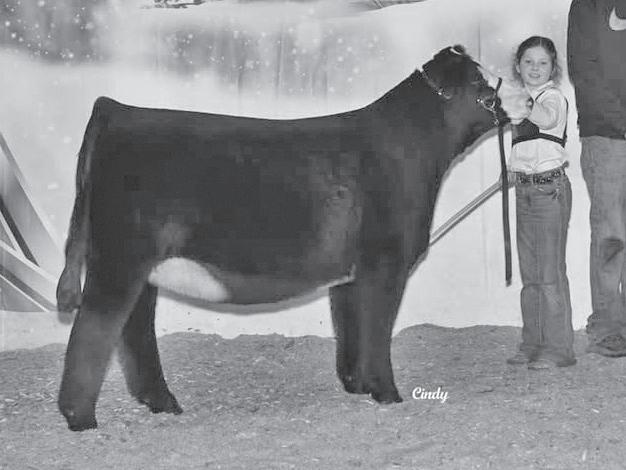
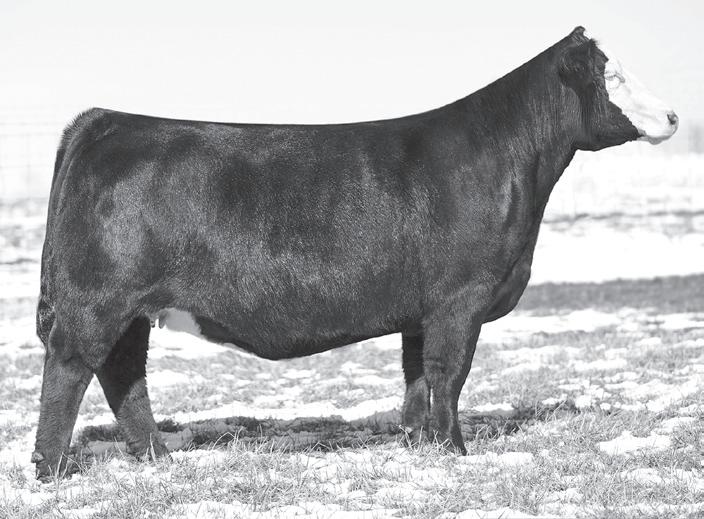
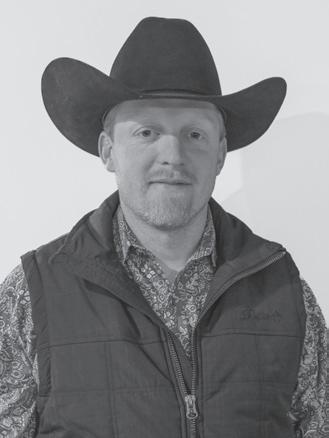
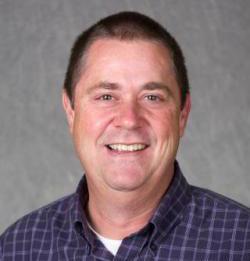
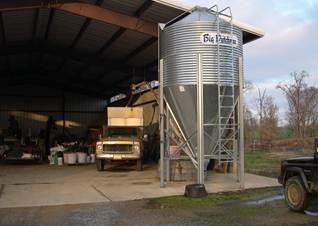
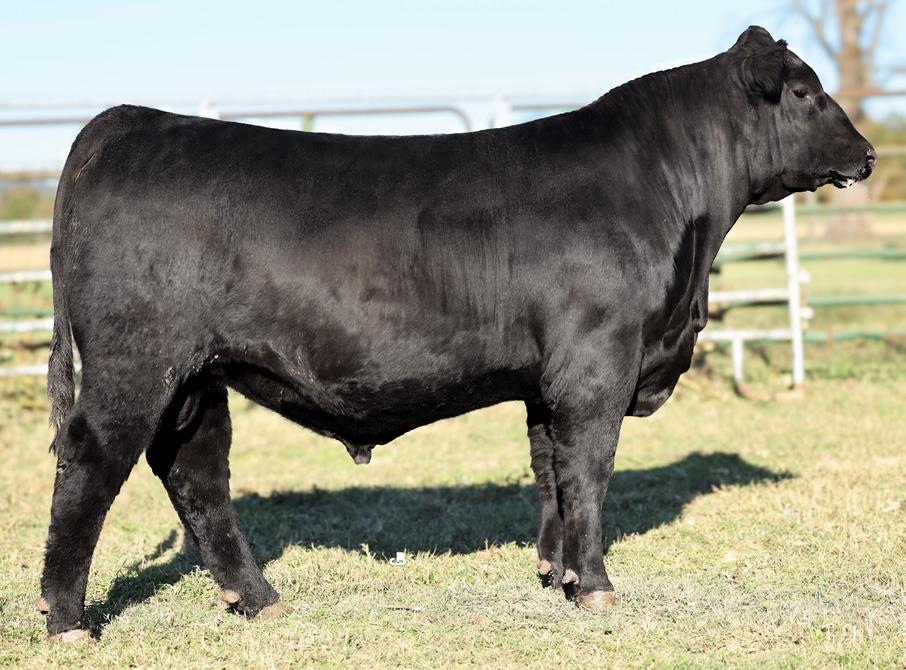
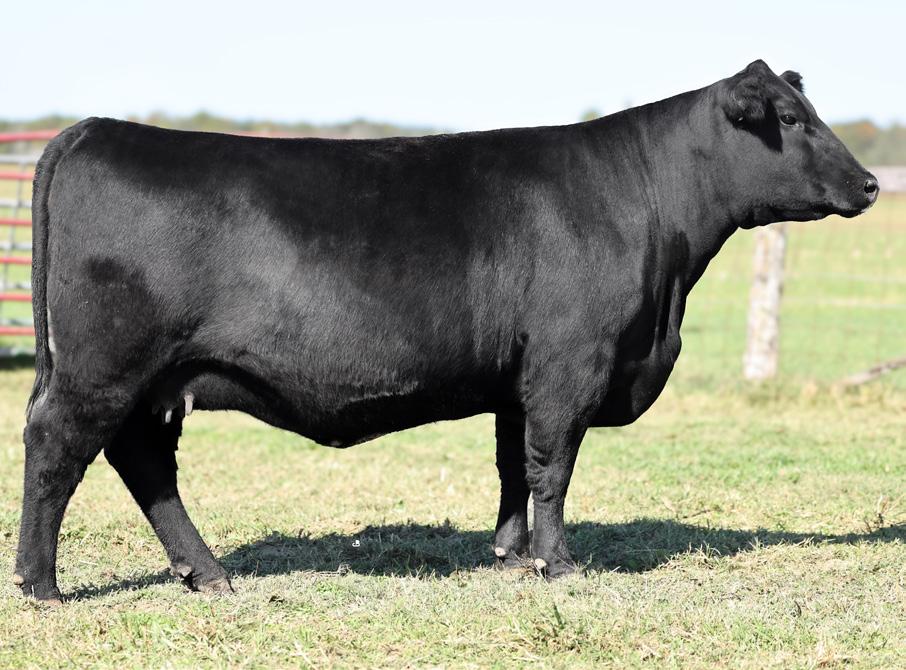
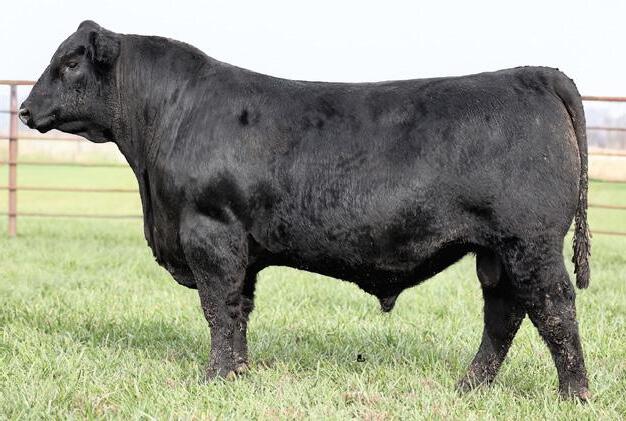
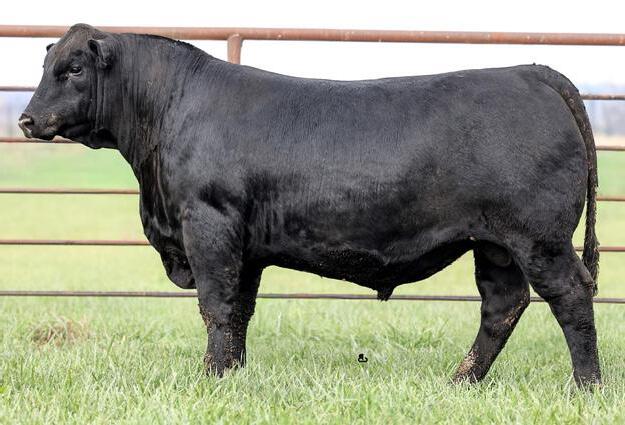
The Boyd Beef Cattle and Myers Angus Farm programs are family owned and operated and backed by multiple generations of cattlemen.
FOCUS
We focus each and every breeding season on selecting genetics that will impact the bottom line of
CUSTOMER SERVICE
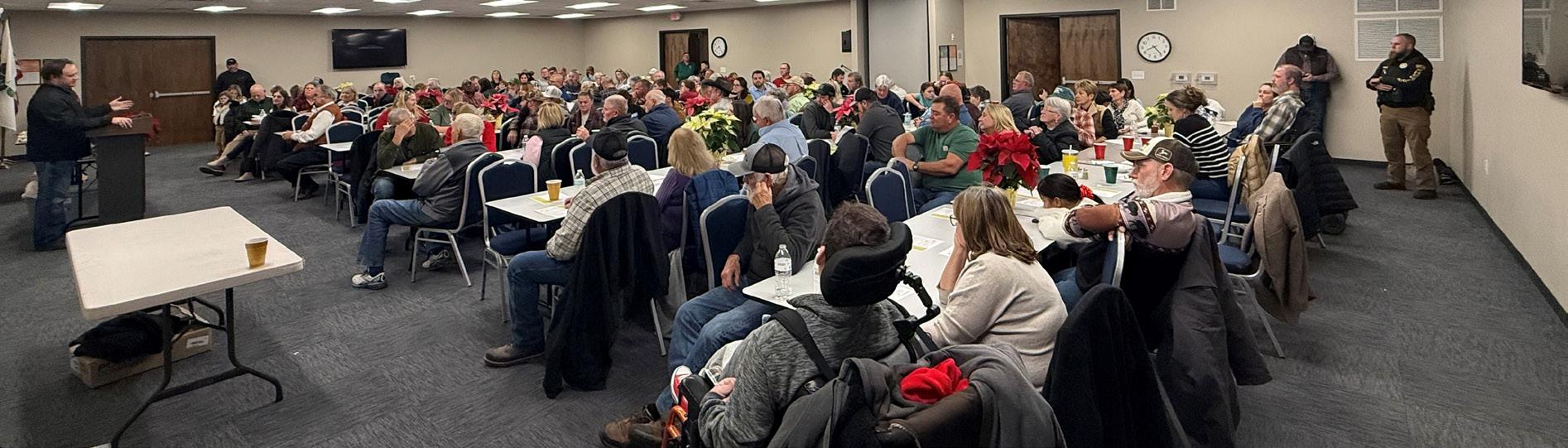
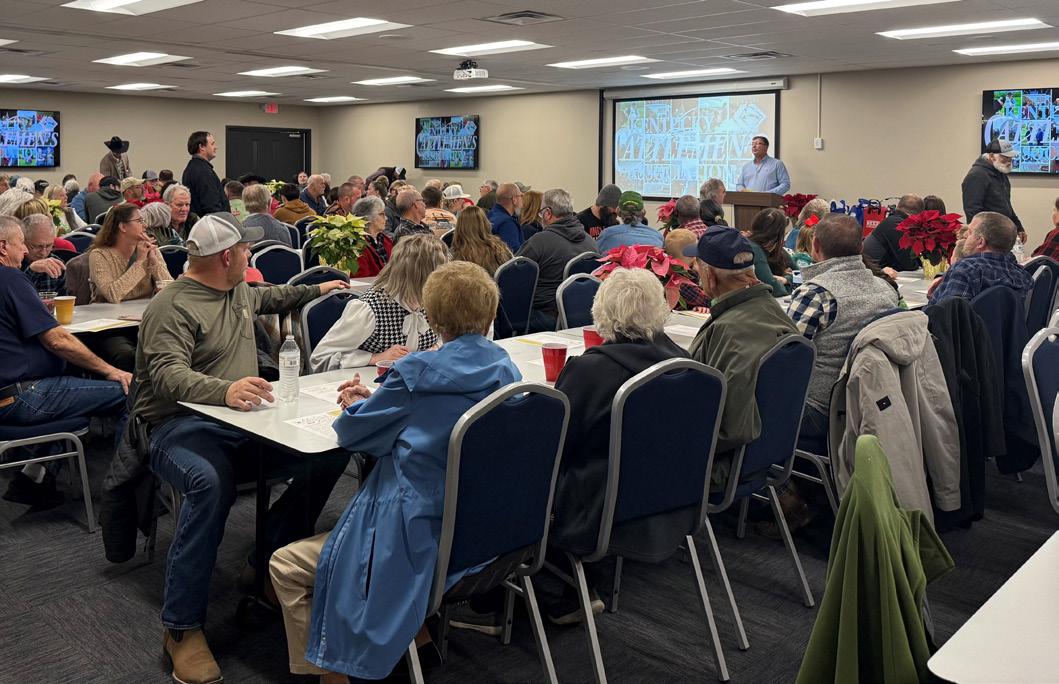
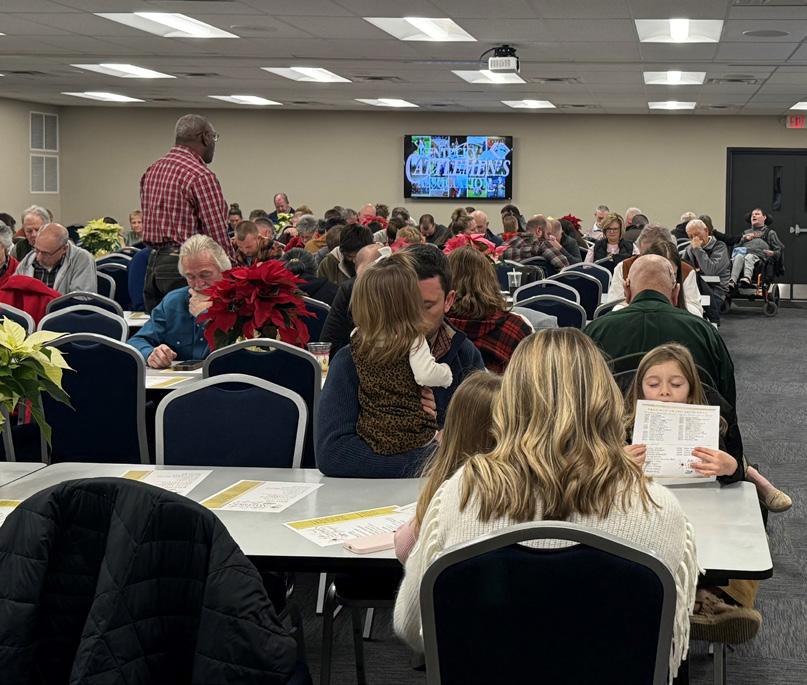
Our annual Boyd Beef Cattle and Myers Angus Farm feeder calf sale continues to grow each year. Calves sired by bulls backed by our genetics continue to top the market - all of our valued customers are invited to participate in this unique feeder calf program.
bull buying
07 Allan Bryant President's Thoughts
08 Jonathan Shell Commissioner's Corner
10 Dave Maples Thoughts from Dave
34 Dr. Michelle Arnold Treat Calf Scours Early with the Right Oral Electrolyte Solution for Best Results
40 Chris Teutsch Investments that Matter…Watering Systems
72 Kevin Laurent “The Precious Present” and Winter Feeding
FEATURE STORIES
14 Small Improvements, Big Results
16 How Do Local Producers Select Their Bulls?
18 What is a Good Bull Worth in 2026?
20 Buyers’ Perspectives on Purchasing Bulls
24 Breeders’ Perspectives on Purchasing Bull
32 Warner Reflects on Year as KCA President
44 Cattle Prices and the Prospects of Herd Expansion
48 Nominees Sought for 2026 Kentucky Leopold Conservation Award
50 UK Launches Forage Testing Program to Support Kentucky Livestock Farmers
54 October Pork Exports Largest Since March; Encouraging Rebound for Beef
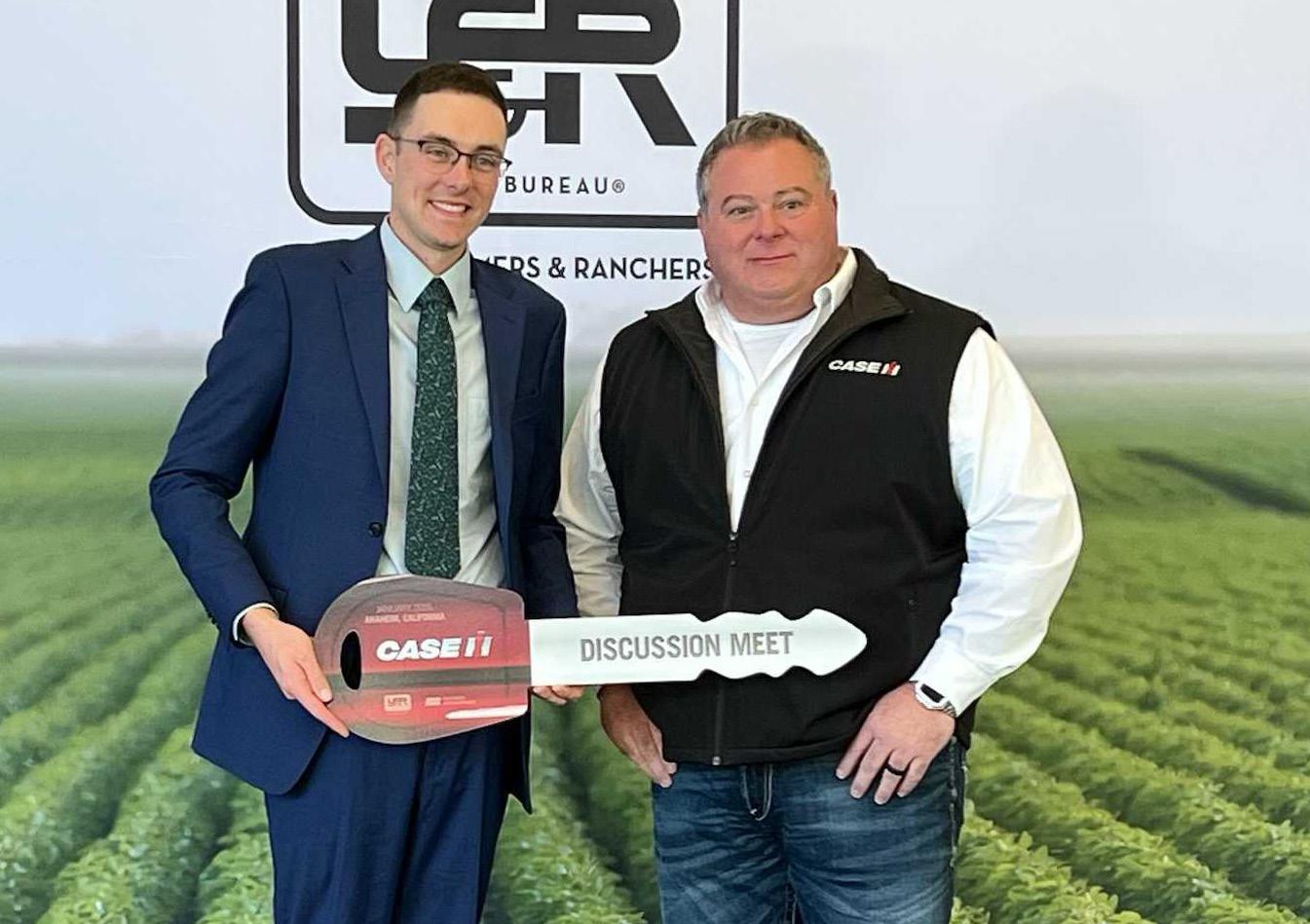
62 KBN’s Cody Burke Earns 2nd Place in National Farm Bureau Event
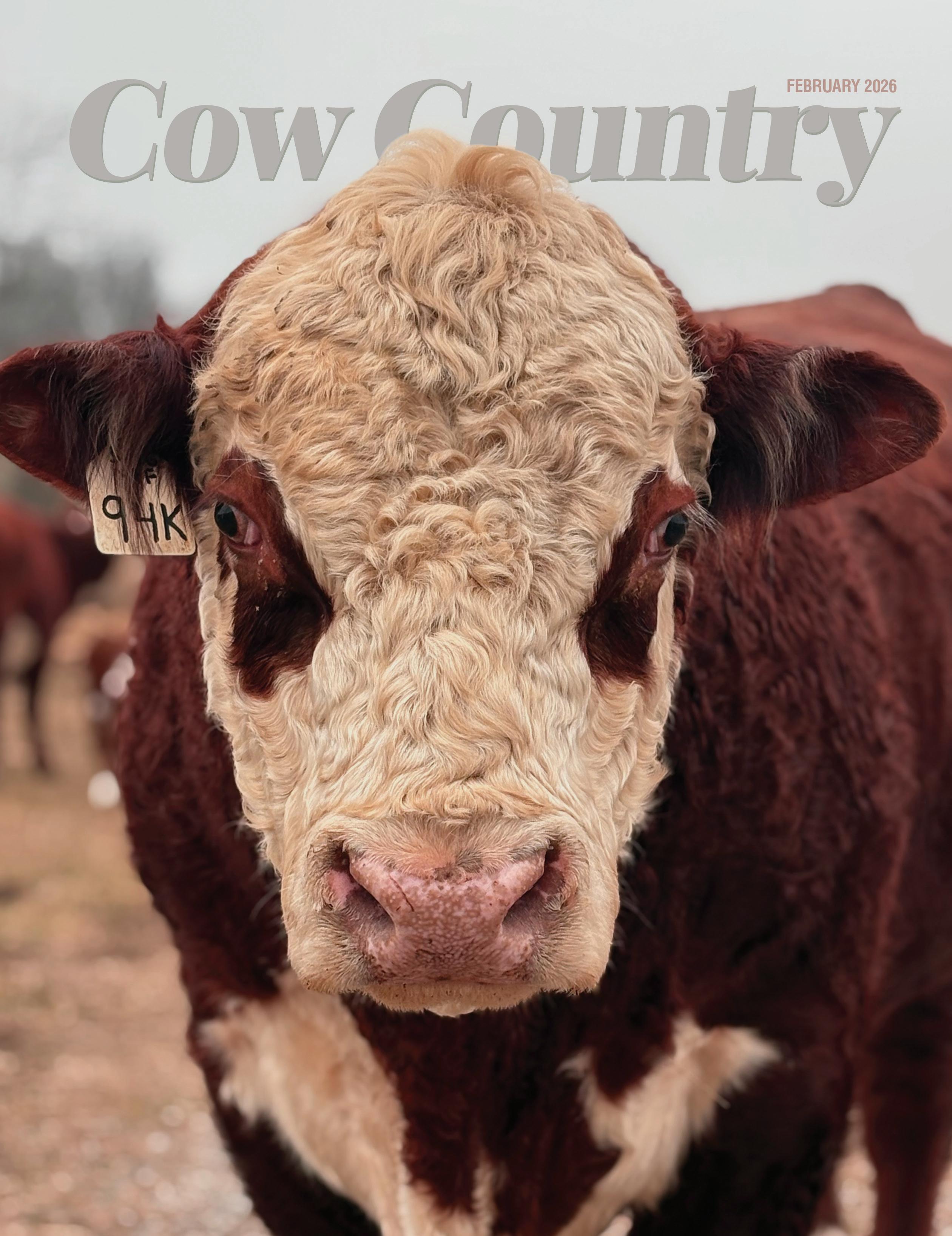
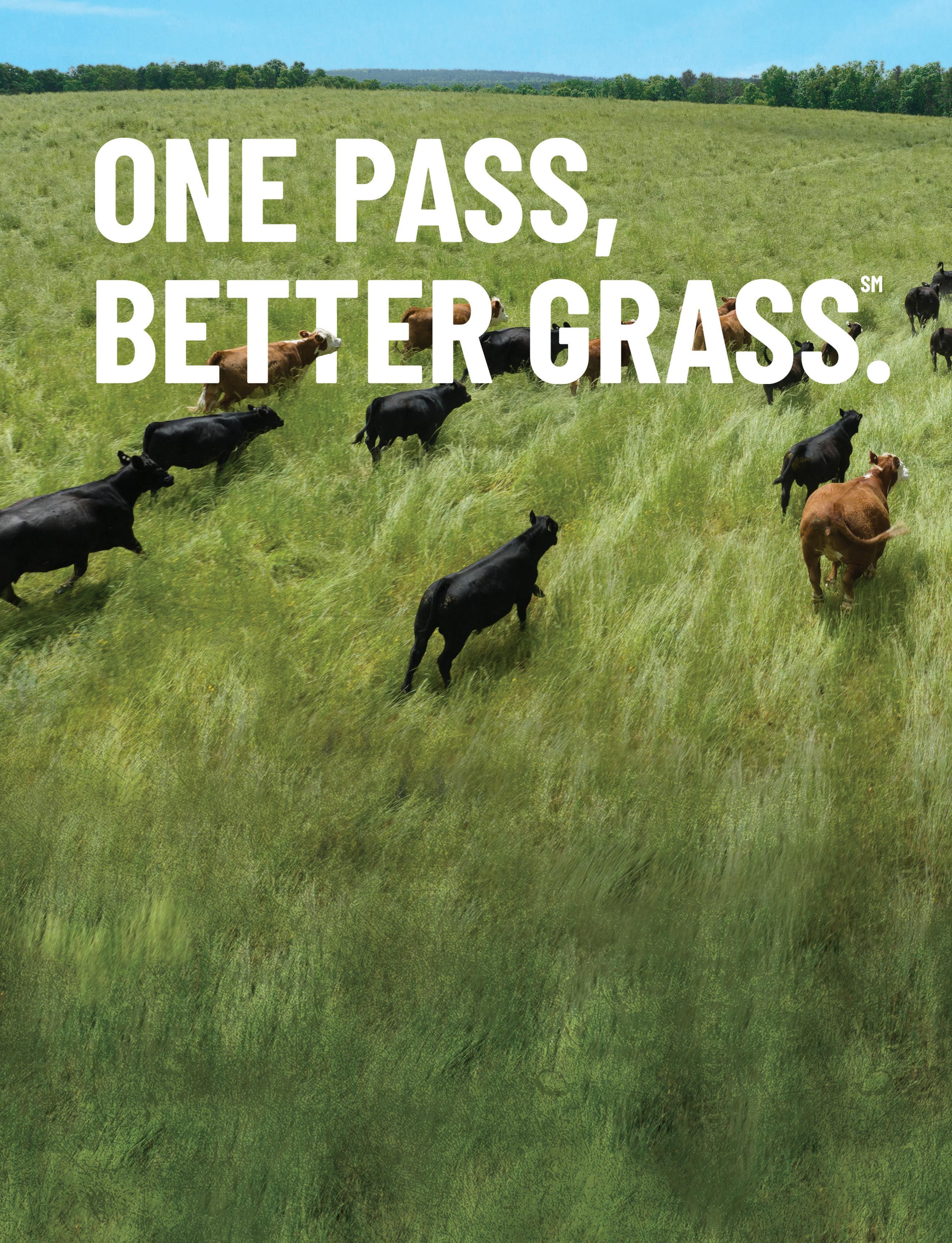
COVER PHOTO BY: Chelsea Sapp of Taylor County
I recently participated in an industry panel on the “Future of the Beef Industry.” The first question was to grade the US Beef industry as it currently stands today, as if I were a professor assigning a grade. I said we have a B, but we have a lot of class left until that grade is final. On the surface, we look in great shape. Prices are phenomenal. Policy and regulatory challenges are less of a concern than they have been in previous years. Things are pretty good. My biggest concern, though? Who is going to continue to raise the cattle? The average age of the American beef producer continues to increase by one year each year. New blood isn’t entering the industry. The prices are great because of strong demand and a decline in the cow herd due to attrition. The high prices are due to a very concerning reason. As much as we talk about the future of the industry and youth programs, it is going to take more than scholarship essays, bred heifer programs, and buying steers at the county fair. I think we do a phenomenal job generating interest among school-aged youth, but we do an abysmal job of putting our money where our mouth is when it comes to giving a hard-working individual with potential a chance to make a full-time living at it.
If beef production is a viable business model, why is it an industry that sells its businesses for parts when ownership is transferred from one individual to the next? Very rarely do you see someone buy a turnkey operation. The land is sold to the highest bidder. The cow herd is liquidated in a dispersal. An equipment auction is held. For an industry that is so supportive of youth, why do they stop supporting them when it is time to enter the workforce as young adults?
My generation does not have a tobacco crop they can use to pull themselves up by the bootstraps and generate cash flow to get a foothold in equity. The problem of ushering in the next class of owners in agriculture is more than a creativity and work ethic issue. It cannot be solved by simply spending their weekend mornings at the farmers’ market or with an on-farm market. It is most certainly an opportunity issue. In economics, the three factors of production are land, capital, and labor. A young person pretty much only has labor. What capital they may have won’t even put a dent in land acquisition. So how can you help? Owner-finance the farm, let them
manage the cow herd on shares as they build equity through heifer retention, and lease any needed equipment back to them. That is the answer. There are even significant tax advantages to that arrangement. Instead of doing that, far too often, every penny is milked out of it to transfer the income to off-farm adult children who haven’t seen the back side of the pastures since they were kids.
The first line of the FFA creed is “I believe in the future of agriculture, with a faith born not of words but of deeds.” As we turn the page to a new year amid record prices, the older generation may consider putting their money where their mouth is if they want to help shape the future of agriculture. There will be a future in agriculture no matter what. People have to eat. If there is to be a future in the family-owned model, it begins with those who have the land and capital. Their ability to provide labor is quickly fading. I work with many students. I know that plenty of those who are enchanted with the idea of agriculture full-time only want to provide the labor for the equitation 5 days a week and 50 weeks a year. They won’t make it. They will be gone to an easier vocation before you even have a succession planning conversation. However, there are those out there who are willing to do Christmas morning chores with a smile on their face because that is truly what they want to be doing with their lives.
Joe K. Lowe II
EXECUTIVE COMMITTEE
OFFICERS:
President
RANDY WARNER Sharpsburg
President Elect
ALLAN BRYANT Eminence
Vice President
DANIEL HAYDEN Whitesville
Treasurer
KEN ADAMS Upton
Past President
JEFF PETTIT Sebree
KCA Program Chairman
ADAM CHUNGLO Harrodsburg
KBC Chairman
RYAN MILLER Campbellsville
KBN Chairman*
ALLAN BRYANT
Beef Solutions Chairman*
DANIEL HAYDEN *ex officio
REGIONAL DIRECTORS:
REGION 1
Wayne Zoglmann, John Mark Brown, Dale Gold, Greg Roberson, Gary Woodall, Coleman Ladd, Susan Zoglmann, Bill Plemmons, Kenton Howard, Steve Dunning, Conner Williams
REGION 2
Phyllis Gentry, Joe Lowe, Allison Nissley, Rayetta Boone, Robbie Hatfield, Chris Imbruglio, Maggie Webb, Andy Joe Moore, Adam Thomas, AJ Mitchell, Isaac Thompson, Kenneth Green, Trent Jones, Josh Morris, Joe Mike Moore, Amy Cecil
REGION 3
Amanda Hall, Nathan Lawson, Allen Phillips, Irvin Kupper, John David Yount, Lincoln Clifford, Abbey Biddle, Ben Tinsley, Crystal Harrod, Kyle Bush, Michelle Simon, Craig Retzlaff
REGION 4
Amy White, Brad Reynolds, Chad Anglin, Phillip Stamm, Danielle Harmon, Brandy Graves, Jodi Purvis, Mike Ravencraft, Ronnie Lowe, Logan Carter, Jason Crowe, Rob Amburgey
REGION 5
Phillip Reese, John Settles, Natalie Wesley, Doris Hamilton, Freddy Harris, Brent Williams, Anne Bays, Tommy Glasscock, Josh Wethington, Arch Sebastian, Terry Mattingly Executive Committee members in
KCA PAST PRESIDENTS:
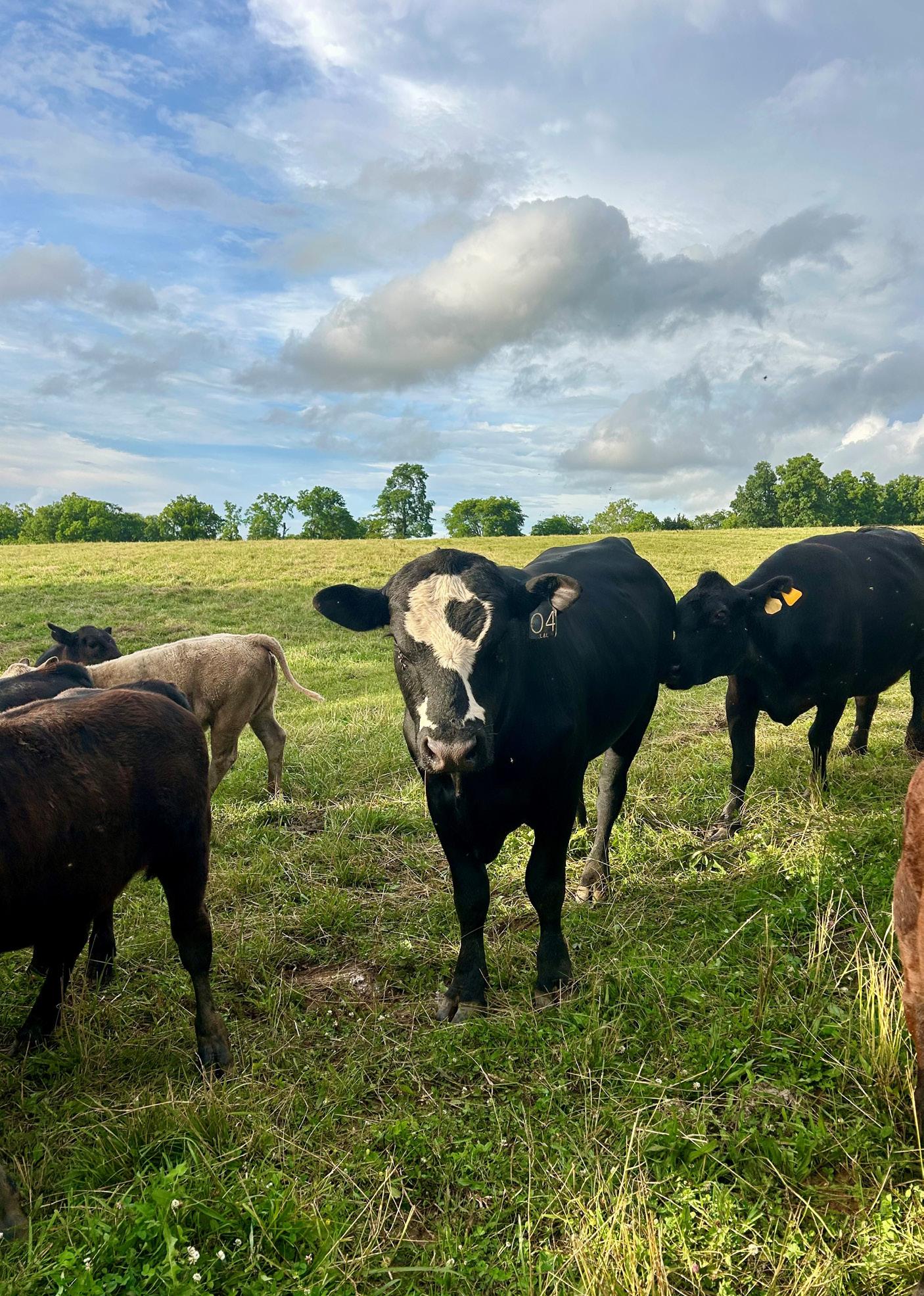
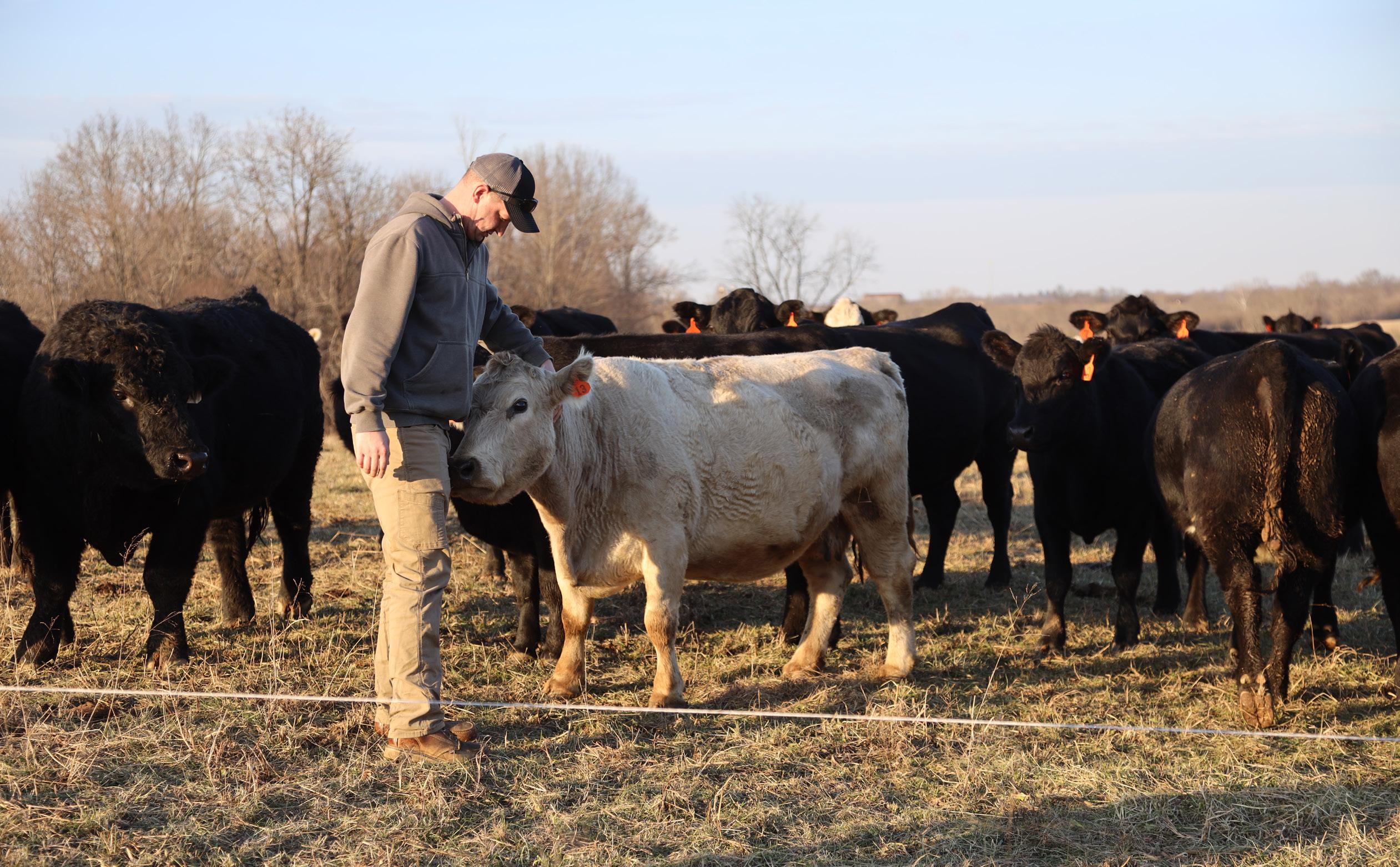
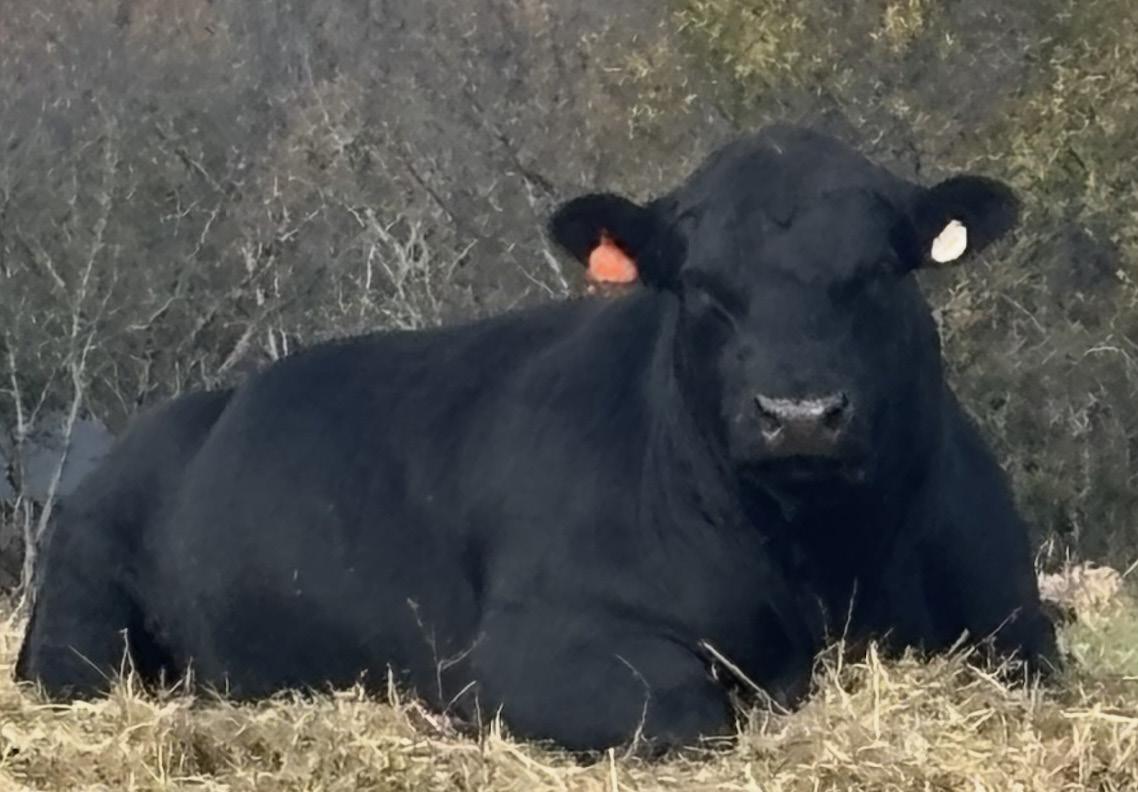
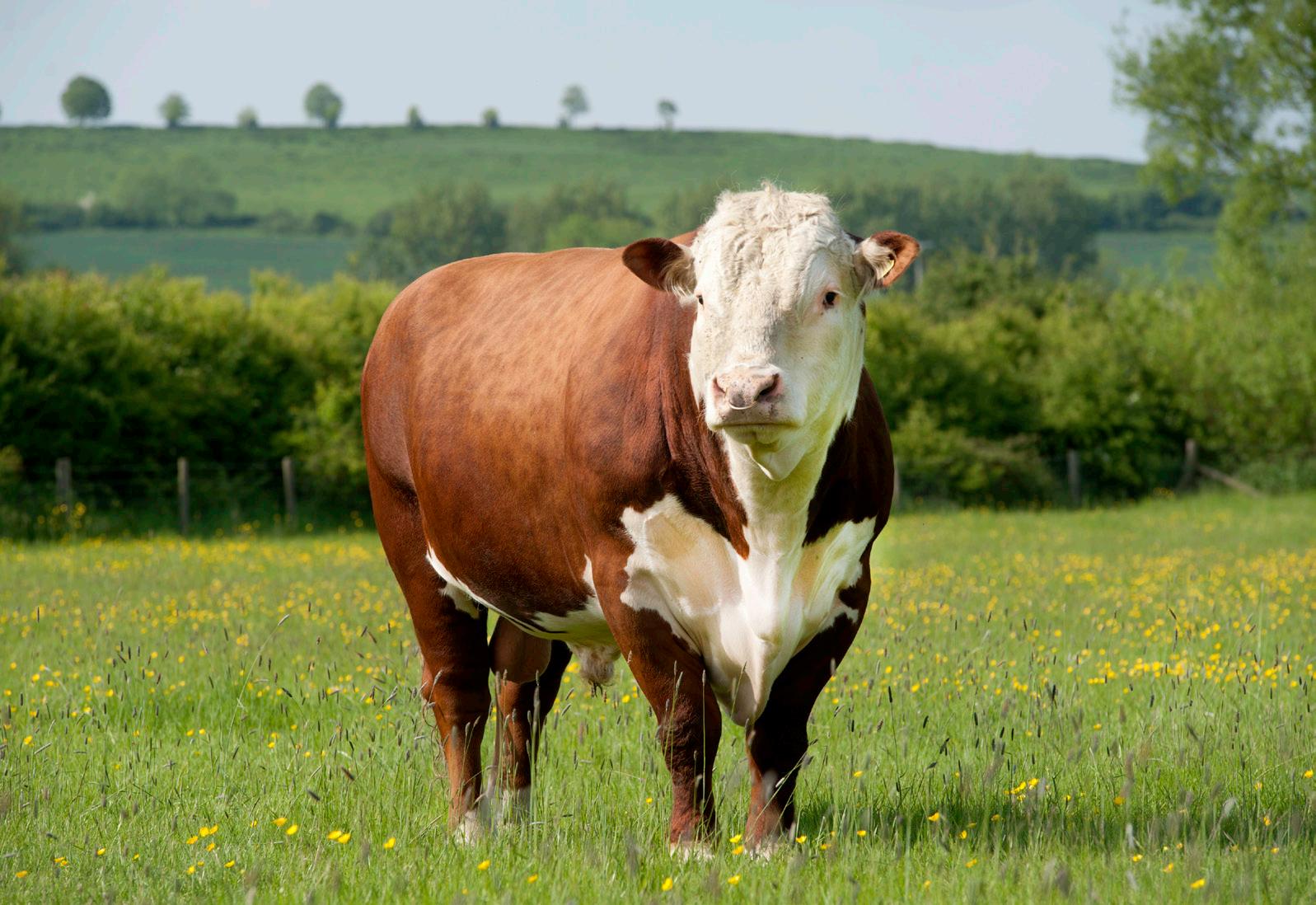
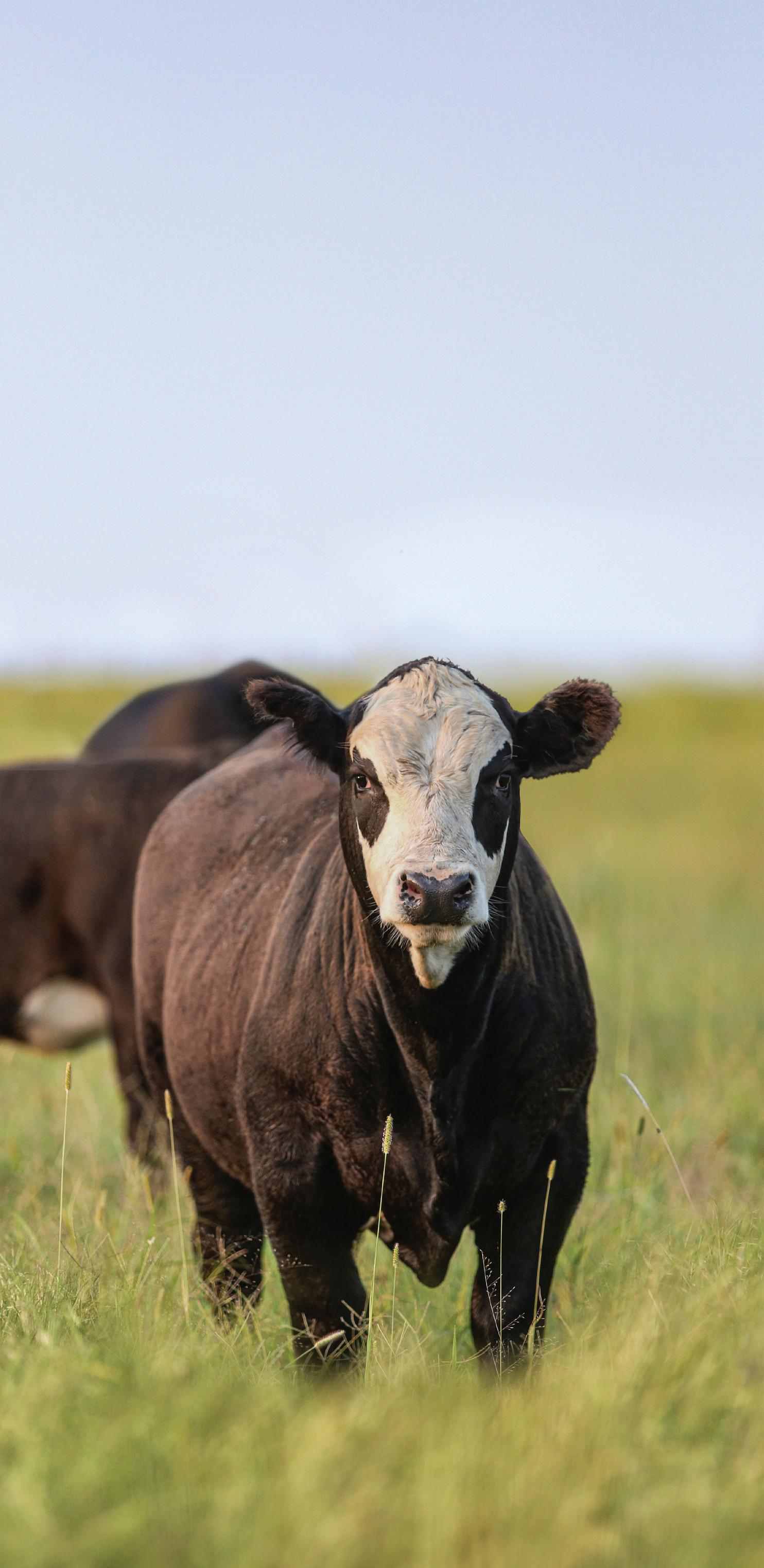
Meet “Valentine,” a 3-year-old bull born with a heart-shaped spot. He is pictured at Rockland Family Farms in Frankfort where he is on lease from John and Rebecca Lancaster, also from Frankfort. Luking says she’s been told that he has always been very “lovable.” photo by Ella Luking (Franklin County)
Dave
Kenny Allen Beef Solutions Operations Manager
Kelly Baird KBC Director of Communications
Todd Brown Graphic Designer
Bradon Burks KBC Director of Education
Rachel Cain Membership and Communications Coordinator
Amelia Carter KBC Director of Industry Relations
Danny Coy Video Production Specialist
Jake Harrod KBN Program Coordinator
Dan Miller KBN Industry Coordinator
Debby Nichols National Advertising Sales, LAN
Katie Pratt Communications Manager
Alex Scott MS, RD,
KBC Southeast Regional Director of Nutrition
Becky Thompson Director of Kentucky Beef Network
Kelly Tucker KCA Collections & Compliance
Nikki Whitaker Director of Operations & Policy
President's Thoughts
Allan Bryant KCA President
As I settle in to write this month’s message, I’m reminded once again why I’m so grateful to be part of this association. My eagerness to learn more about the cattle industry has been a driving force in my involvement from the very beginning. I can tell you when I first started as a board member on the Henry County Cattlemen’s Association back in 2001, I never dreamed of being in this position. I just knew my involvement was going to be a great opportunity. No matter how many years you’ve been around cattle, there’s always something new to pick up — a better way to manage forages, a new health practice, or how best to warm up cold newborns. This industry keeps us humble, keeps us learning and keeps us working to be better stewards of our farms.
One thing that has truly made this journey special is the strong relationship between the Kentucky Cattlemen’s Association and the University of Kentucky. I think it’s safe to say that the Kentucky Beef Network (KBN) has only strengthened that relationship. Through a grant from the Kentucky Agricultural Development Fund, administered by KBN, there are 15 educational programs supporting Kentucky beef producers. For the past 25 years, this grant has been the largest funding source for beef producer education in the state.
This partnership has created an environment where producers can grow, ask questions and connect with other producers and ask top-notch professors and industry specialists questions. I know firsthand how valuable these programs are, and I’m certainly not alone. Countless men and women across Kentucky have sharpened their skills and strengthened their operations because these two organizations work hand-inhand. It’s a partnership we’re proud of and one that continues to make our industry stronger.
I am also thrilled to be able to tell you that our future looks bright as we develop tomorrow’s leaders today. The Kentucky Junior Cattlemen’s Association is thriving at an alltime high of over 1,200 members. This program offers our youth opportunities to develop their leadership skills and learn more about the cattle industry. From our Cattle Working Contest to the Fall Classic to the Nebraska Youth Beef Leadership Symposium, there truly is an opportunity for every junior. Just as important, these experiences allow our youth to connect and network with peers from across Kentucky and beyond.
As I write this article, there are several significant issues facing the cattle industry. These include increasing imports from Argentina and Brazil, the threat of the New World screwworm, a shortage of largeanimal veterinarians, the closure of a major packing plant, and the question of the price point at which beef consumption may begin to decline.
Regardless of where you stand on these challenges, staying informed and having an organization that daily monitors these issues is essential. Too often, we don’t have the time to read the fine print or fully understand every detail, especially the unintended consequences that can come with policy and regulatory changes.
I am comforted by the fact that KCA does this work on our behalf, and
with the support of the National Cattlemen’s Beef Association, there is a strong network in place focused on protecting and advancing our best interests at the state and national levels.
As we look ahead, it’s important to remember who we are at our core: a grassroots-led organization built by cattlemen and cattlewomen, for all producers. We rely on volunteer leadership from every corner of the commonwealth. From county officers to committee leaders to the folks who show up early to flip burgers at local events — you are the heartbeat of this association. Our greatest asset has always been our membership and our local leadership. The ideas, the energy and the passion that rise from our counties are what shape our priorities at the state level. That’s the strength of this organization, and it’s something we should never take for granted.
I’m proud to serve alongside you, and I’m grateful for the trust you’ve placed in me. As we continue working throughout the year, I encourage you to stay involved, stay curious and stay connected. Whether you’re new to cattle or you’ve been at it longer than you care to admit, there’s a place for you here — and plenty of opportunities to grow, learn and lead.
Kentucky Cattlemen’s Association President
Commissioner's Corner
Jonathan Shell Agriculture Commissioner
Over the years, we’ve seen ups and downs in the beef cattle industry.
In 2025, we saw a rebounding of the market. Cattle prices were up more than 25% for much of the year, offsetting the fact that there were fewer animals on the market. Cattle and calves brought in more than $1.5 billion in cash receipts, making it one of Kentucky’s top commodities.
The cattle industry’s strong showing for 2025 helped contribute to the overall agricultural sales for the state, which economists at the University of Kentucky anticipate will be near the $8.3 billion record mark.
These numbers show how important agriculture is to the state of Kentucky, and cattle producers are a large reason for that. The nearly 1 million head of beef cattle in the commonwealth and the more than 31,000 farms with beef cattle, solidifies cattle among
Kentucky’s top commodities.
As a cattle farmer myself, I know firsthand the hard work that goes into the beef industry from bottlefeeding calves to fighting the weather. It is that experience that forms my deep appreciation for the farmers across Kentucky who make this their passion year after year. Without their continued efforts Kentucky would not have the great agricultural community that makes it stand out amongst other states. Farming is integral for our state, and cattle farmers are a large part of the equation.
This year marks the 40th anniversary of the annual Kentucky Farm Bureau Beef Expo. As the largest beef cattle state east of the Mississippi River, Kentucky is blessed to have this event as a staple on our agriculture calendar each year. The expo will take place March 6-8 in the West Wing
of the Kentucky Exposition Center in Louisville, a prime facility for livestock events.
A lot of work goes into making the Beef Expo possible every year, including the many hours Kentucky Venues CEO David Beck and his team put into hosting this event.
The Beef Expo evolved from earlier cattle events, officially forming as the Kentucky Beef Expo in 1987. Combining various breed shows into one major event reduced costs while showcasing top genetics for breeders and buyers in one place. The expo’s roots trace back to the Kentucky Angus Sweepstakes in 1947 and a general livestock show planned by the Kentucky Department of Agriculture starting in 1974, with the goal of promoting quality cattle and boosting the state's beef industry.
Every year at the Beef Expo, Kentucky cattle producers show and sell some of the best cattle in the country to buyers looking to upgrade their genetics or take home a show project. This event is truly the place to be for the beef industry on the first weekend of March.
Thoughts From Dave
Dave Maples Executive Vice President
Some months I go so fast and have so many different things going through my mind that I don’t take the time to slow down and read our Cow County News. I know bits and pieces about the articles and advertisers that will be in each month’s edition but often I haven’t read the final product. Every morning as I come in the office I go talk to Katie and Todd about what they are working on so that I can somewhat know. However, this past month, I guess because of the holidays, I picked my January issue of Cow Country News up one night and read each page.
When I read Randy Warner’s article, it just stopped me. Randy has been an awesome president. He is realworld and a picture of who our Kentucky cattlemen really are. He and his wife, Tammy, have given a lot of themselves this past year. Randy started his article by saying, “This has been my extreme pleasure and honor to serve as your president of the greatest organization in Kentucky.” As a staff member, that statement was truly wonderful to read, but to be honest, I can sense the pressure and hope that our next president can say the same thing. Randy is tough, and he has battled this past year to serve our members, even though there were days that he may not have felt as good
CORRECTION
On page 21 of the January edition of Cow Country, an article titled Kentucky 4-H Teams Shine at NAILE listed incorrect captions beneath two of the three photos. Those two photos and the corrected captions are shown here.
as he wanted to. I think a big part of his motivation was in his statement, “This has been my extreme pleasure and honor to serve.”
Randy and Tammy have spent years giving back to the beef industry. They have been big supporters of the youth and next generation programs, both in Bath County and across the state. They have been leaders in their Bath County Cattlemen’s Association.
Randy is the example of a leader that does it to serve.
Through his articles, you have been able to follow the trials and progress of Noah and Audra. Randy and Tammy are practicing what every agriculture organization has been preaching in transferring their farming operation to the next generation. Knowing Noah and Audra, this is an awesome opportunity for their young family, and I think the future is bright for them, “if” Noah doesn’t tear all the equipment up.
The final portion of his sentence was, “this is the greatest organization in Kentucky.” That is a big statement. I am sure that there are people that would disagree, and I could understand. Again, however when you look deep into “the KCA organization,” there is much to
be proud of, and you could say ol’ Randy might be right. KCA is a truly volunteer organization. It is made up of people that are reflective of the Kentucky beef industry. Randy was elected president by his peers. He came up through the system. He was highly involved in his county association and served on the KCA board, then as a regional vice president and then joined the executive team.
KCA has a new president every year, and with that, the organization stays fresh. Each president is definitely different, and they bring their personality and experiences with them. I look forward to working with Allan this next year and other future presidents as they take on the role. KCA has built itself over the years by taking risk. Your leadership has not been immune from risk. Sometimes a risk will get you some backlash, but when the risk/reward pays off, you get statements like Randy Warner made in his January article. One of my hopes would be that you do like I did and take the time to read Cow Country, or better yet, get involved with the association and learn about all the different segments of the organization that makes it really nice and productive.
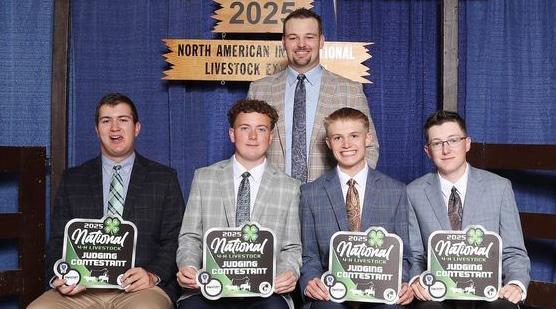
The Kentucky 4-H Livestock Judging Team members included from left Daniel Laurent, Colton Kearns, Klaber Wolfe and Clayton Laytart. They were coached by Wyatt Banks.
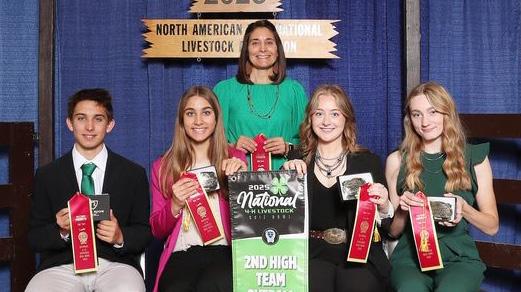
Kentucky 4-H Livestock Quiz Bowl Team members included from left Creighton Smith, Sophia Smith, Cate Noe and Pollyanna Vaske. The team, coached by Alison Smith, was the reserve champion team.
45 REGISTERED ANGUS BULLS:
LARUE COUNTY NEWS
submitted by Leslie Wease
Members answered association trivia questions in order to determine which row of tables would be next in line.
The LaRue County Cattlemen’s Association held their annual holiday dinner meeting on Tuesday, Dec. 9. The guest speaker was Nikki Whitaker, Kentucky Cattlemen’s Association director of operations and policy. She was invited by Phyllis Gentry, LaRue County secretary
and KCA Region 2 vice president. Whitaker presented an overview of 2025 at KCA. The current and previous county association Presidents, James “Rooter” Gray and Kelly Flanders, along with several other members prepared the night’s meal. Members from the LaRue
County 4-H Livestock Club also assisted in preparing and serving the meal. The highlight of the evening was the presentation of the county association awards, with door prizes drawn to end the evening.
The door prize giveaways for the night
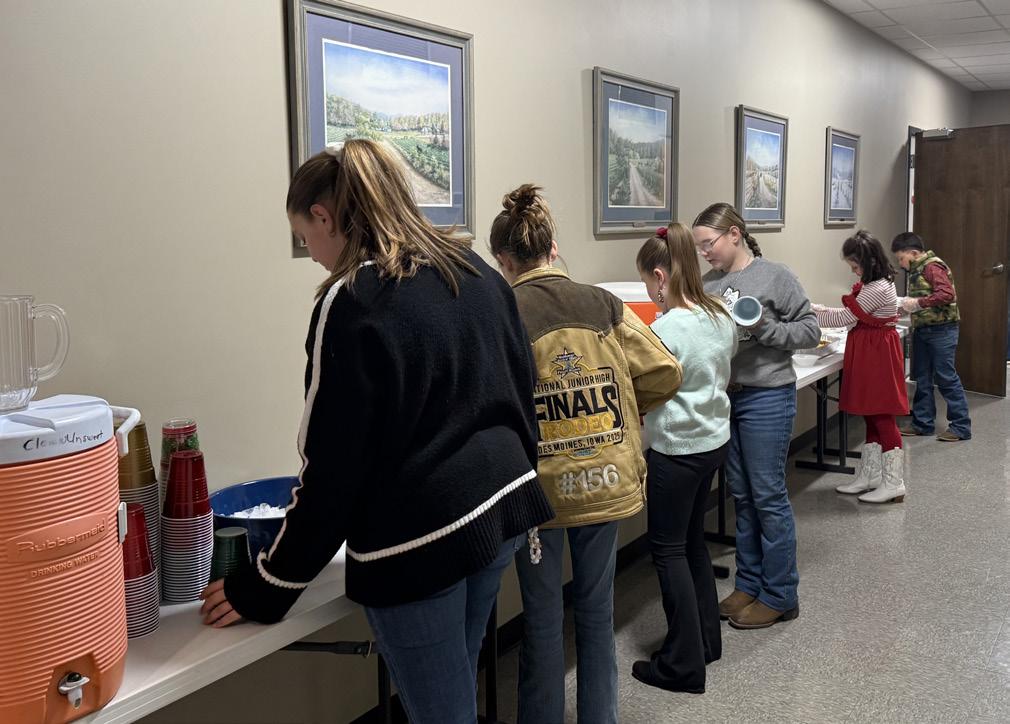
The LaRue County 4-H Livestock Club helping to prepare the meal.
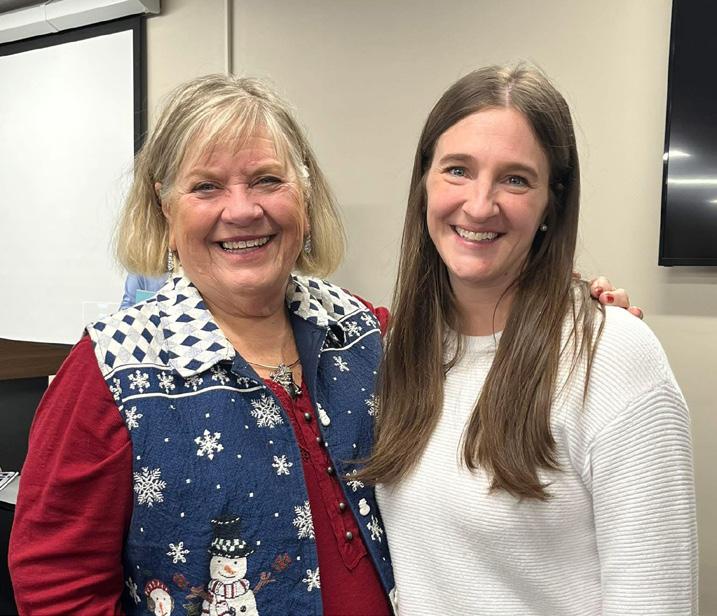
Phyllis Gentry (left) and Nikki Whitaker (right)
Director’s Award presented by James “Rooter” Gray to Jacob Gentry (left) and Tyler Howell (right)
President’s Award presented by Joe Stults (right) to James “Rooter” Gray (left)
Horizon Award presented by Tyler Howell to Kellie Edlin
Junior Cattlemen’s Award presented by Chris Thomas to Cyrus Bivens
President’s Leadership Award presented by James “Rooter” Gray to Kelly Flanders
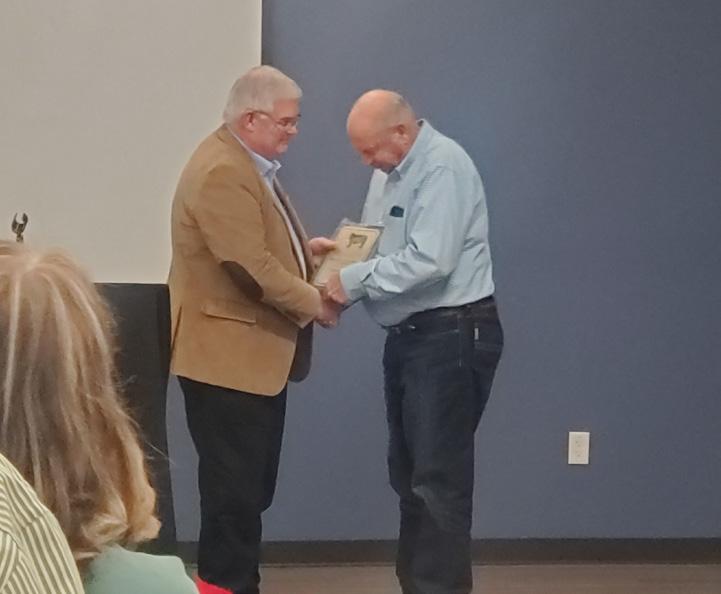
Gordon Conner Service Award presented by Adam Thomas to Phyllis Gentry
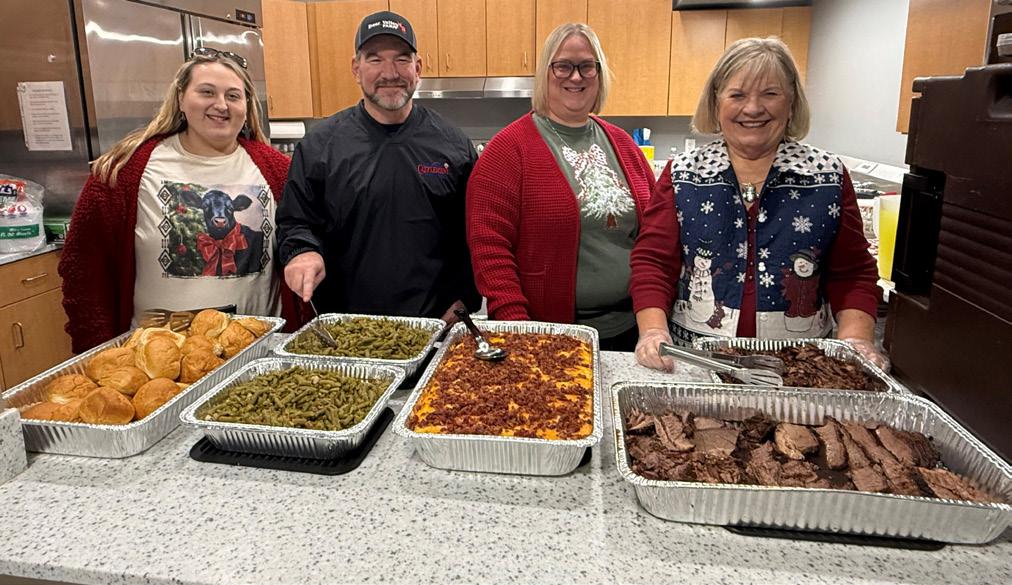
Kallie Nunn, Darrin Edlin, Missy Flanders and Phyllis Gentry prepare to serve the evening’s meal.
LaRue County Extension Agent, Adam Thomas, discusses the Gordon Conner Service Award prior to presenting it.
Member Rev. Billy Curle provides the blessing for the meal.
LOGAN COUNTY NEWS
submitted by John Walpole
On Dec. 11,
GRAYSON COUNTY NEWS
submitted by Rayetta Boone
Grayson County Cattlemen’s Association met in December for a Christmas dinner meeting.
Submit your County Cattlemen's Association news to Katie Pratt kpratt@kycattle.org
Submissions are due by the 10th of the month prior to publication.
BARREN COUNTY NEWS
submitted by Carol Spiegl
The Barren County Cattlemen's Association held their December meeting on Dec. 11. We again celebrated the Christmas season with a special holiday dessert buffet. Members brought a large assortment of cakes, pies, cookies and candies for our enjoyment. We would like to thank all the members who went all out on the wonderful and delicious sweets!
Our ribeye sandwich meal was sponsored by Ag Central and two of their sales companies, ACI Distributers and Shortline Equipment Supplier. Zack Burris presented a slideshow of the hay and silage equipment they have to offer farmers.
Barren County Cattlemen's Association hopes that everyone with Kentucky Cattlemen's Association had a very Merry Christmas and Happy Holidays.
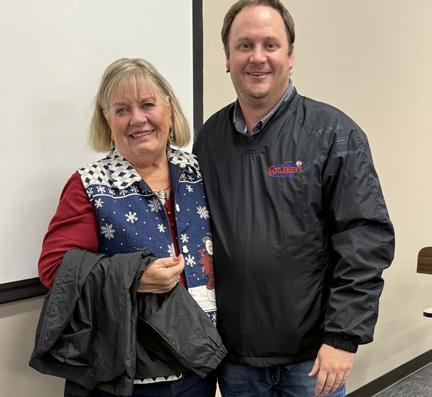
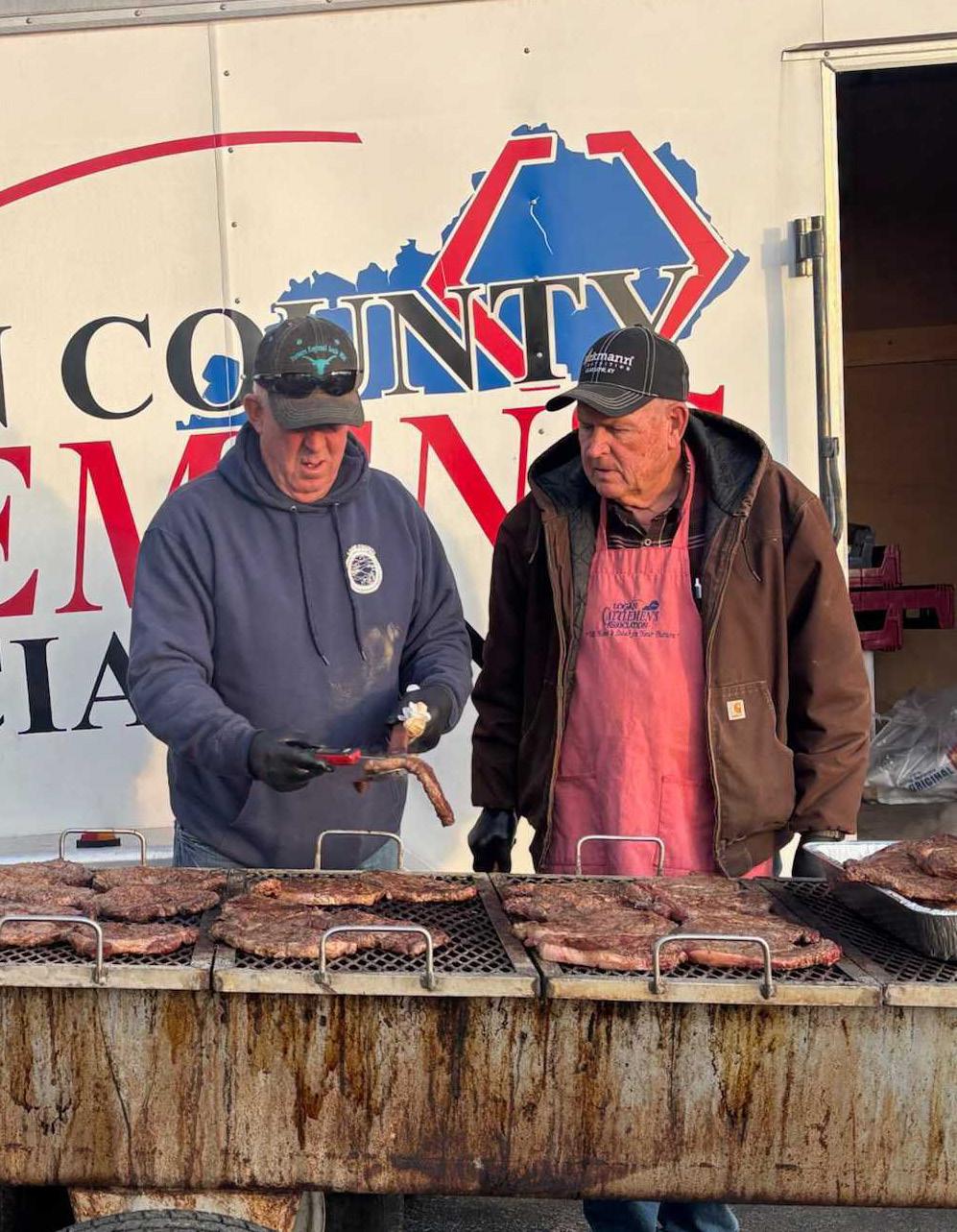
the Logan County Cattlemen’s Association served 100 meals as part of Christmas supper for Logan Telephone.
Sammy Cain is inducted into the Grayson County Cattlemen’s Hall of Fame.
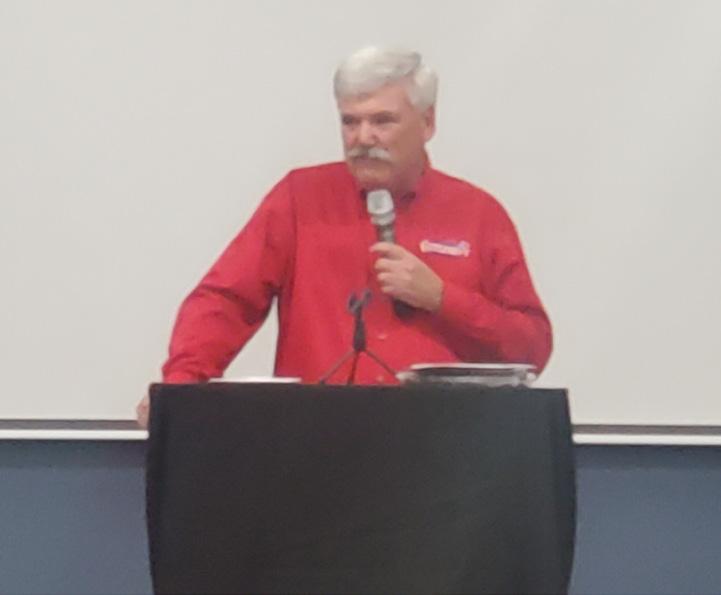
Warren Beeler introduces Terry Burks, the guest speaker.
Ken Adams gives an update on Kentucky Cattlemen’s Association’s activities.
Collier Hayes and Stetson Goff help President Ronald Horn draw door prize winners.
Terry Burks was the guest speaker. He gave an entertaining and uplifting message.
Small Improvements, Big Results
Katie Pratt Kentucky Cattlemen's Association
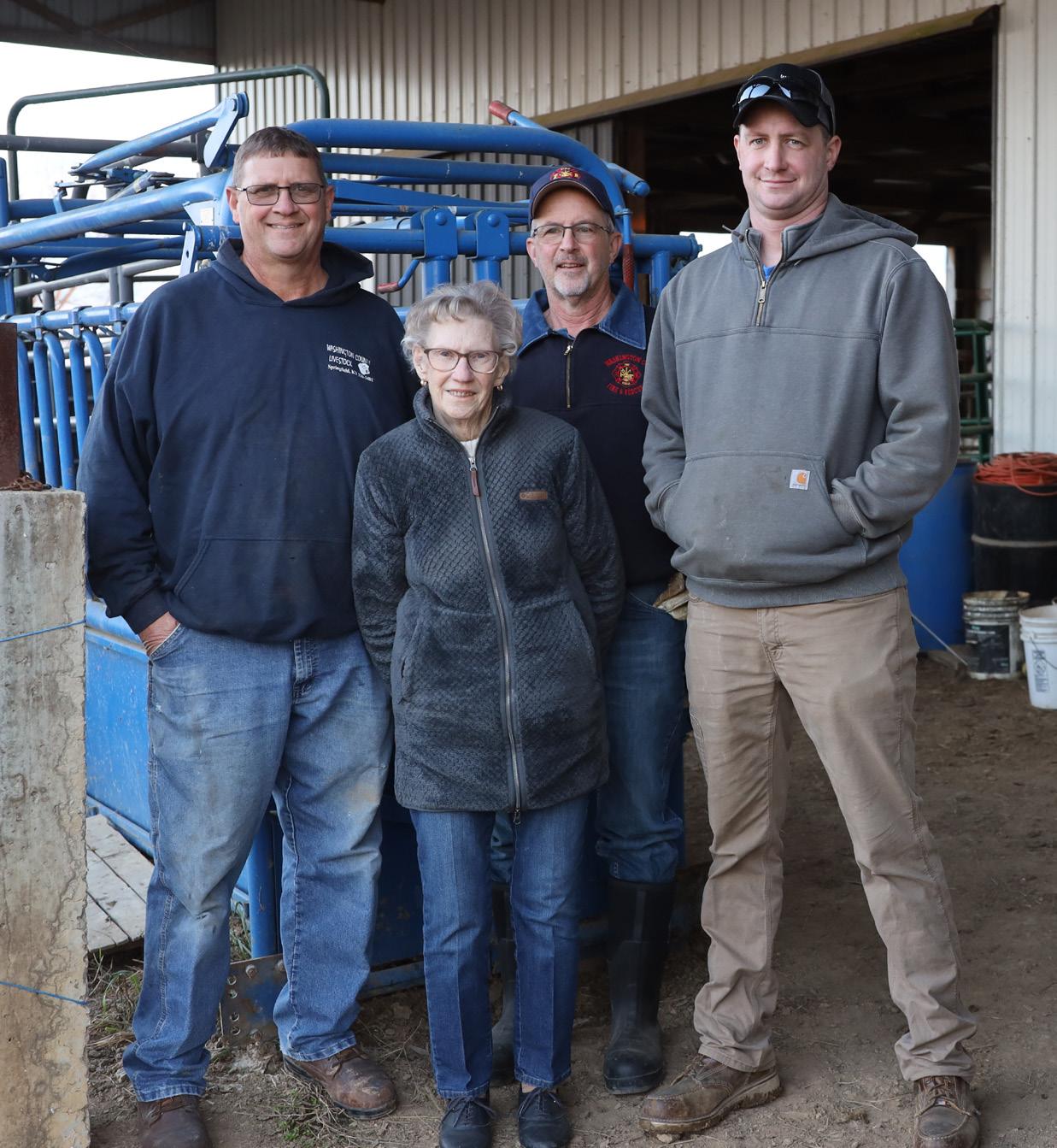
SPRINGFIELD, KY−For the Carrico family in Washington County, small tweaks made with guidance from the Kentucky Beef Network have paid dividends for their cattle herd.
“When you grow up on a farm and are around cattle, it’s always enjoyable, but it is more so now, especially when we have people asking us when we are going to sell our next crop of heifers,” said Forrest Carrico.
Three generations of Carricos raise cattle and hay on land that was purchased by Regina and the late Leo Carrico in 1971. While cattle have always been a part of the operation, they also grew tobacco for more than 30 years. After the tobacco buyout, cattle became a much larger part of the operation. Today, Regina along with her sons Forrest and Steve and grandson Payton all share in the responsibilities of the farm, which is a cow-calf operation of around 30 head of cattle.
Over the years, the Carricos had made many improvements to their herd and had several best management practices including castrating and implanting steers and a vaccination program already in place. But they have progressed more in the past five years since they started working with Jacob Settles, KBN facilitator.
“Jake is good at sitting down with us and discussing his crazy ideas,” Payton Carrico said. “We tend to like them.”
The Settles and Carricos have known each other for years as Jacob’s dad, the late Jeff Settles, coached Payton Carrico in Little League baseball. However, Jacob and Payton grew closer through high school FFA.
One day, Payton began talking to Jacob about a problem he was having controlling buttercup and tall ironweed on the farm. They began controlling the weeds using herbicides, first with a rented sprayer before pur-
chasing one with County Agricultural Investment Program Funds.
Rotational Grazing
Carricos also implemented rotational grazing. During the spring and summer, the cattle will rotate between four pastures. In 2024, they divided a hayfield into two paddocks for late fall-early winter grazing.
“Giving our pastures a chance to rest has made a big difference in their productivity,” said Steve Carrico.
The hayfield paddocks allowed them to extend their grazing season and feed 30 fewer hay rolls last year. They used additional CAIP funds to add a waterer to one of their pastures.
They also started unrolling their hay, to get nutrient distribution across their pasture. The Carricos test their soil and apply nutrients according to the results. The better nutrient distribution allowed them to apply significantly less potash this year compared to past years.
photos by Katie Pratt
Before, they only used one winter feeding area, and it was a muddy mess due to constant herd traffic. This summer, they renovated that field with pearl millet, a warm-season annual, and allowed the cattle to graze on that during the hot, summer months.
Tighter Calving Season
Settles is also working with the family to shorten their herd’s calving season, which was over 120 days.
“We borderline didn’t have a calving season,” Payton Carrico said. “We had a bull, but we let him stay with the herd longer than he should have.”
Settles is working with them to feed MGA, a progestin feed additive to help sync the cows’ cycles as it keeps them from going into heat. The first year they used it, their calving season dropped to 90 days. The past two years, it’s decreased to 75-80 days. This past spring, they started using artificial insemination, which they hope will further tighten the season. The tighter calving season is already paying dividends for the family as this past December they were able to sell their calves in only two groups that were separated only by sex.
“When we used to sell our cattle, they
would be placed in seven or eight different lots,” Steve Carrico said. “We like selling them together in bigger lots.”
They have also participated in KBN’s Post Weaning Value-Added Program (PVAP) and Advanced PVAP. In this program, they worked with the University’s Kentucky’s Kevin Laurent to determine a feeding strategy for their herd. Laurent helped them develop feed rations. As part of the program, they also changed their vaccinations to modified live and started holding onto their calves for a few months after weaning, instead of just a few weeks. Laurent advised them on how long they should feed their calves post weaning before selling them.
“Depending on the year, we made between $76 and $225 more per calf through PVAP,” Payton Carrico said. “We are building a reputation for having quality calves.”
They continue to work with Laurent to conduct an annual review of their feeding program and review the results of their hay tests.
Keeping Record
One of the biggest changes the Carricos have made is keeping better records, which has allowed them to quantify their progress. They keep
track of calves’ weaning weights and the mama cows’ weights to see which mamas are the most productive in the herd.
“The biggest thing Jake has taught me is the value of good records,” Payton Carrico said.
Facility Design
Settles also helped them move and redesign their cattle handling facilities to create better cattle flow. The facilities are now in a former tobacco barn that was converted into an equipment shed after they quit raising tobacco. The move to put their cattle working facilities under cover, which removes a lot of potential weather challenges. The same barn also contains winter feeding troughs for cattle.
Farming for the Future
Payton Carrico said the farm has always been a special place for his family, especially when he, his brother and cousins started getting involved with cattle. The family will continue to work to improve the herd for future generations.
“While, I’m the only grandchild involved in this farm now, my brother and cousins are all now involved in their own farms. Papaw would have been proud of that,” he said.
How Do Local Producers Select Their Bulls?
Bull selection is one of the most important management decisions that you will make because of the impact it has on the genetic makeup of your herd. The last three generations of bulls that you have purchased makes up about 87.5% of the genetics in your cow herd, and your current bulls account for 50% of the genetics of the calf crop you will be selling. Therefore, having the best knowledge of how you can expect a bull’s calves, and future replacement females, to perform should be a major goal of your bull selection process.
To get an idea of how beef producers make their bull selection decisions the eBEEF.org team, which I am a part of, conducted a nationwide survey on this topic. Kentucky beef producers were one of the largest participants in the survey, so I wanted to share the Kentucky results with you.
Before we get into the bull selection part, I wanted share some general information from the survey. In total we had 157 surveys filled out from Kentucky with 14% of the respondents being seedstock (registered bull sellers) only, 71% were commercial cow/calf only, and 15% had both seedstock and commercial operations. Sixty-six percent of the pro-
Darrh Bullock University of Kentucky
ducers were part-time farmers and 67% of those had no hired labor. Of the 34% full-time farmers, 66% had no hired labor. I think it is easy to say that most Kentucky beef operations are family operated. When asked how important profitability of the beef operation was, respondents give it an average of 8 out of 10; the majority said that short-term and long- term revenue was equally important, with only 7% indicating that short-term revenue was most important.
We also collected some management information. Eighty-nine percent of the Kentucky respondents keep back their own replacement heifers, 47% indicated they also purchased replacement heifers and 28% purchased replacement cows. About 13% replacements are retained or purchased each year. Regarding calving and weaning rate, the percentages were 88% and 87%, respectively, which is very high. I was a bit disappointed that Kentucky commercial cow/calf operators rated the importance of crossbreeding as 6.5 out of 10, however, 39% ranked it as an 8 or higher. This is one area we can definitely improve.
We asked for all the previous information because these are all factors in
determining selection criteria for each individual farmer. One of the first choices that a producer must make in their selection decision process is what breed they will use. A whopping 71% of Kentucky respondents indicated they used Angus as one of the breeds in their program. The second highest choice was Hereford at 33%, followed by Simmental at 22% and Gelbvieh at 20%. Breed choice is important, and we shouldn’t get complacent and settle in to using the same breed year after year. A simple system of choosing two or three breeds and rotating between those breeds every 4 years or so is an effective way of retaining a reasonable level of heterosis (hybrid vigor).
The next phase of the bull selection process is determining what traits are important to our operation and at what level they should be selected for. The trait that was on most people’s list was Calving Ease Direct, and 70% of Kentucky producers responded that they selected for this trait. When asked how much emphasis they placed on the trait, producers placed 35% emphasis on CED on average. Based on an economic index model, if profitability is the driving factor in your selection decision, this is probably too much emphasis on CED. When you factor in the number of heifers that will be bred annually and all economic factors, the correct emphasis for most producers falls between 5 and 10%. Basically, when considering CED, you probably shouldn’t necessarily try to find the highest value and go for it, rather it would be more economically prudent to find a EPD value that reduces the risk of dystocia (calving trouble) without selecting for extremes. We have all heard farmers say, “I’d rather have a live calf,” which I agree with, but with EPDs we can identify bulls that will give us both a live calf and one that will grow well after birth.
The next highest traits that were selected for were the growth traits;
photo by Randy Broyles
Weaning Weight Direct/Growth (55%) and Yearling Weight (42%) at 23% and 19% emphasis, respectively. Selection for milking ability of a bull’s daughters was used by 26% of respondents and was emphasized at 14%. The trait that the economic model says we should be placing greater emphasis on is Mature Weight, but only 13% of farmers are attempting to moderate mature weight and only emphasizing it at 11.5%. For most Kentucky beef operations, the economic model indicates we should be placing closer to 25% emphasis on keeping our cows more moderate in weight because of increased feed costs for heavier cows and when we don’t meet their nutrient requirements then fertility is negatively impacted. We should be placing about the same emphasis on Mature Weight as the growth traits, which is about 25%. About a quarter of producers are selecting for milking ability and those farmers place approximately 15% emphasis on the trait. Milking ability actually plays a very small role in profitability, and only about 5% emphasis should be placed on this trait.
One other group of traits that I want to mention are the longevity/reproduction traits. These are traits like Stayability (Simmental, Gelbvieh, Red Angus, Limousin and others), Sustained Cow Fertility (Hereford) and Functional Longevity (Angus). In general, this EPD indicates the how well a bull’s daughters will reproduce through at least 6 years of age. Higher values indicate better longevity and perhaps better fertility. The survey indicates Kentucky producers are starting to use these EPDs in their selection decisions, which is positive. One other trait that was not listed in the potential traits but was chosen at a high rate for “Other Traits” was Docility. Without a doubt Docility is an important trait for Kentucky producers, and I hear that often. This trait was not left off because we did not think it is an important trait. The problem with Docility when you are trying to make a decision based on economics is determining the value of good-tempered cattle. Another trait that was added in the “Other” category was Hair Shed EPD, which seems
to be gaining some popularity in Kentucky. Again, this is a hard trait to put an economic value on, even though we know one likely exists.
Some general information about Kentucky farmer selection practices is that 40% indicated that EPDs were their “Primary” source of selection on traits if they are available and an additional 49% said that it was an “Important” factor. A very interesting statistic was that Kentucky farmers ranked the importance of EPDs being genomically enhanced at 8.1 out of 10. That should be a clear signal to seedstock producers that commercial cow/calf farmers place value in genomically enhanced EPDs because of the increased confidence that improve accuracy provides.
I was encouraged by the number of farmers using EPDs, but one area of concern was that many are still using other pieces of information to assist their selection process. For example, when selecting a bull for calving ease, 86% said they use the CED EPD in their decision, which is great. However, only 13% use the CED EPD alone, which is the correct way to select for calving ease. When we use CED in combination with other factors like Birth Weight EPD, actual birth weight and/or bull head size/ shape, we actually increase the risk of making a bad decision. When the CED EPD is computed it takes all of the other factors into consideration and gives them the proper emphasis, so when you combine the EPD with those other factors it in effect lowers
the accuracy value. For the traits that EPDs are available, they should be used alone, not in combination with other indicator traits.
In closing, I want to thank all of you that took the time to fill out the survey. It has provided us with critical information to help make educational programming decisions for the future. The takeaways that I got from this study were related to crossbreeding, cow weight, calving ease and genomically enhanced EPDS. Although we are doing a fair job with crossbreeding, because of its economic importance, we can certainly do more. Mature weight of the cows is becoming a serious issue, and we need to do more to try and get that trait moderated. We are putting too much feed costs in those big cows. Perhaps we need to slightly adjust our selection emphasis away from calving ease and more towards moderate cow size to improve profitability in the herd.
I will leave on a positive because I was very pleasantly surprised that Kentucky farmers value genomically enhanced EPDs at a high rate, which I think pays for itself in the long run. I think many of the positive outcomes from this survey are reflections of the positive impact of the CAIP bull genetics program and the educational programs provided by the University of Kentucky and Kentucky Beef Network, which are supported by the Kentucky Agriculture Development Fund through the Kentucky Office of Agriculture Policy.
photo by Jake Harrod
What is a Good Bull Worth in 2026?
Mark Z. Johnson Oklahoma State University Extension Beef Cattle Breeding Specialist
With The Cattlemen’s Congress currently taking place in January in Oklahoma City, the spring 2026 bull buying season officially started. Bull buying season will continue into the spring months in Oklahoma and across the nation with progressive seedstock operations offering yearling bulls. Accordingly, it’s time to revisit the age-old question. What is a Good Bull Worth in 2026?
The Answer
As a student at Oklahoma State University in the mid-1980s, I was taught “A good bull is worth the value of five calves he sires.” It is a good answer and a good rule of thumb to follow; the problem is it doesn’t exactly narrow down the range. As always, we need define “a good bull,” check current market reports, answer some questions about how we intend to market future calf crops, and do some “cowboy math” to arrive at a more precise answer.
What is considered a “Good Bull”?
For this discussion, qualifications to meet “Good Bull” status are:
• A bull that sells with a registration paper which includes pedigree information and a complete set of genetic values (including EPDs and Bio-economic indices) to be considered in the selection process.
• A bull that has passed a Breeding Soundness Exam (BSE) and sells with a breeding soundness warranty (terms will vary).
• A bull that will add value to calves sired because he fits your breeding objectives, production system and marketing plans.
When are we marketing our calves? What is their value?
Using the end of year market prices for 2025 from Dr. Derrell Peel’s article in the Dec. 29, 2025 issue of the Cow-Calf Corner newsletter:
500 lb. weaned steer calves were worth about $4.80/lb. for a value of approximately $2,400 per head. Therefore, if my future marketing plan is to sell weaned steers, $2,400 x 5 = $12,000 is the answer.
800 lb. yearling steers were worth about $3.50/lb. for a value of $2,800 per head. Therefore, if my future marketing plan is to sell yearling steers, $2,800 x 5 = $14,000 is the answer.
1,500 lb. finished beef steers were worth $2.29/lb. live for a value of $3,435 each. Therefore, if my future marketing plan is to retain ownership through finishing and sell fed cattle on a live weight basis, $3,435 x 5 = $17,175 is the answer.
So, in the current market, a good bull is worth somewhere between $12,000 - $17,175 to a commercial cow-calf operation. Where exactly in that range depends on your marketing plan and the market conditions at that time. Not an exact number because there are many variables in play. One key point illustrated here is that the longer you own the offspring before marketing, the greater the value of the bull to your operation. Retained ownership gives you more time and opportunity to capture the value of your investment in genetics. It is noteworthy that we haven’t considered the value added to replacement females a bull will sire. Bulls used to sire the next generation of cows have an even greater long-term economic impact on the profit potential of your operation and should be valued accordingly.
I encourage cow-calf operations to consider their breeding goals, production system and marketing plan. Doing so should dictate where to apply selection pressure. Genetic values pay when you purchase bulls capable of improving genetic potential for the specific traits that will translate to added value at your intended marketing endpoint.
by
photo
Katie Pratt
Buyers’ Perspectives on Purchasing Bulls
Katie Pratt Kentucky Cattlemen’s Association
Every producer has different herd goals so they need different bulls to accomplish them. Seasoned bull buyers Daniel Smith in Scott County and Mike Wilson in Anderson County share their approach to bull buying. Smith said he’s been buying bulls for his operation ever since his dad gave him the responsibility when he was a teenager. He is usually in the market for bulls every year as they need a steady supply to service their fall and spring-calving cow herds as well as replacement heifers. Even though they breed their heifers one time through artificial insemination, they still rely on bulls for clean-up service.
Trusted Sources
Depending on the needs of his herd, Smith buys from four or five trusted breeders.
“I have a good relationship with my breeders, and those relationships give me confidence in the animal that I’m buying,” he said. “Some years, I know what I need. Other years, I give them
parameters but put the selection in their court. They know their herd and what bull will fit my situation.”
Crossbreeding
Mike Wilson usually keeps two bulls to service his 30 head of Simmental-Angus cross cattle. Wilson values the ability to crossbreed as he says it gives them more hybrid vigor and the opportunity to get the best genetics from both breeds into their offspring.
“I flip between Angus and Simmental bulls,” Wilson said. “What I really like is an Optimizer bull that’s either half Angus or Simmental, but those are hard to find.”
AI gives him a chance to introduce the genetics from another breed, Gelbvieh, into his herd.
“I’ve been doing some research, and Gelbviehs seem like they make excellent mothers and their calves grow and mature faster,” Wilson said. Smith is also a firm believer in heterosis. He sorts his cattle into groups
based on breed type and will match bulls to them. He also segregates the bulls by age.
“I’m careful with young bulls because they are still growing and developing, and I don’t want to put too much pressure on them,” Smith said.
Keeping Time
Wilson said how long he kept a bull depended on the quality of his offspring.
“I had my Angus bull for 7 or 8 years because he produced some really nice offspring,” Wilson said.
Smith concurred.
“If everything goes well, we will try to keep a bull until they are around 6 years old, on average, but if a bull is sound and doing his job, I’m not afraid to keep him until they are 7 or 8,” he said.
Genomically enhanced EPDs
Smith said the bulls he purchases must pass a visual inspection first before he looks at genetics. Then he decides if the bull will service his heifers or his mature cows. The top trait he looks for in bulls that will be with heifers is Calving Ease.
“Genomically enhanced EPDs have been important tools for us because they give us more assurance that the bulls we are buying will produce a live, vigorous calf,” he said.
He also watches how an animal compares to breed averages on EPDs and usually stays around breed averages.
Wilson said he used genomically enhanced EPDs to selected his Simmental bull when he purchased him. If he purchases another bull, he expects to use them again. Traits that he most interested in are Calving Ease, Docility and Milk. He will also visually inspect the bulls’ feet and scrotum and discuss his options with UK specialists Les Anderson and Darrh Bullock as he is part of a long-term genetics study with Anderson.
Costs
Like any multi-year investment, bulls can be expensive to purchase. Smith said like any other investment, he weighs the cost carefully.
Since his bulls service both his fall and spring calving herds, he can spread the cost of bull buying out among them as well as over the years. He also said sometimes the price of the bull is related to its age. Younger bulls may be cheaper but come with development costs. While older bulls may be more expensive but they don’t have the development risk associated with younger bulls.
Going Bull-less
This coming year Wilson is trying total AI. Wilson sold his bulls this past summer and plans to use two rounds of AI on his cattle. He will sell open cows and heifers after those two rounds. He started his first round of AI on Dec. 1.
“My Angus bull was getting older and I had a Simmental bull that was being destructive, so I decided it was a good time to try total AI,” Wilson said.
“A total AI reproduction program is something I’ve wanted to try for some time.”
the past, he did one round of AI and followed up with either the Angus or Simmental bull.
“I’ve had a 65-75% conception rate using one round of AI,” Wilson said. “The past few years, I used the younger Simmental bull on the open cows to keep the calves smaller. I had kept a lot of the Angus bull’s heifers so I needed to use the Simmental to avoid interbreeding.”
Fulfilling a Need
Before switching to total AI, Wilson, consulted Anderson. It was something Anderson supported.
Wilson is no stranger to AI. He’s been using the technology as part of his breeding program for many years, including using it to transition his herd from spring calving to fall calving about 15 years ago. However, in
Different operations have different needs, but Kentucky is home to many quality seedstock operations that can help producers accomplish their herd goals. Producers should look for a bull that fits into their crossbreeding program to take advantage of the benefits of heterosis, which include improved production and efficiency through higher instances of fertility, better calf survival rates, higher weaning weights and longevity. It’s important for producers to know the type of bull and traits they are looking for as well as their spending limit and find the one that will complement their herd.
Breeders’ Perspectives on Purchasing Bulls
Katie Pratt Kentucky Cattlemen’s Association
Kentucky has many quality seedstock producers who strive to help their customers find a bull or bulls that will match the needs of their herd and produce quality offspring. Recently, three breeders shared their bull selection and customer service philosophies.
“A bull is a vehicle for genetics,” said Joe Lowe, a bull breeder in Smiths Grove. “A producer can really make a substantial difference in their herd within a couple of generations through a well-managed cow herd and intentional bull selection.”
Breeder Introductions
Lowe’s father, Kenneth, has been raising Registered Angus bulls since 1977, and their spring bull sale is nearly 50 years old. Joe joined the operation in 2013, and in 2014, they added a fall bull sale. Each year, they sell around 120-140 bulls between the two sales. They focus on extensive data collection and are one of 20 operations within the Angus breed to receive a gold designation for data collection.
Their bulls are given a low starch ration and will weigh between 1,200 to 1,300 pounds at the time of their sale. They work to keep them in condition and keep their feet good. Many of their clients are repeat customers, returning for a new bull every couple of years.
Across the state, Charlie Boyd of Boyd Beef Cattle is a fourthgeneration seedstock producer in Mays Lick. His sons Blake and Logan are also involved in the operation and are the fifth generation on the farm. The Boyd family has raised registered livestock for 120 years, starting with horned Herefords. Charlie’s dad switched the herd to Polled Herefords, and then in the 1980s, Angus was added to the operation. The Boyd animals are conceived through artificial insemination and half of them are the result of embryo
transfers. They have fall and spring calving herds.
Boyd sells around 100 bulls every year between his Angus and Hereford sales and then an additional 30-40 bulls through private treaty.
“Most of the time, we run the two breeds together,” Boyd said. “Both are fed and treated the same, and we have whole herd reporting. All of our animals have genomically enhanced EPDs. We have been doing those since the technology was first introduced.”
Fayette County’s Tim and Amy White didn’t necessarily set out to be bull breeders, but they have developed a top-notch operation on the outskirts of Lexington.
In 1990, the Whites started a commercial cattle herd and also began buying registered animals, a few at a time, and started raising bulls. They first sold a small number of bulls in 2000. Over the years, the demand for their bulls grew. In 2014, they hosted their first bull sale. Today, they sell around 50 bulls each year including purebred Angus, Sim Angus and Red Angus. Since producers don’t need a new bull every year, about one-third of their bull buyers are new customers each year.
Trait Selection
The Lowes were a part of the University of Missouri research project that established the Angus Hair Shed EPD and have collected hair shed data on their livestock for over a decade. Hair shed is linked to fescue toxicosis as an animal that has consumed endophyte-infected Kentucky 31 tall fescue has a harder time shedding their winter coat when the weather warms.
“We sell our bulls throughout the Southeast but we mostly focus on Kentucky,” Joe Lowe said. “We want to produce environmentally adapted animals that have been successful on
tall fescue.”
While they have decades of information on their herd, including birth weights and foot scores, the Lowes have been doing genomically enhanced EPDs on their bulls since 2013. Joe Lowe said it’s been a game changer for them and is especially helpful to identify differences among siblings.
“We know that human siblings are not completely alike, so it makes sense for cattle siblings to have differences too,” he said.
Charlie Boyd said that they first like to talk with potential customers to get an idea of what they need. They try to breed their bulls with a balance of quality EPDs and physical traits. In addition to selling animals, they also offer semen from some of their bulls for artificial insemination.
“Our goal is to serve commercial cattlemen,” Boyd said. “We believe in providing our customers with a superior product and great customer service.”
Traits they look for in a bull include its feet, disposition, fleshing and several maternal traits including fertility.
They have multiple generations of cattle with genomically enhanced EPDs.
“Genomically enhanced EPDs have significantly helped with bull selection because it makes the bull’s traits more predictable,” Boyd said.
Tim White said while they genomically test all their bulls, they try to balance their traits. Two of the traits they look for is heifer acceptance and growth.
“We are looking for good looking cattle that are structurally sound,” White said. “We also like growth.”
They know no two bull customers are the same so they try to breed a range of
We understand the importance of cattle built to increase profit margins. Whether you’re looking for calving ease, increased pounds at weaning, carcass merit, or cattle to take you to the next level - we have something for you! We know first hand the results WHEN PHENOTYPE COMBINES WITH GENOTYPE AND COMMON SENSE!
SATURDAY, APRIL 4, 2026 / 12:00 PM EDT
Bluegrass Stockyards Regional Marketplace / Lexington, KY Selling 80+ Simmental & SimAngus Bulls, Breds, Show Heifers & Genetic Opportunities!
facebook.com/bellesbullsofthebluegrass
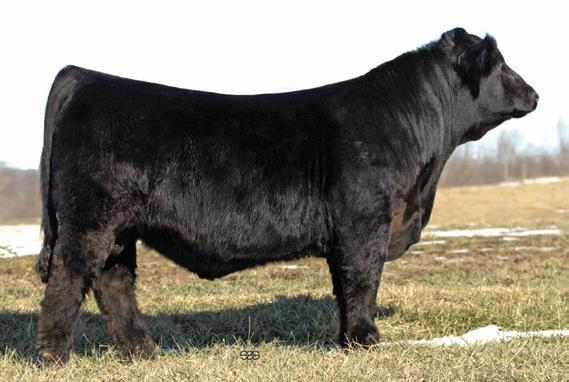
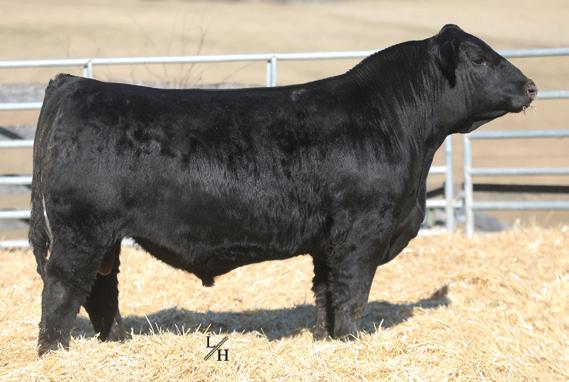
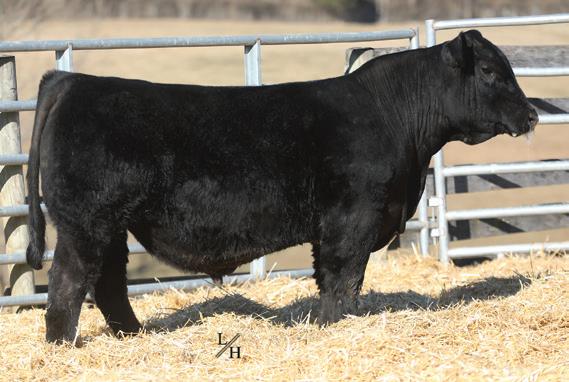
Sold to commercial producer, Mark Carroll, KY [Category C] Sold to commercial producer, David Cartinhour, KY [Category B] ALL LOTS SELL WITH GENOMICS. ALL ARE TESTED FOR HOMOZYGOUS POLLED. BACKED BY TWO FAMILIES AWARDED THE WSF GOLDEN BOOK AWARD WITH NEARLY 100 YEARS COMBINED IN THE SIMMENTAL BUSINESS!
Sold to commercial producer, Scottie Smith, KY [Category C]
Sold to commercial producer, Mark Wells, Shawnee Run Farm, KY [Cat. C] ™
Sold to seedstock and commercial producer, Randel Arnett, A&A Farms, KY [Category D]
bulls to accommodate the preferences of their clients.
“If customers ask or give us a scenario, we can give them between five and seven bulls that will fit what their looking for or match their herd,” White said.
Incentivizing bull buying
The biggest draw for many of the Whites’ bull buyers is the opportunity to participate in the Profit Thru Performance Feeder Calf Sale. The Whites created this sale to help their bull customers market their feeder calf offspring together in load lots, which gives them a premium for their animals compared to selling a small group of animals. This feeder calf sale occurs twice a year. To get the animals to the stockyard and to have as many like animals as possible, the Whites provide their clients with vaccination and weaning schedules for their animals. They also help their bull customers save on medications by buying in bulk.
“Research done on our sale by Kevin Laurent at the University of Kentucky showed that the producers that sell in our Profit Thru Performance sale receive between $18-19 cwt more compared to regular cattle sales,” Tim White said.
In December 2025, the Whites completed their 11th year of Profit Thru Performance Feeder Calf Sales. Over the years, they have marketed over 20,000 feeder calves for their
customers with 2,500 of those being marketed in 2025. The Whites average 75 producers in the sales.
“We have a lot of the same producers that sell every year, and they have gotten to know each other and have developed friendships,” White said. “Probably the most gratifying part is that we get to sit and watch them talk to each other.”
The Whites also offer their bull buyers an opportunity to go on an educational tour each spring to visit the Midwest feedlot that purchased their calves.
The Whites also receive carcass data from the feedlots and share feeder calf performance with their customers.
Like the Whites, Charlie Boyd offers a feeder calf sale for his commercial customers.
“When we sell a bull to a producer, we expect to help them get a premium for their calves,” he said.
The Boyds educate their customers on their bull offerings and address industry trends at their sale. They also host a customer appreciation dinner, and they are just beginning new program for their customers that will allow them to visit a feedlot to see the cattle they sold and the buyers that purchased them.
The Lowes focus on using a variety of data to help their customers buy the best bulls for their operation. In the sale catalog, their customers are given a lot of information, including genomic information as well as general
animal characteristics that come from the Lowes’ daily observations of the animals.
“We ask our customers a lot of questions including how many cows the bull needs to cover and how tight their calving season is. This helps us match them with a bull that will make them the most money,” Joe Lowe said. “I also include animal observations in the footnotes because I want our customers to see what I see every day.”
The Lowes also offer their clients an economic index on their animals in the sale catalog.
“We want to give them quality selections at different price points,” Joe Lowe said.
In addition to full-time farming, Joe Lowe sends out a weekly newsletter to more than 1,000 people, many of whom are clients. The newsletter helps inform his clients of the events going on the farm and has also helped him connect with other bull breeders in his area.
“I have a lot of connections in the area, so if I don’t have a bull that fits their needs or price range, chances are I know someone who does. I’m happy to connect them,” he said.
While these seedstock producers have differences in their operations, they remain customer focused and prioritize finding a bull to meet their clients’ needs. They also use data, genetics and observation to produce the best bulls possible for their clients.
photo by Alex Wilson
photo by Katie Pratt
February Cow Sales
BG Campbellsville Friday, February 6, 2026—7:00 PM
BG South—Stanford Friday, February 20, 2026 6:30 PM
BG Lexington Wednesday, February 25, 2026 6:30 PM
NEW DIETARY GUIDELINES EMPHASIZE BEEF’S PLACE IN A HEALTHY DIET
WASHINGTON, D.C., (Jan. 7, 2026) – Today, the National Cattlemen’s Beef Association (NCBA) welcomed the release of the 2025-2030 Dietary Guidelines for Americans (DGAs). The updated DGAs nearly double the recommended daily amount for protein intake, increasing it to 1.2-1.6 grams per kilogram body weight, depending on your age group and individual caloric needs. The document focuses on building a healthy diet around whole foods, limiting highly processed foods and added sugars, and prioritizing protein at every meal like nutrient-dense beef. Red meat is specifically mentioned as a healthy source of protein in a varied, balanced diet.
“As a mom, I understand the importance of eating nutritious, wholesome protein, and as a rancher, I see the hard work that goes into providing the best possible food for our communities. The updated and simplified Dietary Guidelines will help more families like mine learn the facts about beef’s nutritional value and make the best decisions when they’re shopping for a nutrientrich, whole, and delicious protein,” said Kim Brackett, an Idaho rancher and NCBA vice president. “Beef provides high amounts of protein plus nine other essential nutrients like iron and B vitamins, and gold-standard clinical studies have consistently shown that it is easy to incorporate beef into a balanced, heart-healthy diet. We appreciate Secretary Rollins and Secretary Kennedy underlining the role of beef as an important part of a healthy diet.”
The Dietary Guidelines released today are simplified and more consumer-friendly than previous cycles. The streamlined approach taken by Secretary of Agriculture Brooke Rollins and Secretary of Health and Human Services Robert F. Kennedy, Jr. keeps science-backed recommendations at the heart of the DGAs, but makes them far more practical for the families, caregivers, school administrators and medical professionals, who are making decisions every day about what to feed our children, seniors and Americans of all ages. Other recommendations in the DGAs include:
• Incorporate beef tallow and other healthy fats into the cooking process.
• Use healthier cooking methods like baking, broiling, roasting, stir-frying, or grilling, all of which can be used with the wide variety of retail beef cuts available to American families.
• Introducing nutrient-dense foods like meat during infancy and early childhood to support growing children.
Although much discussed in recent months, the DGAs do not make any changes to the existing recommendation that saturated fats should not make up more than 10% of daily calories. The guidelines do note that healthy fats are a natural part of real foods like meat, and these fats support many important functions in the body like nutrient absorption.
“As Americans face the double burden of being overfed and undernourished, they are searching for reliable, affordable solutions to meet their nutritional needs and personal preferences. Thankfully, there are a wide range of beef options in the marketplace,” said Registered Dietitian and nutrition scientist Dr. Shalene McNeill, executive director of nutrition science for NCBA. “On a per-gram basis, beef offers more nutrient value that many other animal and plant options. Incorporating beef in the diet can help support the overall health and well-being for all Americans.”
Warner Reflects on Year as KCA President
For Randy Warner, the past year as president of the Kentucky Cattlemen’s Association has been one of pleasant surprises.
“When I started, I had no idea how much travel was involved, or how much work it takes for something like the Livestock Innovation Center to go from an idea to where we are now, which is close to starting construction,” Warner said. “It has been an exciting experience.”
One of the things Warner is most proud of is the growth of the Kentucky Junior Cattlemen’s
Katie Pratt Kentucky Cattlemen’s Association
youth involved and excited about participating in the association. It’s so great to see smiles on kids’ faces as they participate in these events,” Warner said. “I’m a huge proponent of youth programs, and I feel like we have nowhere to go but up.”
Warner also participated in several national trips for NCBA meetings and events and an international trip through the U.S. Meat Export Federation to South Korea.
“I have met so many people over the past year, and they have all been passionate about moving the cattle industry forward,” he said. “The trip to South Korea was eye-opening. Everybody we spoke to there was so glad we were there, and we never heard anything negative.”
In addition to being KCA president, Warner has served on the Kentucky Livestock Innovation Center Oversight Committee, which has been responsible for the design of the facility and hiring the architect and construction manager.
“To come from where I come from and to serve on a board like this and have people listen to my ideas has been amazing,” Warner said. “I also want to say that Nikki (Whitaker) has the shoulders of Sampson. She has shouldered a lot of this process on our behalf.”
He encourages any cattlemen’s association members to get involved in the local and state associations and pursue leadership roles.
“You have to work and have a passion for cattle, but serving in KCA is something you won’t regret doing,” Warner said.
He is also grateful for his family members who have helped managed his farm while he has been away for KCA events, and the KCA staff who has helped him navigate the past year.
“I want to give a huge ‘thank you’ to the staff,” he said. “They have become like my family. If I had questions, they helped me get answers. If I needed something, they got it for me. They have helped make this experience so joyful for me.”
Herefords are known as the efficiency experts for a reason. Herefords boost pregnancy rates by 7% and add $30 per head in feedyard profitability in a crossbreeding system. And Hereford genetics bring unrivaled hybrid vigor, longevity and disposition.
Come home to Hereford.
Treat Calf Scours Early with the Right Oral Electrolyte Solution for Best Results
Michelle Arnold DVM-Ruminant Extension Veterinarian (UKVDL)
Diarrhea in neonatal calves is one of the leading causes of morbidity (sickness) and mortality (death) in the beef cow/calf industry. There are five major infectious causes of diarrhea in calves less than 21 days of age; two are bacterial (E. coli K99 and Salmonella), two are viral (Rotavirus and Coronavirus) and one is a protozoan parasite (Cryptosporidium parvum). Often two or more pathogens are present at the same time. Other complicating factors such as inadequate colostrum at birth, poor sanitation, stress and cold weather can make scouring calf survival nearly impossible. Regardless of the cause, diarrhea results in rapid electrolyte and water loss in the feces and decreases milk intake. Ultimately, this leads to dehydration, metabolic acidosis (the blood is more acidic than normal), electrolyte abnormalities, and a negative energy balance from the lost nutrients and lack of milk. Oral electrolyte solutions are used to replace fluid losses, correct acid-base and electrolyte levels in the blood and provide nutritional support with the added benefit of being relatively inexpensive and easy to administer. Prompt treatment with the right oral electrolyte solution can often stop the rapid decline to recumbency and death.
The most common mistake producers make when using oral electrolyte replacement therapy is waiting too long to administer these formulas or not giving them often enough to affected calves. Administered early and frequently, these oral fluids help the calf maintain strength and normal body temperature and allow it to continue nursing. Administering fluids too late, when the calf is already depressed and down, or administering too little so that the calf continues to lose more fluid than it is receiving orally, allows the dehydration to worsen and the calf’s condition to deteriorate. When dehydration and acidosis get severe
enough, the gastrointestinal tract loses function and orally administered fluids are no longer of any value. In these cases, the most effective means of preventing death is to have a veterinarian administer intravenous fluid therapy. Fluids may also be placed under the skin but it takes 24 hours or more to be absorbed. This is generally too long in a critical situation. A quick assessment of the strength, hydration and suckle reflex of a calf with diarrhea will determine if oral fluid therapy or if intravenous (IV) is needed. The choice depends on the severity of both the dehydration and metabolic acidosis (low pH of the blood). Correcting the acid/base balance in the blood is the single most important goal of fluid therapy. Metabolic acidosis can be quickly assessed by the calf’s ability to stand and suck. In general, a standing calf with any suckle reflex or that demonstrates a chewing motion can be given oral fluids. Once a calf is down, IV fluid therapy is required. Dehydration is relatively easy to monitor by how far the eyeball is set back into the skull and by assessing the loss of skin elasticity. Good candidates for oral fluid therapy are calves showing mild skin tenting when the skin on the neck is pinched, minimal sinking of the eye into the head, the eyes and mucous membranes are still moist, and extremities are still somewhat warm.
The second most common mistake is choosing the wrong product. Most importantly, a good oral electrolyte must contain 60-80 mEq of an alkalinizing agent such as acetate, propionate or bicarbonate (baking soda) to correct the acidosis before the calf goes down and can no longer stand. Similarly, the amount of sodium in the electrolyte solution is crucial. Sodium (Na) concentration should be in the 90-130 mEq/liter range but not much less than 90 since sodium
drives the rehydration process.
Thumb rules for the use of oral electrolyte fluid supplements for scouring calves:
1. Reconstitute the oral electrolyte supplement and administer it according to manufacturer's recommendations. Its frequency will depend on how much fluid the calf is receiving by nursing and how much fluid is lost through diarrhea. Continued assessment of the scouring calf’s condition is required to make this decision. In many cases, the opportunity is missed to administer oral fluids at an earlier stage when response is best.
2. Only administer oral fluids if the calf still has a suckle response, preferably by bottle with voluntary suckling. This enhances passage of the fluid to the abomasum via the esophageal groove. Oral fluids can be given by esophageal feeder when the suckle reflex is weak, but this method places fluids into the rumen, which is not ideal. An excellent video “How to Feed Newborn Calves (esophageal feeding)”
[Web Address: https://youtu.be/ UR17T-ME2T0?si=Sbrdl0OE4KmIUB-9] is available on the Beef Cattle Research Council website at https://www.beefresearch.ca/ blog/image-video-library/#calving, along with many other educational videos. Any calf with a very weak or absent suckle reflex should be given IV fluid therapy first because, if oral fluids are given to a calf with ileus (no gut motility), the fluid is not absorbed but instead pools in the rumen resulting in bloat, ulcers and/or rumen acidosis. ANY calf that is severely depressed and unable to stand requires intravenous fluids.
3. It is extremely important that the
oral fluids chosen for rehydration will be able to increase blood pH from an acidic state to a more neutral state. This is normally accomplished by alkalinizing agents such as bicarbonate, acetate or propionate found in oral electrolytes. Although all have similar effects, acetate and propionate are preferred over bicarbonate in nursing calves because they do not interfere with milk digestion.
4. If calves are still able to stand and have a suckle reflex but refuse to nurse, a hypertonic oral electrolyte product such as Calf-Lyte II HE or Enterolyte HE can be beneficial. These “hypertonic” oral electrolyte products have a very large amount of glucose (sugar) in the preparation and have “HE” on the label for “high energy”. Hypertonic solutions can give greater nutritional support because of the higher glucose level but use should be limited to once or twice due to risk of abomasal bloat and increased diarrhea with prolonged use. If nursing does not resume within 12 hours, calves will get too weak to respond to oral treatment alone and require IV fluids.
5. Milk or milk replacers should NOT be withheld from scouring calves. None of the oral electrolyte formulas provide adequate protein and energy to replace milk. Some experts used to recommend a “rest the gut” approach, suggesting that continued milk feeding worsens diarrhea because the milk is not absorbed by the damaged gut. However, research has proven that milk feeding does not prolong or worsen diarrhea, nor does it delay healing of the intestines. Calves should be maintained on their full milk diet (continue nursing) plus oral electrolytes if they exhibit diarrhea.
Electrolyte fluid administration is by far the most effective treatment for calves with scours. Because affected calves are often weak and chilled, additional nursing care may be necessary for survival. In this regard, providing warmth, dry and deep bedding, protection from the elements and predators, and adequate nutritional support are all critical. Fluid therapy is most effective when it is administered aggressively and early in the course of the disease. The most critical factor is correction of the acid/base balance in the blood with alkalinizing agents. Caught early, most calves will respond very favorably to oral fluid therapy. Remember milk is better at maintaining a normal blood glucose level than any electrolyte solution, so allow the calf to continue nursing. If the calf is weak and unable to stand, or if it has no suckle reflex, call your veterinarian immediately because intravenous fluid therapy is the most effective way to save the calf’s life. Other treatments, such as antibiotics, may be beneficial but they are far less important than fluid and electrolytes.
Allison Charolais
Charolais Breeder Since 1962
Ø Bull calves out of HCR Answer 2042 and HCR SPIRIT 4007.
Answer 2042 and HCR SPIRIT 4007.
Ø Bred for calving ease and growth.
Ø Bulls for both purebred and commercial breeders.
Ø Bred for calving ease and growth.
Ø Yearlings and two-year-olds available.
Ø Bull calves out of HCR Answer HCR SPIRIT 4007. Ø Bred for calving ease and growth. Ø Bulls for both purebred and commercial Ø Yearlings and two-year-olds available.
Ø Bred heifers to calve in fall available.
Ø Bulls for both purebred and commercial breeders.
Ø Bred heifers to calve in fall available.
Ø Yearlings and two-year-olds available.
John Allison, Owner 545 Eminence Road New Castle, KY 40050 502-220-3170
John Allison, Owner 545 Eminence Road New Castle, KY 40050 502-220-3170
John Allison, Owner 545 Eminence Road New Castle, KY 40050 502-220-3170
Ø Bred heifers to calve in fall available.
John Allison, Owner 545 Eminence Road New Castle, KY 40050 (502) 220-3170
Improved diagnostics are now available to ascertain the cause of neonatal calf diarrhea. The UKVDL has a Calf Diarrhea Multiplex PCR panel which tests for the major diarrhea pathogens including E.coli K99, Rotavirus, Coronavirus, Salmonella spp., and Cryptosporidium. Submit one fecal sample per calf early in the course of disease and before any treatment has been given. The test is highly accurate as it detects the DNA or “molecular fingerprint” of the various pathogens and results are available within 1-2 days. At least 5 grams of feces must be submitted in a labeled, leak-proof container maintained at a cool temperature during transport. Do not submit fecal samples in gloves; screw cap tubes or vials are preferred in the laboratory. Call the UKVDL at 859-257-8283 or check the website http://vdl.uky.edu for more information.
David Carter,
David Carter, Farm Manager 502-706-0075
THE YARDS is an education center focusing on the science and practices of the beef industry. Educational opportunities provide a unique learning experience based on its location in the Blue Grass Regional Stockyards Marketplace. This environment fosters complex thinking, experiential learning,
Tuesday, April 7, 2026 • 6:00 p.m. (EST) At the farm 5 miles southeast of Richmond, Indiana on 227 South
Sire: EFBeef Benefit L200 | MGS: Gerber High Time H65
North Missouri Bull Sale North Missouri Bull Sale
February 28, 2026
Kingsville Livestock, Kingsville, MO
Selling 125 BLACK Balancer & Gelbvieh Bulls! All 18 months old!
Arkansas Bull Sale Arkansas Bull Sale
March 7, 2026
Hope Livestock, Hope, AR
Selling 75 Angus, Brangus, Balancer & Gelbvieh Bulls! Red & Black! 2 yr olds & 18 months!
Red Reward Bull & Female Sale
March 14, 2026
Wheeler Livestock, Osceola, MO
Selling 75 RED Balancer & Gelbvieh Bulls & RED females! Registered & Commercial!
South Missouri Bull & Female Sale
March 28, 2026
Joplin Regional Stockyards, Carthage, MO
Selling 125 BLACK Balancer & Gelbvieh Bulls! 18 months & yearlings! Also BLACK females! Registered & Commercial!
• Guaranteed Sight-Unseen Purchases!
• Free Trucking on every bull! No fine print!
• The best disposition & soundness sort!
• Extensive Data & Genomic EPDs!
Investments that Matter…Watering Systems
Chris Teutsch UK Research and Education Center, Princeton
Cash flow on many livestock operations in the commonwealth is pretty good right now. It is tempting to spend money on something that is shiny and bright! Before you do that, make sure to ask yourself the question, “Will that investment help me remain profitable when the cattle prices go back down?” If the answer is yes, then it is a good investment. If the answer is no or maybe or I really want it to be, then it may not be a good investment. When you are answering this question, always keep in mind that the single largest portion of the cow-calf budget is winter feed (50% of the total budget). It is critical to remember that some of the most profitable investments will be ones that allow your cows to harvest their own forage more days of the year and reduce the need for hay.
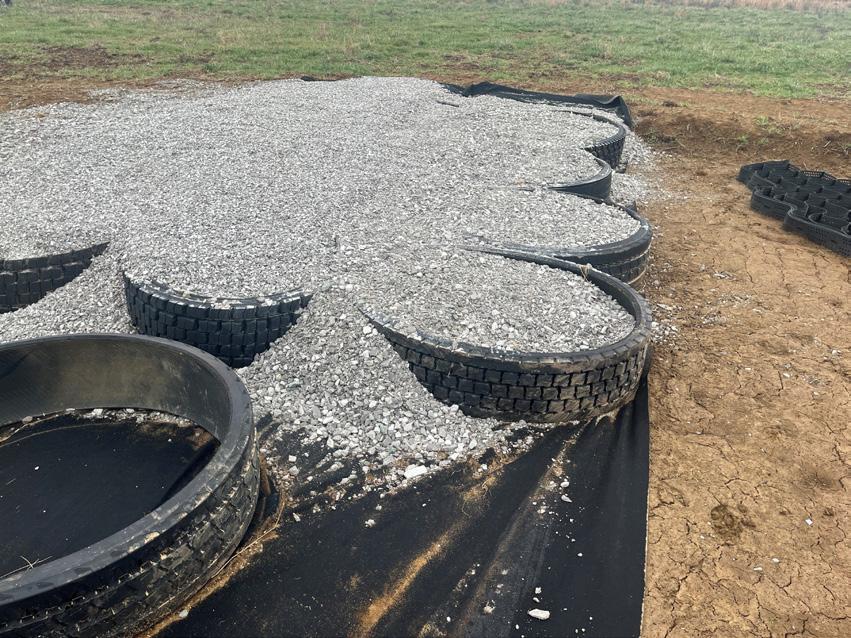
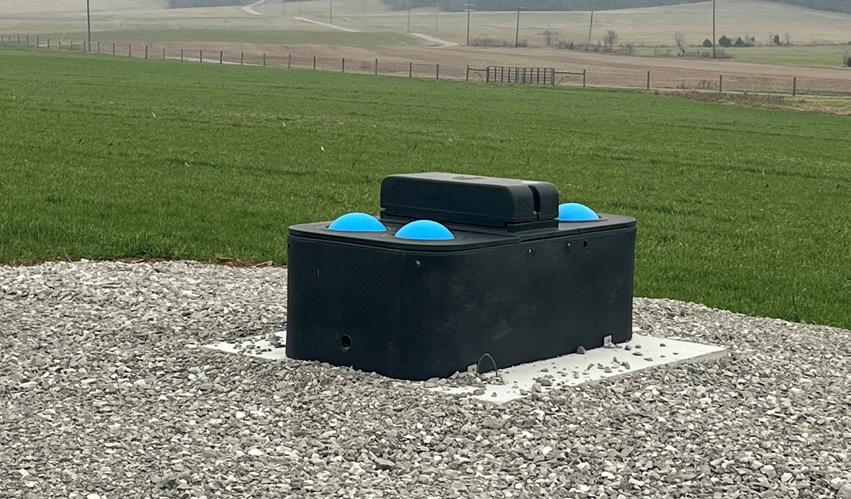
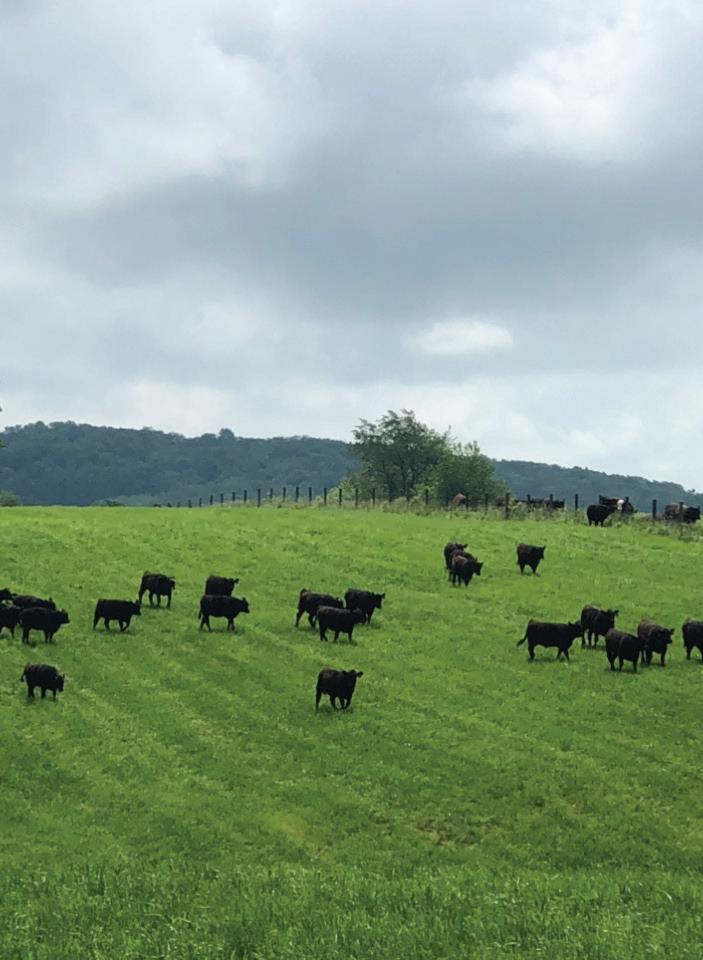
A perfect example of an investment that is not all that shiny and bright but will almost certainly increase productivity of existing pastures is water development. Having access to water is a major factor limiting the implementation of improved grazing management. A well-planned network of watering points is the foundation of a grazing management. Replicated research has shown that switching from a continuous grazing situation to rotational grazing increases pasture productivity by 30% or more (Graph 1).
Considerations for Improved Watering Systems
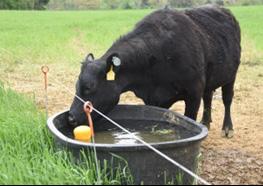
Grazing livestock can consume up to 40 gallons of water per day during the summer months (Table 1). The amount of water animals require increases as temperature increases and the moisture content of the forage being grazed decreases. Access to clean and plentiful water is key to maintaining animal health and productivity and improving pasture utilization. The remainder of this article will discuss keys considerations for designing a new or improving a current watering system.
Aiken, 1998
Bertelsen et al, 1993
Bryant et al, 1961
Chapman et al, 2003
Davis and Pratt, 1956
Hoveland et al, 1997
Hull et al, 1967
Matthews et al, 1994b
Popp et al, 1997b
Stewart et al, 2005
Tharel, 1989
Volesky et al, 1994
Volesky, 1994
Average
1: Proportional advantage of rotational versus continuous stocking. Data adapted from Conservation Outcomes from Pastureland and Hayland Practices: Conservation Outcomes from Pastureland and Hayland Practices: Assessment, Recommendations, and Knowledge Gaps, USDA-NRCS.
Travel distance to watering points should be NO greater than 800 feet. If animals have to travel more than 800 feet to water then pasture utilization decreases markedly. This is especially true if livestock must travel through lanes to reach watering points. Ideally, each paddock should contain its own watering point.
Use a map to plan your watering system. When planning a watering system, it is important to use both a map as well as a field visit to make sure that watering points are well placed. Sites for waterers should be well-drained soils, have good surface drainage and on south-facing slopes, if possible.
Do NOT undersize your waterlines. Undersizing waterlines is a common mistake when installing livestock watering systems. Waterlines that are too small will restrict water flow,
especially near the end of long runs. A good general rule is to never use waterlines less than 1 inch in diameter and if possible, use 1.5- or 2-inch waterlines. For recommendations on waterline sizing for your farm, consult with your local Soil and Water Conservation District or Natural Resource Conservation office.
Run waterlines along fences or lanes. Running waterlines along fences or lanes will help you locate them for repairs or future expansion. It also allows for cutoff valves to located underneath the fence where they are protected from machinery and traffic.
Bury lines below frost line. Make sure that waterlines are buried below the frost line to ensure that lines will not freeze, even during an extreme winter. In Kentucky, waterlines should be buried at a depth of 30 inches.
Graph
locate shut-off valves below fence lines to protect them from traffic. Covers can be constructed out of old disk blades or plate steel (below)
Use high quality components. It is tempting to save a few dollars on valves and fittings but remember you are making a long-term investment and want your watering system to be durable and as maintenance free as possible. Look for “Made in the USA” when selecting components.
Install plenty of shut-off valves. You can never have enough cut-off valves. Each watering point should have its own cut-off valve. This will enable you to shut off one watering point for repair or maintenance without shutting off the whole system.
Install quick connects and shut-off valves in a culvert or PVC pipe. A common mistake when installing cut-off valves or quick connects is installing them in PVC pipe that is so small that it impedes access for use and maintenance. I prefer to use a 12inch corrugated black plastic culvert and place a piece of treated plywood below the valve and culvert. This helps to keep dirt out and provides a stable base for the culvert.
Use old disc blades to cover culverts. Old disc blades that are concave make durable and strong covers for the culverts. A metal slug can be welded over the hole in the center of the disc blade and three tabs can be welded under the disc blade to keep it from slipping off the culvert. Paint the tops a bright color so that they can be easily found.
Make a map of where waterlines and shut-off valves have been installed. When you install waterlines, it is important to make a good map with measurements from reference points. This will be very handy in the future when you are expanding or repairing the watering system.
Plan for both summer and winter grazing. Livestock need access to water during both the summer and winter months. Therefore, using both frost-free waterers and temporary watering points is ideal. A comparison of different waterer types can be found in Table 2. Install frost-free waterers in the middle of each large paddock. It is tempting to save money
waterers in a fence line between pastures. However, installing
a float valve (below). Running a hot wire across the top of the tank will protect the hose connection and help to reduce animal pressure on the tank.
a waterer in the middle of each large pasture will allow you to better manage winter grazing by giving you the option to easily split that pasture into four smaller divisions with temporary electric fencing.
Consider installing quick couplers along waterlines. Quick couplers allow producers to establish temporary watering points using a water hose and portable stock tank equipped with a float valve (Figure 3). These watering points can be used from March to November in most years and can greatly improve pasture utilization. Financial assistance through USDA-NRCS programs does NOT normally cover quick couplers. However, they do permit you to install quick couplers on waterlines going to cost-shared permanent watering points. The cost of installing a quick coupler is minimal ($15 for the quick coupler and $35 for the culvert and fittings) and well worth the expanded flexibility they provide. Note: Although, each quick connect is equipped with a spring-loaded valve that is opened when the male
by sharing
Figure 1: Shut-off valves should be installed at each watering point (above). The initial cost is a little higher, but emergency repairs can be made without shutting the whole system down. If possible,
Figure 2: Grazing during the winter months will require the installation of frost-free waterers (above). Ideally, these waters should be installed in the middle of each large pasture on a concrete pad surrounded by a hardened surface constructed of geotextile and gravel (below).
Figure 3: Installing quick couplers along the main waterline allows for the use of temporary watering points using a garden hose (above) and a stock tank equipped with
SAVETHEDATE ISAACS ADVANTAGE
end is inserted, I highly recommend that each quick coupler have its own shutoff valve.
Build flexibility into your watering system. When establishing a watering system for livestock, it is important to not only design it for today’s needs, but also to consider future needs. This means sizing the pipe for future expansion of the system, installing quick couplers that you might not yet realize that you need, ending pipe runs with a valve that could easily be added on to.
Financial assistance may be available from your local USDA-NRCS office. The USDA-NRCS may provide financial assistance for installing improved watering systems, when soil and water resource concerns are being addressed. For example, if you agree to fence your
livestock out of ponds and streams, then costshare assistance might be provided. It is crucial that you do NOT start your project before being approved for financial assistance. It is important to visit with your local USDANRCS office sooner rather than later. There may also be other county and state programs that can provide financial assistance for improved watering systems. Technical assistance is available from your local USDA-NRCS office. Even if you do not qualify for or choose not to use financial assistance from the USDANRCS, they will provide you with technical assistance for your project. So, make sure and contact your local office for their input.
If you are interested in more detailed information on Watering Systems for Livestock, please read Watering Systems for Serious Graziers.
Table 2: Livestock waterer comparison. Different aspects are rated as
Cattle Prices and the Prospects of Herd Expansion
Josh Maples Mississippi State University Extension
⃣ 500-600lb Steer Calves
⃣ 700-800lb Feeder Steers
⃣ 5-Mkt Fed Steers
Cattle prices are starting the year strong again. Auction prices are above year-ago levels across cattle classes and weights. 2025 marked the fifth consecutive year of annual increases in fed cattle prices. Over the past 35 years, the only other stretch of five consecutive years of increases was 2010-2014. Whether 2026 will be another year of increasing prices is just one of many stories to track in 2026 for the U.S. beef cattle sector. However, many of the themes will likely be most impacted by the possibility and pace of beef herd expansion.
Despite multiple years of favorable prices, there’s been little sign of widespread heifer retention just yet. That could change somewhat when the annual USDA Cattle Inventory report is released at the end of January. However, it appears unlikely at this point to expect that report to suggest any meaningful expansion has occurred. It is more likely the report may confirm that rebuilding the herd will be a more prolonged effort this time than it was a decade ago. The number of beef cows expected to calve in 2026
will likely be very similar to 2025 and driven by reduced cow culling in 2025, but the beef heifer retention stat is the number I’ll be watching closest.
The number of heifers retained for beef cow replacement has declined each year since 2017. The next report will shed light on how much retention occurred in 2025 and whether it will break the 8-year trend of declining replacements. In total, there were about 1.5 million fewer heifers for beef cow replacement at the start of 2025 compared to the start of 2017. Herd expansion was in full force in 2014 and 2015, however, the number of beef heifers held for replacement had already been increasing since 2011. Even if the 2026 report shows an increase in heifers retained during 2025, it will take a few years to meaningfully rebuild supplies. Replacement heifers were 16% (884,000 head) lower at the start of 2025 than at the start of 2014.
While some producers likely expanded in 2025, other producers used the strong returns to instead invest in infrastructure: fencing,
water access, handling equipment, feeding setups, etc. Other producers used profits to pay down debt and improve their financial situation after many years of low returns. The rising age of producers often gets well-deserved attention, but equally important is the labor situation. Increasingly, cattle producers are doing more of the work themselves, as reliable labor is difficult to find and keep. A producer planning for another decade (or more) in the cattle industry has probably given some thought to how to make it through that decade with less help, and improving infrastructure is one way to do that. Producers must make strategic choices and for some producers that means focusing on durability and efficiency rather than rapid expansion.
There are many factors to watch in 2026! Cattle prices are high, but expansion isn’t automatic and certainly isn’t uniform across cycles. The coming USDA Cattle inventory report will offer important clues and establish a benchmark for much of the market analysis in 2026.
Table 1: Average Annual Cattle Prices 1997-2025, Southern Plains Region Prices. Data Source: USDA-AMS, Compuled and Forecasts by LMIC. 2025 Prices are Estimated.
Smithland Angus Farm Since 1940
30th Annual Smithland Angus Bull & Female Sale
Friday, March 13, 2026 • 6:30pm cst
Russell Springs Stockyard - Russell Springs, KY
55 Performance Angus Bulls (40 Fall Yearlings, 15 Spring Yearlings)
10 Fall Bred Heifers 15 Open Heifers
Sons of Connealy Craftsman, Deer Valley Growth Fund, Connealy Commerce, Architect, Basin Jameson, SITZ Incentive, BAR Dynamic, HPCA Veracious, & GAR Ashland 10G
PLATINUM SPONSORS
GOLD SPONSORS
SILVER SPONSORS
BRONZE SPONSORS Kubota Tractor Corporation
Accu-Steel FabricCovered Buildings
Advanced Ag Products
Ag Spray Equipment
Branch View Angus
Burkmann Nutrition
Central Farm Supply of Kentucky
Cornerstone Equipment
Endovac Animal Health
Green River Meats
H&R Agri-Power, Inc
Kentucky Association of Conservation Districts
Kentucky Farm Bureau
Kentucky Department of Agriculture Raising Hope
Wright Implement
SPONSORS
AirMedCare Network
In mid-January, Kentucky Cattlemen’s Association members gathered for education, networking and to accomplish the association’s business including the election of the 2026 officers. Thanks to all our members who attended and a special thanks to our convention sponsors for educating and helping our cattlemen improve their operations. Look for complete convention coverage in the March issue of Cow Country.
Nominees Sought for 2026 Kentucky Leopold Conservation Award
Winner will receive $10,000 prize for Conservation Leadership
FRANKFORT, Ky. (Jan. 6, 2026) – Commissioner of Agriculture Jonathan Shell invites Kentuckians to nominate a farmer or forester for the 2026 Kentucky Leopold Conservation Award.
“Our farmers are the true stewards of our land,” Commissioner Shell said. “This award honors those who go above and beyond to practice conservation efforts. The Kentucky Department of Agriculture is honored to work with the Sand County Foundation to present the Leopold Conservation Award to a Kentucky farm family who shows true devotion to the management of our natural resources.”
Given in honor of renowned conservationist Aldo Leopold, the award recognizes landowners who inspire others with their dedication to land, water and wildlife habitat management on private working land. In his influential 1949 book, “A Sand County Almanac,” Leopold called for an ethical relationship between people and the land they own and manage.
Sand County Foundation, the nation’s leading voice for conservation of private land, presents the Leopold Conservation Award to agricultural landowners in 28 states actively committed to land ethics. In Kentucky, the $10,000 award is presented with the Kentucky Agricultural Council and Kentucky Association of Conservation Districts.
Nominations may be submitted on behalf of a landowner, or landowners may nominate themselves. The application can be found at scf-web.files.svdcdn.com/production/ uploads/2026-CFN-Kentucky-Fillable.pdf.
The application deadline date March 31. Application materials must be sent electronically to KentuckyLCA@ sandcountyfoundation.org.
The first Kentucky Leopold Conservation Award was presented to Sherwood Acres Farm of LaGrange in 2013.
The 2025 recipients of the award were John and Randy Seymour, of Upton, a father and son team who operate Riders Mill Farms and Roundstone Creek.
The Kentucky Leopold Conservation Award is made possible through the support and partnership of American Farmland Trust, Kentucky Agricultural Council, Kentucky Association of Conservation Districts, Sand County Foundation, U.S. Department of Agriculture’s Natural Resources Conservation Service, Kentucky Farm Bureau Federation, AgriBusiness Association of Kentucky, Farm Credit Mid-America, Kentucky Cattlemen’s Association, Kentucky Corn Growers Association, Kentucky Department of Agriculture, Kentucky Department of Fish and Wildlife Resources, Kentucky Pork Producers, Kentucky Soybean Promotion Board, Kentucky Tree Farm Committee, Kentucky Woodland Owner’s Association, and University of Kentucky Martin-Gatton College of Agriculture, Food and Environment.
For more information on the award, visit leopoldconservationaward.org.
UK Launches Forage Testing Program to Support Kentucky Livestock Farmers
Move allows KDA to expand forage marketing services
Jennifer Elwell University of Kentucky
FRANKFORT, Ky. (Jan. 8, 2026) –The University of Kentucky Division of Regulatory Services (UKDRS), in collaboration with the Kentucky Department of Agriculture (KDA) and the Cooperative Extension Service, has officially launched its Forage Testing Program to help Kentucky producers improve livestock nutrition, reduce feed costs and promote sustainable agriculture. With support from the Kentucky Agricultural Development Fund, trial testing began in September 2025, and the program is now fully operational, offering comprehensive nutritional analysis of forages.
Ray Smith, extension forage specialist in the Department of Plant and Soil Sciences at UK MartinGatton College of Agriculture, Food and Environment, said he is pleased that UKDRS is now offering this high-quality forage testing.
“This will be a tremendous benefit to livestock and hay producers in the state,” Smith said. “Having this testing at the same location as UK Soil Testing offers a user-friendly format and quick turnaround. It also facilitates county Extension agents working with specialists to explain the results to their clients.”
The benefits of forage testing
According to Smith, forage makes up more than 80% of most ruminant and equine diets, yet many horse owners and livestock producers feed hay or ensiled forages without knowing their nutritional value.
To know how to best use hay to meet a horse’s nutrient needs, UK associate professor and equine nutrition specialist Bob Coleman says horse owners need a forage analysis.
“Feeding hay is just part of owning horses,” Coleman said. “Having the analysis tells a lot about the hay, allowing horse owners to make better use of the hay and their feed budget.
It is exciting to have this service available at UK.”
Experts also agree that most cattlemen wouldn’t buy a bag of feed labeled only "Cattle Feed" without nutrient guarantees.
"Forage testing provides the foundational information to build a cost-effective supplement strategy to meet the nutritional needs of beef cattle and ensure performance goals are met,” said Jeff Lehmkuhler, UK extension professor of beef cattle nutrition. “Without this information, we are using book values, which may lead to overspending on unnecessary supplements or lost production due to nutritional deficiencies.”
For producers who sell their hay, forage testing allows producers to assess market value, monitor quality changes and make informed sales decisions. It also supports participation in the KDA’s hay grading program.
Standard analysis and cost
The UKDRS Forage Testing Program uses Near Infrared Spectroscopy (NIR) — a technique that uses near-infrared light to analyze the
chemical and physical properties — to analyze samples for moisture and dry matter, crude protein, fiber, sugars, starches, minerals, energy values and digestibility. The standard test is $22 per sample; silage and haylage samples are tested for pH at no additional charge. Optional wet-chemistry mineral analyses are available for an extra fee.
Once testing is complete, a process that averages three business days, producers can work with their local extension agents to interpret the results and balance rations for ruminants or equines. Reports are reviewed for accuracy, and retesting is free if requested within seven days of the report date.
Changes to KDA Forage Program
By transitioning forage testing to UK, KDA will retire its forage testing program and expand its forage marketing services by adding hay grading and a monthly USDA hay market report.
“It made sense for producers that KDA transitioned the state’s forage testing program to the University of Kentucky Regulatory Services,”
Rebecca Konopka, Carter County Extension agent for agriculture and natural resources, demonstrated the appropriate method for collecting a forage sample from a round bale of hay at an education event. Forage testing results can help farmers build a cost-effective feeding strategy to meet their animals' needs. Photo by Matt Barton, University of Kentucky.
Agriculture Commissioner Jonathan Shell said. “Farmers who are already utilizing the soil lab through their local extension agent can now add a follow-up forage analysis and consultation through UK Cooperative Extension, resulting in a more complete soil and forage improvement plan.”
Producers who test their hay for marketing purposes through a certified lab, such as UKDRS, can submit results to KDA. That lot will then be assigned a USDA hay quality grade and included, free of charge, on the KDA “Hay for Sale” website.
Untested hay may also be listed on the Hay for Sale site, but it will not show a quality grade and will not have an analysis to verify the quality. Submitting the analysis to KDA is as simple as checking the box on the UK Sample Submission Form to email results to “KDA for Marketing.”
Another new addition to the KDA hay program is the monthly hay market report, a collaboration among producers, KDA staff and USDA. KDA will gather Kentucky hay sales data monthly and submit it to the USDA for publication of the market report. Anyone interested in participating in the monthly hay market report by providing their sales data can contact KDA’s hay program coordinator Kimberly Field at Kimberly.Field@ky.gov.
Submitting samples
Jenny Combs, agriculture research specialist and administrator of the Forage Testing Program, said proper sampling is
critical.
“Producers or agents should collect a representative core sample and clearly label the samples and services requested on the sample form,” Combs said.
Combs also recommends that producers and extension agents complete the free one-hour haysampling course offered by the National Forage Testing Association (NFTA) at www. foragetesting.org.
Once samples are collected and labeled, Combs said they should be delivered or shipped via UPS or FedEx during regular lab hours: Monday through Friday, 8 a.m. to 4 p.m. ET. Haylage should not be shipped on Fridays due to the risk of mold.
Samples should be shipped to:
Regulatory Services Attn: Forage Testing Program 103 Regulatory Services Building Lexington, KY 405460275
Craig Wood, UK extension assistant director for agriculture, natural resources and horticulture, said the Forage Testing Program is a valuable resource for Kentucky’s agricultural community.
“By providing accurate, science-based forage analysis, it empowers producers to make smarter decisions, improve animal health and enhance profitability," Wood said.
For more information on the UKDRS Forage Testing Program, visit www.rs.uky. edu/ForageTesting or contact the program at UKDRSforage@uky.edu or 859-218-2449.
WHO IS RESPONSIBLE FOR REMITTING THE CHECKOFF ASSESSMENT?
BUYER
Generally the Buyer is responsible for collecting the Beef Checkoff assessment from the Seller
SELLER
50¢
QUALIFIED STATE BEEF COUNCIL
However, both the Buyer and the Seller are responsible for seeing that the Checkoff is collected and paid. or pays $2 to $1.50
Cattlemen’s Beef Board invests in national Checkoff programs, while Kentucky Beef Council invests in state programs.
If you are a producer from one of these seven states - Alaska, Connecticut, Maine, Maryland, Massachusetts, New Hampshire, and Rhode Island - you will remit directly to the Cattlemen’s Beef Board. If you have any questions regarding who is responsible for remitting the Checkoff assessment or how to remit payment, please contact your State Beef Council or the Cattlemen’s Beef Board at (303) 867-6304.
3 Exceptions to Beef Checkoff Collection: 1. Non-producer status: If a person (or company) owns cattle for 10 days or less, purchases the cattle to facilitate the transfer of ownership to a third party, and certifies that any Checkoff dollars due from the previous owner have been collected, then that person qualifies as a “Non-Producer” and the Checkoff assessment is not due when qualified cattle are resold. 2. Organic Exemption: In the 2002 Farm Bill, Congress created a process exemptiing organic producers from paying Checkoff program assessments. 3. Pre-Payment: Producers can also choose to “prepay” the Checkoff assessment when shipping cattle out of state for feeding and still retain ownership on the cattle. This allows the producer to direct half of the $1-per-head national Checkoff assessment to the beef council in the state where the cattle were raised, rather than the state where the cattle will be fed. Note: To claim any of these exemptions, the person selling the cattle must provide the proper ‘document’ to show that the Checkoff assessment is not due at the time of sale. Thus, the rule of thumb for all cattle sales is that the person paying the producer should collect either a “Dollar or a Document.”
LIVESTOCK MARKET - When cattle are sold through a livestock market or video market, the Market collects and remits the Beef Checkoff assessment.
CATTLE DEALER/ORDER BUYER - When cattle are sold to a Cattle Dealer or Order Buyer, the Dealer/Order Buyer collects and remits the Beef Checkoff assessment.
ANOTHER PRODUCER - Both the Buyer and the Seller are responsible for making sure that the Beef Checkoff assessment is collected and remitted. For clarity and consistency, we encourage the Seller to take on this compliance responsibility.
VEAL GROWER - When dairy calves are sold to a Veal Grower, both the Buyer and the Seller are responsible for making sure that the Beef Checkoff assessment is collected and remitted. For clarity and consistency, we encourage the Seller to take on this compliance responsibility.
CATTLE SHOWS AND FAIRS - When producers sell their animals at fairs or cattle shows (4H/FFA shows, Purebred cattle shows, etc.), the Organization that runs the sale collects and remits the Beef Checkoff assessment.
FEEDLOT - When cattle are sold directy to a feedlot, the Feedlot collects and remits the Beef Checkoff assessment.
PACKING PLANT - When cattle are sold to a packing plant, the Packing Plant collects and remits the Beef Checkoff assessment.
DIRECT-TO-CONSUMER BEEF SALES - When producers market their cattle as beef, the Producer is responsible for remitting the Beef Checkoff assessment.
The U.S. Department of Agriculture (USDA) prohibits discrimination in all its programs and activities on the basis of race, color, national origin, age, disability, and where applicable, sex, marital status, familial status, parental status, religion, sexual orientation, genetic information, political beliefs, reprisal, or because all or part of an individual’s income is derived from any public assistance program. (Not all prohibited bases apply to all programs.) Persons with disabilities who require alternative means for communication of program information (Braille, large print, audiotape, etc.) should contact USDA’s TARGET Center at (202) 720-2600 (voice and TDD). To file a complaint of discrimination, write to USDA, Director, Office of Civil Rights, 1400 Independence Avenue, S.W., Washington, D.C. 20250-9410 or call (800) 795-3272 (voice)
October Pork Exports Largest Since March; Encouraging Rebound for Beef
U.S. pork exports continued to build momentum in October, led by a record performance in leading market Mexico, according to data released by USDA and compiled by the U.S. Meat Export Federation (USMEF). While beef exports remained lower year-over-year, shipments rebounded to some degree in October, posting the largest totals since June.
Record-large shipments to Mexico fuel strong October pork exports
Pork exports totaled 264,657 metric tons (mt) in October, up 5% from a year ago, valued at $762.1 million (up 7%). Both volume and value were the largest since March, led by substantial growth in Mexico and year-over-year increases to Central America, Canada, Japan,
South Korea and the Philippines. In addition to Mexico, October shipments were also record-large to Honduras and Guatemala.
January-October pork exports reached 2.43 million mt, just 2% below the record pace of 2024. Export value was also down 2% to $6.93 billion. The year-over-year difference is mostly due to a 20% decline in exports to China (which are mainly variety meats), where U.S. pork is subject to burdensome retaliatory duties.
Bright spots for October beef exports include Japan, Taiwan, Caribbean, Colombia
Beef exports totaled 93,448 mt in October, down 11% year-over-year but the largest since June and 16% above the low volume posted in September. Export value was also
the highest since June at $759.5 million, down 12% from a year ago but 15% above September. October beef exports increased year-overyear to Japan, Taiwan, Canada, the ASEAN region and the Dominican Republic, while also jumping sharply to Colombia. But these gains were more than offset by lack of access to China, which has reduced exports to minimal volumes for the past several months. For markets other than China, October beef exports were up 5% year-over-year in volume and up 7% in value.
January-October beef exports totaled 949,471 mt, down 11% from the 2024 pace, while value was down 10% to $7.79 billion. When excluding China from these results, exports were down 3% in volume and just 1% in value compared to the first 10 months of 2024.
“The latest export data confirm what I consistently hear from customers across the world and from our international staff – that global demand for U.S. red meat remains robust, despite tight supplies and formidable market access barriers,” said USMEF President and CEO Dan Halstrom. “Obviously, regaining access for U.S. beef in China is our most urgent priority, as industry losses from this lockout are enormous. But we are also hopeful that ongoing trade negotiations will remove barriers in other destinations where consumers have a growing appetite for high-quality red meat.”
October lamb exports trend lower
Exports of U.S. lamb muscle cuts totaled 161 mt in October, down 12% year-over-year, while value fell 6% to $971,000. October shipments declined to the Caribbean but increased to Mexico and Central America. January-October exports were still up 40% year-over-year in volume (2,340 mt) and 27% higher in value ($12.65 million), led by growth in Mexico, Canada, the Bahamas, Trinidad and Tobago, Costa Rica and Panama.
A detailed summary of the January-October export results for U.S. pork, beef and lamb, including market-specific highlights, is
MEMBERSHIP
GREEN COUNTY
Priefert Squeeze Chute!
2025-26 MEMBERSHIP APPLICATION
* MEMBERSHIP YEAR 10/1/25– 9/30/26
NAME SPOUSE NAME FARM NAME
*Payments of KCA membership dues are tax deductible for most members as an ordinary and necessary business expense. However, charitable contributions of gifts to KCA are not tax deductible for Federal Income Tax purposes. Due to new IRS regulations, $2.24 of your dues would not be deductible. Approximately $12 of your dues will go towards the monthly publication Cow Country.
PLEASE CHECK THE MEMBERSHIP(S) YOU WOULD LIKE TO JOIN:
KCA MEMBERSHIP ($30/YR) NEW RENEWAL
Membership dues are $30 unless otherwise listed below
KCA COUPLE MEMBERSHIP
To add your spouse, please add $15 to your KCA Membership
KENTUCKY JUNIOR CATTLEMEN’S ASSOCIATION ($10/YR) NEW RENEWAL
I WOULD LIKE ADDITIONAL INFORMATION ON THE YOUNG PRODUCER’S COUNCIL
TOTAL MEMBERSHIP:
$ KCA
$ KJCA
TOTAL CONTRIBUTIONS:
$ CATTLEMEN’S FOUNDATION DONATION (voluntary)
TOTAL AMOUNT ENCLOSED:
$ ALL DONATIONS TO KCF ARE TAX DEDUCTIBLE
COUNTY DUES
Dues are $30 except for the counties listed below.
IF YOU WOULD ALSO LIKE TO JOIN THE NATIONAL CATTLEMEN’S BEEF ASSOCIATION The NCBA is now a State Marketing Partner with the KCA. You can pay your dues to both organizations with one check, at the same time.
February is American Heart Month!
Alex Scott MS, RD, LD Southeast Regional Director of Nutrition
This month we are celebrating heart health and it is the perfect time to highlight how lean beef can fit into a heart-healthy lifestyle. Simple choices – like selecting lean cuts, keeping portions in mind, preparing beef in healthful ways, and flavoring foods without excess sodium –can make it easy to enjoy beef as part of balanced meals.
Here are some simple tips to help you include beef in a heart-healthy eating pattern:
• Choose lean cuts as much as possible. Look for cuts with “round” or “loin” in the name, such as Sirloin, Tenderloin, Eye of Round, and Top Round. When buying ground beef, choose “lean” or “extra lean.”
• Take additional steps to reduce fat content. Trim visible fat from whole cuts before or after cooking. When cooking ground beef use methods such as draining grease from the pan, blot with paper towels, or rinsing after cooking to remove additional fat. Preparing beef by grilling, broiling, roasting, baking or slow cooking also supports heart-healthy meals.
• Keep portions in mind. The recommended serving size of beef is about 3 ounces – roughly the size of a deck of cards or the palm of your hand.
• Build a balanced plate: Pair lean beef with plenty of vegetables, fruits, whole grains, and beans to add fiber and important nutrients.
• Flavor without excess sodium: Use herbs, spices, garlic, onions, citrus and vinegars instead of salt-heavy sauces or seasonings.
What “Heart Healthy” Really Means and How Beef Fits
When health professionals talk about “heart health,” they aren’t only looking at one number. They evaluate several factors together, including cholesterol levels, blood pressure, blood sugar, triglycerides and inflammation. All of these markers are shaped by everyday habits such as physical activity, sleep, stress management, and – most importantly – overall eating patterns. Rather than focusing on single foods, doctors and dietitians emphasize balanced meals
Fatty Acid Content Comparison2
Grain and Grass-Finished Beef grams/100 grams raw beef
Grain-Finished
Grass-Finished
Total Fatty AcidsA
Grain-finished - 3.89 grams
Grass-finished - 2.06 grams
A. The total fatty acids do not equal the total fat value because the fat value may include some non-fatty acid material, such as glycerol, phospholipids and sterols. B. minus stearic acid.
built around lean protein, fiber-rich carbohydrates, and a variety of fruits and vegetables.
Here are key heart health markers and what supports them:
Cholesterol & Triglycerides (Lipid Profile): Cholesterol levels are affected by the types of fats we eat, how much fiber we get and how active we are. Foods like oats, beans, fruits and vegetables provide soluble fiber that helps support healthy cholesterol, while healthy fats (such as monounsaturated and polyunsaturated fats) can improve cholesterol when they replace saturated fat. Beef is often identified as a high source of saturated fat, however 10% or less of saturated fat and total fat in the American diet comes from beef.1 About half the fat found in lean beef is monounsaturated fat, and pairing lean beef with fiber-rich foods and staying active can help support a healthy lipid profile.
Blood Pressure: Blood pressure is influenced by potassium and sodium intake, activity level, hydration, stress and overall diet quality. Potassium helps balance sodium and supports healthy blood flow. Eating enough high-quality protein, especially as part of balanced meals, is also linked to better blood pressure control and is a key part of hearthealthy eating patterns like the DASH diet. Beef naturally provides potassium and
high-quality protein, and choosing lean cuts, using herbs instead of salt, staying active and managing stress can support healthy blood pressure.
Blood Sugar: Eating balanced meals helps maintain steady blood sugar levels. Protein slows digestion and helps prevent spikes and dips in blood sugar when eaten with carbohydrates. Including lean beef in meals or snacks – paired with whole grains, fruits, vegetables or dairy –can promote better blood sugar control, lasting energy and fullness.
Inflammation: Inflammation is affected by diet, activity, sleep and stress. Zinc is a nutrient that supports immune health and helps control inflammation, and lean beef is an excellent source of zinc. Eating lean beef alongside vitamin C-rich foods like bell peppers, tomatoes, citrus and berries helps provide antioxidants that support the body’s ability to manage inflammation. Eating a variety of nutrient-dense foods, staying active, managing stress and getting adequate rest all support the body’s natural ability to regulate inflammation.
Heart health is shaped by consistent, everyday habits – not one single food or number. Lean beef, paired with fiber-rich foods and healthy lifestyle habits, can fit into eating patterns that support strong bodies, steady energy, and a healthy heart.
1. Van Elswyk ME, McNeill SH. Impact of grass/forage feeding versus grain finishing on beef nutrients and sensory quality: the U.S.experience. Meat Sci. 2014 Jan;96(1):535-40.
2. Zanovec M, et al. Lean beef contributes significant amounts of key nutrients to the diets of US adults: National Health and Nutrition Examination Survey 1999-2004. Nutr Res 2010;30:375-81.
DID YOU KNOW?
Rinsing Cooked Ground
Beef Reduces Fat Content!
When preparing a dish that calls for cooked ground beef crumbles, the fat content can be reduced by rinsing after cooking. This is an excellent way to take advantage of lower-priced 70% lean (30% fat) ground beef and still reap the benefits of a leaner product.
Step 1: Heat a large non-stick skillet over medium heat. Add ground beef and cook 8-10 minutes, breaking into small crumbles and stirring occasionally. Cook’s Tip: Cooking times are for fresh or thoroughly thawed ground beef. Ground beef should be cooked to an internal temperature of 160°F as measured by a meat thermometer.
Step 2: Meanwhile, place 4 cups of water in a microwaveable bowl and microwave on HIGH for 5-6 minutes or until very hot, but not boiling.
Step 3: Using a slotted spoon, remove beef crumbles to a large plate lined with paper towels and let sit for 30 seconds to 1 minute, blotting the top of the beef with an additional paper towel.
Step 4: Transfer beef to a fine mesh strainer. Pour hot water over beef to rinse fat. Let sit to drain for 5 minutes.
Step 5: Proceed as your recipe of choice directs.
Note: If the recipe calls for browning ground beef with onion or garlic, it can be done at the same time and then rinsed without significant loss of flavor. Additional seasonings such as salt, pepper, and herbs should be added after rinsing beef crumbles to minimize any loss of flavor.
Research shows that rinsing cooked ground beef can significantly reduce its fat content. For example, 70% lean ground beef that has been cooked and rinsed contains about 4 grams of fat – making it comparable to 93% and even 96% lean ground beef.1 Using this simple method can help make more affordable grinds, such as 70% and 80% lean ground beef, appropriate options for heart-healthy meals. Refer to the table above to see the difference small steps like draining, blotting and rinsing can make in the fat content of ground beef.
Changes in Fat Content of 100 grams* of Ground Beef Due to Pan-Frying and Blotting, and Warm-Water Rinsing 1,2
Pan-Fried Patties (Blotting)
Pan-Fried Crumbles (Blotting)
*100 Grams = 3.5 ounces
Note: While warm water rinsing greatly reduced fat in crubled beef, it did not substantially reduce the amounts of protein, iron, zinc, or vitamin B12.
Heart Healthy Recipes Collection
Enjoying lean beef in a heart-healthy lifestyle is easier than you think with these recipes featuring lean beef, fresh fruit and vegetables, and whole grains. These Beef. It’s What’s For Dinner. recipes are all certified by the American Heart Association®.
Air Fryer Korean Beef Beef and Kale Bolognese
Heart Healthy Beef Chili
Roasted Sun-Dried Tomato Beef Tri-Tip and Sweet Potatoes NEW! NEW!
1. Love, J.A. and K.J. Prusa. 1992. Nutrient composition
beef: Effect of fat content, cooking method,
Things to Look Forward to in 2026
Becky Thompson Director, Kentucky Beef Network
As we turn the page on another busy year and continue the theme Jake introduced in January, planning for 2026 is well underway. Several exciting opportunities are taking shape, and below is a sneak peek at a few things producers can expect to see as the year unfolds.
One area we’re especially excited about in 2026 is continued bootson-the-ground support through the Kentucky Beef Network facilitators. In 2025 alone, facilitators made farm visits, attended county cattlemen’s meetings and field days, and worked directly with producers to talk through practical challenges related to facilities, grazing systems, marketing preparation, day-to-day management and more. Please see the box below to find your facilitator and their contact information.
Another program we see expanding is our work with new and beginning cattle producers. Starting or rebuilding a cattle operation comes with real challenges, and this effort is focused on practical, hands-on learning. Through the new Beef Cattle Startup Program, KBN and the University of Kentucky will offer training centered on cattle handling, basic herd management, and Beef Quality Care and Assurance practices. The goal is to help producers get started the right way, avoid costly mistakes early on, and build systems that work long term rather than having to be fixed later.
We’re also continuing the Advanced Post Weaning Value-Added Producer (Advanced PVAP) program. Advanced PVAP helps producers move from simply selling calves to marketing them by showing, in real numbers, how management decisions affect the sale check. By tracking weights, costs and performance through weaning and preconditioning, producers receive a clear closeout that shows where value is gained or lost. For many participants, the biggest benefit is understanding how to avoid common discounts and position calves to bring more in a value-added market.
For those focused on forage and grazing management, this year will bring more hands-on grazing and pasture education across the state. Producers can expect opportunities focused on practical topics like fencing and water systems, rotational grazing setup, pasture evaluation, and winter-feeding strategies. The goal is to help producers stretch forage, reduce feed costs and build grazing systems that work in Kentucky conditions.
Technology and innovation projects will also begin to take shape in 2026 through demonstrations and pilots. These activities will focus on learning and exploration, giving producers a chance to see emerging tools designed to save labor and support better decision-making. Rather than promoting one solution, the emphasis will be on asking practical questions, seeing systems in action and understanding where technology may or may not fit within an individual operation.
Another program launching this spring is the Bull Value Assessment Program. Bulls are one of the biggest and longest-lasting investments in most cow-calf operations, and a poor decision can affect the herd for years. This program gives producers a chance to slow down and think through bull selection before breeding season, looking at fertility, structure and performance in the context of how they manage cattle. Through a mix of classroom discussion and a hands-on mock auction, producers work through real-world scenarios to better understand what makes a bull a good fit for their operation, not just a good deal on sale day. Signups are open now, please contact your county extension office for more details.
Looking ahead, 2026 is shaping up to be a year focused on practical education, strong partnerships and real-world solutions. Whether you’re a longtime producer or just getting started, we encourage you to stay connected, ask questions and take advantage of the opportunities available through the Kentucky Beef Network.
If you are interested in any of these programs, please contact our office or your local county extension agent. You can also learn more about upcoming programs or to get connected with a facilitator, by visiting www.kybeefnetwork. com or follow us on Facebook at @ KentuckyBeefNetwork.
Ben Lloyd Whitesville, KY (270) 993-1074 benlloyd0223@gmail.com
Charles Embry Cave City, KY (270) 646-5939 dale.embry@yahoo.com
Cody Burke Frankfort, KY (606) 748-4641 cody.burke2019@gmail.com
Jacob Settles Springfield, KY (859) 805-0724 jacob.settles4@yahoo.com
Samantha Stamm Wallingford, KY (606) 748-7772 sastamm14@outlook.com
Ron Shrout Winchester, KY (859) 397-5151 shroutron@aol.com
Eden Shale Update
Dan Miller Industry Coordinator, Kentucky Beef Network
For the past year, we have been running the smallest herd at Eden Shale since we took over the farm 13 years ago. At weaning time in September 2024, we had 103 cows. At that time, it was extremely dry and the cull market was strong so we culled hard. We then had lower-than-expected conception rates this year leaving us with a total of 72 head of bred females to calve spring 2026.
These lower numbers have made it easier to manage the grazing rotations around the farm. The lower number of mature cows has freed up forage, allowing for more stocker calves to be added during the growing season. Instead of trying to have a full pot load of home-raised calves, we now have half load, and we will purchase the other half to graze with ours this summer and market together as a full pot load in August.
This strategy allows us to market the steers at the end of the summer and therefore stockpile more fescue during the fall regrowth. With a smaller herd of mature cows to carry through the winter, we are able to graze longer into the winter months while also needing less stored hay once we start feeding. Less days feeding in the barns means reduced amounts of manure to manage next spring.
As of this writing (Jan. 7), we are still grazing our 72 head of bred cows. The younger first- and second-calf heifers were turned into their last paddock of grass yesterday. Once it is grazed, they will be moved to their first hay bales of the season. The mature cows have enough grass to last longer if we don’t get any snow, but I would expect them to be switched to hay somewhere about the middle of January.
Our Farm Manager, Greg Cole, does a great job of managing our forages and maximizing the number of grazing days. Any time you can still be grazing in January, I consider it a success!
Photo taken January
KBN’s Cody Burke Earns Second Place in National Farm Bureau Event
The Kentucky Cattlemen’s Associaton congratulates Cody Burke, Franklin County producer and Kentucky Beef Network facilitator, on being the national runner-up in the American Farm Bureau Federation’s Discussion Meet. He competed, representing Kentucky Farm Bureau, in January at AFBF’s Annual Convention in Anaheim, California.
A competitive event of Farm Bureau’s Young Farmers and Ranchers, the Discussion Meet simulates a committee meeting where participants are scored on their ability to discuss and participate a pre-determined, ag-related topic.
Burke competed against the nation’s best young agricultural communicators during the three day-event. As national runner-up, he received a $25,000 credit toward the purchase of a new piece of equipment from Case IH.
Kentucky Hereford Association
Kentucky Hereford Association
Toby & Debby Dulworth 2492 S. Kirkman Road LaCenter, KY 42056 (270) 224-2993 • dogwood@brtc.net Herefords that thrive on forages. www.dogwoodherefords.com
Tony & Kathy Staples 992 Knotts Road Brandenburg, KY 40108 (270) 945-9277 (270) 422-4220
tstaples@bbtel.com
PILE STOCK FARM
Registered Polled Herefords
HANSELL PILE, JR.
12045 St. John Rd. Cecilia, KY 42724
270-735-5192
12 miles West of Elizabethtown
Shannon, Kerry, Emily, Will & Ellie Morgan
13095 Scottsville Rd, Alvaton, Kentucky 42122
www.morganandmorganpolledherefords.com
Shannon: (270) 320-2389
40th Anniversary of the Kentucky Beef Expo March 6-8 Kentucky Exposition Center Louisville, Kentucky. Hereford Sale Show: March 6th 1pm • Hereford Sale: March 7th 2:30pm
Kentucky Beef Expo Schedule
Friday March 1st - Hereford Show - 1pm
Saturday March 2nd - Hereford Sale - 1pm
Junior Shows Saturday & Sunday.
WELLS FARM
Polled Herefords
439 Flatwoods Frozen Camp Rd, Corbin KY 40701
Bobby & Brenda Wells (606) 344-0417 wells_farm@yahoo.com
Sunday March 3rd - Open Junior Show - 8am
WELLS FARM Polled Herefords
NJB Limited
439 Flatwoods Frozen Camp Rd, Corbin KY 40701
KHA OFFICERS
President: Chris Hopper 606-584-7842
Toby & Debby Dulworth 2492 S. Kirkman Road LaCenter, KY 42056 (270) 224-2993 dogwood@brtc.net
Bobby & Brenda Wells (606) 523-0569 or (606) 344-0417 wells_farm@yahoo.com
“Breeding Polled Herefords for over 58 Years” Breeding cattle for sale at all times. 1999 Walnut Hill Rd. Lexington, KY 40515 (859) 271-9086 cell (859)533-3790
“Registered Angus and Polled Herefords” John Tucker II 1790 Hidden Valley Lane Hudson, KY 40145 270-617-0301
“Breeding Polled Herefords for over 58 Years” Breeding cattle for sale at all times. 1999 Walnut Hill Rd. Lexington, KY 40515 (859) 271-9086 cell (859)533-3790
927 Old Liberty Pike • Hustonville, KY 40437 (859) 238-0771 • www.branchviewangus.com
480 Hominy Hill Rd. Nancy, KY 42544
Joe: (606) 305-3081
Located 15 miles West of Somerset • klburton01@windstream.net
Bulls & females sold private treaty. Inquiries Welcome. Sell only what we would buy. Data driven since 1981.
FALL CREEK ANGUS
448 Corder Farm Road
Monticello, KY 42633
Ronnie Corder (606) 348-6588
HILL VIEW FARMS
Jimmy Gilles 5160 Lee Rudy Road Owensboro, KY 42301 (270) 929-5370 jcgilles86@gmail.com
APS ANGUS
4040 Taylorsville Rd
Taylorsville, KY 40071
Gordon Schubert
502-477-2637 • 502-548-8440
Anne Patton Schubert 502-477-2663 • 502-548-2359
TWIN CREEK FARM
HILL VIEW FARMS
President: Anne Patton Schubert
Vice President: Tom McGinnis
Secretary/Treasurer: Shayna Gibson
BURKS CATTLE CO.
JOHNSON FARMS
531 Rick Rd.
James S. & LuAnn Coffey, Donald & Donna Coffey
Annual Production Sale- 2nd Saturday in April
James S. & LuAnn Coffey, Donald & Donna Coffey Annual Production Sale- 2nd Saturday in April
CATTLE
COFFEY ANGUS FARMS
661 Hopewell Road Liberty, KY 42539
531 Rick Rd. Park City, KY 42160 Eddie Burks • (270) 991-6398 www.burkscattle.com
Matt Coffey: (270) 799-6288
Dewey Coffey: (606) 706-2699
BURTON & SONS ANGUS
Genetics for Maximum Profitability since 1984
GREAT MEADOWS ANGUS ASSOCIATION
Joe D. or Karen Burton 480 Hominy Hill Rd. Nancy, KY 42544 Joe: (606) 305-3081 Located 15 miles West of Somerset • klburton01@windstream.net Bulls & females sold private treaty. Inquiries Welcome. Sell only what we would buy. Data driven since 1981.
Dale Brown, President 292 Pea Ridge Road
COFFEY ANGUS FARMS
Stamping Ground, KY 40439 859-940-8437
661 Hopewell Road Liberty, KY 42539
www.greatmeadowsangus.com
Matt Coffey: (270) 799-6288
SALES: 3rd Saturday in October • 4th Saturday in April
Dewey Coffey: (606) 706-2699
Genetics for Maximum Profitability since 1984
DAVIS BEND FARMS
LYNN CREEK FARMS
2315 Davis Bend Road
Kris and Sara Lynn 2184 Bardstown Rd Springfield KY 40069 573-721-6663
Jimmy Gilles 5160 Lee Rudy Road Owensboro, KY 42301 (270) 929-5370 jcgilles86@gmail.com
RANDOLPH FARM
JOHNSON FARMS ANGUS
6550 Highway 330 Owenton, KY 40359
Gil, Mary, Corbin, Caroline, and Catherine Cowles 500 Rockfield Richpond Road Rockfield, KY 42274 (270) 843-9021 • Fax (270) 843-9005
HERITAGE FARM
Gil, Mary, Corbin, Caroline, and Catherine Cowles 500 Rockfield Richpond Road Rockfield, KY 42274 (270) 843-9021 • Fax (270) 843-9005 Located 7 miles west of Bowling Green, 1/2 mile
Located 7 miles west of Bowling Green, 1/2 mile off Hwy 68/80
CANNON ANGUS
Mary Jayne and Victoria Cannon 4619 Cherry Grove Rd Flemingsburg, KY 41041 606-748-5420 www.cannonangusfarm.com
Angus Bulls & Females Slaughters, KY
Carter Randolph: (513) 543-4343
Keith: (270) 635-0723
Nick Sarky: (513) 262-9846 patty@randolphfarmoperations.com
Reese: (270) 635-1137
Registered Black Angus Bulls & Females Available Sold Private Treaty. Inquiries Welcome.
TAMME VALLEY FARM
SMITHLAND ANGUS FARM 5202 East Hwy 80, Russell Springs, KY 42642
Charles “Bud” & Pam Smith: (270) 866-3898
Jacob Tamme, Owner-Operator (859) 583-7134 jacob.tamme@gmail.com www.tammevalley.com & Find us on Facebook!
Tom McGinnis 1024 Hinkle Lane • Shelbyville, KY (502) 633-1634, home • (502) 633-5100, work (502) 655-0164, cell KENTUCKY ANGUS ASSOCIATION MEMBERSHIP APPLICATION
Henry & Melissa Smith: (270) 866-2311
Return to: Shayna Gibson 1535 Fallen Timber Road New Castle, KY 40050 • Annual Dues $35
KENTUCKY ANGUS NEWS
Shayna Gibson, Secretary/Treasurer
Kentucky Angus Queen Contest Rules
1. She must be at least 16 years of age and not over 21 years of age by January 1 of current year.
2. She must not be, nor have ever, been married.
3. She must be a resident of Kentucky.
4. She must be a member of the Kentucky Junior Angus Association for 2 years.
5. She must present a signed statement of consent from her parents or guardian to enter the contest.
6. She must own Angus cattle.
7. She must not have previously been Kentucky Angus Queen.
8. If selected queen, she is required to be available for appearances at the Kentucky State Fair, Kentucky Beef Expo Show and the Kentucky Angus Preview Show.
9. She will be expected to hand out awards at shows.
10. The queen will be announced at the Kentucky Beef Expo banquet.
11. She must be available for an interview time that is determined by the committee.
12. There will be a dress code for the queen, consisting of black pants or skirt and a red jacket, sweater or dressy top. No crop tops.
13. Email resumes/applications to Hannah Tolbert at Hannahvtolbert@gmail.com. Resumes MUST be RECEIVED no later than 2/6/2026.
Kentucky Angus princess Contest Rules
1. She must be at least 13 years of age and not over 15 years of age by January 1 of current year.
2. She must be a resident of Kentucky.
3. She must be a member of the Kentucky Junior Angus Association.
4. She must present a signed statement of consent from her parents or guardian to enter the contest.
5. She must own Angus cattle.
6. She must not have previously held the title of Kentucky Angus Princess.
7. If selected princess, she is required to be available for appearances at the Kentucky State Fair, Kentucky Beef Expo Show and the Kentucky Angus Preview Show.
8. She will be expected to help the queen hand out awards.
9. The princess will be announced at the Kentucky Beef Expo Angus banquet.
10. She must be available for an interview time that is determined by the Committee.
11. There will be a dress code for the princess consisting of black pants or skirt and a red jacket, sweater or dressy top. No crop tops.
12. Email resumes/applications to Hannah Tolbert at Hannahvtolbert@gmail.com Resumes MUST be RECEIVED no later than 2/6/2026.
Application for: Queen (ages 16-21) Princess (ages 13-15) (Age as of January 1 of the current year - See official rules above)
NAME DOB
ADDRESS
PHONE COUNTY
PARENT OR GUARDIAN NAME
OR GUARDIAN
Written Component
• List clubs, organizations or special activities that you have participated in at school, church, or your community.
• Explain your participation in Angus activities: local, state & national (include leadership offices, showing experience, showmanship, practical management, etc.)
• In essay format: describe your goals, hopes and expectations for a future in the Angus industry.
• Attach additional sheet as needed
Will you be able to attend the Kentucky Angus Beef Expo banquet? YES NO
Do you have the approval of your parents or guardians to enter the contest? YES NO
SIMMENTAL
KEVIN AND RACHEL BARRON
Crestwood, Ky (502) 905-5851
rkbarron812@gmail.com
SWAIN SELECT SIMMENTAL 12113 Green Valley Dr. Louisville, KY 40243 swainselect.com swainselect@gmail.com facebook.com/swainselectsimmental
Fred & Phyllis: 502-599-4560 Chi & Angie: 502-287-2116
JUDY AND RONDAL DAWSON 1156 Buzzard Roost Road Shelbyville, KY 40065 502-593-5136 • jrdawson22@outlook.com
JEROD METZGER • 270-779-6260
ROCKING P LIVESTOCK 8308 Orangeburg Road Maysville, KY 41056
Chan: 606-584-7581
Keith: 606-584-5626
rockingplivestock@maysvilleky.net
BRIAN & HEATHER SWAIN
3906 Pottertown Road Murray, KY 42071 • 270-293-4440
wksbswain@murray-ky.net
SIMMENTAL AND SIMANGUS BULLS FOR SALE
1939 Huntertown Road
Versailles, KY 40383
BULLS FOR SALE
Chris Allen 859-351-4486 callenuky@hotmail.com
Dr. Henry Allen 859-229-0755
The Simmental cow can handle any environment.
She’s built to last in heat, fescue or high altitudes. And thanks to the breed’s built-in adaptability, you can match Simmental genetics to your environment – SimAngus,™ SimAngus HT, Simbrah or proven Simmental genetics.
Meet America’s all-purpose cow – gentle and consistent, with calves that give the heterosis boost commercial cattlemen need to stay profitable.
406-587-4531 • simmental.org
BRET AND LAURA JACKSON 859.533.3718 or 859.707.7200
BRET & LAURA JACKSON Paris, Kentucky (859) 533-3718 (859) 707-7200
28th ANNUAL ALL BREEDS PEN HEIFER SHOW & SALE
Kentucky Farm Bureau Beef Expo
March 6 - March 7, 2026 • 2 PM Show: 2 PM, Friday March 6
Sale: 2 PM, Saturday March 7
Kentucky Exposition Center
Selling More Than 75 Head! Registered & Commercial Females Opens — Breds — Pairs
BREEDING RED & BLACK POLLED GELBVIEH SINCE 1982 David, Jerri & Jon David: 162 Hastings Ln • Fredonia, KY 42411 (270) 556-4259 Arthur & Joyce Slaughter 19068 Marion Rd • Fredonia, KY 42411 (270)545-3455
HEDGESPETH LIVESTOCK GELBVIEH/BALANCER CATTLE-COMMERCIAL HEIFERS 543 Pleasant Run Church Road • Campbellsville, KY 42718 sam.hedgespeth@gmail.com • Sam-270.299.5449 Seth-270.932.1615 Dan-606.686.1679 Andrew-270.405.1990
BEE LICK GELBVIEHS
PADON FARMS
Eddie Reynolds 277 Old Bee Lick Rd. Crab Orchard, KY 40419
606-379-2281(H) 606-305-1972(C) Bulls & Females for sale
GELBVIEH BULLS & FEMALES FOR SALE 1012 Shelby Road • Salem, KY 42078 Thad Padon (270) 836-5518
BRAY’S GELBVIEH CATTLE
Niles & Betty K Bray 1568 Bray Ridge Road Bedford, KY 40006 (502) 255-3584
PERFORMANCE TESTED PUREBRED ANGUS BULLS FOR SALE Call 270-202-7186 for more info or check out www.oakhollowangus.com for current availability.
POLLED HERFORD BULLS FOR SALE
19–20-month-old Polled Hereford bulls. Good selection. Low birthweight, medium frame. Free Delivery Available. JMS Polled Herefords, Knifley, KY • Danny 270-566-2694 • Trent 270566-2000
RED FULLBLOOD LIMOUSIN, BLACK PUREBRED LIMOUSIN For sale year-round at farms Cows, bulls, heifers and semen A C H Holdings, Bowling Green, KY Stephen Haynes 270-799-8685
BREEDING AGE HEREFORD BULLS FOR SALE AT ALL TIMES Over 60 years of Line 1 Hereford Genetics. Groups of open and bred heifers available for sale at all times. Chambliss Hereford Farms. 270-668-7126
DIAMOND J SALERS
Donald Johnson • 11660 N. Hwy 1247 • Eubank, KY 42564 606-379-1558
DIAMOND J SALERS
WILLIS FARMS
Donald Johnson • 11660 N. Hwy 1247 • Eubank, KY 42564 606-305-8747
Danny Willis • 964 Johnson Rd • Frankfort, KY 40601 • 502-803-5011 drwc21@aol.com • Purebred + Optimizer Breeding bulls & Heifers for sale.
DEL-SU FARM
WILLIS FARMS
Howard & Sue Edwards • 420 Rose Rd • Somerset, KY 42501 606-679-1675 • Jeriah Privett • 606-416-1154
Danny Willis • 964 Johnson Rd • Frankfort, KY 40601 502-803-5011 • drwc21@aol.com
KNOB LICK FARM - BULLS & HEIFERS FOR SALE
Larry Cox • Tina Cox-Lynch • Amanda Cox Gibson • 1315 Knob Lick Road • Irvine, KY 40336 • 606-723-3077 • 606-975-1716
the Market for GelbvieH and Balancer® Genetics?
Wess Anglin American Gelbvieh Association Commercial marketing Specialist
Contact: Wess@Gelbvieh.org (662) 292-4582
RED ANGUS, SIMANGUS, CHAROLAIS, ANGUS FOR SALE Red Hill Farms, Lafayette, TN, 615-666-3098 Bart, Sarah and Ty Jones
Gordon and Susan Jones, 270-991-2663
Visit us online - www.RedHillFarms.net
Contact us for cattle and semen availability. Annual Production Sales: More Than a Bull Sale – 3rd Saturday in March • Maternal Monday – 3rd Monday in May • Bulls & Females of Fall Sale – Last Saturday in October
HOT FEBRUARY DEALS
Stoltzfus lime and fert spreaders
Horning corn header Farmco feeder wagons
John Deere 6400 -4wd - with loader
John Deere 5085- 4wd -loader ready
John Deere 6200- cab -2wd
$15 FOR FIVE LINES OR GET A BOX THIS SIZE FOR $105 CALL KATIE PRATT (859) 278-0899
REGISTERED ANGUS BULLS
Bulls 2 years old in February • Semen checked, DNA tested, CAIP eligible, birth weights and EPDs • Calving Ease & Growth, BQA 15 Bred Heifers, due to calve beginning in late January • Metropolis, IL, 618-638-7693, www.bremerbrothers.com
HEIFERS AND BULLS FOR SALE Angus and Lim-Flex Bulls • Yearlings to 2-year-old Heifers are open and CAIP eligible, some AI-sired • Delivery available • Call or text 270589-7999
REGISTERED BLACK ANGUS BULLS & HEIFERS FOR SALE EPDs Available Randolph Farm, Owenton, KY (513) 262-9846 www.randolphfarmky.com In
Special Farmco- pricing on feeders
New Holland f p 240
Over 100 pieces of good quality used www.redbarnandassociates.com
Charlie B. Edgington 859-608-9745
grow with gelbvieh. more pay weight. more profit.
“The Precious Present” and Winter Feeding
Kevin Laurent Extension Specialist, Department of Animal and Food Sciences, University of Kentucky
Basketball coach Rick Pitino was fond of using the expression “The Precious Present” when explaining his coaching philosophy. This approach or concept emphasizes living in the moment, one play, one game, one day at a time and acknowledging the fact that the present is all we can control.
I got to thinking about this a few weeks ago at an extension agents’ training when the question of whether the practice of supplementing hay would result in a dependence on concentrate feed and a tolerance of harder doing cattle. The question asked was, “Why don’t we just select for easier keeping cattle?” That is a very good question, and having a herd of efficient cows that breed back every year with minimal inputs should be the ultimate goal of every cow-calf producer. While I am not a fan of propagating hard keeping cattle, we still need to deal with what is in front of us and what we can control at the present time which is getting our cows bred. In this market, we can tolerate some hard keeping cattle as the return over the extra feed costs to get a cow bred is simply too valuable to ignore.
There are many reasons producers give for not supplementing hay. Most of these reasons involve the time, labor and difficulty of delivering feed to the cow during what is usually the wettest time of the year. Over the years, the feed industry has addressed these concerns and challenges through the development of liquid protein supplements or protein blocks that we are all familiar with. While these type of supplements are effective at balancing the protein needs of the cow, in most cases they do not provide enough energy, especially for a lactating cow that is consuming the typical grass hay that most of us are feeding.
Results of the 2025 Eastern and Central Kentucky Hay Contests summarized by Chris Teutsch, University of Kentucky forage extension specialist, showed that of the 864 hay samples analyzed, 69%
Note: Supplement fed at 5 lbs/head per day for 60 days (300 lbs per cow)
Table 1. Estimated annual returns for various weaning rates ($/head)
met the protein needs, but only 11% met the energy needs of a cow at peak lactation. Remember that peak lactation occurs approximately 30 days post-calving and 30 days prior to the breeding season, the most critical time of the cow’s production cycle. Also remember that this was a hay “contest,” so I would guess most did not send samples of their worst hay. Does it pay to feed an energy/ protein supplement? Using the Beef Enterprise Budgets from the UK Department of Agricultural Economics (agecon.mgcafe.uky.edu/budget/ beef-enterprise-budgets), I looked at the cost effectiveness of feeding 5 pounds of supplement for 60 days and the potential change in weaning rate. I used two base herds using no supplement for comparison. One had a weaning rate of 75% and the other was at 80%. I further assumed that the weaning rates of those two base herds are related to nutrition and not factors such as weather-related calf deaths or infertile bulls. As you can see from Table 1, improving weaning rate by 10% (75% to 85%, and 80% to 90%) resulted in an additional net return of $194 and $193 per calf, respectively. Whereas a 5% improvement on weaning rate (80% to 85%, and 85% to 90%) increased net returns by $78 and $115 dollars per head, respectively. Obviously, the highest estimated net return was moving from 75% to 90% weaning rate at $309 per head. Note that when weaning rate improved by 10% or more, overall annual cow costs decreased since less heifers were needed to be retained for replacements.
How do we deliver the feed to the
cows? In extension, we like to recommend hay testing and simple tools, such as the UK Beef Cow Forage Supplement Tool, for using the results. The challenge is when the supplement tool or a ration program calculates the need for 4-6 lbs. of supplement, producers have to deliver the goods. Bucket feeding 30, 40, 50 cows 5 lbs. of supplement can be a problem. Making sure the feed is spread quickly and evenly so all the cows have ample time and space to eat their share along with the safety issues walking in mud with aggressively hungry cows is not much fun. Let’s be honest, if a management practice is a dreaded chore, human nature will take over, and it will not be done or done correctly. That’s how we begin to rationalize common misconceptions and make statements such as “Protein blocks will be enough” or “My cows have to make it on hay or else” or “Spring grass will get them back in shape” or the classic “It’s better than a snowball.”
So how do we make feed delivery to the cow easier and safer? Enter the cake feeder. One of the most underutilized pieces of equipment for cow-calf producers. Now that most farms have a side-by-side or UTV, an investment in feed delivery equipment such as a cake feeder and a bulk feed bin with an auger seems like a logical step. Cake feeders come in various sizes from 350 to 2,000 lb. capacity units. Most UTVs can handle a 350-500 lb. capacity feeder, which would be sufficient for most smallmedium size cow-calf operations. In the accompanying graphic, you can see the approximate cost of a cake feeder,
• Have calving equipment, supplies and labor ready for the spring-calving season. Some supplies which may be needed are: ear tags and applicator (put numbers on ear tags now), tattoo pliers and ink, record book, scales for calf weights, iodine for calves' navels and colostrum supplement. Calving equipment (puller and chains, etc.) and facilities should be ready and clean.
• Overall condition of the cow herd should be evaluated. Cows losing weight now are more likely to have weak or dead calves. These cows will likely be a poor source of colostrum for the newborn calf. Feed cows, if necessary to keep them in good body condition. Cows need to calve in a BCS of 5, minimum, to expect them to rebreed in a timely fashion. Calve your heifers a little heavier, BCS of 6. For more information on the impact of supplementation, Kevin Laurent has an excellent article in Cow Country this month.
• Heifers may begin head-start calving in early February. Move them to a clean, accessible pasture, away from cow herd and near facilities so that calving assistance can be given. Cows may start calving later this month. Signs of calving are relaxation of pelvic ligaments, enlargement and swelling of the vulva, and enlargement of the udder. Expect calving difficulty if (1) calf's head and two feet are not visible, (2) only the calf's tail is visible, and (3) the cow has been in labor for 1.5 hours. Be sure calf is being presented normally before using calf puller. Recognize situations that are beyond your capability and seek professional help as early as possible. A great veterinarian-client relationship is so important to a successful calving season. Calves that aren’t breathing should receive
bulk bin with an auger along with new portable bunks could be around $14,000. This makes the assumption that all equipment is bought new, so cheaper options may even exist. Even at turnkey prices, a 50-cow herd could potentially pay for half of this investment in one year through feeding the herd alone. The cake feeder would also allow easier and more effective feeding of weaned calves. There are not many pieces of equipment in agriculture that has the potential for that quick of a payback.
Hopefully our cows are wintering well and in good shape. If not, or if in doubt, reach out to your local agriculture and natural resources extension agent to discuss this opportunity. If they don’t know the answer, they know who to contact. The current state of the cattle market is just too positive to leave money on the table and there is no time like the “precious present.”
assistance. Try sticking a straw in nostril to stimulate a reflex or try alternate pressure and release on rib cage. Commercial respirators are also available. Calves should consume colostrum within 30 minutes of birth to achieve good immunity.
• Record birthdate, cow I.D., and birthweight immediately (use your Beef IRM calendar). Identify calf with ear tag and/or tattoo. Registered calves should be weighed in the first 24 hours. Male calves in commercial herds should be castrated and implanted as soon as possible.
• Separate cows that calve away from dry cows and increase their feed. Increase feed after calving to 25-27 pounds of high quality hay. Concentrate (3-4 lbs. for mature cows and about 8 lbs. for first-calf heifers) may be needed if you are feeding lower quality hay. Supplementation may have a beneficial effect on date and rate of conception. It’s important time to feed a beef cow after calving. Thin cows don't come into heat very soon after calving. We must have cows in good condition if we plan to breed them early in the season for best pregnancy rates, especially on highendophyte fescue pastures.
• Sub-zero weather can mean death for newborn calves. During extremely cold spells, bring the cow(s) into a sheltered area as calving approaches to protect the calf. Be prepared to warm-up and feed newborn, chilled calves. Calving in mud can cause problems.
• Watch for scours in newborn calves. Consult your veterinarian for diagnosis, cause and treatment. Avoid muddy feeding areas so that cows' udders won't become contaminated and spread scours. Don't confine cows to muddy lots.
• Replacement heifers should be gaining adequately to reach target breeding weights
by May 1. Be sure that their feeding program is adequate for early breeding.
• Start looking for herd sire replacements, if needed.
Fall-Calving Herd
• Breeding season should end this month –maybe Valentine’s Day. Remove bulls and confine them so that they regain condition. Be careful not to over feed. Bulls need to be kept at a BCS of 5-6.
• Consider creep feed or creep grazing (wheat, etc.) to supply extra nutrition to fall-born calves, which may have to depend solely on their dam’s milk supply for growth. They are not getting much except their dam’s milk now (i.e. there is nothing to graze). February/March is the worst time of the year for fall-born calves.
• Provide windbreaks or clean shelter for calves.
General
• Increase feed as temperature drops. When temperature falls below 15 degrees, cattle need access to windbreaks. For each 10 degree drop below 15 degrees, add 3 pounds of hay, 2 pounds of corn or 6 pounds of silage to their rations.
• Provide water at all times. Watch for frozen pond hazards. If cattle are watering in a pond, be sure to keep ice “chopped” to keep cattle from walking on the ice and, possibly, breaking through. Keep automatic waterers working.
• You should be feeding a mineral supplement with adequate magnesium to prevent grass tetany (~ 15% Mg) now. The Hi-Mag UK Beef IRM mineral can be used now.
• Control lice. Watch for signs such as rubbing.
• Begin pasture renovation. You can overseed clover on frozen or snow-covered pastures.
TIMELY TIPS
Jameson 4563 |Reg# 21216133
• High marbling, high growth Basin Jameson 1076 son.
• Top 1% WW, 2% YW with top set of indexes: Top 1% $C, $B, 2% $G, $W, 3% $F, 20% $M.
• Dam is building an impressive progeny record with calving interval of 3/363 and progeny ratios of WW 2/113, YW 2/108, IMF 2/109, RE 2/112.
BV Commerce 4583 |Reg# 21213641
• Calving ease son of the popular STgenetics sire, Connealy Commerce.
• Top 25% $C, $B, $G, $W.
• Outstanding donor dam maintains a calving interval of 11/391 with progeny ratios of WW 9/105, YW 9/107, IMF 29/110, RE 29/103.
BV Winchester 4620 |Reg# 21217220
• Poss Winchester son out of one of the best cows we’ve owned. 4620 shows a top set of indexes: top 2% $C, $B, $F, 10% $G, 20% $W and EPDs in the top 10% WW, YW, CW, Marb, RE.
• Donor Dam 6571 shows progeny ratios of WW 5/113, YW 5/109, IMF 43/102, RE 43/102.
BV Crossfire 4637 |Reg# 21218392
• Calving ease son of the popular ABS sire, 2BarC Crossfire 1003.
• 4637 Shows top 10% $G, 15% $C, $M, and 20% $B.
• Dam maintains a calving interval of 3/369 with weaning ratios of 2/105.