THE CENTRAL KENTUCKY ANGUS SALE
6:00 PM • April 18, 2026
Hosted at Heritage Farm, Shelbyville, KY
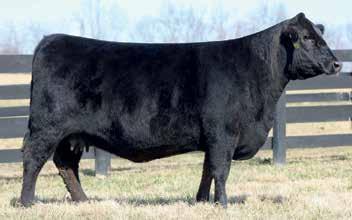
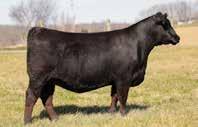
4 SONS LORNA 1M71
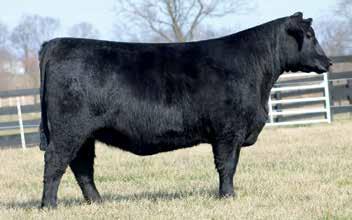
Several impressive Bred Heifers sell – Including this high $C female by 4 Sons Pacifico who will calve to 4 Sons No Vacancy.
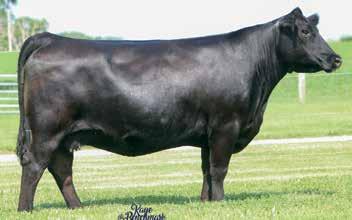
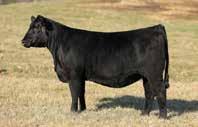
BLACKCAP 3200
An excellent set of fall cow-calf pairs sell. Including this three-year old with a fall born heifer calf at side by 4 Sons Breakaway.
One of the longest running ANGUS Sales of its kind – Quality Genetics from Top Programs!
H Spring and Fall Cow/Calf Pairs
H Fall Bred Heifers
H Replacement Heifers
H A super set of Breeding Age Bulls
H Elite Embryo Packages

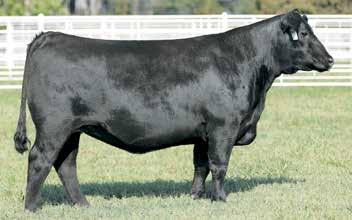
One of several fall cow-calf pairs selling will be this Tahoe daughter from the Elba Lizzy family. She has a fall born Connealy Commerce heifer calf at side and is rebred to Myers Caliber!
A top set of young spring calving females sell, including this daughter of Sterling Pacific who will have a 44 Victory calf at side sale day.




MYERS ELBA M380
TJB/3T KY BULL SALE
TJB ANISSA 954G
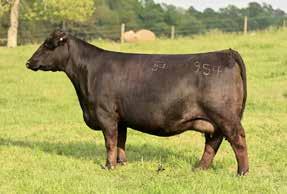
THIS WILL BE ONE OF THE LAST OPPORTUNITIES TO PURCHSE A SON OF THE GREAT 954G. SHE HAS FIVE SONS SIRED BY DLW TPG HEADLINE 1018H SELLING.
TJB ANISSA 6132E
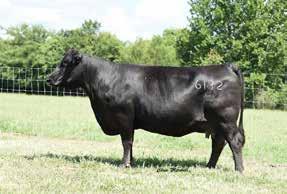
FIVE SONS ARE BEING OFFERED BY ALL AMERICAN, KESSINGER, & HAWKEYE.
TJB ANISSA 579C
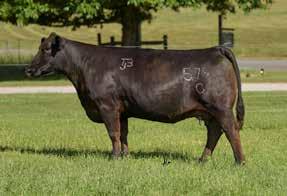
THERE ARE FIVE DIRECT SONS SIRED BY DLW KESSINGER 1009K & BUTLER’S IMPACT & 10 SONS BY 579C DAUGHTERS. SHE IS ONE OF THE MOST PROVEN COWS IN THE BREED.
TJB ANISSA 965G
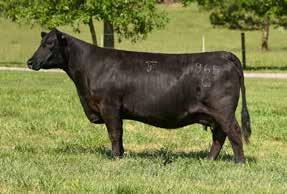
25+ COMM. BRED HEIFERS 34 BULLS INCL. 8 20-MONTH OLDS
ONE FALL YEARLING SON BY VICTORIO. HE IS A MATERNAL SIBLING TO THE $29,500 ABERCROMBIE.


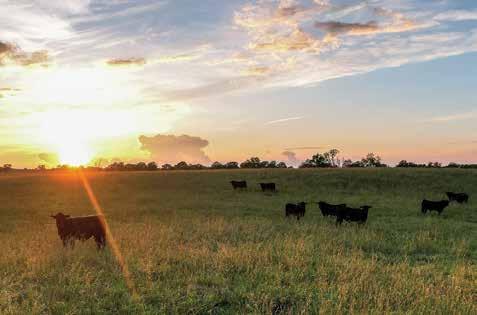
bovine beauties
16
18
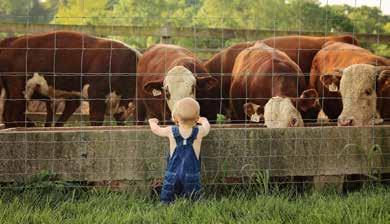
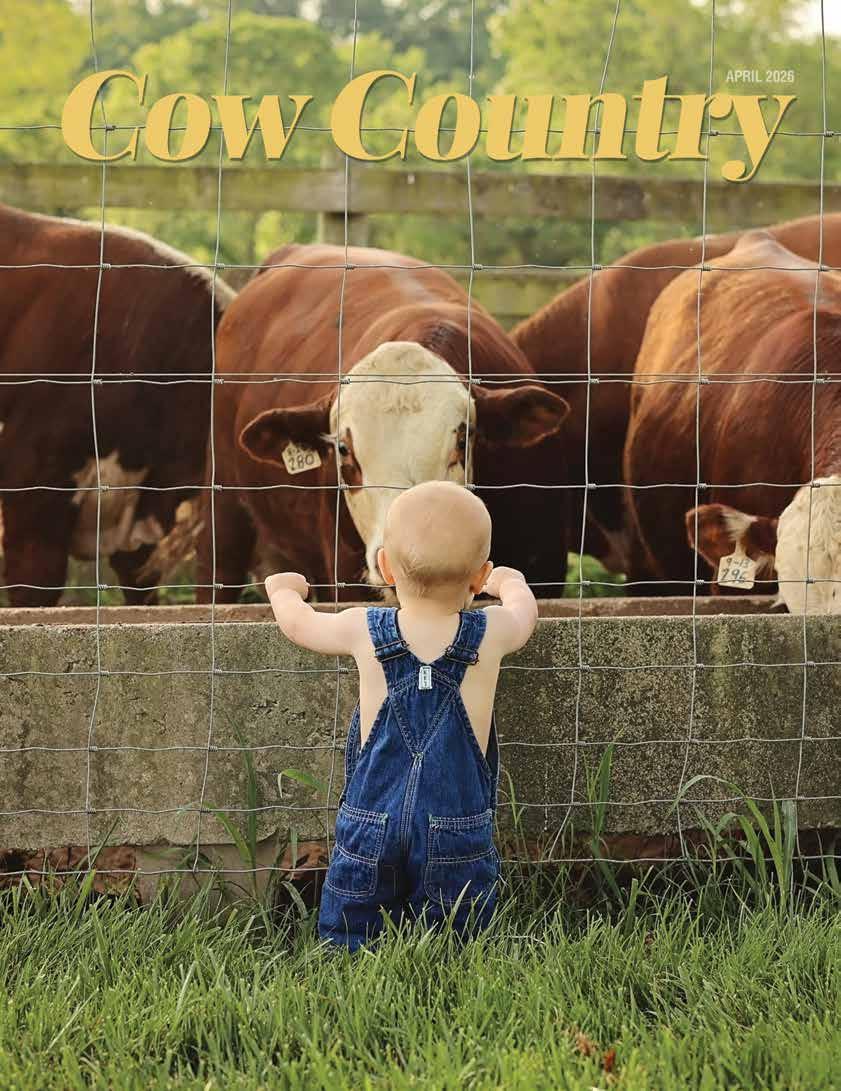
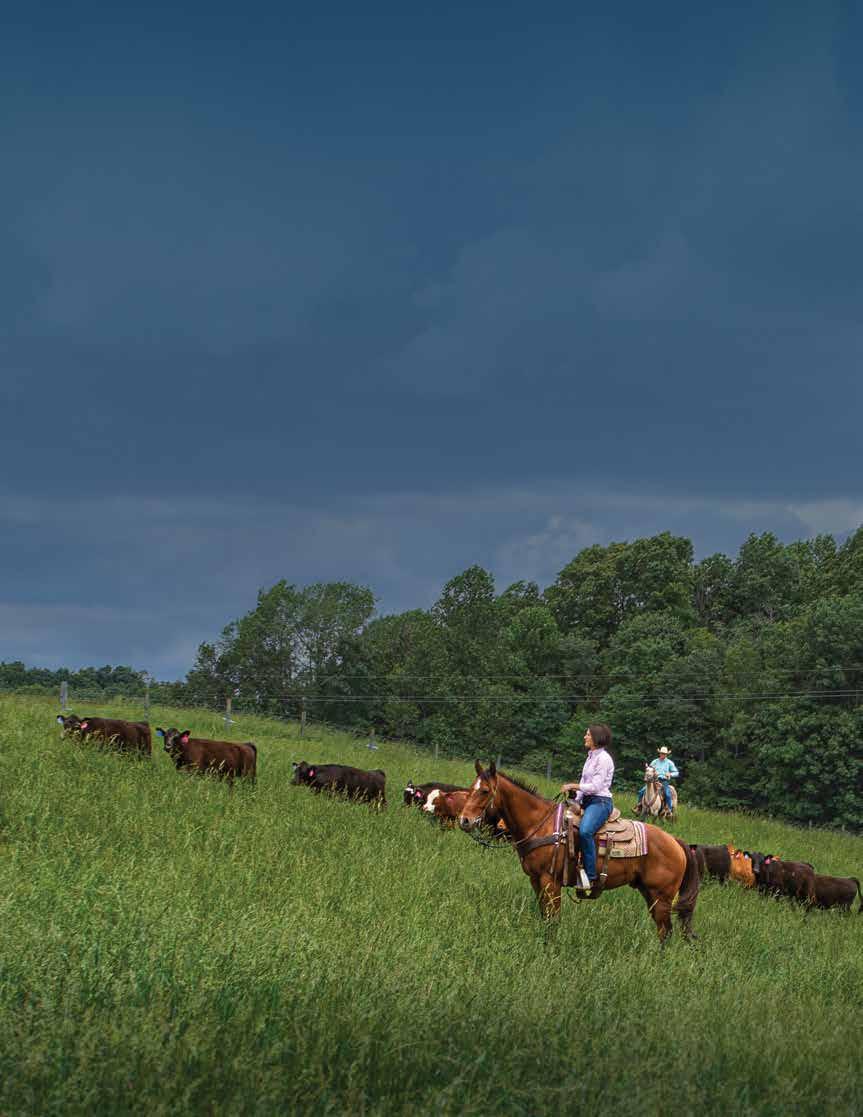
COVER PHOTO BY: Korri Thompson

The bottom line of the SportsCenter ticker at the gym the other morning showed that Luka Doncic, a player on the Los Angeles Lakers, was fined $50,000 for an “inappropriate gesture” towards an official. The unprofessional gesture? He rubbed his fingers together on each hand to make the “money gesture” towards an official. I am assuming he was implying they would only make that call if they were taking money from someone to alter the outcome of the game, something the league has had issues with from players and officials both in recent years. The very next scroll on the ticker showed that the Miami Dolphins had parted ways with Tua Tagovailoa, a quarterback they had just signed to a fouryear, $212.4 million contract extension the previous year. $167.17 million of that was guaranteed, and he will be paid not to play for the organization.
I am paraphrasing, but a line in the movie Moneyball is, “at some point we are told we can no longer play the children’s game.” Leagues that started as a way for the men to get together on a weekend afternoon for a little friendly competition after a week in the coal mines or at the steel mill have morphed into something else. College and professional sports are now cash cows being pumped up by sports betting apps, food delivery services, and domestic light beer companies. It is all being marketed to individuals who have watched a lot more sports than they have ever played. Yet, at their core, they are children’s games that seem to have lost their intended purpose. The core of athletic competition is to teach sportsmanship, competitive spirit, and teamwork. Now, the pinnacle of athletic achievement is a bunch of grown men sitting out games because they are tired or think they aren’t getting paid enough.
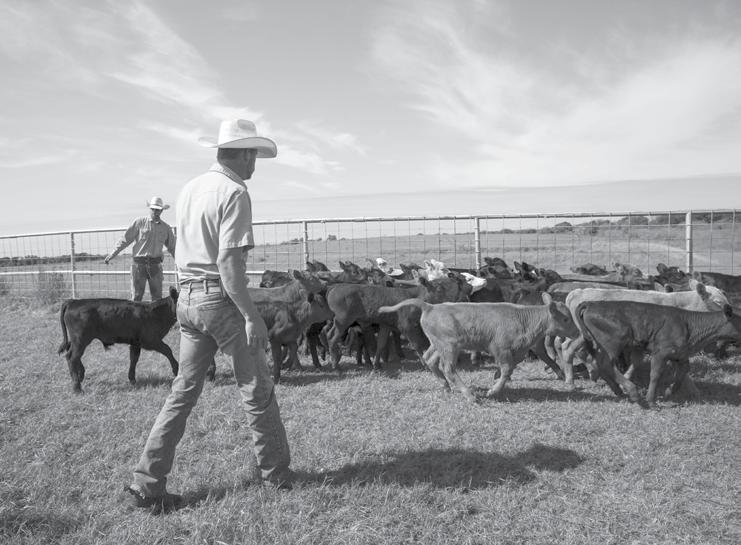
In my view, the point of the seedstock industry, at its core, is to serve the commercial cattle industry. There is no other purpose. My job is to create cattle that deliver additional value to commercial cattlemen. Historically, the way to achieve that has been to collect phenotypic data to improve the accuracy of genetic predictions. That was the earliest performance testing. In recent years, we have increased the accuracy of those genetic predictions by evaluating an individual’s genome. These two types of testing, when combined, have exponentially increased the rate of progress in the seedstock industry. However, the key is to put these
two things together. The genomic test is backed by the data collected on the ground.
Like many of you, I get more catalogs in the mail than I can reasonably even glance at. Many of them I open and see photographs of clipped cattle with high carcass values and footnotes claiming how their mother is worth more than your house. Yet as I flip through the catalog, I see no actual data collected. I see nothing to verify the claims but a genomic prediction and a soliloquy telling you how this open heifer walks on water. There is nothing to indicate they have ever been tested in a real-world environment. There is nothing to indicate that anything in their entire gene pool has ever been tested in the real world. Relying solely on genomic testing generation after generation is like making a copy of a copy—eventually, accuracy fades, and we lose touch with the original foundation. These cattle have to continually be tested in a real-world environment, or we cannot reasonably expect them to perform in the commercial cattleman’s real world.
The compensation of athletes and the deviation from the core purpose of sport may not affect how you view their entertainment value on a Saturday afternoon. Abandonment of the original form of performance testing in beef cattle definitely does impact you. There is a fine line between participating in a genomic testing arms race and being a progressive performance breeder. It all comes down to the data.
PRIVATE TREATY BULLS
Joe K. Lowe II
EXECUTIVE COMMITTEE
OFFICERS:
President
ALLAN BRYANT Eminence
President Elect
DANIEL HAYDEN Whitesville
Vice President
RYAN MILLER Campbellsville
Treasurer
KEN ADAMS Upton
Past President
RANDY WARNER Sharpsburg
KCA Program Chairman
ADAM CHUNGLO Harrodsburg
KBC Chairman
WAYNE ZOGLMANN Lewisport
KBN Manager
AMY WHITE Lexington
Beef Solutions Manager*
DANIEL HAYDEN Whitesville
*ex officio
REGIONAL DIRECTORS:
REGION 1
Chris Milam, John Mark Brown, Dale Gold, Greg Roberson, Gary Woodall, Lincoln Pyle, Susan Zoglmann, Bill Plemmons, Kenton Howard, Britny Williams, Conner Williams
REGION 2
Bryan Manion, Joe Lowe, Allison Nissley, Rayetta Boone, Sammy Boone, David Strater, Kelly Flanders, Andy Joe Moore, Adam Thomas, AJ Mitchell, Jonathan Murley, Kenneth Green, Robert Siddens, Josh Morris, Joe Mike Moore, Amy Cecil
REGION 3
Amanda Hall, Nathan Lawson, Allen Phillips, Stacey Burkhardt, John David Yount, Lincoln Clifford, Abbey Biddle, Ben Tinsley, Crystal Harrod, Phillip Douglas, Tanya Wilson, Craig Retzlaff
REGION 4
Jodi Purvis, Brad Reynolds, Chad Anglin, Phillip Stamm, Danielle Harmon, Brandy Graves, Kelsey Cooper, Bruce Witt, Ronnie Lowe, Logan Carter, Jason Crowe, Rob Amburgey
REGION 5
Phillip Reese, Cary King, John Settles, Natalie Wesley, Brandon Kelly, Freddie Harris, Brent Williams, Anne Bays, Tommy Glasscock, Josh Wethington, Arch Sebastian, Terry Mattingly
KCA PAST PRESIDENTS:

President's Thoughts
Allan Bryant KCA President
All too often, we as producers don’t realize just how good a job we do. We produce an outstanding product — and it gets better every year. As cow-calf producers, we constantly work to be more efficient and to raise better calves than we did the year before. Through improved genetics, stronger replacement heifers and more efficient production practices, our cattle today are better than they were just a few short years ago.
While we’ve made tremendous progress on the production side, we’ve also made significant strides in telling our story. Through the Beef Checkoff program, we are helping consumers understand that beef is a healthy part of a balanced diet. Just as important, we are building relationships within the medical community by sharing sound, nutrition-based science. As research continues to evolve, it continues to support what we’ve long believed — lean beef absolutely can be part of a healthy, balanced diet.
One development I am especially excited about is a partnership between the Kentucky Cattlemen’s Association and the cattlemen’s associations of Tennessee, Michigan, West Virginia, Kansas, and Nebraska to establish a Southeast Regional Director of Nutrition. Through this collaboration, Alex Scott, a registered and licensed dietitian, serves at the intersection of agriculture, health and science communication across multiple states.
A central focus of Alex’s work is strengthening relationships between agriculture and
healthcare. She shares resources at health professional conferences, manages a monthly e-newsletter for healthcare providers, coordinates farm tours, cultivates community partnerships and serves as a preceptor for dietetic interns. Through these efforts, she helps health professionals better understand modern beef production while equipping them with practical, science-based information they can confidently share with patients and clients. The message she shares is straightforward and supported by research:
• Lean beef is a nutrient-dense source of 10 essential nutrients, including high-quality protein, zinc, iron and vitamin B12.
• About half of the fat in lean beef is monounsaturated fat — the same heart-healthy fat found in olive oil and avocado oil.
• Stearic acid, one of the primary saturated fats in beef, has been shown to have a neutral effect on cholesterol levels, highlighting that not all saturated fats affect the body in the same way.
• Beef today is significantly leaner than it was several decades ago due to advances in breeding and production practices.
• When incorporated into a balanced, nutrient-rich eating pattern, lean beef has been shown in clinical trials to maintain — and in some cases improve — markers of heart health, such as cholesterol levels.
• When paired with plant foods that contain iron and zinc, beef’s “meat factor” enhances the absorption of these minerals from the entire meal.
There have been many conversations about red meat over the years. What encourages me most is that today those conversations are increasingly grounded in credible science and open dialogue. The work being done through the Beef Checkoff and by professionals like Alex is educational, research-based and focused on building long-term trust between producers and the healthcare community.
As producers, we should take pride not only in the cattle we raise, but in the story that we now have the tools and partnerships to tell. When we sit down at the dinner table and beef is on the menu, I hope we are reminded of two things: first, that beef plays an important role in a healthy lifestyle for many families; and second, that we can be proud of the safe, nutritious product we work so hard to produce. We are not just raising cattle — we are feeding people, supporting communities, and contributing to the health of the next generation. And that is something worth standing behind.

Kentucky Cattlemen’s Association President

Commissioner's Corner
Jonathan Shell Agriculture Commissioner
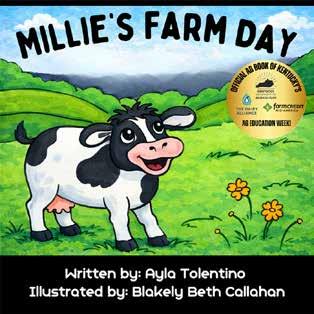
I’m amazed at the talent and creativity displayed by two Kentucky girls who teamed up to write and illustrate a new children’s book that brings agriculture into elementary classrooms in a fun and colorful way.
“Millie’s Farm Day,” written by eighth-grader Ayla Tolentino and illustrated by high school junior Blakely Beth Callahan, follows a day in the life of a farmer, Kenzie, as seen through the eyes of her dairy cow named Millie.
The book won a contest for Kentucky students to craft a story centered around dairy farmers caring for their cows. The competition was sponsored by the Kentucky Department of Agriculture, the Dairy Alliance and Farm Credit Mid-America.
Ayla overcame her own struggles in order to write the book.
“I am very open about being dyslexic and having ADHD and how agriculture has helped me overcome many of the struggles that come with those diagnoses,” Ayla said. “If you had told me two years ago that I would write a children's book, I would have laughed at you. But I will always take on the things that feel impossible if it means I am helping kids find their place in ag.”

Ayla, who describes herself as “biggest ag nerd you will meet,” is vice president of the FFA chapter at Bondurant Middle School in Frankfort. Although she lives in the city, Ayla was inspired by a longtime family friend, Kenzie, who cares for her own cattle.
“Millie was Kenzie’s first cow years ago,” Ayla remembered. “She was the cutest thing ever and so sweet.”
Ayla occasionally helped Kenzie feed her herd.
“There is nothing cooler than bottle feeding calves!” Ayla noted.
Ayla is proud to be someone who doesn't live on a farm yet is passionate about agriculture.
“I do feel very proud to know that I am leading by example for all the kids in Kentucky like me who love agriculture but are not growing up on farms,” she said. “I think that my experiences so far really show how important agriculture education is for Kentucky students.”
Blakely Beth also doesn’t live on a farm, but the student at South Laurel High School in London, has enough exposure to farm life that she was able to complete Ayla’s story through pictures.
“My family has always owned farmland here in Kentucky,” Blakely Beth said, “and I have always loved the farm environment and animals, which made illustrating this story especially fun.
“I first read through the story to understand the characters, the setting and the overall feeling of the book,” she added. “From there, I started imagining what each moment might look like visually.
“Some illustrations were inspired directly by scenes in the story, while others were developed to help bring the farm environment and characters to life. My goal was to make the pictures feel warm, fun and engaging so that young readers could really step into Millie’s world.”
The book will be distributed to elementary schools across the state and will become a permanent resident in the school libraries. I encourage young readers to check out a copy.
“Being the illustrator for ‘Millie’s Farm Day’ has been such a special opportunity for me,” Blakely Beth added. “I love storytelling and creativity, and it’s incredibly rewarding to help bring a story to life through art.”
“Millie’s Farm Day” was written by Frankfort Bondurant Middle School eighth-grader Ayla Tolentino, left, and illustrated by South Laurel High School junior Blakely Beth Callahan










Thoughts From Dave
Dave Maples Executive Vice President
Keeping with the theme of last month’s article about cow herd size and cow inventory, I was troubled to see the Jan. 1 Beef Cow Inventory Report. The title of being the largest beef cow state east of the Mississippi River now belongs to Florida. Being able to brag about Kentucky having the title for many years as been a point of pride for me. Kentucky dropped two places from the 8th largest beef cow state to the 10th largest with a 14.4% decrease. Floraida moved into the 9th position with a 4.6% decrease in their beef cow numbers. This is a big disappointment for me personally because I always enjoyed being the largest beef cow state when compared to my eastern U.S. cattlemen’s association peers. I think this is a wake-up call and a challenge to Kentucky’s beef industry. Why? Why have we dropped so much? Kentucky Cattlemen’s Association President Allan Bryant said to me the other day, “I bet you are getting calls.” What bothers me is that I haven’t, but I should have. We are not only losing cow numbers; we are losing cattlemen. If you compared Kentucky’s 31,000 beef cattle farms to Florida’s nearly 15,000, you can see that they have much larger farms/ranches in Florida than we do here.
When you dig into the why, the first reason that always comes up is drought. And there is little doubt that drought from 2021-2025 prompted much of the beef cow herd liquidation in major beef producing states. If you study the table

below, you can easily see that most of the decline in beef cow numbers were in the 13 states in the middle of the country. This is the heart of beef cattle production. Texas was down 13.1%; Oklahoma had a smaller decrease of 8.6%. Also down were Missouri by 12.3%, Nebraska by 19.6%, South Dakota by 20.2%, Montana by 14.9%, and a big drop with Kansas of 25.1%. Kentucky has had drought but not as much as some of the other states, so are there other reasons for our declining cattle numbers?
Changes in crop production and land use are also a factor in some areas, and I would suscept that plays a role in some of our decline. From 2019 to 2025, corn and soybean planted acreage in the U.S. increased by 8.6%− an increase of 14.2 million acres. Crop production would appear to be likely to limit herd rebuilding in certain states. I know my brother has been very vocal with me about the competition in his area of Alabama is not poultry but row crop production. As I ride the roads of rural Kentucky, I see lots of acres that at one time held cows but are now housing developments or fields of corn and soybeans.
Back to my conversation with my President Allan Bryant. He has formed a working group that is going to start the conversation around the idea of how to rebuild Kentucky’s beef herd. I know that is a very hard topic to pinpoint, but I think it will be time well spent. I would expect that the group could grow to get more input.
THE YARDS is an education center focusing on the science and practices of the beef industry. Educational opportunities provide a unique learning experience based on its location in the Blue Grass Regional Stockyards Marketplace. This environment fosters complex thinking, experiential learning, and life skill application.


CHRISTIAN COUNTY NEWS
Madison Ballard
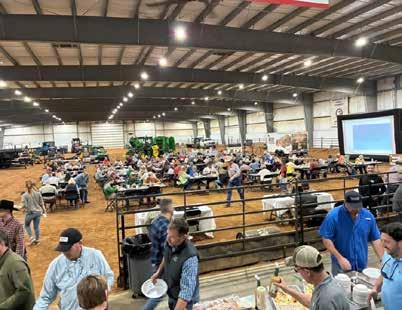
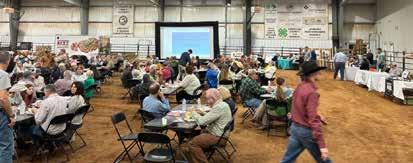
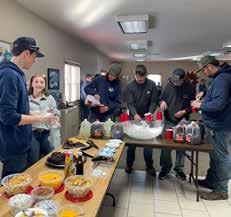
The Christian County Cattlemen’s Association welcomed a strong crowd for its Annual Spring Meeting and Trade Show, bringing together local cattle producers, agricultural businesses and community partners for an evening of fellowship, food and industry engagement.
The event featured a hearty meal prepared by association board members, who grilled premium steaks from Hampton Meats. Guests also enjoyed a selection of sides provided by The Crusty Pig. The relaxed setting created an opportunity for producers and sponsors to connect while discussing issues and opportunities within the local cattle industry.
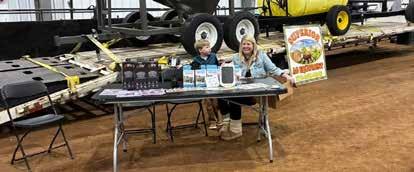
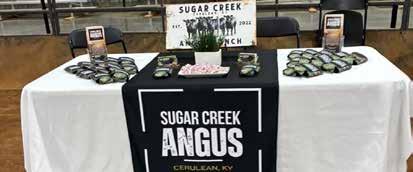
Throughout the evening, attendees had the chance to visit with trade show vendors and agricultural partners who play an important role in supporting producers across Christian County. Thanks to the generosity of event sponsors, numerous door prizes and giveaways were distributed, ensuring that every attendee left with something in hand.
Association leaders expressed their appreciation for the many sponsors whose support made the event possible. Sponsors included SummerTown Metals, Hutson Ag, Pennyrile Power Equipment, Brame Ag Services, Sugar Creek Angus, Luttrull Feeds, Nutrien Ag, Pennyroyal Interiors, Crofton Auto Parts, Yarbrough Sales, Triple J Farm & Fence, Hopkinsville NRCS/ FSA, Rural 1st, Superior Ag Equipment & Express, the Christian County Junior Cattlemen’s Association and Cayce Mill Supply. Their continued partnership helps strengthen agriculture and sustain the cattle industry throughout the region.
During the meeting, the association also introduced its new slate of officers and board members who will help guide the organization in the coming year.
With strong community support and active membership, the Christian County Cattlemen’s Association looks forward to another productive year advocating for and supporting cattle producers across Christian County.
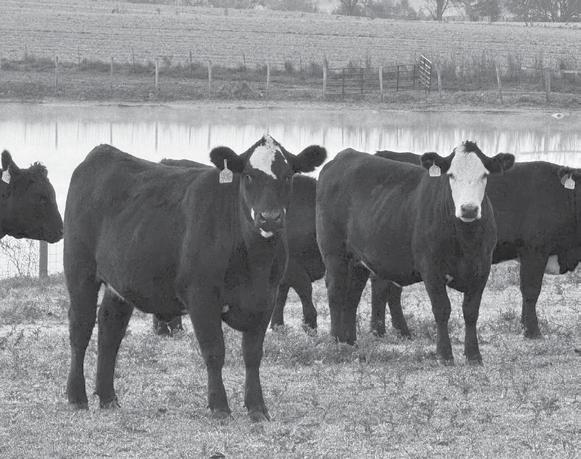
SELLING 225 FALL CALVING BRED HEIFERS
KENTUCKY-TENNESSEE LIVESTOCK MARKET GUTHRIE, KENTUCKY SATURDAY, MAY 16, 2026 12:00 NOON CENTRAL TIME
All heifers are guaranteed bred to bulls with genomic enhanced EPDs and have met stringent requirements for health, quality, and pelvic measurements.
For more information Contact:
Kevin Laurent, University of Kentucky (270) 625-0994 Mark Barnett, KY-TN Livestock Market (931) 624-7176 Tom Barnett, KY-TN Livestock Market (931) 624-7376
FRANKLIN COUNTY NEWS
Crystal Harrod
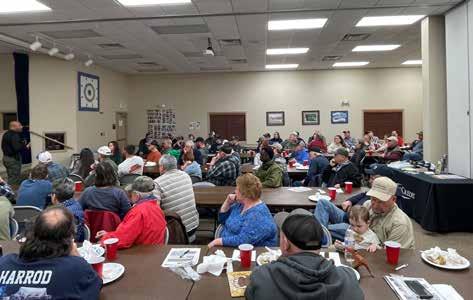
The Franklin County Cattlemen’s Association held its February meeting on Thursday, Feb. 26, with a great crowd in attendance. Members enjoyed a delicious meal generously sponsored by Tera Roberts and Central Kentucky Ag Credit, whose continued support of our organization is greatly appreciated.
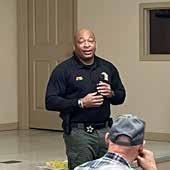
The evening’s guest speaker was Franklin County Sheriff Dwayne Depp, who shared valuable information with attendees on several topics important to our agricultural community. Sheriff Depp discussed what an Ag Tag means—and does not mean—under Kentucky law, as well as seat belt requirements, guidelines for moving farm equipment on roadways, and other safety considerations that impact farmers and rural residents.
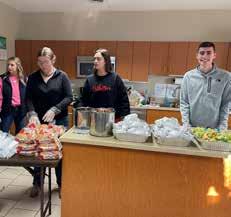
A special thank you goes to our Franklin County Junior Cattlemen, who assisted with serving the meal. Their willingness to help and be involved is a great example of the leadership and dedication being developed within our youth program.
The Franklin County Cattlemen’s Association appreciates everyone who attended and contributed to another successful meeting.









Katie Pratt
Kentucky Cattlemen's Association
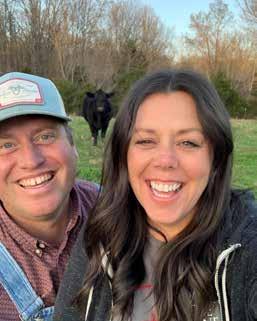
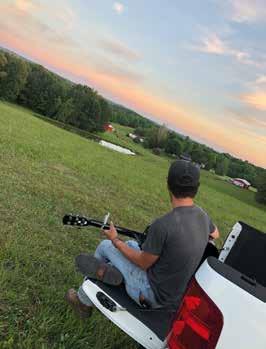
Barren County cattle producer Josh Morris has always found peace around cattle, but constant work demands took him away from the business for more than 20 years.
As he continues to scale up his operation, Morris is finding ways to make his small herd profitable.
“I just love cows. There’s something about them that helps keep me centered,” he said. “Now, don’t get me wrong, they will make you mad sometimes, but just being around them is calming for me. I’ve always been drawn to them.”
Like many farm kids, Josh Morris
raised cattle to help pay for his higher education. His dad and his grandfather purchased his first two heifers to help the then- Wayne County High School student grow his herd.
“They bought the heifers from Glen Massengale, and I thought he was the best cowboy ever,” Morris said.
When he graduated high school, Morris sold his herd of eight and paid for his first semester at Western Kentucky University.
“They were all 6-weights, and I sold them for $0.83 a pound back in 1997,” Morris said.
His career in human resources
and management took him away from cattle and the farm for over two decades. Morris is the director of operations at PJ’s College of Cosmetology and oversees its 11 campuses in Indiana and Kentucky.
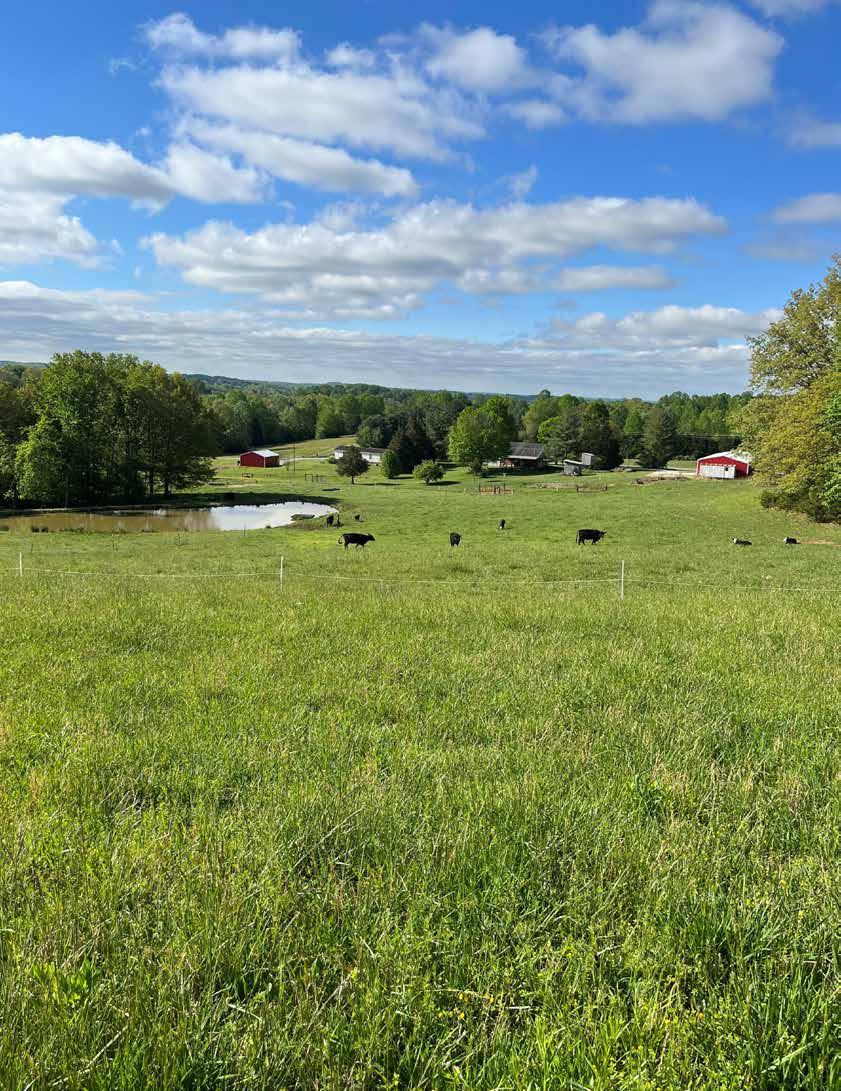
In 2019, he and his wife, Leslie Kidd Morris, who is a fifthgeneration farmer, purchased two heifers and returned to the beef industry. In 2020, they had the opportunity to purchase the farm they were leasing. They now have a herd of 13 that they rotationally graze on 70 acres. They farm with the help of Leslie’s father, Walter Kidd, and the occasional high school student during the summer.
Small Herd Profitability
When the Morrises purchased their first animals, they knew they would have to go away from the status quo to be profitable as they tried to grow their herd. They are doing that through freezer beef production and by selling replacement heifers.
“Being out of the business for 20 years allowed me look at it through a difference lens and not just how it’s always been done,” he said. “It gave me the opportunity to make my operation the way I wanted it to be.”
After a conversation with Warren County producers Kenneth and Joe Lowe, Morris decided the best way for him to be profitable with a small herd was through the production of freezer beef. The demand was also there because of COVID meat shortages in grocery stores.
While grocery stores have recovered from COVID, Morris has had a steady demand for his freezer beef. In 2025, he dedicated five animals to freezer beef production and sells quarter, half and whole shares.
Josh and Leslie also sell replacement heifers from their herd and her father’s herd.
“The replacement heifer idea came about because we knew these were good cattle, but we didn’t have a trailer to transport them,” he said. “I marketed them on Facebook and through Craigslist, and I have people from all over the state who come to farm and get them.”
Rotational Grazing
Rotational grazing is an important part of the operation, especially when it comes to profitability. Morris began implementing it after attending forage classes offered by Chris Teutsch, a University of Kentucky forage extension specialist.
“The cattle and land respond well to rotational grazing,” he said. “I haven’t had to fertilize in two years because the animals do it for me, and it helps us extend the grazing season so we don’t have to buy as much hay.”
All of his animals are in the rotational grazing system. The animals he produces for freezer beef are grass fed and grain finished on pasture.
Lifelong Learner
Morris is a lifelong learner, especially when it comes to cattle production. It was his quest for more information through Cow Country News that led him to join the Kentucky Cattlemen’s Association in 2019. He also began attending the Barren County Cattlemen’s Association meetings.
“I just really enjoy going to our county meetings,” said Morris, who was on the county’s board of directors and recently became the county’s president.
A Beef Advocate
Morris not only consumes information but he’s also willing to share what he learns. He helps educate the public about beef production and rural life through his social media channels. Much of his content is focused on myth busting, advocating for the beef industry and consumer education.
“I really don’t feel like we advocate for our beef enough,” Morris said. “I want people to know that there are cattlemen in places in the United States outside of the Southwest.”
Morris applied for and joined the Kentucky Cattlemen’s Foundation Leadership Class to get tools to become a better advocate. During the two-year program, he learned about policy and ways to share his message with others, including legislators. He also developed friendships with his classmates and several of them now bounce production ideas off each other.
“The leadership program was well worth the investment of time and money,” he said. “You get back way more than you put into it.”
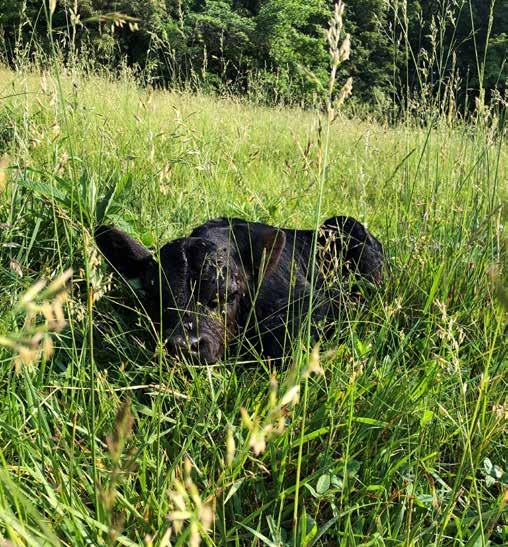
The Next Chapter Expansion is on the horizon for Morris Beef Cattle. This year, Josh and Leslie will retain their heifers to grow their herd. They began leasing an adjoining farm and need the extra animals to help maintain the pastures.
Grazing Strategies for Summer
Summer grazing strategies actually start in the spring, and how you managed your pastures last season will always shape the options you have now. Remember the old sayings: “it takes grass to grow grass” and “grow grass when you can.” Those are the bedrock principles.
What level of animal performance are you after? Nutritional needs stack up in a clear order—maintenance comes first, then lactation, growth and finally rebreeding.
High-quality pasture is vegetative. Since grass grows from the tip, the top is always the most tender and nutritious part. When grass is growing quickly, I like to use the top-third grazing strategy—take just the top third, then move to the next paddock. As growth slows, shift to grazing the top half, always leaving enough plant behind for regrowth. If things get dry or growth is slow, graze down to the minimum safe height, usually around 3 to 6 inches, depending on the grass species. If grass has been grazed short for a long stretch, don’t expect a quick rebound—without enough leaf or root, regrowth is slow.
If you’ve managed your grass right, now it’s time to put it to work. Polywire with a geared reel and step-in posts has long been the gold standard for rationing grass, but I’ll tell you, virtual fences have changed the game. With virtual fence, you draw your paddock, and it’s done. Rotations can be as short as 15 minutes. The best way to use pasture is to allocate it like you would a feed bunk—let the animals line up and graze, not trample or manure all over it. When they stop grazing or lie down, it’s time for another allocation. Keep an eye on their rumen—right in front of
Gregg Brann Grazing Consultant
the left hip bone. It should be level or slightly bulging. If it looks sunken, that means they’re not getting enough, so make the paddocks bigger.
Sometimes you just can’t get shade or water in every paddock, so back-grazing up to four days is fine.
There are many different grazing techniques. The trick is to pick the ones that fit your goals and plan. Mix and match, adapt as you go, and don’t be afraid to use several techniques across different herds or fields if that gets you better results.
AMP, or Adaptive Multi-Paddock Grazing, means using 16 or more permanent paddocks, split into 45 or more temporary sections. The key is adaptability: swap grazing styles as needed to hit your target.
Creep grazing lets calves graze ahead of the cows, so they get the best grass. The calves grow better, and the cows maintain better body condition and breed back quicker. It’s easy to set up—a creep gate, a high wire for calves to slip under, or just put virtual fence collars on the cows, not the calves.
Flash grazing is just putting a herd into an area for a short graze—perfect for riparian zones or other sensitive spots where you don’t want them hanging around.
Forward grazing (“leader-follower”) means letting the animals with the highest nutritional needs go first—like calves or lactating cows—followed by lower-need animals.
Mob grazing—sometimes called ultrahigh-density grazing—is when you pack on 100,000 pounds or more of livestock per acre. You get excellent grass utilization and lay down a lot of
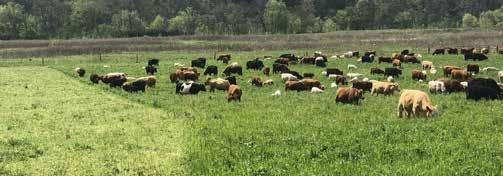
residue to build soil health. You’ll be moving the herd several times a day. Put-and-take grazing adjusts your stocking rate with the seasons. For example, you might run twice as many head in the spring as you do later in the summer. This works especially well for stocker operations.
Seasonal grazing is exactly what it sounds like—just graze when you’ve got grass. One big opportunity is contract grazing cattle from winter through summer.
Strip grazing is another classic—give cattle a narrow strip, let them eat it down, then move them before they overgraze. It’s one of the most common and effective ways to manage pasture.
Time-limit grazing means letting cattle into a really good field for just a short stint—sometimes only an hour—then moving them out. The trick is, they’ll crowd the gate to get in, and you’ll need something to lure them back out.
Total grazing is when you hold the herd on a spot until they’ve eaten nearly everything. You get great utilization and less picking and choosing by the animals. Just remember: you’ll need a long recovery period for the grass, you’ll probably have to supplement with protein, and not every animal will keep its condition—so plan on some culling.
At the end of the day, there’s no onesize-fits-all approach to grazing. It’s about paying attention, staying flexible and working with what your land and animals are telling you. Stick to the fundamentals, keep learning and don’t be afraid to try new things. Your pastures and your herd will show you the results.

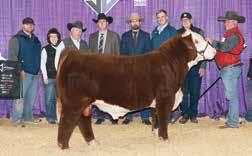
BF GKB 5502 McCRAE 200M ET
Marksman x BF Novel 5502 ET Reserve Grand Champion Horned Bull, 2026 Cattlemen’s Congress …owned with GKB Cattle
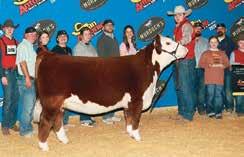
Marksman x BF Novel 5502 ET Supreme Champion British Heifer, 2026 San Antonio; Reserve Champion Jr. Polled Hereford Heifer, 2026 Fort Worth; Class Winner, 2025 American Royal & 2026 Cattlemen’s Congress…congratulations to Grady Creamer
…Selling a full sister to the two champions above from our 2025 Female Event! McCrae was the $50,000 feature Lot 1 bull, and 211M was the $85,000 feature Lot 2 heifer.
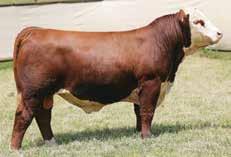
BF GKB 157F EMINENCE 111M ET
Merit x Rita 157F
High seller in our September 2025 sale to GKB Cattle. His AI service sells on the fall bred heifers, and his maternal sisters sell.
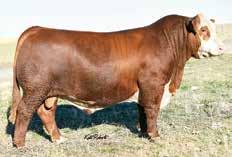
EXR GENERATOR 0333 ET
Genesis x C Bailees McKee 4295 ET His progeny sell, plus the fall bred cows with split calves are carrying his natural service.

Progeny from our very top donors sell!
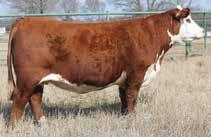
NJW 1A 173D RITA 157F
Endure x NJW 189Y 10W Rita 1A Her progeny sired by Marksman and Element sell.
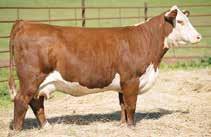
NJW 206C 358C LADYSPORT 42F Pioneer x Ladysport 206C Her progeny sired by Element and Liberty sell.
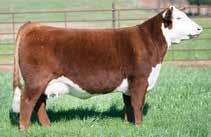
BF AMBITION 11J ET
Boyd Blueprint x BF Novel 5502 ET Her progeny sired by Generator and Houston sell.
photo by Jake Harrod
Improved Pregnancy Following Spring Deworming
Gil Myers PhD, Magnolia, Kentucky
This article describes well-designed studies in which beef cow pregnancy rates improved following deworming prior to the spring breeding season.
While spring deworming is a common practice, let’s talk about one possible benefit.
On permanent pastures gastrointestinal parasite contamination and infections of cattle are facts of life. The long survival of worm larvae on pasture (months and up to a year for some ) helps ensure cattle become infected. Success in worm control contributes to herd productivity.
In a recently published Washington State study, 350 Angus-cross beef cows were dewormed 30 days prior to spring AI breeding and compared to 350 untreated controls. Pregnancy diagnosis was performed using ultrasound approximately 60 days after AI. This study used four commercial herds. Blood and fecal samples were collected to measure hormone and parasite levels.
Treated cows had a 9.2% higher pregnancy rate 60 days after AI. Treated cows had significantly lower (P<0.05) worm egg counts following treatment and significantly higher (P<0.05) progesterone levels at 16 days after AI.
The significant improvement in AI pregnancy recorded in the recent study appears to be the first study reporting progesterone levels, parasite worm egg counts and pregnancy data. This information is consistent with previous reports (Five studies with 392 cows from university and USDA research herds) of pregnancy improvements (11.5 %, P<0.05) following natural breeding in the spring. In all of these studies, the worm infections were subclinical. There was no difference in body condition scores between control and dewormed cows.
Whether a producer is using natural breeding or AI, consideration should be given to deworming beef cows prior to breeding. The widespread prevalence of gastrointestinal parasite contamination on permanent pastures in our region means that cows grazing these pastures cannot escape infections. Herd productivity can be improved in many herds as a result of effective parasite control at pre-breeding.
Kasimanickam,R.K., Kasimanickam V.R., 2021. Association of gastrointestinal parasite burden, serum cytokines and hormones concentrations, and pregnancy in Angus-cross beef cows. Vet. Parasit. July 2021.
Myers, G.H. et al 1989. Summary of reproductive improvements in beef cows following parasite control using fenbendazole. Seventh International Conference on Production Disease in Farm Animals. Abstracts, Pages 409 – 412, Cornell University.
MYERS PARASITOLOGY SERVICES
Our lab provides fecal worm egg counts. This data allows you to:
• evaluate dewormer effectiveness
• evaluate pasture contamination
IF YOU PROVIDE FRESH MANURE, WE PROVIDE USEFUL INSIGHTS.
GIL MYERS, PhD
2897 Mount Sherman Road Magnolia, Kentucky
270-537-4749
gmyersph@scrtc.com
GRASS INTO GAINS
WITH ALLIGARE RANGE & PASTURE
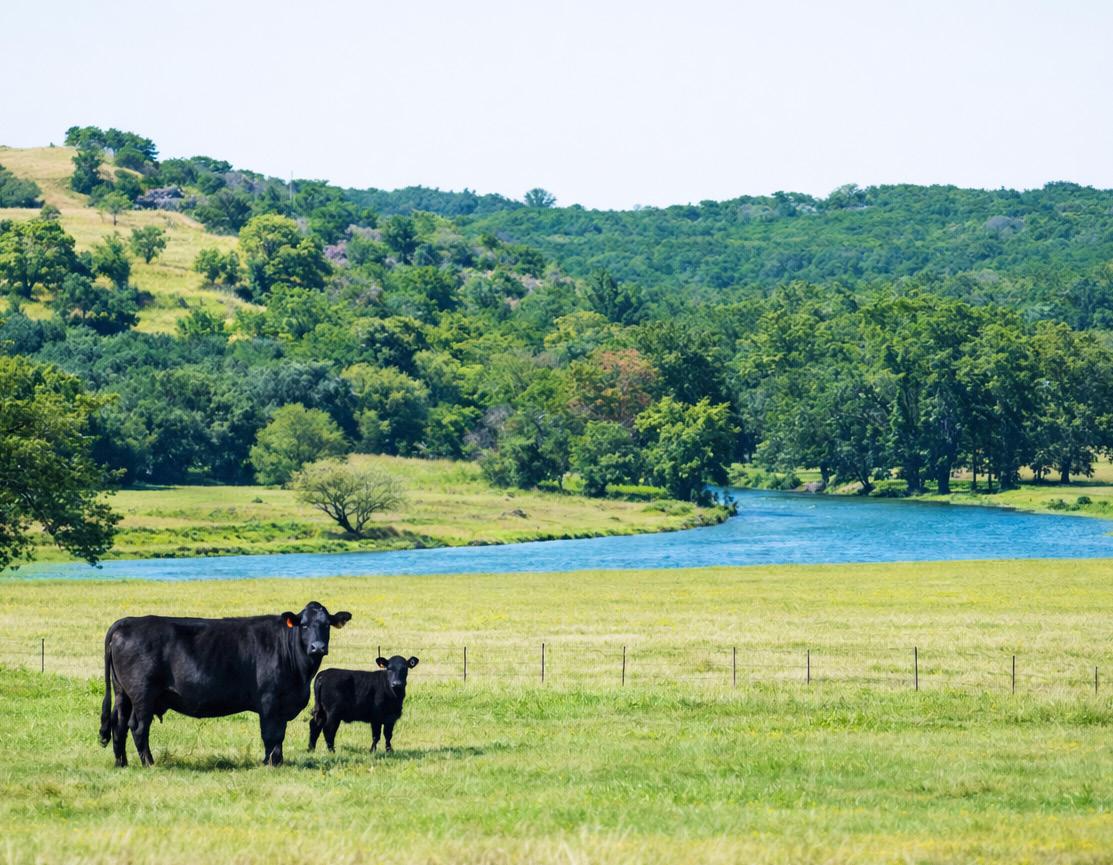
Spring green-up sets the tone for calf gains and cow condition, but winter annuals, biennials, and perennials can threaten both forage and livestock. Poison Hemlock, in particular, is toxic and can be fatal.
Alligare offers a proven herbicide portfolio to help you protect your pastures and your herd.
CATTLEMAN
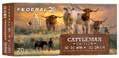
Feed Your Henry with Federal Premium


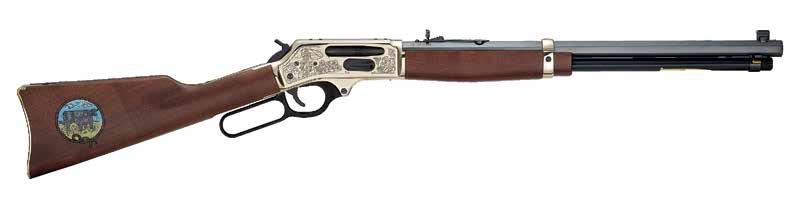
Introducing the American Cattleman Tribute Edition Rifle
From the wide-open ranges of the 19th-century Western frontier to the family ranches that have stood steadfast for generations, America’s story has always included the men and women who sweat and toil to raise the cattle that feed our nation. The American Cattleman Tribute Edition Rifle is our tip of the hat to this enduring way of life.
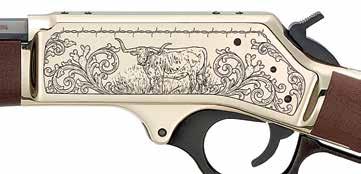
Built on our brass-framed .30-30 lever action platform, this rifle is made for those who put in the long, hard hours from sunup to sundown, and it stands as a testament to the animals and their stewardship at the heart of it all. Featuring genuine American walnut furniture paired with an engraved, highly polished brass receiver, every detail honors the grit and tradition that define the cattleman’s trade. Long live the American Cattleman.



Engraved, highly polished, hardened brass receiver


Alexis Scheidt KADF Regional Manager
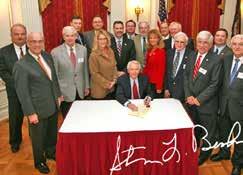
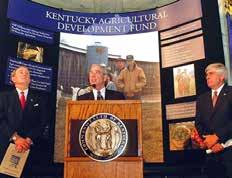
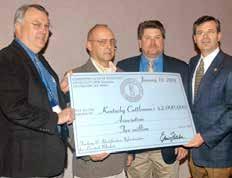
The history of Kentucky’s agricultural development programs is closely tied to the national tobacco litigation settlement known as the Tobacco Master Settlement Agreement. Signed in 1998 between major tobacco companies and 46 states, the agreement provided longterm payments to states as compensation for healthcare costs related to smoking. Kentucky—historically one of the nation’s largest tobacco-producing states—received a significant share of these funds. Recognizing the decline of tobacco production and the need to diversify farm income, the Kentucky General Assembly passed House Bill 611 in 2000, establishing the Kentucky Agricultural Development Board and the Kentucky Agricultural Development
Fund to reinvest settlement money into the state’s agricultural economy. By law, approximately 50% of Kentucky’s settlement funds are directed back into agriculture to help farmers transition away from tobacco and strengthen other sectors. These funds are managed through the Kentucky Agricultural Development Fund and distributed through programs administered by the Kentucky Agricultural Development Board and the Kentucky Office of Agricultural Policy. The goal was to help farmers transition away from tobacco dependence and invest in new agricultural enterprises that would sustain Kentucky’s farm economy.
One of the most widely recognized programs created through these funds is the County Agricultural Incentive Program (CAIP). CAIP provides cost-share
assistance to farmers for improvements such as fencing, water systems, forage establishment, cattle handling facilities and farm infrastructure. The program covers numerous agricultural enterprises, including beef cattle production, and helps producers diversify or expand operations that can lead to improved efficiency that can translate into more profits. For Kentucky beef producers, CAIP has been particularly important because it enables farmers to invest in grazing systems, improved genetics and cattle handling equipment to implement more timely and safer herd health programs contributing to best management practices that might otherwise be financially out of reach.
A prime example of a good steward using CAIP funds is Bart Hamilton from Bracken County. Over the past 10
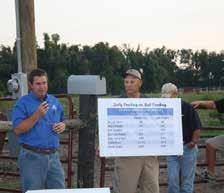
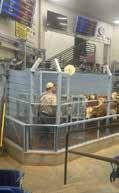
years, he has narrowed his calving window, decreased cow weights, increase weaning weights, effectively used record keeping, improved his pastures and extended his grazing season through rotational grazing. Hamilton used CAIP funding to install cross fences and purchase polywire to subdivide his farm into 10 pastures for rotational grazing. He also used cost-share funds to install a mile of water line through his farm and add four tire waterers, that were modeled after visiting similar demonstration projects developed by the University of Kentucky’s Steve Higgins’ work at Eden Shale Farm. Hamilton has seen his revenue double and his input costs decrease by 40%-50%.
“I used to think that to have a high producing herd, you had to have high input costs,” Hamilton said. “I now know that you can have a high producing herd and low input costs, and a small farm can be profitable. Dr. Les Anderson has helped me a whole lot.”
Another key area where Master Settlement Agreement funds have benefited Kentucky agriculture is providing financial incentives to support for livestock health and veterinary services. Through the Large and Food Animal Veterinary Incentives Program, veterinarians can receive reimbursement—up to 75% of eligible expenses with a limit of $100,000 — to expand services for cattle and other livestock across rural Kentucky. This initiative helps address shortages of large and food veterinarians in rural communities and ensures beef producers have access to essential herd health
services.
Master Settlement funds have also strengthened Kentucky’s beef industry through investments in industry organizations such as the Kentucky Beef Network, which provides education, marketing assistance and production support to cattle producers. These investments help producers improve herd quality, adopt better management practices, and connect with markets across the state and region. In addition, settlement funds have helped expand the state’s meat processing capacity. Programs like the Meat Processing Investment Program were developed to support processors seeking to expand or become USDA-certified facilities, increasing opportunities for local livestock producers to establish or expand direct to consumer sales. Between 2015 and 2022 alone, millions of dollars were invested in beef and dairy industry projects, including processors and producer organizations.
Overall, the Master Settlement Agreement funds have played a transformative role in Kentucky agriculture. By reinvesting tobacco settlement money into programs such as CAIP, veterinary incentives, beef industry initiatives, and meat processing infrastructure, the state has helped thousands of farmers adapt to a changing agricultural landscape. For Kentucky beef producers, these programs have provided the resources needed to modernize operations, improve herd management and strengthen local supply chains—ensuring that cattle production remains a vital part of Kentucky’s agricultural economy.
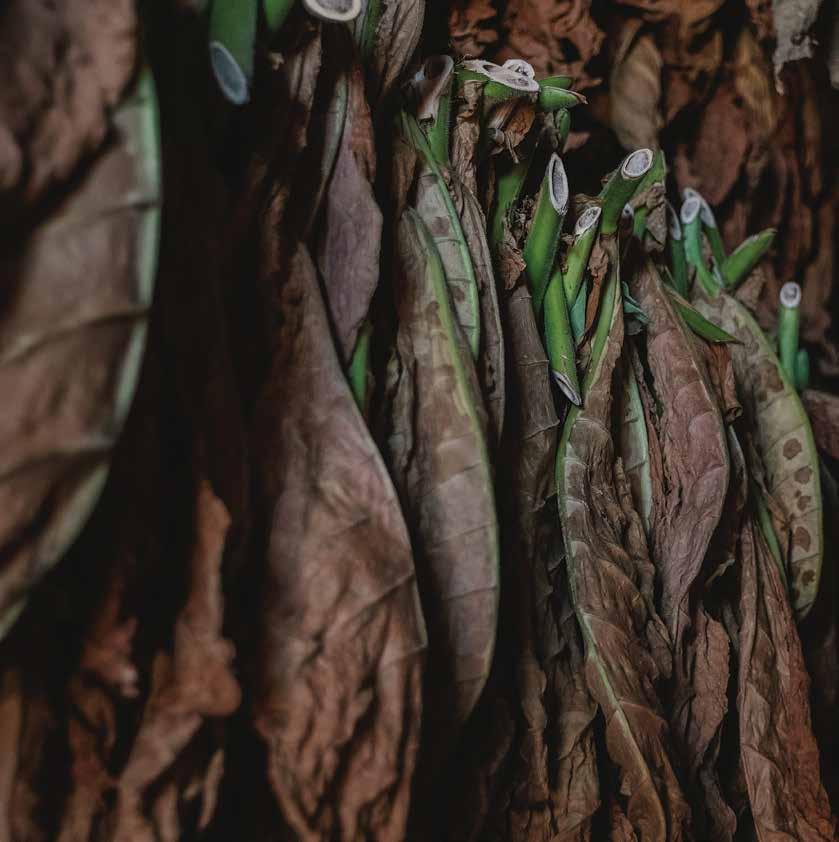
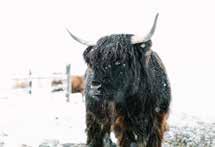
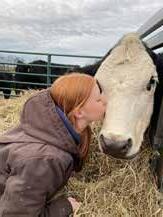
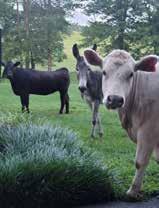
Bovine Beauties
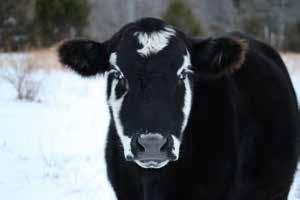
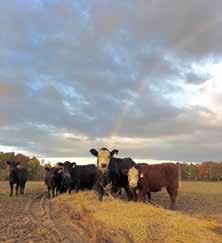
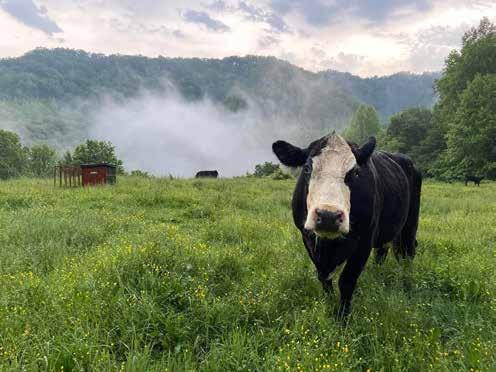
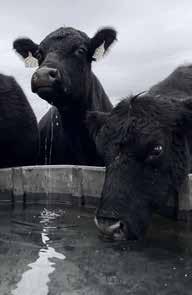
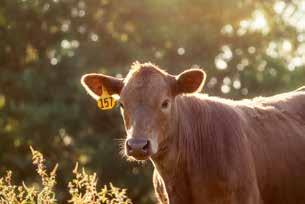
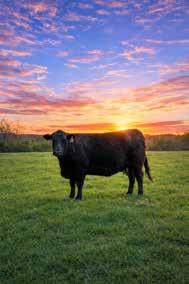
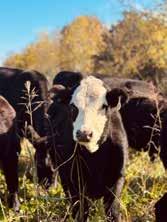
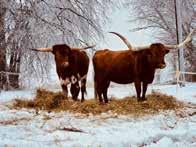
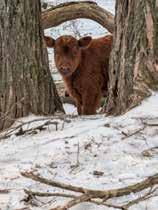
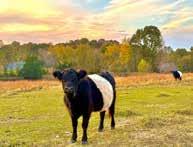
These top 10 entries in each category were selected by a panel of judges. These photos were published to Facebook, where the public got to vote on their favorite.

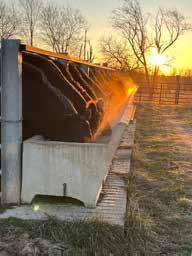
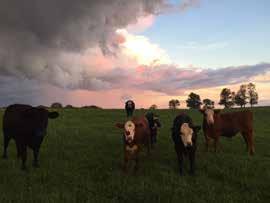
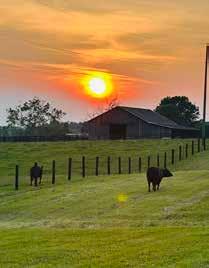
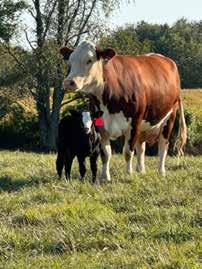
winner: Daisy - Erica Rowe Pike County
A. Winter Wonderland on the Farm - Holland Kelsay Barren County
B. Pot of Gold at the End of the Rainbow - Hayley Gooch Madison County
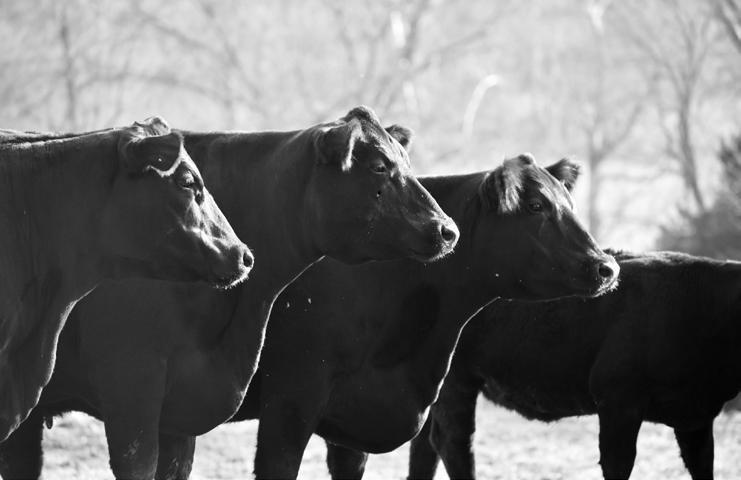
C. Morning Light - Lorrie Boston Metcalfe County
D. Water Break - Beth Brown Logan County
E. Raising Cattle, Feeding Families, Living the Ranch Life - Andee Grace Applegate Jackson County
F. God’s Painting - Connie Weber Sutherland Woodford County
G. Crisp Morning Breakfast - Adam Chunglo Mercer County
H. Three of a Kind - Chris Coffman Boyle County
I. Perfect Start to Fall Calving - Adam Benham Meade County
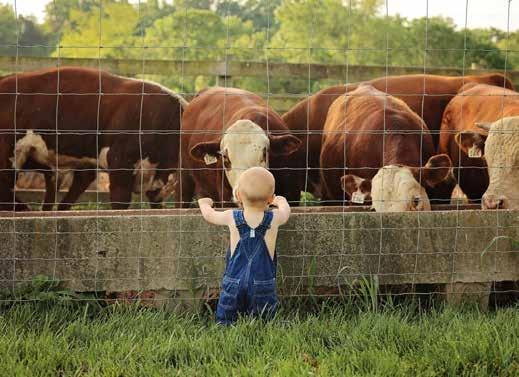
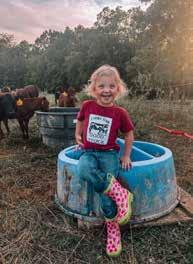
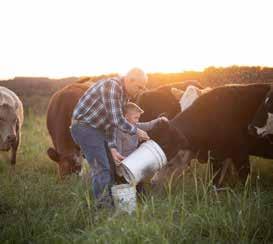
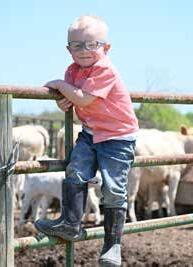
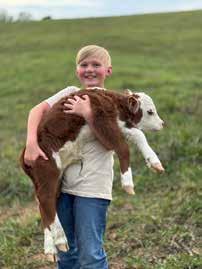
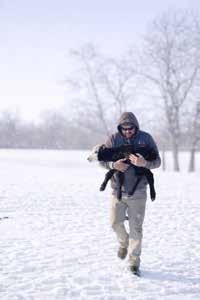
Bovine Beauties
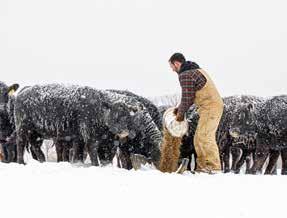
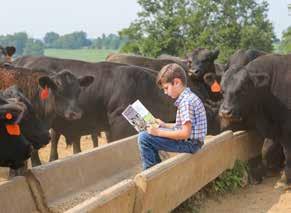
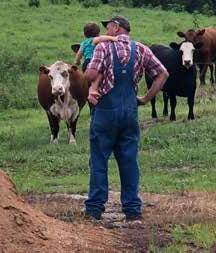
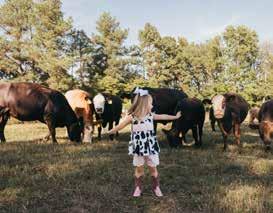
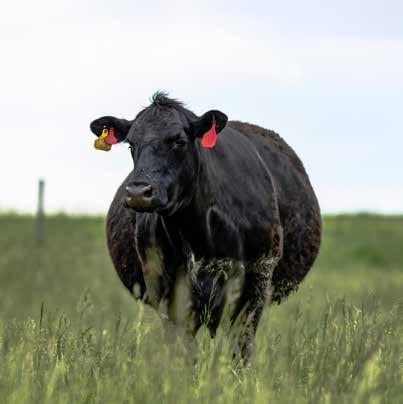
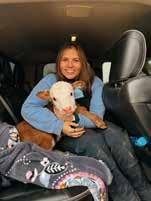
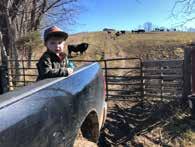
winner: Where Childhood Meets the Heartbeat of the Farm - Korri Thompson Taylor County
A. TLC - Courtney Scott Bourbon County
B. I Come from Good Stock - Tess Priddy Hardin County
C. Cattle Check - Martina Sowder Garrard County
D. Youngsters - Joshua Hale Boyle County
E. Papaw and His Boy - Jennifer Monnig Lawrence County
F. Father and Son - Jessica Noble Green County
G. Reading Instead of Feeding - Sarah Jarvis Bourbon County
H. Wait! Dad Shut the Gate! - Lauren Grant Webster County
I. Frosty Feeding - Carly Story Fleming County
Thank you to all of our 2026 Bovine Beauties entrants, and we hope to see you all back next year!
(5 mg/mL doramectin, 150 mg/mL levamisole hydrochloride)
CAUTION: Federal law restricts this drug to use by or on the order of a licensed veterinarian.
INDICATIONS:
VALCOR® is indicated for the treatment and control of the following species of parasites in beef cattle two months of age and older and in replacement dairy heifers less than 20 months of age. Not for use in beef bulls intended for breeding over 1 year of age, dairy calves, and veal calves. Gastrointestinal Roundworms (adults and fourth stage larvae): Ostertagia ostertagi (including inhibited larvae), O. lyrata, Haemonchus placei, Trichostrongylus axei, T. colubriformis, T. longispicularis*, Cooperia oncophora, C. pectinata*, C. punctata, C. surnabada, Bunostomum phlebotomum*, Strongyloides papillosus*, Oesophagostomum radiatum, Trichuris spp.*, Nematodirus helvetianus*. Lungworms (adults and fourth stage larvae): Dictyocaulus viviparus. Eyeworms (adults): Thelazia spp. Grubs (parasitic stages): Hypoderma bovis, H. lineatum. Sucking Lice Haematopinus eurysternus, Linognathus vituli, Solenopotes capillatus. Mange Mites: Psoroptes bovis, Sarcoptes scabiei. *Adults only
WARNINGS AND PRECAUTIONS:
WITHDRAWAL PERIODS AND RESIDUE WARNINGS:
Cattle must not be slaughtered for human consumption within 15 days following last treatment with this drug product. Not for use in female dairy cattle 20 months of age or older, including dry dairy cows; use in these cattle may cause drug residues in milk and/or in calves born to these cows or heifers. Not for use in beef calves less than 2 months of age, dairy calves, and veal calves. A withdrawal period has not been established for this product in pre-ruminating calves.
User Safety Warnings:
Not for human use. Keep out of reach of children. If accidental eye contact occurs, flush eyes immediately with water for 15 minutes and seek medical attention. If wearing contact lenses, flush eyes immediately with water before removing lenses then continue rinsing for at least 15 minutes. Do not eat, drink or smoke while handling the product. Wash hands after use. Take care to avoid accidental self-injection. If accidental injection occurs, seek medical attention and provide product package insert to medical professional. To obtain a Safety Data Sheet(s), contact Zoetis Inc. at 1-888-963-8471 or www.zoetis.com.
Animal Safety Warnings and Precautions:
Use of levamisole in cattle treated in the last few days with cholinesterase inhibitors such as organophosphates or with morantel may enhance the toxic effects of levamisole. Use together with caution.
Destruction of Hypoderma larvae (cattle grubs) at the period when these grubs are in vital areas may cause undesirable host-parasite reactions including the possibility of fatalities. Killing H. lineatum when it is in the tissue surrounding the gullet may cause bloat; killing H. bovis when it is in the vertebral canal may cause staggering or paralysis. These reactions are not specific to treatment with VALCOR® and can occur with any successful treatment of grubs. Cattle should be treated either before or after these stages of grub development. Consult your veterinarian concerning the proper time for treatment. Follow recommended dosage carefully. Reproductive safety has not been evaluated in bulls intended for breeding.
ADVERSE REACTIONS:
This product is likely to cause swelling at the injection site. Tissue damage at the injection site may also occur, including possible granulomas and necrosis. These reactions have resolved without treatment. Local tissue reaction may result in trim loss of edible tissue at slaughter. A single death attributed to clostridial infection associated with the injection of VALCOR® was reported in a non-pivotal effectiveness study. Observe cattle for injection site reactions. If injection site reactions are suspected, consult your veterinarian. This product is not for intravenous or intramuscular use. Hypersalivation may be observed; however, this reaction will disappear within a few hours. If this condition persists, a veterinarian should be consulted.
Contact Information:
Contact Zoetis Inc. at 1-888-963-8471 or www.zoetis.com. To report suspected adverse drug experiences, contact Zoetis Inc. at 1-888-963-8471. For additional information about reporting adverse drug experiences for animal drugs, contact FDA at 1-888-FDA-VETS or http://www.fda.gov/reportanimalae.
TARGET ANIMAL SAFETY:
Margin of Safety: Subcutaneous administration of VALCOR® was well tolerated in calves as young as 3 months of age at 1, 2, or 3 times the recommended dose. Dose-dependent post-dose hypersalivation was seen in all treated groups compared to the controls. All cases of hypersalivation were mild, transient, and resolved without further medical intervention. Dose-related injection site reactions were observed, and those in the 1X group resolved between 21 and 28 days post injection. Injection site reactions were primarily swelling which resolved between 21 and 28 days post injection. Findings from the injection sites included swelling, edema, inflammation, muscle necrosis and fibrosis.
Female Reproductive Safety: The reproductive safety of VALCOR® was established in two studies with female cattle. First, a single dose of VALCOR® was administered subcutaneously at 3 times the recommended dose at times coinciding with folliculogenesis, implantation, or organogenesis, and had no effects on conception, calving, abortion, and stillbirth rates, and post-natal viability up to 30±2 days post-calving. There were no congenital abnormalities. The only test article-related change was an increase in incidence and duration of swelling at injection sites compared with control, but all swellings eventually resolved. In a second study, a single dose of VALCOR® administered subcutaneously at 3 times the recommended dose at either early or late gestation had no effects on calving, abortion, and stillbirth rates, and post-natal viability up to 30±2 days post-calving. One control calf and two treated calves were born with congenital abnormalities and did not survive. These were not determined to be test article-related. The only test article-related change was an increase in incidence and duration of swelling at injection sites, but all swellings eventually resolved. Not for use in bulls intended for breeding over 1 year of age, as reproductive safety has not been evaluated.
HOW SUPPLIED:
VALCOR® is available in 100 mL, 250 mL and 500 mL multi-dose, rubber-capped glass vials.
STORAGE, HANDLING, AND DISPOSAL:
Store below 25°C (77°F). Do not expose to light for extended periods of time. Do not contaminate water by direct application or by improper disposal of drug containers. Dispose of containers in an approved landfill or by incineration.
Approved by FDA under NADA # 141-553 Distributed by:
TOUGH ON TOUGH WORMS, EASY ON CATTLE PRODUCERS.
You can achieve effective parasite control in one product, where before you may have needed two. Valcor® (doramectin and levamisole injection) is the first prescription cattle dewormer with two active ingredients in one dose. It’s never been easier to be tough. Get tough at ValcorTough.com.


IMPORTANT SAFETY INFORMATION: Do not treat cattle with Valcor within 15 days of slaughter. Not for use in female dairy cattle 20 months of age or older, including dry dairy cows; not for use in beef calves less than 2 months of age, dairy calves, and veal calves. Safety has not been evaluated in breeding bulls. Use with caution in cattle treated with cholinesterase inhibitors. This product is likely to cause injection site swelling; tissue damage (including granulomas and necrosis) may occur. These reactions have resolved without treatment. See Brief Summary of Full Prescribing Information on the next page.



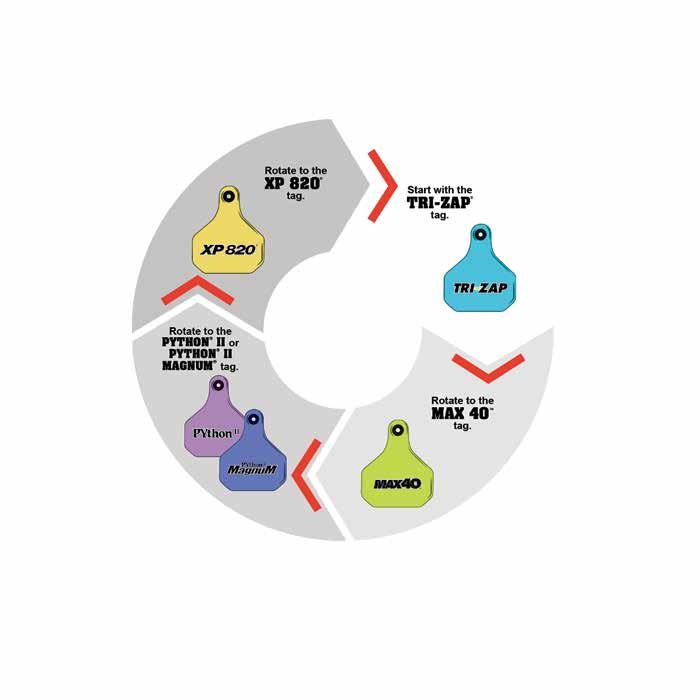
Magnum™ and XP 820 tags — proven to break resistance cycles and extend the life of your insecticide program. With tags across three chemical classes, Y-TEX gives you the power to protect your herd from horn flies, face flies and other costly pests year after year.


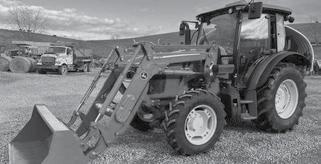
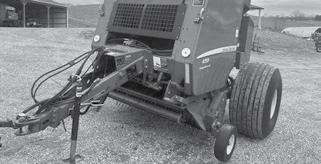
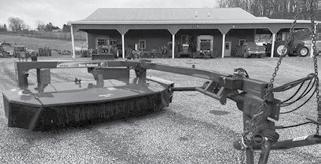
David L. Atkins FARM EQUIPMENT AUCTION



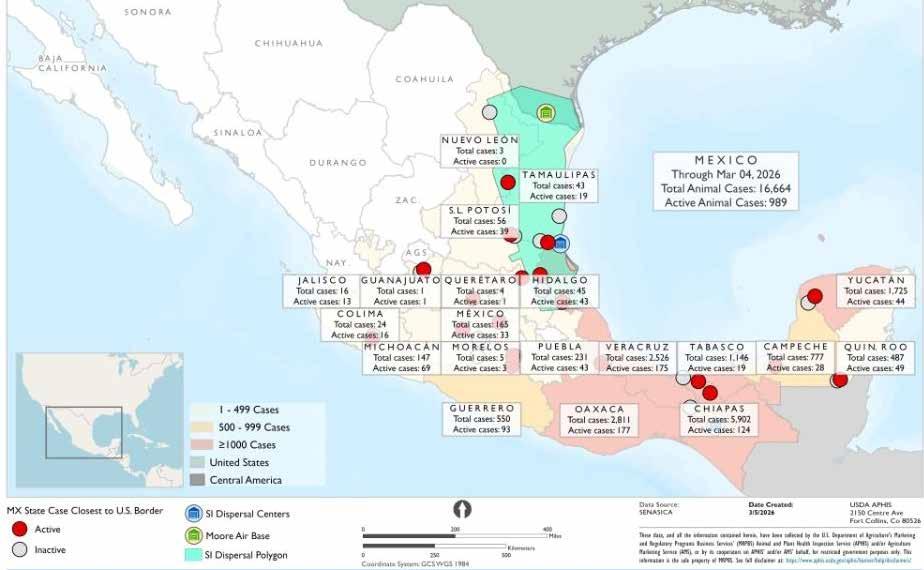
Prevention and Treatment Options if New World Screwworm Reaches U.S. Livestock
Michelle Arnold DVM-Ruminant Extension Veterinarian (UKVDL)
The New World screwworm (NWS, Cochliomyia hominivorax) is a blow fly that is native to the Western Hemisphere. Unlike most species of blow flies, adult female screwworms do not lay eggs on dead and decaying flesh. Instead, they lay eggs on living mammals at the borders of fresh wounds or at the edge of body orifices. Almost any wound is attractive to the female fly, whether the wound occurred naturally (for example, from fighting, predators, thorns, disease, tick or insect bites) or was man-made (from shearing, branding, castrating, dehorning, tail docking, and/or ear-tagging). The most commonly infested wounds are navels of newborn animals and the vulva and perineum of their dams, especially if there was any trauma when giving birth. The larvae (maggots) feed on the host’s living flesh, causing extensive damage by tearing at the host’s tissue with sharp mouth hooks. The term “myiasis” is used to refer to wound infestation by fly larvae/maggots. The wound will become larger and deeper as more eggs hatch and larvae feed on the living tissue, which may result in secondary infection and death if left untreated. New World screwworm is a pest that poses a significant agricultural, economic, and public health threat to livestock, wildlife, pets, and people. For updates on NWS, visit Screwworm. gov, the U.S. Government’s Unified NWS website.
Although the United States eradicated this fly in 1966 and eliminated a small outbreak in the Florida Keys in 2017, the fly is once again a concern as it continues its northward migration towards the Texas border (Figure 1). This steady migration has prompted the FDA’s Center for Veterinary Medicine (CVM) to quickly identify products to prevent and treat NWS myiasis if it reaches U.S. livestock. Unfortunately, for a drug to attain full approval in the U.S., the process is lengthy and very expensive which creates little incentive for drug companies to pursue approval for smaller markets or limited uses. A second pathway, known as “conditional approval,” allows drug companies to
legally market an animal drug while it gathers data to submit for full approval. Conditional approval makes drugs legally available in a faster timeframe than full approval, once the drug is shown to be safe and has a reasonable expectation of effectiveness. The third pathway, “Emergency Use Authorization,” allows an unapproved animal drug or unapproved use of a drug in certain exceptional situations. These authorizations give veterinarians more options for treating uncommon conditions, serious or life-threatening diseases, or diseases without adequate treatments available.
Conditional approval is possible due to the Minor Use and Minor Species Animal Health Act (the "MUMS Act") enacted in 2004 to help FDA ensure that animal drugs for minor species or minor uses in a major species are available when needed. “Minor” species include all animals that are not one of the seven major species: horses, dogs, cats, cattle, pigs, turkeys, and chickens. For example, a drug to treat a disease in sheep or goats is eligible for conditional approval because both are minor species. A minor use in a major species is the use of a drug in a major species for a condition that occurs either infrequently or in a limited area and affects only a small number of animals each year. For either conditional approval or full approval, the drug company must show that the animal drug is safe when used according to the label. The difference is that for conditional approval, the drug has a “reasonable expectation of effectiveness,” but has not yet proven that it meets the “substantial evidence” standard required for full approval. The Federal Food, Drug, and Cosmetic Act does not allow extra-label (or “off-label”) use of conditionally approved animal drugs, a fact explicitly stated on the label as “It is a violation of Federal Law to use this product other than as directed in the labeling.” As of this writing, there are two conditionally approved products labeled for the prevention and treatment of NWS maggots (myiasis) in cattle (Figure 2).
On Sept. 30, 2025, DECTOMAX®-CA1
(Zoetis) was the first product to receive conditional approval for the “prevention and treatment of infestations caused by larvae of Cochliomyia hominivorax (myiasis), and prevention of reinfestation for 21 days in cattle.” The conditional dose is 1 mL (10 mg doramectin) per 110 lbs. of body weight administered by subcutaneous or intramuscular injection in the neck region. Dectomax-CA1 Injectable is the same doramectin formulation as Dectomax Injectable. Note that this conditional approval does not include Dectomax® Pour-On nor generic formulations. This conditional approval applies to beef cattle, female dairy cattle less than 20 months of age, pregnant beef cows, newborn calves and bulls. There is no change to the previously established pre-slaughter withdrawal period of 35 days. Do not use in female dairy cattle 20 months of age or older nor in calves to be processed for veal. For more information on Dectomax®-CA1, visit www. zoetisus.com/conditions/cattle/newworld-screwworm/
On Dec. 4, 2025, the FDA conditionally approved the second drug, Exzolt™ Cattle-CA1 (fluralaner topical solution) made by Merck Animal Health for the prevention and treatment of infestations caused by New World screwworm (Cochliomyia hominivorax) larvae (myiasis) and treatment and control of cattle fever tick (Rhipicephalus microplus) in beef cattle 2 months of age and older and replacement dairy heifers less than 20 months of age. It is not for use in bulls intended for breeding 1 year of age and older, dairy calves, and veal calves. Exzolt™ Cattle-CA1 is a prescription ready-to-use pour-on formulation for one-time use only. The product is applied to the hair and skin in a narrow strip extending along the dorsal midline from the withers to the base of the tail at a dose of 1 mL/44.1 lbs. (1 mL/20 kg) body weight. According to the label, “Cattle must not be slaughtered for human consumption within 98 days of treatment. If cattle are continuously exposed to temperatures at or above 60° F after product administration, then cattle may be slaughtered

Product Indication(s)
Dectomax-CA1 (doramectin injection) injectable solution
Exzolt Cattle-CA1 extralabel use of this animal drug is not permitted
Credelio Quattro-CA1
Prevention and treatment of infestations caused by larvae of Cochliomyia hominivorax (myasis), and prevention of reinfestation for 21 days in cattle.
Prevention and treatment of infestations caused by New World srewworm (Cochliomyia hominivorax) larvae (myiasis) and treatment and control of cattle fever tick (Rhipicephalus microplus) in beef cattle 2 months of age and older and replacement dairy heifers less than 20 months of age.
Treatment of infestations caused by New World screwworm (Cochliomyia hominivorax) larva (myiasis) in dogs and puppies.
for human consumption 44 days after treatment. Violative residues may result if cattle are exposed to temperatures below 60° F after administration and are slaughtered at 44 days.” For more information, visit https://www.merck-animal-health-usa.com/products/ exzolt-fluralaner/ .
On August 19, 2025, the U.S. Department of Health and Human Services (HHS) issued a declaration that allows the U.S. Food and Drug Administration (FDA) to issue Emergency Use Authorizations (EUAs) for animal drugs to treat or prevent infestations caused by the New World screwworm (NWS). Once issued, an unapproved animal drug or unapproved use of an approved animal drug may be authorized for emergency use as long as the NWS declaration remains in effect. The only Emergency Use Authorization for NWS in cattle was issued on Feb. 5, 2026 for Ivomec® (ivermectin) 1% injectable solution marketed by Boehringer Ingelheim
Animal Health. Specific label directions state “for the prevention of infestations caused by NWS in newborn calves, administer Ivomec injection within 24 hours of birth. For the prevention of scrotal myiasis, administer Ivomec injection at the time of castration. For the prevention of wound myiasis, administer Ivomec injection at the time of wound appearance. Monitor the wound for signs of myiasis. If a wound is already infested, or if an infestation develops after Ivomec administration, alternative treatment is necessary.” Ivomec is administered by subcutaneous injection at 1 ml/110 lbs. body weight. Note that Ivomec injectable is only authorized for prevention of maggots and not for treatment to remove them. The EUA does not cover generic ivermectin products and does not include the pour-on formulation. Cattle must not be slaughtered for human consumption within 35 days of treatment. Ivomec is not for use in female dairy cattle
producing milk for human consumption and calves that will be processed for veal.
To date, there are no drugs with a full FDA approval for NWS myiasis. However, FDA has conditionally approved (CA) or issued Emergency Use Authorizations (EUA) for several drugs to be used legally to treat or prevent NWS myiasis. Remember that every state is at risk due to international travel of people, pets and livestock. If you suspect NWS, immediately report any suspicious wounds, maggots or infestations to a local accredited veterinarian, your state animal health official, or a USDA veterinarian. Definitive field identification of screwworm adults and larvae can be difficult, even with a microscope, and can only be confirmed by submitting specimens for expert diagnosis. A USDA-accredited veterinarian or state/ federal authority will take the necessary samples and send them to NVSL for identification.
Figure 2: Animal Drugs Conditionally Approved by FDA for NWS
April Cow Sales
BG Campbellsville
Friday, April 3, 2026—7:00 PM
BG South—Stanford Friday, April 17, 2026 6:30 PM
BG Lexington Wednesday, April 22, 2026 6:30 PM
Upcoming Sales
BG Lexington
Belles/Bulls of the Bluegrass Simmental Sale—April 4, 2026
Bluegrass Longhorn Sale & Futurity —April 10-11, 2026
Clifford Farms & Guests Hereford Sale—April 18, 2026
KY Certified Hereford Influence Feeder Sale May 18, 2026
Profit Thru Performance—June 1, 2026
BG South—Stanford
Special All Breed Horse Sale —April 10, 2026
KY Traditions Hereford Influence Feeder Sale May 14, 2026
BG East—Mt. Sterling
Special Exotic Livestock Sale April 4, 2026
BG Albany
Sheep & Goat Sales 1st Monday of Month 1:00 PM April—May—June—August—September—October—November
Every Acre of Your Farm Tells a Story.
No two farms are the same. The acres on a cattle farm in Kentucky tell a different story than those on a row crop operation in Arkansas.
But something every farmer can agree on is that the land is so much more than just a farm. It’s their livelihood, their lifestyle and their legacy.
That’s something you don’t have to explain to a farmer-owned lender.
And that’s why farm real estate loans* from Farm Credit Mid-America come with something that other loans don’t. Flexibility. We can design a loan that meets the needs of your farm. And if rates go down, we offer the flexibility to convert** to a lower rate without the hassle of the traditional refinance process.
Learn how working with a farmer-owned lender is different.

UKREC Summer Interns Present Research
Chris Teutsch UK Research and Education Center, Princeton KY
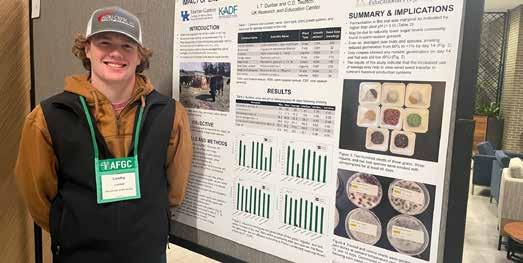
Each summer, we hire interns to assist with research and extension programs at the University of Kentucky Research and Education Center located in Princeton. As part of their internship, each student completes a project that allows them to learn about how to design a study, how to collect and analyze data, and how to interpret and present that data at a scientific meeting. I wanted to share three projects with you.
The first project was completed by Landry Dunbar, a senior at Caldwell County High School. He will attend Murray State University in the fall. His project evaluated the impact of ensiling on seed viability.
Impact of Ensiling on the Viability Of Grass, Legume And Forb Seed
Weed and crop seed can remain viable during the hay-making process. Subsequent hay feeding can result in the spread of both desirable and undesirable species. Past research found that the viability of some, but not all seeds were reduced by ensiling. The increased use of baleage in the southeastern U.S. could reduce weed seed transfer. The objective of this study was to determine the impact of ensiling on the viability of eight species. Treatments included three grasses, three legumes and two forbs that were ensiled or not ensiled. Vegetative johnsongrass (Sorghum halepense (L.) Pers.) was harvested, wilted overnight and ensiled the following day. Forage was cut into
2-inch pieces, and 1-quart vacuum bags were filled to 65% of their compressed volume, 200 seeds from each species were added, and air was evacuated and bags were sealed using a commercial grade vacuum sealer. Silos were then placed in an opaque tote and allowed to ferment at ambient temperatures (70-80 degrees F) for at least 48 days. Silos were then opened, and 50 random seeds were extracted from each silo and placed in a 6-centimeter petri dish on two layers of filter paper that had been saturated with distilled water. Tops were replaced and sealed with parafilm. Germination counts were then made at three, seven, 10 and 14 days. Averaged over trials and species, ensiling reduced germination from 90 to <1% by day 14. Only cowpea showed significant germination on day 14 (7%). The results of this study indicate that the increased use of baleage may help to slow weed seed transfer in ruminant livestock production systems.
Impact of Sorghum-Sudangrass
Seeding Rate on The Yield, Nutritive Value and Botanical Composition of a Warm-Season Annual Mixture
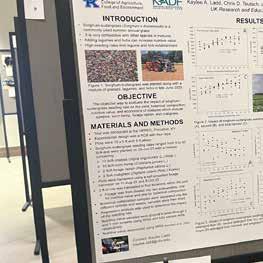
The second project was conducted by Kaylee Ladd. She is currently a freshman at Murray State University. Her project examined the impact of sorghum-sudangrass seeding rate on the botanical composition, yield and nutritive value of summer-annual mixtures.
Sorghum-sudangrass can be very competitive with other species in summer-annual mixtures, especially at higher seeding rates. The objective of this study was to evaluate the impact of sorghum-sudangrass seeding rate on the yield, nutritive value, and botanical composition of a summer annual mixture. Plots were established on June 24, 2025 at the UK Research and Education Center. Sorghum-sudangrass seeding rates ranged from 5 to 50 lbs. per acre and were planted with a mixture containing 10 lb./A cowpea, 10 lbs./A Sunn hemp, 2 lbs./A forage radish and 2 lbs./A crabgrass. Plots were harvested on Aug. 11, 2025 and Oct. 9, 2025. Two subsamples were collected from each plot, one for dry matter (DM) and nutritive value determinations, and a second for botanical separations (harvest one only). Yields ranged from 2,807 to 4,171; 1,675 to 2,889; and 4,639 to 6,836 lbs. DM/A and increased in a quadratic manner for the first and second harvest, and total yield, respectively. As sorghum-sudangrass seeding rates decreased, the relative contribution of the other mixture components increased. At a sorghumsudangrass seeding rate of 5 lbs./A, the botanical composition was 38, 4, 22, 0, 4, and 30% for sorghum-sudangrass, cowpea, Sunn hemp, forage radish, crabgrass and weeds, respectively. However, total yield was decreased from 6,836 to 4,639 lbs. DM/A. These data indicate that while decreasing sorghumsudangrass seeding rates could increase
Featured Video
Warm-Season Forage Options for Kentucky
This video can be viewed by visiting the KYForages YouTube Channel.
Featured Publication
AGR-229: Warm Season Annual Grasses in Kentucky
This publication can be accessed https://tinyurl.com/2x4887xk or by visiting your local extension office.
Forage Management Tips for March
• Graze winter annuals.
• Flash graze paddocks that were frosted with clover.
• Allow calves and lambs to creep graze.
• As pasture growth begins, rotate through pastures quickly to keep up with initial growth.
• As pasture exceeds the needs of grazing livestock, remove some pastures from the rotation and allow growth to accumulate for hay or silage harvest.
• Get equipment ready to harvest hay at the late boot stage to early head stage top optimize yield and forage quality.
• Determine the need for and prepare to plant warm-season annuals.
Upcoming Events
Kentucky Fencing Schools
Mason and Todd County, April 28 and April 30 forages.ca.uky.edu/Events
Kentucky Beginning Grazing School
Morehead State University, April 21 - 22 forages.ca.uky.edu/Events
Fencing Tip
Connect wires that run in parallel at the end of runs. A good way to increase the ability of a fence to carry voltage is to connect all the wires at the beginning and end of runs of multi-wire fence. This allows the multiple strands of high tensile wire to function as one large wire that is capable of carrying higher levels of voltage.
the relative contribution of other species in the mixture, it also reduces total DM yield and increases weed pressure.
Impact of Ensiling on the Isoflavone Concentrations in Red Clover
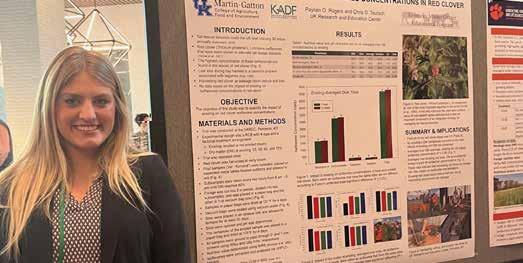
The third project was completed by Paycen Rogers. She is currently a freshman at Murray State University. Paycen conducted a project evaluating the impact of ensiling on the concentrations of flavonoids in red clover.
Tall fescue toxicosis costs the U.S. beef industry $2 billion annually. Red clover contains isoflavones that have been shown to alleviate tall fescue toxicosis. The highest concentrations of these compounds are found in the leaves of red clover. Leaf loss during hay harvest is a common problem associated with legumes. Harvesting red clover as
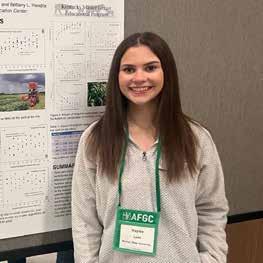
haylage could reduce leaf loss. However, the impact of ensiling on the isoflavone concentration is unknown. The objective of this study was to quantify the impact of ensiling on the isoflavone concentrations in red clover. Treatments were dry matter at ensiling and ensiling. Red clover was harvested at the early bloom stage, wilted and ensiled at target dry matters of 25, 50, 60 and 70%. At each dry matter, a fresh sample was taken and immediately dried at 131 degrees F. A second sample was cut into 2-in. pieces, and 1-qt. vacuum bags were filled to 65% of their compressed volume. Air was evacuated, and bags were sealed using a commercialgrade vacuum sealer. Silos were then placed in an opaque tote and allowed to ferment at ambient temperatures (70-80 degrees F) for at least 48 days. Silos were then opened, silage pH was determined and the remainder of the
sample was dried at 131 degrees F. All samples were ground for isoflavone and nutritive value determinations. Isoflavones were extracted and analyzed via UHPLC-MS/MS. Averaged across trials, isoflavone concentrations were not impacted by ensiling (P > 0.15) and total isoflavones were highest at 25% DM (P < 0.001). These data indicate that harvesting red clover as haylage may be a viable approach for reducing leaf loss and avoiding rain damage.
All three of these students presented their research at the American Forage and Grassland Council’s Annual Meeting in Asheville, North Carolina. They each summarized their research results and developed a scientific poster and answered questions from conference attendees. If you know of a young person that is interested in learning about agricultural research and extension, send them our way!



BEEF CHECKOFF COLLECTION
WHO IS RESPONSIBLE FOR REMITTING THE CHECKOFF ASSESSMENT?
BUYER
Generally the Buyer is responsible for collecting the Beef Checkoff assessment from the Seller
SELLER
50¢

QUALIFIED STATE BEEF COUNCIL
However, both the Buyer and the Seller are responsible for seeing that the Checkoff is collected and paid. or pays $2 to $1.50
Cattlemen’s Beef Board invests in national Checkoff programs, while Kentucky Beef Council invests in state programs.
If you are a producer from one of these seven states - Alaska, Connecticut, Maine, Maryland, Massachusetts, New Hampshire, and Rhode Island - you will remit directly to the Cattlemen’s Beef Board. If you have any questions regarding who is responsible for remitting the Checkoff assessment or how to remit payment, please contact your State Beef Council or the Cattlemen’s Beef Board at (303) 867-6304.
3 Exceptions to Beef Checkoff Collection: 1. Non-producer status: If a person (or company) owns cattle for 10 days or less, purchases the cattle to facilitate the transfer of ownership to a third party, and certifies that any Checkoff dollars due from the previous owner have been collected, then that person qualifies as a “Non-Producer” and the Checkoff assessment is not due when qualified cattle are resold. 2. Organic Exemption: In the 2002 Farm Bill, Congress created a process exemptiing organic producers from paying Checkoff program assessments. 3. Pre-Payment: Producers can also choose to “prepay” the Checkoff assessment when shipping cattle out of state for feeding and still retain ownership on the cattle. This allows the producer to direct half of the $1-per-head national Checkoff assessment to the beef council in the state where the cattle were raised, rather than the state where the cattle will be fed. Note: To claim any of these exemptions, the person selling the cattle must provide the proper ‘document’ to show that the Checkoff assessment is not due at the time of sale. Thus, the rule of thumb for all cattle sales is that the person paying the producer should collect either a “Dollar or a Document.”
LIVESTOCK MARKET - When cattle are sold through a livestock market or video market, the Market collects and remits the Beef Checkoff assessment.
CATTLE DEALER/ORDER BUYER - When cattle are sold to a Cattle Dealer or Order Buyer, the Dealer/Order Buyer collects and remits the Beef Checkoff assessment.
ANOTHER PRODUCER - Both the Buyer and the Seller are responsible for making sure that the Beef Checkoff assessment is collected and remitted. For clarity and consistency, we encourage the Seller to take on this compliance responsibility.
VEAL GROWER - When dairy calves are sold to a Veal Grower, both the Buyer and the Seller are responsible for making sure that the Beef Checkoff assessment is collected and remitted. For clarity and consistency, we encourage the Seller to take on this compliance responsibility.
CATTLE SHOWS AND FAIRS - When producers sell their animals at fairs or cattle shows (4H/FFA shows, Purebred cattle shows, etc.), the Organization that runs the sale collects and remits the Beef Checkoff assessment.
FEEDLOT - When cattle are sold directy to a feedlot, the Feedlot collects and remits the Beef Checkoff assessment.
PACKING PLANT - When cattle are sold to a packing plant, the Packing Plant collects and remits the Beef Checkoff assessment.
DIRECT-TO-CONSUMER BEEF SALES - When producers market their cattle as beef, the Producer is responsible for remitting the Beef Checkoff assessment.
The
Department of Agriculture (USDA) prohibits discrimination in all its programs and activities on the basis of race, color, national origin, age, disability, and where applicable, sex, marital status, familial status, parental status, religion, sexual orientation, genetic information, political beliefs, reprisal, or because all or part of an individual’s income is derived from any public assistance program. (Not all prohibited bases apply to all programs.) Persons with disabilities who require alternative means for communication of program information (Braille, large print, audiotape, etc.) should contact USDA’s TARGET Center at (202) 720-2600 (voice and TDD). To file a complaint of discrimination, write to USDA, Director, Office of Civil Rights, 1400 Independence Avenue, S.W., Washington, D.C. 20250-9410 or call (800) 795-3272 (voice)

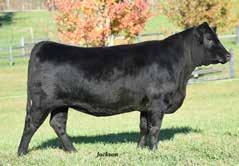
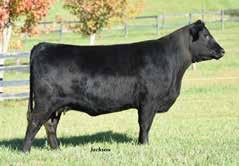
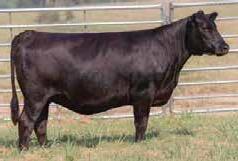
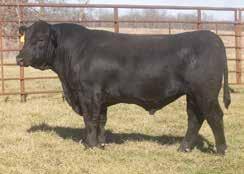
7 Oaks Erica of Ellston K101
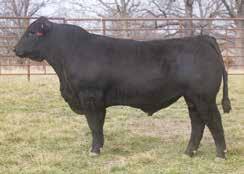
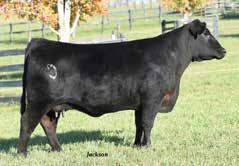
7 Oaks Erica of Ellston K102 C2 Rita 270
Sire: G A R Home Town Dam: Erica of Ellston T220
Sire: G A R Home Town Dam: Erica of Ellston T220
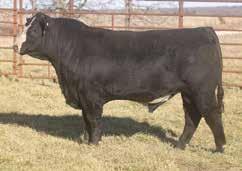
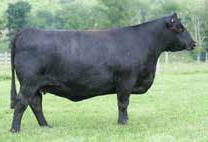
Sire: BJ Surpass Dam: Cannon Ridge Rita H10
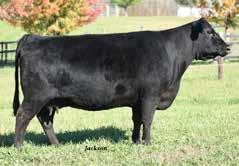
Sire: Poss Rawhide Dam: Pine View Rita E093
Sire: Deer Valley Growth Fund Dam: Basin Chloe 7T26
Dam: KL3 Lady Denver 0147




MEMBERSHIP







2025-26 MEMBERSHIP APPLICATION
* MEMBERSHIP YEAR 10/1/25– 9/30/26
NAME SPOUSE NAME FARM NAME
*Payments of KCA membership dues are tax deductible for most members as an ordinary and necessary business expense. However, charitable contributions of gifts to KCA are not tax deductible for Federal Income Tax purposes. Due to new IRS regulations, $2.24 of your dues would not be deductible. Approximately $12 of your dues will go towards the monthly publication Cow Country.
PLEASE CHECK THE MEMBERSHIP(S) YOU WOULD LIKE TO JOIN:
KCA MEMBERSHIP ($30/YR) NEW RENEWAL
Membership dues are $30 unless otherwise listed below
KCA COUPLE MEMBERSHIP
To add your spouse, please add $15 to your KCA Membership
KENTUCKY JUNIOR CATTLEMEN’S ASSOCIATION ($10/YR) NEW RENEWAL
I WOULD LIKE ADDITIONAL INFORMATION ON THE YOUNG PRODUCER’S COUNCIL
TOTAL MEMBERSHIP:
$ KCA
$ KJCA
TOTAL CONTRIBUTIONS:
$ CATTLEMEN’S FOUNDATION DONATION (voluntary)
TOTAL AMOUNT ENCLOSED:
$ ALL DONATIONS TO KCF ARE TAX DEDUCTIBLE
COUNTY DUES
Dues are $30 except for the counties listed below.
Allen...............................$40
Anderson........................$25
Boyle ..............................$35
Bullitt..............................$20
Butler..............................$25
Franklin ..........................$25
Louisville Area ................$20 (Jefferson, & Spencer) Magoffin .........................$20 Menifee ..........................$25
Mountain........................$25
(Breathitt, Floyd, Knott, Lee, Leslie, Letcher, Morgan, Owsley, Perry & Wolfe)
Highlands .......................$20 (Boyd, Johnson, Lawrence, & Martin) Hopkins ..........................$35 Laurel.............................$35
IF YOU WOULD ALSO LIKE TO JOIN THE NATIONAL CATTLEMEN’S BEEF ASSOCIATION The NCBA is now a State Marketing Partner with the KCA. You can pay your dues to both organizations with one check, at the same time.

Stewarding Your Checkoff Dollars
Kelly Baird KBC Director of Communications
Every month, Kentucky Beef Council (KBC) staff create thorough reports outlining how Checkoff dollars are utilized according to the marketing plan set by the KBC committee of producers. These reports are posted and managed monthly in the newsroom section of kybeef.com so you can be informed about how your investment is working to build demand for beef.
The Beef Checkoff’s purpose is to increase beef demand through promotion, education and research, and KBC staff work each day to ensure those funds are properly allocated toward programming that supports the beef industry.
In our most recent report from the end of February, you’ll see highlights throughout our entire programming. For example, our media partnerships provide strong statewide visibility across television, digital, streaming, radio and in-venue placements. A multistate activation with NASCAR driver Jeb Burton will feature the Beef. It’s What’s for Dinner. logo on his helmet and race car, along with digital advertising targeting NASCAR viewers. Through the Beef in the Classroom grant, 41 Kentucky schools have received approximately $11,500 worth of beef to support culinary and agriculture education in their classroom. The inaugural Beef Advance advocacy leadership program concluded in January 2026 after completing five sessions across Kentucky. And that’s just a snapshot of the many ways your Checkoff is working for Kentucky’s beef industry!
View the most recent checkoff reports and stay up to date with ongoing programming by visiting the newsroom at kybeef.com/about-us/newsroom/ news. If you’d like this report emailed directly to you monthly let Kelly Baird know at kbaird@kycattle.org.
The Kentucky Beef Council Marketing Plan, which guides how Checkoff dollars are invested throughout the year, can be found by visiting kybeef. com/for-cattlemen and scrolling to the bottom of the page.
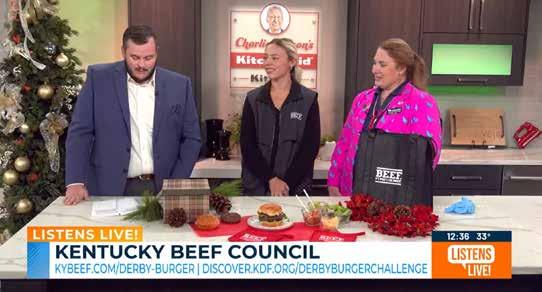
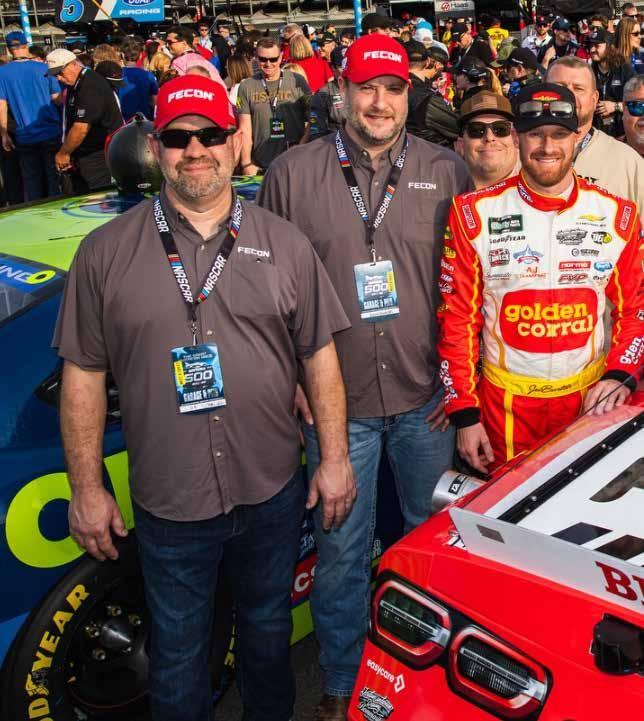
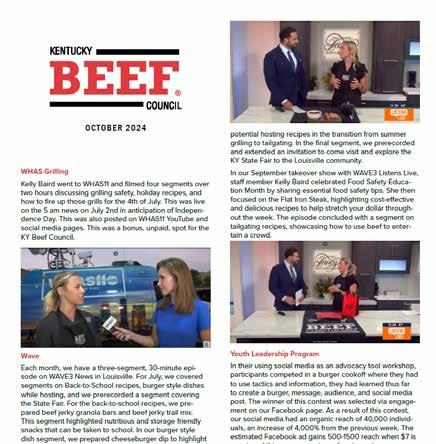
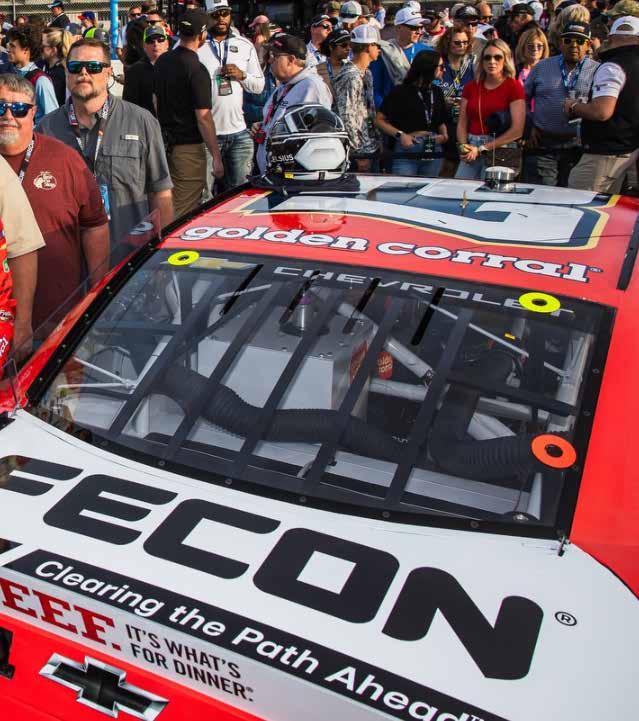
Looking forward to May, Beef Month May is National Beef Month, and we’re getting ready to celebrate big in Kentucky! Across the state, we’ll be highlighting the hardworking cattle producers who raise high-quality beef and the important role beef plays on dinner tables every day. There are many ways to join the celebration and advocate for beef, whether you’re at home, online or out in your community.
As a cattle producer, you are the best advocate for the beef industry. Consumers are more curious than ever about where their food comes from, and your personal experiences help build trust while educating others about sustainability, animal care and beef’s role in a healthy diet.
Social Media – Share your farm’s story, from calving season to pasture management or a day in the life on your operation. A simple post can spark meaningful conversations and help consumers better understand beef production. Social media can be a powerful tool—but it’s important to remember that many people following along may not be familiar with agricultural terminology. Be sure to include context, avoid heavy industry lingo and think from the perspective of a consumer who is learning about beef production for the first time.
Community Engagement – Getting involved in your local community is another great way to showcase the beef industry. Whether it’s participating in local council meetings, supporting a farmers’ market, helping with school events or attending community celebrations, these interactions help put a face behind Kentucky agriculture.
One-on-One Conversations – Some of the most impactful advocacy happens in everyday conversations. Whether at church, the grocery store or family gatherings, take the opportunity to answer questions and share why you’re proud to raise beef.
Your voice matters. Every interaction is an opportunity to build consumer confidence and highlight the dedication behind every cut of beef.
If you ever have questions about how to advocate for beef in your area or are interested in being spotlighted on the Kentucky Beef Council social media pages, please contact Kelly Baird at kbaird@ kycattle.org or 859-278-0899.
Hosting a Beef Month event in May? If you'd like the Kentucky Beef Council to set up a display or assist with your event, reach out to Kelly. We’d love to help celebrate with you!

Facilitator Feature: Northeast News
Samantha Stamm Northeast Facilitator, Kentucky Beef Network
Northeastern Kentucky beef producers gathered March 6 for a tour of Eden Shale Farm. The group included 22 producers representing Bracken, Elliott, Fleming, Lincoln, Mason and Rowan counties. Many visited the farm for the first time.
The day started with Dan Miller, Kentucky Beef Network industry coordinator, sharing the 70-year history of Eden Shale Farm and its shift from a diverse test and demonstration farm on the Eden Shale soil type to a focus on beef cattle, forage and grazing management since KBN assumed management in 2013. Throughout the tour, he provided perspective on the dayto-day management of the facilities and shared updates on the herd, which is in the thick of calving season.
Steve Higgins, director of environmental compliance for the University of Kentucky Martin-Gatton College of Agriculture, Food and Environment, discussed tire waterers powered by cost-effective pumps that run on solar and wind energy. Having worked with KBN on several infrastructure upgrades at Eden Shale Farm, Higgins also explained how the systems are supplied by rainwater runoff from buildings and city water across the farm.
Fenceline feeders for both hay and grain were also a major point of discussion as producers were interested in ways to better manage mud in high-traffic feeding areas. The importance of proper moisture drainage around those sites was heavily emphasized by both Miller and Higgins.
KBN Director, Becky Thompson and Northeast Facilitator, Samantha Stamm, also engaged with attendees and fielded questions throughout the day.
The event concluded with a yummy steak lunch on the farm prepared by Fleming and Mason County agriculture and natural resources extension agents, and participants headed home with new ideas to implement.
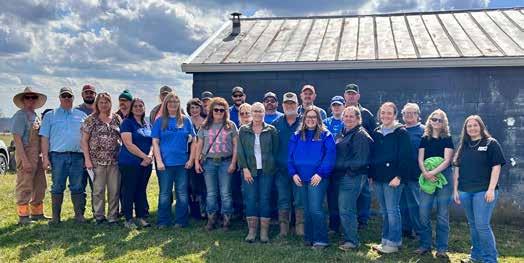
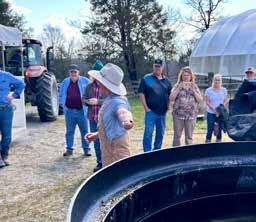
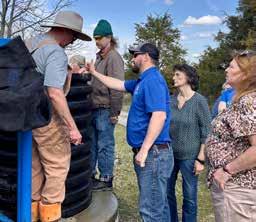
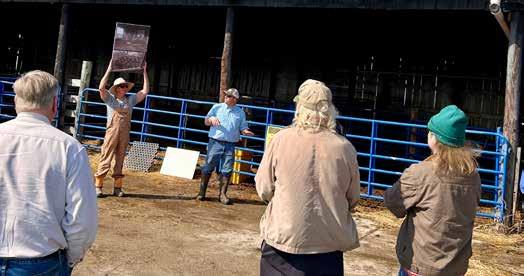


FACILITATORS
Ben Lloyd Whitesville, KY (270) 993-1074 benlloyd0223@gmail.com
Charles Embry Cave City, KY (270) 646-5939 dale.embry@yahoo.com
Cody Burke Frankfort, KY (606) 748-4641 cody.burke2019@gmail.com
Jacob Settles Springfield, KY (859) 805-0724 jacob.settles4@yahoo.com
Samantha Stamm Wallingford, KY (606) 748-7772 sastamm14@outlook.com
Ron Shrout Winchester, KY (859) 397-5151 shroutron@aol.com
Eden Shale Farm tour participants
Producers checking out the inner-workings of a tire waterer.
Higgins and Miller explain how fenceline feeders can cut down on waste and make feeding hay and grain both easier and cleaner.

Eden Shale Update
Dan Miller Industry Coordinator, Kentucky Beef Network
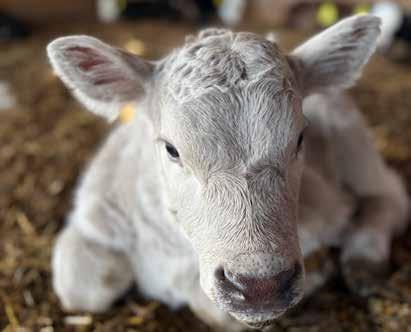
If we can claim success on anything at Eden Shale, it would be condensing our calving season down into a very tight, controlled window. Calving season is hard and takes a lot of time and attention away from other chores. There is no need to drag it out for months on end. Over the past five years, our calving window has averaged 63 days with a low of 56 days. This year is right on par with that pace. The replacement heifers started calving on Feb. 19, kicking out 12 calves the first week. During that time, the cows started calving with the same frantic pace. On day 14 of the calving season, we had 42 calves on the ground, which
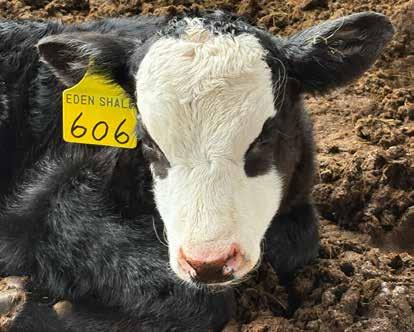
means 58% of our calf crop was born in two weeks!
As of this writing, we are at day 20 of the calving season and there are 47 calves that have been born (65%) in three weeks. We are on pace to finish calving in 30 days. However, we all know that will not happen as the cows slow down when they switch to the clean-up bulls. It should still be a short calving season overall and hopefully less than 60 days total.
Of the 25 replacement heifers, 14 calved AI, which is 56%. We bred those heifers to two different bulls. Fifteen were bred to the Angus bull Architect
and 10 of those calved AI for a 66% conception rate. We bred 10 head to the Hereford bull Richmond. Only 4 of them calved AI, which equals 40% conception rate. That is a low conception, however, with such a low number of females bred it is not enough to make any conclusions about the bull. The four calves that we have are nice calves, so I wouldn’t be concerned to try him again.
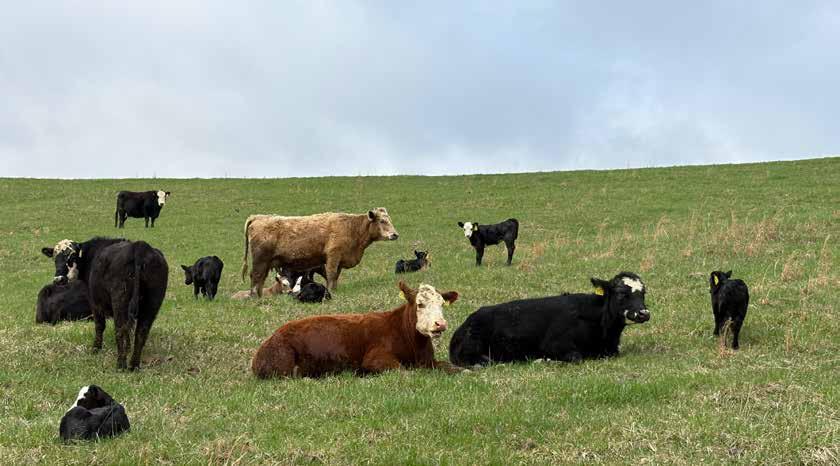
It is still too early to calculate the AI percentages on the cows. I will follow up with the final data of our calving season in a future article. Until then, we better get back to the calving barn.
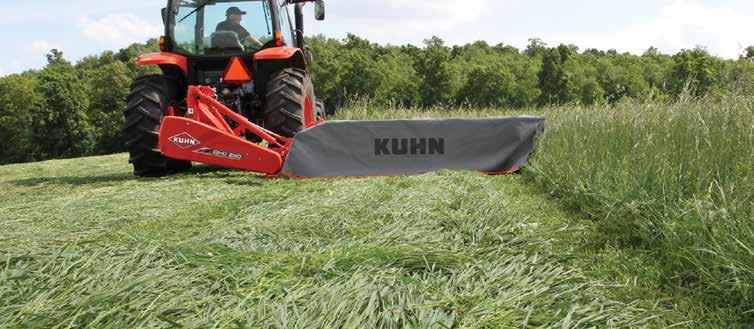
CLEAN , EVEN CUTTING
• Low-profile design for fast, clean cutting
• The Protectadrive ® system protects the cutterbar gear train and minimizes downtime
• Heavy-duty cutterbar ensures low maintenance and long life
• Spring suspension provides outstanding ground contouring


Email: wvlimousin20@gmail.com

Bull calves out of HCR Answer HCR SPIRIT 4007. Ø Bred for calving ease and growth.
Ø Bull calves out of HCR Answer 2042 and HCR SPIRIT 4007.
Ø Bred for calving ease and growth.

Ø Bulls for both purebred and commercial Ø Yearlings and two-year-olds available.
Ø Bred heifers to calve in fall available.
Ø Bulls for both purebred and commercial breeders.
Ø Bred heifers to calve in fall available.
Ø Yearlings and two-year-olds available.
Ø Bred heifers to calve in fall available.
L.A. Yount Haying Equipment Pleasureville
Holbrook Equipment
Rose Farm Supply Flemingsburg McKeel Equipment Co.
Sanford & Sons Sales & Service Bowling Green
James Randall Lawson Tractor & Implement Lebabob
Meade Tractor Georgetown Richmond MT. Sterling Paris Harlan London
Somerset Danville
Kentucky Hereford Association
Kentucky Hereford Association

Toby & Debby Dulworth 2492 S. Kirkman Road LaCenter, KY 42056 (270) 224-2993 • dogwood@brtc.net Herefords that thrive on forages. www.dogwoodherefords.com

HEREFORDS
Codee Guffey • 1815 Grassy Springs Road Versailles, Kentucky 40383 (502) 598-6355 rockridgeherefords@gmail.com www.rockridgeherefords.com
TK4 Herefords
Tony & Kathy Staples 992 Knotts Road
Brandenburg, KY 40108 (270) 945-9277
(270) 422-4220
tstaples@bbtel.com
PILE STOCK FARM
Registered Polled Herefords
HANSELL PILE, JR.
12045 St. John Rd. Cecilia, KY 42724
270-735-5192
12 miles West of Elizabethtown
Shannon, Kerry, Emily, Will & Ellie Morgan
13095 Scottsville Rd, Alvaton, Kentucky 42122
www.morganandmorganpolledherefords.com
Shannon: (270) 320-2389
KHA Certified Hereford Influenced Feeder Calf Sale: May 18
Kentucky Beef Expo Schedule
For more information contact Dustin Ogburn 502-686-0522, LW Beckley 859-779-1419 or Andrew Matheny 606-584-5361
Friday March 1st - Hereford Show - 1pm
Saturday March 2nd - Hereford Sale - 1pm

Sunday March 3rd - Open Junior Show - 8am
WELLS FARM
Polled Herefords
439 Flatwoods Frozen Camp Rd, Corbin KY 40701
Bobby & Brenda Wells (606) 344-0417 wells_farm@yahoo.com
WELLS FARM Polled Herefords
NJB Limited
439 Flatwoods Frozen Camp Rd, Corbin KY 40701
KHA OFFICERS
President: Chris Hopper 606-584-7842
Toby & Debby Dulworth 2492 S. Kirkman Road LaCenter, KY 42056 (270) 224-2993 dogwood@brtc.net
Bobby & Brenda Wells (606) 523-0569 or (606) 344-0417 wells_farm@yahoo.com
Kevin, Angela, Kenlea & Kyler Murray (606) 528-1691 or (606) 682-8413
Herefords that thrive on forages. www.dogwoodherefords.com

6077 Helena Road Mayslick, KY 41055
6077 Helena Road Mayslick, KY 41055
Charlie Boyd II • 606-584-5194 cboyd2@maysvilleky.net www.boydbeef.com
Charlie Boyd II 606-584-5194
Annual Bull Sale second Saturday in March Hereford and Angus Bulls
Annual Bull Sale second Saturday in March Hereford and Angus Bulls
Chambliss
Chambliss
Hereford Farms
Hereford Farms
Brad, Carla, Clay & Clint Chambliss 1101 Driftwood Lane Elizabethtown, KY 42701
Brad, Carla, Clay & Clint Chambliss 1101 Driftwood Lane
Elizabethtown, KY 42701
Home (270) 982-3905
Home (270) 982-3905
Cell (270) 668-7126 fax 270-735-9922
Cell (270) 668-7126 fax 270-735-9922
www.chamblissherefordfarms.com
www.chamblissherefordfarms.com
WOLF FARM
Registered Polled Herefords Bulls & Females for sale
WCN Polled Herefords
Since 1961
Tim & Peggy Wolf 12939 Peach Grove Road Alexandria, KY 41001
Bill Norris 2220 Celina Road
Burkesville, KY 42717
Home: 859-635-0899
Phone (270) 433-7256
Cell: 859-991-3484
Cell (270) 433-1525
“Every calf needs a white face”

Peyton’s Well Polled Herefords
The Lowell Atwood Family 133 Edgewood Drive • Stanford, KY Luke: (606) 669-8121 Beth: (606) 669-2178
Victor-
Dale Stith 5239 Old Sardis Pike Mays Lick, KY 41055 dalestith@yahoo.com (918) 760-1550
Kevin, Angela, Kenlea & Kyler Murray (606) 528-1691 or (606) 682-8413
MPH Farms
Registered Polled Herefords
Secretary/ Treasurer: Melinda Watson 859-625-8660 melindawatson8660@gmail.com
Ogburn • 502-686-0522 Secretary/
Melinda Watson • 859-625-8660 melindawatson8660@gmail.com
MPH Farms
Registered Polled Herefords
PAUL L. HANCOCK 8559 KY 56 Owensboro, KY 42301 270-771-4194 270-314-9758
PAUL L. HANCOCK 8559 KY 56 Owensboro, KY 42301 270-771-4194

Jackson Farms
Jackson Farms
Registered Polled Herefords PO Box 215 Cross Plains, TN 37049 615-478-4483
Registered Polled Herefords PO Box 215 Cross Plains, TN 37049 615-478-4483
billymjackson@aol.com
billymjackson@aol.com
“Farming the Same Land Since 1834”
“Farming the Same Land Since 1834”
WOLF FARM

Registered Polled Herefords Bulls & Females for sale
BECKLEY HEREFORDS
Tim & Peggy Wolf 12939 Peach Grove Road
L. Wayne Beckley • 1420 Fitchburg Rd. Ravenna, KY 40472 • 606-723-3021 Cell: 859-779-0962
Alexandria, KY 41001
Home: 859-635-0899
Cell: 859-991-3484
L.W. Beckley D.V.M 284 Pyrse Lane • Irvine, KY 40336 Cell: 859-779-1419 • Clinic: 606-726-0000 www.beckleyherefords.com

K3 CATTLE REGISTERED HEREFORDS
KYLE BUSH
K3CATTLE@YAHOO.COM 859-588-4531
198 HICKS PIKE CYNTHIANA, KY 41031
K3 CATTLE REGISTERED HEREFORDS KYLE BUSH K3CATTLE@YAHOO.COM 859-588-4531 198 HICKS PIKE CYNTHIANA, KY 41031
THOMAS FARM
THOMAS FARM
Eric & Ronnie Thomas 2396 Union City Rd. Richmond, KY 40475 (859) 623-5734
Eric & Ronnie Thomas 2396 Union City Rd. Richmond, KY 40475
Eric’s Cell (859) 314-8256
Eric’s Cell (859) 314-8256
“Cattle for sale at all times”
“Cattle for sale at all times”

BECKLEY HEREFORDS

Polled Hereford and Gelbvieh Cattle 3459 KY Hwy. 1284 E. Cythiana, KY 41031 (859) 234-6956
Polled Hereford 3459 KY Hwy. 1284 E. Cythiana, KY 41031
Ben (859) 421-7902
Ben, Jane, Shelby and Lincoln
Lincoln (859) 954-0102
Noah (859) 462-2428
Windy Hills Farm
Windy Hills Farm
Jackie D. Perkins II 367 Mt. Pisgah Rd. Bremen, KY 42325 (270) 543-3586
Jackie D. Perkins II 367 Mt. Pisgah Rd. Bremen, KY 42325 (270) 543-3586
Breeding to produce good cows since 1981
Breeding to produce good cows since 1981

Tony Brandenburg, tstaples@bbtel.com
L. Wayne Beckley • 1420 Fitchburg Rd. Ravenna, KY 40472 • 606-723-3021 Cell: 859-779-0962
L.W. Beckley D.V.M
284 Pyrse Lane • Irvine, KY 40336
Cell: 859-779-1419 • Clinic: 606-726-0000 www.beckleyherefords.com
“Breeding Polled Herefords for over 58 Years” Breeding cattle for sale at all times. 1999 Walnut Hill Rd. Lexington, KY 40515 (859) 271-9086 cell (859)533-3790
WATSON LAND & CATTLE
Matt, Melinda, Harlee, & Wyatt Watson 6196 Mount Sterling Rd Flemingsburg, Kentucky melindawatson8660@gmail.com
Matt - 606-748-1600
Melinda - 859-625-8660 CATTLE FOR SALE AT ALL TIMES
Tucker Stock Farms
“Registered Angus and Polled Herefords”
“Breeding Polled Herefords for over 58 Years” Breeding cattle for sale at all times. 1999 Walnut Hill Rd. Lexington, KY 40515 (859) 271-9086 cell (859)533-3790
“Bulls always for Sale”
BOYD BEEF CATTLE
6077 Helena Road
Mayslick, KY 41055
Charlie Boyd II: (606) 584-5194
Blake Boyd: (606) 375-3718 www.boydbeef.com cboyd2@maysvilleky.net
BURTON & SONS ANGUS
Joe D. or Karen Burton
ANGUS
THE BUSINESS BREED


480 Hominy Hill Rd. Nancy, KY 42544
Joe: (606) 305-3081
Located 15 miles West of Somerset • klburton01@windstream.net
Bulls & females sold private treaty. Inquiries Welcome. Sell only what we would buy. Data driven since 1981.
FALL CREEK ANGUS
448 Corder Farm Road Monticello, KY 42633
Ronnie Corder (606) 348-6588
HILL VIEW FARMS
Jimmy Gilles
5160 Lee Rudy Road
Owensboro, KY 42301 (270) 929-5370 jcgilles86@gmail.com
APS ANGUS
4040 Taylorsville Rd Taylorsville, KY 40071
Gordon Schubert
502-477-2637 • 502-548-8440
Anne Patton Schubert 502-477-2663 • 502-548-2359

ANGUS
THE BUSINESS BREED
TWIN CREEK FARM
HILL VIEW FARMS
President: Anne Patton Schubert
Vice President: Tom McGinnis
Secretary/Treasurer: Shayna Gibson
927 Old Liberty Pike • Hustonville, KY 40437 (859) 238-0771 • www.branchviewangus.com
238-0771 • www.branchviewangus.com
James S. & LuAnn Coffey, Donald & Donna Coffey Annual Production Sale- 2nd Saturday in April
James S. & LuAnn Coffey, Donald & Donna Coffey
Annual Production Sale- 2nd Saturday in April
BURKS CATTLE CO. 531 Rick Rd. Park City, KY 42160 Eddie Burks • (270) 991-6398 www.burkscattle.com
COFFEY ANGUS FARMS 661 Hopewell Road Liberty, KY 42539
Matt Coffey: (270) 799-6288
BURTON & SONS ANGUS

BURKS CATTLE CO.
531 Rick Rd. Park City, KY 42160
JOHNSON FARMS ANGUS Angus Bulls & Females Slaughters, KY Keith: (270) 635-0723
Reese: (270) 635-1137
Eddie Burks • (270) 991-6398 www.burkscattle.com
LYNN CREEK FARMS
Kris and Sara Lynn 2184 Bardstown Rd Springfield KY 40069 573-721-6663
DUTCH CREEK ANGUS FORAGE GENETICS

Joe D. or Karen Burton
Dewey Coffey: (606) 706-2699
480 Hominy Hill Rd. Nancy, KY 42544
Genetics for Maximum Profitability since 1984
Joe: (606) 305-3081

Located 15 miles West of Somerset • klburton01@windstream.net
Bulls & females sold private treaty. Inquiries Welcome. Sell only what we would buy.
Data driven since 1981.
GREAT MEADOWS ANGUS ASSOCIATION
COFFEY ANGUS FARMS
661 Hopewell Road Liberty, KY 42539
Dale Brown, President 292 Pea Ridge Road Stamping Ground, KY 40439 859-940-8437
Matt Coffey: (270) 799-6288
Dewey Coffey: (606) 706-2699
www.greatmeadowsangus.com
Genetics for Maximum Profitability since 1984

SALES: 3rd Saturday in October • 4th Saturday in April
DAVIS BEND FARMS
2315 Davis Bend Road Canmer, KY 42722
timmothyljeffries@gmail.com www.davisbendfarms.com
LYNN CREEK FARMS
Tim: (270) 528-6605 • Leslie: (270) 528-6435
Kris and Sara Lynn 2184 Bardstown Rd Springfield KY 40069 573-721-6663
FALL CREEK ANGUS
448 Corder Farm Road Monticello, KY 42633 Ronnie Corder (606) 348-6588
SMITHLAND ANGUS FARM
HAMILTON ANGUS FARMS
4437 East Hwy 80 Russell Springs, KY 42642
Henry Bryan, Melissa, Bryanna and Blane Smith 606-271-7520 bmsmith@duo-county.com

Doug and Susan Schlosnagle (502) 706-0008 DutchCreekAngus.om
MT. MORIAH ANGUS FARMS
Bob, Kathy, Rob, and Janna Clark (859) 748-5558 1446 Kennedy Bridge Rd. Harrodsburg, KY 40330
Bob: (859)339-2610 • Rob: (859)612-1594 mtmoriahfarms1@gmail.com www.mtmoriahangus.com
HERITAGE FARM
FOUR KINGS ANGUS
Tom McGinnis 1024 Hinkle Lane • Shelbyville, KY (502) 633-1634, home (502) 633-5100, work (502) 655-0164, cell
250 Bright Leaf Dr. • Harrodsburg, KY 40330
Cary & Kim King
Carymking@yahoo.com • fourkingsangus.com

www.stclairangus.com
TAMME VALLEY FARM
Jacob Tamme, Owner-Operator (859) 583-7134
jacob.tamme@gmail.com www.tammevalley.com
Cary Cell: (859) 613-3734 • Colby Myers - Purebred Manager

TRIPLE D ANGUS
Nathaniel & Darla Denham
Nathaniel(Bub), Sarah, (606) 423-2457 • (606) tripledangus.com
OLD BARK FARM
370 Ferrill Hill, Buffalo, KY 42716
Kenley Conner (502) 905-7825
Registered Angus Cattle
OLD BARK FARM
370 Ferrill Hill, Buffalo, KY 42716
Kenley Conner (270) 735-5324
TWIN CREEK FARM Shawn, Melissa, Devin (270) 337-3072 or (270) Dennis & Emily 270/337-2128 or 270/402-4338
Eddie Hamilton 2142 Stilesville Road Science Hill, KY 42553 edjohami@aol.com (606) 271-1286 Bulls and Females for Sale

President: Henry B. Smith Vice President: Anne Patton Schubert Secretary/Treasurer: Shayna Gibson
HERITAGE FARM
PLEASANT HILL FARMS
PLEASANT HILL FARMS
Tom McGinnis 1024 Hinkle Lane • Shelbyville, KY (502) 633-1634, home • (502) 633-5100, work (502) 655-0164, cell
Registered Angus Cattle
4040 Taylorsville Rd Taylorsville, KY 40071 Gordon Schubert 502-477-2637 • 502-548-8440
KENTUCKY MEMBERSHIP
Return to: Shayna New Castle,
(606) 375-3718
Shawn, Melissa, Devin & Dylan Gibson (270) 337-3072 or (270) 692-5304
Dennis & Emily 270/337-2128 or 270/402-4338
Jimmy Gilles 5160 Lee Rudy Road Owensboro, KY 42301 (270) 929-5370 jcgilles86@gmail.com
JOHNSON FARMS ANGUS
RANDOLPH FARM
Angus Bulls & Females

Gil, Mary, Corbin, Caroline, and Catherine Cowles 500 Rockfield Richpond Road Rockfield, KY 42274 (270) 843-9021 • Fax (270) 843-9005
Gil, Mary, Corbin, Caroline, and Catherine Cowles 500 Rockfield Richpond Road Rockfield, KY 42274 (270) 843-9021 • Fax (270) 843-9005

Located 7 miles west of Bowling Green, 1/2 mile off Hwy 68/80
Located 7 miles west of Bowling Green, 1/2 mile off Hwy 68/80
KENTUCKY ANGUS ASSOCIATION MEMBERSHIP APPLICATION
SMITHLAND ANGUS FARM
Return to: Shayna Gibson 1535 Fallen Timber Road New Castle, KY 40050 • Annual Dues $35
5202 East Hwy 80, Russell Springs, KY 42642
TAMME VALLEY FARM
Slaughters, KY
6550 Highway 330 Owenton, KY 40359
Keith: (270) 635-0723
Carter Randolph: (513) 543-4343
Reese: (270) 635-1137
Nick Sarky: (513) 262-9846 patty@randolphfarmoperations.com
Registered Black Angus Bulls & Females Available Sold Private Treaty. Inquiries Welcome.
LYNN CREEK FARMS
Kris and Sara Lynn 2184 Bardstown Rd Springfield KY 40069 573-721-6663
TRIPLE D ANGUS
Nathaniel & Darla Denham


Nathaniel(Bub), Sarah, Ashley Denham (606) 423-2457 • (606) 875-0780 tripledangus.com
MT. MORIAH ANGUS FARMS
Bob, Kathy, Rob, and Janna Clark (859) 748-5558
1446 Kennedy Bridge Rd. Harrodsburg, KY 40330
Bob: (859)339-2610 • Rob: (859)612-1594 mtmoriahfarms1@gmail.com www.mtmoriahangus.com
Charles “Bud” & Pam Smith: (270) 866-3898
Henry & Melissa Smith: (270) 866-2311
Jacob Tamme, Owner-Operator (859) 583-7134 jacob.tamme@gmail.com www.tammevalley.com & Find us on Facebook!

ST. CLAIR FARMS REGISTERED ANGUS
Eric & Sherry St. Clair
13433 Falls of Rough Road • Falls of Rough, KY 40119
Home: (270) 257-2965 • Cell: (270) 617-1079 www.stclairangus.com
CANNON ANGUS
Mary Jayne and Victoria Cannon 4619 Cherry Grove Rd Flemingsburg, KY 41041 606-748-5420 www.cannonangusfarm.com
Performance Tested Bull & Female Sale April 2020
TAMME VALLEY FARM
Jacob Tamme, Owner-Operator (859) 583-7134 jacob.tamme@gmail.com www.tammevalley.com & Find us on Facebook!

KENTUCKY ANGUS SWEEPSTAKES
Shayna
www.kentuckyangus.org
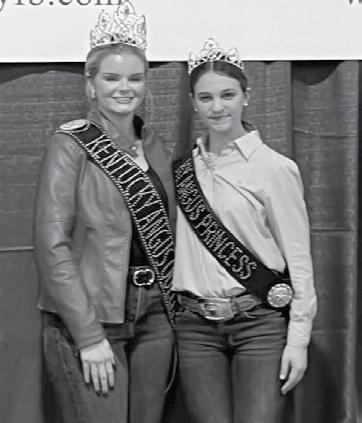
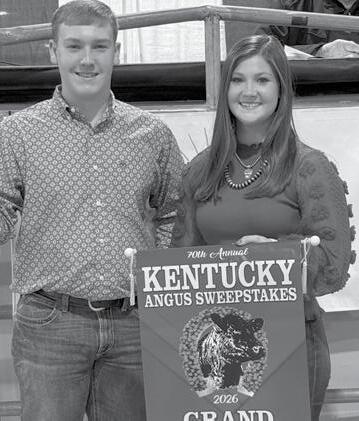
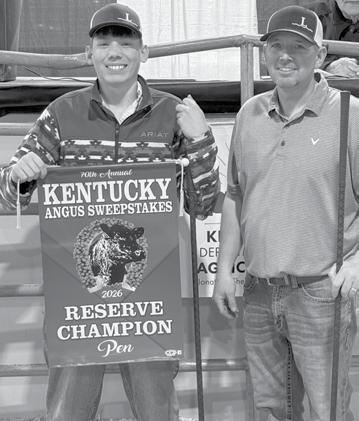
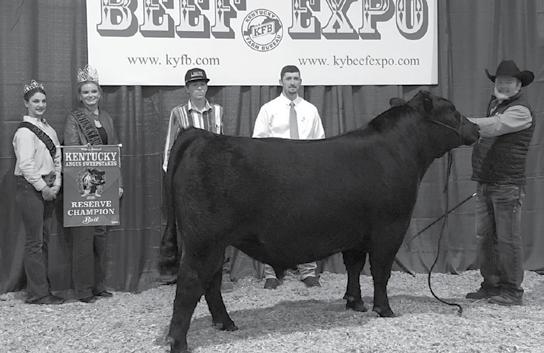
2026 Kentucky Angus Queen McKenna Jackson from Paris, KY and 2026 Kentucky Angus Princess Ellee Marksbury from Buffalo, KY.
2026 Champion Pen Female Lot 30, SAF Miss Lucy 3037 exhibited by Smithland Angus Farms, Russell Springs, KY
2026 Reserve Champion Pen Lot 28/28A, Valley Oaks Edella 3502 exhibited by Lynn Creek Farm/Rose Lane Farm, from Shelbyville and Louisville, KY
2026 Champion Haltered Female Lot 10, CMFM Phyllis N31 exhibited by Circle M Farms
2026 Champion Bull Lot 4, Cabana High Roller 405 exhibited by Cabana Cattle Co. from Paris, KY
2026 Reserve Champion Haltered Female Lot 7, Voyager Emblynette 8785 exhibited by Voyager Angus from Buffalo, KY
2026 Reserve Champion Bull Lot 40, Popplewell Viroqua 051 49M exhibited by Popplewell Farms, Russell Springs, KY

SIMMENTAL
KEVIN AND RACHEL BARRON
Crestwood, Ky
(502) 905-5851
rkbarron812@gmail.com

SWAIN SELECT SIMMENTAL 12113 Green Valley Dr. Louisville, KY 40243 swainselect.com swainselect@gmail.com facebook.com/swainselectsimmental

Fred & Phyllis: 502-599-4560 Chi & Angie: 502-287-2116
JUDY AND RONDAL DAWSON 1156 Buzzard Roost Road Shelbyville, KY 40065 502-593-5136 • jrdawson22@outlook.com

JEROD METZGER • 270-779-6260
ROCKING P LIVESTOCK 8308 Orangeburg Road Maysville, KY 41056
Chan: 606-584-7581
Keith: 606-584-5626 rockingplivestock@maysvilleky.net
BRIAN & HEATHER SWAIN 3906 Pottertown Road Murray, KY 42071 • 270-293-4440
wksbswain@murray-ky.net


SIMMENTAL AND SIMANGUS BULLS FOR SALE
1939 Huntertown Road
Versailles, KY 40383
BULLS FOR SALE
Chris Allen 859-351-4486
callenuky@hotmail.com
Dr. Henry Allen 859-229-0755

Simmental calves are champions of the scale.
They reliably outperform straightbred calves in the feedyard — with better growth, better structure and fewer health problems.
They add pounds without sacrificing marbling, and they come with the IGS Feeder Profit Calculator, which factors genetics, health and management into true value.
Want low-risk, high-potential calves with earning capability?
406-587-4531 • simmental.org

BRET AND LAURA JACKSON 859.533.3718 or 859.707.7200
BRET & LAURA JACKSON Paris, Kentucky (859) 533-3718 (859) 707-7200

KENTUCKY GELBVIEH ASSOCIATION
AA LAND & CATTLE
Registered Gelbvieh & Balancers
KENTUCKY GELBVIEH
Daryl Derossett, President..................................................................................................................(270) 670-6232
Cynthiana, KY
LARRY CLARK & SONS LLC
Registered Gelbvieh Cattle
Johnnie Moore, Vice President...........................................................................................................(270) 670-7814
Luke Arthur (859) 298-8323
106 Clark Houk Road • Greensburg, KY 42743
Pat Tilghman, Secretary/Treasurer.......................................................................................................(270)
luke.arthur93@gmail.com
Bulls • Show Prospects • Embryos Bulls sell with GE EPD’s • Show Prospects
BAR IV LIVESTOCK
Larry Clark, Owner & Operator (270) 299-5167 • (270) 405-6848
Lpclarkandsons@msn.com
Barry, Beth & Ben Racke • Brad Racke • 7416 Tippenhauer Rd. • Cold Spring, KY 41076
BAR IV LIVESTOCK
Barry, Beth & Ben Racke • Brad Racke
CLIFFORD FARMS
Phone (859) 635-3832 • Barry cell (859) 991-1992 • Brad cell (859) 393-3677 • Ben cell (859) 393-3730 Fax (859) 635-3832 • bar4@twc.com
7416 Tippenhauer Rd. • Cold Spring, KY 41076
Phone (859) 635-3832 • Barry cell (859) 991-1992
3459 KY HWY 1284E
Cynthiana, KY 41031

CD FARMS
Brad cell (859) 393-3677 • Ben cell (859) 393-3730 Fax (859) 635-3832 • bar4@twc.com
Clayton & Debbie Cash 1214 Ottawa School Road • Brodhead, KY 40409 (606)-308-3247 • (606)-758-8994
BEE LICK GELBVIEHS
Since 1937 (859) 234-6956
BRIAN W. DYER, DVM
Gelbvieh-Balancer Bulls & Heifers For Sale by Private Treaty
Eddie Reynolds 277 Old Bee Lick Rd. Crab Orchard, KY 40419
BRIAN W. DYER, DVM Owner/Manager
606-379-2281(H) 606-305-1972(C)
GELBVIEH/BALANCERS
Bulls & Females for sale
2050 Glasgow Road • Burkesville, KY 42717
Owner/Manager
GELBVIEH/BALANCERS
2050 Glasgow Road Burkesville, KY 42717
Brian, Lauren, Kristen Barry, Emily & Julia (270) 864-5909
Brian, Lauren, Kristen Barry, Emily & Julia • (270) 864-5909
PLEASANT MEADOWS FARM
FULL CIRCLE FARMS
Registered Gelbvieh Cattle
Gary & Pat Tilghman • Carrie & Daryl Derossett Family • Lindsey & Garland Gilliam Family 690 Lick Branch Road Glasgow, KY 42141 270.646.7024 • pleasantmeadowsfarm@hotmail.com
Registered Gelbvieh & Angus cattle for sale
CD FARMS
R&D OWEN FARMS
Brad Burke 989 Metcalf Mill Road • Ewing KY 41039 (H) 606-267-5609 • (C) 606-782-1367 gbb789@windstream.net
KILBOURNE GELBVIEH


GELBVIEH & BALANCERS
Clayton & Debbie Cash 1214 Ottawa School Road Brodhead, KY 40409 (606)-308-3247 • (606)-758-8994
East Bernstadt, KY 606-843-6583
PO Box 781 • Eddyville, KY 42038 (270) 601-6830 • rdowenfarms.com • sales@rdowenfarms.com
Gelbvieh-Balancer Bulls & Heifers
For Sale by Private Treaty
AA LAND & CATTLE
Registered Gelbvieh & Balancers Cynthiana, KY Luke Arthur (859) 298-8323 luke.arthur93@gmail.com
DONE WRIGHT CATTLE FARMS
Casey Wright, Owner 2665 Poplar Corner Road • Lebanon, Kentucky 40033 270-692-7496 * donewrightcattle@hotmail.com
Bulls • Show Prospects • Embryos Bulls sell with GE EPD’s • Show Prospects
UPCOMING EVENTS
Saturday May 15
cell 606-309-4662
Black Replacement Heifers & Bulls Available Embryo transplant & AI sired calves
LARRY CLARK & SONS LLC
Registered Gelbvieh Cattle 106 Clark Houk Road • Greensburg, KY 42743
MOCKINGBIRD HILL FARMS
Registered Gelbvieh Cattle
Larry Clark, Owner & Operator (270) 299-5167 • (270) 405-6848
Lpclarkandsons@msn.com

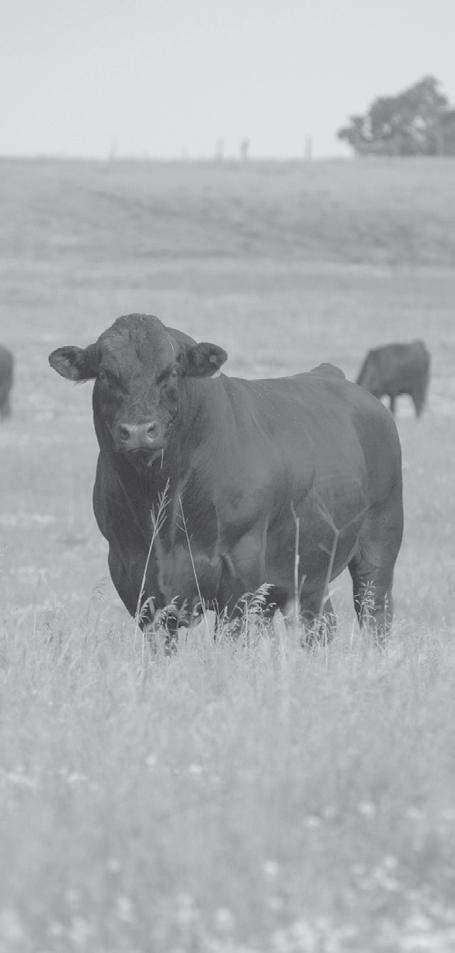
S&S GELBVIEH
ASHWOOD SPRING GENETICS
Kentucky Junior Gelbvieh Show & Learning Clinic
BAR IV LIVESTOCK
Shane Wells 10172 Provo Rd. Rochester, KY H: 270-934-2198 C: 270-791-8196 swells@logantele.com
BREEDING RED & BLACK POLLED GELBVIEH SINCE 1982
Barry, Beth & Ben Racke • Brad Racke 7416 Tippenhauer Rd. • Cold Spring, KY 41076
McIntosh Brothers Farm • 3348 Frankfort Road • Georgetown 10AM Learning Clinic • 12:30PM Show
Luke & Lindsay Arthur Cynthiana, KY 859-298-8323
CLIFFORD FARMS
BRIAN W. DYER, DVM Owner/Manager GELBVIEH/BALANCERS 2050 Glasgow Road Burkesville, KY 42717
David, Jerri & Jon David: 162 Hastings Ln • Fredonia, KY 42411 (270) 556-4259 Arthur & Joyce Slaughter 19068 Marion Rd • Fredonia, KY 42411 (270)545-3455
Phone (859) 635-3832 • Barry cell (859) 991-1992 Brad cell (859) 393-3677 • Ben cell (859) 393-3730 Fax (859) 635-3832 • bar4@twc.com
Call William McIntosh for more information. (502) 867-3132
3459 KY HWY 1284E Cynthiana, KY 41031 Since 1937 (859) 234-6956
Brian, Lauren, Kristen Barry, Emily & Julia (270) 864-5909

Friday May 28 - May 30
FULL CIRCLE FARMS REGISTERED GELBVIEH CATTLE
BAR IV LIVESTOCK
BEE LICK GELBVIEHS
AGJA Eastern Regional Junior Show “Run for the Roses” Burley Fields Livestock Center • 709 Oil Fields Road • Horse Cave
Cattle for sale at all times.
FULL CIRCLE FARMS
Brad Burke: 989 Metcalfe Mill Rd, Ewing, KY 41039 (H) 606-267-5609 (C) 606-782-1367 gbb789@windstream.net
BRIAN W. DYER, DVM
Eddie Reynolds
Barry, Beth & Ben Racke • Brad Racke 7416 Tippenhauer Rd. • Cold Spring, KY 41076
277 Old Bee Lick Rd. Crab Orchard, KY 40419
Call Carrie Derossett for more information. (270) 404-0828
606-379-2281(H) 606-305-1972(C)
Registered Gelbvieh Cattle
Owner/Manager
GELBVIEH/BALANCERS
PLEASANT MEADOWS FARM

Bulls & Females for sale
Entry and room information available at www.gelbvieh.org (Juniors/Regional Shows/AGJA Eastern Regional)
Phone (859) 635-3832 • Barry cell (859) 991-1992 Brad cell (859) 393-3677 • Ben cell (859) 393-3730 Fax (859) 635-3832 • bar4@twc.com
Gary & Pat Tilghman
2050 Glasgow Road Burkesville, KY 42717
Lindsey Tilghman Jones Family
HEDGESPETH LIVESTOCK GELBVIEH/BALANCER CATTLE-COMMERCIAL HEIFERS 543 Pleasant Run Church Road • Campbellsville, KY 42718 sam.hedgespeth@gmail.com • Sam-270.299.5449 Seth-270.932.1615 Dan-606.686.1679 Andrew-270.405.1990
BEE LICK GELBVIEHS
PADON FARMS
Eddie Reynolds 277 Old Bee Lick Rd. Crab Orchard, KY 40419
606-379-2281(H) 606-305-1972(C) Bulls & Females for sale
GELBVIEH BULLS & FEMALES FOR SALE 1012 Shelby Road • Salem, KY 42078 Thad Padon (270) 836-5518
BRAY’S GELBVIEH CATTLE
Niles & Betty K Bray 1568 Bray Ridge Road Bedford, KY 40006 (502) 255-3584
Brad Burke 989 Metcalf Mill Road • Ewing KY 41039 (H) 606-267-5609 • (C) 606-782-1367 gbb789@windstream.net
Carrie & Daryl Derossett Family 690 Lick Branch Road Glasgow, KY 42141 270.646.7024 • pleasantmeadowsfarm@hotmail.
Brian, Lauren, Kristen Barry, Emily & Julia (270) 864-5909
RICH HILL GELBVIEH

Registered Gelbvieh Cattle
Frank McAninch 1341 Iven Godby Road Liberty, KY 42539
Brad Burke 989 Metcalf Mill Road • Ewing KY 41039 (H) 606-267-5609 • (C) 606-782-1367 gbb789@windstream.net
606-787-0120 richhillfarm@windstream.net

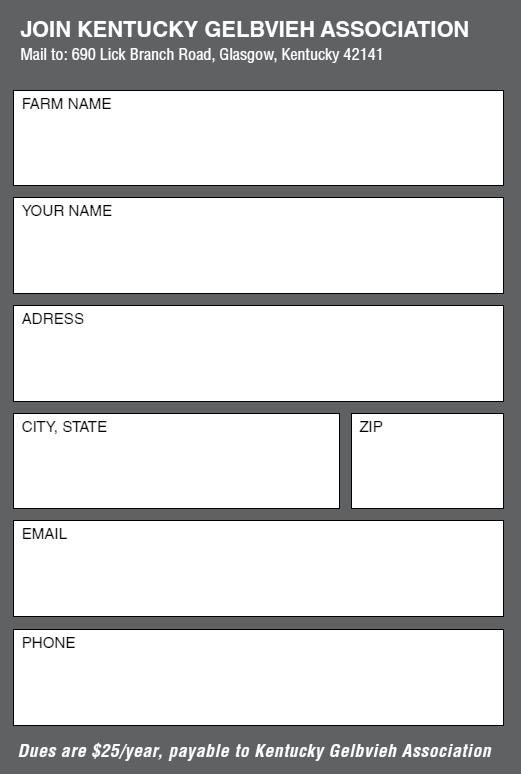
SALERS THE BALANCED BREED
REGISTERED RED ANGUS HEIFERS & BULLS FOR SALE
PERFORMANCE TESTED PUREBRED ANGUS
BULLS FOR SALE Call 270-202-7186 for more info or check out www.oakhollowangus.com for current availability.
POLLED HERFORD BULLS FOR SALE
19–20-month-old Polled Hereford bulls. Good selection. Low birthweight, medium frame. Free Delivery Available. JMS Polled Herefords, Knifley, KY Danny 270-566-2694 Trent 270566-2000
RED FULLBLOOD LIMOUSIN BLACK PUREBRED LIMOUSIN For sale year-round at farms. Cows, bulls, heifers and semen A C H Holdings, Bowling Green, KY Stephen Haynes 270-799-8685
BREEDING AGE HEREFORD BULLS FOR SALE AT ALL TIMES Over 60 years of Line 1 Hereford Genetics. Groups of open and bred heifers available for sale at all times. Chambliss Hereford Farms. 270-668-7126
DIAMOND J SALERS
Donald Johnson • 11660 N. Hwy 1247 • Eubank, KY 42564 606-379-1558
DIAMOND J SALERS
WILLIS FARMS
Donald Johnson • 11660 N. Hwy 1247 • Eubank, KY 42564 606-305-8747
Danny Willis • 964 Johnson Rd • Frankfort, KY 40601 • 502-803-5011 drwc21@aol.com • Purebred + Optimizer Breeding bulls & Heifers for sale.
DEL-SU FARM
WILLIS FARMS
Howard & Sue Edwards • 420 Rose Rd • Somerset, KY 42501 606-679-1675 • Jeriah Privett • 606-416-1154
Danny Willis • 964 Johnson Rd • Frankfort, KY 40601 502-803-5011 • drwc21@aol.com
KNOB LICK FARM - BULLS & HEIFERS FOR SALE
Larry Cox • Tina Cox-Lynch • Amanda Cox Gibson • 1315 Knob Lick Road • Irvine, KY 40336 • 606-723-3077 • 606-975-1716

Registered Angus Bulls • January and February Yearlings • CAIP Elibigle • Semen Checked • Birth Weights and DNA Enhanced EPDs • Calving Ease and Growth • Heifers and Pairs Available Freezer Beef Halves and Quarters Metropolis, IL, 618-638-7693 www.bremerbrothers.com
BULLS FOR SALE ANGUS AND LIM-FLEX BULLS Yearlings to 2-years-old. Delivery available. Call or text 270-589-7999
REGISTERED BLACK ANGUS BULLS & HEIFERS FOR SALE. EPDs Available. Randolph Farm, Owenton, KY (513) 262-9846. www. randolphfarmky.com
SIMANGUS REGISTERED BLACK BULL. 2 years old. 5/8 Simmental and 3/8 Angus. Son of Broad Range and Hoover Dam. $5,000 OBO. Call or text 859-750-3967. Independence, KY
Anglin American Gelbvieh Association Commercial marketing Specialist Contact: Wess@Gelbvieh.org (662) 292-4582
CALL KATIE PRATT (859) 278-0899
RED ANGUS, SIMANGUS, CHAROLAIS, ANGUS FOR SALE Red Hill Farms, Lafayette, TN, 615-666-3098 Bart, Sarah and Ty Jones
Gordon and Susan Jones, 270-991-2663
Visit us online - www.RedHillFarms.net
Contact us for cattle and semen availability. Annual Production Sales: More Than a Bull Sale – 3rd Saturday in March • Maternal Monday – 3rd Monday in May • Bulls & Females of Fall Sale – Last Saturday in October
HOT APRIL DEALS
Stoltzfus spreaders-Fertlime- litter. American Harrow Chain Drags. Notill seeders. Manure spreaders- 35 in stock. Artex SB 200- used 100 loads. Artex 350600-800 all in stock. John Deere 4230- nice$25,000. Patz 420 tmr mixer $21,000. Meyer 510 F mixer-2021- nice $40,000. Farmco feeder wagons- tmr side bar wagon. Lancaster hammer mills. Silage wagons-12 in stock Rear and front unload combo. Call Charlie 859-6089745

Across Generations: Building the Future of Beef
Katie VanValin Assistant Extension Professor, University of Kentucky
Since coming back to Kentucky and beginning a career in Extension in 2020, I’ve had the opportunity to speak to many groups of cattle producers. Often the demographic in the room is very reflective of our larger beef industry. In Kentucky, one of the challenges we face is an aging producer population and the inevitable transition that will occur as many operations begin to pass the reigns to the next generation.
At a recent producer meeting, a colleague was asked a question that stuck with me: Where are all the young people? It’s a question I find myself asking often, although sometimes framed another way, as I wonder who will be sitting in the audience at extension meetings 20+ years from now at the end of my career? How do we continue to serve the producers who have built this industry while also engaging the next generation behind them?
One clear answer to the question of Where are all the young people? is 4-H, FFA and a number of junior cattlemen’s organizations. These organizations do an exceptional job of engaging youth across Kentucky to agriculture, leadership and livestock production at an early age. Many participants leave with a strong foundation and connection to the industry. Where I believe we face a greater challenge is young adults. Those individuals navigating college, careers, family responsibilities, and their first steps into leading the operation or starting their own. This stage of life looks very different than it did a generation or two ago, and reaching these individuals often requires different approaches, formats and expectations around education. Over the last two years, the Beef Extension team has had the opportunity to offer the Master Cattleman Program to over 35 counties, reaching nearly 500 people. Many people are familiar with the program that has its roots in Barren County in the early
2000s. At its core, Master Cattleman was built through a partnership between Extension and cattlemen for cattlemen. Over time that simple and powerful model has been replicated across the country and is recognized as the model for producer education.
One of the most encouraging things I’ve noticed recently is the number of young producers who are choosing the walk through the doors of their local extension offices to commit to over 18 hours of continuing education. In many cases, those young producers are accompanied by a parent or family member who may have completed the program years ago. Even after more than 25 years, over half of the producers that complete Master Cattleman are first-time attendees. Like the industry itself, the program has adapted over time. While the number of sessions has changed, the content continues to evolve to reflect current research, management challenges and industry trends. The success and longevity of Master Cattleman is a reminder that programs grounded in practical knowledge, peer learning and mutual respect can stand the test of time.
As I think about the generational transition ahead, I also see opportunity in expanding the table and helping new farmers find their place in agriculture, whether they come from multi-generational cattle operations or are just beginning to explore the opportunities that agriculture has to offer. The Beef Extension Team has had the opportunity to partner with colleagues across the Martin-Gatton College of Agriculture, Food, and Environment as part of a USDA-funded Beginning Farmer and Rancher Development Program. The program is called Kentucky Farm Launch and is led by Krista Jacobsen.
Farm Launch participants commit to full-day, once-weekly sessions over nine months, choosing between livestock or fruit and vegetable production tracks. The program
recently welcomed its second cohort this spring. Spending every Monday together, participants quickly build relationships and create a learning environment where ideas can be challenged respectfully, and practical business and production plans develop. It is energizing to watch them form partnerships, think creatively and work toward goals that allow them to support their families while producing safe, nutritious food for their communities. The Kentucky Farm Launch program draws a diverse group of people, but in both cohorts, I’ve seen a trend that skews towards younger producers coming into the agriculture, and individuals that were not necessarily born into the industry. To that end, the program draws people who are deeply motivated to learn, adapt and engage. So where are the young people? In many cases they are right where we’ve always found good producers: extension offices, classrooms, community events – seeking knowledge, mentorship and a sense of belonging. They are drawn to programs that respect their time, encourage interactions and provide tools that can be put to work immediately.
Programs like Master Cattleman and Kentucky Farm Launch remind us that there is more than one way to bring people into the beef industry, and those pathways don’t have to compete with one another. Master Cattleman continues to draw younger producers into Extension through a model grounded in tradition, familiarity and in many cases, family. Master Cattleman brings multiple generations together in the same room, reinforcing the idea that learning in this industry is lifelong and shared. At the same time, programs like Kentucky Farm Launch are creating space for individuals who may not have grown up in agriculture, but who are deeply motivated to build a future in farming. While the audience may look different, the foundation is re-
markably similar: practical education, strong relationships and a commitment to producing safe, wholesome food while supporting farm families and communities.
If programs like Master Cattleman have taught us anything over the last 25 years, it is that extension education is strongest when it is shaped by the people it serves. The reason
Spring-Calving Cow Herd
• Watch cows and calves closely. Work hard to save every calf. Calves can be identified with an ear tag while they are young and easy to handle. Commercial male calves should be castrated and implanted. Registered calves should be weighed at birth.
• Cows that have calved need to be on an adequate nutritional level to rebreed. Increase their feed after calving. Do not let them lose body condition. Keep feeding them until pastures are adequate.
• Do not “rush to grass,” although it can be really tempting. Be sure that grass has accumulated enough growth to support the cow’s nutritional needs before depending solely upon it. Cows may walk the pastures looking for green grass instead of eating dry feed. This lush, watery grass is not adequate to support them. Keep them consuming dry feed until sufficient grass is available to sustain body condition. We’ve spent too much money keeping them in good condition to lose it now!
• Prevent grass tetany! Provide magnesium in the mineral mix until daytime temperatures are consistently above 60oF. Mineral supplement should always be available and contain a minimum of about 14% magnesium. Make sure that your mineral mix also contains adequate selenium, copper and zinc. You can ask your feed dealer about the UK Beef IRM High Magnesium Mineral.
• Make final selection of heifer replacements. Strongly consider vaccinating with a modified-live BVD vaccine. We need to get them vaccinated 60 days before the breeding season.
• Purchase replacement bulls at least
these programs continue to draw new audiences is not because they abandon what has worked, but because they meet producers where they are, and seek to continually evolve to do so. As we look toward the future, engaging the next generation of cattle producers will require that same producer-driven mindset. By listening, partnering and remaining flexible,
TIMELY TIPS
30 days before the breeding season starts. Have herd bulls evaluated for breeding soundness (10-20% of bulls are questionable or unsatisfactory breeders). Get all bulls in proper condition (BCS 6) for breeding. If your bull is already in BCS 6, feed him a maintenance diet. We don’t want him getting too fat.
• If you are going to use artificial insemination and/or estrus synchronization, make plans now and order needed supplies, semen and schedule a technician.
• Prebreeding or "turnout" working is usually scheduled for late April or May between the end of calving season and before the start of the breeding season (while cows are open). Consult your veterinarian about vaccines and health products your herd needs. Decide now on the products needed and have handling facilities in good working order. Dehorn commercial calves before going to pasture.
Fall Calving Herd
• Determine pregnancy in your herd now and cull open ones at weaning, especially if the open cows are older than 6 years of age. Consult you herd veterinarian and get this scheduled. Producers can also take a blood sample to get an “open” or “pregnant” result. Consider marketing open females.
• Re-implant feeders.
• Consult with your veterinarian about preweaning working of the herd.
• You may let calves creep-graze wheat or rye if it is available. Calves will benefit from extra feed until spring grass appears.
• Plan marketing strategy for feeder calves.
Extension can continue to support today’s producers while creating educational opportunities that resonate with those coming behind them. The future of Extension education and the beef industry itself will be shaped by collaboration across generations, and there is a place at the table for all who are willing to be part of the conversation.
Stockers
• Do not go to pastures too soon, give plants some growing time. Then stock at two to three times the July rate and rotate rapidly.
• "Condition" purchased calves prior to grazing. They should be processed and fed a conditioning diet prior to being placed on pasture. You can also use this time to introduce them to electric fences used in rotational grazing.
• Provide a good mineral supplement which contains a rumen modifier, (Rumensin, Bovatec, etc.) along with adequate levels of copper and selenium.
General
• We have made a muddy mess this winter, so be prepared to reseed bare spots. Our forage group has some excellent information on restoring heavy-traffic areas.
• Make plans to improve hay feeding areas to avoid muddy conditions like we have faced this winter. Consider geotextile fabric with gravel or concrete feeding pads.
• Prepare for the grazing season. Check fences and make necessary repairs. Check your corral too.
• Get everything ready to make high quality hay in May! Have equipment serviced and spare parts on hand. Order baler twine now. Be prepared to harvest an adequate supply of hay when you have the opportunity. Re-supply the extra hay that you fed out of the barn. This past winter caused most producers to exhaust their hay supply, so it is time to re-stock.
• Plan now for fly control. Decide what fly control program that you will use, but do not put insecticide eartags on cattle until fly population appears.
Nominate them for the Kentucky Cattlemen's Association Hall of Fame.
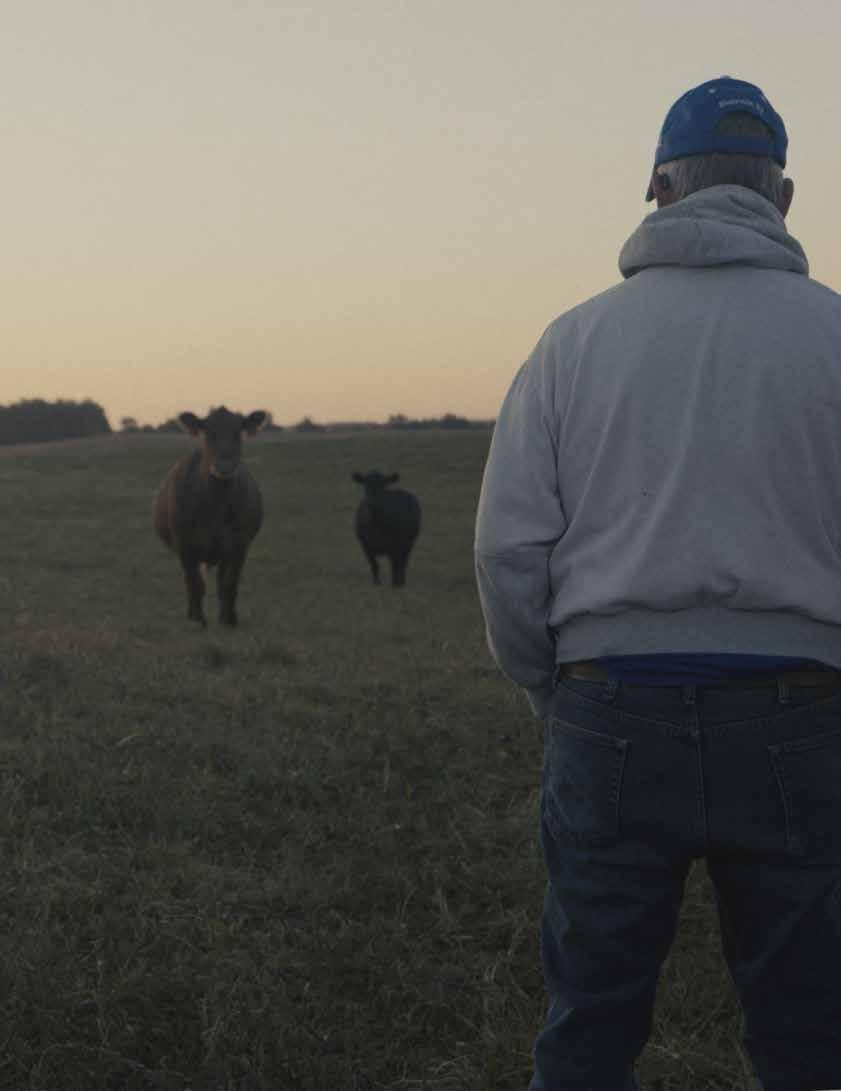
The Kentucky Cattlemen’s Association Hall of Fame is designed to honor a member of the organization that has given time, service and talent to the betterment of the Cattlemen’s Association at the county and/or state levels. 2026 applications must be received by June 19th.
Call us at (859) 278-0899 with questions.
Application available at www.kycattle.org/hall-of-fame

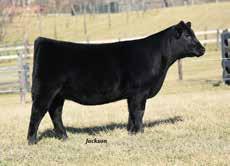
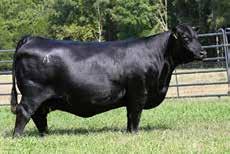
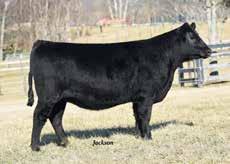

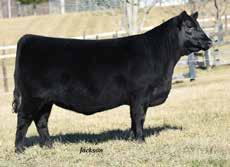
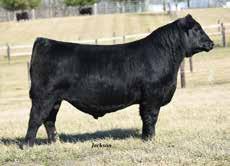
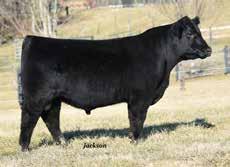


Maternal sister to the $39,000 Bryd Donor. This Foundation x Chimney Top HND Bar Maid CH5 daughter delivers the goods. Safe. A.I. to RC Lucchese.
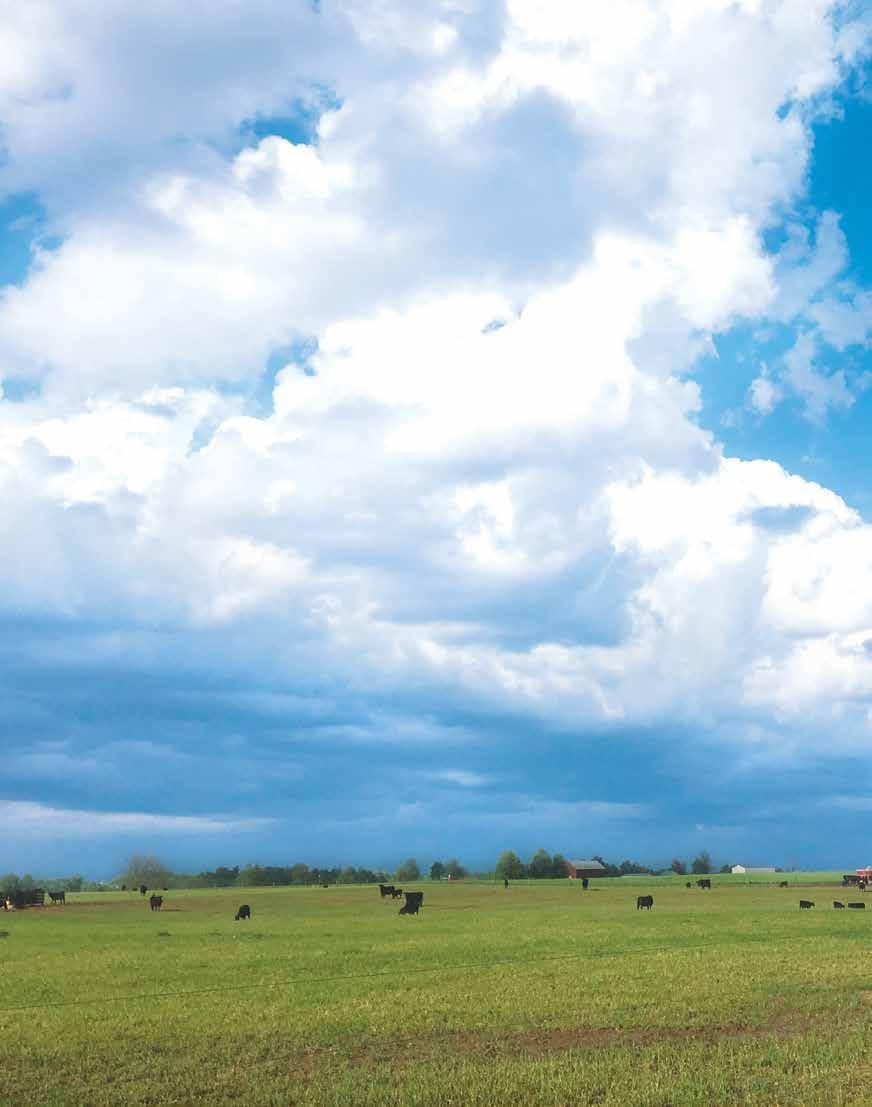
• 4587 has as unique an EPD and index package as you will find. High calving ease with top 1% WW, 10% YW combined with an outstanding index profile: top 1% $C, $W, $M, 4% $G, 5% $B, 15% $F.
• 4587 rang all the performance bells, recording an 833 WW to ratio 121 with ratios of YW 114, IMF 149, RE 111.
• Upper percentile growth, carcass and performance with an outstanding set of maternal and management traits.
• Excellent set of indexes: Top 1% $F, 2% $B, 5% $C, $G, 25% $W with top 1% YW, 2% WW.
• 4620 range all the performance bells with ratios of WW 111, YW 109, GR 125, IMF 111, RE 110.
• Pathfinder dam, 6571, is one of the best cows we have owned. She shows progeny ratios of WW 5/113, YW 5/109, IMF 43/102, RE 43/102.
BV Jameson 4599 |Reg# 21216140
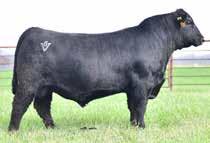
• Second high WW EPD bull in the sale at 105. Top 1% WW, YW, 3% IMF with a top set of indexes, 3% $C, $B, $W, 4% $G, 10% $F.
• 4599 rang all the performance bells with ratios of WW 112, YW 117, GR 119, IMF 144, RE 101.
• Dam maintains a calving interval of 3/345.
BV Congress 5011 |Reg# 21332830
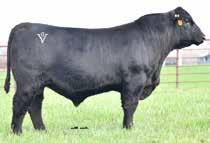
• Add pounds to your calf crop. Top 1% WW, 2% YW with a great set of indexes, top 5% $W, 15% $C, $F, 20% $B, $M, 25% $G.
• 5011 recorded a 765 WW and shows a 100 WW EPD.
• Dam maintains a calving interval of 2/334 with progeny ratios of WW 2/111, YW 1/116, IMF 1/101.