2025–2026
VENTURA
COUNTY CIVIL GRAND JURY
CONSOLIDATED FINAL REPORT
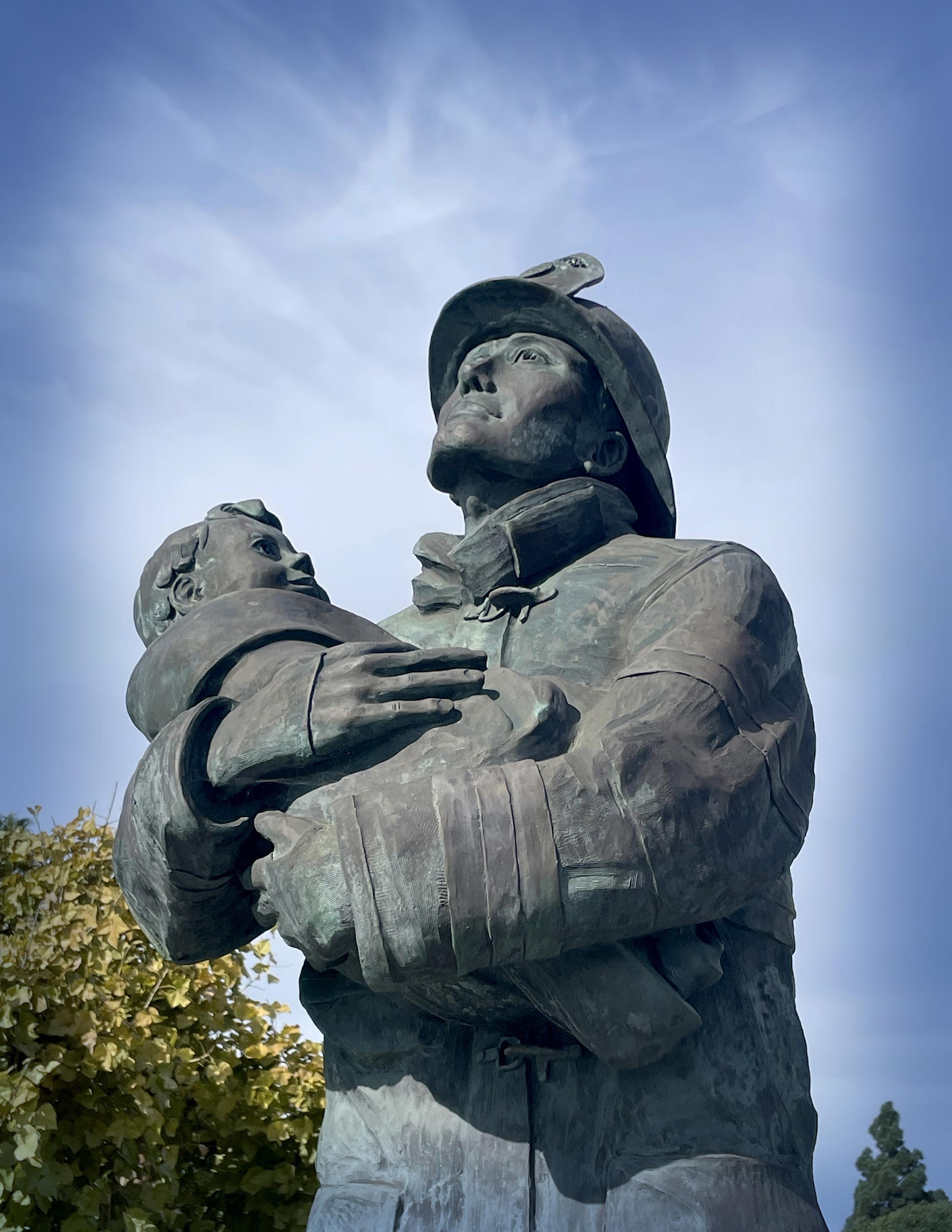
Honoring Those Who Gave All: Ventura County Fallen Firefighter Memorial
COUNTY CIVIL GRAND JURY
Honoring Those Who Gave All: Ventura County Fallen Firefighter Memorial
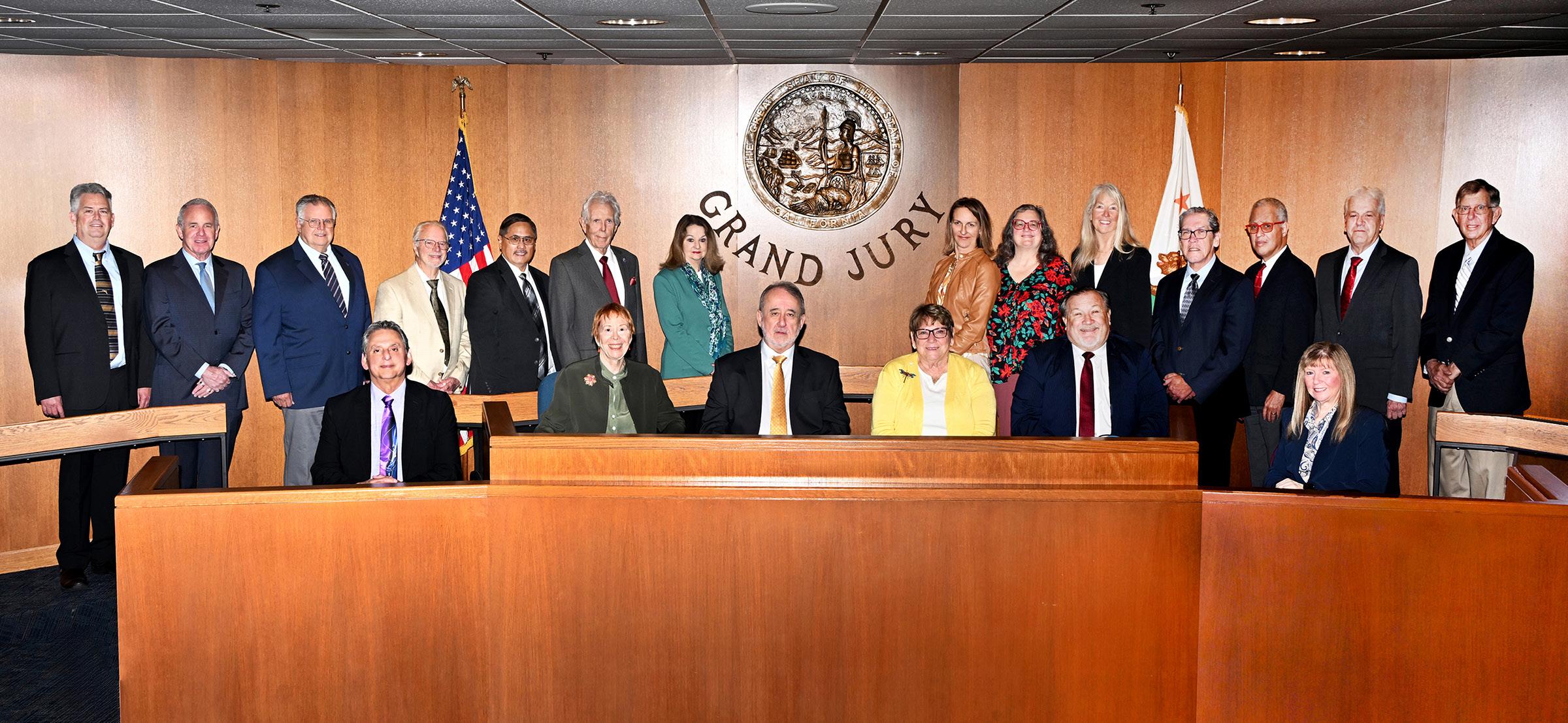
The Ventura County Civil Grand Jury provides an independent government oversight function. This group of 19 citizens is impaneled by the Superior Court of Ventura County for a one-year term from July 1 to June 30. The Civil Grand Jury is charged with investigating or inquiring into matters of civil concern in the County. These 19 individuals bring their experience, talent, and curiosity as one body that becomes the voice of information and education for the people of Ventura County.
The Civil Grand Jury’s mandate includes looking into issues affecting County agencies, cities, special districts and joint powers authorities to ensure that the best interests of County residents are being served. Another key mandate specified in the California Penal Code Section 919(b) is the responsibility to “inquire into the condition and management of public prisons within the county.”
Investigations are often based on confidential complaints received from the public. They may also come from internal inquiries into matters brought to the Civil Grand Jury’s attention during agency briefings, protocol visits, monitoring meetings of the Board of Supervisors and observing local events.
California Penal Code Section 933 directs the Civil Grand Jury to prepare and issue a final report based on its investigations. California Penal Code Section 916 requires that all problems identified in the final report be accompanied by recommendations for resolution. The penal code also compels responses from entities identified in the reports.
In all cases, Civil Grand Jury reports serve to inform the public.
venturacounty.gov/grand-jury

June 30, 2026
The Honorable Matthew P. Guasco Presiding Judge Super Court, State of California County of Ventura
Dear Judge Guasco,
800 South Victoria Avenue Ventura, CA 93009
Tel (805) 477-1600
Fax (805) 658-4523 grandjury.countyofventura.org
On behalf of the 2025-2026 Ventura County Civil Grand Jury and in compliance with Penal Code Section 933(a), it is our honor to present to the Superior Court as well as to the residents of Ventura County, our Consolidated Final Report. The Civil Grand Jury is charged with examining complaints brought by the public as well as those brought by members of the jury. This final report is the culmination of thorough research carried out by each of the investigative committees.
Per California Penal Code Section 888, the Ventura County Civil Grand Jury is comprised of 19 residents of Ventura County with a wide variety of backgrounds, experience and knowledge. The 20252026 Civil Grand Jury received 49 public complaints, proposed 9 internal investigations, initiated 16 inquires or investigations, resulting in 5 Investigative Reports and 2 Inquiries. The work of the Civil Grand Jury would not be possible without the cooperation and support of the elected officials, administration, and department and agency staff of the County Government, the 10 incorporated cities, as well as all law enforcement and fire departments throughout Ventura County.
We would like to thank you Judge Guasco, as well as Judge Sabo, and County Counsel, Tiffany North, for providing unwavering support and guidance. We want to express our deep appreciation to Superior Court Administrative Assistants Victoria Berber and Caitlin Colyer, Tania Magdaleno and Inez Robles of the Office of Jury Services; Carla Alvara, Administrative Officer for the County Executive Office; Mark Howe, Fiscal and Administrative Services, Choly Asawesna, Senior Accountant and Angel Guerra, Senior Accounting Technician of Fiscal Services. The work of the Civil Grand Jury would not be possible without the indefatigable support of Information Technology Services, specifically Michael Vidal, Office System Support Analyst, Rene Gonzalez, System Support Analyst, and Glen Sahagun, Applications Architect/Supervisor. Finally, we extend sincere gratitude to Matt Kreiger, GSA Creative Services Supervisor, for his patience and creative support
The 2025-2026 Ventura County Civil Grand Jury gained enormous understanding and appreciation for the operation of local government. On behalf of all 19 Jurors, it has been our honor and privilege to serve and play a small role in finding ways to improve the lives of every citizen of Ventura County.
Respectfully,
Douglas Yellin
Douglas Yellin
Kathleen Garcia
Kathleen Garcia Foreperson Foreperson
Ventura County Civil Grand Jury (2026)
Ventura County Civil Grand Jury (2025)

Our Court is here to serve with Excellence. ventura .courts.ca.gov
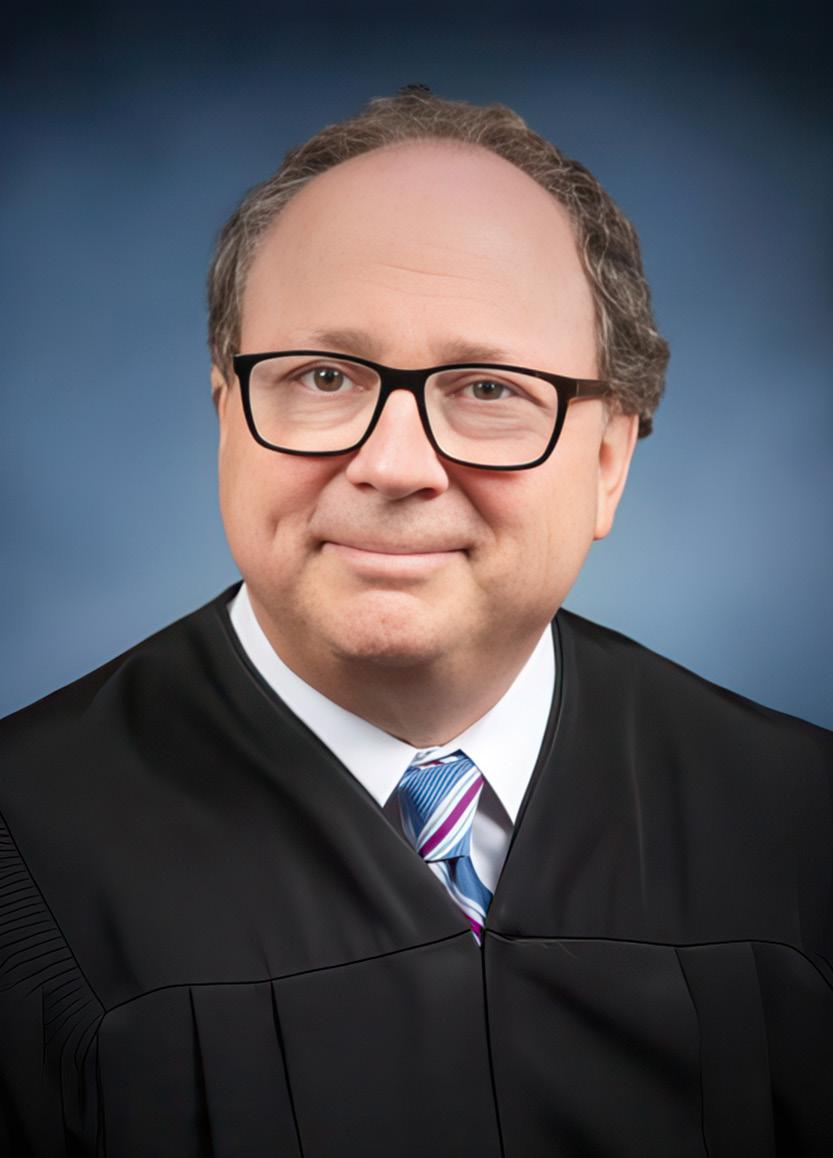
Matthew P. Guasco Presiding Judge
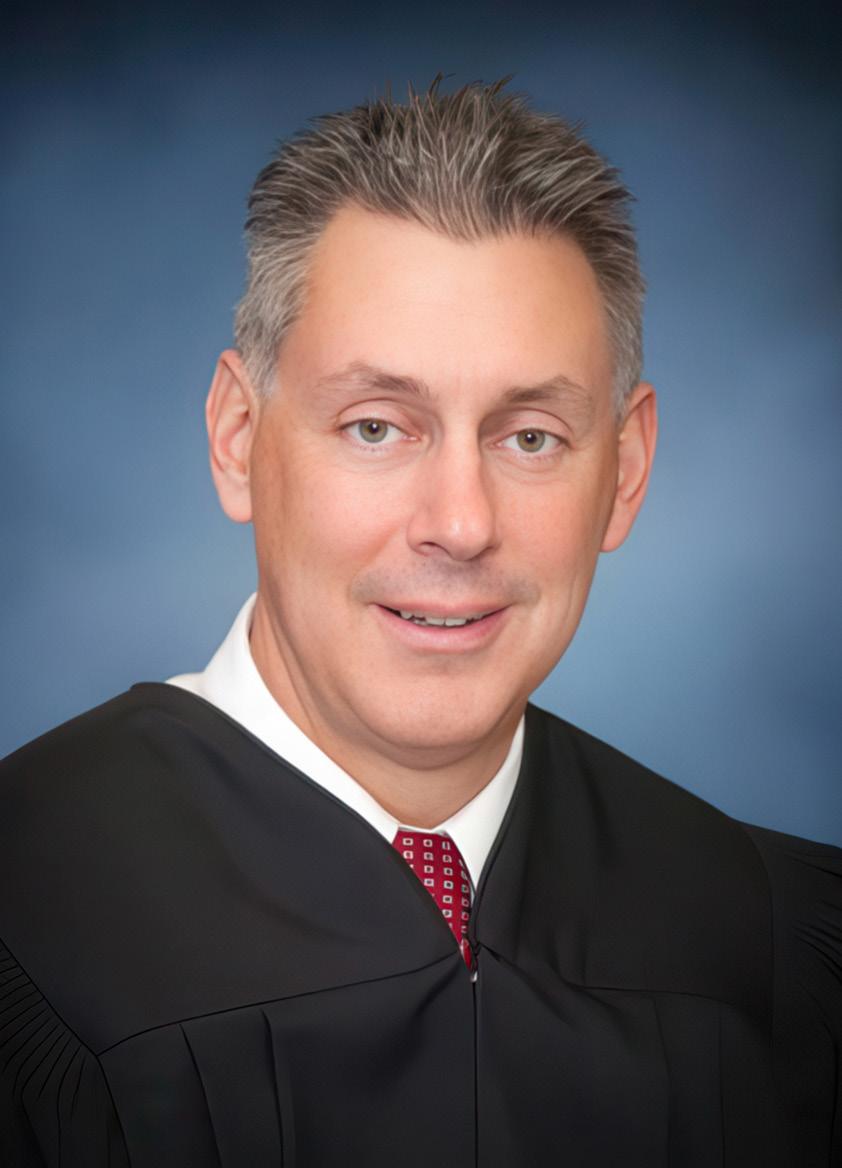
Anthony J. Sabo Assistant Presiding Judge

June 30, 2026
To the Residents of Ventura County,
800 South Victoria Avenue Ventura, CA 93009
Tel (805) 477-1600
Fax (805) 658-4523 grandjury.countyofventura.org
The 19 members of the 2025-2026 Ventura County Civil Grand Jury acknowledge the honor and important responsibility we have been given to participate in helping government work better to serve and improve the lives of citizens in the County of Ventura. The Civil Grand Jury expresses sincere gratitude to all county and municipal government elected representatives, agency administrators, and dedicated department staff who provided complete candor and total transparency during our meetings, inquiries and investigations.
California Penal Code mandates that the Civil Grand Jury investigate and report on at least one county office, department, or function during its term The Civil Grand Jury is mandated to inquire into the condition and management of detention facilities within the county as well as inquire into the willful or corrupt misconduct of public officers. The Civil Grand Jury decides as a body the topics to investigate either from complaints submitted by the public to the grand jury for consideration or from internal proposals initiated from within the body. The investigations are conducted by committees within the panel of 19 jurors. The investigations are kept highly confidential and include research and interviews to verify all evidence
At the end of the jury’s term, final reports are published which include the verified statements of fact, the relevant findings based on the documented evidence, and recommendations for resolving them addressed to the entities designated. The Consolidated Final Report is the compilation of each report along with the findings of the inquiries made into the detention facilities within the county. This work also includes information regarding how the Civil Grand Jury is structured and its operating principles.
The 2025-2026 Ventura County Civil Grand Jury is proud to present to you this Consolidated Final Report, dated June 30, 2026 It has been our honor and privilege to serve the residents of Ventura County. We sincerely hope that you find the reports to be of interest and that you will consider taking the step to join the work of future civil grand juries. For more information about the Civil Grand Jury, please visit the Ventura County Grand Jury website at https://www.ventura.org/grandjury/
Sincerely,
Douglas Yellin
Douglas Yellin
Kathleen Garcia
Kathleen Garcia Foreperson Foreperson
Ventura County Civil Grand Jury (2026)
Ventura County Civil Grand Jury (2025)
The Ventura County Civil Grand Jury is an investigatory panel of 19 citizens selected by the Ventura County Superior Court that examines local governmental entities in Ventura County, including the county, cities within the county, and special districts. The Civil Grand Jury reviews and evaluates procedures and practices of local government entities to determine their efficiency and effectiveness of operations pursuant to California State law and regulations.
To perform its investigative functions, the Civil Grand Jury has five investigative committees. Investigations may be the result of citizen complaints that are sent to the Civil Grand Jury or other areas of interest proposed by Civil Grand Jury members.
Administrative committees are formed to handle other activities, such as presenting information about the Civil Grand Jury to the public, organizing internal and external special events, and producing the Consolidated Final Report.
Audit, Finance and County Administration: Investigates administrative and financial practices of county agencies (e.g., the offices of the County Assessor, Auditor-Controller, Treasurer-Tax Collector and the County Executive Officer), cities, special districts, and agencies arising from Joint Powers Agreements.
Cities and Joint Powers: Government offices and services of all cities located within Ventura County are under this committee’s purview, as well as local entities operating under Joint Powers Agreements.
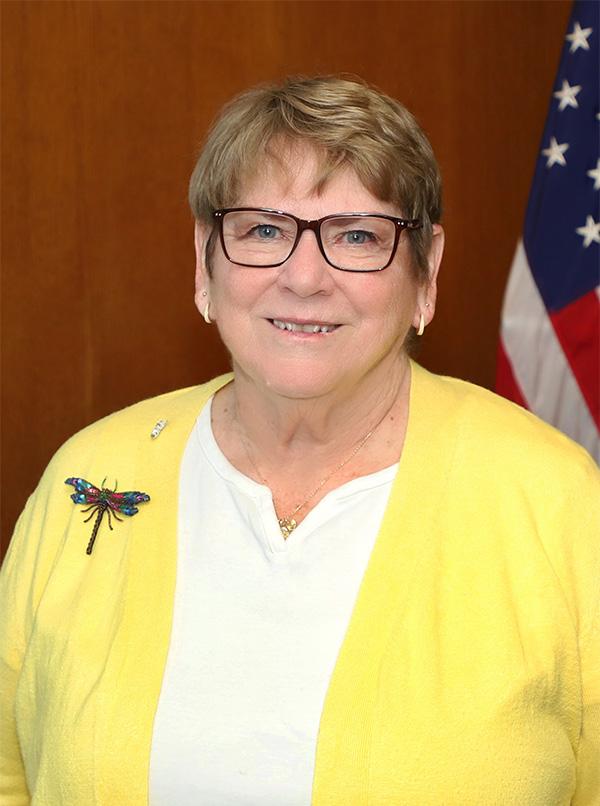
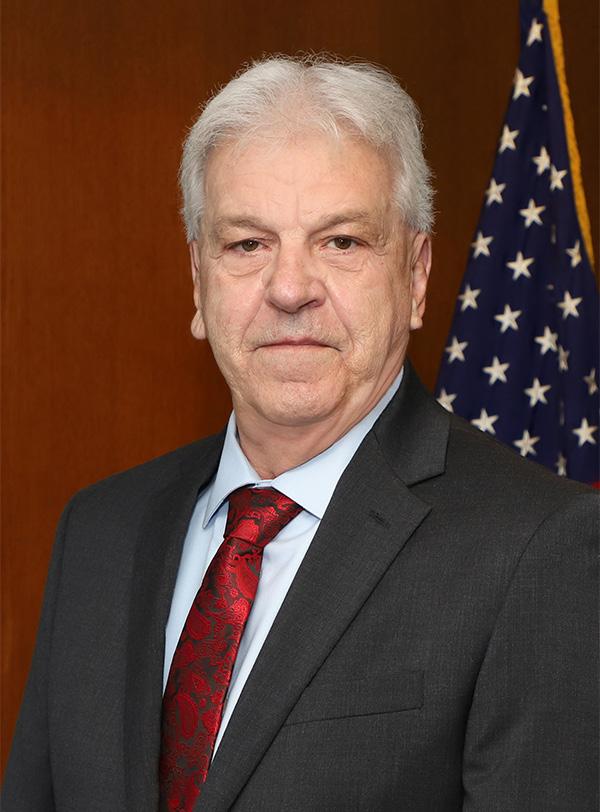
Kathleen Garcia Santa Paula 2025 Civil Grand Jury Foreperson
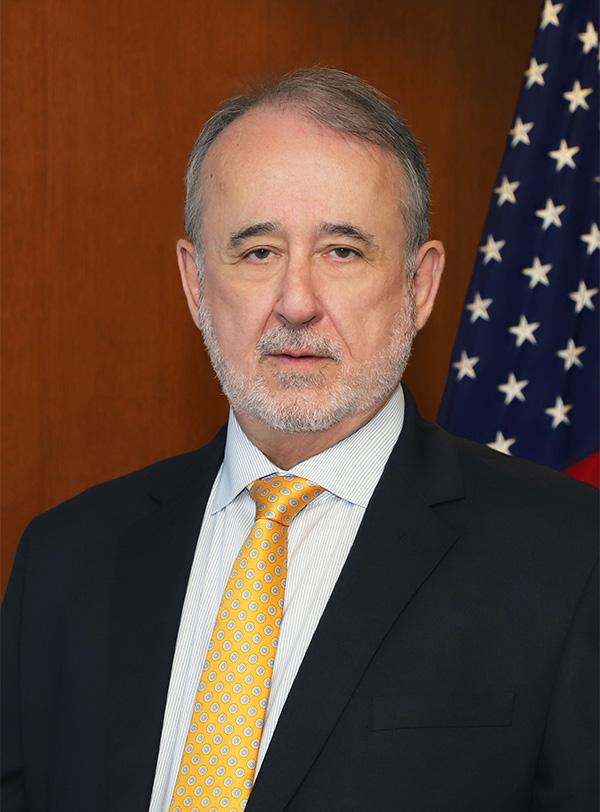
Douglas Yellin
Ventura 2026 Civil Grand Jury Foreperson
Rick Gutierrez Oxnard 2025 Sergeant-at-Arms 2026 Foreperson Pro-Tem
Ken Trainor
Ventura 2026 Sergeant-at-Arms
County Services and Special Districts: This committee’s scope extends to Ventura County government offices and services, as well as to special districts, such as Water Districts, Sanitation Districts, Harbor Districts, Municipal Improvement Districts, and Transportation Districts.
Health, Education and Welfare: Investigates all aspects of health care, education and social services operations in the county, cities, and special districts.
Law, Justice and Public Safety: Investigates and monitors the operational procedures of all agencies involved in the administration of criminal justice, law enforcement, and public safety. This includes required inquiries into the condition and management of all adult and juvenile detention facilities in Ventura County.
Community Relations: This Committee informs the public about the history, purpose, and operation of the Civil Grand Jury by making presentations and distributing information to community organizations, colleges, city councils, and prospective jurors in the Jury Assembly Room.
The committee coordinates with two subcommittees to achieve its function: Outreach and Social.
• The Outreach subcommittee contacts service organizations and public social enterprises to schedule presentations, with the primary focus being to encourage members to apply for Civil Grand Jury service.
• The Social subcommittee shares responsibility for the annual Open House, which is open to the public and prospective jurors. The subcommittee also organizes internal self-funded events.
Editorial Review: This committee reviews and edits all publications of Civil Grand Jury documents made available to the public. It establishes guidelines for the basic structure of final reports.
Recorder: CSSD, LJPS, CJ
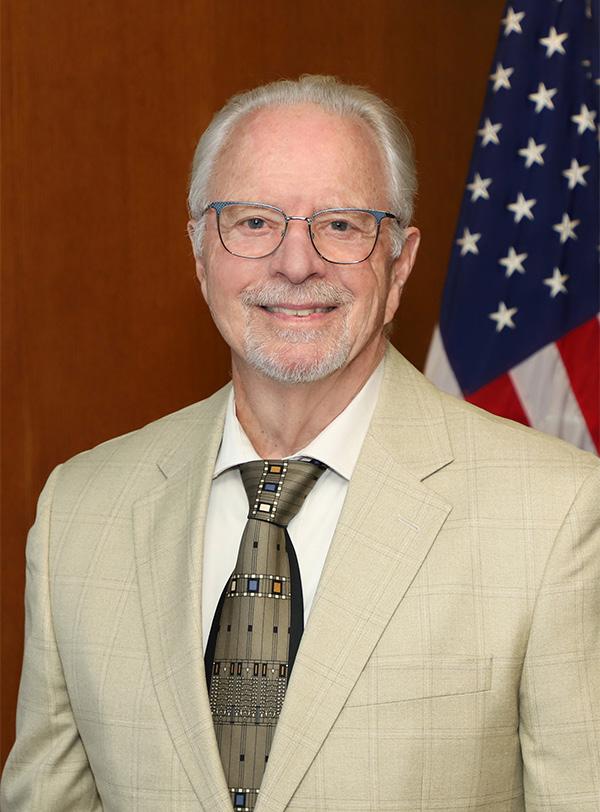
Committee Member: CR and ER
Executive: This committee is comprised of the Investigative Committee chairs, the Foreperson (ex officio) and is chaired by the Foreperson Pro Tem. The committee serves as a forum for Investigative Committee chairs to discuss issues and provide for their resolution.
All officers are elected by the Civil Grand Jury except for the Foreperson, who is appointed by the Presiding Judge of the Superior Court of Ventura County.
Foreperson: Ensures that the Civil Grand Jury operates effectively and efficiently in carrying out its oversight responsibilities and powers. The Foreperson serves as the official spokesperson for decisions or statements of the Civil Grand Jury. The Foreperson signs reports before submission to the County Counsel and the Presiding Judge.
Other duties assigned to this position include:
• Consulting with the Presiding Judge, County Counsel and the District Attorney on legal issues raised by the Civil Grand Jury.
• Preparing agendas for and presiding at General Meetings of the full Civil Grand Jury panel, a.k.a. the Plenary.
• Overseeing the election of Civil Grand Jury officers and committee chairs, and formalizing committee structure with Civil Grand Jury approval.
• Serves as an ex-officio voting member of all committees.
• Ensures that jurors receive training relevant to their statutory functions, including interviewing and report writing.
• Works with Jury Services when it is necessary to replace jurors and is responsible for orientation of incoming jurors.
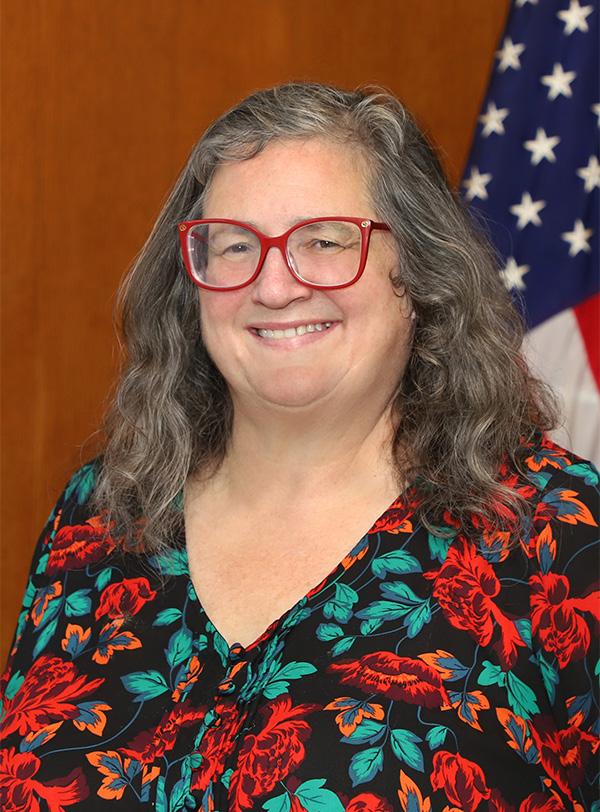
Kelble Port Hueneme Archivist, ER Pro-Tem
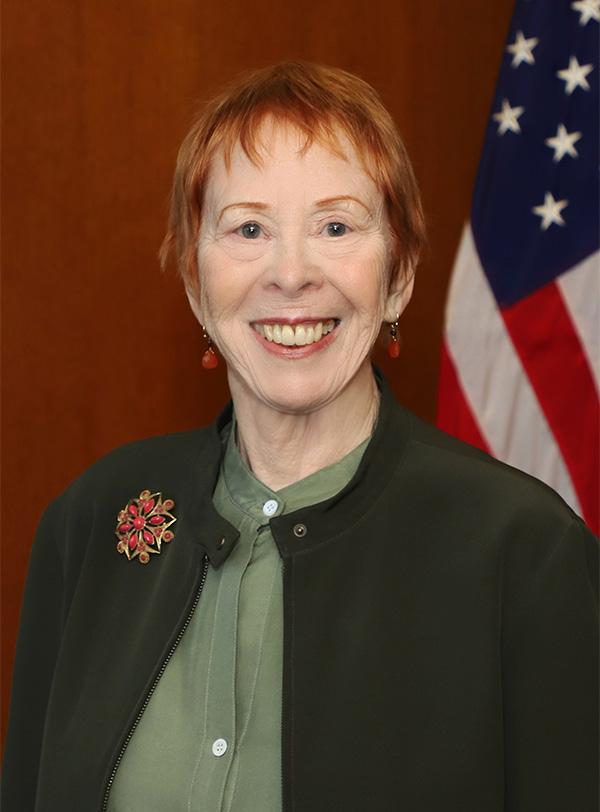
Ann Kindberg Ojai HEW Chairperson, Treasurer
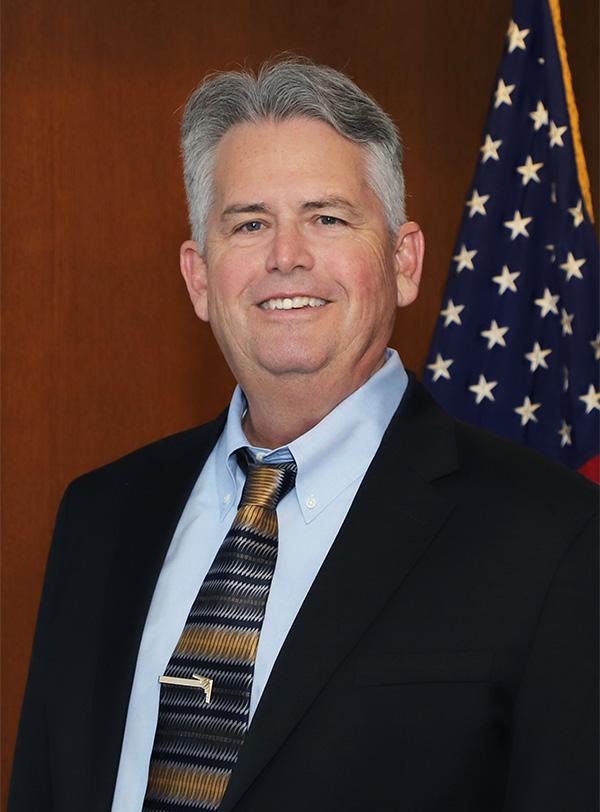
Jeffrey Lotton Ventura Committee Member: AFCA, CJP, ER
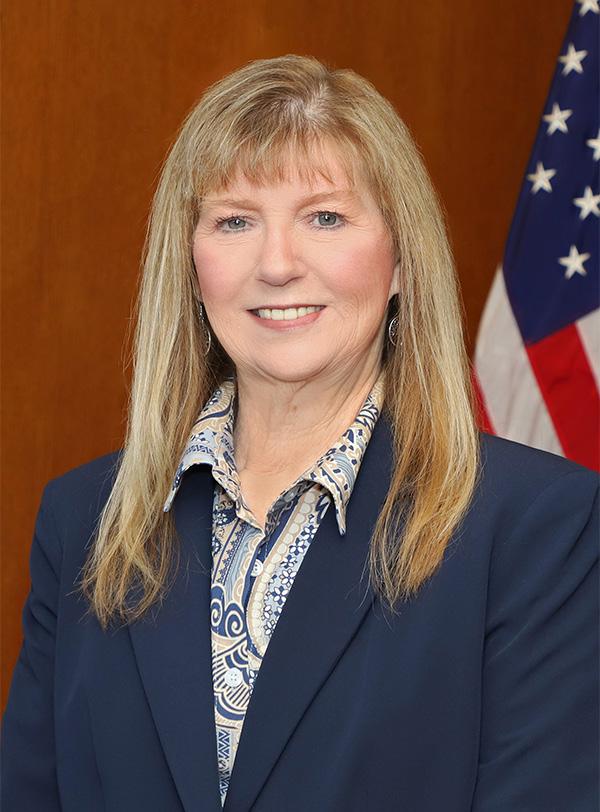
Sherry Manley Ventura CR Chairperson, Parliamentarian
Foreperson Pro-Tem: This officer is appointed by the Foreperson and must be confirmed by the entire Civil Grand Jury. The Pro Tem assumes the Foreperson’s responsibilities in the absence of, or at the request of, the Foreperson. In the event of a vacancy in the office of Foreperson, the Pro Tem acts as the Foreperson until the Presiding Judge officially selects a replacement.
Civil Grand Jury Recorder: This officer keeps minutes of Civil Grand Jury general meetings and distributes copies of the minutes to all jurors. The Recorder also maintains a file of signed original minutes of all general meetings.
Complaint Review Coordinator: The Coordinator receives complaints from the public alleging government inefficiencies, suspicions of misconduct, mistreatment by officials or other matters of general community concern. The Coordinator also receives internal complaints initiated by sitting members of the Civil Grand Jury. If a complaint appears valid and complete, and if the subject matter falls within the jurisdiction of the Civil Grand Jury, the Complaint Review Coordinator refers the complaint to the entire Civil Grand Jury for review and determination whether to adopt as an investigation.
Correspondence Recorder: This officer opens all incoming mail, stamps each piece of mail received as of the current date, and records it in the Incoming Correspondence Log. The Recorder maintains copies of outgoing correspondence written on Civil Grand Jury letterhead and distributes incoming correspondence to the appropriate juror.
Librarian/Archivist: This officer maintains an archive of the current and past Civil Grand Jury final reports, background materials and responses. The Librarian/Archivist updates and assigns space for materials accumulated by the various committees.
Parliamentarian: This officer observes interaction among panel members during general and other meetings and offers guidance to the Foreperson or committee chairperson so that the Civil Grand Jury follows Robert’s Rules of Order during discussions and voting.
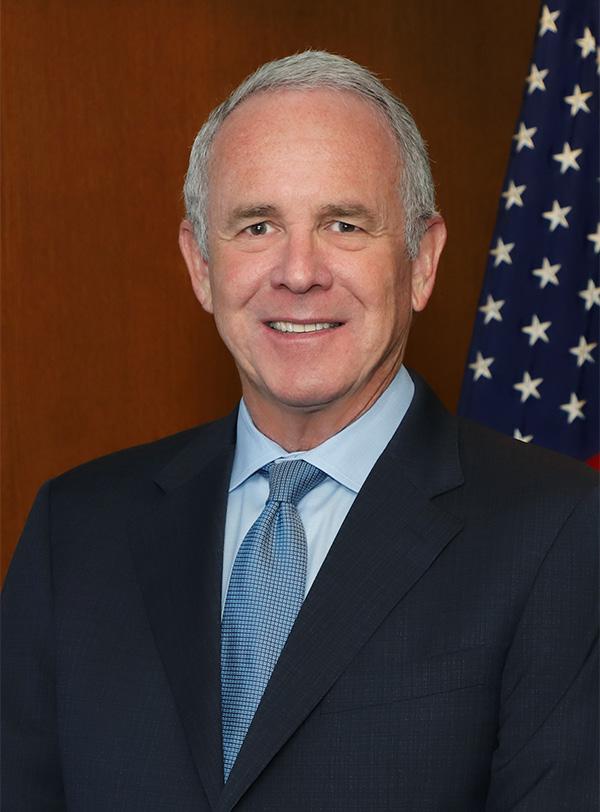
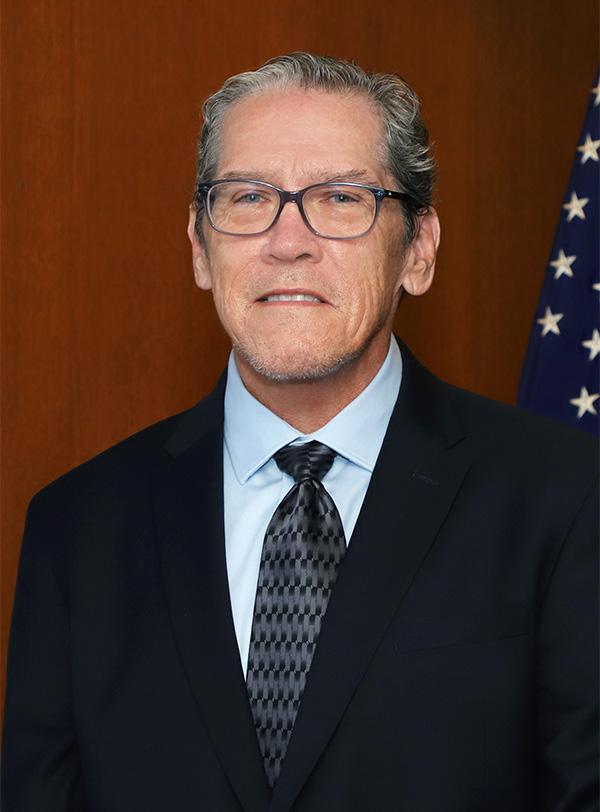
MITCHELL ROSS
CAMARILLO
AFCA
CHAIRPERSON, HEW RECORDER
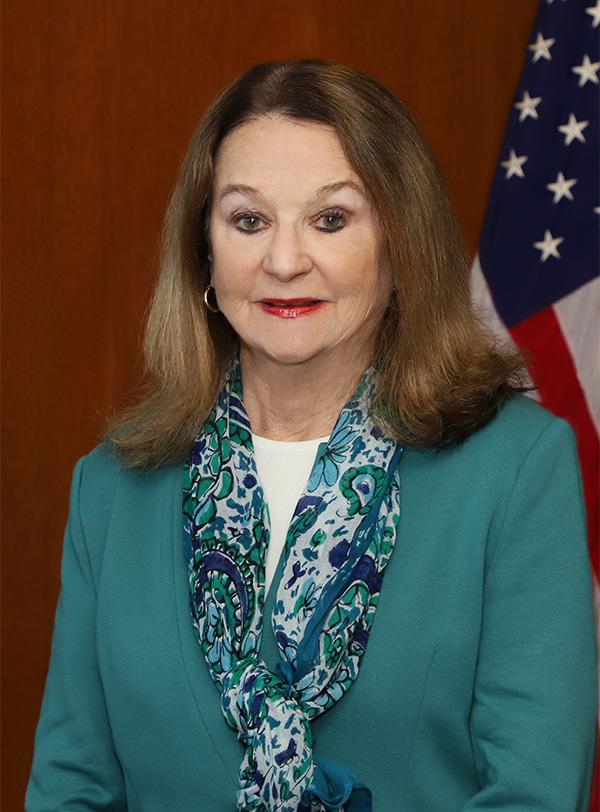
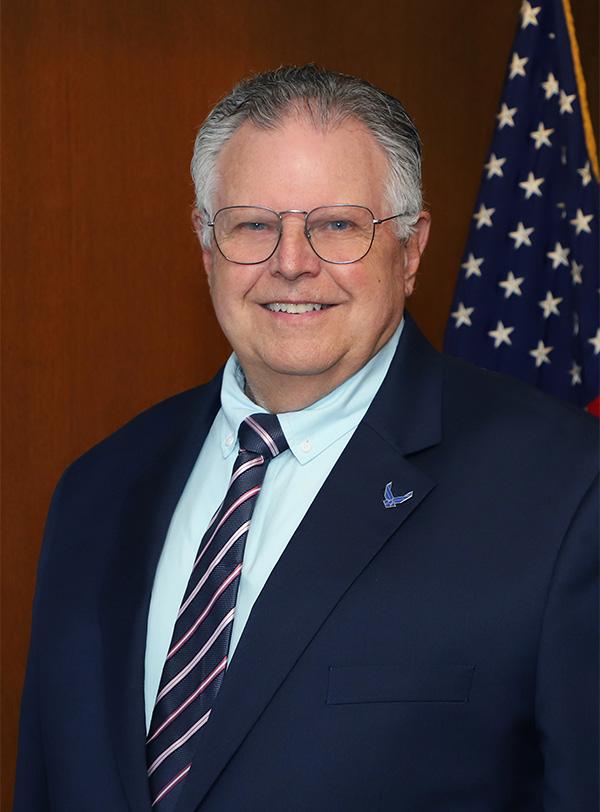
LINDA RUSE
THOUSAND OAKS
LJPS
CHAIRPERSON, PROTOCOL OFFICER
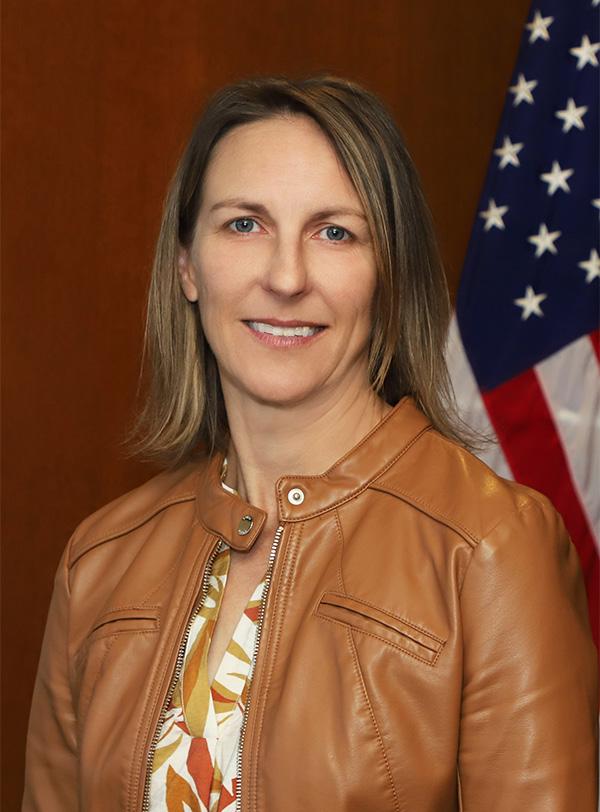
DAN SANTOS
NEWBURY PARK
EC CHAIRPERSON, LIBRARIAN
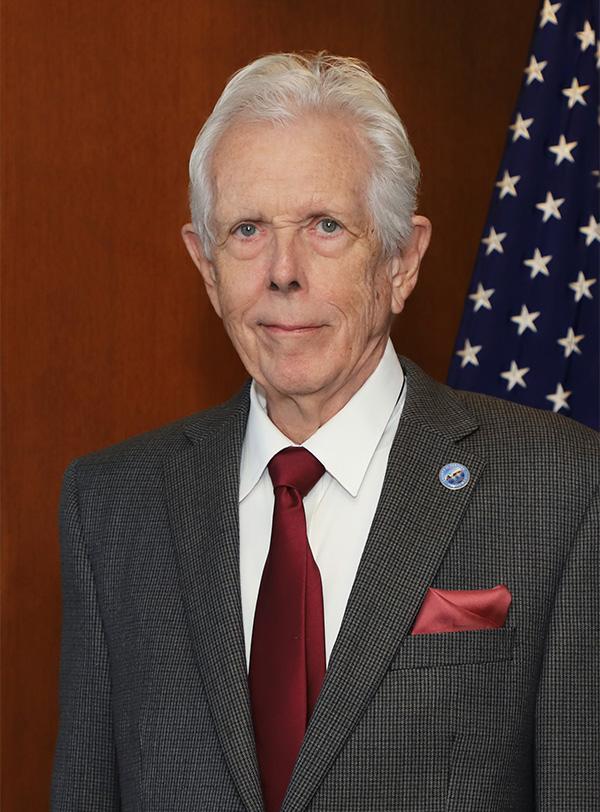
STEPHEN STRACK OXNARD
CSSD CHAIRPERSON, HEW PRO-TEM
Protocol Officer: Coordinates site visits to various facilities and agencies as well as arranges for agency briefings held in the Civil Grand Jury chambers. The officer may also schedule coordinated activities with county agencies.
Response Review Coordinator: Receives and maintains official responses to Civil Grand Jury reports. The officer maintains a log of the Civil Grand Jury’s reports, responses required by law, and requested responses. Reminder letters are sent to entities that have not provided responses within the required time frame.
Sergeant-at-Arms: Responsible for ensuring the Civil Grand Jury chambers are a secure and safe working environment. The Sergeant-at-Arms makes recommendations to the Foreperson concerning security matters. The Sergeant-at-Arms serves as the Civil Grand Jury Emergency Evacuation Coordinator.
Technology Specialist: Identifies hardware and software needs for Civil Grand Jury members and coordinates service requests with the county’s Information Technology Department.
Treasurer: Responsible for the administration of the Civil Grand Jury budget. The Treasurer aids jurors in completing monthly claim forms and is responsible for processing all bills presented to the Civil Grand Jury for payment.
JOHN TRASK
THOUSAND OAKS
ACFA RECORDER
TECHNOLOGY SPECIALIST
KAREN GINDICK VENTURA ER COMMITTEE MEMBER
CORRESPONDENCE RECORDER, COMMITTEE MEMBER HEW, LJPS

June 25, 2026

Arundo donax is a bamboo-like invasive plant that presents a fast-growing, fast-burning, water-stealing, high ember-casting threat within watersheds across the state and beyond. A previous Ventura County Civil Grand Jury report from 2015-16 looked at the threat of Arundo from a flood hazard perspective and recommended the Board of Supervisors create a countywide eradication plan and provide the necessary funding. Ten years later, the Civil Grand Jury received a public complaint about Arundo growing unchecked on county-owned land within 100 feet of residential structures, posing an ongoing fire hazard.
Through interviews with county agencies and nonprofit groups as well as extensive research, the Ventura County Civil Grand Jury learned the county has no plan and no clear idea of what it spends annually trying to control Arundo. There are multiple agencies and groups in the county working toward control/eradication in two of the three major watersheds in Ventura County, but no effective countywide oversight to ensure that scarce resources are being optimized, best practices are being followed, and expertise is being shared.
The Civil Grand Jury recommends the Board of Supervisors recommit to eradicating this plant, noting that significant work has been done already by various nonprofits as well as the Ventura County Resource Conservation District.
Information was gathered from multiple news sources, county and state agencies and nonprofit organization websites, expense and program reports provided by agency leads, and recent proceedings from California Invasive Plant Council’s 2025 Symposium.
To address a specific public complaint about Arundo, the Ventura County Civil Grand Jury conducted interviews with the complainant as well as officials from the following county agencies::
• Ventura County Public Works Agency
• Ventura County Department of Agriculture/Weights & Measures
• Ventura County Fire Department
The Civil Grand Jury also interviewed leadership at Ventura County Resource Conservation District, which is a special California district governed locally (see details below). The Civil Grand Jury also spoke with leadership at the Ojai Valley Land Conservancy, a local nonprofit organization deeply involved in Arundo eradication efforts.
Information was gathered from multiple news sources, county and state agency and nonprofit organization websites, expense and program reports provided by agency leads, and recent proceedings from California Invasive Plant Council’s 2025 Symposium.
The Civil Grand Jury investigated a complaint about an ongoing Arundo infestation on county-owned land in the Conejo Creek area of Camarillo. The land, as well as the complainant’s home, are now considered to be in a “Very High” Fire Hazard Severity Zone (FHSZ) and the Arundo was confirmed to be within 100 feet of some homes in the Leisure Village Tract of Camarillo. (Ref-001)
The California Invasive Plant Council (Cal-IPC) defines invasive plants as plants that are not native to an environment, and once introduced, they establish, quickly reproduce and spread, and cause severe harm to the environment, economy, or human health. (Ref-018) Arundo is classified as a California State Noxious Weed under Title 3, California Code of Regulations Section 4500, meaning it’s destructive to agriculture and difficult to eradicate. (Ref-027 )
Arundo generally grows best near water but adapts to many different habitat conditions and soil types. Once established, it is drought tolerant and able to grow in dry or saline conditions; in California it is found growing along the edges of beaches and estuaries. (Ref-007 ) Arundo threatens California’s streambank ecosystems by outcompeting native species, such as willows, for water.
The threat of Arundo as a highly flammable, highly invasive species in our region has been wellestablished for decades. This bamboo-like plant can grow up to 30 feet under ideal conditions. It spreads via underground rhizomes, often forming dense stands that choke out native plants. With an ability to consume greedy amounts of water compared to native plants, Arundo is one of the fastest growing plants in the world, growing up to 4 inches a day and providing virtually no habitat or food for wildlife. (Ref-007, Ref-010, Ref-014)
A Ventura County Civil Grand Jury report published in 2016 titled “Riverbed Hazardous Vegetation” focused on the threats of Arundo to riverbank erosion, floodplain inundation and damage to infrastructure. The 2015-16 Civil Grand Jury recommended creation of a countywide Arundo eradication plan and corresponding budget line item. (Ref-002) In response to the Civil Grand Jury’s recommendations, the Board of Supervisors along with the Public Works Director agreed with the findings and partially agreed with the recommendations. Specifically, the response stated that there was “partial agreement” with the recommendation that the Ventura County Board of Supervisors, in conjunction with the Ventura County Watershed Protection District (VCWPD), develop a long-term plan and corresponding budget line item that leads to the eventual eradication of Arundo. However, the response confusingly indicated this recommendation had already been implemented. (Ref-002)
The response from the county specifically agreed that VCWPD would:
• work with the three major watershed councils to develop a long-term plan for countywide control of Arundo and identify annual budgetary opportunities. (Ref-002)
• work with the EPA and other agencies to apply the best and most recent science to achieving the goal of Arundo control with the least environmental impacts. (Ref-002)
Ten years later, the 2025-26 Civil Grand Jury focused its investigation on the status of the county’s longterm plan to eradicate Arundo, including its financial commitment via budget line item, as well as the current fire-specific threats posed by this fast-growing invasive plant.
While the county itself has not coordinated a cohesive plan of attack (Ref-001), there have been several projects and groups trying to eradicate Arundo in Ventura County going back decades. Many of these are habitat restoration projects led by various nonprofits. A Ventura County Arundo Task Force was created in 1999 under the direction of the Ventura County Resource Conservation District. This group was composed of various relevant federal, state, and local governments as well as nonprofit groups concerned with the complicated challenges of eradicating Arundo. Eventually the Arundo Task Force morphed into what is currently operating as an informal group called the Ventura County Weed Management Area (WMA) in 2009, which focuses on a variety of invasive weeds. (Ref-004)
From interviews with county officials, the Civil Grand Jury concluded that no one was aware of a countywide plan to eradicate Arundo. Our interview with Public Works (the agency that oversees Watershed Protection Districts and ongoing operations and maintenance of waterways in those districts) confirmed there was no dedicated budget line item for eradicating Arundo, but that expenses were rolled into annual operations and maintenance (O&M) budgets. (Ref-001)
As detailed below, different agencies involved in efforts to remove Arundo presented different levels of awareness of the issue and different attitudes about efforts to eradicate it. The Civil Grand Jury researched the current challenges and offers recommendations for moving forward collaboratively.
The State Fire Marshal is mandated to classify lands within State Responsibility Areas into Fire Hazard Severity Zones (FHSZ). These zones fall into one of the following classifications: Moderate, High or Very High. The FHSZ maps are developed using a science-based and field-tested model that assigns a hazard score based on the factors that influence fire likelihood and fire behavior. Many factors are considered, such as fire history, existing and potential fuel (vegetation), predicted flame length, blowing embers, terrain, and typical fire weather for the area.
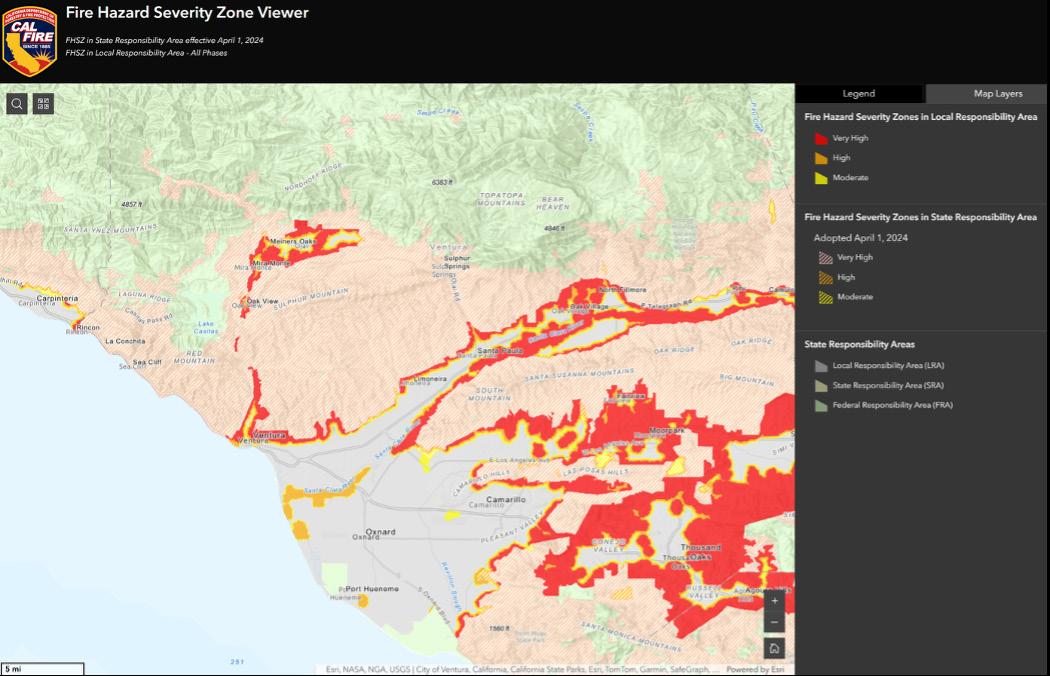
Fire Hazard Severity Zone maps evaluate “hazard,” not “risk.” They are like flood zone maps, where lands are described in terms of the probability of a particular area being inundated by floodwaters, and not specifically prescriptive of impacts. “Hazard” is based on the physical conditions that create a likelihood and expected fire behavior over a 30- to 50-year period without considering mitigation measures such as home hardening, recent wildfire, or fuel reduction efforts. (Ref-016)
Arundo presents both a hazard and a risk. Arundo can burn at any time of the year under varying conditions. It has transformed heavily invaded riparian habitat, which includes many coastal river systems in southern California, from a vegetation type that is normally resistant to fire to a source of fire events. (Ref-007 ) Arundo stands contain enough dead, dry fuel that can be ignited and carry a fire even under poor fire conditions, such as low wind speed, cool weather, and even when humidity is high or during light rains. Arundo directly increases the probability of fire ignition due to Arundo stands supporting human activities that lead to fires. Arundo stands offer concealment and shelter, which results in human encampments. In addition, a large study concluded: (Ref-007 )
• Watersheds with significant Arundo stands experience fire events that are due to the presence of Arundo. The occurrence of these Arundo-initiated fires is quantifiable, both as percent of stands burned and acreage burned.
• Arundo is a significant fire threat due to high fuel levels in combination with harboring ignition sources. Fires that start in Arundo stands are observed in nearly all watersheds.
• Wildland fires that burn riparian areas containing Arundo burn hotter and more completely due to higher fuel levels associated with the presence of Arundo.
• The large amount of biomass per unit area along with a favorable structure for burning generates fires that burn intensively.
In Ventura County, Arundo has been attributed to 158 fire starts in Ventura County river bottoms over the last 10 years. The heat map below represents frequency of fires as a color gradient, with yellow indicating a higher number of fires and purple indicating a fewer number of fires in the last 10 years. (Ref-001, Att-001)
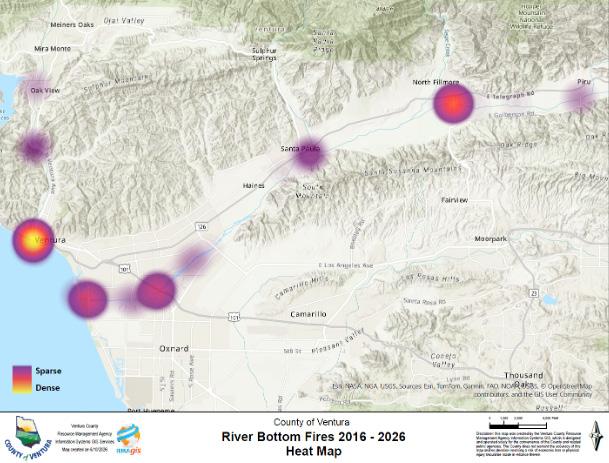
Figure 2. Heat map of Arundo-related fires in Ventura County river bottoms over the last 10 years. Data table provided by VCFD. (Att-001)
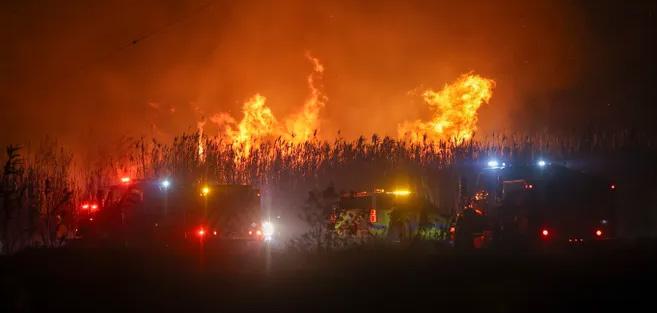
The 60-acre Auto Fire on January 13, 2025 (see photo below) highlighted the threat of Arundo-driven blazes in the Santa Clara River bottom, exacerbated by Santa Ana winds.
Watersheds are defined as the land area that channels rainfall and snowmelt to creeks, streams, and rivers, and eventually to outflow points such as reservoirs, bays, and the ocean. There are three major watersheds in Ventura County, and they all drain to the Pacific Ocean.
The Calleguas Creek watershed covers approximately 377 square miles in southeastern Ventura County. The watershed includes Conejo Creek, Arroyo Santa Rosa, Arroyo Simi, Arroyo Las Posas, and Calleguas Creek, as well as Revolon Slough and Mugu Lagoon. Due to development, Calleguas Creek is now primarily a perennial stream predominantly fed continuously by treated wastewater flows, with secondary surface flows originating from rising groundwater, agricultural and urban runoff, and periodic stormwater flows. (Ref-045)
Water from Conejo Creek (the site at the center of our public complaint) eventually flows into the Pacific Ocean at Mugu Lagoon, the largest salt marsh in Southern California. Mugu was recently awarded a $1.1 million five-year grant from the National Pollution Funds Center to remove debris, combat non-native species, and restore the marsh ecosystem after the site was damaged by a refueling plane crash in 2011. The restoration work will be facilitated by the California Department of Fish and Wildlife, Office of Spill Prevention and Response, the U.S. Fish and Wildlife Service, and the U.S. Navy. (Ref-005)
This watershed has been relatively underfunded and not considered a priority to conservation groups relative to the other watersheds, due to the lack of protected species found there. (Ref-001) From 2009 to 2019 a Calleguas Creek Arundo/Tamarisk Removal Program was led by Ventura County Resource Conservation District (Ref-037 ) ) but the programmatic permits they held for ten years expired under the former leader of Ventura County Resource Conservation District. (Ref-001) The Civil Grand Jury could not find evidence of any recent Arundo removal activity in this watershed.
Ventura River, the smallest of Ventura County’s three major watersheds, covers an area of about 228 square miles. Major tributaries include Matilija Creek, North Fork Matilija Creek, San Antonio Creek, and Canada Larga. Several key nonprofits have successfully eradicated hundreds of acres of Arundo from the upstream portions already (Ref-009); the Army Corps of Engineers required removal of the Arundo to gain approval for removal of the Matilija Dam. (Ref-013) Now there is a clear path forward to eradicating the rest of the river downstream thanks to a well-organized and well-funded coalition of stakeholders led by the Ojai Valley Land Conservancy. (Ref-009, Ref-035)
Santa Clara River is the largest and least altered river in southern California. Its tributary system covers about 1,634 square miles. Major tributaries include Castaic Creek and San Francisquito Creek in Los Angeles County, and the Sespe, Piru, and Santa Paula creeks in Ventura County. Approximately 40 percent of the watershed is in Los Angeles County and 60 percent is in Ventura County, which makes collaboration across jurisdictions more complex. The Santa Clara River was identified as a critically endangered river by American Rivers in 2005 (Ref-025) and contains 38 special status listed species.
The Santa Clara Watershed is generally characterized as consisting of upper and lower watersheds, with the upper watershed described as areas upstream (east) of the City of Fillmore.
Multiple groups (detailed below) are involved in Santa Clara River Arundo eradication and habitat restoration efforts, and funding for projects has not been consistent (Ref-050) making overall progress difficult to track (Att-013). By 2006 the Ventura County Resource Conservation District had completed mapping of 16,400 acres in the upper watershed. (Ref-026) As of February 2026, a Santa Clara River Arundo Control Program spearheaded by Southern California Coastal Water Research Project was mapping out a long-term plan and strategy to tackle the remaining stands of Arundo throughout the entire watershed. Project managers forecast $285,000 annually for labor and supplies and partner agreements were being developed. (Att-010)
Many different groups, both government and nonprofit, are involved with tackling Arundo eradication. Interviews with representatives from county agencies revealed different levels of knowledge and different attitudes about the Arundo problem, from realistic to pessimistic. Different agencies conveyed different beliefs about whether Arundo could even be eradicated at all given the expense and challenges of seeking permits and cooperation from so many different stakeholders. (Ref-001, Att-011)
Ultimately, funding and permits are tangible and achievable, but what may not be available in some watersheds or some agencies is a stated desire to work toward a lasting solution, and a belief that eradication is possible.
For VCFD, the threat of Arundo is exacerbated by humans taking advantage of the density of Arundo stands as cover for river bottom encampments. When humans spark fires in these makeshift living areas, other hazardous material ends up in flames too. (Ref-001)
“The mission of the Ventura County Fire Department is to anticipate and respond to the dynamic public safety needs of a diverse community of about 840,000 people. This includes not only fire prevention, but also education, response, and communication.” (Ref-019)
At the time of this report writing, the VCFD was in the process of ramping up hiring to do inspections on lots within designated Fire Hazard Severity Zone (FHSZ) areas. The number of impacted lots has tripled with the new designations, so the effort will require additional staffing and is expected to take a while. In the past, VCFD sent emails and made phone calls to resolve issues about weed abatements on county-owned parcels; with the updated FHSZ maps, county agencies in charge of maintaining these parcels will start receiving formal Fire Hazard Reduction Program (FHRP) notices this year with a June 1 clearance deadline. The FHRP is in effect and will apply to many (but not all) landowners. (Ref-001, Ref-046)
The VCFD wildfire preparedness team has had great success convincing some landowners to participate as partners in the Ventura River Arundo eradication program, often having costs covered by grants. (Ref-001)
Ventura County Resource Conservation District (VCRCD)
Once known as Soil Conservation Districts, these are “special districts” of the state of California.. The Ventura County RCD is a local unit of the government and is administered under the provisions of Division 9, of the Public Resource Code, State of California. The VCRCD is one of 99 RCDs in California and belongs to the California Association of RCDs (CARCD). (Ref-020)
MISSION STATEMENT
To facilitate the conservation, sustainability, and restoration of Ventura County’s natural resources for current and future generations by working with willing partners and community members.” (Ref-020)
The VCRCD is governed by a board of seven Directors appointed for four-year terms by the Ventura County Board of Supervisors. RCDs manage a diversity of resource conservation projects, including soil and water conservation, wildlife-habitat enhancement and restoration, control of exotic plant species, watershed restoration, conservation planning, education and many others. Since most RCDs receive very little regular funding through local taxation, they rely heavily on grants and other types of fundraising to stay in operation. (Ref-020)
The Civil Grand Jury learned the VCRCD has been appointed lead agency to many Arundo eradication projects, both past and ongoing, and has a successful history obtaining programmatic permits from the regulatory agencies that have jurisdiction within the watershed, including the Army Corps of Engineers and California Department of Fish and Wildlife. (Ref-001, Ref-004, Ref-008, Ref-026, Ref-028, Ref-037 ) Programmatic permits are designed to streamline the process of approvals for commonly performed and high-priority activities. For projects along the Upper Santa Clara River, the Los Angeles Regional Water Quality Control Board is also involved. The permit process for Arundo eradication projects is now shifting in line with CDFW’s “Cutting the Green Tape” initiative and promises to be more streamlined for future projects focused on Arundo eradication. (Ref-001, Ref-030)
This is a big agency tasked with a wide variety of responsibilities, from road maintenance and traffic engineering to household hazardous waste collection, water and sanitation. Public Works oversees the Watershed Protection Districts.
MISSION STATEMENT
To deliver efficient, responsive and cost-effective public works services that protect and enhance the safety, health and quality of life in Ventura County.” (Ref-021)
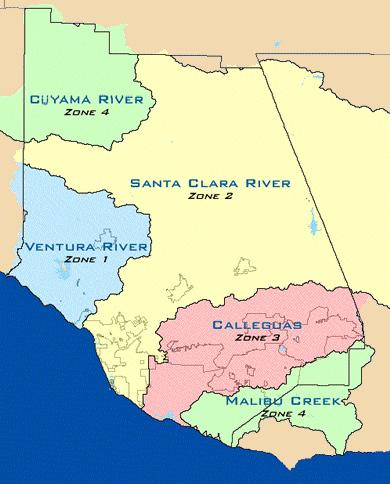
Contained under the Public Works Agency and organized into four zones (see Figure 4 above), this group is ultimately tasked with maintaining/controlling the Arundo on countyowned or county-maintained land to protect waterways and related infrastructure. (Ref-001, Att-005, Att-006, Att012) They do not conduct maintenance on the waterways that lie on private property (Att-011) which is a challenge to eradication that is discussed below.
“To protect life, property, water courses, watersheds, and public infrastructure from the dangers and damages associated with flood and stormwaters.” (Ref-022)
The Civil Grand Jury learned that the VCWPD has recently been served violation notices for improper herbicide application in unrelated projects, as well as informal abatement email requests from the VCFD concerning the Arundo stand in Conejo Creek which was the subject of public complaint. (Ref-001, Att014, Att-015, Att-016)
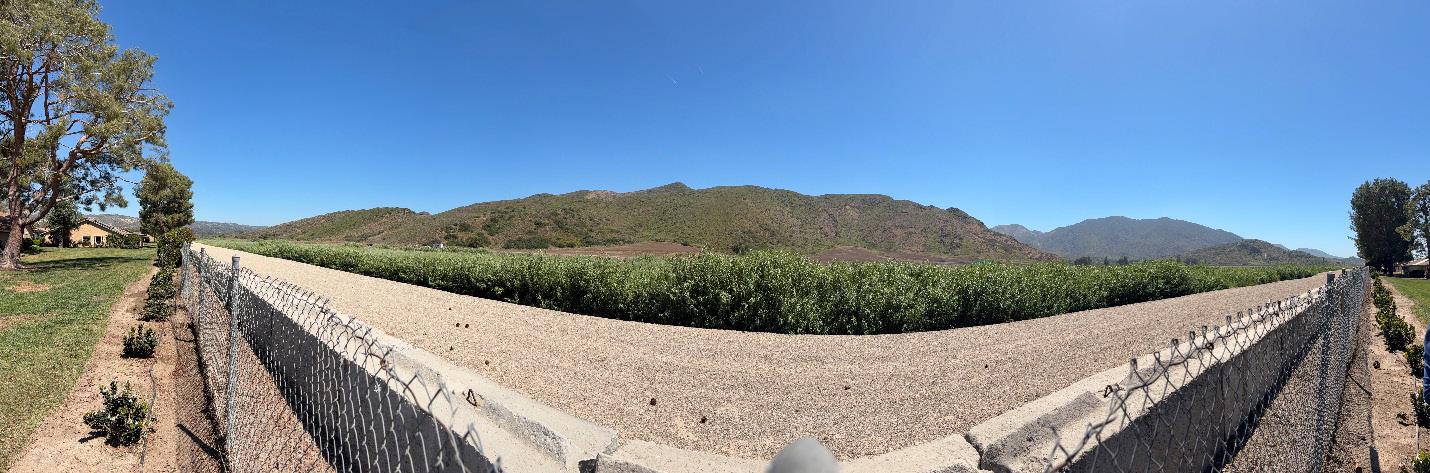
The Civil Grand Jury reviewed Oct/Nov 2025 routine maintenance reports of work performed along Conejo Creek and viewed the Conejo Creek site in person on April 8, 2026 (five months after the work report confirmed the Arundo had been cut to the ground). The Civil Grand Jury observed massive stands of Arundo as if they were never removed, looming several feet high and spreading miles just over the fence line from a row of houses in Leisure Village.
This agency provides oversight and compliance monitoring for herbicide applications used to treat Arundo and is the lead agency of the informal Ventura County Weed Management Area (WMA), which is detailed below.
To protect and promote agriculture and equity in the marketplace, while ensuring the welfare of the public, the industry and the environment.” (Ref-023)
Most California counties have established a Weed Management Area. (Ref-017 ) A WMA is a local organization that brings together all interested landowners, land managers (private, city, county, state, and federal), special districts, and the public in a county or other geographical area for the purpose of coordinating and combining their action and expertise to deal with their common weed control problems. The organization functions under the authority of a mutually developed memorandum of understanding (MOU). A WMA may be voluntarily governed by a chairperson, steering committee, County Agricultural Office or Resource Conservation District. These programs are defined in state code. (Ref-024)
The WMA program is funded by one-time budget allocations with gaps in between, so it’s challenging for this group to plan long-term eradication projects with sporadic funding The California Invasive Plant Council (Cal-IPC) is the lead advocate for funding the WMA program. (Ref-012) The VCWMA organized by the Ventura County Agriculture/Weights and Measures Department includes all of Ventura County.
The Civil Grand Jury originally discovered the VCWMA through the California Land Conservation Assistance Network website, where WMA activities are described as focusing upon the exclusion, detection, eradication, and suppression of priority noxious and invasive weeds using an integrated approach. (Ref-006) The link from this page pointed to a domain www.VCWMA.org that was up for sale. Searching the Agriculture Commissioner’s website for “Arundo” or “WMA” yielded no results as of this report writing. When asked about the WMA’s activities, the Civil Grand Jury was forwarded some email correspondence with an agenda for a meeting March 5, 2026 and a video link from a meeting held December 11, 2025 (Att-017 ) but there were no minutes, agendas or recorded meetings publicly posted.
From presentations published on Cal-IPC’s website, the Civil Grand Jury determined the VCWMA was formed in 2004 and went dormant in 2015, then revived in 2019. Notably, the VCWMA lacked any web presence through the Agriculture Commissioner’s website or any domain of its own when the Civil Grand Jury began investigating. (Ref-015)
The Civil Grand Jury requested and obtained documents confirming the MOU existed (Att-007, Att008), and a current cooperative funding agreement with California Department of Food and Agriculture was in effect. (Att-002) Group participants signing onto the MOU include UC Cooperative Extension, California Conservation Corps, Friends of the Santa Clara River, Santa Clara River Conservancy, VCRCD, Concerned Resource and Environmental Workers aka The C.R.E.W., Ventura Land Trust, OVLC, U.S. Forest Service, and U.S. Fish and Wildlife Service. (Att-008)
The VCWMA ranks Arundo as the number one weed in terms of environmental impact. (Att-002) After some digging, the Civil Grand Jury discovered evidence of all the work this group is doing across a variety of invasive species, not from any county website but based on information from Cal-IPC and proceedings from the 2025 Cal-IPC Symposium held in Ventura. (Ref-015)
Despite the notable amount of work that is being done to control or eradicate Arundo, the table and map from Cal-IPC’s Weedmapper Tool below show a countywide picture highlighting only three areas that are seeing a verifiable decrease in Arundo spread: (Ref-011)
Ventura County Regional Species Map: Arundo donax
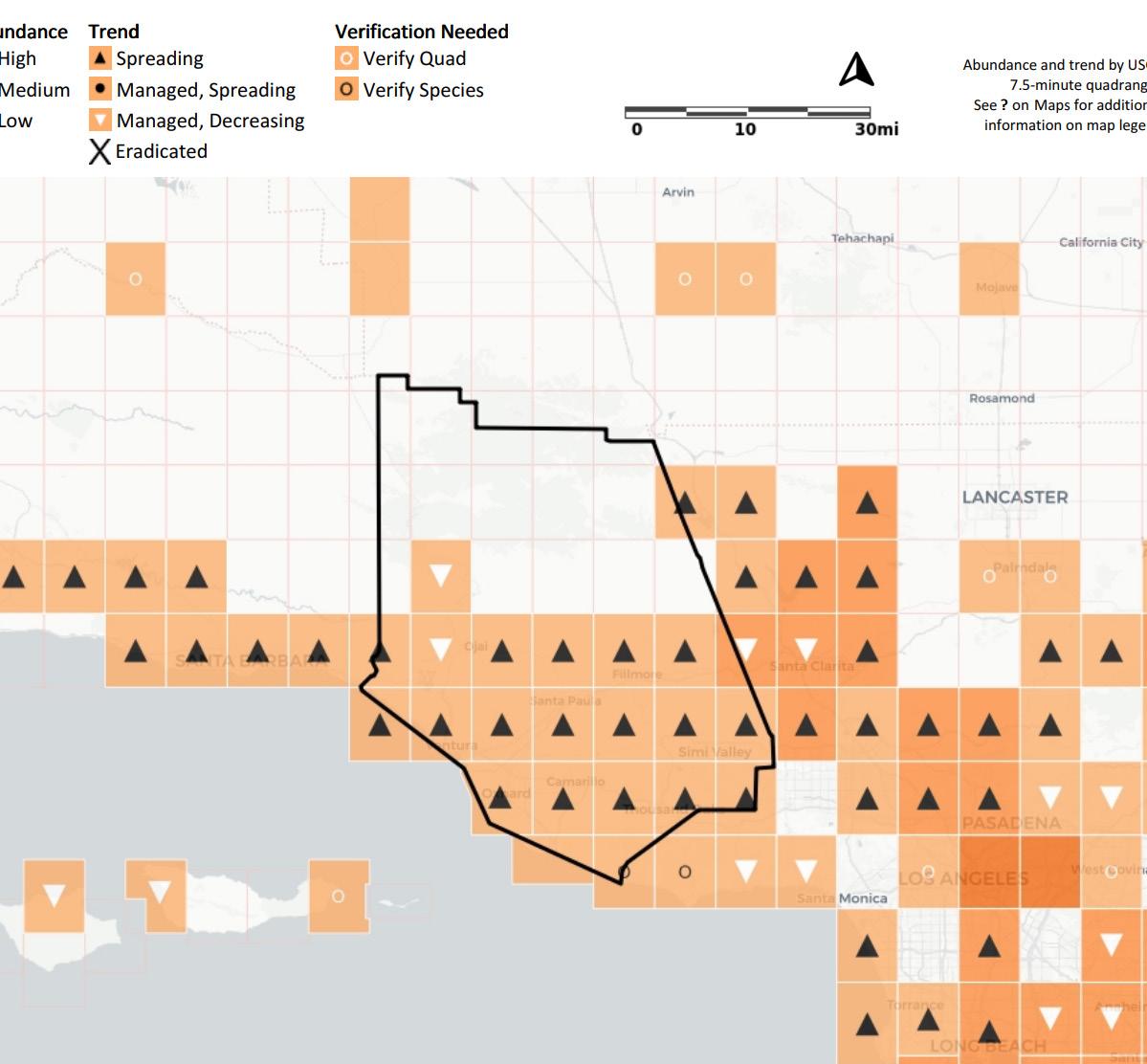
Figure 6. Cal-IPC Weedmapper Tool shows quadrants of Arundo abundance and growth trends in the Ventura County Weed Management Area. (Ref-011)
Figure 7. Cal-IPC Weedmapper Timeline View for Arundo management in Ventura County. (Ref-011)
This table indicates there has been no progress eradicating Arundo from a countywide perspective, although the map reflects small successes along the Ventura River.
Only two of the three major watersheds, Ventura River (Ref-038) and Santa Clara River (Ref-039) have active watershed councils in Ventura County, both well-organized, spearheaded and supported by staff of the VCRCD. They exist to facilitate communication between various interest groups, educate and engage with willing partners, provide a forum for sharing information and data, maximize grant funding collaboration, and keep environmental professionals and the community up to date on watershedrelated programs.
The Ventura River Watershed Council lists Public Works and VCWPD as stakeholder participants. (Ref-051)
Calleguas Creek does not have a watershed council as of this report; from the Watersheds Coalition of Ventura County website (Ref-040) the Civil Grand Jury learned that the Calleguas Municipal Water District is named as “fiscal agent” of the Calleguas Creek Watershed. The water district promotes several water use efficiency and conservation programs but notably does not mention the word “Arundo” on its website anywhere. (Ref-044)
The number of nonprofit groups uncovered by the Civil Grand Jury who worked or are working on the Arundo problem are seemingly endless. Ojai Valley Land Conservancy, Ventura Land Trust, The Nature Conservancy, Friends of Santa Clara River, Santa Clara River Conservancy, Channel Islands Restoration, Southern California Coastal Water Research Project (SCCWRP), Treepeople, California Conservation Corps, Concerned Resource and Environmental Workers aka The C.R.E.W., and U.C. Santa Barbara are a few examples.
In late 2025 the SCCWRP, a joint powers authority applying next-generation science to aquatic ecosystems management, began working with Santa Clara watershed managers to develop a pilot program for Arundo removal looking at nature-based solutions to restore natural flow to the urbanized watershed. The draft plan is expected in late 2026. (Ref-032)
From the SCCWRP website the Civil Grand Jury learned that nature-based solutions (i.e. landscape or structural modifications designed to improve or protect ecological health by mimicking nature) are a promising area of research “In contrast to traditional engineered approaches for achieving environmental flow objectives, such as managing storage volumes, diversion rates and discharge
patterns – all modifications that can have unintended environmental and societal consequences. Naturebased solutions… tend to have less harmful environmental effects while providing co-benefits for both humans and wildlife.” (Ref-032)
The Civil Grand Jury interviewed OVLC based on its recent $2.05 million grant award from CAL FIRE to finish the work it started eradicating Arundo in the Ventura River Watershed. (Ref-035, Ref-052)
To protect and restore the natural landscapes of the Ojai Valley forever.” (Ref-033)
From interviews the Civil Grand Jury learned the task of eradicating Arundo in county-owned parcels along the Ventura River has been effectively passed to OVLC (Ref-001); Public Works stated there were no Arundo eradication efforts for this zone in 2025 or 2026 to date (Att-012). County-managed areas of Foster Park have noticeable Arundo stands that will be removed as part of the OVLC watershed-wide eradication program funded by CAL FIRE. (Ref-001, Ref-035, Ref-052)
OVLC’s website speaks for itself: “OVLC has the experience, the permits, and the funds, but we can’t solve this problem alone. We need a holistic plan, landowner participation, and community vision to completely remove this invasive weed and restore the waters we love …Grant funding will also enable OVLC to implement an Early Detection-Rapid Response program to monitor all prior treated areas and target regrowth immediately to prevent new infestations. Importantly, we will be working in partnership with dozens of riparian landowners to provide access for treatments but also assist with neighborhood outreach as part of our watershed-wide strategy.” (Ref-009)
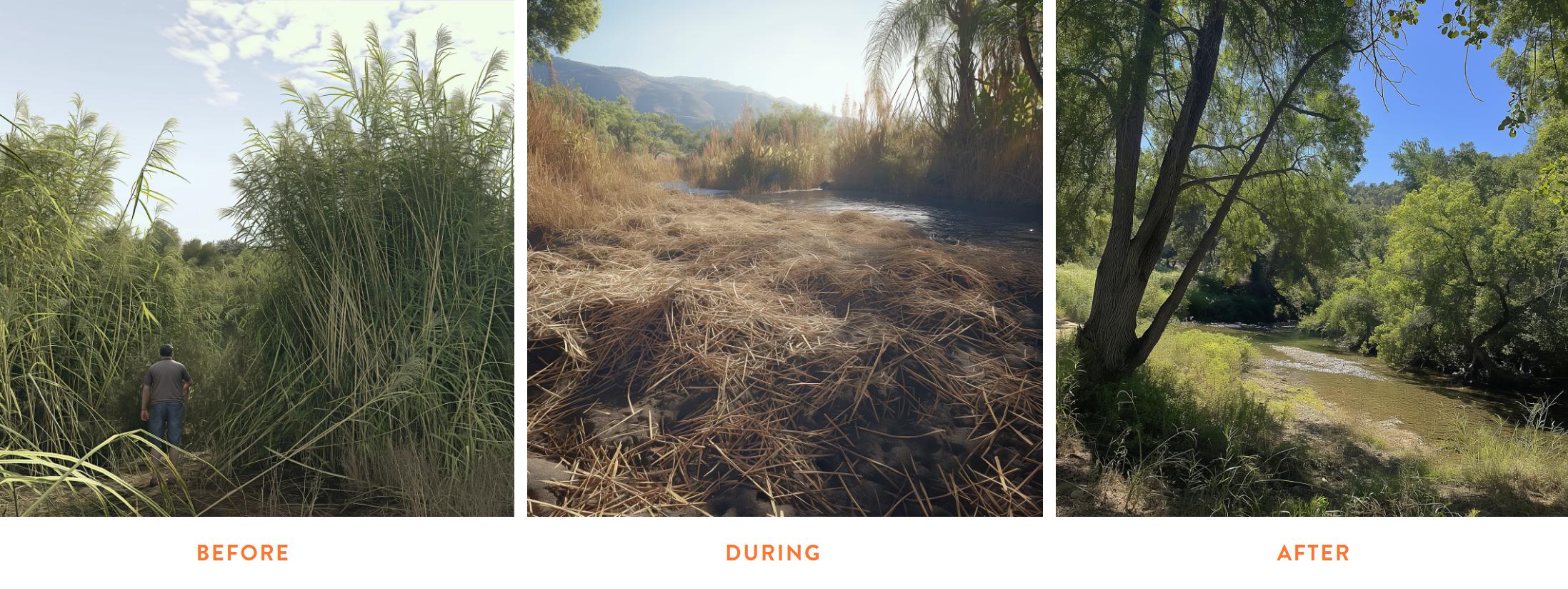
This photo on OVLC’s website shows the significant difference between Arundo-infested and natural wetland corridors following a targeted Arundo removal and habitat restoration project: (Ref-009)
The Civil Grand Jury reviewed operational reports and expenditures for Watershed Protection District Zone 3 Fiscal Year 2024-25 (Att-006) and noted the following best practices for invasive plant removal cited in the Conejo Creek Vegetation Removal Project report, which are set forth in the Environmental Impact Report (EIR) and state permits issued to Public Works (Att-006, Att-009):
• Remove invasive plant species in a manner that prevents propagation.
• Spray or mow plants before seeds ripen, when feasible.
• All cut/removed invasive vegetation shall be taken to a dump as a destruction load.
• Do not stockpile invasive vegetation including mulch where materials would wash downstream or be allowed to propagate.
• For giant reed (Arundo donax), minimize ground disturbance and use foliar glyphosate treatment on smaller infestations, as feasible. Best to apply herbicide from May 1 to October 1 if breeding birds are absent. No grading to remove root masses unless earthwork is part of routine maintenance work.
The best practices for Arundo removal call for application of specific herbicides (which are regulated by the County Agricultural Commissioner) within a specific and very short timeframe of cutting; the method generally accepted as the most effective is called “cut and daub” and requires cutting the stem near the ground and immediately applying an approved herbicide to the cut stump to prevent resprouting. (Ref-007, Ref-008, Ref-009)
A 2004 cost analysis comparison of different Arundo eradication techniques in the Ventura River shows the cut-and-daub technique to be the most cost-effective, with higher initial costs mitigated by lower long-term maintenance costs (more detail below). (Ref-008) Cost benefit analyses from Texas and the Santa Clara River also showed a positive benefit to cost ratio. (Ref-007 ) Applying approved herbicides to Arundo immediately after cutting it and closely monitoring for regrowth, then vigilantly retreating as necessary, is the only current proven strategy for eradicating this weed. (Ref-001, Ref-007, Ref-008) But herbicides are not problem-free, and new options for controlling Arundo with harmful herbicides is an ongoing area of research.
The October/November 2025 Public Works work order for the Conejo Creek parcel owned by the county confirmed no herbicide was applied to cut Arundo stalks by work crews. (Att-006)
Another report from Public Works regarding a Coyote Creek Pilot Channel Project (Zone 1) in September/October 2024 states: “Approximately 0.61 acres of giant reed (Arundo donax) was removed along Coyote Creek. The initial removal was conducted by the California Conservation Corps (CCC) in October 2024. The CCC crews did not apply herbicide, they cut the giant reed stalks and disposed of them in a 40-yard rolloff bin placed nearby.” This report indicates that herbicides were not applied until January 25, 2025, three months after the initial cutting. By estimates from this project summary, more than $98,000 (largely grant funded) was spent on a project that did not observe best practices in timing of herbicide treatment. (Att-005)
Other projects mentioned in this report involving Matilija Creek and Santa Clara River did seem to observe this practice, so the Civil Grand Jury determined that best practices are only sometimes being followed by Public Works. (Att-005)
In contrast to the stated best practice of removing cut invasive vegetation to avoid regrowth, the October/November 2025 Public Works report noted: “All vegetation was mulched on site such that offsite disposal was not required.” (Att-006)
The Civil Grand Jury learned that under typical routine Public Works maintenance activities, Arundo encountered during vegetation removal is generally mulched and left onsite, unless a specific task or project scope of work requires otherwise. Additionally, the Civil Grand Jury learned that acceptance of Arundo material from waste collectors has been challenging and the budget for routine maintenance does not cover the cost of cutting/daubing and offsite disposal. (Ref-001)
Leaving the mulched Arundo onsite violates the lake and streambed alteration permits, which are required for those routine maintenance activities. (Att-009)
Biomass management would include finding creative ways to use biomass instead of mulching it. At minimum, the county could find a better place to leave the composted biomass. Ojai Valley Land Conservancy reports it has made use of space at the old Honor Farm off Baldwin Road in Ojai, where stalks of Arundo are stockpiled until CAL FIRE can send a crew (often incarcerated labor) to chip up the stalks into compostable piles (Ref-001).
The permitting process for removing large stands of Arundo in our watersheds has been complex. (Ref001, Ref-034) If you are a private landowner looking to eradicate a large patch of Arundo on your own land, you might be confused about what permits are required and what is needed to obtain them. Both VCRCD and Public Works reference helping private landowners with this process, but VCRCD’s permits only apply to Ventura River and Upper Santa Clara River (they may expand later). (Ref-001, Ref-028)
The Civil Grand Jury found information about CDFW’s new “Cutting the Green Tape” initiative to streamline permitting for these kinds of activities (Ref-030), but it is unclear what parts of that initiative, if any, apply to routine water channel maintenance projects that do not have habitat restoration as the primary goal (even though the tasks are essentially the same). The process as explained by Public Works seems particularly confusing and demonstrates the complexities involved in permitting activities that take place within watersheds. (Ref-029, Ref-031) Adding to the complexity, the Civil Grand Jury noted that the extensive Wetlands Permitting Guide from the Ventura County Planning Division has not been updated since 2006 and does not reflect any language about programmatic permits held by VCRCD that can be used by others, or CDFW’s Cutting the Green Tape Initiative. It refers to the California Department of Fish & Game, the old name for the current California Department of Fish & Wildlife before it was changed 13 years ago. (Ref-028, Ref-031)
Public Works entered into a Streambed Alteration Agreement long ago with CDFW to authorize ongoing maintenance activities for Conejo Creek. The Civil Grand Jury learned that this permit has been extended as allowed but expired December 31, 2024. (Att-009) Public Works was in the middle of getting these renewed as of this report writing. (Ref-001)
Both OVLC and VCRCD are fully permitted for activities they oversee in their respective watersheds. (Ref-001, Ref-028, Ref-035)
During interviews with the Civil Grand Jury, county officials stated that the main obstacles to eradicating Arundo are the environmental permitting requirements and the need to avoid working around nesting species or spraying herbicides. These challenges are reflected in mainstream press articles (Ref-001, Ref-010, Ref-034) These are indeed challenges, and public concerns about pesticides and herbicides have led to shifts in local policy and reporting requirements. (Ref-047, Ref-048, Ref-049) However, It is noteworthy that the nonprofit conservation groups working on eradicating Arundo understand the requirement to use narrowly applied herbicides and scrupulously follow best practices to achieve desired results. They have been able to effectively eradicate the noxious weed in many areas and overcome any permitting challenges.
In response to the 2015-16 Civil Grand Jury Report on Arundo, Public Works suggested that the creation of a weed abatement district would be a useful way to encourage compliance among private property owners. (Ref-003) This district was never created, but the VCFD can send abatement notices under the Fire Hazard Reduction Program.
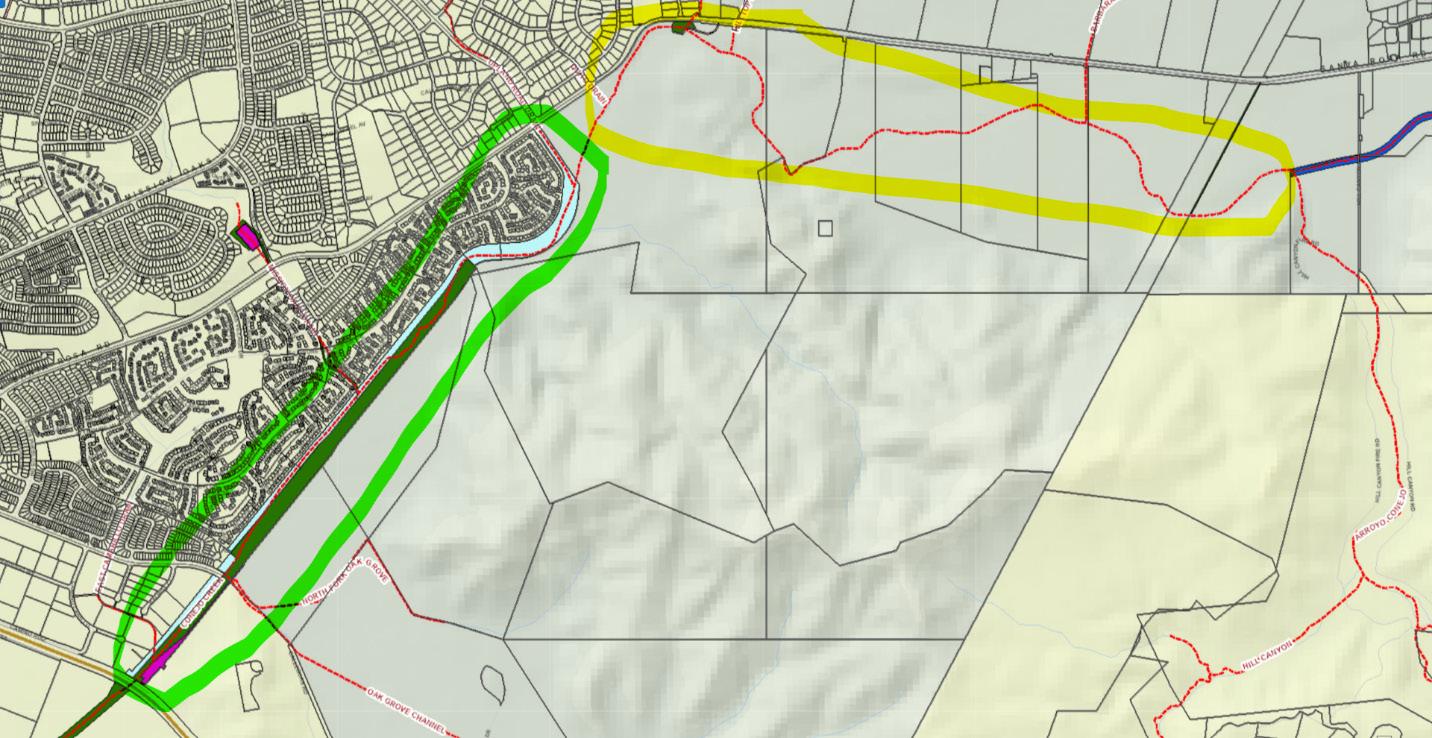
Figure 9. Ventura County Public Works Agency Map of Conejo Creek traversing county-owned (green) and private land (yellow). (Att-004)
This map from Public Works reflects the issue with the area that is the subject of the complaint to the Civil Grand Jury. The Civil Grand Jury learned that the portion of Conejo Creek adjacent to Leisure Village (approximately two miles, circled in green) receives routine maintenance from Public Works. Upstream of this area is approximately two miles of creek lying on private property that the county has no obligation or authority to maintain (circled in yellow). This upstream portion is also overgrown with Arundo. The Civil Grand Jury learned that any efforts to eradicate Arundo within this district-maintained portion of Conejo Creek would be fruitless unless the upstream private properties were dealt with first. (Ref-001, Att-011)
As one agency lead pointed out, there is not much money out there for planning. The final Ventura County Arundo Task Force report from VCRCD in 2006 alluded to a disruption in funding due to a shift in priorities toward Homeland Security. (Ref-004) Funding for this effort comes and goes, but the expense of removing Arundo from waterways without a targeted eradication solution could be a forever problem, as shown in this graphic from the county Weed Management Area: (Ref-015)
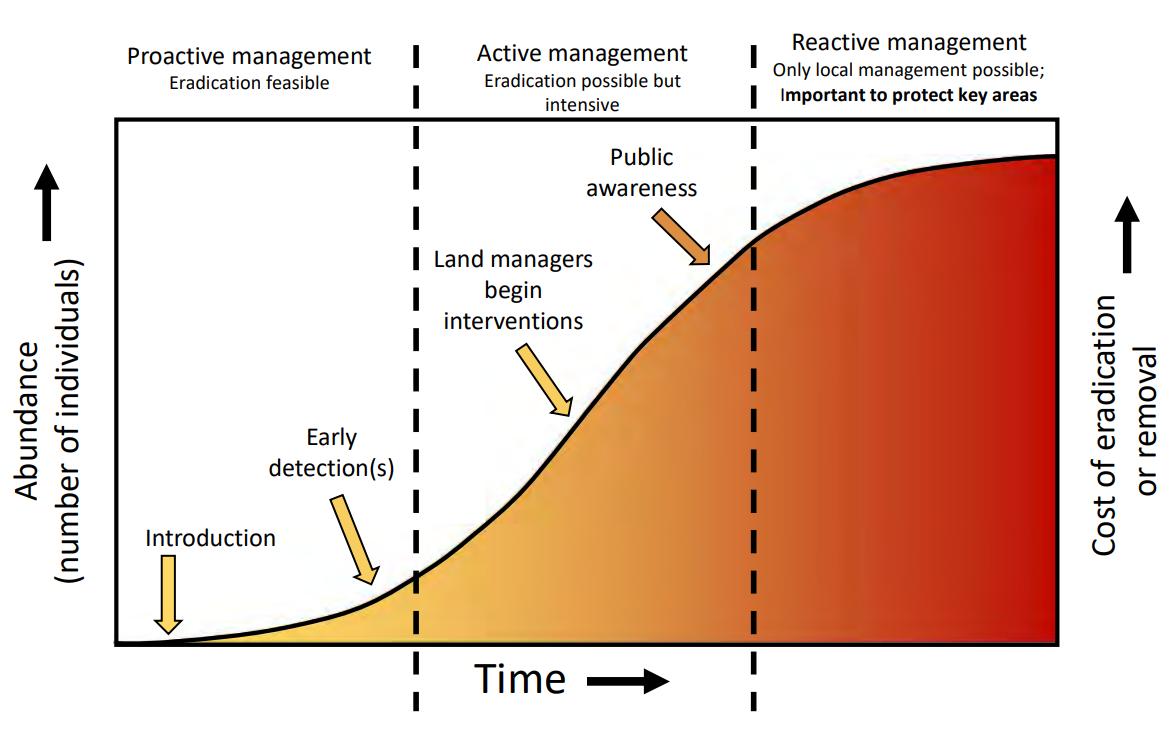
Figure 10. Graphic from Ventura County Weed Management Area / Cal-IPC 2025 Symposium Proceedings (Ref-015)
Different groups in Ventura County have secured grant funding to remove Arundo from various agencies, including:
• In 2023, Cal Fire awarded the OVLC a $2.05 million grant to eradicate Arundo from the Ventura River Watershed. The grant covers mapping, permitting, and a multi-year-funded plan to completely eradicate Arundo from the Ventura River Watershed. (Ref-009)
• In 2024 a grant was awarded to Ventura County Watershed Protection District from the USDA Natural Resource Conservation Service (NRCS) under the Emergency Watershed Protection Program. The affiliated State Conservationist can declare a local watershed emergency and initiate program assistance in cooperation with an eligible sponsor. (Att-005, Ref-041)
• In 2025 the CDFA entered a three-year cooperative agreement with VCWMA for $120,000 to implement the VCWMA’s integrated weed management plan, which focuses largely on Arundo. (Ref-001, Att-002)
With the updated Fire Hazard Severity Zone maps and the need to take proactive steps to reduce the threat of wildfires, the administrator of CAL FIRE grants in Ventura County recently spoke at the Santa Clara River Watershed committee meeting to promote assistance in securing additional funds for longterm eradication of this vegetative fire hazard. (Ref-036)
With funding for eradication so limited, resource sharing among stakeholders becomes more critical to accomplish any eradication goal. The Civil Grand Jury learned that while one nonprofit (OVLC) was funded by CAL FIRE in 2023 to collect aerial maps of Arundo along the Ventura River (Ref-035), another nonprofit (Ventura Land Trust) was awarded funding from CDFA in 2025 for the same activity through the Ventura County Weed Management Area (Att-002). Both the OVLC and VLT are member organizations of the VCWMA, and the OVLC had already completed most of its aerial mapping by the time the CDFA grant was announced, so the Civil Grand Jury found that limited state grant monies are being spent redundantly.
A robust study conducted in 2011 by the California Invasive Plant Council for the state Water Resources Board showed a conservative benefit-to-cost ratio for Arundo removal being approximately 2 to 1; that is for every $1 spent on eradicating Arundo, $2 is saved or gained. (Ref-007 ) Benefits quantified include:
• reduced fire impacts
• water savings
• reduced sediment trapping
• reduced flood damage to bridges
• habitat stability
• reduced beach debris
Benefits are lost if follow-up retreatments are not applied in annual succession until no new sprouts are observed. A Ventura River demonstration project in 2006 also confirms these estimates and highlights the long-term savings of using the cut-and-daub method and following best practices with offsite vegetation removal. (Ref-008) Funding for follow-up surveillance and monitoring is critical to any eradication program’s success.
The 2025 updated fire hazard maps reflect the urgency required in reducing threats like Arundo in a meaningful, lasting way. Complex issues call for collaboration; expensive problems call for optimizing resource sharing across disparate groups so cost-effective solutions can be implemented quickly.
F-01. The Ventura County Civil Grand Jury finds no evidence of a long-term countywide coordinated Arundo eradication plan nor a budget line item to track spending on Arundo removal efforts, despite Ventura County Board of Supervisor’s partial agreement with the 2015-16 Civil Grand Jury’s recommendation to do so.
F-02. The Ventura County Civil Grand Jury finds multiple government agencies and nonprofit organizations are involved in Arundo eradication efforts, but no specific group has been empowered to create a coordinated countywide Arundo eradication plan.
F-03. The Ventura County Civil Grand Jury finds Public Works is not always following best management practices regarding Arundo removal, resulting in continued regrowth of an invasive weed.
F-04. The Ventura County Civil Grand Jury finds that failure on behalf of the Ventura County Public Works Agency to observe best practices on invasive plant removal in a very high Fire Hazard Severity Zone has resulted in informal abatement notices from Ventura County Fire Department and public complaints to the Civil Grand Jury.
F-05. The Ventura County Civil Grand Jury finds that the county agency in charge of controlling the growth of Arundo on county-owned land (Public Works) does not have the budget needed to observe best practices in eradicating Arundo.
F-06. The Ventura County Civil Grand Jury finds that a clear understanding of Public Works’ expenditures related to Arundo control was unavailable based on the lack of cost accounting for Arundo removal activities (vegetative removal project work is combined so Arundospecific labor and expenses cannot be determined).
F-07. The Ventura County Civil Grand Jury finds that programs to eradicate Arundo in the Ventura River and Santa Clara River Watersheds are actively funded and well-organized by watershed councils, Ventura County Resource Conservation District, Ojai Valley Land Conservancy, and many others.
F-08. The Ventura County Civil Grand Jury finds no active watershed council or Arundo eradication project exists for the Calleguas Creek Watershed.
F-09. The Ventura County Civil Grand Jury finds scant information (little web presence and no published archive of past meetings) about the activities of the Ventura County Weed Management Area organized under the Agricultural Commissioner.
F-10. The Ventura County Civil Grand Jury finds that the Ventura County Weed Management Area has been operating for years with no strategic plan, despite all parties to the memorandum of understanding agreeing to develop one when the group was formed.
F-11. The Ventura County Civil Grand Jury finds that a lack of coordinated information sharing among members of the Ventura County Weed Management Area has likely led to unnecessary redundancies in limited state grant awards.
F-12. The Ventura County Civil Grand Jury finds that with a demonstrated benefit to cost ratio of Arundo eradication, lack of a countywide Arundo eradication plan results in wasted taxpayer money, groundwater waste, native habitat destruction, and increased fire hazards resulting in increased liability exposure to the county.
F-13. The Ventura County Civil Grand Jury finds that the Ventura County Planning Division of the Resource Management Agency has not updated their Wetlands Permitting Guide in 20 years, presenting incomplete and outdated information.
R-01. The Ventura County Civil Grand Jury recommends the Board of Supervisors resurrect the Ventura County Arundo Task Force and request participation from key stakeholders (Public Works/Watershed Protection District, Agriculture, Ventura County Fire Department, Ventura County Resource Conservation District, California Department of Fish and Wildlife, Ventura County Weed Management Area, private landowners, etc.) to fund and develop a 10-year
Arundo eradication plan specifically for the Calleguas Creek Watershed. This needs to be completed by December 31, 2026. (F-01, F-02, F-07, F-08, F-12)
R-02. The Ventura County Civil Grand Jury recommends the Ventura County Resource Conservation District assume the role as lead agency of this task force based on its long history of leading watershed councils, success overseeing Arundo eradication projects elsewhere in the county, and ability to secure necessary permits and collaborate with key state agencies and other key stakeholders. This needs to be completed by December 31, 2026. (F-01, F-02, F-03, F-04)
R-03. The Ventura County Civil Grand Jury recommends the Board of Supervisors reallocate funds from Public Works’ operations and maintenance budgets that involve invasive vegetation removal, redirecting these funds to the appropriate task force or watershed council to support Arundo eradication following best practices. This needs to be completed by December 31, 2026. (F-03, F-04, F-05, F-06, F-07)
R-04. The Ventura County Civil Grand Jury recommends the Board of Supervisors allocate necessary funds in its next budget to support existing Arundo eradication programs as requested by the Santa Clara River Watershed council. This needs to be completed by December 31, 2026. (F-01, F-02, F-12)
R-05. The Ventura County Civil Grand Jury recommends the Agricultural Commissioner commit to improving the governance of the Ventura County Weed Management Area, expedite the creation of a strategic plan, and establish a basic website presence as soon as possible to publish meeting notices, agendas, and minutes to increase openness and transparency, promote information sharing among members and the public, and to highlight the important work it is doing around the county. This needs to be completed by October 31, 2026. (F-09, F-10, F-11)
R-06. The Ventura County Civil Grand Jury recommends the Ventura County Planning Division of the Resource Management Agency update their Wetlands Permitting Guide to conform with other recent efforts to streamline permitting processes. This needs to be completed by December 31, 2026. (F-13)
Responses required from:
The following governing bodies within 90 days:
Ventura County Board of Supervisors (F-01, F-02, F-03, F-04, F-05, F-06, F-07, F-08, F-12, R-01, R-02, R-03, R-04)
Ventura County Resource Conservation District (F-02, F-07, F-08, F-10, F-11, F-12, R-01, R-02, R-03, R-04)
Responses invited, but not required, from:
The following appointed officials within 60 days:
Agricultural Commissioner (F-01, F-02, F-07, F-08, F-09, F-10, F-11, F-12, R-01, R-05)
Public Works Agency Director (F-01, F-02, F-03, F-04, F-05, F-06, R-01, R-02, R-03)
Resource Management Agency Director (F-13, R-06)
The Civil Grand Jury commends the Ojai Valley Land Conservancy for taking a proactive, educational, and collaborative approach to Arundo eradication. Their $2.05 million grant from CAL FIRE will help to completely eradicate Arundo from the Ventura River Watershed; together with the Ventura County Resource Conservation District they secured permits to work year-round under a new “Cutting the Green Tape” Initiative from California Department of Fish and Wildlife. Through their Ventura River Watershed Riparian Resilience Program, OVLC’s vision and determination sets a strong example of what it takes to be successful in the fight against the formidable Arundo plant.
Ref-001. Interviews with various government officials and other interested parties.
Ref-002. 2015-16 Ventura County Civil Grand Jury Report: Riverbed Hazardous Vegetation. Accessed on February 17, 2026 from https://vcportal.venturacounty.gov/GDJ/docs/reports/2015-16/ Riverbed_Hazardous_Vegetation.pdf
Ref-003. Ventura County Public Works Agency and Board of Supervisors. Responses to Findings and Recommendations, Riverbed Hazardous Vegetation, July 19, 2016. Accessed on February 17, 2026 from https://vcportal.venturacounty.gov/GDJ/docs/reports/2015-16/Riverbed_ Hazardous_Vegetation-Response-PWA.pdf
Ref-004. Ventura County Resource Conservation District. Ventura County Arundo Task Force. Cal-IPC Symposium Proceedings, 2002 . Accessed on February 16, 2026 from https:// www.cal-ipc.org/wp-content/uploads/2017/12/2002_symposium_proceedings2378. pdf#:~:text=Thank%20you%20for%20your%20attention.,(805)%20386%2D4685
Ref-005. CDFW Office of Communications, Education and Outreach. $1.1 Million Restoration Effort to Revitalize Mugu Lagoon Wetlands After 2011 Plane Crash, December 18, 2024. Accessed on February 25, 2026 from https://wildlife.ca.gov/News/Archive/11-million-restoration-effort-torevitalize-mugu-lagoon-wetlands-after-2011-plane-crash
Ref-006. California Land Conservation Assistance Network. Ventura County Weed Management Area, updated January 2017. Accessed on February 16, 2026 from https://www.californialandcan. org/local-resources/Ventura-County-Weed-Management-Area/27651
Ref-007. California Invasive Plant Council. Arundo donax Distribution Impact and Report, March 2011. Accessed on March 23, 2026 from https://www.cal-ipc.org/wp-content/uploads/2017/11/ Arundo_Distribution_Impact_Report_Cal-IPC_March-2011_small.pdf
Ref-008. Ventura County Watershed Protection District, Ventura County Resource Conservation District, Natural Resources Conservation Service. Ventura River Arundo Removal Demonstration Project . Accessed on March 23, 2026 from https://www.cal-ipc.org/wpcontent/uploads/2017/12/PosterKanthack06.pdf
Ref-009. Ojai Valley Land Conservancy. Rewild Our River: Ventura River Watershed Riparian Resilience Program. Accessed on March 24, 2026 from https://ovlc.org/arundo Ref-010. Reveley, Fletcher. Stuck in the Weeds: The Invasive Plant That Thrives on Bureaucracy. Mother Jones, March 22, 2026. Accessed on March 26, 2026 from https://www.motherjones. com/politics/2026/03/invasive-species-eradication-arundo-donax-forever-wars-borderforest-service-usda/
Ref-011. Cal-IPC. CALWeedMapper. Accessed on April 6, 2026 from https://weedmap.cal-ipc.org/we edmapper/?species=3®iontype=weedmanagementareas®ionid=45&base=topo&x yz=-119.24964%2C34.54326%2C13
Ref-012. California Invasive Plant Council. 2025 Statewide WMA Meeting, November 2025, p3. Accessed on April 6, 2026 from https://www.cal-ipc.org/wp-content/uploads/2026/01/ WMA_Johnson_Cal-IPC2025.pdf
Ref-013. EcoSystems Restoration Associates for Ventura County Watershed Protection District. Matilija Dam Giant Reed Removal Plan. April 6, 2007. Accessed on April 6, 2026 from https:// publicworks.venturacounty.gov/wp-content/uploads/2023/12/2007_0406_GRR_Removal_ Plan_EcoSys.pdf
Ref-014. Zefferman, Emily. Estimating water savings benefits of invasive plant removal using the OpenET remote sensing platform: a case study with Arundo donax. California Invasive Plant Council Symposium, November 13, 2025. Accessed on April 6, 2026 from https://www.calipc.org/wp-content/uploads/2026/01/6.1_Zefferman_IssuesImpactsSolutions_Cal-IPC2025. pdf
Ref-015. Beall, John R. Early Detection and Rapid Response (EDRR) + Education. California Invasive Plant Council Symposium, November 13, 2025. Accessed on April 6, 2026 from https://www. cal-ipc.org/wp-content/uploads/2026/01/WMA_Beall_Cal-IPC2025_lowres.pdf
Ref-016. CAL FIRE. Explore Fire Hazard Severity Zones . Accessed on April 9, 2026 from https://osfm. fire.ca.gov/what-we-do/community-wildfire-preparedness-and-mitigation/fire-hazardseverity-zones
Ref-017. California Land Conservation Assistance Network. Weed Management Areas Serving California. Accessed on February 27, 2026 from https://www.californialandcan.org/stateresources/Weed-Management-Areas/64
Ref-018. California Invasive Plant Council. About Invasive Plants . Accessed on April 14, 2026 from https://www.cal-ipc.org/plants/impact/
Ref-019. Ventura County Fire Department. About the VCFD. Accessed on April 14, 2026 from https:// fire.venturacounty.gov/about-vcfd/
Ref-020. Ventura County Resource Conservation District. VCRCD Mission Statement . Accessed on April 6, 2026 from https://vcrcd.org/about-us/
Ref-021. Ventura County Public Works Agency. About the Agency. Accessed on April 6, 2026 from https://publicworks.venturacounty.gov/overview/#mission-vision-values
Ref-022. Ventura County Watershed Protection District. Watershed Protection: Protecting Life, Property, Watercourses and Watersheds . Accessed on April 6, 2026 from https://publicworks. venturacounty.gov/wp/
Ref-023. County of Ventura Agriculture/Weights & Measures. About Us . Accessed on April 6, 2026 from https://awm.venturacounty.gov/about-us/
Ref-024. California Food and Agricultural Code - FAC. Division 4, Part 4, Chapter 1, Article 1.7: Noxious Weeds Management, added by Stats. 1999. Accessed on April 6, 2026 from https://leginfo.legislature.ca.gov/faces/codes_displayText. xhtml?lawCode=FAC&division=4.&title=&part=4.&chapter=1.&article=1.7.
Ref-025. American Rivers . America’s Most Endangered Rivers of 2005, p 26. Accessed on April 16, 2026 from https://www.americanrivers.org/wp-content/uploads/2016/02/2005-mer-report. pdf
Ref-026. Ventura County Resource Conservation District. Final Report for the Arundo and Tamarisk Removal Plan in the Upper Santa Clara River Watershed. Accessed on April 16, 2026 from https://www.waterboards.ca.gov/losangeles/water_issues/programs/grants_loans/ fundings/arundotamarisk%20%20removal%20project.pdf
Ref-027. California Food and Agricultural Code - FAC. Division 4, Part 4, Chapter 1, Article 1: Noxious Weed Definition, added by Stats. 1967. Accessed on April 16, 2026 from https://leginfo. legislature.ca.gov/faces/codes_displaySection.xhtml?lawCode=FAC§ionNum=5004.
Ref-028. Ventura County Resource Conservation District. Ongoing Invasive Species Mitigation Projects . Accessed on April 6, 2026 from https://vcrcd.org/invasivespeciesremoval_ current/#:~:text=The%20VCRCD’s%20Santa%20Clara%20Arundo/Tamarisk%20 Removal%20Program,agencies%20*%20Verifying%20compliance%20with%20permit%20 requirements
Ref-029. Ventura County Public Works Agency. Watercourse Vegetation Removal Permitting Guide. Accessed on February 16, 2026 from https://publicworks.venturacounty.gov/wp/watershedpl anningandpermits/#1532968658891-60e3af83-ede0
Ref-030. California Department of Fish & Wildlife. Cutting the Green Tape. Accessed on April 6, 2026 from https://wildlife.ca.gov/Conservation/Cutting-Green-Tape
Ref-031. Ventura County Planning Division. Wetland Project Permitting Guide, May 2006, Page 21. Accessed on February 16, 2026 from https://pwaportal.ventura.org/ONESTOP/ESD/ Wetland_Project_Permitting_Guide_in_Ventura_County.pdf
Ref-032. Southern California Coastal Water Research Project. Invasive plant species removal program being developed to improve flows in Santa Clara River, October 31, 2025. Accessed on April 16, 2026 from https://www.sccwrp.org/invasive-plant-species-removal-program-beingdeveloped-to-improve-flows-in-santa-clara-river/
Ref-033. Ojai Valley Land Conservancy. What We Do. Accessed on April 16, 2026 from https://ovlc. org/ Ref-034. Goldstein, David. Eco-tip: Snipping green tape to cut water-wasting weed. Ventura County Star, Sept 24, 2022 . Accessed on March 24, 2026 from https://www.vcstar.com/story/ news/local/communities/county/2022/09/24/eco-tip-arundo-ventura-county-weedslandscaping/8100400001/
Ref-035. Ojai Valley Land Conservancy. $2.05 million to Kick-Start Watershed-Wide Arundo Eradication. November 1, 2023. Accessed on March 24, 2026 from https://ovlc.org/ news/5zzyxl58ym9aukaam17zptiopd1ong
Ref-036. Santa Clara River Watershed Committee. February 26th Santa Clara River Watershed Committee Meeting, 10:25:38. Accessed on April 6, 2026 from https://www.youtube.com/ watch?v=YVbSSGN_XL0
Ref-037. CEQAnet Web Portal. Calleguas Creek Watershed Arundo/Tamarisk Removal Program SCH Number 2009081061. Accessed on February 16, 2026 from https://ceqanet.lci.ca.gov/ Project/2009081061
Ref-038. Ventura River Watershed Council. Mission and Priorities . Accessed on April 6, 2026 from https://venturawatershed.org/mission-priorites
Ref-039. Santa Clara River Watershed Council. Vision and Mission Statement . Accessed on April 6, 2026 from https://scrwatershed.org/about/
Ref-040. Watersheds Coalition of Ventura County. Accessed on April 6, 2026 from https:// watershedscoalition.org/
Ref-041. USDA Natural Resources Conservation Service Emergency Watershed Protection (EWP). Accessed on April 6, 2026 from https://www.nrcs.usda.gov/programs-initiatives/emergencywatershed-protection
Ref-042. VC Star Auto Fire Jan 2025. Photo reprinted with permission from https://www.vcstar.com/ picture-gallery/news/local/2025/01/13/see-images-from-venturas-auto-fire-that-startedmonday-night/77685868007/
Ref-043. Ventura County Public Works Agency. Ventura County Watersheds . Accessed on April 6, 2026 from https://publicworks.venturacounty.gov/wp/watersheds/
Ref-044. Calleguas Municipal Water District . Accessed on April 26, 2026 from https://www.calleguas. com/
Ref-045. Ventura County Public Works. Calleguas Creek Flood Zone 3. Accessed on June 1, 2016 from https://publicworks.venturacounty.gov/wp/calleguas-creek/
Ref-046. Ventura County Fire Department. Fire Hazard Reduction Program (FHRP) accessed on June 1, 2026 from https://fire.venturacounty.gov/fire-hazard-reduction-program-fhrp/
Ref-047. Rivers, Kimberly. Tuning in for the Greater Good: Public concern leads to shifts in pesticide use policy and reporting. VC Reporter, February 16, 2022. Accessed on June 1, 2026 from https://www.vcreporter.com/news/tuning-in-for-the-greater-good-public-concern-leads-toshifts-in-pesticide-use-policy/article_c66f450c-92f8- 560c-b20b-445b3df289b1.html
Ref-048. Wilson, Kathleen. County to study use of glyphosate, weedkiller linked to cancer concerns . VC Star, April 25, 2019. Accessed on June 1, 2026 from https://www.vcstar.com/story/news/ politics/2019/04/25/ventura-county-study-glyphosate-weed-killer-cancer-roundup-rodeoherbicide/3565115002/
Ref-049. CAL-IPC. Letter to Ventura County Board of Supervisors dated August 31, 2019. Accessed on June 2, 2026 from https://www.facebook.com/groups/38417209275/ permalink/10158058603969276/
Ref-050. Restoring the Santa Clara River. Watershed-Wide Arundo Management – WWAM. Accessed on June 1, 2026 from https://restoringthescr.org/wwam/.
Ref-051. Ventura River Watershed Council. Participants . Accessed on June 1, 2026 from https:// venturawatershed.org/participants.
Ref-052. Woods, Wes. Ventura County nabs more than $1.4 million to lower risk of wildfires . VC Star, August 20, 2022. Accessed June 1, 2026 from https://www.vcstar.com/story/news/local/ communities/ventura/2022/08/20/ventura-county-wildfire-prevention-cal-fire-californiagrants/10334504002/
Att-001. Map of 2016-2026 vegetation-related brush fires generated by Civil Grand Jury from data provided by VCFD sent via email April 3, 2026.
Att-002. California CDFA 2025-28 Cooperation Agreement with VCWMA . Sent via email March 30, 2026.
Att-003. Ventura County Civil Grand Jury. Conejo Creek Photo taken April 8, 2026.
Att-004. Ventura County Public Works Agency. Conejo Creek Map sent via email March 27, 2026.
Att-005. Ventura County Public Works Agency. Request for information sent via email February 27, 2026.
Att-006. Ventura County Public Works Agency. Chapter 2: Routine Maintenance Zone 3 Annual Monitoring Report, FY 2025-26. Sent via email February 27, 2026.
Att-007. Ventura County Weed Management Area Blank Memorandum of Understanding. Sent via email March 30, 2026.
Att-008. Ventura County Weed Management Area MOU showing signed groups . Sent via email March 30, 2026.
Att-009. Ventura County Public Works Agency. Copy of CDFW Streambed Alteration Agreement sent via email February 27, 2026.
Att-010. Stein, Eric; Begley, Amanda. Santa Clara River Arundo Control Program, Update for Santa Clara River Watershed Committee , sent via email February 26, 2026.
Att-011. Ventura County Public Works Agency email sent 3-27-26.
Att-012. Ventura County Public Works Agency email sent 2-27-26.
Att-013. Ventura County Resource Conservation District email sent June 1, 2026.
Att-014. Ventura County Agriculture/Weights & Measures email sent April 1, 2026.
Att-015. Ventura County Fire Department email sent April 7, 2026.
Att-016. Ventura County Fire Department email sent April 8, 2026.
Att-017. Ventura County Agriculture/Weights & Measures email sent March 2, 2026.Att-017.
TERM DEFINITION
Agriculture
CAL FIRE
Cal-IPC
CDFA
CDFW
CEQA
Cut and Daub
Cutting the Green Tape
Ventura County Agriculture/Weights & Measures
California Department of Forestry and Fire Protection
California Invasive Plant Council
California Department of Food & Agriculture
California Department of Fish & Wildlife
California Environmental Quality Act
Method of killing invasive plants requiring cutting the stem near the ground and immediately applying an approved herbicide to the cut stump to prevent resprouting.
A CDFW program to increase the pace, scale, and quality of habitat restoration and native species recovery projects in California by improving environmental review and permitting efficiencies.
EDRR Early Detection Rapid Response
EIR Environmental Impact Review
FHRP Fire Hazard Reduction Program
FHSZ Fire Hazard Severity Zone
MOU Memorandum of Understanding
O&M Operations and Maintenance
OVLC
Public Works
Riparian
Ojai Valley Land Conservancy
Ventura County Public Works Agency
Relating to or living or located on the bank of a natural watercourse (such as a river) or sometimes of a lake or a tidewater
SERP Statutory Exemption for Restoration Permit
The C.R.E.W.
VCATF
VCFD
VCRCD
VCWPD
Concerned Resource and Environmental Workers
Ventura County Arundo Task Force
Ventura County Fire Department
Ventura County Resource Conservation District
Ventura County Watershed Protection District
VLT Ventura Land Trust
Watershed
WMA
An area of land that channels rainfall and snowmelt to a common outlet, such as a river, lake, or ocean
Ventura County Weed Management Area
June 25, 2026

The public’s discharge of fireworks in Ventura County — legal and illegal — impacts the quality of life for residents, and impacts law enforcement and fire departments both financially and from a staffing standpoint. These explosions have other impacts, such as negative effects on individuals suffering from post-traumatic stress disorder (PTSD), fire danger, noise disturbance to citizens, and trauma to pets. In response to a public complaint to the Ventura County Civil Grand Jury, an investigation identified concerns regarding record-keeping of calls from residents about illegal fireworks, as well as different responses by law enforcement agencies to public complaints, and varied degrees of implementing technology that would assist in responding to those complaints.
Additionally, the Civil Grand Jury investigation found inconsistency among cities regarding the legality of possession and legally discharging so-called “safe and sane” fireworks. Those fireworks are purchased legally in Fillmore and transported to areas of the county where possession and discharge are illegal.
The Civil Grand Jury conducted interviews with leaders of the Ventura County Sheriff’s Office (VCSO), city police agencies in the county, the Ventura County Fire Department (VCFD), Ventura County Animal Services (VCAS), and the Ventura County Medical Center (VCMC) regarding the nature of public complaints about fireworks, how those agencies respond to the complaints, and the direct and indirect impact the discharge of fireworks has on residents of Ventura County.
Additionally, the Civil Grand Jury conducted research on governmental agencies, made several site visits, surveyed social media, and reviewed other California civil grand jury reports and news reports.
The Civil Grand Jury recommends enhanced coordination and cooperation among law enforcement agencies and city fire departments, as well as engagement with state agencies, departments, or committees to determine best practices for enforcement and public compliance with laws and regulations regarding the sale and use of fireworks. It also recommends that the Ventura County Board of Supervisors pass a Host Liability Ordinance incorporating fireworks, applicable to the unincorporated areas of Ventura County. Lastly, the Civil Grand Jury recommends that each city that lacks a fireworks host liability ordinance (Ojai, Moorpark, Camarillo, Simi Valley and Thousand Oaks) develop one.
Fireworks are generally categorized in two ways, as “dangerous” or “safe and sane.” “Dangerous” fireworks, as defined by California law, include skyrockets and rockets, Roman candles, firecrackers, “chasers” that travel along the ground, and various chemical compounds. (Ref-002) California Health and Safety Code 12505 prohibits discharge of “dangerous” fireworks by the public in all areas of California. (Ref-002) However, California allows the public to discharge “safe and sane” fireworks. “Safe and sane” fireworks are defined as “any fireworks that have been approved by the U.S. Consumer Product Safety Commission and that have been carefully examined and tested by the State Fire Marshal and determined by the State Fire Marshal that the fireworks meet and are in compliance with the general and specific standards for design, construction, performance, and labeling for ‘safe and sane’ fireworks, as set forth in Chapter 6 (commencing with Section 979) of Division 1 of Title 19 of the California Code of Regulations, as it reads on July 1, 2023.” (Ref-003)
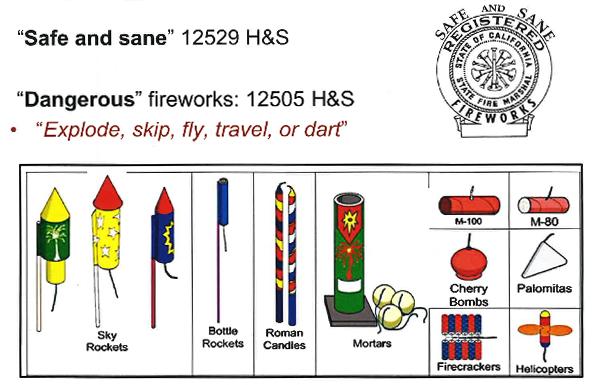
Figure 1. Types of Fireworks. Source: CA State Fire Marshal (Att-008a)
Throughout California, the illegal possession and discharge of fireworks remain a challenge. According to the California Department of Forestry and Fire Protection’s (CAL FIRE’s) Office of the State Fire Marshal, “… illegal activity remains prolific and increasingly blatant.” (Ref-004) CAL FIRE is establishing a Public Safety Fireworks Enforcement Task Force, composed exclusively of fire service and law enforcement members (with no fireworks industry participation) to review current state laws and regulations and develop recommendations to enhance enforcement and compliance. The task force plans to issue a formal report in 2026. (Ref-004)
Locally, the possession and discharge of any fireworks is illegal in all of Ventura County. (Ref-005) Four cities have passed restrictions on possession and use of fireworks (Oxnard, Ventura, Santa Paula, and Fillmore). (Ref-005c , Ref-005d, Ref-005e , Ref-005f, Ref-007 ) In addition, the remaining six cities and the unincorporated areas of Ventura County are under the jurisdiction of the Ventura County Fire Protection District (VCFPD), which has enacted Section 5601 of Ordinance 34 prohibiting possession and use of fireworks. (Ref-005a, Ref-005b), Individual jurisdictions can pass ordinances that override the county ordinance. (Ref-006) Within Ventura County, only the City of Fillmore has passed an ordinance that allows the sale and discharge of “safe and sane” fireworks during specific dates. (Ref-007 )
Within Ventura County, public and law enforcement attitudes regarding fireworks vary. Interviews with leaders in several law enforcement agencies indicate that there are differing perceptions about the seriousness of the fireworks situation. (Ref-001) This has led to differing commitments by law
enforcement in addressing and responding to public fireworks complaints. (Ref-001) Each municipality passes its own ordinances and sets financial penalties regarding fireworks, including policies and priorities to enforce the ordinances. There is no uniformity within the county. (Ref-001)
All 10 cities and the unincorporated areas of Ventura County experience discharge of fireworks, primarily around the Fourth of July. The county’s law enforcement agencies receive hundreds of calls from the public during “fireworks season” (which requires the assignment of personnel to respond to the calls for service). Each city defines “fireworks season” slightly differently, but all include several days before the Fourth of July through July 5. (Ref-001)
Ventura County law enforcement agencies report that the fireworks are a combination of “safe and sane” fireworks obtained legally in Fillmore and locations outside Ventura County but illegally discharged in Ventura County (outside of Fillmore), plus “dangerous” fireworks illegally obtained within and outside Ventura County. (Ref-001)
Law enforcement agencies throughout Ventura County report similar impacts on their communities from the discharge of fireworks, such as trauma to pets, negative effects on individuals suffering from PTSD, fire danger, and noise disturbance to citizens, even during late-night and early-morning hours. (Ref-001) Ventura County’s law enforcement agencies and fire departments, animal services, and veterans service agencies all report, to varying degrees, financial or emotional impacts and acknowledge there is a significant emotional and mental health fallout from fireworks. (Ref-001)
Due to the development and adaptation of drone technology, some police departments throughout California are investigating, or have implemented, the use of drones to assist in detecting specific locations where fireworks are being discharged. They have used public messaging to announce that drones will be deployed in advance as a deterrent to those inclined to discharge fireworks. (Ref-008, Ref-009) Ventura County law enforcement agencies are at different stages of investigating and implementing this technology. (Ref-001)
The Civil Grand Jury’s interviews with law enforcement officials in Ventura County reflected their understanding of the public’s attitudes toward fireworks and revealed their current efforts at responding to complaints about fireworks discharge.
Justification for the public’s discharge of fireworks around the Fourth of July dates at least to President John Adams, who in 1776 wrote, “It [Independence Day] ought to be solemnized with Pomp and Parade, with Shews (sic), Games, Sports, Guns, Bells, Bonfires and Illuminations from one End of this Continent to the other from this Time forward forever more.” (Ref-010)
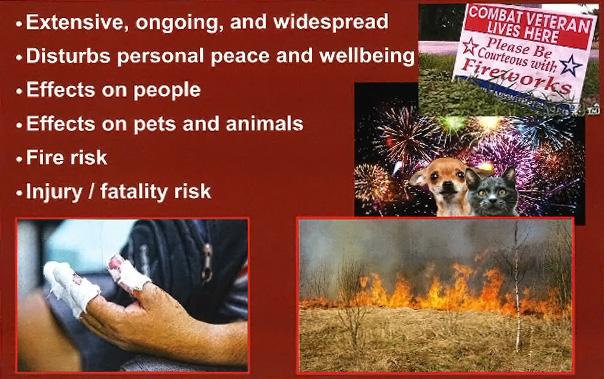
Law Enforcement: The volume of complaints to law enforcement agencies regarding fireworks is reflected in the following table:
* VCSO data includes the cities of Camarillo, Fillmore, Ojai, Moorpark, Thousand Oaks, and the unincorporated areas of Ventura County **Data not provided as of report publication
Figure 3. Number of Public Fireworks Complaints by Month. Three-year history of public fireworks complaints. (Att-001, Att-002 , Att-003, Att-004, Att-005)
As reflected in Figure 3 above, despite varied efforts by different governmental agencies to educate the public about fireworks, the annual total of public complaints about fireworks has remained about the same over the last three years.
VCFD: The Civil Grand Jury learned that fires are frequently attributed to fireworks. (Ref-001) From 2023 to 2025, there were 107 fire calls to VCFD where fireworks were a contributing factor. (Att-006) In June 2024 a two-alarm fire was reported in Simi Valley. The heat source was determined to be fireworks, and the fire grew to just under five acres. The incident required dispatching 11 fire trucks, two helicopters, and a dozer. The fire was extinguished approximately 19 hours later. All firefighting costs incurred were the responsibility of VCFD (no cost sharing with the state). (Ref-001, Att-007 )
Animal Services: Fireworks explosions impact our beloved pets. In interviews with VCAS personnel, the Civil Grand Jury learned that the agency does not compile statistics on fireworks-related events (such as animals escaping yards, surrendering of animals by their owners, lost animals). Instead, they acknowledge that they receive anecdotal information from residents about fireworks frightening their
pets, which in turn causes trauma to some animals or leads to runaways. It also contributes to people dropping off animals at VCAS for temporary caretaking. In response to the impact of July Fourth fireworks on our pets, the agency uses social media to reach out to the Ventura County community, offering support for animal owners during fireworks season. (Ref-011)
Because of the linear design of the buildings at VCAS, there is ongoing noise from the echoing of dog barking and, therefore, there is little effect from outside noises on the animals in the Camarillo shelter. (Ref-001)
Veterans, Retired Law Enforcement Personnel, Victims of Violent Crimes: Veterans suffering from PTSD can find July Fourth to be a challenge. The U.S. Department of Veterans Affairs addresses this directly on its website, stating, “While fireworks symbolize freedom, their sudden booms, flashing lights, and smoky trails can trigger intense reactions for those who’ve experienced trauma, especially combat veterans. Loud noises often resemble gunfire. The unpredictability of neighborhood displays can shatter a veteran’s sense of safety.” (Ref-012) The Civil Grand Jury interviewed some Ventura County veterans who confirmed their reactions to fireworks are like those seen nationally. (Ref-001) Law enforcement officers who have experienced shootings and victims of violent crimes also experience trauma from fireworks explosions. (Ref-001)
Hospital Emergency Room Visits: Hospitals and other agencies in the U.S. voice concern about injuries caused by fireworks. (Ref-013, Ref-013a, Ref-013b, Ref-013c) According to the U.S. Product Safety Commission, children under the age of 15 and adults between 25 and 44 are the age groups most likely to be injured by fireworks and end up in the hospital emergency room. (Ref-014) In 2024 an estimated 14,700 people were treated in emergency rooms nationwide due to fireworks injuries. (Ref-014) In Ventura County, hospital emergency rooms experience an influx of fireworks-related injuries, mainly to the hand and the foot, during the days surrounding the Fourth of July. However, VCMC does not increase staffing during these days, so, although there is an influx of fireworks-related incidents at the emergency room during fireworks season, there is no additional cost to the hospital budget. (Ref-001)
As far back as 2017 Oxnard held community-fireworks discussions with city, police and fire department management. In mid-2025 the Oxnard Police Department involved members from the eight active neighborhood council associations as well as city and fire department management out of concern about citizens’ complaints to the police department. The police department acted upon input from citizens and implemented the department’s professional expertise and experience to create a bestpractice model of responding to and enforcing violations of fireworks ordinances. (Ref-001) (Att-017a)
In 2024 Oxnard introduced fixed-wing aircraft to support enforcement. Oxnard Police Department has also implemented community-outreach efforts through Facebook, Instagram, radio station broadcasts, and its own website to educate the public about fireworks. In addition, Oxnard started sending shortterm-rental hosts an advance-warning letter about the city’s fireworks enforcement. (Ref-001) (Att-017a)
All law enforcement agencies staff up to increase patrol personnel around July Fourth to deal with fireworks complaints. This is done through paying overtime, pulling staff off other duties or canceling time off. The goal is to be fully staffed. During this period, utilizing staff to respond to fireworks complaints removes them from other important duties and their day-to-day expertise. (Ref-001)
Oxnard uses a priority system to classify calls to its dispatch center. Calls about fireworks that provide nonspecific information (such as, “I hear fireworks exploding a couple of blocks away”) are given a lower Priority 7. Calls about fireworks that give a specific address, vehicle information, name of person, or a more specific location identifier are given a higher Priority 3. The Priority 7 calls are typically broadcast to officers, but officers might not be assigned because of the nonspecific nature of the call. No other law enforcement jurisdiction in Ventura County uses a prioritizing system to manage fireworks complaints. (Ref-001) (Att-018)
Documentation of complaints varies among agencies. Some record detailed statistics; others don’t. (Ref-001)
In addition to enhanced staffing around July Fourth, Oxnard also has implemented additional strategies in anticipation of the surge in fireworks activity, including:
• Data-driven maps of the City of Oxnard displaying snapshots of fireworks activity, used to assist asset deployments within city limits (see Figure 4, below, showing a point-in-time snapshot of fireworks activity on July 4, 2025).
• Pre-holiday deployments: Neighborhood Policing Teams and Unmanned Aerial System (UAS) Team, which involves using drones.
• Deployment of fixed-wing aircraft for thermal imaging to record specific parcel numbers, which can result in citations.
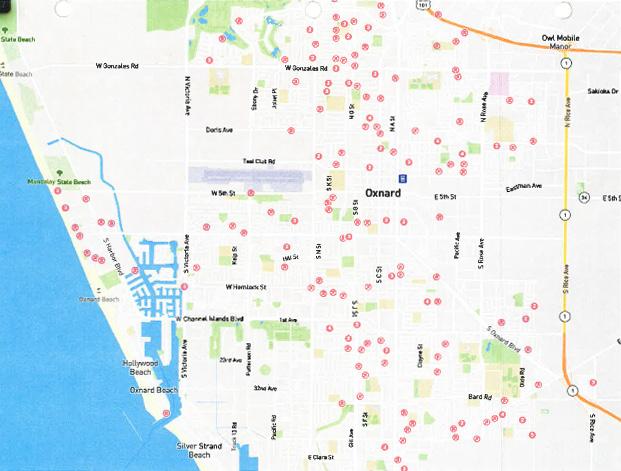
Figure 4. Oxnard Police Department Point-in-Time Map Showing Active Fireworks Calls at 9:40 PM on July 4, 2025. (Att-008c)
In addition to incurring increased costs and reassigning officers to help respond to fireworks complaints, law enforcement agencies’ responses present other challenges: (Ref-001)
• Response times to complaints are affected by “competition” between fireworks complaints and concurrent emergencies (e.g., felony crimes, traffic accidents, etc.), which also require police resources. As noted earlier, Oxnard deals with this challenge by prioritizing calls.
• If a drone is used to respond (discussed below), its use requires an operator and a spotter. This takes two employees away from other duties and priorities. In addition, to issue a citation as a misdemeanor, an officer must observe or have a recording of the violation.
• Most fireworks complaints are nonspecific, meaning the reporting party does not designate a specific address where the fireworks are being discharged, so an immediate response to the incident becomes problematic.
• Some complaints give a specific location but present challenges — examples are a single shot of a firework (event is over before police can respond); fireworks discharged in the street (difficult to attribute to a specific person); or offenders scattering before police officers arrive.
• If law enforcement issues a civil citation for fireworks discharge through a host liability ordinance (explained below), in some cases an appeal hearing officer may lower the civil fine, which can undermine the effect of the civil citation.
A host liability ordinance is used in situations where a property owner rents their property on a shortterm basis (e.g. through Airbnb). Several Ventura County cities have adopted host liability ordinances. (Ref-015, Ref-015a, Ref-016, Ref-016a, Ref-017, Ref-017a, Ref-018, Ref-018a) Under this type of ordinance the property owner can be held liable if the owner has not informed tenants of the illegality of shooting off or possessing fireworks and has reason to believe the tenants might do so. There is no countywide host liability ordinance. In those cities that have host liability ordinances (listed in the table below), Ventura County law enforcement agencies send letters to short-term rental landlords in advance of the Fourth of July to advise about the ordinance and the landlord’s responsibility to advise renters of fireworks ordinances in the city. (Ref-001)
Police departments in Oxnard, Port Hueneme, Santa Paula, and Ventura choose to issue administrative (civil) fines through host liability ordinances to violators of fireworks regulations, rather than with a Health and Safety Code violation. A civil citation must meet a “preponderance of evidence” standard, while a Health and Safety Code violation requires proof “beyond a reasonable doubt,” a more difficult standard to meet. (Ref-001)
The table below identifies communities that have host liability ordinances that address fireworks. Beyond the cities listed, host liability ordinances are not in effect for Simi Valley and all other areas of Ventura County, including the cities and unincorporated areas where VCSO has primary law enforcement responsibility:
Oxnard 2018 $250 (safe and sane) $1,000 (dangerous)
= $500; 3 or more=$1,000 (safe/ sane)
=$264; 3 or more =$396
3 or more=$1,000
Figure 5. Various Ventura County cities host liability ordinances (Ref-015a, Ref-016a, Ref-017a, Ref-018, Att-009, Att-010)
The Sheriff’s Office contracts with five Ventura County cities — Camarillo, Fillmore, Moorpark, Ojai, and Thousand Oaks — for law enforcement services. Of these five cities, only Fillmore has a municipal code of strict liability, where deputies can cite the property owner for illegal fireworks being discharged from their property. (Ref-018a) Moorpark is researching the option of implementing a host liability ordinance regarding fireworks but has not acted as of this report. (Ref-001)
In 2022 the staff of Simi Valley introduced Municipal Ordinance 1338 for consideration. This ordinance proposed making possession, sale, and discharge of fireworks illegal. In addition it proposed a host liability ordinance regarding fireworks. To the Civil Grand Jury’s knowledge, this ordinance was never approved by the Simi Valley City Council. (Ref-025)
Below is an overview of civil citations issued and collected through host liability ordinances that relate to fireworks. (Ref-001)
No information available or not tracked
Figure 6. Host Liability Ordinance Fines, by City. (Att-011, Att-012 , Att-013)
In addition to the use of host liability ordinances, the VCSO, police departments, and the Ventura County District Attorney have taken other steps to reduce the incidences of fireworks discharge in advance of July Fourth. (Ref-001) These efforts include the use of press releases in advance of the holiday, social media, tip lines, emails, warning letters, message trailers on streets, pre-holiday deployments, mapping tools (to help identify high-incident areas), and enhanced staffing around July Fourth. Despite these efforts no agency has “solved the problem” (as is evidenced by the ongoing number of public complaints). Sheriff and police leaders state that stopping discharge of fireworks remains an elusive goal, and it is difficult to assess the effectiveness of the outreach efforts through social media and public-service announcements. (Ref-001)
The advent of drone technology has given law enforcement additional tools to respond to fireworks complaints. Using drones as a first responder offers an alternative to dispatching personnel as the first step in securing public safety, including the discharge of fireworks.
Advantages of using drones in response to fireworks complaints include:
• A drone can arrive at a location sooner than deployed officers. Drones can be based in a stationary location in a pod on top of a building, enabling stationing in strategic locations. As an alternative, they can be housed in a patrol car and transported to the site for deployment. (Ref-001)
• With GPS and video capability, drones might eliminate the need for deployment of officers to a site, which can accomplish two goals: obtaining information and reducing officers’ exposure to possible harmful behavior from individuals. Officers responding to fireworks complaints may find themselves in large crowds, outnumbered, and at risk of injury. (Ref-001)
• Information obtained by drones can include the address of an offense and video or photos of offenders in the act, which can be used as evidence supporting a civil citation. In addition, drones offer more flexibility and quicker response times than from the use of a manned helicopter. (Ref-001)
For government agencies to operate a drone or Unmanned Aircraft System (UAS), the drone pilot must be Federal Aviation Administration (FAA), Part 107, certified (Ref-019), or the agency must obtain a signed FAA Certificate of Waiver (Ref-020) or Authorization. Law enforcement agencies can obtain waivers of standard drone regulations through application to the FAA. In late January 2026, the City of Elk Grove, CA, obtained an FAA waiver, allowing it to operate drones at an altitude of 400 feet and beyond the operator’s visual line of sight. (Ref-021) This exceeds the normal regulation, restricting the operating of a drone to within the operator’s visual line of sight. Other waivers may be possible in the future.
The use of drone technology by law enforcement agencies in Ventura County varies in the stages of deployment. The following table outlines the number of drones in use by each jurisdiction:
* assuming none taken out of service because of age ** seeking bids for two drones *** data not provided **** no additional funds allocated to supplement existing fleet
Figure 7. Current Drone Inventory. Various Ventura County cities drone inventory as of April 2026. (Att-014, Att-015, Att-016, Att-017 )
Privacy is an evolving issue related to drone use by law enforcement agencies. Drones can be used in a reactive mode, such as in response to a public complaint about fireworks, or they can be used proactively, such as patrolling an area that is considered a “hot spot” for illegal-fireworks activity. There is a concern within law enforcement that the proactive use of drones might be perceived by the public as an invasion of privacy. (Ref-001) California Civil Code 1708.8 addresses privacy protections as they relate to drone usage. (Ref-022 , Ref-022a) Law enforcement must be cognizant of this code and any waivers for law enforcement in making decisions about drone usage.
All law enforcement officials interviewed for this report stated that there is ongoing cooperation among the cities and county law enforcement agencies and VCFD. There is a monthly meeting of the Ventura County Law Enforcement Coordinating Committee, comprising law enforcement officers from the Sheriff’s office, each Ventura County police department, and the California Highway Patrol, to discuss procedures. Mutual aid is part of the cooperation process. (Ref-001) Mutual aid is a formal, voluntary agreement between agencies to share personnel, equipment, and resources during emergencies, largescale events, or when local capabilities are overwhelmed. These pre-planned, authorized arrangements allow neighboring agencies to provide support, improving safety and efficiency for incidents like natural disasters, riots or mass-casualty events. (Ref-023)
With the exception of Fillmore during a specified period of time, discharge of fireworks of all kinds is illegal in all parts of Ventura County. This is the result of individual cities passing fireworks ordinances (Oxnard, Ventura, Santa Paula, Fillmore) and through an ordinance from the Ventura County Fire Protection District, which has jurisdiction over the unincorporated areas of Ventura County and the cities of Ojai, Port Hueneme, Moorpark, Camarillo, Simi Valley, and Thousand Oaks.
If county and city agencies are able to establish a better-coordinated approach to education and enforcement of fireworks regulations, this could include:
• A unified approach for enforcement of fireworks regulations.
• Coordinated use of resources (personnel and technology) to address the most egregious offenses, target “hot spots,” and focus on repeat offenders.
F-01. The Ventura County Civil Grand Jury finds that there is no public consensus regarding the discharge of fireworks, even if it is deemed illegal.
F-02. The Ventura County Civil Grand Jury finds that most fireworks complaints are nonspecific in location and do not result in a warning or citation.
F-03. The Ventura County Civil Grand Jury finds that despite numerous and varied efforts by law enforcement, the fire department, and the district attorney to educate the public, the number of complaints has not decreased.
F-04. The Ventura County Civil Grand Jury finds that there are varied responses to fireworks complaints among Ventura County law enforcement agencies.
F-05. The Ventura County Civil Grand Jury finds that Fillmore is the only city in Ventura County that allows the purchase and/or discharge of “safe and sane” fireworks, and some of these fireworks are illegally transported to, and discharged in, other parts of the county.
F-06. The Ventura County Civil Grand Jury finds that the use of drone technology to respond to complaints provides benefits to law enforcement, including quicker response times and better identification of offenders.
F-07. The Ventura County Civil Grand Jury finds that there are occasions when civil citations have been issued and citizens can challenge and go through an appeal process to reduce or eliminate any fines. The reduction or elimination of any fines impacts the effectiveness of enforcement actions.
F-08. The Ventura County Civil Grand Jury finds that, with the exception of Fillmore during a limited time around July 4th, through a set of city and Ventura County Fire Protection District regulations, discharge of fireworks is illegal throughout Ventura County.
F-09. The Ventura County Civil Grand Jury finds that the cities of Oxnard, Santa Paula, Ventura, and Port Hueneme have fireworks host liability ordinances.
F-10. The Ventura County Civil Grand Jury finds that the Oxnard Police Department has been a leading Ventura County law enforcement agency in implementing strategies to respond to public complaints about fireworks.
F-11. The Ventura County Civil Grand Jury finds that there is no fireworks host liability ordinance that applies to the unincorporated areas of Ventura County.
F-12. The Ventura County Civil Grand Jury finds that Oxnard, Ventura, Santa Paula and Port Hueneme have existing fireworks host liability ordinances; that Fillmore has a strict liability ordinance regarding fireworks; and that Ojai, Moorpark, Camarillo, Simi Valley, Thousand Oaks do not currently have fireworks host liability ordinances.
R-01. The Ventura County Civil Grand Jury recommends that the Ventura County Board of Supervisors pass a host liability ordinance regarding fireworks, applicable to the unincorporated areas of Ventura County. (F-11)
R-02. The Ventura County Civil Grand Jury recommends that Ojai, Moorpark, Camarillo, Simi Valley, and Thousand Oaks develop their own fireworks host liability ordinances. (F-12)
R-03. The Ventura County Civil Grand Jury recommends that the Ventura County Fire Department maintain ongoing communication with CAL FIRE’s Public Safety Fireworks Enforcement Task Force to learn about recommendations to enhance enforcement and compliance with fireworks laws. (F-01, F-02, F-03, F-04, F-05, F-06)
R-04. The Ventura County Civil Grand Jury recommends that the Ventura County Fire Department interface regularly with Ventura County Law Enforcement Coordinating Committee to inform the committee about recommendations from CAL FIRE’s Fireworks Enforcement Task Force. (F-01, F-02, F-03, F-04, F-05, F-06)
R-05. The Ventura County Civil Grand Jury recommends that the Ventura County Fire Department and Ventura County Law Enforcement Coordinating Committee meet regularly to strategize best practices to enhance responses to fireworks complaints and establish best practices for enforcement of fireworks regulations. (F-01, F-02, F-03, F-04, F-05, F-06, F-07, F-08, F-09, F-10, F-11, F-12)
Responses invited, but not required, from:
The following appointed officials within 60 days:
Fire Chief, Ventura County Fire Department (F-01, F-02, F-03, F-04, F-05, F-06, F-07, F-08, F-09, F-10, F-11, F-12, R-01, R-02, R-03, R-04, R-05)
Responses required from:
The following elected officers within 60 days:
Ventura County Sheriff’s Office (F-01, F-02, F-03, F-04, F-05, F-06, F07, F-08, F-09, F-11, F-12, R-04, R-05)
The following governing bodies within 90 days:
Ventura County Board of Supervisors (R-01, R-03, R-04, R-05)
City of Camarillo City Council (F-01, F-02, F-03, F-04, F-05, F-06, F-07, F-08, F-12, R-02, R-04)
City of Fillmore City Council (F-01, F-02, F-03, F-04, F-05, F-06, F-07, F-08, R-04, R-05)
City of Moorpark City Council (F-01, F-02, F-03, F-04, F-05, F-06, F-07, F-08, F-12, R-02, R-04)
City of Ojai City Council (F-01, F-02, F-03, F-04, F-05, F-06, F-07, F-08, F-12, R-02, R-04)
City of Oxnard City Council (F-01, F-02, F-03, F-04, F-05, F-06, F-07, F-08, F-09, F-10, R-04, R-05)
City of Port Hueneme City Council (F-01, F-02, F-03, F-04, F-05, F-06, F-07, F-08, F-09, R-04)
City of Santa Paula City Council (F-01, F-02, F-03, F-04, F-05, F-06, F-07, F-08, F-09, R-04)
City of Simi Valley City Council (F-01, F-02, F-03, F-04, F-05, F-06, F-07, F-08, F-12, R-02, R-04)
City of Thousand Oaks City Council (F-01, F-02, F-03, F-04, F-05, F-06, F-07, F-08, F-12, R-02, R-04)
City of Ventura City Council (F-01, F-02, F-03, F-04, F-05, F-06, F-07, F-08, F-09, R-04, R-05)
The Ventura County Civil Grand Jury commends the Oxnard Police Department for setting an example for responding to and enforcing violators and violations of fireworks ordinances. This was demonstrated by being the first police department in Ventura County to solicit community input regarding fireworks and in its decision making and development of strategies to respond to fireworks complaints.
Ref-001. Civil Grand Jury interviews with various officials and other interested parties.
Ref-002 . California Health and Safety Code. Section 12505. Dangerous fireworks, defined, 1977. Accessed on April 23, 2026. https://leginfo.legislature.ca.gov/faces/codes_displaySection. xhtml?lawCode=HSC§ionNum=12505
Ref-003. California Health and Safety Code. Section 12529. Safe and sane fireworks, defined, 2023. Accessed on April 23, 2026. https://leginfo.legislature.ca.gov/faces/codes_displaySection. xhtml?lawCode=HSC§ionNum=12529
Ref-004. CAL FIRE General Fireworks Advisory Committee Meeting Minutes, September 15, 2025, 2-3. Accessed on April 23, 2026. https://34c031f8-c9fd-4018-8c5a-4159cdff6b0d-cdnendpoint.azureedge.net/-/media/osfm-website/committes/general-fireworks-advisorycommittee/2026/gfac-meeting-minutes-final-(20250915).pdf?rev= 11eaefc9d05f446292cd1ee62ab3e1ef&hash=8E165C85A1C2F5E19A95936F838DE58F
Ref-005. Ventura County District Attorney’s Office. District Attorney Urges Public to Avoid Illegal Fireworks. News Release, June 28, 2024. Accessed on April 23, 2026. https://da.venturacounty.gov/wp-content/uploads/2024/06/District-Attorney-Urges-Publicto-Avoid-Illegal-Fireworks-1.pdf
Ref-005a . About the VCFD. Ventura County Fire Department. Accessed on May 26, 2026.
Ref-005b. Ventura County Fire Protection District Ordinance Number 34. Dated October 14, 2025. Accessed May 22, 2026 from https://vcrealtors.com/wp-content/uploads/2026/02/ Ordinance-34.pdf
Ref-005c. Oxnard Ordinance Prohibiting Sale, Offer to Sell, Use or Possession of Fireworks. Memo from Assistant City Attorney to City Council. Dated April 29, 2008. Accessed May 22, 2026 from https://oxnard.granicus.com/MetaViewer.php?clip_id=860&meta_id=59195
Ref-005d. Ventura Municipal Code 10.852 (definitions) prohibiting manufacturing, possession, storage, sale, and use and handling of fireworks. Ventura Municipal Code passed February 17, 2026. Accessed May 22, 2026 from https://sanbuenaventura.municipal.codes/SBMC/10.852.010
Ref-005e . Ventura Municipal Code 10.852 (prohibition) prohibiting manufacturing, possession, storage, sale, and use and handling of fireworks. Ventura Municipal Code passed February 17, 2026. Accessed May 22, 2026 from https://sanbuenaventura.municipal.codes/SBMC/10.852.020
Ref-005f. Santa Paula Municipal Ordinance Chapter 103 Prohibiting and Regulating Fireworks. Santa Paula Ordinance 1300. Accessed May 22, 2026 from https://www.spcity.org/ DocumentCenter/View/1965/Ordinance-1300-Prohibiting-and-Regulating-Fireworks
Ref-006. Article XI, Section 7 of California State Constitution. California State Constitution. Accessed May 22, 2026 from https://leginfo.legislature.ca.gov/faces/codes_displayText. xhtml?lawCode=CONS&division=&title=&part=&chapter=&article=XI
Ref-007. City of Fillmore, California Code of Ordinances. Title 15, Chapter 15.38, Paragraph 15.38.100 –Discharge of fireworks. Accessed on April 23, 2026. https://library.municode.com/ca/ fillmore/codes/code_of_ordinances?nodeId=TIT15PESAMO_CH15.38FI_15.38.100DIFI
Ref-008. City of Riverside, California. Illegal Fireworks Crackdown Results in Over 60 Citations. News Release, July 10, 2025. Accessed on April 23, 2026. https://riversideca.gov/press/illegalfireworks-crackdown-results-over-60-citations
Ref-009. City of Seaside, California. Illegal Fireworks Enforcement. Accessed on April 23, 2026. https://www.ci.seaside.ca.us/649/Illegal-Fireworks-Enforcement
Ref-010. Worsham, Jim. Pieces of History, a Blog of the U.S. National Archives History Office. John Adams’s Vision of July 4 was July 2. Original post by Kratz, Jessie, July 2, 2014. Accessed on April 23, 2026. https://prologue.blogs.archives.gov/2014/07/02/john-adams-vision-of-july-4was-july-2/
Ref-011. Ventura County Animal Services. Fourth of July Pet Safety Tips. Instagram post, July 4, 2025. Accessed on April 23, 2026. https://www.instagram.com/p/ DLsYQwVvkCe/?igsh=NTc4MTIwNjQ2YQ%3D%3D
Ref-012 . Weston, Camille, Public Relations Officer. When Fireworks Don’t Feel Like Freedom: PTSD Awareness and Coping During Independence Day. U.S. Dept of Veterans Affairs website, July 2, 2025. Accessed on April 23, 2026. https://www.va.gov/jackson-health-care/stories/whenfireworks-dont-feel-like-freedom-ptsd-awareness-and-coping-during-independence-day/ Ref-013. Barskaya, Angela, M.D. What an ER Doctor Wants You to Know About Fireworks. Columbia University Irving Medical Center – Columbia Doctors, June 30, 2025. Accessed on April 23, 2026. https://www.columbiadoctors.org/news/what-er-doctor-wants-you-know-aboutfireworks
Ref-013a . Southwick, Ron, Hospitals Await Surge of Fireworks Burns and Injuries With July 4 Holiday, Chief Healthcare Executive, July 3, 2024, Accessed on May 22, 2026 from https://www. chiefhealthcareexecutive.com/view/hospitals-brace-for-fireworks-burns-and-injuriesaround-july-4-holiday
Ref-013b. Fireworks Safety, National Fire Protection Association, Accessed on May 22, 2026 from https://www.nfpa.org/education-and-research/home-fire-safety/fireworks
Ref-013c. Don’t Pick Up and Light Fireworks, Warns UCI Health Burn Expert, UCI Health, June 26, 2025, Accessed on May 22, 2026 from https://www.ucihealth.org/about-us/news/2025/06/ firework-safety
Ref-014. United States Consumer Product Safety Commission. CPSC Estimate: 14,700 Injuries, 11 Deaths. Accessed on April 23, 2026. https://www.cpsc.gov/Safety-Education/SafetyEducation-Centers/Fireworks
Ref-015. Santa Paula Police Department. Facebook post – Municipal Code Chapter 103: Host Liability Ordinance, June 28, 2021. Accessed on April 23, 2026. https://www.facebook.com/ SantaPaulaPoliceDepartment/posts/did-you-know-under-municipal-code-chapter-103-anyhost-person-who-organizes-supe/6508923209133085/
Ref-015a . Santa Paula Municipal Code Chapter 103: Fireworks. American Legal Publishing, Accessed on May 22, 2026 from https://codelibrary.amlegal.com/codes/santapaula/latest/santapaula_ ca/0-0-0-74953
Ref-016. City of Oxnard, California. Oxnard Fireworks 411. Be a Good Neighbor – Don’t Use Illegal Fireworks in Oxnard. Accessed on April 23, 2026. https://sites.google.com/oxnard.org/ oxnardfireworks
Ref-016a . Oxnard City Council Minutes of April 3, 2018, approving Fireworks Social Host Liability Ordinance. Accessed on May 22, 2026 from https://oxnard.granicus.com/DocumentViewer. php?file=oxnard_46d2aab4e07bf64d1b6f8155d3e456a6.pdf&view=1
Ref-017. City of Ventura, California. Fireworks Safety, June 17, 2025. Accessed on April 23, 2026 from https://www.cityofventura.ca.gov/2115/Fireworks-Safety
Ref-017a . Text of City of San Buenaventura Ordinance 2018-015, Pertaining to Fireworks. July 16, 2018. Accessed on May 22, 2026 from https://www.cityofventura.ca.gov/DocumentCenter/ View/22073/CC---Council-Ordinances----Ord-No--2018-015-Title--PERTAINING-TOFIREWORKS-Body--CITY-COUNCIL
Ref-018. City of Port Hueneme, California Code of Ordinances. Article V, Chapter 2, Part G, Paragraph 1542 – Fireworks Prohibited. Accessed on April 23, 2026 from https://library.municode. com/ca/port_hueneme/codes/code_of_ordinances?nodeId=ARTVTAUSRE_CH2BUPE_ PTGFI_5142FIPR
Ref-018a . Fillmore Ordinance 15.38.110 Strict liability for the illegal discharge of fireworks. Fillmore Municipal Code. Accessed 5/22/2026 from https://library.municode.com/ca/fillmore/codes/ code_of_ordinances?nodeId=TIT15PESAMO_CH15.38FI_15.38.110STLIILDIFIADPE
Ref-019. United States Department of Transportation, Federal Aviation Administration. Become a Certificated Remote Pilot, February 15, 2024. Accessed on April 23, 2026. https://www.faa. gov/uas/commercial_operators/become_a_drone_pilot
Ref-020. United States Department of Transportation, Federal Aviation Administration. Part 107 Waivers, March 19, 2026. Accessed on April 23, 2026. https://www.faa.gov/uas/commercial_ operators/part_107_waivers
Ref-021. Fox-Sowell, Sophia. California Police Department Granted FAA Waiver to Fly Drones at 400 Feet, January 28, 2025. Accessed on April 23, 2026. https://statescoop.com/elk-grovecalifornia-police-department-faa-waiver-drones-400-feet/
Ref-022 . Gross, Richard J. Drone Laws in California: Detailed Guide, April 2026. Propel website, March 30, 2026. Accessed on April 23, 2026 from https://www.propelrc.com/drone-laws-incalifornia/
Ref-022a. California Civil Code Section 1708.8. California.Public.Law. Accessed May 22, 2026 from https://california.public.law/codes/civil_code_section_1708.8
Ref-023. Cal OES, Governor’s Office of Emergency Services. Mutual Aid System. Accessed on April 23, 2026. https://www.caloes.ca.gov/office-of-the-director/operations/response-operations/lawenforcement/mutual-aid-system/
Att-001. Ventura County Sheriff’s Office. Fireworks Calls, 2023-2025.
Att-002 . Oxnard Police Department. Fireworks Calls, 2023-2025.
Att-003. Ventura Police Department. Fireworks Calls, 2023-2025.
Att-004. City Port Hueneme. Fireworks Calls, 2023-2025.
Att-005. City of Simi Valley. Fireworks Calls, 2023-2025.
Att-006. Ventura County Fire Department. Fireworks Cause 2023-2025.
Att-007. City of Simi Valley. 2024 Fire Resource Details, June 28, 2024 – June 29, 2024.
Att-008a . Oxnard Police Department. Types of Fireworks.
Att-008b. City of Oxnard. Traditional Reality of Fireworks.
Att-008c. City of Oxnard. 2024 Fireworks Recap, September 18, 2025.
Att-009. City of Port Hueneme. Host Liability Fines, 2023-2025.
Att-010. City of Ventura. Host Liability Fines, 2026.
Att-011. Oxnard Police Department. Fines and Dismissals, 2023-2025.
Att-012 . Ventura Police Department. Fines and Dismissals, 2023-2025.
Att-013. City of Port Hueneme. Fines and Dismissals, 2023-2025.
Att-014. Oxnard Police Department. Drone Inventory, 2026.
Att-015. Ventura Police Department. Drone Inventory, 2026.
Att-016. City of Port Hueneme. Drone Inventory, 2026.
Att-017. Ventura County Sheriff’s Office Drone Information
Att-017a . Oxnard PD Community Meeting Regarding Fireworks (Recollections)
Att-018. Oxnard PD Priority Assignment of incoming calls
VCFD
VCSO Ventura County Sheriff Office
June 25, 2026

For most Ventura County deputy sheriffs, every day is a risk, where they may experience the possibility of a serious work-related injury or illness, known in workers’ compensation terms as a “presumptive” injury or illness.
In interviews with the Ventura County Civil Grand Jury, deputy sheriffs with presumptive claims described their frustration with minimal communication, confusing delays, denials of claims that were later reversed, and long waiting periods.
Ventura County Risk Management executives, supervising presumptive workers’ compensation claims, explained the complex, sometimes contradictory, and convoluted California Labor Code and the difficulty finding ways to make the presumptive claims system work for whom it was created and intended to serve.
The Civil Grand Jury found many aspects of processing presumptive workers’ compensation claims have improved during the last three years, due to ongoing changes initiated by Ventura County Risk Management.
For this investigation, the Ventura County Civil Grand Jury interviewed employees of Ventura County and other subject matter experts.
The following subject areas were researched:
• Histories of the development of workers’ compensation in the United States
• Documentation on the processing of presumptive workers’ compensation claims from the original document source
• California Labor codes concerning workers’ compensation, and judicial decisions affecting the relevant California Labor codes
• Various websites specializing in information about workers’ compensation
The improvements have resulted in a more supportive environment for employees and more timely medical treatment with greater flexibility in accepting new treatment protocols. But the leftover perceptions concerning presumptive workers’ compensation claims are still with us, and the system is not fixed until the perception of the system is fixed.
A presumption is a legal concept created by legislative mandate that shifts the burden of proof to the employer once the employee meets the prima facie threshold to trigger the presumption.
The California Legislature enacted the presumption statutes to help ensure that public employees within specific job classifications tasked with providing vital services to the public receive additional benefits easing their burden of proof.
The Legislature made the presumptions that cover safety employees rebuttable. Definition provided by Ventura County Risk Management/Workers’ Compensation
The beginning: The Industrial Revolution, in the late 19th century, was the catalyst for creating our system of workers’ compensation insurance. The argument for worker protection came to a head with the muckraking journalists exposing the prevalence of workers’ injuries and deaths in the early 20th century. They turned public sentiment in favor of injured workers, and provisions for workers’ compensation insurance were written into the California Labor Code (CA Labor Code) in 1911. (Ref-002) “… workers covered under the compensation statute traded off their rights to sue employers for the expectation of quick, sure, and adequate benefits.” (Ref-003)
Taking care of the most vulnerable: In 1937 the California Legislature created a special category of “Safety Workers” or the “State Safety” class. Safety workers are employees whose jobs have exceptional risks and stress, such as law enforcement officers and firefighters. [CA Government Code sections 20390 – 20416]
Presumptive workers’ compensation claims were created for safety workers in 1937 to secure appropriate treatment for injuries and illnesses caused by their dangerous work and work environment. Safety workers’ injuries and illnesses are presumed to be work-related unless the employer can rebut the diagnosis by proving that the injuries and illnesses were not caused by work or the work environment. [CA Labor Code sections 3212 – 3214]
The presumption, as stated in the CA Labor Code is, “In the case of members of a sheriff’s office or the California Highway Patrol, district attorney’s staff of inspectors and investigators, or of police or fire departments. …The hernia, heart trouble or pneumonia so developing or manifesting itself in those cases shall be presumed to arise out of and in the course of the employment. This presumption is disputable and may be controverted by other evidence, but unless so controverted, the appeals board is bound to find in accordance with it. …The hernia, heart trouble, or pneumonia so developing or manifesting itself in those cases shall in no case be attributed to any disease existing prior to that development or manifestation.” [CA Labor Code section 3212 (a) (1) (2) (3)] Additional presumptive conditions have been added over the years to the CA Labor Code including cancer, tuberculosis, and blood borne infections. [CA Labor Code sections 3212.1 through 3214,]
Two different medical opinions: The 1937 code specifically required the workers’ compensation administrator to prove that safety workers’ presumptive injuries or illnesses were not caused by work stress or physical exertion and that injuries or illness could not be attributed to a preexisting disease. However, at that time, there was no consensus within the medical profession or in workers’ compensation claims assessments about whether injuries and illnesses could be caused by stress or physical exertion and how they might be related to a pre-existing condition.
The 1978 California Supreme Court, in the case of City and County of San Francisco v. Workers’ Comp. Appeals Bd. stated, “That problem, widely recognized in both the legal literature and the case law as probably the most prolific and troublesome problem in workers’ compensation law arises from … the persisting cleavage in medical theory itself.” (Ref-004)
“It was to this serious and continuing ‘evil’ or ‘mischief’ that the 1959 amendment of section 3212.5 was directly addressed. To eliminate the repeated and unilluminating battle of the experts with respect to the pre-existing heart disease issue and to provide consistency in treatment to similarly situated injured workers, the Legislature amended section 3212.5 to preclude the Workers’ Compensation Appeals Board
from finding the statutory work-related presumption rebutted solely based on evidence attributing the heart attack to a pre-existing disease.” California Supreme Court decision in The City and County of San Francisco v. Workers’ Comp. Appeals Bd. (Ref-005)
Research proves stress is a factor: The dispute concerning the role of stress, physical exertion, and pre-existing diseases in the development of work-related presumptive illnesses and injuries continued to be disputed until recent years when research demonstrated the connection between work stress and physical exertion in the development of diseases and injuries, such as heart trouble and cancer. (Ref-006, Ref-007 )
Ventura County Risk Management states in its description of presumptive claims that “employees with specific job classifications [safety employees] receive additional benefits easing their burden of proof.” One example is that a presumptive disease or injury cannot be attributed to a pre-existing condition. [CA Labor Code section 3212.5 paragraph 3] (Ref-001)
Old ideas linger: The many years of uncertainty about what a presumptive workers’ compensation claim meant and what an injured or ill deputy sheriff in Ventura County could expect from the workers’ compensation system resulted in distrust of claims administrators and confusion about the entire system. It is from these systemic issues, largely resolved in Ventura County, that old perceptions persist. (Ref-001, Ref-008)
Consequently, the Ventura County Sheriff’s Office concluded, based on experiences of deputy sheriffs who had filed presumptive claims in the past, that presumptive claims were denied without justification. (Ref-001) Injured or ill deputies could not get acceptable treatment in a timely manner. (Ref-001) Deputies believed the only way to be treated fairly was to retain an attorney. (Ref-001) The department suffered from deputies not returning to work and the slow return was attributed to wrongly delayed and denied treatment. (Ref-001) The result was working deputies having to fill, at time-and-a-half pay, the positions previously filled by the injured or ill deputies. (Ref-001) The Sheriff’s Office seemed to always be understaffed, as the deputies coming out of training never made up for the loss of deputies on leaves of absence (LOA), and the time and money to train new deputies was another large cost as a result of deputies on LOA. (Ref-001, Att-007 ) The Sheriff’s Office estimates that costs for the absence of experienced injured or ill deputies were in the millions, however, there has never been an audit of deputy LOA costs. (Ref-001)
Beginning in 2023, positive changes in workers’ compensation administration for Ventura County employees have been implemented by Ventura County Risk Management. Presumptive workers’ compensation claims, as well as workers’ compensation non-presumptive claims, have benefited. The improvements are:
No Medical Provider Network: In Ventura County employees can choose their treating physician. In most California counties, employees must pick from a Medical Provider Network of physicians chosen by the workers’ compensation administrator. (Ref-001, Att-006, Att-009)
FastTrack Program: An agreement with Ventura Orthopedics covers the presumptive claim of lower back injury resulting from the wearing of the deputies’ duty belt.
Risk Management set up a system in Ventura County in which the employee can go directly from the site of their orthopedic injury to the designated orthopedic clinic for evaluation and treatment. There is no waiting, no Utilization Review, and no challenge to the orthopedic clinic’s diagnosis. (Ref-010, Att-001, Att-009)
The employee is also free to choose another orthopedic practice.
Diagnostic tests: Any tests prescribed by the treating physician for diagnostic purposes are automatically pre-approved. (Ref-002 , Att-002 , Att-009)
Cancer treatment: Every cancer patient whose presumptive workers’ compensation claim is approved has the right to choose any treatment facility that accepts workers’ compensation fees. However, Ventura County Risk Management has created a system where these employees have automatic acceptance at their choice of three world-renowned cancer treatment centers in Southern California. Those cancer treatment centers are City of Hope, USC Norris Comprehensive Cancer Center, and UCLA Jonsson Comprehensive Cancer Center. (Ref-001, Att-009)
Specialist substituted for Qualified Medical Evaluator: If an employee is waiting for a second opinion diagnosis from a Qualified Medical Evaluator (QME), they can choose a specialist in the injury or illness they are experiencing, and workers’ compensation will accept that physician’s second opinion diagnosis in place of the diagnosis of a QME. (Ref-001) [CA Labor Code section 139.2 (h) (1)]
New claims examiner team: Ventura County Risk Management has put together a team at Sedgwick, Ventura County’s third-party administrator (TPA), which has been working with Risk Management to create an environment that acknowledges they are there to serve Ventura County employees. Three additional claims examiners have been added to the Sedgwick team assigned to VCSO and Ventura County Fire Department (VCFD). The additional claims examiners are paid from Ventura County’s general fund allocations to the VCSO and VCFD. A total of five claims examiners now work exclusively with the two safety workers departments. This has enabled the claims examiners to spend more time and have better communication with the employees they serve. (Ref-001, Att-009)
• Prior to 2023, 65% of employees filing workers’ compensation claims retained a lawyer to represent them in the workers’ compensation claims process, while 35% did not retain a lawyer. (Att-003)
• From 2023 through the end of 2025, 22% of claimants retained a lawyer, while 78% did not retain a lawyer. (Att-003)
• The workers’ compensation insurance rates that the VCSO and the VCFD pay have decreased each of the last three years. (Att-004)
Presumptive Claims
01/01/2023 – 09/30/2025
• 100% of claims had initial treatment obtained within the first 4 days of the claim being reported
• 91% of presumptive claims had treatment prior-to, or the day-of claim reporting
• Deferred claims get $10K in treatment costs covered during decision period
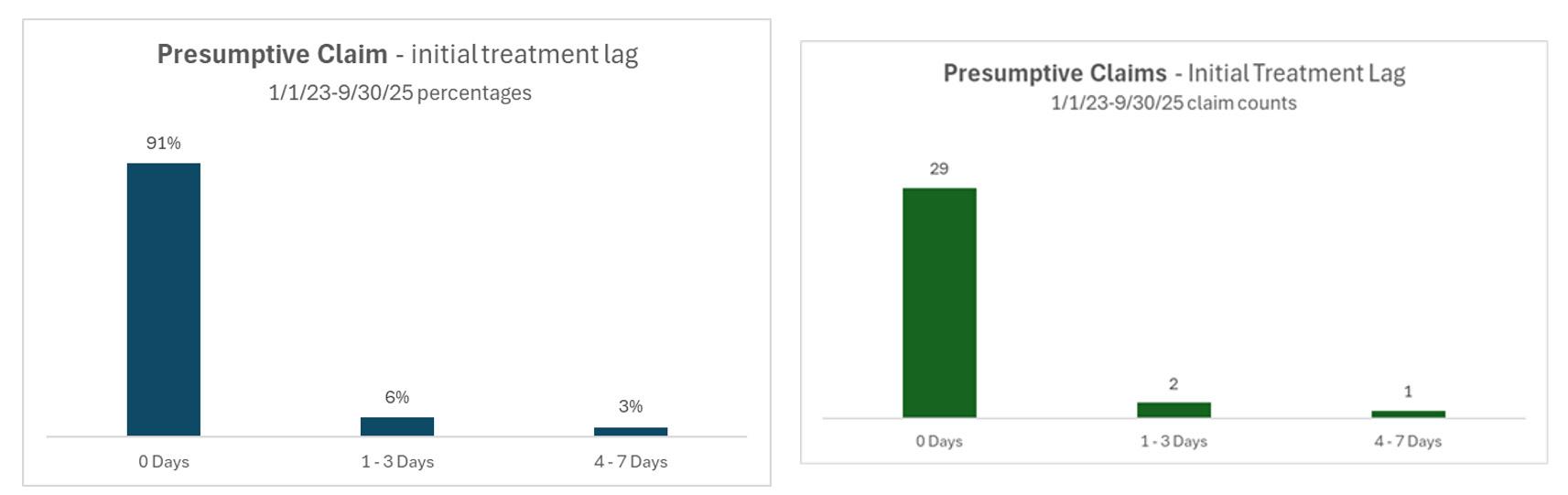
Initial Treatment Access for Presumptive Claims (Att-013)
The Civil Grand Jury’s investigation began with an inquiry into how a presumptive workers’ compensation claim is processed: (Ref-011)
First step: If a safety worker has an injury or illness that meets the criteria for a presumptive claim, they must notify their employer within 30 days. [CA Labor Code sections 5400 & 5401 (a)]
The application: Within one working day of notifying the Human Resources (HR) Department of their injury or illness, HR provides the worker with a workers’ compensation claim application. When it is completed by the worker, HR sends the application to Sedgwick Claims Management Services, Inc., Ventura County’s TPA for workers’ compensation and, specifically, to the claims examiner assigned to the claim. (Ref-012 , Ref-013, Att-005) Then the claims examiner authorizes up to $10,000 in treatment, including any diagnostic tests that the deputy’s treating physician prescribes. [CA Labor Code 5402 (c)]
The treating physician’s report: It is the responsibility of the ill or injured worker filing a presumptive claim to choose a treating physician who will make the first diagnosis and write a report confirming that the injury or illness was caused by the employee’s work, as required in the CA Labor Code. Cancer requirements are among the most complex. The treating physician must determine the cancer’s site of origin in the body, the cause of the cancer, and the deputy’s exposure to the carcinogen within the work environment. Other illnesses and injuries have their own specific requirements. [CA Labor Code section 3212.1 (a)(b)(c)(d)(f)] (Att-009)
First notification: Within 14 days, the claims examiner sends the worker one of three notices regarding their presumptive claim: DELAYED: Claims examiner will continue to investigate for up to 75 days. [CA Labor Code section 5402 (b) (2)] DENIED: Worker can appeal the decision. APPROVED: Worker receives presumptive workers’ compensation benefits. [CA Labor Code 5402 (e)]
Utilization Review: If the claim is delayed, the claims examiner has 75 days in which to accept or rebut the diagnosis submitted by the treating physician. [CA Labor Code section 4610] The claims examiner uses the California Medical Treatment Utilization Schedule to determine appropriate treatment for the claimants’ injury or illness. [CA Labor Code section 4610]
Approval: If the treating physician’s diagnosis is received by the claims examiner and is not rebutted within the 75-day investigation period, the application must be approved. [CA Labor Code section 5402 (b)(2)]
In the past, what could go wrong is what has gone wrong for safety employees’ presumptive claims. Claims processing complaints were due to the complexity and internal contradictions of the California Labor Code regarding workers’ compensation, problems with communication, lack of knowledge concerning how workers’ compensation works, and the employer’s concern about the costs of workers’ compensation claims. (Ref-001, Ref-008) Many of these problems have now been addressed, but the memories persist. (Ref-001)
Cascading delays: If the treating physician delays completing the required paperwork dealing with the original diagnosis, the claims examiner may be prevented from completing their investigation within the 75-day investigation period. [CA Labor Code 5402 (b) (2)]. Thus, the claims examiner has no basis to either approve or reject the claim.
There is no provision in the California Labor Code for delaying a decision beyond the presumptive claim 75-day investigation period. Sedgwick’s “Client Service Instructions” do allow the claims examiners to delay the decision beyond the 75-day window. The TPA claims examiner delays or denies the claim and if new evidence is received that supports the claim, for example the treating physician’s report, the claims examiner will reverse their decision and accept the claim at that time. (Att-010) The complaint about delays or denials due to lack of supporting information was common among the deputy sheriffs with long-standing claims who were interviewed by the Civil Grand Jury. (Ref-001)
QME specialists: If the TPA claims examiner disputes the treating physician’s diagnosis, they may request a second opinion from a QME. The California Division of Workers’ Compensation provides a panel of three randomly selected QMEs. Both parties are allowed to reject one of the QMEs and the remaining QME is chosen to provide a second opinion. [CA Labor Code section 139.2 (g), (h) (1), (h) (3) (B), (h) (4)]
The problem buried in this stage of the process is that QMEs are highly trained in workers’ compensation regulations and the paperwork that comes with them, but it is very hard for the California Division of Workers’ Compensation Medical Unit to find physicians specializing in cancer, heart disease and other illnesses and injuries, willing to go through the process to become QMEs through the cumbersome administrative requirements. (Ref-001) [CA Labor Code section 139.2 (h) (4)]
As a result, the workers’ compensation QME panel may not be specialists in the employee’s specific condition. The employee is left with the physician they hope is the best option among three potentially underqualified physicians. [Division 1, Dept of Industrial Relations, Chapter 5, Sections 110-139.6 (h) (3) (b)] For example, the Civil Grand Jury learned that a Ventura County safety worker with a serious presumptive back injury received their QME opinion from a podiatrist. (Ref-001) A safety worker in Ventura County was informed that, “We are unable to assign a panel of three Qualified Medical Evaluators (QMEs) because we currently do not have sufficient QMEs listed in the medical specialty you requested. Use the attached medical specialty list to select a different medical specialty.” (Att-011) In addition, the claimant’s application was sent back to him because his wife had inadvertently written down the date of injury as 12/18/2023 instead of 12/18/2022. This document was signed on 3/20/2023, nine months before the date of 12/18/2023 occurred, and the correct date was on two accompanying documents. (Att-011)
Two different schedules: After the selection process, QMEs must (1) examine the patient and review the treating physician’s diagnosis within 90 days and (2) within 30 days, write their report. [CA Code of Regulations, Title 8, section 3212.5, paragraph 3] The 30 days can be extended by another 30 days if the QME requests the extension. (Ref-014) [CA Labor Code Title 8, section 38]
There is a structural conflict between the presumptive claim 75-day decision deadline and the 90-day window allotted for QME evaluations. This discrepancy can make it impossible for the claims examiner to accumulate the required medical and legal evidence to either accept or reject the claim within the investigation timeline period. Once again, the claims examiner cannot approve within 75 days if the QME has not provided their assessment. They also have no basis to deny the claim. (Ref-001, Att-010)
If the QME ultimately denies the claim, the employee has a right to appeal. If they appeal, the case will go to the Workers’ Compensation Appeals Board and there will be more delays in the process of setting up the hearing. (Att-012) The Workers’ Compensation Appeals Board will decide which of the two diagnoses is correct. [CA Labor Code section 115] (Ref-001)
The potential delays are significant. The employee’s treatment is limited to the $10,000 allocated to every claimant when their application is first submitted. [CA Labor Code section 5401 (c)] (Att-009) Unless and until the claim is approved, the employee does not receive 4850 benefits, which provide income during their leave of absence (LOA). [CA Labor Code sections 4850 – 4856] They could apply for disability insurance and use their banked sick and vacation days until their claim is approved or the disability insurance begins to pay.
Approval of new treatments: Even if the workers’ compensation claim is approved, there can be obstacles to receiving treatment. The treatments for injuries and illnesses are specified in the workers’ compensation Medical Treatment Utilization Schedule and are mandated by the California Legislature. They do not always reflect the most recent developments in the treatment of diseases or injuries. [CA Labor Code section 4604.5 (a) (b)] (Ref-001)
If the treating physician is a specialist who is familiar with the latest treatment for the employee’s illness or injury, but the new treatment has not made its way into the Medical Treatment Utilization Schedule, the treating physician can request a meeting with the QME assigned to the claim and explain the cutting-edge treatment the physician recommends.
The QME may agree with the treating physician, but the QME has the final decision. The decision can be appealed to the Workers’ Compensation Appeals Board, but appeals prolong the beginning of treatment and, ultimately, the employee’s return to work. [CA Labor Code section 4604.5 (a) (b)] (Ref-001, Att-012) For example, a Ventura County safety worker was refused the most recent development in treatment for his condition multiple times and after the treating physician met with the assigned QME. The result was the worker paid for the procedure through their personal insurance, which included significant co-pays. (Ref-001)
TPA and the claims examiner: For employees of the County of Ventura, the ultimate responsibility for oversight of the workers’ compensation claims administration resides with Ventura County Risk Management. The TPA, contracted by Ventura County, will assign a claims examiner to manage the claim, and that person will be the main contact for the employee throughout the claims process. The VCSO HR department will forward the completed presumptive claim application provided by an employee to the designated claims examiner, but beyond that, the VCSO HR department has no more responsibilities. (Ref-001, Ref-019)
VCSO Human Resources Department:
The VCSO HR staff are well meaning and characterize themselves as “sympathetic good guys.” (Ref-001) But they lack the training to deal with the hard problems. If the employee or their supervisor asks for help, the Sheriff’s Office HR will contact the employee’s TPA claims examiner and/ or the head of the Ventura County Risk Management department who supervises workers’ compensation claims and explains the employee’s issue. (Ref-001)
Risk Management and/or the claims examiner may solve the issue. But there is no system within the Sheriff’s HR department that anticipates issues, tracks the process of the claim, or helps the employee proactively. Neither does it have systems that anticipate and diagnose at an early stage the effects of the stressors and physical requirements of deputies’ jobs on their health. (Ref-001)
Risk Management, the TPA claims examiners, and the VCSO HR department meet four times a year to discuss and examine ways to settle “difficult cases.” VCSO executive staff is invited to these meetings, but has not attended. (Ref-001)
Definitions of terms used in this report:
California Labor Code 4850: Provides for payments to safety employees on leave of absence because of work-related injuries or illnesses. An employee’s application needs to be accepted for code 4850 to be accessed by the employee.
Claims examiner: Individual at Ventura County’s third-party administrator (Sedgwick) who processes workers’ compensation claims. Their responsibilities include receiving and assessing workers’ compensation applications, investigating the claims, and making the initial determination to accept or deny the claim. They are the primary contact for the employee when filing a claim. As required by statute, they communicate by phone or mail the status of the claims as they are being processed.
Light duty: Low stress, low risk work provided to deputies returning from a leave of absence due to injury or illness.
Presumptive workers’ compensation claims: Workers’ compensation claims that presume that the injury or illness is work related with the burden of proving that the injury or illness is not work-related falling on the employer.
Rebuttal: A challenge to a theory presented. In the context of workers’ compensation, a response contesting a diagnosis by an employee’s treating physician.
Safety Workers or State Safety Class: Employees who work under dangerous and stressful conditions and are eligible to apply for presumptive workers’ compensation claims if they are injured or develop a covered disease. The injury or illness is then presumed to be work related.
Treating physician: The physician picked by the injured or ill employee to make the first diagnosis of their condition and supervise their treatment.
VCSO has specific stressors, risks, dangers, and job threats that are unique to law enforcement. The reality of the work of law enforcement and the kinds of injuries and illnesses that result need to be addressed within the context of presumptive workers’ compensation claims. (Ref-001)
VCFD’s example: The fire department has developed a system that assigns an advocate who is involved with the treatment of its injured or ill employees. The advocates provide knowledgeable advocacy to the employees throughout the claims process, diagnosis, and treatment of the injury or illness. The VCFD advocates are proactive in solving problems with the cooperation of Ventura County Risk Management and the TPA claims examiner assigned to the case. There has been an emphasis on preventing illnesses derived from work conditions and diagnosing and treating such illnesses at the very earliest stages of the diseases. (Ref-001)
CA Labor Code: California Labor Code
HR: Human Resources
I&A: Division of Workers’ Compensation Information and Assistance Unit
LOA: Leave of Absence
QME: Qualified Medical Evaluator
TPA: Third-Party Administrator
UR: Utilization Review
VCFD: Ventura County Fire Department
VCSO: Ventura County Sheriff’s Office
WC: Workers’ Compensation
Division of Workers’ Compensation Information and Assistance Unit: The California Labor Code requires that contact information for the Division of Workers’ Compensation Information and Assistance Unit (I&A) be included with all written notices concerning claims issued by the claim’s administrators. The purpose of the I&A is to provide information and guidance to claimants and agencies dealing with workers’ compensation. I&A officers serve as advocates for any claimant who contacts them. The I&A officers know the law that governs workers’ compensation. I&A officers can advise claimants on the process and verify benefits that they are being offered or are receiving. I&A officers can suggest potential alternative approaches if their claim seems to be stalled. The only claimants who cannot access this resource are those who are represented by an attorney. Ventura County Risk Management and claims examiners offer this resource to claimants, but this resource is underused. (Ref-001, Ref-016) [CA Labor Code section 139.6]
Workers’ compensation lawyers: An employee submitting a presumptive workers’ compensation claim application can hire a lawyer to represent them in the process. The VCSO HR department and the deputy sheriff’s union, Ventura County Deputy Sheriffs’ Association, often recommend that deputies hire a lawyer to represent them for their presumptive workers’ compensation claims. (Ref-001) When an employee hires a lawyer, the claims examiner is prohibited from speaking directly with the employee. All communication and correspondence must go through their lawyer. A lawyer can provide knowledge of the process and sometimes expedite the process, but having a lawyer also distances the employee from the process. The lawyer will be paid out of any settlement received by the employee. (Ref-001, Ref-017 )
If approval is a smooth process, as it often is, all is well and the goal of the California Constitution in Article XIV, Section 4, is met: “A complete system of workers’ compensation includes adequate provisions for the comfort, health, and safety, and general welfare of any and all workers … irrespective of the fault of the party … to the end that the administration of such legislation shall accomplish
substantial justice in all cases expeditiously, inexpensively, and without incumbrance of any character; all of which matters are expressly declared to be the social public policy of this State.” (Ref-018)
However, if the process for approval of a claim is not smooth, there are consequences. The claimant is at home, cut off from the world they worked in. They may have to use their vacation and sick-leave days for income. The individual is ill or injured, does not know when they will receive treatment, may be in pain or incapacitated in some way and living every day in fear.
There were only 39 presumptive workers’ compensation claim applications between January 1, 2023, and October 31, 2025. (Ref-009) This is a small number in relation to the total number of claims. However, cancer, heart disease, and blood-borne infections are among the serious presumptive injuries and illnesses that safety workers contract. Treatment can be difficult and prevent them from getting back to work for a long period. (Ref-001)
When a deputy sheriff is on leave of absence (LOA) due to a work injury or illness, no one can be hired to fill the position of the absent deputy. The job must be filled by other deputy sheriffs working overtime at the rate of 1-1/2 times their base pay. If the employee’s claim has been approved, the Ventura County Sheriff’s Office pays the injured or ill deputy through the CA Labor Code 4850 provision, which is partially reimbursed to the Sheriff’s Office later. There are also costs for training replacement officers and the effect of the temporary loss of experienced officers. (Att-007 ) The costs to the Sheriff’s Office have been estimated in the millions of dollars every year; however, there has never been an audit of the costs of the replacement of deputies on leave with deputies working at overtime rates, as well as the costs to train new deputies. (Ref-001, Att-014)
When the deputies have completed their treatment and are medically approved to return to work, they may be limited to “light duty.” According to command staff of the VCSO, there are very few light duty jobs in the Sheriff’s Office that are of value to the Sheriff’s Office and are stimulating and satisfying to deputy sheriffs returning to work. (Ref-001) Light duty work gets them back on the regular payroll, but not back into the work of a deputy sheriff or other meaningful work. At the same time other deputies at VCSO are still filling the job, at time-and-a-half pay, that the deputy on light duty held before their injury or illness. Consequently, morale suffers. (Ref-001, Ref-009, Att-008)
Ventura County Fire Department has recently addressed the problem of finding or creating light duty projects that are valuable to the department and satisfying work for the firefighters. (Ref-001)
Under Risk Management’s direction, Sedgwick has provided the Civil Grand Jury with additional data tracking its success in improving the administration of presumptive workers’ compensation claims.
VCSO Presumptive Claim Statistics, Jan.1, 2023, to Oct. 3, 2025
39 of 578
Workers’ Compensation claims filed were for presumptive injuries
10 of 39
Were a ccepted within an average of 13 days after VCSO reported to Sedgwick
14 of 39
Were accepted within 75 days (legislative decision date)
15 of 39
Were denied within 75 days (legislative decision date)
8
Were subsequently accepted upon receipt of new evidence
7
Remain denied, and denials are not disputed
5 of the 7
Were for COVID, which is no longer presumptive
While awaiting claim decision, up to $10,000 in medical treatment was provided to claimants.
Data provided by Sedgwick Claims Management Services, Inc.
F-01. The Ventura County Civil Grand Jury finds that the California Labor Codes for workers’ compensation presumptive claims are complex, convoluted and lead to confusion.
F-02. The Ventura County Civil Grand Jury finds that safety workers of the Ventura County Sheriff’s Office and Ventura County Fire Department each encounters unique stressors and occupational hazards that can lead to injury or illness.
F-03. The Ventura County Civil Grand Jury finds that the Ventura County Sheriff’s Office Human Resources department has limited expertise in presumptive workers’ compensation claims administration.
F-04. The Ventura County Civil Grand Jury finds that workers’ compensation education for deputy sheriffs relating to presumptive claims is insufficient to ensure understanding of their rights and responsibilities.
F-05. The Ventura County Civil Grand Jury finds that the Ventura County Sheriff’s Office Human Resources department lacks a knowledgeable advocate to guide and aid deputy sheriffs through the presumptive workers’ compensation process.
F-06. The Ventura County Civil Grand Jury finds that the California Division of Workers’ Compensation provides advocates for workers’ compensation claimants through their Information and Assistance Unit. However, this resource is underused by claimants despite contact information provided regularly by claims administrators.
F-07. The Ventura County Civil Grand Jury finds there has been recent increased communication between the Ventura County Sheriff’s Office and Ventura County Risk Management but finds that productive communication and collaboration on workers’ compensation issues still need to be improved.
F-08. The Ventura County Civil Grand Jury finds that the Ventura County Sheriff’s Office does not have an early intervention program to diagnose the development of cancer and other diseases in deputy sheriffs.
F-09. The Ventura County Civil Grand Jury finds that there are opportunities to develop more fully satisfying and relevant “light duty” programs that would benefit the Sheriff’s Office and better prepare the recovering deputies for return to regular duty.
F-10. The Ventura County Civil Grand Jury finds that despite serious concerns regarding the costs of Ventura County Sheriff’s Office workers’ compensation leaves of absence, these costs have never been audited.
R-01. The Ventura County Civil Grand Jury recommends that the Ventura County Sheriff’s Office and County Risk Management executives formalize a collaborative partnership through regular communications, aiming to better support deputy sheriffs with workers’ compensation illnesses or injuries and address shared challenges in workers’ compensation claims, by December 31, 2026. (F-01, F-02, F-06, F-07)
R-02. The Ventura County Civil Grand Jury recommends that the Ventura County Sheriff’s Office and County Risk Management establish a process to assess and resolve challenges related to presumptive claims, and develop actionable solutions to improve outcomes, by October 31, 2026. (F-01, F-02, F-06)
R-03. The Ventura County Civil Grand Jury recommends that Ventura County Risk Management and the Ventura County Sheriff’s Office coordinate training on workers’ compensation regulations for the Sheriff’s Human Resources staff, supervisors, and personnel who interact with deputy sheriffs’ filing claims, by October 31, 2026. (F-01, F-02, F-03)
R-04. The Ventura County Civil Grand Jury recommends proactively educating all deputy sheriffs on presumptive workers’ compensation, including the deputies’ specific responsibilities during the claims and treatment process. It is recommended that this training takes place within three years of first employment, but after their initial academy and on-the-job training, with plans to be completed by December 31, 2026. (F-01, F-02, F-04, F-05)
R-05. The Ventura County Civil Grand Jury recommends that the Ventura County Sheriff’s Office implement an advocacy-based workers’ compensation program, featuring designated trained personnel to assist injured or ill deputy sheriffs through the entire claims and treatment processes, by December 31, 2026. (F-01, F-05)
R-06. The Ventura County Civil Grand Jury recommends the Ventura County Sheriff’s Office and the Ventura County Fire Department contact and meet with officers of the California State Division of Workers’ Compensation Information and Assistance Unit in Ventura County to better understand the services the unit provides, and then communicate information about this resource to their employees, by October 31, 2026. (F-06)
R-07. The Ventura County Civil Grand Jury recommends that Ventura County Sheriff’s Office adopt preventative health programs for deputy sheriffs, including comprehensive annual physicals and emotional wellness programs – similar to initiatives established by the Ventura County Fire Department, by December 31, 2026. (F-02, F-08)
R-08. The Ventura County Civil Grand Jury recommends strengthening the “light duty” program through development of a diverse portfolio of productive “light duty” assignments to improve employee engagement and program value, by December 31, 2026. (F-09)
R-09. The Ventura County Civil Grand Jury recommends that the Ventura County Controller-Auditor conduct an audit of Ventura County Sheriff’s Office deputy sheriffs’ leave of absence costs, by December 31, 2026. (F-10)
R-10. The Ventura County Civil Grand Jury recommends that the Board of Supervisors, Risk Management and Human Resources petition state representatives to resolve inconsistencies between the California Labor Code’s 75-day investigation deadline with the 120-plus days allotted for a Qualified Medical Evaluator to complete their examination and report, by December 31, 2026. (F-01)
Responses required from:
The following governing body within 90 days:
Ventura County Board of Supervisors (F-01, F-02, F-10, R-09, R-10)
The following elected officer within 60 days:
Ventura County Sheriff (F-01, F-02, F-03, F-04, F-05, F-06, F-07, F-08, F-09, F-10, R-02, R-03, R-04, R-05, R-06, R-07, R-08, R-10)
Ventura County Auditor-Controller (F-10, R-09)
Responses invited, but not required, from:
The following appointed officers within 60 days: County Executive Officer (F-01, F-02, F-03, F-04, F-05, F-06, F-07, F-08, F-09, F-10, R-01, R-02, R-03, R-04, R-05, R-07, R-08, R-09, R-10)
Chief, Ventura County Fire Department (F-06, R-06)
The Ventura County Civil Grand Jury commends the Ventura County Risk Management/Workers’ Compensation Division for creating a best-in-class workers’ compensation program. By improving both presumptive and non-presumptive workers’ compensation claims processing, Risk Management has enhanced the claimant’s experience, demonstrating exceptional skill in finding solutions to the longstanding problems while complying with the California Labor Code. In addition, Risk Management has made significant progress in replacing the negative perception of the workers’ compensation claims process with a reality that has caused injured and ill safety workers to experience and perceive a better and more humane processing of workers’ compensation claims.
The Ventura County Civil Grand Jury commends the Ventura County Fire Department for their involvement in proactively caring for the injuries and illnesses of their employees. They have set up programs, with the help of Ventura County Risk Management, for early detection of illnesses, easier transition back to regular work duties, and support and education of employees throughout the workers’ compensation claims process. Also important is the mutually supportive communication established between the Fire Department, Risk Management, and the team of Sedgwick claims examiners.
Ref-001. Interviews with various officials and other knowledgeable parties.
Ref-002. The Evolution of Workers’ Compensation policy in California, 1911-1990, pages 40-44 https:// www.cschs.org. accessed April 19, 2026.
Ref-003. The Evolution of Workers’ Compensation Policy in California, 1911-1990, page 58, Exclusive Remedy. https://www.cschs.org. Accessed April 19, 2026.
Ref-004. California Supreme Court’s Ruling on City & County of San Francisco v. Workers’ Comp Appeals Board on the effect of differing medical theories on workers compensation claims . https://law.justia.com/cases/california/supreme-court/3d/22/103.html. page 3 section 2., paragraph 1. Accessed April 19, 2026.
Ref-005. California Supreme Court’s Ruling on City & County of San Francisco v. Workers’ Comp Appeals Board on the effect of differing medical theories on workers compensation claims . https://law.justia.com/cases/california/supreme-court/3d/22/103.html. page 5, section 2,paragraph 4. Accessed April 19, 2026.
Ref-006. “Dying for the job: police mortality, 1950-2018” by John M. Violanti, provided by HHS Public Access . Pmc.ncbi.nlm.nih.gov/articles/PMC10191188/pdf/nihms-1861693.pdf Accessed April 24, 2026.
Ref-007. John M. Violanti, Expert on law enforcement mental and physical health, career biography, provided by The Howard C. Liebengood Foundation. Accessed April 24, 2026.
Ref-008. Risk Management for Enterprises and Individuals – Business Libre Texts, Chapter 16: Risks Related to the Job: Workers Compensation and Unemployment Compensation, section 16.3, pages 2, 3. https://saylordotorg.github.io/text_risk-management-for-enterprises-andindividuals/s20=03-workers-compensation-issues.html Accessed May 9, 2026.
Ref-009. Sum, Juliann and Frank, John. Institute for Research on Labor and Employment (IRLE) Working Paper #80-01, July 2001. “Return-to-Work in California: Listening to Stakeholders’ Voices” Chapter IV. Findings, Chapter VII. Recommendations.” http://irle.berkeley.edu/ workingpapers/80-01.pdf. Accessed May 2, 2026.
Ref-010. Ventura Orthopedics Fast Track Program. Explains Ventura County’s `program for the treatment of safety workers’ orthopedic injuries . https://venturaortho.com/ services/?service=FastTrack Program. Accessed May 9, 2026.
Ref-011. Information about how to file a workers’ compensation claim. Published by Division of Workers’ Compensation in California. https://dir.ca.gov/injuredworker guidebook/ injuredworkerguidebook.html Accessed May 2, 2026.
Ref-012. Third Party Administrator and Qualified Administrator. https://www.dir.ca.gov/osip/ examination.html Accessed May 8, 2026.
Ref-013. DWC-1 form for making an application for a workers’ compensation claim. Dir.ca.gov/dwc/ forms.html Accessed May 12, 2026.
Ref-014. “QME Report Filing Deadlines Under DWC Scrutiny” by Catherine Montgomery, March 9, 2017. https://blog.daisybill.com/qme-report-filing-deadlines-under-dwc-scrutiny Accessed May 9, 2026.
Ref-016. Division of Workers’ Compensation Information and Assistance Unit description. Published by Division of Workers’ Compensation Information and Assistance Unit . https://www.dir.ca.gov/ DWC/landa.html Accessed May 1, 2026.
Ref-017. Attorney Information provided by the California Division of Workers’ Compensation. https:// dir.ca.gov/dwc/attorney.html Accessed May 1, 2026.
Ref-018. California Constitution Article XIV – Labor Relations Section.4. Meeting goals of this section of the California Constitution https://leginfo.legislature.ca.gov/faces/codes_displaySection. xhtml?lawCode=CONS§ionNum=SEC.4.&article=XIV Accessed May 10, 2026.
Ref-019. How to File a workers’ compensation claim, provided by DWC Information & Assistance Unit https://www.dir.ca.gov/dwc/iwguides/IWGuide01.pdf Accessed March 30, 2026.
Att-001. Fast Track UR. Sedgwick client Services Instructions. Revision date February 2026. Sent via email, March 30, 2026.
Att-002. Diagnostic tests do not require approval. Sedgwick Client Services Instructions. Revised February 2026. Sent via email, March 30, 2026.
Att-003. Percentage of claimants to retain attorneys for workers’ compensation claims over years. It is based on Sedgwick’s Loss Report . Sent via email, May 1, 2026.
Att-004. Workers’ compensation rates are coming down. Provided by Ventura County Risk Management . Sent via email, April 17, 2026.
Att-005. Amendment #5 to County of Ventura Contract 7326 with Sedgwick Claims Management Services, Inc. for Third Party Administration Services – Workers’ Compensation. Sent via email, October 14, 2025.
Att-006. PPO/Directed Care Networks & No Medical Provider Network (MPN). Examiner Hot Sheet, provided by VC Risk Management to Sedgwick . Sent via email, March 30, 2026.
Att-007. Cost to train one deputy. Provided by Ventura County Sheriff’s Office. Sent via email, May 10, 2025.
Att-008. Number of deputies on Light Duty and Leave of Absences from work, as of February 2025. Provided by Ventura County Sheriff’s Office. Sent via email, May 10, 2025.
Att-009. Presentation to the Sheriff, provided by Ventura County Risk Management/Workers’ Compensation. Sent via email, April 17, 2026.
Att-010. Delaying approvals, Sedgwick Client Services Instructions . Sent via email, March 30, 2026.
Att-011. Department of Industrial Relations, Division of Workers’ Compensation Medical Unit, Documents concerning claim, received, November 20, 2025.
Att-012. Time consuming process of setting up Workers’ Compensation Board of Appeals hearings, Examiner Hot Sheet , provided by Risk Management to Sedgwick, Sent via email, March 30, 2026.
Att-013. Initial WC treatment times . Presentation to the Sheriff, provided by Ventura County Risk Management/Workers’ Compensation. Sent via email, April 17, 2026.
Att-014. 2025-26 Adopted Budget for Ventura County, Sheriff’s Office Budget , pages 170-175. Accessed May 10, 2026.
Best Practices to Ensure a Fair and Competitive Selection Process
June 25, 2026
There are lessons to be learned and recommendations that should be followed after a Ventura County Civil Grand Jury investigation found that the City of Ojai selected a vendor for inclusion in a grant application, and later awarded a contract to that vendor, without conducting a fair and competitive selection process based on qualifications and competency as required by law. The Civil Grand Jury recommends that best practices for selecting vendors and awarding city contracts should be followed in all jurisdictions.
The Civil Grand Jury discovered that the possibility of running out of time and potentially missing opportunities or important deadlines came up as a consistent theme in Ojai’s decisions to circumvent the required fair and competitive selection process. Whether it was the looming deadline to submit the grant application, or the imminent deadline to spend 50% of the grant or risk losing the funding despite not having a contract in place, Ojai certainly faced pressure to keep the project funded and moving forward.
Providing safe and secure accommodations for the unhoused population of Ojai is an important goal that is shared by Ojai employees and elected officials, along with its Ventura County partners. The issues found in this report are not related to the good intentions of the project, but with the execution and management of the project.
During its investigation, the Civil Grand Jury interviewed elected city officials and city staff from Camarillo, Fillmore, Ojai, Ventura, and Thousand Oaks to understand the process that cities in Ventura County have followed in their identification and selection of development managers for their public grant-supported projects.
Additionally, interviews were conducted with representatives from the County of Ventura Community Development Division (CDD) to understand its role in assisting local cities with their grant applications, and representatives from HELP of Ojai, one of the support partners for Ojai’s Permanent Supportive Housing Project.
Finally, the Civil Grand Jury received information from the California Department of Housing and Community Development (HCD) regarding various state-level administrative details of California’s Encampment Resolution Funding (ERF) Grant Program.
On April 16, 2025, the Ventura County Civil Grand Jury received a public complaint alleging that the Ojai City Council authorized the city manager to negotiate a contract with DignityMoves for around $10 million for the construction of a 30-unit permanent supportive housing complex for people experiencing homelessness without obtaining competitive bids based on the lowest price as required by law for construction projects of this size.
In July 2023, the CDD, the City of Ojai, and local community representatives began discussing various long-term approaches and available public funding to address the city’s unhoused population. (Ref-001, Att-001)
According to Ojai’s website, “The City has experienced people camping on the City Hall Campus since early 2019. To address this issue and community concerns, the City temporarily created the tent town on the City Hall parking lot adjacent from Kent Hall. The City is interested in a long term solution to address the housing crisis in Ojai. To do so, the City plans to turn part of the southern portion of the City’s Public Works Department’s Maintenance Yard into a permanent supportive housing site, described as the Cabin Village. Preliminary plans for the Cabin Village project include up to 30 units assembled in a ‘Mediterranean Village’ format equipped with a centralized courtyard, and communal facilities in a cooperative living environment, which may include a resident stewardship program to maintain the Cabin Village.” (Ref-002)
Figure 3: Ojai Permanent Supportive Housing Preliminary Design.
Source: City of Ojai Website (Ref-003)
According to its website, the CDD “is dedicated to serving the diverse needs of Ventura County residents, primarily those with lower incomes, through partnerships with non-profit and government organizations to meet the unmet needs for affordable and supportive housing, community development programs, social service programs and economic development opportunities.” (Ref-004)
In discussions with the CDD, it was learned that the CDD serves as the administrative entity for the Ventura County Continuum of Care (CoC) and supports the CoC’s Alliance, Governance Board, and various committees. (Ref-001)
According to its mission statement, the CoC Alliance is a collaborative group dedicated to promoting a safe, desirable and thriving community by ending homelessness in Ventura County. (Ref-005)
It should be noted that the CDD is sometimes referred to as the CoC in Ojai’s meeting agenda, minutes, and administrative reports.
On August 4, 2023, at a meeting between Ojai officials, local community representatives, and the CDD, information about the HCD’s ERF grant program was presented. (Ref-001, Att-003)
According to the HCD website, the ERF grant program is “a competitive grant program available to assist local jurisdictions to provide services and support to people experiencing homelessness in encampments that result in meaningful paths to safe and stable housing. Eligible applicants include counties, Continuums of Care (CoCs), and cities of any size.” (Ref-006)
As of December 31, 2025, the ERF program has awarded 123 grants throughout the state totaling more than $855 million. (Ref-007, Ref-008)
Ojai elected officials and employees confirmed that Ojai based its selection of DignityMoves for its grant application to the State of California in January 2024 on a recommendation from the CDD, which was based in part on the experience of other cities in and around Ventura County. (Ref-001)
Further, Ojai openly acknowledged that DignityMoves was the only development manager it considered, based on this recommendation from the CDD. (Ref-001)
For its part, the CDD acknowledged introducing DignityMoves to the City of Ojai. On August 7, 2023, the CDD provided Ojai with a copy of Thousand Oaks’ recent and successful ERF grant application and budget that included DignityMoves. (Ref-001, Att-003)
Both the City of Ojai and the CDD believed that the prospects of receiving a grant would improve if they used the same development manager that had been included in Thousand Oaks’ successful ERF grant application. (Ref-001)
From August 8, 2023, to January 17, 2024, at least seven additional planning meetings were held with the CDD, Ojai, and local community representatives to develop the ERF grant application. (Ref-001, Att-004) In discussions with the CDD and with Ojai, it was confirmed that no other entities were considered besides DignityMoves during this time. (Ref-001)
On December 1, 2023, an administrative report to the Ojai City Council for its December 12, 2023, meeting stated that the CoC had offered to assist Ojai with the application development and submission to the state. (Ref-009)
On January 19, 2024, an administrative report to the Ojai City Council for its January 23, 2024, meeting stated that Ojai was engaging with DignityMoves for the Cabin Village project. (Ref-010)
On January 23, 2024, the Ojai City Council voted 3-2 to submit the ERF grant application, which was submitted to the State of California prior to the deadline of January 31, 2024. (Ref-011) This application, which named DignityMoves as the development manager, was authored by the City of Ojai with assistance from, and then certified by, the CDD. (Ref-001, Ref-009, Ref-012)
On April 18, 2024, the California Interagency Council on Homelessness provided written confirmation for the ERF grant. The City of Ojai was awarded an amount of $12,667,461.04. (Ref-002)
On September 25, 2024, the City of Ojai executed the ERF Standard Agreement with HCD. (Ref-013)
More than 13 months transpired between the awarding of the grant on April 18, 2024, and the signing of the contract with DignityMoves on May 27, 2025. Ojai elected officials and employees confirmed that much of the delay was caused by a continuing lack of alignment among Ojai’s employees, elected officials, and local residents on a variety of issues including the final selection of the development site which changed several times during this period. (Ref-001)
On March 25, 2025, the city council voted 3-2 to authorize the city manager to negotiate a development management agreement with DignityMoves. (Ref-014) This was the event that prompted the complaint to the Civil Grand Jury.
On May 27, 2025, City of Ojai Resolution No. 25-19 was introduced to approve the permanent supportive housing project known as Cabin Village. It also approved a sole source management agreement with DignityMoves. Page 20 of the resolution states that the sole source agreement was justified as necessary based on, among other things, the following statements:
• “The City has determined that DignityMoves is uniquely qualified to provide the product and services laid out in the Development Management Agreement.
• There are no other known vendors that have the ability to design, develop, and construct the City’s Public Works Department’s Storage Yard into a permanent supportive housing site.
• DignityMoves was specifically named as a key development partner in the ERF grant funding application, which was approved by HCD.
• Because the City is obligated to spend fifty percent (50%) of the ERF grant by the June 30, 2025, deadline, the typical procurement process for a vendor would delay the project beyond this deadline and is unlikely to find another vendor capable of providing a similar product.
• If DignityMoves is not selected, the project will be unable to proceed because the ERF funding will be jeopardized.” (Ref-015)
As a result of this resolution, the Ojai City Council voted 3-2 on May 27, 2025, to authorize the city manager to execute the development management agreement with DignityMoves, formally granting it a $9.5 million contract. (Ref-016)
There was significant turnover at the City of Ojai from the early discussions in the summer of 2023 to the awarding of the contract on May 27, 2025.
The interim city manager, who was in place when discussions began in the summer of 2023, resigned in mid-November 2023, well before the ERF grant application was submitted in January 2024, or when the development management agreement was signed on May 27, 2025. (Ref-017 )
The assistant city manager, who was in place when discussions began in the summer of 2023, became the interim city manager in mid-November 2023 until a new city manager was hired in January 2024. (Ref-018) This employee then returned to their assistant city manager position before eventually leaving Ojai in May 2025. (Ref-019)
The current Ojai city manager was hired in January 2024. (Ref-020) This was right at the time the ERF grant application was being submitted to the state and well after the work was done to identify DignityMoves or develop the application. This is the employee who signed the Development Management Agreement dated May 27, 2025. (Ref-021)
The former mayor and city council members who were in place when the discussions began in the summer of 2023 were all in place when the ERF grant application was submitted in January 2024.
There was an election in November 2024. As a result, a new mayor and one new city council member were elected, and the current mayor and one of the existing city council members left office. (Ref-022) Three of the existing city council members remained in office.
The new mayor signed the City of Ojai Resolution No. 25-19 dated May 27, 2025, which included language that supported the selection of DignityMoves as the sole source provider without a fair and competitive selection process. (Ref-015)
Finally, the CDD’s primary liaison to Ojai, as well as the city’s outside law firm, remained the same during the timeframe referenced in this report, specifically from July 2023, when discussions began, through May 27, 2025, when the contract with DignityMoves was signed. (Ref-001)
Was Ojai required to get competitive bids?
As stated above, the initial complaint alleged that Ojai was moving forward with a contract without obtaining competitive bids based on the lowest price as required by law for construction projects of this size.
Based on the scope of professional services work in the development management agreement with DignityMoves, the Civil Grand Jury found that Ojai was exempt from obtaining a competitive bid based on the lowest price under Government Code § 4525 et seq. This area of California law expressly exempts contracts for certain professional services such as architectural, engineering, landscape architectural, environmental, land surveying, and construction project management from formal price-based competitive bidding statutes.
Instead, these types of contracts fall under a Qualifications-Based Selection (QBS) process (see below) where such services are procured on a qualifications and competency basis in which agencies select the most qualified firm and then negotiate price and scope.
It should be noted that DignityMoves has pursued the required competitive bids based on the lowest price for all construction work it is managing with subcontractors for this project. Contractors have been selected and determined to be qualified to bid on the project based on their responses to the Request for Qualifications issued by DignityMoves and received on or before July 25, 2025. (Ref-023)
What was Ojai required to do in the selection process?
Under California Government Code section 4529.12, the city was required to engage in a fair and competitive selection process. It did not necessarily have to conduct a formal Request for Qualifications. In the investigation, it was confirmed that the City of Ojai did not conduct any due diligence, nor did it engage in a fair and competitive selection process. (Ref-001)
CDD County of Ventura Community Development Division (CDD)
CoC Continuum of Care
ERF Encampment Resolution Funding
HCD California Department of Housing and Community Development
In the interviews with Ojai elected officials and employees, it was acknowledged by everyone that the selection of DignityMoves as the development manager was done without any competitive or qualifications-based due diligence. Specifically, everyone interviewed acknowledged that Ojai did not perform a Request for Information, a Request for Qualifications, or a Request for Proposal from DignityMoves or any other potential vendors. Instead, the City of Ojai relied on a recommendation from the CDD. (Ref-001)
The first reason given by Ojai elected officials and employees for not pursuing other vendors was that DignityMoves had been recommended by the CDD based on DignityMoves’ recent successful project with the City of Thousand Oaks. Ojai was also aware of successful DignityMoves’ projects outside of Ventura County, including one for the City of Santa Barbara. (Ref-001)
The second reason given by Ojai elected officials and employees for not pursuing other vendors was the lack of time to conduct a proper due diligence process, claiming that it only learned about the ERF grant about six weeks before the January 31, 2024, application deadline. (Ref-001)
The Civil Grand Jury’s investigation revealed that the CDD provided Ojai with information about the ERF grant program no later than August 4, 2023, almost six months before the application deadline of January 31, 2024, which would have given the city sufficient time to conduct a fair and competitive selection process. (Ref-001, Att-003)
Further, the investigation revealed that while there had been significant turnover during the months leading up to the ERF grant application submission date, there was enough continuity at the City of Ojai during the period in question to refute the claim of insufficient time. The former assistant city manager who cosigned the ERF grant application was engaged in the process from the summer of 2023 through the application submission date in January 2024. Additionally, the former Ojai mayor and the then-city council members were in office during this time, as was Ojai’s outside law firm. (Ref-001)
The CDD, in its role as the administrative entity for the CoC, maintains a Memorandum of Understanding, Ventura Countywide Homelessness, dated February 26, 2018, that has been signed by city officials from Camarillo, Fillmore, Moorpark, Ojai, Oxnard, Port Hueneme, Santa Paula, Simi Valley, and Ventura. This document outlines several shared agreements between the CoC and the cities in Ventura County,
including one that states the cities “commit to consult with the CoC as the city/county considers recommendations for programs and funding related to homelessness.” (Att-005)
For its part, the CDD acknowledged recommending DignityMoves to Ojai and providing a copy of the recent and successful Thousand Oaks ERF application that included DignityMoves. (Ref-001, Att-003) Additionally, the CDD aided in the development of, and then certified, the City of Ojai’s 2024 Encampment Resolution Funding grant application. (Ref-001, Ref-012)
In interviews with the Civil Grand Jury, the CDD stated that it believed Ojai had conducted a fair and competitive selection process prior to the submission of the ERF grant application since the Ojai City Council had approved the selection of DignityMoves. The CDD acknowledged that it did not independently verify the information before certifying the ERF grant application. (Ref-001)
How did other cities in Ventura County select development management partners?
The Civil Grand Jury interviewed employees from the cities of Camarillo, Fillmore, Thousand Oaks, and Ventura to understand their process in identifying and selecting development partners for their ERF grant-supported projects.
One city identified its development manager in its ERF grant application after conducting a fair and competitive selection process. (Ref-001)
Another city did not include a development manager in its ERF grant application. Instead, the city noted that a development manager would be selected later. Then, after a fair and competitive selection process, a development manager was selected, and an amended application was submitted to the state. (Ref-001)
Two cities submitted ERF grant applications to support ongoing work that was in progress with development managers that were previously selected based on a fair and competitive selection process. (Ref-001)
Each city interviewed stated that it took about three to four months to conduct a fair and competitive selection process from end to end, including obtaining final approval of the selected partner by their city councils. (Ref-001)
Was Ojai obligated to award a contract to DignityMoves in May 2025 because it was uniquely qualified for this type of project?
Page 20 of the City of Ojai Resolution No. 25-19 dated May 27, 2025, states that DignityMoves is uniquely qualified to provide the product and services laid out in the development management agreement, and that there are no other known vendors that have the ability to design, develop, and construct the city’s Public Works Department’s storage yard into a permanent supportive housing site. (Ref-015)
This language was used to justify Ojai’s selection of DignityMoves for the development management agreement as a sole provider of services without considering other providers or conducting a fair and competitive selection process.
The ERF Grant Program has funded 123 projects to date throughout California. Of those, DignityMoves has been selected at least five times based on a review of the projects listed on the DignityMoves
website. These projects include Modesto, Ojai, San Luis Obispo, Thousand Oaks, and Watsonville. (Ref-024) While every project is different, other development managers have been selected for the remaining 118 projects.
Also, without a fair and competitive selection process, Ojai could not have known if DignityMoves was uniquely qualified and that no other vendors existed. Just because DignityMoves had developed similar projects for a small number of other cities including Thousand Oaks does not make DignityMoves uniquely qualified for this type of project.
These findings refute Ojai’s statement about DignityMoves being uniquely qualified and that no other vendors existed that could do this type of work.
Was Ojai obligated to award a contract to DignityMoves in May 2025 because it was included in the ERF grant application in January 2024?
Page 20 of the City of Ojai Resolution No. 25-19 dated May 27, 2025, states that DignityMoves was specifically named as a key development partner in the ERF grant funding application, which was approved by the HCD. It also stated that if DignityMoves is not selected, the project will be unable to proceed because the ERF funding will be jeopardized. (Ref-015)
This language was used to justify Ojai’s selection of DignityMoves for the development management agreement as a sole provider of services without considering other providers or conducting a fair and competitive selection process.
In the interviews, Ojai elected officials and employees confirmed their belief that, because DignityMoves was included in the original application in January 2024, which was approved by the state, it could not select another partner for the actual contract in May 2025. (Ref-001)
However, the CDD and other local cities confirmed that changes to development partners can be made at any time by submitting an amended application to the state. (Ref-001)
While it would have required conducting a fair and competitive selection process, and the possibility of submitting an amended application to the state, Ojai was not obligated to award a contract to DignityMoves in May 2025 because it was included in the ERF grant application in January 2024.
These findings refute Ojai’s statement that it was obligated to award a contract to DignityMoves based on its inclusion in award application.
Was Ojai obligated to award a contract to DignityMoves in May 2025 because 50% of the grant had to be spent by June 30, 2025?
Page 20 of the City of Ojai Resolution No. 25-19 dated May 27, 2025, states that because the city was obligated to spend 50% of the ERF grant by the June 30, 2025, deadline, the typical procurement process for a vendor would delay the project beyond this deadline and is unlikely to find another vendor capable of providing a similar product. (Ref-015)
Thirteen months had elapsed between approval of the grant in April 2024 and the issuing of the contract to DignityMoves dated May 27, 2025. At that point, the City of Ojai was facing a real deadline to spend half of the grant in five weeks.
However, Ojai had other options, as confirmed by the CDD and other cities. First, Ojai could have approached the state and asked for an extension. Second, Ojai could have spent the intervening months between April 2024 and May 2025 doing the proper due diligence and conducting a fair and competitive selection process. (Ref-001)
Because it took Ojai until May 27, 2025, to award a contract, knowing all along that 50% of the grant had to be spent by June 30, 2025, it was running out of time. As with the grant application, the possibility of running out of time does not justify awarding a contract without conducting a fair and competitive selection process.
These findings refute Ojai’s statement that it was obligated to award to contract to DignityMoves based on the time constraints.
F-01. The Ventura County Civil Grand Jury found that the City of Ojai was exempt from obtaining competitive bids based on price when selecting a development manager for its Encampment Resolution Funding grant application and contract under an area of California law that expressly exempts contracts for certain professional services.
F-02. The Ventura County Civil Grand Jury found that the City of Ojai was required by law to conduct a fair and competitive selection process based on qualifications and competency when selecting a development manager for its Encampment Resolution Funding grant application in January 2024.
F-03. The Ventura County Civil Grand Jury found that the City of Ojai did not conduct a fair and competitive selection process based on qualifications and competency when it included DignityMoves as its development manager in its Encampment Resolution Funding grant application in January 2024.
F-04. The Ventura County Civil Grand Jury found that the recommendation of DignityMoves by the County of Ventura Community Development Division did not absolve the City of Ojai from conducting a fair and competitive selection process based on qualifications and competency when it included DignityMoves as its development manager in its Encampment Resolution Funding grant application in January 2024.
F-05. The Ventura County Civil Grand Jury found that the City of Ojai’s claims of insufficient time did not absolve the City of Ojai from conducting a fair and competitive selection process based on qualifications and competency when it included DignityMoves as its development manager in its Encampment Resolution Funding grant application in January 2024.
F-06. The Ventura County Civil Grand Jury found that the City of Ojai could not support its claim of insufficient time to conduct a fair and competitive selection process based on qualifications and competency prior to submitting its Encampment Resolution Funding grant application in January 2024.
F-07. The Ventura County Civil Grand Jury found that the City of Ojai was required by law to conduct a fair and competitive selection process based on qualifications and competency when it awarded a contract to DignityMoves on May 27, 2025.
F-08. The Ventura County Civil Grand Jury found that the City of Ojai did not conduct a fair and
competitive selection process based on qualifications and competency when it awarded a contract to DignityMoves on May 27, 2025.
F-09. The Ventura County Civil Grand Jury found that the City of Ojai issued a series of findings on page 20 of Resolution No. 25-19 dated May 27, 2025, to justify the awarding of a contract to DignityMoves as its sole source development manager on May 27, 2025, without conducting a fair and competitive selection process.
F-10. The Ventura County Civil Grand Jury found that the City of Ojai could not support its claims on page 20 of Resolution No. 25-19 dated May 27, 2025, that DignityMoves was uniquely qualified and that no other development managers could have been identified.
F-11. The Ventura County Civil Grand Jury found that the City of Ojai could not support its claim on page 20 of Resolution No. 25-19 dated May 27, 2025, that it was obligated to award a contract to DignityMoves because DignityMoves was listed in the grant application.
F-12. The Ventura County Civil Grand Jury found that the City of Ojai could not support its claims on page 20 of Resolution No. 25-19 dated May 27, 2025, that it was obligated to award a contract to DignityMoves because it faced a short timeline to spend 50% of the grant due to delays leading up to the deadline.
F-13. The Ventura County Civil Grand Jury found that the City of Ojai’s claims of insufficient time did not absolve the City of Ojai from conducting a fair and competitive selection process based on qualifications and competency when it awarded the contract to DignityMoves on May 27, 2025.
F-14. The Ventura County Civil Grand Jury found that there was significant turnover of staff and elected officials at the City of Ojai during this process which contributed to the issues in this report.
F-15. The Ventura County Civil Grand Jury found a lack of full public transparency throughout the process of the City of Ojai selecting DignityMoves for the Encampment Resolution Funding grant application in January 2024 and awarding the contract in May 2025.
F-16. The Ventura County Civil Grand Jury found a lack of alignment within the Ojai City Council, and between the city and local residents, resulting in delays that impacted the progress of the project.
F-17. The Ventura County Civil Grand Jury found that the County of Ventura Community Development Division acknowledged recommending DignityMoves to the City of Ojai and providing a copy of the recent and successful City of Thousand Oaks Encampment Resolution Funding grant application that included DignityMoves.
F-18. The Ventura County Civil Grand Jury found that the County of Ventura Community Development Division aided in the development of, and then certified, the City of Ojai’s 2024 Encampment Resolution Funding grant application without confirming that a fair and competitive selection process had occurred.
R-01. The Ventura County Civil Grand Jury recommends that, by January 1, 2027, the City of Ojai develop policies and procedures that support conducting a fair and competitive selection process in all cases moving forward. (F-01, F-02, F-03, F-04, F-05, F-06, F-07, F-08, F-09, F-10, F-11, F-12, F-13, F-14)
R-02. The Ventura County Civil Grand Jury recommends that, by January 1, 2027, the City of Ojai implement a plan to improve its public transparency throughout the selection process in all cases moving forward. (F-15)
R-03. The Ventura County Civil Grand Jury recommends that, by January 1, 2027, the City of Ojai implement a plan to gain alignment among employees, elected officials, and local residents before initiating large and complex projects. (F-16)
R-04. The Ventura County Civil Grand Jury recommends that the County of Ventura Community Development Division be clear in its discussions with local cities that any recommendations still need to be vetted through a fair and competitive selection process in all cases moving forward. (F-17, F-18)
R-05. The Ventura County Civil Grand Jury recommends that, by January 1, 2027, the County of Ventura Community Development Division amend the Memorandum of Understanding, Ventura Countywide Homelessness, to include language requiring a fair and competitive selection process in all cases moving forward. (F-17, F-18)
R-06. The Ventura County Civil Grand Jury recommends that, by January 1, 2027, the County of Ventura Community Development Division develop policies and procedures that confirm a fair and competitive selection process has occurred before certifying grant applications in all cases moving forward. (F-17, F-18)
Responses required from:
The following governing body within 90 days:
Ojai City Council (F-03, F-04, F-05, F-06, F-08, F-10, F-11, F-12, F-13, F-15, F-16, R-01, R-02, R-03)
Responses invited, but not required, from:
The following appointed officials within 60 days:
Ojai City Manager (F-03, F-04, F-05, F-06, F-08, F-10, F-11, F-12, F-13, F-15, F-16, R-01, R-02, R-03)
Ventura County Executive Officer (F-18, R-04, R-05, R-06)
Ref-001. Interviews with various government officials and other interested parties.
Ref-002. City of Ojai website - Ojai Permanent Supportive Housing Project . Accessed on April 29, 2026, from https://ojai.ca.gov/589/Oja002i-Permanent-Supportive-Housing-Project
Ref-003. City of Ojai website – Ojai Permanent Supportive Housing, City Council Review Set . Accessed April 29, 2026, from https://ojai.ca.gov/DocumentCenter/View/2749/ProjectRenderings
Ref-004. Community Development Division, Ventura County Executive Office website. Accessed on April 29, 2026, from https://venturacounty.gov/county-executive-office/communitydevelopment/
Ref-005. Ventura County Continuum of Care Alliance website. Accessed on April 29, 2026, from https://coc.venturacounty.gov/get-involved/
Ref-006. California Department of Housing and Community Development, Encampment Resolution
Funding (ERF) Program website. Accessed on April 29, 2026, from https://www.hcd.ca.gov/ funding/erf
Ref-007. California Department of Housing and Community Development, Encampment Resolution
Funding (ERF) Program website - Approved applications . Accessed on April 29, 2026, from https://www.hcd.ca.gov/funding/erf/approved-applications
Ref-008. California Department of Housing and Community Development, Encampment Resolution
Funding (ERF) Program website – Program dashboard. Accessed on April 29, 2026, from https://www.hcd.ca.gov/housing-open-data-tools/erf-dashboard
Ref-009. City of Ojai website - Administrative report dated December 1, 2023. Accessed on September 8, 2025, from https://drive.google.com/file/d/1OqlkbYPjnJbaqUM-9NTrseK5oYGgwRud/view
Ref-010. City of Ojai website - Administrative report dated January 19, 2024. Accessed on September 8, 2025, from https://drive.google.com/file/d/1-R9xOW2q6LX8gejtvAY1r0QUWPH3PvL0/view
Ref-011. City of Ojai website – Pages 7-10 of the Ojai City Council meeting minutes dated January 23, 2024. Accessed on April 29, 2026, from https://drive.google.com/file/d/1srEBk14GdzKP4nRH MVwm6S5FFWcwMt3M/view
Ref-012. HCD website – Pages 3, 4, and 20 of the City of Ojai’s ERF application. Accessed on September 8, 2025, from https://www.hcd.ca.gov/sites/default/files/docs/grants-andfunding/calich/erf-r3-rw1-city-of-ojai-74.pdf
Ref-013. City of Ojai website – Pages 77-102, Signed ERF Agreement between the City of Ojai and HCD dated September 24, 2024. Accessed on August 23, 2025, from https://ojai.ca.gov/ DocumentCenter/View/3076/25-19_Cabin-Village-DRPLocation-Approval_DMA-w-DignityMoves_05-27-25
Ref-014. City of Ojai website – Pages 4-5 of the Ojai City Council meeting minutes dated March 25, 2025. Accessed on September 8, 2025, from https://drive.google.com/file/d/1b3e_ ADxZUcBy6mQlI24i97RxYqTDOm3x/view
Ref-015. City of Ojai website – Page 20 of the City of Ojai Resolution No. 25-19 dated May 27, 2025. Accessed on September 8, 2025, from https://ojai.ca.gov/DocumentCenter/View/3076/2519_Cabin-Village-DRPLocation-Approval_DMA-w-Dignity-Moves_05-27-25
Ref-016. City of Ojai website – Page 3 of the Ojai City Council meeting minutes dated March 27, 2025. Accessed on September 8, 2025, from https://drive.google.com/file/d/1dbk59Z_ uuKyjCHa4UYEIu9ZlVdYUzPu7/view
Ref-017. Ventura County Star article dated November 14, 2023. Accessed on April 29, 2026, from https://www.vcstar.com/story/news/2023/11/14/ojai-interim-city-manager-mark-scottresigns/71588035007/
Ref-018. City of Ojai website – Page 1 of the Ojai City Council meeting minutes dated November 14, 2023. Accessed on April 29, 2026, from https://drive.google.com/file/d/13bZQll_ BoBYljeILoi1IgwbbIrM6HZMc/view
Ref-019. Ventura County Star article dated May 15, 2025, and updated May 16, 2025. Accessed on April 29, 2026, from https://www.vcstar.com/story/news/2025/05/15/ojai-assistant-city-managercharged-embezzlement/83653796007/
Ref-020. City of Ojai website – Pages 4-5 of the Ojai City Council meeting minutes dated January 23, 2024. Accessed on April 29, 2026, from https://drive.google.com/file/d/1srEBk14GdzKP4nRH MVwm6S5FFWcwMt3M/view
Ref-021. City of Ojai website – Pages 45-68, Signed Development Management Agreement between the City of Ojai and DignityMoves dated May 27, 2025. Accessed on January 27, 2026, from https://ojai.ca.gov/DocumentCenter/View/3076/25-19_Cabin-Village-DRPLocationApproval_DMA-w-Dignity-Moves_05-27-25
Ref-022. City of Ojai website - City of Ojai Resolution No. 24-40 dated December 10, 2024. Accessed on April 29, 2026, from https://www.ojai.ca.gov/DocumentCenter/View/3056/24-40_ November-2024-Elections-Certification
Ref-023. City of Ojai website - Qualified Contractors Invitation to Bid. Accessed on April 29, 2026, from https://ojai.ca.gov/DocumentCenter/View/2780/Invitation-to-Bid-Ojai-PART-1-07282025_
Ref-024. DignityMoves website. Accessed on April 29, 2026, from https://dignitymoves.org
Att-001. Email confirming initial July 2023 contact between the CDD and Ojai.
Att-002. Civil Grand Jury photo of Ojai tent town dated October 4, 2025.
Att-003. Email confirming the CDD’s introduction of DignityMoves to Ojai on August 4, 2023, and the CDD’s sharing of Thousand Oaks’ ERF grant application with Ojai on August 7, 2023.
Att-004. Email detailing seven additional meetings between the CDD and Ojai from August 8, 2023, to January 17, 2024.
Att-005. Signed Memorandum of Understanding, Ventura Countywide Homelessness, dated February 26, 2018. Accessed on February 26, 2026.
One juror chose to be recused from the investigation and vote.

June 25, 2026
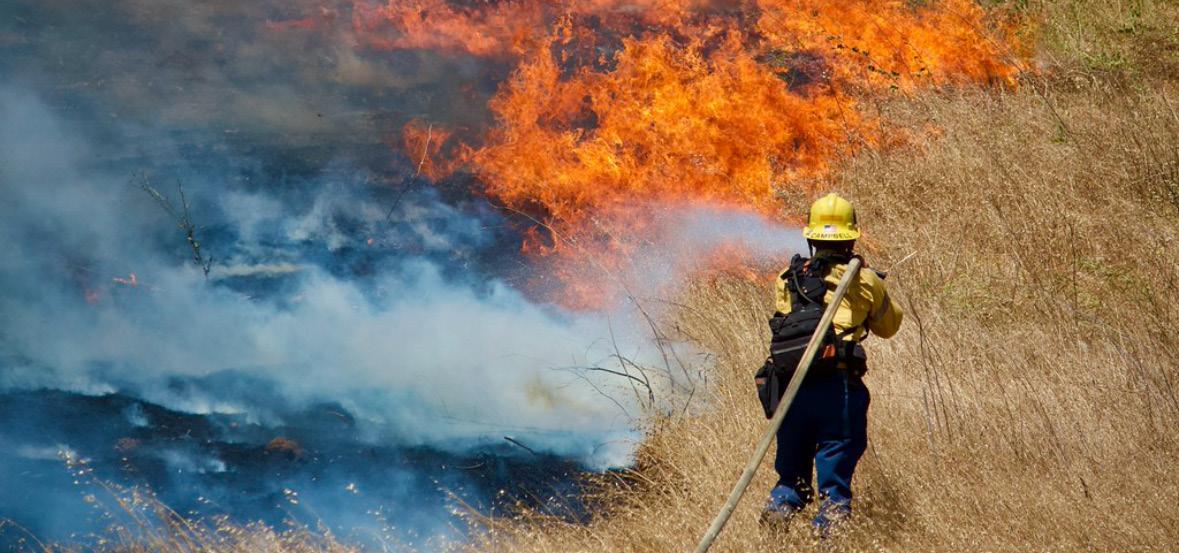
No one should underestimate the power of nature. Ventura County’s topography, cyclical rain/drought seasons, Red Flag Warnings and Santa Ana wind events can all make wildfire occurrence unpredictable.
The Ventura County Fire Protection District, more commonly known as the Ventura County Fire Department (VCFD), is well positioned to respond to wildfire threats. Forward thinking and highly integrated emergency protocols, coupled with robust mutual aid programs, provide VCFD with an excellent chance of success against them. The public can do its part by adhering to fire prevention protocols and remaining vigilant when conditions are warranted.
Urban development tends to expand cities into previously undeveloped areas. The boundary between developed and undeveloped space is referred to as the Wildland-Urban Interface (WUI). Fires that begin in remote parts of the county can cross the WUI into populated areas, so the investigation also examined response capabilities within city boundaries.
The Ventura County Civil Grand Jury conducted interviews with senior Ventura County Fire Department (VCFD) personnel and the County Office of Emergency Services (OES). The entire Civil Grand Jury received department-level briefings from both VCFD and OES. Jurors also extensively toured the OES Command Center, the Fire Communications Center and VCFD Headquarters.
Reference material was obtained from online research, prior Civil Grand Jury reports, post-fire reports, newspaper articles and after-action reports from fires outside Ventura County.
The Ventura County Civil Grand Jury investigation included organization, fire responsibility areas, water and hydrants, the Office of Emergency Services, the Fire Communications Center, public awareness, and personal responsibility.
Any report about wildfires needs to acknowledge certain realities: Wildfires will occur. Property will be destroyed. Lives may be lost. Fire departments are tasked with mitigating those losses as best they can. They accomplish this through equipment, personnel, plans, procedures and interagency agreements.
Firefighters are routinely confronted with circumstances beyond their control. Wind, terrain, the condition and variety of vegetation, and overall climate conditions all contribute to wildfire behavior.
Global warming presents a growing and ongoing threat concerning wildfires. A hotter climate lends itself to greater fire danger, though exact consequences are hard to predict.
In February 2026, the global surface temperature was 1.18°C (2.12°F) above the 20th-century average, ranking as the fifth-warmest February in the 177-year record. The 10 warmest Februarys on record have all occurred since 2016. February 2026 also marked the 47th consecutive February with above-average temperatures. (Ref-002) By 2050, the annual average of 90°F days in Ventura County is expected to quadruple from 1990 levels. (Ref-018)
The public also has a role to play. Educational and fire prevention guides are readily available. (Ref-003) Emergency information and communication channels have been established and published. (Ref-022) Local radio stations used for emergency information are KVTA 1590 AM, KHAY 100.7 FM, and KMLA 103.7 FM (Spanish). County residents must assume some personal responsibility for accessing and utilizing these informational sources. First responders are limited in their ability to fill all the gaps created by an uninformed populace.
VCFD has 34 stations throughout the county. Adding the local city fire departments brings the total to 51 stations. The combined total of firefighters is approximately 600, plus support staff.
Combining the totals matters because VCFD has working agreements with all the city fire departments, including Naval Base Ventura County, to supplement their assets. Similar agreements exist with county ambulance companies. This has created what is essentially a single, unified emergency fire and medical response force within Ventura County.
The Ventura County Fire Department is a multi-dimensional emergency response organization whose capabilities go well beyond extinguishing fires.
• Crash and Rescue
• Hazardous Materials
• Urban Search and Rescue
• Water Rescue
• Fire Boat
• Aviation Assets (Drones and Helicopters)
A large fire in a particular area may pull all the equipment from nearby stations into the event. VCFD’s working agreement allows the department to pull firefighters and equipment from other stations around the county and reposition them into the empty stations. (Ref-001) Every effort is made to maintain an immediate response capability in all areas of the county regardless of the circumstances.
Fires in undeveloped areas may require a specialized team and equipment. VCFD has created four 18-person wildland crews to attack fires that start in remote parts of the county with the goal of keeping them below 10 acres. (Ref-001, Ref-031)
Anticipation is a critical element of VCFD preparation. Constant monitoring of weather conditions, such as Red Flag Warnings, can trigger upgraded response plans. Monthly testing of moisture levels in the vegetation around the county pinpoints potential danger areas.
Efforts are made to ensure the department continues modernization. Eleven new drones with the latest technology have recently been ordered. (Ref-001)
Mutual Aid agreements are essential components of firefighting. These are written compacts establishing procedures for providing and receiving specific services from other departments. These agreements also specify financial reimbursements for the services rendered. Mutual Aid agreements on regional, state and federal levels expand the breadth of VCFD’s firefighting capability. (Att-007 )
Cooperation among the local departments has already been mentioned. Should a fire outstrip the ability of Ventura County resources to handle, VCFD’s mutual aid agreements allow specific equipment and manpower requests from surrounding counties as well as the California Department of Forestry and Fire Protection (CAL FIRE). VCFD can also reach out to other districts, to the state region and ultimately to federal agencies. Conditions would need to be extreme to reach those levels, but the important point is the agreements and procedures are already in place. (Att-007 )
Decision making is pushed down to the ranking officer on scene at a fire, who makes the assessment of equipment needed and initiates the request for any additional resources. (Ref-001, Ref-031)
Ventura County is nearing completion of upgrading emergency communication systems as of this writing. Aging radio towers are being replaced with digital towers to ensure clear, uninterrupted coverage throughout the county. (Ref-033) VCFD already has the necessary radios and is awaiting the system’s turn-on date. The department is also introducing Starlink satellite internet receivers into its communication systems. (Ref-001)
VCFD is also actively involved in fire prevention and inspection activities. It engages in abatement activities when funding allows, including controlled burns and using goat herds to clear brush. (Ref-029) The new “Zone Zero” requirements will place a heavy burden on the department when fully implemented. (Ref-016) Property inspections will go from 19,000 current parcels to 60,000. (Ref-001) Either hiring or diversion of firefighters from other duties will be required to fulfill this obligation. (Ref-029)
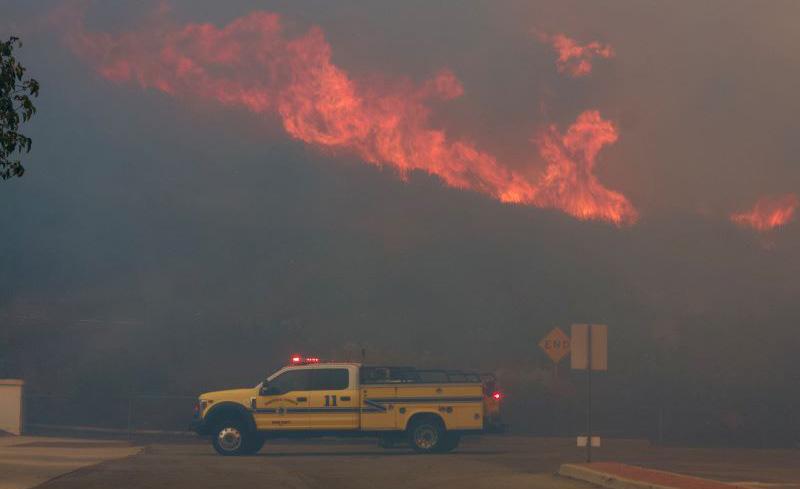
The VCFD-operated Fire Communications Center (FCC) is the central hub for non-police emergency services dispatch in the county. All 911 calls for fire and ambulances in the county are routed to the FCC for handling. Dispatchers locate the nearest available resource to the incident and send it to the scene.
Law enforcement 911 calls are handled by the respective sheriff, city police agency, or California Highway Patrol dispatch centers.
FCC will dispatch first responders based on location, not jurisdiction. For example, a fire call originating in the City of Ventura could be answered by an Oxnard Fire Department engine if it is the closest available asset. (Ref-001, Ref-031)
One measure of competence is how well an organization manages its routine activities. Failures tend to make the news; daily successes do not. The FCC responds to over 250 emergency service calls every day.
No calls go unanswered. FCC will initiate a response even if the request seems minor.
FCC is also the central monitoring location for wildfires in Ventura County. Utilizing a camera system, AlertCalifornia, developed and administered by University of California San Diego, FCC constantly observes the remote areas of the county for fire. (Ref-008) Strategically positioned throughout the hillsides, the cameras can “see” as far as 120 miles, depending on weather conditions. In addition to visual and infrared (heat detecting) capabilities, the cameras also use artificial intelligence to detect atmospheric anomalies. Heat waves rising off a fire with not-yet visible smoke can be spotted by the cameras. Heat rising from what is known as the Fillmore Fissure, a seam in the earth north of Fillmore, is routinely detected.
The cameras normally slowly rotate, providing a 360-degree sweep every couple of minutes. Any anomaly automatically triggers an alert indicating the approximate location of the incident. The duty officer can then take control of the camera for further evaluation. (Ref-008)
At the federal level, the United States is divided into 10 firefighting regions under the National Interagency Fire Center (NIFC). The purpose of the NIFC is “sharing information, shaping policy, and coordinating resources to ensure a unified approach to wildland fire management.” (Ref-004) Incorporated into the NIFC is the National Interagency Coordination Center (NICC), whose function is “the cost-effective and timely coordination of land management agency emergency response for wildland fire.” (Att-002) NICC could direct firefighting resources from other regions into Ventura County and VCFD could be dispatched to other areas, as needed.
California comprises two of the 10 national regions, with the Northern and Southern California regions divided by a line running roughly through Sacramento.
Effective April 3, 2026, the government created the U.S. Wildland Fire Service under the Department of the Interior. The U.S. Forest Service will be incorporated into this new department. According to the U.S. Department of Agriculture’s press release: “Under this reorganization, the agency’s Fire and Aviation Management program will retain its existing Geographic Area Coordination Center structure. There will be no interruption or change to field-based operational firefighters or their positions. The program will continue reporting to the Deputy Chief for Fire and Aviation Management at the National Interagency Fire Center in Boise, Idaho. This structure ensures the agency’s ongoing, close coordination with the Department of the Interior and interagency partners. It will reinforce the unified, national approach essential to effective wildland fire response until the Forest Service’s wildland fire management operations are unified into the U.S. Wildland Fire Service (USWFS) within the Department of the Interior (DOI).” (Ref-023) The remainder of the U.S. Forest Service will undergo complete transformation.
CAL FIRE further divides California into two regions at the state level. Ventura County is in the Southern region. (Ref-035)
Finally, within Ventura County, VCFD is the primary fire agency, with Oxnard, Ventura and Fillmore each having its own local department. The other seven cities within the county contract with VCFD for fire services. (Ref-034)
Ventura County is approximately 1.2 million acres in size. The 10 incorporated cities occupy roughly 10% of that area. The remaining acreage is divided between federal, state and county land. Los Padres National Forest makes up 46% of Ventura County. (Ref-030)
Acreage held by the federal government is labeled the Federal Responsibility Area (FRA). The U.S. Forest Service has primary firefighting responsibility in the FRA. Staffing of its two Ventura County stations is seasonal and not 24 hours. Additionally, VCFD is committed to preventing any fire in federal land from approaching populated areas. (Ref-001) For these reasons, VCFD will immediately respond to any fire in the FRA, holding command until federal units arrive, usually within three or four hours. VCFD is also solely responsible for any structure fires in the FRA. (Ref-001, Att-007 )
State-owned land is designated State Responsibility Area (SRA). CAL FIRE is normally the primary firefighting agency, except VCFD is one of six California fire departments under contract with CAL FIRE to fight SRA wildfires. (Ref-001, Att-010)
Land owned by the cities and county is known as the Local Responsibility Area (LRA). VCFD and the local departments are responsible for firefighting in the LRA.
VCFD’s oversight includes all acreage in the LRA, SRA, and extends three miles offshore. Its responsibility also includes Anacapa and San Nicolas Islands, including three miles offshore of these islands. (Att-009) Noted earlier, the department also acts as initial responder in the FRA. (Att-007 )
Water is the one vital resource firefighters need yet have absolutely no control over.
There are more than 150 water purveyors in Ventura County, which include cities, water districts, mutual water companies, private water companies, and private wells. (Ref-010) The 2022-2023 Ventura County Civil Grand Jury did an extensive report on water availability for wildfires. Briefly, county water suppliers all work independently. Each has its own procedures for filling water tanks in response to impending fire conditions. Readers are encouraged to look at the prior report for more complete information. (Ref-006)
Fire hydrant failures were investigated. Reports of hydrant failures were received after the Thomas Fire. (Ref-006) Those failures were attributed to electric pumps, designed to furnish water to uphill hydrants, losing power. The failure of uphill hydrants cut off water supply, accelerating the loss of homes. (Ref-006)
Assembly Bill 367 (AB 367), enacted after the Thomas Fire, addresses water supply for critical fire suppression infrastructure and is designed to eliminate those issues. (Ref-007 )
Overall, however, interviews revealed that hydrant failures are not a frequent occurrence. (Ref-001) Failures occur for a variety of reasons, with damaged water lines, broken valves or loss of pressure from various causes being the most common. These incidents happen very rarely. If a hydrant does fail, firefighters find the next nearest hydrant and hook up to it. Engines are equipped with hoses up to 500 feet long, and all fire apparatus have interactive map displays that can pinpoint the location of nearby hydrants. (Ref-001)
Each city in the county has its own local emergency management office, and Ventura County has a separate OES run by the Ventura County Sheriff’s Office (VCSO). (Ref-022)
The function of each office is to serve as a central communication/coordination center for emergencies occurring within their jurisdictions. County OES is activated whenever incidents span multiple jurisdictions, when needs exceed the resources available within one or more jurisdictions, or when an incident is otherwise complex and assistance is requested. (Att-008) Examples might be flooding, fuel spills, or wildfire. OES provides a space for all involved parties to assemble in one location, collect information and collaborate on developing a strategy for handling the incident.
The Ventura County OES has a wide array of redundant information gathering and communication resources at its disposal. It is nominally staffed during business hours by 10 personnel; a duty officer is present 24 hours a day. (Ref-001)
Depending on the incident, Ventura County OES can assemble a team of around 50 people to monitor the situation and provide expertise to decision makers. The team will remain on duty 24 hours a day until the situation is resolved. (Ref-001)
California also has a state-level OES, Cal OES, which can be called on for additional help. (Ref-039)
All emergencies begin and end at the local level. A city OES initiates the emergency response, requests the county OES involvement if needed, and is handed back control of the situation as the incident winds down. (Ref-001)
Ventura County OES is also responsible for countywide emergency planning and public emergency notifications. (Ref-022)
Noted in the BACKGROUND section of this report, emergency information and guides are readily available. A comprehensive explanation of the county’s emergency communications plan is located on the OES website. (Ref-009)
Technology has expanded the ease and ability to receive emergency notifications but has also encouraged people to rely on it as a sole source of information. Technical failures can result in citizens waiting for official notices that may never arrive. (Ref-040)
Cell tower coverage, cell tower failures in a disaster, call saturation, electrical power shutoffs or simply a weak signal on one’s phone can all prevent emergency notifications from reaching the public. (Ref-043) Individual cell towers have backup power and overlapping coverage, making those technical failures unlikely. (Ref-001) Still, prudence dictates being prepared for the unexpected in an emergency.
Awareness and cognizance of what is happening are of equal importance to official guidance. Seeing distant flames, smelling smoke or feeling the prevailing wind blowing ashes into one’s location are all warning signs that should be heeded. Observing one’s neighbors evacuating, even though not personally receiving an evacuation warning, should trigger a response. OES personnel told the Civil Grand Jury they “do not have a magic wand” when it comes to disseminating emergency information. (Ref-001) Despite dedicated efforts at public awareness, complete reliance on official communications may not be enough to remain safe.
The Ventura County Wildland-Urban Interface has been designated by the Ventura County Fire Protection District in collaboration with CAL FIRE. Fire Hazard Severity Zone mapping is incorporated into this process. (Att-001) Specific fire prevention codes are incorporated into any construction in the WUI. Additionally, the VCFD has a Fire Hazard Reduction Program with specific requirements for properties in the WUI. (Ref-024) Owners within these areas receive annual compliance notices from the VCFD. The public must assume personal responsibility in the wildfire prevention equation by adhering to these published guidelines.
Organizations exist to provide assistance for individual communities or neighborhoods to reduce the probability of wildfires impacting their localities. According to the California Fire Safe Council website, “California Fire Safe Council (CFSC) supports communities across the state in wildfire preparedness and
resiliency through grant funding, programmatic support, and technical assistance. Our goal is to provide resources and support for community-led wildfire resiliency efforts.” (Ref-025) One such community program currently exists in Ojai Valley. (Ref-026)
Additional individual neighborhoods throughout Ventura County have also joined VCFD’s Firewise USA program, emphasizing community/neighborhood responsibility in planning the design of a safe community, plus effective emergency response and individual responsibility for safer home construction and design, landscaping, and maintenance. (Ref-005)
Both programs emphasize community participation. Individual homes or businesses cannot singly join on their own. However, neither of these programs requires an entire neighborhood to participate. A condo complex can join. A few surrounding blocks in a development can qualify. The key is finding someone with the desire and leadership qualities to convince a majority of the residents in that defined area to participate.
There is no cost to join. In the case of Firewise USA, members of the VCFD will survey the homes and recommend changes to reduce the chances of fire impacting the properties.
There are also financial advantages. California has passed “Safer from Wildfire” regulations which reduce the cost of homeowners insurance for participating households. Insurance companies are required to recognize Firewise-designated communities by providing discounts to property owners in those communities. (Att-003)
Homeowners associations (HOAs) are good vehicles for educating residents regarding the benefits provided by these organizations. The Civil Grand Jury recognizes HOAs may vary greatly in their effectiveness and governance, but all provide a mechanism for contacting the residents within their boundaries to provide information.
The Ventura County Civil Grand Jury initially decided not to include individual fires as part of its report. However, as the investigation was underway, the Ventura County Fire Department announced plans for outside input regarding the cause of the Mountain Fire. (Ref-032) The Civil Grand Jury expanded its efforts to include the Mountain Fire. The resulting investigation concluded that ember-detecting canines could play an important role in fire prevention.
On Wednesday, October 30, 2024, a tractor clearing brush in the Balcom Canyon area of Ventura County malfunctioned and ignited a fire. The tractor was destroyed in the ensuing flames. VCFD responded and extinguished the fire after 1.8 acres had burned. (Att-013)
Standard post-fire operations undertaken by VCFD involve hand crews cutting a mineral-level (bare earth) perimeter a few feet wide around the burn area, soaking the burn scar with water, and having firefighters investigate the area with handheld heat detectors looking for hot spots. (Ref-001)
Additional actions were taken after this particular fire. A bulldozer, rather than hand crews, cut the mineral-level containment line around the burn area. This resulted in a much wider protective boundary. An aviation asset on a training flight was re-directed over the Balcom fire scar to drop its load. A drone with infrared heat-seeking sensors surveyed the area. (Ref-001)
Numerous people were present at the burn site in the week after the fire. The landowner, insurance adjusters, and the public, in addition to the firefighters, traversed the area. No one reported seeing anything out of the ordinary. None of the post-fire VCFD inspections detected any anomalies. (Ref-001)
Undiscovered by anyone, a pocket of hot embers had become encapsulated under a melted tire of the tractor. One week later, on November 6, a Santa Ana wind event dislodged debris around the tire, exposing the lit embers and carrying them into unburned vegetation downwind of the fire area. (Ref-001) The Mountain Fire would grow to consume over 19,000 acres and destroy or damage 331 structures. (Ref-011, Ref-012)
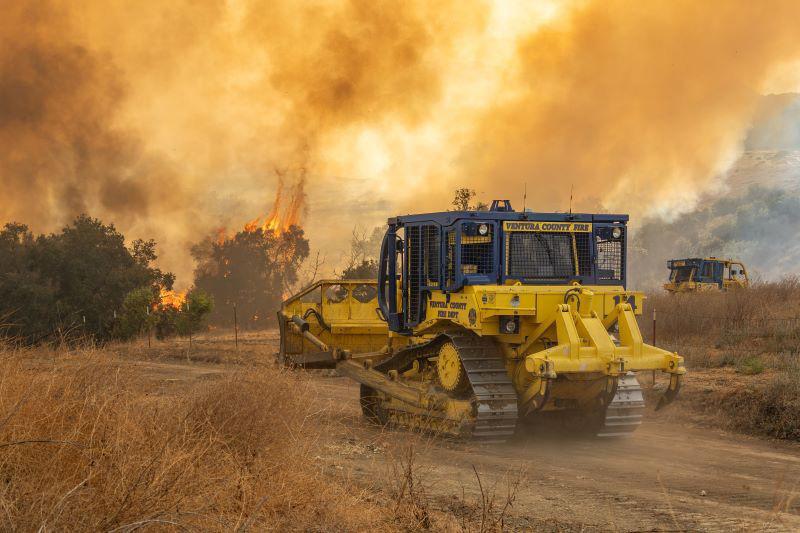
Figure 3. The Ventura County Fire Department used bulldozers to cut containment lines after the Balcom Canyon fire. (Photo courtesy of VCFD)
Embers are small bits of still-burning wood or debris left after a fire has occurred. They can be carried by wind, sometimes for miles, starting additional fires in a random pattern well away from the main blaze.
They can also just fall straight to the ground where they smolder until exhausting their fuel or are extinguished in post-fire clean-up operations. Problems occur when lit embers become buried by additional fire detritus. They are no longer visually detectable and, depending on the depth and type of material on top, may be insulated from any water sprayed on the surface above them.
Conceptually, it may be difficult to understand how something buried in the ground can still be on fire. The surrounding material allows the heat to remain concentrated on the ember, and lack of oxygen exposure prevents the fuel source from being rapidly consumed. Buried embers can remain hot for weeks, possibly even months. As noted above, the embers that ignited the Mountain Fire were buried for a week.
On January 1, 2025, an arson fire, dubbed the Lachman Fire, started in Los Angeles. The Los Angeles Fire Department extinguished the blaze after it consumed eight acres. On January 7, Santa Ana winds dislodged buried embers from the Lachman Fire and ignited the Palisades Fire. The Palisades Fire would ultimately burn 23,448 acres, take 12 lives, and cost $27.5 billion in damages. (Ref-027, Att-004)
In 2021, the most destructive fire in Colorado history, the Marshall Fire, was ignited by buried embers. The fire burned 6,000 acres and destroyed 1,000 homes. (Ref-028)
Ventura’s Mediterranean climate has produced a landscape dominated by grasses and chaparral, including in the Los Padres National Forest. Heavily forested areas found in other parts of the state are not prevalent in Ventura County. This local flora tends to burn completely and down to the surface only. According to county fire officials, residual buried embers are not commonplace in Ventura County. (Ref001) Yet they do happen, as demonstrated by the Mountain Fire.
The most current technology available today for finding embers is infrared detection (IR), often referred to as FLIR (Forward Looking InfraRed).
IR is a heat detection system. Virtually everything on the planet emits heat, from humans, animals, plants, to even rocks releasing heat absorbed during the day. IR systems are designed to detect heat and display heat signatures to the user. The system can differentiate temperature levels, presenting a picture of what it sees on its screen.
IR is not a perfect system. (Ref-044) It requires the object you are looking for to be at a higher temperature than its surroundings. Certain atmospheric conditions that absorb or dissipate heat can lessen its effectiveness. The heat signature can be blocked by objects between it and the detector.
The fundamental shortcoming of IR in ember location is lack of heat. Heat from buried embers may not penetrate the debris covering them and thus remain undetected. Any heat breaking ground may be so minimal that it is lost in the surrounding surface temperature. IR detection is surface based; sensing capabilities reach, at most, a couple of inches below the ground. Surveys by firefighters in the Balcom Fire area, using handheld detectors and drones, proved fruitless.
The remaining methods for ember detection are rudimentary, relying on visual inspection for smoke or glowing embers and tactile sensing of heat while patrolling. These manual techniques are ineffective at locating deeply buried or subterranean embers.
The Civil Grand Jury explored using specially trained canines to detect buried embers.
K-9s have been a staple of law enforcement organizations for decades. In addition to suspect apprehension, they are used for a wide range of detection operations. A dog’s sense of smell is anywhere from 10,000 to 100,000 times more sensitive than a human’s. (Ref-013, Ref-014)
VCSO, along with Ventura, Oxnard, Simi Valley, and Port Hueneme Police Departments, have K-9 teams. Funding for the programs is handled through nonprofit organizations and local business support. (Ref-038, Att-012)
New K-9s are usually obtained through the trainer the individual department uses. (Ref-001) Lead times for finding and acquiring a new dog can take several months. The dogs arrive “green,” with basic skills, and the actual training occurs in-house, taking several months more. Obtaining and training a new canine can take up to a year.
The Civil Grand Jury launched an unsuccessful search to find ember-detecting dogs in California, then the United States. Many K-9 training schools list ember detection as one of the skills taught by them, but the Civil Grand Jury found this not to be the case. The Civil Grand Jury reached out to individual schools to verify their claims or get referrals to a program that does. That effort was also unsuccessful. (Att-006)
The Civil Grand Jury has concluded ember-detecting canines are either not used in the United States or exist in very isolated situations. The Civil Grand Jury could only find these dogs in Sweden. (Ref-015)
Dogs can be trained to detect virtually anything that has a distinct scent or chemical signature. (Ref045) Typical scenarios include drugs, explosives, and accelerants used in arson fires. Search and rescue organizations use canines for tracking and cadaver location. Some prisons use dogs to find SIM cards from illegal prisoner phones. (Ref-037, Ref-001) Interviews with local law enforcement K-9 handlers have led the Civil Grand Jury to conclude that canines can be trained on the scent of buried embers. (Ref-015, Ref-041, Ref-001)
Canines are also capable of detecting objects submerged under water. (Att-011) Given the demonstrated capabilities of dogs to detect a wide variety of scents, including above ground, below ground, under water, and supported by the apparent success of the Swedish ember detection program, the Civil Grand Jury concludes canine buried ember detection is a viable avenue of investigation for VCFD to pursue locally.
Detection dogs work either leashed or unleashed. Unleashed dogs, also known as “Area Dogs,” are typically employed in cadaver searches. There is no defined scent trail; they are attempting to locate a specifically trained odor. The Civil Grand Jury used cadaver dogs as an example because emberdetecting dogs could not be found.
Cadaver dogs can cover wide areas and detect deeply buried scents. A single dog can cover 1.3 square kilometers (over 300 acres) in a day. They can detect odors from as deep as 15 feet. (Ref-019, Ref-020)
A volunteer K-9 Search and Rescue team, operating under the umbrella of the VCSO, already exists. (Ref-017 ) This team focuses on tracking and locating persons or human remains. They can be a ready source of valuable wilderness detecting expertise.
The Balcom Fire covered 1.8 acres; the Lachman Fire burned eight acres. Civil Grand Jury research found that an Area Dog could readily search an area the size of the Balcom and Lachman burn areas. (Ref-019) It is unknown if a canine search would have prevented the ensuing Mountain and Palisades fires started by embers buried in those locations. What is known is that professional firefighters, using current methods, did not detect the embers. A canine simply adds another tool to the fire prevention toolbox. (Ref-015, Ref-045)
The Civil Grand Jury acknowledges VCFD may have limited need for a dedicated K-9. However, it could be very beneficial to form a team on a regional or statewide basis. Acquisition could be as simple as partnering with local law enforcement agencies to train one or two of their dogs on a new scent. The Office of the State Fire Marshal already has a K-9 unit for arson investigations. (Ref-021) Seeking crosstraining of their dogs for ember detection is an additional option.
The damage from the Palisades Fire stretched into billions of dollars, the Mountain Fire likely into hundreds of millions. Neither of these includes the cost of fighting the fires. A trained canine costs around $20,000. (Ref-036, Ref-042 , Att-004) Even that expense might be avoided if collaboration with local law enforcement were successful.
Establishing an ember detection K-9 team is a ground-up endeavor necessitating development of efficient deployment protocols and creating a best practices program. The Civil Grand Jury finds the cost/ benefit ratio makes it a worthwhile investigation to pursue. None of the obstacles are insurmountable.
Integrating and efficiently using K-9s in a fire prevention strategy is a useful and, to date, neglected piece of the puzzle.
F-01. The Ventura County Civil Grand Jury finds the Ventura County Fire Department (VCFD) is well positioned to respond to wildfire threats.
F-02. The Ventura County Civil Grand Jury finds the public has a responsibility for wildfire preparedness by making themselves aware of and heeding Ventura County Fire Department guidelines.
F-03. The Ventura County Civil Grand Jury finds the Ventura County Fire Department has primary firefighting responsibility in the Local and State Responsibility Areas.
F-04. The Ventura County Civil Grand Jury finds the Ventura County Fire Department acts as first responder for fires in the Federal Responsibility Area.
F-05. The Ventura County Civil Grand Jury finds Oxnard, Ventura and Fillmore have local Fire Departments and the remaining cities contract with Ventura County Fire Department for fire services.
F-06. The Ventura County Civil Grand Jury finds the Fire Communications Center responds to all non-law enforcement 911 calls.
F-07. The Ventura County Civil Grand Jury finds the Fire Communications Center utilizes a network of cameras to scan for wildfires in the remote parts of the county.
F-08. The Ventura County Civil Grand Jury finds emergency preparation guides and emergency notification systems are available to the public.
F-09. The Ventura County Civil Grand Jury finds the Ventura County Fire Department has created a unified county fire and medical response force.
F-10. The Ventura County Civil Grand Jury finds the Ventura County Fire Department has created four 18-person crews to fight fires in remote areas of the county with the goal of keeping them 10 acres or less.
F-11. The Ventura County Civil Grand Jury finds the Ventura County Fire Department has Mutual Aid agreements with neighboring counties, as well as state and federal agencies, to supplement its firefighting capabilities.
F-12. The Ventura County Civil Grand Jury finds the Mountain Fire was ignited by embers from the previous Balcom Canyon fire.
F-13. The Ventura County Civil Grand Jury finds that current technology cannot detect buried embers.
F-14. The Ventura County Civil Grand Jury finds that canines can be trained to detect the scent of buried embers.
F-15. The Ventura County Civil Grand Jury finds that expertise in wilderness canine search techniques exists in current K-9 Search and Rescue organizations, including in Ventura.
F-16. The Ventura County Civil Grand Jury finds obtaining and training a new K-9 costs approximately $20,000.
F-17. The Ventura County Civil Grand Jury finds the cost of a trained canine vs. the cost of damage from wildfires makes an evaluation of obtaining a K-9 trained in buried ember detection worth pursuing.
R-01. The Ventura County Civil Grand Jury recommends the Ventura County Fire Department investigate the feasibility of incorporating a canine into post-fire investigations by December 31, 2026. (F-12, F-13, F-14, F-15, F-16, F-17)
R-02. The Ventura County Civil Grand Jury recommends the Ventura County Board of Supervisors, serving as the Board of Directors for the Ventura County Fire Department, support any Ventura County Fire Department effort to obtain and train an ember-detecting canine, including financially up to $20,000, by December 31, 2026. (F-16, F-17)
Responses required from:
The following governing bodies within 90 days: Ventura County Board of Supervisors serving as the Board of Directors for Ventura County Fire Department (F-16, F-17, R-02)
Responses invited, but not required, from:
The following appointed officials within 60 days: Chief, Ventura County Fire Department (F-10, F-11, F-12, F-13, F-14, F-15, R-01)
Ref-001. Interviews with various officials and other interested parties. Ref-002. NOAA Global Climate Report . Accessed March 12, 2026. https://www.ncei.noaa.gov/access/ monitoring/monthly-report/global/202602,
Ref-003. Ready Ventura Preparedness Guide. Accessed March 12, 2026. https://s48240.pcdn.co/ wpcontent/uploads/2023/08/ReadyVC_PreparednessGuide_5.5x8_FIN
Ref-004. National Interagency Fire Center. Accessed March 12, 2026. https://nifc.gov
Ref-005. VCFD Firewise Program. Accessed April 19, 2026. https://fire.venturacounty.gov/firewise/, Ref-006. 2022/2023 Ventura Civil Grand Jury Final Report. Water Availability For Wildfires in Ventura County. June 12, 2023. Accessed May 5, 2026. https://vcportal.venturacounty.gov/GDJ/docs/ reports/2022-23/GJ-Report_2022-23_WaterAvailabilityForWildFiresInVenturaCounty.pdf Ref-007. California State Legislature. California Assembly Bill 367 (AB 367). Accessed March 17, 2026. https://leginfo.legislature.ca.gov/faces/billNavClient.xhtml?bill_id=202520260AB367. Ref-008. Alert California Camera System. Accessed March 17, 2026. https://s48240.pcdn.co/wpcontent/uploads/2023/10/VC-Alert-and-Warning-Plan-September-2023.pdf.
Ref-009. OES Alert and Warning Plan. Accessed March 17, 2026. https://s48240.pcdn.co/wp-content/ uploads/2023/10/VC-Alert-and-Warning-Plan-September-2023.pdf,
Ref-010. Ventura Public Works Water and Sewer Service Areas . Accessed March 17, 2026. https:// publicworks.venturacounty.gov/wsd/servicearea/,
Ref-011. CAL FIRE. Mountain Fire. Accessed May 5, 2026. https://www.fire.ca.gov/ incidents/2024/11/6/mountain-fire
Ref-012. Ventura County OES. Mountain Fire damage. Accessed May 5, 2026. https://vcoes.maps. arcgis.com/apps/dashboards/79fc1177ec104999b76e46112c0a2487
Ref-013. How Powerful Is a Dog’s Nose. Phoenix Veterinary Center, July 23, 2020. Accessed March 25, 2026. https://phoenixvetcenter.com/blog/214731-how-powerful-is-a-dogs-nose.
Ref-014. Coates, Jennifer. 8 Dog Nose Facts You Probably Didn’t Know. PetMD, May 28, 2020. Accessed March 25, 2026. https://www.petmd.com/dog/behavior/5-dog-nose-facts-youprobably-didnt-know
Ref-015. Detection dogs can now be used to sniff out smoldering embers in the aftermath of a forest fire. International Association of Fire Services, May 15, 2018. Accessed March 30, 2026. https://ctif.org/news/detection-dogs-can-now-be-used-sniff-out-smoldering-embersaftermath-forest-fire
Ref-016. CAL FIRE. Defensible Space. Accessed March 31, 2026. https://www.readyforwildfire.org/ prepare-for-wildfire/defensible-space.
Ref-017. Ventura County K-9 Search and Rescue. Accessed March 31, 2026. https://www.vcsark9.org/.
Ref-018. Climate Check: Heat Risk in Ventura County. Accessed April 16, 2026. https://climatecheck. com/california/ventura
Ref-019. Grover’s Mill Podcast. Cadaver Dogs: 5 Things You Didn’t Know, September 10, 2018. Accessed March 31, 2026. https://medium.com/@groversmill/the-truth-about-cadaver-dogs5-things-you-didnt-know-a53344a43ee7.
Ref-020. Holloway, Kimberley. EBSCO. Cadaver Dogs, 2024. Accessed March 31, 2026. https://www. ebsco.com/research-starters/science/cadaver-dogs
Ref-021. Office of the State Fire Marshal. Canine Unit . Accessed March 31, 2026. https://osfm.fire.ca.gov/what-we-do/fire-engineering-and-investigations/-/ media/26a707e784884453a3bfb87fca026168.ashx.
Ref-022. Ventura County OES. Accessed April 1, 2026. https://sheriff.venturacounty.gov/patrolservices/office-of-emergency-services/.
Ref-023. USDA Press Release. Accessed April 16, 2026. https://www.usda.gov/about-usda/news/ press-releases/2026/03/31/usda-prioritizing-common-sense-forest-managementmoves-forest-service-headquarters-salt-lake-city#:~:text=USDA%20Policies-,USDA%20 Prioritizing%20Common%20Sense%20Forest%20Management%2C%20Moves%20 Forest%20Service%20Headquarters,people%20who%20depend%20on%20them.
Ref-024. VCFD Fire Hazard Reduction Program. Accessed April 19, 2026. https://fire.venturacounty. gov/fire-hazard-reduction-program-fhrp
Ref-025. California Fire Safe Council. Accessed April 19, 2026. https://cafiresafecouncil.org/about-us/ about/,
Ref-026. Ojai Valley Fire Safe. Accessed April 19, 2026. https://firesafeojai.org/.
Ref-027. CAL FIRE. Palisades Fire. Accessed April 19, 2026. https://www.fire.ca.gov/ incidents/2025/1/7/palisades-fire,
Ref-028. Cook, Kyle. Marshall Fire ignited by previously buried embers and Xcel power line, investigators conclude. Rocky Mountain PBS, June 8, 2023. Accessed April 19, 2026. https:// www.rmpbs.org/news/marshall-fire-cause-xcel-power-line-buried-embers. Ref-029. Phillips, Grant. Ventura Fire Chief warns of winds this fire season. Ojai Valley News, May 5, 2026. Accessed May 7, 2026. https://www.ojaivalleynews.com/news/county/ventura-firechief-warns-of-winds-this-fire-season/article_72282e7a-877e-4249-884b-c100c8c285a7.html
Ref-030. Ventura County Executive Office. Accessed May 13, 2026. https://venturacounty.gov/countyexecutive-office/about-us/
Ref-031. VCFD Emergency Response. Accessed May 15, 2026. https://fire.venturacounty.gov/ emergency-response/
Ref-032. Carlson, Cheri. CAL FIRE to review county fire department’s response to 2024 blaze. Ventura County Star, February 2, 2026. https://www.vcstar.com/story/news/local/2026/02/02/calfire-to-review-county-fire-departments-response-to-2024-blaze/88440361007/ Ref-033. Carlson, Cheri. Ventura County is building a $32M radio system. Here’s why. Ventura County Star, September 5, 2025. https://www.vcstar.com/story/news/local/2025/09/05/venturacounty-is-building-a-32m-radio-system-heres-why/85618874007/
Ref-034. Ventura County Fire Department . Accessed June 3, 2026. https://fire.venturacounty.gov/ about-vcfd/
Ref-035. California Department of Forestry and Fire Protection. Accessed June 3, 2026. https://fire. fandom.com/wiki/California_Department_of_Forestry_and_Fire_Protection Ref-036. The Cost of Starting a K-9 Unit . Accessed June 4, 2026. https://www.policemag.com/articles/ the-cost-of-starting-a-k-9-unit Ref-037. Electronic Detection Dogs Equip Agencies with High-Tech Tracking Partners . Accessed June 4, 2026. https://www.secretservice.gov/newsroom/behind-the-shades/2025/06/electronicdetection-dogs-equip-agencies-high-tech-tracking Ref-038. Make a Donation. Accessed June 4, 2026. https://www.vcsok9.org/donate Ref-039. About Cal OES. Accessed June 4, 2026. https://www.caloes.ca.gov/cal-oes/about-cal-oes/ Ref-040. Emergency Telecommunications Failure. Accessed June 4, 2026. https://www.undrr.org/ understanding-disaster-risk/terminology/hips/tl0211
Ref-041. Working Dogs: Detection. Accessed June 4, 2026. https://www.aaha.org/resources/2021aaha-working-assistance-and-therapy-dog-guidelines/working-dogs-detection/ Ref-042. Mountain Fire losses mount; recovery begins . Accessed June 4, 2026. https://vccf.org/ mountain-fire-losses-mount-recovery-begins/
Ref-043. DeMuro, Rich. How wireless companies keep signals alive in wildfires . KTLA5, January 15, 2025. https://ktla.com/news/california/wildfires/how-wireless-companies-keep-signalsalive-in-wildfires/
Ref-044. Myth Busted. Things IR can’t see through. Accessed June 5, 2026. https://www.iirt.sg/ the-challenges-and-limitations-of-infrared-thermography/#:~:text=in%20Infrared%20 Thermography-,Emissivity,deep%20within%20walls%20or%20machinery.
Ref-045. Fire-Fighting Dogs: Sniffing Out Arson, Wildfires, and More. Accessed June 9, 2026. https:// www.akc.org/expert-advice/news/fire-fighting-dogs/
Att-001. Wildland-Urban Interface map. Maps. Ventura County SALC. Accessed June 5, 2026.
Att-002. National Interagency Coordination Center (NICC). 2025 National Interagency Standards for Resource Mobilization. Accessed March 31, 2026.
Att-003. California Firewise Insurance Notice. National Fire Protection Association News and Articles. Accessed April 19, 2026.
Att-004. Palisades Fire Impact . Aon Q1 2025 Global Catastrophic Recap. Accessed May 18, 2026.
Att-005. Data supplied by Ventura County Fire Department , email, January 15-16, 2026.
Att-006. Request for canine ember detection training information, email, Canine Accelerant Detection Association (CADA), Dec 26, 2025 – Jan 20, 2026.
Att-007. Mutual Aid Agreement . May 1, 2020. Obtained from VCFD Nov 17, 2025.
Att-008. Ventura County Emergency Operations Plan – 2025, p. 16. Accessed June 3, 2026.
Att-009. Reciprocal Services Agreement between the United States Coast Guard, Channel Islands and the Ventura County Fire Protection District . Accessed June 3, 2026.
Att-010. Gray Book. Allotments for Contract Counties . Obtained from VCFD November 17, 2025.
Att-011. Hardy, Marian. Water Search With Dogs . Accessed June 4, 2026.
Att-012. REACH Hueneme Donation for Police Department Canine Unit . Accessed June 5, 2026.
Att-013. Ventura County Fire Department News Release , November 7, 2025. Accessed June 5, 2026.
CAL FIRE
Cal OES
DOI
FCC
FLIR
FRA
California Department of Forestry and Fire Protection
California Office of Emergency Services
U.S. Department of the Interior
Fire Communications Center
Forward Looking InfraRed
Federal Responsibility Area. U.S. Forest Service primary firefighting agency
IR InfraRed heat detecting technology. Typically identified as FLIR
K-9 Dog (canine)
LRA
OES
SRA
VCFD
USDA
USWFS
WUI
Local Responsibility Area. VCFD primary firefighting agency
Office of Emergency Services
State Responsibility Area. CAL FIRE primary firefighting agency, except VCFD is contracted by CAL FIRE to be primary agency
Ventura County Fire Department (also known as the Ventura County Fire Protection District)
U.S. Department of Agriculture
U.S. Wildland Fire Service, created April 3, 2026.
WILDLAND-URBAN INTERFACE (WUI). A geographical area identified by the state as a “Fire Hazard Severity Zone” in accordance with the Public Resources Code, Sections 4201 through 4204, and Government Code, Sections 51175 through 51189, or other areas designated by the Fire Code Official to be at a significant risk from wildfires including Hazardous Fire Area.
Part 1: TEMPORARY HOLDING FACILITIES
June 25, 2026





Camarillo Patrol Station Ojai Patrol Station Simi Valley Police Department
Fillmore Patrol Station Oxnard Police Department Thousand Oaks Patrol Station
Lockwood Valley Substation Port Hueneme Police Department Ventura Police Department
Moorpark Patrol Station Santa Paula Police Department
California Penal Code 919(b) mandates that the Civil Grand Jury “inquire into the condition of the public prisons within the county.” As a result of an opinion of the California Attorney General the term “public prisons” in the state penal code is interpreted to include “local detention facilities,” where persons are detained by law enforcement agencies.
Civil Grand Jury jail inquiry visits are an important vehicle to obtain such information regarding the conditions under which our fellow citizens are confined. The 2025-2026 Ventura County Civil Grand Jury fulfilled its mandate by visiting all the County’s 10 temporary holding facilities between September and October 2025.
During its visits, the 2025-2026 Civil Grand Jury reviewed policy and procedure manuals, recorded its observations during each visit and collected state agency reports, local fire inspection reports, local medical and mental health inspection reports, juvenile logs, and other documentation.
The Civil Grand Jury, in teams of two or three jurors, conducted unscheduled inquiry visits at the temporary holding facilities within Ventura County.
During these visits, the Civil Grand Jury observed that these facilities were clean, well-managed and maintained. Personnel at each location were welcoming and knowledgeable, explaining all policies and procedures, as well as providing access to all areas of the facilities.
Some cities in the County – Oxnard, Port Hueneme, Santa Paula, Simi Valley, and Ventura – operate their own police departments, while other cities – Camarillo, Fillmore, Moorpark, Ojai, and Thousand Oaks –contract law enforcement services with the Ventura County Sheriff’s Office (VCSO). Whether the facility is a city police department or a VCSO patrol station, one of their functions is to be a temporary holding facility for people who are either detained or arrested. This is where a person is confined for 24 hours or less, pending release, transfer to another facility, or appearance in court.
When police or patrol officers take an adult into custody, they are transported to these facilities for pre-booking processing. Pre-booking involves data entry into the booking system of general personal
information, such as name and address, securing evidence, and doing a criminal background check. The individual may then be released for a minor offense, but usually they will be transported to the Pre-Trial Detention Facility (Main Jail) at the Ventura County Government Center for complete booking and further processing, including fingerprinting, photo, warrant search (initiated at the scene where detained), full body search, health screening, and search of possessions.
Juveniles detained for a minor offense are normally detained in the field by the police or patrol officer and released to the custody of a parent or guardian. On occasion, when the parent or guardian cannot be located or cannot respond to the scene, juveniles are transported to a temporary holding facility, where they are supervised and detained until they can be released to a responsible adult or guardian. Juveniles detained for a serious offense are transported either to the temporary holding facility for pre-booking or directly to the Juvenile Justice Center in Oxnard for booking and further processing.
In instances where an individual has sustained an injury or has a severe medical condition, Emergency Medical Technicians (EMTs) are called to assist the police or patrol officer with administering first aid or health care in the field. If greater aid is required, with the help of EMTs, the individual is taken to the Ventura County Medical Center (VCMC) or the closest medical center for treatment and evaluation. Throughout the hospital stay, the police or patrol officer remains with the individual. Once they are stable, medically released adults are taken directly to the Pre-Trial Detention Facility for booking and further processing. Juveniles detained for a serious offense are taken directly to the Juvenile Justice Center for booking and further processing.
The following diagram (Att.–001) further highlights what happens when an individual is lawfully detained.
Law enforcement services for the City of Camarillo have been provided on a contract basis by VCSO since 1965. The on-duty Sheriff Sergeant met with the Civil Grand Jury team to give a tour of the facility.
• Number of staff assigned: 127 on staff, with 81 sworn deputies covering the city and unincorporated areas, plus 11 sworn deputies assigned to VCSO’s Homeless Liaison Unit which works primarily in Camarillo-adjacent County unincorporated areas. Four of the city-funded deputies are School Resource Officers (SRO).
• Number of holding cells: The facility can accommodate two or three detainees in the one locked temporary holding room, which has a bench for cuffing. Usually, an arrestee is promptly transported to the Pre-Trial Detention Facility. There are no temporary holding, safety, or sober cells at this patrol station. A sober cell provides supervised, temporary holding for an intoxicated arrestee who is a danger to themselves or others.
• Length of time detainees are usually held: Two hours maximum.
• Pre-booking activity: This involves data entry only (no fingerprinting or photo) and securing evidence, including collecting urine samples. Blood samples are not collected at this patrol station. Instead, blood samples are collected either at the local hospital or the Pre-Trial Detention Facility by medically licensed clinicians.
• Posting bail: Detainees are not held long enough to arrange release on bail from the patrol station.
Law enforcement services for the City of Fillmore have been provided on a contract basis by VCSO since 1987. The Chief of Police and the on-duty Sergeant met with the Civil Grand Jury team to tour the facility.
• Number of staff assigned: 31 on staff, with 26 sworn deputies, including two SROs. Among the five non-sworn staff are two cadets and one student worker.
• Number of holding cells: The facility can accommodate between four to six detained adult individuals in two temporary holding cells, each with a bench for cuffing. Generally, there is one arrestee per cell given the short detention time; there are no safety or sober cells. If a juvenile is brought to the patrol station, they are typically placed in a non-secure room under constant supervision.
• Length of time detainees are usually held: One hour, unless taken directly to the Main Jail.
• Pre-booking activity: This involves data entry (no fingerprinting or photo) and securing evidence, including collecting urine samples. Blood samples are not collected at this patrol station. Instead, blood samples are collected either at the local hospital or the Pre-Trial Detention Facility by medically licensed clinicians.
• Posting bail: Detainees are not held long enough to arrange release on bail from the patrol station.
Law enforcement services for Lockwood Valley have been provided on a contract basis by VCSO since the 1950s. Lockwood Valley is unique in that it does not have any holding facilities. The area is staffed by two sworn deputies and two support staff. Deputies make every effort to cite and release detainees. Should a booking be required, detainees are transported directly to the Pre-Trial Detention Facility. In some instances, the deputies will stop at either the Fillmore or Ojai stations to expedite the pre-booking process. There was no Civil Grand Jury tour of the Lockwood Valley Patrol Station. (Att. – 002)
Law enforcement services for the City of Moorpark have been provided on a contract basis by VCSO since 1983. Moorpark Patrol Station shares its building with the California Highway Patrol. The Chief of Police and the on-duty Investigative Officer met with the Civil Grand Jury team to give a tour of the facility.
• Number of assigned staff: 49 on staff, with 43 sworn deputies, including one SRO.
• Number of holding cells: The facility can accommodate one detainee in each of the three temporary holding rooms. Up to five detainees can be secured with handcuffs on benches for cuffing. There are no temporary holding, safety, or sober cells.
• Length of time detainees are usually held: One hour to 90 minutes on average.
• Pre-booking activity: This involves data entry (no fingerprinting or photo) and securing evidence, including collecting urine samples. Blood samples are not collected at this patrol station. Instead, blood samples are collected either at the local hospital or the Pre-Trial Detention Facility by medically licensed clinicians.
• Posting bail: This occurs typically with misdemeanor arrests when the individual has a verified local address and does not have prior failures to appear in court for criminal arrests. In those instances, instead of being taken into custody, the person is released after signing a citation to appear in court on a specified date.
Law enforcement services for the City of Ojai have been provided on a contract basis by VCSO since 1980. The Patrol Sergeant, the ranking officer on duty, met with the Civil Grand Jury team to give a tour of the facility.
• Number of assigned staff: 39 on staff, with 35 sworn deputies. There are no assigned SROs.
• Number of holding cells: The facility can accommodate up to two detained individuals in each of the two temporary holding cells. There are no safety or sober cells.
• Length of time detainees are usually held: It can vary, but it’s less than 12 hours. There are no overnight stays.
• Pre-booking activity: This involves data entry only (no fingerprinting or photo) and securing evidence, including collecting urine samples. Blood samples are not collected at this patrol station. Instead, blood samples are collected either at the local hospital or the Pre-Trial Detention Facility by medically licensed clinicians.
• Posting bail: Usually, detainees are not held long enough to arrange release on bail from the patrol station.
Law enforcement services for the City of Oxnard have been provided by the police department since 1903. The on-duty Police Service Officer met with the Civil Grand Jury team to give a tour of their facility.
• Number of assigned staff: 371 on staff, with 242 sworn officers, including eight SROs.
• Number of holding cells: The facility can accommodate up to 49 individuals among seven temporary holding cells for adults and one non-secure room with a bench for cuffing, which is also used for temporary holding of juveniles. Rarely does the police station have more than eight detainees due to safety policy. Two of the seven cells have benches for cuffing, and there are no safety or sober cells.
• Length of time detainees are usually held: Three to four hours.
• Pre-booking activity: Complete booking through the Pre-Trial Detention Facility’s booking system. The booking process involves data entry, background check, fingerprinting, photos, obtaining statements, medical information, property inventory, and securing evidence, including urine samples. Blood samples are not collected at the police station. Instead, blood samples are collected either at the local hospital or the Pre-Trial Detention Facility by medically licensed clinicians.
• Posting bail: Detainees may call a bail-bond agent to arrange release on bail from the police station. The agents respond directly to the Oxnard Police Station and post bond to have detainees released.
Law enforcement services for the City of Port Hueneme have been provided by the police department since 1984. The Police Commander on duty and Community Relations Officer met with the Civil Grand Jury team to give a tour of their facility.
• Number of assigned staff: 34 on staff, with 22 sworn officers, including one SRO.
• Number of holding cells: The facility can accommodate up to six individuals in three temporary holding cells. One of the temporary holding cells is a sober cell, and there are no safety cells.
• Length of time detainees are usually held: A maximum of six hours.
• Pre-booking activity: Data is entered into the Pre-Trial Detention Facility’s booking system, with fingerprinting, photos, background check, obtaining a statement, medical information, property inventory, and securing evidence, including a urine sample. Blood samples are not collected at the police station. Instead, blood samples are collected either at the local hospital or the Pre-Trial Detention facility by medically licensed clinicians.
• Posting bail: Detainees may call a bail-bond agent to arrange release on bail from the police station. Bail-bond agents respond directly to the Port Hueneme Police Station and post bond to have detainees released.
Law enforcement services for the City of Santa Paula have been provided by the police department since 1923. The Police Commander on duty met with the Civil Grand Jury team to give a tour of the facility.
• Number of assigned staff: 28 on staff, with 26 sworn officers, including two SROs.
• Number of holding cells: The facility can accommodate up to 15 detainees in five temporary holding cells (four temporary holding cells and one sober cell). Additional space within the station and the secured garage entry area can accommodate 20 to 30 more detainees, but this has not happened for safety and law enforcement-staffing reasons. Rarely does the police station have more than eight detainees. There are no safety cells.
• Length of time detainees are usually held: One hour to 90 minutes for adults up to a maximum of nine hours. Juveniles can be detained for a maximum of six hours.
• Pre-booking activity: A complete booking is done, which involves data entry, background check, fingerprinting, photos, obtaining a statement, medical information, property inventory, and securing evidence, including urine samples. Blood samples are not collected at the police station. Instead, blood samples are collected either at the local hospital or the Pre-Trial Detention Facility by medically licensed clinicians.
• Posting bail: Detainees can call a bail-bond agent to arrange release on bail from the police station, provided it is done promptly and the warrant document has a bail amount. In those cases, bail-bond agents respond directly to the Santa Paula Police Station and post bond to have detainees released.
Law enforcement services for the City of Simi Valley have been provided by the police department since 1971. The on-duty Sergeant met with the Civil Grand Jury team to give a tour of the facility.
• Number of assigned staff: 173 on staff, with 119 sworn officers, including two SROs.
• Number of holding cells: There are seven temporary holding cells with a rated capacity for four adults per cell. Six of the cells have single benches, and one cell has three benches. There are two other temporary holding cells with a rated capacity for four juveniles, and those cells have benches. There is a report-writing area next to the temporary holding cells for juveniles that has a bench, which would only be used if a juvenile could be legally secured. There are no safety or sober cells at the police station.
• Length of time detainees are usually held: Two hours on average.
• Pre-booking activity: This involves data entry only (no fingerprinting or photo) and securing evidence, including collecting urine samples. Blood samples are not collected at the police station. Instead, blood samples are collected either at the local hospital or the Pre-Trial Detention Facility by medically licensed clinicians.
• Posting bail: Detainees are not held long enough to arrange release on bail from the patrol station.
Law enforcement services for the City of Thousand Oaks have been provided on a contract basis by VCSO since 1964. Since 1988, East Valley police services have been housed at the Thousand Oaks station to provide law enforcement services for unincorporated East County areas such as Bell Canyon, Casa Conejo, Hidden Valley, Kelly Estates, Lynn Ranch, and Oak Park.
The Thousand Oaks patrol station is a unique facility as it also houses the East Valley Jail (EVJ), which is managed by VCSO’s Detention Services and is classified as a Type I facility instead of a temporary holding facility. No incarcerated people are permanently housed at the EVJ. Detainees are usually held at EVJ from 6 to 12 hours depending on such factors as time of day, day of week, and transportation availability. Incarcerated individuals are transported from another jail facility to the EVJ three days a week (Tuesday, Wednesday and Thursday) to perform deputy-supervised, in-custody work, such as car washes of patrol cars or jail laundry services. The work schedules vary between four and five hours per day, with EVJ serving as the drop-off and pick-up location.
The Watch Commander for the patrol station met with the Civil Grand Jury team to give a tour of the facility.
• Number of assigned staff to the Thousand Oaks Patrol Station: 154 staff, with 134 sworn deputies, inclusive of the East Valley police services. Three deputies and one senior deputy are assigned as SROs.
• Number of staff assigned to East Valley Jail: Nine on staff, with five sworn deputies.
• Number of holding cells: The Thousand Oaks station can accommodate up to nine detainees in eight locked temporary holding rooms with benches for cuffing, and there is one temporary holding cell. There are no safety or sober cells.
• Length of time detainees are usually held: Less than two hours.
• Pre-booking activity at Thousand Oaks Patrol Station and East Valley Jail: This involves data entry only (no fingerprinting or photo) and securing evidence, including collecting urine samples. Blood samples are not collected at this patrol station. Instead, blood samples are collected either at the local hospital or the Pre-Trial Detention Facility by medically licensed clinicians.
• Posting bail: People arrested for certain crimes, such as DUIs and thefts, can be cited and released from the facility after posting bail.
Law enforcement services for the City of Ventura have been provided by the police department since shortly after the city was incorporated in 1866. The on-duty Commander met with the Civil Grand Jury team to give a tour of the facility.
• Number of assigned staff: 190 on staff, with 141 sworn officers. Additionally, the Ventura Police Department has 30 to 40 part-time staff and three SROs.
• Number of holding cells: Four temporary holding cells and one temporary holding room with a bench for cuffing. It is rare that two or three individuals are detained in the facility at the same time; there are no safety or sober cells.
• Length of time detainees are usually held: One hour.
• Pre-booking activity: This involves data entry only (no fingerprinting or photo) and securing evidence, including collecting urine samples. Blood samples are not collected at the police station. Instead, blood samples are collected either at the local hospital or the Pre-Trial Detention Facility by medically licensed clinicians.
• Posting bail: Detainees are not held long enough to arrange release on bail from the patrol station.
June 25, 2026
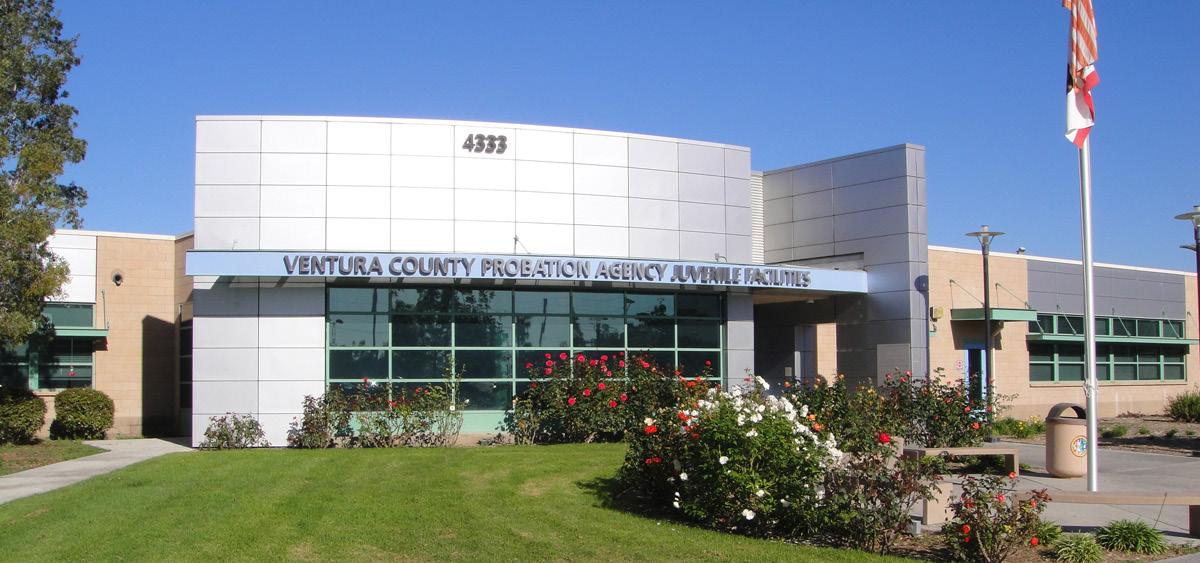
California Penal Code 919(b) mandates that the Civil Grand Jury “inquire into the condition of the public prisons within the county.” As a result of an opinion of the California Attorney General the term “public prisons” in the state penal code is interpreted to include “local detention facilities,” also referred to as jails, where persons are detained by lawenforcement agencies.
Civil Grand Jury jail visits are an important vehicle to obtain such information regarding the conditions under which our fellow citizens are confined. The 2025-2026 Ventura County Civil Grand Jury fulfilled its mandate by visiting all three county jails between January and February 2026.
During these visits, the Civil Grand Jury observed that these facilities were clean, well-managed and maintained. Personnel at each location were knowledgeable and welcoming, providing thorough explanations of policies and full access to all areas of the facilities.
Prior to site visits the 2025-2026 Ventura County Civil Grand Jury reviewed policy manuals, logs, and other documentation, as well as inspection reports from state and local regulatory, fire, and health agencies.
The Civil Grand Jury scheduled inquiry visits at Pre-Trial Detention Facility (Main Jail), Todd Road Jail and the Juvenile Facilities (JF).
To ensure a thorough inquiry, jurors worked in focus groups to evaluate each facility’s physical structure, building maintenance, staffing, and key operations, including health services, nutrition, grievances, and programming. In addition, they conducted voluntary interviews with select incarcerated individuals.
The diagram (Att–001) below featured in the “Annual Inquiry of the Detention Facilities (Temporary Holding Facilities)” section, of the 2025-2026 Ventura County Civil Grand Jury’s Final Consolidated Report, highlights the lawful detention process for individuals.
(Violent Event)
(Non-Violent Event)
When adults are taken into custody, police or patrol officers transport them to a city police department or a Sheriff’s patrol station for initial processing and holding, which lasts 24 hours or less. For all but minor offenses, arrestees are then transferred to the Pre-Trial Detention Facility (Main Jail) at the Ventura County Government Center. There, they undergo complete processing which includes fingerprinting, photo, a comprehensive warrant check, full body search, health screening, and a search of their possessions.
Juveniles detained for a minor offense are normally detained in the field by the police or patrol officer and released to the custody of a parent or guardian. On occasion, when the parent or guardian cannot be located or cannot respond to the scene, juveniles are transported to a temporary holding facility, where they are supervised and detained until they can be released to a responsible adult or guardian. Juveniles detained for a serious offense are transported either to the temporary holding facility for pre-booking or directly to the Juvenile Justice Center in Oxnard for booking and further processing.
At the Temporary Holding Facilities, adults undergo pre-booking, which involves recording personal information, securing evidence and conducting criminal background checks. Following this, individuals are either released for a minor offense or, in most cases, transported to the Main Jail facility at the Ventura County Government Center.
Adults taken to the Main Jail will continue the booking process which include fingerprinting, photo, warrant search, full body search, health screening, search of possessions, classification, and housing placements, bail release is not granted or obtained.
Classification: Incarcerated individuals are classified to determine appropriate housing, ensuring the safety of staff and the incarcerated population. Because this designation is temporary, classification levels may change based on shifts in behavior or circumstances. Unsentenced and sentenced individuals are housed at both Main Jail and Todd Road Jail.
The classification process assesses various factors – including gender, criminal history, gang affiliation, security risk, and special needs – to effectively manage the facility. By identifying these factors, staff can properly allocate resources to ensure a safe environment. Individuals remain in temporary housing until this assessment is complete and they are moved to a regular housing unit.
Amnesty Boxes: To foster a safer environment, the Ventura County Sheriff’s Office (VCSO) reinforces its commitment to humane detention (Pillar VI of VCSO’s “Seven Pillars” mission statement) through a proactive amnesty initiative. By allowing detainees up to three chances to surrender contraband via designated boxes, the Main Jail reduces dangerous contraband, encourages compliance, and prioritizes safety over immediate punishment.
Body Scanner: Main Jail uses a low-dose stand-up X-ray body scanner which can detect contraband such as controlled substances and weapons. Staff noted the scanner is an improvement over using body cavity searches to achieve the same goal. The scanners are for safety and security screening and adhere to “As Low As Reasonably Achievable” (ALARA) standards.
Medical Screening: Prior to admission into Main Jail, all detainees are given a medical screening by a registered nurse. Detainees are asked medical questions, have vitals taken and are assessed for mental health. Two sobering cells are available, if needed, for 48-hour detox which utilizes biometric bands to monitor withdrawal and medical conditions. Medical evaluations are required within 24 hours of receiving a detainee.
Telephone Access: Detainees can make unlimited local calls to obtain a lawyer, contact family, a bail bondsman, and/or to notify other concerned individuals about their welfare.
Booking Release: Individuals are released from the Ventura County Jail — primarily Main Jail or Todd Road Jail—through posting bail (cash, bails bond, or credit card) or release on own recognizance, upon completing a sentence, or transfer to a different facility/program. Processing often takes six to 10 hours after bail is posted.
As shown in Att–001 above, juveniles detained for a minor offense are normally detained in the field by the police or patrol officer and released to the custody of a parent or guardian. On occasions when the parent or guardian cannot be located or cannot respond to the scene, juveniles are transported to a temporary holding facility, where they are always under adult supervision and detained until they can be released to a responsible adult or guardian.
Juveniles detained for a serious offense are transported directly to and are booked into Juvenile Hall following an arrest for serious offenses or probation violations, where they undergo a Detention Risk Assessment to determine if they remain in secure custody or are released. The process includes booking, evaluation, and, if detained, a court hearing within 48 to 72 hours (excluding weekends and holidays).
Key aspects of the booking process for juveniles are:
Assessment: The Ventura County Probation Agency (VCPA) assesses the juvenile to determine if a secure setting is required due to severe risk to the community, themselves, or the high likelihood of nonappearance in court, or if they can be released to a parent/guardian.
Rights and Procedures: If the juvenile is not immediately released, a detention hearing date in Juvenile Court is set within 48 to 72 hours, excluding weekends and holidays. The process begins when the probation department or district attorney files a petition outlining the allegations.
Telephone Access: Detainees can make unlimited local calls to family, an attorney, and/or to notify other concerned individuals about their welfare.
Intake: If detained, a Juvenile Intake probation officer is assigned to assess the minor, contact parents/ guardians, and provide information on the court date. The juvenile is assigned to a housing unit.
Note, during the booking process, a low-dose, stand-up X-ray body scanner detects contraband such as weapons and controlled substances. Use is restricted to safety and security screening, adhering to ALARA standards.
Medical Screening: Within 24 hours, all juveniles meet with behavioral health and medical staff for risk assessment, safety planning, and needs assessment.
Uniforms: Commitment youth (including those in Secure Youth Treatment Facility) are issued a specific, different uniform — khaki pants and a burgundy polo — to distinguish them from those in temporary detention.
Detention Alternatives: As part of the Juvenile Detention Alternative Initiative, (a grant funded by the Anne E. Casey Foundation) some youth may be placed on home supervision or electronic monitoring.
Services: While in custody, detained juveniles may attend Providence School, run by the Ventura County Office of Education (VCOE).
Booking Release:
• Release to Parents: If the child meets the criteria for release, parents will be contacted directly by the probation department.
• Timing: If a minor is not released by probation at intake, a detention hearing must occur within 48 to 72 hours (excluding weekends/holidays), where a judge decides on release.
Pre-Hearing Release: Probation may set home supervision, which acts as a “house arrest” allowing the minor to stay at home under strict conditions, such as electronic monitoring.
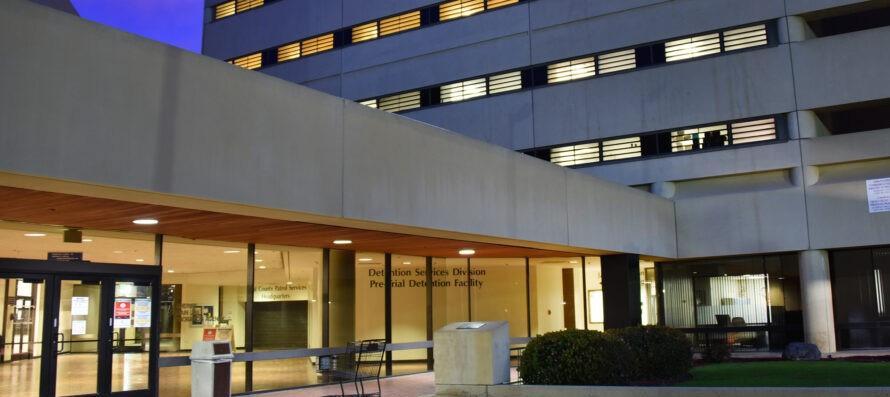
Opened in 1979, the Pre-Trial Detention Facility (Main Jail) is one of two adult correctional facilities operated by VCSO. Its BSCC-rated capacity is 800 beds. Situated adjacent to the Hall of Justice building, the multi-level structure is a part of the larger Ventura County Government Center. Over time, the Main Jail has maximized its footprint by utilizing the rooftop to provide required exercise activities, specifically basketball and handball, in a safe and secure environment.
Recent California Board of State and Community Corrections (BSCC) data from December 2025 shows the jail’s average daily population is 623 adults. The demographics is predominately male (611) compared to females (12) and consists primarily of felony (84%) versus 16% misdemeanor arrests. Most of the Main Jail population are unsentenced adults (443) waiting court hearing.
The Main Jail was originally built as a short-term housing facility holding adults for up to one year. However, effective October 2011, the passage of California Assembly Bill 109 (AB 109), the Public Safety Realignment Act, changed the definition of a felony offense in California and shifted housing for lowerlevel offenders from state prisons to local jails.
Furthermore, legislation mandated that the county jails take on greater responsibility for providing essential mental and medical services for its population
Despite being an older building, the Civil Grand Jury found the Main Jail to be clean, organized and well managed. VCSO has maximized space to fulfill its responsibility in providing a secure and humane facility for incarcerated individuals. The Main Jail interior walls, paint, floors, drains, plumbing fixtures, air vents, and windows meet Title 24 building standards. Cleaning fluids are safely stored, hallways and egress are clear, marked, and doors are closed. Weapons lockers for sworn staff are present. The exterior grounds showed clear signs of being orderly and kept regularly maintained.
The cells for incarcerated individuals all have a sink and a toilet. Cleaning tools and products are available for incarcerated individuals to use and are considered safe and non-toxic. Beds are elevated off the floor, and two no-tear blankets are provided to prevent self-harm. The lighting and the ambient temperature are maintained to acceptable standards. The rooftop provides an outdoor exercise facility for physical activities.
The BSCC sets minimum standards for the construction and operation of local correctional facilities (jails and juvenile detention centers) in California. It inspects these facilities biennially to ensure compliance with Title 15 and Title 24 regulations. The BSCC authorizes the operation of local adult and juvenile detention facilities and conducts annual inspections based on state codes.
The Civil Grand Jury analyzed the latest BSCC reports for all Ventura County’s jail facilities. The only outstanding deficiency from the 2025-2026 BCSS inspection, highlighted below (Att – 002) is for the Main Jail roof exercise area. The Civil Grand Jury reviewed the corrective action with the Assistant Sheriff, and he affirmed that VCSO Detention Services Division practice remains providing drinking water on the roof and escorting incarcerated individuals to use the bathroom on a lower floor.
Pre-Trial Detention Facility (Main Jail)
Section/Violation
§1231.2.10 Exercise Area and §1231.3.1, 1231.3.2, 1231.3.3 re Toilets/Urinals, Wash Basins & Drinking Fountains Facility is out of compliance as these enclosures do not allow free access to toilets, wash basins, and drinking fountains
Corrective Action
• BSCC regulation was established after building was built; staff will continue to look for best practices for possible solutions to adapt building and BSCC will provide technical support regarding possible options.
• When anyone needs to use the bathroom, they are escorted from the secure exercise yard to the rooftop bathroom, and back to the exercise yard.
At the Main Jail incarcerated individuals are issued a tablet for educational classes, email access, and supervised.
The jail employs over 212 sworn officers and non-sworn support staff. The jail’s staff includes deputies, senior deputies, sergeants, captains and commanders, sheriff’s service technicians (SSTs), and civilian personnel.
Health services include medical, dental, behavioral and mental health care, as well as rehabilitative and restorative justice programs.
An incarcerated Individual shall be considered in behavioral crisis if they appear to be a danger to themselves or others or appear gravely disabled. An evaluation from medical or mental health staff shall be secured within 24 hours of identification.
There is a registered nurse on duty 24 hours a day, 365 days of the year; a physician, nurse practitioner, and licensed vocational nurse are available as needed. Incarcerated individuals fill out a “blue kyte” form to request medical care. Forms are picked up once per day and assessed by a registered nurse. Issues are treated in order of severity.
Incarcerated patients are treated on-site if possible. There is no infirmary at the Main Jail. Patients who are too sick to recover from their cell are taken to Todd Road Jail’s medical facility or to the hospital. There is an emergency button in each housing quad. Medication is dispensed in the housing area three times per day by a registered nurse.
Three hot meals are served every day. Two snacks are also provided after lunch service and two hours after dinner service. A sack lunch is provided for those who may have missed a meal for possible reasons like a court proceeding, doctor/dentist appointment, attorney visit, or other scheduled requirements deemed by the court. Title 15 allows a minimum of 15 minutes to consume each meal, but VCSO allows a minimum of 30-plus minutes. Everyone is provided with the same meal unless an incarcerated individual needs a special diet. Meals are served in the holding pods.
Using the National Institutes of Health’s Guidelines of Recommended Caloric Intake and Protein Consumption, a dietician/nutritionist plans meals for the facility one month in advance. There are approximately 60 different diet plans available; special diets are planned for incarcerated individuals with heath conditions such as diabetes, pregnancy, low blood cell counts, religious meal restrictions, etc. At the time of the Civil Grand Jury visit, there were a total of 193 incarcerated individuals with special diet restrictions.
The kitchen area is clean, organized and stocked with necessary equipment. Kitchen staff is a combination of non-sworn, county employees and incarcerated individuals. All kitchen staff are trained and have necessary medical clearance. Under deputy supervision, incarcerated individuals work as volunteers without pay following instructions given by non-sworn cooking staff.
Incarcerated individuals are permitted seven hours of recreation and three hours of exercise per week, featuring options such as basketball, handball, static machines, card games, and television. The Civil Grand Jury saw incarcerated individuals exercising either outdoors on the secured roof top area or indoors in designated areas with static machines. Since this is a transitional facility, most exercise programs are limited.
A grievance is a written complaint regarding an incarcerated individual’s treatment while in custody. It can be a complaint about custody or medical treatment, used to question a policy, rule, procedure or to appeal an incarcerated individual’s classification or disciplinary finding.
Grievances cannot be about their court case; a challenge to a conviction or sentencing, formally called a “Writ of Habeas Corpus,” is the legal petition from an incarcerated person presented to the judges in criminal case courts. To obtain the necessary papers to file a writ, the incarcerated person submits a complaint form to Inmate Services.
All incarcerated individuals have access to a written grievance process. Forms are available throughout the jail or upon request, with a 24-hour acknowledgment turnaround. To improve efficiency, VCSO is considering a new jail management system to enhance the grievance system by transitioning to a digital, tablet-based platform. This new initiative will streamline the submission process, complementing the existing, accessible written grievance process and guarantee acknowledgment within 24 hours or sooner.
Two Civil Grand Jurors interviewed an incarcerated man and woman, who agreed to answer questions. A jail guard was present for both interviews and it did not appear to hinder their answers.
The man said access to medical and dental services was easily available and confirmed that religious services based on faith were offered. He said the guidelines for behavior are provided to everyone.
The female didn’t speak English, but a translator was present. She said the guards in the main jail allowed her to speak to them in Spanish, but some conversations were lost in translation. The jurors’ overall impression was that the female was treated well and had her needs met.
The two individuals interviewed felt the rules and regulations at Main Jail were clear. The grievance procedure was clear with blue forms for medical and white forms for others. Both individuals had tablets for email and monitored entertainment as well as use for educational classes.
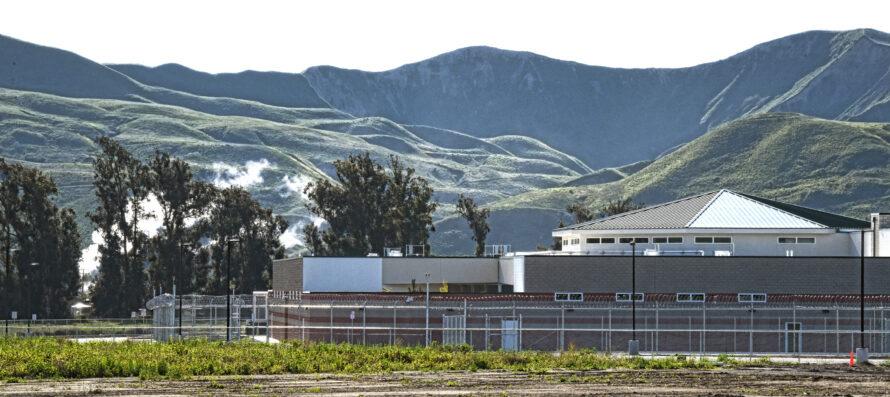
Todd Road Jail is the second jail facility operated by VCSO. The facility, located in Santa Paula, opened in 1995 and sits on approximately 115 acres with the jail facility occupying about five acres. The grounds around the jail are primarily agricultural and feature a large orchard of citrus fruit trees.
After over a decade of planning, obtaining a $55 million state grant, construction, and interruption due to the pandemic, Todd Road Jail expanded on its five acres with the newer Health and Programming Unit (HPU) hospital building facility (64 beds) in 2023 at a total cost of $61 million.
This is now the main medical facility for all incarcerated people at both Main Jail and Todd Road Jail. In 2024, VCSO, in partnership with Wellpath to operate the medical facility, earned accreditation from the National Commission on Correctional Health Care (NCCHC) confirming that the facility meets rigorous standards for health services in jails. Wellpath provides medical support staff of 92 full-time and 53 parttime (per diem).
Todd Road Jail has a BSCC-rated capacity of 796 beds. Recent BSCC data from December 2025 shows the jail’s average daily population was total 586 adults. The demographics is predominately male (446) compared to females (140). Todd Road Jail houses primarily adjudicated individuals. Like the Main Jail, most of the population at Todd Road are unsentenced adults (423) pending court scheduling, hearing and adjudication.
When the Civil Grand Jury visited Todd Road Jail it found the buildings are of recent construction, and appear to be in good physical condition, well painted, and maintained. There are adequate parking spaces for visitors, with good signage directing visitors to the jail entrance, which has a pleasant and informative lobby. The signage, and postings outside the visitor entrance area are in English and Spanish.
The interior walls were clean and painted with no visible peeling except for roof support beams in C Wing, Unit 5. Floors and walls were otherwise well maintained and clean. The Civil Grand Jury observed plumbing fixtures appeared to be working. Weapons lockers were located throughout the facility for sworn personnel.
The facility has climate-controlled heating and cooling and the climate in all areas the Civil Grand Jury visited felt comfortable. A building operations engineer confirmed that the interior temperature was maintained between 68 to 75 degrees Fahrenheit.
K-9 Mellow, a black Labrador, is assigned to the Therapeutic Inmate Management Unit. (TIMU) The unit offers mental health support for incarcerated patients with psychiatric disorders.
Cells for the incarcerated individuals all have a sink and a toilet. Cleaning tools and products are available for incarcerated individuals to use and are considered safe and non-toxic. Beds are either raised on solid platforms or concrete shelves; two no-tear blankets are provided. Lighting in the cells is adequate for reading and other tasks.
A full service industrial-sized laundry supports daily operations for incarcerated individuals’ clothing and linens within the VCSO’s detention system, which includes Todd Road, the Main Jail, the East County Jail, and Work Furlough program with volunteer incarcerated individuals working in the laundry facility.
Each incarcerated individual is issued clean shirt, pants, undergarments, socks and footwear, a mattress, two blankets, and a towel. Incarcerated individuals can change dirty clothing and bedding on a regular basis.
Todd Road Jail houses Inmate Services Department which provides programs for incarcerated individuals held at all jail facilities. Programs include academic and vocational training, substance use disorder services, additional recovery programs, re-entry planning and spiritual services. All the programs of Inmate Services are geared toward reducing recidivism and supporting rehabilitation for reintegration into the community.
The jail employs over 185 sworn officers and non-sworn support staff. Given the occupational high stress level at Main Jail and Todd Road Jail, VCSO has proactively taken steps to address the mental health of staff at both jails. VCSO is contracted with Counseling Team International, a specialized mental health care provider serving public safety agency personnel and their families.
Todd Road Jail Health and Programming Unit (HPU) opened in 2023, has 124 beds and offers services for psychiatric patients, jail-based competency, medical issues, mental crises, and hospital type care. All the incarcerated individuals are assessed upon entering and leaving the HPU by a registered nurse.
The HPU is the primary medical facility for both Todd Road Jail and the Main Jail. The HPU meets California State standards as a hospital, has medical doctors, nurse practitioners, registered nurses, and licensed vocational nurses available daily and on call at night. Registered nurses also staff the facility 24 hours a day.
The clinic provides daily medical exams, dental exams two times per week, daily dialysis, tattoo removal and optometry once per week, along with X-rays and ultrasound imaging. Well-woman exams are available once monthly. Detainees who need more complex medical care such as chemotherapy, advanced imaging, or surgery can be transported to a specialist or hospital. Transport to an outside dentist is also available, at the incarcerated individual’s own expense.
There is a safety cell for anyone who is actively trying to hurt himself or herself. The cell has spongy surfaces on the floors and walls to limit self-harm. Safety cells are checked at least once every 15 minutes and there is a 1:1 nursing staff to patient ratio.
These programs offered at Todd Road’s Health and Programming Unit are designed to enhance an incarcerated individual’s ability to successfully re-enter into society:
The Therapeutic Inmate Management Unit is a specialized unit that focuses on treatment of incarcerated individuals with serious mental illness. The unit aims to provide a consistent level of supervision and human interaction among psychiatric incarcerated individuals, fostering a humane and supportive environment. Individual therapies also foster emotional support.
The Early Assess Stabilization Services offers psychiatric stabilization and restoration services to promote stabilization and tailor treatment before an individual is admitted to a Jail Based Competency Treatment program.
Jail Based Competency Treatment (JBCT) is a primary function of the HPU. It is designed to restore incarcerated individuals to a competency level to stand trial. The program is approximately 60 days long and emphasizes classroom instruction on court procedures and socialization.
Todd Road Jail has a 10,000-square-foot kitchen that includes a bakery. The kitchen serves the current population of 650 incarcerated individuals and prepares over 3,900 meals daily. The jail follows Title 15 Minimum Standards for Local Detention Facilities, Sections 1220-1264.
Three hot meals are served every day. Two snacks are also provided between lunch service and two hours after dinner service. A sack lunch is provided for those who may have missed a meal. Title 15 allows a minimum of 15 minutes to consume each meal; this facility allows 30-plus minutes. Everyone is provided with the same meal unless an incarcerated individual needs a special diet. Meals are served in the holding pods.
Todd Road Jail’s warehouse handles deliveries and stores food and supplies for both county jails. The commissary section handles all transactions associated with the delivery of sundries and hygiene items at both jails.
The Civil Grand Jury found the kitchen area clean, organized and stocked with necessary equipment. Kitchen staff is a combination of non-sworn, county employees and incarcerated individuals. All kitchen staff are trained and have necessary medical clearance. Under deputy supervision, incarcerated individuals work as volunteers. Though these volunteers are not monetarily compensated, they are given a few added perks including extra food, a daily change of clothes rather than weekly, and opportunity to be productive outside their cells.
Three hot meals: A dietician/ nutritionist plans meals that provide between 2,200 to 2,400 calories per day.
In addition to regular meals, snacks are provided between lunch and dinner, and two hours after dinner service. A sack lunch is provided for those who may have missed a meal.
Meal evaluation: Following the jail tour, several jurors remained to sample the day’s standard dinner menu. The meal consisted of a small beef burrito, rice, beans, a side salad, and a piece of cake. Beverage options were limited to water and reconstituted powdered milk.
Because this is a long-term facility, a wide range of educational programs are available to the incarcerated population at Todd Road Jail:
Computer programming: Introduction courses in Word, Excel, and PowerPoint
Online GED: Including classes for English Language Learners (ESL)
Vocational: Training videos in landscaping, including care and maintenance
Custodial training: With a certificate of completion available from the Cleaning Management Institute
Food services: Certification available for learning basic food safety, preparation and serving. A second course in food history, essentials and nutrition is a prerequisite for obtaining work in restaurants, hotels and catering.
Re-entry programs: Resume writing and job Interview techniques are taught, along with the basics of team building, goal setting and making personal action plans.
Atlas Digital Program: This is a new feature that is available on the incarcerated individual’s tablet to help teach personal goals. Interactive classes cover substance abuse, health education, and anger management.
College Coursework: College coursework is available exclusively online.
See previous discussion about the grievance process under Main Jail subsection above.
Two Civil Grand Jurors interviewed an incarcerated man and woman, who agreed to answer questions. A jail guard was present for both interviews, which did not appear to hinder their answers.
Both individuals worked in the food prep and laundry services. Comments from each person indicated they were treated fairly and equally.
Ventura County’s Juvenile Facility is part of the Juvenile Justice Center in Oxnard. (Photo courtesy of Ventura County Probation Agency)
The Juvenile Justice Center complex consists of a six-courtroom juvenile courthouse and the county’s single secure detention and commitment facility for juveniles known as the Juvenile Facility (JF). Opening in 2003, after almost eight years of planning and construction, the $65-million complex was funded in part by a $40.5-million state grant. It replaced a 1940 detention-only facility built to house 84 youths, but which regularly housed 120 to 130 youths.
Operated and maintained by Ventura County Probation Agency (VCPA), the JF has a total housing capacity for 420 male and female youths ages 12 to 18. This includes capacity for up to 180 adjudicated resident youths ages (i.e., commitment component capacity) and 240 additional short-term resident youths who are waiting for a court hearing or placement (i.e., detention component capacity).
At the end of 2025, there were 89 committed youths (60 males and 29 females) at the JF. Five of these males are classified as Secure Youth Treatment Facility (SYTF) youth. These individuals have been
adjudicated for a serious or violent offense. Their cases, prior to the closure of the state-run juvenile correctional camps like Ventura Youth Correctional Facility in Camarillo, would have been eligible for commitment to the state Division of Juvenile Justice.
SYTF was created by California Senate Bills 823 (2020) and SB 92 (2021), which closed the state Division of Juvenile Justice. These and subsequent regulations shifted responsibilities for high-need youths from the state to counties to establish secure placement for youths aged 14 and older up until age 21, 23 or 25 that emphasized rehabilitation, treatment, and community safety over incarceration.
The Civil Grand Jury found the facility to be clean, quiet and undergoing renovations. Staff showed enthusiasm about these improvements and pride in their work, while showing concern for the safety and well-being of young people in their custody.
The facility is well maintained, and the layout of buildings gives the impression that you are on a high school campus. There is a well-equipped music studio with separate rehearsal spaces as well as a new indoor basketball facility and rooms with tools to learn how to build things like dog houses and planter boxes. The Civil Grand Jury saw the youths’ finished projects throughout the facility.
Residence cells are single occupancy, small and basic. Other than sleeping, youths spend about two hours per day in their cell with the rest of the day spent in engaged activities. Residence cells are located within a residential wing, and each wing has a common area in which to gather. One residential wing is nearing completion of a remodel.
In addition to the housing components, the facility includes outdoor recreation areas, a multipurpose gymnasium/technology training center, a visiting center, medical offices and examination rooms, an intake/community, confinement/booking area, classrooms, program and facility administration offices, kitchen and laundry services. The staff has locker rooms with showers, as well as a dining room.
Outside, there is an adjacent parcel being transitioned into a multi-acre gardening/horticulture site. A newly dedicated library space recently opened.
As of the date of the Civil Grand Jury’s visit in 2026, the facility had 91 probation officers and support staff positions, with 81 filled. In addition to operating the JF, VCPA oversees probation services for approximately 4,000 adults and 800 youths. The VCPA staff do a variety of assessments (vocational, educational, etc.) and prioritize high risk cases. The focus is on rehabilitation and accountability.
During management interviews the Civil Grand Jury learned that new hires for the VCPA complete the 168 to 225 hours of mandated entry-level probation officer training within the first year of employment. The training and certification are overseen by the BSCC and the Standards and Training for Corrections (STC). Also, VCPA has recently implemented a new course for officer training to detect and avoid juvenile manipulation to supplement the training.
The medical facility was clean and functional. There were two private exam rooms, along with a fully equipped dental exam room. There were no infirmary beds. Youth convalesce in their assigned sleeping rooms.
The facility has a registered nurse onsite 24 hours a day, 365 days a year. There is a medical director who is always on call, and present about 20 hours per week. There is also a nurse practitioner who is present throughout the week. Additionally, there is a dentist on site two times per week. There was no indication that staffing was insufficient.
Every youth resident is given a health screening upon arrival. The medical facility provides comprehensive care, and it is equipped to use outside resources as needed. On an ongoing basis, the medical facility offers exams, X-rays, minor procedures, vaccines, and tattoo removal. Medication is dispensed in the housing areas by a registered nurse with the assistance of probation department staff.
The facility maintains a medical transport team in the event outside medical services, including hospitalization, are needed. Youth are transported to orthopedic clinics, OB clinics, and other specialists as needed. They are always accompanied by transport team staff, including 24-hour monitoring during hospital stays. The medical facility will call 911 if needed, and transport staff will accompany the youth.
The Civil Grand Jury’s inquiry visit happened between lunch and dinner, so very little food prep activity was going on. The food area was clean and free of debris and clutter. The Civil Grand Jury saw the food service employees had proper personal protective equipment (PPE) and attire. No youth are allowed to work in the food prep area due to security concerns.
A dietician/nutritionist plans meals one month in advance. The focus of attention is the amount of protein provided in daily consumption, a daily minimum of 42 grams per Title 15. This facility strives to provide 60 grams of protein each day. Supplemental food and special diets are available upon special request for religious, diabetic, pregnancy, etc. In addition, a high concentration of dairy products is available for pregnant incarcerated individuals. Currently, no pregnant female youth resides in the facility.
Three meals are served in a 24-hour period (8 AM, Noon, and 5 PM). Per Title 15, the minimum standard is to have one of these meals to be a hot meal, however, this facility serves two to three hot meals in a 24-hour period. Additionally, the standard is a minimum of 15 minutes to consume each meal, however, this facility allows 30 minutes for meals. All youth eat at the same time within their holding pod.
A sack meal is provided for those youth who miss the normal distribution of meals. In addition, the facility provides snacks three times a day (10 AM, 2 PM and 7 PM). Youth can also purchase food items from the commissary or through a merit-based points system.
A wide range of programs is available, from interactive mental health, life skills, growth and development programs to re-entry support, individual and group therapy programming, religious services and daily recreation.
Youth are enrolled in school and have access to Chromebooks during class. High school education is through Providence School, operating under the Ventura County Office of Education, and complies with California Department of Education (CDE) requirements. Coursework leading to associate in arts degrees is also available through Oxnard College. A Boys & Girls Club is chaptered inside the facility. There’s a construction trade program, equine therapy, screen printing and other training opportunities.
The Civil Grand Jury saw several occupational learning spaces and a well-equipped music studio with separate rehearsal spaces. Programming and activities are constantly evolving.
Two Civil Grand Jurors interviewed a male and female youth in a secure interview room with a glass partition and a push-button intercom. There were technical difficulties communicating with both youth through the intercom, so the interview was difficult to complete.
Both youths indicated they participate in educational training five days a week and physical or outside activities about one hour per day. The male youth indicated he is also taking advantage of educational offerings and activities by taking an art class and participating in a class that covers gang violence and the psychology behind it. Both youths indicated the juvenile correction counselors are “pretty nice.”
TERM
AB 109
Adjudicated
State Assembly Bill 109 (Public Safety Realignment Act)
When a judicial authority has made a formal decision or judgment on a case. This term often replaces “sentenced” to provide more person-first, humane language.
ALARA As low as reasonably achievable
Blue kyte forms
Forms used by incarcerated individuals for filing grievances and requesting medical services
BSCC Board of State and Community Corrections
CDE California Department of Education
Committed Refers to youths housed at the Juvenile Facility who have been adjudicated and are serving a commitment or the equivalent of a sentence in adult court
ESL English as a Second Language
GED General Education Development Test
HPU Health and Programming Unit
Incarcerated
Individual
An incarcerated individual is a person confined against their will in a correctional facility—such as a prison, jail, or juvenile detention center—typically due to a criminal conviction, pending charges, or a court-ordered sentence. This term often replaces “inmate” to provide more person-first, humane language.
JBCT Jail Based Competency Treatment
JF Juvenile Facility
Main Jail Pre-Trial Detention Facility
NCCHC National Commission on Correction Health Care
OB Obstetrics, a medical specialty for pregnant and post-partum women
PPE Personal protection equipment
Recidivism Tendency of an incarcerated individual to relapse into criminal behavior, resulting in rearrest or return to incarceration after release
SB 823
SB 92
Senate Bills 823 and 92 established the legal framework for Secure Youth Treatment Facilities in California and facilitated the closure of the state’s Division of Juvenile Justice by June 30, 2023.
STC Standards and Training for Corrections
SST Sheriff Service Technician
SYTF Secure Youth Treatment Facility
TIMU Therapeutic Inmate Management Unit
Title 15
Title 24
California Code of Regulations – Title 15 Minimum Standards for Local Detention Facilities (operation standards)
California Code of Regulations – Title 24 Minimum Standards for Local Detention Facilities (building standards)
VCPA Ventura County Probation Agency
VCSO Ventura County Sheriff’s Office


Each year, a new Ventura County Civil Grand Jury is empaneled to investigate complaints and concerns raised by the residents of Ventura County regarding potential noncompliance by city and county governments, special districts, local law enforcement agencies, and specific nonprofit organizations to ensure their functions are lawful, economical, and efficient.
Based on its investigations, the Civil Grand Jury produces reports outlining Findings and Recommendations for the entities investigated. The Findings and Recommendations are also made available to the public.
The reports require responses from entities identified in the report, per California Penal Code 933.c. The California Penal Code mandates specific language in the response to Findings and Recommendations.
For each finding directed to a respondent, the respondent must state one of the following:
The respondent agrees with the finding; or
• The respondent disagrees wholly or partially with the finding, in which case the response must specify the disputed portion and provide an explanation.
To each recommendation directed to the respondent, the respondent must indicate one of the following:
• The recommendation and summary of the actions have been implemented.
• The recommendation has not yet been implemented but will be in the future, including a time frame for implementation.
• The recommendation requires further analysis, along with an explanation of the study’s scope and a response time frame of up to six months from the report’s release.
• The recommendation will not be implemented because it is not warranted or reasonable, with an explanation.
The 2024-2025 Ventura County Civil Grand Jury published a report titled “Ventura County Animal Services Commission.” While all responses to our findings complied with the Penal Code requirements, the Ventura County Board of Supervisors, along with Ventura County Animal Services Commission and Ventura County Animal Services, indicated that Recommendations 1 through 6 and 8 would be implemented in the future. (The Board of Supervisors reported it needed further analysis to address Recommendation 7.)
Recommendation 01 states:
R-01. The Ventura County Civil Grand Jury recommends that the Ventura County Animal Services Commission review, reevaluate and revise Commission by-laws to facilitate better communication and nurture stronger collaboration between the Ventura County Board of Supervisors, the Commission and VCAS. This needs to be completed by December 31, 2025.
The BOS, the Commission and VCAS responded as follows:
“Your Board and the County’s proposed response to the Grand Jury Report states that Recommendations R-01, R-02, R-05 and R-06 will be implemented with anticipated completion in 2026.”
Recommendation 02 states:
R-02. The Ventura County Civil Grand Jury recommends that the Ventura County Animal Services Commission enhance accountability by establishing a transparent process and structured procedure to fulfill its core advisory role with the Ventura County Board of Supervisors. This needs to be completed by December 31, 2025.
The BOS, the Commission and VCAS responded as follows:
“Your Board and the County’s proposed response to the Grand Jury Report states that Recommendations R-01, R-02, R-05 and R-06 will be implemented with anticipated completion in 2026.”
The Civil Grand Jury found that recommendations 01 and 02 have been addressed by way of a “Change of Culture.” The hiring of a new VCAS director and his direct approach to tackling communication and collaboration issues have resulted in better cooperation. Continued face-to-face contact with all the rescue shelters around the county could improve the ability for VCAS to address countywide issues and outline them for the BOS.
Recommendation 03 states:
R-03. The Ventura County Civil Grand Jury recommends that the Ventura County Animal Services Commission support Ventura County Animal Services in developing proactive strategies and implementing community-targeted spay/neuter, licensing, and micro-chipping programs. This needs to be completed by December 31, 2025.
Recommendation 04 states:
R-04. The Ventura County Civil Grand Jury recommends that the Ventura County Animal Services Commission support Ventura County Animal Services’ re-engagement with local rescue and foster groups and other effective and proven methods that lead to long-term decreases in shelter population. This needs to be completed by December 31, 2025.
The 2024-2025 Ventura County Civil Grand Jury did not receive a response to Recommendations 03 or 04
However, the purchase of a mobile medical unit in 2026, via grants, allows VCAS to go to places and communities traditionally seen as too far away to service. It delivers four full-time surgeons and technicians to whatever event or clinic it is directed. This unit is a large tow-along trailer, smartly wrapped in multiple languages to welcome everyone. This unit requires a truck, equipped with a generator to power everything, to tow it. It is one of two new mobile units. The second unit was donated to the County and is smaller, but self-contained. This second unit allows VCAS to visit remote “Feral Pack” locations and perform capture and spay/neuter services onsite. (Exhibits 1 to 4)
Recommendation 05 states:
R-05. The Ventura County Civil Grand Jury recommends that the Ventura County Board of Supervisors, Ventura County Animal Services Commission, and Ventura County Animal Services review, re-evaluate, and revise the Contract City Animal Services Agreements to better conform to 2025 Best Practices for animal welfare, control, shelter, and field services. This needs to be completed by December 31, 2025.
The BOS, the Commission and VCAS responded as follows:
“Your Board and the County’s proposed response to the Grand Jury Report states that Recommendations R-01, R-02, R-05 and R-06 will be implemented with anticipated completion in 2026.”
The 2025-2026 Ventura County Civil Grand Jury found that the VCAS Director decided to leave all contracts in place for the current year and possibly the next. The reasoning behind this was to better understand exactly where things stood and therefore better understand what new Contracts would need to address. If contracts were to be renewed based on current 120% capacity numbers, they would not reflect nor address the changes seen in an 80% capacity operation. This approach allows the VCAS to test varied solutions before settling on one way forward through a new binding Contract.
Recommendation 06 states:
R-06. The Ventura County Civil Grand Jury recommends that the Ventura County Board of Supervisors and Ventura County Animal Services implement mental health programs specifically targeted to address the effects of compassion fatigue on the staff and volunteers working at Ventura County Animal Services. This needs to be completed by December 31, 2025.
The BOS, the Commission and VCAS responded as follows:
“Your Board and the County’s proposed response to the Grand Jury Report states that Recommendations R-01, R-02, R-05 and R-06 will be implemented with anticipated completion in 2026.”
The 2025-2026 Ventura County Civil Grand Jury found that while no new programs to address Compassion Fatigue had been currently implemented, the changes in Culture and Public Contact Practices, aimed at reducing the Animal Population with community support, which will also reduce the pressure felt by staff when faced with overwhelming numbers of housed Animals. This is one major contributor to Compassion Fatigue: feeling overwhelmed and unable to provide proper care and comfort to housed animals.
Recommendation 08 states:
R-08. The Ventura County Civil Grand Jury recommends that the Ventura County Animal Services Commission assist Ventura County Animal Services in securing grants for special care, education, and training programs not covered in the Ventura County Animal Services annual budget. This needs to be completed by December 31, 2025.
The 2025-2026 Ventura County Civil Grand Jury finds that VCAS has pursued and secured numerous grants:
• In April 2025, Animal Services Foundation of Ventura County awarded $1,700,000 to cover three years of staffing for the Mobile Vet Clinic, and an additional $201,000 for purchasing the unit. (Exhibits 1 to 4)
• In December 2025, Ventura County Community Foundation contributed $125,000 to help fund the spay, neuter, and vaccine clinics.
• Also in December 2025, Wings of Rescue provided $10,000 to support spay/neuter services, and a private donor generously contributed $21,000 to assist with spay, neuter, and vaccine clinics.
• In February 2025, Animal Services Foundation of Ventura County provided another grant of $1,350,000 to help the VCAS add six additional staff members.
• VCAS also retained and has been able to spend down the remaining $180,000 from Humane World, which was allocated to VCAS for our Pets for Life Program.
• Altogether they have raised a total of $3,587,000 to be used over the next two years to support ongoing programs and strengthen their community.
Exhibits 2, 3 and 4: Interior of Mobile Vet Clinic. (Photos provided by Ventura County Animal Services 3/4/2026)
The 2024-2025 Ventura County Civil Grand Jury published a report titled “Addressing Refund Delays in the Property Tax Assessment and Collection System.” While all responses to our findings complied with the Penal Code requirements, the Auditor-Controller indicated that Recommendations 2 and 4 would be implemented in the future.
Recommendation 02 states:
R-02. The Civil Grand Jury recommends that by October 2025, the Ventura County Information Technology Services Department (ITSD), in collaboration with the Assessor, the Auditor-Controller, and the Treasurer-Tax Collector, create a monthly public-facing portal, based upon the data driving management’s internal dashboard, that tracks the status of refunds. Care should be taken to maintain required confidentiality.
The Auditor-Controller’s Office initial response
“An online portal is being created for taxpayers. The portal will initially be specific to refunds. A parcel number will be entered, and the system will provide a list of all refunds in process with their individual status by department. Implementation is planned to be completed by 10/31/2025.”
Recommendation 04 states:
R-04. The Civil Grand Jury recommends that by October 2025, the Auditor-Controller and TreasurerTax Collector collaborate to develop manual processes that will document, calculate, confirm, and then authorize property tax refunds that cannot be automated.
The Auditor-Controller’s Office initial response
“The system has a manual function designed into it, but it has not been fully tested or implemented. This functionality will allow Auditor-Controller staff to manually calculate the refund amount and then issue the related refund check. The system takes the manual data and updates various parts of the system, as necessary. This function will be fully tested and implemented by 12/31/2025.”
The Auditor-Controller’s Office current responses
R-02. An online portal, housed on our department website (www.venturacounty.gov/auditorcontroller), has been created for taxpayers whereby upon entering their parcel number, (taxpayers) will be provided with a refund status. However, the portal did not go live until December 11, 2025.
R-04. As of the date of this letter (dated April 17, 2026), County ITSD in collaboration with the system vendor Brainsharp Inc. (BSI) are still working on an acceptable process by which manual calculations can be entered into the system, generating an accurate report for that parcel. This won’t be implemented until December of 2026.
The 2024-2025 Ventura County Civil Grand Jury published a report titled “Prioritizing Best Practice Street Maintenance.” While all responses to our findings complied with the Penal Code requirements, the City of Santa Paula did not respond directly to Recommendation 03.
Recommendation 03 states:
R-03. The Civil Grand Jury recommends that Santa Paula set a goal to reach best practice pavement conditions within 10 years and create a plan to accomplish that goal by December 2025.
While the Ventura County Civil Grand Jury did not receive a direct response from Santa Paula, we did find this “Mission Statement,” which addresses the recommendation.
“The City’s Street Maintenance Program is designed to ensure City streets that are in good condition remain that way over a much longer period of time while significantly reducing the amount of costly pavement rehabilitation and reconstruction work in the future.
“Pavement maintenance and preservation can double the service life of City streets at half the cost of full pavement rehabilitation. The City Council’s adopted 5-Year Pavement Management Plan (PMP) will have the city spending four years resurfacing and improving local streets.
“The fifth year of the program will entail pavement maintenance and preservation. Then, the PMP will repeat. This program will prevent costly street rehabilitations over the next 20 years. The city has an annual budget of $1.5 million, which would cover the rehabilitation of one mile of street. Vehicle weight, traffic volume and climate conditions, such as excessive heat and moisture, contribute to the decay of our streets. The rate of decay exceeds the rate that the city can afford to reconstruct each year.
“The program that the city has developed uses preservation treatments and thin-lift overlays to preserve newer pavement and revitalize older pavement, minimizing the need for reconstruction.”
Compliance Review: Water Rates for the City of Ventura and the Underground Dam in Foster Park
The 2024-2025 Ventura County Civil Grand jury published a report titled “Water Rates for the City of Ventura and the Underground Dam in Foster Park.” While all responses to our findings complied with the Penal Code requirements, the City of Ventura indicated that Recommendations R-01, R-02 and R-03 will not be implemented in the future.
Recommendation 01 states:
R-01. The Civil Grand Jury recommends that the City of Ventura conduct a feasibility study to complete the final 300 feet of the underground dam in Foster Park by December 31, 2025.
Recommendation 02 states:
R-02. The Civil Grand Jury recommends that the City of Ventura complete construction of the underground dam in Foster Park, if it is determined to be feasible, by December 31, 2026.
Recommendation 03 states:
R-03. The Civil Grand Jury recommends that the City of Ventura repair the flood-damaged wells and water intake facilities in Foster Park by December 31, 2025.
The City of Ventura responded as follows:
Please see response here: Att-001
The purpose of protocol visits and agency briefings is to inform the Ventura County Civil Grand Jury about how the county’s government functions, including its cities, and special districts. These visits and briefings assist jurors in meaningfully performing their statutory oversight functions. The jurors became acquainted with the officials and managers of agencies they may examine and are better able to evaluate these agencies. The 2025-2026 Civil Grand Jury thanks these officials and agencies for their flexibility, patience, and willingness to participate in this process.
North Ventura County Counsel
James Fryhoff Ventura County Sheriff
Shane Matthews Assistant Sheriff, Detention Facilities
Erik Nasarenko Ventura County District Attorney
Kai Luoma Director of Ventura Local Agency Formation Commission
Korinne Bell Ventura County Agricultural Commissioner
Esteban Rodriguez Director of Ventura County Animal Services


Patrick Maynard Director, Ventura County Office of Emergency Services
Michelle Ascencion Ventura County Clerk and Recorder
Erik Hansen
Ventura County Stop the Bleed
Vianey Lopez
Ventura County Board of Supervisors, District 5
Jeff Gorell
Ventura County Board of Supervisors, District 2
Christopher Young, MD Medical Examiner
Mauricio Guardado United Water Conservation District
Heather Tallent Ventura County Supervising District Attorney Investigator
Dr. Sevet Johnson Ventura County Chief Executive Officer
Dustin Gardner Chief, Ventura County Fire Department
Brian Pendleton General Manager, Ventura County Harbor Department




The Community Relations Committee informs the public about the history, purpose, and operations of the Civil Grand Jury by making presentations, answering questions and distributing information to the community. The Community Relations Committee also disseminates information via press releases about relevant events during the Civil Grand Jury’s term including holding an open house, information sessions for prospective grand jurors and investigative report summaries.
• Ventura Women’s Club, November 12, 2025
• Beach Cities Neighbors and Newcomers of Ventura, Oxnard, and Port Hueneme, March 4, 2026
• County of Ventura Superior Court, Jury Assembly Room: 56 visits to the Petit Jury
• Public Open House
• Friends and Family Night