


























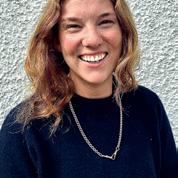
IEDITOR Megan Williams
NFU Scotland, Rural Centre, West Mains Ingliston, Edinburgh EH28 8LT
NFU Scotland, Rural Centre, West Mains Ingliston, Edinburgh EH28 8LT
Tel: 0131 472 4000 www.nfus.org.uk nfuscotland @NFUStweets
Tel: 0131 472 4000 www.nfus.org.uk nfuscotland @NFUStweets
often find myself thinking that time seems to do its own thing within NFU Scotland – it flies. The start of this year, with the lead up to our big annual event, has been no exception. While many might use the winter months to take their foot off the pedal, NFU Scotland’s has been firmly on the accelerator, and it’s been absolutely brilliant to witness and be part of.
Editor Diana McGowan editor@nfus.org.uk
With this being my first AGM, Conference and Gala Dinner, I had little idea what to expect. What followed was an incredible few days, powered by the energy and commitment of members, NFUS employees and speakers alike. As you’ll read throughout these pages, it really was one to remember. As another year turns over, and with the passing of our AGM, our Regional pages (p.36) say a sincere thank you to many much-valued committee members as they step down, while warmly welcoming those newly elected on board.
Editor Diana McGowan editor@nfus.org.uk
Managing Editor
Craig Gibson
Managing Editor Craig Gibson
Design & Production
Ryan Swinney
Feeling even longer ago was the exceptional Next Generation conference at the end of January where we saw NFU Scotland host it’s first ever inter-union conference. When editing this edition, and landing on Duncan’s title ‘Where do I draw my optimism’ (p.7), I began thinking about my answer, and it too was the same, the next generation. Conversation shared over those two days really highlighted just how much care, ambition and pride exists within the industry. You can read more in our “Behind the Scenes” column on our next generation committee.
Design & Production Ryan Swinney
Advertising Sales
Finally, the theme for this edition is fairness in the supply chain (p.17), a focus that feels more important than ever. This ties in with the launch of our ShelfWatch Year in Review: 2025-26 (p.18), which continues to shine a light on how producers are represented on Scottish shelves. ShelfWatch provides an important benchmark, tracking progress, highlighting where improvements have been made, and crucially, calling out where more needs to be done. Continuing along the theme of exploring supply chains, we deep dive into the story behind fertiliser and debate whether this is Scotland’s opportunity to rethink our reliance on that which is imported (p.34). Alongside this, we explore the growing importance of clear and honest labelling (p.29) – a topic that has been firmly in the public spotlight in recent weeks and one that underpins consumer trust and transparency across the food system.
As always, this is your magazine, so please do get in touch at Editor@nfus.org.uk. Turn to page 12 to read our Letters to the Editor –and I look forward to hearing from more of you in future editions.
on @NFUStweets @nfuscotland
Clare Stebbing clare@connect communications.co.uk Tel: 0131 561 0024
Advertising Sales Clare Stebbing clare@connect communications.co.uk Tel: 0131 561 0024
Published on behalf of NFU Scotland by Connect Publications (Scotland) Ltd. Studio 2001, Mile End, 12 Seedhill Road, Paisley PA1 1JS
Published on behalf of NFU Scotland by Connect Publications (Scotland) Ltd. Studio 2001, Mile End, 12 Seedhill Road, Paisley PA1 1JS
For the weekly news sent to your email, please send your name and membership number to contactus@nfus.org.uk
Editor Megan Williams editor@nfus.org.uk
Design & Production
Mark Shreeve mark.shreeve@micropress.co.uk
Andrew Hirst andrew.hirst@micropress.co.uk
Advertising Sales
Danny Lewis 01502 725862 danny.lewis@micropress.co.uk
Lawrence Kenny 01502 725860 lawrence.kenny@micropress.co.uk
HHrealise that positive thought/ silent commitment? Possibly too
never actually realise that positive thought/ silent commitment? Possibly too
In this month’s magazine, our two features cover inspiring stories and highlight just how rewarding delivering on such thoughts can be both for the individual involved and others who may benefit along
In this month’s magazine, our two features cover inspiring stories and highlight just how rewarding delivering on such thoughts can be both for the individual involved and others who may benefit along
Vice President Updates News
Political Round-up
Policy & Practice
Regional Activity
ShelfWatch Year in Review 2025-26
Fertile Ground, Fragile Chain: Scotland’s Moment to Rethink Fertiliser
We’re only a few weeks away from the Royal Highland Show. Over the course of four days, thousands will flock to the show to compete, judge, exhibit, organise, educate and socialise. We’ll see the best of the best and relish the atmosphere. Among the highlights and away from the main show ring, this year will see the welcome return of the Golden Shears Sheep Shearing and Woolhandling World Championships. Taking place at the MacRobert Theatre, the 2023 Worlds will see more than 30 countries compete for the prestigious title and it promises to be an action packed showcase of the art, skill and techniques required to be a world champion. Perhaps a less well known event taking place at this year’s Highland is the final qualifying round of the 2023 Britain’s Fittest Farmer competition. Taking part in this event for the
We’re only a few weeks away from the Royal Highland Show. Over the course of four days, thousands will flock to the show to compete, judge, exhibit, organise, educate and socialise. We’ll see the best of the best and relish the atmosphere. Among the highlights and away from the main show ring, this year will see the welcome return of the Golden Shears Sheep Shearing and Woolhandling World Championships. Taking place at the MacRobert Theatre, the 2023 Worlds will see more than 30 countries compete for the prestigious title and it promises to be an action packed showcase of the art, skill and techniques required to be a world champion. Perhaps a less well known event taking place at this year’s Highland is the final qualifying round of the 2023 Britain’s Fittest Farmer competition. Taking part in this event for the first time is Kyla Graham from

From the PRESIDENT Andrew Connon

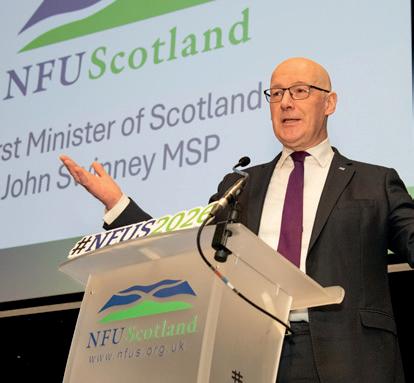
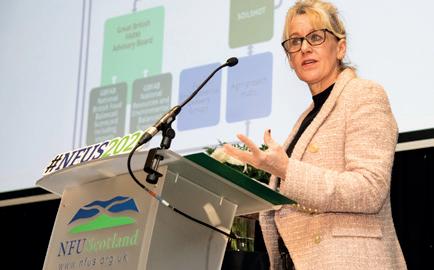
On the 5th and 6th of February in Glasgow, Scottish agriculture stood united like never before.
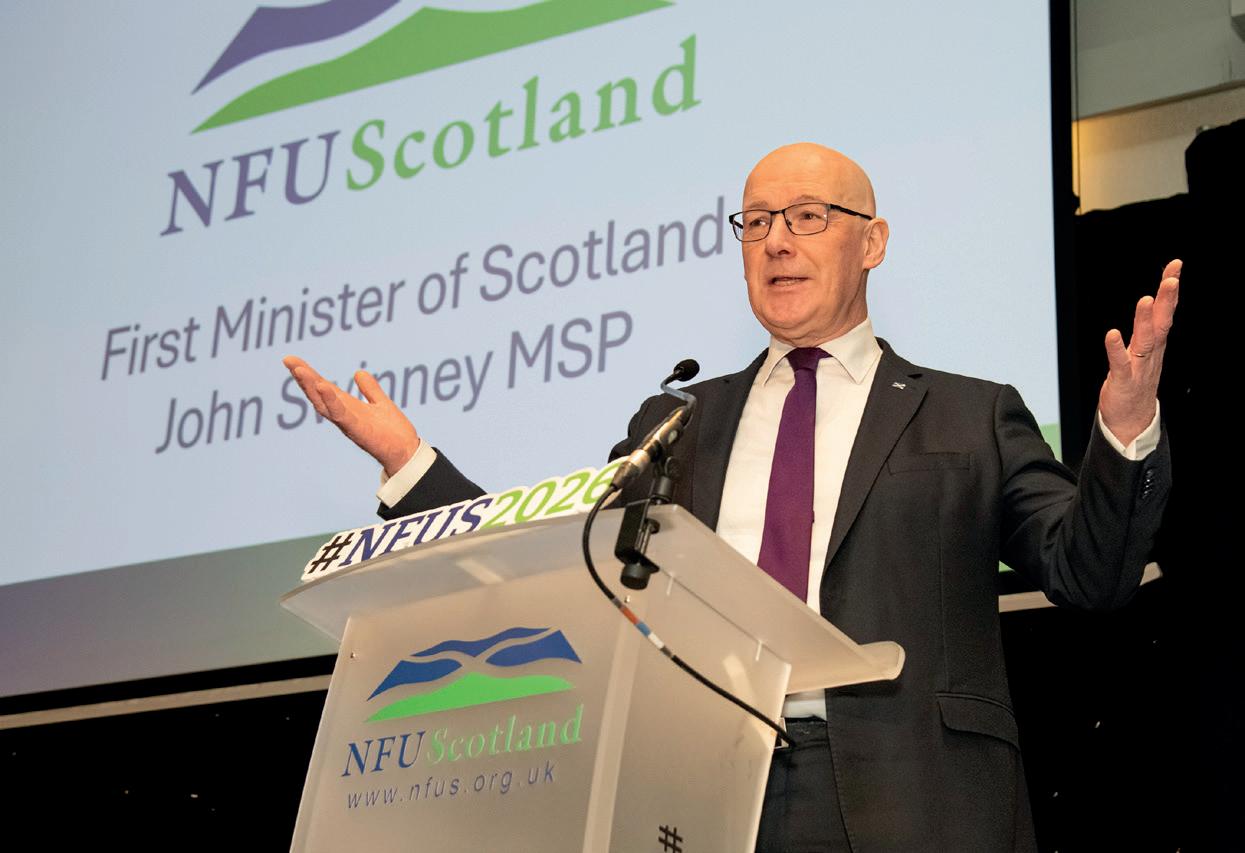
Our annual NFU Scotland Conference and AGM brought together hundreds of members, leaders, and stakeholders, including the First Minister, to focus on what matters most: profi tability, sustainability, and the long-term future of farming in Scotland (p.14).
The energy in the room was tangible. Farmers, crofters, and industry partners shared experiences, celebrated achievements, and set priorities for the year ahead. It was a clear demonstration that Scottish agriculture is not only resilient but influential, shaping policy and securing outcomes that benefi t rural communities across the country.
Profi tability remains at the heart of everything we do. Markets are volatile, budgets are tight, and extreme weather tests our resilience – but with focus and unity, we turn challenge into opportunity. Last year’s success on Inheritance Tax reforms, where the APR and BPR threshold was raised to £2.5 million per spouse, showed what is possible when members engage, mobilise, and make their voices heard. Support from Scottish MPs
and sustained action from our members proved that standing together works –and our Glasgow conference reinforced that spirit.
It was also a great opportunity to shine a spotlight on those who are going above and beyond for our industry. Congratulations to Cammy Wilson, David Colthart, Phil Daughtrey and Stewart Duncan.
Looking ahead, two issues covered in this edition will define the next decade: a level playing field in the supply chain and the next generation. Our ShelfWatch programme highlights both the successes and the gaps in supermarket sourcing, driving transparency and accountability (p.18). Scottish produce deserves to be seen, valued, and fairly remunerated. Post-Brexit trade, public procurement, and climate-smart legislation all need to support this.
The next generation of farmers is another priority. At our recently hosted inter-union Next Generation Conference, discussions on land access, succession planning, skills, and training, underscored the importance of making farming a viable, rewarding career (p.17). Profi tability at the farm gate ensures that these opportunities are realistic and sustainable.
From policy wins to practical initiatives, the message is clear: a strong Union achieves more. Building on this momentum, the First Minister address at our annual conference, confirmed long-term stability in agricultural funding, with at least 70% direct payments, and a clear policy horizon through to 2030. Highlights included £14.25 million for
the Future Farm Investment Scheme, £9 million to strengthen Scotland’s food and drink processing sector, and £1 million for the Sea Eagle Management Scheme – practical investments aligned with industry priorities. This level of alignment gives members the confidence to invest, plan ahead, and continue delivering for communities and the wider economy.
Finally, thank you to everyone who made the conference such a success. To our members, for bringing the event to life; to our platinum sponsors, Naturescot and Peatland ACTION; our gold sponsor, ABP UK; and our bronze sponsors, QMS, Johnston Carmichael, Iqony, Marks & Spencer, NFU Mutual, RSABI, RHET, Farmstrong Scotland, Digital Dairy Chain, and Women in Agriculture.
Our thanks also go to our table sponsors, The Scotch Whisky Association, Moredun Foundation, Graham’s Family Dairies, SAC Consulting, and Oxbury Bank.
We are grateful to Diageo for sponsoring the drinks reception; to our food sponsors, Farmlay, Charles Macleod Ltd, Benzies Produce, Browns Food Group, East of Scotland Growers, J J Sayles, and N D Macleod Ltd; and to our lanyard sponsor, Shepherd and Wedderburn.
And, of course, sincere thanks to the entire National Farmers Union Scotland team, who kept the engine running behind the scenes.
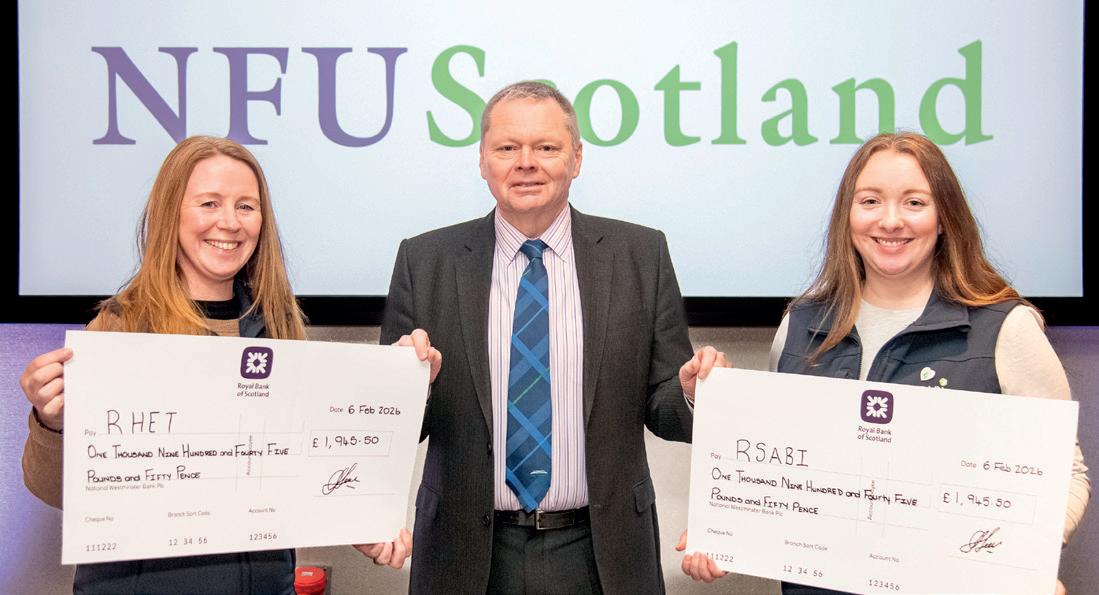
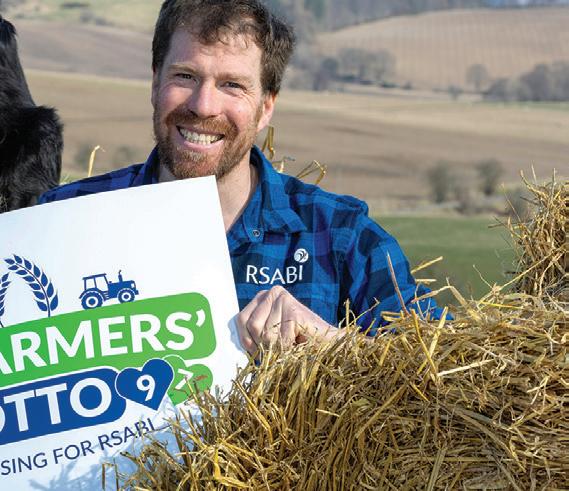
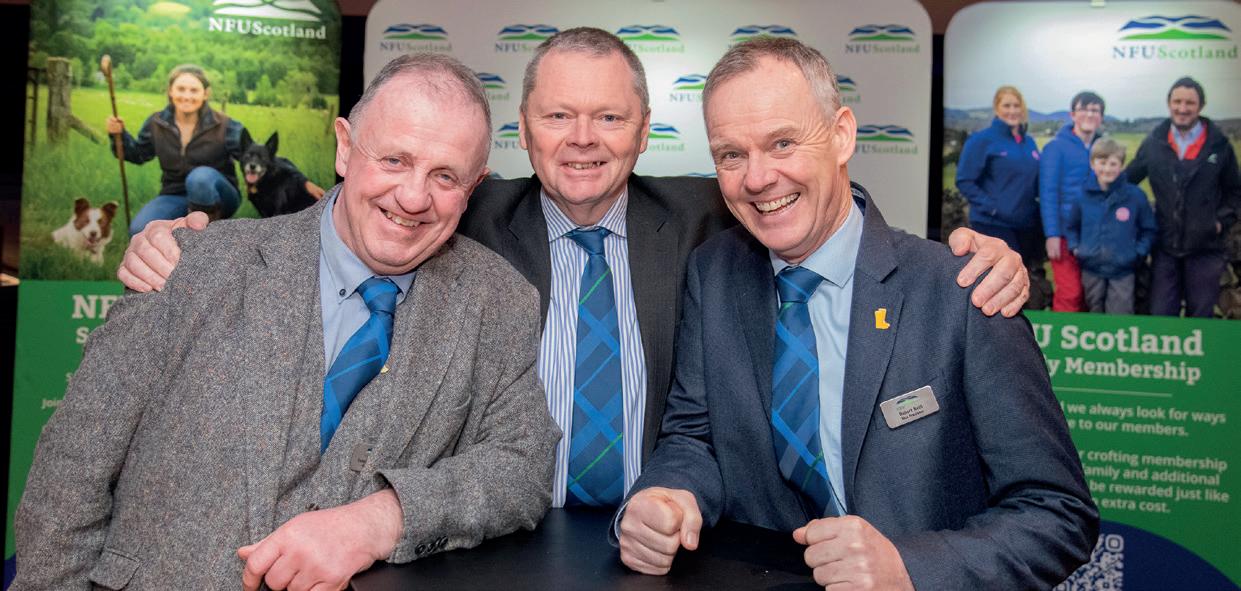
We were delighted to have raised an incredible amount – just shy of £4,000for both RHET and RSABI (see picture above), and we thank you for the value their presence added to the event.
Scotland’s farmers and crofters continue to feed the nation, protect the environment, and sustain rural communities. Profi tability is the foundation of all we do. With it, and with a strong Union behind them, we can meet any challenge and seize every opportunity.













































FDuncan Macalister Vice President
or this edition of the Farming Leader, I was asked to write about supply chains and my thoughts immediately came back to one of the most encouraging things I’ve experienced in recent months – the inter-union Next Generation Conference, hosted by us here in Scotland. You can read more about it on page 17.
It reminded me just how powerful our industry can be when we stop working in silos and start working as a team. Farmers, crofters, processors, retailers and representative bodies were all in the same room, listening to each other, sharing ideas and - most importantlyrecognising that none of us can strengthen supply chains on our own.
We all know that profitable and sustainable farming depends on a supply chain that works fairly and efficiently from field to fork. But too often, challenges are tackled in isolation. Input costs, market volatility, consumer confidence and access to markets affect us all, yet we don’t always pool our thinking or resources. I’ve been thinking quite a lot recently about how fragile our fertiliser supply chain seems to be - and whether this could be Scotland’s opportunity to rethink it, which I explore further in my article on page 34. Like within the Union, our strength lies in working together - and if we want meaningful change, that cooperation has to extend right across the supply chain.
This is one of the reasons why I’m such a strong believer in focusing on non-divisive issues where collaboration delivers real results. ShelfWatch is a great example. ShelfWatch is a great example – our annual report highlights that 1 in 4 products are now labelled as Scottish. This didn’t happen by chance, it happened because organisations worked together, shared evidence and spoke with one voice. My ambition is to see that model rolled out nationally, giving farmers, processors and retailers better insight and stronger influence.
The Next Generation Conference showed what the future leadership of our industry already understands: if you work with folk, folk will work with you. Debate is healthy, ideas should be shared, but when it comes to delivering change, we move forward best when we move forward together.
If we want resilient, fair and sustainable supply chains, cooperation isn’t optional – it’s essential.

ARobert Neill
Vice President
s the days stretch longer and spring fi nally starts to arrive, workloads increase almost overnight. Lambing and calving get underway and we just hope that some warm weather will arrive to get the grass growing. After the wet start to the year we have all endured, many fi elds will take a while to dry out.
A
It surely won’t be long before we see the fi rst fertilizer spreaders heading out to get the fi rst of the spring fertilizer spread, and grain drills will start appearing in an attempt to get the spring crops sown and off to a good start.
It was great to attend the NFU AGM and Conference in Glasgow at the start of February, you can read all about it on page 14. It is always such a great couple of days with amazing speakers and a fantastic opportunity to catch up with members and other industry fi gures. I was able to enjoy the event without worrying about the Friday morning election. It has been an action-packed year and I have enjoyed being involved in the great work the Union is doing to protect the interests of Scotland’s farmers and crofters.
At the time of writing, next week (weather and ferries permitting) I’ll be heading to the Isle of Mull. Island life brings its own challenges: isolation, transport constraints, weather dependency, and limited services. Yet it also fosters resilience, innovation, and a deep connection between producers and their communities. I’m looking forward to hearing fi rst-hand about what it takes to live and work on an island.


John Davidson
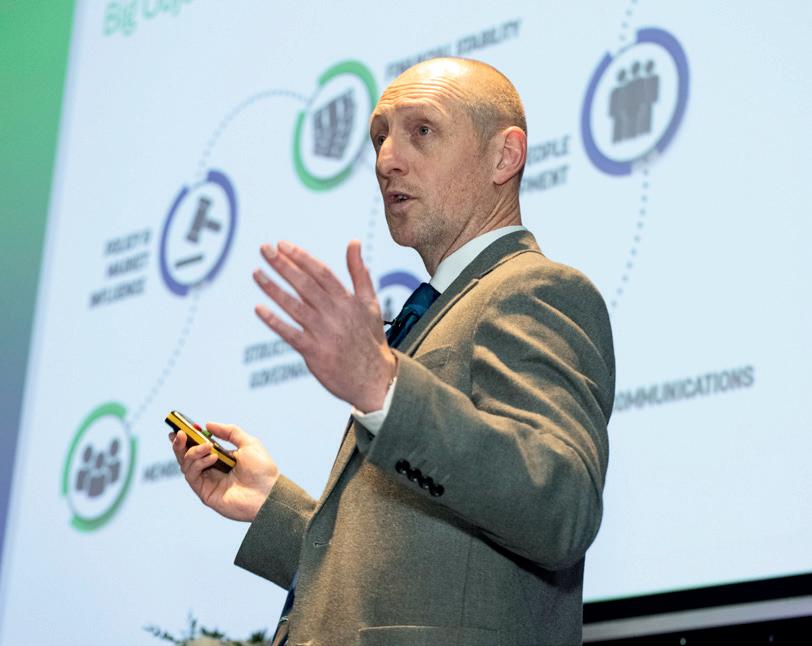
As the dust settles after our Annual Conference & AGM and I draw breath after a frantic and exciting few weeks, I have an overwhelming sense of pride at what the team achieved. Our annual event is now fi rmly established in the agri-food calendar as one of the must-attend events of the year and this year certainly didn’t disappoint. Indeed, I’ve been bowled over by the superb feedback from delegates, universally agreeing that the event was probably the best one yet – high praise indeed! With a packed room
aim of securing a profi table future for our members. And we’ve not managed this alone – rather, this has been a team effort – our staff, elected offi cials, and members across the country, all working together for the betterment of the industry. We’ve published an overview of these successes so please visit our website and have a look.
I also talked about the work we are
Our local structures have always been fundamental to the way we operate and it’s critical they are effective in the future
on both days and a mix of inspirational speakers we were treated to two days of tremendous debate that really showed the very best of Scottish agriculture. Above all, the energy and positivity in the room throughout was superb and gives me huge optimism for the future. The big challenge for me and the team is now: how do we top that next year...
During my slot on stage, I provided an update on the work of the organisation over the past 12 months. And what a year it’s been. Sometimes in NFU Scotland it’s all too easy to forget about our successes and positive impact as we move seamlessly, and rapidly, from one issue to the next. But when we do step back and refl ect (and we need to do this more) we have achieved so much. Policy, political and supply chain infl uence, all with the
doing to better engage with our members and improve our support to you. This includes our continued focus on member benefi ts through affi nity partnerships, such as our helpline providers, all of whom continue to offer initial advice at no cost. And also the increasingly popular vehicle partnerships and fuel cards, both of which have yielded signifi cant savings to members and, as a consequence, provide additional benefi t to NFU Scotland. I also talked about some of the operational changes we have made as a result of member feedback – changes that make it easier for members to contact us, and in our processes for investigating and responding to member queries.
But I was also clear that we need to keep listening to members. At the end of
day, we are a member-led organisation, and the voice of every single member is important to us. On that theme, that’s why I think now is the time to review some of our local structures at branch level and the monitor network to ensure that the voice of every member has an opportunity to be heard. Our local structures have always been fundamental to the way we operate and it’s critical they are effective in the future. Watch this space for more details.
So where does 2026 leave us? There’s no doubt it’s going to be another busy and demanding year. The Scottish Parliamentary elections loom, and whatever the outcome NFU Scotland will be one of the first in the queue to meet the new Ministers and set out our priorities. In addition, we will be ramping up our supply chain work. I firmly believe this will be increasingly important to us going forward as we seek to secure fairer and better returns from the market and our work in this area will be significant. Beyond that, we will continue to look at our member benefi ts and support more generally, as well as a continued focus on attracting new members. We will also continue to strengthen our internal governance with important changes to our Articles of Association to come in the Spring, and a big focus will be on succession – how we identify and develop the talent we have across the membership so that we have a future pipeline of leaders ready and willing to emerge in years to come.
A big year past, and a big year ahead. I’ll end with a thank you. A thanks for all your continued support and trust in NFU Scotland. We exist for you, and we’ll keep working tirelessly every day on your behalf.
•
Skips
Skips












































The First Minister’s address on 6 February confirmed a series of commitments that provide funding certainty, support productivity, and recognise the vital role of Scottish farmers and crofters – Jonnie Hall reflects.


Jonnie Hall Deputy CEO/Director of Policy
It’s beyond question that the First Minister’s address at our AGM and Conference on 6 February contained a series of announcements that, taken together, are very significant for Scottish agriculture.
I listened as intently as anyone, not just for the headlines but also the substance behind them. Why? Because the outcomes and wins we secure don’t happen by accident.
They are the result of a clear strategy built on consistent engagement with government and unwavering commitment to our members and Scottish agriculture.
Perhaps the most significant commitment was the re-affirmation that at least 70 per cent of future agricultural funding will continue to be delivered as direct payments. With a total agricultural support budget of some £660 million in the draft Scottish Government budget, that clarity matters enormously.
Direct income support underpins the viability of farming and crofting businesses across Scotland. It is not an abstract policy mechanism – it is the difference between profi t and loss for many enterprises, particularly in our grazing livestock sectors and less favoured areas.
Securing that 70 per cent floor has been one of our core priorities throughout the agricultural reform process.
This commitment did not emerge in
isolation. We have consistently made the case – in formal consultations, in our budget submissions, in bilateral meetings and at every opportunity – that a strong foundation of direct support is essential to food production, climate and nature progress, and rural cohesion.
We have challenged narratives that seek to diminish its importance and have instead demonstrated how direct payments provide the stability required for businesses to invest, innovate and deliver environmental outcomes, as well as deliver high-quality production for Scotland’s vital food and drink sector.
Equally important was the commitment to multi-annual funding through to 2030 and beyond. For years, we have argued that annual budgets undermine confidence and constrain investment. Farmers and crofters operate on long
planning horizons. They cannot make strategic and investment decisions based on short-term signals.
To hear the First Minister explicitly acknowledge this ask, and to see it reflected in the draft budget and spending review, is a tangible success. It strengthens business planning, supports lending confidence and sends a signal that Scottish agriculture has a stable future. This was not gifted to us. It was secured through persistent and constructive dialogue.
Underpinning all of this was a repeated assurance of “no big bang moments or cliff edges” in policy reform. We have been clear that transition must be incremental and co-designed.
Change is inevitable, but destabilisation is not; maintaining that principle in the face of political and fiscal pressures has required constant vigilance and engagement.
Funding certainty is essential, but so too is investment in productivity and infrastructure. The confirmation of a second round of the Future Farming Investment Scheme (FFIS), backed by £14.25 million, directly reflects our calls for flexible, accessible capital support.
The first round demonstrated both appetite and need. We were frank about its operational shortcomings, but equally clear that the principles were right.
The Scottish Government’s willingness not only to re-run the scheme but to review and improve it in partnership with us shows the value of constructive engagement.
Beyond the farmgate, the allocation of £9 million for food and drink capital support and £9 million in resource funding for the national food and drink strategy signals recognition that primary production and processing capacity are inseparable.
A strong supply chain underpins farmgate returns. Our advocacy has consistently stressed that added value, market development and processing resilience are central to sustaining domestic production.
The tripling of small producer capital funding to £1.5 million and the £400,000 investment in abattoir infrastructure –particularly to support small-scale private kills – may appear modest in headline terms, but for many smaller and diversified businesses these sums may prove critical.
Scottish agriculture is central to our climate and biodiversity ambitions, but
environmental delivery must be properly funded and practically designed.
The continued support for the AgriEnvironment Climate Scheme (AECS), including £5 million for 209 contracts in 2025, and confirmation of the 2026 round opening this month, reinforces AECS as the backbone of environmental support.
We have consistently argued that if the Scottish Government expects farmers and crofters to deliver targeted environmental outcomes, schemes must be accessible, adequately resourced and fit for purpose.
AECS is not perfect, but securing its continuation and expansion reflects our insistence that environmental ambition cannot be decoupled from economic reality.
Species management remains a more challenging space. The £1 million allocation to the Sea Eagle Management Scheme (SEMS) and commitments on goose management are welcome. They are tangible responses to longstanding frustrations raised by members experiencing real impacts on livestock and crops.
Progress here has often felt incremental and, at times, painfully slow. Yet the fact that these issues are now acknowledged at the highest political level is itself a testament to sustained engagement.
We have refused to let species management concerns be sidelined, and while challenges remain, these commitments represent movement in the right direction.
One of the clearest lines in the First Minister’s speech was the assertion that there is “no policy to reduce livestock numbers – not now, and not in the future.” In the context of wider UK and international debates, that is significant.
Our livestock sectors are integral to Scotland’s food production, land management and rural economy.
We have robustly challenged simplistic narratives that equate climate action with herd and flock reductions. Instead, we have championed efficiency, genetics, animal health and carbon auditing as the route to sustainable livestock production.
The continued commitment of over £100 million through the Less Favoured Area Support Scheme (LFASS) and Voluntary Coupled Support schemes further underlines recognition of the unique challenges faced by upland and hill producers, as well as crofters. Securing these commitments in a constrained fiscal environment has required relentless focus on the value these sectors deliver.
The earmarking of over £24 million for animal health and biosecurity reinforces
that approach. Healthy herds and flocks are more productive, more efficient and more sustainable. Investment here protects both farm businesses and Scotland’s wider reputation for highquality produce.
Market access remains a defining issue in the post-Brexit landscape. The Scottish Government’s pledge to press for an effective SPS agreement with the EU – and to work closely with industry in shaping it – aligns squarely with our priorities.
An uplift in agrifood exports of the scale suggested could be transformative, but only if the detail works for Scottish producers.
Similarly, collaboration through our Public Procurement Roundtable and oversight by the Scottish Food Commission offer opportunities to drive better procurement practice.
Public sector sourcing can and should support Scottish producers. Turning aspiration into delivery will require continued persuasion and partnership.
Taken together, the commitments made by the First Minister on behalf of the Scottish Government represent significant progress – and significant success for us.
They provide funding certainty, investment in productivity, support for environmental delivery, recognition of livestock’s future, and action on supply chains and rural infrastructure.
But success is rarely a single moment. It is the accumulation of multiple meetings, submissions, briefings, and countless conversations – many necessarily off the record. It is the willingness to challenge constructively and where necessary to hold government to account.
The First Minister’s speech clearly demonstrates again that sustained, strategic engagement delivers results. By remaining at the table, articulating clear priorities and grounding our arguments in the lived realities of Scottish farming and crofting, we continue to shape a policy framework that offers stability, opportunity and recognition.
I am acutely aware that none of this is achieved alone. It reflects the expertise of our policy team, the insights of our members, the leadership of our Board and officeholders, and the credibility we have built over decades.
But we can’t stop. We must continue to engage, continue to challenge, and continue to secure the best possible outcomes for our members and for Scottish agriculture.
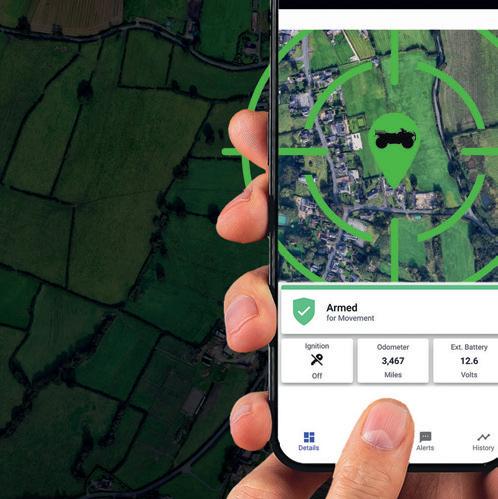
ATVTrac, the dedicated security machinery tracking specialists, continue their mission to get Scottish farmers and landowners to take security and safety more seriously, as machinery theft continues to hit.
With NFU’s rural crime report showing ATV and associated machinery theft still a big issue, ATVTrac continues to help protect farmers, both from a security perspective and with safety too, thanks to the unit’s multi-tech approach that tracks theft, vehicle position and can even notify of a roll-over situation.
The firm’s Rupert Archer-Smith, explained, “The stats speak for themselves in terms of the theft. ATVs and smaller machinery are very obvious targets, but with ATVTrac we’ve been able to prove that dedicated technology really can make a difference. On top of its security features, our lone worker focussed technology is great for keeping workers safe, which for farmers and land owners
in remote areas, is a hugely reassuring bonus.
“It’s not always a subject that gets much attention, but lone worker safety is in our opinion really important. When we introduced ATVTrac, we realised that we could implement this functionality thanks to technology already developed in our units. Quite simply, as soon as the unit detects vehicle angle outside of normal parameters for a period of time, with no speed, the system will automatically send a text message to chosen contacts in case a roll-over incident has occurred.”
A function that has proven its effectiveness on many occasions, like farmer Andrew Morris, who was pleased to have the ATV Over functionality when his Suzuki KingQuad dropped into a hidden gully and rolled over, resulting in an injured shoulder.
“It was reassuring to know the ATVTrac system worked without any time delay or problems with finding my location”,
Dear Editor,
commented Jenny. “It’s also great to know the system contacts more than one emergency contact too”.
With flexible installation on any type of machinery, and using multi-tier technology, featuring GPS, GPRS and Radio Frequency, ATVTrac offers real-time location information, while informing the owner of unauthorised movement through text, email and phone call.
Should a theft occur, ATVTrac has a 24-hour monitored call centre to track the device, liaising with police or partner company Securitas to recover the stolen asset and return it in a hassle-free way.
And for NFU policy holders, ATVTrac offers further benefits with the potential to make significant savings on insurance too, even more so when combined with a security marking system. Please refer to current NFU Rural crime policy for up to date discounts.
For more information on ATVTrac, visit www.atvtrac.co.uk
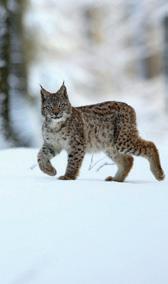
Having just read your article about the continuing argument concerning the reintroduction of the European lynx. I’m pleased to hear the NFU is taking a firm stance against this idiotic rewilding project!
The consequences of these predators roaming the countryside will do very little to control the numbers of deer, where there are a lot easier to catch and kill domestic animals on the hill and surrounding woodland.
Why these people who wish to see these introductions think that lynx will just stick to preying on Roe (which in a lot of people’s minds, myself included are not overpopulated), are delusional.
The red deer perhaps, but these animals are too big for the lynx to tackle other than maybe a sickly calf.
We already have the indigenous Wildcat in the country, albeit hanging on by its claws, and a sensible reintroduction programme to increase its numbers. Why can’t the money being made available be put towards the wildcats conservation?
I would also imagine that if the two species were in close proximity, the lynx would kill the wildcat, therefore having a negative impact on all the hard work carried out by the Highland Wildlife Park the last few years.
Please keep up the pressure to have the lynx proposals scrapped and let’s have some common sense prevail.
Regards,
Malcolm Douglas





















Words by Lucy McGillivray
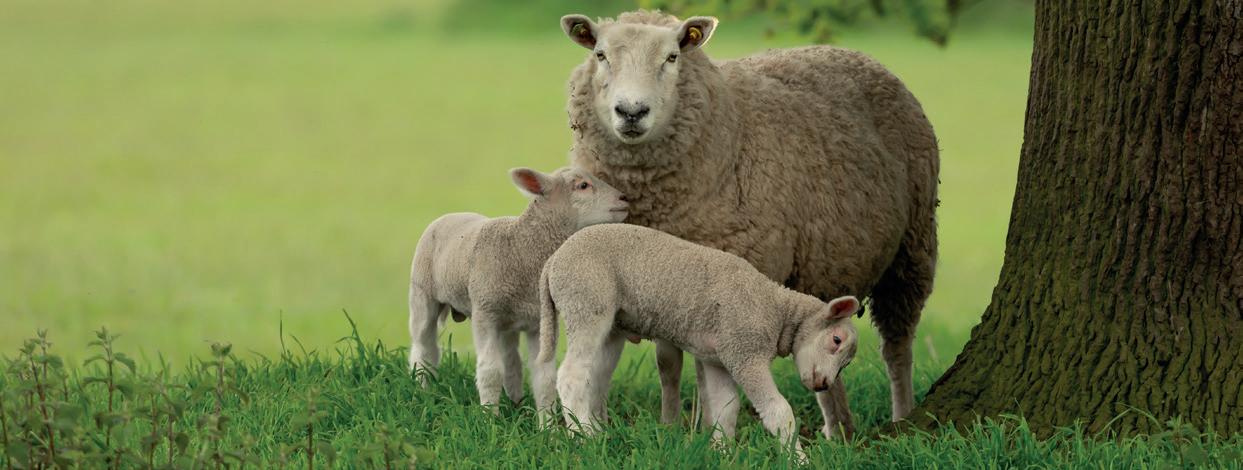
For livestock farmers across Scotland, lambing and calving are the most demanding – and decisive – weeks of the year. Success during this period shapes animal welfare outcomes, farm profitability, and workload management for months to come. In a climate of rising costs and tighter margins, attention to detail has never mattered more.
A successful season begins long before the first ewe or cow shows signs of labour. Late pregnancy nutrition remains one of the biggest influences on survival rates and long-term performance. Undernourished ewes are more likely to produce weak lambs with poor colostrum supply, while over-conditioned cows face greater calving difficulty.
Scanning results should guide feeding strategies, particularly for twin, and triplet, bearing ewes. Grouping by litter size and body condition score allows targeted rationing and helps reduce metabolic issues. Industry targets remain steady: ewes at a body condition score of 2.5-3 at lambing, and suckler cows around 2.5-3 at calving too.
Housing preparation is equally critical. Clean, well-bedded pens with good ventilation reduce disease pressure at a time when youngstock are most vulnerable. Attention to hygiene helps limit cases of watery mouth, joint ill and scour in lambs, as well as navel infections and pneumonia in calves.
From intensive indoor systems in the lowlands to outdoor lambing on upland
farms, Scottish flocks operate under a wide range of management styles. Regardless of system, close observation and sound judgement underpin good outcomes.
The balance between intervening too soon and leaving a ewe too long is a familiar challenge. Skilled stockmanship remains the key – recognising when labour is progressing normally and when assistance is genuinely required. Excessive interference increases stress and infection risk, but delayed action can cost lives.
Colostrum intake within the first hours of life is the single biggest determinant of lamb survival. Many producers now measure intake more carefully and store frozen colostrum as a safeguard. Ensuring lambs are dry, warm and suckling promptly remains fundamental, alongside consistent navel dipping.
Labour management during lambing is often underestimated. Long shifts and broken sleep increase the risk of mistakes. Increasingly, farms are rotating staff more deliberately, batching lambing groups, and using cameras to reduce unnecessary disturbance while maintaining oversight.
In beef and dairy herds alike, calving sets the tone for fertility and growth rates across the year. Genetic progress has reduced calving difficulty in many herds, but nutrition, mineral balance and body condition remain decisive factors.
Heifers typically present the highest risk and benefit from closer supervision. Prompt assistance in genuine cases of dystocia improves both calf viability and cow recovery. As with lambs, colostrum management is critical. Ensuring adequate volume and quality within the first six hours improves immunity and early growth.
Post-calving management is just as important. Early turnout, when weather and ground conditions allow, can reduce disease pressure and labour demand while supporting energy balance in springcalving herds.
Disease prevention remains more costeffective than treatment. Vaccination protocols for clostridial diseases, pasteurella and scour-causing pathogens are widely adopted across Scotland, but correct timing and compliance are essential.
Working with veterinary advisers to review annual performance – including mortality rates, assisted births and disease incidence – enables continuous improvement. At the same time, greater focus on antibiotic stewardship is encouraging improved hygiene and more selective use of treatments.
Lambing and calving are physically and emotionally intense. Fatigue, financial pressure and the impact of losses can take their toll. More producers are recognising the importance of rest planning and shared responsibility within teams, alongside the use of technology such as calving sensors and remote cameras to ease workload.
Ultimately, while weather and markets remain outside farmers’ control, preparation and stockmanship are not. When nutrition, hygiene and observation align, lambing and calving reward that effort with stronger survival rates, improved performance and a solid foundation for the year ahead.
In Scottish livestock systems, few periods matter more – and few offer clearer evidence that good preparation pays.
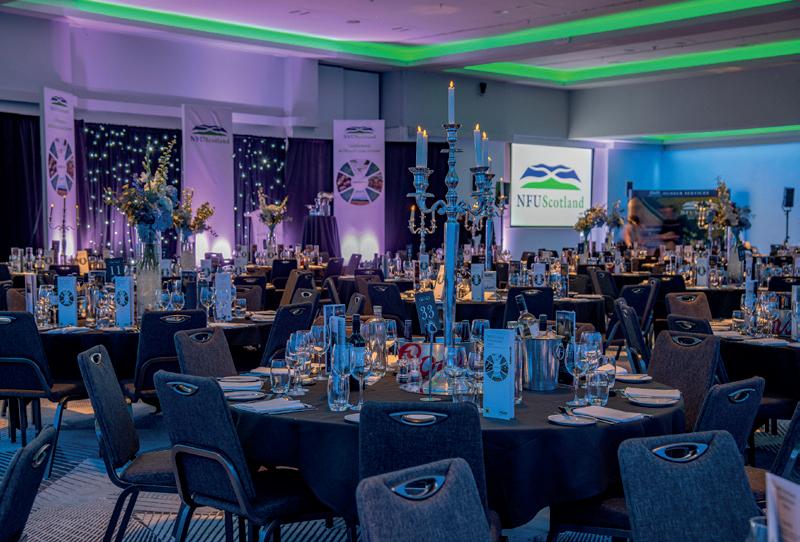
First and foremost, thank you to our members – your energy, insight and engagement are what bring these events to life. From thoughtful questions during the conference sessions to applause that lifted the roof during the gala dinner, it was your participation that made this event such a success and reminded us why a strong, united Union matters.
We are also incredibly grateful to our sponsors, whose support makes events of this scale possible. NatureScot’s Peatland ACTION, our Platinum Sponsor, deserves special recognition for their continued leadership in peatland restoration and
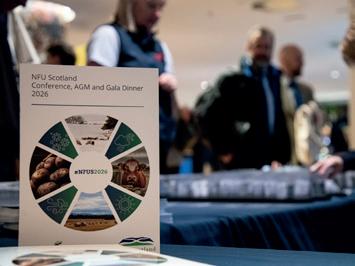
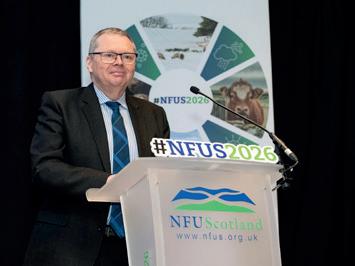
sustainable land management. Scotland’s peatlands are among our most valuable and vulnerable landscapes, playing a vital role in carbon storage, biodiversity, grazing, water management and public access. Their team provides tailored advice and access to funding, helping land managers take action now for long-term environmental and business gain. It is a partnership that reflects the way practical, farm-focused solutions can benefit both nature and rural communities.
We are equally delighted to thank ABP UK, our Gold Sponsor, whose support for Scottish livestock farmers is widely appreciated. As a major processor and


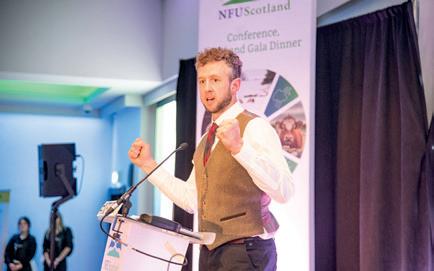
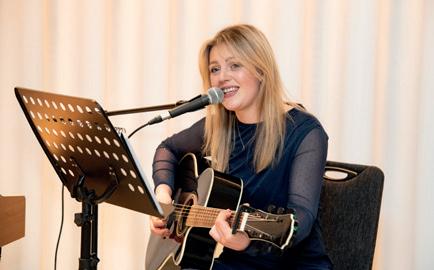
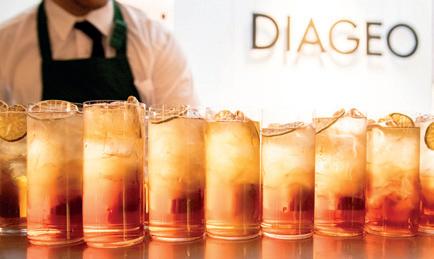
long-standing partner to farm businesses, ABP strengthens the red meat supply chain, opens domestic and international markets, and helps deliver high-quality, sustainably produced beef and lamb.
And, of course, the incredible main of beef they provided at the gala dinner was a highlight for all!
Thank you to all our other sponsors and partners; QMS, Johnston Carmichael, Iqony, M&S, NFU Mutual, RSABI, RHET, Farmstrong Scotland, Digital Dairy Chain, Women in Agriculture, Scotch Whisky, Moredun Foundation, Graham’s Family Dairies, SAC, Oxbury, and Shepherd and Wedderburn. Together, their support ensured the AGM, conference and gala dinner were a true celebration of Scottish agriculture and the diversity within.
Finally, thanks to the NFUS staff team who worked tirelessly behind the scenes to deliver another outstanding conference. Together, Scottish agriculture will continue to go from strength to strength.






















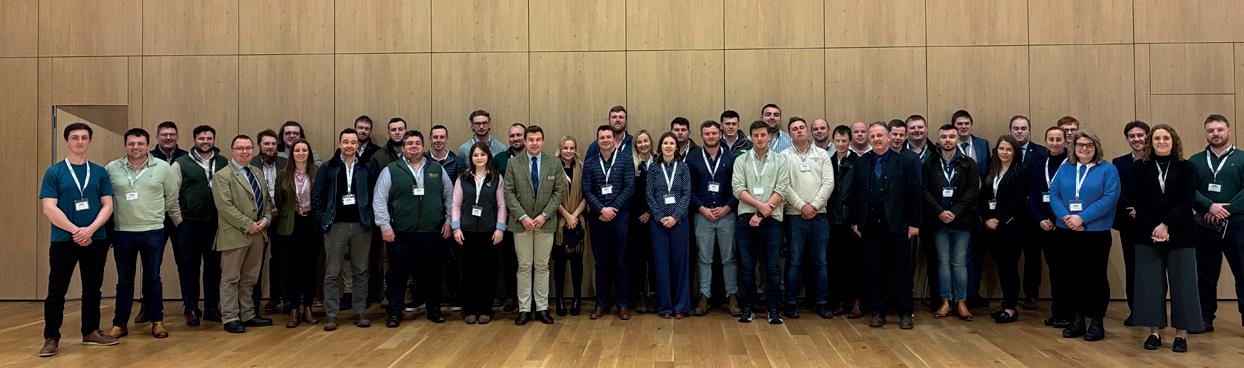


The NFUS Next Generation Committee is a group dedicated to supporting and representing young farmers, crofters, and rural professionals across Scotland. Chaired by Ben McClymont, the committee focuses on developing leadership skills, fostering collaboration, and creating opportunities for the next generation to influence the future of Scottish agriculture. Through initiatives, events, and networking, the committee provides a platform for emerging voices in the sector to share ideas, tackle challenges, and help shape policies that will impact farming and rural communities for years to come.
Last month, Scotland’s agricultural sector witnessed a landmark moment as the NFUS hosted its first ever cross-union Next Generation Conference. Bringing together young farmers and agricultural professionals from across the country, the two-day event was designed to inspire, inform, and connect those who will shape the future of Scottish agriculture.
The conference reflects NFUS’ growing commitment to developing the next generation of industry leaders, creating space for collaboration across farming, crofting and rural businesses. Over the course of two days, delegates got to explore policy developments, market opportunities and practical innovations, while building networks that extend well beyond the conference itself.
Day one, focused on the strategic challenges and opportunities facing Scottish agriculture. Delegates received updates on agricultural support and policy from UK farming unions and across Europe, offering clarity at a time of
significant change for the sector. These sessions set the context for discussions around resilience, adaptability, and longterm planning.
A standout session on promoting the Scottish brand highlighted the power of provenance and storytelling in securing stronger market returns. Industry leaders Sarah Millar of Quality Meat Scotland, Amanda Brown from Scotland Food & Drink, and Anthony Wills of Kilchoman Distillery shared insights into how quality, authenticity and clear messaging can add value across domestic and international markets. Their discussion underlined the importance of aligning production excellence with consumer expectations in an increasingly competitive global marketplace.
The first day also placed a strong emphasis on mental health and physical wellbeing. Clare Dickson from FarmStrong led an engaging session focused on resilience, support networks and practical steps to improve wellbeing within farming communities. By addressing mental health alongside policy and markets, the conference recognised that a sustainable agricultural future depends on people.
Day two, shifted the focus from
discussion to practical application, with delegates taking part in a series of farm and educational visits. At Easter Howgate, SRUC’s award-winning ‘Green Farm’ demonstrated climate-smart livestock systems, showcasing real-world strategies to reduce greenhouse gas emissions while maintaining productivity. The visit offered tangible examples of how sustainability and profitability can go hand in hand.
Further visits to Pentland Science Park introduced delegates to SRUC Veterinary Services, where advanced diagnostic and laboratory facilities support animal health and performance. Rotating workshops allowed attendees to engage directly with cutting-edge research; translating innovation into practical tools that can be applied on farms and crofts across Scotland.
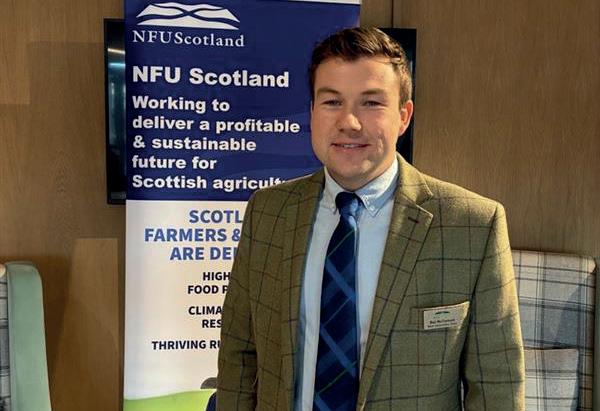
NFUS Next Generation Chair Ben McClymont (pictured below) summed it up: the conference is about equipping young farmers with the skills, confidence, and connections to succeed. From market development and mental wellbeing to climate-smart farming, the programme reflects NFUS’ commitment to a profi table, sustainable, and resilient future for Scottish agriculture.


Words by Lisa Hislop
If you’ve wandered the aisles of a Scottish supermarket lately, you might have noticed more products proudly carrying the Scottish fl ag. That’s no accident. NFU Scotland’s ShelfWatch initiative is helping track how well retailers are supporting Scottish farmers – and the picture is both encouraging and cautionary.
Now in its third year, ShelfWatch continues to give a unique, independent insight into what shoppers actually fi nd on supermarket shelves. This year, the audit introduced new categories – cream and cooked ham – and streamlined others, like focusing on cheddar cheese. Tracking price trends were also added, offering critical context as farmgate prices remain volatile. While these updates strengthen ShelfWatch’s longterm value, they mean this year’s results aren’t always directly comparable to previous reports.
The 2025 ShelfWatch report covers 78 stores and over 20,000 own-label products. It shows encouraging progress in some areas but also emerging risks.
Some retailers are clearly committed to Scottish sourcing: Aldi leads with 65% of own-label products being Scottish, while Lidl has jumped to over 50%. Combined Scottish and UK sourcing shows even stronger results, with Co-op, Aldi, and M&S all surpassing 95% domestic sourcing – a reminder that high levels of local supply are possible.













For our farming and crofting members, this matters. High levels of Scottish sourcing mean better recognition for your produce, more secure contracts, and stronger pricing – helping your work on the farm or croft translate into real value at retail.
Scottish produce shines in several key sectors. Eggs remain
a standout, with nearly 80% sourced locally, and retailers including Aldi, Co-op, and Lidl stocking 100% Scottish eggs despite ongoing avian fl u pressures.


Fresh milk also performs well: over 80% is Scottish, with imported milk absent across all retailers. Even as farmgate prices fell sharply in autumn 2025, aligned retail contracts have cushioned producers. Potatoes show signifi cant improvement too. Scottish potatoes now account for more than half of all audited products - a rise of 11% on last year. Aldi achieved



100% Scottish sourcing, with most other retailers moving to UKsourced supplies. Yet behind the numbers lie challenges, including carryover stock and diffi cult market conditions for growers.
For farmers and crofters, these successes are not just statistics – they refl ect where your produce is valued, giving you confi dence that the hard work and care you put into your products are being recognized on shelves.


While Scotch beef remains prevalent, ShelfWatch fl agged a small but worrying increase in imports from Australia and Uruguay. Lamb sourcing varies widely, with some retailers sticking to Scottish and British supply, while others, like Asda, rely heavily on imports. Pork is the weakest sector. Less than 5% of own-label pork is Scottish, with EU imports dominating bacon and the newly added cooked ham category. This underscores ongoing pressures on the pig sector and the importance of fairer sourcing decisions.

For members, these gaps highlight where your livelihoods can be affected: imported products may undercut prices and reduce opportunities for domestic producers, reinforcing the need for fair and transparent supply chains.
ShelfWatch also highlights challenges in labelling, with mixed-origin products still appearing in categories traditionally dominated by domestic supply. Clearer, transparent country-oforigin labelling is crucial, not just for consumers, but for farmers and crofters who deserve to have their Scottish produce accurately represented and valued in the marketplace.
ShelfWatch is about evidence, not finger-pointing. It supports constructive engagement with retailers and policymakers. This year’s findings reinforce NFU Scotland’s five key asks:
Words by Carly Ross, Director of Communications
We’ve launched a new visual identity for our flagship campaign, ShelfWatch, giving it the strong, recognisable presence it deserves as we continue to push for greater retailer support for Scottish food and farming.
At the heart of this refreshed look is a new strapline: Scottish food on Scottish shelves.
It captures what ShelfWatch is all about, holding supermarkets to account, highlighting sourcing gaps and promoting the fantastic produce our members work hard to deliver.
ShelfWatch tracks how Scotland’s eight major retailers are performing when it comes to stocking and promoting Scottish food. We focus on own-label lines, and visibility, with real data gathered from stores across the country.
Over the past two years, the campaign has grown significantly. It’s informed conversations with government, caught the attention of media, and given members a clear voice on retail sourcing.
As Lisa highlights in her article, ShelfWatch now covers more products,
1 Adopt a Scottish-first approach to sourcing
2 Promote Scottish produce in-store and online
3 Ensure prices reflect production costs
4 Deliver transparent country-of-origin labelling
5 End the comingling of Scottish and imported products
Where retailers excel, ShelfWatch shows what’s possible. Where they lag, it provides a solid foundation to challenge decisions that could undermine Scottish producers.
For farmers and crofters, this means
more stores, and deeper price tracking than ever before. From strong performances in eggs and potatoes, to gaps in pork sourcing and country-oforigin labelling, the findings show exactly why a campaign like this matters and why it needs to be visible and trusted.
That’s what this new identity delivers. It gives ShelfWatch the professional, highimpact presence it needs to cut through, not just when a report is published, but all year round, across every channel we use: print, digital, stakeholder briefings, social media, and beyond.
We’ll be rolling the refreshed look out across everything we produce for the campaign, from reports and infographics to case studies and social graphics, building a more joined-up, visible campaign.
We’re proud of what ShelfWatch has achieved so far. And we’re doubling down on our message: Scottish produce deserves to be seen, supported and sold, in every supermarket across Scotland.
The ShelfWatch Year in Review: 2025-26 out now, features the new identity throughout.
your voices are backed by robust evidence; helping NFU Scotland advocate for fairer deals, stronger recognition of Scottish produce, and supply chains that reward the work you do every day.
As pressures on farming businesses continue – from volatile prices to climate impacts and policy uncertainty – fair and transparent retail supply chains have never been more critical. ShelfWatch ensures that Scottish agriculture gets the recognition, value, and support it deserves, while helping farmers and crofters secure the fair share of value your hard work deserves.
Read the full report here: NFU Scotland | /shelfwatch.aspx

Mutual hails the work of FareShare,
NFU Mutual hails the work of FareShare, who are supported by Southern England Farms
Learn how to make your money work best for you with advice from NFU Mutual on investing wisely and understanding your allowances
KWhile many people look forward to traditional festive fare at this time of year, others are unable to afford most basic food for themselves, their families.
hile many people look forward to traditional festive fare at this time of year, others are unable to afford even the most basic food for themselves, and their families.
The cost-of-living crisis – and rising cost of even basic foods – has made it even more difficult for many people to put a meal on the table this year. In fact, more than 13 million people in the UK face food insecurity, according to FareShare, the UK’s biggest charity fighting hunger and food waste.
eeping all of your money in cash savings accounts may seem like a safe option. But you may miss out on the potential to grow your money, particularly if interest rates don’t keep up with inflation. Now could be a good time to reconsider how and where to keep your money, and understanding your allowances can be helpful.
hether you’re an owner, an estate manager, or a land agent, there’s a lot to consider when running an estate. Estate ownership is evolving with long-term opportunity extending far beyond traditional residential lettings, from thriving tourism ventures and renewable energy projects to impactful conservation and biodiversity initiatives. Whether you take a traditional approach or seek to innovate and diversify, the challenges of political uncertainty, managing risk, and keeping up to date with regulatory requirements can be difficult to navigate.
The current tax year ends on 5 April 2024. Here are some things for you to consider:
Top up your pension
At the same time, every year, more than three million tonnes of good-to-eat, surplus food goes to waste on UK farms. That’s enough for seven billion meals, according to FareShare, which takes good-to-eat surplus food from across the food industry, sorts it and passes it onto a network of nearly 8,500 charities and community groups across the UK.
Talk to an NFU Mutual Financial Adviser. Together we’ll review your financial situation and help you to understand your options.
Wcost-of-living crisis – and rising of even basic foods – has made it more difficult for many people put a meal on the table this year. In more than 13 million people in UK face food insecurity, according FareShare, the UK’s biggest charity fighting hunger and food waste. the same time, every year, more than three million tonnes of good-to-eat, surplus food goes to waste on UK farms. enough for seven billion meals, according to FareShare, which takes good-to-eat surplus food from across the industry, sorts it and passes it onto of nearly 8,500 charities and community groups across the UK. In 2022-2023, the charity redistributed 54,000 tonnes of food: enough to make meals, or four meals every second.
To learn more about NFU Mutual and our community support initiatives, visit www. nfumutual.co.uk/ fightfoodpoverty/or scan the below QR code with a smart phone
Heat stress can have a major impact on farm businesses but you can protect
ith climate change driving hotter and more extreme weather, it’s no wonder that research conducted by NFU Mutual shows that heat stress in cattle is becoming a bigger consideration for farmers.
NFU Mutual, we see it as part of our role make positive impacts on the welfare of those working and living in rural communities in the UK, and we are too aware of the growing impact of poverty in rural communities.
In 2022-2023, the charity redistributed 54,000 tonnes of food: enough to make 128m meals, or four meals every second. At NFU Mutual, we see it as part of our role to make positive impacts on the welfare of those working and living in rural communities in the UK, and we are only too aware of the growing impact of food poverty in rural communities.
But what is heat stress and why is it a problem?
Putting money into a pension is one of the most tax-efficient ways to invest for the long term. The government helps you invest – for every £80 you pay into your pension, HMRC currently pays an extra £20 tax relief making your actual contribution worth £100. In a pension, any growth is free from UK Income Tax and Capital Gains Tax. There are however rules on the amount you can contribute to your pension each year and still receive tax relief.
With over 115 years of insurance experience, at NFU Mutual, we strive to help estate owners and estate businesses combat these challenges, by helping you manage risk in the first place and giving you confidence that the right protection is in place if anything should happen. As the UK’s leading rural insurer, we understand that every estate is unique, and that’s why we offer tailored insurance cover to suit the specific needs of your estate. With over 280 agency offices around the UK, NFU Mutual Agents can use their expertise and knowledge to recommend specific products and services that you can benefit from.
• Reduced milk yields from cows.
It’s important that any buildings on your estate and their contents and stock are covered, in the event that they become damaged by common risks like fire, floods, or escape of water.
Heat stress occurs when cows retain more heat than they can release, affecting both indoor and outdoor herds. The cause is due to a rise in environmental temperatures and humidity and an increase in the cow’s heat production associated with increasing milk yields. To monitor heat stress levels, the industry uses the Temperature Humidity Index (THI) which indicates how severe the condition could be and suggests that action needs to be taken.
This is why our NFU Mutual Charitable Trust – which exists to promote and support charities working in agriculture, rural development and insurance – is proud to support FareShare’s fight against food poverty. Since 2021, the NFU Mutual Charitable Trust has donated a total of £250,000 to the charity.
This why our NFU Mutual Charitable Trust which exists to promote and support charities working in agriculture, rural development and insurance – is proud to support FareShare’s fight against poverty. Since 2021, the NFU Mutual Charitable Trust has donated a total of £250,000 to the charity.
How farms are donating their surplus for good Farms and rural businesses throughout the UK are also doing their bit to help. They can participate through FareShare’s Surplus with Purpose scheme, which helps businesses to cover the extra costs of redistributing their unsold food to people who need it most.
How farms are donating their surplus for good and rural businesses throughout UK are also doing their bit to help. can participate through FareShare’s Surplus with Purpose scheme, which businesses to cover the extra costs redistributing their unsold food to who need it most.
In recent years industry studies have highlighted the condition and the impact it can have on farm businesses. It’s generally acknowledged that heat stress can result in:
As an employer, you have a legal responsibility to buy employers’ liability insurance. This covers you and your business if you are held legally liable for injury or illness to employees due to their work (including volunteers).
Once you reach 55 (57 from 2028), you can take money from your pension as you wish. The first 25% will normally be tax-free, any amount over and above is added to your other income and taxed. So withdrawing lump sums from your pension could push you into a higher Income Tax bracket. Spreading withdrawals over a number of tax years could help reduce the impact of any tax liabilities. There’s also a limit on the annual pension contributions you and your employer can make if you’ve already taken a taxable withdrawal from your pension. This could mean you miss out on valuable employer pension contributions in addition to your own.
To learn more about NFU Mutual and our community support initiatives, visit www. nfumutual.co.uk/ fightfoodpoverty/or scan the below QR code with a smart phone
when you make the gift. Inheritance tax planning is not regulated by the Financial Conduct Authority.

You can invest up to £2,880 per child each tax year into a pension and HMRC will top this up with a further £720 to give a total of £3,600. This is a long-term investment, designed to give children a head start.
As farmers know all too well, this surplus food will often end up getting ploughed back into the ground, used for animal feed or sent to landfill.
As farmers know all too well, this surplus food will often end up getting ploughed back into the ground, used for animal feed or sent to landfill.
• Reduced farm income, putting pressure on fine margins and profitability.
But the Surplus with Purpose scheme avoids thousands of tonnes of surplus fresh fruit and vegetables, meat and dairy products being wasted. Even cupboard items, and chilled and frozen foods, find a new home as part of the scheme.
But the Surplus with Purpose scheme avoids thousands of tonnes of surplus fresh fruit and vegetables, meat and dairy products being wasted. Even cupboard items, and chilled and frozen foods, find a new home as part of the scheme.
• Health-related issues such as increased risk of disease, lameness and reduced fertility. There is also evidence to suggest that it affects the unborn calf and their subsequent performance.
Another key consideration is visitors’ safety when on the estate. Investing in public liability insurance helps to protect the estate if you or your employees are held responsible for accidental injury to visitors, customers or the public, or for damage to their property.
You can invest up to £20,000 this tax year in an ISA, building up a nest egg free of UK Income tax and Capital Gains tax. The same tax benefits are available with Junior ISAs, which you can use to build up a pot of money for a child – they’ll be able to access that when they’re 18 years old. The maximum Junior ISA contribution is £9,000 in the 2023/4 tax year.
Furthermore, farmers tell us they’re not always aware of the extent of the financial losses they’re suffering from heat stress in cattle.
Putting money aside for children can also help reduce your potential Inheritance Tax bill.
Key actions you can take
• Provide suitable access to water troughs, ensuring they are in good working order.
Things you should know:
Don’t forget Inheritance Tax planning
It’s wise to take a long-term view on inheritance planning, so that your heirs don’t pay more tax than they need to.
One grower making the most of the opportunity presented by the scheme is Southern England Farms, based in Hayle, West Cornwall. The business works over 6,500 acres and is a key supplier to several major UK retailers, including a number of supermarkets, of Cornish-grown courgettes, cauliflower, broccoli, spring greens, sweetheart and savoy cabbage. Co-owner Jane Richards, along with her 400-plus pickers, works with FareShare to ensure any excess vegetables never go to waste. Since 2019, they have donated 396 tonnes of excess produce to the charity.
One grower making the most of the opportunity presented by the scheme is Southern England Farms, based in Hayle, West Cornwall. The business works over 6,500 acres and is a key supplier to several major UK retailers, including a number of supermarkets, of Cornish-grown courgettes, cauliflower, broccoli, spring greens, sweetheart and savoy cabbage. Co-owner Jane Richards, along with her 400-plus pickers, works with FareShare to ensure any excess vegetables never go to waste. Since 2019, they have donated 396 tonnes of excess produce to the charity.
Estates can still cause environmental harm, despite the best intentions of owners, managers, or their advisors. For instance, fires breaking out on the property, faults in holding tanks or drainage systems, or chemical leaks during transportation can cause environmental issues that are costly and time-consuming to resolve. It’s also important that any issues are resolved sensitively, to avoid any further reputational damage. Holding gradual pollution and clean-up insurance cover can help protect you in these instances.
Our latest research has found that just over four in ten (41%) say that heat stress is a priority risk for their business while 70% are yet to take further steps to reduce the risk. *
Should you suspect heat stress with your dairy cattle this summer, Dr Tom Chamberlain** highlights some of the key actions that you can undertake to reduce heat stress whilst cows are grazing:
Jane says: “No farmer ever wants to see their produce go to waste. But sometimes circumstances mean there is a surplus that will often go into the waste trailer or simply become compost.”
Jane says: “No farmer ever wants to see their produce go to waste. But sometimes circumstances mean there is a surplus that will often go into the waste trailer or simply become compost.”
NFU Mutual Risk Management Services
One way of doing this is to make gifts to your loved ones, taking advantage of the annual £3,000 gift allowance, or the ‘gifts out of normal expenditure’ exemption. Larger gifts can also be exempt from Inheritance Tax as long as you live more than seven years from
Those selling or gifting shares, or property other than their main home, will see the amount of tax-free gain they can enjoy fall from £6,000 to £3,000 from April 2024.
She adds: “The scheme with FareShare is a brilliant way of ensuring excess produce is redistributed to those who really need it. It is so very rewarding when we find out how many meals our surplus veg has gone on to make. It is great that NFU Mutual has embraced the scheme so wholeheartedly and supports their customers who wish to participate in ‘Surplus with Purpose’ too.”
• When buffer feeding adding suitable feed additives to maintain rumen health and ensure peak nutrition.
Limited provides expert advice and practical support to help you manage on-site risks and health and safety challenges. Services include risk consultancy and staff training, such as first aid courses, to help you meet legal and regulatory requirements and improve safety and promote team welfare across your estate.
• The tax benefits of pensions and ISAs depends on individual circumstances and may change in the future.
• Implementing ‘Siesta’ Management where appropriate – this technique involves cows grazing directly after milking and then being ‘housed’ at around 10am, with buffer feed available to them. Cows are then sent back out to graze after afternoon milking to graze until dusk.
She adds: “The scheme with FareShare is a brilliant way of ensuring excess produce is redistributed to those who really need it. It is so very rewarding when we find out how many meals our surplus veg has gone on to make. It is great that NFU Mutual has embraced the scheme so wholeheartedly and supports their customers who wish to participate in ‘Surplus with Purpose’ too.”
• The value of your pension and investment funds can go down and you may get back less than you invested.
• Adjusting milking times to coincide with the cooler periods of the day.
• Installing shade and fans in holding yards.
At NFU Mutual, our products and services can support you with the above considerations and much more. Your local NFU Mutual Agent will take the time to understand you and your estate’s needs and explain the full details, including any limits and exclusions, to help ensure you get the support that’s right for you.
We at NFU Mutual applaud Jane and all the team at Southern England Farms for their outstanding efforts in supporting the work FareShare does to alleviate food poverty in our communities.
We at NFU Mutual applaud Jane and all the team at Southern England Farms for their outstanding efforts in supporting the work FareShare does to alleviate food poverty in our communities.
We’re proud to support FareShare –and we praise all farms and rural businesses who participate in the Surplus with Purpose scheme.
We’re proud to support FareShare –and we praise all farms and rural businesses who participate in the Surplus with Purpose scheme.
To find out more about NFU Mutual insurance or financial services, speak to your local NFU Mutual agency office or visit nfumutual.co.uk/tax-allowances
• Implementing a tree planting programme at the boundaries of grazing paddocks to provide suitable levels of shade within the grazing environment.
For more information about FareShare’s Surplus with Purpose scheme, and how you can participate, visit www. fareshare.org
For more information about FareShare’s Surplus with Purpose scheme, and how you can participate, visit www. fareshare.org
*Source: NFU Mutual Research with Dairy Farms and Dairies, August 2021 **Source: Dr Tom Chamberlain & Lallemand Animal Nutrition, November 2022
NFU Mutual Financial Advisers advise on NFU Mutual products and selected products from specialist providers. When you get in touch, they’ll explain the advice service and charges. NFU Mutual Select Investments Limited (No 08049488). A member of the NFU Mutual Group of Companies. Registered in England. Registered Office: Tiddington Road, Stratford-uponAvon, Warwickshire, CV37 7BJ. Authorised and regulated by the Financial Conduct Authority.
















Beatrice Morrice Head of External Affairs


Al Walker Political Affairs Advisor
The Natural Environment (Scotland) Bill, which was passed in Scottish Parliament recently, sets out a requirement for Ministers to set targets relating to biodiversity. At our Autumn Conference in October, the Cabinet Secretary gave a clear assurance that biodiversity targets will be workable for farmers and crofters, and that we will be involved in their development and consideration. This commitment was warmly welcomed. Our members are dedicated to delivering high-quality food production while playing a vital role in tackling climate change, restoring nature, and supporting rural communities. Central to achieving these shared goals is ensuring the long-term viability of farms and crofts. The Bill also includes changes to deer management. One change is the extension of occupier rights in relation to deer management, and Stage 3 introduced the need for secondary legislation before these changes can be exercised. Checks and balances are needed so that the expanded powers are exercised safely and responsibly and we are keen to be involved in the consultation and further consideration of this. NFU Scotland jointly held a webinar on 26 February with BASC to highlight changes relating to deer management and how this Bill, and changes in the Land Reform (Scotland) Act, could impact farmers and crofters.
The Scottish Parliament is currently considering the Crofting and Scottish Land Court Bill. NFU Scotland are supportive of the Bill and worked closely with the Bill team prior to its publication. We gave oral evidence to the Rural Affairs and Islands Committee last year and are currently liaising with MSPs as they consider proposed amendments to the legislation. More details on the Bill are available here: Crofting and Scottish Land Court Bill | Scottish Parliament Website.
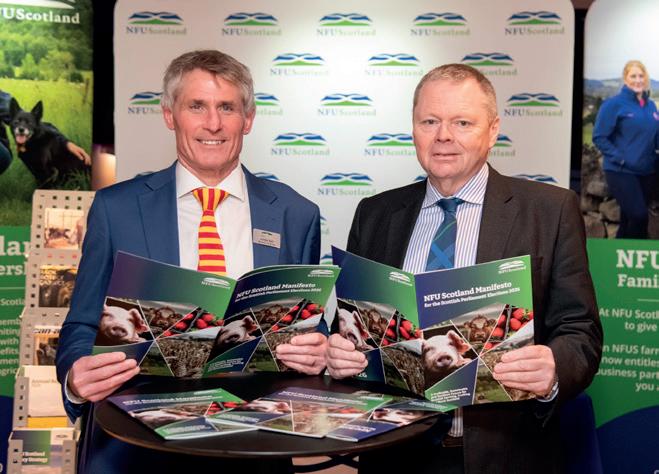
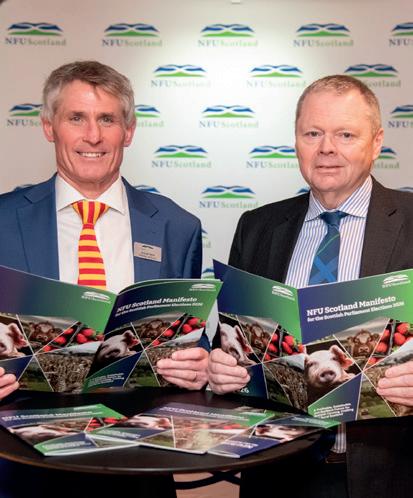
NFU Scotland has published its manifesto ahead of the 2026 Scottish Parliamentary Elections. It sets out key asks, including a multi-annual funding commitment, a fair and practical transition to the new support framework, policies that protect and enhance food security and supply chains, investment in skills, infrastructure and innovation, and regulation that is workable and proportionate. We are asking the next Scottish Government and Scottish Parliament to support our sector which delivers for food, climate, biodiversity, and people within rural communities. To read a digital copy of our manifesto please see here: NFU Scotland | manifesto2026.aspx
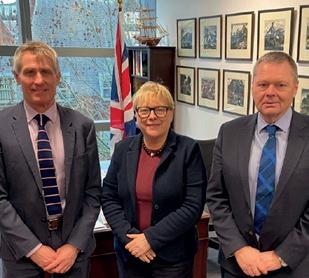
NFU Scotland President, Andrew Connon, and Deputy CEO and Director of Policy, Jonnie Hall were in London last month to meet Scottish MPs across all political parties, as well as the UK Government’s Minister of State for Food Security and Rural Aff airs, Dame Angela Eagle MP. Prior to Christmas, the UK Government announced signifi cant changes to Inheritance tax, increasing the threshold for APR and BPR from £1 million to £2.5 million. We went to Westminster to discuss this, as well as other important issues which impact our members, such as trade deals and the Sanitary and Phytosanitary agreement, as we continue to lobby to support a profi table and sustainable Scottish agricultural sector.
Last month the Scottish Government announced its fi nal budget ahead of the Scottish Parliamentary Election. They confi rmed over £660 million in support for farmers, crofters, land managers, and rural communities, including continued direct payments and investment in transforming farming and food production. While we welcome a commitment of £26 million for agricultural modernisation, the fl atline of schemes such as the Basic Payment Scheme, Greening, Less Favoured Area Support, and Voluntary Coupled Support still represents a real terms decline in support, given rising costs. We also welcomed the Scottish Government set out spending plans for agricultural support to 2028/29.
Last month, NFU Scotland gave oral evidence to both the Rural Aff airs and Islands (RAI) Committee and Education, Children, and Young People (ECYP) Committee. Lorna Scott, Senior Policy Manager for Climate Land and Business, gave evidence on the Draft Climate Change Plan and highlighted the importance of our primary producers to mitigate climate change emissions, restoring nature, and supporting biodiversity, while producing food. She also underlined that it is
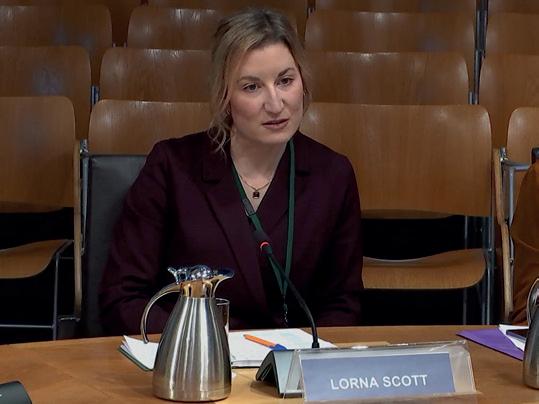

key that our agricultural businesses remain viable, particularly when we already deliver so much for food, climate, nature, and rural communities.
Jonnie Hall, Deputy CEO and Director of Policy, gave evidence to the ECYP Committee on Scotland’s Rural College (SRUC). Jonnie highlighted that SRUC is key for building the foundation of skills and knowledge that support our sector and that SRUC needs to be adequately funded to support our next generation of farmers and crofters.
Unit 7 Meadows Industrial Estate, Oldmeldrum, AB51 0GN
Tel: (01651) 873083 Mob: 07967 992454
Email: sandy@murrayduguid.co.uk
• Grass Seed Mixtures
• Fodder Crops
• Conservation Mixtures
• Root Crops
• Organics
• Amenity Mixtures
• Cereals & Oil Seeds
• Green Manure Mixtures
• Cover Crops
SALES REPRESENTATIVES:
Graeme Christie: Mob 07974961749
Ian F Moir: Mob 07721517974
Blended, packed and distributed from our Oldmeldrum store since 1982
Direct support will remain the backbone of agricultural policy in Scotland. The task ahead is to ensure that backbone is strong enough to support productive businesses, flexible enough to evolve, and smart enough to deliver for food, climate, nature and rural communities alike


Jonnie Hall Deputy CEO/Director of Policy
As we move deeper into discussions about Scotland’s post-2027 agricultural policy framework, it is increasingly clear that the decisions we take now on direct support will shape the resilience, productivity and sustainability of Scottish farming and crofting for decades to come. We should be under no illusion about the scale of the challenge ahead. While there is much work still to be done, it is increasingly clear to me that the future direct support system must evolve from the legacy schemes of today, without
undermining the businesses and people who depend on them.
Future direct support must keep people actively farming and crofting across the whole of Scotland, while enabling our sector to meet its climate, nature and food production responsibilities. Direct support will continue to play a critical role in achieving that balance.
One thing is beyond question – direct payments must remain a core part of agricultural support in Scotland beyond 2027. While some stakeholders would prefer a more rapid transition away from direct support, there is broad recognition, including from the Scottish Government, that Scottish agriculture needs a stable
underpinning payment to maintain active land management and food production.
That said, doing nothing is not an option. The challenge is to evolve direct support so that it better aligns with clearly defined outcomes, and is more clearly targeted at active agricultural businesses.
The question is not whether we retain direct support, but rather how we shape it to deliver resilience for farm businesses, as they adapt and deliver, while providing value for public investment.
Eligibility remains one of the most sensitive and important building blocks of any future support system. To me, future direct support must be rooted in active agricultural activity, while also recognising
that modern farm businesses deliver a wider range of public benefits beyond food production alone.
The concept of the ‘active farmer’ will therefore need to be refreshed. This is not about excluding genuine businesses, but about ensuring support is directed to those actively managing land and livestock and delivering outcomes. That means no longer using narrow or outdated definitions.
We must avoid poorly designed reforms that might destabilise farm incomes and hollow out rural communities. Any changes to eligibility must be workable, proportionate and grounded in the realities of Scottish agriculture.
Another critical area is around land classification. We must swing the support pendulum towards those delivering the actions needed and, as a result, we also need to think about moving away from the existing rigid Payment Regions of the Basic Payment Scheme (BPS) and Greening towards a land-cover-based approach – arable land, permanent grassland and rough grazing – for greater fairness, clarity and alignment with outcomes.
A greater focus on land types, or rather Payment Regions, would enable more support to focus on how
agricultural enterprises are managed rather than the areas of land they occupy. Crucially, it would also open the door to a whole-holding perspective, where the full contribution of a farm or croft –including currently ineligible features – is recognised when it delivers climate, biodiversity or landscape benefits.
However, how funding is weighted between land types will be just as important as how those land types are defined. Current inequalities within the system must be addressed.
The future of LFASS, and how we better target continued support for disadvantaged areas in the future is another major structural question. There is clear merit in exploring a more conditioned approach such as Voluntary Coupled Support (VCS), including top-ups for remoteness – which would directly link payments to activity, breeding livestock, and outcomes.
This could offer a more coherent way of supporting more fragile areas and livestock systems, particularly in the uplands and islands, while avoiding duplication and complexity. However, any shift in this direction must be approached with caution. Payments must genuinely reflect disadvantage and not inadvertently overor under-compensate areas or systems.
The key test will be whether any new mechanism continues to recognise the real costs of production, remoteness and peripherality, while supporting the wider rural economy and maintaining critical mass in our livestock sectors.
Such an approach would also keep the support for disadvantaged areas ‘live’, rather than the ‘historic’ LFASS payments which over time increasingly fail to target support to active farmers and crofters.
Future direct support will be shaped by ‘conditionality’ in that, to receive a full payment, businesses will need to undertake management actions. We should not shy away from that – first, it will justify continued funding and, second, it will target that funding to the active.
Tier 2 must move beyond the Enhanced Greening being rolled out in 2026, 2027 and 2028. Tier 2 must offer direct support for agricultural practices that genuinely drive emissions reductions, soil health, and biodiversity gains. Importantly, this must work for all farm types, sizes and locations, including common grazings and crofting systems.
Tier 2 must also recognise and reward those already doing the right thing, while incentivising others to take the next step.
Small producers are integral to Scotland’s rural fabric and future direct support must work for them. A ‘one-size-fitsall’ approach to conditionality and compliance, risks being disproportionate for smaller businesses.
A voluntary, proportionate and ‘light touch’ approach for small producers’ supported by bespoke advisory services and funded through mechanisms such as front-loading of direct support payments, warrants serious consideration.
The objective must be to keep small producers viable, engaged and supported, not marginalised by cost and complexity.
To bring lasting, effective and just change, this cannot be about fine-tuning existing schemes.
Direct support will remain the backbone of agricultural policy in Scotland. The task ahead is to ensure that backbone is strong enough to support productive businesses, flexible enough to evolve, and smart enough to deliver for food, climate, nature and rural communities alike.
The foundations are being laid. Now we must get the structure right.
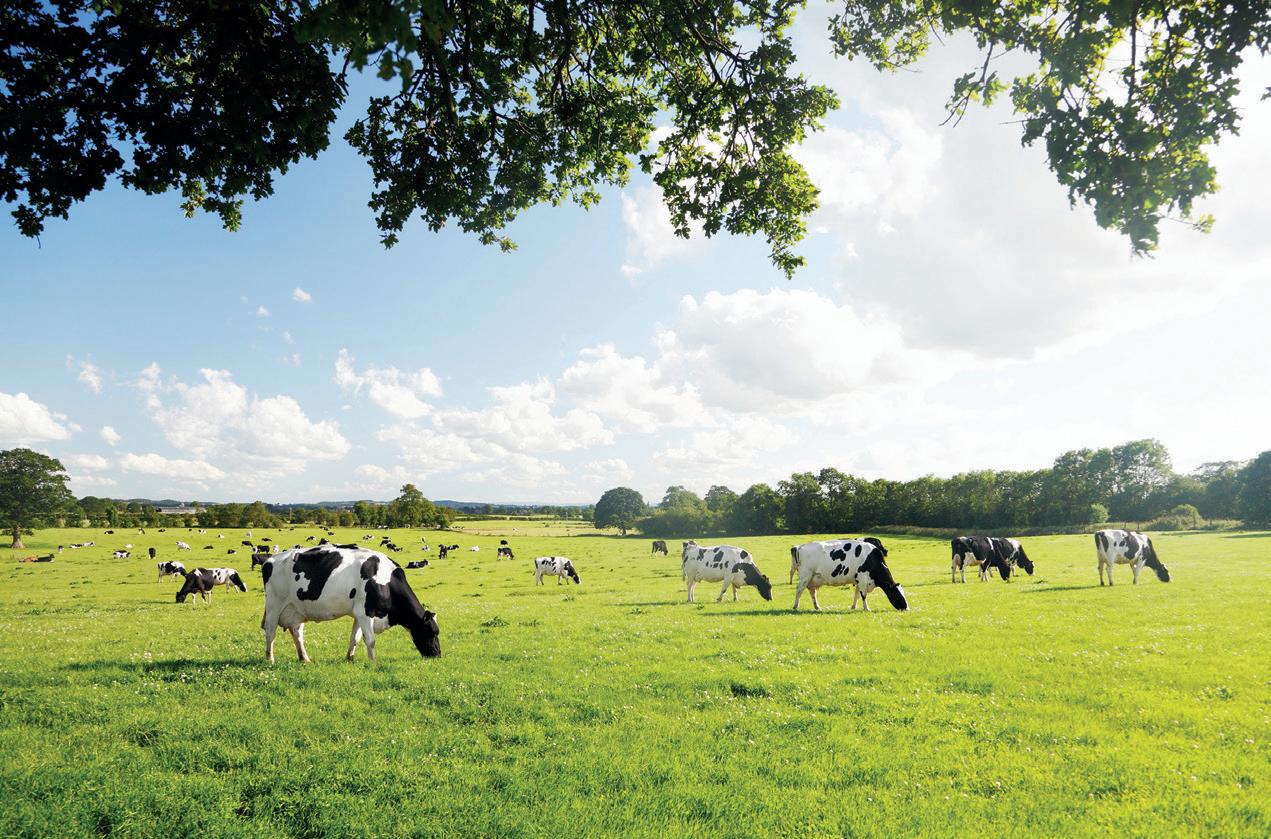
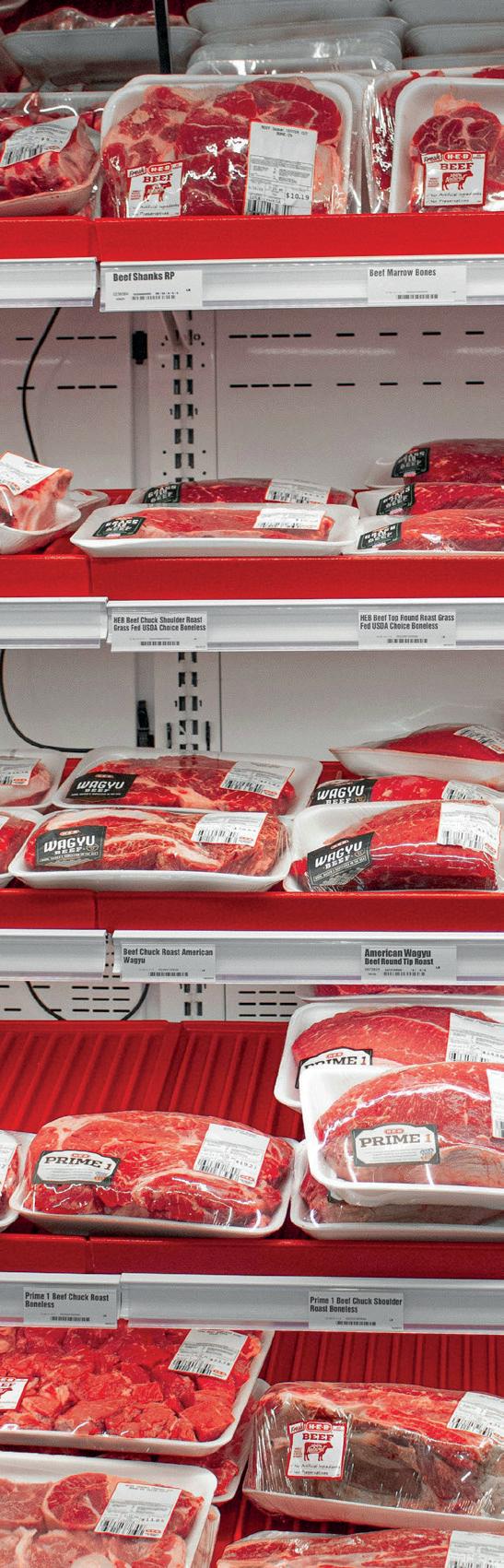


Lucy McGillivray Policy Manager
The recent ShelfWatch report has some interesting fi ndings for red meat, and it’s always useful to provide some sector commentary on the results to put it into perspective. In 2025 the beef sector had an unprecedented surge in prices. This was due to strong demand for cattle across the UK, with a perceived tightening of supply. Towards the end of 2025, the increase in prices put pressure on processors and their margins, and the volume of demand fell back slightly with reduced throughput in abattoirs. This has meant some retailers have reacted by buying cheaper imports from Australia and Uruguay, albeit with small increases.
This is the fi rst time ShelfWatch has picked up on imported beef from the southern hemisphere, and we have raised the reports with retailers, underlining the dangerous precedent this sets and damaging impact it has on producer confi dence. These results underline the importance of the continued monitoring of what is happening on shelves to emphasise our key asks for labelling and
equivalent standards for imports.
In terms of the price audit, beef prices for producers have stabilised going into 2026, which looks like it has carried through to consumer prices, with a notable decrease in both UK and Scottish. Retailers have spent much of the last year trying to absorb the price increases of beef rather than passing through to the consumer. It’s been noted as their way of keeping the consumer in the category. However recent audits show modest increases have been passed through.
Moving onto lamb, in 2025 there was continued strong demand for domestic and exported lamb. Generally imports rose in the fi rst half of 2025 but fell back towards the end of the year. From the January 2026 Shelfwatch, it is clear from the level of imports the 2021 Free Trade Agreement is being fully utilised.
The sheep sector has seen strong trade throughout 2025, with stable prices supported by slow throughput towards the end of the year. There was a seasonal uplift in December, but a lower level of slaughter compared to 2024 potentially tightened supply, which could have impacted the supply of domestic lamb.
In conclusion, while there are no huge shocks in the recent ShelfWatch results, the increase in imports, especially in beef are worrying and shows the importance of our continuous engagement with the retailers.


Bob Carruth Policy Manager
Slurry and manures are a valuable source of nutrients on farms. However, they must be handled and managed carefully to maximise their fertiliser value and to prevent pollution
Any dairy, beef or pig farm or croft that produces slurry must have suitable facilities and management systems in place to collect, store and manage it safely. On dairy farms, this also includes dairy washings and parlour drainage, which must be collected and contained within the farm’s slurry storage system.
In 2021, the Scottish Government introduced transitional deadlines for compliance with new General Binding Rules (GBRs). These rules set out the minimum legal requirements for collecting, storing and managing slurry and/or anaerobic digestate (AD) on farms and crofts.
The transitional period is now over and, from 1 January 2026, all farms and crofts producing slurry must meet minimum slurry storage capacity requirements: 22 weeks of storage for livestock slurry 26 weeks of storage for pig slurry
These storage capacities are a legal requirement.
Guidance on how to calculate the slurry
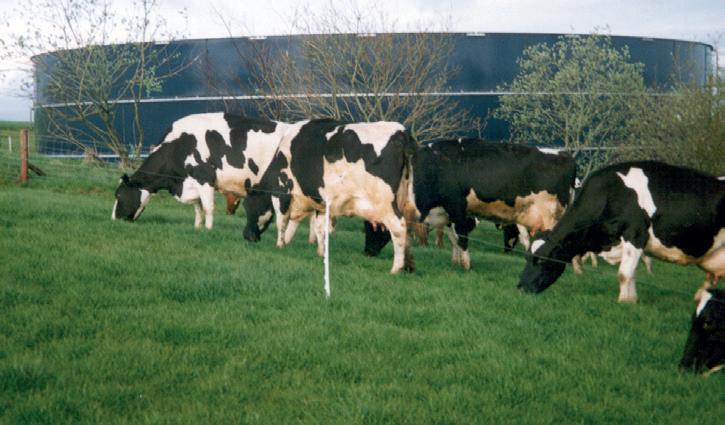
storage capacity required for your farm is available on the Farming and Water Scotland website: https://www.farmingandwaterscotland.org/ know-the-rules/
As with slurry storage, transitional arrangements have also applied to slurry spreading. The Scottish Government has set 1 January 2027 as the final transition date for the use of precision slurry spreading equipment on smaller farming operations.
Since January 2022, farms and crofts with: fewer than 100 milking cows, fewer than 200 beef livestock units, or fewer than 800 fattening pigs or sows,
have been exempt from Water GBR 18. This exemption has allowed them to continue spreading slurry using a tanker fi tted with a low-trajectory splash plate (inverted splash plate).
All other farms and crofts, as well as agricultural contractors applying slurry or AD, have been required to use precision spreading equipment since January 2022.
This exemption for smaller livestock farms and crofts will conclude at the end of 2026.
The use of high-trajectory slurry spreading equipment – including some splash plate arrangements, rain guns and Moscha swivels – has been illegal in Scotland since January 2022.


Lorna Scott Policy Manager
The Scottish Government published its Draft Climate Change Plan at the end of last year, setting out a proposed pathway for Scotland to reach net-zero emissions by 2040. Given the central role agriculture plays in Scotland’s economy, environment and rural communities, NFUS was invited to provide evidence to the Rural Aff airs and Islands Committee in January.
The Draft Plan identifies agriculture as a key sector for emissions reduction and proposes action through future agricultural support policy, improved efficiencies and innovation, and the decarbonisation of non-road mobile machinery. For NFUS, it is essential that any measures introduced are practical, achievable, and economically viable for farmers and crofters. Only policies that support investment and strengthen business resilience will deliver meaningful progress.
As Scotland’s primary land use, sustainable and profi table agricultural production must remain at the heart of our national climate ambition. Policy proposals must complement, not
constrain, agricultural activity, and must not undermine farm competitiveness or national food security.
NFUS is calling for a balanced approach that recognises the signifi cant effi ciency gains already being delivered across the industry. We also want greater recognition of the wider environmental value of Scottish farming, including the benefi ts of livestock systems and the important role of on-farm carbon sequestration.
By working with farmers and crofters, Scotland can achieve emissions reduction in a way that protects food production, supports rural livelihoods and delivers long-term environmental outcomes.


CLisa Hislop Policy Manager
lear and honest food labelling is essential if consumers are to make informed choices and if Scottish producers are to receive fair recognition for the food they produce. Yet despite strong consumer interest, current labelling rules often fall short. This year, we are setting our key asks for labelling reform.
Our research shows that more than 80% of consumers say the origin of their food matters to them, with demand even higher in Scotland. However, fewer than half feel they have enough information to understand where their food has been produced. Inconsistent rules, vague declarations and misleading provenance cues have created a system that lacks transparency and risks eroding trust.
Country of origin labelling remains one of the most pressing concerns. While some improvements were introduced in 2020, signifi cant gaps remain. Requirements differ depending on
whether food is sold in retail, wholesale or out of home settings, leaving consumers without clear information in many circumstances. Particularly when eating out, where almost a quarter of calories consumed in Scotland are now purchased. We are calling for existing retail principles to be extended so
We have long had concerns about unregulated use of flags and other provenance imagery, which can inadvertently mislead shoppers when products are not fully Scottish or British. Clear standards are needed to prevent the co-mingling of domestic and imported products through branding alone.
Our research shows that more than 80% of consumers say the origin of their food matters to them, with demand even higher in Scotland
that origin information is visible and meaningful at every point of sale. The problem is particularly acute for processed meat. Once products are cured, cooked or combined, origin requirements often fall away, allowing mixed origin declarations that are easy to miss. This can result in products strongly associated with Scottish provenance containing imported ingredients without obvious clarity for the consumer.
Taken together, these issues point to the need for a comprehensive review of food labelling. By strengthening rules on origin, provenance and transparency, governments can empower consumers, support high standard domestic production and reinforce confidence in Scotland’s food system. NFU Scotland stands ready to work with industry and policymakers to help deliver a labelling system that is fair, clear and fit for the future.
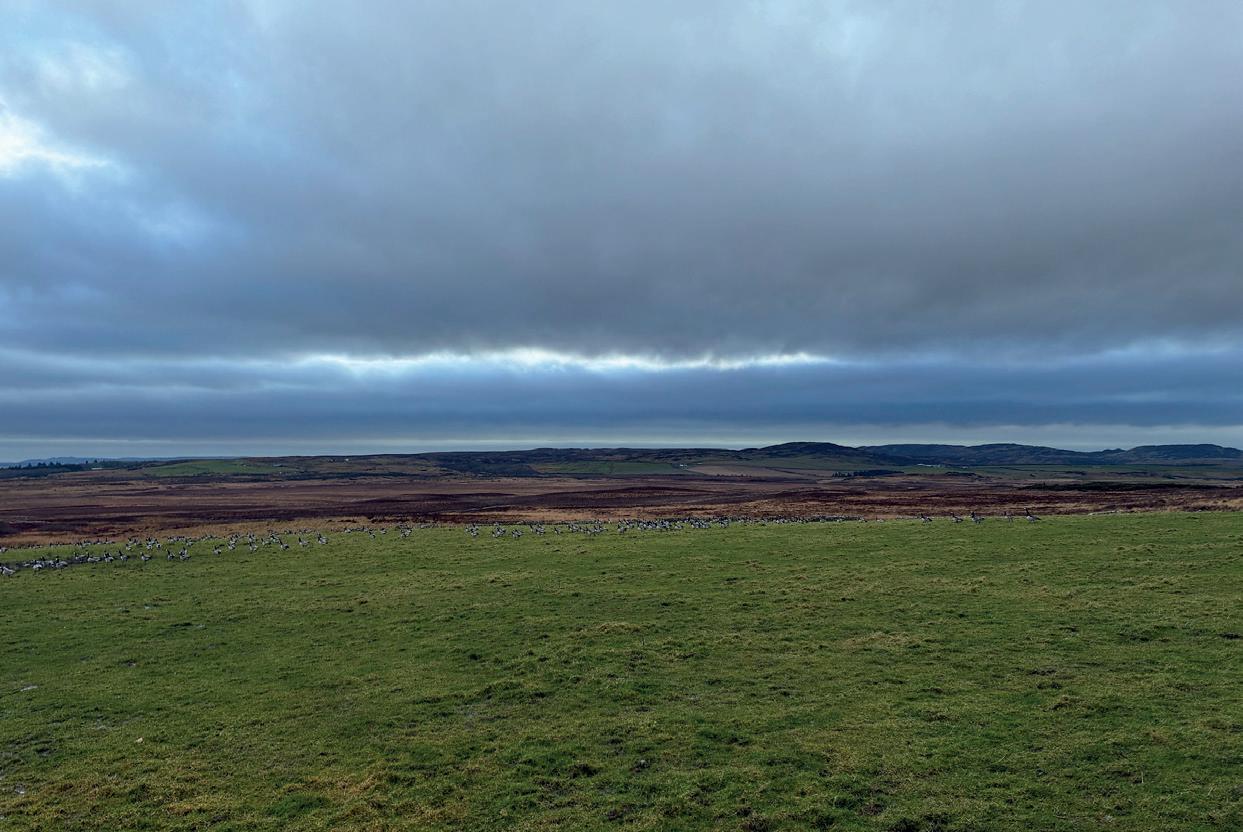


Georgia Watson Climate, Land & Business Policy Manager
In the last week of January, Argyll and Islands Regional Manager
Lucy Sumsion and I visited Islay. Our trip was extended due to weather conditions and ferry cancellations, experiencing fi rst hand what many Islay residence face on a regular basis; critical ferry cancellations which disrupt the local community businesses and agricultural operations. A major cyber attack on the Co-op, the main supermarket on the island, really exposed the vulnerability of the islands supply chains and food security.
My purpose for the visit was to witness the impact of different species on the island’s agricultural productivity. Lucy and I visited Craigens Farm on the west coast of Islay, run by Craig and Petra Archibald. Craig’s farm has been affected for generations and his knowledge of the
behaviours and impacts due to increase in number of geese are extensive. Having a tour of the fi elds, you are surrounded by fl ocks of geese, the “barnies” rising, then resettling, and the protected Greenland white-fronted largely staying put.
That afternoon we had a meeting of the
I was struck by the resilience and solution based innovation of the farmers and crofters I met on Islay
local goose group where other members shared their own experiences of the impacts: reduction of all silage yields, rising costs of additional reseeds, inability to grow autumn sown cereal crops and delayed sowing of spring cereal crops, damage to soil health and structure due to
compaction by geese, causing capping especially on wetter peaty soils. All leading to farmers having to adapt their way of farming around the geese, and many feeling they cannot carry out their farm’s true potential.
The negative impact that excessive numbers of geese, particularly Greylag and Barnacle, can have on other species such as corncrakes, as well as welfare of their own species, reinforces NFUS’ position on need for pragmatic species management to achieve biodiversity. The group stressed the continuing delay of the National Goose Plan delivery has exasperated these negative impacts.
At an evening meeting joined by more members, I heard about the impact of the increasing numbers of White Tailed Eagles, as well as the continuing issues with managing the number of deer. I was struck by the resilience and solution based innovation of the farmers and crofters I met on Islay, as well as a strong sense of how integral continued government support will be on these issues.
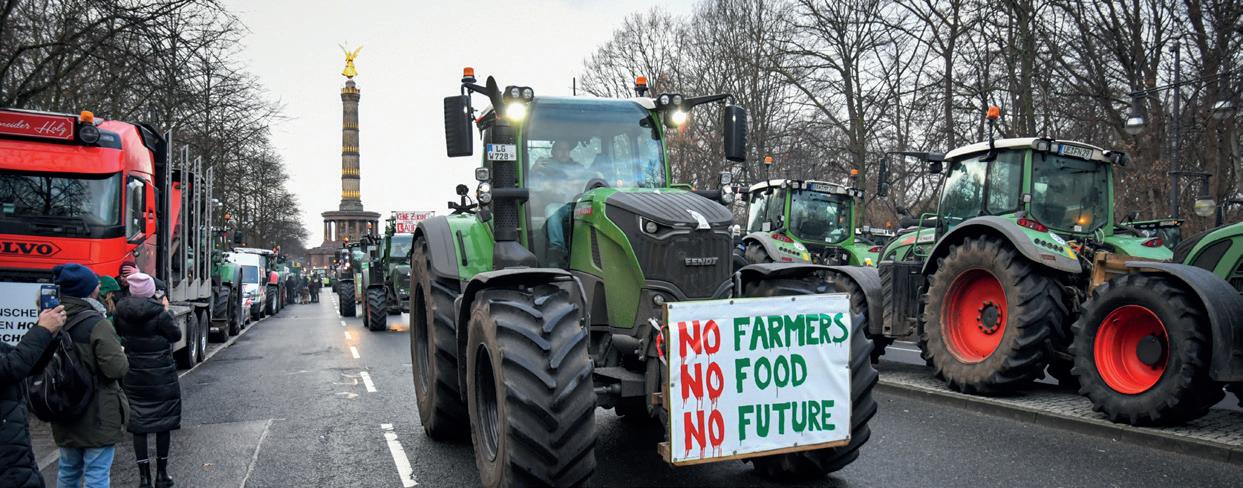


David Michie Senior Policy Manager
Farmers in the EU are unhappy. There have been protests. They don’t like the look of the new Common Agricultural Policy. Although its fi rm future funding commitment and secure direct payments don’t look too bad from a post-Brexit Britain point of view. They don’t like the proposed South America trade agreement (Mercosur). But this is far
better than the UK’s New Zealand and Australia trade deals.
They are a lot happier about proposed ‘mirror clauses’ for imports of crop products to the EU. This would require reciprocal pesticide use requirements between trading countries. Any country wanting to trade with the EU will have to abide with its high regulatory standards. This is controversial, legally dubious, and exporting countries could raise a WTO (World Trade Organisation) dispute. But this mirror clause would massively benefi t EU farmers as it would reduce cheap imports. And the global trade rulebook isn’t followed as much nowadays.
So what? You might ask. We’re out
of the EU. Well… the UK government is currently negotiating a closer trading relationship (‘dynamic alignment’), that would sort-of bring us into the club. And, technically, will mean we’re within the EU trading bloc applying these mirror clauses.
Despite our lobbying efforts, dynamic alignment may well have negatives, including the potential loss of some pesticides. But being back within a strong trading bloc will also have its positives. Only allowing imports produced to our same high quality standards is something you have asked for, for a long time. Closer alignment with the EU might just make it happen.


Penny Middleton Policy Manager
Defra ended 2025 launching their ambitious animal welfare strategy. Announcing their intention to review the use of cages for laying hens, farrowing crates for pigs and address welfare concerns around tail docking and castration. They wasted no time in progressing their ambitions by announcing two consultations on 12 January, one on tail docking and castration and one on the use of cages for egg production.
Defra are seeking views on reforming the legislation on lamb castration and tail docking, the proposals seek to ensure that, where castration and tail docking is carried out, pain caused to the animals
by these procedures is appropriately minimised. They also seek to align the devolved nations and ensure that a consistent approach is adopted across the UK.
Whilst we welcome the recognition in the consultation that it may not be possible to avoid castration or tail docking in some situations, we do have concerns around the lack of practical and fully effective alternatives. We recognise that the industry should be moving towards more humane methods, but the industry needs government support for extensive testing and development, to ensure alternative permitted methods do indeed deliver better welfare and are pragmatic, feasible options.
Scottish Government consulted on the use of cages in laying hens back in 2024 and although this is a UK wide consultation, they have committed to including the responses they received
back in 2024 as part of their analysis. The consultation seeks views on the possible impacts of a ban on cages for animal welfare and businesses, seeking the views from business of their experiences and likely plans for the future.
Although we have sought input from members and will be submitting a NFUS response it is vital that you take the time to put in your own response – there will be a high number of submissions from those opposed to all forms of castration and tail docking and the use of cages, so it’s essential that the practical farming perspective is well represented. The government consultations close on 9 March but if you are reading this before then please do respond, you can fi nd the consultation on the Defra consultation web pages.
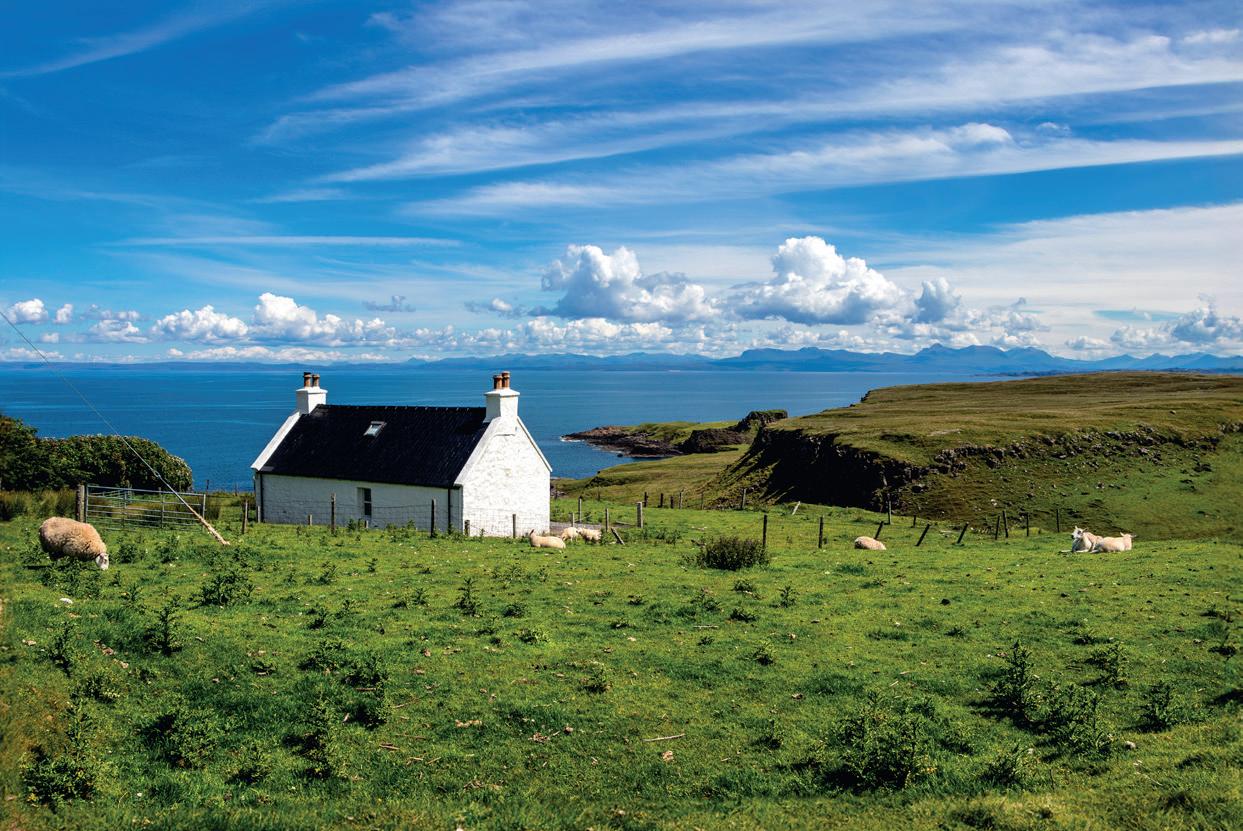


Rhianna Montgomery Policy Manager
The Scottish Budget 2026-27, published on 13 January 2026, confirmed that the Small Business Bonus Scheme (SBBS) will continue at existing thresholds for most small properties for the next three years. The Budget also introduced other business rate measures, including reduced rate multipliers and new retail, hospitality and leisure reliefs, to help manage the impact of the 2026 revaluation.
However, a signifi cant change affecting rural landbased businesses is the decision to remove SBBS relief for sporting rates – the nondomestic rates currently payable on activities such as commercial shooting and deer forests from 1 April 2026.
Under the new arrangements, shoots and deer forests will no longer qualify for the Small Business Bonus Scheme, except in very narrow circumstances where operations are carried out solely
for deer management, environmental management, vermin control, or a combination of all.
What this means for farmers and rural landbased businesses:
Higher business rates bills: Farms and estates that currently benefi t from SBBS on sporting assets, including shooting rights and deer forests, could see those reliefs withdrawn, leading to signifi cantly higher nondomestic rates bills from 2026–27 onwards.
Phased cost increases: A transitional relief scheme will phase in these increases over three years, with ratepayers initially paying around 25 % of the increase in their net bill in 2026–27, rising to 50 % and 75 % in subsequent years. Critics say this offers limited mitigation for longterm cost pressures.
Economic concerns: Rural organisations have emphasised that sporting activities contribute signifi cantly to the rural economy, including jobs, tourism and habitat management, and that removing rate relief without prior consultation may
undermine these contributions.
For many farmers who have diversifi ed or whose business models rely partly on sporting rights to support overall land management, these SBBS changes represent a material fi nancial shift that will need careful planning and, potentially, targeted support or policy adjustments to manage the transition.
We are working with other stakeholders to fully understand the impact of these changes and we welcomed that Minister for Agriculture and Connectivity Jim Fairlie MSP highlighted in the Scottish Parliament that concerns have been raised about the potential impacts of the budget proposal. He underlined that the Scottish Government recognises the vital role that rural land managers play in delivering on key outcomes, including reducing deer numbers and that he and the Minister for Public Finance have agreed to work together to better understand the concerns about the unintended consequences for small landowners, crofters and farmers.
• Culling and removal of all fallen stock
• Removal of butchery waste from commercial businesses
• Uplift of animals from Zoos and Wild Life Parks
• We can arrange the transportation of shoot & bleed animals to the abattoir
• We can also arrange for the cremation of equine animals which includes the return of the ashes
• Transport to SAC
• TSE Sampling





















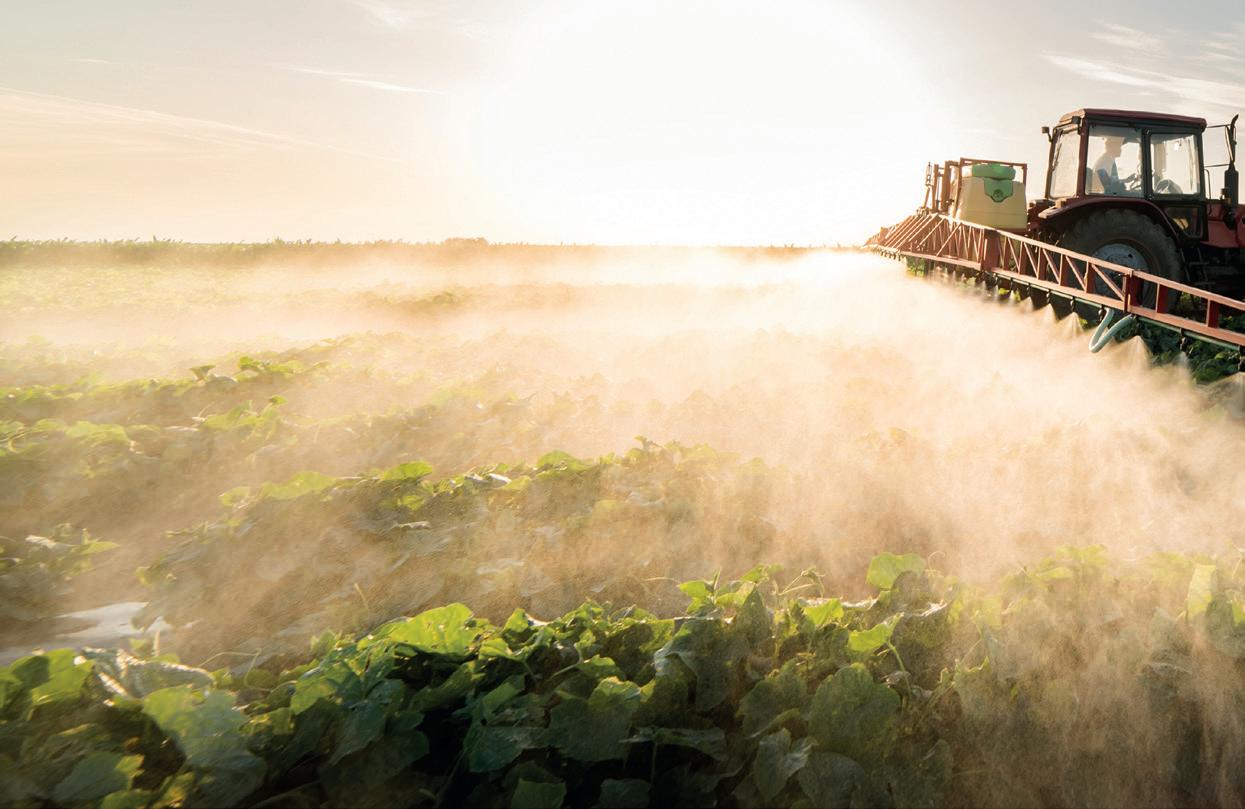

Duncan Macalister Vice President
Fertiliser has always been a story about industrial chemistry. But in 2026, it is equally a story about geopolitics, infrastructure, energy, and national resilience.
Scottish farming sits within a supply chain that begins far from Scottish soil. The UK imports most of the ammonia used to manufacture nitrogen fertiliser, and Scotland (and indeed, the UK) –without large-scale fertiliser production of its own – depends on a global logistics system optimised for trade volume, not agricultural security. When that system fractures, farmers and crofters feel it first, and absorb it longest. Globally, we are a minnow of a market for fertiliser. We’re not top priority for exporting countries, and
our supply chain infrastructure isn’t great. The war in Ukraine made this painfully clear. With Russia and Belarus controlling significant global shares of nitrogen, phosphate and potash exports, conflict in Europe destabilised energy markets, tightened trade routes and inflated input costs. Fertiliser may have remained technically exempt from sanctions, but exemption did not equal stability. Energy prices spiked, and energy is the most important cost in nitrogen fertiliser manufacturing. A combination of high manufacturing costs and low supply of fertilisers caused an unprecedented spike in fertiliser costs. For farmers already operating in high-cost environments, the shock exposed a deeper vulnerability:
that energy security is essential for food security, and there was no clear strategy for either.
Yet supply chain risk is only half the picture. The other half is opportunity.
Scotland is not fertiliser-rich, but it is renewable-energy rich. The ingredients required to manufacture green ammonia – di-nitrogen gas pulled from the air, synthesised using renewable electricity rather than imported natural gas – are already here. Wind, tidal power, and anaerobic digestion are expanding at pace. Deep-water ports exist. Net-zero ambition is written into national policy.
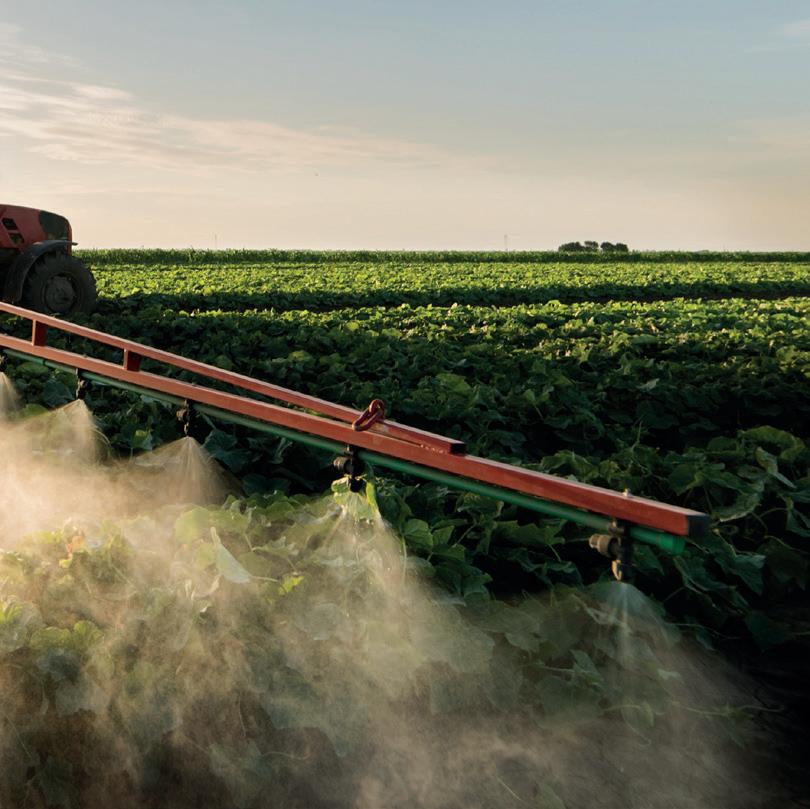
What remains unwritten is the strategic link between energy, fertiliser, and food.
Green ammonia – nitrogen fertiliser manufactured using renewable energy –would not simply decarbonise nitrogen – it would shorten the supply chain, reduce exposure to volatile global markets, and give Scottish agriculture a significant economic and environmental advantage.
The ocean at the edge of the conversation
While ammonia offers a renewable route forward, Scotland’s coastline offers a biological one.
Seaweed and kelp extracts are increasingly recognised for enhancing micronutrient uptake, improving plant stress tolerance, and supporting soil biology. Unlike mined phosphate or imported potash, marine biomass is renewable and requires no synthetic feedstock. Traditionally used on crofts for centuries, it plays a role in holistic, cultural, and circular farming systems. However, while valuable locally, it is not a scalable solution at the national level.
Closing the loop
But resilience cannot rely on industry alone. It must be distributed and circulated back into farms themselves.
Scotland has a livestock sector capable of generating vast organic nutrient streams. Anaerobic digestion

The most compelling fertiliser model for Scotland may not be a single product, but a system design:
• Blue fertility from kelp and seaweed bio-extracts
• Green nitrogen from renewable ammonia synthesis
• Circular nutrients recovered from slurry, digestate and farm by-products
• A hybrid approach that blends all three is not theoretical – it is emerging, evidence-led, and increasingly achievable.
To unlock this transition, Scotland needs:
• Strategic investment in renewable nitrogen manufacturing
• Policy incentives for on-farm nutrient recovery and precision use
may have remained technically exempt from sanctions, but exemption did not equal stability
plants already return digestate to land. Progressive farm businesses are now going further: stripping ammonia from slurry, pelletising digestate solids, integrating clover in their crops to fix nitrogen from the air, and trialling biofertiliser blends that reduce reliance on synthetic fertiliser altogether.
Closed-loop fertiliser systems don’t just recycle nutrients – they improve food security. They reduce the volatility imported by global markets and replace it with something more dependable: local biology, measurable nutrient recovery, and farm-level decision-making.
• A mindset shift – from global buyer to local systems builder
• A variety of options and investment in opportunity
The fertiliser conversation must move beyond price per tonne and into risk per decade. Farmers are not passive participants in this story. Many of the solutions – clover integration, slurry ammonia capture, digestate solid separation, seaweed bio-blends, precision nutrient mapping – can begin at farm scale today.
The question is not whether Scotland should change its fertiliser future, but who will lead it. The answer, increasingly, is farmers and crofters willing to trial, measure, and iterate new fertility models on their own land.
Fertiliser resilience will not be built in boardrooms alone. It will be built in sheds, slurry tanks, digesters, trial plots and coastal processing yards – and in the curiosity of farmers prepared to explore alternatives that improve margins, soils and security in equal measure.
Scotland has the energy. It has the coast. It has the innovation. Now it needs the infrastructure – and the collective confidence – to connect them.
The next supply shock is inevitable. Strategic dependency is not. The future of fertiliser in Scotland can be cleaner, shorter, smarter – and ours.
EAST CENTRAL


REGIONAL MANAGER
Kate Maitland


07919 001 23 kate.maitland@nfus.org.uk
Following on from the recent AGM of the East Central Regional board, your representatives at national level for the coming year have been appointed. They are there to represent you and your region, so make sure you use them.
Robert Bell from West Fife and Kinross Branch and Val Smith from the Perth Branch remained in post as Chair and Vice-Chair respectively.
Regional Board
Chair:
Robert Bell, West Fife and Kinross
Vice Chair:
Val Smith, Perth Branch
Committee/ Working Group members
Livestock:
John Ritchie, Crieff Branch
Milk:
Andrew Wilson, North East Fife Branch
Environmental and Land Use: Ian Sands, Perth Branch
Legal and Technical:
Carolien Haxton Perth Branch
LFA:
Finlay McIntyre, Highland Perthshire Branch
Combinable Crops:
Amy Geddes, Angus Branch
Pigs Committee:
Allan Bowie, North East Fife Branch
Poultry Committee:
Matthew Steel, Angus Branch
Potatoes:
Andrew Gray, Angus Branch
John McLaren, Crieff Branch
Soft Fruit and Field Veg:
Peter Thomson, Blairgowrie Branch
Martin Cessford, Angus Branch
James Porter, Angus Branch
Jen Marshall. Blairgowrie Branch
Ian Brown North East Fife
Next Generation:
Holly Hume, Angus Branch


Lorna Paterson


07786 860 453
lorna.paterson@nfus.org.uk
With excessive rain now replacing the ultra-heavy snow of January, members are praying for some warmer, drier weather as they navigate workload and plans for lambing, calving and drilling. We have not seen so much snow arrive in such huge quantities, nor disappear so fast for decades. Here’s hoping the current floodwater will disappear fast and soon too.
Despite the weather, the Huntly-Insch branch hosted a fantastic meeting to discuss Ecological Focus Area regulations with special guest, Olivia Donald. Over 40 members participated, illustrating the quality of speaker; importance of the subject and intelligence of Branch Chair, Graham Miller and Group Secretary, Rosslyn in listening to members’ needs.
Similarly, Banff shire branch hosted an excellent meeting with guest speaker, Alasdair Macnab who persuaded workshop-style groups to consider risks, costs, rewards and potential profi tability in various sectors. This event attracted some younger members, so well done to Chair, Gordon Mckilligan and Group Secretary, Richard Thomson for organizing.
Our AGM saw the retiring of Chair, Kevin Gilbert who has done a fantastic job
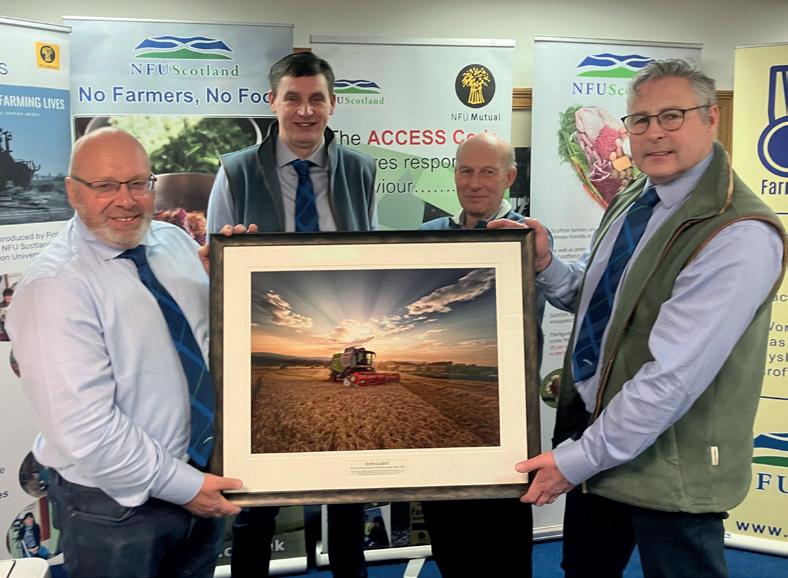
for our region. David Greer will have the challenging role of stepping into these shoes, alongside Vice-Chairs, Danny Skinner and Mike Davis. Cameron Ewen won the raffle to raise funds for RNCI (Royal Northern Countryside Initiative) so thank you to everyone for their generosity in donating £335. I cannot express how overwhelming it was to receive a massively generous gift from Kevin of a picture of “Tyne” by local artist, Angela Davidson. It is stunning, thank you Kevin. Following Kevin’s retirement, he took
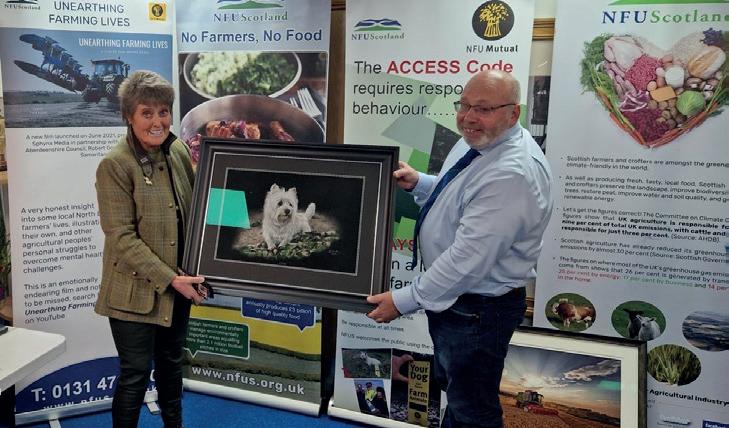
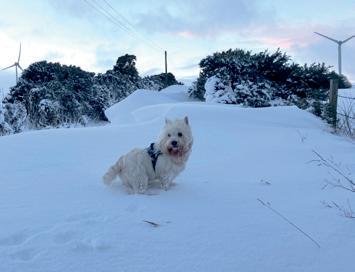
up the invite to participate on a local Reform party panel session with farmer and Reform candidates in the audience. The purpose was to help everyone better understand the importance of farming as a contributor to the economy, health and even the education sector. Kevin’s outstanding ability to cover the key challenges faced by farmers and illustrate all the positive outcomes delivered by the industry, was noted by all.
Lastly, we are currently planning our early March Combinable Crops meeting, which may be hosted at Port of Aberdeen so we can discuss the potential and exciting opportunities to export cereals, oilseeds and potatoes. This could be of great significance to our arable growers. We may look to invite our neighbours in East Central and Highland regions.
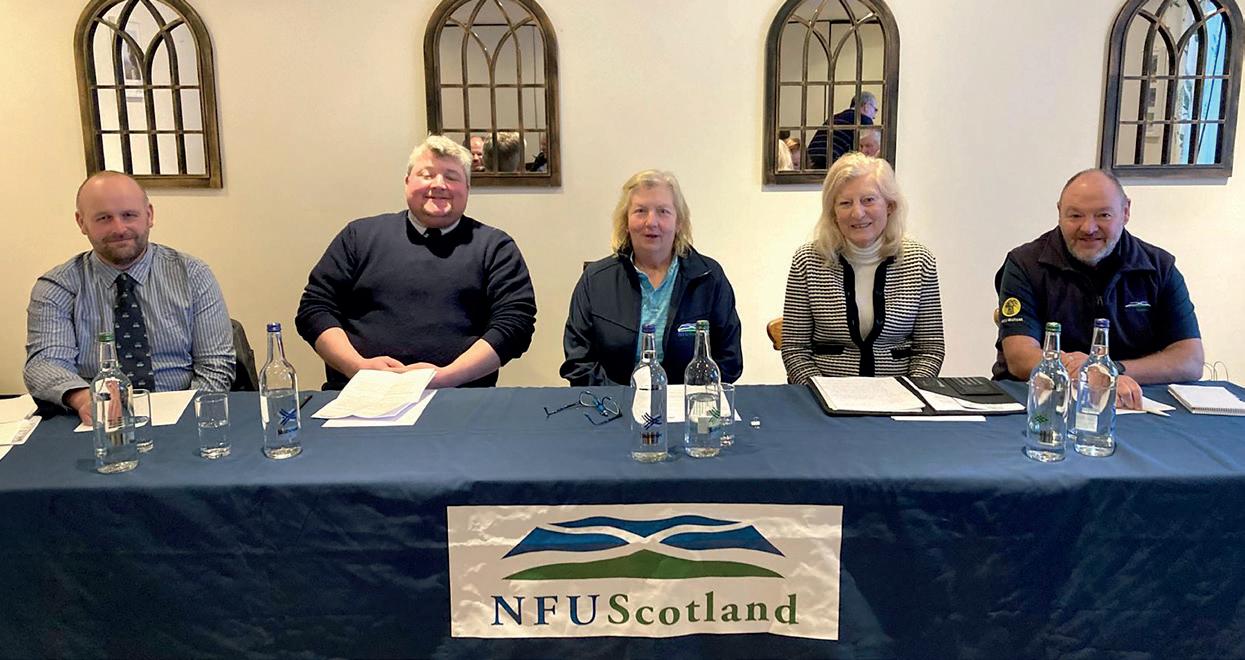

REGIONAL MANAGER Lucy Sumsion

07787 434 104 lucy.sumsion@nfus.org.uk
There was an excellent turnout at the A&I Regional Board AGM on Friday 16 January. The AGM was followed by a lively discussion panel featuring guest panellists
Bob Carruth (Milk Policy Manager, Scottish Dairy Hub), Finlay MacIntyre (Vice-chair, Less Favoured Areas Committee), Debbie Playfair (Vice-chair, Environment & Livestock Committee), and John Ritchie (Vice-chair, Livestock Committee).The panellists did an excellent job of answering tricky questions and entertaining everyone.
Thomas Cameron – Kintyre
David Colthart – Lorn
Flora Corbett – Mull
Alastair Dixon – Mid-Argyll (Vice-chair)
Robert Kennedy – Bute (Vice-chair)
John MacAulay – Lochaber & Sunart
Angus John MacKechnie – Tiree
Sybil MacPherson – Lorn (Chair)
Dan MacRae – Cowal
Scott McLellan – Islay, Jura & Colonsay
Richard McMaster – Arran
Andrew Millar – Kintyre
The winner of the Argyll & the Islands Stalwart Award was announced at the Regional Board AGM, with this year’s well-deserved recipient being Angus MacFadyen of Bragleenmore Farm, Kilninver.
Presented annually in memory of Lachlan MacLean and Bert Leitch – both highly respected figures in Scottish agriculture – the award recognises outstanding contributions to farming and rural life in the region. Angus is widely regarded as one of the most dedicated and influential advocates for farming in Argyll and the Islands.
Announcing the award, Sybil MacPherson, current Regional Chair and the fi rst recipient of the Stalwart Award in 2017, said: “This year’s winner is someone both Lachlan and Bert would have considered truly deserving. A highly respected farmer known for producing exceptional sheep and cattle, Angus has also worked tirelessly beyond the farm gate for the betterment of our industry. He has served as Chair of the Lorn Branch, Regional Board Chair for Argyll & the Islands, Chair of the ELU Committee, and as an NFUS Board member. His leadership of the Agricultural Forum for 19 years helped shape key initiatives such as the Argyll Hill Lamb Project.”
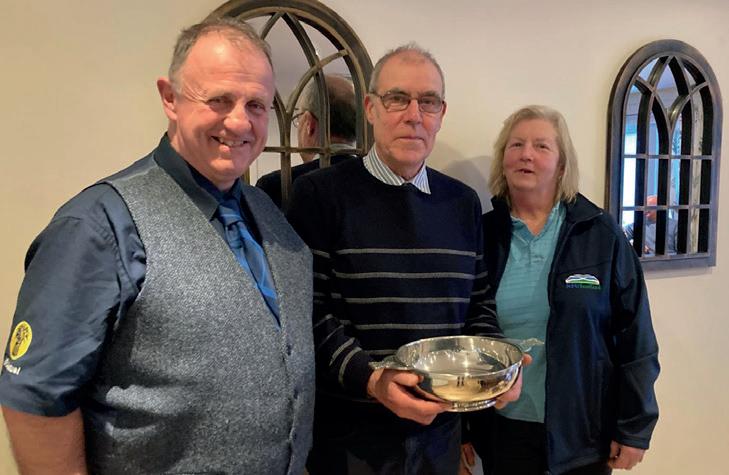







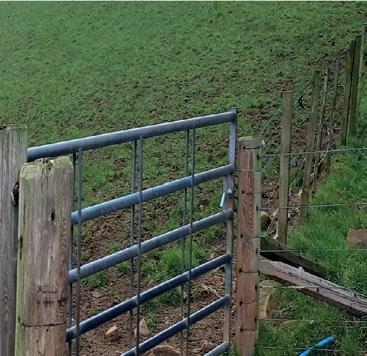
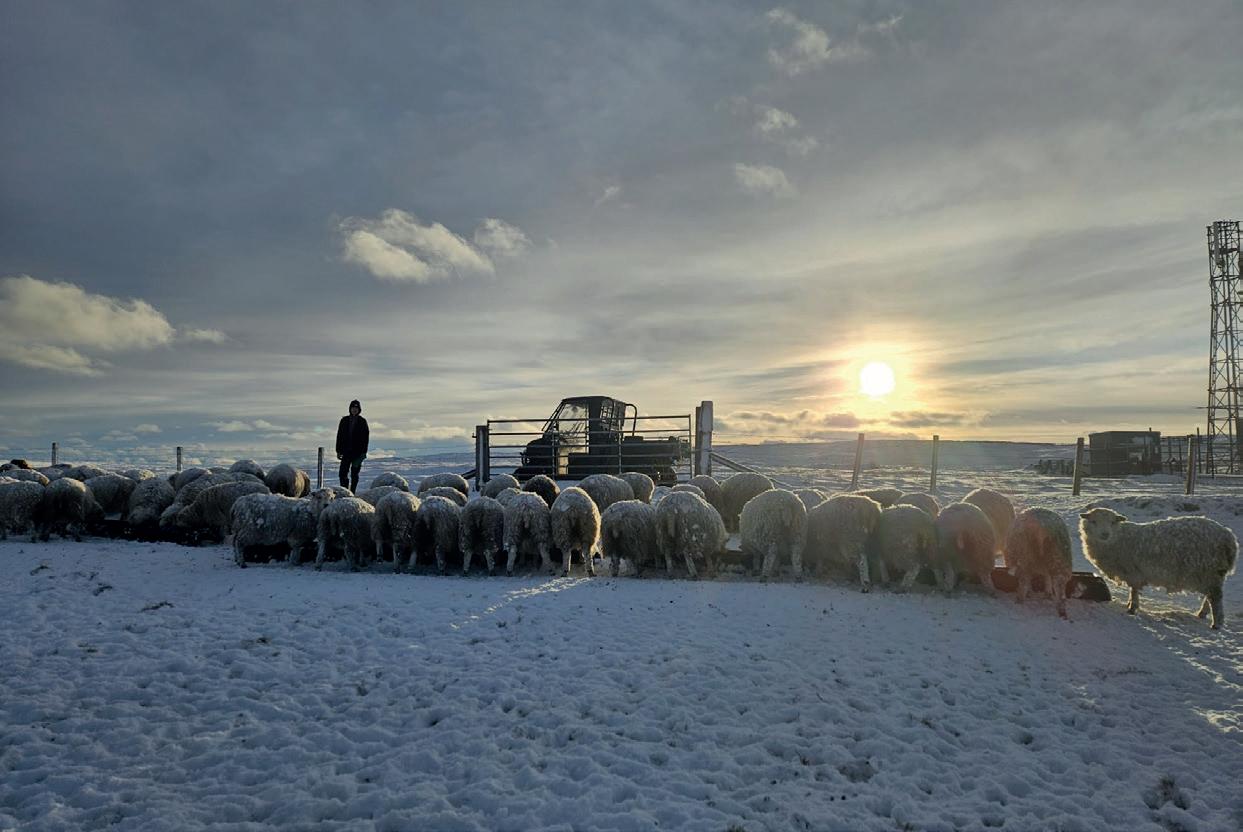
SHETLAND


REGIONAL POLICY ADVISOR Lee Smith
07554 741 030 lee.smith@nfus.org.uk
January was particularly challenging due to prolonged weather disruption. Heavy snowfall at the start of the year led to signifi cant delivery delays for local produce, including local milk, as roads remained uncleared for several days. This was followed by severe gales later in the month, disrupting ferry services and freight boats. Empty supermarket shelves made national news, highlighting the weakness of supply chains.
While ferry delays and cancellations are not unusual during Shetland winters, prolonged disruption creates challenges. Local producers once again proved their value during this period. Shetland Farm
Dairies worked tirelessly to keep milk on shop shelves, while local butchers ensured continued access to locally produced meat, and local eggs also remained available.
These events once again raise important questions around food security, particularly in isolated and island communities and strengthen the importance of supporting local producers, encouraging consumers to shop local all year round so we do not lose the valuable food producers in our communities.
The Shetland Branch held its regional AGM at the start of January. Unfortunately, due to adverse weather conditions and concerns around safe travel, the meeting had to be moved online. Cecil Eunson and Laura Sinclair will remain as Shetland Branch Chair and Vice Chair for the coming year.
The committee largely remains unchanged, with one member stepping down. All committee representatives for CHIC, Livestock, LFA, Legal and
Technical, and ELU have confi rmed they are keen to continue in their roles. We are always keen to welcome new members to the committee, so if you are interested in getting involved, please do not hesitate to get in touch.
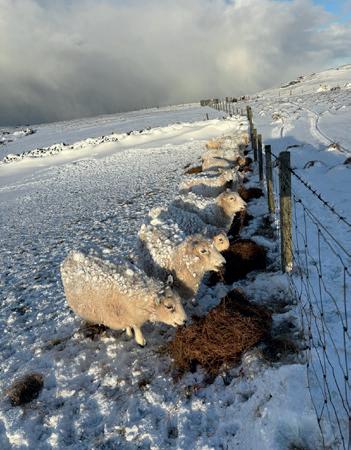












1250 LITRE - £2,250
2500 LITRE - £2,795
5000 LITRE - £3,765
7500 LITRE - £5,000
10000 LITRE - £6,150
SINGLE PHASE, 3.5HP, 1800PSI, 11LPM.. £2,800
SINGLE PHASE, 5HP, 2200PSI, 14LPM..... £3,025
THREE PHASE, 7.5HP, 2700PSI, 25LPM... £2,950
THREE PHASE, 10HP, 3000PSI, 18LPM.... £3,300
PETROL, 16HP, 3625PSI, 25 LPM ..............£6,075
COMMERCIALMETAL BUNDEDFUEL TANKS STANDARDSPECIFICATIONS
•3mmBritishsteel
•230 volt /60litreper min pump
•6m deliveryhose
•Water &particulate filter
•Mechanical flowmetre
•Autoshutoffnozzle
•Contentsgauge
•Deadlockwith 2keys
•LiftingEyes
•Steel box sectionacrossthe base forforkliftaccess andtoraisethe tankfromthe floor
•Paintedgreenasstandard(Anti -corrosionpaint)
•BS799,OFST200 & SSAFOcompliant
•Heavy dutygalvanised steelcabinet
•Hawk pump
•Mainswaterfeedorwillsuckfrom bowser /IBC
•Ravelelectricmotor /Briggs &Stratton petrolengine
• 10 or20metreshighpressurehose
•Complete lance
•8 metresofelectric cable
•Diesel firedboilercomplete with 20litrefueltank
•20litredetergenttank
•Maxtemp80Corcanberunas a cold pressurewasher
•Pressure can beregulatedfrom maxto500PSI
sales@briannixonltd.com | T. 01789721112 BrianNixon Ltd,BlakesHill,Ullington,NrEvesham,WorcestershireWR118QH
VAT, ex works






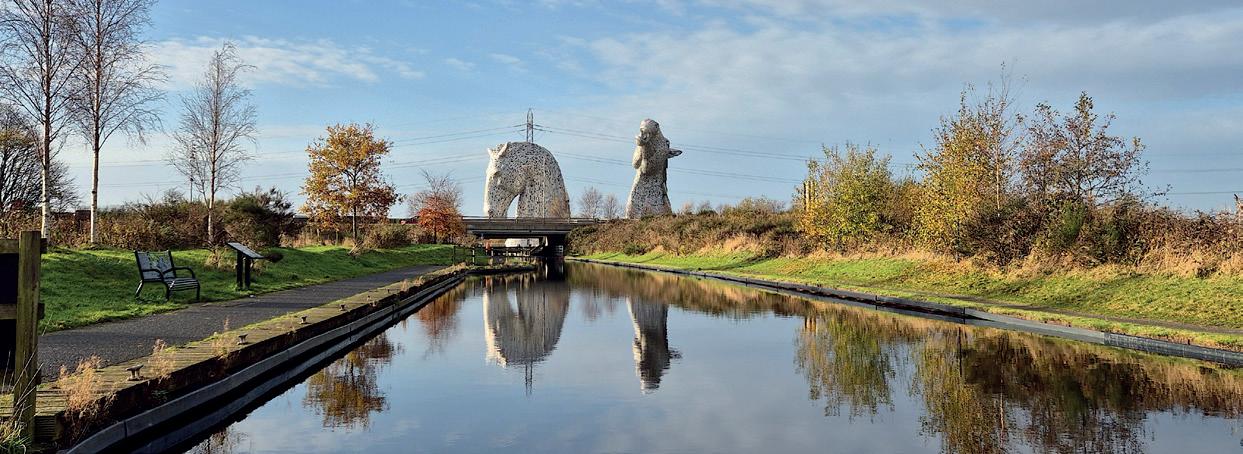


TREGIONAL MANAGER
Sheena Foster 07789 796 582 sheena.foster@nfus.org.uk
he Forth and Clyde Region enters an exciting new chapter following our recent AGM, with Rona Nicolson of Claylands Farm, Balfron elected as the new Regional Chair.
Rona takes on the role after Mark Donald (Balfron and Menteith) stepped down, having completed fi ve years of dedicated service as Chair. Mark’s leadership over this period has been instrumental in representing members, steering the region through challenging times and ensuring a strong regional voice at national level. We extend our sincere thanks to Mark for his commitment and contribution.
Rona brings considerable experience to the role and has long been a familiar and respected fi gure within the region. Her election marks an important milestone, and members can be assured that she is well placed to lead the Forth and Clyde Region forward and continue to represent their interests effectively.
Supporting Rona is a strong Vice Chair team:
John Owen (Forth Valley) continues in his role as Vice Chair.
Martin Denholm (Falkirk), newly elected Vice Chair, joins the leadership team this year.
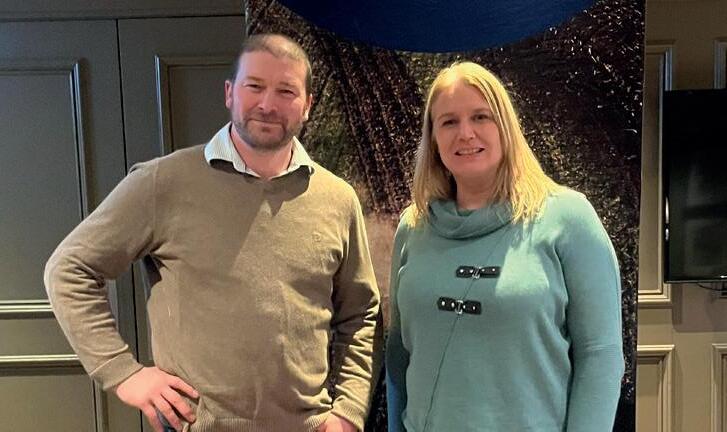
Our committees and working groups play a vital role in shaping policy and representing members’ views. Here are the Regional Representatives:
Combinable Crops:
Willie Harper (Renfrewshire)
Environment & Land Use:
Mark Donald (Balfron and Menteith)
Legal & Technical:
Rona Nicolson (Balfron & Menteith)
Less Favoured Areas:
Sandy Taylor (Balquhidder and Killin)
New Generation:
Michael Allison (Clydesdale)
Livestock:
David Mitchell (Clydesdale)
Milk:
Alistair Nicolson (Balfron & Menteith) and Robert Baillie (Avon and Nethan)
Nicolas White (Clydesdale)
Pigs:
Jennifer Hall (North Lanarkshire)
We would also like to thank to Andrew Paterson and Freda Scott-Park, who have stepped down from their roles as committee representatives after completing their terms. Their time, input and commitment on behalf of members have been greatly appreciated.
As always, member engagement is vital. If you have ideas for events, initiatives or issues you’d like raised, please contact a committee member or speak to a member of the Regional Board.
We look forward to a positive and productive year ahead under Rona’s leadership.
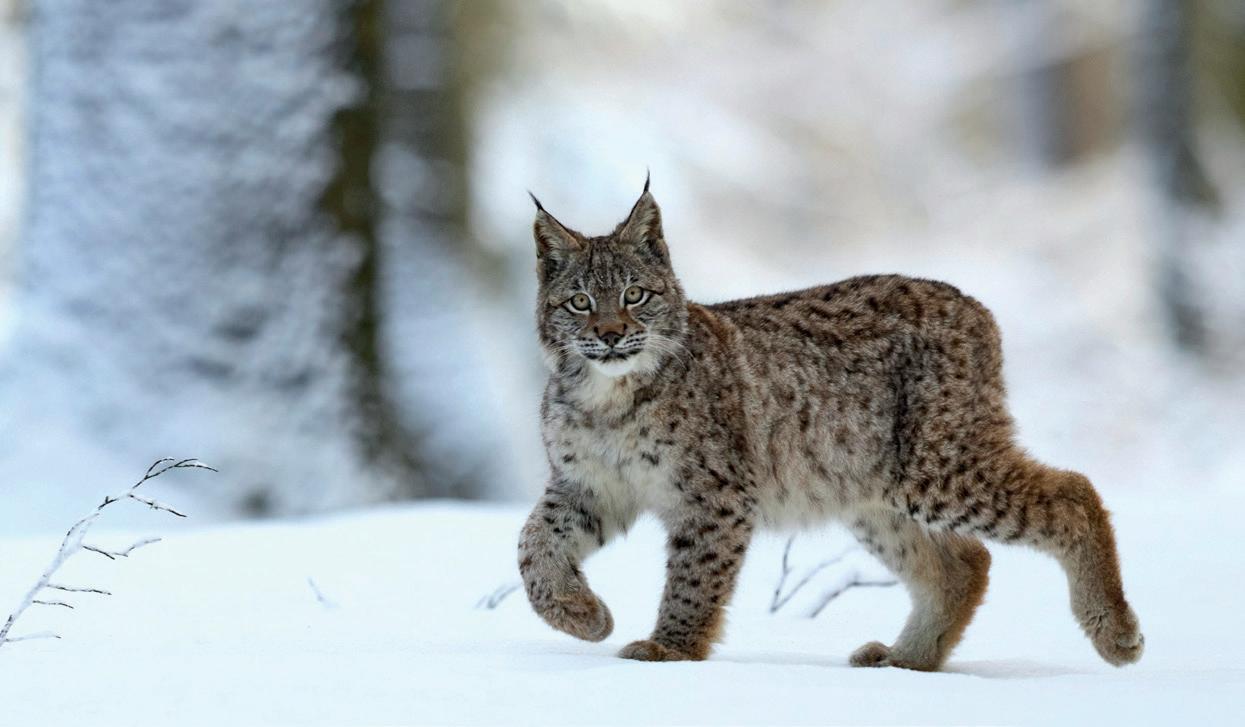
HIGHLAND


REGIONAL MANAGER
Ian Wilson 07775 915 988 ian.wilson@nfus.org.uk
Iattended a Lynx to Scotland drop-in session on proposals to reintroduce lynx, an issue that affects farming and crofting businesses.
Lynx were historically native to Scotland, but are no longer present. Any proposal to reintroduce them needs to consider the potential impacts on rural communities, including farming, crofting, forestry, and gamekeeping.
Scotland has previously undertaken species reintroductions, and these have had varying outcomes in terms of population management and effects on rural economies.
The proposed plan suggests releasing two breeding pairs annually for fi ve years. Lynx typically mate in February and March, with a gestation period of about nine weeks, producing litters of up to four cubs. Cubs are
dependent on their mother until the following spring, when they disperse to establish their own territories.
At the sessions, information focused primarily on the potential ecological benefi ts of lynx reintroduction.
serious risks to livestock welfare, farm viability and rural communities, with major unanswered questions over unintended consequences and liability for damage. We also believe that while public engagement is important, members are
The proposed plan suggests releasing two breeding pairs annually for five years.
Discussion of potential impacts on livestock or deer populations was limited. Compensation schemes for any livestock losses were mentioned, but details on implementation were not covered in depth. The organisations proposing this reintroduction plan indicate that responsibility would transfer to government agencies, including NatureScot, within fi ve to ten years.
Reintroduction is unacceptable: NFU Scotland fully supports the Scottish Government’s opposition to lynx or large carnivore reintroduction, which poses
deeply concerned about the practical impacts of reintroducing a long-absent predator and believe the focus must remain on supporting those already working hard to deliver high-quality food, enhance biodiversity and sustain fragile rural economies rather than introducing new threats to that balance.
Those unable to attend a session can submit their views through the consultation here: http://www.lynxtoscotland.org/ questionnaire
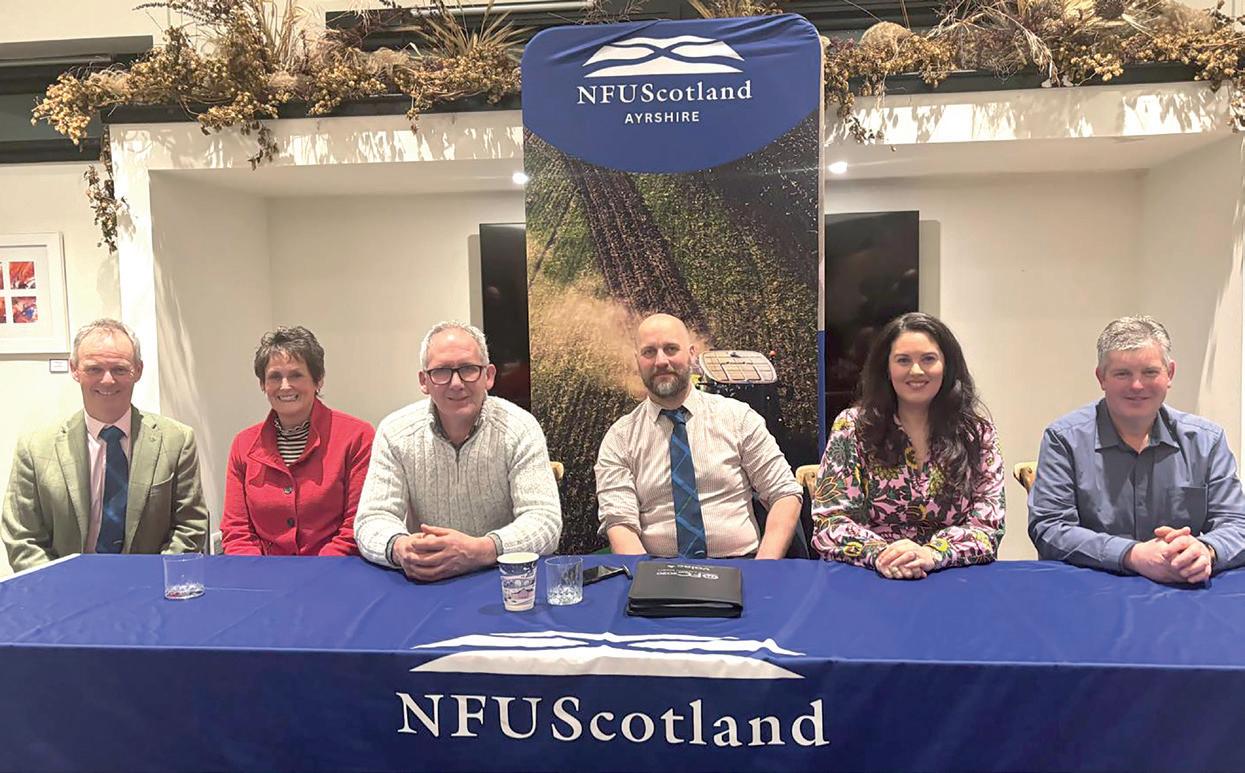
AYRSHIRE


REGIONAL MANAGER
Holly Fitzsimmons
Fairness in the supply chain is essential to the long-term viability of farming and food production. When power imbalances leave producers carrying the risk whilst others reap the reward, it undermines confi dence and sustainability across the sector. By contacting your local representatives this helps to ensure these concerns are understood and addressed and we can keep pressure on decision makers with the overall mission to create a supply chain that is transparent, fair and works well for everyone involved. Contact details can be found in your Ayrshire handbook.
AYRSHIRE REGIONAL
REPRESENTATIVES 2026
Ayrshire Regional Chair: John Kerr (Kilmarnock)
Vice Chair:
Sally Kennedy (South Ayrshire) & John Andrew (South Ayrshire)
COMMITTEE REPRESENTATIVES
Combinable Crops:
Andrew Welsh (Kilmarnock)
Environment & Land Use: Cora Cooper (Cumnock & Failford)
Legal & Technical:
Alice Wilson (South Ayrshire)
Less Favoured Area:
Jimmy Young (North Ayrshire & Cumbrae), David Cooper (Cumnock & Failford)
Livestock:
John Andrew (South Ayrshire)
Milk:
Murray Patrick (South Ayrshire), Andrew Taylor (Kilmarnock), Graeme Kilpatrick (Kilmarnock)
Next Generation: Fraser Graham (South Ayrshire)
Pigs: Colin Russell (Kilmarnock)
Poultry: Lisa Young (South Ayrshire)
Horticulture:
Adam McGowan (North Ayrshire & Cumbrae)
BRANCH REPRESENTATIVES
South Ayrshire Chair: Alice Wilson
Vice Chair: Colin Mair
Cumnock & Failford Chair: Drew Wilson
Vice Chairs: David Cooper & David Morton
Kilmarnock Chair: John Howie
Vice Chair: Colin Russell
North Ayrshire & Cumbrae Chair: Gordon Walker
Vice Chair: John Sharp
With lambing season well underway please get in touch if you would like any signage to help spread the message about responsible dog walking. Contact me on 07775838926 or email holly.fi tzsimmons@nfus.org.uk
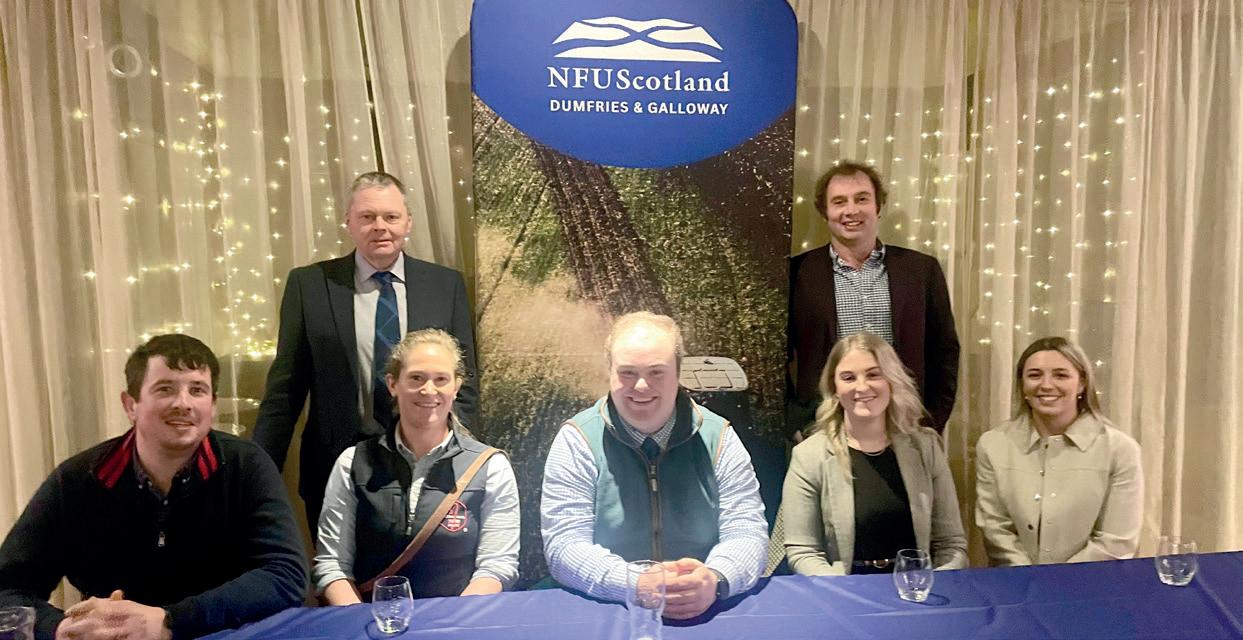
DUMFRIES & GALLOWAY


REGIONAL MANAGER Mhairi Dawson


07718 425 053 mhairi.dawson@nfus.org.uk
The following members were elected to head office committees at the regional AGM. Remember, they are here to represent your views so make sure to get in touch with them about the issues affecting you.
Regional Chair: Stewart Wyllie (Dumfries)
Combinable Crops: Timothy Hamilton (Wigtown)
Environment & Land Use (ELU): John Locke (Stewartry)
Legal & Technical: David Butler (Langholm)
Livestock: Robin Spence (Dumfries) and William Barrowman (Wigtown)
Less Favoured Area (LFA): Lorraine Luescher (Langholm)
Milk: Colin Ferguson (Wigtown) and Alastair Martin (Dumfries)
Next Generation: John McCulloch (Stewartry)
Pig: Gregor Christie (Wigtown)
Poultry: James Baxter (Wigtown)
Member’s Panel Night
Following the Regional AGM, we enjoyed a panel discussion on the bright future of agriculture. Ably chaired by John McCulloch, our panelists were Colin Ferguson, Libby Templeton, Ailsa Buchanan, and Lucy McGillivray. A broad range of subjects were covered but the topic that we came back to time and again was the need for better, clearer pathways into agricultural careers. NFUS President Andrew Connon was also there to speak to the membership. Thank you everyone for your great contributions.
Tioraidh for now!
By the time this edition lands on your doorstep, I will have left my position as Regional Manager. There are so many people I would like to thank but word counts won’t allow it all. Special mentions need to go to Stewart Wyllie and Colin Ferguson for being excellent Regional Chairs and to Michael, Sally, Innes, and Louise for all their support. My predecessor Tracey was huge help when I joined. To Holly and Sheena, my regional colleagues, it has been great to work jointly as Team South-West and show what can be achieved when we collaborate. Finally, thank you to all the members who have positively contributed to my time in NFUS, it has been a pleasure to meet you, learn from you, celebrate our amazing industry, and to quash a National Park for (most of) you!
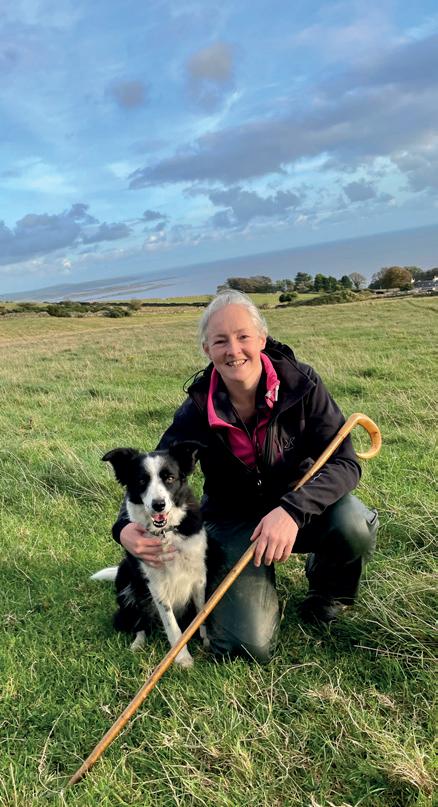

John Syme & Co Ltd is based in Menstrie, Clackmannanshire and we cover the central belt, Fife and the Lothians, extending to Tayside and Border regions. We are happy to cover other areas if required. We supply, service and hire all types of cleaning equipment. Our main brands are Dirt Driver, Earle, Systemwash and DTE Nilfisk.


Dirt Driver Static Power Washer
Single or Twin Cabinets. Optional
Custom Built Units to suit individual requirements. Special Sizes . different pumps or motors, specific pressure or flow.
Push Button Control. Timed Shutdown Token Control. Cycle 1 – Hot Water Detergent Cycle 2 – Cold Water or Hot Water rinse


and transport.
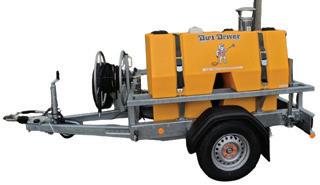
Dirt Driver Saddle Tank Trailer
Heavy Duty Galvanised Chassis. Kubota Twin Cylinder Water Cooled 12.5 HP Continually rated Diesel Engine
Two 300L Baffled Polyethylene Water Tanks. Interlink fast drain valves. 1800kg Rated Running Gear. Lockable Tow Hitch. Low Pressure Detergent Injection. 16M Twin Wire 3/8 High Pressure Hose Temp – 80/120 degrees


EHRLE High Pressure Hot Water
Washer HD 923 (Premium or standard available) 10m HP-Hose DN08 – 315bar
Trigger-Gun with swivel
Spray-Lance 900mm c/w Nozzle-Protection
Stainless-Steel Jet-Nozzle 25°
Water-Supply separation acc. water reg.

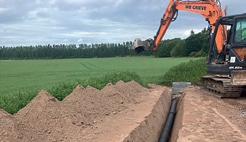
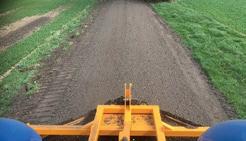





LOTHIAN AND BORDERS


REGIONAL MANAGER
Lindsay Brown 07780 441 750 lindsay.brown@nfus.org.uk
In January, the Regional Board held its AGM. Jamie Smart of the Bathgate & West Calder branch was elected as Chair. Other representatives re-elected to serve the region are:
Combinable Crops:
Neil White & Alistair Stewart
Livestock:
Andrew Hodge & James Playfair Hannay
Environment & Land Use: Debbie Playfair
Less Favoured Area: John Davidson
Legal & Technical: Andrew Adamson
Pigs Working Group: Jamie Wylie
Next Gen: Ben McClymont
Poultry: Karen Campbell
We extend our thanks to those stepping down after their service, including Peter Douglas, Roy Brown, and Jamie Smart. Special thanks to James Playfair Hannay for his two years as Chair of the region, representing us on the National Board and leading regional meetings.
Selkirk:
Grant Maxwell re-elected as Chair
Midlothian:
James Dun re-elected as Chair
Are you receiving our new-look Friday Weekly Update? If not, your email and contact information may be out of date. Please call 0131 472 4000 to update your details and ensure you don’t miss important information and regional events.
The fi rst meeting of the East Lothian Cluster Farms project was held at Sunnyside Farm and was very well attended, with lively discussion on the group’s goals. The next meeting is scheduled for late March. For more information, contact Tess at the East Lothian Climate Hub: tess@eastlothianclimatehub.org


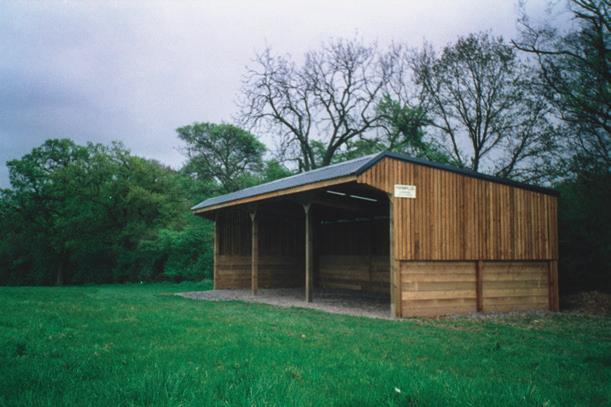








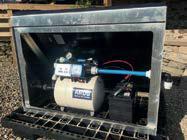




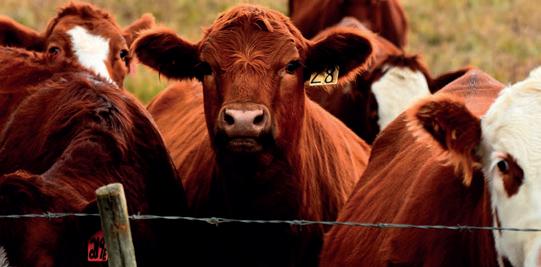










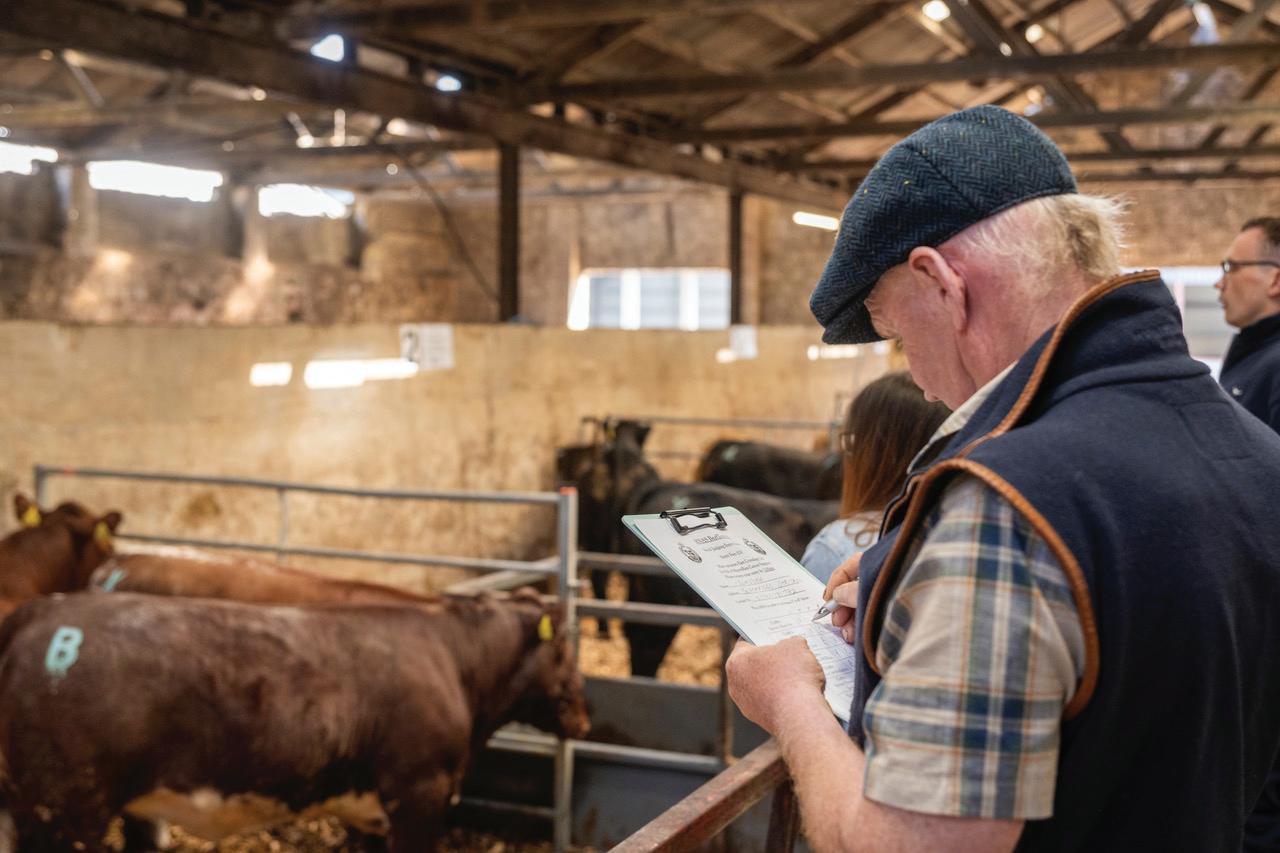


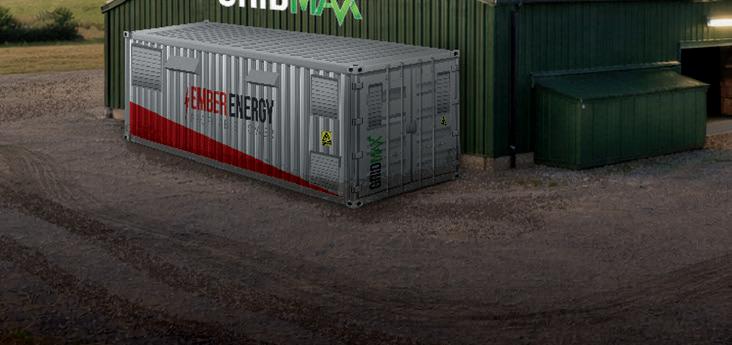
Electricity prices change 17,520 times a year. Every 30 minutes the spot market price fluctuates with weather, demand and grid conditions.


But suppliers smooth all that out and charge you a fixed day rate - and if you’re lucky, a slightly cheaper night rate - all bundled into the average price per kWh in your long term contract.





Our System changes how you buy mains electricity.
Gridmax watches the raw spot-market price throughout the day, grabs power when it’s cheapest, and fills your battery automatically. Gridmax works alongside your existing grid connection and electricity contract — totally plug-and-play.

POWER YOUR farm on low‑cost, stored energy instead of paying the supplier’s blended rate. Offices throughout Scotland and Northern England.

site assessment & payback estimate
