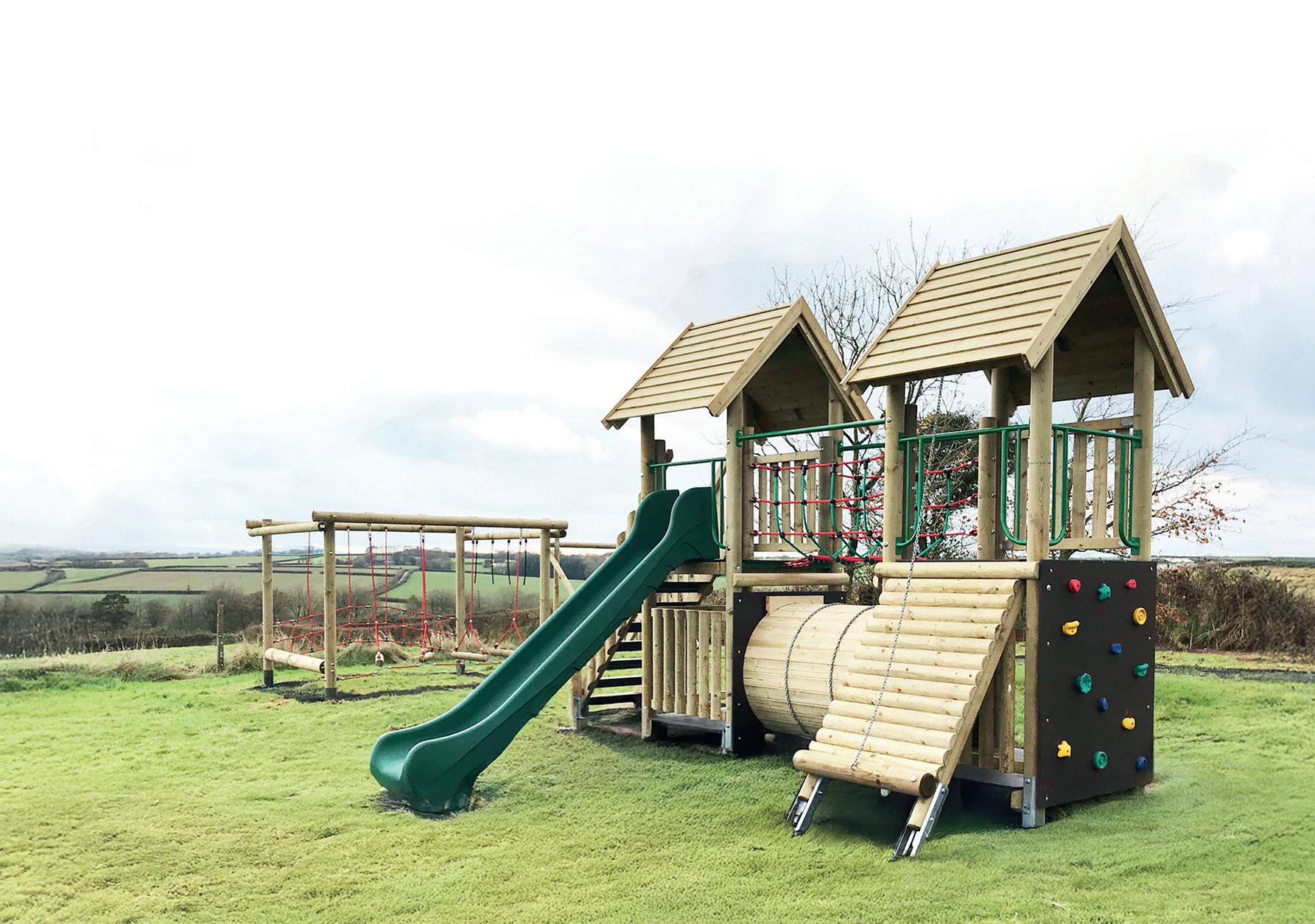
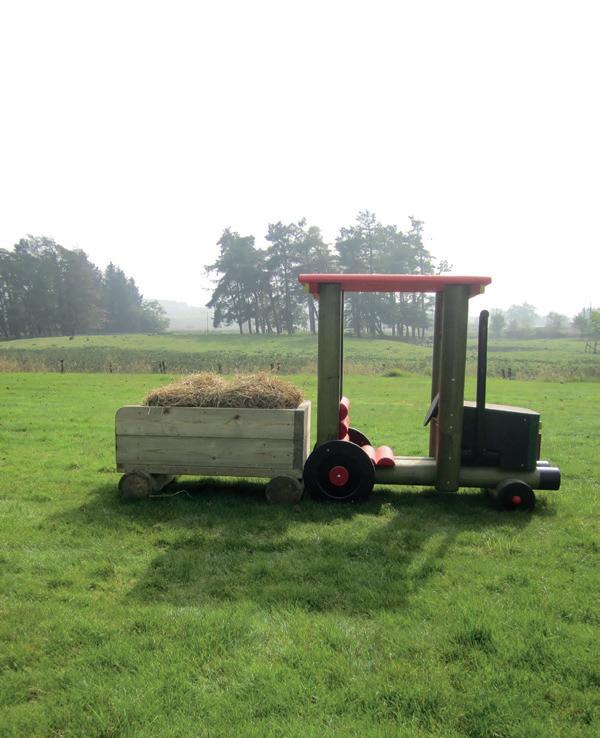
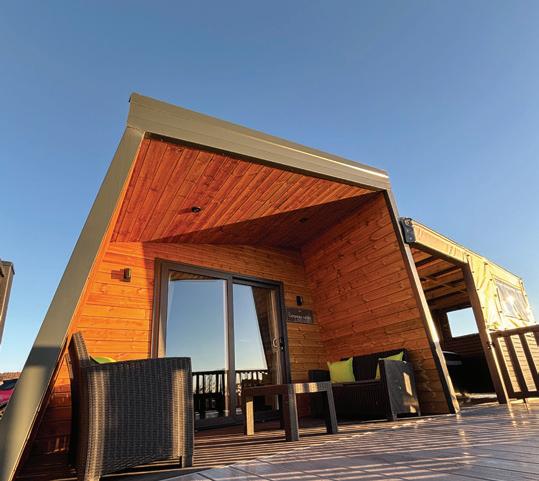
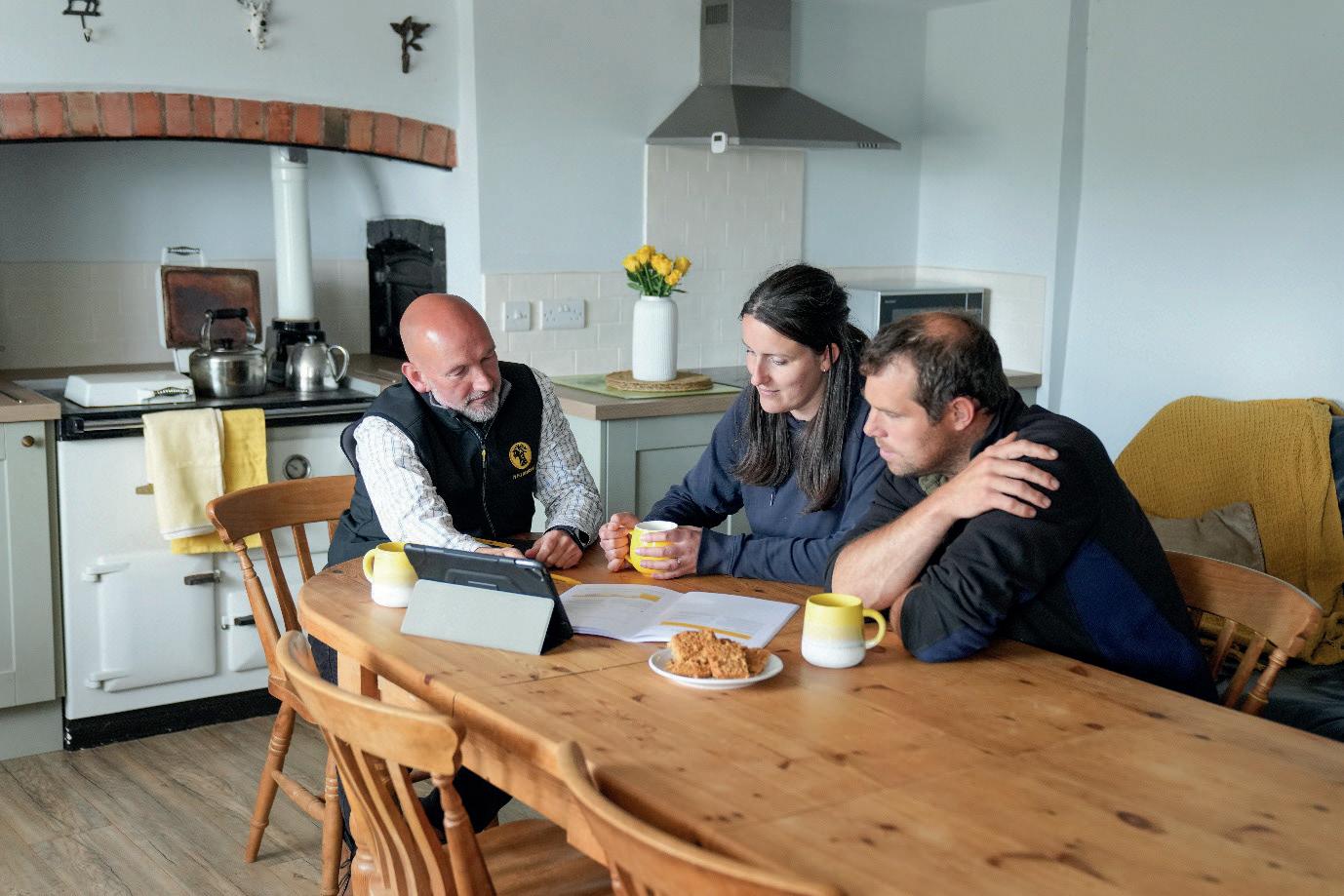
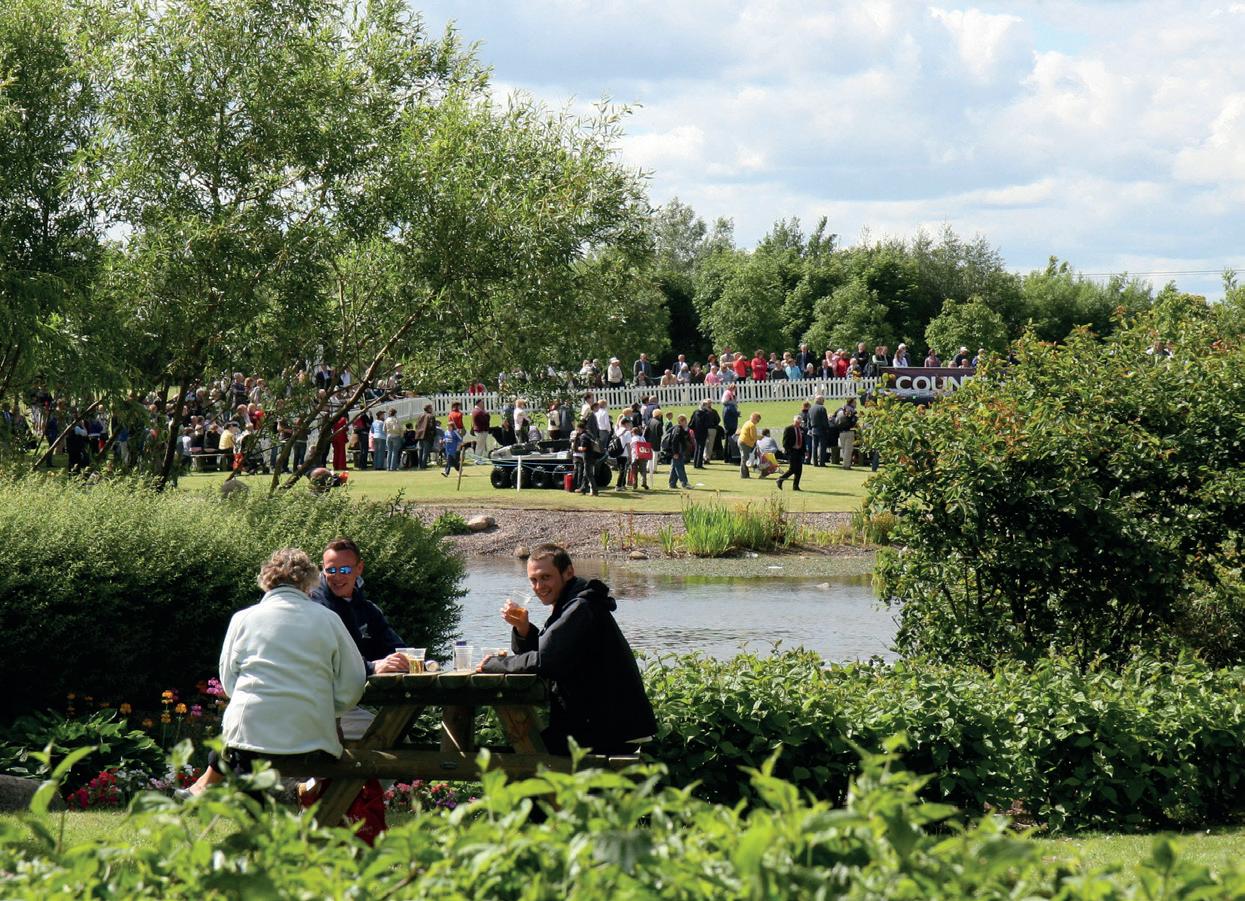
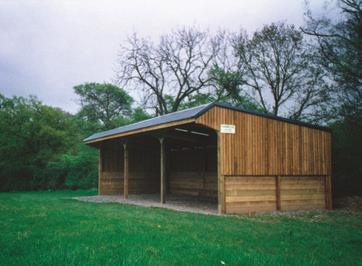
Enhance your destination with our quality, wooden outdoor play equipment.
Perfect for farm shops, holiday lets and glamping sites.
Increase footfall and fun all year round!
why choose us?
Full design and planning service
Wide range of products to suit all businesses
European Safety Standard EN 1176 compliant
Post-installation safety inspection available 25+ years play industry experience
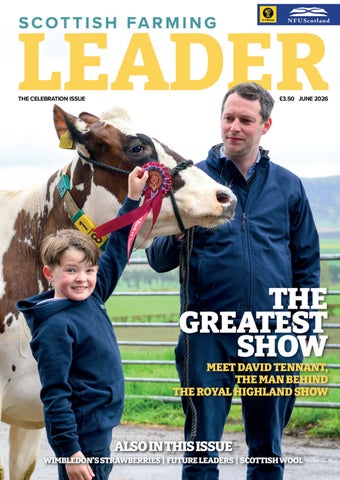
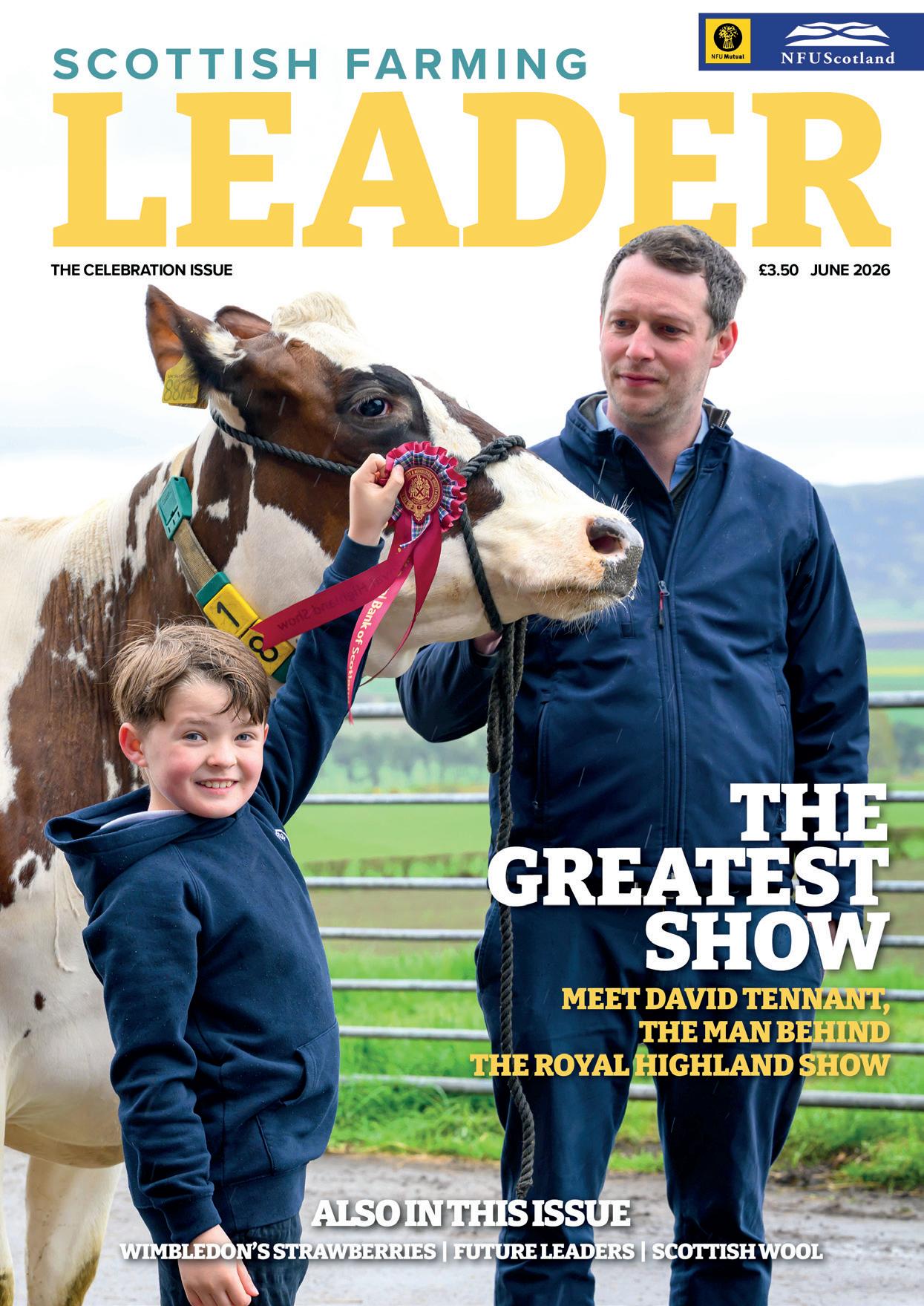
LEADER
EDITOR Megan Williams
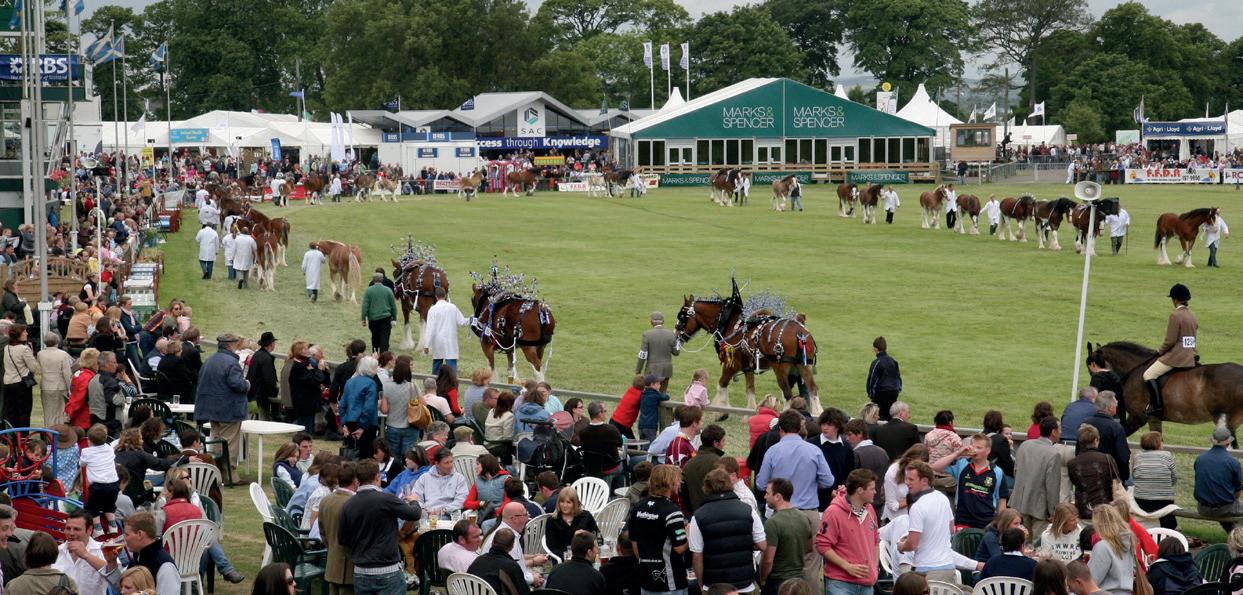
June is always a special time in Scottish agriculture. For generations, the Royal Highland Show has been firmly marked in the diary, a highlight of the farming year and a moment to celebrate the very best of our industry.
That sense of celebration runs throughout this edition of Scottish Farming Leader. We wanted to take the opportunity to focus on the people, businesses and sectors that continue to make Scottish agriculture something to be proud of, and there is plenty to highlight.
From Scottish strawberries destined for Centre Court at Wimbledon (p.20) to a wool sector in its strongest position for more than a decade (p.65), the stories in this issue point to an industry with real confidence, resilience and opportunity.
Elsewhere, we explore Orkney’s thriving food and drink industry (p.52) and our CEO’s plans to build a stronger future (p.8). We hear from our Policy Manager, Lucy, on SAYFC’s Cultivating Leaders programme (p.36), and showcase other female voices across the industry, from Women in Agriculture (p.14) to the Scottish Women in Dairy Network (p.34).
Too often, farming reaches the headlines only through its challenges. And while those challenges are real –from volatile weather and rising costs to political uncertainty – it is just as important to recognise the strength within the sector.
NFU Scotland, Rural Centre, West Mains Ingliston, Edinburgh EH28 8LT
NFU Scotland, Rural Centre, West Mains Ingliston, Edinburgh EH28 8LT
At NFU Scotland, telling these stories matters. Celebrating success strengthens confidence within our industry and helps build understanding and support among consumers, policymakers and the wider public.
Editor Diana McGowan editor@nfus.org.uk
Editor Diana McGowan editor@nfus.org.uk
With show season underway and the Royal Highland Show just around the corner, I also had the pleasure of sitting down with David Tennant (p.41) –which prompted a few exclaims when I mentioned it, before quickly clarifying: not that one – the other David Tennant, who heads up the Royal Highland Show. The event is a great example of how Scottish agriculture captures the public imagination: opening its gates, telling its story, and showcasing the very best of what we produce.
As always, thank you for your continued support of NFU Scotland and Scottish Farming Leader. As we look to ensure the magazine continues to serve you as best as possible, please take a moment to take part in our survey on page (p.9). I hope you enjoy this month’s edition and the stories featured throughout it.
Published on behalf of NFU Scotland by Connect Publications (Scotland) Ltd.
Published on behalf of NFU Scotland by Connect Publications (Scotland) Ltd. Studio 2001, Mile End, 12 Seedhill Road,
Studio 2001, Mile End, 12 Seedhill Road, Paisley PA1 1JS
For the weekly news sent to your email, please send your name and membership number to contactus@nfus.org.uk
Editor Megan Williams editor@nfus.org.uk
Design & Production
Mark Shreeve mark.shreeve@micropress.co.uk
Andrew Hirst andrew.hirst@micropress.co.uk
Advertising Sales
Danny Lewis 01502 725862
danny.lewis@micropress.co.uk
Lawrence Kenny 01502 725860
lawrence.kenny@micropress.co.uk
NFU Scotland Rural Centre, West Mains Ingliston, Edinburgh EH28 8LT 0131 472 4000 www.nfus.org.uk
Diana McGowan
Diana McGowan
HHrealise that positive thought/ silent commitment? Possibly too
never actually realise that positive thought/ silent commitment? Possibly too
In this month’s magazine, our two features cover inspiring stories and highlight just how rewarding delivering on such thoughts can be both for the individual involved and others who may benefit along
In this month’s magazine, our two features cover inspiring stories and highlight just how rewarding delivering on such thoughts can be both for the individual involved and others who may benefit along
President’s Update
Vice President Updates News
Political Round-up
Policy & Practice
Regional Activity
FEATURES
The Scottish farmers supplying Wimbledon’s strawberries
The Greatest Show
Five questions with... Jim Robertson
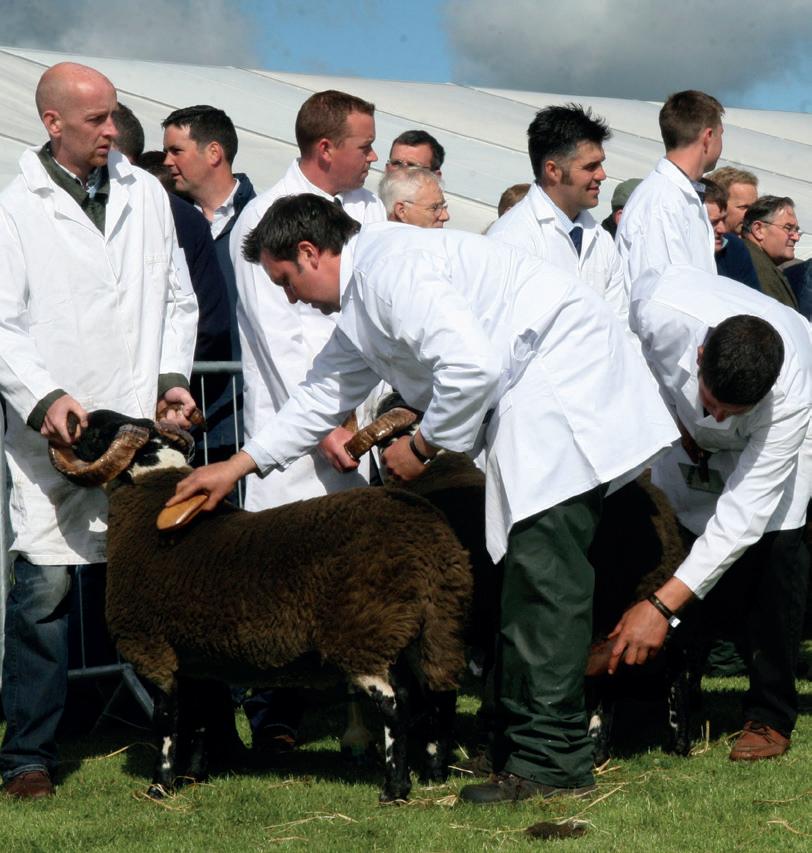
We’re only a few weeks away from the Royal Highland Show. Over the course of four days, thousands will flock to the show to compete, judge, exhibit, organise, educate and socialise. We’ll see the best of the best and relish the atmosphere. Among the highlights and away from the main show ring, this year will see the welcome return of the Golden Shears Sheep Shearing and Woolhandling World Championships. Taking place at the MacRobert Theatre, the 2023 Worlds will see more than 30 countries compete for the prestigious title and it promises to be an action packed showcase of the art, skill and techniques required to be a world champion.
Perhaps a less well known event taking place at this year’s Highland is the final qualifying round of the 2023 Britain’s Fittest Farmer competition. Taking part in this event for the first time is Kyla Graham from Kirkcudbrightshire. Kyla first spotted
We’re only a few weeks away from the Royal Highland Show. Over the course of four days, thousands will flock to the show to compete, judge, exhibit, organise, educate and socialise. We’ll see the best of the best and relish the atmosphere. Among the highlights and away from the main show ring, this year will see the welcome return of the Golden Shears Sheep Shearing and Woolhandling World Championships. Taking place at the MacRobert Theatre, the 2023 Worlds will see more than 30 countries compete for the prestigious title and it promises to be an action packed showcase of the art, skill and techniques required to be a world champion. Perhaps a less well known event taking place at this year’s Highland is the final qualifying round of the 2023 Britain’s Fittest Farmer competition. Taking part in this event for the first time is Kyla Graham from Kirkcudbrightshire. Kyla first spotted the event at the Show last year and
With changes come opportunity
From the PRESIDENT Andrew Connon
As I write this on 11th May, it appears we are entering an interesting period in Scottish politics. The Scottish Election on 7th May has brought a new dynamic to Holyrood, with a broadly balanced distribution of seats across the political spectrum outside of the SNP’s tally of 58 seats. With 64 new MSPs and 65 returning, there is a significant amount of work ahead as we engage with politicians to highlight the importance of Scottish agriculture, and set out our key asks to secure a profitable and sustainable future for Scotland’s farmers and crofters.
This must, however, be a team effort. I would strongly encourage our members to engage with politicians throughout the summer show season, which presents a valuable opportunity for all of us to make the case for Scottish agriculture.
We have a fantastic £4.6 billion industry, supporting 66,000 direct jobs, and underpinning a wider £19 billion food and
drink sector that employs 320,000 people. We should not be shy in stating the facts. Scottish agriculture forms the foundation of the Scottish economy. It produces high-quality food, is the lynchpin of rural communities, and delivers significantly on biodiversity, nature, and climate change mitigation. It is without a doubt an industry we should be proud of.
The crisis in the Middle East continues to have a significant impact on our sector. The UK Government has now responded to concerns raised in a letter we wrote to the Prime Minister on 11th March by announcing additional support for red diesel users through a temporary reduction in duty rates from 10.18p to 6.48p per litre. While this is a welcome step, significant pressures remain across the sector. Fertiliser price and availability continue to cause serious concern, alongside ongoing volatility in wider input and energy costs.
We have also met with DEFRA Secretary of State Emma Reynolds to restate our position that this is not simply about fuel and fertiliser costs and supply, but fundamentally about food security. We have highlighted the support being made available to farmers across much of Europe and our need for similar measures here in the UK.
I also took the opportunity to stress
the importance of confidence in fuel and fertiliser supply chains, and that the modern “just-in-time” approach to stock management is not appropriate for essential inputs such as fuel, fertiliser, and food. Instead, we must move towards a “just in case” approach, building resilience and strategic stocks to better withstand future crises’, which are becoming increasingly frequent.
Ensuring greater control over domestic fuel and fertiliser supply is essential. Producing more of our own fertiliser in particular, using green energy to generate green ammonia and in turn green fertiliser, offers a clear opportunity for a more resilient, circular agricultural system. This is a direction that must be explored seriously, and one which the Secretary of State has acknowledged.
Our supply chain work continues at pace, with further meetings planned with retailers. We are also progressing discussions on public procurement, as we push for stronger “Scottish first” principles in public sector food purchasing.
Unfortunately, the pig sector is currently facing severe financial pressure, driven largely by low-cost imports from Spain. We have already raised our significant concerns with both UK and Scottish Governments, and continued engagement is ongoing. It is essential that appropriate intervention is considered to support this highly efficient domestic industry.
Volatile pricing across all sectors does no part of the supply chain any favours.
Recent discussions have focused on falling beef prices, attributed to the Middle East crisis, a downturn in food service and hospitality demand, high levels of beef in storage, and import pressures. What is clear is that without stability, the confidence built over the past 18 months risks being rapidly eroded, potentially causing longterm damage to the sector. However, given the global shortage of beef, I remain confident that the sector will stay fundamentally strong in the years ahead.
Finally, a note of optimism. While the combinable crops sector remains under significant pressure, the removal of tariff s on Scotch Whisky has provided welcome positivity for the industry. I have written to His Majesty the King to thank him for his intervention.
In the meantime, I hope you have a good growing season ahead, and look forward to catching up with you all at the Royal Highland Show, 18-21 June.
Turn your rooftops, buildings and surplus power into long term, reliable revenue streams.
1 2 3 4 5
SOLAR PANELS – How much money can you earn?
Your roof could be your highest earning acre. We’ll show you, in pounds and pence, what solar could deliver for your farm — year after year.
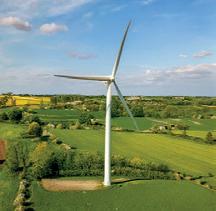
WIND TURBINES – How feasible is wind power for your farm?
Not every farm can justify a turbine — but when it does, the returns can be game changing. We’ll assess the wind feasibilty and if you already own a turbine, we can repower it to boost yield, reliability and financial returns.
BATTERY STORAGE – Power your farm up to 80% self sufficiency
Stop wasting money with the greedy power companies. With the right battery setup, farms can hit up to 80% energy independence.
CARBON REWARDS – Lucrative green payments
The carbon you save has a high market value. We’ll help you unlock and sell those credits for a reliable extra income stream.
GRID TRADING – Get paid to stabilise the Grid
Little known business opportunity to sell power when prices peak, buy it back when they drop and receive payment from the Grid — all ‘done for you’ on autopilot.
Could Energy Farming be part of your future?
Get the facts and make an informed decison. Learn more about ‘energy farming’ diversification.
IVice Presidents’ updates
Duncan Macalister Vice President
t is easy in agriculture to become absorbed in the day-to-day work and lose sight of the bigger picture. This spring on our farm has been a good reminder of that. Due to staffing issues with a contractor, we ended up doing our own ploughing and sowing. At the time it was just about getting the job done, but it also made us step back, look around, and properly reflect on what really matters in Scottish agriculture.
We often think about farming in terms of land, livestock or crops, but in reality, it is people who define it. Some 40 years ago, I saw a t-shirt in New Zealand that said, “people not places,” and it has stayed with me ever since. This is especially true in Scottish agriculture.
Across rural communities, everything depends on a network of people working together. Farm staff, contractors, vets, suppliers, neighbours, and all the folk who quietly keep things moving in the background. These are the people who make it happen day in and day out. Too often they go unnoticed, but without them there is no functioning industry at all.
We also have to be honest about the challenge of rural depopulation. In areas like Argyll and Kintyre, we continue to see young folk leaving to find opportunity elsewhere. In many cases they do not come back. When that happens, we lose more than population. We lose skills, experience, and a huge amount of local knowledge that has been built up over generations.That local knowledge is something you cannot replace easily.
Every farm is different, shaped by its soils, drainage, landscape and history. Much of what makes farming work in these areas is not written down anywhere. It is learned over time, passed on from one generation to the next, and picked up through years of being on the ground.
In Scotland, agriculture is built on resilience and adaptability. Our people are used to getting on with it, whatever the weather brings, good or bad. They find a way through it. That determination, along with teamwork and deep local understanding, is what underpins the strength of the industry. And this applies to people at every level. The everyday working men and women across our communities who keep everything going. They deserve recognition, and they deserve to be celebrated. They are, quite simply, the true strength of Scottish agriculture.
One Win No Cli Edge
ARobert Neill Vice President
s we move into June, let’s hope the sun shines and temperatures begin to rise, lifting spirits and bringing out the barbecues, with burgers pork chops, sausages and steaks flying off the shelves.
Over the past six weeks, we have seen a drop in beef prices, which is difficult to understand given that global production is at an all-time low. The sector urgently needs renewed confidence and trust; without this, we risk seeing continued decline in cattle numbers.
We would also like to see stronger commitment from supermarkets to support Scottish farmers by stocking clearly labelled, properly promoted Scottish produce. Too often, we still see imported beef on shelves, produced to standards that do not match our own world-class system.
Early last month, I attended a meeting at Haig Hamilton’s farm in East Lothian, joined by civil servants and NFU Scotland head office staff. The focus of the visit was water resilience. It was an excellent and insightful day, and Haig’s passion for what he has achieved was clear throughout – from lagoons to boreholes, he has carefully considered how to grow crops in an area that receives just 24 inches of rain annually.
One Worry Predation
One to watch Weather
It really was a reminder that every day is a school day. I learned a great deal, including that borehole water is too cold to apply directly to crops and must be warmed slightly to avoid shocking growing plants.
With the Highland Show just around the corner, it will be great to catch up with many familiar faces, and I’m sure it will once again be a fantastic event. Well done to James Logan and his team – these shows require an enormous amount of organisation, and those involved in the summer show circuit know all too well that events like this don’t happen on their own. At the heart of this remains our farming and crofting community, which continues to demonstrate remarkable resilience and generosity in challenging times.
Whether it is neighbours helping neighbours, taking time to host farm visits, sharing machinery, or lending a hand during difficult weather, the spirit of cooperation is what keeps rural areas strong and connected. Events such as the Royal Highland Show, along with the wider summer show circuit, also play a vital role in bringing people, ideas and businesses together across Scotland. It is this shared sense of purpose that will continue to carry our industry forward. Strong communities are the backbone of agriculture and deserve ongoing recognition and support.
News Building a stronger future
At a Glance
Holyrood election
reshapes parliament
Scotland’s Holyrood election has reshaped the political landscape, with the SNP returning as the largest party but falling short of a majority. Gains for Reform UK, Greens, and Lib Dems and losses for Conservatives and Labour mark a significant shift, while proposed food pricing policies and rural issues are expected to dominate debate in the new parliament.
Border school launches agriculture BTEC to inspire future farmers
Longridge Towers School, near Berwick-upon-Tweed, is launching new BTEC courses in Agriculture and Business this summer to encourage more young people into farming careers. The initiative is supported by Lurdenlaw Farm near Kelso and aims to provide practical experience while strengthening links between education and the modern agricultural sector.
Government responds to NFU Scotland call with red diesel duty cut
Following a letter sent on the 11th March to the Prime Minister regarding our growing impact of global instability on agricultural input costs, the UK Government have announced support for red diesel users. The package includes a temporary duty reduction from 10.18p to 6.48p per litre, and will run from the 15 June through to the end of the year. While positive, the Union says further action is still needed on fertiliser, energy costs and wider market volatility.
Scottish pig sector warns of crisis as herd reduction accelerates
NFU Scotland has warned Scotland’s pig sector is under severe pressure, with sustained financial losses driving rapid herd reductions and threatening long-term production capacity.
Producers are facing prices below cost of production amid market weakness and supply chain pressures. The Union is calling for urgent action from government and retailers.
John Davidson CEO
As we move through 2026, NFU Scotland continues to stand strong as the unified voice of Scottish farming and crofting. This year, we’ve focused our efforts across five major workstreams that will strengthen our foundations and ensure we’re fit for the opportunities and challenges ahead. Each one is designed with a single purpose in mind: to build a solid platform so we can keep delivering for our members – now and for years to come.
Policy and market advocacy in a new political landscape
With elections behind us, our policy teams have hit the ground running to ensure the new government understands and supports the priorities of Scottish agriculture. We’re engaging at every level – from ministers and MSPs to local authorities – emphasising the practical realities of farming and crofting in a changing policy environment. Key issues such as future agricultural support, climate resilience, trade, food security, and rural infrastructure remain front and centre. Our goal is simple: to ensure decisions made in Holyrood and Westminster keep Scottish farming productive, competitive, and sustainable. In addition, we will continue our vital work with retailers and the out-of-home sector to increase levels of Scottish sourcing and, critically, strengthening farmers’ position in the supply chain through fairer and better market returns in the pursuit of long-term profitability.
Growing our membership and strengthening our voice
Membership is the lifeblood of NFU Scotland. Every new member adds strength to our collective influence and ensures we can represent Scottish agriculture with authority. This year’s recruitment campaign focuses on demonstrating real value – from practical business support and local lobbying success to the camaraderie that comes from being a part of Scotland’s farming family. We’re also investing in retention, making sure every member feels listened to, represented, and supported in their day-to-day business.
Supporting the next generation of leaders
The future of farming depends on inspiring and equipping the next generation. Through our Next Generation Working Group and our new Future Leadership Development programme, we’re helping new entrants and young members gain the skills, networks, and confidence to lead. Whether that’s through mentoring, training opportunities, or leadership roles within NFU Scotland structures, we’re committed to ensuring the Union continues to thrive with fresh energy and new ideas.
Developing a modern digital experience for NFU Scotland
Communicating effectively with members and the wider public is key. We are continuing to review and improve our digital platforms to ensure they meet the needs of a modern NFU Scotland. This includes plans for an enhanced website experience that will make it easier to access news, policy updates, guidance and events.
Any future developments will be designed with members in mind – simple to navigate, mobile-friendly, and focused on providing practical resources to support your business and engagement with the Union.
Alongside this, we are looking at how our wider digital systems can better support members and improve how we communicate. This joined-up approach will ensure we deliver the best possible experience and maximise the impact of our digital investment.
Strengthening our governance and foundations
To keep delivering for members, NFU Scotland must be built on strong governance and sound management. We’re reviewing and modernising our processes and rules to ensure transparency, accountability, and efficiency. That includes updating internal processes, clarifying roles, improving board effectiveness, and making sure every decision is rooted in our members’ best interests.
Together, these five workstreams are more than just projects – they’re building blocks. They ensure NFU Scotland remains resilient, relevant, and ready to serve our members in an era of rapid change. With unity, ambition, and the continued commitment of our members, the organisation is well placed not only to respond to challenge but to shape the future of Scottish agriculture for generations to come.
Celebrating success: Scottish Agriculture Awards open for entries
by Sheena Murray, Regional Manager
The Scottish Agriculture Awards return on Thursday 22 October 2026, providing a national platform to recognise the people and businesses helping drive Scottish agriculture forward. This year is particularly significant, as NFU Scotland joins The Scottish Farmer and AgriScot as an official partner of the awards, delivered in association with Virgin Money.
At a time when the sector continues to face uncertainty, scrutiny and rapid change, the awards offer something important – an opportunity to pause and recognise success. Not only high-profile achievements, but also the everyday excellence, innovation, professionalism and resilience demonstrated on farms and in rural businesses across the country.
Supporting the Scottish Agriculture Awards aligns naturally with NFU Scotland’s role as the voice of Scottish farming. We are here to represent members, influence policy, and help secure a profitable and sustainable future for Scottish agriculture. Celebrating what the industry does well is an important part of that.
The awards cover a wide range of categories, reflecting the diversity of Scottish agriculture. From sustainable farming and environmental innovation
to livestock and arable excellence, diversification, rural business leadership, community contribution and nextgeneration talent, there are opportunities for businesses of all sizes and sectors to be recognised.
Importantly, you can nominate yourself, your business, or someone you know. Many deserving winners do not always see their own achievements as “award-worthy”, but these awards are about recognising effort, sharing good practice, and telling the real story of Scottish agriculture today.
NFU Scotland will be actively encouraging entries across a number of categories to help ensure the full breadth of talent, innovation and commitment within our membership, and across the wider
industry, is reflected. Whether you are a forward-thinking new entrant, a family farm adapting to change, or a long-established business delivering consistent excellence, there is a place for your story. Taking the time to enter, or to nominate someone else, helps showcase the very best of our industry.
Entries are now open until Thursday 9 July 2026 at 6pm, with full details on categories and how to nominate available via the QR code or at: newsquestscotlandevents.com/events/ agriawards-entry/
Have your say: Scottish Farming Leader member survey 2026
s NFU Scotland’s flagship publication, Scottish Farming Leader reflects the voices, experiences and ideas shaping farming and crofting across the country. We want to hear directly from you. What are we getting right? What is missing? What would you like to see more of?
Your views will play a key role in shaping future editions and ensuring the magazine stays relevant, practical and focused on what matters most to your farm, croft or business. By visiting the website below, or scanning the QR code, please take a few minutes to have your say and help shape the future of Scottish Farming Leader https://www.surveymonkey.com/r/39K7K95
WHATS ON:
Big Six Summer Shows
The summer show season is almost upon us, bringing with it a full calendar of opportunities for NFUS to meet members, engage with stakeholders, and showcase Scottish agriculture at its best. Across the country, the “Big Six” shows remain a cornerstone of the farming calendar, drawing strong attendance and playing a vital role in industry networking and rural advocacy. NFUS and its officeholders will be attending the following events this summer, along with many more, to find out more get in touch with the relevant Regional Manager:
Ayr Show Saturday 9 May (now passed)
Border Union Show Friday & Saturday,
Beef prices: highs, lows and growing uncertainty
by Hugh Fraser, NFU Scotland Livestock Chair
We are almost through a busy season, getting through both lambing and calving.
Although the weather has been mostly on our side, these busy times still come with their challenges. Ongoing global instability, creating another round of spiralling fuel and fertiliser prices, has had an immediate, direct impact on livestock businesses at a time of year when both fuel and fertiliser are crucial inputs.
In April last year, beef prices peaked, with deadweight R4L steer prices hitting over £7.20/kg. This represented an unprecedented surge due to tightened supply, with finished prices surging
moving to other proteins to make their money stretch. This can be reflected in the favourable prices producers are receiving for culled cows. The choices consumers are having to make are a direct result of the cost-of-living crisis that is upon us.
Confidence built from last year’s trade will soon disappear
28% from the end of 2024, sometimes exceeding 705p/kg by early April. By comparison, prices surged 25% within just five weeks in early 2025, leaving them more than double their pre-COVID level.
A year on, store cattle are still achieving reasonable prices despite some easing at the start of the year, but significant increases in production costs are eroding much of any potential additional margin.
Coming into 2026 finished prices were strong. However, recently producers have seen a significant decline, with some reports as low as 600p/kg for R4L steers, leaving many finishers in an uncertain time. With cattle numbers still in decline and supply continuing to tighten, it hasn’t prevented the finished prices dropping. The impact of the significant price increases in April 2025 is now being felt, particularly from a finisher’s perspective. We cannot ignore the fact that consumer demand for beef is fragile, with an increase in demand for lower value cuts, for example mince, or many consumers
Beef prices are cyclical by nature, often influenced by a variety of factors including global supply chains, consumer demand, feed prices, weather conditions and so on. Volatility in commodity prices, whether they’re up or down, can have a ripple effect that destabilises farm businesses. This adds to a series of pressures that have been building over the last few years: rising input costs, labour shortages, and market uncertainty brought on by global economic instability, and farmers need the prices to remain at a profitable level.
Furthermore, the impact of previous government trade deals continues to leave us open to the risk of increased volumes of cheaper imports, something we continue to monitor through our ShelfWatch initiative. Our previous audits have picked up on imported beef from the southern hemisphere for the first time, and we raised the reports with retailers to underline the dangerous precedent this sets and the damaging impact it has on
producer confidence.
As mentioned, cheaper imports are on the rise, with QMS data showing nonEU beef imports have increased sharply to around 30% of UK imports, but have largely replaced EU supply rather than increasing total volumes. In addition, growing non-EU volumes have coincided with a notable drop in their average price, making them significantly cheaper than EU beef since spring 2025.
Looking ahead, the audits will continue to keep a very close eye on sourcing and labelling commitments as we move into the BBQ season. This will provide us with a picture of which retailers are remaining steadfast in their commitments to Scottish and British sourcing during what is, effectively, a perfect storm for the sector.
We all acknowledge that we have been here before. Severe price fluctuations make it hard to run a business, and we need transparency, consistency and a fair return on the product to maintain confidence and production.
Farmers work hard to bring quality beef to market, and while we can accept ebbs and flows are part of the trade, when those prices start to fall with no guarantee of stopping, the small increase in confidence built from last year’s trade will soon disappear.
The current climate in the beef sector serves as a reminder of the vulnerabilities in the agricultural system and underscores the importance of policies that help to shield domestic producers from global price fluctuations, while ensuring the continued sustainability of the beef industry.
Legal structures to support innovation and the next generation of farmers
by Ruth Thomson, Associate, Land & Rural Business
Gillespie Macandrew
At the heart of many farming businesses in Scotland lies a deep-rooted family history and a strong connection to the land, built across generations of experience. Alongside this, and especially in our fastchanging and increasingly challenging world, farmers are seizing opportunities to adapt and innovate. Younger farmers in particular are bringing fresh ideas and perspectives, such as through new technologies, diversification, or changes in environmental approach.
When supporting younger farmers’ new ideas and projects, farming businesses may also be concerned with wanting to protect the farm and minimise exposure to risk. Fortunately, there are a range of legal structures available for farming families that enables this. Here, we consider some of the structures available to support innovation whilst protecting the farming business.
Partnership Agreements for gradual handover of the business
Many in the rural sector will be familiar with the traditional farming partnership. It has been used for generations, and provides a great deal of flexibility for farmers. Partnerships can be a great way to bring the next generation into the farming business as part of a gradual handover. To ensure success, a detailed partnership agreement is recommended to ensure that roles and responsibilities are clear and to avoid misunderstandings.
Using a partnership agreement to bring in the next generation can give them a stake in the business and support them in learning the ropes, while the more experienced generation retains a degree
of control. Partnership agreements can provide lots of flexibility around control or transfer of assets, as well as flexibility in allocating profits and income. The agreement can be adjusted to best suit the needs of the individual family business, and it can be easily updated over time as the younger farmers gain experience.
The main disadvantage of a traditional partnership is exposure to risk, as all
to be different comfort levels on individual exposure to risk, which could become a point of contention. This issue can be avoided by using an LLP to protect personal assets.
Setting up a company is another option for farming businesses, with the same benefit of limiting individual exposure to risk. However, the tax arrangements for limited companies are significantly different to partnerships and can result in a disadvantage without careful planning. Companies also tend to be less flexible in terms of owning land and transferring it between family members, which can be an important consideration for farming families.
Splitting out assets for higher risk projects
When it comes to an exciting new project, perhaps repurposing old steadings as a wedding venue or farm shop, or a renewables development, it may be worthwhile to separate the project from the core farming business. This could be done by creating a separate partnership, LLP or company, depending on the circumstances and the tax implications.
The risks associated with such projects can be greater than traditional farming. By
We consider some of the structures available
to support innovation whilst protecting the farming business
partners are personally liable for the losses of the partnership. Sometimes something more is needed to mitigate this risk, especially when embarking on projects that may carry higher risks than traditional farming.
Limited Liability Partnership (“LLP”) for managing risk
As the name suggests, LLPs are similar to traditional partnerships, but with the advantage that the individual partner’s liability for partnership losses is limited. Like a traditional partnership, an LLP can be used for the gradual handover of a business. The downside of an LLP is that the administrative burden is higher, and more information must be made public. For example, an LLP needs to be registered at a Companies House and is required to file annual accounts.
LLPs can work well where a farming business is taking on significant capital investment. For example, upgrading machinery or investing in technology to improve efficiencies. In a family partnership with multiple generations, there are likely
separating the project from the core farm, if things do go wrong, the rest of the farm is not vulnerable to bear the losses. This can give farmers the confidence to embark on new ventures, with the comfort that they are not risking their family business and often their home in doing so.
There can be both tax implications and benefits in separating a farming business in this way, particularly where a diversification project is not core farming. Appropriate advice should be sought at the outset of the project to ensure that the structure best possible support is in place.
Supporting innovation while protecting the business
Ultimately, the right legal structure can help a farming family strike a sensible balance between encouraging innovation and safeguarding the business. Whether through a well-drafted partnership agreement, an LLP to limit personal exposure, or a separate vehicle for diversification, careful planning can provide a strong platform for new ideas while protecting the farming business and its ambitions for generations to come.
Voices that shape the land: women in Scottish agriculture
by Cora Cooper, NFUS member, vice chair of ELU and chair of Women in Agriculture Scotland
From the earliest days of cultivation, women have been woven into the fabric of agriculture, often quietly but always critically. Their voices, experiences and identities have shaped not only the land, but the communities that depend on it. In modern Scotland, that legacy continues through organisations like Women in Agriculture Scotland (WiAS), where the focus is not just on farming itself, but on the people who sustain it.
Agriculture is often reduced to its outputs: food, livestock and yield, but those within the industry know it is far more complex. It is a way of life built on resilience, adaptability and a deeprooted connection to the land. For many,
farming is not simply an occupation; it is an identity. It shapes daily rhythms, informs decision-making and ties individuals to both land and community in
households and businesses.
WiAS exists to amplify those voices. It recognises that the strength of agriculture lies not only in productivity,
Agriculture is often reduced to its outputs, food, livestock and yield, but those within the industry know it is far more complex
ways few other industries can replicate. Within that, women bring perspectives grounded in experience, balancing roles, innovating quietly, and sustaining both
but in the people behind it. Across rural Scotland, women are contributing in diverse and evolving roles, as farmers, advisors, entrepreneurs, scientists and
community leaders. Their work often spans visible and invisible boundaries, blending practical labour with strategic thinking, and tradition with progress.
Yet in a world increasingly shaped by technology and distance, connection can feel harder to maintain. Agriculture itself can be isolating, with long hours, solitary work and geographic remoteness all part of the reality. While digital tools have transformed effi ciency, they have also, at times, replaced the immediacy of human interaction. This is where networks like WiAS become vital. They provide a space where shared experience matters, where advice is grounded in understanding, and where support is built on genuine connection.
There is something unique about the sense of kinship within agriculture. Even when working alone, individuals are part of a wider, unspoken network, linked by weather patterns, seasonal pressures and a shared commitment to the land. WiAS strengthens that network by making it visible, creating opportunities for women to come together, not only as professionals, but as peers. Through conversation, collaboration and mutual support, members fi nd reassurance that
their experiences are not isolated, but shared.
At its core, this is about voice. For too long, many contributions within agriculture have gone unrecognised. By highlighting real stories and real achievements, WiAS is helping to redefi ne what leadership and success look like in the sector. It is not about replacing one narrative with another, but about broadening the picture, ensuring that the diversity of experience within
agriculture is acknowledged and valued. The future of rural Scotland depends on that inclusivity. As challenges evolve, from climate pressures to economic uncertainty, the industry will rely on its ability to adapt. Women are already central to that process, bringing insight, innovation and resilience. Through connection, identity and shared experience, their voices continue to shape agriculture, not just for today, but for generations to come.
UP
Beatrice Morrice Head of External Affairs
Engaging Scotland’s new parliament: NFU Scotland’s post-election activity Political ROUND
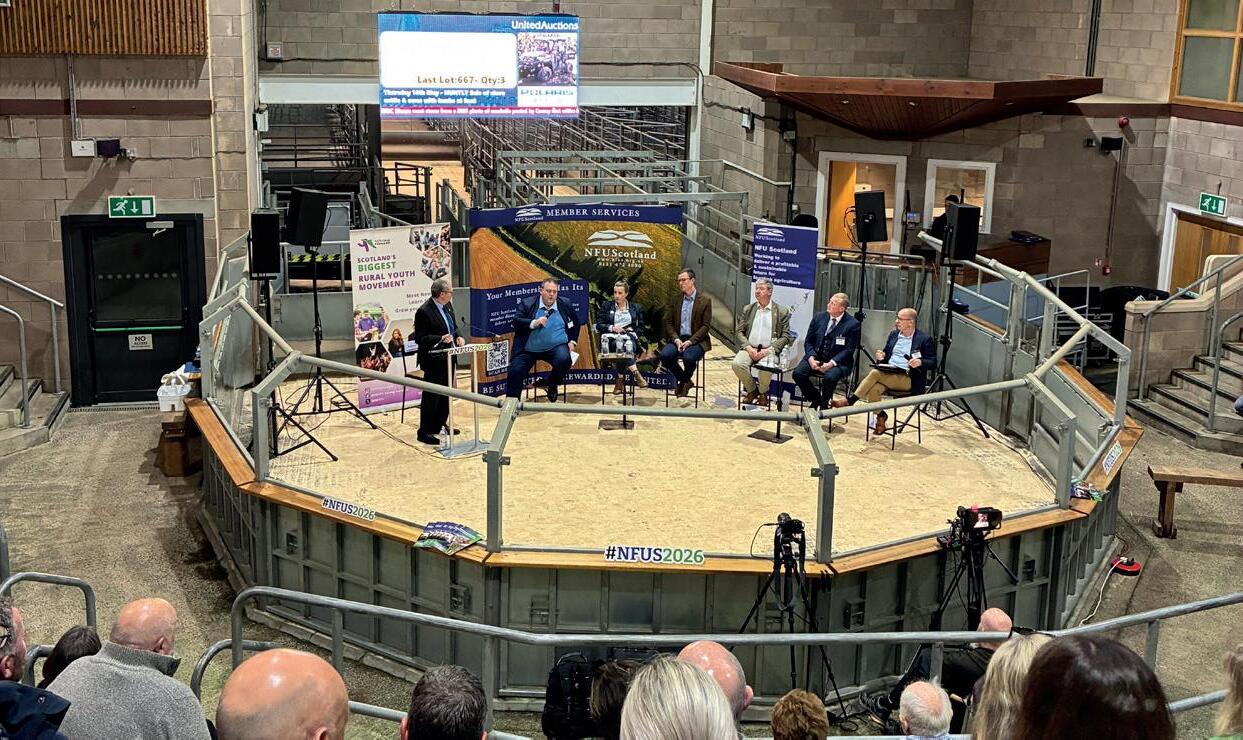
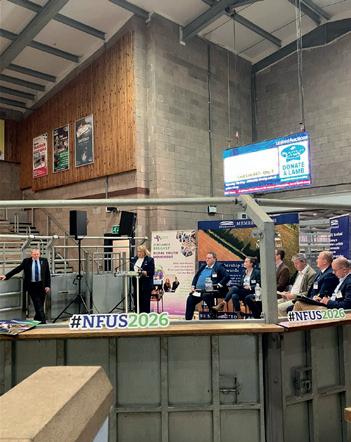
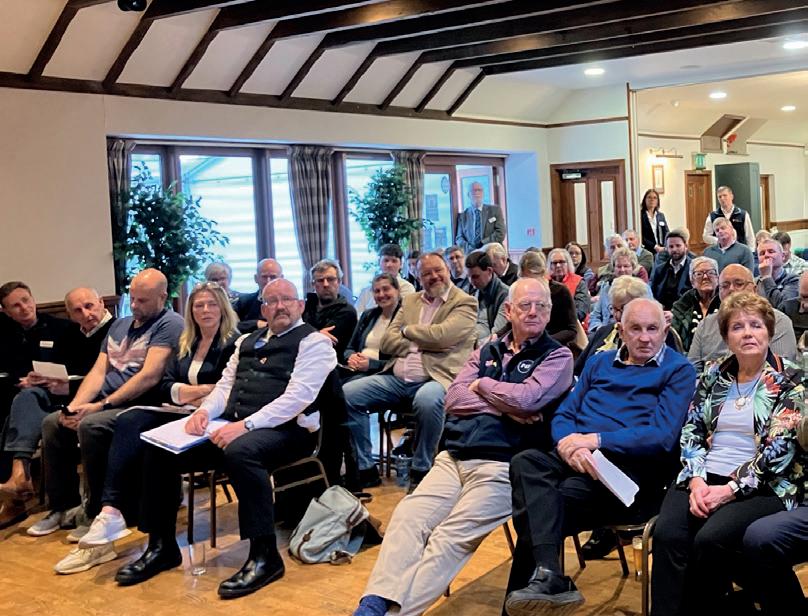
In late April, NFU Scotland and SAYFC hosted a joint national hustings event at United Auctions Livestock Mart in Stirling, bringing together over 100 attendees with representatives from the six main political parties as Scotland approached the national elections. A wide range of issues were raised, including species management, future funding, food price uncertainty and support for the next generation of farmers, refl ecting the breadth of challenges and opportunities facing the sector.
Following the election, engagement continues with newly elected MSPs, with NFU Scotland reinforcing key messages to returning members and briefi ng those new to Holyrood. It is essential that the role of Scottish farmers and crofters is clearly understood within the new Parliament and Government, and that their contribution is recognised –from producing high-quality food and
restoring nature to helping mitigate climate change and supporting rural communities. Those who were unable to attend the hustings can watch the full debate on the NFU Scotland website: NFU Scotland | /elections. aspx.
President Andrew Connon and Director of Policy Jonnie Hall also recently met with Emma Reynolds MP, Secretary of State for DEFRA, to discuss the impact of geopolitical instability on agriculture and the need to strengthen both short- and long-term resilience. The discussion highlighted ongoing pressures facing farmers, particularly rising fuel and fertiliser costs and the importance of resilient supply chains. The Secretary of State acknowledged these challenges and outlined current government responses, with further meetings in Westminster planned to continue the conversation.
Since the May election, NFU Scotland has continued active engagement with the new Scottish Parliament and Government. Of the 129 MSPs elected, 64 are new, and work is underway to ensure they understand the importance of farmers and crofters to Scotland’s economy, and to environment and rural communities. Engagement has also continued with returning MSPs, Cabinet members and party leaders, setting out NFU Scotland’s priorities, including highquality food production, tackling climate change, enhancing biodiversity and sustaining rural communities.
Over the summer, a programme of farm visits and agricultural show meetings will continue, with further opportunities to engage at the Royal Highland Show. Members who would like support identifying their MSPs or getting involved in regional meetings are encouraged to contact their Regional Manager.
Peter Allison Agriservices Ltd
Farm Waste Recycling
We are a farm waste management company, based near
and have been trading for 14 years.
• Collection of waste from farm
Peter Allison Agriservices Ltd
• Coverage throughout Scotland
• Waste drop off directly to our yard
Farm Waste Recycling
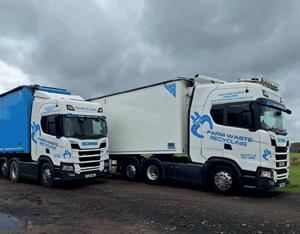
We are a farm waste management company, based near Dundee and have been trading for 14 years.
Our services include:
• Collection of waste from farm
• Coverage throughout Scotland
• Waste drop off directly to our yard
• Walking floor haulage
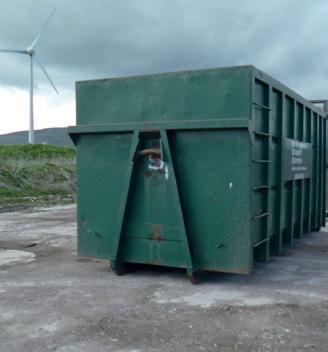
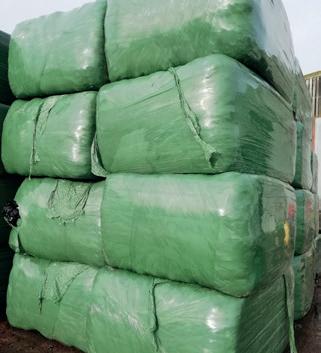
The types of waste we accept includes: Silage Wrap, Fertiliser Bags, Chemical Drums, Cardboard and Feed Buckets. Mixed loads of waste are accepted to make it as easy and affordable as possible for farmers to dispose of their waste.
Skips also available for scrap metal. Give us a call to discuss your requirements.
The types of waste we accept includes: Silage Wrap, Fertiliser Bags, Chemical Drums, Cardboard and Feed Buckets. Mixed loads of waste are accepted to make it as easy and affordable as possible for farmers to dispose of their waste. Skips also available for scrap metal. Give us a call to discuss your requirements.
Hiring and Contracting on Farm: Understanding Liability and Insurance Responsibilities
Hiring machinery, carrying out contracting work, or bringing contractors onto your farm can be an efficient way to manage workloads and costs. However, these arrangements also introduce additional risks. Understanding where liability sits and ensuring the right insurance is in place is essential for protecting your business.
1. Hiring Equipment: What insurance cover is needed?
When hiring in machinery or equipment, responsibility for insurance is often misunderstood. In most cases, the hirer becomes responsible for the equipment while it is in their care, custody or control. This means farmers should not assume that the owner’s insurance will automatically respond if hired machinery is damaged or involved in an incident.
Key considerations include cover for:
• Accidental damage or loss of hired equipment.
• Thirdparty injury or property damage arising from its use.
• Operator error, particularly where farm staff are using unfamiliar machinery.
NFU Mutual recommends checking that your farm and/or vehicle policy includes cover for hiredin machinery and appropriate Public Liability limits. It’s also vital to confirm whether any exclusions apply and whether shortterm hires need to be declared separately.
2.
Undertaking Contracting Work: Who is liable?
For farmers undertaking contracting work for others, whether as a diversified income stream or a specialist operation, liability usually rests with the contractor carrying out the work. If an incident occurs, such as damage to crops, property, or injury to a third party, the contractor’s insurance is likely to be called upon.
Appropriate cover should include:
• Public and Product Liability, typically up to £10m.
• Employers’ Liability, where staff or casual labour are involved.
• Contractors’ All Risks, to protect machinery and equipment in use.
NFU Mutual’s AgriContracting cover, available alongside Farm Select or Commercial Select Insurance, is designed to reflect the realities of modern contracting, whether undertaken occasionally or as a core business activity. Clear contracts, defined responsibilities, and uptodate insurance are key riskmanagement tools. It is important to check with your NFU Mutual Agent or insurance broker that the activities you plan on undertaking are covered by your insurance.
When bringing contractors onto your farm, liability doesn’t automatically transfer entirely to them. While contractors should carry their own Public and Employers’ Liability insurance, farm owners can still be held responsible, particularly if an incident relates to site conditions, access, or farmowned infrastructure.
Both parties should:
• Confirm who is responsible for what, in writing.
• Ensure insurance policies are compatible, with adequate limits.
• Review risk assessments, especially for highrisk activities.
NFU Mutual encourages farmers to take a proactive approach by checking contractor insurance certificates and discussing risk openly. NFU Mutual Risk Management Services offer a range of support, including safety reviews and equipment inspections, that can help identify potential issues before work begins.
Hiring and contracting are now integral practices to many farming businesses. By understanding liability, checking insurance arrangements early, and working with a specialist rural insurer, farmers can reduce uncertainty and protect their livelihoods. Speaking to your local NFU Mutual Agent ensures cover reflects how your business operates.
Visit nfumutual.co.uk/hire to find out more, or scan the QR code with your mobile phone.
As Wimbledon brings strawberries back into the spotlight, Megan Williams speaks to Jill Witheyman, Head of Marketing at Angus Soft Fruits (ASF) and Angus Growers (AG), about Scotland’s strawberry industry, the pressures of peak-season production, and the future of soft fruit growing.
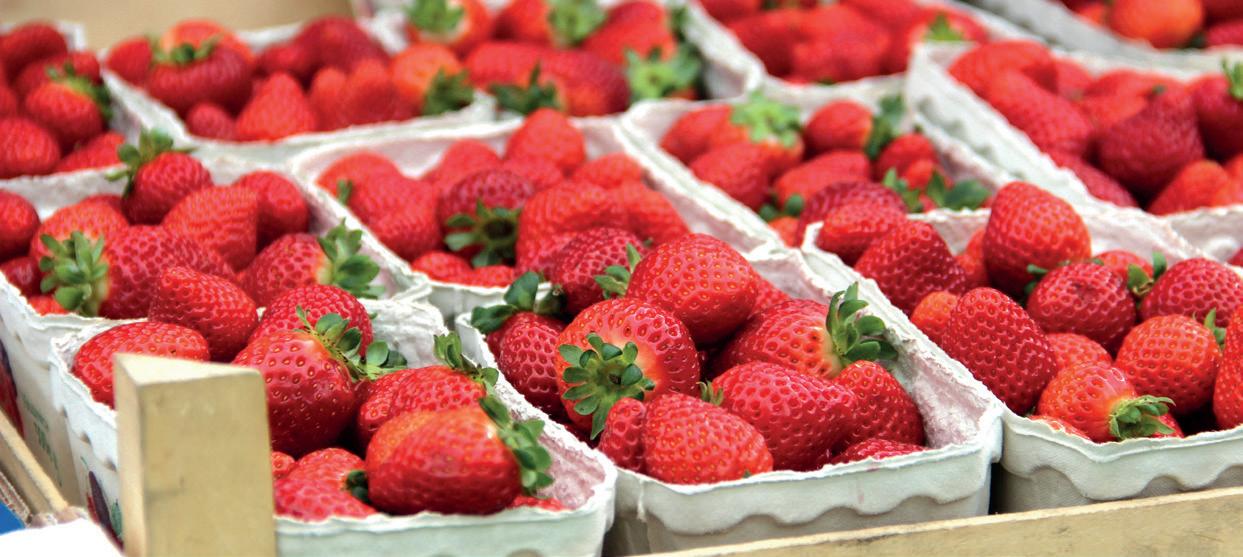
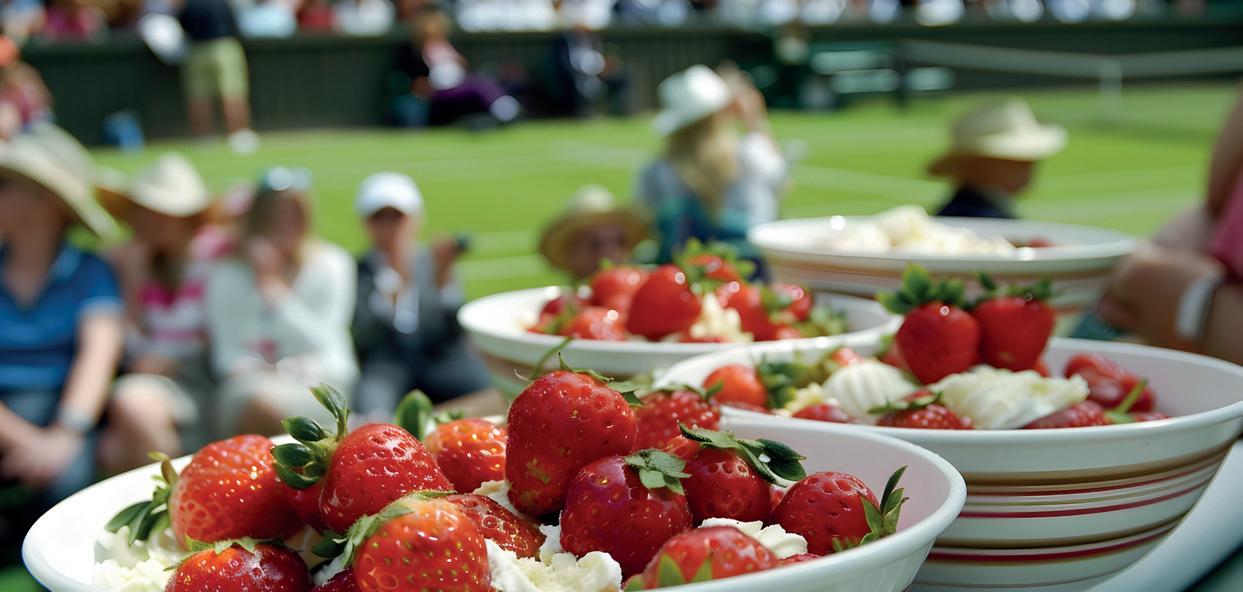
Every summer there is a moment when strawberries take centre stage. Wimbledon arrives, bringing with it the familiar ritual of strawberries and cream, close-up shots of glossy red berries on television, and the pairing of sport with seasonal indulgence. A simple fruit becomes a national symbol of summer.
Behind that tradition, however, sits a quieter and more complex story of timing, skill and production at scale.
So, Jill, take me back to the early days of the business. How did Angus Soft Fruits (and then Angus Growers) begin, and what was strawberry farming like in Scotland then?
Angus Soft Fruits was established in 1994, building on generations of strawberry growing in Angus and the east of Scotland. At that time, strawberry farming was far more traditional and far less predictable than it is today. The season was short, often just a few weeks long, and growers were heavily exposed to the weather, labour challenges and volatile market prices.
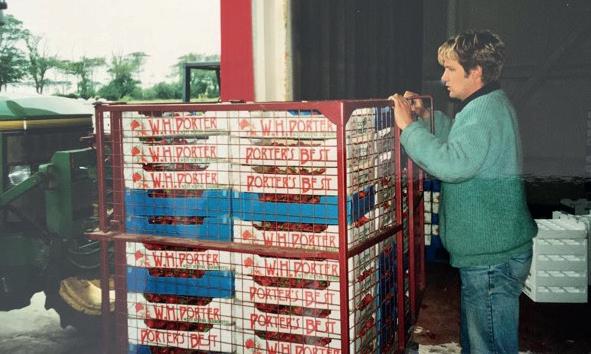
The business was founded by growers Lochy Porter, his father Willie and cousin James Gray, driven by a clear ambition: to work directly with retailers and continually raise the standard of berries available to consumers. Back then, Scottish strawberries were highly regarded for fl avour, but they were still seen as a niche, seasonal product rather than something that could play a consistent role in major retail supply.
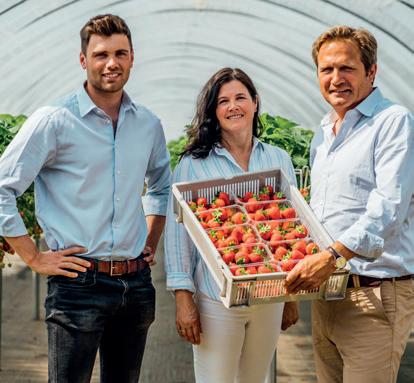
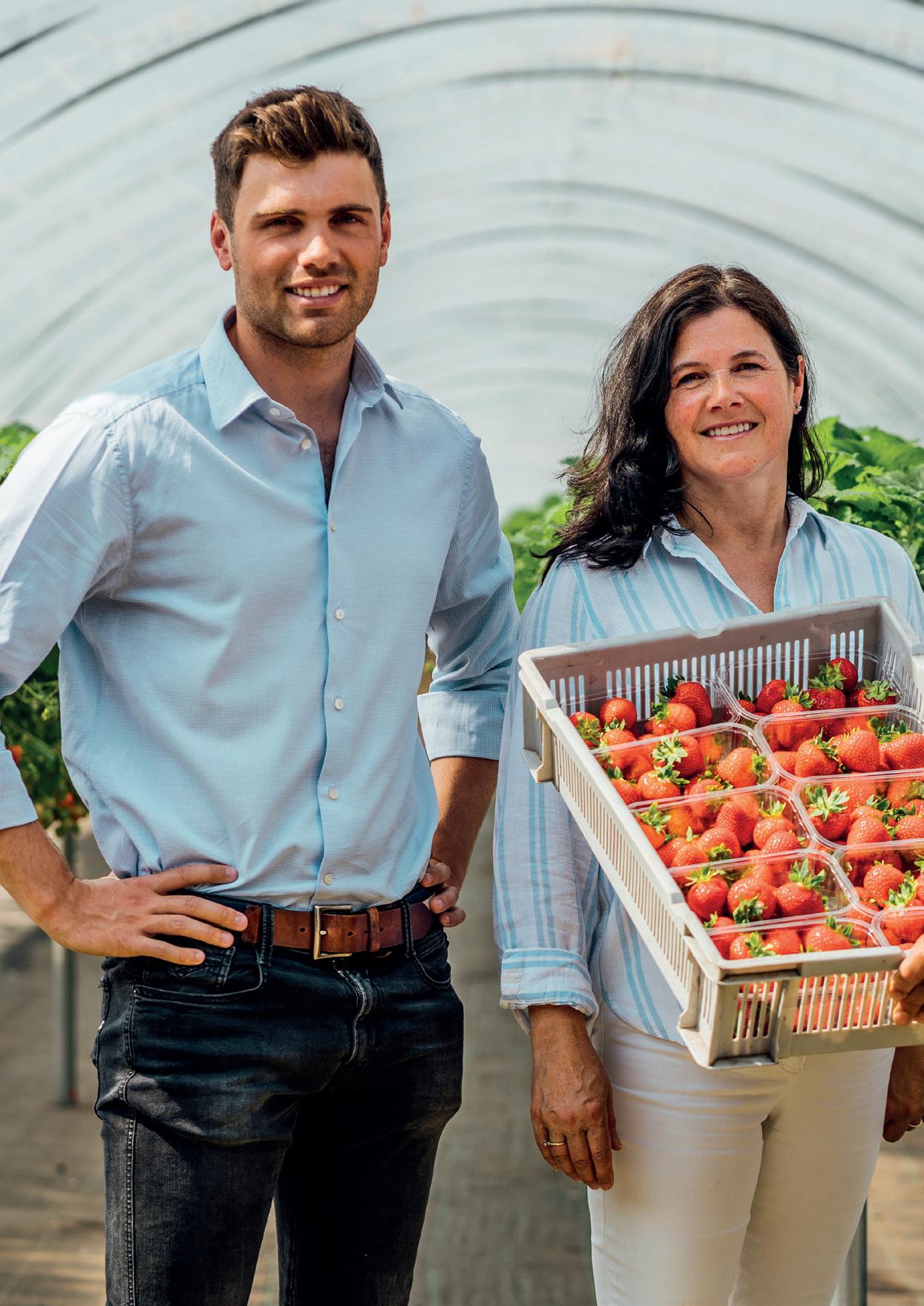
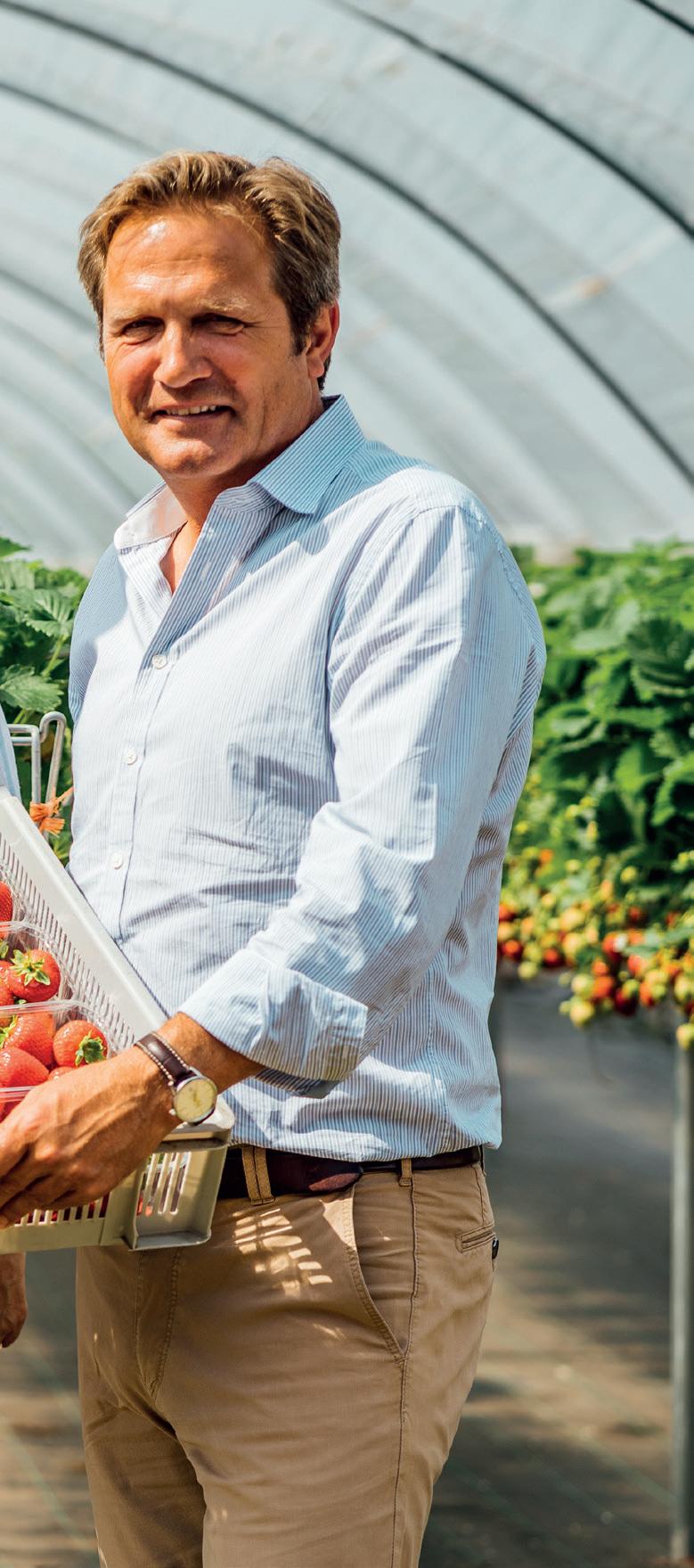
GORDON PORTER, WITH HIS MOTHER DEBBIE PORTER AND FATHER LOCHY PORTER, CHAIRMAN OF ANGUS SOFT FRUITS
From the outset, Angus Soft Fruits set out to change that perception through innovation, collaboration and a relentless focus on quality. In 2002, to consolidate production and marketing, the Angus Growers producer organisation was formed by 16 soft fruit growers who were supplying Angus Soft Fruits with fruit for sale to retailers.
Was there ever a moment when growing strawberries in Scotland felt like a gamble rather than a business opportunity?
In the early years, growing strawberries in Scotland involved a degree of risk. The climate is fantastic for flavour, but historically it also brought rainfall and unpredictable conditions that could compromise crops. Without modern growing systems, yields and quality could fluctuate from season to season.
The shift came through investment in innovation. The development of protected growing systems – particularly tabletop production – transformed the industry. It allowed growers to protect fruit from the elements, improve labour efficiency and crucially extend the season. What had once felt like a gamble gradually became
There’s a huge sense of pride attached to this time of year
a viable, resilient business with long-term potential.
Fast forward to today, what has ASF and AG grown into?
Today, Angus Soft Fruits is a vertically integrated berry specialist; breeding, growing, packing and marketing premium berries for customers across the UK and international markets. The business works in close partnership with Angus Growers, currently made up of 16 expert soft fruit growers across Angus, Perthshire and Fife.
From its roots in Angus, the business has grown into a year round supplier through carefully selected grower partnerships in the UK and overseas, while still remaining firmly anchored in Scotland.
It operates advanced packhouses, leads one of the industry’s most respected berry breeding programmes, and supplies a wide range of retailers with high quality strawberries and other berries.
Despite that growth, the ethos remains the same: grow exceptional fruit, work closely with growers, and keep pushing standards higher.
How does Wimbledon fit into that wider story?
While strawberries and Wimbledon are inseparable in the public imagination, for Angus Soft Fruits the significance lies in timing rather than supply. The Championships take place at the very height of British strawberry season, when Scottish fruit is naturally at its best.
This is when Angus Soft Fruits supplies retailers across the UK with outstanding quality, fresh Scottish strawberries. Long daylight hours, cooler temperatures and careful crop management combine to deliver fruit with exceptional flavour, colour and consistency. It’s a showcase moment for British produce, and particularly for Scottish strawberries, which are performing at their absolute peak.
For growers and retailers alike, this
YOUNG LOCHY PORTER
period represents the culmination of months of planning and precision – a time when the quality of the fruit speaks for itself.
What does that peak demand period look like for growers and packers on the ground?
It’s an intense and highly coordinated period. On the farm picking starts early, with teams focused on harvesting fruit at exactly the right moment of ripeness. Labour planning, quality control and logistics all run at full tilt.
In the packhouse, speed and accuracy are essential. Fruit moves quickly through the system to ensure it reaches retailers as fresh as possible, with teams working extended hours to meet demand. There’s a huge sense of pride attached to this time of year – it’s when growers see the results of a season’s worth of care, skill and experience.
How has growing strawberries in Scotland changed most over the years –what would surprise someone looking in from the outside?
The biggest surprise would be just how technologically advanced strawberry farming has become. Modern Scottish strawberry production combines generations of growing knowledge with smart farming tools and cutting edge innovation.
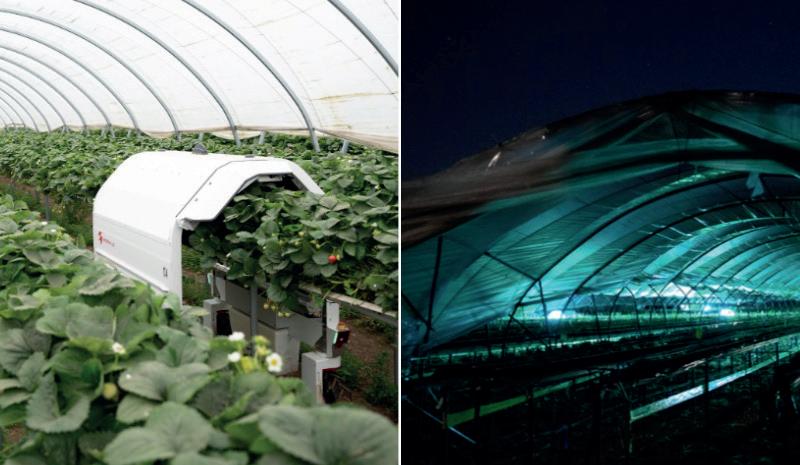
Growers now use drones to monitor crops and assist with pollination strategies. Autonomous robots operate at night, applying UVC light to naturally suppress diseases such as powdery mildew, helping reduce reliance on chemical controls. Data, automation and precision horticulture now sit alongside traditional skills in the field.
That pride – in the fruit, the farms and the reputation of Scottish strawberries – is a powerful thread that connects past, present and future.
Equally important has been the development of new premium strawberry varieties. Through ongoing research and breeding, growers are continually raising the bar in terms of flavour, yield and consistency. Scottish strawberry growing today is as much about science and innovation as it is about soil and weather.
These were often family run farms at the heart of it – are you now seeing the next generation stepping into the business? Yes, very much so. Many of the farms within Angus Growers remain family run, and there is a strong sense of continuity as younger generations step into leadership roles.
What’s carried through the generations is a deep pride in producing the highest quality fruit possible. Today’s growers are as focused as ever on improving flavour, refining growing techniques and pushing standards forward, while protecting the land for the future.
That pride – in the fruit, the farms and the reputation of Scottish strawberries –is a powerful thread that connects past,
present and future.
Scottish strawberries are widely regarded as some of the best in the world, what makes them stand out?
Scotland offers a unique growing environment. Long daylight hours and cooler summer temperatures allow strawberries to ripen more slowly, developing higher natural sugars and deeper flavour.
When that natural advantage is combined with specialist growing expertise and premium varieties bred specifically for flavour, the result is fruit that consistently punches above its weight. Scottish strawberries aren’t just good because they’re local – they’re good because the conditions and the people growing them are exceptional.
Looking ahead, where does Scottish strawberry growing go from here over the next generation or two?
The future lies in precision, sustainability and people. Continued innovation in breeding will deliver varieties that taste even better, perform more consistently and are more resilient to changing conditions. Technology will play an increasing role, helping growers farm smarter and more efficiently while reducing environmental impact.
Just as importantly, the next generation of growers is already in place – highly skilled, forward thinking and deeply committed to maintaining Scotland’s reputation for world class berries. The story that began in Angus fields decades ago is still evolving, and its best chapters may yet be to come.
To find out more visit www.angussoftfruits.co.uk
All your farming needs under one roof
Farm & Contractors insurance
Covering small farms, large farms and agricultural contractors. Provided by NFU Mutual Agents, located in rural towns and villages throughout the UK.
Financial planning
From pensions to investments, life cover to business protection, we’ve been helping customers with their financial planning needs for 95 years.
“A great deal to be positive about”
TJonnie Hall Deputy CEO/Director of Policy
here is no denying that Scottish agriculture is operating in a period of significant challenge. Rising input costs, labour shortages, volatile output markets and more extreme weather events all weigh heavily on farm and crofting businesses across the country. At the same time, the sector is navigating one of the most profound policy transitions in a generation. Things are shifting, often rapidly.
But to focus only on the challenges is to miss a much bigger, and far more encouraging, story.
From my vantage point, there is, quite simply, a great deal to be positive about and to celebrate within Scottish agriculture
today. Central to much of that progress is the sustained, highly professional work of NFU Scotland across the industry, driven by a deeply committed staff body and a policy team that is widely respected across government, industry and beyond.
Scottish agriculture remains the backbone of a food and drink sector that is internationally recognised for its quality, provenance and standards. That success is built on generations of expertise, but it is also underpinned by effective representation, ensuring that the voice of active farmers and crofters is not only heard, but listened to.
That is where we have made, and will continue to make, a decisive and critical difference.
Over recent years, the Union has secured several important policy wins that provide both stability and direction
for the sector. Chief among these has been successful lobbying for continuity and clarity in agricultural support during a period of upheaval.
At a time when uncertainty could have easily undermined confidence, we have ensured that the case for maintaining direct support, and doing so at meaningful levels, has remained front and centre in political discussions.
Equally significant has been our role in shaping Scotland’s future agricultural support framework, from the primary legislation of the Agriculture and Rural Communities (Scotland) Act 2024 to the recently published Rural Support Plan.
Rather than reacting to policy, we have consistently and credibly set out detailed, pragmatic proposals that recognise a simple but crucial principle: environmental ambition and food production must go
hand in hand with profitability. That once contested position is now increasingly accepted, reflecting the strength and credibility of our policy work. This influence has not come about by chance. It is the result of a policy team that combines technical expertise with practical understanding, rooted in the realities of farming and crofting. Their ability to engage constructively with policymakers, while also challenging where necessary,
sector. Greater recognition of the need for accessible capital investment support also bears the hallmarks of our input. These are not headline-grabbing changes, but they are fundamental to ensuring that policy is deliverable, effective and fair, and works for active farmers and crofters across Scotland.
Beyond direct support and environmental policy, we have also been instrumental in advancing fairness within
This influence has not come about by chance
means our influence is felt across multiple areas of policy development.
And the results speak for themselves.
The delivery of commitments we have secured on funding, including the retention of at least 70 percent of funding dedicated to direct support through to 2030, is indicative of the successes we have achieved for members and the wider
the supply chain. Persistent engagement has helped elevate issues around market returns and transparency, ensuring the challenges faced by primary producers are better understood and increasingly acted upon.
Our work on securing access to skilled and seasonal labour has also been critical. While challenges remain, our evidence-
led advocacy has ensured that agricultural needs are clearly articulated in wider migration and labour policy discussions.
Just as importantly, we have played a leading role in strengthening the broader narrative around Scottish agriculture. Through consistent communication and engagement, we have helped reposition the sector not as part of the problem in debates around climate and land use, but as an essential part of the solution.
That shift in perception matters. It influences policy, investment and public support, and creates the space for farmers and crofters to continue doing what they do best: producing high-quality food, caring for Scotland’s land and nature, and underpinning rural communities.
None of this would be possible without the people behind the scenes.
Our staff bring a level of dedication and professionalism that is often unseen, but always felt. When it comes to policy, the team operates with a depth of knowledge and credibility that commands respect across political and institutional boundaries. Their work is meticulous, their engagement is strategic, and their commitment to delivering for members is unwavering. They understand that good policy is not just about ambition, but also about effective implementation. It is about ensuring that what is agreed in principle works in practice, on farms and crofts the length and breadth of Scotland.
Of course, there is no room for complacency. Significant challenges remain, not least in securing long-term funding certainty, ensuring fair returns from the marketplace, and maintaining a clear and consistent policy direction.
But it is important that we recognise the progress that has been made, and the role we have all played in achieving it.
Scottish agriculture today is much better positioned than it could have been. It is more clearly understood, more effectively represented, and more strategically aligned with national priorities. We have made Scottish agriculture matter across so many areas of political and policy interest.
That is something worth acknowledging and, we believe, something worth celebrating. Because while the challenges are real, so too are the achievements.
With a strong, credible and highly effective NFU Scotland at its heart, Scottish agriculture has every reason to face the future with confidence.
A decade of tackling rural crime
Rhianna Montgomery Policy Manager
The Scottish Partnership Against Rural Crime (SPARC), established in 2016, marks its 10th anniversary this year. Bringing together rural communities, law enforcement and key stakeholders, SPARC was created to deliver a coordinated and practical response to crime affecting Scotland’s countryside.
Rural crime, defi ned as any crime occurring in or impacting rural areas, covers a wide range of issues, from theft and vandalism to organised and environmental crime. NFU Scotland has been at the heart of SPARC since its inception, helping to shape a partnership that now includes more than 20 organisations working collaboratively across Scotland.
Over the past decade, SPARC has raised the profi le of rural crime,
strengthened partnership working, and improved understanding of the distinct vulnerabilities of rural areas. It has also highlighted the very real emotional and fi nancial impact that crime can have on farming families and rural businesses.
The latest SPARC Strategy (2025–
effective action.
At a local level, Partnership Against Rural Crime (PARC) groups provide an important forum for identifying and tackling issues specific to individual areas.
SPARC’s 10th anniversary will be marked by a presence at major
NFU Scotland has been at the heart of SPARC since its inception, helping to shape a partnership that now includes more than 20 organisations working collaboratively across Scotland
2028) adopts a “4Ps” approach: Prevent, Protect, Prepare and Pursue. A key development is the introduction of six Priority Working Groups, bringing together those directly affected by specifi c crime types with specialist partners to deliver more targeted and
agricultural events, including the Royal Highland Show in June, and will culminate in the Rural Crime Conference on 23 September at the Scottish Police College, Tulliallan.
You can view the full strategy document at scottishparc.co.uk
Taking the long view: positive progress in farm production
David Michie Senior Policy Manager
Summer’s here, and this edition of the Scottish Farming Leader is focusing on the positives. Writing a “good news” story is more difficult than I imagined. As a representative member organisation, we don’t often hear that everything is brilliant, that the government is delivering superb policy, or that markets and supply chains are working perfectly and very much in the farmer’s favour.
So instead, I have looked backwards rather than forwards, picking out some of the positive changes I have seen since I started properly working on the family farm in Aberdeenshire as a teenager in the early 1990s.
Proper food scares are largely a thing of the past, hopefully. The impact of BSE, or “mad cow disease,” was devastating for beef-based farming businesses like ours. However, sensible regulation, including
the ban on mammal-derived protein feed, culling and compensation schemes, and the introduction of cattle passports, helped resolve the issue. The salmonella scare was similarly damaging for egg producers, but an industry-led farm assurance scheme changed practices and restored consumer confidence.
Livestock traceability in Scotland is now excellent. Following the devastating impact of Foot and Mouth disease, significant investment went into livestock tracking systems. The Scottish system works very well, and if we face another contagious disease outbreak, we are in a far stronger position to trace infection sources and respond quickly.
Crop production efficiency has also improved. Yields have largely plateaued, but the inputs required to achieve them have reduced. Plant breeding, improved diagnostics, precision farming, advances in machinery, and digital technology have all played a role. If grain prices had tracked inflation, we would now be looking at a very profi table arable sector.
Livestock efficiency has improved too. Genetic progress has been, and
will continue to be, a major driver of productivity, efficiency, and sustainability in Scotland’s livestock sector. Efficiency also improved significantly following the phasing out of headage payments, when unproductive stock such as empty cows and barren ewes no longer attracted support.
So what can we take from this? Out of
We are in a far stronger position to trace infection sources and respond quickly
crisis comes opportunity and progress. Things do improve. We are more efficient, and that is not only good for business profi tability but also for sustainability, with a lower carbon footprint per unit of output. It is also a useful reminder to focus on the positives rather than dwell too heavily on the negatives. As an industry, we have made significant progress. Future efficiency gains may be harder to achieve, but improvement will continue. We should have confidence in the farming sector’s ability to keep moving forward.
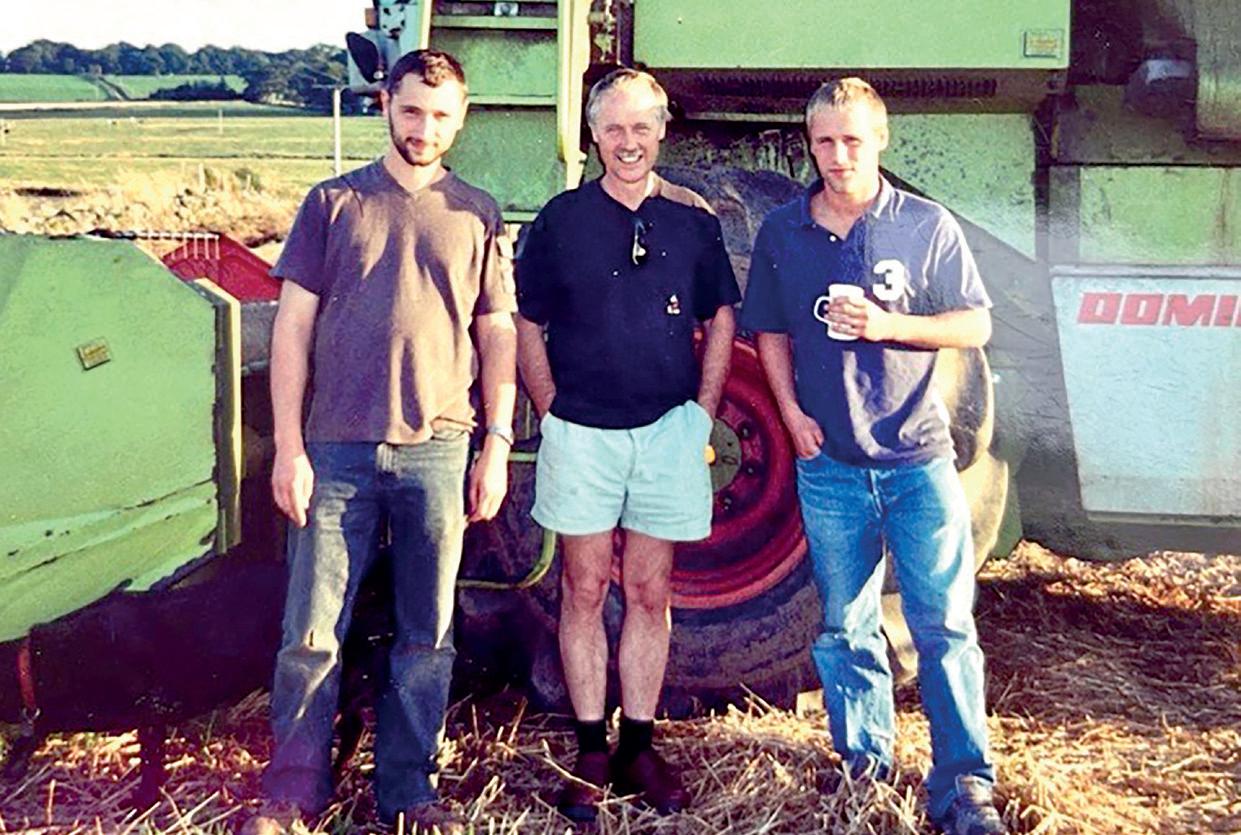
DAVID WITH HIS DAD AND BROTHER ON THEIR FAMILY FARM IN THE NORTH-EAST IN THE EARLY ‘00S
Lantra Scotland, in partnership with the Scottish Government, has opened applications up for the Next Generation Practical Training Fund, offering up to £500 of fully funded training per course to help new entrants build practical skills and strengthen the future rural workforce.
A total of £300,000 is available this year to support people who have either entered agriculture within the last five years (with the five-year period starting from age 18) or who have recently completed a relevant school or college course.
Funding may also be available for courses costing more than £500, where applicants can demonstrate clear value to their skills development or business.
Training topics include:
• Tackling climate change
• Protecting wildlife and improving habitats
• Staying safe in the workplace
• Using equipment and machinery
• Running a farm business (including financial skills)
Henry Graham, Chair of the Farming Opportunities for New Entrants (FONE) group, said:
“It has been very evident that learning practical skills is vital in enabling the next generation to contribute to farming businesses.
“I am therefore delighted that another year’s funding for new entrants is now in place, with applications now being taken.
“A wide range of training programmes is available for both traditional and new skills, including financial matters.”
Find out more and apply at www.scotland.lantra. co.uk/next-generation-practical-training-fund
Putting public procurement on the menu
ALisa Hislop Policy Manager
s a sector and a nation, we aren’t always the best at celebrating ourselves.
Yet there is so much to be proud of, particularly as we navigate the challenging times of late.
A large part of this role is spent underlining the important role of Scottish agriculture to key players across the supply chain, many of whom recongise primary production as the bedrock of our supply chain. However, we all know this doesn’t always translate back to you.
One relatively low hanging fruit for the new Scottish Government is reform of public food procurement. While it may be a small market for many members, it sends an important signal of respect for, and celebration of, local producers. We often hear a narrative which places an onus on the retailers to celebrate and champion
The Scottish Food Commission will play a crucial role in holding government, local authorities and health boards to account
Scottish agriculture, but isn’t it just as important that our public places adopt the same approach? While the foundations are in place to “transform Scotland to a Good Food Nation” there is still significant work to be done to turn these broad ambitions a reality.
The Scottish Food Commission will play a crucial role in holding government, local authorities and health boards to
account in their delivery of the Good Food Nation ambitions. The ultimate aims are to ensure that Scotland’s food system works for everyone, including to ensure primary producers get a fair price.
At our most recent engagement with the Commission, we discussed how the Good Food Nation ambitions will turn into action which supports primary food production in Scotland.
The Commission is taking a refreshing approach in its initial months to ensure they cover the length and breadth of Scotland and understand the challenges and opportunities facing each part of the supply chain. It is crucial that primary producers are vocal during local plan development.
While this likely sounds abstract, your local council and health board have a legal requirement to create a local food plan before 1st of April 2028. I would encourage you to engage in local consultations, ensuring that the realities of farming in your area are heard.
Bob Carruth Policy Manager
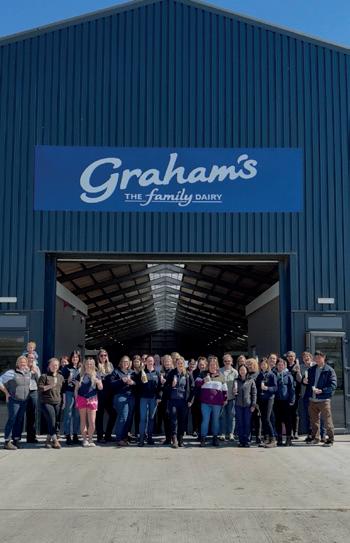
One of Scotland’s leading dairy farms played host to the inaugural on-farm event staged by the Scottish Women in Dairy Network.
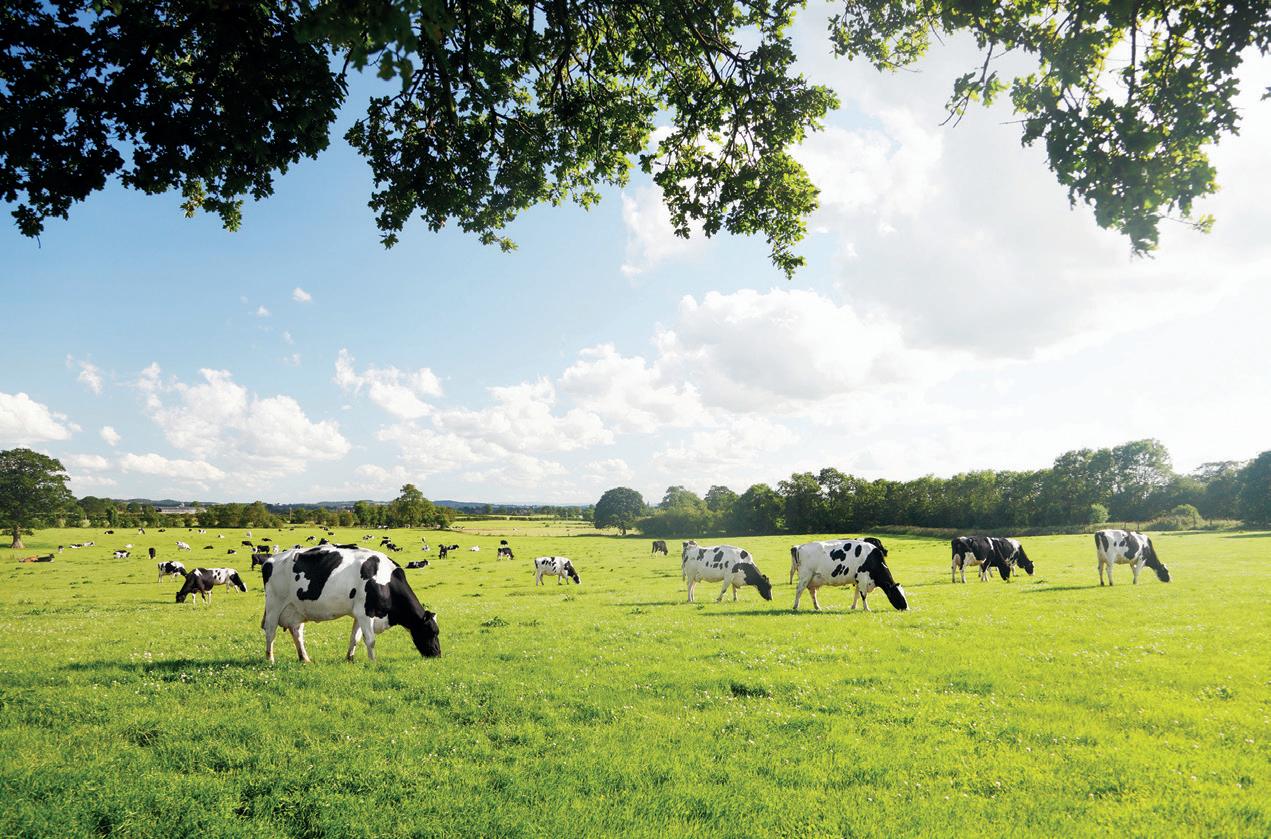
Mains of Boquhan Farm, owned by Grahams – The Family Dairy, was named Scottish Dairy Farm of the Year in November 2025.
Scottish Women in Dairy Network hosts first on-farm event
at award-winning Stirlingshire dairy
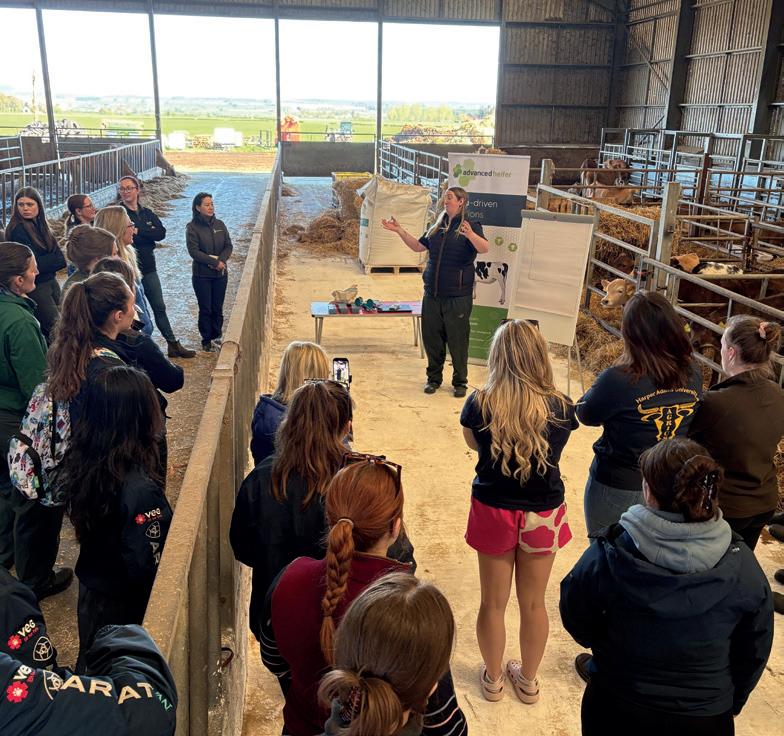
for the sell-out Scottish Women in Dairy Farming event, looking in detail at calf care, and sponsored by Advanced Ruminant Nutrition.
The focus of the day was on colostrum management and calf hygiene, two critical areas for ensuring high calf health and long-term herd performance. Attendees took part in insightful, practical sessions, offering valuable guidance on calf care that they could take straight back to their own businesses.
Liz Lunn, of Advanced Ruminant Nutrition, brought a wealth of expertise on colostrum quality, emphasising the importance of getting calves off to the
A model of innovation, care, and best practice in dairy farming
Led by farm manager Leanne Bertram and her team, the Stirlingshire farm was recognised for its exceptional attention to detail, outstanding Jersey cows and youngstock, with the team praised for displaying excellent stockmanship.
With the farm seen as a model of innovation, care, and best practice in dairy farming, it made the perfect venue
best possible start.
Connie Yates from food safety specialists Kersia complemented this with a deep dive into hygiene protocols, underlining how attention to detail in calf rearing environments and cleaning protocols of equipment can make a signifi cant difference to animal health and productivity.
Overall, it was a fantastic day and a brilliant start for the Scottish Women in Dairy Network’s on-farm events.
For more details on the Scottish Women in Dairy Network and details on future events, including roadshows this October, go to: https:// scottishwomenindairy.co.uk/ or follow on Facebook at @scottishwomenindairy.
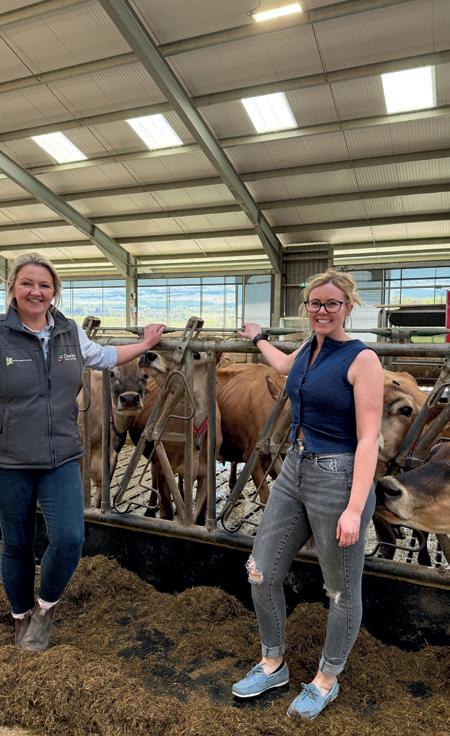
Rebecca McTaggart (right), chair of the newly-formed Scottish Women in Dairy Network and committee member Tracey Roan kicked off a programme of events with an inaugural on-farm meeting focussed on calf health and hygiene.
The Scottish Women in Dairy Network’s inaugural on-farm meeting, hosted at Mains of Boquhan farm, saw a full house of delegates learn more about calf health and hygiene.
Graham’s The Family Dairy, winner of the Scottish Dairy Farm of the Year 2025 award, hosted the inaugural Scottish Women in Dairy on farm event.
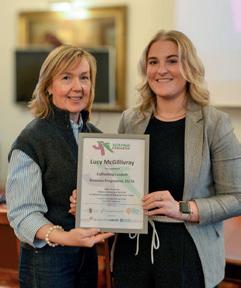
Refl ections on the SAYFC Cultivating Leaders course
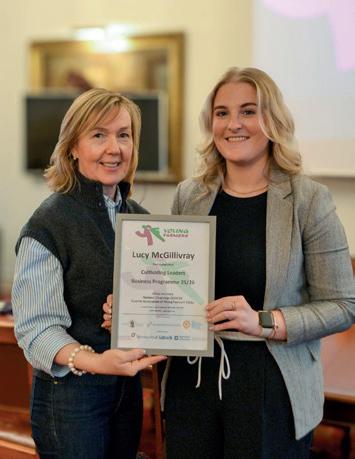
Lucy McGillivray Policy Manager
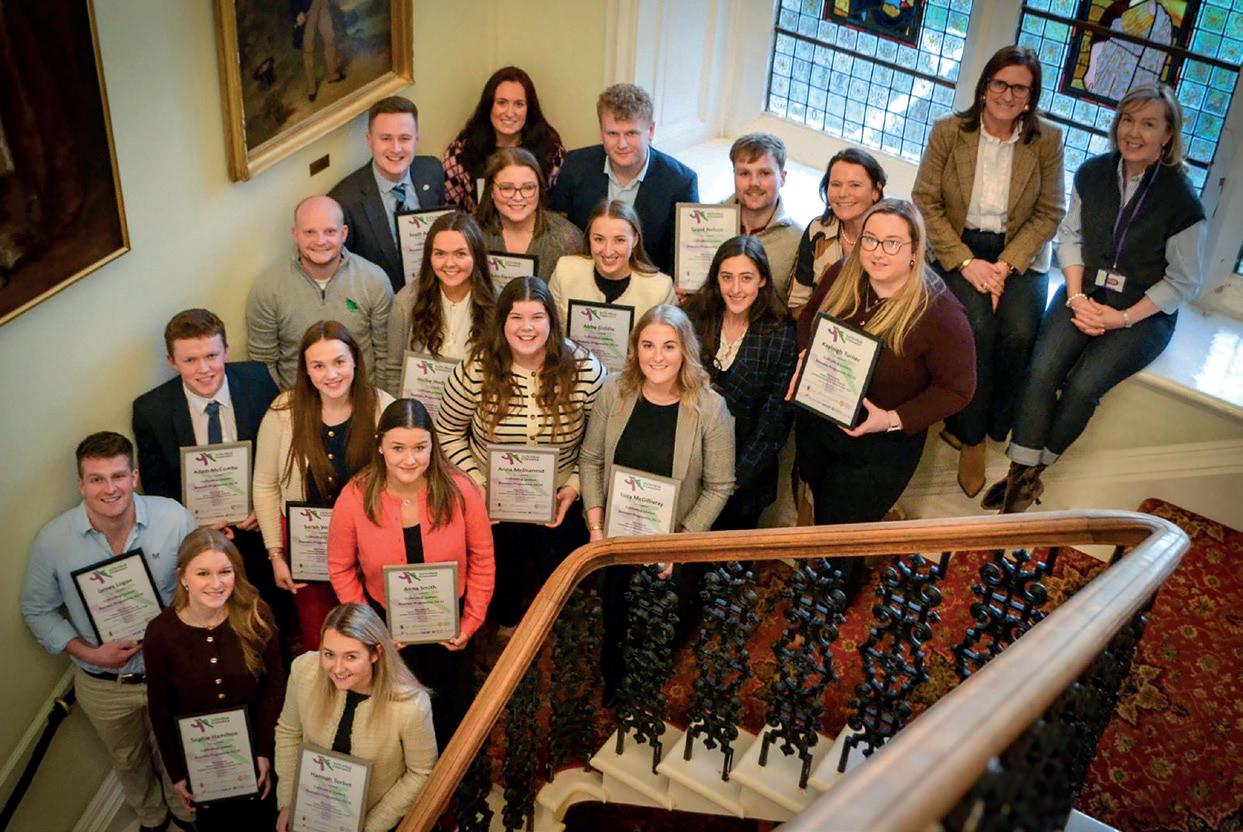
The SAYFC Cultivating Leaders course is a highly valuable experience that combines leadership development, business insight and personal growth, helping young farmers build confidence, expand their networks and gain practical skills for the future. I had the opportunity to be part of the 2025/26 cohort, and thoroughly enjoyed my time on the course.
One of the privileges of the course was the chance to hear from a variety of young farmers across Scotland, in which we all had completely different experiences of working in agriculture. We also had the chance to hear the expertise of rural professionals, from accountancy to land management, all expertly facilitated by Heather Wildman.
From hearing everyone’s experiences, it was clear that part of celebrating the
success of agriculture has to be the endless opportunities it can present. For me, I have a professional role through being the Livestock Policy Manager at NFUS. But having lived on a farm all my life, I still love the practical side of agriculture and being able to do both is something I’m grateful for. It doesn’t have to be one or the other, and that is key when encouraging people into a career in agriculture. That’s another great thing about SAYFC, in that you don’t have to be a farmer to join young farmers.
The Cultivating Leaders course also gave me the confidence to get more involved with SAYFC at a national level, and this year I was elected onto the National Agri and Rural Affairs Committee. I’m really looking forward to getting stuck into the work of the Committee and helping to strengthen the link between NFUS and SAYFC even further.
Overall, the Cultivating Leaders course has been a great reminder of the opportunities that exist within Scottish agriculture. Hearing different perspectives and seeing the enthusiasm across the cohort really reinforces just how much there is to be positive about in the sector,
both now and in the future. In keeping with the theme of this edition, it also highlights the importance of celebrating the different paths people can take into and within the industry.
Finally, with the Highland Show around the corner, I look forward to catching up with you all there after a busy spring.
You can find out more about the course at www.sayfc.org/cultivating-leaders/
Shaping Scotland: the role of livestock in landscapes and communities
Lorna Scott Policy Manager
As we look to see what the newly elected Scottish Government plans to do for agriculture, land use and rural businesses with regard to policy and support, it becomes more important than ever that the new intake of MSPs understand the importance of farming and crofting across the country.
Agricultural production and livestock grazing has shaped some of the nation’s most distinctive landscapes for generations. From upland moors to island machair, well-managed grazing helps maintain a rich patchwork of habitats that supports wildfl owers, insects, ground-nesting birds and a wide variety of native species. By preventing scrub from overwhelming
open ground and by creating varied sward heights, cattle and sheep can play an important role in keeping landscapes dynamic, diverse and resilient.
Livestock production must be seen and understood as benefi cial to Scottish nature, a high-quality food source, and a viable business model rather than just a carbon emitter.
Grazing also sustains the living fabric of rural and remote communities.
Highlands, the Scottish Borders and most of our islands, these businesses help keep families in local communities, support schools and shops, and maintain the practical skills that have long defi ned rural Scotland.
As the Scottish Government prepares for a new parliamentary term, there is a clear opportunity to recognise livestock producers as partners in nature recovery, food production
Grazing also sustains the living fabric of rural and remote communities
Livestock farms and crofts underpin employment not only on the units themselves, but across haulage, feed supply, veterinary services, local marts, processing businesses and small rural contractors. In many parts of the Scottish
and rural prosperity. The incoming Scottish government should back these businesses with stable policy, fair support and long-term investment so that both nature and rural Scotland can continue to thrive together.
On the frontline of animal health: strengthening disease resilience across Europe
Penny Middleton Policy Manager
Towards the end of April, the UK Union’s Presidential teams met in Brussels to discuss matters relating to animal health. The visit included meetings with Animal Health Europe, the association representing manufacturers of animal medicines in Europe, and the director of Animal Health and Welfare in the Commission. It was also an opportunity for to discuss areas of concern and commonality within the other four nations unions.
Bluetongue Virus serotype 3 (BTV-3) is present in England, Wales and Northern Ireland, while highly pathogenic avian influenza (HPAI) outbreaks continue to occur regularly across Great Britain The continent is seeing problems with other
strains of Bluetongue, most notably BTV8, African Swine Fever, Foot and Mouth Disease, Lumpy Skin Disease, Newcastle Disease all of which are just a midge or a ham sandwich away from our shores. I don’t think there has been a more worrying time for animal health in recent times and it is more important than ever that we work as a team across Great Britain, and with other countries in Europe to manage and control the spread of disease.
Surveillance, traceability, responsible sourcing, biosecurity, vaccination and border controls are all on my list for what we must be focusing on. We need the government focused on border security and ensuring surveillance is taking place and fi t for purpose. As producers you cannot afford to ignore responsible sourcing, biosecurity and vaccination, there is only so much the government can do – disease will find a way! You must play your role in protecting your animals and the national herd and flocks.
Vaccine availability was a focus of the
discussion with Animal Health Europe. We are not alone in experiencing issues with vaccine and medicine availability. They are working on packaging and the use of electronic product information to reduce complexities for different markets, but other issues are not so easily solved. The process of producing vaccines is complex, they are ‘living’ things and there is a lot of regulation governing their production. Labs are working at 100% capacity all the time, with lab time scheduled one to two years in advance, leaving little flexibility to switch production, and they rely heavily on accurate demand predictions which in turn rely on steady and consistent use.
We will continue to work on your behalf to ensure members’ concerns are heard at the UK and European level, and to provide clear, practical information as disease risks and control measures develop. Good biosecurity and early action on farm remain key to protecting individual businesses and the wider national herd and flock.
Getting species management right: a shared responsibility for Scotland’s land use
Georgia Watson Climate, Land & Business Policy Manager
Atop priority for NFU Scotland’s Environment and Land Use Committee this year is addressing species management issues. In our manifesto, we call for a balanced and shared approach that refl ects the realities faced by farmers and crofters across Scotland.
For that approach to work in practice, the next Scottish Government will need to sit down with farmers and crofters to agree realistic, workable ways to manage species. Any plans must take full account of the impacts being felt on farm, from damaged stock and crops through to the emotional and fi nancial pressures that can follow.
Members also need clear and reliable licensing routes so action can be taken quickly where wildlife is causing signifi cant damage. Funding
will be an important part of this, with a need for proper fi nancial support for all appropriate management measures, including population control where required, alongside a clear commitment not to introduce further species without proper assessment of impact.
At our National Hustings event in May, there was clear interest across the political parties in engaging on these issues. When reviewing manifestos, deer management was the most frequently referenced species issue, with the Conservatives, Labour, SNP, Liberal Democrats and Green Party all committing to varying degrees of action, including measures to address overgrazing and support the wild venison market.
The Environment and Land Use Committee is preparing to launch a survey in June to better understand how many members are affected by species management issues. This will help capture the wider impact across Scotland, including economic consequences, mental health pressures, animal welfare concerns, and effects on conservation species and habitats.
We are keen to hear directly from
members so that these experiences are properly refl ected in our work.
The fi ndings will be used to inform future communications and to support discussions at both national and regional events. As part of the survey, members will also be invited to indicate if they would be willing to take part in a case study, helping to share real experiences and highlight the practical challenges being faced on the ground.
There will also be an opportunity for members to indicate if they would be happy to host a farm visit in future, helping to show fi rst-hand what species management looks like in practice.
With a signifi cant number of new faces expected in government following the election, NFU Scotland will continue to work on behalf of members to showcase the strength of Scottish agriculture and ensure these issues are clearly understood by incoming Ministers.
We would encourage all members to take part in the upcoming survey when it is launched in June. Your input will be vital in building a clear picture of the scale of the issue and strengthening the case for practical, workable solutions.
Trusted legal and tax advice for you and your rural business
Agriculture Tenancies and Crofting
Commercial Contracts
Planning & Renewable Energy
Employment Law
Land Use and Management
Wills & Succession Planning
Business Structuring
Land Reform
Purchase and Sale
Courts, Tribunals & Disputes
Proud supporter of NFU Scotland
We offer NFU Scotland members up to 20 minutes free legal advice - get in touch with our advisers to discuss further.
nfus@gillespiemacandrew.co.uk 0131 271 8585
The Greatest Show
TThe Royal Highland Show is more than an agricultural showcase, it is a meeting point for rural and urban Scotland, a celebration of food, farming and community, and a reminder of the country’s rural heartbeat. Megan Williams speaks to David Tennant about the event’s evolution, its enduring purpose, and why it continues to matter more than ever.
here are few events in Scotland that can claim to be at once a shop window, a classroom, a marketplace, a reunion and a national institution. But every June, just outside Edinburgh, the Royal Highland Show does exactly that. For four days, Ingliston becomes the beating heart of Scottish agriculture where livestock champions stand proudly in the ring, food producers showcase the very best of Scotland, children discover where their food comes from, and farming families reconnect in a way few other events can replicate.
At the centre of it all is David Tennant, Head of Royal Highland Show, whose own journey into one of Scotland’s most iconic agricultural events began not in wellies or on a farm, but packing rosettes as a student summer job. That fi rst role proved to be the beginning of something much bigger.
“I did that for four summers, then a fulltime job came up at the end of university and I took it,” he explains. “At first, it was
mainly sheep competitions and that side of the show. Then over time I moved into trade stands, event management and in the last few years into overseeing the wider event.”
A decade later, Tennant is now one of the key figures shaping the future of an
event that began in 1784 and has grown from what he laughingly describes as “basically a good idea in a pub” into one of Europe’s premier agricultural showcases –and Scotland’s largest outdoor event.
From the Royal Mile to Royal Highland Centre
The first Highland Show was a world away from the sprawling contemporary spectacle we know today. “It was held on the Royal Mile, in the grounds of Queensberry House, which is now part of the Scottish Parliament,” Tennant explains. “It was really more of an exhibition, with a few cows, a few sheep. But the purpose was there from the start.”
In our Royal Charter, there are key pillars around education, promoting the best of Scotland and supporting rural life
That purpose, he says, remains remarkably unchanged. “In our Royal Charter, there are key pillars around education, promoting the best of Scotland and supporting rural life. That’s still what we do today. We are a platform to promote the very best of Scottish agriculture and rural Scotland.”
And in 2026, that mission feels more relevant than ever. As public understanding of farming becomes more distant, and as Scottish agriculture faces increasing scrutiny around food production, sustainability and climate, the Royal Highland Show offers something invaluable: connection. “Educating people about where their food comes from is probably more important now than it ever has been,” Tennant says.
Royal
Scotland’s rural-urban meeting place
One of the show’s most remarkable achievements is its reach beyond farming. While many still view the Highland Show as primarily an agricultural gathering, Tennant says its audience tells a bigger story. “We’re roughly around 40% rural and 60% urban,” he explains. “Thursday and Friday are more our traditional farming and showing days, while Saturday and Sunday bring in more families and urban visitors.”
That blend is one of Scottish agriculture’s greatest opportunities. It means the show is not just a celebration for those within the industry, it is one of the country’s most powerful platforms for building public trust, understanding and support.
• Weighing systems and auto steer fitted
• High output LGP machines to minimise soil and crop damage
• We supply our own loader & fuel to minimise disturbance to the customer
• The following can be supplied and accurately applied: Lime, Compost, Slag, Henpen, Fibrophos, FYM, Gypsum, as well as other organic materials SPREADERS
Soil Mapping Service
• Blanket or variable rate lime spreading compatible with all mapping systems
• Correct variations across fields • Independent analysis
• 4 samples/ha for accurate pH maps
• All nutrients can be tested • Recommendations to suit your enterprise
Royal Highland Show
Features like Scotland’s Larder are central to that mission. “It’s an opportunity for Scottish businesses to promote themselves,” Tennant says. “A lot of businesses have started at the show and gone on to bigger things. It’s a real showcase.”
For visitors, it is also a reminder that Scottish agriculture is not just about primary production, it underpins a world-class food and drink sector worth billions to the Scottish economy.
Inspiring the next generation
For an industry focused on succession, nurturing future talent is essential, and the Royal Highland Show takes that seriously. “Youth is a huge part of what we do,” Tennant says.
Through partnerships with RHET (Royal Highland Education Trust), around 20,000 schoolchildren attend the show, many experiencing farming up close for the first time. “We also allow children under 15 in for free,
Synchronised A.I., Freeze Branding
Pregnancy Scanning (DEFRA licensed)
Semen Sales and Products
Synchronised A.I., Freeze Branding
Pregnancy Scanning (DEFRA licensed)
Supplier of Easy Boss E oral distraction devices and Moocall SMS calving alert sensor
Nitrogen Top Up Service
Semen Sales and Products
Synchronised A.I., Freeze Branding
Easy Boss E oral distraction devices and Moocall SMS calving alert sensor
Synchronised A.I., Freeze Branding
Pregnancy Scanning (DEFRA licensed)
Nitrogen Top Up Service
Pregnancy Scanning (DEFRA licensed)
Tel: 01501 785323
Semen Sales and Products
Semen Sales and Products
Mobile: 07850 184 313
Supplier of Easy Boss E oral distraction devices and Moocall SMS calving alert sensor
Tel: 01501 7855323
Supplier of Easy Boss E oral distraction devices and Moocall SMS calving alert sensor
90% of our collection sites are within a one hour drive.
Providing an efficient and convenient service to all.
which is something we’re really proud of,” he adds. “There aren’t many events that still do that.”
Across young handler competitions, pony club games, showjumping and hands-on demonstrations, the message is clear: Scottish agriculture has a future, and it belongs to the next generation too. This year’s Sunday programme is set to place even more emphasis on family-friendly learning, with shearing, milking and practical demonstrations designed to entertain while educating.
More than a show, a lifeline
For many farmers and crofters, however, the Highland Show is about something deeper. Yes, it is business. Yes, it is competition. But it is also community.
“There’s always been that holiday element, people down tools and come to the show,” Tennant says. “But farming can also be quite
isolated. Events like this are really important because they bring people together.”
That social connection matters. In an era where weather pressures, policy uncertainty, succession concerns and financial strain weigh heavily on rural businesses, simply catching up with old friends, neighbours or fellow producers can be powerful. “People will often see someone at the Highland Show they only see once a year,” Tennant says. “That downtime, those conversations, they really matter.”
The magic moments
For Tennant himself, despite years of planning, logistics and pressure, there are still moments that cut through the spreadsheets and schedules. “The heavy horse turnouts are one of my favourite things,” he says. “Standing under the grandstand as they come through the tunnel, the noise, the atmosphere, it’s amazing.”
Then there’s Saturday afternoon in the main ring. “If you’ve got Grand Prix showjumping, turnouts, pony club games
People will often see someone at the Highland Show they only see once a year,” Tennant says. “That downtime, those conversations, they really matter
and sunshine, that’s hard to beat.”
And perhaps most meaningful of all? “Thursday morning, when the gates open and people start coming in. Seeing where they go, seeing that excitement, that’s special.”
Celebrating Scottish agriculture
That balancing act perhaps best captures Scottish agriculture itself in 2026. An industry rooted in heritage, yet adapting constantly. Traditional, yet innovative. Local, yet globally significant. And nowhere is that story told more vividly
than at the Royal Highland Show.
When asked to sum it up in three words, Tennant pauses. “Atmosphere,” he says first. Then: “Variety.” Finally, with a smile: “It’s just a really good day.”
Perhaps that understated answer says everything.
And finally, I ask my favourite question: “If it had a soundtrack, what would it be?” It’s an easy answer for Tennant, “The Greatest Show” by Hugh Jackman and the Greatest Showman Ensemble.
Because in celebrating Scottish agriculture, the Royal Highland Show does more than showcase livestock or produce. It celebrates people, and it does it to a soundtrack of energy, pride, and a country briefly coming together to hear its rural heartbeat a little louder than usual. Here’s to the farmers, crofters, producers, families and communities who continue to shape Scotland’s land, food and future. And to the Royal Highland Show for reminding the nation just how extraordinary that really is.
This year the Royal Highland Show is on from the 18-21 June, you can buy tickets here: www.royalhighlandshow.org
Orkney’s agricultural heritage
ORKNEY
OREGIONAL POLICY ADVISOR
John Laughton 01856 872 048 john_laughton@nfus.org.uk
rkney is regarded as one of the most highly productive farming areas in Scotland. Benign climate and high organic matter soils make it one of the best grass growing areas, supporting the highest density of beef cattle in Europe, a signifi cant sheep fl ock and a small but vitally important dairy industry. At the height of summer there is fi eld upon fi eld of top quality livestock, thick crops of grass for silage and hay, and barley grown for feed and that all important straw crop for winter bedding. Orkney’s mixed farming system – which has been in play for generation upon generation – has created carbon rich soils of which we are the current custodians. The
mixed mosaic of land use, land types, and habitats ensures that the Orkney countryside is teeming with wildlife –high populations of breeding wading birds such as curlews, oystercatchers, lapwings and redshanks, and rare birds of prey including hen harriers and
only has a population of 22,000. Beef, lamb, milk, cheese, butter are the staples. Marshmallows, macarons, beremeal, ice cream, North Ronaldsay mutton (seaweedeating sheep) are the more exotic. Whisky, gin, rum, and beer are unsurprisingly firm favourites. And we can’t forget the rich
The mixed mosaic of land use, land types, and habitats ensures that the Orkney countryside is teeming with wildlife
short-eared owls. Orkney’s manicured, highly productive fi elds play their part in providing rich feeding grounds for many bird species.
Although the Orkney farming industry –and our way of farming – benefits climate change and biodiversity, we should never lose sight of the fact that it also underpins an impressive food and drink industry. The strength and depth of this sector is remarkable when you consider that Orkney
bounty from our clear waters – scallops, crab, lobster, prawns and fish.
It is little wonder that, when you look back thousands of years, early settlers started keeping domesticated livestock, recognising the highly productive Orkney land and the seas that surround it. Livestock farming has been in our blood for over 2,000 years and livestock farming continues to underpin the Orkney economy.
When does summer start?
EAST CENTRAL
REGIONAL MANAGER
Kate Maitland
07919 001 239 kate.maitland@nfus.org.uk
Spring has sprung and summer is now well underway. I hope you are all reaching the end of the busy period and managing to fi nd a bit more downtime.
Did you know that “summer” can have two different start dates depending on how it is defi ned? Astronomical summer begins at the summer solstice, while meteorological summer starts on 1 June. For me, summer starts when the weather settles into something consistently warm, with the odd shower to keep things sensible and avoid abstraction bans. We will be watching this closely and working with SEPA on any developments.
We were fortunate to host two
parliamentarian hustings during April. Despite busy schedules and fi ne weather, both events delivered robust and wideranging debate, covering topics including shooting rates, future funding, species management and food security. It was a valuable opportunity to hear directly from most parties on the challenges and opportunities facing Scottish farming, food production and rural communities, reinforcing the importance of continued dialogue on the future of land management.
With several new parliamentarians in the area, engagement and education will be key. Our bi-annual parliamentarian meetings have been rescheduled and will now take place throughout June. If you are interested in attending, please let me know as it will be a great opportunity to meet them directly.
I would also encourage members to invite their local parliamentarians on farm over the summer months. If you would like support in organising this, please get in touch.
REGIONAL CHAIR
Mark McCallum
As we approach the Highland Show, many members from across the region will be making the journey down the A9, roadworks included, to Ingliston. It is a key moment in the calendar, offering an opportunity to showcase livestock at one
of the industry’s biggest shop windows, catch up with friends, do business, and enjoy the buzz of the four-day event. The Highland region will be well represented, with directors Dennis Bridgeford, Will Downie, Tom Henderson, Robbie Newlands and Martin Macdonald ensuring the region has a strong voice at this national event.
The lifting of tariff s on Scotch whisky by the US President offers a welcome glimmer of hope for malting barley growers in the region.
With a new Scottish Government now
in place, plans are underway to meet both new and returning MSPs over the summer months, including at regional agricultural shows. If you would like to be involved in these meetings, please do get in touch.
After more than 14 years of service, Ian Wilson has stepped down as NFU Scotland’s Regional Manager for the Highland region. I would like to thank him for his significant contribution to both members and the organisation, and wish him all the best for the future. Recruitment for his replacement is underway, and I hope to provide an update soon.
Lothian through the lens
REGIONAL MANAGER
Lindsay Brown
07780 441 750 lindsay.brown@nfus.org.uk
On Saturday 27 June, NFU Scotland will be on the NFU Mutual stand at the Haddington Show to welcome members and customers for refreshments and a chance to sit down and catch up during the day. There will also be activities and toys to keep younger visitors entertained. Members are invited to come along and meet John Davidson, CEO, and Gemma Cooper, Head of Operations & Partnership, between 11am and 12pm.
NSA Scot Sheep 2026 will take place on Wednesday 10 June 2026 at Wedderlie Farm. NFU Scotland will be attending, so please come by the stand and say hello.
Writing this at the end of April, we were finally enjoying some glorious weather across the region. Members were still busy lambing, sowing and spraying, while cows were out enjoying the sunshine. The following images capture just a small snapshot of life around the region during this busy and welcome spell of good weather.
LOTHIAN AND BORDERS
1250 LITRE - £2,250
2500 LITRE - £2,795
5000 LITRE - £3,765
7500 LITRE - £5,000
10000 LITRE - £6,150
SINGLE PHASE, 3.5HP, 1800PSI, 11LPM.. £2,800
SINGLE PHASE, 5HP, 2200PSI, 14LPM..... £3,025 THREE PHASE, 7.5HP, 2700PSI, 25LPM... £2,950 THREE PHASE, 10HP, 3000PSI, 18LPM.... £3,300 PETROL, 16HP, 3625PSI, 25 LPM ..............£6,075
SELLARS is part of the CLAAS dealer network. We sell agricultural machinery and parts and we service machinery, too.
Alongside CLAAS, we are also dealers for several other leading agricultural machinery manufacturers, including Lemken.
From our 7 SELLARS branches, our knowledgeable teams provide machinery and expertise to customers across Scotland, from the north all the way down to south of the Firth of Forth.
Visit www.sellars.claas-dealer.co.uk to find your nearest branch for all your agricultural machinery, parts and servicing requirements
NFU Scotland has raised serious concerns about the disruption to ferry services and the impact this is having on farmers and crofters across Scotland’s west coast island communities.
This spring saw unprecedented disruption to the CalMac network, with ongoing breakdowns continuing to cause issues. The Union is in direct contact with CalMac to ensure that the specific
needs of agricultural businesses are understood and that practical steps are taken to minimise disruption, particularly in relation to the movement of livestock and essential animal feed.
Following the Holyrood elections, we will seek to engage directly with the new Scottish Government to highlight the significant problems faced by our island members. There must be clear prioritisation for livestock movements and essential supplies such as feed. This is fundamental to animal welfare and the viability of island farming businesses.
If members have specific examples of issues they have experienced that could help demonstrate the impact of the ferry service disruption, please provide details to Regional Manager Lucy Sumsion.
Kintyre Branch Golf Day at Dunaverty
The Kintyre Branch held its annual golf day on Friday 1 May at Dunaverty Golf Course in Southend, with 14 members taking part in a great day on the course. Players teamed up in pairs, and everyone enjoyed both the challenge and the good company.
After a closely fought round, Malcolm Ronald and Willie Ralston emerged as the winning pair, with Sandy Pirie and John Rennie finishing as well-deserved runners-up.
Prizes on the day were kindly sponsored by NFU Scotland and NFU Mutual. Once play concluded, members gathered for lunch, rounding off a very sociable and enjoyable event.
This golf day is held annually and is open to all branch members. If you would like to take part, please come along next year. Golfers of all abilities are very welcome.
A new chapter for the Dumfries & Galloway region
DUMFRIES & GALLOWAY
MREGIONAL MANAGER
John Cowan
john.cowan@nfus.org.uk
y name is John Cowan, and I am delighted to take up the role of regional manager for Dumfries and Galloway. I would firstly like to acknowledge and thank Mhairi Dawson for all her hard work and positive contribution to NFUS and the wider rural community. I enjoyed working with Mhairi in our respective roles with Dumfries and Galloway Partnership Against Rural Crime and Scottish PARC and will endeavour to build on her legacy.
I currently live on a smallholding near Lochmaben with my wife, Jennifer, and daughter, Abbie. From a family farming background, I studied at Auchencruive in the late 1980s, obtaining an HND in agriculture, and a wife! I represented Annandale YFC as committee member, office bearer and chairman and particularly enjoyed the speechmaking and stockmanship.
Following FMD in 2001, I sought a new challenge and joined Dumfries and Galloway Police, serving as a Community Constable for Lockerbie area and laterally as a Wildlife Crime Liaison Officer and Rural Crime Prevention officer across Scotland. During my service, I gained valuable experience of wildlife legislation, firearms licensing and working with statutory agencies on wildlife mitigation and management.
I have always maintained my connection to agriculture through friends, and whilst breeding and showing our “Hightae” flock of Pedigree North Country Cheviot Park sheep. I am still acquainted with a milking parlour and help out on a local dairy farm.
Scottish agriculture should be celebrated for its quality produce, diversity and innovation, but most of all for its community spirit and resilience in the event of challenging weather, market turbulence and disease threat.
I have spent my whole life living and working in rural Dumfries and Galloway, and am fortunate to know an awful lot of people whose experience and generosity can be relied on at short notice.
I look forward to meeting as many of you as possible as this year’s showcase events across the region.
Benefit from our experience
As sawmill owners, we understand the impact that precision, reliability and performance have on our bottom line.
We’re proud to announce our partnership with Trak Met, the high-quality sawmills we have trusted to build our timber processing and construction businesses.
Let us show you the difference Trak Met can make to your operations.
Why choose Trak Met
• Robust, dependable build quality
• Simple, low-hassle maintenance
• High performance, outstanding value
Experience Trak Met equipment at Caledonia Timber, our working sawmill
• Test-drive our bandsaws, edgers & sharpeners
• Experience a commercial cladding production line
For a full list of demo equipment, and to register your interest please visit: www.trak-met.co.uk/open-days
Chris Houston Owner, Trak Met UK / Caledonia Timber and Caledonia Log Homes
Ayr Show 2026, over and out
REGIONAL MANAGER
Holly Fitzsimmons
07775 838 926
holly.fitzsimmons@nfus.org.uk
The first of NFU Scotland’s Big 6 shows saw us joined by our President Andrew Connon and CEO John Davidson. Thank you to everyone who stopped by to see our team today, and for all your past, present, and future support.
With help from the fantastic duo Sally Kennedy and Heather McPike from The King’s Foundation at Dumfries House, we held our first-ever teacher session at the show. Teachers from across Ayrshire were invited to meet organisations contributing to the education and development of young people across the region, learning more about food and farming.
A huge thank you to Tarff Services, AAYFC (Ayrshire Young Farmers), and RHET Ayrshire and Arran Countryside Initiative – great work all round. We also enjoyed the company of Irene and MaryAnn from RSABI, who were kept busy at the Health Hut. We look forward to doing it all again in 2027.
Success spotlight
Leading the way in Countryside Clean Up
Ayrshire Regional Board member Gregor Caldwell recently spent a day picking roadside litter with Cumnock’s citizen of the year, Keith Campbell, and his team Sidane Rana and Cameron Barr. They filled a truck and trailer from less than 4 miles of roadside!
Gregor said: “I like to keep the wee bit of roadside at our farm tidy. It’s hugely frustrating having to pick up litter that’s been mindlessly thrown out of people’s vehicles, but it’s still better than watching it pile up. I was happy to do a little to help Keith who does outstanding work all over Ayrshire. I take my hat off to him.”
Keith said: “Farmers are always under pressure, but they do care about the countryside and when people can do a little to tidy up it makes a big difference. We can all play our part. I think we should follow the lead of other countries that have initiatives to discourage littering, including bigger deterrents for people doing this. We need a shift in mindset and better education to solve this issue.”
There are a couple of people we wanted to spotlight this month under the magazine’s theme of “Celebrating Scottish Agriculture”.
The first is Cora Cooper, who was named the 2026 Farmers Weekly National Women in Agriculture Awards’ Sustainability Champion. Cora’s work highlights a strong commitment to sustainable farming practices and innovation within the sector, and she is a great example of the talent and forward-thinking approach within Scottish agriculture. The second is Anne Kerr, who has been appointed European Area President for the Associated Country Women of the World at their world conference in Ottawa this week. A long-standing union member, Anne’s appointment is a fantastic achievement and a proud moment for the organisation. Both come at a time when the industry itself is celebrating the Year of Women in Agriculture, adding further significance to the recognition of both’s contribution and leadership.
Cora Cooper receiving title of Sustainability Champion at the 2026 Farmers Weekly National Women in Agriculture Awards
Forth & Clyde puts Scottish agriculture in the spotlight
REGIONAL MANAGER
Sheena Foster 07789 796 582
sheena.foster@nfus.org.uk
It was a pleasure for the Forth & Clyde Region to host the recent National Hustings at Stirling United Auctions, bringing agriculture firmly into the spotlight ahead of the Scottish Parliament elections. The event was well attended, with farmers, crofters and young people from across the region and beyond coming together to engage directly with political representatives on the future of our industry.
I would particularly like to congratulate our Regional Chair, Rona, for delivering the welcome and introduction on the evening and setting the tone for a positive, constructive and focused discussion. Delivered in partnership with Scottish Association of Young Farmers Clubs (SAYFC), the hustings provided an invaluable opportunity for NFU Scotland members, young farmers and the wider agricultural sector to question and challenge candidates from across the political spectrum. It was especially encouraging to see such strong engagement from young farmers, highlighting the importance of ensuring the next generation’s voice is heard as key decisions are made about the future of Scottish agriculture.
Following recent concerns around increasing rural crime across the Forth & Clyde area, it was also encouraging to see such a strong turnout at the Bearsden Branches’ On-Farm Rural Crime Event. With excellent weather and a great mix of members attending, the event provided a valuable opportunity to turn awareness
into practical action. Particular thanks go to Police Scotland, who took the time to listen to farmers’ experiences, answer questions and share useful advice on protecting farms, families and businesses.
We were also grateful to SPARC and Neighbourhood Watch Scotland for offering straightforward, practical guidance on crime prevention and improving on-farm security. The NFU Mutual Risk Management Services team were on hand to provide support on identifying risks and strengthening safety measures around the farm. Member wellbeing was also at the forefront, with the RSABI Health Hut providing blood pressure checks and health information throughout the day – a valuable reminder that looking after ourselves is just as important as looking after the farm.
Thank you to the Duff family for hosting, and to everyone who attended and contributed to the discussions.
FORTH & CLYDE
News from the North East
NORTH EAST
REGIONAL MANAGER
Lorna Paterson
07786 860 453
lorna.paterson@nfus.org.uk
Members recently attended a North East rural hustings, jointly convened with Scottish Land & Estates. Scottish Tenant Farmers were invited to co-host but were unavailable on this occasion. The event was well attended, with around 80 members from both organisations. A range of questions gave politicians the opportunity to debate and defend policies set out in their manifestos ahead of the election. A big thank you to host farmer and Lochter Activity Centre
proprietor Euan Webster for generously providing the venue free of charge.
Local Durris farmers Rodney and Alick Blackhall recently hosted a meeting with their agent David Silcocks and a representative from Scottish and Southern Electricity Networks (SSEN) to discuss concerns around the proposed Kintore to Tealing transmission line. The planned pylon corridor would have a signifi cant impact on their tenanted farm, running through much of the land. It was however a constructive meeting, with all parties working in a pragmatic, solutionsfocused way to explore options to reduce the impact on the business. With a 450ewe high-health commercial fl ock and cattle enterprises in place, maintaining
animal welfare, biosecurity, and the farm’s reputation was a key priority throughout discussions. SSEN’s representative was engaged and understanding of the issues raised. There is hope that a strong case can be made to allow Rodney and Alick to manage what will likely be a challenging and disruptive four to six years if the project proceeds.
Members continue to face ongoing challenges with badger predation in the area, particularly during lambing. It is also increasingly noted that populations of ground-nesting birds such as oystercatchers and curlews are largely absent from much of the farmland, with occasional sightings more commonly limited to golf courses and beaches.
Lambing, weather and summer shows ahead
REGIONAL POLICY ADVISOR
Lee Smith
Mto form part of future agricultural support, we hope the members want to take the opportunity to discuss the potential changes and how these may affect the local businesses.
07554 741 030
lee.smith@nfus.org.uk
ay has seen the arrival of lambs and calves across the islands, with farmers and crofters reporting that the wet and very wild winter has taken its toll on lambing percentages and the condition of some ewes.
However, with finer weather now starting to come through and a more spring-like feel in the air, there is hope that the worst of the season is behind us and a better summer lies ahead.
With PGRS and EFA requirements likely
Looking ahead, the summer show season is fast approaching:
VOE SHOW
Saturday 1 August (walk around)
WAAS SHOW
Saturday 8 August (walk around)
CUNNINGSBURGH SHOW
Wednesday 12 August (NFU & NFUS tent with guest attendance)
UNST SHOW
Saturday 29 August
YELL SHOW
Saturday 5 September
We look forward to seeing members at events across the islands over the coming months. SHETLAND
Farm Machinery
HIGH ENERGY EWE FEEDS
formulated for performance
CEREAL BA SED
LOW FIBRE AND A SH
CONTAINS SUGAR BEET PULP
HI PRO SOYA IN 18% NUTS & ROLLS
• Boost milk yield and milk quality
• Increase colostrum production
• Maximise return from lambs
• Improve ewe health
• Vitamin E 150 iu/kg Selenium 0 5 mg/kg
Broadwood Drumlithie Stonehaven Aberdeenshire AB39 3X A
The leading UK manufacturer of rubber grading screens for all types of grading equipment
The leading UK manufacturer of rubber grading screens for all types of grading equipment.
•Rubber grading screens
•Rubber web covers
• Rubber grading screens
•Sample riddles
• Rubber web covers
•Perforated washer belts
• Sample riddles
• Perforated washer belts
Contact AGRI-WEB Ltd Tel: 02891275913
www.agri-web.co.uk
Email: info@agri-web.co.uk
Five questions with...
Jim
Robertson,
Chairman of British Wool and farmer in Langholm
Please tell us about yourself, your career in farming, and your role at British Wool?
I’ve been a farmer all my life. I left school and went straight to work alongside my dad and grandpa on our family farm. I was lucky to get my own tenancy at the age of 20 and, 45 years on, I’m still here. Sheep have always been at the heart of what I do, whether that’s breeding or shearing.
As Chairman of British Wool, I don’t think I ever truly switch off. The role keeps the mind active in all the right ways. At its heart, my job is to act as a bridge between the board and the executive team, keeping communication flowing, maintaining harmony, and helping everyone bring their best to the table. We’re fortunate to have a strong, everevolving board. The newer directors have brought real energy and fresh perspectives, and we have a diverse group who aren’t afraid to speak openly and constructively.
Where did your passion for wool begin, and what continues to motivate you in your role today?
My involvement goes right back to childhood. When I was a wee lad, my grandpa used to take me to the grading depots. Wool was worth a lot then, so even at six or seven I had a job, gathering up the wee bits of wool after shearing. We’d even pick wool off fences and wire because every scrap counted. At the end of the season, we’d head to the depot, watch the grading, and I’d get paid for my bag of “pooks”, those little bits of wool. That was my first connection with British Wool.
As I got older, my father taught me to hand shear before I moved on to
machine shearing, working with both my left and right hands. I went through the British Wool shearing courses, and from there we sheared our own flock as well as doing contract shearing for others. I also took part in Young Farmers shearing competitions and was lucky enough to win the Silver Hand piece at the Royal Highland Show.
I’m still not entirely sure how I ended up where I am now. An advert for the board appeared, and my neighbour said, “You should apply for that, it would be good to have a Cheviot man on there.” So I did, and I was fortunate enough to be elected. Nine years later, here I am. After four years on the board, I stepped into the role of Chairman. It’s been an amazing and really interesting journey, and I’m proud of how far we’ve come and the strong place we’re in now.
What changing trends in demand for British wool have you seen during your time as Chair? And if you could look ahead, what might the next ten years hold?
The decline in sheep numbers is a major concern. Government-backed schemes have encouraged land to move into forestry or rewilding, and many farmers are retiring without the next generation stepping in behind them. It’s not a challenge unique to us – sheep numbers are falling globally – but it’s certainly one of the biggest pressures we face.
Scottish wool is so iconic, and British Wool has just launched a Scottish Wool brand to celebrate this. Can you tell us about it?
The new Scottish Wool logo enables brands and consumers to identify
products made using wool sourced entirely from Scotland. It responds to growing demand for traceable materials, as people shift away from fast fashion towards more sustainable clothing and interiors.
How can farmers make the most of British Wool’s services and support?
By continuing to support us. We’re fortunate to have a loyal core of farmers, but we need to broaden that base and bring the younger generation with us. Many are used to selling at the farm gate, and time away can be a big ask, especially for those working alone. That’s why we need to make it easier for farmers to get their wool to us and explore new ways of doing so. Ultimately, we want to help farmers move away from simply accepting the price offered at the gate. By bringing their wool to us, we can market it on their behalf and secure the best possible return.