













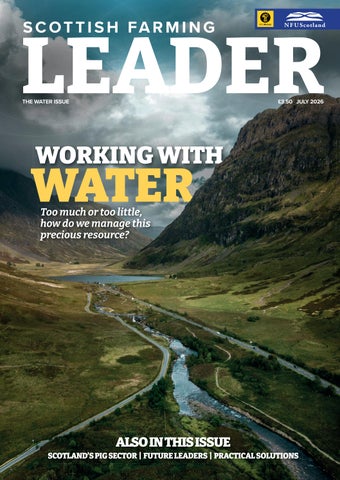


Too much or too little, how do we manage this precious resource?





SCOTLAND’S PIG SECTOR | FUTURE LEADERS | PRACTICAL SOLUTIONS










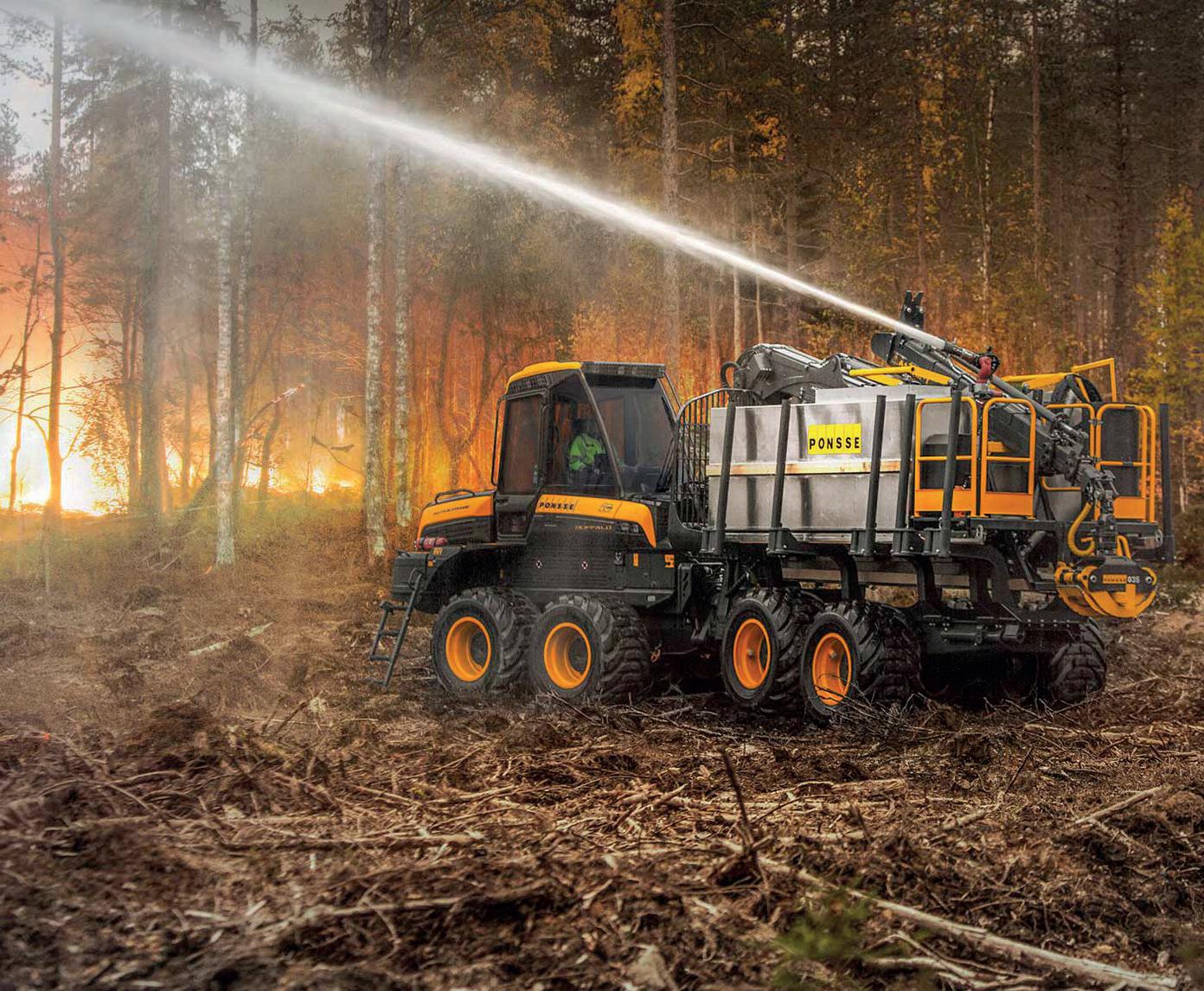
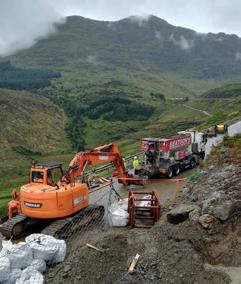
PONSSE FIREFIGHTING EQUIPMENT offers a quick, easy and simple way to turn a regular forest machine into a firefighting unit. There are a large number of forest machines, and when harnessed to firefighting activities, they increase the accessibility of wildfire locations to an entirely new level. The 10,000-litre water tank is equipped with a powerful pump and water cannon. The equipment is installed as a single package – and after it has been connected to the machine’s hydraulics, a firefighting machine is ready to operate. No separate power source is needed. Wildfires are often difficult to extinguish and nearly always inaccessible to equipment and crews. There is a clear need to which we aim to respond. Forest machines are the most natural and effective way to access a forest fire area. Operations in difficult terrain come as second nature to them, and they have more than enough capacity in their hydraulic system for demanding conditions.







The firefighting equipment can be fitted on PONSSE Buffalo and Elephant forwarders





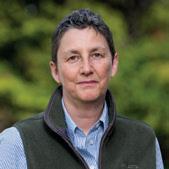
Megan Williams
EDITOR
Since joining NFUS last July, water has been a recurring theme. I think that’s partly because I started during a period of severe water shortages, and the experience has stayed with me ever since. Too much of it, too little of it, and increasingly, not always at the right time – it continues to shape decisions, from day-to-day management through to long-term investment.
This edition of the magazine focuses on that challenge. And I’m pleased to have pulled together an edition that covers the breadth of the issue; from practical on-farm solutions to the impact on rural communities, and discussions on diff use pollution.
In our feature on page 22, we look at different solutions, how they work on the ground and how farmers and crofters are adapting in real time to increasingly uncertain weather patterns.
One of the real highlights for me was spending a day on a potato farm in East Lothian, which you can read about on page 49. Haig’s forward thinking approach left me quietly optimistic, even while editing an edition that highlights just how many challenges water can bring. I also left with a sack of tatties which might have helped with the editing too.
I also had the opportunity to sit down with our Climate, Land and Business Policy Manager, Georgia Watson, to
Keep
NFU Scotland, Rural Centre, West Mains Ingliston, Edinburgh EH28 8LT
NFU Scotland, Rural Centre, West Mains Ingliston, Edinburgh EH28 8LT
Tel: 0131 472 4000 www.nfus.org.uk nfuscotland @NFUStweets
discuss the £100 million landscape project in England and what this direction of travel – where farmers are increasingly recognised as infrastructure partners in climate resilience – might mean for Scotland (page 37).
Editor Diana McGowan editor@nfus.org.uk
Editor Diana McGowan editor@nfus.org.uk
Managing Editor Craig Gibson
Managing Editor Craig Gibson
Leadership is another strong theme in this issue. At a time of uncertainty, it matters more than ever who is in the room shaping the debate and speaking up for Scottish agriculture. Within the news pages, we reflect on recent leadership development work within NFUS and our commitment to building capacity across our membership for the future.
Design & Production Ryan Swinney
Design & Production Ryan Swinney
Advertising Sales Clare Stebbing clare@connect communications.co.uk Tel: 0131 561 0024
Alongside this, we set out the latest work underway to highlight the scale of the challenge facing the pig industry and how we are pushing for action across the supply chain.
Advertising Sales Clare Stebbing clare@connect communications.co.uk Tel: 0131 561 0024
A few phrases have stuck with me while putting this edition together –“don’t put it off for a rainy day,” “water, water everywhere,” and irrigation being referred to as “irritation”. I’m not quite sure I’ve found the link between them yet, but I can’t help feeling there’s something there.
Published on behalf of NFU Scotland by Connect Publications (Scotland) Ltd.
HHrealise that positive thought/ silent commitment? Possibly too
never actually realise that positive thought/ silent commitment? Possibly too
In this month’s magazine, our two features cover inspiring stories and highlight just how rewarding delivering on such thoughts can be both for the individual involved and others who may benefit along
In this month’s magazine, our two features cover inspiring stories and highlight just how rewarding delivering on such thoughts can be both for the individual involved and others who may benefit along
Vice President Updates News
Tel: 0131 472 4000 www.nfus.org.uk nfuscotland @NFUStweets a
Published on behalf of NFU Scotland by Connect Publications (Scotland) Ltd. Studio 2001, Mile End, 12 Seedhill Road, Paisley PA1 1JS
Political Round-up
Policy & Practice
Studio 2001, Mile End, 12 Seedhill Road, Paisley PA1 1JS

For the weekly news sent to your email, please send your name and membership number to contactus@nfus.org.uk
Editor Megan Williams editor@nfus.org.uk
Design & Production
Mark Shreeve
mark.shreeve@micropress.co.uk
Andrew Hirst andrew.hirst@micropress.co.uk
Advertising Sales
Danny Lewis 01502 725862 danny.lewis@micropress.co.uk
Lawrence Kenny 01502 725860
lawrence.kenny@micropress.co.uk
NFU Scotland Rural Centre, West Mains Ingliston, Edinburgh EH28 8LT 0131 472 4000 www.nfus.org.uk
Published on behalf of NFU Scotland by Countrywide Publications
Fountain Way, Reydon Business Park, Reydon, Suffolk IP18 6SZ 01502 725800
Printed by Micropress Printers Ltd Fountain Way, Reydon Business Park, Reydon, Suffolk IP18 6SZ 01502 725800

Regional Activity
FEATURES
Working with water practical solutions on farm
Scotland’s climate resilience
Five Questions with Haig Hamilton
We’re only a few weeks away from the Royal Highland Show. Over the course of four days, thousands will flock to the show to compete, judge, exhibit, organise, educate and socialise. We’ll see the best of the best and relish the atmosphere. Among the highlights and away from the main show ring, this year will see the welcome return of the Golden Shears Sheep Shearing and Woolhandling World Championships. Taking place at the MacRobert Theatre, the 2023 Worlds will see more than 30 countries compete for the prestigious title and it promises to be an action packed showcase of the art, skill and techniques required to be a world champion. Perhaps a less well known event taking place at this year’s Highland is the final qualifying round of the 2023 Britain’s Fittest Farmer competition. Taking part in this event for the first time is Kyla Graham from Kirkcudbrightshire. Kyla first spotted
We’re only a few weeks away from the Royal Highland Show. Over the course of four days, thousands will flock to the show to compete, judge, exhibit, organise, educate and socialise. We’ll see the best of the best and relish the atmosphere. Among the highlights and away from the main show ring, this year will see the welcome return of the Golden Shears Sheep Shearing and Woolhandling World Championships. Taking place at the MacRobert Theatre, the 2023 Worlds will see more than 30 countries compete for the prestigious title and it promises to be an action packed showcase of the art, skill and techniques required to be a world champion. Perhaps a less well known event taking place at this year’s Highland is the final qualifying round of the 2023 Britain’s Fittest Farmer competition. Taking part in this event for the first time is Kyla Graham from Kirkcudbrightshire. Kyla first spotted the event at the Show last year and “We’ll
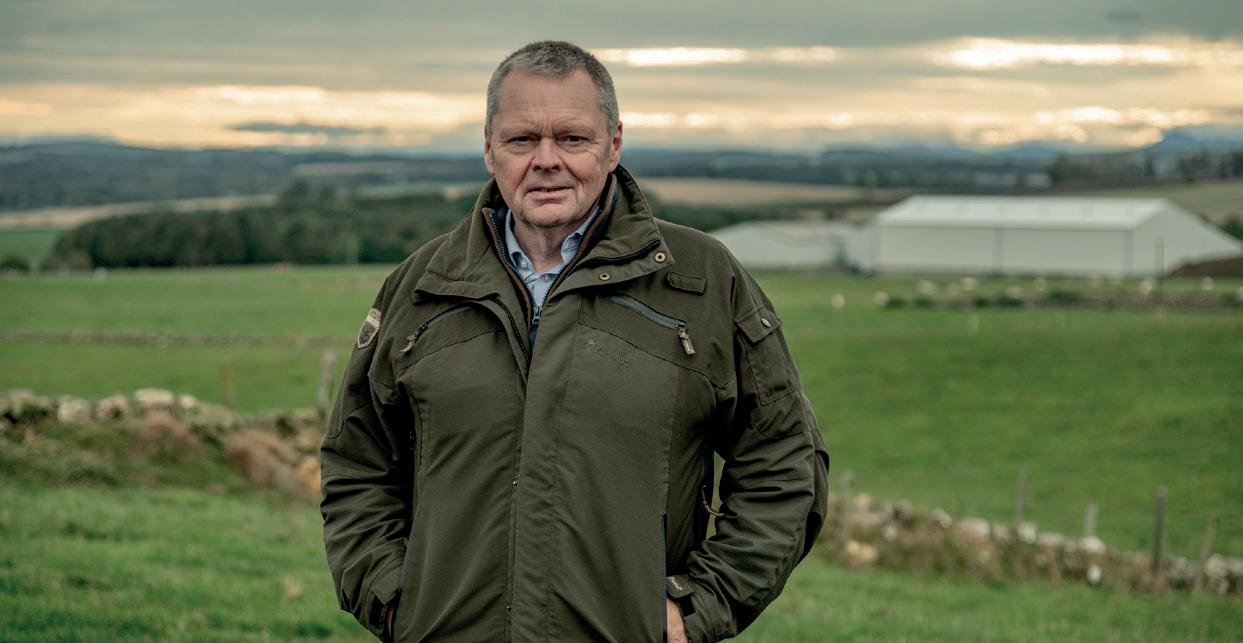

From the PRESIDENT Andrew Connon

The same question keeps coming up, and I think it needs to be asked more directly: does our nation value domestic food production enough to keep it viable?
For many of our members in the pig sector, that question is already being answered the hard way. The situation is as bad as I have seen in a long time, and producers are not exaggerating when they describe it as the worst trading conditions in 50 years. My deepest sympathies go out to those affected and we will continue to fight hard on your behalf.
At the time of writing, producers are receiving on average 40p per kg below the cost of production. For a typical 400-sow unit, that is losses of around £500,000 a year. That is not sustainable. After the Covid losses, there is simply no buffer left. We are already seeing businesses leaving the sector and more making difficult decisions about the future of their herds.
We are calling for action. We have recently met with Cabinet Secretary Gillian Martin MSP to discuss this issue. We are continuing discussions with processors and retailers, and media attention continues to
bring wider awareness of the scale of the issue.
We are also operating in a changing political environment, with a new government, 64 new MSPs and a new Cabinet Secretary in place, although Minister Jim Fairlie provides some continuity. We have written to all MSPs and party leaders and will be spending the summer ensuring agriculture is properly heard in these early stages of policy development. We thank you for all of those who have put your names down to host farm visits to make this happen – and if you haven’t yet, but are interested in doing so, please get in touch with your regional manager.
I am growing increasingly concerned about the direction of the debate around food pricing. There appears, at times, to be an assumption that ever-cheaper food is an unqualified public good. I fundamentally reject that premise. There is no such thing as “cheap food” – only someone, somewhere, absorbing the cost. I share your frustration that food is often singled out politically, when the biggest pressures on households are actually energy and fuel costs.
We have raised concerns directly with the First Minister regarding proposals around food pricing interventions, and while assurances have been given that primary producers will not be disadvantaged, we await further detailed discussions. Similarly, we are monitoring the UK Governments
reduction in tariffs on certain food imports. These tariff reductions must never be brought in on products that compete with domestic production, and we are continuing to monitor and lobby on this.
These are not just Scottish issues. In recent discussions with the American Farm Bureau, it is clear similar pressures exist elsewhere. In the US, beef supplies are tight, not helped by disease pressures, trade restrictions and a declining beef herd. The US Government’s ambitions to reduce beef prices through reduced import tariffs have currently stalled due to strong resistance from the American beef industry. In Europe, attention is focused on the UKEU reset and future SPS alignment, which NFUS is actively feeding into via DEFRA.
Amid this backdrop, I write this piece the day after our first NFUS Future Leaders event and I am overwhelmed by the talent, passion and energy in the room. It’s clear there is no shortage of talent or commitment, we just need to make sure there is a vibrant industry to hand over to their safe hands.
And that brings me back to where I started. As your Union, we will continue to fight to make sure domestic food production is valued. Because governments cannot keep pushing for cheaper food and expect domestic production to remain strong at the same time. This is about something bigger than all of us, it’s about securing a future worth handing on to the next generation.
Wild swimming can be dangerous, and while swimmers must accept some of those risks, those who own or occupy land also have legal duties, says Stephanie Hepburn, Head of the Rural Disputes team at the UK law firm Shepherd and Wedderburn.
Wild swimming is no longer a niche activity. Tens of thousands of people now frequently head to Scotland’s lochs, rivers and reservoirs – especially in summer, when the water is at a more comfortable temperature. While this has many benefits for both physical and mental health, it also has risks: according to the National Water Safety Forum’s annual report, there were 39 accidental water-related fatalities in Scotland last year alone. Rural landowners and occupiers should carefully consider whether they owe any legal duties to people who enter their land to swim in open water.
In Scotland, the starting point is the Occupiers’ Liability (Scotland) Act 1960. Its provisions apply to people who have been invited onto the land to swim, such as those who are participating in organised sporting events like triathlons, and to those exercising their rights of responsible access under the Land Reform (Scotland) Act 2003.
An ‘occupier’ is the person with control of the land –which may be the owner, an agricultural tenant, or another party in occupation such as a contractor. The duty owed is to take such care as is reasonable in the circumstances so that someone entering the land does not su er injury or damage. What is ‘reasonable’, though? The answer will always depend on the particular facts, but occupiers of land that poses a greater than usual risk to third parties may need to take extra care.
That does not mean an occupier must remove every danger associated with open water, however. The 1960 Act explicitly excludes any obligation on an occupier in relation to risks willingly accepted by the visitor, which may apply to inherent risks of pursuits such as wild swimming. And the courts have long recognised that certain risks are obvious, and that adults engaging in activities such as swimming or diving may be taken to accept the dangers. Two cases illustrate this point.
A Scottish case, Graham v East of Scotland Water in 2002, concerned a reservoir that was separated from a main road by a wall as low as 30cm at some points. The court held that the occupier did not have a duty to fence it o , even though the wall was easily low enough for somebody to jump o or trip over, and noted that the reservoir and the wall were “well established, permanent and familiar features” of the landscape, even though they were man-made.

In the English case of Tomlinson v Congleton Borough Council in 2004, a young man was seriously injured after diving into a lake in a country park. The court held that the danger arose from his decision to dive into shallow water, and that there was no duty to warn or take steps to prevent the claimant from diving as the dangers were perfectly obvious. The case is often cited in Scottish cases as authority that occupiers are not expected to protect people from risks that are plain to see, but every case will turn on its own facts and circumstances.
Of course, not every risk associated with water is obvious. A loch, river or reservoir may be an ordinary feature of the landscape, but particular hazards around it may not be: concealed drops, unstable banks, underwater obstructions, damaged structures, or misleading signage or access points, for example. Many disputes turn on this question – was the danger an ordinary and obvious feature of open water, or was it something unusual, hidden or reasonably foreseeable that the occupier should have addressed or drawn attention to?
This is where practical rural land management becomes important. The Scottish Outdoor Access Code encourages responsible management, including helping people to identify appropriate points of access to water. For estates, farms and other rural businesses with open water, the prudent approach is not to make any assumptions. If a particular spot has the potential to be used for wild swimming, it is sensible to consider how people are getting there, whether there are any hidden or unusual hazards, and whether signage, maintenance or other proportionate steps are needed.
Risk assessments will enable occupiers to assess what obligations they may owe, and they should also keep a clear record of management decisions, as this may be valuable if an incident later gives rise to a complaint or claim.
Open water swimming is likely to remain part of modern rural life, particularly during periods of hot weather. The law does not require occupiers to eliminate every risk that comes with open water swimming. But owners and occupiers should think carefully about whether previously unidentified hazards could turn an accident into a dispute. A proportionate, documented approach to risk management will often place them in the strongest position if something goes wrong.







Duncan Macalister Vice President

Robert Neill Vice President
“Water, water everywhere” “Professional gamblers”
Living on the Kintyre Peninsula, water, water everywhere is the reality for many of us farming in the west. The challenge is often not drought but excess water. Due to climate change, we’re experiencing far more heavy rainfall events. Compared to the mid 1980s, we’re now seeing probably another 15 to 20% more rain, and when those signifi cant events arrive at the wrong time of year, the impact can be severe – particularly on already saturated ground.
As farmers and crofters, a signifi cant amount of time is spent simply managing water. That means repairing drains, building new ones, cleaning ditches and maintaining watercourses, all in an effort to reduce water levels and get soils back to fi eld capacity – a point that very rarely happens without a long spell of dry weather. Alongside drainage, soil management is critical. Maintaining porosity allows water to move through the soil to the drains, and that brings us back to the importance of lime. Using the right type, particularly calcium-based lime, helps keep soil particles apart, improving structure and drainage. It’s not new knowledge, but it’s something many have forgotten.
Water doesn’t belong to us, it passes through us. We are custodians of it, and that brings responsibilities, not least working with neighbours. The low man has to take the high man’s water, but cooperation is essential to ensure drainage systems function properly across farms and crofts.
At the same time, wider land use is changing water dynamics. Increased forestation has altered run-off patterns, with rivers now rising and falling far more quickly than they once did. If any works are needed in or around watercourses, it’s vital to involve SEPA early – they’re there to guide, not hinder.
Ultimately, while heavy rainfall can drive you to distraction, we are fortunate in Scotland to have a surplus of water. Without it, nothing grows.
But on that note, let’s hope the weather is kind to us during the show season –and I look forward to catching up with many of you over the coming weeks.
The show season is well under way, with Scotland’s biggest agricultural show now behind us once again –and what an event it was. We had lots of engagement with members from all over Scotland. It was interesting to hear about the issues members are facing, from transport and predation to grain contracts, milk contracts, and pricing across all our commodities.
Fertiliser prices seem to come out earlier every year. The question is: do we buy now or hold our position in anticipation that everyone around the world will start getting along and the price of our inputs will drop like a stone? At the end of the day, we are all professional gamblers – some decisions pay off, but unfortunately, most don’t!
I have attended another round of committee meetings, and we had a really enjoyable trip to the James Hutton Institute with the Next Generation Committee. It was great to hear about all the research that is going on, and we are so lucky to have this expertise on our doorstep. I highlighted that we, as farmers, don’t want much – just a spring barley variety that fixes nitrogen from the atmosphere, can survive both waterlogging and drought, and doesn’t require much agronomic input. Surely, in this modern era, that should be possible.
On the subject of Next Gen, my wife and I had the pleasure of judging at Northumberland Young Farmers’ County Rally. It was a very well-run and wellattended event. With our two sons being members of our local Young Farmers’ Club, it is important to support these events. I think the future is bright when you see these young people coming through the ranks. Through the launch of our own Future Leaders Programme, I look forward to working directly with some of the sharpest minds in the industry, and the wealth of passion and enthusiasm they bring to the Union.
I hope you all had a good Royal Highland Show and look forward to catching up with you over the show season ahead. Weather, weather, weather – I hope it’s on your side, and that the water topics covered in this Leader edition strike a chord, whichever way they are affecting your business.
Taking agriculture’s case to Holyrood NFU Scotland is engaging with newly elected and returning MSPs, Ministers and parliamentary committees to ensure Scottish agriculture remains front and centre. Members are encouraged to connect with local MSPs over the summer through farm visits and agricultural shows. Contact your regional manager or Al Walker for support.
The four UK farming unions have welcomed progress following the Farm Assurance Review but warned that key recommendations still require urgent action. The unions are pressing for a farmer-led approach to environmental reporting, reduced audit burdens and meaningful reform across assurance schemes, while calling on government to ensure a fair marketplace for British producers.
NFU Scotland has written to the First Minister seeking urgent clarification following reports that work on permanent grassland greening proposals has been paused. While welcoming the opportunity to reconsider measures affecting livestock producers, the Union is calling for clear communication and meaningful engagement on the future direction of policy.
NFU Scotland has called for support, saying pig producers are under severe financial pressure, with, at the time of writing, losses of over £1,000 per sow and typical annual losses exceeding £500,000 per farm. The Union warns this could drive herd reductions and exits from the sector, and is calling for urgent action, including stronger retailer support for Scottish sourcing and domestic pork production.

by John Davidson, CEO
We have now entered one of the busiest and most important periods in the agricultural calendar as Scotland’s agricultural show season is underway. These events provide a valuable opportunity for our staff and officeholders to engage directly with members, farming businesses, rural communities and the wider public, showcasing the quality, professionalism and innovation that underpin Scottish agriculture. Across the country, NFU Scotland representatives attended a range of local and regional shows, meeting members and discussing the issues that matter most to farming and crofting businesses. Whether addressing questions around future agricultural policy, supply chain pressures and market volatility, or promoting the opportunities available to our sector, these events continue to provide an essential platform for dialogue and engagement.
Agricultural shows also play a vital role in strengthening the connection between producers and consumers. They allow us to celebrate the outstanding livestock, produce and people that make Scottish agriculture such a success story, while helping to build greater understanding of the work that takes place on farms every day. I would like to thank all members who contributed their time and effort to making these events so successful and for representing our industry so positively.
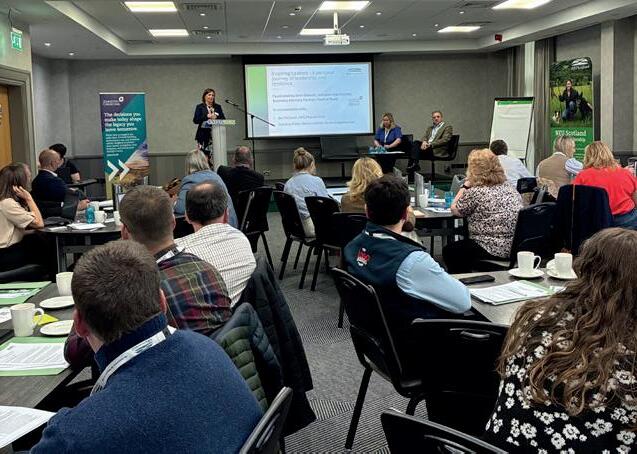
Alongside our presence at shows, June also saw an important milestone for NFU Scotland with the delivery of our very first Future Leaders event in Edinburgh (pictured above). Bringing together 40 emerging leaders from across the country, the event demonstrated the depth of talent, ambition and commitment that exists within the next generation of Scottish agriculture. The day provided our members with opportunities to discuss leadership skills, expand their networks, and discuss what a future leadership programme should look like for NFU Scotland. Most importantly, it created a forum where future leaders could share experiences, discuss common challenges and explore how they can help shape the future direction of Scottish farming and crofting.
The enthusiasm and quality of discussion throughout the event was superb. I have been clear for some time – investing in leadership development is critical if we are to ensure that Scottish agriculture continues to thrive in an increasingly complex and fast-changing environment. The success of this inaugural event provides a strong foundation on which we can build future programmes and further support those who will lead our industry in the years ahead. Watch this space for more details to emerge over the coming months. As we move into the height of the summer show season, NFU Scotland remains committed to representing members, championing Scottish agriculture and creating opportunities for future generations to succeed.
by Rhianna Montgomery
As we mark Farm Safety Week from the 20-24 July, we’re focusing on an often-overlooked but critical area of farm life: the everyday risks associated with vehicles and machinery, and the simple, practical steps that help reduce them.
Farming remains one of the most hazardous industries in the UK, with vehicles and machinery consistently involved in serious incidents. In many cases, it’s routine use, familiarity, and time pressure that can lead to safety standards slipping.
I spoke to Jamie Smart, NFU Scotland’s vehicle helpline provider, for his six top tips on keeping farm vehicles and machinery safe, practical, and compliant in day-to-day use.
Operators should have appropriate and up-to-date training for the vehicles and any attachments they are using. Familiarity is useful, but it should not replace confirmed competence.
All vehicles, trailers and implements should be serviced in line with manufacturer recommendations as a minimum. Particular attention should be given to safety-critical components such as brakes and guards. A written maintenance record helps demonstrate that appropriate systems are in place and being followed.
A brief walk-round before use remains one of the most effective safety measures. This should include checks of lights, brakes, wipers, horn, mirrors and general visibility,
along with inspection of hoses, cables, couplings and any signs of leaks or wear. Safety guards and covers should be in place and in good condition. Any issues identified should be addressed before the vehicle is used, and recorded where appropriate, even if no defects are found.
Loads should always be considered in terms of stability and security, not just capacity. Appropriate restraints such as straps, ropes, chains or nets should be used, and reliance should not be placed solely on trailer sides. Loads can shift in transit, particularly at speed or in windy conditions, with potentially serious consequences on both farm tracks and public roads.
The correct personal protective equipment should always be worn. While safety boots and helmets are well recognised, attention should also be given to clothing that could present a risk, such as loose garments or straps that may become caught in moving parts.
Equipment used less frequently, such as balers, combines and grain trailers, should be treated with the same level of care as daily-use machinery. Reduced familiarity can increase risk, particularly during busy periods when pressure is often highest.
NFU Scotland members are entitled to 20 minutes of FREE advice on all issues relating to vehicles. Please contact Jamie Smart, NFU Scotland’s vehicle helpline provider, on 07733 136 424 for support and have your membership number ready.


Cooper Head of Operations and Partnerships
Welcome to our new commercial feature, which you’ll see regularly from this month onwards. Having worked in the policy team at NFUS since 2012, most recently as Head of Policy, I have moved to a newly created role in the operational side of the business. The current policy team at NFUS is without a doubt the strongest that I have worked with, and the level of talent and expertise across the team ensures they remain well placed to deliver on your behalf.
My new role as Head of Operations and Partnerships will help to strengthen delivery across NFUS, from business planning and coordination, to governance, partnerships and commercial activity. There are some priority workstreams in motion already that I will take the lead on, and I am looking forward to engaging with members in the coming months. Commercial partnerships are a key area of focus for the business at NFUS. I am pleased to be working alongside our existing commercial manager, Tom Graham, to help drive commercial income and ensure that all our partnerships thrive. Members have access to a great range of arrangements, from helplines that offer dedicated free advice on complex legal or tax issues to those offering signifi cant discounts on essential farm equipment. We will be working in the coming months to take an objective look at all of these, to make sure they are working the best they can for the membership and for our partners.
Members can watch this space for spotlights that highlight the discounts that are available as part of your membership. You’ll start to see more focus on these across all of our channels and I would urge you to take a look at our website to explore how your business could save money, maximise the value of your subscription and help your union to thrive.
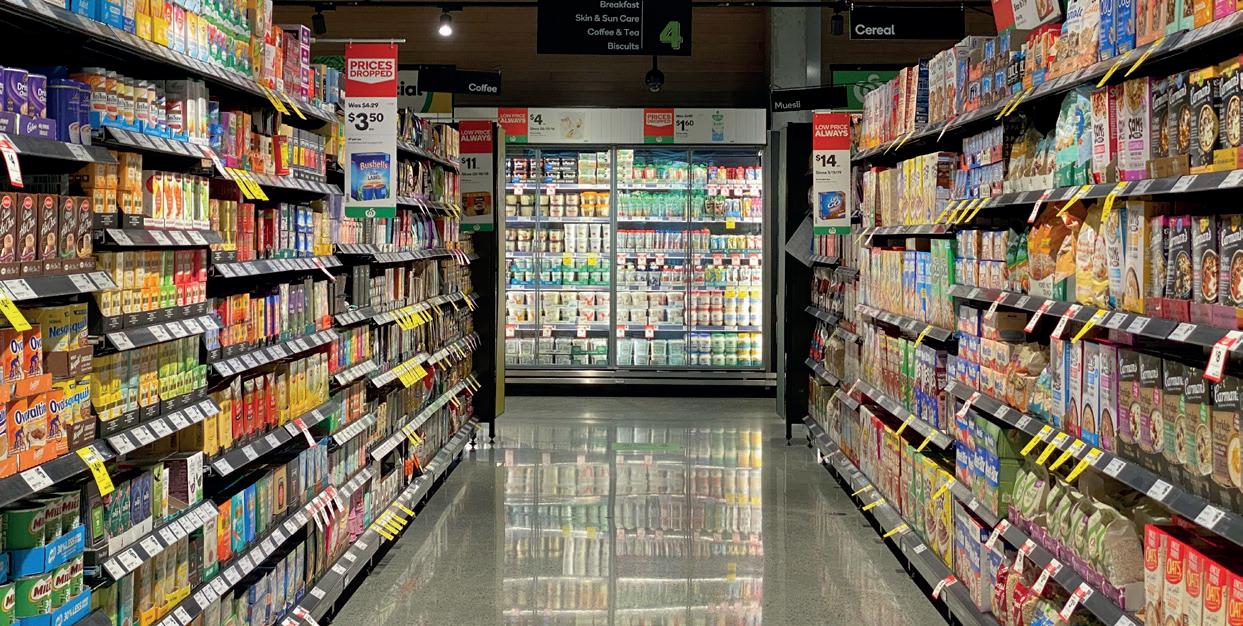
The Scottish Government’s reported proposals to introduce a cap on the price of “essential” food items deserve serious consideration and scrutiny. The political logic behind the proposal is understandable. If food prices are rising and people are struggling, then intervening to hold prices down may appear to offer a straightforward answer. It sounds simple and compassionate. But food systems are rarely simple. If the Scottish Government gets this wrong, the consequences for Scottish agriculture, food production, rural economies and ultimately consumers themselves could be severe.
NFU Scotland supports the principle that everyone should have access to affordable, nutritious food. That should never be in doubt. However, we cannot support any policy that risks undermining Scotland’s domestic food production capacity or forcing farmers and crofters to absorb the costs of political intervention. Let us be unequivocal from the outset – Scottish farmers and crofters are not the cause of food price inflation. That point matters because too often public debate around food prices creates the false impression that rising supermarket prices automatically mean rising farm profits. The reality on the ground is very different.
Over the past several years, producers have faced alarming increases in input costs. Fuel, fertiliser, feed, energy, machinery and labour costs have all risen sharply and farmers receive only a small proportion of the final retail price paid by consumers. Primary producers remain the foundation of the supply chain, but they are often in the weakest commercial position within it. This matters enormously when governments begin discussing retail price intervention, because a limit on the price of certain products means somebody within the supply chain will inevitably carry the financial burden. History tells us that burden often travels upstream.
Retailers and processors may seek to recover lost margin through lower farmgate prices, tougher contract conditions, delayed payments or sourcing cheaper imports. That is the central concern for Scottish agriculture. If poorly designed, a food price cap could end up squeezing the very producers who are already carrying substantial economic pressure. The irony is that such an outcome would directly undermine the Scottish Government’s wider ambitions around food security, climate resilience, rural
sustainability and public health. You cannot build long-term food security while simultaneously weakening the domestic production base that delivers it.
Food affordability and food security are not competing priorities. They are fundamentally connected. If Scotland wants reliable access to high-quality food produced to world-leading standards, then Scotland must also ensure that domestic producers remain financially viable.
Once production capacity is lost, rebuilding it becomes extremely difficult. Scotland’s pig sector is a recent example of how quickly that can happen.
A reduction in livestock numbers, delayed investment, reduced confidence and declining production volumes all have long-term consequences. Rural economies depend heavily upon agriculture, particularly in remote and island communities where farming and crofting underpin employment, local supply chains and wider economic activity. A policy designed to support consumers today cannot come at the cost of creating greater insecurity tomorrow.
That risk becomes even more serious when viewed in the context of imports. If retailers are operating under price cap restrictions, there will be strong commercial pressure to source lower-cost products wherever they can find them. That may increasingly mean imports produced under standards very different from those expected of Scottish farmers and crofters. Scottish agriculture already competes within an intensely competitive UK and global market. Producers here face higher regulatory standards, climate obligations, animal welfare requirements and environmental expectations than many overseas competitors. Those standards matter to consumers and they matter to farmers. They are part of the identity and reputation of Scottish produce. But standards also come with costs.
If government intervention artificially disconnects retail prices from the true cost of sustainable production, then cheaper imports become more commercially attractive. The consequence could be the gradual displacement of Scottish produce from Scottish shelves. That would be a profound policy failure. It would export food production overseas while importing greater environmental and supply chain risk back into Scotland. It would weaken
resilience at precisely the time governments everywhere are talking about the importance of national food security. And it would ultimately leave consumers more exposed to global market shocks.
There are also major practical and legal questions that remain unanswered. Scotland also operates within a highly integrated UK food market. Introducing Scotland-specific pricing intervention inside that framework presents enormous operational and legal complexity. There are serious questions involving devolved competence, the UK Internal Market Act, competition law and subsidy control rules. Those issues cannot simply be brushed aside because a policy sounds politically attractive.
NFU Scotland’s position is therefore straightforward. We recognise concerns around food affordability. We support efforts to reduce food insecurity. We are ready to engage with government on practical solutions. But we will firmly oppose any intervention that undermines sustainable domestic food production or treats farmers and crofters as the financial shock absorbers for wider political objectives.
If ministers do introduce some form of price intervention, then several safeguards are essential. First, there must be effective protection against cost transfer onto primary producers. Second, there must be recognition of sustainable cost of production. Third, there must be full independent economic assessment before implementation - government cannot act on political instinct alone. Fourth, any intervention must be temporary, proportionate and subject to regular parliamentary review. Fifth, there must be clear protections for Scottish sourcing – retailers must not respond to price caps by switching towards cheaper imports.
It is also important to highlight that there are alternative approaches available to the government. If the genuine objective is improving access to affordable food, there are more targeted and potentially less damaging ways to achieve that goal. Targeted support for lower-income households, expanded healthy food voucher schemes, improved school meal provision and measures to increase transparency around supermarket margins all deserve consideration. There must also be a drive to strengthen domestic food production itself. A resilient, profitable and productive agricultural sector is the best long-term defence against food insecurity. Policies that reduce production costs, support investment, improve infrastructure and strengthen supply chain resilience can help maintain both affordability and availability over time.
In other words, the route to food affordability is not weakening production – it is strengthening it. That broader perspective ultimately raises a bigger question about how Scotland values food production.
For decades, consumers in developed economies have become accustomed to relatively cheap food. Yet behind those supermarket prices sits an enormously complex system vulnerable to global shocks, climate disruption, geopolitical instability, and economic volatility. Recent years have exposed just how fragile that system can become. Food does not begin on supermarket shelves. It begins on farms and crofts, and if Scotland undermines the viability of those businesses, the damage will not be easily reversed.
Consumers deserve high standards, resilient local production and confidence in the availability and affordability of food supplies in an increasingly uncertain world. Any intervention that weakens domestic agriculture, accelerates import dependence or reduces confidence within the sector would ultimately make Scotland more vulnerable, not less.
The needs of Scotland’s consumers will be best met by ensuring the future of Scotland’s producers.
by Gemma Cooper, Head of Operations & Partnerships
2026 has seen another challenging year for Scottish agriculture. Our producers have seen commodity prices tumbling whilst the cost of essential inputs has soared. The recent conflict has shown yet again how exposed we are to geopolitical shocks that ultimately impact on our food system. Building more resilience in our food system cannot be a choice, but it is not going to happen overnight. Negotiations, policy development and legislation all take time to work through, and we need to get this right.
Amidst all the uncertainty, one thing is certain; leadership in agriculture has never been more important for the future of the industry. It is critical that those in positions of influence have the talent, skills and attributes to press what Scottish agriculture needs at the very highest level of government.
At NFUS, there are leaders right through our membership structures. From individuals in our grassroots branch network, to our national committees and our board of directors. At every level, we need the right people to work with our professional staff. Lobbying is a hard and often relentless, but we are justifiably proud of the impact and influence that we have on behalf of our members.
June saw NFUS host a fantastic leadership event for a talented cohort of our members. Primarily focused on women and young people, this saw 40 members join us for a day of insights and discussion about leadership. Our thanks must go to Jenn Stewart of our partners and sponsors, Johnston Carmichael, panelists Caroline Millar and Jim McLaren. All gave insightful commentary about their leadership experiences, with a few wry reflections along the way. Thanks must go also to Sheila Campbell-Lloyd who expertly worked with delegates in the afternoon to draw out their thoughts on what a leadership program could look like for NFUS.
We are working to build a member-informed leadership development program right through NFUS that will enable us to be fit for the future and the most effective lobbying organisation that we can be. Insights from the recent launch event will shape our next step, which is leadership development for our branch chair and vice chair network. This is the first building block of something much bigger that will help to future proof NFUS but also keep us at the heart of policy influence by enabling us to identify, support and nurture talent within our membership. To find out more, and how to get involved, please get in touch with me at gemma.cooper@nfus.org.uk.


1250 LITRE - £2,250
2500 LITRE
SINGLE PHASE, 3.5HP, 1800PSI, 11LPM.. £2,800
SINGLE PHASE, 5HP, 2200PSI, 14LPM..... £3,025
THREE PHASE, 7.5HP, 2700PSI, 25LPM... £2,950
THREE PHASE, 10HP, 3000PSI, 18LPM.... £3,300
PETROL, 16HP, 3625PSI, 25 LPM ..............£6,075
COMMERCIALMETAL
BUNDEDFUEL TANKS STANDARDSPECIFICATIONS
•3mmBritishsteel
•230 volt /60litreper min pump
•6m deliveryhose
•Water &particulate filter
•Mechanical flowmetre
•Autoshutoffnozzle
•Contentsgauge
•Deadlockwith 2keys
•LiftingEyes
•Steel box sectionacrossthe base forforkliftaccess andtoraisethe tankfromthe floor
•Paintedgreenasstandard(Anti -corrosionpaint)
•BS799,OFST200 & SSAFOcompliant

•Heavy dutygalvanised steelcabinet
•Hawk pump
•Mainswaterfeedorwillsuckfrom bowser /IBC
•Ravelelectricmotor /Briggs &Stratton petrolengine
• 10 or20metreshighpressurehose
•Complete lance
•8 metresofelectric cable
•Diesel firedboilercomplete with 20litrefueltank
•20litredetergenttank
•Maxtemp80Corcanberunas a cold pressurewasher
•Pressure can beregulatedfrom maxto500PSI
sales@briannixonltd.com | T. 01789721112 BrianNixon Ltd,BlakesHill,Ullington,NrEvesham,WorcestershireWR118QH Allpricesquotedare+ VAT, ex works
















What gives you confidence about the future of Scottish agriculture?
“The industry’s ability to adapt and grasp new opportunities,” he says.




Ahead of this year’s Scottish Agriculture Awards, we sat down with Stephen Buchan to discuss why recognising success matters, what continues to inspire him about the sector, and why Scottish agriculture deserves to be celebrated.
What do events such as the Scottish Agriculture Awards mean for the industry?
“First of all, it’s a tremendous night out for everyone who attends,” says Stephen. “But more importantly, it gives the industry the opportunity to come together and showcase the very best of Scottish agriculture.”
The awards celebrate not only farmers, but the wider businesses and individuals who help drive the sector forward, from advisers and contractors to vets and machinery dealers.
“Agriculture works because of the rich tapestry of sectors and businesses that support it,” he says. “These awards recognise that collective effort.”
Stephen also believes events like the Scottish Agriculture Awards play an important role in supporting wellbeing and community spirit within the industry.
“Farming can be challenging and isolating at times, so bringing people together matters.”
Why is it important to celebrate success within agriculture?
“Scottish agriculture should absolutely be celebrated,” Stephen says. “We often say we are among the best at what we do, so it would be counterproductive not to acknowledge the people and businesses making that happen.”
He believes the awards shine a light on innovation, entrepreneurship and encourage knowledge-sharing across the sector.
“In Scotland we can sometimes shy away from the spotlight, but we need to give our entrepreneurs, innovators and future leaders a platform, these awards inspire both the next gen and established farm businesses”
What qualities do the most successful farming businesses share?
According to Stephen, adaptability is one of the defining characteristics of successful businesses.
“The best businesses have a growth mindset, are entrepreneurial at their core and have a desire to constantly evolve and
improve” he says.
“They understand their finances and margins, sweat their assets and constantly look for opportunities in the market and look to improve their operating efficiency.”
How has Scottish agriculture changed during your time working with the sector?
“The industry has evolved hugely over the last 30 years,” Stephen explains. “When I started, there wasn’t a robot in sight on a dairy farm. Technology and agri-tech are now transforming how businesses operate.”
Farm structures have also changed significantly, with larger more complex businesses with multiple generations of family involved in decision-making.
“Years ago, meetings might involve just the farmer and the bank manager, now you often have two or three generations around the table. That has brought fresh thinking and digitisation into businesses and made them more adaptable and commercially focused.”
What role does innovation play in the future of farming?
“Innovation and entrepreneurship are absolutely central to the future of agriculture,” says Stephen.
He points to diversification, renewable energy and technology adoption as examples of how farmers are adapting their businesses.
“The most progressive farmers are prepared to step outside traditional models and explore new opportunities.”
Sustainability and natural capital are becoming increasingly important. How are farmers adapting?
“Farmers are fundamentally land managers,” Stephen says. “There’s a growing awareness around soil health, efficiency, carbon footprints and biodiversity, while still producing high-quality food.
Farmers are adapting systems to improve sustainability and meet changing consumer expectations. They are after all the custodians of the land, and they are best placed to manage it responsibly.”
“Farming is constantly evolving and Scottish Farmers are at the forefront of that change, embracing technology, sustainability, consumer demand as well as adapting their farm business to an ever-changing marketplace”
How important is succession planning and attracting young people into agriculture?
“It’s fundamental,” Stephen says.
He believes younger generations are helping drive innovation and diversification within family farming businesses.
We see a lot of either new entrants or the next generation bringing experience from either non-farming industries or working off farm back into the farm business, and that outside perspective can be incredibly valuable.
The next generation will be our farming leaders of the future, setting the tone and direction of travel for the industry and defining Scotland’s reputation in a global market.
From a banking perspective, how important are relationships and understanding farming businesses?
“It’s crucial,” Stephen explains. “Agriculture is a specialist industry and relationships matter.” He believes banking partners need to understand that farming is a long-term business and not determined by one cycle.
“It’s about being proactive rather than reactive and understanding how events playing in the market impact customers.”
What continues to impress you most about the farming industry?
“The community” he says. “Being a farmer is challenging and can be an incredibly lonely business; however, it’s one of the few industries where people come together to support each other through both the good times and the difficult ones. That sense of community is truly unique.”
The Scottish Agriculture Awards 2026 in association with Virgin Money are open for nominations and individual entry. Delivered in partnership with AgriScot, NFU Scotland, and The Scottish Farmer you can find out more at https://newsquestscotlandevents.com/events/ agriawards/
As Head of Agriculture Scotland for Virgin Money, Stephen Buchan has spent decades working alongside farming businesses across Scotland and beyond. From technological advances and changing farm structures to diversification and succession planning, he has seen the industry evolve at pace.
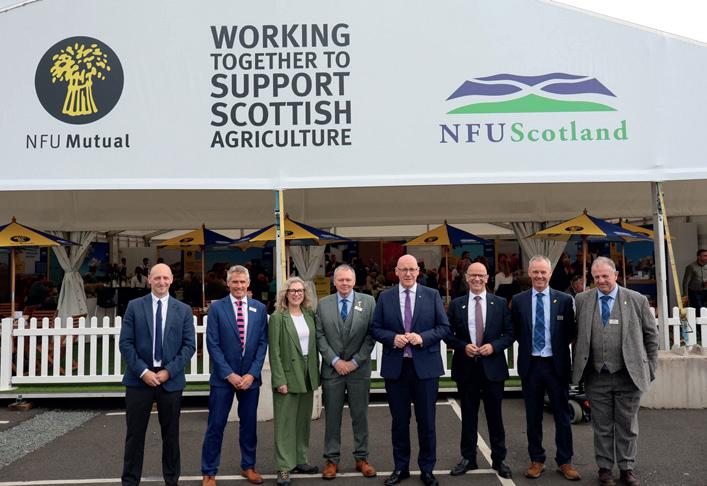

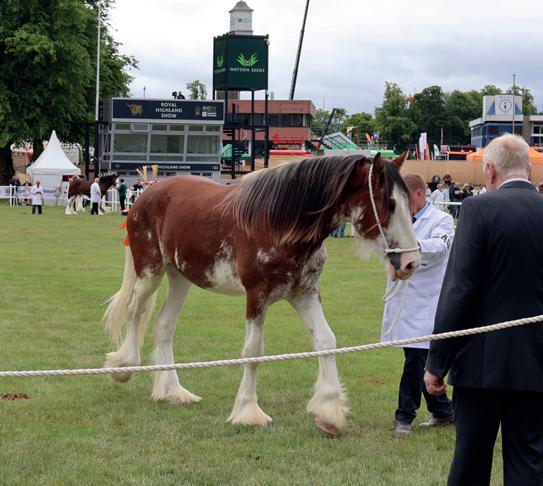
Another Royal Highland Show has come and gone, and despite a wet start, it proved to be a fantastic four days for NFU Scotland. While the first two days brought plenty of rain and tested the waterproofs of exhibitors and visitors alike, the weather turned just in time for the weekend, with bright sunshine drawing in large crowds across the showground.
The NFU Scotland marquee was busy throughout, welcoming members, stakeholders, politicians, retailers and industry partners. Over the course of the Show, the Union met with a range of key decisionmakers, MSPs and MPs from all parties, including First Minister John Swinney MSP, Scotland Office Minister Kirsty McNeill MP, Minister for Agriculture and Connectivity Jim Fairlie MSP, and Cabinet Secretary for Climate Action and Rural Affairs Gillian Martin MSP. These conversations provided valuable opportunities to discuss the issues that matter most to Scotland’s farmers and crofters.
Retail engagement also remained high on the agenda, with meetings held with key retailers. President Andrew Connon used these discussions to reinforce NFU Scotland’s ShelfWatch work and call for fairer supply chains, stronger sourcing commitments and greater transparency within labelling.
Friday morning saw a packed marquee for the NFU Scotland’s Fair Supply Chains – Delivering for Farmers and Crofters panel session. Chaired by President Andrew Connon, the discussion brought together political, regulatory and industry perspectives. The panel was comprised of Alistair Carmichael MP, Chair of the Environment, Food and Rural Affairs Committee; Richard Thompson, Agricultural Supply Chain Adjudicator; and Joe Prosho, Head of Sustainable Sourcing and Agriculture at Asda. The panel explored how fairer, more effective and resilient supply chains can be delivered in practice, sparking plenty of discussion and giving members the opportunity to put their questions directly to the speakers.
Beyond the formal meetings and events, the Show provided a fantastic opportunity to catch up with members, make new connections and celebrate the very best of Scottish agriculture. From policy discussions and business meetings to informal conversations over a cup of tea, the Show once again highlighted the strength, resilience and optimism of Scotland’s farming and crofting communities.
A huge thank you goes to all of our sponsors and partners whose support helped make our Royal Highland Show presence possible. We are grateful for their continued backing of Scottish agriculture and the rural economy.
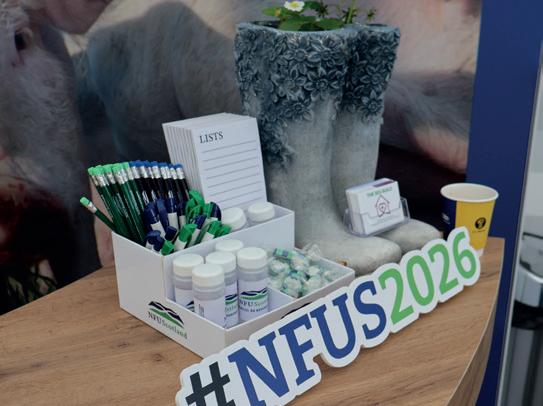
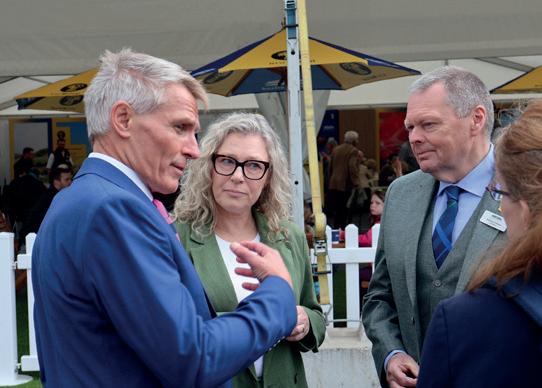
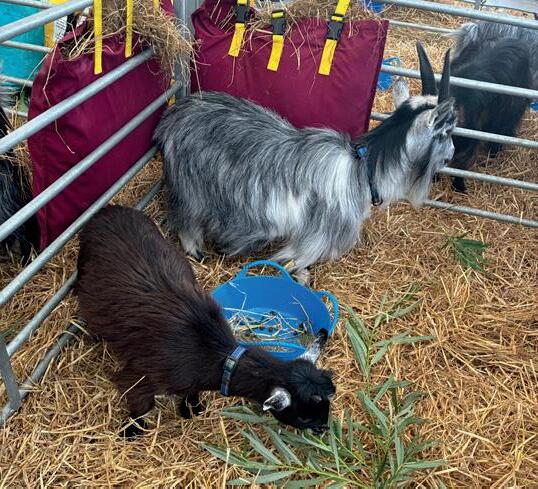
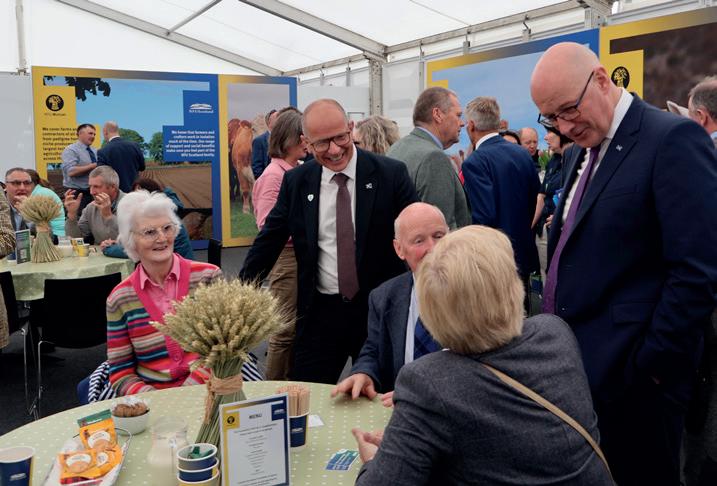
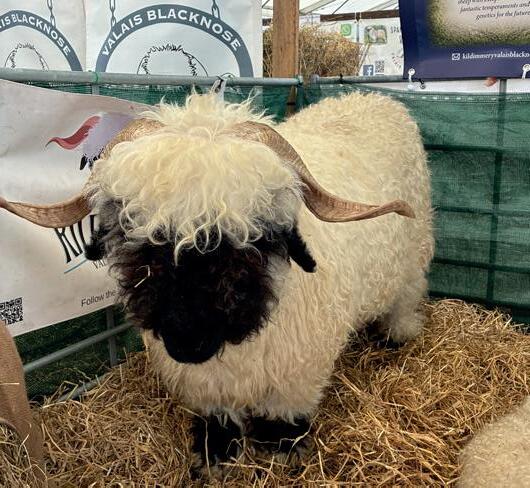
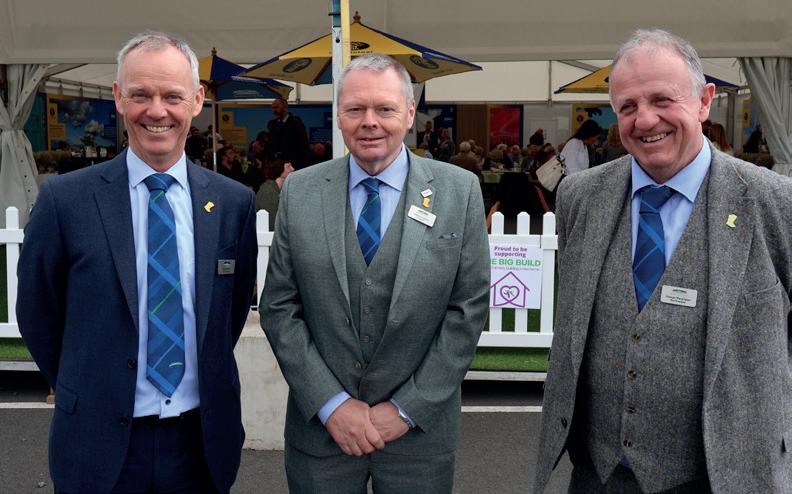
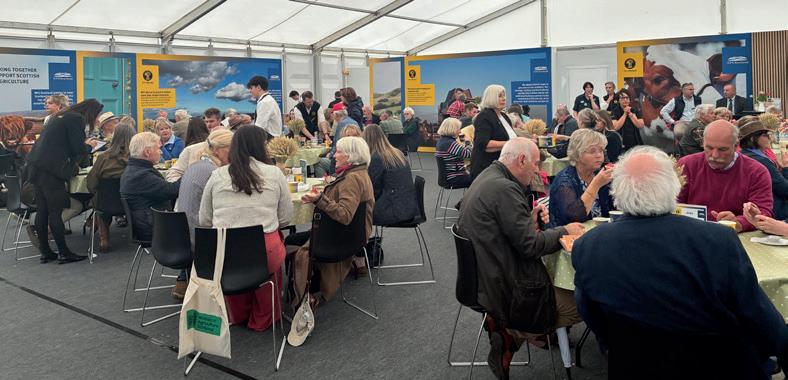
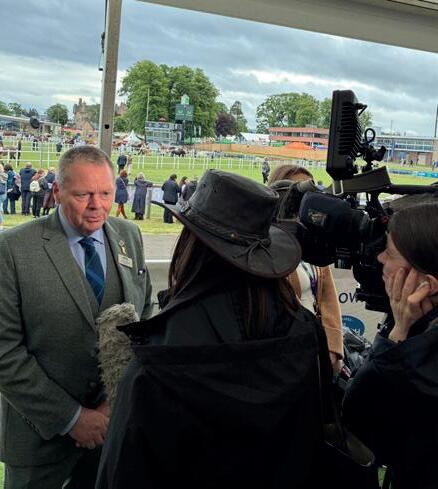
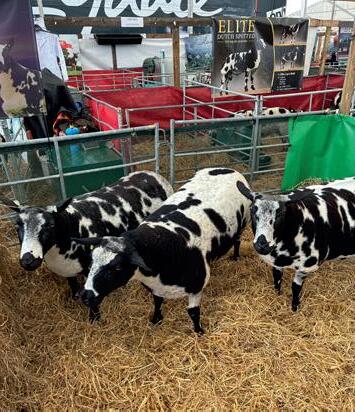
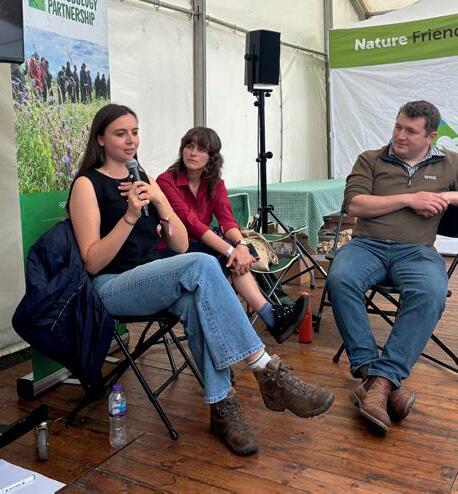
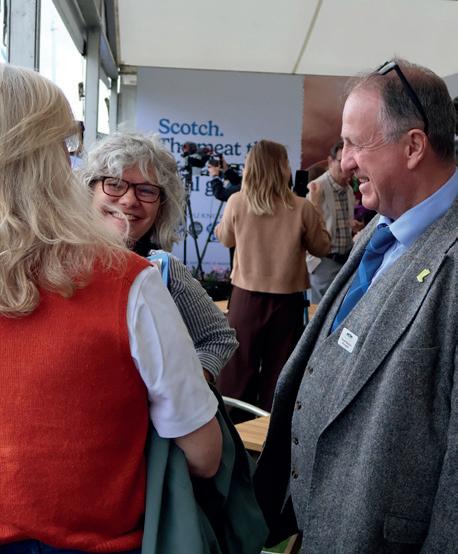
Enjoy this selection of photographs from across the four days, capturing some of the people, events and moments that made the Royal Highland Show 2026 such a memorable occasion. There will be a more detailed rundown of the event to come, but for now, enjoy our snapshot of a memorable few days at Ingliston.




Al Walker Political Affairs Advisor
NFollowing direct engagement with the Prime Minister in March, the UK Government has announced a temporary reduction in red diesel duty rates. Al Walker, Political Affairs Advisor, explains what it means for members and why further action is still needed to strengthen farm business resilience.
FU Scotland has welcomed the UK Government’s decision to temporarily reduce red diesel duty rates, following concerns raised directly by the Union with the Prime Minister on 11 March 2026 over the growing impact of global instability on agricultural input costs.
Announced in May, the measure will see red diesel duty fall from 10.18p to 6.48p per litre from 15 June until 31 December 2026, making it the lowest rate in more than 20 years.
The decision follows NFU Scotland’s call for action earlier this year, when the Union highlighted the increasing pressure facing farmers and crofters from rising fuel, fertiliser and energy costs, and the risks these pose to domestic food production and food security.
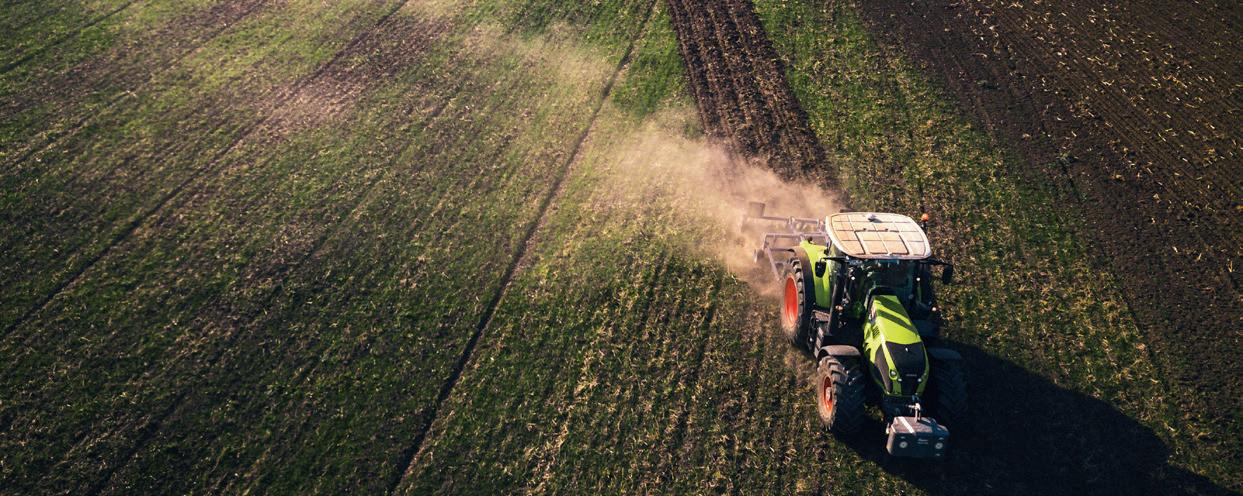
For many farm businesses, fuel remains a significant operational cost. From cultivation and planting through to harvesting and livestock operations, diesel powers many aspects of food production. While this latest measure comes after the diesel-intensive spring planting season, it will provide welcome support during harvest and the busy months that follow.
The announcement is also a reminder of the value of ensuring agricultural voices are heard at the highest levels of government.
Over recent years, farm businesses have faced an unprecedented combination
of challenges. Global conflicts, energy market volatility and supply chain disruption have all contributed to rising production costs, often with little opportunity for those increases to be recovered through the marketplace.
At the same time, agriculture is being asked to deliver more than ever before. Alongside producing food, farmers and crofters are expected to contribute to climate ambitions, biodiversity targets and wider rural economic growth.
Against that backdrop, measures that improve business resilience matter.
NFU Scotland President Andrew Connon said: “The government’s decision to reduce red diesel duty is a welcome recognition of the pressures currently facing agriculture and the wider rural economy. While this action comes after the diesel-intensive spring planting season, it is a practical step that will help farmers and crofters manage escalating operating costs during the critical harvest period. We are pleased that government has listened and acted on one of our key asks.”
While the reduction in duty rates is welcome, NFU Scotland is clear that it represents one step rather than a complete solution.
Input costs remain volatile, particularly in fertiliser and energy markets, and many businesses continue to face uncertainty when planning future investment. Ensuring Scottish agriculture remains productive, competitive and resilient will require a
longer-term approach that addresses the underlying pressures facing farm businesses.
The Union will continue engaging with UK Government ministers, DEFRA and industry partners throughout the remainder of 2026 to ensure the needs of Scottish farmers and crofters remain firmly on the agenda.
Fertiliser affordability and availability
Measures to improve access to affordable fertiliser and reduce exposure to global market shocks.
Review of the Carbon Border Adjustment Mechanism (CBAM)
Ensuring any future scheme does not unintentionally increase costs for agricultural producers.
Short-term resilience support
Targeted measures to help farm businesses manage periods of exceptional input cost volatility.
Stronger supply chain oversight
Expanded powers and improved communication channels for the Agricultural Supply Chain Adjudicator.
Greater market transparency
Better monitoring of agricultural input markets to improve visibility and fairness across the supply chain.






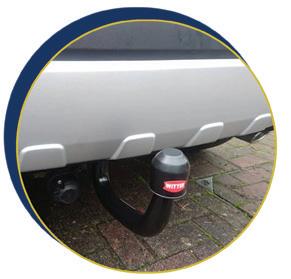

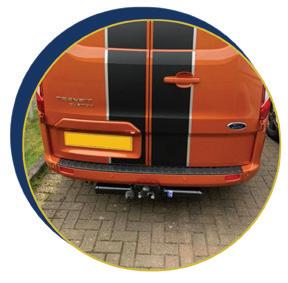








How to keep your farm safe and secure this summer, from NFU Mutual
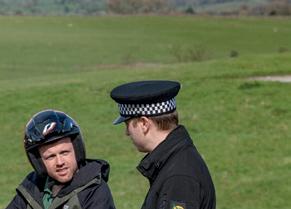
As a farmer, you’ll know that whilst working in the farming industry can be incredibly rewarding, it also comes with a range of challenges- a major one of those being rural crime. Increasingly organised and complex, rural crime in the UK takes on many forms, from livestock and agri-vehicle theft to dog attacks and waste crime. What’s common across all of them, sadly, is the devastating consequences they have for farmers and their businesses, on a financial and emotional level.
In NFU Mutual’s 2026 Rural Crime Report, we reveal that, though the cost of rural crime has decreased on average by 6% across the UK, since 2024, in Scotland, the cost has actually increased by 13.7%, from £1.2m to £1.4m.* The cost remains worryingly signifi cant, and its effects are felt in rural communities across the nation. Alarmingly, a survey of 119 NFU Mutual Agents across the UK, who are often embedded within these communities that they serve, found that more than a quarter (29%) had seen farmers change practise or leave the industry because of rural crime.
As the UK’s leading rural insurer, NFU Mutual goes above and beyond offering insurance products and paying claims, investing in crime-fighting tools, backing legislative reform, and working
closely with police to share intelligence, identify hotspots, and recover stolen property. As a key funder of the National Rural Crime Unit (NRCU) and proud members of the Scottish Partnership Against Rural Crime (SPARC), we are committed to protecting farmers, their families, and rural communities. That’s why, in 2025, NFU Mutual provided over half a million pounds for rural crime fighting initiatives.
NFU Mutual are also proud to offer discounts on the Agricultural vehicle policies for certain security devices. “These security devices are an important tool in either preventing theft or aiding in the recovery of the vehicles once they are taken. We work closely alongside industry, and these discounts have helped encourage manufacturers to either promote additional security and in some other cases fi t as standard highlighting the importance of partnership in tackling rural crime”, said Louise Nicholls, Class Underwriter at NFU Mutual.





To read the NFU Mutual 2026 Rural Crime Report visit nfumutual.co.uk/ crime or scan the QR code.
Here are some steps you can take to help protect yourself and your farm from rural crime:
Physical:
• Remove keys from vehicles and store them in a safe, secure place.
• Park farm machinery and vehicles out of sight, preferably in a lockable building.
• Lock away high-value items like GPS units when removed from vehicles.
• Note serial and chassis numbers of items you own and consider photographing vehicles and machinery.
Technical:
• Install CCTV, security lighting and alarms.
• CESAR mark, etch or mark farm name and postcode onto kit.
• Add tracking devices and immobilisers onto vehicles.
• PIN protect GPS units and apply manufacturer stickers.
• Use mechanical immobilisers such as steering wheel or pedal locks on vehicle.
Social:
• Report all crimes and suspicious activity to the police.
• Join and participate in rural watch groups like Farm Watch scheme.
• Use local WhatsApp groups for immediate updates on suspicious sightings.
• Use the Crimestoppers number, 0800 555 111, to report rural crime anonymously.
*Estimated costs based on NFU Mutual claims statistics, rounded to the nearest £100,000. Percentage changes are based on exact figures.
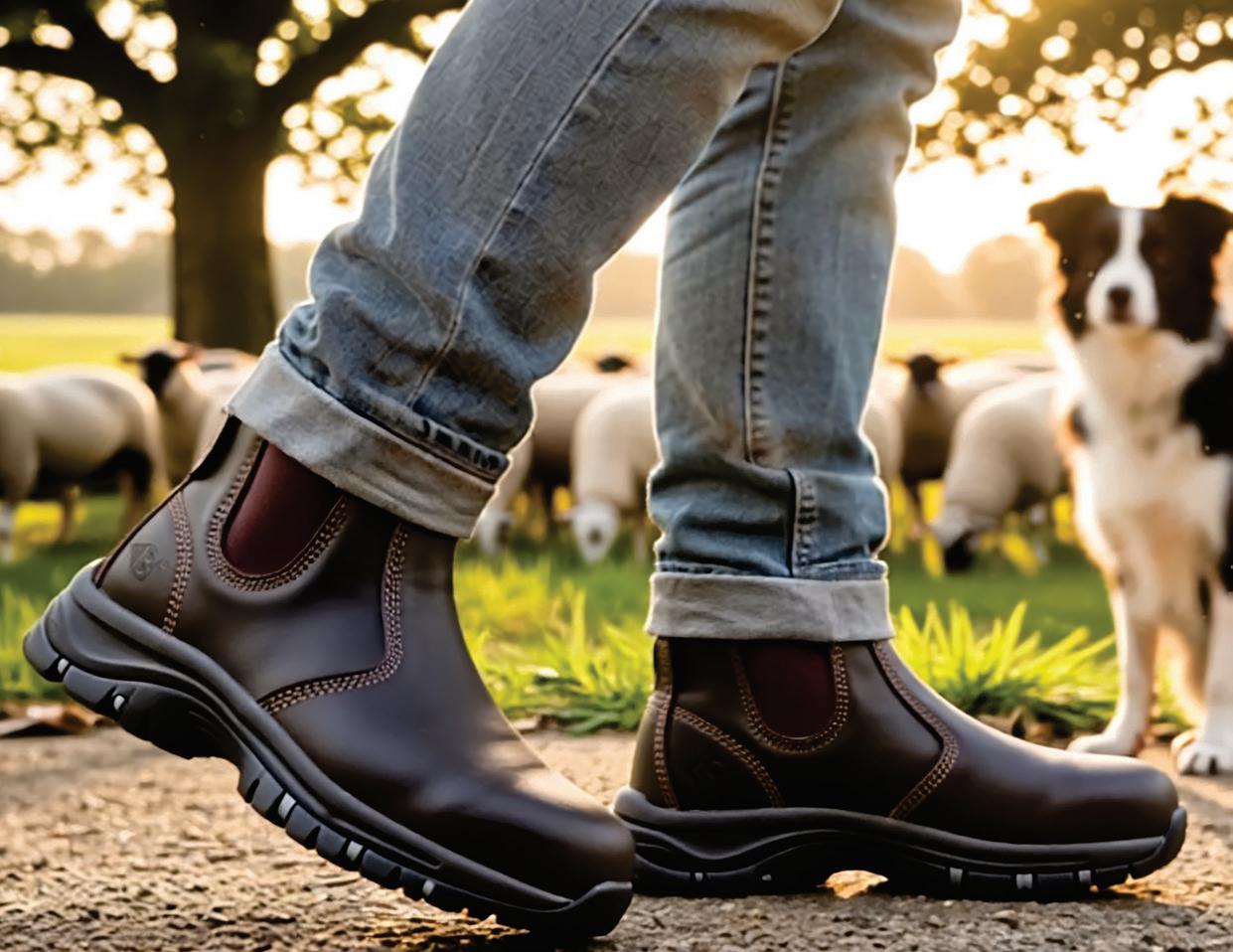

SAFETY FIRST
A comprehensive UKCA/CE safety specification at an amazing price. With the look of Oz you love combining strength with light weight that redefines the notion that cheaper equates to lesser.
A rubber outsole that’s tough, durable yet lightweight with anti-penetration ‘Nail Stop’ protection along with antislip and oil and heat resistance.

Wider fitting with breathable water resistant leather uppers and a premium comfort insole - this is a boot you can wear all day, every day.



Authored by Harbro
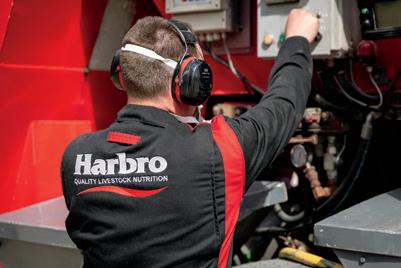
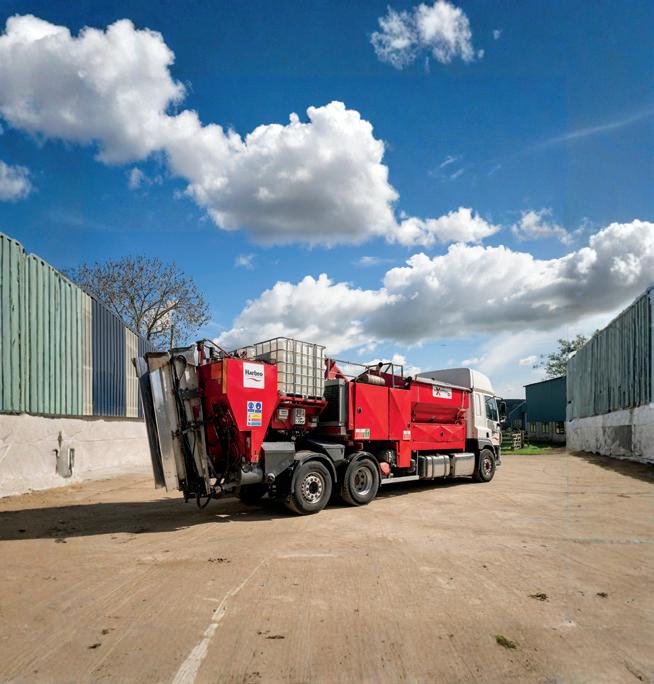
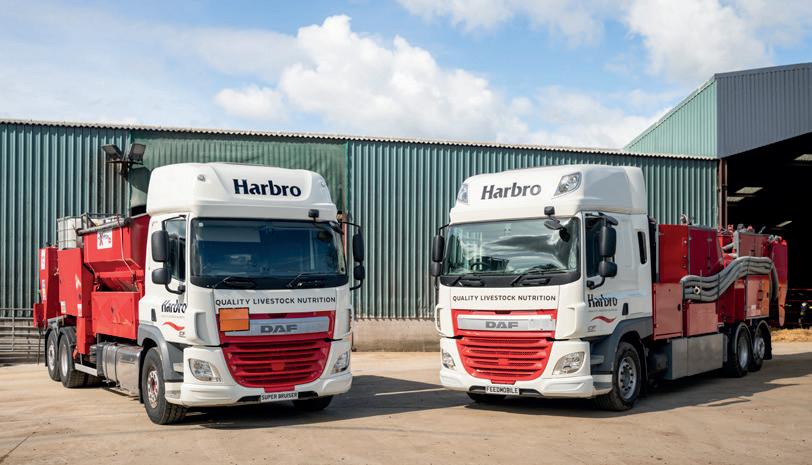
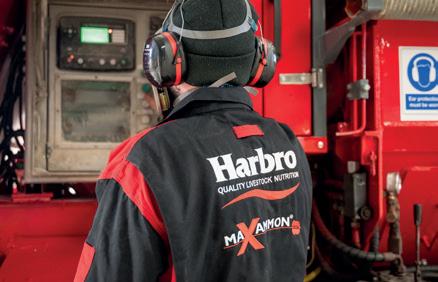
As livestock producers look to reduce feed costs and make better use of home-grown cereals, demand for flexible on-farm feed processing continues to grow. In response, Harbro has expanded its mobile mill and mix fleet with new and upgraded machinery designed to improve efficiency, throughput and feed consistency on farm.
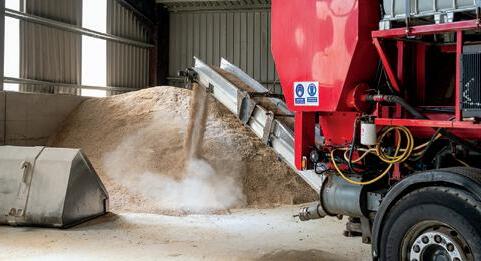
The latest additions include a new Super Bruiser for bruising, rolling and treating cereals with products such as Maxammon and Prograin, an upgraded Feedmobile designed for high-roughage beef and dairy diets, and a high-capacity Super Grinder for processing cereals for both livestock feed and anaerobic digestion.
The machines are equipped with updated technology aimed at improving operational efficiency and delivering more consistent finished feed, particularly during peak periods such as harvest when demand for mobile processing is at its highest.
Harbro’s mobile mill and mix service allows cereals to be processed, treated and mixed directly on farm, reducing reliance on bought-in feed while making greater use of home-grown crops. For many producers, this approach supports lower feed costs while maintaining consistent, traceable rations tailored to livestock requirements.
Alongside the new equipment, customers continue to be supported by Harbro’s trained operators and nutritional team, who work with farmers to ensure rations are formulated and processed to deliver performance and value on farm.
“This investment reflects our continued commitment to supporting livestock producers with practical, efficient feeding solutions that deliver real value on farm,” said Malcolm Steven, Head of Mobile Milling.
“By increasing capacity and expanding our processing capabilities, we’re helping customers make better use of home-grown cereals while maintaining feed quality and consistency. The addition of the new Super Bruiser and Feedmobile strengthens our ability to support customers across the UK with a wider range of feeding solutions.”
The expanded fleet will support growing demand across Scotland, particularly in the Borders, Dumfries & Galloway and Ayrshire, as well as further afield in regions including County Durham, Yorkshire, Lincolnshire and the Midlands.
As producers continue to focus on efficiency, tighter cost control and greater use of home-grown feed resources, investment in flexible on-farm processing is playing an increasingly important role in modern livestock production systems.
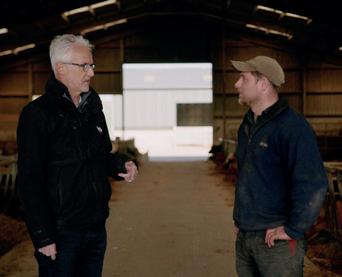
At New Droverhall Farm near Crossgates, Finlay Adam is focused on keeping things practical, efficient and future-proof. With a well-established store cattle system at the core of the business, he has recently taken steps to tighten control over production and reduce exposure to market volatility. By introducing suckler cows and streamlining feeding processes, he is building a system that works smarter while maintaining performance.
The farm operates a simple rotation of winter barley, winter wheat and spring barley. The barley is used on farm, treated with Maxammon and processed through the Super Bruiser. Any surplus grain is sold where possible, while wheat is grown with the aim of achieving milling specification and securing the best market return.
Now in his fourth season using the Super Bruiser and Maxammon system, Finlay says it has transformed how feed is processed on the farm. Previously, protein had to be bought in to complement home-grown cereals. Treating grain with Maxammon has helped reduce that reliance while supporting performance and feed efficiency.
With a well-organised two-bay setup, around 60 tonnes of grain are processed each month, a task that typically takes just two to three hours.
“We get Harbro in monthly to bruise 60-tonne batches. We also use them for all our lick buckets, minerals and Alkacid throughout the year. The service is top notch, and we couldn’t be happier. The cattle are more content and perform well.
“We used to bruise grain every day with our own machine, which took one to two hours at a time. Harbro Beef & Sheep Specialist David Allan recommended the Super Bruiser, and it made sense to give it a try.
“Now we’ve taken all that hassle away. Processing 60 tonnes in one go means we’re always ahead. When we’re getting near the end of a batch, I just text David and that’s it. If we need minerals at the same time, we add that to the message as well.
“The communication is spot on. We get a text to confirm and a call from the driver before they arrive. It makes the whole process straightforward and allows us to focus on other jobs around the farm.”
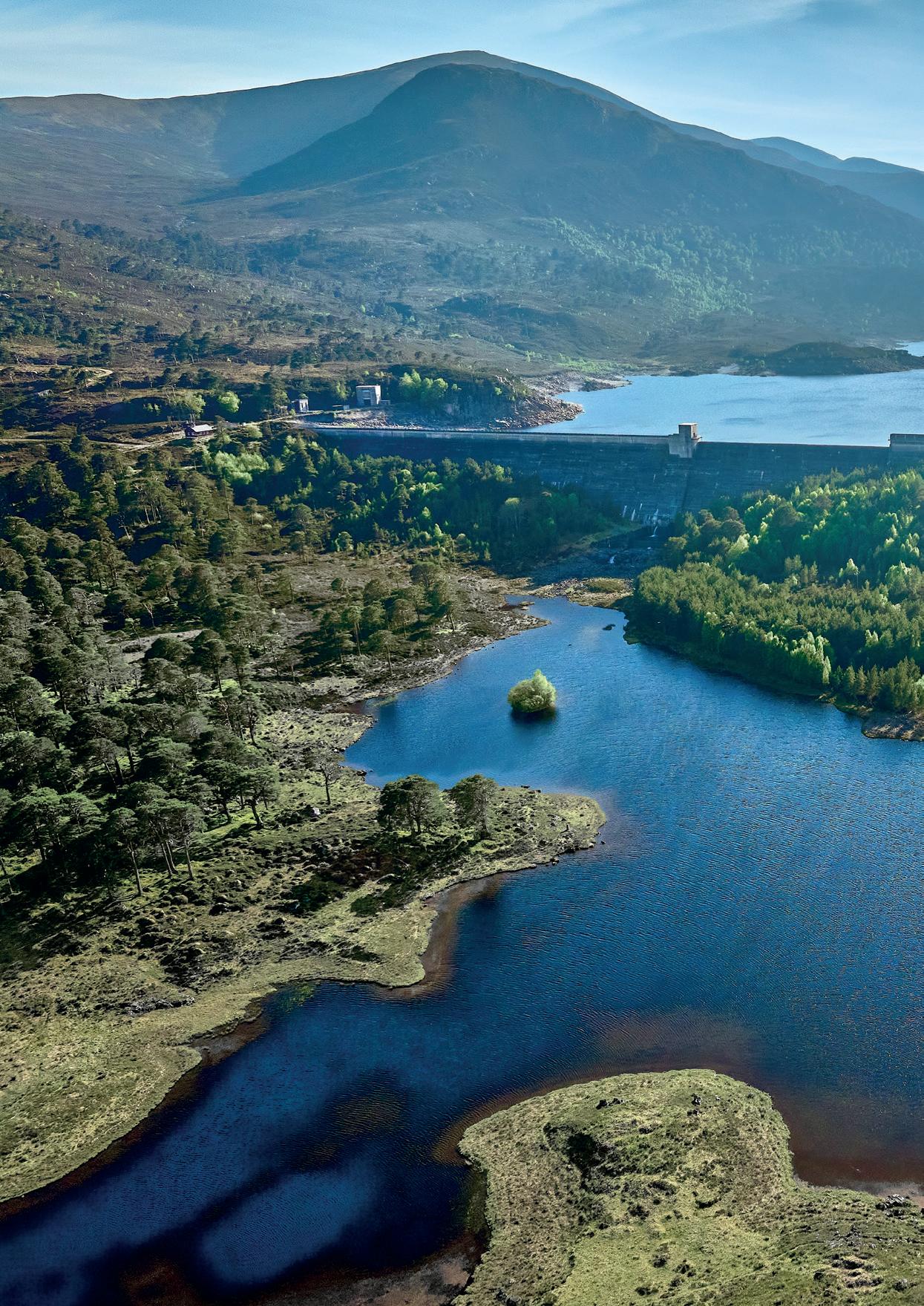
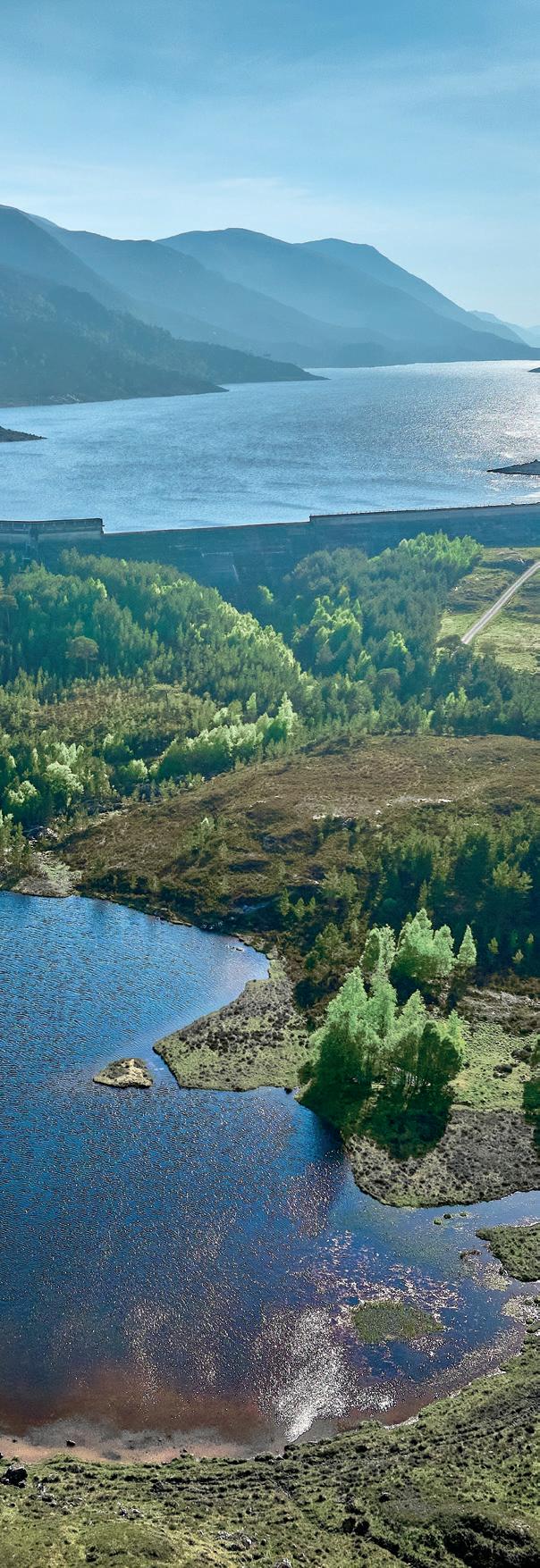

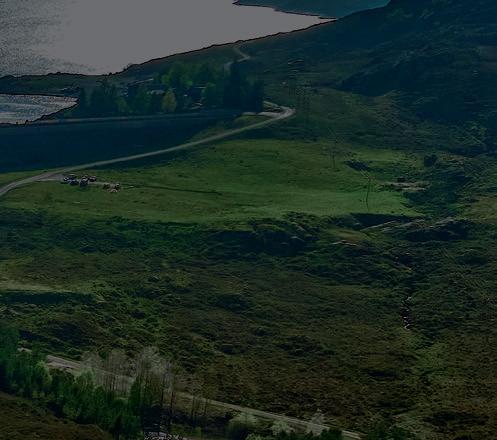

Water is becoming one of the most important strategic resources in agriculture. Whether through improving efficiency, harvesting rainwater, investing in storage lagoons or developing alternative supplies, Rebecca Audsley from SAC Consulting examines practical solutions that can help farmers and crofters future-proof their businesses against increasing weather extremes.
From prolonged water scarcity to increased risk of fl ooding, we are seeing more frequent and extreme weather events. All users, from drinking water, industry, amenity and agriculture, are being encouraged to build both water use effi ciency and future resilience into their operations.
At the farm level, our changeable climate is now posing a strategic business risk with implications potentially spanning multiple seasons. Water scarcity alerts are becoming more frequent and often coincide with times of high water demand. Hotter, drier summers and drier springs only add to soil moisture defi cits, necessitating irrigation earlier in the growing season. It’s worth noting the role that healthy soils can play here, helping to support water holding capacity, reducing the frequency and/or need for additional irrigation.
It’s not just crop production; drier conditions bring additional complications for livestock too, from maintaining adequate drinking water supplies, animal health and productivity, to the impact on forage growth due to water stress.
Whether paying for mains water, on a private supply or abstracting from rivers and burns, more farmers are looking across their business to assess how vulnerable they could be at times of water scarcity, and putting measures in place to reduce risk.


Borders Forest Trust is a charity working to restore native woodland habitats in

If you are based in the Scottish Borders and are interested in planting native trees on your farm, we can help! We offer free advice, site surveys, woodland design and support to access funding for native tree planting projects and tree planting schemes, of any scale. We will work with you to choose the right mix of species and planting layout to suit your site and objectives.
Here are some of the many benefits trees can offer;
• Shelter from harsh winter and summer weather for livestock and crops
• Improve soil quality and prevent erosion
• Help to reduce flooding, stabilise riverbanks and mitigate diffuse pollution
• Provide a sustainable source of firewood
• Improve our landscapes for us and future generations.
• Lock up carbon, helping to Planting advice includes; orchards, boundary trees, parkland trees, riparian woodlands, farm woodlands and agroforestry schemes. We also offer free advice to owners of ancient woodland who would like management advice to protect and restore this irreplaceable habitat.
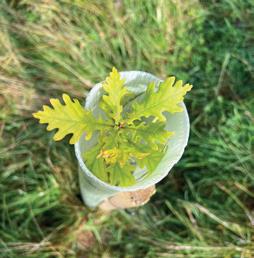

Please contact our Native Woodland Lead on 07399 275 973 or email hannah@bordersforesttrust.org
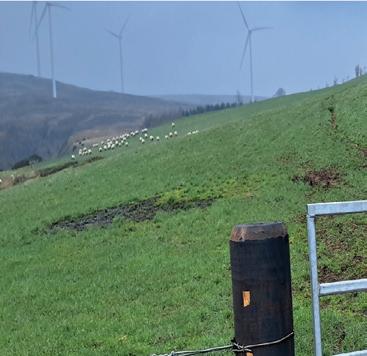





Steps to consider to add resilience to your system
• CARRY OUT A WATER USE AUDIT.
Assess how much you are using (and paying for).
• INSTALL (AND MONITOR) WATER METERS.
Metering is key to knowing your actual water usage. Unexpected or unaccounted for increases in water use could signify a costly leak.
• CHECK YOUR WATER BILL.
Water prices for business users are continuing to increase. Is there a more competitive tariff or supplier, based on your water needs?
• ROUTINE MAINTENANCE.
Cheap fixes such as repairing leaking taps, fixing trough valves and checking water pipe connections could add up to significant savings over time.
• TECHNOLOGY.
Soil moisture probes could better inform irrigation strategy; consider a move to drip irrigation or switching to more drought tolerant varieties.
• ALTERNATIVE WATER SUPPLIES.
Reduce demand on mains water, secure additional supplies and cut costs in the longer term.
Securing additional supplies, whether through storage or abstraction, could help to support the business going forward. Here we look at some of the common solutions.
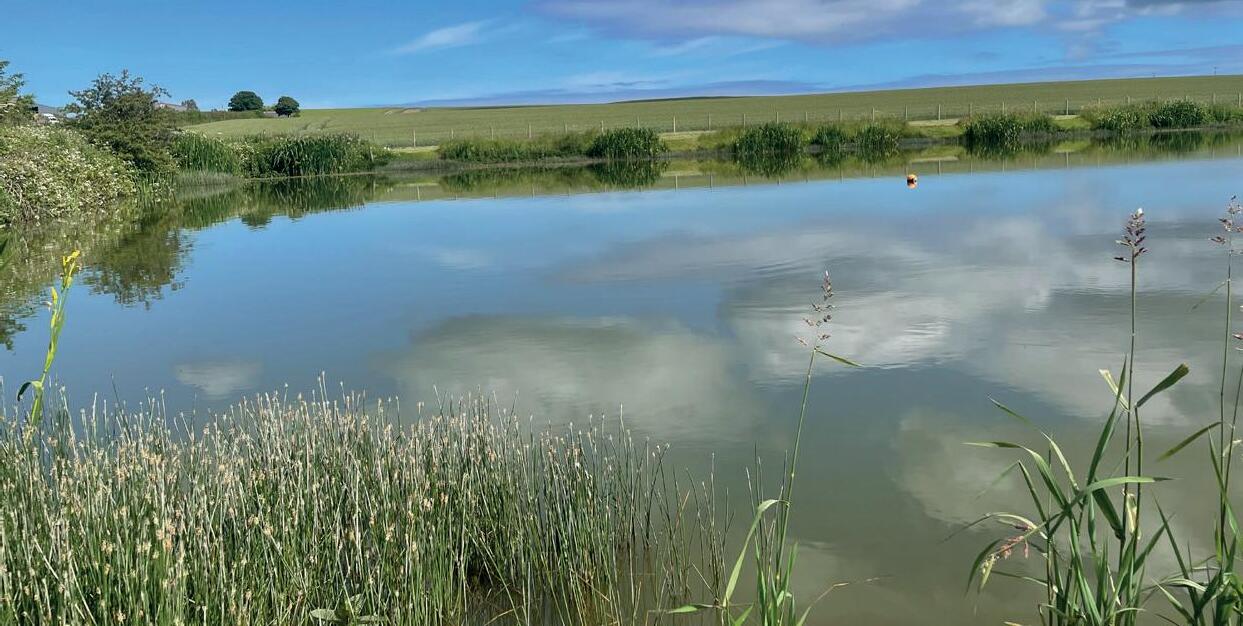
Standalone irrigation reservoirs or lagoons enable water to be gradually collected and stored during the wetter, winter months. They provide an on-farm source of water ready to support irrigation needs during the summer growing season.
With more controls on abstraction permits and the power to issue stop notices at times of significant water scarcity, more growers are looking for a secure alternative supply of water. The 2026 round of Scottish Government Agri-Environment Scheme (AECS) offered funding support to those businesses looking to install a lagoon. If a lagoon may be an option for your farm, check with your local council for any planning requirements, and contact SEPA for a discussion about your abstraction permit early in the planning process.
As of November 2025, water abstractions are regulated under the new EASR (Environmental Authorisations (Scotland) Regulations):
• Taking up to 10m3/day is viewed as low-risk with good practice measures in place (i.e. compliance with General Binding Rules (GBRs))
• Taking between 10m3/day and 50m3/ day requires one-off notification to SEPA (a registration)
Rainwater harvesting (RWH) systems collect rainwater from building roofs and store it in a collection tank. Without treatment, the water is not ‘clean’ but with basic filtration is of sufficient quality for washing down yards and machinery or filling the sprayer. Systems can be reasonably straightforward, diverting existing guttering from drains into collection tanks, to a more bespoke arrangement with a series of filters and UV treatment, depending on intended use. Collected rainwater will include bird droppings, so untreated water is not recommended for livestock drinking: If you are planning a new shed, it might be worth considering incorporating a RWH system, either now or in the future, into your design.
• If above the 50m3/day water abstraction threshold, permits now replace the previous licensing system. Permits are subject to stricter controls and annual charges.
During droughts, SEPA can temporarily suspend or reduce your abstraction rights via text or email alerts. Don’t put it off for a rainy day
Subject to access to suitable groundwater reserves, boreholes could be another way to secure supplies and reduce mains water dependency. If you are considering a borehole and know your daily water requirements, undertaking an initial hydrological desk study could indicate if a borehole is a feasible option. Again, early discussion with SEPA is recommended, as permit requirements vary dependent on depth thresholds and daily water demand. Although a high upfront cost, low running costs covering energy for pumps and routine maintenance mean boreholes can offer a cost-effective additional supply. A private system such as a borehole or lagoon not only gives a known supply within your control, but can also give improved pressure consistency, avoiding the drop in mains pressure during summer when there is high water demand across all users.
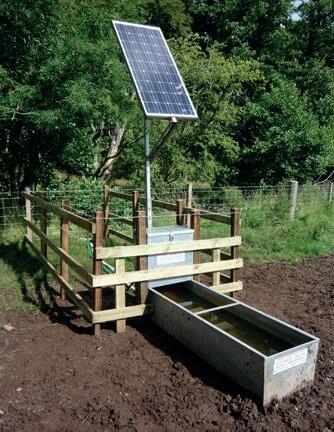
Mains water continues to be the top choice for livestock drinking in terms of quality, however for some field grazed livestock, abstraction from rivers and burns to fill troughs is the more practical option. From battery powered pumps charged via solar panels, to ram pumps using the energy from within the flow of water, there are a number of options to support remote drinking systems for field grazed livestock. Higher demand
on abstraction to support crop needs often comes at times of water scarcity, with multiple pressures on surrounding watercourses.
In summary, we are entering an age where securing water sources should be treated with the same strategic importance as fuel, feed or fertiliser. By metering and monitoring water use, improving water use efficiency and diversifying sources, you can begin to build more resilience into the business, helping you maintain yields, income and competitive advantage. Although water resource planning isn’t particularly exciting, future you will thank you for investing the time now. Don’t put it off for a rainy day.
To find out more, you can contact me at rebecca.audsley@sac.co.uk or explore further resources below.
Farming and Water Scotland provides practical ideas and guidance and hosts the ‘Know the Rules’ Guides
The Farm Advisory Service has a number of resources around water scarcity and offers a free advice line.
Check SEPA Water Scarcity Report – weekly updates released every Thursday from May to September.
Review the recent CREW Guidance Planning for Water Scarcity – Practical guidance for Scottish farmers and growers
Information and application forms for Abstractions under EASR including borehole installation are on the SEPA website.
See the Water Industry Commission for Scotland (WICS) for information on other retail water providers.
See Adaptation Scotland for a summary of climate change trends and projections.
By Hugh Brown, Sales Director Scotland at Castle Water
For many Scottish farmers, this year’s dry spring and June heatwave have served as a reminder that weather patterns are becoming increasingly difficult to predict.
While Scotland is often viewed as a country blessed with abundant water resources, the past 12 months have demonstrated that availability cannot always be assumed. Extended dry periods, changing rainfall patterns and more frequent weather extremes are creating new challenges for farmers that rely on secure and consistent water supplies.
Whether it’s for livestock, irrigation, cleaning operations or wider food production activities, water underpins almost every aspect of agriculture. Yet historically its permanence has been assumed, and that is an assumption that we can no longer rely on.
Farmers are increasingly conscious of water resilience and acutely aware of how periods of water scarcity can affect productivity, increase costs and create operational disruption. At the same time, more intense rainfall events contribute to runoff, soil erosion and pollution incidents that affect both farm performance and the wider environment.
Climate forecasts suggest variability is likely to become a more prominent feature of the operating environment for agriculture. For Scotland’s £5.1 billion agricultural sector , that means building systems and practices to remain productive irrespective of the seasons.
Managing periods of drought doesn’t simply boil down to using less water, but using the water we have more effectively and building resilience into farm operations to ensure businesses are better prepared for whatever conditions arrive next.
Much like energy efficiency has become a routine part of business planning, water management is becoming an area where proactive action can deliver both financial and operational benefits.
To unlock those benefits, we need to reframe water as a critical business resource rather than simply another utility. One of the simplest ways to do so is to treat water the same way as other key farming inputs. For example, while many farm businesses carefully monitor fuel, feed and fertiliser costs, water usage only gets a look in when problems emerge. On farms, leaks, inefficient infrastructure and unnecessary consumption can often continue unnoticed for extended periods. Regular monitoring can help identify such issues before they become costly as even relatively small leaks can result


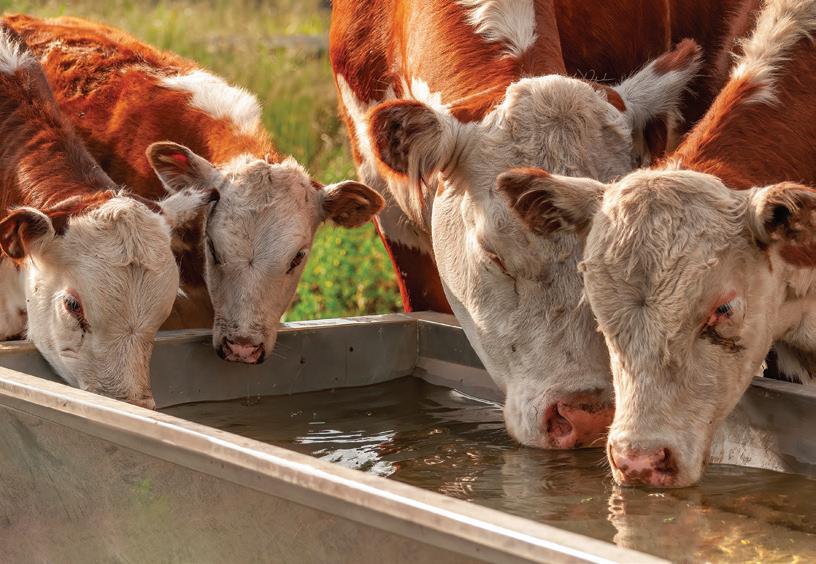
in significant losses over time, particularly across larger farms.
In periods of water scarcity, improved visibility of water consumption allows businesses to make more informed decisions about investment, maintenance and future planning. In turn, understanding where it is being used, and more importantly, where it is being wasted is often the first step towards reducing costs and improving resilience in a variable climate.
Thankfully, building such resilience does not necessarily require major infrastructure projects and many practical measures can help farms make better use of available water while reducing vulnerability during dry periods.
Improving storage capacity, harvesting rainwater and reviewing irrigation practices can all contribute to greater resilience. Better soil management can also play an important role. Healthy soils are better able to retain moisture during dry periods while reducing runoff during heavy rainfall.
Tree planting, buffer strips and natural flood management measures can provide additional benefits by helping to slow water movement across the landscape, reducing erosion and improving water retention.
Importantly, many of these actions support wider farm objectives, helping to improve efficiency, productivity and environmental performance simultaneously. While many of the opportunities to improve resilience sit on the farm itself, it is also worth
considering how water is supplied, measured and managed. Regular conversations with your water retailer can help ensure billing is accurate, consumption patterns are properly understood, and businesses are using the most appropriate water sources for different activities. In some cases, there may also be opportunities to make greater use of harvested or non-potable water for suitable applications, reducing pressure on treated supplies.
Despite being famed for its clean water, Scotland’s rivers, burns and watercourses can still be affected by fertilisers, pesticides and livestock waste if not managed carefully. As with resilience, many of the actions that protect water quality can also benefit the farm business, helping reduce nutrient losses and improve input efficiency.
Though many wish it, no individual farmer can control the weather. What businesses can control however, is how prepared they are for increasingly variable conditions.
Farmers in countries such as Australia have long recognised that periods of abundance can quickly be followed by periods of scarcity. While Scotland faces a very different climate, recent weather patterns suggest there is value in adopting the same mindset when it comes to water management and resilience planning.
The dry spring and summer heatwave experienced this year may ultimately prove to be another reminder to fix the roof while the sun is shining.




Jonnie Hall Deputy CEO/Director of Policy
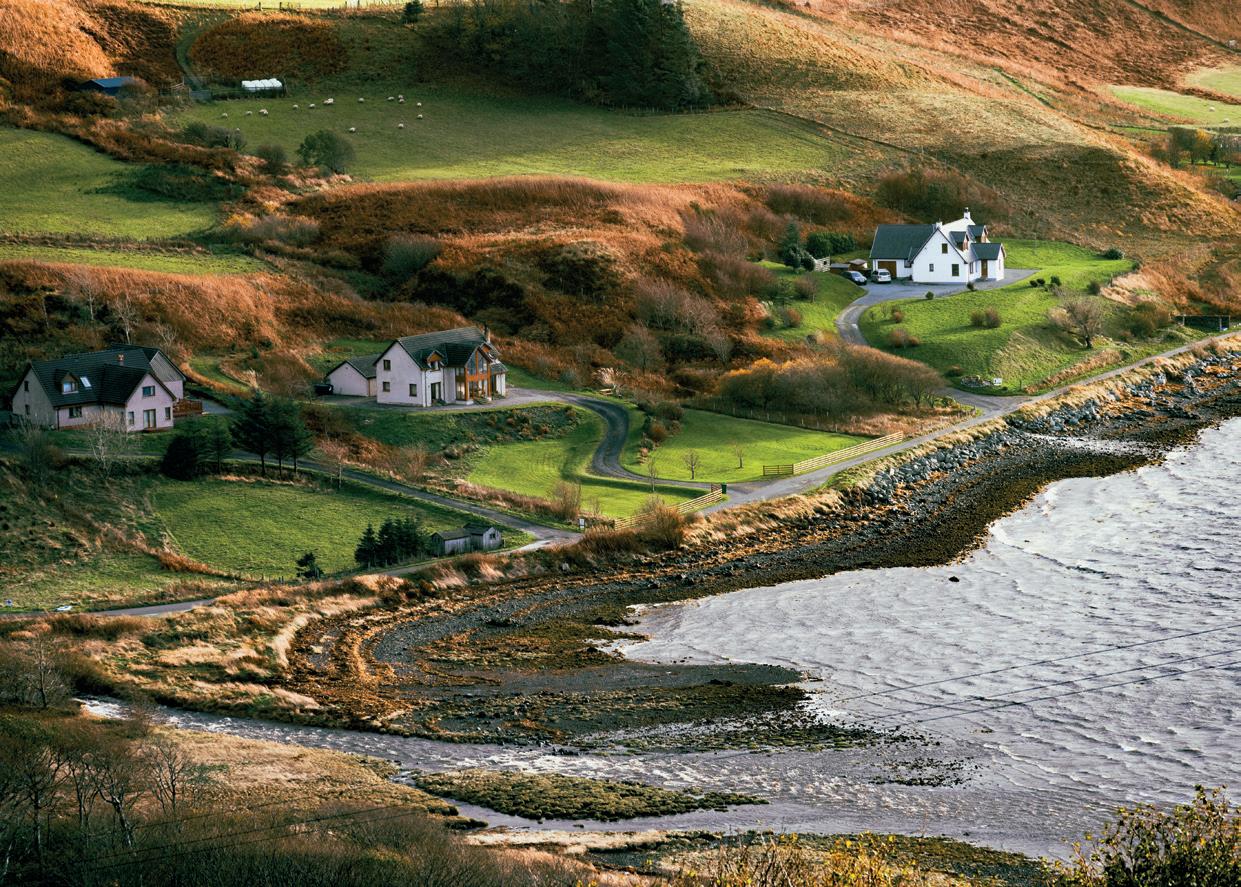
Water has always shaped Scottish agriculture. It underpins the productivity of our soils, the resilience of livestock systems, the quality of our food and drink exports and, increasingly, the legitimacy of farming in the eyes of wider society.
From the upland catchments of the Highlands, to the productive straths and lowlands of Angus and the Borders, water is both an asset and a responsibility.
For Scottish farmers and crofters, the challenge is no longer simply how to farm with water, but how to manage it in ways that sustain production, protect the environment and strengthen rural
economies in the face of climate change and regulatory pressure.
From an agricultural perspective, water policy cannot be treated as a narrow environmental issue. The future competitiveness of Scottish agriculture will depend heavily on how effectively we manage watercourses, tackle diff use pollution and secure sustainable water resources for future generations.
Agriculture depends on reliable rainfall, healthy soils capable of retaining moisture, functioning drainage systems and clean water for livestock and irrigation. Yet farming also operates within wider river catchments that support biodiversity, communities and industries downstream.
Agriculture has both rights and responsibilities when it comes to water management.
Scotland is often viewed as a waterrich nation, but that assumption risks complacency. Climate change is already altering rainfall patterns, bringing wetter winters, more intense storms and longer dry periods.
Farmers increasingly face two extremes at once – too much water at certain times of the year and not enough at others. Delayed sowing and harvesting due to saturated ground conditions are becoming more common, while drought periods are affecting crop growth, grass production and water availability for livestock.
This changing climate makes integrated water management one of the defi ning policy challenges facing Scottish agriculture.
A central part of that challenge concerns watercourse management. Scotland’s rivers, burns and drainage
networks are critical pieces of rural infrastructure. They support agricultural productivity through drainage and flood management while also providing habitats for wildlife and maintaining water quality.
Historically, watercourse maintenance focused mainly on drainage and flood prevention. Today, however, watercourses are expected to deliver environmental enhancement and natural flood management alongside their agricultural functions.
Creating tension which policymakers must recognise honestly. Farmers need watercourses to function effectively to maintain productive land. Blocked ditches, unmanaged sediment and poor drainage can rapidly reduce the viability of farmland, particularly in lower-lying and more intensively managed areas.
Poor drainage damages soil health, delays field operations and reduces yields. Equally, excessive engineering or poorly managed interventions can harm habitats and contribute to downstream flooding.
The answer is not to treat farming and environmental protection as competing interests, but to recognise that wellmanaged agricultural landscapes can deliver both outcomes. Collaborative, catchment-scale approaches are essential, with farmers recognised as active partners in river basin management rather than simply regulated stakeholders.
Many Scottish farmers are already delivering practical improvements: buffer strips alongside watercourses, fencing to prevent livestock erosion and diffuse pollution, wetland restoration and precision nutrient management are increasingly common.
Diffuse pollution remains one of the most significant challenges facing rural water quality. Runoff carrying nutrients, sediment, pesticides or organic matter into rivers and burns can have serious ecological consequences. Agriculture is not the sole source, but it is an important contributor and therefore has a central role in addressing the issue.
The Scottish farming industry recognises this responsibility. Significant progress has already been made through awareness raising and regulatory compliance. Many producers have invested in improved slurry storage, lowemission spreading equipment, nutrient budgeting and soil testing. There has been a marked cultural shift towards recognising that protecting water quality is part of good farming practice.
Yet policy must remain grounded in practical realities. Diffuse pollution is rarely the result of deliberate negligence.
More often it reflects infrastructure limitations, economic pressures or increasingly volatile weather conditions. Tackling diffuse pollution therefore requires more than regulation alone. It demands investment support, trusted advisory frameworks and policies that encourage innovation rather than simply imposing penalties.
Environmental improvements must align with economic sustainability. If policymakers expect farmers to deliver
systems. That includes investment in on-farm water storage, more efficient irrigation technologies and collaborative catchment planning.
Climate adaptation will require a more integrated approach to land and water management across Scotland. Too often policy remains fragmented between agricultural, environmental and flood management objectives.
Integrated catchment management offers a more coherent model to balance
cleaner water, restored habitats and climate adaptation simultaneously, then public policy must properly value and support those outcomes.
This is where Scotland’s future agricultural support framework becomes critical. Public investment should reward farmers for improving water retention, restoring riparian habitats, reducing diffuse pollution risks and delivering catchment management. These are public goods that benefit society far beyond the farm gate.
Importantly, water management is not simply about environmental compliance. It is also about maintaining productive capacity. Healthy soils with strong organic matter retain water more effectively, reducing runoff during storms while preserving moisture during dry periods. Precision nutrient application improves efficiency and reduces losses. Restored wetlands can mitigate flooding while enhancing biodiversity. These are investments in the long-term resilience of Scottish agriculture.
Although Scotland has abundant freshwater resources, regional pressures are increasing. Parts of eastern Scotland already face competing demands from agriculture, public water supply, industry and environmental protection during prolonged dry periods. Irrigation is becoming increasingly important for high-value crops such as potatoes and vegetables.
Strategic planning is needed to ensure agriculture retains access to reliable water while protecting ecological
competing demands and identify practical solutions. The best outcomes are usually achieved not through topdown prescription, but through locally informed collaboration.
Scottish agriculture has a strong record of stewardship and adaptation, and farmers are often the first to witness changing environmental conditions. Their practical knowledge should help shape future water policy.
Ultimately, water is not simply another environmental issue for Scottish agriculture. It is a defining strategic challenge that cuts across productivity, climate resilience, biodiversity and rural prosperity. The farms that thrive in future decades will be those capable of managing water smartly – retaining it when needed, moving it when necessary and protecting its quality throughout the landscape.
For NFU Scotland, the priority must be ensuring that farmers and crofters are recognised as central partners in delivering that future. Effective water management cannot be imposed on agriculture from outside. It must be grounded in practical realities and supported through long-term investment and policy stability.
The future of Scottish agriculture will, in many respects, be shaped by how we manage water. The choices made now – on watercourse management, diffuse pollution and water resources – will determine not only the health of our rivers and landscapes, but also the resilience and competitiveness of farming itself.
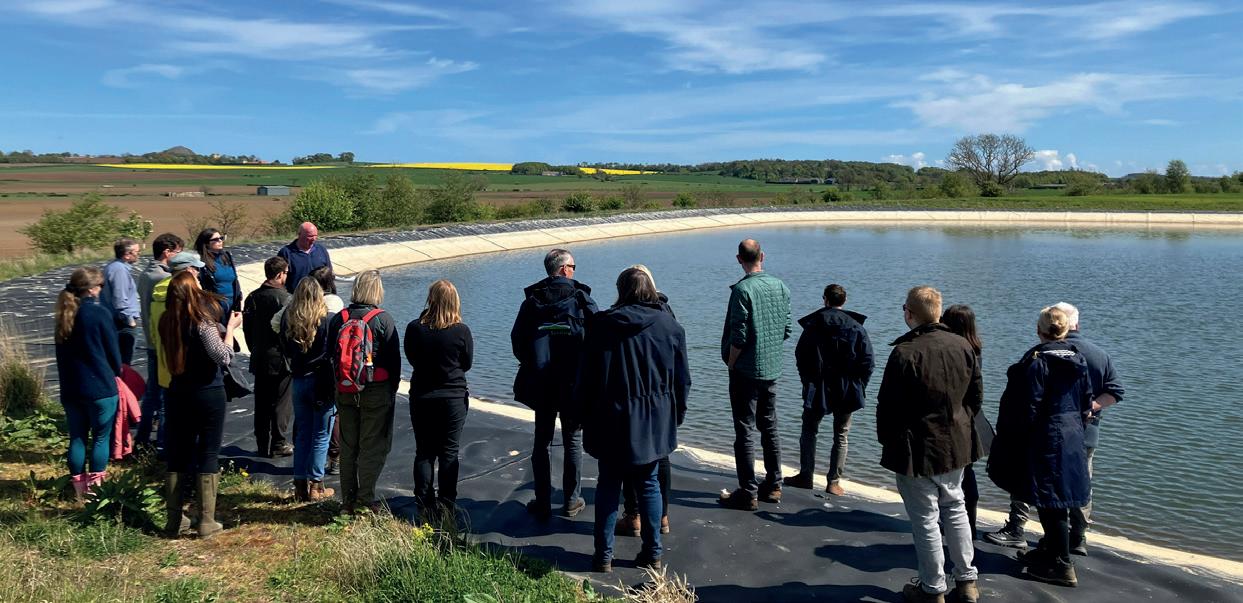


Lorna Scott Senior Policy Manager


Georgia Watson Policy Manager
Earlier this month, NFU Scotland welcomed Scottish Government offi cials to East Lothian to visit Haig Hamilton’s farm and discuss the growing importance of investing in on-farm water management, as well
Increased resilience has also created the confidence to further diversify the business
as the vital role agricultural businesses play in supporting rural communities and providing local employment opportunities.
During the visit, Haig demonstrated how targeted investment in water storage infrastructure, including lagoons,
boreholes and irrigation pumps, alongside effi cient water-use systems, has helped build long-term resilience within the business. Offi cials heard fi rsthand how these measures help to protect crops during prolonged dry periods, improve crop quality and provide greater operational fl exibility.
For Haig, this increased resilience has also created the confi dence to further diversify the business, reinforcing the wider economic benefi ts that strong agricultural businesses bring to rural economies.
NFU Scotland highlighted the importance of continued government support for practical water management solutions through grant funding and agri-environment schemes. Accessible
funding mechanisms will be essential in helping farm and croft businesses invest in infrastructure that strengthens resilience, safeguards production and supports the sector in adapting to challenging conditions.
Again, a massive thanks to Haig for hosting us.
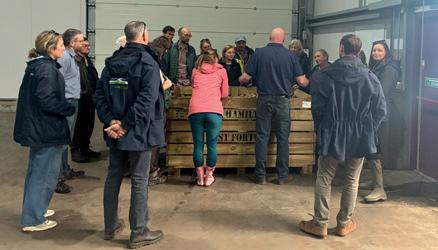
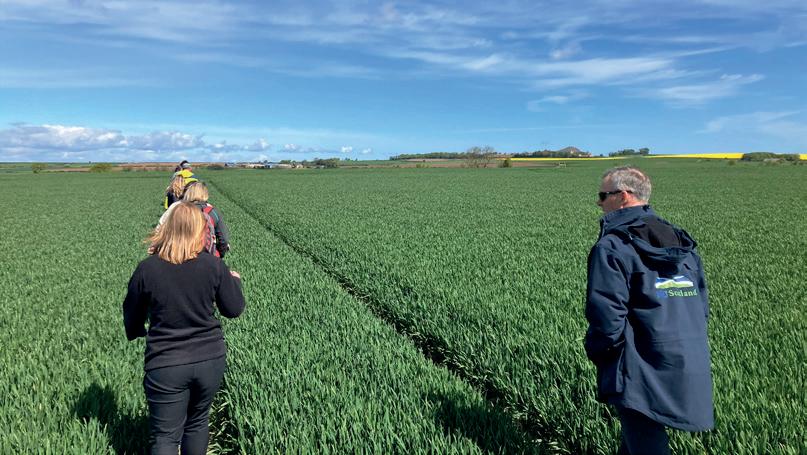
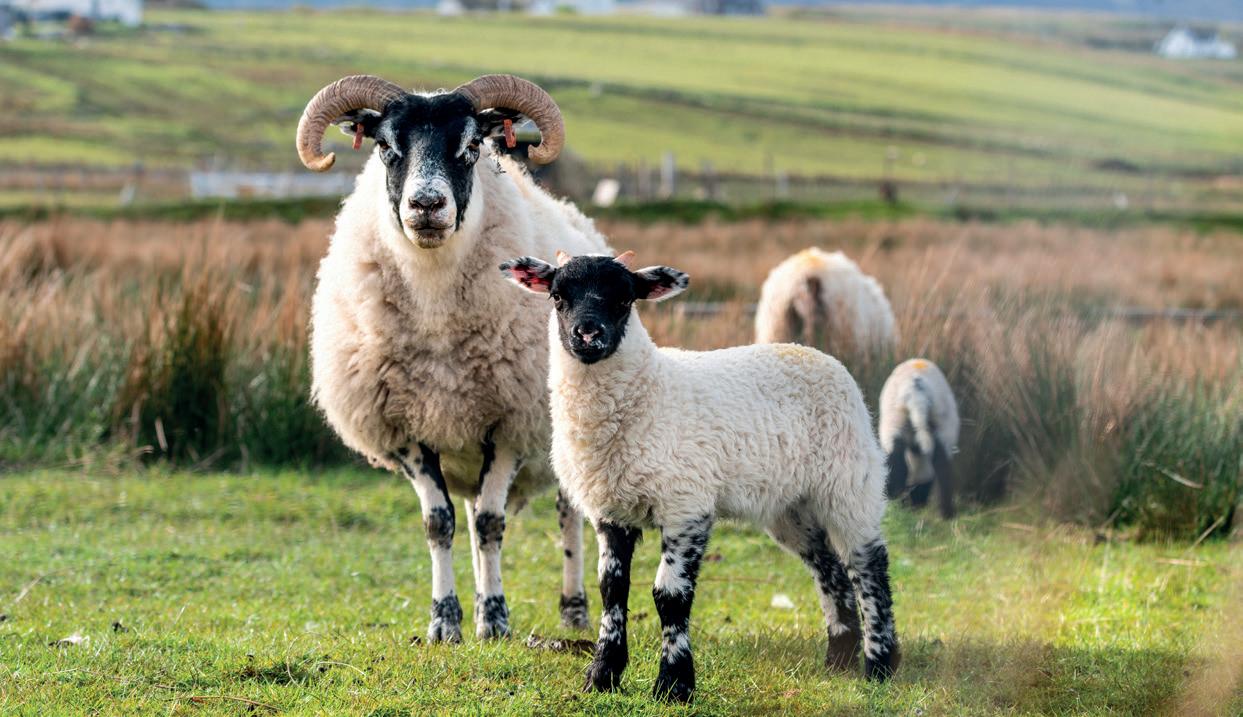


Penny Middleton Policy Manager
Sheep scab has moved up the agenda over the past year, suggesting it is becoming more widespread again and that sheep keepers want more action. The Scottish Sheep Scab Order, introduced in 2010, made sheep scab a reportable disease, requiring suspected cases to be reported to APHA and movement restrictions to remain until the disease was ruled out or properly treated.
Self-reported cases, by the owner or their vet, should be resolved promptly by notifying the case and showing that effective treatment was carried out. Cases reported by a third party, however, trigger restrictions and an investigation at the owner’s expense, with treatment or disposal of affected animals required before restrictions can be lifted. The aim was to make self-reporting and treatment the easier option, encouraging keepers to act early rather than risk official action, investigation and added costs.
During development of the legislation, some called for enforcement bodies to
notify neighbors of confirmed cases, but this was not included in the final Order. Neighbors would not have been required to investigate or treat, but notification would have warned them of the risk, helped them decide whether treatment was needed and supported better local control.
Under-reporting and weak enforcement have been major shortcomings of the legislation, and we have persuaded the Scottish Government that it should now be reviewed. A Sheep Scab workshop held on 13 May considered the current position, including how to improve self-reporting and third-party reporting, how newer testing options could fit within the Order, and what barriers and legislative gaps remain.
Further meetings are expected to consider what changes industry wants to the Scottish Sheep Scab Order with consultation on possible amendments hoped for later this year. We will seek members’ views on what the legislation should include, including questions such as:
• Should neighbors be notified whenever sheep scab is suspected or confirmed?
• How can case reporting be improved?
• How can we encourage more regional collaboration and coordinated treatment?
• What are the main barriers to tackling scab?
A longstanding barrier to controlling sheep scab is dip disposal. Because spent dip can contaminate water supplies, keepers who want to dip sheep must find suitable land for disposal, meet costly licensing and renewal requirements, and stay within limits on how much dip they can spread.
To find a more sustainable solution, farmers, engineers and environmentalists have worked together on a way to treat waste dip at the point of use. Supported by Bimeda, the Clear Dip team has developed a technique that captures diazinon for safe disposal where dipping takes place, reducing environmental risk and helping meet regulatory requirements. By making disposal safer and easier, the project could improve farm resilience and support sheep welfare through responsible medicine use.
Trials have been very encouraging, and the team is now working with regulators, industry stakeholders and funders to find practical, affordable routes to wider rollout. This could be a gamechanger in making dipping more accessible.
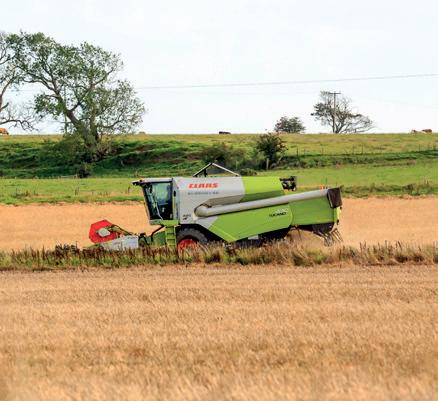


Rhianna Montgomery Policy Manager
As we head into the busy harvest season, it’s important not to let safety and security slip down the priority list.
With fuel prices remaining high, diesel theft continues to be a major concern for farmers and crofters. Where possible, vehicles and machinery should be parked in secure yards or locked buildings overnight. Fuel tanks should always be locked, with keys stored separately and securely. Keeping an up-to-date record of fuel levels and usage can also help spot any suspicious losses early.
Installing CCTV around yards, sheds and fuel storage areas can act as a strong deterrent and may assist police if theft or suspicious activity occurs. During busy periods, it can be easy to miss unfamiliar vehicles or unusual behaviour around the farm.
Alongside security, machinery safety remains essential during long and demanding working days. Daily vehicle and machinery checks should be carried out before use, including inspecting tyres for wear or damage and ensuring brakes, lights and indicators are all working properly and clearly visible.
Regular servicing and maintenance of tractors, trailers and other equipment is equally important to help prevent breakdowns, reduce risks, and keep everyone working safely throughout harvest.
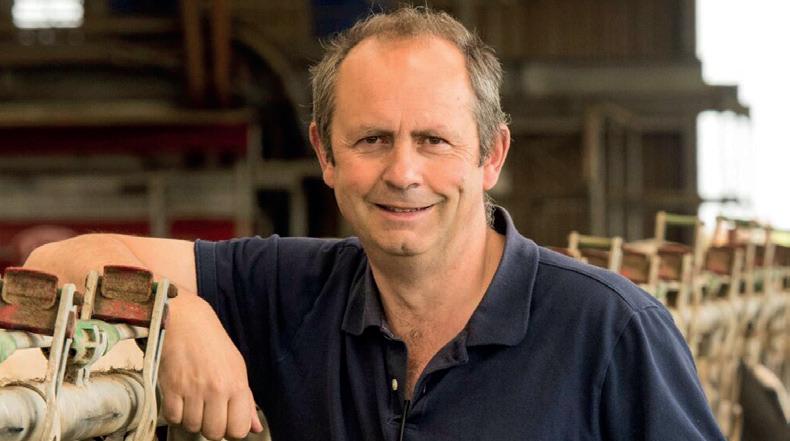


Bob Carruth Policy Manager
In the face of many challenges – climate, markets, prices, input costs – NFU Scotland’s Milk Committee Chair, Bruce Mackie is optimistic for the Scottish dairy industry.
In a recent article for The Scottish Farmer, Bruce outlined that in a wetter, warmer climate, our northern maritime weather in Scotland will provide resilience, while other dairying areas at home and abroad may struggle to grow grass, which will always be our cheapest and best feed for our cows.
Bruce added: “Our dairy farms in Scotland are well invested and our farmers and staff have a great depth of stockmanship skills that, whatever Artificial Intelligence brings, will still be required.
“We create a product which is produced to the highest standards and in demand in markets both at home and abroad.”
As a priority, the Milk Committee has been pressing dairy processors to recognise the inherent resilience in the Scottish milk field and invest in processing here, rather than shipping milk south of the border.
At farm level, Scottish dairy farmers continue to take forward innovations that are further improving efficiency and reducing the industry’s carbon footprint.
As Bruce says: “The world has moved on, and we will have to continue to improve the carbon footprint of Scottish milk. But the reality is that we
are a long way down this route already.
“As an example, calving heifers between 22 and 24 months of age. They cost less to rear and last longer as cows, improving lifetime yield and optimising replacement rate.
“Between 2012 and 2023, there was a 43 per cent drop in Scottish dairy heifers over two years old that had not calved. We have estimated that, in Scotland, we have already reduced the carbon footprint of a litre of milk by between 10-20 per cent by calving heifers earlier.
“When you build in the growing use of using genomic testing of our youngstock to identify the top animals, using sexed semen on the best of the cows and beef semen on the rest – all of these will cut costs and carbon.”
Looking to further bolster Scottish dairy resilience in the future, Bruce added: “Our approach needs to be multipronged. Adoption of carbon calculation methodologies that recognise the short-lived nature of methane in the atmosphere such as GWP* or the new pragmatic hybrid approach.
“At the same time, Governments should incentivise farmers to adopt new technologies to reduce dependence on fossil fuels in their operations, such as solar panels, heat exchangers, and robotic feeding – and Scottish dairy has already shown itself ready to embrace change.”
Supporting farmers on that journey is a key aim of the Scottish Dairy Hub, which continues to provide practical advice and guidance to dairy producers across the country. If you’re attending Stranraer Show on Wednesday 29 July or Dumfries Show on Saturday 1 August, drop into the NFU Scotland/NFU Mutual stand to meet the Scottish Dairy Hub team and get your milk-related questions answered.


David Michie Senior Policy Manager
Crops need sunshine and rain. With longer, drier spells, we are increasingly seeing more of the former than the latter. Certainly on the east coast. Farm businesses are already adapting to a changing climate –but at a cost.
Climate adaptation must be part of new policy thinking. We want to see government provide a ‘water management package’ for potato and horticulture businesses. Targeted capital funding for structures and kit to store, shift, and apply water to crops is needed to get used to this new normal. Investment that will build farm business resilience, while also reducing pressure on ecosystems in burns and rivers.
The challenge is that irrigation investment decisions are not
straightforward. There are many irrigation investments farmers can make, and many factors to consider. What exactly should be funded? What would give farm businesses (and government) their biggest bang for buck?
Even where labour is available, irrigation is not exactly everyone’s favourite job
Often they are impossible questions to give a ‘one-size-fi ts-all answer to. Farms vary in the size of catchments and watercourses, their distance from water sources, slope gradients, existing infrastructure, labour availability, and neighbouring enterprises with different
water requirements, and so on. Irrigation systems are bespoke, and because of this, support must be flexible.
Labour saving has to be considered. Labour is already a limiting factor for many businesses, and even where labour is available, irrigation is not exactly everyone’s favourite job. Investments therefore need to reduce not just cost, but also day-to-day hassle and time demands. Alongside this, improved awareness and advisory support – such as the recent Planning for Water Scarcity guidance – is needed to help inform what are often complex and costly investment decisions.
It seems strange to hope for slightly wetter summers, but the reality is that we are moving towards a hotter, drier climate where irrigation will become increasingly central to production. The priority now is ensuring members have the tools, support and confidence to adapt and keep producing in a hotter, drier climate. We will continue to influence government to make sure that happens.


Lucy McGillivray Policy Manager
Water is one of Scotland’s greatest natural assets and plays a vital role in supporting the country’s livestock industry. With high annual rainfall, abundant rivers and lochs, and productive grassland, Scotland has ideal natural conditions for raising cattle and sheep. Reliable water supplies help make Scottish livestock farming both productive and sustainable compared to many other parts of the world facing increasing water shortages.
As you will all know, livestock depend heavily on clean water for growth, health, and productivity. Cattle require large quantities of water each day for drinking, digestion, and milk production, while sheep also need regular access to fresh supplies to maintain good health. Scotland’s wetter climate and water resources mean it is well placed for livestock production.
Water also contributes to Scotland’s strong grass-based management systems.
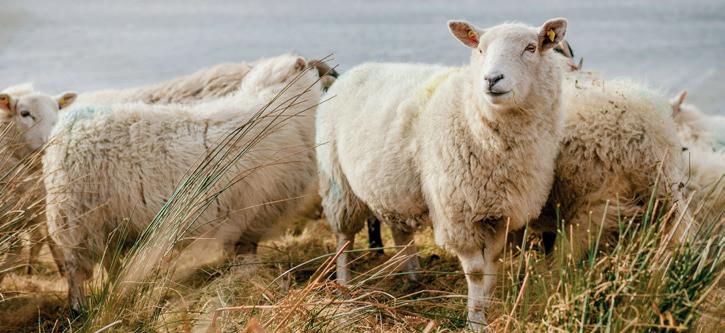
Frequent rainfall encourages the growth of high-quality grass and forage crops, which form the basis of livestock diets. This natural grazing system helps produce the premium beef and lamb for which Scotland is internationally recognised.
In addition, Scotland’s water resources support biodiversity and environmental sustainability on farms. Rivers, wetlands, and well-managed pastureland create habitats for wildlife while helping maintain healthy soils. Many farmers use sustainable water management practices such as protecting streams from pollution, storing rainwater, and improving drainage systems to preserve water quality to
ensure sustainability.
As climate change increases pressure on global food and water supplies, Scotland’s natural access to water could become an even greater economic advantage. There is no doubt drier summers here mean water management is more important than ever, but Scotland is still well placed to continue producing high-quality livestock products while maintaining strong environmental standards. Water is therefore not only essential for animal welfare and farm productivity, but also a major competitive strength for Scotland’s livestock sector and rural economy.
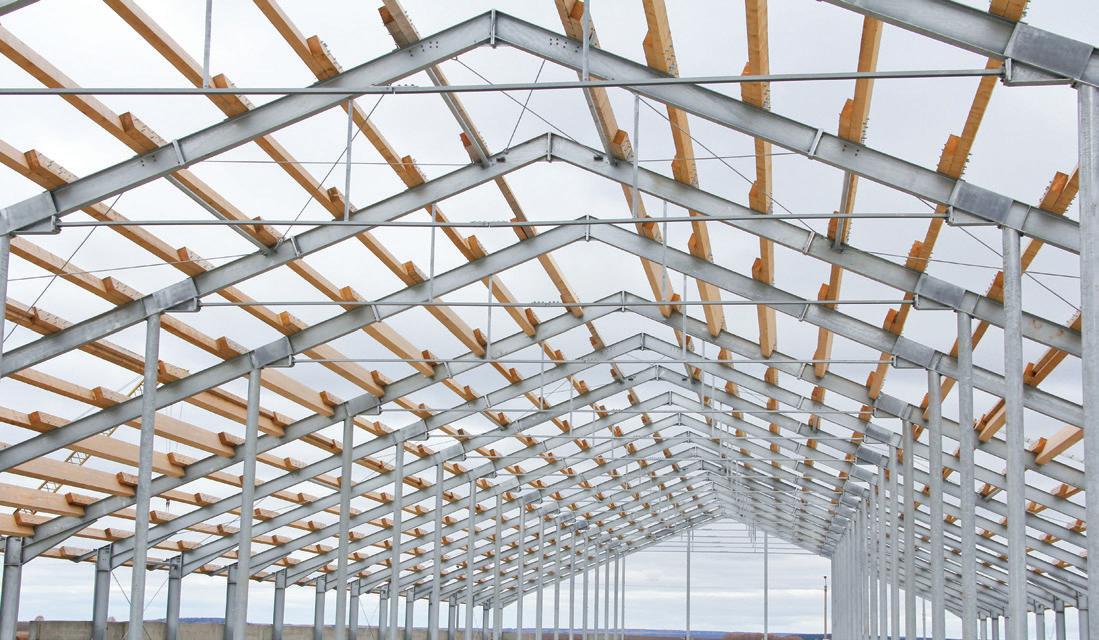



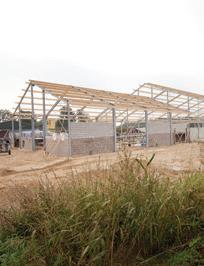



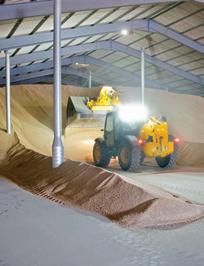


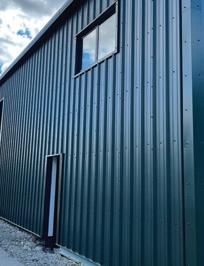


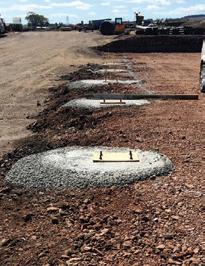










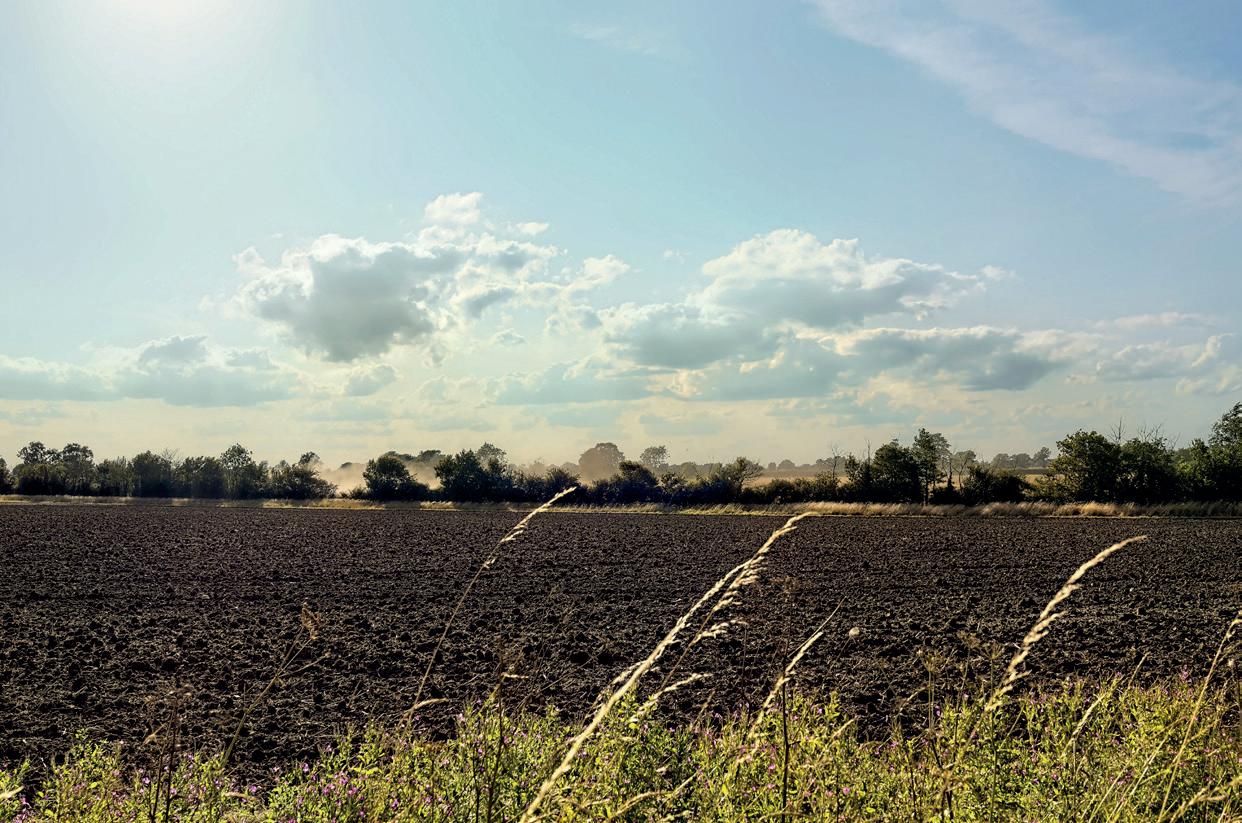


OLisa Hislop Policy Manager
ur fi rst spell of hot weather has brought water scarcity into sharper focus. What was once seen as a problem for other parts of Europe is now becoming a more immediate reality here at home.
For members, this is not an abstract issue. Water is already central to production and increasingly central to risk. Drought pressure in parts of Europe, where retailers rely on for imported fresh produce, is a reminder of how exposed food supply chains become when water is constrained. It underlines why resilience in domestic production matters.
From a policy perspective, a clear tension is emerging. On one hand, governments are under pressure to keep food prices down. On the other, greater reliance on imports in response to price pressure risks creating long-term fragility in the food system. However, as you
know, the message is straightforward: a resilient food system depends on maintaining strong domestic production, not weakening it.
Scotland is not facing the same scale of water scarcity as some other regions, but that relative advantage
sector. In the short term, members need strong sourcing commitments and fair market signals that support continued production. In the longer term, investment is needed in on-farm water management and wider resilience measures so businesses can adapt
Scotland is not facing the same scale of water scarcity as some other regions, but that relative advantage cannot be taken for granted
cannot be taken for granted; it is both a warning and an opportunity. Maintaining production and strengthening food security will depend on the supply chain recognising the strategic value of Scottish sourcing and resilience.
That means clear action across retailers, wholesalers and the hospitality
while continuing to produce high quality Scottish food.
With the right signals and investment in place, Scotland can remain a reliable and resilient source of food in an increasingly uncertain climate. That outcome depends on the choices made across the supply chain now.
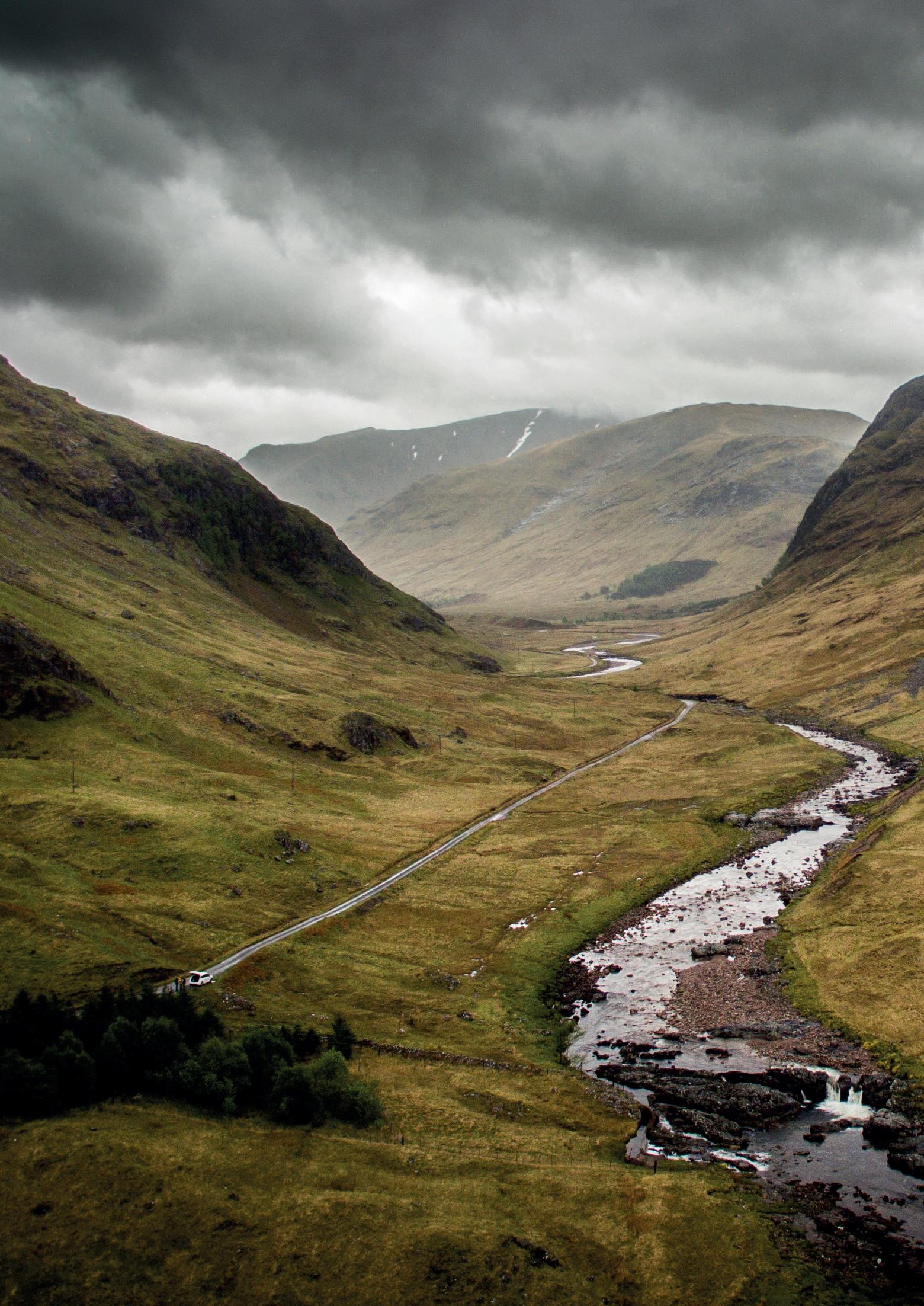
Farmers & crofters must be recognised as infrastructure partners in
A £100 million landscape project in England is reframing how land is used for climate resilience. Megan Williams speaks to Georgia Watson, Climate, Land and Business Policy Manager, about why Scotland should be paying attention.

Amajor landscape project in the Cotswolds is offering a glimpse of how farming and land management may evolve in response to climate and fl ooding pressures. Scotland is being urged to take note.

The £100 million Evenlode Landscape Recovery Project brings together more than 50 farms to restore rivers, reconnect fl oodplains and improve biodiversity across 3,000 hectares. What makes it stand out is not only its environmental ambition, but the fact it is being supported by infrastructure organisations such as Network Rail, SSEN and local authorities, who see direct value in reducing fl ood risk to roads, railways and energy networks.
We spoke to Georgia, Policy Manager, about what this shift could mean for Scotland.
Q: What stood out to you about the Evenlode project?
It was the fact that infrastructure organisations are investing directly. They’re recognising that what happens on farmland upstream has a very real impact downstream – whether that’s fl ooding on roads, disruption to rail, or risks to energy networks. In effect, land management is being treated as part of the infrastructure system.
Q: Is that relevant to Scotland?
Very much so. From a member perspective, water resilience is already a live issue. I am hearing about increasing pressure from water scarcity, with some areas experiencing livestock water shortages and dry periods that have required emergency water supplies. There’s also concern that reduced winter snow cover is removing a key natural store of water, which increases exposure to dry summer conditions.
Q: How are farmers and crofters responding on the ground?
We’re already seeing practical adaptation. On-farm water storage, including irrigation lagoons and ponds, is increasingly being considered to capture water during wetter months for use later in the season. These systems also bring wider benefi ts such as biodiversity gains and improved resilience to both drought and fl ooding. A recent visit to West Fortune Farm in East Lothian (which you can read more about on page 30) showed this in practice, where large-scale arable systems are already investing in irrigation storage capacity. What was important about that visit was the involvement of regulators and government advisers – it refl ects a more collaborative approach to water management.
Q: What about regulation and SEPA’s role?
There are early signs of change. SEPA is increasingly engaging with abstractors to better understand water use and manage abstraction pressures more collaboratively during periods of stress, rather than relying solely on restrictionbased approaches.
Q: This is not just an arable issue though, is it?
No, livestock producers are increasingly highlighting water availability as an animal welfare issue during prolonged dry spells, particularly in more remote areas. Members have also raised ideas around winter water capture, distributed storage systems, and lowcost infrastructure such as troughs supported by solar pumps. At the same time, reduced snow cover and hotter, drier summers are increasing concern around both water scarcity and wildfi re risk. These pressures are becoming more widespread across the sector.
Q: What is the bigger policy lesson from the Evenlode approach?
The key shift is recognising that land management delivers infrastructure value. Slowing water fl ow, restoring
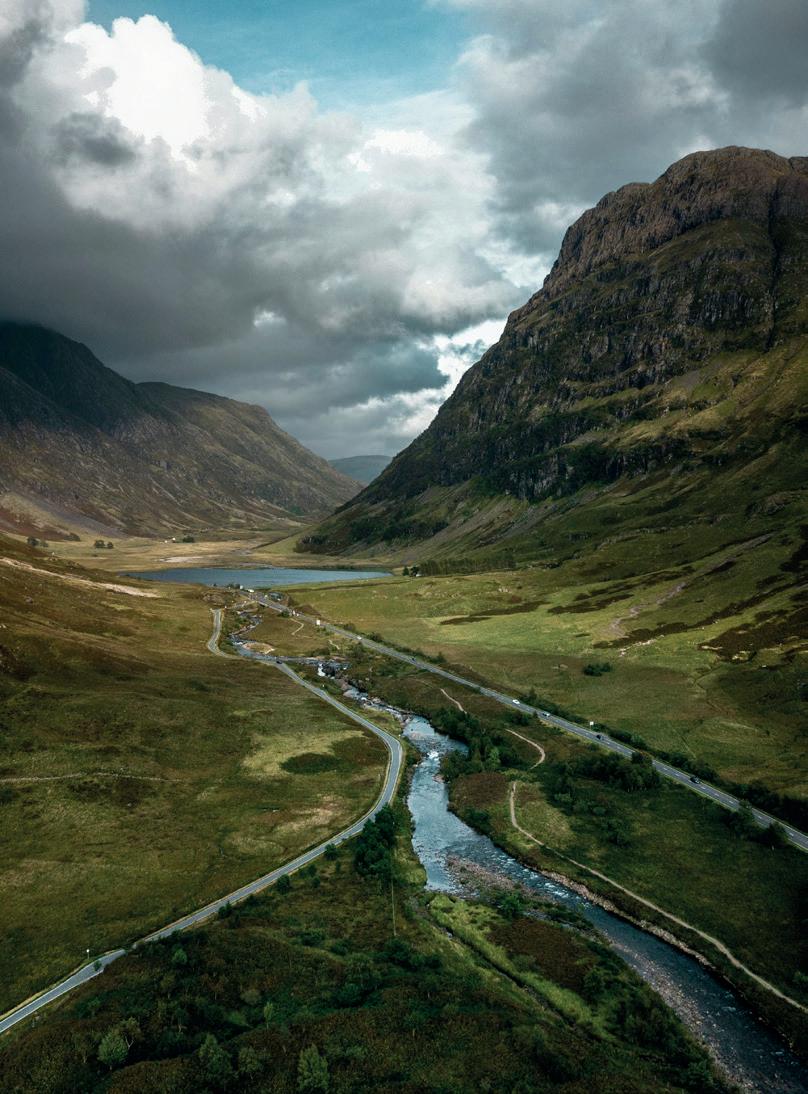
wetlands and improving soil health can reduce fl ood damage, protect infrastructure and reduce long-term public costs. If Scotland is to move in this direction, water storage and climate resilience on farms should be supported by the Scottish Government. This is a core part of our manifesto.
Q: What about funding and private investment?
There is growing interest in private investment playing a greater role in environmental delivery. But there are also real concerns from members about the need for legal clarity and confi dence around rights and responsibilities before private investment is to be considered. In addition, there is also a desire for better understanding on land use change, long-term control of assets and the risk of productive farmland being taken out of food production. That is why partnership
is essential. Farmers and crofters cannot just be expected to deliver resilience outcomes without being properly supported and fairly recognised.
Q: And food production?
Food production has to remain central. A profi table farming sector underpins investment, innovation and resilience. Without that, neither environmental nor climate goals will be achievable.
Q: Final message?
The lesson from the Evenlode project is not that farming should step back, but that it should be recognised as part of the infrastructure system that keeps Scotland functioning. Farmers and crofters are already delivering much of this – the task now is ensuring policy and investment frameworks properly refl ect it with resilience measures to be included in the next round of FFIS.


From family homes and estate housing to diversification projects and holiday accommodation, Hoose designs and builds regenerative, low-energy homes across Scotland using natural, carbon-storing materials.
With one integrated team guiding the process from land and design through to construction and completion, we help clients create healthy, high-performance homes that are designed to respond to Scotland’s changing climate.



REGIONAL MANAGER


Lorna Paterson
07786 860 453 lorna.paterson@nfus.org.uk
Members are engaging with our Presidential Team to encourage more nonmembers to join NFUS. Robert Neill visited at the end of May and spent an evening in Banff with members from four branches to update them on his own policies at Upper Nisbet. Robert also shared information on key NFUS policy workstreams and enjoyed a Q&A session.
The next day, Robert joined Turriff Branch Chair, Morven Sivewright, in New Byth to meet various non-members, including new entrants and industry
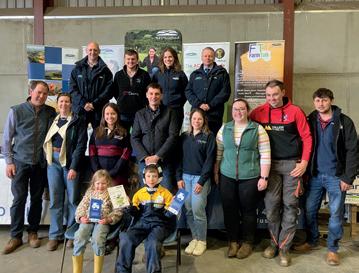
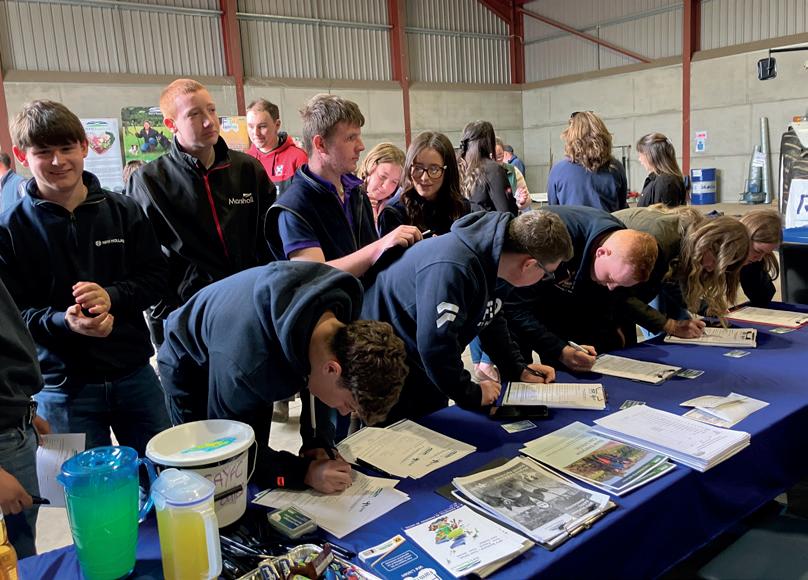
professionals. Morven’s office then became Robert’s home for the day, where he, along with support from Morven, our Combinable Crops Chair, Jack Stevenson, and Group Secretaries Richard and Rosslyn, successfully signed up five new members.
Meanwhile, our Laurencekirk office team (pictured) are industriously planning recruitment visits for CEO John Davidson, as well as a BBQ event at East Coast Viners in June. Vice President Duncan is joining the Laurencekirk team on recruitment visits and is looking forward to meeting some very interesting non-members.
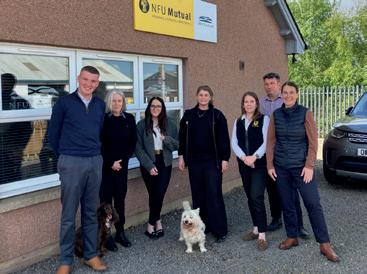
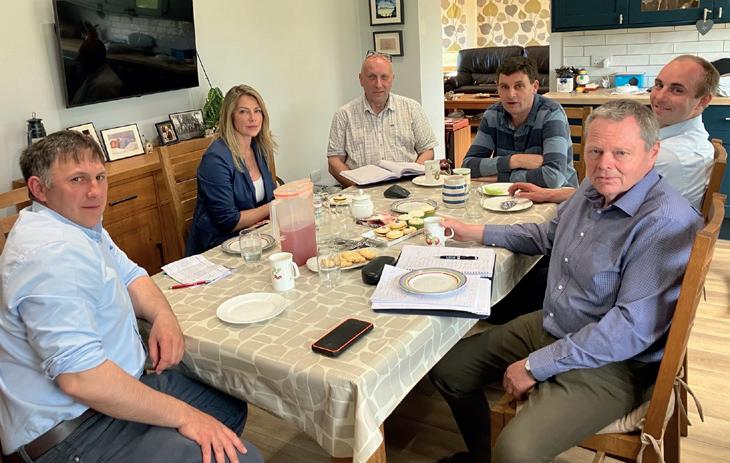
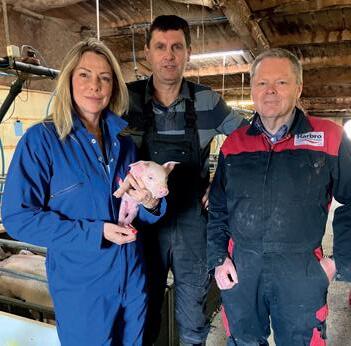
Regional Vice Chair Danny Skinner hosted an on-farm meeting with industry experts and fellow pig producers, including Iain Lyle (Harbro), Russell Rennie and Ben Lowe, along with President Andrew Connon and Reform Party representatives Conrad Ritchie and Jo Hart (pictured). The discussions were intense and left no stone unturned regarding the crisis facing the pig sector.
Scott and Elaine Campbell hosted an excellent SAYFC mock auction and valuation event at Kirkton Farm, where over 50 Young Farmers members participated and met President Andrew, CEO John, Regional Chair David and Vice Chair Danny. More than 20 young farmers grasped the opportunity to gain free NFUS membership that day, while also enjoying burgers specially prepared by Marshalls Farm Shop (pictured).
Colin Slessor from Aberdeen Northern Marts did a fantastic job auctioning donated items, raising over £500 for SAYFC’s “Big Build” project. A huge thank you goes to our hosts and sponsors: Ravenhill, Sellars, Ringlink, Agrii, Marshalls, Scott and Nikki Crabb, and NFU Mutual. Thanks also to our SAYFC members, especially Kayleigh Turner, for all her help before and during the event.
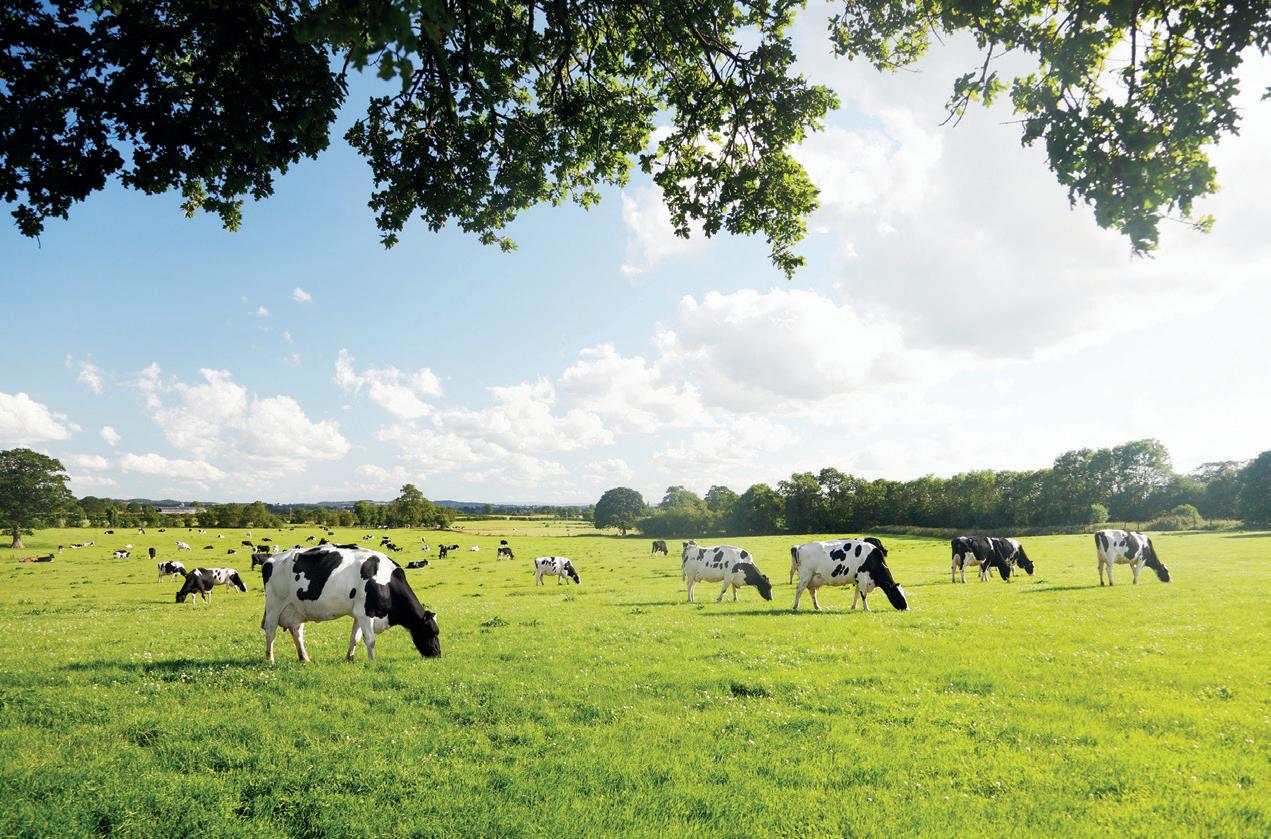
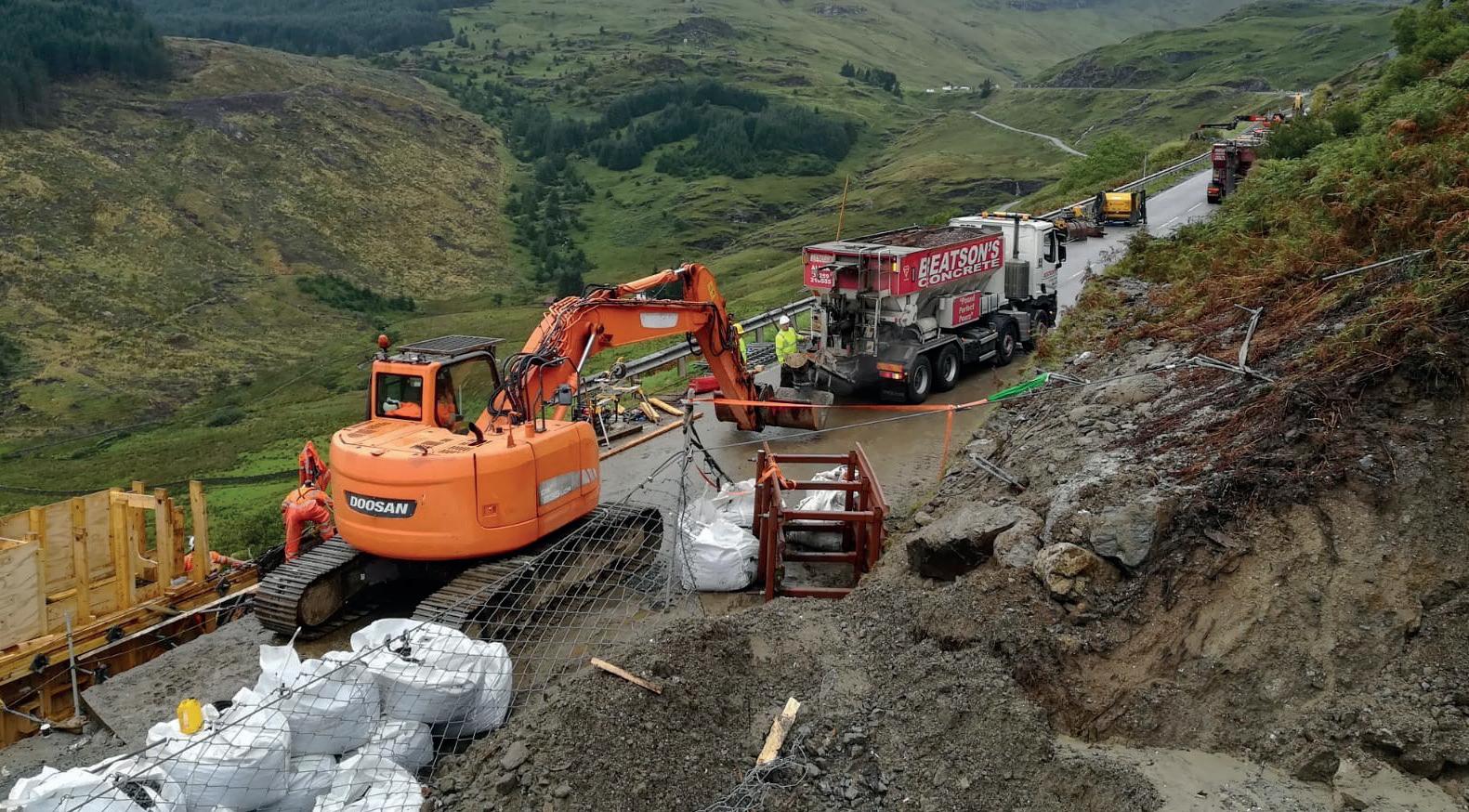
ARGYLL & ISLANDS

REGIONAL MANAGER
Lucy Sumsion

07787 434 104
lucy.sumsion@nfus.org.uk
Water shortages are not often a significant problem in the Argyll and the Islands region, although we have been known to experience the occasional dry spell. However, high rainfall can create major challenges, particularly in relation to the A83 at the Rest and Be Thankful (RABT), which has been blighted by landslides over the past 15 years.
NFU Scotland has been an active member of the RABT Campaign Group, engaging with the Scottish Government and Transport Scotland to lobby for a long-
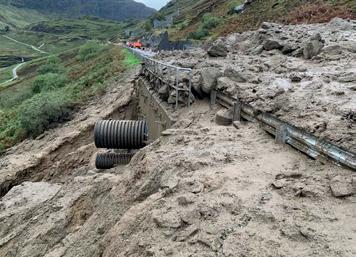
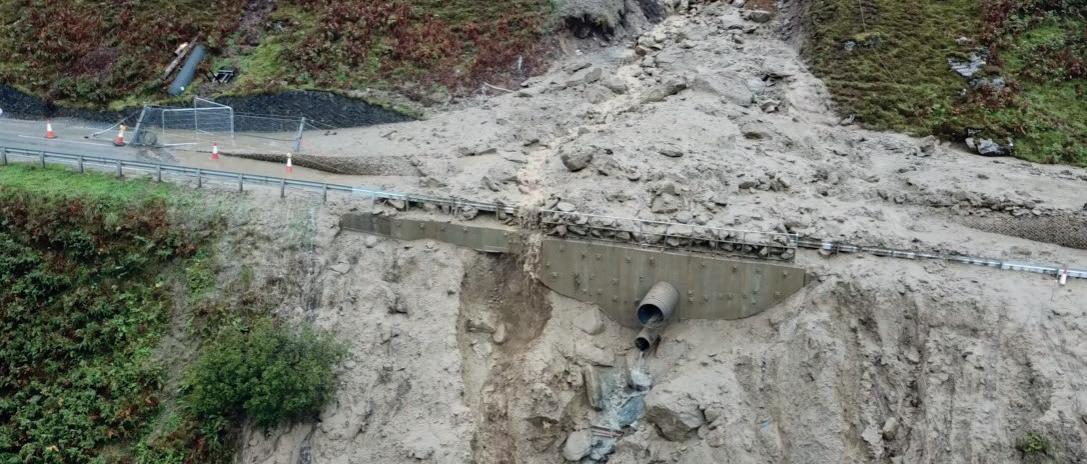
term solution to the Rest and Be Thankful.
Following the recent Holyrood elections, the group wrote to Stephen Flynn MSP, the new Cabinet Secretary for Economy, Tourism and Transport. In the letter, the group highlighted that while Argyll has a relatively small population, it makes a significant contribution to the Scottish economy, including through agriculture.
Since the campaign group was formed in 2020, members have met with six Transport Ministers, all of whom have stressed that delivering a permanent solution for this stretch of road is a priority for the Scottish Government.
However, we have made it clear to Transport Scotland that the current proposals for the long-term solution, namely the proposed debris-flow shelter and the requirement to use the Old Military Road for a minimum of four years during
construction, are totally unacceptable.
As an alternative, the campaign group has developed proposals which indicate that a quicker, less costly and more efficient two-way solution is available. This proposal has the full support of both the group and the wider community. It involves creating a two-way road along the forestry track on the opposite side of Glen Coe. This would avoid the need and cost of a medium-term solution on the Old Military Road and allow the A83 to remain open during the construction period.
The group believes this is a viable option and has invited the Cabinet Secretary to undertake a site visit to discuss it further, and await a response.
If any member would like to know more about the campaign group and its alternative proposals for the Rest and Be Thankful, please get in touch.
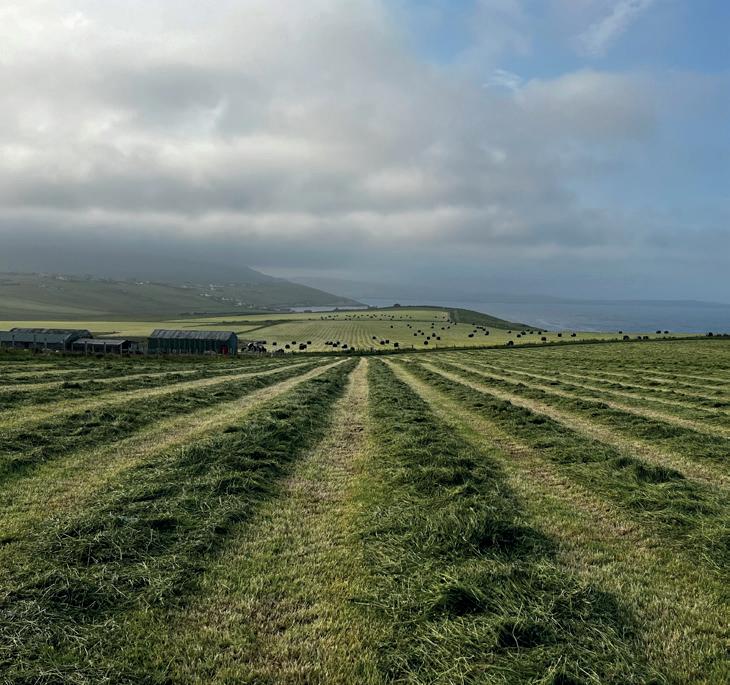
“Get out to the marts, meet fellow crofters and have a good yarn”


AREGIONAL POLICY ADVISOR Lee Smith
07554 741 030 lee.smith@nfus.org.uk
s I write at the end of May, it has been a particularly busy time for crofters and farmers, with lambing and calving in full swing. Challenging conditions, including murky, windy and wet weather have made the season even more demanding. As a result, many have been under considerable strain, coping with low lambing percentages following a diffi cult winter, the pressure of moving newborn stock out to make space for incoming newborns, and the ongoing lack of sleep from round-the-clock work.
Then, with silage and shearing season on the horizon along with all the other summer jobs, the pressure is on to make winter feed and ensure animal welfare is supported. It is important to look after yourself. If you are feeling the strain, Shetland’s Mind Your Head, RSABI, and Farm Strong are at the end of the phone. Sharing a problem can do wonders for your mental health, do not suffer in silence. Get out to the marts, meet fellow crofters and have a good yarn.
Laura Sinclair, our committee rep on Crofting Highland and Islands Committee (CHIC) has been part of a collaboration within this committee to change the committee’s group name.
Laura explained, changing the name to ‘Crofters Committee’ will focus the group to better represent the interests of crofters, reflecting their identity and activities and ensuring NFUS positions are “croft proofed”. As committee rep for this group Laura works with the members to put their thoughts and issues forward for discussion. It is important
Get out to the marts, meet fellow crofters and have a good yarn
we hear from you if you have any concerns to keep crofting visible within the agricultural sector.
The political landscape in Shetland has shifted with the appointment of Hannah Mary Goodlad MSP for the Shetland Islands constituency, alongside her role as Minister for Public Finance. Although her manifesto did not reference crofting, we hope to meet with her in the near future to discuss key crofting and farming issues affecting us in Shetland.
EAST CENTRAL


REGIONAL MANAGER Kate Maitland


07919 001 23 kate.maitland@nfus.org.uk
For land managers and farm employees, agricultural vehicles are central to daily work, but they must also be safe, suitable and lawful to use. Being “fi t for purpose” means more than simply starting and running well. It means the vehicle is appropriate for the task, properly maintained, and safe both in the yard and, where relevant, on the road.
With this in mind, NFUS organised a successful on-farm event, held with the kind permission of the Mackies at Drummond Park, Little Brechin. Maria Dennis, a British road safety advocate who tragically lost her son Harry when an unsecured load came loose, opened the event, leaving attendees with some food for thought and highlighting the need for businesses to take action where necessary.
Some of the subject areas covered included licensing, vehicle maintenance, road safety, projections, secure loads and road conditions, with a few key take-home messages:
• Vehicles should be suitable for the work, inspected daily, and faults repaired promptly, with particular attention paid to braking systems and trailer suitability. Operators should also ensure drivers are trained, authorised, and follow safe stopping procedures before leaving the cab.
• A simple rule for every farm is this: if a vehicle is used for work, it must be checked, maintained and operated by competent people. If it goes on the road, it must also be roadworthy and compliant. Strong inspection routines and accurate maintenance records are often the best evidence that your vehicles are truly fi t for purpose.
Friday 31 July and Saturday 1 August 2026
Perth Show is nearly upon us. If you plan to attend, please pop by and say hello. I, along with local secretaries and NFUS Vice President Duncan Macalister, will be in attendance and more than happy to discuss any matters of concern. Refreshments will be served throughout the day, with hot filled rolls available from 11am.
We will also be in attendance at Aberfeldy Show and Kinross Show, both taking place on Saturday 8 August – and look forward to seeing you.
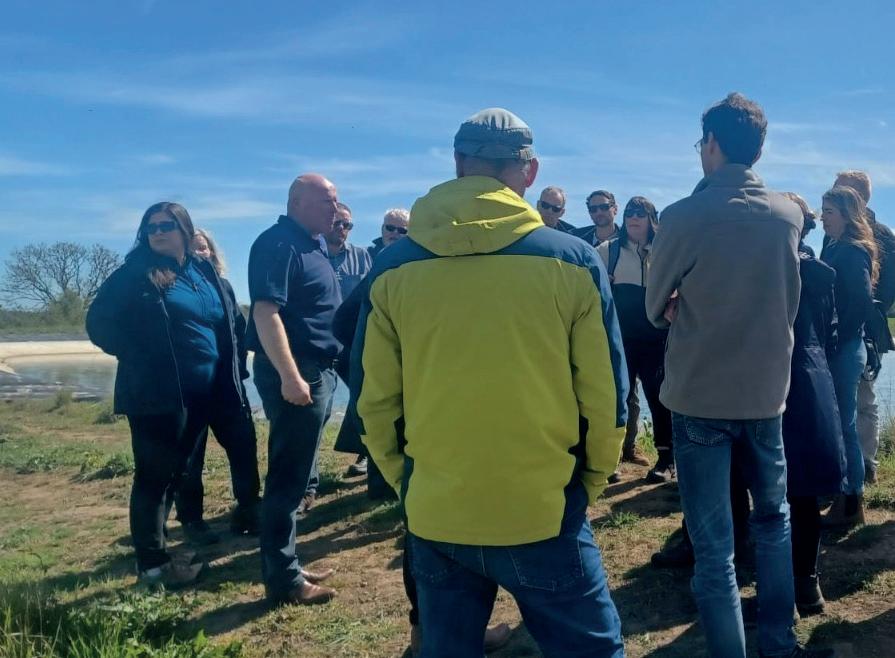
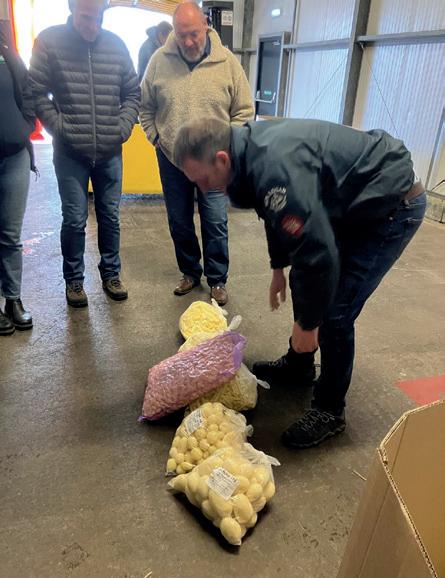
LOTHIAN AND BORDERS


REGIONAL MANAGER Lindsay Brown
07780 441 750 lindsay.brown@nfus.org.uk
NFU Scotland and NFU Mutual will be present at Dalkeith Show, you are welcome to come and see us for some refreshments and a seat throughout the day.
Over the two days of Kelso Show you are welcome to join us on stand along with NFU Mutual for some refreshments and a seat. Between 10-12 on Saturday morning Andrew Connon and Robert Neill will be available to speak to members.
SQC held an information session at Neil White’s Greenknowe Farm near Duns, a selection of industry stakeholders were invited to be taken through a mock assurance inspection. This was to show the process and the protocols undertaken in every inspection. It highlighted the amount of paperwork preparation which was required beforehand inspections. There was plenty of opportunity for questions.
Scottish Government policy, SEPA and Scottish Water staff visited West Fortune
Farm in East Lothian to hear from Haig all about the actions needed to ensure he has a sufficient supply of water to irrigate his potato crop. There was a good discussion on the adaptations and the investment he has made. We saw the extension to the new potato storage sheds and the improvements made to make them all more efficient with less impact on the environment.
The head office policy staff made a trip out to Haddington to visit Athelstaneford Farm to hear from James and Hamish Logan how they run their farm and other businesses to compliment each other.
There has been so much innovation over the years, processing their potatoes and veg vending machine. Learning from mistakes, not being afraid to adapt and change, has made sure they are always looking to the future. This was a very inspiring visit.
I attended Borders Countryside Day in Kelso all the P5 children are bussed to Kelso. Many rural organisations were there to educate them about what is going on in the countryside. We focused on Controlling Your Dog in the Countryside. I was joined by HQ staff member Jordan for the day.
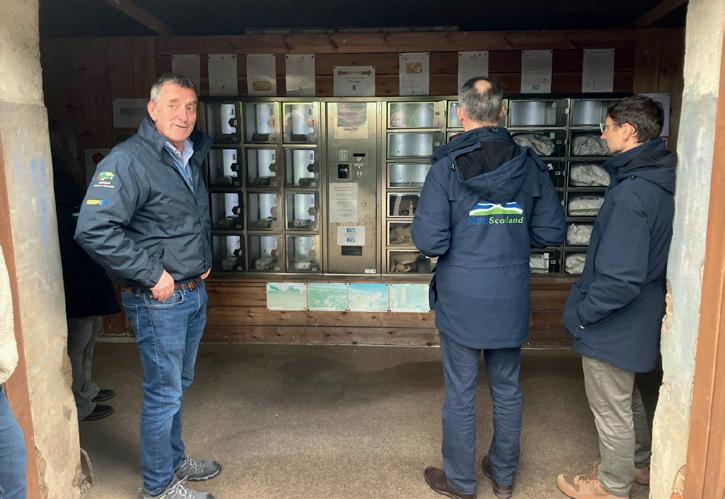
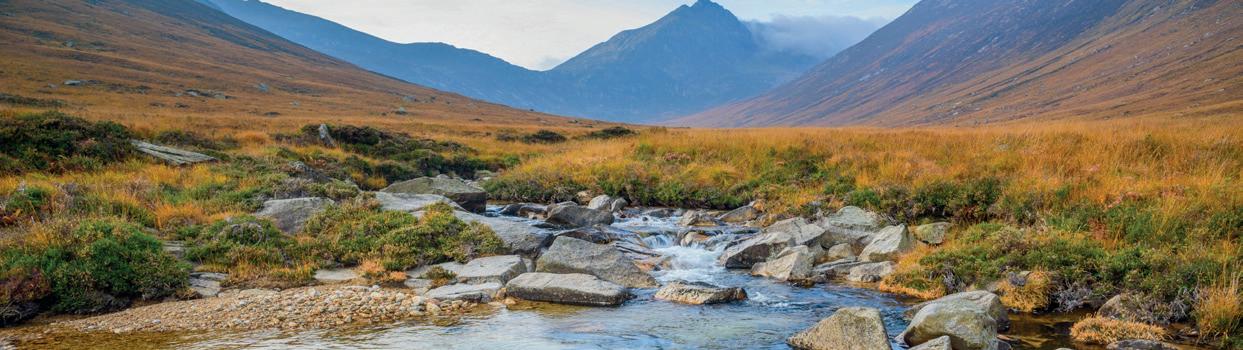
AYRSHIRE


NORTH AYRSHIRE & CUMBRAE BRANCH CHAIR
Gordon walker
Following a mixed career spanning engineering, construction, mechanics and maintenance, I, along with Louise and our eldest son, who was three at the time, bought East Lugtonridge in 2013 and set out on our journey as fi rst-generation farmers. With Louise’s background in veterinary practice and our experience with livestock, we were quickly on the ladder to build a business within the sector. As the farm business developed, so did our family, growing by two more children in 2014.
We were, and still are, very much native-bred cattle through and through and, to this end, have built a suckler herd over the years based on Blue Grey cows and Beef Shorthorn terminal sires. We run a small herd of pedigree Whitebred Shorthorn cattle alongside the main herd and, from these and pure Galloway cows, produce our own replacement heifers. Apart from ten or so replacement Galloway heifers every three or four years and the odd Beef Shorthorn bull, we try to maintain as closed a herd as possible, with biosecurity being paramount.
We have both always been passionate about our industry and, to this end, spend a fair bit of time in classrooms and with schools on the farm, either by direct invitation from schools, through the STEM Ambassador programme or, quite often, through RHET Ayrshire, on whose committee I also sit.
We added a small diversifi cation to our business some years ago in the form of a farm shop known as The ELF Bothy, selling beef produced on the farm directly to the public. This has now scaled up substantially, with pigs being added to the fi nishing system and all pork and
fi nished beef being sold direct, alongside produce from a range of other carefully selected suppliers. As much as possible, we aim to refl ect the farm-to-fork story that our customers are becoming increasingly aware of and interested in.
I have been a member of NFUS since shortly after starting the business here and served for several years as branch vice chair. At our last AGM, I became branch chair and, as such, I always welcome contact from members with







problems, suggestions or points they would like raised.
Since joining the regional board, I have been honoured to be involved in many events, including meetings and receptions with politicians. I believe the Union is in the best possible position to represent the industry and is always willing to listen to members’ views.
I am always happy to engage with people through NFUS, RHET, STEM or, indeed, in our own ELF Bothy hats.














.30pm - 9pm acRobert Farming & Rural Skills Centre Dumfries House, Cumnock






























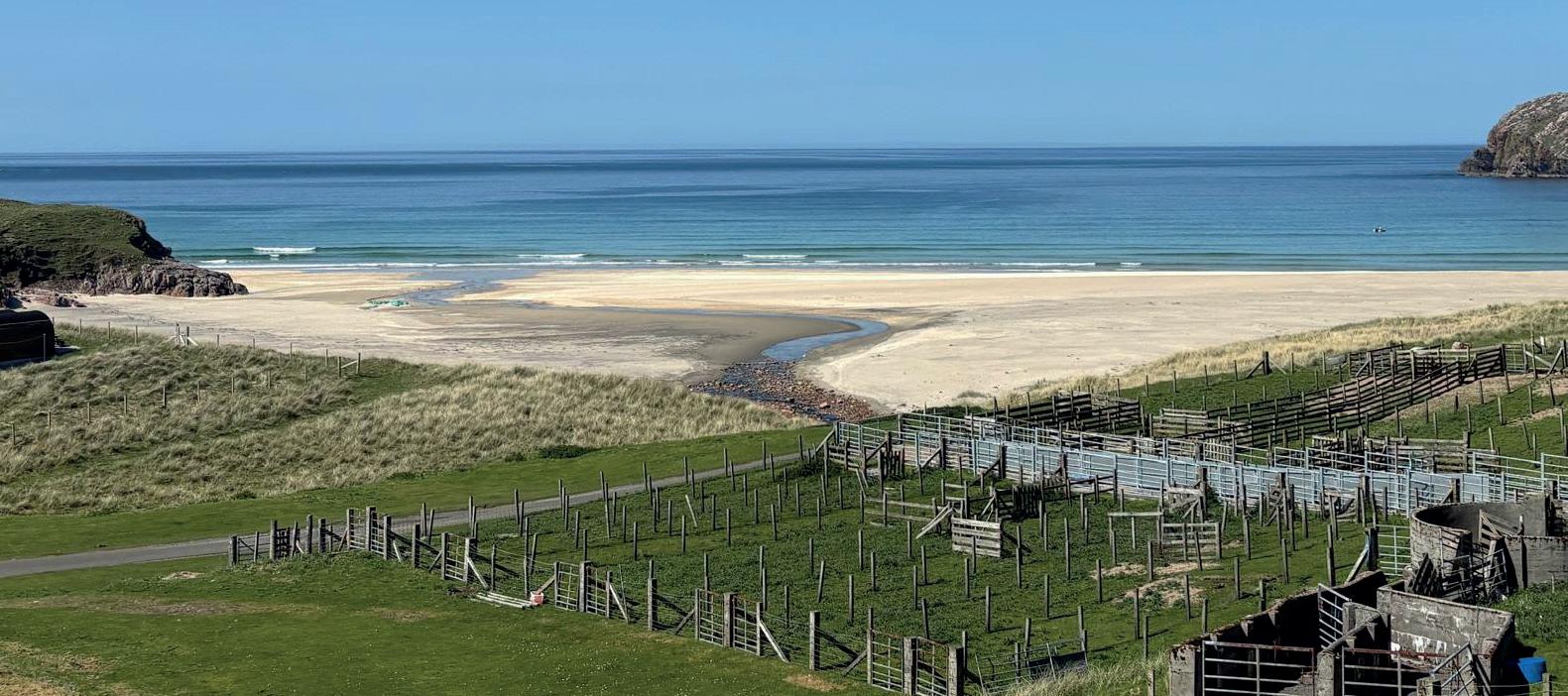


REGIONAL CHAIR


Mark McCallum
Almost surrounded by water, the Highland region is exposed to much of the Scottish coastline. A recent trip overseas to Lewis by Highland members highlights the challenges that island living can present to our members, as well as the limited markets for produce and additional costs for purchased inputs.
Members visited Norrie Mackay from Reel on the Isle of Lewis, who is currently the Western Isles branch vice chair. The Western Isles branch is the youngest branch, having been formed in the last ten years, and is one of the fastest growing branches in terms of members, made up mainly of crofting members.
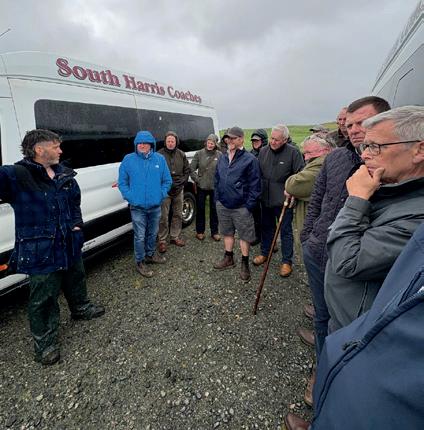
The trip also visited Ally Williamson from North Bragar on the Isle of Lewis, who is now a TV celebrity having been part of the most recent This Farming Life series. The members on the trip enjoyed the best of the weather and hospitality on offer.
As well as what comes out of the sea, the rainfall in the Highlands is used as one of the main ingredients in one of Scotland’s finest products – whisky – with over 46 distilleries in the region. We take rainfall and water for granted in Scotland, and it is a major asset that we take for granted and don’t value highly enough in this country.
We are heading towards harvest time and the main show season in the region, and there will be regional board members at these shows. Please make yourself known if you have any questions or concerns that you want to put to the regional board.
Hopefully I will see many of you at the shows, and the sun will be shining.
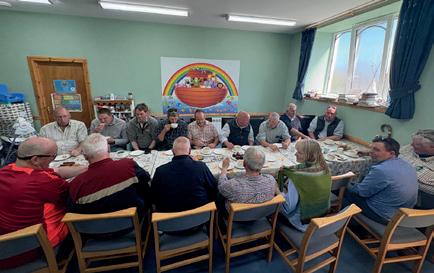

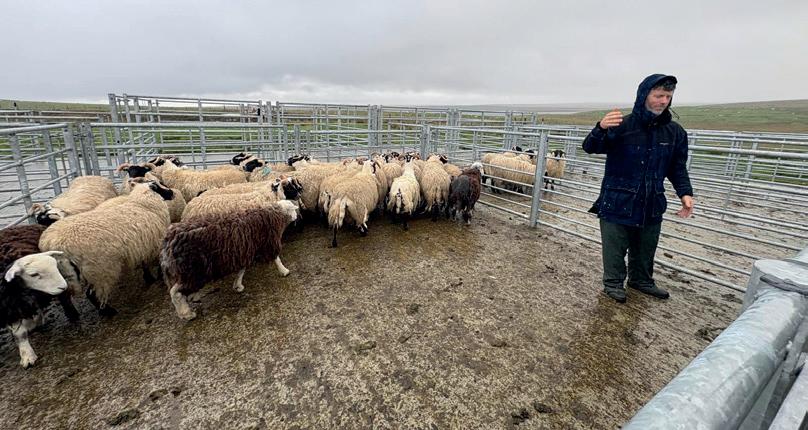

DUMFRIES & GALLOWAY

WREGIONAL MANAGER
John Cowan john.cowan@nfus.org.uk
ater is never far from people’s minds in Dumfries and Galloway, whether it is the stunning views along the 210 miles of coastline from Gretna to the Rhins of Galloway, or the major river networks of the Esk, Annan, Nith, Dee, Cree, Bladnoch, Luce and Water of Fleet. Their tributaries and tidal estuaries infl uence agricultural cropping and livestock husbandry throughout the year.
The region is fortunate that water shortages are seldom a problem, with excess rainfall more often presenting
a challenge. Following a cold, wet March and early April, grass was slow to grow and fi eld conditions were too wet for spring sowing and turnout. It was remarkable how a 10-day window around
There
no
coastal communities and funders. In addition to the growing portfolio of organisations involved with SCAMP, several ‘coastodians’ are passionate about helping their coastal and marine
the middle of April allowed everyone to catch up, with most work completed by the end of the month.
I recently attended a meeting of SCAMP (Solway Coast and Marine Project), an initiative led by Dumfries and Galloway Council’s Environment Team, working alongside partners, agencies,
environment adapt and thrive. There are no bigger custodians of the environment than landowners and farmers, and I look forward to representing members through this initiative, ensuring that habitat development is not pursued at the detriment of farm incomes.


TSheena Foster 07789 796 582
sheena.foster@nfus.org.uk
he Forth Valley Branch held a successful clay pigeon shoot and barbecue in May at Argaty Red Kite Centre, by kind permission of Lynn and Niall Bowser.
A collection held during the evening raised an impressive £300 for RSABI, the charity supporting people in Scottish agriculture.
In a generous gesture, Niall also gifted
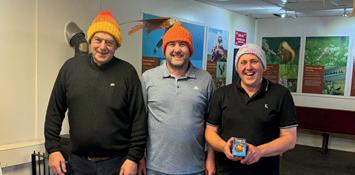
hats to all competitors, specially made by a local ladies group. Each hat featured the RSABI helpline number stitched inside, helping to raise awareness of the important support available through the charity.
Pictured sporting their new hats from the winning team are Jim Mitchell and John Owen, alongside Branch Chair Dave Wilson (pictured).
Forth and Clyde Regional Stockjudging
Please save the date for the Forth and Clyde Regional Stockjudging, taking place in collaboration with West Region Young Farmers.
The event will be held on Friday 14th August at Mains of Boquhan Farm, Kippen, by kind permission of the Graham family and Leanne Bertram.
Further details will be announced in due course, but members are encouraged to note the date in their diaries for what promises to be an fantastic event.
If you are considering buying, selling or planning for the future of your property or rural business, our specialist team provides clear, professional advice. We deliver expert sales, purchase and valuation services, supporting acquisitions and disposals, secured lending, refinancing, IHT/CGT planning and succession.
Our network of experienced rural and residential Chartered Surveyors operate across Scotland and Northern England, combining strong local knowledge with a consistently high standard of service.
For confidential advice, please contact your local office or visit galbraithgroup.com for
Aberdeen 01224 860 710
Ayr 01292 268 181
Castle Douglas 01556 505 346
Cupar 01334 659 980
Edinburgh 0131 240 6960
Hexham 01434 693 693
Inverness 01463 224 343
Kelso 01573 224 244
Morpeth 01670 331 500
Penrith 01768 800 830
Perth 01738 451 111
Stirling 01786 434 600
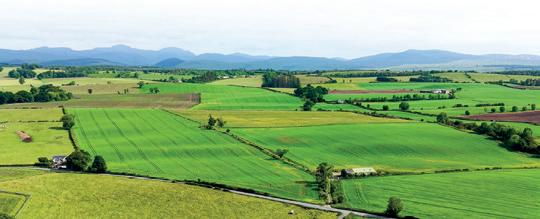
































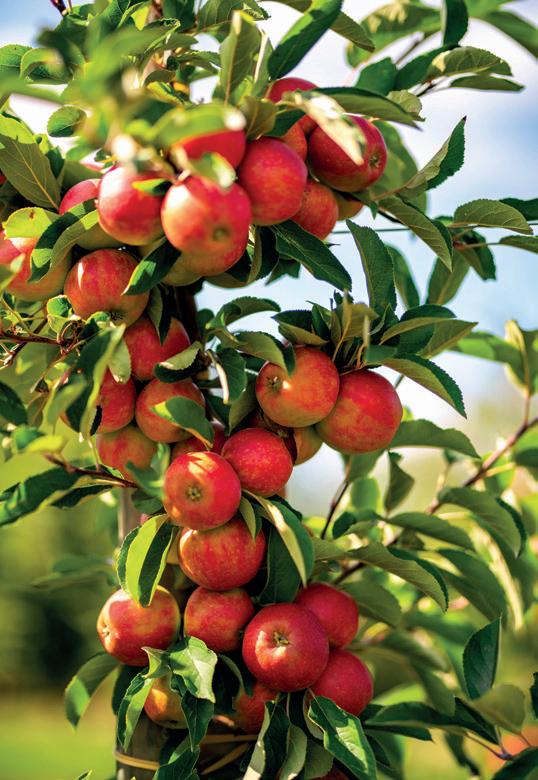




NFU Scotland member
Haig Hamilton explains how water management and irrigation have become central to building resilience on his East Lothian farm
Can you start by telling us a bit about your farm and how long the family has been farming here?
East Fortune Farm is just outside Drum, East Lothian, and has been in the family for around 36 years. It’s very much a family-run business, and my father really drove a lot of the forward thinking early on when he came to the farm in 1989. Over time it’s developed into a 630-acre potato and arable operation, with potatoes at the core of what we do.
Water seems to be central to what you do here, how have you managed water supply over the years?
It’s been a journey. We have a borehole system that dates back to 1994, and we also built a reservoir dug about 6-7 metres into the ground, holding around 9 million gallons. We have plans in place to build a second. We also take from the Peffer Burn where we can. But in reality, with only around 24 inches of rainfall a year in East Lothian, irrigation is absolutely essential for us.
What made irrigation such a focus for the farm?
With potatoes, especially varieties like Maris Piper, irrigation is directly linked to quality and yield. We’ve seen massive increases in yield when crops are properly watered. We also looked abroad – places like New Zealand – speaking to farmers there and seeing how they manage water made us realise how important it is not to rely on chance with rainfall or small natural sources. Especially as we are seeing changes in rainfall each year.
You’ve described irrigation as “irritation” at times - why is that?
It’s a bit of a running joke on farms that irrigation is more like “irritation.”
Something always seems to go wrong at the worst possible time. But it’s also one of the most important parts of the system, so you just have to keep improving it and planning ahead.







Beyond potatoes, what else is the farm involved in?
Alongside potatoes, we grow wheat, barley, and oilseed rape. We’ve also invested in diversification, including a biomass unit and a turbine, which power our shed fridges and balance our output costs there. We’ve also got several other businesses housed onsite too, including a startup that makes colourful recycled bricks.


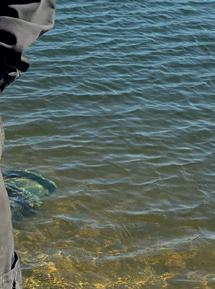
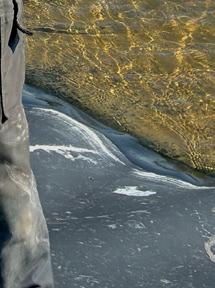

Looking back, what are you most proud of in terms of how the farm has evolved over the years?
Probably how forward-thinking my dad was. From reservoirs to investing in energy, he was always thinking ahead. Farming has its ups and downs, but that mindset of improving and adapting has really shaped where we are today. And also the fact that around 80% of our potatoes now end up on Scottish shelves.
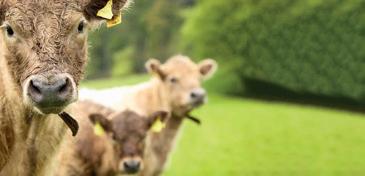



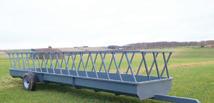





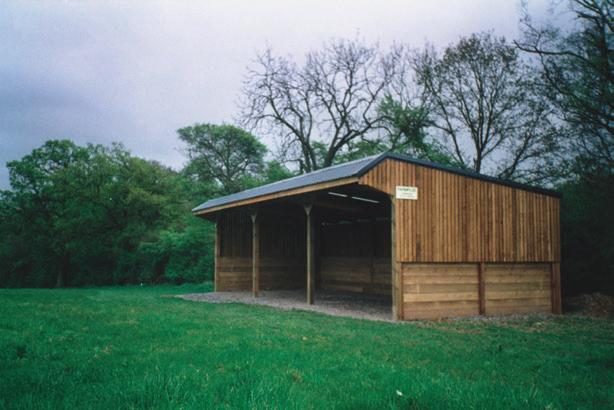





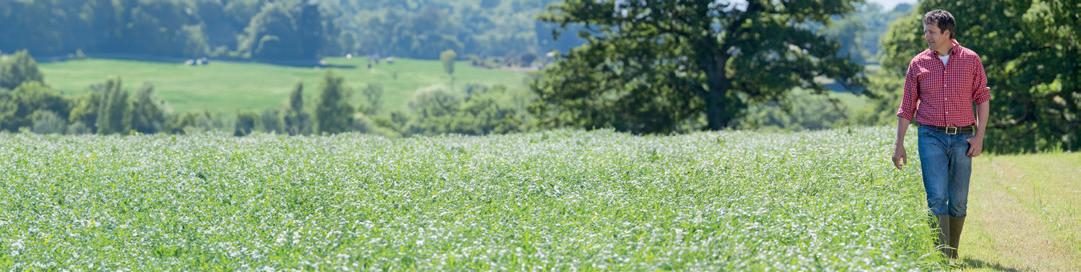


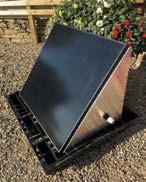


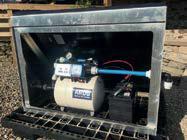






























Woodland can be more than a managed asset. It can be a source of new income and greater value for your business.
Whether producing timber for your own projects or supplying local markets, Trak Met helps you capture more value from your estate and business.
As sawmill operators ourselves, we trust Trak Met to deliver the reliability, performance and value that rural businesses depend on.
Let us show you how you can grow with Trak Met.

Trak Met UK
Lilliesleaf Sawmill TD6 9JP
+44 (0) 7415 904 737 sales@trak-met.co.uk
Why choose Trak Met
• Robust, reliable equipment with dependable build quality
• User-friendly machine operation requiring simple, low-hassle maintenance
• Outstanding value machinery, trusted by estate owners and timber professionals
From entry-level machines for efficiency estate management, to professional equipment for commercial diversification, Trak Met has you covered.


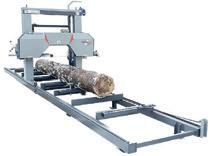
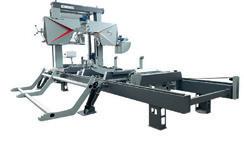
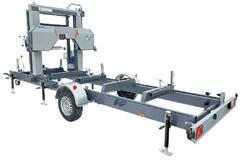
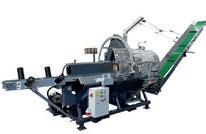
Cost