TEDITOR Megan Williams
NFU Scotland, Rural Centre, West Mains Ingliston, Edinburgh EH28 8LT
NFU Scotland, Rural Centre, West Mains Ingliston, Edinburgh EH28 8LT
Tel: 0131 472 4000 www.nfus.org.uk nfuscotland @NFUStweets
hose who know me will know that it was only a matter of time until I dedicated a Scottish Farming Leader to the theme of community. But as it comes to the time of writing – under the shadow of the war in the Middle East – I began thinking that, in many ways, it’s a strange time to be talking about what brings people together – when so much seems to be pulling us apart. Andrew’s piece, Threats to Global Food Security (p.12), bring this home.
Editor Diana McGowan editor@nfus.org.uk
Editor Diana McGowan editor@nfus.org.uk
Managing Editor Craig Gibson
Managing Editor Craig Gibson
But perhaps that’s what community is really about – that invisible support system that holds you up when everything beneath you feels like it’s in free fall. Duncan brings this to life in his piece on page 7, where he recounts joining the Union at a time when, “Overnight, export markets disappeared and businesses across the country – including mine – were thrown into turmoil.” He speaks of the fear that comes with farming, and the realisation that some challenges simply cannot be faced alone. There is strength in numbers – and that is something NFU Scotland has on our side with over 9,000 members and growing.
Design & Production Ryan Swinney
Design & Production Ryan Swinney
We see the strength of community reflected throughout this month’s features. From It Takes a Village (p.37), where we showcase the people who are driving the Scottish red meat industry forward. We see it again in Weaving a Stronger Wool Industry (p.16) where we hear from The Highland Clip and their work to ensure farmers and crofters get a fair price for their produce. It’s there again in our new feature, Five Questions With, which introduces us to Rhona Meak – the driving force behind Tiree’s community vet practice. From the Behind the Scenes with the Scottish Dairy Hub (p.14) to The Role of Less Favoured Areas in Sustaining Scotland’s Rural Communities (p.29), no matter where you turn, the lesson is the same – community is what holds us together.
Advertising Sales Clare Stebbing clare@connect communications.co.uk Tel: 0131 561 0024
Advertising Sales Clare Stebbing clare@connect communications.co.uk Tel: 0131 561 0024
If you look closely, you’ll see collective strength on nearly every page within this edition – and that is the power of a Union.
Published on behalf of NFU Scotland by Connect Publications (Scotland) Ltd.
In the words of Brian Solis, “Community is much more than belonging to something; it’s about doing something together that makes belonging matter.”
As ever, if you have something to say, write to me at Editor@nfus.org.uk – I would love to hear from you.
Editor Megan Williams editor@nfus.org.uk
Design & Production
Mark Shreeve mark.shreeve@micropress.co.uk
Andrew Hirst andrew.hirst@micropress.co.uk
Advertising Sales
Danny Lewis 01502 725862 danny.lewis@micropress.co.uk
Lawrence Kenny 01502 725860 lawrence.kenny@micropress.co.uk
HHrealise that positive thought/ silent commitment? Possibly too
never actually realise that positive thought/ silent commitment? Possibly too
In this month’s magazine, our two features cover inspiring stories and highlight just how rewarding delivering on such thoughts can be both for the individual involved and others who may benefit along
In this month’s magazine, our two features cover inspiring stories and highlight just how rewarding delivering on such thoughts can be both for the individual involved and others who may benefit along
Vice President Updates News
Tel: 0131 472 4000 www.nfus.org.uk nfuscotland @NFUStweets a
Published on behalf of NFU Scotland by Connect Publications (Scotland) Ltd. Studio 2001, Mile End, 12 Seedhill Road, Paisley PA1 1JS
Political Round-up
Policy & Practice
Studio 2001, Mile End, 12 Seedhill Road, Paisley PA1 1JS
your email, please send your name and membership number to contactus@nfus.org.uk
Regional Activity
Weaving a stronger wool industry
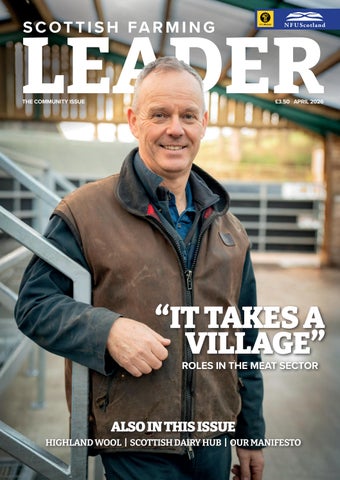
“It takes a village”
Animal Care Tiree
Manifesto
We’re only a few weeks away from the Royal Highland Show. Over the course of four days, thousands will flock to the show to compete, judge, exhibit, organise, educate and socialise. We’ll see the best of the best and relish the atmosphere. Among the highlights and away from the main show ring, this year will see the welcome return of the Golden Shears Sheep Shearing and Woolhandling World Championships. Taking place at the MacRobert Theatre, the 2023 Worlds will see more than 30 countries compete for the prestigious title and it promises to be an action packed showcase of the art, skill and techniques required to be a world champion. Perhaps a less well known event taking place at this year’s Highland is the final qualifying round of the 2023 Britain’s Fittest Farmer competition. Taking part in this event for the first time is Kyla Graham from Kirkcudbrightshire. Kyla first spotted
We’re only a few weeks away from the Royal Highland Show. Over the course of four days, thousands will flock to the show to compete, judge, exhibit, organise, educate and socialise. We’ll see the best of the best and relish the atmosphere. Among the highlights and away from the main show ring, this year will see the welcome return of the Golden Shears Sheep Shearing and Woolhandling World Championships. Taking place at the MacRobert Theatre, the 2023 Worlds will see more than 30 countries compete for the prestigious title and it promises to be an action packed showcase of the art, skill and techniques required to be a world champion. Perhaps a less well known event taking place at this year’s Highland is the final qualifying round of the 2023 Britain’s Fittest Farmer competition. Taking part in this event for the first time is Kyla Graham from Kirkcudbrightshire. Kyla first spotted
From the PRESIDENT Andrew Connon

After a challenging winter for some, with weeks of non-stop rain, especially in the North East, thankfully the weather pattern has changed. The rain has eased, and rising temperatures and longer days have seen a remarkable improvement in ground conditions across the country. With slurry spreaders, muck spreaders and ploughs hard at work, I would hope that spring sowing is well under way by the time you read this.
However, there is much uncertainty this spring. A brutal cereals market has dented optimism throughout the winter, whilst the crisis in the Middle East has added further challenges to gross margins and the bottom line.
Discussions with the trade continue but, as I stated at the Maltsters Association Lunch in London (Nov 2024), when the industry was still semi-positive, “farmers will look at alternative crops and land use if the profitability isn’t there,” and that’s where we are currently.
On 4 March, I spoke at the ADBA (Anaerobic Digestion & Bioresources
Association) Scottish Conference in Edinburgh. The bulk of the delegates were from the AD industry but, thankfully, there were several farmers in attendance who have embraced the technology. I had to be honest with the delegates that the topic of AD plants has caused much angst in certain areas, primarily regarding the quest for industrial-scale AD plants, with the potential to impact straw and fodder availability, in addition to a diminished supply of draff. Although the depressed cereals market has given some an opportunity in crops for AD as a basic business decision.
However, it is apparent that there is a definite opportunity, particularly for smallscale (up to 500kW) on-farm AD, utilising cattle and pig slurry, as well as chicken muck to produce biomethane. This can, in turn, power generators to produce electricity or be used as biomethane to fuel power units, such as the technology being sold by New Holland – using slurry to produce biomethane to fuel farm tractors – a green, circular opportunity for agriculture. In addition, the potential to utilise the digestate as a valuable, concentrated fertiliser not only offers opportunities for the producer but also for export to non-livestock farms.
At a time when there is a growing demand for meat and dairy products, such innovation offers a chance to dramatically reduce emissions and, in doing so, must be seen as an opportunity to increase livestock
production to satisfy growing demand for Scottish meat and dairy products – a point I made during a panel session involving the Cabinet Secretary for Climate Action and Energy, Gillian Martin MSP.
With the Scottish elections drawing closer, we continue to think about the next generation and the future of our industry. I’m pleased to share a summary of our new manifesto, on pages 48 and 49, and invite you all to our National Hustings event on Tuesday 28 April in Stirling.
At its core is a simple but powerful message: profitable farming is essential for Scotland’s future. Without profitability, there can be no investment, no innovation and, ultimately, no next generation.
Our manifesto highlights the role agriculture plays not only in producing high-quality food but also in supporting climate action, restoring nature and underpinning thriving rural communities. These priorities are closely linked to the objectives of the Agriculture and Rural Communities (Scotland) Act and to the wider role farming plays in Scotland’s economy and society.
If we get the decisions right in the years ahead, Scottish agriculture has an incredibly bright future. Our farmers and crofters already produce food to some of the highest standards anywhere in the world while managing the land responsibly and contributing to the rural economy. The challenge now is to ensure that the conditions and funding exist for that work to continue.
Because in the end, farming is not just about what we produce today. It’s about what we pass on tomorrow – and that is something worth fighting for.
Over 50% of professional mechanics trust the Portable Power 1800RC to do one thing, start engines, time and time again, without fail!
• Up to 50 starts on a single charge
TRACTORS & COMBINE HARVESTERS
ATV’S & QUAD BIKES
PICK UP TRUCKS
TELEHANDLERS
Just bought my second portable power from these guys. Absolutely brilliant to work with. This is my second unit in about 12 years and there’s nothing wrong with the first one, I just decided a nice shiny new one would be good, and at the price per year of use you can’t go wrong.
Trevor Holliday
• Rapid Charge: Will fully charge from flat in under 3 hours and with only 10 mins charge, will jump 1-2 vehicles
• Full 2 year, no quibble, manufacturer warranty (including the battery)
• 30 day money back guarantee
I purchased the 1800RC jump starter. Most of the other jump starters won’t start a completely dead battery so I was a little skeptical when I purchased this one. I used it for the first time today and it started 2 diesel vehicles with totally dead batteries!! Highly recommend this product. The


What a company! I bought my first jump pack in 2012 and it’s still working with no faults! I recently run over the jump pack & broke the casing, I thought it was done

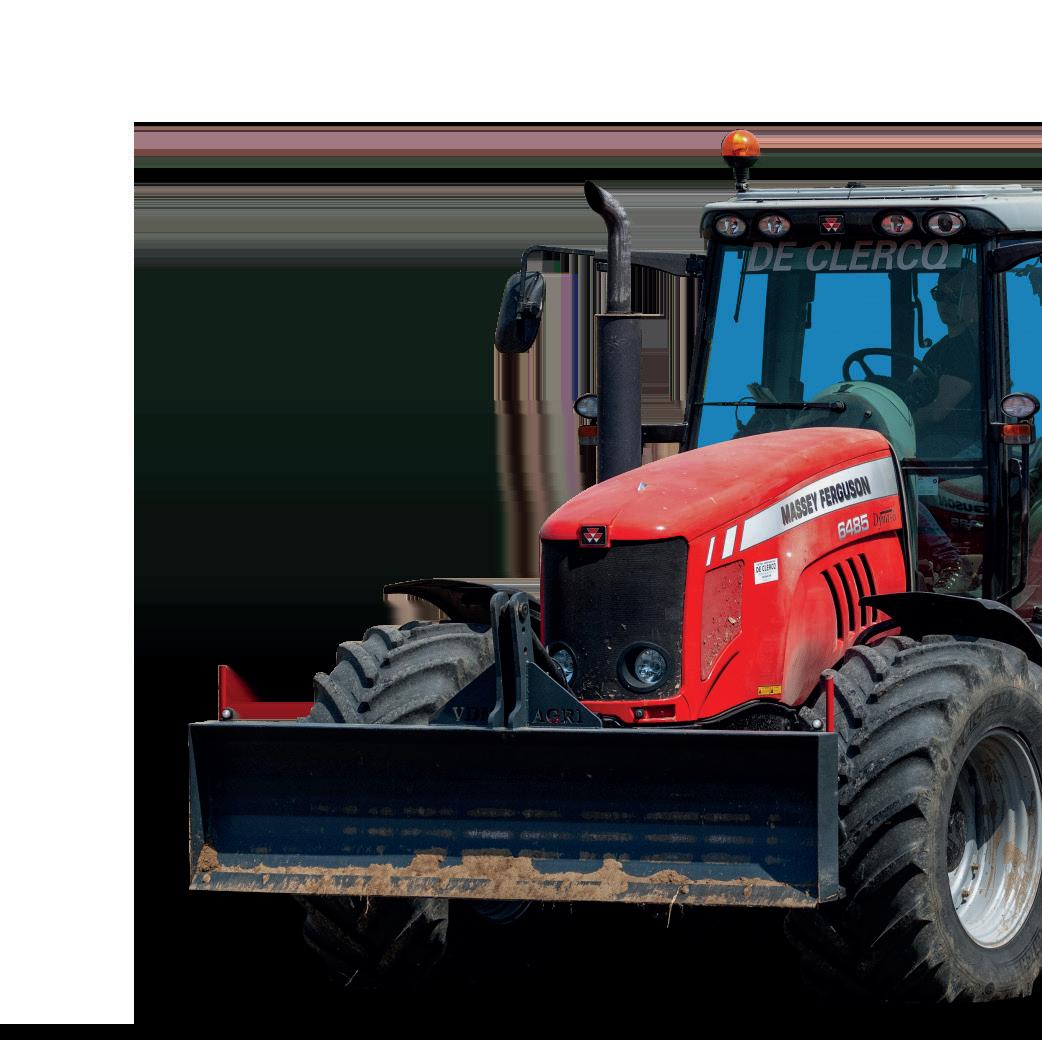
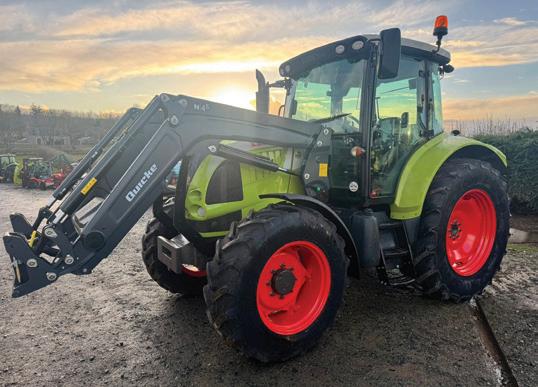
Bruce Farm Machinery is a family-owned agricultural machinery supplier based in Banff. They are main dealers for CLAAS tractors, Strautmann, Gregoire Besson, and other brands, offering:

New and used machinery sales
Parts supply
Servicing and repairs
Forestry and land-clearing equipment
01261 821659
brucefarmmachinery.co.uk
Banff, Aberdeenshire AB45 3LX
SEED MERCHANTS
Unit 7 Meadows Industrial Estate, Oldmeldrum, AB51 0GN
Tel: (01651) 873083 Mob: 07967 992454
Email: sandy@murrayduguid.co.uk
• Grass Seed Mixtures
• Fodder Crops
• Conservation Mixtures
• Root Crops
• Organics
• Amenity Mixtures
• Cereals & Oil Seeds
• Green Manure Mixtures
• Cover Crops
SALES REPRESENTATIVES:
Graeme Christie: Mob 07974961749
Ian F Moir: Mob 07721517974
Blended, packed and distributed from our Oldmeldrum store since 1982

CDuncan Macalister Vice President
ommunity is a word we use often in farming and crofting. It’s something that comes naturally to us: neighbours helping neighbours, families pulling together in tough times, and people stepping up when it matters most.
For me, the NFU Scotland has always been an extension of that community. In many ways it’s like a family.
I’ve been involved with the Union now for just over 33 years. I first joined at a time when my own business was under real pressure. I was carrying a lot of debt and then the BSE crisis hit. Overnight, export markets disappeared and businesses across the country, including mine, were thrown into turmoil.It was a frightening time for many of us.
What I quickly realised was that I couldn’t face those challenges on my own. None of us could. The only way our voices were going to be heard was through strength in numbers – that’s when I really understood the value of the Union.
Since then, my journey through NFU Scotland has taken me from being a branch member, to the livestock committee, to vice-chair of the regional Argyll & Islands board, then regional chair – and now to my role as Vice President. At every stage I’ve seen first-hand the dedication of members who give their time, their experience and their views to help shape the direction of our industry.
That’s the point I want to make this month.
The best members are not the ones who sit back and assume someone else will speak up. The best members are the ones who engage – who offer their views, ask questions, and take part in the healthy discussions that shape our policy and our campaigns.
That involvement can take many forms. It might be feeding your views into a branch meeting. It might be contributing to a commodity committee or working group. It might be stepping forward for your regional board. You don’t need to hold a title to make a difference. I know that not everyone can attend meetings in person – farming is busy and time with family is precious, but there are always ways to get involved. Send an email. Make a call. Share your views with your regional team or with the office. And know you can always pick up the phone to me.
Because the reality is this: the strength of our Union comes from its members.
We saw that clearly in the past year with the campaign on Inheritance Tax. And that collective effort delivered results.
NFU Scotland exists to represent farmers and crofters and to influence the policies that shape our businesses. But the Union is only as strong as the people within it.
So my message is simple: get involved.

TRobert Neill Vice President
his past month has been absolutely manic with meetings and visits, and through it all, one thing is clear: our strength lies in the community that binds farmers, crofters, and industry alike.
In the first week of March, I attended a meeting with SAC regarding their Agricalc programme. It was a productive discussion, highlighting several issues that are concerning our members – particularly the way lime is negatively impacting calculations and how hedges, for example, are not currently being used to our advantage. I look forward to seeing how the programme develops and improves over the coming year.
I also travelled to Mull with Euan Warnock (Group Secretary) and Syble McPherson (Regional Chair A&I). Ferry cancellations and road closures made for a fast and furious trip, but island and west coast farming life was a real eye-opener. It certainly highlighted the constraints these farmers face, particularly around transport and ferry access. One farmer mentioned booking ferry crossings for autumn lamb sales when the lambs haven’t even been born yet. It raises the question of how ferry companies and the Scottish Government can better prioritise island farmers to ensure their products reach the mainland market efficiently.
I also attended the Quality Meat Scotland Conference, representing the Red Meat Resilience Group, on which NFUS has a place. It was an excellent networking opportunity and featured a strong line-up of speakers from across the industry.
Next month, I’m particularly looking forward to the Border Union Agricultural Society Schools Countryside Day. Around 1,200 Primary 5 pupils will attend to see almost every sector and career associated with agriculture. From live demonstrations of sheep shearing and handling to livestock auctioneering, the range of activities is extensive. Events like this are so important, giving young people the chance to experience aspects of agriculture that many of us take for granted – and perhaps inspiring some of them to pursue a future career in the sector. Hopefully it will be an experience they remember for a long time.
One of the things that struck me writing this piece is just how strong the sense of community is within Scottish agriculture. Whether it’s farmers supporting each other through challenging seasons, regional committees sharing expertise, or events like the Schools Countryside Day bringing people together, it’s clear that the sector thrives when we work collectively. That network of support –colleagues, neighbours, and the Union itself – is what allows ideas to be shared, challenges to be tackled, and successes to be celebrated. Community isn’t just a word; it’s the backbone of everything we do, and I couldn’t be prouder to be part of it.
Response issued to tail docking & castration consultation
NFUS submitted our response to the Defra Tail docking and castration consultation. The response was highly critical of Defra’s proposals, emphasising the critical importance of tail docking and castration for Scotland’s sheep sector. We highlighted the recklessness of mandating the use of medicinal products not licensed for use in the UK, or safe for the intended class of livestock, and methods that have not been fully tested. You can read our full response at: NFU Scotland | /livestock.aspx
Spotted feral pigs or wild boar?
If you spot wild boar or feral pigs in Scotland, you should report the sighting to help authorities monitor their distribution and manage potential disease risks like African Swine Fever. Wild boar (feral pig) sightings in Scotland should be reported via https://irecord. org.uk/ or emailed to wildlifeops@nature.scot to help manage this non-native species. Provide the location, date, time, and number of animals.
We’re closely monitoring the developing situation in the Middle East and its potential implications for global agricultural markets and supply chains, in particular the potential impact on global fertiliser markets. At a short-notice meeting with the Agricultural Industries Confederation (AIC), industry representatives highlighted that while there is currently no immediate supply shortage in the UK, global fertiliser markets are experiencing increased uncertainty. We’ll continue to monitor the situation closely through industry channels and will keep you updated as the situation evolves.
Take control of rising fuel costs
With global oil markets under pressure following escalating tensions in the Middle East, fuel price volatility may increase in the weeks ahead. More members than ever are using the NFUS Fuel Card, helping farmers and rural businesses save up to 15p per litre on diesel while streamlining fuel admin with one simple weekly invoice. Apply now at NFU Scotland | /uk-fuels.aspx and take control of your fuel costs.
Slip, slap, slop
Now that the sun is out, it’s worth repeating a simple message: slip on a shirt, slap on a hat, and slop on the sunscreen. A little care goes a long way.
Raven management: what farmers & crofters need to know
NatureScot has confirmed farmers and crofters can now apply in advance for raven licences where serious livestock damage is likely during lambing or calving. Control remains limited to those periods, and only where no other solution exists. Members must provide evidence with applications and complete licence returns.
SSEN Transmission’s pathway to 2030: what landowners need to know
SSEN Transmission’s Pathway to 2030 is progressing rapidly, with voluntary wayleaves, deeds of servitude, and statutory notices for necessary wayleaves or CPOs. Members should seek legal advice, respond promptly, and understand long-term business impacts. NFU Scotland advocates fair process, timely communication, and proper compensation. Contact: contactus@nfus.org.uk

John Davidson, CEO
Strong leadership has always been at the heart of a thriving farming community. As our industry continues to evolve – shaped by changing markets, policy priorities, and new technologies – it is more important than ever to invest in the people who will guide us into the future. With this in mind, I am delighted to share some early thoughts on a new Emerging Leaders Programme that we will be developing in the coming months.
This initiative is designed to identify and support individuals across our membership who demonstrate the potential, commitment, and passion to become future leaders within the organisation. Whether your interests lie in policy development, political engagement, supply chain dynamics or market development, our programme will offer opportunities to build skills, broaden networks, and gain valuable insights into the workings of NFU Scotland and the wider agricultural landscape.
Our programme will combine practical learning with personal development. Participants can likely expect a blend of workshops, events, and mentoring, all tailored to the unique challenges and opportunities facing the industry and indeed NFU Scotland in the years ahead. By connecting members with experienced industry figures and like-minded peers, we aim to foster collaboration, confidence, and fresh thinking.
Importantly, this programme is not solely about leadership in the traditional sense. We recognise that leadership takes many forms – whether that is championing new approaches, contributing to local initiatives, or representing the voice of agriculture in wider conversations. Our goal is to nurture a diverse pipeline of individuals who can positively influence the future of our industry through the leadership of NFU Scotland, helping us to remain one of the most respected and influential organisations in Scotland.
Caroline Millar’s Diversity & Inclusion review told us that we need to investment in our talent, and that’s exactly what we’ll do through this initiative. As we shape the programme, we will shortly be looking to identify members who have an interest in taking part. This will be an open and inclusive process, and we encourage anyone who is curious about developing their leadership potential to consider putting themselves forward. Further details on how to express interest, along with the programme structure and timeline, will be shared soon.
This is an exciting step for our organisation. By investing in our members today, we are helping to secure a resilient, innovative, and successful future for NFU Scotland. We look forward to sharing more information and to discovering the talented individuals who will help lead the way
Jonnie Hall, Director of Policy and Deputy CEO, on navigating political change: strategies, insights, and continuous engagement to put Scottish agriculture at the heart of policy decisions

Jonnie Hall Deputy CEO/Director of Policy
As we approach the Scottish Parliament elections in May, I find myself reflecting less on party politics and more on my responsibility to ensure that Scottish agriculture’s voice is heard and understood during the campaign and long after the votes are counted and the makeup of the next Scottish Government and Parliament are known.
Elections inevitably bring political headlines and competing priorities. They can also bring uncertainty. For farming and crofting in Scotland, uncertainty is nothing new but is rarely comfortable.
Ours is not an industry which operates on five-year political timetables
Ours is not an industry which operates on five-year political timetables. Yet the policy framework that shapes the future challenges and opportunities for every agricultural business very much does. That is why engagement matters. And it is why, regardless of who forms the next Scottish Government or who takes their seat in the Scottish Parliament, my role will be to engage – as it always has been.
A changing landscape
Scottish agriculture is anything but static. Navigating changes to farm support systems, complying to new regulatory requirements, and evolving and adapting to climate expectations, global market volatility and significant supply chain disruption, etc. have become the new norm.
Policy is no longer ‘simply’ about support payments – it is about land use, biodiversity, carbon, food security, water quality, rural communities, and international competitiveness.
As a devolved administration,
Once a new Scottish Government is formed, the pace of policy development will not pause. It rarely does. Ministers will take office, parliamentary committee remits and memberships will be
Scotland holds its own responsibility for agriculture, rural development and environmental regulation. Decisions taken at Holyrood directly influence the viability and future prosperity of farms and crofts from Shetland to Stranraer.
The election in May will shape agriculture for years to come – particularly in how Scotland balances food production with climate and environmental ambitions.
In an ever-fluctuating political landscape, standing still is not an option. Nor, however, is reacting dramatically to every shift in rhetoric or polling. What matters is pragmatic and consistent engagement.
For months now, much of my work has involved conversations - with existing MSPs, candidates to be, party policy advisers, and those drafting manifestoes. Some formal conversations, some less so, but all important.
As ever, my approach to all is about clarity. It’s about outlining the realities facing farmers and crofters – the pressures on margins, the importance of direct support during transition, the practical challenges of delivering climate and nature measures on the ground, and the need to maintain productive capacity alongside environmental ambition. Equally important is listening. Elections mean political parties also sharpen their priorities. Understanding where those priorities, whether on rural economic growth, climate actions, nature restoration, or fiscal constraints, and how they differ between political parties, allows us to frame agriculture’s role within that broader political conversation.
confirmed, and legislative programmes will be outlined.
For me, this is the moment to reestablish relationships and continue conversations. Whether engaging with returning MSPs or newly elected members, the fundamentals remain the same. That will include explaining how agricultural policy works in practice, providing evidence to inform decisionmaking, offering solutions rather than objections, and identifying areas of common ground.
We cannot afford to wait for perfect political alignment. We must work with the Government and Parliament the Scottish electorate returns.
That means early engagement with new Ministers and MSPs – and the civil servants and advisers that sit behind them with sometimes more than one hand on the tiller. It also means briefing opposition interests just as thoroughly as Government.
In a minority parliament, or even a slim majority one, influence is rarely confined to a single party. Engagement must be broad and continuous.
Political landscapes can and do shift more frequently than agricultural realities. Governments change. Priorities change. That is why consistency in engagement matters.
Constructive dialogue builds trust over time. Being evidence-based and pragmatic makes us better understood and more likely to have our fingerprints all over policy development. That makes for better policy outcomes, but also better outcomes for farmers and crofters – and that’s my goal.
There will, inevitably, be disagreement throughout the next five years. There will be policy proposals that concern us, and ambitions that require refinement to be workable on the ground. I won’t avoid those tensions. I’ll navigate them professionally and constructively to get the outcomes Scottish agriculture needs.
The key to that is not simply defending the status quo and resisting change. Scottish agriculture must evolve - in productivity, in environmental performance, in market positioning. The question is how that evolution is supported rather than imposed.
My job, and that of NFU Scotland, is not to campaign for any political outcome. It is to work with whoever is in front of us.
In practical terms, that means open lines of communication with all major parties before the election and providing briefings and data that clarify agriculture’s unique contribution to Scotland’s economy, environment and well-being. We’ve done a lot of that already.
Post-election, it means engaging early with the next Scottish Government’s legislative programme and building relationships with new MSPs who may not yet be familiar with the depth and complexity of the rural policy landscape. And continuing to represent Scottish agriculture as the solution not the problem.
Elections can amplify differences and polarise opinions, but effective policymaking depends on collaboration. My intention is to ensure that active farming and crofting are critical partners in delivering national ambitions.
Our influencing role does not begin or end with polling day. It is continuous. It requires patience, clarity and a willingness to find common ground even in changing circumstances.
Whatever the composition of the next Scottish Government and Parliament, my objectives remain unchanged – to secure policy outcomes that enable active farming and crofting to be productive and profitable. A thriving, progressive agricultural sector will then deliver so much for Scotland.
You can read our manifesto summary on pages 48-49.
Words by Andrew Connon, President
Food security is no longer a distant or theoretical concern – it is under constant pressure from global threats that directly affect Scottish farming. From rising geopolitical tensions and energy volatility to the ongoing challenges of labour shortages, climate extremes, and biosecurity threats, our food supply can no longer be taken for granted.
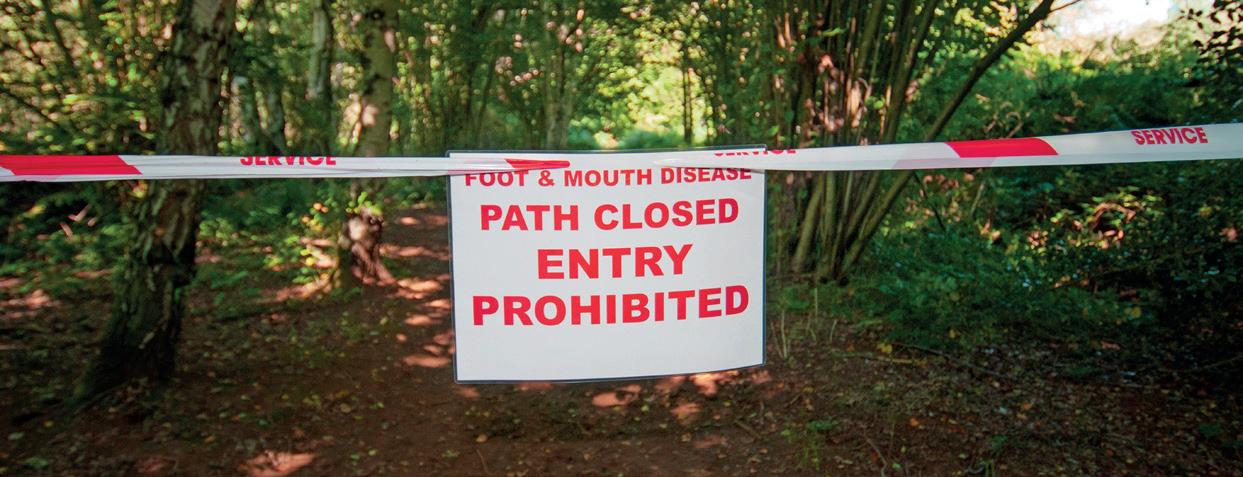
This year marks 25 years since the devastating foot-and-mouth outbreak of 2001. Words that still send a shiver down the spine. Livestock movement ceased overnight. Markets fell silent. Pyres burned across the countryside. Families who had spent generations building herds and flocks watched them vanish in days. An excess of six million animals were slaughtered. The emotional toll was immense – stress, isolation, and the long struggle to rebuild. I remember looking South, and witnessing the devastation that was going on – years of breeding destroyed, whole flocks and herds taken out, with gut wrenching impacts on those affected. Those memories remain raw for many families – and they serve as a powerful reminder of why vigilance, preparation and rapid response remain absolutely critical today. Even the strongest farms and communities are only as resilient as the systems protecting them.
Vigilance and preparedness are never optional – a lesson that remains as relevant today as Scotland faces a widening array of global pressures; from Avian Influenza to disruption in Iran and Eastern Europe, all while responding to growing consumer demand for fresh, high-quality produce. The recent outbreaks of Avian Influenza are a stark reminder that biosecurity threats have not diminished, they have evolved. Disease
risk remains ever-present, capable of closing markets overnight and undermining months, even years, of careful production planning.
of inaction will ultimately be borne not just by producers, but by consumers and rural communities across Scotland.
In a world of increasing uncertainty, preparedness is not pessimism – it is prudence. And Scotland’s farmers deserve a policy environment that recognises that reality.
Meanwhile, as we balance these threats, consumer behaviour is evolving rapidly. Retailers report growing demand for fresh, local, nutrient-rich foods. Tesco, for instance, recently highlighted a 6.6% year-on-year increase in fresh food sales in January alone. Appetite-suppressing medications and a greater focus on health-conscious choices are influencing
Vigilance and preparedness are never optional – a lesson that remains as relevant today as Scotland faces a widening array of global pressures
At the same time, energy and fertiliser markets – deeply intertwined with international politics and conflict – are increasingly volatile. Rising fuel costs and constrained fertiliser supplies, partly driven by geopolitical tensions around Iran and wider instability across Eastern Europe, feed directly into farm input costs. For primary producers operating on tight margins, these shocks are not abstract global events, they are immediate financial pressures, impacting on profitability that ripple through to food prices and household budgets.
This reality reinforces the strategic importance of strengthening domestic resilience responsibly to ensure energy security is key. A stable and affordable energy supply underpins fertiliser production, transport, processing and ultimately the viability of Scotland’s farming sector. Without it, we expose ourselves to avoidable vulnerability.
Delays in confronting these challenges are not merely inconvenient – they carry consequences. Hesitation in policy, uncertainty in direction, and failure to invest in resilience place additional strain on farmers and crofters who are already navigating climate pressures, market volatility and regulatory change. The cost
these patterns. For Scottish farmers and crofters, this shift presents an opportunity: by supplying fresh, high-quality, locally grown produce, we can meet consumer expectations while strengthening domestic food security.
Scottish agriculture is not just about production – it underpins our rural economy, sustains communities, and forms the backbone of our wider food and drink sector, worth £19 billion and employing over 120,000 people. Protecting this industry is critical to Scotland’s prosperity. And crucially, it is about ensuring that the next generation sees a future worth investing in – one where farming and crofting remains profitable, valued and resilient for decades to come.
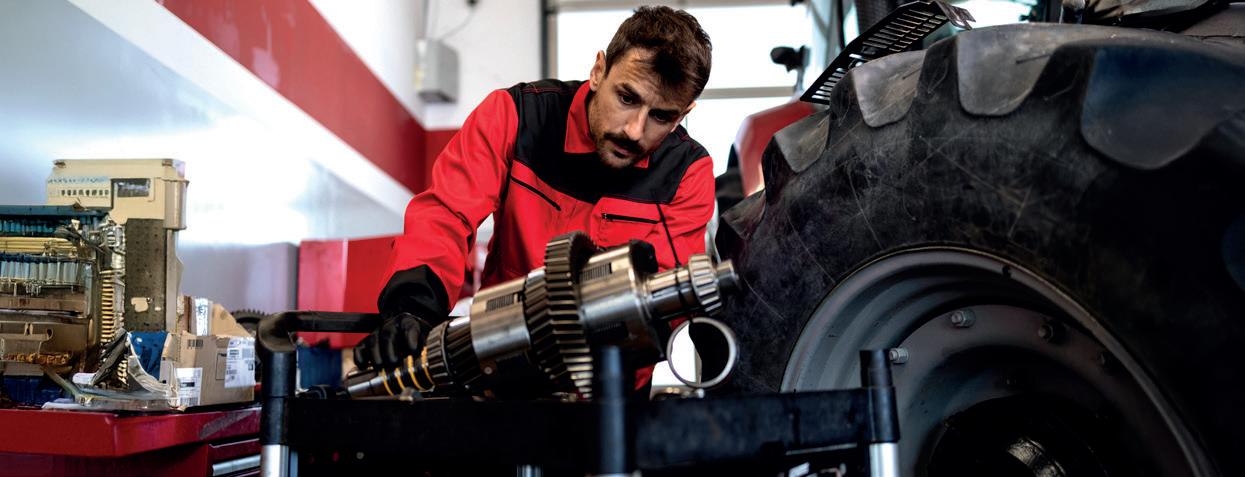
Scotland’s machinery rings are continuing to demonstrate their value to farming and crofting businesses, with Ringlink Scotland Ltd reporting a significant rise in membership following its merger with Highland Business Services (HBS) last year.
Completed in August 2025, the merger brought together two of Scotland’s longest-established cooperatives, creating a single organisation serving more than 4,000 members across a vast area – from East Central Scotland through to Sutherland, Skye and Argyll. The enlarged business now delivers a combined annual turnover of around £100 million.
Machinery rings were originally set up to help farmers reduce capital expenditure through the organised sharing of machinery. Over time, that model has evolved significantly. Today, rings provide a wide range of services including labour provision, training, and the supply of key inputs such as fuel, straw, feed, fertiliser and electricity – supporting farm businesses to operate more efficiently in an increasingly challenging economic climate.
Both organisations have highlighted the critical role rings can play in improving resilience at a time when Scottish agriculture is facing sustained pressure from rising input costs, labour shortages and volatile markets.
Commenting on the merger, Ringlink Chief Executive Graham Bruce said the expanded business is already delivering tangible benefits:
“Through the development and expansion of our labour pools, the two rings have been placing over 450 workers with member businesses every day. The merged organisation provides a real opportunity to significantly grow that capacity.
“The bottom line is that this enlarged co-operative will safeguard and create jobs in farming and rural communities, while helping the industry retain and develop the skills it needs to remain competitive. This is a merger for growth and reflects the important role machinery rings now play as business enablers within the rural economy.”
Operating on a cooperative model, machinery rings allow members to share not only machinery, but also labour and expertise – helping reduce fixed costs and improve flexibility at key seasonal pressure points. For many businesses, particularly in more remote and crofting areas, access to skilled labour and essential services through the ring network has become indispensable.
The growth in membership and expansion of services underlines the continued relevance of the machinery ring model.
As margins tighten and policy demands increase, collaborative approaches such as these are becoming ever more important in supporting a profitable and sustainable future for Scottish agriculture – an outcome that remains central to NFU Scotland’s long-term vision for the sector.
For farmers and crofters across the country, the message is clear: engaging with your local machinery ring not only strengthens individual businesses but also supports the wider rural economy – ensuring practical, cost-effective solutions remain available where they are needed most.

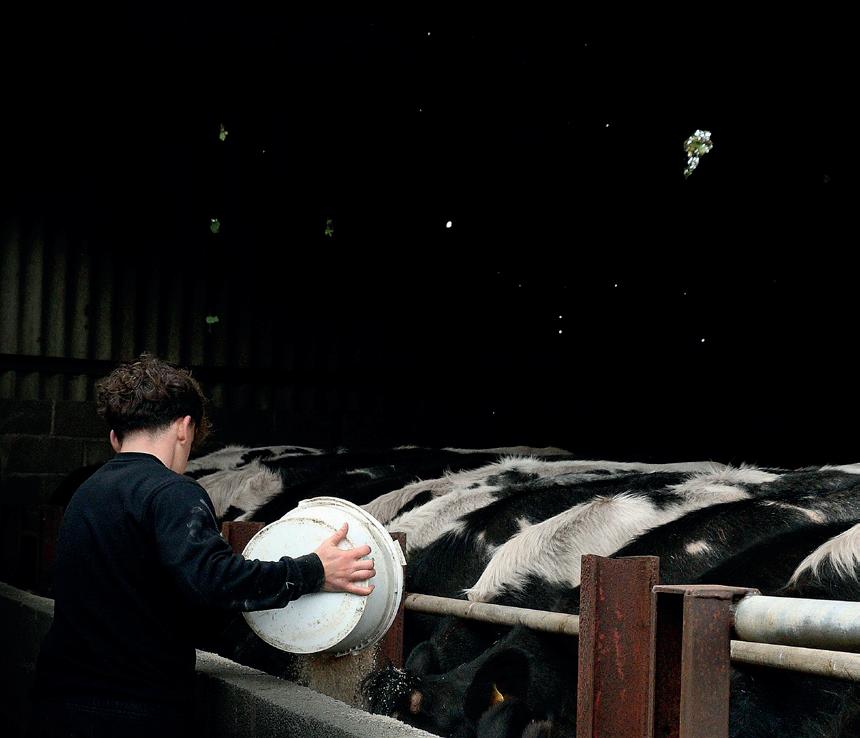
Words by Bob Carruth, Dairy Policy Manager
Scotland’s dairy farmers are among the most progressive and resilient in the world – but even the best businesses need strong back-up. The Scottish Dairy Hub provides that support, helping connect armers with the advice, training and expertise they need to keep moving forward.
Established in 2014 and funded by the Scottish Government, the Hub
replace advisers or consultants. Instead, it helps you find them. Whether you’re looking for technical guidance, business planning support, funding schemes, recruitment help or specialist training such as AI or hoof trimming, the Hub points you in the right direction quickly and efficiently.
Its value was particularly clear during the farmgate milk price downturn in late 2025 and early 2026, when enquiries jumped by 38%. Farmers got in touch about milk contracts, diversification ideas such as vending machines, staffing
the Hub was created to give Scotland’s dairy farmers a single, trusted place to find reliable information and support
was created to give Scotland’s dairy farmers a single, trusted place to find reliable information and support. Delivered by NFU Scotland, it acts as a free, independent “honest broker” –connecting farmers with the right advice, training, research and industry contacts at the right time.
In simple terms, the Hub doesn’t
shortages and resilience planning. The Hub responded by signposting levy body webinars, business advice and practical support – helping businesses steady the ship during volatile months.
The service is open to all dairy farms, from new entrants and students to longestablished family businesses. Its reach stretches from Shetland to Stranraer.
And while farmers are at its heart, the Hub also supports processors, advisers, researchers, training providers, welfare charities and government officials –helping keep the whole supply chain connected.
A key strength is visibility. The Hub attends 11 major dairy events each year, including the Royal Highland Show, UK Dairy Day and AgriScot, where its annual dairy seminar has become a fixture in the calendar, drawing around 200 farmers and industry leaders. These events give producers the chance to raise issues face to face.
Digital engagement is growing too. With more than 117,000 Facebook views in the past year alone, the Hub has become a go-to source for training opportunities, event updates and industry notices. Looking ahead, priorities include continued support during milk price volatility, improving access to core dairy skills training, and working with farmer welfare charities to strengthen mental health and wellbeing support.
At a time when margins are tight and change is constant, the Scottish Dairy Hub provides something simple and reliable. By connecting the dots across Scotland’s dairy sector, it helps farmers stay informed, competitive and resilient –today and for the future.
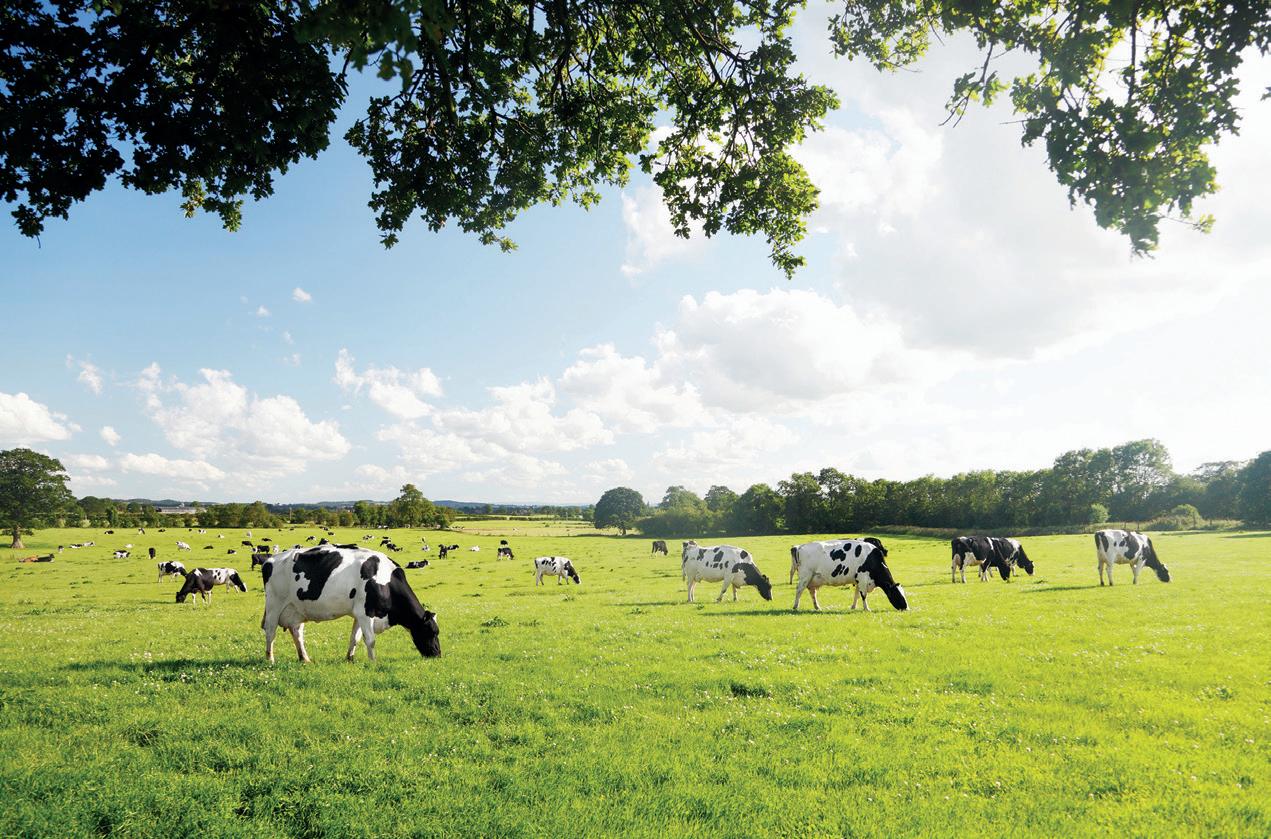
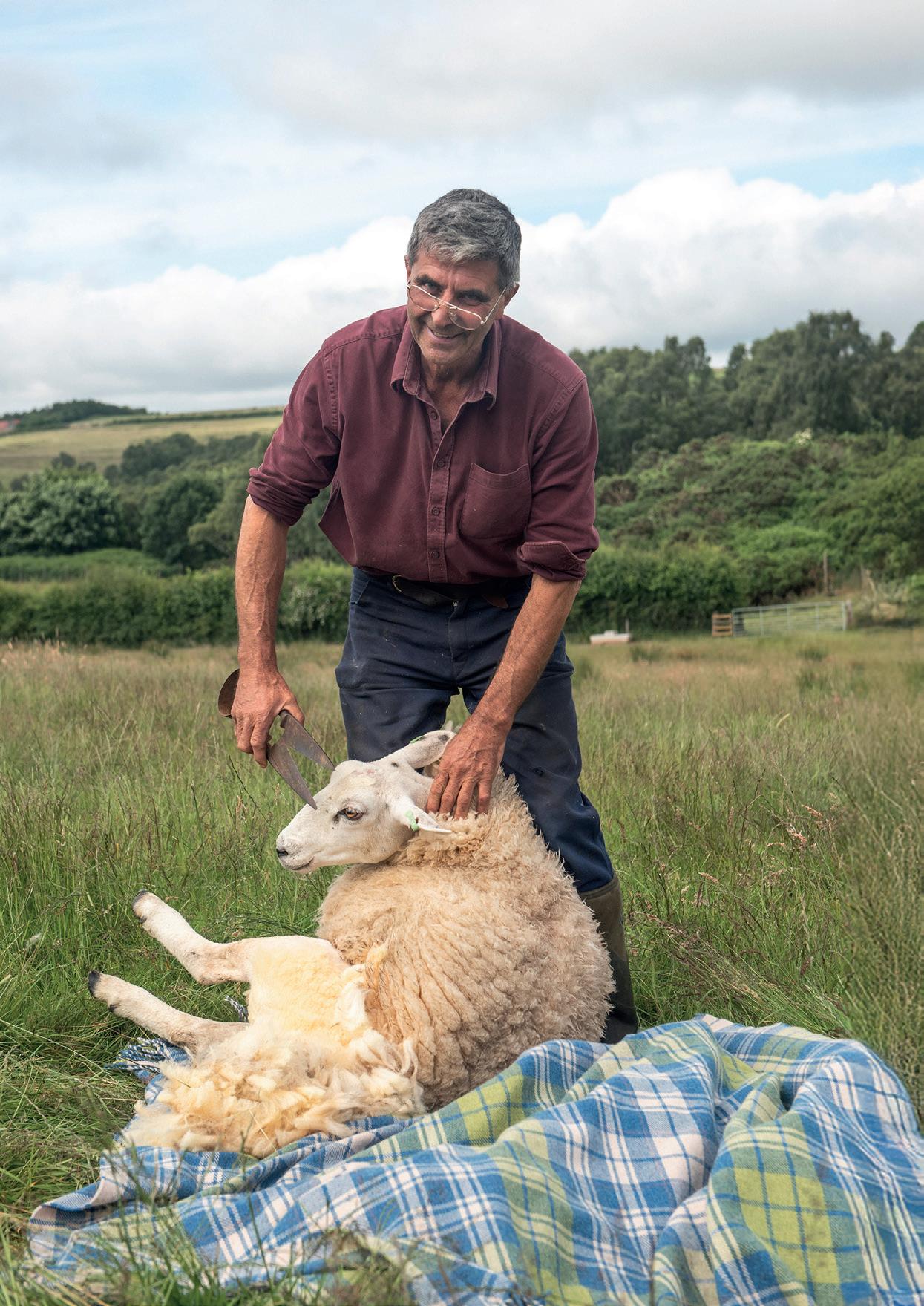
By guaranteeing wool producers a fair price, shortening the supply chain and prioritising traceability, the Highland Clip, founded by Fred Swift and Stella Stuart, is helping restore value to Scotland’s traditional wool industry, and strengthen the community who stand behind it. The initiative begs the question –should we be moving forwards or backwards with wool?
Words by Megan Willliams
Scotland has a long and proud wool tradition. It is woven into the rural heritage and livelihoods of generations of farming and crofting families. Highland wool in particular is at the core of some of Scotland’s most iconic pieces, from the kilt to tweed and tartan. Historically, this wool came from Scottish Blackface sheep. With a higher micron count and coarser finish, it is very different from the various fine wool merino products on the market today, which are grown in much warmer and drier climates.
Yet, in recent decades, this once-thriving Scottish industry has faced steep decline. Synthetic fibres, evolving consumer tastes, and recent economic disruptions have weakened demand and depressed prices, leaving Highland wool trading below its potential. Shearing the sheep, once a source of income over ten times the value of the sheep itself, has become primarily a matter of animal welfare rather than income.
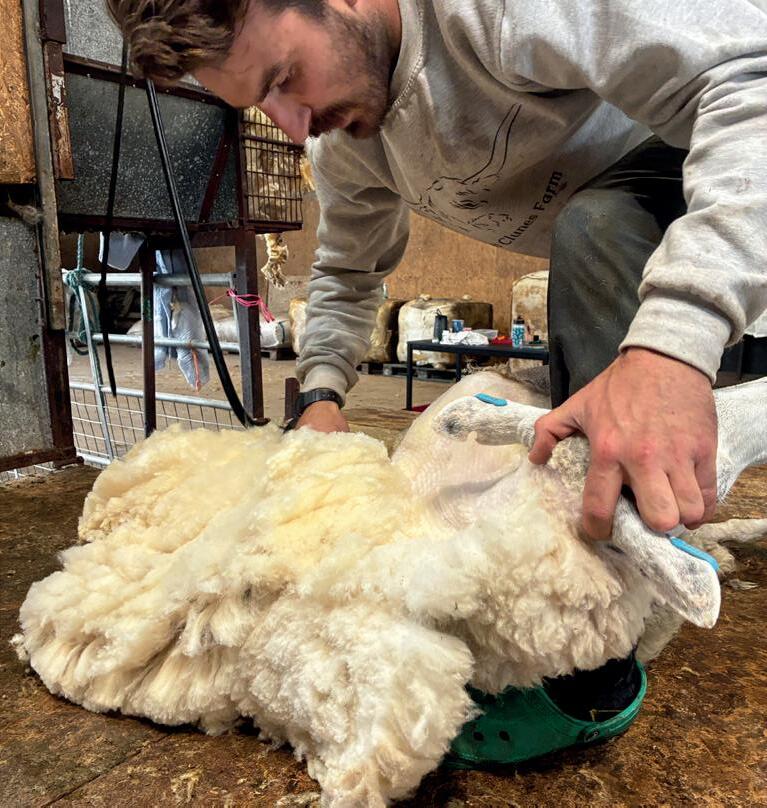
Amid this backdrop, wool is seen by many as a waste product and it is often burned, buried or thrown on the midden. Seeing this wool discarded all over the Highlands prompted South Clunes Farm, an NFUS member, and Scottish design and manufacturing brand, ANTA, to look for solutions. The result was the Highland Clip, launched in 2022. Aimed at reducing waste, using the valuable wool of the Highlands, and most importantly, making sure that wool producers receive a fair price for their product.
Having started with a three-tonne trial, the Highland Clip processed 18 tons in its third year. This wool was bought from twelve neighbouring crofters and farmers. With shorter supply chains and a system where buyers and sellers know each other personally, everyone has skin in the game. This personal investment is something that has improved both the care taken and the quality of the wool bought by the Highland Clip. As the Highland Clip offers a base price of £1/kg for greasy wool, there is security for all parties, which helps to build trust. This price guarantee is the priority. It not only revalues wool, but also puts farmers and crofters first. Knowing where the wool is going and securing a route to market creates consistency and helps those selling to the Highland Clip to view their wool differently.
The wool is spun and dyed in Yorkshire, woven and finished in the Borders and Islands, and then transformed into ANTA’s premium flatweave carpets, Highland tweeds, throws, and other home textiles in their Highland facility. As a fully natural, renewable, and biodegradable resource, wool provides fire-resistant, insulating, and soundproofing properties, making it ideal for home interiors. Highland wool is exceptionally durable, meaning ANTA’s products are built to last a lifetime.
The Highland Clip isn’t just about transactions – it’s about community and collaboration. It’s an old model where farmers and crofters are rewarded for their work, and
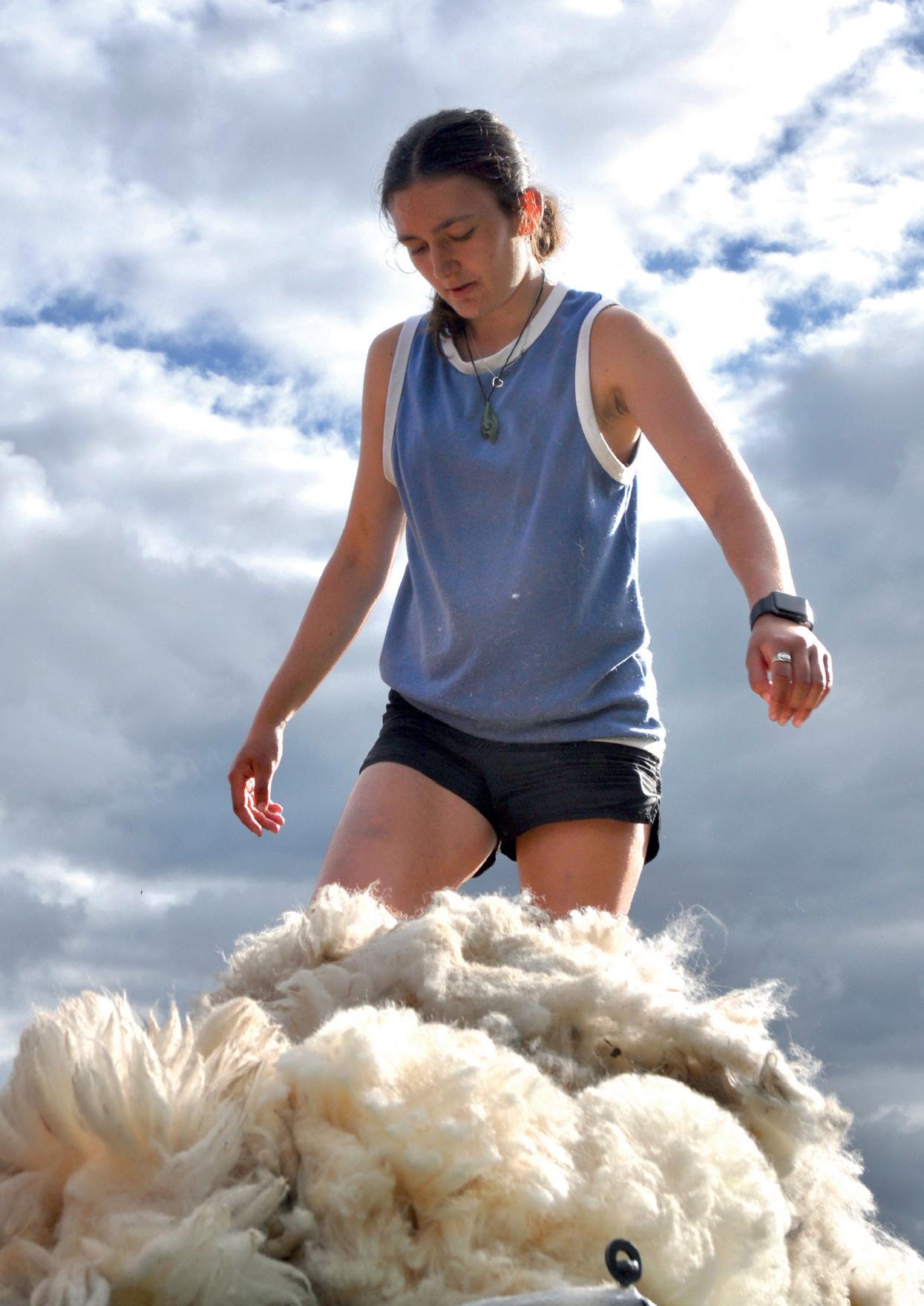
For us it’s about volume as well as reliability of supply chain

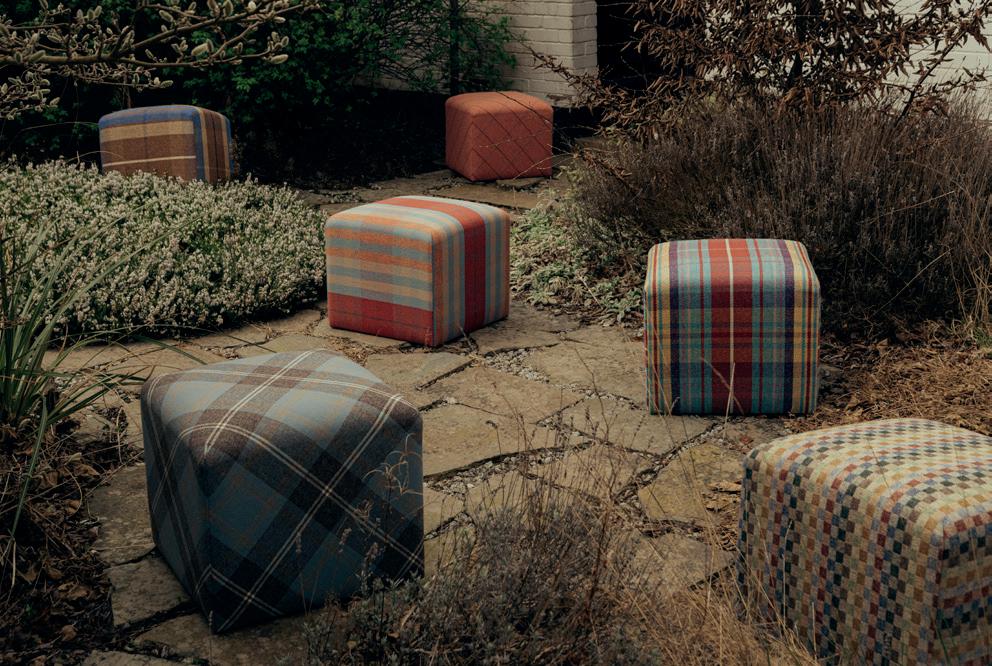
the benefits spread throughout the Highland economy. By sharing their story, the founders – Fred Swift, farmer at South Clunes, and Stella Stewart, Creative Director at ANTA, are leading the way for a modern way of doing business; inspiring other sustainable, value-led opportunities. One of the key successes of building this value is traceability. Each batch of wool is linked back to the fields where it originated, providing consumers with a tangible connection to Scotland’s landscapes and communities. This transparency enhances trust, communicates the project’s values, and highlights the quality of the material.
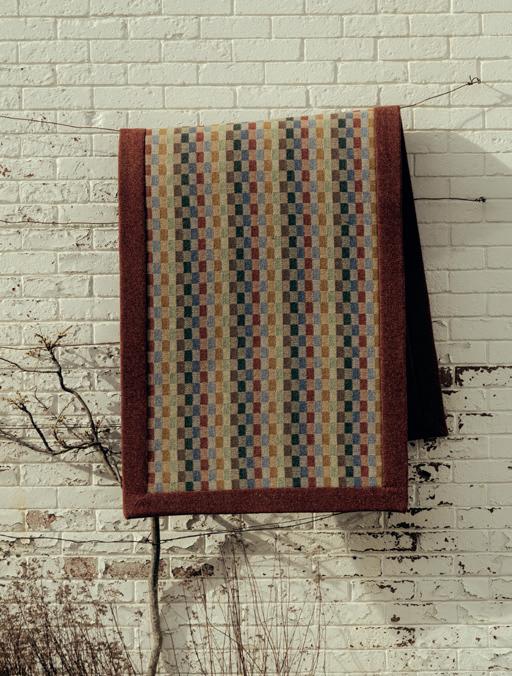
For Stella, Creative Director of ANTA, this means:
“For us it’s about volume as well as reliability of the supply chain. It’s phenomenal to be able to trust that we can buy the best quality, traceable wool from our doorstep, supporting our neighbours, friends, their families and in turn, whole communities. Our aim is to showcase the product on a global platform. Scotland is world-renowned and so is its produce. Think whisky! Our aim is for Highland Tweed and flat weave carpet to be on that same level – for people to have the same respect for the way it is produced.”
By combining rigorous traceability with high-quality materials, the project ensures that every purchase carries a story – one that celebrates Scotland’s heritage, strengthens local economies, and sets Scottish wool on a path to global recognition.
Highland sheep numbers have been steadily declining in recent years, and with them the volume of wool produced across the region. As flocks shrink, there is also a risk that the traditions, crafts and local industries built around wool begin to fade. Skills such as shearing, weaving, spinning and processing have long been part of the cultural fabric of the Highlands and Islands. These historically important crafts, cultures and community spirit that surrounds them are becoming less common. However, fantastic folk such as the Skye Weavers and the globally recognised Harris Tweed are doing what they can to raise demand and increase awareness of wool’s story.
Another way those in the wool industry are trying to increase demand is by influencing policy. The Highland Clip has recently worked alongside the Scottish Textiles Leadership Group that have been working on drafting a strategy for wool. Interestingly, there is no single Scottish Government strategy for wool, nor has here ever been; rather a patchwork of policies and initiatives that affect wool through related sectors. The Highland Clip hopes that if there was an obligation to use more Scottish fibers then demand would rise – and prices follow. This is something we have seen in New Zealand
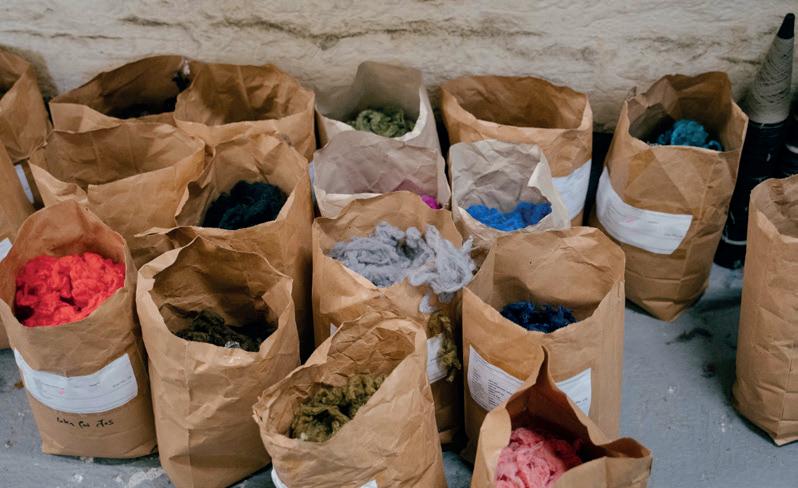
where, as of July 2025, all 130 central government agencies must prioritise wool in government buildings in new builds over NZ$9 million, refurbishments over NZ$100,000, and any agency that does not use wool has to justify it in writing every year.
At its heart, the Highland Clip, and their work to reinvigorate the Scottish Wool industry is as much about commerce as it is community. Traditional rural communities were often built around work that could not be done alone – and that remains true throughout the wool supply chain. In many ways, the Highland Clip is more a step back than forward. It’s taking us back to a time when you knew who shore the sheep and which farm it came from. But most importantly, farmers and crofters knew exactly where their wool went, what it was used for, and were paid well for their time and produce.
By bringing people together again around a common product, the Highland Clip is not only revaluing Highland wool, but helping keep the connections, skills and traditions that define rural Scotland alive. Find out more at www.highlandclip.com
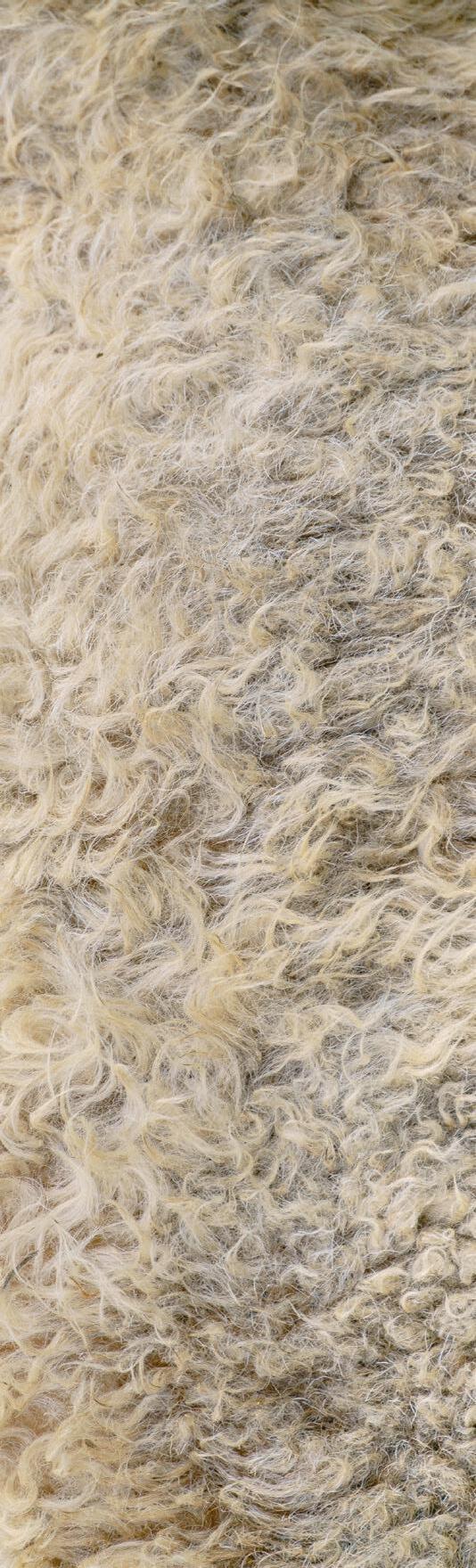
Describe the Highland Clip in three words?
Fair for farmers.
How has Highland Clip changed the way you connect with other farmers and crofters in the area?
As farming and crofting becomes ever more isolating work, it is a joy to work with neighbours and be able to offer them good returns for their wool.
What impact does receiving a guaranteed price for your wool have? It re-values wool on every sheep we work with. Knowing where the wool is going and who is grading it means every shepherd takes more time and care with each fleece.
What’s been the most unexpected outcome to come from the Highland Clip?
Learning how many producers have discarded their wool annually by burying or burning as it is not worth taking it to the collection depot.
Give us an insight into the sheep shearing shed – who’s there, what are you listening too?
A lot of Peat and Diesel! Shearing days are a joy on the farm when they are going well. We have a great team of two or three shearers with a rousey (wool roller and packer) along with a few loons pushing the sheep along and doing their best to keep the rain away!
How can others become part of the Highland Clip?
Email us at wool@highlandclip.com


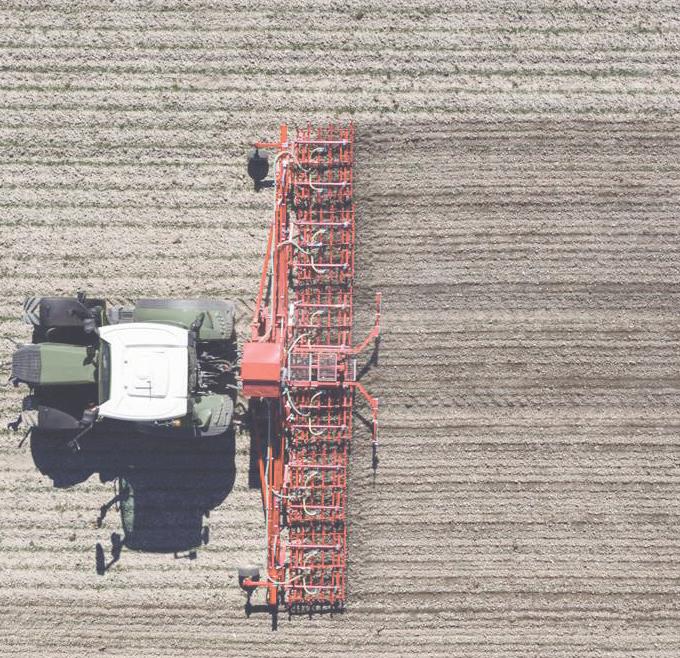
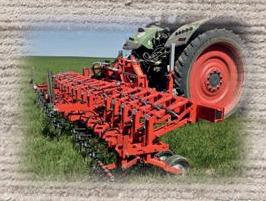
sales@terrington-machinery.co.uk
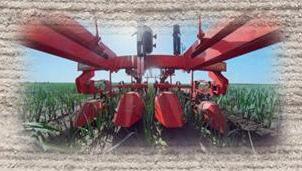
Hoes = Cereal Hoe
Camera Guidance = Row-Guard




NFU Mutual’s key considerations for keeping farm properties safe, compliant, and covered
As a farmer, you’ll know that the buildings on your farm are essential in protecting valuable machinery, housing animals, storing produce and providing you with a base for your farming business to operate efficiently. Farmhouses and cottages are integral too, whether they serve as the foundation for diversifications into hospitality, or simply as the home you return to at the end of a hard-working day. Prioritising property maintenance helps ensure these vital buildings remain safe, functional and fit for purpose.
TOP TIP:
“Conducting a risk assessment and ensuring you have safe means of doing the work needed, before getting started, is the most important thing.”
Evita Van Gestel, NFU Mutual Technical Manager
While there are many areas to consider when it comes to property maintenance, incidents involving working at height, electrics, and fire risks are the three property maintenance concerns seen most at NFU Mutual. Here are some top tips for managing risks in these areas, on your farm:
It can be tempting to attempt DIY electrical work on the farm, but it’s important that any electrical wiring installation or changes are completed by competent contractors, who are properly trained and accredited by the relevant body. These contractors not only understand legal and technical requirements of electricals on the farm, but also how to avoid contact with live parts, which can lead to serious injuries such as shocks, burns and even cardiac arrests.
When not properly maintained or treated, electrics can also lead to fires: another key area of concern when it comes to protecting your farm properties and buildings. According to NFU Mutual’s 2025 research, the estimated cost of farm

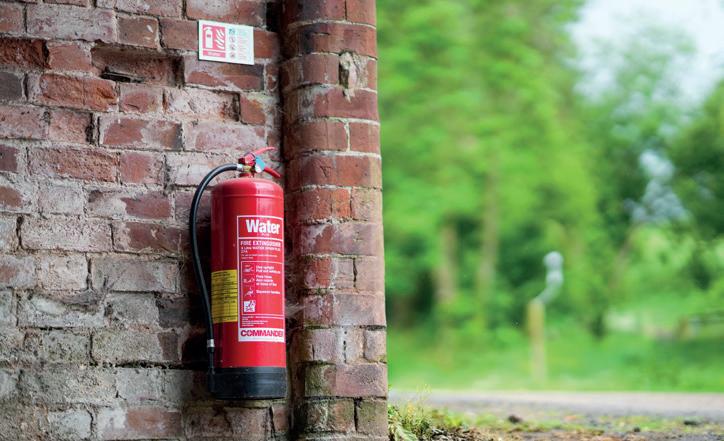
fires reported to NFU Mutual was almost £102m in 2024. To help manage the risk of fires on your farm, you can take steps such as keeping machinery well maintained and clear of dust, chaff, oil and debris, storing combustible materials safely away from heat sources, and ensuring fire extinguishers are readily available and subject to maintenance by competent contractors.
TOP TIP:
Conduct a “fire-watch” after any hot work, watching for any signs of a fire starting for about an hour, after the work has concluded.
Though it’s preferable to avoid working from height, if working from ground level or using extended tools is possible, taking precautions like considering weather conditions, allowing enough time to do the job safely, and using the safest access equipment available are all steps you can take to manage the risks involved.
As a part of the UK’s leading rural insurer, we understand the pressure farmers are under. But cutting corners and taking unnecessary risks with property maintenance can lead to
accidents, injuries and fatalities that are often simple to prevent. That’s why our NFU Mutual Risk Management Services Limited (RMS) experts are here to help you prevent incidents and reduce risks on your farm. Our health and safety experts visit you on your farm to identify hazards, offer tailored advice, and provide you with a range of helpful materials to support health and safety best-practice for you, your employees, and the public. They can provide you with the consultancy services you need to make informed property maintenance decisions and improve safety within your farm business, overall. Plus, if you’re committed to insuring your farm with us for at least 3 years, and you hold a fully active farming union membership (either with NFU, NFU Cymru, NFU Scotland, Ulster Farmers Union or Manx NFU), you can qualify for Union Advantage, and access 20% off NFU Mutual Risk Management Services.
To find out more about how NFU Mutual Risk Management Services can support you in managing risk on your farm, visit nfumutual.co.uk/farm-safety or contact your local agency office.










REDUCED PRICES
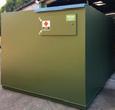
1250 LITRE - £2,250
2500 LITRE - £2,795
5000 LITRE - £3,765
7500 LITRE - £5,000
10000 LITRE - £6,150
SINGLE PHASE, 3.5HP, 1800PSI, 11LPM.. £2,800
SINGLE PHASE, 5HP, 2200PSI, 14LPM..... £3,025
THREE PHASE, 7.5HP, 2700PSI, 25LPM... £2,950
THREE PHASE, 10HP, 3000PSI, 18LPM.... £3,300
PETROL, 16HP, 3625PSI, 25 LPM ..............£6,075
COMMERCIALMETAL BUNDEDFUEL TANKS STANDARDSPECIFICATIONS
•3mmBritishsteel
•230 volt /60litreper min pump
•6m deliveryhose
•Water &particulate filter
•Mechanical flowmetre
•Autoshutoffnozzle
•Contentsgauge
•Deadlockwith 2keys
•LiftingEyes
•Steel box sectionacrossthe base forforkliftaccess andtoraisethe tankfromthe floor
•Paintedgreenasstandard(Anti -corrosionpaint)
•BS799,OFST200 & SSAFOcompliant
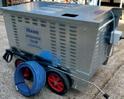
•Heavy dutygalvanised steelcabinet
•Hawk pump
•Mainswaterfeedorwillsuckfrom bowser /IBC
•Ravelelectricmotor /Briggs &Stratton
petrolengine
• 10 or20metreshighpressurehose
•Complete lance
•8 metresofelectric cable
•Diesel firedboilercomplete with 20litrefueltank
•20litredetergenttank
•Maxtemp80Corcanberunas a cold pressurewasher
•Pressure can beregulatedfrom maxto500PSI
www.briannixonltd.com
E: sales@briannixonltd.com | T. 01789721112
BrianNixon Ltd,BlakesHill,Ullington,NrEvesham,WorcestershireWR118QH
Allpricesquotedare+ VAT, ex works

Beatrice Morrice Head of External Affairs

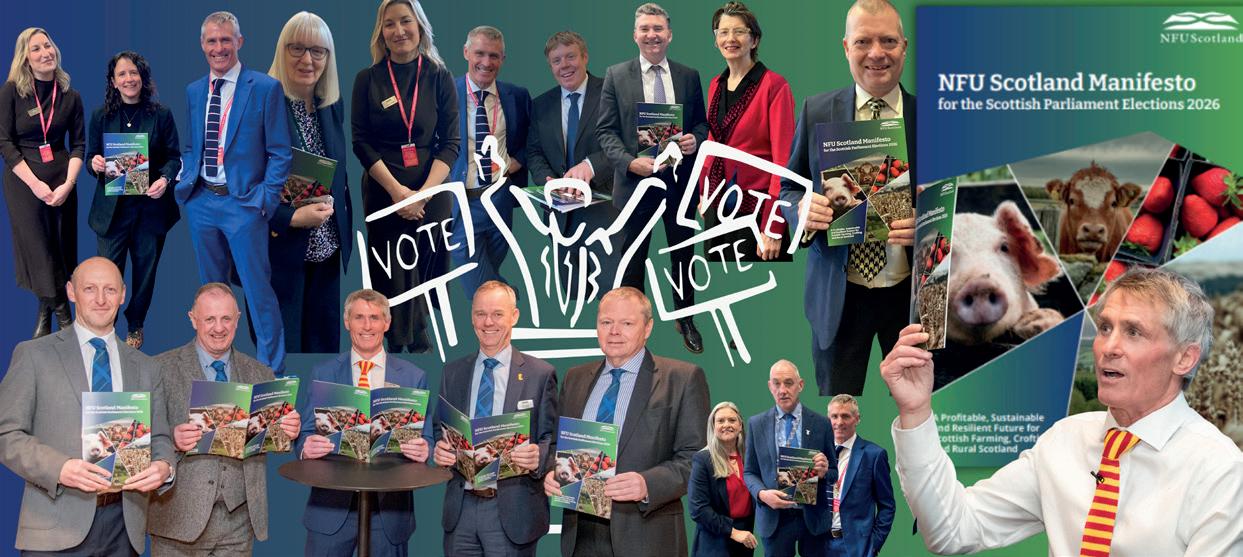
NFU Scotland has been actively engaging with policymakers, political parties, and industry stakeholders in the run-up to the Scottish Parliamentary elections in May, ensuring that the voices of farmers, crofters, and rural communities are heard.
Last month, NFU Scotland hosted a drop-in event at the Scottish Parliament for MSPs and researchers from all parties. The session provided a forum to discuss the Union’s manifesto and featured insights from Jonnie Hall, Deputy CEO and Director of Policy; Lisa HislopSmith, Supply Chain Policy Manager; and Lorna Scott, Climate, Land and Business Senior Policy Manager. The event offered a positive opportunity to highlight key priorities and encourage parties to consider the Union’s issues in their election manifestos. NFU Scotland will continue this engagement through further discussions, hustings events, and meetings with prospective parliamentary candidates, underlining the importance of strong support for the sector from the next Scottish Government. The full manifesto and a member summary are available online.
In addition to parliamentary engagement, NFU Scotland attended the Scottish Conservative, Scottish Labour, and Scottish Liberal Democrat party conferences, meeting politicians, attending key events, and raising awareness of the pressing issues facing members ahead of the elections.
Following its annual conference, NFU Scotland also wrote to the Parliamentary Under Secretary of State, Kirsty McNeill MP, to address concerns raised after her speech. The letter emphasized the pressures facing Scottish agriculture, particularly around migrant labour, imports, and food labelling. The Union called on the UK Government to work collaboratively with the industry, urging DEFRA and the Home Office to reinstate agricultural skilled worker roles to the Temporary Shortage List. The Union highlighted the critical impact on the sheep industry due to the loss of overseas shearers and the welfare risks associated with this shortage. Egg and meat imports were also raised, stressing the need for fairer, transparent labelling to protect Scotland’s rural economy and food security. Correspondence on these issues was also sent to the DEFRA Minister for Food Security and Rural Affairs.
On the legislative front, NFU Scotland engaged with MSPs, party representatives, officials, and researchers during the passage of the Crofting and Scottish Land Court Bill. The Bill, which passed, updates the Crofters (Scotland) Act 1993 and the Crofting Reform
(Scotland) Act 2010, introducing changes to the enforcement of crofters’ duties, powers of the Crofting Commission, common grazings, and the Crofting Register. The legislation streamlines processes, improves transparency, and modernises aspects of crofting law, with further review and potential changes expected in the next parliamentary session to address remaining challenges in the sector.
Through a combination of manifesto events, party conference attendance, policy correspondence, and legislative engagement, NFU Scotland continues to champion the issues that matter most to Scottish farmers, crofters, and rural communities, ensuring their voices are heard at the highest levels of government.
More information on the Bill is available here:
Crofting and Scottish Land Court Bill | Scottish Parliament Website
The full manifesto is available here: www.nfus.org.uk/manifesto2026.aspx
A summary for members is available on our website and at the end of this edition of your magazine.






Jonnie Hall Deputy CEO/Director of Policy
With elections looming, the next Scottish parliamentary term until 2031 will be more politically and policy intense than ever before for Scottish agriculture. And so, it must also be for NFU Scotland.
Change is not coming at us from a single direction, it is converging from every angle – changing direct support, climate policy, land reform, fiscal policy, supply chains and public expectations of how land is used and food is produced.
For some, that scale and intensity of change feel uncomfortable, even threatening. But for me, it also presents a profound opportunity for NFU Scotland and the wider agricultural industry.
If we choose to lead – to engage early, constructively and confidently – we can shape outcomes that protect productive and active farming and crofting, strengthen rural economies and ensure Scottish agriculture remains central to Scotland’s future.
The political context matters. Scotland is rapidly moving towards a Scottish Parliament election in May 2026, with agricultural support, land use and climate delivery becoming increasingly politicised. At the same time, Westminster decisions on tax, trade and labour continue to have deep implications for Scottish farming businesses.
Public finances remain under pressure. Every pound of agricultural support must now be argued for, justified and defended against competing priorities such as health and education. Meanwhile, expectations on agriculture – to produce food, restore nature, reduce emissions and sequester carbon, and underpin rural communities have never been higher. Consequently, we must ensure farming and crofting are not viewed as the problem to be solved, but as the solution to be invested in.
At the heart of everything lies farm business viability. Actually, let’s call that profitability – and unashamedly too.
Rising input costs, volatile markets and labour shortages continue to squeeze margins across sectors. Layered onto this is a growing body of demands and expectations that risk adding cost and complexity.
The political challenge is ensuring that policy actions support productivity and profitability rather than undermines it. The opportunity lies in demonstrating that efficient, progressive and profitable farming and crofting businesses are essential for food security, climate resilience, nature recovery, and economic growth.
Profitability and sustainability go hand in hand – they are not mutually exclusive. Policy choices must recognise that effective support and investment, and above all the confidence of farmers and crofters, are critical for both.
Few areas are as politically charged as land use. Land reform legislation, biodiversity targets, nature restoration ambitions, and competing land use demands are reshaping how land is viewed by policymakers and the public.
Too often, farming and crofting risk being portrayed as something to be displaced – rather than embedded within these ambitions.
The challenge for us is to rebalance that debate. Productive, efficient agriculture is not incompatible with nature. There is no contradiction between
Retailer behaviour, processor power and transparency in pricing are all under greater scrutiny than ever before
high-quality food production and policy ambitions around, climate and nature.
Species management pressures, whether from protected wildlife or expanding populations that damage crops and livestock, are becoming increasingly contentious. Farmers and crofters are bear the real costs while policy solutions lag behind. This cannot continue.
The opportunity here is leadership. We must champion effective and pragmatic integrated land use – where agricultural production, biodiversity and climate delivery coexist. We must make the case that active agricultural land management is essential to delivering public goods, not a barrier to them.
Supply chain fairness is finally rising up the political agenda. Retailer behaviour, processor power and transparency in pricing are all under greater scrutiny than ever before. But political interest alone will not deliver fairer returns. The challenge is ensuring that any intervention genuinely improves farmgate returns.
We must continue to press for greater transparency, fairer contracts and stronger enforcement where imbalance persists. But we must also work constructively with those in the supply chain who recognise that a resilient farming sector underpins their own long-term success.
Perhaps the most significant challenge ahead is the continued development of Scotland’s future agricultural support framework. Farmers and crofters need clarity – on budgets, on conditionality, and on the long-term direction of travel. Political debate around support reform is intensifying, particularly as budgets tighten and scrutiny increases.
Our role is not simply to defend funding levels, but to articulate why support matters: for food security, climate resilience, rural employment and national wellbeing. We must push for increased, multi-annual funding and ensure that direct payments remain as the core of support.
We must have direct payment measures that increasingly focus on agricultural activity, not areas of land occupied, and which ensure the actions of farmers and crofters in delivering on policy priorities are recognised and rewarded.
And to do that requires engagement, influence and credibility. It requires us to be in the room early and often. And that’s exactly what we’re doing.
Climate policy will dominate the political agenda over the years ahead. As governments face pressure to meet statutory targets, agriculture will inevitably be under the spotlight. But that’s not a threat, it’s an opportunity.
The threat is blunt, ill-conceived policy – simplistic solutions that ignore complexity and undermine production.
At a glance: seven key points
1. Lead, don’t follow: Shape outcomes, protect farming and crofting, and boost rural economies.
2. Profit & sustainability: Viable farms = food security + climate resilience.
3. Land matters: Agriculture & nature can thrive together.
4. Fair play in supply chains: Transparency & fair contracts are key.
5. Support & certainty: Clear, long-term funding fuels confidence.
6. Climate opportunity: Incentives, not penalties, drive real change.
7. Own the agenda: Engage early, tell our story, embrace change.
The opportunity is far greater: positioning Scottish agriculture as a climate solution. Farmers and crofters are already reducing emissions, improving soil health, integrating farm woodlands and restoring peatland. What is often missing is the recognition and reward.
We must continue to make the unequivocal case for incentive-led approaches, not punitive ones. We must ensure climate actions are financially viable, scientifically credible and practically deliverable.
This is not about resisting change. It is about shaping it.
Across all the issues that will shape the future of Scottish agriculture runs a single thread: NFU Scotland and the wider agricultural industry cannot afford to be reactive. The pace of political and legislative change means waiting for policy to land before responding is no longer enough.
We must anticipate, influence & lead.
That means engaging confidently with government and telling our story more effectively. It means being honest about challenges, while unapologetic about farming and crofting’s value. It means embracing change rather than pushing back.
With the Scottish Parliament elections on the horizon, I have no doubt that the next five years will shape farming for decades and generations to come. NFU Scotland has the credibility, expertise and leadership to ensure Scottish farming and crofting emerge stronger, more resilient and more confident than ever.

TRhianna Montgomery Policy Manager
he Land Reform (Scotland) Act
2025 marks a further step in Scotland’s land reform journey, with significant updates to Community Right to Buy (CRtB) provisions. For farmers and landowners, the direction of travel is clear: greater transparency, earlier engagement and stronger community influence in land transactions.
Under the 2025 Act, communities benefit from enhanced notification rights when certain land, particularly large holdings, is to be sold. A formal prohibition period now applies in defined circumstances, preventing sales from proceeding until communities

have had the opportunity to register an interest. Ministers also hold powers that may require large estates to be offered in lots, rather than as a single block, where this is considered to support local sustainability or public interest.
In practical terms, this means private, off-market sales are more likely to face procedural steps. Sale timelines may lengthen, and succession planning will require additional foresight. Early awareness of any registered community interest and proactive dialogue with local groups will be increasingly important.
Supporters argue that stronger CRtB powers can diversify land ownership, support housing delivery, renewable energy projects and rural enterprise,
and ensure land contributes more visibly to community wellbeing. Scotland has already seen examples of successful community buyouts generating longterm local investment.
However, landowners raise concerns about market uncertainty, administrative burden and potential impacts on land values. Community bodies themselves can face funding, governance and capacity challenges, which may complicate transactions.
For Scotland’s farming and landowning sector, the key message is preparation. Understanding the new framework and engaging constructively at an early stage will be essential in navigating how ownership evolves under the 2025 reforms.
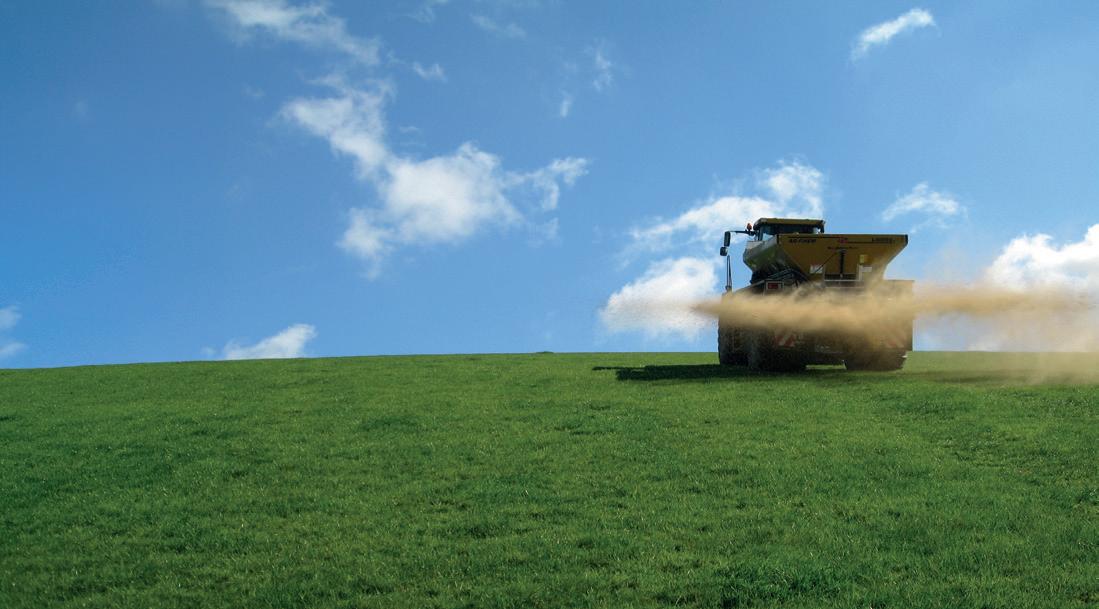

• High output LGP machines to minimise soil and crop damage
• Weighing systems and auto steer fitted
• We supply our own loader & fuel to minimise disturbance to the customer
• Blanket or variable rate lime spreading compatible with all mapping systems
• The following can be supplied and accurately applied: Lime, Compost, Slag, Henpen, Fibrophos, FYM, Gypsum, as well as other organic materials
Soil Mapping Service
• Correct variations across fields •
• 4 samples/ha for accurate pH
• All nutrients can be tested • Recommendations to suit your enterprise


Lucy McGillivray Policy Manager
From living on a farm in a rural area, I know first-hand the importance of farming businesses in keeping the community spirit alive. Whether it’s supporting local community events, keeping the roads open, or helping out your neighbours in times of need – farmers are at the heart of Scotland’s rural communities.
Less Favoured Areas (LFAs) play a vital role in sustaining rural Scotland’s landscapes, communities and food
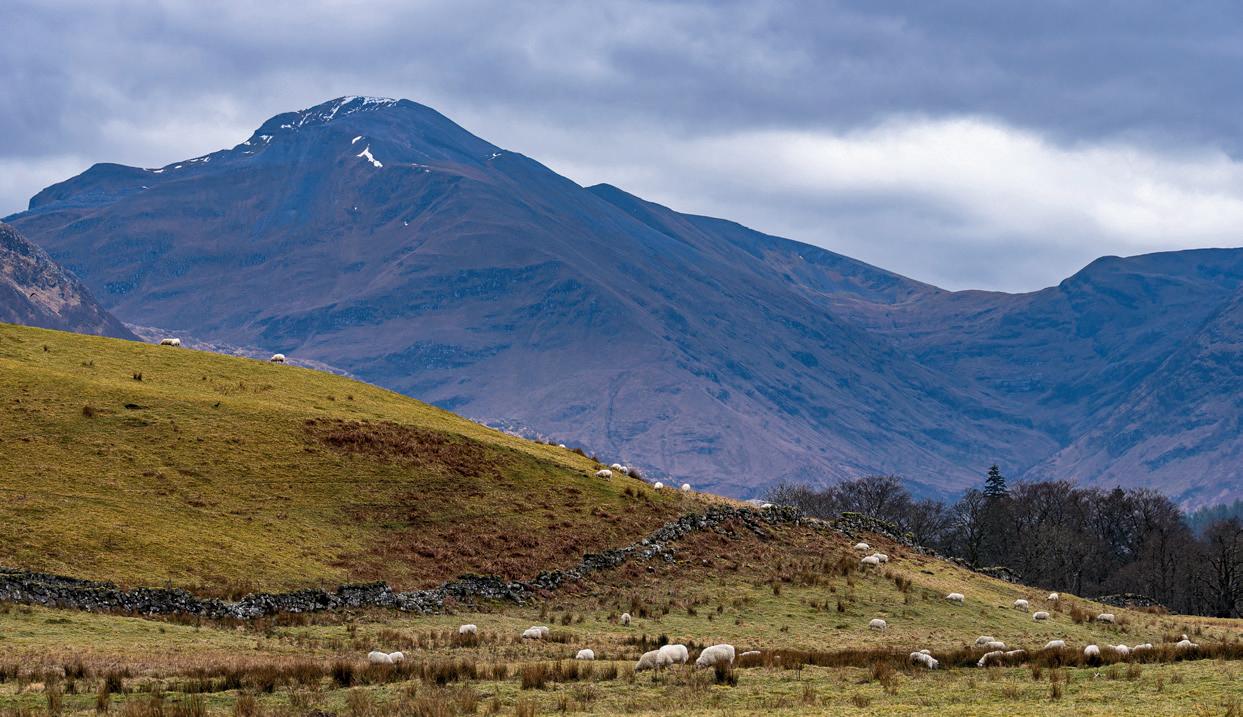
production systems. Covering around 85% of Scotland’s agricultural land, LFAs include some of the country’s most iconic and environmentally sensitive regions, from the Highlands and Islands to upland areas of the south. These are places where farming faces natural constraints such as poor soils, harsh weather and difficult terrain, yet they deliver benefits that reach far beyond food production.
At the heart of LFAs is livestock farming, particularly sheep and cattle. These systems help maintain the
distinctive character of landscapes seen across Scotland. Active land management prevents overgrowth, supports peatland health and protects habitats that are home to diverse wildlife. The mosaic of heather moorland, grassland and rough grazing that defines much of rural Scotland is largely the result of generations of farming in these constrained environments. Rooted within these farming practices is the contribution to climate and environmental goals. Well-managed grazing systems can support carbon storage in soils and peatlands, enhance
Covering around 85% of Scotland’s agricultural land, LFAs include some of the country’s most iconic and environmentally sensitive regions
biodiversity and promote sustainable land stewardship.
LFAs are also crucial to rural economies. Agriculture underpins local supply chains, supporting feed merchants, hauliers, vets, auction marts and processors. In fragile rural areas, farm incomes circulate within communities, sustaining schools, shops and local services. Without viable farming businesses, depopulation pressures would intensify, threatening the social fabric of remote regions. This strong sense of community is reliant on the specialist skills, knowledge and experience of the people that are responsible for and passionate about hill farming and crofting.
Culturally, LFAs help preserve Scotland’s rural heritage. Hill farming traditions, crofting practices and livestock breeds adapted to challenging conditions form part of the nation’s identity. They also contribute to Scotland’s food reputation, producing high-quality beef and lamb with strong provenance credentials.
By supporting farming in Less Favoured Areas, Scotland invests not only in rural resilience but in environmental protection, food security and the long-term vitality of its rural communities.

Bob Carruth Policy Manager
There are early signs of recovery in dairy markets, offering a measure of cautious optimism for producers – but significant headwinds remain as we enter the spring flush and peak milk production.
The latest figures from the Agriculture and Horticulture Development Board (AHDB) underline both opportunity and challenge. A record £2.2 billion in UK dairy exports was achieved in 2025, up 16 per cent on the year. Of that total, 74 per cent was destined for the EU, while the Gulf states emerged as the largest market outside Europe. With a trade deal expected soon with Gulf nations, there is tangible potential for further growth in high-value markets.
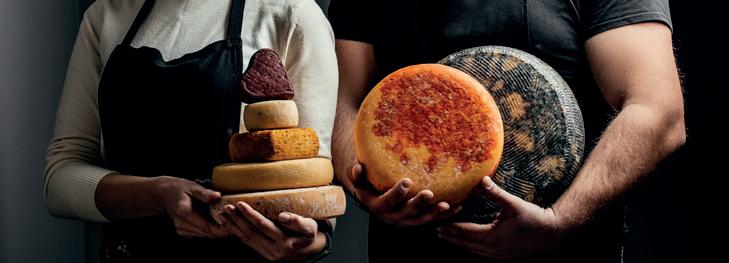
Closer to home, Scottish cheese exports surpassed the £80 million target in 2025, and total sales of cheese to the rest of the UK rose by more than £1 million last year – encouraging signs of demand.
However, supply continues to build. UK milk production is up 3.7 per cent overall,
with February volumes 2.2 per cent higher year-on-year. The milk-to-feed price ratio remains historically strong, incentivising producers to maintain concentrate feeding. As a result, milk output is not yet in contraction, and strong fat and protein levels are adding further processing pressure. While total cull cow numbers remain static, dairy cow culls are beginning to edge upwards – perhaps an early indicator of some herds responding to significantly poorer prices. Globally, output is also expanding. EU production is up 2.3 per cent, the US up 2.5 per cent, with sharp increases from New Zealand and Argentina. Wider trade uncertainty, including fluctuating US tariff announcements, continues to cast a shadow over international markets.
Yet there are glimmers of hope. Wholesale powder and cheddar prices have firmed at the start of 2026, butter prices are beginning to strengthen, and the Global Dairy Trade auction posted four consecutive uplifts of between three and six per cent following a prolonged downturn. Dutch auctions are also trending upwards. Despite this, farmgate prices are likely to remain under severe pressure before meaningful recovery takes hold. The spring flush will weigh heavily on the domestic market, and most expect any sustained improvement to milk price to emerge after the summer. As AHDB notes, there may be “light at the end of the tunnel” – but careful cost control and business resilience remain paramount in the months ahead.

Lorna Scott Policy Manager
Water management is increasingly an issue for NFU Scotland members – and the wider rural communities in which they operate. More intense rainfall, longer dry spells and growing regulatory expectations mean it is no longer a seasonal task, it is a year-round priority that affects whole catchments and the communities within them.
Last year’s weather was especially challenging for many farmers and crofters, with prolonged wet periods testing drainage systems and delaying fieldwork. This year, many will be equally conscious of the risks at both ends of the spectrum, from winter flooding and soil damage to summer abstraction pressures and diffuse pollution controls. Managing
water effectively is now central to protecting yields, livestock performance and soil health.
The impacts do not stop at the farm gate. Surface water flooding can disrupt
farmers and crofters in adapting to these realities. Collaborative schemes, alongside funding such as the Future Farming Investment Scheme (FFIS), should provide clear, flexible support for drainage
This year, many will be equally conscious of the risks at both ends of the spectrum
homes, roads and local businesses, while sediment and nutrient run-off has consequences downstream. Prolonged dry spells place added strain on crops and forage supplies. These interconnected pressures underline the need for forward planning, collaboration where practical, and targeted grant support to unlock investment.
Future agricultural policy must back
improvements, water storage and naturebased flood management, helping build resilient businesses and thriving rural communities.
You can find out more here: https:// beta.sepa.scot/about-sepa/who-we-are/ our-board/meetings-agendas-andminutes/28-may-2024/water-resourceplanning/ and https://www.crew.ac.uk/ publications/planning-for-water-scarcity

MLisa Hislop Policy Manager
uch of this edition of Leader will highlight the wonderful way that our industry is underpinned by the strength of our community. Yet too often that spirit does not carry through the entire supply chain. The overarching principle is that we all trade in “good faith”, however we know that this is not always a two-way system – more often than not, the primary producer is left high and dry with little trace of “good faith” when it really counts..
We have historically lobbied for a regulatory framework which extends beyond the limited scope of the Grocery Supply Code of Practice (GSCOP) and creates farm-to-fork fairness. This has started through the Fair Dealing
Obligations (Milk) 2024, or FDOM. The pork equivalent, which is in its transition period until August 2026, will require all purchases of pigs to be in a written contract. There are lessons we must learn from both FDOM and FDOP, but we must also manage expectations on what the regulations will do. They won’t set price, but they will ensure that price variations must be communicated via an agreed process as set out in the written agreement.
It will take some time before we have a complete set of regulations for all commodities, and as we work through proposals for eggs and fresh produce, and input to the infancy of combinable crops regulations, it continues to be difficult to achieve the “Goldilocks” balance. The regulations must be flexible enough, but not too flexible to create loopholes which undermine the point of farm-to-fork fairness.
During conversations with members, there is a feeling that the regulations
are very welcome, but they must not inhibit any good practice that is already in place. For example, we cannot create regulations which add additional burden for farmer owned and operated producer organisations, which is founded on the principles of community and collective bargaining power. Secondly, the subsequent regulations should serve as a safety blanket rather than the first port of call; they do not replace the ongoing dialogue and rapport between two parties. Instead, they should be the overarching values which contracts are written to and provide the principles and process when things do go wrong.
Through all these discussions, there is a reoccurring theme that good faith and strong relationships still matter. The regulations and the guidance that sits alongside them must support that, not stifle it. Ultimately, they should make space for open, proactive communication, so those relationships can thrive.

Georgia Watson Climate, Land & Business Policy Manager
In the previous two issues of the Leader, I explored how collaboration at a landscape scale – through farm clusters and Local Goose Group engagement during my recent trip to Islay – demonstrates the remarkable power of working together in thriving rural communities.
Building on that theme, in February, NFUS brought together members of Local Goose Groups from Islay, Coll, Tiree, Colonsay, Orkney, Uist, and Solway. This gathering took place ahead of the National Goose Forum meeting, giving representatives the opportunity to provide feedback on the National Goose Policy Framework recommendations and Goose Policy Delivery Plan. It also created a space for Local Goose Group members who aren’t on the forum to have their voices heard, ensuring NFUS can take forward their concerns. Attendees highlighted the value of coming together and agreed such meetings should continue whenever they are helpful.
Following a similar approach, in preparation for the Sea Eagle National Stakeholder Panel meeting in March,
we are engaging with local members affected by sea eagle issues to ensure their concerns are shared and considered. Collaboration at the local level ensures that community voices shape national discussions.
volatility were also discussed as challenges affecting the rural community. Next steps are now underway locally to set up the farm cluster. If anyone missed the event, I can connect you with GWCT directly.
As is often the case, I also heard about thriving local collaborative initiatives
There was significant interest in working collaboratively, with locals raising issues such as species management, predator impacts on ground-nesting birds
A great example of local-scale collaboration is the work of farm clusters and cooperatives. In mid-February, I presented at a Game and Wildlife Conservation Trust (GWCT) event in Turriff, where efforts are underway to establish a local cluster group in the Deveron catchment area. There was significant interest in working collaboratively, with locals raising issues such as species management, predator impacts on ground-nesting birds like lapwings and other waders, and livestock concerns. Forestry practices, salmon conservation, littering, invasive non-native species (INNS), and water conservation amid increasing weather
already active in the area. One such example is Aberdeenshire’s ‘Sma Wids,’ a local charity supporting farmers and landowners with agroforestry initiatives in Buchan. Applications for the ‘26-‘27 planting season are expected to open in early summer, and I’d encourage anyone interested to learn more online.
These examples highlight the power of coming together as part of the Union. What I’ve shared here reflects just one month of activity through my role, yet it illustrates how collaboration strengthens our rural communities and ensures local voices are at the heart of decision-making.

Penny Middleton Policy Manager
Over the winter we have been consulting with members and Scottish Government on what measures industry would like to be in place to control Bluetongue virus (BTV) once the 2026 high-risk season starts in late spring/early summer.
Scotland will be at risk from possible infected midge movements across the border. However, members indicated a strong preference to try to maintain Scotland’s Bluetongue-free status by minimising the risk of infected animals bringing infection into Scotland. Therefore, similar controls to those in place during the high-risk period in 2025 were supported, with certain relaxations where possible for the 2026 season.
At the time of writing, there have been no BTV-3 cases detected in Scotland. However, BTV-3 was circulating late last year in England, Wales, Northern Ireland and the Republic of Ireland. England and Wales are now on whole restricted zone (RZ) meaning animals are free to move anywhere within those zones without any need for vaccination or testing, including right up to the Scottish border. With untested/unvaccinated cattle and sheep permitted up to the border,
One of the difficulties producers have struggled with in terms of BTV control is uncertainty and difficulty planning. Last year, Scottish Government took a new approach and pre-announced a date for the end of the high-risk period. Instead of relying on an official “seasonally low vector period”, they used environmental data, epidemiological evidence and veterinary risk assessments to determine when conditions in Scotland were likely to be unsuitable for transmission of
Bluetongue by midges to predict the end of the high-risk period.
They intend to do the same this year and have announced that, assuming there are no unforeseen BTV developments, BTV-3 movement controls will come into force 1 June 2026 and be relaxed on 9 September 2026. It is hoped this will allow industry time to react to the control measures and plan accordingly. It is strongly recommended that all Bluetongue susceptible animals (sheep, cattle, goats, camelids, and other ruminants) are vaccinated for BTV-3. Cattle fully vaccinated with Bultavo-3 are exempt from movement testing.

David Michie Senior Policy Manager
The future has become predictably unpredictable. And beset by extremes.
As I write this, the USA and Israel’s attack on Iran has entered its third day. This rupture in the Middle East will ripple out to the wider world, including arable farm businesses. Oil prices will likely rise for a while, pushing up the price of fertiliser. Disruptions to global supply chains – from Yemeni rockets being fired at ships, and Arabian Sea ports being disrupted – will affect grain movements. On top of that, other affected Middle
Eastern countries will change supply and demand, and so grain prices.
Back in Scotland, an extremely dry summer in the east was been followed by an extremely wet winter, especially in the north-east. These extremes should balance out groundwater levels. Hopefully. Extremely low rainfall and soil moisture levels impacted screenings, marketable yield, and profits last year.
Amidst this uncertainty some things are certain. There is far too much barley sitting in farmers’, merchants’, and maltsters’ sheds. The supply chain needs to shift grain, and farm businesses should prepare for another winter of grain storage. Otherwise we will see low postharvest barley prices.
In late February I was at a North East NFUS meeting at Aberdeen Port with
members, hauliers, and merchants. We are keen their new South Harbour is used to ship grain from Aberdeenshire to North African feed markets. These might not pay a premium price, but will at least clear grain from sheds.
And closer to home, if you have SQC farm assurance, you should consider ticking the ‘long-term storage’ box. The 2025 derogations can’t be counted on. In an uncertain world, the ability to effectively store grain for the longerterm can be a good way of managing market volatility.
Thankfully we have managed to retain direct payments to buffer against volatility. And we will continue to influence policymakers and the supply chain for policies that support Scottish agriculture in the predictably unpredictable future.
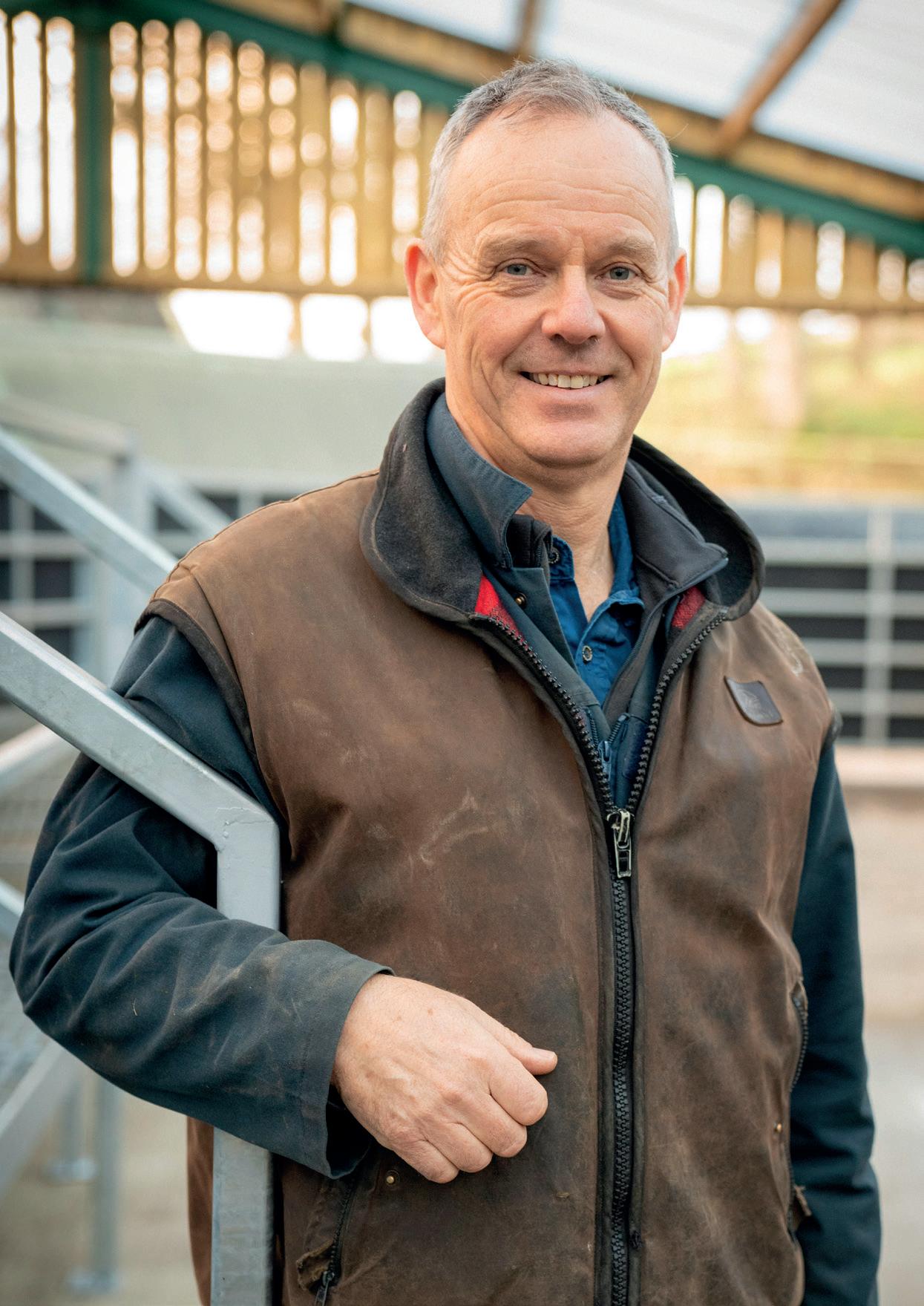

Exploring the people, purpose, and community behind Scotland’s red meat sector through Quality Meat Scotland’s Cutting-Edge Roles in Red Meat campaign, Megan Williams writes
On a crisp December morning in the Borders, Upper Nisbet Farm offered a glimpse into what truly sustains Scotland’s red meat sector: community. I was there as a fly on the wall as Quality Meat Scotland (QMS) and the Scottish Red Meat Industry Resilience Group (SRMRG) launched their new campaign, ‘CuttingEdge Roles in Red Meat’, timed with Scottish Apprenticeship Week.
The campaign aims to tackle critical labour challenges in the sector, combining practical guidance for employers with insight-led storytelling to inspire a wide range of job seekers. The toolkit brings everything together –authentic employee journeys, videos across the supply chain, recruitment tips, and evidence-informed messaging – all designed to engage key audiences like students, school leavers, and career changers.
As a business here in the Scottish Borders, we’ve probably got thirty or forty different businesses that we use
Arriving early with the QMS team and Sandy, the videographer, it was clear that this day was about much more than recruitment. It was about people, purpose, and the intricate network that makes Scottish red meat possible.
Throughout the day, we spoke with everyone contributing to Upper Nisbet Farm – from livestock buyers and feed specialists to farm workers and the hoof trimmer. Each story was a reminder that farming is never a solo effort; it is a tapestry of skills, dedication, and shared commitment, working together to sustain a sector that is vital to Scotland.
At the heart of it was Robert Neill, Vice President and farmer at Upper Nisbet, who spoke about the teamwork and opportunities within
modern livestock farming. “As a business here in the Scottish Borders, we’ve probably got thirty or forty different businesses that we use, we tap into – whether that’s agronomy, veterinary services, even going to a bank, your accountants”. When it comes to help closer to home, Robert’s role makes even more sense in the context of the wider team around him. In particular, his sons, Andrew and Harry Neill, who represent the next generation – hands-on, practical, and, in Harry’s own words, “excited to see where technology is going” and the future of the farm.
Beyond the farm gate, the community stretches further.
Hunter Parsons, Livestock Buyer for ABP, shared his perspective on progressing into the role and what he loves most about it – highlighting the wider network that supports farmers, stating: “It’s quite a rewarding job, we can provide the farmer with a good deal and they’re satisfied”.
As the day progressed, more pickups arrived and left the busy farm – each greeted with a laugh and catch-up – and every person revealed their own reasons for working in the industry. Yet the same theme ran through them all: pride in producing high-quality Scottish food.
Keiran Wilkinson of Performance Feeds, an independent feed merchant in the Borders, demonstrated the importance of feed specialists for livestock health and performance, showing the technical knowledge needed to optimise feed decisions. “Every day is different – and I work closely alongside the farmer rather than trying to sell something,” Keiran told us. “We silage sample, grain sample, just to try, and get the farmer to enhance what he’s already got
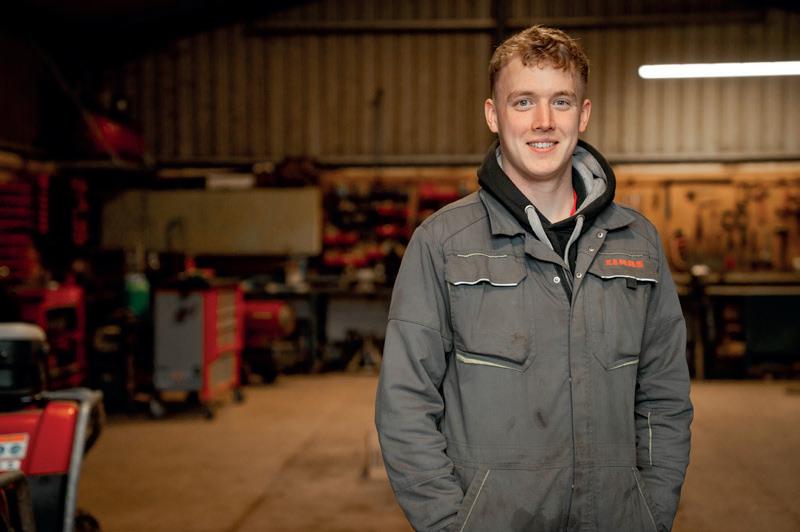
on the farm rather than buying things in”.
Meanwhile, Tim the foot trimmer highlighted another often unseen but critical role – protecting animal welfare and keeping the herd productive. Watching Tim remove an infection from a cow’s hoof underscored the skill, trust, and relationships required for these jobs. It became clear throughout the day that Scottish red meat is not produced by individuals working in isolation. It is sustained by an interdependent rural workforce: farmers, family members, feed advisers, vets, contractors, processors, butchers, and retailers. Every role matters. Every link strengthens the chain.
Campaigns like Cutting-Edge Roles in Red Meat matter because many outside the industry simply don’t see this community. People may picture a farmer in a field, but not the wider team that makes that work possible. By showcasing real people in real roles, the campaign reveals an industry that is modern, skilled, and open to all.
Recent research from EssenceMediacom, commissioned by QMS, highlighted that while interest in the sector is high, with 92% of respondents
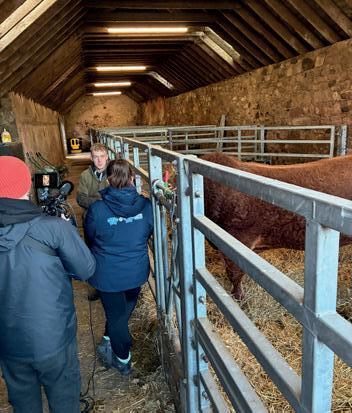
saying they would consider a role in the red meat sector – many people don’t know what roles exist or how to get started.
Commenting on the campaign, Kate Rowell, Chair of Quality Meat Scotland, said: “The research shows people are open to careers in the red meat sector –which only grows when they learn about the variety of roles available – but they want clarity, real examples, and access to entry. The Cutting-Edge Roles in Red Meat partnership campaign highlights that the Scottish red meat supply chain is open to all. Whether you’re from the industry or not, there really is something for everyone.
“The videos and case studies bring to
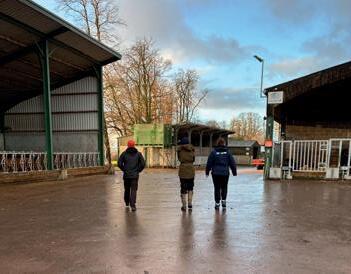
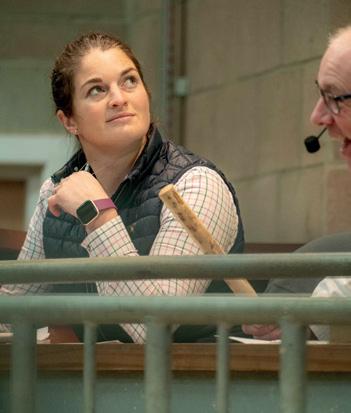
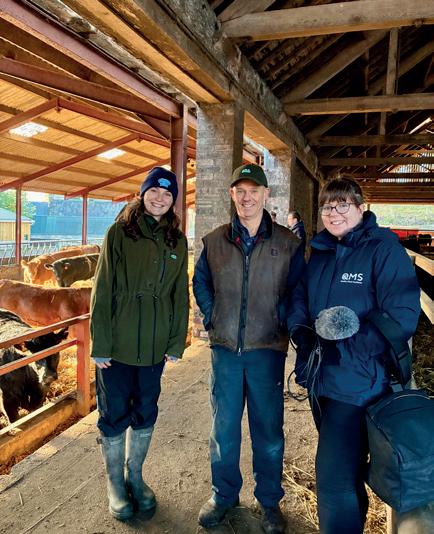
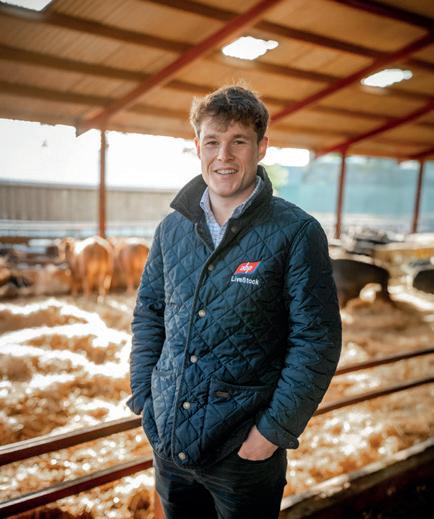
life what working in the industry is actually like and where it can take you. It covers everything from production and health and safety, to trade, processing, butchery, agriculture business, and tech roles.”
Farming builds community in multiple ways: it creates employment across rural Scotland, keeps local businesses viable, passes knowledge from one generation to the next, and fosters collaboration –especially in challenging times marked by volatile markets, rising costs, and extreme weather.
As we packed away for the day, the farm carried on as it always does. Livestock still needed tending. Feed still needed checking. Work continued –quietly, collectively.
Find out more about the campaign here QMS0103517Roles-in-Red-MeatToolkit-R5_1902A.pdf or by scanning the QR code.


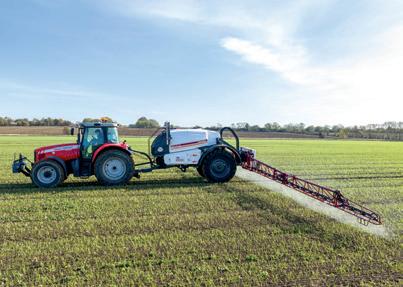

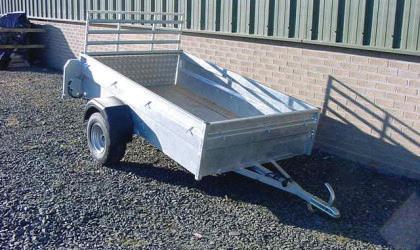
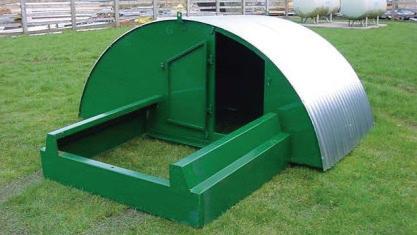

OREGIONAL POLICY ADVISOR
John Laughton
01856 872 048
john_laughton@nfus.org.uk
n the weekend of 6th and 7th June, the great rugby rivalries of Caithness and Orkney come together for the 4th annual Come Ashore Cup. This is not just a rugby match but an event that brings rural and farming communities together, essentially highlighting how important it is that we connect and support each other.
The event was born out of tragedy following the loss of Caithness farmer
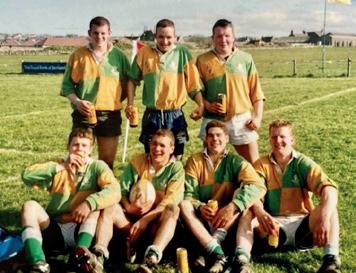
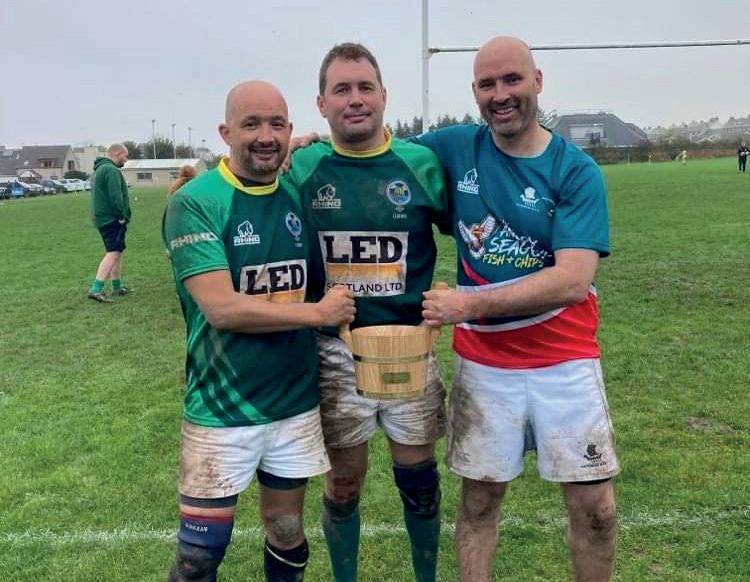
Alexander Mill at just 45 years of age in April 2021. It promotes the importance of spending time together, talking, connecting and wellbeing.
The Come Ashore Cup itself is a traditional Orkney bridal cog mounted on an engraved Caithness stone base. Very simple and understated but so significant in that it has helped a community to come to terms with the loss of a loved one. ‘Come ashore’ were the words used by Alexander to invite people in.
The event alternates between Orkney and Caithness with the latter hosting it this year. Organiser, and Alexander’s cousin, Russell Mill has been working hard behind the scenes to expand the 2026 event. Things kick off on Friday night with a comedy session from Farmer Jim. On Saturday there will be the usual memorial
WREGIONAL MANAGER
Kate Maitland
07919 001 23 kate.maitland@nfus.org.uk
ith lambing, sowing, calving and planting well underway, there is hopefully a glimmer of light at the end of the tunnel and an easing or change to the workload. With that in mind perhaps you may find yourself at a local show, an opportunity to catch up with many and hopefully NFUS too.
NFUS plans to have a presence at a
number of local shows. Please look out for us and take the opportunity to quiz us on the work NFUS undertakes. We aim to be at the following shows.
Fife Show Saturday 23 May
West Fife Show Saturday 6 June
Angus Show Saturday 6 June
Alyth Show Saturday 13 June
Kirriemuir Show Saturday 18 July
Braco Show Saturday 25 July
Perth Show Friday 31 JulySaturday 1 August
Kinross Show Saturday 8 August
Aberfeldy Show Saturday 8 August
The Flame Awards returns to East Central NFU Scotland’s hard-working Fife office team. Phil Daughtrey and Stewart Duncan have been awarded the Membership
rugby match itself between fierce rivals, now rugby veterans, Caithness Evergreens and Orkney Vikings. But there will also be a ‘secondary’ game – details to be announced along with (potentially) a special guest! There will be a farm tour in the morning, as well as the usual stalls including crafts, arts, food and drink, and much, much more.
Russell is keen to extend the reach of the event beyond Orkney and Caithness to the wider rugby and farming communities – to grow on the success of the coming together of people and the opportunity to talk.
Farmstrong and RSABI will be the very worthy beneficiaries of the fund-raising activities during the weekend.
The event is open to anyone to attend, and it is shaping up to be a great weekend.
Flame – the union’s award to recognise outstanding efforts in recruitment and retention of members.
Looking after the interests of 320 plus members across two branches – North East Fife and West Fife and Kinross – the Fife office finished 2025 exceeding subscription income target and scored highly across all competition criteria, outperforming other agencies across Scotland.
NFUS has hosted several meetings throughout the area on the Changes to Greening and Environmental Favored Areas (EFA). There is still a degree of uncertainty, and I would like to encourage all members to take time to read the new guidance which can be found online, or if you have any concerns by all means please contact me.
LOTHIAN AND BORDERS

REGIONAL MANAGER
Lindsay Brown
07780 441 750 lindsay.brown@nfus.org.uk
Irecently attended the Lothians Women in Agriculture meeting, which was hosted by Yester Dairy in Gifford. The focus of the meeting was on diversification in farming, a topic of growing importance for rural businesses looking to innovate and add value.
A highlight of the session was Jackie McCreery sharing their journey of expanding the dairy business by producing a variety of cheeses and yogurts directly on the farm. Jackie spoke about the many challenges they faced
ARGYLL & ISLANDS
REGIONAL MANAGER
Lucy Sumsion
07787 434 104 lucy.sumsion@nfus.org.uk
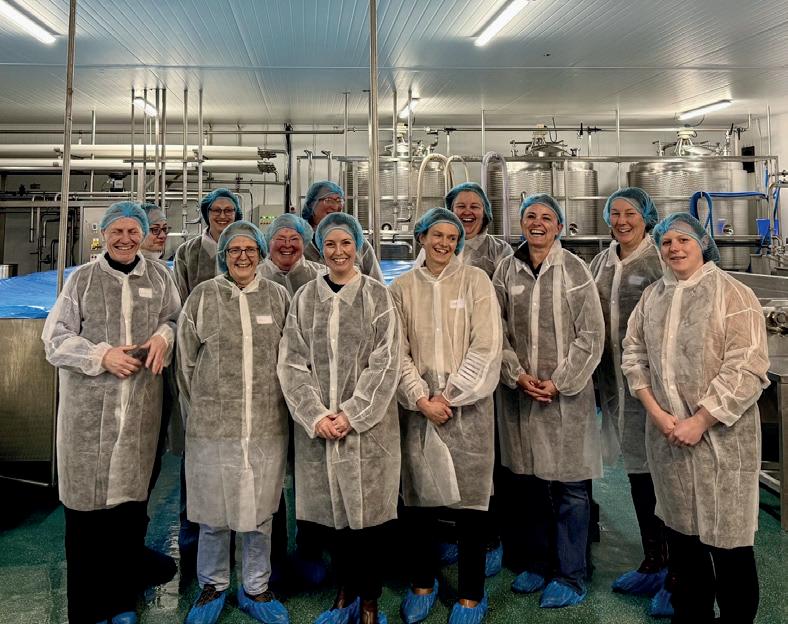
Talong the way, requiring quick adaptation.
We also enjoyed a tour of the cheese factory and steading, which offered a fascinating behind-the-scenes look at how raw milk is transformed into artisanal products. It was inspiring to see firsthand the combination of traditional techniques and innovative.
In addition, RSABI gave an informative
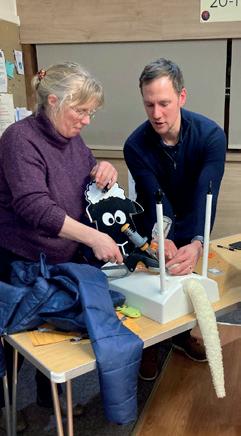
t the end of February two inperson meetings were held in Lochgilphead and on Arran to discuss the current lamb castration and tail docking options and the proposals contained in the DEFRA consultation (which closed on 9 March). Both meetings were held in partnership with SAC Consulting and local vets – Dalriada Vets in Lochgilphead and Arran Vets Ltd – resulting in a large turnout of interested farmers and crofters. At the Lochgilphead meeting, we had representatives from Numnuts and Clipfitters explaining how their systems work.
Current legislation in Scotland allows lambs to be castrated and tail-docked using rubber rings without anesthetic up to 7 days old. For lambs older than 7 days, and up to 3 months, if rubber rings are used then a local anaesthetic must be administered; the Numnuts system uses this method. Alternatively, a mechanical clip can be used without local anaesthetic, such as Clipfitter.
presentation on their work supporting the agricultural community, including their mental health first aid training. This part of the meeting underscored the importance of wellbeing and support networks in farming, highlighting that diversification and business development go hand-inhand with caring for the people behind the farm.
The Sea Eagle Management Scheme (SEMS) provides support to farmers and crofters affected by white-tailed eagle (also known as sea eagle) predation of livestock.
The Scottish Government recently announced £1 million for the SEMS in 2026 and those who participated in the Scheme last year will have their Management Agreements extended for 2026. Successful new applicants for the Scheme this year have been notified of the outcome of their application.
NatureScot will issue Management Agreement offers for the 2026 SEMS in due course. These are issued by email and are legally required to be returned/accepted within 30 days of their issue. The process for returning offers is detailed in the email from NatureScot and it is essential that these are returned within the required timescales.
For those who have not applied before, the SEMS is open to new Register of Interests from now until the 31st of May 2026. This is for potential new entrants seeking support from the Scheme in 2027. The submission of a Register of Interest is the first step in the process to apply to the SEMS for support. The SEMS application window for support in 2027 closes on the 31st of July 2026. Support in 2027 is subject to budgetary approvals.
Lorna Paterson
07786 860 453 lorna.paterson@nfus.org.uk
uring late February, Banffshire branch hosted a visit to the Cabrach Trust’s new Acorn Centre Distillery, extending the invitation to members from New Deer, Huntly-Insch, and Turriff. The Cabrach Trust is successfully breathing new life into the area, with ambitious plans for population growth and economic regeneration. Group Secretaries Richard and Rosslyn, along with our members, were keen to support their efforts. Almost 60 members attended, enjoying a guided tour of the distillery, followed by supper and an update from Director of Policy Jonnie Hall on the new Greening regulations.
The Royal Northern Agricultural Society hosted our annual – and very successful – Spring Show on 25 February. Attendees enjoyed an impressive display of stock, fantastic competitions for local produce, lively banter, and engaging conversations, all fostering a strong sense of camaraderie. Events like this are so important for everyone’s mental wellbeing and provide a welcome lift amid the current uncertainty in our industry. Thank you to all our staff and members
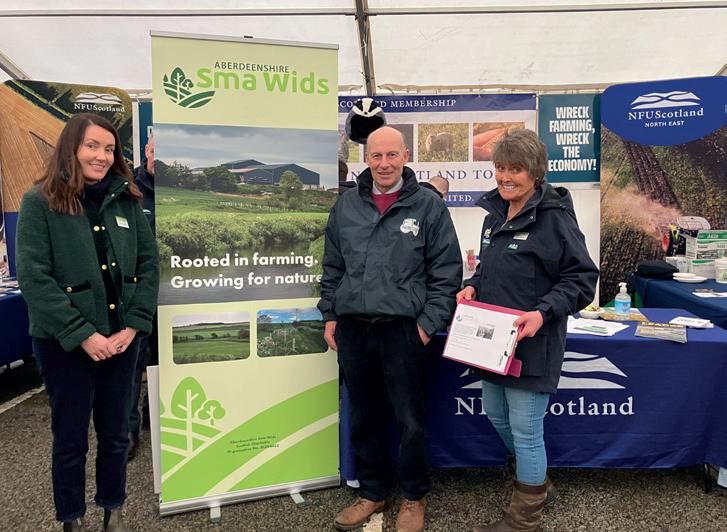
for supporting our stand, which helped us win the RNAS First Prize Award for the top Indoor Stand, judged by Cameron MacIver and John Sim – a very humbling recognition from such respected stalwarts.
Our Combinable Crops Chairs, Russell Rennie and Scott Campbell, also arranged a visit to Aberdeen South Harbour to explore potential opportunities for exporting grain. Local hauliers and agritrade businesses were invited to ensure the discussion was comprehensive and focused. Policy Manager David Michie
and East Central members attended in person, while some Highland members joined online. During the meeting, hauliers agreed to hold a more detailed discussion with Chris Whetham from Aberdeen Harbour to explore improvements to logistical intake operations. Since then, Scott Campbell, haulier Doug Dawson, and Aberdeen Harbour staff were interviewed by Haley Bouma from STV to highlight the challenges facing our arable sector and showcase how key players are collaborating to address them.
SHETLAND
OREGIONAL POLICY ADVISOR Lee Smith
07554 741 030 lee.smith@nfus.org.uk
ver the past month the main discussion point amongst crofters and farmers has been around castration and tail docking. While this is in the Scottish Governments eye, crofters and farmers worry once again about the potential changes coming.
The UK-wide government consultation that closed in March proposed tighter restrictions on lamb castration and tail docking. NFUS consulted with members and responded to the consultation.
According to government evidence, current practices, specifically using rubber rings in the first seven days, causes more pain than previously understood. The aim is to align practices with scientific evidence, reducing unnecessary pain and standardising rules across the UK.
However, many crofters and farmers in Shetland, particularly those lambing indoors during April and May, view ringing within the first seven days as a practical, efficient, and manageable system that works within the realities of lambing season.
As the consultation process concludes and evidence is reviewed, crofters and farmers now wait to see what changes will be introduced. For many, the hope is that practical farming and crofting practices will be carefully considered alongside animal welfare.
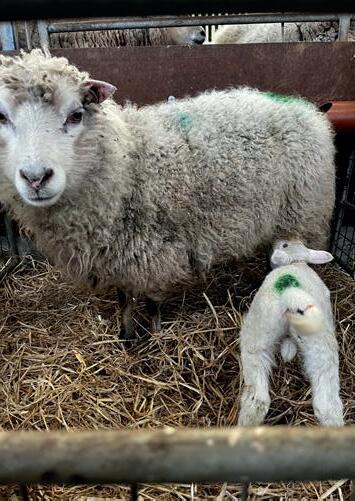
www.edwinthompson.co.uk
Berwick: 01289 304432
Carlisle: 01228 548385
Galashiels: 01896 751300
From offices throughout Scotland, Northumberland and Cumbria with a specialist rural and agriculture department, we provide comprehensive consultancy and management service covering all aspects of rural property.
Budgeting & Cashflow Monitoring
Strategic Business Planning
Grazing Lets & Cropping Agreements
Record Keeping & Performance Analysis
Contract Farming & Share Farming Agreements
Farm Advisroy Service Reports & Advice
Environmental & Subsidies Claims
Carbon Audits & Natural Capital




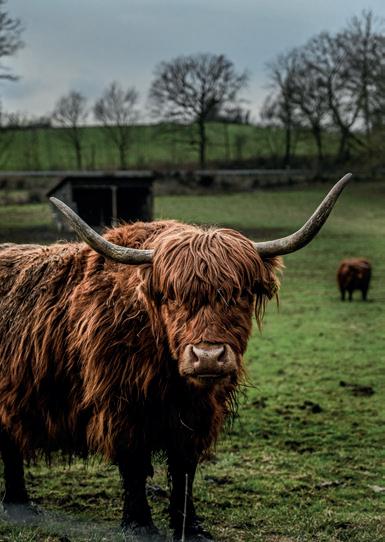

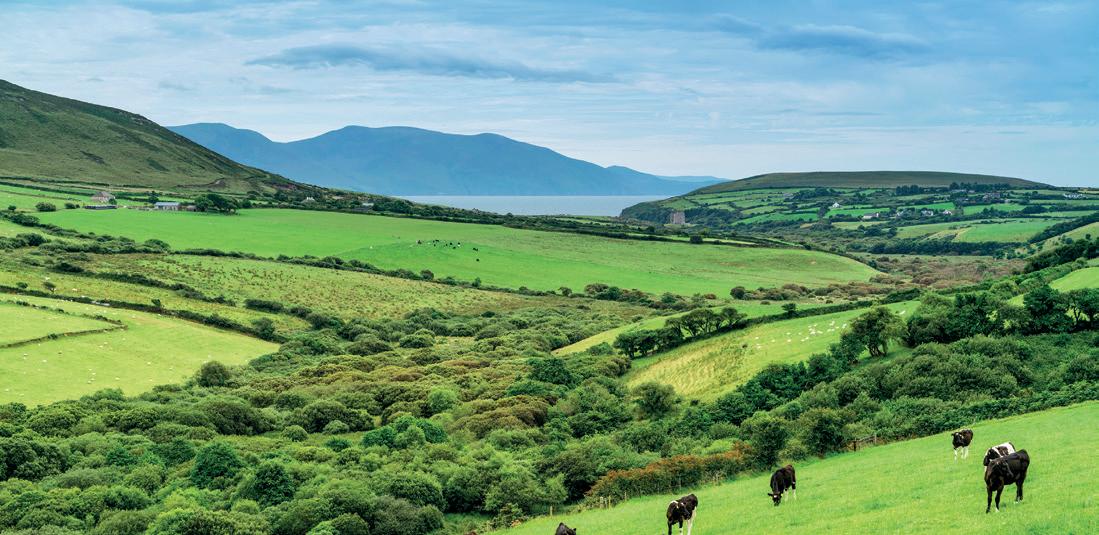
07836 637638
mungogriddell@live.co.uk

OXDALE PRODUCTS LOG SPLITTERS
• Linkage mounted • Electric motor & petrol engine powered models available along with the full Oxdale Products range
• Quality, British built equipment
• TM400 wide base linkage mounted model shown

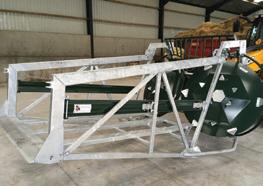


FEROBIDE WELDABLE TUNGSTEN TILES
• Extend the wearing life on certain soil engaging parts, reduce seasonable downtime & improve machine field efficiency
• Most popular tile sizes available
WARTHOG MACHINERY LOADER MOUNTED BIG RECTANGULAR BALE SHREDDER
• Handles all sizes of big rectangular bale
• User friendly • Durable & reliable
• British made product • Fully galvanised frame
Synchronised A.I., Freeze Branding Pregnancy Scanning (DEFRA licensed)
Semen Sales and Products
Supplier of Easy Boss E oral distraction devices and Moocall SMS calving alert sensor
Nitrogen Top Up Service
Tel: 01501 78553223
Moobbilee: 07850 184 313 Emaail: srcattleseervicces@bttccoonnnnect.com m wwww w srrcaatttleservicces co u uk
• Low maintenance unit
• Ideal for busy livestock farmers
ALL NEW & SECONDHAND EQUIPMENT ENQUIRIES WELCOMED

• FAE RCU – compact, remote control
• Bracken & gorse control
• Shooting ride creation & maintenance
• Fire breaks
• Scrub clearance
• Long-lasting, high-quality fencing for farms, estates & rural businesses
• Bespoke solutions designed to fit your land
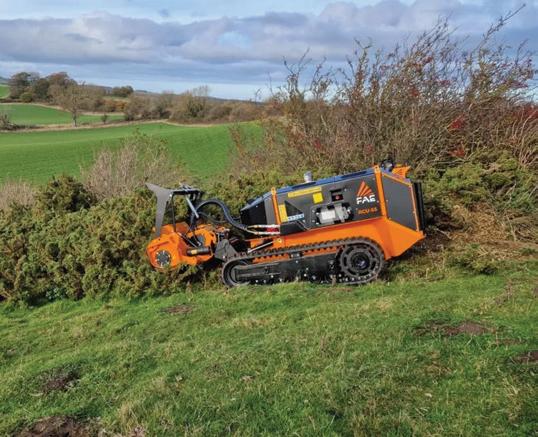
FORTH & CLYDE

MREGIONAL MANAGER
Sheena Foster
07789 796 582
sheena.foster@nfus.org.uk
embers from across the Bearsden branch area (Balfron and Menteith, Balquhidder and Killin, Kelvin and Dumbarton, and Kilpatrick) gathered for an enjoyable Burns Supper evening at Fintry Sports Club, organised by new
Group Secretary Mark McBrearty.
Held just before the busy lambing and calving season got underway, the evening provided a welcome opportunity for members to come together and enjoy some well-earned downtime ahead of the spring pressures.
A superb feast was prepared by Brenda and her team at Fintry Sports Club, setting the tone for a memorable night of good food and company. The meal was warmly received and greatly appreciated by all in attendance.
Regional Chair Rona Nicolson chaired the event, keeping proceedings flowing
It has been a busy and rewarding period for RHET (Royal Highland Education Trust) activity across the region, with NFU Scotland members once again stepping forward to support vital education work linking farming and food production with local schools.
A number of members opened the gates of their farms to host school visits, while others volunteered their time to assist at organised events.
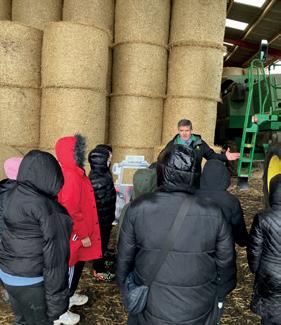
Renfrewshire member Willie Harper kindly hosted school pupils on his farm over two days, giving them the opportunity to experience farming first-hand. The events were well supported by a number of familiar NFU Scotland faces who volunteered to help across the two days, myself included.
In Avon and Nethan, Jim Dyet also welcomed a school group onto his farm, providing an invaluable hands-on learning experience and helping children better understand where their food comes from and the care that goes into producing it.
Regional Chair Rona Nicolson attended the RHET event at United Auctions in Stirling, where around 250 school pupils were in attendance. The scale of the event highlighted the growing interest in agricultural education and the importance of collaboration between farmers, auction marts and volunteers to deliver these opportunities.
These events not only showcase the industry in a positive light but also help build lasting connections between farming and the wider community. Thank you to all members who gave their time and to RHET, your efforts make a real difference in shaping young people’s understanding of Scottish agriculture.
smoothly throughout the evening. The entertainment was provided by members from within the branches, showcasing the talent across the region. David Scott-Park piped in the haggis, followed by a lively and engaging Address to the Haggis from John McGregor. Charlie Methven delivered a spirited rendition of Tam O’ Shanter, while Bryony McGregor provided musical accompaniment, adding to the celebratory atmosphere.
The event was a great success and demonstrated the value of branch activities in strengthening connections and camaraderie across the region.
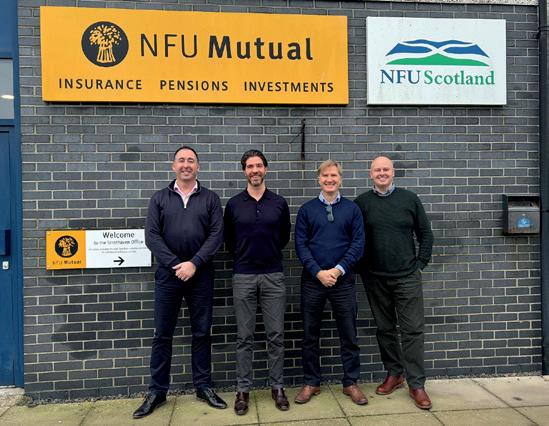
From March 2026, the NFU Mutual Bearsden office will join with NFU Mutual Strathaven and the Lanark Agency to form the Strathaven, Lanark and Bearsden Agency, with all three offices remaining open.
The merger will bring together the strengths of both businesses, enhancing the service provided to customers and supporting future growth across the area.
Keith Thom, David Gavigan and Nigel Power, current agents at Strathaven and Lanark, will take over the running of the Bearsden business. They will be joined by Mark McBrearty, who becomes a new agent after 11 years in a variety of roles across NFU Mutual.
The strengthened partnership brings together over 40 years of experience and a broad range of expertise, helping ensure the agency continues to deliver high-quality service to customers across the region.
There will be very little change for Bearsden customers, with existing staff remaining in place. Customers will also be able to visit, email or speak to any of the three offices for insurance or Group Secretary support.
For enquiries, contact the agency at SLB@nfumutual.co.uk or call 01357 521255 or 0141 942 9461.
AYRSHIRE

TSally Kenney Guest Contibutor, from The
King’s Foundation
he Women in Farming: Cultivating Your Career course was developed in direct response to findings from the Scottish Government Women in Agriculture Taskforce. Their research demonstrated a clear gap in progression opportunities for women in the farming
HIGHLAND

RREGIONAL MANAGER
Ian Wilson 07775 915 988 ian.wilson@nfus.org.uk
ecently I had the pleasure of attending the Nairnshire Farming Society’s annual general meeting and dinner. It was a great evening with quality food and good company. The speeches and toasts were both entertaining and informative, with Show President Paul Wilson, now entering his third and final year as President, comparing the evening with many humorous contributions. With excellent timekeeping, he had a full evening in the hot seat as chairman.
The Nairnshire Farming Society is a great example of a farming group firmly rooted within its local community. The annual show is held on the edge of the town of Nairn, with many townsfolk
and agribusiness sectors.
In February, The King’s Foundation’s inaugural Women in Farming course took place over four days. Based at the MacRobert Farming and Rural Skills Centre on the Dumfries House estate, 12 participants from across the UK included rural business owners, land agents and dairy, beef and sheep farmers all keen to progress in agricultural careers or strengthen their knowledge in preparation for farm succession.
Participants visited Boswell’s Coach House, Dunlop Dairy and Ayrshire Food Hub and engaged with speakers from Farmstrong Scotland, Oxbury
Bank and Galbraith and worked together on presentations and team-building activities.
The programme was quickly recognised as a valuable networking platform. One participant commented: “In a world where women are the people standing next to the farmer, it was powerful to be alongside others who recognised and celebrated each other’s value. I feel energised for the challenges ahead and more confident. Being exposed to a range of operations and approaches has provided valuable inspiration. But it’s the people, bond and connections that will follow me into my life.”
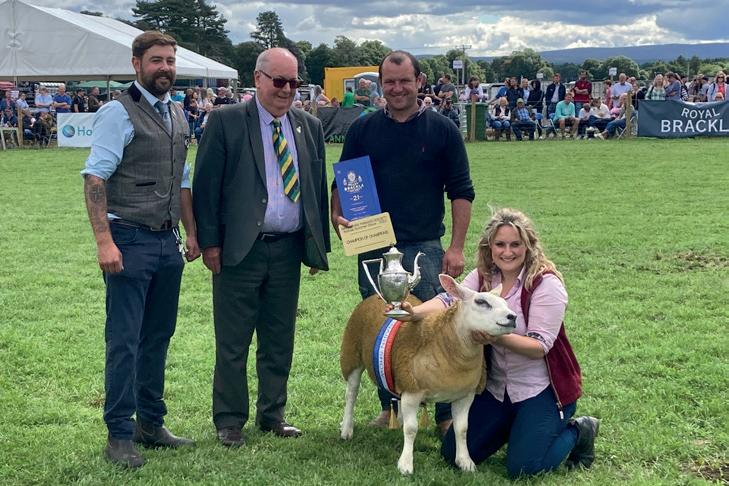
able to walk to the show and enjoy a real community day out. The society was founded in 1798, making it one of the oldest farming societies and shows in Scotland, with more than 200 years having passed since the first show.
Formed for the promotion and betterment of agriculture in Nairnshire and surrounding areas, this continues to be within its goals, along with significant charity contributions. The recent addition of a charity Christmas tractor run has seen over £30,000 raised for good causes in the last two years alone.
This long history and connection with the town of Nairn is well acknowledged with an annual toast to the town, and trade of Nairn being a feature at the annual dinner for many years. The dinner, like the show committee, brings together
people of all ages: committee ages range from 20s to 80s with a good mix of ladies and gentlemen, farming and townsfolk alike. A real community group with a common goal: the success of the annual Nairn Show – this year held on Saturday 1st of August.
A small example of the Farming Society’s ties with the local community came on the same weekend as the dinner, when the local Nairn Road Runners were able to use the Society’s crowd control barriers free of charge for its very successful annual 10k race, which saw many hundreds take part. A small but significant contribution.
Like all our country’s agricultural shows, Nairn is steeped in the local community and plays an important role in raising awareness of our quality produce.
Call and quote ‘NFUS’ for 10% off purchase price
TOTAL2 Farm Accounts
You get to choose: Run locally on your PC or in the Cloud Run Accounts efficiently with software designed specifically for Farm Businesses and their diversifications Makes MTD VAT and ITSA Submissions just a click of the mouse
Choose from simple Cashbook or comprehensive Full Accounts levels
Cover all business areas with Total agri-software: Contractors Diary


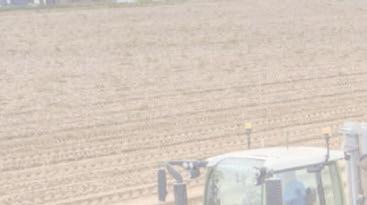



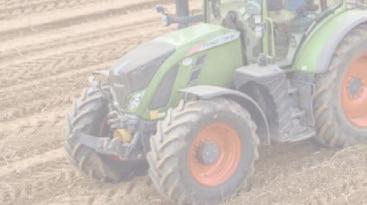
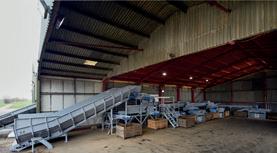
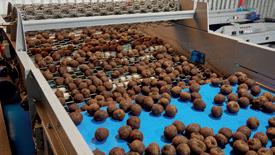

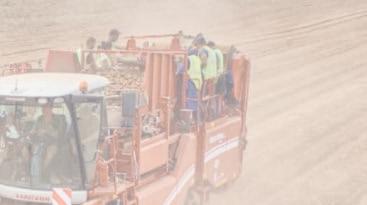

Tell us about yourself and why you decided to stand up for the role of running Animal Care Tiree.
I’m a Tiree resident with a background in community development and a longstanding involvement in Tiree Community Development Trust. When the practice closed in August 2025, a group of crofters had already been trying to find a solution, and I ended up being the person who took on coordinating the project to turn that effort into something real.
The problem was clearly solvable if you approached it differently, and once you can see that, it’s hard to walk away. Tiree has a remarkable pool of people willing to roll their sleeves up, and what we achieved was very much a collective effort. My job was to keep the plates spinning and make sure it actually happened.
Since the previous vet retired eight months ago, you said you struggled to find a replacement for the island – do you think this was location specific or part of a growing issue of shortage of vets?
Honestly, both. There is a genuine shortage of vets willing to do mixed rural practice – the profession has shifted over recent decades towards specialising in either small animal, large animal or equine. That’s a structural issue affecting rural communities across the UK, not something specific to Tiree. But the island element adds another layer. For a full time role, we are asking someone to relocate their whole life and potentially their family. So, even if we find a vet who’s drawn to island life (and some are),
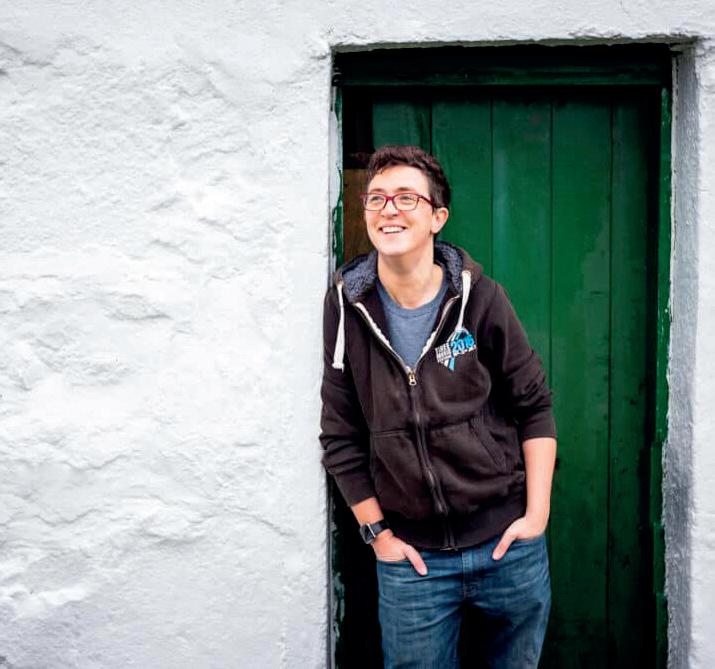
the personal circumstances need to align. What we’ve done with the locum model is effectively sidestep that problem for now. Vets get island experience without relocating permanently, and Tom Wallbank’s oversight gives us clinical continuity and RCVS compliance across the rotation. We have also employed a local practice manager who keeps the day-to-day of the practice running smoothly, and ensures there is a resident point of contact for clients.
More than 190 households have already signed up to the service – can you describe the feeling of seeing all these people come forward?
Genuinely moving, if I’m honest. This community has had a lot asked of it over the years and people respond every time, but that doesn’t make it less remarkable. Every registration was
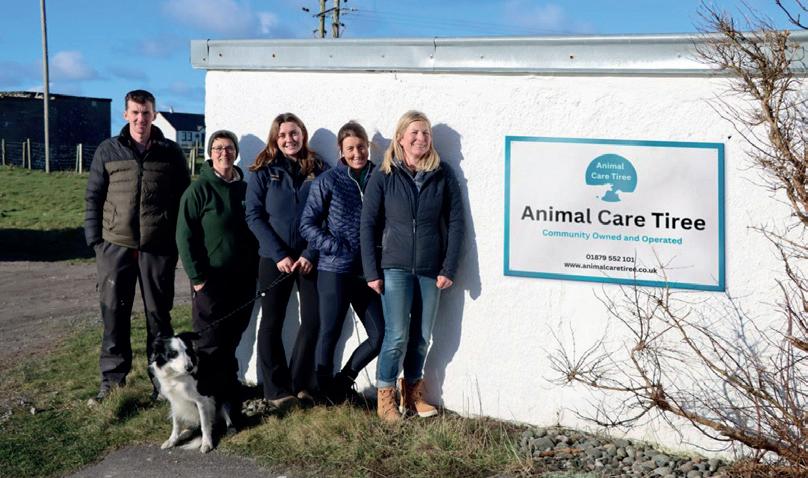
a person deciding to back something that didn’t exist yet – that takes a bit of faith. There were moments, right up to opening, when the whole thing felt quite precarious. Seeing the memberships come in now is the practical reassurance we need that we’re on the right track.
Beyond animal care, how do you see ACT influencing the wider economy, crofting confidence, and long-term sustainability?
Crofting is a fragile activity economically. Veterinary provision isn’t a nice-to-have; it’s critical infrastructure for an island with not just thousands of sheep and good beef cows, but a fair number of pedigree breeders too. We did a full economic impact assessment, and reckoned the loss of veterinary services would cost Tiree’s economy around £390,000 annually – covering direct livestock losses, supply chain effects, and reduced household spending. That’s a significant figure for an island of 700 people.
But the numbers don’t capture everything. It’s also about confidence. Are young people going to see crofting as a viable future if the support services aren’t there? Are young families going to stay, or be attracted to move here? When childcare, transport and most recently, broadband problems are already making island life feel challenging, the lack of a vet for their pet is one more thing that could tip the balance the wrong way.
Can you summarise Tiree’s community spirit in three words? Capable. Tenacious. Generous.
Scotland’s farmers and crofters manage over 75% of Scotland’s land. They produce highquality food for the nation, care for nature, support rural communities, and contribute billions to the economy. But the next decade will bring major changes in funding, climate, policy and workforce challenges. Our Manifesto sets out NFU Scotland’s clear asks to the next Scottish Government and Parliament to secure your future. This summary document highlights our top priorities and headline asks. You can read our full manifesto at www.nfus.org.uk/manifesto2026.aspx
Æ Secure Funding and Investment
• Multi-annual, ring-fenced budget
• Direct support for active farming and crofting
• Capital investment for infrastructure, resilience and new entrants
• Transparent reporting on spending and outcomes
Æ A Fair Transition to New Agricultural Support
• Co-design of new schemes
• Phased changeover
• New and fairer definitions of eligibility
• Simplified, proportionate compliance
Æ Food Security and Fair Supply Chains
• National food production target
• Fair treatment by processors and retailers
• Prioritise Scottish food in public procurement
• Support exports and market development
Æ Deliver for Climate and Nature
• Balanced land use policy – food production at the core
• Practical, effective species management
• Fund environmental actions and lowcarbon technologies
• Protect prime and productive agricultural land
• Fairly reward upland, hill and crofting systems
Æ World-Class Animal and Plant Health
• Boost surveillance and response
• Tackle vet shortages
• Work to strengthen border controls
Æ Innovation, Research and Technology
• Back applied research
• Support genetic technologies
• Deliver universal digital connectivity
Æ Support People, Skills and Rural Communities
• New entrant and young farmer opportunities
• Invest in education, skills and apprenticeships
Æ Labour, Migration and Workforce
• Seasonal worker scheme fit for Scotland
• Promote rural careers and best practice in employment
• Scrap the Scottish Agricultural Wages Board
Æ Regulation that Works
• Simplify farm regulations
• Proportionate inspections and fairer penalties
• Coordinate audits to reduce duplication
Æ Rural Infrastructure, Transport & Services
• Deliver full rural connectivity
• Invest in transport networks
• Boost local processing and supply chain infrastructure
• Enable rural housing
Æ Support Crofting, Upland and Hill Farming
• Tailored support for high-cost, high-value systems
• Reward public goods
Æ Trade, Standards and Market Access
• Protect Scottish standards in all trade deals
• Invest in export opportunities and branding
• Work in partnership with NFU Scotland and our members
• Back food producers with long-term funding and fair policies
• Champion Scottish produce at home and abroad
• Make farming and crofting the foundation of Scotland’s future