June / July 2026 Issue 135















































June / July 2026 Issue 135





STUART GOODALL CHIEF EXECUTIVE, CONFOR
These days, it feels like political turmoil and economic shocks are becoming the new normal. The Straits of Hormuz are open again (but for how long?) and we’re about to see the seventh prime minister appointed in 10 years. For comparison, between 1979 and 2016 there were just four.
And who knows what President Trump will do next? It’s clear he feels a constant need to dominate the media channels by almost any means available to him.
This trend of continual upheaval has also engulfed Scotland. The SNP had barely blown out the candles on their celebration cake when the Peter Murrell affair reared its head again with a dazzling and at times bizarre shopping list of goodies.
The whole episode has overshadowed everything the ‘new’ Government has tried to say and with new twists to the tale emerging every week, and the opposition keen to keep the story alive, it’s going to be difficult for First Minister John Swinney to set out any coherent narrative.
In contrast, the Senedd feels like a haven of calm. Though now I’ve said that…
Throughout all this, Confor’s job is to maintain a focus on promoting our members’ interests and we’ll be working with the Confor Board to define priorities for our public affairs activity for the coming year and beyond.
In that context, I’m pleased to report that our
Confor is a membership organisation that promotes sustainable forestry and wood-using businesses. Confor members receive Forestry and Timber News for free as part of their membership. For more information on membership, visit www.confor.org.uk/join-us
Past issues and articles can be accessed online at www.confor.org.uk/news/ftn-magazine
Non-member subscriptions: £77.99/(£84 overseas)
Contact FTN@confor.org.uk
Forestry and Timber News is published by Countrywide Publications on behalf of Confor.
For advertising, contact Danny Lewis 01502 725858
danny.lewis@micropress.co.uk
Printed by Micropress Printers Ltd

Timber Security is National Security campaign is securing many hundreds of signatories and members are writing to their MPs across the UK. Some of those MPs have in turn written to the Secretary of State at Defra, made statements in the House of Commons, and asked Parliamentary Questions. This is great to see.
I am very grateful to everyone who has signed up and especially those who’ve written to their MP, as well as to Forestry Journal for their support in raising awareness of the campaign within the wider industry.
We are now getting to the final stage of the campaign where we’ll be asking supportive MPs to add their names to a letter to the Prime Minister calling for a number of specific actions to increase timber production and consumption of homegrown timber.
There is still time to make a real difference, so if you haven’t signed the petition or written to your MP, please do that now – it’s quick and easy online. And do ask others to take part as well.
As I have said before, the campaign is an ambitious one for our sector, but it’s also an important one that could significantly raise the profile and importance of the industry within government.
And in a time of economic shocks and global political uncertainty, tackling our increasing reliance on imports is important and quite simply the right thing to do.

Stuart Goodall
Chief Executive
T: 0131 240 1416

E: stuartg@confor.org.uk
Andy Leitch
Deputy Chief Executive
M: 07881 510171
E: Andy.leitch@confor.org.uk


Eliza Hibbins-Cline Membership and Marketing
M: 07918 880285
E: eliza@confor.org.uk
Eleanor O’Neill
Communications Manager M: 07918 255930
E: eleanor.oneill@confor.org.uk

Dr Kate Palmer
Technical and Industry
Support Manager
E: kate@confor.org.uk

John Bruce
National Manager for England E: john.bruce@confor.org.uk

Richard Hunter
National Manager for Scotland E: richard.hunter@confor.org.uk


Elaine Heckley
National Manager for Wales E: elaine.heckley@confor.org.uk
Confor head office and editorial office 22 LG1 Forth Street, Edinburgh EH1 3LH
Follow @forestsandwood on Twitter for the latest Confor news and updates


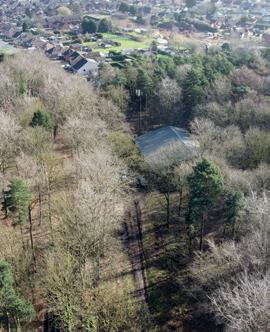
MANBY & WEST WOOD
Broughton, Nr Scunthorpe, Lincolnshire
409.25 acres / 165.62 ha

Large scale productivity and timber volume in a well-roaded and compact package close to traditional sawlog and biomass markets. Situated on high fertility well drained soils. Forest office and firewood processing building with facilities for workers included in sale.
Sporting rights owned and included. Good access. Freehold.
Guide price £2,295,000
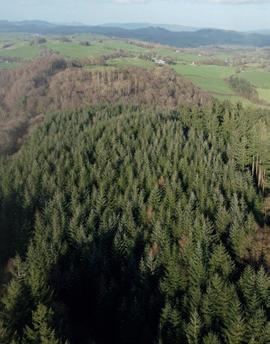
BRYN Y PENTRE
Aberhafesp, Newtown, Powys
122.18 Acres / 49.44 Ha
Attractive and productive mix of Sitka spruce, Douglas fir, Japanese larch, English and Red oak and beech with other minor species. Several areas could be thinned or felled in the near future. Good access and internal road system.


Sporting rights owned and included. Freehold.
Guide price £590,000
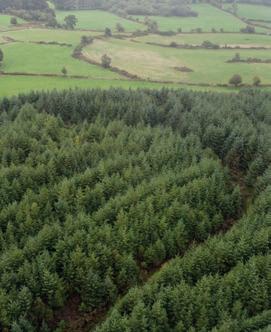
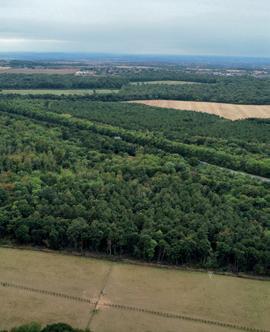
WADWORTH WOOD
Wadworth, South Yorkshire
230.24 Acres / 93.17 Ha
Mixed woodland benefitting from superb access and containing an abundance of firewood. Two distinct sections divided by the M18 motorway Sporting rights owned and included.
Good access. Freehold.
Offers around £935,000


SELATTYN HILL WOOD
Selattyn, Oswestry, Shropshire
48.32 acres / 19.55 ha
A large single-aged woodland occupying the summit of Selattyn Hill. Mainly stocked with A13 improved Sitka spruce planted 2007, this is a second rotation timber resource developing fast and approaching first thinning.
Sporting rights owned and included. Good access. Freehold.
Guide price £250,000

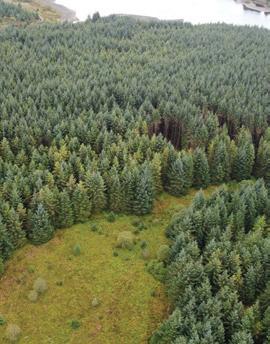
Alwen Reservoir, Cerrigydrudion, Denbighshire
149.21 Acres / 60.38 Ha
Two plantations of mainly late rotation Sitka spruce planted in the late 1980s on a technically excellent site and now with large quantities of mature timber available to harvest subject to felling licence. Good access. Freehold.
Sporting rights owned and included.
Guide price £775,000
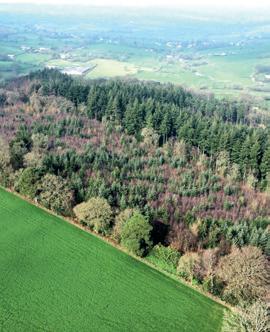


KILMINGTON
Axminster, Devon
93.29 Acres / 37.76 Ha
Mixed age commercial woodland predominately stocked with conifers from 1957, 1960s and more recent restocking.. Excellent timber growing potential. Management plan in place with 3 active felling licences. Good access. Freehold.
Sporting rights owned and included. Guide price £475,000


A survey of Confor, CLA and RFS members has highlighted unintended long-term impacts of new Inheritance Tax rules.
Asurvey of UK woodland owners, estate managers and land agents has revealed that recent changes to Inheritance Tax (IHT) make 60% of respondents less likely to invest in creating new woodland.
Only around one third believe they will not be impacted by the changes, with almost half expecting to be affected and others remaining uncertain.
Confor, the Country Land and Business Association (CLA) and the Royal Forestry Society (RFS) conducted the survey to better understand how the April 2026 changes to Agricultural Property Relief (APR) and Business Property Relief (BPR) may affect woodland owners, forestry businesses and mixed estates in practice.
The results illustrate that familyowned woodland and mixed estates may be at particular risk, with many considering earlier timber harvesting, selling woodland, altering succession arrangements or reducing future investment in woodland management.
Stuart Goodall, Chief Executive of Confor, commented: “This survey provides compelling evidence that
The report highlights several themes:
• Only around one third of respondents believe they will not be affected by the changes, with almost half expecting to be affected and others remaining uncertain.
• Nearly 60% of respondents say they are now less likely to create new woodland, directly conflicting with Government woodland creation ambitions.
• Many respondents are considering earlier timber harvesting, selling woodland, altering succession arrangements or reducing future investment in woodland management.
• The survey reinforces that forestry is often a high-value but low-income asset, with standing timber creating capital value but generating irregular and long-term returns.
• Family-owned woodland and mixed estates appear particularly vulnerable, with risks of fragmentation, earlier felling and reduced long-term management.
• The evidence suggests potential impacts on domestic timber supply, carbon storage, nature recovery and continuous cover forestry.
many woodland owners across the UK expect to be affected negatively by these inheritance tax changes.
“Nearly 60% of respondents said they are now less likely to create new woodland, and many are already considering bringing forward timber harvesting, woodland sales or restructuring ownership.
“Such actions will undermine delivery of Government’s own policies on nature recovery, carbon, timber supply and the rural economy.
“Alongside CLA and the Royal Forestry Society we will continue to make the case for forestry with Government to ensure these impacts are fully understood and to explore practical ways forward.”
Gavin Lane, CLA President, said: “A drop in tree planting, earlier felling, land sales – these are the warnings from the UK’s forestry sector, as woodlands risk becoming unintended casualties of the government’s inheritance tax changes.
“We know these reforms are hurting family-owned businesses across the UK, but their impact on forestry has received far less attention.
“The government has legally binding
environmental targets and ambitions to accelerate tree planting. This evidence suggests those goals are now in danger, undermining the sector and the investment made to date.
“We are ready to work with Government on solutions to prevent undoing the progress on environmental and tree cover targets which our survey shows will result from the IHT changes.”
Christopher Williams, Chief Executive of RFS, added: “The results of the recent survey, conducted with our partners at Confor and the CLA, show that the Government’s own targets for woodland creation, nature recovery and net zero are all threatened by the changes to inheritance tax.
“We should all be concerned that tree planting is under threat, trees are being felled prematurely, and some woods are being sold off, all of which are the unintended consequences of the tax change. Forestry provides numerous public goods upon which we all depend. We look forward to constructive dialogue with Government to address these matters at the earliest opportunity.”
The survey attracted 204 responses from across the UK. The evidence collected suggests the changes to IHT will potentially impact timber supply, carbon storage, nature recovery and continuous cover forestry on a national scale.
A strong message from respondents is that forestry differs fundamentally from most other business assets:
• Woodland is managed over
multidecadal or multi-generational timescales.
• Income is often insufficient to build reserves to meet future inheritance tax liabilities.
• Woodland owners are obligated to restock after felling, meaning they may be taxed on an asset whose value they are obliged to recreate.
These characteristics mean that IHT can have disproportionate and unintended behavioural effects in forestry.
While Confor, CLA and RFS and welcome the Government’s decision to increase the allowance for 100% APR/ BPR from £1 million to £2.5 million per person, the survey results suggest that woodland owners and mixed estates remain more exposed than national estimates imply.
On behalf of members, the three organisations are now formally engaging with HM Treasury, with Defra and the Forestry Commission included in discussions.
A particular area identified in the full survey report is whether a reformed Woodlands Relief could be a solution. The report outlines a potential approach that would treat woodland land and timber as a single asset and defer inheritance tax until woodland is sold, while still ensuring tax is paid if value is ultimately realised.
Confor will continue to work jointly to ensure woodland, forestry and mixed estates are properly understood within future tax policy discussions.

What devolved elections in Wales and Scotland mean for forestry and wood processing
Neil Cuthbert, PA Cooperative Director, reviews the results of the recent elections and shares what they may mean for forestry.
The dust has now settled on two of the most consequential devolved elections for forestry in a generation - and the results on both sides of the border deserve careful reading by anyone with an interest in woodland creation, timber supply, and rural land use.
Scotland: Minority government, familiar faces, new pressures
The SNP won 58 seats at Holyrood on 7 May, down from 64 at the 2021 election, and short of the 65 needed for a majority. Reform UK entered the Scottish Parliament for the first time, winning 17 seats on the regional list – a result that reshaped the opposition benches alongside Labour, also on 17 seats. The Scottish Greens won 15 seats, the Scottish Conservatives 12, and the Scottish Liberal Democrats 10, meaning all parties other than the SNP returned fewer than 20 MSPs.
John Swinney remains First Minister, having secured the Parliament’s confidence to continue governing Scotland following what the SNP is calling a historic fifth consecutive election victory.







dependent on parliamentary arithmetic, and Reform’s populist scepticism of environmental spending now a feature of the chamber, achieving the new Government’s ambitions will require compromise with one or more of the smaller parties at Holyrood to pass important legislation like the annual budget.
In the wake of the results, the primary concern for the forestry industry centred on the ministerial appointments for the rural portfolio. Gillian Martin MSP has been appointed Cabinet Secretary for Climate Action and Rural Affairs - a combined portfolio that now brings together forestry, land reform, agriculture, food and drink, fisheries, and island communities under a single Cabinet Secretary.
Ms Martin is a known quantity in climate and energy policy, having served previously as Cabinet Secretary for Climate Action and Energy, but her relationship with parts of the rural sector has already faced scrutiny, following a difficult appearance at an NFU Scotland hustings event during the campaign
where some audience members were openly hostile.
Jim Fairlie MSP has retained his position as Minister for Agriculture, now with the added responsibilities of marine, islands and – crucially for the sectorforestry. Mr Fairlie comes from a sheep farming background in Perthshire and has been one of the Scottish Government’s central figures on agricultural and rural policy since joining the ministerial team in 2024. He has shown himself to be an engaged and direct minister on agricultural matters; the question is whether that same energy extends to woodland creation, timber supply, and the gap between the SNP’s planting targets and actual delivery.
Few MSPs will have his knowledge of countryside matters generally but there is an understandable concern that his personal experience and background might mean his focus will be on the farming side of this portfolio rather than forestry.
He has gone on record previously with warm words about the importance of woodland creation in the fight against
The SNP’s manifesto sets an ambitious woodland creation target of 18,000 hectares per year by 2029.” “





The SNP’s manifesto sets an ambitious woodland creation target of 18,000 hectares per year by 2029, against a backdrop in which the outgoing government delivered just 8,470 hectares of new woodland in 2024-25.


That gap between ambition and delivery will be the central test of the new administration’s commitment to forestry. With a minority government




climate change and as a key economic driver for rural development in Scotland. His advisers should sense the unease and ensure that engagement with forestry and wood processing representatives is an early feature of his Ministerial calendar.

If Scotland’s result was a story of gradual fragmentation, Wales delivered a genuine rupture. Plaid Cymru won the most seats in the Senedd, marking the first time since devolution in 1999 that Welsh Labour has not come first. Plaid secured 43 seats, with Reform UK second on 34; Welsh Labour was reduced to just nine















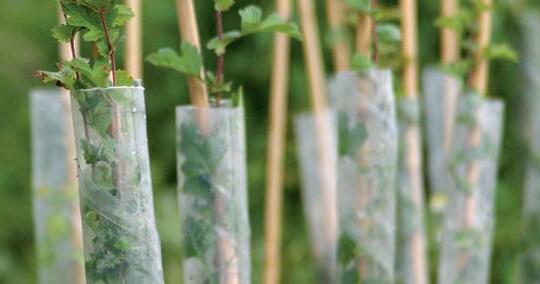






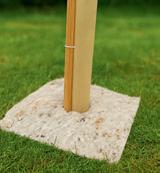
• Protects saplings from Rabbits, Hares, and Systemic Herbicides
• Expands with the natural growth of the tree
• Can be supplied ventilated if required
• Available in clear, brown or green finishes
• 40mm and 50mm diameter tube sizes
• Order direct from the manufacturer












seats in what amounted to a historic collapse, and leader former First Minister Eluned Morgan lost her own seat. The Conservatives won seven seats, the Greens entered the Senedd for the first time with two seats, and the Liberal Democrats held on to one.
Plaid leader Rhun ap Iorwerth was subsequently elected First Minister, supported by the two Green Members, and will lead a minority government.
For forestry and timber, the Welsh result is potentially significant. Plaid Cymru was the only party in either devolved election to anchor delivery of the Welsh Timber Industrial Strategy - launched by the outgoing Labour government in 2025 - to a named institution, proposing a National Development Agency to drive it forward. Welsh Labour’s manifesto, by contrast, mentioned timber only once, pledging merely to “support a sustainable timber industry”.
Plaid’s manifesto also committed to prioritising native woodland creation, restoration, and mixed woodlands, while “avoiding large-scale corporate plantations created solely for carbon offsetting” That last clause should trigger alarm bells from the commercial forestry sector, which will want assurance that the new Welsh Government’s woodland ambitions extend beyond amenity
planting to the productive timber and carbon markets that underpin investment.
Llŷr Gruffydd, Plaid’s former rural affairs spokesman, has been appointed Minister for Rural Resilience, with responsibility for farming. Forestry sits within that portfolio area, and Gruffydd’s background as the party’s rural affairs voice in opposition means he arrives with at least a working knowledge of the sector’s concerns.
Former Plaid leader Adam Price takes on the enterprise, connectivity and energy brief, which will be relevant to timber supply chain and processing investment. The absence of an explicit forestry minister (mirroring the position in Scotland) means industry will need to work across both portfolios to land its priorities.
Both results leave the forestry sector with work to do. New ministers, new parliamentary arithmetic - and in Wales an entirely new governing party - all mean the industry’s relationships need rebuilding from the ground up.
The SNP’s unmet planting targets and Plaid’s untested timber strategy are both opportunities that Confor and the wider forest and wood process sector can respond to positively. The industry
is widely respected amongst elected representatives of all parties for the way in which it uses carefully thought-out evidence to back its aims.
As the global business landscape shifts, these objectives continue to progress. Confor recognises the escalating threats to supply chains and aims to mitigate these long-term risks by ensuring a greater proportion of the timber consumed in the UK is harvested sustainably from domestic sources.
The issue of timber security is resonating more and more with politicians at Westminster thanks to recent Confor activity, while the industry-led Trust UK C16 campaign to specify more homegrown timber in construction is gaining real momentum.
It is crucial to communicate the central messages of these campaigns, and the wider benefits of forestry and wood, and to do so confidently and effectively. By adding in specific messaging relevant to Wales and Scotland, these campaigns can resonate and win support from the new Governments in both Cardiff and Edinburgh.
There are challenges ahead, but the industry must rise to them - and seize the opportunities in an uncertain world where security of supply will remain high up the political agenda.
The UK Squirrel Accord is asking landowners, managers and anyone with owner permission to carry out tree damage surveys in woods to better understand the bark stripping impacts of grey squirrels across the UK.
Using the National Forest’s monitoring method, the UK Squirrel Accord encourages the surveying of woods to assess the damage being inflicted on trees by invasive grey squirrels. Then report it on UKSA’s tree damage survey for 2025 by the end of December to build a national picture. The results are also useful for feeding into individual management plans and actions.
This can take place in any wood with permission. The methodology involves walking through the woodland and recording fresh and cumulative grey squirrel tree damage at regular intervals.
Ed Hiorns, National Forest, said:
“This is an important opportunity to collate activity and impact assessment scores across the country. The survey has been specifically designed to allow woodland owners and managers of all backgrounds to monitor grey squirrel damage and to help understand the impact. This can provide a key insight and driver for grey squirrel management, which should absolutely be at the forefront of every woodland owner and manager’s mind.”
flood management. Healthy trees and woods are also vital for native species, including red squirrels whose survival is also threatened by introduced grey squirrels.
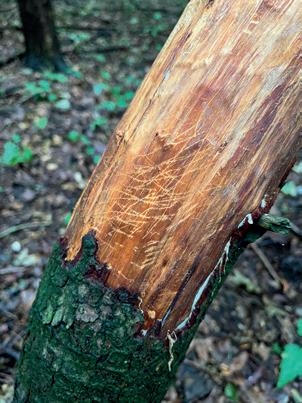
Tree sapling killed by grey squirrel bark stripping.
Grey squirrels pose one of the greatest threats to the creation of healthy new woods for the future. Their bark stripping activities damage, stress and kill young trees needed for all the important functions they provide, such as carbon sequestration and
Kay Haw, UK Squirrel Accord, said: “We need to protect the UK’s trees and woods from threats that include grey squirrels. Damage from bark stripping reduces the ability of woodland ecosystems to deliver important functions.
We hope people will get involved in this survey to help us build a clearer understanding of the problem we face.”
Survey guidance and resources may be found on the UK Squirrel Accord website.
Richard Hunter, National Manager for Scotland, attended the Royal Highland Show at Ingliston on behalf of Confor in June.
Each year we visit the Royal Highland Show (RHS) and try to bring you a few highlights. As anyone who works any of the large annual rural shows will know, not much changes year on year. So my task is to keep you reading with a slightly different reflection than normal.
The usual suspects
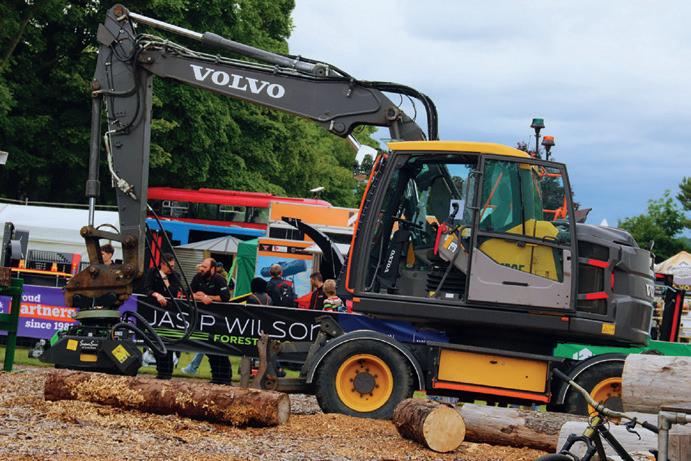
Friday morning, the weather held. The forestry arena was filled with timber and machinery, member stands open and receiving visitors – a good start to the day.
Scottish Land & Estates hosted an Integrating Trees Network (ITN) talk in partnership with Scottish Forestry (SF), welcoming keynote speakers Jim Fairlie MSP and Samantha Malpass, SF Director of Policy and Practice, into their marquee.
Both spoke about the benefits of trees on farms, highlighting that all types of trees in all locations are needed in the battle to combat climate change and hit net zero targets. While agroforestry or trees on farms are not normally timber producing, this does benefit the sector; positive experiences of tree planting can lead to further and larger schemes.
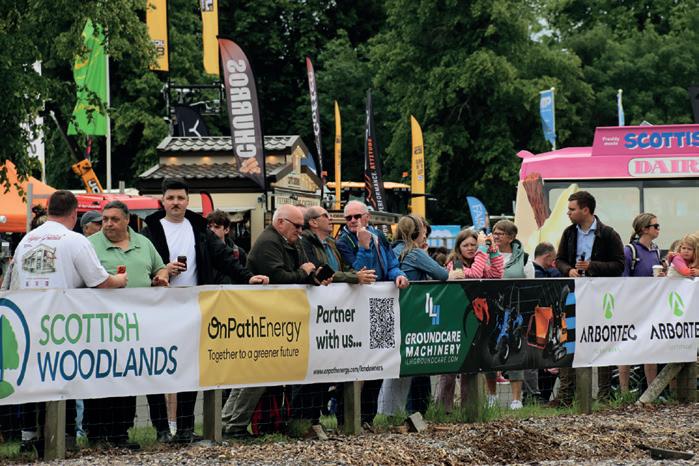
Of course, networking is a main stay of the Show, and visiting member stands and having that informal 1:1 time is important, but so is the networking outside of the sector, such as with the Police Scotland SPARC (Scottish Partnership Against Rural Crime) team, who were celebrating their 10th anniversary.
Due to heightened fuel and metal prices along with alleged wildlife crime, Confor has proposed to undertake additional work with SPARC to counter these issues.
And the not-so-usual
Many of you will know that I have a farming background and always try to find time to see some of the cattle (not sheep) entries. This year I found five minutes to watch the native beef bulls, including Shorthorn, Lincon Reds and Aberdeen Angus. While the judging was on going, the commentor rattled off information highlighting that these breeds would all do well on rough marginal land.
I started to think about the potential opportunity for forestry: these are
such as M&S and Morrisons are marketing as prime beef cuts. Would the open space in forestry be a way to extend a hand to farming?
A good arrangement would increase their grazing area and actively manage these spaces to prevent unwanted vegetation growth. With the increase in GPS based collars to locate and manage cattle over large areas, could ‘conservation grazing’ become ‘commercial grazing’ and be part of the income for the woodland owner?
presence
A question I got asked a lot was ‘does Confor have a stand here?’. The answer is no and currently we have no plans to. The ‘why?’ (the constant follow-up question) is simple; it has to be worth it.
It’s unlikely that we would recruit new members at scale at this Show. We could use it as a hearts and minds campaign but that needs to be a planned and funded project, not an ad hoc marquee.
Take the Honey Tent as an example. It brings together beekeepers from across Scotland, to educate the public about bees and honey via interactive exhibits, honey and wax competitions, and the option to buy Scottish honey.
It also forms part of the schools’ tours run by the RHS Association so they may see several thousand children over the two school days of the Show. Would a similar undertaking be possible for forestry?
Lastly, I would highlight the food. RHS gives the choice of an (overpriced) burger van or a detour through the food hall (Scotland’s Larder). The choices are fabulous and range from breads, cheeses, pies and cakes through to every type of alcohol.
Wouldn’t it be great to be able to offer woodland raised beef or forest honey?






Quality refurbished woodchippers and stump grinders
All makes and models of chipper and grinder 3” to 12” tracked, road tow and PTO
All refurbished machines sold with 30 day warranty







us on 01325 377 475 or 07484 081 795



















































































With just three months to go exhibition space nears sell-out
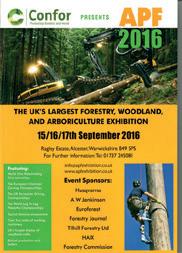
APF 2026 has attracted a record level of sponsorship, as exhibitors recognise the value of reaching a highly targeted audience at the UK’s largest trade event for the forestry, woodland, arboriculture and fencing sectors.
Exhibition Secretary Ian Millward said: “We are absolutely delighted with the level of sponsorship received for APF 2026 and are very grateful to all our sponsors. APF 2026 will feature a record number of events, competitions and have-a-go opportunities for visitors to watch, take part in or try for the first time. These activities simply would not be possible without the generous support of our sponsors.”


A limited number of high-profile sponsorship opportunities remain available, and businesses do not need to be exhibitors to take advantage of them. Opportunities include sponsorship of show entrances and gates, the European Chainsaw Carving Championships, the woodland crafts area, and selected banner and flag locations.

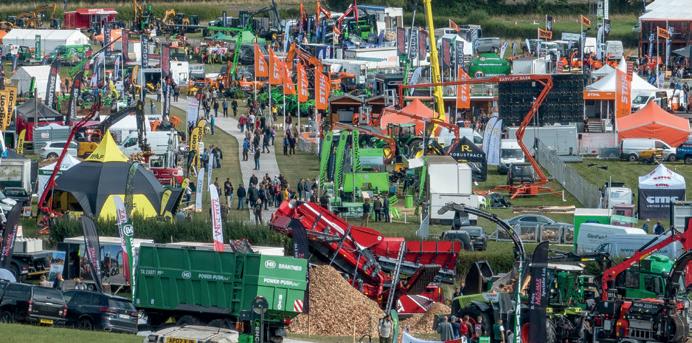


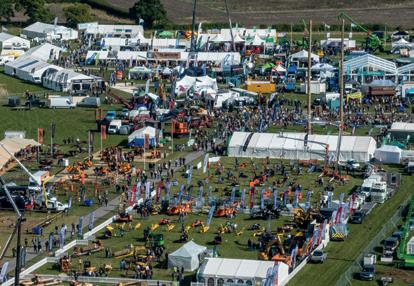
Demand for exhibition space is also exceptionally strong, with just 135 metres of demonstration space remaining. The show is expected to welcome 300 exhibitors and 25,000 visitors, with around £90 million worth of machinery on display.
Organisations interested in securing one of the remaining sponsorship


opportunities are encouraged to contact the APF 2026 team as soon as possible.
The Confor tent will be located at Stand 1735, near the APF HQ and just across the walkway from where you may have found us in previous years. Our team will be waiting to catch up with members in person and hear all your views on the latest news.
We will also be ready to discuss the benefits of joining Confor with any prospective new members, so please





do invite your colleagues and clients along.
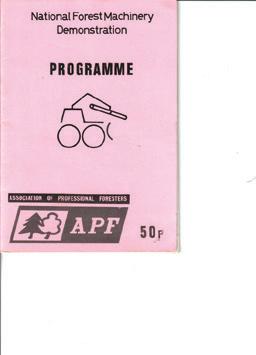
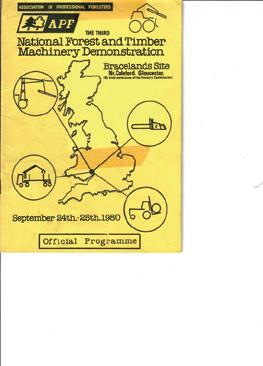
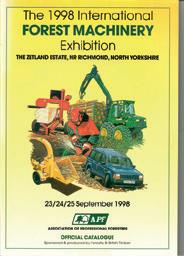
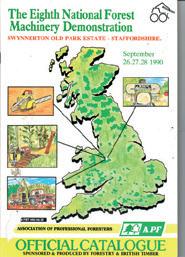
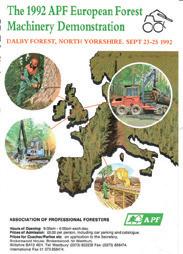
To celebrate the 50th anniversary of APF, our tent will be playing host to an exhibition about the history of the show. Please do drop in and take a look around!
The adjacent Seminar Tent is kindly sponsored by Tilhill Forestry and a programme of events will be available soon so you can plan your days accordingly.
All Confor Members are entitled to free entry to APF 2026 on presentation of a valid Membership Card. These were included in your last membership renewal, but we will email out new copies in early August to ensure you have them ready for the show. Note that each card is valid for one attendee only and can be printed or displayed on your device. There will be no other way to confirm your membership status at the gates so be sure to double-check you have yours! events






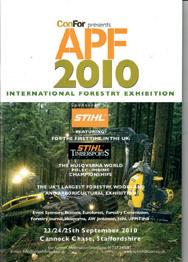
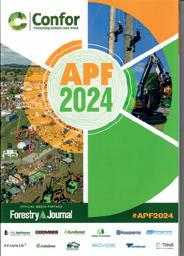
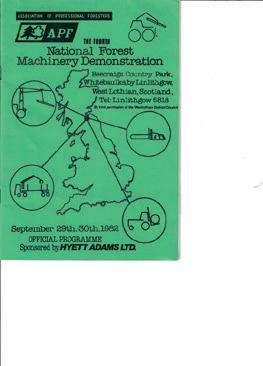
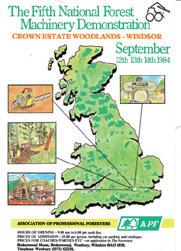

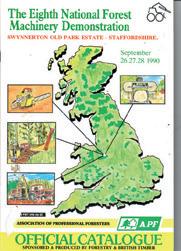


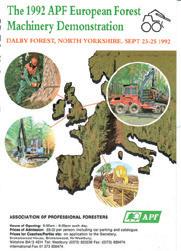
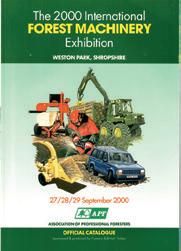

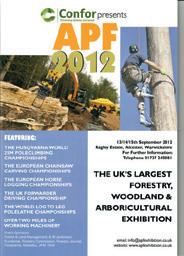
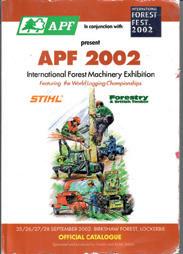

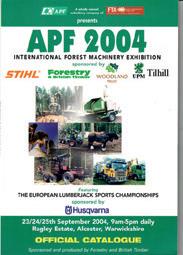
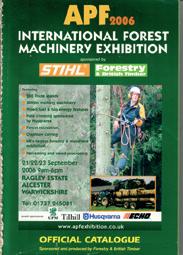



























The Royal Welsh Show brings the farming and forestry industries and rural community together to celebrate the best offerings of the Welsh countryside.
Join Confor and your fellow members at the Royal Welsh Show on 20-23 July.
The Foresters’ Breakfast, supported by the Forestry Contractors Association (FCA), Iwan Merion Forestry, John Deere, Royal Forestry Society and Smallwoods, will kick off the show’s Forestry Day and a full programme of talks and panel discussions from around the industry.
Welsh Government are joining us for lunch and a meeting of the Forestry and Wood-Based Industries Industry Leadership Group (ILG) later in the day, picking up the topic of what happens next for the industry in Wales and how to deliver on the commitments of the Timber Industrial Strategy.
While there are no forestry awards at the show this year, we will be taking the chance to look back and reflect on previous winners. We are also hosting a number of events for Bangor University forestry alumni in the Confor tent.
As it was last year, the muchanticipated Schools photography competition will again be on display, and there will be new interactive activities available for families to get
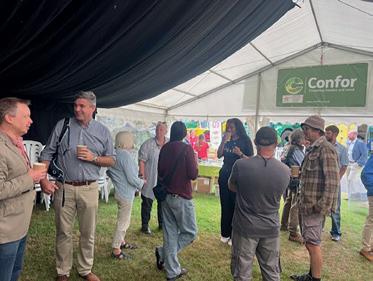
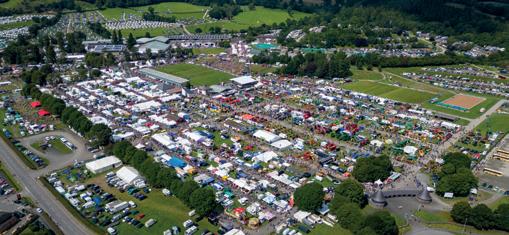
involved in and learn about the forestry supply chain and career paths.
Forestry Training Service UK (FTSUK), Grown in Britain and Tree Law have all been invited to talk about what they do
Tuesday 21 July
9am Foresters’ Breakfast
10.15am Forestry Training Service UK: An Introduction
10.30am Forest Certification (PSC & PEFC)
11am What do you do?: Grown in Britain
11.30am Panel Discussion: Future Productive Species (Forest Research)
12.30pm Bangor University Forestry Alumni Launch



EXHIBITOR SPONSORS

OTHER SPONSORS


for the sector, and other key speakers will be joining us to discuss certification and key forestry issues.
Find Confor at Stand 805A-FOR
1pm Lunch: Welsh Forestry and Wood-Based Industries ILG 2pm What do you do?: Tree Law in Wales
2.30pm Drinks Reception: Looking back on the RWAS Woodland Awards
Wednesday 22 July
11am Children’s Awards
11.30am Panel Discussion Agroforestry (Forest Research)
12.30pm Bangor University Forestry Alumni Networking











committee meeting
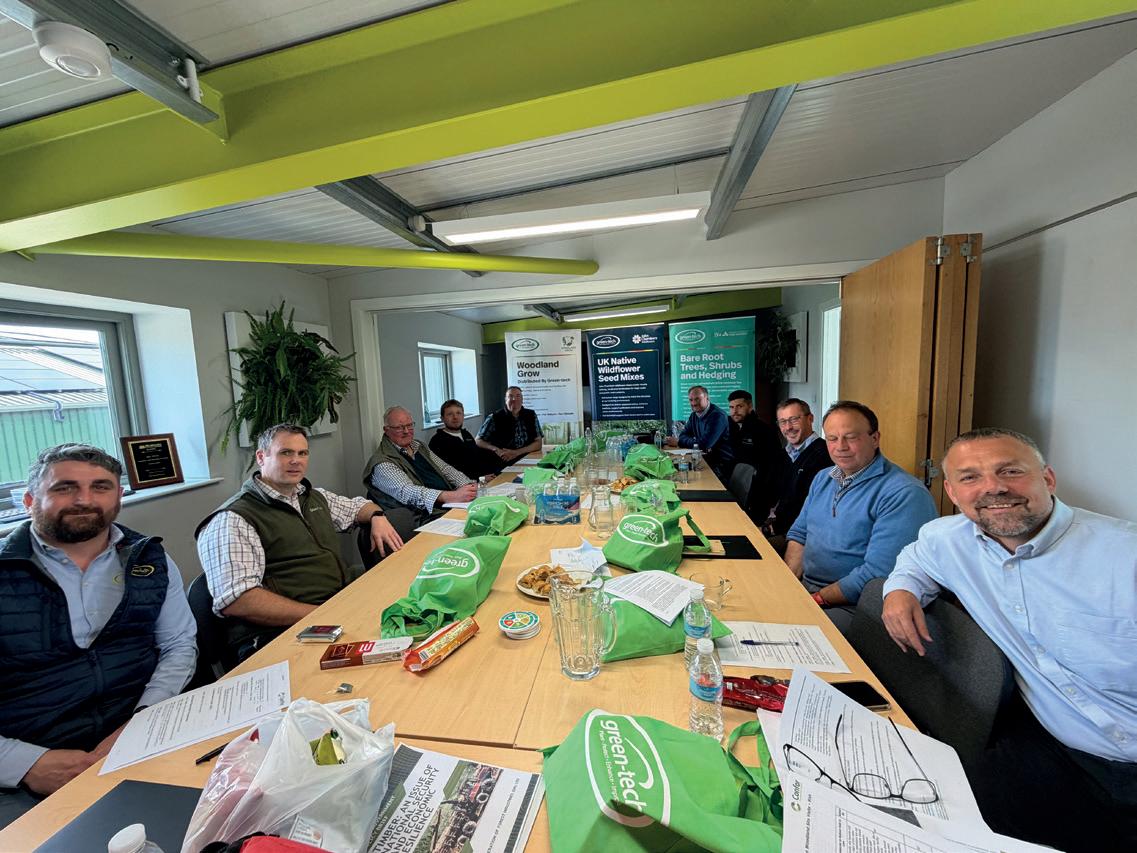
North Regional Committee Meeting on Wednesday 13 May, welcoming forestry and woodland sector representatives from across the region to their premises in Knaresborough, North Yorkshire.
The event brought together Confor committee members, industry partners and invited guests for a morning of discussion on key regional priorities, followed by a tour of Green-tech’s operational facility and a woodland site visit at Lotherton, organised by Tilhill Forestry.
The meeting focused on current policy and market issues affecting forestry and woodland management, including timber market conditions, sector updates, and developments impacting woodland owners and businesses.
Huw Irranca-Davies
Delegates were able to see Green-tech’s operations in action, with a site tour of the
MEMBER UPDATE
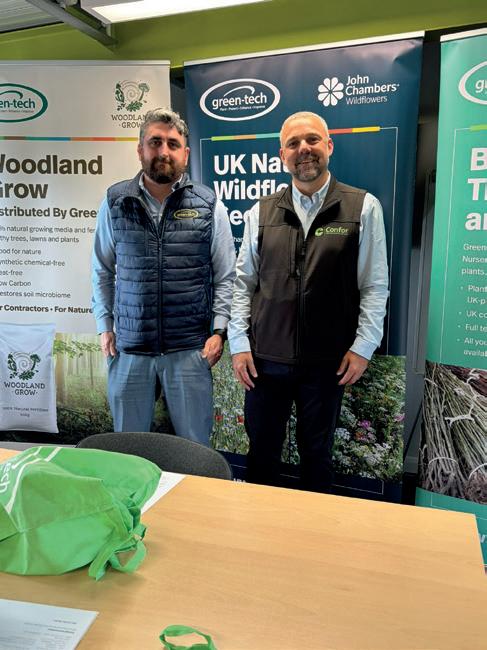
offices and extensive warehousing facilities. This was followed by a woodland visit to explore real-world application of materials and discuss woodland management and delivery on-site.
We want to hear from you

Eliza Hibbins-Cline, Membership & Marketing Manager
We are always looking for members to share their experience with Confor to promote as testimonials on our website and social media. If you feel you or your business has benefited from being a Confor member and you have a story you would like to share, please email us at
members@confor.org.uk.
If you feel like you would like to get more out of your membership, please also feel free to reach out to your National Manager about how to get involved in your area. As a reminder, the contacts are:
• England: John Bruce john.bruce@ confor.org.uk
• Scotland: Richard Hunter Richard.hunter@confor.org.uk
• Wales: Elaine Heckley elaine.heckley@confor.org.uk
John Bruce, National Manager for England at Confor, said: “Green-tech’s support in hosting this meeting was greatly appreciated. It is an excellent opportunity for members to share regional updates, discuss current market and policy issues and take part in an open visit that highlights both operational best practice and practical woodland delivery.”
Adam Topliss, hosting on behalf of Green-tech Ltd, added: “It was a real pleasure to welcome Confor’s North Regional Committee to Green-tech. Days like this are invaluable for bringing the sector together to share insight, discuss the challenges and opportunities ahead, and see first-hand how practical solutions can support woodland management and the wider supply chain.
“We were delighted to showcase our operations and to join the discussion on the future of forestry in the region.”
• Northern Ireland / International: Andy Leitch andy.leitch@confor.org.uk
Please note that there will few a few changes to job roles at Confor in the coming months to reflect recent recruitment and priorities. We will keep members updates on important points of contact at every stage.
A welcome to our newest members: England: Miss L Raines; Mr T Jacobs; Mr D Fischel. Scotland: Strathmore Estates Holdings
The Trust UK C16 campaign has brought new spokespeople onboard to help drive greater awareness of homegrown timber as a quality structural material.
Architect Peter Smith and timber engineer Louise Rogers have joined forces with BSW Timber, James Jones & Sons and Glennon Brothers to support the ongoing Trust UK C16 campaign, strengthening its technical expertise and industry engagement as it continues to make impact in sustainable construction.
Last October, the three sawmilling industry leaders joined forces in a landmark collaboration, calling for collective action to rebalance supply chains and futureproof the UK’s timber supply.
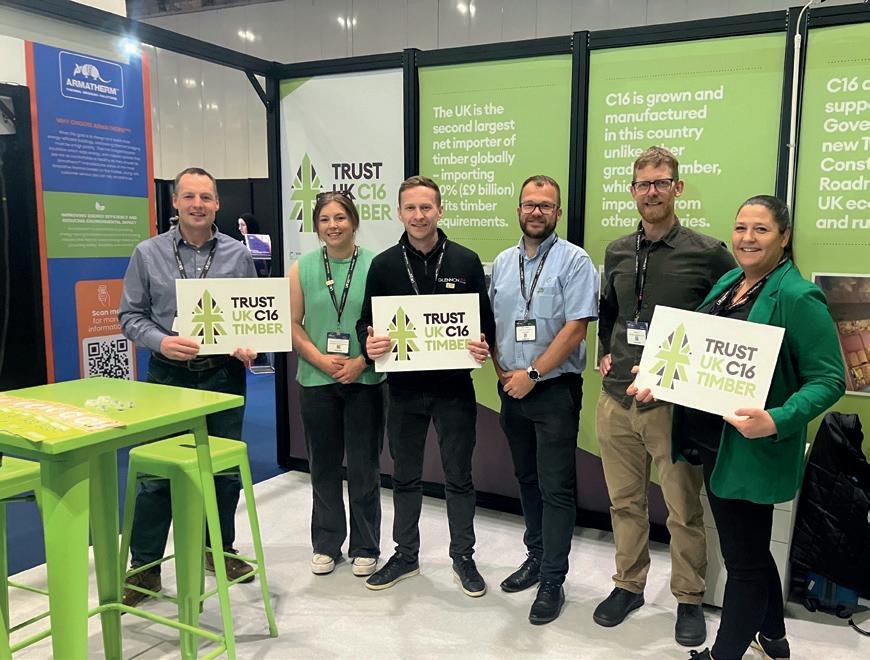
Now, Peter and Louise bring deep expertise in design and structural engineering to the initiative, and will support campaign activities aimed at architects and engineers, including industry events, roundtables and webinars. They will also help to develop Continuous Professional Development (CPD) content for industry workers.
The pair have already spoken on the Trust UK C16 Timber campaign at Futurebuild, the UK’s leading built environment conference, in May. Presenting a case for homegrown timber on the Architects Climate Action Network stage, they amplified the message of embracing and specifying UK timber and sustainable materials across the architectural and engineering communities.
Louise is an Impact Manager at BE-ST, Scotland’s national innovation centre for construction and the built environment, with a background in structural engineering and a focus on biogenic materials and low-carbon manufacturing. She leads R&D and commercialisation projects centred on homegrown timber, including C16 structural timber, mass timber, and wood fibre insulation.
Her work spans lifecycle analysis, feedstock evaluation, and applied
materials innovation, with a focus on bringing practical, scalable timber solutions into mainstream construction.
She said: “I’m excited to be part of this campaign at such an important time for the construction industry. It’s about showing what’s already possible, demonstrating how C16 timber can be used in structural applications, and helping build confidence in homegrown timber.
“By making better use of the resources we already have, we can reduce embodied carbon, support local supply chains, and build a more resilient and sustainable construction sector.”
Peter is an architect, Passivhaus designer, and qualified carpenter/ joiner. He runs the Scotland office of Roderick James Architects and specialises in sustainable design, using natural materials, including UK timber, with extensive experience in bespoke homes and small-scale community developments.
He commented: “I’m very proud to be part of the C16 Campaign. There are so many positive aspects and benefits worth celebrating, in terms of carbon, ecology and economics – at local and national levels. Simply specifying and using UK timber can have such a big
impact; it feels like a win-win situation for everyone involved.”
Despite the UK having a world-class sawmilling industry, it is the secondlargest net importer of forest products globally, with 80% (worth £9 billion) of its requirements imported annually. This over-reliance on imported timber not only weakens our domestic industry, but also undermines environmental progress, contributes to unnecessary carbon emissions, and reduces the potential for rural job creation.
The Trust UK C16 campaign is targeting architects and structural engineers to bolster knowledge and support for reducing reliance on timber imports and futureproofing the UK’s supply.
James Brennan, Head of Marketing at BSW Group, said: “We’re delighted to welcome Peter and Louise to this industry-uniting campaign. Few people are better placed to lead on this, having dedicated their careers to sustainable design and the use of natural materials.
“Since launching late last year, the campaign has gained real momentum, and it’s encouraging to see such respected industry professionals lending their expertise to take us to the next step.”


We think Buckbootz can fairly claim to have created some of the most eye-catching safety footwear styles on the market - and it’s happening again.


Buckzviz BVIZ 7 doesn’t only catch the eye it turns heads. Buckbootz creativity excels with this exceptional super lightweight waterproof safety boot which incorporates high visibility, 360º reflectivity and Fitgo® wheel and cable lacing system in a stunning design which comes with CE/UKCA safety standards: S7S SC HRO FO LG SR WR.




BVIZ 7 uppers combine cowhide leather, Cordura® and a distinctive thermo polyurethane hi-vis flank brace. The anti-scuff toe protector has SC anti-abrasion certification. The rubber (we don’t use anything else) outsoles are oil, slip and heat resistant, non-marking and fitted with ladder grips. The Fitgo® wheel and cable lacing system withstands a weight pressure test of over 40kg. Sizes 4-13. Non-marking!




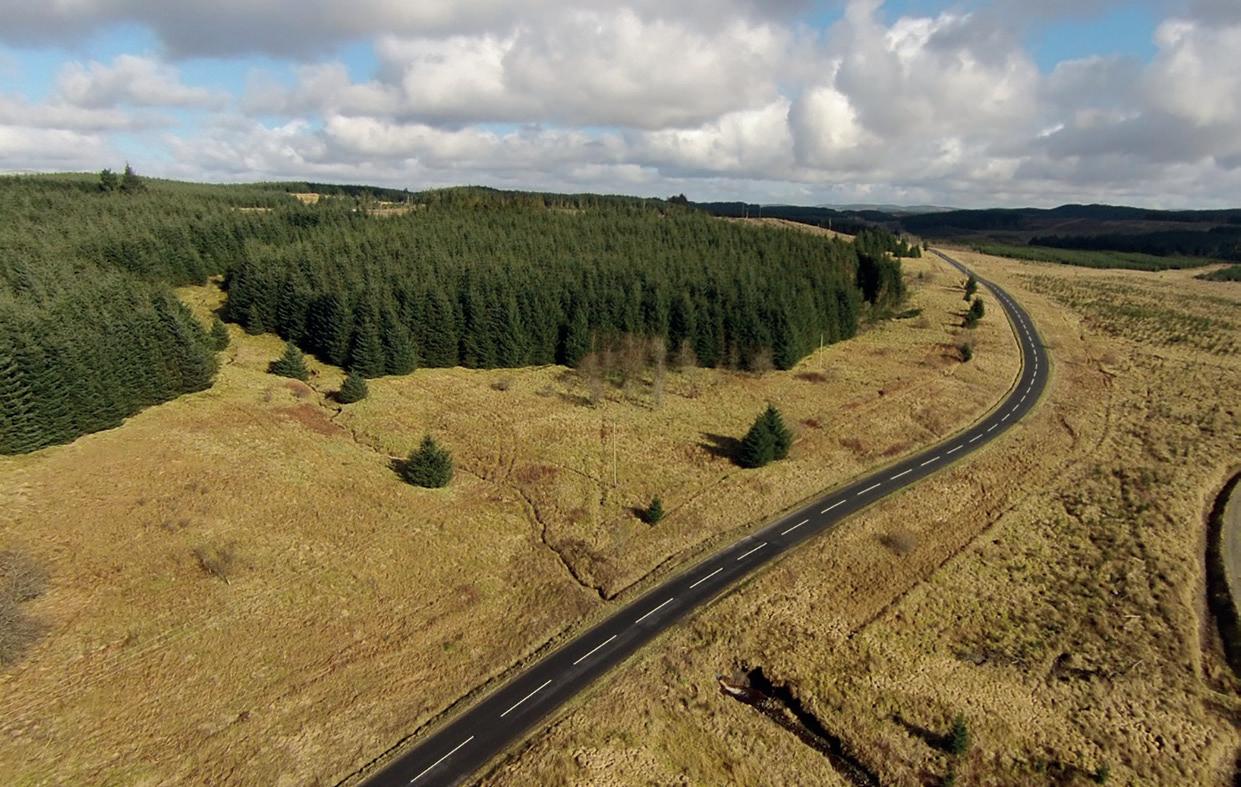
New guidance has been issued by the Timber Transport Forum
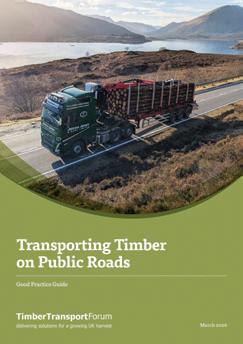
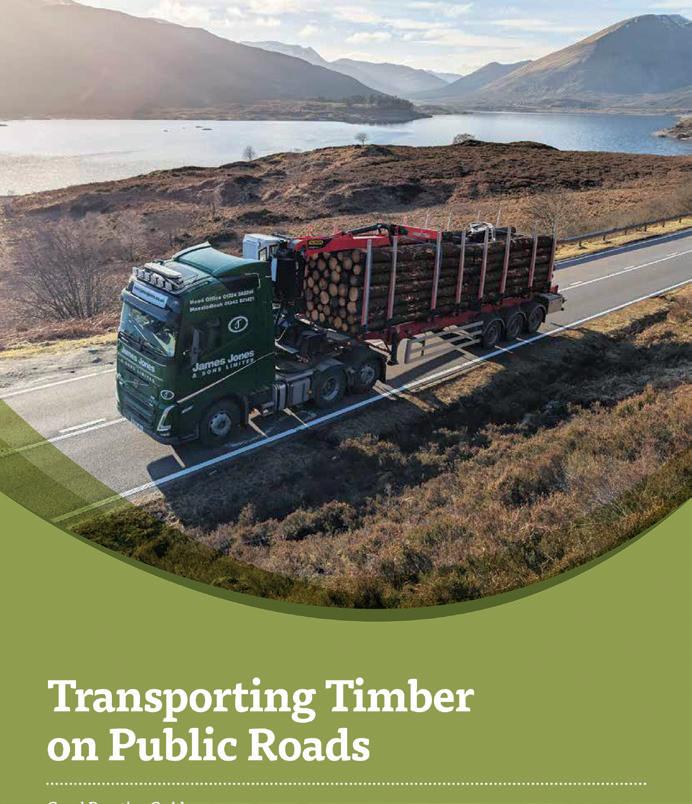
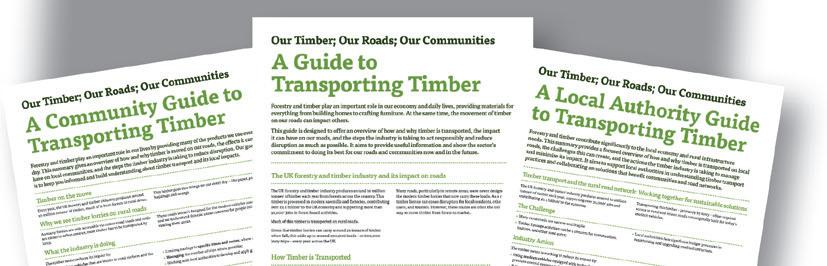
The Timber Transport Forum has updated the ‘Transporting Timber on Public Roads’ good practice guide to cover the whole UK. It is aimed at supporting local authorities and the forestry industry in mitigating the impact of timber haulage on the rural road network.
The document outlines good practice for how to engage with local authorities and other stakeholders to manage timber transport responsibly. It reflects voluntary, collaborative approaches developed by the sector to reduce impacts on communities and other road users, while supporting a sustainable, productive industry.
In addition, this good practice guide is accompanied by a series of ‘Our Timber; Our Roads; Our Communities’ summary guides that explain the purpose
of timber transport and the voluntary good-practice measures that have been developed. These documents together provide both an accessible overview and detailed reference for practitioners, local authorities, and community organisations.
Claire Glaister, Grampian and Stirling & Tayside Timber Transport Groups Project Officer, led the development of the three new guides and supported the update of the existing good practice guidance.
“I’m really pleased to see that as well as updating the established good practice guidance, we now have three entirely new guides aimed at those beyond the sector,” she stated. “They’ve been produced to help explain why timber transport matters, how public roads are shared, and the voluntary good practice developed and adopted across the industry.
“Timber transport is becoming increasingly visible, and people understandably have questions about its role and how it operates. These guides have been written to provide clear background and context, as well as practical information on the approaches and good practice already being used to help reduce impacts.
“We hope they will also be a useful resource for the industry to draw on when answering questions and engaging with local authorities, communities and other road users.”
The full guides are available for download here: https://bit.ly/43KHDpi
Frequently asked questions
Moving timber from forests to where it’s processed is an essential part of that supply chain - the journey wood







Joint Timber Transport Forum and ROADEX Conference
Where: Aviemore
When: 8 October 2026
More details and booking: https://bit.ly/TTF8Oct
Key highlights
Why is timber haulage important?
Timber haulage is an essential part of the supply chain as it’s how timber gets from forest to market. It moves the timber that becomes building materials, fencing, pallets and fuel - everyday products on which many of us rely. It also supports rural jobs and local economies.
What are Agreed Routes Maps?
All public roads can be used by timber lorries unless they carry certain restrictions such as weight, height, width or one-way traffic.

The Agreed Routes system doesn’t replace these legal rights — it simply helps identify the most suitable roads for timber haulage.

takes from forest to market. Each year, millions of tonnes of homegrown timber are transported on the UK’s public road network, supporting rural jobs and reducing reliance on imports.
At the same time, timber haulage can affect local roads and communities, especially in rural areas where many routes were never designed for modern timber lorries. The timber industry recognises these challenges and is working hard to reduce its impact through good practice, investment in modern vehicles and
technology, and close cooperation with local authorities.
James England, South of Scotland Timber Transport Officer, has developed a number of Frequently Asked Questions (FAQs) to address some of the most common questions about timber transport - what it involves, why it’s needed, and the steps being taken to make it as safe, efficient and responsible as possible.
The full FAQS are available on the Timber Transport Forum website (https:// bit.ly/3Saslrl).




Agreed Routes Maps (ARMs) are voluntary maps developed by the timber industry and local councils. They show which roads are most suitable for timber haulage and which should be avoided or used only after consultation between the industry and local authority roads departments.


Agreed Routes – roads suitable for regular timber movements; Consultation Routes – roads where it’s best to speak with the council before use; Severely Restricted / Excluded Routes – roads to avoid or use only in special circumstances.

Private roads do not fall under the Agreed Routes Map system.



What is being done to promote safety in timber haulage?


The Forum works with the Forest Industry Safety Accord (FISA) and others to raise awareness, provide training resources and support safer working practices.

Scan the QR code to download the Good Practice Guides


























£40,000 pledged
The Macaulay Development Trust has awarded £40,000 to the James Hutton Institute to fund a project building detailed digital representations of Scottish landscapes using Immersive Suite.
Researchers at The James Hutton Institute, Scotland’s preeminent interdisciplinary research institute for sustainable land, crop and nature management, have been awarded £40,000 by the Macaulay Development Trust to create interactive 3D representations of Scottish landscapes using cutting-edge data and immersive technology.
The project, titled ‘3D GIS and GeoAI for coherent, scalable interactive landscapes’, will explore how the nation’s terrain can be better understood, visualised and discussed through interactive 3D mapping.
To create the virtual landscapes, researchers will use data from the Scottish Government’s new Scotlandwide LiDAR (Light Detection and Ranging) programme.
Using this detailed data, Hutton researchers will be able to create engaging visuals that can support discussions about land management for climate, biodiversity, food production, communities and the economy.
These visuals will be displayed at the new Immersive Suite at the Hutton’s Craigiebuckler campus. This state-of-the-art facility – which was funded by the Scottish Government’s
Just Transition Fund, the Macaulay Development Trust and the UK Department for Science, Innovation and Technology - is equipped with a media server, games engine, surround sound and nine projectors, allowing simulated landscapes to be projected across the suite’s walls for a fully immersive experience.
This project, which is due to begin in October 2026 and last one year, will support Scotland’s ambitions around net zero, nature recovery, climate
adaptation and fair land use transitions. It will also showcase the value the national LiDAR mapping programme and provide a new way for people to engage with the data it generates.
Dr Chen Wang, a research scientist on landscape visualisation at the Hutton, said: “The work will create new opportunities for dialogue across policy, research, land management, and community audiences, helping to support more inclusive planning for Scotland’s future landscapes.”
The Digital Directorate of the Scottish Government launched the Scottish Land LiDAR Programme in October 2025.
This groundbreaking initiative captures landscapes in centimetre-level resolution by using aircraft-mounted lasers to fire pulses down to the ground. These pulses are then reflected back up, and the time taken for the pulse to return to the aircraft is used to calculate the distance to the ground below.
The programme is the result of a collaboration between the Scottish Government’s digital teams and its Rural and Environment Science and Analytical Services, and UK Government digital services, which have provided the mechanism for data collection through the Aerial Photography for Great Britain project.
The project is funded jointly by the Scottish Government, the Scottish Environment Protection Agency, Forestry and Land Scotland, NatureScot, Scottish Water and Scottish Forestry.
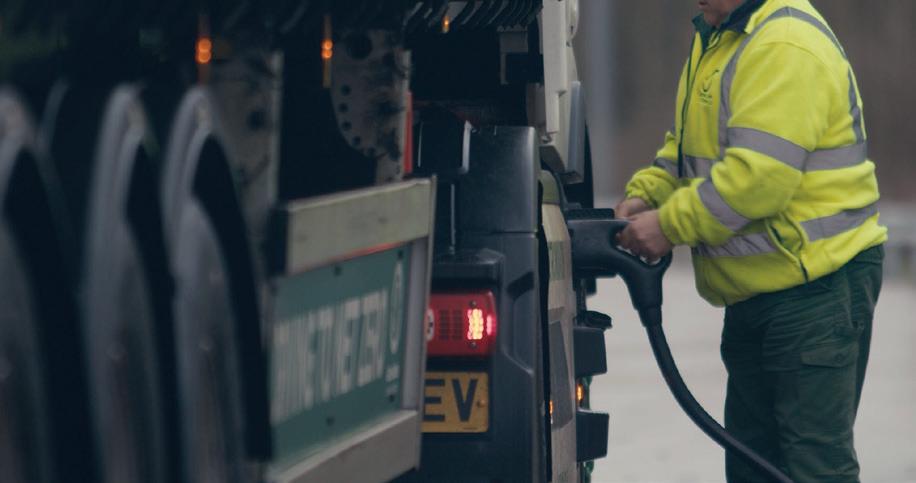
Neil Stoddart, Director at Creel Maritime, fills us in on the next stage of NetZero Timhaul, the electric truck project steering timber transport to a greener future.
Scotland’s forestry sector has never been afraid of innovation. From modern harvesting systems to sustainable forest management and renewable construction materials, the industry has consistently adapted to meet new challenges while continuing to deliver economic and environmental value.
Now, the sector is helping lead another major transition, the move towards lowcarbon transport.
Launched in 2023 with support from Scottish Forestry, the pioneering NetZero Timhaul project was Scotland’s first operational trial of battery electric timber haulage vehicles. What began as an ambitious demonstrator project is now rapidly evolving into a blueprint for the future of sustainable forestry logistics.
The project has already shown that
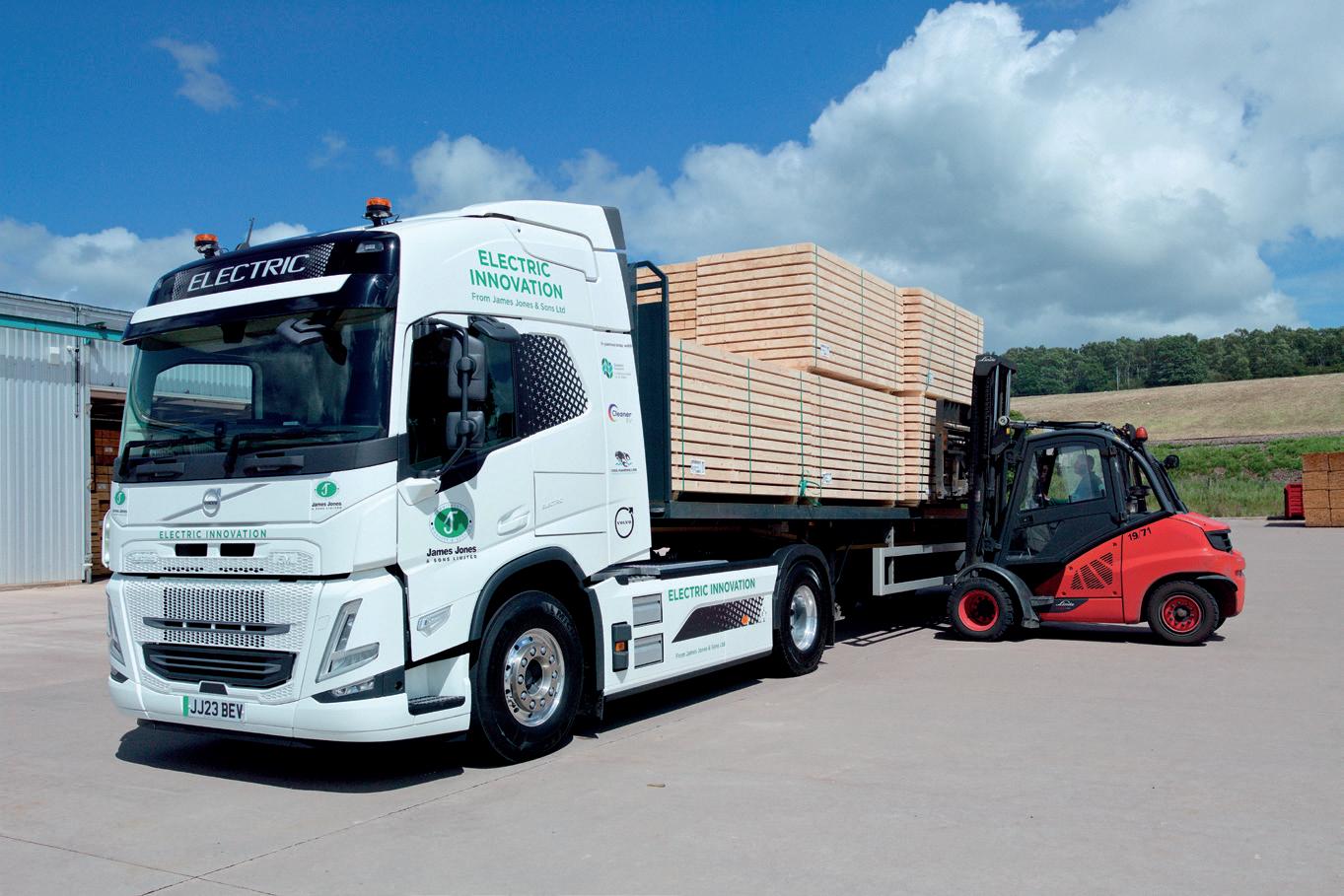
electric timber haulage is not simply a future aspiration, it is working successfully today in operations across Scotland.
And with plans now emerging for a second phase featuring next-generation 44-tonne electric timber trucks, highspeed charging infrastructure and even remote charging hubs within forest environments, the industry’s confidence in electrification is growing rapidly.
Collaboration delivering real results NetZero Timhaul has brought together an impressive collaboration of forestry, haulage and technology partners, including James Jones & Sons Ltd, Scotlog Haulage, Creel Maritime, the Volvo Group, and Cleaner EV.
Together, the partners have been testing electric heavy goods vehicles (eHGVs) in demanding commercial
forestry operations, gathering real-world operational data while helping the wider industry understand what the transition to low-carbon haulage could look like in practice.
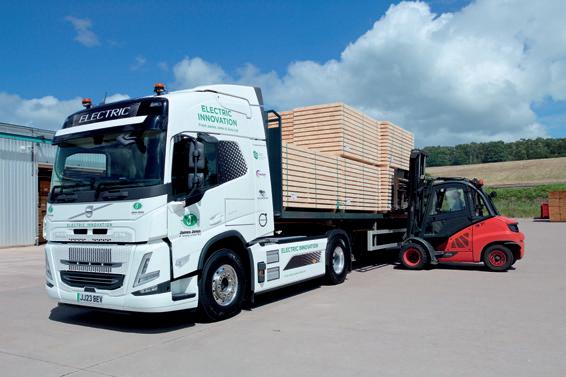
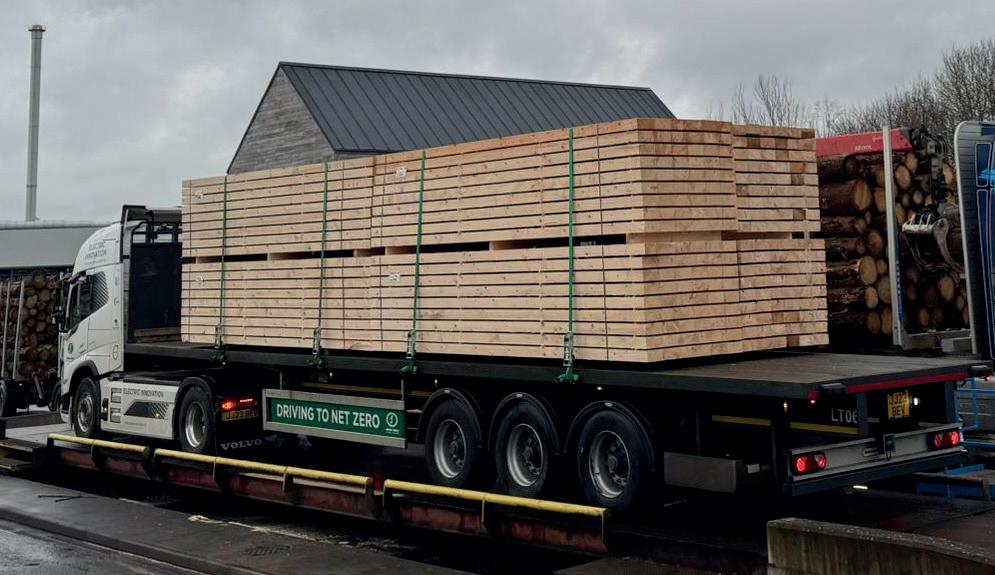
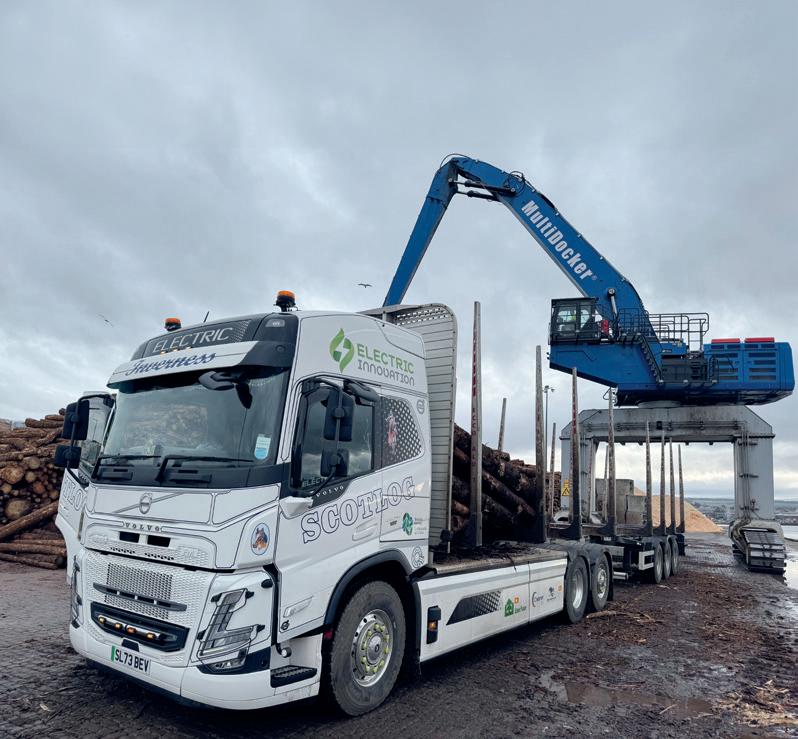
Today, two electric timber vehicles are operating commercially in Scotland. James Jones & Sons is running a 42-tonne 4x2 articulated electric timber lorry from its Lockerbie sawmill, transporting timber to the company’s Hangingshaw distribution centre. Meanwhile, Scotlog in Inverness is operating a 44-tonne rigid and drag electric timber vehicle in the Highlands, moving roundwood timber from Inverness Harbour to regional OSB mill West Fraser.
For Neil Stoddart, Director at Creel Maritime and one of the key figures behind the project, one of the greatest achievements has been changing perceptions around what electric trucks are capable of delivering in forestry operations.
“The project is doing exactly what we hoped it would do,” he explained. “We have demonstrated that electric heavy goods vehicles are workable and viable within timber haulage operations.
“It has helped show that electric trucks are not just theoretical concepts anymore. They are already operating successfully in one of the UK’s most demanding haulage sectors.”
While the first phase of the project has been widely regarded as a success, the technology itself has advanced rapidly during the lifetime of the trial.
The original vehicles and charging systems represented cutting-edge technology when the project launched. However, developments in battery performance, charging capability and electric drivetrains are moving at remarkable speed.
“Our current trucks are already several years into their technology lifecycle,” said Neil. “What is exciting is how quickly the technology is improving. Today we could purchase vehicles with significantly greater range, faster charging capability and lower overall operating costs.”
That progress is now driving discussions around a potential second phase of the programme provisionally titled NetZero Timhaul 2.0.
The next stage would see the introduction of a new generation of 44-tonne battery electric timber trucks featuring larger battery capacities, improved operational range and fully electric-powered timber cranes for self loading.
The vehicles would also utilise dedicated electric axle systems rather than adapted diesel drivetrains, improving efficiency while delivering the high torque required for demanding forestry operations.
Importantly, the ambition is not simply to repeat the original project, but to expand its operational scope.
“We want to move beyond shorter tarmac-based routes and operate further into forest environments,” Neil explained. “That means exploring a wider range of forestry operations and potentially bringing more haulage operators into the project.”
One of the most encouraging developments for forestry operators is the pace of improvement in charging infrastructure and vehicle range.
The original NetZero Timhaul project relied on 150kW charging systems. Under the proposed second phase, the project team is looking at introducing 350kW charging technology capable of dramatically reducing charging times.
At the same time, the next generation of electric timber vehicles is expected to achieve operational ranges of approximately 320 miles, almost three times the capability of some current vehicles operating within the trial.
For forestry haulage businesses, these improvements could be transformational.
While first-generation electric timber vehicles are best suited to carefully planned shorter-haul operations, the next wave of trucks will be capable of handling increasingly demanding workloads and operating patterns.
As battery density, charging speeds and vehicle efficiency continue improving, the practical barriers to adoption are steadily reducing.
One of the most innovative aspects of the project is its focus on solving the unique infrastructure challenges associated with forestry haulage. Unlike conventional logistics operations, timber transport often takes place in remote rural areas where electrical infrastructure can be limited.
That challenge becomes even more important when operating fully loaded 44-tonne timber trucks on narrow forest roads and remote routes where running out of energy would be a disaster.
To address this, the project team is now exploring how charging infrastructure could potentially be integrated directly into forest environments themselves.
Neil said: “We are working with industry leader Voltempo on whether we can deploy battery storage systems or backup charging units powered by local renewable energy.
“That could include nearby hydro schemes, wind turbines or solar >>
installations located within forest operations.”
The concept aligns closely with the forestry sector’s wider commitment to sustainability, renewable energy integration and long-term decarbonisation. There is also growing interest in whether existing large scale forestry infrastructure such as borrow pits, compounds or operational sites could eventually support temporary or semipermanent charging facilities.
Rather than seeing remoteness as a barrier, the project is helping identify how forestry’s strong connection to renewable energy could become a major advantage in the transition to electric transport.
A fully loaded 44-tonne diesel HGV can emit more than 1,300 grams of CO₂ per kilometre. With more than 300,000 timber deliveries taking place annually across Scotland, the potential carbon savings are substantial.
The NetZero Timhaul project is already demonstrating meaningful reductions in emissions.
During the first year alone, the project saved more than 76 tonnes of carbon dioxide equivalent (CO₂e).
By the end of Year Two, the electric vehicles had collectively travelled more than 82,000 operational miles while achieving average emissions reductions of approximately 1.186kg CO₂e per kilometre.
The trial has also produced encouraging efficiency data.
Average energy efficiency has ranged between 0.53 and 0.55 kilometres per kilowatt hour, with regenerative braking systems helping recover energy and extend operational range.
As expected, colder winter conditions can slightly reduce battery performance, with average range reductions of around
15% during colder periods. However, the findings remain broadly consistent with wider European electric HGV research.
Crucially, operators involved in the project report that reliability concerns have proven far less significant than many initially expected. With proper route planning, the vehicles have operated successfully in day-today forestry haulage environments, while maintenance requirements have generally proven simpler than conventional diesel equivalents.
With fewer moving parts and no diesel engine systems to maintain, operators have reported lower maintenance complexity, reduced downtime and increasingly predictable servicing costs.
While sustainability remains a major driver, the commercial case for electric haulage is becoming increasingly compelling.

Operational data from the project suggests running costs of approximately £0.78 per mile around 20% lower than comparable diesel vehicles. Although the upfront vehicle and infrastructure costs remain higher, the economics are improving rapidly as technology matures and vehicle production scales
Project analysis currently suggests that overall cost per kilometre for electric timber haulage is approaching parity with diesel operations.
Government support mechanisms are also helping accelerate adoption, including the UK Government’s Plug-in Truck Grant and Transport Scotland’s HGV Market Readiness Fund.
At the same time, wider energy market volatility has encouraged many operators to think differently about long-term fleet planning.
“The direction of travel is becoming clearer,” Neil stated. “Forestry is one of the most demanding haulage sectors because of payloads, terrain and remote operations but the gap between electric and diesel is narrowing all the time, and we are seeing interest in eHGV from a range of operators.”
Perhaps the greatest achievement of NetZero Timhaul is that it has moved the conversation beyond theory.
The project has shown that battery electric timber haulage can already operate successfully within Scotland’s forestry supply chain today. Just as importantly, it has helped identify the next areas for innovation from charging infrastructure and operational planning to vehicle range and forest-based energy solutions.
For an industry already playing a central role in the UK’s net zero ambitions, the ability to further decarbonise forestry logistics represents a major opportunity.
As NetZero Timhaul prepares for its next chapter, the question is no longer whether electric timber haulage can work. It is how quickly the forestry sector can build on this momentum and help drive the transition towards a cleaner, more resilient and more sustainable future for timber transport.


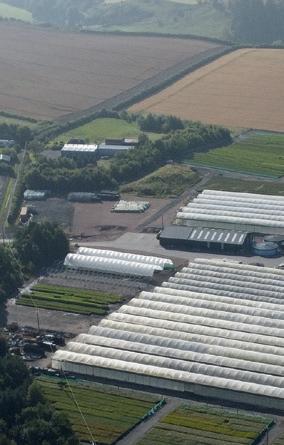
Our new manufacturing facilit y in Por tugal repr one of the biggest investments in Vigilis to dat


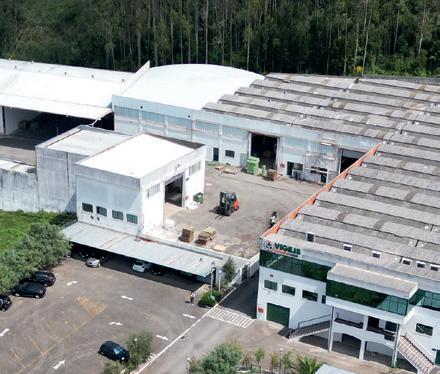



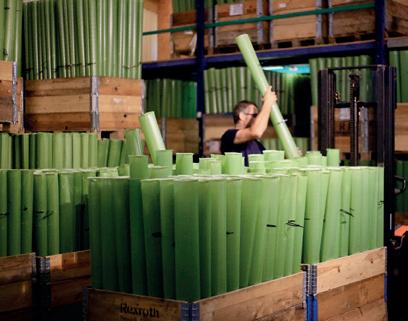
Over the past year, Vigilis has invested significantly in its manufacturing capabilit y
Our new facilit y in Por tugal provides the space and infrastructure to increase production capacit y, introduce additional extrusion lines and suppor t continued product development
These investments help strengthen our abilit y to suppor t customers across the UK, Europe and Nor th America



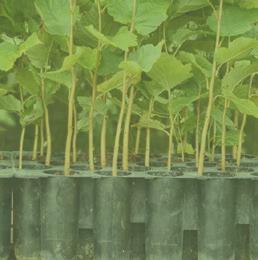
The UK’s longest established woodland tree cell grower
We offer British grown woodland trees, hedging and shrubs
Fruit/ornamental trees
Cell grown Container grown
Field grown
Guards - Stakes - etc
Planting service available
Nationwide delivery service
Plant Healthy Certification Scheme Accredited We &UKSGare Plant Healthy
Growers of Quality Trees, Shrubs & Hedging Plants

Pwww.heathwood.co.uk
sales@heathwood.co.uk
The Meadows, Higher Heath, Whitchurch, Shropshire SY13 2JA Tel 01948 840 120
aul Vidgen Forest Machines have been supplying mulching equipment to customers for a variety of projects since the late 90s, and have been the UK dealers for Prinoth for over 30 years.
In the autumn of 2025 we were asked to provide a Raptor 800, nothing unusual but the customer didn’t want the European spec unit, but a basic “rest of the world” unit. After a lot of toing and froing we settled upon a spec, and the machine was ready for delivery in the spring of 2026. The customer, the Firestone Rubber Corporation, wanted the unit for its rubber farm in Liberia, West Africa. Firestone has 119,000 acres of rubber, the trees produce latex in year 7 and generally are replaced when production falls of in around 30 years, and the cycle then starts again.

As part of the deal we were asked if we would visit Liberia, set up the machine and train service personnel and the operators and advise on working methods to get the best production from the Raptor 800
In late May the machine was delivered to site and myself and an old friend, Mike Kelly, a German based Irishman that has worked for Prinoth in the past, flew down to Monrovia.



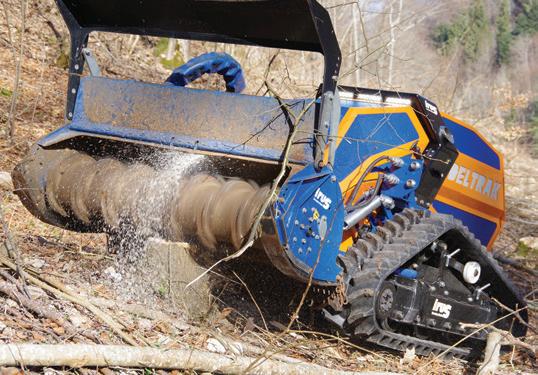
The latest range of Irus Remote tool carriers include the Deltrak V3 Range • A compact machine with amazing performance • Either a mighty 61hp or 50hp version available • With 80 litres/min at 350bar this is a serious workhouse • Variable track width and a base tractor weight at only 1200kg, its slope performance and low ground impact is impressive in all situations • Irus have been building remote mowers in Germany since 2005, and have always been at front end of development • Support and back up to keep machines working is the priority for Irus Machinery

www.loxston.co.uk | 01460 242562

We received a warm welcome form all the guys at Firestone and have a fantastic week getting the people up to speed on the machine and putting it to work clearing dense regrowth form previously cleared rubber plantation, ready for new trees to be established.
Due to the climate everything grows at a phenomenal rate and areas where the rubber trees had been felled were covered in 10m tall scrub, making visibility for the mulcher operator’s challenging. The most effective method turned out to be using two Cat D7 dozers and a length of ships anchor chain to flatten the standing bush and then a single pass with the Raptor 800 and a following pass with a set of very heavy disks provide an ideal planting environment for the new rubber trees, they are planted by hand into augured holes with some chicken manure and a water retaining gel.
Work rates of 10 acres day were possible once the method was perfected. Firestone has 119,000 acres of rubber, the trees produce latex in year 7 and generally are replaced when production fall of in around 30 years, the cycle then starts again.
We had the most fantastic time, everyone we met were so friendly and enthusiastic and I’m sure we will be going back to see how things are progressing.
07768 772227 | paul@pvfm.co.uk
Oli Smith explains why a new approach is needed for culling strategies in this latest part of an article series on deer management.
In deer management, we’ve normalised a strange contradiction. We all recognise that deer are one of the biggest controllable risks to woodland creation, restocking, natural regeneration and biodiversity recovery. Yet when it comes to setting culls, we still default far too often to one of two “methods”:
• Cull a third of the population.
• Do what we did last year – usually “more females”.
Neither of those is a model and in 2026, with the scale of woodland and nature objectives we’re claiming, they’re not good enough.
This is not a plea for complexity for its own sake. It’s a plea for realism. Our sites are managed islands sitting inside largely unmanaged landscapes. That single fact breaks most of the assumptions baked into the commercial “one size fits all” calculators - and it explains why “cull one third” so often delivers stable damage, not declining damage.

The “R” in commercial models is usually too low.
A lot of commercial population tools (and plenty of internal spreadsheets) carry an implicit assumption: local population growth is modest, predictable, and mostly “internal” (dictated by births and deaths). Set a cull that slightly exceeds that growth rate and you’re done.
That’s a closed-population mindset. And most forestry sites simply aren’t closed.
Kristin Wäber and colleagues quantified this problem in a lowland English landscape (234 km²) with roe and muntjac. Even after removing 23-40% of the annual population, they still recorded substantial net dispersal out into the wider countryside.
Their conclusion was that to offset annual production in that landscape, culling at least ~60% (roe) and ~53% (muntjac) was required.
There are important lessons here:
• If you assume closed populations, you will underestimate what it takes to stop a site acting as a source (exporting deer to neighbours) or to deliberately make it a sink (drawing in deer while impacts inside the managed block fall).
• If you don’t measure density and productivity, you can maintain the illusion of “stability” while still exporting the problem.
This is exactly what we see on managed forestry blocks within a wider unmanaged matrix: we put effort in, we shoot “a decent number”, and yet browsing pressure doesn’t drop in the way it should. The missing term in the equation is often immigration.
The uncomfortable truth is that if you want your managed woodland to function as a sink, you must plan for the fact that deer will keep arriving.
That is why simplistic “R rates” are dangerous. They implicitly tell you that local production is the whole story when, on many sites, it isn’t.
The Deer Initiative’s current cull planning guidance gives a blunt benchmark: for roe, muntjac and Chinese water deer, a cull of around 30% is presented as a very approximate guide just to achieve a maintenance cull (assuming roughly equal sex ratios). It also explicitly warns that if there are too many females, both total cull rates and the female proportion need to be “significantly higher”, and it flags “bounce back” and “in fill” as real effects that must be planned for.
So, if 30% is maintenance in the guidance, and robust field data show >50% may be needed in some open
Cull one third… is not a model.” “


landscapes to offset production, where does that leave “cull one third” as a default reduction prescription?
Exactly where it belongs: in the bin.
What “using a model” actually looks like in practice
If we want to move from rules of thumb to defensible, repeatable decisions, we need a minimum viable process that we can stick with across years.
Step 1: Start with a baseline that isn’t guesswork

“
Our sites are managed islands sitting inside largely unmanaged landscapes.
document. Every year, feed in:
Actual cull by sex/age.
Recruitment indicators (kid:doe ratios, pregnancy where available).
Observed impact metrics.
We need an initial population estimate and structure. This is where drone survey (ideally thermal where appropriate) earns its keep: it gives you a defensible “Year 0” number to work from.
Wäber et al. note that thermal imaging distance sampling offers a way to quantify deer numbers across contiguous landscape units and, importantly, you don’t necessarily need to do it every year. A baseline year can be used as the starting point, with re-surveys after a period (e.g. 3-4 years) of elevated culling.
Step 2: Build a model that reflects your reality
At minimum, your model needs to handle:
• Species-specific fecundity and survival;
• Density dependence (condition improves as numbers fall);
• A term for immigration / emigration (because your site is not a sealed container).
If your commercial tool can’t represent immigration, it is not fit for purpose on fragmented forestry blocks. Full stop.
Step 3: Set culls as outcomes, not traditions
Stop setting a cull number because it’s what you can “probably achieve”. Start by defining:
1. What you need the population to do (reduce, stabilise, hold impacts below threshold).
2. What female offtake is required.
3. What the acceptable range is (minimum and maximum).
The Deer Initiative guidance is clear: reduction culls must prioritise the female target, and “one-off heavy culls” followed by low effort almost never deliver sustained drops.
Step 4: Update annually – don’t leave the model on a shelf
A model that isn’t updated is just a
• Any major changes in habitat / climate / disturbance.
Then adjust next year’s plan accordingly. That is literally the point.
Step 5: Treat “landscape-scale” as a management unit, not a buzzword
If your woodland is a sink and the surrounding land is a source, you have two choices: collaborate across boundaries, or plan to work harder (and longer) than you think you should have to.
The science is not subtle here: site-scale culls can be overwhelmed by population flux in heterogeneous landscapes.
The bottom line
We don’t need “more deer paperwork”. We need fewer comforting myths. Refresh the models, yes. But more importantly: use them. Otherwise, we will keep paying for woodland creation and biodiversity recovery while letting deer management run on folklore.
The good news is – for forestry professionals - these pre-built models can be found for free via NatureScot (PDF online only), Forest Research (Red Deer only), Deer Initiative (PDF only) or WildTrackPro (excel, pdf and webapp) or by engaging a number of deer professionals to build them for you.










Rhizocore Technologies is applying fungal science to some of forestry’s most persistent challenges. From improving tree establishment to developing new biological technologies for environmental restoration, the company is turning mycology into practical solutions for real-world use.
Forestry has always depended on what happens below ground. Yet while considerable attention is paid to tree genetics, planting design, ground preparation and ongoing management, the complex fungal communities supporting trees are often overlooked.
Rhizocore Technologies was established in 2021 to change that.
The business was founded around a simple principle: successful woodland establishment does not begin with the tree alone. It begins with the biological system around its roots.
In natural forest ecosystems, trees form close relationships with mycorrhizal fungi. These fungi connect with roots, helping trees access nutrients and water while receiving sugars in return. They are a vital part of healthy woodland ecology, but those relationships can be absent, damaged or poorly developed on newly planted, degraded or intensively managed sites.
Rhizocore was created to translate this science into practical biotechnology for forestry, land management and environmental restoration.
input, Rhizocore works to identify appropriate fungi for the tree species, project and location.
This research feeds directly into product development. Revenue and learning from those products can then support further research, the discovery of additional fungi and the creation of new applications.
It creates a virtuous cycle: research identifies new biological opportunities, those opportunities become practical technologies and commercial growth helps fund the next generation of innovation.
Since its formation, Rhizocore has expanded its team, research capability, production capacity and commercial
This is an important part of what differentiates Rhizocore.
Biological products can sometimes be presented as universal solutions. Forestry, however, is rarely universal: sites vary in soil, climate, species mix, previous land use and management objectives. A solution that performs well in one context cannot automatically be assumed to work in another.
Rhizocore therefore focuses on delivering the right fungi, in the right place, for the right purpose.
For customers, this means the company offers more than a product. Rhizocore works with forestry businesses, landowners, investors, nurseries, conservation organisations and project
Successful woodland establishment does not begin with the tree alone. It begins with the biological system around its roots.” “
What began as a focused researchled company has developed into a multidisciplinary team bringing together expertise in mycology, forestry, engineering, biotechnology, manufacturing and commercial delivery.
At the centre of the business is the RhizoLibrary: Rhizocore’s expanding collection of fungal species and strains.
The library supports research into which fungi perform particular ecological functions, which tree species they associate with and how those relationships can be deployed effectively under different planting conditions. Rather than treating fungi as a generic biological
reach. More than one million RhizoPellets have now been produced for planting projects, and the company is preparing for further growth in both UK and international markets.
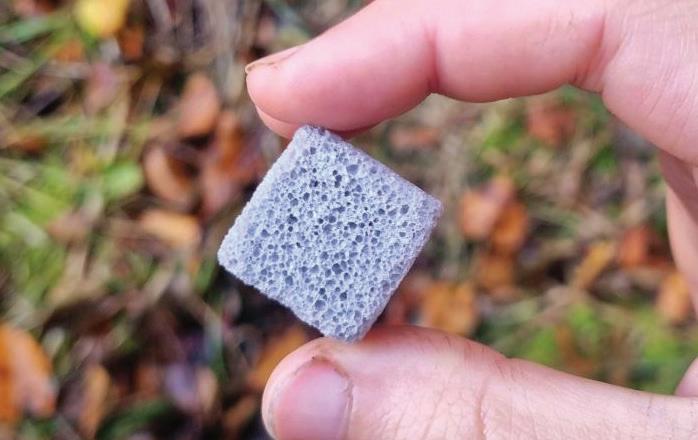
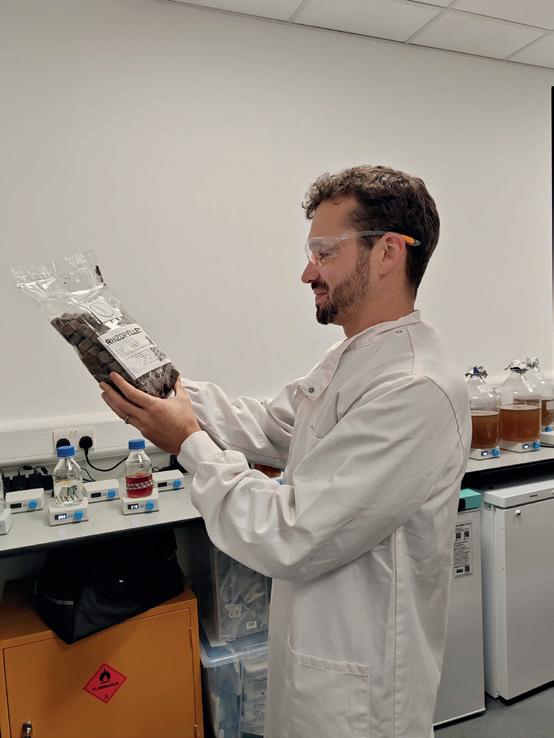
Rhizocore’s core forestry product is RhizoPellet™, a solid-state delivery system, containing live ectomycorrhizal fungi.
The pellet is applied during planting, placing the fungi close to developing roots at the point when the relationship can begin to form. Each batch is produced to order, with fungal selection informed by the tree species, planting location and project requirements.
managers to understand their planting plans early, identify suitable fungal combinations and integrate production and delivery into the planting programme.
That combination of scientific matching, project planning and operational practicality is central to the company’s offering.
Tackling the hidden risks of establishment
Tree establishment remains one of the greatest commercial and environmental challenges facing forestry.
Planting projects must contend with drought, poor soils, nutrient limitations, competition, pests, disease and increasingly unpredictable weather. These pressures can lead to high tree mortality, inconsistent growth, high replanting costs and delays in achieving project objectives.
For commercial forestry, establishment failure can affect future timber yields and asset performance. For carbon projects, it can delay anticipated sequestration. For conservation planting, it can prevent the development of resilient woodland ecosystems.
These challenges are becoming more urgent as planting targets rise and climate conditions become less predictable.
Rhizocore’s work is driven by the need to strengthen the biological foundations of planting – by supporting the early relationship between fungi and tree roots, RhizoPellets are designed to help trees establish within a more functional belowground environment.

initial survival. Stronger root systems and improved access to nutrients and water can support more consistent early growth, reduce the need for corrective interventions and help trees cope with environmental stress.
The aim is not to replace good forestry practice. Successful establishment still depends on appropriate species selection, site preparation, planting quality and ongoing management. Rhizocore instead provides an additional biological tool that complements those practices and addresses a variable that has historically received less attention.
A major milestone for the business has been the transition from laboratory science to deployment across operational planting sites.
Rhizocore is building a growing body of performance data across commercial forestry, native woodland and land restoration projects. This work covers different species, locations and planting conditions, helping the team understand how fungal treatments perform outside controlled environments.
The company has also contributed to significant field studies examining tree establishment and mortality at landscape scale. These projects are important not only for evaluating individual products, but for increasing industry understanding of the role fungal ecology can play in forestry performance.
Alongside its commercial progress, Rhizocore has attracted investment,
“
Rhizocore provides an additional biological tool that complements traditional forestry practices.”
expanded production capabilities and received recognition for its work in innovation and sustainability.
Perhaps just as importantly, the company is helping shift the conversation across the sector.
Foresters, investors and land managers are increasingly recognising that establishment risk is not determined solely above ground - Soil biology and fungal ecology are becoming part of wider discussions around resilience, productivity and long-term asset value.
Although RhizoPellets remain at the heart of Rhizocore’s forestry offering, the broader opportunity for applied mycology is much larger.
The company is developing RhizoFilters, a fungal-based filtration technology designed to capture nutrients such as phosphorus and nitrogen before they enter rivers and streams. Trials are exploring how fungi can provide practical, nature-based tools for improving water quality across agricultural and managed landscapes.
This is one of several potential directions for Rhizocore’s research platform.
The expanding RhizoLibrary may support future technologies across forestry, water management, ecosystem restoration, soil recovery and environmental remediation. As new fungal strains are studied and their functions better understood, further commercial and ecological applications are likely to emerge.
International expansion also presents a major opportunity.
Rhizocore is developing its presence in the United States, including laboratory capability and partnerships intended to generate regionally relevant evidence across different species and environmental conditions - building a locally informed platform capable of supporting forestry and restoration markets in multiple regions across the whole of the US, and beyond.
The forestry sector is under pressure to plant more trees, establish them successfully and ensure new woodlands remain productive and resilient for decades.
Meeting that challenge will require advances in genetics, data, machinery, monitoring and forest management. It will also require a better understanding of the living systems beneath the soil.
Rhizocore sees fungi not as an optional addition to modern forestry, but as part of its biological infrastructure.
The company’s next stage of growth will involve increasing production, strengthening the evidence base, expanding internationally and continuing to develop new technologies from its fungal research.
Its mission, however, remains rooted in the same idea on which the business was founded: healthier, more resilient forests begin below ground.
And the future of forestry may depend as much on the fungi we cannot see, as the trees we can.
ATrees for Life and Woodland Trust Scotland initiative to boost the availability of native trees from western Scotland has surpassed expectations by collecting more than 11 million genetically rare and difficult-tocollect seeds.
Since the three-year project launched in 2023 with an initial target of collecting 1 million seeds, the two charities have worked with around 100 dedicated volunteers who have collected the precious seeds by hand from remote locations – enabling an estimated 7.8 million trees to be grown for woodland restoration projects in Scotland.
With a focus on collecting species that are often hard-to-reach and cost-prohibitive for tree nurseries or contractors to collect themselves, and on supporting genetic resilience for native Scottish tree species, the project has been able to gather huge quantities of
rare and unusual seeds from areas on the west coast and from Scotland’s rainforest.
Seeds from the west of Scotland and its islands have uniquely adapted genetic traits going back to the last Ice Age. This means trees grown from these seed batches have a better chance of survival when planted – bolstering resilience against disease and climate change.
The seeds are used by Trees for Life and Woodland Trust Scotland in their nature restoration work, and are also donated to accredited tree nurseries across Scotland.
The Tree Seed Collection project is funded by Woodland Trust Scotland, thanks to support from Postcode Lottery players and other supporters; and by supporters of Trees for Life’s Big Give Earth Raise Appeal and Wild Seed Appeal, along with the BrITE Foundation and Clean Planet Foundation.
To learn more visit treesforlife.org.uk.
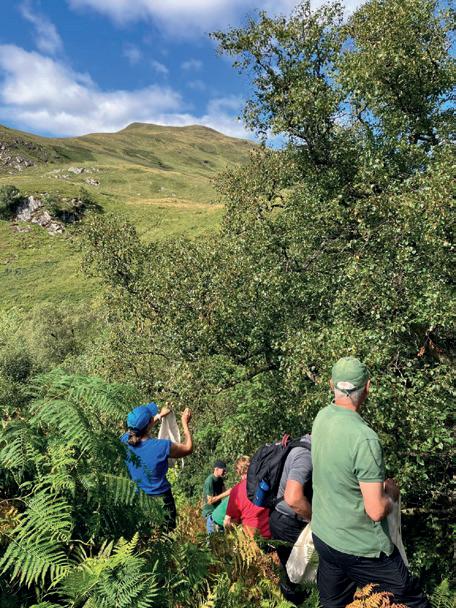
MOBILE CHIPPING SERVICES ACROSS SCOTLAND
HIGH QUALITY & RELIABLE WOODCHIP SUPPLY
Top prices paid for standing or windblown timber direct to you Thinning & clear felling
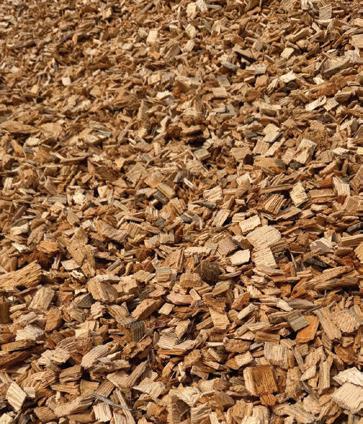
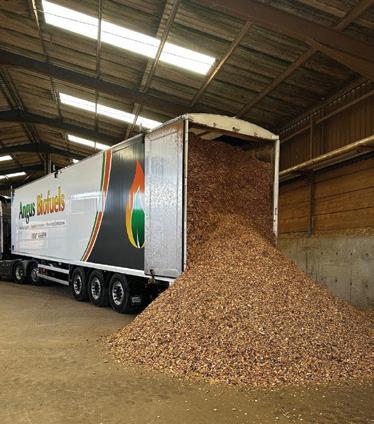
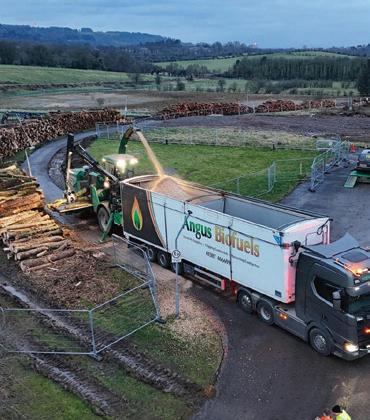

Neil Harrison, Director of Reheat, shares the emerging trends of the woodfuel market.
If the last few years have taught us anything, it’s that relying on imported fossil fuels leaves us exposed. In our world, the current situation with heating oil and LPG in particular - tight supply, geopolitical tension pushing prices up, and seemingly persistent price volatility - has reinforced a hard truth for many organisations in the UK: energy security matters just as much as sustainability, probably more so given nobody actually has to decarbonise yet.
For the UK forestry and timber processing sector, this presents both a challenge and an opportunity.
We work with estates, the public sector, and countless business across the
UK, and what we’re seeing on the ground is a clear shift in thinking. Woodfuel, and particularly woodchip, is no longer just a green option. Although the “burning trees to save the planet” issue still takes a bit of working through with many clients, it’s increasingly being viewed as a practical, stable and homegrown energy solution in an increasingly uncertain world.
Energy security starts at home
The oil market remains inherently unpredictable. Prices react not just to supply and demand fundamentals, but to geopolitics, conflict and currency movements. For end users, whether that’s a distillery, a hotel, or a rural estate,
that volatility creates a real problem. You simply can’t plan effectively when your heating costs are outside your control and might double overnight because of something that happens half a world away.
By contrast, woodfuel is fundamentally local. It’s produced, processed and delivered for the most part using UK supply chains, often within a relatively tight geographic radius. That matters. When your fuel comes from woodlands you manage or from a trusted local supplier then you are far less exposed to external shocks.
This isn’t just about sustainability credentials, it’s about resilience.
Homegrown energy brings a level of predictability that fossil fuels no longer offer.
The return of woodchip: stable, sensible, scalable
In particular, we’re seeing renewed interest in woodchip systems. And it’s not difficult to understand why.
Woodchip has always had one key advantage: price stability. Unlike pellets, which can be influenced by international events such as the invasion of Ukraine, shipping costs and currency fluctuations, woodchip is rooted in domestic forestry. Its pricing reflects local harvesting, processing and transport rather than global energy politics.
During periods of oil and gas price spikes, that stability becomes even more valuable. It allows organisations to budget with confidence, sometimes over multi-year supply agreements. In many cases, that’s what customers are placing the highest priority on, as we’re seeing woodchip deliver not just lower per-unit costs, but more predictable costs over a long period.
For heat users with significant demand - country house hotels, estates, industrial processes – this is a compelling proposition, and as more organisations re-evaluate their exposure to fossil fuel markets, woodchip is rightly back on the table.
Corporate responsibility translated into real world action
Another clear trend we’re seeing is the growing importance of CSR and ESG commitments across both the private and public sectors.
Organisations like Diageo, for example, have invested heavily in biomass to decarbonise energy intensive processes such as distilling. These are not small gestures; they’re significant infrastructure decisions aligned with long-term sustainability strategies.
Similarly, the National Trust has long embraced woodfuel as part of a broader approach to decarbonising heat, and in doing so has removed the risks associated with storing and using heating oil across their estate. Often using timber from their own land to heat buildings creates a closed-loop system that links conservation, energy and resource efficiency.
Within the public sector estate –schools, hospitals, local authorities –the drivers are slightly different, but just as compelling. There is increasing pressure to reduce carbon emissions while managing tight budgets. In that

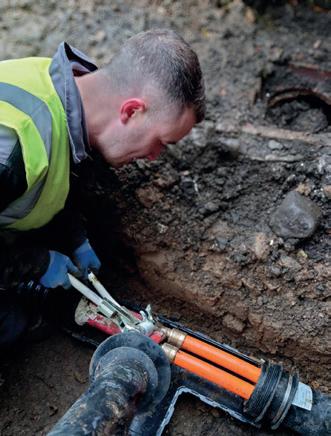
context, a locally sourced, cost-stable fuel becomes highly attractive.
In all of these cases, biomass is not being adopted in isolation. It is part of a wider strategy that combines carbon reduction with energy security and financial prudence.
The bigger picture: stability in an unstable world
The current oil situation has sharpened the focus on where our energy comes
from and how secure it really is. For too long, the conversation has been dominated by global supply chains and short-term pricing.
What we’re seeing now is a shift towards longer-term thinking.
Homegrown energy, whether that’s woodfuel, solar or other renewables, offers something that imported fossil fuels increasingly cannot: control. Control over cost, over supply, and over environmental impact.
For the forestry sector, this is a moment of opportunity. Demand for woodfuel supports active woodland management, strengthens rural economies and contributes to national energy resilience. To borrow from Confor’s latest campaign, timber security is also energy security, at least in part.
From where I sit, working with clients across the UK, the direction of travel is clear.
Woodfuel, and particularly woodchip, is no longer a niche solution. It’s a practical, proven response to a set of very real challenges: volatile energy markets, net zero commitments, and the ever-present need for better woodland management.
In an era defined by uncertainty, the value of a stable, local energy source has never been clearer.


Land Energy, the UK’s largest manufacturer of sustainably produced wood pellets, details how sustainable forestry, local enterprise and long-term thinking are coming together to build the future of the UK bioeconomy.
For 20 years, Land Energy has been demonstrating what a truly circular forest economy can look like.
While many people within the forestry sector will recognise the company’s wood pellet brands in homes and businesses across the country, few will appreciate the scale of Land Energy’s contribution to the wider forest industry, rural economy and emerging bio economy.
From its base in south-west Scotland, Land Energy has built a business founded on a simple principle: making the most of sustainably sourced, homegrown timber and forest residues to create value, jobs and environmental benefits that remain within local communities.
As debate grows around timber security, net zero and the future resilience of UK supply chains, Land Energy’s model offers a powerful example of how forestry can deliver far more than a single end product.
The story begins in the forests surrounding Land Energy’s operations within the UNESCO Galloway and
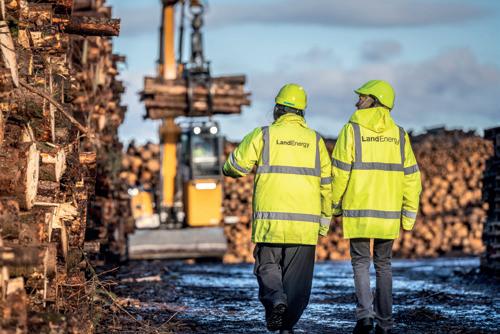
Southern Ayrshire Biosphere.
Using low-carbon inputs sourced from sustainably managed local woodlands, the company produces a range of products that support domestic homes, heating, agriculture and horticulture markets. Today, Land Energy owns six of the UK’s best-known wood pellet, bedding and biomass brands, supplying customers across the country through an extensive distribution network.
What makes the business distinctive is not simply the products it manufactures, but the way value is retained throughout the supply chain.
Every tonne of locally sourced fibre supports harvesting contractors, haulage operators, forestry businesses, processing facilities and local rural employment. It is an example of what economists often describe as “sticky money” – investment that remains within local communities, generating wider economic benefits rather than leaking overseas.
Although rooted firmly in Scotland, the impact is UK-wide. Land Energy’s customers, suppliers and distribution
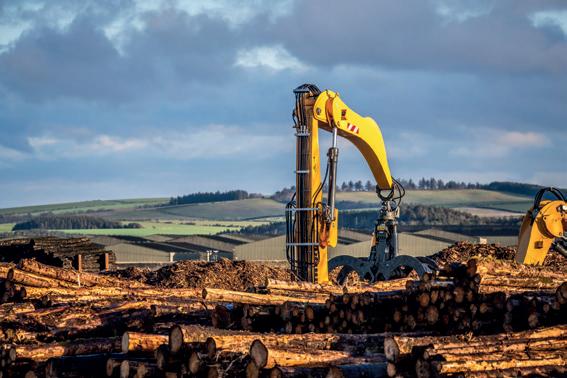

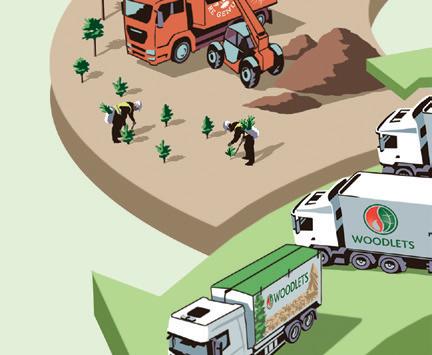

demonstrating how regional forestry businesses can contribute to national economic resilience.
The forestry sector is increasingly recognising a challenge: the UK’s dependence on imported timber.
The UK currently imports more than 80% of the timber it uses, making it one of the world’s largest timber importers. Recent discussions in Parliament and the growing Timber Security campaign have highlighted the strategic risks associated with such dependence.
For Land Energy, timber security is not simply an industry issue – it is a national one.
Much attention is rightly given to food security, but timber security deserves equal consideration. The two are intrinsically linked through land use, rural economies and long-term national resilience.
Meeting future demand will require sustained investment in productive woodland creation and active forest management. Commercial forestry has a vital role to play, ensuring the UK can increase domestic timber production while supporting climate objectives and biodiversity outcomes.
The forests being planted today will provide the timber, fibre and renewable
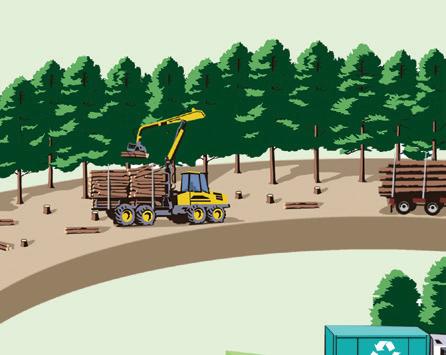
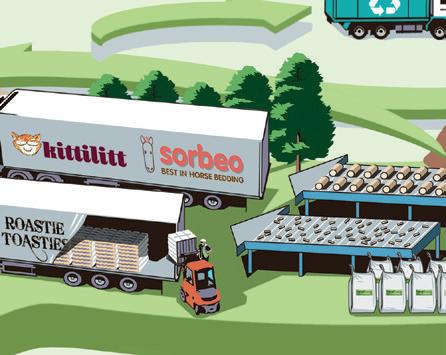
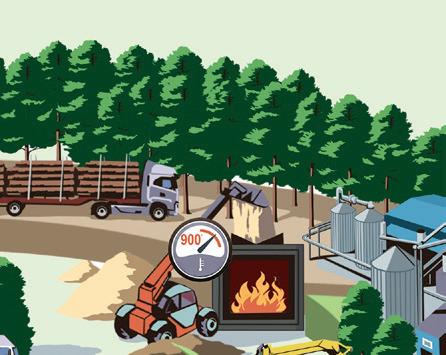
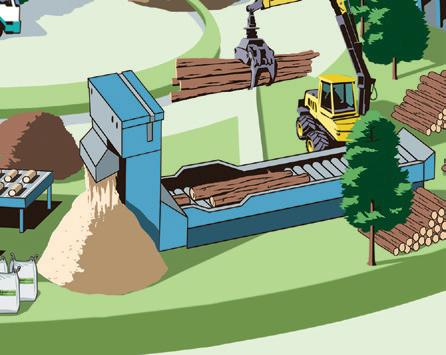

imports will continue to grow.
As timber demand evolves, the opportunities for the sector extend far beyond traditional markets.
Land Energy sees significant potential in the emerging bio economy, where wood fibre can be transformed into higher-value products.
The future of timber use is about using fibre more intelligently and extracting maximum value from every part of the resource.
This approach sits at the heart of Land Energy’s long-term strategy. The company continues to explore innovative products that will ensure its business remains sustainable not just in five years’ time, but in fifty.
One example is Solivita, Land Energy’s natural soil improvement product that supports regenerative agricultural practises and sustainable land management.
By embracing innovation while maintaining strong links to primary production, businesses such as Land Energy are helping to demonstrate the wider potential of the UK’s forest resource.
The Forestry Sector Skills Plan identifies a significant workforce challenge, with hundreds of new entrants required simply to maintain existing employment levels. Skilled professionals will be needed to
A key part of Land Energy’s sustainability story is its Combined Heat and Power (CHP) plant, which generates renewable heat and electricity for the company’s operations.

The CHP is fuelled using low-grade biomass and forestry residues that might otherwise have little economic value. Securing this fibre stream is a specialist role, led by Land Energy’s Biomass Supply Manager Darren Campbell, who works closely with forestry contractors and land managers to recover material from harvesting and processing operations.
The result is a practical example of circular resource use: locally sourced fibre supporting local manufacturing, renewable energy generation and rural employment, while reducing waste and maximising value from the forest resource.
deliver woodland creation targets, manage forests and support an expanding forest products industry.
Land Energy is actively contributing to the solution through partnerships with educational institutions including SRUC and the University of the West of Scotland.
These collaborations help connect education, research and industry, creating pathways for future talent while ensuring students gain exposure to real-world forestry and bio economy careers.
The challenge also presents an opportunity. Modern forestry encompasses far more than traditional perceptions of planting and harvesting. Careers now span engineering, logistics, manufacturing, environmental science, energy systems, research and product innovation.
For younger generations, forestry offers the chance to work in a sector that sits at the crossroads of climate action, economic growth and technological innovation.
Building a stronger future together
Land Energy’s profile continues to grow.
The company has received three industry awards this year alone, including the Confor recognition of its commitment to innovation, sustainability and business excellence.
Yet perhaps the most important message is that businesses like Land Energy already form part of the solution to many of the challenges facing the UK.
Home-grown timber. Local supply chains. Rural jobs. Renewable products. Skills development. Innovation. Timber security.
These are the elements of a stronger, more resilient forestry sector.
Have fibre available from harvesting residues, brash recovery or chipping operations? Land Energy is always interested in discussing sustainable biomass supply opportunities.
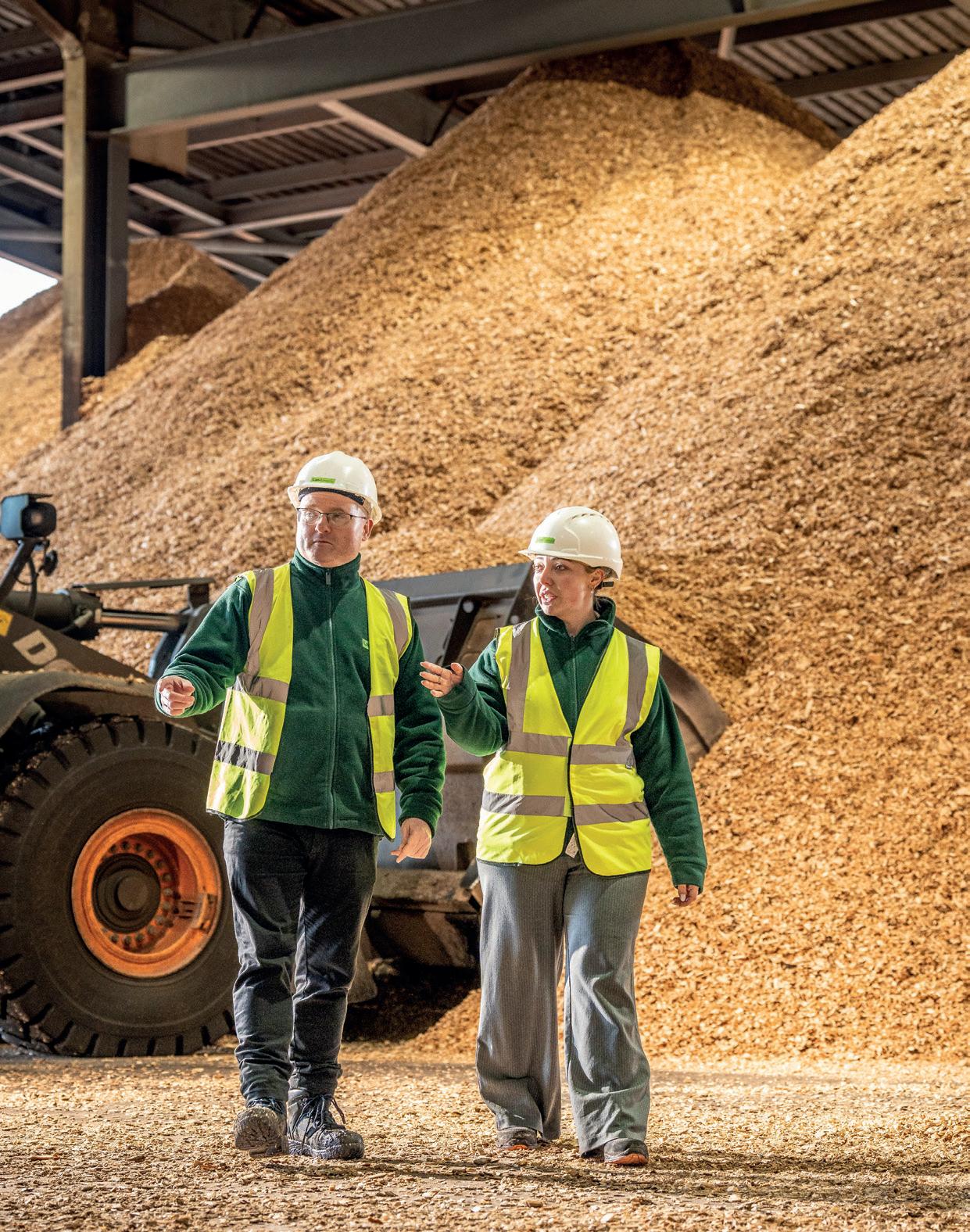








Investment and innovation has grown the woodfuel arm of RTS Forestry into a processing powerhouse.
Since entering the woodfuel market in 2006, RTS Forestry has grown from a developing supplier of biomass fuel into one of Scotland’s leading producers of highquality woodchip. From the outset, the company’s involvement in biomass was driven not by incentives, but by a firm belief in the value of sustainable, locally sourced fuel as an alternative to fossil fuels.

RTS remains unique as the only forestry company in Scotland to have developed its own dedicated biomass division, supplying woodchip for both domestic and commercial heating.
Built on strong forestry roots and a commitment to quality at every stage of the process, the business has continually evolved. This journey has most recently culminated in the installation of a new, state-of-the-art boiler system at our processing facility in central Scotland, marking another significant milestone in our development.

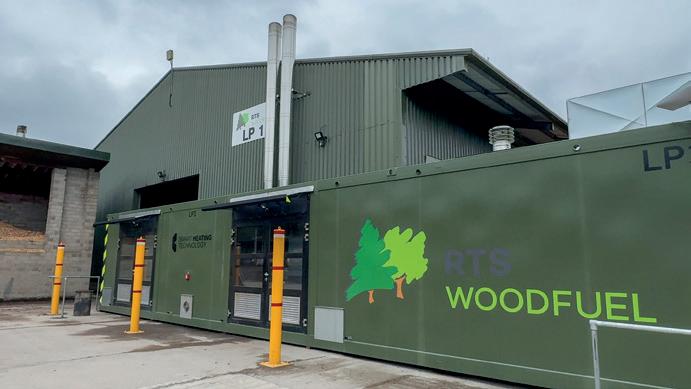
Back in 2006, policy direction from both the UK and Scottish Governments indicated growing support for renewable energy, including biomass. This presented a clear opportunity to develop a local woodfuel supply that could serve emerging heat demand projects while reducing reliance on markets beyond our immediate area.
Entering the biomass sector made strategic sense for RTS - not only as a new and complementary business stream, but also as a way to create an

additional and sustainable timber outlet for our forest-owning clients.
Early investment was supported by the Scottish Government through the Scottish Biomass Support Scheme (SBSS). This funding enabled the purchase of our first purpose-built Jenz biomass wood chipper, along with the installation of our LP1 biomass drying facility in 2008. At the time, the use of woodchip for heating was still a developing market, but it was one with significant potential.
That potential was further realised
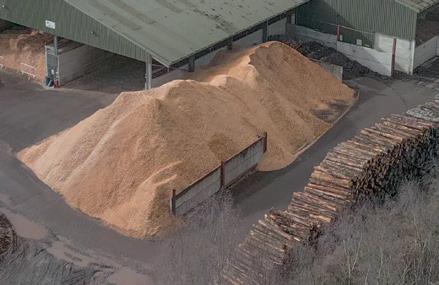


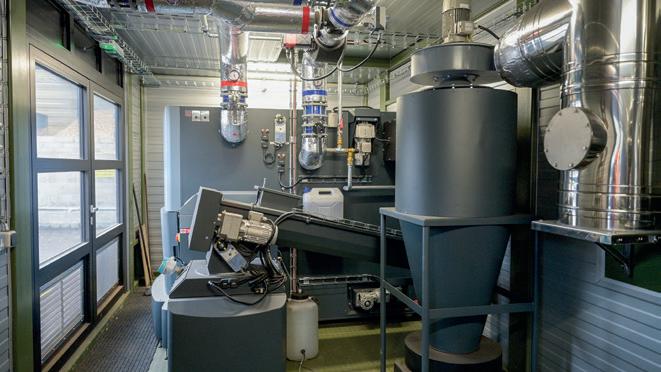
with the introduction of the Renewable Heat Incentive (RHI) in 2011. This scheme provided long-term financial support for both non-domestic and domestic biomass users, encouraging wider adoption of woodfuel heating systems. As demand grew steadily over the following years, RTS expanded its production capabilities to meet the needs of an increasing customer base.
In 2017, RTS marked its first major expansion with the construction of its second production facility, LP2. This development added an additional 900kW of heat capacity for woodchip drying and conditioning, significantly increasing its ability to produce a consistent, highquality product. This expansion reflected not only rising demand, but also the growing recognition of biomass as a reliable and sustainable heating solution across a wide range of sectors, including private homes, schools, hospitals and public buildings.
Building on this foundation, RTS recently completed the installation of LP3, its most advanced system to date. Developed in partnership with SigmaConsult, a Scottish-based biomass system specialist, and SMART Heating, based in the Czech Republic, LP3 represents a new standard in efficiency and technology. The system combines proven European innovations into a composite boiler design tailored to the company’s operational needs.
LP3 incorporates responsive technology that adapts in real time to the moisture content of the woodchip, as well as environmental variables such as temperature, humidity and material resistance during the drying process. This ensures that energy is used as efficiently as possible while maintaining a consistent product quality. The system is also cloud-based, allowing remote monitoring and control at any time,
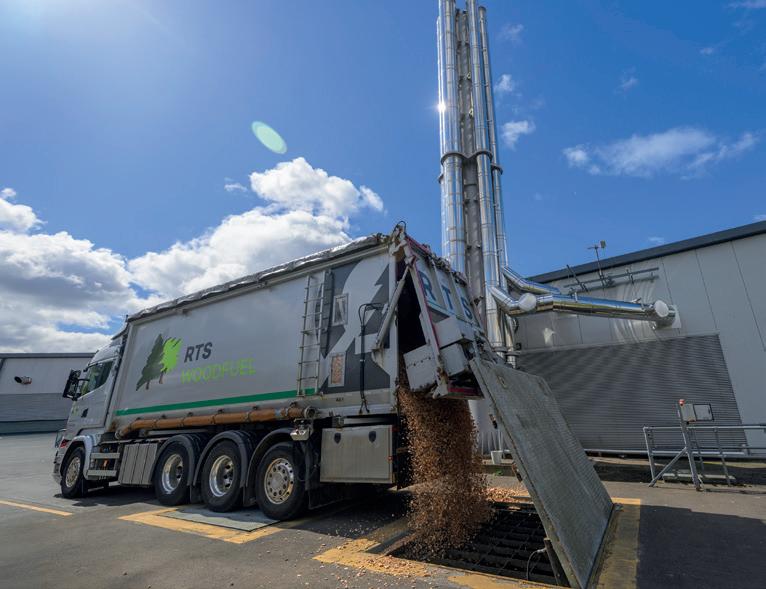
“Today, RTS supplies more than 30,000 tonnes annually to over 150 biomass boilers across the UK.”
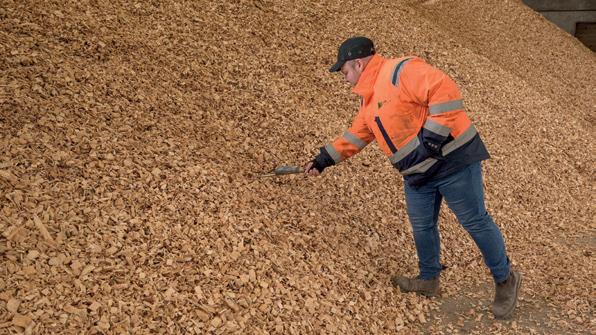
providing both flexibility and reliability in the company’s operations.
At full capacity, RTS now produces up to 650 tonnes per week of dried, conditioned woodchip to the P31s M25 specification. In addition, the company maintains a consistent stock of approximately 500 tonnes per week of both P31s M35 and P31s M45 grades throughout the year. In 2025 alone, RTS processed 44,000 tonnes of sustainably sourced timber, supplying 31,000 tonnes of biomass woodchip to customers across the UK for heating, industrial processes and power generation.
The company’s journey began with humble origins - supplying just 500 tonnes per year to a single local hotel. Today, RTS supplies more than 30,000 tonnes annually to over 150 biomass boilers across the UK. Throughout this growth, its core belief has remained unchanged: that sustainable, locally
produced fuel is a vital part of the transition away from fossil fuels.
RTS continues to lead the way in the production and distribution of woodchip biomass, supporting a wide and diverse customer base ranging from domestic users to major commercial and public sector clients. The biomass division alone now contributes over £4 million annually to the company’s turnover, reflecting both the success of the market and the strength of its operations.
However, none of this progress would have been possible without the people behind it. From those maintaining and operating the equipment, to those managing logistics, customer relationships and day-to-day operations, every member of the RTS team plays a vital role. This shared commitment is what has driven the company’s success over the past 20 years – and what will continue to shape its future.

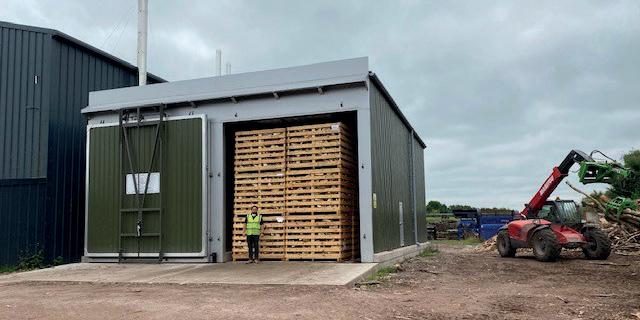
Offering a comprehensive range of professional log & woodchip drying kilns for the timber industry. Along with kilns for sawn timber, pallets & fencing producers
KILN Services has been designing and manufacturing timber-drying kilns from its base in Essex for over 45 years. The company provides drying and heat-treatment kilns for all sectors of the industry, including softwood and hardwood sawmills, pallet manufacturing, fence-post producers, biomass fuel producers, modified timber and research facilities in universities and training colleges. In recent years, the market for kilns to dry biomass fuel has increased considerably. This has been driven by consumer awareness of product moisture and government initiatives to improve air quality, such as the Woodsure Ready to Burn accreditation scheme.
Please visit our website for more information www.kilnservices.co.uk t: 01621 785 935 e: admindept@kilnservices.co.uk Kiln Services Ltd, Essex, CMO 8TE




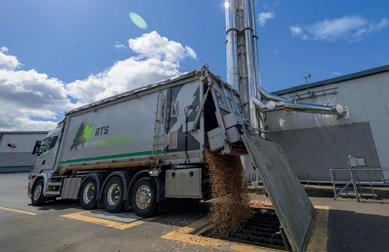


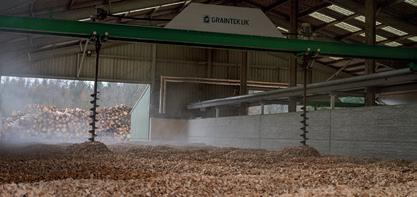


Quality Assured Biomass Fuels Biomass System Support and Monitoring Reliable Nationwide Delivery
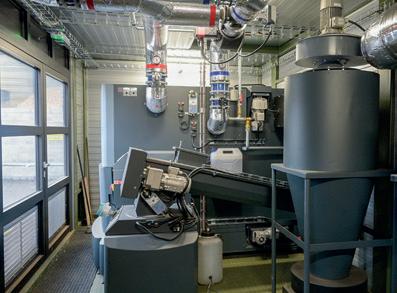





From forest to boiler, RTS Wood Fuel manages every step of the biomass supply chain guaranteeing year-round sustainable, industry compliant fuels throughout Scotland and the UK.


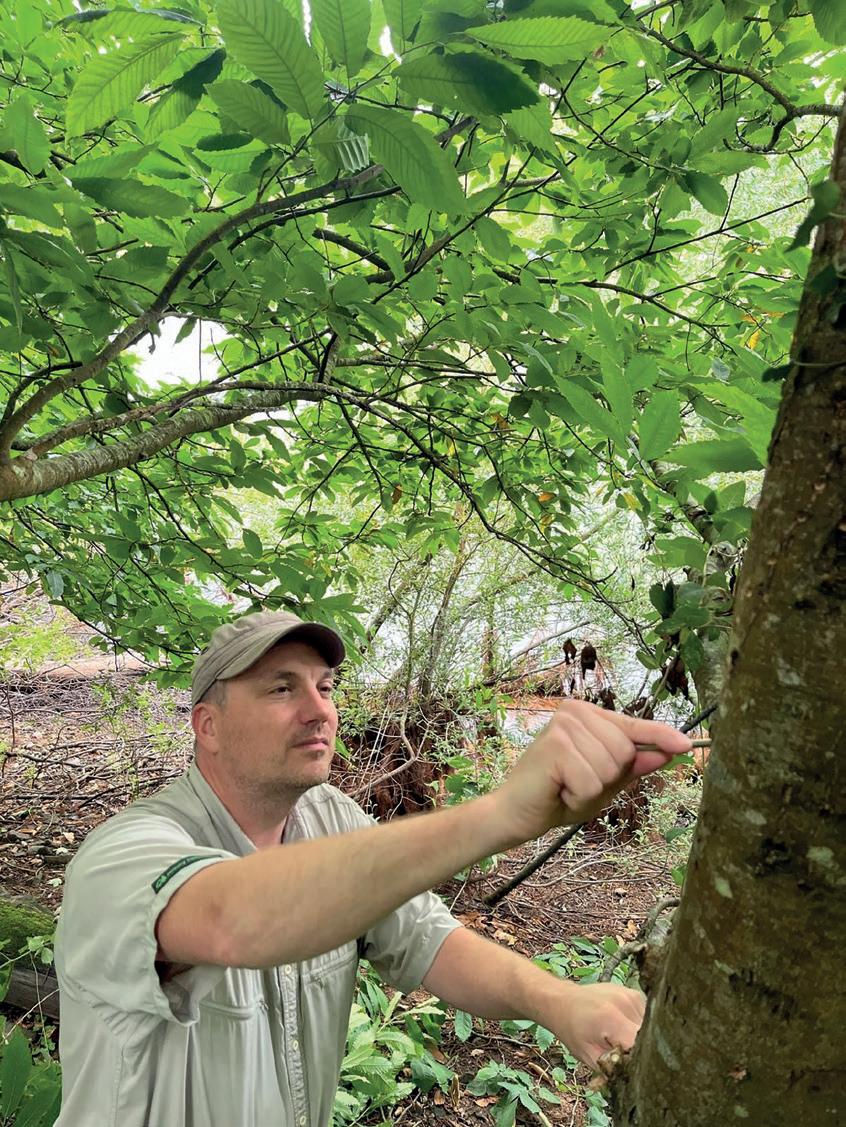
Forest Research, Great Britain’s principal organisation for forestry and tree-related research, is working with the Government of Jersey on a trial to assess treatment for sweet chestnut blight disease.
Sweet chestnut blight is a notifiable tree disease caused by the fungal pathogen Cryphonectria parasitica (C. parasitica). It primarily affects sweet chestnut, Castanea sativa, but can occasionally affect other species including oaks, although it doesn’t affect horse chestnut trees.
The disease can kill sweet chestnut trees and causes a serious, disfiguring decline exacerbated by tree stress and drought conditions. Signs of the disease include discoloured, fissured cankers on stems and branches, profuse epicormic growth of branches, and orange pinheadsized fruiting bodies with buff-coloured mycelial (fungal) fans under the bark.
The pathogen is native to Asia but has been present in mainland Europe since the 1930s. It was first detected in the UK in 2011, likely arriving on imported planting stock. It is known to be present in certain areas of southern England.
Where cases of sweet chestnut blight are found in young trees or on a small scale, it is often possible to eradicate disease through the felling and removal of infected trees and stumps. As a notifiable plant disease, suspected findings of sweet chestnut blight should be reported to the Forestry Commission, who will, if possible, direct destruction or removal of any infected plants, bark or wood.
On sites where the disease is more established, eradication through the destruction of trees can be difficult. However, in these circumstances there could be another way to manage chestnut blight using a biocontrol agent – a naturally-occurring virus which affects C. parasitica. This virus is called Cryphonectria Hypovirus 1 (CHV1).
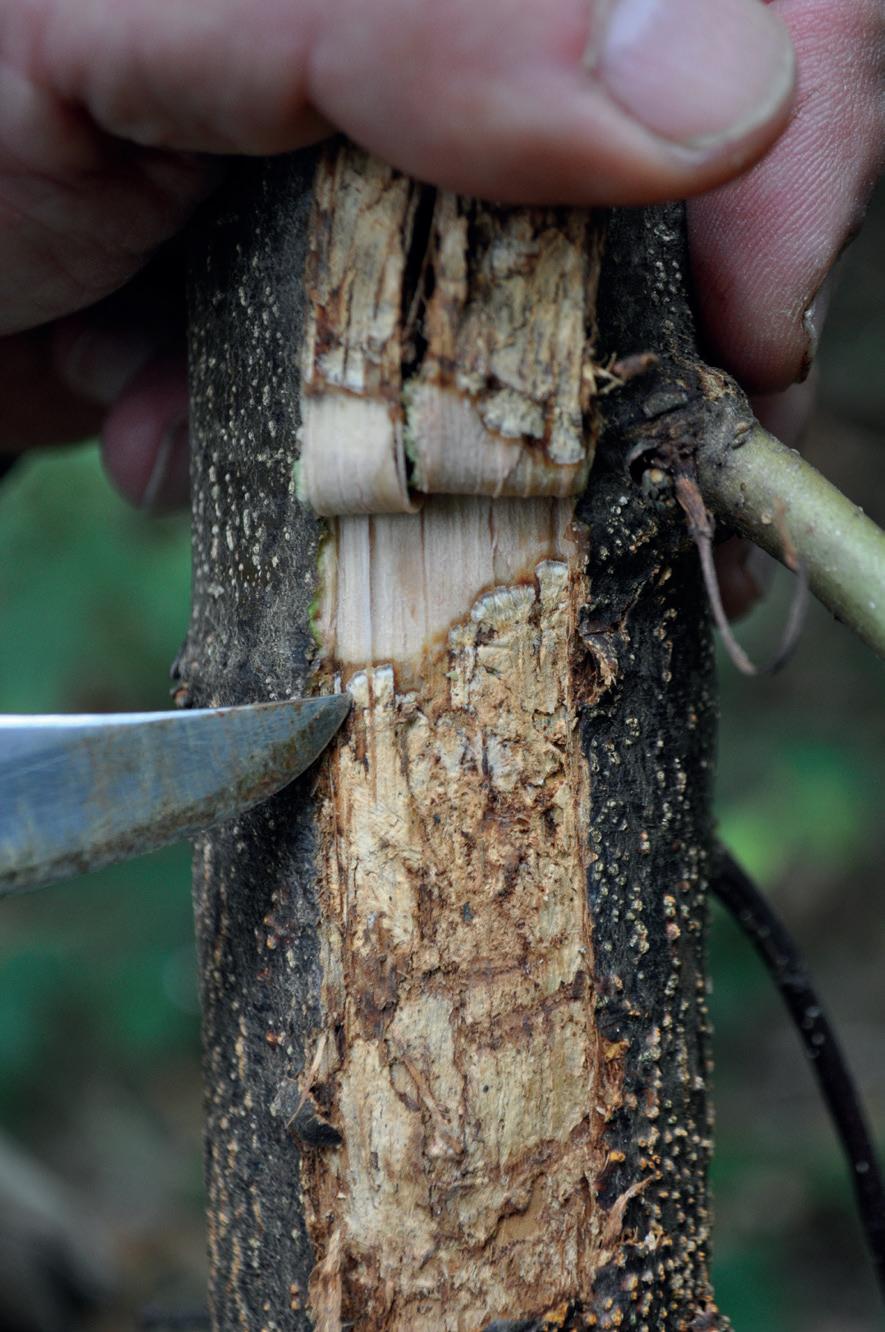
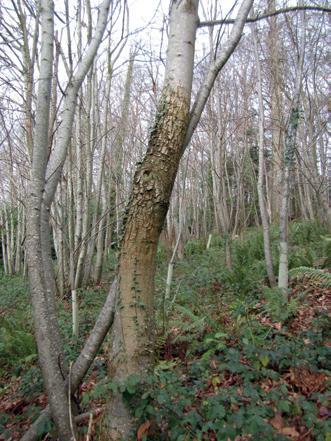
Sweet chestnut blight can be controlled by introducing CHV1 to the pathogen, which causes an effect called “hypovirulence”. This reduces the ability of the pathogen to harm trees and affects its ability to reproduce and spread. When chestnut blight is present in a tree, it is possible to treat cankers with a compatible “hypovirulent” isolate of C. parasitica. CHV1 can then be transmitted to the pathogenic isolate, rendering it hypovirulent as well; this, in turn, allows the tree to recover from infection and enables the canker to heal, often changing colour from orange to black during healing.
The use of CHV1 as a biocontrol agent is undertaken with success in several European countries and once established, its positive effect slowly spreads naturally through the movement of the fungus’ waterborne spores called conidia.
At Forest Research, scientists have been working to understand the diversity of strains of C. parasitica present in the UK.
They have shown that CHV1 is effective in reducing disease symptoms under laboratory conditions on the dominant strains of C. parasitica present in the UK. They are also building a bank of hypovirulent fungal strains which would be suitable for use towards the longterm strategic aim – a UK programme of biocontrol to manage sweet chestnut blight.
The next stage in gathering evidence to enable the successful use of CHV1 is a field trial – going to woodlands and treating infected trees. Under UK legislation, C. parasitica is a GB Quarantine Pest and therefore field trials are not currently possible. However, Forest Research is working closely with Defra and the Forestry Commission to explore how to make the licensed use of CHV1 a possibility on mainland UK.
Forest Research, working with The Royal Horticultural Society (RHS) and Coventry University, is calling on woodland owners and the public to help check on the health of sweet chestnuts this summer.
The call to action follows findings of sweet chestnut blight, a disease which can be fatal to sweet chestnut, on multiple trees in Devon. In some areas of England there are now specific restrictions in place to help prevent spread of the disease.
Guidance: https://bit.ly/4wgZBf5
Other threats to look out for As well as sweet chestnut blight, sweet chestnut trees can also be affected by the Oriental chestnut gall wasp, Dryocosmus kuriphilus
This tiny stingless wasp doesn’t cause any damage to humans but lays its eggs in the tree’s growth buds. Wasp larvae hatch and cause abnormal growths, known as galls, by feeding on the buds and leaves. Early in the summer, galls can be rose pink or red, and gradually turn green, eventually drying out and turning brown and woody.
The insect pest can be transported in infested material, so galls, buds and shoots of sweet chestnut should not be collected or moved around.
If you find a sweet chestnut tree when out on a walk, check the tree’s health – look for disfigured patches of bark with a sparse crown of leaves (symptoms of sweet chestnut blight) or Oriental chestnut gall wasp leaf galls.
Report your findings to TreeAlert. If you find suspected sweet chestnut blight or Oriental chestnut gall wasp, submit a ‘general report’. Make sure to select ‘Check a Sweet Chestnut’ as the project. Registered users of TreeAlert can also report healthy sweet chestnut trees as this helps provide further insight into the health of sweet chestnut as part of wider surveillance.
https://treealert.forestresearch.gov.uk
Leading a CHV1 trial in Jersey
While plans are ongoing in the UK to ensure that the correct legal framework is in place to undertake a field trial, Forest Research is working on an exciting project with the Government of Jersey.
Sweet chestnut blight is established in some areas of Jersey and Forest Research scientists have been able to begin work to treat infected trees in a biocontrol trial funded by Defra as part of the Future Proofing Plant Health research programme.
The trial began in January 2025 when Forest Research experts spent time working with the island’s scientists, inspectors and officials to identify suitable sites and trees for treatment. Samples were taken from infected trees and taken back to the Forest Research quarantine laboratory at the Alice Holt Research Station in Surrey.
Once scientists had determined the dominant C. parasitica isolates, they used techniques that have been developed to transmit CHV1 to the pathogenic Jersey isolates in the lab, rendering them ready for use in the field as hypovirulent biocontrol isolates.
Treating the infected trees
In July 2025, Forest Research scientists went back to Jersey and started treating infected cankers on the selected sweet chestnut trees. The treatment involved using a cork borer to make a series of small holes in the bark, tracing the edge of each canker.
Next, the hypovirulent isolate of C. parasitica was inoculated into each incision, and holes were sealed to protect the biocontrol isolate. Before treatment, each canker was measured and photographed, alongside several untreated control cankers so that progress could be monitored and the effect of the biocontrol determined.
In January 2026, the researchers undertook an initial assessment, six months after making the treatments. The early signs looked promising: the treated cankers had generally not grown, while the untreated control cankers appeared to have expanded in size.
This means that CHV1 may be having a positive effect and might be starting to become established. These are preliminary results, and it could take several years for the cankers to fully heal – scientists have two more assessments to complete until the project ends in 2027. However, a great deal has already been learnt which will help to lay the foundations for the aim of eventually treating infected trees in mainland UK.

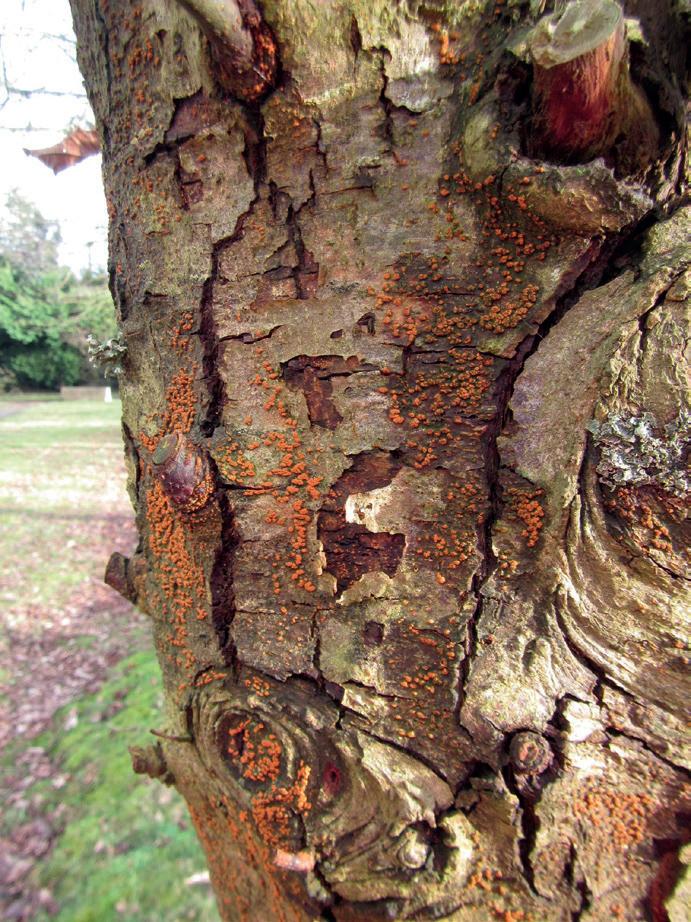




LOOKING FOR HIGH PERFORMANCE WOOD PRESERVATIVE FOR INDUSTRIAL USE?
Wolmanit ® CX and Wolsit ® KD for high and low pressure treatment. In the vessel or in the fi eld, you can rely on Wolman. Using unique German engineering, Nordic quality and technical experts, we can give you peace of mind with consistently high performing treated products, delivered across the UK and IE.


Use wood preservatives safely. Always read the label and product information before use.
Wolman Wood and Fire Protection GmbH · Dr.-Wolman-Str. 31–33 · 76547 Sinzheim · Germany www.wolman.de · Contact: info.wolman@de.sika.com




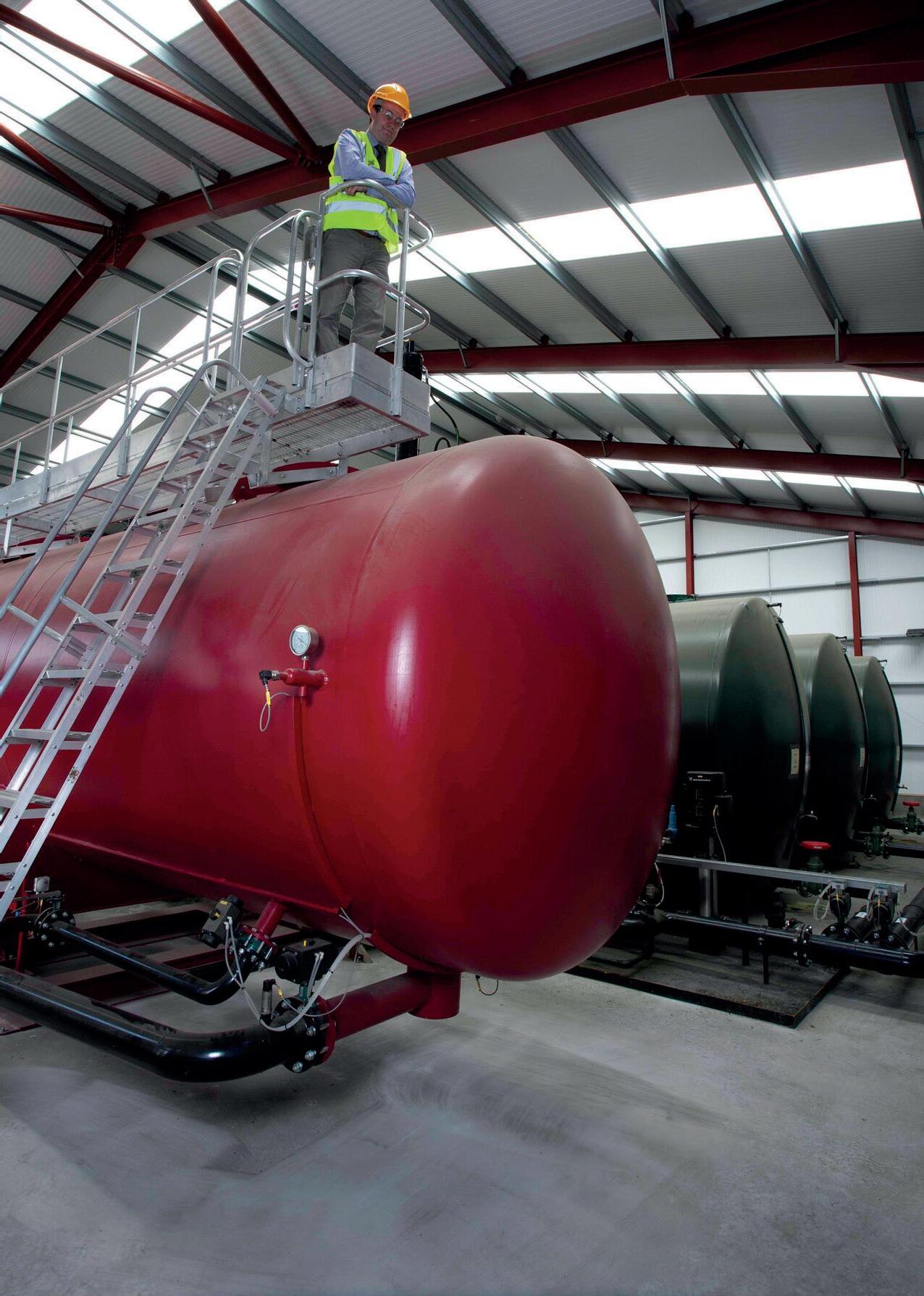
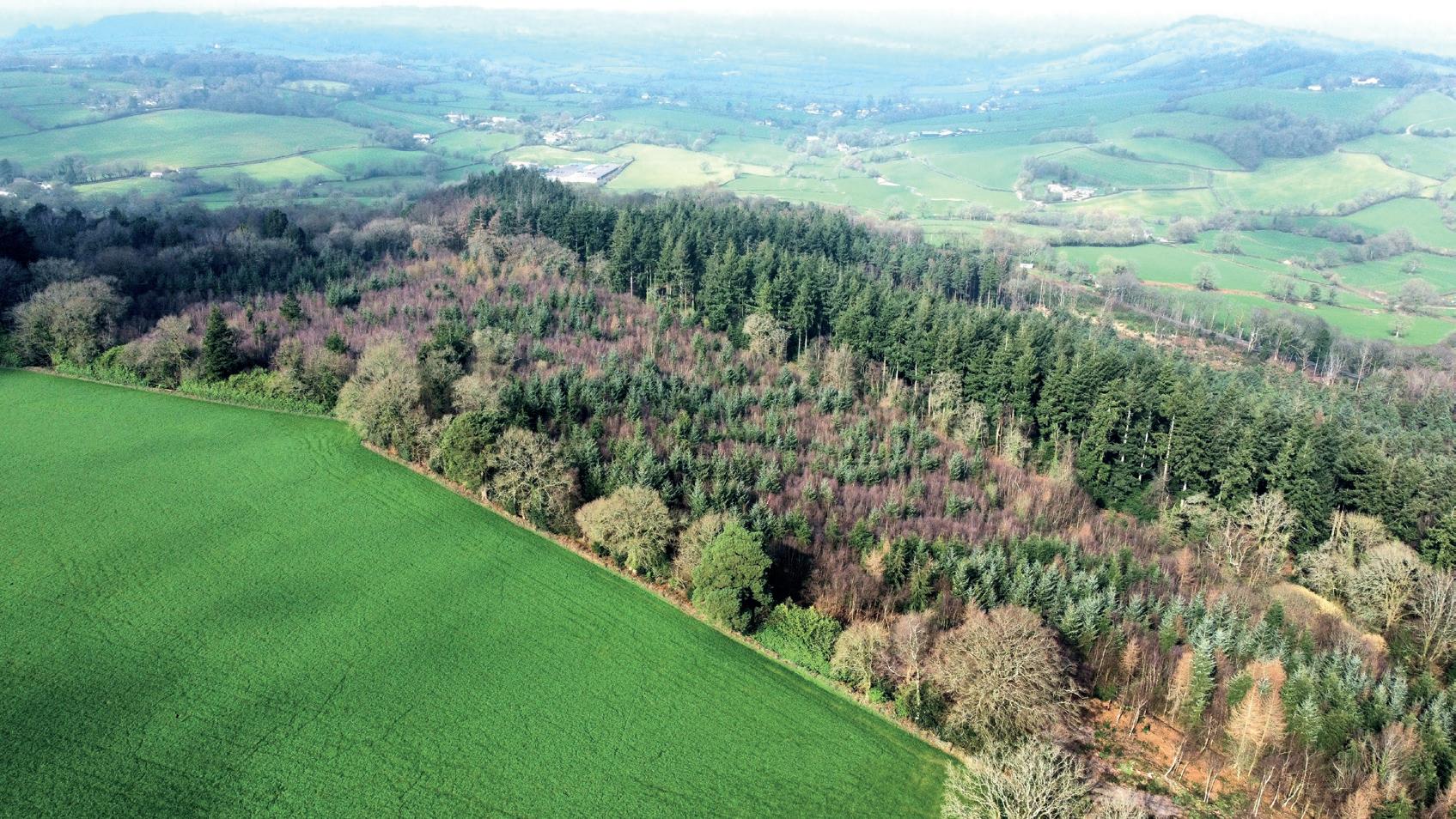
Anthony Geddes MICFor, Associate Director at Tustins, reviews recent market movement and suggests forestry remains an attractive investment for old and new faces.
As an agent focusing on acquisitions, I am always intrigued to understand what my colleagues in similar businesses are experiencing across the sales market. There is little doubt that 2026 began with uncertainty; however, following earlier commentary around complexity and selectivity, some positive signs are now emerging.
Timber values remain stable, with some regional improvement across different timber products driven by local demand. Unlike mid-2025, timber is now clearly moving in the market. That said, the impact of rapidly increasing fuel prices is becoming embedded in pricing,
which risks further slowing activity, particularly as the construction sector remains subdued, both in new housing and retrofit projects.
The Office for Budget Responsibility forecasts that real GDP growth will slow from 1.4% in 2025 to 1.1% in 2026. Against this backdrop, the Government’s success in reforming the planning system and effectively directing the Nature Restoration Fund will be critical to the recovery of timber markets, along with the wider knock-on effect for forestry property values.
On a more positive note, the Westminster Government has reviewed proposed changes to inheritance tax
relief and announced in March that the threshold will increase to up to £2.5 million per person. This is a welcome development and has helped restore confidence among those with long-term plans for their forestry holdings.
While this is not a message of complete certainty, it is certainly one of cautious optimism. The range of available properties across all agents is strong, and although purchasers remain disciplined in negotiations, interest has strengthened noticeably over the last quarter.
Tustins has experienced a surge in interest for properties in Southern England and Wales, with recent launches including:
• Kilmington Wood – 38 hectares of mixed-age, mature conifers, including Sitka spruce and Douglas fir as the principal species, guided at £475,000 near Axminster, Devon.
• Bryn Y Pentre – a masterclass in continuous cover forestry, featuring a diverse species mix ranging from younger Sitka spruce to mature Douglas fir, alongside joinery-grade beech and high volumes of red oak (guided at £590,000).
While the north of England has been a focus for other professional work, this region has also produced an impressive and substantial woodland investment opportunity:
• Manby & West Wood – comprising
165 hectares of mature native broadleaf species and pine, alongside a highquality forestry workshop and office.
The quality of properties coming to the market continues to improve across the sector, with notable offerings from other agents such as:
• Coille a’ Bowen Forest, Morayshire – 83 Hectares of maturing commercial crops and permission for two 7MW wind turbines. Marketed at offers over £450,000.
• Craigdow Forest, South Ayrshire – 246 hectares of commercial crops
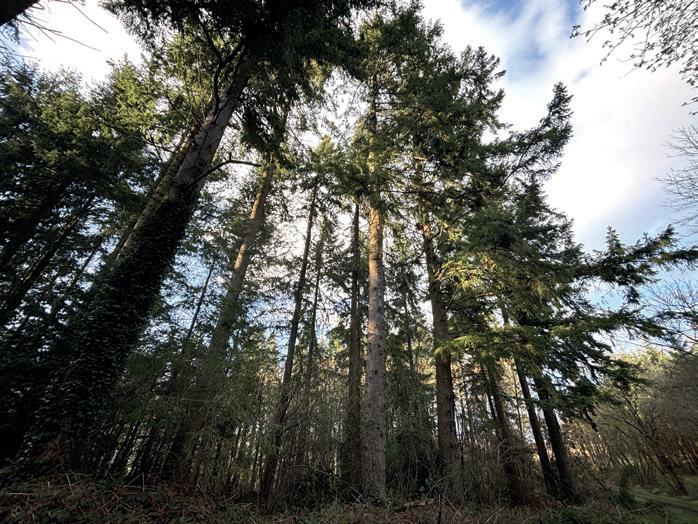
and 3,690 verified Pending Issue Units, marketed at £2,300,000.
• Ayton Hill Forest, near Perth – 167.24 hectares, guided at £2,575,000, with harvesting opportunities coming online over the next decade.
Sales success appears almost to be following the course of the weather (written in hope that the sunshine continues), with recent sales progressing well and some more mature properties to the market finding purchasers, including:
• Amersidelaw, Northumberland – 158 hectares of mixed-age conifer crops, restocking land, and an attractive chalet (£2,150,000).
• Bell Coppice – a substantial oak
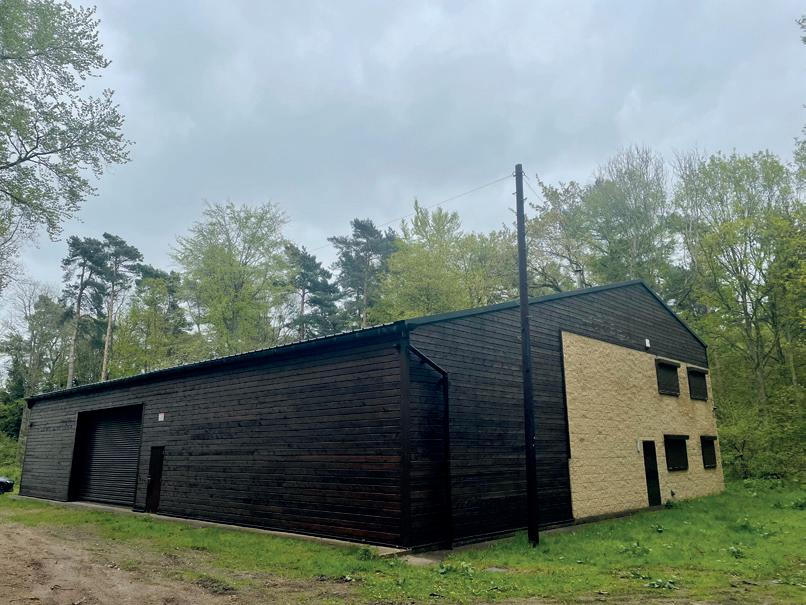
woodland of significant ecological interest, including an attractive shelter, spanning 82.33 hectares (£1,350,000).
• Concord Wood – a historic Chilterns broadleaf woodland with former forestry heritage, extending to 57 hectares (£575,000).
What is a clear telltale for the market stabilisation is the keen uptake in clients seeking to acquire woodland. For those of high net worth or the prudent reviewing the IHT situation (now that pensions are taxable), forestry remains an attractive investment, and less of a challenging moral investment than petrochemical and defence-based businesses.
Although only in my first quarter with Tustins, it’s been pleasing to see acquisitions in England, Wales and Scotland successfully agreed and a client list populated with new faces and some more historic ones, showing the lure of forestry really is strong.
While the market continues to navigate economic pressures and structural challenges, there is clear evidence of resilience within the forestry sector. Stable timber values, improving quality of stock, and renewed buyer interest all point toward a gradual strengthening of confidence. For those willing to remain patient and pragmatic, opportunities persist across a diverse range of assets.
As ever, success in this market will depend on endurance, combined with the ability to adapt to changing conditions and recognise value where it emerges.
Lucy
Drones are now widely deployed across the forestry sector, including for surveying, crop monitoring, windblow assessment and harvest planning. While the operational advantages are well understood, drone operations can give rise to a range of legal and compliance issues, relating to airspace regulation, data protection and property law considerations.
This Q&A summarises key points which forestry businesses should consider when using drones on or over woodland in the UK.
Why are drones increasingly used in forestry?
Drones enable large (and often difficultto-access) areas of woodland to be surveyed quickly and with a high degree of accuracy. In many cases, they reduce the amount of time required on the ground, support more timely decision-making, and create an auditable visual record of site conditions.

Requirements for flying drones in the open category include:
• operator registration and pilot competency;
• operator maintaining visual line of sight; and
• compliance with applicable height and location limits (maximum 120 metres above ground level).

Even where operations are planned in remote locations, additional restrictions may apply (for example, in the vicinity of military training areas, aerodromes or controlled airspace). A site-specific check of applicable airspace constraints prior to flight is therefore advisable.
Do privacy and data protection rules apply?
Yes. Privacy and data protection obligations may apply even where flights are undertaken only over land which you own or manage.
Issues may include low-level or repeated flights in the vicinity of residential areas (which may be alleged to constitute nuisance) and concerns about encroachment where a drone enters neighbouring airspace at a low height. The practical risk is typically higher where flights are frequent; and/or close to areas used for private amenity.
It is important to establish who owns and occupies neighbouring ground and whether any lease, wayleave or other agreement restricts surveying or monitoring activity. This will usually only be capable of being determined through discussions with owners or managers of that ground.
Where operations may reasonably give rise to concern, notifying neighbours in advance and adjusting flight height or route (where practicable) can help to prevent disputes from arising.

What rules govern the operation of drones?




In the UK, drones are regulated by the Civil Aviation Authority (CAA).









Many forestry flights will be undertaken within the “open” category, depending on factors such as aircraft weight, planned altitude, and proximity to people, vehicles and buildings.


If imagery can identify individuals (for example, neighbouring owners, members of the public using paths, contractors or staff ) it is likely to constitute personal data.

In many cases, a proportionate and documented approach will be sufficient. Practical measures should include:
Operators should identify an appropriate lawful basis for processing, minimise capture to what is necessary, and implement proportionate controls around retention, storage and access.






• undertaking site-specific risk assessments;
• limiting flights (and capture) to what is necessary for defined operational purposes;
• maintaining records of when drones are used and the reasons for use; and

What issues can arise with neighbours?




These steps reduce risk and help demonstrate a structured approach to compliance should concerns be raised by third parties. basis to
• adopting a short drone use policy covering safety, privacy/data protection, and neighbour engagement.

Neighbour relations can be one of the more sensitive aspects of drone operations.

Conclusion: managing opportunity and legal risk
As drone technology becomes embedded in forestry operations, implementing it successfully will depend not only on technical capability but on how well legal risk is anticipated and managed in practice.
Forestry businesses that integrate drone use into their wider compliance frameworks will be best placed to realise the benefits of the technology while avoiding disputes and regulatory scrutiny.

Confor Members have access to a free legal helpline, administered by Brodies LLP. Get in touch for guidance on key issues that impact forest owners and the forestry sector.
Whether your query is employment law, health & safety, planning, tax or property-related, one of our experts will be happy to give you a free initial consultation.
More info: https://bit.ly/3yPGRI1
For members based anywhere in the UK Brodies LLP 0131 228 3777 www.brodies.com confor@brodies.com
For members based in England/Wales Michelmores LLP 0333 004 3456 www.michelmores.com
As AI becomes more and more embedded in ways of working across multiple industries, Moya Smith, Associate, and Anne Todd, Partner, Michelmores explain the associated legal challenges.
Artificial Intelligence (AI) has the potential to transform land management and forestry operations, from improving productivity and mitigating labour shortages to enabling more sustainable management of woodland assets.
Visitors attending Chelsea Flower Show last year were struck by the technology deployed in the urban forest created in the Avanade Intelligent Garden. The Gold Medal winning show garden was equipped with sensors connected to an AI tool which tracked tree health – monitoring growth, sap flow, soil conditions, air quality, and weather patterns.
The innovative AI analysed data from the trees, spotting trends and predicting future conditions to provide simple, actionable advice, it even allowed visitors to interact with each of the trees using a mobile app. The AI enabled the trees to alert their custodians if they anticipated issues like over or under-watering. While this case demonstrated use of AI for trees in an urban environment, it is very easy to see how use of such technology in forestry management could be of significant value.
obtained from sensors and live video feeds, to identify changes in vegetation condition, tree health, or signs of environmental stress.
For example, operators can predefine scenarios they want the AI to alert them to, such as unusual patterns in growth, canopy density or water availability. This enables early intervention and more effective woodland management.
The legal challenges

• Confidentiality: AI tools use content and data provided by users to train their models, meaning information that is input can later be included in output for another user. This raises particular concerns if commercially sensitive data is input, such as information relating to land management strategies or proprietary technology. Images or data relating to woodland assets or landholdings may inadvertently be shared with other users.
At Michelmores, our technology specialists regularly advise our clients on how to safely deploy AI and manage the associated legal risks. In this article, we take a closer look at relevant use cases for AI in forestry and the associated legal challenges to be aware of.
Early detection of disease and environmental stress is crucial in maintaining the health and long-term value of woodland assets. Machine learning algorithms can be used to continually monitor and analyse data
• Cyber security: Use of new technology solutions and the processing of increased volumes of environmental and operational data may expose forestry businesses to cyber risks. Investment in appropriate infrastructure and safeguards and taking steps to ensure that third party suppliers meet recognised information security standards will be essential to protect against potential cyber breaches.
AI can be used to analyse soil and environmental data to identify unwanted vegetation or competing growth, allowing for more targeted intervention. This approach helps reduce resource use and environmental impact, while supporting healthier long-term management of land and woodland.
The legal challenges
• Liability: As with other AI systems,
there is a risk of “hallucinations” or inaccurate outputs. In this context, errors could result in inappropriate intervention decisions, potentially affecting land quality or compliance with applicable regulations.
• Job losses: The adoption of AI-driven tools may reduce reliance on manual labour, raising considerations around workforce planning and management.
Automation of harvesting and operations
AI-enabled machinery and robotics are increasingly being used in land-based operations, allowing systems to interpret their surroundings and carry out tasks with greater efficiency. Sensors and imaging technology enable machines to operate in dynamic environments and support the efficient handling of natural resources.
The legal challenges
• Data privacy issues: Although much of the data captured relates to land and assets, personal data may still be processed (for example, through video feeds capturing workers or contractors). Businesses will need to ensure compliance with data protection legislation when deploying such systems.
Environmental forecasting
The increasing unpredictability of weather patterns presents challenges for landowners and forestry operators. AI can analyse environmental data to support forecasting and planning decisions, helping inform timing of operational activities.
The legal challenges
• Bias: AI tools reflect the data used to train them. Recommendations may be based on datasets that are not specific to local conditions or woodland types, leading to outputs that are not suitable for particular use cases. There is also a risk that models disproportionately reflect large-scale operations, making them less applicable to smaller ownership structures.
The efficiencies that AI can create in forestry and land management must be carefully balanced with the associated legal risks. Well-advised businesses will implement appropriate safeguards and contractual protections before deploying these technologies.
If you would like further insight on this topic or advice on AI agreements, the Michelmores Technology & Innovation team is well placed to advise you.



Following a year-long consultation, HMRC has now published its conclusions on the taxation of natural capital initiatives, including biodiversity net gain (BNG), nutrient neutrality (NN), carbon units (PIU/WCU), and related environmental markets. While the technical detail is extensive, the overarching message is clear: where income can be identified, it is likely to be taxed.
This reinforces the growing importance of specialist advice in what is rapidly becoming a complex and nuanced area of taxation.
The consultation, which ran throughout 2025 and into early 2026, drew on input from a wide range of stakeholders, including HM Treasury, the Country Land and Business Association (CLA), the Central Association of Agricultural Valuers (CAAV), the National Farmers’ Union (NFU), professional accountancy bodies, and Confor.
The breadth of engagement is notable, reflecting the diversity of the natural capital market, and HMRC has made a concerted effort to incorporate the subtleties of existing tax frameworks while considering how these emerging income streams interact with them.
Progress has been good although further work remains. Outstanding areas include the treatment of reinstatement costs for failed carbon schemes, the impact of carbon sales on underlying land values, and the implications of receiving carbon income significantly in advance of timber harvesting.
VAT continues to be addressed through a separate workstream, and it has been clarified that regional land transaction taxes do not apply to the sale of environmental units.
Forestry and the Commercial Occupation Test
A central feature of the guidance concerns the long-standing treatment of commercial woodlands under Section 11 of ITTOIA 2005. This provision confirms that the commercial occupation of woodlands in the UK, provided it is genuinely managed for profit, is not treated as a trade for income tax purposes.
HMRC’s updated position is that, where this commercial occupation test is met, income relating to environmental units or credits generated on woodland land do not form part of a taxable trade. Crucially, this means that while such income may fall outside income tax, associated expenditure is not deductible.
For capital gains tax (CGT), the existing woodland exemption continues to apply, but only to the timber elements. Where transactions include other elements such as land or environmental units like Pending Issuance Units (PIUs) or Woodland Carbon Units (WCUs), a just and reasonable apportionment of value will be required. Only the timber element benefits from exemption; the balance remains taxable.
Importantly, if participation in environmental markets alters the character of the woodland such that it no
longer meets the commercial occupation test, the favourable woodland tax treatment may be lost.
The position for peatland differs significantly. There is no equivalent exemption from income tax, meaning that income from peatland carbon units will either fall within an existing trade or be treated as trading income under Section 10 ITTOIA 2005, which covers the commercial occupation of land more broadly.
Where woodland is leased, any payments received by the landlord from
a tenant are treated as property income, regardless of whether environmental units are being generated on the land.
In practical terms, if a woodland satisfies the commercial occupation criteria and timber income remains the dominant source of revenue, income from environmental units may fall outside income tax. However, CGT exposure remains for non-timber elements.
Transactions involving the purchase or sale of woodland that includes environmental units require careful consideration. The allocation of value between land, timber, and alternative assets such as carbon or biodiversity units will directly affect the tax outcome.
Where land held as an investment is used to generate ecosystem services and subsequently sold, gains will typically be subject to CGT or corporation tax, depending on ownership structure, subject to any applicable reliefs.
From a VAT perspective, BNG units are treated as tradable instruments and are therefore subject to VAT at the standard rate when supplied by a taxable person. In contrast, statutory BNG credits fall outside the scope of VAT.
For inheritance tax (IHT), HMRC has indicated that entering into an environmental management agreement within the meaning of Section 124C IHTA 1984 does not automatically prevent land from qualifying for agricultural relief. However, eligibility remains case specific.
Stacking and the nature of receipts
The practice of “stacking” generating multiple income streams (such as BNG and nutrient neutrality) from the same land requires careful analysis. HMRC’s position is that income and expenditure should be assessed separately for each activity. Carbon schemes and other environmental services may be subject to different treatment, adding further complexity.
A key question across all natural capital transactions is whether receipts are capital or revenue in nature. HMRC’s general view is that payments for ecosystem services will usually be treated as income, often forming part of a trade.
Where receipts fall outside a trade or property business and are considered capital in nature, standard CGT rules will apply.
HMRC’s guidance represents an important step in clarifying the tax landscape for natural capital markets. However, it also underscores the inherent complexity of these emerging income streams. The interaction between environmental schemes and existing tax regimes, particularly in forestry requires careful planning and analysis.
As landowners increasingly look to diversify income through biodiversity, carbon, and nutrient schemes, a clear understanding of the tax implications is essential. In many cases, the difference between capital and revenue treatment, or between qualifying and failing the commercial occupation test, will have a significant financial impact.
Specialist advice is therefore not just helpful but essential in navigating this evolving and technically demanding area.
Kate Palmer, Confor Technical & Industry Support Manager, covers what the incoming payment terms legislation means for forestry and timber.
The UK Government’s proposed changes to payment legislation are likely to have implications across the forestry and timber sector and are worth understanding ahead of implementation.
Under the new measures, large businesses will be required to pay smaller suppliers within a maximum of 60 days, with the changes expected to come into force from 2027. The legislation forms part of a wider package aimed at reducing late payments and improving cashflow for smaller businesses.
Although the proposals have received more attention in sectors such as construction and manufacturing, forestry and timber businesses are likely to be affected.
The introduction of a 60-day payment limit may require changes across the supply chain.
Larger organisations may need to review purchasing arrangements, supplier contracts and internal payment processes to ensure compliance. Smaller businesses could see improvements in cashflow and greater certainty around payment timelines.
While the legislation is not expected to take effect until 2027, businesses may benefit from using the time now to understand how existing agreements align with the proposed rules and where adjustments may be needed.
For more information, read the government’s formal announcement: https://bit.ly/4fwqbff
A survey of over 500 professionals reveals that stress is a “constant backdrop” in forestry and arboriculture.
The Royal Forestry Society (RFS), working with a coalition of leading forestry organisations, recently published the Breaking Points survey report, concluding that the forestry and arboriculture sector is experiencing a mental health crisis.
Nick Adams, a forestry contractor and a Policy Committee Vice-Chair at the Forestry Contracting Association (FCA), described the mental health strain of his job as “unsustainable”.
“I’d always thought I could just push through,” he said. “There was a moment I realised the job was going to kill me if I didn’t change something. There is only so much someone can take before they pack it in and leave the industry or worse. Unfortunately, the problems are not new; they’re decades old.”
Nick’s experience reflects a wider pattern uncovered by the Breaking Points survey, which shows stress is now a “constant backdrop” across the forestry and arboriculture workforce.
Official data show suicides have risen over the last 15 years and that men, particularly those in middle age, are at heightened risk of poor mental health. The Breaking Points survey warns this is especially relevant to forestry, where many workers fall into this demographic and experience the compounding stressors of lone working and the transient nature of job roles.
The Forestry Commission-funded report paints a picture of a sector under immense strain. Financial instability, physical risk and rural isolation are heightening the risk of poor mental health among those who manage the nation’s trees and woodlands.
The Breaking Points survey gathered data from over 500 professionals in 2025, including forestry contractors, arborists, manual forestry workers and forest managers. The report notes that while the industry has successfully improved physical safety records over the last two decades, mental health has not received the same attention.

Key findings
The Breaking Points survey shows a workforce struggling under multiple pressures. 76% of all respondents cited financial issues as their top stressor and only 43% have regular (weekly) access to someone they trust to talk to. 44% reported explicit mental health struggles and 35% reported chronic burnout.
The report also showed that stress was felt differently across roles.
• Self-employed workers: Nearly all (94%) experience financial stress and 63% struggle with isolation and loneliness.
• Arborists: An overwhelming 92% report safety risks as a primary stressor and 56%, the highest of any role group, report emotional or mental health struggles.
• Machine Operators: 85% are stressed by safety risks, and 59% report significant isolation.
• Managers and Supervisors: Over half (57%) are stressed by policy and bureaucratic “red tape”.
The report finds that stress in the sector is often “cyclical and selfreinforcing,” where financial pressure leads to poor safety decisions and chronic burnout. A lack of spaces to talk and a cultural resistance to vulnerability means problems go unaddressed.
It also finds that forestry workers feel undervalued and misunderstood by the public, often facing hostility for their work. The report encourages members of the public to be curious next time they see forestry work taking

place locally. Rather than assuming the worst, the report urges the public to ask foresters and arborists about their work and what they are aiming to achieve. In the vast majority of cases, their work will be beneficial to people and the environment.
RFS Chief Executive and Chair of the Wellbeing in Forestry Group Christopher Williams said: “This report outlines the scale of the challenges for those working in forestry and identifies opportunities to better support them and strengthen their resilience. I hope it provides the evidence and momentum needed to improve mental wellbeing across our sector.”
The Breaking Points report is part a larger “Wellbeing in Forestry” programme, involving Confor, Forestry Commission, the FCA, Forest Industry Safety Accord (FISA), Institute of Chartered Foresters (ICF), the Royal Agricultural Benevolent Institution (RABI), the Royal Scottish Forestry Society (RSFS), the Small Woods Association and private sector consultants and contractors.
The working group is urging landowners, agents and policymakers to adopt better practices regarding pay and communication. In the coming months, the group will introduce practical tools, peer support initiatives and public engagement campaigns to address the specific issues that contribute to the mental health challenges felt across the forestry and arboriculture sector.

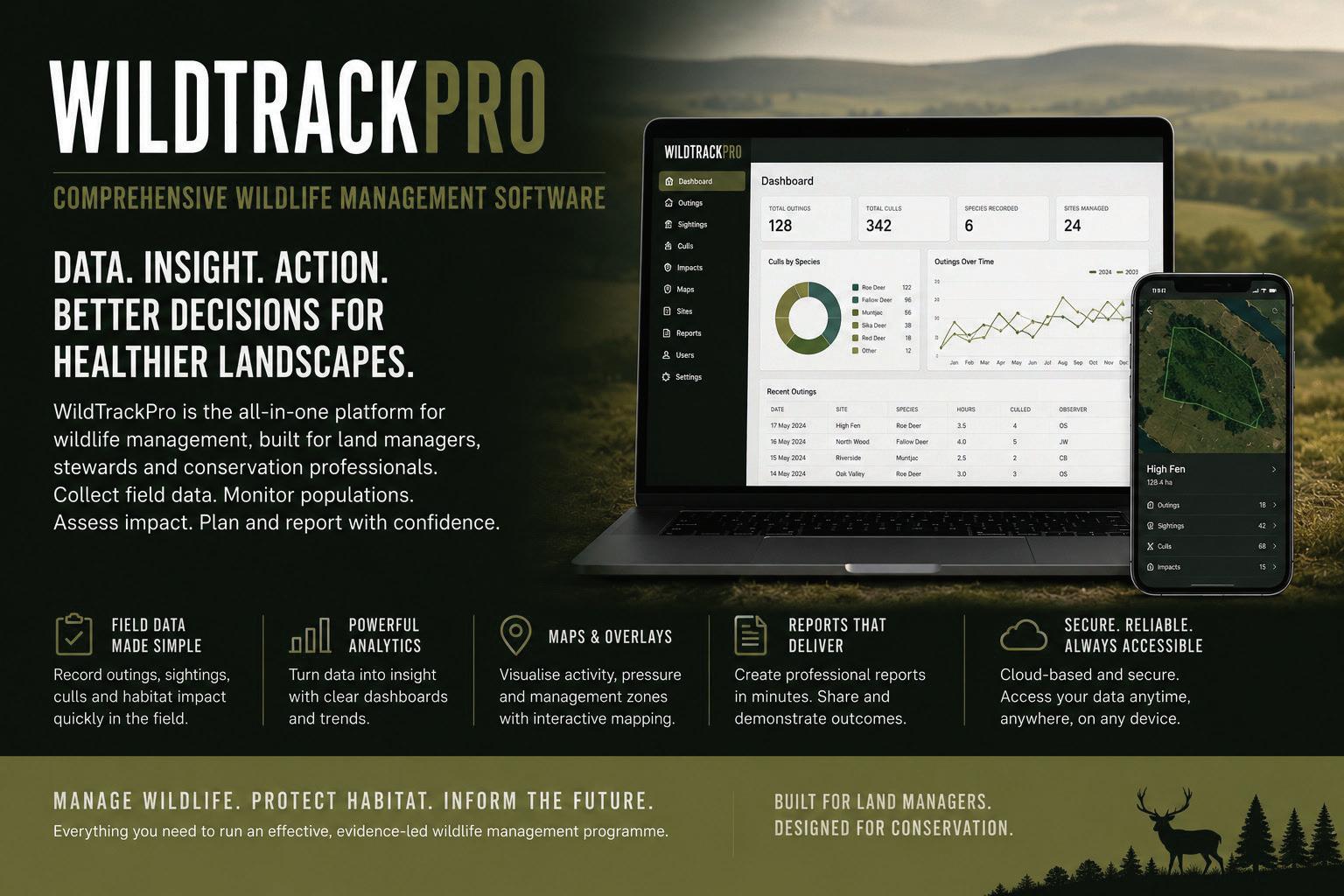



Teams of specialist firefighters will be positioned in key areas across England, ready to respond to fires, delivering help to people on the ground more quickly and taking pressure off local services as the number of incidents continues to grow.
The operatives have undergone intense training over spring and summer, upskilling in the latest strategies like tactical burning, and travelling to South Africa and Poland to learn from the international community.
In the wake of devastating wildfires last year, which included widespread damage across North York Moors National Park, the new programme will provide crucial protection to precious countryside and communities.
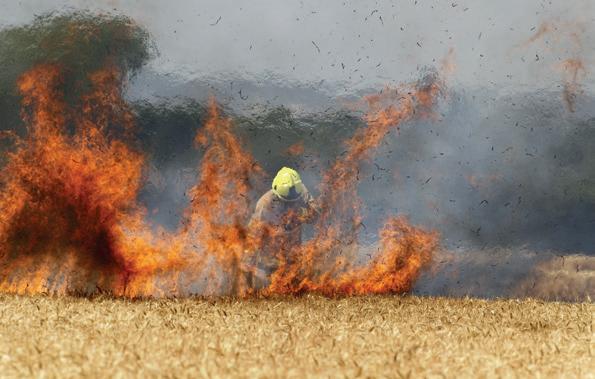
State-of-the-art kit, like dedicated offroad vehicles, will also be available through a wider £97 million investment to fund the largest scale upgrade of National Resilience assets in almost twenty years.
Building Safety Minister Samantha Dixon said: “Last year saw some of our most
devastating wildfires in recent history and as we head into peak season, we’re getting on and delivering the resource, training and assets needed to minimise the escalating risk.”
The Fire National Resilience programme was established after the 9/11 terrorist
attack, recognising that specialist capabilities, personnel and resources were needed to enable fire and rescue services to respond effectively to a national-scale catastrophic incident.
This significant cash boost will ensure the dedication of fire and rescue services is matched with the most up-to-date assets, funding a huge overhaul of existing vehicles and equipment.
This will crucially strengthen the country’s national response to the largest and most complex of incidents, from flash flooding to raging wildfires and collapsed
These specialist capabilities were used over 1,000 times in 2025 alone to tackle a diverse range of incidents, with devastating wildfires identified as a growing demand on the service.
The wildfire teams will be located strategically and hosted by fire and rescue services in Lancashire, Greater Manchester, Northumberland, London and South Walesdeployable to incidents across England.






We carry a large range of stock in various sizes at our warehouse for delivery within 48 hours of your order. We even offer a free personalised print and design service so your nets/bags can be ordered with your logo or design.



We specialise in the supply of all types of firewood and kindling net bags, ventilated bulk bags, holding frames, bag loading trays, polypropylene sacks, standard bulk bags, LDPE sacks and storage tarpaulins.







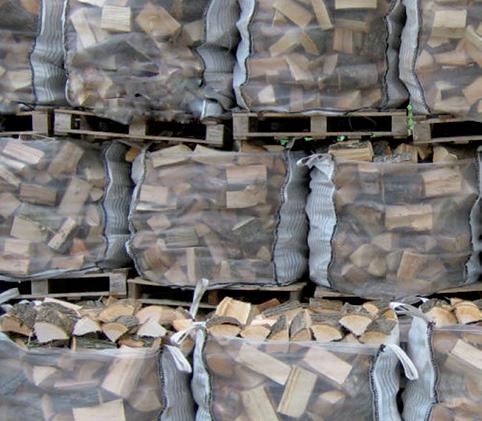




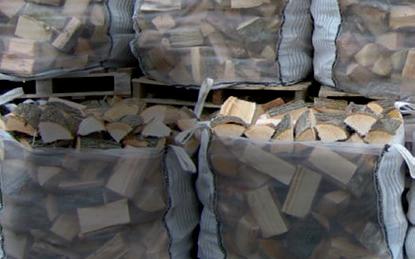




Eamonn Wall FICfor, Forestry and Arboricultural Consultant, reviews the Dacia Bigster and notes the similarity to the company’s more popular model.
Dacia is now one of the bestselling car brands in Europe thanks to the success of the Sandero and Duster, not to mention the seven seat Jogger. In keeping with the latter, a few years ago Dacia decided to design a larger SUV: the Bigster.

The first pictures of Bigster appeared whilst we were still on the Mark 2 Duster, which was just a refresh of the popular Mark 1. It looked amazing at the time, fresh and different to its predecessors.
However, the Mark 3 Duster was launched in 2024 ahead of the Bigster’s mid-2025 debut and both are very similar. In fact, the Bigster is essentially a long wheelbase version of the Duster. It uses the same bonnet, front wings, front doors, interior dashboard and the same

engines and gear boxes… perhaps it should have been called the Longster?
The Bigster is 4,570mm long compared to the Duster’s 4,343mm, which is only 227mm or 5% longer. The wheelbase has only grown by 45mm, or 2%, but the rear overhang by a longer 132mm which is a gain of 15%, so this is where the extra length comes from. It is the same width as the Duster, and not a wide vehicle overall.

The Bigster is also a five-seater, though with more rear seat foot space. The boot is 546 litres and 1,884 litres with rear seats folded, which compares to the Duster’s 453 litres and 1,696 litres respectively; a 35% and 11% increase.
Note these dimensions vary slightly depending on which model you choose.
Despite a slightly different front grille
>>






and bumper design, the rear views of both cars are practically identical. The main way to tell them apart is the side view, where the Bigster has a wee plastic panel linking the rear side window to the rear window.
Still, it is undeniably a good-looking vehicle.
The blue colour is unique to Bigster and looks great. The rear door handles are not on the metal door skins but within the plastic surround of the rear side window, just like on the Duster. This is now a very common design element used on many cars, such as the Nissan Juke. Personally, I prefer handles to be on the actual doors. In the Bigster’s case, they could also do with more of a grip.
The Bigster is usefully larger than the Duster. It uses the same powertrains and the one we had on test was the mid spec Journey version with a 155bhp full hybrid petrol engine. The Expression is the lower spec and Extreme the higher. Prices start at £25,215 for the 140bhp Expression. A 4x4 version with a 130bhp engine was also available at launch. The Journey 155bhp costs £29,440 with an additional £650 for metallic paint. It also had a £300 space saver spare wheel. The 130 4x4 was priced at £27,465.
I jumped into the Bigster having just come out of the Subaru Forester and boy what a difference. The Forester has a real depth of engineering with really
smooth pothole soaking suspension and constant 4WD. The Bigster has only got a beam rear axle like you see on a van, and no independent rear suspension. You can really feel it going along a bumpy farm track.
It is not as quiet as the Forester either. However, the 130 4x4 version has a different rear suspension set up.
Out on the open road the ride is good and the steering precise. The Bigster handles well and has strong brakes.
speed automatic gearbox linked to a two-speed electric motor.
I averaged 52 mpg which is fantastic. In fact, it is one of the most economical vehicles I have ever tested. Well done Dacia (and parent Renault).
It is worth noting that Dacia has replaced the manual 1.2 litre 130bhp 4x4 version for 2026 with a new set up. This now uses the cheaper torsion beam axle suspension, but with a six-speed automatic gearbox still linked to the
Its keen pricing, sophisticated powertrain… and standout fuel economy will no doubt make it a popular choice.” “
The Journey comes with 19-inch wheels 205/55/R19 whilst the other two models come with 215/60/R17 tyres and no doubt these fatter tyres would improve the ride. The ride quality of the original Duster was one of its standout features, so it is a pity this is not the case for Bigster.
The Bigster 155bhp Hybrid comes with the new 1.8 litre petrol engine and an electric motor. This set up also replaces the former 1.6 litre version in the Duster. The base 140bhp Bigster comes with a manual gearbox as did the 130bhp 4x4 version. The Hybrid is £3,000 more expensive but unusually has a four-
three-cylinder 1.2 litre mild hybrid engine, now with 138bhp and an electric motor of 31bhp driving the rear axle for 4WD fed by a small 0.48kwh battery.
This is an unusual set up and will also be used now in the Duster. It will be interesting to test drive this version when it becomes available. What happens when the tiny battery runs flat - does that mean no rear wheel drive? Surely not.
The full hybrid 155bhp powertrain (only available with front wheel drive) fitted to the test drive vehicle certainly provided plenty of power, accelerating to 60mph in 9.7 seconds. On the road you
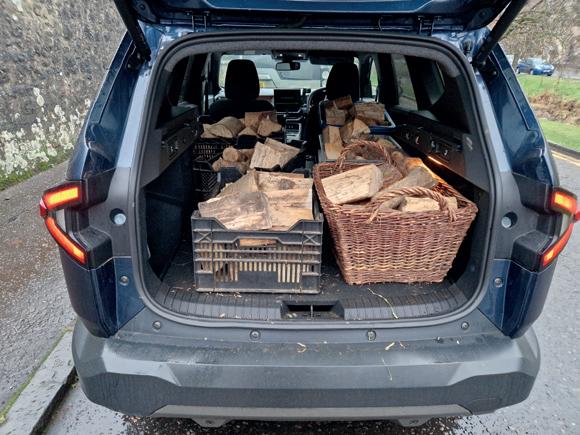


readouts appear on the central screen when they would be better on the driver screen. The seats are comfortable and come in cloth, cloth plus vinyl or leather. All heated.
On a practical note, I found that the driver’s door does not fully go all the way down on the outside which means your trousers pick up dirt. Both the Forester and Discovery provide full cover. Puddle lights are not available, and it has no engine rev counter so it is often hard to know what the engine is up to. The engine pulls well, though occasionally can get a bit confused with the electric motor. It is not a particularly quiet car probably due to a lack of sound deadening material, though perfectly acceptable for a £25,000 vehicle.

do not ever feel short of power when making pace. It too is an unusual set up, as it always starts off in electric mode using a 50bhp electric motor (1.4kwh battery, stored under the boot) and provides instant acceleration from traffic lights or the like. It is hard to tell when the 105bhp engine kicks in.
However, it is only rated at towing 1,000kg for a braked trailer whilst the smaller 1.2 litre versions are at 1,500kg. It might be a sensible buy to go for the six-speed manual 140 bhp mild hybrid and save £3,000. It is as fast, though its official fuel consumption is 52mpg compared to 60mpg for the full hybrid with its automatic gearbox. Then again, a vehicle like this for forestry needs 4WD.
It might be a good idea to get hold of, or at least test drive, one of the remaining 130 4x4 manual versions before the 140 4x4 automatic version arrives.
The Bigster has a tight turning circle of 11m which is very useful. Disc brakes front and drums rear. Petrol tank is small at 50 litres, but with its outstanding fuel efficiency a range of 500 miles is handy. It weighs only 1,487kg, and by comparison the Subaru Forester (with its 4WD system) weighs in at 1,693kg.
The interior is nicely designed and is well laid out, but it is fiddly to secure the driver’s seat belt as the central box is in the way. The door cards are very
scratchy plastic, but the heated steering wheel is a nice size and covered in a rich vinyl. It is a shame that the upper door cards do not feel better as they are points you touch regularly.
A first for Dacia is the electric rear
I enjoyed my time driving the Bigster. Its usefulness would be improved with 4WD but it remains to be seen how well the new 4x4 system performs. Certainly, the 155bhp full hybrid (not plug in) drove very well, fast and economical. Its BIK is 25%. The large boot is welcome and is almost the size as the one in a Discovery (apart from Bigster’s sloping back) which is very welcome. Though you have to take the front wheel off a bike in order to stow it in the back. It looks good but I am not sure it is a good idea to have both it and the Duster looking so similar.
So there you have it, the ‘Longster Duster’ is called a Bigster, and its keen pricing, sophisticated powertrain,

A new certification gives the construction sector a credible, independently verified way to measure and reward the long-term carbon stored in the built environment.
Grown in Britain has announced the launch of the Biogenic Stored Carbon Quotient (BSCQ), the UK’s first certification scheme to quantify and independently verify the long-term carbon stored in buildings using timber and other biogenic materials.
The scheme has been developed in direct response to the UK Government’s Timber in Construction Roadmap and their Timber Industrial Strategy, in partnership with Timber Development UK, Bangor University, the Forestry Commission, Welsh Government, Scottish Forestry and industry leaders.
The climate case for action The construction sector is responsible
for 39% of global emissions. The infrastructure the world needs to build between now and 2050 is equivalent to everything built since 1850. And if we continue using traditional high-carbon materials with a high carbon footprint, that alone will consume most of the remaining carbon budget for keeping global temperature increases below 1.5°C.
Plants and trees absorb CO₂ as they grow, and when we build with them, that carbon remains locked out of the atmosphere for the lifetime of the building. Every project that specifies timber or other biogenic materials is already storing carbon. But until now, that contribution has been invisible:
absent from tenders, Environmental, Social and Governance (ESG) reports, corporate accounts and conversations with shareholders and clients. BSCQ changes that.
Grown in Britain CEO Dougal Driver said: “The climate emergency demands that we build differentlyand the construction sector is already rising to that challenge. But without the tools to measure and verify what’s being achieved, that progress remains unaccounted for.
“BSCQ gives the sector a credible, independently verified way to demonstrate the climate contribution of its material choices, and to prepare for a future where that contribution carries real commercial and policy value.”
(BSCQ) delivers BSCQ provides construction projects with a certified, publicly registered record of the biogenic carbon stored in their buildings, covering all biogenic materials where sufficient data is available, including timber, sheep’s wool, straw and hemp.
For developers, contractors and public bodies, BSCQ delivers four things that current carbon assessment frameworks cannot:
• An independently verified stored carbon figure from a third party that sits alongside embodied carbon data in project reporting and corporate accounts.
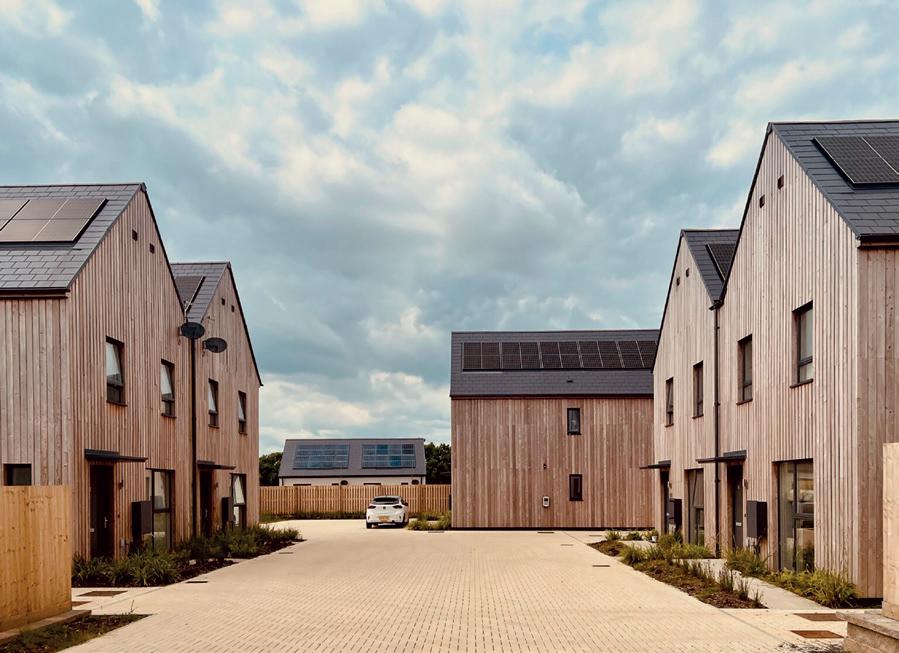
• An auditable basis for ESG reporting credible verification that can be put in front of a board, an investor or a procurement panel with confidence.
• Positioning for potential carbon credit mechanisms. Certified stored carbon can be prepared for future monetisation on the voluntary carbon market.
• A verified record that supports competitive tendering including requirements now appearing in Department for Education contractor frameworks.
Whilst both imported and homegrown timber are included in the scheme, each BSCQ-certified project must include an element of GiB-certified timber.
The UK is currently the second largest net importer of timber products in the world, and approximately 40% of UK woodlands are under-managed. Greater demand for GiB-certified timber - driven by BSCQ - creates a direct incentive to bring more woodland into active, sustainable management, with benefits for biodiversity, productivity, employment and long-term carbon sequestration.
Since launching in 2024, The Pallet LOOP has issued more than 3 million of its iconic green pallets and collected over 1.8 million of them from construction projects across the UK and Ireland. Through its innovative returnable pallet scheme, the company has already paid an estimated £1.4 million back into the sector.
The Pallet LOOP incentivises pallet returns through a simple, cost-effective scheme that pays registered partners £2 to £4 for every pallet returned. Combined with a fast and efficient collection service, the system encourages construction businesses to recycle pallets, reducing waste and improving sustainability in the sector.

The Pallet LOOP has partnered with some of the construction industry’s biggest manufacturers, including British Gypsum, Isover, Superglass by Etex, Wienerberger, Barret Redrow and CEMEX. The business is also expanding across Ireland, securing partnerships with
Gyproc through our LOOP partners in the Republic of Ireland and Northern Ireland, CJ Sheeran.
Further momentum came with the launch of the company’s free three-day collection service, designed to make
pallet returns faster and easier for contractors and builders.
Achievements include winning the Builders Merchants Federation Sustainability Award 2025, Supplier of the Year at the Builders’ Merchants News Awards, and the Sustainable Materials Award at The Supply Chain Excellence Awards 2025 in partnership with Scott
Andy Williamson, Managing Director of The Pallet LOOP said: “Over the last two years, we’ve shown that a circular approach to pallet use in construction is not only possible, but commercially viable and scalable too. The industry has really embraced the concept of recovering, repairing and reusing pallets, and the momentum we’re seeing across the supply chain is incredibly encouraging.
“Every pallet returned is reducing waste, cutting carbon and helping construction businesses operate more sustainably, which is exactly what The Pallet LOOP was created to achieve.”


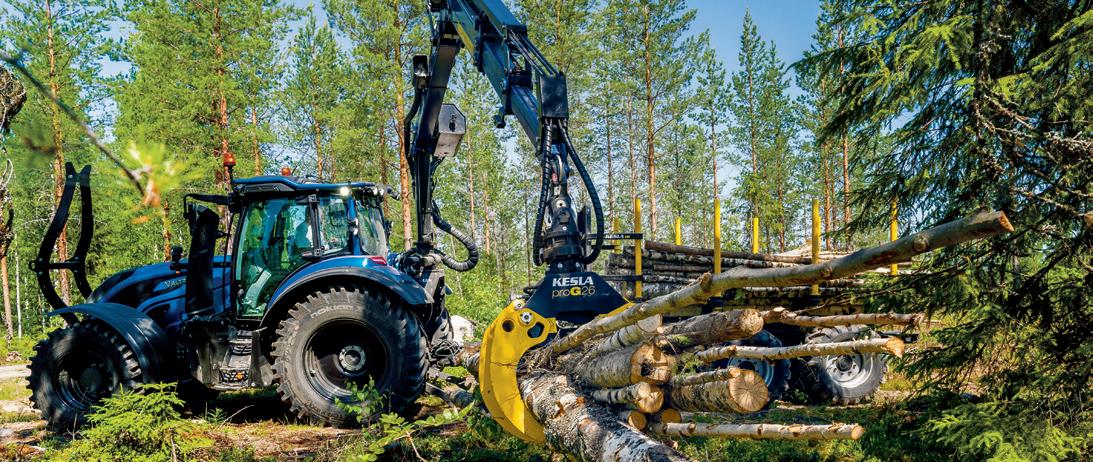



Two grants supporting the domestic production of trees and planting stock are now open for new applications.
Up to £6.5 million will be made available to researchers, nurseries and seed suppliers to strengthen England’s tree production sector - helping to meet the government’s tree planting targets while supporting green jobs and economic growth.
The funding will help ensure the country can grow treescapes that are resilient to climate change, pests and diseases, and that domestic supply is equipped to keep pace with demand.
The Tree Production Capital Grant (TPCG) and the Tree Production Innovation Fund (TPIF) together aim to increase the availability, resilience and diversity of homegrown planting stock, underpinning England’s long-term woodland creation and tree health goals.
Jack Clough, Grant Manager at the Forestry Commission, said: “It’s fantastic to be supporting such a diverse range
The latest cohort of graduates from the Forestry Operations New Entrants Programme, an intensive five-week course offered at the Scottish School of Forestry in Inverness, have already begun to find success in the industry.
Rachel McDowall was offered a tree planting job on graduation day in April and started work the next day.
In a new video showcasing the course, she said: “It’s the best experience of my life, the best thing I’ve ever done for myself. Before the course started, I was unemployed. My Universal Credit work coach sent me the application, and straight away it was like a light in my head and I never looked back!”
The taster course, designed to attract people who wouldn’t otherwise consider a career in forestry, was launched in 2025. It won the Confor Building Industry Resilience Award earlier this year and the 2026 programme returned bigger and better with 12 students.
Zoe Austin, Portfolio Manager for Aviva Investors, which funds the programme,
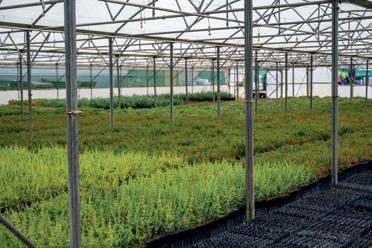
of projects through TPIF and TPCG. Together, these grants help organisations strengthen domestic tree production and build a more productive, resilient sector.
“We’re pleased to be reopening both schemes for a fifth round so we can continue supporting projects that bring real benefits to growers and the wider tree production sector.”
Both grants have previously supported a wide range of organisations across the public, private and third sectors, ranging from established tree and tree seed suppliers to new entrants to the industry.
Tree Production Capital Grant
Up to £3.5 million will be available through the TPCG over the next two years to help nurseries and suppliers invest in the facilities, equipment and technology needed to modernise and strengthen domestic tree production. Eligible capital items include polytunnels, irrigation systems and seed processing equipment.
The deadline for applications is 11:55pm on 8 July 2026.
Tree Production Innovation Fund
The TPIF will make up to an additional £3 million available over the next three years for innovative projects and research that develop new methods to overcome barriers to domestic tree production. Funded projects might explore new propagation techniques, improved growing systems, automation or technology-based solutions that support the future supply of planting stock across England.
The deadline for applications is 11:55pm on 29 July 2026.
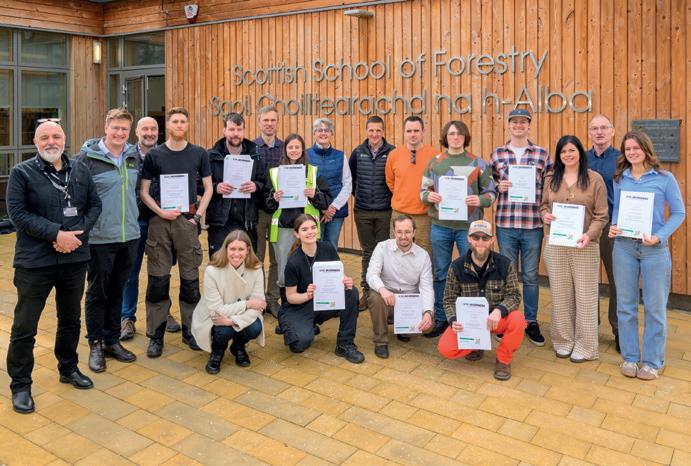
said: “It’s really important to grow programmes like this, to get more skilled people into this fantastic industry. It’s brilliant to see numbers growing and we hope it goes from strength to strength.”
Tom Croy, Investment Director with Par Equity, part of the PXN Group which supports the delivery of the course, commented: “We had over 100 applications for the programme, and could have filled it three times over. We’re delighted to have so many partners come on board but the message to the industry is we need financial support and commitment to take this course forward and grow it further.”
Scottish Woodlands supported
the course in 2025 and 2026 with equipment and expertise. Eddie Addis, Director (North), who attended the 2026 graduation day, said: “Courses like this are very important in bringing new people into the sector to gain practical experience. This helps massively when employing new staff, as they engage with contractors and landowners a lot better.”
Neil Cleland, Deputy Head of Curriculum at the Scottish School of Forestry (SSF) in Inverness, where the course is delivered, added: “They bonded as a group, with great team working and support. If I was an industry partner, that’s what you want in a squad; a team that helps each other out.”


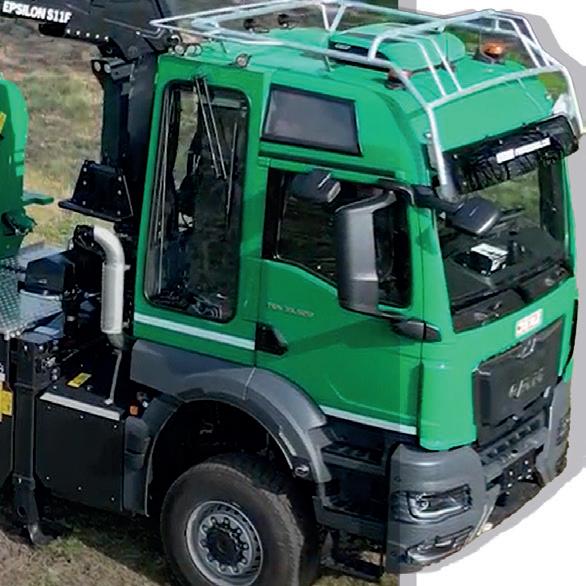
The JENZ HEM 593 R
Join CRJ Services at APF 2026 to experience one of the most capable wood chippers in the industry.


One of the UK’s most significant long-term forestry research projects has used Tubex tree shelters to protect thousands of young saplings while allowing scientists easy access to measure growth.
The Carbon Community’s Glandwr Forest Carbon Study examines how trees and soil store carbon. The project, now in its fifth year, aims to build a stronger evidence base for nature-based solutions that can increase carbon capture and improve woodland resilience.
Established in 2020, the 11.5-hectare study brings together scientists, forestry partners and volunteers to investigate how different tree species and soil treatments influence long-term carbon storage. More than 25,600 trees have been planted across 72 test cells, including oak, birch, cherry, alder and Sitka spruce, allowing researchers to compare growth and soil behaviours under controlled conditions.
The project focuses on approaches such as enhanced rock weathering, where crushed basalt releases nutrients and supports carbon capture, and soil microbiome inoculation, which introduces beneficial fungi from nearby healthy woodland to help young trees access nutrients more effectively. These methods together provide a growing dataset that will help clarify the role of soils and species selection in carbon sequestration.

Before the trial “we planted a few oaks grown from seed collected on site and they were eaten by rabbits within weeks,” said Heather Allen, Trustee at The Carbon Community. “When the trial was established, our forestry partner, Tilhill Forestry, strongly advised using shelters – and we agreed they were essential.”
Tubex Easywrap shelters were selected as a practical way to protect vulnerable saplings while still allowing researchers and volunteers to access each tree for measurement and monitoring. All the broadleaf trees planted use the shelters, helping maintain consistent establishment across the test cells and supporting long-term data collection.
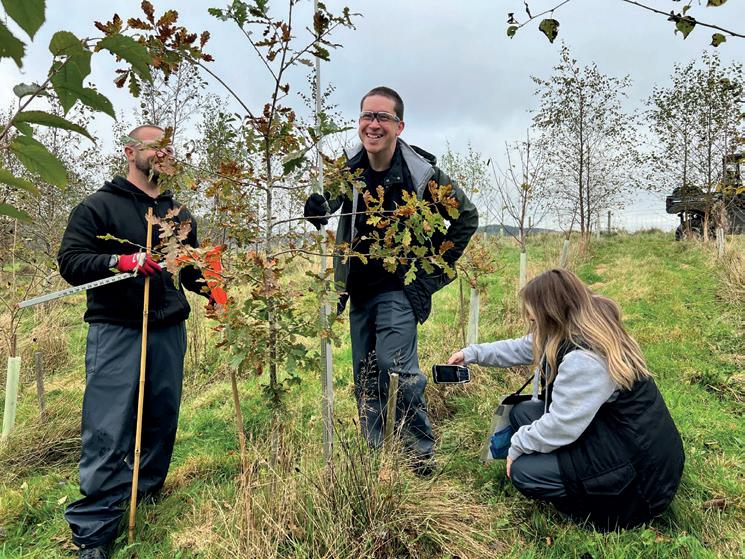
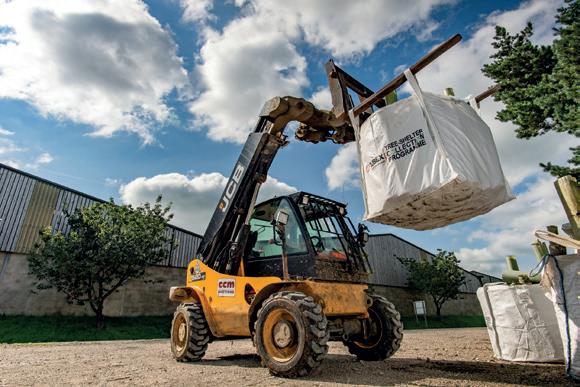
Carbon Community also considered the long-term implications of introducing material onto the site. The ability to collect and return the shelters for recycling once they were no longer needed was an important factor, ensuring the project could minimise waste. Each spring, volunteers remove shelters from trees that have outgrown them and collect any that have loosened during winter weather.
These are returned through the Tubex recycling network, supporting a circular approach to material use. The scheme recently reopened for the 2026 season and reported an approaching milestone of two million used shelters collected and recycled, following strong growth in returns during 2025.
“We made a commitment to collect
every single shelter when the trees were big enough,” Heather said. “We’ve been running volunteer removal days for the past couple of years – and those shelters have already made their way back for recycling.”
Community involvement has remained central throughout the Carbon Study, with volunteers supporting planting, maintenance and data gathering to help researchers monitor conditions consistently across the site.
Now in its fifth year, the project is beginning to analyse above-ground and below-ground data on how the treatments affect carbon capture. Strong early establishment across the site has created a stable foundation for longterm scientific assessment, with findings expected to support future woodland creation.


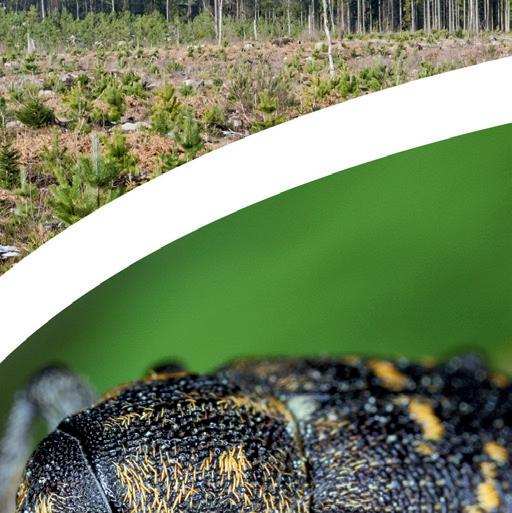





Targets only damaging bark feeding beetles No effects on beneficials or other forest flora & fauna





Cheviot Trees, a leading multigenerational family-owned forest nursery, has made a strategic land acquisition adjoining to its Scottish Borders production site. This expansion is a direct response to the surging demand for cell grown stock and represents a major investment in the next generation of nursery technology and innovation.
Since 1988, Cheviot Trees has led the way in cell grown plant production. From its base in the Scottish Borders, it utilises cutting-edge nursery practices to supply millions of trees annually to the forestry, landscaping, and agricultural sectors.
The additional land will host state-ofthe-art growing facilities, allowing Cheviot Trees to further refine the precisioncontrolled environments that have made them a pioneer in the sector. By integrating robotics, advanced irrigation systems and enhanced environmental monitoring, the nursery is setting a new standard for plant production in the UK.
“This acquisition is a clear signal of our commitment to the future of UK forestry,” said Harry Frew, Managing Director of Cheviot Trees. “We are seeing a sustained increase in demand for cell grown stock as our customers recognise the reliability and performance it offers.
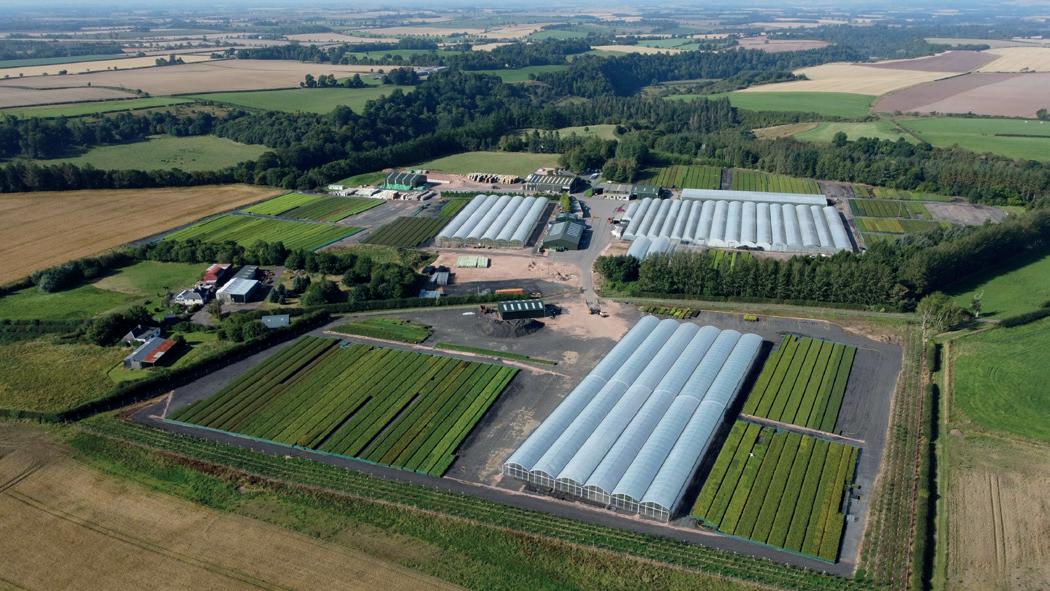
“By expanding our production
footprint, we aren’t just growing more trees; we are investing in the infrastructure and technology needed to produce the resilient, high-quality stock required for the next generation of British woodlands.”
This expansion solidifies Cheviot Trees’ role as a key partner in the UK’s environmental goals, providing the high-performance stock necessary for successful woodland creation and carbon sequestration.
Trustees of The Scottish Forestry Trust have committed an additional 8% of funding to the doctoral research projects currently being supported. This uplift in funding will be backdated to funding instalments scheduled after 1 January 2026. The move mirrors an announcement earlier in the year from UK Research and Innovation (UKRI), pledging to increase the minimum stipend paid to PhD students to £20,780 (an increase of 8%).
Dr Helen McKay OBE FICFor CEnv, Chair of the Scottish Forestry Trust’s Projects and Research Committee, explained: “The Trust is dedicated to making a meaningful contribution to the knowledge and skills needed to support forestry in an ever-changing environment. We recognise that
supporting students is essential –not only to build expertise, but also to nurture a capable and resilient workforce able to meet the growing complexity of forestry policy, practice, and research.
“We are fully committed to supporting the students funded by the Trust and helping them succeed in their development.”
Professor Alistair Jump, Deputy Principal (Research) and Executive Dean of the Faculty of Natural Sciences at the University of Stirling, welcomed this news.
“The Scottish Forestry Trust plays a vital role in co-funding a range of PhD studentships, training the next generation of researchers in forest sciences across the UK,” he stated.
“This announcement of improved PhD support from the Trust to match the previously announced changes by UKRI is great news. It will ensure that such co-funding arrangements remain competitive and continue to deliver for the sector.”
The Scottish Forestry Trust, along with ongoing support from Scottish Forestry (on behalf of Forestry Commission and Natural Resources Wales), offers a Bursary Fund which supports PhD and Masters research carried out in the UK.
The Trust currently supports 10 doctoral research projects in the UK, ranging from studies as diverse as ‘Sitka spruce colonisation at the treeline in Scotland’ to ‘Modelling forest disease and its carbon budget’.
Rob MacKenna, General Manager at James Jones & Sons, reflects on a decade of Bangor University student visits to the Lockerbie site.
Having graduated with a degree in Forestry and Forest Products from Bangor University, more years ago than I care to mention, I recognise the importance of complementing academic study with exposure to productive forestry and timber processing in practice.
My years at Bangor were formative, providing a strong technical grounding, but it was engagement with industry that helped me appreciate how forestry underpins wider economic activity and environmental outcomes. Offering current students that same connection between theory and practice is something I am passionate about.
Forestry students from Bangor University have been visiting us at the Stevens Croft site in Lockerbie for the last 10 years as part of their Northern Study Tour. Each visit to Lockerbie typically begins with a presentation introducing James Jones & Sons Ltd –our history, our values, and the role we play in the UK timber sector. We discuss
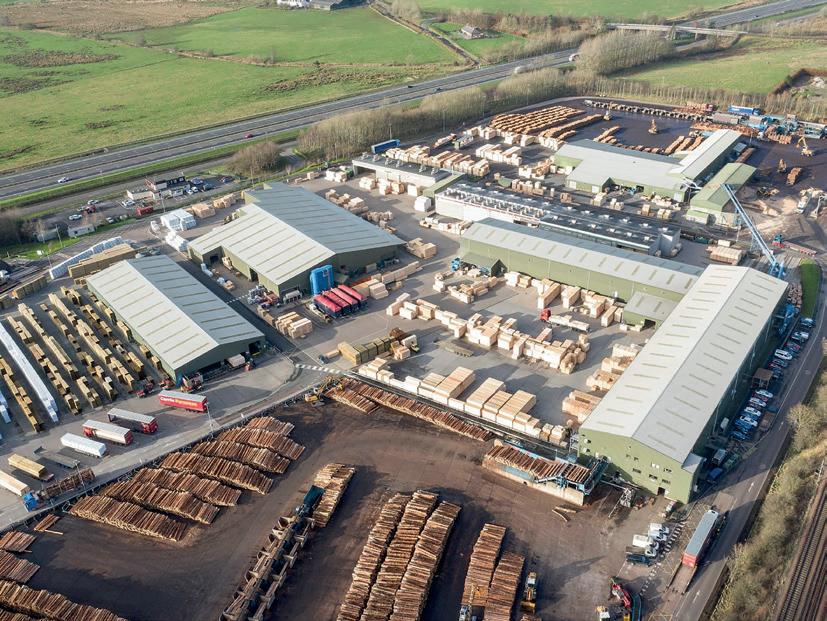
“construction, the opportunities for more UK grown wood to meet housing demand, and how innovation and investment in technology are helping modern sawmills remain efficient, competitive and sustainable.
Production technology is always a
It was engagement with industry that showed me how forestry underpins both economic activity and environmental outcomes.”
how our business adds value to UK grown softwood and how sawmilling sits at the heart of the forest to end user supply chain.
This is often followed by a lively and engaging discussion, with students asking thoughtful questions and challenging us on the issues currently facing the industry.
We talk openly about the challenges of species choice, timber supply, the importance of long-term forest investment, skills and labour availability, energy costs and international market pressures facing the UK industry. Equally, we explore the opportunities ahead –the growing role of timber in low carbon
topic of interest. For many students, this is their first exposure to the scale and sophistication of modern timber processing. We discuss developments in scanning, optimisation, automation, grading and AI, and how these technologies help maximise yield, quality and consistency from each log.
Timber properties also feature strongly in the conversations, linking what students learn academically about strength, moisture, durability and wood behaviour to real world processing and end use requirements.
The highlight of every visit is, without question, the tour of the sawmill. Walking through the Lockerbie site gives students
a full picture of what’s involved in large scale timber processing – from log intake and primary breakdown, through drying, planing, grading and despatch. Seeing the operation running in real time brings home the complexity of coordinating safety, quality, logistics, energy use and people to produce timber products at scale.
From my perspective, these visits are not just educational for the students –they are valuable for us too. Engaging with motivated individuals brings fresh thinking and reinforces why strong links between universities and industry really matter. It also allows us to promote the breadth of careers available within the timber sector, beyond what many students may initially associate with forestry.
Nearly a decade after the first Bangor University visit took place in 2017, I am delighted that this tradition continues. As a Bangor University graduate, and as General Manager at James Jones & Sons, supporting forestry education and helping develop the next generation of foresters and wood industry professionals is something I care deeply about.
Opening our doors at Lockerbie for visits is a small but important contribution to that goal.
Tom Jenkins MBE FICFor, Head of Forest Research in Wales, sadly passed away on Sunday 19 April. He had been living with Motor Neurone Disease for a number of years.
Tom began his career at Forest Research in 2009 and became head of the organisation in Wales in 2014.
James Pendlebury, Forest Research Chief Executive, stated on his passing: “Although Tom had been living with Motor Neurone Disease (MND) since a preliminary diagnosis in November 2020, his death was still a great shock to us all.
“He was a close colleague and friend to me, but also to many others at Forest Research. Our thoughts remain with his wife, Rowan, and his children at this very difficult time.”
Tom joined Forest Research as Deputy Manager of the Forest Mensuration, Modelling and Forecasting (FMMF) science group led by Robert Matthews. After taking up the mantle for the organisation in Wales, he was instrumental in developing a closer relationship with the Welsh Government after devolution and advocating on behalf of the forestry industry.

He also brought considerable skills in computing and managing cyber risk to Forest Research, having gained experience at Bangor University as
Institute of Chartered Foresters (ICF), Tom was awarded the honour of the Institute’s Medal in 2022 and served for 16 years on the Professional and Educational Standards Committee.
He received an MBE for services to forestry in 2023 on the ICF’s nomination
His exceptional contributions have left a lasting imprint on the standards and values that define the profession today.” “
Departmental Computer Manager and Departmental Statistician in the early 1990s before taking up a teaching position.
He will be remembered by many in the industry for his roles as a Lecturer in Forest Mensuration and Management, and later as Distance-Learning Programme Director. Bangor University flew the University Flag in tribute to Tom on 30 May 2026.
A long-standing member of the
in recognition of three decades of contribution to the profession.
Louise Simpson, Executive Director, commented: “Tom will be remembered by the Institute with deep respect and gratitude. His exceptional contributions have left a lasting imprint on the standards and values that define the profession today. He was a thoughtful, principled and generous colleague, and a true friend of the Institute.
“Our thoughts are with his wife
Rowan, his children, and all those who had the privilege of working alongside him.”
Following his MND diagnosis, Tom became noted as a committed advocate for the condition and was an enthusiastic supporter of the Motor Neurone Disease Association.
Confor National Manager for Wales
Elaine Heckley MICFor said: “Tom had a long and distinguished career in teaching and research. He leaves a fine legacy and will be remembered with affection by his former students and colleagues at Bangor University, his colleagues at Forest Research, and many others in the forestry sector in Wales and across the UK.
“I adored this man, he was there when I became chartered, when I studied my MSc at Bangor, and always wanted to know how my cricket matches went. He was delighted when I moved to Confor and we often worked together to help protect productive forestry and evidence-based practice. He will be sorely missed.”
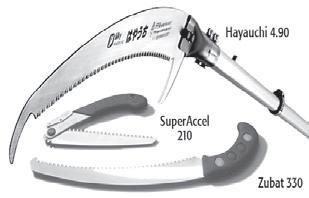










FORESTRY IN PICTURES

Five employees from EGGER took on the demanding UK Three Peaks Challenge on Saturday 23 May, raising over £4,000 in support of cancer patient care charity Daft as a Brush.
Will Pearson, Shaun Ridley, James Armstrong, Michael Robson and Scott Dowden set out to climb the UK’s three highest mountains within 24 hours: Ben Nevis (1,345m), Scafell Pike (978m) and Snowdon (1,085m). Patrick Havery supported the team as the driver, covering more than 460 miles between peaks.
The challenge formed part of a wider EGGER fundraising campaign aiming to raise £48,000 towards a new electric ambulance for Daft as a Brush cancer patient care.
Forestry in Pictures is a regular feature in FTN. For every issue, we select the most impacting photograph sent by a reader. If you have a photo you would like to see published here, please send your file to ftn@confor.org.uk. Please include your name, a short comment text to go with the picture, and an image credit. Photos should relate to forestry and timber and be of highquality (minimum resolution 300dpi). Exceptional pictures might be considered for the front cover of a future FTN issue.
By submitting a picture to Forestry in Pictures you give Confor permission to use the file for non-commercial purposes in Forestry and Timber News or the Confor website. Photos will always be credited.
Our August / September issue will include an APF Preview as well as focusing on Forest Machinery and Timber Processing. Remember that FTN is your magazine – get in touch if you want to suggest editorial or give us feedback on articles we have published in the past. Confor members, send us your company’s news updates or pitches for feature articles.