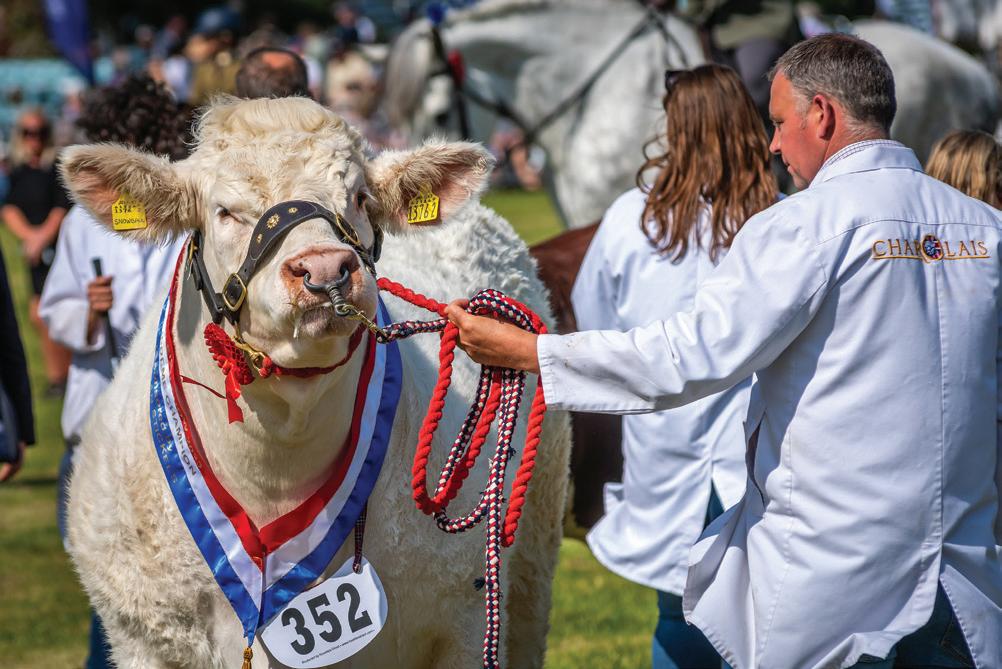
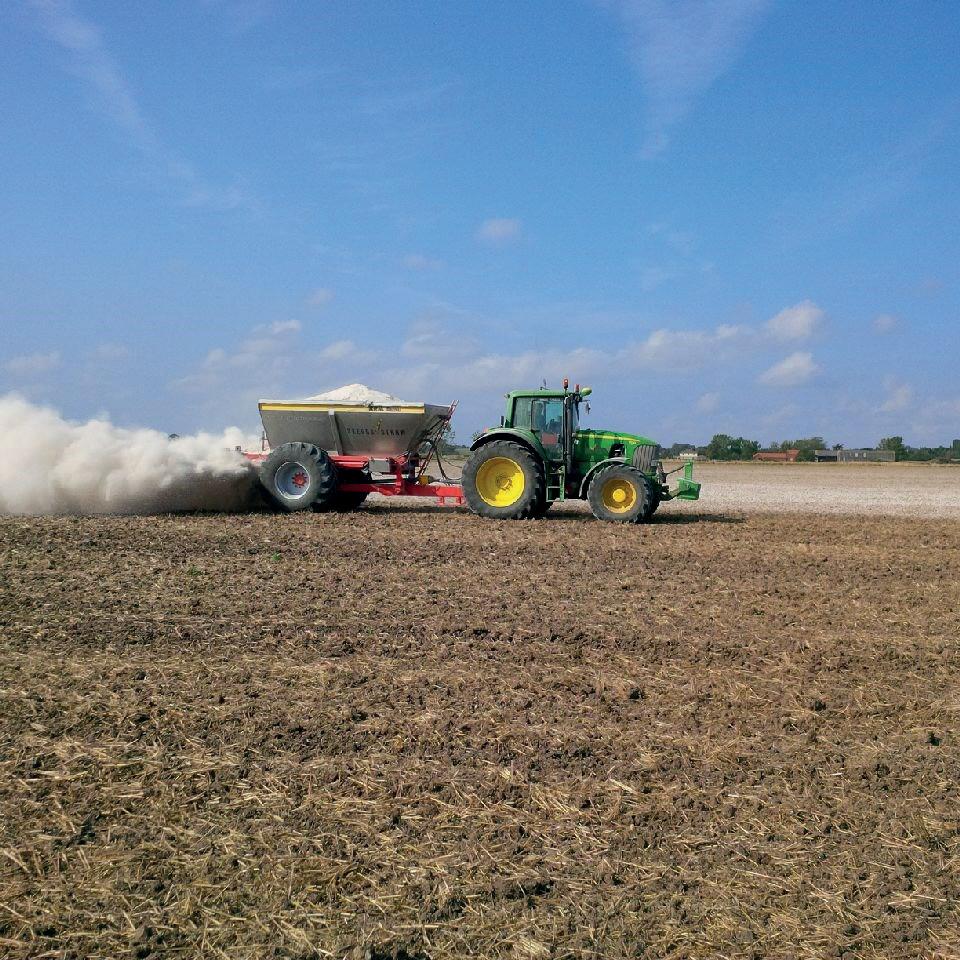
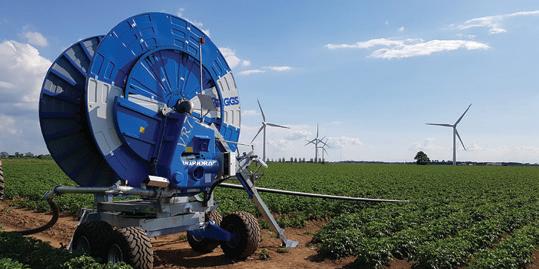
Cereals Preview All set for two days at Clarkson's Farm
Smart Farming Innovation opens for applications
Sugar beet: Seed choice helps get best from crop
Farm Energy Fuel rise prompts call for scheme
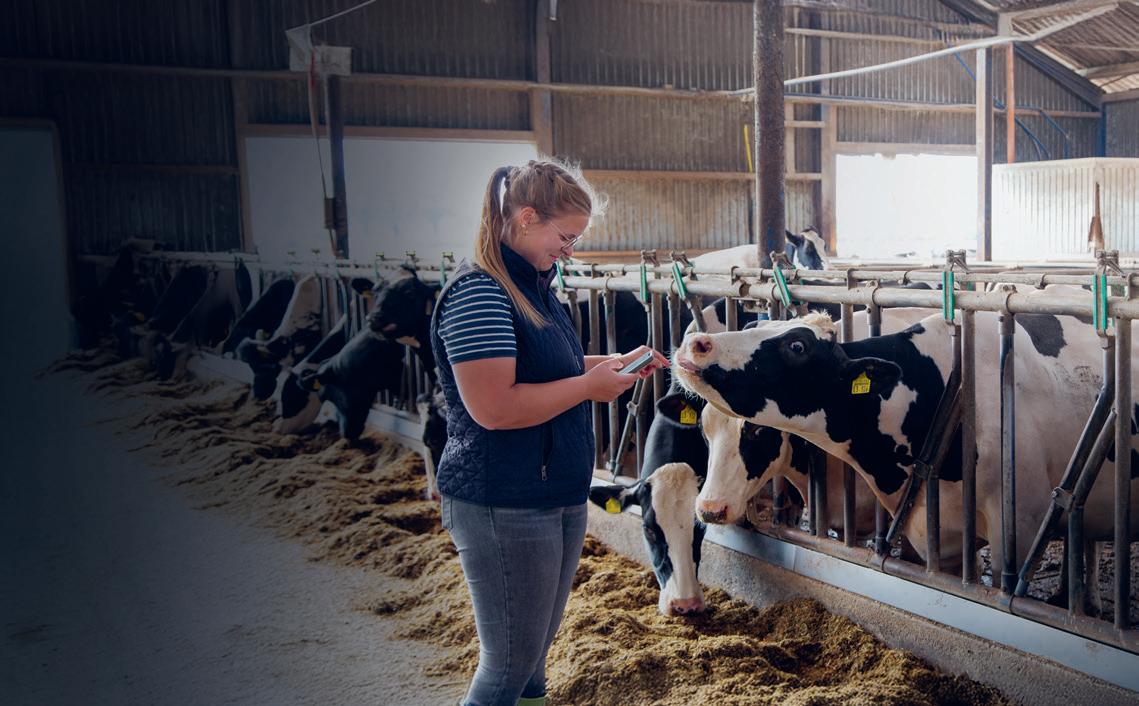
Livestock Ministers and the Great Agri-Shrug
Tel: 01480 495956 www.flr-cropdrying.com
EDITORIAL
Editor:
Johann Tasker | T: 07967 634971
E: johann@ruralcity.co.uk
Design:
Mark Shreeve | T: 01502 725839
E: mark.shreeve@micropress.co.uk
Advertisement production:
Jade Soanes | T: 01502 725840
E: jade.soanes@micropress.co.uk
Polly Coleman | T: 01502 725841
E: polly.coleman@micropress.co.uk
ADVERTISING SALES
Danny Lewis | T: 01502 725862
E: danny.lewis@micropress.co.uk
Lawrence Kenny | T: 01502 725860
E: lawrence.kenny@micropress.co.uk
Oscar Grob | T: 01502 725851
E: oscar.grob@micropress.co.uk
Anglia Farmer is a controlled circulation magazine published monthly for farmers and growers in the eastern counties. To be included on the circulation list, a farmer must have a minimum of 70 acres of land, or 50 dairy/beef stock, or 50 breeding sows/250 growing stock, or 15,000 laying hens/broiler chickens. Intensive horticulture units are required to have a minimum of two hectares. Subscription is £18 a year (including postage). No responsibility can be accepted by the publishers for the opinions expressed by contributors.
If you no longer wish to receive this magazine, please email gemma.mathers@micropress.co.uk
Published by Countrywide Publications, Fountain Way, Reydon Business Park, Reydon Suffolk IP18 6DH T: 01502 725800
Printed by Micropress Ltd, Suffolk.
Visit our website for all the latest farming news
Conflict shows why food security is essential
Foreign wars can seem far way – especially when you're an island nation like the UK. But not when the country involved is a key supplier of something essential.
The impact of conflict in Iran has been felt almost immediately – not only on our supermarket shelves but also on our farms.
There is nothing theoretical about geopolitics when you produce food for a living. It shows up in the diesel tank, the fertiliser bill and, increasingly, in the decisions being taken about what to drill this autumn.
Energy markets have tightened. Fertiliser has followed. Farm input costs have soared. Farmgate prices, in many cases, have not.
For arable growers, the arithmetic is becoming uncomfortable. Higher costs are not being matched by stronger returns. The sums simply do not stack up. The suggestion that land could be left fallow this autumn is no longer a fringe view; it is being openly discussed in farm offices up and down the country.
That is not just an issue for farm businesses. It is a signal to the government. When productive land risks going out of rotation because it cannot be farmed profitably, something in the system is misfiring.
There is a temptation, in moments like this, to reach for blunt responses. Cut inputs. Delay fertiliser. Sit tight and hope the markets turn. But as agronomists point out, those decisions carry their own risks. Yield lost this season can't be recovered next. Saving on nitrogen can look prudent in the short term. But they can also prove costly by harvest.
A more measured response is harder, butit can be more effective. Focus on what can be controlled. Spend where there is a clear return. Use data properly– whether that is tissue testing, historic field performance or satellite imagery – to avoid blanket decisions.
There is also a case for rethinking rotations. Pulses and cover crops are often framed in environmental terms. In a year like this, they look increasingly like risk management tools. Farmers have always operated in volatile markets. What has changed is the frequency and scale of the shocks. The risk now is not a single bad year, but a run of them. Managing that will require less reaction to headlines and more discipline in decision-making.
Johann Tasker Editor
Iran conflict hits UK farm costs hard
• Fuel and fertiliser pressures
• Supply chains under strain
• Food security concerns raised
MPs have raised concerns about the impact of the Iran conflict on farmers, warning that rising input costs and supply chain disruption could place further strain on farm businesses.
The NFU briefed MPs ahead of a special parliamentary session on supply chain fairness, highlighting the increasing pressure on growers and livestock producers as global markets react to the conflict.
The war has disrupted oil and gas markets, pushing up energy-related costs across agriculture. This includes
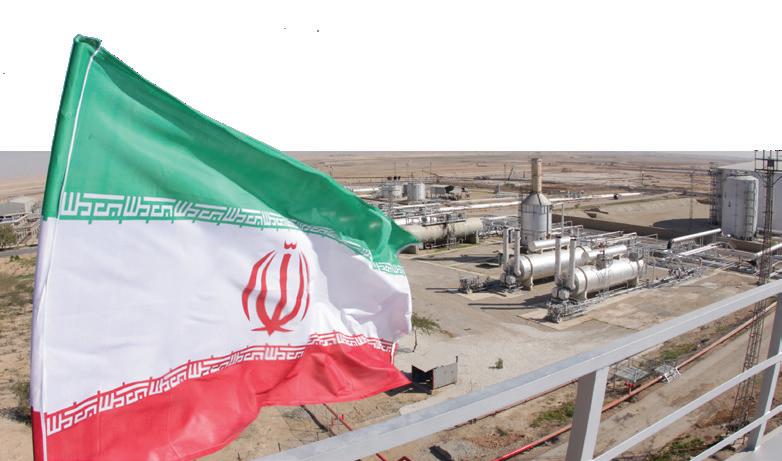
Iran is a major global producer of fuel and fertiliser
fuel, fertiliser and other key inputs, which are heavily exposed to global price volatility.
Cost pressures
Farm leaders say the knock-on effect is already being felt on farm. Higher diesel and fertiliser costs are increasing the cost of production at a time when many commodity prices have not kept pace.
The NFU has told MPs that farmers are facing “immense pressure” as a result of the disruption to global energy markets. Fuel and fertiliser supplies were among the hardest hit prices, said the union.
But there are also concerns about availability. Previous geopolitical shocks have shown how quickly fertiliser supply can tighten, particular-
Ministers reject transition call
The government has rejected calls for a 24-month transition as the UK plans a closer relationship with the EU.
The UK is negotiating deals with the EU on food and drink standards, carbon emissions and electricity. It would mean following EU rules in those three areas – and continuing to do so as rules change.
Alignment
So-called dynamic alignment would make trade quicker and easier between the UK and the rest of Europe. But Efra committee MPs had called for a transition period –
giving the agri-food sector time to adjust to the new arrangements.
The government maintains that the agreement will take effect from mid-2027. And it has effectively rejected a recommen dation that a 24-month transition should be agreed to enable businesses to adapt to new regulations and processes.
Efra committee chairman Alistair Car michael MP said it was disappointing that government ministers had declined to give farmers time to adjust. “With headwinds al ready howling in their direction, the sector needs all the help it can get.”
ly where production depends on natural gas.The union has stressed that supply chain resilience remains a key issue. It is continuing to feed evidence from members into government, focusing on transparency and fairness across the supply chain.
MPs on the House of Commons EFRA committee have been examining how shocks such as global conflict can ripple through agricultural markets, affecting everything from input availability to farmgate returns.
Farmers continue to weigh the implications of high fuel and fertiliser costs, with some growers warning that they may leave fields fallow this autumn unless cereal margins improve because drilling crops would be unprofitable.
Policy focus
The NFU is calling on government to recognise the strategic importance of agricultural inputs and to take a longer-term approach to resilience. The situation underlines the need for better planning around food security, it has warned.
While the conflict remains outside farmers’ control, its effects are being felt directly on farm businesses. MPs are also being urged to consider how best to support domestic food production in an increasingly volatile global environment.
The government says it is doing all it can to ensure fuel and fertiliser is able to be transported through the Strait of Hormuz, off the coast of Iran, which has been subject to repeated blockades.
For more on fuel prices and the Iran conflict, see Farm Energy, page 59.
In its response, the government said: “We know that some businesses require longer to adjust to the new arrangements and will continue to work with them to ensure a smooth transition.”
Sustainable
Abstraction
Borehole,
Grant
Reservoir
Water
Water
LAYFLAT HOSE
Show season highlights best of food and farming
Abumper season of regional agricultural shows gets under way this month –highlighting the best of East Anglia's food and farming industries to an eager public.
In the south of the region, the South Suffolk Show takes place on Sunday, 10 May, at Ampton point-to-point racecourse, just off the A134 near Ingham, Bury St. Edmunds.
It will include Paul Hannam’s ATV Stunt Show – as seen on BBC’s Top Gear with Paddy McGuinness . It will also celebrate 100 years of British Sugar, with a display of agricultural machinery used over the years in the production of the crop.
Kangaroo Kid
The following week will see the 186th Hadleigh Show take place on Saturday, 16 May. Held in the parkland setting of Holbecks Park, on the edge of Hadleigh, it will include a special Food in the Field eating area, music and a family friendly ring layout.
Hadleigh Show secretary Tory Lugsden says: “The Grand Ring will feature the Kangaroo Kid as our main attraction – Sam Coulter's father Matt last displayed at the show in 2003 with our current show director Will Pratt's's father Martin at the helm so is a real history repeating itself with the next generation taking over the reins.”
Elsewhere, events include the Essex Young
Farmers County Show on Sunday, 17 May, near Chelmsford. It will be followed by the Suffolk Show on 27-28 May at Trinity Park, Ipswich.
Food and farming
This year's Suffolk Show promises to be the county's largest two-day visitor experience – highlighting the importance of food and farming to the regional economy, coupled with being a great day out for families.
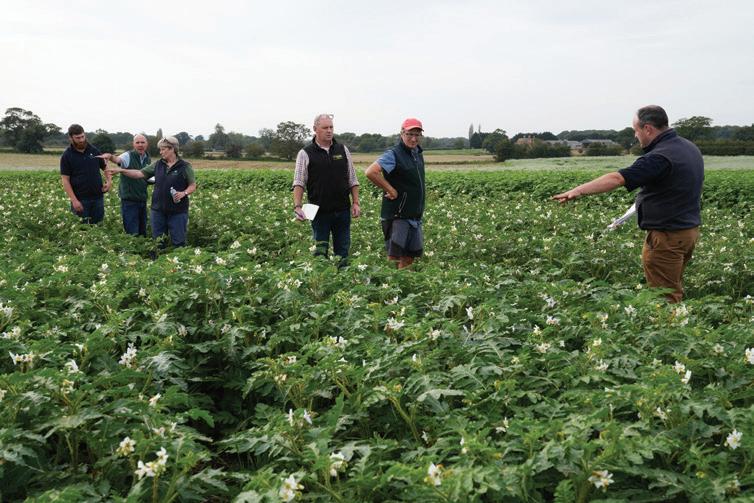
The show will include a special focus on the humble potato, with Frontier Agriculture and Suffolk County Council helping to showcase the field to fork story of the crop in a special display aimed at farmers and non-farmers alike.
The Farm4Future area will offer an enlightening and engaging experience for visitors of all ages. It hopes change perceptions of what working in food and farming and allied industries looks like and could look like in the future.
In the north of the region, the Royal Norfolk Show takes place on 24-25 June. This year, show president Paul Hoveson is on a mission to attract more youngsters into the industry as their career of choice.
Later this season sees the return of two popular one-day shows. The Wayland Show takes place at Watton on Sunday, 2 August. The Aylsham Show takes place on its traditional August Bank Holiday date (24 August).
Vertical farm links with food charity
Norfolk vertical farm has teamed up with a London food charity to redistribute surplus crops and help city commu-
The agreement will see excess produce from Fischer Farms’ vertical farming trials channelled through City Harvest’s network of charities. The aim is to ensure edible crops reach communities rather than being discarded.
Fischer Farms grows leafy greens and herbs using controlled environment agriculture on the outskirts of Norwich. Trial harvests can generate surplus produce not intended for sale. Under the partnership, this will now be redirected for human consumption.
The first donation has already delivered the equivalent of 3,086 meals. In total, 1.3t of food has been redistributed, preventing 895kg of greenhouse gas emissions.
The initiative also highlights the role of vertical farming in shortening supply chains. By producing food domestically, the system reduces transport distances and helps maintain freshness, extending shelf life and limiting waste further down the chain.
Social impact
For City Harvest, access to fresh produce remains critical. The charity supports around 130,000 people each week through food banks and community groups.
Jon Cummings, commercial director at Fischer Farms, said: “We are focused on redefining how food is grown, but just as importantly, how it is valued. Working with City Harvest allows us to ensure that surplus stock from our farm has a meaningful purpose, reaching communities that can benefit from fresh, nutritious produce.”
A City Harvest spokesperson said the partnership demonstrated how new production systems can support both environmental and social goals – “ helping us rescue more food and reach more people”.
Livestock are an important part of the Hadleigh Show [Photo credit: Bill Hiskett]
Afree-to-use crop rotation planning tool has been launched to help growers weigh up the financial and environmental impacts of changing their cropping systems.
Developed by ADAS as part of the Nitrogen Climate Smart project, the Crop Planner tool uses data from hundreds of crops within the Yield Enhancement Network to model different rotation scenarios.
The tool allows users to estimate how changes to crop choice or frequency will affect greenhouse gas emissions, gross margins, nitrogen balance and overall energy and protein output.
This enables growers to explore trade-offs between productivity and sustainability across their system. The aim is to support more informed decision-making before any changes are made on farm.
Data insights
The tool draws on historic performance data to provide a whole-rotation view, rather than focusing on individual crops in isolation. This means growers can reduce uncertain-
ty around introducing new crops, particularly pulses.
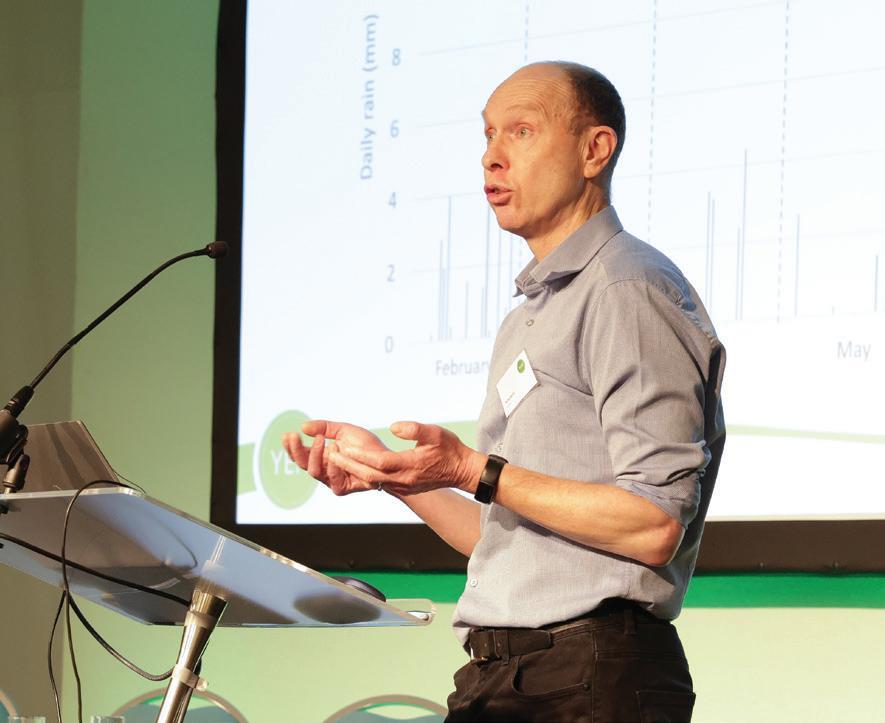
While aimed at arable farmers and advisers, the tool also has potential applications beyond the farm gate, says Pete Berry, head of crop physiology at ADAS and co-developer of the tool.
“The Crop Planner tool is a small part of a wider effort to help growers decide whether to include pulses in their rotation. The environmental benefits of pulses are well-known, but introducing them can feel risky for those who have never grown pulses before.”
Pete Berry: pulses have environmental benefits
Wider use
Few easily accessible tools can analyse the performance of whole rotations in a similar way – highlighting the value of shared industry data in improving farm decisions, says Dr Berry.
“We hope this tool will give those farmers a better insight into the potential environmental benefits and cost implications, and the confidence to make a change if suitable.”
Advisors can also explore how changes to crop choices affect rotational performance, says Dr Ber-
Introducing beans can feel risky “
ry, whie policy makers can use it to better understand the trade-offs between sustainability, food security, and farm-gate economics. By bringing together emissions, margins and nutrient data in one place, the tool offers a clearer picture of rotation performance. The initiative has been welcomed by LEAF – the Linking Environment and Farming charity and food marque.
LEAF head of sustainable farming Dan Stevenson says: “Farmers are keen to explore management approaches that reduce environmental impact and inputs, but they require robust decision-making tools to reduce the associated risks.”
Trials highlight benefits of linseed as break crop
Winter linseed has proven to be a credible, low-risk break crop – wiith one farmer achieving yields of 3t/ha and a contract price of over £500/t in his first season.
Crop trials in Scotland – some of the most demanding conditions in the UK –found that linseed offers a level of winter hardiness and pest resistance that could benefit English farms ahead of autumn drilling, says seed supplier Premium Crops.
“Winter linseed sidesteps many of the disease pressures that have made oilseed rape so difficult to manage,” says Hannah Foxall, Premium Crops agronomist.
Threat
“It’s unaffected by cabbage stem flea beetle, removing one of the most significant and costly threats facing oilseed rape crops today and the chance of crop loss to pests are significantly lower.”
Scottish growers, already seeking alternatives in the face of weak barley contracts and poor oat demand, are increasingly turning to linseed, attracted by a competitive contract price of over £500/t and consistently strong yields.
With a relatively modest nitrogen requirement of just 80 –120 kg N/ha, the agronomic and economic case for winter linseed is a compelling one that has become even stronger following Iran conflict.
Limagrain Field Seeds is moving variety trials beyond small plots and into working farms, launching a UK-wide network of farmer-led demonstration sites.
The goal is to give growers a clearer view of how varieties perform under commercial conditions, says the seed breeder. Instead of relying solely on tightly controlled trial plots, the network will test crops in real farm
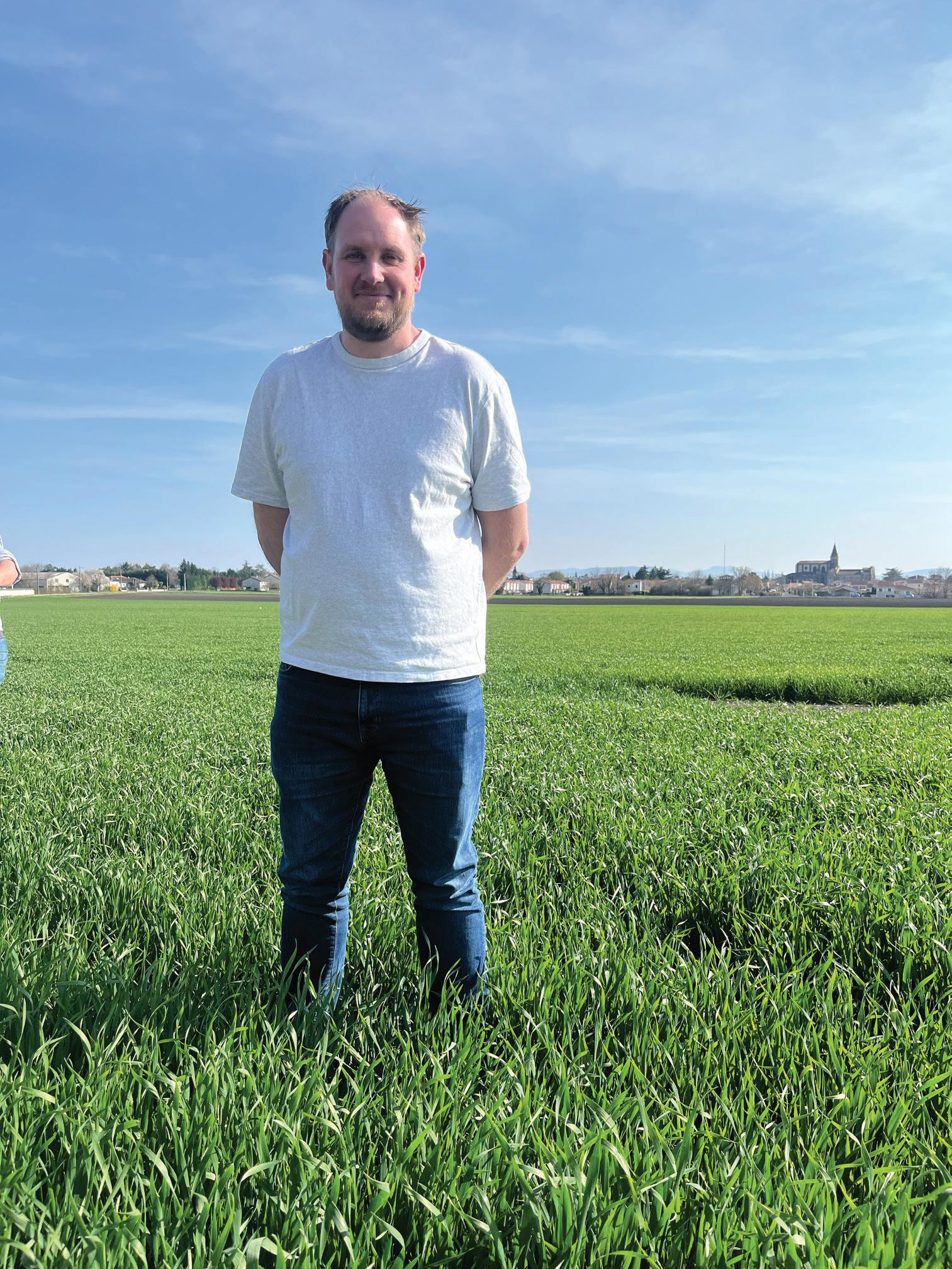
Below left: Suffolk grower Ryan McCormack
Below right: Staffordshire grower Rob Atkin
Bottom: Varieties such as LG Skyscraper have been a big success
Formal trials, including the AHDB Recommended List, will remain important benchmarks, says Limagrain. But the seed breeder argues that they do not always capture how crops perform on farm.
“This is not about replacing trials—it’s about adding another layer,” says Ms Hamilton. “Farmers want to know how varieties establish, how they cope with different soils and how they perform under lower inputs or after cover crops. That is where this approach adds value.”
The network is designed to answer those questions. Crops will be grown
shire. Together, they reflect a range of soils, systems and management approaches.
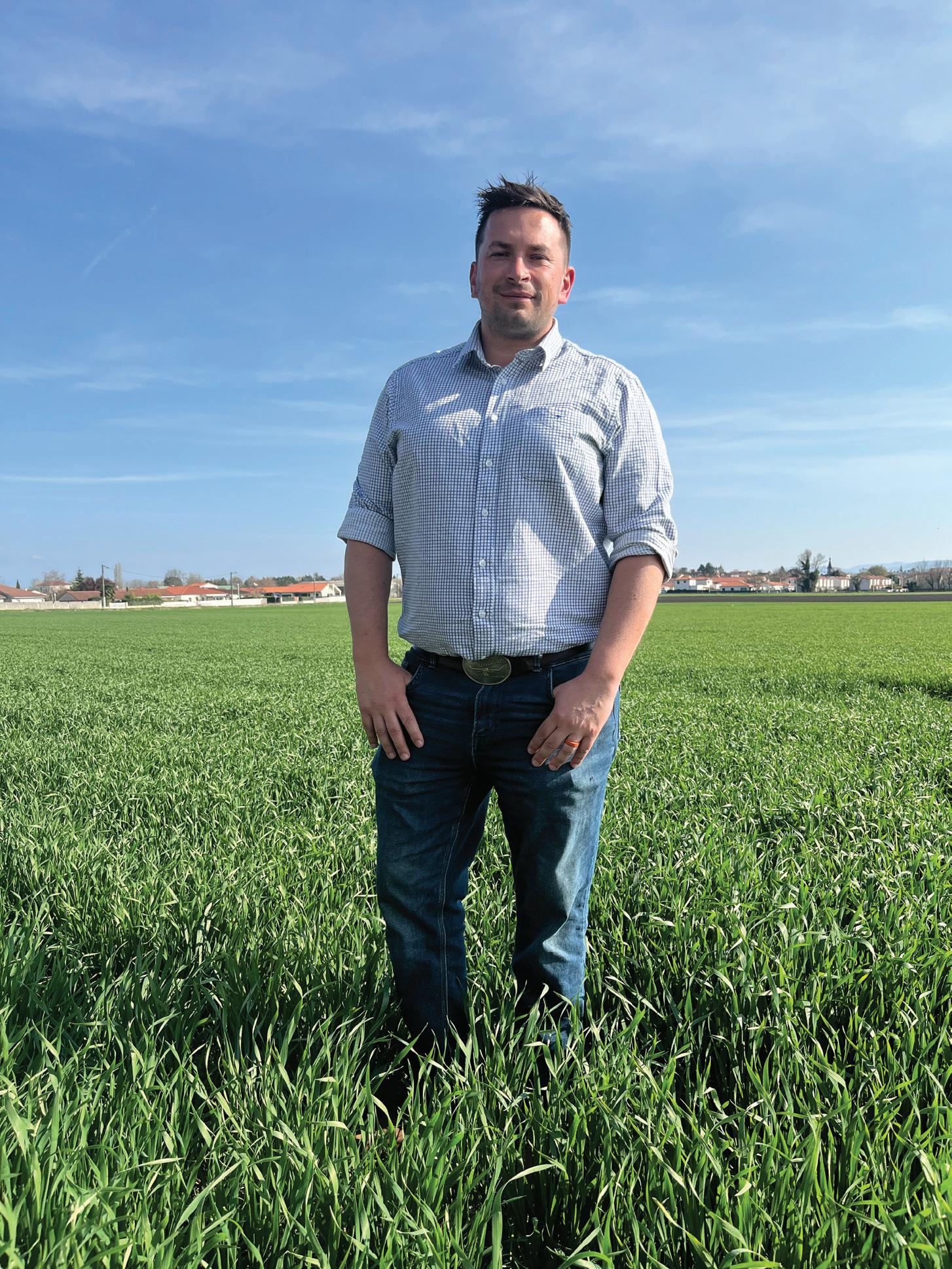
At Dennington Hall Farms in Suffolk, Ryan McCormack runs an integrated system combining arable, livestock and environmental management. The farm operates a 12-year rotation and places a strong emphasis on soil health.
“I’m farming for margin, but also for my soils,” says Mr McCormack. “That means I need varieties that can cope with reduced tillage, cover crops and lower inputs. The only way to understand that is to test them in those
Entries now open for water quality award
Farmers across England and Wales are being invited to enter a new award recognising practical action to improve water quality on farm.
The Water Quality Farmer of the Year Award has been launched by Innovation for Agriculture, with support from Portsmouth Water, Wessex Water, Southern Water, Severn Trent
Water and Anglian Water.
Open to all farming sectors, the award aims to celebrate the work tak ing place on farms to protect and en hance water quality through innova tive and land management.
‘Huge amount’
The competition recognises farmers undertaking nutrient management,
n
n
n
“Farmers are already doing a huge amount to protect and improve water quality, often through practical decisions that also strengthen the resilience of the farm business,” says Stephen Briggs, head of technical development at Innovation for Agriculture.
“This award is about recognising that work, sharing good practice, and celebrating the role farmers play in protecting one of our most important natural resources.”
Entries will be judged by an expert panel of industry specialists, including Richard Bramley from the NFU and a representative from one of the water companies supporting the award. Three finalists will be selected for on-farm visits.
Finalists will be invited to Innovation for Agriculture’s RASE Awards Day in September, where they will receive trophies and certificates. The overall winner will also receive an invitation to attend the RASE Awards dinner.
Farmers can enter via a short online application form, which asks entrants to explain what they are doing on farm to improve water quality and the impact their approach is having. Entries will close on Friday 29 May.
For full details and to submit your entry, visit www.i4agri.org
Stephen Briggs: sharing good practice
Hosted by:
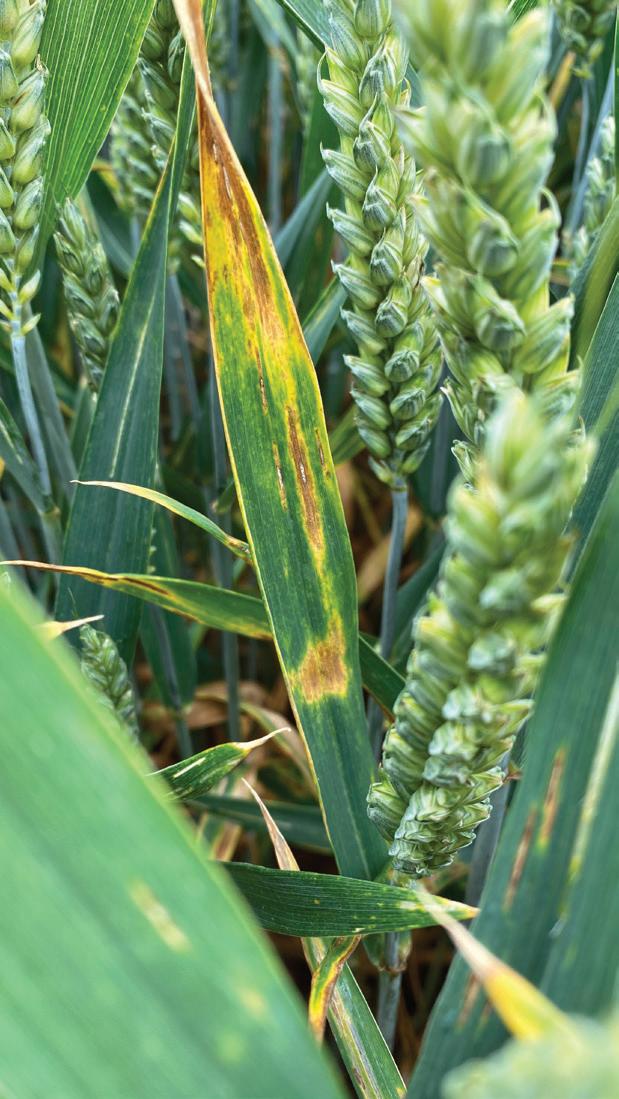
New technique offers hope in battle against yellow rust
Marker-assisted selection and gene stacking offer hope for UK wheat growers
Wheat breeders are deploying new genetic techniques to tackle rising pressure from yellow rust, as resistance in widely grown varieties begins to fail.
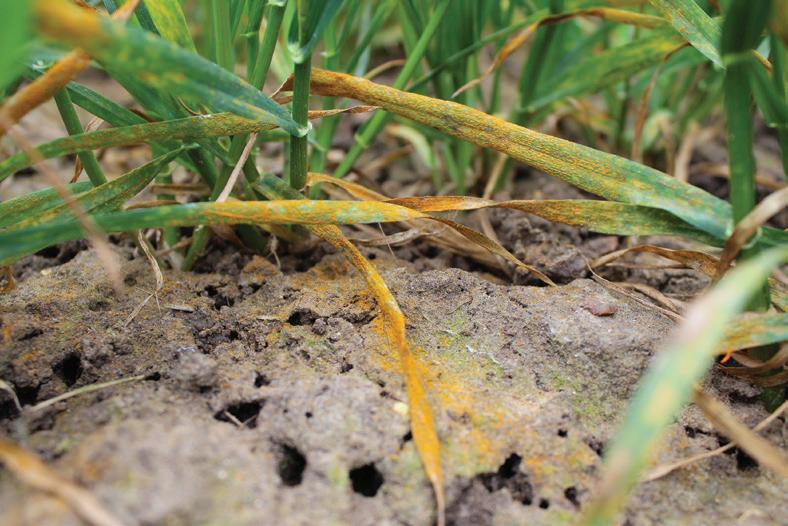
An estimated 40% of the UK wheat area is now planted with varieties highly susceptible to the disease. The shift follows the breakdown of the Yr15 resistance gene, which had provided protection for more than a decade.
The change has exposed a structural weakness in varietal resistance. It has also accelerated efforts by breeders to identify and deploy new sources of protection.
Resistance reset
“The Yr15 gene was surprisingly long lived,” says David Schafer, senior wheat breeder at RAGT.
“It has lasted for over ten years in varieties with a large market share. This forms part of the reason why we have found ourselves in a situation with such a large percentage of the wheat area exposed.
“However, when there is a breakdown, as we have seen with Yr15, the market reacts quickly. You can already see these selections in a wave of new candidates for the RL this year that breeders, including RAGT, have put forward.”
Breeders are now focusing on diversifying resistance. Programmes are drawing on global genetic pools and testing lines across a range of environments. The aim is to reduce reliance on single major genes that fail rapidly under pathogen pressure.
At the same time, advances in marker-assisted selection are allowing breeders to identify and combine multiple resistance traits more efficiently.
Stacking the odds
The strategy centres on stacking different resistance genes within a single variety. This approach aims to deliver more durable protection against evolving rust strains.
RAGT says its programme already
draws on a wide range of resistance mechanisms. One example is the varie ty RGT Hexton, which carries a strong yellow rust rating despite not relying on the Yr15 gene.
we are constantly looking for new re sistance genes and novel resistance mechanisms. It is a breeding company’s job to develop these, ready respond to market needs,” says David Schafer.
“We are also looking to breed durable resistance by stacking and combining different resistance sources. We aim for at least two different sources of yellow rust resistance in the varieties we develop, using RAGT’s strong capabilities in marker assisted selection.”
Resistance scores alone do not tell the full story, adds Mr Schafer. Some growers assume that varieties with the highest ratings carry a greater risk of sudden breakdown. But that is not always the case.
“Large effect resistance mechanisms like Yr15 can mask the presence or absence of underlying smaller ef fects,” he says. “Through our breed ing efforts and field testing, we can identify combinations of genes that are complementary and better than how the parents perform.”
The implication for growers is clear. A mix of varieties with differ ent resistance backgrounds may of fer more resilience than reliance on a single high-scoring option.
“Rather than looking at each individual variety, it is better for a farmer to have a diverse range of resistances from the different varieties they are growing on their farm,” he says.
“We are also looking to breed durable resistance
ple sites in Norfolk and Suffolk. This season, he selected a newer variety for one of his farms, citing its stronger disease profile.
“When you looked at the hard feed wheat varieties on last year’s RL, while they might provide fantastic yields, virtually all of their scores for yellow rust resistance had dropped to fours,” he says.
Frank Stennett is growing newer wheat varieties with stronger resistance
The chosen variety offers a higher yellow rust rating, alongside moderate septoria resistance and protection against orange wheat blossom midge. Despite that, he plans to maintain a full fungicide programme across his 50ha crop.
Input costs are also shaping management decisions. A recent rise in fertiliser prices has forced a reduction in nitrogen application rates.
“That’s not quite the same for fertiliser, where the sudden price increase off the back of the Iran conflict, means he’s now planning to apply around 185-190kg/ha of nitrogen rather than pushing it to 210-220kg/
The lower rate is likely to limit yield potential. Output may fall short of the 10t/ha target achievable under a full nitrogen programme. Even so, the crop still offers some margin support through a modest premium on part of the harvest.
BRED IN BRITAIN FOR UK FARMERS
Highly recommended for all regions of the UK, this top-performing conventional variety boasts the highest yield. Featuring large pods and abundant seeds, it ranks as the No.1 choice. Developed in Britain specifically for British farmers, its superior yield, vigour, and establishment surpass even that of Campus.
ommended for all regions of the UK, this top-performing conventional variety boasts the highest yield. Featuring large pods and abundant seeds, it ranks as the No.1 choice. Developed in Britain specifically for British farmers, its superior yield, vigour, and establishment surpass even that of Campus.
ommended for all regions of the UK, this top-performing conventional variety boasts the highest yield. Featuring large pods and abundant seeds, it ranks as the No.1 choice. Developed in Britain specifically for British farmers, its superior yield, vigour, and establishment surpass even that of Campus.
Tank mix ‘essential’ to protect wheat flag leaf
• Flag leaf protection critical
• Septoria risk remains high
• Multi-site chemistry advised
Arobust, multi-active T2 fungicide programme could be essential to protect wheat yield potential this season.
Growers should combine single-site and multi-site chemistries for immediate and lasting disease control, suggests Adama UK technical manager David Griffiths. Doing so will protect the flag leaf and leaf two – and encourage grain-fill, he adds.
Recent conditions have been relatively favourable for crops, but disease pressure remains in the canopy. Mr Griffiths warns that septoria and rusts are still active.
Canopy spores
“Even though weather conditions have been relatively favourable in recent weeks, there is still plenty of both diseases present in crops,” he says.
He adds that spores in the low er canopy can move rapidly dur ing wet weather. Rain splash can transfer infection to upper leaves, threatening yield at a critical stage.
“Any disease spores sitting in the lower canopy could easily be trans mitted onto the upper two leaves dur ing heavy rainfall events, so a robust fungicide treatment is a must to keep both leaves as clean and green for as long as possible.”
Action modes
Relying solely on single-site fungi cides increases resistance risk. Azoles and SDHIs provide curative activity, but target only one biochemical path way. “A T2 treatment based solely on single site actives won’t therefore be enough to keep crops protected as they progress towards maturity,” says Mr Griffiths.
He recommends a multi-site prod uct such as Arizona (folpet) to extend protection and reduce resistance pres sure. Seven years of independent tri als show that adding Arizona at T2 lifts yield by an average of 0.14t/ha across varying seasons.
Yield benefits
The case for multi-site chemistry strengthens where disease pressure is high. Wet weather has increased septo ria risk, says Mr Griffiths. “With this year’s septoria loading so high thanks to the wet winter and spring, the inclu sion of Arizona is a no brainer.”
The product can also improve con trol of yellow and brown rust. Trials suggest yield gains of 0.9t/ha where yellow rust dominates. “To achieve the very best levels of disease con trol in wheat, Arizona should be used throughout the spring at T1 and T2.”
Even where it was not applied ear lier, inclusion at T2 still offers a clear benefit, he adds.
Septoria risks are higher due to wetter weather
David Griffiths: Good grain-fill
the Land Drainage Specialists
the Land Drainage Specialists
• Agricultural & Amenity Drainage
• Agricultural & Amenity Drainage
• Agricultural & Amenity Drainage
• Water Supplies, Mole Draining
• Water Supplies, Mole Draining
• Water Supplies, Mole Draining
• Ditching
• Ditching & Ancillary Works
• Ditching & Ancillary Works
• Utility Installation
Agricultural contractor, straw & hay merchant and beef farmer Hay and straw wanted for 2023 arvest
Agricultural contractor, straw hay merchant and beef farmer Hay and straw wanted for 2023
Agricultural contractor, straw & hay merchant and beef farmer
Andrew Lloyd: 07787551081 lloydnortonfarming@live.co.uk
Andrew Lloyd: 07787551081 lloydnortonfarming@live.co.uk
Hay and straw wanted for 2026 harvest
contractor, hay merchant and Hay and straw wanted
Andrew Lloyd: 07787 551081 lloydnortonfarming@live.co.uk
JDP supports the modern farm with products and solutions for livestock and equine feeding, cleaning and hygiene.
Variety choice is playing an increasingly important role in helping growers get the best from sugar beet crops, say experts.
With the 2026 beet crop now in the ground, attention is turning to weed beet management, disease pressure and crop resilience, says Martin Brown, sug-
ar beet product manager for seed breeder KWS.
“Growers can’t change the conditions they have drilled into, but they can assess how crops establish, how well they cope with field-specific pressures and where different varietal traits could add value in future seasons,” he says.
Establishment sets baseline
Strong establishment remains the foundation of yield, particularly in challenging springs. Poor seedbed preparation continues to limit the potential of too many crops, warns Mr Brown.
“Too often, especially on heavier soils in dry springs, cultivations have been rushed or insuf-
ficiently refined. That leads to cloddy seedbeds and poor seed-tosoil contact. Given growers only place 110,000-120,000 seeds/ha, every seed must count.”
Modern machinery can encourage growers to drill in suboptimal conditions, adds Mr Brown. This can reduce plant populations and ultimately lim-
it root development – and yield, he says.
“Heavier kit, paired with a temptation to push on regardless of soil condition, can come back to bite growers. It may seem like you can get away with it at drilling, but the penalty comes later when plant stands are less than ideal and roots are small.”
Field pressure
As crops establish, attention is also turning to how genetics can address specific on-farm challenges. Breeding programmes have expanded to include traits targeting pests, diseases and weed competition.
KWS has developed varieties with tolerance to beet cyst nematode (BCN), virus yellows and cercospora, alongside weed beet control through Conviso Smart systems. “It wasn’t long ago that rhizomania resistance was a niche trait – now it is universal.
While the focus remains on the current crop, some growers are already considering varie ty choices for next season. Mr Brown says weed beet remains a key driver in those decisions.
“This the right time to look ahead
“If weed beet is limiting, Conviso Smart can open that land back up,” he says. “Stacked-trait Conviso Smart varieties such as Smart Nelda have opened up ground that was previously off limits by combining weed beet control with BCN tolerance.”
He adds that disease resistance will become more important later in the season, particularly for crops lifted into winter. Despite recent volatility, Mr Brown says sugar beet remains a competitive option in the rotation.
“Sugar beet has been up and down in recent years, but in general its margins still compare favourably with cereals,” he says. “It remains a reliable crop to bank on, provided the growing process is properly managed.”
The immediate priority though, is to protect crop potential. “As growers assess crop performance over the months ahead, the lessons from this year could prove just as valuable when it comes to choosing the right genetics for 2027.”
How to get the best from fertiliser in uncertain times
Stay calm, stay focused on what you can control and keep the agronomy sound, says Mark Tucker
Crops look well across much of the UK – but grain markets have shown little upward movement despite the higher cost of fuel and fertiliser caused by the Iran conflict.
Cereal growers have two broad options. The first is to invest in crop nutrition in the hope of higher grain prices. The second is to assume little will change and to minimise inputs accordingly.
That said, be wary of letting world news and market noise dictate your actions. Keep your feet on the ground, and make decisions purely based on your own farm and individual circumstances. Focus purely on managing things you can control.
Fertiliser holidays
The idea of stepping back from fertiliser investment – a P&K holiday – is understandable. But think carefully. Phosphate and potash decisions carry less immediate urgency than nitrogen, though deferred investment still has consequences.
Nitrogen is a harder call. For those approaching final applications on winter crops, there may be scope to hold back bought-in fertiliser and carry it forward into the 20262027 season. Again, this will depend on individual circumstances.
Yield is still king here. If you start to cut back on nitrogen inputs, which has a yield implication, then obviously that can drive all your other budgeting and costs out of sync. For farms that have already purchased 75% or more of their fertiliser requirements, the dynamic is different again. Their input costs are known. The focus shifts to making the best possible use of what they have.
Yield potential
Whatever the economic backdrop, crop in the ground still need farming. The number one pillar of yield, biomass, has already been set in the crop. The challenge now is to realise that crop’s full potential.
Several nutrients that are critical at this stage. If you've got wheat crops low in boron, then you need to think about that because that is grain set, grain numbers and
pollen integrity. Copper is also really important for grain numbers.
Think too about green area duration. Magnesium, potassium and phosphate late on can help remobilise nutrients. Zinc plays a role in nitrogen management. It is particularly important for delivering protein for those targeting milling wheat quality.
The recommendation is tissue analysis –measure the crop, identify deficiencies, and make informed decisions rather than assumptions. Satellite imagery or historic soil and grain data can also help direct where investment will have the greatest impact.
Alternatives
Economic pressure inevitably drives interest in alternatives – foliar products and biostimulants. But foliar nitrogen is not a substitute for soil-applied product – it can support green area duration but cannot replace the nitrogen crops require.
Biostimulants have a legitimate place in crop management, but the priority should be on products with a proven return on investment. Innovation matters, of course, but not at the expense of the fundamentals.
Nitrogen efficiency
The more productive conversation is about nitrogen use efficiency – and ensur ing the plant makes the best possible use of what is ap plied. That means address ing micronutrient deficien cies and managing stress factors.
Informed decisions beat emotional reactions. In a year when every input ex penditure matters, har nessing data is essen tial. Again, that means explor ing historic soil
Mark Tucker: Focus on the things you can control
analysis, grain data, satellite imagery, and in-field measurements.
The YaraPlus platform, which brings together tools including the Atfarm satellite imagery service, has seen significant development. Better integration makes it easier to find fields, view incoming imagery and track crop development.
Satellite imagery can identify how crops are performing two to three weeks before visual signs are visible. Variable rate application maps can then direct fertiliser where it will deliver the best return, reducing expenditure and wastage.
Use N-testers as a simple, practical tool to assess whether a crop is hungry before committing to another application. Take some measurements. If it’s hungry, then ask whether you’re prepared to invest in the crop?
Pulse options
For those still with spring cropping decisions to make, pulses are worth serious consideration. They reduce reliance on purchased nitrogen and offer a way to manage input exposure without compromising the rotation.
The caveat is that pulses need proper management. The opportunity is not in reducing management effort alongside reducing inputs – it’s in redirecting that effort more
In summary, make appropriate, field-byfield decisions and avoid blanket approaches. Success in a challenging year comes from marginal gains – monitoring crops, measuring nutrition and acting on what
Finally, don’t take it personally. Remember that volatility is the new normal. If grain prices move, be ready to respond. Don’t lock in decisions and walk away –keep monitoring, keep measuring, and keep managing.
Mark Tucker is an agronomist and Yara’s food chain manager for Europe.
The UK’s flagship arable event where industry knowledge, innovation and expertise come together to help you survive and thrive.
From seeds to sprayers, crop varieties to cutting-edge equipment, and fertiliser to finance, Cereals at Diddly Squat provides everything you need to be more productive, efficient, and profitable, all in one place.
Cereals 2026 is set to be the biggest in years - and access is by advanced tickets and limited to the farming community only.
Co-host
Cereals 2026 Preview
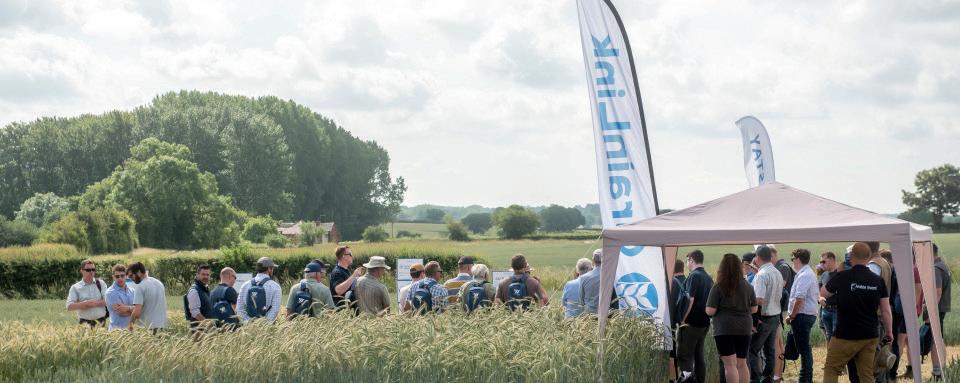
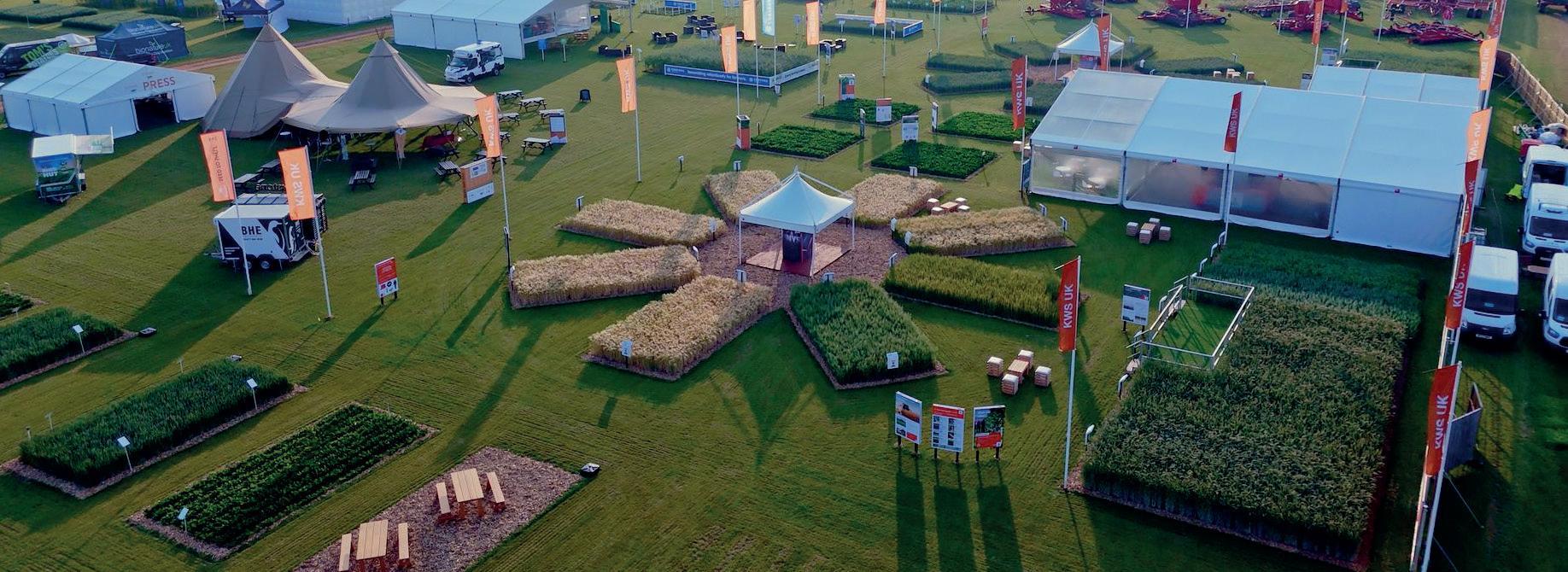
Cereals event all set to draw thousands to Clarkson’s Farm
TV star widens show's appeal
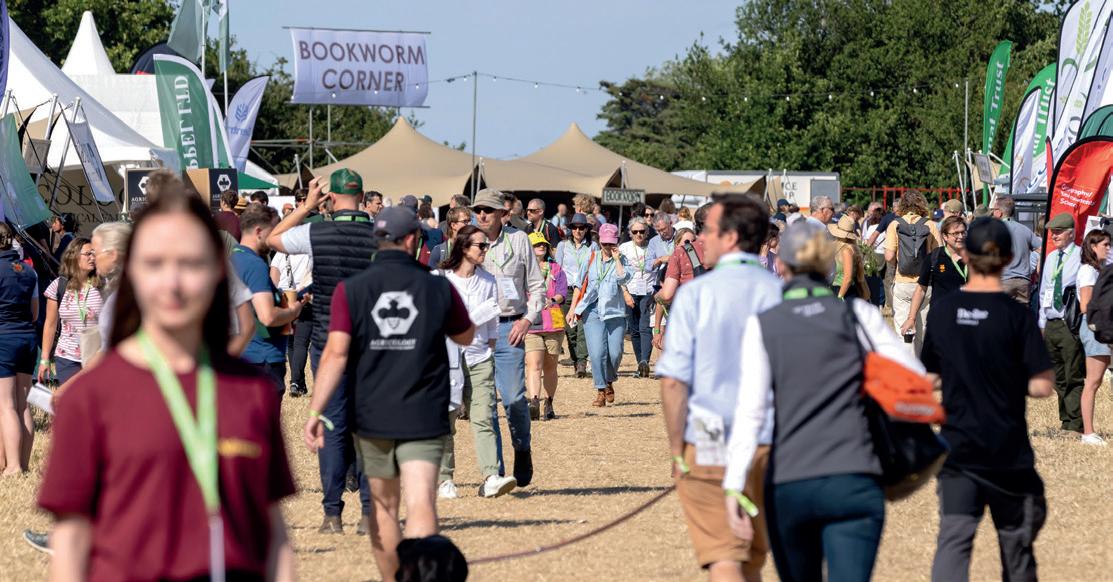
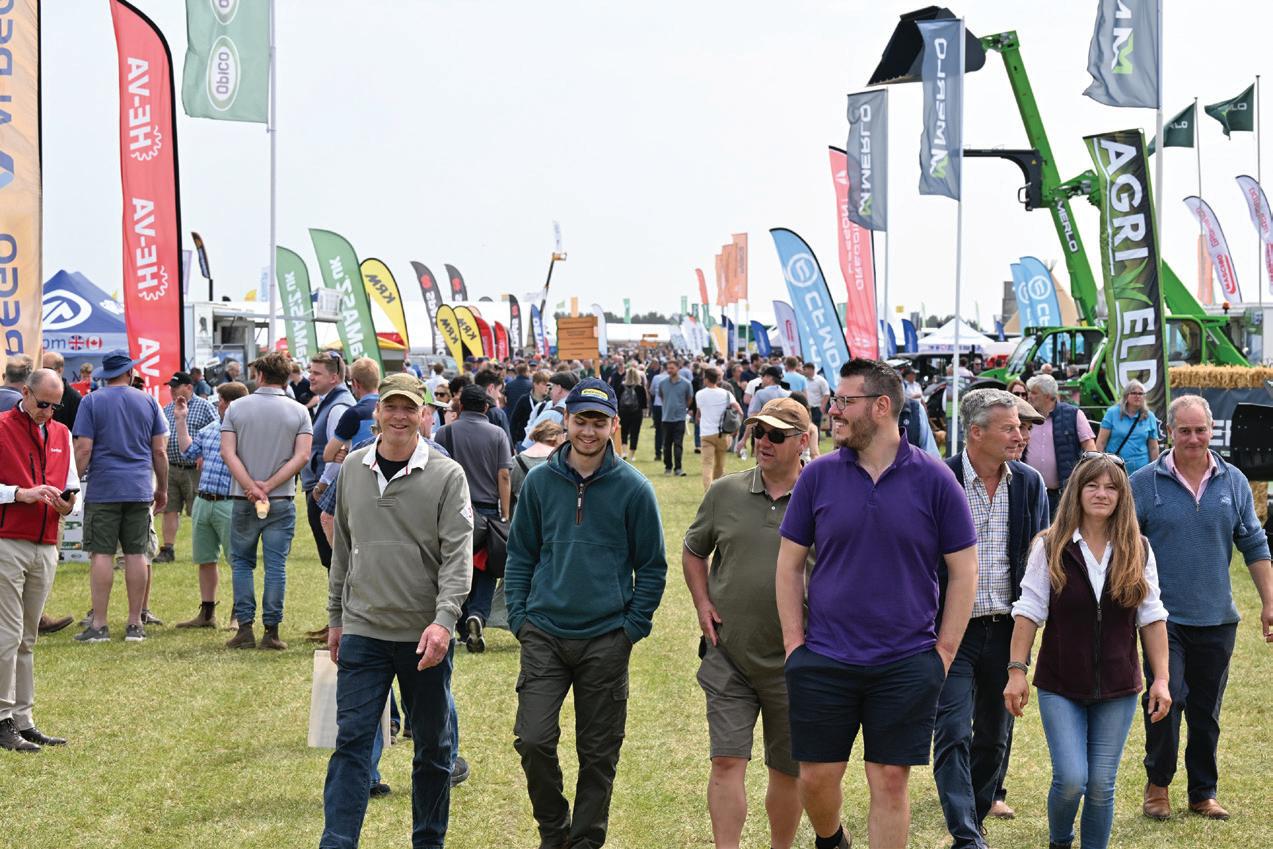
More than 25,000 farmers are expected to attend Cereals 2026 when the flagship arable event is held at Jeremy Clarkson’s Diddly Squat Farm next month.
Organisers say the high-profile venue – and Cotswolds location –will bring new attention to the sector. More than 650 exhibitors are confirmed, including a number of first-time participants.
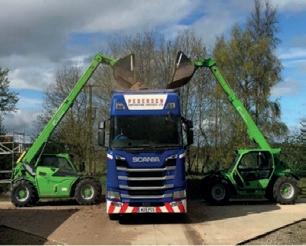
Trailer manufacturer Fruehauf will act as co-host and main sponsor. The firm joins a wide mix of exhibitors, from machinery manufacturers to crop specialists and agri-tech providers – as well as a range of professional services.
David Lewington, head of sales at Fruehauf, says the location could boost engagement. “With the event being held at Diddly Squat, the event should draw more attention to the major issues that UK farmers are facing,” he says.
New features
Several new additions have been included for 2026. The Nofence Livestock Zone will bring animals to the event for the first time. A new area
for young farmers and contractors, Kaleb’s Corner, will also feature.
Visitors will be able to attend a heat of Britain’s Fittest Farmer competition. Food, drink and networking will centre around The Farmer’s Dog popup pub and other hospitality areas. The Diddly Squat Farm Shop open during both days.
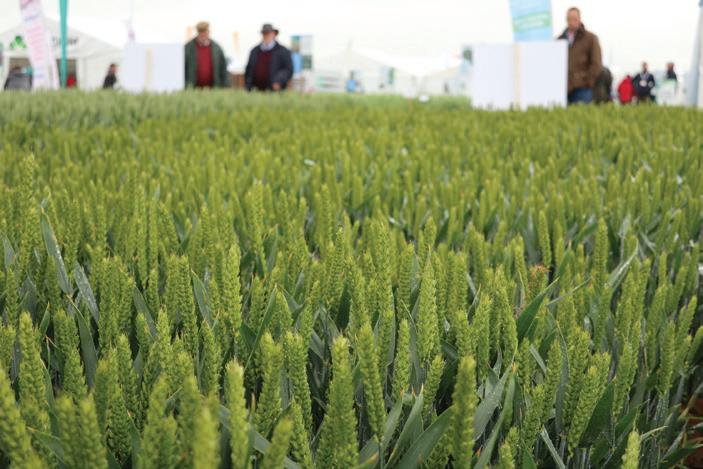
Organisers say the event will retain its core agronomy offer – despite the wider appeal of the TV series Clarkson’s Farm. Crop plots will provide insight into how varieties perform on Cotswold brash soils, offering a comparison with previous seasons.
Regular attractions
Key stages include the Seed to Shelf Stage and BASE-UK Regenerative Agriculture Stage. There will be a series of cultivation demonstrations, with machinery also showcased in the Sprays and Sprayers Arena.
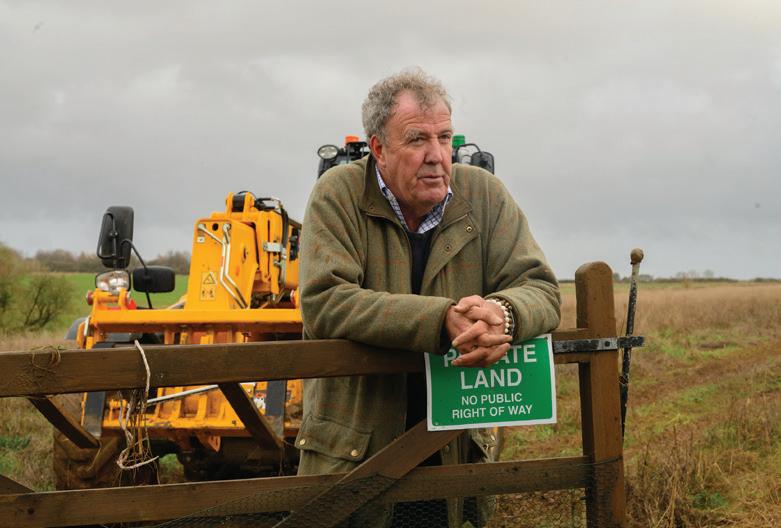
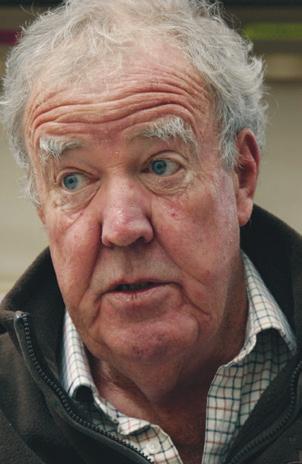
Jeremy Clarkson says the event is a chance to engage directly with farmers. “Farmers are facing so many issues at the moment and hosting Cereals was our chance to do something positive,” he says.
Registration is now open, with
Below left: Crop plots are always a key attraction
organisers introducing traffic management measures to improve access alongside a bus scheme bringing farmers and other visitors to the show from various locations across the country (see page 23)
What’s new at Cereals 2026
Cereals 2026 will introduce a range of new features – reflecting the show’s venue and wider location in the Cotswolds.
A key addition is the Nofence Livestock Zone. For the first time, it will bring animals to what is essentially an arable show. This reflects the show’s location in the Cotswolds as well as the regenerative ethos of reintegrating livestock into arable systems.
Next generation
Younger visitors and contractors are being targeted through Kaleb’s Corner. The area will host practical sessions and networking opportunities, supported by industry partners and the Young Farmers Programme.
Physical fitness and mental wellbeing will also feature heavily at the event. A qualifying heat of Britain’s Fittest Farmer will take place on site, ahead of the national finals later in the year.
Away from the field, organisers are expanding the event’s social offering. The Farmer’s Dog pop-up pub, Hawkstone Hops & Harmony and The Farmer’s Gin Bar will provide food, drink and informal networking spaces.
Retail returns to the event for the first time in recent years. The Diddly Squat Farm Shop, along with a pop-up outlet, will be open across both days. Access to the event will be strictly controlled so it remains farming focused.
Jeremy Clarkson: welcoming farmers
Shuttle buses set to ease access to Cereals 2026
Afleet of dedicated buses will transport visitors to this year’s Cereals Event 2026, as organisers move to ease pressure on local roads and streamline access to the show.
Held on 10-11 June, the event is expected to attract thousands of farmers and industry professionals – as well as fans of the TV series Clarkson’s Farm – to Jeremy Clarkson’s Diddly Squat Farm at Chadlington, in Oxfordshire.
‘Farming hubs’
With traffic management a key concern, organisers have introduced a network of “Cereals Buses” operating from farming hubs across the country. They believe it will help ensure only bone fide visitors rather than celebrity hunters attend the event.
Buses will depart from a series of regional locations, including Lincolnshire (Roy Ward Farms, Leadenham), Nottinghamshire (Strawsons, near Newark), Cambridgeshire (Law Farming, near Royston), and the Elveden Estate on the Norfolk-Suffolk border.
Additional departure points in Yorkshire, Lancashire and Devon will be confirmed. These routes are
This year’s event at Jeremy Clarkson’s farm is much anticipated
designed to draw visitors from core arable regions and reduce the number of individual car journeys converging on the Oxfordshire site.
Relaxed route
Organisers say the initiative is intended to “ease traffic congestion and make your day even easier”, offering a direct and more relaxed route into the event. It should also make it quicker to get into the Cereals site.
Visitors who opt for the service will be able to travel straight to the site without navigating local traffic systems – and can “put your feet up and relax after a busy day at the show” on the return journey.
The buses form part of a wider traffic strategy that includes timed entry slots and multiple access routes. By encouraging visitors to travel collectively, organisers aim to minimise disruption both for attendees and local residents.
Tickets for the buses can be booked alongside event registration, with visitors able to add transport options through their booking accounts. Organisers are actively encouraging uptake, positioning the service as a practical alternative to driving.
Below: As always, the show will have arable farming at its core
The scheme also reflects the national reach of the event. By linking key farming areas directly to the showground, the buses effectively create regional corridors into Cereals, reinforcing its role as a gathering point for the UK’s arable sector.
With high visitor numbers expected and the event relocating to a new venue, the success of the transport plan will be closely watched. If widely adopted, the Cereals Buses could become a defining feature of future events – shifting the focus from individual travel to a more coordinated, sector-wide journey to one of farming’s key annual gatherings.
What visitors can expect at Cereals 2026
Visitors arriving at this year’s Cereals Event can expect a comprehensive, field-scale showcase of the latest developments in arable farming, with a strong focus on practical, in-field learning.
At the heart of the event are the extensive crop plots, where leading breeders and agronomy firms present the newest varieties of wheat, barley, oilseed rape and other combinable crops. These side-by-side comparisons allow farmers to assess performance, disease resistance and agronomic traits under real conditions, offering valuable insight ahead of autumn drilling decisions.
Alongside the plots, visitors will find a wide range of working machinery demonstrations. Major manufacturers and specialist suppliers will be showcasing tractors, drills, sprayers and
cultivation equipment, many operating live in the field.
The event also features a strong programme of technical knowledge exchange. Expert-led sessions and hosted discussions will cover topics such as crop nutrition, pest and disease management, soil health and the integration of new technologies.
A growing area of focus is innovation and sustainability. Dedicated zones highlight advances in agri-tech, data-driven decision-making and environmental management – from precision farming tools to regenerative approaches.
For those looking beyond the field gate, the event brings together a broad mix of industry exhibitors, including seed companies, agronomy
providers, input suppliers and professional services.
Catering and refreshment areas will spread across the site, offering space to meet colleagues and clients. Organisers aim to balance the scale of the event with a layout that remains easy to navigate, ensuring visitors can make the most of their time.
Despite the high-profile venue, organisers say Cereals will continue to position itself as a key date in the arable calendar—offering a full day’s experience that combines practical decision-making with a broader view of the sector’s direction.
For more details, and to secure your ticket, visit www.cerealsevent.co.uk
Agronomy Zone showcases range of practical solutions at Cereals
• Over 600 crop plots displayed
• Focus on practical solutions
• Science-led arable approach
New technologies, crop varieties and agronomy strategies will be on display in the Agronomy Zone at this year’s Cereals event, offering farmers a detailed look at how arable systems are evolving.
More than 600 crop plots will feature across the site, covering both mainstream and alternative crops. These include drought-tolerant cereals, improved oilseed rape lines and a growing range of protein crops aimed at diversifying rotations and managing risk.
Organisers say the aim is to provide practical guidance rather than theory. Farmers face increasing uncertainty around crop nutrition, plant health and input costs. The event is designed to help growers make informed decisions based on field-scale evidence.
Crop plots
Visitors will be able to compare leading varieties side by side. Nine key varieties will be shown under untreated, low-input and standard farm regimes, alongside GP1 and GP4 blends. The approach allows growers to assess performance under different manage-
The event puts plant science into practice
Trials, sponsored by Grain Fumigation, will also return. These plots offer an insight into what is being grown on the farm, alongside new approaches being tested in real conditions.
There is a continued emphasis on adapting to climate pressures. Drought resilience, low-carbon rotations and regenerative approaches all feature prominently across the Agronomy Zone.
Soil focus
Soil management remains central to the event. The Niab Soil Hole will give visitors the chance to examine crop development both above and below ground. The exhibit forms part of a wider Niab presence, which includes more than 130 plots across 25 crop species.
The Niab stand will showcase 32 winter wheat varieties, including new candidates for the 2025/26 season. Agronomists will be on hand to advise on variety choice, fungicide strategies and rotation planning.
The stand is known for delivering independent technical advice. It covers areas such as crop genetics, soil health and data-driven decision-making, bringing research findings into a practical setting for farmers.
New systems
A series of themed exhibits will ex-
to improve resilience, nutrient management strategies for cereals, and updated herbicide programmes for weed control.
Protein crops will also feature strongly. Visitors can learn more about the role of lupins, beans, lentils and chickpeas in UK rotations, as interest grows in home-grown protein sources.
The Centre for High Carbon Capture Cropping platform will highlight under-utilised crops. These include quinoa, triticale and hybrid barley, alongside herbal leys designed to improve soil structure and carbon capture.
Meanwhile, the Ceres Rural Crop Challenge will give university teams the opportunity to manage their own winter wheat plots. Students from the Royal Agricultural University, Aberystwyth, Hartpury, Harper Adams, Reading and Nottingham will take part.
Each team is responsible for agronomic decisions, from fungicide choice to fertiliser use. The competition offers hands-on experience and reflects the complexities of modern crop management.
Cereals organisers say the Agronomy Zone is intended to connect research with practice. By mixing field trials, technical advice and live demonstrations, the event will help growers
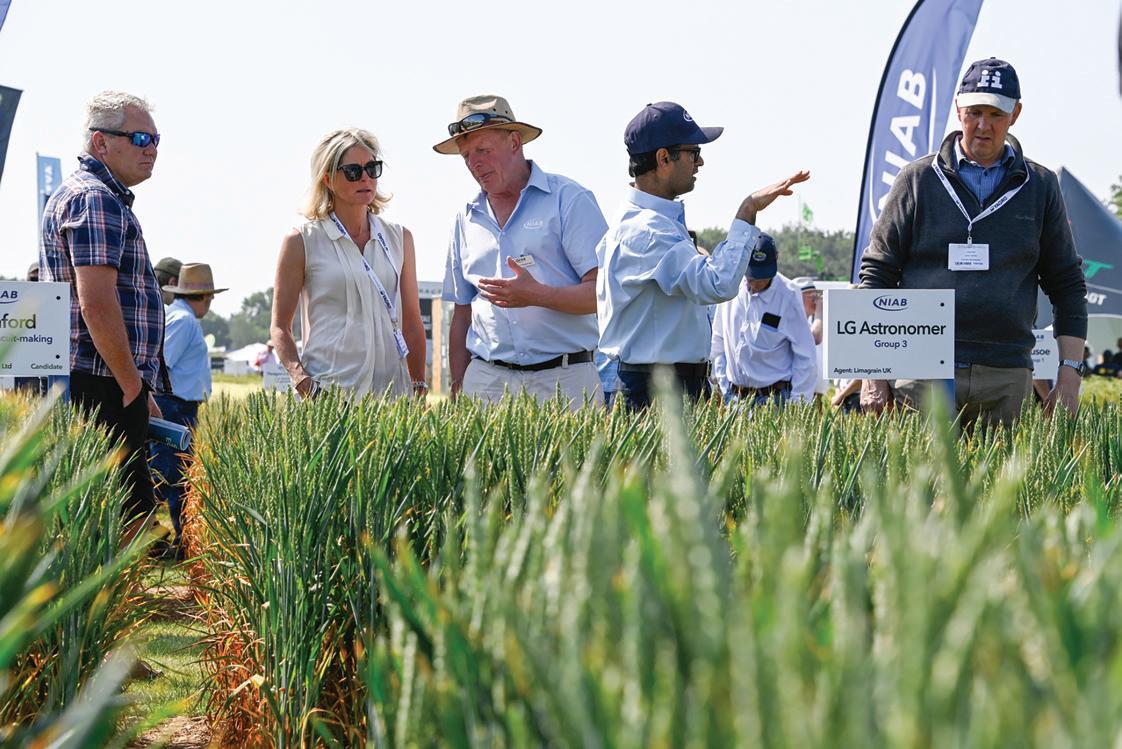
NIAB agronomists and visitors discuss the latest cereal varieties
Data-led future showcased at Cereals
Agrii is set to bring its Smart Connected Farm concept to life at this year’s Cereals event, demonstrating how digital tools and agronomy can work together to support profitable crop production.
The stand builds on ideas first outlined at the Oxford Farming Conference, focusing on what the business describes as Agriculture 5.0. It centres on integrating data, technology and people into a single system, rather than treating them separately.
Ruth Mann, head of integrated crop technologies at Agrii, says platforms such as Contour will play a key role. “It’s about bringing all the data together into one place, providing insights to farmers and agronomists, but, ultimately, they will still make the final decisions using their knowledge and experience,” she explains.
Data tools
With fertiliser costs still a major pressure, the stand will also highlight how
variable-rate nitrogen can improve efficiency. Agrii’s RHIZA team will demonstrate how soil sampling, crop scanning and nutrient planning feed into agronomy decisions.
Sam Fordham, head of technical for RHIZA, says visitors will see practical applications. “We’ll be running live demonstrations of our digital platforms, including soil scanning, drone data and how that information feeds into a real agronomy plan,” he says.
Alongside the technology, Agrii
“It’s about bringing the data together
will showcase crop plots, including catch crop mixtures and Secobra’s spring barley varieties Belter, Hurler and Skyway. A cover crop display will explore options for different systems and Sustainable Farming Incentive actions.
The aim is to give farmers practical takeaways, says Mr Fordham. Visitors should leave with a clearer understanding of how to link crops, data and agronomic expertise to support decisions on farm.
Cultivator showcase focuses on flexibility
• Two machines on show
• Low-cost modular design
• Focus on soil versatility
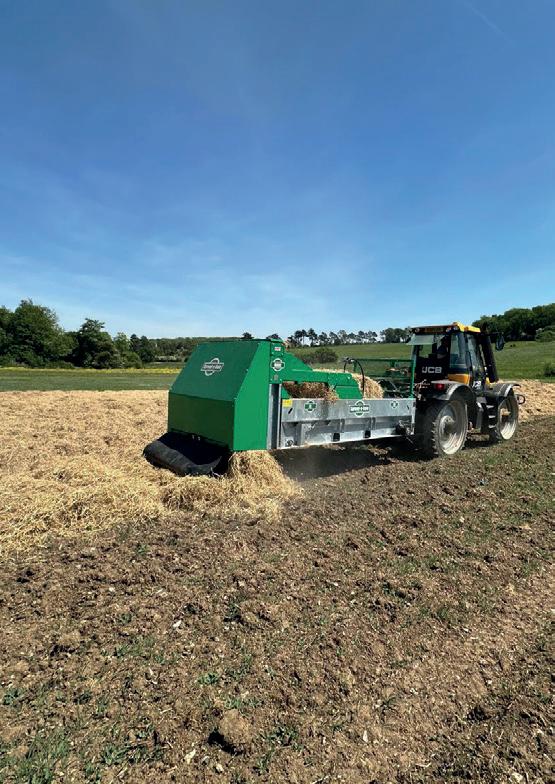
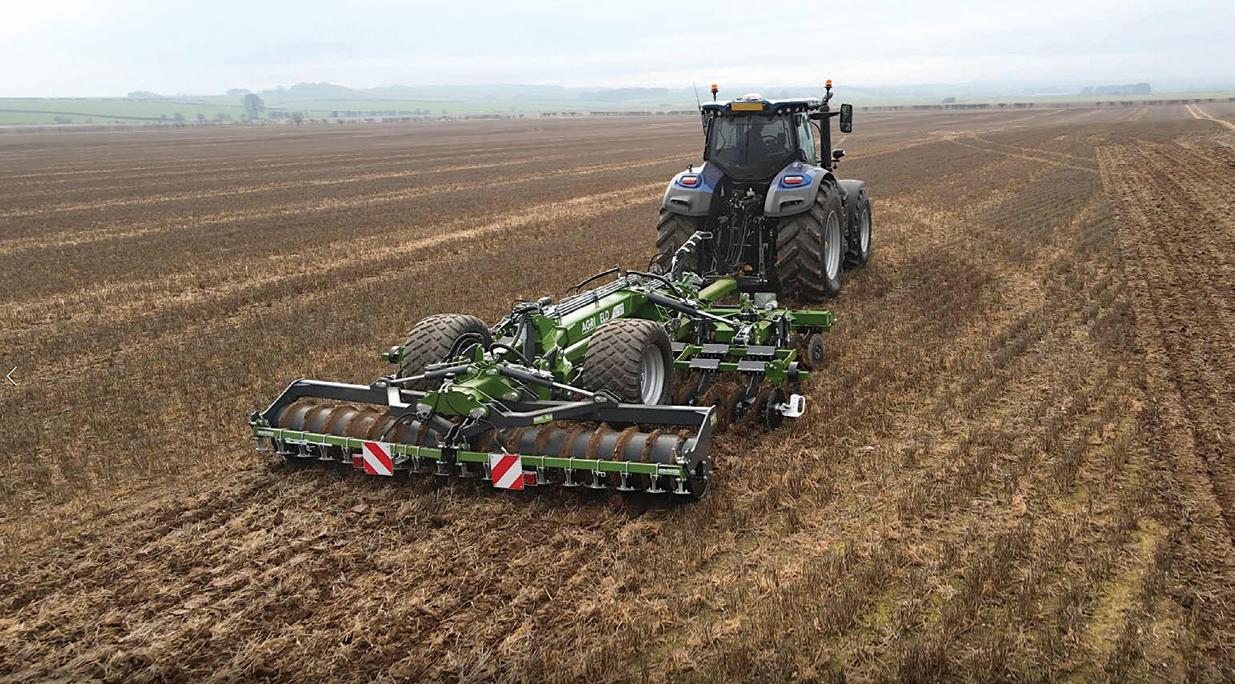
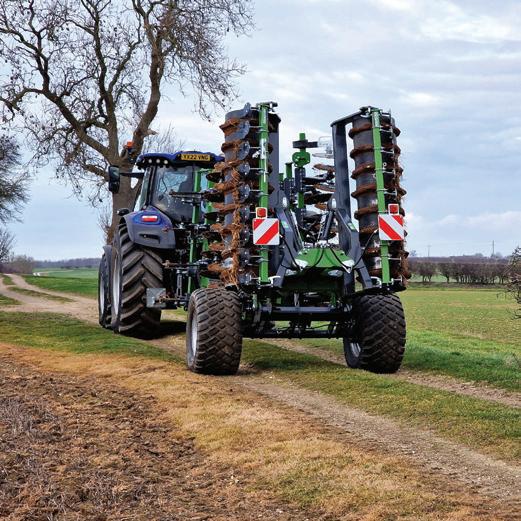
Farm machinery manufactur er Agriweld will showcase two machines on its demonstration plot at Cereals: the Agri-Press cultiva tor and Multi-Till tillage unit.
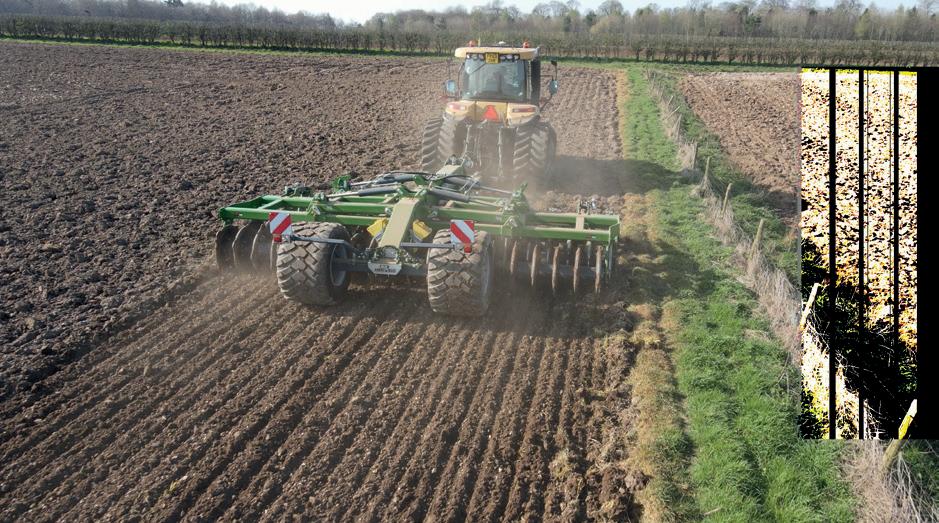
The Agri-Press is a trailed modular cultivation and consolidation machine. Available in working widths ranging from 3 metres to 8 metres, it is designed to deliver effective soil movement and thorough mixing, to leave a weather-proof finish.
Maximum working depth is around 150 mm, making it suitable for both primary and secondary cultivation applications. All models are built on a heavy-duty, trailed chassis that delivers consistent performance across diverse soil types and conditions.
The Agri-Press features a modular front frame which can be configured in various ways depending on the job at hand – including with two rows of opposing concave discs for cutting and mixing residue at speed.
Different options
Alternatively, two rows of heavy-duty pigtail spring tines can be used to lift and loosen soil, providing effective soil movement without full inversion. A third option is three rows of straight and fixed shearbolt tines for controlled cultivation with less soil throw.
Additional modular frame options are available separately, says Agriweld. They can be interchanged to suit the required conditions, reducing purchasing costs, and improving machine and operational versatility.
The middle section features spring tine paddles that level the soil surface, break down clods, and spread soil evenly across the full working width. This helps to ensure uniform seedbed consistency.
The rear consolidation system is based around a press roller featuring two rows of interlocking abrasive resistant steel rings. This is engineered to deliver a firm, even seedbed consolidation with a durable ridged profile designed to withstand weather exposure.
Moisture retention
The press roller encourages moisture retention and maintains consistent working depth throughout operation. The front frame options and levelling paddles are hydraulically adjustable for depth control or to lift out of work when required.
In addition to buying additional front frames the Agri-Press can also be fitted with eradicator tines for alleviating compaction caused by the tractor tyres and enclosed spokes to reduce
clogging and wear from excessive debris and residue.
Also on demonstration will be the Multi-Till 3M – a mounted combination tillage unit that evolved from the previously named Min-Disc subsoiler. It has been pecifically engineered for efficient residue handling and controlled trash flow management.
Cost-effective
As the name suggests, the 3M is available as a 3-metre model and is a cost-effective mounted version of the Multi-Till 5T – AgriWeld’s trailed cultivation system with five cab-controlled, on-the-fly configuration options in widths of 3 to 6 metres.
Big plus point is the way the 3M words – including multiple operational combinations on-the-fly. Each hydraulic working section can be independently raised out of work, allowing operators to select from multiple different configurations.
This means the machine can be optimised for surface cultivation; incorporating organic matter, promote volunteer growth or creating a finer tilth for seed bed preparation. It also works as a low disturbance subsoiler, removing compaction when used with a standard low disturbance point.
The Multi-Till 3M features an EasyClean Scraper Bar on the Agri-Packer roller. This design element enables simple and effective debris cleaning to prevent transmission of residues and volunteers between fields, reduces downtime for maintenance while aiding performance.
The Multi-Till tillage unit will be put through its paces
Below The MultiTill in compact transport mode
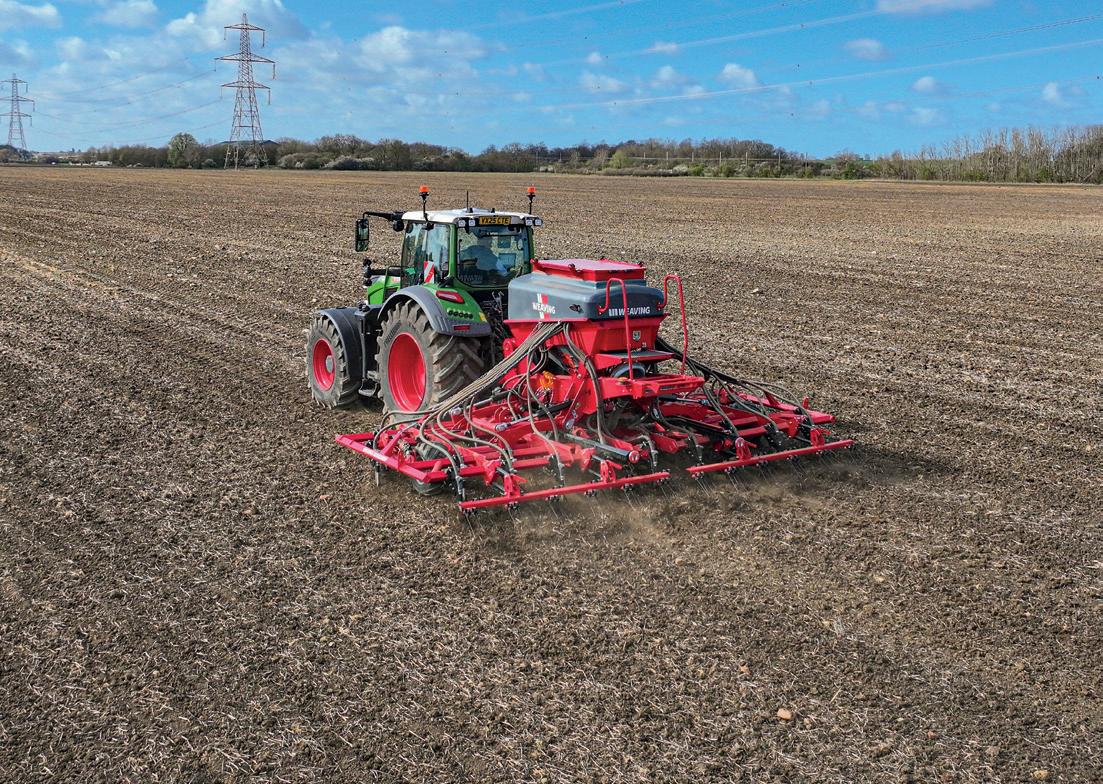
Weaving unveils a raft of new ki t at Cereals 2026
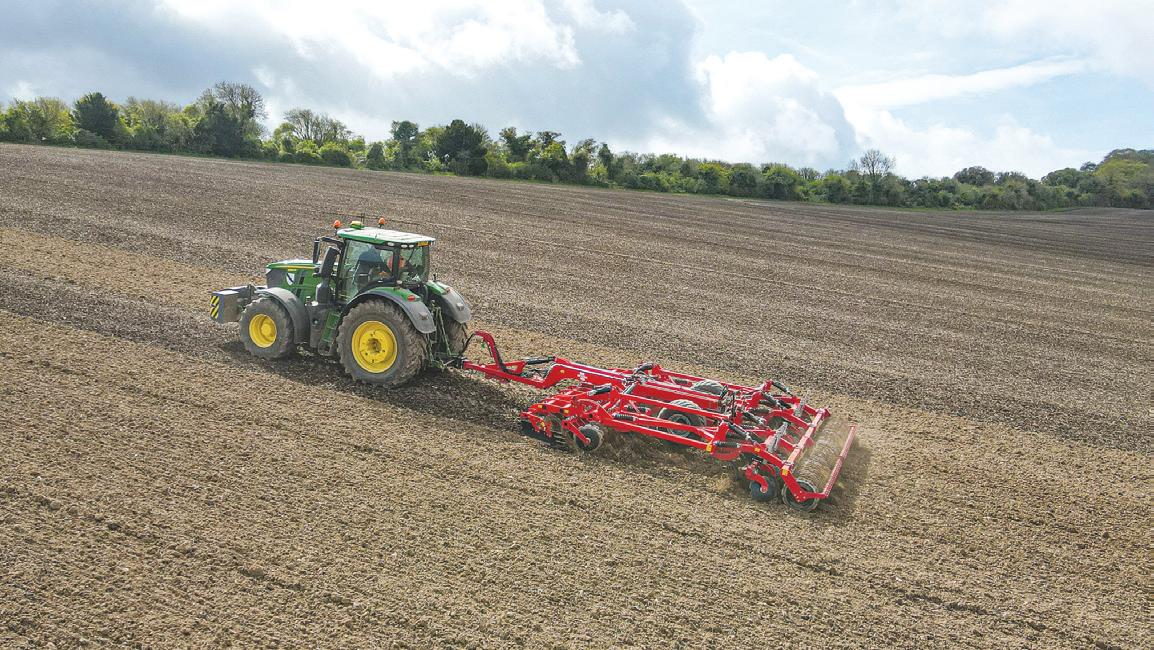
Ahost of new equipment and attachments will be launched by Weaving for visitors to see at its stand (747) at Cereals.
A new one-pass cultivator – the Raptor –will headline the Weaving stand. The company will also launch the next generation of high-output, low-disturbance seed drill, although it is keeping exact details under wraps until the event.
Tighter turning
The Raptor works to depths of nine inches with two rows of 560mm cutting discs, followed by two rows of sprung-loaded tines, each providing 900kg of force. The rear of the machine includes a row of levelling discs and a full width disc roller.
“The Raptor has a lower link arm hitch to allow for tighter turning,” says Weaving
sales director Simon Weaving.
A switchbox control comes as stand ard, so operators need only two hydrau lic functions. It needs a 160hp tractor and upwards, working at 10-12 km/h. The ma chine will be available in 3, 4, 5, and 6 me tre versions.
Also on the stand will be two new options for Weaving’s Fenix disc drill. To broad en its appeal to mixed and livestock farm ers operating smaller tractors, Weaving is launching a trailing kit for the Fenix this summer.
This will enable smaller tractors with around 100hp to operate the drill. The weight of the drill will be distributed across the link arms and rear tyres when travelling between fields, says Mr Weaving.
There is also a grain and fertiliser Fenix adaptation, where Weaving has done away
Electrification of Farming: Turning Energy into a Strategic Advantage for UK Farms
Energy is no longer just another overhead for UK agriculture, it is fast becoming one of the most influential factors shaping farm profitability, resilience and long-term sustainability. With volatile electricity prices, rising demand and increasing pressure to decarbonise, farmers are rethinking how energy is generated, managed and used across their businesses.
For many, the solution lies in taking control; renewable energy! When delivered through a fully integrated approach, it offers a way to stabilise costs, unlocking new revenue opportunities and futureproofing operations. At the forefront of this transition is RenEnergy UK, a specialist provider of tailored solar pv and energy storage systems.
Building resilience for the future
Farming businesses are operating in increasingly complex environments, balancing economic pressures with environmental expectations.
Renewable energy offers a practical, commercially viable way to strengthen resilience.
RenEnergy UK supports farmers in combining solar generation, energy storage and electrification strategies to:
• Gain control over energy costs
• Reduce exposure to external shocks
• Unlock new revenue streams
• Meet sustainability targets
From cost centre to business asset
The demand for electricity across farming operations continues to grow. Grain drying, cold storage, irrigation, dairy units and packhouses all depend on a consistent supply. At the same time, electrified vehicles and machinery are increasing overall demand.
What is becoming clear is that relying solely on grid power exposes farms to price spikes and peak tariffs, often at the worst possible times. RenEnergy UK works with farmers to reverse that dynamic, turning energy from a volatile cost into a controllable, long-term asset.
Their approach combines multiple technologies into a cohesive system, including:
• Roof-mounted and ground-mounted solar PV installations
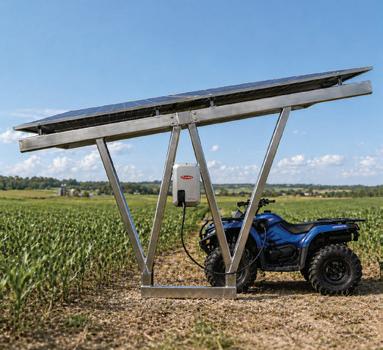
• Solar PV vehicle ports with EV charging points
• Battery Energy Storage Systems (BESS)
• Consultancy support
Real-world results: P.G. Rix Stourgarden
P.G. Rix Farms has been cultivating onions across the Stour Valley since 1968, now operating in its third generation. Operating 364 days a year, the company is recognised as the single supplier of onions to Tesco handling over 100,000 tonnes annually, with advanced processing facilities that transform all out-grade onions into value-add products. The group handles everything from field production and grading to packing and preparing,
Don’t forget to visit RenEnergy UK on Stand 232! Speak with our friendly team of experts about how these technologies can be applied to your farm and to see our Solar PV Vehicle Port.
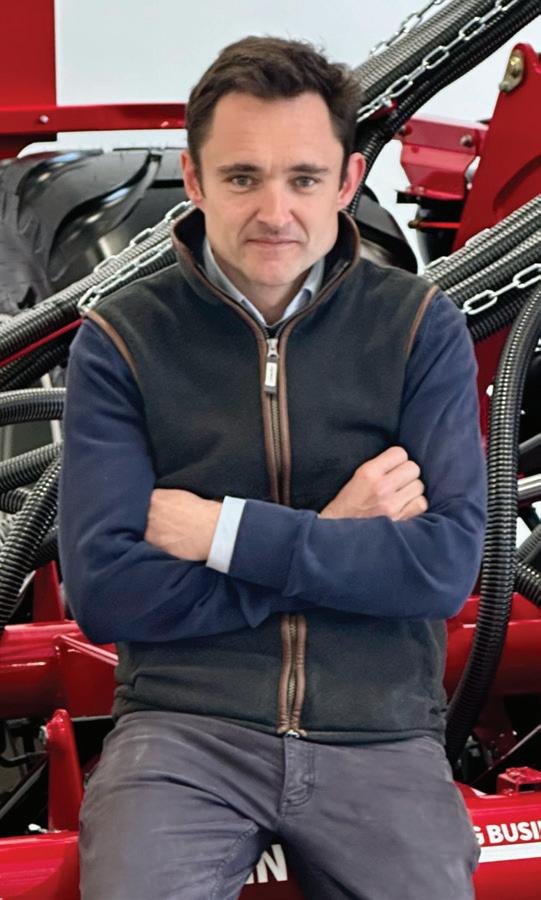
Why not join RenEnergy’s seminar at Cereals 2026 to understand the real-world opportunities of electrification RenEnergy’s Sales Director, Tom Lloyd (pictured above) will be giving a presentation on “Electrification of Farming: The Challenges + Opportunities” on the Seed to Shelf Stage at Wednesday 10th June at 10:30am and Thursday 11th June at 2:30pm, The seminar will cover:
• Enhancing existing solar subsidies (FiT)
• Electrifying farm fleets
• Unlocking value through battery storage (BESS)
• Post-Installation Asset Management
• Flexible financing models, including PPAs Each solution is designed around each individual farm, its energy profile, it’s infrastructure and its growth, diversification and sustainability plans.
Making the most of existing farm infrastructure
One of the key advantages of solar PV is its ability to utilise existing assets. Farm buildings from grain stores to livestock sheds can be transformed into energy generating infrastructure without affecting productivity.
RenEnergy UK specialises in designing systems that align with real-world farm operations. This includes accounting for seasonal
delivering to retail giants with precision and scale. Handling the full onion supply chain with energyintensive operations like drying, storage, and processing meant consistent, affordable energy was essential. The goal was clear:
• Achieve uninterrupted production cycles
• Reduce reliance on grid energy and fluctuating costs
• Support Stourgarden’s reliability as a supply partner to Tesco and other major food manufacturers
RenEnergy began supporting P.G. Rix/Stourgarden with solar solutions, and because of the trust and operational sensitivity, the engagement grew into a multi-phase energy resilience strategy tailored to their vertically integrated operations.
• 1.99MWp Total installed capacity
energy demand, operational workflows and expansion plans, ensuring systems deliver maximum value over time. During the installation works, RenEnergy works closely with the customer so that operations are disrupted as little as possible.
Where additional land is available, groundmounted solar can provide diversification opportunities and a stable secondary income stream. However, RenEnergy recognises the sensitivities around land use and takes a tailored approach, prioritising roof-mounted and carport solutions where appropriate.
Battery storage: the missing link
Energy generation alone is not enough, to fully unlock the value of renewable energy, and in this case more specifically solar PV, it must be stored and used strategically. RenEnergy’s Battery Energy Storage Systems (BESS) enable farms to:
• Store excess solar energy for use during peak demand
• Reduce reliance on high-cost grid electricity
• Improve resilience during periods of instability
• Generate revenue through energy export by selling excess energy back to the grid For energy-intensive operations, this can transform both operational efficiency and financial performance.
Learn more about RenEnergy UK’s services at www.renenergy.co.uk
• 4,790 Solar panels installed
• 32 Inverters installed
The farm now powers her core operations largely with clean energy. It ensures energy cost stability and operational reliability vital to meeting supply requirements. Cold zones stay cool, machinery stays running, and the supply chain stays on track, regardless of grid outages or peak electricity rates. Stourgarden upholds its position as a trusted supplier, backed by sustainable energy practices and performance.
P.G. Rix / Stourgarden exemplify how vertical integration meets sustainability through energy innovation. With a trusted partner in RenEnergy, they’ve fortified their supply reliability, reduced carbon emissions, and future-proofed their market leadership.
Adama to unveil ‘Gamechanging’ fungicide and molluscicide
Two new products will be launched by Adama Agricultural Solutions UK when the crop protection company makes its debut at Cereals in 2026.
Gilboa is a top-performing fungicide with a unique mode of action in cereals. Ferrabait is a new molluscicide with a novel active ingredient which provides fast-acting, long-lasting control of all slug species.
“We’re looking forward to attending Cereals 2026 at Diddly Squat Farm on 10th and 11 June,” says Adama UK technical manager David Griffiths.
“Our fungicide and molluscicide technical experts, regional agronomy managers and global product development teams will be on hand to talk through any technical questions visitors may have about our new products.
“Gilboa and Ferrabait are game changers for UK arable producers, says Mr Griffiths.
“We are excited to demonstrate how our value innovation strategy is giving growers access to products which provide rapid, effective and long-term crop protection to enable them to achieve better yields and more sustainable returns.”
Gilboa is the trade name for flumetylsulforim, an imino-tosyl-pyrimidinone chemistry which has been classified as having a unique mode of action (Group 32) by the Fungicide Resistance Action Committee (FRAC).
It provides protection against key diseases in cereals and oilseed rape –including septoria and sclerotinia – offering UK farmers an additional form of defence against crop diseases and a powerful tool for disease resistance management.
Gilboa is progressing through the regulatory approval process and is expected to be available for the 2027 season. "Gilboa is an incredibly exciting and important new fungicide,” says Adama cereals manager Jonny Oosthuizen.
“To be able to develop and bring to market a new mode of action that is performing on a level with market leaders really proves Adama’s commitment to UK arable farming, adds Mr Oosthuizen.
“We're privileged to be leading the next generation of fungicides and look forward to sharing more about this game-changing molecule at Cereals 2026."
Slug pellet
Brand new slug pellet Ferrabait uses the novel molluscicide active ingredient Feralla to set a new standard in the rapid control of all slug and snail species. It is approved for use on all cereal, vegetable, grass ley and high value broad-field crops,
Ferrabait slug pellets contain a complex proprietary formulation of 12 ingredients including 1% w/w Feralla (10.2 g/kg elemental iron) which is toxic to slugs and causes rapid cessation of feeding.
of longevity thanks to Adama’s man ufacturing process.
Due to be available in autumn 2026, Ferrabait pellets are manufactured to tight processing specifications to ensure each pellet is of a uniform size, shape, weight, consistency and colour.
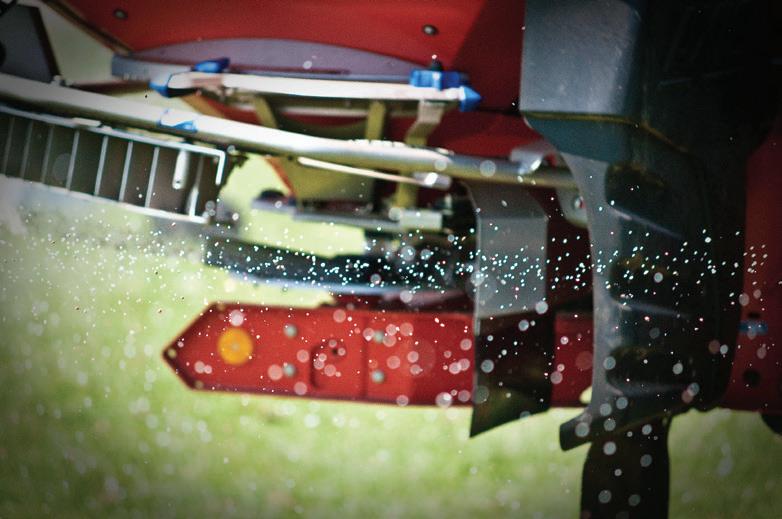
At a size of 2.5mm by 2.1mm, Ferrabait pellets spread accurately to wide operating widths and provide the optimal number of baiting points (40-50 pellets per m2) when applied at typical field rates, says product development manager Catherine Whaley.
“This spreading accuracy, combined with their rapid-stop feeding effect, excellent palatability and durability even in the wettest conditions, ensures crops treated with Ferrabait are protected quickly and for longer against all species of slugs.”
septoria
Seed breeder expands Cereals presence after acquisitions
Seed breeder RAGT will arrive at Cereals 2026 with an expanded portfolio following a year of acquisitions and product development.
Over the past 12 months, the business has integrated Strube and Syngenta’s malting barley operations – strengthening its position across key UK crop sectors, says commer cial manager James Barlow.
RAGT will showcase a mix of estab lished and new varieties of interest to growers. They include winter wheat RGT Hexton, which will feature along side new Recommended List entrants such as RGT Guardsman.
Mr Barlow says RGT Guardsman is attracting attention as the first va riety with barley yellow dwarf virus resistance to exceed the 100% yield benchmark. Spring barley varieties will also feature prominently, he says.
Market leader spring barley Laure ate will be presented alongside Arrow, its expected dual-purpose successor. It boasts high yields, earlier maturi ty and an excellent disease package, says Mr Barlow.
Sugar beet
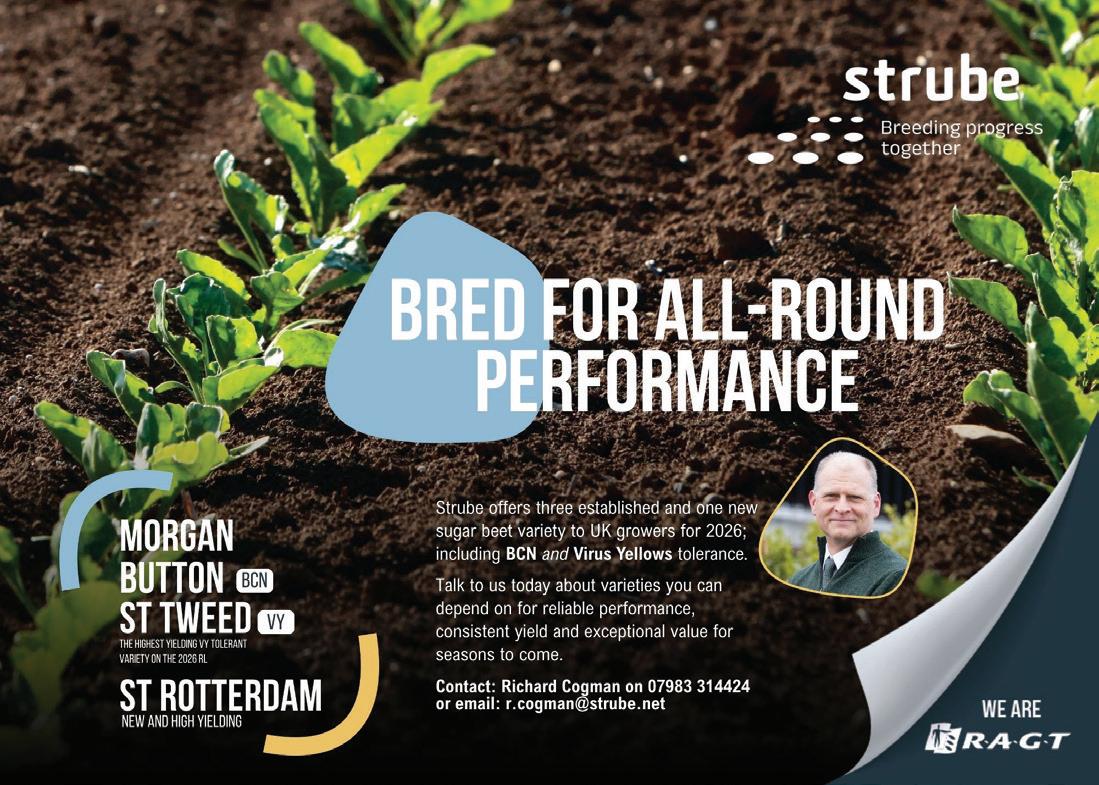
The integration of Strube expands RAGT’s sugar beet offering. New va rieties include ST Rotterdam, listed as the second highest yielding on the Recommended List, and ST Tweed, the highest yielding virus yellows toler ant variety.
Fodder beet and forage crops will complement the display, reflecting a broader portfolio and offering to growers following the company’s ac quisitions.
brand. His goats are fed silage from RAGT maize.
Mr Barlow says the acquisitions mark a turning point. “Much like Cere als being at Diddly Squat Farm, 2026 feels like a seminal year for RAGT,” he says.
RAGT will exhibit on stand 1040.
Unleash the Power of Weed Control
The acquisitions mark a turning point
The stand will also host Cambridgeshire farmer and YouTuber James Peck of PX Farms Ltd, who has been tracking RGT Hexton in his popular “Field of Dreams” project. He plans to follow Arrow spring barley this season.
RAGT will offer visitors gelato produced by Gloucestershire farmer Charlie Whitehouse under the Oh My Goat
Empowering Agriculture
New sprayer set for Diddly Squat debut
• Machine makes first UK appearance
• Expanded machinery line-up planned
• Technology, automation and comfort
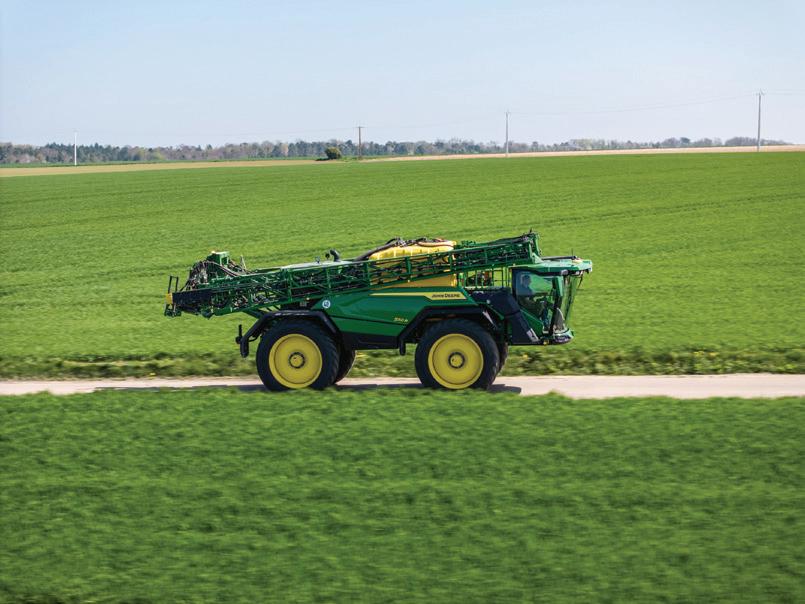
Anew self-propelled sprayer will make its public debut at Cereals, as manufacturers prepare a broad display of machinery and precision technology.
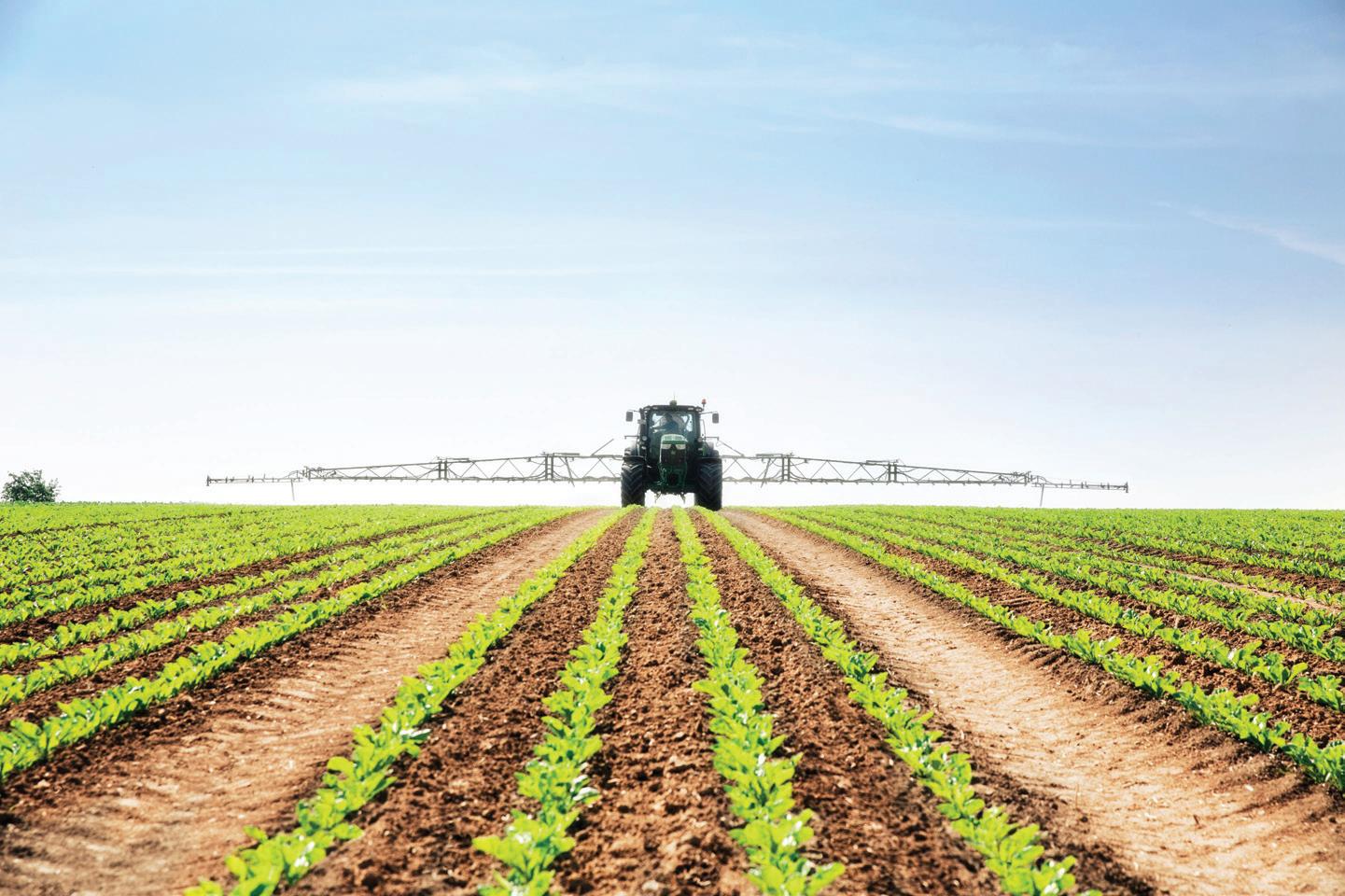
Unveiled last year by John Deere, the 500R will feature in working demonstrations and on the main exhibition stand. It will appear alongside existing mounted and trailed sprayers, offering visitors a full view of the latest application equipment.
Field debut
The 500R has been designed with a new chassis and layout, aimed at improving performance while simplifying dayto-day operation. It targets large arable farms and contracting business es, where efficiency and accuracy are critical.
John Deere says the focus is on cab comfort, spray precision and droplet control, supported by integrated tele matics. The aim is to reduce operator fatigue while maintaining consist ent application standards across wide working widths.
The 550R and the 540R variants of fer tank capacities of 4,000 litres and 5,000 litres. Both can be fitted with ei ther 30m or 36m booms, with speci fication otherwise largely unchanged between the models.
The sprayer will form part of a wid
er machinery showcase, with a range of tractors and harvesting equip ment also expected on display. Re cent launches include high-horse power tractors and updates across mid-range models.
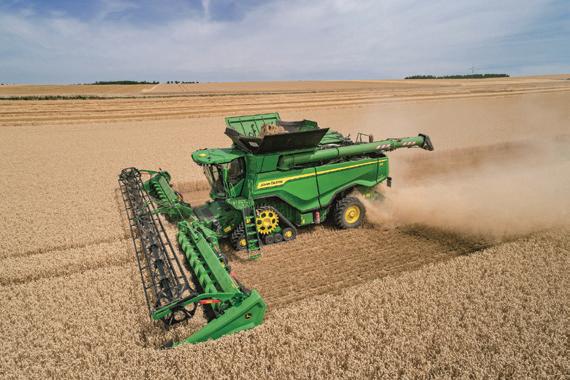
The flagship X9 combine harvester will headline the harvesting range.
The manufacturer claims significant gains in output and fuel efficiency compared with previous machines while maintaining grain quality across different crop types.
The X9 delivers t will lead John Deere’s harvesting line-up on the stand.
Mid-range tractors will also feature, with an emphasis on versatili-
“The 500R has a new chassis and layout
agriculture. These include targeted spraying systems and subscription-based technology packages designed to lower the barrier to entry for automation.
The approach allows farmers to adopt guidance and precision tools without large upfront investment, offering a scalable route into digital farming systems.
Chris Wiltshire, John Deere’s tactical marketing manager for the UK and Ireland, says more announcements are expected ahead of the twoday event, which takes place on 10-11 June at Diddly Squat Farm, near Cipping Norton.
“We will have more news to share before the event gets underway, so there will be several very good reasons to come to our stand at what should be a really great show in its new location,” he says.
The event remains an important opportunity to engage directly with farmers and contractors, adds Mr Wiltshire. “We will have more news to share before the event gets underway," he says.
Oil supplier partners with Guy Martin on factory series
Morris Lubricants has teamed up again with brand ambassador Guy Martin for a new video series showcasing its manufacturing and distribution operations.
The Shrewsbury-based firm says the series will give viewers a detailed look at how its oils and lubricants are produced, filled and shipped. It follows a successful 2022 campaign that explored how oil is made.
Factory upgrade
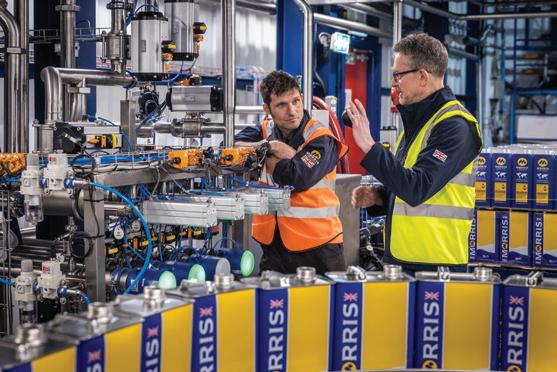
The latest films feature Guy Martin alongside Morris technology manager Adrian Hill, who guides him through recent upgrades at the company’s production facilities. These include a £6m investment to improve efficiency and increase capacity.
Footage highlights new infrastructure, in-
cluding a stainless-steel tank farm to support a wider range of formulations. An upgraded system reduces waste be tween production runs, while a new bulk blending tank speeds up the manufactur ing process.
The series also follows product distri bution. Martin and Hill visit the compa ny’s Worldwide Distribution Centre to see how products are supplied across the UK and exported to more than 100 countries.
Mr Hill says the videos will help in form both trade and end users about the company’s manufacturing process. The content will help customers make more informed choices when selecting prod ucts, he adds.
The 500R will be on demo at Cereals
The X9 combine headlines the John Deere range
Guy Martin and tech manager Adrian Hill
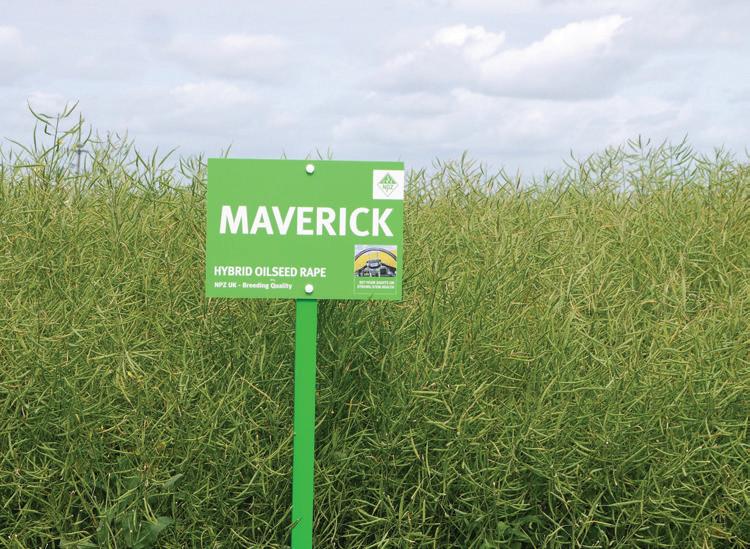
Rape variety combines vigour and disease resistance
TCereals – including Maver ick winter oilseed rape.
ers last autumn, Maverick’s popularity – particularly in the East/West region – aris es from a combination of high output, vigorous growth and a robust disease resistance package.
breeder Craig Padley says he expect the variety to have another good au tumn this year. “Maverick's high seed yield is enhanced by a high oil content of 46.5%, a level that is a significant step up from old er market favourites.”
Good stem health
The variety features exceptional disease re sistance from both Rlm7 and RlmS phoma resistance genes, providing stacked protec
due to the fact it is very vigorous with high biomass to give wide drilling flexibility. It performs well even in later-drilled scenarios that go into mid-September.”
Other NPZ varieties at Cereals will include Eriksen; a new NL2 variety, with more details still to come; and top yielder Karat, which is described as an excellent all-rounder. “We have a strong line-up for autumn,” says Mr Padley.
Craig Padley: oilseed breeder
Maverick is seen as a step above old favourites
It is not ‘how good are your good crops?’... It is ‘how good are your poor crops?’ that really matters
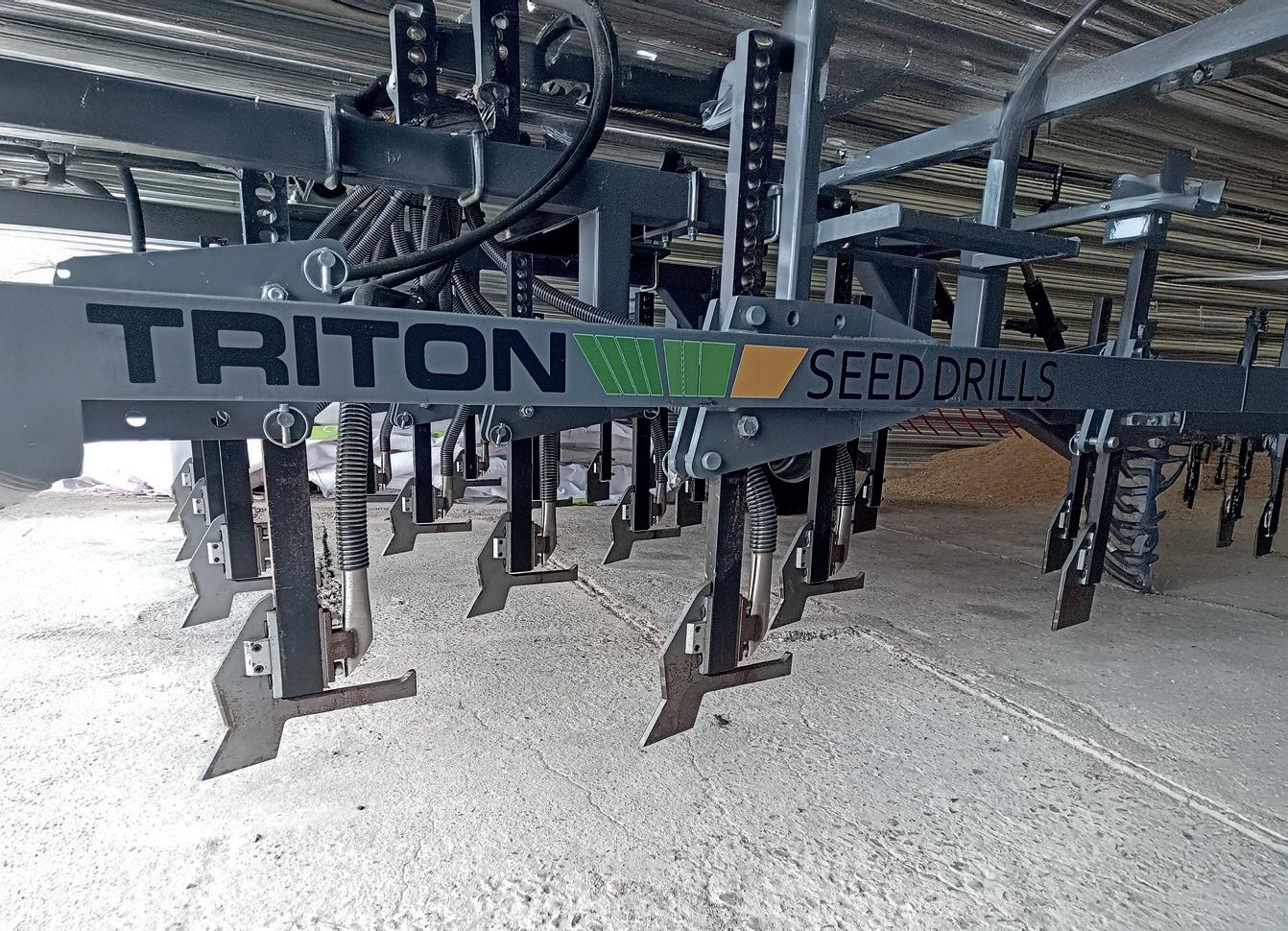
The seed drill is pivotal in dictating the performance of the arable farm. Triton drills give unrivalled flexibility and therefore the confidence to change the tactic needed in these challenging times. One drought affected spring sown crop hammers the meagre margin gained over the whole farm. Triton is the no.1 seed drill for establishing well tillered spring or winter wheat crops well before the soils dry out. Direct Drilling wheat across December - February allows the farmer to maximise the low cost high cash contribution that wheat makes to the farm.
Triton Ireland David Weld nr Dublin 0353 874 661024
tritonseeddrills.com
3m Triton Drills with 1 tonne seed tanks from £39,950 with up to £15,000 grant funding
Smart Farming
Farm innovation fund opens to support on-farm trials
• Farmer-led innovation projects
• Grants up to £100,000 available
• Support on offer to applicants
Farmers, growers and foresters in England can apply for a fresh round of funding aimed at turning practical ideas into on-farm trials.
The latest round of the ADOPT (Accelerating Development of Practices and Technologies) fund, run by Defra, is now open. The scheme supports farmer-led innovation and does not require previous trial experience.
Applicants need only a concept they want to test but lack the time, funding or expertise to deliver. The programme provides financial backing alongside technical support to help bring projects to completion.
Support available
A central part of the scheme is the ADOPT Support Hub. It is delivered by ADAS, UK Agri-Tech Centre and Soil Association. The service offers guidance from idea development through to application, delivery and sharing results.
Applicants can also apply for additional funding to work with a facili-
The grants are encouraging farmers to work together
“
A practical focus matters most
Farmer collaboration central to ADOPT projects
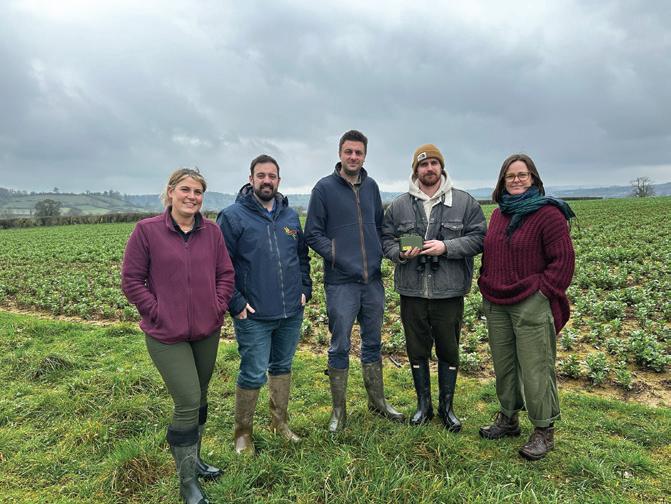
More than 100 farm-based projects are underway thanks to funding from ADOPT (Accelerating Development of Practices and Technologies) – a Defra-backed programme delivered by Innovate UK
ADOPT supports farmer-led, on-farm trials testing practical ideas to improve productivity, sustainability and resilience. The programme supports projects with total costs of £50,000 to £100,000, funding up to 80% of those costs.
It is open to farmers, growerás and foresters in England working collaboratively with others based anywhere in the UK, alongside an additional £2,500 grant to support a project facilitator. Projects typically run for six to 24 months and do not require prior research experience.
Free support is available at every stage through the ADOPT Support Hub, delivered by ADAS, the UK Agri-Tech Centre and the Soil Association, helping applicants develop ideas, apply for funding and share results with the wider farming community.
tator, who helps prepare submissions and manage projects. Facilitators support all successful projects. They assist with reporting, administration and financial oversight.
Working together
Collaboration is a requirement of the scheme. Grants are awarded to projects where farmers work together, with the option to involve businesses or researchers if needed.
Thomas Slattery, engagement lead at the UK Agri-Tech Centre, says the programme is designed to keep projects practical.
“The ADOPT grants are about helping farmers test ideas by working with other farmers, bringing in additional partners if and when required.
“As well as having the support of a facilitator, farmers might choose to work with other businesses or academics but it’s not essential. What matters most is the project focusing on practical, farmer-led trials to deliver meaningful improvements productivity, sustainability or resilience.”
Funding is available on a rolling basis for projects costing between £50,000 and £100,000. Farmers, growers and foresters receive 80% of project costs. The current round closes on Wednesday 3 June.
One initiative already supported by the scheme is exploring insects as a protein source in broiler production. David Tavernor, lead farmer on the project, says funding has enabled trials to move beyond small-scale testing.
“We had been feeding live black soldier fly larvae to commercial broiler chickens on a very small scale, measuring feed conversion, weight gain and welfare metrics, but only in pens,” he says.
“The ADOPT funding has enabled us to scale this up so we can test those same metrics in full broiler sheds across three trials, making the data more robust and applicable to commercial broiler farming.
Outcomes
The grant has also enabled the project to source the quantity of larvae it needs and to properly test the benefits, says Mr Tavernor. Outcomes will be shared regardless of the result, he adds.
“We want to see if there’s an opportunity to show farmers the benefits of black soldier fly larvae as an alternative protein. If we get good results from this ADOPT project, we can communicate them to other farmers and spread the word.
“Even if the results aren’t what we expect, that’s still valuable to know.”
Smart Farming
Technology guide launched for sustainable farming
Anew guide aims to encourage the adoption of technology in sustainable farming.
The bitesize guide was published last month by the Nuffield Farming Scholarships Trust and the Royal Agricultural Society of England (RASE). It features the findings from 12 Nuffield scholars.
Focusing on new technologies to help make agriculture more sustainable, extracts include explanations of key technologies, what to opt for and what to avoid – with practical examples of technology in different sectors.
Practical advice
The short, to-the-point information includes practical advice, case studies, talking points and action plans for future development. QR codes and links allow readers to access the relevant Nuffield Farming report for more information.
RASE technical director Stephen Briggs said: “This is a very relevant
topic for anyone involved in agriculture. The reports give a great overview of technologies available and how they are being used by farming businesses across the globe.”
The Nuffield Farming Scholarships Trust sponsors 25 people aged 25-45 to travel, research and report on subjects they are passionate about – and which contribute to advancing farming, food, horticulture, forestry and ancillary industries.
Scholars travel for at least eight weeks, presenting their findings at the Nuffield Farming conference and publishing a report on their travels and recommendations, available on the Nuffield Farming website.
bitesize guide includes practical advice for farmers
Nuffield Farming Scholarships Trust director Rupert Alers-Hankey, Director of the said: “These studies bring new thinking, technology or management approaches from across the globe to the UK.
“A huge knowledge base can be accessed via the Nuffield Farming
library, and the Bitesize Guides –which now number seven – will make accessing that highly valuable, practical information much more straightforward.”
The Bitesize Guide series is supported by the Elizabeth Creak Charitable Trust, the Central Region Farmers’ Trust and Gloucestershire Agricultural House Foundation. For details, visit www.rase.org.uk/reports
The
AI bird monitoring reveals biodiversity gap
Data-led monitoring of bird activity has highlighted clear differences in biodiversity between regenerative and conventional farming systems, say scientists.
The study, led by Agri-TechE ambassador Todd Jex in partnership with Wilder Sensing, used audio recording devices to capture bird calls across contrasting management systems at Barton Farm in Dorset.
Direct comparison
The farm, run by Oli Harris of QT Agri, includes both no-till regenerative land and conventionally tilled fields used for turf production. The split provided a direct comparison within the same enterprise.
Findings were highlighted at a Productive Landscape event held last month at Rothamsted Research, in Hertfordshire. Mr Harris says the move to regenerative practices was initially driven by cost control.
“Originally, we adopted no-till regenerative farming practices for financial reasons to scale up the business,”
he says. “Very quickly, it became a pas sion to see the environmental benefits the new system was having.”
Two recording devices were in stalled on the farm for six days. They captured around 20,000 bird calls, which were analysed using artificial intelligence – a process which took less than 24 hours, compared with sever al days for manual analysis.
George Caterer, business devel opment manager at Wilder Sensing, says the technology addresses a key bottleneck in ecological monitoring.
“The limiting factor in their use is the amount of data you get from them and the time it takes to analyse it,” he says.
The system draws on the BirdNET database to identify species and interpret ecological conditions. Results fo-
cus on species diversity rather than total call numbers – and provide a useful indicator of ecosystem health.
The trial also highlights the role of baseline data in supporting evidence-based farm management decisions. “This gives you a much better idea of the ecological condition of the land,” says Mr Caterer.
Plough Ahead with Confidence
The Wilder Sensing system uses audio recording to captuture bird calls redy for identification
New satellite tech cuts grower fertiliser costs
• Imaging pinpoints nitrogen levels
• Data helps to target applications
• Helps to improve arable margins
New technology is helping to optimise fertiliser applications as growers strive to offset rising nitrogen prices caused by turmoil in the Middle East.
A 34% spike in the price of granular fertiliser has put a serious dent in arable budgets – with the Agriculture and Horticulture Development Board citing war in the Gulf as the main cause.
Like many other growers, agronomist and farmer Louise Penn is finding new ways to reduce fertiliser costs. Hyperspectral satellite imaging is already making more efficient use of what is an increasingly expensive input, she says.
“Nitrogen is probably one of the most expensive inputs when it comes to growing a crop of wheat, barley, or oilseed rape,” explains Ms Penn, who farms at Manor Farm, on the Castle Ashby Estate, in Northamptonshire.
Performance
Targeting applications makes sense agronomically and environmental-
Spencer Terry of Messium with Northants grower
Louise Penn
ly – as well as from a farm business perspective – so long as it doesn’t disproportionately affect crop yields and quality.
In a bid to ensure she is getting value for money, Ms Penn has teamed up with crop intelligence company Messium, through Agri-TechE’s Ambassador Programme, to explore whether hyperspectral technology could be the solution.
Partnerships ‘vital’ for successful farming future
Agri-TechE’s ambassador programme brings together farmers and other businesses to trial and better understand the benefits promised by new technology.
“
It’s important for us to work together
Some technologies use a Normalised Difference Vegetation Index (NDVI) to estimate crop greenness and biomass as a proxy for nitrogen health. But Messium is different, says Spencer Terry, the company’s commercial director.
Messium uses hyperspectral satellite imagery to directly detect nitrogen levels in each plant at a cellular level – assessing the nitrogen balance in the crop and measuring the uptake, explains Mr Terry.
Reducing usage
The process captures around 400 wavelengths and evaluates how they reflect off crops, focusing on those responsive to nitrogen, he adds. This allows farmers to apply nitrogen more precisely, reducing overall usage.
“We can tell whether a crop is
Continued on p 48
Northamptonshire farmer Louise Penn and Messium director Spencer Terry say thy have both found working together beneficial and encourage others to adopt a more collaborative approach.
“It’s important for us to be able to work with farms like Manor Farm and agronomists like Louise that are progressive and keen to try new technology,” says Mr Terry. Doing so can unlock new solutions to industry challenges, he adds.
Technology Ms Penn says her role as an AgriTechE ambassador has helped to ensure hyperspectral imaging is developed in a way which benefits growers in a way which helps them get the most from the technology.
“It needs a steer for farmers, to understand what we need and what can actually make a difference to farm businesses. I think collaborating is great, and I'd encourage more farmers to go out there.”
Smart Farming
over-fertilised, under-fertilised, or well-fertilised throughout the growing season,” says Mr Spencer.
“Previous generations of satellites were looking at vegetation and using that greenness to approximate the nutrient health and status of the crop. What we're measuring is the nutrient status of the crop straight away, directly by looking at the nitrogen balance”.
Ms Penn has already set up the platform and uploaded all relevant field data, with unique field names, yield
targets and soil types. Images from Messium will help support precision targeting in future applications to reduce nitrogen use.
On the farm
The hyperspectral image captured at Louise’s family farm earlier this spring reveals a general nitrogen deficiency across the field, which is typical for the season; blue areas indicate the highest nitrogen levels, while red shows the lowest.
“This was coming out of winter after a period of quite considerable rain-
fall before any nitrogen had been applied to the fields. And what we're picking up is the field was in a state of quite severe nitrogen deficiency at that point,” says Mr Terry.
“The image can also detect which parts of the field have greater deficiencies than others. Then, we will use this data as input to assist with the next fertiliser application, aiming to correct those deficiencies and restore the crop to its optimal level.
“This allows us to apply more fertiliser to the areas that are more deficient and less to those that are not.”
Continued from p46
The Messium system has helped optimise nutrient applications
Livestock
Price dip sharpens focus on hidden herd losses
Take action to ease pressure on margins
Adip in cattle prices is prompting beef producers to scrutinise performance at grass and tackle losses that often go unnoticed within herds.
While values remain firm by longterm standards, GB deadweight prices have slipped compared with a year ago. Steers are down 54.2p/kg, while heifers have fallen by 53.7p/kg, says the Agriculture and Horticulture Development Board (AHDB).
Cautious outlook
The latest AHDB outlook points to continued pressure on consumer demand, with restrained spending. That is shifting the focus for many producers, with savvy farmers looking to protect margin by maximising the value of every kilogramme sold.
The cost of underperformance is rising, says Euan Hart, leader of the trade team at nutrition experts Crystalyx. Inefficiencies within herds are often accepted as part of the system but can significantly reduce returns.
Calving period
“Empty cows, extended calving periods, and poor liveweight gain are often accepted as part of the system –‘that’s what we always see’ – but many of these issues can be reduced through better foresight, nutrition and earlier intervention.
Margins can be optimised if problems are identified and tackled early
“Buying in more cows isn’t necessarily the answer,” adds Mr Hart. “The bigger opportunity lies in making the most of the stock you have and controlling any losses hiding in plain sight.”
This can create more saleable kilogrammes for close to the same input costs. “Why add another cow just for the chance of another calf, when there
is often more value in improving performance from the cows already in the herd?”
Turnout is a critical moment in the production cycle. Early-season performance at grass can shape outcomes for the rest of the year. Once performance slips, it’s much harder to get it back,
Improving forage utilisation early can lift daily liveweight gain and support better calving rates. A forage-support feed lick Cattle Booster can help, supporting forage intake and digestibility at grass to fight these hidden losses. Health and performance data gathered for buyer audits or support schemes can also help identify where losses might be occurring, focusing attention on the areas that really drive
“Knowing where stock is performing well, and where there may be room for improvement, makes it easier for farmers to target support and achieve better outputs for essentially the same
Grain storage and handling
Steel framed buildings
Groundworks
All types of concrete Turnkey projects
Phone: 01379 678459
Email: info@jhvaudrey.co.uk
Euan Hart: Maintaining performance
•
Preferred site revealed for Norwich livestock market
Modern standards drive move
Plans to relocate Norwich livestock market to a new site outof-town site have been unveiled by the city council.
Norwich City Council says it has brokered a deal to relocate the livestock market from its current location in Hall Road to a preferred site near the Food Enterprise Park at Easton, close to the A47.
Excellent opportunity
Councillor Carli Harper, cabinet member for finance and major projects, said the site had been chosen for its strategic location and accessibility to the wider region which the livestock market would serve.
“We have chosen this site as it rep-
“
Farmers will have a topclass facility
resents an excellent opportunity to continue our detailed work to explore relocation plans for the livestock market so Norfolk’s farming community will have a top-class facility which has excellent transport links.
Further work
“No final decision has been taken. We will take forward further investigation and design work and conduct a wide-ranging public consultation and engagement exercise with local residents and key stakeholders later.”
The city council is legally required to provide a livestock market for the region. Until last year, it had a duty to provide the facility within the council’s boundary. But then the council suc-
cessfully changed an act of parliament. This saw it granted legal permission to relocate a new livestock market outside of the council’s boundary – something it says will better suit the needs of those who use or rely on the livestock market to make a living.
Detailed surveys carried out at the current facility on Hall Road show it is in need of substantial repairs and is lacking in modern biosecurity and animal welfare standards required at modern livestock markets.
These factors have driven the council to seek suitable alternatives to relocate, ensuring the market is sufficiently close to key transport links such as the A11 and A47 and within 16 miles of the existing Hall Road site.
Mart throughput rises as turnover tops £3bn
Livestock throughput across England and Wales edged up in 2025, with total numbers in creasing to 10.76 million total livestock head sold.
Notably, total market turnover rose signifi cantly to just over £3bn, up £554m year-on-year, and this has never previously exceeded £2.5bn, according to the latest figures from the Live stock Auctioneers Association (LAA).
The figures show a rise of 42,000 head of cat tle and sheep compared with 2024, reflecting continued confidence in the live auction system despite a contracting in the national herd and flock, says the LAA.
The uplift was largely driven by finished stock, which rose by 86,000 head to 6.83 million compared to 2024. Finished sheep increased by 78,000 head to 6.52m, while finished pigs rose by 13,000 head and finished cattle rose by 2,000 head.
Resilience
Despite broader national trends showing a de clining sheep flock, auction marts continue to demonstrate resilience, with strong engage ment from farmers looking to secure competi tive prices through selling in the live ring.
Recent data from the Agriculture and Horticulture Development Board indicates a national sheep flock down by around 2%, yet mart throughput has held firm – bucking the wider trend.
This reflects the continued value of the live auction system as a transparent and competitive marketplace, where buyers from across the
supply chain compete openly for stock, says LAA policy and strategy officer Alastair Brown.
“The live ring continues to deliver real value for farmers. It provides a transparent, competitive marketplace, with a buyer for every type of stock and no hidden deductions, creating genuine opportunities to achieve the best price.”
Demand remains strong for livestock marts, says the LAA [library photo]
Bumper line-up confirmed for this month's Pig & Poultry Fair
• Industry speakers now confirmed
• Welfare changes dominate debate
• Producers still extremely cautious
Abumper line-up of speakers has been confirmed for this month’s Pig and Poultry Fair, which takes place on 13-14 May at the NEC, Birmingham.
Key issues addressed by speakers from across the supply chain will help to give producers the confidence to invest their businesses – with a positive outlook for the pork, poultry and egg sectors, say organisers.
Pig forum
The Pig Outlook forum will be chaired by Charlotte Evans, account manager at feed suppliers and nutrition experts ABN. The mood at the two-day industry showcase will be cautiously optimistic, suggests Dr Evans.
“People will be pleased with some of the commitments we’ve seen from retailers in terms of sourcing British pigmeat. But there are still a couple of things holding people back from investing.”
One example is changing animal welfare legislation – like potentially phased out farrowing crates – following the publication of the government’s animal welfare strategy for England last December.
“Producers are going to be looking to really understand what consum ers will pay for and what retailers are wanting from the supply chain before they can have the confidence to invest and grow their businesses.”
Poultry meat
It’s a similar story in the poultry meat sector: Chicken remains immensely popular in the UK, but efforts to im prove bird welfare and the environ ment are threatening the nation’s abil ity to meet consumer demand.
Open discussions around the tradeoffs between welfare, efficiencies and price – as well as planning policies –are therefore essential if producers are to have the confidence to invest.
“Welfare and sustainability are
Premier Nutrition.
“Free-range is a premium product
“And recent commitments to reduce stocking densities or move to slower growing breeds are causing great concern over our ability to meet demand and compete against imports.”
If farmers must reduce stocking rates, they therefore require more space if they are to produce the same amount of chicken – but planning and environmental restrictions mean this is hugely challenging, says Mr Bishop.
“Preference for British chicken is very strong on retail shelves, but the industry is very nervous about imports increasing if we can’t meet demand ourselves.”
Egg sector
the proposed UK ban on colony cages from 2032, on the grounds that consumers need an affordable, entry-level choice. “If there is a ban then there needs to be a reciprocal ban on egg imports from cage systems.”
Free-range producers are particularly concerned about the impact on the egg market, he adds. “Free-range is a premium product – if we lose colony eggs, will they still command a premium?”
Clearly, if colony systems are phased out, while consumer demand for eggs continues to grow – at about 5% a year – then more free-range and barn units will be required – or imports will fill the space.
And that’s where the second consultation comes into play, looking at
Retailers have been praised for committing to source UK pork
Research pinpoints route to better disease control
• Majority of farms report cases
• Antibiotic use raises concerns
• Vet involvement remains low
Afresh study has highlighted the widespread orf problem on UK sheep farms, with new research highlighting gaps in disease control, treatment and veterinary input.
Almost 89% of farmers surveyed by the Royal Veterinary College (RVC) identified orf lesions in their flocks. The findings suggest significant scope to improve prevention and management of the viral disease.
The survey of 421 UK sheep farmers is the largest of its kind. While orf is common, approaches to treatment vary widely, with sheep producers reporting a median cost of £5 per affected lamb and £100 per flock.
Despite orf being a viral disease, antibiotics were widely used on farms. Some 65.2% of respondents used topical antibiotic sprays, while 26.7% used injectable antibiotics and 22.7% used both. Only 34.5% of farmers reported using pain relief.
Veterinary involvement was limited. Just 23.8% of respondents said they consulted a vet when orf was suspected. Researchers say this points to a need for stronger veterinary engagement and clearer guidance on treatment protocols.
Antibiotic use in focus
The findings raise concerns about antimicrobials and the need to use them responsibly. Antibiotics are not typically required for uncomplicated orf
cases, explained David Charles of NoBACZ Healthcare.
“Crucially, this data has shown just how much antibiotic is used for what is a viral disease, clearly showing areas where we can support education and behaviour changes to lead to improved antimicrobial stewardship.
The study also found that 13.6% of farmers reported using salt licks as part of treatment, an approach researchers say requires further investigation.
Human health risk
Orf is zoonotic and can infect humans. Nearly a third of respondents reported having contracted the disease themselves – although simple measures can reduce the risk of infection.
Farmers who wore gloves were significantly less likely to become infected. Researchers say better awareness of hygiene and protective measures is needed, alongside improved dialogue between farmers and vets.
Beth Reilly, senior teaching fellow at the RVC, said: “Our online survey set out to establish current orf treatment practices on UK sheep holdings, as there is currently no licenced treatment.
“An unexpected finding was the use of salt licks by 13.6% of respondents as part of orf treatment, highlighting the need for further research into the potential of this for orf treatment and control.”
What the research means for farmers
The RVC study provides one of the clearest pictures yet of how orf is managed on UK sheep farms — and where improvements could be made.
The high prevalence of the disease suggests most flocks will encounter orf at some point. While it is often self-limiting, the impact on lamb growth, feeding and ewe health can be significant.
A key finding is the widespread use of antibiotics. As orf is a viral disease, routine antibiotic use is not recommended unless there is a secondary bacterial infection. Reducing unnecessary use will reduce the likelihood of future regulation.
The research also highlights low levels of veterinary involvement. Greater engagement with vets could help farmers confirm diagnosis, rule out similar conditions and adopt more targeted treatments.
Human health is another concern. With nearly one in three farmers reporting infection, simple measures such as wearing gloves and maintaining hygiene standards could reduce risk.
The findings point to the value of proactive flock health planning. Regular review of treatment protocols, better use of pain relief and clearer prevention strategies could improve both welfare and productivity.
Further research is now under way to assess orf in UK goat herds, where evidence remains limited.
Beef Expo to focus on food security
Rising costs and uncertainty will top the agenda when farmers, policymakers and industry leaders gather this month for Beef Expo 2026.
The National Beef Association takes place on 30 May at Melton Mowbray Market – the first time the flagship show has been held in the Midlands. The theme – Beefing Up Food Security – reflects growing concern over domestic production and resilience. Beef Expo is widely regarded as the UK’s
leading one-day showcase for the beef sector. It attracts thousands of visitors and provides a forum for farmers, processors and industry bodies to exchange ideas and assess new technology.
This year’s programme includes the National Commercial Cattle Show, trade stands, technical seminars and live demonstrations. A new Bovine Health Hub will also feature, highlighting herd health and performance. Held at a pivotal time for the beef sector,
the event has secured support from organisations including SRUC, the Red Tractor farm assurance scheme and the Agriculture and Horticulture Development Board.
NBA chief executive Neil Shand said: “With increasing focus on food security, alongside significant policy developments and ongoing cost pressures, it is more important than ever that the sector has opportunities like this to share knowledge and plan ahead.”
KAB
Full
Truck
Seat
Bag Supplies specialise in the supply of net bags and ventilated FIBCs to the agricultural sector. We carry a wide range of stock of monofilament and leno woven nets, in a variety of sizes and colours.
We provide delivery within 48 hours of your order being placed.
Bag Supplies offer a free personalised print and design service, so your packaging can be customised with your company logo and additional product information.
Please contact Bag Supplies for further details.
Emergency tool forecasts blowfly strike risk
This month I want to highlight a useful prediction tool that has been made available on the SCOPS website: the blowfly forecast, writes Nerys Wright
After discussing the Nematodirus forecast last month, it feels timely to turn our attention to flystrike, particularly as parasites continue to change in response to our weather, climate, and the technology now available to help us manage them
We are seeing flystrike starting earlier in the year in some areas, alongside a season that is extending later than usual in others. This variability makes it increasingly important to use any fly control product as effectively as possible – especially when fly control is one of the biggest veterinary and medicine costs on many sheep farms.
The SCOPS blowfly forecast indicates when temperatures have been high enough, for long enough, for blowflies to emerge. But it is important to remember that fly emergence is not the same as seeing cases of strike in sheep.
Many factors influence how
The greenbottle fly is the most common cause of blowfly strike in the UK.
• humidity and rainfall
• grazing conditions (sheltered fields vs windy hill tops) - sheltered, warmer areas allow flies to remain active for longer, increasing strike risk
• existing strike on neighbouring farms
• wounds or bad feet. To help validate and fine tune this forecast,
SCOPS are asking SQPs, vets, and farmers to report any cases of strike – whether eggs or maggots. These reports will be used solely to validate forecast accuracy.
Cases will be collated by Elanco, who already operate an established strike reporting system.
For full details about the forecast and how it should be interpreted, visit: https:// www.scops.org.uk/forecasts/blowfly-forecast/
For further details, speak to Nerys Wright is an independent sheep consultant. For more details, call 07891 187643 or visit sheepconsultancy.co.uk.
Farm Energy
Fuel surge prompts call for resilience scheme
• Conflict disrupts supply chains
• AgInflation outstrips price rises
• Green manure could be option
Soaring fuel costs have triggered calls for a one-off Soil Improvement and Resilience Scheme amid disruption due to the Iran War.
Supply chain turmoil has driven up fertiliser and fuel prices – but output commodity values like wheat have not kept pace. The squeeze follows several tough years for arable farmers – with growers just recording their worst year for two decades.
Fallow fields
“This may make it rational for some farmers not to plant crops this autumn for the 2027 harvest – leaving the land fallow instead,” explains Jeremy Moody, secretary and adviser to the Central Association of Agricultural Valuers (CAAV).
The CAAV is proposing a Soil Improvement and Resilience Scheme. It would support farmers to establish mixed green legume manures rather than leave land bare. These crops could
act as cover, improving soil structure and fertility.
“The green manure could be used under the current challenging geopo litical circumstances, signalling a cul ture of soil improvement for both re silience and productivity, as well as preparation for more extreme weath er conditions.”
Uncertain future
Evidence of reduced planting is al ready emerging in the southern hem isphere. Early indications from Aus tralia suggest that 27% of growers have reduced or stopped planting due to uncertainty over the conflict.
vest existing crops due to higher production and haulage costs, according to industry body AusVeg.
Some 53% of Australian growers have less than three weeks of diesel to hand. Fuel is 74% more expensive.
“This is one area where the government can proactively seize the moment to good effect and answer a problem with an opportunity
The green manure mix proposed to Defra could include vetch and clover, alongside other species, says Mr Moody. It would offer agronomic and environmental gains over leaving soils exposed.
“While farmers might decide to leave land fallow, a one-off scheme to establish a mixed green legume manure after harvest could provide a positive purpose for improvement and a single, simple signal of direction with lasting benefits.”
Practical option
Mr Moody says the scheme should open in June, alongside or aligned with the Sustainable Farming Incentive (SFI). This would give farmers time to plan for autumn drilling.
“It’s a response to concerns over the condition of many of our soils and a positive preparation for the crops to be sown in autumn 2027,” he says.
“Leaving it to the September SFI window would be too late for greatest effectiveness given the planning requirements of arable farming.”
The CAAV argues that the scheme should be simple to introduce and operate. Payments should cover establishment costs. The aim is to provide a clear and practical option during a volatile period, says Mr Moody.
The SFI is expected to reopen next month for farmers without an existing agreement. Applications for others are due to reopen in September. Defra has been approached for comment on the CAAV proposal.
Oil tankers in the blockaded Strait of Hormuz off the Iran coast
Reforms could ‘unlock’ energy opportunities
Agovernment consultation could ease planning barriers on wind turbines, creating opportunities for farmers and landowners.
The Department for Energy Security and Net Zero (DESNZ) is proposing a permitted development right (PDR) for a single small wind turbine on non-domestic sites. The consultation runs until 10 June 2026.
Under the plans, farms, businesses and public sector sites could install one turbine up to 30m high without a full planning application – provided they meet certain conditions on noise, visual impact and environmental limits.
The move forms part of efforts to remove planning barriers that have constrained onshore wind. DESNZ acknowledges schemes have been held back by high upfront costs, delays in planning and uncertainty in the approvals process.
A streamlined system could offer greater certainty for landowners and rural businesses looking to invest in renewable energy. The Country Land and Business Association (CLA) is as sessing how the proposals would work in practice.
However, the PDR would not ap ply in protected landscapes, conser vation areas or near listed buildings. It is likely that larger or multi-turbine schemes would still require full plan ning permission.
For many farms and diversified ru ral businesses, a single turbine could reduce reliance on grid electricity. High-energy users such as grain dryers, cold stores and workshops may see particular benefit, suggests the CLA.
The proposals could help cut longterm energy costs and support decarbonisation targets. But grid connectivity remains a constraint. Securing a connection from Distribution Network Operators can still take longer
The government says it is not pro posing changes to domestic wind rules or allowing repowering under PDR. Instead, it is seeking further views on how to support community energy schemes.
The CLA is preparing a formal response, arguing the reforms could enable small-scale wind deployment with less administrative burden.
still require full planning permission
Energy contracts raise £5000 for charity
Farmers have helped raise £5,000 to support the life-saving work of air ambulance charities in rural communities by renewing their energy contracts.
NFU Energy made the donation on behalf of 224 farmers who participated in its recent “Renew your energy and help save lives” buying group in partnership with Yü Energy, who also facilitated the funds.
The buying group used its collective bargaining power to negotiate exclusive bulk prices on energy, giving members a chance to save on their gas or electricity renewals while also making a difference.
Buying group
For every eligible contract renewed through the scheme, Yü Energy contributed towards a collective donation, which reached a total value of £5,000, said Joshua Robinson, head of utility contract sales at NFU Energy
“We are proud to support the life-saving work of air ambulance charities on behalf of the farmers who
took part in this buying group. This is a cause that came about from consultation with our farmers and resonates strongly across rural communities.
“The level of participation shows how powerful collective action can be. We are excited to build on this success with future campaigns and support air ambulance charities in more regions of the UK.”
Air ambulances make up a critical emergency care lifeline in many rural communities, where emergency response times can be longer and rapid access to care can be the difference between life and death.
Public generosity
Sally Newman, from the Air Ambulance Service said: “Despite one-infour people knowing someone who needed the help of an air ambulance, very few people realise that we are charities that receive no NHS funding and rely on public generosity.
“Helicopters, and rapid response vehicles, take doctors and paramedics to patients in the fastest time possible,
to support air ambulance services [library photo]
ence to a patient’s chance of survival.”
Chris Broadbent, Sales Director at Yü Energy said: “Together we enabled customers to make a real difference through their energy choices, helping fund faster, life-saving medical responses when they are needed the most.”
For more information about NFU Energy, visit www.nfuenergy.co.uk
Why farm-related grants should serve your strategy – not define it
Tim Frost from the food and farming team at Savills discusses the importance of having a clear vision for your farming business
Grant funding for farmers often feels like a moving target Application windows open briefly, schemes shift direction and criteria is increasingly complex Yet despite the uncertainty, one thing remains true: grants should support your strategic vision, not dictate it
Reshaping plans purely to ‘fit’ a funding stream may deliver short-term wins, but the strongest businesses are those which stay focused on clearly defined long-term objectives
1 Start with strategy Your strategic vision sets the agenda When you are clear on where you want the farm to be in two, five or 10+ years –financially, operationally and environmentally – it is far easier to identify the right funding options
2 Communicate Proactive planning starts with open conversation Sharing your ambitions –whether with business partners, family members or consultants – is essential When everyone is on the same page, relevant opportunities that fit your strategic goals can be easily identified
3 Review regularly. Farming evolves constantly, and your business strategy should evolve with it
An annual review ensures your ambitions remain relevant, achievable and aligned with changing conditions It also keeps relevant parties fully informed so that everyone is well-positioned to respond when new opportunities arise
4 Be prepared When opportunities appear, readiness is key This might mean ensuring planning, Catchment Sensitive Farming (CSF) and SSSI approvals are all secured; or that RPA data and mapping is up to date, with any changes submitted well in advance Alternatively, all supporting plans and documents should be drafted so applications can be finalised quickly, supplier quotes should be obtained (where applicable) and timelines, workloads and cash flow implications understood and planned for
Ultimately, grants can be incredibly valuable But only when they help deliver your vision Build a solid foundation, ensure clear communication with the key people involved, and be prepared for when the right opportunity comes along
If you have any questions, would like help reviewing your strategic direction or preparing for future funding opportunities, please contact:
Tim Frost Food & Farming 07966 255977
tim frost@savills com savills co uk
Professional Services
Farmland market holds steady despite caution
• Supply down as vendors delay sales
• Firm prices but pressure on margins
• Strong and weaker areas for prices
The farmland market in England held steady during the first three months of the year 2026 – despite a cautious mood across the sector.
Just over 7,000 acres were publicly
“
The market remains relatively robust
also affecting decision-making. But Mr Holt says market activity has not fallen away as sharply as sentiment might suggest – despite some farmers being apprehensive about the future.
“More generally there is a sense that some are delaying major decisions pending greater clarity on the impact of the changes to inheritance tax and the wider consequences of the conflict in the Middle East.”
“There is a nervousness within the arable sector, which has had a challenging three years and is now, once again, facing rising fuel and fertiliser costs. Yet despite this volatility, the market remains relatively robust.”
Prices forecast to firm in months ahead
Farmland prices are expected to rise before the end of the year – although not by very much, suggests Strutt and Parker.
Demand is likely to remain mixed. Some areas will see strong competition, while others may soften. That said, farmland often attracts investor interest during periods of volatility.
“Supply is expected to rise in Q2 and Q3 – always the most popular quarters for new launches – but we are not anticipating volumes to increase significantly,” says Sam Holt, Strutt & Parker’s head of estates and farm agency.
Expansionist
Farmland records rise in endangered bird numbers
An arable estate has recorded seven endangered bird species and an increase in overall bird numbers during a national survey.
The Big Farmland Bird Count offers a snapshot of farmland biodiversity. Taking place each February, the timing of the count coincides with one of the most challenging periods of the year for farmland birds.
This year, the Courteenhall Estate in Northamptonshire recorded seven red list and ten amber list bird species noted across its farmland and parkland – including yellowhammers, skylarks and redpolls.
Wildlife habitat
The estate farms regeneratively, with the majority of the land managed in ways to support wildlife and nature, including 22ha which are dedicated to growing bird feed and 70ha of flower-rich margins.
Courteenhall managing partner Johnny Wake said: “Results like these reflect years of careful habitat management and a simple belief that we must farm with the environ-
ment, not against it.”
Courteenhall Estate has been recognised for its award-winning farming credentials, becoming one of only five farms in the UK to hold Level 2 accreditation from Wildlife Farms & Estates England.
Mr Wake said this reflected its regener ative approach to land management, which focuses on improving soil health, increas ing biodiversity and farming with nature.
Woodland management, winter seed pro vision and the creation of new ponds form part of a wider programme of habitat man agement across the farm, providing shel ter and food for wildlife during the winter months when conditions are most challeng ing.
This is particularly important as many native bird species have declined national ly. Wake says: “Leaving a legacy for future generations is a responsibility we take seriously and why we consider ourselves simply as custodians of the land.”
Yellowhammer were among the species found
Organised annually by the Game & Wildlife Conservation Trust, the Big Farmland
Bird Count, helps to build a national picture of farmland biodiversity and the impact of land management on wildlife.
FARM WASTE PLASTICS RECYCLING
Agri-food apprenticeships launched for school leavers
• New route into agrifood
• Focus on practical skills
• Applications now open
Management training provider MDS has launched a new agri-food apprenticeship programme for college and sixth form leavers aged 18 and over.
The Fresh Futures Programme offers a direct route into the agriculture and food industry and a practical alternative to university. It follows 40 years of developing industry talent with new school leavers’ programme
The programme builds on the success of MDS’s well-established postgraduate apprenticeship scheme, delivering hands-on experience, real responsibility and a recognised qualification.
Practical skills
Each trainee will complete three eight-month secondments across different MDS member businesses, gaining practical skills in departments such as production, supply chain, operations and commercial.
This rotation model enables participants to develop a wide-ranging skill set, build valuable professional networks, and gain a clear understanding of how diverse businesses across the agriculture and food sector operate.
Candidates have the chance to gain broad industry experience across multiple roles. The programme has already been piloted successfully, with the first trainee reporting significant per sonal and professional development.
Early investment
“The programme was the perfect way to expe
rience different disciplines in horticulture and help me decide on my direction for the future,” says Aaron Copeland, a graduate on the pilot programme.
and I'm very grateful to all my placement manag ers who have supported and inspired me."
duce specialists Barfoots, praised Aaron and the scheme. “Aaron has supported the team’s workload and has admirably demonstrated the value of investing in early talent,” he said.
for organic farmers
Based on this experience, Barfoot’s could look to utilise the apprenticeship scheme more strategically, using it as a pipeline to develop skilled employees, support succession planning, and strengthen capability across key operational areas.
How to apply
Applications for the next intake in West Sussex and Lincolnshire are now open. The programme offers a practical, career-focused pathway for motivated young people ready to begin their journey in the agriculture and food industry.
MDS chief executive Sapphira Waterson said the goal was to help youngsters secure long-term careers in the agrifood sector.
"This programme will give young people who want to take a vocational route into the workplace a fabulous opportunity to experience a diverse range of roles within our member companies.”
Over the past four decades, MDS has grown from jut three businesses to 64 member compa-
Anot-for-profit fund for organic and agroecological farmers is offering unsecured loans of up to £25,000.
The Dean Organic Fund was formed in 2011 following a bequest by Jennie Bone – a passionate supporter of organic farming. In total, the fund currently supports 22 organic and agroecological businesses across the UK.
“It has supported a wide range of transformational projects in the past year, including grain bi-cropping processing facilities, mobile hen houses, native grazing livestock, and market garden expansion,” says fund adviser Chris Jones.
Applications are welcome from businesses that are certified organic, in conversion, or are adopting practices very closely aligned with organic and agro-ecological principles, says Mr Jones.
“After a successful 2025, we are looking to extend the reach of this legacy and work with more growers and farmers. The door is open to new applications with loans available on an unsecured and interest-free basis, up to £25,000.
“This is a rare opportunity to secure financial support, and for the right candidates, it can really make the difference in giving businesses the step-up needed.”
For details, scan the QR code.
Graduate Aaron Copeland is on the pilot programme
AF DIRECTORY
FINAL SAY Young Cobbett
Mud, ministers and the Great Agricultural Shrug
You need a particular kind of optimism to be a farmer –but even more so in 2026, says Young Cobbett
Crops are looking reasonably good in the field – with cereals in particular doing well as we head towards grain-fill.
But the same can’t be said off the farm – whether it’s our policymakers in Westminster or the warmongers fighting over Iran.
From the outside, the policy landscape looks busy. There are grants, schemes, sustainability incentives, productivity boosts, frameworks, pilots, resets and – my personal favourite – “pathways”.
Politicians speak fluently about all this stuff – often in the same sentence, sometimes in the wrong order. But out here on the farm, it feels less like a joined-up strategy and more like a bunch of good intentions loosely tied together with baler twine.
Brave new world
Take environmental schemes. We were promised a brave new world: public money for public goods, farmers rewarded for stewardship, a clean break from blunt acreage payments. The theory was sound. The practice has been rather more interpretive.
Schemes have opened, closed, paused, expanded and been “refocused” with a frequency that would make a sprayer operator despair. We farmers, not unreasonably, like a bit of certainty. Preferably more than six months’ worth.
Then there is the small matter of payment. We may not have liked the old system but at least we knew roughly when the cheque would
land. Now, the Sustainable Farming Incentive has been closed for over a year – and we still don’t know exactly when it will be reopen.
These new-fangled schemes and incentives seem to open and close with the unpredictability of a summer rain shower – welcome when they come, but not something you’d bet any part of the farm business on.
Inputs and outputs
Cashflow is not a theoretical concept. It is the difference between producing food or not. Which brings neatly to input costs. Fuel, fertiliser and labour – everything has gone up, often sharply, occasionally alarmingly.
Policy, meanwhile, continues to encourage lower inputs, lower emissions and higher environmental standards. All laudable. But there is a faint sense that the calculations have been done on the back of an envelope that never quite made it out of Whitehall.
The truth is, farming is being asked to do more with less. Less direct support, less certainty, less margin for error. In return, it is being offered a patchwork of schemes that reward doing things differently.
These schemes only work of you can decipher the guidance, meet the criteria – and wait for the payment. It is like being invited out to a restaurant meal where the menu changes hourly and so do the prices. And then the food arrives cold.
Patchy progress
None of this is to say there isn’t progress. Some farmers are making the new system
work. There are genuine gains in soil health, biodiversity and water management. There is innovation, collaboration and, in places, real optimism.
But it is happening despite the policy fog, not because of its clarity.
What is missing is coherence. A sense that all these moving parts – food production, environmental delivery, rural economies –are being steered in the same direction. Yet there never seems to be anyone at the wheel. Right now, it feels like the policy is trying to be everything at once: green, productive, competitive, fair. But in trying to achieve all these goals, it risks being none of them particularly well.
Back in the field, farmers will adapt, adjust, and carry on, because that is what farming has always required. But it would help – just occasionally – if the policy framework resembled something more solid than a length of twine and a hopeful shrug. Our regular columnist Fen Tiger is away and will return next month
The theory was sound – the practice isn’t “
U R N K E Y S O L U T I O N S B U I L T B Y F A R M E R S , F
R M E R S
C A D Cons truc tion Drawings & 3 D Modeling
Steel Supply & Erec tion
Handling & Drainage Sys tems
Site Preparation & Ear th Works
Full C D M Responsibilities
Design & Build
Internal & Ex ternal Concre ting
Mechanic al & Elec tric al Ser vices
Moisture Meter Clinic 2026
Marrison Agriculture are holding our annual moisture meter clinic in Hingham on Wednesday 6th and Thursday 7th May 2026. Please call to make an appointment.
Call now for special offers on moisture meters, aeration pedestals and post-harvest storage equipment