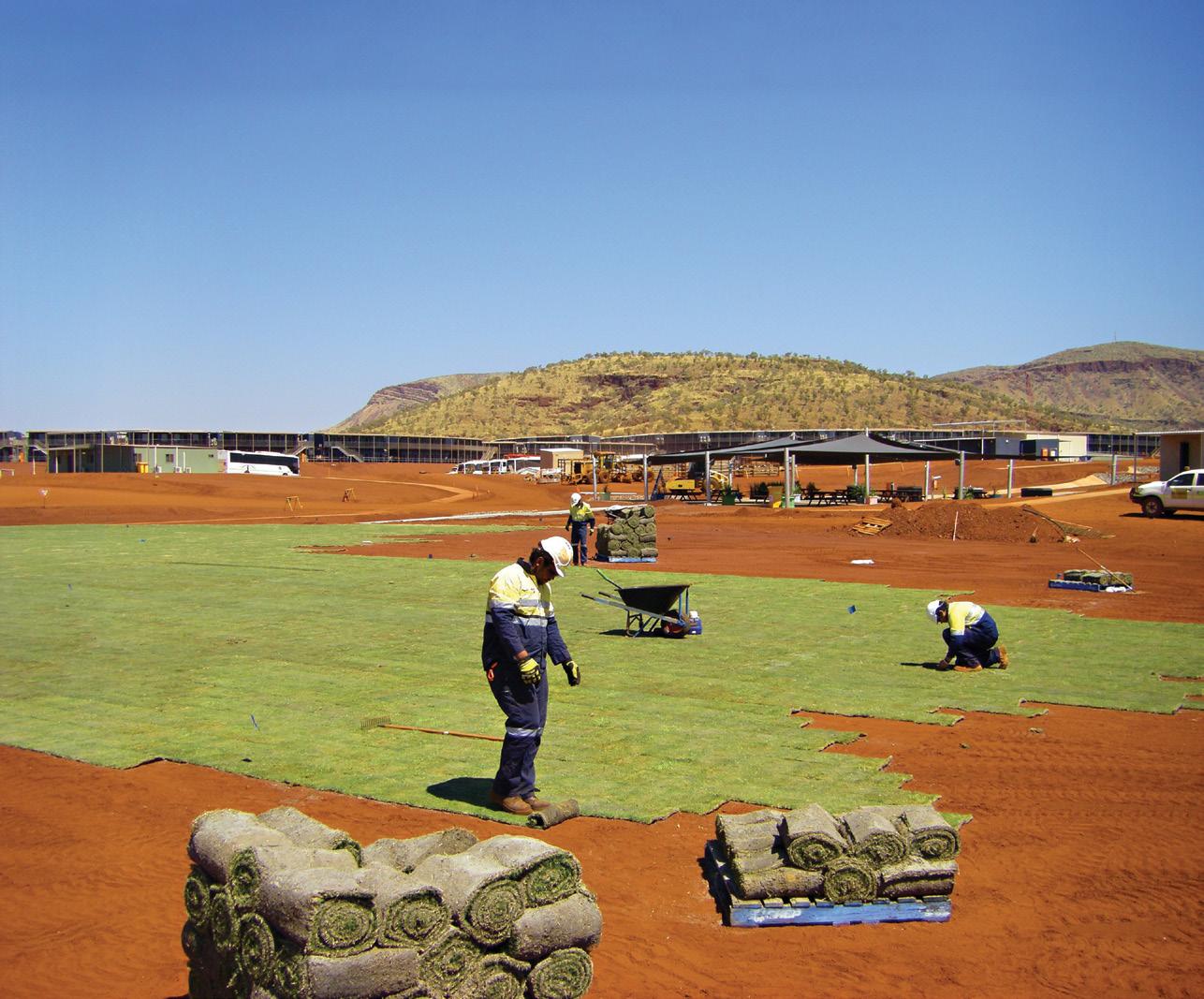
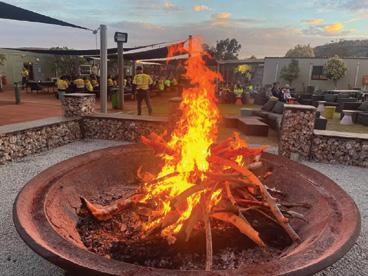
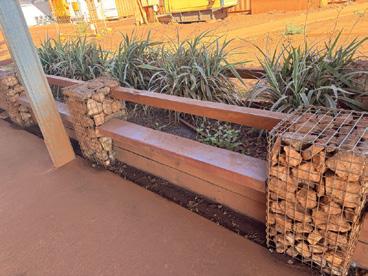
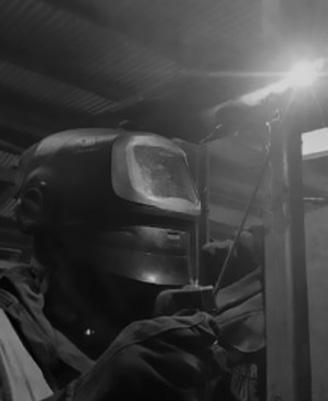
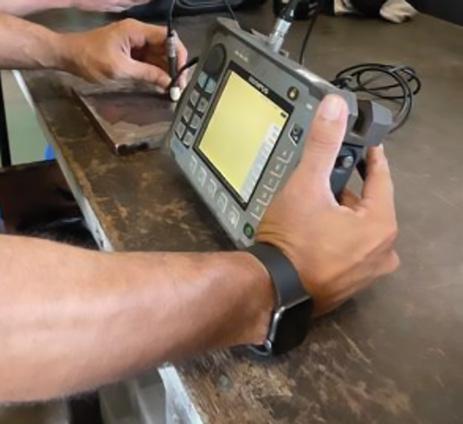
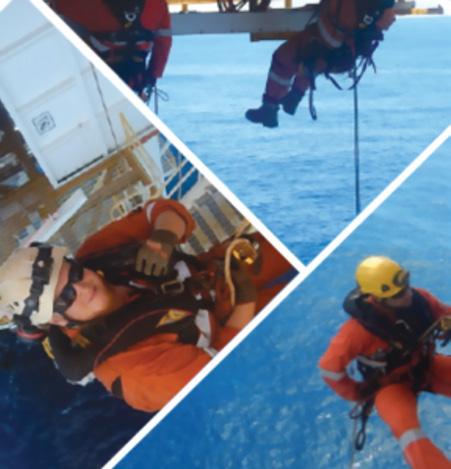
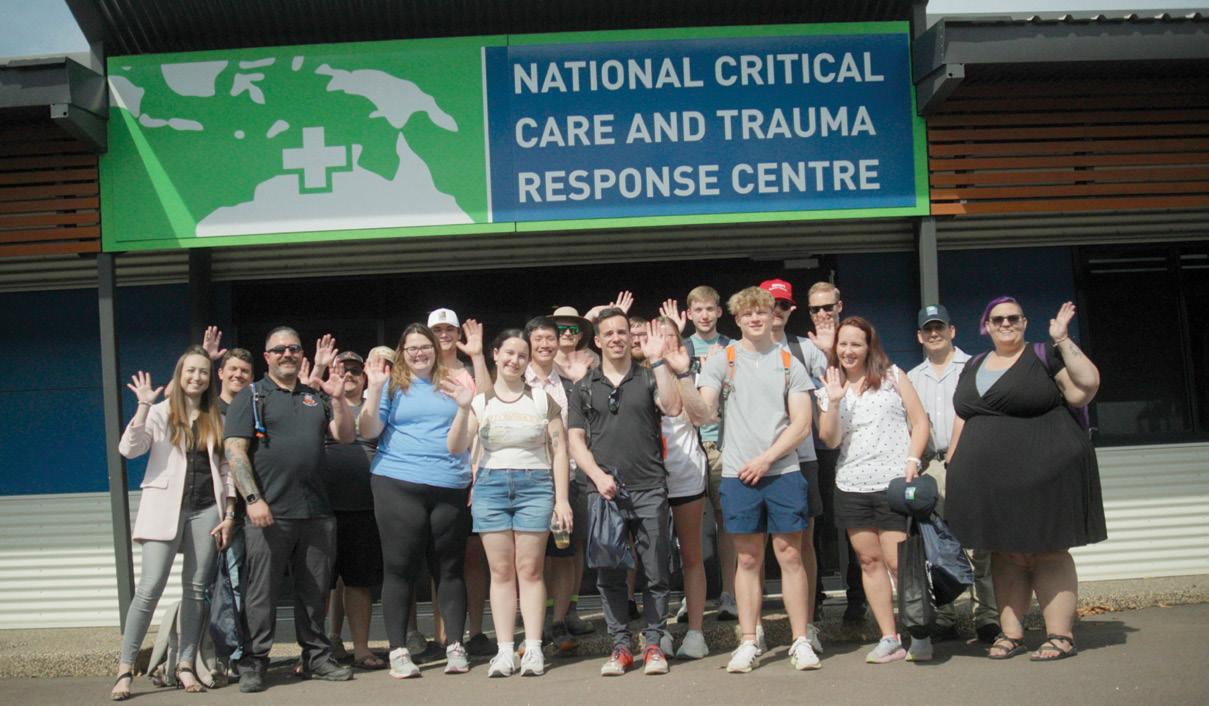
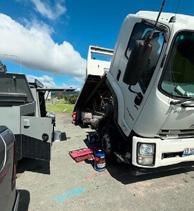
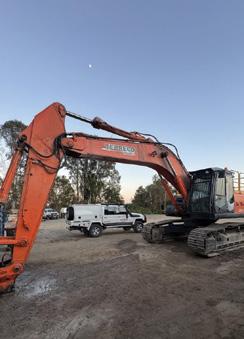
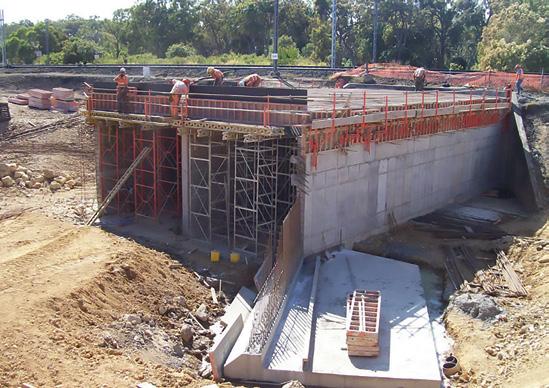
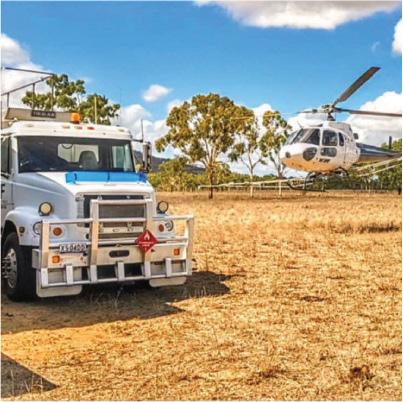
Eastern Guruma supports Australia’s leading iron ore miners and services the mineral resources sector across the Pilbara region of WA.
Mine site services
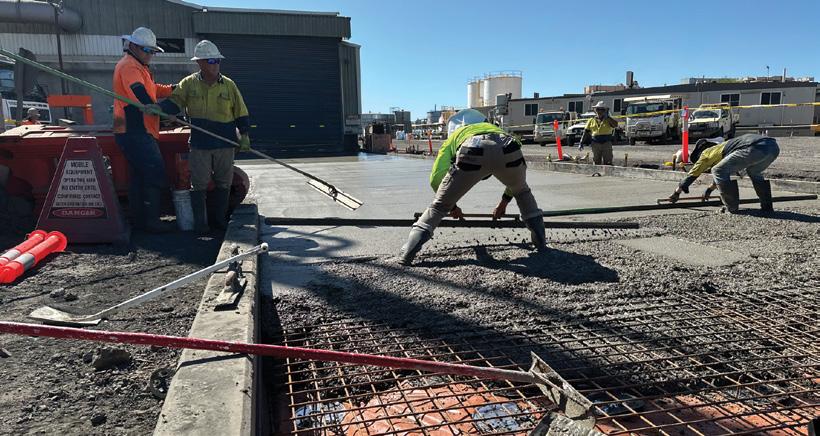
Eastern Guruma provides various mine site services including creating and maintaining access, road management, exploration works and rehabilitation.
Facility management
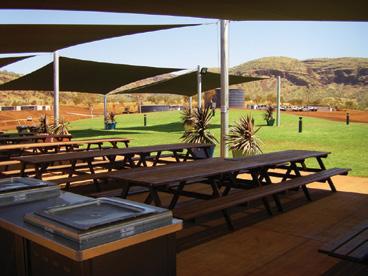
Facility management is one of Eastern Guruma’s top specialties. The team tailors every service to ensure operational maximisation of client assets.
Get in touch today
08 9325 2424
Rehabilitation & closure
Eastern Guruma provides and industrial contaminated area rehabilitation.
Civil construction
As an experienced civil contractor, Eastern Guruma has delivered experienced team.
The company has the ability to undertake detailed civil works and determine solutions to meet client needs and budgets.
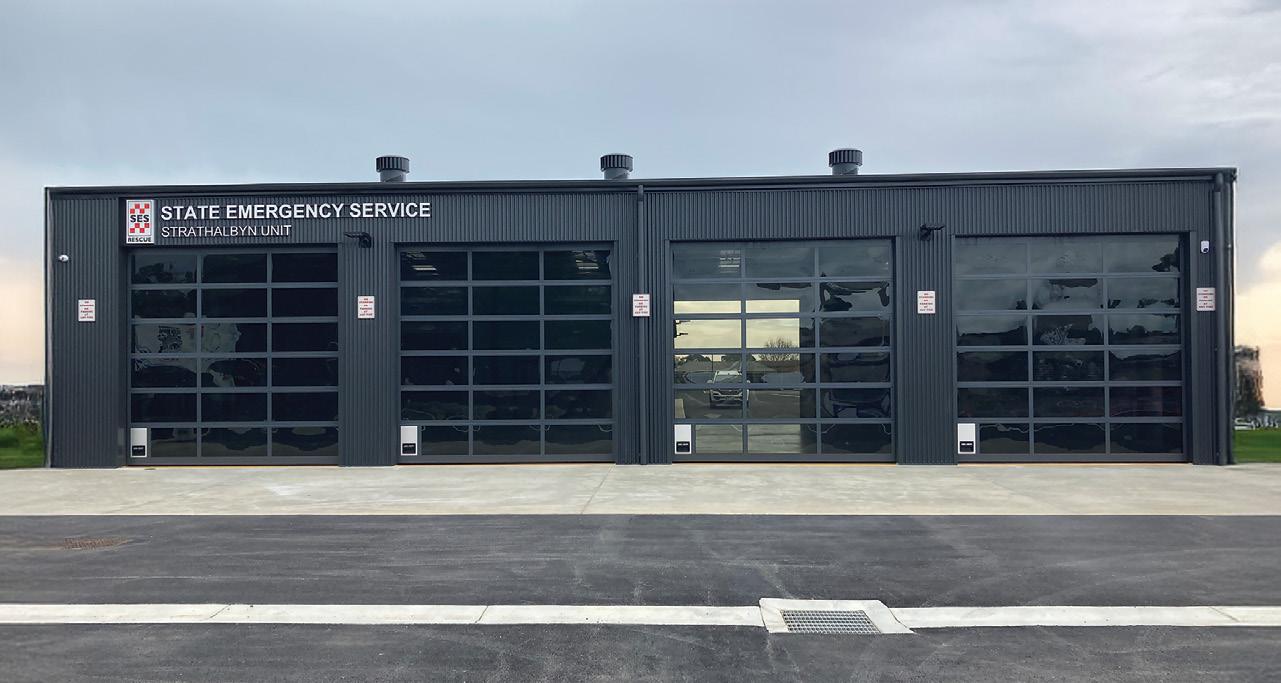
At ASSA ABLOY Entrance Systems Industrial, we’re proud to play a part in supporting the vital work of the State Emergency Services (SES) across Australia. Through our locally manufactured and tailored entrance solutions, we’ve partnered with builders and government agencies on numerous new builds and upgrades for SES facilities nationwide.
ASSA ABLOY’s Entrance Systems Industrial supplies, installs, and services a wide range of access products – engineered for reliability, durability, and rapid response environments. Our trusted product range includes:
• 1042F Sectional Doors – robust and thermally efficient doors designed for fast operation and frequent use, ideal for vehicle bays and emergency access points.
• Heavy-duty Roller Shutters – built to withstand the elements and provide security for state-critical assets.
• Bi-fold Doors – offering wide openings, minimal intrusion, and quick access, perfect for stations where space and speed are key.
Our ongoing commitment to quality, safety, and reliability means SES teams can focus on what they do best –serving communities in times of need – while we take care of securing and streamlining their facilities.
From remote regional sheds to major metropolitan response centers, ASSA ABLOY Entrance Systems Industrial is proud to support Australia’s emergency services with entrance solutions built to perform under pressure.
Official Publication of Australasian Institute of Emergency Services
Print Post Approved PP 100018976
Disclaimer
Views expressed in this journal, unless specifically acknowledged, are not necessarily those of the Publisher, of the Institute, of its Board or of the Editor.
Editorial Rights
The Editor of National Emergency Response reserves the right to grant permission to reproduce articles from this journal.
Such approval is hereby granted, unless a specific withdrawal of this permission is included in the article in question.
The Author and the journal must be acknowledged in any such reprint.
Mailing Amendments or Enquiries
For any amendments or enquiries regarding mailing, please email: secretary@aies.net.au
Notice to Advertisers
This publication is the official journal of the Australasian Institute of Emergency Services. It is published by Countrywide Austral for the Australasian Institute of Emergency Services and will be distributed to its members.
An illegal practice is presently operating where advertisements from some of our publications are used to produce unauthorised publications and our advertisers are contacted for payment for the unauthorised advertisement.
If you are approached to place an advertisement or with a request for payment for another publication, you should verify that the advertisement has been authorised and establish the bona fides of the company.
The invoice and any correspondence should have the company name, ABN, and an address (not just a PO Box) and you should ask for proof of publication.
If you do receive a request for an unauthorised advertisement, or have concerns about the bona fides of a company, we suggest you refer it to the Office of Fair Trading in your capital city.
Editorial Team
Editor: Kristi High
Associate Editor: Steve Jenkins FAIES
Send articles for inclusion to: Email: editor@aies.net.au
Website: www.aies.net.au
Website Content
The website has sections for each State as well as National Areas. If you have ideas for State Division content, please contact your State Secretary. For National content, email secretary@aies.net.au
Please be aware that all content must be cleared by the National President prior to web publication to ensure it meets required guidelines.
Publisher National Emergency Response is published by
For any enquires regarding the publication, please contact Tony Cornish: Mob: +61 411 055 050
Disclaimer: Countrywide Austral (”Publisher”) advises that the contents of this publication are at the sole discretion of the National Emergency Response and the publication is offered for background information purposes only. The publication has been formulated in good faith and the Publisher believes its contents to be accurate, however, the contents do not amount to a recommendation (either expressly or by implication) and should not be relied upon in lieu of specific professional advice. The Publisher disclaims all responsibility for any loss or damage which may be incurred by any reader relying upon the information contained in the publication whether that loss or damage is caused by any fault or negligence on the part of the publisher, its directors and employees.
Copyright: All advertisements appearing in this publication are subject to copyright and may not be reproduced except with the consent of the owner of the copyright.
Advertising: Advertisements in this journal are solicited from organisations and businesses on the understanding that no special considerations other than those normally accepted in respect of commercial dealings, will be given to any advertiser.
Contents Features
The Kokoda Challenge bills itself as Australia’s toughest team endurance event, in memory of the series of battles fought along the Kokoda track in 1942 that are now part of the ANZAC legend..
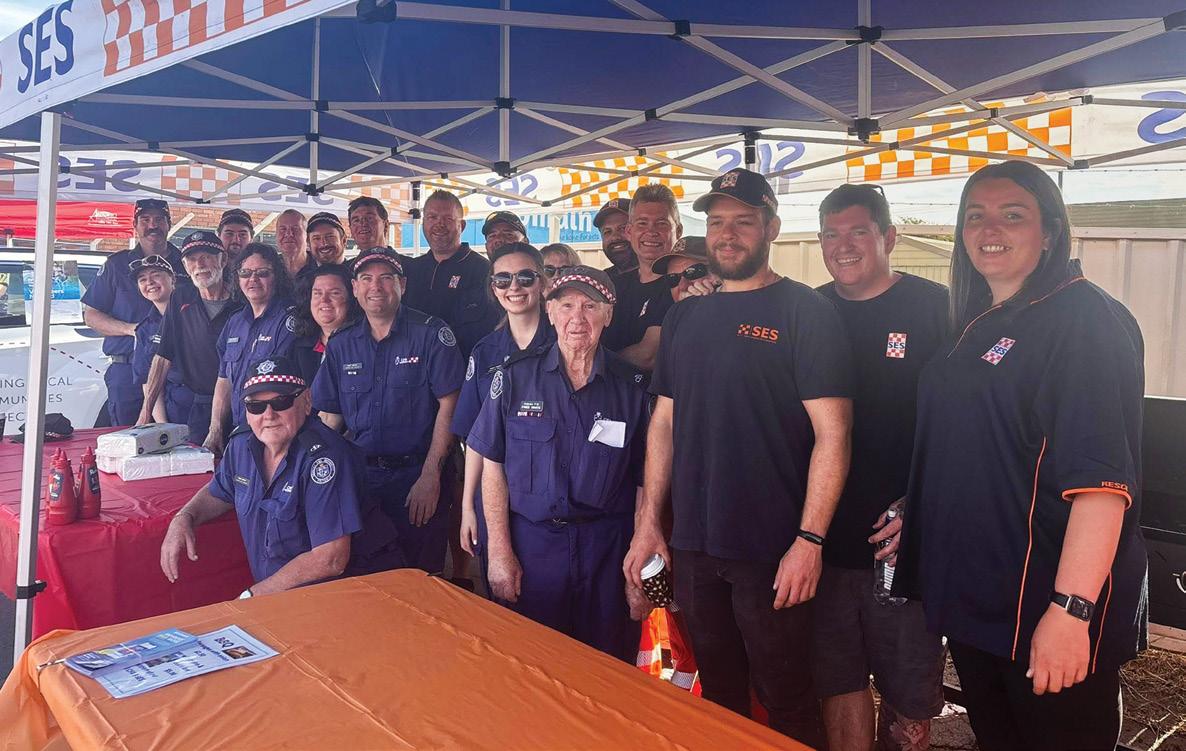
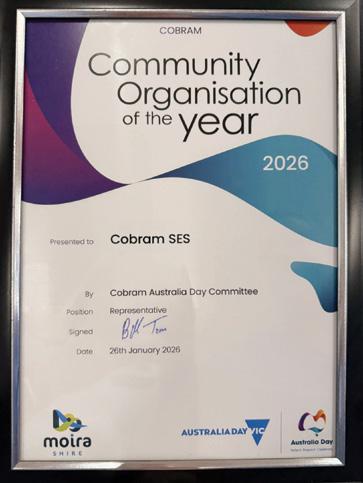
Cobram SES
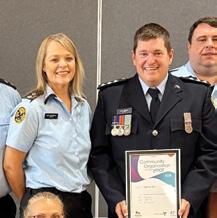
Moira Shire’s (Victoria) Australia Day Community Organisation of the Year 2026.
Examining the navigation gap during
Regular Columns
Articles, photographs and short stories are sought for the National Emergency Response Journal. Please submit items for the next edition to editor@aies.net.au by June 1, 2026. There is an annual award for the best article submitted by an AIES member.
AIES Contacts
General Enquiries enquiries@aies.net.au PO Box 2469, Chermside Centre, Qld 4032 www.aies. net.au www.facebook.com/aies.online www.linkedin.com/groups/3844281
National Board
President David Parsons ESM FAIES CESM president@aies.net.au
Immediate Past President Steve Jenkins FAIES steve.jenkins@aies.net.au
Vice President Rebecca Hunt MAIES vice.president@aies.net.au
Company Secretary Marilena Salvo secretary@aies.net.au
National Treasurer Jenny Crump ESM FAIES treasurer@aies.net.au
Webmaster/Systems Administrator Costa Zakis FAIES webmaster@aies.net.au
NSW, ACT and International
President Dr Brett Henderson MAIES CESM president.nsw@aies.net.au
Vice President Dwight Robinson MAIES CESM vicepresident.nsw@aies.net.au
Secretary Ian Manock FAIES secretary.nsw@aies.net.au
Queensland and Northern Territory
President John Moy MAIES president.qld@aies.net.au
President Doug Caulfield OAM RFD FAIES MIAEM president.vic@aies.net.au
Vice President Kate Goldsmith FAIES MIAEM CESM vice.president.vic@aies.net.au
Secretary Bill Little FAIES MIAEM secretary.vic@aies.net.au
National Emergency Response Journal
Editor Kristi High editor@aies.net.au 0407 366 466
Advertising Enquiries Tony Cornish tcornish@cwaustral.com.au 0411 055 050
New members
The Australasian Institute of Emergency Services is pleased to announce the following emergency services people joined the AIES between December 2025 - March 2026.
Name Organisation
NSW / ACT / International Division
Gregory Allen SES
Wade Berryman City of Newcastle
Elliot Brennan Brennan Consulting
Philip Cooper St John Ambulance
Rachel Fleming SES
Andrew Gradie Emergency Services Agency
Sacha Lechem Surf Life Saving
Brendan McIntosh SES
Scott McPherson Rural Fire Service
Duncan Murison City of Ryde
Zander Newcombe SES
Jo Paterson AF8 & Environment Southland
Robert Rovetto SES, Surf Life Saving, Volunteer Marine Rescue, The Spirit of SAR
Michael Singer St John Ambulance
QLD / NT Division
Clare Barker Police
Nathan Moore Moore Group Solutions Australia
Matthew Pinder Ipswich City Council
Name Organisation SA / WA Division
David Campbell SES SA
Dave Nieuwpoort CrisisCom
Brett Pearce Australian Defence Force
Dale Price Rio Tinto
Jock Silverblade Country Fire Service
Georgina Stamp St John of God Healthcare
Michael Thompson Rio Tinto TAS Division
Simon Harmsen Fire & Safety Australia VIC Division
Nathan Cahill Ambulance Victoria
Scarlett Harrison Country Fire Authority
Paul Horton Fire Rescue Victoria
Mark Hudson WICEN
Cameron King SES
David Meneilly Police
Jake Wilson Country Fire Authority
Journal contributions
Have a story, insight or lesson that could strengthen emergency management practice or showcase work in the emergency services sector?
New contributor guidelines are now available to help you share it with confidence.
The updated guide provides clear direction on article length, writing style, imagery requirements and editorial standards, supporting contributors to develop high-quality, sector-relevant content.
It also outlines how submissions may be edited for inclusion. Contributions are welcomed from practitioners, volunteers, academics and industry experts, and written in clear, accessible Australian English, minimise jargon and include high-resolution images to support their story.
Submissions that share practical insights, innovation, research and real-world experience are strongly encouraged, helping build knowledge and capability across the sector.
The full Contributor Guidelines, including submission timelines, are available on the AIES website.
To submit an article or discuss an idea, contact your division representative.
Message from our National President
The last few months have been an exceptionally busy time for the AIES Board.
David Parsons ESM CESM FAIES AIES President
Turbulence
We are well into 2026, and the year is proving to be a challenging one for the emergency management sector.
Bushfires have been experienced in a number of states while major flooding occurs in others.
A significant earthquake occurred in central west NSW, global fuel supply chain disruption is being felt across rural and regional areas threatening our food supply, global fertiliser supply chain disruption could lead to food shortages and Sydney’s critical western road link will be closed for months impacting tourism, trucking and the livelihoods of hundreds of families.
There is no doubt 2026 will bring many more events across a broad range of hazards. The likelihood of a severe El Nino strengthening with the resultant risk of droughts and bushfires looms for spring and summer.
In January alone more than two dozen roles in emergency management were advertised in Australia. With the constant turmoil that our modern world is experiencing our industry will continue to grow strengthening the demand for highly skilled professionals.
The AIES has a key role to play in developing the emergency management sector to meet the needs of our communities.
Professional development fund scholarships
Each year the Board allocates up to five Professional Development Scholarships. The Scholarships were created to improve the emergency management capability of our members. The Scholarship could be a contribution towards an AIDR Master Class, conference attendance or other emergency management education activity in Australia or overseas. The scholarships are based on the principle that members have a planned professional development strategy. Successful applicants must share their learnings with members through an article in this journal or a webinar.
At the end of each year, we call for applications for Professional Development Fund Scholarships. Two applications were received late last year from Todd Miller CESM and Michelle Gillman CESM. Todd will be putting his scholarship towards attendance at the Canadian Risk and Hazards Network Conference in Alberta Canada and Michelle will put hers towards attending the Disaster and Emergency Management Conference on the Gold Coast.
Earlier this year, the Board had a second round call for Scholarship applications. In March an application by Joanna Limpic was approved and two final Victorian applications will be determined at the April Board meeting.
Congratulations to all successful applicants and we look forward to you sharing your learning with us.
Top to bottom: Michelle Gillman CESM, Todd Miller CESM and Joanna Limpic
The AIES has a key role to play in developing the emergency management sector to meet the needs of our communities.
Thought leadership papers
In March we launched our first Thought Leadership Paper to set the scene for the Series that will follow. Jonathan Curtis is our Editor and he is ably supported by the Reference Panel comprising Laura Cooper CESM, Todd Miller CESM, Dr Steve Schwartz CESM and Mark Owens CESM.
These papers will grow to become a key part of reflecting on our system of emergency management and identifying improvement opportunities. If you would like to participate by being an author or co-author contact Jonathan Curtis at thoughtleadership@aies.net.au
Annual General Meeting
It was great to see so many people attend our hybrid Annual General Meeting. We are transitioning from the previous way of holding an in-person AGM to a virtual approach, which will save the Institute funds that we will funnel instead into member services. In 2027, there will be no formal physical location to attend. Divisions may choose to conduct a physical event to coincide with the virtual AGM.
50th Anniversary Celebrations
Our 50th Anniversary Implementation Project Team, led by John Moy, is doing a great job developing proposal briefs for review by the Board. A special thanks to the team working with John on this important project. Next year (2027) will be an important milestone for the AIES. It is impressive that the organisation has survived all the changes over this time frame.
Alpine Fault exercise
Last year a group of AIES members undertook a Design Emergency Management Exercises course with a scholarship from ACIM Solutions one of our Corporate members.
As part of the course our members wrote an exercise based on the Alpine Fault rupturing in New Zealand. This event could kill significant numbers of Australians in New Zealand and require the evacuation of 30,000 Australians from Queenstown.
Planning is underway for this international exercise led by AIES to be held later this year. We will keep you updated and explain how to take part in the exercise.
A special thanks to Michelle Gillman CESM who has been working with organisations in New Zealand to obtain our great article for National Emergency Response on the Alpine Fault Earthquake risk in New Zealand. Read Michelle’s article on page 63.
Disaster and Emergency Management Conference
This year we had eight tickets to give away for the Disaster and Emergency Management Conference on the Gold Coast. Congratulations to the following members who were successful in their application:
z Gunner Hardy
z Tom Dorahy
z Warren Erasmus CESM
z Ali Cupitt
z Warren Kelly
z Trudi Pratt
z Narelle Hocking
z Jenny Crump
We look forward to ready their insights when they write their articles for National Emergency Response
Top: Jonathan Curtis
Bottom: John Moy
Thought Leadership
from experts in emergency services and management
Jonathan Curtis
Editor AIES Thought Leadership Series
The missing conversation: Disasters matter but where’s the debate?
Even though disasters personally affect nearly all Australians and cost the country billions of dollars, there doesn’t seem to be the kind of ongoing informed debate on disaster management that we see in areas like defence or foreign affairs.
Why is this and what can we do about it?
There’s a strange gap in the public debate in Australia (and perhaps in other countries as well) about disasters.
Think about the number and frequency of articles and opinion pieces about defence and security issues.
Think of the number of think tanks, centres, academics, and expert commentators dedicated to the subject: the Australian Strategic Policy Institute (ASPI) The Strategist , the National Security College at the ANU, the Strategic Analysis Australia institute, the Strategic and Defence Studies Centre (SDSC) at ANU or the Asia Pacific Defence Reporter magazine. The Lowy Institute’s Interpreter also includes significant defence coverage.
The sheer density of material published on the subject means the interested reader (the author is one of them) can spend hours every day reading analysis and reporting of recent events, deployments, emerging risks, or the merits of a procurement.
There are also well-informed commentators that the media know to contact, such as Andrew Gissing and former fire chief Greg Mullins.
At the other end is the (excellent) work of Natural Hazards Research Australia, but this focuses on more technical and academic issues (appropriately, given that’s its role), as is AIDR’s Australian Journal of Emergency Management . And ASPI occasionally turns its hand to disaster management, with John Coyne and Anthony Bergin in particular having published some interested pieces over time.
But overall, Australia’s non-specialist public discussion of how we prevent, prepare for, manage and recover from, disasters are remarkably limited. This is surprising since – more so than for defence issues – most Australians will personally experience the effects of natural disasters.
Note
Contrast this with emergency management Emergency management doesn’t have anything approaching the diversity of defence reporting.
That’s not to say that there isn’t any: there’s media reporting at the time of disasters.
A second deficit lies in what is covered. To adopt the military terminology, its arguable that we have a bit on the strategic (such as the effects of climate change on the scale and frequency of fires and floods); lots on the tactical (what happened and how we responded: loss of life and property, and stories of communities pulling together); but little on the operational (‘the ways and means’, covering issues such as planning, operational capability, interoperability, doctrine or readiness).
Multiple channels are dedicated to commenting on defence and security issues in contrast to emergency management reporting.
But overall, Australia’s non-specialist public discussion of how we prevent, prepare for, manage and recover from, disasters are remarkably limited. This is surprising since most Australians will personally experience the effects of natural disasters.
Why is this?
It could be that the defence debate reflects the size of the budgets needed to buy and run the military and its hugely expensive equipment. Perhaps it’s because emergency services aren’t as sexy as fighter planes or frigates. Or perhaps the lived experience of Australians is that emergency services largely turn up when we need them, do a great job and, as a result, there’s no great need to think much more about it.
Why we need a debate
So, it this relative lack of a debate a problem?
Arguably it is. As the recent National Climate Risk Assessment spelt out, the nature of the disaster risk is changing, leading to more frequent, extreme and unpredictable natural hazards causing disasters that are increasingly large scale, simultaneous and with complex cascading effects.
Add to this, in an increasingly volatile geostrategic environment means we may need to start paying more attention to civil defence roles, that have been neglected since the Cold War days.
As the emergency management community already understands, this means we will need greater capacity as well as capability. And scaling up in turn is underpinned by the ability to effectively work together across agencies, sectors, jurisdictions and countries.
More problematically, this also means greater trade-offs. When natural hazards cause disasters, they are expensive, whether mitigating, preparing, responding or recovering. In a higher risk environment, society as a whole will have to grapple with the implications of resilience being everyone’s responsibility. We will need to find the resources to secure properties and supply chains and strengthen the capabilities of emergency services. We will need to take longer term perspectives to counter-balance the ritual post-disaster game of blaming whichever government or emergency chief happens to be in charge. We will need to make hard choices about where we live and where we cannot. At the extreme, we may need to decide what we will save and what will be lost.
This all requires a sophisticated, ongoing and thoughtful debate.
How do we build this informed debate?
The AIES aims to become a leading voice in this debate, with our contributions underpinned by several inherent advantages: first, our diverse membership spans the wider emergency management profession rather than just the emergency services, including professionals from utilities, transport, infrastructure and local government. This gives us the potential to offer perspectives and insights not easily found elsewhere.
Second, we’re an independent professional organisation that is not bound by the constraints of government agencies or government funding. This gives us greater scope for constructive comment than is possible for many others in the field.
As an emerging profession, these discussions are essential for us to develop our wisdom by sharing our experiences and building on the work done in the conferences and journals.
But it needs to go beyond the profession. A well informed, critical debate offers the wider interested public and media a trusted source of information and a strengthened understanding of the issues. This will be critical as we collectively come to grips with the implications and trade-offs in building effective national resilience.
Do you have a contribution for the AIES leadership series? Articles should be a maximum of 1,000 words. Send your idea to: thoughtleadership@aies.net.au
Strengthening emergency management across the education sector
Establishing the education
Emergency Management Community of Practice
Todd Miller MAIES CESM Associate Director – Resilience at Auckland University of Technology
Education environments present unique challenges for emergency management.
Schools, universities, and training providers support large and diverse populations every day while managing a wide range of risks, including natural hazards, security incidents, health emergencies, and infrastructure disruptions. Those responsible for emergency management in these settings must balance safety, duty of care, and continuity of learning while coordinating with emergency services and government agencies.
Despite the scale and complexity of these responsibilities, many emergency management practitioners in the education sector operate without a dedicated professional network that understands the specific context in which they work.
While emergency management practice is well established in many organisations, opportunities to share experiences, compare approaches, and learn from incidents across the sector have historically been limited.
To help address this gap, AIES has endorsed the establishment of a new
Education Emergency Management Community of Practice (EducationEM CoP).
The initiative will bring together professionals responsible for emergency management, risk, business continuity, response coordination, and recovery across the education sector. This includes practitioners working in early childhood services, schools, tertiary institutions, vocational education providers, ministries, and organisations that support the education system.
The purpose of the Community of Practice is straightforward: to create a professional network where practitioners can connect with peers facing similar challenges, share practical insights, and strengthen emergency management capability across the education environment. By building relationships between institutions and jurisdictions, the network aims to support collective learning and improve the resilience of education systems.
The EducationEM CoP follows the successful model established by the Health Emergency Management CoP, which demonstrated the value of sector-focused
collaboration within AIES. That initiative showed how bringing practitioners together around a shared operating environment can help accelerate knowledge sharing and professional development. The new education-focused network aims to achieve similar benefits by connecting those responsible for managing emergencies within learning institutions.
Emergency management responsibilities within the education sector extend well beyond emergency response. Practitioners are involved in identifying and managing risk,
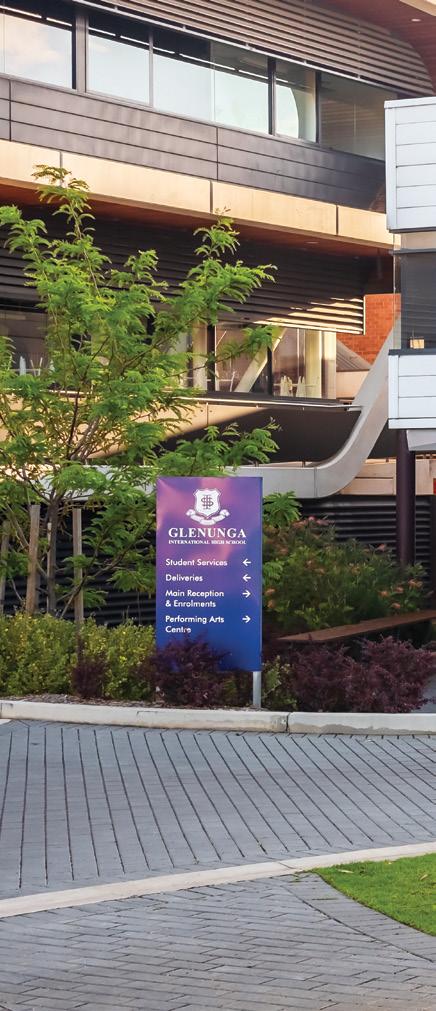
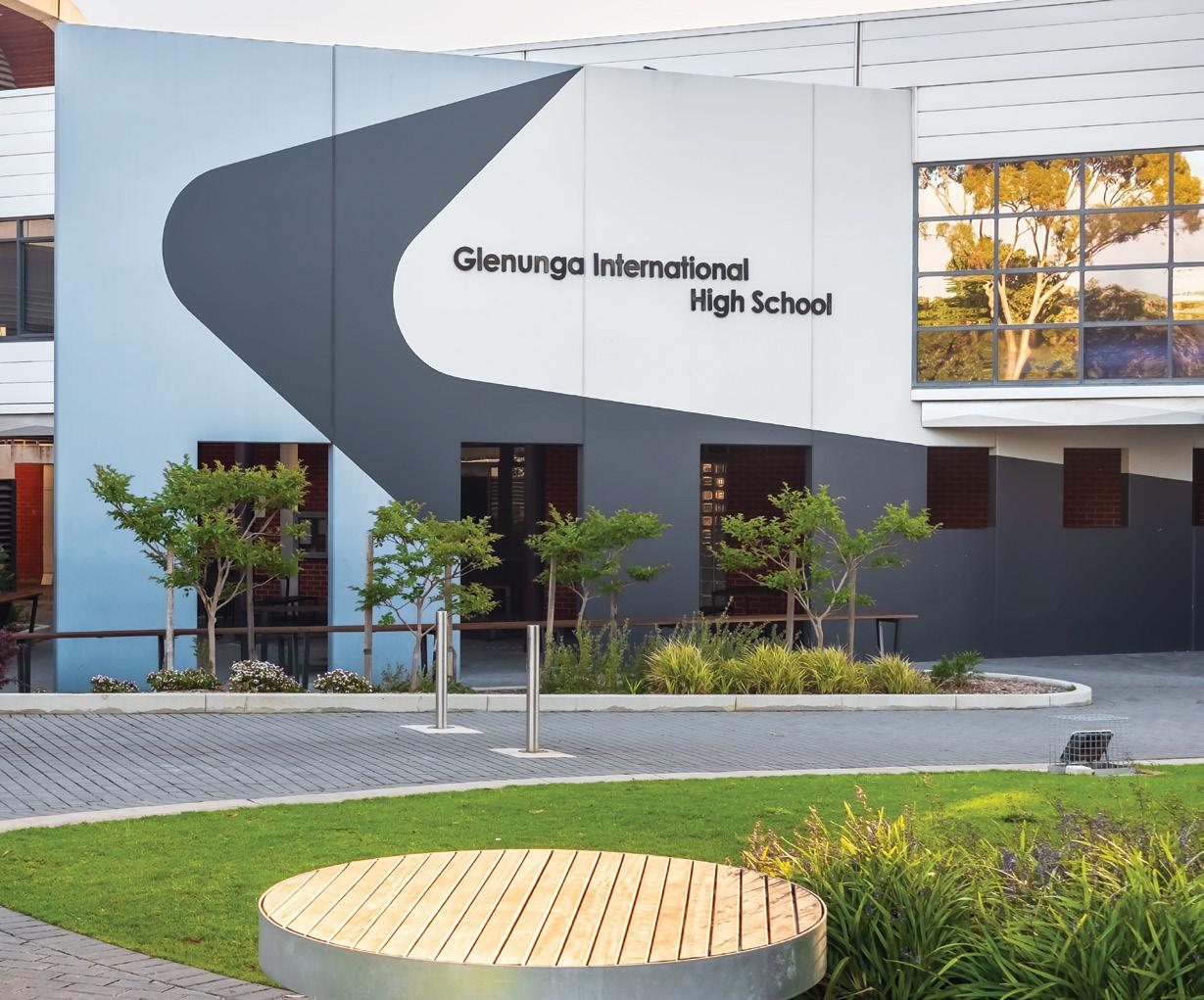
The AIES’ new Education Emergency Management Community of Practice aims to strengthen emergency management capability across the education sector. Pictured: Glenunda International School in Adelaide, SA.
AIES is currently inviting founding members to help establish the CoP and form the initial committee.
developing emergency plans, coordinating exercises, overseeing evacuations and lockdown procedures, managing crisis communications, and supporting recovery after disruptive events. Institutions must also consider the welfare of students and staff, the continuity of teaching and research activities, and the expectations of parents, regulators, and the wider community.
The EducationEM CoP will provide a forum where these issues can be explored in a practical and collaborative way. Over time, the network is expected to host presentations
from practitioners, share case studies from real incidents, and facilitate discussions on emerging risks and best practice. The goal is not to replace existing organisational responsibilities, but to provide a platform where professionals can learn from each other and strengthen the collective capability of the sector.
AIES is currently inviting founding members to help establish the CoP and form the initial committee. This founding group will help shape the direction of the network, identify priority topics for discussion,
and support the development of an ongoing programme of activities.
Initial efforts will focus on building the network and connecting practitioners across institutions and jurisdictions. As the CoP grows, the agenda will expand to include presentations, thought leadership, case studies, and professional discussions that support the evolving needs of emergency management within the education sector.
Education institutions play a vital role in the safety and wellbeing of communities. Strengthening emergency management capability within these environments helps ensure that learning can continue safely and that institutions are prepared to respond effectively when incidents occur. The establishment of the Education Emergency Management Community of Practice represents an important step in supporting those responsible for that work.
To register interest please email educationEM@aies.net.au
moisseyev @istock
Kokoda
SES support to this
iconic challenge event
The Kokoda Challenge bills itself as Australia’s toughest team endurance event, in memory of the series of battles fought along the Kokoda track in 1942 that are now part of the ANZAC legend.
Mike Shapland MBE
Brisbane City SES Unit
Will Rule, Brian O’Hare and Mike Shapland MBE
Photos
These days, team events under its name are held up and down Australia’s East coast. The events are organised by the Kokoda Youth Foundation, a charity committed to programmes that inspire youngsters to achieve remarkable things.
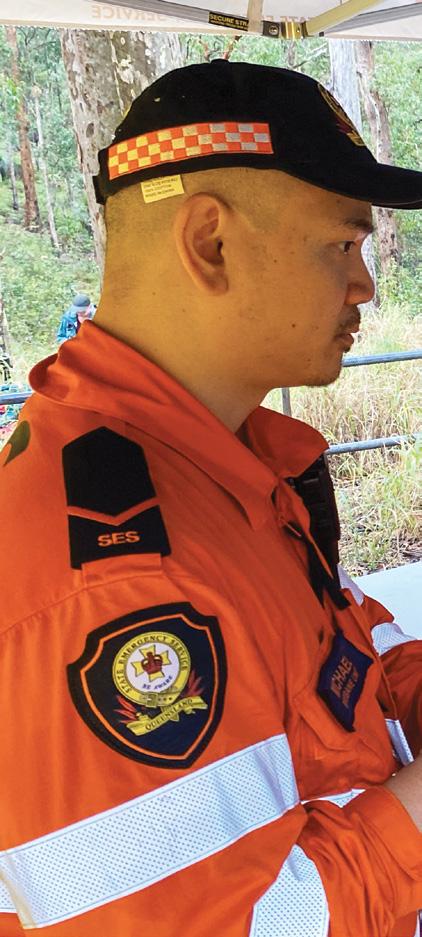
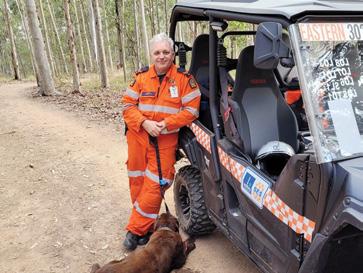
The Brisbane challenge is held every year around May in the low mountainous, forested country of the D’Aguilar Range to the west of the city. For the SES it’s a terrific opportunity to practise skills, use initiative and support the community. It’s difficult country and Brisbane SES groups provide the safety organisation, sharing information about what’s happening, helping to manage the busiest checkpoints and extracting those who can no longer go on.
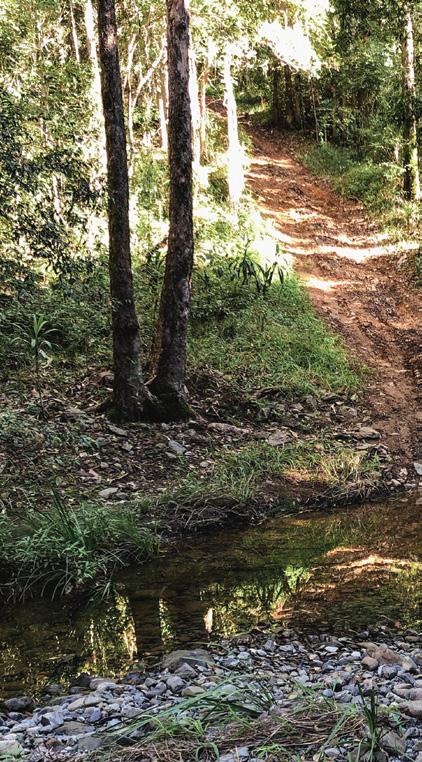
The challenge for young participants can be extreme. Up to 48 kilometres over steep, rugged terrain, with stream crossings, darkness and unpredictable weather all contributing to the mix. There are six checkpoints along the trail. Some provide an area where walkers can be met by their support crews; others provide safety points for teams or individuals to withdraw from the challenge if needed.
The Kokoda challenge routes of 18, 30 and 48 kilometres match the age and aspirations for kids from 9 years upwards. The three
routes are spread over 10,000 acres, the track names echoing the countryside; ‘Goanna Trail, Black Soil Track, Hell Hole Break’. Inevitably there are those whose aspirations are greater than their stamina. Heat, thirst, darkness, cold and the relentless hills can take their toll. Sunset in May is at 5.15 pm, making about half the time on the routes in darkness. Its winter, and even in Queensland it can be cold and wet.
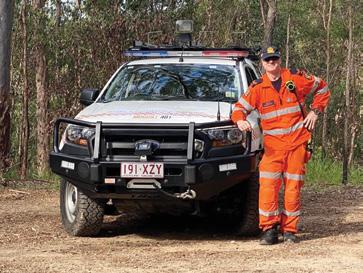
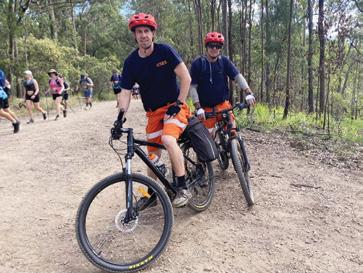
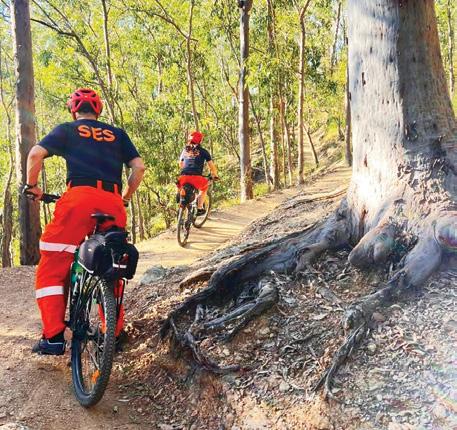
The area is a national park, looked after by the Queensland Parks and Wildlife Service. SES equipment matches the terrain; Ford Rangers, All-Terrain Vehicles and mountain bike teams all have their part to play.
SES liaise closely with the rangers who also patrol the event with a keen ear for changing
For the SES it’s a terrific opportunity to practise skills, use initiative and support the community.
weather conditions that may make some tracks impassable to vehicles. To counter this the SES carry and practice with singlewheel mule stretchers – just in case vehicle access to a casualty is impossible. It provides a much-preferred option for a stretcher party than carrying a casualty through dense bushland at night.
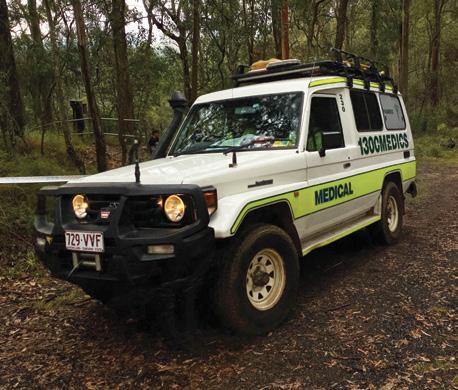
Planning for casualties is a constant theme. Paramedics are based at two of the six checkpoints and a roving 4x4 ambulance completes the emergency medical suite. The SES complements this medical expertise through good communications, expert navigation, knowledge of the area and quite simply casualty extraction capacity.
For the SES crews patrolling the tracks, calls for help all seem to come at once. On one occasion this year a night call from a check point medic asked for the evacuation of six participants, one seriously affected by the physical stress of the event.
For the SES, the event also tests command, control and liaison arrangements over the widely dispersed area. It tests map reading, communications and four-wheel driving skills across slippery and demanding tracks. There’s also the logistical complication of supplying meals to both stationery and moving vehicle teams over nearly 24 hours. And it tests team initiative in responding to the various requests that come from over 2,000 participants and their support crews of mums and dads, both spread across the hills and concentrated in a few cleared areas.
Field command.
Kokoda Challenge Tracks.
Planning starts in the months before at Moggill SES Group, which has responsibility for the area. The crews themselves come from Moggill and other Brisbane SES groups spread across the city. On the day, in a carefully choreographed plan, teams deploy direct from group bases at designated times to initial start locations along the tracks,
continued on page 15
matching the progress of the participating teams. Having been involved in the planning of the SES contribution for the past three years it’s a slight mystery when it all works, but it does!
The first SES crews leave base at 0400 to set up liaison at the Kokoda Joint Operations Centre, establish a Field Command post, and help with early carparking.
The Kokoda challenge participants set off on a Saturday morning and usually by the early hours of Sunday the last have trickled in.
The number of volunteers putting up their hands to take part in this event has grown each yeartestament to its good training value …
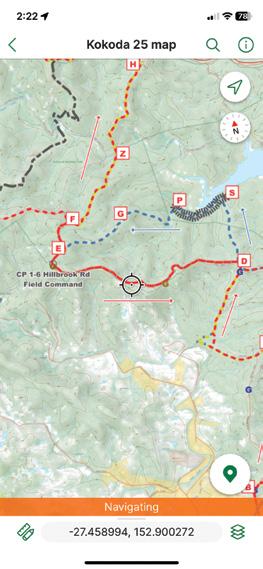
Avenza on a phone.
Rangers, ATVs and Bike teams all play a part.
1300MEDICS on patrol.
Checking the trails.
The first hours after the staggered starts are typically easy for the SES; teams check the tracks for going and ensure that gates to exit routes are unlocked. But then the calls start coming.
Responding to such calls is where the initiative of both field command and the individual crews comes in. Participant teams typically call in their problem by phone to Kokoda Event Control, based in a local showground. Sometimes they’ll identify their position. At other times prompts are needed. ‘What3Words’ is the event’s system for locating participants.
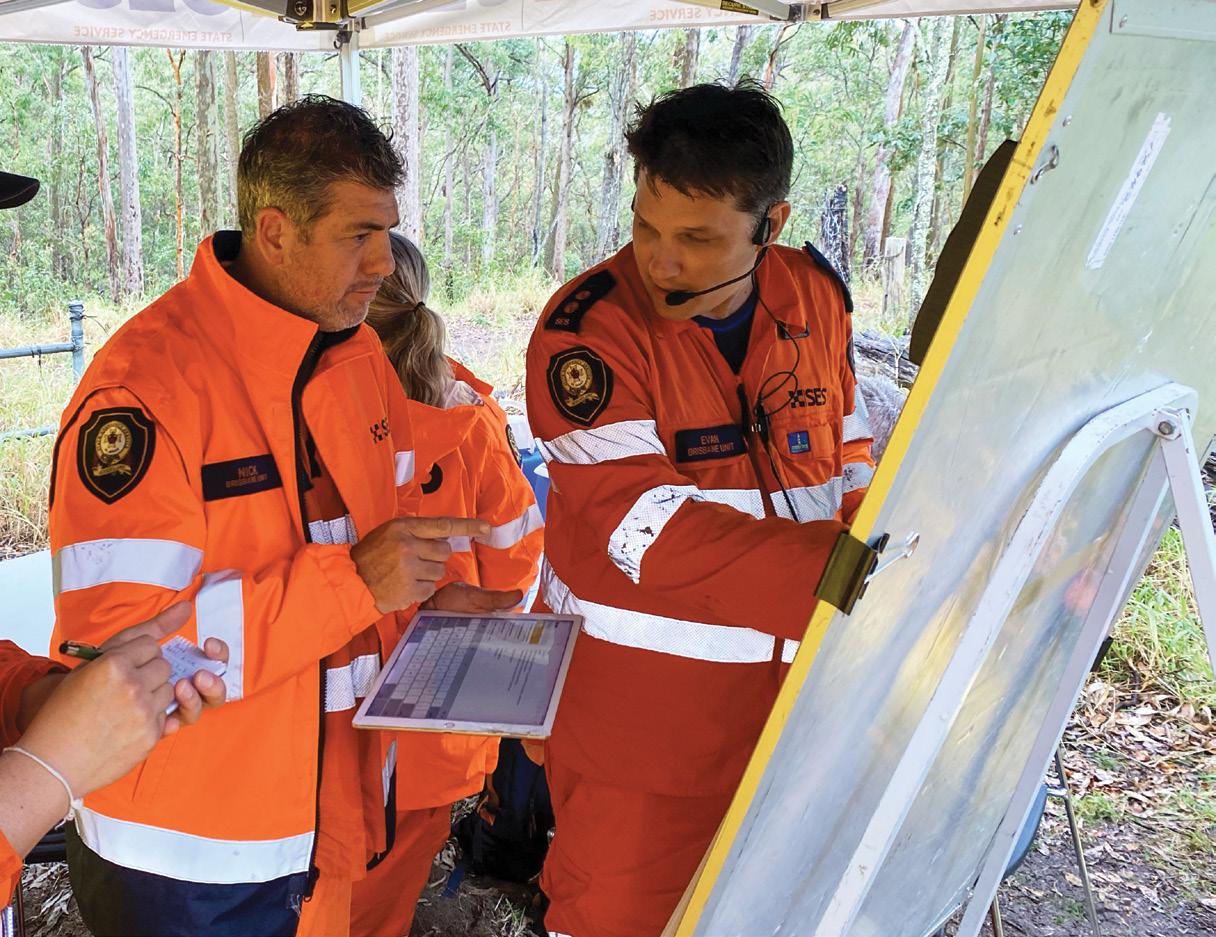
The SES liaison officer at Kokoda Joint Operations Centre picks up on the location and relays it to SES Field Command located high in the D’Aguilar National Park. It is deliberately sited near an event check-point to help with radio and phone communications and provide a logistics hub for SES patrolling crews. The Government Wireless Network radios, both vehicle fits and hand-held radios, automatically transmit their GPS location, which is visible in Field Command on a large format display screen. It enables the Field Command team to identify the nearest crews and task the one least busy.
In the vehicle itself, crews use the Avenza mapping system, pre-loaded with an event-
specific, way-point-rich topographic map to confirm their own location and navigate to the pick-up. On arrival they report back the bib number of the participants they collect, complete a Participant Trail Extraction Register and, if necessary, a First Aid Treatment Report for handing on to medics in the future.
All crews are briefed to ensure that any children picked up without an accompanying adult have two SES volunteers with them. Then it’s a challenging drive along tracks, often at night, negotiating past still competing teams, to the nearest first aid station or evacuation point where better care can be provided or the way home arranged. Reporting into Field Command, the team is then free for further tasking.
In 2025 the event included around 2,600 participants. The SES support came from 57 volunteers from eight of Brisbane’s groups in 19 teams and four bike pairs, deploying in six time and geographically dispersed shifts.
The number of volunteers putting up their hands to take part in this event has grown each year – testament to its good training value and the benefits it gives this particular section of our local community. If you’re in the SES in Brisbane, put your hand up for 2026!
Cobram SES honoured
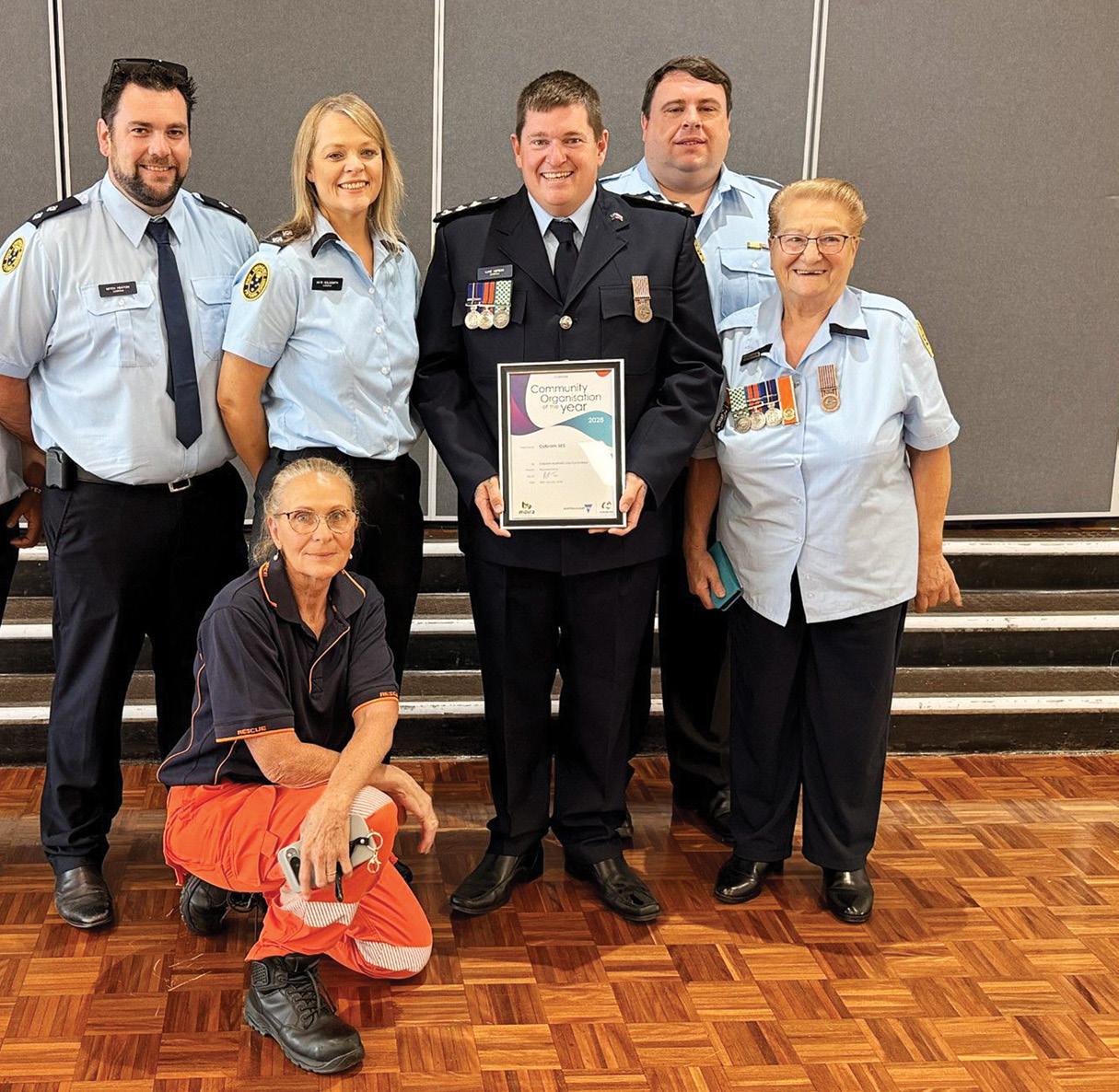
Moira Shire’s (Victoria) Australia Day Community Organisation of the Year 2026.
Kate Goldsmith MIAEM MAIES CESM
Deputy Controller – Community Engagement and Resilience, Cobram SES Unit, AIES Victorian Division Vice President
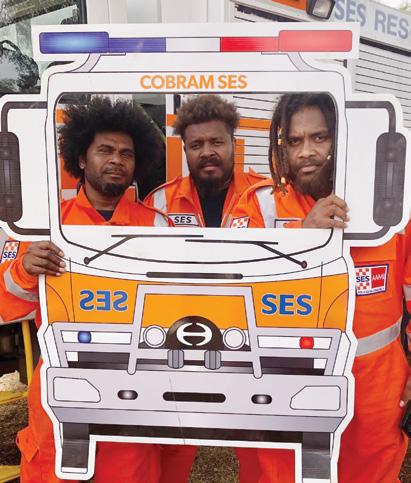
The Cobram State Emergency Service (SES) Unit has been recognised as the 2026 Moira Shire Australia Day Community Organisation of the Year, an honour that reflects the unit’s extraordinary commitment to protecting and supporting the community through one of the most challenging years in recent memory. For more than three decades, Cobram SES volunteers have stood as a pillar of safety and resilience across the Moira Shire, and over the past year their dedication has been more visible, and more vital, than ever.
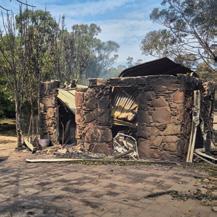
This recognition comes in the shadow of the catastrophic fire danger day on Friday 9 January 2026, when a rapidly moving grassfire tore through Yarroweyah, Muckatah, Katamatite, Cobram and surrounding areas. The blaze burned approximately 1,531 hectares and destroyed 12 homes, and many more structures, forcing residents to flee under escalating emergency warnings and creating days of uncertainty and fear across the district. Cobram SES played a crucial support role alongside CFA brigades, assisting with traffic management, logistics, relief operations, and interagency coordination, tasks that are essential to keeping both the public and frontline fire crews safe in fastmoving emergencies.
Only weeks earlier, on 15 December 2025, the community had endured another tragedy, when a minivan carrying nine overseas workers crashed into a tree on
Chapel Road in Muckatah, resulting in four fatalities and serious injuries to the remaining passengers. In this deeply distressing event, Cobram SES served as the lead rescue agency, undertaking the complex and timecritical extrication of the trapped occupants. Volunteers stabilised the vehicle, created access pathways and worked in close coordination with Victoria Police, CFA and Ambulance Victoria to ensure the injured could be urgently treated and transported. Their actions demonstrated not only their high level of technical rescue capability but also the compassion and calm professionalism for which the unit is known.
While major emergencies often draw the most attention, Cobram SES’s day-to-day operational workload tells a broader story about their impact. Over the past year, the unit responded to more than 83 requests for assistance, including 40 storm or tree-related incidents, 22 road crash rescues, nine assists to Victoria Police, five assists to Ambulance Victoria, four water rescues, and four building damage responses. Every one of these responses was achieved within an average turnout time of four and a half minutes, underscoring the unit’s readiness, discipline and unwavering commitment to its community. These efforts protected lives, prevented further harm, safeguarded property and supported essential infrastructure across the Shire.
continued on page 19
In a year marked by catastrophic fire conditions, a devastating fatal crash, and dozens of complex emergency incidents, Cobram SES has demonstrated once again what it means to serve with courage, professionalism, and an unwavering commitment to community.
Our name Oak & Stone Financial Group speaks volumes
Our goal, our philosophy and our promise is to do finance simply. We support each and every customer through their lending process. We handle the paperwork, the lender liaison and any questions you may have to ensure your experience is simple and seamless. With tailored solutions in combination with 1 to 1 personalized service, getting finance has never been easier. We have years of industry experience and are here and ready to make life simple. Find out more by contacting us today. Whatever your reasons, we’ve got options.
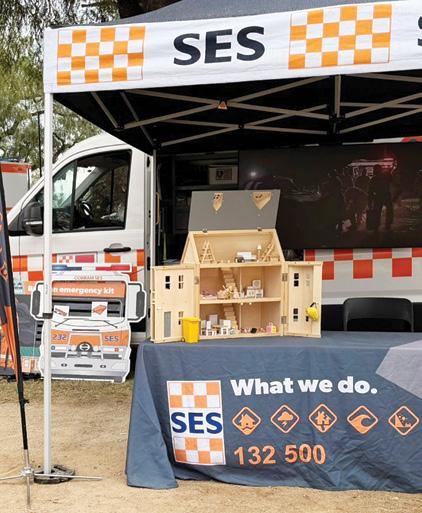
Equally significant is the unit’s commitment to building resilience before emergencies occur. The expanding community engagement and resilience team continued to deliver practical preparedness activities at major community events, such as the Cobram Agricultural Show and other local school events, giving families hands-on tools to prepare for storms, floods, and other high risk weather conditions.
Through regular involvement in school programs, community group visits and public safety engagements, volunteers are empowering local residents with practical skills and confidence to navigate emergencies.
Behind every response, every rescue, and every community event is a strong network of partnerships.
Cobram SES works closely with CFA, Victoria Police, Ambulance Victoria, and other emergency organisations to deliver coordinated, effective, and compassionate service.
This strong interagency foundation, combined with more than 30 years of dedicated volunteer service, forms the backbone of the unit’s success and the reason why it continues to be such a trusted presence in the Cobram and surrounding area.
The 2026 Australia Day Award acknowledges the technical expertise and
operational excellence of the Cobram SES Unit while also honouring the compassion, teamwork, and resilience that underpin everything they do.
In a year marked by catastrophic fire conditions, a devastating fatal crash, and dozens of complex emergency incidents, Cobram SES has demonstrated once again what it means to serve with courage, professionalism, and an unwavering commitment to community.
Their service continues to define what it means to protect and support a community in both its hardest moments and its everyday challenges.
Advancing practice through research
Showcasing recently published research in emergency and disaster management
Research continues to play a critical role in shaping policy, strengthening community resilience, and improving the professional practice of those working at the front line of crises.
In recent years, the growth of practice-based doctoral research — particularly the Professional Doctorate — has provided an avenue for experienced practitioners to generate applied, meaningful insights grounded in realworld emergency contexts.
A Professional Doctorate differs from a traditional PhD by focusing on practice-led inquiry, enabling candidates to investigate complex operational, organisational, and community issues from within the profession itself. This approach has proven especially valuable in emergency and disaster management (EDM), where reflective practice, practitioner insight, and evidence-informed decision-making are essential.
This is the first article of a new series written specifically for this journal, which aims to feature recently completed doctoral research in our field.
We begin with Dr Russell Dippy’s Professional Doctorate thesis, The Australian Emergency Manager: A Journey towards Professionalisation, which examines the evolution, identity, and future professionalisation pathways of emergency managers in Australia.
The featured dissertations represent contemporary, practitioner-driven contributions to the evolving discipline of EDM.
Each study featured offers valuable insights, spanning professionalisation, community engagement, and behavioural analysis that enrich our collective understanding and strengthen the capability of the sector.
As the series unfolds, we aim to celebrate the depth and diversity of EDM research produced within our professional community.
Spotlight on Dr Russell Dippy: A journey towards professionalisation
John Moy MAIES
AIES President Queensland/Northern Territory Division
with significant input from Dr Russell Dippy CStJ LEM CEM ® TQC TM FAcEM FAIES CESM
Professionalising the emergency manager Across Australia, emergency events continue to increase in frequency, complexity, and severity. Bushfires, floods, heatwaves, cyber-attacks, and industrial accidents all place pressure on our systems, institutions, and communities. Yet one of the most important elements in managing these events, the role of the Emergency Manager, has historically remained poorly defined and inconsistently understood.
It was this gap that drove Dr Russell Dippy CStJ LEM CEM ® TQC TM FAcEM FAIES CESM, a highly experienced emergency management practitioner and longserving Emergency Management Coordinator for the South Australia Police, to undertake a landmark doctoral research project. His thesis examines not only what an
emergency manager does, but more importantly, what capacities they require, and how Australia can move toward recognising emergency management as a true profession.
A career shaped by service Dr Dippy is a dual internationally certified emergency manager with over 37 years’ policing experience, including more than 26 years in emergency management leadership roles. His work has spanned operational and strategic responses to major events across state, national, and international contexts. He has deployed internationally as part of Australian Government disaster medical teams and was a founding member of the Australian Emergency Management Assistance Team. Parallel to this he also volunteered for 35 years with St John Ambulance Australia
and brings an understanding of contemporary volunteer issues into the research.
Alongside these practical contributions, he has been deeply involved in national policy development, emergency management exercising, and the review of significant doctrine, including Australian Institute of Disaster Resilience handbooks. Russell’s commitment to education and professionalisation has been recognised through numerous post-nominals and fellowships across the field.
In many ways, his professional journey set the stage for his academic one.
The research problem: who is the emergency manager?
Despite the increasing importance of emergency management in Australia, there remained a fundamental issue: the role of the ‘emergency manager’ was amorphous, undefined, and inconsistently applied across jurisdictions.
Through his doctoral work, Russell examined 20 years of major Australian emergency events (1997–2017), Judicial and semijudicial inquiry reports into those events, Interviews with inquiry report authors and the broader management and emergency management literature.
Using a Gadamerian Philosophical Hermeneutic Methodology, his approach emphasised reflection, interpretation, and the acknowledgement of his dual position as practitioner and scholar.
From this research, Russell identified a suite of human capacities essential to the work of emergency managers — capacities that are inconsistently selected for, taught, or recognised across Australia.
Russell’s thesis offers three significant and original contributions to the discipline.
1. Defining three distinct roles
Russell proposes clear definitions for three roles long treated as interchangeable:
1. Emergency Manager
2. Response Manager
3. Recovery Manager By articulating the distinct responsibilities and capacities required of each, his work clarifies longstanding ambiguities in practice and policy. This definitional clarity supports improved training, selection, and professional development.
2. The Emergency Management Disciplinary Spectrum
His second contribution is the creation of the Emergency Management Disciplinary Spectrum, a pictorial model that:
z Explains disciplinary, multidisciplinary, and transdisciplinary approaches
z Applies these concepts directly to emergency management practice
z Provides a framework for understanding how different knowledge domains interact during emergencies
This model helps situate emergency management more clearly within a professional and academic context.
3. The Emergency Management T-Shaped Transdisciplinary Model
Perhaps the most influential element of Russell’s work is the development of the Emergency Management T-Shaped Transdisciplinary Model — the first model of its kind applied to emergency management.
This model articulates the depth (vertical bar of the “T”) of specialist knowledge required, highlights the breadth (horizontal bar) of crossdisciplinary capabilities needed and provides a developmental framework for training and selecting emergency managers.
Russell argues that incorporating this model
Author Bio
John Moy is the President of the QLD/NT division of the AIES. He is a lecturer in Emergency and Disaster Management at CQUniversity, with professional experience across emergency management, public safety, leadership, and vocational education. With a strong interest in practitioner-led research, he is committed to supporting
into Australian emergency management practice — alongside professional certification and structured education pathways — will significantly progress the field’s long needed professionalisation.
A personal journey through the Doctorate
While Russell’s thesis is academically rigorous, his personal journey carries equal weight. Like many professional doctorate candidates, he juggled fulltime work, leadership responsibilities, deployments, and family life throughout the degree. His reflections highlight several key themes:
z The challenge of perspective: Gadamerian hermeneutics required him to question and reevaluate longheld professional assumptions.
z The intensity of integrating practice and research: Being both practitioner and scholar meant constantly navigating two worlds and sometimes challenging the conventions of both.
z The importance of persistence: Extended periods of writing, rewriting, and selfreflection tested endurance more than intellect.
Yet, Russell describes the experience as deeply rewarding, particularly in how it reshaped his understanding of his own role and the broader emergency management landscape.
Challenges along the way
When asked about his greatest challenges during the research process, Russell emphasised:
z Managing competing demands of work, study, and personal life
z Grappling with a research methodology that required intense self-reflection
z Distilling vast volumes of inquiry reports and literature into coherent themes
z Ensuring his models accurately reflected both theory and practice
These challenges, he notes, ultimately strengthened the thesis and deepened his professional insight.
Advice for future Prof Doc candidates
Russell offers several key tips for anyone considering a professional doctorate or thesis journey:
1. Choose a topic with deep personal meaning. When times get tough, passion for the topic sustains momentum.
2. Maintain connection with your professional practice. Realworld insights enrich the research and ensure relevance.
3. Seek support early and often. Supervisors, peers, and family form a critical support network.
4. Embrace the discomfort. Challenging longheld assumptions is part of becoming a scholar.
5. Remember the outcome matters to practice and to people. Research in this field ultimately supports safer communities.
A contribution that will shape the future of emergency management Dr Russell Dippy’s work provides a robust foundation for recognising the emergency manager as a professional, and emergency management as a profession, in Australia. His models offer actionable frameworks for future workforce development, and his research strengthens the push toward national consistency in training, certification, and professional standards.
Dr Dippy’s journey is proudly grounded in decades of service, deep reflection, and scholarly commitment, and stands as an inspiration to practitioners across the sector!
A Google search of Russell Dippy will unveil more published articles around his research outcomes.
professionalisation within the sector. John is currently completing his own doctoral studies, examining the future of emergency services volunteerism in Australia. He is currently developing the VolunTier model, which seeks to address the challenge of rapidly declining emergency services volunteering in Australia.
We specialise in commercial construction, refurbishment and fit-out.
Pitts Design and Construction is an independent and agile commercial builder that specialises in construction, refurbishment and fit-out. We work with local, national and international companies to deliver quality construction outcomes and exceed project expectations consistently and without compromise. Our fast growing reputation as an industry-leading builder stems from working closely with our clients to deliver innovative solutions. Together, we build excellence through open, honest, and transparent partnerships.
Update from AIES Victorian Division
Doug Caulfield OAM RFD FAIES President AIES Victorian Division
At the Annual Meeting of members of the Victorian Division on Friday 6 February, I announced that long-term committee member Ian Munro was stepping down from his position on the Divisional Committee.
We thanked Ian for his many years of service to both the committee and the Institute and presented him with a Certificate of Appreciation in recognition of his significant contribution to both.
In accordance with the provisions of the AIES Constitution, three members of the committee were due for re-election and, following the formal nomination and voting processes, the outcome saw all current office bearers and committee members re-elected.
AIES Victorian Division Board
President
Doug Caulfield OAM RFD FAIES
Vice President
Kate Goldsmith CESM MAIES
Secretary
Bill Little FAIES
Immediate Past President
Grant Coultman-Smith OAM VA BJ JP FAIES
Committee
David Lyster FAIES
Alan Marshall CStJ AFIM LFAIES
Trudi Pratt MAIES
Brett Aimers CStJ FAIES
The next Annual Meeting of the AIES Victorian Division will be held on Friday 5 February 2027.
2027
One of the highlights of the meeting was the presentation of Long Service awards and the following members were acknowledged for their membership milestones.
Five-year pin presented to:
David Lyster
Stephen Sennett
10 year pin and certificate presented to:
Murray Middleton (in absentia)
15 year pin presented to:
Doug Caulfield
Bill Little
John Taubman (in absentia)
Michael Wongung (in absentia)
35 year pin presented to:
Alan Marshall
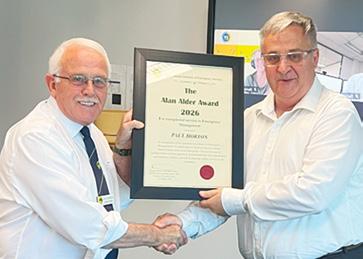
By far the most significant presentation on the night was the annual Alan Alder Award. The 2026 award went to Paul Horton, an FRV Commander and Rotarian volunteer. The Alan Alder Award has been presented on five occasions, recognising nominees fulfilling the following criteria:
z To have been an active, paid or volunteer, member of an emergency management agency or organisation in Victoria
z To have been a member of that agency or organisation for a minimum of 10 years
z They have displayed exceptional commitment to the delivery of emergency management services.
The award may be in the form of, but not limited to, the following:
z Attendance at an emergency management related seminar or conference
z Attendance at an emergency management related training program
z Financial support to undertake an emergency management related research project
z Financial support for another approved activity.
This year, the award package includes registration at the Emergency Services Foundation Conference in Melbourne on July 14 and 15 along with a seat at the conference networking dinner and accommodation.
Know a Victorian member of distinction?
If you know of an AIES member from the Victorian Division who has served the emergency services sector with distinction and would like to nominate them for a future Alan Alder Award, check the award criteria on our website for more information and send your nomination form to secretary.vic@aies.net.au
L-R: Alan Marshall CStJ AFIM LFAIES was presented with his 35 year pin by AIES National President David Parsons ESM FAIES.
L-R: AIES Victorian Division President Doug Caulfield OAM RFD FAIES presented the 2026 Alan Alder Award to Paul Horton MAIES at the Victorian Division’s AGM in February.
AIES National Survey Results
You Answered. We Listened.
Dr Bodie Rodman MAIES Vice President Tasmania Division
The 2025 AIES membership survey, which received 92 responses, was held in 2025 as part of our broader strategy.
Quantitative data was summarised using a generative AI platform, and qualitative data was assessed via thematic analysis.
Key results indicated a drive towards modernisation, improved membership services, and enhanced brand identity.
Background
The AIES was founded in 1977 as a representative organisation of emergency services, and is a non-for-profit federated company limited by guarantee.
As the landscape of emergency services across Australia, and globally, has changed dramatically since the Institute’s inception, we are constantly facing new challenges, which bring with it opportunities for to grow, develop and expand into the future.
Method
A mixed method, member targeted, online, anonymous, multi-answer member survey was completed in 2025. The quantitative data was summarised using a generative AI platform. Qualitative data was analysed using Braun and Clarke Thematic analysis.
Results
The 92 complete survey responses represented around 18 per cent of AIES members. The majority of responses were from individual members (78%), with the largest geographic response from New South Wales /Australian Capital Territory Division (39%), followed by Victoria (24%). Almost half (44 total) of the responses were received from members aged 41-60 years, followed by the 61-70-year-old age bracket (19 responders).
Regarding the effectiveness of the organisational logo, the responses are graphically depicted on page 26 (Figure 1: Logo Effectiveness in Communicating Purpose and Objectives). Around half the responders (51 responders) reported the logo as either very or somewhat ineffective.
Members appreciated further developments with improved member benefits. These included online resources, professional development and enhanced member connectivity (see Figure 2).
Membership engagement remains diverse across the organisation (34%), with a majority interested in joining a special interest group (community of practice group) or pursuing Certified Emergency Services Management
As the landscape of emergency services across Australia, and globally, has changed dramatically since the Institute’s inception, we are constantly facing new challenges, which bring with it opportunities for to grow, develop and expand into the future.
(CESM) accreditation. One third however (35%) were not interested in having any further role in the organisation.
Most responses also indicated that the organisation’s website and its digital professional image required improvement (57%). A majority (52%) also affirmed a desire for the organisation’s leadership model to become skills-based and geographically representative.
Organisational priorities were also assessed (Figure 3), with the strategy survey results demonstrating membership ambitions for improved education, sector-advocacy, and professional recognition.
The final question provided an opportunity for open comments to provide qualitative data which was assessed via thematic analysis using the Clark and Braun method. Five overarching themes were identified:
1. Professionalisation and status of the Institute
2. Membership value and capability development
3. Advocacy
4. Identity, purpose and strategic clarity
5. Governance reform and organisational modernisation
A relative intensity measure was applied to each responses post-categorisation as depicted in Figure 4.
Discussion
The Strategy Survey represented strong ambition to modernise the organisation infrastructure and practice, improve membership value, enhance sector engagement, and greater professional recognition.
continued on page 26
The data revealed key insights into our members, including that most respondents were over 40 years of age and that a small number of divisions were over-represented in the responses. Strong indicators pointed to enhanced online member services, online resources, and professional development as key focus areas for future strategy development. These areas outline a broad spectrum of priorities identified by survey respondents, including both outward- and member-facing initiatives, structural improvements, and foundational enhancements.
The emergency sector has changed substantially since AIES was formed. As Abrahams [1] observes, emergency services have evolved from a reactive civil defence model toward a comprehensive risk management approach. By 2010, the international Prevention, Preparedness, Response and Recovery (PPRR) framework had been widely adopted [3]. This shift has been accompanied by increasing federal government coordination, policy leadership, and interjurisdictional planning, alongside the growing emphasis on resilience as a core objective [3]. Consequently, sectoral complexity has increased, reflected in greater attention to formalised organisational structures, professional qualifications, advanced technologies, and the expansion of evidence-based practice [3].
The emergency sector has also undergone another major change: its people. Emergency services have traditionally relied heavily on highly trained and dedicated volunteers. The AIES has therefore, not surprisingly, been comprised largely of members who volunteer within emergency services and additionally volunteer for AIES itself. However, the decline in national volunteerism in recent years has been significant and poses a pervasive challenge to the objective of strengthening community resilience [1]. This trend has been particularly evident among younger adults participating in volunteer activities [1].
Qualitative data from the strategy survey revealed some important insights which both captures members views and reflects many of the changes the sector has experienced since the AIES formation.
In total, five themes were identified as summarised below:
Theme 1: Professionalisation and Status of the Institute
Theme 2: Member Value and Capability Development
Theme 3: Advocacy and Representation Boundaries
Theme
Theme 5: Governance Reform and Organisational Modernisation
Q4: Logo Effectiveness in Communicating Purpose & Objectives (n=92)
Q5: Member Value Priorities –Weighted Ranking Analysis (n=89)
Theme 1: Professionalisation and Status of the institute
In the first theme, members expressed a desire for the Institute to be more credible and influential, to operate as a peak professional body with strong professional standing, to serve as a leading national voice in policy, and to provide enhanced individual recognition. Some illustrative extracts from respondents are noted below:
Our long term goal should be to have a similar influence in the emergency management/emergency services industry as Engineers Australia has in theirs.”
What’s our true relevance? That must be our role to establish ourselves as the peak body.”
This theme reflects a strong aspiration toward professional legitimacy and sector authority. Recognition mechanisms (Fellowship, awards, medals) are not just symbolic — they represent a tangible validation of service defined by sacrifice, excellence, and community leadership.
Theme 2: Member value and capability development Member responses indicate a desire for tangible, practical, and accessible benefits that enhance their professional capability and connection. CESM prioritisation and delivery of emergency management training were some suggestions, and digital modernisation was another. Creation of a centralised member portal, online calendar, knowledge hub, and sharing of exercises or policies were some of the suggestions.
Illustrative insights were captured below: I cannot understand why our use of technology isn’t better.”
A centralised platform showcasing member skills…”
Greater online capabilities and services/ platforms.”
This theme reflects a shift toward members expecting a modern professional association and, when considered alongside elements from the first theme, indicates that respondents are benchmarking AIES against contemporary membership organisations. In particular, platformbased engagement, digital infrastructure, national cohesion, and practical benefits beyond journal publications are increasingly sought.
Theme 3: Advocacy and representation boundaries
The Strategy Survey revealed a dichotomy within the theme of advocacy: on one hand, respondents identified a role for organisational and sector-level advocacy, while on the other, a more restrained and cautious approach was preferred for individual advocacy. Sectorlevel advocacy was illustrated through these comments:
3
Q9: Organistional Priorities for Next 5-10 Years (n=92, multi-select)
Members having issues within their own emergency services…”
Whilst caution for individual advocacy was advised by others:
Getting caught up in members issues… is a slippery slope…”
This ‘slippery slope’ was not defined; however, possible explanations may include the risk of conflict with members’ involvement in local emergency service associations or organisations, potential overlap or conflict with labour unions, or broader organisational reputational risks. Advocacy is therefore desired, although clear boundaries appear to be required.
Theme 4: Identity, purpose and strategic clarity
Significant concerns regarding organisational identity, purpose, and branding were highlighted in the survey. Among these issues were a perceived lack of purpose, a non-contemporary organisational constitution, and a seeming disconnect between stated objectives and actions.
Respondents comments included: RENAME: Australian Institute of Emergency Management and Services.”
I don’t believe that there is a clear sense of purpose.”
This theme suggests an emerging identity transition crisis: from a once volunteer-centric emergency services body, to a broad agency of emergency management professionals. And one respondent, captured this sentiment
We aren’t about emergency services anymore and thats [sic] ok.”
Theme 5: Governance reform and organisational modernisation
Members perceive an existing governance gap and call for stronger, modernised, accountable leadership structures. Among these views was a desire for skills-based board, use of independent directors, leadership expectations, and better role clarity for divisional committee members. The disconnect between national and divisional leadership, and resistance to change, were identified sub-themes.
All have given up and left… leadership group who don’t [sic] want change.”
Dissatisfaction with organisational governance, however, has been meet with an ambition for growth, professionalism, accountability and leadership as reflected by one respondent
We are seemingly heading in the right direction… but we need to still modernise.”
AIES, like any organisation, faces a range of challenges; however, such challenges also present opportunities. These include the opportunity to revitalise and strengthen brand identity, address current technological constraints, and improve membership and community service delivery.
Sternfels [2] recognised the importance of stakeholder engagement, and by listening to its members, AIES can be better positioned to deliver value for both its members and the communities they serve.
The strengths of this study lied in the mixed method data and survey response rate. Weakness of the study included a underrepresentation of several divisions, and low level of company membership response rates.
1. Abrahams J. Disaster Management in Australia: The National Emergency Management System. Emergency Medicine Australasia 2001 13(2);165-173. https://doi.org/10.1046/j.1442-2026.2001.00205.x
2. Sternfels B, Pacthod D, Strovink K and Howard W. The Art of 21st Century leadership: From succession planning to building a leadership factory [published McKinsey & Company 2024].
3. Council of Australian Governments (2011). National Strategy for Disaster Resilience. Commonwealth of Australia [published Australian Emergency Management Committee]
4. Parliament of Australia (2023). Chapter 3: The Decline in Volunteerism. In Report: Senate Standing Committees on Community Affairs. https://www. aph.gov.au/Parliamentary_Business/Committees/ Senate/Disaster/Resilience/Report_Chapter_3_ The_decline_pf_volunteerism
Figure
Oklahoma and the Northern Territory Partnership for Disaster Resilience
When one thinks of the American Midwest and the Australian Top End, the immediate similarities might not seem obvious beyond the red dust that coats the boots of those who work the land.
Dr Rodney Eksteen Senior Lecturer, Charles Darwin University
However, for a group of students from Oklahoma State University (OSU) in partnership with Charles Darwin University (CDU), a recent immersive study tour to the Northern Territory revealed that these two distinct corners of the globe share profound parallels in the face of rural adversity.
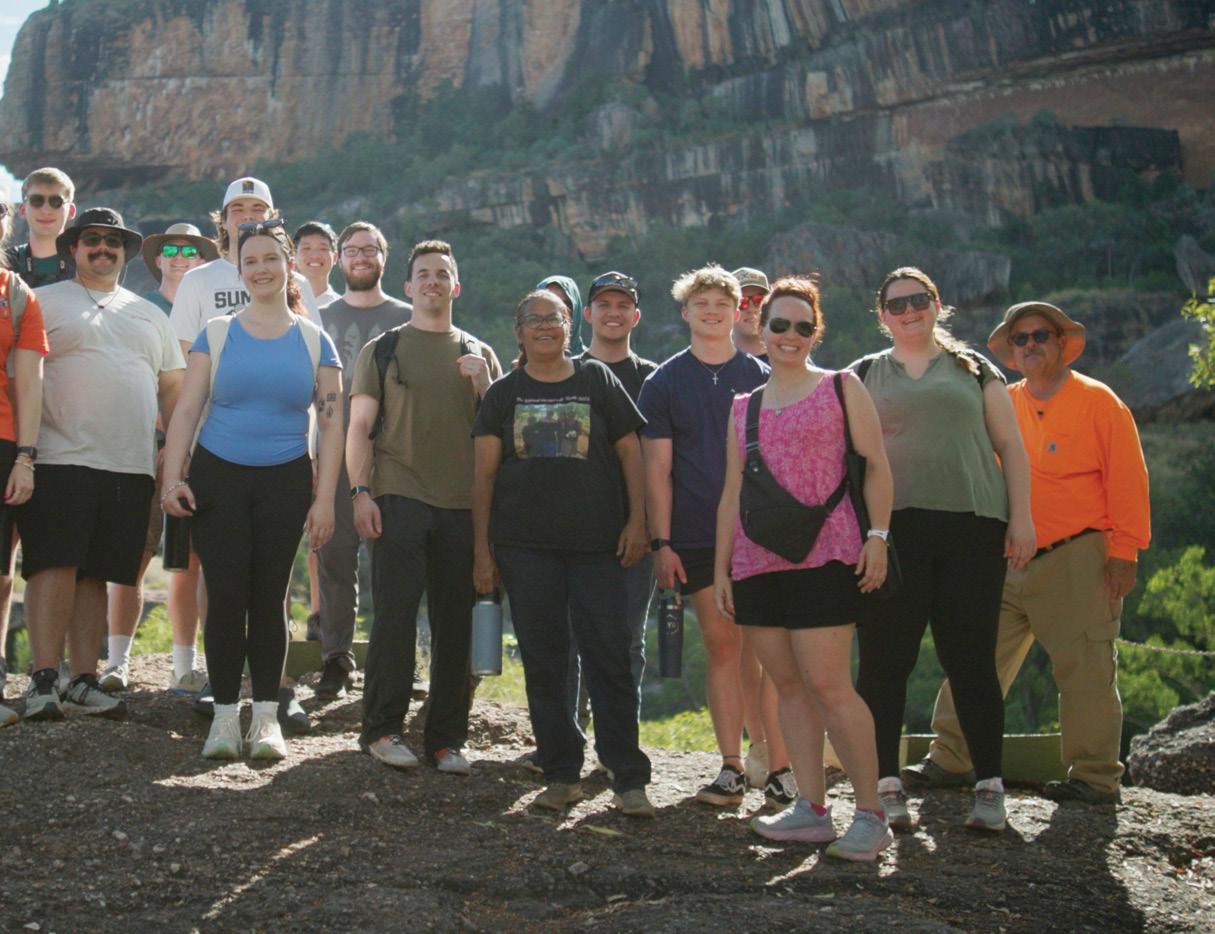
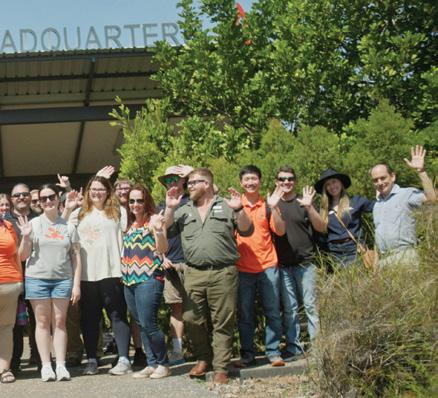
In May 2025, students and faculty from the OSU Fire and Emergency Management Program partnered with Charles Darwin University’s (CDU) Humanitarian, Emergency and Disaster Management Program for a specialised immersive on country study tour focussing on Rural and Remote Emergency and Disaster Management. The main purpose was to explore the intersection of disaster management, community resilience, and Indigenous knowledge in rural, low-resourced environments.
Oklahoma and the Northern Territory are united by the “tyranny of distance”. Both regions grapple with the logistical nightmares of delivering emergency services to isolated populations. Whether it is a tornado tearing through an Oklahoma township or a cyclone bearing down on a remote Top End community, the fundamental challenges remain the same: limited infrastructure,
reliance on community volunteers, and the need for rapid, coordinated responses over vast geographical areas.
“The purpose of the trip was to understand the similarities between the disaster management issues and challenges in the Northern Territory and Oklahoma, which have similar and significant rural challenges”, noted Dr. Ed Kirtley, the program lead from OSU.
During the tour, students engaged in a deep comparative analysis. They discovered that while the hazards might differ – bushfires and cyclones in the Northern Territory versus wildfires and tornadoes in Oklahoma –the human element of response is strikingly similar with neighbours relying on neighbours. This epitomises disaster resilience. Resilience in this context refers to the capacity of individuals and communities to prepare for, absorb, recover from, and adapt to natural hazard events and other disruptions.
One of the most compelling aspects of the tour was the exposure to innovative technologies designed for rural contexts. This was highlighted by the work of Dr. Rohan Fisher at CDU, whose work with Projection Augmented Landscape Models left a significant impression on the study group of emergency managers.
Fisher’s technology uses 3D-printed physical maps of the of local terrain overlaid with modelled projections of fire simulations and other hazard data. It creates a “holographic” effect that allows communities, regardless of literacy levels or technical training, to visualize how fire will move across their specific landscape.
In rural and remote Indigenous communities, these tactile, visual models are game-changers. They allow Elders, rangers, and emergency planners to gather around a physical map and “see” how a fire will move across their specific country.
“The group was very impressed with how technology such as the 3D Projection Augmented Landscape Models can assist with rural disaster preparedness, remote community planning and training”, Dr. Kirtley remarked. The students saw firsthand how high-tech solutions don’t always have to be displayed on screens but in this way can become more tactile and accessible bridging the gap between complex data and human understanding.
While technology provided the tools, the landscape provided the teacher. A significant portion of the itinerary was dedicated to “Caring for Country”, the Indigenous
approach to land management that has sustained the Australian continent for tens of thousands of years.
The students travelled to Kakadu National Park and the West Arnhem region, moving beyond the classroom to witness fire management in practice. They were introduced to the work of Aboriginal ranger groups who use traditional “cool burning” techniques to reduce fuel loads and prevent catastrophic bush fires. This was a paradigm shift for many of the students, who were accustomed to a more suppressionbased model of fire management in the United States.
“We were impressed with the caring for country Aboriginal ranger programs,” said one participant. The holistic view of the land, “where fire is a tool for regeneration rather than just a threat to be extinguished”. This experience offered a powerful lesson in disaster mitigation, which is extremely important in rural and remote contexts. The tour also facilitated engagement with diverse Indigenous community members, allowing students to investigate social and cultural issues alongside technical ones.
continued on page 31
Whilst the parallels between Oklahoma and the NT were striking the tour highlighted a distinct Australian advantage – the deep integration of Indigenous knowledge in disaster preparedness and resilience.
The tour was led on the Australian side by Dr. Rodney Eksteen, a Senior Lecturer in Humanitarian, Emergency, and Disaster Management at CDU. As an alumnus of Oklahoma State University’s doctoral program, Dr. Eksteen is uniquely positioned to bridge the two worlds. He emphasised that the value of the exchange lay in its ability to challenge the students’ perspectives.
“Having walked the halls of OSU myself, I know the rigorous theoretical foundation these students possess,” Dr. Eksteen observed. “But bringing them here to the Top End adds a dimension you simply cannot simulate in a classroom. When they stand on Country with Traditional Owners and witness the resilience of our remote communities, their definition of disaster management expands. They learn that in these environments, relationships are just as critical as resources.”
Seeing these ancient practices in action offered a new perspective on land management that goes beyond fire suppression. As one student reflected, the opportunity to witness the connection between culture and land management was transformative, “We were able to learn about how disaster management systems operate in rural Northern Territory... and were also impressed with the caring for Country Aboriginal ranger programs.”
The collaboration between OSU and CDU represents a growing recognition that rural communities worldwide hold the keys to their own disaster resilience. By combining the high tech with Indigenous stewardship, the Northern Territory offered OSU students a
unique blueprint for the future of emergency management in rural and remote settings.
As the students returned to Stillwater, they brought back not just souvenirs, but a deeper understanding of how culture, technology, and community can weave together to protect the places we call home.
For the students from Oklahoma, the experience was transformative. They arrived expecting to learn about foreign fire tactics; they left with a deeper appreciation for the cultural fabric that supports disaster resilience. They saw that in the Northern Territory, just as in rural Oklahoma, the strength of the system lies in the people and their connection to the land.
As climate change continues to intensify weather events globally, the bond between these two “red dirt” regions offers a model for international collaboration. By sharing knowledge, from the high tech to ancient burning practices, Oklahoma State University and Charles Darwin University are helping to build a safer, more resilient future for rural communities everywhere.
The strong relationship between Oklahoma State University (OSU) and Charles Darwin University (CDU) was officially cemented to ensure that the “Innovation - Immersion On-Country” tour is just the beginning of a sustained exchange of ideas, technology, and future leaders between the Australian Top End and the American Midwest.
This article is based on the May 2025 HEDM Study Tour. For more information on the courses offered in the HEDM program at CDU, visit https://www.cdu.edu.au/health/ humanitarian-disaster-resilience
Oklahoma is called “Red Earth” because its common soil, Port Silt Loam, gets its distinctive reddishbrown colour from iron oxide (rust), resulting from the weathering of reddish Permian-era rocks like sandstones and shales rich in iron minerals, a hue that permeates the state’s landscape and culture. This vibrant soil is a major part of Oklahoma’s identity, inspiring its music (Red Dirt Music) and even influencing its name’s Choctaw roots meaning “red people”.
Author Bio
Dr. Rodney Eksteen is a Senior Lecturer in Humanitarian, Emergency, and Disaster Management at Charles Darwin University. He holds a PhD in Fire and Emergency Management from Oklahoma State University, an MBA, and a Graduate Certificate in International Disaster and Emergency Management. With over 30 years of experience, Dr. Eksteen has served as Divisional Head for the City of Johannesburg Emergency Management Services and Project Manager for the 2010 FIFA World Cup disaster preparedness. He also co-founded the Burn Foundation of Southern Africa. His research focuses on transdisciplinary approaches to disaster risk reduction in vulnerable communities, particularly regarding fire risks in informal settlements.
When preparedness outpaces recovery systems
Examining the navigation gap during the response–recovery overlap.
Karen van Huizen MAIES
Emergency Management Coordinator at Alpine Shire Council Victoria
In recent years, preparedness has become central to emergency management across Australia.
Households are encouraged to understand their risks, identify triggers for action, and make decisions early. Programs promoting readiness for the first 72 hours reflect a shared-responsibility model designed to improve safety and reduce immediate pressure on response systems.
In many communities, this approach is working.
When a recent bushfire impacted a rural area in north-east Victoria, one household acted early. Pre-identified triggers prompted a timely decision to leave. Livestock were relocated according to prior arrangements.
Companion animals were moved to familiar environments. Temporary accommodation had been considered in advance and secured quickly. Insurance engagement began as soon as site access was possible. Within days, recovery planning discussions were underway.
These actions reduced pressure on emergency services and enabled early stabilisation. They reflected exactly the kind of behaviour contemporary preparedness frameworks seek to encourage.
Yet while this household was already making recovery decisions, the formal system remained appropriately focused on active response. Access restrictions were in place. Impact assessments had not yet commenced. Recovery coordination structures had not formally transitioned. Multiple agencies were operating under different roles and timeframes.
Preparedness is working
Preparedness has moved from being an addon to becoming a core part of emergency management. Shared responsibility recognises that emergency services cannot meet all needs immediately during largescale incidents. Households are therefore encouraged to plan early and act decisively.
Evidence supports this shift. Individuals who have considered evacuation options, planned for animals, and discussed contingencies make safer decisions under pressure. Early action reduces exposure to danger and eases demand on response systems.
In rural areas, preparedness is often shaped by lived experience. Repeated exposure to bushfire, flood, and storm events builds practical awareness and strong neighbour-toneighbour networks.
In rural areas, preparedness is often shaped by lived experience. Repeated exposure to bushfire, flood, and storm events builds practical awareness and strong neighbour-toneighbour networks. Preparedness is relational as much as procedural. It also influences recovery pathways. Pre-arranged accommodation reduces housing pressure. Animal relocation plans protect livelihoods. Early engagement with insurers allows assessments to begin as soon as access permits. Social networks provide continuity while formal systems mobilise.
This period, where individuals are navigating recovery decisions while response remains active, reveals a structural tension. Preparedness accelerates household decision-making. Recovery systems, however, are often structured to move in stages.
The result is a navigation gap during the response–recovery overlap: a phase where affected people must work out sequencing and next steps without a clearly visible pathway to understand how the pieces fit together.
If preparedness is working, an important question follows. Are our recovery systems designed to move with it?
Preparedness carries a psychological dimension as well. Acting in accordance with a plan gives people back some control in circumstances that might otherwise feel overwhelming. That restored control supports emotional steadiness during crisis. In communities managing repeated emergencies, decisive action can reduce feelings of helplessness and uncertainty.
From a system perspective, this behaviour is beneficial. It reduces demand in the acute phase and can shorten recovery timelines.
However, preparedness also changes the tempo. Once immediate danger subsides, households turn quickly to housing, rebuilding, employment, animals, and business continuity. Recovery thinking begins during response, not after formal transition.
Preparedness shortens the distance between impact and recovery.
continued on page 34
Recovery Begins Before Transition Emergency management doctrine recognises response and recovery as connected functions. Formal transition points provide clarity of authority. During active response, priorities are clear: protect life, manage risk, and support responders. These priorities are essential.
For households, however, recovery decisions cannot wait. Questions arise immediately: Where will we live? When can we return? What is damaged? What does insurance require? What can happen now, and what must wait?
While response operations continue, access may be restricted. Impact assessments may not yet be possible. Planning and rebuilding processes may pause pending safety verification. At the same time, other activity may proceed, insurance assessments, supply deliveries, volunteer efforts.
From a household perspective, this parallel movement can appear inconsistent. Without clear explanation of why some processes move and others pause; the sequencing is not always obvious.
This is the response–recovery overlap: response remains operationally dominant, yet recovery thinking is already underway at the household level.
The issue is not inactivity. Systems are functioning as designed. Response structures prioritise safety. Recovery systems activate through formal processes. Insurance operates within contractual arrangements. Local government works within regulatory constraints.
Each moves according to its role.
Yet when these systems operate simultaneously, households must reconcile what can proceed, what cannot, and why. The responsibility for working that out often sits with them.
The navigation gap
The response–recovery overlap exposes a navigation gap.
This gap is not a lack of support. It is the period during active response when individuals are already making recovery decisions, but there is not always a clearly visible pathway to help them understand how different processes connect.
Information flows are active. Community briefings occur. Agencies communicate. Insurers engage. Volunteers mobilise. Local governments prepare for recovery activation. Yet the experience can feel fragmented. Messages arrive from different organisations, each accurate within its own role but not clearly connected to others. Some processes advance; others pause. Eligibility systems may not reflect displacement realities. Advice may assume access that is not yet possible.
None of this reflects dysfunction. It reflects multiple systems operating under different responsibilities.
The difficulty arises when that system logic is not easy to see.
Under stress and uncertainty, households must determine which advice applies immediately, which actions are prerequisites, and which processes depend on others. This mental load is significant.
For those who have acted early and responsibly, the impact can be sharper. Having regained a sense of control through preparedness, they may find that control shifting away from them again when progress depends on navigating processes that aren’t clearly explained. The experience of having “done the right thing” yet feeling unable to move forward can introduce a second layer of stress. In communities already managing repeated emergencies, this renewed loss of control can compound distress and gradually erode trust.
Some households respond by moving ahead independently. They rely on informal networks to preserve momentum. This is not resistance to support; it is an attempt to maintain stability.
However, informal navigation creates inequity and increases personal burden. Access to understanding should not depend on who someone knows.
As preparedness accelerates household action, the navigation gap becomes more visible. Prepared people move quickly into recovery thinking. Systems, appropriately cautious, move more deliberately.
The gap between those tempos is structural.
Recognising it does not require altering response priorities. It requires acknowledging that during the overlap phase, households need early sense-making support, clarity about sequencing and realistic next steps while response operations remain active.
A design issue — not a performance issue
The navigation gap is not the result of poor performance.
Response agencies operate under intense pressure. Access controls and cautious sequencing protect lives. Local governments manage relief, communication, and preparation for recovery while coordinating across agencies. Capacity constraints, particularly in rural areas facing repeated events, are real. Insurers and non-government organisations operate within defined frameworks.
Each system is doing its job.
The gap emerges from how these systems interact. Roles do not always align neatly. Communication is accurate within individual systems but may not explain how processes connect.
continued on page 36
Recognising this gap is not a criticism of existing arrangements. It is an acknowledgment of how well-functioning systems can create friction when they operate side by side without a clear way of connecting.
Framing this as a design question opens space for refinement rather than defensiveness.
Locally based recovery navigation
If the response–recovery overlap creates a navigation gap, the question becomes how to support households without compromising response priorities.
One practical direction is locally based recovery navigation.
This is not additional authority. It is structured early sense-making, embedded within local government and activated during major incidents to assist households already moving into recovery decisions.
Local government sits at the intersection of community, state agencies, insurers, and service providers. It understands local context, relationships, and practical constraints. Where trust exists, it is often the first-place people turn for clarity.
A locally based navigation function would focus on helping people make sense of what can proceed now, what must wait, why sequencing matters, and what realistic timeframes look like.
Recovery does not unfold at a uniform pace. Some households move quickly due to employment or business pressures. Others need time and psychosocial support before practical decisions are possible. Effective navigation must be flexible enough to meet people where they are, without assuming a single recovery pathway.
Embedding this function locally reduces reliance on informal networks and improves equity. Surge capacity can support local teams, but the role itself remains grounded in existing community relationships.
This approach does not alter doctrine. It recognises that recovery thinking begins early and designs support accordingly.
Why this matters now
Disasters are increasing in frequency and complexity. Communities face compounding events with limited recovery time between them. Preparedness messaging continues to encourage early action.
At the same time, pressures are growing: workforce fatigue, housing shortages, insurance constraints, and stretched local capacity.
As household decision-making accelerates and disaster environments
become more complex, reliance on strictly staged activation becomes less aligned with lived experience.
Designing for the response–recovery overlap is therefore a strategic necessity.
If preparedness continues to improve, as it should, systems must be ready to align with that improvement.
Conclusion: an invitation to reflect Preparedness strengthens safety, reduces demand, and restores control during crisis. When households act early, they do exactly what emergency management frameworks encourage.
But preparedness also shifts the rhythm of recovery.
When recovery thinking begins during response, and systems remain structured around formal transition, a navigation gap can emerge. Recognising this gap is not a criticism of existing arrangements. It is an acknowledgment of how multiple wellfunctioning systems interact under pressure.
The opportunity lies in improving alignment during the overlap period, ensuring
communication supports forward movement, sequencing is clearer, and support is flexible enough to meet people at different stages of readiness.
As disasters become more frequent and complex, the relationship between household tempo and system tempo will matter increasingly.
Prepared people reduce system demand, but, only when systems are designed to move with them.
Author Bio
Karen van Huizen (MAIES) is an emergency management practitioner and farmer in rural Australia, with experience across preparedness, response coordination, and disaster recovery. She brings both professional and lived experience to her work on strengthening alignment between communities and the systems designed to support them.
AIES member reflection: Presenting at Disastrous Doctorates 2026
Todd Miller MAIES CESM Associate Director – Resilience at Auckland University of Technology
Irecently had the opportunity to attend and present at Disastrous Doctorates 2026 a symposium hosted at the University of Otago in Dunedin. The event brought together PhD researchers from across Aotearoa New Zealand who are working on disaster-related topics, creating a space to share ideas, challenge assumptions, and strengthen connections across research and practice.
For me, the symposium reinforced how important it is to maintain strong links between academic research and the realities of emergency management practice. The programme included researchers from a wide range of disciplines, reflecting the inherently interdisciplinary nature of disaster and emergency management. Across the sessions, there was a shared recognition that disasters unfold within complex systems, and that improving outcomes requires collaboration across organisations, sectors, and professional boundaries.
I presented my doctoral research exploring disaster and emergency management as a complex adaptive system, examining how relationships, networks, and adaptive behaviours shape system performance, and why traditional command-and-control thinking alone is insufficient for understanding how coordination actually occurs in dynamic environments. Presenting this research to a room full of emerging scholars and practitioners prompted valuable discussion about how system stewardship, collaboration, and collective learning can strengthen preparedness and response capability.
(L-R) AIES members Todd Miller and Michelle Gillman presented at the Disastrous Doctorate 2026.
Top Right: AIES member Todd Miller.
Bottom Right: AIES member Michelle Gillman.
A particular highlight was seeing fellow AIES member Michelle Gillman present her research on health and safety leadership in disaster response organisations. Michelle’s work focuses on how leaders understand and enact responsibility for protecting responders, especially within volunteer-heavy environments. Her research prompted thoughtful conversations about leadership practice, duty of care, and the practical realities faced by response organisations operating under pressure.
Beyond the presentations, the symposium created space for genuine connection. Conversations during breaks, keynote sessions, and informal discussions were often as valuable as the formal programme itself.
These interactions highlighted how much the emergency management community benefits when researchers and practitioners engage openly, sharing both successes and ongoing challenges. For those of us working at the intersection of research and practice, events like this provide an important reminder that learning is collective and ongoing.
From an AIES perspective, participating in Disastrous Doctorates felt particularly meaningful. The Institute continues to champion professional development and evidence-informed practice across the emergency services sector, and this symposium reflected those same values. It was encouraging to see how many emerging researchers are focused on practical, applied
questions that directly relate to leadership, coordination, and resilience.
Personally, attending and presenting at Disastrous Doctorates 2026 was both energising and grounding. It reinforced the importance of curiosity, collaboration, and critical reflection as we collectively navigate increasingly complex risk environments. I left the symposium with new ideas, strengthened professional relationships, and a renewed sense of purpose in continuing to connect research insights with operational practice.
I am grateful to the organisers, fellow presenters, and participants for creating such a supportive and engaging environment, and I look forward to continuing these conversations within the AIES community and beyond.
Academic Encouragement Series
The AIES is proud to promote the work of students studying emergency management. In each edition, we publish a relevant assignment to share their research with our readers. Some research papers will be published over multiple consecutive editions due to the length.
2010-2011 Canterbury New Zealand earthquake sequence – Part II
David Gellert MAIES
Bachelor of Emergency Management student, Charles Sturt University and volunteer at NSW SES (Waverley Woollahra Unit)
Legislation – pre-impact
New Zealand is governed under a democratic national parliament whose constitutional basis provides for all sovereignty to reside with the central national government. The 1840 Treaty of Waitangi between the Māori chiefs and the British Crown form the foundation of modern New Zealand governance, which was formalised in the Treaty of Waitangi Act 1975 (NZ). Although there is no formal constitutional document, the Constitution Act 1986 explicitly defines much of the legal structures and rule of law.
A second tier of local government is delegated by the national government with specific powers to manage and provide services to local communities. The powers of the 78 local government authorities are defined in the Local Government Act 2002
The national emergency response organisation is the Civil Defence Emergency Management Agency (CDEM).
The principal legislative and accepted practice frameworks for direct emergency management in New Zealand prior to the Canterbury sequence earthquakes were established in the following documents
z The Civil Defence Emergency Management Act (2002)
z National Civil Defence Emergency Management Plan (promulgated by order in Council in 2005)
z The Guide to the National Civil Defence Emergency Management Plan of 2006, New Edition 2009
z National Civil Defence Emergency Management Strategy 2008 (NZ)
z National Emergency Management Agency
z Coordinated Incident Management System (CIMS), 2006 edition
In addition to this were the structures in place for other day-to-day emergency services such as police, fire services and ambulance, as well as the Defence Force. During a major
disaster, these agencies are likely to be integrated into response and recovery activities.
z New Zealand Police Act 2008
z Fire Service Act 1975
z Health regulations and Ministry of Health contracts
z Defence Act 1990
These legislative and policy frameworks provide a defined and consistent approach towards planning for emergency events. Planning is the first step in the management process and defines the mission, goals and objectives for the organisation, and the pathway to achieving them.
“planning ... describes the important steps to be taken for the accomplishment of a mission or the solution of a problem” (Marco, 1996)
When an emergency event occurs, both local councils, national government, CDEM and other supporting agencies may be involved.
Local and regional emergency management is structured around a local CDEM Group comprising a Regional Authority and Territorial Local Authorities (TLA). Either, or both, the CDEM Group or the TLA can declare a state of emergency in response to an emergency event. The detailed working arrangements between the authorities are not clear and primarily rely on cooperation and goodwill. This is problematic where one authority may be dysfunctional or poorly prepared, as was the case in the Canterbury earthquakes. In March 2010 the government replaced the elected Environment Canterbury Councilors with Crown based Commissioners following poor performance. There was also a breakdown in the relationship between local authorities and the Canterbury Civil Defence Emergency Management Group (Mclean et al., 2012).
For localised smaller events, if the emergency is of sufficient scale, a council may declare a state of local emergency. This declaration is made by the Local Controller, who is usually the mayor or other official nominated by the TLA, but formally appointed by the local CDEM Joint Committee. The event will be managed locally, usually with council providing the resources and operational response, whilst the local CDEM Group provides
strategic and tactical advice and will have provided most of the reduction and readiness prior to impact.
A more significant disaster that can still be managed locally, would involve authorities declaring a CDEM emergency. This would provide legislative authority for broad powers for controllers to exercise in an emergency, including evacuating premises and requisitioning property, and describes generally how these powers should be implemented. The CDEM Act specifies that TLAs are responsible for restoring local services and infrastructure, but to also provide resources to the emergency response.
As the scale of an emergency increases into a major disaster, the local resources can easily become overwhelmed and unable to fulfil this role. This would require the escalation of the response to involve the national CDEM authority through the activation of the National Crisis Management Centre (NCMC), other national government agencies and departments as well as day-to-day emergency agencies. As the scale of an event and the required response escalates, the level of activation of the NCMC transitions through four modes – monitor, engage, assist and manage (Department of Internal Affairs, 2008). This escalation of response from TLA staff recognises that the TLA staff are primarily employed to carry out day to day functional activities of council, rather than being focused on emergency activities, and emergency management training may be haphazard or insufficient.
The 2008 National Civil Defence Emergency Management Strategy outlined the overall direction for CDEM in the near term, setting out the principles and national goals and objectives, such as individual and community responsibility and self-reliance, systematic approach to manage risks, comprehensive hazard risk management, addressing hazard consequences and optimising information, expertise and structures (National Emergency Management Agency, 2015). This strategy was ultimately replaced by the National Disaster Resilience Strategy in 2019.
When an emergency event occurs, both local councils, national government, CDEM and other supporting agencies may be involved.
The National Civil Defence Emergency Management Plan “sets out the roles and responsibilities of everyone involved in reducing risks and preparing for, responding to and recovering from emergencies. This includes central and local government, lifeline utilities, emergency services and nongovernment organisations.” (National Emergency Management Agency, 2015). It is through this plan that agencies other than CDEM should be coordinated and integrated into reduction, readiness, response, and recovery activities.
The Australasian Interservice Incident Management System (AIIMS) “has been the foundation of Command-andControl doctrine for fire and emergency services in Australia and New Zealand for over 20 years” (Conway, 2012). Shared objectives are based around the principles of “management by objectives, functional management structures and span of control” (Conway, 2012).
The New Zealand Coordinated Incident Management System (CIMS) builds on and diverges from AIIMS by adding concepts of common terminology and communications. CIMS provides additional flexibility and scalability for localised implementation. New Zealand’s historic incidence of geographical emergency incidents, together with its flatter social and governance structures has informed this localised and flexible approach.
The additional focus and structure provided to CDEM in the above legislation, plans, strategies and practices, therefore can
provide a more focused and better trained emergency support than that provided by local TLAs, particularly in a major disaster though the NCMC and the appointment of a National Controller to an event. Through its act, CDEM is mandated to provide reduction, readiness, response and recovery activities, establish local CDEM Groups, coordinate whole of government response to a major disaster, develop National Civil Defence Emergency Management Plans and exercise special powers during the declaration of a state of emergency.
The tiered escalation structure was implemented in the Canterbury earthquake sequence. The Sept 2010 Darfield disaster was initially managed as a localised council driven emergency event, whereas the Christchurch earthquake had a more significant impact requiring a nationally led response with significantly more resources and coordination, authorised under the CDEM Act.
Beyond the weaknesses identified above, prior to the Canterbury sequence event, there was an inconsistent and unclear definition of how TLA & local CDEM Groups should work together, relying on goodwill rather than defined roles and responsibilities. This failure of framework became apparent in the Darfield response and recovery efforts.
Other non-emergency organisation interagency frameworks were also insufficiently defined prior to the Canterbury sequence event.
continued on page 44
For example, the immediate response activities of police and fire services to the collapse of the CTV building in Christchurch was poorly coordinated, until appropriate command and control measures were implements by CDEM. Some of these shortcomings have been addressed in subsequent legislation and policy. This can be identified through both primary firsthand media reports such as 1 Minute After The Christchurch Earthquake, a YouTube posting by Hamish MacMillan (YouTube & MacMillan, 2011) and archived television news bulletins, as well as secondary reports including the national Cabinet review (Office of the Minister of Civil Defence, 2012) and the NZ Fire Service review (Pilling, 2012).
The CDEM internal review to the Christchurch event (Mclean et al., 2012) identified a lack of readiness in planning for the requirement of sufficiently senior and experienced locally based leadership to a major disaster. The emergency framework assumed that the NCMC could provide appropriate support, however it was quickly understood within the first day of response that it would be necessary for the National Controller to be locally based. As the National Controller was usually the Director or Deputy Director of CDEM, based at NCMC, the need for the Controller to be based locally weakened the NCMC ability.
Subsequent reviews and amendments, since the Canterbury sequence event, to legislation, policy and framework have identified strengths and weaknesses, and have helped provide improvements to emergency activities and community resilience.
Time and geographical implications – pre-impact Time implications As discussed above, the Canterbury earthquake sequence can be considered as two interdependent subevents. Each of these subevents were sudden on-set with no warning period to the affected communities. Neither the Darfield nor Christchurch earthquakes had any advanced warnings in the form of tremors or other seismic activity in the periods immediately prior to
their sudden and significant earthquakes. Therefore, there were no opportunities for direct pre-impact responses such as public warnings, evacuations, pre-deployment of emergency response resources or containment of vulnerable lifelines such as gas infrastructure.
Notwithstanding the lack of direct time warning for an impact, earthquakes are a known hazard in New Zealand due to geographic factors, as outlined above, and explored further in the following section. Although the exact timing for an earthquake event is not predictable, it is a foreseeable hazard, which can be seen in the chart at figure 2, outlining the frequency of New Zealand earthquakes of 4 Mw or greater over the past 60 years.
There are many accounts of strong earthquakes in Māori history, and major specific earthquake events recorded since 1840 European settlement that preceded the Canterbury sequence are identified by Eileen McSaveney (McSaveney, 2006) and include
z Wairarapa, 1855 (8.2Mw)
z Murchison, 1929 (7.8 Mw)
z Hawkes Bay, 1931 (7.8Mw)
z Wairarapa, 1942 (7.2 and 6.8Mw)
z Inangahua, 1968 (7.1Mw)
z Edgecumbe, 1987 (6.3Mw)
Given this history over time, earthquake risk was clearly identified as a primary natural hazard prior to the Darfield event in the National Civil Defence Emergency Management Strategy 2008 (NZ) (Ministry of Civil Defence and Emergency Management, 2008), incorporating a detailed hazard analysis within its development. As a national strategy, this document provides generalised guidance for the whole of New Zealand, however much of the earthquake risk had been focused on Wellington and the Alpine Fault region running along the eastern length of the South Island. Reduction, readiness, response and recovery activities were incorporated into both local CDEM Group Plans and the National Civil Defence Emergency Management Plan (Ministry of Civil Defence and Emergency Management, 2005).
Given the national focus, the CDEM Management plan was more focused in areas other than the Canterbury plain, hence
response resources took some time to arrive once the events occurred.
With an understanding of the likelihood of the disaster risk at some undetermined time, particularly from earthquakes and tsunami, the national government funded a number of multi-year public education campaigns from the 2005 budget as part of their readiness strategy. The mass media “Get Ready, Get Thru” campaign was supported with a website viewable in nine languages to provide wide community access, and a schools’ programme “Whats’ the Plan, Stan?” was widely disseminated. Annual surveys highlighted increases in community awareness and preparedness (Department of Internal Affairs, 2008). These strategies undoubtedly provided community understanding, engagement and improved resilience during the Christchurch event in particular.
From a geological perspective, after the Darfield earthquake, it was reasonable to expect subsequent aftershocks in the region. This could be expressed as a risk statement that identifies the specific risk that stems from the hazard which may manifest into an emergency event which will result in the outlined consequence. It is “a structured statement linking one or more sources of risk to a consequence” (Australian Institute for Disaster Resilience, 2015) that defines the scale and scope of the Emergency Management Plan. There is the potential that a seismic aftershock directly resulting from the Darfield earthquake will result in a significant earthquake in Christchurch in the short to medium turn that, in turn, will cause loss of life or injury to people and significant infrastructure and property damage.
This risk statement informs both the timing and geographic implications of the sequence. From a timing perspective, it refocused some of the national CDEM plans and resources towards a faster response capability to the Canterbury basin, which became apparent once the Christchurch earthquake occurred and the national government was able to declare a national state of emergency, stand up the NCMC and designate and integrate the National Controller into the local response within a day. Although the Darfield event was less impactful, there were a number of failings in both the timing and activities of response and subsequent recovery efforts. These issues were identified and addressed in the period between the Darfield and Christchurch events, so the latter event was able to benefit from lessons learnt from the earlier event (Mclean et al., 2012).
Geographical implications
Many of the geographical implications of the Canterbury sequence event have necessarily been outlined and explained above, the most obvious being that New Zealand is located on a seismically unstable junction of two major tectonic plates.
The National Civil Defence Emergency Management Strategy 2008 (NZ) provided generalised risk guidance for the whole of New Zealand, and an historic summary of such events has been outlined above, however much of the earthquake risk had been focused in areas other than the Canterbury Basin. A brief to the incoming Minister for Civil Defence in 2008 (Department of Internal Affairs, 2008) identified the 2 largest earthquake risks as z a 15% chance of a major earthquake affecting Wellington in the next 50 years z a 20% chance of a major earthquake on the South Island Alpine Fault in the next 20 years
No specific earthquake risk for the Canterbury basin was identified in these national documents prior to 2010.
reduced, the risks that flow from this hazard can be mitigated through reduction and readiness actions pre-impact.
Although there has been continuous seismic monitoring by the Institute of Geological and Nuclear Sciences NZ and its predecessors since 1865, as an important information component of the readiness phase (GNS Science, 2019), no specific geographical warning was available for the two events.
In general, local CDEM Strategy and Management Plans provided a robust readiness regimen, addressing both the likelihood of the Darfield event and, more importantly, the increased likelihood of the Christchurch event in the intervening period.
The conclusion of the preimpact phases of each of the earthquake events were the events themselves, and their timing played a significant role in their impacts on human life. The Darfield event occurring at 4.35am when most people were in their rural low density and low rise earthquake-safe homes, resulted in low human impact, whereas the Christchurch event occurred at 12.51pm on a busy weekday in a major urban environment, when people had travelled from their homes into the CBD, where the most extensive damage and its subsequent death and injury occurred.
Christchurch’s European settlement dates to the 1840’s, where its location on the eastern coastline of the South Island in an arable flat basin provided both shipping access and farming opportunity. Darfield is located 40km inland on the farming flatlands. Due to its geography and settlement history, by 2020 Christchurch had become New Zealand’s second largest city with a population of 376,300 (Stats NZ, 2024a). The area had been seismically stable in the European settlement period of 1840 to 2010, and Māori history prior to this does not refer to any specific major events.
Notwithstanding the lack of direct geographical warning for an impact, earthquakes are a known hazard in New Zealand due to geographic factors, as outlined above. Although the exact location for an earthquake event is unpredictable, it is a foreseeable hazard throughout New Zealand, and such hazards are identified and prioritised in the National Civil Defence Emergency Management Strategy 2008 (NZ) (Ministry of Civil Defence and Emergency Management, 2008). Although a naturally caused earthquake hazard cannot be
Other local readiness measures pre-impact also included established local CDEM Groups, familiar with the local area conditions, demographics and available resources. Local CDEM Strategy and Management Plans also incorporated Christchurch City Council TLA staffing and resources, engagement between CDEM and other local emergency service agencies and broadly disseminated public education measures. Unlike a potential event in Auckland, where the difficult geography would limit physical access for response resources, the open and easily accessible geography of the flat Canterbury Plains, allowed for the easy staging of response resources throughout the region. With Christchurch as the second largest city in New Zealand, many different potential response resources were already physically available in the region prior to the events.
Due to the generally known earthquake hazard risk, New Zealand building codes had been strengthened since the 1970s (Royal Commission of Inquiry into Building Failure Caused by the Canterbury Earthquakes, 2011), and particularly for the Christchurch event, these measures prevented more substantial building damage that may have resulted in higher human injury and death.
As a major city, Christchurch had a significant infrastructure and built environment prior to the events. The CBD had multistory office buildings, and the surrounding suburbs had over 150,000 homes, with supporting infrastructure such as roads, water supply, power supply and gas supply. The Christchurch earthquake had significant impact on each of these urban components, which was further compounded by soil liquification throughout the region.
continued on page 46
Adrian Wojcik @istock
Roles and Responsibilities - impact
Organising resources in response to an emergency event “involves the grouping of activities necessary to accomplish goals and plans, the assignment of these activities to appropriate departments and the provision of authority, delegation and co-ordination.” (Koontz & O’Donnell, 1959)
Organisation involves the allocation of resources, the grouping and assignment of tasks, authority and commensurate responsibility to those undertaking the tasks. Organising requires appropriate structures suitable to the requirements of the event impact, resources available and the operating environment, as well as appropriate coordination. These structures can be broadly categorised as z Operational z Tactical z Strategic Through the structured nature of an organisation, all employees understand the chain of command and the expectation of how they will assist in fulfilling the organisation’s goals and objectives. Centralised or decentralised structures, differentiation, integration and varying scopes of management
Agency
control will suit differing organisations accordingly, as well as the degree of formalisation or rules-based guidelines (Bowditch et al., 2008). Although many of the emergency agency organisations’ guidelines may align due to their development from a common legislative or policy basis, when multiple disparate organisations are involved in an event response, the individual organisational goals, objectives and the chain of command may conflict and need to be adapted.
The legislative and policy pre-impact framework identified above has a primary focus on the management of human resources preparing for, and deployed to an emergency event, defining the expected roles and responsibilities as well as their management. This framework identifies that differing emergency events will have differing degrees of impact on local communities, and that the emergency management response activities and the agencies involved will necessarily differ. The New Zealand emergency management agency response is summarised in the table below.
The Darfield earthquake event was categorised as having high impact on the local community whereas the Christchurch earthquake event was categorised as having
low day-to-day emergency agencies
moderate
Local council (TLA)
significant impact on the local community, and the response to both stood up both local and national resources.
An outline of the impact phase roles and responsibilities of differing agencies and organisations to the two events is summarised in Table 3 opposite.
The most significant difference was that the Darfield event maintained the local CDEM group as the lead agency (with national CDEM EOC activated in a support role), whilst the more significant Christchurch event escalated control to the national CDEM structures.
Darfield event –roles and responsibilities
Within a few hours of the Darfield earthquake, a local state of emergency was declared by local authorities, and the Canterbury Group’s Emergency Coordination Centre (at Environment Canterbury) was activated early on 4 September 2010, with the Canterbury Civil Defence Emergency Management (CDEM) Group as the lead agency.
The event EOC was established by Christchurch City Council using a local Art Gallery as the EOC.
Other local TLAs also activated local EOCs according to the level of damage caused and the national Wellington National Crisis Management Centre (NCMC) was
high Local CDEM Group local CDEM resources strategic, tactical, operational
Local council (TLA) council resources tactical, operational
day-to-day emergency agencies
significant
Police, Fire, Ambulance operational
National government national resources strategic
National CDEM national CDEM resources strategic
Local CDEM Group local CDEM resources tactical, operational
Local council (TLA) council resources operational specialist emergency agencies
day-to-day emergency agencies
non EM agencies
USAR, GNS Science tactical, operational
Police, Fire, Ambulance operational
Utilities, community groups operational
activated to support the local efforts, with a diverse array of emergency management systems used to manage communications, information management systems and other support services.
Although there was no external assistance requested or provided from international or UN organisations such as United Nations Disaster Assessment Co-ordination team (UNDAC) and the International Search and Rescue Advisory Group (INSARAG), local emergency services (Police, Fire, Health) were supported by specialist staff sent from throughout New Zealand. The New Zealand Defence Force also provided air and land units in support of the response efforts.
Non government agencies such as Red Cross, local Māori community groups and the spontaneous local volunteering by farming communities known as the Farmy Army, primarily provided recovery support to the Darfield event.
Due to the localised and relatively lower impact of the Darfield event, a local response was effective in understanding the local environment, the available local resources and was able to deliver a timely, suitably resourced response supported by specific local knowledge.
The Wellington CDEM group reviewed the response to the Darfield event, in order to learn lessons for their own region, and identified that there was generally an effective implementation of existing pre-impact plans by the local Darfield CDEM Group (Van Schalkwyk & Kennedy, 2010). Specifically, the prompt engagement and integration of USAR teams from Christchurch as well as teams deployed from regions throughout New Zealand provided important resources to the response efforts, both in the initial search and rescue efforts as well as providing stability and safety to damaged buildings. This seamless integration between CDEM, USAR teams and Fire Services NZ was the result of the readiness planning and consistent CIIMS emergency management framework in identifying and allocating roles and responsibilities between and within these organisations.
continued on page 49
Table 2
response to differing impact events
Government
Role for Darfield response
Role for Christchurch response Authority basis
Prime Minister oversight - national political responsibility oversight - national political responsibility
Minister of Civil Defence oversight - department responsibility declaration of national state of emergency oversight - department responsibility
Department of Internal Affairs oversight & monitoring oversight & monitoring coordination between other departments
National Emergency Management Agency (NEMA)
oversight & monitoring oversight & monitoring EOC support
Canterbury Earthquake Recovery Authority (CERA) not established
provided enhanced planning between events
GNS Science Seismic monitoring Seismic monitoring
CDEM Director of CDEM oversight & monitoring lead agency
National Controller not established lead command
National Ops centre NCMC oversight & monitoring strategic EOC control / coordination oversight & monitoring
Local CDEM groups lead agency first responder crews first responder crews
Local Ops centre strategic + tactical EOC control / coordination tactical EOC control / coordination
local Council Mayor declaration of regional state of emergency regional political responsibility regional political responsibility
EM ops team incident management first responder crews incident management first responder crews
Council departments first responder crews first responder crews
Day-to-day emergency services Police first responder crews first responder crews
Constitution Act 1986 Treaty of Waitangi Act 1975 (NZ)
Constitution Act 1986 Treaty of Waitangi Act 1975 (NZ)
Constitution Act 1986 Treaty of Waitangi Act 1975 (NZ)
The Civil Defence Emergency Management Act (2002)
Canterbury Earthquake Recovery Act (2011)
Crown Research Institutes Act (1992)
The Civil Defence Emergency Management Act (2002)
The Civil Defence Emergency Management Act (2002)
The Civil Defence Emergency Management Act (2002)
The Civil Defence Emergency Management Act (2002)
The Civil Defence Emergency Management Act (2002)
Local Government Act 2002
Local Government Act 2002 The Civil Defence Emergency Management Act (2002)
Local Government Act 2002
New Zealand Police Act 2008
NZ Fire Service first responder crews first responder crews Fire Service Act 1975
Health first responder crews first responder crews Health regulations and Ministry of Health contracts
NZ USAR Task Forces specialist support specialist support Fire Service Act 1975
NZ Defence Force NZ Defence Force first responder crews first responder crews Defence Act 1990
International support International USAR & police not engaged specialist support MOU NEMA
Utilities Electricity specialist support specialist support
Electricity Industry Act 2010
Gas specialist support specialist support Gas Act 1992
Water & sewage specialist support specialist support
Transportation cluster specialist support specialist support
Non Govenment
Red Cross community & health support community & health support
Resource Management Act 1991
Land Transport Act 1998
New Zealand Red Cross National Board Charter
Organisations Māori community groups community & health support community & health support n/a
Spontaneous volunteers Farmy Army first responder crews first responder crews n/a
Student Army first responder crews first responder crews n/a
Media TV, radio & newspapers communication support communication support Broadcasting Act 1989 Telecommunications Act 2001
Table 3 Roles in Darfield and Christchurch events
An initial issue with the Canterbury CDEM Group response was that the Group’s two controllers were both away at the time of impact. Notwithstanding, the CDEM organisational structure was sufficiently resilient to take the lead agency role, and establish the local EOC, which within two days, was staffed with between 160 – 180 daily emergency response workers.
One of the more significant problems identified in subsequent reports was the dysfunction between the local Canterbury TLA council and the local CDEM Group (Mclean et al., 2012). Although the Civil Defence Emergency Management Act (2002) sets out that local emergency response was a shared responsibility between local TLA councils and CDEM, the act did not explicitly outline how this should be implemented, relying on the goodwill of cooperation and the expectation of suitable planning. Although CDEM was focused on emergency management service delivery, council was not. The council’s role in the delivery of normalised community services was primary to their secondary role of emergency management in times of disaster. Council emergency management roles were filled by the council managers employed for their primary roles (eg finance, building approvals etc) rather than their secondary emergency response roles, and their level of training and preparedness was generally poor. Pre-impact readiness coordination between the Canterbury council and the local CDEM group was inconsistent, and resulted in confusion and miscommunication regarding response roles once the Darfield event occurred.
Although this situation was not fully resolved by the time of the Christchurch event five months later, improved relationships were developed at an operational level between various local departments and agencies such that “many organisations used the experience of 4 September to further strengthen their response capacity .... and while at lower levels organisations were better prepared, the overall civil defence structure in place for Christchurch was no better than on 4 September.” (Mclean et al., 2012 p30).
Christchurch event –roles and responsibilities
The Christchurch event occurred with no immediate prior warning, so the initial earthquake response was by day to day emergency services such as police, fire and health services, however the scale of impact became apparent very quickly. Within four hours the local council declared a local state of emergency, activating the local CDEM and council response groups. In turn the national Minister of Civil Defence declared a national state of emergency the following morning, further escalating the response and resources available. Being the first national emergency declaration under the CDEM act, this was a significant political decision. Each escalation involved a transfer of key roles and responsibilities from operational to local to national frameworks. This will be further discussed in the following Command and Control section.
The decision by national government to escalate the event status and declare a national state of emergency, established a significant hierarchy of roles and responsibilities consistent with the CDEM legislation. Oversight and coordination of a whole of government response was an appropriate measure given the scale of impact of the Christchurch event.
The local roles and responsibilities in the short period of local emergency declaration from the time of the earthquake until the declaration of national state of emergency were consistent with roles and responsibilities in the Darfield event. Once the national state of emergency was declared the day following the earthquake, there was a significant change in the roles and responsibilities for managing the response.
z The transition to a national response with external support was justified on the basis of
z Limited availability of resources locally
z Creating public confidence
z Powers of compulsion
z Council resources required to fix their own infrastructure
z Local managers and response staff may have been traumatised
z Specialised talent and skills required
When the National CDEM organisation became the lead agency, the established plans involved a National Controller to take command, operating from the National CDEM EOC in Wellington. The planning was for the Director of CDEM to take on this role, concurrent with managing the national EOC. Once the scale of the Christchurch event became apparent, the government decided to send the Director of CDEM to Christchurch in the role of National Controller, rather than send the Deputy National Controller to the event location as planned. This left the Wellington EOC, and the national CDEM organisation without an effective lead, and was an issue subsequently clearly identified in both the CDEM review and the whole of government response review to national cabinet (Greater Christchurch Group, Department of the Prime Minister and Cabinet, 2017). The change in the role and responsibility for the Director of CDEM and the National Controller, as compared to the established plans, created some confusion for tactical and operational command staff, support agencies, and unplanned resource requirements to support the National Controller’s forward role.
Specialist roles, such as NZ Fire Service USAR and geotechnical support teams, were necessarily engaged to support local response efforts and provide a deeper technical skill set. These teams were engaged from both other New Zealand regions, as well as internationally from Australian USAR and police teams. Standing memorandum of understandings between these organisations, aim for a seamless integration into a response effort through predefined understandings of how roles and responsibilities would integrate.
Non-government and community groups provided important services during the impact phase of the Christchurch event, particularly in areas such as emergency shelter, personal supplies and mental health support. The Red Cross and community Māori groups had a dramatic positive influence on the community’s resilience during the impact phase, and its ability to start the recovery and rebuilding efforts.
Spontaneous volunteers were an important response resource immediately following the earthquake. Local emergency services were completely overwhelmed, and the general population stepped in to assist other community members in their time of need, especially for non life critical support. Despite the obvious benefit of the self mobilisation of a large scale community response, there are no pre-defined roles and responsibilities to be fulfilled, and there are no command and control structures or sufficient emergency training in place to manage such resource. Notwithstanding the lack of specific training, it is widely acknowledged that public emergency management education is very well developed in New Zealand. As a consequence of these various factors, there is often ineffective execution and duplication of activity. Unlike Darfield, the scale of the Christchurch event resulted in a significant spontaneous volunteer response either as unplanned situational opportunity, or the groups that became known as the Farmy Army, or Student Army.
Command and Control - impact
Organisations are a group of people with defined relationships working towards a common defined goal or mission (Knowles, 1990). This can be achieved through the effective and efficient attainment and implementation of resources, which may include human resources, capital equipment, knowledge and information. There needs to be an effective organisational structure to organise individual employees into teams and hierarchies with managers and leaders. In order to move towards the organisational goals, there needs to be a process to identify, coordinate and control the activities that these resources undertake within the structure. There needs to be management. This is further complicated when an emergency response involves multiple agencies and organisations. The various organisational goals or missions must be aligned or a common objective imposed, and an overarching hierarchy of command established.
continued on page 51
CONCRETE SUPPLIERS
If you need to get your mining or infrastructure project off the ground, you can count on Bell Rural Contracting. For 14 years, we’ve been servicing industrial, commercial and government clients with efficient and reliable concrete batching and pumping. Thanks to state-of-the-art mobile batch plants, we have the ability to batch concrete at remote locations for large-scale projects for the highest quality results.
THINK CONCRETE WITH BELL RURAL CONTRACTING
WWherever you look in an industrial operation or mine site, there’s bound to be a plant facility or other type of infrastructure that’s been carefully crafted of concrete.
herever you look in an industrial operation or mine site, there’s bound to be a plant facility or other type of infrastructure that’s been carefully crafted of concrete.
Based in Cloncurry and Richmond, Bell Rural Contracting (BRC) services all areas of rural North West Queensland wherev-er concrete pumping and mobile batch-ing are required. For f strial, mining and government projects of all sizes.
Based in Cloncurry and Richmond, Bell Rural Contracting (BRC) services all areas rural North West Queensland wherevconcrete pumping and mobile batching are required. For fourteen years, the family owned and operated business has supplied concrete to domestic, industrial, mining and government projects of all siz-
From in-ground pools and concrete slabs to major mining infrastructure and main road culverts, BRC has the capability to tackle projects of any scope.
From in-ground pools and concrete slabs major mining infrastructure and main road culverts, BRC has the capability to tackle projects of any scope.
BRC is the only concrete supplier in North West Queensland that offers mobile batch-ing plants. In 2007, the
BRC is the only concrete supplier in North
business started its first concrete batching plant in Cloncurry to supplement its day-to-day services and deliver concrete to clients in the local region. It now operates a second plant out of Richmond.
West Queensland that offers mobile batching plants. In 2007, the business started its first concrete batching plant in Cloncurry to supplement its day-to-day services and deliver concrete to clients in the local region. It now operates a second plant out of Richmond.
Batching plants can be quickly and easily established onsite, saving clients time and money as trucks don’t need to travel long distances to get concrete where it is needed. Having a batching plant onsite is a valuable tool for any significant infrastructure project. This is particularly important in remote locations prone to high temperatures, which can impact the quality of concrete in transit.
Batching plants can be quickly and easi-ly established onsite, saving clients time and money as trucks don’t need to travel long distances to get concrete where it is needed. Having a batching plant onsite is a valuable tool for any significant infrastruc-ture project. This is particularly important in remote locations prone to high tem-peratures, which can impact the quality of concrete in transit. We are the only Company that has two Chiller plants to provide chilled water when required.
What sets BRC apart from other concrete suppliers is its four mobile batching plants, which are capable of batching 30
What sets BRC apart from other concrete suppliers is its four mobile batch-
to 40 cubic metres of concrete per hour in any location required. As a result, concrete pumping or spraying for large infrastructure projects can be completed in a fraction of the time, delivering significant cost savings.
ing plants, which are capable of batching 30 to 40 cubic metres of concrete per hour in any location required. As a result, con-crete pumping or spraying for large infra-structure projects can be completed in a fraction of the time, delivering significant cost savings.
“Our mission is to supply high quality con-crete services to remote and rural areas of Queensland,” said BRC Director, Allen Bell.
“Our mission is to supply high quality concrete services to remote and rural areas of Queensland,” said BRC Director, Allen Bell.
“We pride ourselves on being timely, re-sponsive and committed to working with clients to meet their unique needs, pro-viding competitive pricing on all services. Thanks to our stateof-the-art mobile batch plants, we are able to batch con-crete at remote locations for large-scale projects.
“We pride ourselves on being timely, responsive and committed to working with clients to meet their unique needs, providing competitive pricing on all services. Thanks to our state-of-the-art mobile batch plants, we are able to batch concrete at remote locations for large-scale projects.
Another service unique to BRC is a spray-ing service, which can be used
Another service unique to BRC is a spraying service, which can be used to concrete
hard-to-reach areas, such as angled batter slopes. The business has continued to refine this service through extensive experience in concreting culverts and batter slopes along the Flinders Highway.
to concrete hard-to-reach areas, such as angled batter slopes. The business has continued to re-fine this service through extensive expe-rience in concreting culverts and batter slopes along the Flinders Highway.
Mr Bell added that all products are sourced from accredited suppliers, mix designs are approved by Cement Australia, and trial mixes are tested by a NATA accredited or-ganisation.
Mr Bell added that all products are sourced from accredited suppliers, mix designs are approved by Cement Australia, and trial mixes are tested by a NATA accredited organisation.
“Our exceptional customer service and quality assurance has secured us ‘preferred supplier’ status for the Department of Transport and Main Roads, as well as RoadTek, and we adhere to strict EPA guidelines in all works undertaken.”
“Our exceptional customer service and quality assurance has secured us ‘preferred supplier’ status for the Department of Transport and Main Roads, as well as RoadTek, and we adhere to strict EPA guidelines in all works undertaken.”
Command and Control define the authority and parameters for decision making within an organisation, or within a multi-organisational structure such as an emergency event response.
Control
Applies horizontally across teams, units and organisations
Given the New Zealand context for the Canterbury sequence emergency event, it is useful to use the local Coordinated Incident Management System (CIMS) definitions of these mechanisms.
Command
“Command is the authority within a team, unit or organisation and includes the internal ownership, administrative responsibility and detailed supervision of personnel, tasks and resources. Command cannot be exercised across teams, units or organisations unless specifically agreed.” (CDEM, 2019 p18)
Within a large multi agency response such as for the Canterbury earthquake sequence, Command operates strategically to identify, assess and implement the goals and objectives of the response to the emergency event. Command operates vertically within an organisation, as well as between the differing agencies, providing overall guidance and direction.
Control
“Control is the authority to set objectives and direct tasks across teams, units and organisations within their capability and capacity. This may include control over another team, unit or organisation’s resources but does not include interference with that team, unit or organisation’s command authority or how its tasks are conducted. Control authority is established through legislation, by formal delegation or by mutual agreement” (CDEM, 2019 p18)
Within a large multi agency response such as for the Canterbury earthquake sequence, Control operates tactically and operationally to identify, assess and implement both the means and the methodology to be used in meeting the goals and objectives of the response to the emergency event as provided by the Command authority.
Command Applies vertically to a team, unit or organisation
Within a large multi agency response such as for the Canterbury earthquake sequence, Control operates tactically and operationally to identify, assess and implement both the means and the methodology to be used in meeting the goals and objectives of the response to the emergency event as provided by the Command authority.
Control of human resources is a particularly important aspect of control. Whilst Henri Fayol identified and organised these functions in 1916 into five primary structural principles of human resource management – planning, organising, coordinating, commanding and controlling (Fayol, 1916), in 1973 Henry Mintzberg reappraised the management process in functional terms under the three categories of interpersonal contact, information processing and decision making (Mintzberg, 1973). Although Lamond generally supports Mintzberg’s assertions, he sees the planningorganising-leading-controlling framework as a useful scaffold (Lamond, 2004).
These human resource frameworks that would be relevant during the impact phase of an emergency event can be identified as:
Darfield event –command and control The command and control structure and management of the Darfield event was defined by the relatively smaller scale of impact, and the lead agency remaining with the local Canterbury CDEM Group. The declarations by the three local TLA councils of local states of emergency established the command structures outlined in the Civil Defence Emergency Management Act 2002, and outlined above. Unlike the Wellington CDEM Group, there was no protocol for combining these declarations under one overarching command and control structure, so three separate EOCs were established. As only the Darfield region suffered meaningful impact, the other two EOCs were quickly stood down.
Organising
“involves the grouping of activities necessary to accomplish goals and plans, the assignment of these activities to appropriate departments and the provision of authority, delegation and co- ordination.” (Koontz & O’Donnell, 1959)
Leading “the process of influencing others to understand and agree about what needs to be done and how to do it, and the process of facilitating individual and collective efforts to accomplish shared objectives” (Yukl, 2006)
Controlling “provide management with the tools with which it can ascertain whether or not the organization is proceeding towards the goals and objectives as initially planned, as well as advise management of the extent of the deviations, if such exist.” (Gutenberg, 1964)
Although the legislation provided a clear line of authority for the impact phase response to the CDEM Group, the dysfunctional relationship between the CDEM group and the local council impacted the command of the response efforts. At the time there was confusion between the local authorities (Christchurch City Council), Environment Canterbury (the regional council), and the Canterbury CDEM Group. This led to delayed decision making, misunderstandings of responsibility and poor communication.
The control of the response was also impacted, not just by the authority issues, but by the lack of readiness and co-operation between these two primary response agencies. Council was not well prepared, both with inadequate training and having emergency response as a secondary focus for its management and staff. Control was therefore stymied due to inability of the council employees to effectively implement the operational instructions issued by the CDEM group as the lead agency.
Control was not found to be so problematic when the CDEM commander engaged with regular emergency services such as local police, fire and health as well as the specialist services of 130 USAR staff and emergency services from throughout New Zealand. A fire services supervisor is quoted in continued on page 53
Figure 3 Command and Control (CDEM, 2019)
Disaster Relief Australia is a veteranled not for profit helping communities prepare for and recover from disaster. Join us to connect with like-minded people who are united in their purpose to serve.
Apply to volunteer at disasterreliefaus.org or scan the QR code.
the CDEM Christchurch review commenting that “September was a brilliant earthquake - no one got killed and we all got tested” (Mclean et al., 2012 p29).
Due to the retaining of command and control at the local level, the response was driven by local responders, many of whom had a cursory understanding and experience of working within the CIMS framework, leading to inconsistent response activities.
Lifelines (essential services such as electricity, gas and water) had not been fully incorporated into readiness plans, so were not able to be efficiently managed within the command and control structure. This resulted in unnecessary delays and confusion in containing and then re-establishing these services.
The CDEM review also identified poor communication with the general community with different agencies providing different information and advice. This should have been better managed within the control aspects of the event.
Christchurch event –command and control
As outlined in the previous section, there was a significant escalation in the roles and responsibilities in response to the Christchurch earthquake. This progression was relatively rapid, and meant that the command and control structures and frameworks changed markedly as the scale of the event became understood and the response effort expanded. This necessarily led to confusion and inefficiencies. The initial shared roles under the CDEM legislation by local council and CDEM Groups, transitioned to the national CDEM operations and ultimately to the National Controller. Until the National Controller was operating out of the CRC (the primary Christchurch based EOC), there was conflict and confusion over decision making authority, and differing field resources were receiving differing instructions. A good example was the initial
rescue efforts to the CTV building where both police and fire services each had controllers. Despite improved command and control consistency with the National Controller, locally based authorities felt that their specific local knowledge and community engagement was underutilised (Mclean et al., 2012).
The CDEM review of the Christchurch event provides the formal design of the initial Christchurch City Council EOC structure, as well as the ultimate structure of the Christchurch Response Centre (CRC) operating under the National Controller. The CRC structure placed the council activities under operations, and the Local CDEM Group under planning. These structures are displayed above (Figure 4) and page 51 (Figure 5).
The declaration of National Emergency the day following the earthquake had a significant impact on the authority and structure of the command and control response. The choice
of appointment and more importantly, the relocation of the National Controller to the immediate Christchurch area has a meaningful impact on the quality of the response.
The national CDEM plans did not provide for the National Controller to be based outside the national EOC in Wellington, and this unplanned eventuality outside the readiness scope had consequential problems for operations at the local EOC, national EOC and other agencies.
The scale of response, both in terms of number of responders, but also the differing number of response agencies, resulted in coordination challenges within control. Despite CIMS providing a common framework for agencies to use, there were some agencies and individuals unfamiliar with the system. In particular, during the immediate aftermath of the event, individuals and agencies
Figure 4 Canterbury Council EOC structure 22 Feb 2011 (CDEM, 2019 p37)
z USAR
z Security
z Building Inspection
z Spont. Volunteers
z Welfare
z Health
z Infrastructure
were not coordinated into a unified response effort, resulting in poor triage of problems, duplication of effort and gaps in response. During this early stage, the response effort was reactive to the immediate environment confronting the first responders. The establishment of a considered command and control structure implemented by the National Controller reduced much of these coordination problems.
Despite providing a consistent framework for response that had been well implemented for smaller events, the CIMS system was not properly utilised to provide a clear and defined set of parameters for such a significant response effort incorporating a large number of significant and concurrent operations. The CRC structure highlighted above did not conform to CIMS principles, but reflected the reality of the dysfunction between Council and the
z Fuel
z Facilities z Material
z USAR (Fire LO)
z Security (Police LO)
z Building Insp.
z Collate
z Telecoms z Fuel
z City Infra.
z Spont. Vol.
z Welfare
z Health
local CDEM Group, as well as the operational reality of the previous day and a half. There were also multiple EOCs operating under the control of the primary Christchurch CRC, and the coordination and information flows between them was inconsistent. This poor information flow in particular resulted in sub optimal situational awareness by the primary EOC and command structure, as well as other similar field operations run from alternate EOCs.
Community groups were initially not well integrated into the response arrangements. They provided significant support in the early stages of the event, particularly from a welfare perspective, but in the first few days the formal CRC structure did not provide much opportunity for either control or coordination of these groups, nor for receiving information from them to improve overall situational awareness.
Conclusions and Recommendations
z Analyse
z Display – GIS
z Disseminate
Transport
z Human Res.
Science Liaison
z Earthquake Activity
z Slope Stability
z Liquefaction
z Structural Engineering
z Socio-economic
z Geospatial
Given the geography of New Zealand at the intersection of two tectonic plates, earthquakes are a well defined and anticipated natural hazard. This hazard had been documented and incorporated into emergency management readiness planning in New Zealand from European settlement through to the National Civil Defence Emergency Management Strategy 2008 (NZ). Prior to the Canterbury earthquake sequence, the region was not considered to be a high risk region for earthquake activity due to the presumed lower likelihood and consequence of an event.
earthquake appropriate building codes, combined with local emergency management planning, such as the National Civil Defence Emergency Management Strategy 2008 and the CIMS framework, all provide opportunities to mitigate impact risks once a disaster incident occurs. Through these measures, the roles and responsibilities for response entities, and how they should operate through their command and control measures, had been clearly defined in a planning phase.
The Canterbury sequence was a significant emergency event that tested the readiness, response and resilience of emergency services as well as the general community. With 185 deaths and significant impact on the built and social infrastructure, the Christchurch event is considered one of New Zealand’s worst peacetime disasters.
Because an earthquake is not a hazard that can be controlled or managed, the focus of readiness measures has involved mitigation of any potential impact. Government legislation such as the Civil Defence Emergency Management Act 2002 and continued on page 55
Figure 5 Christchurch Response Centre EOC structure 24 Feb 2011 (CDEM, 2019 p46)
At Lyrebird Origins, our goal is simple, to help businesses keep their people safe and their worksites running smoothly.
We provide experienced safety advisors who help close the gaps in compliance, reduce risks, and make safety a practical part of daily operations not just another box to tick.
C=100
M=94
Y=38
C=19
Rather than just carrying out safety checks, we work alongside teams to build strong habits and a culture that puts safety first. Our approach is hands on, honest, and focused on real results safer workplaces, smoother operations, and peace of mind for everyone on site.
K=35
M=59
Y=100
K=5
Beyond the workplace, we’re committed to giving back and supporting our local community.
Proud back to back supporter of our Local Emergency Service Volunteers
Despite the higher seismic intensity of the Darfield event, its impact on community was moderate due to geography and timing. This was reflected in turn by the response effort, which remained locally driven.
In contrast, the Christchurch event had a far more significant impact on community, again by virtue of its geography and timing, and the national emergency response clearly reflected this.
Most of the conclusions and recommendations for the earthquake sequence, therefore reflect the more significant Christchurch response efforts. These recommendations were identified and developed in numerous post event reviews by organizations such as CDEM, NEMA, NZ Fire Service, Red Cross as well as cabinet discussions by the national government. There is significant alignment in the recommendations between these reports, and there is a reasonable amount of cross-referencing between them.
Overall, the emergency response to the Canterbury sequence earthquakes was effective, implementing the planned structures and systems developed to deal with a disaster event. The escalation of response frameworks for the more significant Christchurch event showed these systems working appropriately.
Response strategy in the first 48 hours was focused on saving lives, with various emergency services and lifeline utilities working collaboratively. Volunteer and community groups provided an important contribution, but were initially not well incorporated into the response effort.
The primary review of the response efforts to the Christchurch event was the independent review commissioned by CDEM undertaken by Ian McLean Consultancy Services Ltd (Mclean et al., 2012), which made 108 recommendations incorporating both the Darfield and Christchurch events.
The reports overall theme was one of improving preparedness for a disaster event. This review formed the basis of the principal submission to national Cabinet which identified six of these as major recommendations and provided a formal response.
These six key recommendations and Cabinet’s response were -
A. “The emergency management response: territorial authorities should no longer have power to control the response to emergencies, but that they still retain the power to declare them;” (Office of the Minister of Civil Defence, 2012 p4)
Cabinet identified the control conflict between council and the local CDEM, particularly for the Darfield event, reflected an ineffective implementation of the CDEM arrangements, rather than an issue with the arrangements themselves. In other regions the local council and CDEM Group relationships were assessed as
being more functional. As most incident responses remained at a local level, improved cooperation through joint training and other engagement activities was recommended to improve this relationship, rather than change the existing arrangements. Assessment and measurement systems should be developed.
B. “Location of MCDEM: consideration is given to MCDEM being located within the Department of the Prime Minister and Cabinet so as to provide a better platform for launching responses;” (Office of the Minister of Civil Defence, 2012 p4)
The Minister of Internal Affairs did not recommend this finding, and proposed that CDEM raise its profile with other departments such that it can assume a primary command role during an emergency event. The cabinet discussions also continued on page 58
superjoseph @istock
reflected the need for the national EOC to be based in an operationally efficient location, and that the operational recommendations regarding forward command be implemented by CDEM.
C. “Enhance professionalism in emergency management: a ‘cadre’ of highly trained emergency managers from organisations across the country should be established to lead and control emergency responses;” (Office of the Minister of Civil Defence, 2012 p4)
Improved training and better geographic spread of emergency management skills was accepted as beneficial. CDEM was to develop Incident Command Teams based on similar structures implemented in the United States in the few years previous.
D. “Link the response more closely with the community: new structures should be developed to modify the Coordinated Incident Management System to better link the response to emergencies with the community and community organisations;” (Office of the Minister of Civil Defence, 2012 p4)
The Coordinated Incident Management System Steering Committee was instructed to develop formal integration of community and community groups in readiness and response to an event. The establishment of the Welfare components of CIMS was key in the system’s development, further differentiating it from the jointly developed AIIMs framework operating in Australia.
E. “Give higher priority to business and jobs: the preservation of business and jobs be made a higher priority during responses to emergencies, and links between the response and businesses be improved;”
(Office of the Minister of Civil Defence, 2012 p4)
This was accepted as important to the resilience of community in responding to and recovering from a disaster event.
F. “Improve preparedness: MCDEM continues to promote a culture of preparedness for major disasters amongst all sectors and is resourced appropriately to do so.”
(Office of the Minister of Civil Defence, 2012 p4)
Well-prepared organisations were clearly better able to respond to emergency events, and there was opportunity to further improve the systems, education and training , particularly on no emergency management organisations and individuals. The CDME public education measures, including the ShakeOut campaign, the Business Continuity Project and the National Exercise Programme should be expanded.
The cabinet submissions identified the remaining 102 nonkey McLean recommendations as being primarily operational in nature. Some of the important operational recommendations of the McLean report (Mclean et al., 2012) included -
Section 2.2
z National emergencies should be managed with control forward, appointing a nationally recognised and competent figure as Controller.
z Plans be made and exercised in advance so that the Director of CDEM can remain in Wellington.
z The position of National Controller be separated from that of the Director of CDEM and enhanced to allow for this eventuality.
z The National Emergency Plan provide for potential deployment of the National Controller forward and how the NCMC and ODESC can best support this arrangement.
z There be built up a cadre of highly trained men and women competent to control and lead in emergency operations centres (EOCs) in moderate and large emergencies.
Section 2.3
z CIMS Training
z Mobility of EOCs
z Establish unequivocal incident control at individual sites
Section 2.4
z In major emergencies, controllers use a CIMS structure with slight modifications as proposed, and where EOCs are established on other structures, they move as rapidly as possible to structures reflecting CIMS.
z Staffing of large EOCs include a senior and experienced Chief of Staff.
z Communications within large EOCs for major emergencies be improved
z Controllers ensure that liaison officers are exchanged with other major partner agency EOCs to best gain and maintain situational awareness.
Section 2.5
z CIMS include a functional role titled ‘’Community Wellbeing’’ in response and recovery operations.
Section 2.7
z More integrated planning and exchange of personnel take place with emergency management agencies in Australia.
Overall, the reflections on the pre-impact and impact activities surrounding the Canterbury earthquake sequence event seek to clarify the roles and responsibilities of individuals and organisations who might be engaged before or during an event – the who and what can be done. The means of achieving this is through the command and control structures discussed. These are all recognised to be both within and also outside the legislative, policy and predefined work arrangements. The raising of professional emergency management skills to lead and control events, and to distribute these resources across the country was identified, whilst recognising the significant role that community and community organisations play, as well as how these can be better incorporated into the formal emergency management frameworks.
The tragedy of the loss of 185 lives, and the significant economic and social impact, has had a deep and lasting influence on the entire New Zealand community. Although these traumas cannot be undone, the pathway forward must be based on community support, resilience and education.
Adrian Wojcik @istock
Bibliography
AIDR. (n.d.). Australian Disaster Resilience Glossary Knowledge.aidr.org.au. https://knowledge.aidr.org.au/ glossary/?wordOfTheDayId=&keywords=disaster &alpha=&page=1&results=50&order=AZ
Ambler, C. (2012a, October). AJEM Oct 2012 - New Zealand Red Cross earthquake response and recovery | Australian Disaster Resilience Knowledge Hub. Knowledge.aidr.org. au. https://knowledge.aidr.org.au/resources/ajem-oct2012-new-zealand-red-cross-earthquake-response-andrecovery/
Ambler, C. (2012b). New Zealand Red Cross earthquake response and recovery. Australian Journal of Emergency Management , Volume 27 (No. 4). https://knowledge.aidr.org. au/media/2462/ajem-27-04-07.pdf
Australian Institute for Disaster Resilience. (2015). National Emergency Risk Assessment Guidelines Australian Disaster Resilience Handbook Collection https://knowledge.aidr.org. au/media/2030/handbook-10-national-emergency-riskassessment-guidelines.pdf
Australian Institute for Disaster Resilience . (2011). Earthquake - Christchurch, New Zealand 2011 | Australian Disaster Resilience Knowledge Hub. Knowledge.aidr.org.au. https:// knowledge.aidr.org.au/resources/earthquake-christchurchnew-zealand-2011/
Becker, J. S., Vinnell, L. J., Emma, D., McBride, S. K., Paton, D., & Johnston, D. M. (2024). A decade of shaking in the Garden City: the dynamics of preparedness, perceptions, and beliefs in Canterbury, New Zealand, and implications for earthquake information. Frontiers in Communication, 9 https://doi. org/10.3389/fcomm.2024.1410333
Bowditch, J. L., Buono, A. F., & Stewart, M. (2008a). A primer on organizational behavior Wiley. British Geological Survey. (2024). Earthquakes. British Geological Survey. https://www.bgs.ac.uk/discoveringgeology/earth-hazards/earthquakes/
Browne, G., Field, B., Barrell, D., Jongens, R., Bassett, K., & Wood, R. (2012). The geological setting of the Darfield and Christchurch earthquakes. New Zealand Journal of Geology and Geophysics, 55(3), 193–197. https://doi.org/10.1080/0028 8306.2012.682654
CDEM. (2019). Coordinated Incident Management System ( CIMS ) NATIONAL EXERCISE PROGRAMME https://www. civildefence.govt.nz/assets/Uploads/documents/cims/ CIMS-3rd-edition-FINAL-Aug-2019-1.pdf
Christophersen, A., Rhoades, D., Hainzl, S., Smith, E., & Gerstenberger, M. (2013). The Canterbury sequence in the context of global earthquake statistics https://www. naturalhazards.govt.nz/assets/Publications-Resources/3777Canterbury-sequence-in-context-global-earthquakestatistics.pdf
Conway, G. (2012, April). AJEM Apr 2012 - AIIMS doctrine: Have we got the fundamentals right? | Australian Disaster Resilience Knowledge Hub. Knowledge.aidr.org.au; The Australian Journal of Emergency Management. https:// knowledge.aidr.org.au/resources/ajem-apr-2012-aiimsdoctrine-have-we-got-the-fundamentals-right/ Datawrapper. (2019, January 30). Datawrapper Create Charts and Maps with Datawrapper. https://www.datawrapper.de/ Densten, Iain L. (1999). Senior Australian law enforcement leadership under examination. Policing: An International Journal of Police Strategies & Management, 22 (1), 45–57. https://doi.org/10.1108/13639519910256875
Department of Internal Affairs. (2008, November). Brief for Incoming Minister Civil Defence https://www.beehive.govt. nz/sites/default/files/civil_defence_BIM_0.pdf
Department of Prime Minister and Cabinet. (2024, April 2). Documents relating to the Government’s decision to not proceed with the Emergency Management Bill https://www. dpmc.govt.nz/sites/default/files/2024-04/pr-govt-decisionnot-proceed-emergency-management-bill.pdf
Dias, M., & Patricia, P. (2018). Multispecialization: The concept, motivations and impact on individuals. Arab Economic and Business Journal, 13(2), 143–154. https://doi.org/10.1016/j. aebj.2018.09.002
Fayol, H. (1916). General and industrial management. Mansfield Centre, Ct Martino Publ. GeoNet. (2025, March). GeoNet earthquake statistics Www. geonet.org.nz https://www.geonet.org.nz/earthquake/ statistics_long
Gledhill, K., Ristau, J., Reyners, M., Fry, B., & Holden, C. (2011). The Darfield (Canterbury, New Zealand) Mw 7.1 Earthquake of September 2010: A Preliminary Seismological Report. Seismological Research Letters, 82(3), 378–386. https://doi. org/10.1785/gssrl.82.3.378
GNS Science. (2019). Our History | GNS Science | Te Pū Ao Gns.cri.nz. https://www.gns.cri.nz/about-us/our-history/
Greater Christchurch Group, Department of the Prime Minister and Cabinet. (2017). Whole of Government Report: Lessons from the Canterbury earthquake sequence https://www.dpmc.govt.nz/sites/default/files/2017-07/ whole-of-government-report-lessons-from-the-canterburyearthquake-sequence.pdf
Gutenberg, A. W. (1964). A Perspective on Management Control Theory. Academy of Management Proceedings 1964(1), 82–92. https://doi.org/10.5465/ambpp.1964.5067828
Kaitiaki Research. (2015). New Zealand Fire Service Research Report Building Quality Working Relationships Across the Emergency Services Sector. New Zealand Fire Service Commission Research Report Number, 149 https://www. fireandemergency.nz/assets/Documents/Research-andreports/Report-149-Building-quality-working-relationshipsacross-the-emergency-service-sector.pdf
Kenney, C., & Phibbs, S. (2014). Shakes, Rattles and Roll Outs: The Untold Story of Māori Engagement with Community Recovery, Social Resilience and Urban Sustainability in Christchurch, New Zealand. Procedia Economics and Finance, 18 754–762. https://doi.org/10.1016/s22125671(14)00999-x
Kerkin, S. (2018). Earthquake recovery legislation: Learning from experience. Policy Quarterly, 14 (1). https://doi. org/10.26686/pq.v14i1.4757 https://ojs.victoria.ac.nz/pq/ article/view/4757/4225
Knowles, M. S. (1990). The adult learner : a neglected species Gulf Pub. Co.
Koontz, H., & O’Donnell, C. (1959a). Principles of Management. An Analysis of Managerial Functions. Bulletin de l’Institut de Recherches Économiques et Sociales, 25(6), 637637. Cambridge Core. https://doi.org/10.1017/S1373971900073194
Koontz, H., & O’Donnell, C. (1959b). Principles of Management. An Analysis of Managerial Functions. Bulletin de l’Institut de Recherches Économiques et Sociales, 25(6), 637637. Cambridge Core. https://doi.org/10.1017/S1373971900073194
Marco, G. A. (1996). The terminology of planning: part 2: [1]. Library Management, 17(7), 17–24. Library & Information Science Abstracts (LISA); ProQuest One Academic. https:// doi.org/10.1108/01435129610128331
Mclean, I., Oughton, D., Ellis, S., Wakelin, B., & Rubin, C. (2012). Review of the Civil Defence Emergency Management Response to the 22 February Christchurch Earthquake https://www.civildefence.govt.nz/assets/Uploads/events/ chch-eq-2010/11/Review-CDEM-Response-22-FebruaryChristchurch-Earthquake.pdf
McSaveney, E. (2006, June 12). Historic earthquakes. Teara. govt.nz; Te Ara - the Encyclopedia of New Zealand. https:// teara.govt.nz/en/historic-earthquakes
Ministry of Civil Defence & Emergency Management. (2019). National Disaster Resilience Strategy Rautaki ā-Motu Manawaroa Aituā https://www.civildefence.govt.nz/assets/ Uploads/documents/publications/ndrs/National-DisasterResilience-Strategy-10-April-2019.pdf
Ministry of Civil Defence and Emergency Management. (2005, November 14). National Civil Defence Emergency Management Plan Order 2005 Google.com. https://www.google.com/ url?sa=t&source=web&rct=j&opi=89978449&url=https:// www.legislation.govt.nz/regulation/ public/2005/0295/4.0/096be8ed8037a255.pdf&ved= 2ahUKEwj3oMS00_SMAxUurlYBHTx1LjEQFnoECBUQAQ &usg=AOvVaw20qex3oqkGVIBvrPB4R526
Ministry of Civil Defence and Emergency Management . (2008). National Civil Defence Emergency Management Strategy Resilient New Zealand Aotearoa Manahau https:// www.civildefence.govt.nz/assets/Uploads/documents/ publications/national-CDEM-strategy-2008.pdf
Mintzberg, H. (1973). The nature of managerial work. Harper and Row (NY).
More, H. W., Vito, G. F., & Walsh, W. F. (2012). Organizational behavior and management in law enforcement. Pearson Prentice Hall.
National Emergency Management Agency. (2015). National Civil Defence Emergency Management Strategy. Govt.nz. https://www.civildefence.govt.nz/cdem-sector/plans-andstrategies/national-civil-defence-emergency-managementstrategy
New Zealand Government. (2024a). Civil Defence Emergency Management Act 2002 No 33 (as at 26 November 2024), Public Act – New Zealand Legislation. Govt.nz. https://www. legislation.govt.nz/act/public/2002/0033/latest/whole. html#DLM150776
New Zealand Government. (2024b). Strengthening disaster resilience and emergency management Government response to the Report of the Government Inquiry into the Response to the North Island Severe Weather Events https://www.dpmc.govt.nz/sites/default/files/2024-10/ Strengthening-disaster-resilience-and-emergencymanagement.pdf
New Zealand Legislation. (2015). National Civil Defence Emergency Management Plan Order 2015 (LI 2015/140) (as at 05 April 2023) Contents – New Zealand Legislation. Govt.nz. https://www.legislation.govt.nz/regulation/public/2015/0140/ latest/DLM6486453.html?src=qs%20
Office of the Minister of Civil Defence. (2012). Cabinet PaperReview of Civil Defence emergency management response to the 22 February Christchurch Earthquake https:// www.civildefence.govt.nz/assets/Uploads/documents/ publications/cabinet-minutes-and-papers/Review-CDEMResponse-22-February-Christchurch-Earthquake-cabinetpaper.pdf
Parfitt, J. (212 C.E., January). Disaster response: lessons from Christchurch Australian Civil-Military Centre. https://acmc. gov.au/sites/default/files/2019-04/Disaster%20response%20 lessons%20from%20Christchurch.pdf
Paton, D., Anderson, E., Becker, J., & Petersen, J. (2015). Developing a comprehensive model of hazard preparedness: Lessons from the Christchurch earthquake. Th e 20102011 Canterbury Earthquake Sequence: Personal, Social, Governance and Environmental Consequences, 14, 37–45. https://doi.org/10.1016/j.ijdrr.2014.11.011
Pilling, S. (2012). Independent Review of the Christchurch Earthquake 22 February 2012 http://www.fire.org.nz/ Documents/review/Independent%20Review%20-%20%20 final%20report%20Oct%2012.pdf
Poole, M. (n.d.). AJEM Oct 2012 - Public information management in Christchurch following the February 2011 earthquake: Lessons learned | Australian Disaster Resilience Knowledge Hub. Knowledge.aidr.org.au. https://knowledge. aidr.org.au/resources/ajem-oct-2012-public-informationmanagement-in-christchurch-following-the-february-2011earthquake-lessons-learned/
Potter, S. H., Becker, J. S., Johnston, D. M., & Rossiter, K. P. (2015). An overview of the impacts of the 20102011 Canterbury earthquakes. The 20102011 Canterbury Earthquake Sequence: Personal, Social, Governance and Environmental Consequences, 14, 6–14. https://doi.org/10.1016/j. ijdrr.2015.01.014
Roberg, R. R., & Kuykendall, J. L. (2002). Police Management Roxbury Pub Company.
Royal Commission of Inquiry into Building Failure Caused by the Canterbury Earthquakes. (2011). Final ReportVolumes 1, 2 and 3 - Royal Commission of Inquiry into Building Failure Caused by the Canterbury Earthquakes Canterbury.royalcommission.govt.nz. https://canterbury. royalcommission.govt.nz/Final-Report---Volumes-1-2-and-3 Seville, E., Hawker , C., & Lyttle, J. (2011, April 1). Shaken but not Stirred: A University’s Resilience in the Face of Adversity. 4th September 2010 Earthquake https://resorgs.org.nz/wpcontent/uploads/2017/07/shakenbutnotstirred.pdf
Sowry, R. (2017). Ministerial Review Better Responses to Natural Disasters and Other Emergencies https://www. dpmc.govt.nz/sites/default/files/2018-01/ministerial-reviewbetter-responses-natural-disaster-other-emergencies.pdf
Stats NZ. (2024a). Place and ethnic group summariesChristchurch Govt.nz. https://tools.summaries.stats.govt.nz/ places/TA/christchurch-city#1012
Stats NZ. (2024b, May 29). 2023 Census population counts (by ethnic group, age, and Māori descent) and dwelling counts | Stats NZ. Www.stats.govt.nz https://www.stats.govt. nz/information-releases/2023-census-population-countsby-ethnic-group-age-and-maori-descent-and-dwellingcounts/
USGS. (2012). How are earthquakes recorded? How are earthquakes measured? How is the magnitude of an earthquake determined ? Usgs.gov. https://www.usgs.gov/ faqs/how-are-earthquakes-recorded-how-are-earthquakesmeasured-how-magnitude-earthquake-determined
Van Schalkwyk, R., & Kennedy, M. (2010). Darfield (Canterbury) earthquake observations and relevance to the Wellington region (Civil Defence Emergency Management Group , Ed.). https://www.gw.govt.nz/assets/ Documents/2011/04/2010_602_1_Report.pdf
YouTube, & MacMillan, L. (2011, February 11). 1 Minute After The Christchurch Earthquake. Youtu.be. https://youtu.be/2hwBgRtBjQ
Yukl, G. (2006). Leadership in organizations. Prentice-Hall.
Depco Drilling has been providing specialist drilling services to the Australian mining and resource sectors for over 5 decades. We aim to provide superior drilling and sampling services to our clients backed up by our in-depth knowledge & experience, well trained staff, and state of the art equipment. Call (07) 4928 1133 www.depco.com.au
At Superior Tree Service, we’re passionate about raising the standard in tree management. Led by Chris, a highly skilled arborist with over 15 years of experience, our team is trusted across Queensland for safe, efficient, and expert tree care.
Whether you need professional tree pruning, large tree removal, stump grinding, or urgent storm damage response, we’re here to help.
We proudly service the Sunshine Coast, Gympie, Brisbane, and Gold Coast — offering reliable tree solutions for residential, commercial, and council projects.
We combine modern techniques with traditional expertise to protect your property and the environment.
Strengthening Industrial Emergency Services: The Synergy of EMCoP, ESSA, and AIHS Certification
The industrial emergency services sector is undergoing a transformative shift towards professionalisation, standardisation and national recognition. This article explores the strategic alignment between the Emergency Management Community of Practice (EMCoP), the Emergency Services Skills Assessment (ESSA) and the Australian Institute of Health & Safety (AIHS) Emergency Response Certification. Together, these initiatives form a robust framework for capability validation, career progression and sector-wide excellence.
Sarah Hemingway (AIHS) and Matt Campbell (EMCoP)
Introduction
Emergency services professionals in industrial settings face complex, high-risk scenarios that demand not only technical proficiency but also leadership, resilience and strategic coordination. Recognising this, EMCoP has emerged as a collaborative platform to unify best practices, drive innovation and elevate standards across the sector
EMCoP: A community-driven catalyst
Established from the Mining Emergency Management Working Group in 2019, and formalised as EMCoP in 2022, the Community of Practice now includes over 15 mining/oil and gas companies in Western Australia.
EMCoP fosters collaboration between industry, regulators and training providers, with regular contributions from Local Government Incident Response System, Department of Fire and Emergency Services, St John, Municipal Emergency Response Coordinator, Royal Flying Doctor Service, AIES and AIHS.
Its mission is clear: to enhance safety, preparedness, and resilience through shared knowledge and continuous improvement. EMCoP’s strategic objectives include:
z Advocacy for statutory recognition of emergency services workers
z Development of a Memorandums of Understanding for response, including joint response maps
z Promotion of emerging technologies and benchmarking
z Establishment of certification and assessment frameworks
ESSA: Operational validation & confidence in capability
ESSA is EMCoP’s new flagship tool for validating frontline emergency response capabilities. Delivered via EMCoP-approved
providers, ESSA provides a point-in-time assessment across core competencies, medical, rescue, fire and self-contained breathing apparatus.
Key features include:
z Three-hour practical sessions with scenario-based drills
z Standardised scoring and confidential reporting
z Validity for three years, contingent on 80 hours of annual continual professional development
z Recognition across EMCoP member organisations
z Integration with AIHS Emergency Response Certification
ESSA is not a substitute for formal qualifications but serves as a critical checkpoint for field readiness and operational assurance. ESSA also forms part of the certification renewal process, which is also every three years.
AIHS Emergency Response Certification: professional recognition
In partnership with EMCoP, the MARS Program (LGIRS), the AIHS has developed a tiered certification model that mirrors its WHS Practitioner framework. It includes:
z Certified Emergency Response Officer: Minimum one year experience, relevant qualifications in Emergency Response, First Aid and Mental Health, an ESSA within one year and 80-hour CPD logbook.
z Certified Emergency Services Leader: Minimum two years’ experience, relevant advanced qualifications in Emergency Response, Leadership Units, First Aid and Mental Health, an ESSA within one year and 160-hour CPD logbook.
The certification is designed for experienced practitioners seeking formal recognition of
their capability and leadership in emergency management. It is nationally scalable and aligned with Work Health and Safety standards. The certification is underpinned by the Emergency Management Capability Framework for WA Mining, ensuring industry consistency.
Integration and synergy
ESSA and AIHS Certification are complementary:
z ESSA validates operational skills at a specific point in time.
z AIHS Certification recognises sustained professional development, skills and leadership.
Together, they offer a dual pathway: one for immediate capability assurance and another for long-term career progression. EMCOP and AIHS act as the integrator, ensuring consistency, quality assurance, and sectorwide endorsement.
Grandfathering and pathways for AIHS Certification
To ensure inclusivity, a grandfathering pathway has been introduced for seasoned professionals with legacy qualifications or extensive field experience. This acknowledges the contributions of long-serving responders while maintaining rigorous standards.
Conclusion
The alignment of EMCOP, ESSA and AIHS Certification represents a landmark in the professionalisation of industrial emergency services. It offers a scalable, credible and collaborative model that enhances safety, builds capability, and fosters recognition across the sector.
As the industry evolves, these frameworks will continue to adapt, driven by community input, regulatory alignment and a shared commitment to excellence.
New Zealand’s AF8 earthquake up close:
What an Alpine Fault rupture means for Australians
Michelle Gillman MAIES CESM CEM Aotearoa (New Zealand)
If you spend time in the South Island of New Zealand, you may have heard of the Alpine Fault. It runs like a zipper for roughly 600 kilometres along the western edge of the Southern Alps marking the meeting of the Australian and Pacific plates, and without the large earthquakes it has generated over millions of years, the stunning landscape of the South Island would still be underwater. The best estimate today is that there is a 75% chance of another major rupture in the next 50 years (Howarth et al., 2021).
AF8 is the shorthand term for the most credible scenario, a magnitude 8 earthquake on the Alpine Fault (Orchiston et al., 2016). The AF8 Scenario, co-created by scientists and emergency managers, describes a Mw 8.2 earthquake event rupturing more than 400 kilometres of fault, with about 9 metres of right-lateral and 2 metres of vertical movement at the surface. These numbers are not picked for drama, they are taken from trenching, slip-rate measurements and national hazard models (Orchiston et al., 2016). When it goes, it tends to go big. We know that because of the evidence from previous ruptures that have been closely studied by scientists. The last great rupture occurred around 1717 and they take place approximately every 291±23 years (Cochran et al., 2017) – so it’s coming soon.
The shaking footprint is where an AF8 earthquake differs from previous New Zealand earthquake events
that Australians may know most about. The Christchurch earthquake in 2011 was Mw 6.2 and brutally local. In an AF8 Scenario shaking is expected to last more than three minutes across much of the South Island, with peak ground accelerations exceeding 1 g near the fault trace and strong amplification in basins and soft soils, and on mountain ridges. The AF8 Scenario considers the South to North rupture as the worst- case scenario for planning purposes. In that scenario parts of Westland, Tasman and Canterbury can expect stronger motions than their distance from the epicentre would suggest (Orchiston et al., 2016).
However, the rupture is not the whole story. The AF8 Scenario is a cascade model which describes mainshock shaking which is likely to be followed by thousands of aftershocks, including an average of more than 200 magnitude 5+ quakes and around 20 of magnitude 6+
in the first week alone. Co-seismic landslides, rockfall, liquefaction, fault-offset to roads, landslidedammed rivers and local tsunamis in fiords and lakes are all expected. That cascade drives the operational picture for days and weeks, not hours (Orchiston et al., 2016).
Transport route breaks are a defining risk. The AF8 Scenario identifies multiple highway, bridge, rail and powerline crossings of the fault. On the West Coast, fault rupture and deformation alone are expected to sever State Highway corridors and associated stopbanks at several rivers, effectively breaking the coast into 10-30 kilometre blocks where road access is not immediately possible. That is before you add landslides and bridge damage from shaking. Isolation of multiple towns is likely to be a significant feature of this event (Orchiston et al., 2016).
For Australians, the exposure is two-fold. First, large numbers of Australians are physically in
the South Island most months of the year, with winter and the Christmas-New Year peak standing out. In 2024, Australian passport holders arriving directly into Queenstown Airport numbered about 37,000 in July and nearly 40,000 in August (Figure.nz, 2025). Christchurch Airport received another ~13,000 Australians in each of those months. These are only the direct South Island arrivals. Many more land in Auckland then fly south domestically, so the true presence on the South Island is higher again.
Summer is busy in a different geography. In December 2024, around 31,600 Australians arrived at Queenstown and roughly 30,300 at Christchurch. That is more than 60,000 direct Australian arrivals into the South Island in a single month, spread across alpine resorts, Fiordland cruises, the West Coast highway, Marlborough Sounds and the
continued on page 64
Top of the South. Again, these are minimums because they exclude Australians who first clear the border elsewhere (Figure.nz, 2025).
Second, an AF8 earthquake would affect regions that Australians know well. In winter, Australians cluster around Queenstown and Wānaka, Cardrona, The Remarkables, Coronet Peak and Treble Cone, with excursions down SH6 to Te Anau and along SH8 to Aoraki/ Mt Cook. In summer, Australians chase the scenic south via SH6 passing through the West Coast and the glaciers, or through the centre of the South Island heading for Fiordland, or cross via SH73 or SH7 between Christchurch and the West Coast with its rainforests, scenic drives and natural attractions like the Pancake Rocks, Lake Brunner and its many scenic cycle trails. Much of this highway network crosses the fault or runs beneath unstable slopes that are primed for failure in long, strong shaking. The AF8 Scenario explicitly highlights surface rupture across SH6 near Haast and Franz Josef and expects widespread slope failure and river aggradation in the first wet systems that follow (Orchiston et al., 2016).
Christchurch is not the epicentre of AF8 Scenario risk, but it remains firmly in the impact picture. The AF8 ground motion modelling (Bradley et al., 2017) notes a strong directivity effect that drives large, long-duration motions into the Canterbury basin as the rupture front propagates north-east. Christchurch learned in 2011 what unreinforced masonry, non-ductile concrete and brittle soils do under severe shaking. Now Christchurch’s building stock, both new and retrofitted, is some of the most robust in the country. An AF8 earthquake would deliver long duration motions to a far larger area. The 2011 quake tragically killed 185 people (NZ Police, 2012) and injured thousands in a single city, but an AF8 earthquake will not be like the Christchurch event, it will be a South Island-wide event with national consequences (Orchiston et al., 2016).
Australians were in Christchurch in 2011, and sadly one Australian was among the 185 fatalities. DFAT records show approximately 8,000 Australians registered in the
The AF8 website provides wealth of information on the science behind AF8 in simple to understand formats. Visit www. af8.org.nz
The AF8 Storymap available from a link at https://af8.org. nz/af8-scenario shares a “credible science-based hazard scenario developed by AF8. (AF8, 2026).”
Canterbury region across the 2010-11 sequence, with around 350 registered in Christchurch at the time of the February shock. The Australian response was fast and substantial, from urban search and rescue to police and forensic teams. Those consular and operational lessons translate directly to AF8 (AIDR, n.d.).
The AF8 Scenario –what happens in the first week
Day 0 is violent and long. Three minutes of shaking changes the state of the landscape. Close to the fault, intensities exceed 1 g. Across the island, shaking lingers. After three minutes, most delicate lifeline assumptions are already broken (Orchiston et al., 2016).
Days 1 to 2 are the acute rescue window. The aftershock
rate is high. Average sequences include more than 200 M5+ and about 20 M6+ shocks in the first week, which complicates urban search and rescue, landslide stability and helicopter operations. Coastal and lakeside communities face local tsunami risks from slides. Inland, landslide-dammed rivers begin to form. Power, water and telecoms are intermittent. Fuel and aviation support are limited by access and supply rather than by aircraft availability alone (Orchiston et al., 2016).
Days 3 to 7 are dominated by access and sustainment. The West Coast is cut into multiple isolated sections of 10 to 30 kilometres with no road access. SH6, SH7 and SH73 carry both physical damage and slope failure. It takes time to fly
in assessment teams, secure landing zones, and open enough road to move bulk aid. This is where pre-positioned stores and prior relationships pay back (Orchiston et al., 2016).
How many Australians are likely to be there?
Numbers move with the seasons, but two realities hold. First, the South Island receives large, regular pulses of Australians. In winter 2024, direct arrivals from Australia to Queenstown and Christchurch combined were around 50,000 per month. One estimate has 5,000 Aussies on the ski slopes in Queenstown per day during the winter. Second, the summer pulse is at least as large, and more geographically dispersed. December 2024 saw more than
60,000 direct Australian arrivals at those two airports alone. These figures do not count Australians who flew into Auckland or Wellington and connected south, nor those already resident or on working holidays. For crisis planning, treat the direct-arrival counts as a conservative floor for Australian citizens on the island at any moment in peak months (Figure.nz, 2025).
Comparing the AF8 Scenario to Christchurch 2011
It is tempting to assume that because Christchurch 2011 was smaller in magnitude it is the lesser comparator in every respect. The right comparison is not size but spread. Christchurch was a near-field, basin-focused disaster while the AF8 Scenario
The AF8 Hazard Scenario “underpins the AF8 programme, where science provides a robust foundation for response and recovery planning, risk communication and community engagement” (AF8, 2016). Available from www.af8.org.nz
How is New Zealand framing the AF8 Scenario?
New Zealand has built the AF8 Scenario into doctrine and exercises. The science scenario underpins a response architecture that has matured into the South Island Alpine Fault Earthquake Response: the SAFER Framework (AF8 Programme, 2018). SAFER’s purpose is plain, to enable a coordinated, mutually supportive response across the six South Island CDEM Groups and their partners in the first week after a great Alpine Fault rupture (AF8.org.nz, n.d.),
messaging so that public information for Australians aligns with host-nation directions (Australian Government, 2025, n.d.-a, n.d.-b).
Practical measures include standing agreements with airlines for surge seats and flexible ticketing, pre-approved processes with charter providers for fuel, crew duty times and alternates, and familiarisation with New Zealand airport alternates south of Cook Strait. Christchurch may be impacted, and Queenstown is constrained by terrain and weather.
The AF8 SAFER Framework “aims to create shared situational awareness and operational coordination between all agencies and organisations that have significant roles to play in the event of a major Alpine Fault earthquake” (AF8, 2026). Available from www.af8.org.nz
At the national level, New Zealand’s new Catastrophic Event Handbook sets arrangements for an all-of-government, whole-of-society response. It is hazard-agnostic and scalable, and it defines 11 cross-agency workstreams that kick in when events exceed the capacity of normal systems (National Emergency Management Agency, 2024). The AF8 Scenario is a textbook use case for that handbook.
What does this mean for Australian emergency managers?
Invercargill, Dunedin and Nelson can matter more than they do in normal operations.
Frame advice for Australians in plain language, for example:
If you are near any body of water in the South Island (lake, sea, river) after the shaking stops, go inland and up as much as you can. Then if you are safe and uninjured, stay put, conserve fuel and battery, and wait for official updates rather than taking risks on closed roads.
describes a whole-island disaster. For context an AF8 Scenario earthquake would release 500 times more energy than the Christchurch 2011 earthquake. The AF8 Scenario ground motion model (Bradley et al., 2017) expects long duration shaking across the island, strong forwarddirected waves into Canterbury, very high near-fault accelerations, and a step change in the number and size of aftershocks. The operational field of play stretches from Fiordland to Nelson and across the Alps. The lesson from 2011 holds true though: search and rescue (SAR) and medical support need to arrive early, stay safe under aftershocks, and then hand over to a long sustainment and recovery phase (AF8 Programme, 2018; Orchiston et al., 2016).
Treat the AF8 Scenario as a highprobability, high-consequence offshore event affecting large numbers of Australians. The operating environment will be constrained by access, aviation fuel, damaged runways and helipads, aftershocks, landslides and unstable slopes. Requests for assistance will arrive through established channels, and they will be specific to sustainment in isolated pockets as much as to urban search and rescue in larger centres.
Work to three key (overlapping) lines of effort:
1. Consular and citizen support Plan for large numbers of Australians stranded in multiple locations without road access. Expect self-evacuations to cluster at open airports and ferry terminals. Australian Government arrangements already exist to coordinate assistance to Australians overseas and to provide international assistance to host nations. Be ready to plug into AUSASSISTPLAN for offshore support, and into associated national plans for mass casualty, reception and onward movement if required. Synchronise with DFAT’s Crisis Hub and consular
Rivers are one thing to note here - if you’re near a river that is flowing normally, all good. If the flow drops and/or turns muddy brown evacuate from the riverbanks immediately - these are universal signs of landslide dams.
2. Early assistance, done safely Expect requests for urban search and rescue (USAR) and other search and rescue (SAR) capabilities, health, law enforcement, air operations and engineering. Build teams with aftershock safety in mind and assume limited forward refuelling. Prioritise enabling capabilities that multiply local effort, such as deployable aviation refuelling, rope and geotechnical specialists for slope safety, and bridge inspection engineers.
The first flights in are often assessment and liaison. Use them to understand New Zealand’s incident architecture on the day. On the New Zealand side, roles and responsibilities will be run under the Catastrophic Event Handbook (National Emergency Management Agency, 2024) and the National CDEM Plan (National Emergency Management Agency, 2015). Mirror that in your liaison cells.
continued on page 67
3.
Logistics and sustainment for isolation
Assume multiple pockets of isolation for days. Rotary wing lift is quickly consumed by medevac, assessment and life-saving resupply. Build smallload sustainment plans using modular food, water and medical packs sized for sling load, with packaging that can be broken down by volunteer teams on the ground. Where roads can be made passable, we would need road-clearing teams with embedded safety officers who understand aftershock protocols, and who can work under local control for weeks.
Preparedness, now!
For organisations
z Map your staff travel and program footprint in the South Island by season . Assume higher concentrations around Queenstown and Wānaka in winter and across Fiordland, Westland and the Top of the South in summer. Use direct-arrival figures as minimum baselines for how many Australians you may be supporting if you operate in those areas (Figure.nz, 2025).
z Pre-agree decision rights for evacuation, shelter-in-place and duty of care, including for volunteers and contractors.
z Build liaison depth. Identify people who have worked within New Zealand’s CDEM system (or similar) and can drop into a Group EOC or a National cell without slowing it down.
References
z Exercise the first 72 hours. Test contact trees that assume patchy mobile, no data, and satellite congestion. Include aftershock stop-work triggers.
z Review your medical support model. Australia can deploy AUSMAT and other health capability, but in the AF8 Scenario the demand signal is long (Australian Government, n.d.-c). Align your medical governance to Australian and New Zealand expectations ahead of time.
z Align with national plans. Have playbooks that slot into AUSASSISTPLAN for outbound assistance and into mass-casualty and reception plans if repatriation is required at scale. The crisis management framework (Australian Government, 2024, n.d.-a) and associated plans are public (Australian Government, 2025). Use them.
For emergency managers travelling to, or sending people into, the South Island
z Personal readiness matters. Carry a headlamp, sturdy boots, warm layers, a compact first aid kit, power bank and a paper map. Assume you may have to walk. Keep extra supplies in your vehicle.
z Know the local zones. If you are staying near the coast or a lake, check tsunami and mass-movement maps at check-in and talk routes through with your team that day. However, don’t assume
AF8 Programme. (2018). AF8 SAFER (South Island/Te Waipounamu Alpine Fault Response) Framework. Retrieved from https://af8.org.nz/media/tmkaaiwe/af8-saferframework-2018-lr.pdf
AF8.org.nz. (n.d.). Response Planning. Supporting interregional and inter-agency response planning to increase our readiness and response capability for a future Alpine Fault earthquake. Retrieved 26/08/2025 from https://af8.org.nz/ response-planning
AIDR. (n.d.). Christchurch earthquake, 2011. Retrieved 26/08/2025 from https://knowledge.aidr.org.au/resources/ earthquake-christchurch-new-zealand-2011/ Australian Government. (2024). Australian Government Crisis Management Framework https://www.pmc.gov.au/sites/ default/files/resource/download/agcmf-framework-2.pdf
Australian Government. (2025). Australian government national plans. Retrieved 26/08/2025 from https://www.nema.gov.au/ emergency-response/emergency-response-plans Australian Government. (n.d.-a). Australian Government Crisis Management Framework (AGCMF). Appendix B: Cross-sectoral all-hazards plans and arrangements https:// www.pmc.gov.au/resources/australian-government-crisismanagement-framework-agcmf/appendices/appendix-bcross-sectoral-all-hazards-plans-and-arrangements
Australian Government. (n.d.-b). DFAT Crisis Hub. Retrieved 26/08/2025 from https://www.dfat.gov.au/crisis-hub
that an absence of mapping or warning means no issue. There may be differences in the maturity of tsunami modelling and public information across the regions.
z Think fuel and battery. Keep vehicles at least half full. Limit non-essential driving. Charge early and often.
z Don’t go rogue. Stick to official information and avoid ad-hoc self-deployment into closed areas. In the first week, aftershocks and landslides could kill the incautious as reliably as the mainshock.
Equity and inclusion
Australians in the South Island are not just skiers and hikers. They include students, seasonal workers, people with disabilities and older travellers. The AF8 Scenario’s long duration, aftershocks and isolation create barriers for people who cannot self-evacuate or self-sustain. Build welfare checks into your call trees, set up preidentified buddy systems in tour groups, and plan for accessible transport when it becomes available. The New Zealand recovery guidance emphasises inclusive approaches (National Emergency Management Agency, 2019), so bring that mindset from the start.
The bottom line
The next large Alpine Fault earthquake is inevitable, it has delivered great earthquakes on a regular cadence for thousands of years. The next
Australian Government. (n.d.-c). Humanitarian preparedness and response. Retrieved 26/08/2025 from https://www.dfat. gov.au/development/topics/development-issues/buildingresilience/australias-humanitarian-assistance
Bradley, B. A., Bae, S. E., Polak, V., Lee, R. L., Thomson, E. M., & Tarbali, K. (2017). Ground motion simulations of great earthquakes on the Alpine Fault: effect of hypocentre location and comparison with empirical modelling. New Zealand Journal of Geology and Geophysics, 60(3), 188-198. https:// doi.org/10.1080/00288306.2017.1297313
Cochran, U. A., Clark, K. J., Howarth, J. D., Biasi, G. P., Langridge, R. M., Villamor, P., Berryman, K. R., & Vandergoes, M. J. (2017). A plate boundary earthquake record from a wetland adjacent to the Alpine fault in New Zealand refines hazard estimates. Earth and Planetary Science Letters 464, 175-188. https://doi.org/10.1016/j.epsl.2017.02.026
Figure.nz. (2025). Visitor arrivals from Australia to New Zealand through Queenstown Airport. Dec 2018–Dec 2024. Retrieved 26/08/2025 from https://figure.nz/ chart/2XpWUk7dR7YJzPbv-daDeXOe7rEnsCAxM GNS Science. (n.d.). Alpine Fault magnitude 8 (AF8). Retrieved 26/08/2025 from https://www.gns.cri.nz/research-projects/ alpine-fault-magnitude-8/
Howarth, J. D., Barth, N. C., Fitzsimons, S. J., Richards-Dinger, K., Clark, K. J., Biasi, G. P., Cochran, U. A., Langridge, R. M., Berryman, K. R., & Sutherland, R. (2021). Spatiotemporal
one will not look like Christchurch 2011 – it will be longer, broader and more system-shaping. Australians will be there in large numbers in both winter and summer.
New Zealand continues to do the science, has built a South Island response framework and published a national catastrophic playbook (AF8 Programme, 2018; GNS Science, n.d.; National Emergency Management Agency, 2024; Orchiston et al., 2016). Australia has the plans to support citizens and to assist a close partner (Australian Government, 2024, 2025, n.d.-a, n.d.-c).
Our job is to connect those dots now, calmly and pragmatically, so that when the shaking starts, the first hours are not spent figuring out where to start, they are spent taking action that will help save lives and prevent further harm.
Acknowledgements
The author would like to acknowledge the support of Dr Tom Robinson, AF8 Science Lead and Alice Lake-Hammond, AF8 Programme Manager who provided comment and input to this article.
clustering of great earthquakes on a transform fault controlled by geometry. Nature Geoscience, 14(5), 314-320. https://doi.org/10.1038/s41561-021-00721-4
National Emergency Management Agency. (2015). National Civil Defence Emergency Management Plan Order 2015 (LI 2015/140). Retrieved 26/08/2025 from https://www. legislation.govt.nz/regulation/public/2015/0140/latest/ DLM6486453.html#DLM6485804
National Emergency Management Agency. (2019). Recovery preparedness and management. Director’s Guideline for Civil Defence Emergency Management Groups [DGL 24/20] Part A https://www.civildefence.govt.nz/assets/Uploads/ documents/publications/guidelines/directors-guidelines/ DGL24-20/Recovery-DGL24-20-Part-A.pdf
NZ Police. (2012). List of deceased https://www.police.govt. nz/news/major-events/previous-major-events/christchurchearthquake/list-deceased?utm_source=chatgpt.com
The Human Link in Every Emergency: How Liaison Officers help keep communities connected
When disaster hits, the first thing communities reach for is connection. In every emergency - before, during, and long after the immediate threat passes – there’s a hidden team working quietly behind the scenes, whose role is to keep information flowing between the critical infrastructure industry, emergency services and local communities; connecting the people who run the power and communications systems with the people who rely on them.
Nicole Blackwell MAIES National Emergency Integration Manager
Within @nbn Australia, these specialised roles are known as our Emergency Management Liaison Officers (EMLOs). EMLOs are the vital conduit between industry, community and emergency services. They translate complex technical information, connect people, elevate local insights, and enable the right conversations to happen at the right moment. In most emergencies, the stability of telecommunications depends on how long power is unavailable, with extended outages having the greatest impact on community connectivity. Physical damage to towers, cables or nodes is far less common, but when it does occur, it can affect emergency response and community connectivity.
During the recent cyclone events in the north of Australia and the fires and heatwaves in the south, nbn EMLOs advised emergency services of a burnt tower and flooded
street- level nodes. This information directly shaped emergency services response plans and highlighted how the community’s ability to stay connected was impacted. For the people living in those communities, these moments determine whether they can call loved ones, receive warnings, or coordinate local response. In working together, we were able to prioritise restoration in these locations so emergency services could continue their critical operations and communities could regain essential communications as quickly as possible.
The nbn EMLOs work closely with other telecommunications providers, local and state governments, power companies, emergency services and community organisations. This ensures we’re coordinated and working to the same priorities identified by local communities and emergency services authorities. Collaboration becomes essential when
In working together, we were able to prioritise restoration in these locations so emergency services could continue their critical operations …
physical infrastructure is damaged; whether by fire, floods, cyclones, storms or other hazards, and restoration decisions need to be aligned with what matters most for people living and working in the impacted communities.
Just like we all need air to breathe, communications systems need physical infrastructure to function; towers, cables, power and equipment in the places where people live and work. And in Australia, those places are often the same areas that are at high risk of fire, floods, cyclones and severe storms. We design resilience into the nbn network as much as possible, but no infrastructure can ever be completely immune to nature’s extremes.
This is where EMLOs become crucial. They support nbn’s emergency management, operational teams and field technicians
continued on page 71
Glazzy’s
If
who are working to restore damaged communications systems as soon as it’s safe after an emergency event, whether through permanent repairs or temporary network solutions when permanent fixes take longer. By translating community needs into practical, on -the - ground restoration priorities, they help ensure nbn’s recovery efforts directly support how communities reconnect, rebuild and recover.
EMLOs are also often out in the community themselves, attending local, district, regional and state emergency management incident management team (IMT) meetings or setting up temporary emergency management solutions to keep people connected throughout the restoration process.
Collaboration
becomes essential when physical infrastructure is damaged; whether by fire, floods, cyclones, storms or other hazards, and restoration decisions need to be aligned with what matters most for people living and working in the impacted communities.
Overall, EMLOs help keep our collective “invisible infrastructure” moving. This invisible infrastructure, the social capital described by @Renae Hanvin and @Daniel Aldrich is often what carries communities through when formal systems are stretched. It includes things like:
z Trusted local relationships.
z Neighbours checking in.
z Businesses sharing intel.
z Community groups mobilising before anyone asks.
This is precisely the ecosystem EMLOs operate within. They strengthen it before disasters, activate it during them, and help communities recover afterwards.
At nbn, we’re fortunate to have EMLOs who know their regions deeply, build trusted relationships, and show up with empathy,
technical insight and steady coordination when it matters most.
To our EMLOs - thank you. Your ability to turn community insight into action directly supports our operational, emergency and field teams in their vital restoration work to get communities connected again.
And to the many teams across nbn who stand behind this work - from senior leadership to frontline operations - thank you. Your commitment ensures
our EMLOs are empowered to deliver what communities need most, when it matters most.
And lastly a heartfelt thank you to the emergency services organisations, industry and community groups who actively include nbn EMLOs in their planning, response and recovery efforts. Your partnership ensures we all stay aligned to what communities need most, when they need it most.
Luxury Living Meets Smart Investment
Books for Emergency Managers and students
Recommendations from the emergency management community
Michelle Gillman MAIES CESM CEM
Aotearoa (New Zealand)
Got a book tip? Scan the QR code or visit this link to add your suggestion: tinyurl.com/mvjc8s67
City on fire: The explosion that devastated a Texas town and ignited a historic legal battle
Bill Minutaglio, 2014
z Human-induced
z Maritime
Dare to lead
Brené Brown, 2018
z Human capability
z Leadership
Deep down dark:
The untold stories of 33 men buried in a Chilean mine, and the miracle that set them free
Héctor Tobar, 2014
z Human-induced
z Mining
Disaster by choice: How our actions turn natural hazards into catastrophes
Ilan Kelman, 2020
z Human-induced
z Policy and planning
Disasters by design: A reassessment of natural hazards in the United States
Dennis S. Mileti, 1999
z Natural hazards
z Management
This book list began after great conversations at JCDR’s Emergency Management Institute in March 2025, sparked by a talk from AIES President David Parsons CESM FAIES ESM on learning from past events. I shared a form online inviting recommendations for must-read books for emergency managers and students. Here are some of the books on the growing list. We will keep publishing titles over the coming editions of National Emergency Response Journal.
z Category z Topic
Collective conviction; The story of disaster action
Anne Eyre & Pam Dix, 2014
z Human-induced
z Lessons learned
Dark tide: The great Boston Molasses Flood of 1919
Stephen Puleo, 2019
z Natural hazards
z Flood
Deepwater Horizon: a systems analysis of the Macondo disaster
James M. Blossom, 2016
z Human-induced
z Hazardous substances
Disaster Memorials and Monuments. History, Context and Practice from around the World
Kjell Brataas, 2024
z Human capability
z Memorials
Drowned city: Hurricane Katrina and New Orleans
Don Brown, 2017
z Natural hazards
z Hurricane
Compassion in disaster management - the essential ethic of relational leadership
Mark Crossweller, 2024
z Human capability
z Leadership
Decision leadership: Empowering others to make better choices
Don A. Moore and Max H. Bazerman, 2022
z Human capability
z Leadership
Development and Disasters: Natural hazards and vulnerability reduction (2nd ed.)
J Lewis and I Kelman, 2025
z Natural hazards
z Risk-reduction
Disasterology: Dispatches from the frontlines of the climate crisis
Samantha Montano, 2021
z Human-induced
z Climate change
Earth-shattering events: Earthquakes, nations, and civilization
Andrew Robinson, 2016
z Natural hazards
z Earthquake
Complete and email this order form to: treasurer@aies.net.au
Complete and post this order form to: PO Box 2469, Chermside Centre
Phone your order to 0418 726 224 (after business hours)
Inquiries are to be directed to treasurer@aies.net.au or by telephoning 0418 726 224
Allow 4-5 weeks for delivery as some sizes may not be in stock. Invoice for payment will be issued once goods are in stock.
Order form
Membership information
Please forward all mail for all divisions to:
Australasian Institute of Emergency Services
PO Box 2469, Chermside Centre Queensland 4032 enquiries@aies.net.au www.aies. net.au www.facebook.com/aies.online www.linkedin.com/groups/3844281
Vision
Australasian communities will be served by progressive emergency service, allied service and emergency management practitioners.
Statement of Purpose
The purpose of the AIES is to: Provide Australasian emergency services and emergency management practitioners with opportunities to interact, network, exchange ideas and recognise their professionalism. Provide Australasian emergency services and emergency management practitioners with a voice to advocate and contribute to the development of their industry’s professional practices.
Objectives
Connect / Network / Interact
To provide opportunities for members to connect and exchange information.
Inform /Educate
To provide professional development promoting contemporary emergency management practices for members.
Recognise
To recognise exemplary emergency management practice by members, individuals and organisations. Professional practice
To represent members on reviews of national education packages, standards development and inquiries.
National Board
Company Secretary secretary@aies.net.au www.aies.net.au
New South Wales, Australian Capital Territory and International
The Secretary NSW Division of AIES secretary.nsw@aies.net.au
Queensland and Northern Territory
The Secretary QLD Division of AIES secretary.qld@aies.net.au
The Institute offers
z Access to the thrice yearly National Emergency Response magazine
z Regular (monthly) newsletters (dependant upon State Division of residence)
z Complimentary access to AIES webinars (and webinars offered by affiliated partner organisations)
z Opportunities for complimentary admission to conferences
z The ability to apply for Certified Emergency Services Manager status (fee applies)
z National Awards program
z State Awards program
z Progression program (Member to Fellow)
z An official membership certificate
z Authority to carry MAIES as post nominals whilst a financial member
z A lapel badge
z Recognition of years of service (certificate/endorsed lapel badge)
z Ability to participate in reviews of units of competency or sector policies
z Potential for access to overseas study opportunities via on-line/face to face training courses
z Potential access to Volunteer Leadership training courses
z Access to an independent forum where members can be heard and opinions shared with other emergency services members
South Australia and Western Australia
The Secretary SA Division of AIES secretary.sa@aies.net.au
Tasmania
The Secretary TAS Division of AIES secretary.tas@aies.net.au
Victoria
The Secretary
VIC Division of AIES secretary.vic@aies.net.au
z The ability to be part of an Australasia wide Institute dedicated to the progression and recognition of the Emergency Service role in the community
z Access to a Professional Development Fund
z Ability to contribute to thought leadership through development of industry White Papers.
z Participation in overseas study tours.
z Access to the AIES Knowledge Hub (2027)
z Discounts on Public Safety Units of Competency.
Membership
Annual membership fees
Individual member
Fellow
$80
$100
Corporate On application
Note: Institute Fees may be tax deductible.
Classes
There are four classes of membership:
1. Members
2. Fellows
3. Life Fellows
4. Corporate
There are five categories of affiliation with the Institute that may be offered to persons who do not meet the requirements for membership:
1. Associate
2. Student Member
3. Retired Member
4. Honorary Member
5. Honorary Fellow
Eligibility
Applications for membership will be considered from persons who are at least eighteen years of age and have a paid or volunteer role in an emergency management organisation or an emergency service: Admission as a member may be granted if in the opinion of the General Council the applicant meets all other conditions of membership and passes such examinations and/or other tests as may be required by General Council.