Country Roads Magazine "Visual Arts Issue" June 2026
REFLECTIONS
Senior Achievement by James Fox-Smith
From 4-H to D.C., Baton Rouge Gallery's new home & Louisiana creatives win Guggenheims
OH THOSE SUMMER NIGHTS Gallery openings, harvest festivals & community bbqs
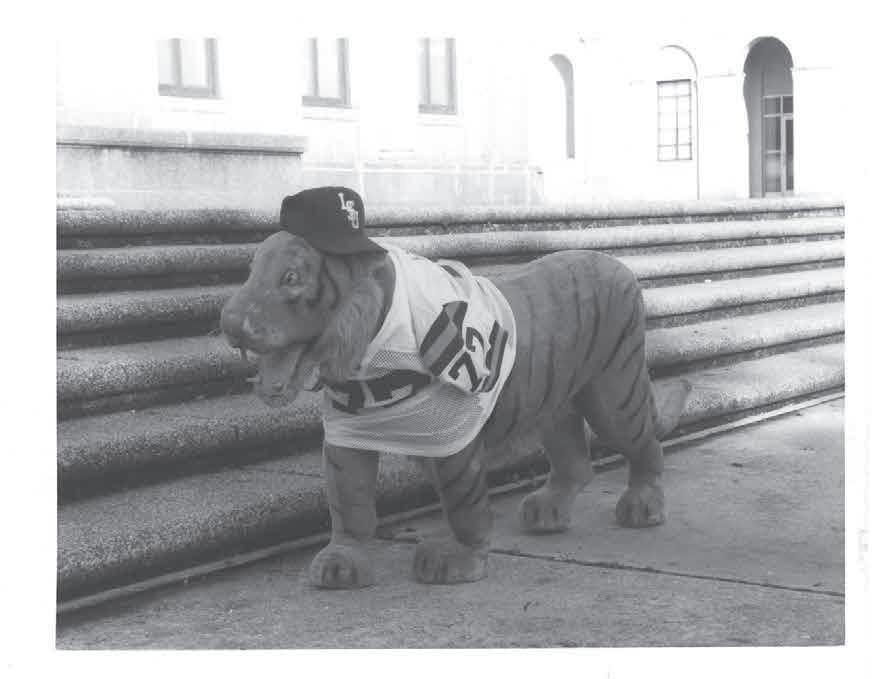
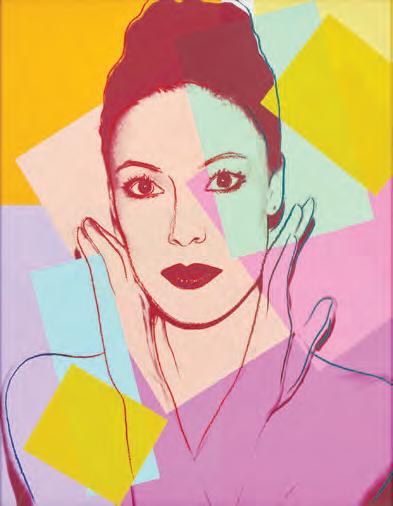
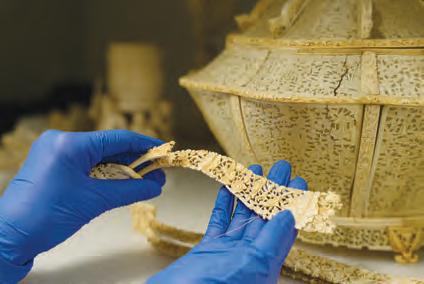
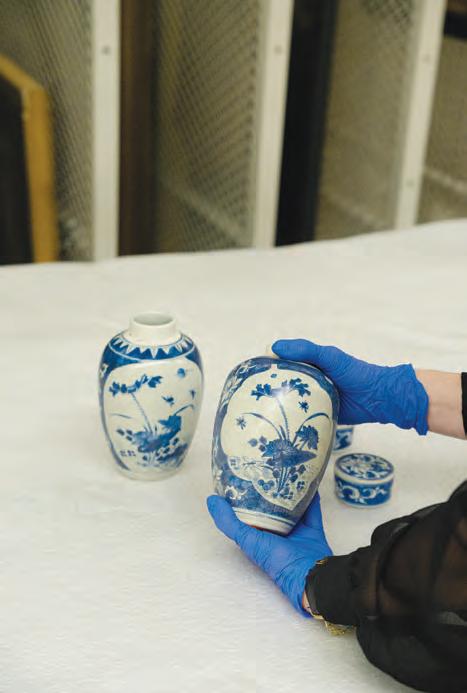
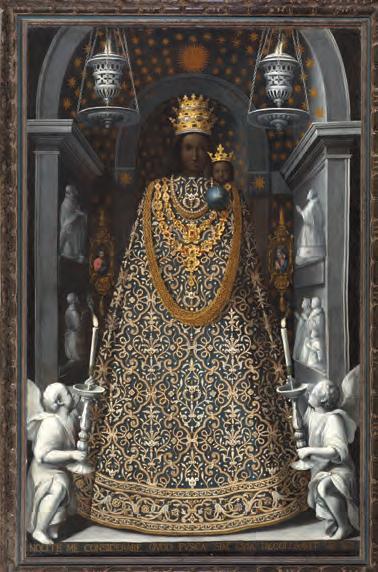
A tiger, a Warhol, and a lost Madonna by Elizabeth C. Weinstein
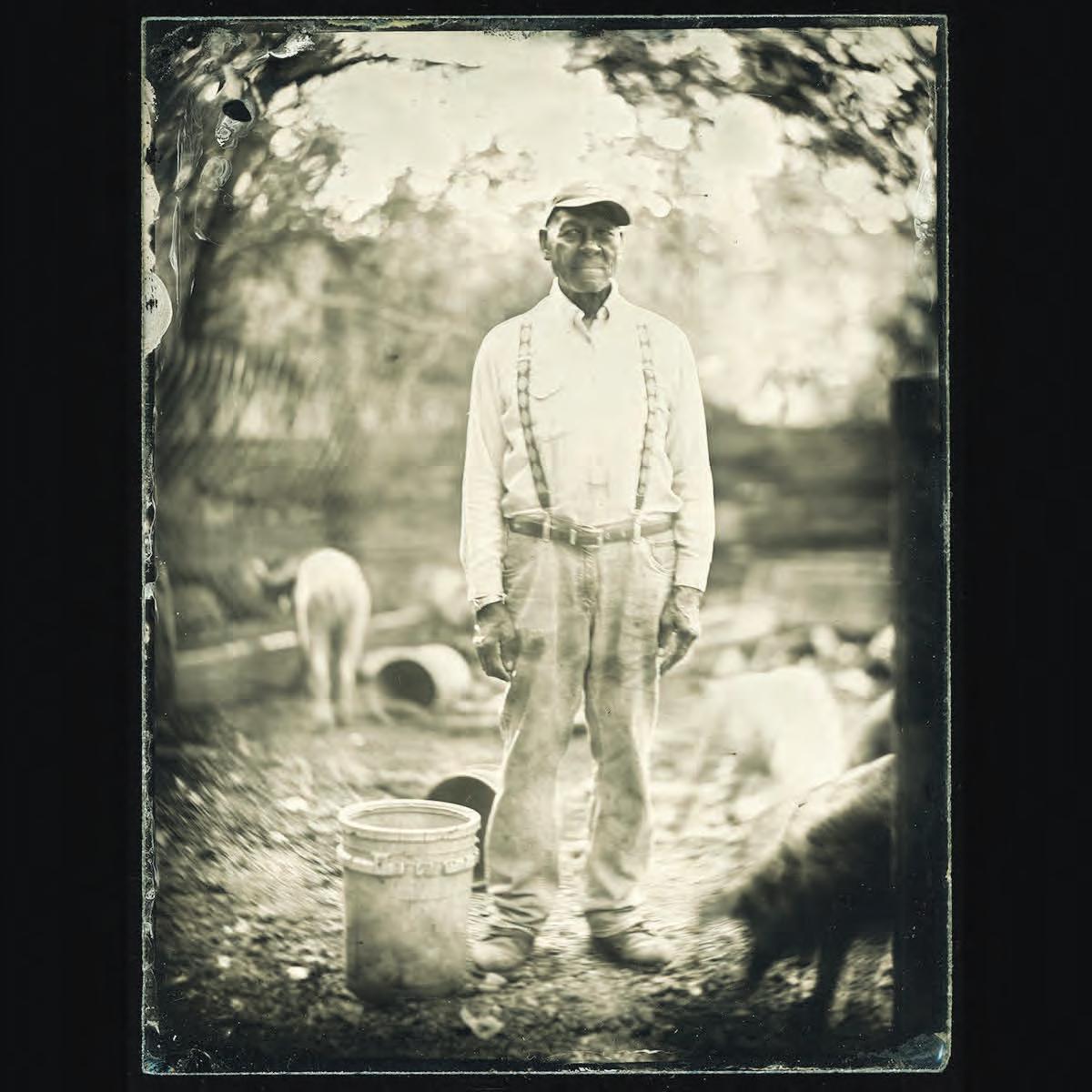
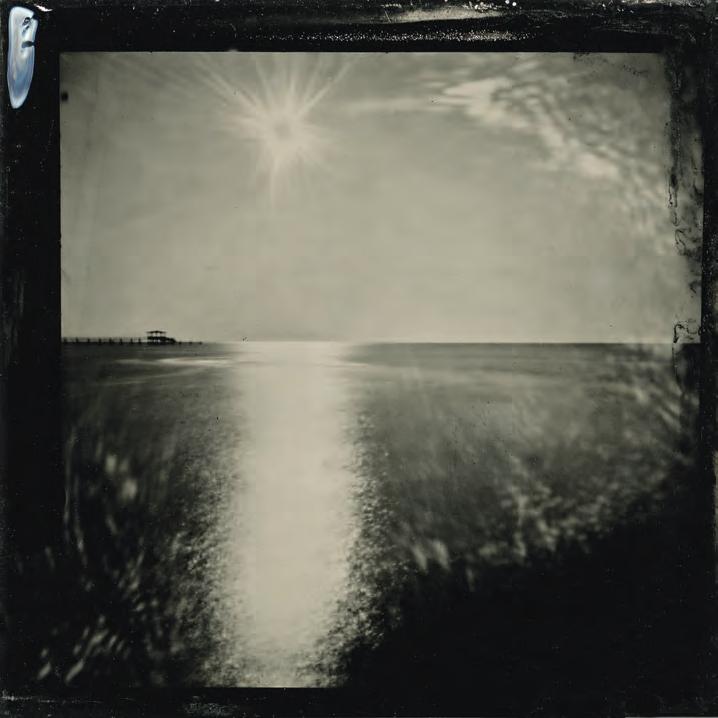
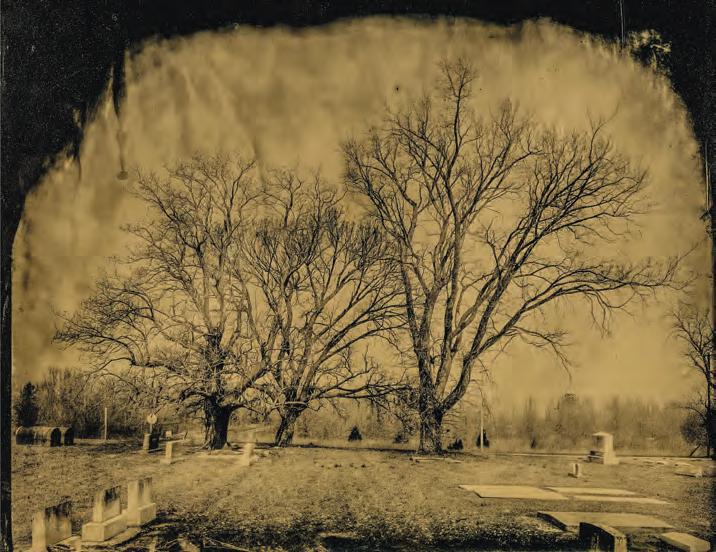
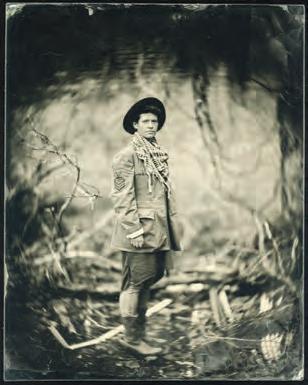
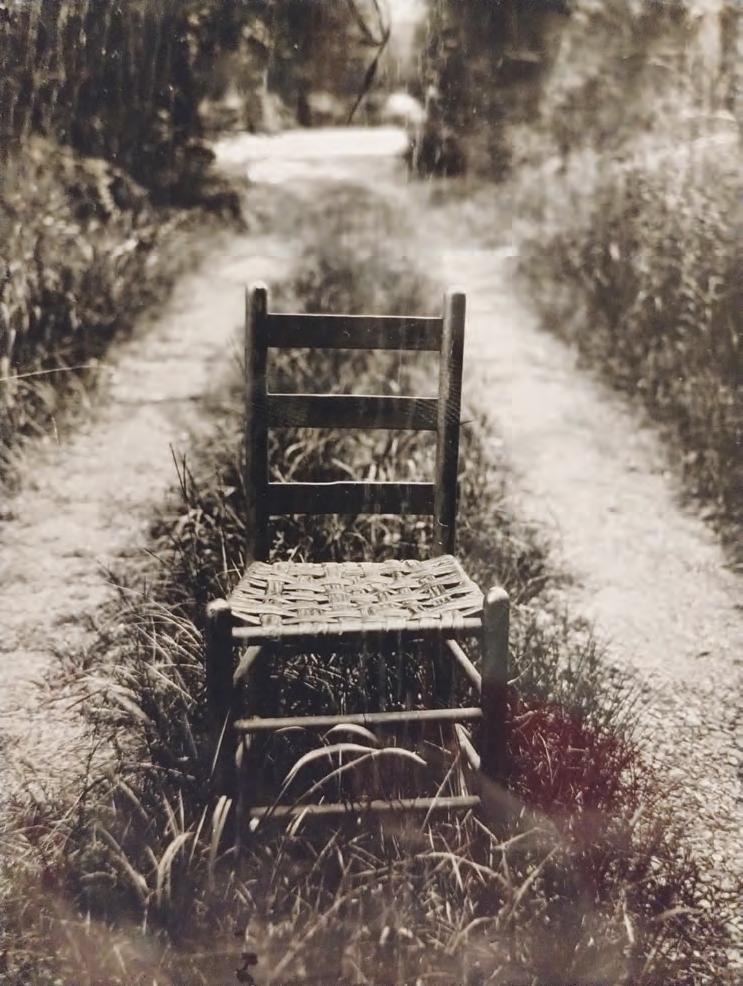
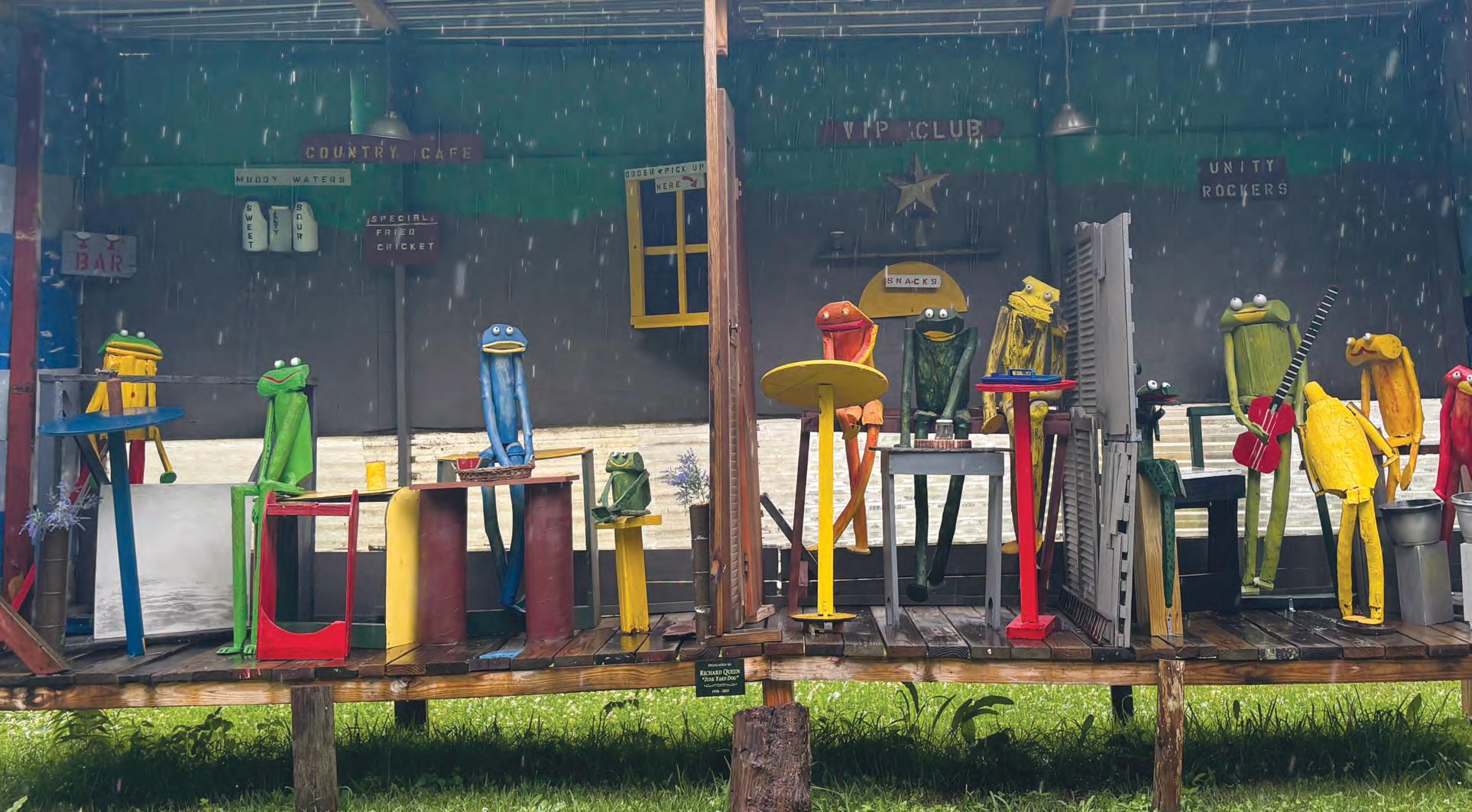
In Mississippi, tintype photographers resurrect a 19th-century craft by Marshall Blevins-DeLoach
WHERE HEAVEN MEETS EARTH
On the art of Terry Gibson by Lauren Stroh
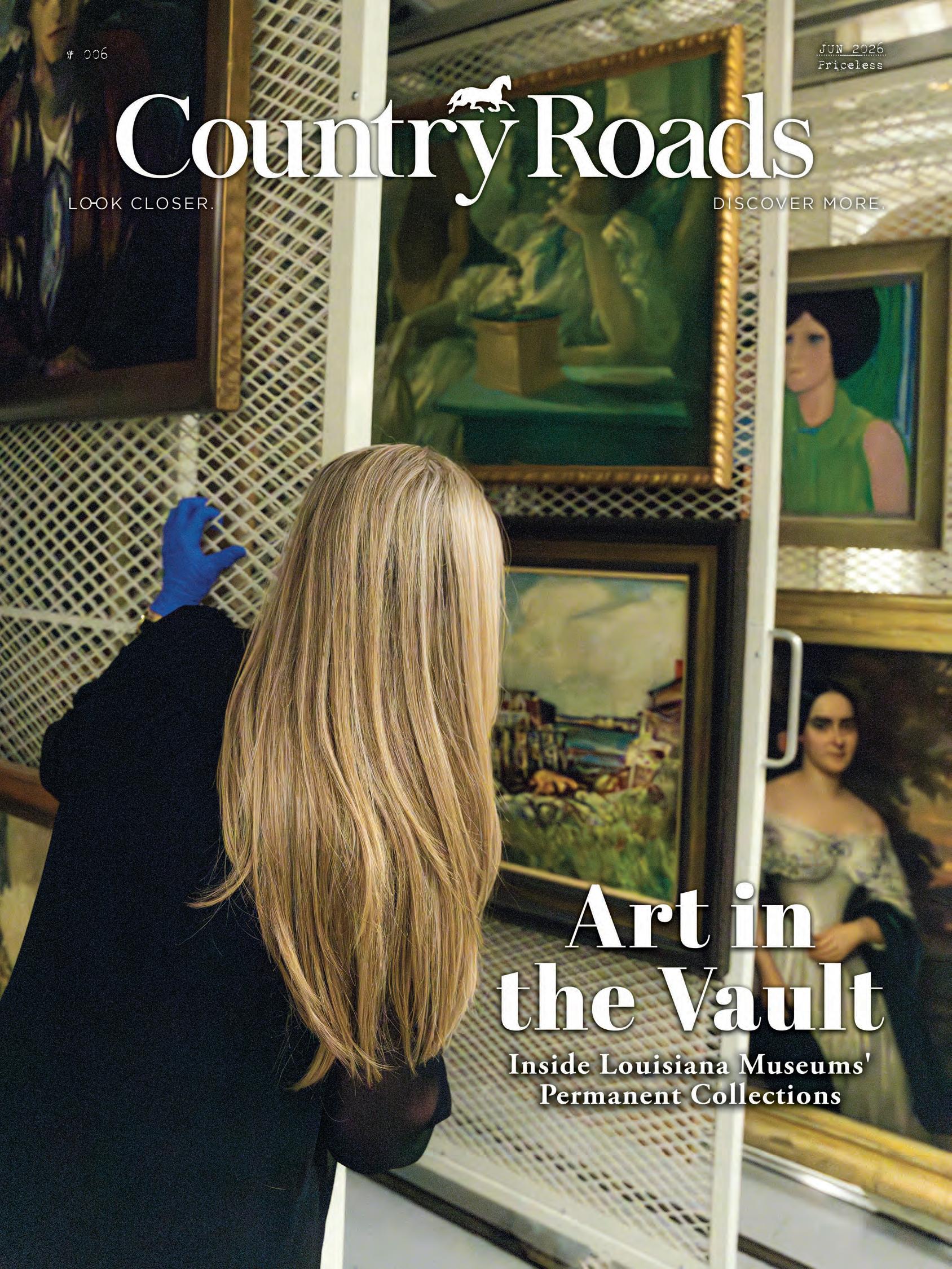
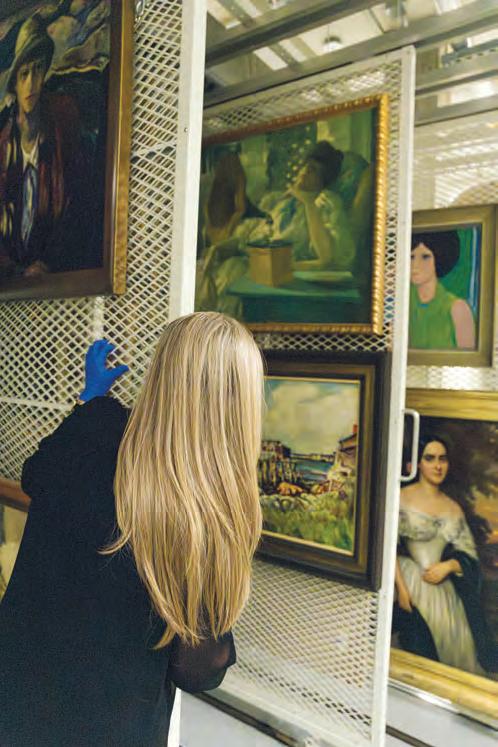
ART IN THE VAULT
Photo by Molly C. McNeal
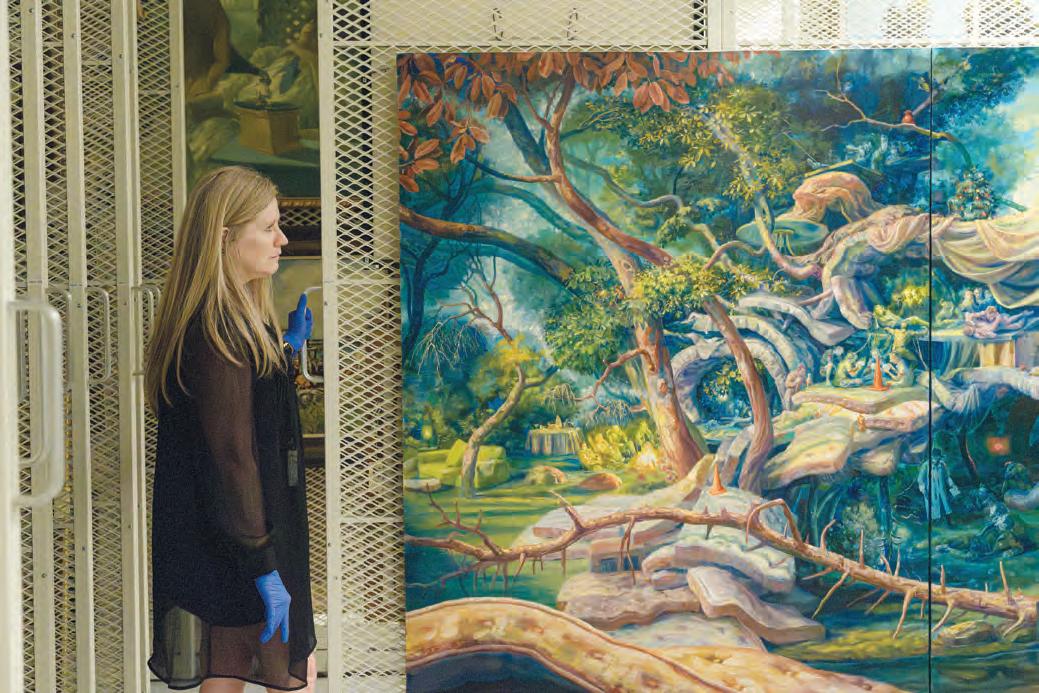
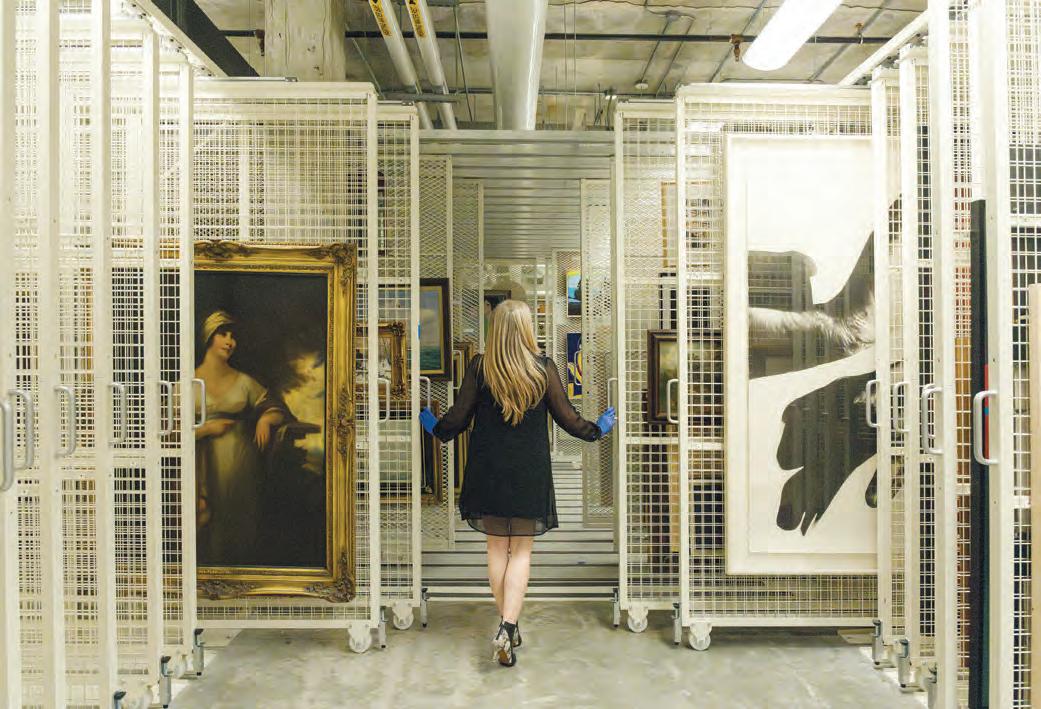
For her feature in this year's “Visual Arts” issue, writer Elizabeth C. Weinstein takes readers behind the scenes at some of Louisiana's most prestigious art institutions—the LSU Museum of Art, NOMA, and the Hilliard Art Museum—and into the carefully monitored storage rooms where artifacts of their permanent collections live when they are not displayed in the galleries. Inside are treasures: paintings by some of the world's most influential artists, fragile and ancient curiosities from lands far away, examples of craftsmanship from arts practically lost. As the Hilliard's Executive Director Molly Rowe put it, “People are surprised to learn they have access [to such treasures] right here in our community."
Read more about the fascinating artifacts held in private museum collections around the state on page 30.
SOUPÇON
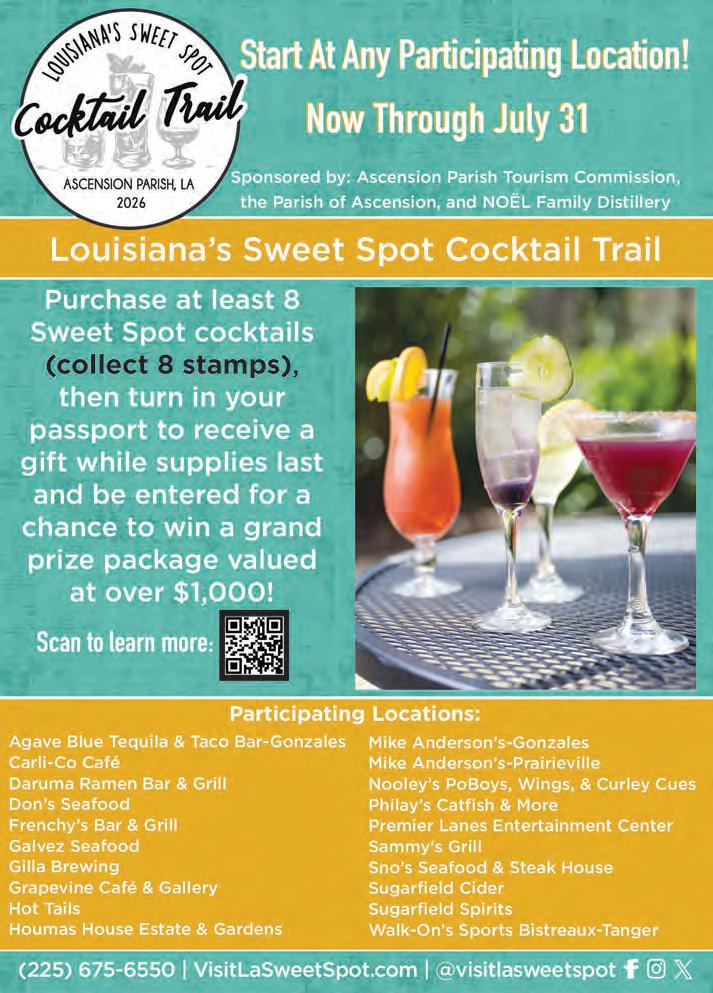
The Sweet Spot cocktail trail, Chopped Castaways & a sleep-and-eat study by CR staff
SENSE(S) & SENSIBILITY Where the body
the canvas by Jacqueline DeRobertis-Braun
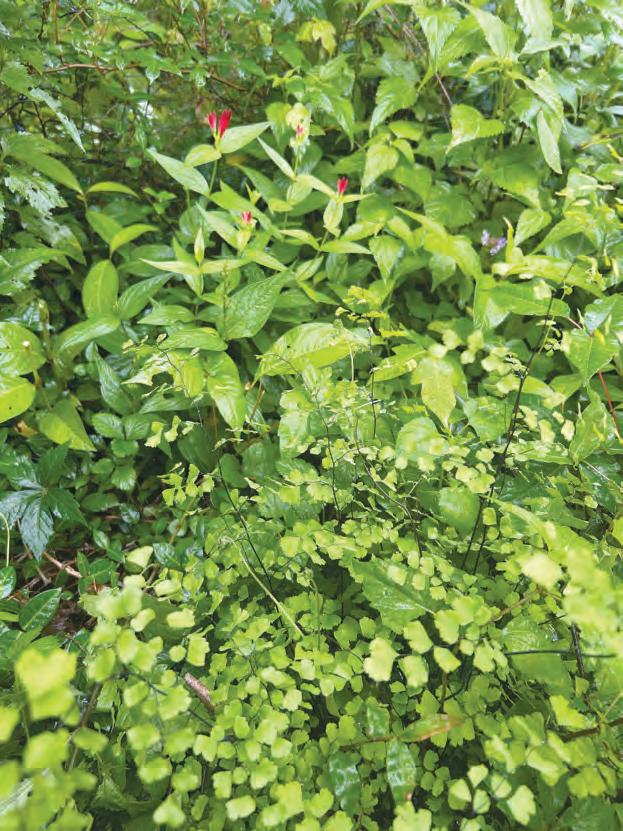
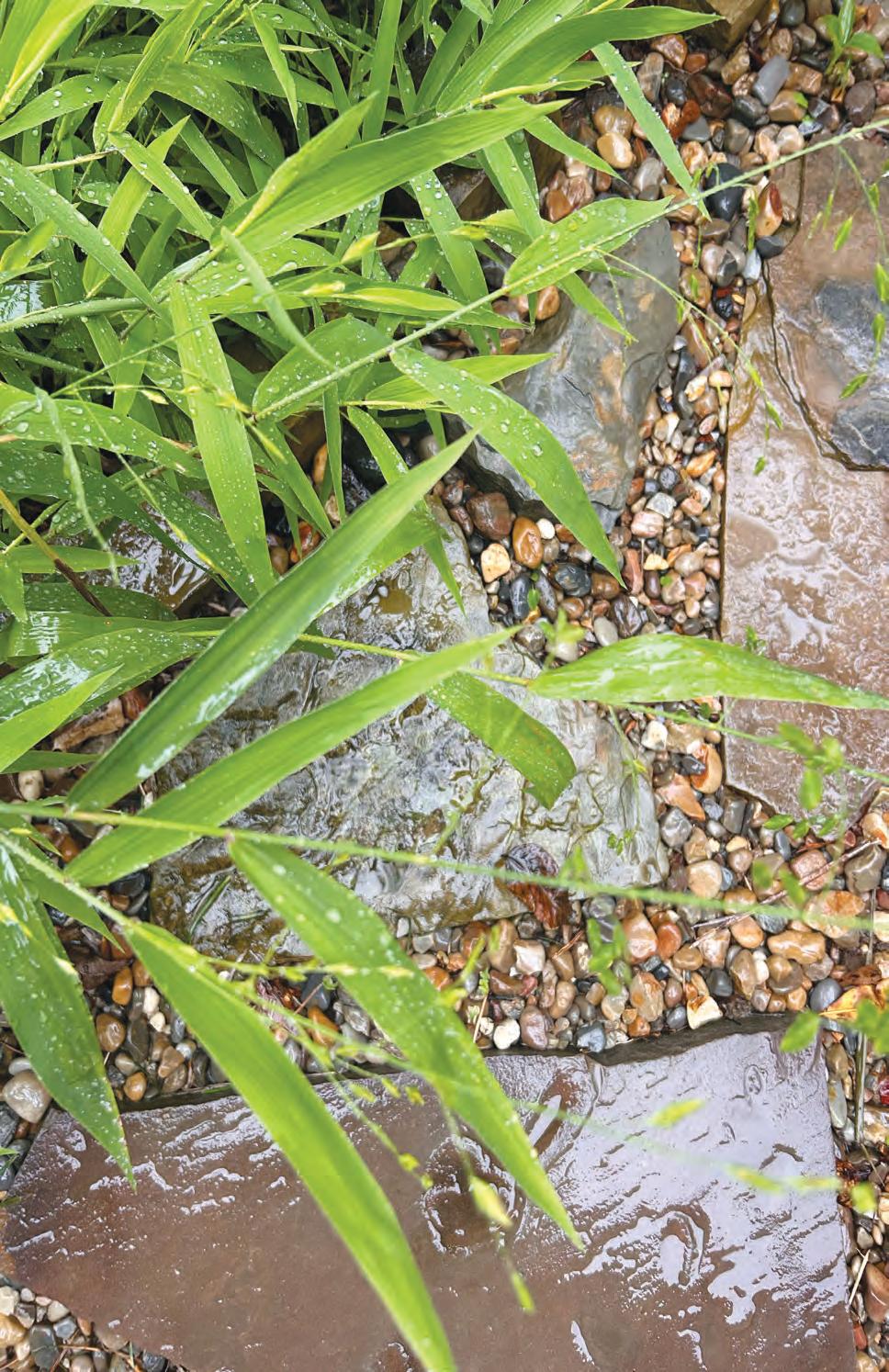
ON "PETRICHOR" And the ins & outs of water management in the garden by Jess Cole
New Orleans's
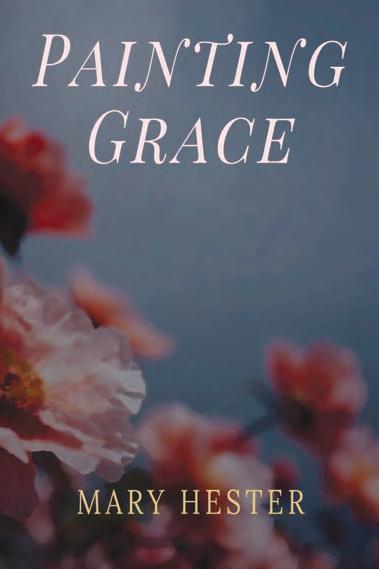
GRACE A book review by Chris Turner-Neal
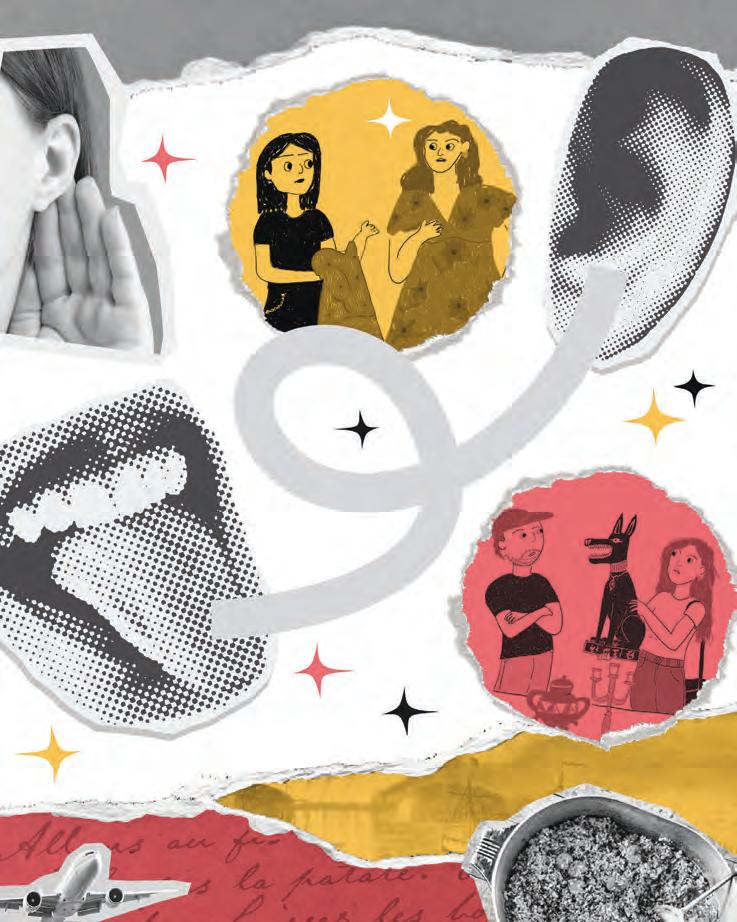
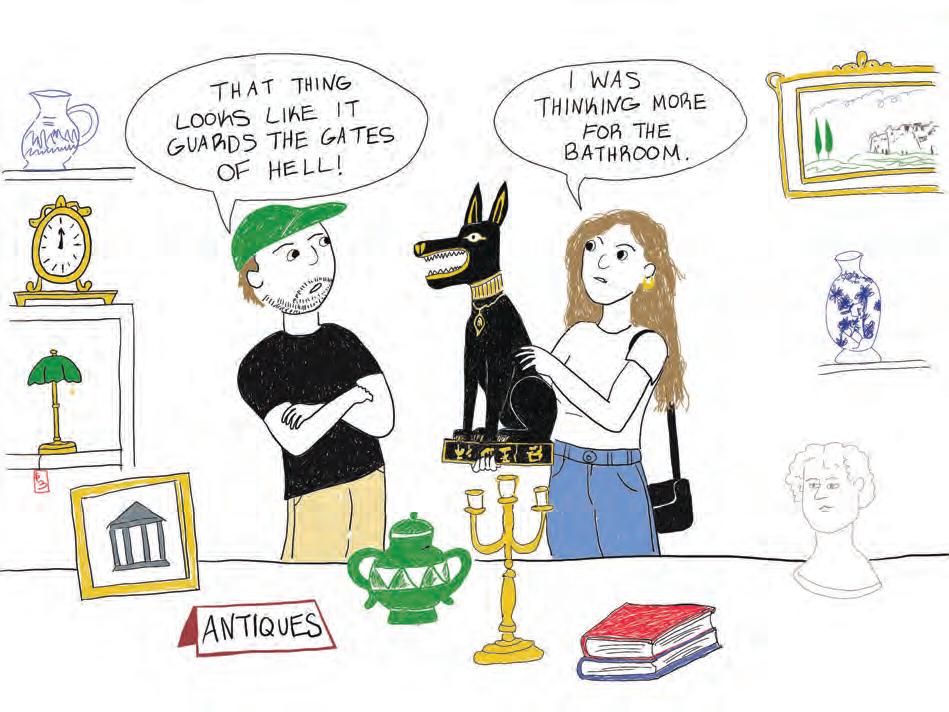
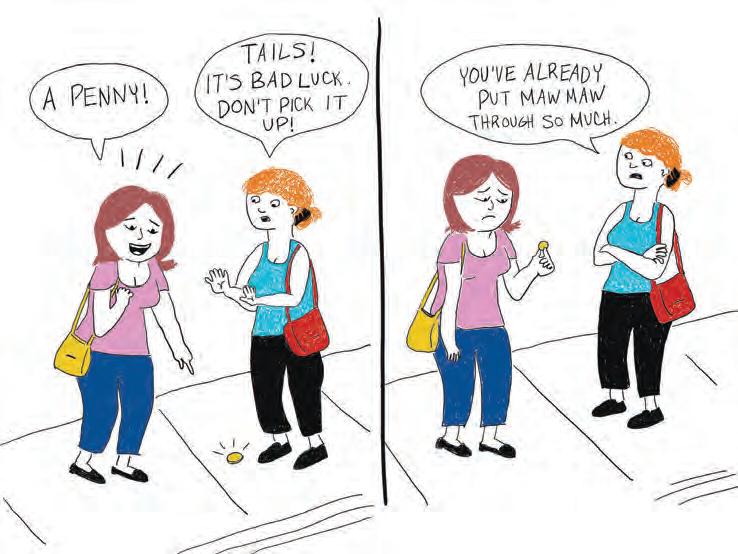
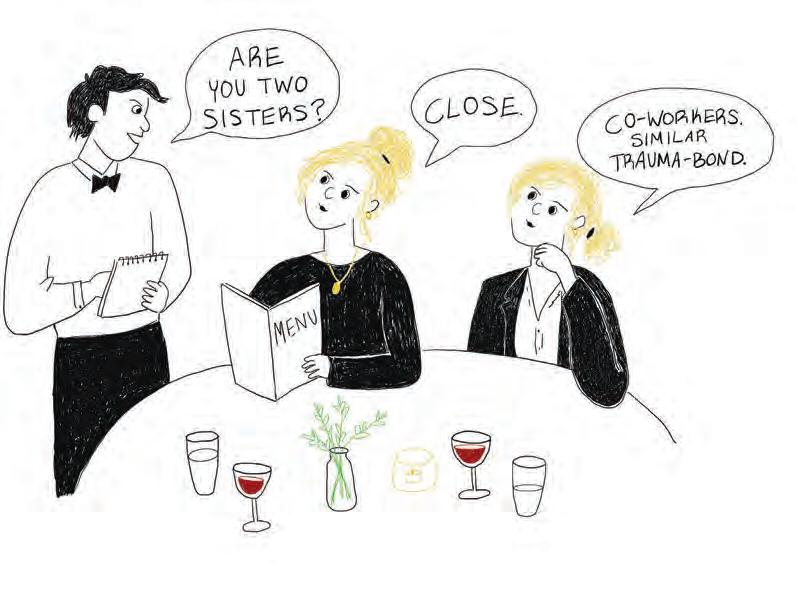
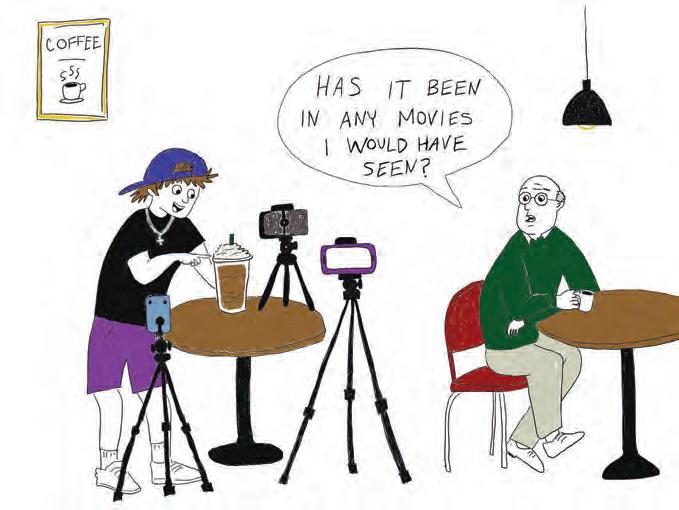
47 OVERHEARD IN LA
Real conversations collected somewhere between the levee and the drive-thru by Megan Broussard Maughan
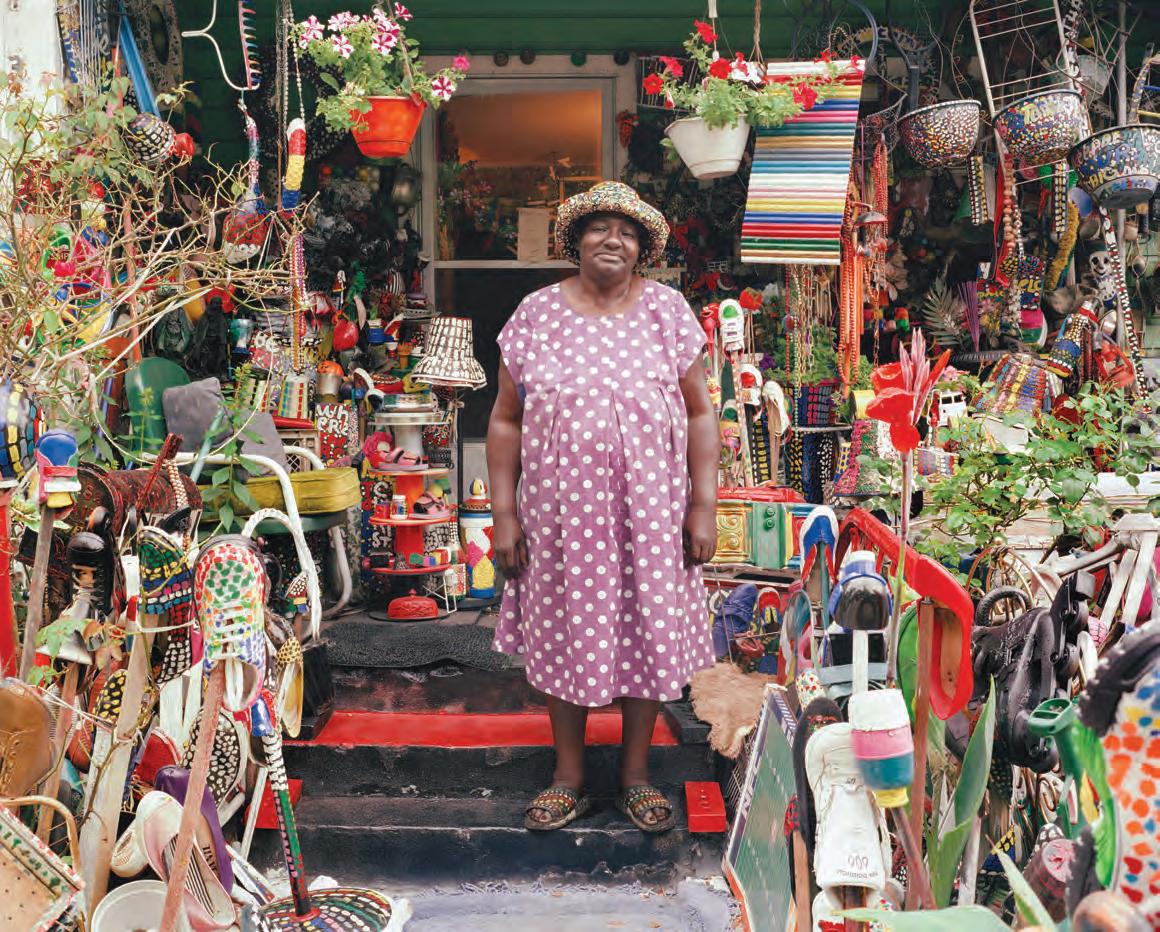
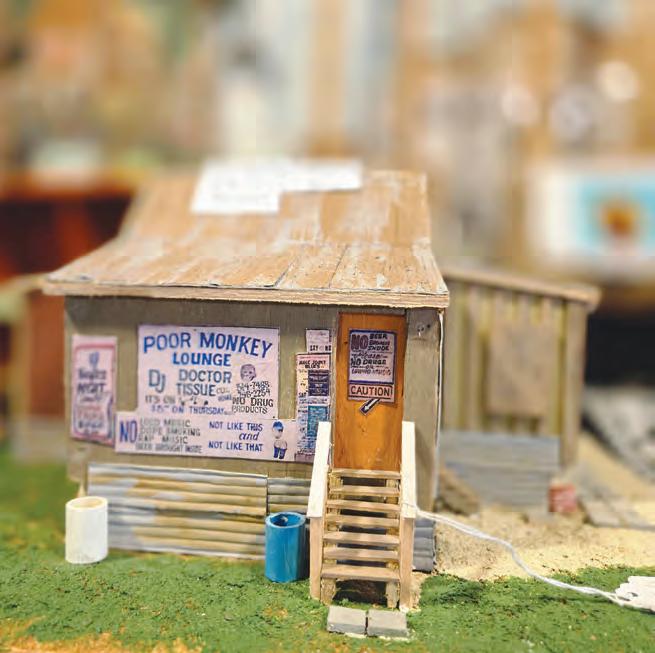
THE FOLKS ALONG THE ROAD
On Mississippi's Route 61, collecting highway saints & homemade worlds by Marshall Blevins-DeLoach
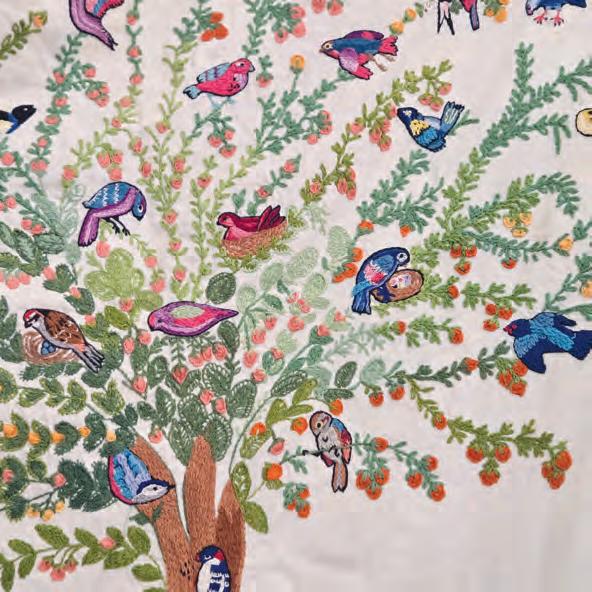
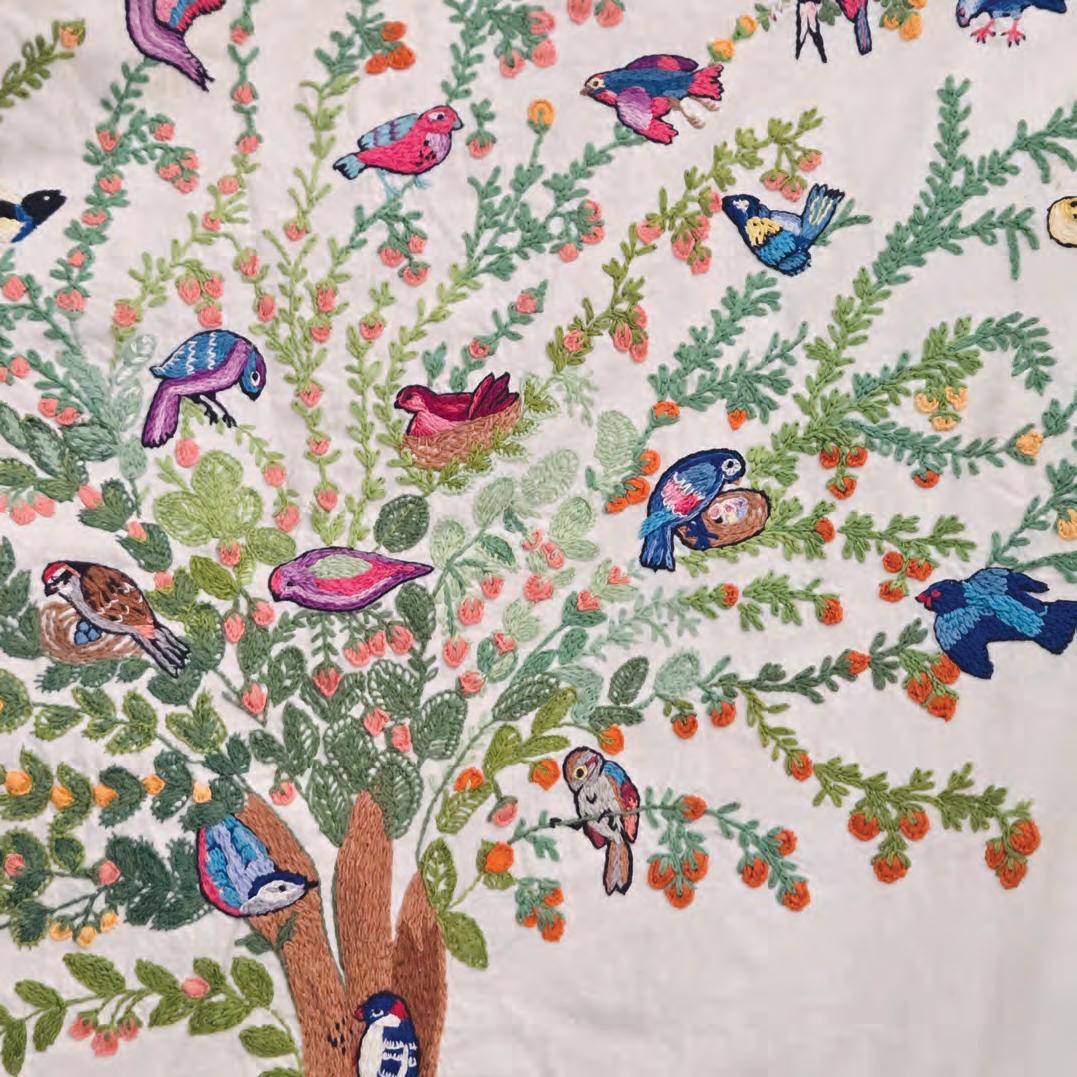
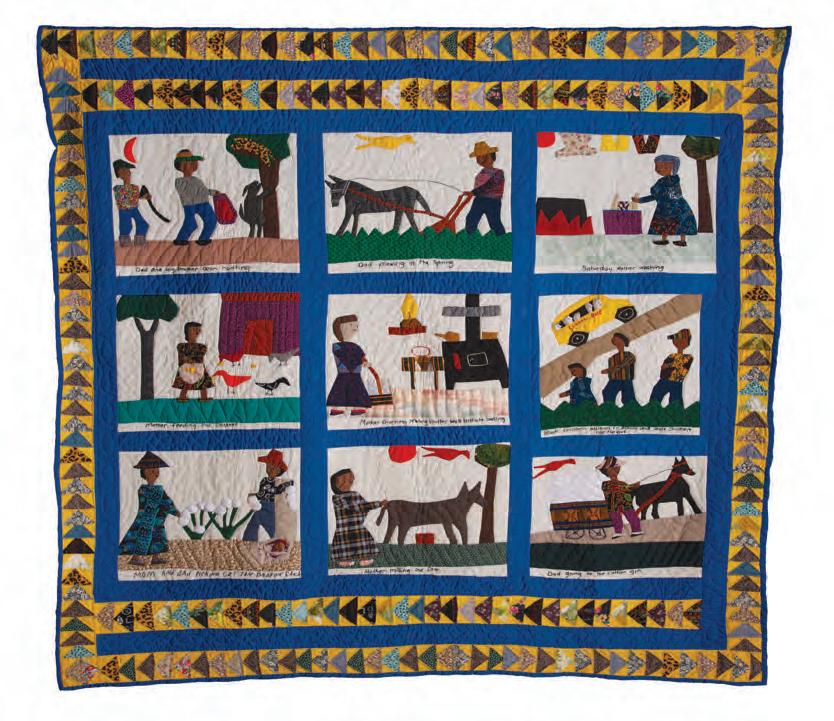
The quilts of Hystercine Rankin by William Browning
Publisher James Fox-Smith
Associate
Publisher
Ashley Fox-Smith
Managing Editor
Jordan LaHaye Fontenot
Arts & Entertainment
Editor
Jacqueline DeRobertis-Braun
Creative Director
Kourtney Zimmerman
Contributors: Marshall Blevins-DeLoach, Megan Broussard Maughan, William Browning, Jess Cole, Aimee Farnet Siegel, Lauren Stroh, Chris Turner-Neal, Elizabeth C. Weinstein
Cover Artist
Molly C. McNeal
Advertising
SALES@COUNTRYROADSMAG.COM
Sales Team
Heather Gammill, Heather Gibbons, Mary Margaret Lindsey
Operations Coordinator Molly C. McNeal
President Dorcas Woods Brown
Reflections
FROM THE PUBLISHER
My morning commute to Country Roads’ St. Francisville office takes hme past the campus of West Feliciana Parish Schools, which both our kids attended from pre-K through twelfth grade. Despite the fact that the youngest of those kids graduated in 2023, the urge to merge into the school’s drop-off line each morning remains strong—the muscle memory a daily reminder of the defining role the school played in our family life for fifteen years. Some days the fact that that chapter is so firmly in the rearview mirror still takes me by surprise. So, last month, it felt like a homecoming of sorts to be turning again into the parking lot at West Fel Elementary School, where I was to spend a week teaching a Junior Achievement course about jobs, trade, and regional resources to a class of fourth-graders.
What is Junior Achievement, you ask? It’s the question I asked during a Rotary Club meeting, which is how my name ended up on the list of volunteers in the first place. As I was to find out, Junior Achievement is a nationwide program that invites community mentors into elementary and secondary school classrooms to teach “real-world” skills like
entrepreneurship, work-readiness, and financial literacy—a laudable mission that sounds like just the sort of stuff we want the nation’s bright young minds exposed to … by trained professionals.
But for someone with zero teaching experience, whose own children stopped listening to him around the time their voices broke, it also sounded intimidating. I’ve always been rather in awe of educators, feeling that anyone with the determination, grace, and patience to devote his or her career to teaching other people’s children to be decent, productive members of society deserves respect, a salary that reflects the societal value of the role, and possibly a medal. So, notwithstanding the fact that the Junior Achievement people equip volunteers with a ready-made curriculum and piles of support materials, I experienced considerable performance anxiety as my appointed week approached. How would I get, let alone hold, the kids’ attention? How does one keep twenty-two nineyear-olds constructively occupied for hours, anyway? What if they zone out? Act out? Walk out? Stage a coup? Laugh at me?!
To compensate for my lack of teaching experience, I built my lesson plan around the twin pillars of novelty value and bribery, (i.e. the same formula I’ve been relying on during my three decades in America to date). The week before class, I stocked up on candy and pralines, and raided my supply of small, furry, clip-on
koalas, which are sold by the sackful in Australian airports, and which no expat should return from a trip to the old country without. Thus equipped and with a fair bit of trepidation, I presented myself at the door of Ms. Felder’s fourth grade classroom.
I needn’t have worried. The combination of pralines and a peculiar accent set the tone, but from the moment the first koala made its debut (in response to a correctly answered question about supply and demand), engagement was off the charts. Ten minutes into the first session, hands were shooting up with such enthusiasm I started worrying about shoulder injuries. It wasn’t long before the entire class was bristling with clipon marsupials. The kids were bright, responsive, eager to please, and set about each challenge and group activity with great enthusiasm. They also proved remarkably observant, which I discovered while using copies of this magazine to explain how our business works. Long after the pralines and candy were gone,
I’d been hoarding one last koala, leaving him perched on top of the whiteboard while telling my four-foot-tall charges that there would be a special challenge at the end of the week to decide who got him. When the last day came, I passed around copies of Country Roads’ May “Outdoors” issue (thereby lowering the median age of our reader demographic by twenty years) and announced that the first student to spot the (large, obvious) typo on the cover that nine experienced publishing professionals had somehow failed to notice during proofing, would score the koala. It took a girl named Piper about four seconds to find it, considerably increasing my confidence in the future of independent publishing.
The West Feliciana Parish Schools system is one of the jewels in St. Francisville’s crown, so it was a privilege to be invited to give something back to a school that has given our community, not to mention my own family, so much. As we were wrapping up the final session, the kids presented me with twenty-two handmade thank-you cards. Many cards featured pictures of koalas (some considerably better than I could draw), and every one strengthened my resolve to stay involved with the institutions that make our communities better for all the people who call them home, long after our own chapters are done.
TERREBONNE PARISH SENIOR AND ARTIST INVITED TO NATIONAL PORTRAIT GALLERY FOR 4-H CELEBRATION
This spring, for the first time in its history, the National 4-H Council invited young painters to come to the nation’s capital for the annual “4-H Spark Celebration”—an annual event to celebrate leadership, creativity, and innovation in America’s youth. One of the history-making exhibitors was a high school senior from Terrebonne Parish.
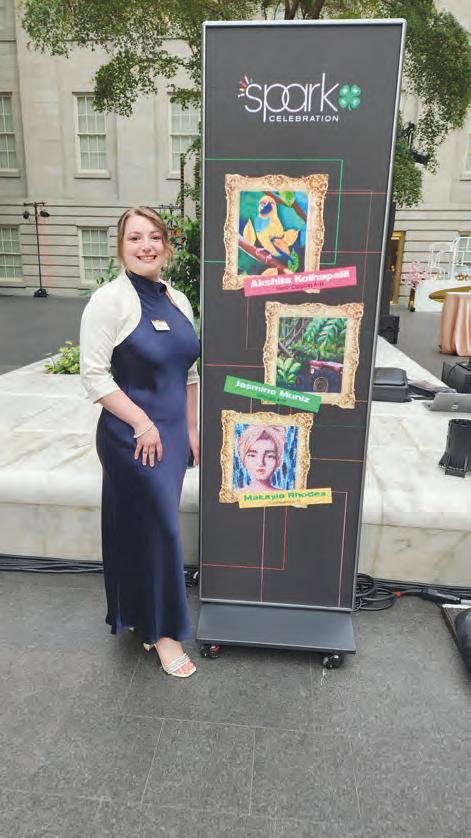
Makayla Rhodes, a Dulac native and active participant in Terrebonne Parish and Louisiana 4-H programs, was honored by the council after she submitted a painting to a national 4-H competition. In March, she attended the Celebration, which was hosted at the Smithsonian National Portrait Gallery Museum in Washington, D.C. and composed, onsite, two 5.x7 drawings inspired by the theme “America.” One of her pieces featured the American flag behind a bald eagle, while the other displayed a horse during a sunset, with a flag billowing in the background.
Rhodes joined 4-H in second grade and credits the organization with nurturing her as an artist and leader.
"Attending the Spark Celebration in D.C. was wonderful," Rhodes said. "As an artist, drawing in the Smithsonian National Portrait Gallery was a once-ina-lifetime experience. I'm very thankful to the National 4-H Council for selecting me as one of the three 4-H artists. I'm proud to have represented Louisiana and Terrebonne 4-H at this event."
Cherie Roger, an LSU AgCenter 4-H agent in Terrebonne Parish, pointed to Rhodes' opportunity to draw at the National Portrait Gallery as a "powerful example" of 4-H's influence on youth to develop confidence in meaningful settings. “Through 4-H, youth like Makayla are encouraged to explore their passions, challenge themselves and represent their community on a national stage. Makayla truly represents the creativity and leadership we strive to develop through 4-H.”
Rhodes, a homeschooled eleventh-grader, is a selftaught artist who has also been honored with awards for her work in parish, state, and national competitions. Upon graduation, she plans to attend Fletcher Technical Community College. — Jacqueline DeRobertis-Braun
A Bigger Canvas
FUELED BY COMMUNITY SUPPORT AND A MULTI-MILLION DOLLAR ECONOMIC IMPACT, BATON ROUGE GALLERY ANNOUNCES PLANS FOR ITS NEW HOME.
On the first Wednesday of every month— h“on a Wednesday evening, mind you,” hpoints out Jason Andreasen—an average of 630 people are getting into the car after the workday, braving Baton Rouge traffic, and heading to City-Brooks Community Park to peruse the latest exhibition at Baton Rouge Gallery.
“To have that kind of sustained response on a weekday
night in Baton Rouge, for primarily local art, is so exciting and invigorating,” said Andreasen, the President/ CEO of Baton Rouge Gallery. “And I should say that it is a diversity of people coming in for these opening receptions—we’ve got everybody from college students to senior citizens, different socioeconomic backgrounds, racial backgrounds. We like to say that we feel we have done a good job when we look out at a First Wednesday event and the faces in the crowd look at least somewhat representative of the city itself.”
The engagement goes beyond sheer attendance, too. A recent economic impact study found that the gallery’s nonprofit, which occupies a 2,800-square-foot building in City Park and mostly offers free programming to the public, had an economic impact in the Capital Area of more than $5.7 million between 2022 and 2024.
“For the gallery to have that level of economic impact is, I think, indicative of what the arts can do, even beyond this one organization,” said Andreasen. “But certainly, we are proud of the fact that the gallery itself can have that kind of role in making the economics of Baton Rouge better.”
It’s a moment to take advantage of, believes Andreasen—where Baton Rougeans are seeking out quality-of-life programming from the area’s increasingly rich arts community, and are ready to support it as a vital part of the city’s character. Which is why, earlier this spring, he made the official announcement that Baton Rouge Gallery—which has exhibited the work of local professional artists since 1956—will soon be moving into a brand new, state-of-the-art facility.
Since 1984, the gallery has been housed in the circa-1927 pool house that once accompanied City Park’s segregated pool, which closed in 1963 following the historic efforts of activists during the Baton Rouge SwimIn. “The reality is, we’re working with such a small space, and this building we’ve been so fortunate to call home was not built to do the things we’re asking it to do,” said Andreasen.
Though still in the early stages, plans are in the works—in coordination with the Recreation and Park Commission for East Baton Rouge (BREC)—for the construction of a contemporary art center located adjacent to the gallery’s current location. The new facility will offer much more space for the Gallery to host more and larger events, expand its capacity for artist memberships, and also provide dedicated space for special, touring exhibitions of work from artists outside the region. The project’s design will be led by New Orleans architects at NANO and Louisiana native Gabriel Smith. Smith has extensive experience working on some of the most respected museums in the country, including the Corning Museum of Glass in New York, Glenstone in Maryland, and the North Carolina Museum of Art.
“All that to say, we are endeavoring to bring a really high quality level of design to the building,” said Andreasen. “And we’re doing it by bringing in world-class talent, with a local flair.”
Be among the first to know about upcoming developments on Baton Rouge Gallery’s new home by joining the gallery’s e-newsletter at batonrougegallery.org.
—Jordan LaHaye Fontenot
Makayla Rhodes at the National Portrait Gallery in Washington, D.C., for the 4-H Spark Celebration. Photo provided by Reba Rhodes.
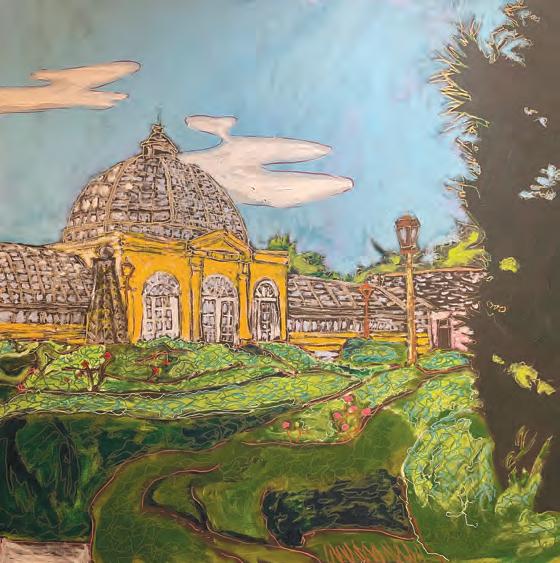
John Isiah Walton. "Botanical Gardens." Walton's work will be on display throughout the month of June at Baton Rouge Gallery. Image courtesy of Baton Rouge Gallery.
In Excellent Company
SIX LOUISIANA CREATIVES JOIN THE 101ST CLASS OF GUGGENHEIM FELLOWS
Earlier this spring, the Board of Trustees of the John Simon Guggenheim Memorial hFoundation announced its 101st class of h2026 Guggenheim Fellows. Among the 223 distinguished individuals joining the ranks of legacy honorees that include e.e. cummings, Zora Neale Hurston, Rachel Carson, and James Baldwin are six from Louisiana—all recognized for their work in the arts and humanities. One of the most prestigious awards available to artists and scholars in North America since its founding in 1925, the Fellowship also bestows monetary stipends that support the independent work of its fellows under “the freest possible conditions.”
award will support his work-in-progress, a literary satire set in New Orleans, titled Liar’s Bouquet.
“It’s a great feeling to know that my writing is receiving the kind of attention and support that will permit me to move forward with new confidence,” said Ruffin. “I’m extremely thankful to my Louisiana community, without whom this recognition would not be possible.”
Maurice Ruffin, a professor of creative writing in the LSU Department of English, was recognized for his remarkable career as a novelist and short story writer. The
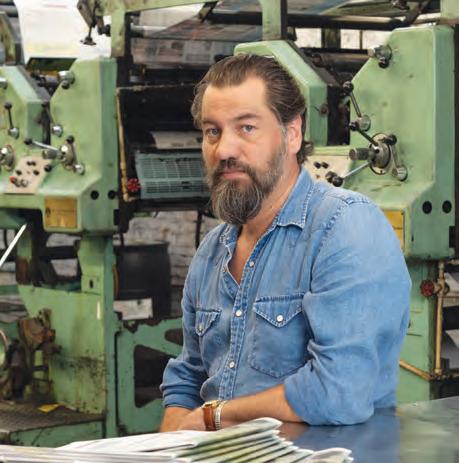
Also from LSU, art/photography professor Jeremiah Ariaz received this year’s distinguished Robert Frank Fellowship in Photography. Already widely recognized across the South for his seminal Louisiana Trail Riders photographic series, he is now working on a project documenting modern-day newspaper offices in rural Kansas, Ariaz’s home state, as the vital industry faces a trajectory of decline. “The fellowship is validation for years of hard work,” said Ariaz. “It can be difficult for artworks
made in and about rural America to reach a wider audience. The Guggenheim Fellowship is a platform for recognition. I’m grateful for the funding to complete my project on community newspapers and their role in our democracy.”
A recent transplant to Louisiana, LaMont Hamilton is an interdisciplinary artist based in New Orleans, who the Guggenheim Foundation recognized in the category of fine arts for his work in installation art, performance art, poetry, and more.
“There are numerous things I could say regarding the tangible and potential implications of such an award and its impact on my artistic journey,” said Hamilton. “However, the true meaning is intangible, un-forecastable. It’s the internal feeling of being thought of alongside so many great artists I’ve admired—ancestors whose work has opened my imagination, elders whose guidance has sharpened my discipline, and contemporaries who activate all that which is deeply felt, privately and collectively, in our time.”
Also honored as 2026 Guggenheim Fellows this year are poets Raymond Antrobus and Rickey Laurentiis, as well as photographer Harlan Bozeman—all based in New Orleans. Learn more about the Guggenheim Fellowship and its fellows at gf.org.
—Jordan LaHaye Fontenot
From left to right: 2026 Guggenheim Fellows from Louisiana—Maurice Carlos Ruffin, Jeremiah Ariaz, LaMont Hamilton. `
JUNE 2026
FROM WARHOL TO MICHALOPOULOS—FINE ART BECKONS THIS SUMMER IN GALLERIES ACROSS THE REGION •
UNTIL JUN 6th
HISTORICAL EXHIBITIONS
"JAPANESE WAR BRIDES: ACROSS A WIDE DIVIDE"
Baton Rouge, Louisiana
Japanese War Brides: Across a Wide Divide, on display at Louisiana's Old State Capitol, tells the nuanced and extraordinary story of more than 45,000 Japanese women who married American servicemen and immigrated to the United States following World War II. The exhibition explores how these women, who had been perceived and dehumanized as the enemy during the war, confronted—and defied—societal, racial, and gender norms and barriers to transform and expand American identity. Japanese War Brides is presented in a collaboration between the Smithsonian Institution Traveling Exhibition Service, the National Museum of American History, and War Bride Experience, Inc. louisianaoldstatecapitol.org. 1
UNTIL JUN 30th
VISUAL ARTS
BRADLEY SABIN AT CALLAN CONTEMPORARY
New Orleans, Louisiana
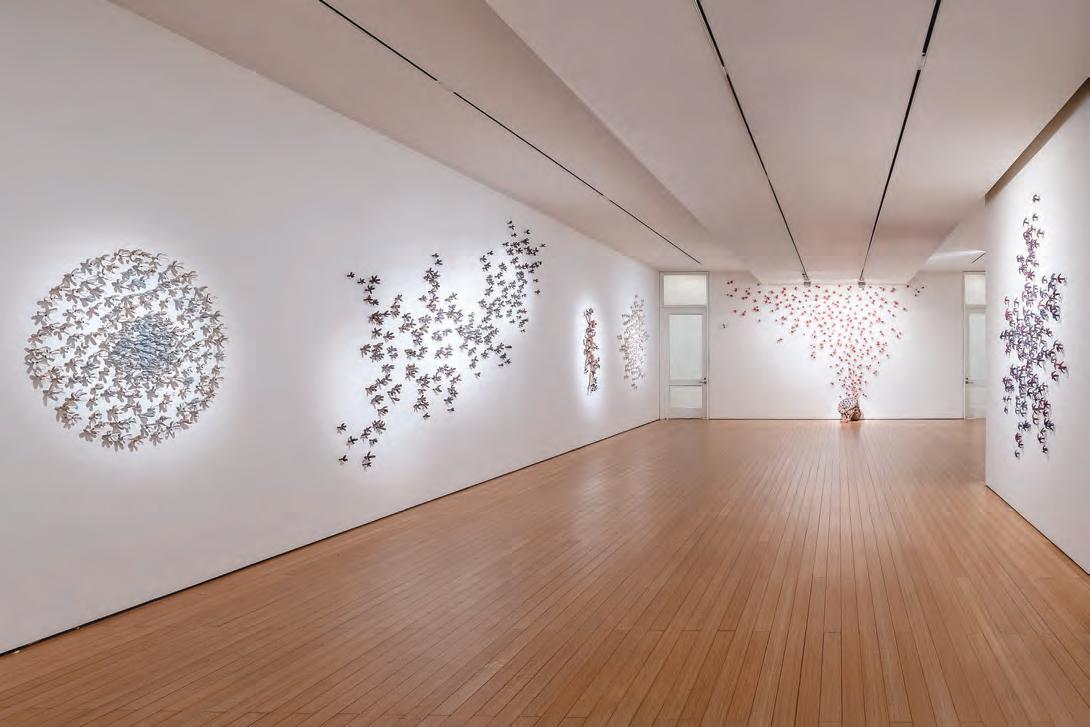
Callan Contemporary presents New Orleans based artist Bradley Sabin in
a new, solo exhibition of sculptures and floral wall installations. The show emphasizes his exploration of material, structure, and organic form as an ever-evolving inquiry. Through his compositions, Sabin questions the relationship between humanity and the natural world. callancontemporary.com. 1
UNTIL JUL 11th
AFRICAN AMERICAN ART
"FROM STONO TO NOW: THE FIRE THIS TIME"
Biloxi, Mississippi
From Stono to Now: The Fire This Time, on view at The Ohr-O’Keefe Museum of Art in the Beau Rivage Gallery of African American Art, delves into the proud legacy of resistance, creativity, and cultural identity across generations of African American voices. Paintings, mixed media, and other visual forms unite to tell powerful stories of history, cultural memory, and the vital urgency of ongoging contemporary narratives—from the Stono Rebellion through the Civil Rights Movement. The exhibition features works by both historically significant and contemporary artists, and is presented in partnership with the Black Art in America Foundation. georgeohr.org. 1
UNTIL JUL 12th
PHOTOGRAPHY
"HERMAN LEONARD: IMAGES OF JAZZ"
New Orleans, Louisiana
Peruse the work of Herman Leonard— considered one of the most important photographers of jazz musicians after World War II—at the Ogden Museum of Southern Art in New Orleans. Leonard was born in Pennsylvania in 1923 and eventually, after a winding journey, moved to New Orleans in 1991. He spent fifteen years living in the city, during which his fame grew with several exhibitions of his work in the French Quarter. ogdenmuseum.org. 1
UNTIL JUL 18th
VISUAL ARTS
"GINA PHILLIPS | BRIGHT, DARK, DIM, AND ROGUE"
Biloxi, Mississippi
The Ohr-O’Keefe Museum of Art presents Gina Phillips | Bright, Dark, Dim, and Rogue, an exhibition spanning approximately fifteen years of of Phillips's work and delving into cycles of visibility, disappearance, and return. Phillips, a mixed media narrative artist, is known for her art's expressive quality and thematic explorations of magical realism, tragicomedy, landscape, and transformation. georgeohr.org. 1
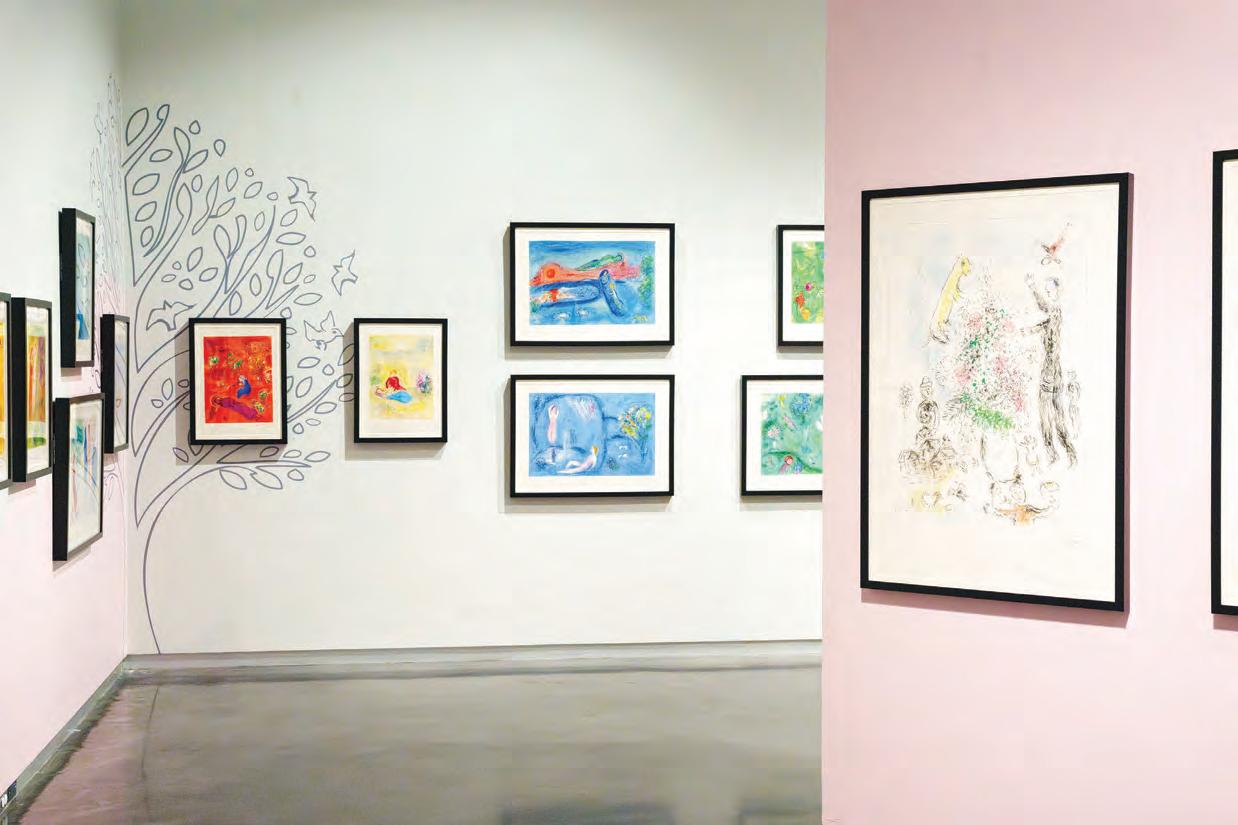
Callan Contemporary in New Orleans hosts a solo exhibition of work by Bradley Sabin, featuring delicate floral wall installations. The exhibition runs until June 30. Photo courtesy of Callan Contemporary. Learn more on page 11.
Events
Beginning June 1st
UNTIL JUL 19th
VISUAL ARTS
"THEN, AND NOW, AND ALWAYS: THE ART OF NICK BUSTAMANTE"
Baton Rouge, Louisiana
Then, and Now, and Always: The Art of Nick Bustamante, presented by the Louisiana Art & Science Museum, explores Bustamante's career-long inquiry into memory, identity, and inheritance. Through his art, Bustamante explores the progression of non-linear time, probing ancestral trauma, familial legacy, and other intimacies as co-existing with beauty, terror, presence, and absence. The paintings on display undergo a process of layering, including scumbling, glazing, and selective excavation. lasm.org. 1
UNTIL JUL 19th
VISUAL ARTS
"VICINAL VISIONS" AT THE OGDEN
New Orleans, Louisiana
The Ogden Museum of Southern Art presents works of Dusti Bongé, Ida Kohlmeyer, and Dorothy Hood from its
extensive collection. In this exhibition, see how each Southern woman pushed the boundaries of artistic abstraction to develop their own unique visual languages. The works capture a certain time period of experimentation and Modernist sensibilities—all expressed through the prism of each individual artist's place, identity, and interests. ogdenmuseum.org. 1
UNTIL JUL 19th
AFRICAN AMERICAN ART "IN THE BELOVED" AT THE OGDEN
New Orleans, Louisiana
Through In the Beloved, an exhibition of works by Alexis McGrigg, the artist explores—and figures—Blackness as both a physical and metaphysical space. The show delves into themes of abstraction and spiritual inquiry, influenced by the wide-ranging muses of dance, film, literature and spiritual philosophy—in particular the writings of Octavia Butler, Malidoma Patrice Somé, Gary Zukav, and Christina Lonsdale. ogdenmuseum.org. 1
UNTIL JUL 25th
VISUAL ARTS "NERVESCAPE" AT THE HILLIARD
Lafayette, Louisiana
In New York-based Icelandic artist Hrafnhildur Arnardóttir's Nervescape, the artist transforms the Hilliard Art Museum into a fictional forest. Resplendent in blues, pinks, and yellows, the forest is comprised of thousands of bundles of synthetic hair resembling nerve cells and will serve as a backdrop for
Hilliard events throughout its year-long installation. hilliardartmuseum.org. 1
UNTIL AUG 15th
VISUAL ARTS "GULF STREAMS: ATCHAFALAYA REMIXED"
Lafayette, Louisiana
This multidisciplinary exhibition draws on field recordings taken in the Atchafalaya Basin by Dr. Earl Robicheaux, with contemporary
Gina Phillips | Bright, Dark, Dim, and Rogue, and From Stono to Now: The Fire This Time
Photo courtesy of The Ohr-O'Keefe Museum of Art. Learn more on page 11.
musicians and visual artists responding creatively in their own disciplines to the inspiration of the natural environment. Participating musicians include Keith Frank, The Babineaux Sisters, Danny Devillier, and Trey Boudreaux. Visual artists with works on display include, Edgar Cano, Dan DiCaprio, Tanner Menard, Martin Payton, Olivia Perillo, and Dr. Earl Robicheaux. hilliardartmuseum.org. 1
UNTIL AUG 15th
PHOTOGRAPHY
"ANDY WARHOL: PLUS ONE" AT THE HILLIARD
Lafayette, Louisiana
Exploring the work of twentieth century icon Andy Warhol through a new lens (quite literally), Plus One, on exhibition at the Hilliard Art Museum, considers the artist's relationships and inner circle as documented through his photography practice. How does the presence of a "plus one" affect how a moment is captured or remembered? Viewers are invited into an observational, occasionally voyeuristic journey through Warhol's life, probing the significance of who is granted space in a memory or moment. The show features photographs of Warhol's that were donated to the Hilliard's collection by the
Andy Warhol Foundation for the Visual Arts' Photographic Legacy Project. 1
Read more about the Hilliard's collection of Warhols on page 30.
UNTIL AUG 15th
VISUAL ARTS
RACHEL LIBESKIND: "IF THERE BE NOTHING NEW, BUT THAT WHICH IS"
Lafayette, Louisiana
In a fast-paced, over-stimulated, deeply online world, Rachel Libeskind's largescale works center small movements, finite experiences, and passive moments that make visible the quiet, slow bliss of daily life. If There Be Nothing New, But That Which Is, on display at the Hilliard Art Museum, is inspired by philosopher Jacques Lacan’s theories on visual culture and time exploring mundane moments through collage and printmaking. hilliardartmuseum.org. 1
UNTIL AUG 30th
PHOTOGRAPHY
"I AM THE FACE"
New Orleans, Louisiana
I Am the Face draws exclusively from the Ogden Museum of Southern Art's permanent collection and serves as a meditation on portraiture over the decades—specifically through
photography. Portraiture has transformed into a study of the human condition, the relationship between photographer and subject, and an interrogation of the power of the camera. ogdenmuseum.org. 1
UNTIL SEP 27th
ARTISTIC ICONS
"MICHALOPOULOS: MYSTICAL EXPRESSIONISM"
New Orleans, Louisiana
The Cabildo hosts an exhibition celebrating and exploring the prolific forty-year career of artist James Michalopoulos and his efforts to immortalize New Orleans's vernacular architecture in his work. From depictions of Creole cottages and ornate Victorian facades, to modest shotguns and iconic neighborhoods, Michalopoulos's pieces burst with color, energy, and life, marked with layers of thick impasto paint. The exhibition features more than sixty paintings. louisianastatemuseum.org. 1
UNTIL OCT 11th
ARTISTIC ICONS "ROBERT GORDY: OUTSIDE THE MAINSTREAM"
New Orleans, Louisiana
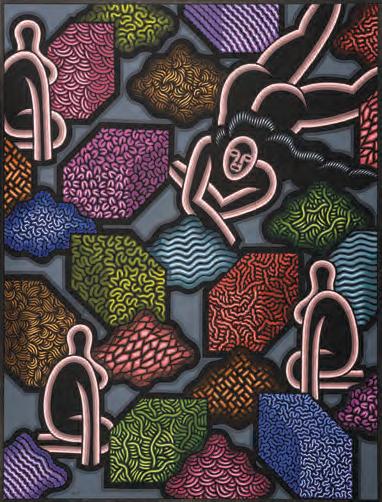
NOMA presents an exhibition by Louisiana native Robert Gordy (1933–86), an artist who preferred to work "outside the mainstream" and is known
nationally for his mastery of space, line, and color—and eventually, primarily for his striking monotypes. After graduating from LSU with his MFA in the 1950s, Gordy lived internationally before settling in New Orleans in 1964. His influential works were exhibited at galleries in New York, Chicago, and New Orleans. The exhibition draws from NOMA's permanent collection, the archive of the Robert Gordy estate, and loans from private collections. noma.org. 1
Read more about NOMA's collection of Gordy's work on page 30.
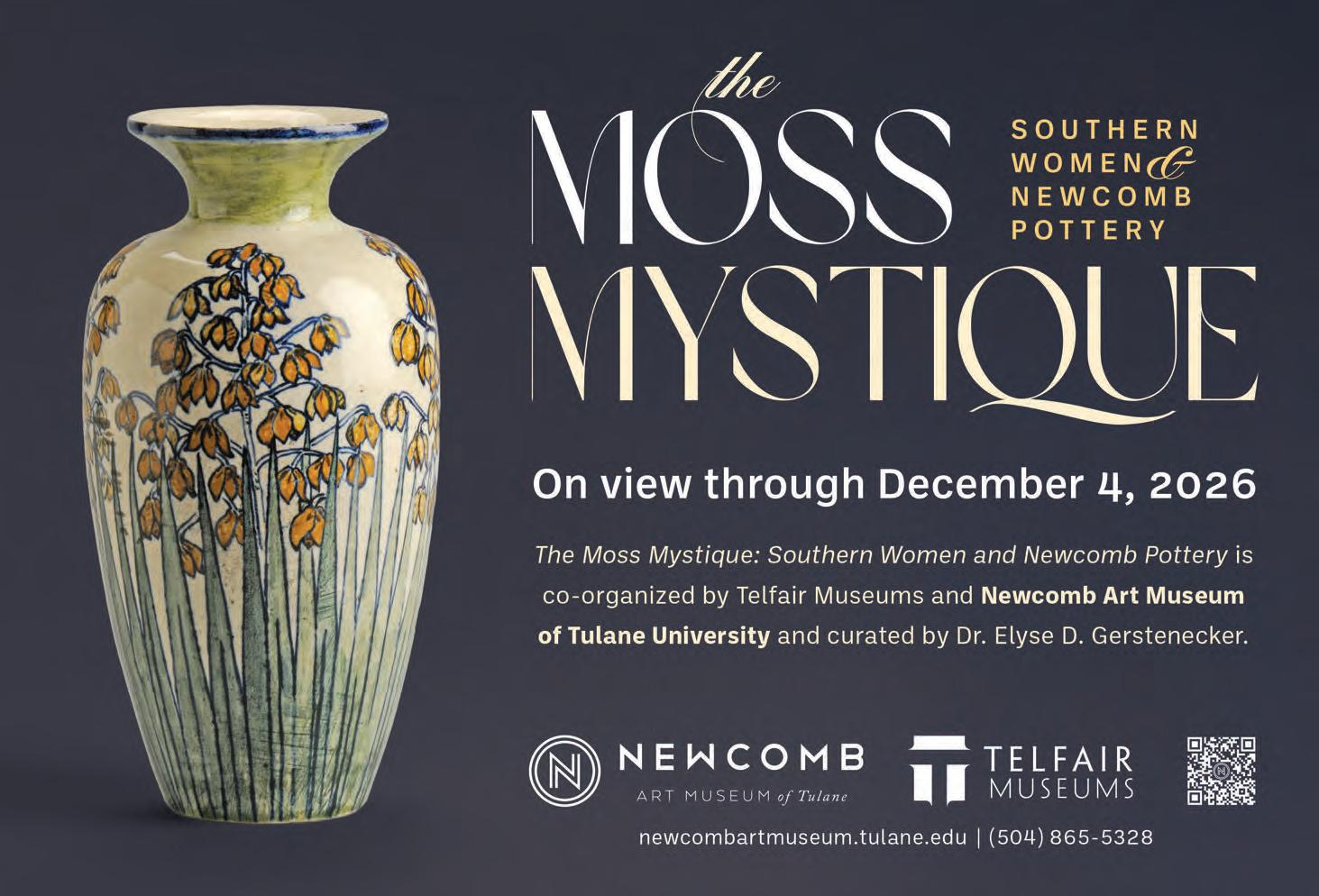
UNTIL DEC 4TH POTTERY
"THE MOSS MYSTIQUE: SOUTHERN WOMEN"
New Orleans, Louisiana
The Moss Mystique: Southern Women and Newcomb Pottery, on display at Newcomb Art Museum of Tulane University, explores the practices, imagery, and regional affiliations of Newcomb Pottery. The exhibition examines how its artists visualized and ultimately defined ideas of place in the American South through various natural depictions, from local flora to landscapes. Note that Newcomb Art Museum is closed May 15–August 19 for the summer newcombartmuseum.tulane.edu. 1
Events
Beginning June 1st - 5th
UNTIL DEC 28th
RELIGIOUS ART
CAROLO SARACENI'S "OUR LADY OF LORETO" AND PERUVIAN VICEREGAL STATUE PAINTINGS
New Orleans, Louisiana
Mistaken identities make for excellent storytelling, and at the heart of this exhibition at NOMA is the story of a painting misidentified. When the work, depicting the Virgin Mary in ornate dressing, was acquired by NOMA in 1970—its documents called it "Our Lady of Lima," an example of art from the Viceroyalty of Peru. It went on to travel the world and be displayed in international museums as a work of Spanish Viceregal art. In 2014, though, an art historian came across a copy of the work in the sacristy of the Church of San Bernardo alle Terme in Rome, signed by the Italian baroque artist Carlo Saraceni and titled, "Our Lady of Loreto." Now, "Our Lady of Loreto" is exhibited under its true name at NOMA for the very first time, alongside other Spanish works that served as prototypes for Marian iconography by Indigenous and Mestizo artists in Viceregal Peru—which later inspired similar paintings in Europe and the Americas. noma.org. 1
Read more about "Our Lady of Loreto" and other treasures in NOMA's permanent collections on page 30.
UNTIL JAN 10th
VISUAL ARTS
"BURKE’S DELIGHT: THE STACEY AND MICHAEL BURKE COLLECTION"
New Orleans, Louisiana
The Ogden Museum of Southern Art presents Burke’s Delight: The Stacey and Michael Burke Collection, an exhibition featuring over eighty donated works by more than fifty artists from across the South. The exhibition's artists frequently challenge traditional artistic values and aesthetics, favoring instead unconventional materials and techniques to explore Southern authenticity and experience. They focus on themes of family, tradition, the land, community, memory, spirituality and resilience. ogdenmuseum.org. 1
UNTIL JAN 15th
DESIGN
“STITCHES IN TIME: QUILTS AND FASHION”
Baton Rouge, Louisiana
Stitches in Time: Quilts & Fashion, on
display at the LSU Textile & Costume Museum, studies the dialogue between dress and quilt making, exploring how fashion and this beloved crafting art form blend the boundaries of influence. The exhibition is made possible by a recent gift of a collection of garments by American designer and Louisianan, Geoffrey Beene, from Sylvia R. Karasu, MD, Clinical Professor of Psychiatry at Weill Cornell Medicine. Beene's designs highlight connections in color, technique, and historical moment in the nineteenth and twentieth century. lsu.edu/agriculture/textilemuseum. 1
UNTIL JAN 17th
HISTORY
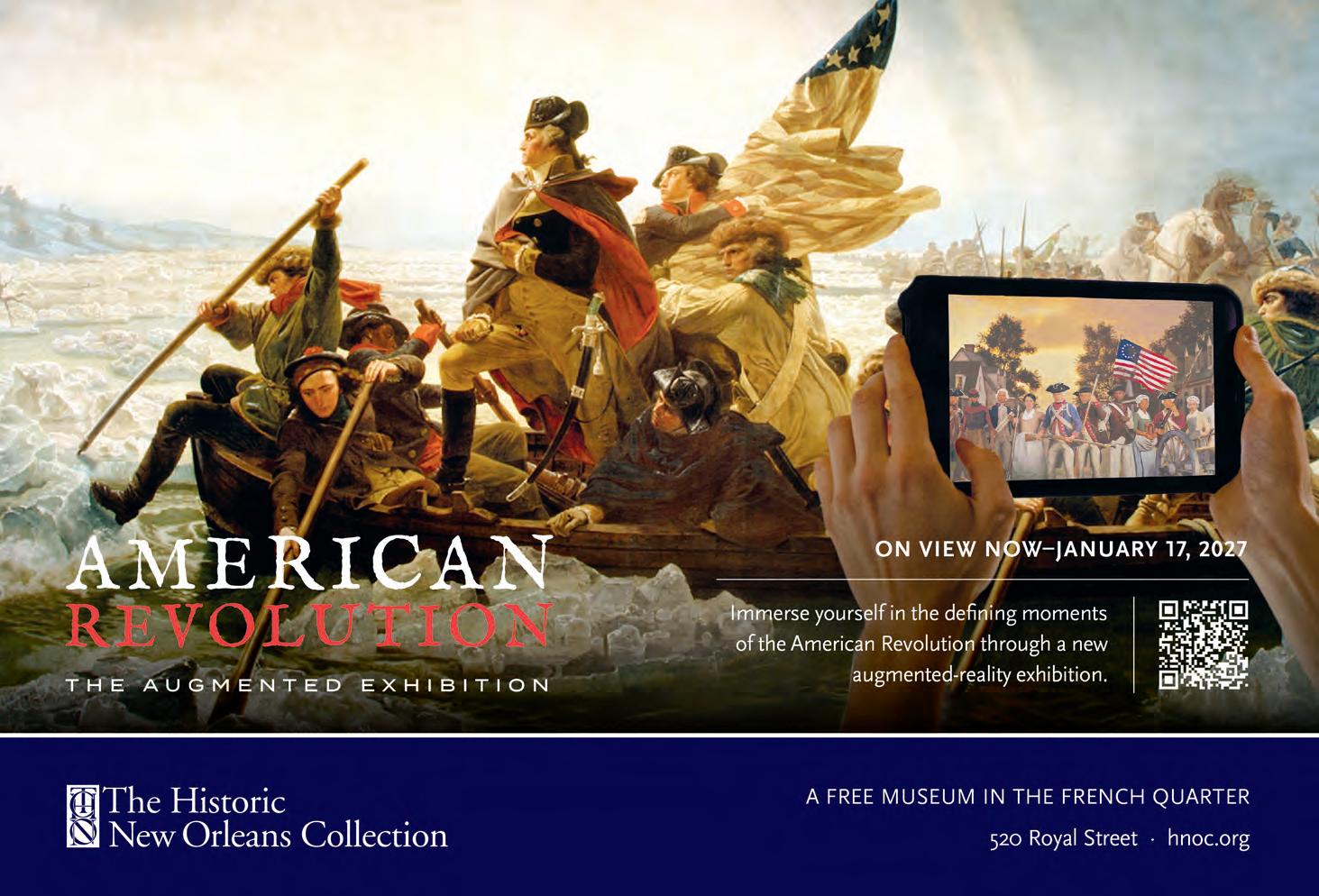
"AMERICAN REVOLUTION: THE AUGMENTED EXHIBITION"
New Orleans, Louisiana
The Historic New Orleans Collection invites visitors to experience the American Revolution like never before— as if they were inside each experience themselves. Using a HistoPad (an interactive tablet), visitors can explore interactive 3-D reconstructions of defining moments in the war, allowing them to glimpse people, places, and events more closely. The nearly yearlong exhibition is part of the national celebration of America's 250th birthday. Free. hnoc.org. 1
JUN
2nd - JUN 9th
DANCE
BATON ROUGE BALLET
THEATRE’S YOUTH BALLET FREE SUMMER PERFORMANCES
Baton Rouge, Louisiana
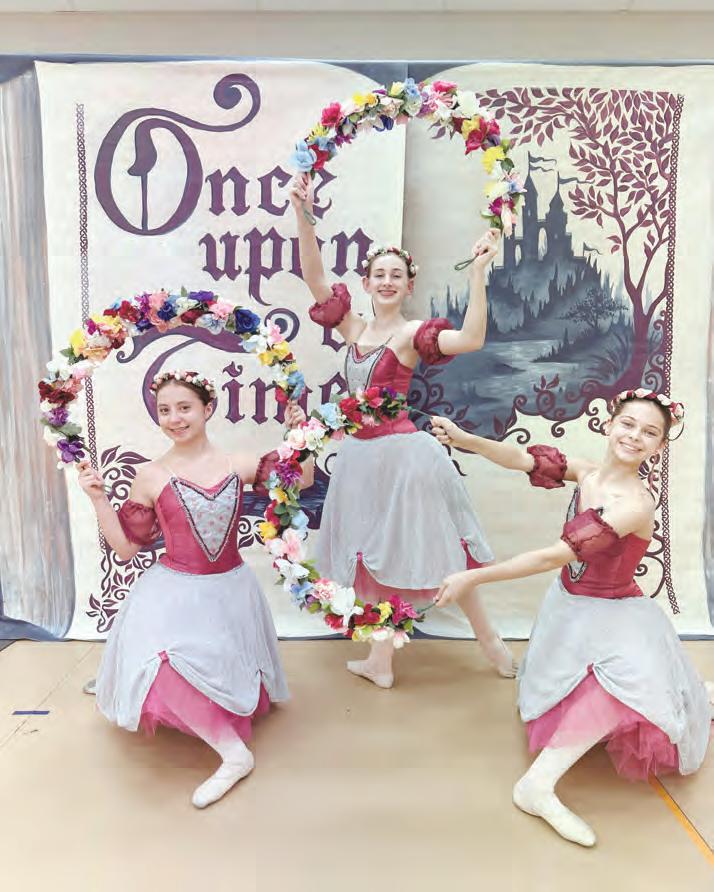
Baton Rouge Ballet Theatre’s (BRBT) Youth Ballet returns to East Baton Rouge Parish libraries for free, accessible summer performances geared toward kids of all ages. This year's "Ballet Soirée" repertoire includes excerpts from Sleeping Beauty, Swan Lake, Cinderella, and Beach Club. Find performance times and locations at batonrougeballet.org. 1
JUN 2nd
- JUN 26th
ARTISTIC EXPLORATION
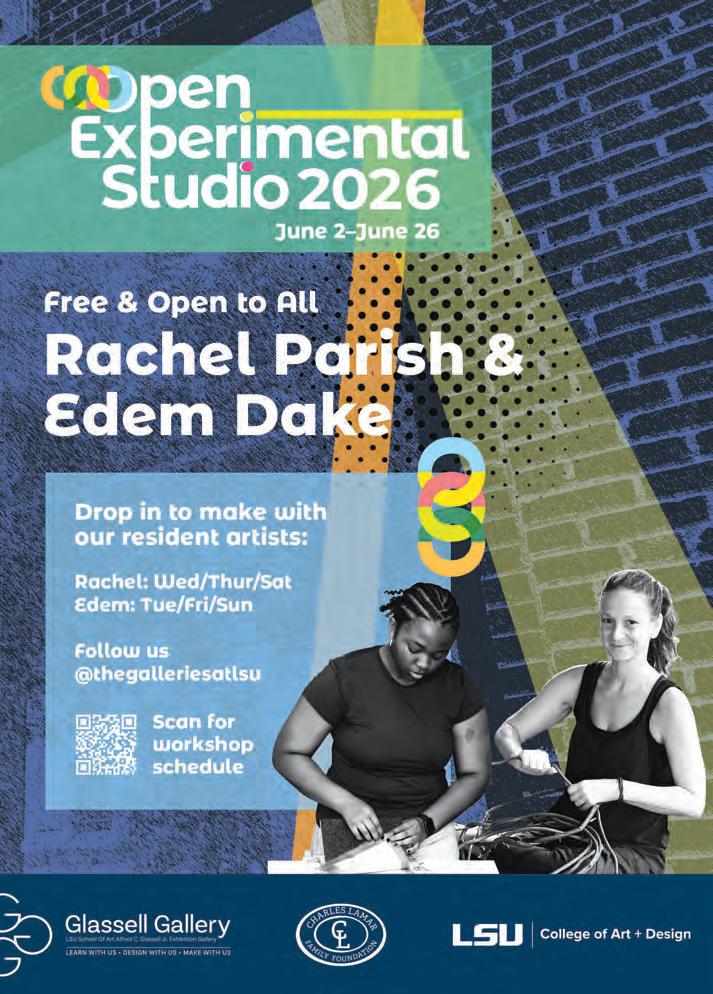
GLASSELL GALLERY OPEN EXPERIMENTAL STUDIO
Baton Rouge, Louisiana
June brings the Open Experimental Studio program back to Glassell Gallery, this year featuring resident artists Rachel Parish and Edem Dake. Parish is an interdisciplinary visual artist and theatremaker, while Dake is an interdisciplinary artist whose practice explores
photographic processes, video, and installations. Drop in at the gallery to witness the artists explore memory and material transformation, and join in the process of experimentation. The studio features a fabric station, a clay and paper station, and experimental photography and personal documentation stations. Kick off on June 7 during Free First Sunday; closing reception June 26. Free. glassellgallery.org. 1
JUN 3rd - JUN 10th
ART OUTINGS
JUNE AT NOMA
New Orleans, Louisiana
NOMA presents a packed slate of artistic events just in time for summer. Mark your calendars:
• June 3: Soul-Sip at NOMA —Art, meditation, and wine after museum hours. 6 pm–9 pm. $65; $55 for members.
• June 5: NOMA at Night: Celebrate Robert Gordy: Outside the Mainstream —Kick off Pride Month with an evening of live music, cocktails, art making, gallery talks, and more. 6 pm–9 pm. $30; $15 for members; free for ages nineteen and younger.
• June 10: Musical Encounters —Part of NOMA’s "Musical Encounters Gallery Talk" series, based on Robert Gordy: Outside the Mainstream. 6 pm–6:30 pm. Museum admission. noma.org. 1
JUN 3rd - JUN 24th
ART WORKSHOPS
ART GUILD OF LOUISIANA
JUNE CLASSES
Baton Rouge, Louisiana
The Art Guild of Louisiana's June offerings for workshops, shows, and other opportunities include:
• June 4–5: Acrylic Pouring with Larry Downs: Color Motion and Creative Surprise —Come learn the art of going with the flow. 3 pm–6 pm.
• June 3, 10, 17 & 24: Life Drawing Classes —In this members-only course, a live model will be available to sketch. 6 pm Wednesdays.
• June 21: Picture Day —Bring up to three paintings to be photographed. 1 pm–4 pm. AGL members only.
AGL Park Studio, 2490 Silverest Ave. Baton Rouge. artguildlouisiana.org. 1
JUN 3rd - JUL 29th
VISUAL ARTS
BAC PRESENTS, "IMPRESSED" Bossier City, Louisiana
The Bossier Art Council's East Bank Gallery features the acrylic paint and ceramic works of Derek Sarvis in an
exhibition titled Impressed. Sarvis explores conventions of impressionism and abstract expressionism in this show, creating contemporary landscape and color field paintings. Some of his more recent ceramic works turn 2-D patterns found in his paintings into 3-D vessels. bossierarts.org. 1
JUN 4th - JUN 27th
ART FOR ALL FESTIVALSOUTH
Hattiesburg, Mississippi
From Broadway, to Motown, to opera, to ballet, and any genre in between, FestivalSouth in Hattiesburg offers something for every lover of music and the arts. This year, a slate of diverse performances make for a cultural "choose your own adventure"—from celebrations of America's 250th and orchestral performances of the "Great American Playlist," to Haydn chamber music and a production of Newsies. The lineup is packed and varied, check it out and find tickets at festivalsouth.org. 1
JUN 4th - SEP 6th
VISUAL ARTS
"SOUTH ARTS SOUTHERN PRIZE & STATE FELLOWSHIPS FOR VISUAL ARTS"
Baton Rouge, Louisiana
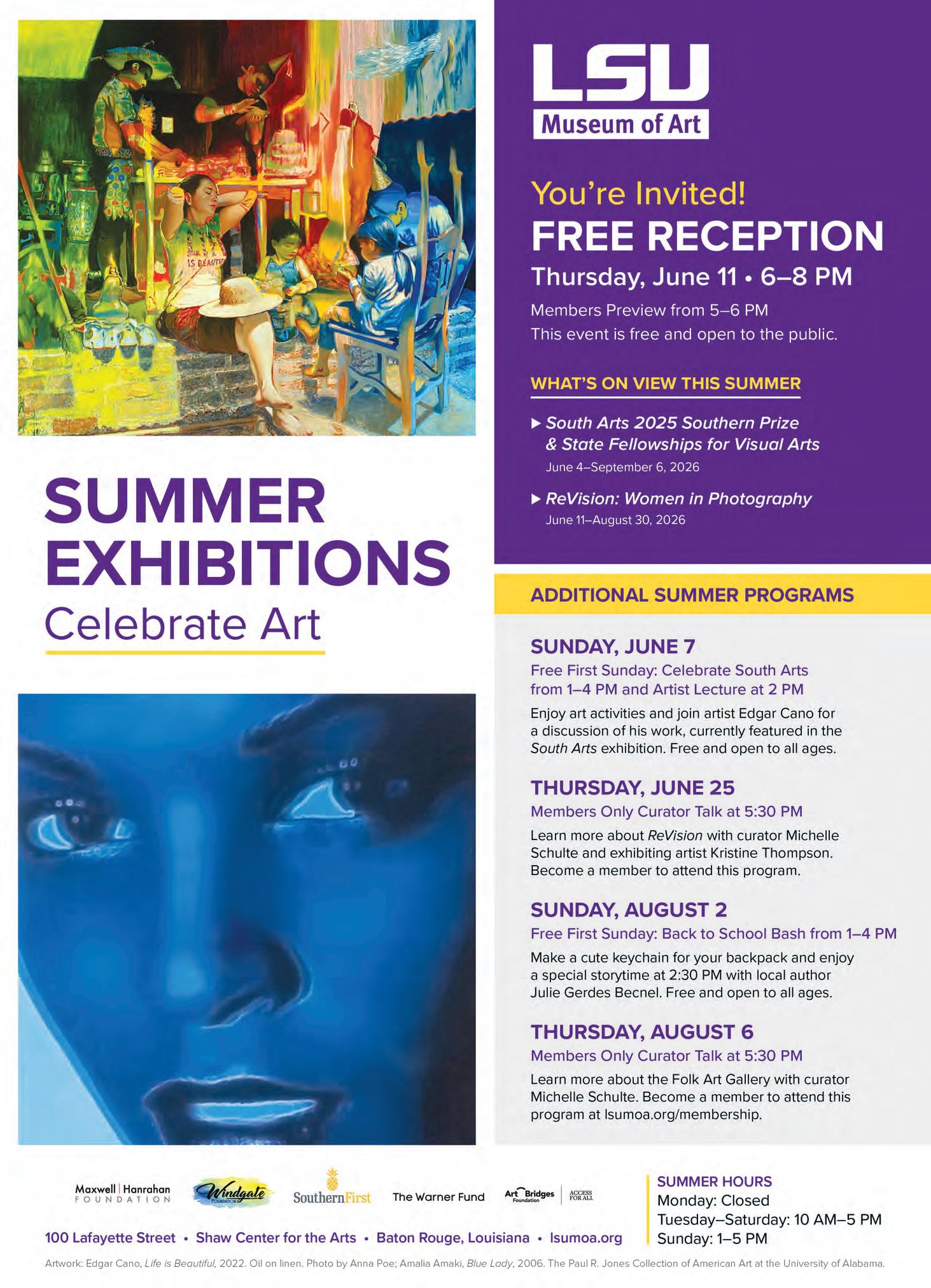
The LSU Museum of Art presents a touring exhibition of artwork by the 2025 Southern Prize & State Fellowship for Visual Arts recipients. The program celebrates contemporary art in the American South, with this year's cohort specializing in a number of mediums, such as quilting and African mask-making, and tackling universal narratives of migration, labor, and identity. southarts.org. lsumoa.org. 1
JUN 5th - JUN 7th
GOOD EATS
BON MANGÉ FESTIVAL
Gheens, Louisiana
Down there in the Lockport neck of the woods, not too far from Lake Salvador, lies the community of Gheens, where the good folks have hosted an annual "good eats" festival at the Vacherie-Gheens Community Center for more than fifty years now. Expect Cajun food, rides, and dancing—and a festival queen, of course. Enjoy live music performances by Emma Lodrigue, Masquerade, Ben Bruce and the Acadians, Tet Dur, Shorts in December, and many more. Free admission. Details at the Gheens Bon Mangé Festival & Community Center Facebook Page. 1
Events
Beginning June 5th - 6th
JUN 5th - JUN 7th
CULTURAL CELEBRATIONS
CAJUN HERITAGE FESTIVAL
Larose, Louisiana
The art and culture of wood carving is this festival's raison d'être ; it's a celebration that has been going on for almost fifty years now. There'll be a decoy show and auction, carving demos, duck calling, raffles and more. And with a name like Cajun Heritage, rest assured there'll be plenty of jambalaya and other traditional treats on hand. Inside the Larose Civic Center. Free. Details at the Cajun Heritage Festival Facebook Page. 1
JUN 5th - JUN 26th
ART AND WELLNESS
JUNE EVENTS AT THE RED SHOES
Baton Rouge, Louisiana
The Red Shoes, a nonprofit devoted to wellness and creativity in Baton Rouge, has an extensive slate of events this June. Some of these include:
• June 5–July 17: Memoir in Moments: A Community Writing Circle —A six-week writing circle using simple prompts to help participants write meaningful vignettes. 11 am–12:30 pm, on Fridays.
• June 13: Acrylic New Orleans House Paintings —A workshop led by local artist Veronica Hallock guiding participants through a playful acrylic painting experience. 10 am–noon.
• June 20: Seasons of the Soul: A Summer Solstice Workshop —An immersive workshop to help participants align with the Earth's natural rhythms, initiated by the Summer Solstice. 2 pm–4 pm.
• June 21: Longest Day, Deepest Rest: A Solstice Sound Immersion —A restorative Sound Immersion using Tibetan Singing Bowls and Alchemy Crystal Singing Bowls, led by Sound Healing Therapist Lissee Spiller. 3 pm–4:30 pm. theredshoes.org. 1
JUN 6th
BLOOMS
FELICIANA
WILDFLOWER FESTIVAL Clinton, Louisiana
For the third annual Feliciana Wildflower Festival, head to downtown Clinton near the historic courthouse for the perfect summer day in bloom—filled with all the flora, food, plant nurseries,
educational classes and presentations, kid activities, and art exhibitions that a person could desire. 8 am. Visit the Feliciana Wildflower Festival 2026 Facebook Page for details. 1
JUN 6th
FAST LANE
CLASSICS ON THE BOULEVARD CAR SHOW
Covington, Louisiana
Time travel to the days when rock and roll reigned at TerraBella Village’s fifth annual Classics on the Boulevard, where you can spend the day jamming out to oldies while admiring more than sixty vintage vehicles—celebrating the refined art of automotive design, restoration, and engines from another era. There will also be plenty of local food vendors and awards for best in show. 10 am–1 pm. Free. terrabellavillage.com. 1
JUN 6th
A BIT FRUITY
LOUISIANA PEACH FESTIVAL
Ruston, Louisiana
We know, we know ... Ruston is kind of far from most of you. But we also know that most of you can't get enough Ruston peaches when the season rolls around.
Celebrating its seventy-sixth anniversary this year, the Ruston Peach Festival was awarded last year's Festival of the Year by the Louey Tourism Awards as a result of its "unique community collaborations, significant economic impact, [and] emphasis on local culture." So, this year is as good as any to make a peach pilgrimage to North Louisiana to experience the hype for yourself. How many pounds of peaches can you eat in two minutes? Enter the peach eating contest to find out, and fill any leftover space with peachy-keen tarts, pies, salads, preserves, and main dishes. Expect cooking contests, live music, a juried handmade arts & craft marketplace, a parade, antique cars, and more. 9 am–11 pm. Free. lapeachfest.com. 1
JUN 6th
MUSICAL EXPERIENCES
CATEGORY 6: THE GLOW SHOW
Mandeville, Louisiana
It's a night of black light magic, pulsing to the high energy performance of pop, rock, and dance favorites performed by Category 6. Expect party vibes,
stunning visuals, and plenty of crowd interaction in this unique, all-ages evening show on Pelican Park's Groves Stage. 7:30 pm–9:30 pm. Free. Details at pelicanpark.recdesk.com. 1
JUN 6th
TECHNICALLY NORTHSHORE ROBOTICS STEM FESTIVAL
Covington, Louisiana
The robots are descending upon Covington, and all they're hoping for (this time) is the chance to educate the humans eager to learn about how they work. Join Northshore Robotics, an organization that encourages student involvement in STEAM programming, for a future-forward day exploring the many uses of robotics technology taking place right in the Northshore community. See how the Sheriff's department makes use of a hazardous device robot, play around in the Northshore Technical Community College Gator Mobile STEM Lab, watch battlebots in action, and meet Artemis II engineer Bahiy Watson. 9 am–3 pm at Rev. Peter S. Atkins Park. Free. northshorerobotics.org. 1
JUN 6th
REEL FUN BOGUE CHITTO YOUTH FISHING RODEO
Franklinton, Louisiana
The Southeast Louisiana National Wildlife Refuges Complex and Friends of Louisiana Wildlife Refuges Inc. invite local youth, ages four to fifteen, to come out and try their luck at pulling in the monster of the day. Held at the Bogue Chitto National Wildlife Refuge's Jim
Schmidt Boardwalk Trailhead and fishing access site (Exit 11 off I-59 North in Pearl River), the family-friendly event welcomes both experienced and firsttime anglers. There will even be a limited supply of loaner fishing poles available for pick up in Lacombe, courtesy of the Friends. (Just call 985-882-2015 to reserve yours!) Prizes will be awarded in four age categories, in addition to the grand prize; and all participants will receive a T-shirt, provided lunch for the whole family, and bait. After rodeo hours (7:30 am–11 am), the pond opens to all anglers. $10.Details at fws.gov/refuge/bogue-chitto. 1
JUN 6th
SPIRITUALITY
ACADIANA META FEST
Lafayette, Louisiana
For the third year, Acadiana Meta Fest draws together practitioners and seekers across the spectrum of the metaphysical arts—from standpoints of spirituality, holistic healing, and mysticism. Held at the Downtown Convention Center in Lafayette, this gathering will invite participants to consult astrologists, create their own incense, meet with a medium, balance their chakras, and enjoy a sound bath. After previous years' success (with over five hundred attendees), the organizers are now incorporating live entertainment and other activities to the experience. 10 am–5 pm. Free to enter; workshops cost between $20–$40 each. acadianametafest.com. 1
JUN 6th
PICK-ME RED, WHITE & BLUEBERRY FESTIVAL Ocean Springs, Mississippi
The town of Ocean Springs, Mississippi,
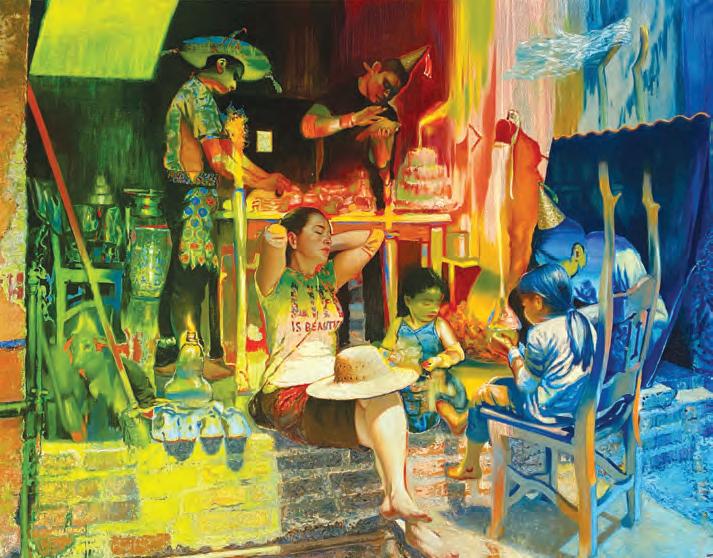
Edgar Cano, "Life is Beautiful," 2022. Oil on linen. Photo by Anna Poe. Cano's work is featured in the LSU Museum of Art's South Arts Southern Prize & State Fellowships for Visual Arts exhibition, running from June 4–September 6. Courtesy of the LSU Museum of Art. See more on pages 14 and 18.
Events
Beginning June 6th - 12th
sets out to stain downtown streets and festivalgoers' teeth alike blue, during the annual Red, White & Blueberry Festival. In addition to lashings of fresh blueberries, you'll find antiques, crafts, fresh produce, open houses for downtown businesses, and more. Don't miss the free vanilla ice-cream topped with your choice of blueberries or strawberries, provided by the Ocean Springs Chamber of Commerce. 10 am–2 pm. (228) 875-4424 or gulfcoast.org. 1
JUN
6th - JUN 7th
SUMMER FAVES
CREOLE TOMATO FESTIVAL
New Orleans, Louisiana
It's another bright, juicy year ripe for celebrating summer's favorite bounty: fresh Creole tomatoes. These beloved fruits are set to take over the French Market to mark the official opening of Creole tomato season. It all rolls out Saturday morning with a "Ripe and Ready" second line featuring a local jazz band and The Baby Dolls—be prepared to join in, wearing your favorite tomato best (whatever that means to you!). The rest of the day will keep the pace with live music from Brass-A-Holics, Amanda Shaw, Burris, Rusty Metoyer & the Zydeco Crush, and many more. Don't miss the tomato eating contests, performances by Black Masking Indians, and Best of the Fest Awards. And of course, everywhere you look, there will be a wealth of food booths featuring the star of the show: the Creole Tomato. 11 am–5 pm each day. Free. frenchmarket.org. 1
JUN 6th - JUN 27th
FRESH FOODS
JUNE AT THE RED STICK FARMERS MARKET
Baton Rouge, Louisiana
In the market for some fresh, locallygrown produce? Red Stick Farmers Market brings small farmers and food artisans into the heart of the Capital City each Saturday. June means the onset of summer tomatoes and squash, among other delicacies. Artisanal food products and prepared meals are also available, if you can't wait to cook your bounty of fresh veggies. In addition to Fresh Fest, which runs for eight weeks between June and July and features seasonal produce, live music, and cooking demonstrations, this month's highlights include:
• June 6: Tomato Me Crazy
• June 13: Dairy Day
• June 20: Squash-tastic
• June 27: Melon Mania
8 am–noon Saturdays at the corner of Fifth and Main streets. breada.org. 1
JUN 6th - AUG 9th
PHOTOGRAPHY
"AWKWARD FAMILY
PHOTOS" AT WEST
BATON ROUGE MUSEUM
Port Allen, Louisiana
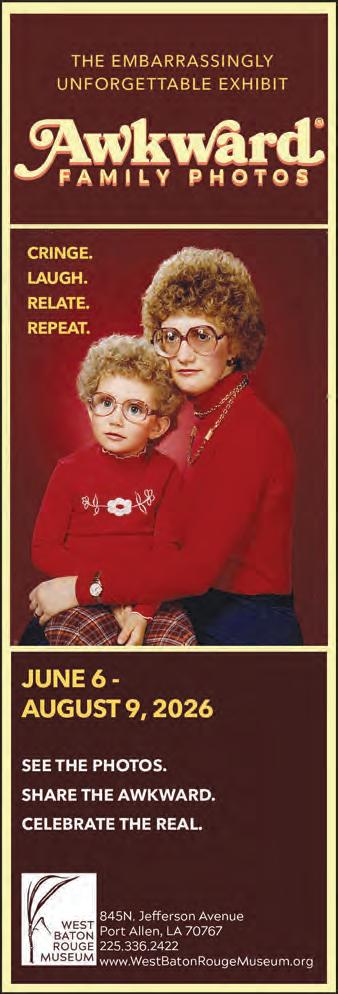
The West Baton Rouge Museum hosts national traveling exhibit Awkward Family Photos, a show that began in 2009 when Mike Bender noticed one of his own family photos framed and displayed at his parents' home. Eventually, he and a writing partner, Doug Chernack, created a website to collect similar photos from the public—resulting in a world-wide phenomenon capturing the imperfect, staged moments that create family photographic experiences. From "behind the awkwardness" stories to a "selfie station," visitors will be able to enjoy a good laugh while replicating the humor of these seemingly universal experiences. westbatonrougemuseum.org. 1
JUN 7th
FLOATS
BAYOU LIBERTY
PIROGUE CHAMPIONSHIP
Slidell, Louisiana
The annual Bayou Liberty Pirogue Championship returns for its 69th "running of the pirogues (and canoes)" on Bayou Liberty. The day begins with the "Blessing of the Pirogues" at high noon. From 1 pm until 7 pm, pirogues and canoes do battle on the bayou with race categories for paddlers ages eight to eighty. The blindfold race is always a favorite—imagine paddlers wearing blindfolds racing fifty yards around a buoy—as is the festival fare of gumbo, red beans, hamburgers, hotdogs and snoballs. Live music and raffles round out the event. The Bayou Liberty Pirogue Race was founded in 1952 by the St. Genevieve Men's Club to raise money for Christmas presents for area children. The event is coordinated today by the Bayou Liberty Heritage Foundation, with proceeds supporting area families and local park improvements. Free. For details, contact (985) 710-5245 or philgalatasart@gmail.com. 1
JUN 10th
CONCERTS
BAND OF HEATHENS
AT THE ACA Lafayette, Louisiana
Don't confuse heathens with hooligans. This Austin-based Americana group is the real deal. After several songwriters found each other on the city's club scene, they've proved, together and live, a combustibly good combo. The Acadiana Center for the Arts plays host to the Texans tonight. 7:30 pm. $62–$83. acadianacenterforthearts.org. 1
JUN 10th - JUN 14th
ART FESTS
KOLAJ FEST
New Orleans, Louisiana
This summer, thousands of artists— specifically collage artists—will descend on New Orleans for the annual Kolaj Fest. This multi-day festival and symposium investigates the role of collage in contemporary arts culture, and how to elevate it further. Held in venues across the city, the event features dozens of events, including symposia on subjects like "The Art of Assembling a Child's World," "Collage as Architecture," and "Digital in the Real World," with input from expert speakers from across the visual arts spectrum. There will also be various roundtable discussions, panels, and workshops on everything from creating New Orleans wooden postcards to using cyanotype in collage. There will also be exhibits, museum tours, and markets throughout the course of the festival. Tickets are $175, granting access to all sessions and activities. Find the full schedule of events at kolajinstitute.org/ kolaj-fest-new-orleans. 1
JUN 11th
ART PARTIES
SUMMER RECEPTION AT THE LSU MUSEUM OF ART
Baton Rouge, Louisiana
As the summer kicks off, celebrate the LSU Museum of Art's newest exhibitions: South Arts Southern Prize & State Fellowships for Visual Arts and ReVision: Women in Photography. While members gain access to a special cocktail hour before the public reception, the event is free. 5 pm–6 pm members only preview; 6 pm–8 pm public reception. Free. bontempstix.com. 1
JUN 11th - JUN 13th
ALL EARS
LOUISIANA CORN FESTIVAL
Bunkie, Louisiana
Sink your teeth into Avoyelles Parish's most important harvest celebration at this annual fiesta in downtown Bunkie,
where you'll find corn shucking, corn eating, corn cooking contests, street dancing, arts & crafts vendors, pirogue races, a state-wide softball tournament, a carnival midway, and live music by the likes of Travis Matte & the Kingpins, Ryan Foret, and The Molly Ringwalds giving attendees plenty of reasons to tear up the dancefloor all weekend long. Come honor the impact of our local corn farmers, and stay to pack away all the mouth-watering, hot buttered corn you can. Don't miss the city-wide parade, which rolls out at 10 am Saturday. bunkiechamber.org/corn-festival. 1
JUN 11th - AUG 30th
LENSES
"REVISION: WOMEN IN PHOTOGRAPHY"
Baton Rouge, Louisiana
The LSU Museum of Art, in partnership with the Paul R. Jones Collection at the University of Alabama, presents ReVision: Women in Photography. The exhibition explores how women artists have shaped photography—and continue to influence the medium to this day. Themes include social justice, aging, feminism, relationships, and feminine aesthetics. lsumoa.org. 1
JUN 12th
ART GATHERINGS STATE OF THE ARTS SYMPOSIUM 2025 Lafayette, Louisiana
It's a meeting of the artistic minds in the heart of Acadiana. Held at the Acadiana Center for the Arts, the day promises a gathering of leaders from all walks of life, including government, business, education, and the arts, to discuss how to strengthen Lafayette Parish's cultural infrastructure. The event encourages artists and arts-lovers to gather and share perspectives on how to elevate the arts sector in Lafayette and its surrounding region. This year, before the main symposium, artists are invited from 10 am–noon to an Artist's Plenary and Roundtable discussion hosted by local artist Aileen Bennet—during which participants can share challenges and opportunities they've encountered as artists in this area. Main symposium takes place from 2 pm–6 pm. Reception to follow. Free but registration required. acadianacenterforthearts.org. 1
JUN 12th - JUN 14th
SEE-FOOD
HOLLY BEACH CRAB FESTIVAL Cameron, Louisiana
This sunny festival on the iconic Cajun Riviera goes all in on the delicacy of
Events
Beginning June 12th - 25th
Gulf Blue Crabs. Kick things off with cooking demos and live music by The 5th Edition on Friday, then on Saturday, dive in with competitive crab bingo, crab cooking, crab calling, crawfish peeling, and lots of dancing and live music by local favorites like Nik L Beer, Gerard Delafose & the Zydeco Gators, Jamie Bergeron & the Kickin' Cajuns, and more. Then, on Sunday, return for a free pancake breakfast from 9:30 am–noon. It all takes place along the Creole Nature Trail All-American Road at 2412 Heron Street in Cameron. Lawn chairs and ice chests encouraged. Free. (409) 365-6598. visitlakecharles.org. 1
JUN 12th - JUN 21st
THEATRE
MID CITY CIVIC THEATRE: "MUCH ADO ABOUT NOTHING" Baton Rouge, Louisiana
Mid City Civic Theatre presents its much-anticipated inaugural production: William Shakespeare's comedy Much Ado About Nothing. Performed in the former home of Theatre Baton Rouge, the famous play follows a classically winding story of misunderstandings, deceptions, humor, and forgiveness. 7:30 pm Thursdays, Fridays & Saturdays; 2 pm Sundays. $20–$40. midcitycivic.org. 1
JUN 12th - JUN 28th
THEATRE SUMMER PERFORMANCES BY COVINGTON LOUISIANA ACTORS PLAYHOUSE SYSTEM
Covington, Louisiana
For thirty years, the Covington Louisiana Actors Playhouse System (CLAPS) has hosted its acclaimed summer theater program, offering free, high quality arts education for students in grades 6–12. Students receive handson training in performance and technical theatre, and some alumni have even gone on to Broadway, national tours, cruise lines, and Walt Disney World. This summer, support the program and enjoy the magic of local youth theatre in one of three performances.
• Disney's Alice in Wonderland: June 12–20, Fridays and Saturdays, 10 am–11:15 am. $15; $10 for students.
• The Complete Works of William Shakespeare (Abridged) [Revised] [Again]: June 18–21, 7 pm–9 pm Thursday–Saturday, 2 pm–4 pm Sunday. $20; $15 for students.
• Finding Neverland: June 25–June 28,
7 pm–9 pm Thursday–Saturday, 2 pm–4 pm Sunday. $20; $15 for students. Learn more by contacting (985) 5909485 or clapstheatre@gmail.com. 1
JUN 13th
AERIALS
ROCKIN' ON THE RUNWAY
Sunset, Louisiana
Look to the skies for this annual Acadiana aerial event, with stunning acrobatics performed by Titan Aerobatic Team, GhostWriter, Kevin Coleman, NextGen Eagles, and many more. For the comedown, Swampland Revival and DJ Digital will keep things elevated at Red Oak Landing, where kids can also enjoy airplane rides and other activities, including the car show. All proceeds go toward supporting St. Mary's Residential Training School, which houses and educates Louisiana children and young adults with developmental disabilities. 4 pm–10:30 pm; airshow takes place at 6 pm. $34; children younger than twelve get in free. rotr-la.com. 1
JUN 13th
SOUND ON
JUNETEENTH MUSIC FESTIVAL
Donaldsonville, Louisiana
For more than thirty years now Donaldsonville has celebrated freedom as it's meant to be celebrated—with good food, good music, and good company. The event kicks off with an opening prayer and history of the day when all enslaved people learned of their freedom granted by the Emancipation Proclamation. The festivities will continue with live music from George Bell & Friends, Justin Garner, Red Tape Musiq, the Michael Foster Project, and Royal Essence. 11 am–8 pm at Louisiana Square. Free. Details on the Juneteenth Music Festival-Donaldsonville, Louisiana Facebook page. 1
JUN 13th
AFRICAN AMERICAN HISTORY
JUNETEENTH
FREEDOM FESTIVAL
Edgard, Louisiana
The Whitney Plantation Museum in Edgard is commemorating Juneteenth with a family-friendly experience that includes free entrance to the museum and self-guided grounds tours, live musical performances by Tara Alexander, The Maroons Band, and Steven
Perrilloux; a panel discussion with civil rights pioneers and representatives from the NAACP; a Kids Zone, and much more. Vendors from St. John the Baptist and other River Parishes will also be on-site selling artwork, clothing, crafts, jewelry, food, and drinks. 9:30 am–4 pm. Free. whitneyplantation.org. 1
JUN 13th
MUSICALS
"THE BEST LITTLE WHOREHOUSE IN TEXAS" Mandeville, Louisiana
The Best Little Whorehouse in Texas, the feel-good musical about goodtime girls that launched a thousand puns (and Dolly Parton's film career), comes to the 30 by Ninety Theatre in Mandeville this summer. 8 pm Fridays and Saturdays; 2:30 pm Sundays. $32; $30 for seniors (sixty-five and older) and military; $28 for students thirteen and older; $25 for kids twelve and younger. 30byninety.com. 1
JUN 13th
ART FOR ALL ART WITHOUT WALLS ART MARKET
Bay Saint Louis, Mississippi
The Arts Hancock County hosts a day of art, music, food, fun, and community in
its sculpture garden to kick off summer festivities. Guests can stroll through a showcase of prints, mixed media, fiber arts, jewelry, pottery, and more—all from local artists—while enjoying live music and DJ vibes all day long. 10 am–2 pm. Free. hancockarts.org. 1
JUN 13th
SUMMER FAVES
BAYOU TECHE FEST
New Iberia, Louisiana
Head to Bayou Teche Fest for a great time with wooden boats and classic cars at Bouligny Plaza. Enjoy fare from food trucks and live entertainment. 9 am–1 pm. Contact events@cityofnewiberia. com for more information. 1
JUN 18th
THEATRE
CITÉ DES ARTS: “ANGELS IN AMERICA PART ONE: MILLENNIUM APPROACHES” Lafayette, Louisiana
The Readers Theatre Series at Cité des Arts celebrates Pride Month with a reading of Tony Kushner’s Angels in America Part One: Millennium Approaches —the first part of a Pulitzer Prize-winning play, Angels in America: A Gay Fantasia on National Themes Set in 1980s New York City, the play
A beloved summer favorite for children across the Capital City region, the Baton Rouge Ballet Theatre's Youth Ballet program returns to East Baton Rouge Parish libraries for free performances from June 2–9. Photo courtesy of the Baton Rouge Ballet Theatre. Learn more on page 14.
explores the AIDS crisis, sexuality, religion, politics, and identity. 7 pm. $10. citedesarts.org. 1
JUN 19th - JUN 21st
GOOD EATS
FRANKLIN SOUL FOOD FESTIVAL
Franklin, Louisiana
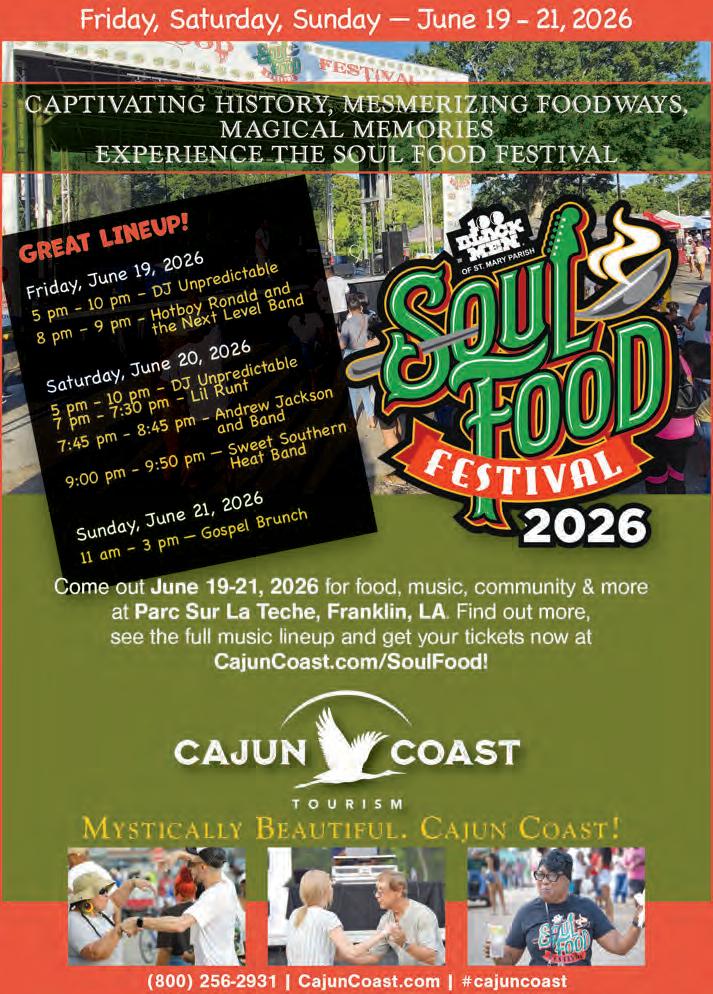
Head down to Parc Sur La Teche in Franklin for some delicious soul food, live music, and more all in celebration of the community. Don't miss a 5K and Gospel Brunch, among other familyfriendly activities. 11 am–3 pm. Details at soulfoodfest.net. 1
JUN 19th - JUN 22nd
AFRICAN AMERICAN HISTORY
LET THE GOOD TIMES
ROLL FESTIVAL GOSPEL
CELEBRATION
Shreveport, Louisiana
For almost forty years now, Shreveport has celebrated the abolition of slavery in the South with its Let the Good Times Roll Festival—a rousing testament to the life and freedom of the city's African American communities today. Presented by Rho Omega & Friends, Inc. in downtown Shreveport's Festival Plaza, the event will bring together the best of the local cuisine and arts scenes, as well as nonstop live music. More details to come at letthegoodtimesrollfestival.com. 1
JUN 20th
BLOOMS
SUNFLOWER TRAIL & FESTIVAL
Gilliam, Louisiana
The annual Sunflower Trail and Festival brings art and entertainment to the grounds of the Red River Crossroads Museum in Gilliam. Visitors can find all sorts of handmade items by heritage crafters and artists for sale, arts and crafts activities for kids, exhibits of local art, a sunflower photography contest exhibit, and more. Returning this year are exhibits of local vintage tractors at the old Linda Lay Church site. Food and refreshment vendors are on-site, or you could visit one of several local favorites like Main Street Restaurant, James Country Store Restaurant, and D&I Café and Deli. Explore the Sunflower Trail, which takes you by several fields planted with sunflowers, and quite a few wildflower meadows. Festival from 9 am–3 pm. Admission is free. More details at redrivercrossroadshistorical.org. 1
JUN 20th
WRITERS
LAFCADIO FEST
New Orleans, Louisiana
A joint effort by The Japan Society of
New Orleans and the New Orleans Jazz Museum presents the inaugural Lafcadio Fest—a festival honoring the legacy of author Lafcadio Hearn (1850-1904). Hearn, who was born on a Greek island and lived much of his life across continents, eventually made his way to New Orleans to record local folklore and curate one of the earliest Creole cookbooks, La Cuisine Creole. He ultimately settled in Japan and became a teacher in the town of Matsue, now New Orleans’s sister-city. The festival will feature an international panel of scholars, talks, community member reflections, food, sake toasts, and musical surprises. Held at the New Orleans Jazz Museum. 10:30 am–4:30 pm. japansocietyofneworleans.org. nolajazzmuseum.org. 1
JUN 20th
AFRICAN AMERICAN HISTORY DISCOVERY DAY AT THE CAPITOL PARK MUSEUM: JUNETEENTH DAY
Baton Rouge, Louisiana
The Capitol Park Museum welcomes guests to its June Discovery Day in honor of Juneteenth. Expect discounted admission, a history and culture scavenger hunt, opportunities to explore museum talliers, a learning zone, and a Juneteenthinspired craft. 9:30 am–1:30 pm. $5; free for children ages six and younger. louisianastatemuseum.org. 1
JUN 20th
AFRICAN AMERICAN HISTORY JUNETEENTH FOLKLIFE CELEBRATION
Opelousas, Louisiana
Step into the rich cultural labyrinth of St. Landry Parish at this Juneteenth celebration centered on the folk art, heritage, and traditions of African Americans on the Cajun prairie. Described as a true celebration of Creole culture, Juneteenth in Opelousas pays tribute to the date in 1865 when enslaved people in Texas first heard news of their emancipation. The event is hosted by Rebecca Henry, artist and owner of the Creole Heritage Folklife Center, and will feature live music and dancing at the Opelousas Farmers Market Pavilion. Free. Noon–4 pm. (337) 945-5064. 1
JUN 25th
GREEN THUMBS
EBR MASTER GARDENERS: NATIVE PLANTS AND GARDEN INSECTS
Baton Rouge, Louisiana
East Baton Rouge Master Gardeners once again invites the public to the Fairwood
Events
Beginning June 26th - 30th
Branch Library for an in-depth discussion on two important gardening topics presented by the experts: how to get away from a typical grassy lawn and embrace the beauty and diversity of native plants, and how to prevent or control insects, diseases, and pests that can damage a garden's yields. 5:30 pm. Free. ebrmg.wildapricot.org. 1
JUN 26th
UP IN THE AIR CELEBRATE AMERICA
BALLOON GLOW
Ridgeland, Mississippi
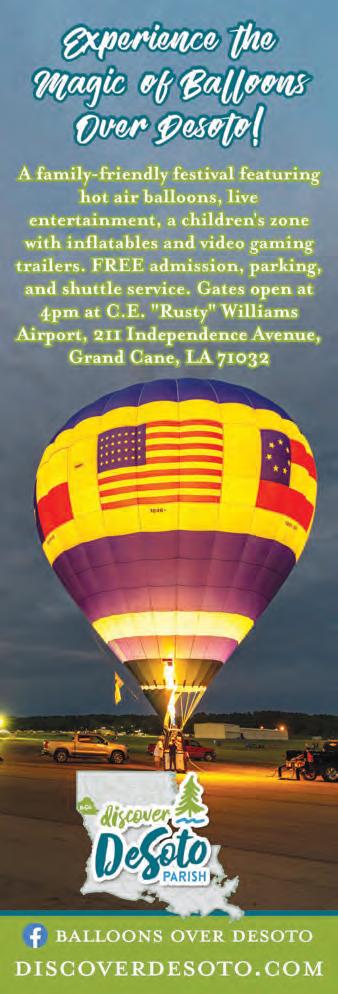
The Celebrate America Balloon Glow returns to Northpark in Ridgeland as part of the America 250 celebration—a recognition and year-long national party honoring the signing of the Declaration of Independence and heralding the birth of the United States. Expect a magical summer evening with more than fifteen glowing hot air balloons, music, familyfriendly fun, and patriotic festivities. 5 pm–8 pm. exploreridgeland.com. 1
JUN
26th - JUN 27th
STITCHES
THE GULF STATES QUILTING ASSOCIATION BIENNIAL QUILT SHOW
Slidell, Louisiana
The Gulf States Quilting Association returns to Slidell's Harbor Center for its twenty-first biennial quilt showcase, where visitors can explore hundreds of juried, expertly-crafted, handmade quilts, and engage with lectures and demonstrations. Food trucks will be available on site. 10 am–5 pm each day. $12 per day; $15 for a weekend pass; $5 for children younger than twelve. gulfstatesquilting.org. 1
JUN 26th - JUN 28th
UP IN THE AIR MISSISSIPPI CHAMPIONSHIP HOT AIR BALLOON FEST
Canton, Mississippi
Hot air balloons galore once again flock to the Canton Multipurpose Complex for three days of highflying (floating?) fun. Balloons launch Saturday and Sunday between 6:30 am–7 am. Full schedule and details at cantontourism.com. 1
JUN 27th
FELINE FUN
LOUISIANA CAT FEST
Mandeville, Louisiana
Cat ladies (and fellas, too) unite at this
felinious celebration at the Fleur-de-Lis Event Center in Mandeville. Hosted by Big Sky CARES and Art for Cats' Sake, it's a day of entertainment, education, and community—with all proceeds supporting research for feline illnesses. Shop the cat marketplace, observe educational demonstrations, take part in interactive contests (including a cat costume contest!), and enjoy food and drink from local purveyors. Cats and kittens will be onsite, available for adoption. And you'll even get the opportunity to try out "Kitty Yoga"!
10 am–5 pm. $20 for ages thirteen and older; $10 for ages seven to twelve; free for younger. Family ticket packages available, as well as VIP Cocktail Pawty passes. Details at louisianacatfest.org. 1
JUN 27th
LIVE MUSIC
LOUISIANA’S SATURDAY NIGHT: LET FREEDOM RING CONCERT
Zwolle, Louisiana
Laine Hardy, Wayne Toups, and Next of Kin head to the Zwolle Festival Grounds for a night of music, community, and the spirit of America. Gates open at 3 pm; concert begins at 4 pm. Free. toledobendlakecountry.com. 1
JUN 27th
REELS
FISH. CRAB. EXPLORE THE GREAT OUTDOORS IN LACOMBE
Lacombe, Louisiana
Presented by St. Tammany Recreation District 4, this second annual day of exploration encourages area locals to come out and engage with the natural bounties of our region. There will be educational demonstration stations on fish identification, fish anatomy, fishing itself, how to clean a fish, and pond ecology. All fishermen above the age of eighteen must have a fishing license. Park at the Park-and-Ride grounds, located at 60260 LA-434 and hop a shuttle to the event site at the Lake Road boat launch. No outside food, drinks, or fishing gear; only small, portable ice chests are permitted. 7 am–1 pm. Free. For details contact (985) 882-1314 or office@ lacomberec.com. 1
JUN 27th
ANOTHER ROUND
LARRY BREW FEST AND HOMEBREW COMPETITION
Mandeville, Louisiana
Time to get twisted at the thirteenth
annual Larry Brew Fest and Homebrew Competition at the Castine Center. Wander through a Beer Garden with over two hundred beer samplings, from commercial breweries and homebrewers alike—featuring the newest and top selling brews of the year. Attendees will also enjoy local eats, live music, and the chance to weigh in on the People's Choice Award. All proceeds will benefit the Northshore Humane Society, and dogs are welcome. 4 pm–7 pm. General admission is $45 and gets you access to all of the beer samples; $60 early entry tickets allow entry at 3 pm and the opportunity to meet brewmasters in person; discounted designated driver tickets also available. Find the event at louisiananorthshore.com. 1
JUN 27th
LGBTQ+ CELEBRATIONS BR PRIDE FEST
Baton Rouge, Louisiana
Established to foster a sense of community among Baton Rouge's LGBTQ+ community and its allies, Baton Rouge Pride Fest has grown to one of Louisiana's largest Pride celebrations, attracting thousands of visitors each year. This year's event is centered around the theme, "This is What Pride Feels Like"—honing in on how pride is more than an event, but an experience of being seen, celebrated, and connected. The heart of the festival is "The Rainbow Exchange"—a resource fair and "Queerative Market" showcasing the Baton Rouge area's non-profits, socialservices organizations, and artisans. Plus, expect plenty of entertainment by local performers and drag queens; community services like HIV testing and PrEP education, as well as inclusive familyfriendly activities like Drag Queen Story Time. It all takes place at the Raising Cane's River Center Arena. 11:30 am–5 pm. Free. brpride.org. 1
JUN 27th
JURASSIC JAUNTS
DINO DAY
Baton Rouge, Louisiana
Calling all Dino-enthusiasts. The Louisiana Art & Science Museum once again hosts its beloved Dino Day celebration, with plentiful opportunities to meet a paleontologist, get to know a 66-million-year-old Triceratops skull, and enjoy other hands-on Jurassic activities. The Irene W. Pennington Planetarium also will feature several dinosaur-themed shows, while the BASF Kids' Lab will host additional activities. 10 am–5 pm. General admission applies; free for LASM members. lasm.org. 1
JUN 27th - JUN 28th
CULTURAL CELEBRATIONS
UNITED HOUMA NATION CELEBRATING ABILITIES
POWWOW
Houma, Louisiana
Hosted annually by the United Houma Nation Tribal Vocational Rehabilitation Program, the Celebrating Abilities Powwow is simultaneously a celebration of the nation's distinct cultural heritage and an effort to raise awareness of the contributions individuals with disabilities bring to our communities. The event is a celebration brought forth by singing ancestral Houma songs, performing traditional dances, food sharing, and supporting local artisans selling their wares. Begins at 11 am each day. Free. Details at the United Houma Nation Powwow Facebook Page. 1
JUN 27th
PATRIOTIC PARTIES SLIDELL HERITAGE FESTIVAL Slidell, Louisiana
The annual Slidell Heritage Festival returns to Heritage Park for an evening of live music, food, and arts and crafts in honor of America's birthday (and this year's a big one!). Gates open at 5 pm, with music starting at 7 pm, and be sure to stick around for fireworks after the sun goes down. $15 admission for ages thirteen and older. slidellheritagefest.org. 1
JUN 30th - JUL 4th
PATRIOTIC PARTIES
ERATH INDEPENDENCE DAY CAJUN CARNIVAL
Erath, Louisiana
One of the oldest Fourth of July celebrations in Acadiana, this Cajun Carnival in Downtown Erath has been taking place for almost ninety years. A carnival midway and fais do do takes place every night leading up to Independence Day—when the whole town gathers for summer fun in the form of an early morning fun run, water fights, a parade, and of course—a stunning fireworks display to close it all out. Free entry; fees for ride entry. erath4.com. 1
For more events visit countryroadsmag.com/eventsand-festivals.
A Special Advertising Section
Living With Art
Wherever there is wonder and mystery, beauty and complexity— art is bound to follow. Privileged as we are to live on fertile ground for literary creativity, so too are we surrounded by diverse and remarkable talents. In this special advertising section of our "Visual Arts" issue, meet three Louisiana artists who interpret the world around them not just with what they see, but with what they hear, and what they smell, too. Take note of the many exhibitions and showcases taking place this summer at museums and galleries around the region—a visual feast that ranges from contemporary portraiture, to the history of Newcomb pottery.
Photo by Molly C. McNeal
Sense(s) & Sensibility
WHERE THE BODY MEETS THE CANVAS
Story by Jacqueline DeRobertis-Braun
The creative process for an artist is always deeply personal, intimate, and unique to their practice. While we, as the viewing public, can experience the culmination of their art—the end result that captures, hopefully, their intention—rarely do we have the opportunity to peek behind the studio door and see how the art is made.
For a glimpse into that world, we sought out three Louisiana artists who, in their work, each closely tap into one of the senses: hearing, smell, and sight. They answered questions about their creative processes and how they utilize their own bodies, often in unexpected ways, to generate something profound.
Kim Meadowlark
Multi-Disciplinary Artist
Baton Rouge
You experience the neurological phenomenon of synesthesia—wherein the activation of one sense triggers another. Tell us about your earliest memory of your synesthesia manifesting?
I remember when I was about ten years old, I was listening to Mazzy Star's album, So Tonight That I Might See. It was already such a heavy and deeply confusing time in my life, trying to navigate traumas with what little life experience I had.
Photo courtesy of Kim Meadowlark.
| Carol Hallock
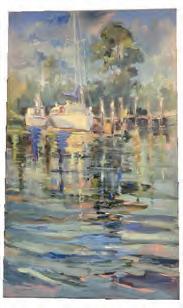
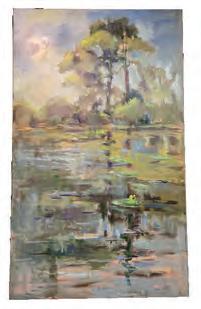
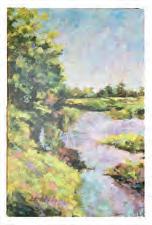
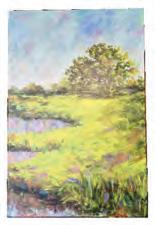
Peace & Poise Southern Flare Acrylic, 24x36 | Dana Mosby
Docked Reflective Marsh
New River Canal II
New River Canal I Oil, 15x30 | Andrea Phillips
I remember listening to this album that came out the year that I was born, and feeling a lot of clarity and peace. [There were these] deeply emotional lyrics that made me see so many calming colors, and brought me back to some type of center. I didn't really know what this experience was, but music always kept me calm and seen.
Can you describe how you’ve translated synesthesia into your art practice?
For me, translating synesthesia into painting is less about creating something specific, but more about documenting an experience I've felt and seen through my senses. When I hear music and feel those emotions, it naturally arrives in my mind as a color or movement. My process starts by paying attention to those instinctive reactions to sound and acting on it.
Can you share the kind of music you turn to when you go to paint?
I do feel heavy influence from composer Emile Mosseri's film scores, and artists like The Marias, Lana Del Rey, and Fleetwood Mac.
What makes sound a valuable perspective to capture within your art?
Sound gives me access to an entirely different layer of reality. One that isn't visual, but still deeply emotional. When I hear sound, I feel like I'm absorbing the movement, the tempo, and the weight of what I'm hearing. It's the driving force behind the color and movement, but also can influence the little lines of poetry I'm writing in the paint layers.
Learn more about Meadowlark's work at kimmeadowlark.com.
“WHEN I HEAR MUSIC AND FEEL THOSE EMOTIONS, IT NATURALLY ARRIVES IN MY MIND AS A COLOR OR MOVEMENT. MY PROCESS STARTS BY PAYING ATTENTION TO THOSE INSTINCTIVE REACTIONS TO SOUND AND ACTING ON IT.”
—KIM MEADOWLARK
Living With Art: A Special Advertising Section
Manon Bellet
Scent
Artist
New Orleans, via Switzerland
In recent years, your work as an artist has dealt in the realm of scent. What is one scent you have used in your artistic practice, and why do you return to it?
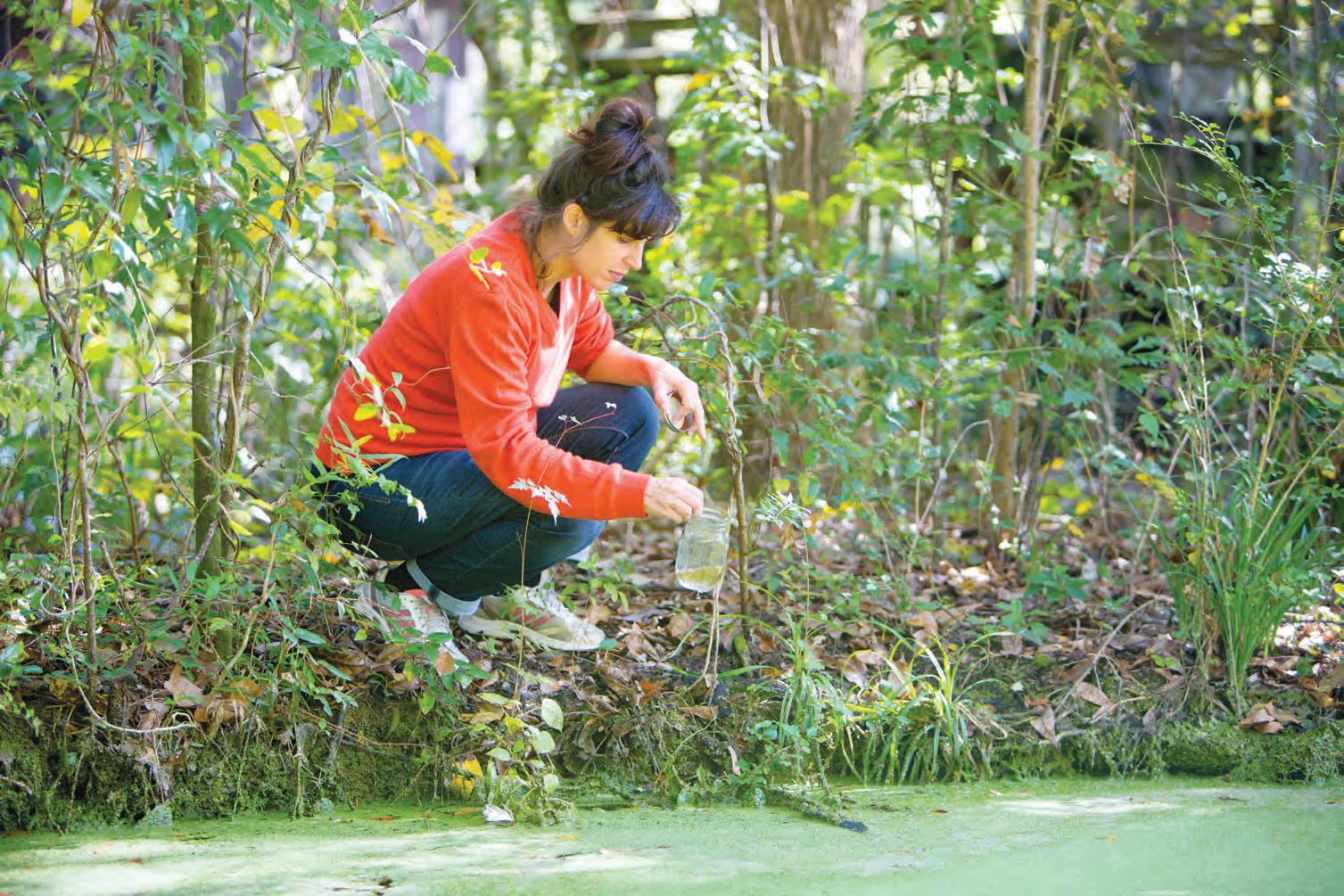
One of the first scents [I] identified was that of the earth near the bayou after a storm. The smell of “wet earth” after rain is called “pet richor.” It is produced by the release of geosmin (a compound generated by soil bacteria) and plant oils when raindrops strike dry ground.
This scent is universal; it evokes the smell of wet earth or rain for ev eryone who smells it. Yet, at the same time, it has a deeply personal dimension, as bodies of water and soils can vary considerably and be subject to very different climatic conditions.
This scent was the first strong smell I physically experienced when I moved to New Orleans ten years ago. It was the catalyst for my olfacto ry project, on which I have been working since, named
What is your fondest scent-memory link?
For years, right up until I was a teenager, my parents would make their own pizza every Sunday. They would make the dough themselves, and we would help them top it. It was always a ritual that I loved. It was always a large pizza, so we could share it with family or friends. The smell of that pizza baking in the oven has always been very comforting to me; it has stayed with me for many years and brings back peaceful memories of Sundays spent with my family.
Photo courtesy of Manon Bellet.
What makes scent a valuable perspective to capture in your art?
Scent affects the body on a different level than other modes of knowing the world. We can’t smell something without becoming it a little, taking it into our bodies and being transformed in ways we don’t fully understand.
Environmental change has a way of introducing often unwanted, unpleasant changes to long-established smellscapes that erode people’s sense of place and well-being. For my olfactory project, Golden Waste, I focused on this idea of scent as it relates to memories, place, change, and loss. We are all connected by the same air, the same water, and the same responsibility. What remains are the smells which, although invisible, produce memories in the form of vivid sensation and mutual representation. But also in cultural value. And I was not able to create that in any other technique I used to create other works.
Can you describe your process in selecting and recreating specific scents for your art?
I met with local residents, mainly fishermen, but not exclusively. Through these encounters, I compiled a database of scents associated with locations along the coast by using headspace technology. I sampled natural flora and fauna, water and soil, and sentimental objects of the people who lived there. Secondarily, in collaboration with Swiss perfumer Andreas Wilhelm, we synthesized the natural scents to create long-lasting concentrates. I decided to place the local population at the heart of my work.
“SCENT AFFECTS THE BODY ON A DIFFERENT LEVEL THAN OTHER MODES OF KNOWING THE WORLD. WE CAN’T SMELL SOMETHING WITHOUT BECOMING IT A LITTLE, TAKING IT INTO OUR BODIES AND BEING TRANSFORMED IN WAYS WE DON’T FULLY UNDERSTAND.”
—MANON BELLE T
Learn more about Bellet's work at manonbellet.com.
Living With Art: A Special Advertising Section
Ben Depp
New Orleans
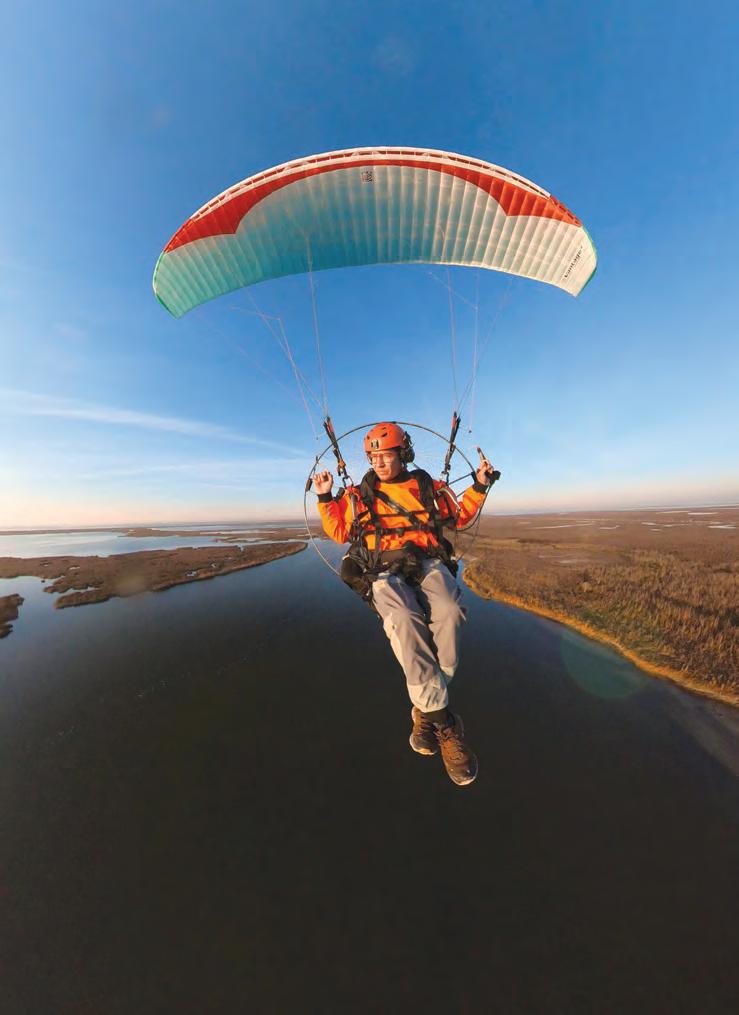
Your aerial photographs, taken above the coastal regions of the Gulf South via paraglider, are some of your best known works. What perspective does a camera—wielded from the clouds— provide that traditional photography can’t?
The landscape here is flat, so the view from a boat or the ground in South Louisiana is often either open water or a wall of marsh grass. It’s hard to have perspective on how this landscape is changing.
From an aerial point of view, I can observe how human engineering and natural forces (like hurricanes) are changing the coast. From the air, subtle changes appear more dramatic. For example, I can see how land is fragmenting apart and see sediment moving in the water as the coastline is washing away.
How do you capture the perfect image while also navigating the practical maneuvers of flying a paraglider?
I rarely set out to photograph anything specific. Instead, I spend hours in the air exploring along the coast, which allows me to find unexpected and incredible situations. For example: purple algae, clouds of mayflies backlit by morning sun, or flocks of pelicans making cool patterns in the water. When I see something I want to photograph, I drop some of my paraglider controls, pick up my camera (which is strapped onto my harness), and make photographs with one hand. I’m moving quickly, which keeps me from overthinking compositions
Photographer
Photo courtesy of Ben Depp.
and requires me to compose instinctively. I occasionally make a good photograph, but I also take a lot of bad ones that no one ever sees.
Best time of day to shoot your photos? I depend on shadows to create depth in my photographs, so I usually fly around sunrise and sunset. When the sun is low on the horizon, rays of light rake across the marsh and create dark shadows that emphasize textures in the landscape.
You’ve spent a lot of time camping in Louisiana’s wetlands while photographing them—how does that “up close and personal” experience juxtapose the “1,000 feet up in the air” perspective to create meaningful, powerful images?
I sometimes camp in the marsh or on barrier islands for days at a time, waiting for the right weather conditions to be able to fly. While I wait, I literally watch the clouds go by. I have a lot of time to observe the natural world around me. This has made me much more appreciative of and sensitive to this landscape. After months of being present in the marsh, I begin to think of each clump of grass or texture in the water as part of the story of this place. There is no juxtaposition for me between being “up close and personal” and being in the air. My connection to the landscape informs what I notice and what I choose to photograph, even when I am hundreds of feet above it. 1
“AFTER MONTHS OF BEING PRESENT IN THE MARSH, I BEGAN TO THINK OF EACH CLUMP OF GRASS OR TEXTURE IN THE WATER AS PART OF THE STORY OF THIS PLACE . . . MY CONNECTION TO THE LANDSCAPE INFORMS WHAT I NOTICE AND WHAT I CHOOSE TO PHOTOGRAPH, EVEN WHEN I AM HUNDREDS OF FEET ABOVE IT.” —BEN DEPP
Learn more about Depp's work at bendepp.com.
MUSEUM SECRETS
Inside the Vault
A TIGER, A WARHOL, AND A LOST MADONNA
Story by Elizabeth C. Weinstein
Have you ever wondered what treasures a museum might have hidden from view? After all, many museums contain hundreds, if not thousands, of objects in their collections. But even the largest institutions, like the Metropolitan Museum of Art in New York or the Louvre Museum in Paris, have only enough exhibition space to display a fraction of their collection at any one time, carefully storing the rest. These objects are tucked away from curious eyes and probing hands within conservation-friendly
trolled, securely locked rooms. Off-limits to the average visitor, these storage rooms contain objects of sensational beauty and others that are simply peculiar. Considered holistically, a museum’s collection represents a microcosm of the public it serves, maintaining unto perpetuity those objects in which the community places value—monetary value, sure, but even more so in the priceless stories that each represents.
I recently set out to explore behind-thescenes at three Louisiana art museums. The obvious place to begin was the New Orleans Museum of Art (NOMA),
recognized as the oldest fine arts institution in Louisiana. When NOMA opened in 1911 as the Isaac Delgado Art Museum, the collection contained only nine artworks. Today, it holds nearly 50,000 objects, representative of many cultures. When asked about some of their treasures, Lisa Rotondo-McCord, Deputy Director and Curator of Asian Art, mentioned the recent bequest of a rare portfolio of forty-five small-scale prints by British photographer Julia Margaret Cameron (1815-1879) and an impressive number of works of Louisiana native Robert Gordy (1933–1986), whose hardedged, geometric style was informed by his study of African art. His work,
century art from the Spanish Americas. As such, the painting was widely published and exhibited internationally—“even at the Prado [in Madrid]!”— for fifty years. Then, out-of-the-blue in 2014, an art historian named Maria Giulia Aurigemma came across a copy of the same painting in the sacristy of the Church of San Bernardo alle Terme in Rome, signed by artist Carlo Saraceni (1579–1620)—thus revealing that the painting is actually not Peruvian at all, but Italian Baroque. On loan from 1998–2012 to the Mint Museum of Art in Charlotte, North Carolina, the painting is now on view back home at NOMA in a focused exhibition, this
“PEOPLE ARE SURPRISED TO LEARN THEY HAVE ACCESS [TO SUCH TREASURES] RIGHT HERE IN OUR COMMUNITY.”
—MOLLY ROWE, EXECUTIVE DIRECTOR OF THE HILLIARD ART MUSEUM
including items from NOMA’s permanent collections, is currently on display through October 11 in the exhibition Robert Gordy: Outside the Mainstream However, the story that really caught my attention was the recent discovery that a painting in NOMA’s collection was not what historians thought it was. “It was really embarrassing for everybody, but really fascinating at the same time,” said Rotondo-McCord. When NOMA acquired the painting in question in 1970, the original documentation referred to it as “Our Lady of Lima,” a rare example of art made in the Viceroyalty of Peru, a political subdivision of the Spanish Empire. The painting depicts a statue of the Virgin Mary, a common theme in seventeenth and eighteenth
time under its true attribution: “Our Lady of Loreto” by Carolo Saraceni. The collection at the LSU Museum of Art in Baton Rouge proved no less intriguing. Michelle Schulte, Chief Curator of Exhibitions and Collections, and Marianna Luquette, Registrar, guided me through their collections storage area—where I was privileged to view a pair of porcelain blueware Ming vases that survived a shipwreck in the South China Sea and a mahogany miniature sideboard once used to demonstrate its (unknown) maker’s talent. Too fragile to put on view, an intricately carved ivory basket from the nineteenth century is currently being recreated digitally by graduate student Meredyth Yorek as part of her doctorate.
Michelle Schulte, Chief Curator of Exhibitions and Collections at the LSU Museum of Art, makes her way through the museum's storage room, where its extensive permanent collections are stored when not on display. Photo by Molly McNeal.
But the object Schulte confesses as her favorite is a large stuffed animal—a tiger no less! Dating from the 1920s, this expertly handsewn and painted mohair tiger with glass eyes and carved teeth was made in Germany by the Steiff toy factory. Founded by Margarete Steiff in 1893, when a woman-owned business was very unusual—“more so in Germany than anywhere else in Europe,” pointed out Schulte—Steiff secured international fame after Margarete’s nephew invented the first stuffed bear with moveable limbs, better known today as the “Teddy Bear.” Schulte proudly divulged that she had a Steiff collectable bear as a child. “I kept it on a shelf because it was so important.” The museum’s tiger— which is nearly thirty-two inches high and eighty inches long—is most likely a commissioned piece. Schulte said he was once able to roar when you tugged on the pull tab. Purchased by the museum in 1996, the tiger was christened “Pierre” in a naming contest. Before its reopening downtown in the Shaw Center for the Arts as the LSU Museum of Art in 2005, the museum was known as the Anglo-American Museum and housed in the basement of Memorial Tower on campus. In those days, on game days and during university events, it was the custom to dress Pierre in an LSU jersey and place the mascot outside the museum for photo ops. The beloved Pierre now lords over the museum’s galleries.
Moving on to explore the holdings of the Hilliard Art Museum in Lafayette, I met with Executive Director Molly Rowe. The Hilliard’s roots date to the 1950s, when W.E. Groves and A. Hays Town donated the first major artworks to the University of Southwestern Louisiana’s art exhibition program. A decade later, Lafayette businessman and philanthropist, Maurice Heymann, donated three acres of land to the university (now the University of Louisiana at Lafayette) for the building of an art museum. The Heymann family later also donated one hundred Japanese woodblock prints, among them works by famed artist Katsushika Hokusai (1760-1849), best known for his series titled Thirty-Six Views of Mount Fuji. “He was ahead of his time but didn’t realize his importance until much later in life,” said Rowe. Hokusai’s work was widely circulated in Europe in the late 19th century, profoundly influencing such master artists as Monet and Van Gogh.
Our conversation moved on to the work of yet another master, Andy Warhol (1928-1987), the “Patron Saint of Pop Art.” The Hilliard was fortunate to receive more than 150 photographs and screen prints from the Andy Warhol Foundation for the Visual Arts’ Photographic Legacy Project, which in 2007 donated almost 30,000 works from its collection to college and university collections around the country. “Before
social media, Warhol was the original content creator … He always had a camera around his neck,” said Rowe. Intimate, observational, and at times voyeuristic, Warhol’s photography served to document his perspective of the consumer and celebrity culture of his time and played a major role in his studio practice. Warhol used his photographs as source material for the creation of his better-known silk-screened paintings and prints made in his signature Pop style. Rowe pointed out Warhol’s 1980 print of Karen Kain, a longtime principal ballet dancer for the National Ballet of Canada, which was inspired by a Polaroid photograph he took of her. Rarely on view due to light sensitivity, the photographs are currently on display in the museum’s galleries for the first time in more than fifteen years in the exhibition, Andy Warhol: Plus One, open through August 15. “People are surprised to learn they have access [to such treasures] right here in our community,” said Rowe. 1
Left: Unidentified maker, Basket, c. 1800. Ivory. Gift of Mr. and Mrs. Harry McCall, Jr. to the LSU Museum of Art. Right: Unidentified maker, Covered Jar, c. 1645. Porcelain. Gift of the Friends of LSU Museum of Art to the LSU Museum of Art. Photos by Molly McNeal.
Carlo Saraceni, "Our Lady of Loreto," c. 1600. Oil on canvas. Collection of the New Orleans Museum of Art. Edith Rosenwald Stern Birthday Fund and Museum purchase, Ella West Freeman Foundation Matching Fund, 70.28. Image courtesy of NOMA.
The Long Exposure
IN MISSISSIPPI, TINTYPE PHOTOGRAPHERS
RESURRECT A 19TH CENTURY CRAFT
Story by Marshall Blevins-DeLoach
soon it may be too late.” What began as a portrait-for-profit endeavor became a real interest in documenting the conflict, and out Brady went to the field. “I had to go. A spirit in my feet said Go, and I went.”
The tintype was quick to market and described by photographic historian and artist Steven Kasher as, “the first truly democratic form of photographic portraiture.” It came in the 1860s and went by the 1870s as more affordable and quicker-acting methods of photography emerged. As a result, this uniquely American photographic method sets an aesthetic timestamp on one of the nation’s darkest historical periods, as well as some of its most legendary and infamous characters.
When you lean back and stare down the long history of a place, it is easy to see why a genre like Southern Gothic might arise from the alluvial soil and wild river on the other side of the levee, from the dark of the piney woods in the hill country, where just because you’re a little closer to the stars don’t mean it’s any brighter. Faulkner lived in Oxford and was familiar with the land towards the river; his stories conjure wild jungle-dark forests and repressive heat, the glory of springtime in the bright woods, and the specters of an Antebellum South. He wrote with the Civil War at his back, against a past that was rapidly changing into the future beneath his feet.
When I think of Southern Gothic, I think of a tintype image. Stark, sharp, dark. Anonymous stories in uniform, unsmiling, clutching pistols or sabers at their chests. Women in mourning, men in arms, each unnamed face holding some resemblance. Any of these men could have been an ancestor, the unknowing as long and permanent as Ol’ Man River.
Mathew Brady is a tintype photographer whose work you’ve probably seen, even if you don’t know his name. He made portraits of Abraham Lincoln, Grant and Lee, Stonewall and Sherman, Davis. He began making portraits of young soldiers before they left for the Civil War, advertising this effort with a creeping truism, “You cannot tell how
Contemporary Mississippi photographer Michael N. Foster pointed out that tintypes often capture more character than beauty. You see it in the gaunt and haggard face of a war-worn Lincoln. Tintype cameras take several seconds of exposure to make the image, if the conditions are correct. In many of the Civil War landscapes, movement was captured more as a blur, suggesting ghosts.
What’s left? Brady’s acolytes were many and went on to make portraits of their own, to teach the next generation. Somehow, even as its popularity waned, the process was kept alive, and in the modern world, the spirit to learn is still getting in people’s feet.
Staring down the modern tintype photographers of Mississippi, one can see the evident devotion to the old practice, connected somehow to the devotion to this region itself. It makes sense, in this land of the Southern Gothic. Each artist comes from a different background— care for their place in this state the driving force behind the work.
The thing about tintype photographers is they have the opportunity, and beyond opportunity, obligation, to directly develop their images, immediately—sometimes using the water right there around them, in the river, to create the negative.
One image is made at a time on the square of tin or glass, usually 4x6 or 5x7; 11x14 images are considered “mammoth plates.” The piece of metal is prepared with a thin layer of collodion, then while still wet, it is sensitized in silver nitrate, before, finally, the image is exposed. The cameras truly look old timey, complete with a photographer’s cape, a wooden box with its lens and wooden legged tripod, a cord to a trigger that fires the shutter. You sit very still while the shutter exposes and closes. After exposure comes the development process, the fixing, the washing. Part of the magic is the idea
that since the photos are so rapidly developed, the subject would have been in the room while the image appeared on the metal. Lincoln might have breathed over Brady’s shoulder, and uttered the same quiet “wow” as we do, his face appearing beneath the developing fluid.
Our first subject is S. Gayle Stevens, who lives in Illinois but is often a character of the Mississippi Gulf Coast. She’s been practicing wetplate collodion photography for nearly two decades after learning the process through a series of workshops and sheer determination to push its limits. Her images of the coast’s hurricane-swept landscape post-Katrina are scraped, dappled, dark, pooled; nature is coming up through the concrete, the tiles of a lost home reflecting the sky, developing fluids looking like spirits creeping into the frame, like the water that flooded above stage. She holds in time staircases to nowhere, the work beyond a photograph and more like a painting. She speaks of walking in the woods with her father as a child, of the importance of bees, and once made a series called Disappearance. The installation included one hundred wet plate tintypes of individual bees. During the show, folks could “buy” their own bee, creating a process that imitates life, in which the bees are slowly disappearing, one by one. Accompanying the individual portraits was a mammoth plate she made for which she collected a large quantity of dead honeybees. It looks just like the seeds of a sunflower head, just like a solar eclipse, saying the same thing: without the sun, there is not life; without the bees, there is not life.
Stevens’s images of dandelions, leaves, butterflies, often collected on walks, connect the past to the ever-changing present. The world around us is always dying, but it can be saved in a tintype image, which is itself eternal.
Euphus “Butch” Ruth is a photographer who has been making wet plates for around twenty years and keeps a studio outside of Greenville, near the Arkansas state line. He’s out near Warfield Point Park and is always dressed impeccably; exactly the sort of specter you’d imagine becoming a tintype photographer, with his vest, suspenders, pinstripes, hat, beard, shined shoes. His studio-darkroom fits as well, with a coffin, red lights, wood floors—his work displayed starkly on the walls.
Ruth learned his craft from John Coffer’s Camp Tintype in Dundee, New York. He took the three-day beginner’s workshop and learned to manipulate the chemicals, only to come home to the heat
Portrait of L.C. Kelly, by Michael N. Foster.
"Pass Installation," by S. Gayle Stevens.
and humidity of Mississippi, where nothing came out correctly. His only recourse was to send a letter to Coffer explaining the problem and wait for him to write back—which he did, offering advice for a Southern climate tintype.
Over time he figured it out. Today, to see him work in the darkroom is to witness a master, or a mad scientist, in action—bending light and dark. He described trying to make the images look more like the picture he had in his mind than the reality he found upon arriving to make the photograph. Some work looks like a reflection, marred with ripples, like a heartbeat in the chemistry. Every aspect of the image becomes a character in a stirring drama: the broken ribs of a falling church, the light in the sky striking, ruins becoming more like ancient ruins, where our history moves beyond loss and into something more like lore, if we can just remember how to tell stories anymore.
Newer to the tintype scene is Jonathan P. Smith, who grew up in New Albany, Mississippi. Beginning only two years ago, he learned the process from Lisa Elmaleh in West Virginia. He was already well-studied in storytelling, as a photographer and documentarian for more than thirty years. After living in several different states, he returned to his childhood land of New Albany because “there are so many stories to explore here.” He says he is drawn to wet plate photography because of the handmade quality of the images. He spent many years as a digital photographer and filmmaker, and “missed creating final products with my hands.”
He was also drawn to it because of a lifelong interest in history. In a previous professional life, he worked as an archaeologist with a focus on the Southeast. Staring at historic photography day in and day out, he became curious about the processes used to create those images.
Top: Photo of the Gulf, by S. Gayle Stevens. Bottom: Shelby Cemetery, by Butch Ruth.
“One thing that drew me to wet plate is the way it makes you think, both as photographer and viewer, about the medium and what the image represents,” he said. “Using one of the oldest photographic methods to address modern issues, for me, just demonstrates the way history continues to impact us in our daily lives, even when we think we’ve moved past it, or it no longer applies.”
The first tintype photographer I ever met was Michael N. Foster; he’s selftaught in this strange and particular art and was part of the reason Mississippi magnetized me. Foster was “hatched and raised” in Vicksburg and grew up running the red clay hills. Today, he lives on forty acres of pine forest in Water Valley, and makes portraits because he loves people. One work of his that always strikes me is of L.C. Kelly, who Foster met one afternoon across from his office in Batesville. Kelly was pulling a trailer full of sweet potatoes, and had a flat tire. Foster helped him fix it and learned he was a pig farmer. Naturally, the portrait was made, a quiet and beautiful man there among his hogs in their pen, graceful, with pride for his life’s work, the light soft around him. Foster also befriended a musician with a long beard and a quick wit named Harpo, too full of stories, that lived near a junk yard and played music. The portraits are poignant and done in brotherhood, instead of outsider-looking-in.
It’s incredible to be standing in a Mississippi field in 2026 and to be suddenly transported back to 1856, holding oneself very still in the sunshine, unsmiling, while a photographer throws a cape over their back, and leaves you staring at a box and a lens. The shutter snaps. Quickly they pull the plate, pour developer, and the image materializes the same as magic. We are not so different from our past—curious, with hope for the future and reverence for what came before us, and still very eager to dress up in costume to make a good photograph. The Southern Gothic land we live in as Mississippians is not all that different from the land Faulkner knew and wrote about, the spirit still in the air to be captured by camera, or by pen. 1
Portrait of the author, Marshall BlevinsDeLoach, by Michael N. Foster.
"Chair Study," by Jonathan P. Smith.
The Meeting of Heaven & Earth
ON THE ART OF TERRY GIBSON
Story by Lauren Stroh • Photos by Aimee Farnet Siegel
JonBenét Ramsey, Princess Di, Anne Frank, and Amy Winehouse—all tragic muses to the artist Terry Gibson, and beloved. Even a cursory glance at any one of his necklaces, tributes to the departed, might make you wistful and cheery at once. The works are colorful and memorialize these and other public figures readily familiar to students of modern history and fans of pop culture. Made with unorthodox materials such as Gorilla Glue, Suave deodorant, USPS packing supplies, and stock images printed off at the Alvar Branch of the New Orleans Public Library, the pieces lack guile and concretize
the crude aesthetics of folk and outsider art. They are packaged in shrink-wrap for safekeeping, more closely approximating the heedless handling of mass-produced merchandise than the punctilious treatment typically given to works of fine art. But closer examination reveals the sophistication of Gibson’s iconography and their inherent allegiance to Louisiana, his homestate. At times, the artist explicitly elevates legends local to his native New Orleans (i.e. portraits of Lil Wayne and Irma Thomas), but more often (and with more subtlety) he honors the ground beneath his feet by choosing to integrate its rituals of death and grieving into altars
for global icons to transcendental effect. While individual works vary, the necklaces typically feature two-sided color images and are embellished with a scattering of glitter applied to chunky primary-colored frames. Sticker hearts and platitudes (today is a new day; dream a dream) further ornament the picture plane, which descends from whimsically beaded hangs (sometimes adorned with satin rosettes, wooden letters, and plastic beads) or melted plastic. While they are sold and marketed as necklaces (vaguely reminiscent of Mardi Gras beads), they are better suited for the wall than the neck, though they are certainly constructed sturdily enough to withstand wear (Gibson transports them over the Industrial Canal via bike and scooter, kept safe from ruin flat against his chest).
The necklaces figure into the categories VIP and RIP (and occasionally both); the former is reserved for the living—though only liminally. Because the works are all undated, we can read their subjects’ assignment to either category as a time stamp that reveals our culture’s fascination with their celebrity or with their death.
Holistically, the works comprising the collection—which are prolific if not innumerable—can also be read as a subterrain where the living interlude with the dead. Time is suspended and collapsed here; on any given piece, célèbres of the present day and yonder coalesce, regardless of their association (or lack thereof) in life. Gibson’s subjects include Abraham Lincoln, Little Richard, the Wicked Witch of the West, Clint Eastwood, Fats Domino, Taylor Swift, Dolly Parton, Rihanna, Daffy Duck, Poppy the Pygmy Hippo, and Prince. I maintain a wishlist on my phone: Scarlett O’Hara with Rhett Butler, Britney Spears, LaToya Cantrell, Joan Didion, among others. Gibson vends both pre-made works and works made on commission (my Amy Winehouse is a product of his own genius; my Anne Frank a request), revealing his orientation towards process rather than result. His cell phone number is prone to change, so when I am in town and ready for a new piece, I leave my name and number at Faubourg Wines in the Marigny and typically hear back from him over the course of a day. We meet on their patio, where he shows me the posters he is working on and his new selection of jewels. (Lest I reveal my bias, he once gifted me a rosary with beads that spelled “LAUREN A SWEET CANDY HOT GIRL
LAUREN” with “VIP” on the pendant and a bone-colored crucifix attached, along with a bracelet to match: “LAUREN IS BLESSED.”)
Gibson’s art is derived from strategies first applied by Pop artists in the twentieth century to address formal concerns. By borrowing the likenesses of celebrities, products of consumerism, and other widely-distributed images sourced from mass media, Pop artists attempted to draw audiences’ attention to the style and construction of a given work of art instead of the muse itself; their logic followed that when an image is seen by a viewer with enough frequency, its rendering can supplant the primacy of the depicted.
While a formalist approach is essential to fully appreciating the ingenuity of Gibson’s work (his resourcefulness is informed by skills he gleaned while incarcerated), and his prolific output compares to that of other Pop artists (think Andy Warhol’s “Factory”), his art also advances the interests of earlier aesthetic movements of the twentieth century, integrating the sentimentality of Abstract Expressionism with the archetypes and fetishes common to the work of the Surrealists who preceded that.
In these new creations, Gibson’s sincerity usurps Warholian irony, serving as rejoinder to his predecessor’s cool remove. These works show the artist’s hand quite literally, with their handcrafted molds, his handwritten memos, and his handto-heart consolations and declarations of love—so strange, so clever, so sincere, so sweet. 1
Mixed media artist Terry Gibson at his 2023 exhibition, titled Everyday Icons, at The Front NOLA.
"Prince, RIP" from Terry Gibson's 2023 exhibition, titled Everyday Icons, at The Front NOLA.
VISIT ST. FRANCISVILLE
History Lessons
When the subject is regional history, St. Francisville has been punching above its weight for centuries. In 2026, this colorful corner of Louisiana’s Florida parishes marks America’s 250th celebrations by recalling local episodes that paint a portrait of history in the making.
June
13:
The Day the War Stopped
During the American Civil War, with conflict raging throughout the Lower Mississippi Valley, the death of a sailor serving aboard a Union warship brought hostilities to a halt at St. Francisville to allow a dignified funeral to take place. On a hot June day, a procession trudged uphill from the Mississippi River, staggering under the weight of a coffin. The white flag of truce flew before them. Behind them, the guns of their federal gunboat fell silent.
The date was June 13, 1863. Ten miles south, the Siege of Port Hudson was pitting 30,000 Union troops against 6,800 Confederates, fighting to control traffic on the Mississippi River. Union Admiral David Farragut had attempted to destroy Confederate cannons atop the Port Hudson bluffs, but only Farragut’s flagship and one other, the USS Albatross, had passed upriver safely. While shelling St. Francisville, the commander of the Albatross, John Elliot Hart of Schenectady, New York, died, perhaps from yellow fever. Hart was a Mason, and his shipmates found in St. Francisville one of the state’s oldest Masonic lodges, Feliciana # 31 F&AM. The local Senior Warden, a Confederate officer named W. W. Leake, felt duty-bound to honor a request to bury a fellow Mason and a soldier. So, Lt. Commander Hart was laid to rest in Grace Episcopal Church cemetery, with respect paid by Union and Confederate Masons alike. Then the war resumed, with Lee’s northern invasion turned back at Gettysburg July 3, Vicksburg falling on July 4, and Port Hudson finally surrendering on July 9, 1863.
• On June 13, this moment of brotherhood that brought the Civil War briefly to a halt will be reenacted as St. Francisville joins in America 250 celebrations taking place around the country. On Saturday, June 13, The Day the War Stopped reenactment presents graveside histories in Grace Church cemetery, a tour of the Masonic Lodge, a parade, vintage music and dancing, and a dramatic presentation of the funeral itself. Reenactors wear Civil War uniforms accurate down to the last button, and amazingly, some roles are played by descendants of original participants. visitstfrancisvillela. com/event/day-the-war-stopped for details.
• On July 4, St. Francisville will celebrate America’s semiquincentennial with an Old-Fashioned Family Fourth featuring live music and fireworks in Parker Memorial Park, festive food and drinks, and surrounding businesses Bayou Sara Brewing, Big River Pizza Co, Away Down South, and Café Petra all getting in on the action. 5 pm–9 pm at 5730 Commerce Street. visitstfrancisvillela.com to learn more.
• On October 25, Audubon State Historic Site will again host its bi-annual reenactment of a local skirmish that took place during 1779’s Battle of Baton Rouge, when Bernardo de Gálvez, colonial governor of Spanish Louisiana, aided the cause of American independence by wresting the lands east of the Mississippi River away from the Spanish, who retained control of the West Florida parishes after 1776. On September 16, 1779, a mixed force of Pointe Coupée and Opelousas militia members and local allies joined the battle, launching an attack from Profit’s (or Profitte’s) Farm, just south of St. Francisville, and capturing British soldiers who were building a fort. This year in conjunction with America 250 celebrations, members of the local Alexander Stirling Chapter of the Daughters of the American Revolution are commemorating this important Revolutionary War action with a historical marker that will identify the site and recount the story of the battle. Mark your calendars for the next reenactment, which will recreate the sights and sounds of the American Revolution with musket and cannon demonstrations, medical demonstrations, blacksmithing, and a reenactment of the battle itself, at Audubon SHS on October 25.
There's more local history to explore at visitstfrancisvillela.com
RESTAURANTS
Of Place & Pleasure
COVINGTON’S FELICIANA BISTRÔT CHANNELS FRENCH CLASSICS THROUGH NORTHSHORE STORYTELLING
Story by Jordan LaHaye Fontenot
Shitting alone at a table for two hright when Feliciana Bistrôt h& Bar opens for the evening, hI looked through the wall of windows out at the golden-houred corner of East Gibson and North New Hampshire Streets. Periodically, groups of women would step out of their cars and trail into the nearby Hampshire restaurant, all of them wearing elaborate feathered headdresses. A family passed by in a golf cart. And in the entryway of the restaurant, just in front of the repurposed church pew provided for waiting guests, a small crowd was accumulating with no agenda, no rush to their table or the bar. They all appeared to know each other, but their meeting looked unplanned, as though they were charmed to find so many acquaintances at the same place at the same time. Lean into the fanciful and you might imagine yourself in Paris. But the truth is, the scene is utterly and quintessentially of the Louisiana Northshore.
This is the same Northshore, after all, of the French master chef Chris Kerageorgiou’s culinary institution, La Provence—which brought the delicacies of classic farm-to-table French cuisine to Lacombe and became a landmark for the region. Tributes to the now-closed dining destination wink throughout Feliciana: a portrait of Kerageorgiou extends a glass of red wine to the viewer, and his iconic chicken liver pâté is listed on the menu as a delectable add-on to the sourdough bread service (sourced from Tournesol Café and Bakery down the street).
The homage to La Provence is a single thread in the tapestry of Chef John Besh’s narrative vision for Feliciana Bistrôt and its upstairs sister, the Paradise Cocktail Lounge, both of which opened in February as part of Besh’s BRG Hospitality Group on the former site of Downtown Covington’s circa-1942 Star Theater.
The restaurant, even more so than any of Besh’s award-winning New Orleans projects, is a tribute to the chef’s own his-
tory, and in particular his history on the Northshore—where he grew up and got his start in cuisine at La Provence—and his previous training in France. Thematically homing in on how place, and the South especially, has a tendency to shape identity and the pursuit of meaning, Besh turned to Covington’s own National Book Award winner, Walker Percy.
"Walker Percy believed that who we are is tied to where we come from, and this restaurant is my way of honoring both the community that shaped me and the formative years I spent training in countless bistrôts, weinstubs, and bouchons across France,” said Besh.
The result is a thoughtful blend of aesthetics: a modern French bistrôt glimmering beneath wafts of Percy’s brand of French existentialism. The ef
fect is not heavy, but instead playful. The dining room’s centerpiece is the bar, gesturing invitingly in all its warm woods, colored glass, and leather seating. Black and white penny tile stretches time between the modern and the nostalgic. A Provençal-style cabinet hangs on one wall, adorned with copper pots, glass jars, and wicker baskets—bordered on each side by arrangements of antique plates. Framed artworks act as portals into Louisiana nature scenes, and if you look for them, you’ll find motifs of Besh and Percy’s shared Catholicism in the corners: a holy water font, a displayed prayer—even a nook that might double as a confessional. A typewriter sits on wooden furniture beside a signed copy of Percy’s The Moviegoer, and a shadow box on the wall imagines the kinds of items he may have carried in his pocket or kept on his desk: glasses, two pens, a set of keys, and a rosary.
The private event room, called “the Binx Room,” is a more pointed homage to Percy’s first and most famous book, and features framed black and white photos of historic movie theatres interspersed with displays of vintage video cameras. Upstairs, visitors will encounter the Paradise Cocktail Lounge, named for the fictional Louisiana setting of Percy’s 1971 novel, Love in the Ruins. The space is richly adorned in velvets, leathers, and gold embellishments, and includes an airy outdoor patio—Covington’s only second-level (not quite rooftop) open-air bar. The lounge’s showstopper, though, is
Dishes at Feliciana, Covington's newest French bistrôt. Left: Escargot with Mauthe's persillade butter and grilled sourdough. Right: The Grand Plateau de Fruits de Mer—with oysters, shrimp, crab, and scallops served on ice. All images courtesy of BRG Hospitality.
Chef Patrick Teagle, Chef de Cuisine at Feliciana Bistrôt & Bar.
a mural stretching across the far wall, created by Ellis Fox. An abstract storybook dreamscape depicting a wetland, complete with a snake, roseate spoonbills, a pelican, and something vaguely feline— the work sets the gorgeously off-kilter tone for this place (Louisiana? This bar? Paradise?) of indulgent storytelling, elevated drinking, and the pleasure of brilliant company.
Back downstairs, back to the table. Besh’s vision for a classic French bistrôt in Covington is exactly that: this is not a French bistrôt in France, nor is it a “Louisiana French” restaurant. “Our goal was to create a shared sense of place that transports guests to the French countryside while celebrating our beloved Northshore and our foodways,” said Besh.
“We wanted to create a French bistrôt for Covington,” echoed Chef de Cuisine Patrick Teagle. “We want to give homage to French classics and French sensibilities, without making it too high brow for this community. But we aren’t serving étouffée or gumbo here.”
Instead, you’ll find the expected French fare: escargots and duck ragout, blue mussels and steak frites—along with French dishes of Chef Besh’s past, such as Kerageorgiou’s pâté and Provençal Chef and mentor Alain Assaud’s “soupe de crabe.” Besh once told Teagle about watching men in Parisian bistrôts eating blanched white asparagus wrapped in ham, then dipped in bearnaise. “Hearing and learning about those experienc-
es, that’s what I love,” he said. “It’s about finding those stories and traditions and recipes and discovering some random grandmother in the Provençal countryside who does it like this and hers is the best.”
Chef Besh said that when selecting the chef to lead Feliciana’s kitchen, what stood out to him about Teagle is this sense of expression through food. “He puts his heart into it, and his team responds to that,” said Besh. “He also grew up in the countryside, so we share an understanding that thoughtful, grounded cooking is built on community and high-quality ingredients . . . I knew he would be the perfect person to tell our story at Feliciana."
Teagle’s experiments in French home cooking star most prominently in the daily specials. On the evening I visited, after briefly considering his recommendation of the Bavette Bistrôt Steak and frites (“just so simple and delicious”), I opted for the Wednesday night duck cassoulet—a leg confited to butter beneath a crispy skin, bedded on a pile of white beans flavored smokey with sausage sourced from Acadiana supermarket staple, Best Stop. The dish was complex and warm and rich in a way that felt more ancestral than familiar. Other evening specials include much-recommended dishes of rabbit fricassee, short rib bourguignon, bouillabaisse, and coq au vin.
Even in the effort to present traditional French cuisine, Louisiana ingredients
can’t be excluded on a menu at a restaurant that so intimately explores place. And Besh has always been an advocate for local sourcing. There is blue crab in the beignets, and crawfish served with the swordfish. The menu gives credit where it is due, naming purveyors like McComb, Mississippi’s Mauthé Farms, which provides the tangy persillade butter that gives the escargot its sweet-thenspicy-aftertaste. “I put their names on the menu because people here recognize them,” said Teagle, who comes to Covington after stretches at BRG Restaurants Domenica and August in New Orleans. “This is such a community place, and people recognize those touches. Like, ‘Oh, they’re buying from Danny. They’re buying from Cayman.’ It fosters a sense of belonging, and I think that’s really important.”
And in the thick of Ponchatoula’s strawberry season, of course the Northshore jewel makes an appearance on the menu, beautifully presented in a pavlova with lemon curd. Sweet and airy, it’s a perfect dessert choice for someone who has just filled their belly with snails and beans and duck.
But Teagle couldn’t let me leave this place without directing me to the confessional: the double chocolate mousse is a thing of sinful indulgence. I think of Percy’s musings on bourbon as an “aesthetic” pleasure and temporary antidote to the emptiness of life. Eight months pregnant and unable to indulge in Feliciana’s craft cocktail list (with amusingly allusory names such as “Last Gentleman” and “Cud’n Walker”), I wagered that the mousse was my only hope for enlightenment. And boy, did it deliver. 1
Soupçon
A DASH OF DINING NEWS
By CR Editorial Staff
The Sweet Spot Cocktail Trail Returns
In between the rippling seas of Ascension Parish’s sugarcane fields are its vibrant urban centers, rich with heritage and teeming with tradition. And within those towns—Gonzales, Donaldsonville, Sorrento, Prairieville, Darrow—you can visit fascinating museums, historic homes, high caliber restaurants. You can also get a damn good drink. Returning for the fifth year, the Ascension Parish Tourism Commission’s Louisiana Sweet Spot Cocktail Trail turns summer sipping into an adventure (we recommend tapping a sober driver—don’t worry, the mocktails are delicious too!). At locations like Carli-Co Café, Frenchy’s Bar & Grill, Gilla Brewing Co., and plenty of others, just order the “Sweet Spot Cocktail” to receive a signature potion and a stamp on your cocktail trail passport (available at all participating locations or downloadable at visitlasweetspot.com/cocktailtrail). Collect eight stamps, and turn in your passport to the Ascension Parish Tourism Commission Visitor’s Center for a chance to win the grand prize giveaway (over $1,000 in value). You’ve got until July 31 to get your kicks, bottoms up and all!
Louisiana Chef Competes, Castaway-style
Two of reality television’s most anxiety-inducing concepts come together in a thrilling new series from the Food Network. Like its famed predecessor, Chopped Castaways asks twelve of the country’s most accomplished chefs to concoct delicious works of art under the duress of mystery ingredients, a ticking clock, and top-notch competition. But this time, they’ve got to do all of that on a remote island, over open fire, and while participating in survival-style physical challenges to earn their keep. The new show premiered in May, and among the competitors was familiar face, Louisiana’s Chef Jean-Paul Bourgeois, a native of Thibodaux and graduate of the Chef John Folse Culinary Institute who was recently nominated for the James Beard Broadcast Media Award for his own cooking series, Duck Camp Dinners
Watch Bourgeois draw from his Louisiana bayou boy skills in upcoming episodes, airing weekly on Tuesday nights on the Food Network, available to stream the next day via HBO Max.
Get Paid to Eat and Sleep
Pennington Biomedical Research Center is trying to answer the question: How does eating in an eight-hour window vs. a fourteen-hour window affect your metabolism? Called the CRISP study, this research will answer questions regarding how cardiovascular risk changes in individuals who don’t get enough sleep, depending on when they eat their meals. Participants must be between eighteen and forty-five years old with a BMI of 25–35 and no chronic health conditions. They must normally sleep 6.5 hours a night or less most days of the week and normally eat between fourteen hours or more during the day. Over the course of two months, during fourteen visits—including four overnight stays—study subjects will undergo a series of minor procedures including urine collection, blood pressure monitoring, and glucose monitoring while following prescribed eating periods. The reward? $4,000! To see if you’re eligible, visit pbrc.edu/crisp or contat (225) 763-300 / clinicaltrials@pbrc.edu.
REVIEWS
Gas Station Gourmet
READER-SUBMITTED ROADSIDE EATS
Curated by CR Editorial Staff
Queb's Country Store in Opelousas
“This place knows how to season WELL, and they do a bit of everything: mouthwatering plate lunches, Sunday BBQ, fresh and smoked meats, and specialty items like pig's feet, tripe, and beef tongue. Their Boudin Quesadilla with Jalapeño Honey Ranch is highly recommended, as well as their Spicy Cajun Burger.”—Sarah Wise
For a chance to be included in our next issue, submit your favorite gas station eats at subscribe.countryroadsmagazine.com/yum.
Outdoors
OUR SUSTAINABLE GARDEN
Through Drought & Deluge
scent that occurs after the rain has touched the earth. It felt wild to discover a way to describe a sensation so familiar; I knew immediately what he meant.
My mind instantly flooded with other scent memo-
ries involving water, such as that of water from a hose hitting scorching concrete on a sunny childhood summer day, or of the languid brackish water we "chicken neck" out of on Bayou Lacombe. Being a student of both words and the natural world, I have thought about this phenomenon constantly since that morning by the pond. As is the case with most strong words, the etymology of “petrichor” reveals its captivating origins: the ancient Greek “petra” meaning “rock” and “ichor” defined as “the ethereal fluid that is the blood of the gods.”
As a gardener here in Louisiana—where rain, water,
PRAYIN' FOR RAIN
and flooding are seemingly stitched into our DNA— rain is on my mind nearly always. Most every action I take when planting trees, which makes up the bulk sum of my work, is dependent on rain—flooding or the lack thereof.
These last few summers, I’ve observed something strange: we are getting more and more consecutive drought days after our spring rains decide to bow out. Hopefully, this summer proves me wrong. But as I sit here on my porch writing this in the pouring rain, I am thinking ahead at summer weather possibilities and have compiled a list of thoughts and tips involving drought and watering practices. Luckily, the astral sky (Farmers Almanac) predicts lots of summer rain this year. Here's to hoping for the best, and more petrichor memories still to come.
Thoughts on Keeping a Well-Watered Garden in South Louisiana
Water in the dark: Watering at the coolest time possible, just before the sun rises, ensures that less water is lost to evaporation and more of it penetrates deep into the soil, reaching the roots
The best planting season is when it is cool and rainy: when possible I only plant between the months of December and March, when temperatures are more favorable and winter and spring rains are reliable. Avoiding the trauma of heat and drought as a plant is adjusting to its new environment will save you from loss of plants and time—your greatest resource of all.
Don’t skimp on the mulch: Make sure all your plants are well-mulched, with no roots exposed. The greatest attribute of mulch is to hold moisture in your soil. And pro tip: the best mulches are free—collected leaves, arborist wood chips, and sawdust, among others.
When there is more wind, add more water: We don’t get much wind here, but one of our last major summer droughts was also so windy, it reminded me of dry desert summer days I have experienced out west. Wind can greatly affect moisture retention. Note your plants’ health after long bouts of wind, and adjust watering practices accordingly.
Water more than you think: Even in Louisiana, when trying to establish a plant, I find most people don't realize how much water a plant can benefit from. I like to especially point this out in cases of smaller, herbaceous, or newer plantings under large trees, especially live oaks. In those cases, (1) the canopy of the tree may be inhibiting the understory access to water and (2) in drought, the tree is going to take up most of the precious water before sharing. In the shade especially, it is always a delicate dance between not watering too much as to cause rot and watering enough in relation to the larger trees.
Maybe, don’t water at all: I recently read that the famous Sissinghurst Gardens in England, two summers ago, went this route. In the thick of their hottest and driest summer, the gardeners there decided to stop
watering and see what would survive by the end of their drought. This experiment would then inform their future plantings and how they might proceed in a future of hotter and drier summers.
This, like so much of conscious planting, comes back to the concept of “right plant, right place.” Mostly because I am a lazy gardener, but also in an effort to conserve the water I use, I only plant plants that live through both drought and deluge. Natives are most often my greatest ally here—many are pretty general in their needs and thrive under a range of conditions; these are the types I love to grow and plant most. Still, many natives have more of a specialized nature, with strong preferences toward particular ecosystems. Just because it is native doesn’t mean it will be low-maintenance. There are also plenty of non-natives I love with this perspective in mind. Mexican Salvia (Salvia leucantha) and balloon flower (Platycodon grandiflorus) are two of my most recent sweethearts. In general, I tend to avoid any plant that won’t make it through a long drought with more than minimal assistance. I rarely use exotic annuals anymore and focus my only water-heavy needs on my vegetable garden.
Just because a plant's leaves are wilting does not mean it needs water: This can be confusing at first, but listen here: even in a wet and regularly watered garden bed, plants may still wilt in the heat of the day. This is because plants lose water through their leaves, and even in well-watered situations, when faced with heat, a plant will choose to close up their "water release" valves to hold on to that water—producing a wilting effect. If you wait until evening, when the sun has dropped and the heat has relinquished; they usually perk back up.
The best way to know if your plants are actually
June Plant Spotlight
Baptisia alba, White False Indigo
Baptisia alba is a reliable native perennial that germinates readily and establishes with ease. She takes two to three years to grow robust, and is often initially a bit leggy in nature. Once established, though, there is no stopping her beauty. This perennial is a legume, therefore nitrogen-fixing, that blooms tall, creamy white spikes early in spring before yielding interesting seed pods that add fun garden texture. It grows incredibly well through drought or deluge and loves disturbance—hence why it is common, within its native range, as a roadside wildflower and frequently found under powerlines. I love planting it in a cottage garden setting alongside tall purple blooms, such as verbena and echinacea. I credit Baptisia alba, entirely, with the genesis of my relationship with native perennials. When I returned home from living out of state, I was so incredibly struck by this wildflower growing on the roadsides of my family property that I have never looked back.
wilting because they need water is to know your own garden. If you know you have been watering well and regularly (soaking the ground), and you see wilting, then it's likely just a temporary survival mechanism— don’t water more! If you know you have been irregular, and the soil is dry to the touch, then your plants are probably underwatered. When the sun falls, water well! Another trick is to observe your plants in the early morning: if they are wilted at that time of day, you can be sure that they are desperate for water. If they only wilt in the afternoon heat, usually they are fine and just taking a rest.
The water isn’t just for the plants: Those of you with highly biodiverse gardens that are of benefit to pollinators and wildlife (native perennial gardeners, I am looking at you!), do consider keeping up the laborious task of watering deeply and keeping your bird baths full. You are likely helping out more wildlife and pollinators (insects, birds, and more) than you realize. You don’t have to treat your entire space this way, but do keep a pocket of the garden thriving. 1
Read more entries of Jess Cole's column, “Our Sustainable Garden,” at countryroadsmag.com.
LOOK CLOSER
NOLA ‘Nacular
ANTHONY DELROSARIO’S CRUSADE TO PRESERVE NEW ORLEANS’S VERNACULAR SIGNAGE
Story by Marshall Blevins-DeLoach
Biking around New Orleans in the years after Katrina, hpondering the destruction—what was lost and what survived, the blue sky reflecting in the puddles and in the potholes—Anthony DelRosario was conceiving the project of a lifetime. He would go on to spend days, months, years documenting the careful lettering advertising beauty salons, barber shops, churches, delis, daiquiri shops, lounges. This included corner stores, once the center of community life for gossip and groceries. It all began as an act of preservation, a realization that “life and things are fragile and ephemeral.”
BEER - WINE - Liquor
KILLER FREE Jukebox
Snacks…GOOD TIMES
He calls his life’s work Nola ‘Nacular, a reference to the vernacular signage he has taken to heart. Hand-painted signs are going the way of the typewriter, the way of the phonograph. Growing rarer every day, these signs are sometimes misspelled but always distinct to the painter, utilitarian, sure, but also something more. They are almost always an advertisement, but sometimes a plea or reminder that Jesus Loves You or an idea: Cell Phone— Modern Ear Ache? When we talk about the local color of New Orleans, these hand-painted signs, which DelRosario describes as vernacular art, are part of the tapestry. In this instance, vernacular refers to “a language that is not standard or
official, but instead specific to a particular community or culture.” I mean, you already know. Who dat, your mom ‘en ‘em Making groceries, snoballs. Ain’t dere no more. The sign painters go a little further; their art is often the voice, or font, of an entire neighborhood.
Before Katrina, DelRosario spent nearly a decade booking shows for the Mermaid Lounge (ain’t dere no more), feeding the band, making hardly any money, which was fine. He was more interested in the community, supporting the music he loved. So, this newfound mission of wandering the streets and documenting their signs was just an extension of his way of caring for his people. He draws similarities to his work with that of Alan
Lomax, who drove around documenting folk stories and musicians in the early twentieth century. When we speak, he smilingly refers to himself as an “ethnosignicologist.” Over time, he found himself able to distinguish the work of different artists by their flourishes, their lettering style—each the last lighthouse of their message, painting advertisements and advice, like any artist, because of necessity and because they’re driven to do the work.
One morning, he stopped before a gentleman sitting in front of a painted sign and asked him if he knew where the artist was who had made it. He’d been looking for Lester Carey for a while. The man, June, said, “Well, he’s probably at Keller Market across the street”—which was exactly where DelRosario found him, there with a grocery cart stuffed with paint cans and a backpack that had “artist” painted on it.
Carey was one of the first sign artists he met and one of the best-known; this grinning older man with a little bit of a shoulder hunch has painted sandwich boards and sides of buildings, logos and church signs, mostly in Central City, where he lived. “Lester would often have sketches when I ran into him,” said DelRosario. On a grocery store wall, NECK BONES PIG TAILS + TIPS PORK CHOPS is painstakingly written, sometimes in cursive, sometimes slanted, red on white; giving a little levity to shopping, to your lunch break, chicken wings painted like the dependable delight they are. DelRosario sometimes refers to work like Carey’s as “block style” or “script style.”
After their meeting, DelRosario went from simply observing the culture he loved to helping actively support and create it. He began bringing Carey plywood and paint, the types of brushes he needed, and even got him some commissions. He made shirts to raise money for Carey, who lived on the street. They later collaborated with Defend New Orleans to make and sell more shirts with Carey’s signature painted words across the chest, the proceeds going to the artist. Carey passed away in 2017, though his work remains synonymous with the tradition of New Orleans sign painting, in no small part thanks to DelRosario’s crusade to preserve his visual voice through Nola ‘Nacular. He and his friend Steven Achord, a UX designer, even went so far as to create a website, where the public can download Carey’s signature fonts for free.
The other sign painting characters of the city are similarly larger than life,
Left photos and top right photo are all signs made by Lester Carey. Bottom right photo is a sign made by Tom White. Photos by Anthony DelRosario of NOLA 'Nacular.
genuine with light. “Uncle Tom” or Tom White often keeps a paintbrush under his hat, like architects keep their pencils behind their ears. He learned the art from sign painter Huey Bender after attending the John McCrady Art School on Bourbon in the early seventies. When he was a child, he’d draw right on the walls; now, he keeps paper tacked to the walls of his house so he can relieve stress and get out ideas, calling it his “graffiti wall” that he can scribble scrabble on. His work, like Carey’s, defines the Central City neighborhood. He gets his jobs by word of mouth—his work speaking for itself. Innovators Barber Shop: Your not a stranger here . . . Just a friend we never met…Yes We're OPEN • Booth Rentals • WALK • INS • Welcome. “He turned seventy-five a couple months ago and is still full of ideas,” said DelRosario.
DelRosario found Pam Collins through her business card, left at Rainbow Grocery on Magazine Street. It read,
“Pamela the Artist—commercial art, truck, lettering, banners for any occasions, signs etc.” Collins worked for the City of New Orleans for thirty-one years, painting signs for various agencies: house auction signs, No! Parking, NO tailgating on City Property, Subject to Be Fined. She even painted the official city grandstand at Gallier Hall for Mardi Gras. Her signature touch is painted stars and flourishes, sometimes including glitter. Her love for art and sign painting began early, painting signs for birthdays and other parties when she was a teen. She felt like it was meant to be that her first “real” job was as a sign painter, and so far, she’s stuck with it. Her work mostly spans the Gentilly and 7th Ward neighborhoods. There are more artists out there that DelRosario has documented, but hasn’t met—more living legends, or ghosts, painting signs for their neighborhoods. The artists and their work is practical and imaginative, funny and serious. They
are not intimidated by the many things they must paint: snoballs and stadiums, jazz bands and daiquiris, catfish and Ford trucks. DelRosario has lamented that he understands it might be cheaper, or simply easier, to have a sign designed digitally, or now through AI, and printed quickly. But the “neighborhood loses something.” That is to say, it loses its voice. “I want others to realize and appreciate the art of life, to recognize the work that other humans do to make our community, our world, what it is,” he said.
Since 2023, DelRosario has operated a gallery called Nola ‘Nacular on one side of his shotgun house on Magazine Street at Erato, in the Lower Garden District. He books bands and hangs art, and Collins occasionally sets up to paint custom signs for visitors. He sells prints of corner stores and Carey’s lettering on shirts: Neck Bones 5 LBS. $4.69. He tries to have openings on the first Saturday of every month, and closings on the last
Saturday. He curates the music with the help of the month’s featured gallery artist, and he hopes “to get the word out to more touring acts that are looking for funky non-bar venues, but mainly want to create an atmosphere of community where anyone is welcome. Sustainers globus, pro uno commune bono —support the group, for one common good.”
The meaning behind DelRosario’s project is to remind people this is all a part of human history. If you need something like a sign, or to put on a music show, or to make a little book, you really can do it yourself. If you have a message for the world, you can get some scrap wood and some spray paint and craft paint and cheap brushes, you can put your message out there.
In a world now crawling and scraping with AI, and a world running out of sign painters, just as New Orleans has seen its own rebirth over and again, DelRosario’s life’s work reminds us that we can always start anew, we can tell the world about our hearts and beliefs, and build a community that becomes unique and individual, vernacular. It can be misspelled. It can be bright and loud. You can make your neighborhood yours, and help your neighbor, too, by advertising what everybody is trying to do. In the meantime, Tom White and Pam Collins are living legends, alive and well, and ready to paint. 1
nolanacular.square.site.
Signs made by Pam Collins. Photos by Anthony DelRosario of NOLA 'Nacular.
Painting Grace
MARY HESTER’S
DEBUT FINDS BEAUTY NOT IN SENTIMENT, BUT IN THE SMALL, INSISTENT ACTS THAT SOFTEN A LIFE’S HARD EDGES
Review by Chris Turner-Neal
Seldom does a work of fiction offer its own thesis statement, but longtime Louisiana professor, editor, and attorney (now based in North Carolina) hMary Hester’s debut, Painting Grace, comes close late in the novel: “How long had it been since someone had asked her to look at a rose?”
The book’s central character, a widowed art historian named Dr. Miriam Landry, has no trouble looking at the roses herself, but has so isolated herself in the wake of loss that she shares little with anyone else. When she learns, at the point of retirement, that she has months to live, her plan to approach death with the same no-nonsense concealment of sentimentality that has governed her middle age is interrupted by a final friendship with her last student, her home health worker, Camille.
The story could easily have become saccharine: “A cancer patient finds peace and forgiveness at the end of her life, helped by a cheerful and devout nurse” isn’t exactly a thrilling elevator pitch. But Hester has taken what could have been a sermon and instead crafted a parable. People do horrible things in this novel—including at least one that (if I were Miriam) could well have seen the end her relationship with her parents forever—but the real growth, the real plot drivers, are acts of kindness.
Grace, that most unexpected of divine gifts, cracks characters open where attacks would and do fail. Late in the book, Miriam begins to imagine grace as a big white cat barging into the room to bring comfort and affection, whether the recipient wants it or not. (This is clearly heretical, as grace is a dog, but allowances must be made for cat people.)
This mechanism of grace happening through the works of others, of charity overwhelming a defense, is the recurrent motif of the book. Love is less an emotion than an action, a set of behaviors, and if it’s occasionally expressed through the time-honored cultural practice of minding someone else’s business, so be it.
Miriam’s slow opening to others, and indeed to herself, is made more realistic by the exceptional crafting of her character. Faced with grief, she has become not bitter, but stale—operating within the parameters of what she is willing to confront. When she’s flinty or snappish, it’s because she’s guarding her privacy, which is a more interesting trait to watch than the more familiar “hurt people hurt people” scold. She’s easy to like (and to pity, though it would offend her), of a type but not a cutout, someone who has used comfort and achievement to replace joy. This development of Miriam occasionally occurs at the expense of other characters’ elaboration; for example, Miriam conspires with an acquaintance to push Camille toward a certain course of action, and I’d have loved to see this dynamic deepened to see Miriam work with a peer. Still, many writers never even craft one compelling character.
Hester also handles Miriam’s decline with delicate effectiveness. There’s not a lot of symptoms and pills, and what we see instead is the gradual circumscription of Miriam’s world. Driving becomes difficult. Her clothes no longer fit, her menu dwindles, her energy fades. She triages her remaining business, donating valuables, shredding papers, and arranging her estate. Miriam destroying her most revealing keepsakes to avoid their being discovered after death is as irrevocable an acceptance of mortality as accepting the bedpan. And so, at the end, we may not be ready for her to go, but we’re very pleased for the chance to have known her. 1
Find Painting Grace, which was published in February of this year, at Silent Clamor Press. silentclamor.com.
At a nail salon
Overheard in LA
REAL CONVERSATIONS COLLECTED SOMEWHERE BETWEEN THE LEVEE AND THE DRIVE-THRU ` Jokes and Illustrations by Megan
Broussard Maughan
At a shoe store
Salesperson: “Are you planning on doing more running in them or more cross-training?”
Man: “I plan on doing a lot of walking around Home Depot.”
Woman #1: “Ugh, I never know what color to get.”
Woman #2: “You say that every time and always get some shade of nipple.”
…
At a bookstore
Woman #1: “This one’s about a 300-year-old woman cursed to be forgotten by everyone she meets.”
Woman #2: “Which Real Housewife wrote a memoir?”
…
Husband: “I really want to get into pickleball.”
Wife: “Man, they really are pickling everything these days.”
Artowrk courtesy of Megan Broussard Maughaun, designed by Blake Lagneaux.
At a restaurant
Server: “Ready?”
Diner: “Wait until that table leaves first. I don’t want ‘em to see my swamp ass.”
Man #1: “Summer is my favorite time of year.”
Man #2: “Really? It’s soooo hot.”
Man #1 “Actually, no. I think I’ve just been saying that for so long since I was a kid. I guess it stuck.”
Woman with thick Southern drawl: “I need to pay.”
NOLA server: “You already paid, baby.”
Woman: “Noooo, pay.
Where’s the restroom?”
At a Bar
Woman #1: “I’m moving to Baton Rouge for my husband.”
Woman #2: “What does he do?”
Woman #1: “I don’t know. I haven’t met him yet.”
ROAD TRIPS
The Folks Along the Road
ON MISSISSIPPI'S ROUTE 61, COLLECTING HIGHWAY SAINTS AND HOMEMADE WORLDS
Story and photos by Marshall Blevins-DeLoach
Starting out near home in Alligator, Mississippi, we head up Route 61, alive in planting season as the Delta hits its stride and the alluvial soil abides. The heart-soul-toil of this land is what made many blues musicians, and in the same way the hard farm work made heartbreakingly beautiful music, so too did it create its artists.
Cat Head Delta Blues & Folk Art, Inc. sits on Delta Avenue in Clarksdale, and the sign out front is handpainted: OPEN SEVEN DAYS A WEEK, a black cat head with red eyes. The symbol is an ode to sculptor and bluesman James
“Son Ford” Thomas, who worked many jobs, including gravedigger, and his son, Pat Thomas, who followed his father into the blues and the world of folk art. Outside of his music, Son Ford became famous for making skulls out of clay he found around his home place near Leland, Mississippi. He’d use anything he could find for teeth, but when the corn kernels sprouted, local dentists would donate to the cause. His skulls are unsettling, though whimsical, like a cartoon ghost and a Southern haint met at the crossroads and shook hands. His son, Pat, likewise, became famous for his line art cat head drawings; he created thousands
of them over his lifetime. One of them now graces a Mississippi vodka brand, but another inspired store owner Roger Stolle’s cavern of Blues & Folk art. Paintings fill the walls; blues books and records cover every other surface. If you’re lucky and Stolle is there to greet you, he’s a veritable fountain of knowledge on everything local, blues, art, music, and food.
From the sunny hot streets of Clarksdale, lined with dusty farm trucks, blue ghosts crowding the streets, we head south towards Mama’s Dream World, also known as the Ethel Wright Mohamed Stitchery, in Belzoni, the Catfish Capital of the World. Mohamed
was born Ethel Wright in Fame, Mississippi, a town as big as a bird’s nest—as she was known to say. She moved to Belzoni in 1927 after she married her husband, Hassan Mohamed, an immigrant from Sarhine, Syria (now Lebanon), in 1924. They had a store they ran together for decades, where they sold overalls and shoes, fabric and food.
In a book about folk artists in Mississippi, Dr. William R. Ferris, Jr. records the oral history of Ethel. Her love for her life, and especially her family, is underlined with sweet nostalgia and a matter-of-factness about the world. When her husband fell sick in the sixties, she
"Unusual Artist" L.V. Hull, who is to be honored with the grand opening of the L.V. Hull Legacy Center in Kosciusko, Mississippi later this month. Photo courtesy of Annalise Flynn, taken by Bruce West in 2002.
began stitching at his bedside, creating scenes from his favorite story collection, The Arabian Nights, on pillowcases and sheets. When he died in 1965, she continued to run the store but would go home every night and stitch. Her early work was made on fabric scraps; she would sign each piece with “E.M.” She stitched stories about her grandparents getting married in the nineteenth century, because she didn’t have a photograph of the wedding and wished that she did. She made work about the birth of her eighth child, her daughter, Carol, with all of her family standing around her and the doctor by her bedside.
In the seventies, she was encouraged by friends to join the state’s craft guild. They drove to Jackson, where the Folk Life Festival in Washington, D.C. was seeking out Mississippi artists. Two scouts from the Smithsonian fell in love with her work, and the rest was history. As she
The house is beautiful and grand in a way that makes me remember my grandmother, the care she showed for us as children. There are treasures in every corner, photos of the family, scrapbooks, scraps of work Mohamed never finished. In one room, giant planning drawings for future stitchwork hang, awaiting her hand. Hawkins brought forth a comforter that her grandmother had made for her, upon it a persimmon tree full of birds of every color. The place is testament to the mothers and grandmothers of the world, even for those of us who aren’t so lucky to have artwork that can also keep us warm while we sleep. Ethel Wright Mohamed’s Stitchery is open by appointment only.
If you streak across to Kosciusko, you’ll find the home of the “Unusual Artist” L.V. Hull, part of the L.V. Hull Legacy Center, which is set to partially open to the public on June 13. The home and property, renovated to be part of a larg-
shot to fame through the festival and resulting traveling exhibition, plus an article in National Geographic, her purpose never changed. She would sometimes be working on five or six pieces at a time, so excited about every idea she could hardly sit still. Mohamed’s granddaughter Amy Hawkins relayed to us the way the artist told the stories of her own work:
“You see that pair there? They’re kissing cousins. And those men are talking about horse trading . . . ‘If it wasn’t a Sunday, I sure would like to buy that horse.’ ‘Well if it wasn’t a Sunday I would sell him to you for $120.’ And a man teaching his son to tip his hat to ladies—look, over here, this man’s a flirt, because he is sitting next to this lady on the pew and his shoe is touching her shoe!”
The museum is Mohamed’s former home, full of stories and light. Hawkins gives us the tour. Her telling of the history of her grandmother’s work is beautiful to witness; it’s a testament to keeping your people’s work alive, through all the generations.
er “arts campus,” were, when the late artist lived here, covered, inch by inch, with bright colors and art objects— assemblages that speak to Hull’s enormous spirit. Her story is one entrenched in placemaking and homeownership, in possibility and the dire need for individuality.
Hull was born L.V. Bentley in McAdams, Mississippi, in 1942. Her father was a cotton farmer and her mother a midwife. She grew up making things out of mud, because out in the country there wasn’t any paint to be found.
She married Frank Hull in 1961, and they moved to town, had one son, “Little Joe” Hull, in 1964, and divorced in the next year. Little Joe died at the age of four, and things began shifting.
In 1974, with money earned from domestic labor, Hull bought her own nine hundred square foot house for $7,000. To decorate, she started painting every surface she could see: perfume bottles, sticks, planks, hatpins. “I don’t decorate no two things alike,” she said. Her work is made up of painted-out advice, of dots and dabs of color, of things gathered and glued together into a Southern fried mo-
An example of blues-inspired folk art on display at Cat Head Delta Blues & Folk Art, Inc. in Clarksdale, Mississippi.
saic, glass and beads and lighters all in a frame. She started with the yard, decorating tires with paint. She decided they looked like vases, so she added shoes on sticks and painted those, and they went with flowers that were already in her yard, the nature and art blooming together. The art started to move onto the porch, into her house, until she was positively immersed.
Hull’s health began to decline in the early 2000s, and neighbors started visiting more often, bringing her meals, paints, and friendship. When she passed away in 2008, an emptiness was felt in that yard, still so alive with color.
The L.V. Hull Legacy Center will soon present exhibitions of Hull’s work and host creative residencies and workshops, as well as other public programming. Her home is also a part of the National Register of Historic Places at the National Significance level—the first home of a Black art environment creator and the first home/studio of a Black woman visual artist to be listed as such. Phase I of the Grand Opening of the L.V. Hull Legacy Center will take place from noon–4 pm on June 13.
From Kosciusko, it’s on to the city of Vicksburg. If you weren’t looking for Margaret’s Grocery & Market, you might miss it. Once a dazzling pink, white, yellow, and red painted building of concrete, brick, and wood towers in the front, this vernacular art environment is in its wintering season, soon to return in the spring and summer of its life as a bright building on the bluffs. Margaret’s Grocery was once the only grocery store owned and operated by a Black woman across the entire stretch of Highway 61. Margaret Rogers’ first husband was killed during a robbery of the store, and then she met Reverend H.D. “Preacher” Dennis. The two were married after Preacher promised to build her a castle, if only she would dedicate the space to God.
quet of flowers, varied and colorful and beautiful. He delivered sermons in a glittering bus, welcoming guests into the yard adorned with shrines and sculptures, prayers and painted signs, because “All Is Welcome.” The grocery became a lighthouse to the religious and the curious alike, and Preacher welcomed them all. Margaret passed in 2009, and when Preacher followed her at the age of ninety-six in 2012, the battle to preserve their castle of love was already underway.
Photographer Suzi Altman was a close friend to the couple and helped care for Preacher in his last years. She made a promise to protect Margaret’s Grocery and founded the nonprofit, the Mississippi Folk Art Foundation, in an effort to raise funds to save the site—envisioning a future interpretive center with a re-creation of the store inside. Anything from the Grocery that has been dismantled is being saved to be re-used in the future. In the meantime, tours inside of the grocery are available with advanced notice via margaretsgrocery.org.
Just up the road in downtown Vicksburg sits The Attic Gallery, where Lesley Silver holds court, or church, on the second floor of her building, which looks across to the Mississippi rolling by. When she is in the gallery, she is at the table in the center of it, telling stories. She has known these artists, from Preacher to Hull. She is the walking encyclopedia of Vicksburg art, and Mississippi at large. Her gallery has been open for fifty-five years, and the life and vigor of the space is undeniable. Paintings of every genre cover the walls, metal cut-outs of fish and ladybugs, mermaids and alligators; encaustic paintings with keys and crows with extra wings, watercolors dripping with memory of place. Chickens run, humans jump for joy, zinnias bloom; it might take three or four rounds to scratch the surface. We leave knowing we can always come back if we have questions about the wide world of Mississippi and its artists. The Attic Gallery is open Tuesday–Saturday, from 10 am–5 pm.
The road out of Vicksburg is winding, and the bluffs give way to rivers as we near the southern part of the state. Palestine Gardens is three hours southeast from Vicksburg, in a place called Lucedale. The Gardens opened to the public on Easter Sunday in 1960. The Reverend Walter Harvell Jackson founded the site with his wife after they travelled to the Holy Land, wanting to bring their experience back home to Mississippi for those who couldn’t travel overseas. Right before you turn from the main road into the private forest, an archway assures you that you’ve made it.
To visit the Gardens is perhaps to surrender yourself to a new world, or to entrench yourself ever-deeper into the one you thought you already knew. Caretaker Don Bradley, who looks a little bit like Jesus, or more like the Old Testament God, is busy working when you arrive—a weaver of stories, here by himself in the fragrant pines of the soft woods that hold Lucedale’s miniature Holy Land. This is an art environment set to scale, one foot equaling one mile, as you journey from one site to another—Bethlehem and Babylon, Jerusalem and Gethsemane. We found ourselves looking down at the entire ancient city of Jerusalem, with bridges and great walls, little ancient homes with a real-life lizard basking on a warm roof. There is a stone rolled away from Jesus’s tomb. Some of the towers Bradley restored with the help of his son’s bicycle wheels, “Don’t worry, he wasn’t using the bike anymore,” assures Bradley. The nativity scene is
A comforter stitched by folk artist Ethel Wright Mohamed for her granddaughter, Amy Hawkins, on display at the Ethel Wright Mohamed Stitchery in Belzoni, Mississippi.
Palestine Gardens is a recreation of the Holy Land created by Reverend Walter Harvell Jackson in the 1950s in Lucedale, Mississippi. Now cared for by Don Bradley, the site is still open for tours.
complete with a small cow, donkey, and sheep. What once might have been freshly painted buildings have turned the color of things left in the weather, making them a little more part of the landscape.
Bradley begins to deliver his Gospel, including mathematic predictions from the Book of Revelation. All of this flies over my head with the migrating ducks. The woods have a spirit of quiet only slightly marred by the impending doom and the four horsemen of the apocalypse. The quarter mile pathway is clean, and the property obviously lovingly cared for, Bradley throwing pinecones and errant limbs off the path back into the woods. There are three or four ponds black with tannins and brimming with life, and our dogs (which were welcome on the walk) were alive to the world.
It is fascinating to witness someone living and talking completely as himself, with a pure and complete drive to tell us what he has discovered. “I would not have said it if it was not true.” As we walk back, I keep trying to ask him about the beautiful land around us; instead, he tells us a story about the fish he feeds in one of the ponds that symbolizes a Holy Sea. One day, he was walking by the pond as a big bass followed him on the perimeter. He began to apologize to the fish that he didn’t have any food for him that day, when a grasshopper flew on to his chest. He grabbed it and threw it to the fish, who ate it instantaneously.
On our way out, Bradley prays with us, and for us, reminding us again to prepare for what might come. Palestine Gardens is open Thursday–Saturdays, 9 am–6 pm, and Sundays, 1 pm–5 pm.
From Lucedale we head towards the coast, to the friendly city of Ocean Springs. Shearwater Pottery was established by Peter Anderson in 1928. Later, his brothers, James “Mac” and Walter (who achieved significant artistic acclaim of his own) Anderson, joined Peter at the wheel. It’s easy to miss, between the marina and the bayou, around curves under a generous canopy of trees. The road into Shearwater is narrow, and a sign reminds
you to slow down. The pottery studio is right at the beginning, among several small buildings that look warm with light and activity. The potters themselves are older, and since COVID, the studios are closed to tours. But the showroom is still open, telling the history of Shearwater and displaying its kiln-made curiosities. The Anderson family remains active in creating the work. The founding brothers all worked to make figurines, designs, and glazes, with many of the molds and designs still in use today. The shelves are lined with such pieces, especially in the small museum room—colors bright as turquoise and dark as plums. A little hummingbird and several cicadas sit on the shelves near the pottery, suggesting the roots of Shearwater’s inspiration. These pieces, from a standard plate to a coffee cup with a woodpecker as the handle, are meant to be used. Peruse the watercolors, prints, photographs. Plate designs line the tops of the walls, which in themselves are jaw dropping works of art. Several different kinds of rooster designs challenge the innate understanding of how a rooster looks, but also reveal the spirit of a rooster, and the prowess of the artist and their craft. Shearwater Pottery is open Monday–Saturday from 9 am–5:30 pm, and on Sundays from 1 pm–5:30 pm.
Next, we head west towards Bay St. Louis, taking the beach road that passes by carved live oaks and bird nest sanctuaries. Arriving in Old Town, we discover the streets bubbling with life, and the Alice Moseley Folk Art Museum appears freshly painted. This small museum is stacked to the brim with original paintings by the nationally acclaimed storyteller and “Professional Primitive Artist” Alice Latimer Moseley. She began painting at the age of sixty-five while she was helping to care for her mother, who was suffering from Alzheimer’s.
She painted to tell stories, always naming her works before she began, often with great wit: “You don’t have a good day, you make a good day!” Every paint-
Preacher Dennis and Margaret outside their legendary grocery, their castle of love, in Vicksburg, Mississippi. Photo by and courtesy of Suzi Altman.
ing is based on a news article, neighborhood story, or life experience. A wedding painting draws you to the chapel door, but soon you see children playing with the cans tied to the car, a woman standing with the wedding cake. There is a video you can watch about the artist, and her character shines through. Upon moving to the Bay at age eighty, she dispensed with shyness, holding court in her blue house with the slogan, “The house may be blue but the old lady ain’t!” One painting has Moseley standing in her garden, looking flabbergasted by all of the plants blooming. It is titled, “How could I know they would all grow?” The Alice Moseley Folk Art Museum is open Monday–Saturdays 11 am–5 pm, and Sundays from noon–4 pm.
It begins to rain as we depart from the coast and head toward Fayette, to The Frog Farm. We take a winding road through the pines; the sky is drizzling when we arrive at the gates. A dog greets us in love, and Louise Cadney Coleman opens the screen door to shout, “Diva! Go home!” We step into the bluegrey building, pay our admission fee, and enter the Farm. The first stop is the aquarium, with tropical plants and fish and birds, all made out of wood, shining under blue light.
The annual St. Francisville Food & Wine Festival is a weekend-long celebration of the culinary culture of Louisiana and Mississippi with acclaimed chefs, creative wine pairings, cocktail and spirit tastings, craft beer and live entertainment in one of Louisiana’s most beautiful and historic small towns.
Coleman began making stick dolls as a child. It was a man everyone called “Bud”— she recalled his name being Sylvester Potts—who inspired her. He would whittle and bring the children the little gifts he made. At the time, she couldn’t quite figure out
Top: Folk art by Alice Moseley, on display at the Alice Moseley Museum in Bay St. Louis, Mississippi. Bottom: Shearwater Pottery in Ocean Springs, Mississippi, is the central hub for the artistic Anderson family's creative legacy—and features a showroom full of potter Peter Anderson's iconic designs.
whittling, but began making her dolls. The nominal frog, with his bowtie, is featured prominently across the farm, and his name is, of course, Bud. To this day, Coleman is always collecting sticks “so when I get inspired, I have something to work with.”
We enter the showroom and I am positively grinning; little hand-sized frogs with long arms and legs, sitting on porches, standing, fishing. The birds that line the back wall pull me to them; whooping
cranes and egrets, ducks and geese, pelicans and flamingos, a peacock with a tail made out of solid cypress. They look like living drawings, unrestrained by reality, ready to play. It’s easy to forget these are all made out of sticks. I’m tempted to fill the trunk with them, but pick out just a few especially unique birds. Coleman has been working on the Frog Farm since 1999. She began helping build things at her husband’s hunting camp, before moving into her own stu-
dio. Before long, the frogs and the birds had filled that studio up, spilling into the yard, and back into the camp. Children in the neighborhood would come around to play in her woods. They told her “This isn’t a camp! This is a frog farm!” The land was christened. Her men helped build a new showroom, complete with displays. She keeps a working studio next to the window, warm light and a radio among her tools. We head outdoors. Coleman is in
the middle of moving displays out of the woods so they can clean the property up and add more to it. The first Frog Guardian we encounter is larger than life and has a sign that reads, “While you’re here as our guest; may you find peace and rest.” (Real) frogs begin singing in the woods all around us. We meet the Unity Rockers—frogs and alligators in a band together, the country cafe for frogs serving fried cricket and muddy water. We pass turtles, penguins, and alligators. Through puddles and over stepping stones, we peek at the older version of the farm where the frogs are singing; a long wooden walkway is raised above the gathering water. Coleman shouts from under her umbrella, “That’s the hospital!” And we see two or three grinning frogs and a bird waiting for repair care. We thank her and head towards the car, with new art for our home, which is the next destination. We find the 61 highway and head north. The Frog Farm is open seven days a week, but call ahead to be sure Coleman will be onsite.
This road trip was a reminder to visit people while you can; their castles to love will fade, the frogs will be moved around, the scripture lesson will vanish if there is no one to profess it. We found the folks among the folk art. It was a call for us to step outside ourselves and witness something new, to meet the remarkable souls that have saved the stories along the way, and couldn’t wait to share them with us. 1
Frog statues and tableaux created by artist Louise Cadney Coleman at The Frog Farm in Fayette, Mississippi.
Natchitoches, LA Natchitoches Area Convention & Visitors Bureau 57
New Orleans, LA Historic New Orleans Collection 13, 49
Newcomb Art Museum of Tulane 25
New Roads, LA Arts Council of Pointe Coupée 26 City of New Roads 55 Pointe Coupée Parish Tourist Commission 53
Opelousas, LA
St. Landr y Parish Tourist Commission 34
Plaquemine, LA Iber ville Parish Tourism Department 31
Port Allen, LA West Baton Rouge CVB 39 West Baton Rouge Museum 11
Ridgeland, MS Explore Ridgeland 17
Scott, LA
Bob’s Tree Preservation 46
Shreveport, LA Visit Shreveport / Bossier 19
Sorrento, LA Ascension Parish Tourism Commission 46
St. Francisville, LA Bank of St. Francisville 3 Cotton Exchange 37 Cross Quilter 37 NK Boutique 37 Poppin’ Up Plants 37 The Conundrum Books & Puzzles 37 The Myrtles/Restaurant 1796 37 Town of St. Francisville 36
Vicksburg, MS Visit Vicksburg 9
Zachary, L A McHugh House 54
Photo by Molly C. McNeal
Every Stitch a Story
THE QUILTS OF HYSTERCINE RANKIN
Story by William Browning
Hystercine Rankin (1929–2010), Memory Quilt, ca. 1994. Fabric; appliquéd, hand-embroidered, hand-quilted. 88 x 82 in. Collection of Mississippi Museum of Art, Jackson. Museum purchase, with funds from the Searcy Fund, 2006.101.
Tho ponder Hystercine Rankin’s journey to becoming an artist is to issue forth a prayer of admiration—for steadfast devotion to family, for faith in a meticulous craft, and for an Old Testament-esque inner strength.
When Rankin made her first quilts as a teenager in 1940s southwest Mississippi, she had a simple utilitarian goal—to keep loved ones warm. But the number of people she loved was always expanding. While keeping up with keeping them warm, she discovered that the work itself brought her a rare sense of peace. So, she devoted herself to the craft; learning to perfectly mimic the straight lines and color patterns she saw others create. As her confidence grew, her works became more varied, with increasingly complicated designs and schemes indicative of an emerging, original vision. Over the next half-century, she became a master.
In her sixties, Rankin began sewing memories into her quilts. These “story quilts,” as they came to be known, reflected Rankin’s experience as an Afri-
was Whelman, a freedman’s daughter, who first taught Rankin to make quilts from discarded pieces of scrap fabric. “At that time, you didn’t have a choice,” Rankin later told a reporter, explaining that she and her sisters were taught to cook and sew out of necessity. She learned traditional nineteenth century patterns with names like the Star of Bethlehem, Flower Garden, Jack-In-ThePulpit, and Windmill.
When she was sixteen, Rankin married a World War II veteran named Ezekiel. In 1948, they purchased more than one hundred acres of land in Jefferson County, and built their home, where they raised Rankin’s five younger siblings, a pair of her sister’s children, and seven of their own. Rankin made quilts for them all, along with various others. Ashley Rankin, a grandchild, remembers her in the home’s front room, where the light was best, working with a “very calm, consistent presence and steadiness.” In middle age, she told people that ideas for new patterns arrived in her dreams.
Emilye Crosby, a historian at State University of New York-Geneseo who grew up in southwest Mississippi, said that while it was primarily Rankin’s status as an artist that led to the home being placed on the National Register, the designation also stands as an acknowledgement of the many “African American families that created loving homes in defiance of white racism.”
After decades spent mastering her craft in relative isolation, it was a growing sense of community later in life that led Rankin to produce her famous story quilts. In the 1980s, Mississippi Cultural Crossroads, an arts agency in the town of Port Gibson, asked Rankin to lead some quilting classes. In the years following, she helped found Crossroad Quilters, a collective of regional quilters.
can American woman in the rural South of the twentieth century. Deborah Boykin, a Southern folklorist, said they “captured a sense of time and place in Mississippi” in the way Eudora Welty’s words did, and with the same level of artistry.
“I would argue,” Boykin added, “that Mrs. Rankin’s work is equally important to Mississippi and the nation.”
At age sixty, on a story quilt titled, “Memories of my Father’s Death,” Rankin quilted the seminal scene of the day a white man killed her father. She had only been ten years old. Her father was a man named Denver Gray, and her depiction of his murder listed the names and ages of the eight children he left behind. He lays on his back in the middle of the quilt, bleeding from his chest, while his killer stands over him, holding a gun. Regarding the lack of an investigation, Rankin sewed these words into the fabric: “ . . . they didn’t even arrested him [sic].” That day set forth the trajectory of her life and art.
After her father’s death, she and her seven siblings went to live with their maternal grandmother, Alice Whelman. It
Meanwhile, Rankin also ran the home and helped on the farm, gardening and canning vegetables. Ezekiel Jr., her oldest son, described their house as a “sanctuary,” explaining that his parents built a life “totally independent from really the influences of the South.” The Rankins’ self-sufficiency was intentional—Hystercine and Ezekiel were protecting loved ones from the culture of white supremacy that dominated much of Mississippi at that time. Any silent indignities they may have faced in the wider world, like drinking water from segregated public fountains or retrieving food from a restaurant’s back door, were balanced against a home life built upon the rhythms of self-reliance and respect.
Last September, the National Park Service recognized the Rankin homesite, still in excellent condition, for its significance as part of her artistic legacy by adding the home to the National Register of Historic Places.
The humble wooden bungalow where Rankin created most of her quilts stands along an unpaved Jefferson County road. Her family plans to someday make the property a community gathering place where visitors, children especially, can learn how small family farms in the area once operated.
“This moment is about more than just home or property,” Myrtis Rankin, her oldest child, said recently while discussing the family’s vision for the property. “It’s about honoring her and turning her hardships into a testimony.”
Some of her story quilts—such as “Untitled,” which depicts a river baptism, Rankin’s mother feeding chickens, and other snapshots of rural life—celebrate faith, farming, and family. Others blatantly confront racism’s brutal realities, like “After My Father’s Funeral,” which portrays a carriage full of the suddenly fatherless Gray children on their way to Alice Whelman’s home. A keen observer will notice they are traveling out of a section of the quilt made of dark fabric into a section of light fabric, representative of the brighter future Rankin always envisioned.
By the late 1980s, Rankin’s quilts were being exhibited in galleries and museums around Mississippi, including at the state’s official Museum of Art. They then spread across the country into various university holdings and into the American Folk Art Museum in Manhattan. Along the way, awards and honors descended upon Rankin.
In 1997, at the age of sixty-eight, she traveled to Washington, D.C. to receive a National Heritage Fellowship, the highest honor bestowed on folk and traditional artists by the National Endowment for the Arts. “When you think about how far that needle has taken you,” she said after returning home, “it’s a joy.”
Ezekiel Rankin Jr., who has maintained the Rankin property in Jefferson County, said his mother appreciated, but never got carried away with, the attention. How would she view the old family home being added to the National Registry?
“The way she treated everything that was sort of unexpected,” he said, “like a really cold glass of water when she was in the garden.” 1