Country Roads Magazine "The Road Trip Issue" April 2026
REFLECTIONS
Road Trip Rituals by James Fox-Smith
8 NOTEWORTHIES
Baton Rouge’s Black History Legacy Trail, Rouler Bike Tours & a journey down LA 64
APRIL SHOWERS
Where to find live music & art out of doors this spring
38 A MAP UNFOLDS
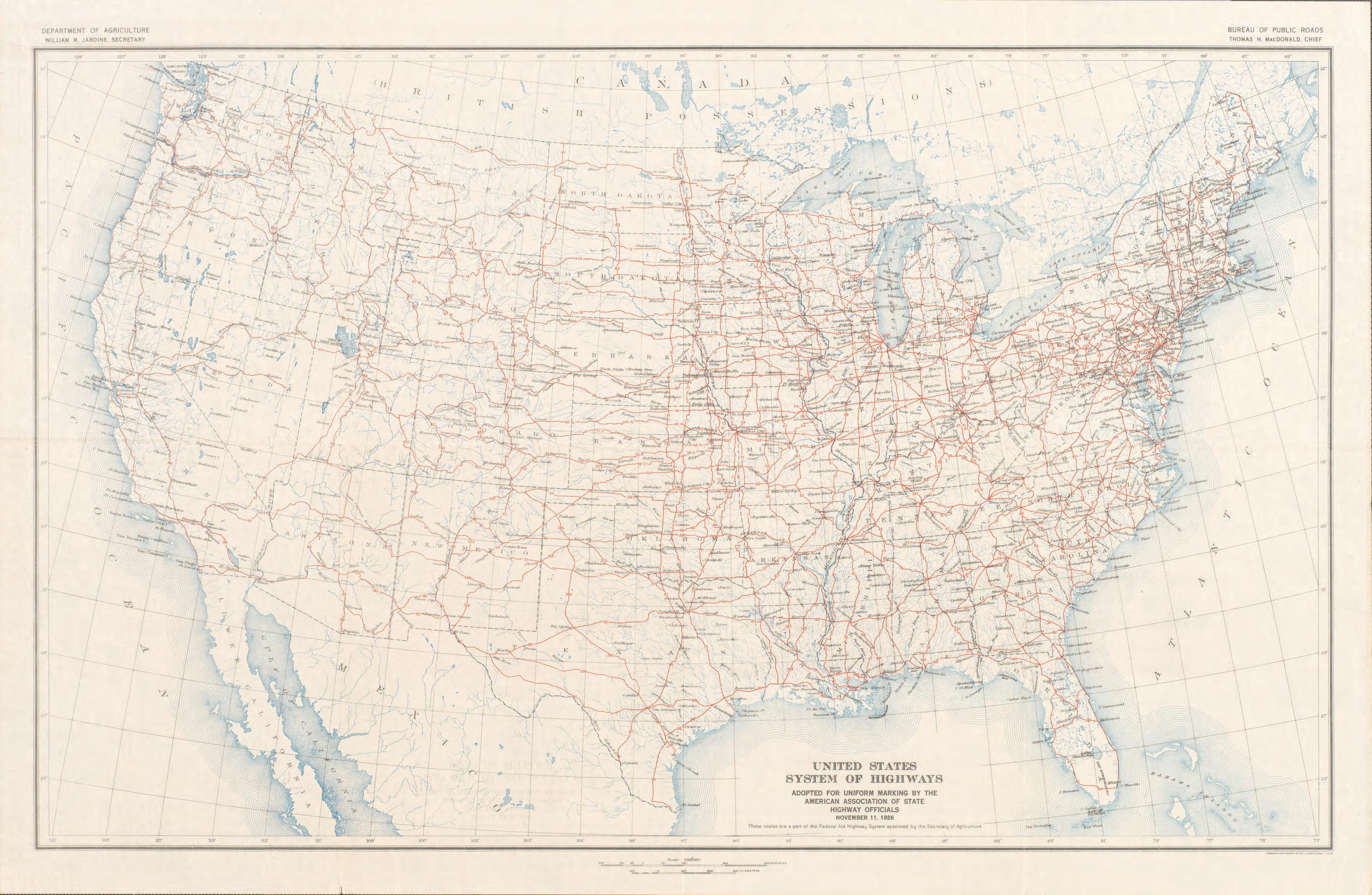
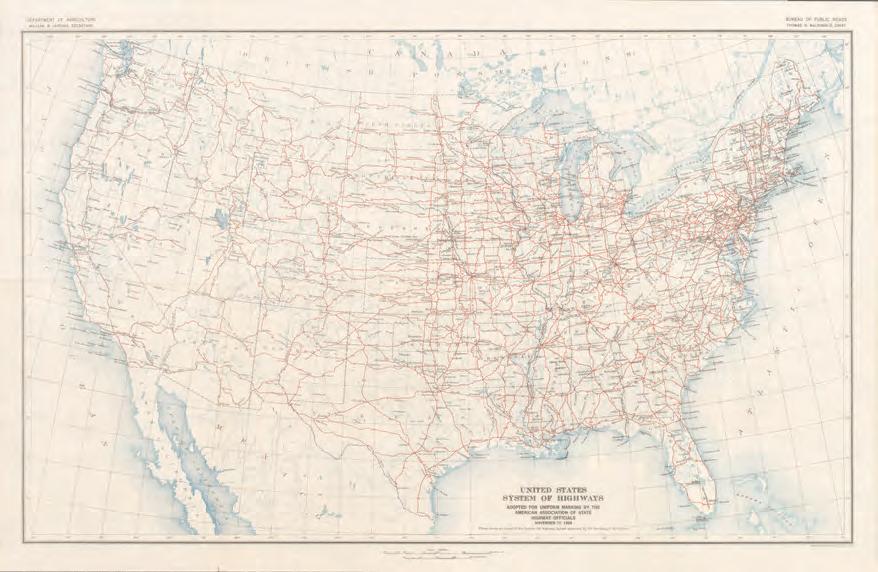
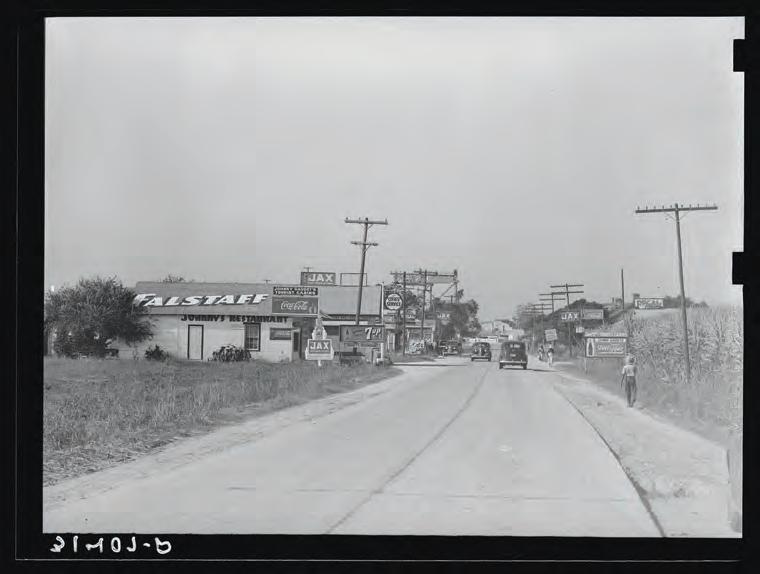
A century of the U.S. Highway system and the promise of the American road trip by Kristy Christiansen
42 THE ROAD TO PARADISE (AND ELSEWHERE)
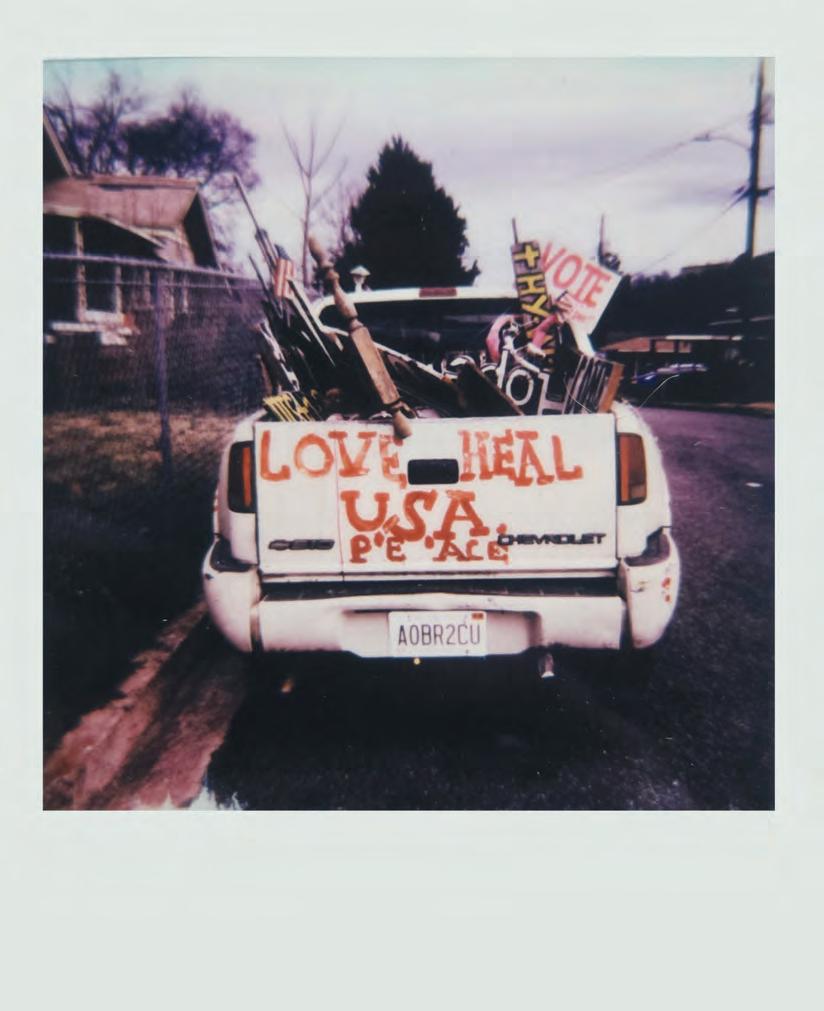
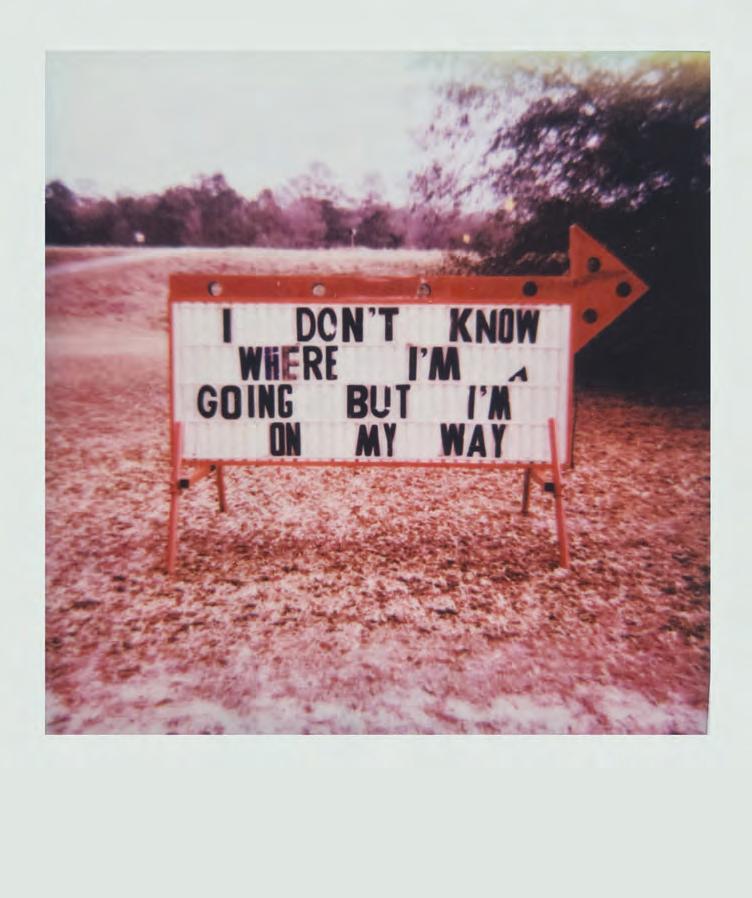
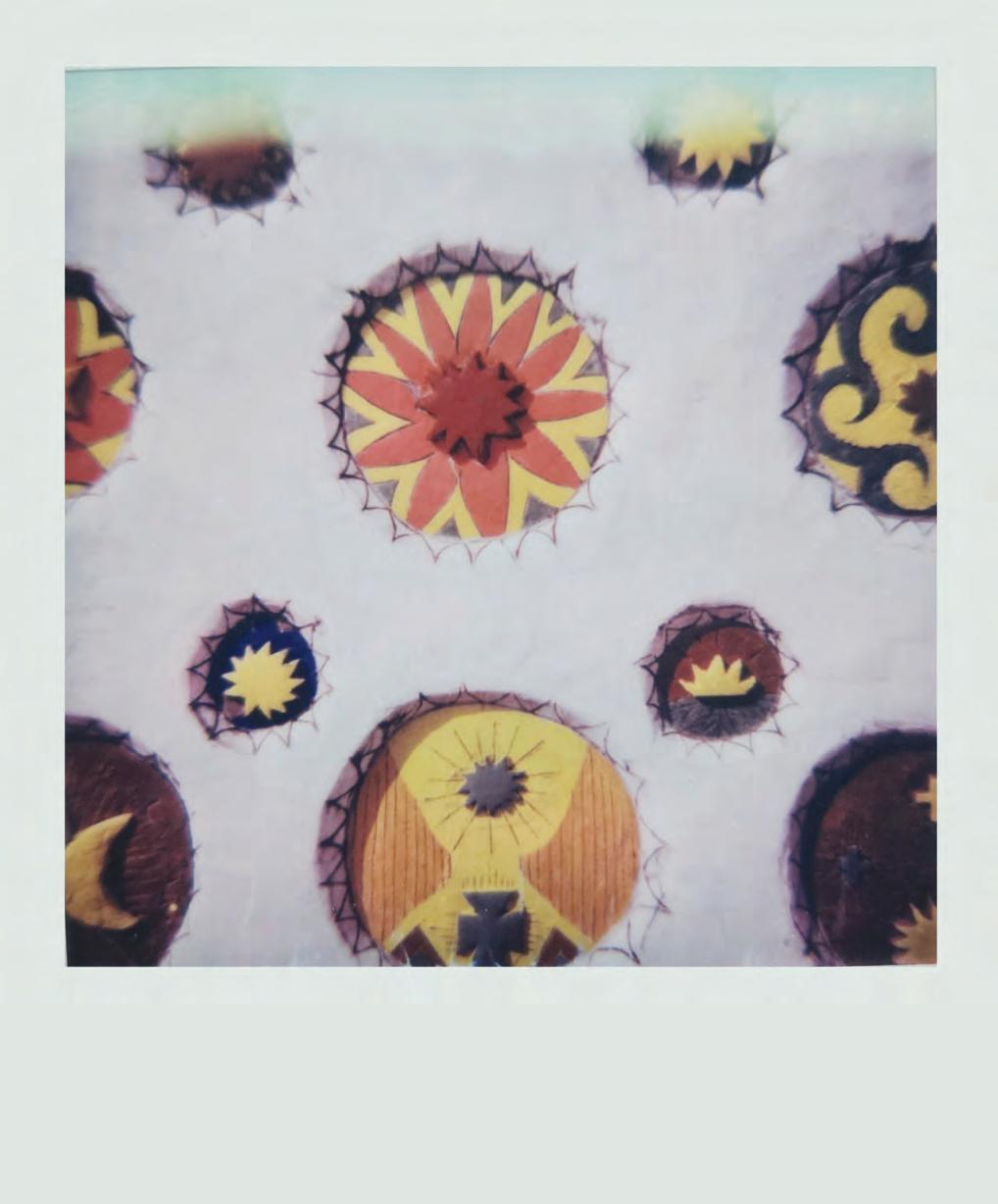
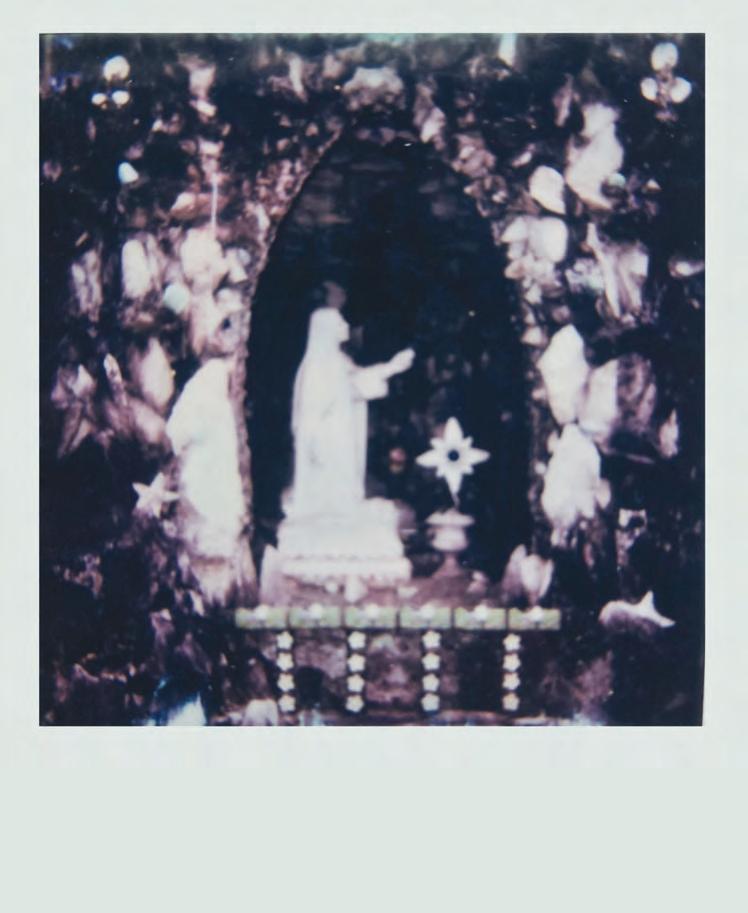
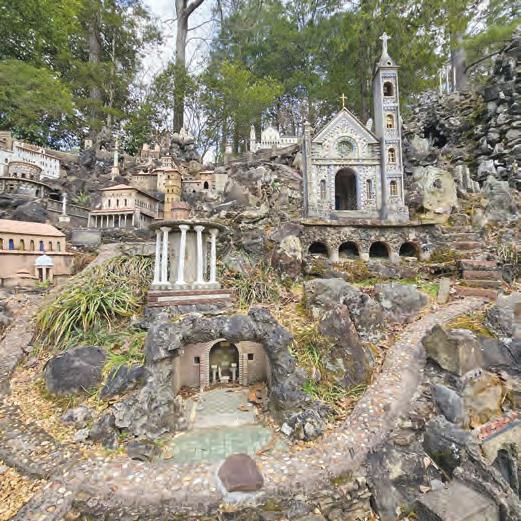
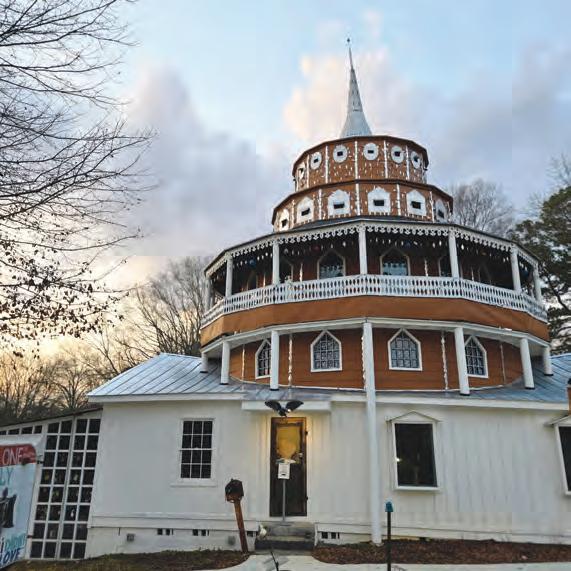
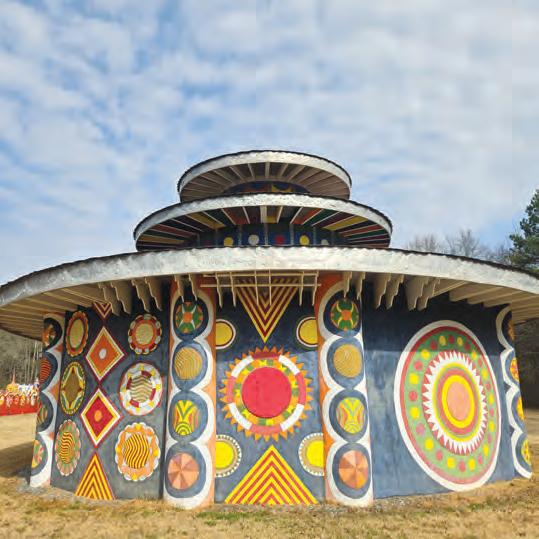
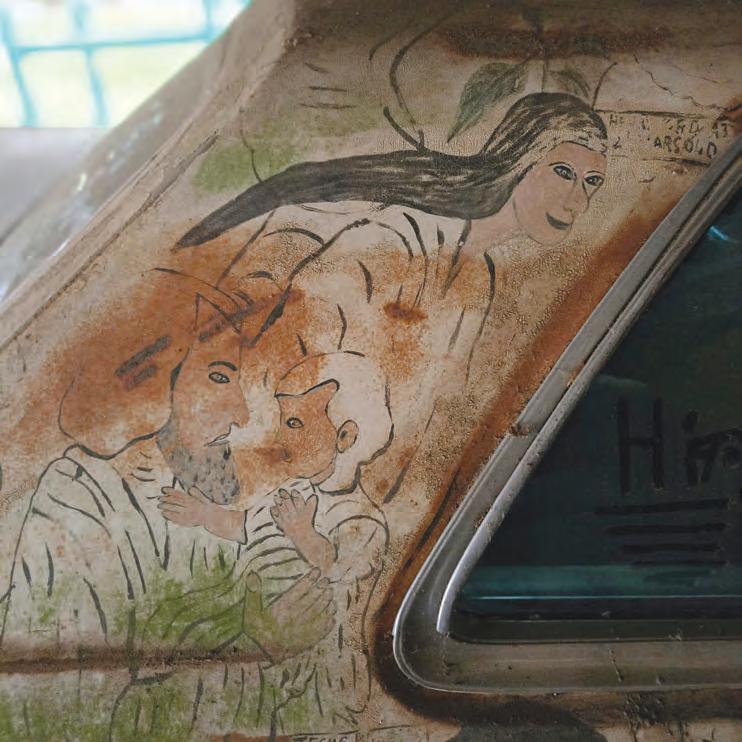
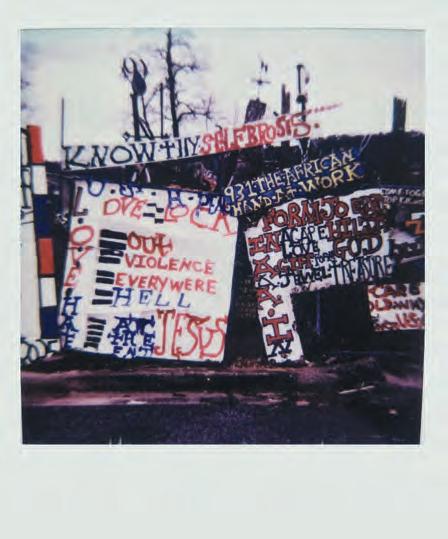
In search of Southern folk art’s prophets, dreamers, and builders of other worlds by Marshall Blevins-DeLoach
47 BOOM OR BUST
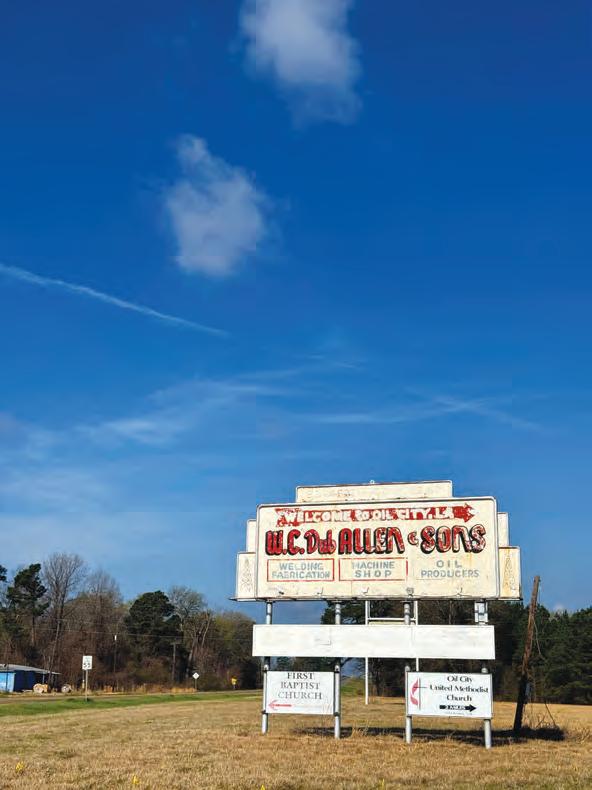
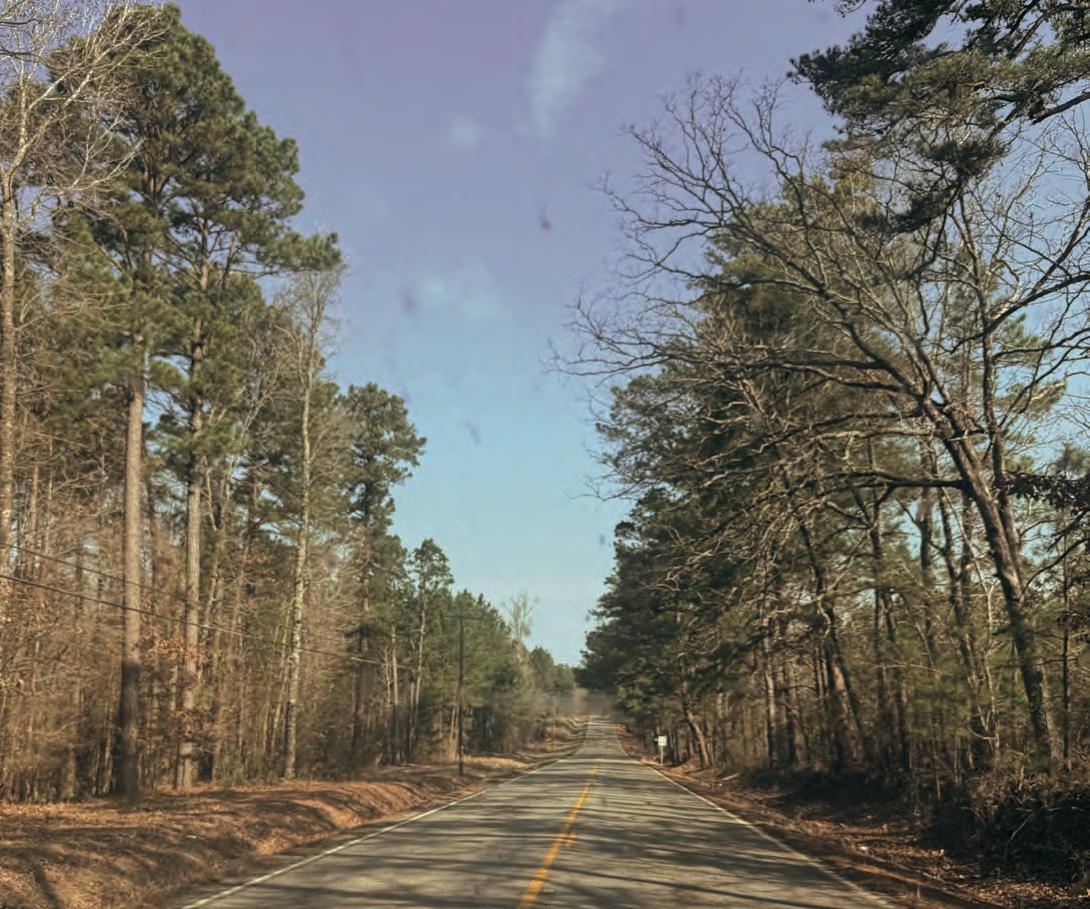
Driving Caddo Parish’s scenic byways through oil towns, cotton fields, and living history by Jordan LaHaye Fontenot
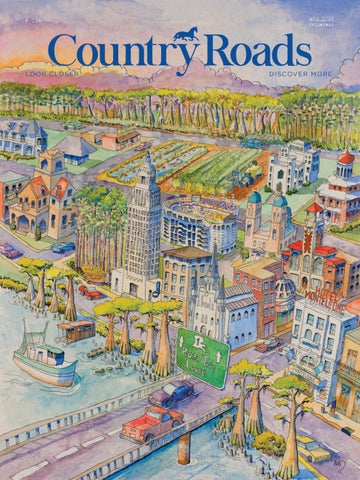
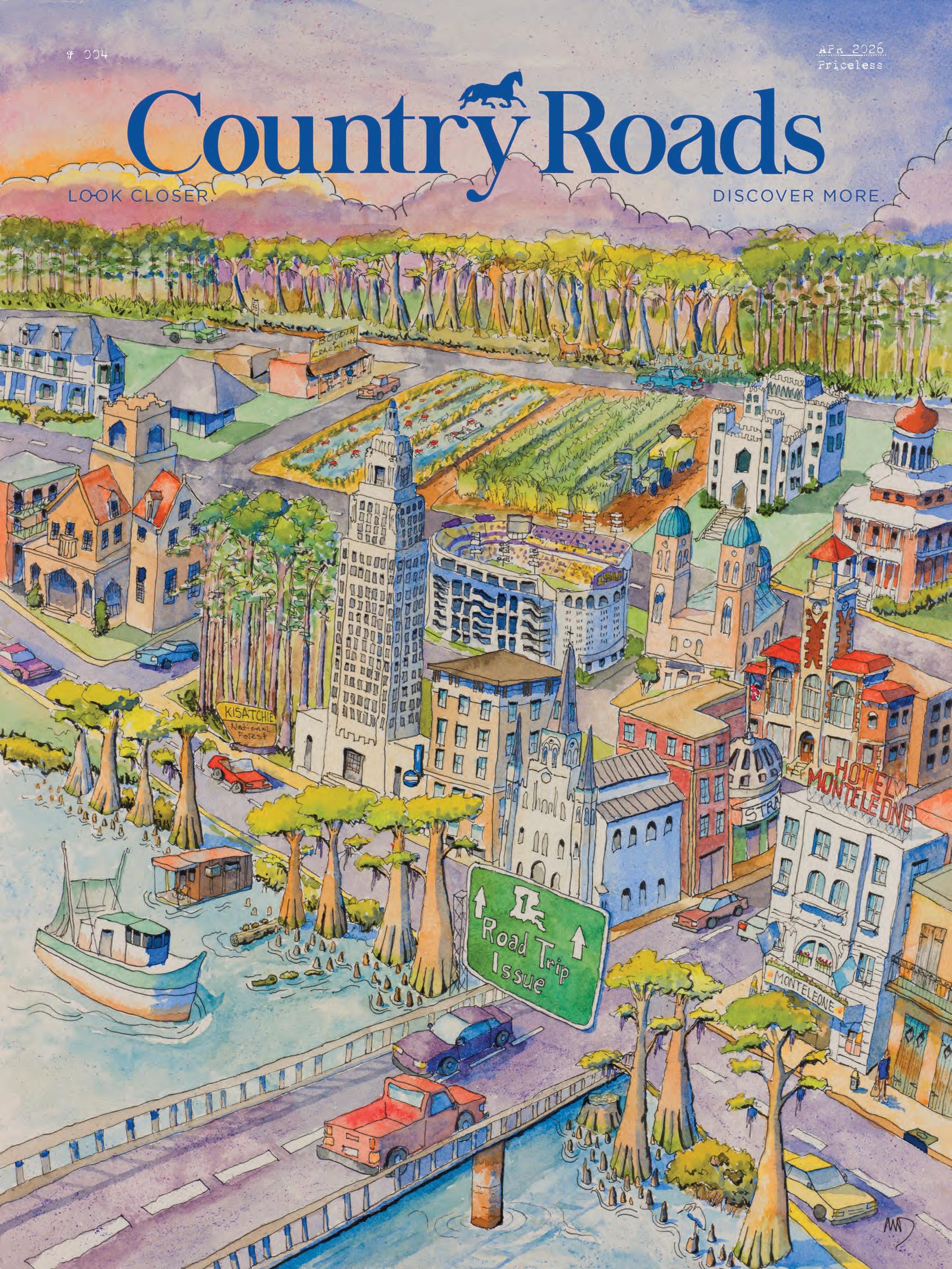
On the Cover
ROADTRIPPING THE REGION
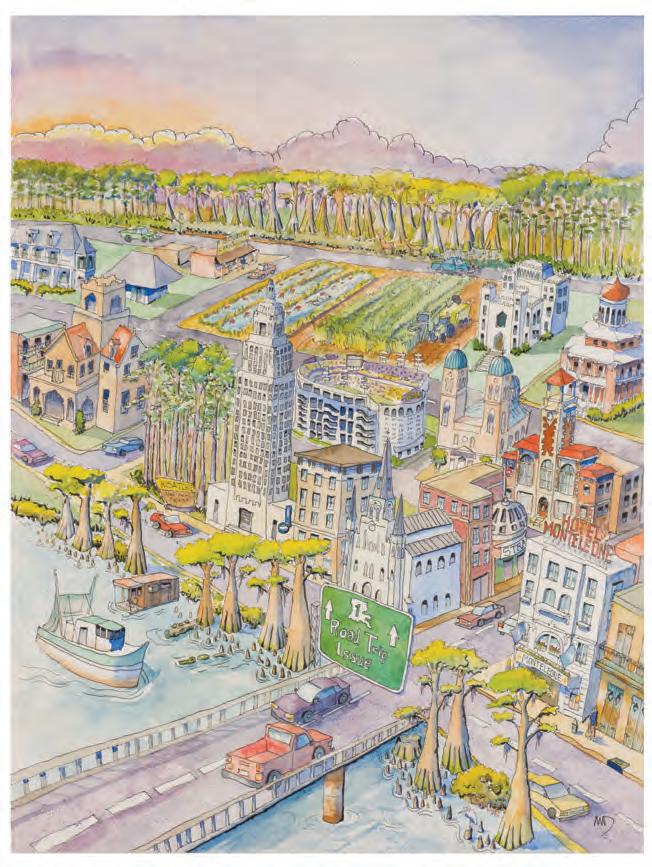
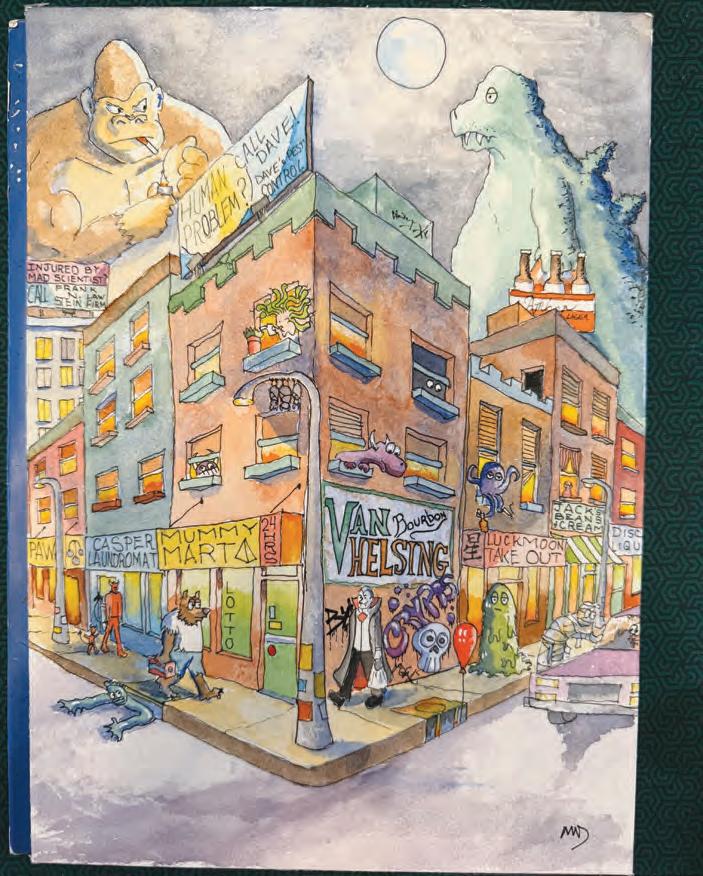
Artwork by Matt Dawson
The thing about a roadtrip is that it’s expansive, right? It’s not about a single place, a single destination, a single roadside attraction— but all of it, together, rushing by in a wondrous tapestry of world. Pineville artist Matt Dawson gets it, which is why we reached out to him to create this custom work of art illustrating the imagination of the Miss-Lou roadtripper.
In his tableau, you find yourself passing over the mysterious swamps of the Atchafalaya, the state capitol rising tall over everything. There’s the national forest and Tiger Stadium and so many crawfish fields, farmers breaking the glass water to retrieve their traps. The sun sets against all of it, painting the promise of the road with the hope of tomorrow. And you just keep driving, discovering new corners of this weird and wonderful region we call home.
Outdoors
62
IF YOU CAN’T BEAT THEM
Resisting, managing, and sometimes accepting the plants that take over by Jess Cole
Escapes
68 BACK TO OXFORD
Returning to Mississippi’s literary haven, where not much, and everything, has changed by William Browning
SOUPÇON
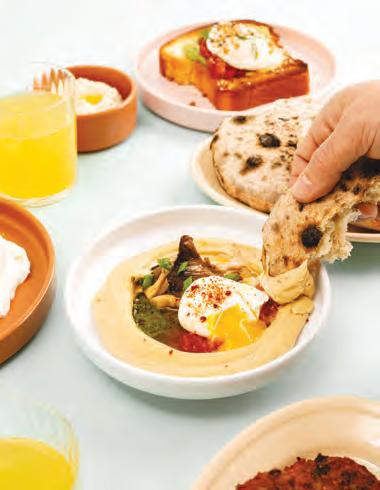
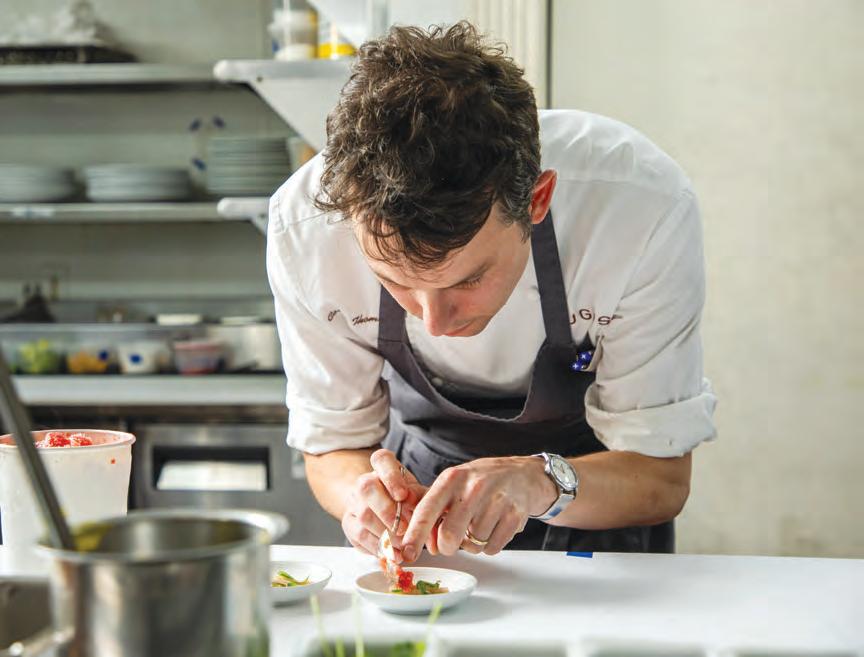
Chef Shaya’s new spot, ramen in BR, two NOLA anniversaries & a tea shop in Lafayette by CR staff 61
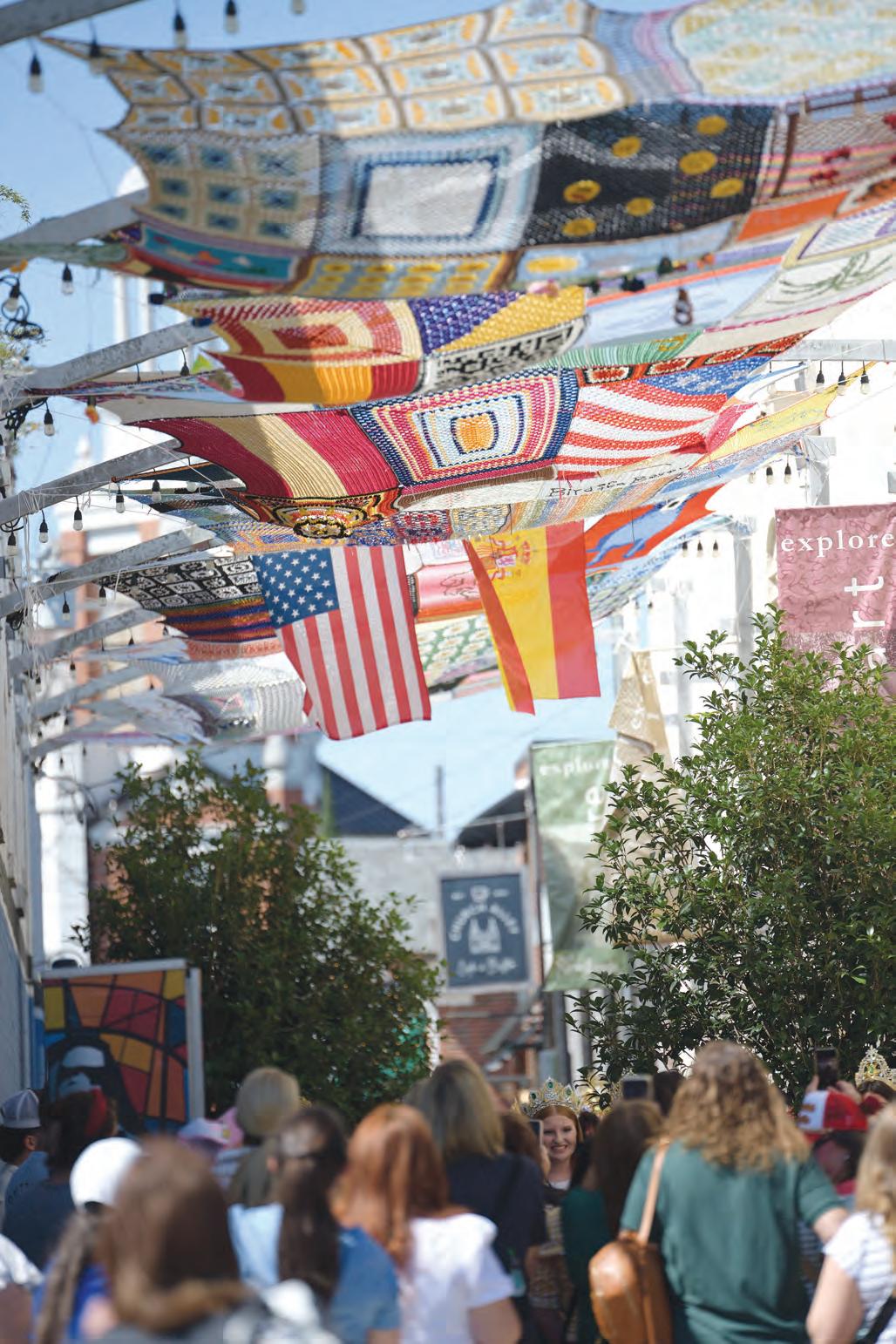
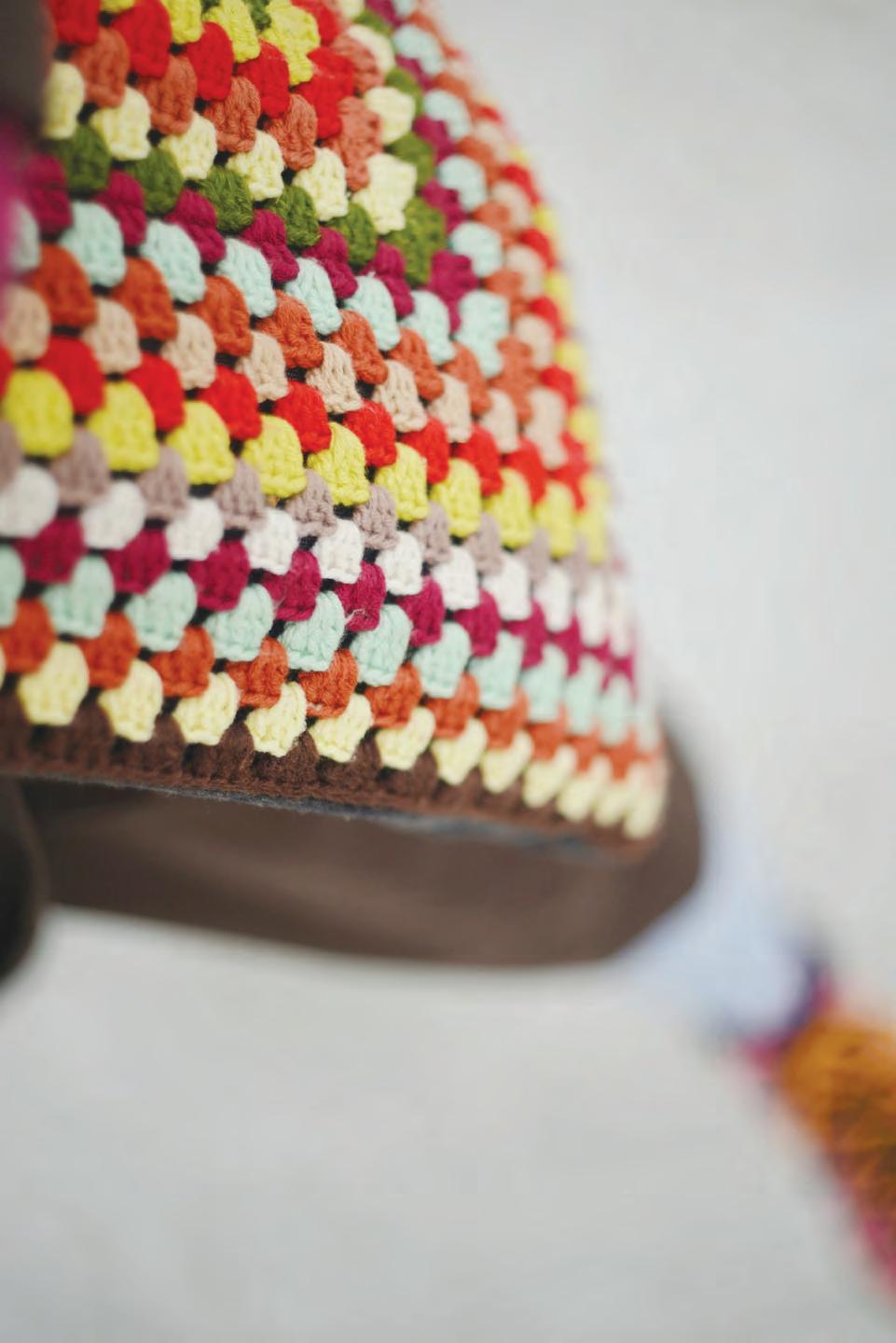
64 THE CROCHET CEILING
A striking spring installation in New Iberia stitches together heritage and artistry by Shanna Dickens
67 THE “SOUTH LA GIRLIE” AESTHETIC In Acadiana, festival fashion is a way of life by Megan Broussard Maughan
72 OFF-SEASON ON THE GULF
Finding solitude, story, and sea air on Dauphin Island by Kristy Christiansen
HOW TO COVER COUNTRY ROADS
Matt Dawson & his dreamlike cityscapes by Jacqueline DeRobertis-Braun
Back in the late nineties, when my wife and I were hnewly married and stupid and not yet anybody’s parents, we’d think nothing of driving to New Orleans on a random Tuesday in search of something to do. In those early years of our publishing adventure, when the excitement of covering B&Bs and peach festivals from sleepy St. Francisville became too much, we’d exchange the rural idyll for the couch of friends with a rented shotgun in the Lower Garden District, then spend a couple of days acquainting ourselves with as many of the city’s live music, dive bar, and cheap dining establishments our limited budget would allow.
On those NOLA road trips, we stumbled into the habit of exiting I-10 at LaPlace and stopping at Bully’s HalfWay House for a couple of their infamous Bloody Marys. I don’t remember how we learned about Bully’s, but anyone who ever bellied up to that bar, or perched in its vintage barber’s chair at 9 in the morning on their way to Mardi Gras or Jazz Fest, knows those Bloody Marys. A quart-sized plastic cup of vodka cut with enough tomato
juice, lemons, horseradish, hot sauce, and pickled produce to stave off scurvy for decades—a Bully’s Bloody Mary was a road-trip-ending ritual for thousands of New Orleans-bound revelers, if the number of vehicles and range of license plates in the oyster shell parking lot was any indication. Once you received your Bloody Mary(s), Bully’s etiquette dictated that you should move aside to make space for the next customer. Since the barroom was not large, and the barber’s chair usually occupied, your choices for consuming said beverage(s) were either out in the parking lot, or back on I-10. Then, as now, Louisiana law designated the consumption of alcoholic beverages while operating a motor vehicle to be illegal (drive-thru daiquiri shops notwithstanding). But so good were those Bloody Marys, and so closely associated with the prospect of impending revelry, that even the most law-abiding resident of Protestant Louisiana could feel their Pavlovian pull from around Prairieville. My wife, who introduced me to Bully’s, was one of these. About the time we passed the Tanger Outlet Mall she’d have planned her garnish strategy, and by the time the Gramercy Exit came into view, would have worked herself into a state of delicious anticipation that no quantity of
pickled beans could assuage. Exactly which destinations Bully’s Half-Way House was half-way between never became clear (Baton Rouge and Biloxi, perhaps? McComb and Morgan City?) But since many good road trips terminate in New Orleans, I suppose the genius of the LaPlace location, and a small mercy for law-abiding motorists, was that Bully’s was more like nine-tenths of the way to most customers’ destinations. So, other drivers barreling through Kenner at 9 am didn’t have to share I-10 with sleep-deprived road warriors cradling quart-sized cups of vodka cocktails between their knees and crooning “Life Is a Highway” for longer than absolutely necessary. In any case, I’ve never had a better Bloody Mary. So, after Katrina, when Bully’s finally closed for good, I’m
sure thousands of other New Orleans-bound travelers had the same experience we did, of standing in an empty oyster shell parking lot and staring with dismay at the locked doors. The wonderful fantasy author Terry Pratchett once said “Coming back to where you started is not the same as never leaving.” That’s true, because while the journey down I-10 lost a little of its magic after Bully’s closed, it didn’t lose it all. These days, on any trip that takes us towards New Orleans or points beyond, my wife and I factor in time for a pit stop at the Cajun Village & Coffee House in Sorrento (exit 182) for café au lait and their ethereal beignets, which are as good as any New Orleans has to offer. Even longer-lived than Bully’s, the Coffee House seems to have only gotten more popular recently, with a line outside long enough to suggest that this beloved landmark of Louisiana roadside entrepreneurialism might have gotten Instagram-famous. The Coffee House doesn’t serve Bloody Marys, but now that we’ve become people-of-a-certain-age, that’s probably a good thing. Some experiences belong in the past. I do wonder whatever happened to that barber’s chair, though.
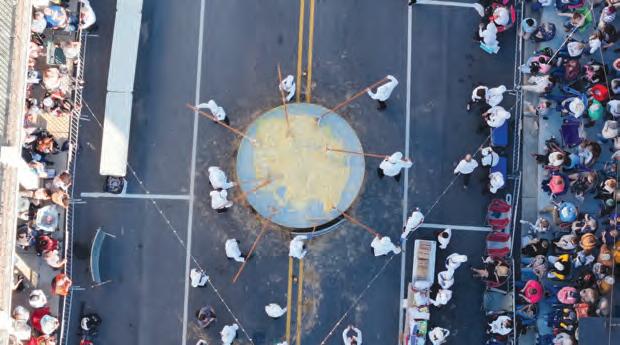
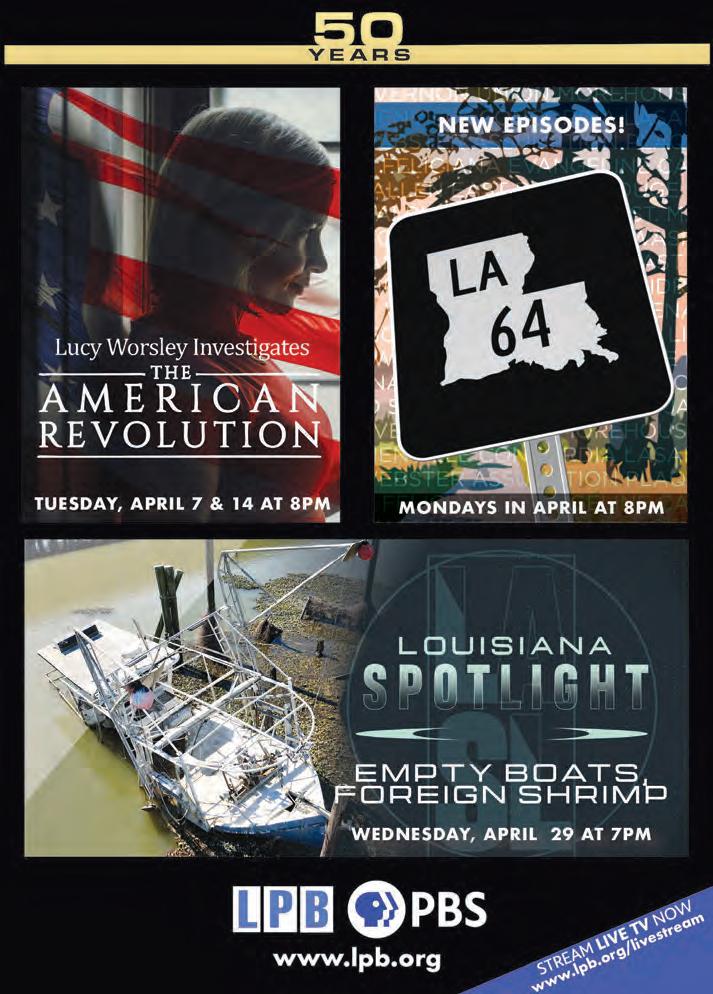
Whhen the inaugural episode of LA64, Louisiana Public Broadcasting’s new road-trip-worthy travel series premiered on February 2, host Karen LeBlanc led viewers on a flavor-filled journey to Abbeville in the heart of Vermilion Parish to learn what makes one of Louisiana’s oddest community festivals tick. The Giant Omelette Celebration—an annual tradition observed each November for decades, revolves around the preparation of a communal, 5,000-egg omelette, by cooks wielding eight-foot paddles, in the
middle of Abbeville’s Concord Street. The celebration’s origins can be traced to the town of Bessières, France, where the tradition of cooking a communal omelette on Easter Monday has been observed since the early 1800s, when Napoleon Bonaparte allegedly marched through, and demanded that villagers prepare a giant omelette large enough to feed his army. In the course of the episode, LeBlanc introduces not only how this obscure French tradition found its way to a town in south central Louisiana, but also other little-known elements of Vermilion Parish’s culture, including: Abbeville’s Sicilian heritage, the foundational role of a former cattle auction house in the emergence of Swamp Pop; and in tiny Kaplan, visits to Suire’s Grocery to taste what might be the best turtle sauce piquant in the state. The team visits Crawfish Haven/Mrs Rose’s Bed & Breakfast, where guests spend the night on a working crawfish farm, setting out into flooded rice fields to pull crawfish traps and gather mudbugs for their very own crawfish boil. By the end of the episode, LeBlanc and viewers alike are left with a new appreciation for the elements that make Vermilion Parish singular among Louisiana’s sixty-four parishes, and with a fool-proof formula for this brandnew travel series.
With episodes scheduled to air throughout 2026 and
into years to come, LA64 reveals Louisiana’s many different faces—from the ground, from the waterways, and from the air, thanks to panoramic aerial footage shot by filmmaker, producer, and licensed drone pilot Ryan Hamilton—each unveiling how Louisiana’s unique landscapes shape each parish’s history and heritage. In ensuing episodes, viewers rode with LeBlanc (and flew with Hamilton) to St. Landry, Sabine, and Jefferson parishes, and explored the legacy of southwest Louisiana’s No Man’s Land, met culture keepers striving to preserve Acadiana’s tradition of brown cotton weaving, and learned how Grand Isle’s live oak groves help protect historic buildings against hurricanes on Louisiana’s only inhabited barrier island. In the process, the show’s thesis, and a universal truth about travel, are revealed: sometimes the most meaningful journeys await just beyond the places and destinations we think we already know. Episodes in Season 1 of LA64 air at 8 pm Mondays on LPB statewide, and online at lpb.org. Still to come are St. Martin (April 6), Lafourche (April 13), Rapides (April 20), Franklin (April 27), Caddo (May 4), St. Mary (May 11), Beauregard (May 18) and DeSoto (May 25). Find links to past episodes at lpb.org/la64.
—James Fox-Smith
Before Montgomery, There Was Baton Rouge
Despite its influence as an early force in hthe Civil Rights movement that would hlater provide a blueprint for the national fight for racial equality, Baton Rouge’s role as a catalyst for this social change has, over the decades, faded into the background of popular imagination. Now, a new series of installations across the city aims to shine a spotlight on its proud history.
From Baton Rouge’s successful bus boycott movement, which preceded Montgomery’s famous push for equality by two years, to “swim-in” initiatives to desegregate the city’s pools, the capital city’s contributions to the Civil Rights movement are, at last, being uplifted.
The Black History Legacy Trail System, launched in late February, highlights both the story of the brave Baton Rouge men and women who pioneered the first nonviolent strategies used in the broader civil rights movement, and the historical memory that underwrites the city’s Black community. A combined effort between The Walls Project, the Downtown Development District, and EnvisioNBR, the route consists of two walkable trails ranging from 1.8 miles to 3.4 miles, covering both downtown and the historically Black community of Eden Park in North Baton Rouge.
The system comprises seventeen markers total, divid-
ed between the Greenway Civil Rights Trail and the EnvisionBR Legacy Trail. While the Greenway trail focuses primarily on critical moments that influenced the nation’s civil rights history—such as the 1953 Bus Boycott Marker, the Kress Building (the site of a 1960 sit-in), and Mt. Zion First Baptist Church (a meeting place for the bus boycott)—the EnvisionBR trail is especially relevant “to the people that were in that community during that time,” said Dr. Ashlyn Harrison, Executive Director of The Walls Project Louisiana. “That footprint—their markers are more meaningful to that community and who they were during that time period.”
In recognizing key places and figures in this historically Black community, and restoring certain landmarks that require attention, organizers sought to preserve the neighborhood’s memory before it is overwritten by redevelopment—deliberately and purposefully making the residents and their legacy foundational to anything built in the years to come.
Harrison added that the community decided on the markers themselves through a series of meetings. The goal was to give those who would be interacting with these landmarks on a regular basis a real stake in the process.
“The EnvisioNBR footprint really is significant to preserving that history around that community,” she said. “I think that was an important part of this entire process of involving the community, as well as ensuring that the elders were involved too. To make sure they were part of the conversations and [tell] us the stories we may have missed.”
Designated sites display a QR code for viewers to connect with more historical resources and listen, read, or watch stories tied to the destination or figure. This is just the beginning, Harrison added. There are plans underway to continue to add markers, and ultimately expand the trail.
“I think that installing the trails now carries a deep significance at a time when communities across the country are reflecting on how history is told and how stories are represented. The legacy trail is ensuring the contributions of those Black leaders, those educators, those artists, those changemakers in Baton Rouge is visible, is honored, and is preserved for our future generations,” she said. “I think this is a living reminder of our resilience, of the progress, and of the possibilities to come. If we continue to tell the story, it won’t be lost.”
Learn more at thewallsproject.org.
—Jacqueline DeRobertis-Braun
Still from LA64, episode 1, which features the Abbeville Giant Omelette Celebration, by Ryan Hamilton, courtesy of LPB.
A NEW BIKE TOUR ROLLS INTO LAFAYETTE
When Matt Mick was a student at the University of Louisiana-Lafayette in 2008, living in the Freetown neighborhood, his main mode of transport was a bicycle. Back then especially, “Lafayette [was] not an obvious place to be on a bike,” as Mick put it. The mid-sized city is designed, like many in Louisiana, for vehicular travel—not pedestrians or bicyclists—and is mostly made up of a network of high traffic, busy thoroughfares, many without safe bike lanes.
“But, as I started riding around, I pretty quickly got a sense of where the neighborhoods were and the comfortable places to ride,” said Mick. “And what I discovered is that ‘Wow, this is a really pleasant, beautiful place to be on a bike.’”
In the eighteen years since he first moved to Lafayette, Mick has gotten involved in bicycle advocacy, working with organizations like Bike Lafayette as part of a grassroots movement encouraging Lafayette government to invest in safe and accessible bicycle infrastructure and policies. Such activism has been effective; major revitalization projects with shared use pathways are in the works on Bertrand Drive and Johnston Street, with pedestrianism and bicycling access given high priority.
Professionally, Mick worked within the French language movement—as a teacher and then as a communications manager for the Council for the Development of French in Louisiana (CODOFIL), where he also got involved in Louisiana tourism. “We were really investigating the link between the French language and the tourism marketplace, and how French might be an economic driver in Louisiana,” he said. It was at this time that the idea of using bicycling to fill a gap in Lafayette’s
tourism market first occurred to him. “I started to realize there might be some opportunity there.”
In the last decade, and especially since the pandemic, major cities across the country have seen a sharp rise in cycling tourism—a trend explained by converging cultural factors like heightened environmental concerns, a rise in wellness culture, demographics shifts, and the increased accessibility offered by the adoption of e-bikes.
“There are at least three bike tour operators in just New Orleans,” said Mick. “And really, today, any city of a significant size is going to have a bike tour these days. I started researching and realized, ‘oh, this is maybe a combination of a lot of things I enjoy and am passionate about, and there is some real opportunity and unmet demand here in Lafayette.’”
A couple of years since that germ of a thought, and a lot of work later, Mick launched Lafayette’s first guided bicycle tour company, Rouler Louisiana Bike Tours, this past February. Simultaneously a tourism endeavor—an introduction for visitors to the city—and an effort to draw more local residents into the vision for a cycle-friendly city, Rouler (French for “to ride” or “to roll”) guides riders through the neighborhoods at the historic core of Lafayette, hitting local landmarks and fostering conversation about culture. Guiding the Rouler fleet (bicycles and helmets are provided), Mick and his tour guides take their guests to places like La Place de Creole, or Fight-
inville, which spurs conversations about Creole history and identity. They stop at the Blue Moon Saloon, a local institution, and point out all the best plate lunch spots.
“I want to show people, from behind the handlebars, that this is something you can do,” said Mick. “Getting people on bikes in Lafayette can sometimes be the most difficult challenge, convincing people that it’s something worth doing, that it’s not crazy to ride a bike in this town. And I actually think it is a really exceptional, unique way to experience Lafayette.”
Learn more about Rouler Bike Tours, and book yours, at roulerbiketours.com.
—Jordan LaHaye Fontenot
APRIL 2026
Events
ENDLESS OUTINGS
SPRING HAS SPRUNG, AND THE WEATHER IS PERFECT FOR UNLIMITED LIVE MUSIC, SCORES OF FESTIVALS, AND OUTDOOR ART ALL DAY LONG •
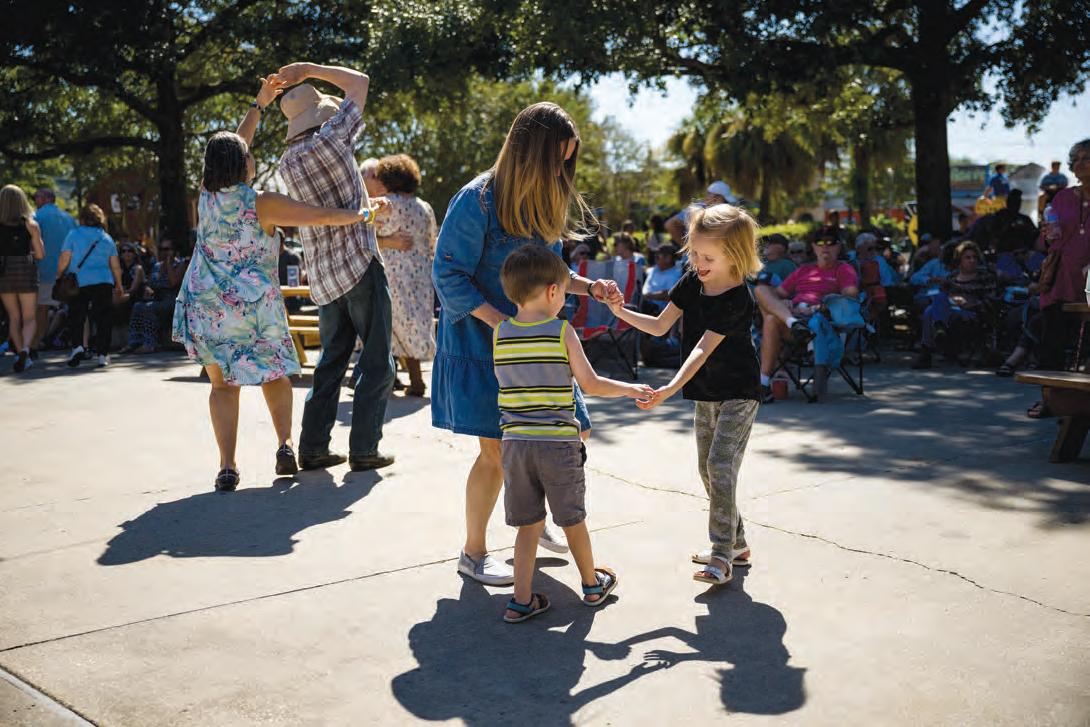
A successful fixture in Lafayette, Bach Lunch brings together community members on Fridays throughout the spring to enjoy food and live music—all for free. This year, Bach Lunch is expanding to include a laid-back Sunday edition titled "Bach
allowing for more opportunities to engage with community against the backdrop of live music. Photo courtesy of Downtown Lafayette
UNTIL APR 17th
VISUAL ARTS
"DENNISPARKERCELLOETC"
Baton Rouge, Louisiana
The Cary Saurage Community Arts Center presents renowned cellist and sculptor Dennis Parker's exhibition at Shell Gallery. His Dennisparkercelloetc visualizes structure and sound, exploring the physicality of music as a combination of his two beloved art forms. His wife, artist Jaqueline Dee Parker, displays collages alongside his work. artsbr.org. 1
UNTIL APR 21st
VISUAL ARTS
JAMES KENNEDY: "SPACES FOR THE MIND AND EYE"
New Orleans, Louisiana
Painter James Kennedy’s Spaces for the Mind and Eye at Callan Contemporary interrogates the visual harmony of line, gesture, and geometry. The solo exhibition highlights Kennedy's interest and use of art-historical influences such as Futurism, Abstract Expressionism, the paintings of Ben Nicholson, and the architectonics of Le Corbusier. Kennedy creates his abstractions on eucalyptus Masonite panel, applying as many as 100 translucent acrylic washes over a gesso base. callancontemporary.com. 1
UNTIL APR 26th STITCHES
"ART EVOLVED: INTERTWINED"
Laurel, Mississippi
Explore an exhibition by Studio Art Quilt Associates, Inc. and National Basketry Organization at the Lauren Rogers Museum of Art in Laurel, Mississippi. Art Evolved: Intertwined features traditional materials such as thread, fabric, wood, reed, and paper, blended and manipulated to create something both beautiful and functional. lrma.org. 1
UNTIL MAY 4th
VISUALARTS
"REFUGE: THE COURAGE TO WITNESS"
Arnaudville, Louisiana
In this multidisciplinary initiative, Refuge: The Courage to Witness, artists delve into the potential for healing and peace. Through collaboration between Hagit Barkai, Associate Professor of Art at the University of Louisiana at Lafayette, and the NUNU Arts and Culture Collective, the project seeks to link global and local issues, inspire connection, and encourage renewal and growth in times of conflict through robust dialogue. In addition to a group exhibition, Side By Side / Piece By Peace, the project features a solo
exhibition by Barkai including paintings focusing on healing related to the war in Gaza. nunucollective.org. 1
UNTIL MAY 15th
HISTORY "GÁLVEZ AND LOUISIANA IN THE AMERICAN REVOLUTION"
New Orleans, Louisiana
In preparation to celebrate America's 250th birthday, the Louisiana State Museum presents Gálvez and Louisiana in the American Revolution at The Cabildo. This landmark exhibition traces the life and legacy of Spanish Governor Bernardo de Gálvez, along with the diverse array of people involved in fighting for American independence. Explore rare artifacts, immersive media, and personal stories for a richer and deeper understanding of history. louisianastatemuseum.org. 1
UNTIL MAY 16th
STUDENT SHOWS
LSU SCHOOL OF ART
MFA THESIS SHOWS
Baton Rouge, Louisiana
Each spring, the LSU School of Art hosts a series of MFA thesis exhibits at Glassell Gallery to showcase the artistic hard work produced during the three-year program. The event allows the public the
Brunch,"
Unlimited. See more on page 22.
Events
Beginning April 1st - 3rd
opportunity to see works by those who will define the capital city's contemporary art scene in the years to come. Frequently, pieces will be available for sale, allowing collectors to purchase work from fresh faces. Artists showing this spring include Tommi Bonomo, Sarah Moschel Miller, Mia Isabel Pons, Serena Corson, Jacob Mills, and Nicholas Roberts. For the full schedule of shows, visit lsu.edu/news-and-events/exhibits. 1
UNTIL MAY 23rd
VISUAL ARTS
"30 YEARS DANCING WITH MIND & MATTER"
Lafayette, Louisiana
Acadiana Center for the Arts presents a two-person exhibition of local collaborators Kathy Reed and Steve Breaux in 30 Years Dancing With Mind & Matter. The exhibition features collaborative artworks, as well as individual pieces. Together, they have created two- to three-dimensional works, from paintings and drawings, to art on silk and other fabrics. acadianacenterforthearts.org. 1
UNTIL JUL 19th
VISUAL ARTS
"IN THE BELOVED" AT THE OGDEN
New Orleans, Louisiana
Through In the Beloved, by Alexis McGrigg, the artist explores Blackness as both a physical and metaphysical space probing the abstraction of the soul from a third space called The Beloved. The solo exhibition delves into abstraction and spiritual inquiry, influenced by the wideranging muses of dance, film, literature, and spiritual philosophy, including the writings of Octavia Butler, Malidoma Patrice Somé, Gary Zukav, and Christina Lonsdale. ogdenmuseum.org. 1
UNTIL JUL 19th
VISUAL ARTS
"VICINAL VISIONS" AT THE OGDEN
New Orleans, Louisiana
The Ogden Museum of Southern Art presents the works of Dusti Bongé, Ida Kohlmeyer, and Dorothy Hood from its extensive collection. In this
exhibition, explore how each Southern woman pushed the boundaries of artistic abstraction to develop their own unique visual languages. The works, different in their own distinct ways, capture a certain time period of experimentation and Modernist sensibilities—all expressed through the prism of each individual artist's place, identity, and interests— yet still bonded as Southern women artists breaking barriers with their craft. ogdenmuseum.org. 1
UNTIL AUG 15th
PHOTOGRAPHY
"ANDY WARHOL: PLUS ONE" Lafayette, Louisiana
Exploring the work of twentieth century icon Andy Warhol from a new lens, Plus One, on exhibition at the Hilliard Art Museum, considers the artist's relationships and inner circle as documented through his photography practice. How does the presence of a "plus one" affect how a moment is captured or remembered? The show features
Hilliard Fête, on April 11 from 10 am–3 pm, gives young art enthusiasts the chance to explore the Hilliard Art Museum, with crafting and artistic opportunites, tours of the museum's Spring Awake exhibitions, outdoor refreshments and music, and more. Photo courtesy of the Hilliard Art Museum. Learn more on page 21.
photographs of Warhol's that were donated to the Hilliard's collection by the Andy Warhol Foundation for the Visual Arts' Photographic Legacy Project. 1
UNTIL AUG 30th
PHOTOGRAPHY
"I AM THE FACE"
New Orleans, Louisiana
I Am the Face draws exclusively from the Ogden Museum of Southern Art's permanent collection and serves as a meditation on portraiture over the decades—specifically through photography. From a medium previously reserved for the wealthy who could afford to pay an artist to render their likeness, to photography's democratizing influence, portraiture has transformed into a study of the human condition, the relationship between photographer and subject, and an interrogation of the power of the camera. ogdenmuseum.org. 1
UNTIL JAN 1st
JEWISH HISTORY
“HOLOCAUST SURVIVORS IN A NEW LAND: THE NEW AMERICANS SOCIAL CLUB OF NEW ORLEANS”
New Orleans, Louisiana
Holocaust Survivors in a New Land explores the story of Holocaust survivors
who managed to make it to the United States following World War II. These expats were welcomed by local Jewish communities and made new lives for their families in the American South. The exhibition gives special focus to the New Americans Social Club. Follow the stories of individual survivors and their lives before, during, and after the war, through letters and multimedia displays. msje.org. 1
UNTIL JAN 3rd
BREAKABLES
"SÈVRES MAGNIFIQUE: FRENCH PORCELAIN FROM THE COLLECTION OF THOMAS B. LEMANN"
New Orleans, Louisiana
NOMA presents an exhibition delving into historical pieces from France’s royal porcelain factory at Sèvres, on the outskirts of Paris. For nearly three centuries the factory has produced expertly crafted ceramic objects. Factory artists worked with chemists and the best sculptors of the Rococo era to create tea sets, vases, plates, and bowls that signified wealth and power in eighteenth-century France. The exhibition features pieces from New Orleans collector Thomas B. Lemann. noma.org. 1
UNTIL JAN 17th
HISTORY
"AMERICAN REVOLUTION: THE AUGMENTED EXHIBITION"
New Orleans, Louisiana
The Historic New Orleans Collection invites visitors to experience the American Revolution like never before—as if they were inside each experience themselves. Using a HistoPad (an interactive tablet), visitors can explore interactive 3-D reconstructions of defining moments in the war, allowing them to study people, places, and events more closely. The nearly year-long exhibition is part of the national celebration of America's 250th birthday. Free. hnoc.org. 1
Learn more about American Revolution: The Augmented Exhibition on page 27.
APR 1st - APR 3rd
STELLAS
IRENE COLLECTIVE PRESENTS: "A STREETCAR NAMED DESIRE"
New Orleans, Louisiana
Tennessee Williams' landmark Pulitzer Prize-winning drama arrives this spring at Big Couch, performed by the newly launched Irene Collective in New Orleans. When Mississippi belle Blanche DuBois arrives at her sister's French Quarter apartment with nowhere else to go, she clashes with her hard-edged brother-in-law Stanley Kowalski. Secrets,
sensuality, and big reveals shake up the two-room New Orleans flat. Will Blanche be able to start her new life in the Big Easy, or will she be crushed against something brutal and hard? Don't miss this production of A Streetcar Named Desire. 7:30 pm. For ticketing details, visit streetcarnola.net. 1
APR 3rd - APR 5th
CULTURAL TRADITIONS
LAO NEW YEAR CELEBRATION
Broussard, Louisiana
Iberia Parish's not inconsiderable Laotian community holds its New Year celebration, known as Songkran, every Easter weekend, and thousands from near and far will be there to honor a tradition that preserves Laotian culture here in Louisiana. The friendly folks of Lanexang Village and the temple there, Wat Thammarattanaram, put on parades and displays of traditional cuisine, clothing, and jewelry; as well as activities like sand castle building, live music, and pageantry. All are welcome. (337) 658-3229 or visit the event's Facebook Page. 1
APR 3rd - APR 24th
LIVE MUSIC
ROCKIN' THE RAILS CONCERTS
Covington, Louisiana
Covington continues their Rockin' the
Events
Beginning April 3rd - 5th
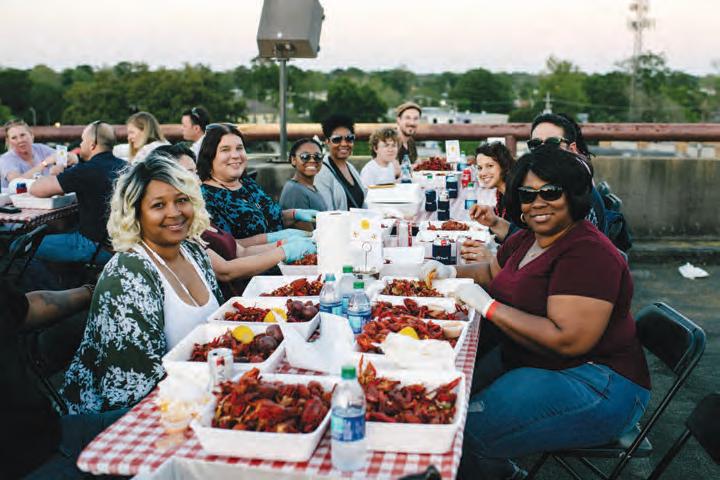
Downtown Lafayette plays host to the 22nd annual Rooftop Crawfish Boil on April 15, from 5:30 pm–8:30 pm, bringing together hundreds of local community leaders and businesspeople. Photo courtesy of Rooftop Crawfish Boil. See more on page 24.
Rails concert series this spring. Every Thursday night, attendees are treated to free live musical entertainment in historic downtown. Catch these upcoming showcases of local talent:
April 3— Pearce Penniless April 10 —The Boogiemen April 17—Christian Serpas April 24 —Pontchartrain Shakers Free at the Covington Trailhead. 5:30 pm–7:30 pm. covla.com. 1
APR 4th
TIP TAP
CONTRA DANCING
Baton Rouge, Louisiana
Lace up your dancing shoes: Contra dancing at St. Alban's Chapel is sure to get you moving. A traditional American social dance, similar to square dancing but done in two long lines, contra dancing requires no experience, with both singles and couples welcome. Newcomer orientation 2:45 pm; dance 3 pm–5:30 pm. $7, free for first time attendees. louisianacontrasandsquares.com. 1
APR 4th
DANCE
NOLA CONTEMPORARY BALLET: "NATIVE SWAMP"
Covington, Louisiana
Presented by NOLA Contemporary Ballet, this immersive dance production spins through the depths of Louisiana's wetlands. Combining evocative choreography with original soundscapes and photographic projections, this hyperlocal performance art work explores the
layers of folklore, wildlife, and culture that coexist with us among the cypress trees and bayous. The work has been described as "an artistic meditation on resilience, mystery, and the enduring bond between people and place." Two performances on one day only, at 3 pm and 6 pm, at Three Rivers Theater. $25. nolacontemporaryballet.com. 1
APR 4th - APR 30th
VISUAL ARTS
"TIME AND AGAIN" AT GALLERY 600 JULIA
New Orleans, Louisiana
In Time and Again, presented by Gallery 600 Julia, artist Thomas Lofton depicts detailed views of the historic French Quarter, alongside renderings of Acadian country scenes. Lofton, an oil painter who lives on Bayou Black, offers viewers a glimpse into the past, the way things used to be. An artist reception will be held April 4, 6 pm–8 pm. gallery600julia.com. 1
APR 5th
FAITH
COMO EASTER
SUNSET SERVICE
Saint Francisville, Louisiana
Celebrate sunset on Easter Day in the peaceful setting of Como Retreat. Beginning at 3 pm, enjoy Gospel music on the banks of the Mississippi River, followed by a church service in the chapel at 5 pm. Dress casually. The service will continue rain or shine. RSVP to Kami Weidenbacher at (225) 301-5451 or kamirweidenbacher@gmail.com. 1
Events
Beginning April 7th - 10th
APR 7th
STANZAS
PELICANS AND POETRY
New Orleans, Louisiana
One Book One New Orleans, in partnership with the New Orleans Pelicans, presents its first-ever Pelicans and Poetry night at the Smoothie King Center. A pre-game happy hour features half-price drinks and readings from local poets Stacey Balkun, Kelly Harris-DeBerry, Skye Jackson, Sean F. Munro, and Christopher Louis Romaguera. Afterward, cheer on the Pelicans as they go head-to-head with the Utah Jazz. Happy hour from 5 pm–6 pm; game at 7 pm. For ticketing, visit onebookonenola.org. 1
APR 8th
FUN-DRAISERS
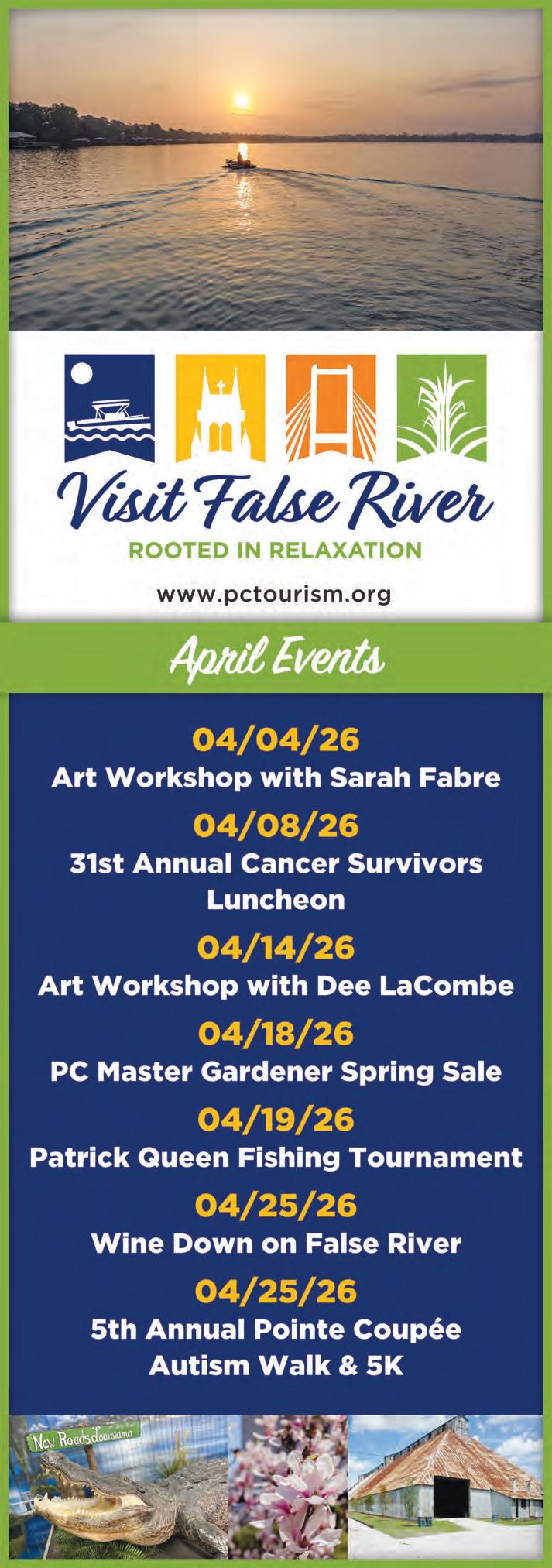
31ST ANNUAL CANCER
SURVIVORS LUNCHEON
New Roads, Louisiana
The 31st Annual Cancer Survivors Luncheon offers a valuable space to uplift and unite cancer survivors, their
families, and supporters for a powerful afternoon of joyful celebration and community. All this, while raising money for a good cause: local cancer patients currently in need. Expect a delicious meal, a 52-card raffle, silent auction, and more. All contributions go toward The Janell LaComber Cancer Fund. At the First Baptist Church in New Roads. 9 am–1 pm. $33. bontempstix.com. 1
APR
8th
BUON APPETITO
ITALIAN WINE PAIRING DINNER
Baton Rouge, Louisiana
Enjoy a delectable evening of classic Italian cuisine and carefully matched wine pairings, sure to satisfy the most sohphisticated palate. The menu includes caprese arancini, blue crab fettuccine, grilled bronzino, braised short rib, and salted caramel panna cotta, among other delectable selections. Hosted at the Watermark Hotel in Baton Rouge. 7 pm–10 pm. $209. bontempstix.com. 1
APR 8th - APR 12th
WHEELS
CYCLE ZYDECO
Lafayette, Louisiana
Louisiana's Cajun & Creole cycling festival rolls through Cajun Country, letting riders experience the heart of Acadiana from their padded seats. During five days of cycling that cover almost two hundred miles, participants will follow one of two routes, visiting several cultural spots. The festival rides through the Bio Blitz at Atelier de la Nature in Arnaudville on Saturday, with other memorable side trips and rest stops. cyclezydeco.org. 1
APR
8th - APR 12th
SOUND ON JUKE JOINT FESTIVAL
Clarksdale, Mississippi
Clarksdale, Mississippi holds claim as the "birthplace of the blues." For over twenty years now, "the world's biggest little blues festival" holds court, filling the tiny Delta town with a huge variety of music acts, racing pigs, monkeys riding dogs, workshops, history bus tours, and much, much more. A host of pre-festival celebrations will take place all week, but the main event is Saturday—which will center blues music on twenty two stages all throughout the city and long
into the night. Get the whole schedule at jukejointfestival.com. 1
APR 8th - AUG 30th
HISTORY
“BECOMING LOUISIANA: BORDERS IN MOTION (1688–1812)”
New Orleans, Louisiana
To celebrate 250th anniversary of the signing of the Declaration of Independence, Nous (The New Orleans Foundation for Francophone Cultures) presents Becoming Louisiana: Borders in Motion (1688–1812). The exhibition uses historical maps reimagined in line art to examine the historical forces that shaped Louisiana on its sinuous path to becoming part of the United States. Through the stories these images tell and the ones they omit, the maps encourage visitors to interrogate Louisiana's winding journey to statehood through a new lens. On display at 602 Toulouse Street. nousfoundation.org. 1
APR 9th
STUDENT ART
GRAD WALK 2026: LSU SCHOOL OF ART STUDIO OPEN HOUSE
Baton Rouge, Louisiana
Spend a spring evening strolling through
the LSU School of Art to view various Art MFA graduate studios and meet the budding young artists in the midst of their processes. Observe artists working with different media, such as painting, photography, drawing, ceramics, digital art, and sculpture studio exhibits, before ending the night in the iconic sculpture garden for food and drinks—all beneath the light of whimsical lanterns created by first-year art undergraduate art students. 5:30 pm–8 pm. Free. design.lsu.edu. 1
APR 9th
GREEN THUMBS
EBR MASTER GARDENERS: POLLINATION AND NATIVE PLANTS
Zachary, Louisiana
With many a yard in full bloom this spring, the East Baton Rouge Master Gardener Association is eager to assist with the birds, bees, and butterflies sure to congregate as the days warm. Pop over to Zachary Branch Library to hear Master Gardener Nancy Jurasinski discuss pollination and pollinator gardens, using
her expertise as a retired science teacher. Then, listen to Master Gardener Gaynelle Wolff share the best native plants that thrive in Louisiana's hot, humid climate. 6:30 pm. Free. ebrmg.wildapricot.org. 1
APR 10th
ELEVATED CUISINE PORCHES AND PARLORS
Natchez, Mississippi
Prepare for an evening of Southern flavor paired with the blues during this progressive dinner across multiple locations, including Myrtle Terrace, Stanton Hall, and The Big Muddy Inn & Blues Room. This unique dining experience offers a multi-course meal while guests travel from one historic home to another, all in the same block. In addition to fine dining, guests can expect docents and homeowners to share the history of each residence throughout the evening, providing a glimpse of history amid the tastes and sounds of Southern tradition. 6 pm. $95. visitnatchez.org. 1
APR 10th
CURIOUSER AND CURIOUSER MAD HATTERS HISTORICAL HAPPY HOUR
Port Allen, Louisiana
The West Baton Rouge Museum hosts its monthly historical happy hour—
this April with the theme of Mad Hatters in celebration of the current national traveling exhibition on display at the museum, Finding Alice: Artists Exploring Wonderland. The evening features live music by Kasey Ball and a reception on theme with Alice and Wonderland. 6 pm–8 pm. Free. westbatonrougemuseum.org. 1
APR 10th - APR 11th
GOOD EATS
PARKS CRACKLIN COOKOFF Parks, Louisiana
Chewy, crunchy, or with a thick seam of meat—no matter how you like your cracklin, there will be a version for you at this cookout and festival. Expect a poker run, raffles, fun jumps, arts & crafts, and other fun along with live music, featuring Chubby Carrier and the Bayou Swamp Band, Nik-L Beer Band, The Eighties Experience, Darel Gros & High Rollin Band, and more. Everything takes place at Poché Memorial Park in Parks. 6 pm–11 pm Friday; 10 am–11 pm Saturday. $5. parkscracklincookoff.com. 1
APR 10th - APR 11th
GOOD EATS
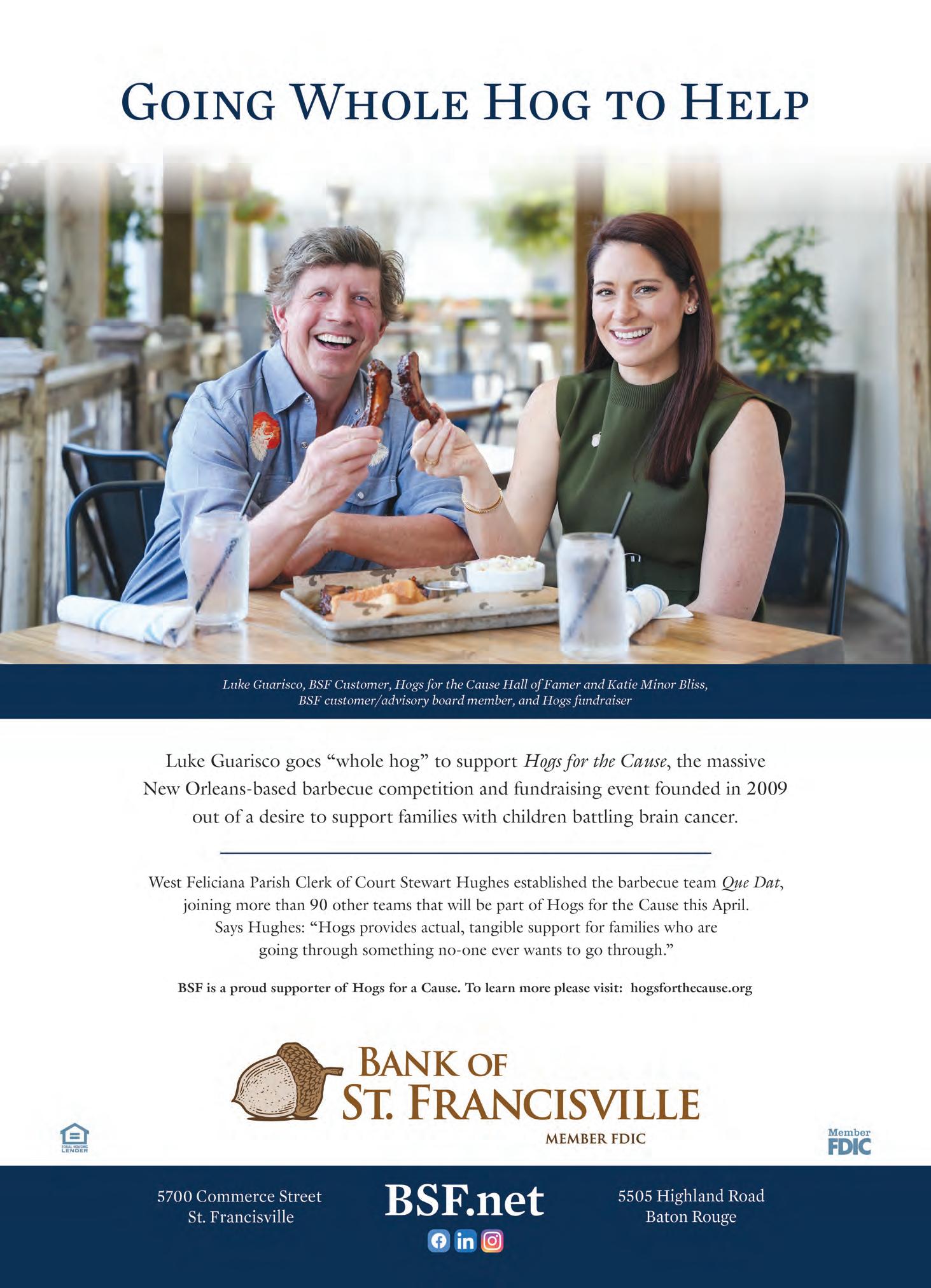
HOGS FOR THE CAUSE
New Orleans, Louisiana
Hogs is an annual finger-lickin'
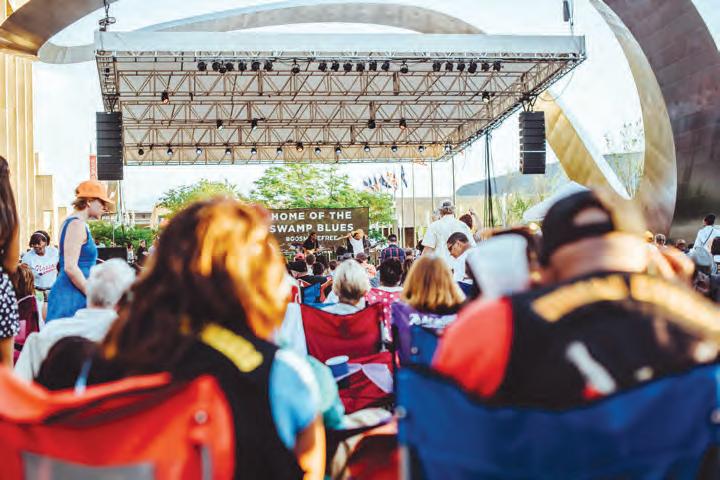
Each year since 1981, the Baton Rouge Blues Festival brings hundreds of music-lovers to Repentance Park in downtown Baton Rouge for a free-to-the public, family-friendly festival. This year's event is April 17–18. Photo courtesy of the Baton Rouge Blues Festival. See more on page 26.
Events
Beginning April 10th - 11th
fundraising festival where ninety-plus teams of barbecue competitors, comprised of a mix of some of the region's top chefs, professional barbecue teams, and backyard cooking fanatics, will compete for the "High on the Hog" Grand Champion title. The event also features live music with a stellar line-up of regional musicians (this year catch Stephen Wilson, Jr., Buffalo Traffic Jam, Lance Roark, and many more), all to provide aid and relief to families whose children are being treated for pediatric brain cancer. At the UNO Lakefront. $50 for Friday, $70 for Saturday; VIP options available. hogsforthecause.org. 1
APR 10th - APR 12th
ODDS & ENDS
ANTIQUE FAIR & YARD SALE
Washington, Louisiana
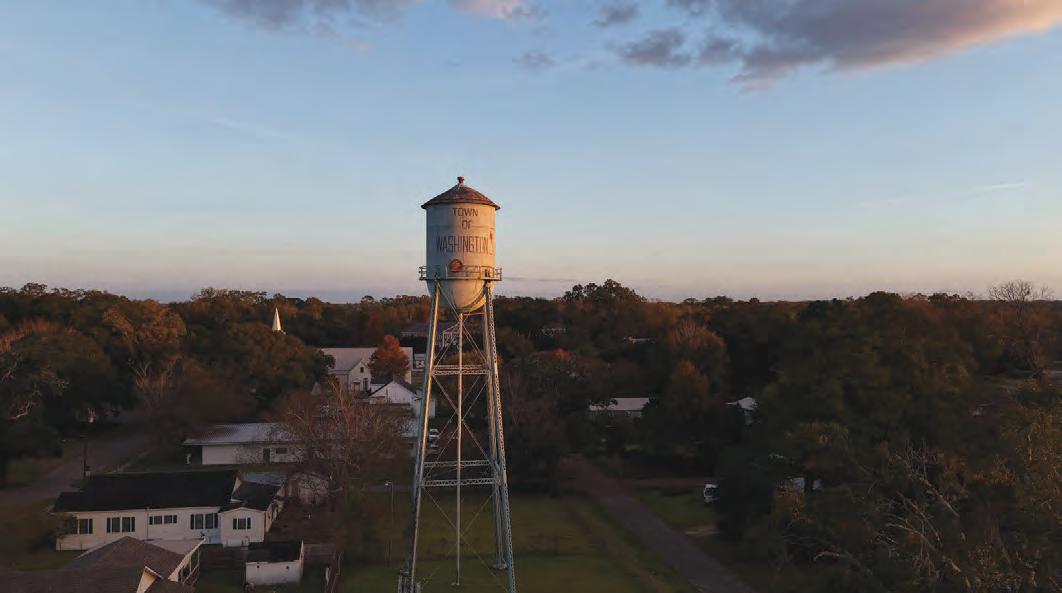
Come to historic Washington for a chance to browse the wares of over two hundred vendors at this enormous Antique Fair & Yard Sale at the historic, circa-1934 Old Schoolhouse Antique Mall—all 40,000 square feet of it. Expect plenty of food and fun, but perhaps more importantly,
great bargains on a wide variety of decorative tidbits for house, home, office, yard, or anywhere. 9 am–5 pm each day. oldschoolhouseantiquemall.com. 1
APR 10th - APR 12th
VISUAL ARTS
EN PLEIN AIR ART EXHIBIT
Abita Springs, Louisiana
For its seventeenth year, the En Plein Air Landscape Art Show at the Abita Springs Trailhead Museum will showcase the work of artists depicting nearly one hundred paintings of outdoor scenes in St. Tammany Parish. A reception will be held Friday from 5 pm–8pm. The exhibit will remain on display (with paintings for sale) from 10 am–4 pm Saturday and Sunday. Contact Lynnette Soules at (985)264-0528 or lynnabita@hotmail.com for details. 1
APR 10th - APR 12th
GOOD EATS
SCOTT BOUDIN FESTIVAL
Scott, Louisiana
It's the annual event that celebrates the best little rice-and-meat-stuffed
concoction on any side of the Mississippi—and arguably, no place does it better than Scott. Don't miss three days of live music and the chance to eat boudin both competitively and casually. Your mileage may vary. Lots more, too— including arts and crafts, fireworks, and Cajun and zydeco dance lessons. $10 admission. scottboudinfestival.com. 1
APR 10th - APR 12th
WESTERNS
HONDO RODEO FEST
New Orleans, Louisiana
Head to Caesars Superdome in New Orleans for a yee-haw good time. The Wild West comes South in this nightly double exhibition of a traditional rodeo experience followed by a live concert, featuring two bands each evening. Musical acts include Jason Aldean, Lynyrd Skynyrd, Cody Johnson, Old Dominion, Creed, and Bailey Zimmerman. Single-day tickets start at $64; options for VIP and three-day passes available. thehondorodeofest.com. 1
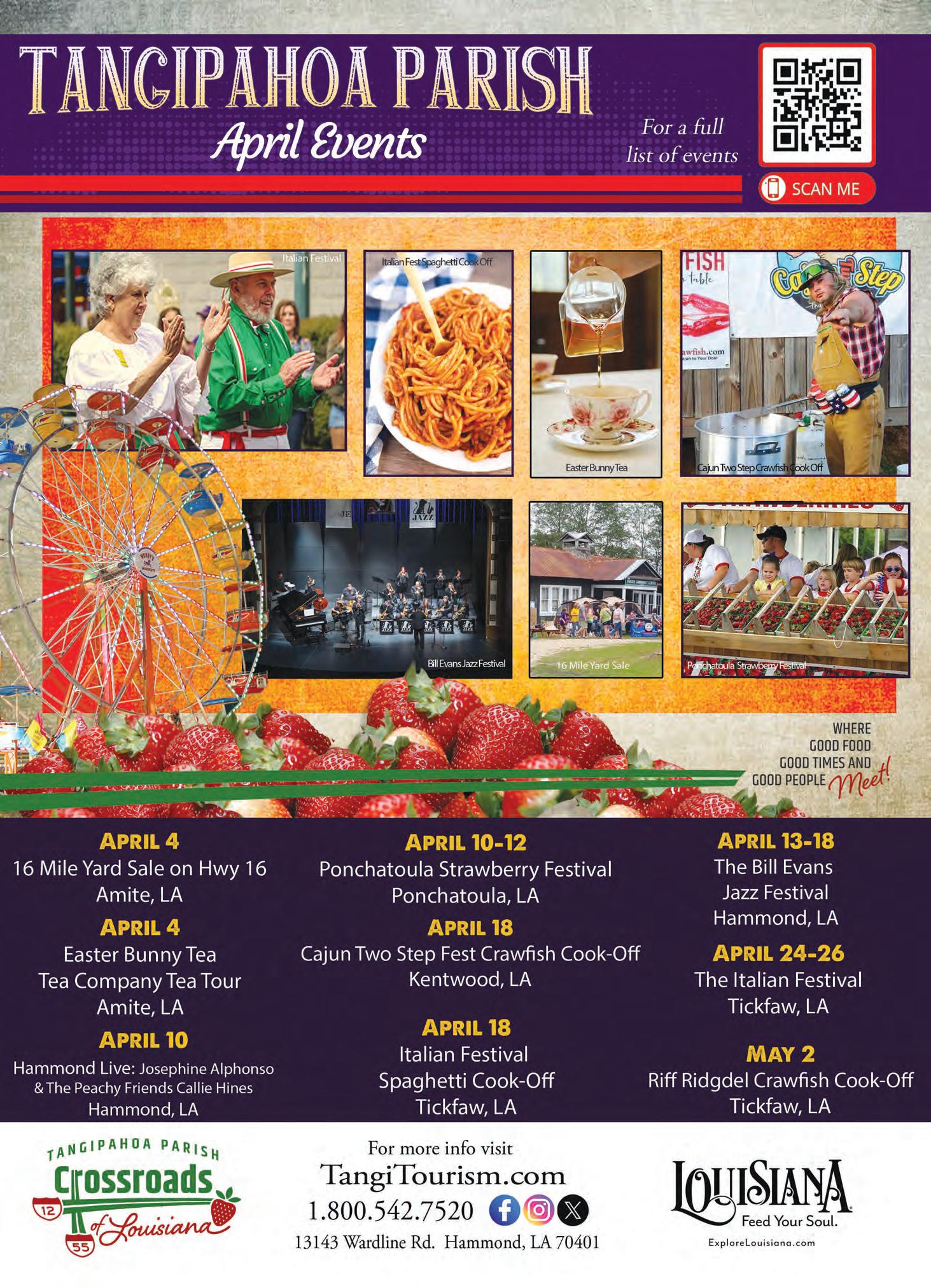
APR 10th - APR 12th
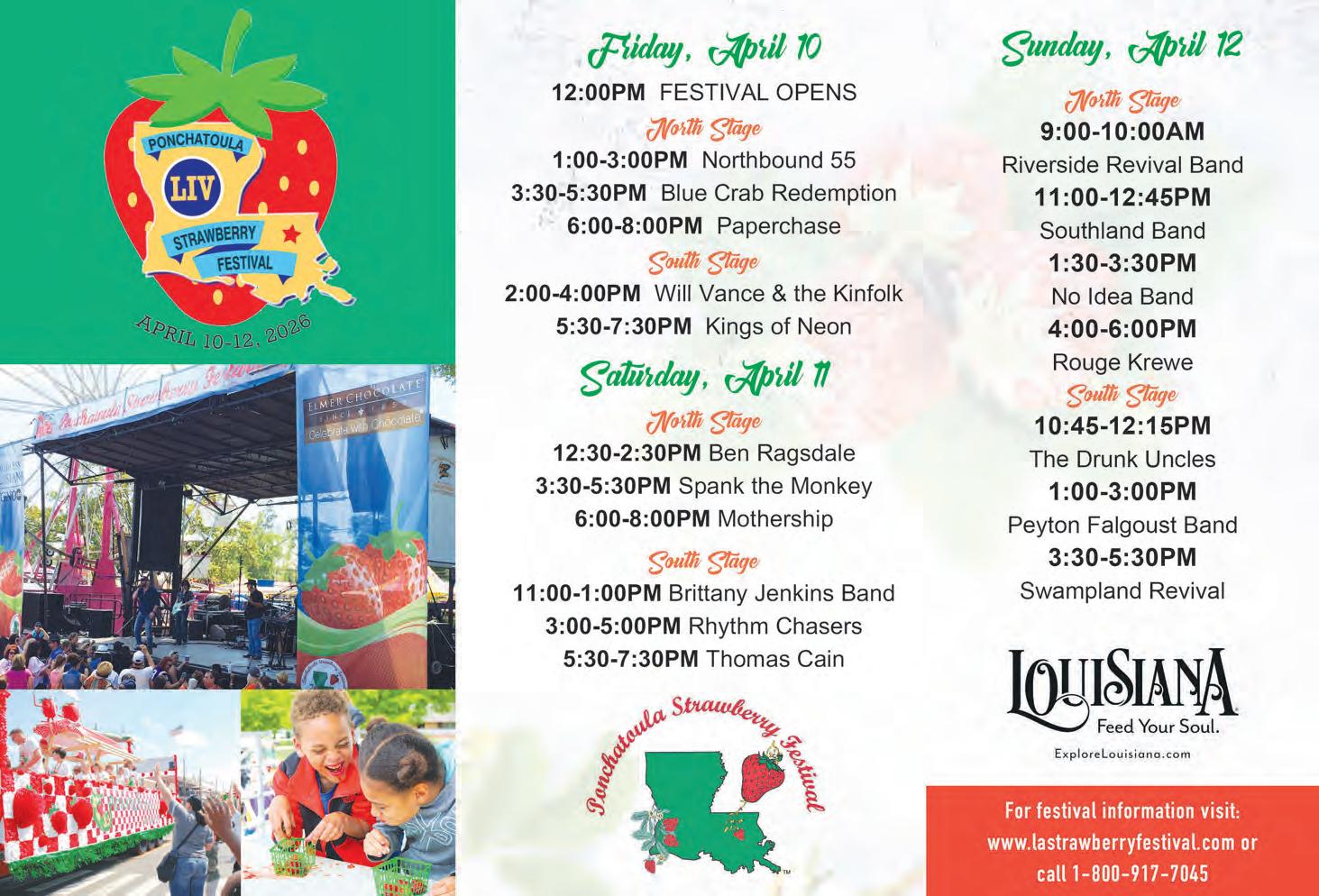
BERRYLICIOUS PONCHATOULA STRAWBERRY FESTIVAL
Ponchatoula, Louisiana
Celebrate the season with a strawberry-
stained grin at the annual Ponchatoula Strawberry Festival. From humble beginnings, the event has ripened into a true Louisiana celebration to which thousands travel. Come take part in the rides, games, music, food, and of course, the finest Louisiana strawberries. A dizzying array of events includes the Strawberry Parade (kicks off Saturday morning), Strawberry Auction, and Strawberry Strut as well as carnival rides, food booths, games like the strawberryeating contest (picture it!), sack races, nonstop musical entertainment, pageantry, and kids' activities, all in Ponchatoula Memorial Park. Free. lastrawberryfestival.com. 1
APR 10th - APR 12th
INKLINGS
DELTA MOUTH
LITERARY FESTIVAL
Baton Rouge, Louisiana
Since 2009, the annual Delta Mouth Literary Festival has been a flagship event for the literary arts in Baton Rouge. The Louisiana State University Department of English joins together with The Southern Review, New Delta Review, and the English Graduate School Association to bring together nationally acclaimed writers, artists, and performers from across the state and throughout the nation
for a three-day public event that includes readings, panels, food, drinks, music, and a unique gathering of Baton Rouge’s creative community. The lineup of writers attending this year includes Lena Khalaf Tuffaha, T Kira Madden, Emily Nemens, Rickey Laurentiis, Mariah Rigg, Brian Broome, Sarah Aziza, Melissa Lozada-Oliva, Rob Franklin, and Lena Khalaf Tuffaha. For more information and the complete schedule, visit deltamouth.com. 1
APR 10th - APR 12th
BOOKWORMS
BOOKS ALONG THE TECHE LITERARY FESTIVAL
New Iberia, Louisiana
The world-famous literary detective Dave Robicheaux, created by author James Lee Burke, returns home to Iberia Parish each year with his very own festival. The official Books Along the Teche Literary Festival returns for its tenth year, offering plenty of opportunities for exploration in the realms of literary history, culture, and cuisine—all in the beautiful historic district of New Iberia. The weekend kicks off Friday with tours of the Bayou Teche Museum and Shadows-on-the-Teche, craft talks, and history lectures—all to close out at the "A Novel Evening" celebration, with authors in attendance, that evening. Pop into Bambino's Burgers for a Cajun Breakfast Jam to start the day Saturday, followed by more workshops, author talks, and tours, as well as the Author's Book Fair down Main Street, the Children's Book Fair, and the Great Southern Writer Symposium and Book Signing with this year's featured author, Rick Bragg. Stick around until Sunday for Symphony Sunday in the Park. Tickets are available for various events at bontempstix.com. Get all of the details for the festival at booksalongthetecheliteraryfestival.com. 1
APR 10th - APR 19th
THEATRE
"FOREVER PLAID" AT CUTTING EDGE THEATER
Slidell, Louisiana
It's the 1950s, and the close-harmony group The Plaids are about to make their big break ... when a tragic car accident brings it all to a screeching halt. In the afterlife, they are granted one final chance to return and take the stage, reflecting on their life and dreams, and delivering the concert they never got the chance to. This nostalgic musical is stitched together with classic '50s hits and earnest choreography, blending comedy and sentiment into a story for the ages. See it onstage at Cutting Edge Theater this spring. 8 pm Fridays and Saturdays; 2 pm Sundays. $35–$45. cuttingedgetheater.com. 1
APR 10th - APR 24th
TURN IT UP
MANDEVILLE LIVE! FREE FRIDAY CONCERTS
Mandeville, Louisiana
Mandeville has planned another stimulating season for its live music series, Mandeville Live! Cozy up and catch these concerts at the Mandeville Trailhead for free. Gates open at 6 pm for 6:30 pm performances. The Spring 2026 Lineup is as follows:
April 10 —Don Vappie & Creole Jazz Serenaders
April 17—Christian Serpas & Ghost Town
April 24 — Ryan Foret cityofmandeville.com. 1
APR 11th
BLOOMS FESTIVAL DES FLEURS DE LOUISIANE
Lafayette, Louisiana
Lafayette's biggest garden show and sale promises plants, supplies, pottery, tools, gifts, gardening books, garden ornaments and more. Peruse displays by the bonsai, orchid, and daylily societies, door prizes, and children's activities, too. Proceeds benefit the Ira Nelson Horticulture Center at ULL. 8 am–4 pm at Blackham
Coliseum. $5. Free for children under twelve. festivaldesfleurs.org. 1
APR 11th
FUN-DRAISERS
FRIENDS OF OAKLEY SPRING FÊTE
Saint Francisville, Louisiana
The Friends of Oakley invite guests to celebrate spring beneath the historic oaks at the Audubon State Historic Site (Oakley Plantation). Enjoy an idyllic afternoon filled with music by acclaimed musician James Linden Hogg, delicious food, signature cocktails—all surrounded by the history of the grounds.
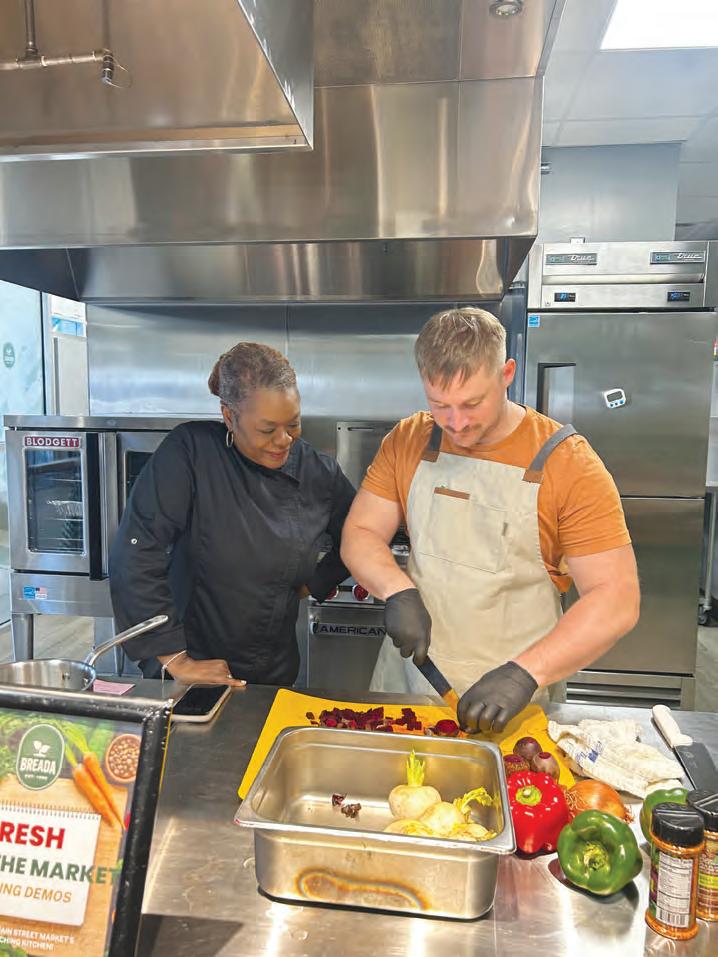
The Big River Economic and Agricultural Development Alliance (BREADA) recently announced the return of its Fresh from the Market education series featuring, among other opportunities, cooking demonstrations. The series connects farmers, chefs, and shoppers, while supporting food access and building community. Cooking demonstrations take place every Saturday at 10 am inside Main Street Market. They are free and open to the public. Photo courtesy of BREADA.
Funds raised from the event support the Friends of Oakley's Master Plan for preserving the site. 4 pm–7 pm. $100. friendsofoakley.org. 1
APR 11th
LAWFUL GOOD
BELLY UP WITH THE BAR
Baton Rouge, Louisiana
The Baton Rouge Bar Association and Foundation's annual fundraiser is filled with unexpected fun (who knew lawyers could party like this?)—all for a good cause. Look forward to a cooking competition, live music, face painting, inflatables, beer tastings, delicious food, cocktail offerings, and more. This cook-off, brew fest, and all-around party serves as a fundraiser to benefit the Baton Rouge Bar Foundation’s Youth Education Programs. At Elite Training Academy in Baton Rouge. 4 pm–7 pm. brba.org. 1
APR 11th
SOUTHERN STYLE
BEIGNETS & BEATS
New Iberia, Louisiana
Stroll on over to Bambino's Burgers for a Cajun breakfast jam celebrating the tenth anniversary of the Books Along the Teche Literary Festival. Choose between
entree options of shrimp and grits or "The Southerner" (white corn grits with dealer's choice of bacon or sausage, plus two eggs and a red pepper cream gravy, alongside a honey biscuit). Eat, sip your Bloody Mary, mimosa, or coffee, and dance to the live music of Terry Huval while enjoying a classic Southern brunch. 8 am–9:45 am. $55. bontempstix.com. 1
APR 11th
FUN-DRAISERS
DINNER UNDER THE LAMPPOSTS Franklin, Louisiana
Hosted by the Franklin Merchant’s Association, Dinner Under the Lampposts offers the opportunity to enjoy cocktails, fine dining, music by Undone Band, and community on Franklin's Main Street. Proceeds go to Franklin's Main Street Program. 6 pm. cajuncoast.com. 1
APR 11th
GHOSTIES
CAJUN COUNTRY PARA–CON Lafayette, Louisiana
Calling all seekers of the supernatural and enthusiasts of the unexplained to join the third annual Cajun Country ParaCon for an eerie time, brought to you by
Louisiana Spirits. Head to Vermilionville Village for lectures and encounters with water scrying expert Michele Domingue, discussions about Bigfoot from Greg Ogles and Mike Cook, tea leaf reading from Seika Groves, and more. The event will also host Cajun culinary delights, scavenger hunts, and a free self-guided tour of the historic village. Details at the Cajun Country Paracon Facebook Page. 1
APR 11th
RETAIL THERAPY
ST. GABRIEL’S FIREFLY MARKET
Saint Gabriel, Louisiana
At the Chatsworth House in St. Gabriel, the Firefly Market hosts more than sixty vendors serving beer, wine, cocktails, fresh produce, jelly, jams, seasonings, food, and more—alongside all sorts of traditional arts and crafts. Come for the wares, stay to enjoy the breeze and shade beneath the historic oaks. 4 pm–8 pm. Free off-street parking available. info@stgabrielfarmersmarket.com. 1
APR 11th
SOUND ON TOWNSHIP JAZZ FESTIVAL
Ridgeland, Mississippi
This festival, staged at The Township at Colony Park in Ridgeland and celebrating its second decade of success, boasts hours of live music performed by students and seasoned professionals alike. This year's lineup includes Latin Grammy Winner Nestor Torres, The Vamps, The Tropicales, Southern Komfort, The Raphael Semmes Jazz Ensemble, Madison Central H.S. Jazz Band, and more. 11 am; music starts a a few minutes later. Free. townshipjazzfestival.com. 1
APR 11th
NOCTURNALS
THE GREAT MOTH WATCH: CREATURES OF A SOUTHERN NIGHT
Mandeville, Louisiana
The Northlake Nature Center is opening its gates after-hours for a nocturnal display of the creatures that reign through the Louisiana night. Specialized lighting and moth sheets will allow participants to observe moths, beetles and other nocturnal species up close. Guests are encouraged to download the iNaturalist app before arriving, and should bring water and a flashlight or headlamp. The program is designed for children ages seven and older. 7 pm. Free. Details at the Northlake Nature Center Facebook Page. 1
APR 11th
SPRING FESTIVALS
SPRING FOR ART
Covington, Louisiana
Celebrate the arrival of spring by patronizing local art and artists at this celebratory event in downtown Covington featuring live music, art, performance, food, and much more. 6 pm–9 pm. Free. sttammany.art/spring-for-art. 1
APR 11th
ARIAS
"MADAMA BUTTERFLY"
Baton Rouge, Louisiana
Witness Puccini’s most memorable opera at the River Center Theatre for the Performing Arts. A young Japanese woman’s uncompromising love results in both her greatest joy and greatest sacrifice in this passion-filled drama. It's a chance to experience Puccini’s soaring melodies, beautiful choruses, and the lush orchestration that makes Madama Butterfly simultaneously romantic and heart wrenching. Opéra Louisiane presents a theatrical experience for one night only. 7 pm. Tickets start at $51. operalouisiane.com. 1
APR 11th
DANCING SHOES
SATURDAY NIGHT BALLROOM PRESENTS: "AT THE MOVIES" DANCE PARTY
Baton Rouge, Louisiana
Put on your dancing shoes for Saturday Night Ballroom's "At the Movies" themed dance party, at the American Legion hall on Wooddale Boulevard. The evening will feature Aaron Smith and Friends of Mandeville Ballroom, along with a mix of music for ballroom, Latin, and swing dancing. Wear an on-theme costume, something dressy casual, or whatever makes you feel like dancing. A cash bar will be available; food trays and snacks welcome. 7 pm–10 pm. $15. Visit the event's Facebook page for details. 1
APR 11th
ARTSY OUTINGS
HILLIARD FÊTE
Lafayette, Louisiana
The Hilliard Art Museum in Lafayette hosts a day of art and wellness, during which the museum comes alive with art inspired by new exhibitions—all with young, curious visitors in mind. Around lunchtime, enjoy food trucks and live music outside on the lawn. Throughout the day, participate in a guided tour of the museum's current Spring Awake exhibitions. 10 am–3 pm. Free for museum members, UL students, faculty and staff, and children under the
Events
Beginning April 11th - 12th
age of ten. Public entry with museum admission. hilliardartmuseum.org. 1
APR 11th
BOTTOMS UP BOOT BREW FEST
Eunice, Louisiana
The weekend after Easter means it's time for Boot Brew Fest—a hearty gathering of homebrewers from across the region at Lakeview Park and Beach. Featuring education opportunities for burgeoning brewers, plus plenty of samples from seasoned experts, the event ends very properly with a Cajun barn dance and awards ceremony. $10 admission; $40 for full festival access (beer samples, a souvenir tasting cup, and a food voucher); $65 for VIP (full festival access, plus a souvenir t-shirt and early access to the festival). Must be twenty-one years old or older. bootbrewfest.com. 1
APR 11th - APR 12th
GEEK SQUAD
ST. TAMMANY COMIC CON
Mandeville, Louisiana
40,000 square feet of pure geek heaven await at the Castine Center this spring, filled from wall to wall with toys, comics, collectibles—including the Gulf South's most extensive selection of vintage and modern action figures. Celebrity guests include Tiya Sircar, the voice of Star Wars Rebels Mandalorian warrior Sabine Wren; Randy Havens, better known as "Mr. Clarke" on the global megahit Stranger Things; comic artist Michael Golden, whose work can be seen on the covers of comic books like The Walking Dead, Deadpool , G.I. Joe, and Batman; and Gavin Guidry, a New Orleans comic artist who is working on Flash for DC Comics, and is known for his work on Uncanny X-Men, Birds of Prey, and others. 10:30 am–4 pm each day. $20 Saturday; $15 Sunday; $30 for the weekend; children ten and younger are free. sttammanycollectorscon.com. 1
APR 11th - APR 12th
SPRING FESTIVALS
ART IN THE PASS
Pass Christian, Mississippi
Art in the Pass has been going strong for over two decades now as a two-day fine-arts festival that overlooks the scenic beaches of Mississippi's Gulf Coast. Over one hundred artists from ten states will
display and sell their work this weekend at War Memorial Park. There will also be children's activities, tasty treats, the Celebrate the Gulf Marine Education Festival just nearby on Saturday, and live entertainment. Funds go towards arts education and development in local schools. Free. 10 am–5 pm on Saturday and until 4 pm Sunday. artinthepass.com. 1
APR 11th - APR 12th
GREEN THUMBS
SPRING FLING PLANT SALE
Baton Rouge, Louisiana
Your garden's winter blues (well, browns) don't stand a chance against Hilltop Arboretum and its group of "plant literati," all on hand to help stock your garden for the season at this year's Spring Fling Plant Sale. This year, extra attention is placed on local and native plants, from grasses to trees, and everything in between. Expect the usual gardening goodies: the Yarden Sale, Vendor’s Village, Children's Activity Tent, and Hilltop Gift Shop. 9 am–2 pm Saturday, 10 am–2 pm Sunday. Free. lsu.edu/hilltop. 1
APR 11th - MAY 27th
PHOTOGRAPHY
"LOVE IN THE FACE OF ALS: A PHOTOGRAPHIC JOURNEY"
Covington, Louisiana
The St. Tammany Art Association presents a powerful exhibition of photographs by New Orleans artist Rusty Costanza, whose intimate, deeply personal show documents his experience with the progressive neurological disease, ALS. The images are created with a small, fixed-lens camera, and presented in black and white. Learn more at sttammany.art. 1
This multidisciplinary exhibition draws on field recordings taken in the Atchafalaya Basin by Dr. Earl Robicheaux, with contemporary musicians and visual artists responding creatively in their own disciplines to the inspiration of the natural environment. Participating musicians include Keith Frank, The Babineaux Sisters, Danny Devillier and Trey Boudreax, alongside
visual artists Claire Amy, Edgar Cano, Dan DiCaprio, Tanner Menard, Martin Payton, Olivia Perillo, and Dr. Earl Robicheaux. hilliardartmuseum.org. 1
APR 12th
SWEET TREATS BAKER FAIRE
Baton Rouge, Louisiana
Apparently—and appropriately— National Bake Week falls in the spring, from April 6–12. To properly participate in this sweet celebration, the East Baton Rouge Parish Library is hosting its first ever Baker Faire at the Main Library at Goodwood, recognizing both talented local cottage bakers and the everyday, home kitchen bakers. Shop from twenty local bakers, browse bakingthemed items, enjoy special talks and demonstrations from Red Stick Spice Company and Young Chefs Academy, and enter a Cookie Contest hosted by The Advocate. 2 pm–5 pm. Free. Cookie contest entry form at ebrpl.co/ advocatecookiecontest. ebrpl.com. 1
APR 12th
TURN IT UP ABITA SPRINGS BUSKER FESTIVAL
Abita Springs, Louisiana
If you brake for buskers, don't miss the Abita Springs Busker Festival at the Trailhead. This festival showcases the talents of young musicians honing their craft on Louisiana's street corners and far beyond. The Busker Festival is jointly presented by the Abita Springs Opry and the New Orleans Jazz and Heritage Foundation. Plenty of food, and of course Abita beer, will be available at the event. 11 am–7 pm. Free. louisiananorthshore.com. 1
APR 12th
PRE-PARTY
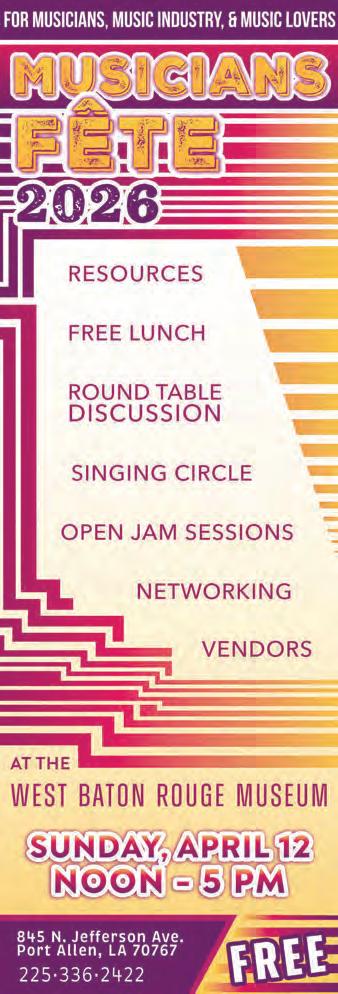
MUSICIANS' FÊTE
Port Allen, Louisiana
Join the West Baton Rouge Museum, in collaboration with the Baton Rouge Blues Festival and Foundation, for the third annual Musicians' Fête, the preevent for the Baton Rouge Blues Fest which aims to promote and preserve the rich cultural tradition of musicians in the community. The day starts at noon with free jambalaya lunch, and will be followed by an afternoon of impromptu jams, engaging speakers, networking opportunities, and more. The fête will conclude with karaoke in the museum’s Juke Joint. Noon–5 pm. Free. westbatonrougemuseum.org. 1
APR 12th
LIVE MUSIC BACH BRUNCH
Lafayette, Louisiana
Inspired by the wildly successful Bach Lunch, a new, Sunday edition is taking center stage. Bach Brunch comes to Parc Sans Souci in downtown Lafayette for a relaxing Sunday morning, featuring great music, brunch options, and community. In April, catch Certified Blues. Free. Details at downtownlafayette.org. 1
APR 12th
BOOKWORMS EDIBLE BOOK FESTIVAL
Baton Rouge, Louisiana
Join literature lovers of good humor around the world in celebrating books, food, and terrible puns. What is an edible book, you ask? An edible creation inspired by a book cover, character, theme, etc. Peruse the bizarre creations
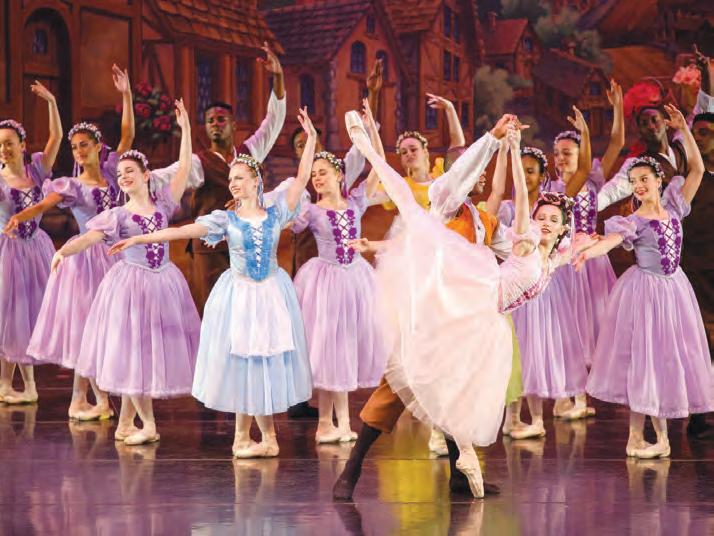
The Baton Rouge Ballet Theatre presents Rapunzel—A Storybook Ballet, with two performances staged at the River Center Theatre for the Performing Arts on April 17 & 18. Photo courtesy of Baton Rouge Ballet Theatre. Learn more on page 25.
Events
Beginning April 12th - 17th
at the East Baton Rouge Main Library on Goodwood and vote on categories from "wittiest" to "least-appetizing." Bring your edible homage to great literature at 2 pm to enter, winners announced and prizes awarded at 4:30 pm. ebrpl.com. 1
APR 12th
ARTS & CRAFTS
MANDEVILLE ARTISTS GUILD SPRING ART MARKET
Mandeville, Louisiana
Come out to the Mandeville Trailhead on Sundays to peruse the work of the Mandeville Artists Guild, all while enjoying live music and food at the peak of Louisiana springtime. 11 am–3 pm. mandevilleartistsguild.com. 1
APR 12th
GOOD EATS
CRAWFISH COOKIN' FOR A CAUSE
Mandeville, Louisiana
For the fifteenth year, Crawfish Cookin' for a Cause will host its popular headsucking fundraiser at Mandeville's Lakefront Splash Park, benefitting local
families affected by catastrophic illness. This year's beneficiaries are Grant's Gift Foundation and Project Red Light for Hope. Tickets are $40 in advance; $45–$50 at the gate for ages eleven and older; free for kids ten and younger. 11 am–5 pm. crawfishcookinforacause.com. 1
APR
13th - APR
17th
CULTURAL CELEBRATIONS
DEWEY BALFA CAJUN & CREOLE HERITAGE WEEK 2025
Eunice, Louisiana
Learn first-hand from masters of Cajun and Creole music, dance, cuisine, and culture in a very Louisiana setting— Lakeview Park & Beach in Eunice. The Dewey Balfa Cajun and Creole Heritage Week (also known as "Balfa Week"), put on by the Louisiana Folk Roots organization, is a true cultural immersion experience that includes workshops, jam sessions, featured artist presentations, and evening dances featuring some of the state's finest Cajun and Creole/ zydeco bands. Workshops in accordion, fiddle, guitar, Cajun and Creole vocals,
local dance, and Louisiana foodways are on offer, with an instructor roster that features a who's who of Louisiana artists. Find all the details, including up-to-date schedule information, at lafolkroots.org. 1
APR 14th
ELEVATED CUISINE
PARADIGM GARDENS SPRING 2026 CHEF SHOWCASE SERIES
New Orleans, Louisiana
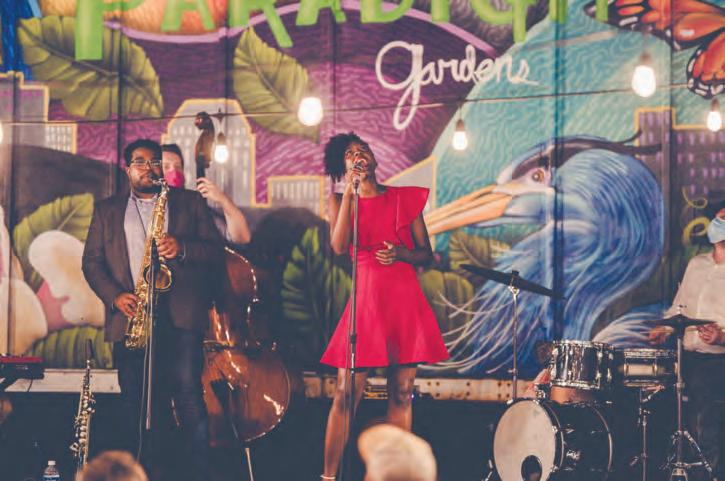
Paradigm Gardens presents its spring 2026 Chef Showcase Series—three signature New Orleans culinary nights filled with chef collaborations, live music, and more. The lineup for April is as follows: restaurants include Mister Mao, Here Today, Saint Claire, and La Boulangerie. Music by Mikayla Braun. 6:30 pm–9 pm. $100. paradigmgardensnola.com. 1
APR 15th
GOOD EATS
ROOFTOP CRAWFISH BOIL
Lafayette, Louisiana
In Lafayette, you know the boil is good. So, in celebration of one of Louisiana's most sacred culinary seasons, the annual Rooftop Crawfish Boil returns for its 22nd year, on the Parc Auto du Centre-
Ville Garage rooftop, next to Parc Sans Souci. The event pulls together roughly 600 business and community leaders for an evening featuring delicious food (premium crawfish, potatoes, corn, and dip), live music (this year by Parade Route), and downtown views as the sun sets. Rooftop party kicks off at 5:30 pm, with crawfish served at 6:30 pm. To purchase tickets visit downtownlafayette.org. 1
APR
15th - APR 19th
CULTURAL CELEBRATIONS EL FESTIVAL ESPAÑOL DE NUEVA IBERIA
New Iberia, Louisiana
This popular celebration of New Iberia's Spanish roots returns, offering three days of events and activities all centered around the town's central Bouligny Plaza celebrating Nueva Iberia with food, music, and culture. The festivities officially begin Wednesday with a Mass of Thanksgiving and the blessing of the Crochet Ceiling in Church Alley. Friday evening, things kick off with an arts & crafts show, carnival rides, and a shrimp boil fundraiser—The Eighties Experience and Seasoned Soul will provide the tunes. On Saturday, be sure to catch the "Running of the Bull’s" dog-friendly
5K/1 Mile Fun Run, a paella/tapas/ jambalaya cooking contest, carnival rides, and much more. Sunday's for the kids, with a tiny jambalaya cook-off and a "Mom"-calling contest, as well as the Founding Families Parade; the live music continues through the afternoon. Free. newiberiaspanishfestival.com. 1
Read more about El Festival Español de Nueva Iberia and its Crochet Ceiling tradition on page 64.
APR 16th
ART TALKS
CREATIVE CONNECTIONS:
ARTISTIC INTERPRETATIONS
Baton Rouge, Louisiana
The LSU Museum of Art invites patrons to explore how artists interrogate and reimagine the world through the lens of AI. Inspired by current exhibition, AI: Artistic Interpretations, the event includes a brief tour led by Educator and Public Programs Manager Callie Smith. Smith will highlight different details in the exhibition, then afterward, patrons will engage in a guided writing exercise led by Julie Gerdes Becnel. 6 pm–7 pm. Free, but registration required. bontempstix.com. 1
APR 16th
FUND-RAISERS
MANSHIP THEATRE
RED CARPET GALA
Baton Rouge, Louisiana
Get gussied up for the Red Carpet Gala, Manship Theatre’s annual fundraiser that brings world-class performers to Baton Rouge. This year celebrates the 21st Anniversary of the Shaw Center for the Arts and the Theatre. The night will include a fully-catered reception, followed by an intimate performance with LeAnn Rimes. Don your cocktail attire and head to the Manship Theatre, with an open bar starting at 6:30 pm. Individual ticketing options for members and sponsors only available at manshiptheatre.org. 1
APR 16th - APR 19th
SOUND ON FRENCH QUARTER FESTIVAL
New Orleans, Louisiana
The largest free music festival in the South is back at the most beautiful time of year to spread four days of musical performances throughout the French Quarter. Every genre is represented here, from traditional and contemporary jazz, to rhythm and blues, New Orleans funk, zydeco, brass bands, folk, opera, and gospel. This year's headliners are Irma Thomas, Cyril Neville, Big Freedia, Cupid & the Dance Party Express Band,
Dawn Richard, and so many more. The music beckons from twenty music stages arrayed around the Quarter, and delicious smells waft from over fifty New Orleans restaurants and chefs selling food. Fireworks snap, crackle, and pop above the Mississippi, too. 10 am–8 pm. Free and "100% Local." fqfi.org. 1
APR 16th - MAY 30th
DISHES
DIRTY SOUTH CUP CALL & COMPETITION
Alexandria, Louisiana
Pop over to River Oaks Square Arts Center to view the cups, mugs, and anything-that-holds-liquid at its 12th Annual Dirty South Cup Competition. On display are ceramic vessels that exemplify creativity, imagination, and experimentation. riveroaksartscenter.com. 1
APR 17th
PERFORMANCE
NPAS PRESENTS "IKO, IKO: SINGING THE SONGS OF LOUISIANA"
Covington, Louisiana
The Northlake Performing Arts Society presents a vibrant celebration of Louisiana's rich musical heritage, with an evening of songs totally homegrown in genres ranging from Cajun and zydeco to blues, jazz, and gospel. 7:30 pm Friday; 3 pm Sunday. $15; free for children twelve and younger. npassingers.org. 1
APR 17th - APR 18th
DANCE
"RAPUNZEL — A STORYBOOK BALLET"
Baton Rouge, Louisiana
The Baton Rouge Ballet Theatre presents Rapunzel - A Storybook Ballet for two days of performances at the River Center Theatre. Audiences will love the beautifully choreographed return to this fairy tale classic, featuring an enchanted forest, evil witch, and a long-haired maiden dreaming of a different life. 7 pm Friday; 2 pm Saturday. Tickets start at $40. batonrougeballet.org. 1
APR 17th - APR 18th
TWEETS
THE GRAND ISLE MIGRATORY BIRD CELEBRATION
Grand Isle, Louisiana
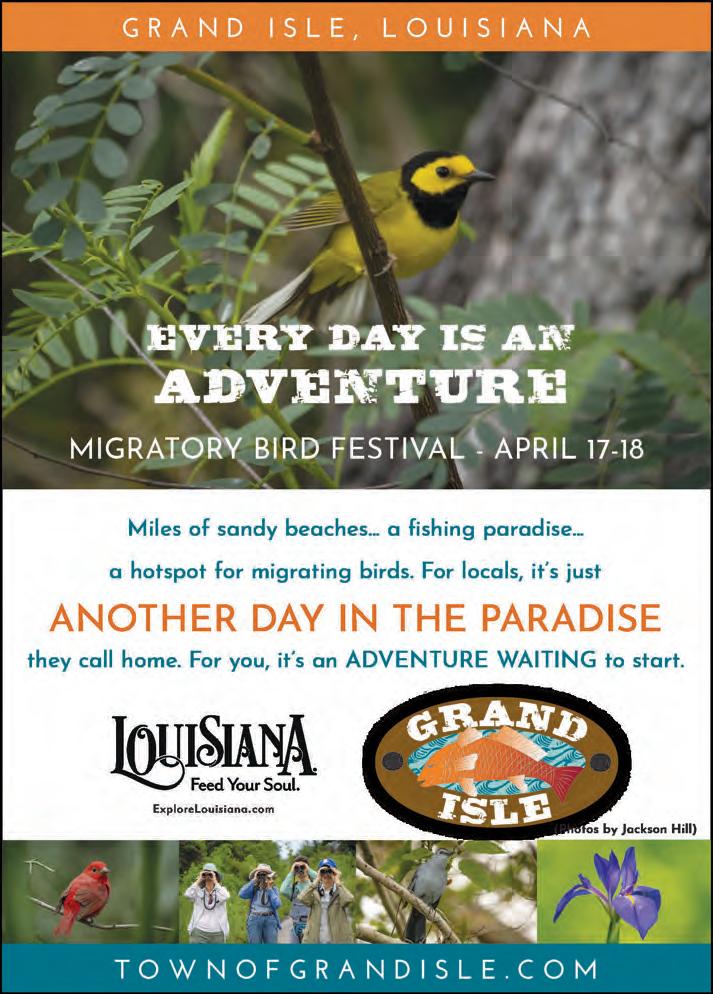
Every April since 1998, during the height of spring migration, the Grand Isle Sanctuary Group has hosted The Grand Isle Migratory Bird Celebration, when the protected pockets around Grand Isle become the educational playground
Events
Beginning April 17th
of bird lovers who will flock to the area, binoculars in hand, to explore the chenieres via kayak and boat tours, attend educational workshops on bird banding and native plant identification, take in local history, attend talks by avian experts, peruse local artwork, and otherwise enjoy all nature has to offer. Most events are free. Agendas, vicinity maps, birding trail maps, accommodations, and directions are available at townofgrandisle.com. 1
APR 17th - APR 18th
TURN IT UP
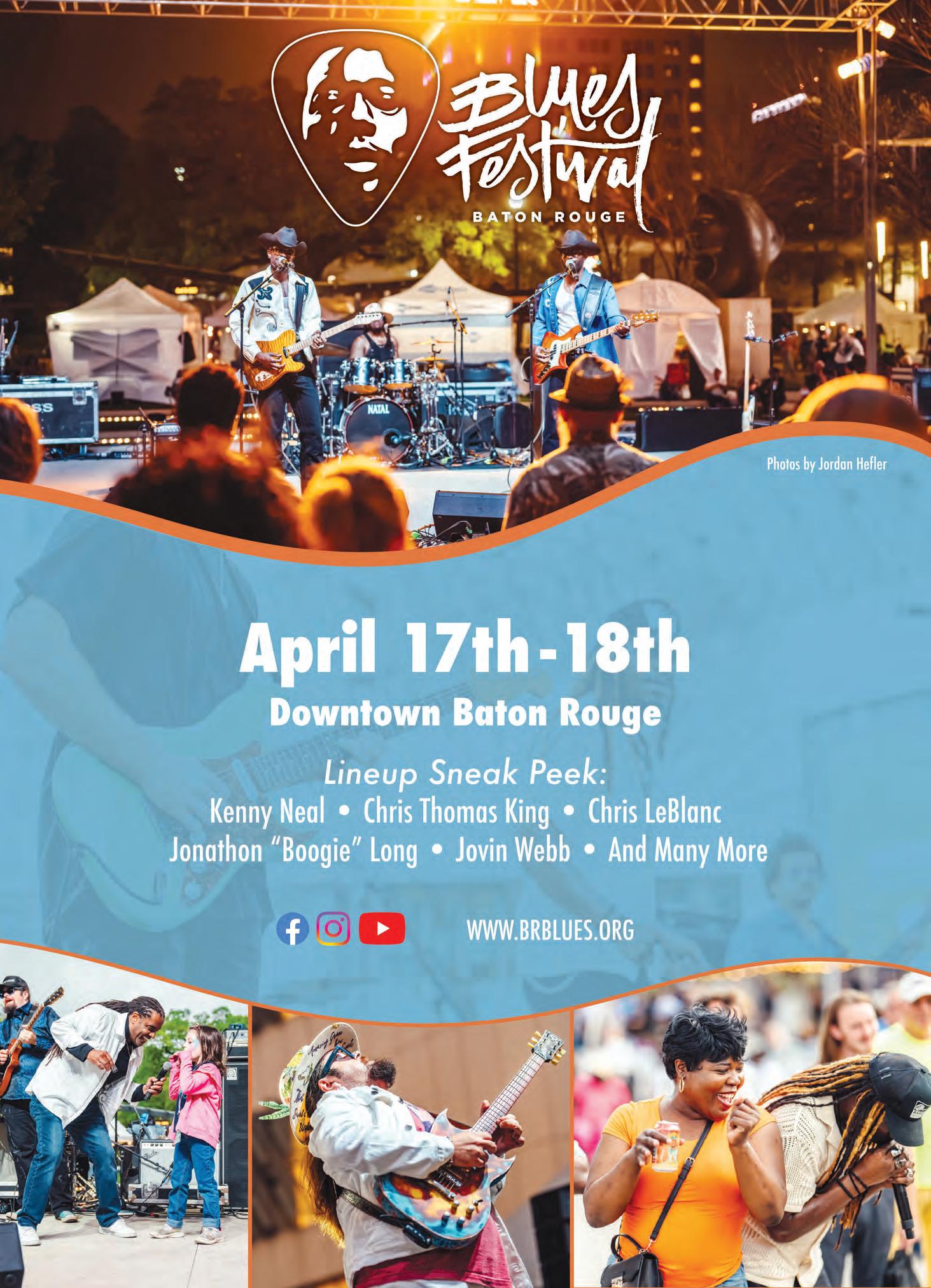
BATON ROUGE BLUES FESTIVAL
Baton Rouge, Louisiana
Originating in 1981, the Baton Rouge Blues Festival is one of the oldest free blues festivals in America and exists to encourage promotion, preservation, and advancement of Baton Rouge's native Swamp Blues music. This free-to-the public, family-friendly festival will feature an impressive lineup of internationallyrecognized performers and local blues legends alike. Held at Repentance Park and Galvez Plaza, downtown Baton Rouge. Free. VIP tickets are $200 and include exclusive access all weekend, gourmet food and snacks provided, unlimited alcoholic and non-alcoholic beverages, and private restrooms. batonrougebluesfestival.org. 1
APR 17th - APR 19th
BOOKWORMS
FRIENDS OF THE JEFFERSON
PUBLIC LIBRARY BIG BOOK
SALE
Kenner, Louisiana
Make no mistake; this one is definitely BIG. The Friends of the Jefferson Public
Library's semi-annual book sale returns to fil l t he Pontchartrain Center this month. Over sixty-five thousand (yes, that many) used books will be up for grabs, including cookbooks, travel books, art books, history books, and local and regional titles. DVDs, CDs, puzzles, sheet music, audio books, and more on sale, too. Most items priced between fifty cents and three dollars. There will also be an auction including specialty items like a 1985 edition of John James Audubon's The Birds of America, and other rare and fascinating books. 10 am–7 pm Friday–Saturday; noon–5 pm Sunday. 4545 Williams Boulevard. Free admission and parking. friendsofjeffersonlibrary.org. 1
APR 17th - APR 24th
SOUND ON LIVE AT FIVE Natchez, Mississippi
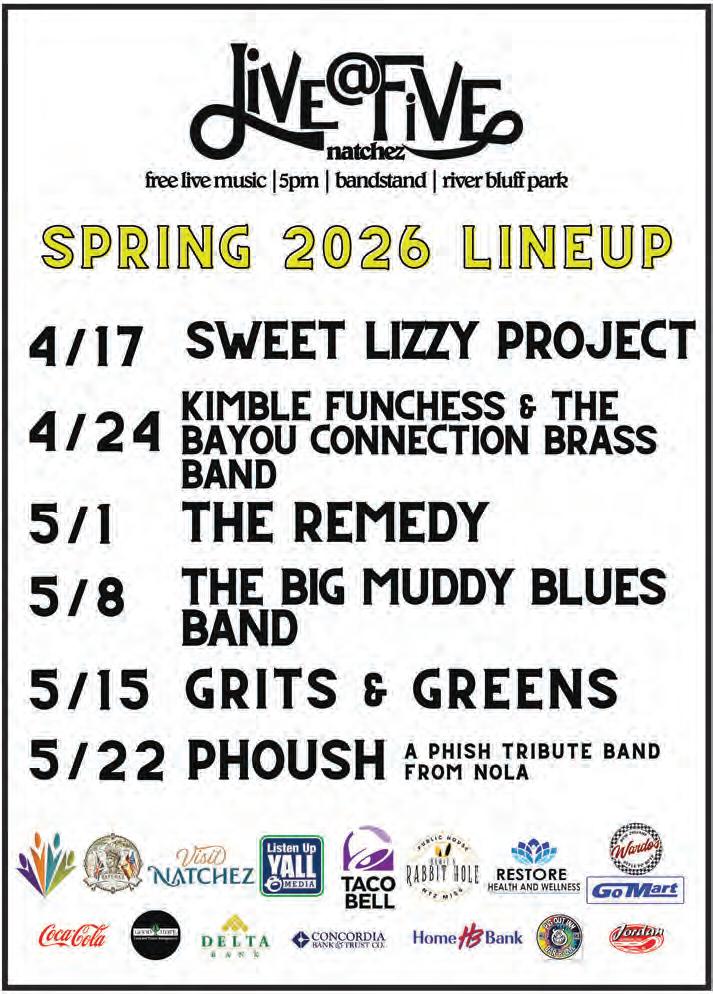
Grab a picnic blanket or lawn chair and amble over to the Bandstand on the Bluff at 107 S. Broadway Street in downtown Natchez for a family-friendly outdoor concert series playing all spring long. This year's lineup for April includes Sweet Lizzy Project (April 17) and Kimball Funchess & The Bayou Connection Brass Band (April 24). 5:30 pm. Free. visitnatchez.org. 1
APR 17th - APR 26th
THEATRE
SLIDELL LITTLE THEATRE
PRESENTS: "SHREK: THE MUSICAL" Slidell, Louisiana
Based on the Academy Award-winning DreamWorks film, Shrek: The Musical stars an unseemly ogre, a damsel in distress, a donkey who won't shut up, and
Paradigm Gardens in New Orleans opens its doors once again this spring to present its 2026 Chef Showcase Series, featuring three signature New Orleans culinary experiences over three nights, filled with chef collaborations, live music, and more. This month's event is on April 14. Photo courtesy of Paradigm Gardens. Learn more on page 24.
Time Travel on Royal Street
A CUTTING-EDGE AUGMENTED REALITY EXHIBITION AT THE HISTORIC NEW ORLEANS COLLECTION TRANSFORMS
THE ORIGINS OF THE UNITED STATES INTO AN IMMERSIVE ADVENTURE
Story by Jordan LaHaye Fontenot
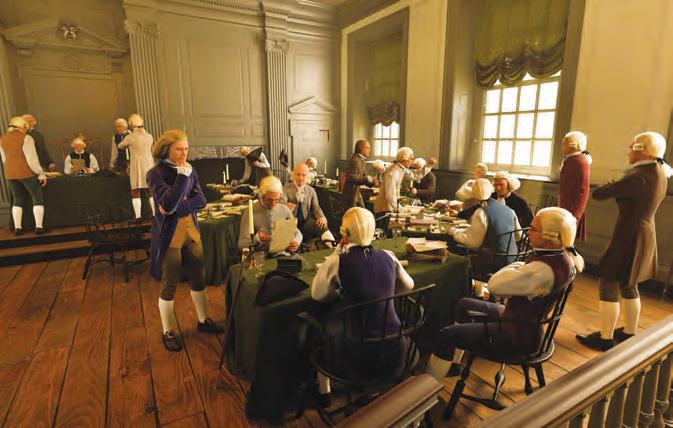
When Benjamin Franklin and John Adams signed the Declaration of Independence in August of 1776, it is unlikely they imagined future Americans would study an augmented reality recreation of the scene 250 years later.
We’re living in a new world now, a new America. And this spring, the Historic New Orleans Collection (HNOC) is unveiling a thoroughly twenty-first century approach to studying our country’s layered, fascinating origins.
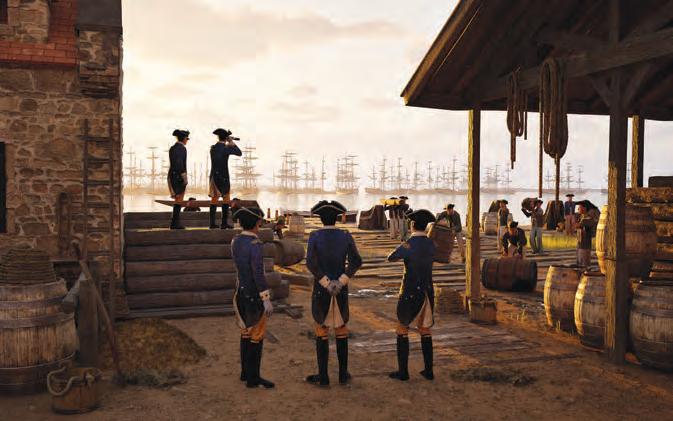
American Revolution: The Augmented Exhibition, produced and designed by the French technology firm Histovery, is perhaps the closest thing to time travel our age of innovation has yet developed. Launching at the HNOC as part of the Louisiana America 250 initiative—which celebrates the 250th birthday of the United States through various events and programming throughout 2026—the cutting-edge exhibition “dissolves the museum walls,” according to HNOC chief curator Jason Wiese. “It creates an experience that exists, not just in the temporal and physical space of the museum, but also in the imagination of the visitor.”
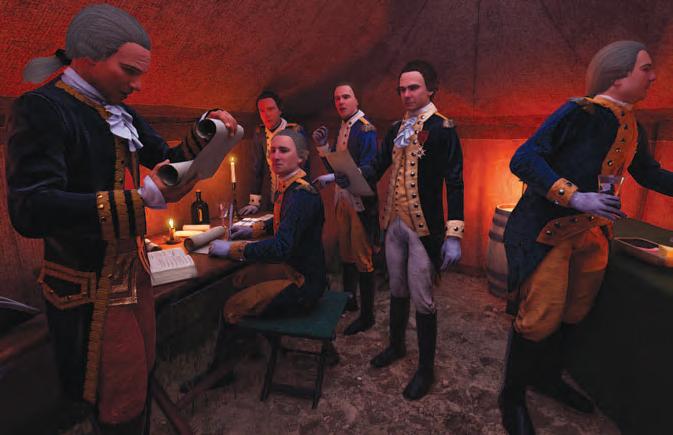
In some ways more akin to a video game than a traditional museum gallery, American Revolution is made up of fourteen immersive “chapters,” which each contain scenes from across the revolutionary era. Visitors will maneuver through the journey utilizing a Histopad tablet, which will allow them to interact, via augmented reality (AR), with immersive physical elements in each room, as well as digital AR portals leading to deeper exploration of particular moments leading up to, and during, the Revolutionary War.
“Where you go within each chapter or section is entirely up to you,” said Weise, who was part of a team of historians and scholars consulted for the exhibition. “You can select any of the points you see—whether it be people or buildings, to learn more about what they were and what you’re looking at. So, each visitor will have a unique experience.”
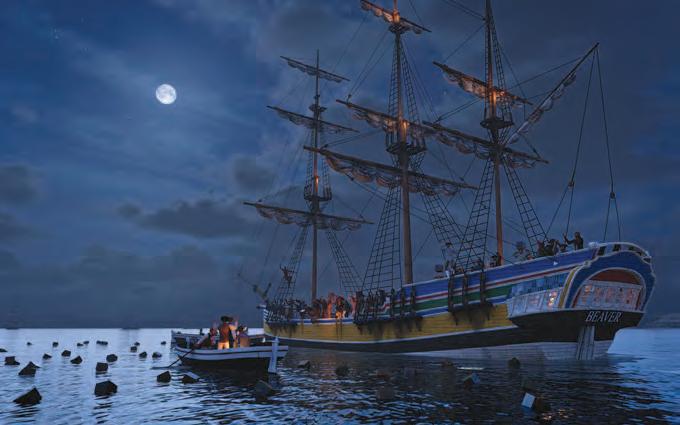
Within the exhibition, you might find yourself wandering the streets of colonial Virginia just as protests begin to erupt in the wake of the 1765 Stamp Act, or on the Dartmouth in the Boston Harbor as the Sons of Liberty toss more than 300 chests of tea into the water. Walk beside George Washington as he led his 2,400 troops across the Delaware, or huddle around a fire during the long, bloody winter of 1777–1778 at Valley Forge.
“The show will allow this new, up-close look at people and events that most Americans have heard of, like Bunker Hill and Saratoga Valley Forge,” said Weise. “But also moments that a lot of people don’t know anything about, such as the Gulf South’s involvement in the war.” The exhibition includes, for instance, an entire chapter devoted to Bernardo de Galvez, the Spanish Colonial Governor of Louisiana at the time, and the ways he supported the revolutionaries. Viewers can step inside his successful siege of Pensacola, fought from March 9–May 10,1781 by Galvez’s army— which was made up of Spanish forces, as well as free Black soldiers from Louisiana and Havana, along with Indigenous allies.
“Including the stories of the Gulf South in this war complicates our understanding of the Revolution and enlarges it,” said Weise. “Because the Revolutionary War was essentially a world war, with huge repercussions beyond North America. It wasn’t just felt along the Atlantic seaboard. It’s a complicated story, and I think in this exhibit it is told in an accessible way.”
Accessibility was a major goal for the engineers and historians behind American Revolution. It’s designed to meet all ages where they are, and is supported in multiple languages.
Weise said that organizers see this exhibition as establishing the HNOC as a cultural hub for the Louisiana American 250 commemorations this year. “There are a lot of events happening around the city, but we hope this is something people will seek out to enrich their understanding of our country’s origins,” he said. And, as always at the HNOC, admission is free.
a host of fairy tale misfits. Irreverent fun for all comes to Slidell Little Theatre this spring. 7:30 pm Fridays and Saturdays; 2 pm on Saturdays and Sundays. $35; $25 for students and seniors. slidelllittletheatre.org. 1
The Evangeline Theater Company brings the scalding dark comedy, Glengarry Glen Ross, to the stage this month. David Mamet's Pulitzer-winning tale recounts the bitter yarn of small-time realtors who get the job done, no matter what types of tactics must be employed, so they can take home their small slice of the American dream. Thursdays–Saturdays at 7:30 pm; Sundays at 2 pm. $32. evangelinetheater.com. 1
APR 18th
FUN-DRAISERS
LAST HIDDEN TREASURES OF THE FELICIANAS
Saint Francisville, Louisiana
In recognition of April as Fair Housing Month, The People's Workshop hosts a one-day art event at the West Feliciana Parish Library titled "Last Hidden Treasures of the Felicianas." The event sells local art to fundraise for affordable housing and the elderly. 11 am–4 pm. For details, contact george@thepeoplesworkshopinc.org. 1
APR 18th
GREEN THUMBS
POINTE COUPÉE MASTER GARDENER 2026 SPRING PLANT SALE
New Roads, Louisiana
'Tis the season for all things growing, and the Pointe Coupée Master Gardeners are ready to offer their help. Head to Miles J. Brashier Greenhouse in New Roads for this vibrant spring plant sale to address all your gardening needs. Visit the Pointe Coupée Master Gardeners Facebook page for more information. 1
APR 18th
CULTURAL CELEBRATIONS
HUNGARIAN BOIL & BERRIES COOK-OFF
Springfield, Louisiana
Cooks, bakers, and berry-obsessives—
this one's for you. Show off your skills, compete for prizes, and enjoy a generally tasty and rollicking good time at Fayard Field in Springfield. The day's festivities include a crawfish boil cook-off ($50 entry), adult strawberry dessert bake-off ($10), kid's strawberry dessert back-off (free entry), best in patch berries ($20), kid's strawberry eating contest ($5), and more fun for hours. All proceeds benefit Árpádhon Hungarian Settlement Cultural Association and help preserve Louisiana's Hungarian heritage. 10 am–5 pm. louisianamagyars.org. 1
APR 18th
FAST LANE
DONALDSONVILLE CLASSIC
CAR & JEEP SHOW
Donaldsonville, Louisiana
Automobile aficionados won't want to miss this annual car and jeep extravaganza in Donaldsonville at 308 Railroad Ave. Expect music, along with food trucks and vendors. The show will award prizes that include the Best in Show, Top 25, Best Ford, and Best Chevrolet, among others. 9 am–1 pm; registration 8:30 am. visitlasweetspot.com. 1
APR 18th
UP A CREEK
TOP OF THE TECHE
Leonville, Louisiana
Got a paddle? Tour du Teche, a nonprofit organization focusing on restoring outdoor recreation along the Bayou Teche Corridor through St. Landry, St. Martin, Iberia, and St. Mary parishes, is hosting Top of the Teche, a 7.7-mile canoe race from Leonville to Arnaudville. The event, starting at the Leonville Boat Launch, is open to a broad range of paddle-driven watercraft. Boat checks at 7 am; race at 10 am. $30 to register. tourduteche.com. 1
APR 18th
POLLINATORS
EBR MASTER GARDENERS:
CHILDREN'S GARDEN PARTY
Baton Rouge, Louisiana
The East Baton Rouge Master Gardeners invites families to celebrate Louisiana’s vital pollinators at a Children's Garden Party on the elegant grounds of the LSU AgCenter Botanic Gardens at Burden. This free event includes a live beehive demonstration (perfectly safe!), garden
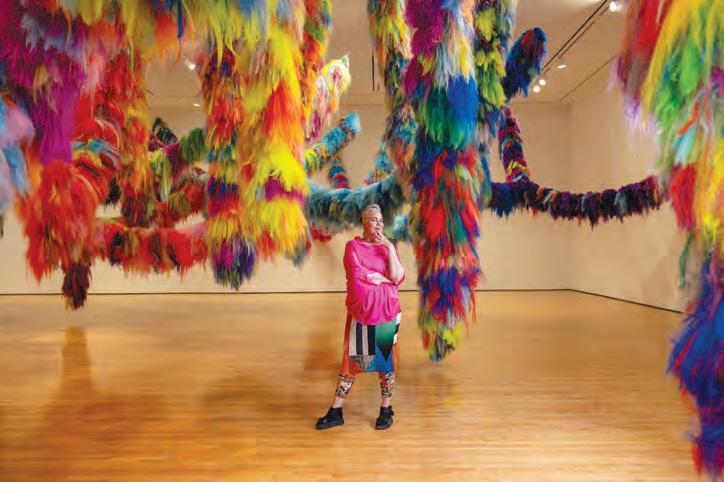
In New York-based Icelandic artist Hrafnhildur Arnardóttir's Nervescape, the artist transforms the Hilliard Art Museum into a fictional forest. Resplendent in blues, pinks and yellows, the forest is comprised of thousands of bundles of synthetic hair resembling nerve cells and will serve as a backdrop for Hilliard events throughout its year-long installation, which ends in July. Photo courtesy of the Hilliard Art Museum.
scavenger hunt, take-home nature crafts, and active play—along with other educational opportunities for families to connect with the natural world. 9 am–11 am. Free, but registration required. bit.ly/AprilGardenParty . 1
APR 18th
GOOD EATS
ALL-YOU-CAN-EAT CRAWFISH COOK-OFF
Slidell, Louisiana
Historically, this 40,000 pound crawfish feast hosted by the Hospice Foundation of the South was considered the largest one-day event on the Northshore. Over fifty teams will be boiling away in Fritchie Park in Slidell, and guests will have access to as much as they can eat. Look forward to entertainment by Soul Revival and VooDoo Gumbo, along with a healthy helping of mudbugs to keep you sated throughout the performances. 11 am–5 pm. $40 includes all you can eat crawfish. Other food and beverages will be available for purchase. crawfishtickets.com. 1
APR 18th
GOOD EATS CRAWFEST
New Orleans, Louisiana
Did you go to a college where they dumped eighteen thousand pounds of crawfish in the quad each spring? No? Then be on campus when Tulane University hosts its annual Crawfest (not Crayfest) celebration of mudbugs and music. New Orleans's venerable seat of learning lets down its gown for a day, presenting boiled crawfish by the ton and served up alongside live music by Dogpark, Jake Ewald, Laundry Day, The Deslondes, Swinging Gypsies, and Hotel Burgundy. Plenty of food vendors and local artists displaying, too.
11 am–7 pm on the Berger Family Lawn. Free for Tulane students or children twelve or younger; $20 otherwise. crawfest.tulane.edu. 1
APR 18th
SOUND ON THIS IS HOME FEST
Lake Charles, Louisiana
Folks will flock into the 1000 block of Ryan Street in downtown Lake Charles for this music festival, all in the name of celebrating the rich culture and music of Southwest Louisiana. This year's headliners include Sons of Legion, Alphonse Ardoin & the Zydeco Kingz, Rusty Metoyer & the Zydeco Krush, Malentina, and more. Free. thisishomefest.com. 1
APR 18th
GOOD EATS COMMUNITY BANK CRAWFEST
Laurel, Mississippi
Spring means crawfish—even in Mississippi. At this fest featuring numerous crawfish boils, head to Front Street in Laurel for live music, beverages, and teams competing for one of several prizes. Every entry is cooked on-site and will be judged by a team of crawfish experts and lovers. 11 am–3 pm. $25 for gate entry and all-you-can-eat access; free for kids under twelve. Another 5 Ibs of crawfish can be purchased on-site if the boils don't satisfy. laurelmainstreet.com. 1
APR 18th
FUN-DRAISERS
AZALEA POLO CLASSIC Saint Francisville, Louisiana
The Azalea Polo Classic, the West Feliciana Historical Society's premier fundraiser, returns for another year of live music, craft cocktails, and
Events
Beginning April 18th - 23rd
specialty hors d'œuvres while enjoying a professional polo match at the West Feliciana Parish Sports Park. With Maker’s Mark returning as a sponsor, this year's event promises to be even more exquisite. 2 pm–5 pm. $150. azaleapoloclassic.com. 1
APR 18th
THEATRE
30 BY NINETY THEATRE PRESENTS: "THE LARAMIE PROJECT"
Mandeville, Louisiana
This documentary-style play was playwright Moisés Kaufman's response to the brutal murder of twenty-one-yearold Matthew Shepard in October 1998, a hate crime targeting Shepard because of his sexuality. Kaufman and members of the Tectonic Theater Project then traveled to the place of the crime, Laramie, Wyoming, to conduct more than 200 interviews—from which they built The Laramie Project. Praised as one of the most important works of contemporary American theater, the play explores the realities of intolerance, resilience, and
human empathy. See 30 by Ninety's rendition this spring. 8 pm Fridays and Saturdays; 2:30 pm Sundays. $22; $20 for seniors; $17 for students thirteen and older; $14 for children twelve and younger. 30byninety.com. 1
APR 18th
WHEELS
LOUISIANA BICYCLE FESTIVAL
Abita Springs, Louisiana
“Every time I see an adult on a bicycle, I no longer despair for the future of the human race.” Encouraging words from H.G. Wells, who would no doubt endorse the Louisiana Bicycle Festival. Each year, bike enthusiasts take over the tiny town of Abita Springs during this day-long festival to see and show antique and creative custom bikes via a whimsical and meandering parade, instead of a race. There's a bike flea market and plenty of contests and prizes for two-wheeled tricks. Live music and festival food, too, at a bike fest that the web-zine Bike Ride & Custom has declared “the biggest custom bike festival in the United States.” The festival cycles town-wide, but look for cyclists
gathering at the Trailhead from 9 am–5 pm. Free. louisiananorthshore.com. 1
APR 18th - APR 19th
ODDS & ENDS
ANTIQUES AND UNIQUES FESTIVAL
Covington, Louisiana
Two days of pure, unabashed eclecticism await: antique furnishings, period collectibles, random knick-knacks, and adorable hats. The Covington Heritage Foundation's juried, free Antiques & Uniques Festival is back for another year, featuring over fifty vendors selling fine art, antiques, architectural salvage, period collectables, food, and much more. The market is joined by a live auction, onsite appraisals and demonstrations, historic walking tours, live music, and classic cars on display. 10 am–5 pm Saturday and Sunday at the Covington Trailhead. Free. covingtonantiquesanduniquesfestival. com. 1
APR 18th - APR 26th
CLEANUPS LOVE THE BOOT WEEK
Baton Rouge, Louisiana
Keep Louisiana Beautiful is spearheading the largest litter removal effort in Louisiana's history, to take place alongside Earth Day. Individuals, businesses, and
organizations statewide are encouraged to plan and partake in community cleanups in an effort to create a cleaner, more beautiful Louisiana. This year, clean up in honor of America's 250th birthday. Event registration and volunteer sign up is available at lovetheboot.org. 1
APR 19th
MUSICAL PERFORMANCES
BATON ROUGE CONCERT BAND SPRING CONCERT
Baton Rouge, Louisiana
It's that time of year again: The Baton Rouge Concert Band will perform its annual Spring Concert at the East Baton Rouge Main Library on Goodwood, exploring a sweeping showcase of classical music with the theme, “William and Friends.” That means—you guessed it—selections from composers named William, along with their friends and collaborators. 5 pm. Free. brcb.org. 1
APR 19th
INCLUSIVE CELEBRATIONS NORTHSHORE AUTISM ACCEPTANCE FESTIVAL
Mandeville, Louisiana
Head to the Trailhead Amphitheater for a day of family-friendly, inclusive play and connection within the Northshore community, hosted by the Northshore
Neurodiversity Network and The Mande Milkshakers. Kids can enjoy a range of sensory-inclusive activities including a jump zone, foam zone, sand zone, and quiet zone, while adults peruse and connect with local organizations and their resources. 10 am–2 pm. Free. Details at the Northshore Neurodiversity Network Facebook Page. 1
APR 19th
FIT & FUN
RUN/WALK THROUGH HISTORY
New Orleans, Louisiana
Run or walk through the historic grounds of Metairie Cemetery, constructed in 1872 after a lifetime as a horse-racing track. The event features a 5K and 1K, open to all ages, with proceeds benefitting Save Our Cemeteries, a department of the Preservation Resource Center. 7:30 am. $35–$50. nolarunning.com. 1
APR 19th
MUSICAL PERFORMANCES THIRD SUNDAY CONCERT SERIES
Covington, Louisiana
Now in its 35th season, the Christ Episcopal Church in Covington's annual Third Sunday Concert Series brings some of the region's greatest talents into
the historic church for free community concerts each year. This season's April performance features The Pfister Sisters. Concerts are all followed by a wine and hors d'oeuvres reception in Holzhalb Hall. Doors open at 4:30 pm. christchurchcovington.com. 1
APR 20th - APR 29th
VISUAL ARTS
"SHADOW OF YOU" AT KELWOOD CONTEMPORARY
Baton Rouge, Louisiana
Kelwood Contemporary Art presents Shadow of You, an exhibition of work by LSU printmaking students
Sarah Lindrew, Sophia Donze, Ben Goodman, and Tony Kulp. Their pieces interrogate the self and its many iterations, probing the boundaries of escapism, fantasy, obsession, and ego.
Artists reception April 24, 5 pm–8 pm. kelwoodcontemporaryart.com. 1
APR 21st
EARTH DAY
DISCOVER NATURE: RECYCLING & REPURPOSING IN BATON ROUGE
Baton Rouge, Louisiana
Part of honoring Earth Day on April 22, LSU Hilltop Arboretum presents a discover nature program geared toward
preserving and restoring the planet. Held in the Beverly Brown Coates Auditorium, the event brings together a panel of representatives from Glass Half Full, Republic Services, Keep Tiger Town Beautiful, and the Capital Area Corporate Recycling Council to discuss local recycling systems and ways to reduce waste. 6:30 pm–8 pm. $15; $10 for students and Hilltop members. lsu.edu/hilltop. 1
APR 22nd - APR 26th
CULTURAL CELEBRATIONS FESTIVAL INTERNATIONAL DE LOUISIANE
Lafayette, Louisiana
Anyone looking for a reason to feel proud to be a Louisianan need only make plans to be in downtown Lafayette when the "largest international music festival in the United States" returns full-force for five days in Acadiana, bringing artists from countries the world over—with an emphasis on the Francophone diaspora—to Lafayette. Music, visual arts, theatre, dance, and cuisine combine into a melting pot that celebrates the common threads that bind their cultures and Louisiana's own artistic expressions together. "Festival," as it is simply called by the locals, is
celebrating its fortieth anniversary this year of transforming downtown Lafayette into an entertainment complex with many music stages presenting local, international, and emerging musicians; food court areas, street musicians, and animators; arts & crafts boutiques; art galleries; cultural workshops; and a world music store. As usual, scores of bands this year are coming from all corners of the globe, and plenty of Louisiana greats are there to make things complete. It's big, it's colorful, and best of all, it's free! festivalinternational.org. 1
APR 23rd
GREEN THUMBS
EBR MASTER GARDENERS: PLANT PROPAGATION
Baton Rouge, Louisiana
The East Baton Rouge Master Gardeners are back this spring to show eager green-thumbers how to take a clipping of a plant from a friend or neighbor to try and make it grow. Join EBR Master Gardener Cheri Fasy, along with several other Master Gardeners, as they present a comprehensive plant propagation lecture at Carver Branch Library for beginners excited to get their gloves on and get growing. 5:30 pm. Free. ebrmg. wildapricot.org. 1
Events
Beginning April 23rd - 25th
APR 23rd - MAY 3rd
TURN IT UP
NEW ORLEANS JAZZ & HERITAGE FESTIVAL
New Orleans, Louisiana
The New Orleans Jazz & Heritage Festival is the city's hallmark international music festival, famous for immersing the country's most powerful entertainers in New Orleans's incomparable musical legacy. Big names at Jazz Fest have included Katy Perry, Van Morrison, Red Hot Chili Peppers, Rolling Stones, and others. This year's festival is headlined by the Eagles, Stevie Nicks, Rod Stewart, Kings of Leon, Lainey Wilson, Lorde, Tyler Childers, T-Pain, Jason Isbell, and scores more of the nation's biggest performers. But we all know that Jazz Fest isn’t just about big names, as there are hundreds of other closer-to-home musicians and bands on the schedule this year, each bringing their unique style and following. In addition to the music, happening simultaneously on multiple stages, the Heritage Fair offers its lipsmacking array of food (more than one
hundred varieties available), as well as contemporary and folk crafts. Numerous areas highlight Louisiana’s diverse influences, including the Congo Square African Marketplace, the Contemporary Crafts area, and Louisiana Marketplace. Festival parades, starring brass bands and marching clubs, begin and end in Heritage Square. Everything happens at the New Orleans Fairgrounds. General admission for Louisiana residents starts at $379 for the weekend; $75 for single day passes. VIP and travel package options also available. nojazzfest.com. 1
APR 24th
MUSICAL PERFORMANCES
MAGGIE KOERNER & FRIENDS
New Orleans, Louisiana
Catch Maggie Koerner at her performance at the Marigny Opera House. The whimsical evening features Maggie Koerner, Hans Williams, Gina Leslie, and Phin. Each night features live light painting and projection mapping by Monica Rose Kelly. 7:30 pm. $40 for general admission; $50 for VIP. marignyoperahouse.org. 1
APR 24th
ELEVATED CUISINE
AN EVENING AT WINDRUSH
Baton Rouge, Louisiana
The LSU Rural Life Museum presents an elegant Southern supper at Windrush Gardens, designed by Steele Burden in appreciation of the gardens of Europe and Louisiana in the nineteenth-century. Guests will enjoy cocktails and music in Windrush Gardens followed by a seated supper by Chef John Folse and desserts
and coffee on the museum grounds. 6:30 pm to 9 pm. $188 per person. bontempstix.com. 1
APR 24th - APR 25th
NATURE
BAYOU TECHE
BLACK BEAR FESTIVAL
Franklin, Louisiana
The annual Bayou Teche Black Bear Festival will be held on the banks of said bayou and in thoroughly historic
Moncus Park in Lafayette hosts dozens of programs throughout the spring, from a trail trek and conversation club, to garden talks and bird walks. In addition to other health offerings like pure barre and tai chi, the "Yoga in the Park" series is held each Wednesday from 6 pm–7 pm. Photo courtesy of Moncus Park.
downtown Franklin. With its focus on educating the public about the life and long-term prospects of the Louisiana Black Bear, this celebration will include birding and field trips, boat outings on the bayou, a cast iron cookoff, an art sale, arts & crafts, food, music, and children's activities. bayoutechebearfest.org. 1
APR
24th - APR 25th POURS
WINE DOWN ON FALSE RIVER
New Roads, Louisiana
Immerse yourself in New Roads’ distinctive small-town charm with a weekend of Napa Valley wine tastings, carefully-curated local cuisine, art, and live music—all served lakeside. Friday night opens the doors of local homes and restaurants for a series of private dinners hosted by renowned local chefs offering menus thoughtfully paired with wines. Stick around on Saturday evening for the Grand Tasting on Main Street, where all the winemakers who have come to town will showcase their selections. Expect to sample as many as forty exquisite wines while enjoying small plates and perusing the work of local artists. Get a head start with a ticket to the Sparkling Wine Experience pre-party, featuring a private tasting experience with Napa Valley winemakers. Friday night dinners are $312.80 and include entrance into all
weekend events; Saturday Grand Tasting tickets are $131.80; with Sparkling Wine Experience, they are $158. winedownfr.com. 1
APR 24th - APR 25th
GREEN THUMBS
NORTHSHORE GARDEN & PLANT SALE
Covington, Louisiana
Presented by the St. Tammany Master Gardeners Association, the Northshore Garden & Plant Sale is the ideal destination for anyone hoping to get a head start on their spring garden. Vendors specializing in roses, native plants, daylilies, vegetables, shrubs, and trees will be available, and attendees will have the chance to explore garden art, plant material, and outdoor furniture options. Expect activities for the kiddos, educational speakers, and food concessions as well. 9 am–3 pm both days. $5; free for children younger than eighteen. stmastergardener.org. 1
APR 24th - APR 26th
CULTURAL CELEBRATIONS
THE ITALIAN FESTIVAL
Tickfaw, Louisiana
Combine the Louisiana parade tradition with the Italian pasta tradition (meatball toss and all!), add in some classic small-
town festival fare and a Saturday parade, and you've got The Italian Festival in Tickfaw, celebrating fifty-three years this year. 5 pm–11 pm Friday; 10 am–11 pm Saturday; and 10 am–6 pm Sunday. theitalianfestivalorg.com. 1
APR 24th - APR 26th
SEE-FOOD
PLAQUEMINES PARISH SEAFOOD FESTIVAL
Belle Chasse, Louisiana
Plaquemines Parish Seafood Festivalgoers get to feast on fresh Gulf Coast seafood, bow down before the Seafood Queen, peruse crafts from local artisans, watch the big oyster drop, enjoy carnival games and rides, and take in an eclectic mix of local music. Held at 333 F Edward Hebert Boulevard in Belle Chasse. More details to come at plaqueminesparishfestival.com. 1
APR 24th - APR 26th
GOOD EATS
ARNAUDVILLE
ÉTOUFFÉE FESTIVAL
Arnaudville, Louisiana
Over forty years young, this annual affair at the Little Flower Auditorium occasions the creation (and consumption) of all sorts of étouffée, then adds in friendly rivalry—as well as children's
activities, a car show, carnival rides, bingo, and antique shopping. Catch live musical performances by local favorites Nik L Beer Band, Clifton Brown & the Rusty Bucket Band, Clay Cormier & the Highway Boys, and more. Kicks off Thursday at 5 pm for Family Night (carnival only), then continues through the weekend. 5 pm–10 pm Friday; 11 am–10 pm Saturday (cook-off and car show day). Free admission. (337) 754-5912. arnaudvillecatholic.org/etouffee-festival. 1
APR 24th - MAY 8th
VISUAL ARTS
LACOMBE ART GUILD 2026 SPRING SHOW
Covington, Louisiana
The Lacombe Art Guild presents its annual 2026 Spring Art Show, Brushstrokes and Beyond. On view in the First Floor Atrium of Lakeview Hospital in Covington. Free and open to the public. Awards show and reception on Friday, April 24 from 5 pm–8 pm. lacombeartguild.com. 1
APR 25th
TWEETS
AUDUBON DAY AT LSU LIBRARIES
Baton Rouge, Louisiana
You know what they say about "birds
Events
Beginning April 25th - 30th
of a feather," so flock together with other bird-lovers at LSU’s Hill Memorial Library for Audubon Day, which will include a viewing of John James Audubon's Birds of America folios and The Viviparous Quadrupeds of North America, along with related materials from the E.A. McIlhenny Natural History Collection. Free, but registration is required for different one-hour time slots to view the folios between 10 am and 1 pm at lib.lsu.edu/special/audubon. 1
APR 25th
UP, UP, AND AWAY
KITE FEST LOUISIANE
Port Allen, Louisiana
Here's something to put some wind in your sails. April is National Kite Month; so, once again, West Baton Rouge is launching high-flying festivities at the West Baton Rouge Soccer Complex. The event has been named "Festival of the Year" by the Louisiana Travel Promotion Association and a Top 20 Event by the Southeast Tourism Society. The kiteloving crowds will get to enjoy a kite design contest, indoor kite flying, and other professional kite exhibitions, plenty to eat and drink, kite vendors, musical entertainment, kite-flying lessons, and kite-building workshops. Plus, don't miss the big fireworks display on Saturday night. Free. westbatonrouge.net. 1
APR 25th
PLAYTHINGS
LOUISIANA DOLL FESTIVAL
DeRidder, Louisiana
DeRidder, Louisiana is home to Lois Loftin's remarkable 3,000+ collection of dolls, preserved in a museum on West 1st Street inside the Beauregard Tourist Commission. This display, ranging from fine European porcelain circa 1820s to simple handmade Louisiana dolls, is at the heart of the annual Doll Festival founded in 1997. Each spring, the town comes together in full festival flair, with games, superhero and princess costume contests, a 5K, a pageant, delicious local food, a doll parade, live music, and a celebration of the doll-making and -collecting tradition here in Louisiana. louisianadollfestival.com. 1
APR 25th
ARTS & CRAFTS
DENHAM SPRINGS
SPRING FESTIVAL
Denham Springs, Louisiana
It's spring, and those in search of a
family-friendly festival should look no further than Denham Springs. The city's Antique Village comes alive for one day in the spring, filling with vendors, games, kiddie rides, and food booths. Don't miss antique stores, art exhibits, tour the Old City Hall exhibits, and listen to music at the Old Train Station. denhamspringsantiquedistrict.net. 1
APR 25th
ARTS & CRAFTS
SPRING FEST
Laurel, Mississippi
The Laurel Fairgrounds serves as the site for Spring Fest 2026, a day filled with craft vendors, food trucks, music, and more. Sponsored by Four Arrows Events. 9 am–4 pm. Free. See the event's Facebook page for details. 1
APR 25th - APR 27th
SPRING TRADITIONS
FESTIVAL DE LA PRAIRIE
Prairieville, Louisiana
St. John the Evangelist Catholic Church hosts this festive spring celebration that features all the trappings of a Louisiana fair—from rides and fun runs to silent auctions and live music. Oh, and then there's the food. Don't miss crawfish stew, jambalaya, funnel cakes, turkey legs, nachos, fried fish, pork spaghetti, and more. 6 pm–11:30 pm Friday; 1 pm–11:30 pm Saturday; 11 am–7:30 pm Sunday. Ticketing details at the St. John's Festival de la Prairie Facebook page. 1
APR 27th
LIVE MUSIC
SHORTY FEST 2026
New Orleans, Louisiana
The Trombone Shorty Foundation and Acura are coming together for an epically-groovy fundraising event at Tipitina's, featuring performances by Trombone Shorty & Orleans Avenue, Cimafunk & La Tribu, Tarriona “Tank” Ball (Tank & The Bangas), Big Freedia, Jelly Joseph and JoJo Hermann (Widespread Panic), and more. The "Culturla Block Party" starts at 5 pm. Tickets start at $100. tromboneshortyfoundation.org. 1
APR 29th
MUSICAL PERFORMANCES
BATISTE LEGACY SESSIONS
Baton Rouge, Louisiana
Hosted at the Virginia and John
Noland Black Box Studio at the Cary Saurage Community Arts Center, the Batiste Legacy Sessions are inspired by the acclaimed Alvin Batiste Jazz Society Series of live musical concerts, presenting an opportunity for audiences to experience more genres. April's event features the Masakowski Family with Brian Blade. 6:30 pm–8 pm. $25; $15 for arts council members; $10 for students. bontempstix.com. 1
APR 30th
ELEVATED CUISINE FRENCH WINE DINNER AT THE ST. FRANCISVILLE INN
Saint Francisville, Louisiana
Reserve your seat at the Michelinrecommended St. Francisville Inn this spring as renowned Executive Chef Michael Dardenne presents a special fivecourse menu of classical French dishes. The meal will be paired with select wines from the Michael Corso Portfolio. Limited seating available. 5 pm–10 pm. $250 for an all-inclusive ticket. bontempstix.com. 1
APR 30th
BETTIN' BOATS TICKFAW 200 Springfield, Louisiana
Blood River Landing in Springfield opens to the public just once a year for a truly raucous event: the state's largest power boat poker run (you heard that right). No boat? No problem—there's plenty to entertain spectators. Bands start Thursday night, ending Saturday night at the Fun House (bracelets needed for entry to the Fun House), and food, drink, and ice are available at the Marina. Enjoy an unforgettable weekend of partying and boating. $30 for Fun House bracelet all three days; registration options available at tickfaw200.com. 1
APR 30th
THEATRE
LE PETIT THEATRE PRESENTS: "GOD OF CARNAGE"
New Orleans, Louisiana
Le Petit Theatre in New Orleans presents God of Carnage by Yasmina Reza, a tale of a playground dust-up that evolves into a chaotic evening for two couples. As they throw civility to the wind, the couples act out a comedy of parenting struggles and principles. Performed at 616 St. Peter Street. 7:30 pm; 3 pm Sundays; 2 pm Saturday May 16. For various ticket prices, visit lepetittheatre.com. 1
APR 30th - MAY 2nd
SPRING TRADITIONS
ALEX RIVER FÊTE
Alexandria, Louisiana
The Alexandria River Fête draws together hundreds of Louisianans from near and far to celebrate the arts, culture, and heritage of Central Louisiana. Set on the banks of the Red River, where it flows past downtown Alex, the three-day fest has historically encompassed several events including Dinner on the Bricks, an ArtWalk, and the hotly contested Louisiana Dragon Boat Races. Dozens of lively arts programs, colorful street performers, vibrant craft displays, food vendors, children’s activities, and live music. Free. alexriverfete.com. 1
For more events visit countryroadsmag.com/eventsand-festivals.
Emilia Perrotta, pictured above, performs in Puccini's famous Madama Butterfly, presented by Opéra Louisiane on April 11. Photo courtesy of Opéra Louisiane. Learn more on page 21.
VISIT ST. FRANCISVILLE
The National Champion Bald Cypress tree is estimated to be as much as 1,500 years old.
Birds, Bees, and BIG Trees
Low Mississippi River water offers a rare opportunity to visit Cat Island National Wildlife Refuge and the National Champion bald cypress tree, during spring bird migration
Lots of folks know that one of the largest and oldest trees in North America stands just west of St. Francisville. More than fifty-five feet around at its base, the “National Champion bald cypress,” as its known, is estimated to be around fifteen hundred years old. In other words, this tree was old when William the Conquerer was king of England … in 1066! And yet, many of us haven’t actually seen the National Champion bald cypress for ourselves. For much of the year (almost always during springtime), the tree is kind of hard to get to. It stands in the ten-thousand-acre Cat Island National Wildlife Refuge—a unique landscape of ridges and swales, cypress-tupelo swamp and backwater sloughs in one of the few areas along the lower Mississippi not protected by levees. According to President of the Friends of Cat Island, William Daniel, this means that the “big tree,” as it’s known locally, often has its feet in the water. “Oftentimes by this point in the year there’ll be ten to fifteen feet of water on it,” said Daniel, noting that when the Mississippi River gauge at Baton Rouge records above twenty-three feet, visitors have to wade through a little water at the trailhead. "At twenty-six feet the water starts to go over the road, so typically we start closing the back portion of the refuge when the level reaches twenty-six,” he said.
This spring is different. Unusually low Mississippi River water levels (thirteen feet at the Baton Rouge gauge in mid-March) mean visitors can stroll from the refuge parking lot on Creek Road to the big tree without getting wet. Low water also enables activities at Cat Island including fishing, hiking, wildlife viewing; and spectacular spring birdwatching, according to geologist, Friends of Cat Island board member, and amateur birdwatcher Jesse Means. This April and May, Means anticipates that Cat Island will teem with returning migrants. In addition to winter visitors like ruby-crowned kinglets and hooded mergansers, he expects multiple species of warblers to join year-round residents like common grackles and cardinals, great egrets, barred owls, wood ducks, red-bellied woodpeckers, and more. Whatever the time of year, Means advises visitors to bring water, bug spray, sturdy footwear, binoculars, and to check that the Mississippi River level at the Baton Rouge gauge measures twenty-three feet or below. For updates on refuge conditions, follow the Friends of Cat Island page on Facebook.
More to Explore
Here are some more ways to enjoy the outdoors around St. Francisville this spring
• The Tunica Hills Wildlife Management Area offers miles of hiking and biking trails, providing opportunities to experience the bluffs, and ravines at the southern tip of the “loess blufflands” escarpment, which support plants and animals not found elsewhere in Louisiana.
• Mary Ann Brown Preserve encompasses 109 acres of upland forest rich in wildlife. Wellmarked trails, butterfly gardens, birdhouses, and a fishing pond.
• Afton Villa Gardens is an historic garden established in the mid-19th century. Originally surrounding a grand mansion destroyed by fire in 1963, the surviving gardens feature manicured lawns, a formal parterre garden, daffodil valley, historic family cemetery, and the famous Ruins Gardens on the original house site.
• Tunica Hills Campground welcomes nature lovers keen to camp deep in the forest habitat of the Tunica Hills. 20 campsites have tentpads, picnic tables & firepits, plus 4 cabins including a rustic covered wagon, and a 2-bedroom cabin that sleeps 6.
• Audubon State Historic Site is the 100-acre site surrounding historic Oakley House, where artist/naturalist John James Audubon completed or began 32 paintings that appear in his masterpiece The Birds of America. Audubon SHS recently opened an ADA-accessible walking trail that enables visitors to stroll the same woods Audubon explored to sketch birds. On April 25–26, Audubon SHS will host an America 250 Anniversary event with living history demonstrations and battle reenactments.
• Get tickets for the annual St. Francisville Garden Stroll, returning Saturday, May 9. Ticketholders visit 4 private gardens, one private home, and the gardens at Rosedown State and Audubon State historic sites. Program includes a plant sale and series of gardening lectures at Grace Episcopal Church. bontempstix.com for tickets
More Info: www.visitstfrancisvillela.com/explore/listings/hike-bike-camp
Features
HISTORY ON THE ROUTE
A Map Unfolds
A
CENTURY OF THE U.S. HIGHWAY SYSTEM AND THE PROMISE OF THE AMERICAN ROAD
TRIP
Story by Kristy Christiansen
Bright neon signs, quirky motels, and miles of open road have mythically awaited travelers along Route 66, the “Mother Road” from Chicago, Illinois, to Santa Monica, California, since November of 1926. The legendary hhhighway once offered an escape to those searching for a new life out West.
Today, its remnants offer an iconic road trip for nostalgic Americana junkies. This November will mark a century of this famous roadway, sure—but its anniversary also marks one hundred years of the entire U.S. numbered highway system. Here is a story of one of the greatest ideas in American highway history, and its impact can be seen crisscrossing the country—north to south, east to west, and even across the sugarcane and cotton fields of Louisiana.
The History of the U.S. Highway System
Many of today’s roads have origins in the days before cars, perhaps as footpaths expanded to accommodate wagons and later bumpy lanes traveled by Model Ts. “There were horse trails and buggy trails, and they turned into auto trails,” explained Sharon Strouse, the Executive Director of the National Scenic Byway Foundation. “In Louisiana, people were more concerned with ports than trails. Eventually, private citizens named the trails and maintained them because there was no Department of Transportation to call.”
The naming of trails dates to the early 1900s. “Boosters selected a route over existing—often, just barely existing— roads, gave it a colorful name, formed an association to promote the trail, and collected dues from businesses and towns along the way,” writes Richard Weingroff, Information Liaison Specialist with the Federal Highway Administration in an article titled “From Names to Numbers: The Origins of the Numbered Highway System.” “The associations published trail guides and newsletters, held annual conventions, and promoted the improvement and use of their route.”
By the 1920s, more than 250 of these routes existed across the United States, some a single roadway connecting two major cities, others a system of trails offering multiple paths all under one name. In Louisiana, the transcontinental Old Spanish Trail, starting in St. Augustine, Florida, passed through New Orleans and Lafayette on its way to San Diego. The Jackson Highway brought adventurers from Chicago to New Orleans, while the Jefferson Highway linked Winnipeg, Canada, to the Crescent City, crossing the Atchafalaya River by ferry. In north Louisiana, motorists along the Dixie Overland Highway traveled through Monroe, Minden, and Shreveport on their way from Savannah, Georgia, to San Diego. Other recognized named trails in the state
Highway direction markers, Crowley, Louisiana. Photo by Russell Lee, 1903-1986. Farm Security Administration—Office of War Information Photograph Collection Library of Congress.
included the Lakes to Gulf Highway, the Lone Star Route, the Lone Star Trail, and the Mississippi Valley Highway.
During this time, automobiles were exploding in popularity in response to mass production and sudden affordability. Between 1910 and 1920, vehicle registrations increased from around 500,000 to 7.5 million. As more drivers hit the road, the trails continued to expand. And so did the controversies.
According to Weingroff, “As interstate traffic grew in the 1920s, the named trails proved to be a jumble of overlapping roadways, poor marking, and indirect routing through towns willing to pay dues to an association.”
In 1925, the American Association of State Highway Officials (AASHO) stepped in to rein in the chaos. The AASHO, made up of highway associations that owned and maintained the roads, entreated the U.S. Secretary of Agriculture to appoint a Joint Board on Interstate Highways. From April to August 1925, the Joint Board identified a list of the key interstate roads, which they labeled as “U.S. highways” and assigned each a number and road marker based on the U.S. shield. Primary routes running east to west ended in zero, while northsouth routes ended either in one or five. Alternate roads, connecting routes, and branches were filled in with sequential two-digit or three-digit numbers.
The Joint Board turned over its final report, which labeled 75,800 miles of roads as U.S. numbered highways, to the Secretary of Agriculture in November 1925. When the Secretary presented the report to AASHO, the bickering and lobbying began.
According to Weingroff, when AASHO’s Executive Committee met in Chicago in January 1926, the complaints had piled up. From trail associations to communities to individuals, each wanted more mileage, a different highway number, or a certain route or city to be included.
The governor of Kentucky, livid that no transcontinental road traveled through his state, initially refused to use the numbered highways. After much haggling, the AASHO rerouted Route 60 through Kentucky, and the original path from Chicago to California became the now-famous Route 66. After addressing 132 changes from State highway agencies and expanding to 96,626 miles of U.S. numbered highways, AASHO adopted the final plan on November 11, 1926.
Louisiana's Highways
Closer to home, the Lafayette Daily Advertiser announced, “Louisiana has approximately 1,800 miles constituting the ten United States highways passing through the state … The plan provides for the uniform marking of all these highways so that tourists may go from place to place simply by following a given route number.” The Louisiana numbers, etched into roadside markers a hundred years ago, were U.S. Routes 51, 61, 65, 71, 80, 90, 165, 167, 171, and 190. For thirty years, these roads dominated the landscape, until the federal interstate system, started in 1956, arose as the primary system of cross-country travel.
The vestiges of the U.S. routes, though, remain a familiar fixture to anyone veering off the interstate in search of nostalgic
Franklin, Saint Mary Parish, Louisiana. Truck entering on U.S. Highway 90. Vachon, John, 19141975, photographer. Library of Congress.
“THERE WERE HORSE TRAILS AND BUGGY TRAILS, AND THEY TURNED INTO AUTO TRAILS. IN LOUISIANA, PEOPLE WERE MORE CONCERNED WITH PORTS THAN TRAILS. EVENTUALLY, PRIVATE CITIZENS NAMED THE TRAILS AND MAINTAINED THEM BECAUSE THERE WAS NO DEPARTMENT OF TRANSPORTATION TO CALL.”
— SHARON STROUSE NATIONAL SCENIC BYWAY FOUNDATION EXECUTIVE DIRECTOR
highways and byways. This centennial is as good a time as ever to take a road trip across Louisiana and rediscover the glory days of this innovative highway system. Here’s a little inspiration to start your trip:
Route 51
A link between Louisiana and Wisconsin, Route 51 is the quieter lane seen from the speeding traffic on I-55. Starting in LaPlace, the highway squeezes between Lakes Pontchartrain and Maurepas on its scenic journey north through Manchac Pass. Browse for antiques and pick up some strawberries in Pontchatoula before strolling the historic streets of downtown Hammond. Enjoy the rural path passing through Tickfaw, Amite City, and Tangipahoa and give a nod to Britney Spears’ hometown of Kentwood before crossing the Mississippi border at Osyka.
Route 61
Turn up the volume to Bob Dylan’s “Highway 61 Revisited,” and revisit this former “Blues Highway” that ran from New Orleans to Minnesota. The southern terminus is Airline Highway, a busy commercial stretch that was once the main conduit from New Orleans to Baton Rouge. Beyond the Capital City, the route passes through rural enclaves, such as the scenic town of St. Francisville, on its way north to Natchez and the forgotten juke joints of the Mississippi Delta.
Route 65
Only a small section of Route 65 passes through northeast Louisiana on its way from Natchez, to Minnesota. Skirting the Mississippi River, the path winds past cotton fields and pecan trees from Clayton to Tallulah, before continuing into Arkansas.
Map of the final U.S. Highway system as approved November 11, 1926 Published by: United States Geological Survey; Bureau of Public Roads, United States Department of Agriculture.
Route 71
Historically beginning in Baton Rouge, the route was shortened slightly to run from Krotz Springs to the Canadian border at International Falls, Minnesota. In Louisiana, the route largely mirrors I-49. Kick off your tour at the Atchafalaya Basin and enjoy the pastoral drive northwest to Shreveport, stopping along the Red River in the “Heart of Louisiana” in Alexandria and detouring into Louisiana’s oldest permanent settlement in Natchitoches.
Route 80
From the original Dixie Overland Highway to U.S. Route 80 to the Louisiana Scenic Byway, this north Louisiana highway has survived the test of time. Start with the Old Mississippi River Bridge near Vicksburg, Mississippi, and head west past Poverty Point World Heritage Site to the Chennault Aviation and Military Museum in Monroe. Grab a juicy peach in Ruston and tour Minden’s historic Main Street before embarking on the big-city nightlife of Shreveport.
Route 90
South Louisiana locals need no introduction to Highway 90, running from west Texas to Jacksonville Beach, Florida and parallelling much of I-10 along the way. Formerly the Old Spanish Trail, the Louisiana section of the route traverses Cajun country from the casinos of Lake Charles to the food havens of Lafayette and New Iberia, the shrimp and petroleum hub of Morgan City to the cultural snares of New Orleans.
Route 190
The original 1926 version of Route 190 was a short bypass of New Orleans along northern Lake Pontchartrain, from Slidell to Baton Rouge. The road was eventually expanded west across the state and into Texas Hill Country, but its origins can still be traced on Jefferson Highway in downtown Baton Rouge and through historic Covington.
Route 165
A spur road of Route 65, Route 165 originally connected Iowa, Louisiana (east of Lake Charles) to McGehee, Arkansas, with an extension added to North Little Rock in 1982. Running southwest to northeast, the highway brings travelers through bucolic settlements and the urban highlights of Alexandria and Monroe.
Route 171
Flanking the Texas border, Route 171 runs due north past forests and farmlands from Lake Charles to Shreveport. Be sure to stop and see the gothic Beauregard Parish Jail in the timber town of DeRidder, the army training base in Leesville, and the Civil War-era Mansfield State Historic Site.
Route 167
Nearly bisecting Louisiana and Arkansas from south to north, today Route 167 travels from Abbeville to Junction City, Arkansas. However, its original southern endpoint in 1926 was northwest of Alexandria, where it met U.S. 71, following an earlier named trail of Pershing Way. A drive along the initial Route 167 highlights the beauty of Kisatchie National Forest and the Louisiana Tech college town of Ruston. 1
Highway near Raceland, Louisiana. By Russell Lee, 1903-1986.
1938 Sept. Farm Security Administration–Office of War Information Photograph Collection (Library of Congress)
The Road to Paradise (and Elsewhere)
IN SEARCH OF SOUTHERN FOLK ART'S PROPHETS AND DREAMERS
Story and photos by Marshall Blevins-DeLoach
Lfully at the sky, there is a shift in the light once you hit the Alabama state line coming from Mississippi. It’s like walking into a church with red-covered pews and that soft yellow of filtered light on a Sunday morning. The red clay rises to meet you, and the stories come surging.
A thousand-foot meteorite struck Alabama 85 million years ago, leaving a crater in the ground that is almost five miles wide—shaking up the aquifer, making all the water run extra bright with imagination. Later, the stars fell on Alabama in 1833, a celestial event that came to be known as “the night of raining fire,” showering stories across the state, from the very top to the very bottom. We are headed out looking for stories, like always, according every good Southerner’s compulsion. It’s hard to pick a definite route in Alabama; we could go hear about the man who made pottery with his mule, or drive to the saloon that is built in the crack in the mountain, where they used to keep pigs in the winter. We could go to Dismal Canyon—and that’s a jumping off point for any good Southern gothic story, but in the fall they have glow worms, too. We could go to the crater, or head north to the grave of space monkey Miss Baker, drop off a banana or two. Then we could bring flowers to Hank and see the baby blue car he died in, the one his son would later drive to high school. I heard Little Richard is buried somewhere around here. But something about the two weeks of ice and cold that kept us inside
staring outside at the same white frozen snow and blue promise-less sky suggests we should refill our winter souls with color. Folks usually can do that. Art always does that. So, folk-art seems like a good direction to point our wheels.
The folks, as it turns out, come from wildly different religious backgrounds, but the compulsion to make a heaven of their own is a driving force. Heading east from the Mississippi state line, the Alabama sign asks us to “Keep Alabama The Beautiful,” which is a pretty good way to point out Alabama just thinks about things different. On the interstate we can hear
the distant ghost howls that emanate from the Coon Dog Cemetery in Cherokee, chasing us on.
Our first stop is the Ave Maria Grotto in Cullman, Alabama. We drop off the interstate onto a two-lane country highway through small towns and past a million pine trees. Located on the quiet grounds of St. Bernard Abbey, Alabama’s only Benedictine monastery, the grotto is made up of more than one hundred little structures created by Brother Joseph Zoetl over the course of forty-six years. A “creative genius,” Brother Zoetl arrived at the monastery in 1892, one year after it opened,
and lived out most of his life without ever setting foot outside of it.
Stepping into the Grotto Gift Shop—the site’s entrance and exit, I notice a friendly reminder that the artist is buried just one hundred yards north. The shop offers a selection of breads, cookies, and jams made by monks, in addition to rosaries, books, holy water, statues, medals, and cards. This would be an opportune time for the road-tripper to pick up a Saint Christopher
The truck of Joe Minter, the founder of African Village, in Birmingham, Alabama.
A sign at the Museum of Wonder Drive Thru in Seale, Alabama.
The Ave Maria Grotto at St. Bernard Abbey in Cullman, Alabama.
medal; he's the patron saint of travelers.
Just outside, the grotto itself is made of Alabama marble and cement; it appears as a yawning cave full of stalactites, with Mary at the peak. There is a statue of Brother Zoetl standing across from it all, his hands tucked under his apron and a look of tired but satisfied approval of his life’s work. His tools sit at his feet, well cared for, next to the miniature church of his homeland. As we walk toward the grotto from the gift shop, I can’t help but exclaim, “wow,” at how the structures, miniature works of art and architecture, go on and on. The work is much like an Our Father or Hail Mary, determined, thoughtful, orderly, prayerful.
In true folk-art fashion, to build the grotto, Brother Zoetl used whatever he could find: broken plates, marbles, seashells, costume jewelry. He made many replicas of buildings on the “outside,” based on photographs or printed descriptions. Wandering through, we become giants on a mythical landscape, peering into replica churches, shrines, abbeys, and biblical towns. The duties of a monk at St. Bernard include working to keep the abbey functioning, and often Brother Zoetl could be found in the power house, shoveling coal.
It is sort of a beautiful idea that he was shoveling coal while imagineering a Temple of the Fairies made out of cold cream jars, complete with a miniature pipe organ. From his mind, bound with his body to Cullman, Alabama, Zoetl traveled the world. He didn’t forget The Alamo and even made a small grotto that honors all guardian angels. Walking among his handiwork, carefully preserved since his death in 1961, it is easy to picture him as a guardian angel of sorts, too. A whisper over your shoulder: “Did you notice this?” “Did you see that?” “Can you believe it was made out of….?” “Do you see the glow behind her?”
We leave the grotto feeling a little lighter. A stepping stone reminds us as we depart, “Angels are never too distant to hear us.”
The next stop is Howard Finster’s Paradise Garden in Summerville, Georgia. We tune up Man of Many Voices, and Finster fills the car with bird calls and banjo music, old gospel songs and hunting stories. Alabama’s creativity was born in him, there in Valley Head, back in 1916. Finster was a retired Baptist preacher and handyman when he began making art at the age of fifty-nine. He quit preaching after he started going
A close-up of Saint EOM's architectural art at Pasaquan in Buena Vista,Georgia.
around asking his congregation what the sermon had been about after service that day. No one could ever really remember.
Paradise Gardens was the result of a vision he received:
“...one day I was workin' on a patch job on a bicycle, and I was rubbin' some white paint on that patch with this finger here, and I looked at the round tip o' my finger, and there was a human face on it... then a warm feelin' come over my body, and a voice spoke to me and said, ‘Paint sacred art.’”
Finster declared that God asked him to spread the gospel by making five thousand paintings. The Good News includes depictions of Elvis, George Washing-
ton, UFOs, Hank Williams, and Ronald Reagan. He quickly passed the five thousand threshold and before he died at age eighty-four had finished more than 45,000 artworks. Some say he lived off of Coca-Cola, instant coffee, and peanut butter. He worked in the garden during the day and painted at night. As an ex-preacher, he had a talent for showmanship. Later, after he had made album covers for The Talking Heads and R.E.M., it wasn’t unusual to see collectors taking pictures with their art piece and Finster as proof of provenance, but it was even less unusual for the story of meeting Finster to outshine the artwork itself.
When you arrive at Paradise, it’s down
a tiny road lined with houses that remind one of the Mississippi Delta. Summerville is a small town that seems to grow a little more every visit—each house with its own sort of droopy character. Some folks have cats, some folks have tiny little chickens, some have fig trees and giant sailboats looming in their backyards. It’s normal to see a groundhog or a deer, and ironically, Paradise backs up to a prison, but you’d never know it except for the signs that delineate the properties.
You quickly find yourself in another realm, the World’s Folk Art Church, shining through the trees. The welcoming committee often includes two orange cats, Calvin and Hobbes.
It’s hard for me to write about Paradise without trying to tell you everything. The entrance is where Howard Finster used to work, and that is the gateway into one man’s life of invention, where he “took the pieces you threw away and put them together by night and day, washed by rain, dried by sun, a million pieces all in one.”
The garden is a sprawling space, fenced perhaps not so much to keep people out, but to keep Paradise in. Each year it grows a little brighter and a little more organized; in the spring, flowers bloom around sparkling mirrors, glass, and tools set in the cement walkways. There is a smaller church with pews facing an
Left to right: The Ave Maria Grotto at St. Bernard Abbey in Cullman, Alabama; Howard Finster's World's Folk Art Church at Paradise Garden in Summerville, Georgia; a structure at Pasaquan, created by Saint EOM in Buena Vista, Georgia.
empty white casket and one of Finster’s painted angels smiling above it. Everywhere you look, painted signs tell us something about his heart or his beliefs, still imparting wisdom and religion from beyond the grave. There is a walkway that brings you above the gardens; on the inside, it is plastered with artwork given to Finster, and articles and stories written about him. The Gardens are perhaps a reflection of what it was like inside his mind: constant motion, constant creation, rambling around the property. The furthest corner of the land asks you to slow way down, to notice the faces in the cement, the tools in the ground, the buildings made of mirrors.
We stay at the Airbnb hosted by Paradise Garden, which allowed us to explore the property after hours, all to ourselves. The ghosts and angels across Paradise are evident everywhere, faces painted and faded all over a Cadillac, on the walls, on the ground. Finster’s primary message is clear: love each other.
I fall asleep, as cozy as a squirrel in its nest, then wake in the middle of the night to what at first sounds like Finster’s banjo, before I realize it’s rain on the roof. We eventually arise into a misty golden morning, roosters crowing across the neighborhood, before the starlings wake up and rain song on us, too.
We then head south to Pasaquan, near Buena Vista, Georgia. It’s a long and winding road there, quiet, and you have to really want to go to Pasaquan to get there. (I thought I’d seen the middle of nowhere before, but this took the cake.)
From one strange place to another; Pasaquan is the dream and creation of Eddie Owens Martin. He was one of many children in a sharecropping family, and his life reads a little bit like a Southern Gothic novel. His father abused him and so he fled at fourteen to New York City, where he became a fortune teller—describing himself as a poor man’s psychiatrist.
He claimed that, in a fever-induced vision, a spirit ordered him to create the
Pasaquoyan religion, naming him Saint EOM. Pasaquan supposedly means “the past coming together.”
The existing photos of Saint EOM himself are remarkable; he is often in a bright tunic and a wide hat with tassels, grinning behind a large grey beard. They say he spoke still like a boy from Marion County, like sunshine and honey, a little sleepy still from dreaming. “Keep kindness in your heart and go on along, and keep in the rhythm, and keep in the song.”
When, in 1956, the spirit commanded him to return to Georgia, he headed back South, where he began to build the aesthetic and architectural articulation of his distinguished faith. “I built this place to have something to identify with,” he is known to have said. He did it with the proceeds of his fortune telling, painting his concrete structures to resemble people he knew.
Entering the campus, you are greeted by two smiling faces painted and sculpted into the concrete, and from then on, way out in the pines, you are never alone; each turn brings another smile, larger than life. Saint EOM’s fantastical world combines ideas from Eastern Medicine, world religions, Indigenous art. These concepts come together into a sort of village, much like a temple, complete with totems and pagodas in technicolor. We walk around the property under a blue sky, and you can feel the love and creativity coming up out of the ground. The brightness is palpable and I wish I could’ve known the man who built it, had my fortune told, made friends. “The universe has great force, great character. It’s being destroyed because man don’t do his rituals no more.”
Against such a clean and empty landscape, the brilliance and strangeness of Pasaquan’s buildings are all the more emphasized. There is no clutter, and even in Saint EOM’s old kitchen, it is bare and hard to detect the kind of life he might have lived among these dazzling colors
Art by Howard Finster at Paradise Garden in Summerville, Georgia.
and patterns that cover every inch of the buildings, inside and out.
It’s been forty years since Saint EOM’s death, and his eight-acre visionary art environment has been stewarded by various passionate entities since—the latest being Columbus State University, the Pasaquan Preservation Society, and the Kohler Foundation, which restored Pasaquan into its current state: bright, resplendent and otherworldly.
From Pasaquan we are due southwest to Seale, Alabama, home of folk artist Butch Anthony’s drive-thru Museum of Wonder. It’s open 24/7 365 days a year, and free. Anthony began his museum in a log cabin he had built on his parents’ rural property when he was a teenager. He filled it with his own constructions and projects while practicing a genre of artisanship he deemed “Intertwanglelism” (inter = to mix; twang = a distinctive way of speaking, thinking, behaving, assessing; and ism = a theory). It’s a practice in combining folk art sensibilities: giant painted signs about “Bob Ross, the mind reading chicken,” quilts made out of animal bone. A true southern storyteller, Anthony marries the human realities of life and death, and mixes in wonder.
When the museum became too chock-full, and too popular, he shifted his attentions to creating “The World’s First Drive-Thru Museum” out of shipping containers. It opened in 2014.
Personally, I recommend parking the car to get the full experience, and to relegate more than one hour. There is just so much to see: this fantastical collection of arts, artifacts, and antiques. The peek into Anthony’s mind reveals an artist that is always studying, imagining, creating, like a fire is beneath him and he can’t put it out. We walk through the bright red shipping containers, peering in at fossils and skulls, rings found in potatoes, strange natural phenomena with tags that read
“what is this?” You are challenged to wonder. The museum is witty, clever, unserious, while still displaying natural wonders that were collected, made, and displayed with obvious care.
From Seale, we head towards home through Birmingham, towards Joe Minter’s African Village. This is the last stop on the folk-art road trip, and it really feels like a culmination of our studies. The signs appear before you turn on to Minter’s road, off the busy interstates that pulse through Birmingham. When we arrive, I am excited to see that the man himself is there, leaned up against his painted truck, the bed stuffed with painted signs and materials.
“Hello Mr. Minter! Can we take photos?”
“Of course.”
We head out and are amazed by the size of the Village—this sprawling art environment filled with sculptures made out of bicycle parts, ironing boards, cement sculptures, basketball hoops, all transformed into giants, into snakes. What isn’t covered in text is a sculpture, but there is so much to see, it’s hard to take it all in.
The houses around Minter’s house are painted, and the signs and sculptures stretch across a huge backyard that backs up to an old, wide cemetery. If the gate is open, you can enter at your own risk. If the gate is closed, no worries—we got more than an eyeful walking the perimeter.
Mailboxes, microwaves, tires, babydolls. Whatever Minter finds, whatever he is given, is painted. Again, the primary message in his world is love. Minter brings us a guestbook to sign and explains that everything we see he has made or built: the porch, the concrete. He ushers us to said porch for a panoramic view of his landscape and tells us how he plays a drum there sometimes for the hundreds of ancestors resting in the cemetery. Inside the artist’s books, we discover his mission.
Minter’s work connects with his life experience grow-
ing up in Birmingham, Alabama, experiencing firsthand many of the Civil Rights Movement’s pivotal moments. “The whole idea handed down to me by God is to use that which has been discarded, just as we as a people have been discarded, made invisible. That what is invisible, thrown away, could be made into something, so it demonstrates that even what gets thrown away, with a spirit in it, can survive and grow. A spirit of all the people that has touched and felt that material has stayed in the material.”
Minter has lost a son and a wife, and his tributes to his loved ones and the unknown myriad ancestors is ever present in his messaging. He takes visions, hopes, and hurts, and with them has made his own world. “Art is the one way man can have a common thread that would connect the hearts of all people," he writes. "Art is for universal understanding. There is no ‘insider’ or ‘outsider’ art, because art is one. All that we know, all that we have been, can be explained in art.” 1
Joe Minter's African Village in Birmingham, Alabama.
HIGHWAYS & BYWAYS
Boom or Bust
DRIVING CADDO PARISH'S SCENIC BYWAYS THROUGH OIL TOWNS AND LIVING HISTORY
Story and photos by Jordan LaHaye Fontenot
Disclaimer: This trip was partially funded by Visit Shreveport-Bossier.
Afield is never just a field— not here in the South, anyway. The long, flat stretchhes of land that define the highways of Caddo Parish are anything but empty. Like the young, perfectly uniform pine forests—interspersed with the rare and knowing elder tree—the landscape has always been a testament to the human hand, and likewise the human story.
To wind through the small Northwest Louisiana towns between Caddo Lake and the Red River is to follow a map of phantoms: hills that are actually tombs, tufts of cotton snagged in the branches of trees; abandoned pumpjacks, rusted and shrouded by a forest struggling to reclaim itself, nodding towards eternity. Echoes of more prosperous ages rise from Greek columns—some of it perfectly preserved, much of it not—surrounded on all sides by the disheveled and rusty ruins from when the wells ran dry. The stories, half-told, are layered one over another: America, the gateway to the West, Manifest Destiny, the lumber baron, the cotton baron, and all the men and women who labored beneath them; black gold, pouring from the ground, until they didn’t call it gold anymore.
“Boom or Bust” they’ve named this scenic byway, a tourism-forward storytelling mechanism to connect the threads, to slow you down on the drive so you might actually see them.
When exploring the Caddo corner of the National Scenic Boom or Bust Byway, you could certainly make Shreveport your homebase—an urban reprieve
rich in the amenities of a major Southern city. But a better immersion is perhaps a quieter one. I found myself about fifteen minutes north of the city proper, at God’s Country RV Resort inside the Soda Lake Wildlife Management Area, where, as they say, “Louisiana touches a bit of Heaven.”
Off Highway 1, the site leans into the aesthetics of a rustic Western utopia.
Besides the RV sites (some of them with their own patios, fire pits, and swings), the cabins look as though they were built from Lincoln Logs, and the glamping teepees are air conditioned. You can even stay in a retrofitted Conestoga wagon reminiscent of the nineteenth-century pioneers. There are fishing ponds and playgrounds, a nine-hole disc golf course, dog parks and swimming pools, a massive indoor arcade, a tennis court, an indoor pickleball court, and a gym.
From my stone cabin, situated on top of a hill with the wagons and RVs and a statue of a buffalo looking yonder, I enjoyed an expansive view of the willow, cottonwood, ash, and hackberry forests surrounding the Egan Lake Reservoir. (I might have done so even more luxuriously from my private hot tub on the patio, if I weren’t six months pregnant at the time.)
There are trade-offs to being in the middle of nowhere, certainly, and a scarcity of nearby take-out options is one of them. After a long day of travel, I wanted nothing more than to settle into my cozy cabin. A barbecue on the provided pit would have been ideal, but I was curious about the local cuisine options. A
my first stop—a glimpse into the natural heritage of Caddo Parish past.
In the heart of logging country, the 160-acre Walter B. Jacobs Memorial Nature Park is a rare haven of old growth pine-oak-hickory forest, home to more than five hundred species of Louisiana native plants (nearly twenty percent of the flora of the entire state). A glimpse of what this region was like unspoiled by modern industry, the property was donated by the Jacobs family to the Caddo Parish Parks and Recreation Commission in the early 1970s, opening to the public in 1975 with five miles of hiking trails and an interpretive nature center.
Over fifty years later, the Park reopened in January 2026 after a nearly two-year renovation with a brand new, $20 million nature center, funded by bonds approved by Caddo Parish voters. Rusty Scarborough, the park manager and senior park naturalist, guided me through the artistically rendered exhibitions in the gallery space—still aweing over it all himself. To have had enough community support to make this happen, he said, still gives him chills. He called it one of the most state-of-the-art facilities of its kind in the South.
deep dive on North Louisiana Facebook foodie groups drew me to Kim’s Cook House on S. Lakeshore Drive about fifteen minutes away, known for their steaming and sauce-covered boil plates.
A quick jaunt over Cross Lake and back, and I was free to indulge whole-heartedly (and privately) in the messy delights of boiled Gulf shrimp, potatoes, and corn, caked in just the right amount of seasoning, and drizzled in garlic sauce.
Breakfast was less of an ordeal—Bernard’s Back Porch Café in Blanchard is exactly what it sounds like: a small town’s designated third place, owned by born and bred locals Lacey and Codi Bernard.
It set the tone as my gateway to a day of exploring the backroads of Caddo Parish, and the fuel offered by the hearty loaded potato breakfast certainly didn’t hurt.
Still sipping on my just-floral-enough “Wild Flower Latte” (espresso, honey, lavender, vanilla, and milk), I set out for
The exhibits invite visitors to reach out and feel the texture of an alligator egg, to sniff a native pawpaw tree. Replicas of vernal pools, trees fallen from storms, and various wildlife habitats encourage a closer look: spot tiny beetles crawling on trees and a red-tailed hawk peeking over branches. Real-life baby gators, cottonmouth snakes, and box turtles peer from their habitats as you wander through, hopefully sparking enough curiosity to get you outside and onto the trails.
On the second floor, massive windows are designed to provide a view of the forest canopy: a birdwatcher’s delight, with thoughtfully slanted, UV-treated glass to prevent the birds from smashing into them. Some of the almost 150 species known to inhabit the Park include three species of nuthatches, eastern wood-peewees, Acadian flycatchers, Louisiana waterthrushes, and yellow-breasted chats.
For decades, the Park has also played host to a remarkable collection of rehabilitated birds of prey. In the aviary, see up close (from behind careful fencing) various species of owls, a vulture, and a bald eagle. These trained birds are utilized in
"TO WIND THROUGH THE SMALL NORTHWEST LOUISIANA TOWNS BETWEEN CADDO LAKE AND THE RED RIVER IS TO FOLLOW A MAP OF PHANTOMS: HILLS THAT ARE ACTUALLY TOMBS, TUFTS OF COTTON SNAGGED IN THE BRANCHES OF TREES; ABANDONED PUMPJACKS, RUSTED AND SHROUDED BY A FOREST STRUGGLING TO RECLAIM ITSELF, NODDING TOWARDS ETERNITY."
Driving the Boom or Bust Byway in Caddo Parish.
much of the Park’s comprehensive educational programming.
Before departing, I took a few minutes to walk the quick (.3-mile) paved Audubon Trail near the nature center, just to get a true immersion of the forest, however brief. The fallen leaves of late February blanketed everything, tiny wildflowers only just beginning to peek through as a harbinger of spring. Even so close to the parking lot, the rustles and chirps of fauna unbothered sang through the silence.
From here, the Byway takes you to Mooringsport, but it would be a sin not to make a brief pilgrimage west, to Shiloh Baptist Church—the final resting place of blues legend Huddie Ledbetter, better known as “Lead Belly.” You’ve
heard Lead Belly’s music, even if you don’t know it; the blues artist born to justfreed sharecroppers at Jeter Plantation at the end of the twentieth century went on to inspire the likes of Bob Dylan, Led Zeppelin, Creedence Clearwater Revival, and Nirvana. His impact on America’s musical sensibilities is vast, and gathered largely from a youth absorbing field hollers and work songs in the very cotton fields I was driving by, gospel music and hymns in the area’s Black churches, fiddle tunes and folksongs distinct to the mélange of cultures that called the Ark-La-Tex region home. Scholars have detected rhythms of Afro-Caribbean influence characteristic of New Orleans, as well as the modern ragtime performed in
Shreveport. He was of a particular place, this particular place; but his impact has reverberated across the globe, and through the decades.
Ledbetter’s grave joins a hundred or so others in a remote rural cemetery, a collection of stones with inscriptions unreadable alongside others decorated within the last few weeks. Some are little more than a glance of rock poking through the soil. As I approached his slab, designated by a protective black fence and shiny granite, I noted dozens of other Ledbetters leading the way.
Pulling out of the church lot, I did what so many must do upon departing this cemetery carved out from the loblolly forests, directing my Spotify to play the folksong Lead Belly made famous:
In the pines
In the pines
Where the sun never shines I will shiver the whole night through
The wooded road to Mooringsport opens up to the small village, population six hundred. Blink and you’ll miss it, finding yourself soaring right over Caddo Lake. But slow down, and look up to see the historic water tower, a structure iconic enough to be featured in various artworks capturing the uncannily beautiful character of this region. The circa-1916 Masonic Hall will encourage a tap on the breaks, practically glimmering, with its recently restored Beaux-Arts
columns, against the sagging downtown. A sign out front advertises support for the ambitious preservation project, which is promised to be the first of a campaign of rehabilitation efforts across the small community.
This infusion of energy and investment can also be seen just down the street at the town’s historic bank building, which appears freshly power washed with a bright mural on its wall, advertising local investor Wayne Boyter’s beer cave, Cooter Brown’s Vault, with an artistic rendering of a Bonnie and Clyde robbery. As recently as 2023, Mooringsport was one of Caddo Parish's last dry towns, until a local vote approved alcohol sales as part of its economic revitalization plan. The Vault now serves not only the local villagers, who used to have to drive out of town for a drink or a six pack, but also visitors enjoying the provisions of the area’s fishing camps—who can now stop by Mooringsport to shop from the wide selection of beer, wine, and liquor or enjoy a handcrafted cocktail at the bar.
I’m intrigued by what appears to be an old train car sitting, without explanation, in a lot nearby. Some research reveals it to be a caboose from the old Kansas City Southern Railway’s “Southern Belle” passenger train, which originally ran from Kansas City to the Gulf of Mexico— stopping for a time in Mooringsport. Boyter purchased it in 2023, with plans to someday include it in plans for a resort on Caddo Lake.
View from the stone cabins at God's Country Resort in Caddo Parish. Photo courtesy of Visit Shreveport-Bossier.
Just past the downtown is perhaps one of the best vantage points to view the Lake itself, standing on the pedestrian-only Mooringsport Drawbridge, built in 1914. The 26,000-acre lake is the largest natural freshwater body of water in the South, and has been called by some “the most beautiful lake in America,” a mysterious wonderland of bayous, swamps, and cypress forests crossing into Texas. Caddo legend traces its origins to the New Madrid earthquakes of 1811–1812, though geological surveys reveal the body to be even older, formed by an enormous 150-mile log jam known as the Great Raft, which clogged the Red River as early as the twelfth century.
Mooringsport’s access to the lake, especially before Henry Miller Shreve removed the log jams and made the Red River navigable, made it a minor, but busy, steamboat port—where cotton and other goods were loaded for transport to Texas after being hauled over land from New Orleans. After a local fisherman discovered a pearl in a mussel in 1909, the area briefly became a hub for a freshwater pearl rush. One resident described the era as being characterized by campfires seen around Caddo Lake’s shores for miles each night. When the Corps of Engineers raised the dam in 1911, though, the mussel beds were completely submerged—destroying the fledgling industry overnight.
Around the same time, though, just a couple of years after the initial oil boom,
workers for Gulf Refining Company noticed bubbles rising to the surface of certain parts of Caddo Lake; the discovery led to the construction of the first overthe-water drilling platform built in the United States. Like other small towns in the area at that time, Mooringsport was experiencing a surge in population as workers flocked to the new opportunities presented by the mushrooming oil industry.
The drawbridge I stood on was built to meet those growing transportation needs in 1914, designed to allow tall oil drilling equipment to pass beneath it. The original bridge was used until 1989, even playing host to training exercises facilitated by the U.S. Army in preparation for World War II. In the summer of 1941, President Eisenhower and General George S. Patton led thousands of soldiers in a maneuver to "capture” the bridge, even “bombing” it with sacks of flour.
When it went out of commission and a new, more modern bridge was built, locals came out to campaign for the historic bridge’s preservation, proclaiming that the city “Save the Historic Caddo Lake Drawbridge.” Their efforts proved successful, and today it resides on the National Register of Historic Places: a landmark, tourist attraction, and popular fishing spot.
From here, the road rises eagerly to meet its legend as “oil country.” Just a few miles out from Mooringsport stands a stop-in-your-tracks billboard advertis-
Top: A caboose from the old Kansas Southern Railway's "Southern Belle" passenger train, which originally ran from Kansas City to the Gulf of Mexico, now on display in the middle of downtown Mooringsport. Bottom left: A historic sign on the highway welcoming drivers to Oil City. Bottom right: Huddie "Lead Belly" Ledbetter's grave at the Shiloh Baptist Church Cemetery.
ing a local business called W.C. “Dub” Allen & Sons. “Welcome to Oil City, LA,” it says, with an arrow showing the way. The sign is compelling, not only for its size, but for its old school ad design, and the fact that it is fading before our eyes. Who knows how long it has been here, barely readable now. Beneath it are two signs clearly added years, probably decades later, directing drivers to the First Baptist Church on the road to the left, the Oil City United Methodist Church to the right. Just a couple minutes later, there’s another sign, also by W.C. “Dub” Allen & Sons, proclaiming Oil City as “A City on the Ball.”
It was 1905 when the fishermen, trappers, and
farmers of this area saw their city transformed into a “boom town” following the initial discovery of oil and establishment of the Caddo-Pine Island field. The name Oil City can be traced back to the local postmaster, Howard Hughes Sr. (whose son would go on to become the prominent business magnate, Howard Hughes Jr., made one of the richest men in America by the oil industry). As laborers flocked toward the land of opportunity, area properties rose from 50 cents an acre to $500, overnight. The population soared. The exploding industry brought forth an era of prosperity that extended far beyond Caddo Parish, impacting the entire economic structure of the state; and resulting in engineering innovations that, to this day, are utilized across the global energy sector.
But while there was certainly money to be made, this was no Mayfair. Oil City was a worksite, with men spending twelve hours a day, seven days a week in the fields, often sleeping in tents. In the early days, it gained a reputation as “Wild Cat Town,” characterized by an outlaw culture and its bustling red light district. It was a land of fires and fumes, a “sacrificial landscape,” for energy extraction, as Henry Alexander Wiencek wrote in his history of the area.
Driving through the sleepy town today, with its population of around 1,000, the almost operatic-level tragedy of the 1980s oil bust still reverberates—the boom days little more than a haunt. Following Saudi Arabia’s ramp up in oil production in 1986, crude oil prices plummeted from $35 per barrel ($134 today) to $10 per barrel ($29 today). Banks, which had been lending freely across the state, collapsed, and the economic fallout would come to define a generation.
Forty years later, the town is still marked by its history; you can see it everywhere. The industries of the area retain their ties to the world of oil, with most residents working in the fields of extraction, maintenance, and
manufacturing. Some people have found work plugging the hundreds of “orphan” wells leftover from the boom, abandoned structures that continue to leak chemicals like methane, and pollute groundwater all these years later.
When I visit downtown, advertised as “Beautiful Downtown Oil City,” “ghost” is the word that comes to mind: a short line of unmarked warehouses on one side of the street, crumbling monuments to oil rigs on the other. I count around five cars parked, including mine, on this Thursday afternoon. I spot a bench with the refraining label of “W.C. Dub Allen & Sons,” and later learn that Dub Allen was an influential business owner in the area, who spent his life promoting Oil City and preserving its history. He was involved in founding the Caddo Pine Island Oil Museum, today the Louisiana State Oil and Gas Museum—which documents the rise and fall, and all of the twists and turns in between, of Caddo Parish’s Boom or Bust era. As I’m backing out of my parking spot, I notice a faded mural poking out from the wall of one of the tallest buildings, proclaiming proudly, “World’s First Overwater Oil Well Drilled in Caddo Lake in 1911.”
The history is weighty, so I was grateful for the reprieve of natural beauty offered by the nearby Earl G. Williamson Park—forty acres of carefully maintained lakeside bliss, complete with a fishing pier, boat ramp, camping spots, and a ball field, cornhole court, and playground. Here is where the people of Oil City (and beyond) come together each spring to honor their history at the Gusher Days Festival, held the first weekend of May. The fishing pier provides another view of the legendary Caddo Lake, and I enjoyed a revitalizing stroll along the disc golf trail, which takes you into the woods on the far end of the property.
From here, the byway takes you through other boom towns of the region, interspersed as they are by an
Ray Stevenson, owner and curator at Big Mama's Antiques & Restoration in Hosston.
oscillating sense of prosperity: massive homes with extensive properties, charming little houses selling farm fresh eggs, trailer parks and abandoned gas stations, pumpjacks marking time, always.
In the teeny village of Hosston, the view is broken up by a conglomerate of treasures, piled enticingly around two historic brick buildings that appear seemingly out of nowhere—one of them the old Post Office. This is Big Mama’s Antiques & Restoration, a crowned jewel on the area’s Antiques Trail. The place is open by appointment only and on Saturdays, though when I passed I could see the owner, Ray Stevenson, working on his laptop outside. I pulled in.
Stevenson, who lives in the Post Office, has been collecting treasures for decades now, and feels he has mastered the business to his liking. “People ask me all the time how I sell anything out here in the middle of nowhere,” he said, noting that most of his sales are online these days. “But people who are antique dealers or collectors, who know the value of what I’ve got, they’ll come.” This is, of course, in addition to the natural curiosity his display of roadside accoutrements draws: it stops people in their tracks. Walking me through the wonderland of his store—a collection of historic lighting and chandeliers dripping from the ceiling, Victorian desks and chairs serving as a foundation for carefully displayed (though not exactly “curated,” by Stevenson’s own admission) artworks, books, and Americana. Stevenson shares that some of what’s on display is from his personal collection, and not even for sale. His specialty is African American history, and much of his stock is sourced from private estates around the country.
“Our history is very rare,” he said, “and it is rarely told correctly. Now, today, it is being removed. But we will not be erased, in part, because of people like me, who know this is important, more important than ever.”
He shared with me, for instance, a cabinet of books from the collection of a man called A.T. Stewart, who was born enslaved but later became educated and influential in academic and political circles. The books are valuable in and of themselves, but the real treasures were the “stories” within them: all of Stewart’s notes, stray papers, letters. “He wrote on everything,” said Stevenson, who next showed me a door with a painting of a Black child in utero in the glass window. The door, and its artwork, came from Shreveport’s very first Black gynecologist, Dr. Brierre. There are portraits and a bust of the musician Beauty Milton, and a cotton sack from the Jim Crow era. All over the room are “Mammy” dolls and other derogatory artworks, whose fraught histories Stevenson takes the time to explain to each customer. “What’s amazing,” he said, “is that people are learning. These are no longer a good investment for collectors the way they once were.” From drawers in what is probably a priceless cabinet, Stevenson pulls out piles of rare broadsides and handbills, all taken from private estates. “This,” he said, “seems like nothing to some people. But this is the history. This is what’s important.”
After an hour of rich conversation and museum-level access to remarkable historic artifacts, I headed towards Gilliam with Stevenson’s endorsement of the little cotton town’s restaurant, Main Street. Occupying a century-old warehouse, the place is clearly a community staple—when I arrived at almost two, the late lunch crowd was polishing off their plates, making jokes to the waitresses as they cleaned tables. A chicken club sandwich with fries fortified me for the last leg of my journey.
I started just next door at the Red River Crossroads Historical & Cultural Museum, housed in the local library. The micro-museum is a great launchpad for exploring this side of the Byway, where the impacts of early oil ran against the deep-set farming culture of communities like Gilliam, Hosston, and Belcher. On exhibit are an extensive collection of projectile points and pottery found in the area, as well as examples of old farm machinery with handwritten captions like: “Blow torch Hardy Hale inherited from his Uncle Randall Clark after WWI.”
The fishing pier at Earl G. Williamson Park in Oil City. Photo courtesy of Visit Shreveport-Bossier.
Top: Ida Bell's House, a rare, well-preserved example of Red River region tenant farmers' homes. It sits across the street from the site of Lynn Plantation (bottom), a cotton farm that has been in operation since the late nineteenth century and is one of the best surviving examples of a twentieth century cotton plantation complex. Ida Bell worked for the Lynn family for most of her life.
On my way to Belcher, the road was flecked in white: strands of cotton sprinkled across the highway, caught in the trees. The fields were empty, harvested the previous fall. In a place where history rises up so visually from the ground, North Louisiana continues to grapple with its own past as a hotspot of the antebellum cotton industry—an economic system defined by chattel slavery. Many of the old properties are still there, but in most places, the only evidence is found in those fibers clinging to the trees.
I pull over at Lynn Plantation, a cotton farm that has been in operation since the late nineteenth century. The home that sits there now was built in 1928, and is one of the best surviving examples of a twentieth century cotton plantation complex. Across the street, a country store moved from Myrtis, Louisiana stands as a tribute to the concept of the “commissary,” or general store serving the plantation’s workforce— which, at its peak, included over 300 families. Just down the road is Ida Bell’s House, a rare, well-preserved example of a Red River region tenant farmer’s home. Ida Bell Carroll worked for multiple generations of the Lynn family, and her home, situated as it is in the field, has inspired numerous artists attempting to capture the character of this place.
Likely many of these fields were soon to be seeded with sunflowers in anticipation for Gilliam’s iconic Sunflower Trail and Festival come summer. Cotton is still grown here, with all its weight, but the stories are ever changing, the landscape painted over, at least for the summer, in gold.
Carrying on, I didn’t expect a town called “Belcher” to be beautiful, but found myself quickly charmed by the farming community, knitted together by old growth elms, sycamores, magnolias, and oaks. By accident, trying to turn around after missing a turn, I found myself in front of the historic Horseshoe Bayou Bridge. Built in 1915, it is one of the earliest examples in Louisiana of an all-concrete structure.
The little town is home to several historic plantation homesites, the kind of places with names—all graciously marked by the Red River Crossroads Historical Society. Both the Belcher Baptist Church and Belcher Methodist Church congregations are over a century old and their churches worth a moment of admiration, as is the beautifully tended-to Veteran’s Memorial in the middle of town.
Just outside of the village proper, you can drive out to Belcher Mound—a Native American site that is hard to distinguish today in the fields of the still functioning Briarwood Plantation farm. Once, it was a mound that rose above the flat lands of the Red River region, a place to honor the dead as well as an active village, inhabited from 900–1700 CE. Early twentieth century excavations, combined with the farm’s operations, have left little visible to the eye—but those archaeological endeavors unearthed the remains of forty-six people and their funerary objects, including earthenware pottery and shell artifacts. From these discoveries, researchers gained valuable insight into the ways of life of the people who occupied this land long before our ancestors did.
On the way back to God’s Country, driving through the community called Dixie, I keep my eyes peeled—pulling over to ogle at longhorn cattle grazing; at Killarney Farm, home to James Stuart Douglas, who was once speaker of the Louisiana House of Representatives; at historic churches every couple of miles. I pass so many signs advertising fresh eggs for sale and then Ryan Farms Produce, which sells fruit and vegetables straight from the Ryan family’s fields. (They weren’t open for my visit, but if you’re in the area after June, this is a must-stop!)
The road opened up before me, and it appeared endless: old and new all at once. This region’s past still dwells, like dust, over everything—and it’s worth the squint to consider it, while the evidence is there. I think about how, as must happen over and over, it’s all going to change again—and soon, with the imminent arrival of the data centers once again redefining industry and land in this place. What will these fields look like ten years from now? A century? What new stories, new people, new ideas, new challenges will layer themselves over all of this? What will be lost? What will remain? 1
Plan your own trip at boomorbustbyway.com.
Story by Jacqueline DeRobertis-Braun • Artwork by Kourtney Zimmerman
New York City has its bodegas. Louisiana and Mississippi have their gas stations.
Once upon a time, this magazine published a regular column titled “Gas Station Gourmet,” in which writer and former editor Dale Irvin explored the off-the-beaten-path (or, more realistically, potholed road) Gulf South eateries hidden in unassuming fuel stations and roadside pit stops—a culinary mecca for both the road trip weary and the familiar famished local alike, each in search of something filling, cheap, and tasty.
Inspired by this erstwhile column for our Road Trips Issue, our editorial team took to the public forum—multiple social media platforms—to ask Country Roads' discerning readers to recommend their favorite pull-over-worthy delicacies and destinations. You, dear readers, responded with an outpouring of enthusiasm for more than 150 suggestions from across the region. Typically, when we write up a cuisine review in Country Roads, we focus on one particular establishment that takes great pains to deliver the full experience of environment, service, and culinary presentation. But there’s another way to experience sensational food in this part of the world, and today we’re here to celebrate it. Read on for the most surprising, the most consistently represented, and the most beloved gas stations, convenience stores, and pit stops y’all can’t stop talking about.
Beaucoup Boudin
Boudin is, arguably, the most paradigmatic Louisiana gas station grab. Our readers know this, and were eager to provide their go-to sources for this iconic Cajun treat.
Among the headlining submissions were DezMeaux’s Boudin in Opelousas and their boudin-stuffed wings (“I'd throw another human in front of a zombie for those wings!” writes Sarah Wise. “My boss says they change lives and he's not wrong!”); Juneau’s Cajun Meats in Marksville; the Y-Not Stop in Mansura; Billy’s Homemade Boudin and Cracklins, with locations in Scott, Opelousas, Krotz Springs, and Lafayette (featuring their beloved pepper jack-boudin balls); Stelly’s Supermarket in Lebeau, serving up boudin, fried chicken, and plate lunches since 1920; Nonc Kev's Specialty Meats in Rayne; St. Gabriel Grocery & Deli (you’re gonna want the crawfish boudin poboy, fully dressed); Chops Specialty Meats in Broussard (“Best boudin in the area,” per Tim Westcott. “They are not afraid to season it well.”); and Eddie’s One Stop in Erath (go for the boudin-pepper jack egg rolls).
There is just one more. It feels fitting to close out this section with a ringing endorsement for Billeaud’s Meat & Grocery in Broussard from reader Lelania Ridgley, who was unequivocal in her submission:
“The best thing to come out of this store since 1889 is the BOUDIN!! It is the best I’ve ever tasted and I’ve tried everyone else’s ‘favorite’ and always come back to Billeaud’s! Always!! The flavor is the best part of this treat. It’s the perfect amount of seasoning and heat, without blowing out your palate, and the texture is super on-point. From the perfect grind of the pork, to the just-right amount of rice; making it soft without being that dreaded mushy mess like so many others. The crisp snap of the casings makes it easy to eat or to cut up into pieces for everyone to share. I cannot say enough words as to how amazing Billeaud’s boudin is; you just need to try it first yourself, and you will understand my dedication to their product for over fifty years of my life!”
Everything Fried
A good portion of gas station grub must, probably according to some secret backroads culinary bylaw, be fried. We present for your consideration: Menard's Cajun Grocery in Duson (best to order the fried chicken); a very specific On the Run gas station in Hammond, in which is housed Bayou Boudin (one reader can’t get enough of their chicken cracklins with hot honey sauce); Curtis Grocery in Florien (reader Amy Johnson waxed eloquent about their catfish platter: “Hand trimmed, perfectly crispy, with a ground-to-order cornmeal batter. Served with homemade hushpuppies, fries, and coleslaw.”); Leebo’s in Ball (try the chicken tenders and biscuits); Art of Roux in the Golden Eagle Express gas station in Hattiesburg (featuring, among other delicacies, hand-battered fried shrimp poboys); Brook’s General Store in Mount Hermon (make the trip for the legendary fried chicken); Porky's Boudin & Cajun Meats in Livingston (for the pork cracklins); The 76 Gas Station in Brookhaven, Mississippi (famous fried chicken strips and shrimp); and, last but not least, this gem from reader Danielle Kelley Tolbird, who wrote in about Praise Da Lard Cracklins in Woodville:
“Not at a gas station, but across from a gas station at the only flashing-light, four-way stop in Woodville is a tin shack emblazoned with PRAISE DA LARD. Outside is a pig trough painted pink like a pig, complete with an aluminum tail, snout, and ears. It’s been converted into a flower pot. Inside the roughly 15x15 space are the freshest and most delicious cracklins you’ll ever taste. You may be crying praises (wee, wee, wee?) as you traverse the blacktop, grease staining your steering wheel, all the way home.”
And sometimes? Sometimes the most delicious gas station deep fried concoction is straight up invented out of necessity. Andy Roberts' heartfelt homage to the "Bird Dog" was one of those.
The annual St. Francisville Food & Wine Festival is a weekend-long celebration of the culinary culture of Louisiana and Mississippi with acclaimed chefs, creative wine pairings, cocktail and spirit tastings, craft beer and live entertainment in one of Louisiana’s most beautiful and historic small towns.
“What is it? It’s a chicken tender in a hotdog bun from one of Ronnie Jett’s many gas stations [Jett’s Food Marts] in East and West Feliciana. You could say it’s an OFF-OFF menu item. They don’t even know they sell them. You have to order some tenders from the counter, and buy a bag of hotdog buns from the shelf. Created to satisfy the discerning palate of a cold and tired six-year-old deer hunter a decade ago, the Bird Dog was born. When they are fresh, it’s a thing of beauty. The soft bun protects your fingers from the hot crunch of a perfectly cooked chicken tender. When they are cold and tough, you remember: so are you. The bun soaks up whatever is going on in your gut from the night before, or whatever is on your hands… dirt, hydraulic oil, or purple PVC pipe glue. You bought fuel at the gas station. Some for your truck, and some for your body. The only garnish allowed on a true bird dog? Louisiana Hot Sauce. Plain or Hot. Those are the choices.”
Down-Home Classics
When considering whether a meal at a roadside turnoff is worth the cardiovascular collateral damage, if it ain’t boudin and it ain’t fried, it’s gotta be some classic Louisiana, Mississippi, or plain-old Americana fare, cooked with just the right amount of grease and flavor to leave you wanting more and blithely ignoring the consequences. Our readers had some serious opinions on this. We’ve got Louisiana staples, like Stazione Deli in Morgan City (poboys with Louisiana seafood); Southern Eats / Shell Gas Station in Jackson, Mississippi (three-meat gumbo that’s “as close to New Orleans-style taste as you can get/find here in MS,” writes Yolanda Clay-Moore); Kings Truck Stop & Casino in Port Barre (nine different poboys to choose from, along with tried-and-true Cajun standards like gumbo, crawfish étouffée, red beans and rice, and fried alligator); Seafood Express in Meridian, Mississippi (fried seafood plates and crawfish); Cajun Station in Eunice (known for their plate lunches with rabbit and ponce, jambalaya, chicken sauce piquante, crawfish étouffée, and gumbo); Blake’s Deli on LA-3185 at the Shell Gas Station in Thibodaux (featuring a swoon-worthy poboy loaded with roast beef, ham, and swiss cheese); Country Corner off Perkins in Baton Rouge (boiled crawfish); and Suire’s Grocery & Restaurant in Kaplan (you’ll be wanting the turtle sauce piquante).
Then there are the burgers. Gas stations and convenience stores can so often be the sweet spot between the lackluster fast food joint and pricey artisanal sandwiches, and our readers came prepared with recs: Citgo in Washington; Stop-N-Shop in Oakdale (their burgers are known for their juiciness and flavor); Blue Junction in Ville Platte (their “blue burger” consists of two patties with cheese, bacon, grilled onions, and peppers on toasted buns); Jac’s Market & Deli in Youngsville (BBQ burgers to die for); the Hackberry Recreation Center in Hackberry; Queb’s Country Store in Opelousas (try their popular Spicy Cajun Burger); Riché’s Y-Not Stop in Broussard (made-to-order burgers with a wait rarely exceeding ten minutes); and Cajan’s Eatery in Scott, occupying a building more than one hundred years old (Diana Richard wrote in about their Dixie Burger, featuring “homemade fresh ground seasoned beef and topped with grilled onions, homemade chipotle sauce, lettuce, pepper jack cheese, pickles, bacon, and tomato.”)
Let’s also spare some space for the many barbecue joints dotting God’s country— such as an innocuous Shell Gas Station on E County Line Road in Ridgeland, Mississippi housing Incredible BBQ And Soul Food (chicken wings and ribs galore), Smoking Joe’s BBQ in a Chevron Gas Station in Lafayette (get the ribs, always the ribs), Grayson’s Barb-B-Q in Clarence, Blessed Barbecue in the Marathon Gas Station in Jackson, Mississippi (order the ribs with the sauce on the fries), Kangaroo Crossing in Pelahatchie, Mississippi and Deuce’s Taste of the South in Broussard (brisket and pork, Texas barbecue-style).
Genre-Defying Dining
It takes some gumption to push the envelope in the tradition-beholden Gulf South— to do something a little extra, a bit unusual. Whether it’s taking a beloved menu item and adding a twist, or bringing an entirely different cuisine into the hallowed culinary halls of Cajun and Creole culture, we applaud the roadside pioneers.
Let’s start with the dining establishments that surprised us with something a little unexpected: there’s Jett’s Food Mart in Jackson, Louisiana, which serves up a beloved seafood stuffed potato (packed with shrimp, crawfish, and cheese, along with other toppings) and Rascal's Cajun Express in Rayne, bringing the heat with their boudin nachos (we’re so serious—crispy chips smothered in southwest queso and topped with diced jalapenos and green onions).
Then there are the folks bringing us foodstuffs from afar—whether that be across the country or across the world. Our Mississippi readers love the loaded white queso Philly cheesesteak sandwich at Main Street Deli & Market in the BP Gas Station in Tupelo, and a more traditional Philly cheesesteak at United Deli & Grocery in Columbus. People are pulling over for the Indian cuisine at Punjabi Dhaba, inside a Shell Station in Hammond (one reader is partial to their palak paneer) and Chacha's Dhaba in Pearl River (just get the butter chicken or goat curry, and thank us later); the famed Athena Express at the Chevron in Lafayette serves up Greek goodness; and then there are the two famed Mexican spots— Sibley’s Grocery and La Frontera, both in Denham Springs.
Good Ol’ Fashioned Comfort Food
There is one final category that serves as a sort of catch-all for food that makes you feel like home away from home, which matters exponentially when you’re on the road for hours in search of something familiar. What could be better than some good ol’ fashioned comfort food—be it a full country breakfast with buttermilk biscuits, or a sturdy, unassuming plate lunch that fills you down to your toes?
For breakfast or baked goods, our readers suggested Jett’s Food Mart in St. Francisville (featuring the best gas station breakfast biscuits and burritos one reader has encountered); David’s Tiger Express in Central (mentioned a couple of times as a consistently good breakfast); French Market Express in Natchitoches (the bakery inside regularly has a line out the door—if you can stand the wait, ask for the cinnamon toga); Papa V's BBQ & Deli in Tupelo (biscuits and gravy, “just like your grandma made,” writes Molly Lovorn. “Silky smooth gravy with sausage over a homemade biscuit will take you back in time. Top it with crispy fried chicken or a country fried tenderloin.”); and Lucky 13 Express in Lettsworth (which boasts a huge selection of freshly made desserts, their banana pudding being the most sought after).
Finally, for a plate lunch you just might want to write home about, head to Gold-
en Grove Truck Stop in Gramercy (one reader recommends their fried pork chop, cooked cabbage with rice, and cornbread); Anacoco Mercantile in Anacoco (be sure to grab a scoop of Maw Maw’s Peach Cobbler with your mains); MooNoo’s Grill in Erath; Charlie’s Saints Street Grocery & Deli (a 79-year-old institution); and Vautrot's Mini Mart in Church Point
In Their Own Words
We wanted to hear more from our readers about why they wrote in, and what the culture of truly delicious gas station gourmet means to them.
For Aubrey LaHaye, 33, of Lafayette, discovering delights in the gas station reminds him of his childhood—the “taste of home.” He grew up in rural Acadiana, where there weren’t very many options for fast food. The best food you could buy, ready-made, was usually sold at local convenience stores and gas stations, “because that’s where the people that know where to cook hang out,” he said. “What’s more convenient than stopping and getting gas, getting something to drink, a little snack,” but there’s also a quality plate lunch in the back? For the record, he gladly recommended DezMeaux’s Boudin in Opelousas.
Now, LaHaye lives in Lafayette, but he travels extensively for work throughout the state.
“Unless you’re treating somebody to lunch, you don’t want to have to go find a place to sit down to eat, or eat a decent meal, and get something that’s not fast food, whenever you could swing in at a gas station, like a Billy’s, where you could get some food that’s actually going to fill you up and be good without spending a ton of money,” he said.
Though he’s lived here his whole life, LaHaye says Louisiana’s best-kept-culinary-secrets continue to surprise him, but he attests that the food doesn’t get any better than where he grew up, “so you have to watch your expectations.”
“Now, detrimental to my health?” he laughed. “Probably.”
Shelby Aydell, 24, of Baton Rouge, highly recommended Punjabi Dhaba, and told us about how she finds these stops through loved ones eager to pass on their suggestions.
“I always learn about them from family or friends who happened to stumble in,” she said.” It's really special when you find one of these places along a route you often take to a vacation spot or to visit outof-town family, and it becomes a special road trip treat. I find myself looking forward to the drive more than arriving at my destination because I know we'll stop at one of these places we've heard about through word of mouth and devour some absolutely delicious food that you can't find anywhere else.”
Tara Morris, 44, runs the farm Three Twelve Beef in Slaughter and manages leased land across three different towns in the Felicianas with her husband. She wrote to us about Jett’s in Jackson, Louisiana with plate lunches where “the soul food vibes are unbeatable.”
“First and foremost, having a Jett’s available in all three of those towns is really handy for us to not just get something gross,” she said. They appreciate the option to buy something local that’s both healthy and tasty, with a similar price to fast food.
Morris also travels for her part-time job at a nonprofit, where she hosts farm and educational tours. Every time she winds up in a rural area, she asks the farmers who she should book for lunch. They always say the best is from gas stations. “It fills a rural gap, and it’s excellent food,” she said.
“As a dedicated rural life-liver, I really appreciate not having a fast food restaurant just pop up in our small towns, or a chain pop up in our small towns,” she added. “I want to keep things local, and small,”
And, she quipped, if a small business can join together a place to get lunch, with a place to stop and get gas, and add on the opportunity to network with your neighbors while everyone is there grabbing a bite—well, that certainly looks a lot like keeping community alive. 1
DISCOVER MORE
Soupçon
A DASH OF DINING NEWS
By CR Editorial Staff
A New Ramen spot in Mid City Baton Rouge
Zhengs, who
Stacy and Danny Zheng, on the path to building an empire of Asian cuisine in the Greater Baton Rouge area, have just opened up their latest conquest in Mid City: Daruma Ramen. The second location for the popular ramen spot originally opened in Prairieville, Daruma will bring a selection of the noodle dish, in addition to hibachi and raw options, to Government Street. The Asian-American fusion restaurant will soon be hard to miss, with an Iron Man-esque statue of its mascot, “Daruma” (which refers to a Japanese good luck doll) standing out front. With its state-of-the-art karaoke room, Daruma also brings an exciting night life option to the popular strip. The
are currently working to introduce a new revolving
spot and a dim sum café to the Red Stick, too. darumaramenla.com
Sojourning in Downtown Lafayette
Fitting in like a missing puzzle piece to Downtown Lafayette’s collective of locally-owned businesses, Sojourn Tea Shop opened its doors in March, bringing a selection of loose leaf green, oolong, black, white, and herbal teas and a new, slower-paced hangout to the district. The shop, part tea house and part mercantile, is owned by Julia Bonaventure—whose goal is to introduce Lafayette to the global experience of tea drinking, with an emphasis on slowing down and lingering around the pleasures of good company and artisan goods. Her timing couldn’t have been much better, with the opening just preceding Festival International de Louisiane on April 22–26—when Sojourn will offer a limited menu of international teas chosen to represent festival performers. sojournteashop.com.
Alon Shaya's New Spot: Safta's Table
In March, New Orleans’s Lakeview neighborhood welcomed the latest concept from Chef Alon Shaya and his wife Emily—a counter service café described by Shaya as serving “neighborhood Mediterranean” cuisine. The interiors are mid-century modern and cafeteria-esque, with the casualness of a grab-and-go spot but a menu living up to the expectations of any Shaya pursuit. Some of the dishes are taken straight from flagship, Saba’s menu; but all of them are inspired by Shaya’s grandmother, “Safta”’s home dishes: chicken schnitzel and slow cooked lamb, roasted chicken with a harissa glaze, and lots of pita. saftastable.com.
also own King Buffet on Bluebonnet,
sushi
Image courtesy of Stacy and Danny Zheng.
Image courtesy of Julia Bonaventure.
Dishes from Safta's Table. Image courtesy of Pomegranate Hospitality.
A Quarter Century in the Crescent City
In a city with a stunning culinary legacy—where restaurants older than America press against a rotation of innovative newcoming concepts—a quarter century of success means a great deal. The year 2001 brought two delicious additions to the city’s landscape, and in the twenty-five years since, they’ve risen to the challenge of being taken seriously as New Orleans institutions.
Restaurateur Gary Wollerman, coming from his success at Ruth’s Chris Steak House, opened what he called “a seafood restaurant built on a steakhouse frame” in the Quarter in March, twenty-five years ago. GW Fins, now helmed by Executive Chef Michael Nelson, has become a titan in the world of seafood-focused fine dining, set apart by Nelson’s commitment to sustainable sourcing, “boucherie”style whole fish butchery, and innovations like dry aging. To celebrate the milestone, GW Fins will spend this year offering a series of special dinners, inviting guest chefs and hosting events like “Seacuterie Week.”
Down in the CBD on Tchoupitoulas, Restaurant August opened its doors in the fall of the same year, offering a menu that promised to honor its Creole Louisiana roots while pushing the boundaries on tradition. Opened by businessman August “Duke” Robin with Chef John Besh, the restaurant’s legacy has sustained itself under the helm of current Executive Chef Corey Thomas—who was recognized last year with inclusion in the Michelin American South Guide. To celebrate twenty-five years of culinary excellence in New Orleans, the restaurant is hosting a series of culinary and cultural activities held on the twenty-fifth of each month. Visit on April 25th for the opportunity to taste a special throwback menu item. gwfins.com / restauarantaugust.com
Restaurant August Executive Chef Corey Thomas. Image courtesy of Restaurant August.
GW Fins Executive Chef Michael Nelson. Image courtesy of GW Fins.
If You Can't Beat Them
CONFRONTING INVASIVES IN A CHANGING ECOSYSTEM
Story and photos by Jess Cole
Nandina
Nandina is one of those old school landscape staples; I often find it in yards thirty-plus years old. Frankly, I cannot understand why—aside from its evergreen nature. Nandina has an odd leggy growth habit, it's incredibly hard to dig up or transfer, and many believe its highly cyanogenic leaves and berries pose a threat to wildlife that consumes them—especially the ravenous cedar waxwings come winter. A vigorous grower and reseeder, nandina can live in sun and shade, making it an apt candidate to escape into undesired spaces. One of the best bumper stickers I have seen proclaims “Gardeners Against Nandina,” across the city of Austin. I concur, on all levels.
Asian Jasmine
Asian jasmine is a wildly fast-spreading evergreen vine, commonly used in Southern Louisiana as a ground cover in shady areas, such as under the canopy of live oaks. This vine established itself in my woods, though it was never planted intentionally, long before I arrived to steward the land. It has not only taken over much of my forest floor, it climbs into the trees, spreading both vertically and horizontally. I should have stock in Ditch Witch for how often we have rented mini skid steers to eliminate Asian jasmine before installing new garden beds. Like many plants on this list, these vines are only combated via physical removal or chemicals. I don’t believe in pumping chemicals into our natural spaces or gardens, so physical removal is the choice for me. This vine is so prevalent on my fragile, sandy St. Francisville hills that, since it has choked out everything else, I believe that it has made itself my best option for erosion control. Attempting to totally remove it would likely have negative side effects at this point.
Crepe Myrtle
in all my favorite swamp spots.
I constantly ponder potential solutions, all while trying to avoid getting lost in a spiral of dismay. There are so few avenues to stop the spread of these invasives, and to try to eradicate them is to commit to a laborious, expensive, ever-uphill battle
At what point, then, should we simply embrace invasive plants as part of the landscape? Unfortunately, most of them appear here to stay. Perhaps it is better that I reconsider how I see them. Understanding these plants' growth habits can help us make smarter planting choices and better conceive of how to utilize them to our benefit.
The first step is to be able to identify these problem plants—many of which are still sold in nurseries and considered landscape staples. Though I don’t believe there is much to be done for most of the invasive spread that has already occurred, there is power in where our dollars go, and we don’t need to further contribute to the problem by purchasing more of these troublesome plants.
I'll share some examples here, all of which have had a direct effect on my woods in St. Francisville, as well as on many of the properties I visit during my work. Consider before using your hard-earned cash on a plant that (1) will likely take over your intentional spaces and (2) you can just go dig up from elsewhere for free, likely helping out a friend and ecosystem while you are at it.
If you find yourself in possession of any of these plants, voluntarily or not, here are some things to consider about how they might be managed (or why they should be avoided) in a landscape.
Here is one invasive on my list of nuisance plants that might come as a surprise to many. When I purchased the seven acres I call home, there was hardly any sun for which I could build my needed greenhouse. We ended up removing twelve crepe myrtles in the flattest area to construct the building. Immediately after, and ever since, the felling of those trees, crepe myrtle sprouts emerge from the root systems throughout my yard. My meadow became half crepe myrtle, shooting up through thick commercial greenhouse plastic, across the entire acre of space.
I find the smooth and twisting trunks and branches of these trees to be quite beautiful, so when we cut them down, we saved the best of the cuts in a pile to later make a cottage garden fence. We built that fence directly into the earth, no cement, after the branches had been sitting in a pile for over a year. Fast forward to another year, and an intense tornado totally removed my shady tree canopy, and wouldn’t you know, nearly every crepe myrtle post rooted and sent shoots from both the base and top of the poles. In addition, with all the new sun, crepe myrtles spread to every corner of my woods, vying for the new open space alongside the parasol and tallow tree. Alas, the twelve trees I removed reproduced to at
Trillium struggling to survive in the woods next to invasive Mondo grass and Ardesia that have invaded.
least twenty. It’s a wild and almost comical scenario; you cannot deny their vigor, I suppose.
Though it’s true that these trees’ spring blooms are beautiful, the truth is that crepe myrtles offer virtually no wildlife benefit. Recent research on right-of-way trees in Baton Rouge found crepe myrtles at 40%, making them the most common single species tree in the state capital, followed by the live oak. What a shame to have a tree with little ecological value, as well as many a pest and disease problems, beat out all the more beneficial native trees.
Mondo Grass
This common, evergreen, Asiatic ground cover thrives in full sun or shade. It is fast growing and so damn dense that it seemingly can choke out any other nearby plant attempting germination. I inherited the mondo grass on my property. It intermingles with my sod areas, which is actually quite nice, as it responds well to mowing. But it has been a never-ending battle to remove its spread from my perennial beds and the understory of my woods. If the mondo grass is here to stay, I do suggest its use as an easy sod alternative to be kept at its natural height of up to eight inches, or mowed to the height you so wish.
Ardesia
The queen of invasive plants to Louisiana woods: everyone knows her and environmental groups spend a great amount of time attempting to control her. Ardesia is an extremely fast evergreen groundcover that thrives in shady conditions. The species Ardesia crenata is our top culprit here in South Louisiana, though all ardesias I have seen sold in nurseries I have also seen invade our woods. A common feature of many invasives is their ability to thrive in any local wild space, while staying evergreen. When many of our native plants go into
April Plant Spotlight
Cirsium horridulum, Louisiana Thistle
The beauty and ecological value of this native “weed” simply cannot be denied. There seems to be very few spaces in our region in which it won't thrive—from pasture, to roadside, to dry swamp floor. Louisiana thistle is a pollinator powerhouse, offering early spring nectar when other flowers have yet to bloom, as well as hosting native caterpillar species. The tender new shoots of thistle are edible, and hold a culinary history as “Cajun celery,” to be eaten raw or cooked once the tough and spiny outer layer is peeled. Personally, I enjoy them best in a raw vinegary salad. Each spring, I look forward to stands of thistle and butterweed scattered amongst mass stands of palmettos at some of my favorite swampy haunts.
dormancy, these guys and their swiftly spreading foliage shade out any light from above.
Bamboo
I have found few bamboo cultivars that are not invasive. Even “clumping” varieties often spread and choke out other plants with remarkable power.
Many are often surprised to find out we have a couple of native bamboo species here in the Gulf South—these too, historically, having a dense colonizing habit. These ecologically important species have suffered from how
significantly our land has been altered. As an exotic invasive, bamboo is indeed set apart by its versatility: the ways one can utilize it as an infinite and cheap resource are endless, including as staking, building materials, cookware, furniture, paper, and even plastic alternatives. When approached with an open mind and resourceful mindset, much good can be done with bamboo. 1
Read more entries of Jess Cole's column, “Our Sustainable Garden” at countryroadsmag.com.
Louisiana Thistle
INTERNATIONAL CONNECTIONS
The Crochet Ceiling
A STRIKING SPRING INSTALLATION IN NEW IBERIA STITCHES
TOGETHER A LEGACY OF HERITAGE AND ARTISTRY
Story by Shanna Dickens
A FESTIVAL WAY OF
Knit one, purl two. Knit one, purl two. There are practices so deeply contemplative and steeped in htradition that they act as an unbreakable webbing binding past to present. Each clink and clack of crochet needles draws that connection a little tighter. Every April, during the New Iberia Spanish Festival, a canopy of crocheted blankets is draped above Church Alley in downtown New Iberia—acting as a bridge to both the city’s Spanish heritage, often overlooked in the predominantly French-founded Acadiana, and its sister city, Alhaurín de la Torre, Spain.
Founded along the banks of the Bayou Teche in April 1779, New Iberia began as Nueva Iberia, established by Spanish settlers from Málaga, including the Gary (originally Garrido), Lopez, Miguez, Prados, Romero, Segura, and Viator (originally Villatoro) families. Those names still echo across the region, woven into the city’s history and sense of place.
Beyond shared history, New Iberia and Alhaurín de la Torre are also shaped by common experience: intense heat and the deep well of artistic ingenuity born from it. In the hillside Spanish town, just outside Málaga on Spain’s southern coast, that creativity iconically took form as a colorful crocheted canopy stretched above a shopping street. Created by artist Eva Pacheco and her workshop of resident knitters, the installation began in 2019 as a practical response to the heat and a way to repurpose recycled materials. The simple, street-level project soon became a celebrated symbol of community and street art; an idea that would eventually lead New Iberia to bring its own version to life.
“Five years ago, leaders from our Sister City gave us the idea to replicate this during the festival,” explained New Iberia Spanish Festival President Brinkley Lopez. “Through collaboration, the community helped bring this vision to life. The installation celebrates creativity, fosters connection, and serves as a living symbol of friendship and cultural exchange between the two cities.”
Once the decision was made, the next step was to find a home for the crochet ceiling. Community member Marti Harrell immediately knew that Church Alley would be an ideal location. The historic landmark, now a pocket park, tucked away off New Iberia’s historic Main Street, has its own story of bridging connections. In 1837, Frédéric Henri Dupérier and his wife, Hortense Bérard, donated the land for St. Peter's Catholic Church, requesting that the narrow passage remain open so their family could walk to church from their home near Bayou Teche. After Dupérier’s former home became a convent and school operated by the Sisters of Our Lady of Mt. Carmel, the alley remained accessible to the Sisters and their students.
That blend of history, infrastructure, and proximity is exactly what made Church Alley the
Image courtesy of Brinkley Lopez and the New Iberia Spanish Festival.
right setting for the Crochet Ceiling. Harrell saw the pocket park not just as a backdrop, but as an extension of the story the canopy tells. “Honestly, there’s no better home for this showpiece than the pocket park at Church Alley,” she said. “It’s fully accessible to the public, the existing infrastructure is ideal for installation, and its location, right in the heart of all the Spanish Festival activity— couldn’t be more perfect.”
Once the canopy is in place, the transformation to Church Alley is immediate. Especially when it is backlit by sunlight, walking beneath the canopy feels like being tucked into a technicolor dream. Designs and patterns with seemingly no relation to one another are woven into a single expanse, casting hazy, dappled shade. As daylight fades, the effect shifts with the hours, becoming near cinematic. “There are two beautiful aspects once the ceiling is in place,” Harrell said. “During the day, the shifting shadow patterns on the walls and brick are absolutely mesmerizing. At night, Church Alley turns romantic, glowing with warmth and charm.”
That magic overhead is the result of careful coordination below. Today, the Crochet Ceiling has grown into a true community effort, evolving alongside the festival. Throughout the year, businesses throughout New Iberia host collection boxes for crocheted panels; generous donations, including funds for the use of lifts to raise the sections into place, have made the ambitious installation possible year after year. Local and out-of-state artists contribute to the installation, each creating individual crochet panels measuring two feet by two feet. Those panels are collected and carefully stitched together by the festival team into ten foot by ten foot sections, which are then stretched and suspended overhead to form the ceiling.
Designed to withstand the elements, the installation puts the strength and durability of the materials to the test. Since 2022, many of the original panels have remained intact and continue to be part of the display, underscoring both the quality craftsmanship and the lasting impact of the project.
As time has passed, the range of stories stitched into the ceiling have grown all the more elaborate. “The creativity, dedication and heartfelt stories behind each panel are what make this installation so special,” remarked Lopez. “It really shows that when it comes to crochet art, the sky is truly the limit.” Contributors return year after year, pushing the boundaries of what crochet can be, repurposing Evangeline Maid bread bags and embedding panels with working QR codes. Many pieces carry deep personal meaning, created in memory of loved ones or as tributes to family histories.
For José Manuel de Molina, who works for the city of Alhaurin de la Torre, the connection between the two cities is profound. Born in Málaga, he moved to Alhaurín de la Torre in 1997 and has watched his community’s traditions evolve over the years. Seeing an initiative inspired by his home take shape in a city across the ocean has been, he said, a source of pride.
He believes that it is a near primal instinct to create that deepens these connections and makes them invaluable. “Ever since humankind began crafting a simple vessel or a stone for polishing leather, it has never stopped evolving, always relying on the creativity of its hands,” he observed. “That's why I believe handcrafted work remains so valued. What is natural and original will always be precious.”
This year, de Molina and his community contributed a two-by-two patchwork piece to New Iberia’s canopy, adding to previous exchanges that have included traditional Andalusian flamenco dresses and a commemorative ceramic plaque installed near City Hall.
“May they feel that this small piece of crochet, braided with the patient hands of women from Alhaurín de la Torre, represents the respect and affection of our entire town,” he said.
In this way, the Crochet Ceiling continues to tangibly connect New Iberians to their city’s Spanish roots in a way that feels contemporary and alive. Even those without Spanish ancestry find themselves drawn in by the artwork, lingering beneath the panels, asking questions and tracing threads back through history. That curiosity has occasionally led to discoveries about family origins, transforming the installation from an art display into a bridge for understanding and celebrating the region’s layered cultural heritage.
In addition, the canopy has become synonymous with the Spanish Festival itself. Lopez described the installation as “an iconic symbol” of the event. “People flock to stroll beneath it, take photos, and soak in the spirit of Spain right here in New Iberia. Its uniqueness makes it a one-of-a-kind attraction in Louisiana, celebrated for its beauty, creativity, and the sense of community it represents.”
The ceiling does more than shade Church Alley; it invites reflection on shared histories and the quiet power of folk traditions to transcend distance. 1
The Crochet Ceiling can be viewed from March through May during the spring season, coinciding with the New Iberia Spanish Festival April 17–19. newiberiaspanishfestival.com.
The "South Louisiana Girlie" Aesthetic
WHERE FESTIVAL FASHION IS A WAY OF LIFE
Story by Megan Broussard Maughan
It’s the start of festival season, cue Coachella, and my Instagram feed is slowly being taken over by a particular sort of fashion: fringe vests, knit bralettes, micro shorts and bandanas, turquoise jewelry and cowboy hats. The mood is hot, even if in some places the weather hasn’t quite caught up yet. The air is rascally, like the itch you get at the end of semester when you can’t wait to take that last test and go feral.
For my friends who grew up in places like California, Colorado, or Pennsylvania, festivals are when you get to put on “festival wear,” a uniform of temporary rebellion, a costume of whimsy, an outfit that signals, “I am a body-glittered, iridescent outlaw.”
Shops like ASOS, Urban Outfitters, Revolve, and Free People all have sections and collections devoted to the look. And it’s always felt familiar to me, which makes no sense at all because, confession: I’ve never actually been to a music festival. Shhhh, I know, I know, it’s SUPER embarrassing. Have I been to a ton of concerts? Yes, of course. Have I slept in a tent next to three to 300 complete strangers? No. But I’m not opposed! (I am wondering if I’m now too old, but that’s another essay…)
Still, this festival-girl aesthetic feels familiar to me, the way a song feels like you’ve known it your whole life on the first listen. It feels like my part of Louisiana.
Let me put it this way: if I could create a South Louisiana Barbie, she would have tousled, sea-spray waves, a wide-brimmed hat, a flowy maxi, and boots in case the ground is still wet from last night’s thunderstorm. Is she headed to Hangout Music Festival or just grabbing a Rêve coffee in downtown Lafayette?
I’m not saying it’s a Southern thing. In fact, the stereotype for the Southern girl aesthetic is all seersucker, scalloped hems, and poofy sleeves, which … I love. But that’s not my Louisiana.
In New York, I often have a hard time describing what kind of “Southern girl” I am. I get the Southern Belle, Bama-Rush references, but I have to say, that isn’t quite it. That isn’t quite the whole story when it comes to our “vibe.”
The "South Louisiana girlie" aesthetic is hard to put into words, but these are the words that come to mind: empire waists, open-back sundresses, flushed cheeks, glossy lips, shoulder freckles, smudged eyeliner, messy buns, linen wraps, paisley handkerchiefs, faded boots, bangles, straw cowboy hats, terracotta nail polish, frayed denim, sheer kimonos, mini backpacks…
You see these girlies at all hours of the day, seven days a week, dressed for wherever the day might take them well into the night: a 9 am stroll around Cypress Lake, a midday shopping spree on Bridge Street, a late brunch at The Little Big Cup, and a night out dancing at Blue Moon Saloon.
It’s all so … festival coded.
Maybe that’s not such a coincidence. Maybe Louisiana’s aesthetic feels festival-adjacent because, in a lot of ways, we always live like it’s festival season.
In South Louisiana, celebration isn’t something you wait for once a year; it’s woven into the everyday. There’s always a reason to gather: a crawfish boil, a zydeco show, a backyard birthday that turns into dancing in the grass. Here, indulgence isn’t reserved for special occasions.
We dress for the possibility that something might happen: a sudden storm, a second round of drinks, a line dance. Maybe that’s the throughline; the same spirit that sends people across the country to festivals for a weekend—the glitter, the looseness, the sense that life should be a little bit lush—is the one we grow up with in South Louisiana.
So what should we call ourselves if “Southern belle” isn’t quite right, doesn’t quite cover it?
If the “steel magnolia” is too constrained and impractical for our relaxed and spontaneous marshy shoreline?
I vote for “bayou rose.”1
Read more entries of Megan Broussard Maughan's column, “In Search of the Lost Tongue” at countryroadsmag.com.
Artwork courtesy of Megan Broussard Maughan, designed by Blake Lagneaux.
POSTAGE STAMPS
Back to Oxford
RETURNING
TO MISSISSIPPI'S LITERARY HAVEN, WHERE NOT MUCH, BUT EVERYTHING, HAS CHANGED
Story by William Browning
The question all the way to Oxford was: Begin with words or tunes?
No matter what else, Mississippi has gotten music and literature right for a very long time, especially the hill country town that is home to the University of Mississippi. In fact, as I approached Oxford’s crowded historic Courthouse Square, the question evolved: should my first stop be at the state’s finest record store or the finest bookstore in perhaps all of America? It was a decision made easier by the first available parking spot appearing near a sidewalk sign that read, “The Record Store Of Your Dreams Is Up These Stairs.” So, I parked, mounted those stairs, and commenced my visit to Oxford, where I’d come to spend three days taking in the best of the town that some folks call, “The Little Easy.”
Those stairs delivered me to The End of All Music, located on the second floor of the historic Duvall’s building. The door was wide open. If a good record store turns visitors into explorers, The End of All Music offers a fine frontier. It has a varied (and neat) catalogue of new and used vinyl, as well as old CDs and
music-themed DVDs (which, as someone who grew up in the ’90s, held equal interest for me). At the same time, something about the hardwood floors and abundance of natural light conveys a welcoming authenticity that no doubt mirrors the personality of David Swider, the Mississippi Delta native who opened the shop in 2012. He came out to chat during my visit, and by the time I left I had decided that a good record instills trust in visitors. As in, I trusted the instinct to go back and snag that Isaiah “Doc” Ross record, Call The Doctor, at some point later on my trip.
My next stop was across the Square at the bookstore that longtime resident Richard Howorth opened in 1979. Four decades later, Square Books is one of two reasons why Oxford is a fixed point on the literary world map (the other being that Nobel Prize-winning writer William Faulkner lived in town). Timing played a part in its ascension. The Center for the Study of Southern Culture opened at the University of Mississippi about the same time as Square Books, and Willie Morris came to teach around then, too, bringing with him a near-constant stream of nationally acclaimed writers to town. These
developments certainly helped establish Square Books as a cultural hub. But it’s also just a really good, well-stocked, independent bookstore (with a fine upstairs café), owned by a smart businessman (Howorth is a former American Booksellers Association president) who hires knowledgeable employees (I’m told applications are akin to entrance exams)— and often works alongside them.
Joy, my wife, bought a dinosaur-themed print for our son during our visit and, when we got outside, mentioned that “some random older guy in glasses” had stopped to explain the best way to care for it.
“That was Richard Howorth,” I said, having seen him tidying displays earlier, and we both laughed.
As for me, I departed with a signed copy of Beth Ann Fennelly’s new book, The Irish Goodbye: Micro Memoirs. Fennelly is a former poet laureate of Mississippi and University of Mississippi professor. Something about her latest work, with its focus on finding big meaning in life’s small moments, felt appropriate for a visit to Oxford, home to Faulkner, who said his artistic vision arrived when he discovered “that my own little postage
stamp of native soil was worth writing about.”
We stayed at The Oliver Hotel, a boutique hotel that opened in 2023. Located at the busy corner of University Avenue and South Lamar Boulevard, it sits at Oxford’s figurative middle. From our third-floor patio, above South Lamar, we faced The Velvet Ditch, a sports bar and restaurant that seemed perpetually packed with college students. To the left, we could see “Falkner House,” longtime home of Maud Butler Falkner (her son, William, added the “u” to the family name), while, to the right, was the line of bars and eateries and upscale shops that lead to the Lafayette County Courthouse, the Square’s center.
A little after 5 pm on the Thursday we checked in, Joy and I walked to Miscellanea Spirit House, a speakeasy-style establishment that opened last fall. Behind a lobby that fronts like an old-school clock shop, we had drinks in “The Study,” a dark barroom decorated with books and taxidermy mounts. Afterward, we walked over to the Powerhouse Community Arts Center to take in the Thacker Mountain Radio Hour live show.
On most Thursday evenings since
Disclaimer: This trip was partially funded by Visit Oxford.
Arriving in Oxford, the question is: Begin with words or tunes? Left to right: Oxford's legendary independent bookstore, Square Books; The End of All Music record store; The Thacker Mountain Radio Hour live show at Powerhouse Community Arts Center. Photos courtesy of Visit Oxford.
1997, the show has featured a writer reading from his or her work, as well as a guest musical performance, with everything recorded live and broadcast on the radio. Along the way, Oxford legend Jim Dees (coiner of “The Little Easy” moniker) became the host and Paul Tate and the Yalobushwhackers came on as house band. As a public radio devotee and longtime Thacker Mountain listener, I need to
gan detailing each dish’s ingredients and the process of its creation. I am hardly a foodie but appreciate detail, and know enthusiasm, and the hand motions Davis made regarding the catfish sold me. While we waited for its preparation, he brought some bourbon and black pepper BBQ shrimp, the taste of which caused Joy and I to sit in silence for a moment, dumfounded with pleasure.
emphasize that nothing else like it ever happens on American airwaves.
The show started at 6 pm. Arriving a few minutes early, Joy and I joined a welcoming and lively crowd making its way toward chairs in front of the stage. That night’s show featured Tommy Womack, a Nashville-based singer-songwriter, and Peggy Sue Hemphill, a Mississippi Delta-born blues singer known as “Lady Trucker” (a nod to the profession she recently retired from), and novelist Jonathan Miles, a former Oxford resident, reading from his latest, Eradication: A Fable Thacker, at its best, is both sincere and irreverent and shot through with passion. The show that night hit all those notes, especially Hemphill’s performance, a foot-stomping set that included an earthy ode to full-sized men.
After Thacker wrapped, we walked over to City Grocery, the restaurant John Currence opened on the Square in an old livery stable in 1992. Famous for pairing white tablecloth elegance with downhome Southern fare, City Grocery has been written up in Southern Living, Bon Appetit, The New York Times, and other publications, and Currence won a James Beard Award in 2009. Iconic is the word. Joy and I had somehow never been, a lapse we looked forward to correcting.
We started with the black-eyed pea hummus. About the time I encountered trouble deciding on an entree—pork or duck?—Jon “JD” Davis, City Grocery’s chef de cuisine, stopped by to chat. When I asked him for guidance, rather than offering a recommendation, he be-
Joy ordered grilled salmon with Brussels sprouts, while my catfish was fried and served atop a coconut milk stew and rice. We could not decide which was better. By the time we got back to The Oliver, we agreed that the meal stands as one of the best of our lives.
The next morning, we ate at Big Bad Breakfast, another Currence creation. Named after the late local writer Larry Brown’s short story collection, Big Bad Love, the restaurant is a mile or so north of the Square on North Lamar Boulevard. After cleaning our plates, we returned to the Square, where I left Joy browsing to meet with Lucy Gaines, executive director of the Friends of Thacker Mountain Radio, Inc., at Heartbreak Coffee.
Gaines and I chatted about Thacker’s changes over the years, like moving from Off-Square Books (sort of an overflow Square Books space) to the roomier Powerhouse in 2022, and how the show’s list of performers is now established months prior to each season. In the early days, artists might land a spot by calling up and asking to be on. Nonetheless, nearly thirty years on, Thacker’s original appeal remains—it is this free and eclectic, live, weekly showcase of actual (and mostly Southern) artists engaged in creative pursuits. A sense of togetherness has always surrounded Thacker. From its guests, to the people involved in its production, to its many far-flung listeners, to its literal broadcasts (actually lowkey parties), the show amounts to a community gathered around the arts. Gaines said she might
St. Joseph’s Cathedral, oil by Diego Larguia
The Spring Magnolia, oil by Mariana Lano
Spring Fever, oil by Claire Pasqua
actually be most proud of that, especially in this age of digital isolation.
Our conversation left me thinking about how Oxford itself has changed during the last quarter-century, too. Since 2000, the town’s population has risen more than one hundred percent, from about 11,500 to 27,000, and more condominiums are always hugging the Square—our walk to the Powerhouse the previous night had taken my wife and I near a construction site. Yet Oxford’s essential character seems to somehow have remained intact.
It is hard to explain, but William Maxwell once wrote that a true gentleman's manners do not change depending on who he encounters. I think part of what makes Oxford special is that its open appreciation of arts and culture extends to aficionados and practitioners, novice and master, always with the same enthusiasm, like a true Southern gentleman.
For lunch, I went back up North Lamar Boulevard and ate at Good Day Cafe, which opened in 2022. By the time I learned the most popular menu item was The Good Burger, I had already ordered the Reuben.
While waiting for my sandwich, I chatted with Joe Stinchcomb, one of Good Day Cafe’s owners. “Small but mighty,” he said of his shop, adding that he loved the location. Apartment construction a little further north would soon add seven hundred new addresses, Stinchcomb said, and the area around
Midtown Shopping Center, right across from the café, might be considered a “mini-Square.” He had a point. The cen ter includes Big Bad Breakfast, as well as Snackbar—yet another Currence estab lishment, and other businesses including Chicory Market, a locally-owned, local ly-sourced grocery stirring up a sustain able foods movement (definitely worth a visit).
Good Day Cafe seemed quintessential Oxford, not just because it is located in an old gas station and wine bottles cover the walls, but because a lively mix of col lege students, workers on lunch breaks, and retirees packed the outdoor patio. After finishing my Reuben (recommend ed), I went back to The Oliver to rest a bit before heading to the Department of Archives and Special Collections at the University of Mississippi.
Oxford in fall is magic, especially on weekends when the Ole Miss football team plays at Vaught Hemingway Stadium and tailgaters cover the legendary ten-acre Grove. Still, for my money, spring is the season for a leisurely visit. The rain that had followed my wife and I into town on Thursday had departed by Friday afternoon. The weather was perfect, so I walked the mile or so down University Avenue onto campus, to the J.D. Williams Library, where the university houses its archive.
On the third floor, I talked with Greg Johnson, who, in addition to heading special collections, is lead curator for
the university’s Blues Archive, a position he has held since 2002. If there is ever a “Seven Wonders of Oxford” list, the Blues Archive should be included. Founded in 1984—and kickstarted a few years prior when B.B. King donated his record collection to the university—the archive is perhaps the largest collection of blues-related material in the world. All told, there are more than 60,000 audio recordings and 20,000 photographs, as well as thousands of other historical documents, all related to blues history, all open to the public. There are wonders, like five original Rob
ert Johnson 78s, as well as endless pieces of fascinating minutia, like, say, a ticket stub from a King concert in 1979. When I asked Johnson, a musician himself, what item held the most interest for him, he deferred, saying he interacts with the material on a daily basis, so his answer is always changing. Then the archivist in him piped up, and he talked about the business papers of Trumpet Records, a short-lived Mississippi-based record company owned by a woman named Lillian McMurry in the 1950s. Its papers include the first recording contracts that blues musicians Elmore
The circa-1872 Lafayette County Courthouse sits at the center of Oxford's iconic square. Photo courtesy of Visit Oxford.
James and Sonny Boy Williamson II ever signed, something Johnson noted as an example of the Blues Archive's esteemed holdings.
That night, Joy and I had drinks at Nightbirds, a speakeasy-style bar hidden within The Oliver Hotel, and a dinner at Saint Leo, a jam-packed, popular Italian restaurant beside the Square. Then Joy went back to the hotel, and I strolled over to Proud Larry’s, a restaurant/bar that has featured live music since 1993. I had bumped into novelist Michael Farris Smith, an old acquaintance, earlier that day, and been invited to see his band, Michael Farris Smith & the Smokes, open for Billy Allen + The Pollies. The tunes were so good, and I had such a good time, I stayed for both.
The next morning, we joined a line for breakfast at Bottletree Bakery, an Oxford institution that has made everything from scratch since 1995. Why would a grown man order a brown sugar pop tart?
Because he was a bit wobbly from the night before and it looked amazing (and was). Joy also ordered us a cinnamon roll, a honey cheese Danish pastry, a Gruyere and pepper roll, and some monkey bread to snack on while we sat on a bench outside the Lafayette County Courthouse, watching the Square come alive on a Saturday morning.
Just before noon, I was given a driving tour of Oxford. That excursion might have been my favorite part of the visit, as Terry Hawkins, my guide, offered the
kind of commentary that only a seventyfive-year-old Oxford native who retired from the police department could.
We went by Rowan Oak, Faulkner’s old home, where signatures on the guestbook, Hawkins noted, are a global affair. We wandered through the university, which Hawkins mentioned has produced twenty-seven Rhodes Scholars, and we stopped near the spot in the Grove where the Manning family, of Ole Miss gridiron fame, tailgate (a spot chosen, Hawkins said, for its proximity to “good bathrooms”). We went down many beautiful, tree-lined streets. Along the way, Hawkins interspersed his historical narrative with personal memories, like one from his childhood, when he and his mother passed Faulkner at the Post Office. Hawkins said he was dressed a little like a dandy, smelled of tobacco and bourbon, and doffed his hat in perfect motion at the sight of a woman.
The most stirring part of the stories Hawkins told involved the ways Oxford and the university are embracing their complicated African American history. On campus, he told the story of James Meredith, the Black man whose 1962 enrollment in the then-all-white institution led to a campus-wide riot that left two people dead. In 2006, the university placed a statue of Meredith between The Lyceum and library, a monument to the man who broke the school’s racial barrier.
We stopped at the Lafayette County Courthouse, beside a historical marker
that describes seven lynchings of African Americans that occurred in the county between 1885 and 1935. “That’s not justice,” Hawkins said of the marker, but explained that it’s a needed step toward unveiling the truth of the region’s history.
While parked on the Square, Hawkins marveled at all the nearby watering holes, restaurants, and shops. He described how the place used to just be where a fellow went to get some groceries, fill a prescription, and visit the hardware store. There was a fondness in his voice, and when he pointed to the J.E. Neilson Co. Department Store, which opened in 1839 and is known as the “oldest store in the South,” pride emanated from him.
I should say that this was hardly my first time in Oxford, as I am a University of Mississippi grad. But that was twenty years ago, which means I am obligated to remark on how much has changed. But so much remains, alongside so much that is new; Oxford will always be a special place to visit.
Having previously lived in Oxford for a bit also means that when time came to leave, I knew where to
go—back up North Lamar Boulevard to Handy Andy Grocery. It has been open since at least the 1970s. I had a hamburger. Joy had a barbecue sandwich. We split a basket of tater tots. We were then prepared to depart.
The question all the way home was: When can we go back? 1 visitoxfordms.com.
Bottletree Bakery, an Oxford institution.
Photo courtesy of Visit Oxford.
ON WATER'S EDGE
Off-Season on the Gulf
FINDING SOLITUDE, STORY, AND SEA AIR ON DAUPHIN ISLAND
Story by Kristy Christiansen • Photos by Paul Christiansen
Disclaimer: This trip was partially funded by Visit Mobile.
Clinging to the water’s edge, the great blue heron held steady while the waves lapped at his sand-covered toes. He was hunched against the cold, feathers ruffled in a downy mass, and yet he refused to leave and seek shelter from the biting wind—a silent sentinel standing watch over the spit of white sand gen-
tly rising above the sea.
I like to think he was drawn here, in much the same way people seek solace and relaxation at the beach. Most come in the summer, when the sun drenches their skin with warmth and a dip in the salty water counterbalances the heat. I prefer the winter, when the beaches are quiet except for the cold-weary snow-
birds visiting from the north and the occasional fisherman.
In January, my family and I crossed the long bridge from Alabama’s mainland to the coastal town of Dauphin Island. It’s a place that has lured visitors for more than three thousand years, and in the depths of winter, the barrier island reveals glimpses of earlier days. These first
inhabitants, seeking food and freshwater flowing from a nearby spring, left behind mounds of oyster shells interlayered with charcoal, fish bones, and potsherds. The compacted ridges are still evident on the island’s bayside at Indian Shell Mound Park, a forested area that today serves as a significant habitat for migrant birds. Europeans found the island in
A great blue heron on the beach of Dauphin Island.
1519, when Spanish explorer Alonzo Pineda mapped Mobile Bay. However, legend tells of explorations as early as 1171 by Prince Madoc of Wales. The French came in 1699 under the leadership of Pierre Le Moyne D’Iberville, and upon finding the skeletal remains of about sixty lost souls, he named the land, “Île du Massacre.” Later, they came to call it, “Île Dauphine.”
In those days, the French would dock their large ocean-going ships at the island and shuttle people and goods in flat-bottom boats up shallow Mobile Bay to the growing city of Mobile. When the controversial Louisiana governor, Antoine Laumet de Lamothe Cadillac, made his home here in 1713, Dauphin Island became the temporary capital of the Louisiana territory. His house is long gone, but the location is still marked by present-day Cadillac Square, an idyllic spot for a shady picnic under the outstretched arms of live oak trees. Although Dauphin Island would change hands over the years, from British to Spanish to American, the French heritage is still honored in the island’s coat of arms, decorated with three golden fleurs-de-lis, and in the many streets bearing French names.
Today, the fourteen-mile-long island is home to around 1,300 permanent residents, who largely live on the east end, where higher ground and a maritime forest offer protection from storms. Still, their homes, balanced high in the air on stilts, are testaments to the precariousness
of living at the mercy of Mother Nature. The west end, a narrow stretch of sand dunes and wide-open skies, plays host to elevated vacation rentals before leaving behind civilization to point a long, powdery finger into the recesses of the Gulf.
This is where my family and I stayed, gathering seashells on long morning walks, counting the evening’s stars from the enveloping warmth of the hot tub, and falling asleep to the harmony of
gently rolling waves. Our days, however, were spent rediscovering the island’s secrets, exploring its history and geology while embracing its natural beauty and family-friendly fun side.
When viewed from above, the island fittingly resembles a fish swimming east. At its mouth sits Fort Gaines, a formidable stronghold famous for its role in the Civil War Battle of Mobile Bay. As a child growing up in south Alabama, I
vividly remember learning of the exploits of Union Admiral David G. Farragut and his infamous directive upon seeing the fort, yelling, “Damn the torpedoes! Full speed ahead!”
Our guide of the fort, Robert Bean, dressed in period attire, began our tour with a bang, firing a cannon to the delight of everyone walking the grounds. He explained how Fort Gaines’s design mirrored that of Fort Clinch near Jackson-
Fort Gaines, a Civil War stronghold famous for its role in the Battle of Mobile Bay.
ville, Florida, and was the last design for a brick fort in the United States. Built between 1821 and 1861, the five walls of Fort Gaines are surprisingly well-preserved despite gunfire damage and its proximity to the sea. We browsed the museum’s artifacts, including historic maps, soldiers’ uniforms, and various weapons, and scaled the walls for impressive views of Mobile Bay and the surrounding Gulf. From the courtyard, we accessed arched hallways leading to the former bakery with its brick ovens, the blacksmith’s shop where a local blacksmith still comes to forge his crafts, and innovative latrines that were “flushed” twice a day by the incoming and outgoing tides.
Across the street from Fort Gaines, a fishing pier juts out into the water, flanked by large rocks occupied by squatting seagulls and pelicans. This is East End Park, which also has a boat launch for easy access to the waters east and south of the island. In the distance, large platforms hover over the water, extracting natural gas from sandstone up to 20,000 feet below the surface. This area is a hotbed for fossil fuels. In fact, the largest natural gas field in the continental United States lies beneath Mobile Bay and Alabama’s Gulf waters.
Of course, those waters also play host to the area’s vital fishing and marine industry. Within walking distance of Fort Gaines is the Dauphin Island Sea Lab, Alabama's Marine Research and Education Center
A full complex designed to train future generations of oceanic and coastal scientists, the Sea Lab engages the public through boardwalk talks, excursions, summer camps, and the popular Alabama Aquarium. Highlighting coastal Alabama’s four main habitats, the Aquarium took us on a visual journey though the world of sea life residing in the Mobile Tensaw River Delta, Mobile Bay, the barrier islands, and the northern Gulf. In various tanks, pancake-shaped flounders shimmied beneath the sandy bottom, speckled trout and spadefish swam laps, and tiny seahorses clung to grasses with their corkscrew tails. Outside, in the Rays of the Bays exhibit, visitors were invited to extend two fingers into the touch tank and gently stroke the backs of sting rays and hammerhead sharks.
As we left the aquarium, the Mobile Bay Ferry blew a lone, mournful horn and pulled away on its forty-minute journey to Fort Morgan. Departing regularly throughout the day, the ferry offers an affordable alternative to the two-hour drive between the two locations.
Back in our car, we headed down the street to stretch our legs along the boardwalks and nature trails in the Audubon Bird Sanctuary. The route leads through pine trees and live oaks to a freshwater lake with massive softshell turtles. From here, the path splits, heading around both sides of the
lake on a meandering path to the beach where an enormous osprey nest resides on an elevated post, overlooking the Gulf waters beyond. In all, three miles of trails wind through 137 acres of forest, marshes, and sand dunes. In the spring and fall, the trees come to life with the wings of hundreds of species of migrating birds stopping over on their long-distance journeys.
From the beach on a clear day, it’s easy to catch sight of a solitary line rising out of the water about three miles to the south. This is the Sand Island Lighthouse, one of the most endangered lighthouses in the country. The last in a series of lighthouses built on tiny Sand Island, this final surviving structure was completed in 1873 and functioned as an active lighthouse until 1933. Over the years, erosion and hurricanes shrunk the more than fourhundred-acre island down to a mere circle of rocks and sand slightly larger than the lighthouse’s base. The keeper’s house and the accompanying buildings are all gone, yet the lighthouse still manages to defy the odds and stand proudly at its post.
The Bird Sanctuary is not the only beach access point; the road around Fort Gaines leads to the East End Beach with jetties, sunrise views, and an expanse of sand set against the backdrop of Fort Gaines and the maritime forest. Clear across the island, West End Beach faces the setting sun and provides miles of unblemished white sand. Here, you only have to walk a short distance before embracing the solitude the area affords. As a critical bird nesting habitat, West End Beach is the island’s only public beach that doesn’t allow dogs.
"THIS IS WHERE MY FAMILY AND I STAYED, GATHERING SEASHELLS ON LONG
MORNING
WALKS,
COUNTING THE EVENING’S STARS FROM THE ENVELOPING WARMTH OF THE HOT TUB, AND FALLING ASLEEP TO THE HARMONY OF GENTLY ROLLING WAVES."
If You Go
Stop by the Little Red Schoolhouse, the island’s original elementary school, which was relocated to the center of town and now serves as the Visitor’s Center. Browse the museum to see historical photos of the island and its residents through the years, enjoy some coffee and cookies, and search through the thousands of books and puzzles in the Lending Library to find a few to enjoy during your stay.
Also consider bringing bicycles or renting some from Dauphin Island Kayak & Bicycle Rentals & Tours or Island eBikes. It’s the perfect mode of transport to embrace the slower island life. In the warmer months, rent a kayak to paddle around the bayside, or surfboard or paddleboards for catching the waves on the Gulf side.
Where to Stay
From campgrounds to motels to individual vacation homes, there is something on the island to fit everyone’s needs. The town itself maintains a list of places to stay. We highly enjoyed Toes in the Sand, with its inviting swim spa, offered through Boardwalk Realty.
Where to Eat
If you’re renting a vacation home with a kitchen and looking to spend some time cooking, Ship & Shore will be your go-to grocery. They’ll have everything you need for whipping up three meals a day, plus all the fishing supplies, sand buckets, and any other items you forgot to bring with you.
For recommendations on eating out, I enlisted the advice of my sister, Ricarda Manning, who’s lived on the island for years. She suggested Islanders Restaurant & Bar, as well as getting “fresh steamed seafood to go at Skinner’s, Captain Snapper for the fried seafood platter, Carriage Wine & Market for sunset, Pelican Pub, Dority’s for an outdoor music venue and food, and, of course, Lighthouse Bakery for pastries and sandwiches. Pirates Pizza is probably our favorite.” She also highly recommended Pirates Bar & Grill, which will be opening at a new location inside the island’s red-and-white lighthouse later this spring. 1 visitdauphinisland.org.
Nature trails in the Audubon Bird Sanctuary on Dauphin Island.
Albany, LA
DIRECTORY OF MERCHANTS
Livingston Parish CVB 23
Alexandria, LA
River Oaks Square Arts Center 63
Avery Island, LA Tabasco Brand 14
Baton Rouge, LA
AllWood Furniture 13
Baton Rouge Blues Festival/ Foundation 77
Baton Rouge Clinic 43
Baton Rouge General 46
Blue Cross / Blue Shield 31
Caitlin Guarisco- Dune Travel Group 39
Crescent Sotheby’s International Realty 63
East Baton Rouge Parish Librar y 80
Elizabethan Gallery 69
Glassell Gallery 58
Louisiana Foundation Against Sexual Assault 60
Love Boutique 39
LSU Rural Life Museum 20
Marie Madeleine 69
Mid City Merchants 32
Pennington Biomedical Research Center 66
Window World of Baton Rouge 16
WRKF 89.3 FM Public Radio 71
Beaumont, TX
Art Museum of Southeast Texas 52
Biloxi, MS
Coastal Mississippi 2
Brookhaven, MS
Brookhaven Tourism Council 61
Canton, MS
Canton Convention and Visitors Bureau 35
Cleveland, MS
Visit Cleveland 19
Folsom, LA
Giddy Up / Far Horizons Art Gallery 52
Global Wildlife 45
Franklinton, LA
Washington Parish Tourism Commission 12
Grand Isle, LA Grand Isle Tourism Department 61
Hammond, LA
Child Advocacy Services 10
Tangipahoa Parish CVB 79
Hattiesburg, MS Visit Hattiesburg 44
Jackson, LA Galvez Rum 69
Jackson, MS
Visit Mississippi 54-55
Lafayette, LA
AllWood Furniture 13
J&J Exterminating 59
Mandeville, LA
Keep Louisiana Beautiful 33
Mansura, LA
Avoyelles Commission of Tourism 26
Meridian, MS Visit Meridian 53
Monroe, LA Red, White, & Blue Air Show 25
Morgan City, L A Cajun Coast CVB 65
Natchez, MS
Live @ Five / Natchez-Adams Community Alliance 51
Natchez Chamber of Commerce 48
Natchez Convention Promotion Commission 48
Natchez Festival of Music 51
Stay Tuned Music Festival 57
Natchitoches, LA
Natchitoches Area Convention & Visitors Bureau 7
New Iberia, LA Iberia Parish CVB 29
New Roads, LA City of New Roads 5 Pointe Coupee Parish Tourist Commission 21
Opelousas, LA
St. Landr y Parish Tourist Commission 63
Oxford, MS Visit Oxford 49
Pioneer, LA West Carroll Tourism 57
Plaquemine, LA Iber ville Parish Tourism Department 30
Ponchatoula, LA Ponchatoula Strawberry Festival 18
Port Allen, LA West Baton Rouge CVB 40 West Baton Rouge Museum 11
Port Arthur, TX Visit Port Arthur 50
Ridgeland, MS Explore Ridgeland 15
Scott, LA Bob’s Tree Preservation 65
Sorrento, LA Ascension Parish Tourism Commission 60
St. Francisville, LA
Afton Villa Gardens 37 Bank of St. Francisville 3 Cross Quilter 37 District Mercantile 37 Findings 37 Last Hidden Treasures of Louisiana 17 Poppin’ Up Plants 37 The Conundrum Books & Puzzles 37 The Myrtles / Restaurant 1796 37 Town of St. Francisville 9 West Feliciana Historical Society 37 West Feliciana Parish Tourism Commission 36
Tupelo, MS Visit Tupelo 54-55
Vicksburg, MS Visit Vicksburg 24
Woodville, MS Seal Tractor Company 6
Zachary, L A Lane Regional Medical Center 41 McHugh House 11
How to Cover Country Roads
MATT DAWSON & HIS DREAMLIKE CITYSCAPES
Story by Jacqueline DeRobertis-Braun
Step One: Discover a new window into your craft.
Pineville artist Matt Dawson excavated his cities, so to speak, when he came across an accordion sketchbook, sourced from an innocuous hobby store. Each page in this particular type of book is connected; when unfolded, the pages stretch until they reach a combined eight-and-a-half feet long. The format intrigued Dawson.
“I thought, ‘What if I did one long street? Like if you were looking straight on, so each scene you look at, it’s always going to be facing you?’” That’s exactly what he did, taking care to illustrate “every nook and cranny of the neighborhood,” depicting a story in each alcove. He was pleased with the result.
It wasn’t the beginning of his artistic career, but it marked a decisive turning point. Without formal training, Dawson has created art in his spare time for decades (at least since college, he mused, when he sold a few pieces). Around 2012, he began to approach his art more as a profession—that is, when he wasn’t working his day job as a pharmacist. More than a decade later, before and after work, Dawson diligently hones his craft; and not, he noted, as a matter of discipline, but because he simply enjoys the process.
Informing Dawson’s practice as an artist are his leftand right-brain tendencies, which each play to the others’ strengths, rather than working in opposition. “I always kind of gravitated towards chemistry and medicine,” he said. “I tend to use a fair bit of mathematics [in my art], as far as I can go with proportion and scaling up, and I try to get an idea of the proportion of how the
piece is going to flow.”
This precision, subtle yet effective, brings to life Dawson’s gritty urban scenes and unpretentious visions of small country towns (in the Ashcan School style of painting, Dawson explained). It emerges in his pop art paintings (his mashup of Waffle House and van Gogh’s “Starry Night” is particularly striking) and sketches of shotgun houses in New Orleans.
This last venture he began during the COVID pandemic, when he was searching for something to do every day—a small personal challenge. “I just started sketching houses in New Orleans, shotgun houses, and doing it head on, like it’s a one-point perspective of it, and just using a pen,” he said. “I used alcohol markers, and I gravitated toward watercolors. I guess it all seems like experimentation kind of led me to these paths.”
Step Two: Take your new skill and produce something unexpected.
Dawson kept experimenting, dabbling in his sketchbooks, drawing fantastical cityscapes that somehow also feel achingly familiar. Dawson’s process of urban creation feels, in many ways, like bolding a font, or punching up a headline. He makes something standard and everyday more
“I take the most recognizable parts of each of those locations—just like if you were doing a caricature of a person, you take the things that are most recognizable, and amplify that,” Dawson said. “They all have their own personality. It’s definitely fun to bring that out.”
In 2025, Louisiana Book Festival organizers approached Dawson, searching for a different avenue to visually tell the story of the popular Capital Region event in its annual poster.
“I thought, ‘Oh I have something that would work great for that,’” Dawson said. “I knew I couldn’t make an eight-foot-long thing. What if I stacked them on top of each other? Each row is like a bookshelf, or a street? I think most people . . . when they think of, like, landmarks in their cities, they don’t think of them in the exact order they’re in. I crammed everything together as if it was on the same street, like kind of just facing you. I expanded on that, too, and made them an aerial view. What if it had different blocks?”
The result was a stunning four-tiered cityscape, featuring beloved books by Southern authors blended seamlessly into familiar Louisiana tableaux. As is custom during the Louisiana Book Festival, the image was ubiquitous that November weekend, splashed upon the standard poster and promotional materials, as well as on t-shirts, mugs, and tote bags.
“I want to create things that will make people smile— will give them either a feeling of nostalgia or a slower time,” Dawson said. “ Not necessarily trying to put forth messages or anything. I guess I’m trying to do the opposite of that. People are bombarded with messages
all the time. I just want people to feel happy, and comforted, when they see my work.”
Step Three: Adapt. Explore. Have fun with it.
Around the time he scored the gig for the festival poster, Dawson’s singular style caught the eye of Country Roads publisher James Fox-Smith, who envisioned something similar for the magazine’s November 2025 cover—the annual Film & Literature Issue.
Sourcing a list of independent bookstores and iconic movie theatres across Louisiana and Mississippi from the Country Roads editorial team, Dawson set out to create a monumental three-storey cityscape of Southern literature and film. Each level on the November cover is set during a different time of day, with the landmark shops and cinemas connected to produce what can only be described as an English major’s dream boulevard. For Dawson, incorporating disparate ideas into something cohesive and interesting is part of the fun: “‘Oh hey, how can we make this work?’”
His process for these types of projects is relatively straightforward. Dawson sketches each cityscape out with an archival ink pen, meaning the lines are “not going to fade, smear, [or] bleed when you put water on them,” he said. In about two minutes, the etching is permanent.
After completing the sketch, Dawson said he decides where he wants his light source, then starts creating the shadows for his world, then the color. “With watercolor, every paint is like a different language. You have to learn how to bring out its best. When I’m working with watercolors—and acrylic is similar, but not as much—I try to work with its transparency. ”
Again, for Country Roads’ s much-anticipated April 2026 issue, Dawson has risen to the challenge of capturing the magazine’s “Road Trips” motif, taking in stride suggestions to capture both the region’s urban jewels and rural landscapes. The playful outcome indeed sums up the thrill of “adventures close to home.”
When it comes to Dawson’s art, he doesn’t restrain himself to a particular medium, simply following what interests him at a particular time. He’d eventually like to paint something very large, and has considered putting together a book someday. This year, he hopes to pursue more oil painting. And in November, he will present a solo exhibition at the River Oaks Square Arts Center in Alexandria.
In the meantime, the married father of two continues to spend his mornings and evenings quietly plugging away at his art. When he is asked to create something that captures a world close to home, it brings him all the more joy.
“I just really love all things Louisiana and the Gulf Coast. I think it’s a hidden gem that most people overlook,” he said. “They think ‘Louisiana,’ and they think ‘New Orleans.’ Which is fine, New Orleans is great, but there’s just so much more. I feel like when I do things like [covers for Country Roads], I can highlight other parts of the state, in the prairie, or north Louisiana, or down in the Atchafalaya Basin.” 1