Country Roads Magazine "The Into the Garden Issue" March 2026
REFLECTIONS
Barbarians at the gate by James Fox-Smith
8 NOTEWORTHIES
The scourge of ball moss in Baton Rouge, 500+ Certified Native Gardens & a tribute to Garden District sublimity
MARCHING OUT
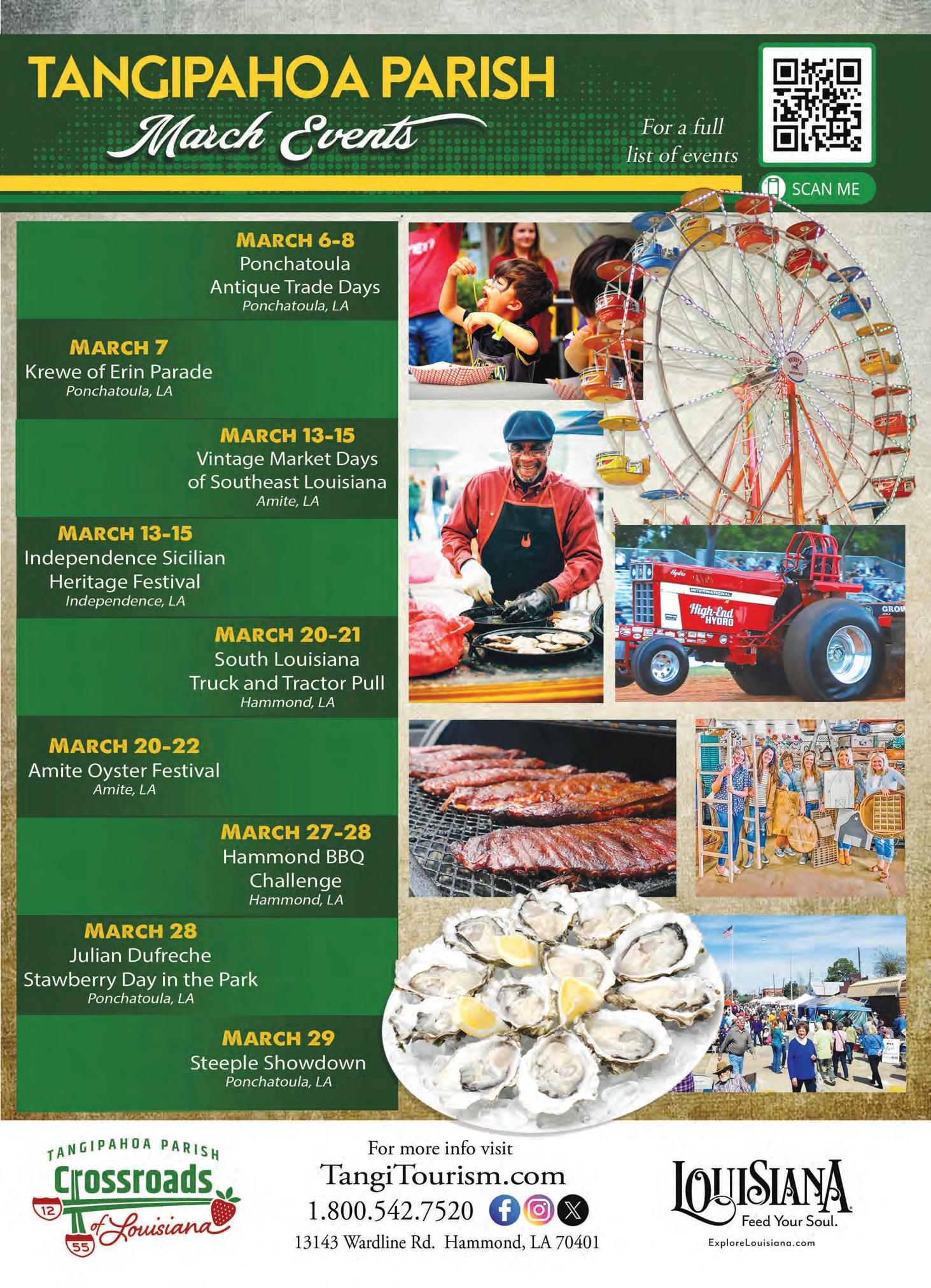
Spring festival season gets a bright start
35 LADY OF THE GARDEN
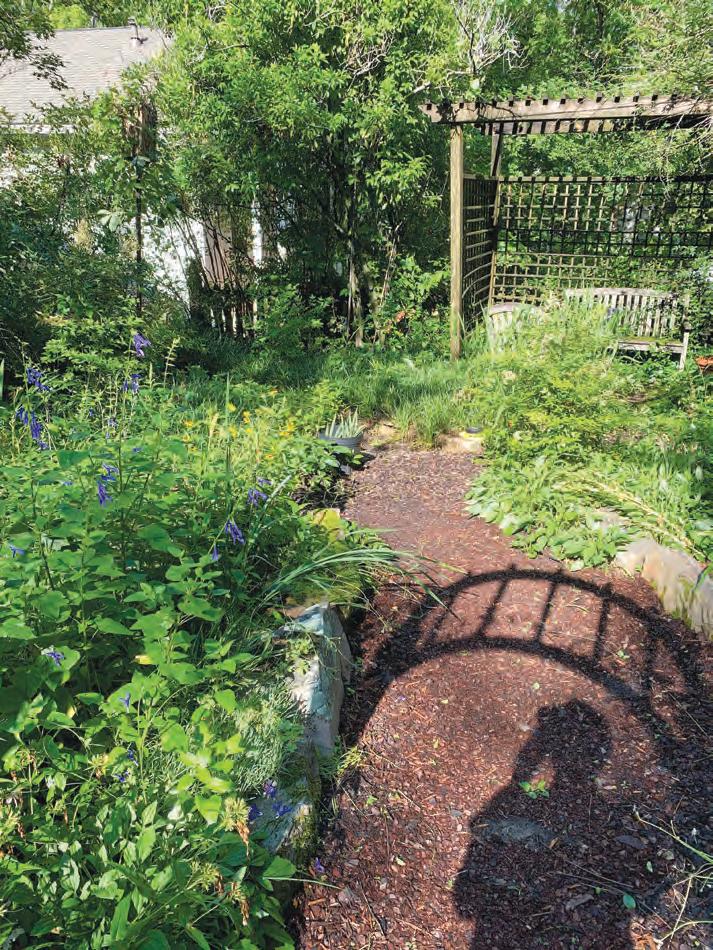
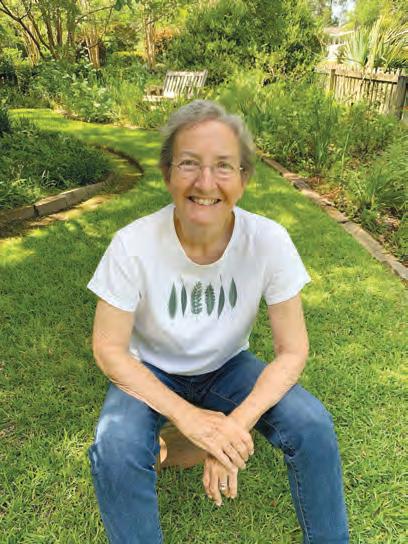
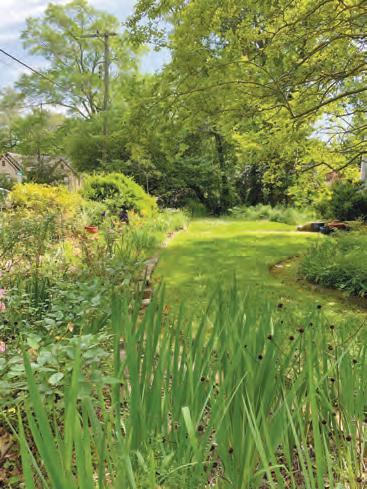
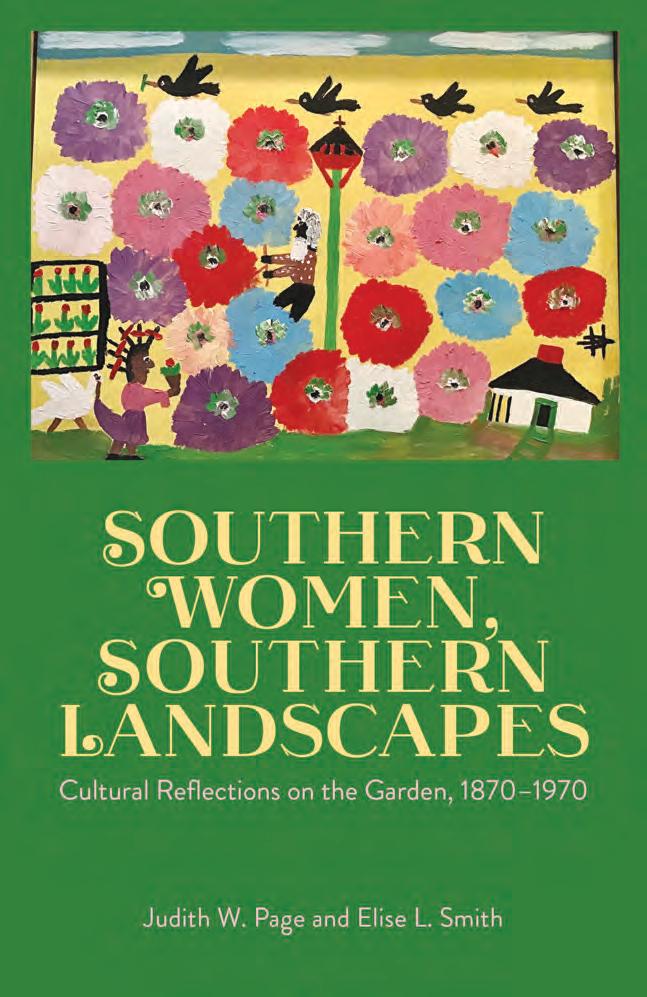
Elise Smith honors generations of Southern women in her latest book, and in her garden by Lauren Rhoades
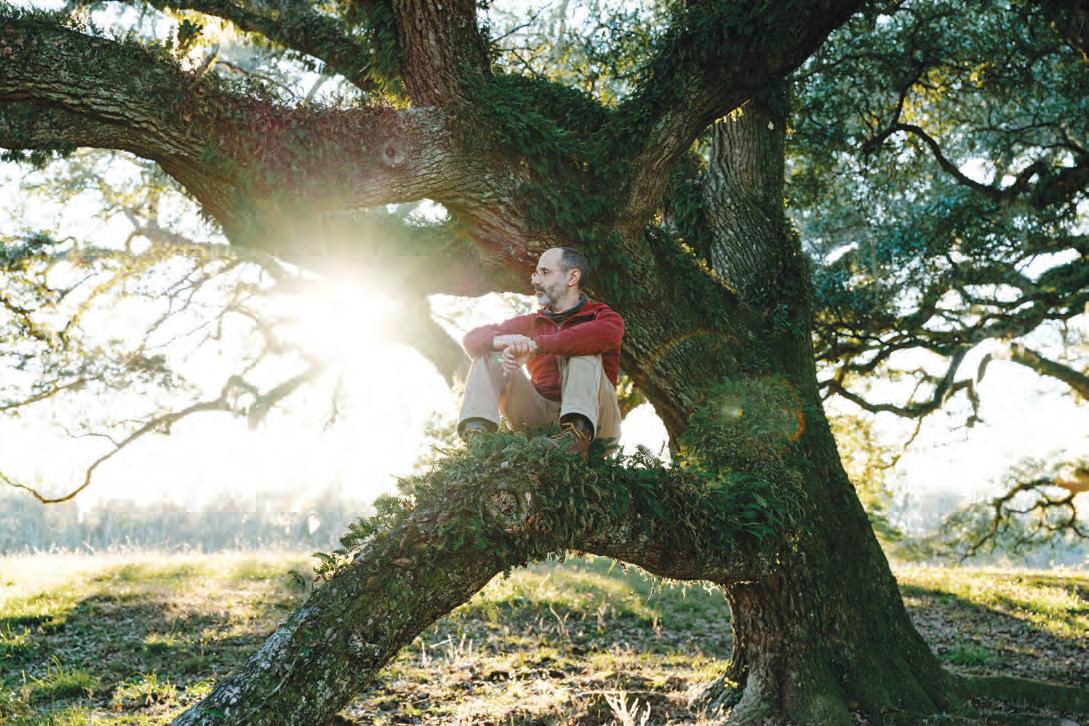
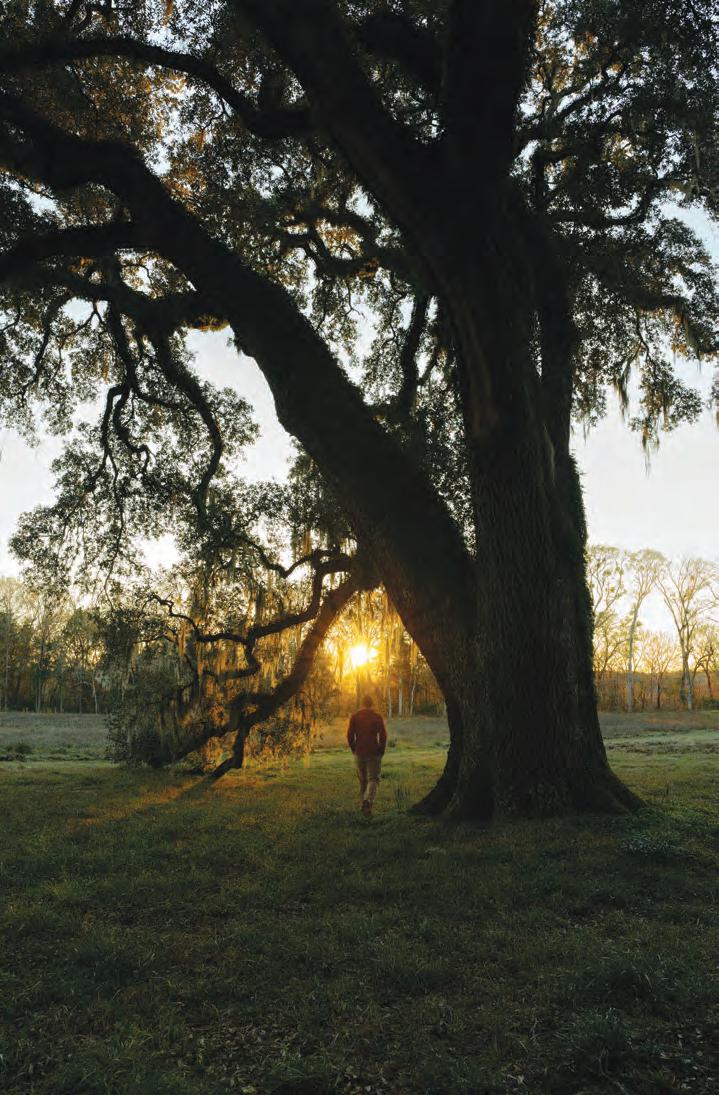
AN ARBORIST’S LOVE AFFAIR
Alec Baxt sees Southern live oaks as animated, enduring neighbors by Jess Cole
41
THE LILY RENAISSANCE
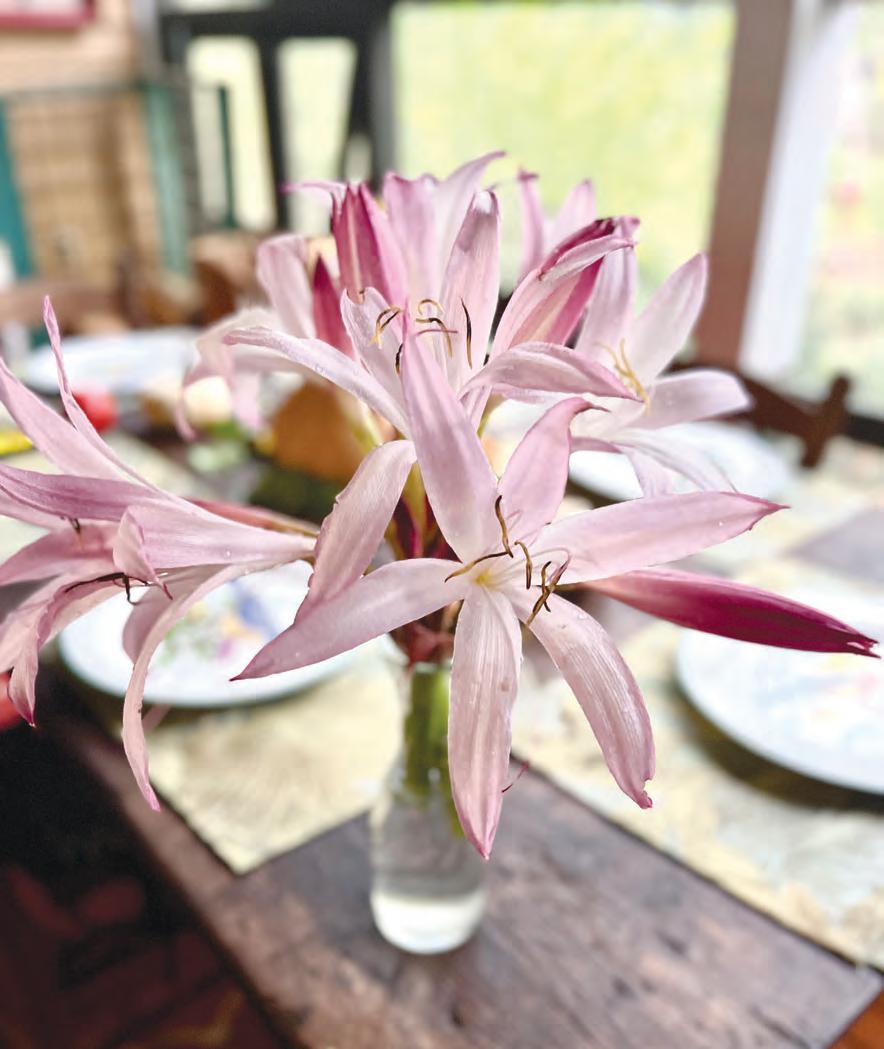
How the nearly forgotten crinum lily is reclaiming its place in Southern gardens by Kristy Christiansen
On the Cover
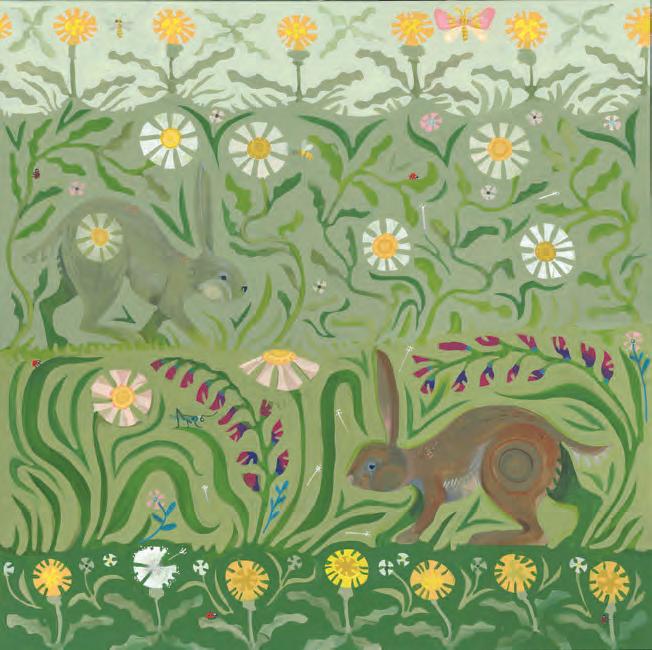
SELECTIONS FROM “BANDITS & BLOOMS”
Artwork by Adam Trest
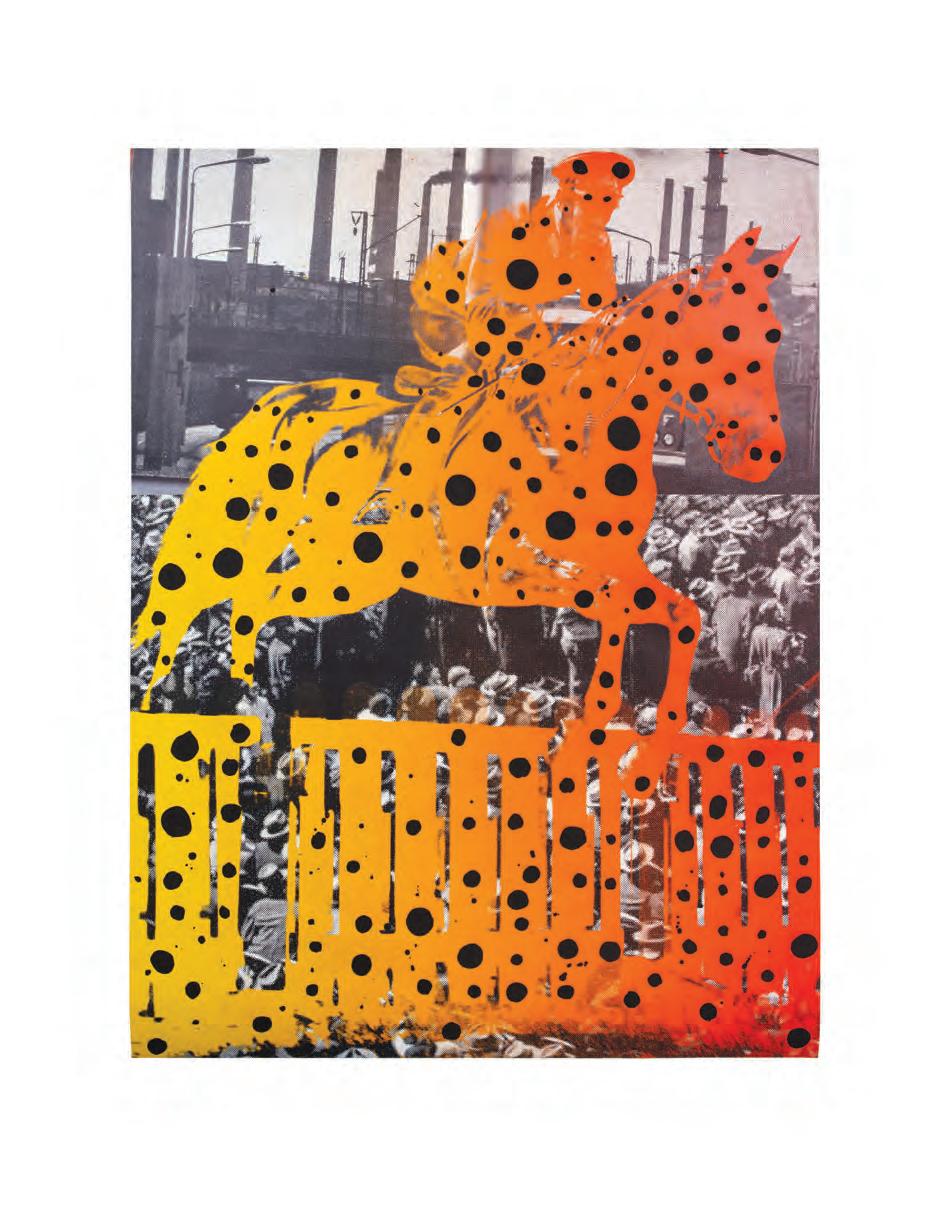
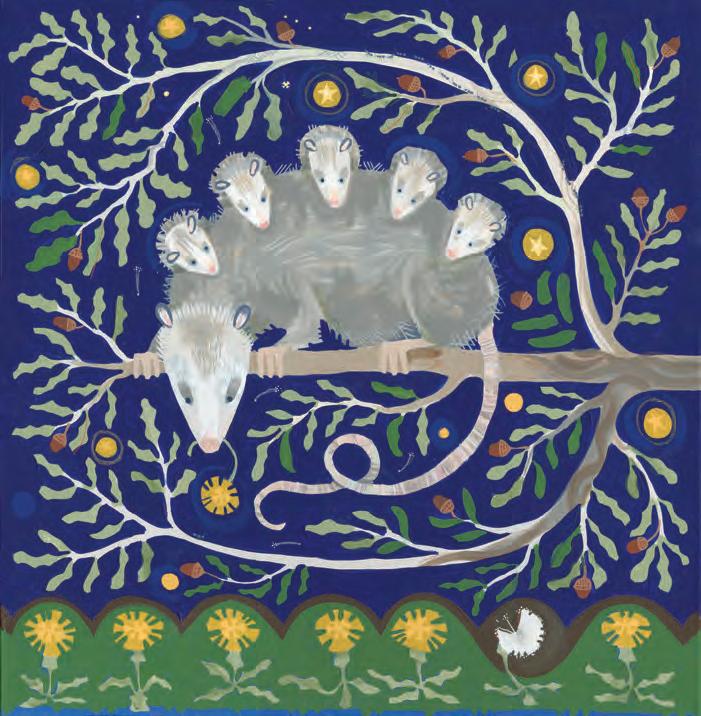
Cover artist Adam Trest thinks about symmetry a lot in his work: symmetry, balance, and the impact of disruption. A line of yellow dandelions, broken by a fluffy white seedhead: a wish blowing into the wind. It’s a philosophy that can be traced into the spirit of his latest collection, Bandits & Blooms —which centers nature not in the orderly way of the landscaped garden, but with a nod to the less desirable wild things, which Trest suggests are beautiful in their own ways, too. As art writer Cayman Clevenger puts it: “Trest paints the bandits and the weeds because he thinks we need them. Not in our trash cans, necessarily, but in our imagination. He is doing, with paint, what gardeners do with soil: turning seeds into flowers, making the world a more colorful place, and leaning into the whimsical.”
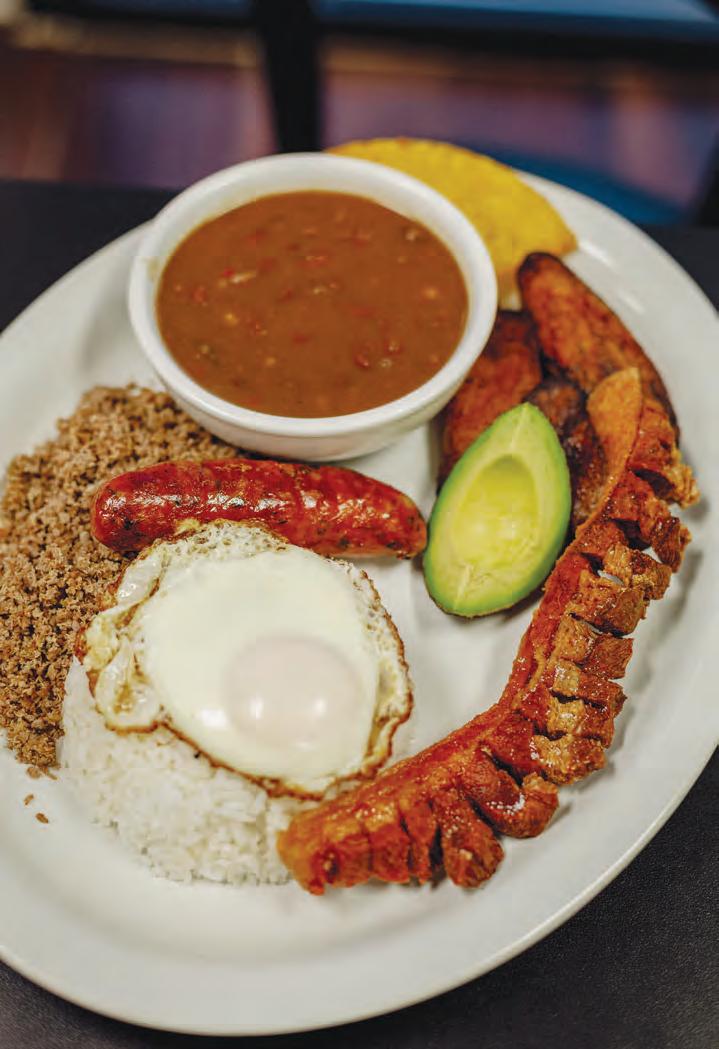
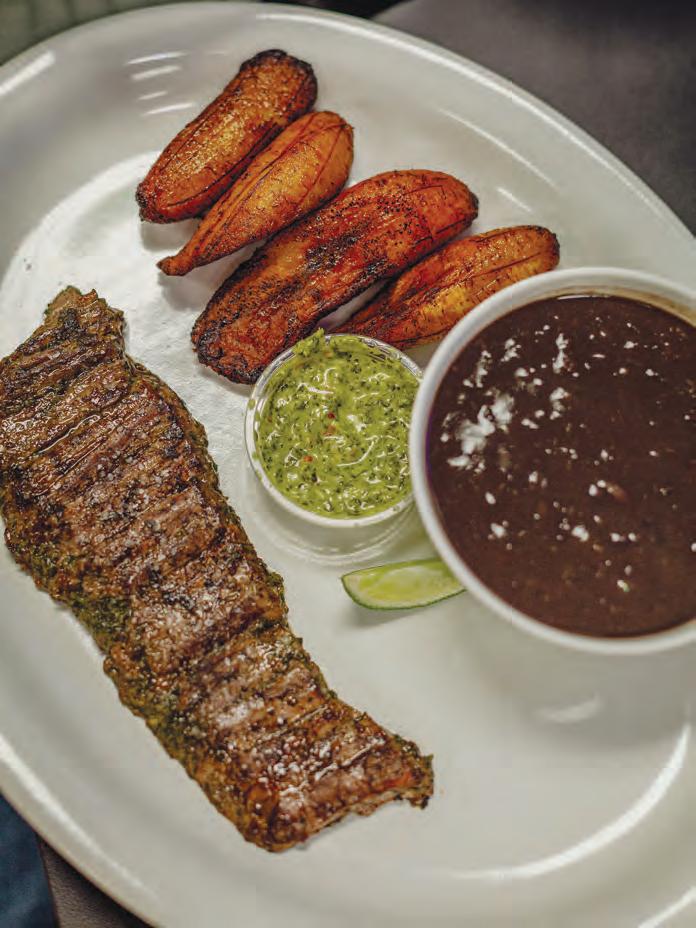
THE UNKNOWN Colombian and Cuban cuisines at Sazon Latin Grill by Lucie Monk Carter
SOUPÇON
Emeril in the Red Stick, Tujague’s celebrates 170 years & a new food fest by CR staff 47
Outdoors
48
THE LANGUAGE OF A LIVING GARDEN
What I really mean when I say “Our Sustainable Garden” by Jess Cole
50 TELL ME, HOW DOES YOUR GARDEN GROW?
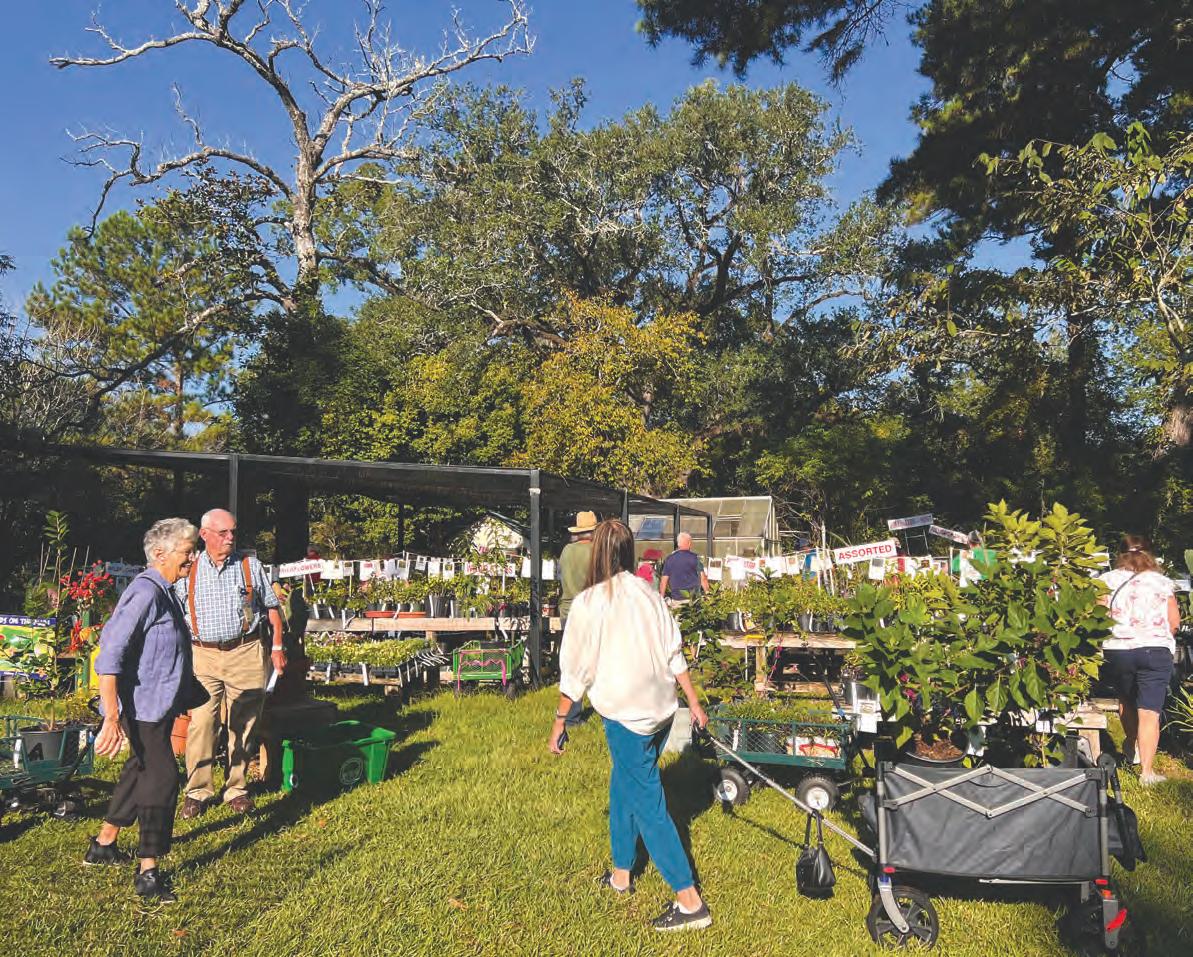
Making the most of the local plant sale by Jacqueline DeRobertis-Braun
52 THE FRUITS OF A WINTER GARDEN
An essay on adaptation in the turbulent age of climate change by Ed Cullen
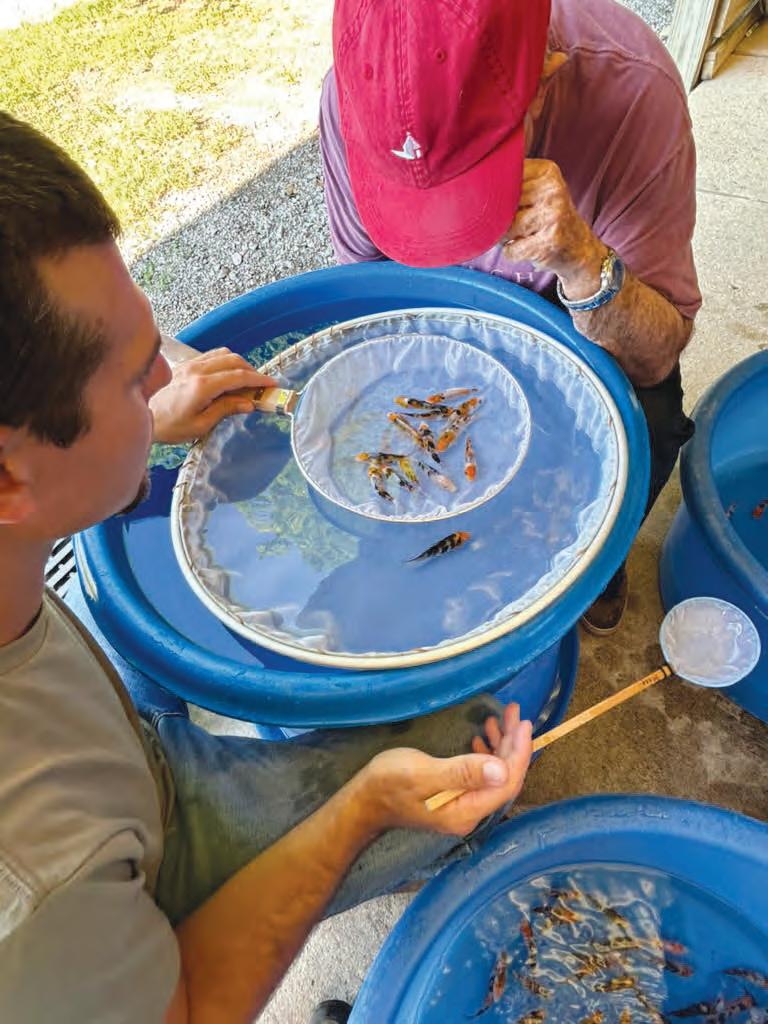
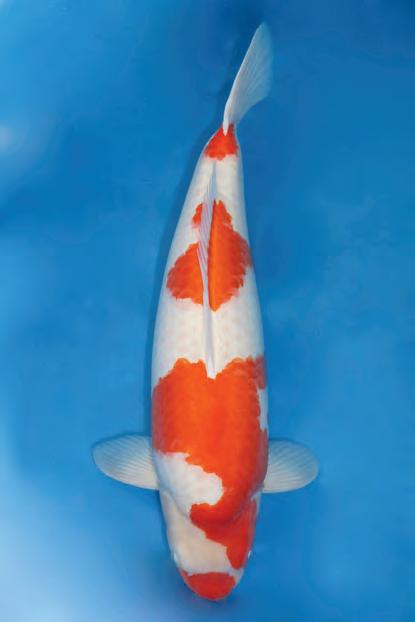
53 A POND FULL OF PAINTINGS
Some of the world’s most exquisite fish hail from West Baton Rouge by Jordan LaHaye Fontenot
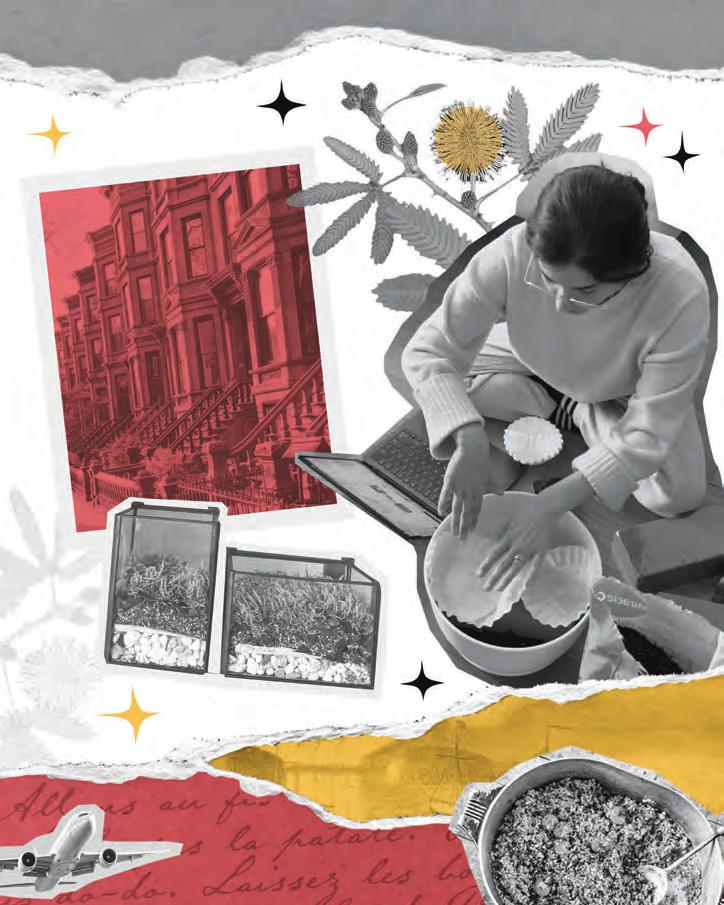
57 A TRANSPLANT STORY
The misadventures of growing bayou in Brooklyn by Megan Broussard Maughan
58 THE GARDENS OF GLOSTER
A 400-acre arboretum is a legacy of ecological stewardship by Ingrid Jensen
BANDITS & BLOOMS
Adam Trest’s love letter to the weeds, the wily, and the wildly beautiful by Cayman Clevenger
Publisher James Fox-Smith
Associate
Publisher
Ashley Fox-Smith
Managing Editor Jordan LaHaye Fontenot
Arts & Entertainment
Editor
Jacqueline DeRobertis-Braun
Creative Director Kourtney Zimmerman
Contributors:
Odessa Barattieri, Megan Broussard Maughan, Kristy Christiansen, Cayman Clevenger, Jess Cole, Ed Cullen, Ingrid Jensen, Lucie Monk Carter, Lauren Rhoades
Cover Artist Adam Trest
Advertising
SALES@COUNTRYROADSMAG.COM
Sales Team
Heather Gammill, Heather Gibbons, Mary Margaret Lindsey
Operations Coordinator
Molly C. McNeal
President Dorcas Woods Brown
nor do they constitute an endorsement of products or services herein. Country Roads magazine retains the right to refuse any advertisement. Country Roads cannot be responsible for delays in subscription deliveries due to U.S. Post Office handling of third-class mail.
Reflections
FROM THE PUBLISHER
Tho say that invaders have been running roughshod through our garden lately would be an understatement. The saga began one morning in early February after a night of heavy rain, when my beloved set out on her dawn patrol, a daily ritual at this time of year in which she tucks her pajamas into rubber boots, then ambles around the garden in a dressing gown, clutching a cup of tea and looking eccentric while peering about for early jonquils. Her morning rambles have taken on extra significance since we have learned that the parents of our daughter’s longtime boyfriend—impeccably mannered New England sophisticates interested in literature and racquet sports—will be making their first visit to Louisiana this April. Keen to reassure them that it is, in fact, safe to set foot south of the Mason Dixon Line, my wife has worked diligently this winter to ensure that her garden—lovely at any time of year—looks its best this spring. So, perhaps you can imagine her horror that morning when, instead of delicately emerging daffodils, she discovered large swathes of backyard looking as if someone had taken a back-
hoe to them. Feral hogs had breached our defenses. The barbarians were at the gate and my wife—the gentlest of gardening souls—was beside herself. To be fair, the damage was considerable. Within thirty feet of the front porch, ragged troughs had been gouged through lawn and flowerbeds, with uprooted azaleas and camellias marking the spots where the hogs had rooted up turf in search of worms or tubers or whatever qualifies as edible to the prolific, omnivorous, repellently named Sus scrofa. While we’ve been seeing signs of hog activity for years, they had never before set trotter into the cultivated garden closest to the house. For this small mercy we credit our three buffoon-ish dogs—noisy, nocturnal beasts who spend the night hours barking themselves hoarse beneath our bedroom windows, an irritant we’re willing to overlook given the benefits. Lately, though, the dogs seem to have lost interest, possibly because the quantity of huge, hairy, cloven-footed beasts out there has finally freaked them out.
“Do something,” wailed my wideeyed wife, waving a shovel. But what, exactly? Despite having lived in Sportsman’s Paradise for thirty years, I’ve never gotten the hunting habit, and besides a battered twelve-gauge left by some long-departed ancestor, we don’t keep much in the way of firearms. Shooting
hogs doesn’t make much of a dent in the population anyway. Described on the Louisiana Department of Wildlife & Fisheries’ own website as “the most reproductively efficient large mammal on Earth,” Sus scrofa exhibits population dynamics that would make a rabbit wince. Sows are fertile by six months of age, and capable of producing two litters each year of up to ten piglets at a pop. Add the fact that a maternally outraged two-hundred-pound mother hog provides excellent defense against wouldbe predators and you have a population with the potential to double in size every four months. Take it from a gardener, or at least, the husband of one: if those statistics won’t make you pick up a rifle, nothing will.
I phoned a friend. My wife’s cousin, who is as generous as he is heavily armed,
is exactly the kind of neighbor you want to have when the porcine apocalypse comes. By nightfall your non-hunting correspondent was bristling with paramilitary pig shooting weaponry, including rifles, remote game cameras, night vision goggles, hunting blinds and hog traps. With these I encircled my wife’s garden with layered defenses, and now spend the hours between sunset and sunrise blundering about in the dark, brandishing a rifle and muttering “Here, piggy piggy” through clenched teeth. I’m not sure I’m cut out for this, though. Despite having loosed a lot of lead at the invaders, I haven’t made much of a dent in the pig population. Nor have I had a full night’s sleep in weeks. Still, for now they seem to have gotten the message. There have been no further incursions, and the hogs are staying back in the woods—an uneasy standoff that feels temporary at best. With luck I can hold them off until April, but given the population dynamics and my lack of hunting skills, my time would probably be better spent ringing the property with a hog- (and deer-, and armadillo-, and rabbit-) proof fence. That way, my wife’s garden might actually stand a fighting chance. Until pigs fly, that is.
THE LOUISIANA CERTIFIED HABITAT PROGRAM IS BUILDING A STATEWIDE CORRIDOR OF NATIVE PLANT LIFE, ONE YARD AT A TIME
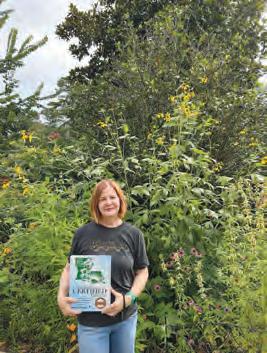
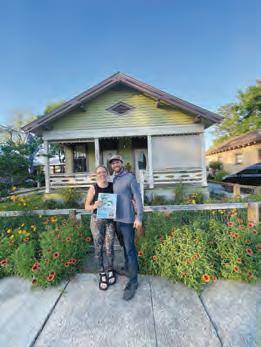
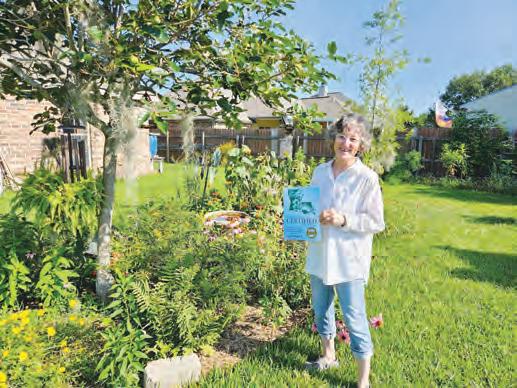
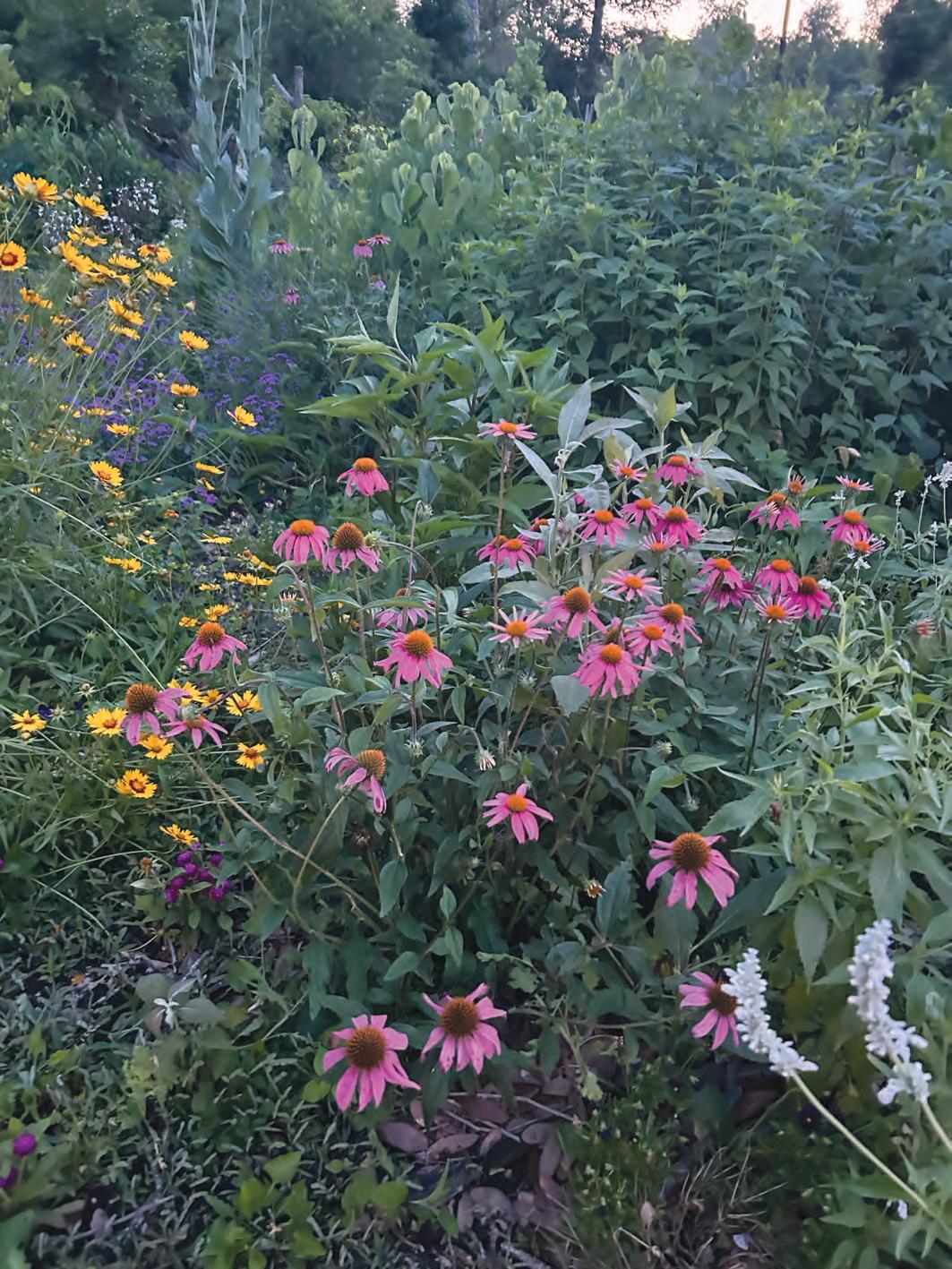
Over the course of hjust five years, the hLouisiana Certified hhHabitat Program has inspired an ever-growing mosaic of vibrant, native habitats in home gardens across the state. The number of homes that have been certified as a bonafide “Louisiana Habitat” reached five hundred at the end of 2025, a milestone that Phyllis Griffard, coordinator of the program, describes as a testament not only to a more resilient ecosystem, but to a growing community of people for whom this matters.
“Those of us who once thought we were the only ones who believed native ecosystems were important can now see that we are all part of this connected community of people,” said Griffard.
The concept for the Louisiana Certified Habitat Program, which is administered by local organizations across the state via the Loui-
siana Native Plant Society, was to offer a tangible, accessible way for people to reconnect with their natural heritage and learn how to endow their properties with a purpose. “It was important to us that more people, not just biologists, recognize the spaces they manage are important,” said Griffard. “What you do there matters.”
To achieve Louisiana Habitat certification, homeowners must be evaluated by coordinator-experts like Griffard for growing a certain number of native species on their property. Twenty-five species earns a bronze level certification, fifty earns silver, and seventy-five earns gold. Even native plants that aren’t intentionally cultivated—such as oak trees, or Virginia creeper, or wildflowers—are counted, so long as they are allowed to grow. “We don’t measure how beautiful the plants are, or how many flowers or bees or birds we see on it,” said Grif-
fard. “We just count the number of species.”
Residents who meet these thresholds are awarded a yard sign citing the habitat level designation, and added to the official LNPS Certified Native Habitats Map—recognizing their place in Louisiana’s growing corridor of native habitats.
The project is a collective one, shared by all of us in Louisiana, Griffard points out. A native bird that feeds on only a particular species of insect that feeds on a particular native plant might finally find satisfaction in a Louisiana Certified Garden, and if that home’s neighbors also plant one, the bird’s world grows. Today, the bird can travel to five hundred gardens in Louisiana, and find all that it needs. And that number is only growing.
Learn more about the Louisiana Certified Habitat Program at lnps.org/certifiedhabitat.
—Jordan LaHaye Fontenot
A Canopy Crusader in Beauregard Town
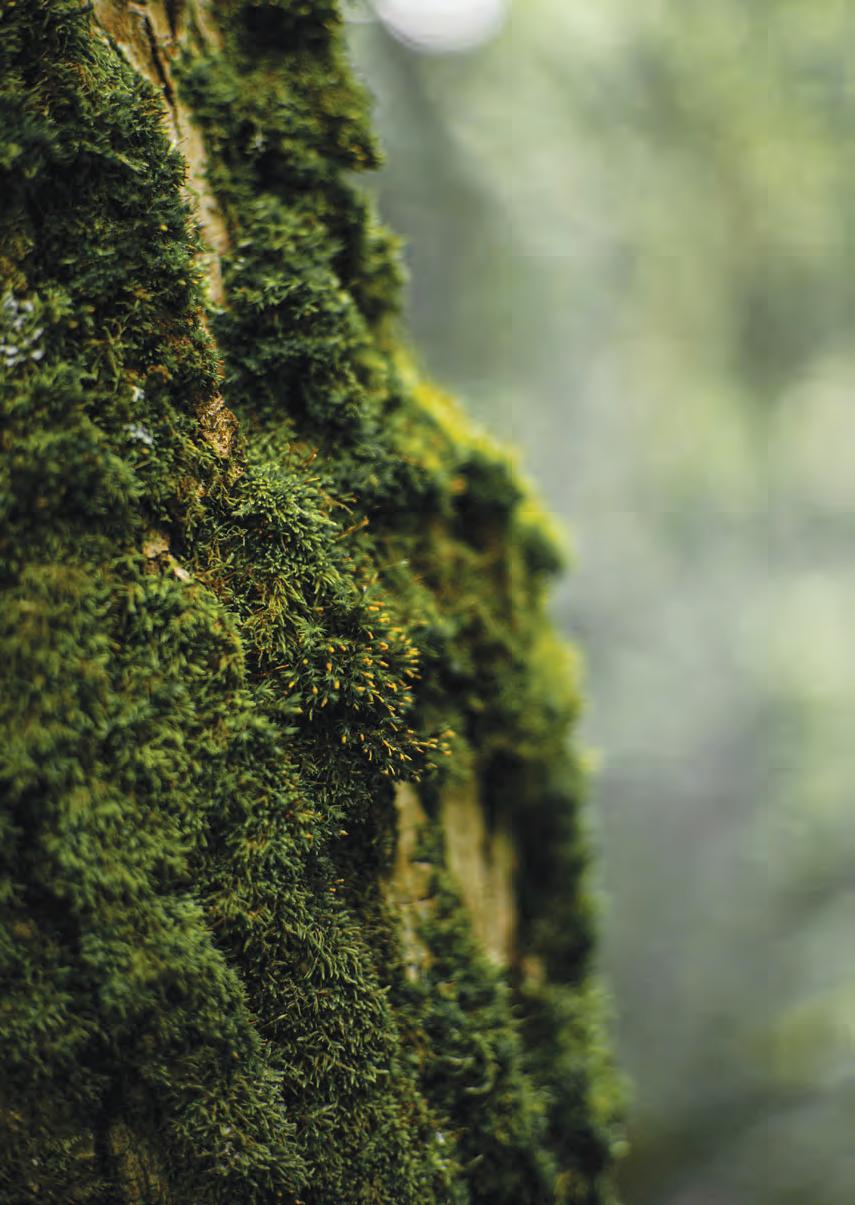
Drive through Baton Rouge’s Beauregard hTown or Spanish Town neighborhoods hand you can hardly help but notice the change: the crepe myrtles that have provided a graceful canopy to these streets for generations are fighting for their lives. Choking beneath constricting layers of ball moss, the city’s crepe myrtles are slowly but surely having the life squeezed out of them. Like Spanish moss, ball moss (Tillandsia recurvata) is a member of the Bromeliad family of epiphytic plants that derive nutrients from the air, rather than from the host tree itself. The difference with ball moss, though, is that rather than simply hanging over a tree’s branches, it attaches tightly to the bark of trunk and limbs, then proceeds to spread aggressively. Left unchecked, ball moss clusters can become thick enough to deprive the host tree of air and light, constrict limb growth, break branches, and eventually kill it entirely. The infestation, which affects live oaks, magnolias, gardenias and cedars as well as crepe myrtles, has become severe enough that local organizations including Baton Rouge Green and the LSU AgCenter have established resources and educational programs. But in Beauregard Town—arguably ground zero for Baton Rouge’s ball moss infestation—local resident and self-professed tree nut Scott Purdin is taking the fight to the canopy, one tree at a time.
“I love trees; there are forty to fifty varieties I’ve planted myself,” said Purdin, a lifelong Baton Rougean who has lived on a leafy Beauregard Town block for decades. As ball moss spread through his neighborhood, Purdin followed the two courses of action for ball moss control recommended by the LSU AgCenter and others:
1: Hand-pull moss from a tree’s limbs and branches (and seal it into trash bags for disposal), which re-exposes leaves and branches to light and air.
2: Spray the moss with a solution of two parts water to one part baking soda, dissolved in a garden sprayer, which will kill the moss’s flowers, thereby inhibiting the spread of pollen.
But Purdin noticed that even after a tree’s lower branches (i.e. the ones easiest to reach) were freed of moss, the infestation would quickly recur. “Initially, [ball moss] is slow to spread, but once it gets established, it moves fast!” he said. “Ball moss seems to form a kind of soil on the branch surfaces. Then, when the pollen drops, new ones grow out of that. You can clean it off (which is a lot of work), but all it takes is a little ball moss somewhere on the tree, and it comes right back.” He surmised that the remaining colonies high in the tree tops were dropping pollen on the cleaned, lower branches
and re-infesting them.
That’s where the baking soda comes in. “Baking soda is an alkaline in an acidic universe,” Purdin explained. “It kills the flower. So, if you spray a tree with baking soda and kill the flowers, you’re not getting pollen dropping anywhere.” He advises that this can be achieved with a simple, two-gallon garden sprayer, although one with an inbuilt agitator to prevent the baking soda from settling and clogging the sprayer works best.
Of course, getting gallons of baking soda solution to the crown of a forty-foot-tall crepe myrtle isn’t easy, and to better facilitate his eradication campaign, Purdin has launched Ball Moss Control, a foundation dedicated to restoring the health of Baton Rouge’s urban canopy by providing accessible education, tools, and support services to treat and control ball moss infestations. His foundation is collaborating with Bofinger’s Tree Service to procure a commercial sprayer truck capable of directing baking soda solution high into the canopies of Beauregard Town’s tallest crepe myrtles. “We’ve got to start spraying our trees,” he said. “With this truck, we’ll spray for ball moss five days a week. I’ll start in our neighborhood, then I’ll move downtown, and I’ll do it again and again, until there’s no more pollen dropping.”
ballmosscontrol.org
—James Fox-Smith
SCOTT PURDIN IS USING BAKING SODA AND A FOUNDATION TO SAVE BATON ROUGE’S CREPE MYRTLES FROM BALL MOSS
Profiles in Preservation
THE GARDEN DISTRICT ASSOCIATION’S NEW BOOK ALLOWS READERS INSIDE NEW ORLEANS’S “LIVING MUSEUM” OF
19TH CENTURY ARCHITECTURE AND GARDENS
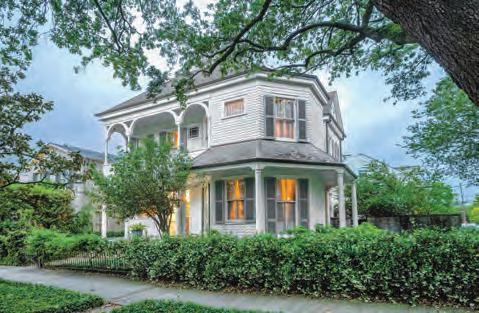
District. Photo by David Spielman.
Each year, over 5 million visitors stroll through one of the nation's most charming and historic neighborhoods, the New Orleans Garden District, marveling at stunning 1830s architecture from behind wrought-iron gates, but never seeing what lies beyond the sidewalk.
Now, the New Orleans Garden District Association offers an inside look at the extraordinary interiors and authentic histories of this vibrant neighborhood in its newly released coffee-table style book, New Orleans Garden District: Profiles in Preservation
Showcasing over one hundred homes, the collection contains professional photos and historical narratives tracing the district’s architectural evolution, culture, and people–curated by a team of dedicated historians, writers, and photographers over the course of seven years.
“It's a history book,” said Andrea Bland, president of the Garden District Association (GDA) board and
Chairman of the Profiles in Preservation Committee. “It's about the people, too, and the time. Everyone on their walking tour gets a glimpse of the outside … this book gives you a peek inside.”
Founded in 1939, the GDA has been dedicated to maintaining the historical and cultural integrity of the seventy-eight-block district, with its 951 properties–one of the largest concentrations of historical homes in the country.
In its eightieth year of existence (2019), the GDA launched the Profiles in Preservation program, granting subscribers with eligible properties a personalized book documenting their specific home’s history with archival and modern photos, a bronze plaque installed on their property, and inclusion in the larger collection in the works, New Orleans Garden District: Profiles in Preservation, which was officially released in December 2025.
Select properties in the district that were given National Historic Landmark status were then chosen by the Profiles in Preservation board, who invited their owners to become subscribers. As word spread, additional eligible homeowners volunteered for subscription.
“I really felt that the Garden District was so special and it was not authentically understood, " said Bland, who owns the historic Gasquet Bland House in the neighborhood. Serving as chairman and as a major sponsor of the project, she had observed plaque programs in other cities, and believed the Garden District could do better. “We had the support of our neighborhood. People trust the organization,” she said. “I don’t know if other communities could replicate what we did.”
Historian and archivist Sally Reeves was brought on to condense each home’s detailed history into a 450word entry for the coffee-table compilation of all the participating homes. Photographer David G. Spielman came on to capture portraits of each. To bring it all together, New Orleans history teacher Howard Hunter wrote a comprehensive introduction and historian Hillary Irvine provided an essay about homes replaced by apartment buildings along St. Charles Avenue.
Each home included, and its story, emphasizes the district’s historical evolution and the individuals responsible for its existence today. “One thing that is really interesting are the roles of women and free people of color. I think they are overlooked completely in the story of development in New Orleans,” Bland said. “The city developed so many prominent women. We would have never had the Garden District if not for Madame Livaudais and Madame Panisse...subdividing big tracts of land.”
The attention to detail and research for each home was extensive. “We went down to the granular level, down to the notarial archives, where you look at the transactions of parcels before there was ever a structure there, back to the 1830s and 1840s,” Bland said. The documentation and historical photos unearthed in the research for Profiles in Preservation will be housed in the Historic New Orleans Collection.
The book is more than just a visual-historic record, but also a collaborative effort and living tribute to preserving New Orleans’s rich history and the people who shaped it. “This was a whole team. We had a strong committee of passionate people that were engaged and committed,” said Bland. “It's a long line of passionate people that have protected this neighborhood.”
New Orleans Garden District: Profiles In Preservation is available for purchase at gardendistrictassociation.com and at the David Spielman Photography Gallery.
—Odessa Barattieri
The circa-1880s Dugan House on St. Philip Street in New Orleans’s Garden
Events
GROWING GOOD
EVERYTHING IS A-BLOOM ACROSS THE GULF SOUTH, SO IT'S TIME FOR PLANT SALES, CRAWFISH BOILS, AND LIVE MUSIC IN THE GREAT OUTDOORS • MARCH 2026
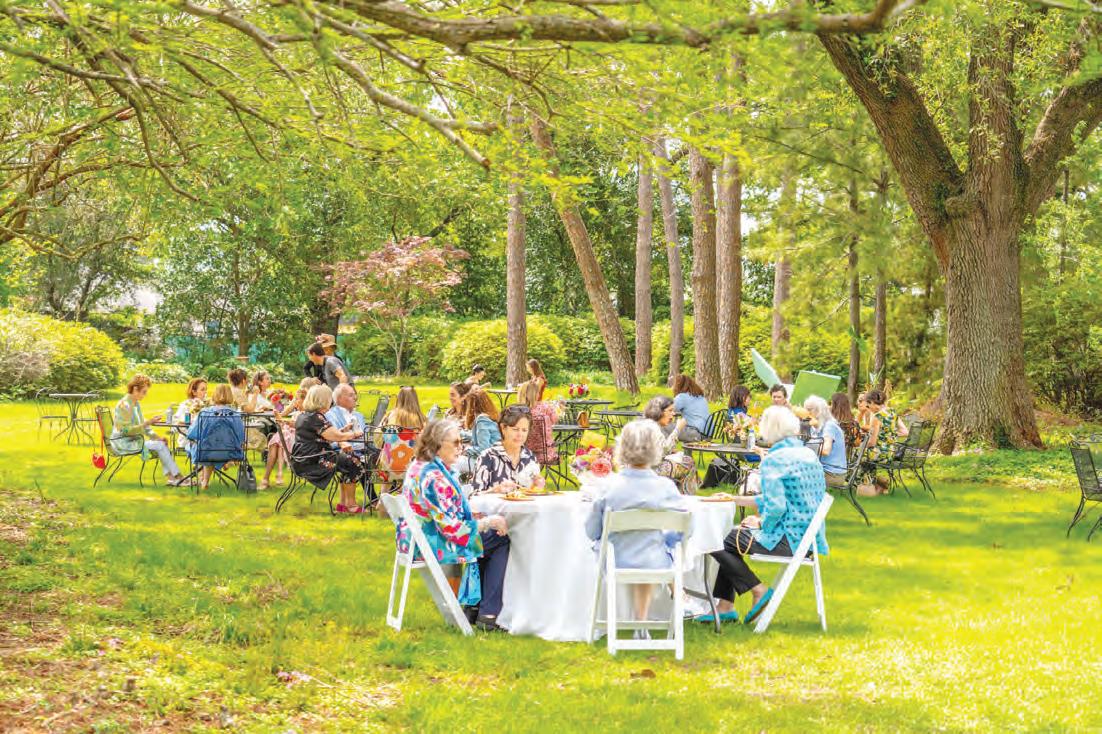
Each year, Longue Vue House and Gardens in New Orleans puts on a cultural extravaganza known as the Design Symposium. The event, held March 25–27, features critically-acclaimed speakers in the world of design, as well as lush garden parties and meals. Photo courtesy of Longue Vue. Learn more on page 26.
UNTIL MAR 8th
BLACK HISTORY
"GONE BUT NOT FORGOTTEN: BLACK CEMETERIES OF WEST BATON ROUGE"
Port Allen, Louisiana
The West Baton Rouge Museum presents Gone But Not Forgotten: Black Cemeteries of West Baton Rouge, an exhibition examining the historic lost burial grounds of enslaved Black people across West Baton Rouge Parish, as well as those cemeteries that are in danger of becoming lost—either to nature or land development. This history is recounted through photos by Jazz Bishop, artifacts, art, 3D models, soundscapes, and stories that seek to restore dignity to the memories of the dead. westbatonrougemuseum.org. 1
UNTIL MAR 8th
VISUAL ARTS
"RAVEN HALFMOON: FLAGS OF OUR MOTHERS"
New Orleans, Louisiana
The Ogden Museum of Southern Art presents Raven Halfmoon: Flags of Our Mothers, an exhibition featuring Halfmoon's new and recent works from the last five years. This include's her largest works to date, such as Flagbearer,
a stacked ceramic sculpture standing over twelve feet tall. Working largely in portraiture, Halfmoon is inspired by ancient Indigenous pottery, often working at an enormous scale to create arresting visual monoliths. Flags of Our Mothers honors the matriarchs in her life, along with all Indigenous woman, and their enduring strength. ogdenmuseum.org. 1
UNTIL MAR 14th
CIVIL RIGHTS
THE LOUISIANA PHOTOGRAPHIC SOCIETY PRESENTS: "PRESENT DAY TRACES OF SEGREGATION, CIVIL RIGHTS, AND COLLECTIVE MEMORY IN LOUISIANA"
Baton Rouge, Louisiana
In celebration and recognition of the 250th anniversary of the Declaration of Independence, the Louisiana Photographic Society presents a powerful photography exhibit featuring eighty-five images that depict sites of segregation, key moments in the Civil Rights movement, and historical memory in Louisiana. On display at Louisiana's Old State Capitol through March, the exhibition asks important questions about cultural touchstones and the lens through which we view the past. louisianaoldstatecapitol.org. 1
UNTIL MAR 14th
VISUAL ARTS
“THE MIDDLE: PAINTINGS BY WILL MAXEN & BRADLEY KERL”
Baton Rouge, Louisiana
LSU School of Art’s Glassell Gallery features two faculty painters in a joint exhibition titled, The Middle. Will Maxen and Bradley Kerl recently joined LSU School of Art’s faculty and find common ground in the exhibition through the exploration of materiality and application of paint. They each work across media, using collage, iterative repetition, historical and everyday references, in an effort to visually collapse linear time. design.lsu.edu. 1
UNTIL MAR 15th
VISUAL ARTS
"LANDSCAPES ALONG THE RAILWAYS: THE ART OF JOHN CLEAVELAND"
Baton Rouge, Louisiana
In celebration of the centennial anniversary of the historic 1925 train station that houses LASM, a new exhibition titled, Landscapes Along the Railway showcases oil paintings by contemporary artist John Cleaveland, located in the Soupçon Gallery at the museum. His evocative landscapes
Events
Beginning March 1st - 6th
illustrate the sense of adventure, motion, and transformation signature to traveling across America's vast countryside, glimpsing both agricultural and natural terrain. lasm.org. 1
UNTIL MAR 30th
PHOTOGRAPHY
JOSEPHINE SACABO: "NOW OR NEVER"
New Orleans, Louisiana
A Gallery For Fine Photography presents a solo exhibition by printmaker Josephine Sacabo titled, Now or Never. The exhibition features twenty 19 x 15 inch photogravures, plus some hand-colored photogravures, along with Sacabo's latest book, TAGGED. agallery.com. 1
UNTIL APR 26th
ELEVATED CRAFTS
ART EVOLVED: INTERTWINED
Laurel, Mississippi
Explore an exhibition by Studio Art Quilt Associates, Inc. and the National Basketry Organization at the Lauren Rogers
Museum of Art in Laurel, Mississippi. Art Evolved: Intertwined features works made with traditional materials such as thread, fabric, wood, reed, and paper, blended and manipulated to create something both beautiful and functional. lrma.org. 1
UNTIL MAY 10th
VISUAL ARTS
"AI: ARTISTIC INTERPRETATIONS"
Baton Rouge, Louisiana
The LSU Museum of Art presents a new exhibition featuring thirty-five artists each exploring the relationship between artificial intelligence and human creativity. Rather than avoiding the critical discussions surrounding creativity and artificial creation, the show taps into this anxiety surrounding art and algorithms. The result probes AI as both enemy and collaborative tool in artistic expression and creation. Resting definitive answers, the exhibition instead leaves viewers with more questions to ponder about human ingenuity. lsumoa.org. 1
UNTIL MAY 23rd
VISUAL ARTS
"30 YEARS DANCING WITH MIND & MATTER"
Lafayette, Louisiana
The Acadiana Center for the Arts presents a two-person exhibition of local collaborators Kathy Reed and Steve Breaux in 30 Years Dancing With Mind & Matter. The show features collaborative artworks, as well as individual pieces. Together, the artists have created two- and three-dimensional works, from paintings and drawings, to art on silk and other fabrics. acadianacenterforthearts.org. 1
UNTIL MAY 24th
VISUAL ARTS
"DAPHNIS AND CHLOE AND OTHER LOVERS: LITHOGRAPHS BY MARC CHAGALL"
Baton Rouge, Louisiana
This exhibition presented by the LSU Museum of Art showcases modernist icon Marc Chagall's career as a printmaker and master of color, retelling the tale of a starcrossed goatherd and shepherdess. In fifty images depicting the mythical Greek tale of Daphnis and Chloe, Chagall makes use of dreamlike imagery and vivid colors to re-imagine the story. Daphnis and Chloe
became one of Chagall's most successful lithographic series. lsumoa.org. 1
MAR 1st
DIY
ST. TAMMANY HOME AND REMODELING SHOW
Mandeville, Louisiana
The Northshore's only home and garden show, The St. Tammany Home and Remodeling Show, is returning to the Castine Center in Mandeville this weekend. Teaming up with Certified Louisiana Food Fest, the show will showcase the best products and services for everything in your home, from kitchens, bathrooms, remodeling, siding, and more. Plus, every participant at the show has the chance to win exciting door prizes like spa days, and restaurant certificates. 10 am–5 pm both days. For ticketing details see jaaspro.com. 1
MAR 1st
MUSICS
GEORGE BELL & FRIENDS
Baton Rouge, Louisiana
George Bell & Friends return for their first show of 2026 at L'Auberge Casino & Hotel, featuring soulful jazz and powerful arrangements. 6:30 pm–9:30 pm. Free, but cocktail tables can be reserved for $40. bontempstix.com. 1
MAR 1st
GAMERS
RETRO CON
Morgan City, Louisiana
Calling all gamers! Head to the Morgan City Municipal Auditorium for Retro Con, a video game convention that celebrates everything across the gaming spectrum and beyond, from comic book authors to nerd culture. Enter video game tournaments, trade with video game vendors, and hobnob with cosplayers, comic creators, and local artists. Saturday from 10 am–6 pm; Sunday from 11 am–5 pm. $22 for Saturday; $16 for Sunday; $33 for a weekend pass. louisianaretroconvention.com. 1
MAR 1st - MAR 15th
WHODUNNIT
"DIAL M FOR MURDER" AT PLAYMAKERS THEATER
Covington, Louisiana
This psychological thriller unravels an elegant mystery about an ex-tennis star who plots to kill his wealthy wife. Frederick Knott's midcentury melodrama had a highly successful run on Broadway and later gained popularity as a major motion picture directed by Alfred Hitchcock. Now, see it performed by the members of Playmakers Theater in Covington. 7:30 pm; 2 pm Sundays. $28; $22 for seniors/military; $17 for children. bontempstix.com. 1
MAR 1st - APR 17th
VISUAL ARTS
"DENNISPARKERCELLOETC"
Baton Rouge, Louisiana
This spring, the Cary Saurage Community Arts Center displays the work of renowned cellist and sculptor Dennis Parker. Parker's powerful solo exhibition at Shell Gallery merges his two loves—music and sculpture—to create inspired pieces that transcend genre. Parker's Dennisparkercelloetc visualizes structure and sound, exploring the physicality of music as a combination of his two beloved art forms. artsbr.org. 1
MAR 3rd - MAR 28th
LIVE MANSHIP THEATRE: MARCH PERFORMANCES
Baton Rouge, Louisiana
This March, Manship Theatre offers a slate of exciting live performances, ranging from musical concerts to dance programs. Selected events include:
March 3: 59th Annual FortierGerbrecht Jazz Invitational, hosted by the Baton Rouge Jazz Ensemble. 6:30 pm–9:30 pm. $13.
March 5: Morgan James. 7:30 pm–8:30 pm. $40–$60.
March 11: Anders Osborne. 7:30 pm–8:30 pm. $46–$66.
March 28: Houston Ballet II. 2 pm and 8 pm. $41–$66. manshiptheatre.org. 1
MAR 5th - MAR 22nd
DRAMA
"CATCH ME IF YOU CAN" AT EVANGELINE THEATER
Mandeville, Louisiana
Inspired by the true story of Frank Abagnale Jr., who ran from home as a teenager and managed to convince the world he was a pilot, doctor, and lawyer while forging millions of dollars in checks, Catch Me If You Can is an energetic, fast-paced crime story, featuring a jazz-influenced score. See the team at Evangeline Theater's interpretation, onstage Thursdays–Sundays. 7:30 pm; 2 pm on Sundays. $32. evangelinetheater.com. 1
MAR 6th
FUNDRAISERS
MPAC 2026
Baton Rouge, Louisiana
The Arts Council of Greater Baton Rouge will once again host its famed fundraiser gala, MPAC (Music. Performance. Art. Community.) at the Cary Saurage Community Arts Center. Show up to celebrate local artists, enjoying an evening of elegance for a good cause. Attendees will be treated to the works: elevated cuisine, a visual art exhibition, a silent auction, photobooth, and plenty of other entertainment—all in support of the Capital City's arts scene. In lieu of a theme this year, guests should aim for bold cocktail attire that evokes their individuality and self-expression. 7 pm–10 pm. $161. artsbr.org/mpac. 1
MAR 6th
LIVE MUSIC
DOWNTOWN ALIVE! Lafayette, Louisiana
Downtown Alive! has merged community and culture to create a first Friday of the month tradition (in the spring and fall) and celebration in the many creative spaces in downtown Lafayette. Food and beverage concession are available, and sales help keep Downtown Alive! free, so please leave your ice chests at home with your pets. In March, just in time for the nicest weather, catch Sydney & the Sams, with opening set by Mike Larson and The Ones That Got Away! At Parc International. Free. downtownlafayette.org. 1
Events
Beginning March 6th - 28th
MAR 6th
WORLD MUSIC
MAZAJ TRIO AT THE MARIGNY OPERA HOUSE
New Orleans, Louisiana
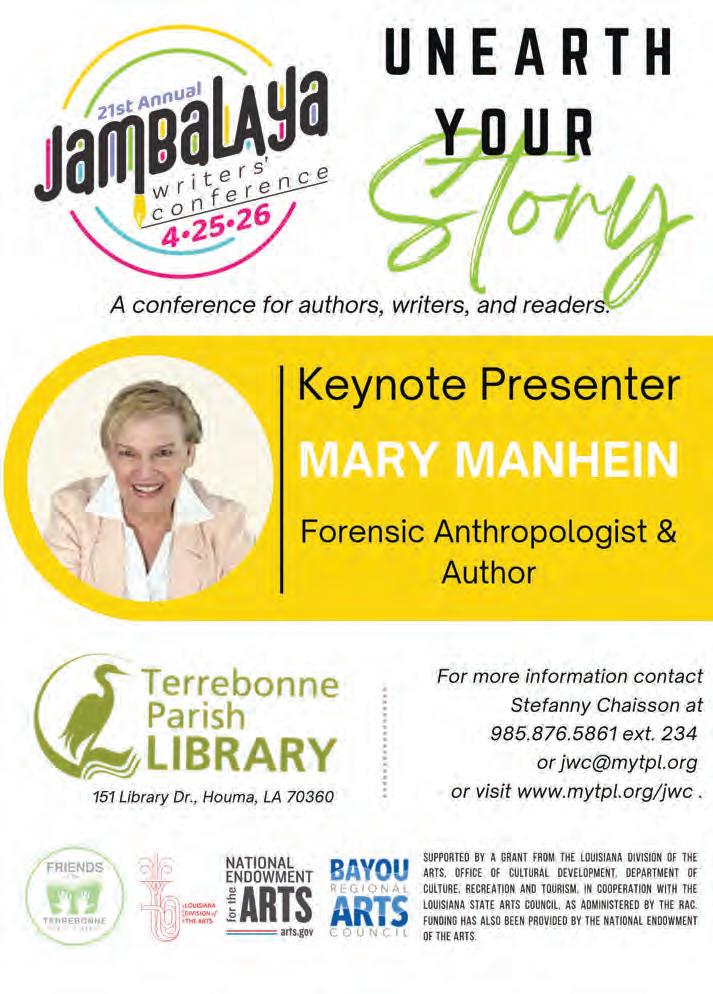
The Marigny Opera House presents Mazaj Trio, performing modern and classical Arabic music. Expect an evening of Egyptian and Levantine (Syria, Palestine, Lebanon, and Jordan) repertoires, featuring the Arabic accordion, double base, and Arabic percussion. 7 pm. $25 suggested donation; $15 for students, seniors, etc. marignyoperahouse.org. 1
MAR 6th
RETAIL THERAPY
FULL MOON MARKET
Plaquemine, Louisiana
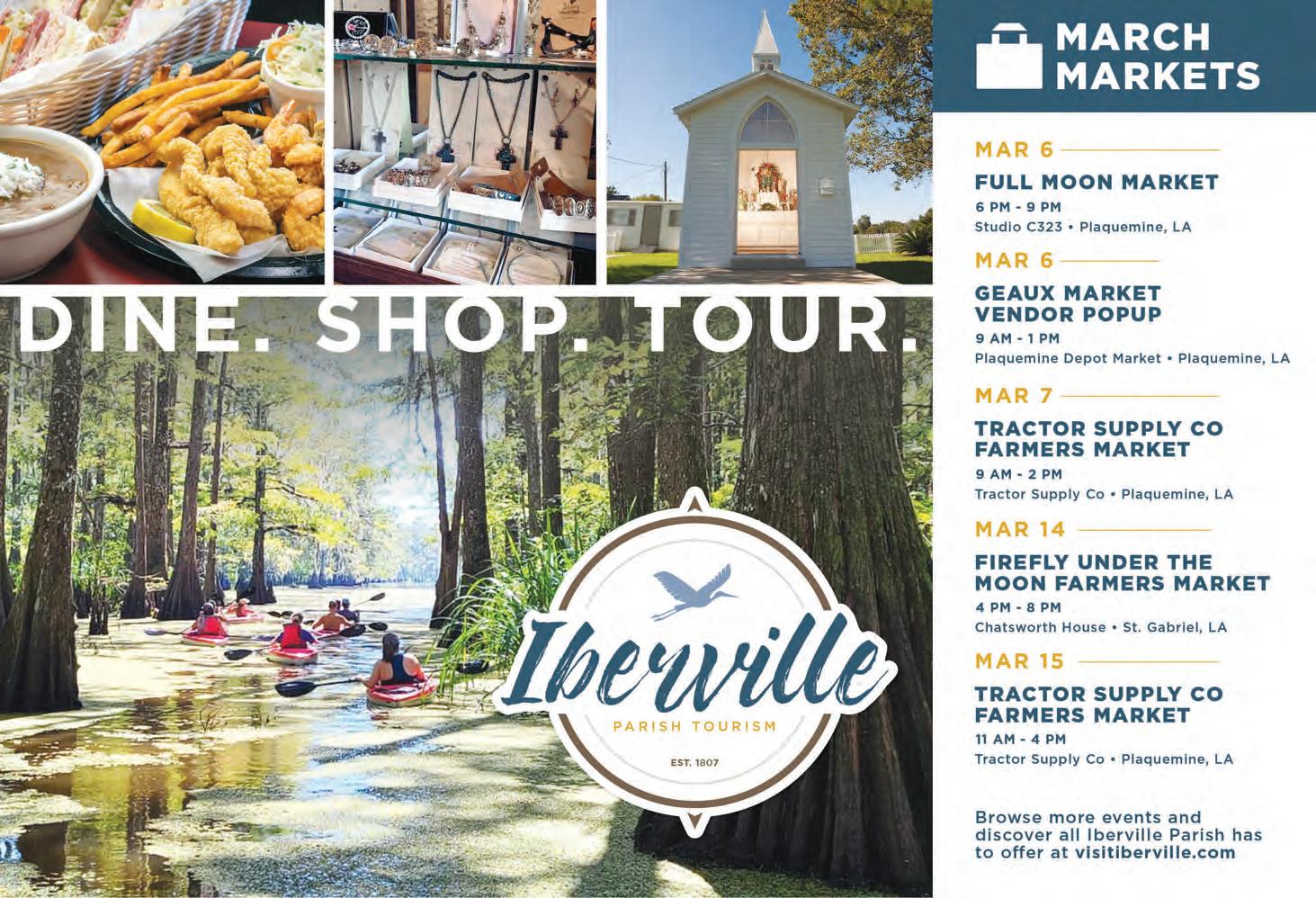
Stroll through a whimsical market under the light of the full moon, all in celebration of local art, food, and creativity. Shop handmade creations from local artists, partake in a plethora of delicious local food, and enjoy the ambiance at Plaquemine Main Street Gallery. 6 pm–9 pm. visitiberville.com. 1
MAR
6th - MAR 8th
CULTURAL CELEBRATIONS
KENNER ITALIAN
HERITAGE FESTIVAL
Kenner, Louisiana
They gave us cannoli. They gave us marinara. They even gave us St. Joseph's Altars, which are basically piles of beautifully arranged, scrumptious food. So how can we pass up an Italian heritage fest, where these culinary delights will surely be on the menu? This celebration returns to Kenner's historic Rivertown for its twenty-fifth year, with live music, local crafters, Italian food and seafood specialties, a historic photo display, St. Joseph’s Altar, and opportunities to talk with genealogical specialists. Details at facebook.com/kenneritalianfest. 1
MAR 6th - MAR 8th
GREEN THUMBS
LSU AGCENTER SPRING GARDEN SHOW
Baton Rouge, Louisiana
The floor of John M. Parker Coliseum at LSU will be transformed into a fascinating world of plants and gardens, when the LSU AgCenter’s Spring
Garden Show and Arts and Crafts Fair returns to satisfy the green thumbs of the Capitol Region. The show includes numerous vendors selling a tremendous variety of plants and yard, garden, and patio-related merchandise. Expect landscape displays, plant health clinics, and children's activities, too. A number of arts and crafts vendors will also have products for sale. 5 pm–8 pm Friday; 9 am–4 pm Saturday; 9 am–3 pm Sunday. Adult admission is $10; free for children younger than twelve. lsuagcenter.com. 1
MAR 6th - MAR 8th
GO WILD
LOUISIANA NATIVE PLANT CONFERENCE
Eunice, Louisiana
Crazy about native plants? Or curious about them? Join other enthusiasts at the 2026 Louisiana Native Plant Conference, held at the Acadian Baptist Center in Eunice, for two days of field trips, plant ID walks, discussions on creating yard habitats and preserving old cypress forests, and a screening of the film, Louisiana Grassroots. There will also be a plant auction and a bonfire to close things out. $30. lnps.org. 1
MAR 6th - MAR 15th
DRAMA
LAUREL LITTLE THEATRE
PRESENTS: "CALENDAR GIRLS"
Laurel, Mississippi
After Annie's husband dies of leukemia, she and her best friend decide to raise money for a new piece of furniture in the local hospital waiting room.
How will they seek financial support? They, along with four other Women's Institute members, will pose for an "alternative" calendar. Based on a true story, Laurel Little Theatre presents Calendar Girls. 7:30 pm; 2:30 pm March 8 & 15. $18; $16 for seniors, students, and military; $11 for children. laurellittletheatre.com. 1
MAR 6th - MAR 15th
DRAMA
"A RAISIN IN THE SUN" AT SLIDELL LITTLE THEATRE
Slidell, Louisiana
See Slidell Little Theatre perform Lorraine Hansberry's groundbreaking play, which tells the story of the Youngers—a Black family in 1950s
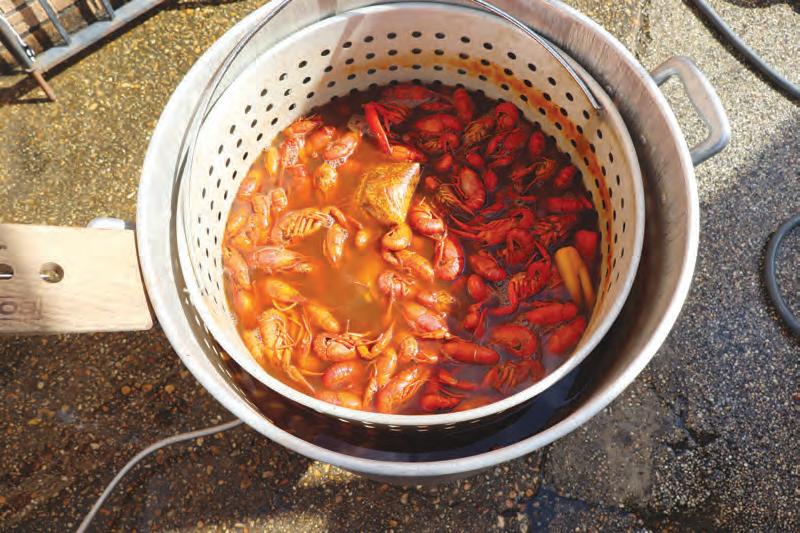
For more than two decades, Louisiana boil experts have competed in the Crawfish
at the Immaculate Conception School in Marrero. This year's competition is March 21. Image courtesy of the event organizers. Learn more on page 25.
Chicago, who struggles with poverty, prejudice, and deferred dreams. Promise of a new beginning brings hope, and then tensions throughout the household. One of the greatest works of American theater, A Raisin in the Sun was the first play by an African American woman produced on Broadway. See it Fridays–Sundays. 7:30 pm; 2 pm on Sundays. $25; $15 for students and seniors. slidelllittletheatre.org. 1
MAR 6th - MAR 28th
A BIT OF LUCK ST. PATRICK'S DAY IN NEW ORLEANS AND ST. BERNARD
New Orleans, Louisiana
Cabbages, carrots, onions—and maybe even a moonpie or two—are the booty at these parades. Following close on the heels of Mardi Gras, who needs more beads anyway? Catch ingredients for your stew at these area parades:
March 6
Irish Channel Practice March: Watch the paraders get into the spirit with a practice run, beginning in Jackson Square at 11 am, and making stops at local French Quarter pubs and the Irish Museum. irishchannelno.org.
March 8
Gretna Italian-Irish Parade : Celebrating the rich cultural blend out of Gretna, this parade rolls at noon from Burmaster & Franklin Streets to 4th Street and Huey P. Long Avenue. The afterparty takes place under the Gretna Market from 5 pm–8 pm. gacc-nola.org.
March 14
Parasol's Block Party Celebration: The Quarter's block parties kick off at 3rd and Constance, with live music, green beer, food, and plenty
of holiday surprises. 10 am–8 pm. stpatricksdayneworleans.com.
Irish Channel Parade : Get your green on and head to the Channel, where the Irish Channel St. Patrick's Day Club will hold its Annual Mass and Parade celebration. Mass is at noon at St. Mary's Assumption Church (corner of Constance and Josephine streets) followed by the parade (starting at Napoleon Avenue and Tchoupitoulas) at 1 pm. irishchannelno.org.
March 15
St. Patrick's Day Parade on Metairie Road: This annual parade is the oldest in Jefferson Parish, and rated one of the top ten St. Patrick's Day parades in the United States. Expect floats, trucks, and marching groups tossing out prized produce and clover-adorned throws. Begins in front of Rummel High School on Severn Avenue, goes down Severn to Metairie Road, then Metairie Road to the parish line. Noon. stpatricksdaymetairie.com/parade.
March 17
Parasol's Block Party Celebration
#2: The Quarter's block parties kick off at 3rd and Constance, with live music, green beer, food, and plenty of holiday surprises. 10 am–8 pm. stpatricksdayneworleans.com.
Irish Channel Block Party : Start the weekend off right with an old fashioned street party. Free music and entertainment, with food and beverages available for purchase at Annunciation Square. All proceeds benefit St. Michael's Special School. 9 am–5 pm. Details at the Irish Channel St. Patrick's Day Club Block Party Facebook Event.
Downtown Irish Club Parade : Catch
Boil Championship
Events
Beginning March 6th - 7th
this popular downtown parade as it rolls from the corner of Burgundy and Piety in the Bywater, proceeds up Royal across Esplanade to Decatur, then up Canal to Lucy's Retired Surfers Bar—with several pit stops. Kick off party is at the Marigny Brasserie at 4:30 pm; parade begins at 6:30 pm. downtownirishclub.com.
March 22
Louisiana Irish-Italian Parade (Metairie): This multi-cultural tradition rolls out all the stops along Metairie's Veterans Highway route. Noon. lairishitalian.org.
March 28
Italian-American St. Joseph's Parade in the French Quarter : The Italian American Club celebrates the feast of St. Joseph with a parade through the French Quarter. Starts at the intersection of Convention Center Boulevard and Girod Street, with floats, marching bands, and a whole lot of guys dressed in tuxedos. 6 pm. italianamericansociety.org. 1
MAR 6th - MAY 4th
VISUAL ARTS
"REFUGE: THE COURAGE TO WITNESS"
Arnaudville, Louisiana
In this multidisciplinary initiative, Refuge: The Courage to Witness, artists delve into the potential for healing and peace. Through a collaboration between Hagit Barkai, Associate Professor of Art at the University of Louisiana at Lafayette, and the NUNU Arts and Culture Collective, the project seeks to link global and local issues, inspire connection, and encourage renewal and growth in times of conflict through robust dialogue. In addition to a group exhibition, Side By Side / Piece By Peace, the project features a solo exhibition by Barkai including paintings focusing on healing related to the war in Gaza. Opening night on March 13 features a panel and symposium from 6 pm–9 pm. nunucollective.org. 1
MAR 7th
RETAIL THERAPY
FRANKLIN'S BAYOU TO MAIN MARKET PLACE
Franklin, Louisiana
Fill your tote bags with local art, jewelry, food, and other homemade goods from this spring market, featuring over forty booths, food trucks, and live music. 9 am–2 pm in downtown Franklin. cajuncoast.com. 1
MAR 7th
SPRING FAVORITES
SHADOWS-ON-THE-TECHE ARTS & CRAFTS FESTIVAL
New Iberia, Louisiana
Looking for a fun, family-friendly way to celebrate spring? Stroll through the Shadows-on-the-Teche Spring Arts and Crafts Fair in the gardens of the nineteenth century home. Explore wares made by craftspeople from across the state, shop seasonal items, pantry staples, and clothing—and be sure to fill your belly with delicious food from local vendors. 9 am–4 p.m. $5 for ages thirteen and above; free for children twelve and under. shadowsontheteche.org. 1
MAR 7th
CHOW DOWN HERE'S THE BEEF COOK-OFF
Opelousas, Louisiana
Sink your teeth into the annual Here’s the Beef Cook-Off at the Yambilee Building in Opelousas, where pit masters and chefs showcase their best beef dishes. Expect to savor delicious offerings from brisket to beef tongue, with a side of fais do do. 8:30 am–noon. Contact (337)-684-6751 for more information. 1
MAR 7th
GOOD EATS
WILD GAME COOKOUT 2026
Port Allen, Louisiana
The annual Wild Game Cook-out will be a full day of cooking by teams from all over East and West Baton Rouge parishes (and sometimes further), all for the good cause of supporting St. Jude Children's Research Hospital. They'll be grilling, stirring, and frying all manner of wild game—which will be followed by dinner, a silent auction, and a rowdy live auction. 7 am, dinner begins at 4 pm. Free, but dinner wristbands to eat are $15 on the day of the event—which will take place in the Pavilion next to Sandy's Daiquiris in Port Allen. Donations are welcome for the live and silent auction. More information on how to participate, register, or donate to the Wild Game Cookout can be found at dreamdayfoundation.org. 1
Benefit from the outsized ingenuity of a Cajun craftsperson, centuries in the making, at the Houma-Terrebonne Civic Center. The Craftin' Cajuns indoor craft show and marketplace features over two hundred vendors from 9 am–5 pm. houmaciviccenter.com/craftshow. 1
MAR 7th
GOOD EATS
LOUISIANA FOOD TRUCK FESTIVAL
Slidell, Louisiana
Rouge this spring, with the River Center Theatre for the Performing Arts hosting the Baton Rouge Symphony Orchestra's night of Broadway hits. In a slight deviation from its usual performances, the orchestra is joined by Broadway's own Scarlett Strallen and Hugh Panaro singing selections from Wicked , Phantom of the Opera, and other famous musicals sure to keep audiences tapping their toes all night long. Conducted by David Torns. 7:30 pm–9:30 pm. $25–$80. brso.org. 1
MAR 7th
CELEBRATIONS
FOLSOM FOUNDER'S DAY
FEST & CAR SHOW
Folsom, Louisiana
Celebrate the founding of the Village of Folsom, along with America's 250th anniversary, at Folsom Town Hall and Moise Park this weekend. Expect an elaborate car show, a local vendor's market, plenty of children's activities, and more fun for the whole family. 9 am–3 pm. Free. (985) 796-5607. 1
Round up your friends, load up your lawn chairs, and head to the Harbor Center in Slidell to be overwhelmed with beaucoup tasty options on wheels, plus live music, plenty of local vendors, and more at this food-forward outdoor festival. Doors are open from 11 am–6 pm. Free. harborcenter.org. 1
MAR 7th
CHOW DOWN NOT YOUR MAMA'S GUMBO COOK-OFF
Abita Springs, Louisiana
Nothing brings the people together like
an old-fashioned gumbo cook off. Head out to the Abita Springs Trailhead this weekend, and get lined up as early as 11 am. $10 gets you a wristband and a say-so in the People's Choice Awards. Besides the gallons of gumbo, attendees will also enjoy side items and beverages (adult and otherwise) provided for sale by local vendors and organizations. All proceeds will go towards city beautification projects, glass recycling, litter cleanups, and educational programs. Live music until 3 pm. Details at the Keep Abita Beautiful Facebook Page. 1
MAR 7th
ARTS & CRAFTS
WALK IN THE PARK
Saint Francisville, Louisiana
Local artisans and crafts vendors, live music, and more fun radiate from Parker Park in St. Francisville during this community event that brings the best of the Felicianas together to indulge in a day of creativity. 10 am–4 pm. Free. visitstfrancisvillela.com. 1
MAR 7th
CONCERTS
NORTHSHORE CLASSICS: FRENCH FABLES & FANTASIES
Covington, Louisiana
Join the Louisiana Philharmonic
Jackson Indie Music Week returns to the Mississippi capital from March 22–28. Intended to highlight local and regional artists across a multiplicity of genres, the celebration honors Jackson's rich musical lineage. Photo courtesy of Jackson Indie Music Week. Learn more on page 26.
Events
Beginning March 7th - 12th
Orchestra at the Fuhrmann Auditorium as they embark on an auditory journey, featuring music by Fauré, Poulenc, Debussy, and Ravel. 7:30 pm–9 pm; preconcert talk at 6:30 pm. Tickets start at $55. lpomusic.com. 1
MAR 7th
FIT & FUN
LAUREL LEAP DAY
BASKETBALL TOURNAMENT
Laurel, Mississippi
Celebrate Laurel Leap Day with this three-on-three basketball tournament, complete with multiple courts, food vendors, beverages, and a DJ to transform Front Street into both a party and a sports arena. 9 am–4 pm. $50 entry; players must be eighteen or older. $20 for the Dunk Competition or 3-Point Shootout. business.visitjones.com. 1
MAR 7th - MAR 8th
RETAIL THERAPY
SPRING MERRY MARKET
Gonzales, Louisiana
The Merry Market returns for a special spring market—featuring more than 350
booths offering clothing, jewelry, home décor, candles, toys, food, bath and body products, art, and more. Saturday from 9 am–5 pm, Sunday from 10 am–4 pm. $10 admission, with a portion of the proceeds going to the Sparrow Foundation; $15 for a weekend pass; $25 for Mimosas & Muffins in the Morning VIP Shopping, 8 am–noon; free for children under age ten. There will also be a Kidz Zone to keep the tinies busy while you shop, featuring the Easter bunny, crafts, face painting, and more. merrymarket.shop. 1
MAR 7th - MAR 14th
VISUAL ARTS
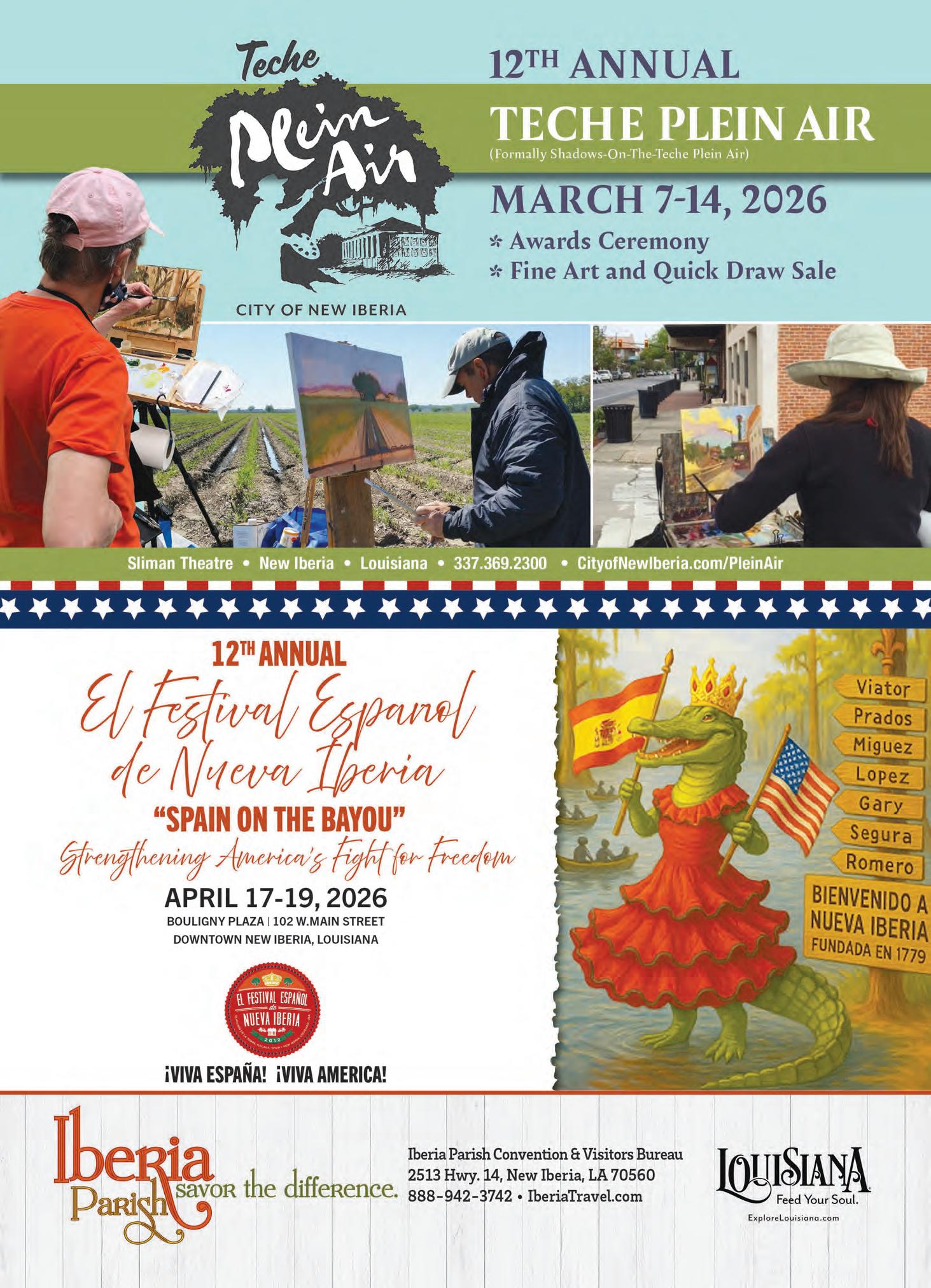
TECHE PLEIN AIR COMPETITION
New Iberia, Louisiana
"Plein air" describes the technique of creating art in the open air—a process that provides dramatically different results as artists adapt to a day's shifting weather patterns and angles of light. Weeks Hall, the last owner of National Historic Landmark Shadows-On-theTeche, was a practicing artist who painted en plein air as well as many other styles.
Nine years ago, the Shadows honored the artistic tradition that Hall began by establishing a plein air art competition, which returns to the historic house's grounds this month. In March, dozens of well-known artists from across Louisiana and around the South will come to town to have their blank canvases marked, then will head out into New Iberia and its surroundings to ply their pastels and work their watercolors. Artists' work will be exhibited and available for sale in the Shadows Visitor Center, when the competition winners will be announced on the evening of March 14. The public can observe artist events like the Quick Draw Competition in downtown New Iberia on Saturday, March 7, at 4 pm; as well as participate in painting demos by artist judge Charlie Hunter on March 10 at 1 pm and on March 12 at 2 pm. They can also participate in the Paint Out! competition in downtown New Iberia on March 13, which is open to the artists of all ages and skill levels. Additional details at cityofnewiberia.com/pleinair. 1
MAR 7th - AUG 15th
VISUAL ARTS
RACHEL LIBESKIND: "IF THERE BE NOTHING NEW, BUT THAT WHICH IS" Lafayette, Louisiana
In a fast-paced, over-stimulated, deeply
online world, Rachel Libeskind's largescale works center small movements, finite experiences, and passive moments that make visible the quiet, slow moments of daily life. In If There Be Nothing New, But That Which Is, now on exhibit at the Hilliard Art Museum as part of its spring programming, Libeskind is inspired by philosopher Jacques Lacan’s theories on visual culture and time exploring mundane moments through collage and printmaking. hilliardartmuseum.org. 1
MAR 7th - AUG 15th PHOTOGRAPHY
ANDY WARHOL: PLUS ONE Lafayette, Louisiana
Exploring the work of twentieth century icon Andy Warhol from a new lens, Plus One, on exhibition at the Hilliard Art Museum as part of its spring programming, considers the artist's relationships and inner circle as documented through his photography practice. How does the presence of a "plus one" affect how a moment is captured or remembered? What does artistic intimacy look like? The show features photographs of Warhol's that were donated to the Hilliard's collection by the Andy Warhol Foundation for the Visual Arts' Photographic Legacy Project. 1
MAR 11th
BOOKWORMS
GALLIER GATHERINGS
BOOK CLUB: "RUMORS OF REVOLUTION"
New Orleans, Louisiana
The night is right for conversation and wine in-person at Gallier House, where bookworms will meet to discuss Rumors of Revolution: Song, Sentiment, and Sedition in Colonial Louisiana by Jennifer Tsien. A discussion will be led by HermannGrima + Gallier Historic Houses Director of Educational Programming, Dr. Amy Katherine Medvick. 6 pm. $22 for general admission; $17 for members. Attendees are asked to register on eventbrite. hgghh.org. 1
MAR 12th
A BIT OF LUCK
COVINGTON ST. PATRICK'S DAY CONCERT: FOUR UNPLUGGED
Covington, Louisiana
Spend your St. Patrick's Day at the Covington Trailhead for the annual "Get Your Irish On" concert, featuring Four Unplugged. Bring blankets, chairs, and dancing shoes—and of course come in green. After the show, downtown Covington will be kicking its heels with nightlife, eateries, and shopping. 5:30–7:30 pm. Free. louisiananorthshore.com. 1
MAR 12th
FUNDRAISERS
DRIP, SIP AND JAM IN SUPPORT OF BRCC ATHLETICS
Baton Rouge, Louisiana
Support Baton Rouge Community College athletics for a whimsical night of art, food, and music at Bonne Sante Wellness Center. Over the course of the evening, take time to personalize your favorite sneakers and clothing with creative tools available, sip cocktails from the bar, sample delicious bites from local eateries, and jam through the night with Cupid and The Honky Tonk Chicks. 6 pm–10 pm. $188. bontempstix.com. 1
MAR 12th
POURS
AUSTRALIA & NEW ZEALAND WINE
TASTING AT THE GREGORY
Baton Rouge, Louisiana
The Watermark Hotel hosts the first event in this exquisite wine tasting series, featuring a variety of selections from Australia and New Zealand. Don't miss out on this rich cultural experience down under, with small bites included to round out the evening. 6:30 pm–7:30 pm. $43. bontempstix.com. 1
MAR 12th - MAR 15th
GOOD EATS
LOUISIANA FOOD & WINE FESTIVAL
Lake Charles, Louisiana
Celebrated chefs from across Louisiana and Texas—not to mention foodies, restaurateurs, wine aficionados, and more—are flocking to Lake Charles this spring for the festival Travel + Leisure called one of five "must-experience festivals" across the entire United States. Over the course of four days, expect culinary tastings, demonstrations, master classes, wine dinners, jazz brunches, and more—giving those who love cuisine, wine, and spirits the opportunity to indulge in all kinds of deliciousness while chatting with chefs and industry experts. Tickets and full events schedule at louisianafoodandwinefestival.com. 1
MAR 12th - MAR 15th
GOOD
READS
NEW ORLEANS BOOK FESTIVAL AT TULANE
New Orleans, Louisiana
For the fifth year, Tulane is hosting a free three-day literary celebration featuring more than a hundred local, regional, and national authors. The 2026 festival will be headlined by filmmaker Ken Burns,
voting rights advocate Stacey Abrams, novelist and essayist Salman Rushdie, and New Orleans's own Clint Smith, plus dozens more. The festival will also include panel discussions, keynote speeches, musical performances, talks from local chefs, book fairs, workshops, family programing, and more. More information on the schedule and tickets at bookfest. tulane.edu.
MAR 12th - APR 18th
SPRING CLASSICS
NATCHEZ SPRING PILGRIMAGE
Natchez, Mississippi
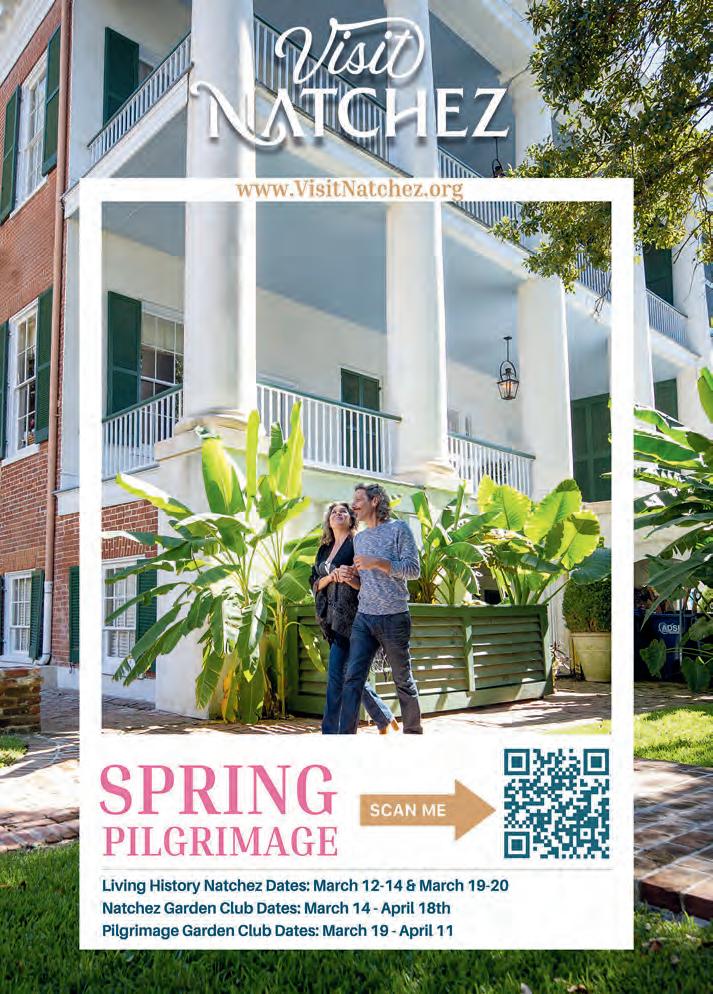
The Natchez Pilgrimage that has kept visitors coming back to Natchez since 1932 is in full swing. Natchez was once home to more millionaires per capita, than any other city in America—and although that situation came to an abrupt end after the Civil War, the city has managed to preserve the extraordinary architectural legacy of that wealth, while also paying homage to the enslaved individuals on whose backs that wealth was created. Today, Natchez's streets remain lined with palatial mansions and filigreed townhouses, and each year the families that occupy them allow guests to nose through centuries-old homes, meet descendants, learn about the city's
Events Events
Beginning March 13th - 14th
history, stay in historic B&Bs, and generally get a residents' eye view of life in this most genial of Southern cities. natchezpilgrimage.com.
livinghistorynatchez.com. littleeasytours.com. 1
MAR 13th - MAR 14th
CULTURAL CELEBRATIONS
CELTIC BAYOU FESTIVAL
Lafayette, Louisiana
Just in time for St. Patrick's Day, the annual Celtic Bayou Fest returns, bringing the very best in traditional Celtic music and entertainment to Lafayette. Downtown will be seeing green with cultural events including an Irish Whiskey Tasting, a Guinness cook-off, a Pub Crawl, a Bailey's bakeoff, a children's area, and more—all of this happening against a background of Acadian & Celtic medleys sparking inner urges to kick up your feet. Green attire encouraged. Friday Pub Crawl starts at 4:30 pm at the Chez La Fete for $20; Kick-Off Party at $10. $20 in advance for Saturday festival admission; $25 at the door. $35 for full weekend passes. celticbayoufest.com. 1
MAR 13th - MAR 15th
CULTURAL CELEBRATIONS
INDEPENDENCE SICILIAN
HERITAGE FESTIVAL
Independence, Louisiana
Celebrate all things Sicilian with the residents of Independence. At the fest, held downtown, you can make spaghetti, eat spaghetti, and even toss meatballs as far as you possibly can! Enjoy carnival rides, arts & crafts, a St. Joseph's Altar, pageantry, and even a parade. The live music lineup includes favorites like Crescent Kings, Northbound 55, the Chee Weez, and Ryan Foret. More details at indysicilianfest.com. 1
MAR 13th - MAR 15th
GO WILD
LOUISIANA OUTDOOR EXPO
Gonzales, Louisiana
Embrace Louisiana's title of "Sportsman's Paradise" at the Lamar Dixon Expo Center this weekend, where anything needed for hunting, fishing, and other outdoor hobbies will be available under one roof. Noon–7 pm Friday; 10 am–7 pm Saturday; 10 am–5 pm Sunday. $15 for adults, $5 for children ages six to twelve; free for children under five and younger. Parking is free. louisianaoutdoorexpo.com. 1
MAR 13th - MAR 22
DANCE
MARIGNY OPERA BALLET: "HOMECOMING" AND "UN AUTRE SOIR"
New Orleans, Louisiana
As part of its new season, the Marginy Opera Ballet premieres two programs— Homecoming and Un Autre Soir —at
the Marginy Opera House as an ode to Louisiana's proud and storied culture and traditions. For each program, Sweet Crude Band provides live music to accompany the performances, which are choreographed by two different composers who each bring a unique perspective to the stage: Shane Urton (Homecoming) from Belgium’s Opera Ballet Vlaanderen and Amalia Najera (Un Autre Soir), a Mexican-American dancer. 8 pm. $55; $40 for students, seniors, and military; $75 for VIP seating. marignyoperahouse.org.
MAR 14th
BIT OF LUCK COVINGTON ST.
PATRICK'S DAY PARADE
Covington, Louisiana
Irish blood runs thick in Covington, Louisiana—and even those who can't claim it have eagerly celebrated the heritage of St. Patrick's patronage in Louisiana since 2018 with the birth of the Covington Celtic Club and annual St. Patrick's Day Parade. The route runs from the Columbia Street Tap Room, and concludes with a block party at the corner of New Hampshire and Rutland Streets, where ladies and leprechauns alike may dance the afternoon away for a St. Patty's block party. Noon. covingtoncelticclub.com. 1
MAR 14th
HAVE A CUPPA TRADITIONAL CHINESE
TEA FESTIVAL: A SPRING CELEBRATION
Baton Rouge, Louisiana
Journey to the East Baton Rouge Parish Main Library on Goodwood for a trip east and a traditional Chinese tea celebration. Sample tea flavors from local businesses, learn how to pick the perfect tea for different occasions, and practice different cultural art forms led by Tai Chi instructor Jie Gu and Chinese Dance instructor Liqun Fang. 2 pm. Free. ebrpl.com. 1
MAR 14th
MUSIC HISTORY
"KEYS TO THE KINGDOM: THE LEGACY OF RAGTIME" Natchez, Mississippi
Natchez Festival of Music presents "Keys to the Kingdom: The Legacy of Ragtime," a lively discussion and lecture led by acclaimed ragtime pianist Brian Holland at the David O’Connor Family Life Center in Natchez. Learn more about the world of ragtime, its African American roots, and its influence on jazz and blues. 10 am. Free. natchezfestivalofmusic.com. 1
MAR 14th
CONCERTS
"RAGTIME & BEYOND: FEATURING MUSIC FROM SCOTT JOPLIN TO BILLY JOEL" Natchez, Mississippi
For one night only, Natchez Festival of Music presents a concert performed by ragtime pianist Brian Holland. "Ragtime & Beyond: Featuring Music from Scott Joplin to Billy Joel" features selections from Joplin's syncopated ragtime and Joel's musical storytelling. Performed at David O’Connor FLC at 613 Main St. in Natchez. 7 pm. $30. natchezfestivalofmusic.com. 1
MAR 14th
ARTS & CRAFTS
OZONE LAYERS QUILT GUILD OPEN STUDIO DAY
Abita Springs, Louisiana
Celebrate National Quilting Day the way it was meant to be: exploring an Open Studio Day with Ozone Layers Quilt Guild. The guild will set up at Abita Springs Town Hall to demonstrate sewing and display quilts of all sizes. 10 am–4 pm. Free. For more information, contact ozonelayersquiltguild50@gmail.com. 1
MAR 14th
RETAIL THERAPY
ST. GABRIEL’S FIREFLY MARKET Saint Gabriel, Louisiana
At the Chatsworth House in St. Gabriel, the Firefly Under the Moon Farmers Market hosts more than sixty vendors serving beer, wine, cocktails, fresh produce, jelly, jams, seasonings, food, and more—alongside all sorts of traditional arts and crafts. Come for the wares, stay to enjoy the breeze and shade beneath the historic oaks. 4 pm–8 pm. Free off-street parking available. info@stgabrielfarmersmarket.com. 1
Events
Beginning March 14th - 20th
MAR
14th
BIT OF LUCK PATTY IN THE PARC
Lafayette, Louisiana
One of the biggest Saint Patrick's Day parties in South Louisiana—Patty in the Parc returns to downtown Lafayette for an evening of celebration, starring local favorites DJ Digital, Keith Frank, Mannie Fresh, and Gerald Gruenig. Gates open at 4:30 pm. $33.37 in advance; $39.18 at the gate. Visit Patty in the Parc's Facebook Page for tickets. 1
MAR
14th
BIT OF LUCK WEARIN' OF THE GREEN PARADE
Baton Rouge, Louisiana
Whether it's blue skies or pounding rain, this wildly popular Baton Rouge St. Patrick's Day tradition will roll through the Hundred Oaks neighborhood and Perkins Road overpass area, spreading green goodwill to the thousands who come out in support of the Irish holiday. Come early to claim a spot on the "Wearin of the Green" route, decked in your seasonal best; parade begins at 10 am on the corner of Hundred Oaks and Acadian. wearinofthegreen.com. 1
MAR 14th
FAST LANE
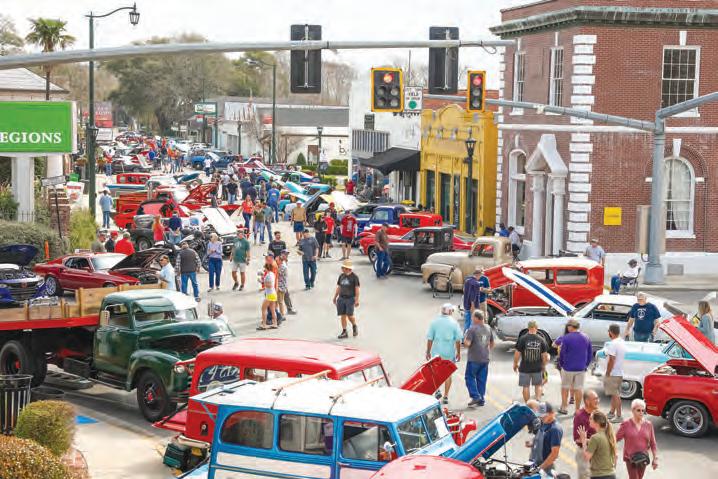
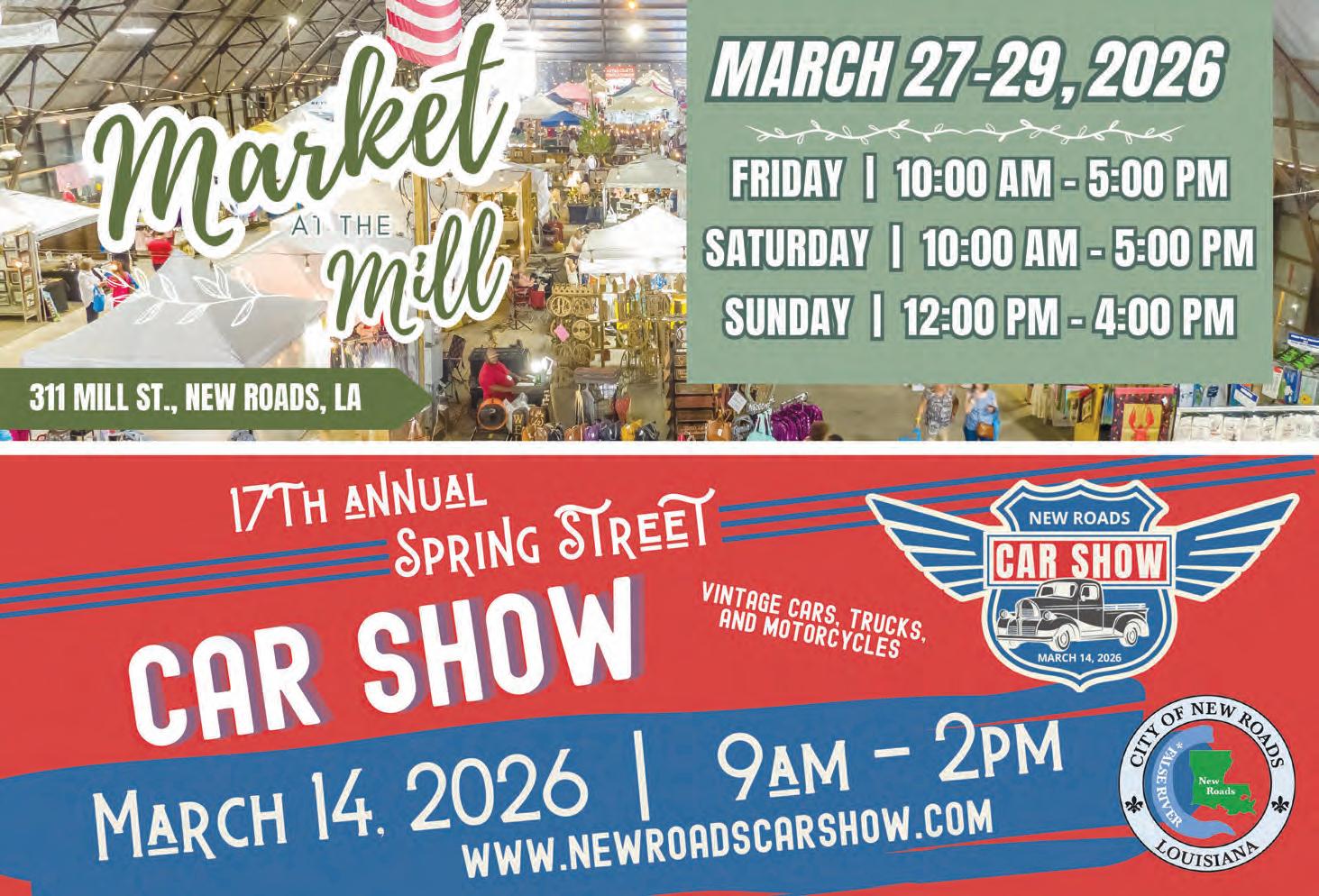
NEW ROADS CAR SHOW AND STREET FESTIVAL
New Roads, Louisiana
The City of New Roads and New Roads Main Street present the 17th Annual Spring Street Festival and Car Show, featuring over three hundred participants, a raffle benefiting Pointe Coupée
Homebound & Hospice, and awards galore. 9 am–3 pm. $40 to register. newroadscarshow.com. 1
MAR 14th
BIT OF LUCK ST. PATRICK'S DAY PARADE
Denham Springs, Louisiana
Follow the rainbow to the family-friendly Denham Springs St. Patrick's Day Parade, rolling down Main Street, complete with floats, throws, and marching bands. Free. 5 pm. denhamspringsmainstreet.org. 1
MAR 14th - MAR 15th
RETAIL THERAPY
BATON ROUGE SPRING CRAFT AND VENDOR MARKET
Gonzales, Louisiana
Hop on over to the Tanger Outlets in Gonzales for an all-things-spring market. Local vendors, seasonal treats, and other items for all occasions are sure to please. 10 am–4 pm. Free. See the Baton Rouge Spring Craft & Vendor Market Facebook page for details. 1
MAR 14th - MAR 29th
DRAMA
30 BY NINETY
PRESENTS "THE NERD" Mandeville, Louisiana
After Rick Steadman saves Willum Cubbert's life, he becomes the man's hero—until he shows up at a birthday party and reveals himself as socially awkward and full of antics. See 30 by Ninety Theatre perform the popular comedy, The Nerd, in Mandeville. 8 pm; 2:30 pm on Sundays. $14–$22. 30byninety.com. 1
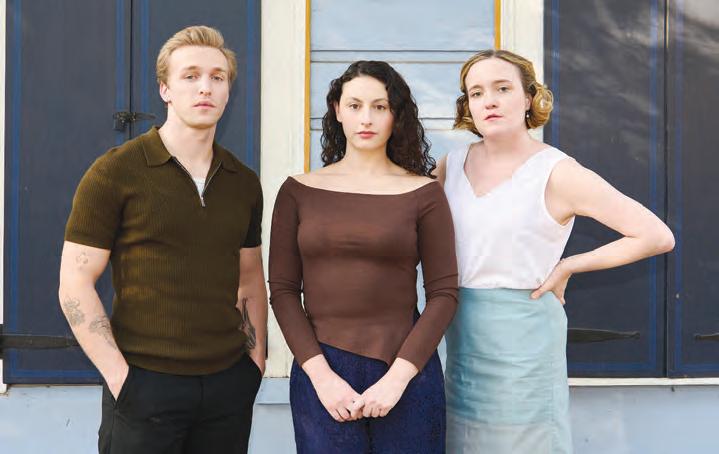
The newly launched Irene Collective performs Tennessee Williams' A Streetcar Named Desire this spring. Pictured above, from left to right: Patrick Nicks (portraying Stanley Kowalski), Lauren Guglielmello (portraying Stella Kowalski), and Jaclyn Bethany (portraying Blanche DuBois). Photo courtesy of Irene Collective. Image by Craig Mulcahy. Learn more on page 23.
MAR 18th
CONCERTS
BATISTE LEGACY SESSIONS: NOJO 7 WITH SETH FINCH
Baton Rouge, Louisiana
Hosted at the Virginia and John Noland Black Box Studio at the Cary Saurage Community Arts Center, the Batiste Legacy Sessions are inspired by the Alvin Batiste Jazz Society Series, presenting an opportunity for audiences to experience more genres. March features NOJO 7 with Seth Finch. 6:30 pm–8 pm. $25; $15 for arts council members; $10 for students. artsbr.org. bontempstix.com. 1
MAR 18th - MAR 22nd
BOTTOMS UP NEW ORLEANS BOURBON FESTIVAL
New Orleans, Louisiana
Are you known to bend an elbow? Then here's the fest for you. The New Orleans Bourbon Festival (that's the drink, not the street) brings food, spirit, and culture together. Events include bourbon seminars, dinners, tastings, tours, live music, and beyond—all celebrating brands like Cathead, Four Roses, Maker's Mark, and more. Proceeds from the tickets go toward Kids Can NOLA, a nonprofit organization that benefits the welfare of local children. At Canal Place. Visit neworleansbourbonfestival.com for a full schedule and tickets. 1
MAR 19th - MAR 21st
GOOD EATS
IOWA RABBIT FESTIVAL
Lake Charles, Louisiana
Not the state, but the small community of Iowa, near Lake Charles—where bunnies should beware, lest they soon become a tasty rabbit gumbo or jambalaya, especially at the Burton Coliseum Complex this weekend. Celebrating the economic and culinary impact rabbits have in Southwest Louisiana, this annual fest is a one-of-a-kind event, from the rabbit gumbo to crowning the new Miss Bunny, who will represent the festival at other state-wide festivals and competitions. Thursday is free admission night, where the carnival and vendors will be open, but Burton will be closed. $15 on Friday; $20 on Saturday; kids twelve and younger free. iowarabbitfestival.org. 1
MAR
19th - MAR 24th
REEL IT IN FRENCH FILM FESTIVAL
New Orleans, Louisiana
The twenty-ninth New Orleans French Film Festival, one of the longest-running foreign language festivals in the country,
will once again represent excellence in contemporary and classic Francophone cinema for audiences, this year at the Prytania Theatre Uptown. Live music and lectures will accompany a curated selection of short and feature-length French films, all of which will be screened with English subtitles. Film passes are $85 and get you free admission into all in person festival screenings; $115 all access passes get you into additional events, too. neworleansfilmsociety.org. 1
MAR 19th - MAR 31st
THEATRE
IRENE COLLECTIVE PRESENTS: "A STREETCAR NAMED DESIRE"
New Orleans, Louisiana
Tennessee Williams' landmark Pulitzer Prize-winning drama arrives this spring at Big Couch, performed by the newly launched Irene Collective in New Orleans. When Mississippi belle Blanche DuBois arrives at her sister's French Quarter apartment with nowhere else to go, she clashes with her hard-edged brother-in-law Stanley Kowalski. Secrets, sensuality, and big reveals shake up the two-room New Orleans flat. Will Blanche be able to start her new life in the Big Easy, or will she be crushed against something brutal and hard?
7:30 pm; 1 pm & 7:30 pm on March 29. For ticketing details, visit streetcarnola.net. 1
MAR 20th
LIVE MUSIC
SUNSET AT THE LANDING
Covington, Louisiana
Who doesn't like free, outdoor live music? We, and the folks on the Northshore, certainly do, and they go all out for their spring Sunset at the Landing concerts, which feature local artists performing cozy, outdoor concerts at the Columbia Street boat landing overlooking the Bogue Falaya River. Find out who is performing next at the weekly announcements on the Sunset Concert Series Facebook Page. Just bring chairs and refreshments. Free. 6 pm–9 pm. sunsetatthelanding.org. 1
MAR 20th
GALAS LOUISIANA UNDER THE STARS
Mandeville, Louisiana
Gather in Old Mandeville for an evening at the historic North Star Theatre, a spring gala celebrating the wild, untamed beauty of Louisiana. There will be a curated fine-art photography gallery, previews of the documentary Louisiana: Our Home, and local cuisine and cocktails. 6 pm–9 pm; VIP reception
Events
Beginning March 20th - 21sr
at 5 pm–6 pm. More details to come at eyeoferic.com. 1
MAR 20th - MAR 21st
CULTURAL CELEBRATIONS
ACADIAN MEMORIAL HERITAGE FESTIVAL
Saint Martinville, Louisiana
Looking back on more than 250 years of history, this celebration of all things Acadian—or Cadien (Cajun)—centers at the Acadian Memorial and Museum, where there'll be jambalaya, gumbo, cracklin' demonstrations, theatre, Cajun dance lessons and music, mask making, storytelling, Longfellow readings, kids’ activities, and more. A re-enactment will take place commemorating the historic arrival of the deported Acadians into Attakapas Territory. Free. Full schedule at acadianmemorial.org. 1
MAR 20th - MAR 22nd
AW SHUCKS
AMITE OYSTER FESTIVAL
Amite, Louisiana
A staple of the local economy as well as the local palate, oysters have good
reason to be celebrated in Amite. The festivities typically start up with the annual Chili Cook-Off and live music on Friday, followed by a full-day on Saturday of parading, oyster-eating, and two-stepping, with a headlining performance by Paperchase. Sunday, get started with a church service and more live music performances, and enjoy a day of carnival rides, local food and drink, and pageantry galore—not to mention a healthy (or maybe not so healthy) portion of fresh oysters, all in downtown Amite. amiteoysterfestival.com. 1
MAR 20th & MAR 27th
SOUND ON
MANDEVILLE LIVE! FREE
FRIDAY CONCERTS
Mandeville, Louisiana
Mandeville has planned another stimulating season for its live music series, Mandeville Live! Cozy up and catch these concerts at the Mandeville Trailhead for free. The Spring 2026 Lineup features Kermit Ruffins on March 20 and Peyton Falgout Band on March 27. Gates open at 6 pm for 6:30 pm performances. cityofmandeville.com. 1
MAR 20th - MAR 29th
MUSICALS
IPAL PRESENTS:
"FIDDLER ON THE ROOF"
New Iberia, Louisiana
Follow the winding tale of Tevye as he navigates early twentieth-century Russia, holding fast to his Jewish identity in his rapidly changing village. Performed by the Iberia Performing Arts League, Fiddler on the Roof remains a classic today for a reason. $27. 7 pm; 2 pm March 22 & 29. ipaltheater.com. 1
MAR 21st
FIT & FUN
SHAMROCK SPRINT
5K & 1 MILE FUN RUN
Covington, Louisiana
Kelly Kicking Cancer invites all to join in on their annual fundraising event, the Shamrock Sprint 5K and Fun Run. The themed event takes runners from the Trailhead through downtown Covington. Registration starts at 7 am; Fun Run starts at 8 am; 5K starts at 8:30 am. Proceeds will go towards brain cancer research through the Kelly Kicking Cancer foundation. $35 to run; $20 for a Party Pass, granting access to the live music and local eats afterwards. kellykickingcancer.org. 1
MAR 21st
FOOD FESTIVALS
SOUTHERN PALETTE: FOOD & DRINK EXPERIENCE
Baton Rouge, Louisiana
The Southern Palette: Food & Drink Experience debuts this spring, inviting a carefully cultivated blend of awardwinning chefs, innovative mixologists, and curated wines to the Shaw Center for the Arts, Lafayette Park, and the LSU Museum of Art in downtown Baton Rouge. Sample dishes, signature beverages, and fine wines in the heart of the Capital City's vibrant cultural center. 6 pm–10 pm. $125; $225 for VIP; $50 for youth admission, ages six through twenty. bontempstix.com. 1
MAR 21st
TURN IT UP
MONTHLY ZYDECO
JAM AT NUNU
Arnaudville, Louisiana
NUNU Arts & Culture Collective is launching a monthly zydeco jam. Held the third Saturday of each month, the acoustic jam sessions are open to musicians of all skill levels. Food and beverages are available for purchase at Café NUNU. 2 pm–4 pm. nunucollective.org. 1
MAR 21st
GOOD EATS
CLAWS & PAWS CRAWFISH COOK-OFF
Mandeville, Louisiana
Spend a spring afternoon in friendly competition, eating delicious food, and raising money for furry friends in need at this fundraiser for the Northshore Humane Society. Taking place at The Shops at 1200 West shopping center, the Claws & Paws Crawfish Cook-Off will put up to twenty teams to the test as they compete for the title of best boiler. $25; $30 after March 1; free for children ages ten and younger. 1
MAR 21st
LUMINARIES FRANKLIN'S LAMPPOST FESTIVAL
Franklin, Louisiana
Evoking downtown Franklin's iconic lamppost, this inaugural festival hosted by The Franklin Merchants Association celebrates culture and features an art walk. 8 am–5 pm. Free. cajuncoast.com. 1
MAR 21st
REEL IT IN CANE RIVER FILM FESTIVAL
Natchitoches, Louisiana
Produced by the Resurrection Fern Foundation, the Cane River Film Festival brings Louisiana stories to a worldwide audience through its annual exhibition of locally-made films. At Parkway Cinema 6, the day will include several screenings, Q&As, panel discussions, and an awards ceremony at the end. 11 am–4 pm, with a VIP Celebration Party from 6 pm–9 pm at Patio Cantina & Grill. Free; $50 for a VIP ticket. caneriverfilmfestival.com. 1
MAR 21st
GREEN THUMBS
YARD-TO-HABITAT WORKSHOP
Lafayette, Louisiana
The Acadiana Native Plant Project is hosting another Yard-to-Habitat workshop this spring at Ira Nelson Horticultural Center. The half-day event brings in experts to help homeowners and landscapers learn about how to transform their properties into vibrant habitats for pollinators, birds, and other wildlife—while also improving ecological resilience for the region. Participants can expect lessons on the basic principals of landscaping for habitat, and a chance to work closely with experienced native gardeners in sketching out your site plan, creating a plant list with sources, and a timeline. 8:30 am–12:30 pm. $40 per household. Details at the Acadiana Native Plant Project Facebook Page. 1
MAR
21st
ARTS & CRAFTS
MISSISSIPPI MADE
Laurel, Mississippi
The Mississippi Made festival in Laurel, Mississippi aims to support local makers and creators, highlighting the state's talented craftspeople and artisans. Head to Mercantile Yard to peruse handmade goods. 9 am–3 pm. Free. laurelmercantile.com. 1
MAR 21st
CHOW DOWN
LOUISIANA CRAWFISH BOIL
CHAMPIONSHIPS
Marrero, Louisiana
For twenty-four years now, Louisianans have clambered over one another to prove themselves as the best crawfish boiler in the state at the annual Crawfish Boil Championships, held at the Immaculate Conception School in Marrero. The event is sanctioned by the State of Louisiana as the official competition for boiling, and this year it's looking like over sixty teams will be heating up their pots to serve an estimated 40,000 pounds of mudbugs. A $35 wristband gets you all the crawfish you can eat, with options to purchase other food, beer, and refreshments onsite. Ticket prices will go up day-of. Find more details at the Louisiana Crawfish Boil Championships Facebook Page. 1
MAR 21st - MAR 22nd
FESTIVALS
ARTS ALIVE 2026
Bay Saint Louis, Mississippi
Bay St. Louis's Depot Art District will be alive with color as artists, artisans, and other vendors flock to the neighborhood. The festival features an multiple performance stages, an Artist Trail, an Arts Kids Zone, a MakerSpace area, as well as tasty food and beverages. 10 am–5 pm Saturday; Noon–5 pm Sunday. Free. hancockarts.org. 1
MAR 21st - MAR 22nd
SPRING CLASSICS
DESTREHAN PLANTATION
SPRING GARDEN AND PET SHOW
Destrehan, Louisiana
The fourth annual Destrehan Plantation Spring Garden and Pet Show, presented by River Road Historical Society in collaboration with the AgCenter and Louisiana Master Gardeners, promises two days of excitement for plant enthusiasts. Held at the Destrehan Plantation, the event features plant nurseries, live music, arts and crafts, small businesses, and more. Animal rescue groups will also be on site for pet
Events
Beginning March 22nd - 26th
adoptions—and don't miss a petting zoo, beekeeping demonstration, and an Easter egg hunt. 10 am–4 pm each day. $5; free for children under five. destrehanplantation.org. 1
MAR 22nd
GOOD EATS
CRAWFÊTE
Baton Rouge, Louisiana
The Baton Rouge Epicurean Society presents a southern-style mudbug feast prepared by the area's top restaurants at Live Oak at Cedar Lodge. This 21+ event features live music, gourmet bites, and locally renowned vendors. Try them all and vote for the best of the best crawfish of Baton Rouge. 2 pm–5 pm. $75; $25 for children ages four to twelve; $150 for VIP. epicbr.org. 1
MAR 22nd
FUNDRAISERS
POINTE COUPÉE HISTORICAL SOCIETY JAZZ BRUNCH
New Roads, Louisiana
The Point Coupée Historical Society invites all for a grand jazz brunch on the grounds of the Lamartine Bouanchaud House at 907 East Main Street in New Roads. Expect jazz music, a delicious brunch, and complimentary cocktails. Proceeds from the brunch support the restoration and maintenance of Poydras Museum. Home tours begin at 10 am. 11 am–1 pm. $162. bontempstix.com. 1
MAR 22nd
GOOD EATS
TASTE OF MID CITY FOOD FESTIVAL 2025
Baton Rouge, Louisiana
The annual Taste of Mid City Food Festival at The Executive Center in Baton Rouge promises a family-friendly environment filled with tasty dishes from local restaurants competing for the event's trophy—all decided by attendees. Come for the food, stay for the live music, games, activities for the kiddos, and more. Proceeds go to Kids' Orchestra, a nonprofit that supports teaching children music skills. 1 pm–5 pm. $30; $8 for kids; free for children three and under. tasteofmidcitybr.com. 1
MAR
22nd - MAR 28th
SOUND ON JACKSON INDIE MUSIC WEEK
Jackson, Louisiana
Called the "fastest-growing indie music
festival in the South," the Jackson Indie Music Week returns to the "Birthplace of American Music" in downtown Jackson, Mississippi. It's worth the trip to experience seven days of concerts, showcases, panels, and parties—featuring every genre from classic rock to EDM to the good old Delta blues. $60 for an all-events pass. jxnindiemusic.com. 1
MAR 22nd
GOOD DEEDS
FEED THE NEED
Ocean Springs, Mississippi
Created in 2014 over concerns about the local food kitchen in Ocean Springs, Feed the Need Benefit Concert and Fish Fry raises funds for The Lord Is My Help Community Kitchen— which provides more than 3,300 meals each month to those in need. Held in downtown Ocean Springs, the all-day affair includes a fish fry, live music, a kid’s play area, silent auction, and raffle baskets. 11 am–6 pm. $25 for advance tickets; $5 for children twelve and younger; $30 the day of the event; $20 with the donation of a canned good. thelordismyhelp.org/feed-the-need. 1
MAR 24th
FRIENDS TO ANIMALS
“LSU WILDLIFE
REHABILITATION” WITH LSU VET MED RAPTOR TEAM
Baton Rouge, Louisiana
Head to the LSU Hilltop Arboretum for a talk with LSU Vet Med's Raptor Rehab Team, part of the Wildlife Hospital of Louisiana. Learn more about the work being done to rescue, treat, and release injured birds of prey, and discover the behind-the-scenes details of life working at a rehabilitation clinic. 6:30 pm–8 pm. $15; $10 for students and Hilltop members. Register online at lsu.edu/hilltop. 1
MAR 24th - APR 1st
HIGH NOTES
NEW ORLEANS OPERA FESTIVAL
New Orleans, Louisiana
The inaugural New Orleans Opera Festival celebrates the city’s lush operatic history, while inspiring modern audiences by redefining its meaning today. As the birthplace of American opera, the Crescent City has acknowledged its special privilege to champion the art form. The festival features selections from Strauss, French
drama, a Show Boat fantasia, and more—along with a pilgrim's passage on foot through music and memory. There will also be daily public master classes and lectures. Festival venues include the Old Ursuline Convent, Mahalia Jackson Theater, New Orleans Riverboat, and The Civic Theatre. $380; other pricing packages available. Full schedule available at neworleansoperafestival.org. 1
MAR
25th - MAR 27th
DRAFTS
LONGUE VUE DESIGN SYMPOSIUM
New Orleans, Louisiana
Longue Vue's Design Symposium, an annual fundraising event, makes its return to the historic home's gardens. The event features several illustrious speakers, including headliner Judith Tankard, Longue Vue landscape architect Ellen Shipman's biographer; along with A.J. Allegra of Le Petit Theatre, Barrie Benson of Barrie Benson Interior Design, and Jacqueline Terrebonne, editor-inchief of Galerie magazine, among others. Individual tickets begin at $250 at longuevue.com. 1
MAR 25th - MAR 29th
STELLAS THE TENNESSEE WILLIAMS LITERARY FESTIVAL
New Orleans, Louisiana
The Tennessee Williams & New Orleans Literary Festival returns, presenting the fortieth annual celebration of the city's astonishing literary legacy. The five-day fête offers a range of diverse speakers and performers, most of whom will shout "Stella" with enough encouragement. Most events (far too numerous to detail here, but which range from master classes and walking tours to theatre, food, and musical offerings) will take place in the French Quarter. Ticket prices vary depending on the activities or combination thereof. Visit tennesseewilliams.net for all the details. 1
MAR 26th - MAR 29th
GOOD EATS
LOUISIANA CRAWFISH FESTIVAL
Chalmette, Louisiana
St. Bernard Parish hosts its annual Louisiana Crawfish Festival—a beloved event that has sustained a sense of
The brainchild of Zydeco Izreal, born Israel Chaisson, a new zydeco jam at NUNU Arts and Culture Collective promises to bring together musicians of various abilities and cultivate community. Photo courtesy of NUNU. Learn more on pages 24.
Events
Beginning March 27th - 28th
community and generosity throughout the Chalmette community for more than half a century now. Expect hungry festival-goers to arrive by auto, air, bus, and train to enjoy thirty thousand pounds of boiled crawfish with all the fixin's, as well as mouth-watering crawfish dishes such as crawfish bread, crawfish pasta, crawfish pies, crawfish rice, and crawfish jambalaya. There will also be all the usual trappings of a Louisiana festival, from live music galore and arts & crafts vendors, to a carnival midway and other family fun. All the eating takes place at the Sigur Cultural Center. Free Thursday; $20 Friday; $10 Saturday and Sunday. louisianacrawfishfestival.com. 1
MAR 27th
SATIRE
BATON ROUGE GRIDIRON SHOW 2026
Baton Rouge, Louisiana
A Baton Rouge tradition since 1952, the Capital Correspondents Association is gearing up to satirize Louisiana government and politics. The show's proceeds support journalism scholarships for students at Louisiana State University-
Baton Rouge, Southern University-Baton Rouge, the University of Louisiana at Lafayette and/or Southeastern Louisiana University, and public broadcasting stations. 7:45 pm. Tickets on sale March 4 and available at the "Will Call" table in the foyer of the American Legion Hall on Woodpile Blvd. bontempstix.com. 1
MAR 27th
LIVE MUSIC
ROCKIN' THE RAILS CONCERTS
Covington, Louisiana
Covington continues their Rockin' the Rails concert series this spring. Every Thursday night, attendees are treated to free live musical entertainment in historic downtown. Catch Rockin' Dopsie in March. Free at the Covington Trailhead. 5:30 pm–7:30 pm. covla.com. 1
MAR 27th
GREEN THUMBS
ST. TAMMANY MASTER GARDENERS SPRING SEMINAR
Mandeville, Louisiana
Often touted as the best gardening
seminar in the region, the St. Tammany Master Gardener Spring Seminar, themed this year "Seeding is Believing," will feature internationally renowned speakers, gardening tips, flowers and plants, foods, and experts. Topics this year include "Seeds of Sustainable Landscaping," "Seeding for Success," "Tropical House Plants," "Growing Garden Roses," and more. The seminar will also offer ongoing table talks by local and regional experts and a plant boutique with hand-selected premium plants. It will be held from 8 am–1 pm at The Castine Center. $25. stmastergardener.org. 1
MAR 27th - MAR 28th
GREEN THUMBS SOUTHWEST LOUISIANA GARDEN CONFERENCE AND EXPO
Lake Charles, Louisiana
This regional conference and expo is perfect for the gardeners out there ready to jumpstart their yard for spring. Held at the Burton Coliseum in Lake Charles, the event features dozens of vendors selling a variety of plants and outdoor decor, Master Gardeners with a plant health booth, and a flower show, among other attractions. 9 am–5 pm. $3; free for children twelve and under. swlmg.weebly. com/gardenexpo.html. 1
MAR 27th - MAR 28th
FUNDRAISERS
ST. JUDE CHILI COOKOFF
New Iberia, Louisiana
Get ready to spice things up and settle the score on who dishes out the best bowl of chili at the St. Jude Fundraiser Chili Cook-Off taking place at the SugArena & Acadiana Fairgrounds. The two-day event includes an auction and live music, plus plenty of entertainment for the little ones like face painting. 5 pm–10:30 pm Friday; 9 am–11 pm Saturday, with chili serving starting at 1:30 pm. Ticketing information at downsouthheroes.com. 1
MAR 27th - MAR 28th
BOTTOMS UP LOUISIANA
MOONSHINE FESTIVAL
Leesville, Louisiana
Western Louisiana is embracing it's history as "No Man's Land" with this exciting second year of the Moonshine Festival at the Vernon Parish Fairgrounds, honoring the region's history as a place just outside the rules. The familyfriendly event will feature food vendors (boiled crawfish has been promised), moonshine tastings, and opportunities to meet master distillers from around the country. Live music will keep everyone
on their toes, performed by musicians like Thomas Cain, Emily Callender, Jade Black, Hurricane Road; and a special veterans tribute concert will take place on Saturday night. 2 pm–7 pm Friday; 10 am–9 pm Saturday. $20 weekend passes. louisianamoonshinefestival.com. 1
MAR 27th - MAR 28th
OUT OF THE POT
COOKING IN CENTRAL
Central, Louisiana
Cooking in Central is back, this time in partnership with the City of Central to bring plenty of tasty food and entertainment to Amazing Place. The fun begins at 4 pm Friday with boiled crawfish and performances by Maison Shows, Chase Tyler, and Wayne Toups. On Saturday, festival gates open at 11 am with kids' entertainment and the carnival. At 5 pm, catch the Mojoes, followed by Lauren Lee and Bag of Donuts. And of course, at the heart of the thing is the cook-off itself on Saturday, with competitions in categories of brisket, jambalaya, pastalaya, and BBQ chicken. The kids are invited to get involved, too—showing off their own culinary skills. Festival is free. For more information and cook-off entry forms, visit cookingincentral.com. 1
MAR 27th - MAR 29th
PRIDE THE SAINTS + SINNERS LGBTQ LITERARY FESTIVAL
New Orleans, Louisiana
Since 2003, Saints + Sinners LGBTQ Literary Festival has grown into an internationally-recognized event that brings together a who’s who of LGBTQ publishers, writers, and readers from throughout the United States and beyond. The festival, hosted by the same folks behind the Tennessee Williams & New Orleans Literary Festival and held over three days at the Hotel Monteleone in the French Quarter, features panel discussions and master classes around literary topics that provide a forum for authors, editors, and publishers to talk about their work for the benefit of emerging writers and the enjoyment of fans of LGBTQ literature. Details at sasfest.org. 1
MAR 28th
FAST LANE
BRITISH MOTORING FESTIVAL
Covington, Louisiana
The British Motoring Club of New Orleans returns for the 34th annual British Motoring Festival at the Tammany Trace Covington Trailhead and Firehouse Event Center for a day dedicated to British cars and motorcycles. Enter a car
or bike, or stop by to view the automotive excitement. bmcno.org. 1
MAR 28th
RETAIL THERAPY
ABITA SPRINGS WHOLE TOWN
GARAGE SALE & FLEA MARKET
Abita Springs, Louisiana
Each year in March since 1994, hundreds of Abita Springs residents have had their garage sales on the same day. What better place to find the perfect deal? If you fancy snatching up a bargain in this small-town celebration, come by Saturday between 8 am and 3 pm and browse the booths that are set up on the streets of this quaint little town. Free. louisiananorthshore.com. 1
MAR 28th
SOUND ON TUNICA HILLS MUSIC
FESTIVAL & JAM
Saint Francisville, Louisiana
Once again, the hills come alive for the annual Tunica Hills Music Festival and Jam. It's an all-day affair, with three stages welcoming dozens of bands for concerts, jam sessions, instruction, and a robust celebration of the arts. Bring your blankets, chairs, coolers, and of course your instruments and settle in
for a beautiful day. 11 am–10 pm. Free. Details at the Tunica Hills Music Festival Facebook Page. 1
MAR 28th
PEDALS
TOUR DE LIS
LOUISIANA BIKE RIDE
Mandeville, Louisiana
Pedal for a cause at the Tour de Lis Louisiana Bike Ride at Fontainebleau State Park in Mandeville. Support the Cancer Association of Louisiana with a non-competitive bike ride or walk through the park's picturesque trails, in the cool breeze of a Louisiana spring. Riding options include ten, twenty-five, forty, or sixty-two miles; walkers can choose between the one and four mile nature hikes. $50 to ride; $40 for cancer survivors; $30 for guests (food and drink only). 8 am. tourdelisla.org. 1
MAR 28th
SHOP TIL' YOU DROP
WASHINGTON
COMMUNITY FESTIVAL
Franklinton, Louisiana
For decades, the whiskered fish was the guest of honor every year at the Washington Festival Grounds. Today, the spirit of the old Washington Catfish
Events
Beginning March 28th - 29th
Festival remains strong, reincarnated into the Washington Community Festival, featuring many of the beloved activities and programming of the old fête, on Washington's Main Street. Expect blocks of vendors, live music, an antique car show, a catfish gravy cook-off, a silent auction, and a Kid's Korner with games for children of every age. 10 am–9 pm. Free. (337) 826-3626. 1
MAR 28th
ANOTHER ROUND BASIN BREW FESTIVAL
Morgan City, Louisiana
Morgan City raises a glass to the evergrowing craft beer scene with the Basin Brew Fest. Louisiana-based breweries will provide the suds, with delicious tasting portions from a slew of local restaurants available for munching. The fest runs from 2 pm–6 pm on the 800 block of Front Street, with VIP entry beginning at 2 pm. Regular admission is $40, with unlimited samples; $65 VIP includes early entry, a tap trailer ticket, and lots of swag; $5 designated driver ticket. basinbrewfestmc.com. 1
MAR 28th
LIVE MUSIC
JAZZ'N THE VINES: AMANDA SHAW
Bush, Louisiana
Wild Bush Farm + Vineyard's longrunning outdoor concert series, Jazz'n the Vines, brings celebrated Louisiana musicians to a gorgeous pastoral setting against an idylic spring backdrop of cool evening breezes and sundresswith-a-light-sweater vibes. This March, be sure to catch Amanda Shaw. Bring a picnic blanket, lawn chairs, and lots of bug spray. The vineyard supplies the wines; various foods will be available for sale from local vendors. $12 in advance; $15 at the gate. wildbushfarmandvineyard.com. 1
MAR 28th
GOOD EATS
WORLD CHAMPIONSHIP
CRAWFISH ETOUFFÉE COOK-OFF
Eunice, Louisiana
The annual much-anticipated étouffée
extravaganza has Eunice simmerin' again this year with crawfish and good times galore. And though we're pretty sure places like Germany, Thailand, or Chile aren't competing in the cook-off, we like the sound of world championship, too. The cook-off kicks off at the Northwest Pavilion at 10 am. While live Cajun and zydeco music play in the background, get to tasting—such a concentration of crawfish étouffée this delicious is not
something you see every day, so don't be shy. In the heart of Cajun country, you can't go wrong. And apart from the many bowls of good food, don't miss the trappings of every solid Louisiana gathering—arts and crafts vendors, live music, distractions for the kiddos, and family fun galore. Free. Details at the Annual World Championship Crawfish Etoufee Cookoff Facebook Page. 1
BREADA's Red Stick Farmer's Market is held each Saturday in downtown Baton Rouge, from 8 am–noon. In addition to vendors selling fresh produce, patrons can visit the newsly reopened Main Street Market. Photo courtesy of BREADA.
MAR 28th - MAR 29th
BLOOMS
ACADIANA’S LOUISIANA IRIS FESTIVAL
Lafayette, Louisiana
In this two-day celebration of Louisiana's elegant and much-lauded state wildflower, head to New Iberia City Park on Saturday to glimpse blooming native iris along Bayou Teche, peruse local native plant vendors and garden clubs, and enjoy music by Blake Luquette. On Sunday, pop on over to Moncus Park in Lafayette to enjoy guided iris tours, explore an artisans' market, jam to live music, and grab a bite from local food trucks. 9 am–3 pm Saturday; 11 am–2 pm Sunday. Free. iberiatravel.com. moncuspark.org. 1
MAR 28th - MAR 29th
TURN IT UP
CONGO SQUARE
RHYTHMS FESTIVAL
New Orleans, Louisiana
Congo Square in Louis Armstrong Park will once again host one of the city's most vibrant festivals—the Congo Square Rhythms Festival. For two days, attendees can immerse themselves in mesmerizing musical performances from the world over, playing alongside some of the Crescent City's most beloved bands. This year's musical acts include Paulin Brothers Brass Band, Preservation Brass, Class Got Brass, Charmaine Neville Band, New Breed Brass Band, Jonté Mayon, and many more. An arts market will round out the agenda. Free parking at the Mahalia Jackson Theatre. Details at jazzandheritage.org. 1
MAR 28th - MAR 29th
GIRL POWER
ROCK & ROUGE WOMEN’S MUSIC AND FOOD FESTIVAL
New Orleans, Louisiana
Held in tandem with Women’s History Month, this female-powered festival comes to Lafayette Square in downtown New Orleans—bringing a mix of culture, music, wellness, and community empowerment. The festival’s live music lineup includes Charmaine Neville Band, Sweet Crude, Big Pearl & The Fugitives of Funk, among others; along with a Beauty Tent, a Girls STEAM Tent, and a Culinary Cuisine Row. 10 am–8 pm. Free. therockandrouge.com. 1
MAR 29th
SOUND ON OLDE TOWNE CRAWFISH
MUSIC FESTIVAL
Slidell, Louisiana
Olde Towne Slidell comes alive this Sunday for this annual festival, complete with three stages of live, local music,
and more boiled crawfish than you can possibly eat. Bring an appetite and stay all day. 11 am. Free. facebook.com/ oldtowneslidell. 1
MAR 29th
GOOD EATS
BREWS, BOILS, & BUBBLES
SEAFOOD FESTIVAL
New Orleans, Louisiana
Brews, Boils, & Bubbles is back at the Lakefront for a full day of seafood and entertainment. This unique celebration of Louisiana’s culinary culture will feature a variety of flavor-packed boils from top restaurants across the state, craft beers, champagne, premium spirits, and all-day entertainment. Noon–8 pm. $5. neworleans.com. 1
MAR 29th
TRADITIONS
AN OLD-FASHIONED EASTER
Baton Rouge, Louisiana
Get ready for an egg-citing time at the LSU Rural Life Museum's old-fashioned Easter celebration. Hosted annually by the museum, this whimsical familyfriendly event promises a delightful eggs-perience for all ages, featuring cherished Louisiana Easter traditions. Activities include Easter Bunny photos, egg dyeing, and egg hunts, among other events. 2 pm–4:30 pm. $8; free for ages three and younger. lsu.edu/rurallife. bontempstix.com. 1
MAR 29th
TRADITIONS
ANNUAL EASTER EGGSTRAVAGANZA AT THE WBR MUSEUM
Port Allen, Louisiana
Don't miss the annual Easter Eggstravaganza hosted on the West Baton Rouge Museum's grounds. This Easterthemed romp includes live music from West Baton Rouge Oasis Jazz Band and Blues After School’s Juke Joint Juniors Band, crafts, games, and Easter egg hunts. Plus, to the inevitable delight of the littles, the Easter Bunny will make a special appearance. From 2 pm–3:30 pm. Free admission, with refreshments available for purchase. westbatonrougemusuem.org. 1
For more events visit countryroadsmag.com/eventsand-festivals.
VISIT NEW ROADS - COME FOR THE
Rolling On the River
False River, that is, for the 17th annual New Roads Car Show
This March 14, visitors to downtown New Roads could be forgiven for wondering whether they’ve wandered into a time warp. That morning, hundreds of vintage, antique, and beautifully restored examples of American rolling stock will line up along several blocks of Main Street as the seventeenth annual New Roads Car Show rolls into town. The brainchild of the Pointe Coupee Cruisers car club, the New Roads Car Show has grown steadily in size and popularity since its founding by local enthusiasts Ray Schexnayder and Pop Langlois nearly twenty years ago. “We started out in 2007 with ten cars in a grass lot beside the church,” recalled Schexnayder, who brought his blue 1971 Corvette Stingray convertible to that first show. This year, when Schexnayder brings his ‘Vette back to Main Street (yes, he still owns it), he’ll be in good company. Organizers expect more than 350 cars and their owners from all over Louisiana, Mississippi, and Texas to attend, including groups representing other area car clubs, from the New Orleans Corvette Club, to the Rambling Oldies of Denham Springs (RODS), and lots of others.
Schexnayder, whose wife will drive the couple’s field green 1949 Chevrolet 3100 pickup to this year’s show, stressed that anyone with a classic, muscle, or antique vehicle is welcome to participate. “We’ve had motorcycles, foreign cars … we get more Corvettes than anything else.” He explained that everyone who enters a vehicle gets a ballot to vote for their favorite ten vehicles, one of which will be chosen to win the Pop Langlois Founder’s Award. What sorts of cars tend to win? “We never know,” said Schexnayder. “The first year, the winner brought a brown ’57 Chevy Nomad from Lafayette.” After the show, participants are invited to celebrate all things vintage by joining a police-escorted cruise that visits New Roads’ three assisted living facilities. A portion of proceeds from car show, drink and raffle ticket sales benefits Pointe Coupee Homebound Health & Hospice. It’s a good cruise for a good cause, put on by and for local car enthusiasts, without taking itself too seriously. As Ray Schexnayder says, “We’re not a real strict car club. We’re just a bunch of guys who like to get together, go riding, and have a good time.”
17th annual New Roads Car Show Saturday, March 14, 2026
Newroadscarshow.com
GARDENER PROFILES
Ladies in the Garden
FOR HISTORIAN ELISE SMITH, TENDING A BELHAVEN BACKYARD PROVIDES BOTH PERSONAL SANCTUARY AND TRIBUTE TO GENERATIONS OF SOUTHERN WOMEN GARDENERS
Story by Lauren Rhoades
For almost forty years, Elise Smith has tended her home garden in the Belhaven neighborhood of Jackson, Mississippi, a few blocks from where novelist Eudora Welty lived, wrote, and tended to her own prized camellias. A weathered picket fence surrounds the tidy corner lot of Smith’s historic 1920s home, inviting curious peeks from passersbys. Here, narcissi emerge in spring, followed by iris, hellebores, phlox, verbena, and established heirloom roses. Birds gather at feeders and find refuge in the decades-old tea olive. In summer, a bullfrog forages among the water lilies growing in a flagstone-bordered pond. Like any garden,
this one has a story. So, too, does its gardener.
Elise Smith grew up in northern Florida and later moved around the South, with time abroad in Amsterdam and Brussels. In the eighties, she and her husband, Steve, moved to Jackson, where they both joined the faculty at Milsaps College—he as a professor of philosophy and religious studies, she as an art historian.
Before settling in Mississippi, Smith indulged her garden fantasies by collecting and reading garden books and catalogs. “I had bought [an Old Roses] book in England, and I just spent so long looking at the pictures in that book, so desiring
those plants. And I also had a book on perennials ... and I remember thinking, ‘oh, I can grow all of these plants wherever we are’—not having a sense of zones.”
Reality quickly sunk in when Smith tried to break ground in Mississippi’s sweltering August heat. “I couldn’t even get the shovel to make a dent.”
Undeterred, Smith brought in soil to improve the hard-packed central Mississippi clay, added a granite border to the beds, and strategically placed boulders to add interest. Over the years, the amount of grass lawn has diminished to a sliver in order to make room for the flowers. Trellises and arbors mark the entrances to garden “rooms.” Old roses, like the sprawling, pink-blooming Mrs. B.R. Cant, drape their arms across the picket fence. Smith points out a new plant addition: the camellia “Imura,” which she propagated from the Welty Garden where she volunteers as a Cereus Weeder. It’s the same flower Smith carried on her wedding day.
Smith’s interest in the lives of other gardening women grew in tandem with her extensive collection of books written by late nineteenth and early twentieth century garden writers like Louise Beebe Wilder and Elizabeth Lawrence. “I wanted to not just look at catalogs and beautiful pictures of old roses, but I wanted to read about people’s experiences making gardens.”
This captivation with the stories of creative women and their gardens has culminated in the book Southern Women, Southern Landscapes: Cultural Reflections on the Garden, 1870-1970 (University Press of Mississippi), published in January 2026. Her third book with friend and co-author Judith W. Page, Southern Women, Southern Landscapes delves into the lives and gardens of creative and intrepid Southern women, from Harlem Renaissance poet Anne Spencer, to garden writer Elizabeth Lawrence, to folk artist Clementine Hunter.
When Smith and Page first began writing together, they had already been friends and co-teachers for years. Smith
had arrived at Millsaps College “very, very pregnant” with her second child and Page, an English professor with kids of her own, had become an instant friend. They further bonded over their shared love of gardening.
After both women had both earned tenure, they asked themselves: “What do we want to write?” Rather than, “What should we write?” “We’ve both done a lot on British women, and we both love to garden,” said Smith. Together, they wrote Women, Literature and the Domesticated Landscape: England’s Disciples of Flora, 1780–1870 (2011) and Women, Literature,
Elise Smith, co-author of Southern Women, Southern Landscapes: Cultural Reflections on the Garden, 1870–1970.
Elise Smith's garden in Jackson, Mississippi's Belhaven neighborhood. Images courtesy of Elise Smith.
and the Arts of the Countryside in Early Twentieth-Century England (2020), both published by Cambridge University Press. For their third book, they decided, “Let’s come home to the South.”
It’s hard not to see the parallels between Smith and the women whose lives and gardens populate the pages of Southern Women, Southern Landscapes. For her chapter on nineteenth century Louisiana naturalist Caroline Dormon, Smith plunged into the archives looking for primary sources, just as Dormon once plunged into swamps looking for wild iris specimens. She discovered an extensive collection of letters between Dormon and North Carolina garden writer Elizabeth Spencer. The two gardeners only met each other twice, but they wrote to one another regularly over a span of three decades. Currently, she’s editing a volume of those letters for publication.
As was the case with Dormon and many of the other women in the book, for Smith, the garden is a medium for connection. She swaps passalong plants with neighbors and lends garden books to friends. Steve, an avid biker, will often bring home interesting found objects, like a chunk of discarded industrial pipe or decorative wrought iron panels, which she then incorporates into their garden.
The collaboration between gardener and scavenger reminds Smith of another creative partnership she details in Southern Women, Southern Landscapes —that of poet and gardener Anne Spencer and her husband Edward, a postman who salvaged architecturally interesting pieces for their home and garden while on his rounds in Lynchburg, Virginia. “‘Ed was always picking up trash and making it look like it [could be insured by] Lloyd’s of London,’” Spencer once said in an interview.
Smith holds no delusions about what might happen to her garden one day. A garden is inherently impermanent; even a well-tended bed is subject to weather and pests. “I just figure this garden’s not going to be here ... Lawn is so much easier,” she says with a matter-of-fact shrug. But ultimately, for Smith, as for the women she writes about, gardening is a form of artistic expression, of crafting an ever-evolving refuge of beauty and tranquility, a landscape of one’s own.
“I’m not a painter or a drawer,” Smith says. “But gardening is a way of being creative. It took a while for me to recognize that what I’m doing is working with colors, working with textures, making compositions. Yeah, I am an artist.” 1
Find Southern Women, Southern Landscapes: Cultural Reflections on the Garden, 1870–1970 at upress.state.ms.us.
The Man in the Trees
ARBORIST ALEC BAXT SEES BATON ROUGE’S LIVE OAKS AS ANIMATED, ENDURING NEIGHBORS
Story by Jess Cole • Photos by Molly McNeal
Imet arborist Alec Baxt three years ago at the base of an old camellia—he, hanging on a rope, hhand-pruning high within the tree; me, frantically passing by. That rushed summer exchange began both one of my most cherished camaraderies and the beginning of my arboricultural tomfoolery.
A Brooklyn native and the owner of Lively Oak Conservation Tree Care & Consulting, Baxt skips back and forth between the big city and Southern Louisiana, working on trees in both worlds for months at a time. There is an air about Baxt that suggests he is not one of us, exactly. Perhaps it's that his main form of transportation is a bicycle with a small trailer of arborist tools in tow. Or maybe it’s the way, at the end of each day, he lines tiny bundles of plant debris neatly by the roadside. (Assuredly, this is how one must act when hauling said debris through narrow brownstone homes out to the Brooklyn streets?) Or perhaps it's the inherent curiosity, and often bemused confusion, in his eyes and words when intermingling with us Southern Louisianans. Regardless, he and his modes of operation stand out on the streets of Baton Rouge.
I have been fortunate to work alongside Baxt most weeks of this past year. Different from any arborist I have interacted with, Baxt really does not want to cut your trees down. Though I have indeed seen him fell a tree, his
passion lies in fine pruning, tree health assessment, community education, and good conversations held about and beneath trees.
I have learned much about trees from Baxt, but our conversations almost always end up addressing other aspects of life. A theme we often return to is just how differently two minds can see the same thing within the landscape—the distinct perspective of a gal who discovered the natural world alone in rural Louisiana, versus that of Baxt, who came to his love of trees in one of the busiest cities in the world.
Baxt is an incredibly well-spoken human, so instead of paraphrasing his words, let me share a recent written exchange between us.
Do you feel you observe our native trees differently than the locals? Let’s discuss the live oak, in particular.
AB: Somehow, I feel like I really do know [the trees here], maybe in part because what’s special about them contrasts so significantly with what I’m used to in the Northeast. I am absolutely captivated [by] and obsessed [with] them, and feel real kinship with them. They represent an intersection of some really interesting traits.
For starters, they’re evergreen, so they photosynthesize any time that the weath-
er isn’t too extreme. They’re evergreen in the subtropics, which means the part of the year that’s “growable” is quite long. And then, they’re evergreen in the subtropics with the tendency to sprout new growth all along their big old branches. So, they are often absolutely covered from top to bottom in leaves that can photosynthesize any time conditions are favorable in a climate when conditions are almost always favorable. The combination of these three traits mean live oaks photosynthesize a lot more than trees I’m used to.
If you grew up around live oaks, it might be hard to appreciate just how much energy they capture relative to other species and how uniquely positioned they are to kick ass. If you’re an oak in the northeast, you have tough decisions to make. You’re going to be leafless for a good chunk of the year, and that means you have to make some trade-offs. Do you direct energy into flowering and fruiting, into growth, into defense, into storage to get started next year? You’re probably going to either live fast and die young, or be well-defended and stick around for a while, but take your sweet time getting there. An extraordinary thing about southern live oaks is that they grow quite quickly and have wood that is highly rot resistant, super strong, can produce huge masts of acorns, and be incredibly long-lived. They seem to be able to do all things simultaneously. Lastly, because the wood is so tough
and so long-lived and so prone to suckering, the trees have an architectural plasticity that’s unlike anything else I’ve seen. A branch might grow in one direction for twenty-five years. Then, maybe a neighboring tree dies or something else changes with light conditions, and now some of the suckers that had been shaded are getting more light and can head in a completely different direction. Some of them might get big and wander off for another hundred years, and then there will be another big change in the growing environment around the tree, and new growth might head off in yet another direction. The toughness of the wood, the suckering, and the long life span all allow for astounding forms that wouldn’t happen in other trees.
I love these trees so much, it pains me every time I see the interior of one totally gutted, or trenching or heavy machinery use around them. They feel so animated and idiosyncratic to me. I can’t help but anthropomorphize [them] and feel like they deserve better.
How does Lively Oak differ from other tree businesses in Louisiana and NYC?
AB: How we work reflects who we are as people and what we value. I suspect that a good number of people in the industry see trees as inanimate objects. Either they’re missing some fundamental understanding about how trees work, or they are willing to ignore best management practices and harm trees. I don’t know which of those is more tragic. I don’t think that every tree is sacred, but I do think that living things are generally special and warrant careful consideration. They’re not just commodities. So, sometimes I labor over how to best care for trees while also meeting whatever other objectives are in the mix. I spend a lot of time on education with clients and the broader community, either to support people’s care and curiosity, or in cases where a client’s initial idea runs counter to best management practices. I occasionally use selective refusal as a way to protect my own integrity, but also as a way to shock someone into thinking differently about their tree. To express that someone’s tree is so special that I would rather walk away than do what they’re proposing—I’ve seen that kind of refusal turn someone's perspective from tree-resentment to pride and appreciation, and ultimately good stewardship.
I try to see the interactions that happen around trees and tree care as opportunities for connection, rather than think-
Alec Baxt among the ancient trees at the Live Oak plantation site in West Feliciana parish—one of many sites in the Greater Baton Rouge area where he cares for trees.
ing of myself purely as a consultant or laborer interacting with a client. Usually that manifests as just trying to be interested in people, learning about them, having fun and interesting conversations, but it can include leaning into challenging conversations as well. In Baton Rouge, I had a conversation with a client who shared what it’s like being Black while living on former plantation land. People share love and loss, hobbies and travel. And I share accordingly. I find it all very life-affirming.
I’ve ended up staying for meals with clients and routinely get emails and texts from former clients just sharing status updates on their trees or even photos of cool trees they come across in their travels. I got two of those messages this week. When meaningful social interaction is happening, I think people are more open to connecting deeply with their trees and natural systems as a whole. And that can move in the opposite direction as well— while discussing how to care for trees, we might be more open to connecting deeply with each other. So, I express a lot of my personality, care, curiosity, and aspirations through work in a way that might be unusual. Work isn’t siloed for me.
I might also operate a bit differently from other arborists in the area simply because I view the whole Southern
Louisiana landscape as an outsider. The immediacy of the area’s history feels so poignant to me.
Any quick advice as to how people can best take care of their trees?
AB: [The] number one [thing] is to take care of soil. Wrecking soil is a great way to kill a tree without even trying. Squishing all the air out of a soil is like making someone breathe in and out of a plastic bag; it’s rotten, suffocating air, and it weakens trees. Things we might think of as pest problems are often soil problems. A tree—because we’ve driven over or parked under it and compacted the soil— will struggle and become more vulnerable to pests and diseases. One pass of a vehicle is all it takes to wreck soil structure, especially when soils are wet.
And I am biased, but find good care. The best arborists I know absolutely love trees. They’re creative thinkers, lifelong learners, and operate in a community of likeminded people so that they have a peer group to pose questions to and learn from. If you love your trees, get them serviced by someone who loves trees at least as much as you do. 1
livelyoak.net
FLOWER FOCUS
The Lily Renaissance
HOW THE NEARLY FORGOTTEN CRINUM LILY IS RECLAIMING ITS PLACE IN SOUTHERN GARDENS
Story by Kristy Christiansen
Deep in my backyard, behhhind the soaring cypress htrees, lives a corner that unfailingly floods with every sudden downpour. From its depths spring out long, thin, deep green leaves, a bushy clump of foliage that has set up permanent camp in its sunken home. In early spring, the clump rewards us with a colorful show of nearly four-foot-tall stalks shooting skyward, adorned with trumpet-like pink-striped flowers that seemingly last for an eternity.
These are the crinum lilies, an heirloom plant often traded among gardeners (ours came from a friend in Lafitte), yet rarely seen amidst the common stock at plant stores. Hardy, heat-loving plants, they thrive in the Southern states, and yet their popularity has waned since the days of our grandparents. That is, until recently.
“Crinums were once popular in the South, but when I came along, they were virtually forgotten about. You could hardly find them,” said Augustus Jenkins (Jenks) Farmer III, a South Carolina horticulturist, garden designer, and self-proclaimed plantsman. “A renaissance has happened over the last thirty years.”
Author of the book, Crinum: Unearthing the History and Cultivation of the World’s Biggest Bulb, Farmer has embarked on a mission to popularize the oft-overlooked lilies. Over the years, he’s
incorporated the flowers into prominent locations in his garden designs, including at the Riverbanks Botanical Garden in West Columbia, South Carolina. Today, through his online store, he sells crinums to home gardeners, helping bring the colorful plants into micro-paradises across the region.
Crinums have an interesting history, broken into two halves of an intertwining story—the well-documented European lineage and the all-but-forgotten African heritage. Farmer describes how the Victorians were avid collectors, bringing plants from all over the world back to England. Crinums, however, didn’t initially perform well in the British climate.
“The lead gardener at Highclere Castle (best known for serving as the setting of the fictional Downton Abbey) was the first recorded in English history to hybridize them,” said Farmer, who researched the account of Mr. Digweed and his hothouse experiments at Highclere. By combining a South Carolina native crinum with an African crinum, Digweed created the “Red Flare,” or Crinum x digweedii, a hardy runner with white flowers striped with deep red slashes. “It was very controversial at the time, and even Darwin wrote about it. It was said he was doing God’s work.” Nevertheless, the hybrids thrived in England and eventually were sent to the British colonies, particularly India. From there,
they made their way to the Caribbean and the United States.
Meanwhile, unknown varieties of crinums found growing today at historic homesites, cemeteries, or even ditches across the South allude to a very different story. In 2022, crinums and irises discovered at the Chalmette Battlefield in St. Bernard were thought to mark the location of Fazendeville, a historic community of freed slaves. The remnants of Fazendeville were destroyed more than half a century ago with the expansion of the Jean Lafitte National Historical Park and Preserve, but the lilies and irises survived.
“There is a whole other history that is yet to be discovered about how crinums traveled with Africans,” said Farmer. “They were very important medicinally and spiritually to Africans and grew in parts of Africa where slaves were captured.” Though difficult, if not impossible, to definitively prove today—evidence suggests that the flowers likely traveled to the Americas by way of the transatlantic slave trade. “But their histories are lost,” said Farmer. “It’s important to recognize, not only because it’s the right thing to do, but also if you go out hunting for crinums, you can’t properly identify them.”
When a crinum is found and not matched to an existing variety, the person who locates it gets to name it. Often, they are labeled by their locations,
such as the case with the tall, light pink, blooming “Pecan Tree Inn”; or “Regina’s Disco Lounge,” a specimen of massive bulbs that Farmer discovered at an establishment by the same name in Allendale, South Carolina. Breeders who develop their own hybrids also get naming rights, sometimes immortalizing a loved one. The Floridian Louis Bosanquet called his fragrant, rose-colored crinum “Ellen Bosanquet,” after his wife. Farmer’s own color-changing hybrid, “Aurora Glorialis,” honors his mother, Gloria.
One of Farmer’s favorites is the fourfoot-tall “Cecil Houdyshel,” which flowers continuously from spring to fall. This showy cultivar tells the story of a California horticulturist. “Cecil loved his wife,” said Farmer. “When she died, he cultivated his bulbs in isolation until the kids from the orphanage came to see them. Then the rest of his life, he worked with the orphans.”
New breeders have shifted tactics, instead choosing more typical flower titles such as “Pink Flamingo” or “Spring Joy.” Farmer’s online store sells about twenty varieties at a time, although he carries around eighty in his private collection. “I’m constantly trying and discarding,” he explained. “I grow them, see if they stand up, and make sure they don’t flop over. I’ll only sell the best ones.”
For gardeners newly discovering the wonders of crinums, Farmer asks them
Fazendeville, Louisiana—a historic community built by enslaved people who were then freed after the Civil War. The remnants of the community were ultimately destroyed, but the crinum lilies and irises its residents planted survived. Photo courtesy of Jenks Farmer III.
RESTAURANT REVIEWS
Into the Unknown
AN EDUCATION IN COLOMBIAN AND CUBAN CUISINES AT SAZON LATIN GRILL
Story and photos by Lucie Monk Carter
Mat Sazon Latin Grill, I was not going to be able to stop her from hordering the grilled cheese.
She may have changed her mind if she’d waited a few minutes for curiosity to kick in, as she tinkered with the little Latin American toys on display and tried to detach a Colombian sombrero vueltiao from the wall. And had we held her at bay till a selection of empanadas hit the table, she’d have been as intrepid as anybody.
Sazon is located in an unassuming strip mall amidst a concentration of nail salons along O’Neal Lane, and was opened by Daniel and Tay Lopera in spring 2023 as an answer to Baton Rouge’s dearth of Cuban and Colombian cuisine.
Susie’s interest in rectifying this particular unknown grew as the Cuban empanadas, in crisp pastry shell and comparable to Louisiana meat pies, were torn apart by her (only slightly gloating) parents to reveal spiced ground beef in one and shaved ham with gooey cheese in the other, only improved by a nosedive into complimentary sauces. The Colombian variety was encased in cornmeal and paired with a bright-green aji picante
She wavered as we stuffed her illiterate baby brother with empanadas, beans, plantains, and croquettes. She sank when proffered fresh mango juice, which she and her sister slurped down.
Each empanada was then granted a bite; some sauces—after we promised they weren’t spicy—were also sampled.
I do so much work to push my children toward some pioneer-like approach to new culinary territory that I glide past the point of a restaurant meal’s aim to delight, not mystify. For myself, so eager to have the fullest experience in my first visit, I committed to the menu’s largest item. The bandeja paisa is a traditional Colombian dish that can meet most any gym rat’s protein ambitions with ground beef, an over-easy egg, pork belly fried into chicharrones, and a glistening sausage. Did I forget to mention avocado, plantains, red beans, rice, and a corn cake?
Later that evening at home, we watched Titanic —now a cultural artifact of a cultural artifact—and I, my belly taut, felt more likely to sink to the bottom of the ocean than that inestimable craft.
But unlike the Titanic, I was destined to make another voyage, and short of the pressures of writing you this review, did not need to taste the whole rainbow of Latin cuisine in one dish. I’ll order the bandeja paisa again—perhaps remembering the concept of leftovers, or even sharing, which my kindergartener hears more about than I do. My appetite’s out for the churrasco my husband ordered, which he spared one bite of for me: grilled skirt steak with a devastatingly good chimichurri
Go somewhere new, and go again. Sazon is a head-turning place not because the decor is extravagant (the wall hangings are scant but charming nods to Colombian culture) or kitchen is bustling (the seal between the dining and production spaces is so nearly hermetic I would have believed they were microwaving our food except all edible evidence was clearly to the contrary). There is a promise of some exotic experience, with claims that Baton Rouge doesn’t have much in the way of authentic Colombian and Cuban cuisine, or at least not where you’ve looked before. But before you get yourself tangled up in picking the right, most impressive dish, give some time to appreciating the delivery of each and every menu item: assured, thoughtful, and satisfying. It’s seen in the festive bandeja paisa as much as the shredded beef in tomato sauce, the soupy black beans, the dreamily cold tres leches, which we clobbered to death with four spoons.
I couldn’t say it then, because I’m proud, but in all honesty, that grilled cheese looked impeccably bronze and evenly melted, the fries crispy and hot. I’ll sneak a bite on a future visit if I’ve forgone the chicharonnes. Nearer, my daughter, to thee. 1
sazonlatingrill.com
The bandeja paisa at Sazon Latin Grill in Baton Rouge: ground beef, an over-easy egg, pork chicharrones, and sausage.
The churrasco dish at Sazon Latin Grill: grilled skirt steak with chimichurri and plaintains.
steakhouse vibe, with Emeril’s characteristic Louisiana twist: think premium steaks, local seafood, and signature dishes you can’t find anywhere else. More to come at emerils.com.
Almost Two Hundred Years Later, Tujague’s Remembers
Before the American Civil War, when women and African Americans still could not vote and no one had yet heard the sounds of jazz—before even Mardi Gras had become a public spectacle—diners were enjoying shrimp remoulade at Tujague’s.
The legacy dining institution in New Orleans, founded in 1856 by French immigrants Guillaume and Marie Abadie Tujague, is celebrating its 170th anniversary this year—making it one of the longest-running restaurants of its kind in the United States. With a menu that emphasizes the magic of culinary preservation, the restaurant has thrived as a monument to traditional French Creole cuisine, continuing to serve almost-two-hundred-year-old classics like Creole Cream Cheese Pie and Butcher’s Breakfast (a precursor to the meal we now know as “brunch”).
In honor of the anniversary, this spring the restaurant will highlight one historic dish each month as part of a larger storytelling initiative—beginning in March with Chicken Bonne Femme. In April, the dish will be Seafood Stuffed Mirliton with Creole Sauce, and in May, Crawfish Bisque à la Bégué. Guests will also have the opportunity to experience the menu as it was originally presented, in the Table d’Hôte structure served at Tujagues from 1856–2013. The five-course experience begins with a shrimp remoulade and ends with bread pudding, and will be priced at $32 per person, plus the cost of the selected entrée. Reservations can be made at tujaguesrestaurant.com or (504) 525-8676.
Southern Palette: A new culinary landmark in Baton Rouge
A new culinary event for the ages arrives in Baton Rouge this spring, drawing more than thirty regional chefs, mixologists, and more to downtown Baton Rouge’s Lafayette Park. Enjoy live music beneath the area’s historic oaks while sampling all-youcan-eat small plates, craft cocktails, and wine all evening long. Headlining chefs include Celeste Gill, Michael and Stephanie Paoletti, Amanda Cursey, Luke Tullos, and many, many more.
The inaugural Southern Palette Experience, which will be held on March 21, will benefit the programs of the LSU Museum of Art—one of the capital city’s most esteemed educational and cultural resources. Learn more at southernpalette.org.
Dinner at Tujague's is a 170-year-old tradition in New Orleans. Photo courtesy of Tujague's.
The Language of a Living Garden
RECONSIDERING SUSTAINABILITY, NATIVE PLANTS, AND OUR PLACE IN THE NATURAL WORLD
“We abuse land because we regard it as a commodity belonging to us. When we see land as a community to which we belong, we may begin to use it with love and respect … That land is a community is the basic concept of ecology, but that land is to be loved and respected is an extension of ethics. That land yields a cultural harvest is a fact long known, but latterly often forgotten.” —Aldo Leopold
Last month, on the porch of the beloved Magnolia Café in downtown St. Francisville, I had lunch with friend and Country Roads editor Jordan LaHaye Fontenot. Over sensation salad, we chatted about these last two years of the column you are currently reading, “Our Sustainable Garden.” We discussed native plants and the ponderings to which native plants often bring us. We discussed the nuances between native plants, formal design, garden tips, and the natural world. As a naturalist, native plant advocate, and landscape designer, how do I separate these subtleties? Should I even try?
When talking native plants, it can sometimes be difficult to see the forest for the trees. The conversation has led me to re-examine many of the buzz words within the industry and this column that I tout so casually. Is there anything sustainable, for instance, to working with a native plant without looking at the greater picture of its impact on surrounding ecosystems?
I figured this could be a great time to re-establish the intention of my role in this column—which is to offer gardening advice and guidance in a form that brings abundance to your garden, while helping you to align yourself to the rhythms of the natural world. Ultimately, I hope to help you, reader, create sustaining systems within your landscape while minimizing negative impacts.
So, in honor of the 2026 “Into the Garden” issue, here is a refresher on language and philosophy within my little corner of Country Roads magazine.
Sustainable: Here is the word from whence our column name sprung. The concept of sustainability—of using a resource in a manner that avoids depleting or damaging it—is vital to modern gardening, as we dance with many an industry that has scarred our natural world beyond comprehension and repair. Many feel lost in this, helpless. But within our small sphere, there are more accessible modes of sustainable operation than you might imagine. This is where my often-strict rejection of garden chemicals/fertilizers comes in. Sure, you can utilize beautiful native plants to bring beauty and abundance to your garden, but what is the point if you are using chemicals that strip your soil, pollute our waterways, and wreak havoc on local insect and wildlife populations? To practice “sustainability” is to ponder and respect the greater picture, and how all systems connect.
Ecological: I find this descriptor to be a strong word commonly used within the plant world these days—often uttered interchangeably or right alongside “sustainable.” But the words differ in meaning. Ecology refers to the relationship between organisms and the environments in which they encompass. I use this word often when referring to my work as ‘ecologically minded’ design and consultation. In my practice, to be ecologically minded or ecologically sustainable is to take into consideration the natural relationships that
Photo by Jess Cole
are already surrounding me and find ways to use these observations within the gardens I create and nurture. The key, of course, is to honor those natural systems I am imitating by not partaking, to the best of my ability, in acts that destroy or diminish these intrinsic relations, within the garden or outside of it. An ecosystem is full of complex processes that have grown to be dependent and symbiotic of each other. To be ecologically minded is to recognize and protect all parts of the functioning system.
Natural World: The “natural world” refers to all characters (animals, plants, waterways, mountains, clouds, etc.) that occur naturally outside of the influence of man. Forgetfulness of our own place inside that world keeps humans stuck in a cycle of destruction, wherein we fail to realize that our actions have implications far beyond what we can see with our eyes. When contemplating sustainable gardening and native plants, the work goes far beyond one’s garden beds in the yard and into something more expansive—the natural world as a whole.
Native Plants: Since becoming a hot topic both inside gardening circles and beyond, native plants still elicit considerable confusion concerning what exactly they are, how we use them, and their greater role in our environment.
Native plants are plants that have been here—in our case on the Gulf Coast—for millennia. As they co-evolved, native plants developed intricate relationships with local fauna and environmental systems, relationships that worked just fine without any human interaction at all."
I can be a bit controversial in that, while I believe native plants are deeply important in our landscapes, I also don’t think that it always benefits us to be fundamental in the matter of planting “only” native, especially in these bizarre climactic times. The impacts of humans’ destructive use of the earth, causing ever more erratic weather patterns, are too profound for native plants to adapt quickly enough. So, I stay open to the idea of utilizing non-native species alongside our natives, reevaluating constantly where these wild plants fit into a world we have so heavily altered from its original state.
That being said, aligning yourself, as a gardener, with native plants is one of the greatest ways you can bring abundance to this earth and beauty to your garden. Just remember that planting native plants alone does not mean you are working toward sustainability. If you care to contribute and not negatively impact, evaluate the pros and cons of your garden practices, beyond just plant choice. 1
March Plant Spotlight
Carpinus carolinia, Muscle Wood
After recently spending many a vespertine haunt in a deer stand overlooking a colony of musclewood trees, it is safe to say I will never forget the particularities of this tree scattered amongst the beech and magnolias. Witnessing a tree be defoliated for hours on end, without distraction, you may also notice the muscular folds in the trunk, the seemingly erratic and contradictory branching of the limbs, the place in which this tree has chosen to thrive or not thrive. If you want to understand anything in the natural world, I simply suggest watching it for hours.
The musclewood tree, also known as the American Hornbeam, is an interesting understory tree that can handle light flooding and seemingly does well in drought. It is not seen enough in the nursery trade, and I believe has great potential within the designed landscape as well as the naturalistic garden. The common name, “hornbeam,” is a reference to its great heartiness; “horn” suggests toughness and “beam” being an old word for “tree.”
Muscle Wood, photographed by Jess Cole.
How Does Your Garden Grow?
MAKING THE MOST OF THE LOCAL PLANT SALE
We’ve all been there: a beautiful spring day blooms, and armed with a baseball cap, sunglasses, and tote bag, you head to your nearest plant sale—only to wade into the diverse array of pots overflowing with greenery and find oneself absolutely lost. Is it the most vibrant flowers you want in your garden beds, or some of those sensible-looking herbs? Perhaps a fruit tree, or some type of ornamental bush? Are you brave enough to grow vegetables this summer—perhaps even a variety of the notoriously finicky tomato? Does any of this even fit your yard, your aesthetic? Will you realistically have time to take care of that pollinator garden you’ve been imagining?
Never fear— Country Roads is here. Having found ourselves in this very predicament, we decided to turn to Louisiana’s gardening experts, asking them to address specific horticulture questions we know our green-thumbers are pondering.
Some quotes included below have been edited for length and clarity.
What are the best plants for a predominantly shady yard?
“Going into spring, your most colorful shade plants are going to be impatiens, including the variety, sunpatiens. We use a lot of coleus for foliage color, where blooms aren’t really working. Ferns also do well in the shade—they add texture without adding a lot of color.”
—Angela Tomlinson, horticulturist at Clegg’s Nursery
“Shade is a great environment because you’re not going to get many weeds. You
can have a collection of plants, like a collection of ferns. Or you can mix in some annuals, and some azaleas, and some native azaleas, and other plants that actually like the shade, and they actually thrive in the shade and require it.” —Edward Bush, a horticulture professor at LSU
“The native oakleaf hydrangeas (Hydrangea quercifolia) prefer the shade. We feature a lot of sedges —those are going to prefer wetter conditions but have a little more flexibility in terms of light and shade. In terms of native perennials, I think we have some flexibility as well where they’re going to be partial sun, partial shade. Blue-
bells and Solomon’s seal can do well in sun or shade and [are] also wet-loving plant[s]. Indian pinks are great, too. Trillium is a really nice understory plant that does well in the shade.” —Tara Titone, director at the LSU Hilltop Arboretum
What are the best plants for a predominantly sunny yard?
“For full-sun plants, we recommend things like vinca, blue daze. You have more shrub-type plants that can handle a lot more sun as well, like fresh roses and azaleas, things of that nature. We do petunias for the first part of the spring. Usually by summer they fizzle out. The majority of what you see carpeting everything in blooms is going to be vinca, and then there’s tons and tons of perennials that do really well, lots of salvias.”
—Angela Tomlinson, Horticulturist at Clegg’s Nursery
“There’s a beautiful native called blanket flower, Gaillardia pulchella. It’s kind of a daisy-like bloom, yellow and red, and it grows on the side of the road. It likes the
sun; you can pretty much ignore it after that. It’s pretty reliable. In terms of something that’s going to bloom for you all summer, it will.” —Heather Warner-Finley, Master Gardener and former president of the Acadiana Native Plant Project
“I have about an acre of meadow that gets full sunlight all day long. These are all in there and they all do incredible. Just all our various asters, beebalm, black-eyed blazing star, mistflower —which is one of my favorites; boneset, clasping coneflower. We have various different species of goldenrod that are native to our region; guara—which is such a fun little dainty flower—ironweed Lyreleaf different mallows, milkweeds, obedient plants, rattlesnake master, swamp sunflower, and coreopsis.” —Anna Ash, founder and director of the Louisiana Wild Society
What are some forgiving vegetables to grow for novice (but eager!) gardeners?
“I would buy plants that are already germinated. Maybe you can use containers—no reason you can’t use a nice five-gallon container pot. Mustard greens or collard greens grow really fast. You can probably turn those around in three weeks and get your confidence up. I think cherry tomatoes are really easier to grow. You can have a salad and enjoy the fruit of your garden.” —Edward Bush, a horticulture professor at LSU
“I’d say when you start off in the spring, you can get lettuce, spinach, carrots, radishes —things like that you’re going to get an immediate return on. The longer you go into the summer, the more chances insects have to get at them.”
—Heather Warner-Finley, a Master Gardener and former president of the Acadiana Native Plant Project
“I always recommend for beginners to try anything in the squash, cucumber, and zucchini family. You can plant one or two plants and still have a lot of success and probably feed your whole family with, like, three squash plants. A banana pepper would be a great option. You can have a single banana pepper plant and that thing will produce all summer long until it has a single leaf left and you’ll still be picking peppers off it.” —Jessie Hoover, LSU AgCenter horticulture agent in West Feliciana, East Feliciana, and St. Helena parishes
Image courtesy of Hilltop Arboretum, depicting their annual PlantFest plant sale, which takes place in the fall. Coming up this spring at Hilltop is the arboretum's Spring Fling Plant Sale, held on April 11–12.
What plants should you buy to make the most of no grass, with patio or balcony space?
“In a small apartment with just a little balcony with full sun, a good option would be a kumquat tree —a little citrus tree. Grow it on your patio. They stay pretty small, and they’re also very cold-tolerant.” —Jessie Hoover, LSU AgCenter horticulture agent in West Feliciana, East Feliciana, and St. Helena parishes
“As far as potted gardens go, the big key is planting in groups—having a group of planters and not being afraid of planting more than one thing in a pot. The general rule of thumb for container design is a thriller, a filler, and a spiller. You want something to vine down, something to fill up the space inside, and something to be taller—that way you have depth to your planters.” —Angela Tomlinson, horticulturist at Clegg’s Nursery
“If you’re thinking of something you’d like in a patio that is kind of showy, native hibiscuses could be great. They have big fat, goofy looking flowers that hummingbirds come in for. You get a little bit of wildlife action, which is, for me, part of a reason to have a garden.” —Heather Warner-Finley, a Master Gardener and former president of the Acadiana Native Plant Project
“Consider that whatever plants you’re combining in the pot have the same moisture needs. I think rattlesnake master is pretty in pots. Indian woodoats is pretty. It does take more moisture, and they do spread. We’ve got some of the black-eyed Susans with the asters, which look really nice because you’ve got the purple and gold.” —Tara Titone, director at the LSU Hilltop Arboretum
What are some of the best choices to ward off pests, critters, or deer?
“One of my favorites is cleome —some people call it spider flower. That is a deer resistant plant, too. I can plant these and feel confident the deer are going to leave them alone, and they will provide me with a lot of color, from early spring all the way to late summer. They will bloom until frost. Just a really hardy, fantastic plant, and fairly drought tolerant.” —Jessie Hoover, LSU AgCenter horticulture agent in West Feliciana, East Feliciana, and St. Helena parishes
“I don’t think deer like mint. Things that have a strong taste or strong odor, they don’t care for.” —Heather Warner-Finley, a Master Gardener and former president of the Acadiana Native Plant Project
“I think if you are planting for our wildlife and our environment here, learning to let go and embracing a little bit of the wildness, letting things look a little bit weedy—that’s how you’re going to be more productive serving our insect and wildlife populations here. Like when you see something eating a plant? Thank God, you know. That is your garden network.”—Anna Ash, founder and director of the Louisiana Wild Society
“When you create an ecosystem, you live with it. I grew up in a horticultural family. My pawpaw used to grow a garden every year, and he always planted more than he needed, because you feed the world around you. The birds come and take, the squirrels come and take, the bugs come and take. We have to give back to the earth and not just take from it.”
—Angela Tomlinson, Horticulturist at Clegg’s Nursery
Other Considerations
Right Plant, Right Place
“A lot of the native plant community talks about 'right plant, right place.' You don’t want to go into a plant sale and fall in love with one particular flower, but it needs full sun and no water, it thrives in drought conditions—and then you go in and try to plant it in your wet, shady yard.” —Erin Staub, community director of Louisiana Wild Society
Check the Tags
“Each plant, when you buy a plant at the garden center, will have a little tag saying part-sun, full-sun, full-shade, etc. In order to kind of figure out the requirements of the plants in your landscape, you have to kind of monitor your landscape and start timing how much sun you have.”
—Jessie Hoover, LSU AgCenter horticulture agent in West Feliciana, East Feliciana, and St. Helena parishes
Be Honest
“When you look at your yard, you also have to be honest. You have to decide how often you are going to go into the yard to take care of it and visit it. If you do garden a lot, you know how much time you’re going to spend there. I like to be realistic. Some people don't really like to garden that much. They just want it to look nice enough.” —Edward Bush, a horticulture professor at LSU
For more information on how to begin your spring garden, check out the LSU AgCenter’s list of Louisiana Super Plants, The Acadiana Native Plant Project, Louisiana Wild Society, LSU Hilltop Arboretum, Clegg’s Nursery, and the Louisiana Master Gardener program.
ESSAY
Winter Gold
GARDENING IN THE AGE OF CLIMATE CHANGE
Story by Ed Cullen
Oextreme cold of late Jan huary, I approached the coverings I’d placed over a long line of large, black plastic pots that nurseries use to grow trees and shrubs. Inside were my winter gold: arugula, romaine lettuce, and Swiss chard planted as seed in late September.
I had placed forty percent shade cloth over the maturing salad greens to slow bolting. With news of the freeze, I’d added bed sheets over the shade cloth, watering them daily using a two-gallon watering can with a sprinkler head. Those sheets had frozen solid when the overnight temperature dropped into the upper teens. When I tapped them, the sound was that of fingers drumming on the fiberglass deck of a ski boat.
The idea was to create a cover that would protect against hard freeze while letting in just enough sunlight until warmer weather returned. I pulled back the cover, before walking stiff-legged back into my warm house.
When I ventured out later, coffee cup in one fist, tall, unfurled romaine lettuce leaves stood in creamy sunlight like blades of green glass. I’d beaten the odds. Yes, “turn, turn, turn, there is a season and a time to every purpose.” But that was before climate change.
Last year, as the summer garden wound down, I said this was perhaps it for my gardening hobby in this ever-warming world.
But what would I have to wake to without a garden? Would the first cup of coffee taste as good in the house as it does outside in early morning?
So, winter found me making the rounds of my small plots, crammed with salad greens, red mustard, red bulb onions, long lines of stately green onions, chives, thyme, rosemary (grown from the cutting of a plant in a favorite
ram (southern oregano), mint marigold (southern tarragon), parsley, and dill.
For color, I planted foxglove, snapdragon, neon purple Swiss chard and Queen of Hearts petunia of red and yellow, Louisiana wild petunia with purple flowers and Turk’s cap with its drooping scarlet flags.
In a warming world, fall gardeners plant and pray in September, hoping the hot days will germinate seed, and cooling weather will come soon enough to help the lettuce seedlings thrive. Some of us hedge our bets with shade cloth— which helps reduce heat in the garden while letting through enough light to make plants grow.
More gardeners are starting spring seeds indoors, so to have plants when they want them. This approach is perhaps less robust than using the plants provided by nurseries, but plants grown from seed make the gardener less dependent on supply and whimsical weather.
For the third fall season, I got green onion sets from the grocery store instead of the nursery I’ve patronized for years. A nurseryman told me the number of green onion suppliers had dwindled. The green onions from the grocery store work fine, so long as there are roots on the long, white bulbs.
You may still be able to score Louisiana Evergreen Onions, but they failed to get wide acceptance when introduced years ago. If you can find them, they are a treasure. They reproduce by division and go season to season with little assistance other than dividing the clumps and replanting them. Other green onions require drying the bulbs before replanting.
Most of us are adapting to new growing conditions because we mark the seasons of the year with our gardens. A fall without a garden is watching the
My gardens get sun from just one direction and, then, the bare number of hours to make vegetables—six. No problem, an old gardener said. Plant the tall things in the back.
Stop growing the plants you’ve tried for a couple of seasons without success. Gardening should put food in the kitchen, but it should be interesting, too. In my small plots, I’ve grown sugar cane, corn, and soybeans. I was no threat to the agricultural commodities market.
One of my neighbors tilled her front yard to plant wheat. Years later, another gardener in the same house, who didn’t know about the wheat venture, planted the yard in beans. There may be something in the dirt at that house that makes people defy convention.
Kentucky Derby without a betting slip in your wallet. Games—and gardening is a game—mean more with something of yourself in the contest.
Since the seasons began warming earlier and lasting longer, I’ve often said aloud, “That’s it. I’m not planting a garden this year.” The last time I said that, I harvested 200 tomatoes, half that number of bell peppers and more eggplants than my wife could work into meals. With the spring garden, the trick is to start earlier than we once did and plan for the garden to stop producing about a month sooner than gardens a decade ago. The reliable seasons and more predictable freezes of our grandparents’ and great-grandparents’ time are no more.
Still, some things remain the same. I still garden with friends who are no longer on this earth. Here is a trowel or a shovel, hoe or met al rake bequeathed to me by gardening friends who did, fi nally, have to quit. My mentors pointed out that row plant ing wasn’t necessary if you didn’t have the space and drainage was good. A Japanese gardener suggested that I start new crops close to ones that were playing out. Years ago, I start ed compost pits, us ing the rich result to add to potting soil. I stopped using pesti cides the first time I saw one of the chil dren snatch lettuce and eat it as he ran to play.
A contemporary gardener in my neighborhood grows successful gardens of big vegetables by sparing no expense on store-bought soil, mulch, automatic irrigation, and raised beds. He jokes that his tomatoes cost $5 each. He gardens for pleasure and to watch plants grow. Few of us save money with our gardens, but the produce tastes better than anything from the grocery store. When the annual, national E. coli alert is issued, I stab a fork into my lettuce salad, knowing that what I’m eating came from my garden a few feet from the front door. These sweltering summer days and unseasonably warm (whatever that means) falls and winters have made me wonder if I should continue to ride a bicycle, garden, and cut the grass. I’m stubborn. I will keep doing what gives me joy and keeps me agile for as long as I can.
World War II’s “greatest generation” is taking its leave. That doesn’t mean there’ll be no greatness among us. Future greatest generations will be those
Salad greens safely uncovered after January's freeze. Photo by Ed Cullen.
Greens grown in the midst of a chilly November. Photo by Ed Cullen.
A Pond Full of Paintings
HIDDEN AMONG ARABIAN HORSES AND PERSIMMON TREES, A LOUISIANA FARM PRODUCES SOME OF THE WORLD'S MOST EXQUISITE FISH
Story by Jordan LaHaye Fontenot
Driving along the backroads hof West Baton Rouge hParish, through the rural community of Erwinville, it would be easy to pass by the Purdin property without a second thought— dismiss it as just another family farm, some sort of agricultural venture. You’d never know that the 131-acres are home to more than sixty of the finest Arabian horses in America.
And even if you were to wander the property, observe and admire those majestic beasts—you might miss, without a second thought, the other highly specialized creatures that call this land home. Towards the center of the property, about a ten-acre tract houses a series of barns and buildings, all of them filled with a collection of highly-engineered “ponds” (which, to the average person’s
eye, resemble something more akin to lap pools.) Inside swim hundreds of the most meticulously bred koi fish this side of the Pacific.
When Scott Purdin, age seventy-seven, talks about how he came to be one of America’s premiere breeders of koi, the story takes many turns.
It goes back to when, as a young man, he moved to New York with no intentions of ever returning to his hometown of Baton Rouge. It pauses within his aversion to high-exposure public life as a successful young writer, but swirls around that very success—which brought him a certain amount of economic prosperity.
The story focuses on the nature of art, the subjectivity and magic of it, which has always guided Purdin’s choices, and follows him into the romance that would eventu-
ally draw him back to Baton Rouge. And no matter how many different ways he tells it, the story of Purdin’s relationship with koi always circles back to reflections on what he considers his greatest work of art: his daughter, Amanda.
The first fish was for Amanda, after all. A pet, chosen for its stunning black pattern by the then-toddler from the aquarium store, and dropped in the garden pond.
By that time, Purdin had ceased his itinerant work as a writer in the film industry to be permanently near Amanda and his wife, Suzanne Turner. “I felt an incredible attachment to the child,” he said. “Everything had changed; I couldn’t leave for work anymore.” He was spending most of his time with his daughter, but, Suzanne felt he needed an outlet, a pursuit, something for himself.
He started seeing a therapist who worked in the Jungian tradition—focusing on achieving wholeness by exploring the unconscious mind. When she asked him to try and identify a passion, something that thrilled him and brought him joy, the very first thing that came to mind was that fish, swimming in the garden pond.
The therapist encouraged him to follow that instinct, that interest. So, he dove into the literature, attended conferences, and even traveled to Japan to study the subject in its place of origin. “I got into it,” he said. “I got interested in the fish, but it was the language, the Japanese language, that really caught me.”
In particular, the Japanese word, kōhaku, captured his imagination. The word references the very first koi, which emerged in the 1820s in a small village
Left: Seining for koi fry in one of the mud ponds at Purdin Koi Farm. Right: A female kōhaku bred and raised at Purdin Koi Farm. Images courtesy of Scott Purdin.
outside of Ojiya City as a genetic aberration of the carp fish, which were grown by rice farmers as a winter food source.
When a farmer discovered one of his carp had an unusual color pattern of a persimmon red (kō) and an eggshell white (haku)—colors recognized as good luck in Japanese culture—he decided he would keep it. “He did not want to throw away good luck,” said Purdin.
To keep the fish alive through the cold winter, the farmer built a pond that was half inside of his house, half outside. Over the years, whenever he noticed another carp with distinctive colors and markings he enjoyed, he’d add them to his special pond. When they eventually bred, the farmer hand-selected the fish he found most beautiful.
“He was doing it strictly for his own commitment to the red and the white, this pursuit of luck,” said Purdin. “He was doing it for his own eye. It’s all based entirely on this man’s idea of beauty. This is the way that art happens. You can’t really describe the artistic process and how it works. An artist paints something, they put it up, they begin to love it. Like I love my daughter.”
The farmer’s neighbors eventually took notice of the colorful fish occupying the man’s ponds, and began to try their hands at breeding the “lucky” fish, themselves. “Suddenly, the whole village is doing it,” said Purdin. “And these are not what you call educated people; they seem to understand art from the inside. And they’ve decided this one farmer has the eye of the artist. They’re all working to improve that particular kind of fish.”
This is when they gave the fish the name, kōhaku. Red and white, joined together in the kanji (the Japanese pictorial language) by the symbol for “artist.” “This defines kōhaku,” said Purdin. “For these people, if you’re calling something kōhaku, you’re talking about a work of art. You’re not talking about a fish.”
By the time Purdin was considering raising koi, that precise art had, in a great sense, been lost to time, overwhelmed by
the bulk of the modern ornamental koi industry—which ultimately became a commercial endeavor throughout Japan and the rest of the world. Though initially conceptualized as an art form, today the koi industry focuses more on producing pretty fish that sell well than maintaining bloodlines or creating the artistically ideal expression of kōhaku
It was shortly after Purdin’s first trip to Japan that the dream became real for him. “My wife thought it was all just crazy,” he said. “But the therapist seemed to like it.” He purchased two acres of property near the Mississippi River in Glynn, Louisiana—where a bousillage cottage sat beneath an orchard of ancient pecans and walnuts, oaks and mayhaws.
The original plan was geared more towards passion than profession; the property was a place where Purdin could experiment with raising koi while his wife exercised her talents as a landscape architect. While Turner adorned the yard in old roses, muscadines, and iris in the traditions of early Louisiana gardens, Purdin built out several concrete tanks.
“At that point, I was going to import fish and sell them,” he said. “I didn’t really think I was going to get into the art of it too much. Because, doing art with koi, you’re not just going to buy paint. You have to have really high-quality fish, and you have to know what you’re doing. It all seems impossible to the normal human being, and it should.”
So, he operated as a small-scale koi dealer for a few years, making some money, enjoying his little sanctuary beside the Mississippi. But exceptionalism was waiting just around the corner. “I got very lucky with what happened next.”
At the time, an American-born Japanese breeder was attempting to start a koi breeding operation in the States. His family had been breeding some of the highest-quality kōhaku in the world in Ojiya for four generations.
According to Purdin’s telling, the breeder had started a partnership with a man in San Antonio using some of his family’s best specimens. But when a mis-
The river pond at Purdin Koi Farm, where some of the operation's finest fish are raised to grow and potentially be selected for breeding. Image courtesy of Scott Purdin.
take at the San Antonio operation resulted in the death of one of his finest brood fish, he drove to the facility in his Datsun 280Z, and packed up as many of his fish as he could. “So, now he’s on the road, and he realizes, ‘What am I going to do with all these fish?’” said Purdin. “He calls the only person in Houston that he knew who was in the koi business, and that guy knew me, and knew I had a facility. He told him, ‘You should drive to Louisiana.’”
Within hours, the man was standing on Purdin’s doorstep with some of the finest ornamental fish in the world— some of them true kōhaku. “This is what put me in the breeding business,” said Purdin. “It was like looking at a Rembrandt. It took everything to the next level.
The fish Purdin ultimately bred from those koi, which encompass a significant portion of his stock today, are what he describes as “approaching a work of art.”
Today, Purdin has expanded his koi operation to the second location in Erwinville—which shares property with his Arabian breeding operation, Boisvert Farms, founded purely out of his daughter’s love for horses.
The facility includes an intricate system of barns and man-made “ponds,” each engineered by Purdin (after he took LSU courses on the subject) with complex filtration systems drawn directly from a natural well, precisely monitoring water
parameters such as temperature, pH, and ammonia. Kyle Loveland, an aquaculturist who oversees the operations at Purdin Koi Farm with his wife Alyssa, explained that to care for fish is truly to care for water. Each pond holds between 3,000–100,000 gallons of water and houses dozens to hundreds of koi, divided into different levels of development and grading, with sexes kept separate to avoid accidental breeding. Most are roofed over
want to damage.
Inside the main fish house, where the prized brood stock are kept, a second story library is stocked with Japanese literature on koi, as well as meticulous records for every fish raised onsite. From here, massive windows overlook the ponds, where the Lovelands can monitor their fish as they swim and feed throughout the day.
For years now, Purdin has hired aqua-
“IF YOU'RE TALKING ABOUT KōHAKU, YOU'RE TALKING ABOUT A WORK OF ART. YOU'RE NOT TALKING ABOUT A FISH.”
—SCOTT PURDIN
to avoid contamination from Louisiana’s frequent rainfall, some with a semi-translucent material to allow the sunlight in, which can help the fishes’ colors grow ever more vibrant.
The facility is designed with a distinct Japanese influence, maximizing serenity through minimalism and natural materials. Kyle pointed out that most of the tools used onsite are imported directly from Japan, including various nets, buckets, and spawning mats—which are specially designed for koi and their sensitive, vulnerable scales. Alyssa described catching a fish in the water and moving it as like moving a painting that you don’t
culturists like the Lovelands to oversee the business of Purdin Koi Farms, which today is considered the premier breeder of American-bred koi. Kyle came on in 2022, following an apprenticeship under a koi farmer in New Jersey and a period operating his own business building koi ponds. Besides his knowledge of koi specifically, he also brought an interest in aquaculture husbandry and genetic breeding, with a specialty in snakes— allowing him to work side by side with Purdin on the careful process of naturally breeding koi.
This is the only part of the business that Purdin remains directly involved in, the
part he cares most about, the art—the creation of something extraordinary.
“I don’t like to say that I’m in the koi business—unless it’s to the IRS,” he joked. “I’ve always been an art person. And when I say ‘art,’ I’m talking about this strange connection we have to inanimate things, or animate things. It’s profound. It’s like with my wife and my daughter. It seems to have captured me,
A female showa, bred and raised at Purdin Koi Farm. Image courtesy of Scott Purdin.
in all aspects of my life. It’s consistent. And it still happens with koi. Watching those fish, it’s better than being in a museum. It’s like being in Cézanne’s house.”
He remains heavily involved in the selection/culling process, which begins as soon as the hundreds of thousands of koi fry hatch in the spring and continues until the best two females of every bloodline
are selected as brood fish, with even fewer males making the final cut.
“It’s ruthless,” said Purdin. “But, for me, it’s instinctual.” Culling is a necessary part of any koi breeding process, not only to narrow down the finest specimens, but also to ensure the fish that remain in captivity have access— within the limitations of the farm—to the space and nutrients necessary to grow to their fullest potential.
“If you keep too many, the water quality is not as high,” explained Purdin. “For a lot of people, that’s fine. They want to put as many fish in the tank as possible and keep them alive and make more money selling them. But for me, they’re missing the point.”
The fish that don’t make the cut cannot be simply released into the wild, either. They breed prolifically and are known to cause extensive damage to native ecosystems, as well as to outcompete local species. So, most of the rejected koi are carefully disposed of.
If they make it to later rounds, though, some fish that meet a certain, still exclusive, quality threshold—though perhaps not high enough for breeding—are made
available for purchase. Collectors, wholesalers, pond builders, and competitors in koi shows travel across the world to select these premium fish from the Purdin farm. Kyle and Alyssa will then tend to these purchased fish and allow them to grow out to size in the ideal conditions offered at the ponds at Purdin’s original, smaller, property in Glynn.
Purdin Koi specializes in breeding Gosanke koi, which includes the three most prestigious varieties of koi: sanke, showa, and kōhaku. When Purdin and Kyle go to select the fish they will keep as potential breeders, they are looking for fish with a high quality of skin, vibrant color, and interesting patterns—and most of all stability, assurance that this fish, while it will grow and change, will remain a thing of beauty over the entire course of its ten-, fifteen-, sometimes thir ty-year lifespan. When Purdin bought the property, he planted persimmon trees around the mud ponds, where the fry spend the beginning of their lives, so that he could use the fruit to precisely measure the virtue of a young fish’s color.
“I’m looking for exceptional fish,” said Purdin. “And sometimes, I like fish that are flawed and that someone wouldn’t buy, but I know they’ll be a great brood fish. I see the things that are important, but with flaws that make them special. It’s the art of it.” 1
purdinkoi.com
“WATCHING THOSE FISH, IT’S BETTER THAN BEING IN A MUSEUM. IT’S LIKE BEING IN CÉZANNE’S HOUSE.”
—SCOTT PURDIN
One of the early rounds of selection at Purdin Koi Farms, in which superior specimens of fish are identified and set apart. Image courtesy of Scott Purdin.
A female kōhaku bred and raised at Purdin Koi Farm. Images courtesy of Scott Purdin.
A Transplant Story
THE MISADVENTURES OF GROWING BAYOU IN BROOKLYN
Story by Megan Broussard Maughan
I'm a sensitive person, always have been—in fact, annoyingly so. I do think living in New York for hthe past fifteen years has toughened me up some, if only on the outside. On the inside, though, I’m couchecouche. All cornmeal and cold milk mushed together. Which is why when I have a big feeling—or you know, feel something big big—I have to make or do something with it. If I’m sad, mad, or elated, I have to write it, draw it, or run it out with an early aughts summer pop playlist.
Lately, I’ve been feeling (big big) something I’m sure lots of Louisiana transplants will relate to: guilt.
I’m feeling guilt for being away for family birthdays, guilt for missing dance recitals for the mini-versions of my oldest friends, guilt for loving bagels almost as much as beignets.
But after journaling a bit on this feeling (read: dumping thoughts onto my notes app), I think it’s all mostly about
missing my roots, an indicator of my need to keep one foot planted in Louisiana while still schlepping around the concrete jungle. I needed a tangible way to bring home here.
So, obviously, I decided to grow a mamou plant in my Brooklyn apartment.
Now, I’m not from Mamou, but I figured, what plant is more Louisiana than that? Perhaps okra—which was my first choice—but the fact is that I don’t have enough light in my 650 square ft. one-bedroom. But like c’mon, MAMOU overlooking MANHATTAN! It just doesn’t get more poetic than that.
I waited six business days for the packets of coco bean, sachets of the Erythrina herbacea if you will, to arrive off of Etsy. After welcoming them into my humble urban abode, to increase my chances of success, I planted two seeds per 4.3" x 4" pot—with a total of four pots. I was so proud, I texted my editor with a picture from the Internet of what my baby mamou plant will one day grow to be,
and waited for her words of affirmation.
“Ah ok,” she said. “I don’t think that’s what it looks like though lol.”
What? Quoi? That can’t be. I typed letter-for-letter what was on the back of the seeds packet into ChatGPT: “Mimosa pudica.”
Wait … did I order the wrong seeds?
Damnit!
Well, if there’s one thing I’m good at, it’s convincing myself massive mistakes are happy little accidents.
So, I ran back to ChatGPT for reassurance. Please tell me that this Mimosa pudica wasn’t planted in vain … that it is also a great natural symbol of the state of Louisiana that contributes invaluably to its intricate ecosystem….
“The Mimosa pudica is considered an invasive species—”
Godda—
Fine. What else could I plant that comes from the swamp and will revel in what little light fractures through the window of the takeout place next door, Taste of China?
I consulted ChatGPT again, which suggested what looked like a witches brew grocery list, and ended up ordering frog fruit cuttings and inland sea oat seeds from a new Etsy vendor.
It was time to get serious.
After hitting a very particular time of the month when I tell Rick the apartment is getting entirely too cluttered and we need to pare down immediately, my boxes full of planters, water meters, seedling soil, water spritzers, and active charcoal arrived.
For a total of thirty-nine days, I turned our living room (which, in terms of the rest of America, is the size of a spare office room) into a full-fledged nursery.
Planters were on book shelves, a side table, the TV stand, a desk and a coffee table which, you know, doubles as our kitchen table.
We spritzed, we spooned, we dribbled water every which way experts recommended on blogs and Reddit. We spoke softly to our plants, then sang to them, then even tried wind simulation. Well, I did, anyway, by blowing gently, but not too gently, imitating the breeze as it moves near the Atchafalaya.
death rattle.
But nothing was happening. There were no new sprouts poking from the surfaces of the sea oats planters or the Mimosa pudica, and the frog fruit cuttings just looked like they were days away from meeting Jesus.
That’s when I decided heat was the answer. Well, Instagram decided. I was targeted with ads looking to profit from my plant doomscrolling, I can assume, because warming pads to promote seed germination kept popping up between reels about Beckham family drama.
Within twenty-four hours, I had all seedlings coddled by heating pads, convinced a chill in the air was the culprit and something thermal was the missing ingredient. I worried briefly about starting a fire in the apartment, sure, but then decided fires couldn’t possibly happen with Rick in the house, so screw it.
Still, nothing.
That’s when I found something from the bayou that was virtually fool-proof: Hypnum moss.
I set up my terrarium with the conviction of Queer Eye’s Bobby Berk. But, in truth, at this point I was no longer hopeful. The packet of moss I ordered à la Jeff Bezos was as flat as a flapjack and smelled like barn.
Still, I followed the care instructions to a tee, even including a special layer of coffee filter between soil and gravel to help with drainage.
And to my surprise, the moss, within hours, had awakened! Its feather-like fingers stretched out and up in the same way you and I would find them on the base of a tree near the neighborhood coulée.
So what made moss so much easier to grow?
That night, by the blue light of my iPhone, I learned that moss doesn’t root the way most plants do. It has what are called “rhizoids.” They are its own version of roots that spread outward instead of downward, and without getting too Carrie Bradshaw on you, they do so in a similar way my fellow Louisiana expats and I have moved out and away.
It doesn’t mean we’re any less rooted for having relocated, just that we’ve had to adapt, attaching lightly the way rhizoids do, to make a life somewhere else.
I even kept trying to grow the Mimosa pudica. I couldn’t let it go. Something with leaves in Louisiana, invasive or not, was going to grow in this stupid New York shoebox even if it caused me a Read more entries of Megan Broussard Maughan's column, “In Search of the Lost Tongue” at countryroadsmag.com.
But we’re still the same moss, and in my case, my terrarium for now is a Brooklyn apartment. 1
Artwork courtesy of Megan Broussard Maughan, designed by Blake Lagneaux.
Escapes
58 FRANK AND SARA GLADNEY'S MISSISSIPPI OASIS MARCH 2026
BENEATH THE BOWERS
The Hidden Gardens of Gloster
JUST
BEYOND A FADING RAILROAD TOWN, A 400-ACRE ARBORETUM SHELTERS
ANCIENT MAGNOLIAS, WILDFLOWER FIELDS, AND THE SLOW RHYTHMS OF SOUTHERN NATURE.
Story by Ingrid Jenson
Thucked away down a gravel road off State Highway 33 in Mississippi’s Amite County, a little over an hour’s drive from Baton Rouge, are some of the most wonderfully unusual landscapes in the Deep South. Together, majestic forests, cypress-edged fishing ponds, blueberry orchards, azalea gardens, and wildflower fields make up the Gloster Arboretum. Named for the tiny town in which it nestles, the 400-acre arboretum offers a distinct respite from the unremitting clamor of modern life.
Once a bustling town, today Gloster is pervaded with an air of desertion, undercut by the low, insistent rumble of the wood-chip processing plant in the distance. Across the faded tracks where the railroad used to run and behind a curtain of green foliage lies the welcome tranquility of the arboretum.
From sunrise to sunset, it is open, free, to the public. Its founders, W. Francis
“Frank” and Sara Gary Gladney, purchased the land in 1956 and in 1965 established the nonprofit, the John James Audubon Foundation, to operate the property as an official arboretum. Because of their foresight, visitors from across the south still, to this day, have access to the jewel of Amite County.
The Gladneys—residents of Baton Rouge, where Frank worked as a lawyer—were both passionate about horticulture, taking a special interest in plants native to the Deep South. (From 1957 to 1959, Sara served as president of the Louisiana Garden Club Federation.) Their dedication to preserving native plants ensured that they were at the epicenter of vital conservation efforts in Louisiana and Mississippi.
Their property in Gloster played an important role in these endeavors. Over the years, the Gladneys called in several friends to contribute their talents to the ongoing project of the arboretum. This
group of experts included the naturalist, environmentalist, and writer Caroline Dormon (who helped to establish the Kisatchie National Forest), Dr. Robert S. Reich (who established the landscape architecture school at Louisiana State University), Dr. Clair Brown (a Guggenheim fellow and professor of botany at Louisiana State University), and the renowned landscape architect Dr. Neil G. Odenwald, who spent many years at the helm of John James Audubon Foundation. Dr Odenwald’s son, Von Odenwald, is today the site director of Gloster Arboretum, tending to the grounds with meticulous care.
The attraction that draws the arboretum’s most far-flung visitors is that of a rare native tree: the bigleaf magnolia. Listed as an endangered species in certain states, bigleaf magnolias are famous for their stunningly large flowers and leaves, the largest of any woody plant indigenous to North America. Averaging a length
of thirty inches, the huge green leaves with their sloping, ruffled edges provide welcome shade in summer. The blossoms—emitting an aroma of citrus, spice, and cream—open to a diameter of twelve inches. Archaeologists have discovered fossils of magnolias that date back as far as the Cretaceous period (145–66 million years ago). These beautiful specimens, with their primeval look and surreal size, predate the existence of bees (their flowers developed to be pollinated by beetles) and were around when dinosaurs still roamed the earth. The Gladneys’ enthusiasm about ensuring the continued stability of native plants, combined with their passion for instating flora and trees from other countries, resulted in the uncommonly compelling landscape of the arboretum today. Native trees and plants such as Southern
magnolia, Stewartia, and beeches brush branches with exotic specimens such as Japanese maples, Chinese witch hazel, and the succulent red teardrops of the sweet-tart East Asian Goumi berries. There is always something blooming at Gloster, no matter the season. In spring and early summer, pale-pink mountain laurel (also known as “calico-bush”) and the white powder-puff blossoms of snowball viburnum transform the property into a bower of blossoms. During the
The wildflower garden at Gloster Arboretum. Photo by Ingrid Jenson.
W. Francis “Frank” and Sara Gary Gladney, founders of the Gloster Arboretum.
peak of summer, the wildflower patch situated near the house is a veritable explosion of orange, pink, yellow, and white blooms, and the two blueberry orchards are heavy with juicy berries. (While admittance to the grounds of the arboretum is always free, picking fruit and fishing are privileges reserved for those who hold annual memberships, the cost of which is $150 per year.) Beginning in late summer and through the fall, the cooking pears are ripe (wash and peel the hard pears, and then bake them whole with brown sugar, cinnamon, and a little bit of butter for a simple but marvelous dessert). In winter, the crimson and pink camellias blanket the ground in soft petals.
Along with blueberry and pear picking, the annual membership fee of $150 includes the privilege to reserve a stay at the Gladneys’ house, with its equipped kitchen, dining room, three spacious bedrooms, two bathrooms, and library. The latter is crammed with books on gardening, science, history, and travel; with its comfortable, antique leather armchairs and corner-room view through a grove of camellia trees and across the property, it’s a great place to write or study. Depending on the number of guests in your party, the cost of renting the house overnight ranges from $50-$75. At night, the visibility of the stars is stunning, free of much of the light pollution that obstructs them in cities. At dawn, deer can often be glimpsed at the edge of the woods or darting across the dewy fields.
There are several trails to hike at
Gloster. The Dry Creek Road snakes through lush forest, and the Fenceline Trail almost wraps around the entire arboretum. The Perimeter Trail, which begins just a few yards from the house, leads to a narrow, babbling stream known as Buffalo Creek. This hike to the creek takes you down a shaded avenue of trees; through azaleas, snowball viburnum, and honeysuckle, and past tranquil ponds resonant with frog-song.
With the sunlight filtering through the dense green canopy overheard, the city feels like a distant memory. The gravel road dips and rises in dramatic hills and valleys compared to the flatness of Baton Rouge. Halfway to the creek, a smaller, less-frequently traveled trail snakes off deep into the pines, the ground on either side still scarred with deep ruts made by wagon wheels nearly a century and a half ago. Sometimes, it feels like it’s been that long since anyone passed though; except for birdsong, the woods are silent. At the end of the hike, the steep banks of the creek lead down to a stream of shallow water running over a pebbled creek bed that’s a rockhound’s dream. Over the years, I’ve found quartz, fossils, and even a couple of tiny, halved geodes under the cold, clear water.
While the gravel road is drivable by car, a slow walk reveals the tiny magics only observed when one takes the time to look closely. It is, after all, one of the chief missions of the arboretum: to make us stop, look around, and appreciate the sweet fragrance of the magnolias. 1
Daisy from the wildflower garden at Gloster Arboretum. Photo by David Jenson.
Buffalo Creek at Gloster Arboretum. Photo by David Jenson.
Alexandria, LA
DIRECTORY OF MERCHANTS
Alexandria/Pineville Area CVB 38
Avery Island, LA
Tabasco Brand 47
Baton Rouge, LA
AllWood Furniture 18
Baton Rouge Blues Festival/ Foundation 10
Baton Rouge Clinic 16
Blue Cross Blue Shield 17
Crescent Sotheby’s International
Realty 56
East Baton Rouge Parish Library 64
Elizabethan Gallery 56
Fontaine Lumber 33
Louisiana Foundation Against Sexual Assault 59
Louisiana Nursery Showplace 7
Louisiana Public Broadcasting 30
LSU Museum of Art 21
LSU Online and Continuing Education (OLLI) 51
LSU Rural Life Museum 19
Manship Theatre 23
Pennington Biomedical Research Center 35
Window World of Baton Rouge 24
WRKF 89.3 FM Public Radio 55
Biloxi, MS
Coastal Mississippi 2
Breaux Bridge, LA St. Martin Parish Tourism Commission 15
Columbus, MS Visit Columbus 29
Folsom, LA Global Wildlife 34
Hammond, LA
Tangipahoa Parish CVB 63
Hattiesburg, MS Visit Hattiesburg 49
Houma, LA Terrebonne Parish Library System 30 Jackson, LA Galvez Rum 59
Lafayette, LA
AllWood Furniture 18
Louisiana Crafts Guild 9
Mansura, LA
Avoyelles Commission of Tourism 54
Raceland, LA LA Cajun Bayou 44, 45
Morgan City, LA Cajun Coast CVB 51
Natchez, MS Dixon Books 56
Natchez Convention Promotion Commission 31
Natchez Festival of Music 31
Natchez Pilgrimage Tours 13
Natchitoches, LA Natchitoches Area Convention & Visitors Bureau 27
New Iberia, LA Books Along the Teche 5 Iberia Parish CVB 32
New Orleans, LA Longue Vue House & Gardens 25
New Roads, LA B.E. Boutique 33 City of New Roads 32, 33 Ma Mama’s 33 Parish Home and Farm 33
Pointe Coupee Historical Society 33
Pointe Coupee Parish Tourist Commission 22
The Pointe Mercantile & More 33
Opelousas, LA
St. Landry Parish Tourist Commission 61
MS
Plaquemine, LA Iberville Parish Tourism Department 12
Ponchatoula, LA Ponchatoula Strawberr y Festival 34
Port Allen, LA
West Baton Rouge CVB 40 West Baton Rouge Museum 11
Scott, LA
Bob’s Tree Preservation 41
St. Francisville, LA Bank of St. Francisville 3
Poppin’ Up Plants 59 Town of St. Francisville 37
West Feliciana Historical Society 37
St. Martinville, LA
Acadian Memorial Heritage Festival 56
Woodville, MS
Seal Tractor Company 6
Zachary, LA
McHugh House 25
Zachary Lumber and Hardware 33
Photo by Molly C. McNeal
Bandits & Blooms
ADAM TREST’S LOVE LETTER TO THE WEEDS, THE WILY, AND THE WILDLY BEAUTIFUL Story by
Cayman Clevenger
Next to the shady oaks of Trustmark Art Park in downtown Laurel, Mississippi, a well-crafted storefront lined with cutouts from Adam Trest’s iconic artwork welcomes visitors from around the world, drawn to the city known for its HGTV fame and Mayberry charm. Inside, a curtain opens, and the happy, bespectacled artist emerges carrying a sign that reads “No Trest Passing!” a punny gift from a collector who enjoys a dad joke as much as Trest himself.
On the table sits the original painting for the cover of Trest’s forthcoming children’s book, The Christmas House (September 2026, Baker Book House Publishing), the artist’s latest collaboration with friend and Home Town star Erin Napier. Otherwise, the studio is filled with raccoons, squirrels, dandelions, and one particularly curious opossum.“I have really grown to love opossums in the last six months,” he says, laughing.
Trest is excited about his new collection, he tells me. “It is all of my… I call them ‘bandits.’ It’s the undesirables of the things that I paint—opossums and raccoons and armadillos and squirrels—the things that most people in real life are like, ‘they’re a nuisance.’”
If you live anywhere with porches, oak trees, and an opinion about your
front lawn, you might know these creatures Trest refers to as “bandits.” You’ll also recognize the plants Trest pairs them with, the scrappy greens that ruin your otherwise perfect garden, resistant to everything but Roundup. Most call them “weeds.” Adam Trest calls them “blooms.”
In this collection, he gives these so-called “undesirables” of the yard, garden, and the midnight trash the “Trest treatment”—making everyday beasts and weeds stunningly beautiful. Beneath Trest’s brush, a weed becomes a motif. A bandit becomes a saint. “Name a person who hasn’t picked up a dandelion, and blown, and made a wish,” he says with a smile.
What the artist has always done, with a discipline that looks effortless until you actually try it, is shift the viewer’s gaze from annoyance to awe. He takes the thing that knocks your trash can over at five o’clock in the morning, and paints it as a reminder to find the beauty in everything. “I get to shift the perspective,” he says. “I get to paint it in a way that makes you realize they are kind of beautiful. I want to change the idea behind the way people look at them.”
And so, the title he kept coming back to for this new show, which rolls off his tongue with alliterative elegance: Bandits and Blooms
Trest’s work has always carried the satisfaction of pattern, the sense of an ordered world where color can be arranged into harmony, where a shape can be simple and still provide visual complexity. It reflects the structure gardens seek: rows, borders, trellises, and grids; but also introduces chaos—disorder brought by wind, frost, drought, a vine taking what you give it and then a little more. Trest’s paintings live on that edge. His compositions often begin with symmetry, because symmetry is a kind of invitation. It welcomes the eye. It steadies the viewer.
“Symmetry helps us feel at peace,” he tells me. “You get a sense of calm when you see symmetry.”
He describes a piece he has drawn nearly a dozen times in his sketchbook, an opossum with all its babies on its back, arranged so their heads radiate outward, a composition built on “symmetry and radial-ness.”
Trest talks about trees in this collection with the kind of affection that makes you appreciate them differently the next day. “I love the way that a tree is symmetrical, but not,” he says. “It’s one of those ways that I get to break symmetry, just through the organic nature of how a tree branches.” It’s an argument against perfection, proof that balance does not require mirroring. Trest understands this, and he paints it into form.
But leave symmetry untouched, and it becomes wallpaper—pretty, perhaps, but passive. So Trest follows nature’s lead. He breaks it up with the unexpected—a change in color, the addition of a small bright red ladybug, or a sudden change in pattern. “When you break symmetry,” he says, “then you get movement. It helps your eye move through the canvas.”
A dandelion becomes his perfect example, because the dandelion is a whole life cycle in one plant. It transforms from yellow bloom, to puffball, to wish. It is equal parts a reminder of childhood nostalgia, impermanence, and movement. “If I have a symmetrical canvas full of dandelions, and then all of a sudden one of them is getting blown away, that becomes a piece of art and not a piece of wallpaper. Because then we’re telling a story.”
Trest creates art the way some people cook. His sketchbook, where he has built a whole world, is his recipe, but
he isn’t scared to depart from it. When it is time to commit, he commits with paint. “I don’t draw on my canvases,” he says. “I just go straight in with paint. Nothing is really set in stone until paint hits the canvas.”
He describes the process like someone describing a dance they know by heart: paint the subject, paint the background around the subject to refine the shape. Revise, return, and refine again. The painting becomes itself through a constant push and pull.
And then there is color, which is his calling card. “I use a very structured palette,” he says. “It really comes down to color theory and understanding that the way colors sit next to each other affects how they are. Almost every piece that I do is an experiment in color.”
Flatness, too, is intentional for Trest. There is very little perspective or overlap. Shapes sit beside shapes like tiles or a quilt. That flatness gives color the starring role. It decides what advances and what recedes.
Even after a style has settled into something recognizable, Trest still seeks the productive constraint, the art-school assignment. That is why he is excited about hand-pulled serigraphs, where every color is a new screen, and simplicity becomes a puzzle.
“Can I do this in two colors? Can I do it in three?” he asks. “How complex can it be? How simple should it be?”
By the end of our conversation, what stayed with me was not a single raccoon or dandelion. It was the intention behind Trest’s work: a refusal to sneer at the ordinary or undignified. A decision to look closer, with an eye towards beauty.
Trest paints the bandits and the weeds because he thinks we need them. Not in our trash cans, necessarily, but in our imagination. He is doing, with paint, what gardeners do with soil: turning seeds into flowers, making the world a more colorful place, and leaning into the whimsical.
And if you find yourself, after reading this, looking at a dandelion in your yard with new respect, consider that the point. Consider it a small act of surrender to beauty. Pick up that dandelion, take a close look at the beauty of its design, blow, and make a wish. 1