Country Roads Magazine "Into the Outdoors Issue" May 2026
REFLECTIONS
My, what big teeth you have! by James Fox-Smith
8 NOTEWORTHIES
A flotilla drops anchor in New Orleans, a new wetlands education center opens & Burden upgrades
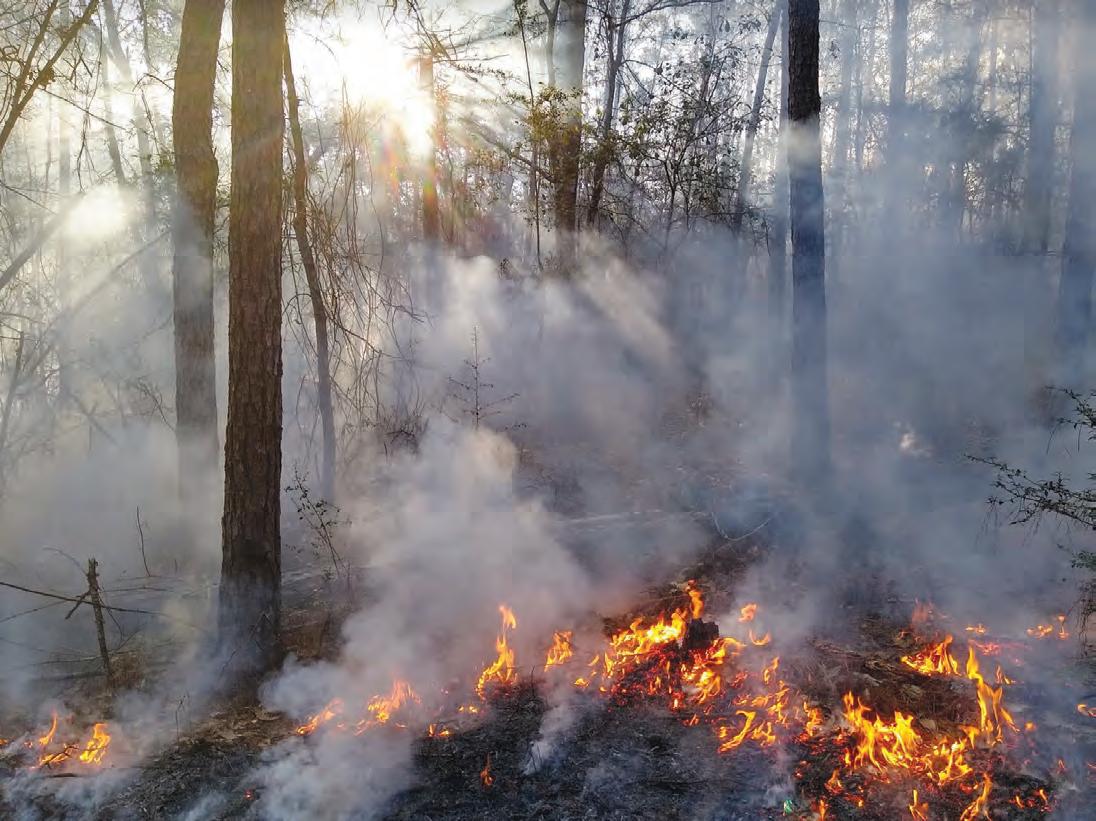
32 IF YOU BUILD IT, THEY WILL GLOW
Fireflies are dimming in Louisiana; LSU AgCenter scientists are working to bring them back by Christie Matherne Hall
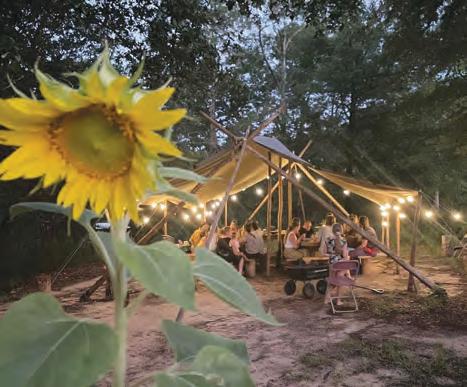
36 A DESERT IN THE RAIN
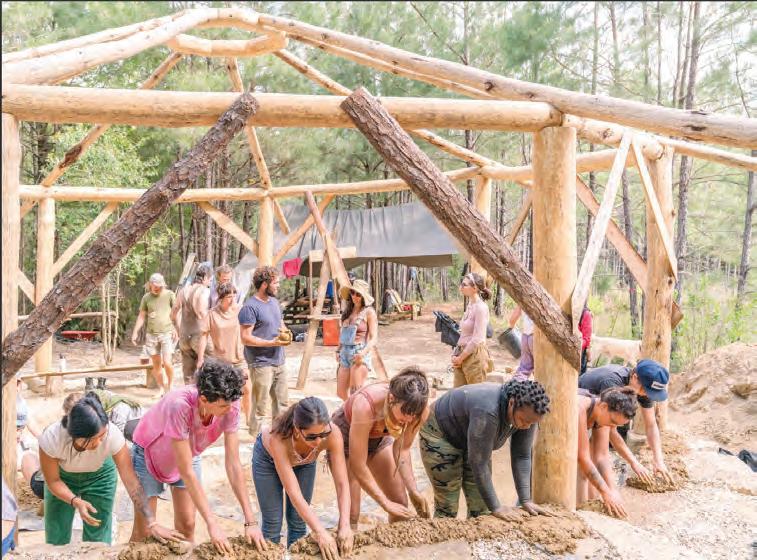
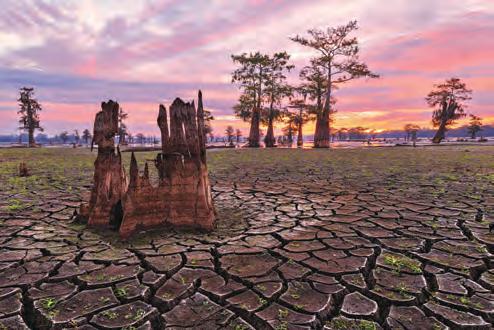
The All You Need Institute is restoring a rare landscape while reimagining how we live with the land—and each other by Mimi Greenwood Knight
11
MAY THE FUN BE WITH YOU
Cook-off season takes off, from jambalaya to crawfish pie-ya
39
ANOTHER LIMPKIN SUMMER
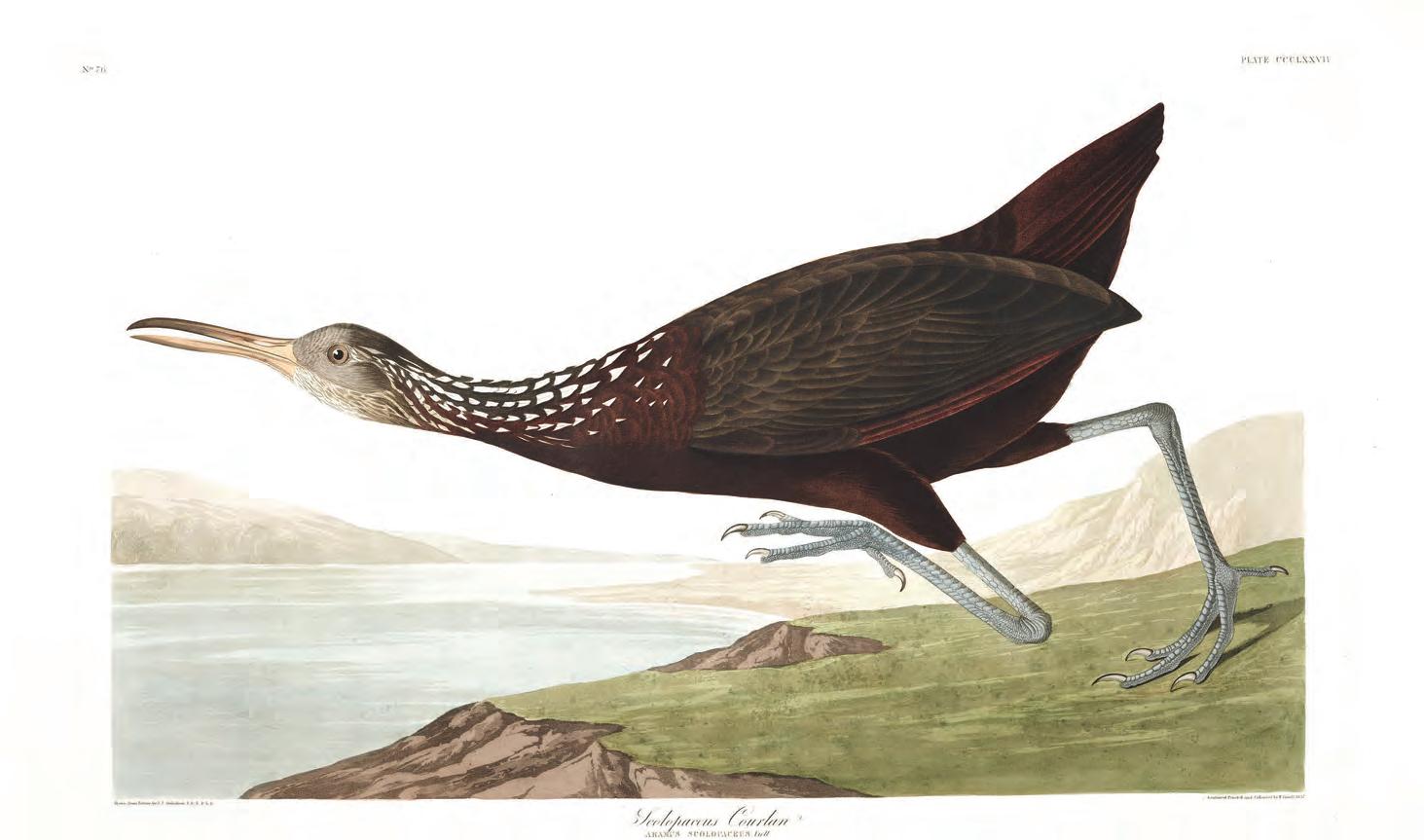
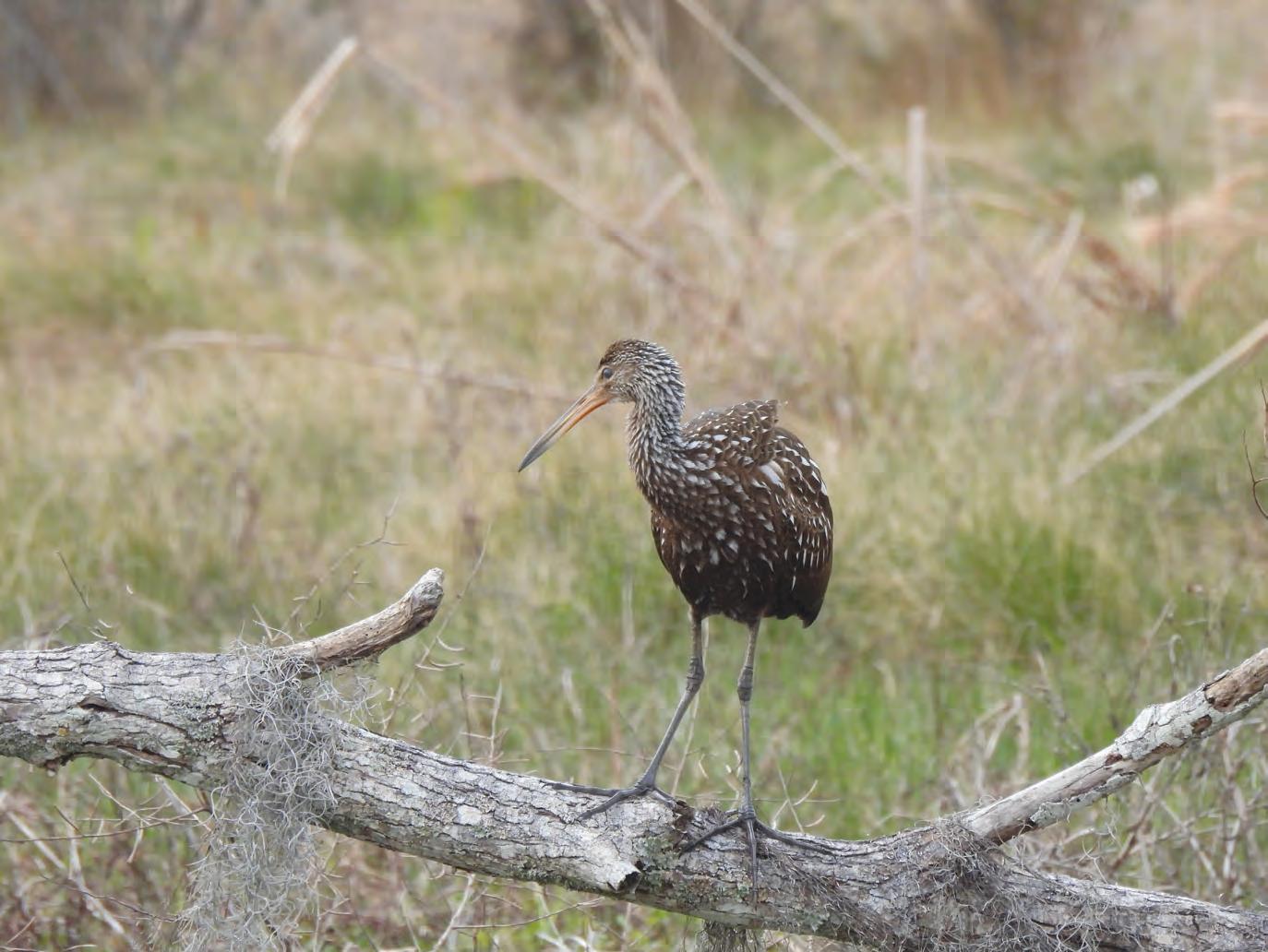
Louisiana’s newest wetland resident arrives on the wings of an apple snail feast, and may be here to stay by Chris Turner-Neal
On the Cover
BAYOU SWING
Artwork by Natalie Armstrong
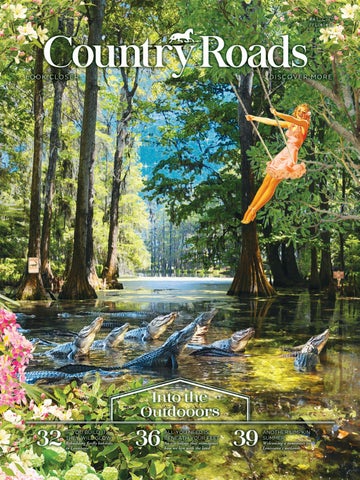
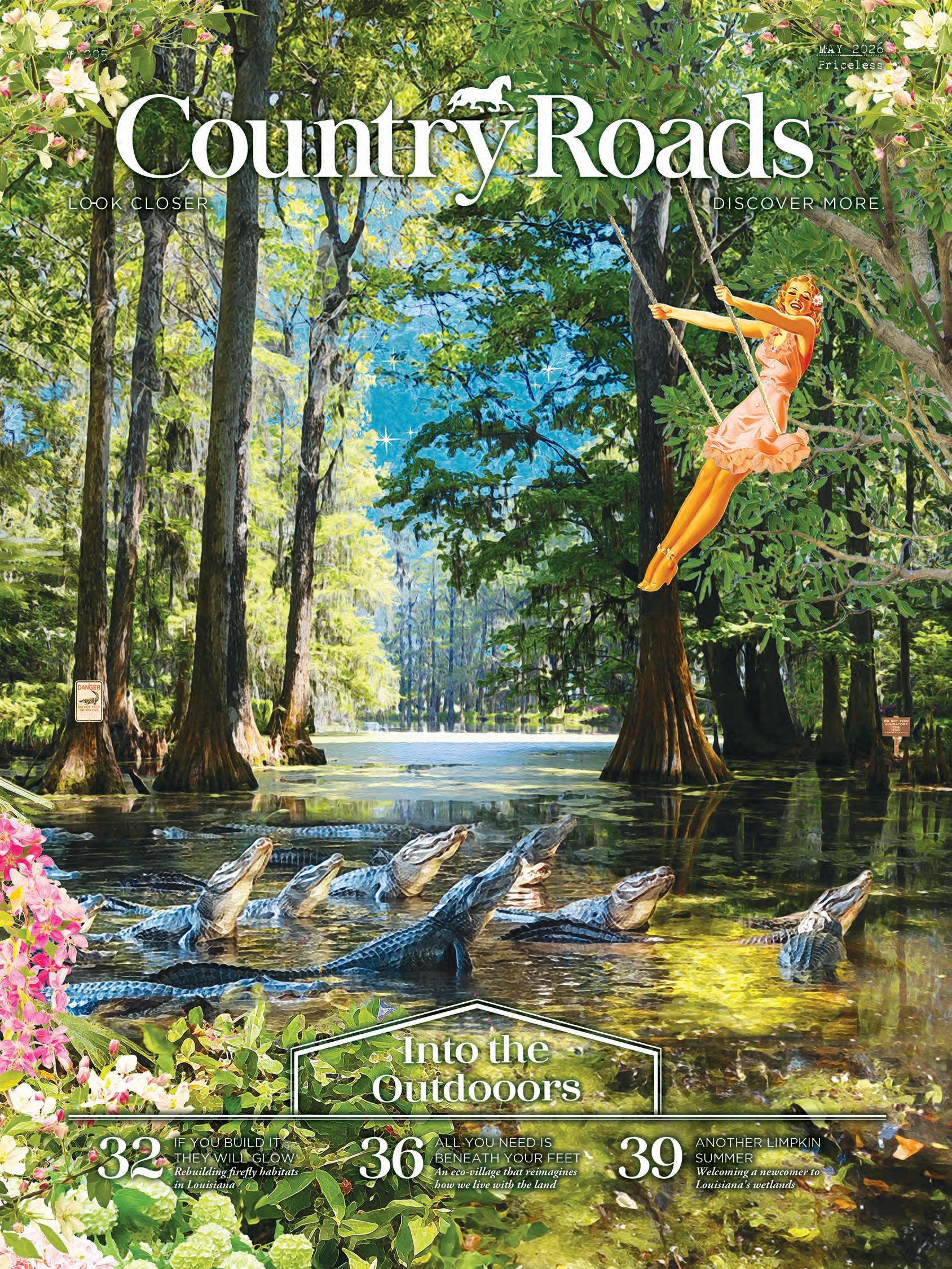
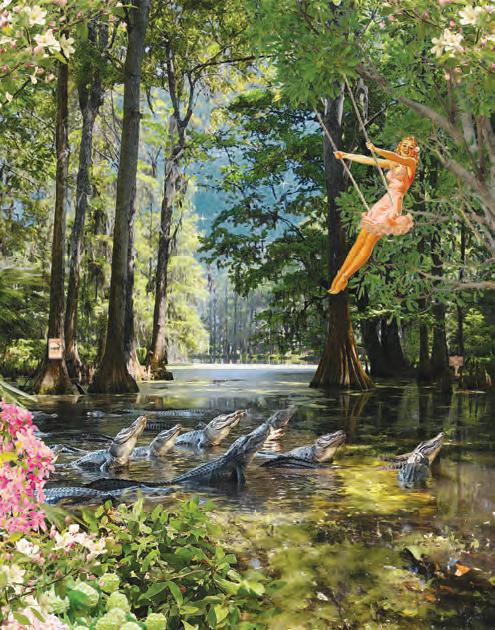
From West Monroe mixed media artist Natalie “Fifi Gi” Armstrong’s Rococo on the Bayou series, the surrealist “Bayou Swing” playfully juxtaposes conceptions of femininity and nature—which, after all, is so often depicted as feminine itself. The verdancy of the swamp stuns, a place of remarkable beauty as well as disorder. The woman’s high heels and fashionable dress make no sense in this environment, except that they sort of do. She delights in the world around her, its mystery and majesty, despite its danger. Or maybe because of it? After all, who is to say the gators awaiting below are a threat? Perhaps they are merely admiring this beautiful, mysterious creature swinging from the treetops. See more of Armstrong’s work at fificollageart.com.
Outdoors
A GARDEN IN . . .
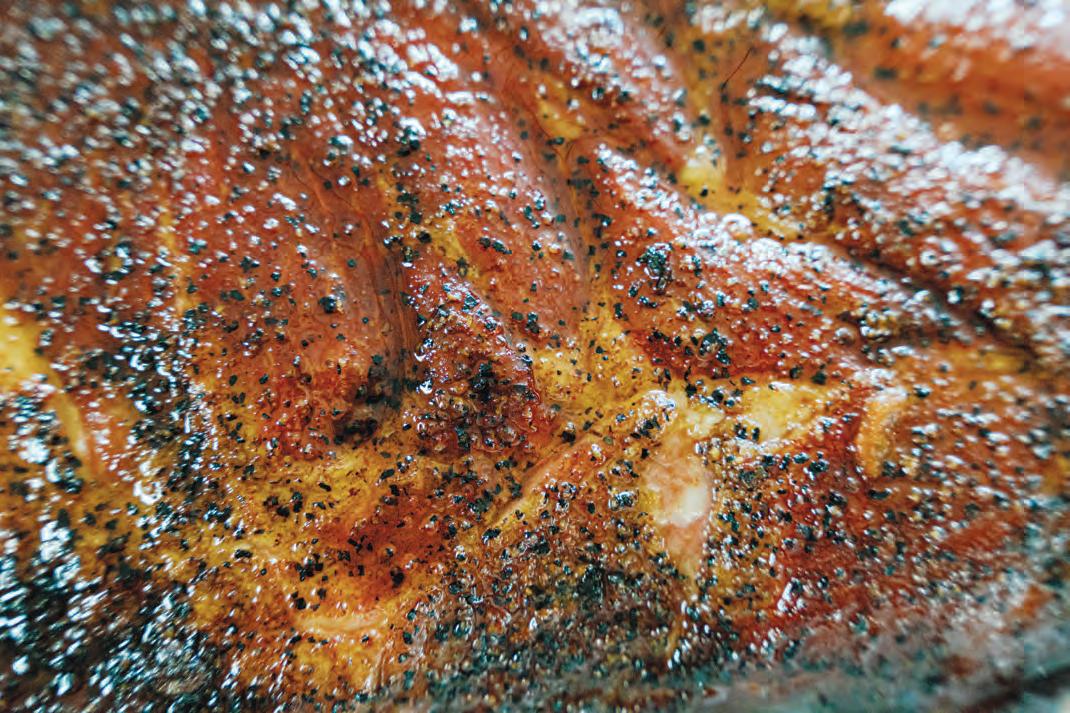
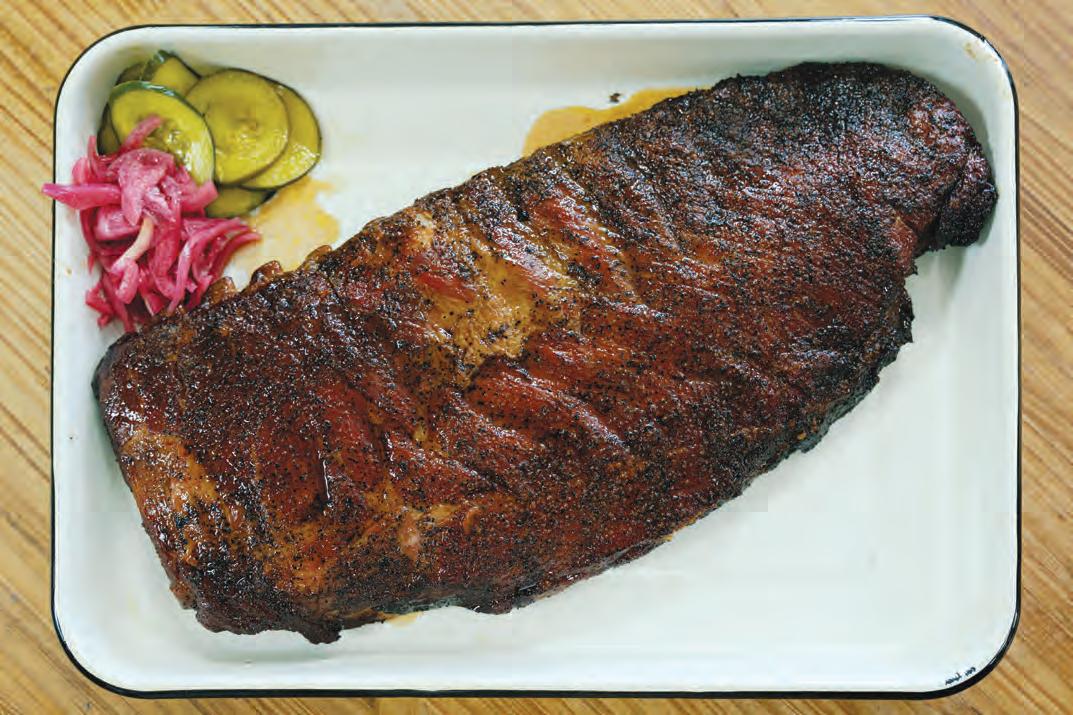
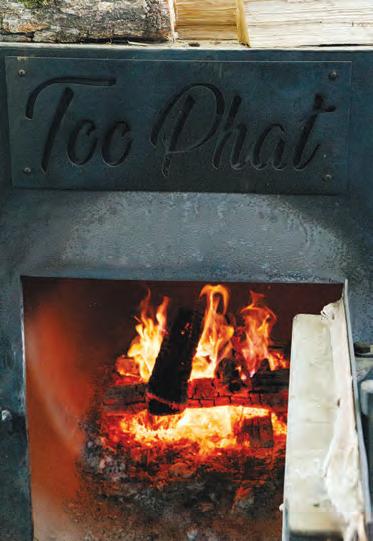
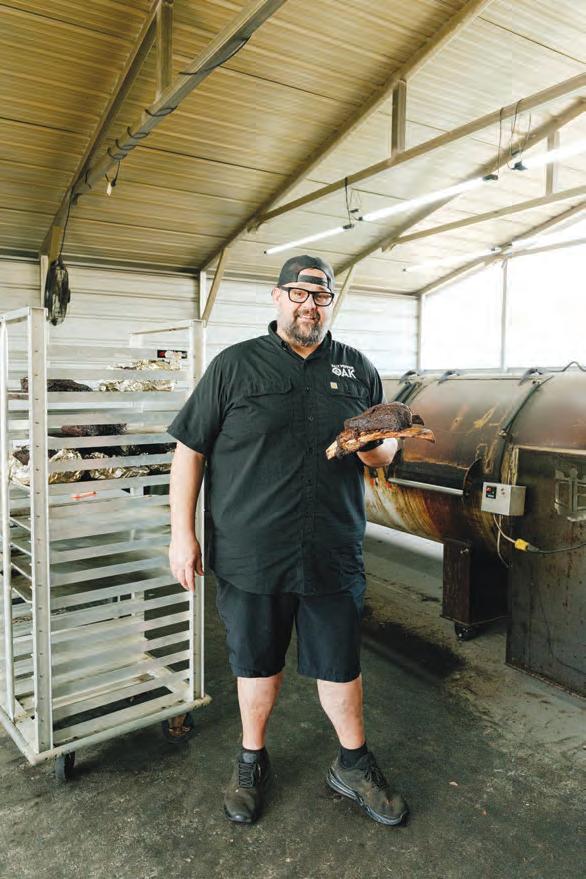
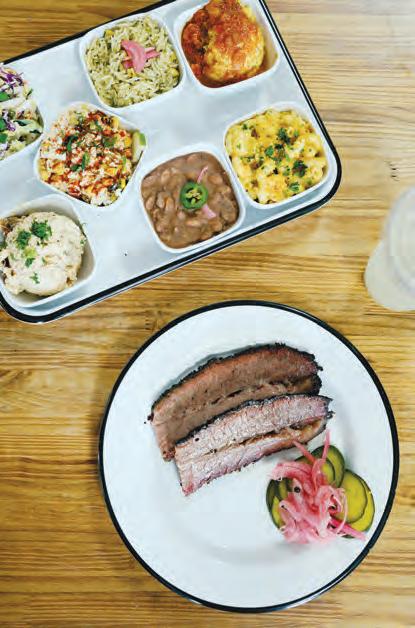
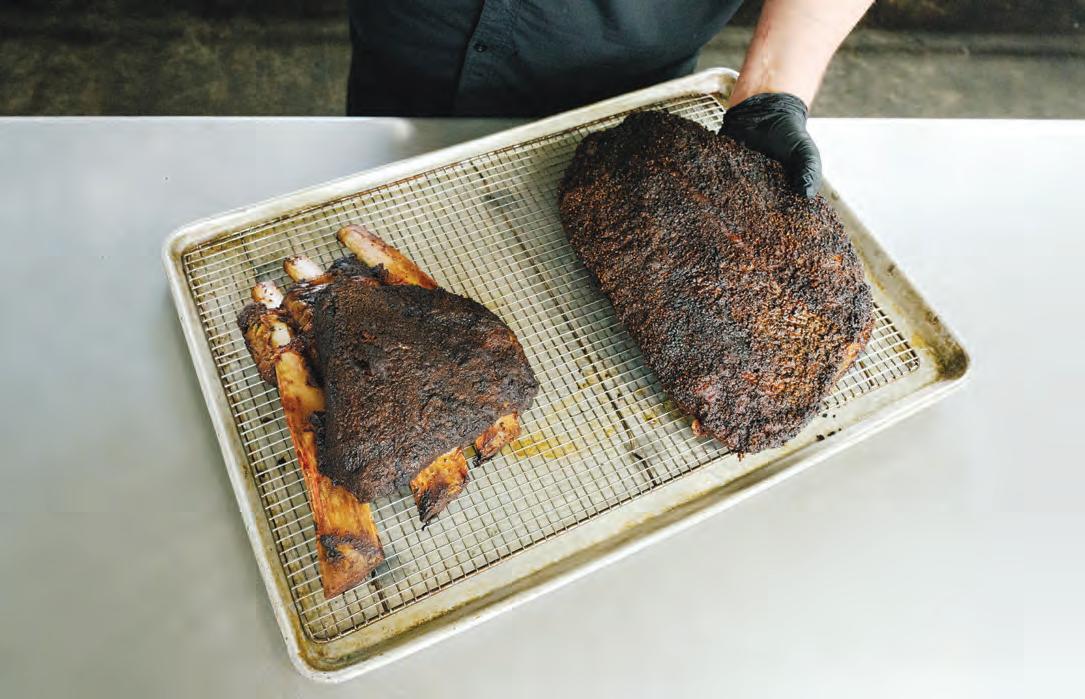
Inside the fire-fueled rise of Baton Rouge’s buzziest barbecue joint by Jordan LaHaye Fontenot
SOUPÇON
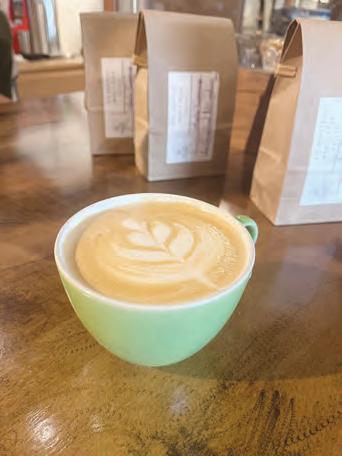
A new coffee shop + grocery in Baton Rouge and EatLafayette’s new foodie app by CR staff
46
ANYTHING
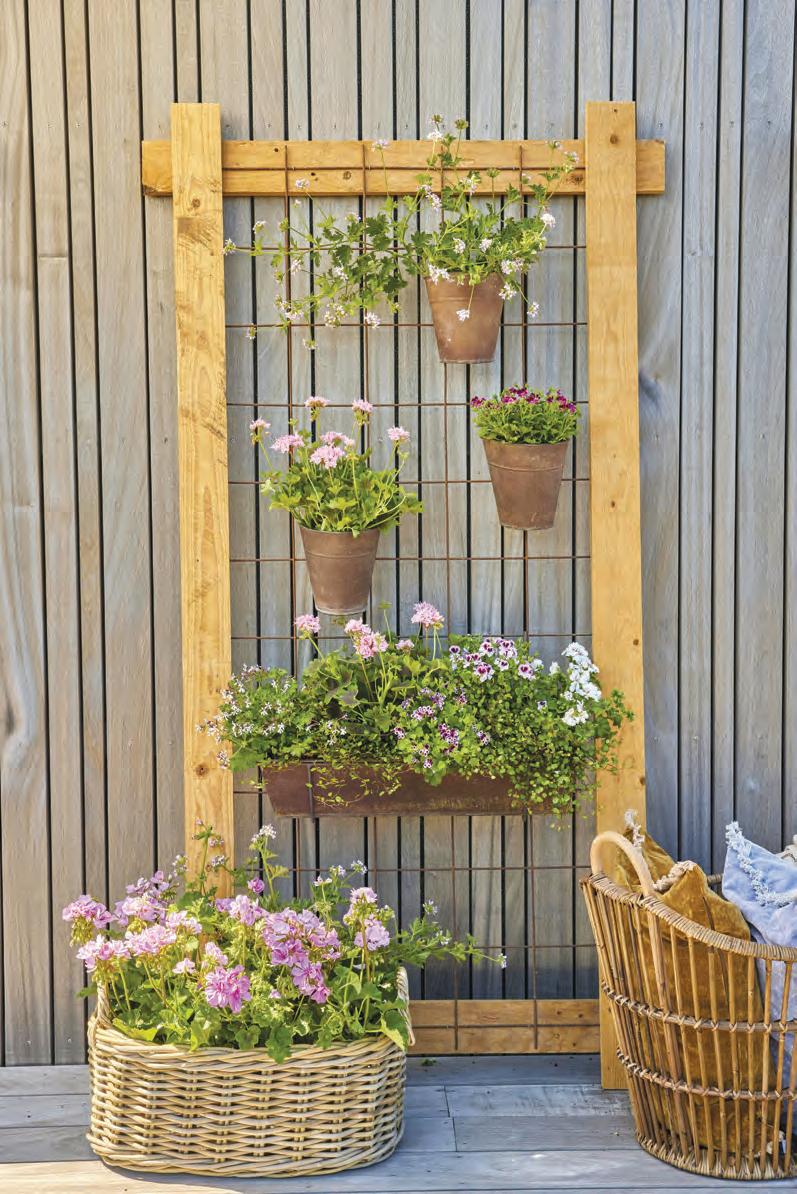
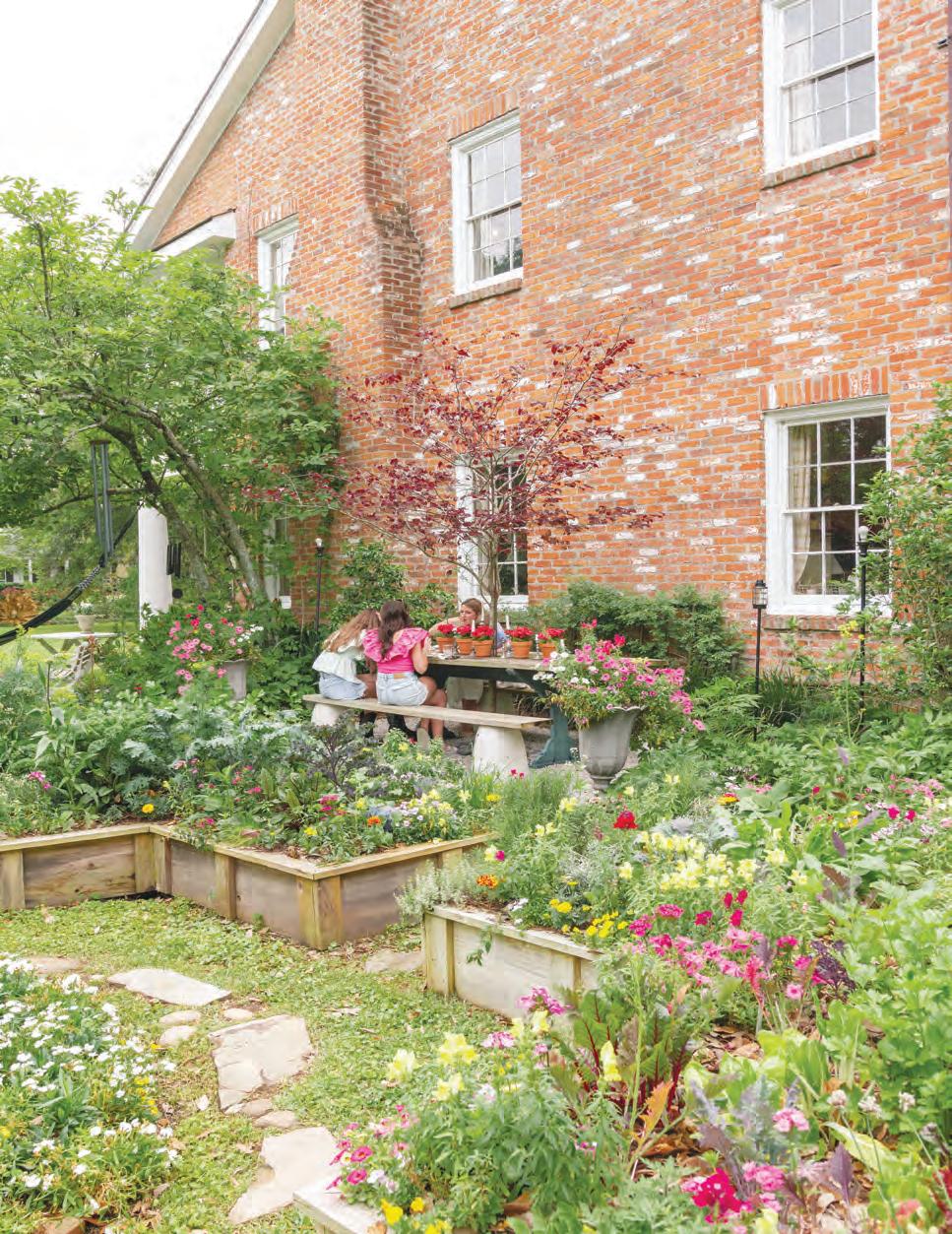
The secrets to container gardening in South Louisiana by Jess Cole
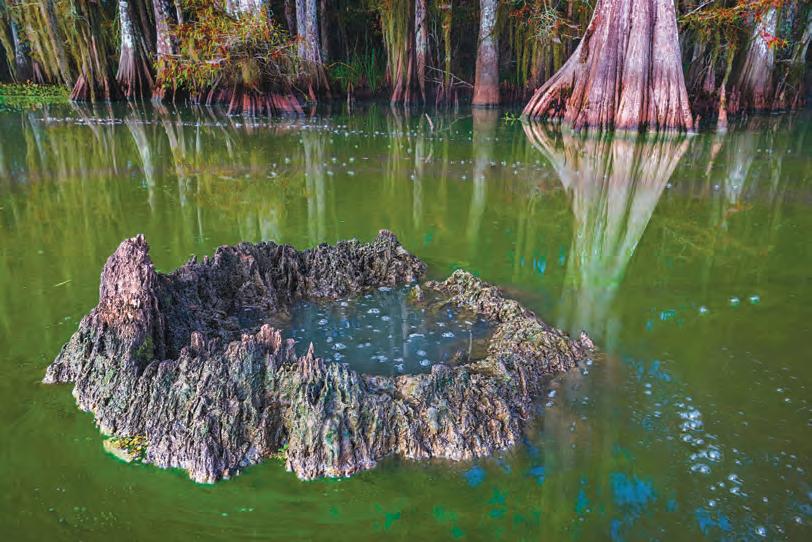
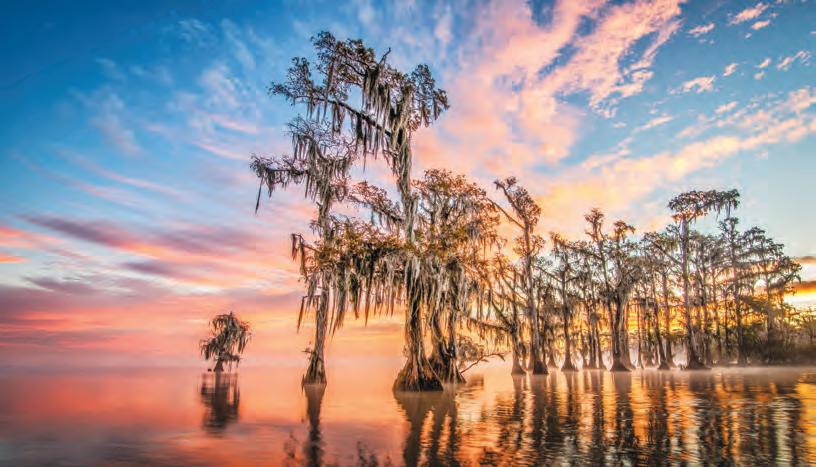
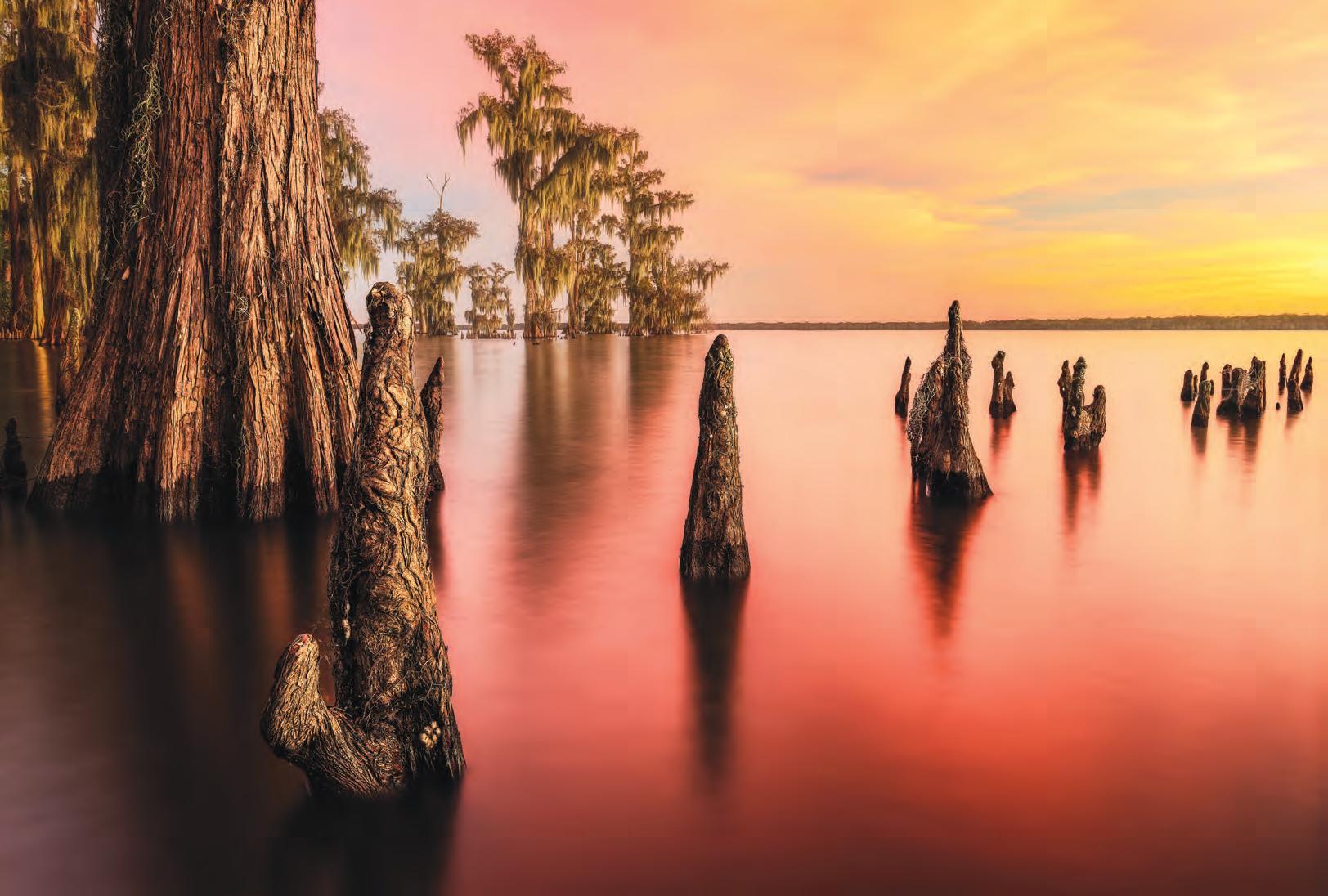
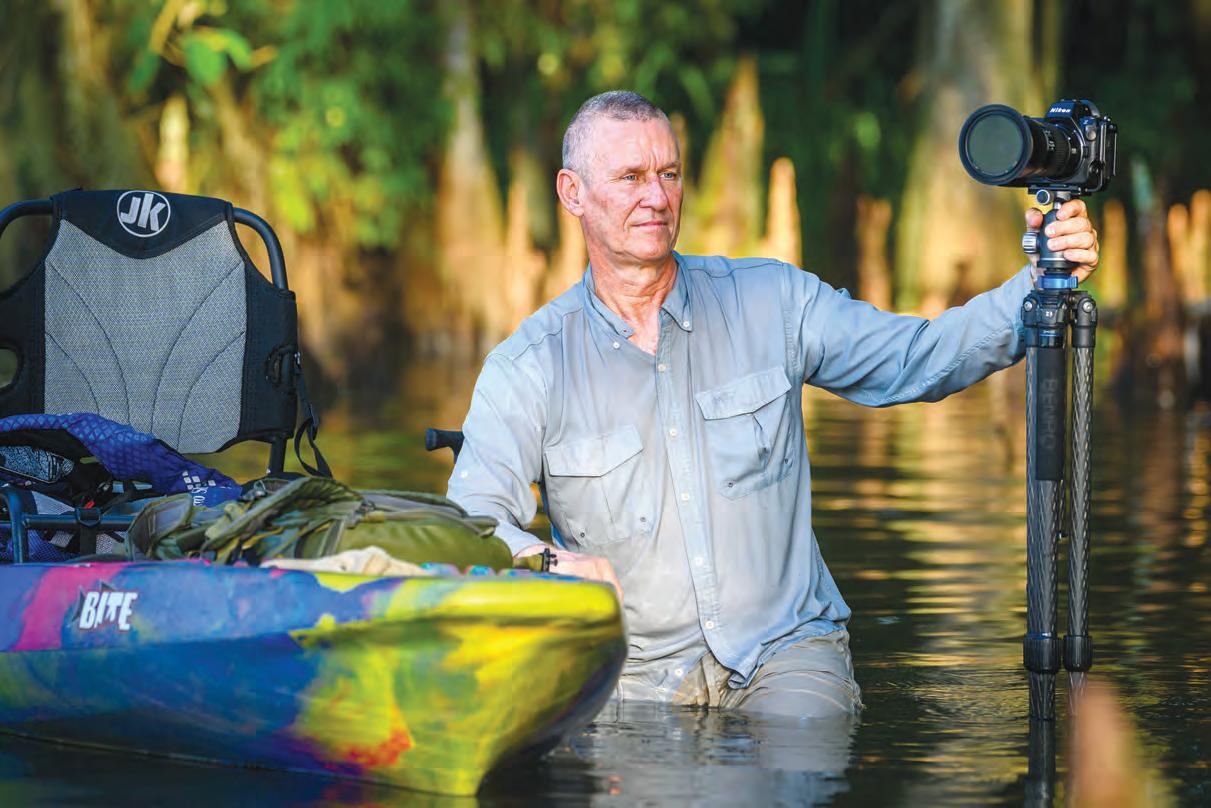
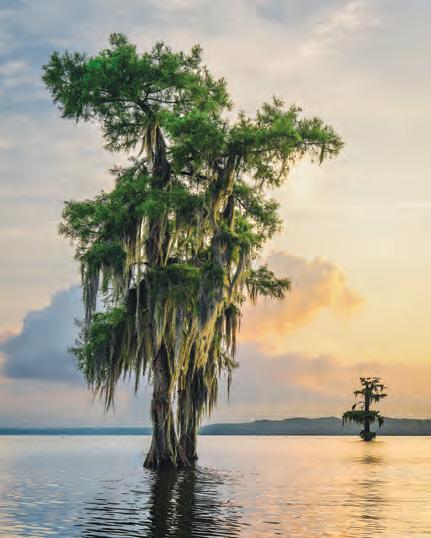
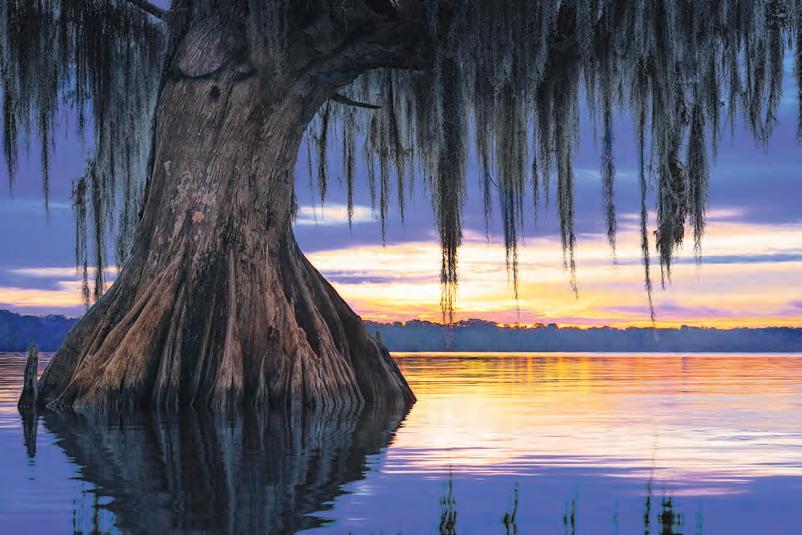
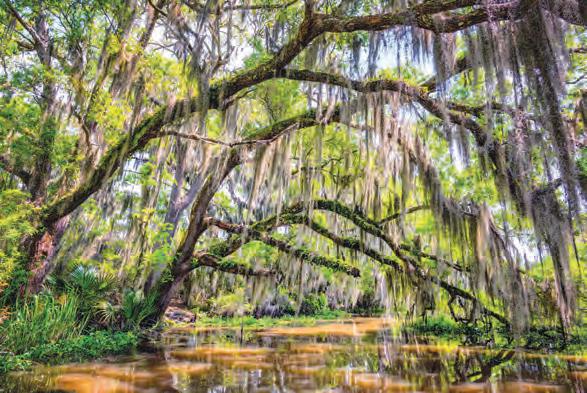
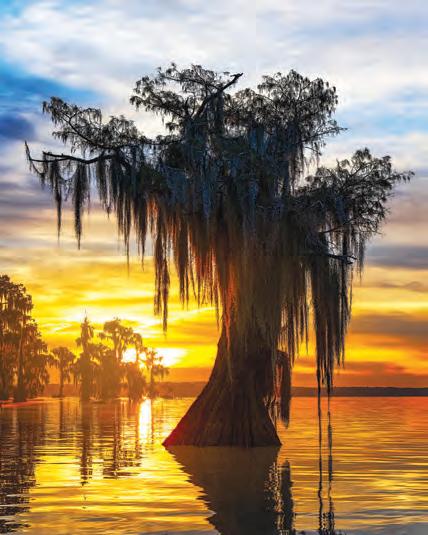
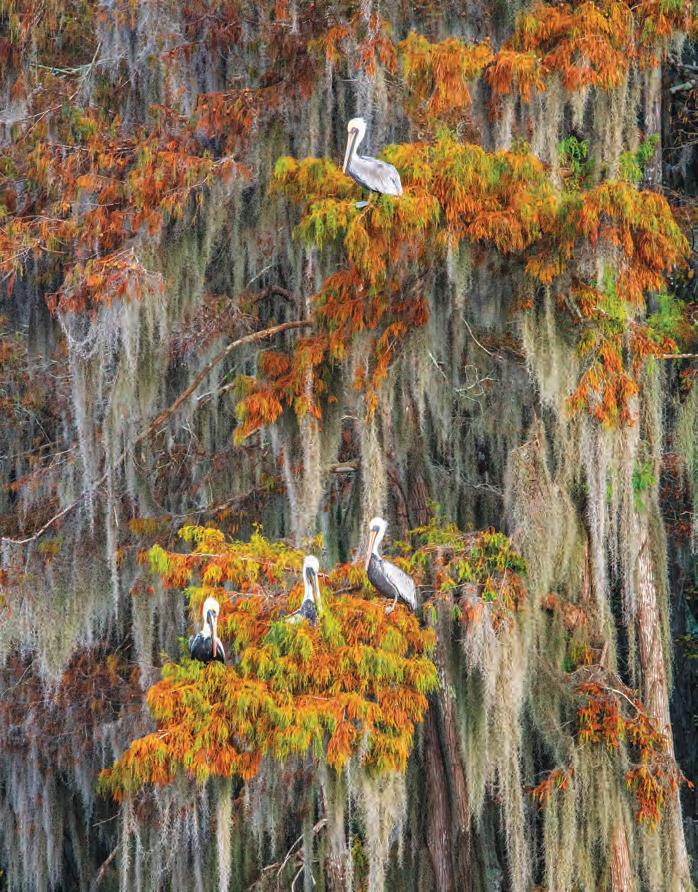
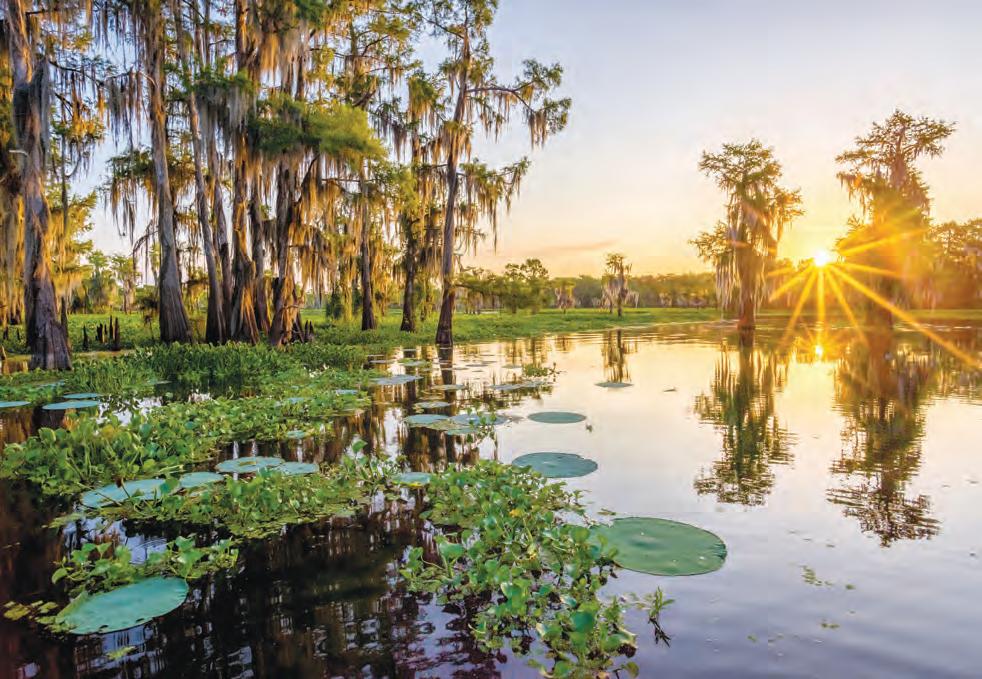
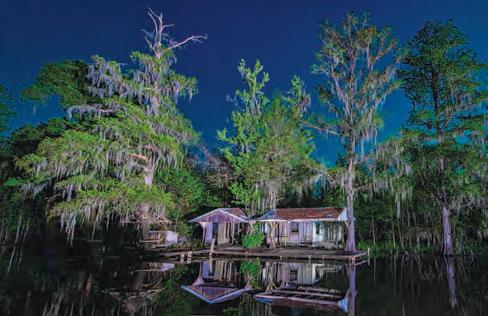
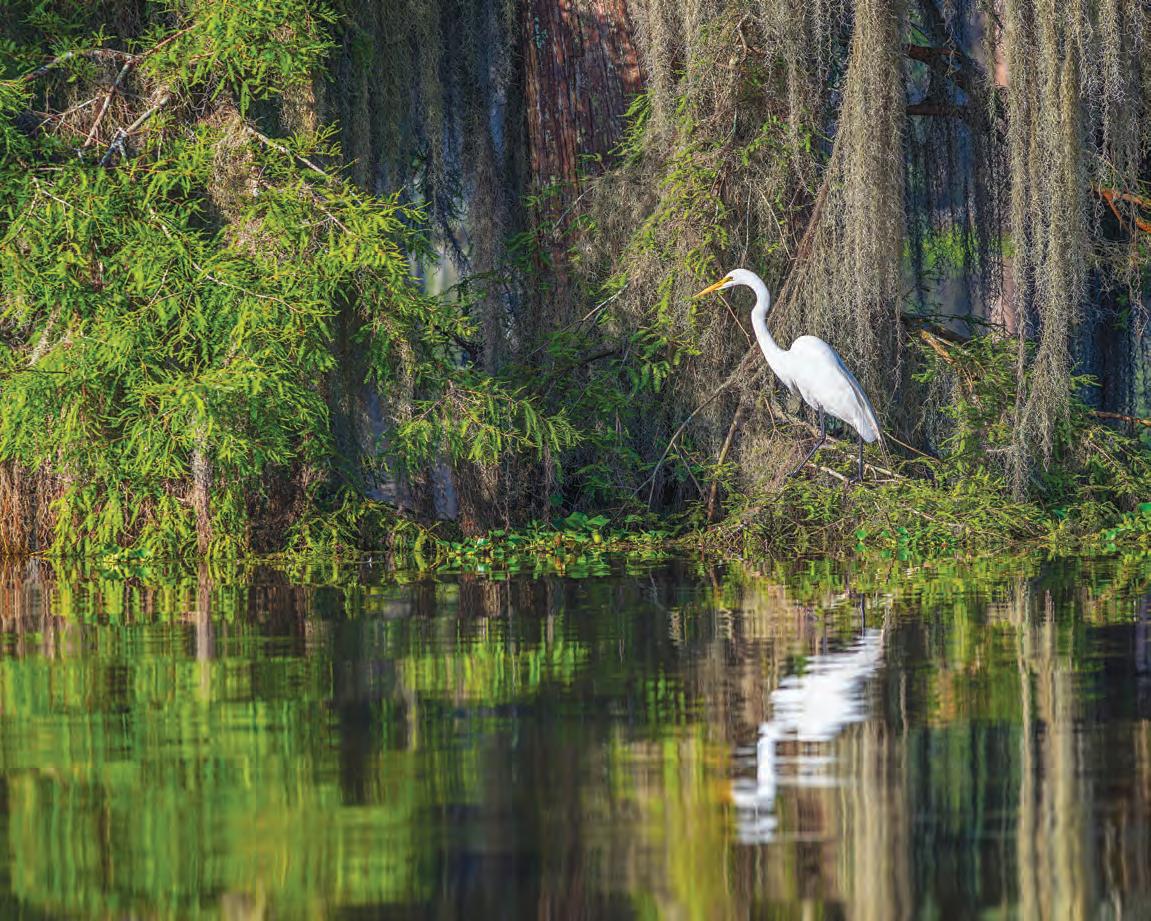
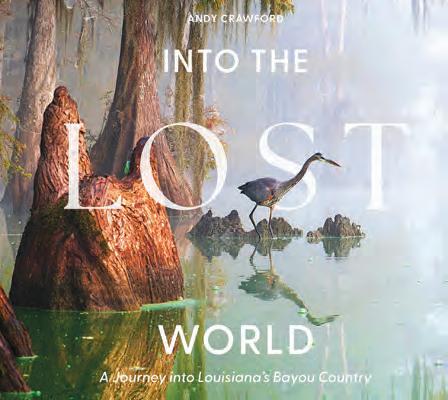
48 HOLDING THE SWAMP STILL Photographer Andy Crawford finds order in the chaos of the wetlands by Jordan LaHaye Fontenot
Culture
52 CAJUN CAMP
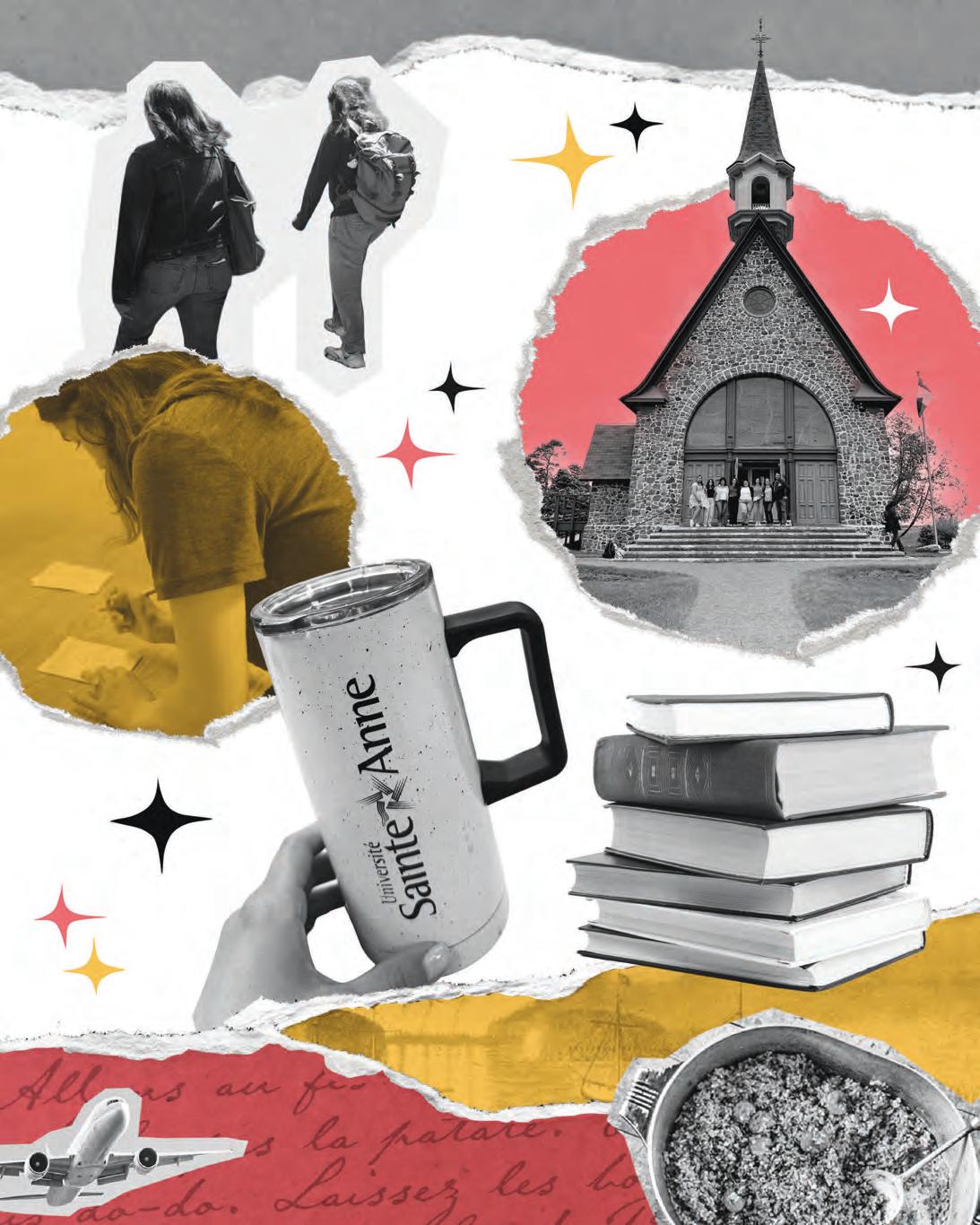
Encountering my inner child in Nova Scotia by Megan Broussard Maughan
Escapes
54 AN EARTH DREAM
At a Gulf Coast sanctuary, artists and seekers wander toward a shared ecological vision by Marshall Blevins-DeLoach
56 THE HILLS ARE ALIVE
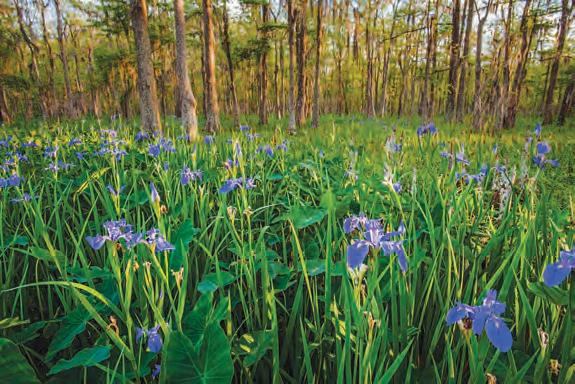
In Louisiana’s most botanically rich landscape, rare plants persist in refuge by Latimore Smith, Jess Cole, and Dr. Chris Reid
62
THE ART OF THE SAW
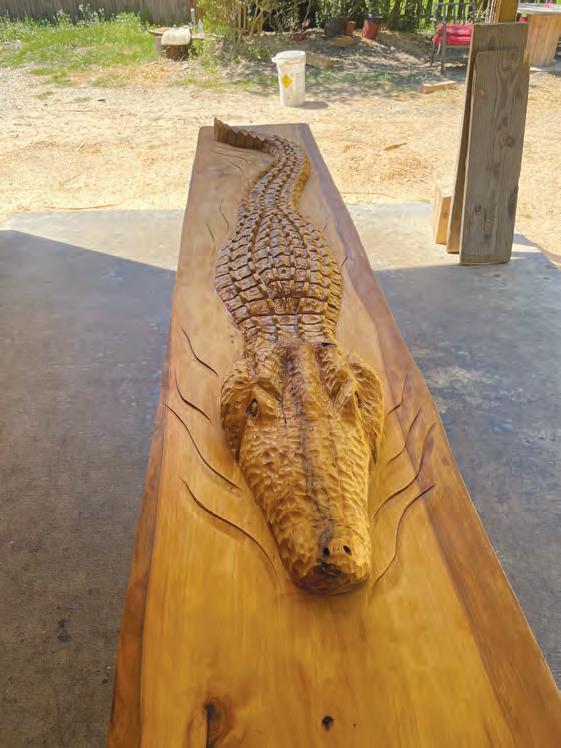
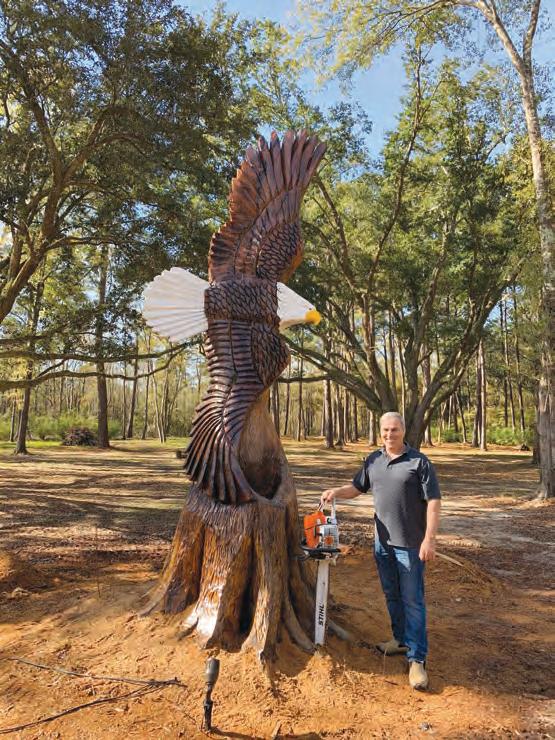
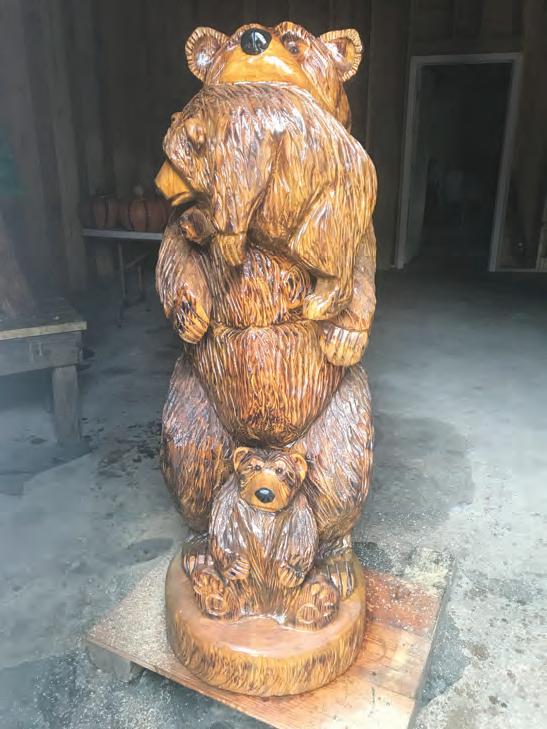
Steve Tresvik carves larger-than-life sculptures out of Louisiana forests by Mimi Greenwood Knight
Publisher James Fox-Smith
Associate
Publisher Ashley Fox-Smith
Managing Editor Jordan LaHaye Fontenot
Arts & Entertainment
Editor
Jacqueline DeRobertis-Braun
Creative Director Kourtney Zimmerman
Contributors: Marshall Blevins-DeLoach, Megan Broussard Maughan, Andy Crawford, Jess Cole, Mimi Greenwood Knight, Christie Matherne Hall, Dr. Chris Reid, Latimore Smith, Chris Turner-Neal
Cover Artist
Natalie Armstrong
Advertising
SALES@COUNTRYROADSMAG.COM
Sales Team
Heather Gammill, Heather Gibbons, Mary Margaret Lindsey
Operations Coordinator Molly C. McNeal
President Dorcas Woods Brown
nor do they constitute an endorsement of products or services herein. Country Roads magazine retains the right to refuse any advertisement. Country Roads cannot be responsible for delays in subscription deliveries due to U.S. Post Office handling of third-class mail.
Reflections
FROM THE PUBLISHER
My first glimpse of Natalie Armstrong’s “Bayou Swing” collage, which appears on the cover of this “Into the Outdoors” issue, brought to mind an excursion to Lake Martin near Breaux Bridge some years back. My wife’s sister, Becky, was visiting from California with her two young kids. It was April, and since Becky is a fanatical birdwatcher with a thing for roseate spoonbills, an expedition to one of South Louisiana’s best birdwatching destinations seemed to check all the right boxes. An amateur ornithology class, taken during Becky’s time at LSU medical school, has armed her with enough birding knowledge to be—if not exactly dangerous on the subject of Louisiana bird species—then at least a bit of a know-it-all. “Oh, listen to that prothonotary warbler,” she’ll exclaim upon hearing some generic twittering from the undergrowth. Finally tiring of hearing her waxing lyrical about the nestbuilding habits of great-crested flycatchers, we made reservations at a Breaux Bridge-area B&B, loaded a trailer with canoes and kayaks, and set out with plans to be on the water at dawn.
The birds did not disappoint. During springtime, Lake Martin and the nine-
thousand-acre Cypress Island Preserve that surrounds it are simply heaving with birdlife. From March through June, mind-boggling numbers of egrets, herons, roseate spoonbills, and scores of other species gather to nest and raise their young in large, rambunctious colonies that turn the preserve’s stands of old-growth cypress trees into a kind of wading bird shanty town. While various swamp tour companies offer guided tours of Lake Martin, and the Nature Conservancy maintains a walking trail around the lakeshore, I think the best way to experience the springtime birdnanza here is at water-level—perched in a canoe or a kayak. This allows an occupant to slip quietly through the groves of cypress and tupelo, gliding up close to the rookeries without disturbing their occupants much. This mode of transport carries the added benefit of being quiet, with no motor to drown out the symphony of honking, gargling, and cackling that the multitude sends up.
But the birds were only the beginning. The other kind of wildlife at the top of its game was Lake Martin’s enormous population of alligators. The morning started out cool, but as the sun burned off the early chill, they emerged. Short ones, long ones, fat ones, and a few real leviathans, hauling themselves sluggishly out of the water to bask in the spring sun. By 10 am, there seemed to be an alligator on every bank and log. This development affected members of our expedition differ-
ently. My wife and daughter were keen to give anything remotely reptilian the widest possible berth. Becky quit her kayak and disappeared into the forest to look for nests. The boys, being boys, set about seeing how close they could get to the largest gators possible. I found myself in charge of our fourteen-year-old son and his nine-year-old cousin, joining them for an inadvisable hour spent sidling beside gators—encounters that usually ended with the beast retreating beneath the murky water … but not always.
Another lesson of springtime in the swamp: wading birds aren’t the only ones getting it on. April is breeding season for alligators, too. Courtship makes males more aggressive, and sensible people don’t take to the water in small, green, alligator-shaped watercraft. You can probably guess where this is going. Having spotted a larger-than-usual snout and pair of eyes protruding from the water, the boys and I were inching our kayaks closer while ignoring the imprecations of my wife, who was bobbing about at a
sensible distance. We were probably fifteen feet away when the snout erupted from the water, connected to the largest alligator I’ve ever seen. Opening enormous jaws, he lunged forward, bellowing what might either have been a warning, or a declaration of love. We did not stick around to find out which. Never have three kayaks moved faster. I believe that our “Bayou Swing” cover girl could have water-skied behind us.
But all’s well that ends well: Becky spotted spoonbills, no children got eaten, and everyone came away with not only an unforgettable Louisiana adventure, but a good story to tell, too. Each month, this is what Country Roads sets out to do: make life in Mississippi and Louisiana richer by bringing meaningful, memorable experiences within reach.
If you value this work, I have a favor to ask: in this issue you’ll find a copy of Country Roads’ Readership Survey, which we send to our readers about once each decade. In it, we ask how you use Country Roads, what you love, don’t love, and what you’d like to see more of, from this magazine. Your responses will help us to make Country Roads a better guide to the finest that Louisiana and Mississippi have to offer. So please, take a few minutes to share your thoughts, and thank you for being part of Country Roads. We couldn’t do this without you.
From Awareness to Action—A Message from Child Advocacy Services
In Louisiana, more than 4,600 children are in foster care as a result of abuse or neglect. Non-profit organization Child Advocacy Services operates programs that give these children voice, healing, and security. Learn how you can help.
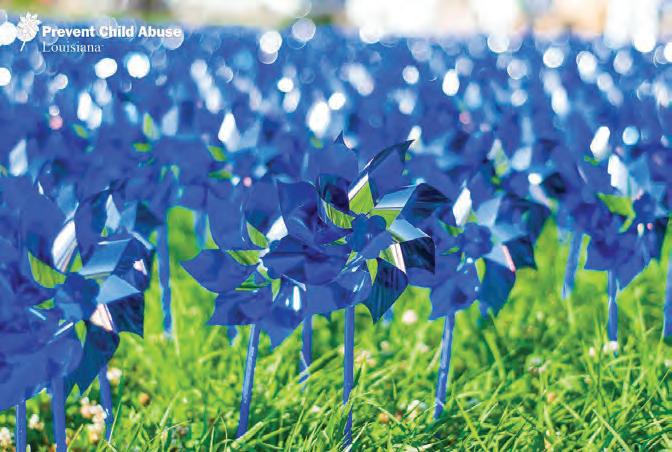
Each April, blue pinwheels appear across Louisiana communities, lining walkways and filling yards. They’re more than just a cheerful display. Each pinwheel represents our shared vision: a world where all children grow up safe, supported, and loved. Every pinwheel garden we plant serves as a visual reminder that prevention starts with us. These pinwheels symbolize National Child Abuse Prevention Month, when communities across the nation come together to raise awareness and show support for children who have experienced abuse. Here in Louisiana, that message is especially important, as more than 4,600 children are currently in foster care due to abuse or neglect.
If April is about awareness, about recognizing the need, then May becomes about action. The question shifts from what is happening, to what can we do?
Lakisha Penn serves as the Chief Executive Officer at Child Advocacy Services, a non-profit organization serving children and families across ten parishes in Southeast Louisiana. Through its two core programs: Court Appointed Special Advocates (CASA) and the Children’s Advocacy Center (CAC), CAS works to ensure that children who have been abused or neglected are heard, supported, and given the opportunity to heal. Whether advocating for a child in a courtroom or coordinating critical services, CAS is committed to giving each child voice, healing, and security.
CAS could not do this work without the support of our village, everyday members of the community who play a vital role in changing the lives of children in three meaningful ways.
I. EDUCATE
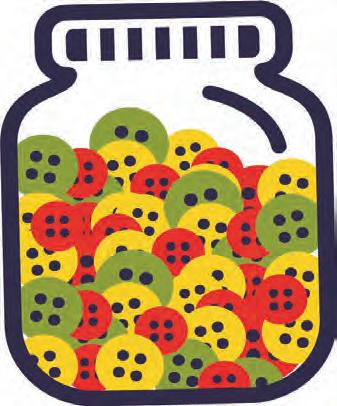
and ensure the safety of children and families throughout the investigative process. Afterwards, children are invited to leave behind a button and to take one home with them, part of what we call Buttons of Bravery. Each button represents a story, and together, they reflect the strength and resilience of the children we serve. In many ways, this work is about threading hope and connecting children to the people, resources, and support systems they need to move forward.
II. VOLUNTEER
“The number-one need for the CASA program is volunteers,” said Penn. “Without them, the program does not exist. Because they share their time, talent, and passion with us, we can help children receive more needed services and reach a safe and permanent home quicker.”
A central part of Child Advocacy Services is the Court Appointed Special Advocate (CASA) program, a national initiative that recruits, trains, and supervises volunteers to serve as powerful voices for abused and neglected children as they navigate through the court system. CASAs are everyday community members appointed by a judge to advocate for children in need of care. These volunteers serve as a consistent voice for a child, both in and out of the courtroom, helping to ensure their best interests.
“Child abuse and neglect represents one of the lows of the human spirit. Every year children enter a complex child welfare system due to no fault of their own. Most have been failed by those who should have protected them. CASA volunteers are everyday citizens who have made the decision to speak life into these children. They advocate, without hesitation, for what is best for these children, and they help them navigate the complexities until they are reunited with family or placed with a new family.”
“We understand that not everyone has the financial means to donate to our organization, or the time to volunteer,” said Penn. “But what they can do is spread the word about the need, and about the services we offer.”
A great place to begin is learning to recognize the signs of abuse and the services available to assist families and children in need. The CAS website (www. childadv.net) hosts several educational resources and programs designed to help keep children safe.
II. DONATE
For those looking to support financially, there are many ways to get involved, including the Pinwheel Campaign and other giving opportunities that help carry this work forward.
Each pinwheel planted is a visible reminder of a shared commitment to protect children. Behind the visibility is the ongoing work of walking alongside children as they begin to heal. At the Children’s Advocacy Center, a multidisciplinary team of professionals works together to reduce trauma
“Child abuse and neglect represents one of the lows of the human spirit,” said Penn. “Every year children enter a complex child welfare system due to no fault of their own. Most have been failed by those who should have protected them. CASA volunteers are everyday citizens who have made the decision to speak life into these children. They advocate, without hesitation, for what is best for these children, and they help them navigate the complexities until they are reunited with family or placed with a new family.”
Right now, the need is greater than the number of volunteers available, with many children across Louisiana still waiting for an advocate. Learn more about how to get involved in CAS and CASA at childadv.net.
Burden Welcomes You
A NEW WELCOME CENTER WILL SOON USHER VISITORS INTO THE LAYERED LANDSCAPES OF ONE OF BATON ROUGE’S MOST ICONIC PROPERTIES
Burden Museum & Gardens, an Edenic expanse of pastures and plantings nestled in hthe teeming heart of Baton Rouge, has long drawn visitors of all ages to peruse its abundant offerings. Soon, visitors will be greeted by a new welcome center that will serve as a gateway to the lush 440-acre property.
With construction on the new facility officially completed as of early 2026, Burden staff, along with volunteers, have begun the process of extensive landscaping “to bring the surrounding grounds to life and create a warm, inviting arrival experience,” said Malorey Uzee, communications coordinator for the LSU AgCenter
Parade of Sail
Botanic Gardens.
Funded by private donations, the center has been in the works for Burden since 2009 as part of its master plan. Before its construction, Burden had no central building to inform and direct visitors across the vast estate, which includes the LSU AgCenter Botanic Gardens at Burden, the LSU Rural Life Museum, and Windrush Gardens.
With a subtle, modern design, the new welcome center incorporates components that reference the historical buildings on the property, with information to aid visitors in interpreting the surrounding landscape and Burden family legacy. Beyond aesthetics and historical val-
ue, the center will also operate as an educational tool for managing stormwater runoff; when it rains, water will fall down through scuppers on the side of the building into a detention basin, then flow into a rain garden, and into Ward Creek, according to Jeff Kuehny, director of the AgCenter Botanic Gardens. “It’s a way to manage both the quantity and quality of stormwater,” he said. When it officially opens later this year, the welcome center will act as a central hub to the fascinating property, and it will also be available for rentals for educational programs, meetings, events, and receptions. discoverburden.com.
—Jacqueline DeRobertis-Braun
A RECORD-BREAKING FLEET OF TALL SHIPS CHARTS A CELEBRATORY COURSE FOR AMERICA250 IN NEW ORLEANS
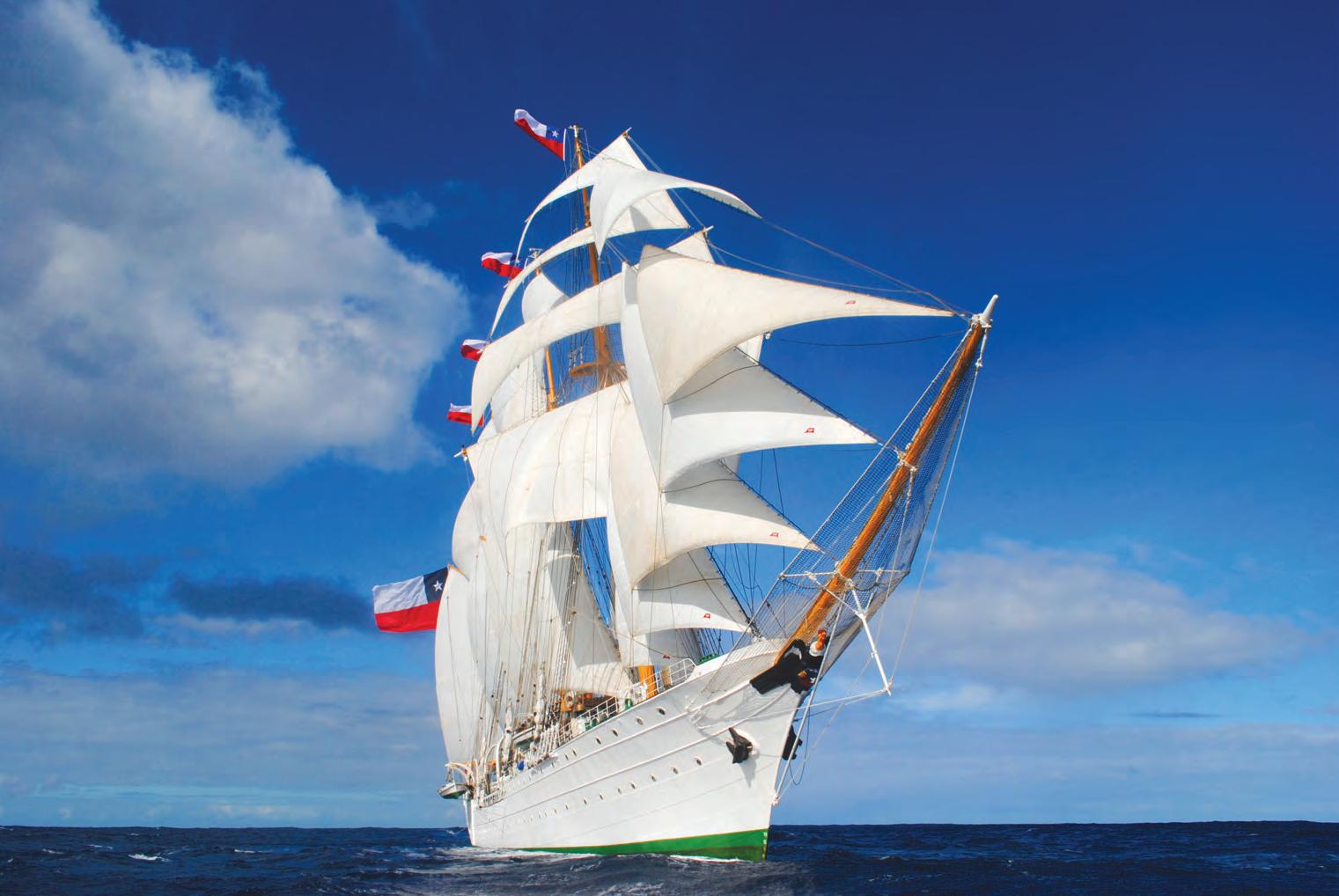
Thhis month, twelve of the world’s most distinguished ships will drop anchor in the port of New Orleans, making up the largest-ever flotilla of tall ships. The stun ning display will launch celebrations taking place across the nation for America250, commemorating America’s semiquincentennial this July.
Dubbed Sail250, the event will kick off on Wednes day, May 27 and Thursday, May 28, as the ships arrive in the official “Parade of Sail,” docking along the Mississip pi Riverfront from the Crescent City Connection Bridge to Poland Avenue Wharf. For free, visitors can step on board vessels such as Chile’s CNS Esmeralda three-masted schooner, the ROU Caitán Miranda the USCG Eagle, the only active square-rigged vessel still in United States government service as the Coast Guard’s training ship.
In typical New Orleans fashion, the occasion will be met with a host of celebratory events throughout the French Quarter and Warehouse District, including riv erfront fireworks on May 30, a seafood cook-off, educa tional exhibits, local food vendors, and more. On June 1, an official Blessing of the Fleet will see the ships off as they depart on their tour up the coast to other host cities, including Norfolk, New York City, and Boston.
“As one of the world’s great cultural crossroads and home to the Port of New Orleans—a vital gateway connecting global commerce to the American heart land—our city has long stood at the intersection of na tions, ideas, and maritime enterprise,” said Walt Leger, III, President and CEO of New Orleans & Company. “There is no more fitting place to begin this momentous national commemoration. We proudly invite visitors from near and far to experience our remarkable culture while celebrating America’s enduring maritime legacy.”
sail250neworleans.com
—Jordan LaHaye Fontenot
The CNS Esmeralda from Chile is one of twelve tall ships that will dock at the Port of New Orleans later this month as part of national celebrations of America’s 250th anniversary. Photo courtesy of New Orleans & Company.
Into the Wetlands
IN JEAN
LAFITTE, A NEW EDUCATIONAL CENTER CONNECTS VISITORS TO ECOSYSTEMS SHAPING COASTAL LOUISIANA
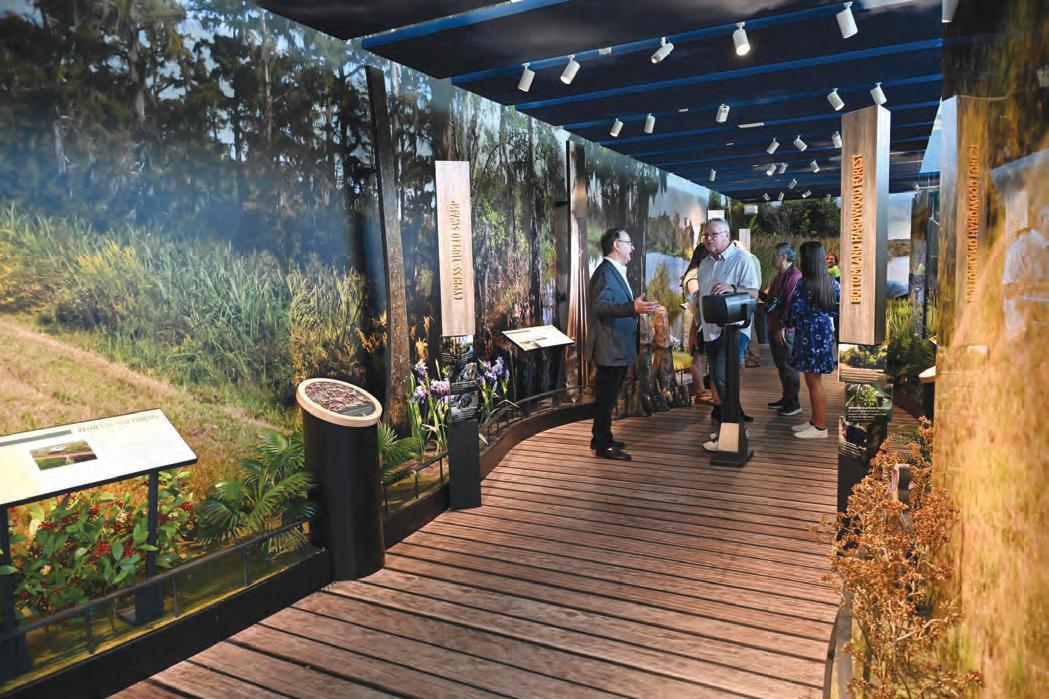
Adio-visual exhibits that explore the intricacies of wetland habitats, how the ecosystem has impacted human culture in the area, and contemporary efforts to protect and restore it.
At the March 20 ribbon cutting, Jefferson Parish Councilman Tim Kerner, Jr. explained the vision behind the center’s design. “You walk through it, and you learn about these wetlands,” he said. “You learn about what’s at stake, and if you don’t do nothing, what happens. It engages people; it makes people care.”
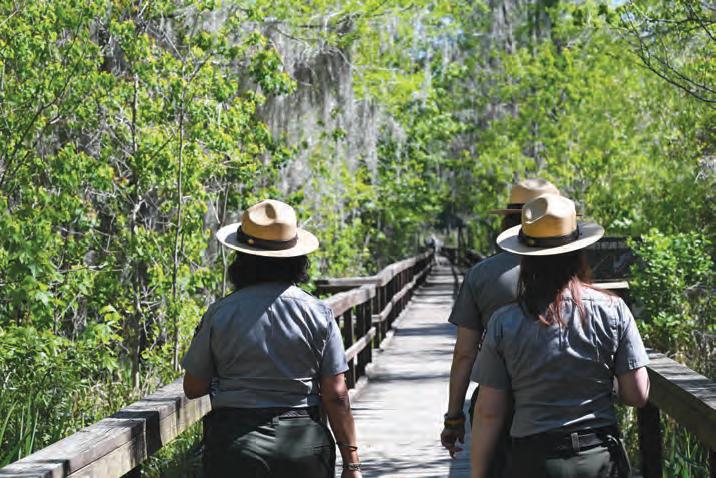
The Center’s location positions it as a gateway to the Jean Lafitte National Historical Park and Preserve. Visitors can literally step out of the Center and onto the Preserve’s iconic, mile-long boardwalk—a loop that carries them directly into the cypress swamps and marshland they just learned about.
“Wetlands are everything to Coastal Louisiana,” said Jean Lafitte Mayor Yvette Crain in an interview. “They protect us from storms, support our seafood industry, and are a big part of our culture and identity. For generations, people in Jean Lafitte have lived and worked off these waters. This Wetlands Center helps tell that story and reminds people just how important it is to protect these places for the future generations.”
The 3,500-square-foot facility was funded in part by the state, the Coastal Protection and Restoration Authority (CPRA), and FEMA, featuring immersive au-
historic fishing village of Jean Lafitte has depended upon and existed within the hdistinct wetland ecosystems of Louisiana’s coast for more than two hundred years. In March, a collective partnership between town leadership, Jefferson Parish, and state officials culminated in the Center—a new educational experience that emphasizes the significance this environment plays in not only the surrounding village, but also in Louisiana as a whole.
The Center is open Tuesday–Sunday, from 10 am–4 pm. Admission is free.
louisianawetlandscenter.com
Jordan LaHaye Fontenot
MAY 2026
Events
OUTSIDE AWAITS
THE SWEET TIDINGS OF SUMMER ARE AROUND THE CORNER, BRINGING BEAUCOUP LIVE MUSIC, OUTDOOR EXCURSIONS & FESTIVALS GALORE •
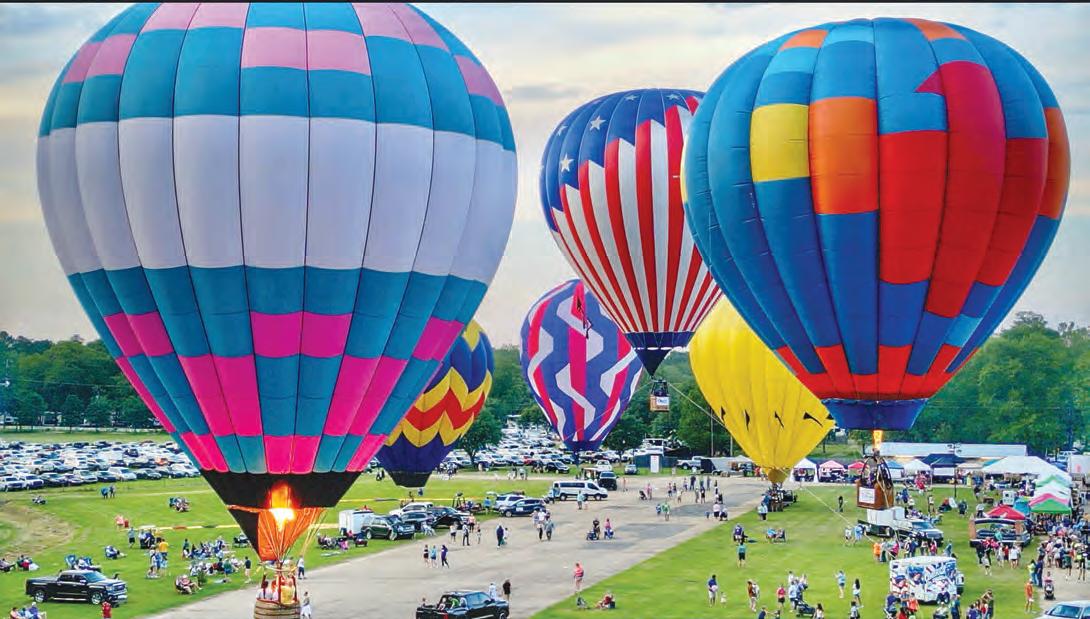
There's plenty of hot air to go around at the beloved Washington Parish Balloon Festival, held annually at the
in Franklinton. This year's festivities will be held May 29–31. Photo courtesy of the Washington
UNTIL MAY 2nd
BETTIN' BOATS
TICKFAW 200
Springfield, Louisiana
Blood River Landing in Springfield opens to the public just once a year for a truly raucous event: the state's largest power boat poker run (you heard that right). No boat? No problem—there's plenty to entertain spectators. Bands start Thursday night, ending Saturday night at the Fun House (bracelets needed for entry to the Fun House), and food, drink, and ice are available at the Marina. Enjoy an unforgettable weekend of partying and boating. $30 for Fun House bracelet all three days; registration options available at tickfaw200.com. 1
UNTIL MAY 2nd
SUMMER FAVORITES
ALEX RIVER FÊTE
Alexandria, Louisiana
The Alexandria River Fête draws together hundreds of Louisianans from near and far to celebrate the arts, culture, and heritage of Central Louisiana. Set on the banks of the Red River, where it flows past downtown Alex, the three-day fest has historically encompassed several events including Dinner on the Bricks,
an ArtWalk, and the hotly contested Louisiana Dragon Boat Races. Dozens of lively arts programs, colorful street performers, vibrant craft displays, food vendors, children’s activities, and live music. Free. alexriverfete.com. 1
UNTIL MAY 3rd
TURN IT UP NEW ORLEANS JAZZ & HERITAGE FESTIVAL
New Orleans, Louisiana
The New Orleans Jazz & Heritage Festival is the city's hallmark international music festival, famous for immersing the country's most powerful entertainers in the city of New Orleans's incomparable musical legacy. Big names at Jazz Fest have included Katy Perry, Van Morrison, Red Hot Chili Peppers, Rolling Stones, and others. This year's festival is headlined by the Eagles, Stevie Nicks, Rod Stewart, Kings of Leon, Lainey Wilson, Lorde, Tyler Childers, T-Pain, Jason Isbell, and scores more of the nation's biggest performers. But we all know that Jazz Fest isn’t just about big names, as there are hundreds of other closer-to-home musicians and bands on the schedule this year, each bringing their unique style and following. In addition to the music, happening simultaneously on multiple stages, the Heritage Fair offers its lip-smacking array of food (more than
one hundred varieties available), as well as contemporary and folk crafts. Numerous areas highlight Louisiana’s diverse influences, including the Congo Square African Marketplace, the Contemporary Crafts area, and Louisiana Marketplace. Festival parades, starring brass bands and marching clubs, begin and end in Heritage Square. Everything happens at the New Orleans Fairgrounds. General admission for Louisiana residents starts at $379 for the weekend; $75 for single day passes. VIP and travel package options also available. nojazzfest.com. 1
UNTIL MAY 8th
VISUAL ARTS
LACOMBE ART GUILD 2026 SPRING SHOW
Covington, Louisiana
The Lacombe Art Guild presents its annual Spring Art Show, Brushstrokes and Beyond. On view in the First Floor Atrium of Lakeview Hospital in Covington. Free and open to the public. lacombeartguild.com. 1
UNTIL MAY 15th
AMERICAN HISTORY "GÁLVEZ AND LOUISIANA IN THE AMERICAN REVOLUTION"
New Orleans, Louisiana
In preparation to celebrate America's
Washington Parish Fairgrounds
Parish Balloon Festival. Learn more on page 27.
Events
Beginning May 1st
250th birthday, the Louisiana State Museum presents Gálvez and Louisiana in the American Revolution at The Cabildo. This landmark exhibition traces the life and legacy of Spanish Governor Bernardo de Gálvez, along with the diverse array of people involved in fighting for American independence. Explore rare artifacts, immersive media, and personal stories for a richer and deeper understanding of history. louisianastatemuseum.org. 1
UNTIL JUN 6th
WWII HISTORY
"JAPANESE WAR BRIDES: ACROSS A WIDE DIVIDE"
Baton Rouge, Louisiana
The exhibition, Japanese War Brides: Across a Wide Divide, on display at Louisiana's Old State Capitol, tells the nuanced and extraordinary story of more than 45,000 Japanese women who married American servicemen and immigrated to the United States following World War II. The exhibition explores how these women, who had been perceived and dehumanized as the enemy during the
war, confronted—and defied—societal, racial, and gender norms and barriers to transform and expand American identity. Japanese War Brides is presented in a collaboration between the Smithsonian Institution Traveling Exhibition Service, the National Museum of American History, and War Bride Experience, Inc. louisianaoldstatecapitol.org. 1
UNTIL JUL 11th
HISTORICAL EXHIBITIONS
"BOUGHT FOR A SONG: A YOUNG NATION EXPANDS"
Baton Rouge, Louisiana
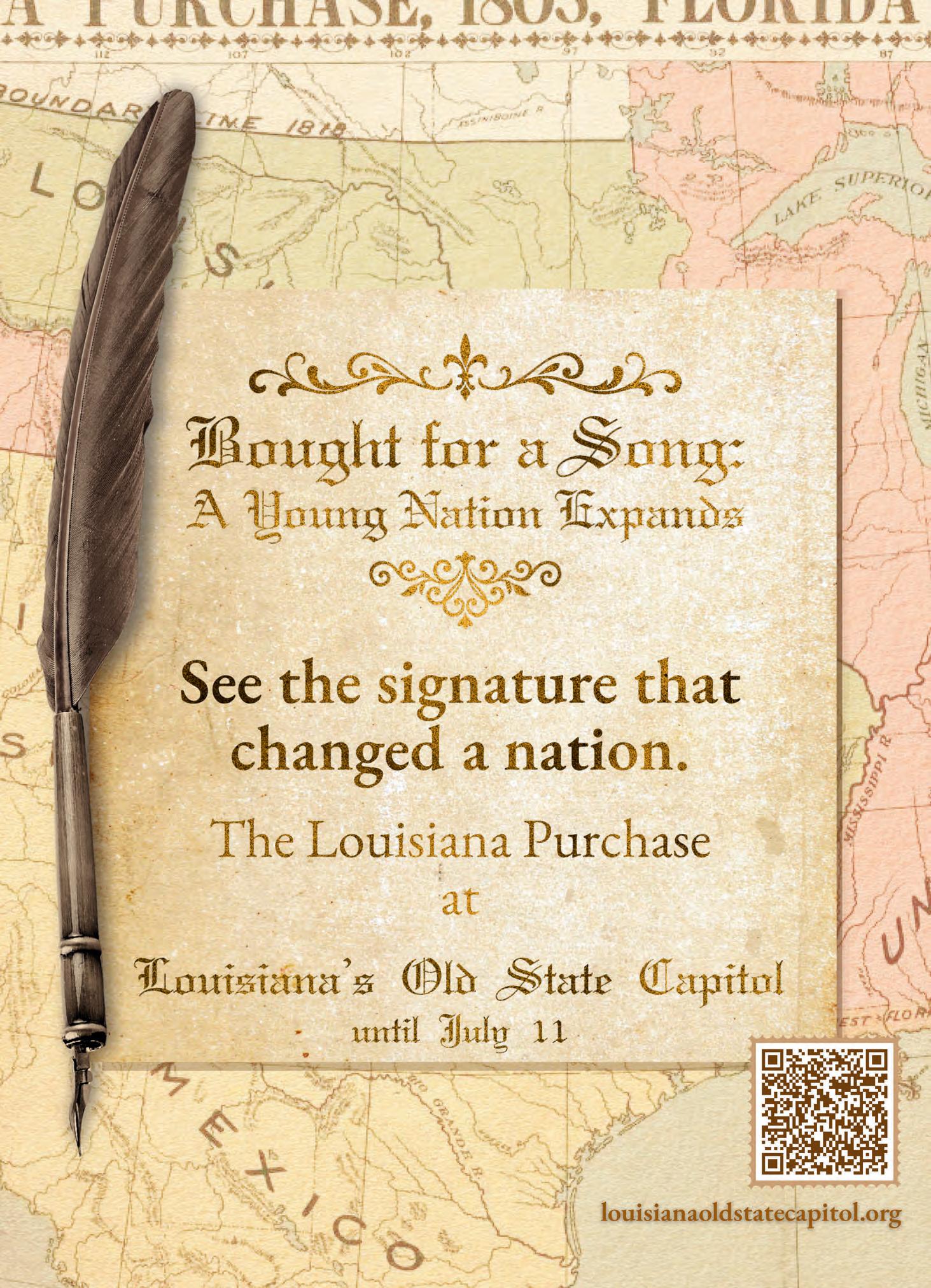
As part of the 250th anniversary of the signing of the Declaration of Independence, Louisiana's Old State Capitol displays the Louisiana Purchase agreement, signed by Napoleon Bonaparte. The 1803 agreement between the United States and France added 828,000 square miles to America's landscape for $15 million dollars. It is only the second time the document has been displayed at the museum. louisianaoldstatecapitol.org. 1
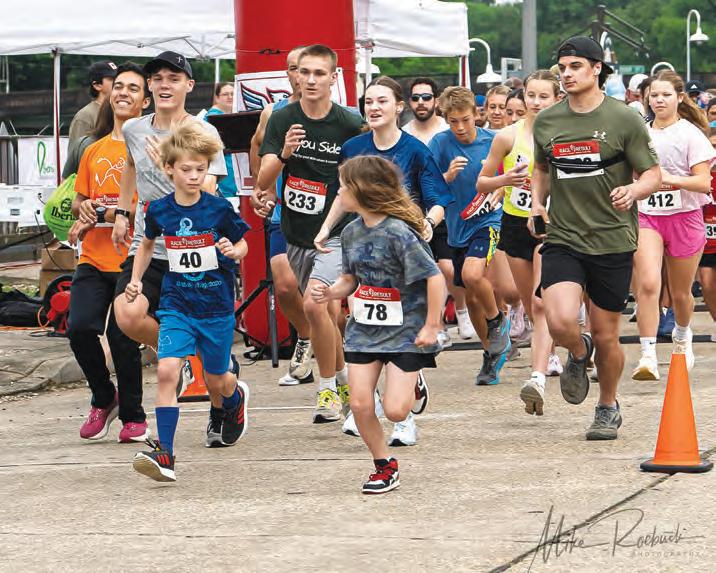
Participants take off in a flash at a previous Bayou Side Run. The New Iberia event raises funds for the Iberia Mental Health Initiative. On May 2, runners will gather at Bouligny Plaza in Downtown New Iberia for the race. Photo courtesy of Bayou Side run organizers. Learn more on page 16.
UNTIL JUL 19th
VISUAL ARTS
"VICINAL VISIONS" AT THE OGDEN
New Orleans, Louisiana
The Ogden Museum of Southern Art presents the works of Dusti Bongé, Ida Kohlmeyer, and Dorothy Hood from its extensive collection. In this exhibition, see how each Southern woman pushed the boundaries of artistic abstraction to develop their own unique visual languages. The works capture a certain
time period of experimentation and Modernist sensibilities—all expressed through the prism of each individual artist's place, identity, and interests. ogdenmuseum.org. 1
UNTIL JUL 19th
VISUAL ARTS
"THEN, AND NOW, AND ALWAYS: THE ART OF NICK BUSTAMANTE"
Baton Rouge, Louisiana
Then, and Now, and Always: The Art
of Nick Bustamante, presented by the Louisiana Art & Science Museum, explores Bustamante's career-long inquiry into memory, identity, and inheritance. Through his art, Bustamante explores the progression of non-linear time, probing ancestral trauma, familial legacy, and other intimacies as co-existing with beauty, terror, presence, and absence. The paintings on display undergo a process of layering, including scumbling, glazing, and selective excavation. lasm.org. 1
UNTIL AUG 15th
MULTIMEDIA EXHIBITIONS
"GULF STREAMS: ATCHAFALAYA REMIXED"
Lafayette, Louisiana
This multidisciplinary exhibition draws on field recordings taken in the Atchafalaya Basin by Dr. Earl Robicheaux, with contemporary musicians and visual artists responding creatively in their own disciplines to the inspiration of the natural environment. Participating musicians include Keith Frank, The Babineaux Sisters, Danny Devillier, and Trey Boudreaux. Visual artists whose work will be on display include: Claire Amy, Edgar Cano, Dan DiCaprio, Tanner Menard, Martin Payton, Olivia Perillo and Dr. Earl Robicheaux. hilliardartmuseum.org. 1
UNTIL AUG 30th
STATE HISTORY
“BECOMING LOUISIANA: BORDERS IN MOTION (1688–1812)”
New Orleans, Louisiana
To celebrate 250th anniversary of the signing of the Declaration of Independence, Nous (The New Orleans Foundation for Francophone Cultures) presents Becoming Louisiana: Borders in Motion (1688–1812). The exhibition uses historical maps reimagined in line art to examine the historical forces that shaped Louisiana's path to the union. Through the stories these images tell and omit, the maps encourage visitors to interrogate Louisiana's winding journey to statehood through a new lens. On display at 602 Toulouse Street. nous-foundation.org. 1
UNTIL OCT 11th
VISUAL ARTS
"ROBERT GORDY: OUTSIDE THE MAINSTREAM"
New Orleans, Louisiana
NOMA presents an exhibition by Louisiana native Robert Gordy, an artist who preferred to work "outside the mainstream" and was known nationally for his mastery of space, line, and color. After graduating from LSU with his MFA in the 1950s, Gordy lived internationally
before settling in New Orleans in 1964. His works were exhibited at galleries in New York, Chicago, and New Orleans. The exhibition draws from NOMA's permanent collection, the archive of the Robert Gordy estate, and loans from private collections. noma.org. 1
UNTIL DEC 4th
VISUAL ARTS
"THE MOSS MYSTIQUE: SOUTHERN WOMEN"
New Orleans, Louisiana
The Moss Mystique: Southern Women and Newcomb Pottery, on display at The Newcomb Art Museum of Tulane University, explores the practices, imagery, and regional affiliations of Newcomb Pottery. The exhibition examines how its artists visualized and ultimately defined ideas of place in the American South through various natural depictions, from local flora to landscapes. newcombartmuseum.tulane.edu. 1
UNTIL DEC 4th
VISUAL ARTS
"MAKING HER MARK"
New Orleans, Louisiana
The Newcomb Art Museum at Tulane University presents Making Her Mark, an exhibition tracing the stages of pottery production in the Newcomb Pottery business model. Exploring the design and handcraft of Newcomb College art program graduates, the show delves into the full scope of the enterprise, from instruction and practice, to production and sales. newcombartmuseum.tulane.edu. 1
UNTIL JAN 17th
LIVING HISTORY
"AMERICAN REVOLUTION: THE AUGMENTED EXHIBITION"
New Orleans, Louisiana
The Historic New Orleans Collection invites visitors to experience the American Revolution like never before—as if they were inside each experience themselves.
Using a HistoPad (an interactive tablet), visitors can explore interactive 3-D reconstructions of defining moments in the war, allowing them to glimpse people, places, and events more closely. The nearly year-long exhibition is part of the national celebration of America's 250th birthday. Free. hnoc.org. 1
MAY 1st
CONCERTS
MAGGIE KOERNER & FRIENDS
New Orleans, Louisiana
Catch Maggie Koerner at a performance
Events
Beginning May 1st
at the Marigny Opera House this May, along with Chelsea Hines, Lyla George, and Olivia Barnes. The night also features entrancing live light painting and projection mapping by Monica Rose Kelly. 7:30 pm. $40 for general admission; $50 for VIP (ground near the stage). marignyoperahouse.org. 1
MAY 1st
ARTS & CRAFTS
FIRST FRIDAY FUN: PAPER LANTERNS AT CAVALIER HOUSE BOOKS
Denham Springs, Louisiana
Join the well-read folks at Cavalier House Books in Denham Springs for a first Friday craft night, where they'll be making paper lanterns out of book pages. 6 pm–8 pm. $10 covers all necessary supplies. Tickets at bontempstix.com. 1
MAY 1st - MAY 2nd
RETAIL THERAPY
SALE ON THE TRAIL
Natchitoches, Louisiana
Be prepared to “shop ‘til you drop” along 175 miles of the historic El Camino Real
de los Tejas. Follow the trail through the Caddo region, which stretches from LA Hwy 6 in Natchitoches to TX Hwy 21 into Nacogdoches, TX, and discover new and used treasures sold by local businesses and individuals along the way, as well as food, vegetables, and other finds. If you want to participate by hosting a garage sale or becoming a vendor, visit toledobendlakecountry.com. 1
The Evangeline Theater Company brings the scalding dark comedy, Glengarry Glen Ross, to the stage this month. David Mamet's Pulitzer-winning tale is of smalltime realtors who get the job done, no matter what tactics must be employed, so they can take home their slice of the American dream. Thursday–Saturdays at 7:30 pm; Sundays at 2 pm. $32. evangelinetheater.com. 1
MAY 1st - MAY 2nd
SOUND ON MAMA G'S SWAMP POP FESTIVAL
Morgan City, Louisiana
It's a full day of live swamp pop music in the parking lot at Mama G's Bar & Grill. Featuring crafts, a live auction, and music from Caleb Lapeyrouse & The Drivers, Swampland Revival, Ryan Foret & Foret Tradition, and more. Proceeds benefit the NICS group (Neuro Inclusive
DRAMA 30 BY NINETY THEATRE PRESENTS: "THE LARAMIE PROJECT"
Mandeville, Louisiana
This documentary-style play was playwright Moisés Kaufman's response to the brutal murder of twenty-one-yearold Matthew Shepard in October 1998, a
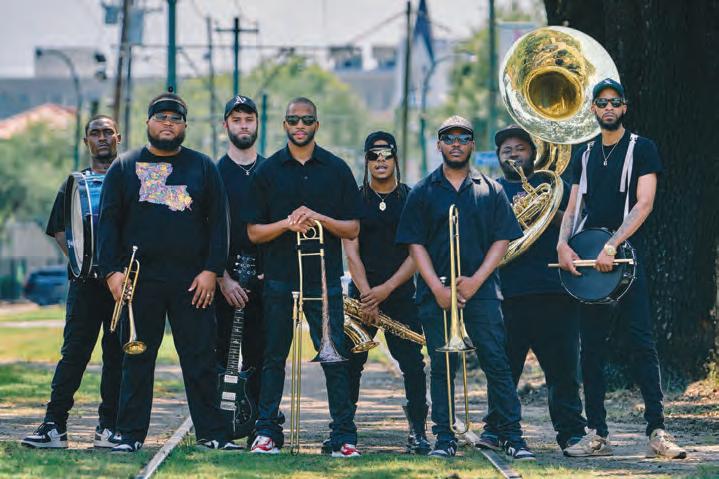
New Breed Brass Band is just one of the acts that will perform at the 2026 Art & Soul Gala, held May 16 at the New Orleans Center for Creative Arts. Photo courtesy of Emily Diament. See more on page 23.
hate crime targeting Shepard because of his sexuality. Kaufman and members of the Tectonic Theater Project then traveled to the place of the crime, Laramie, Wyoming, to conduct more than 200 interviews—from which they built The Laramie Project. Praised as one of the most important works of contemporary American theater, the play explores the realities of intolerance, resilience, and human empathy. See 30 by Ninety's rendition this spring. 8 pm Fridays and Saturdays; 2:30 pm Sundays. $22; $20 for seniors; $17 for students thirteen and older; $14 for children twelve and younger. 30byninety.com. 1
MAY 1st - MAY 3rd
MUDBUGGIN'
BREAUX BRIDGE
CRAWFISH FESTIVAL
Breaux Bridge, Louisiana
Breaux Bridge’s annual crawfish festival celebrates two things near and dear to any who call the Bayou State home: crawfish and Louisiana music. Breaux Bridge was designated crawfish capital of the world in 1959—by the Louisiana State Legislature, who would know—and has held the festival every year since 1960, except for in 2020 and 2021 due to COVID-19. At this year's festival, crawfish will be served in nearly every way imaginable: boiled, fried, in
étouffée, in boudin, in pie… if there’s a way you like to eat it, you’re sure to find it here. The competitive can enter the crawfish-eating competition; those more comfortable as spectators can take in the celebrity crawfish-eating contest, Cajun cooking demonstrations, and a crawfish race. There’s also a carnival midway full of games and activities, Cajun dance lessons, and a parade featuring this year’s Crawfish Royalty. Music fans will be thrilled by the steady supply of Cajun music, zydeco, and swamp pop provided by over thirty bands from the three stages present at the festival. All your favorite regional mainstay acts will be here, including Pine Leaf Boys, Wayne Toups & Zydecajun, Jourdan Thibodeaux et les Rodailleurs, Geno Delafose & French Rockin' Boogie, Rusty Metoyer & Zydeco Krush, Travis Matte & the Kingpins, and so many more. All held at Parc Hardy. bbcrawfest.com. 1
MAY
1st - MAY 3rd
RETAIL THERAPY
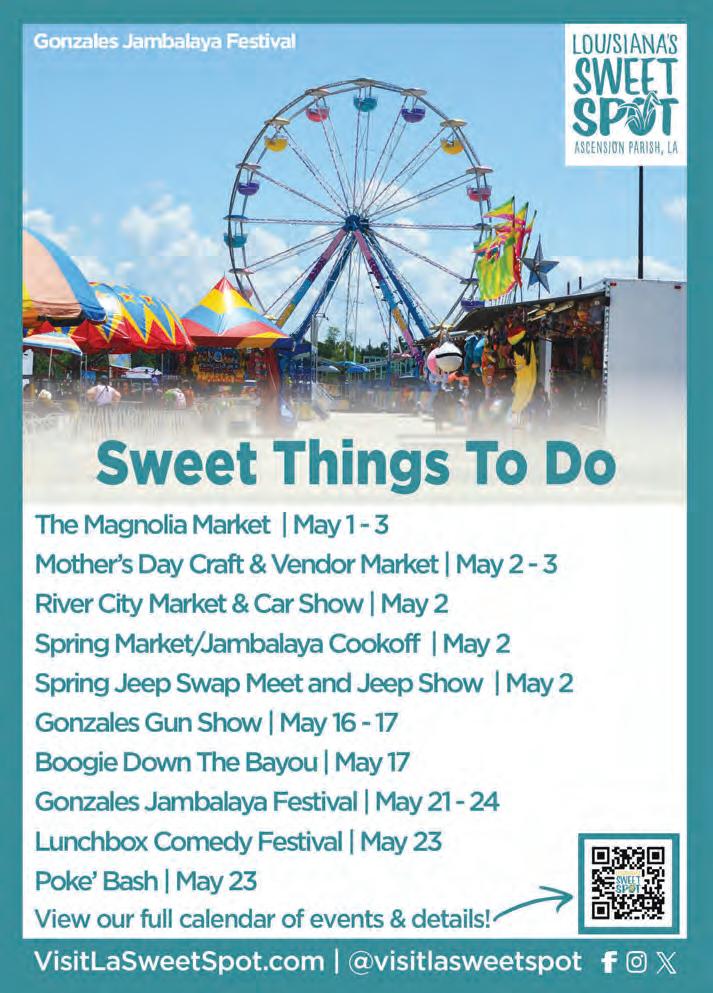
THE GONZALES
MAGNOLIA MARKET Gonzales, Louisiana
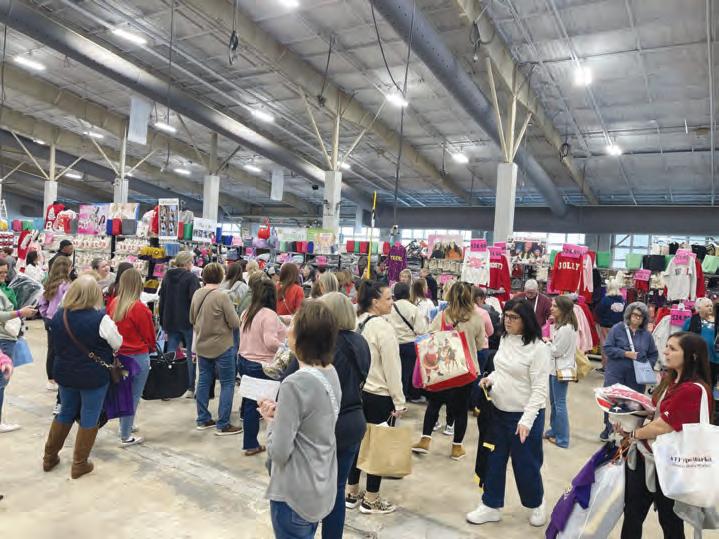
With Mother's Day around the corner, graduation season soon to be in full swing, and summer getaways ahead, the search for gifts can feel daunting, to say the least. Stop by the Gonzales Magnolia
Market at the Lamar Dixon Expo Center for all your seasonal needs, including jewelry and apparel. 9 am–5 pm Friday and Saturday; 10 am–4 pm Sunday. attexpomarket.com. 1
MAY 1st - MAY 3rd
PATRIOTIC PERFORMANCES
RED, WHITE & BLUE AIRSHOW
Monroe, Louisiana
This three-day aviation experience at Monroe Regional Airport honors America’s heroes for the 250th anniversary of the signing of the Declaration of Independence, featuring historic warbirds, military aircraft, and stunning aerial performances. Opens 3 pm Friday and Saturday; 11 am Sunday. $30; $15 for ages four to sixteen; VIP and three-day ticketing options available. redwhiteandblueairshow.com. 1
MAY 1st - MAY 3rd
SWAMP TALES
SLIDELL LITTLE THEATRE: "SHREK: THE MUSICAL"
Slidell, Louisiana
Based on the Academy Award-winning DreamWorks film, Shrek: The Musical stars an unseemly ogre, a damsel in distress, a donkey who won't shut up, and a host of fairy tale misfits. Irreverent fun for all comes to Slidell Little Theatre this
spring. 7:30 pm Fridays and Saturdays; 2 pm on Saturdays and Sundays. $35; $25 for students and seniors. slidelllittletheatre.org. 1
MAY 1st - MAY 17th
DRAMA
LE PETIT THEATRE PRESENTS: "GOD OF CARNAGE"
New Orleans, Louisiana
Le Petit Theatre in New Orleans presents God of Carnage by Yasmina Reza, a tale of a playground dust-up that evolves into a chaotic evening for two couples. As they throw civility to the wind, the couples act out a comedy of parenting struggles and principles. Performed at 616 St. Peter Street. 7:30 pm; 3 pm Sundays; 2 pm Saturday May 16. For various ticket prices, visit lepetittheatre.com. 1
MAY 1st - MAY 22nd
SUMMERTIME FAVORITES
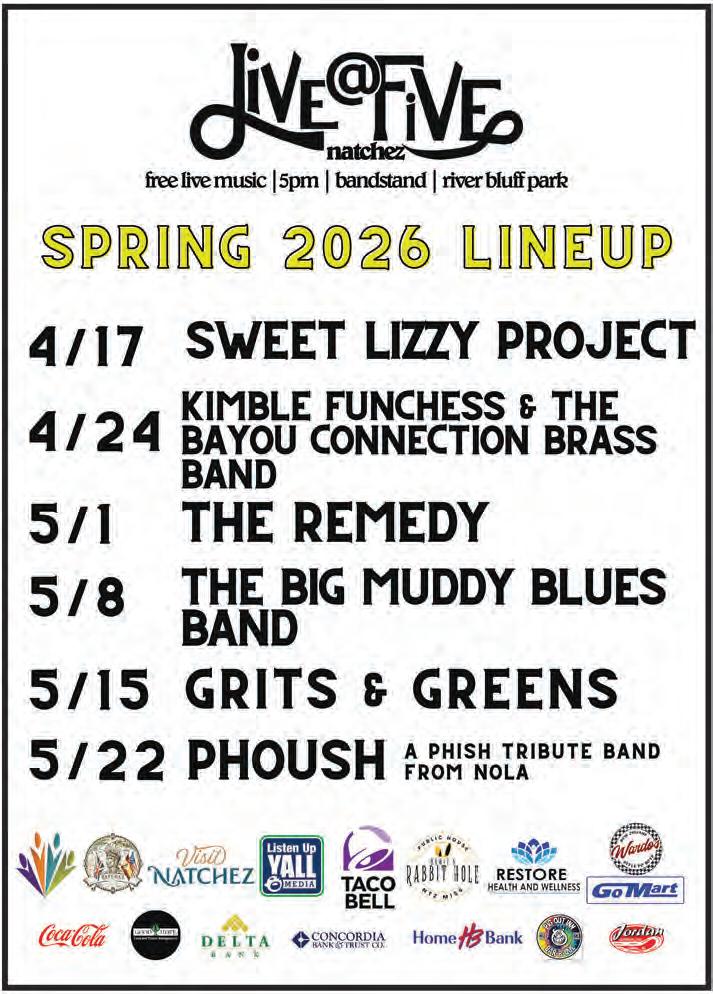
LIVE AT FIVE
Natchez, Mississippi
Grab a picnic blanket or lawn chair and amble over to the Bandstand on the Bluff at 107 S. Broadway Street in downtown Natchez for a family-friendly outdoor concert series playing all spring long. This year's lineup includes:
• May 1: The Remedy
• May 8: The Big Muddy Blues Band
Events
Beginning May 1st - 2nd
• May 15: Grits & Greens
• May 22: Phoush
5:30 pm. Free. visitnatchez.org. 1
MAY 1st - MAY 31st
GOOD EATS
A TASTE OF COVINGTON FOOD, WINE, MUSIC & ART FESTIVAL
Covington, Louisiana
It's the Northshore's favorite month of the year: May brings "A Taste of Covington," giving locals and visitors alike the perfect opportunity to dig into Covington's vibrant culinary scene. On select dates throughout the month, enjoy special four- (or more) course vintner dinners at beloved local restaurants such as Marcello's, Cured, Desi Vega's and more. In addition, don't miss exclusive tasting events like Festa del Vino on May 2 at St. Tammany Art House ($100), a Champagne Jazz Brunch on May 24 at Valencia ($55), and on May 30 a Global Whiskey Tasting ($25) followed by the Taste of Covington Grand Tasting wine event ($75) at the Art House. All dinners and events require reservations. Details at atasteofcovington.com. 1
MAY 2nd
GREEN THUMBS
SUNSET HERB & GARDEN FESTIVAL
Sunset, Louisiana
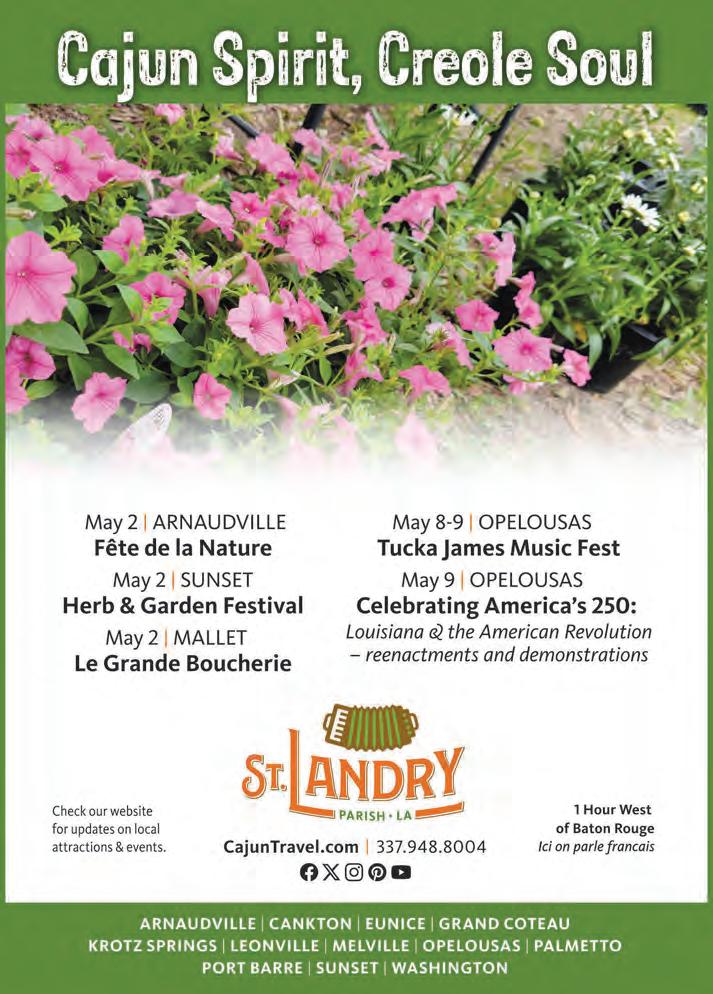
The Sunset Garden Club presents the chance to meet vendors and master gardeners specializing in all your favorite garden friends: hibiscus, grasses, fruit trees, bromeliads, orchids, ferns, succulents, roses, and more. Local crafts, handmade yard art, and herbal bath and body products can also be found on the grounds for sale. In the Kids Corner, children can play on fun jumps, enjoy face-painting, visit the fairy garden, or meet some of the bee-keepers or agricultural vendors on site. $5. 9 am–4 pm. sunsetherbfestival.com. 1
MAY 2nd
FUN-DRAISERS
UNDER THE FLOWER MOON Kiln, Mississippi
The Arts Hancock County presents its spring fundraiser under the stars at 22591 Rue La Terre. Beneath the glow of a full moon, wander a trail where twentyfive artist-created sites will be sure to wow along the way. The enchanting evening includes music, food, and other surprisingly magical moments. 5 pm–9 pm. $15 suggested donation, or a $25
donation. hancockarts.org. 1
Read more about this event's creator, and his remarkable property, on page 54.
MAY 2nd
OUTDOOR CELEBRATIONS
FÊTE DE LA NATURE: BIOBLITZ AND CRAWFISH BENEFIT
Arnaudville, Louisiana
Each year, the arts- and science-loving folks at Atelier de la Nature welcome visitors from near and far to their beautiful Acadiana oasis in Arnaudville. Throughout the day, scientists will head an official BioBlitz—encouraging guests to search the property for as many species of birds, reptiles, insects, plants, fungus, and more that they can find.
The Culinary Institute of Baton Rouge will be serving up boiled crawfish onsite ($20 for three pounds); and live music will be provided by OEUVAL. Stay until the evening for a bonfire and night hikes. Food and music from noon–2 pm; Bioblitz events lasting all day long, from 6:30 am–11 pm. Admission is free, but donations (encouraged) and proceeds from the lunch and beverages will benefit youth educational programs at Atelier de la Nature. Register at eventbrite.com. atelierdelanature.org. 1
MAY 2nd
GOOD EATS
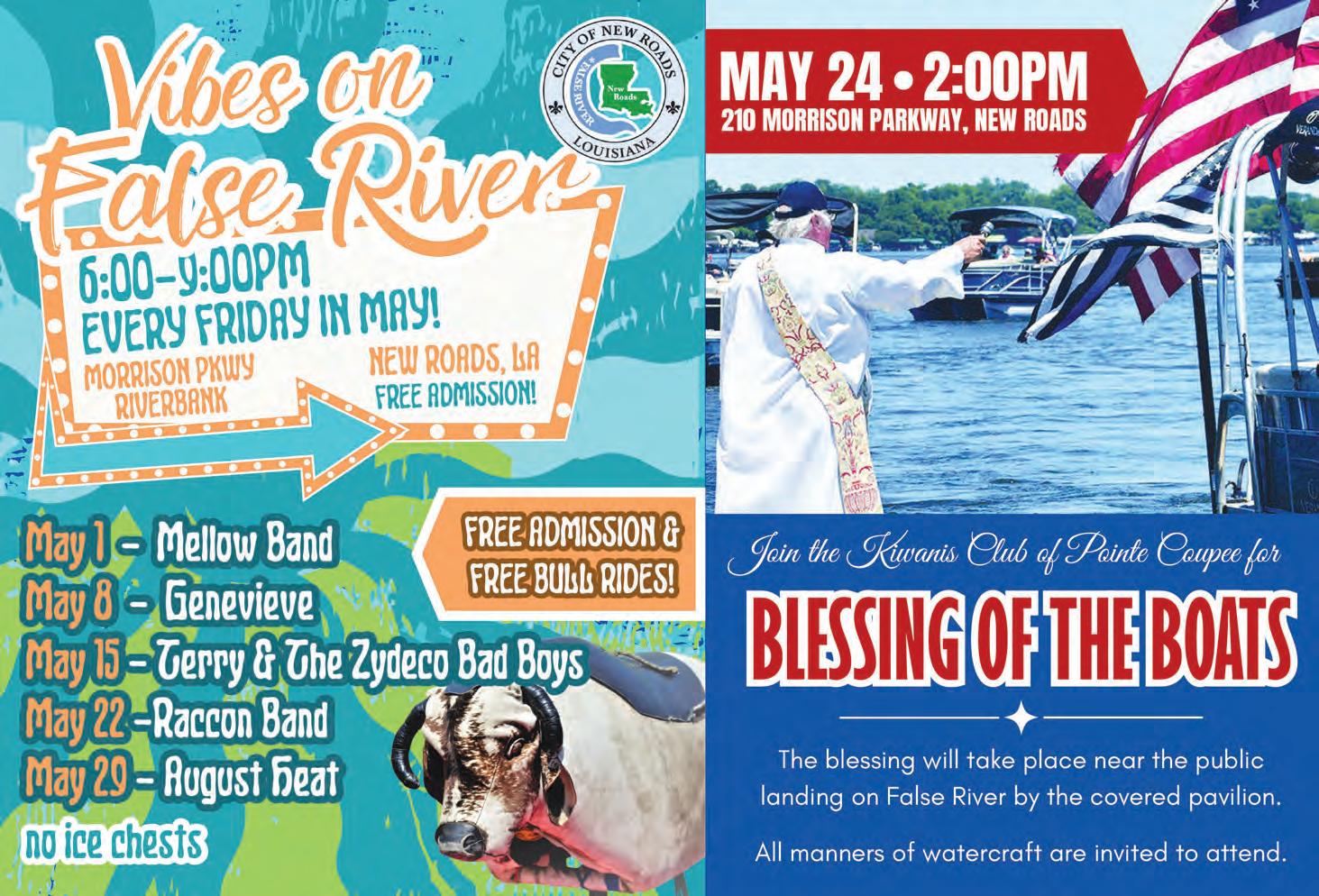
BOILING ON FALSE RIVER
New Roads, Louisiana
Prove your boiling prowess at New Roads' Boiling on False River crawfish cook-off, hosted by the Pointe Coupee Chamber of Commerce. Or, come for the boil, stay for the vote—People's Choice is always a favorite. The day includes a Kids' Fishing Rodeo starting at 10 am and a cornhole tournament at 2 pm. 1 pm–6 pm; cooking begins at 11 am. $29 for a crawfish wristband, $100 to enter the boiling contest. bontempstix.com. 1
MAY 2nd
FIT & FUN
BAYOU SIDE RUN
New Iberia, Louisiana
Get your steps in while taking steps to raise mental health awareness for the 2026 Bayou Side Run 5K. Set to take place in the historic downtown district of New Iberia, kicking off at Bouligny Plaza, the event raises funds for the Iberia Mental Health Initiative, a coalition of concerned citizens dedicated to identifying and
addressing the mental health needs of the Iberia Parish community. 8 am. $35. runsignup.com. 1
MAY 2nd
FANCY HATS
PILGRIMAGE GARDEN CLUB
KENTUCKY DERBY PARTY
Natchez, Mississippi
The Pilgrimage Garden Club welcomes guests to Natchez's Stanton Hall for what some would argue is the most thrilling two minutes in sports. Enjoy a live-streamed watch party for this beloved Southern tradition, with live music, games, a cash bar, and derby fare dining galore. The race will be followed by a stand-up comedy show by Ellen Skrmetti. And be sure to dress your best—there will be prizes for the best hat and best bow tie. Derby party begins at 4:30 pm. $35 for the party only; $50 for the comedy show; $75 for both events. bontempstix.com. 1
MAY 2nd
CULTURAL CELEBRATIONS
THE SCOTTISH TARTAN FESTIVAL
Minden, Louisiana
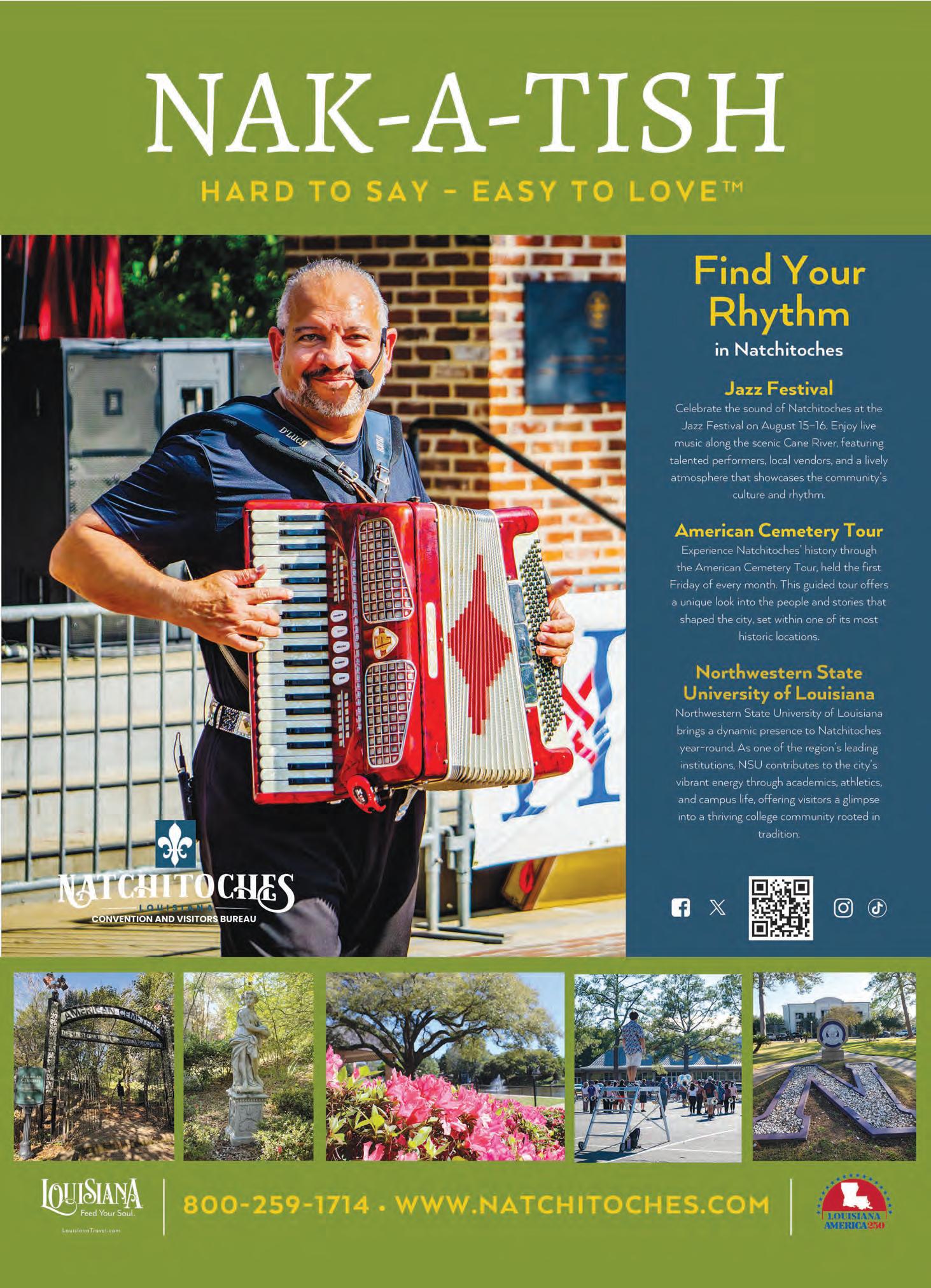
Those with Scottish heritage (or anyone who likes plaid and Scotch eggs), are invited to visit the charming, recentlyrenowned (thanks to HGTV and the Magnolia Network) town of Minden this spring. Expect Scottish highland dancing, demonstrations ranging from blacksmithing to flintknapping to learning the Gaelic language, a dog show, a children's area, Great Raft Beer, and lots more Scottish medieval fun. $15 adults, children ages six through eleven $5, children under five free. louisianahighlands.scot. 1
MAY 2nd
BOTTOMS UP
2026 RON ZAPPE INTERNATIONAL BEERFEST
Baton Rouge, Louisiana
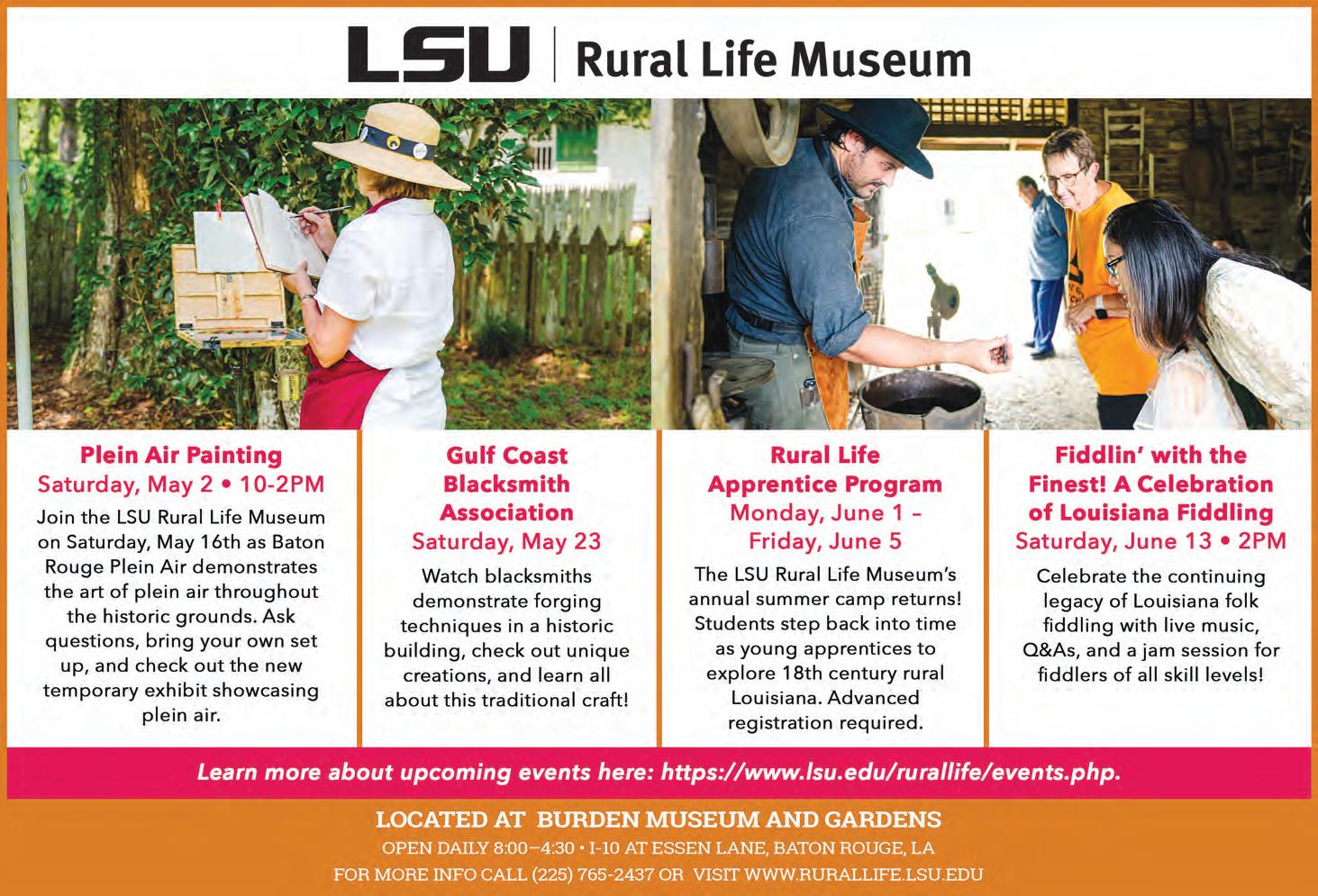
The cups runneth over during the LSU Rural Life Museum's best-lubricated annual event, which definitely calls for designating a driver. The annual Ron Zappe International Beer Festival brings tastings of more than two hundred domestic and international beers and ales to the grounds of the museum, plus more than a few home brews, which always end up being a festival highlight. Non-alcoholic beverages will be available for those (heroic) designated drivers. Bottoms up because all proceeds benefit the Rural Life Museum. Don't forget your I.D.—participants must be twenty-one, for obvious reasons. 3 pm–6 pm general admission. $45;
$20 for designated drivers; $65 for early admission. Tickets available at bontempstix.com. 1
MAY 2nd
CYCLES
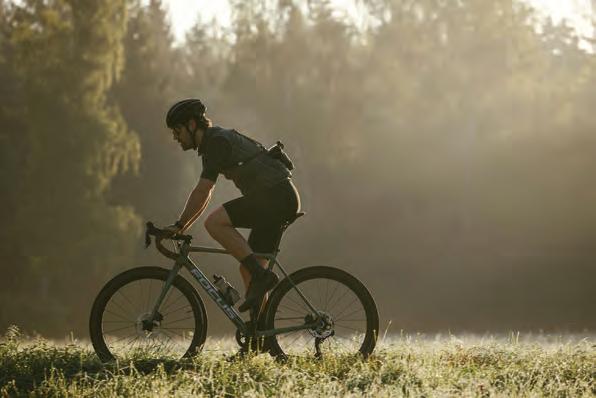
NATCHEZ TRACE
CENTURY RIDE
Ridgeland, Mississippi
The Natchez Trace Century Ride is one of the largest spring cycling event in Mississippi, with nearly 1,000 cyclists kicking off cycling season amid the small-town charm and hospitality of this national scenic byway. The ride starts and ends in Ridgeland, open to riders of all ages and abilities. Choose from different distances—8, 25, 50, 62, and 100 miles. Ride begins at Ridgeland REC Center at Old Trace Park. 7 am. $35–$70. exploreridgeland.com. 1
MAY 2nd
CALL & RESPONSE CONTRA DANCING
Baton Rouge, Louisiana
Put on your dancing shoes: Contra dancing at St. Alban's Chapel is sure to get you moving. A traditional American social dance, similar to square dancing but done in two long lines, contra dancing requires no experience, with both singles and couples welcome. Newcomer orientation 2:45 pm–3 pm; dance 3 pm–5:30 pm. $7, free for first time attendees. louisianacontrasandsquares.com. 1
MAY 2nd
FIRE-BREATHERS
LOUISIANA DRAGON BOAT RACES
Pineville, Louisiana
For the largest Dragon Boat Race in the state, you can expect participating crafts to be not just powerfully propelled, but also spectacularly adorned. Spirited racing roils the waters of Pineville's Lake Buhlow all day, while onshore art and food vendors, live entertainment, and interactive art exhibitions turn the event into a festival with something for all to enjoy. Several high-profile fitness groups have taken the trophy in recent years' photo-finish endings, and this year promises more of the same stiff competition. Begins at 8 am, closing ceremony begins at 3 pm. louisianadragonboatraces.com. 1
MAY 2nd - MAY 9th
CLASSES & LECTURES MAY EVENTS AT THE RED SHOES
Baton Rouge, Louisiana
The Red Shoes, a Baton Rouge-area nonprofit dedicated to fostering wholeness and self-discovery, has an
Events
Beginning May 2nd - 9th
extensive slate of events this May. Some of these include:
• May 2: Rewilding Our Humanity: A Community Panel on Nature, Learning & Human Flourishing (Hybrid) —An interactive panel discussion about the importance of reconnecting with the natural world. 10 am–noon.
• May 8: Hot Art Cool Nights —The opening reception of Expressions of Experience, an art installation highlighting the work of twenty-two women artists, along with the release of Letter It Out, Vol. 3. 6 pm–10 pm.
• May 9: Held by Clay: A Mother’s Day Reflection Workshop —A hands-on workshop inviting participant reflection through working with clay. 1 pm–4 pm theredshoes.org. 1
MAY 2nd - MAY 17th
DRAMA PLAYMAKERS THEATER PRESENTS "CHAPTER TWO" Covington, Louisiana
On the Northshore, Playmakers Theater will present Chapter Two, a semiautobiographical work considered to be one of Neil Simon's finest comedies. Follow the story of George Schnieder, a novelist struggling to move past the grief of his wife's passing when he meets Jennie Malone—a recently divorced actress. 7:30 pm; Sunday matinees at 2 pm. $25 ;$20 for seniors and military; $15 for students. bontempstix.com. playmakersinc.com. 1
MAY
2nd- MAY 28th
LOOK UP PLANETARIUM MONTH AT LASM
Baton Rouge, Louisiana
The Louisiana Art & Science Museum celebrates Planetarium Month with several activity-packed days utilizing the Irene W. Pennington Planetarium this month:
• May 2: Wildflowers Sound Bath —An immersive meditation under the stars, concluding with a special showing of Sunset Meditation. 6 pm. $30; $15 for children.
• May 7: Navigating the Cosmos Debut —A premiere of Navigating the Cosmos, a brand-new fulldome experience and an original LASM production. Noon. General admission.
• May 9: World Belly Dance Day: The
Time Traveler’s Veil —A fusion of dance and astronomy, featuring the Phoenix Rouge Dance Studio. 6 pm. $30; $15 for children.
• May 27 & 28: Concerts in the Cosmos: Divas —A multi-sensory adventure combining live music from the Baton Rouge Symphony Orchestra and stunning visuals across land, sea, and space. 7:30 pm. $40–$60.
lasm.org. 1
MAY
2nd
- MAY 31st
VISUAL ARTS
"MARINA DELIGHT" AT GALLERY 600 JULIA
New Orleans, Louisiana
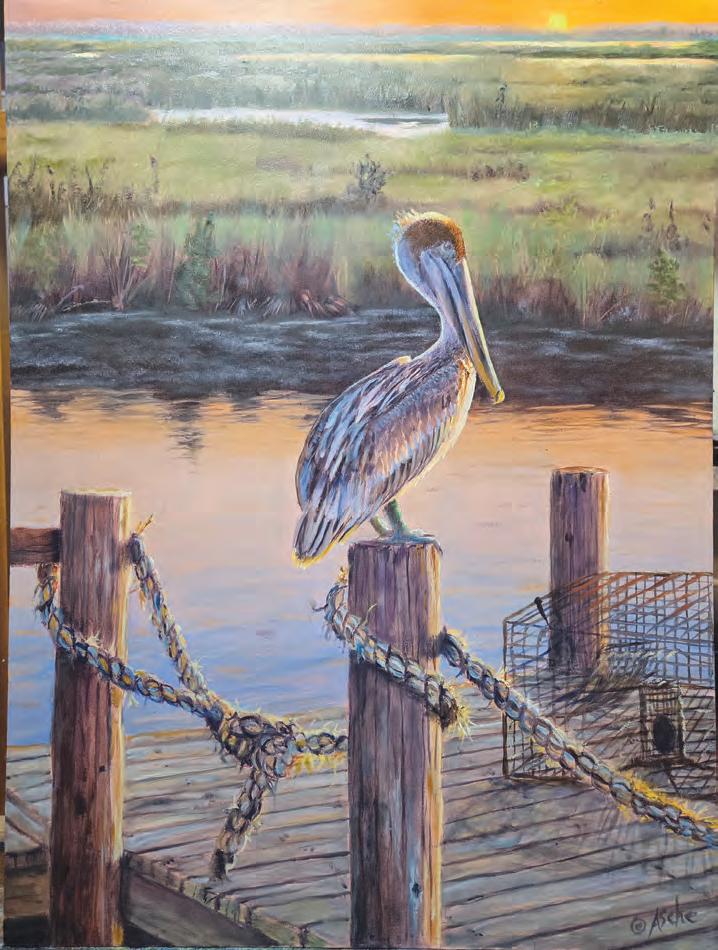
Gallery 600 Julia presents a solo exhibition from artist Mickey Asche, titled Marina Delight. Asche, a Northshore artist, explores Louisiana water sports and industry, focusing on the state's array of water birds. An artist reception will be held May 2, 6 pm–8 pm. gallery600julia.com. 1
MAY 3rd
ART OUTSIDE
SPRING PICNIC AT THE HILLIARD Lafayette, Louisiana
The Hilliard Art Museum at the University of Louisiana at Lafayette invites the community to a spring PICNIC beneath the trees of the museum grounds. Enjoy an afternoon of live music by Ann Savoy, prepared picnic fare (baskets with wine by James Beard-nominated Wild Child Wines, curated cheeses, freshly made baguettes, and seasonal accompaniments), and more. Proceeds support the museum's mission. 5 pm–8 pm. $500 for two tickets for "young enthusiasts" (under 40); $600 for two tickets for "enthusiasts." hilliardartmuseum.org. 1
Paddles at the ready? Come for the fun, stay for the friendly competition and community spirit at this pickleball competition held at Duncan Park. Proceeds support Natchez Children’s Services. 5 pm–8 pm. $50. bontempstix.com. 1
MAY 7th - MAY 9th
RIBBIT
FROG FESTIVAL
Rayne, Louisiana
Watch your step on the Rayne Fairgrounds this weekend, since there are bound to be frogs underfoot at this toadally awesome festival. When not rooting for their favorite fleet-footed frogs in the racing/jumping contest, festival-goers enjoy great food (including fried frog legs), carnival rides, arts and crafts shows, accordion and dance contests, frog cookoffs and frog eating contests, and musical talent including Leif Meche, Adam Leger, Wayne Toups, 4 Horses, Rusty Metoyer, Vermillionaires, Jamie Bergeron, and John Foster. raynefrogfestival.com. 1
MAY 8th
PERFORMANCES
MUSIC AT MID CITY BALLROOM
Baton Rouge, Louisiana
Catch the following shows coming up at Baton Rouge's indie, BYOB venue, Mid City Ballroom:
• May 8: Keep Flying, Fury in Few, 2-4 Flinchin', and Belle Grove. 8 pm. $15.
• May 22: Minos the Saint CD Release Party. 8:30 pm. $25. bontempstix.com. 1
MAY 8th
SUMMER FAVORITES
HOT ART, COOL NIGHTS
Baton Rouge, Louisiana
Sculptors, painters, jewelry designers, photographers, live musicians, and other artists are coming together in Baton Rouge's vibrant Mid City cultural district for the much-anticipated annual spring art festival, "Hot Art, Cool Nights," sponsored by Mid-City Merchants. Both well-established artists and emerging talent will come together in MidCity to offer an evening of art, music, shopping, and other fun. 6 pm–10 pm. midcitymerchantsbr.org. 1
MAY 8th - MAY 22nd
SUMMER FAVORITES
LIVE AFTER FIVE
Baton Rouge, Louisiana
Baton Rouge community favorite Live
After Five returns to Rhorer Plaza this spring with performances sure to thrill crowds of all ages. Food and drinks are available at the venue. The May lineup includes:
• May 8: The Rumble, plus N’TUNE
• May 15: Big Sam’s Funky Nation, plus Ambush Reggae Band
• May 22: Rouge Krewe Party Band
5 pm–8 pm. Free. Visit downtownbr.org for more information. 1
MAY 9th
SUMMER FAVORITES
LOUISIANA SCENIC
RIVERS ART FESTIVAL
Folsom, Louisiana
The Folsom Scenic Rivers Art Festival returns for another year to the Far Horizons Collective at Giddy Up Folsom. Those who attend will enjoy discovering local art from Louisiana craftsmen and women—with everything from paintings, drawings, and photography to ceramics, fine jewelry, and handmade clothing. Free. 4 pm–7 pm. Find more information at farhorizonsart.com. 1
MAY 9th
ROCK ON OLDE TOWNE METAL FEST
Slidell, Louisiana
Step back into the heavy hitting '60s and '70s with an unprecedented lineup of Gulf South metal bands taking the stage at Saint August Maison in Olde Towne Slidell. Hosted by Chafunkta Brewing Company, the second annual Olde Towne Metal Fest will feature performances by Louisiana bands Transfusion, Savage Wrath, Shadow Giant, Them Guys,
Severed Mass, and Woorms—plus plenty of traveling bands, too. Chafunkta beer will be on tap, food will be for sale, and children are welcome. Noon–night. $25, $10 for children ten years old and younger. Details at the Music at Maison Facebook Page. 1
MAY 9th
HISTORY "LOUISIANA AND THE AMERICAN REVOLUTION"
Opelousas, Louisiana
As part of the "Celebrating America’s 250” festivities, the Preservationists of St. Landry Parish present a day of remembrance. Reenactors will gather at Historic Michel Prudhomme Home to honor the Opelousas Militia with performances by vintage dancers and artisan demonstrations. 10 am–6 pm. Free. (337) 692-1017 or (337) 945-4376. 1
MAY 9th
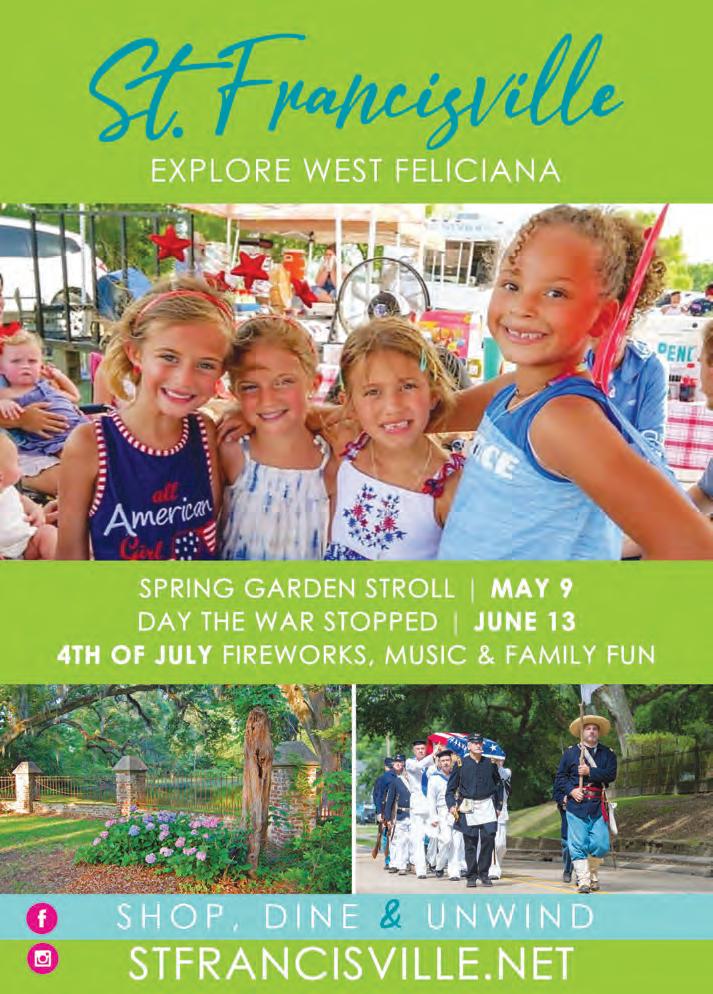
GREEN THUMBS ST. FRANCISVILLE
GARDEN STROLL
Saint Francisville, Louisiana
The Feliciana Master Gardeners invite you to take a tour of the lush gardens in West Feliciana Parish in all their springtime
Events
Beginning May 9th - 14th
glory. Admire four private gardens, one private home, Rosedown State Historic Site gardens, Audubon State Historic Site gardens, and Grace Episcopal Church & Cemetery—all located in St. Francisville's illustrious Historic District. 8 am–5 pm for the free plant sale staged in Parker Park; 8 am–noon for the garden stroll ($50); 2 pm–5 pm for lectures at Jackson Hall ($50); noon–2 pm for a spring garden lunch at The Saint, located at the St. Francisville Inn (limited seating at $190 per person and includes admission to the garden stroll and lecture series). bontempstix.com. 1
MAY 9th
TURN IT UP
STAY TUNED MUSIC FEST
Natchez, Mississippi
The second annual Stay Tuned Music fest kicks off in Natchez at 84 Homochitto Street, on the grounds of historic Dunleith Historic Inn. The lineup features Mustache the Band, Jamell Richardson Band, Jack Curtis (Tupelo Elvis), and Hanna Hart & Friends. Grounds open at 11 am. $25; free for children ten and under. staytunedmusicfest.com. 1
MAY
9th
GREEN THUMBS
POINTE COUPÉE MASTER GARDENER 2026 FINAL PLANT SALE
New Roads, Louisiana
'Tis the season for all things good and growing, and the Pointe Coupée Master Gardeners are ready to offer their help for the gardening-enthused masses. Head to Miles J. Brashier Greenhouse in New Roads for the final plant sale of the season. Visit the Pointe Coupée Master Gardeners Facebook page for more information. 1
MAY 9th
GOOD EATS
MANDEVILLE FOOD TRUCK FEST Mandeville, Louisiana
Mobile cuisine is the star of the show at Mandeville's Food Truck Festival, held at the Mandeville Lions Club. Come for the sweet eats and stay to support the Louisiana Handicapped Children's Camp and The Louisiana Lions Eye Foundation. 4 pm–8 pm. Free admission. Visit the Mandeville Lions Club Facebook page for details. 1
MAY
9th - MAY 30th
LIVE MUSIC
JAZZ'N THE VINES
SPRING LINEUP
Bush, Louisiana
Wild Bush Farm + Vineyard's beloved, long-running outdoor concert series, Jazz'n the Vines, brings celebrated Louisiana musicians to a gorgeous pastoral setting against a backdrop of cool breezes, early summertime vibes, and good company to boot. This month, catch concerts by HollyRock on May 9 and The Tanglers on May 30. 6:30 pm–9 pm at 81250 Highway 1082. Bring a picnic blanket, lawn chairs, and bug spray. The vineyard supplies the wines; various foods will be available for sale from local vendors. $12 in advance; $15 at the gate. wildbushfarmandvineyard. com. bontempstix.com. 1
MAY 10th
CLASSICS
OLD MANDEVILLE HISTORIC ASSOCIATION MOTHER'S DAY HOME TOUR
Mandeville, Louisiana
The Olde Mandeville Historic Association returns with its annual Home Tour—this year themed, "Timeless and Today." The experience will take you to five private Old Mandeville homes and the historic Newell Chapel, in addition to the Jean Baptiste Lang House—one of only a few remaining "Anglo-Creole" structures remaining in Old Mandeville. Visitors will delve into the architecture, restoration process, antiques, and artwork of each site; and the ways owners have made the space their own. 2 pm–5 pm. $25 in advance, $30 day-of; $15 for students. Wristbands and tour maps will be available at the Lang House on May 7–10. oldmandevillehistoricassociation.org. 1
MAY 13th
MUSICAL SERIES
RIVER CITY JAZZ MASTERS 2025-2026 SEASON LINEUP
Baton Rouge, Louisiana
The 2025–2026 River City Jazz Masters season returns to Manship Theatre with four performances from internationally acclaimed artists. This May, catch Vincent Herring’s "Something Else."
7:30 pm at the Manship Theatre. $56$71; $206–$266 per subscription ticket package. manshiptheatre.org. 1
MAY
14th
GREEN THUMBS
EBR MASTER GARDENERS: GROWING ROSES AND SUCCULENTS
Baton Rouge, Louisiana
EBR Master Gardeners present two presentations and discussions from local gardening experts at the Greenwell Springs Library. First, Master Gardener Whitney Briggs begins the evening with how to successfully grow roses (often considered finicky) in South Louisiana, with Master Gardener Nancy Jurasinski following up with a nuanced deepdive into succulents and their relatively minimal care routine. 6:30 pm. Free. ebrmg.wildapricot.org. 1
MAY 14th
RETAIL THERAPY CANTON FLEA MARKET
Canton, Mississippi
Held the second Thursday of May and October, the Canton Flea Market is legendary in Mississippi—known as "one of the South's original and finest arts and crafts shows." Explore antiques, gifts, quality fine art, handcrafted wares, live plants, and more. With exhibitors by invitation-only, patrons can be sure to find exceptional products at this one-dayonly event. 3332 N Liberty St., Canton, Mississippi. cantonmsfleamarket.com. 1
MAY 14th
LIVING ART
"SPLENDOR: AN IMMERSIVE ART EXPERIENCE"
Covington, Louisiana
Paradise Rooftop Lounge hosts Splendor: An Immersive Art Experience, an evening debuting a new collection of original paintings by Covingtonbased contemporary artist Marianne Angeli Rodriguez. The night promises a fusion of art, live jazz, and cocktails. 6 pm–9 pm. $135. rodriguez.art. 1
MAY 14th - MAY 16th
VROOM VROOM
CRUISIN' CAJUN COUNTRY
New Iberia, Louisiana
Classic and muscle cars motor into Louisiana's Cajun Country to enhance the experience of New Iberia's awardwinning Main Street historic district, local food, and live music—all the while showing off their rims and revved up engines. Excursions take visitors to experience local culture and business: visit sites in Iberia and Vermilion Parish like the Jeanerette Mercantile, Blue Dog Farm Stand, Bayou Teche Museum, The Train Depot Museum, The Blacksmith Shop, and more. The Hampton Inn in New Iberia will host the main events. $65 for early registration; $80 if registering after May 1. Details at cruisincajuncountry.com. 1
The Hilliard Art Museum at the University of Lafayette presents PICNIC, a fundraiser elevating art and cuisine on the museum's exquisite grounds. The May 3 event features prepared picnic baskets, onsite paintings, and live music. Photo courtesy of the Hilliard Art Museum. Learn more on page 18.
Events
Beginning
May 15th - 16th
MAY 15th
LIVE MUSIC
NUNU PRESENTS: GOLDPINE
Arnaudville, Louisiana
NUNU Arts & Culture Collective presents the band Goldpine at Singleton's Pure Listening Room inside its Arnaudville gallery. Experience an evening of American Folk Roots music, performed by the Americana duo. Doors open at 6 pm, music at 7:30 pm. $25. nunucollective.org. 1
MAY
15th
PINKS AND GOLDS
SUNSET AT THE LANDING
Covington, Louisiana
Who doesn't like free, outdoor live music? We, and the folks on the Northshore, certainly do, and they go all out for their spring Sunset at the Landing concerts, which feature local artists performing cozy, outdoor concerts at the Columbia Street boat landing overlooking the Bogue Falaya River. Past acts have included The Groove Kings, The Magnolia Sisters, and other esteemed local artists. Find out who is performing next at the weekly
announcements on the Sunset Concert Series Facebook Page. Just bring chairs and refreshments. Free. 6 pm–9 pm. sunsetatthelanding.org. 1
MAY 15th
LIVE MUSIC
MAY HISTORICAL HAPPY HOUR
FEATURING SYREETA NEAL
Port Allen, Louisiana
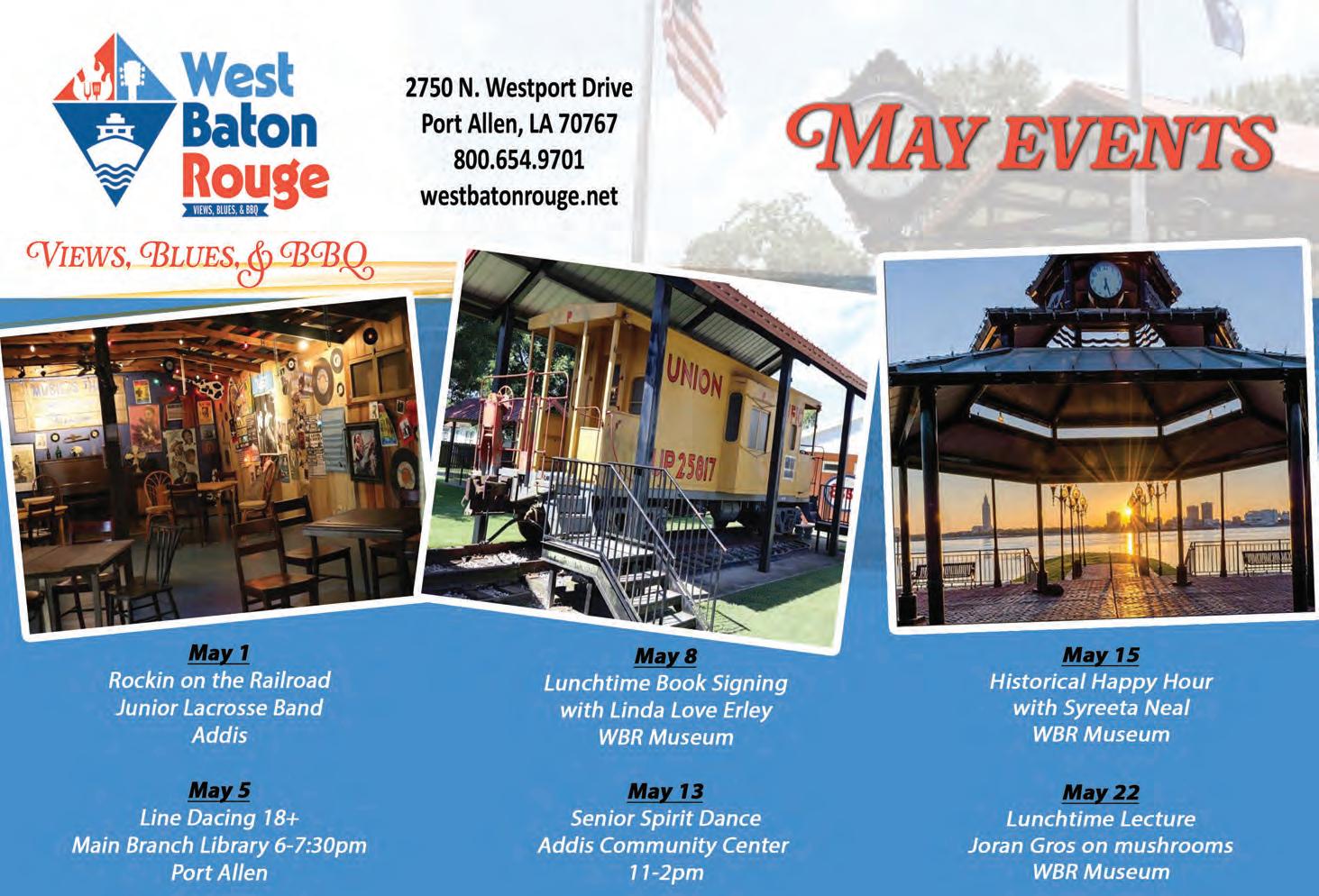
Stop by the West Baton Rouge Museum for Historical Happy Hour, this month featuring Syreeta Neal. Visitors can experience an evening of blues, funk, and soul, located at the museum's Juke Joint on the rear side of the campus near Sixth Street. 6 pm–8 pm. Free. westbbatonrougemuseum.org. 1
MAY 15th - MAY 16th
TURN IT UP
NATCHITOCHES JAZZ/R&B
FESTIVAL
Natchitoches, Louisiana
For almost three decades now, this festival in Natchitoches's historic downtown has brought a full-fledged celebration of these high energy genres (and others,
too!) to its riverbank district. This year's lineup includes almost twenty acts, including headliners Joe Nichols, John Foster, Tiffany Rachal, and many more. Bring your lawn chairs and blankets, but leave your ice chests and outside food and drink at home. Kicks off Friday night at 5:30 pm, and carries through the weekend starting at 11 am Saturday. $27 for Friday-only; $58 for Saturday; $74 for the whole weekend; $130 for VIP. Discounts are available for students. natchjazzfest.com. 1
MAY
15th - MAY 17th
SUMMER FESTIVALS
MID-CITY BAYOU BOOGALOO
New Orleans, Louisiana
Before the sizzling summer heat sets in, the Mid-City Bayou Boogaloo returns, this year at the Historic Pitot House and The Broadside, which will host more than twenty artists across three stages over the weekend. Celebrating its twentieth year this year, the family-friendly weekend will feature music, delicious food, art, and all kinds of other fun. The festival strives to be a "zero-waste event" by reducing the volume and toxicity of waste and materials, conserving and recovering all resources, and not burning or burying waste—all the more reason to join in. Visit thebayouboogaloo.com for a full schedule. 1
MAY 16th
PATRIOTIC PERFORMANCES "BORN IN THE U.S.A: A CELEBRATION OF AMERICA'S GREATEST MUSIC!"
Natchez, Mississippi
In this high-energy evening from the Natchez Festival of Music, Vasti Jackson leads an all-star cast in a moving concert of blues, Motown, R&B, soul, rock, pop, and country. Expect selections from Stevie Wonder and The Supremes, Jimmy Buffet and Lady Gaga, the Backstreet Boys and Dolly Parton. At the Natchez City Auditorium. Performed at Natchez City Auditorium. 7 pm. $35. natchezfestivalofmusic.com. 1
MAY 16th
PRE-CARNIVAL
FOOLS OF MISRULES FOOLS FEST
Covington, Louisiana
Noting the absence of proper Twelfth Night merrymaking on the Northshore, the St. John Fools of Misrule marching club was formed in 2011 to herald the arrival of Carnival season in St. Tammany Parish. The organization's rituals are derived from an ancient English men's group that clamored along the evening streets, creating unruliness. The Fools of Misrule integrated into its name homage
to the historic St. John District of old Covington (1813) where the group was founded and annually conducts its bawdy procession. Their slogan: Vivere Vitam Omnino!—Live Life Completely! For this spring event, Fools Fest, the fools invite all to enjoy a free concert at the Covington Trailhead, featuring a lineup of: Category 6, Dash Rip Rock, Eli Howard & The Greater Good, and Red Freeman. 3 pm–9 pm. Free. VIP tickets available. foolsofmisrule.org. 1
MAY 16th
FUN-DRAISERS
ART & SOUL GALA
New Orleans, Louisiana
The New Orleans Center for Creative Arts' (NOCCA) annual Art & Soul Gala offers an opportunity to support a wonderful cause for the arts, as well as enjoy food from local restaurants and enter a raffle. This year's theme is "Tomorrow Starts Here," a reference to NOCCA's next fifty years. There will be entertainment provided by New Breed Brass Band, Sweet Crude, Stephanie Jordan, River Eckert, and the NOCCA All-Star Legends, plus live entertainment by current NOCCA Music students. Guests can also look forward to portrait
drawings, a silent auction, improv poetry, and more. Tickets begin at $100. Gala at 7:30 pm. artandsoulnocca.com. 1
MAY 16th
GOOD EATS
ACADIANA POBOY & PLATE
LUNCH FESTIVAL
Scott, Louisiana
The brainchild of Pop's Poboys' Collin Cormier, Rob Sandberg, and Zach Doise as well as Jefferson Street Pub's Gus Rezende, this festival gathers a large and inventive variety of poboy purveyors from the area together, this year in Scott's West Village, as a direct challenge to the primacy of the New Orleans' poboy scene. Over fifteen poboy shops make up the cast. Plus kids activities, live music, and arts & crafts vendors, and—naturally—a poboy eating contest. 11 am–5 pm. Free admission, but bring $$ to buy your poboys. acadianapoboyfestival.com. 1
MAY 16th
DANCE
KFORTIER STUDIOS
PRESENTS "SWAN LAKE"
Mandeville, Louisiana
Support young dancers in the Northshore
"Pelican Parking Lot," by artist Mickey Asche, is one of the pieces featured at Gallery 600 Julia in New Orleans in a solo exhibition titled Marina Delight, on display May 2–31. Photo courtesy of Gallery 600 Julia. Learn more on page 18.
Events
Beginning May 16th - 22nd
community by attending KFortier Studios' performance of Pyotr Ilyich Tchaikovsky's iconic ballet, Swan Lake, followed by two jazz showcases. 2 pm–3:30 pm at Mandeville High School. Tickets available at bontempstix.com. 1
MAY 16th - MAY 17th
CULTURAL CELEBRATIONS
TUNICA-BILOXI POW WOW
Marksville, Louisiana
Each May, the Tunica-Biloxi Tribe of Louisiana hosts its Pow Wow—the annual celebration of Native American culture that brings dancers, musicians, and artists representing Indian nations from all parts of the United States and Canada to Paragon Casino Resort in Marksville. Pow Wow spectators come to experience the “old ways” and to get a glimpse of ancient traditions as artists, musicians, and dancers gather in traditional regalia to celebrate thousands of years of cultural heritage. A packed agenda offers drumming and dancing demonstrations, gourd dancing, and the telling of traditional stories and songs. The event will feature vendors selling Native American-inspired food and crafts. Gates at 1 pm Saturday, noon Sunday. $8 adults, $5 children six and under. tunicabiloxi.org. 1
MAY 16th - MAY 30th
LESSONS
ART GUILD OF LOUISIANA WORKSHOP: WATERCOLOR BASICS—WATERSCAPES
Baton Rouge, Louisiana
Roberta Loflin, who has long studied color theory, watercolor, and drawing, presents a course on watercolor basics, focusing on waterscapes (beach, bayou, and flowing water). Loflin will begin by reviewing watercolor materials, then demonstrating and discussing painting composition, working with water scenes for various types of water. Attendees will provide their own supplies, which are listed online. Saturdays at 9:30 am–noon. $90. artguildlouisiana.org. 1
MAY 17th
TALK BIG
MAY STORY SLAM
Bay Saint Louis, Mississippi
Story Slam returns to The Arts Hancock County for an evening of anecdotes, laughs, and connection. May's event features the theme "Adventures in Dating," sure to bring many a tale of heartbreak, awkwardness, and genuine
feeling to the stage. Participants are limited to five minutes, telling their own story, on theme. Attendees can bring a beverage or snack to settle in and listen. 5 pm–6:30 pm. Free. hancockarts.org. 1
MAY 17th
GREEN THUMBS
HILLTOP ARBORETUM SPRING GARDEN TOUR
Baton Rouge, Louisiana
Each spring, Hilltop Arboretum leads a look inside the city's most fabulous private gardens. Browse "Garden Gems" in Southdowns, Old Goodwood, Glenmore Place, and Walden, featuring seven elegant gardens and porches to admire. 1 pm–4 pm. $20 for Hilltop members and students; $25 for the public. Tickets can be purchased online, by phone at (225) 767-6916, or at any of the seven gardens on tour day. lsu.edu/hilltop. 1
MAY
17th
CONCERTS
"SOME ENCHANTED EVENING" WITH THE NORTHSHORE COMMUNITY ORCHESTRA
Slidell, Louisiana
It’s the perfect recipe: a picnic with family and friends, mix in some great music provided by the Northshore Community Orchestra, add a dash of memorable artwork, arrange a gorgeous sunset over Bayou Bonfouca as a backdrop, and voilà! You have Some Enchanted Evening. 5 pm–7 pm. Free. (985) 646-4375. myslidell.com. 1
MAY 19th
ELEVATED EATS
PARADIGM GARDENS SPRING 2026 CHEF SHOWCASE SERIES
New Orleans, Louisiana
Paradigm Gardens presents its spring 2026 Chef Showcase Series—three signature New Orleans culinary nights filled with chef collaborations, live music, and more. The featured chef/restaurant lineup for May includes Turkey & the Wolf, LUFU, Coquette, and Dakar. Music by Tri-Fi. 6:30 pm–9 pm. $100. paradigmgardensnola.com. 1
MAY 20th
CONCERTS
BATISTE LEGACY SESSIONS:
RODERICK HARPER
Baton Rouge, Louisiana
As part of the Arts Council of Greater Baton Rouge's Batiste Legacy Sessions
live music series, acclaimed vocalist Roderick Harper will return to the stage for a heartfelt tribute to New Orleans jazz legend Alvin Batiste. 6:30 pm–8 pm at the Cary Saurage Community Arts Center. $12–$28. Tickets at bontempstix.com. artsbr.org. 1
MAY 21st
DON'T BLINK ONSTAGE AT THE FUHRMANN: CRESCENT CIRCUS
Covington, Louisiana
As part of the performing arts series, "OnSTAGE," Covington Cultural Arts & Events and the City of Covington present Nathan Kepner and Morgan Tsu-Raun of The Crescent Circus. The award-winning duo are sure to dazzle with their blend of magic, circus arts, and comedy. Expect more than thirty hula hoop tricks, juggling, daring acrobatics, and illusions that are sure to blow your mind. 7 pm–8:30 pm at the Fuhrmann Auditorium. $22.94. bontempstix.com. 1
MAY
21st - MAY 23rd
SWEET N' JUICY BEAUREGARD WATERMELON FESTIVAL
DeRidder, Louisiana
With six percent sugar and ninety percent water, there's no better fruit to pay homage to in May than the juicy, thirst-quenching, life-giving watermelon. DeRidder has figured out that if anything can draw out the crowds this month, it'll be the promise of salted watermelon, watermeloninfused cocktails, and more. Held at the Beauregard Parish Fairgrounds, expect one-of-a-kind events like the Melon Voice Singing Competition, an antique tractor show and parade, a truck show (with awards for best lifted, best lowered, best semi, and more), a pig scramble, and watermelon craft exhibits. Plus all the predictable festival fare: music, kids stuff, food, amusement rides, and more. Starts at 5 pm Thursday; noon Friday; and 10 am Saturday. $5; free for children three and younger and for military. All the juicy details can be found at beauregardwatermelonfestival.com. 1
MAY 21st - MAY 24th
GOOD EATS
JAMBALAYA FESTIVAL
Gonzales, Louisiana
Gonzales, the self-proclaimed "Jambalaya Capital of the World," hosts its annual festival dedicated to your favorite regional meat and rice concoction (and surely, around here, there are plenty). The event is free to the public and features a
jamba-cooking contest, carnival rides, a car show, and live music. Free. Full schedule at jambalayafestival.net. 1
MAY 22nd
CONCERTS
TYRON BENOIT BAND - 'LIVE AT THE LITTLE THEATRE' - A BIG ZYDECO SHOW!
Bay Saint Louis, Mississippi
Don't miss Tyron Benoit, a Houma, Louisiana native, at Bay St. Louis Little Theatre for an evening of musical stylings influenced by rock, country, blues, and zydeco. 7 pm–11 pm. $25 in advance; $30 at the door. bontempstix.com. 1
MAY 22nd - MAY 24th
FAST LANE
CRUISIN DA BAYOU CAR SHOW
Springfield, Louisiana
The Tickfaw River Village Campground welcomes car enthusiasts everywhere to its annual show. Friday night begins with a kickoff party at the campground with live music, while Saturday brings the hotly anticipated car show. Sunday is purely for cruising (and, of course, the poker run). Details can be found at the event's Facebook page. 1
MAY 22nd - MAY 24th
SOUND ON BAROQUE ON THE BAYOU Arnaudville, Louisiana
In a three day celebration that will take music lovers up and down the Bayou Teche and into the vibrant rural communities of Acadiana, the Atchafalaya Orchestra presents another year of Baroque on the Bayou. The vision was to bring some of the world's masterworks of music from the Baroque era, played alongside indigenous Louisiana genres, into accessible, intimate, and historic venues in the Acadiana community. Each day will feature a one-hour concert at a site in St. Martin Parish, starting with NUNU Arts & Culture Collective in Arnaudville, where the orchestra will perform concertos by Vivaldi and Bach, and local musician Jourdan Thibodeaux will present original French songs. Saturday, the show will take place at Our Lady of Mercy Catholic Church in Henderson, with performances of works by Handel and Marcello. And it will all close out with a celebration of baroque opera at the Duchamp Opera House in St. Martinville, including selections from Charpentier and Bach. Friday and Saturday concerts at 7 pm; Sunday at 3 pm. $35 each; $90 for the whole festival. bayoutechemusic.com. 1
Events
Beginning May 22nd - 29th
MAY 22nd - MAY 24th
CULTURAL CELEBRATIONS
NEW ORLEANS GREEK FESTIVAL
New Orleans, Louisiana
For more than fifty years, this festival has taken place on the banks of Bayou St. John at the Holy Trinity Byzantine Cathedral—the first Greek Orthodox church in the country. There'll be plenty of homemade traditional Greek food and wine, desserts, live traditional Greek dancing performed by the Hellenic Dancers, and a live Greek band. Saturday also brings the Greek Festival Run/Walk Race. This year's theme is "Your Odyssey Begins Here," and the spirit of the weekend will be drawn from the legacy of ancient Greece. 5 pm Friday; 11 am Saturday and Sunday. $10 per day; $25 for the weekend. greekfestnola.com. 1
MAY 22nd - MAY 25th
JAMMIN' THROUGH THE NIGHT MEMORIAL SWAMP POP MUSIC FESTIVAL
Hammond, Louisiana
Head down to Hidden Oaks
Campground for swamp pop music for day s. The stellar lineup through Friday night and all day Saturday includes Uncle Paul & Bayou Blue Band, Cliff Hilebran & Sidepiece Band, Tet Dur, Aaron Foret, Band, Sons of Uh Beech, and Swampland Revival. Also be sure to catch food and craft vendors, live and silent auctions, and more. Proceeds benefit a child with medical needs. $25. Full schedule and details at the Memorial Swamp Pop Music Festival Facebook page. 1
MAY 22nd - MAY 31st
SUMMER FAVORITES
CAJUN HEARTLAND STATE FAIR Lafayette, Louisiana
Now over thirty years old, this massive, days-long midway carnival attracts more than 175,000 people to the heart of Cajun country each spring. Bring the kids out for a whirl on the giant Ferris wheel and the Mega Drop; try your hand at a prize-winning ring toss. If the Ferris wheel is too tame, try out a Zipline & Warrior Challenge Park, where you can cruise down a zipline like Indiana Jones,
Held annually, the Magnolia Market at the Lamar Dixon Expo Center in Gonzales is a threeday shopping extravaganza, featuring seasonal products alongside apparel, gourmet foods, bath products, and more. This month's event is May 1–3. Photo courtesy of ATT Expo Market. Learn more on page 15.
for free. Located on the grounds and parking lot surrounding the Cajundome. Free admission; full schedule available at cajundome.com. 1
MAY 22nd - MAY 31st
MUSICALS
IPAL PRESENTS: "FREAKY FRIDAY: THE MUSICAL"
New Iberia, Louisiana
Based on the celebrated novel by Mary Rodgers and the hit Disney films, Freaky Friday tells the story of a harried mother and her oblivious teenage daughter after
they magically swap bodies—and have to figure out how to set things right once more. Filled with both laughter and heartfelt moments, this American classic is the perfect mother-daughter bonding experience. 7 pm Fridays and Saturdays; 2 pm Sundays. $22. ipaltheater.com. 1
MAY 23rd
WELL-SEASONED CAST IRON COOK-OFF Slidell, Louisiana
Downtown Olde Slidell will draw a crowd this Saturday, all in celebration
of local culture while benefitting the Friends of the Slidell Police Foundation.
Centered around the cast iron cooking competition, made up of local chefs and home cooks vying for the title of cast iron king, the day will also come alive with local shopping, area artist booths, a live painting event, a Kids Zone, a food court, and live music. Expect to enjoy Cajun and Creole cast iron specialities the likes of jambalaya, dirty rice, gumbo, sauce piquante, grillades, mirliton, maque choux, and more. 11 am–4 pm. $20; $5 for children ages eleven and younger; Family of four pass is $75. Details at the Cast Iron Cook-Off Facebook Page. 1
MAY 23rd
PATRIOTIC PERFORMANCES
SYMPHONY AT SUNSET
Vicksburg, Mississippi
Supported by the Friends of Vicksburg National Military Park and Campaign and the Four Seasons of the Arts, the Mississippi Symphony Orchestra presents a free evening concert at Vicksburg National Military Park in commemoration of America's year-long celebration of the 250th anniversary of the signing of the Declaration of Independence. 7 pm. Free. 601-636-0583. america250.ms. 1
MAY 23rd - MAY 24th
GOOD EATS
BATON ROUGE
SOUL FOOD FESTIVAL
Baton Rouge, Louisiana
Southern cuisine, live music, competitions, vendors, and more are coming to the Main Library's Plaza for the annual Baton Rouge Soul Food Festival. The competition is open to regional favorites from Louisiana, Texas, Mississippi, Alabama, Georgia and Florida, with categories including meats, vegetable and side dishes, breads and desserts, appetizers and soups, beverage and ices. 11 am–8 pm Saturday and Sunday. And don't miss the preparty at Henry Turner, Jr.'s Listening Room on Thursday night, 7 pm–11:30 pm. $33 for the pre-party, but the festival is free. brsoulfoodfest.com. bontempstix.com. 1
MAY 23rd - MAY 24th
CULTURAL CELEBRATIONS
NEW ORLEANS
INTERNATIONAL VODOU DAY
New Orleans, Louisiana
New Orleans International Vodou Day invites scholars, artists, culture bearers, and community members to the city to explore the living traditions of Vodou,
along with related African diaspora religions. On Saturday, participants can stop by a day-long symposium at Xavier University’s Qatar Pavilion Auditorium, featuring presentations on historical and contemporary Vodou practice, an arts exhibition, an AfroEcology and sacred plants display, and children's activities. Later that evening, catch musician Paul Beaubrun's performance at Café Istanbul ($15). Then, on Sunday, the day begins with a Procession of Remembrance, stopping at historic sites related to the transatlantic slave trade, culminating in a traditional Vodou ceremony at Congo Square. vodouday.org. 1
MAY
26th
MUDBUGGIN'
“LOUISIANA CRAWFISH – A SUCCULENT HISTORY OF THE CAJUN CRUSTACEAN”
Baton Rouge, Louisiana
LSU Hilltop Arboretum hosts an evening with Louisiana author and journalist Sam Irwin to explore the natural and cultural history of the crawfish. Irwin draws from his book, Louisiana Crawfish: A Succulent History of the Cajun Crustacean, which follows the iconic crustacean from the wetlands of the Atchafalaya Basin to its central role at the heart of Louisiana’s foodways, economy, and traditions. 6:30 pm–8 pm. $15; $10
for students and Hilltop members. lsu.edu/hilltop. 1
MAY 29th
LIVE MUSIC
BACH LUNCH
Lafayette, Louisiana
Bach Lunch is a whimsical, much loved concert series in downtown Lafayette that takes place on Fridays during the spring and fall seasons, offering an afternoon opportunity for open-air live music. Guests are invited to bring their own lunch, or they can purchase a meal from participating restaurants around the square. This May, don't miss a performance by Grace Novosad. 11 am–1 pm. Downtown Lafayette at Parc Sans Souci at the corner of Polk, Congress, and Vermilion streets. lafayettetravel.com. 1
MAY 29th - MAY 31st
UP IN THE AIR
WASHINGTON PARISH BALLOON FESTIVAL
Franklinton, Louisiana
It's a balloon festival that's full of more than just hot air: catch food vendors, live music, local artists, a carnival, and more at the Washington Parish Fairgrounds in Franklinton. 5 pm–10 pm Friday; noon–10 pm Saturday; noon–9 pm Sunday. $5; $12 for three-day pass; $150 for three-day
Get ready for surf, sand and sunrises in Port Arthur, the Cajun Capital of Texas. Drive on over to Texas’ upper Gulf Coast for a family vacation overflowing with spring time fun. From sports and music hall of fames at the Museum of the Gulf Coast to overnight camping and paddling one of three rated trails at Sea Rim State Park to fishing and beach combing at McFaddin Beach, and even filling up on the best Cajun seafood in all of Texas, you’ll love every memory-making moment.
pack up for
Events
Beginning May 29th - 30th
VIP, with access to tent drinks and food provided in an air conditioned space. wpballoonfest.com. 1
MAY 29th - MAY 31st
SEE-FOOD
JEAN LAFITTE
SEAFOOD FESTIVAL
Jean Lafitte, Louisiana
The Jean Lafitte Seafood Festival is back again, fresher and tastier than ever. Some of the weekend highlights include live music performances, visual artists, guided swamp tours, kayak rentals, and of course, plenty of delicious local seafood to sample—so wear your stretchiest pants. Friday gates open at 5 pm–11:30 pm, Saturday 11 am–11:30 pm, Sunday 11 am–8 pm. lafitteseafoodfest.com. 1
MAY 30th
DANCE
NOLA CONTEMPORARY BALLET: "NATIVE SWAMP"
Covington, Louisiana
Presented by NOLA Contemporary Ballet, this powerful and immersive dance production spins through the
depths of Louisiana's ever-evolving wetlands. Combining evocative choreography with original soundscapes and photographic projections, this hyper-local performing art work explores the layers of folklore, wildlife, and culture that coexist with us among the cypress trees, bayous, and spectacular vistas we call home. The work has been described as "an artistic meditation on resilience, mystery, and the enduring bond between people and place." Two performances on one day only, at 3 pm and 7 pm, at Three Rivers Theater. $25. nolacontemporaryballet.com. 1
MAY 30th
BLOOMS
DAYLILY FESTIVAL AND GARDEN SHOW
Abbeville, Louisiana
Held annually each summer at Magdalen Square in Downtown Abbeville, the Daylily Festival and Garden Show honors the vividly-hued daylily flower in a vibrant horticultural celebration like no other. Peruse more than forty vendors selling everything from daylilies (the
bloom of the hour, after all) and hibiscus, to rare plants and garden supplies. There will also be a slate of educational speakers, along with various flora-forward children's activities and food and refreshments for purchase. 8:30 am–3 pm. Free. lafayettetravel.com. 1
MAY 30th
TURN IT UP
LOUISIANA CAJUNZYDECO FESTIVAL
New Orleans, Louisiana
Acadiana comes to the Crescent City in a big way this weekend, with the annual Louisiana Cajun-Zydeco Festival taking over the George and Joyce Wein Jazz & Heritage Center. The Cajun-Zydeco Fest is a dance-happy celebration of the rockin' music of southwest Louisiana. Free. 3:30 pm–8:30 pm both days. jazzandheritage.org. 1
MAY 30th CYCLES
THE NATCHEZ BICYCLE CLASSIC
Natchez, Mississippi
Get into gear, tighten your helmet, and enjoy the glorious summer weather along the Natchez Trace Parkway. The Natchez Young Professionals and Natchez AdamsCounty Chamber of Commerce host the Annual YP Natchez Bicycle Classic,
starting in Downtown Natchez. Come for the cycling, stay for the city's famous food and music scene. 7:30 am. $55. natchezbicycleclassic.com. 1
MAY 30th
FUN-DRAISERS
FIREFLY SUPPER
Ocean Springs, Mississippi
Support the mission of the Walter Anderson Museum of Art while feasting beneath the facility's elegant live oaks at the enchanting Firefly Supper, featuring renowned chefs, a fourcourse meal, fine wines, and a dessert cocktail to end the evening. Proceeds will fund the educational programming at the museum and help preserve its collections. 5:30 pm–9 pm. $175. walterandersonmuseum.org. 1
For more events visit countryroadsmag.com/eventsand-festivals.
VISIT NEW ROADS - COME FOR
Down By the Riverside
The City of New Roads’ free Friday night concert series draws a crowd to the banks of False River
New Roads Mayor Theron Smith only had to take one look at Baton Rouge’s Live After Five concert series to spot what was missing: a waterside view … and maybe a mechanical bull. Fortunately, Mayor Smith was in a position to deliver on both counts. The year was 2023; Smith was a few months into his job as mayor, and thinking about ways he could improve quality of life for residents of the Pointe Coupee town that hugs the north end of False River. “A couple of people had mentioned that it would be nice to do something regular down on the riverbank,” he said. “I looked at what downtown Baton Rouge had going with Live After Five and I thought, ‘We could do that here!’ ”
Three years on and Vibes on False River concerts are such a springtime mainstay in New Roads, it feels like they’ve been happening forever. On warm Friday evenings, when the sun’s low in the sky and there’s a breeze off the lake to keep things cool, a couple hundred good natured folks tote lawn chairs and picnic blankets down to the Morrison Parkway Riverbank behind City Hall, and stake out some real estate on the grassy,
sloping bank facing False River. Beverage vendors and an on-site food truck do a brisk trade while the band sets up and kids run about, enjoying the simple pleasure of being outdoors. Around 6pm the crowd swells as the band takes the stage with False River as a backdrop, and pontoon boats dock to listen, hang out, and mingle. After all, live music travels a long way across the water. When the sun goes down and the band heats up, the crowd does, too, and the line of kids waiting to take a ride on El Tornado, Mayor Smith’s wildly popular mechanical bull expands to include more than a few adults. “Somebody’s riding the whole evening. It’ll be lots of kids, and later on, some adults, too,” noted Smith, adding with a smile, “A few drinks equals a little more courage, I guess.”
In May, the 2026 Vibes on False River concert series returns, presenting local and regional bands playing a variety of genres.
• May 1: Da Mellow Band—Hometown R&B and soul played by popular New Roads mainstays
• May 8: Genevieve—Texas country by popu-
lar Texas-based singer/guitarist Genevieve Allen. Her first single, “Rob That Train” broke into the top 40 on the Texas charts.
• May 15: Terry & the Zydeco Bad Boys Popular, hard-driving Zydeco band hailing from Duson, LA. Bring your dancing shoes.
• May 22: Raccoon Band—Powerhouse Louisiana Swamp Pop band blending soulful R&B, country, and rock & roll with a driving rhythm section to deliver a signature “South Louisiana sound.”
• May 29: August Heat—High-energy R&B from the Lafayette area, blending classic Motown, funk, and swamp pop.
Concerts run from 6pm–9 pm on May Fridays, on the riverbank by 211 Main Street. Admission and rides on El Tornado are free; food truck and cash bar available. No outside food, beverages, or ice chests are permitted.
newroads.net
If You Build It, They Will Glow
FIREFLIES ARE DISAPPEARING IN LOUISIANA; LSU AGCENTER SCIENTISTS HOPE TO BRING THEM BACK
Story by Christie Matherne Hall
When the Louisiana sunset fades into that signature purple-blue dusk, a short window of time cracks open, and the lightning bugs fly through it. Anyone who has loved a patch of woods can vouch for the extra layer of magic lent by the firefly, who by light in its abdomen, puts on a show to attract its mates—and by accident, us.
To see them light up as the sun goes down on a long summer’s day feels like being let in on a secret. Or, at least, it did. At some point over the last twenty years, we looked up from our busy lives and realized the fireflies had disappeared from the places we remember. At this rate, today’s children are likely to grow into adults who think fireflies are the stuff of fairy tales, mere forest sprites.
What if we had to tell them it was our fault the fireflies went away? That the HOA would have charged us a fine if we didn’t bag our leaf litter in plastic, and we didn’t know how bad that was for the fireflies until we had done away with all their progeny in a single spring day of yardwork?
Former Jean Lafitte mayor (now councilman) Tim Kerner Jr. wanted to change that story, to be able to say that we noticed the fireflies’ absence, learned more about their needs, and took action to save them for future generations.
In late 2024, Kerner emailed the LSU AgCenter to ask if they could do something to strategically restore the habitat of the Wetland Trace, where he no longer witnessed the magical critters he remembered from his youth. Though the LSU AgCenter didn’t have any firefly experts
on staff, it did have an urban entomologist, with a soft spot for fireflies.
“Fireflies
Are Cool”
Dr. Aaron Ashbrook, originally from Michigan, did his doctoral work on a different bug forever nestled into human lore: bedbugs. Urban or structural entomology typically deals with insects in and around the home, Ashbrook explained, so a lot of pest insects end up under his microscope—hence the bedbugs. But urban entomology is a big bug umbrella, and there’s room for curious or beneficial insects to be studied, too.
Ashbrook, along with LSU AgCenter Extension Associate Christine Gambino, whose studies focus on entomology, had worked on a few projects involving pollinators, such as bat and butterfly conservation, and had tackled the question of
how to support pollinators while safely managing mosquitoes. That’s how the project of the fireflies (who are valuable pollinators) landed in their laps.
Ashbrook was happy to accept it—he’s a big fan of lightning bugs. As evidence, he can point to a shelf in his office, where sits a hat that reads, “Fireflies Are Cool.” He grew up admiring the fireflies in the yard of his childhood home in Michigan, where his parents still live. The fireflies have disappeared there, too.
As it turns out, these bioluminescent beetles are disappearing in a lot of places for a lot of reasons, including habitat loss and urban development, leaf litter removal, invasive insects like fire ants, light pollution, and insecticides. But some factors might matter more than others. Ashbrook suggested that comparing the firefly situation on his family’s
Photuris firefly, collected by Nathan Arey and photographed by Christine Gambino at the LSU AgCenter. Image courtesy of Christine Gambino.
property in Michigan to the challenges in Jean Lafitte was helpful.
“We don't have invasive ants there, and there are no mosquito control districts where I grew up,” he said. “Those are two of the things that really get implicated for firefly decline.” And still, the flickering lights had gone dim anyway.
The biggest change his family property has undergone since he was a child, he went on to say, was the loss of a large, open prairie field next door; it’s now someone’s house and yard. And, unlike when he was growing up, his parents now leave exterior lights on at night. For these reasons, Ashbrook hypothesizes that habitat loss and light pollution are the primary forces decimating the fireflies, in both places.
The Firefly Crew
The first step in bringing the fireflies back to the Wetland Trace area was to survey it for evidence of any remaining firefly presence, a process Ashbrook and Gambino conducted in collaboration with the Louisiana State Arthropod Museum. Sadly, they didn’t find anything in multiple visits to the area, but the result wasn’t entirely unexpected.
Rebuilding a firefly habitat requires knowing exactly what the creatures need, so the team began studying to fill in their firefly knowledge gaps, collecting information about life cycles, food, and the specifics of their habitats. They found and connected with several online communities that source firefly sightings from the public, such as the Xerces Society for Invertebrate Conservation, Firefly Atlas, and the Glow Patrol in Texas. Along the way, Ashbrook and Gambino applied for and received a grant to hire a student worker, an enthusiastic LSU undergraduate named Briana Carpenter, to assist with the workload.
Soon enough, a mayor’s plea had turned into a group project at the LSU AgCenter, populated by scientists and aided by park staff and volunteers. All of them think fireflies are cool.
Why They Glow
Some magic loses its sparkle once you learn how it works. The opposite is true with fireflies: the closer you look at their habits and life cycles, the more extraordinary they become. The quality we know them for best—their blinking light show at dusk—is no casual evening hobby. It’s their courtship ritual, and it’s one of the last things they do before departing this earth.
Fireflies are peculiar little beetles—yes, they are beetles—and their specificities vary a bit across more than two thousand species worldwide. Some species don’t glow visibly to humans at all, but they’re still in the Lampyridae family and are classified as fireflies. Generally, adult females will hang out on single, sturdy blades of grass around dusk, waiting for a male to fly around and blink just so—in the way that tells her he’s a member of her same species.
“The males will flash at different times so they can attract the female of their species and not intermingle,” Gambino explained. “If, say, a Photorus and a Pyrodroma flash at each other, they're going to be like, ‘You're not for me. Get out of here. You're not of my species.’”
Once she’s found a suitable blinking male, the female then blinks the same pattern back to him: a signal to take her out on the town, so to speak. After their date, she’ll lay her eggs in the coziest, safest spot she can find, which is ideally a pile of leaf litter. A pile of dead leaves looks like yardwork to most people, but leaving your leaves where they fall can make an enormous difference for a
A GUIDE TO BACKYARD
FIREFLY HABITAT RESTORATION
Step 1: Leave your leaf litter on the ground. This is where the larvae live! They’ll take care of the pesky snails and slugs eating your garden, too.
Step 2: Plant native plants.
Swamp milkweed, sugarcane grass, lizard's tail, button bush, little bluestem: these plants provide adult firefly food, and the grass serves as a perch for female fireflies.
Step 3: Turn off your exterior lights at night. You wouldn't want to interrupt a firefly's date, would you?
Step 4: Avoid broadcast pesticide applications. If you have to spray for bugs in your yard, target specific areas, and avoid the places fireflies would otherwise hang out.
Step 5: Don't give up.
Firefly habitat restoration takes time, and fireflies only have one generation a year. Plus, native plants are pretty, regardless of fireflies, so enjoy the habitat you create while you wait for the stars of the show.
mother firefly. If unbothered, the eggs hatch into larvae—some species’ larvae are colloquially called “glowworms”— who might spend years hunting down unsuspecting snails and slugs. They inject their prey with neurotoxic digestive enzymes, which paralyzes and turns them into a digestible goo.
“They are voracious predators,” Gambino explained. “The larvae can live two to three years depending on how much food they consume, because not all of the adults feed. Some just, you know, pupate, then it’s time to mate.”
The firefly project at Jean Lafitte operated on the idea that if the scientists built and protected a consummate firefly habitat at Wetland Trace—native grasses so sturdy and leaf litter so rich, a female firefly would blink in delight when she saw them—that the fireflies would simply come back.
To this end, in mid-2025, the crew organized dozens of volunteers around Jean Lafitte to bring their own leaf litter to deposit at designated sites, resulting in about two hundred new feet of ideal firefly egg-laying area. The team then consulted with the Louisiana Department of Agriculture and Forestry to carefully choose native plants that would thrive at the site. They worked with Sweet Fern Landscapes to special-order a huge assortment of native plants, such as swamp milkweed, sugarcane grass, lizard’s tail, button bush, and little bluestem. The scientists and about thirty volunteers then
planted all 350 plants at Wetland Trace last November, surrounding old growth native trees that already existed in the park.
Now, all they have to do is keep the plants alive, leave the leaf litter, and wait. The team has been monitoring the area for signs of firefly life since February and will continue through September.
“This could, in theory, take years to happen,” Gambino admits, “so it's kind of like pushing a boulder up a hill. We won’t know until we know.”
Lights Off For Lampyridae
We don’t have to create a wild story to explain why fireflies glow, and we don’t need magic to save them. We only need to accept that, however whimsical they may be, fireflies are real and fragile living things that are affected by our actions. They have, like so many others in the natural world, lost their signals among our own—and some of the most effective things we can do to encourage their return to our own little corners of the world are also some of the simplest: leave your leaves where they fall, and turn off your lights at night.
“They really do rely on being able to detect light from each other,” Ashbrook explained. “If they can’t see light because of excess human light, and they don’t successfully mate—that can basically crash a population in just one generation.”
How many times has your innocent
porch light interrupted a firefly soul connection? Who’s to know, but if you’re leaving your lights on to deter criminals, Ashbrook thinks you should reconsider.
“The idea with lights at night as a security measure … they only provide light to criminals,” he said. “A criminal cannot see at night without assistance. But you can see a criminal walking around with a flashlight.”
While they wait patiently for signs of life at Wetland Trace, the firefly crew at LSU AgCenter isn’t sitting on its thumbs. Gambino has reported new firefly sightings across Baton Rouge and St. Francisville, and she has been inching toward a personal goal of adapting these habitat restoration methods for
use everywhere. Specifically, she’s doing preliminary habitat work a little closer to home at the Burden Museum & Gardens in Baton Rouge.
“If you go on the Firefly Atlas website, there is a whole list of places that are now designated firefly conservation areas, and I'm going to try to make Burden into one of those,” Gambino waxed. “Like, that's my big goal.”
Speaking of Firefly Atlas, everyone on the firefly restoration team emphasized how important citizen scientists are to the project. If you see fireflies, further the cause by submitting your sighting to one of the public databases online. fireflyatlas.org or inaturalist.org are great places to start. 1
LSU AgCenter scientists Dr. Aaron Ashbrook and Christine Gambino planting native plants designed to foster firefly habitat at Jean Lafitte's Wetland Trace. Image courtesy of Christine Gambino.
A Desert in the Rain
THE ALL YOU NEED INSTITUTE IS RESTORING A RARE LANDSCAPE WHILE REIMAGINING HOW WE LIVE WITH THE LAND—AND EACH OTHER
Story by Mimi Greenwood Knight
Thhe All You Need Institute (AYNI) began with a question. “What are all the things we need to thrive as humans, and how can we provide for those needs in ways that restore ecosystems and build community?”
Husband and wife Jordan Bantuelle and Kezia Vida Kamenetz shared a vision of a living laboratory for conscious
stewardship where individuals, families, and communities could gather, reconnect with nature, learn and share ecological living skills, and experiment with alternative living approaches.
The 111 undeveloped acres they purchased in Lumberton, Mississippi to launch that dream in 2018 are now a burgeoning eco-village of retreat and event venues, cabins and campsites for
rent, and a curriculum of nature-based classes for adults and kids. Onsite are a handful of full-time residents, including Bantuelle and Kamenetz, as well as a rotation of overnight and weekend visitors.
Folks find their way to AYNI for any number of reasons. Some want to arm themselves with knowledge to restore their own piece of Earth. Some want to unplug from the noise and light
pollution of the city for a time. Others want to reconnect with loved ones. Still others crave time alone in the unspoiled wilderness, where they might simply exhale, find focus, and follow their instincts.
In 2024, Bantuelle and Kamenetz created a second, sister organization, the Burrow Nature Center, a 501(c)(3) designed to focus in on conservation efforts and educational offerings alongside AYNI’s endeavors in community development.
Before buying their acreage, the couple spent weekends camping in natural environments throughout the Gulf States in every kind of ecosystem the region had to offer. So, it only took moments after stepping onto the property that would become the future All You Need Institute for them to realize it was special.
“We’re on an unusual sandhill landscape,” Bantuelle said. “It’s often called ‘a desert in the rain’ because even though it rains a lot here, the soil doesn’t retain nutrients. We’re basically covered with very deep, very soft sand which isn’t [ideal for] many species. But fossorial species who spend much of their lives underground thrive here.”
The property is home, for instance, to a natural lichen scrubland, with dozens of species, and in places it looks like something from a Tim Burton movie, with eerie, silver-green fuzz covering everything from the ground to the skeletal trunks of trees.
“Lichen . . . thrives in difficult environments where nothing else can live,” Bantuelle said. “But it’s also a pioneer species that prepares these difficult environments for later species.”
Growing across the landscape is rare sandhill milkweed, pineland milkweed, turkey oak, and carnivorous pitcher plants. One of the largest tortoise populations west of the Tombigbee River can be found here, as well as the threatened black pine snake: it’s been documented on the AYNI property more than anywhere else in the state of Mississippi. Because trees grow so slowly in the sandy soil, the pines are preternaturally thin with extremely dense, insect-resistant wood, which Bantuelle cuts and mills himself for on-site construction projects. Walk the grounds, and before long, you’ll likely come across gopher tortoise burrows—sometimes as deep as forty feet. “The tortoises are a keystone species because, once their burrow is established, they welcome in other species,” explained Bantuelle. Up to 350 different
Top left: Jordan Bantuelle and Kezia Vida Kamenetz, owners and founders of the All You Need Institute. Top right: The lichen forest on the property of the All You Need Institute. Bottom: A prescribed burn in the longleaf pine forests currently being restored at the All You Need Institute. All images courtesy of the All You Need Institute.
species can be found sheltering in tortoise burrows. At AYNI, one of those species is the diamond-back rattlesnake, which is considered a species of concern, with approximately 3% of its historic population remaining.
To protect the delicate balance of the ecosystem dependent on the underground burrows, the AYNI team eschews large equipment which could collapse them. Instead, they meticulously undertakes their conservation efforts by hand in the fashion of the Choctaw peoples who originally inhabited this land.
In the eight years since they’ve been carefully stewarding the property, Bantuelle and Kamenetz have already observed an increase in biodiversity. “But we want to offer even more threatened animals a place to thrive,” Bantuelle said. Because the property is surrounded by De Soto National Forest and hundreds of acres of undeveloped private land, he hopes to someday work with the state to create a wildlife corridor through the area to protect the tortoises and other rare and endangered species.
Historically, this area was part of Southeast Mississippi’s vast longleaf pine savannah, and a major part of Bantuelle and Kamenetz’s conservation work is oriented toward re-establishing this ecosystem. “To do that, we’re cutting down a lot of trees, which might sound counterintuitive for conservation work,” Bantuelle said. “But we need to thin out the woods, so the light can hit the forest floor. We’re
doing prescribed burns on a two-year rotation, hoping the fire will activate the native bunching grasses and wildflowers still in the seedbank.” Those native plants are the ideal food for the gopher tortoises, and the grasses are vital for ground-nesting birds.
It’s a delicate dance, but as Bantuelle and his volunteers do their part, the native grasses and wildflowers respond. The day we visited, he walked us through an area that had recently been burned. The ground was black with no sign of life, but the next morning, the number of grass blades—some of them three or four inches tall—that had emerged overnight was astonishing.
The team is also replanting the forest; the longleaf pines that historically grew here had deep root systems able to withstand hurricanes and a sparse crown, which allowed wind to flow and sunlight to seep through. “Longleaf pushes out more sap too, which we’re hoping will attract red-cockaded woodpecker, a threatened species,” said Bantuelle. He would also like to eventually introduce goats, then Pineywoods cattle, to partner with him in thinning out the brush hindering the growth of indigenous flora.
The conservation work on their own property is only the beginning of Bantuelle and Kamenetz’s ultimate vision. As they study, experiment, and learn, they’re training others to engage in this kind of stewardship as well through the programs at the Burrow Nature Center.
“Our goal is to provide hands-on training to make it appealing and economically viable for small landowners to manage their land in ways that are ecologically sound,” Bantuelle said. “If we can teach others to do prescribed burns on a small scale, they won’t have to bring in heavy equipment and tear up the land.” They’re starting from the ground-up,
with the youth. The Nature Center’s Forest School offers child-led, nature-based learning programs for young people on certain Saturdays of the month. “Often when a parent fills out the forms to register their child, they’ll include the fact that their child is on the autism spectrum or has ADHD,” Bantuelle said. “But in this program, you’d never know it. Nature is
Showing a snake to children of The Burrow Nature Center's Forest School.
simultaneously calming and stimulating. In any given area there’s an unlimited possibility of things you can see, explore, discover, work with, create, and learn about. Yet, it’s calming at the same time. One thing we never hear at The Forest School is, ‘I’m bored.’ The kids are engaged at all times as we follow their lead and let them tell us what they’d like to learn more about.”
At The Forest School, children learn practical outdoor and survival skills alongside natural sciences and engineering concepts, while additional programming through The Burrow Nature Center serves adults interested in learning about land stewardship, sustainable living practices, habitat restoration,
natural construction, permaculture gardening, foraging, mushroom cultivation, and more. The kids have a designated open-air classroom, two elevated observation decks, a “mud kitchen”, and several play areas all surrounded by forest. Adults often gather in a 706-square-foot yurt that can comfortably accommodate up to thirty people.
In previous years for the adult program, natural-construction expert Sage Stoneman conducted a series of workshops where students constructed a community pavilion out of cob they mixed from materials found on the AYNI property. “We wove a basic structure out of the branches of invasive species,” Kamenetz said. “Then we made cob from pine needles, clay, and sand, all gathered onsite. We applied it to the skeleton of the structure, building it up with more and more layers until we had beautiful, smooth walls.”
The final product was not only a uniquely artistic structure for future gatherings, but a newfound community who had worked together to build it, mixing the cob with their feet, singing, chatting, and laughing as they worked. Bantuelle and Kamenetz hope to make this an ongoing workshop and build oth-
er communal structures around the property. Bantuelle recently constructed a micro-cabin from a utility trailer that’s now available for overnight stays, and hopes to conduct workshops where participants can learn to build their own.
“I think something that makes us unique in the ecovillage world is that we started this with so little capital—basically a light pole and a dream—and we’ve
been bootstrapping all the way,” Kamenetz said. “We want to break down the myth that this way of living is only accessible if you’re affluent. We believe that living in a more reciprocal and regenerative relationship with each other and the land should be accessible to anyone who genuinely desires it.” 1
Top left: Community dinner during the Summer Solstice. Bottom right: Participants in Sage Stoneman's natural construction workshops. Photos courtesy of All You Need Institute.
Another Limpkin Summer
LOUISIANA'S NEWEST WETLAND RESIDENT ARRIVES
ON THE WINGS OF AN APPLE SNAIL FEAST, AND MAY BE HERE TO STAY
Story by Chris Turner-Neal
“Limpkin” is a drab little name. It sounds like a minor schoolyard taunt, before the kids quite dare to use the big guns, or perhaps a lesser Tolkien character noted for cowardice. But its unprepossessing name is one of the few unattractive aspect of the limpkin, an attractive and charismatic wetland bird that’s one of the newest exotic species to make its home in the Louisiana wetlands, lured by the plentiful supply of another invader it likes to eat.
If the limpkin is not quite grand, it is at least a handsome animal, with brown-and-white feathers arranged in a near-polka-dotted, almost herringbone, pattern; an imposingly long beak made to make short work of any shells protecting its prey, and an alert expression (for a bird). The flaccid name comes from its undignified gait as it wades through wetlands, which early Anglophone observers thought made it look like it was hobbling—though reportedly limpkins can book it when they need to. They have big vocabularies, with the males’ complex windpipes making possible an array of chirping, rattling, and wailing calls, described variously as “haunting,” “creepy,” “welcoming,” or “majestic,” depending on how much the person describing the sound likes birds and whether they’ve been reading anything scary.
The limpkin is not endangered, a
status secured partly by its enormous range: they live as far south as the area around Buenos Aires, are present in much of the interior of South America, flourish along both coasts of the Central American isthmus and throughout the Caribbean, and extend as far north as Florida—and now, Louisiana.
Like many tourists, the limpkin came to Louisiana because of food. The bird is a voracious connoisseur of the invasive apple snail (now unfortunately a common sight in much of Louisiana), loving the molluscan interloper so much that you can sometimes find piles of shattered shells marking where limpkins have had a particularly filling dinner.
Bird enthusiast and author Marybeth Lima was onsite to see the second limpkin reported in Louisiana. The Louisiana Ornithological Society regularly issues lists of birds “expected” in the state, species whose ranges or behaviors are changing in ways likely to bring them here. So, Lima and her fellow birders were poised to spot the new arrival.
When one was spotted near Houma during the Christmas Bird Count, an annual avian census, Lima was on the road, arriving to find herself one of many people pulled over off North Hollywood Road, looking to see the limpkin’s distinctive pelage through the brush. This first sighting was exciting—Lima speaks with an animal lover’s fondness about
the beauty of the bird’s call and tells me it’s fun to watch them eat—but she also admits the bird has lost a bit of its glamour as the novelty’s worn off. Since that heady day in 2018, she’s tracked twenty-three observations and even sees limpkins on jogs near her home. (Her new bird crush, an elegant little insectivore called the black phoebe, is creeping toward Cameron Parish from Texas, and Lima has been staking out spots close to the state line to spot it as soon as it arrives.)
It does seem likely that the limpkin is in Louisiana to stay: sightings have become common enough that the birds are probably established, not just visiting. Erik Johnson, former Director of Bird Conservation for Audubon Louisiana and current LSU professor in the School of Renewable Natural Resources, noted that limpkin sightings exploded across the eastern U.S. in the summers of 2022 and 2023—“hot limpkin summers,” for those tuned in to bird culture—but that the one-off sightings in states like Iowa and Pennsylvania didn’t lead to apparent colonization by limpkins. Those individuals either died or retreated, presumably at least in part because those areas don’t host apple snails. While limpkins strongly prefer apple snails, they do supplement with other invertebrate prey. Lima recalls having seen one chow down on a crawfish (but did they put corn in the boil?)
and Johnson noted that mussels were a second-favorite food source.
In a state that’s weathered onslaughts of marsh-choking water hyacinth, cane-draining scale insects, citrus-stunting bacteria, and ankle-chomping fire ants, among many other unwelcome arrivals, it’s natural to wonder if the limpkin, endearing as it is, presents a problem. The answer is: not yet, but perhaps someday, and it’ll be Louisiana’s mussels that are most likely to lose out.
At the moment, apple snails exist in large enough numbers here that limpkins won’t eradicate them soon, but should they pack away enough escargot that the supply can’t meet their appetites, they’ll be likely to turn to mussels to make up the shortfall. Louisiana’s native mussels are, broadly speaking, not prepared to outbreed a new predator, given that many species are already teetering in the wake of changes to their habitats and competition from invasive species.
That said, even at the risk of Louisiana’s wetlands swallowing the spider to catch the metaphorical fly, the limpkins’ help limiting the apple snail numbers would be welcome. The invasive mollusks, South American like the also-obnoxious nutria and red fire ant, were first spotted in Louisiana waters near Gretna in 2006 and probably resulted from someone dumping their aquarium out, ignorant that doing so is the wet
" Scolopaceus Courlan," (or "Limpkin") by John James Audubon, plate 377 from Birds of America
equivalent of smoking at the gas station. Since then, apple snail populations have been reported in thirty parishes, and in the worst-affected areas they can interfere with rice and crawfish farming thanks to their colossal appetite for plant matter. (And without rice and crawfish, what is there?)
The snails not only lay egg masses laced with a neurotoxic and irritating poison strong enough to kill mice, but they also carry a parasite that, de spite being called “rat lungworm,” can invade the human brain.
Johnson is currently working with colleagues to seek funding to study limpkins and how their presence may affect the ecology of the Louisiana wetlands, so we can hope that clearer information about what to expect is forthcoming—and that crawfish yields and sizes rise with their competi tors disappearing down limpkin gullets.
The limpkin may not be the last new arrival hoping to take advantage of Louisiana’s bounty of apple snails. Observers have recently confirmed sightings of the snail kite, a raptor that also spe cializes in consuming apple snails that is endemic to the Everglades—or at least it was until recently.
Snail kite populations in their Florida homeland sank as low as eight hundred individuals in 2007, but they recovered in part thanks to the arrival in Florida of the same invasive apple snails spreading through Louisiana and luring limpkins over. Now that snail kite numbers have rebounded, they’re expected to make their way across the Gulf in larger numbers, joining their old limpkin neigh bors at the all-you-can-eat buffets on the bayou.
It’s another variable for ecologists juggling in formation about our changing world to track, but bird lovers have a new reason to sling on the bin oculars and head out the door. 1
A limpkin in Louisiana. Photo by Marybeth Lima.
RENDERING
Holy Smokes
INSIDE THE FIRE-FUELED RISE OF BATON ROUGE'S BUZZIEST BARBECUE JOINT
Story by Jordan LaHaye Fontenot • Photos by Molly McNeal
Nestled inconspicuously in a smokehouse on Baton Rouge’s Exchequer Drive— in between businesses like Lonestar Electric Supply, Veritiv Office Supply, and Lipsey’s Firearms Distributor—are two hand-hewn, twenty-footlong offset smokers named Too Phat and Lottie Mae. And they’re turning out more than six hundred pounds of meat a day.
The smoldering hearts of Vincent Hunt’s live fire barbecue joint, Salt Pepper Oak, Too Phat and Lottie Mae resemble something more akin to the mysterious steel machinery of their neighbors’ Industriplex operations than barbecue pits. They run on an almost-constant rotation of oak-wood fires, tended by a series of automated doors that control airflow to reach pinpoint precise temperatures. Impressive as they are, what the smokers do is simple: they pull the smoke and heat across briskets and shoulders and ribs and bellies hot and fast, artfully rendering fat and infusing the meat with the intrigue of smoke-as-flavor.
When the cuts come out, ready to rest, they’re right there in the spirit of what Anthony Bourdain, chewing on a piece of American Royal Hall of Famer Aaron Franklin’s brisket, once described as the finest version of barbecue he’d ever had:
“Salt, pepper, oak, period.”
If you find smokers like Too Phat and Lottie Mae in another restaurant, know that they are their siblings. The original design and fabrication are Hunt’s twin brother, Andrew’s. “I can’t say we own the patent, as they aren’t exactly patentable, but they’re ours,” said Hunt. “And I feel like they give us a leg up on everybody.”
The smokers came about in a leap of faith the brothers, natives of Pearlington, Mississippi, took together in 2022. Hunt was living in West Baton Rouge at the time, working as an operations manager for a locally owned business, when he got word that his brother had a brain tumor. He dropped everything, took a leave from his job, and relocated with his wife, Anna, and small son to Pass Christian,
where his brother was living. “It was just the thing to do,” he said.
After months of treatment, Andrew emerged from the ordeal tumor-free. But neither he nor Vincent had a job.
Since the pandemic, Vincent had been sitting on an escape from the corporate machine, a vision for how he might make use of his twenty-plus years of restaurant experience with something that was his. He had the business plan for Salt Pepper Oak ready to go, had even presented it to potential partners in Baton Rouge years before and been turned down.
“And now we just had this moment, this catalyst,” he recalled. “I said, ‘Let’s jump, let’s go head-first into this.’”
Andrew was two weeks post-op, the stitches still in his head, when he started welding, with assistance from their father. The brothers named the first smoker, Lottie Mae, after their maternal grandmother, who was “the original cook of the family”—a lifelong line cook from Pearlington known for her burgers. And as a ‘thank you’ for his help, they let their dad name the second: a tribute to a beloved old dog, Too Phat
They opened their doors in a leased building on a remote corner of Pass Christian’s Diamondhead community in spring 2023. It started with Saturday-only lunch counter service and a no-fuss
A rack of ribs from Salt Pepper Oak.
Left: Too Phat, one of Vincent Hunt's (pictured right) two custom-built offset smokers.
to be picked up first thing on Saturday morning. But customers who came in to dine got to meet Hunt himself, ordering directly from the meat station and receiving their barbecue cut to order.
Working his way down the line, which sometimes ran out the door, Hunt’s energy was warm and unceasing—cracking jokes, making conversation, slicing meat. “What’s up brother? It’s a beautiful morning! What can I get you?” He and Andrew decided to start setting up a camera behind the counter and letting it roll, livestreaming on TikTok. “People loved it,” he said. The repetition of the process was satisfying, Hunt’s Southern sociability entrancing, the meat mouthwatering. Mississippi accents melded with the enthusiasm of lunch-hour appetites, and the ongoing thrill of gorgeous cut after gorgeous cut, revealed with quicksaws of Hunt’s practiced hand. “We were getting thousands of new followers a week,” he recalled. “Once, we had like eight thousand viewers at once.” They had gone viral.
The growth was quick: more days a week, catering gigs. They were serving people traveling from out of town to try the TikTok-famous brisket. “We knew we had something good,” said Hunt. But Andrew wasn’t a restaurateur—he was far more interested in fabricating pits and was building his own social media following in that arena. He eventually stepped away from Salt Pepper Oak to start his own commercial smoker busi-
ness, Double Barrel Smokers, which today has more than 35,000 followers on TikTok.
“And I started hiring employees,” said Hunt. “We were growing, and it was like ‘How fast can we grow?’ ‘Can we keep this scalable?’” And finally: “How do we get this to Baton Rouge?”
After his brother’s recovery, Hunt’s growing family had moved back to the Red Stick, which meant he was commuting two hours each way between home and the restaurant in Pass Christian, often hauling a car-full of meat with him. “I slept in the restaurant a lot during those years,” he said.
Baton Rouge was always the end game, and in 2025, the door finally opened. Hunt convinced the owner of the the Industriplex site—which was for sale at the time—to lease it to him.
To the average diner frequenting Baton Rouge’s trendy Overpass District and Mid City hubs, the location might seem an odd choice. But, like most of Hunt’s decisions, it was all strategic. Formerly City Pork Kitchen and Pie, and before that Samuel’s Restaurant—the building, as Hunt points out, has been outfitted for fast-casual dining since the late 1980s. “We mapped it,” he said. “There are 875 businesses in this industrial area. It’s a tremendous, ready-made lunch crowd.”
These days, at the height of the lunch rush, Hunt’s team is putting out around seventy-five orders over the course of an hour. They’re working in a space about
four times the size of their previous one, are open six days a week, and have now expanded their menu to offer breakfast and dinner options.
Like in Pass Christian, the system is quick-service—though Hunt himself is rarely chopping meat behind the counter anymore. “I’ve never been gung-ho about being the pit master myself,” said Hunt. “What I enjoy doing is teaching, consulting, interacting with customers—not actually sitting out here trimming twenty briskets and cooking them. Now, we found someone, our pitmaster Tim, and he barbecues on his days off. He’s someone who really loves it. And we are able to give him an outlet for people to tell him how good his barbecue is.”
Even so, the recipes, the methodology of the cook—that’s all Hunt’s. “This brisket has taken us years to develop,” he said, gesturing to a slab of chopped meat on a tray, glistening in tallow. “And it’s as good as it ever has been these days. It’s on a piece of paper now, I can hand it to you. There’s no more guesswork.” The borderline scientific balance he’s striven for, of just-tenderenough texture and a flavor that disseminates across the tongue, is evident in the bite.
The secret, he says, is in the rendering.
“It has to be perfectly rendered, seasoned just right,” he said. “It can’t be overcooked, can’t be undercooked. You’ve got to hit just the right spot.”
For Hunt, it’s serious business, his barbecue. An elevated experience is what he’s striving for. “The thing is, true smallbatch barbecue is expensive, and people inherently think it should be cheap,” he said. “It’s this idea of using secondary cuts—this commercialization of barbecue.” What he is doing, though, is in
Salt Pepper Oak's famed brisket, along with a selection of house-made sides.
line with the specialty live fire tradition coming out of Texas—where barbecue is an art, and a joint is a site of chef-driven quality and experience.
To drive this point home, Hunt and Anna have made the effort to compliment the meat of it all with a menu of house-made, creative sides. You won’t find Busch’s baked beans here, but a bright assortment of Southwestern/ Southern-inspired dishes the likes of fire-roasted corn eloté, creamy maple napa slaw, basmati chimichurri rice, and smoked gouda grits (from local Bonnecaze Farms) with Creole sauce. The dirty rice draws from the Louisiana lunch plate, the borracho beans a pointed rejection of the expectation for Busch’s.
The menu of cuts is also complemented by barbecue-adjacent offerings: a hot honey chicken sandwich that Hunt eats more often than the barbecue at this point, a popular salad with smoked grapes and house-made vinaigrette, a smash burger that is one of the most popular things on the menu. “It’s not just one genre of eating here,” said Hunt. “We don’t want just your dad coming.”
Other menu items come from the creative melding of high-quality ingredients that occurs in an inspired kitchen: use the brisket in tacos or throw it on top of loaded fries, or in a jambalaya. “We’re thinking about doing a power bowl, with rice, chopped brisket, a cilantro lime crema, pico de gallo—we’ve already got all of
those ingredients here,” said Hunt. “Or, a triple dipper, with our pimento cheese, our queso, our eloté.” Tallow, he says, is used in everything, “because we just make so much of it.”
Upon the simple slate of meat smoked just right, he sees a future of endless possi bilities—pop-ups into different markets, food trucks. One of the already-in-place side-quests are Hunt’s barbecue classes, offered on Saturday mornings. “The idea just felt natural to me,” he said. “To bring our expertise into a format that the aver age Joe could take away from.”
The classes are small and catered to each group’s needs, he said, whether it be someone aspiring to open their own busi ness, or a group of college friends trying to spend a morning sipping margaritas and learning something new. He recently taught a mom, daughter, and her daugh ter-in-law spending the day together.
“We have a conversation at the begin ning of class about their goals. Because I could go on a tangent about smoking for forty-five minutes, or I could keep it real simple.” The class starts with breakfast and drinks, continues on with behindthe-scenes glimpses of a barbecue kitchen in action, and then a lesson on trimming, seasoning, and cooking a slab of ribs. “And then you take them home with you, ten bones, a full slab. Bring that home to your wife, or your husband,” he said. And you don’t need a Lottie Mae-scale smoker to benefit. “The strategies we teach
work for Green Eggs, Primo Grills, pellet smokers—any offset,” he said.
Whether a diner is leaving Salt Pepper Oak with a rack of ribs in their car, or a belly-full of lunch, there’s a secret worth pausing for on the way out. Beneath the showmanship of the smokers and the bright beauty of a perfectly-arranged tray of chef-made sides and the brisket’s awe-worthy crust—near the cash register you’ll see displayed some of the best
cookies in Baton Rouge (ranked second place in The Advocate’s taste test last fall, right after the beloved CounterspaceBR cookie). “They’re Anna’s recipe,” bragged Hunt. “We use dark chocolate chunks, which no one else wants to use because they’re expensive as all get out. And there are like three different flours in the recipe. But they’re phenomenal.” 1
saltpepperoak.com.
A rack of ribs and a brisket, fresh out of the smoker.
Soupçon
A DASH OF DINING NEWS
By CR Editorial Staff
EatLafayette Launches New App
In Acadiana, finding the closest lunch spot, the most enviable crawfish hole, or the best route to tackle the Boudin Trail just got a lot easier. In April, Lafayette Travel officially launched the new EatLafayette app, designed to open the doors to discovery of the Acadiana region’s rich culinary offerings. The user-friendly app focuses on locally-owned restaurants, which can be sought out via searches based on proximity, recommendations, or category tags like “Cajun,” “Home Cooking,” “Sweets,” and many more. Each entry features a quick link to a restaurant’s website, up-to-date hours, and a map feature that will take you straight to the door. Now available on the App Store and Google Play. eatlafayette.com
Las Brujas Coffee Arrives in Mid City Baton Rouge
Earlier this spring, a new character joined Government Street’s lively collective of locally-owned specialty businesses. David Villa’s Las Brujas is located right smack in between two of the corridor’s most beloved institutions—Elsie’s Plate & Pie and Radio Bar, offering a specialty Colombian coffee program and bodega-style grocery. Named for Villa’s multiple generation family farm in Envigo, Colombia, which traditionally grew coffee bushes along with livestock, La Brujas specializes in air-roasted coffee, made with an alternative roasting process that preserves the beans’ clean, sweet notes. The menu features classic cappuccinos and lattes alongside a changing menu of signature drinks that make use of ingredients like maple cream, local pastured milk, homemade mocha, and scratch-made syrups. Served alongside each cup is an array of pastries and burritos from Lona Rai’s Kitchen and Bakery.
While sipping on café con leche, customers are able to peruse the grocery section, which offers hyper-local products from neighbors like St. Bruno Bakery, Bayou Sarah, Southern Maid Dairy, Mushroom Maggie, Home Place Pastures, Baton Rouge Bee Co., and Mist and Mallow Flower Farm. lasbrujascoffee.com
REVIEWS
Gas Station Gourmet
READER-SUBMITTED ROADSIDE EATS
Curated by CR Editorial Staff
Stop N Shop in Oakdale, Louisiana
"So, you can find all kinds of things at this store, but one of my favorites is to order a custom salad with Krispy Krunchy brand chicken strips on it. I do bell peppers, jalapeño, banana peppers, cheese, pickles, and chicken strips, with ranch dressing. Those fresh chicken strips on that salad slaps! Like, I just don't get tired of eating them. They make homemade burgers and have delicious lunch plates as well. You can also find some amazing homemade desserts in this store." —Sunshine Babb
For a change to be included in our next issue, submit your favorite gas station eats at subscribe.countryroadsmagazine.com/yum.
Coffee at Las Brujas, courtesy of David Villa.
Outdoors
NATURE, CONTAINED
46 THE INS AND OUTS OF GARDENING IN BASKETS, BUCKETS, CATTLE TROUGHS, AND MORE // 48 A PHOTO ESSAY: INTO THE LOST WORLD OF LOUISIANA SWAMPS
Dgarden? Land!
Some of the most magical gardens I’ve ever encountered had no yard whatsoever, tendering all floral radiance in the form of pots glittering in courtyard spaces, hanging baskets weeping from porch eves; cattle troughs along a fence, full of tomatoes.
Container gardening is the art of planting within the confines of an object instead of into the earth itself. The container could be anything: terracotta pot, cardboard box, fabric, a milkjug with punched holes. There is endless creativity to be had with containers. One can work vertically or horizontally, entirely indoors, and in very tight spaces.
I most often encounter gardeners utilizing containers for growing vegetables and annual flowers. My garden pal Robbye for twenty years did not have access to
a patch of dirt, so her native perennial garden manifested in courtyard ceramic pots and hanging baskets. She, with a keen eye and diligent spirit, created not only one of the most whimsical ornamental gardens in Baton Rouge; she also taught me that these plants I could not imagine might be successfully “contained” could, in fact, bloom prolifically within their vessels. It’s her wild success that inspired me to think more seriously about perennial planting in containers.
All this being said, some of the greatest garden casualties I encounter often involve container gardening. It is so very different from growing directly in the earth that there are key factors often overlooked. So here I lay out some of the pitfalls to be avoided and the tricks I have learned along the way.
Plant Choice
Though Robbye and her container gardens taught me that more plants could be successful in containers than
I'd imagined, it is still true that not all plants will be happy with this style of planting long-term. This is especially true if they are not attended to regularly or with diligence.
The thing about containers is that they drain quickly; they do not hold on to water the way the earth does. This fact, coupled with that of South Louisiana’s intense heat, makes drought-tolerant species, often from super hot and sometimes even arid native regions, most ideal for container plantings. Whatever plant you choose will inevitably dry out between some waterings, so choose a plant that will survive this fact of life. For instance, some of the only trees I have seen do well in pots long-term are citrus and olive trees. This is no coincidence. Both of these species can not only handle drought, but often thrive in it.
This concept is compounded when it comes to using hanging baskets. Since they are lifted and exposed more to wind conditions, their plants will dry out even quicker. If you hang your baskets in the sun, consider it a parttime job.
This is not to say you can’t grow water-loving plants in pots; you just need to prepare to care for those plants more diligently. I get so exhausted caring for the plants in my nursery and my clients’ gardens that at my personal home, I have opted for more succulent-type plants in my pots. These days, I’m growing a variety of cereus, bromeliads, and sedums—plants that won’t shrivel and die on me if I travel for days on end or simply forget about them. Most potted annuals, perennials, and trees are going to need to be watered daily, especially if in the sun or hanging baskets.
Drainage/Moisture Control
Does your pot have holes drilled into the bottom? If you’re struggling with rot in your container garden, your containers must drain well to avoid being waterlogged (unless you are dealing with a wetland-specific species). I find that the cuter and more stylized a planter is, the more likely (1) there are no holes drained or (2) there is a plastic liner in between the soil and pot that does not have a drainage point.
It comes back to “right plant, right space.” I have concluded that a reason many house plants struggle is due to improper moisture control. Many of our common house plants (ficus trees, hoya, ferns, orchids, etc.) come from tropical areas with quite specific growing conditions. Most of them prefer constant but well-drained moisture in a humid environment. This makes them poor candidates for the extremes of our central air conditioning systems, bringing intense cold and intense heat that dry the plants out quickly.
One way I counteract this problem is by allowing my tropical house plants to live outside in warm months, when I can. I usually rotate a few at a time, in minimal one-month increments, onto the shady areas of my porch; they love this and usually produce excess new growth. A great rule of thumb, always, is to understand the native range of the plant you are growing to optimize its growing conditions.
Kathleeen Porciau's gardens, featuring ample use of containers. Photo by Bonnie Kate Zoghbi.
Potting Soil
Your potting medium matters, and the options are not all created equal. I honorably recommend the brand “Foxfarm,” which can nowadays can be found in most all local nurseries, as well as the big box stores. Their products are full of high-quality, nutrient-rich ingredients and minimal man-made chemicals; I find they are worth every penny. In particular, I highly recommend their potting soil blend, “Coco Loco,” which I use almost exclusively. This mix utilizes coco coir in place of peat moss—a far more sustainable option.
In a rather unsustainable industry (Ironic, eh? The garden industry unsustainable?), the use, whatsoever, of peat moss is near the top of my list of unsustainable gardening practices. Found in most every potting soil mix these days, peat moss is favored in the commercial industry because it drains well while still holding onto moisture, creating an ideal balance for many potted plants. The issue is that peat moss (1) is harvested from “peat bogs” that are incredibly biodiverse, unique, and ancient ecosystems (which, while occupying less than 3% of Earth’s surface area, are believed to store twice the amount of carbon as all of our forested areas together) quickly becoming decimated, and (2) it is essentially a non-renewable resource. Peat regenerates at less than a millimeter a year, a growth rate that promises future generations no semblance of the diversity we (largely, gardeners!) have mostly already destroyed.
The good news is that there are ways to achieve similar results as peat moss in potting soil mediums, such as the use of leaf litter, compost, and “coco coir”—the highly water absorbent husks of coconuts and a far more sustainable, renewable resource.
I also encourage filling your pots up entirely with soil. Many gardeners (ahem, my granny) have been known to fill the bottom of their larger pots with such
May Plant Spotlight
Callirhoe involucrata, Winecups
A most whimsical, low-growing native mallow, winecups are an early spring showstopper. Naturally, they creep along the Earth's floor as a beautiful ground cover, offering intense pops of floral fuchsia along their way. This perennial thrives in full sun and dry conditions, making it easy to grow, as well as an excellent native choice for planters and hanging baskets. The petite height of this flower makes it a lovely border perennial, cascading over garden edges or in giant masses up front and center. It does well in sandy soils and those rough gravely areas of your city yard, where nothing else seems to want to grow. And if you are so lucky, she may resurrect with more blooms late summer as the dog days begin to fade.
ecological horrors as plastic bottles and styrofoam to save space, money, and to lend to a lighter pot. Not only does this potentially leach chemicals into the plant, it also takes away from the much needed soil mass root systems need.
The Larger The Pot, The Better
Finally, aside from proper drainage, the biggest mistake I encounter in the realm of container planting is the pot being entirely too small. Life is already stressful for a plant living full time in a container; the more space we grant them, the better. We want space for root develop-
ment—your plant must have room to reach and grow, avoiding any instance of the container and plant becoming root bound.
And coming back to drainage—the more excess soil for the roots to reach into, the more soil there is to hold moisture. The smaller the pot, the faster it will drain and become bone dry. Going larger also saves you some effort in the long run, so that you can avoid having to “up pot” so often. 1
Read more entries of Jess Cole's column, “Our Sustainable Garden,” at countryroadsmag.com.
Holding the Swamp Still
IN A NEW BOOK, PHOTOGRAPHER ANDY CRAWFORD FINDS ORDER IN THE CHAOS OF LOUISIANA'S WETLANDS
Photos
& words by Andy Crawford • Intro by Jordan LaHaye Fontenot
In South Louisiana photographer Andy Crawford’s new book, Journey into Louisiana’s Bayou Country, sion into the depths of Louisiana’s wetlands. In each shot, each moment, Crawford hcaptures the inherent mystery of places like Lakes Verret, Dauterive, and Maure pas—as well as the magnificent Atchafalaya Basin. From his kayak, Crawford is able to reach places a world apart from modern society, witnessing sunrises usually only seen by spoonbills, and the gentle ripples left behind a great blue heron’s slow stroll. Evidence of hu mans exists here, too, though, and Crawford meditates on this in photos of moonlit fishing camps and river chapels, ditches left from the logging era, and the invasive apple snail’s egg sacks clinging to cypress trees.
“The swamp can be chaotic,” he says, “with moss draping the tangled branches of flood ed cypresses. It’s always beautiful, but it’s easy to get lost in all that disorder. I’ve learned to look for small vignettes, a visual photographic frame, as I paddle through the swamps. When I ‘see’ that winning view, there’s a little spike of adrenaline as I move into place and begin setting up for the photo. Sometimes I have a composition in my head for months— even years—before I find the right scene. It’s especially gratifying when one of these scenes materializes in a stretch of swamp I’ve paddled numerous times. Maybe the light hits the view just right, or I approach from a new angle.
Finding that perfect composition that encapsulates the beauty of the swamp is when my mind settles, when all the chaos of the day dissipates and my mind clears. I relax and soak in the beauty around me, even as I work to ensure my camera settings and composition are just right.”
"PADDLING THESE WATERLOGGED LANDSCAPES REVEALS AMAZING TEXTURES, FROM THE TENDRILS OF SPANISH MOSS TO THE ROUGH BARK OF CYPRESS KNEES. THE WATER CREATES INCREDIBLE REFLECTIONS OF THE TREES AND MOSS. SUNRISES AND SUNSETS STRIKE A MATCH TO FIERY DISPLAYS OF COLORS IN THE SKY ABOVE. AND FOG CLOAKS THE FLOODED FORESTS WITH MYSTERY. ADDED TO THAT IS A PROFUSION OF WILDLIFE, FROM LOUISIANA’S ICONIC ALLIGATORS TO GREAT BLUE HERONS TO PINK ROSEATE SPOONBILLS . .
. . . THE ISOLATION OF THE SWAMP HEIGHTENS THESE QUALITIES. IT’S A PLACE WHERE YOU SEE THE RHYTHMS OF NATURE IN THEIR MOST RAW AND BEAUTIFUL FORM."
"MY GOAL IS TO PULL BACK THE VEIL OF SECRECY THAT CLOAKS THE SWAMPS, SO I'VE ALWAYS BEEN INTERESTED IN FINDING PLACES RELATIVELY FEW PEOPLE GET TO SEE. THAT MEANS RUNNING MY MOTORBOAT MILES DOWN BAYOUS AND CANALS, OR PADDLING MY KAYAK INTO FLOODED SWAMPS NOT VISIBLE FROM THE BOAT LAUNCH . . . THE GOAL OF MY WORK IS TO CREATE IMAGES THAT MAKE THE VIEWER FEEL AS THOUGH HE OR SHE HAS BEEN TRANSPORTED FROM THE CIVILITY OF THEIR DAILY LIFE INTO THE ISOLATED BEAUTY OF THE WORLD’S MOST BEAUTIFUL SWAMPS."
Into the Lost World: A Journey into Louisiana's Bayou Country was published April 28, 2026. It can be purchased online through Schiffer Publishing at schifferbooks.com or at andycrawfordphotos.com, where you can see more of Crawford's work, or sign up for one of his photography workshops.
IN SEARCH OF THE LOST TONGUE
Cajun Camp
ENCOUNTERING MY INNER CHILD IN NOVA SCOTIA
Story by Megan Broussard
Whhen I signed up for a French immersion program at age thirty-seven, my goal was simple: learn every single French word in existence, sound Frenchier than an actual French person, and finally be absolved of my sin of becoming a “yank” by moving to NYC.
Why not? I had the time. I had lost my job—two actually, the first as a producer at a major television network, the second as a TV writer. What are the odds of someone losing two careers in one year? High, in 2023, actually. The writers' strike halted production on the show I wrote for, which never came back, and a number of media companies, including mine, completely slashed networks employing thousands of people.
So it felt as good a time as any to follow in my favorite great aunt’s footsteps. Great Aunt Inez went through the fiveweek immersion program at Université Sainte-Anne in Nova Scotia when she was in her seventies. She wanted to learn how to write the language she was only allowed to speak inside her Erath home. By the end of the session, not only did she realize her dream and learn to write in French, she was also awarded le Pris d’Houneur, the Prize of Honor, for her outstanding dedication to the program. Until her dying day, it was the thing she was most proud of outside of her family. She’d say that studying in Nova Scotia, where our family came from, made her more whole, a more fulfilled person. It changed her for the better. Maybe it could change me, too.
As a child, I always wished I knew what Inez and her sisters were gossiping about over cafe au laits. I’d pretend to be able to speak the language too, babbling below them on the floor with my play tea set. Maybe after the program, I’d finally know what some of those conversations were about. Maybe I could actually have a conversation with my French friends back in New York and have the last laugh the next time they tried to tease me with: “ahhh, but you can’t even pronounce your own last name correctly!” Or, perhaps a whole new life path would emerge from it. I know people who’ve come out of this program starting their own immersion schools. The possibilities were endless!
That is not exactly how it went; what did happen was even more spectacular. Shortly after I arrived in Nova Scotia, ready to drop English for five entire weeks, I ran into an old friend who I hadn’t seen in ages. But you know how
Artwork courtesy of Megan Broussard Maughan, designed by Blake Lagneaux .
it is when it's a good friend. You pick up exactly where you left off, like no time has passed at all.
You might be wondering, how were you able to really catch up with this person using only the elementary French you arrived with, without any English at all? Tell us, how does one fill a friend in on the past twenty-plus years using the words bonjour, ça va, and puh?
Can you keep a secret? It’s because we spoke English. Shhh I know, I know. Avertissement!— which means “warning,” a word that will send chills down the spines of Sainte-Anne alums, because it means Tristan, the principal, caught you speaking English. And three times, you’re out. Like, sent home.
But, you see, my old friend and I weren’t technically breaking any rules . . . because she was, well, me. Little Megan, around seven or eight, with an early ‘90s side pony; a Destin, FL airbrushed T-shirt, and grass-stained Keds.
Now you must be really confused. But I promise you’ll get it after I explain.
When I’d plop down on my bed in my tiny dorm room after hours of class, speaking in what felt like tongues and certainly embarrassing myself among my peers who were much more advanced than I was, my mind would wander. Then I’d hear it: a high pitched “Hey girl, remember me? It’s been too long!”
I couldn’t remember the last time I’d heard this voice, but then again I hadn’t found myself in such extreme solitude
since I’d become an adult. Silences in my life were inevitably filled by podcasts, playlists, and Bravo TV. But that wasn’t an option here at Sainte Anne’s. At any point, les animateurs could pull an earbud and ensure no English was spoiling your precious French ears, or check over your shoulder to be sure you weren’t texting in anything but en Français. If so, avertissement! So, when I needed to rest and felt like even my favorite French Netflix shows were too draining for the thirty minutes I had between class and activities, I found myself laying in silence.
That’s when she would come. She was the only one I could really talk to, really lean on, when at 6 am I’d wake up cold with a stiff back to learn to conjugate irregular verbs and ask: what the hell am I doing here? Sorry, Qu'est-ce que je fous ici?
I couldn’t admit that I was struggling to my new fiancé, or my mom. Well, first because they didn’t speak French, so we couldn’t talk unless it was Google translated via text (though in Rick’s defense, he did download Duolingo and Facetimed me with limited vocabulary and incredible miming).
Secondly, this was all my big, brilliant idea in the first place. While Rick was super supportive, I’m sure he didn’t fully understand, though he’d never tell me that to my face. My mom, on the other hand, was fully supportive, but let me know several times how much she didn’t understand why I needed to “go and do all that” when I could be spending time
with my new fiancé, and, you know, getting a new job. Both fair points.
So in these moments, Little Megan would appear, remind me that my inner compass had never steered me wrong (or at least not completely off a cliff), and that should count for something. Plus, she reminded me that my mom’s inclination towards the pragmatic, safe, and steady is her way of loving me, trying to keep me safe.
When I wanted to scamper away from the cafeteria line because it would be easier than whipping out my micro-French dictionary for the words “sorry, I meant to ask for fries, please,” Little Megan helped me dig the dictionary from my backpack so we wouldn’t be hungry later.
When I had to give a three minute presentation in my fledgling French on my favorite family holiday traditions, Little Megan calmed me down. “Remember when you gave that big ol’ speech in front of a room full of executives, and you didn’t know your bra strap was flapping around out of your sleeve the whole time? This can’t go worse than that.”
She helped me remember the things I used to love, for no reason other than they were just fun, like writing poetry and playing board games … things I hadn’t taken time for in ages.
And she helped me with even tougher things, too—like shaking off the silly
anxiety I still carried from being bullied in high school, giving me the courage to walk up cold to a cafeteria table full of strangers and ask: Est-ce que je peux m’asseoir ici? Can I sit here?
She even soothed me when a Cajun song came on at one of the soirées that reminded me of my dad and how it hurts to think about how we don’t talk, but if I’m honest, it would hurt more if we did.
Re-encountering her was the best thing I took away from that experience. I’ve carried her with me through the adventures of an international wedding, a new job, writing projects, a move, a green card application and approval for my new husband. And she’s given me grace for failing to keep my French skills as sharp as they were that spring in 2024.
But these days, she’s on me to get back to practicing, which is why I’m writing about the tips, tricks, and ways I remember French words on my Substack.
I smile when I think back to my time at Sainte Anne, or “Cajun Camp” as Little Megan and I call it, about how all I wanted to do was learn French. But, I left with so much more—a reconnection that was even stronger, even more valuable, than the reconnection with my heritage language and familial roots. I found my inner-voice, the person I am at my core, a piece of whom I’d lost for far too long. 1
Read more entries of Megan Broussard Maughan's column, “In Search of the Lost Tongue,” at countryroadsmag.com.
An Earth Dream
AT A SECLUDED GULF COAST
SANCTUARY, ARTISTS AND SEEKERS WALK, WONDER, AND WORK
TOWARD A SHARED ECOLOGICAL VISION
Story by Marshall Blevins-DeLoach
Thhe odyssey of life is very much like the road to La Terre Bioregional Center in Kiln, Mississippi—replete with the siren song of a new Buc-ee’s shining from the off-ramp, rolling seas of green pastures, and opportunities for characters along the way. But the destination is clear: from the winding and wavy roads of the main country highway, you’ll turn onto a gravel road and voyage and voyage until you pass into the enveloping arms of La Terre, into the pines, into the blessed shade of the woods, of the forest. And much like the road that brought you to our archetypal "wise man," James In-
abinet, so too his story winds and carries you from island to island of insight.
To pilgrimage is to seek; to be a pilgrim is to ask questions. Inabinet moved into the woods back in the early 1990s, after being apparently blacklisted from the oil field for refusing to dump toxic waste into an estuary. His awakening had happened in college, standing in the marsh within sight of Lake Pontchartrain, setting up a duck blind. There, in the cold of duck season, knee-deep in water, watching the sky, he could see five or six waterspouts approaching—a storm like he had never witnessed before. As he stood, almost removed from his body, watching the wind
tear at the marsh grass, the water turned mean and choppy. He could suddenly see how small he was in the world, how it was moving with or without him. Snapping back into his body, he gathered his gear and abandoned the black freezing water, turning towards the safety of home.
Safety now looks like the woods themselves, a distant throw from the vision of Lake Pontchartrain. After a tour beneath these impossibly tall pines, gentle in the wind of a cold December morning, around Bayou La Terre, everything is very quiet and very alive. It looks like no place in Mississippi I recall ever seeing. We wander through the pottery studio,
past a lovingly crafted map of the land, around the permaculture garden where winter greens are growing, into the small, warm, bright weaving studio where Inabinet and his wife work together at the loom to create soft, hand-dyed scarves and wraps, where his philosophy and art books sit behind glass the same as pillars, protected witnesses maintaining ready wisdom. All right, boys. To the oars, to the sails, let the story begin.
“Universal flourishing is what I’m after.” Inabinet describes his life’s purpose as the discovery of the human "niche," or rather, lack thereof.
“I used to go there and sit in the gold-
"Marsh Awakening." Photograph by artist Ann Madden, created during a walkabout pilgrimage experience with James Inabinet.
enrods, where the goldenrods were all around me, and a hawk came down, right in front of me. It came down and went up with a mouse, and so this mouse just gave his life, right? Still, I felt a peace and love feeling, because I was still in the midst of flourishing, even though an animal was giving his life to be a part of the ecosystem. Humans are the only animals that don't create a niche. Squirrels bury acorns; they plant trees that are part of what they live on. They feed hawks. They feed owls, a fox, a raccoon, if he can get him, and so that's being part of the ecosystem. They inhabit a niche in the ecosystem, which is like a job. If you took them out, there'd be a hole. The ecosystem becomes something entirely different if they're not there. For flourishing, humans need to enact their own niche, and that means to become integral and functional in the ecosystem within which we live. That's what I've tried to do since I moved here, was to create a human niche in these woods.”
Inabinet mourns that society doesn’t do much of a job in teaching us how to be humans. It removes us from our instinct, from deeper inner knowing, and instead points us to an hour commute in stopand-go traffic amid gas fumes to sit inside under artificial light. He speaks of the Jewish concept of Tikkun Olam, which translates to “repairing the world,” and of Thomas Berry’s 1988 philosophical work, The Dream of the Earth
We are sitting inside the house that Inabinet built over many years. It is warm and dark and raining gently outside. He has a pot of soup on the stove and it’s faintly aromatic. Where we are sitting inside almost feels as though we are outside, replete with the soft light of a sleepy, rainy Sunday, and I feel like I am already dreaming.
“We must repair ourselves first,” he says.
That's what it’s all about, to prepare oneself and to get on a path that repairs, making one aware of where we are and what's happening around us.
“An Earth Dream,” he explains, “is a spontaneous creation of the imagination, a creation of the imagination in collaboration with place. If you're there with the idea that this place can teach me, you will start to get ideas that will just come to you. It didn't speak to me. But because I'm in this reciprocal relationship, it has helped me with the idea of how to enact a human niche.”
Inabinet’s "Earth Dream," his "Niche," involves helping others find theirs. He invites artists on "Walkabouts," a notion inspired by Aboriginal practices in which the ancestors, in the beginning, walked out on the formless landscape. “Everywhere they sat or drank water or fell or laid down became the land-forms,” he says. “And now contemporary Aborigines walk those old dream lines and song lines and myth lines to keep the place their spiritual home . . . We don’t know where those lines are; we have to go find them, to make the place our spiritual home.”
When Inabinet leads these walkabouts, he is accompanied by groups of artists, storytellers, musicians, and more. First, perhaps there were only eight, then twenty, then fifty. They walk along sidewalks, in the woods, in people’s backyards, experiencing, noticing. He leads exercises that approach the landscape with the same kind of energy that a hawk, mouse, bear, or horse might bring. To see like a mouse is to experience everything very closely; to see like a hawk is to have an aerial or sweeping view; to see like a bear is to look inward as in hibernation; and to see like a horse is to view the world with collaboration, as with their rider. He guides artists through a unique meditation process that involves the Hawaiian Ho'oponoponoprayer, which goes: “I’m sorry. Please forgive me. Thank you. I love you.” Artists walk from leaf to tree, to blade of grass, to sky, to anthill, reciting it.
“You begin imagining and being brought back,” Inabinet describes of the experience. “Then you sit down and get really quiet and think of nothing. A lot of times, you get this flash of insight. You get this warm feeling that just emanates. The artists translate that experience into art, which is part of their ‘Earth Dream’” His goal, ultimately, is for everybody to have an “Earth Dream.” Then, collectively, we will have created an “Earth Myth.”
“A myth has more power than an individual dream,” he says. “Out of that, we may start to imagine a way out of this mess.”
Inabinet has observed more participation, and more depth, with every session. His hope is that over the course of six more sessions taking place over the next three years, culminating in a two-week intensive retreat at Horn Island, they will have, through collaborative imagination, elicited an “Earth Myth.”
“And then the art we create may articulate it, and then people might be moved by it in ways to inspire them to live the collective myth,” he explains. “That’s my dream.”
The Sunday morning yawns and the sun appears as the clouds move on. We are there and Inabinet is telling stories and explaining revelations. The distant shore of a collective “Earth Dream” on this boat of stories, on this lifetime of trying just to understand, is within view. We are sailing on. There’s no map, but we keep dreaming together. 1
On May 3 from 5 pm–9 pm, Inabinet and his wife, Peggy, will open their property at La Terre to the public for the annual Under the Flower Moon arts installation, held in conjunction with the Hancock Arts Council. Artists, writers, performers, musicians, and storytellers are invited to visit La Terre to experience a walkabout via “Nature and Art: Pilgrimage to Ocean Springs”—which can be initiated by appointment by contacting Inabinet at jbinabinet@yahoo.com.
MYSTERIES OF THE FOREST
The Hills Are Alive
IN LOUISIANA’S MOST BOTANICALLY RICH LANDSCAPE, RARE PLANTS AND ANCIENT LINEAGES PERSIST IN COOL, SHADED REFUGE
Thhe Tunica Hills is a landscape treasured by many: photographers, birders, game hunters, botanists, herpetologists, ecologists, geologists, nature enthusiasts, and numerous others. It is a preternatural land of sheer bluffs, high ridges, steep slopes, and deep ravines—clothed by one of the richest upland hardwood forests in North America. When amongst these deeply incised loess bluff hills, with their ostensibly endless narrow ridges and deep ravines, you might feel like you’re in the heart of the Southern Appalachian Mountains—said mountains the only thing missing.
The Tunica Hills are found in West Feliciana Parish, Louisiana, and adjacent Mississippi. In Louisiana, this reach of hills is located primarily north of St. Francisville, west of U.S. Highway 61, and east of the Mississippi River bottom, occupying an area of over one hundred square miles, though these rugged blufflands extend well north into Mississippi.
The Hills derived their name from the Tunica (or Tunica-Biloxi) Indian Tribe, a Native American group that historically inhabited the Lower Mississippi River Valley.
Formation and Physical Character of The Hills
The physical character of these rugged hills formed over the last many thousands of years through deposition and erosion. The process began with the progressive deposition of wind-blown silt, called loess (pronounced “lurse” or “luss”), over millennia. Prevailing winds blowing primarily from west to east picked up silt from the adjacent Mississippi River Valley during times when river bottom soils were exposed after glacier melts; the most recent melting event occurred approximately ten thousand to eighteen thousand years ago. Eventually, these loess deposits accumulated to depths of up to fifty feet or more in places, on top of older geologic formations.
Over many thousand of years, these highly erodible loess soils have been worn and washed away by
rainfall, and have thus been sculpted into a highly dissected wonderland of winding ridges.
These hills range in elevation from well over three hundred feet on the highest ridges, to a low of less than one hundred feet in the deepest ravines. Such is the degree of local dissection that the change in elevation can in places approach 150 feet from the top of the narrow ridge you’re standing on to the bottom of the deep ravine you’re looking down into. The distance between ridge tops is often no more than four hundred feet. Each ravine bottom supports its own intermittent creek channel that carries water after heavy rains, typically with sand, gravel, and clays revealed from the older geologic deposits below the brown loam loess. Amazingly, this sharp ridge-and-ravine landform repeats across an area of over one hundred square miles in Louisiana, broken only by a few larger streams, such as Tunica Bayou, Bayou Sara, and Little Bayou Sara.
Diversity in the Forest
Plant ecologist Dr. William Platt (now retired) and associates at LSU vouch that the forest that occupies these hills is one of the most species-rich of all Southern hardwood forests, particularly in the variety of woody species. The complex topography of these hills is filled with a variety of micro-climates and habitats. This is the result of the last ice age (the last glacial maximum, which occurred 26,500–19,000 years ago), during which a number of plant species more common to the north migrated southward, away from the advancing ice sheet, and found refugia in the deeply dissected ravine-lands of the Tunica Hills.
Scientists theorize that cold glacial meltwater and accompanying cool air masses moving down the Mississippi River combined with warmer Southern air to produce frequent foggy conditions, which provided abundant moisture and maintained cooler temperatures in the hills adjoining the river. Deep vertical ravines provided relatively cool, shaded habitat capable of supporting species intolerant of warmer and drier environments. Still today, relic populations of several of these northern species occur in the Tunica Hills, many at the southernmost extension of their range.
Historically, much of the forest was dominated by Southern magnolia, American beech, and American holly as indicated by General Land Office survey records from the 1800s. However, over the last two hundred years, and especially in the last century, the forest’s structure and composition have been altered by timber cutting and other human endeavors. While magnolia, beech, and holly are still present in abundance, they do not dominate as they once did, and large, old specimens are rarely seen. Extensive timber cutting has also favored the proliferation of faster growing trees in the Tunica—such as sweet gum, tulip tree, and cherrybark oak—and has set loose
Story by Latimore Smith, Jess Cole, and Dr. Chris Reid
The Tunica Hills, photographed by Dr. Chris Reid.
loblolly pine, a rapid colonizer of cutover land never seen in these hills until the forest alterations of the last century.
Despite these changes, conservation scientists believe the hardwood forests of the Tunica Hills still support the great majority of the plant and animal species that were present two hundred years ago.
Trees and Shrubs of the Tunica Hills
A number of notable native trees augment the remarkable diversity of the Tunica forest, owing principally to the rich soils found there. Many of these trees are attributed to the Florida Parishes, though they are almost exclusively found in the Tunica Hills region, including: Southern sugar maple, Carolina basswood, bitternut hickory, black walnut, Shumard oak, white ash, honey locust, cucumber magnolia, and slippery elm. The spectacular spring bloomer that is the redbud tree, a favorite landscape ornamental throughout the South, is native to these rich hills (and other areas in central and north Louisiana), but not so elsewhere in the Florida Parishes. Pyramid magnolia, a state-rare tree observed in less than ten locations in the state, is also occasionally encountered in the hills.
A variety of outstanding native shrubs are present as well, including mountain hydrangea, a shrub not found in Louisiana except in the Florida Parishes, where it grows most abundantly in the Tunica Hills. Its cousin, the oak-leaf hydrangea, is another uncommon Louisiana jewel, found on steep slopes throughout the Tunica region. Red buckeye, a relatively uncommon shrub in southeast Louisiana, has been seen to grow over thirty feet tall in these hills, truly gigantic specimens of a size rarely seen in the state.
Other beloved natives to the region that call the Tunica Hills their home include the common paw paw—which produces the largest edible fruit of any native woody plant in the U.S.— and giant cane, actually a woody grass also known as river cane. This versatile plant once gave rise to the region’s former name: the “Cane Hills.” Historically very abundant, the grass was greatly diminished by cattle grazing in early settlement years.
Unique and Rare Flora of the Tunica Hills
The Tunica Hills are one of Louisiana’s premier botanical hotspots, supporting at least twenty-three known rare plant species per the Louisiana Wildlife Diversity Program (formerly the Louisiana Natural Heritage Program) of the Louisiana Department of Wildlife and Fisheries. Most of these are much more typical of areas north of Louisiana, such as the Southern Appalachian Mountains, but are found in refugia of the shady, deep ravines of the Tunica. (One additional species, American columbo, was recorded historically but is now presumed extinct in the region.)
Of these twenty-three species, five are known in Louisiana only to exist in the Tunica Hills, all being herbaceous ground story plants: white baneberry (or doll’s eyes), Canada wild ginger, silvery glade fern, Allegheny spurge, and American ginseng. The rarest of these is the American ginseng, known to exist in Louisiana in only one place, represented by a mere handful of plants in a small population deep in the Tunica Hills. Ginseng is an iconic plant of the Appalachian and Ozark mountains, and other areas of the eastern U.S. Amazingly, this small herb has been documented to have a life span approaching one hundred years. It is arguably the most treasured of all wild native medicinal plants, with a wide range of reported health benefits. It is a plant so valuable, in fact, that it has been hunted to near extinction in many parts of its historic range due to the demand, primarily from Asian markets.
This has led to regulations on its collection in many states, in an effort to conserve wild populations.
Beyond the rarities, there are many other herbaceous plants noteworthy for their relative scarcity in the state or otherwise fetching
American Columbo, Frasera caroliniensis* (Historic)
American Alum Root, Heuchera americana**
Crested Coral Root, Hexalectris spicata**
Pyramid Magnolia, Magnolia pyramidata**
Snow Melanthera, Melanthera nivea**
Virginia Saxifrage, Micranthes virginiensis**
Allegheny Spurge, Pachysandra procumbens*
American Ginseng, Panax quinquefolius*
Shadow Witch Orchid, Ponthieva racemosa**
Maryland Black Snakeroot, Sanicula marilandica**
Bay Starvine, Schisandra glabra**
Nodding Pogonia, Triphora trianthophoros**
* In Louisiana found only in the Tunica Hills.
** Also found elsewhere in Louisiana.
features. Included in this group are Canada nettle, dutchman’s pipe, hound’s tongue, hone-wort, Southern stoneseed, and fetid wake-robin—a narrow endemic species found only in southeast Louisiana and southwest Mississippi.
One of the more interesting plants of the Tunica Hills is mayapple, also known as wild mandrake. It grows in sizable colonies, often consisting of only one or a few individuals that are spread by rhizomes. Each “plant” has only two leaves and one flower in the axil of the leaves. The large, umbrella-like leaves are showy and conspicuous, and flowers are solitary, nodding, and white- to rose-colored. The leaves, roots, and seeds are poisonous if ingested in large quantities, though the roots were historically used as a cathartic by Native Americans. The edible, ripe, golden-yellow fruits can be used in jellies.
One aspect of the native vegetation that is particularly striking in these hills is the abundance and variety of native ferns, which often form lush “fern gardens” over expansive areas. Some have called the Tunica Hills “the land of ferns,” home to more than twenty-five documented fern species, four of which are considered to be state-rare. One, the silvery glade fern, has been observed in Louisiana only in the Tunica Hills. Northern maiden-hair fern, a quite uncommon fern in the state, is another particularly eye-catching little dainty.
Unfortunately, there are also a few non-native invasive ferns found throughout the hills, the vilest of which is a new up-and-comer, Japanese lady fern.
Botanists and naturalists alike believe that undiscovered rarities perhaps still await in the Tunica Hills for the knowing eye. Private land and challenging access have hindered extensive floral exploration. Perhaps, though, we can see this as a blessing in the further conservation of these rare species and the complex ecosystems they call home. 1
One can interact with the beauty of these hills via various access points—the most famous being Clark Creek Natural Area in Woodville, Mississippi. This area is beloved by hikers due to its waterfalls, but can be quite crowded and trampled on weekends. Another area of access, preferred often by naturalists due to its quieter, more secluded nature, can be found at the Tunica Wildlife Management Area—where one can find three separate trails off of Old Tunica Road. Old Tunica Road itself is a botanical joy, with stands of the rare Allegheny spurge, oakleaf hydrangea and other native plants scattered roadside.
The annual St. Francisville Food & Wine Festival is a weekend-long celebration of the culinary culture of Louisiana and Mississippi with acclaimed chefs, creative wine pairings, cocktail and spirit tastings, craft beer and live entertainment in one of Louisiana’s most beautiful and historic small towns.
Rare plants of the Tunica Hills.
"BOTANISTS AND NATURALISTS ALIKE BELIEVE THAT UNDISCOVERED RARITIES PERHAPS STILL AWAIT IN THE TUNICA HILLS FOR THE KNOWING EYE."
Top left: Ginseng, by Bruce Sorrie. Bottom left: Canada Wild Ginger, by Alan M. Cressler. Middle: May Apple, by Wasrts on Wikimedia. CC BY-SA 4.0. Right: Silvery Fern, by Erik Danielson.
Abbeville, LA
DIRECTORY OF MERCHANTS
Daylily Festival 55
Albany, LA
Livingston Parish CVB 21
Alexandria, LA
Alexandria/Pineville Area CVB 29
Avery Island, LA
Tabasco Brand 13
Baton Rouge, LA
AllWood Furniture 51
Baton Rouge Clinic 23
Blue Cross / Blue Shield 9
BREC 38
Calandro’s/Select Cellars 11
East Baton Rouge Parish
Librar y 64
Elizabethan Gallery 19
LSU Rural Life Museum 53
Marie Madeleine 50
Old State Capitol 10
Window World of Baton Rouge 14
WRKF 89.3 FM Public Radio 34
Biloxi, MS
Coastal Mississippi 2
Breaux Bridge, L A
St. Martin Parish Tourism Commission 37
DeRidder, LA
Beauregard Parish Tourist Commission 47
Folsom, LA
Giddy Up / Far Horizons Art Gallery 28 Global Wildlife 28
Franklinton, LA Washington Parish Tourism Commission 44
Hammond, LA
Child Advocacy Services 7
Tangipahoa Parish CVB 63
Hattiesburg, MS Visit Hattiesburg 6
Lafayette, LA
AllWood Furniture 51
J&J Exterminating 26
Mansura, LA
Avoyelles Commission of Tourism 18
Many, LA
Toledo Bend Lake Country 12
Meridian, MS Visit Meridian 5
Morgan City, L A
Cajun Coast CVB 55
Natchez, MS
Live @ Five / Natchez-Adams Community Alliance 33
Natchez Chamber of Commerce 33, 35
Natchez Convention Promotion Commission 34
Stedman Ulmer 50
Natchitoches, LA
Natchitoches Area Convention & Visitors Bureau 25
New Roads, LA
Arts Council of Pointe Coupée 31
B.E. Boutique 31
Catholic of Pointe Coupée 31
City of New Roads 30
Fontaine Lumber 31
Ma Mama’s 31
Parish Home and Farm 31
The Pointe Mercantile & More 31
Opelousas, LA
St. Landry Parish Tourist Commission 59
Pioneer, LA
West Carroll Parish Tourism 19
Plaquemine, LA
Iber ville Parish Tourism Department 22
Port Allen, LA West Baton Rouge CVB 43
West Baton Rouge Museum 57
Port Arthur, TX Visit Port Arthur 27
Ridgeland, MS
Explore Ridgeland 17
Ruston, LA
Experience Ruston 45
Scott, LA
Bob’s Tree Preservation 59
Sorrento, LA
Ascension Parish Tourism Commission 50
St. Francisville, LA
Afton Villa Gardens 55
Bank of St. Francisville 3
Poppin’ Up Plants 57
Town of St. Francisville 40
West Feliciana Historical Society 41
Vicksburg, MS Visit Vicksburg 15
Zachary, L A
McHugh House 26
Zachary Lumber and Hardware 31
Photo by Molly C. McNeal
PERSPECTIVES: ART OF OUR STATE
The Art of the Saw
STEVE TRESVIK CARVES LARGER-THAN-LIFE SCULPTURES OUT OF LOUISIANA FORESTS
On a recent morning, I was lucky enough to tag along as chainsaw artist Steve Tresvik carved, buffed, and sanded out the final details of one particularly plucky young pig. Cast about the yard of his Covington workshop were tree trunks of various species and sizes, each awaiting inspiration. Sawdust formed dunes around our feet.
Inside the workshop itself were projects in varying stages of completion, more than a dozen chainsaws in graduating sizes, hand-carving tools, sanders, air compressors, torches, paint, and stain, as well as leather chaps, gloves, noise-cancelling headphones, and goggles.
As an artist, Tresvik’s canvas is wood. His brushes comes with a motor. I was able to see some of his finished work: pelicans, alligators, owls, eagles, foxes, and bears—some taller than the artist himself. Behind it all stands the quiet, unassuming New York transplant who’s found a way to make his retirement years meaningful.
It actually all began when a lifelong dream fell through. “I entered the Navy hoping to be a Seal,” he explained. When a medical condition precluded that plan, Tresvik found himself on kitchen duty, where he was surprised to discover his own aptitude as a cook. When his tour was over, he enrolled in
Story by Mimi Greenwood Knight
The Culinary Institute of America at Hyde Park, then landed a job as a chef with the catering arm of the Hyatt Hotel chain, where, for the next four decades, he worked in major cities across the country.
As he did, he decided to try his hand at carving ice sculptures, beginning with a simple five-prong chipper and often ending with sore, bloodied hands. As fate would have it though, he worked one catering gig alongside a professional chainsaw artist from Japan. The latter was happy to take Tresvik under his wing, giving him pointers and guiding him in the purchase of professional ice-sculpting tools. Tresvik’s inner artist awakened, he began carving elaborate sculptures of angels and mermaids, towering mountain scenes with deer and tigers, seahorses with champagne spouting from their mouths, and anything else the occasion required.
His reputation grew, and soon he was catering events and creating ice sculptures for exclusive events held in honor of folks the likes of Ronald Reagan, George H.W. Bush, for the East Room of the White House and the Nixon Library, and for NFL-sponsored events during six Super Bowls. He even catered Richard Nixon’s funeral, with five living U.S. presidents in attendance.
When he finally retired and moved to the Louisiana Northshore with his wife, Maria, Tresvik assumed his carving
days were behind him. Still, in the back of his mind, he wondered whether the skills he’d honed with ice could possibly transfer to wood.
Dozens of YouTube videos and a few false starts later, Tresvik began tentatively carving bears and displaying them around his workshop on a busy road between Covington and Folsom. Soon, drivers were stopping and asking to buy his pieces. Then came requests for commissioned work.
He’s never had to advertise, has no website, nor a business card. But for the last six years, word of mouth has drawn flocks of people to his door. These days, he typically has a waiting list of ten to fifteen commissioned pieces. “Maria has to remind me that this is a hobby, not a second career,” he said. “I’m supposed to be retired and enjoying a slower pace.”
The requests keep rolling in though, for signs and benches, religious statues, and memorial tributes. Louisiana animals are popular. He does bass for fishing camps, deer and alligators for hunting camps, and with so many horse farms in Folsom, he’s accepted plenty equine-themed challenges. He’s created a large lighthouse for a Mandeville ballpark, a veritable menagerie for a Folsom music venue, and he even carved one customer a life-sized Sasquatch. Whatever the project, Tresvik begins with a design on paper. Next, he measures and roughly sketches it onto
the pine, white oak, or cedar trunk he’s culled from his wood pile for the project. He uses a large chainsaw to “block out” a rough shape. Then, he advances to smaller and smaller chainsaws, then eventually hand tools used to refine details. He finishes with a blowtorch, adding depth and color to his final product.
“I generally use ten to twelve tools on each piece,” Tresvik said. “Sometimes I paint the finished product, but often the natural wood looks better, so I just seal it to preserve the wood. And if I mess up at any stage, I can usually sand it off and start again.” His larger pieces can go up to ten feet tall and are sometimes carved directly into dead trees left where they’re rooted—allowing a tree that’s stood for decades, or even centuries, to be reborn as sculpture.
I couldn’t leave Tresvik without adding my own project to the waiting list: a single morel mushroom, about three feet tall, to stand beside the chanterelles he’s already carved me. I’ve heard the adage, “Don’t retire from something. Retire to something.” Tresvik might be the poster child for this philosophy, waking each day as he does with visions of alligators, eagles, and bears, and plans to coax them from the wood. 1
You can commission your own Tresvik original or browse some of his existing pieces by calling (225) 772-1853.
Chainsaw sculptures by Steve Tresvik. Courtesy of Jenny Moore.