Serving Oregon’s South Coast Since 1878
TUESDAY, FEBRUARY 17, 2026 |
theworldlink.com |
$2
Oregon Historical Society Celebrates 100 Years of Highway 101 with New Exhibition, Special Photography Showcase
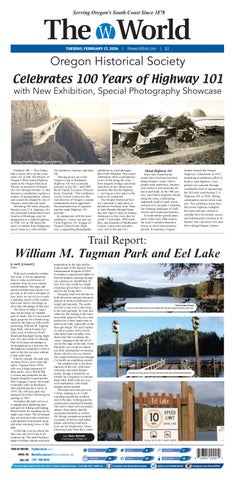
Portland, OR — This Friday, take a scenic drive up the coast when 101 at 100: The History of Oregon’s Most Iconic Highway opens at the Oregon Historical Society in downtown Portland. On view through October 11, this interactive installation explores a century of transportation, culture, and coastal life shaped by one of Oregon’s most beloved roads. Stretching 363 miles along the Pacific Coast, U.S. Highway 101 has connected communities from Astoria to Brookings since its designation as a federal highway in 1926. 101 at 100 traces the road’s evolution from Indigenous travel routes to a vital corridor
for commerce, tourism, and daily life. “Having grown up on the Oregon Coast in Reedsport, Highway 101 was a constant presence in my life,” said OHS Boyle Family Executive Director Kerry Tymchuk. “This exhibition invites visitors to discover the rich diversity of Oregon’s coastal communities and to appreciate the remarkable feat of engineering that made Highway 101 possible.” In conjunction with the main exhibition, visitors can also see From Highway 101: Images of Oregon’s Most Iconic Highway, a supporting photographic
exhibition by local photographer Peter Marbach. This visual celebration offers contemporary views of life along the coast — from majestic bridges and misty shorelines to the vibrant communities that line the highway — serving as a love letter to the road on its centennial. The Oregon Historical Society’s museum is open daily in downtown Portland, from 10am to 5pm Monday through Saturday and 12pm to 5pm on Sunday. Admission is free every day for youth 17 and under, OHS members, and residents of Multnomah County. Learn more and plan your visit at ohs.org/visit.
About Highway 101
leaders formed the Oregon Highway Commission in 1913, launching an ambitious effort to build a coast highway. Completed over a decade through remarkable feats of engineering, the 363-mile road became U.S. Highway 101 in 1926, linking communities across seven counties. This exhibition traces how this iconic highway reshaped the coast and asks visitors to consider how movement, access, and infrastructure continue to influence who can travel, live, and thrive along Oregon’s shores.
Since time immemorial, people have lived and traveled along Oregon’s coast. Native people used waterways, beaches, and extensive trail networks for travel and trade. In the 19th century, non-Native migrants settled along the coast, constructing makeshift roads of sand, wood, and gravel to navigate a stunning but isolating landscape of cliffs, forests, and windswept beaches. As automobiles gained popularity in the early 20th century, the coast’s isolation became a barrier to travel and economic growth. In response, Oregon
Trail Report:
William M. Tugman Park and Eel Lake BY NATE SCHWARTZ Editor
With such wonderful weather last week, it felt an opportune time to wake an old series of columns from its over-extended hibernation. The hope and mission behind trail reports is to provide us all with a reminder of how lucky we are to live in such a stunning stretch of the country and coast, and to encourage us all to take advantage of that fact. The focus of today’s report may not be much of a hidden gem to locals, but it is an exceedingly gorgeous bit of land recognized by the State as well-worth protecting. William M. Tugman State Park, which borders Eel Lake, rests in between North Bend and Reedsport along Highway 101, just north of Lakeside. One of its many advantages is its designation as a rest area for the highway, meaning it’s free to park in the day use area without a state parks pass. Funnily enough, the park gets its name from a news-man and editor. Tugman (born 1893), who was a huge proponent of State parks, was a World War I veteran and journalist for the Eugene Register-Guard and the Port Umpqua Courier. He would eventually settle in Reedsport after purchasing the Courier in 1954. The 560-acre park was named in his honor following his passing in 1961. Nowadays the park serves as a campground, gathering area, and spot for fishing and boating. Reservations for camping can be made year-round. The developed day-use area provides restrooms, a playground, boat launch ramp, and some sweeping views of the lake. A fish trap is set up where the lake runs into Eel Creek at its southern tip. The small hatchery helps to bolster salmon and trout
populations in the lake and beyond as part of the Salmon Trout Enhancement Program (STEP). It contains a specialized ladder so that the lamprey passing through can continue on uninhibited. In fact, Eel Lake could be a slight misnomer given that it is lamprey and not eel living there. The parks trails rim the lake in both directions and provide great options in terms of difference in length and intensity. The northern trail is just over a mile long to the end and back. Its wide and relatively flat making it the more accessible option of the two, and perfect for a short lunch-time or after-work walk, especially as the days get longer. The trail reaches its end at a point with a lovely little bench and a notable, lone shore pine that overhangs the water, clinging to the last bit of soil on the edge of the lake. From that point you could see numerous little salamanders swimming about, which to my eye looked like rough-skinned newts (though I’m hardly an amphibian expert). The southern trail is the more rigorous of the two, with more verticality and some thinner points, though it should be no trouble for a beginner to intermediate hiker. Both trails are very well maintained, with sturdy bridges where needed. This main trail runs just over 3 miles, making it a 6.3-mile roundtrip around the southern end of the lake, running past the conservation easement boundary. The trail is lined with red cedars, spruce, shore pines, and the occasional hemlock or willow. My hiking companions pointed out plenty of berries and edible plants, and always had keen eyes out for mushrooms. Geese returning home from their winter
See TRAIL REPORT Continued on Page 16
FIND US ONLINE: TheWorldLink.com
Opinion
2
Sports
4
Classifieds
7
Calendar
11
Comics
14
Obituaries
15
EMAIL US: WorldCirculation@CountryMedia.net CALL US: (707) 460-8655
Serving Oregon’s South Coast since 1878 • A Country Media Newspaper • Copyright 2025 Follow us:
facebook.com/theworldnewspaper
twitter.com/TheWorldLink
instagram.com/theworldlink