




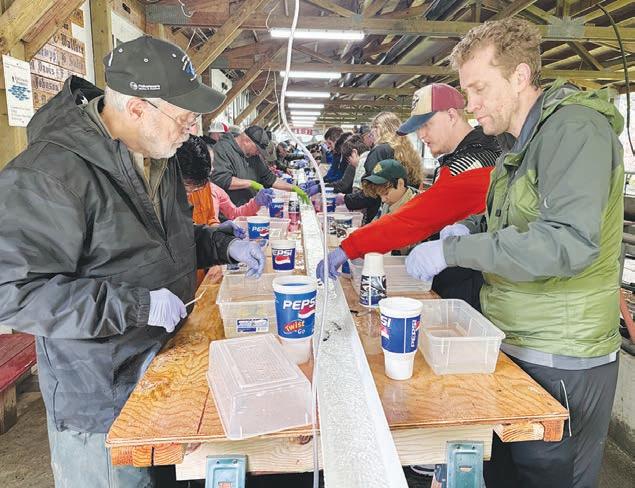
Two to three hundred Tillamook County residents assembled at Whiskey Creek Fish Hatchery on April 12, for the annual Tillamook Anglers Fin Clipping Day. By the end of the day, the volunteers had removed around 100,000 adipose fins from Spring Chinook salmon, which will be released in the waters of the Trask River in July.
“That’s our future,” said Tillamook Anglers President Jim Skaar, “the kids that are doing this, someday they’re going to catch these fish.”
The Tillamook Anglers were born in 1987, when Jerry Dove and other local fishermen were looking for ways to support local salmonid populations after the closure of hatch box programs run by the state of Oregon.
Two years later, a friend mentioned a disused University of Oregon hatchery that had operated on Whiskey Creek along Netarts Bay, that could help with the group’s efforts. But when Dove went searching for the hatchery it took him several passes along Netarts Bay Road to find the property, which had become completely overgrown with blackberries.
After finding the hatchery, Dove requested permission from the state to take over the property, and after receiving it, the anglers set to work removing overgrowth, rehabilitating the fish rearing ponds and building a new maintenance shed and structure around the ponds.
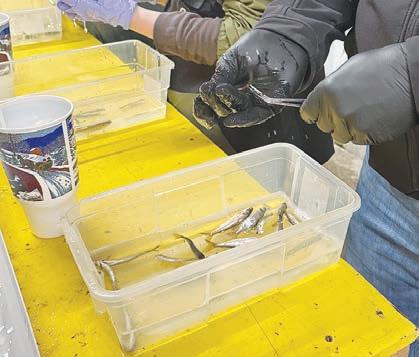
Even as the property underwent maintenance, repairs and additions, the anglers hosted their first annual Fin Clipping Day in 1989, welcoming members of the community to clip the adipose fins from young salmon fry, marking them as hatchery-bred fish that can be kept if caught.
Fish for the hatchery come from the Trask River Hatchery run by the Oregon Department of Fish and

As the long legislative session in Salem passes the halfway mark, State Senator Suzanne Weber is apprehensive about the proposed transportation package put forward by Democrats in Salem last week. Weber said that she was uneasy about the impacts of tax and fee increases on her constituents, and the absence of benefit for the heightened costs, while taking Democrats to task for their lack of transparency and bipartisanship in developing the bill.
Wildlife, representing a quarter of the 400,000 Spring Chinook raised by the hatchery each year, according to Skaar. The fish are hatched from eggs gathered from returning female fish each fall and hatched and kept until they develop eyes at the Trask River Hatchery, when 100,000 are transferred to the Whiskey Creek Fish Hatchery.
On the day of the fin clipping, volunteers began arriving at 8:30 a.m. and were welcomed by coffee and donuts, before taking up posi-
Staff Report
Crews placed temporary traffic signals at two locations on MiamiFoley Road on April 13, kicking off a project to build new bridges over Crystal and Dry Creeks that will be completed by November. Work is being undertaken by
the Oregon Department of Transportation (ODOT), with a budget of $3.3 million and a mix of state and federal funding, including money from the Federal Highway Administration, ODOT and the Federal Emergency Management Agency (FEMA).
Initial damage to the culverts that were installed at the two creeks occurred during a 2015 storm, which set the process in motion to replace both with bridges. By 2023, designs for both bridges had been completed, when a December storm caused a 30-foot washout at Crystal Creek, around milepost 8.8, after the Miami River rose four feet in one day.
Thanks to the already completed plans and courtesy of materials stockpiled by Tillamook County Public Works, crews were able to complete a temporary bridge replacement at Crystal Creek and have the road reopened within three weeks.
Now, the permanent replacement at Crystal Creek and a bridge to replace the culvert at Dry Creek are being constructed, with both using concrete beam


structures. The Crystal Creek Bridge will include nine 60-foot beams, while the Dry Creek Bridge will have nine 50-foot beams.
Traffic on the bridges will be restricted to one lane throughout construction, metered by the temporary signals, and two full, nighttime closures will occur during the project to allow the contractor to

set the beams. ODOT will provide notice before those closures. FEMA funds are available for the project thanks to Governor Tina Kotek’s emergency declaration in response to the 2023 storms.
Construction is expected to be completed by November and more information can be found on ODOT’s website.

“It’s been said that we’re going to sit down and we’re going to negotiate several things in this structure. So far, no one has been approached to work on that,” Weber said. “It needs to be a team approach because it’s got to be more than just the Democrats deciding this, it’s got to be a concerted effort between both sides.”
Weber is a member of the legislature’s joint transportation committee but said that as of last week she had only received the four-page document released to the public describing the proposed package. In the document, Democrats proposed a 20 cent in the state’s gas tax, from 40 to 60 cents, implemented in four phases by 2032, increasing title and registration fees, as well as the weight-mile tax, almost doubling the state’s payroll tax, instituting a road-user charge for electric vehicles, implementing a 1% fee on new vehicle sales and creating a 3% tax on tire sales. In total, the proposed new and increased fees and taxes would generate at least $1.9 billion biannually for the state’s highway fund, Oregon’s main transportation funding source. The revenues from the tire tax would go to support rail, wildlife crossings and salmon recovery.
Weber said that the sweeping proposal had been developed without input from Republicans, lamenting the fact and saying that it marked a change from the process around amending Measure 110 last year when Democrats participated in bipartisan discussions.
While recognizing that funding the state’s highways was going to necessitate increasing tax and fees, Weber had doubts about the equity of some of the proposed measures, particularly the tire tax. Weber pointed out that Tillamook did not have rail projects that could benefit from the funding and worried that the lack of consideration for returning value to rural taxpayers, who travel longer distances than their urban counterparts, would play out in other aspects of the package as well.
“That is going to burden, especially rural Oregon, especially where we live,” Weber said. “Our gas is higher in price where we live on the coast, and we have to travel farther in order to get services and so we are paying more money in taxes than just about any other place other than eastern Oregon to






Work on $11 million in infrastructure upgrades that began last November at Nehalem Bay State Park is on pace for completion in late June, which will allow the park to reopen, as planned, on July 1.
In addition to the project, work is also nearing completion on five cabins that will house seasonal staff at the park and rangers have been taking advantage of the closure to work throughout the winter on regular maintenance projects and spiffing up the park. Park Manager Ben Cox said that while the infrastructure upgrades might not excite, he hoped people would appreciate the cumulative impacts of work done during the closure.
“There will be some people that come in and go, well, it wasn’t worth the shut down and I’m not happy, that’ll happen,” Cox said. “But I’m


hoping that the majority of people will come back and see that, ok, here’s some cool stuff plus oh, that bench in that shower room was always just ragged and needed to be refinished and you know little things, and it’s the little things that people interact with on a daily basis when they’re in the campground that can make the biggest impact.”
Funding for the $11 million in infrastructure work that is being undertaken is coming from a general obligation bond approved by the Oregon legislature in 2021 to help improve state parks. At Nehalem Bay, the primary thrust of the improvements will be to bring the entirety of the park’s facilities up to the same, modern standard.
The park’s camping facilities consist of six loops of campsites, one with yurts, arranged north to south just east of the beach, with additional campsites available for equestrians and pilots who frequent the park’s small airstrip, totaling about 300 campsites. The park previously had four bathrooms

for the six loops, as well as a day-use bathroom near a beach access point.
The three northern campground loops were upgraded from 30- to 50-watt power during a 2015 project and the three southern loops have been brought up to the same standard and are awaiting the
day-use restroom and one for the horse concessionaire were also connected to the sewer system while new restrooms were added at the equestrian camp and a new bathroom is being added between the C and D campground loops.
Work is currently still underway on that new bathroom
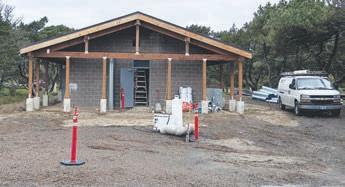
installation of new pedestals that will house the upgraded power and water hookups.
Water and sewer systems at the park were also completely redone during the project, with PVC pipe replaced by high-density polyethylene pipe. The park’s

and workers are waiting on electrical equipment to arrive to complete the installation of new electrical hookups in the southern loops. Repaving of a section of the park’s main road between the entrance and airstrip was completed in early April. Changes to the campground infrastructure also led to the relocation of several camp host sites and an increase in the total number from six to nine.



At the same time as the bond project has been progressing, contractors have also been working to complete five cabins that will house seasonal staff. The cabins will be around 400 square feet and have an efficiency kitchen, sans oven, living area, bathroom and bedroom. The cabins will be available to employees, with a specific intention to dedicate them to seasonal employees.
Cox said that he has 17 seasonal positions budgeted each year, but that he struggles to fill them all, with a dozen positions filled representing a successful season. Typically, seasonal staff consist of coastal residents who live between Tillamook and Seaside, and Cox said that he hopes having the cabins that will rent for around $500 a month might help him to fill all his positions.
“Even though there are only five cabins and it’s five people, if you take last year as an example where I hired 11 or 12 out of 17, had I those cabins last year, I might have filled my crew,” Cox said.
The cabin project is slated for a mid-May completion and a sixth site that was originally intended to host a cabin will be available to site a camper or fifth wheel with hookups after cost escalations prevented the cabin’s construction.
Park staff also stayed busy during the park closure, clearing trails of fallen trees after winter storms and completing a bevy of maintenance work, including regrouting and fixture replacements in restrooms and the removal of worn-out decorative features.
While Cox is optimistic about the project hitting it’s June 30 deadline for total completion, he is holding off on taking reservations for the
WILL CHAPPELL Headlight Editor
With timber revenues declining and unstable, the Neah-Kah-Nie School District’s board of directors have decided to ask district voters to support an operations levy that would generate up to $2 million annually to buttress the district’s budget.
Neah-Kah-Nie Superintendent Tyler Reed, NeahKah-Nie High School Principal Christy Hartford and Nehalem Elementary Principal Kristi Mills recently sat down with the Headlight Herald to discuss the district’s unique programs that will be able to continue with funding from the levy. Reed said that if the levy did not pass, the decreases in timber revenue would negatively impact the district’s staff and students.
“When we see that (timber revenue) go away and we see the levy not support and backfill, like we will not be as successful, our kids will not be as successful, and their opportunities and pathways will be limited,” Reed said. “And so, this is a scary time for the Neah-KahNie School District because we’ve been so supported by our community in other ways and now, we’re looking to be supported again, just in a different way that we haven’t had to ask for in a long time.” Historically, Neah-KahNie has relied on property taxes, timber revenue, and grants from the state and federal governments for its funding. The district does not receive funding from the state’s school equalization fund because of its high property values and timber income.
However, over the last two years, timber revenues have taken a precipitous dip, falling from an average of over $4 million annually between fiscal years 2021 and 2023 to $3.9 million in fiscal year 2024 and just
from
From Page A2
entire year at this point. Cox said that he plans to reopen a limited number of reservations once the reopening date is more certain but that he also wants to do soft opening of sorts to test the park’s new infrastructure under load
From Page A1
be able to maintain our transportation system and what are we getting out of it?”
Weber said that she would like to see funding devoted to problematic highways around the district, mentioning 6, 26 and 30, as well as 101 between Rockaway Beach and Wheeler.
As of April 15, Weber said that no hearings had yet been scheduled on the proposal and that she hoped there would be more collaboration on the process moving forward. “This can’t be the final solution,” Weber said, “there has to be some ability to bargain on this, not necessarily for the party but for the
from From Page A1
tions
$1.4 million this fiscal year. Reed explained that the decline was in part due to the locations of timber sales and operators harvesting decisions but owed more to the habitat conservation plan for Western Oregon state forests passed by the Oregon Board of Forestry in March 2024, which placed increased restrictions on timber harvests in state forests.
The cuts in timber harvests caused by the plan have left a $2.7-million deficit in the district’s budget, according to Reed, which led the board to decide to seek a five-year operations levy at a rate of 75 cents per thousand dollars of assessed value on district properties. If approved, this levy would allow the district to limit cuts to the panoply of programs on offer to students.
Mills pointed to the district’s free preschool offerings and operation of two elementary schools for just 325 students as prime examples of the high level of service that would be at risk should the levy fail.
The Neah-Kah-Nie School District currently offers free preschools, with both district elementary schools accepting 18 threeand four-year olds each year. Mills said that the program was important for families given Tillamook County’s lack of childcare and gives the district the opportunity to get to know kids before kindergarten, which is invaluable.
“That’s a wonderful support for families to have,” Mills said. “It’s not just childcare, it’s preschool and so nice because we get those kids into our system and our school and our staff earlier on than if they started at age five in kindergarten.”
Mills said that the district operating two elementary schools, hers and Garibaldi Grade School, was important to community members, who valued the local schools.
“It’s important, there’s such great traditions and it’s amazing to me when I have
before returning completely to normal operations.
“We want to put some strain on the system and make sure it’s all working right, that we’re not having any problems,” Cox said, “then I can open the dam, you know pull the lever, and let folks book a full six months out. I just don’t want to pull that lever and have six months of reservations booked and then have to cancel.”
people, because this is a huge package.”
In the education committee, Weber said that she is more pleased with the work being done on Governor Tina Kotek’s proposed reforms to accountability, put forward in Senate Bill 141. Earlier in the session, Weber had concerns about how the state would intervene in struggling districts and how those districts would be identified through testing, but she said that many of those concerns have now been addressed, though work is ongoing, with even more clarity needed on testing.
“I’m feeling much better about 141,” Weber said, “I think that it is also going to have to be one of those issues that is a work in progress.” Weber said that she was still hoping to work on legislation to address student and teacher absenteeism and that
where members of the anglers brought fish that had been dipped in a Novocainderived anesthetic for clipping. After removing the superfluous adipose fins, volunteers placed the fish in the trough, which returned them to the pond. The fin-clipping line has space for 96 clippers at a time and volunteers rotated in and out for breaks throughout the day. When three quarters of
parents and grandparents and people come in to our school and tell me about who their teacher was or which classroom they had or where the principal’s office was at that time, but they’re very tied into the local schools,” Mills said.
At the high school level, Hartford said that the district’s strong financial position meant that there was an abundance of teachers, allowing the school to offer a wide variety of dual-credit classes and club opportunities.
Hartford said that the Future Natural Resource Leaders chapter at the high school and construction and welding classes could be in line for potential budget cuts should the levy not pass. Hartford said that the school’s ability to offer dual-credit classes to allow students to earn an associate’s degree while in high school would also be put in jeopardy should the question fail.
“If we had to clinch down on the budget and reduce teachers, it would be in those areas that you have a lot of dual credit opportunity,” Hartford said, “which means that students who are currently getting their associates while in high school, they just wouldn’t be able to do that.”
Mills said that she shared similar concerns about the ability to keep offering the same level of staff support for students at her school. Currently, each elementary school employs a full-time physical education teacher, counselor and instructional coach, as well as a part-time music teacher, positions that Mills said would have to be reevaluated in a budget crunch.
Beyond those staffers, the school also employs classified staff who help teachers to differentiate and evaluate the individual needs of students. Mills said that losing these staff would not only be
See LEVY, Page A4
Cox thanked the public for their cooperation during the closure and said that while the staff did not like having the park closed, they wanted to make sure visitors had a favorable experience when they were allowed to return.
“I think it’s a better customer service option to say we’re going to open when it’s ready and when we really, really think that you’ll be able to come and have a good experience,” Cox said.
she wanted to see instructional time increased for students, who end up with a year less of instructional time between kindergarten and high school graduation than their peers in Washington and California.
Weber also mentioned that she would like to see more counselors provided to help support students and cut down on classroom interruptions.
Outside of transportation and education, Weber is promoting bills on a variety of other subjects that are still moving forward. They include funding for a study of Highway 30 in Columbia County, a bill to support the children of military families, a tax credit for childcare workers and an exemption from the corporate activity tax for healthcare businesses.
detrimental to student performance, but also increase the difficulty of teachers’ jobs, potentially leading to more turnover.
“We also have classified staff who are hired to push into classrooms to support small group, to support teachers in differentiating with kids’ needs and those are the worries that I worry about,” Mills said. “So, losing some of those positions makes classroom teachers’ jobs harder, which would increase turnover, and it would decrease learning because kids aren’t supported in the classroom to differentiate.”
Hartford shared a similar sentiment about the impacts at the high school, saying “students get more one-onone instruction; differentiation is very easy to do right now because we have such small class sizes. So, if you increase the class sizes,















the fish had had their fins clipped, the volunteers broke for a free barbecue lunch provided by the anglers, before returning to clipping, with work wrapping up around 2 p.m.
All ages were represented at the event, with many families participating together, and Skaar estimated that 250300 people attended throughout the day.








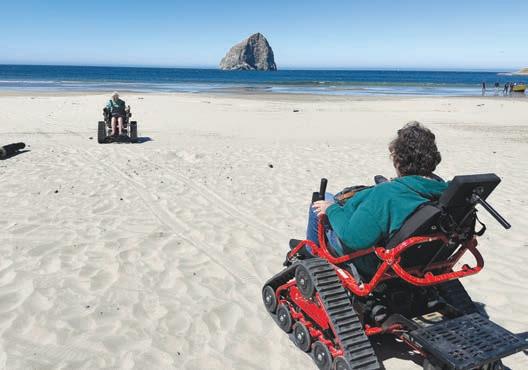
Born in 2017 from a dream of allowing mobility impaired individuals to better access the outdoors, the nonprofit David’s Chair now houses 23 chairs in 17 locations across four states.
Jeff Kallevig, David’s Chair’s Operations Manager for Northwest Oregon, said that the organization’s expansion had been made possible by a partnership with Oregon Parks Forever that helped bring in grant dollars to catalyze partnerships on the coast.
David Hartrick was diagnosed with ALS in 2017 and found that his decreased mobility made it hard to access outdoor recreation opportunities that he loved. Looking for a solution, Hartrick found that advanced dual-track wheelchairs capable of navigating unpaved services cost around $20,000, which would not be covered by insurance.
Hartrick reached out to a friend, Steve Furst, and the pair began brainstorming about ways to solve the problem, and David’s Chair was born. That year, Hartrick and Furst joined with a group of friends to host a fundraiser, bringing in the $20,000 necessary to purchase the organization’s first chair.
Tragically, Hartrick succumbed to his illness in 2018, but Furst continued the mission of developing the organization, and over the next four years four more chairs were added to the fleet. The original chairs are housed outside Medford and made available for free for weeklong stretches with a tow-and-go model.
Then, in 2022, Furst began looking to expand the nonprofit’s footprint, by bringing on Kirk Nicholson to serve as Fundraising and Development Director. Nicholson helped to expand David’s Chair’s fundraising efforts, adding multiple golf outings to a once annual fundraising weekend that had traditionally supported the organization.
Nicholson also helped connect Furst with Oregon Parks Forever Executive Director Seth Miller, whose organization supported grant writing efforts that have funded the acquisition of more chairs. As new chairs came online, Kallevig said that Furst and others at the nonprofit began considering supplementing the tow-and-go model with chairs in permanently located in specific locations close to recreation opportunities. Kallevig said that requiring participants to have a vehicle that could tow and was properly insured
was a barrier for many and that the group found that most borrowers were taking the chairs to the beach, leading the organization to explore housing chairs there.
“What they found was that most of the people who were checking the chairs out in Medford were taking them to the beach,” Kallevig said. “So, how do we build partnerships so that we could locate chairs on the coast and make it something that is more accessible for people.”
In the past three years, that has led to eight chairs being placed at locations up and down the Oregon Coast, from Gold Beach to Seaside, with the greatest concentration, four, in Tillamook County.
Kallevig was hired a year and a half ago to help manage maintenance for the coastal chairs, while the nonprofit partners with different groups in each community to handle operations and the costs associated with the chairs. “Every one of our locations is just a little different community relationship,” Kallevig said.
In Tillamook County, three of the four chairs have their $7,000 in annual costs covered by the Tillamook Coast Visitor’s Association (TCVA) using transient lodging tax dollars, while the costs for the

fourth are covered by the City of Rockaway Beach.
Rockaway Beach’s chair is housed at Saint Mary by the Sea Catholic Church, with the city’s park and beach cleanup volunteers managing its lending. The chair in Manzanita is housed at the visitor’s center, with a group of volunteers overseeing borrowing.

among our families. Alcohol doesn’t have to be the focus. Let’s come together to find solutions that prevent excessive alcohol use among adults and youth and create a healthier environment for everyone.

In Pacific City, the chair is housed in a small enclosure at the rear of the PC Pour wine bar, with another group of volunteers handling operations.
Tillamook’s final chair is
hosted at Happy Camp Hideaway in Netarts, where owners Bruce and Teresa Lovelin house and manage the chair, with Kallevig praising their commitment to accessibility.
“You have a great partnership just out of the goodness of their heart,” Kallevig said.
“They wanted to be able to provide this and are excited about it provides access.”
Other chairs on the Oregon Coast are in Seaside housed at the Elks Lodge, Newport at Don and Ann Davis Park, Florence at Heceta Beach County
Park,
More information
found and reservations
at davidschair.org.
patients.
As part of ongoing efforts to keep their facilities and systems current, Adventist Health Tillamook has recently installed new medication cabinets and is working on updating call lights and its patient-facing software by the end of the year.
Patient Care Executive Heather Thompson said that the upgrades were also part of a systemwide effort by Adventist to standardize equipment, systems and procedures across its network of hospitals.
“A lot of the time before, we were part of a system, but we did a lot of things independently and so they’re making a very strategic effort to standardize,” Thompson said.
The new Pyxis medication cabinets represent a big step forward for hospital staff and patients. Previously, pharmacists needed to visit each individual patient’s room to deliver medications, a time-consuming and tedious process. Now, pharmacists fill the cabinets in each department, from which nurses are then able to obtain the needed medications for individual
The cabinets also automatically dispense the correct dose and allow pharmacists to remotely update medication orders for patients, while also alerting them when they need to be refilled, cutting down on delays.
In addition to cutting down on legwork for the pharmacists, the new cabinets will also reduce the chance for human error in dispensation and slow arriving updates to orders, help nurses more easily chart medication and make medication tracking easier. The cabinets will also be able to interface with and set parameters for new infusion pumps being purchased.
Other recent upgrades include new lab equipment, with one machine allowing offsite pathologists to assess samples, and new stretchers for the emergency department, “which doesn’t sound like that cool of a thing,” according to Thompson, “but if you were driving them, it was a struggle to turn them.”
Other forthcoming projects include installing standard call lights across all departments in the hospital and a transition to a new patient communication system. Currently, Adventist
turnover, which has historically been low in the district. Reed also stressed that the district’s teachers’ demographic profile meant that any cuts would impact entire families, not just individuals.
meeting those individual needs would be more challenging, for sure. I think that’s something that would be very impactful.” Hartford, Reed and Mills’ also voiced concerns about the impact of any cuts on morale that they fear could lead to an increase in staff



“Typically, we don’t have high turnover here with staff,” Reed said. “They come here, they move here, they live here forever, so when we talk about cutting staff, we’re talking about uprooting families in their lives, and we don’t want to do that.”
The proposed levy would help to bridge the gap between current and historic funding levels, bring in up to $2 million a year, though in the upcoming year further belt tightening would still be necessary as the district faces a $2.7-million deficit. Reed explained that the difference was caused by state-imposed restrictions on the amount of levy funding school districts can seek to prevent inequities among districts.
Reed said that district leadership is already working on solutions to cover the $700,000 shortfall that will be left and have already discontinued a contract for grant writing, instead taking on the work in house, and are
Tillamook uses a proprietary Adventist platform, but beginning in 2026, they will move to the MyChart system from Epic.
As part of that transition, staff will also receive iPhones to access the platform, and the hospital will be adding direct messages to those phones to audible alerts in the building as means of alerting staff to codes. “Any second you can get to a code is better and quicker for the patient,” Thompson explained.
While these updates take place, work is also ramping up on a more major project: the renovation and expansion of the hospital’s surgery suite. That project will see the addition of a fourth operating room as well as an increase in capacity for the suite as new pre- and post-operative beds are added.
Workers have begun groundwork for the project, including the removal of a concrete slab that used to house a picknick table. Phase one, which consists of the construction of the new operating rooms, is expected to take six to nine months to complete, before the current operating facilities renovated in two subsequent phases.
evaluating positions as current staff depart to determine whether they need to be refilled.
Reed also stressed that the levy rate would vary by year, with the district’s board of directors reevaluating the rate annually. Reed pointed to a bond approved by district voters in 2004 at a rate of 94 cents per thousand dollars of assessed value that was assessed at 70 cents in its first year and never higher than 50 cents over the remainder of its term.
“We need the full amount this year because that’s what we’re seeing in our budgets and that’s what we’re asking for,” Reed said. “But every year our board sets the levy rate, for the next five years, and so if timber comes back, we won’t ask for the full 75 and we’ve shown that in the past, that we won’t ask for the full amount if we don’t need it.” Reed encouraged any voters who have questions to visit nknsd.org/levy, where the district has posted the school board presentations relating to the bond, a property tax calculator for district properties and a link to email Reed directly.
Celebrating Earth Day
This Tuesday April 22nd, we will celebrate Earth Day by reducing our driving, reusing shopping bags, and cutting back on consumption of animal products.
Yes, that too! A 2023 study in the respected journal Nature Food found that even a 50% reduction in our meat and dairy intake would lead to a 60% decrease in associated greenhouse gas emissions. A 2022 study in Environmental Research Letters found that livestock farming accounts for 80% of global deforestation.
Animal agriculture generates a large portion of our greenhouse gases. Animal waste contaminates our waterways. Production of corn and soybeans to feed animals raised for food exhausts our croplands and aggravates world hunger. Deforestation to create animal pastures reduces absorption of greenhouse gases and destroys wildlife habitats.
It’s not just about preserving our personal health and avoiding animal cruelty anymore.
Fortunately, our local supermarket offers a rich variety of vegetables, grains, legumes, nuts, and fruits for our dining pleasure. The dairy isles contain plant-based milks, cheeses, and yogurts. The frozen foods section displays lots of plant-based healthy, ecofriendly, cruelty-free meats and ice creams.
Let’s use April 22nd as the turning point for our new lease on life.
Terry Hays Tillamook
Yes for Neah-Kah-Nie kids
Yes on 29-184
As members of the Neah-Kah-Nie School Board, we are writing to share why we unanimously voted to
refer Measure 29-184 to the May ballot — and why we hope our community will vote yes.
Here’s the challenge: Neah-Kah-Nie is one of only four school districts in Oregon that does not receive State School Fund dollars. Instead, we rely heavily on timber revenue — and this year, that revenue dropped sharply. The district is facing a $2.7 million shortfall in the 2025–26 school year, with no way to replace that loss without local support.
Measure 29-184 is a five-year local option levy that would raise about $2 million per year to stabilize funding for our schools. It replaces the 2004 construction bond that built the middle school, which is expiring. Most property owners would see a modest increase — about $5.50 more per month for a home assessed at $250,000. That’s a net rate increase of about 26 cents per $1,000 of assessed value. It is important to note that the assessed value of your property is much lower than its market value.
This levy will help the district maintain current staffing levels and preserve key programs like art, music, athletics, career and technical education, and dual credit classes. These programs and people are essential to student success — and to the values of our community.
Strong public schools are part of what makes North Tillamook County a great place to live, work, and raise a family. This levy is our chance to come together and invest in the people — students, teachers, and staff — who shape the future of our community. And it will stabilize the district’s funding over the next five years while we monitor changes in state timber harvests.
Neah-Kah-Nie has a long
urban growth expansion allows for 29% of a property’s area to be deducted from the net figure to account for the space taken by roads, parks and utilities.
The Headlight Herald is happy to set the record straight.
LETTERS TO THE EDITOR Letters to the editor should contain at most 350 words. The Headlight Herald reserves the right to edit, condense, or reject any letter to the editor. Letters published in The Headlight Herald will also be published online.
Letters to the editor and guest columns must include your first and last name, city or town or residence, and phone number for verification purposes.
Letters endorsing candidates or campaign issues must be received no later than ten days before an election. Letters written by candidates will not be accepted. Letters to the editor should be the author’s work.
We strongly discourage and will attempt to weed out form letters, letters mailed to other news outlets, or letters written and edited by a third party, including but not limited to political parties.
We try to restrict the printing of one submission per author per month. We do not publish anonymous letters, personal attacks, personal complaints, poetry, consumer complaints, or letters written in bad taste.
Letters need to be submitted by 4 p.m. Wednesday the week prior to publication.
While we strive to publish all viewpoints, Headlight Herald and Country Media reserve the right to refuse to publish any letter or guest editorial.
OBITUARIES
Obituaries need to be submitted by 4 p.m. Wednesday the week prior to publication.
SUBMISSIONS
Submissions may be sent in by:
• Email: Editor Will Chappell at headlighteditor@ countrymedia.net
• Mail: Headlight Herald P.O. Box 444, Tillamook, OR 97141
• Stop by our office: 1906 Second St. Tillamook, OR
track record of financial responsibility. When voters approved the 2004 bond, the district consistently levied less than authorized. We are committed to doing the same here: if timber revenues rebound, we will revisit and reduce the levy rate.
Please join us in voting Yes on Measure 29-184 on May 20 — for our NeahKah-Nie kids, teachers and staff, and our community.
Sandy Tyrer, Chair on behalf of the Neah-KahNie School Board
Support Tim Carpenter for emergency communications district board
After volunteering and sitting on the Tillamook County Emergency Communications District budget committee for two years, I ran and was elected to the board. That was 28years ago. I am truly proud of Tillamook’s 911 system and of the board, staff and dispatchers who serve you. In those 28 years, we have strived to and succeeded in making the 911 system a model system in the state of Oregon. It is now time for me to sit back and enjoy life. I am not running for re-election this may and ask that you vote for and support Tim Carpenter in the same manner you did for me. Please
vote for Tim in position one. Thank you, Tillamook County.
John Eckhardt Cloverdale
Vote Affolter, Ferrat, Wolfe for TSD9 Board I have been privileged since the 1980s to support Tillamook School District with my property taxes. The district’s alumni and others are those who now play important roles in the business and civic life of the county - the nurses and other medical professionals who take care of our health, our first responders, those in business and the trades, those who play a role in government, to name only a few. That these community-oriented folks want to give back is not surprising because our entire community helped instill these values, from the annual donation drives to the civic and faith communities. And the schools. Never before have we had a greater need for strong and diverse leadership at the helm of the district. I plan to vote for those who will listen respectfully to the public, the staff, students and teachers, and then problem solve with the greater good foremost in mind. Please join me in voting for Brandon Afolter, Amanda Ferrat and Jordan Wolfe on May 20.
Chris Spence Tillamook
Word choice in protest article
First, I want to say how grateful I am for the Headlight Herald. A local newspaper is vital for a community. I appreciate the seemingly endless work it must take to provide the coverage that you provide every week.
I’m writing to voice a criticism of your article in the April 15th edition of the paper regarding the protest in Tillamook on Saturday April 5th. My criticism is of your choice of words, i.e., the phrase “Throngs descended on” (downtown Tillamook) in the first sentence of the article. Synonyms for “throng” include “crowd, crush, horde, and mob”, according to Merriam-Webster dictionary. In addition, the dictionary says, “throng and horde suggest movement and pushing”. Use of the word “throngs” might imply that the protest was disorderly. It was not.
Among the definitions of “descend” in MerriamWebster is: “to swoop or pounce down (as in an attack)”. Webster’s Unabridged Dictionary has an even stronger definition: “to make a sudden attack, raid, or visit (with on or upon)”.
“Descended on” might
suggest the presence of the oft cited “outside agitators” rather than the homegrown, largely elderly congregation of county residents. Rather than “Throngs descended on” (downtown Tillamook), I think a more accurate phrase would be “Citizens gathered” (in downtown Tillamook).
Elinor Shanklin Tillamook
Vote for change in the Nestucca School District
What is the purpose of education? To nurture free independent thinking with a classical education: civility, respect, and dignity even while dissenting. Now it’s about identity politics, social engineering and is a tool of indoctrination. At Nestucca Valley School District, I suspect that the lockdown procedures that our Superintendent implemented during COVID are still in place. Parents are allowed to volunteer in their children’s classroom if they agree with Superintendent Wharton. Parents are not allowed in the schools without authorization. Violators get a letter from the district’s attorney that they are “trespassing”. Our schools have become a maximum-security




The Cape Meares Emergency Volunteer Corps (CMEVC) recently held a meeting to review progress on emergency preparedness here in the village and to outline future steps. We have moved from “Map Your Neighborhood,” learning our neighborhood boundaries and geography, to “Plan Your Neighborhood,” knowing who our neighbors are and how we can support each other in minor or major emergencies. We have built and stocked several emergency sheds. Tremendous progress has been made in communications, with more villagers owning GMRS radios and participating in the 5 p.m. first-of-the-month
Fencepost readers appreciate the group of good neighbors who had a hand in restoring the welcome to “Cloverdale- The Heart of Nestucca Valley” sign alongside U.S. Highway 101 at the north end of town. My source credits Josh Armstrong for painting it, Pacific City Hardware for donation of needed supplies and Wing Ridge Construction for hanging it back up. Hats off to everyone who had a part in the good deed. Thanks to Johanna Harding for word that Hebo Fire Hall will host a game night (dice, board and card games) from 6-8 p.m. on the second Sunday, monthly (May 11). Everyone (of any age) is invited to meet new friends, reunite with old friends and build community while having a good time. The Fire Hall is located just north of



check-in with net control (a shared responsibility; net control for May will be Ciel Downing). CMEVC is still pursuing grants for the remaining shelter needs (news on that in the next column), an evacuation trail for the East Lake neighborhood, continued CERT/CPR/other
the intersection of U.S. Highway 101 and State Route 22. It shares a parking lot with Nestucca Early Learning Center (formerly Cedar Creek Childcare).
I promised more information regarding the call for artists for The Heart of Cartm’s Trash Bash event.
Material Art pieces are due between 12-4 p.m. on Sunday, May 11, or noon-2 p.m. on Monday, May 12, at the White Clover Grange, 36585 Highway 53 in Nehalem. Artists are invited to submit up to four pieces composed of 90% reused materials. (New fasteners, glue, electrical connections etc. are fine.) Art should be ready to hang/ display and priced when you drop it off. All proceeds are split 50/50 between the artist and Heart of Cartm. Please label each piece with a title, artist’s name and price on a
training, ways to harvest water, a mass casualty plan, written job descriptions for the neighborhood captains, and much more. If you are interested in being part of CMEVC, please contact Kathy Burke at kkburke73@ gmail.com. Kathy will be retiring from leading the group in the summer of 2026; it would be nice to get other people lined up to continue to build on the great work Kathy and her team have done.
Our cheerful gatekeeper at the entrance to the community, always waving hello when you returned to the village or goodbye when you left, passed away unexpectedly on April 8. Dave Freitas fell at

2 x 3 ½ inch label (cardstock preferred).
An Artist Reception is planned for 5-9 p.m. on Thursday, May 15, at The Grange (address above). All artists with pieces in the show are invited to bring a plus-one for a gallery preview, appetizers, drinks and entertainment. The public is invited to attend; discounted tickets ($20 for the weekend’s events, including the Artist Reception) are avail-
home and was transported to the hospital, where he died three days later. Cape Meares as a community extends sincere condolences to the entire Freitas family. There will be a celebration of life for 82-year-old Dave Freitas June 21, at Bethel Baptist Church in Tillamook. Attention all community volunteers. Patti and Mike Smith are organizing a work party at the Barbara Bennett Community Center on Saturday, April 26, from 9 a.m.–noon. This annual clean-up effort covers both the inside of the building and the surrounding landscape; surely one of the many tasks is calling your name. Bring your favorite tools or feel
able at the heartofcartm.com. For more information, call Kim Koch, Trash Art Show Coordinator, at the Heart of Cartm, 503-812-4179
Our own Nestucca High School is performing “Mama Mia” next week. The musical will debut with a matinee performance at 11 a.m. on Wednesday, April 30. Weekend shows are planned for 7 p.m. on Friday, May 2 and Saturday, May 3. Tickets are available at the door; the cost $6 for students and seniors, $8 for general admission, and $10 for reserved (the best view) seats. The high school is located 34660 (at the end of) Parkway Drive, in Cloverdale. Turn from U.S. Highway 101 in downtown Cloverdale, at the flashing light (there’s only one, and only one direction to turn onto Parkway Drive). Let’s fill that auditorium all three
free to use the ones stored at the community center. Many hands make light the work; please help if you can. While we are on the topic of clean-ups, hats off to Manon Veilleux and Raj Paonaskar for picking up litter from 4th St. NW to the dike road. This section along Bayocean Road is often overlooked in the zeal to clean up the beach. Manon reports an “epic passel” of bottle caps were removed, along with a saturated life jacket. Thanks to Raj for taking home the heavy bag of trash the two of them collected. Manon plans to repeat the clean-up every second Saturday at 9:30 a.m.; feel free to join her. Rain and wave action
shows, to support our kids. Speaking of standing room only, remember that folk singer-songwriter David Roth’s annual concert in Cloverdale happens this weekend. He’ll be here at 5 p.m. on Sunday April 27 at the Istanbul Rug Bazaar. It’s located at the intersection of U.S. Highway 101 and Ferry Street in downtown Cloverdale. Our own folk singer songwriter duo, Fred Bassett and Sonya Kazen, of Cloverdale, will open the show. Admission is a suggested $20 donation, but no one will be turned away for lack of funds. South Tillamook County Library’s story time happens at 3:30 p.m. on second and fourth Wednesdays, (April 23 & May 14). All ages are welcome. These events promise “reading and singing and moving about.” Our own
have eroded the sand at the south end of Cape Meares beach. Rock beds have been exposed from the Pacific Avenue beach entrance south to the cape. We picked up numerous pieces of green and red jasper as well as clear agates in recent weeks. As we walked, memories surfaced of rockhounding with the kids when they were little. Our son, probably three years old at the time, would shout with glee as he toddled around, finding agates. I was impressed with his ability to spot them. “You have the agate eye, Erik,” I exclaimed once. He looked up eagerly and asked, “Which one is it, Mom?”
Pacific City Branch is located on Camp Street (off
Road) in Pacific City.
KCC serves senior lunches at 11:30 a.m. on Tuesdays (April 22) and Wednesdays (April 23) for $3 (others may partake for $6). Our hearts go out to all who mourn the recent loss (March 31) of Virginia
Happy birthday this week to-







From Page A5


cy skills. Reading proficiency is 25% and math 13%. A teacher was forced to sue the district during COVID because of intimidation by the administration. A former teacher’s grandson was traumatized during a custody exchange during school, no apology from Superintendent Wharton or board action. A large group of 3rd grade boys were exposed to pornography on school devices. The focus has been promoting CRT, DEI and gender ideology which is no different than promoting religious beliefs. Kids are being groomed making them vulnerable to sexual predators.
Our current board members, Martin Wisehart and Irene Barajas voted to allow males in girls’ sports and private spaces putting them in harm’s way. There’s no common sense, or common human decency.
Cast a vote for change in the NVSD: Sherry Hartford, Kayla Cole, Jason Hagan, and Greg Woods who are committed to bringing needed accountability, transparency and fiscal responsibility.




Marie L Zimmerman Edwards McDonald
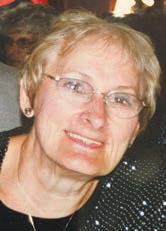
Marie L Zimmerman Edwards McDonald was born on December 2, 1932 to Rudolph Zimmerman and Irma Larsen Zimmerman in a farm house on the upper Nehalem River. When she was born, they did not expect her to live so her birth certificate listed her only as Baby Girl Zimmerman. This proved to be a big problem when she applied for her first passport. Thankfully her father was still alive and he was able to testify that she was indeed Baby Girl Zimmerman.
Marie was the first of the six Zimmerman children and she became the care giver and housekeeper so that her mother could work on the family farm.
Marie met the love of her life Delmar Edwards at a dance at the grange hall shortly after his return from WWII. They were married on June 10, 1951. She and Delmar bought a house on east seventh street in Tillamook.
In 1953 they welcomed their first child Vicki and in 1956 they welcomed a son, Delmar Jr. (Butch). Together as a family they liked to vacation in Spokane or the Napa Valley where they had family.
The house was always open to anyone needing a place to stay and they had many over the years. Including an exchange student from Holland in 1971-1973. Peter VonDer Lught who became family and is still in contact.
Delmar passed away in 1976 leaving her a widow at 43. They had just celebrated their 25th wedding anniversary. She had worked at several jobs over the years but, had quit to be the caregiver for Delmar before he passed. She met John McDonald at Dads ‘ol Fashion Bakery where she was working. They then became snowbirds

in AZ every year. They were married for 10 years before he passed away. She then met Brownlee Bush and they were companions for 30 years. The trips that she and Brownlee made were some of her best times. They traveled to Europe several times, cruised the Panama Canal and Alaska.
They attended WWII conventions all over the USA.
Marie’s greatest love was her family. She loved to cook huge meals then top them off with her famous pies and Swiss cookies.
Marie was a member of St. Albans Episcopal Church. She is survived by her children, Vicki (Brad) Reiff of Tillamook, OR., Butch (Barb) Edwards of Hillsboro, OR. Grandchildren, Geoff Reiff of Pendleton, OR., Jim (Dawn) Reiff of Tillamook, OR., Bill (Jessica) Edwards of Gales Creek, OR., Madeline Edwards and Jake Kurns of McMinnville, OR., and the Bush Family.
Great grandchildren, Joseph, Devin, Kenna, Walker, Charlotte, Graham and Easton.
Great great grandchildren, Paisley and Waylon.
Sister, Marge Zimmerman Meyer of Shingle Springs, CA.
Brothers, Edward Zimmerman of Bay City, OR., and Eddie Zimmerman of Tillamook, OR.
Sisters in law, Carmen Edwards and Anne Edwards.
Many nieces and nephews who were thought of as her children.
Marie is preceded in death by her parents, two sisters Kathrine and Marina and one grandson Daniel Edwards. Memorial contributions may be made to the Tillamook Volunteer Fire District. Memorial services will be held at a later date with inurnment at Sunset Heights Memorial Gardens Cemetery.
Big Thank You to Five Rivers Assisted Living where Marie spent the past 5 years and to Jody Zimmerman Hamburger for all the extra attention, visits and goodies she provided. A celebration of life will be held Saturday, May 3rd at the Tillamook Swiss Hall at 1 p.m.

May 13, 1942 - March 28, 2025

Edwin Anthony Karlow, 82, passed away unexpectedly from a heart attack on March 28, 2025. Edwin was born to Milton and Vera Karlow on May 13, 1942 in West Hollywood, California where he grew up and attended Glendale Adventist Academy. He attended Pacific Union College for 3 years, and graduated with a Bachelor of Science in Physics from Walla Walla College in 1966. Edwin married Marilyn Edna Cross of Walla Walla, Washington on September 7, 1964 and they lived in Walla Walla while he finished his university studies. In 1971, Edwin graduated from Washington State University having completed both a Masters and a PhD in Physics. Their son Marvin was born on July 2, 1968 and their son Norman was born on June 11, 1971. Columbia Union College in Takoma Park, Maryland (just outside Washington DC) hired Edwin as an Assistant Professor and the family moved in the late summer of 1971. After being recruited to Loma Linda University, Edwin become
chairman of their Physics Department in 1978, and the family moved to La Sierra, California that summer. Between 1978 and 2008, when he retired, Ed was involved in a host of activities from university governance to faculty senate to WASC accreditation to audio/visual teams to music recording to university honors program to educational laboratory instrumentation. Through all of those activities, Ed’s core passion remained classroom instruction; he never lost his deep love for the students he counted it his privilege to teach. After his retirement from La Sierra University, Edwin and Marilyn returned to Walla Walla where they lived happily until Marilyn’s passing December 7, 2014. Barbara Herdman and Edwin were married April 10, 2016, and they relocated to Barbara’s home town of Tillamook, Oregon soon thereafter. While in Tillamook, Ed continued to pursue his interests in physics education, RV camping, and the intersection of faith and science. Ed left this world at peace. He is survived by his wife Barbara, his eldest son Marvin Karlow and his wife Kelli, and their daughter Karys, and his younger son Norman Karlow. As well as a host of colleagues and friends, all of whom were blessed to have known him.
There will be a privatelyheld celebration of life on May 11, 2025.
BASIC OBITUARY: Includes name, age, town of residency, and funeral services infoNo Cost.
CUSTOM OBITUARY: Cost is $100 for the first 200 words, $75 for each additional 200 words.
PREMIUM OBITUARY: Several photos and a longer announcement - cost varies by length of announcement.
More Obituaries Next Page




Karen
Aug. 20, 1950 - Sept. 23, 2024

Karen Lynn Mitchell Ryan was born Sunday, August 20, 1950 in Los Angeles, CA, and passed away on September 23, 2024 due to Alzheimer’s Disease. Karen grew up in Westchester, CA., the oldest of three daughters born to parents Carol Robert and Frances Lillian Mitchell. Karen attended Osage Elementary, Airport Junior High, and Westchester High School graduating in 1968. Karen moved to Upland, CA., and went on to attend classes at Mount San Antonio C.C. while beginning her working career as a receptionist for a local housing development corporation. Karen’s capable business skills were quickly realized and Karen was promoted to the sub-contractor contract review team. As the corporation expanded, it became apparent Karen had a keen eye for design and detail. While continuing to do contract reviews Karen also “moonlighted” as a design coordinator for the selection of exterior and interior colors and finishes for the development corporation. Karen continued her career in the housing industry until 1989. Karen met her future husband, Pat Ryan, in 1979. They moved to Fontana, CA., and married September 1, 1985. The family grew with the birth of their daughters Rebecca and Rachel. The family lived in southern California until moving to Rockaway Beach in 1993. Karen believed in giving back to her many communities, especially the youth. She served as a Sunday School
instructor with the Rialto United Methodist Church and volunteered as a classroom helper at the girls’ pre-school while living in Fontana. After moving to Rockaway Beach, Karen was a fixture at the local grade school and junior high, volunteering in numerous roles. Karen continued to lead Sunday School classes and serve as an advisor with the youth group at Bay City UMC. Karen was the leader of many local 4-H programs as well as volunteering for local park and recreation programs and summer lunch programs for kids in the Neah-Kah-Nie School District. Karen had a special place in her heart for Camp UKANDU, a camp for kids with cancer, and volunteered for a number of years, in a wide variety of roles, for as long as her health allowed. Karen loved the outdoors and nature. She shared this love with her family. Depending on the time of year there were many vacation adventures including camping trips to Yellowstone, Yosemite, Joshua Tree, Crater Lake, and the Redwoods. Winters were time for snowshoeing and cross country skiing or just enjoying the Cascades and North Cascades. Karen filled her free time with a variety of relaxing activities. Karen loved to read, tend her flower beds, and walk and hike the local beaches and mountains. Karen rounded out her time using her skills doing needle crafts and quilting. Karen is survived by her husband, Patrick, daughter Rebecca , Leavenworth, WA; daughter Rachel, Salem OR.; sister Linda Mitchell Melgoza, Tillamook, OR; sister Jan Mitchell Ryan, Midvale, Utah. A Celebration of Life will be held on May 10, 2025 at the Bay City United Methodist Church at 1:00 p.m.. Memorial contributions may be made to Bay City United Methodist Church, P.O. Box 3135, Bay City OR 97107; and Camp UKANDU, 601 SW 2nd Street, Portland OR. 97204.


The panel will be moderated by AAUW. Questions will be accepted from the audience in a written format. You can also submit questions in advance of the meeting to lisaphipps08@gmail.com Special districts play a critical role in our community. This is a good opportunity to ask candidates about their positions on issues that matter to you and our youth. If you have any questions about the event, please contact Lisa (AAUW) at 503-801-4122.
AAUW is a non-partisan 501(c)(3) non-profit organization that advances equity for women and girls through advocacy, education, philanthropy and research.















July 20, 1943 - March 27, 2025

Joe N Findley was born July 20,1943 to Hugh and Margaret Findley in Ontario, Oregon. He was raised helping on the farm with the dairy cows and also attending to beef cattle and pigs which he showed at the Malheur County Fair. He died on March 27,2025 in McMinnville Oregon from the
complications of RSV. He is survived by his sister Marie of Shelton, WA, brother Hugh of Klamath Falls, OR and a sister Evelyn Thomas in St. David, AZ. He attended college in La Grande OR at Eastern Oregon University and then at Clatsop Community College working towards a degree in animal husbandry. He was a dairyman and solo operator in Tillamook for over 20 years. He loved to write poetry about his cows and life. He was an avid gardener with a love for sharing his produce. He enjoyed beautiful flowers. He will be missed by those whose lives he touched. Services to honor Joe will be held at the Tillamook Adventist SDA church on April 27, 2025 at 11 a.m.
Call 503-842-7535 www.tillamookheadlightherald.com
Phillip James ‘Jim’ Brunson
Feb. 18, 1935 - March 8, 2025


Phillip James Brunson (Jim) passed away peacefully on March 8, 2025. He was 90 years old. He was a loving husband to Shirley J. Brunson who predeceased him. He was the son of Gale and Theresa Brunson and was born in Lewiston, Idaho on February 18,1935. Phillip was baptized in the Catholic Church in Lewiston. Early in his childhood he moved to Tillamook, Oregon with his parents where he lived most of his life. He graduated from Tillamook Catholic High in 1953. He proudly served our country when he joined the

Army in November of 1954 and was stationed in Germany post WWII. He was on active duty for 2 years as a Private First Class and received an Honorable Discharge from the Army at the end of October 1956.
Jim and his wife, Shirley J. Dragoo, were married on January 19, 1955, at Sacred Heart Catholic Church by Father Vincent Koppert. They were high school sweethearts and were together for 62 years.
Jim worked for the Tillamook County Creamery Association early in his career and but found his niche working for the US Postal Service. Everyone enjoyed his contagious smile, and he really enjoyed his time with the patrons. He retired from the Postal Service in 1991.
Jim was a Knight of Columbus through Sacred Heart Catholic Church, he was an Elk member and a Tillamook Pioneer.
Some of his hobbies included hunting and fishing. He shared his skills with his children and grandchildren. He liked to go on camping vacations and on picnics up the local rivers with his family. His time with his grandchildren took him on new adventures, lots of swim meets, more fishing and hunting, basketball games and a little golfing. He raised a few beef cattle and taught the family how to grow garden vegetables. Jim loved to do yard work on the mower and kept his hedges trimmed. He loved his drives with Shirley along the coast, and hanging out with his family.
He is missed. He was a good honest man, he worked hard, loved his family, and looked out for others and knew how to laugh.
He was an incredible father and survived by his children: Lynn Kitto (Greg), Deanna Brunson, and Janice Brunson (Jeff). He is the grandfather of Kelly, Raquel, Chris, Allyson, and Malia and has 4 great grandchildren: Camden, Evan, Gray, and Murray.
A graveside service for the Interment of Phillip J. Brunson and Shirley J. Brunson will be held at the Sacred Heart Cemetery Little Chapel in Tillamook, Oregon on April 25th, 2025, at 1:30 p.m. In lieu of flowers please donate to your favorite charity.
1953 - March 21, 2025

Howard Roderick Whaley, Rod to his friends, was born in 1953 in Detroit, Michigan, to Howard (“Doc”) and Beulah (“Bunny”) Whaley. His passing took place in his home on March 21, 2025, surrounded by family and friends. Rod lived a vibrant life full of music, art, friends, and love.
Rod was a singer/songwriter, a musician, a motorcycle enthusiast, a photographer, an artist, a lover of nature and animals. He was a collector of art created by local artists, finds from nature, and works he picked up in his travels.
Rod was a collector of kindred spirits. He had a keen eye for beauty and was endlessly creative. His adventurous spirit guided he and his wife Julie to many wonderful places. Rod was the love of her life. He maintained friendships from his youth in Michigan, his college days in Florida, his Boeing days in Seattle, and his telecom days on the Oregon coast. He was passionate about friendships, nurtured and sustained them, and valued sharing personal perspectives.
Rod earned a BA degree in Humanities/Communication from Florida Atlantic University. He worked for Boeing Airplane in his early career and moved to the coast to work for Pacific Telecom Cable in Pacific City and then at Alaska Communications, and Southern Cross Network in Nedonna Beach, Rockaway. After retirement, Rod returned to a telecommunications project in Manchester, CA, which inspired more photography and adventures with Julie.
Rod spent over three decades as a resident of Tillamook County and in that time played music with a variety of band mates and musical collaborators and as a solo performer. People danced to his tunes and listened to his acoustic roots style at venues such as de Garde Brewing, Blue Heron, Kitty’s in Tilla-

mook, Bear Creek Artichoke, and gatherings with friends. He blended folk, blues, and Americana. Rod played from his heart, and whether he performed an original or a cover, he played it with passion in his own style.
Rod had a season of life where he got to live his cowboy dreams. Many of his original songs, such as “Cowboy of Del Rey” and “3 Counties,” had western themes. When he owned his horse Odie, he leaned into that cowboy era, even riding in the Tillamook June Dairy Parade. One of his lyrics explained, “I ride to be free.” As a photographer, Rod was fascinated with “rust.” One of his music albums was titled “What Time Will Do” and his photography reflected his obsession with rust. In an artist statement for a photography show, he once wrote, “As I peered through the lens with intent to capture my ‘wabi-sabi’, I found connection in nature and industrial design where line, shadow, and shape bring forth sculpture.” Such was the creative mind he had. He also explored themes Like “Water Over Rocks,” flora and fauna, and Northwest coastal themes.
Rod Learned the art of sailing as a young man in Michigan on the lakes with his dad. He took that love and greatly enjoyed sailing in the Pacific Northwest with dear friends with whom he shared treasured time on their boats enjoying the water.
Rod was a man of many talents and will be deeply missed. He leaves behind countless friends, musical collaborators and family members who value all that he added to their lives. He is survived by his wife Julie, their daughter and granddaughter, his sister Sherry Hunter and niece Shannon, and his cat Kitty. Rod will always be present in the hearts of those who love him.



Will Chappell
Headlight Editor
Supporters of Tillamook County Search and Rescue gathered at the Tillamook County Fairgrounds on April 12, for the group’s annual fundraising dinner.
Guests were treated to a bevy of carnival style games with raffle ticket prizes before a tri-tip dinner and live auction, all of which helped to raise more than $36,000, before expenses, to support search and rescue operations in the county.
“This community has always been extremely supportive of our Sheriff’s Office and our Search and Rescue Banquet was undeniable proof of that” said Tillamook Sheriff Josh Brown.
“All our sponsors, donors, vendors and individual residents made this event an amazing success. Thank you to everyone who came out and a huge thank you to our Search and Rescue
volunteers and Deputies, volunteers from TLC Credit Union and all the help of the Tillamook County Sheriff’s Foundation.”
The annual banquet is the main fundraising opportunity for the search and rescue team, which is coordinated by and assists the sheriff’s office to respond to a wide variety of emergent situations across the county.
The night started with more than 250 guests given the opportunity to win raffle tickets for prizes donated by dozens of local businesses at carnival-style games sponsored by other businesses.
Balloon popping, a putt-putt challenge and ring toss were among the games, while gift baskets from the Tillamook County Creamery Association and Werner Beef and Brew, gift certificates to Bay City Kitchen, baked goods from Sarasota’s, artwork and firearms were up for grabs, among many other items.
After playing the games,
guests settled into their seats and were welcomed by Tillamook County Commissioner Paul Fournier, who played master of ceremonies for the evening. After a singing of the national anthem and prayer, guests enjoyed a seasonal fruit salad, potatoes au gratin and rolls prepared by the team from Pacific Restaurant, accompanying tri-tip made by Mike Bentley.
After dinner, Brown addressed the crowd, thanking sponsors for donating more than 250 items to the event and everybody for coming out to show their support.
Brown said that the search and rescue team currently had 38 volunteer members, with 21 fully certified by the Oregon State Sheriffs’ Association.
Brown then awarded the Dean Burden Volunteer of the Year Award to Jody Richardson before Fournier returned to host a live auction.

The Oregon Dairy Farmers Association (ODFA) is proud to highlight the exceptional role of the Tillamook FFA Chapter at this year’s Dairy Day at the Capitol. These students brought energy, professionalism, and optimism to the Capitol, hand-delivering local dairy products to all 90 legislative offices and serving as outstanding ambassadors—not just for Tillamook County, but for the broader dairy industry.
“Seeing these students in action—wearing those iconic blue jackets, confidently engaging with legislators—was a powerful reminder of why we do this work,” said Tami Kerr, Executive Director of the Oregon Dairy Farmers Association. “They represent the best of our future leaders and the next generation of Oregon agriculture.”
Many of the students had direct ties to dairy and spoke confidently about sustainable farming, animal care, and the value of local food systems, leaving a lasting impression on both
lawmakers and ODFA members. Legislators repeatedly shared how much they value Dairy Day, calling it one of their favorite events at the Capitol.
“Watching FFA members partner with the Oregon Dairy Farmers Association to promote the positive impact of dairy and deliver products to legislators in Salem was a proud moment for me,” said Hayden Bush, Agricultural Sciences & Industrial Technology Instructor and FFA Advisor. “As a former dairy farmer, it’s incredibly meaningful to see our students use their voice, work ethic, and passion for agriculture to advocate for the dairy industry and the communities they represent.”
ODFA is grateful for generous product donations from Darigold, Lochmead, Tillamook, Umpqua, and the Oregon Beef Council, which helped make these connections possible. Special thanks to Senator Suzanne Weber for providing a home base during
Happy Earth Day to everyone. To celebrate our planet and to make even a small difference, as all small actions can result in larger outcomes, it would be a nice idea to plant a flower, bush or tree, it could be a family project that will benefit all of us. Earth day is special to me as it is the day my youngest son, Thor, was born, so happy 46th birthday to him. It seems impossible that he’s forty-six, time just goes by so fast. Thor and his wife,
On several occasions, Rockaway Beach Mayor Charles McNeilly has said that awarding community grants is one of his favorite official duties. The April 9 City Council meeting saw a number of grants awarded, supporting everything from a party in the park for people with developmental disabilities to improved access to the Rockaway Beach Library. Resolution 2025-15 was passed unanimously, approving the following Small Community Grants: Tillamook County Developmental Disabilities received $1000 to support their third annual Intellectual/ Developmental Disabilities Picnic in Phyllis Baker City Park. Last year’s picnic took place on June 27, and was the highlight of the year for participants and organizers alike. Pam Hiller of the Tillamook County Developmental Disabilities Advisory Council

the event and recognizing Dairy Day on the Senate floor, and to Representative Cyrus Javadi for his remarks on the House floor,highlighting the dedication of Oregon’s dairy producers and FFA students.
The presence of the FFA students was a reminder that, even in difficult times,

hrhpenny57@hotmail.com

young people are stepping up with thoughtful determination. ODFA is proud to support these emerging leaders and knows they have a bright future ahead.
About the Oregon Dairy Farmers Association
The Oregon Dairy Farmers Association (ODFA) is a non-profit trade association representing dairy producers primarily on local, state, and federal legislative and regulatory issues and represents all farm sizes and licensed methods of production. ODFA was organized in 1892, making it the oldest agricultural organization in Oregon. For more information, visit oregondairyfarmers.org

Staff Report
As part of the ongoing improvements to Highway 101 through Garibaldi, the Oregon Department of Transportation plans to begin paving sometime this week. Paving work is weather dependent, so work will begin as soon as weather permits, with lane closures planned and 24-hour flagging and a pilot car. Side streets in the area will close as will some sidewalks, with work taking place between 7 a.m. and 7 p.m. The entire project, which includes the installation of new sidewalks with ADA-compliant crossings, is expected to be complete this fall.
Gisela, live in Colorado Springs. They both love coming to visit our area, enjoy going to the beach and
and David Richmond, Tillamook County Developmental Disabilities Program Manager spoke last July about the 2024 event. “Last year we had 133 people. This year we had 165,” said Hiller about the 2024 event. “And they want to do it every six months!” Hiller went on to say about last year’s picnic: “We spent the $1000 you gave us to rent the park and feed the people.” The event, which features face painting, games, a photo booth, and a community cookout, is scheduled for July 3 this year.
Next, the International Police Museum was awarded $4931.58 to support furniture and displays for the Community Room. This resource will be available to all members of the community. Call (503) 457-6056 for more information. The Rockaway Beach Business Association
walking at Kilchis Point. This coming Saturday, April 26th is the Bay City State of the City event. It will take place in the community hall beginning at 2 p.m. This event is held for the entire community, to celebrate all that has happened in the past year and goals for the next several years. There will be information and displays provided by the mayor, city manager, fire department and other city services. Many of our community groups will be there
including Bay City Emergency Volunteers, members of the Pearl and Oyster festival, the Arts Center and the Bay City Booster Club. This is always a fun event for the whole family, with food kindly provided by our local eateries, the Bay City Kitchen, Downies Cafe, Fish Peddler and the Landing, so bring your appetites.
wooden planters are handmade, and one is planted with colorful plants and the other with succulents. So, get your tickets for a chance to win.
to Jesse and Sue Bachman, Shirley Arnesen, Heidi, Pat and Linda Vining, Kathy Manis and Gloria Weichman for their donations. Come summertime we should have a colorful display for all to enjoy. Soon we hope to start installing some of the art pieces and then the benches so there will be a place to sit and enjoy the park. Eventually, the goal is to have an attractive pergola that will contain a couple of picnic tables. PENNY EBERLE
The Bay City Booster club will be selling raffle tickets for a chance to win one of two planters, just in time for Mother’s Day. The
The sunshine this past week has helped all the plants at the new park start to put on new growth, and Booster Club members are bust planting. We have been very lucky to have been gifted plants from community members from their gardens, and for these we are most grateful. Special thanks

sfisher71@yahoo.com
(RBBA) received $4999 to support fundraising projects. These projects include an Easter Egg hunt, which includes a by-donation pancake breakfast at the fire station, and a scavenger hunt with prizes for adults and children.
Other RBBA events include the Trunk or Treat on Halloween weekend. Last year’s event took place at the new Anchor Street Park parking lot. In spite of a cold, wet Saturday, the event was packed with costumed
partygoers. (I was dressed as a pirate, though with all the rain I looked more like the survivor of a shipwreck.)
Mayor McNeilly and his wife, Sue, were present, as was Fire Chief Todd Hesse. More than 20 booths ringed the parking lot, with volunteers giving out candy.
Probably the biggest RBBA event is the annual Christmas Tree Lighting in the Wayside, held in conjunction with the Santa Claus Express from the Oregon Coast Scenic Railroad. The OCSR’s prized steam locomotive, the McCloud #25, is expected to pull Santa and Mrs. Claus again, but with a special twist: the engine will celebrate its 100th birthday this year.
The Friends of the Rockaway Beach Library asked for $1864 to support two important efforts. First, the entrance railings for the library need replacement.
Last year, the Friends funded replacement of portions of the ADA-accessible ramp, as well as a few other items. This year the railings need attention.
In addition, the Friends plan to purchase a Square payment device. The biggest anticipated use of this will be at the annual used book sale, scheduled for July 3 this year. This will also help year-round with donations and purchases of used books, DVDs and CDs.
The Neah-Kah-Nie Coast Arts Music & Cultural Foundation (NCAM) received $4999 to support the third annual Rockaway Writers Rendezvous. This event supports scholarships for Tillamook County high school students pursuing arts-related studies. The funds will go towards site rentals at the Rockaway Community Church and the Lions Club, plus printing an anthology of content submit-
ted for the event and cash prizes for students. The grant application process this year was new and involved coordination between the planning commission and city council. Mayor McNeilly commented, “I’m very pleased with how the process worked with the scoring that was used. I think we have exceptional grants in the final resolution, and my thanks to the planning commission for the work that they did that got us to this point.”
Finally, the North Coast Communities for Watershed Protection is holding their April Community Meeting to discuss ongoing efforts to protect the wetlands and drinking water in the Nedonna Beach area, as well as concerns about challenges to the watershed in Nehalem. The meeting runs 6—7:30 p.m. at St Mary by the Sea parish hall, 257 S Pacific.
and retirees who want to stay close to what they know. That’s where something called “middle housing” comes in. It’s not a flashy term, but it could be a big part of the solution. And it’s coming to the forefront thanks to a new state
requirement—Senate Bill 406—which says cities and unincorporated communities in our county need to update their housing codes to allow more types of homes. So, what exactly is middle housing? Think of it as the middle ground between a single-family house and a big apartment building. It includes duplexes, triplexes, fourplexes, townhomes, and cottage clusters—homes that blend into neighborhoods while offering more affordable and flexible options.
These housing types are
perfect for places like ours. They not only help families afford to live here without having to leave in search of cheaper housing, but they are also “right sized” to fit our developer and builder communities and help them thrive as well.
And it’s not just about affordability. Middle housing allows more people to live near their jobs, schools, and essential services. That means less time on the road commuting to and from work, more time at home, and stronger community ties. When we build neighborhoods that are connect-
ed, we help local businesses thrive and make it easier to get around without always needing a car.
There are environmental benefits, too. Middle housing usually has a smaller footprint, and buildings like duplexes or cottage clusters are more energy-efficient thanks to their size and shared walls. When we use our land wisely, we reduce our carbon impact and preserve more open space.
For seniors, middle housing can be a game-changer. Imagine having the option to move into a smaller home just down the street, staying
close to friends, church, and the places you’ve known for decades.
Middle housing is about giving people choices. And in a time when so many feel like their choices are shrinking, that’s something we can all get behind. This story is brought to you by the Tillamook County Housing Commission’s outreach effort to increase workforce housing in Tillamook County. For more housing stories and information, find us on Facebook or visit www.co.tillamook. or.us/bc-hc.
By Dr. Paul Jarrell TBCC President
At Tillamook Bay Community College (TBCC), we are always looking for new ways to connect with our community and showcase the work we’re doing. In celebration of National Community College Month, I would like to invite you to our upcoming Open House on Saturday, April 26, from 2-5 PM. This event will demonstrate why community colleges work for students, and that we at TBCC are committed to helping students through their educational journey. This event is a wonderful opportunity for
prospective students, families, and community members to explore everything TBCC has to offer. During the Open House, you’ll be able to meet our incredible faculty and staff, explore academic programs, learn about student support services, and tour our facilities—including an exciting new addition that is already changing the future of healthcare education in our region. One of the highlights of this year’s event will be guided tours of the new Healthcare Education Building, currently under construction and quickly taking shape on campus. This building represents a major invest-

ment in the future of healthcare training in Tillamook County. Once completed, it will house state-of-the-art simulation labs, modern classrooms, and collaborative spaces designed to support our nursing and allied health
programs. We are proud to be creating opportunities for local students to pursue healthcare careers right here at home—and to help fill vital workforce needs in our community.
Many community partner organizations have also been invited to participate in our Open House by having presentations and information highlighting the important services they provide to our community. Tides of Change, the Tillamook Family Counseling Center, Nehalem Bay Health Center, CARE, WorkSource and others will be attending and have tables at this event.
In addition to exploring
the campus and connecting with local resources, you’ll also have the chance to learn about the many financial support opportunities TBCC has to offer including TBCC Foundation Scholarship applications are open now through May 11, and we encourage all students planning to attend TBCC in the 2024–25 academic year to apply. These scholarships, made possible through the generosity of local donors, help remove financial barriers and open doors for students of all ages and backgrounds.
Whether you’re a high school student considering your next step, a working adult thinking about a career
change, or a community member interested in learning more about your local college, the Open House will offer something for everyone. We’ll have light refreshments, campus tours, prize drawings, simulators, and plenty of staff on hand to answer questions and help you take the next step toward achieving your goals.
At TBCC, we believe in the power of education to transform lives and communities. I hope you’ll join us on April 26 to see that transformation in action and to discover the many ways you can be part of it. We look forward to welcoming you!
Tuesday, April 22, 2025
SERVICES: Prepare for power outages today with a Generac Home Standby Generator. Act now to receive a FREE 5-Year warranty with qualifying purchase. Call 1-877-557-1912 today to schedule a free quote. ItÂ’s not just a generator. ItÂ’s a power move.
Mending and custom sewing. Call Kathy 503-679-2004.
HEALTH/PERSONALS/MISCELLANEOUS: IF YOU HAD KNEE OR HIP REPLACEMENT SURGERY and suffered an infection due to use of a Bair Hugger (Blue Blanket), between 2020 and the present time, you may be entitled to compensation. Call attorney Charles H. Johnson 800/535-5727.
ADOPTION: Loving, home-study approved couple in San Diego ready to offer a joyful, secure life to a newborn. Expenses paid. Call/text Eddy 619-356-1976.
SERVICES: DIVORCE $130. Complete preparation. Includes children, custody, support, property and bills division. No court appearances. Divorced in 1-5 weeks possible. 503-772-5295. www.paralegalalternatives.com legalalt@msn. com.
SERVICES: Donate your car, truck, boat, RV and more to support our veterans! Schedule a FAST, FREE vehicle pickup and receive a top tax deduction! Call Veteran Car Donations at 1-866-695-9265 today!
SERVICES: Get a break on your taxes! Donate your car, truck, or SUV to assist the blind and visually impaired. Arrange a swift, no-cost vehicle pickup and secure a generous tax credit for 2025. Call Heritage for the Blind Today at 1-844-533-9173 today!
SERVICES: We Buy Houses for Cash AS IS! No repairs. No fuss. Any condition. Easy three step process: Call, get cash offer and get paid. Get your fair cash offer today by calling Liz Buys Houses: 1-866249-8679.
SERVICES: We buy 8,000 cars a week. Sell your old, busted or junk car with no hoops, haggles or headaches. Sell your car to Peddle. Easy three step process. Instant offer. Free pickup. Fast payment. Call 1-855-980-4382.
SERVICES: The bathroom of your dreams in as little as 1 day. Limited Time Offer - $1000 off or No Payments and No Interest for 18 months for customers who qualify. BCI Bath & Shower. Many options available. Quality materials & professional installation. Senior & Military Discounts Available. Call Today! 1-844-847-9778.
SERVICES: Safe Step. North America’s #1 Walk-In Tub. Comprehensive lifetime warranty. Top-of-the-line installation and service. Now featuring our FREE shower package and $1600 Off for a limited time! Call today! Financing available. Call Safe Step 1-833-395-1433.
SERVICES: Jacuzzi Bath Remodel can install a new, custom bath or shower in as little as one day. For a limited time, waiving ALL installation costs! (Additional terms apply. Subject to change and vary by dealer. (Offer ends 6/30/25.) Call 1-855341-5268.



SERVICES: The Generac PWRcell, a solar plus battery storage system. SAVE money, reduce your reliance on the grid, prepare for power outages and power your home. Full installation services available. $0 Down Financing Option. Request a FREE, no obligation, quote today. Call 1-844-9892328.
SERVICES: Portable Oxygen Concentrator May Be Covered by Medicare! Reclaim independence and mo bility with the compact design and long-lasting battery of Inogen One. Free information kit! Call 855839-0752.
SERVICES: Eliminate gutter cleaning forever! LeafFilter, the most advanced debris-blocking gutter protection. Schedule a FREE LeafFilter estimate today. 20% off Entire Purchase. Plus 10% Senior & Military Discounts. Call 1-855-536-8838.
SERVICES: Call LeafGuard and say goodbye to gutter cleaning for good. No cleaning. No leaking. No water damage. No more ladder accidents. Get LeafGuard today and be protected for life. FREE estimate. Financing available. 20% off total purchase (Restrictions may apply.) Call 1-877-300-7977.
SERVICES: Switch and save up to $250/year on your talk, text and data. No contract and no hidden fees. Unlimited talk and text with flexible data plans. Premium nationwide coverage. 100% U.S. based customer service. For more information, call 1-877-916-0803.
SERVICES: Get DISH Satellite TV + Internet! Free Install, Free HD-DVR Upgrade, 80,000 On-Demand Movies, Plus Limited Time Up To $600 In Gift Cards. Call Today! 1-866-373-9175.
SERVICES: DIRECTV OVER INTERNETGet your favorite live TV, sports and local channels. 99% signal reliability! CHOICE Package, $84.99/mo for 12 months. HBO Max and Premium Channels included for 3 mos (w/ CHOICE Package or higher.) No annual contract, no hidden fees! Some restrictions apply. Call IVS 1-855-602-2009.
SERVICES: Get Boost Infinite! Unlimited Talk, Text and Data For Just $25/mo! The Power Of 3 5G Networks, One Low Price! Call Today and Get The Latest iPhone Every Year On Us! 844955-3417.
SERVICES: Wesley Financial Group, LLC. Timeshare Cancellation Experts. Over $50,000,000 in timeshare debt and fees cancelled in 2019. Get free informational package and learn how to get rid of your timeshare! Free consultations. Over 450 positive reviews. Call 844-4870221.
If you care about someone who drinks too much, Al-Anon can help. 503-842-5094







Hiring Early Childhood Education Specialist for 25/26 school year at Tillamook Service Center. www. nwresd.org/careers
Netarts Community Club
4949 Netarts Hwy. W (SR 131) Spring Rummage Sale
Fri., April 25, 8-5 p.m. Sat., April 26, 9-1 p.m.
Donations intake: Thurs. April 24, 9-5
Clothing, household items, games, puzzles, useful furniture, sports or tools All proceeds are for charitable donations Contact Phyllis Holmes 503-842-4964 for more info H25210
TillaBayDeals Pop-Up Market @ The Fairview Grange APRIL 25, 26 & 27 (FRI-SUN) New, Used, Vintage, Handmade. Card, Cash, Venmo, PayPal Accepted
Coastal Cuts Grooming in Netarts, Oregon. Book now 503354-2325 or Online at www. coastalcutsgrooming.com Mention this ad for $10 off your 1st appointment.
$$PAYING TOP DOLLAR$$ for sports card collections & Pokemon. Premuim paid for vintage. Corey 541-838-0364.
Houses Unfurnished 808
House, 1 bdr, view, dogs. $1375 mo. 14980 Hwy 101 N., Barview. Showings start 4/17, 12-4 daily. Move in 5/01. 775-493-1449
Public Notices 999
HH25-197 VANDERBILT MORTGAGE AND FINANCE, INC., a Tennessee Corporation v. ESTATE OF WALTER HUNTINGTON; ESTATE OF JOAN B. HUNTINGTON by and through AVERY SCOTT DAVIS, personal
representative; BAY AIR MOBILE HOME PARK, LLC, nka DOLO PROPERTIES, LLC; UNKNOWN HEIRS AND PERSONS CLAIMING AN INTEREST IN THE PROPERTY; and OCCUPANTS AND PARTIES IN POSSESSION. SUMMONS - CASE NO. 24CV00364. IN THE CIRCUIT COURT OF THE STATE OF OREGON FOR THE COUNTY OF TILLAMOOK. TO: OCCUPANTS AND PARTIES IN POSSESSION, one of the above-named defendants. You are hereby required to appear and defend the complaint filed against you in the above entitled action within thirty (30) days from the date of the first publication of this summons, and in case of your failure to appear and answer, plaintiff for want thereof will apply to the above entitled court for the relief prayed for in its complaint, to-wit: 1. For judgment that declares the sum owing to Plaintiff on the Contract is $17,095.90 which is comprised of the principal amount of $16,426.16; earned but unpaid interest of $636.74, accrued through January 17, 2025; plus late charges of $33.00; together with interest accruing on the principal amount from January 18, 2025 at the rate of 7.350% per annum ($3.31 per diem) until paid; plus up to $5,000 in Plaintiff’s reasonable attorney fees plus its costs and disbursements incurred herein; plus interest at the contract rate of 7.350% per annum on the full amount of the judgment from the date judgment is entered until paid; 2. For the immediate recovery of possession of that certain 2007 Skyline Homes Westridge 1200CTC Manufactured Home, Serial No. 2F91-0113-W-B and 2F91-0113-W-A, Home ID No. 318083 to enable Plaintiff to foreclose its security interest therein by disposing of that Manufactured Home in accordance with the terms of the
Job Opening: City of Rockaway Beach CITY PLANNER


$90,167-$106,698 DOE/DOQ + full benefits
Join our talented team in Rockaway Beach! Home to seven miles of uninterrupted sandy beaches and an annual operating budget of $35 million, the City of Rockaway Beach is now accepting applications for City Planner. This position administers the City’s Comprehensive Plan and performs advanced professional planning work, exercising considerable independent judgment. Responsible for all zoning, land use and floodplain development applications, and tasks related to zoning code compliance.
Visit https://corb.us/employment/ for job description, requirements and application. To apply, submit application, resume and cover letter to cityrecorder@corb.us or mail to: Attn: City Recorder, City of Rockaway Beach, PO Box 5, Rockaway Beach, OR 97136. Questions may be directed to: citymanager@corb.us. FLSA Exempt Position. Equal Opportunity Employer. First review to be conducted April 30, 2025. Open until filled. H25174

District is seeking a Transit Center Customer Service Representative
Full Time Position. Starting wage $17.19/hour (DOE) with full benefits (Health/Dental/Life/Retirement/Vacation)
Bilingual team members encouraged to apply
Accepting Applications until filled
Application and complete job description available upon request or online at www.tillamookbus.com
Submit completed Applications to:
Tillamook County Transportation District Attn: CSR Position 3600 Third St., Suite A, Tillamook, OR 97141
Fax: 503-815-2834 or e-mail: hr@tillamookbus.com
TCTD is an Equal Employment Opportunity-Affirmative Action Employer H25105
Submit completed Applications to: Tillamook County Transportation District Attn: CSR Position 3600 Third St., Suite A Tillamook, OR 97141
Fax: 503-815-2834 or e-mail: hr@tillamookbus.com
TCTD is an Equal Employment Opportunity-Affirmative Action Employer







state law; 3. Directing the Tillamook County Sheriff, or any other law enforcement personnel from any other county, to take possession of and secure said Manufactured Home from whomever is in possession and wherever located and thereafter release it to Plaintiff, through its authorized representative; 4. Specifically authorizing Plaintiff and the Tillamook County Sheriff, or any other law enforcement personnel from any other county, to enter upon the real property owned by Defendant Bay Air Mobile Home Park, LLC nka DOLO Properties, LLC for the sole purpose of taking possession of and removing the Manufactured Home from said real property; and 5 For such other and further relief as the court deems just and proper. NOTICE TO DEFENDANT: READ CAREFULLY!! YOU MUST “APPEAR” IN THIS CASE OR THE OTHER SIDE WILL WIN AUTOMATICALLY. TO “APPEAR” YOU MUST FILE WITH THE COURT A LEGAL PAPER CALLED A “MOTION” OR “ANSWER”. A MOTION OR ANSWER MUST BE GIVEN TO THE COURT CLERK OR ADMINISTRATOR WITHIN 30 DAYS FROM THE DATE OF FIRST PUBLICATION SPECIFIED HEREIN ALONG WITH THE REQUIRED FILING FEE. IT MUST BE IN PROPER FORM AND HAVE PROOF OF SERVICE ON THE PLAINTIFF’S ATTORNEY OR, IF THE PLAINTIFF DOES NOT HAVE AN ATTORNEY, PROOF OF SERVICE UPON THE PLAINTIFF. IF YOU HAVE ANY QUESTIONS, YOU SHOULD SEE AN ATTORNEY IMMEDIATELY. IF YOU NEED HELP IN FINDING AN ATTORNEY, YOU MAY CALL THE OREGON STATE BAR’S LAWYER REFERRAL SERVICE AT (503) 684-3763 OR TOLL-FREE IN OREGON AT (800) 452-7636. If you are a veteran of the armed forces, assistance may be available from a county veterans’ service officer or community action agency. Contact information for a local county veterans’ service officer and community action agency may be obtained by calling a 2-1-1 information service. This summons is published by order of the Honorable Mari Garric Trevino, Judge of the above-entitled Court made on the 4th day of March, 2025, directing publication of this summons once each week for four consecutive weeks in a newspaper of general circulation in Tillamook County, Oregon. Date of first publication: April 1, 2025. Date of last publication: April 22, 2025. Eleanor A. DuBay, OSB #073755, Of Attorneys for Plaintiff
TOMASI BRAGAR DUBAY, 121 SW Morrison, Suite 1850, Portland, OR 97204
4/1/25 4/8/25 4/15/25 4/22/25
HH25-198 NOTICE OF BUDGET COMMITTEE MEETING
A public meeting of the Budget Committee of the Netarts Water District, Tillamook County, State of Oregon, to discuss the budget for the fiscal year July 1, 2025 to June 30, 2026 will be held at Netarts Fire Hall, 1235 5th Street Loop, Netarts, OR. The meeting
POSITIONS: District Office
will take place on April 28, 2025 at 5:30 p.m. The purpose of the meeting is to receive the budget message and to receive public comment on the budget. This is a public meeting where deliberation of the Budget Committee will take place. Any person may appear at the meeting and discuss
the proposed programs with the Budget Committee. A copy of the budget document may be inspected or obtained on or after April 23, 2025 at 4970 Crab Ave W, Monday - Thursday, 8:00 a.m. and 4:00 p.m.
4/1/25 4/22/25
**************************
Turnstone Commons (Apartment Community)
Part-time (15-20 hrs/week). $30 per hour.
Looking for someone to perform general maintenance and minor repairs at Turnstone Commons.
Must have a valid Oregon Driver’s License and general maintenance or contractor experience. Must be able to manage their time effectively.
Please apply through our website at tfcc.org or bring resume to Dawn at 906 Main Ave. ****************************** H25087



We are hiring for a FT/PT: Small animal or mixed Veterinarian
We’ve been providing quality care to animals of all shapes and sizes here in Tillamook County since 1985. Whether you’re experienced or a new graduate, you’ll find a place to grow here. Competitive Compensation and Benefits included. Pay is DOE.
Contact us for more information or send us your resume: Pioneervethospital@gmail.com
Located at 801 Main Ave., Tillamook, OR 503-842-8411 https://pioneerveterinaryhospital.com/ H25186

HH25-228 NOTICE OF BUDGET COMMITTEE MEETING. A public meeting of the Budget Committee of the Neah-Kah-Nie School District No. 56, Tillamook County, State of Oregon, to discuss the budget for the fiscal year July 1, 2025 to June 30, 2026 will be held at the Neah-Kah-Nie School District 56 District Office Board Room, 504 North Third Avenue, Rockaway Beach, Oregon. The meeting will take place Monday, April 28, 2025, at 6:00 pm. The purpose of the meeting is to receive the budget message and to receive comment from the public on the budget. This is a public meeting where deliberation of the Budget Committee will take place. Any person

Administrator:

• Director of Resource Development and Communication @ DO (358)
Specialist:
• School Nurse @ Liberty (365)
Certified:
• Academic Interventionist @ South Prairie (268)
• Instructional Coach @ South Prairie (306)
• Elementary Teacher, 2024/25 School Year Only @ Liberty (307)
• Behavior Intervention Specialist @ Liberty (308)
• Language Arts Teacher, 2024/25 School Year @ THS (317)
• English Language Arts Teacher, 2025/26 School Year @ TJHS (362)
• Elementary Teacher (1st Grade), 2025/26 School Year @ Liberty (364)
• Physical Education Teacher, 2025/26 School Year @ TJHS (367)
• Social Studies Teacher, 2025/26 School Year @ THS (369)
• Physical Education Teacher, 2025/26 School Year @ SP (371)
• Special Education Teacher, 2 Positions, 2025/26 School Year @ THS
• Special Education Teacher (Grades K-12) TOSA @ TVA/Districtwide (380)
• Dual Language Elementary Teacher (3rd Grade), 2025/26 School Year @ SP (381)
• Mathematics Teacher (Grades 7-8), 2025/26 School Year @ TJHS (382)
• Science Teacher, 2025/26 School Year @ TJHS (383)
• Choir Teacher, 2025/26 School Year @ THS & TJHS (384)
• Elementary Teacher (6th Grade), 2025/26 School Year @ East (389)


information visit our website at www.tillamookcounty.gov
- $37.55
April 30, 2025 Corrections Deputy
$28.78 - $37.55 Closing April 30, 2025 Parole & Probation Deputy Hourly $28.78 - $37.55 Closing April 30, 2025
Records Clerk Hourly $19.45 - $23.92 Closing April 30, 2025 Corrections Technician
- $29.26
April 30, 2025

25-26 Sp Ed Teacher, #558
Neah-Kah-Nie High School
25-26 Assistant Secretary, #559
Head Volleyball Coach (2025 season), #557
Garibaldi Grade School
Nehalem Elementary School
Neah-Kah-Nie Middle School
SUBSTITUTES NEEDED – PLEASE CONTACT ESS.COM Teacher Substitutes
Classroom, Secretarial, Cafeteria, and Custodial Substitutes Needed
To apply for any substitute position please go to ESS.com, click on Job Seeker, then type in Neah-Kah-Nie School District and follow the application process.
To apply for any of the positions, except for substitute positions, go to SchoolSpring at https://neahkahnie.schoolrecruiter.net/
For More Information Contact:
Kathie Sellars, Administrative Assistant
Neah-Kah-Nie School District PO Box 28/504 N. Third Avenue
Rockaway Beach, OR 97136
Phone (503) 355-3506
Vacancy announcements can be found on our website at www.nknsd.org
Neah-Kah-Nie School District is an Equal Opportunity Employer
Click on this QR code to go straight to our current vacancies. Classified • Eaglet Program Child Care EA, .5 FTE @ Wilson River School Campus (38-23) • English Learner Development EA, 1.0 FTE @ Tillamook High School (84-22) • Bilingual Campus Connection Coach, 1.0

Classified:
• General Educational Assistant - OYC, 7.5 hrs/day, 182-day calendar@ WRS (300)
• General Educational Assistant, 3.75 hrs/day, 182-day calendar @ SP (356)
• SpEd/Special Care Educational Assistant, 7.5 hrs/day, 182-day calendar @ TJHS (385)
• Library Clerk, 8 hrs/day, 190-day calendar @ SP (390)
Extra Duty:
• OYC Crew Leader, 2 Positions (393)
• OYC Crew Member, 6 Positions (394)
Substitute:
• Substitute Teacher (318)
• Support Staff Substitute (319)
To view job details, qualifications and more job postings, visit our website www.tillamook.k12.or.us Questions? Contact: Hannah Snow Roberts, snowh@tillamook.k12.or.us, (503) 842-4414, ext. 1200
Full time employees are entitled to excellent benefits, including health insurance and retirement

may attend the meeting in person or virtually and discuss the proposed programs with the Budget Committee. The meeting will also be available via Zoom at https:// us06web.zoom.us. Meeting ID
664 132 1961 Passcode 219856 or you may call toll free at (888) 475-4499 or (877) 853-5257 and use the same Meeting ID and Passcode. A copy of the budget document may be inspected or obtained on or after April 21, 2025 at the Neah-Kah-Nie School District 56 District Office located at 504 North Third Avenue, Rockaway Beach, Oregon between the hours of 9:00 a.m. and 3:00 p.m.; or may be inspected online at www.nknsd.org
4/15/25 4/22/25
HH25-230 CITY OF ROCKAWAY BEACH. Notice of City Council Vacancy. The City of Rockaway Beach City Council is accepting applications for City Council Position #4 to fill a vacancy for an unexpired term. The appointee’s term of office runs until the first Council meeting in January 2027. To be qualified for office, at the time of appointment, a person must have been registered to vote and resided within Rockaway Beach City Limits for twelve continuous months immediately preceding the appointment, and remain so during the term of office to which appointed. Applications may be picked up at Rockaway Beach City Hall, 276 South Highway 101 or online at corb.us/city-council. The deadline for submitting applications is May 30, 2025. The City Council will review the applications and select the top three applicants for interviews at a public meeting. Upon completion of the interviews the City Council will appoint an applicant to fill the vacant Council position. Applications can be submitted by mail, in person at Rockaway Beach City Hall or by email to cityrecorder@corb.us. If you have any questions, please contact City Manager, Luke Shepard, at (503) 374-1752 or citymanager@corb.us.
4/22/25
HH25-231 NOTICE OF BUDGET COMMITTEE MEETING.
A public meeting of the Budget Committee of Tillamook Bay Community College, Tillamook County, State of Oregon, will be held to discuss the budget for the fiscal year July 1, 2025, to June 30, 2026. This will be an in-person meeting with hybrid capabilities. The meeting will take place on April 30, 2025, at 5:00PM in Room 214/215 of the Main Building. The purpose of the meeting is to receive the budget message and to receive comments from the public on the budget. This is a public meeting where the deliberation of the Budget Committee will take place. A copy of the budget document may be inspected or obtained on or after April 24, 2025, at 4301 Third Street, Tillamook, OR, between the hours of 8:30AM and 4:30PM. If a person with a disability needs assistance to attend or participate in a meeting or would like to attend via Zoom, please notify the Board Secretary at (503) 842-8222, Ext. 1060, at least 48 hours in advance. This notice is posted at www.tillamookbaycc.edu.
4/22/25
HH25-233 Notice of Budget Committee Meetings. Two public meetings of the Budget Committees of the Garibaldi Urban Renewal Agency (“GURA”), and the City of Garibaldi, Tillamook County, State of Oregon, to discuss the budget for the fiscal year July 1, 2025, to June 30, 2026, will be held at the City of Garibaldi in the Community Hall, located at 107 6th Street, Garibaldi Oregon, and online through Zoom. The first meeting will take place on May 5, 2025, at 4:30 p.m. for GURA, and the City of Garibaldi at 5:30 p.m. The purpose of the first
meeting is to receive the budget message and comments from the public on the proposed budget. A public hearing will also be held to discuss the use of State Revenue Sharing. If needed, a second meeting is tentatively scheduled for May 6, 2025, at 4:30 p.m. for GURA and the City of Garibaldi at 5:30 p.m. Public Comment for Zoom Meetings: If you wish to provide public comment you must submit it by 3:00 p.m., May 5, 2025, to city@garibaldi.gov. All written comments received by the deadline will be distributed to the committee and the appropriate staff prior to the start of the meeting. The written comments will be included in the record copy of the meeting. You may also request to speak during this Zoom meeting. ZOOM Information: https:// us02web.zoom.us/j/8231240733 2?pwd=ySTLK9bZwjfT1eqSqhk DemiatfVSKd.1 Webinar ID: 823 1240 7332 Passcode: 524970 Via Phone: 253-215-8782. A copy of the budget document may be inspected or obtained on or after April 24, 2025 online at www.ci.garibaldi.or.us or at City Hall between the hours of 8:30 a.m. and 3:30 p.m. Monday through Thursday. 4/22/25
HH25-234 CITY OF ROCKAWAY BEACH Public Hearing Notice. NOTICE IS HEREBY GIVEN that the City of Rockaway Beach Planning Commission will hold a public hearing on Thursday, May 15, 2025 at 5:00 p.m. at City Hall located at 276 S. Highway 101, Rockaway Beach, Oregon, for the purpose of forwarding its recommendation to City Council Ordinances to amend the City of Rockaway Beach Zoning Ordinance and Comprehensive Plan. The City of Rockaway Beach City Council will conduct a public hearing on Wednesday, June 11, 2025 at 6:00 p.m. at City Hall located at 276 S. Highway 101, Rockaway Beach, Oregon, for the purpose of adopting Ordinances to amend the City of Rockaway Beach Zoning Ordinance and Comprehensive Plan. The City is a participating member of the National Flood Insurance Program (NFIP). This program allows property owners in the floodplain to buy affordable and federally-administered flood insurance. The Federal
Emergency Management Agency (FEMA) is responsible for implementing and administering the NFIP. In 2009, environmental groups sued FEMA, alleging that floodplain development in Oregon was harmful to threatened and endangered species. FEMA settled that case by agreeing to consult the National Marine Fisheries Services (NMFS) on how to address the impacts that NFIP development has on these species.
In 2016, NMFS released its Biological Opinion (BiOp) regarding FEMA’s implementation of the NFIP in Oregon, finding that implementation of the NFIP in Oregon reduces the quantity and quality of habitat that jeopardizes the continued existence of certain threatened or endangered species. On July 15, 2024, in response to the BiOP, FEMA announced new requirements called Pre-Implementation Compliance Measures (PCIM), which NFIP communities are required to implement to address the BiOp. The proposed ordinances include language to address the requirements outlined in the Draft Implementation Plan for National Flood
Insurance Program-Endangered Species Act Integration in Oregon. The proposed ordinances provide a set of provisions to protect the built environment from flood damage and to minimize potential impacts of construction and reconstruction on public health and safety, property, water quality, and aquatic and riparian habitats. These requirements pertain to new development in the Special Flood Hazard Area, which includes the maintenance, repair or remodel of existing structures and utilities when the existing footprint is expanded and/or the floodplain is further encroached upon. Adoption of the ordinances will ensure compliance with the minimum standards for participation in the NFIP in Oregon. Applicable criteria for these amendments are specified in Rockaway Beach Zoning Ordinance Sections 9.010 - 9.030 and Rockaway Beach Comprehensive Plan sections titled Citizen Involvement, Coordination, and The Planning Process. A copy of the proposed amendments shall be available for inspection at no cost during regular business hours at Rockaway Beach City Hall located at 276 Highway 101 S, Rockaway Beach, Oregon 97136. Cop-


ies of the proposed amendments are also available for purchase at a reasonable cost. A staff report will be prepared not less than seven days prior to the hearing for review at City Hall. Hard copies will be available upon request to the City free of cost. All other documents and evidence related to this land use action shall be incorporated into an Official Record and made available for review at City Hall upon request.






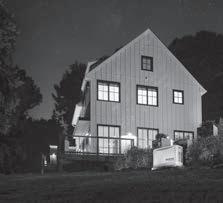













Commission and City Council reserve the right to modify the amendments, or to continue the hearing to another date and time. If the hearing is continued, no further public notice will be provided. Responsible Official: Mary Johnson, City Planner, (503) 374-1752 ext. 101, cityplanner@corb.us
4/22/25
HH25-235 NOTICE OF BUDGET COMMITTEE MEETING.
A public meeting of the Budget Committee of the Tillamook County Transportation District (TCTD), Tillamook County, State of Oregon, to discuss the budget for the fiscal year July 1, 2025 to June 30, 2026 will be held at the Tillamook County Transportation District at 3600 Third Street, Suite A, Tillamook, Oregon. The meeting will take place on Thursday, May 15, 2025, at 6:00pm. The purpose of the meeting is to receive the budget message and to receive comments from the public on the budget. A copy of the budget document may be inspected or obtained at TCTD at 3600 Third Street, Suite A, Tillamook, Oregon, after April 16, 2025, between the hours of 8:00am and 5:00pm, Monday through Friday. This is a public meeting where deliberation of the Budget Committee will take place. Any person may appear at the meeting and discuss the proposed programs with the Budget Committee. Anyone needing visual or physical accommodation is asked to call the TCTD offices at 503-8158283. Meeting ID: 840 5296 1041 Meeting Link: https://us02web. zoom.us/j/84052961041 For more information, go to https:// www.nwconnector.org/tillamooktransportation-board-meetings/.
4/22/25 5/6/25
HH25-236 The Oceanside Water District Board of Commissioners will be convening for a special zoom meeting on Wednesday April 23, 2025 at 1:00 P.M. The meeting will consider a motion to install a conex box within the enclosed fenced-in area of the Cape Meares water treatment plant. The conex box will store emergency preparation equipment and supplies for the Cape Meares Community Association. The District reserves the right, if necessary, to call an Executive Session. All Meetings, except Executive Sessions, are open to the public and accessible to the disabled. Please call to join the meeting (503) 842-6462.
4/22/25
HH25-237 IN THE CIRCUIT COURT OF THE STATE OF OREGON FOR THE COUNTY OF TILLAMOOK Department of Probate. In the Matter of the Estate of: THOMAS LYNN WISEMAN, Deceased. No. 25PB03424. NOTICE TO INTERESTED PERSONS. NOTICE IS HEREBY GIVEN that DOUGLAS M. BOMARITO has been appointed
personal representative of the above estate. All persons having claims against the estate are required to present them, with vouchers attached, to the undersigned attorney for the personal representative at 7157 SW Beveland Rd., Suite 100, Portland, OR 97223, within four months after the date of publication of this notice, or the claims may be barred. All persons whose rights may be affected by the proceedings may obtain additional information from the records of the court, the personal representative, or
the attorney for the personal representative, Philip A. Hingson of The Hingson Law Firm, PC. Dated and published on April 22, 2025. Personal Representative: DOUGLAS M. BOMARITO, c/o The Hingson Law Firm, PC, Philip A Hingson, OSB #923354, Attorney for Personal Representative, The Hingson Law Firm, PC, 7157 SW Beveland Rd., Suite 100, Portland, OR 97223, (503) 6394800, Fax: (971) 239-1139, phil@ oregontrustattorney.com
4/22/25
Bay City
BAY CITY UNITED METHODIST CHURCH
A warm and friendly congregation. 5695 D Street, Bay City, OR, (503) 377-2679, Rev. Jonathan Mead. Worship Service 10:30 a.m., Fellowship downstairs afterwards. https://www.facebook.com/BayCityOregonUMC Open Hearts, Open Minds, Open Doors! Cloverdale
WI-NE-MA CHRISTIAN CHURCH
Wi-Ne-Ma Campground. 5195 Winema Road, 7 miles south of Cloverdale Kyle French, Minister. (971) 237-2378
info@winemachurch.net Sunday School 9:30 a.m. Worship 10:45 a.m.
HEALING WATERS BIBLE CHURCH OF GOD
41507 Oretown Rd E Cloverdale, OR 97112 (541) 671-5588
11 a.m. Sunday Church Service
7 p.m. Wednesday Bible study
Friday 7 p.m. Pastor Bry’s Corner
Garibaldi
NORTH COAST CHRISTIAN CHURCH
309 3rd St., (503) 322-3626 Pastor Sam McRae Sunday Worship Service 10:30 a.m.
We invite you to join us.
HIS GATHERING 111 Driftwood Ave, Garibaldi, OR 97118
www.hisgathering.net
Sundays at 10:30 a.m.
NEHALEM BAY UNITED METHODIST CHURCH
36050 10th Street, Nehalem, OR (503) 368-5612
Pastor Celeste Deveney + Sunday service 11 a.m.
Food Pantry
Open Friday, Saturday & Monday 10 a.m. to 2 p.m. Wednesday March - October 2 p.m. to 6 p.m.
November - February noon to 4 p.m.
Nehalem Senior Lunches
Tuesday & Thursday served at noon email: nbumcnsl2020@gmail.com
NETARTS FRIENDS CHURCH
4685 Alder Cove Rd. West, (503) 842-8375
Email: friendschurchnetarts@gmail.com
Website: www.netartsfriends.org
Pastor Aaron Carlson, Adult & Youth
Worship Service: 9:30 a.m.
Children’s Sunday School: 9:30 a.m.
Nursery available Handicap Accessible Small Groups All are welcome!
Pacific City
NESTUCCA VALLEY PRESBYTERIAN CHURCH
35305 Brooten Road, (503) 965-6229
Rev. Ken Hood
www.nestuccavalleypc.org
Weekly Bible study group Fridays at 10 a.m.
Open communion the first Sunday of each month
Regular services Sunday 10 a.m.
Everyone is welcome
PACIFIC COAST BIBLE CHURCH
35220 Brooten Road
(Adjacent Post Office)
Pastor Dan Mason (503) 926-8234
Sunday Worship: 9:30 a.m.
Sunday School 11:15 a.m.
Website: pacificcoastbiblechurch.com
All are welcome!
ST. MARY BY THE SEA
CATHOLIC CHURCH
275 S. Pacific St. (mailing: P. O. Box 390)
Rockaway, OR 97136 (503-355-2661)
e-mail: stmarys1927@gmail.com
Administrator: Fr. MacDonald Akuti
Mass Schedule: Saturday (5 p.m.)
Sunday (8:30 a.m.) (10:30 a.m.)
Weekdays: Monday (9:30 a.m.)
Wednesday thru Friday (9:30 a.m.)
Confessions: Saturday (4 p.m.)
BETHEL BAPTIST CHURCH (CBA)
5640 U.S. 101 South 2 miles south of Tillamook (503) 842-5598
https://bbc-tillamook.faithlifesites.com
9:45 a.m. Sunday School for all ages
11a.m. Morning Worship
6 p.m. Evening Service Nursery provided for all services Everyone Welcome
TILLAMOOK NAZARENE
2611 3rd, (503) 842-2549 Pastor Josh Myers Sunday: Growth Groups: 9:30 a.m.
Worship Service: 11 a.m. Tuesdays: Celebrate Recovery 5:30 p.m. Wednesdays: Youth Group 6 p.m. - 8 p.m. A place for the whole family to Connect,
(ELCA) 401 Madrona at 4th Street (503) 842-4753

Pastor Mary Peterson 10 a.m. Worship Everyone is Welcome EMMANUEL MISSIONARY BAPTIST CHURCH
Sunday: 10 a.m. Sunday School 11 a.m. Church Service Wednesday: 7 p.m. Midweek Service 1906-A 3rd Street, Tillamook, OR 97141
Pastor Sterling Hanakahi (503) 842-7864 FIRST CHRISTIAN CHURCH 2203 4th St., (503) 842-6213
Senior Pastor: Dean Crist
Sunday Prayer at 8:45 a.m. Worship Celebration at 9:15 a.m.
Classes for all ages at 11 a.m. Casual attire. Nursery facilities and handicapped accessible. Programs available for youth of all ages. Travelers and newcomers welcome.
OCEAN BREEZE BAPTIST CHURCH
2500 Nielsen Road, (503) 842-1446
Pastor Kevin Birdsong Sunday School 10 a.m. Sunday Morning Service 11 a.m.
Evening Service 6 p.m.
Prayer Meeting, King’s Kids and Teen Power