Chomping for Charity

Bay City’s new logo.

Bay City’s new logo.
 Will Chappell Headlight Reporter
Bay City’s City Council approved a new logo for the city and held the first public reading for a proposed property tax exemption for multiunit workforce housing at their meeting on February 14.
They also approved a grant agreement with the Oregon Department of Transportation for $250,000 of grant funding to go towards street improvements.
The project’s total cost will be just over $267,000, with the balance coming from the city’s budget. ODOT will be widening Main Street between 9th and 13th streets, widening 14th street from Spruce to Williams Street and paving 16th street between Spruce and Williams.
Work on the project will be completed within two years.
Bay City’s logo was unanimously approved by the council at the meeting.
Partners in Design and Lennox Insites developed the new logo, with the goal of standardizing and modernizing the city’s branding as part of a wayfinding update.
The new, badge-style logo features three evergreen trees over a half circle of waves, with the city’s name displayed in between on a purple banner.
The public reading of the proposed property tax exemption for multiunit, workforce housing developments was accompanied by a presentation from Thomas Fiorelli, Tillamook County’s Housing Coordinator.
Bay City’s proposed ordinance closely mirrors a similar county ordinance and the exemption it creates would be administered by the county.
Fiorelli said that the exemptions were made possible by House Bill 2377, which was passed in 2017.
The bill allows cities to offer a 10year tax exemption to developers who offer their apartments at rents affordable to residents making between 60% and 120% of the area’s median income.
To receive the full exemption, all a property’s units must be rented at those rates, although developers can charge a higher rate for some units in exchange for a shorter exemption term.
The exemption is available for new construction, as well as properties where more than 50% of a twenty-plus year-old building’s market value is spent on rehabilitation. The ordinance defines “multiunit” as three or more units on a single property.
Developers will be required to recertify their rents’ compliance with requirements annually with the county to continue qualifying for the exemption.
Fiorelli said that the burden of

n See LOGO, Page A3


Will Chappell Headlighgt Reporter
Work on the habitat conservation plan for Western Oregon’s state forests will continue as planned, after a motion to start a new, duplicate process narrowly failed to pass at a Board of Forestry meeting on February 15.
Despite the motion’s failure, the future of the habitat conservation plan, or HCP, remains murky after downward adjustments to harvest projections late last year have drawn concern from the board and the counties and special districts that rely on timber revenues.

The virtual special meeting on February 15 was called at the request of two board members. They wished to discuss progress on the HCP after harvest projections in the transitional implementation plan set to be rolled out in July have drawn consternation.
Mike Wilson, ODF’s State Forest Division Chief, started the meeting by giving the board an update on a new transitional implementation plan and work on the habitat conservation plan.
While not the final HCP, the transitional implementation plan that is set to be enacted on July 1, is a good predictor of the harvest yields that would be allowed under the HCP. The implementation plan is designed to transition from the old forest management plan to the new one scheduled to be rolled out in conjunction with the HCP in July 2025.
Tillamook County’s short-term rental advisory committee began revising the first draft of the ordinance they are developing on February 14.
The committee started working through the different sections of the proposal, discussing edits and changes they would like to see to the draft.
Director of Community Development Sarah Absher helped to facilitate the discussion. She also gave the committee an update on the county commissioners’ goals for the ordinance, which is overhauling the existing ordinance 84.

She said that the commissioners had held an executive session in recent weeks and discussed the possibility of legal challenges to any new ordinance.
Absher said that the commissioners had told her to direct the committee that the ordinance should not be designed as a land use regulation.
She said that the commissioners were not in consen-
sus on reducing the number of short-term rentals in the county, only managing their growth. She said that the commissioners had asked her to direct the committee to table discussions on quantity limitations as part of the ordinance.
She noted that even if the committee did not adopt specific limits in the ordinance, they could include language calling for the development of working plans for that purpose. This approach would allow the question of restrictions to be addressed at a later date and on a community-by-community basis.

Absher also addressed community concerns about Daniel Kearns, the lawyer who is helping the committee draft the ordinance update.
Kearns has been a magnet for criticism from shortterm rental proponents, who contend that he is staunchly opposed to the properties. Kearns was absent from February’s meeting.
n See STR, Page A3
Interim projections presented to the board last summer predicted harvest levels around 225 million board feet annually, down slightly from the 247 million board feet averaged between 2000 and 2021.
However, projections released in January following model solution review last fall that are being used in the transitional implementation plan cut harvest projections drastically further, to between 165 and 182.5 million board feet annually.
Wilson said that the cuts came based on more detailed consideration of the conditions in specific groves, mentioning Swiss needle cast and off-site seed as examples of limiting factors in Tillamook State Forest.
Wilson stressed that the harvest projections from the implementation plan were not the final projections for the HCP. He said that those final projections would be presented to the board with a variety of conservation and harvest options at their June meeting.
Board Member Joe Justice fol-
n See HARVEST, Page A3
Stop by for our new Bison Burger, our hearty Breakfast Sandwiches and lunches.
Covered outside dining available.
Drop by this weekend for a free taste of our wine produced at our vineyard.
Our Greenhouse is filling up with plants for spring! We have lots of new gift items
Hwy 101 S (503) 398-5411














Tillamook County residents were updated on the recycling modernization act by an Oregon Department of Environmental Quality official at a February 14 meeting at Tillamook Bay Community College.
At the meeting, Tillamook County’s Solid Waste Program Director David McCall also began efforts to coordinate the various cities and county government in responding to the opportunity the act presents.
Gretchen Sandau, materials management specialist for the state’s northwest region, told the assembled group about the Recycling Modernization Act passed in 2021.
If interested contact Patty Watson 503-201-9912 or Beverly Anderson 503-300-9013
We are planning on an entertaining festival this year
H21604

Salem legislators passed the act in response to China stopping importation of recyclable materials in 2018. That ban caused a major fall in worldwide recycling markets and forced many Oregon localities to restrict their recycling programs or increase charges, according
to Sandau.
The new act will standardize the materials accepted for recycle across Oregon and implement an economic model designed to share the costs of recycling between producers and consumers.
Price sharing will be achieved by the formation of Producer Responsibility Organizations, or PROs, that will be funded by the producers of waste materials. These non-profits will manage money collected from those companies and use it to fund parts of recycling programs across the state.
PRO funding will mostly be dedicated to infrastructure investments and to offset the costs incurred by local governments in running recycling programs. End users who wish to recycle will still pay for the collection of their recyclables.
Currently, DEQ is in the process of surveying leaders from every city and county across Oregon to gauge the infrastructure needs of their communities. Once the survey period has ended in April, DEQ will use those responses
to start building plans to direct funding from PROs.

The plans will be implemented beginning on July 1, 2025, at which time all cities and counties across Oregon will be required to collect a uniform list of recyclables.
McCall followed Sandau’s presentation with a call to action to the city leaders from Nehalem, Bay City and Garibaldi present at the meeting, as well as those from other cities who were not in attendance.
He strongly encouraged them to respond to the survey seeking support for expansion of their local recycling programs.


He also said that he thought the cities and county should begin meeting regularly to develop a plan of their own to present to PROs for funding after DEQ tells them about Tillamook’s needs in a more general sense.
Please send any comments to headlightreporter@countrymedia.net.

Will Chappell Headlight Reporter
Tillamook’s School Board heard updates on a wide
the district and approved administrative items at their meeting on February 13.
The largest report came from Communications and Grant Director Jennifer Guarcello who told the board about work being done to combine five different programs into one.
Integration of the programs comes at the behest of the Oregon Department of Education, which hopes that the change will help to reduce redundancies and streamline management.
The programs slated for inclusion are: High School Success, the Student Investment Account, Continuous Improvement Planning, Career and Technical Education, and Early Indicator and Intervention Systems.
These programs focus on a wide array of different student needs and have different funding levels.
Guarcello said that in public feedback, members of the district community had identified the career and technical education program as a strong point that they would like to see enhanced.
variety of happenings around
Tides of Change is celebrating 40 years of service to survivors of domestic and sexual violence in Tillamook County. In April 2023 we will celebrate survivors and their incredible resiliency with a storytelling event.

True stories have the power to heal by helping survivors to stand in their own power and shine a light on injustice. True stories connect people with shared experience and raise awareness and empathy in a community. The courageous and generous act of sharing true stories can change the people who tell them and the people who hear them.
We are inviting survivors to share their true stories of domestic violence, sexual violence, stalking, and/or human trafficking with the community. Stories can be spoken, read or performed by survivors or by volunteers if survivors prefer to remain anonymous. Survivor stories can also be in a variety of mediums, such as artwork, music, or poetry. Stories in Spanish and English are welcome.
Last day for submissions is March 10, 2023.
If you are a survivor and have a story you are willing to share, please go to our website www.tidesofchangenw.org/survivor-stories for more information. You can also contact our executive Director Valerie Bundy at valerie@tidesofchangenw.org or 503.842.9486.

Stories should be true, up to 8 minutes, and not include real names of other people. A written version of your story or poems may be read by a volunteer upon request. Music can also be performed at the event.
Last day for submissions is March 10, 2023.
We look forward to receiving your submissions and celebrating survivors in our community. H21585
Public feedback also revealed that students in the district, over 200 of whom took a survey as part of the integration planning process, wanted to see wholistic support for students increased. Students said that increased mental health support and relationship building with
teachers outside of class were priorities for them.
Guarcello is working with the district’s curriculum director, Dr. Tyler Reed, to complete the application for the integration plan by April, with review to be completed by June.
The application will include a plan to boost student performance, which Guarcello said will mostly consist of a list of desired staff additions.
The plan will also include a list of goals to measure success over five years. Tentatively those goals are a 3-6% increase in 4-year graduation rate, a 12-17% increase in 3rd-grade reading scores and a 4-7% increase in attendance rate.
The board approved the final calendar for the 20232024 school year, a working agreement with interim Superintendent Jim Mabbott, high school student trips and inter-district transfer numbers, allowing 30 Tillamook students to attend out-ofdistrict schools and 100 outof-district students to attend Tillamook schools. March 6-10 was named classified staff appreciation week in the district.

Tillamook High School
Principal Jill Ingram announced that Franklin and Bowen Weeks were the valedictorian and salutatorian of the senior class, respectively. The identical twins both
play soccer and like being outside, Franklin is interested in studying architectural design and engineering, while Bowen hopes to study computer science.
Mabbott also updated the board on his first month in the district, saying that he had received a warm welcome and expressing positivity about the staff and students in the district.
He also said that he has begun working with district principals to lay out a fiveyear plan to address academic deficiencies in the district.
He noted that performance is not where district leadership wants it to be and that the principals had unanimously agreed that presenting the new superintendent with a plan was the best course of action.
The board also received an update on the search for the new superintendent from Robyn Bean of Human Capital Enterprises. She said that in the week that applications have been open the district has received several.
She asked the board to select two members to help her form a community engagement panel for the interview process and Kurt Mizee and Justin Aufdermauer volunteered.
Please send any comments to headlightreporter@countrymedia.net.



Oregon State University Extension Service invites applications for an Office Specialist 2 position based at the OSU Extension Service Tillamook County Office in Tillamook, OR. This is a 12-month, F/T, classified position starting at $16.19 hourly + benefits. To review posting and apply, go to https://jobs.oregonstate.edu/postings/132190 Closes 2/24/2022 OSU is an AA/EOE/Vets/Disabled.



Absher assured committee and community members that Kearns’s personal opinions were not relevant. His directive in the process is to incorporate the committee’s directions into the new ordinance while confirming that the proposed legislation is in compliance with state and federal law.
Finally, Absher reminded the committee of their timeline. She said that the final draft of the ordinance needs to be presented from their May meeting, so that it can be publicly heard and voted on by commissioners before the current moratorium on new licenses expires in July.
After the update from Absher, the committee began the work of revising the draft


Continued from Page A1
lowed the presentation by saying that he believed the newest harvest estimates did not achieve a balance between conservation and financial viability, the dual goals the board had set for the HCP.

Justice said that he believed that a harvest closer to the 225 million board feet presented last summer was more equitable for rural communities and counties. Justice asked Wilson if he thought the revised projections due in June would project a harvest level close to that and Wilson said that he did not.




Continued from Page A1
the tax exemption, which is available until 2027, is shared between the city, county and the other special districts serving the property.
The second public reading of the ordinance take place
of the ordinance they had been presented in January. They first took up the issue of events being held at shortterm rentals, which had been prohibited in the first draft. Committee members agreed that the general prohibition was overbroad and needed refinement.

A lively discussion ensued, with short term rental proponents arguing that the event prohibition should be struck entirely, while others were in favor of modifying it.
The committee eventually reached a consensus around keeping the language but making it subordinate to other parts of the ordinance, allowing for events that complied with noise, parking and garbage rules. The committee then discussed the signage to be displayed on the exterior of properties.
Considering the latest estimates as well as the 70year term of the plan, Justice said that he was proposing a motion for ODF staff to begin work on a second HCP draft that would allow larger harvests.



When asked, Wilson said that doing so would set the HCP development process back at least two years. The draft of the plan is already with federal regulators for review under the National Environmental Policy Act, so it is too late to amend that document. Wilson said that the agency also lacked the staff to begin work on a second HCP concurrently with the ongoing work on the alreadysubmitted draft.
at next month’s city council meeting before a vote is held. The council approved the budgetary moves to start work on the new hiker and biker campground at Al Griffin Memorial Park.



They made room in the budget for the $318,000 in Oregon Parks and Recreation Department funding for the project and approved $230,000 of that being spent on an ADA-accessible
Signs required by the ordinance will need to list the property’s address, approved number of parking spaces and contact information in case of a problem.
Committee members had diverging opinions on whether the number of the property manager or owner should be listed on the sign, or just the number of the forthcoming short-term rental hotline.
Some argued that putting a direct contact on the sign would allow for more neighborly relationships between residents and short-term rental operators. Others voiced concerns over the invasion of privacy and volume of calls an owner or manager might receive if their number was posted.
The committee quickly formed a consensus around the latter opinion and said that the sign should only be required to include the number of the
The board members discussed the proposed motion, with two groups coalescing as the meeting went on.
While both agreed that the projections were alarmingly low, one favored allowing the process to run its course before essentially restarting the process. They argued that the decision should wait until after the board receives updated projections in June and a final draft of the plan in September.
The other group argued that the already released figures represented too drastic a change from what they had discussed previously, making a new process inevitable.


When Justice’s motion was put to a vote, it failed by a vote of 4-3. Board Members
shower.
Councilors unanimously also approved a $7,500 grant for the Pearl and Oyster Music Festival, as well as a budget schedule, contract extension with interim Fire Chief Dale Kamrath and a city engineering contract with AKS Engineers. Please send any comments to headlightreporter@countrymedia.net.



hotline. They then quickly agreed to the proposed 20-minute remote, 30-minute in-person response times to hotline complaints, as well as the once-weekly garbage collection requirement.

With time running short in the meeting, the committee took up a discussion of the scope and purpose section of the ordinance.
The short-term rental supporters on the committee felt that the section expressed a negative tone towards shortterm rentals as written. They argued that it incorrectly conflated short-term rentals with the lack of affordable housing in the county and should be amended.
Other committee members pushed back that short-term rentals had a general inflationary pressure on the housing market in the county. But they compromised by changing lan-



Justice, Liz Agpaoa and Karla Chambers voted aye, while Board Chair Jim Kelly and Board Members Ben Deumling, Chandra Ferrari and Brenda McComb voted nay. Please send any comments to headlightreporter@countrymedia.net.



TWO
We often take our heart for granted, but when it comes to your heart health, every day is a fresh start. To reduce the risk of heart disease, it’s important to know your numbersblood pressure, cholesterol and A1C. Healthy habits like a well-balanced diet and exercise can help as well.

Our primary care providers are experts in your health and wellness. Make an appointment now to start your journey to a lifetime of healthy habits. Your sweet heart will thank you.

guage saying that the ordinance aimed to “limit” short-term rentals to “manage,” an edit that helped form a working consensus.
time from two and a half
to four and a half hours for


to
April. Please send any comments to headlightreporter@countrymedia.net.




with trees to give you the privacy you want. Netarts Bay is near. MLS #23-15 $209,900



Planning for a new city hall at Underhill Plaza will include the demolition of both the school building and Quonset hut on the site, following a unanimous decision by Manzanita’s City Council on February 15.
The decision came after investigation by project architects and engineers revealed that the costs of upgrading the structure to anything more than storage would be high and its usefulness as a storage structure would be limited.
Jessie Steiger, the project manager for the new city hall, told the council
that studies carried out by the Klosh Group and Bearing Architects in January at the council’s direction had shown that rehabilitating the structure would cost a minimum of between $500,000 and $600,000. That minimum figure would only pay for repairs to the hut that would allow it to serve as a 3,200 square foot storage space for the city.
Steiger said that the structure would not be suitable for housing emergency supplies due to its foundation. She also said that work to turn the Quonset hut into any other sort of gathering space or usable facility would require at least double the budget.
She noted that building a simi-
larly sized storage space would cost significantly more than rehabilitating the structure.
Councilmembers said that while the city needed additional storage space, most of the need was for emergency supply and equipment storage.
Several councilmembers inquired about the possibility of using transient lodging tax dollars to fund a more complete rehabilitation of the building. City Manager Leila Aman said that was a possibility but that investigating and moving forward in that direction would take time, delaying the current city hall planning process.
The council voted to proceed with
the first phase of the project with a plan to demolish the Quonset hut and school, which will complete the 30% planning and design phase of the project. Both structures need to be demolished whether the council approves moving the city hall project moving forward after recent studies revealed friable asbestos in both buildings. Demolition of the Quonset hut will cost around $30,000, while the school’s will cost around $45,000.
Aman also gave the council more in-depth information about the landslide and tsunami risks at the Underhill Plaza site.
A 2018 landslide risk assessment had indicated that the site was at
risk and council had asked for more information.

Aman consulted with an outside expert who referred to the more detailed and accurate map maintained by the state. That map revealed that the Underhill Plaza site was outside of slide zones.

Aman had also investigated the site’s tsunami susceptibility at council’s direction and found that it lay outside of both the zone that would require special building design and the evacuation zone. Please send any comments to headlightreporter@countrymedia. net.
The Neah-Kah-Nie School District has been accepted into a program that will send $95,000 to the district annually for the next seven years to help promote post-secondary education.
The Oregon Gaining Early Awareness and Readiness for Undergraduate Programs, or GEAR UP, program is funded by U.S. Department of Education dollars and administered by Oregon State University and aims to promote low-



income students’ access to higher learning.
“I think it helps with that equity issue to expose low-income students to the process of post-secondary education and their parents,” said Paul Erlebach, superintendent of the Neah-Kah-Nie school district.
The district is one of fourteen that was selected from among 50 applicant districts across the state to participate in the program. GEAR UP
has been helping districts with low-income students since 2002 and is beginning to help its fourth group of schools this year.
Funding is allocated to allow the district to hire a full-time coordinator who will help students with all aspects of post-secondary education preparation from sixth grade through their first year of post-secondary education. It will also pay for campus visits for students and their families. Ericka and Ryan Keefauver, both of whom work in the district, had experience with GEAR UP in their previous positions in the Hermiston School District.
Mrs. Keefauver, the Student Services and Special Education Director for the district, said that the program does a good job of involving families to help lower the intimidation factor of postsecondary education.
H21630
“A lot of what we saw were students hesitant to move on because they didn’t have anyone in their family who had attended a post-secn See NKN, Page A6
Do you remember when we had free speech? The Bill of Rights, an amendment to our constitution, guarantees free speech. The governments definition of free speech is “Freedom of speech is the right of a person to articulate opinions and ideas without interference or retaliation from the government,” and The Supreme Court has interpreted “speech” and “press” broadly as covering not only talking, writing, and printing, but also broadcasting, using the Internet, and other forms of expression. There are 4 limits to free speech: obscenity, child pornography, defamation, incitement to violence and true threats of violence.
Even in those categories, there are tests that have to be met in order for the speech to be illegal. So then WHY? Why do we put up with censorship?
Why have we accepted “misinformation” as a reason to obliterate all information on any or all subjects.

One prominent scientist said during a trial - “Misinforma-


tion IS free speech”, and it IS -using the above definitions of free speech -Today the term “misinformation” does not mean misinformation. It means “does not conform to the current political doctrine”. How about an opinion? Can you express your opinion? Not today, if it does not conform to the current meme. Do you really think that someone “way above” in the government has your best interest at heart and only wants you to hear the “truth” told to you by the government, the corporations, the bankers, big pharma?
There is an entire industry today spending millions to suppress free speech. See Mike Benz, a former state Department diplomat involved in US foreign policy on international communications. Bitchute.
Dixie Gainer NehalemI’m missing Gomberg
I’m missing David Gomberg already. In 10 years, I
never felt like David ever lied to me.
In his first month in office, I feel like Cyrus Javadi is lying to me already. He leads off his “Inside the Capitol” e-mail with dire warnings about HB2667 and its perils to family farms. He never says what the bill proposes. He just wants us to know it’s bad.
It turns out the bill is only about a page long and it directs the state environmental and agriculture departments to not license new “industrial confined animal feeding operations” and to also not allow enlarging existing operations.
About half of the page is devoted to explaining just what an “industrial confined animal feeding operation” is. It turns out its 2,500 dairy cows or 3,500 cattle, 40,000 sheep, etc. Those don’t sound like family operations to me.
I wondered why the state would want to limit these massive operations.
It turns out that last June, Morrow county, Oregon was forced to declare a state of emergency and has started distributing bottled water
n See LETTERS, Page A8
Paul Welch, MD Ambulatory Medical Director at Adventist Health TillamookFor many years, people thought heart disease and heart attacks were men’s problems. Research studies focused on men. Diagnoses and treatments were designed for men. Today, health professionals recognize that heart disease is the top killer of women, responsible for more deaths than all cancers combined. I think we can do something about that!
Yet just 44% of women say they know that cardiovascular disease is the top threat to their health, according to research in the American Heart Association journal, Circulation. Physically, a woman’s cardiovascular system is different from a man’s. Her heart and blood vessels are smaller. And she has a heart rate that tends to be higher at rest.
Pregnancy-related conditions, such as preeclampsia, as well as an overall decline in estrogen production with age, make women more vulnerable to heart disease and heart attacks. Additionally, two intertwined facts also account for women’s place in heart disease statistics — the likelihood of experiencing a heart attack or stroke in-
creases with age, and women in the U.S. live longer: an average of 81 years versus 76 for men.
Know Your Risks
Smoking, physical inactivity and excess weight raise the risk of heart disease in both sexes. But certain risk factors put women at even greater odds of having a heart attack:
• Smoking and taking birth control pills
• Hormone replacement therapy

• Metabolic syndrome, which includes a large waistline, low “good” cholesterol and high blood pressure, blood sugar and triglyceride levels
• Diabetes or prediabetes
• Yo-yo dieting
• Depression
For women, reducing the
odds of heart disease starts with changing diet and exercise behaviors and recognizing the unique symptoms of a heart attack. The classic signs of a heart attack — shortness of breath and pain or discomfort in the center of the chest, back or jaw — are hard to miss. But subtler warning signs are more common in women: pressure or pain in any part of the chest, indigestion and heartburn, nausea and vomiting, shortness of breath, unexplained fatigue, back or shoulder pain or tightness or squeezing in the upper back and lightheadedness. Up to age 65, men and women experience hypertension (high blood pressure) at similar rates. But after 65, more women than men develop high blood pressure, according to the American Heart Association. Because hypertension increases a person’s risk of heart attack and stroke, it’s important for women to be screened at least annually by their provider. Cardiovascular disease is very treatable but requires early intervention from your doctor so that you can prevent it from becoming life-threatening.
In good health, Dr. Paul Welch

 Suzanne Weber State Senator Senate Dist. 16

Tillamook County is a hidden gem, a rural county lodged between the coast and the city, defined by its rocky coastline, charming coastal towns, and picturesque mountain forests. There’s a reason those who visit want to stay. The quality of life here is hard to beat.
While the rustic nature of this corner of Oregon paradise is a key to its charm, in some ways we have failed to keep up to modern standards. One case in point is Highway 6, a stunningly beautiful two-lane road joining Banks in Washington County to Tillamook and the coast beyond. Known as the Trees to Sea Scenic Byway, Highway 6 winds through sharp and sometimes blind turns, along steep forest slopes, usually with limited shoulders. As beautiful as
it is, it can also be dangerous, especially at night and in bad weather. In a single treacherous week in August 2021, three accidents left four people dead.
As challenging as Highway 6 is for drivers, it poses even greater difficulties for our first responders, as cellular service is almost non-existent along these 37 miles of wooded highway. Without cell service, emergency response is severely compromised. In the wake of traumatic injury, where minutes can spell the difference between life and death, that lack of cellular service is no small matter. Neither are the road closures that can take hours to clear up in the wake of major crashes.
Now we may be close to a solution. As part of a plan to land a new, 9,400-mile fiberoptic cable at the Winema Christian Camp in Cloverdale, Ore., Amazon Web Services (AWS) is helping to fund a new fiber-optic line along Highway 6 to Hillsboro. This project will enable wired internet service along a 39-mile stretch of Highway 6 that has no cellular service at all. While this project does not specifically include installation of cellular towers along the route, the availability of high-speed, high-capacity wired service means installing cellular antennas will be relatively simple and affordable compared to what would have been necessary before.
25 50 100
Adding cellular service will benefit everyone who traverses this beautiful part of the county, from drivers bound for the coast to hikers seeking solitude on mountain trails. For police, firefighters, and other emergency workers, though, the promise of reliable cell service will mark a major improvement in their ability to respond to emergencies.
The new Highway 6 fiber optic link funded by AWS will also benefit those who live in this more remote part of the county where internet service is often unavailable.
As we learned during the COVID-19 pandemic, when working people and students were asked to stay home and do their work remotely, young
students in rural homes were disproportionately disadvantaged.
An independent study conducted for the publicprivate Tillamook Lightwave consortium found that about one in every 27 people in our county—some 1,000 people in all—lack access to wired internet service. Tillamook Lightwave’s recent broadband study found that three-quarters of survey respondents said their internet service did not meet student needs or did so in only a limited way during the pandemic; only one quarter of respondents who worked from home said their internet service was adequate.
Capitol Address: 900 Court St. NE, H-483, Salem, OR 97301 – Phone (503) 9861432

District Address: PO Box 983, Tillamook, OR 97141 –Phone: (503) 300-4493 – rep. suzanneweber@oregonlegislature.gov
Improving connectivity across regions and demographics is a national problem. But here in Tillamook, we are well on the way to solving a major portion of our challenge. The proposed Highway 6 fiber-optic cable project will provide “last mile” connectivity that will bring the kind of high-speed internet service businesses and homeowners rely on throughout the Portland metro area directly to the property lines of 273 home owners who currently have no such service here in Tillamook County. Of course, not all those homeowners will want that connectivity; but at least now every one of them will have the option—now or later—to connect.
Critically, this cable will also enable cellular services to be deployed along the highway corridor. My 2022 priority bill, OR House Bill 4053, required the Oregon Department of Transportation to study Highway 6 and provide recommendations to the Oregon Legislature on improvements and efficiencies. That study is currently underway. The addition of this cable landing will enhance public safety by eliminating an unsafe and dangerous dead zone on Highway 6. With cellular phone and data services, motorists will be able to report disabled vehicles; police and firefighters will be able to access their networks from the road, meaning they can more rapidly respond to dangerous road conditions, such as downed trees, or to forest fires, missing person emergencies, and other mat-
Broadband for all: County takes a giant leap forward
Acool dozen participants gathered to make crafts in the Barbara Bennet Community Center earlier this month. Four ladies were knitting, two were crocheting, one was quilting, one was “dressing the loom” as part of weaving, two were making cards, one was binding books, and one was going through Cape Meares archived documents.
Everyone was gabbing—and having a great deal of fun.

The craft group was treated to a visit by Bill Winter, who brought two beautiful model wooden boats to show us. He had painstakingly built both Legend Model boats from Mack Products’ kits. One
Iam just indoors, as we go to press, from pruning what the deer have spared of the roses in my front flower
 503-842-8608 ellensteen2@gmail.com





of the boats was the 1935 Gar Wood Speedster “Miss Behave,” and the other was a 1952 Century Sea Maid, 18-foot Run-About. The racing boat alone took Bill about a year to build. The models are exquisitely detailed, with
bed. Before my mom was retired or had dementia, she was a professional landscaper. She always said to cut the
ropes, hardware and trim perfectly to scale. Both boats can be operated with remote controllers; you just might see Bill out giving his gorgeous boats a spin on Cape Meares Lake.
Speaking of crafts, Tangled Yarns is offering a great deal on knitting and crocheting classes. Beginning knit and crochet students may sign up for three classes for only $10 plus the cost of supplies purchased from the shop. Cape Meares residents Kathy Burke and Sally McGee are among the enthusiastic knitting students. The shop also offers “open forum groups” on Wednesdays and Fridays from
bushes in a chalice shape and just above an outward-facing bud of leaf. Mom always described “Washington’s Birthday” (February 22) is the deadline for that. Here’s reminding you, if the task is unattended to in your yard. It’s time to prune your roses.
Thanks to my friend and uphill neighbor, Sonya Kazen (of Cloverdale) for writing with two reminders of her own. Tillamook County is conducting a survey of Beaver, Cloverdale and Hebo. Paper copies were available (and are being collected) at Cloverdale Post Office, Hebo Fire Station, and Beaver Firearms and Grocery. If you need a copy, email Brook@ tillamooksoco.com.
Related to that, I assume, Sonya says there is a “Community Hall for Beaver, Cloverdale and Hebo” at 5:30 p.m. on Wednesday, March 22 at the Hebo Fire Station. It’s located just north of the intersection of U.S. Highway 101 with State Route 22 near downtown Hebo.


3:30-6 p.m., when you can work on your own projects. Check it out! Tangled Yarns is at 207 Main Ave. in Tillamook; you may find them on Facebook at tangledyarnstillamook, on their website at www.tangledyarnsllc.com, by phone at 480-570-5097, or via email at tangledyarnsinfo@ gmail.com.
There was a quarterly Cape Meares Community Association (CMCA) meeting on Feb. 11. There were financial and committee (social, emergency preparedness and building management) reports, an update on the Water Conservancy Project (appraisals underway, report on

SOUTHCOUNTY
Congratulations to Tim Moore, who was chosen as February’s “Artist of the Month,” at Oregon Coast Banks’s Pacific City Branch. HIs photographs, prints, and cards are on display and for sale there (the branch is located on Brooten Road, south of the four-way stop in Pacific City) through the end of the month.

Tillamook Regional Medical Center is sponsoring an “Art for the Heart” show is throughout February at North County Recreation District (NCRD). The gallery will be open from 8:00 a.m. until 5:30 p.m. weekdays through the month of February. The

Greetings Bay City, and happy Valentines Day to you!….a bit late, I know. We continue to settle into our new, but temporary, digs. We’ve been spending time with family and old friends, enjoying time with our new, very first great-grandchild, little Mia Jo, and having so much fun with our youngest grandchild, Macey Jo, who will be college-bound next year. We’ve also been to music events with friends and have been taking won-
Continued from Page A5
ters where timeliness can spell the difference between life or death. These benefits will accrue to the county as a result of the Bifrost data cable, one of the longest and fastest data links across the Pacific. The Bifrost Trans-Pacific cable
Continued from Page A4
ondary education program,” Mrs. Keefauver said, “going beyond their own experience was a scary thing.”
She also mentioned the program’s continuing support for students as a strong point. GEAR UP requires the coordinator maintain contact with students in their first year of post-secondary education, which Mrs. Keefauver said is a critical element of the program.
Erlebach emphasized that the program is not only intended to promote students going to four-year university programs. It is meant to support students attending community college or trade schools as well.
Mr. Keefauver, the Associate Principal and Athletic Di-

habitat assessment and some promising funding opportunities), discussions of traffic safety and short-term rentals, and a presentation on a new recycling law in the state of Oregon. Good news on that last item: In two years, we will be able to recycle several things we throw out today, such as plastic margarine or salsa tubs. Full minutes from the meeting will be posted on capemeares.org. The next quarterly CMCA meeting will be on Saturday, May 13.
Did you have fun at the Charity Drive events? We attended a delicious dinner, got our car spotlessly cleaned, hit the rummage sales, and

address is 36155 9th St, Nehalem, 97131. Because the space is made available (by reservation) for community use, it may be helpful to telephone in advance and verify that the art will be available for viewing; please call 855444-6273, option 1.
South County Food Pantry serves households in Nestucca Valley School District. They’re open from 12:30-6:00 p.m. every other Tuesday.
In February and March (this year) open dates fall on the 7 and the 21st of the month.
Remember that The Library Thrift Store recently reopened after a break for winter holidays. The hours are 11:00 a.m. until 4:00 p.m. Thursdays through Saturdays; they’re located at 6330 Ferry Street (across Brooten Road from The Grateful Bread Bakery and Cafe). The thrift store, which funds the South Tillamook County Library building and grounds, welcomes resalable donations from 11:00 a.m. until 3:00 p.m. on days that the shop is
derful classes and attending lectures and events at the Salem Center 50+. Doctors’ appointments are in the mix of our week as well, but that will come to an end soon, we hope. In spite of doctors’ appointments, tests, and procedures, we feel blessed to be here. Our travel trailer is having some repairs done this week, and Kin has made arrangements to bring it back to Bay City on a permanent basis. We hope to upgrade it soon to give us more room and make it a little more com-
will connect Singapore to Grover Beach, California, but also include branch lines diverting to Indonesia, the Philippines and Oregon. Cable landings are nothing new. As of 2019, there were 75 submarine cables connecting the West Coast of the United States to other parts of the world and nine others under construction. Tillamook County already hosts the largest hub of transcontinental undersea fiber cables on
rector at Neah-Kah-Nie High School, said that exposure to a wider variety of options starting at a younger age was “invaluable” for students.
He said that the district has already been doing good work supporting students, praising High School Guidance Counselor Esther Troyer in particular, but that the grant and dedicated staffmember would enhance their efforts greatly.
“That is going to allow for more one-on-one time between that person and our students in developing their career plans, providing us both on-site and off-site opportunities for those students, and connection to the family,” Mr. Keefauver said.
The full-time staffer will help students explore the different post-secondary education opportunities that are available and which match their needs before aiding in the application process, from
bid on online auction items. We are so proud of our Tillamook high school students for tackling this big challenge each year! Great job, kids, and thanks to all those who opened their hearts and wallets for this unique charitable event in the Tillamook community.
The Feb. 18 Tech Prep emergency preparedness seminar was canceled at the last minute due to a COVID outbreak in our community. The solar power seminar scheduled for Feb. 25 has been canceled as well, out of an abundance of caution. Both seminars will be rescheduled. Stay well, neighbors.
open.
I counted words just now, and see that I am almost a paragraph short of a full column. I’m reminded that while he was here, I finally visited Meg’s Beachwood Bar and Grill (located near the intersection of Brooten Road and Pacific Avenue in Pacific City) for a mom and son lunch. The walls and windowsills are decorated with game boards and accessories; these brought back many childhood memories for each of us. We had had our corner of the sizable space to ourselves which reinforced the cozy, hometown feel of the place. We ordered tasty burgers with our choice of sides that were ready in a flash; another happy memory now that Chory is home in the windy city, until next time. Happy birthday this week to: Sue Anderson, Myranda Baker, Beverly Barcroft, Bill Bruce, Matt Eckhardt, Jodi Green, Travis Love, Noah Matson, Jan Niederer, Louise Nims and Simon Weston.
fortable for us. But enough about us!
Your City News: The Bay City Emergency Volunteers will meet on Tuesday February 21, 2023, at 5:30 pm in the Ad Montgomery Community Hall, 5525 B Street, Bay City. City Manager, Liane Welch asks the public to join them and get involved, and notes that the recent earthquakes in Turkey and Syria are a wake
n See JODY, Page A8
the west coast. Yet community members and fishermen won’t even notice the new branch landing in Cloverdale, as it will be located far below the surface, traversing under the seafloor to a terminus adjacent to a parking lot.
In a modern economy, broadband access is as necessary as electricity. With projects like this one, Tillamook moves significantly forward in ensuring broadband access for all.
Senator Suzanne

testing to applications to securing scholarships.


GEAR UP funding is paired with participation in the Advancement Via Individual Determination (AVID) teaching program. AVID helps to standardize different aspects of the educational experience across schools and the district, like note taking, to optimize students’ learning.


Erlebach was excited about the opportunities that GEAR UP and AVID present for the district to supplement the work it is already doing for students.
“I think the district’s goal with GEAR UP and without it is to increase our on-time graduation rate and the post-secondary graduation experiences for students,” Erlebach said. Please send any comments to headlightreporter@countrymedia.net.


William Lane Woods was born June 5, 1937 to J. Ross Woods and Isabel Stevens Woods in Lewiston, Idaho. He grew up in Lewiston where his father was the High School music director for many years.
Lane graduated from the University of Idaho as a music major. He taught in Asotin, Washington during his Senior year. During that summer he met Phyllis Buswell when they were counselors for the music camp at Washington State. They were married August 7, 1960 on his parents 25th anniversary and his mother’s birthday in Bellingham, Washington.
They moved to Tillamook to teach for the school year of 1963/64. In the fall of 1965, they bought a small farm as








passed away.
he wanted to raise his family out of town. The farm was sold after 19 years of 4-H activities. Lane went back to school and then was teaching music again in Vancouver. He retired from there in about 2000.

Lane was a 64-year member of Nez Perce Masonic Lodge #10 in Lewiston, Idaho and Tillamook Masonic Lodge #57. He was also a 6-year member of Silver Wave #18 Order of Eastern Star in Tillamook.
He is survived by his wife Phyllis of 62 years and four children; Debbie Whiteman (Mike), Caryn Backman, Dorothy Burnett (Lonnie), and Charlotte Karvia. Grandchildren Joseph Karvia, Tabatha Karvia Copley, Paige Burnett, Deanna “Izzy” Burnett. Great grandsons Orion and Lane Copley. He also has a nephew Tom Wheatley. ‘Extra daughters’ Jean, Teresa and Shirley. He was preceded in death by his parents, sister Isabel Jean Wheatley and her husband Tom Senior, his niece Betsey Wheatley Aebi and grandson Dustin Burnett. Services will be held May 25, 2023 at 2p.m. at St John’s UCC Church, 602 Laurel Ave in Tillamook Oregon.
Edith Grace (Reeher) Lippert, 93, died on Jan. 28, 2023. She was born on Oct. 5, 1929. Services are scheduled at Walters Cultural Arts
Center in Hillsboro on March 11, 2023 with seating at 11:30 a.m. anf remembrances at 12 p.m. socializing and snacks are from 2:30 to 3 p.m.




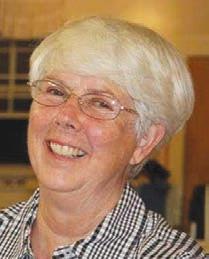
Gretchen (Weber) Power passed away unexpectedly Saturday, February 4, 2023 holding her husband’s hand and surrounded by her family.



Gretchen was born on December 1, 1942, in Portland, Oregon to Peter and Avis Weber. When she was a young girl the family moved to Idaville, Oregon where she attended Riverdale and Wilson Elementary Schools. She graduated from Tillamook High School in 1962. Gretchen was involved in 4-H and enjoyed the family farm raising animals and tending the garden.
She moved to Portland after graduation where she met John Power on a blind date set up through John’s family. They married on July 13, 1962 and started to raise their family first with a daughter, Sharon in 1965 and then a son, Brian in 1968.
John and Gretchen moved to Pendleton, Oregon in 1971, and continued to raise their family. In Pendleton Gretchen worked at Pendleton Grain Growers, Garrett Freight Lines and Pendleton Flour Mill.




In 1997, she and John came home to live in Bay City, Oregon. Gretchen worked for Farm Credit Services and at TBCC in the Small Business Development Center. Sisters Joanne and Gloria along with brother Chris and wife Patsy moved back to Tillamook and the siblings were together again and were a close knit family.

Gretchen’s two great passions in life were her family and helping others. In Pendleton, she was a member of the Altrusa Club, a Boy Scout den mother and you could find her passing out snow cones at swim meets or little league
games. For over 20 years she was an active member of Bay City Boosters where she held the offices of president and secretary through the years. She was an active member of the Kiwanis Club of Tillamook and served as secretary of the Club and a Lt Governor of our division. She was very generous with her time and worked tirelessly on club projects. Her forte was decorating for events of both clubs.
Gretchen loved her 3 grandchildren and 3 great grandchildren with a fierce and protective spirit. She was always proud of them and their accomplishment’s whether great or small and would talk about them constantly. She loved family gatherings at Christmas parties, family picnics and made sure everyone felt included.
Gretchen was a bright and compassionate light in the world and will be missed by family and her many friends. She in an angel now with her arms around all of us with her loving hugs and special smile.
Survivors include her husband John, son Brian, daughter and son-in-law Sharon and Jim Shuman. Her grandsons, Caiden Power and Patrick Shuman. Granddaughter and grandsonin-law, Staci and Adam Lopez. Great grandchildren, Isaac, Evelyn, and Sebastian Lopez. Her sisters Joanne Aagaard, Gloria Wiechmann, brother and sister-in-law Chris and Patsy Weber and many nieces and nephews.
A Celebration of Life for Gretchen will be held on April 15, 2023, beginning at 2 PM at the Old Mill Marina in Garibaldi, Oregon. Please share any photos and special memories that you may have of Gretchen at the Celebration.
In lieu of flowers please consider donating in her name to Bay City Boosters Club at PO Box 3133, Bay City, OR 97107 or to Kiwanis Club of Tillamook Foundation at PO Box 941, Tillamook, OR 97141 She will be missed!


Big, happy Jim was born on 3/18/23, the baby of the family in Otis, Oregon. Sadly, Jim’s mama died in childbirth, so, which left his father to raise the six children alone.
At 17 years old Jim graduated from Taft High School and at 17 years joined the USMC.
The places Jim was stationed were Hilo, HI., and New Zealand. Jim was honorably discharged and then met his future bride, Dallie. They married a month later which lasted 62 years until Dallie
Jim joined the Oregon State Police and was stationed at West Slope and then Tillamook, Oregon. Jim retired after 30 years.

They had a motor home and traveled a lot through many states and enjoyed their life, made many new friends, fished a lot, and had so much fun.
Jim loved to fish and gave many friends the fish that he caught.
He is survived by his significant other Shirley Leckington, Dick Bancroft, Norman Michal, Sam Bauman, Jim Bauman, Sunny Cerveny & Rollie Winter.
As weather permits Jim’s ashes will be spread up the Wilson River near the summit. email dingodan121 if you are interested in attending.
Mary’s favorite activities included camping, sewing, cooking and croqueting. She looked forward to the annual Christmas Bazaar at St. Joseph’s church which she donated many beautiful handmade items.
Mary’s family was the most important part of her life. Always doing what she could to make life better.
Our Beautiful Mom
Mary Ann Cook was born on March 23, 1936. She passed away with family by her side in McMinnville OR on January 30, 2023.
On October 15, 1955 she married James Cook. They had six children together, Brock, Coletta, Teresa, Tina, Rob and Jason.
Mary Ann worked for Wells Fargo Bank for 23 years.



Mary is preceded in death by her husband, her son Brock, one son-in-law, four granddaughters and one great grandson.
Mary is survived by five children, eleven grandchildren and fourteen great grandchildren.
Rest in Peace Mom – you will be missed.
A memorial service will be held at St. Joseph’s church in Cloverdale on March 11, 2023 at 1 p.m.

Rockaway Beach lost an active and beloved member of our community last week: Cindy Kay Gregory passed on February 16, surrounded by her family. Her impact on the city and on so many of us who live here was always positive and always significant, whether we knew her for a short time or a long one.

Although we had connected on social media, I first met Cindy in person in May 2022, in connection with a column I was writing about the loss of another Rockaway Beach regular, Jeff Hunter.
Cindy, longtime friend of the couple, arranged a meeting with Nancy Roberts, Jeff’s widow.
In that meeting, Cindy said, “People maintained a relationship with Jeff because it was a friendship.” She could easily
have been speaking about herself. Later in the same meeting, Cindy said, “When there’s pain or need, this town comes together.” This was never more true than during Cindy’s last few weeks here, when she moved into hospice care in her home. Her sons Lucas and Colin came to be with her, as did her sisters. Others from town were regular visitors, including Mayor McNeilly, who of course had worked closely with Cindy during the Listening Sessions prior to last year’s election.
Becki Duckworth signed up for regular caregiving, as Cindy’s condition worsened. She spent her days in a hospital bed, her calico cat Cinnamon and her goldendoodle Sky always at her side. The bed was in her living room, where the Christmas
Dutch spiritual writer, Thomas a Kempis (1380-1471) wrote in “The Imitation of Christ” that, “If it pleases you to hear the news of the world, you must always suffer disquiet of the heart as a result.” News junkies and social media addicts suffer perennially unquiet hearts, but that is the cost of these forms of entertainment.
Michael Randall merslife@gmail.com
 SCOTT FISHER ROCKAWAY BEACH sfisher71@yahoo.com
tree remained to bring light to a darkened world.
My wife, a native of South Carolina, followed the longstanding Southern tradition of bringing food when someone in the neighborhood took ill. We brought the Gregory household pots of soup, double-chocolate-chip cookies, and more. The crew at the Rockaway Roastery decided that if Cindy couldn’t come to the Roastery for music, they’d bring the music to her. Julian
Sakata, who had been rehearsing Eric Clapton’s “Tears in Heaven,” found himself overwhelmed with emotion. (Cindy had held her victory party after the election at the Roastery, and the poignancy of the connection was too much—for all of us.)
A few months after the interview with Nancy, I attended one of the early meetings of the Rockaway Renaissance Artists, the group that Cindy founded. While art and the Renaissance are obviously connected, Cindy explained the reason for the name:
“I chose this name because we’re all coming out of the Dark Ages into making art again.” Cindy then shared her background as the parent of a special-needs child. When she lost that child the previous year, she returned to art as a form of comfort and self-
expression.
Former Mayor Sue Wilson attended several of these meetings, expressing her own desire for art shows, offering City Hall as a venue.
“We want to create a sense of Rockaway Beach as an artistic destination as well as the familiar beach getaway everyone knows,” said Mayor Wilson.
As the election grew nearer, Cindy took an active role in organizing Listening Sessions, modeled after community events in Wheeler. Explicitly not “a forum on candidates’ stands,” Cindy stressed that the listening sessions were a way for citizens to say what mattered to them:
“One of our observations is that people feel that they are not heard, or that their input isn’t heard or just doesn’t matter.”
Each day I receive an e-mail message from an organization devoted to promoting non-violence. These messages attempt to implant peaceful perspectives more deeply throughout the world. The ideas behind these messages attempt to diminish violent confrontation between nations, racial and ethnic groups, politically opposed tribes and next-
Continued from Page A6
up call for our community. Upcoming in March at the Bay City Arts Center is the Artist of the Month gallery reception on Friday, March 3 from 5-7pm. This monthly event is free and open to the public. More information about the March artists will be coming soon- check their website for updates!


Youth programs are ongoing at the BCAC. Email

door neighbors. The daily communications are meant to help each of us look at one another and at life more calmly and compassionately.
Today’s message was, “It is no measure of health to be well-adjusted to a profoundly sick society.” Whether or not American and European and Asian and African societies are “profoundly sick” is anyone’s
kidarttillamook@gmail.com or visit their website to see what after-school programs are happening now!



Mark your calendar for the March 25th performance by John Stowell & Dmitri Matheny at 7 PM. More information to follow. Get your tickets early. Their musical events usually sell out.
In case you’re a newcomer to Bay City, you can find the Bay City Library in downtown Bay City on B Street between 3rd and 4th Streets. Crafternoons are on Thursdays at 3pm, and storytimes are Saturdays at 11am. Stop and see the wall of historic Bay City photographs, including the railway station and pioneer citizens. Angel will be happy to show you around. The hours are Tuesday-Friday, 10am-6pm and Saturday, 10am-5pm. Closed for lunch 1-1:30pm. Closed Sunday and Monday.
Continued from Page A5
because high levels of nitrate contamination in groundwater have made it unsafe to

opinion. But everywhere that people have widespread access to news and social media, the level of anxiety, angry confusion and despair is spiking.
This world seems close to being on fire, and many fear that human societies will be irreversibly damaged by climate change; poisoned into social collapse and/or extinction by our resource-devour-
The Oyster Committee, under the direction of Helen Wright, will present the Pearl and Oyster Music Festival on August 26th and 27th, 2023. Watch for updates on this premier event. Wine, music, and grilled oysters…. It doesn’t get any better than that.
In the last few months, we have lost some of our most beloved and respected citizens of Bay City and Tillamook County, including Bub and Fay Simmons, Jane Erskine, and, most recently, Gretchen Power. With their passing, we have lost friends who truly loved Bay City and cared about the well-being of their community. They each spent a lifetime volunteering and giving back to the community, not just one time or for one club, but they gave a lifetime of service to many organizations, multiple times. The value of their service to the community is immeasurable. “Bay City runs on


drink water from wells that were once safe. Morrow county has multiple “industrial confined animal feeding operations”.
I find it very odd that Cyrus Javadi opposes HB2667, but familyfarms. org is very much in favor of
Cindy was elected last November, but was unable to serve even a day of her term due to the return of her cancer. Yet many of the issues that matter to Rockaway citizens — especially transparency around budget and planning issues, and clear communication from City Hall to us, their constituents — are already in place, thanks to her work on our behalf.
We miss her now and will continue to feel the absence of her creativity, generosity, and openness, whether for the flowers at the Caboose, her creation of the Rockaway Renaissance Artists, or her vision for a transparent and responsive city government she shared during her campaign for City Council. May her memory bring us peace, and stir us to action.
ing life styles; potential wars with China or Russia (likely with thermo-nuclear blasts and subsequent radiation sickness and death); toxic politics in small towns, cities, states and at the federal level; angry racial distrust; fear of migrants at our southern border; homelessness growing nationally with no
n See MICHAEL, Page A10
volunteers.” These are not just idle words. Where would the Boosters, City Council, Fire Department, Beautification Club, Arts Center, the Oyster Organization, or even the library be without their volunteers? They wouldn’t be! Bub, Fay, Jane, and Gretchen understood better than anyone, the meaning behind these words.
“Volunteering is the ultimate exercise in democracy. You vote in an election once a year, but when you volunteer, you vote every day about the kind of community you want to live in.”
Thank you for reading the Fencepost. If you have news to share, call or text me at (503)931-9721 or email jodydesign@hotmail.com. If you are interested in writing the Bay City Fencepost column, please contact Joe Warren at the Headlight Herald.



HB2667. I think HB2667 is a prudent step to keep Oregon from becoming a dumpster for out-of-state entities.
 Jim Heffernan Tillamook



Samantha Swan News Intern
The Neah-Kah-Nie High School Boys’ Basketball team will advance to the State Championships following Wednesday’s loss to the Riverdale Mavericks and Monday night’s win against the Yamhill Tigers.

The team scored 48 points against Riverdale’s 60 and 62 points against Yamhill’s 53 points.
Despite their loss to Riverdale, Neah-Kah-Nie is third in the 3A Coastal League, meaning they will advance to the State Championships, where they will play against larger schools for the title of State Champion.
Prior to the Riverdale game, players like Jacobee Wilkinson, 23, were “nervous,” as Riverdale is second in the 3A Coastal League. Following the Riverdale match, Coach Erick White stated that “it doesn’t feel great right now, but [the players] need to be proud.” Indeed, the team’s advancement to the championships is an uncommon feat for the Neah-Kah-Nie
Retiring Tillamook County



Dairy Princess-Ambassador
Clara Blaser will be crowning the 62nd Tillamook Dairy Princess Ambassador on February 26th. Clara has done an exceptional job representing the Tillamook Dairy Industry and has had the opportunity to promote dairy farming alongside her Swiss heritage in a memorable year. Clara has engaged with a variety of consumers in conversations promoting dairy farming, our farmers, cows, and products. You have seen her in the June Dairy Parade, at the Tillamook County Fair, at the Centennial Swiss Celebration and throughout the community this year.
March 5-7th will be an exciting time for Princess Clara
as she competes against 5 other counties across Oregon for the title of 2023 Oregon Dairy Princess Ambassador or Alternate. This year’s state contest is conjoined with the annual Oregon Dairy Farmers Convention in Salem.
This year we are excited to have 3 exceptional qualified candidates vying for the 2023 Tillamook Dairy Princess Ambassador crown.
Madyson Grimes is sponsored by Tillamook Swiss Society. Madyson is the daughter of Kris and Heather Grimes. Madyson grew up on her grandparent’s dairy

n See DAIRY, Page A10

Pirates. This is the team’s first time at the State Championships in twelve years. Coach White has been working with some of the players since they were in elementary school for this very moment.
The team has made tremendous progress this season, with some players achieving personal records during the playoffs. Espen White, 0, scored a whopping 21 points during the Yamhill game, a third of Neah-Kah-Nie’s total.
White attributes his high scoring to his three-point shots, of which he scored four. White was “nervous” going into the Yamhill game, but Coach White says the rest of the team was “confident” going into the game. Neah-Kah-Nie bested Yamhill twice in the regular season, but it was a close game both times.
Ivan Dante, 13, is one of Neah-Kah-Nie’s posts and has greatly improved upon his rebounds. Of his prog-
ress, Dante states that he has become “more aggressive” on the court, having started the season “intimidated by varsity.”
Coach White believes Neah-Kah-Nie’s success is due to their good man-toman defense and teamwork.
The boys were “covering for each other,” allowing the team to block Yamhill from scoring.
Coach White also believes Neah-Kah-Nie has improved upon their first-quarter energy. He states that the team has experienced “slow starts” throughout the season,
with their playing improving throughout the game. Indeed, these slow starts were seen in the match against Riverdale where the Pirates scored 8 points in the first quarter.
When asked about what the Pirates will be working on approaching State, Coach White replied “consistency.” Specifically, the team will work on a more consistent defense.
Indeed, repeating the Pirates’ impressive showing against Yamhill would only improve their chances in the championship.
farm here in Tillamook.
Madyson is a 2022 graduate of Tillamook High School. She intends to further her education at Tillamook Bay Community College to train to become an EMT/Paramedic. Maddy was involved with Tillamook FFA and the Hog Wild 4H Club. She has participated in the Tillamook Junior Livestock Auction selling market animals at the Tillamook County Fair, has helped the Tillamook Dairy Women with their annual Ice Cream Tasting Contest, has put in hours of service with the Oregon Dairy Women serving ice cream at their Red Barn, been a part of the Tillamook High School Choir, helped her class with the annual Charity Drive and has volunteered to help the Tillamook Swiss Society with their breakfasts. She
was also happy to be a part of the Centennial Swiss Celebration this past year. Mackenzie Mitchell is sponsored by Farm Power Northwest. Mackenzie is the daughter of Jason and Dana Mitchell. She is a 2020 Alumnus of Tillamook High School and is currently attending Tillamook Bay Community College. After transferring to a 4 year university she aspires to study law and become an agriculture attorney. Mackenzie has lived in dairy based communities her whole life and re-
spects the people who work hard in the industries and hopes to work hard as an attorney to protect farmers and their lifestyles. Mackenzie has received many awards over the years including the Tillamook Creamery of the Month Employee and her Oregon State FFA Degree. In high school she was active with Tillamook FFA serving in several officer capacities and participated in speaking events. She was a member of the National Honor Society, on the Speech and Debate Team, helped her class with the annual Charity Drive and was a part of the Future Natural Resource Leaders Club. She currently holds the office of President of the Tillamook Bay Community College’s Student Government. Mackenzie is currently employed at Averill Recycling.
Peyton Rawe sponsored by Werner Gourmet Meat Snacks. Peyton is currently a junior at Tillamook High School, and is the daughter of Jason and Magan Rawe. Peyton has connected with the dairy industry through helping friends exhibit their dairy cattle, being a member of the Tillamook FFA
Dairy Judging Team and helping a local veterinarian with embryo transfer work. Peyton is very involved in both local and state FFA activities and events. She is currently serving as the Tillamook FFA President and recently got elected as Vice President of the Northwest FFA District. Peyton is an accomplished showman of livestock, as she has received Master Showmanship awards for several years. She is currently finishing her reign as the Oregon Junior Angus Queen. She is on the Varsity Girls Basketball Team, runs Varsity Cross Country, is consistently on the THS Honor Roll and participates in the annual THS Charity Drive. She works hard with her breeding beef project and her market steers and lambs and has many accomplishments to show for her dedication. After completion of high school Peyton is pursuing her dream of becoming an agricultural attorney.
We look forward to working with our newly crowned princess ambassador in the upcoming year and wish Princess Ambassador Clara Blaser the best of luck as she competes for the state titles.
Continued from Page A8

large scale solutions in sight; growing signs of depression, plus physical and emotional frailty in many young people who are so heavily dependent on social media and the “screen life.”
For keeping the temperatures of world societies at a rolling boil, we can thank the thousands of left wing and right wing and mainstream media (whether big or tiny) that broadcast from everywhere on Earth. They need to capture our eyeballs to convince their sponsors to keep giving them advertising money. Politicians and others are only too glad to feed them raw meat to scorch, then feed to us.
We are hyper-social primates. Once we have identified a group whose thinking and opinions give us a sense of personal identity, we consider ourselves part of it. We work hard to conform our opinions to those of that group. That group is “us.”
Outsiders are “them.”
We dismiss “them” without empathy, feel competitive with “them,” discriminate against “them” (eg, verbally lampoon them within our group, essentially seeing them as less than human). “Us” gives us a pleasurable dopamine rush, and “them” creates in us a surge of outrage.
Given the right conditions, feeling enough widespread outrage about “them” from our own group’s opinion leaders, we can

be motivated to do “them” harm. Hating “them” for no good reason happens all the time: political and religious terrorists, mentally disturbed men with guns, urban gang members shooting opposing gang members simply for not being “us.”
We are our own worst enemies and should be ashamed of our weakness.
A better world requires us to cleanse ourselves, purify ourselves of poisonous attitudes and knee-jerk inclinations. But how to do so is a big question.
One way would be to wean ourselves from constant screen gazing.
Computer driven algorithms created by major social media companies to feed on us have only one goal. Once they divine a little bit about us and our interests from our screen behavior, plus the personal info that we unwittingly (or indifferently) pass to them, they feed us more and more of what we seem to want to see and hear.
The consequences are to confirm our personal biases, then reconfirm and reinforce them again and again. All their stuff that we feed upon, shapes our thinking and our behavior. We receive it as entertainment, and we want it nonstop. We now fit neatly within rigid walls of nonthinking emotion. Does being so thoroughly manipulated make you angry enough at yourself and those algorithmic schemers out there to make a serious effort to find your independence? In the face of all that ever-renewing digital candy, many of us simply remain unconscious of, or indifferent to, the harm done. We lust for that screen buzz and disregard the manipulation. We feel fatalistic, that this harming inevitably will continue unabated into the future.
We could cease reading and commenting on other people’s social media postings. What makes us so vain as to think our opinions are interesting or useful? One young person I know who was banned from Facebook, told me (almost wailing), “How am I going to express myself? How will I get my opinions out there?” Not being able to do so prompted serious feelings of diminishment in that person, for apparently no other means existed to help give him/her a sense of identity, a sense of purpose and meaning in life. Solutions seem not only unnecessary, but also undesirable, to those who have adjusted well to living in a profoundly sick society. But one writer, Bob Bell, wrote, “When you forgive somebody, when you are generous, when you withhold judgment, when you love and stand up to injustice, you are in that moment bringing heaven to earth.” Such behaviors, if widely absorbed among people, would create a better life for us all. We would have greater confidence in each other’s honesty, kindness and integrity. We would live more contented lives in a profoundly healthier society than the one we have today.


has economic, ecological and seismic benefits over existing materials for coastal building.

take place from 10
meeting
to 11:30 a.m. at the main conference room at the Port of Tillamook Bay’s main conference room located at 4000 Blimp Boulevard. There is also a virtual option.









CONFIDENTIAL DOCUMENT SHREDDING
We rent paper recycling



H21508
Oregon on February 15, 2023. The May 16, 2023, Special Election will be conducted by mail pursuant to ORS 254.465. An elector may file a petition for review of this ballot title in Tillamook County Circuit Court no later than 5:00 p.m. on February 27, 2023 pursuant to ORS 255.155. CAP-
TION: Bonds to finance health clinic, nursing facilities and related projects QUESTION: Shall Nehalem Bay Health District issue up to $10,250,000 general obligation bonds to construct new and improve existing health facilities? If the bonds are approved, they will be payable from taxes on property or property ownership that are not subject to the limits of sections 11 and 11b, Article XI of the Oregon Constitution. SUMMARY: If approved, bond funds, along with other funds, would be used to finance capital construction and improvement costs, including to: -Design, construct and equip a modern health care center and pharmacy to meet expected needs including cardiology, pediatrics and dental care that may be leased or managed by a non-governmental entity. -Design, construct and equip improvements to the Nehalem Valley Care Center skilled nursing facility that may be leased or managed by a non-governmental entity. -Demolition of former hospital and site improvements for future use. -Pay bond issuance costs. Bonds would mature in 26 years or less from the date of issuance and may be issued in one or more series. The estimated annual average tax rate is $0.37 per $1,000 of taxable assessed property value. Actual levy rate may differ due to changes in interest rates and assessed values. The estimated tax rate is an estimate only, based on the best information available from the county assessor, regarding taxable assessed values, at the time of estimate. Tassi O’Neil, Tillamook County Clerk - Elections
Officer Tillamook County, Oregon Pub lish: February 21, 2023
HH23-59
NOTICE OF LIQUOR LICENSE
APPLICATIONS Pursuant to Til lamook County Ordinance #23, the following businesses are undergoing the annual review of their liquor license: Barview Jetty Store; JAndy Acres; Neskowin Trading Co. Written comments will be accepted by the Liquor Li cense Review Administrator until 5:00 p.m. on Tuesday, February 28. All comments must be signed and must specify the business for which the comments are to be made. These comments will be considered in conjunction with the review of the application for a local recommendation to the OLCC. Please direct all com ments to Tillamook Environmen tal Health, 801 Pacific Avenue, Tillamook, Oregon 97141.

HH23-57
PUBLIC NOTICE
Pacific City Joint Water-Sanitary
Authority is recruiting to fill a vacancy on the Budget Com mittee. The function of the Bud get Committee is to hold one or more public meetings, to receive the budget message and budget documents of the Authority, hear public comments on the budget and approve the budget. Can didate must be a qualified voter of the Authority, a resident of the Authority and be able to attend the budget meeting(s). Applica tions are available at the Author ity Office located at 34005 Cape Kiwanda Dr., Pacific City, Oregon and on the web at www.pcjwsa. com. Additional information and applications can be provided by calling the office at 503-9656636. Applications are due by no later than March 31, 2023 at 4:00PM
HH23-56
Self-Storage Auction Tillamook Port Storage 4000 Blimp Blvd Tillamook, OR 97141

Ending 10:30 a.m. March 7, 2023

Auction held online at www.stor agetreasures.com A040 Cur tis (Household items, personal items, street sign) C264 Lovett (building materials, tools (not the quad)) C270 Faller (washer Dryer, BBQ grill, totes, tools) C273 Anderson (Boxes, totes, household and children’s items) D326 Helsing (Not the boat) Art work and fishing equipment) Minimum $200.00 Cash deposit per unit. More for larger units. Cash Only.
HH23-55
CORRECTED NOTICE OF PUBLIC HEARING TO CONFIRM HEARING TIME TILLAMOOK COUNTY BOARD OF COUNTY COMMISSIONERS REMAND HEARING OF A LUBA
APPEAL
A public hearing will be held by the Tillamook County Board of County Commissioners at 5:30p.m. on Tuesday, March 14, 2023, in the Port of Tillamook Bay Conference Center Conference Room, 4000 Blimp Boulevard, Tillamook, OR 97141 to consider the following: REMAND FROM THE STATE OF OREGON LAND USE BOARD OF APPEALS (LUBA) No. 2021-101 IN THE MATTER OF OREGON COAST ALLIANCE (Petitioners), OREGON DEPARTMENT OF LAND CON-

Tuesday, February 21, 2023
ORS 279C.870) as a contract for public works if bid amounts exceed $50,000.
HH23-53 Estate of Michael Brian Harrington Notice to Interested
Persons Case no. 23PB00935
In the Circuit Court of the State of Oregon for the County of Tillamook, Probate Department. In the Matter of the Michael Brian Harrington, Deceased. Notice is hereby given that Lynda Harrington has been appointed personal representative. All persons having claims against the estate are required to present them, with vouchers attached, to the personal representative in care of her attorney, Lee Meadowcroft, at: Skinner Law, 9600 SW Barnes Rd., Ste 125, Portland, OR 97225, within four months after the date of first publication of this notice, or the claims may be barred. All persons whose rights may be affected by the proceedings may obtain additional information from the records of the Court, the personal representative, or the attorney for the personal representative. Dated and first published on February 21, 2023.
HH23-46 IN THE CIRCUIT COURT OF THE STATE OF OREGON FOR THE COUNTY OF TILLAMOOK
PROBATE DEPARTMENT In the Matter of the Estate of: STEPHEN A. BOQUIST, Deceased. No. 23PB01082 NOTICE TO INTERESTED PERSONS NOTICE IS HEREBY GIVEN that the party stated below has been appointed and has qualified as the personal representative of the estate. All persons having claims against the estate are hereby required to present the same, with proper vouchers, within four months after the date of first publication of this notice, as stated below, to the personal representative at 2308 Third Street, P.O. Box 939, Tillamook, Oregon 97141, or they may be barred. All persons whose rights may be affected by the proceedings in this estate may obtain additional information from the records of the court, the personal representative or the attorney for the personal representative. Dated and first published: February 14, 2023. Mary
Boquist Personal Representative
P.O. Box 939 Tillamook, Oregon 97141 CHRISTOPHER M. KITTELL ALBRIGHT KITTELL PC Attorneys at Law 2308 Third Street
P.O. Box 939 Tillamook, Oregon 97141
HH23-45 TILLAMOOK COUNTY PUBLIC WORKS VEGETATION MAN-
AGEMENT NO SPRAY ZONE
AGREEMENT TO: ALL TILLAMOOK COUNTY RESIDENTS AND PROPERTY OWNERS Tillamook County Public Works (TCPW) no longer has an operator to conduct weed spraying within the county rights of way and intends to contract this work for 2023. The contractor is required to have a valid Department of Agriculture license specific to right of way applications. We have found that many properties have been sold and new owners no longer maintain vegetation within the right-of-way as may have been done in the past even though signs are present. A field review of no spray signs revealed that there are many different types of no spray signs from homemade to commercially produced signs. A review of prior no spray agreements identified that very few are currently valid. Spray contractors that have a valid license will not have the local knowledge of who has been effectively managing weeds and will need to use standard signs to guide them.
TCPW has purchased standard no spray signs like other counties to inform the contractor where to avoid spraying. An agreement between the property owner and TCPW is required. There is no fee for the first set of new signs provided that an agreement is signed in 2023 per the County Road Advisory Committee. Road department field crews will install the signs in accordance with the agreement. The roads that use chemical applications are listed at No-Spray Agreement | Tillamook County OR. Please contact Tillamook County Public Works at (503) 842-3419 if you have any questions.
HH23-43 IN THE CIRCUIT COURT OF THE STATE OF OREGON FOR THE COUNTY OF TILLAMOOK No. 22CV38974 SUMMONS ROCKAWAY BEACH RESORT, INC. Plaintiff v. SANDRA WALSH AND RANDALL ALBRECHT, CO-TRUSTEES OF THE RESIDUARY TRUST ESTABLISHED UNDER THE LAST WILL AND TESTAMENT OF WILLIAM H. ALBRECHT DATED SEPTEMBER 16, 1993; WILLIAM DAVID BETTS; SARAH
JANE BETTS; THE UNKNOWN HEIRS, ASSIGNS AND DEVISEES OF WILLIAM E. BETTS;
ALICE CHERYL BOYLE; DARRYL L. DALY; KENNETH D. DOUGHTY; CHRISTINA L. DOUGHTY; LORIE DUDECK (aka LORIE THORPE); LINDA DUDECK; UNKNOWN HEIRS, ASSIGNS AND DEVISEES OF RONALD H. DUDECK; COLIN FENDER; UNKNOWN HEIRS, ASSIGNS AND DEVISEES OF FREDERICK W. FENDER; JACQUELINE KRAUS; AMANDA J. PETERSON; RICARDO LOZANO; CELIA LOZANO; MS REAL ESTATE SERVICES INC.; UNKNOWN HEIRS, ASSIGNS AND DEVISEES OF DOUG POLAN; BRIAN POLAN; DAVID ROY; CARLA ROY; and DENNIS RULLI; Defendants. TO: UNKNOWN HEIRS, ASSIGNS AND DEVISEES OF RONALD H. DUDECK, UNKNOWN HEIRS, ASSIGNS AND DEVISEES OF FREDERICK W. FENDER, UNKNOWN HEIRS, ASSIGNS AND DEVISEES OF DOUG POLAN, and UNKNOWN HEIRS, ASSIGNS AND DEVISEES OF DENNIS RULLI. Summary Statement: Lawsuit seeks to foreclose on unpaid annual assessments against timeshare interests in Rockaway Beach Resort, Oregon. NOTICE TO DEFENDANT: READ THESE PAPERS CAREFULLY! You must “appear” in this case or the other side will win automatically. To “appear” you must file with the court a legal document called a “motion” or “answer.” The “motion” or “answer” must be given to the court clerk or administrator within 30 days of the date of first publication specified herein along with the required filing fee. It must be in proper form and have proof of service on the Plaintiff’s attorney or, if the Plaintiff does not have an attorney, proof of service on the Plaintiff. If you have questions, you should see an attorney immediately. If you need help in finding an attorney, you may contact the Oregon State Bar’s Lawyer Referral Service online at www.oregonstatebar. org or by calling (503) 684-3763 (in the Portland metropolitan area) or toll-free elsewhere in Oregon at (800) 452-7636. Date of first publication: February 14, 2023 Breakwater Law 9900 SW Wilshire St., Suite 200, Portland, OR 97225 (503) 878-8948
at 6:30pm, NCRD Doyle Room, 36155 9th St., Nehalem. Agenda & Covid-19 meeting updates are available at https://portofnehalem.org.

Great opportunities at Tillamook

Compensation $20.50
Utility Operator (Boardman)




Compensation $17.32/hr
Packaging Sanitation-graveyard (Tillamook)
Compensation $22.21/hr
Packaging Operator (Tillamook)

Compensation $19.95/hr
Commercial Truck Driver (Tillamook)
Compensation $26.14/hr
Ice Cream -swing (Tillamook)
Compensation-$21.91/hr H21560
Bilingual Certified Peer Support/Recovery Mentor (English/Spanish)
F.T. 40-Hours/week Position
Tillamook Family Counseling Center is currently looking to add a bilingual peer specialist to our Prime+ program. The mission of the Prime+ program is to prevent acute life-threatening outcomes of substance use which include reducing overdose morbidity and mortality by providing harm reduction centered overdose prevention education and facilitating access to Naloxone. We also strive to reduce injection-related infections by providing harm reduction centered infection prevention education and facilitating access to safer use supplies. The Prime+ program supports linkage to care, diagnosis and treatment of substance use related conditions and substance us related infections.

This position includes training that leads to state certification according to OAR 410-180-0305 (12) and (13). As a certified Peer Specialist, you will be a living example and role model of recovery life. As a peer you will be a provider of the life wisdom gained through your own lived experience of recovery as well as a change agent for hope.
Benefits:
Get your Paws on the Classifieds for a big bite of Opportunity! Headlight Herald 503-842-7535 tillamookheadlightherald.com

Necesita ayuda pagando su ¿Factura eléctrica
Cómo obtener una solicitud:
• Llame a nuestra oficina al 503-842-5261
• Imprimir desde nuestro sitio web: https://www.careinc.org/services-2


• Recoger una solicitud en nuestra oficina
CARE 2310 First St. | Suite 2 Tillamook, Oregon 97141
DRIVERS WANTED $2,000 Hiring Bonus Starting Pay After Training $18.22* *Wage scale plus 10% pay differential through June 30, 2023 Training Provided! Flexible Schedules! Excellent Benefits! Apply in seconds on our website at www.tillamookbus.com or email mreed@tillamookbus.com www.tillamookbus.com CARE 2310 First St. | Suite 2 Tillamook, Oregon 97141 Office: 503-842-5261 Fax: 855-631-4261 Do you need help paying your Electric or Propane bill? You could be eligible for a $200 – $600 credit towards your utility account (depending on income and household size) How to get an application: • Call our office at 503-842-5261 • Print from our website: https://www.careinc.org/services-2 • Pick up an application at our office. CARE Energy Assistance Program 5038425261 Ext 117 CARE Energy Assistance Program 5038425261 Ext 117 CARE Energy Assistance Program 5038425261 Ext 117 CARE Energy Assistance Program 5038425261 Ext117 CARE Energy Assistance Program 5038425261 Ext 117 CARE Energy Assistance Program 5038425261 Ext 117 CARE Energy Assistance Program 5038425261 Ext 117 CARE Energy Assistance Program 503842 CARE Energy Assistance Program 503842 CARE Energy Assistance Program 503842 CARE Energy Assistance Program 503842 CARE Energy Assistance Program 5038425261 Ext 117
INSIDE Real Estate
This black beauty is called Crafty. Crafty is kind and mellow. He enjoys a window seat, playing chase, and swatting at a feather wand toy. Crafty is shy of visitors so a low traffic home with another cat(s) would suit him.

Here is the adoption form to fill out. https:// unitedpaws. wordpress.com/ online-adoptionapplication/

Bay City
BAY CITY UNITED METHODIST CHURCH
A warm and friendly congregation.
5695 D Street, Bay City, OR, (503) 377-2679, Pastor David Hurd. Worship Service 10 a.m., Fellowship downstairs afterwards.
https://www.facebook.com/BayCityOregonUMC Open Hearts, Open Minds, Open Doors!

Cloverdale
ST. JOSEPH’S CATHOLIC CHURCH
34560 Parkway Dr., (mailing: P.O. Box 9)
Cloverdale, OR 97112
(503) 392-3685
Pastor: Rev. Angelo Te
Mass Schedule: Saturday No Mass
Sunday (10:30 a.m.)
Weekdays: Friday (11 a.m.)
Confessions: By appointment
WI-NE-MA CHRISTIAN CHURCH
Wi-Ne-Ma Campground. 5195 Winema
Road, 7 miles south of Cloverdale
Kyle French, Minister. (971) 237-2378
info@winemachurch.net
Sunday School 9:30 a.m.
Worship 10:45 a.m.
Garibaldi
NORTH COAST CHRISTIAN CHURCH
309 3rd St., (503) 322-3626
Pastor Sam McRae
Sunday Worship Service 10:30 a.m.
We invite you to join us.
HIS GATHERING
111 Driftwood Ave Garibaldi, OR 97118 www.hisgathering.net
Sundays at 10:30 a.m.
NEHALEM BAY UNITED METHODIST CHURCH 36050 10th Street, Nehalem, OR (503) 368-5612 Pastor Celeste Deveney + Sunday service 11 a.m. Food Pantry Open Friday, Saturday & Monday 10 a.m. to 2 p.m.
Wednesday March - October 2 p.m. to 6 p.m.
November - February noon to 4 p.m.
Nehalem Senior Lunches Tuesday & Thursday served at noon email: nbumcnsl2020@gmail.com
Netarts NETARTS FRIENDS CHURCH 4685 Alder Cove Rd. West, (503) 842-8375. Pastor Aaron Carlson,

Adult & Youth Worship Service: 9:30 a.m. Children’s Sunday School: 9:30 a.m.
Nursery available Handicap Accessible Small Groups Website: www.netartsfriends.org
Rockaway Beach ST. MARY BY THE SEA CATHOLIC CHURCH
275 S. Pacific St. (mailing: P. O. Box 390) Rockaway, OR 97136 (503-355-2661) e-mail: stmarys1927@gmail.com
Administrator: Fr. MacDonald Akuti
Mass Schedule: Saturday (5 p.m.) Sunday (8:30 a.m.) (10:30 a.m.)

Weekdays: Monday (9:30 a.m.)
Wednesday thru Friday (9:30 a.m.) Confessions: Saturday (4 p.m.)
Tillamook
BETHEL BAPTIST CHURCH (CBA) 5640 U.S. 101 South 2 miles south of Tillamook (503) 842-5598 https://bbc-tillamook.faithlifesites.com
9:45 a.m. Sunday School for all ages
11a.m. Morning Worship
6 p.m. Evening Service Nursery provided for all services
Everyone Welcome
CHURCH OF CHRIST TILLAMOOK
2506 1st Street, (503) 842-4393
Preacher: Larry Owens
Sunday: Adult Classes & Children’s Sunday School 10 a.m. Worship Service: 11 a.m. Everyone is welcome! Enter to worship…Leave to serve.
TILLAMOOK NAZARENE
2611 3rd, (503) 842-2549
Pastor Josh Myers
Sunday: Growth Groups: 9:30 a.m.
Worship Service and Children’s activities:
11 a.m.
Tuesdays: Celebrate Recovery 5:30 p.m. Wednesdays: Youth Group 6:30 p.m. - 8 p.m.
A place for the whole family to Connect, Grow and Serve.
REDEEMER LUTHERAN CHURCH (LCMS)
302 Grove Ave. (503) 842-4823

Sunday Services:
LIFECHANGE CHRISTIAN FELLOWSHIP
3500 Alder Lane, Tillamook, OR 97141 (503) 842-9300


www.lifechangefellowship.com
Pastor Brad Smith Bible Study 9:30 a.m. Sunday morning followed by Worship and Message at 11 a.m. Come worship with us, enjoy the live music. Bible studies and an assortment of activities throughout the week. Let’s worship our Lord together. We will show you how much WE CARE!
ST. PETER LUTHERAN CHURCH (ELCA)
401 Madrona at 4th Street (503) 842-4753
Pastor Mary Peterson

10 a.m. Worship
Everyone is Welcome
EMMANUEL MISSIONARY BAPTIST CHURCH
Sunday Services 10 a.m. to 11:30 a.m. Meeting at 1113 9th Street, Tillamook, OR 97141
Bible Study Thursday 10 a.m. to 11:30 a.m. 1113 9th St., Tillamook, OR 97141
Pastor Sterling Hanakahi (503) 842-7864
FIRST CHRISTIAN CHURCH
2203 4th St., (503) 842-6213
Senior Pastor: Dean Crist
Sunday Prayer at 8:45 a.m.
Worship Celebration at 9:15 a.m.
Classes for all ages at 11 a.m.
Casual attire. Nursery facilities and handicapped accessible.
Programs available for youth of all ages. Travelers and newcomers welcome.
OCEAN BREEZE BAPTIST CHURCH
2500 Nielsen Road, (503) 842-1446
Pastor Kevin Birdsong
Sunday School 10 a.m.
Sunday Morning Service 11 a.m.
Sunday Evening Service 6 p.m.
Wednesdays: Prayer Meeting, King’s Kids and Teen Power Hour 6 p.m.
“The end of your search for a friendly church.”
www.oceanbreezebaptist.com
ST. ALBAN’S EPISCOPAL CHURCH
a.m. Website: pacificcoastbiblechurch.com All are welcome!
9:30 a.m. Adult Bible Class and Sunday School 10:30 a.m. Divine Worship Where love transforms hearts and lives.
Co-Rectors: The Revs. Ali and George Lufkin 2102 6th St, Tillamook, OR 97141 (503) 842-6192
email: stalbans.tillamook@gmail.com
10 a.m. Worship Everyone is welcome.
TILLAMOOK CHRISTIAN CENTER 701 Marolf Loop Rd, Tillamook, OR 97141 (503) 842-6555 www.tillamookchristiancenter.com
9:30 a.m. Sunday School 10:30 a.m. Worship Service (Sunday) 3 p.m. Bi-Lingual Service (Sunday) Bible Studies and small groups available during the week.
TILLAMOOK SEVENTH-DAY ADVENTIST CHURCH 2610 1st St., (503) 842-7182 tillamookadventist.net
Pastor Tim Mayne Kid’s Program: Saturdays 10 a.m. Sabbath Service: Saturdays 11 a.m. or live on church FB page Weekly Bible Study: Tues 7 p.m. Lower Level & on FB
Community Services: Tues & Thurs, 10 a.m.-2 p.m.