Power generation in Oregon needs to increase by 30% by 2033 to meet increased demand from new technologies that require greater amounts of electricity, according to a forecast conducted by the Pacific Northwest Utilities Conference Committee.
Tillamook Peoples’ Utility District (TPUD) General Manager Todd Simmons discussed the shortfall and its implications for both supply reliability and customer rates with the Tillamook County board of commissioners on January 22. Simmons said that the projected shortfall was being caused by increasing demands from business customers that are expanding server farms in the region and electrifying their vehicle fleets, as well as residential customers who are also adopting electric vehicles and increasing electric appliance usage in their homes.
This increase is being matched by complicating factors on the generation side of the equation, as the Bonneville Power Administration, from which TPUD buys its power, and other regional power companies incorporate new generation methods.
In the past decade, Oregon has completely transitioned away from coal-powered generation and made major investments in wind and solar, but these technologies do not provide the same reliability, according to Simmons. Whereas coal-powered plants can produce a constant supply of power, wind and solar generation are both dependent on weather conditions and consequently only intermittently available. For example, Simmons said that in Oregon, on average, solar generation was only 18% effective, meaning that a 100-kilowatt array would only generate 18 kilowatts. These limitations can be mitigated by storing power when it is generated, but Simmons said that battery technology is expensive and too limited in capacity to meet demand beyond short periods of time.
Rangers at Cape Lookout
State Park are preparing for work to upgrade utilities and rehabilitate their beach’s revetment this fall with an expected completion date of spring or summer 2026.
Work was originally planned for this summer, but with designs for the $3-5-million project incomplete, work was delayed in mid-January, and reservations reopened for this spring and summer.
Funding for the project is coming from general obligation bonds that were approved by the Oregon legislature in 2021 to help improve state parks.
At Cape Lookout, which has a total of 230 campsites spread across four loops, the power in the C and D loops that serve recreational vehicles will be upgraded from 30 watt to 50 watt and the water lines replaced. An aging communal restroom and shower building that has stood in the park since its opening in the 1960s will also be replaced.
The other major project will be a reconstruction of the manmade dune that protects the park’s campgrounds and the road accessing them from ocean waves during highwater events. The dune was originally constructed in the early 2000s, with a base of sandbags covered in sand and cobblestones on the side facing the ocean and ocean grasses on top. In the intervening years, storm surge has washed away the cobbles and sand in a several-hundred-foot section, exposing sandbags and threatening further erosion. Park Manager Jason Elkins said that work crews will begin rehabilitation with the section, which is south of



(Bottom) A view towards Cape Lookout with still-intact dune on the left.
the campground loops, and work north as far as funding will allow. Workers will also repave the park’s day-use parking lot and add lines to delineate spaces as well

tions, among which was the TLT increase.
Owners of short-term rental properties in Tillamook County lodged their complaints against a proposed increase to the county’s transient lodging tax at an open house on January 18.
The owners argued that the proposed 5% tax increase would force them to reduce rates or lose business and harm their businesses further after the implementation of new regulations on their properties were adopted in 2023.
Tillamook County Commissioner Mary Faith Bell hosted the meeting, which took place at the Port of Tillamook Bay, and started by offering a presentation on the proposed tax increase.
Tillamook County’s transient lodging tax (TLT) was approved by voters in 2013 at a rate of 10% and went into effect in 2014. 70% of the funds raised by the tax, assessed on all overnight stays in the county, go towards supporting tourism promotion or tourism-related facilities, in accordance with state law, with the remaining 30% dedicated to road maintenance.
The idea of increasing the rate of the TLT started to percolate to the surface in special budgetary meetings convened last year to address looming funding shortfalls in the face of declining revenues from state forests. The group that gathered to look at ways to address this year’s $1 million shortfall and projected shortfalls of $3-4 million in future fiscal years identified a list of more than 50 possible solu-
Bell said that the underlying cause of the financial issues was falling revenues caused by increased restrictions on timber harvests. Federal forests were affected in the 1980s with state forests spared until the Oregon Board of Forestry’s adoption of a habitat conservation plan for western Oregon state forests last spring. That decision precipitated the current funding gap for the county government, which receives a share of revenues from timberlands within the county.
Another issue is the constraints imposed by ballot measures 5 and 50, passed by Oregon voters in the 1990s, which prevent increases in property tax rates and limit the increase in properties’ assessed value to 3% annually, greatly restricting county revenues. Bell said that this issue had been exacerbated by previously high timber revenues in Tillamook County because prior to the freezing of property tax rates the county had received enough federal timber revenue to keep its taxes low.
Bell said that considering these constraints and the looming funding shortfalls—the $1 million gap for this fiscal year was bridged by using funds from unfilled positions—county commissioners were preparing to move forward with the TLT increase request at this May’s election. Bell stressed that the proposed TLT increase would be but one step taken by the commissioners to address the shortfall, with other ideas generated by the budget group currently under review by an

outside consultant.
The 5% increase is projected to bring in $3-3.5 million annually, with $1 million (30%) available to the county government for any purpose and the remainder obligated to fund tourism promotion or projects.
Bell said that the proposed increase would include a funding allocation structure for the additional $1 million in unrestricted revenues, with 80% being earmarked to support the sheriff’s office, 10% to the county’s emergency management department and 10% to maintenance of the county’s new emergency radio system, which will be constructed soon following voter approval of a bond to support it last November.
The allocation to the sheriff’s office would not be used to increase the office’s budget but rather to secure current funding levels, Bell clarified.
Former Commissioner Doug Olson then spoke briefly, recounting his experience helping to promote the original TLT proposal in 2013 and saying that the idea behind using the TLT for roads and public safety was to help spread visitors’ financial impact on the county back to them.
Tillamook Coast Visitors Association President Nan Devlin then spoke about some of the tourist projects that had been supported by the TLT program, which her organization helps the county to administer. Devlin said that the funds were used primarily to help promote community-based tourist facilities that were useful to locals as well as visitors, with examples of projects including the Kiwanda
Corridor project in Pacific City, the replacement of the Tillamook bowling center’s roof after its purchase by the YMCA and the recent award to the North Coast Recreation District to help complete their pool project.
Devlin also said that she had reviewed numerous studies on the issue of TLT rates and that they all had found that the only visitors whose decision-making process was impacted by increases in tax rates were conferences and conventions, with most tourists’ behavior unimpacted.
Owners of short-term rental (STR) properties, who had been notified of the proposed increase and the open house in a letter, were then invited to speak, with more than a dozen commenters weighing in in-person and virtually.
All the commenters opposed the proposed increase, and the main thrust of their opposition boiled down to feared impacts on their properties’ rates and subsequently their occupancy and profitability. The first commenter to speak pointed out that the fees the properties charge will also be taxed, magnifying the proposed rate increase and said that the actual increase in cost for a weeklong stay in the county would average $400. She also complained that the occupancy restrictions implemented in 2023’s update to the county’s STR policy were forcing larger groups out by restricting their ability to share one large house among groups of a




After running into difficulties trying to develop workforce housing projects in Tillamook County using a for-profit model, the team at Maker Development Studios are in the process of becoming a nonprofit. Maker co-founder Steven Wade said that the move would allow the company to access more government funding, increasing their ability to bring workforce housing to the coast. Maker’s first project will be a 36-unit development in Tillamook



cleanings,
fluoride varnish and
for youth ages 16 and under. Our oral health team, including new dentist, Dr. Romero, will work with you to achieve that
confident smile you’ve been searching for. Call our office today to schedule your next dental appointment.


adjacent to Adventist Health, to be named Tillamook Bay Commons, with the team hoping to use that as a springboard for more projects in the future.


““We want to scale this up and do more projects,” Wade said. “For us, being the first not-for-profit to do this and create these relationships with the city, county, state, create a working path, formula, road map, whatever you want to call it, to show how we can do this.”
Wade, who has been a commercial developer thus far in his career, founded Maker Development Studios after meeting co-founder Clayton Taylor, an architect, on another project and finding a shared passion for workforce housing. This housing, built for residents with jobs paying $40,000 to $60,000 a year (80% to 120% of the area’s median income), is in extremely short supply in Oregon after decades of limited construction.
After determining that they wanted to do projects together and forming the company, the duo started looking around the state for the best locale on which to focus and landed on Tillamook County. Between the housing solutions fund that awards money to affordable and workforce housing projects each year and the county’s property tax abatement program for the projects, Wade said it was a natural landing spot given their mission.
“Tillamook County is definitely the most receptive and progressive in this arena,” Wade said, “so we’ve decided to plant our flag there.”
Following this decision,
Wade and Taylor began looking for properties for projects and working to put together plans but found that putting together funding packages to support them was difficult, as outside financiers asked for higher returns than could be accomplished while offering rents affordable to workers.
“The meetings and the conversations just got to be depressing because I don’t think people understand either, you know,” Wade said.
“This is a mission driven company and we’re spending a lot of time out in your community and meeting with people and working with them directly and it’s hard to get somebody in California or Chicago or whatever to feel that or get excited.”
At the same time, access to funding opportunities available through the state or county governments was constrained by their for-profit status, which meant that any award was taxed. This meant that for a $500,000 award, $220,000 would go to taxes, greatly decreasing the awards efficacy and decreasing the odds of receiving it.
This led Wade and Taylor to make the decision to move their business to a not-forprofit model. They are working with a firm in Portland who has helped firms in other states do the same but are the first company in Oregon to take this approach, which they believe will make the Tillamook Bay Commons and other future projects possible.
“That is going to open us up to a greater pool of funding with programs the county has, and state has that will fill the delta, if you will, in our
funding to get to the point where we can go to construction,” Wade said.
Practically, this means that Wade and Taylor will earn design and architecture fees set by the government for nonprofit work and that once construction is complete ownership of the building and property will be transferred to a separate 501(c)3. That organization will have a board that will oversee repayment of the project’s loans and building management until the loans are repaid, at which point the building will be transferred to county ownership.
Wade said that he and Taylor were hopeful that with the transition, they would be able to get work underway on the Tillamook project by this summer for a targeted spring opening in 2026. He noted that the pair had already completed around 30% of the design process, an advantage to being qualified to do the work themselves.
Wade also said that Tillamook County staff, particularly Housing Coordinator Parker Sammons, had been helpful during the development process thus far and gave special thanks to Don Aufdermauer, who currently owns the property slated for construction.
“I love him, I think he’s just the nicest guy, like he’s just a really nice guy,” Wade said. “He’s been part of that community for like 70 years, his heart is totally in the right place, and you know, I don’t think we could be doing if he hadn’t had that piece of property and was willing to not gouge us.”
The Tillamook Bay Community College (TBCC) Foundation is gearing up for an exciting day of friendly competition, great food, and family fun at the North Coast Throwdown Cornhole Tournament. This year, the event will take place on Saturday, March 22, from 11 a.m. to 5 p.m. at the Tillamook County Fairgrounds.
The North Coast Throwdown is a roundrobin tournament open to players of all skill levels. Teams will battle for bragging rights, trophies and a few prizes. Tickets for the tournament can be found on Eventbrite. If you are ready to throw down for ultimate cornhole glory, register your team for $50 and take your shot! Spectator tickets can be purchased upon entry.
In addition to the main competition, a raffle will be available to all attendees, food and drinks for purchase including beverages
for those 21+, and a kid’s zone to keep the younger attendees entertained.
Whether you’re a seasoned cornhole champion or just looking for a fun day out with friends and family, the North Coast Throwdown offers something for everyone. Come enjoy the lively atmosphere and support a great cause. All proceeds from the tournament will benefit the Career-to-Carreer Scholarship; a tuition scholarship for Tillamook County residents returning to college after five years or more.
For more information or to become a sponsor, contact Britta Lawrence at 971-2579258 or email brittalawrence@tillamookbaycc.edu.
Don’t miss the North Coast Throwdown Cornhole Tournament on March 22! Support education and local students and have an afternoon full of fun.
Musical Storytime, a hands-on activity for preschoolers, will be offered twice, at 10


a.m. February 6 in the McTavish Room at the Liberty Theatre, and again at 10 a.m. February 10 at the North Tillamook Library in Manzanita. The free readings, for children ages 3 to 5, will feature live percussion accompaniment by North Oregon Coast Symphony musician Carol Shepherd. This month’s story is “Tanka Tanka Skunk,” by Steve Webb. It is a tale of best friends, an elephant and skunk, who beat out the name of their various friends with drums. With colorful illustrations and repetitive rhythms preschoolers will love to participate in this fun story.
After the reading, children will be able to play a variety of percussion instruments and learn about drums, the tambourine, and rhythm sticks as Shepherd demonstrates her instruments. Similar events are being planned monthly in partnership between The North Oregon Coast Symphony, North Tillamook Library and Astoria Library. For more information, visit the symphony’s website at www.nocsymphony. org., https://www.astoria.gov/dept/Library, or call 503-325-4108.
Through the years, Tillamook County’s Eva Manderson has been a participant on numerous Three Capes Marathon Relay teams.
“I love the fun of doing a relay,” she said. “It’s a motivation to get out there with everyone else who’s running or walking, but it’s even better to do it with a team.”
This year’s Three Capes Marathon Relay will be hosted on Saturday, February 22.
The Three Capes Marathon Relay is a 26.2-mile course traveling the Three Capes Scenic Loop, starting at Cape Meares Lake, passing Cape Lookout, and ending on the beach in Pacific City
“I’ve been on a number of great teams,” Manderson said. “We don’t get too serious. I like it because it’s the first run of the new year and usually gets me motivated to do more.”
In the 2024 race, Manderson’s team was named: “Nobody Dies.”
The rugged course, with plenty of hills, passes through or runs adjacent to six state parks, two National Wildlife Refuges, multiple Tillamook County Parks and boasts stunning vantage points of Tillamook Bay, Netarts Bay and the Pacific Ocean. Local spectators are encouraged to come out and cheer participants along, but: “Caution: runners on the road!” Registration is open until the night before the event. Participants can choose between running the race as a solo marathon, a two-person team, or a five-person team. The course is separated into five legs which vary in distances from 4.37 miles to just under seven miles. Team categories include
from From Page A1
Another issue facing the new technologies is that many of the areas best suited for them do not have existing transmission infrastructure, leading to higher installation costs.
The higher installation costs are reflected in the eventual cost of power generated, with solar- and wind-generated power costing an average $150-180 a megawatt to produce, versus the $40 charged to TPUD by Bonneville.
The pacific northwest has historically led the nation in affordability, environmental responsibility and reliability of power generation owing
Tfrom From Page A1
dozen or more people.
She also argued that longtime visitors to Tillamook County who had become accustomed to a certain rate for rentals would not know that taxes had increased and would perceive the increased year-to-year cost as a rate increase.
Other commenters

family, business, school or Clydesdale. Starting and ending at sea level, there is nearly 2,400 feet of climb within the course, offering a challenging racing venue.
Cost for registration is $339 for a five-person team, $165 for a twoperson team and $95 for solo marathoners. Every participant will receive a custom Three Capes Relay Medal when crossing the finish line. Register prior to February 6 to receive a race t-shirt. Register online at threecapesrelay.com.
High school and middle school teams can receive a discount by using the code: “High School Runner” when registering to receive 30 percent off the team fee. The Three Capes Marathon Relay is an event hosted by Ultimook nonprofit that supports local youth running programs and young long-distance runners develop in both mind and body. One of the programs under the Ultimook umbrella is the Ultimook Running Camp: a week-long high school cross country
to the prevalence of hydropower, but in the last decade that leadership in affordability has begun to erode in Oregon, Simmons said. As of 2015, power in Oregon cost an average of 10.68 cents per kilowatt hour, one of the ten-most affordable statewide rates in the nation, but by 2024, that had increased to 14.89 cents, dropping Oregon to 26th most affordable in the nation.
This trend is set to continue, with Simmons predicting double-digit percentage rate increases for the next five to seven years as companies work to keep up with increasing demand by building new generation and transmission infrastructure. For 2025, Bonneville increased its power generation rates by 10.6% and transmission rates by 22%, leading TPUD to increase rates by 7%. Beyond the economic
echoed these concerns and said that they would be forced to reduce their rates in response to the proposed increase, with several claiming that they were already struggling to generate a profit under current circumstances.
Several commenters also complained that the money being generated by STRs was not being reinvested in them and about awards to certain businesses.
Owners also complained that the costs for housekeeping and other services, like hot tub maintenance, had gone up in recent years
training camp hosted at the Hydrangea Ranch in Tillamook.
“It’s hard to know whether you’re training hard until you’ve surrounded yourself with better runners,” Ultimook Running Camp Director Drew Wasmund said. “This camp is an unbelievable opportunity to broaden your horizons and become a student of the sport.”
Each day of camp is highlighted by a different type of run and training via sand, hills or trails with workouts tailored to all levels from beginner to allstate runners.
“The Ultimook Running Camp is a legend of the Northwest. It’s rugged beauty, old-school grit,” Ultimook Running Camp Founder Patrick Zweifel said.
Many athletes note the Sasquatch Games as a favorite, memorable experience at camp. The Sasquatch Games facilitates teamwork and leadership through activities such as a: geocache run, log carry relay, paintball biathlon
impacts, the surge in demand and generation constraints are leading to supply gaps and blackouts in times of peak usage, Simmons said. During the extreme-cold winter weather event in 2024, rolling blackouts were caused by a break in a natural gas transmission line while another line was down for maintenance, knocking a power station offline.
competition, and the chocolate milk mile.
“I believe leadership and teamwork are the keys to great team success,” Zweifel said. “The primary focus of the Ultimook Running Camp is to build better leaders and facilitate great teamwork. The Sasquatch Games is the ultimate team building exercise and the highlight of camp. The moment you put your team in front of yourself is the moment that special things begin to happen for your team and yourself. Our hope is that you take this energy back home to your teams and lead them to a state championship!”
This year two sessions of the Ultimook Running Camp will be held: Aug. 3 –9, Aug. 10 –16. Register online at ultimookrunningcamp.com.
Additional events and programs hosted by Ultimook non-profit include Ultramook 50k (July 12), the Ultimook High School Cross Country Race (Sept. 6), and the Ultimook Track Club Youth Running.




The Tillamook County Soil and Water Conservation District is pleased to offer three $1,500 scholarships for the 2025-2026 school year!
Scholarships will be awarded to a graduating high school senior or a resident of Tillamook County to be enrolled at any University, College, Junior College or Trade School, working toward an associate, bachelor, graduate degree or trade certification.
The economy for Tillamook County comprises mainly of Agriculture, Forest Products, Fishing, and Recreation. For this reason, the Tillamook County Soil and Water Conservation District (TCSWCD) is committed to supporting local students who care about our natural resources and wish to promote conservation, impacting future natural resource decisions. Our goal is to assist college students majoring in the field of agriculture, natural resource science, or a related discipline. We encourage students to apply for these scholarships!
Complete and sign the application form. The form is available at the TCSWCD office at 4000 Blimp Blvd. STE 200 Tillamook, OR, 503-457-9024. It is also downloadable from the TCSWCD website http://www.tillamookcountyswcd.org.
Applications must be received by May 2,
Do not miss this great opportunity!
Work
from From Page A1
B campground loops from their current position near the beach to a new location to the east of the park’s main road, but a geotechnical survey at the planned site uncovered landslide concerns that precluded such a move. During the work, the main portion of the state park will be completely closed, with the campgrounds and dayuse parking area unavailable to the public, while the cape and south trails remain open. Elkins said that the work will
ROCKAWAY! We are excited to begin curbside recycling service in Rockaway! Starting January 23rd, customers can receive designated recyle carts for their recyclable materials.
$120-220 a megawatt, but the Oregon constitution forbids the construction of reactors. Simmons said that he was hopeful there might be political will to change that restriction given major advances in nuclear reactor technology since the 1980s that have made the technology considerably safer and less waste-generating.
We are excited to begin curbside service in Rockaway! Starting January customers can receive designated carts for their recyclable materials.
recycling service in Rockaway! Starting January 23rd, customers can receive designated recyle carts for their recyclable materials.
service in Rockaway! Starting January 23rd, customers can receive designated recyle carts for their recyclable materials.

Simmons shared projections that showed the problem would become more pronounced in coming years, with overall demand projected to outstrip demand by 2027. This problem can be addressed by purchasing power from outside the state, but the cost of doing so can run around $1,000 per megawatt, according to Simmons.
• Reduce landfill
• Reduce landfill waste
Simmons said that the three-legged stool of power generation, affordability, reliability and environmental consciousness, had become strained by recent developments in Oregon and that until the new generation technologies improved to meet supply demands, it would be the affordability, and potentially, reliability of power that was strained.
Recyclables
• $7.70 per month (in addition to your Recology garbage service)
A potential solution would be nuclear power, which provides consistent supply at a cost of between
and that they had not been able to increase their rates to keep pace with inflation.
Several also questioned the budgetary numbers being shared by the county and asked for a more detailed explanation of the county’s financial situation. Bell said that the subject would be too complex to delve into at the current meeting but floated the possibility of holding a town hall devoted specifically to it.
After two hours, Bell drew the meeting to a close and thanked the commenters for their time.
involve lots of heavy equipment and interruptions to utilities in the campgrounds, leading to the decision to close the entire work area. Originally, work had been scheduled for spring and summer 2025, but Elkins said that as of mid-January the project was only through 30% of its design phase, triggering the decision to delay work and reopen camping reservations for summer 2025.
The county will now hold three public hearings as part of the process leading up to placing the increase proposal on the May ballot, with two to be held on January 29, one at 10 a.m., the other at 5:30 p.m. and the third on February 12, at 10 a.m.



• Simplify recycling process • Curbside pick-up every other week • Promotes environmental stewardship
• Simplify recycling process • Curbside pick-up every other week • Promotes environmental stewardship








JEREMY C. RUARK
Country Media, Inc.
Oregon will receive $29,680,565 in federal funding from the U.S. Fish and Wildlife Service (USFWS) to support Wildlife and Sport Fish Restoration (WSFR) projects around the state.
“These Federal investments, matched with revenue from hunting and fishing licenses, are the foundation of ODFW’s capacity to care for Oregon’s diverse fish and wildlife, according to Oregon Department of Fish and Wildlife Director Debbie Colbert.
“Opportunities for win-win solutions that benefit working
lands, wildlife, and communities are numerous—and we are grateful for the long-term support of hunters and anglers who have committed millions of dollars to this program for multiple generations,” Colbert said. “Federal investments like these help us make a real difference for fish and wildlife conservation.”
The Wildlife Restoration Program—authorized by the Wildlife Restoration (Pittman-Robertson) Act of 1950—provides funds to fish and wildlife agencies for projects to restore, conserve, manage, and enhance wild birds and mammals and their habitat.
The Sport Fish Restoration Program—authorized by the Sport Fish
Restoration (Dingell-Johnson) Act of 1950—provides funds to fish and wildlife agencies for fishery projects, boating access, and aquatic education.
Oregon’s allocations can be found below:
•$21,783,103 for Wildlife Restoration. The program supports the operation and maintenance of 18 wildlife areas and 7 regional habitat programs which are designed to provide technical assistance and enhance wildlife habitats on public and private lands.
•$7,897,462 for Sport Fish Restoration (SFR). The funding supports important fisheries, monitoring, access, and education
programs throughout Oregon. SFR funds are also used to keep a finger on the pulse of several of our iconic salmon/steelhead populations, including those in the Rogue, the Oregon Coast, Deschutes, Willamette, and Umpqua. Oregon Senators he federal funding Jeff Merkey and Ron Wyden announced the federal funding Jan. 21.
“Our state’s lands and waters are integral to the futures of countless fish and wildlife, as well as many Oregonians’ quality of life and livelihoods,” said Merkley. “These federal funds will be used to manage and protect Oregon’s wildlife areas around the state, and to help
Oregonians access and enjoy the great outdoors through our outstanding recreation opportunities.”
“Fish and wildlife are part of what makes Oregon the best state in America for recreation,” said Wyden. “That doesn’t happen by osmosis – it happens thanks to significant federal investments like these that support our state’s natural advantages and the benefits they create for our economy and environment.”
The Wildlife Restoration Program and the Sport Fish Restoration Program were reauthorized through the 2021 Bipartisan Infrastructure Law Merkley and Wyden supported.
Sammy’s Place is pleased to announce that the Kuni Foundation has contributed to the ever-growing funds it will take to produce affordable accessible housing at Thompson Springs in Nehalem, Oregon. This $850,000 award is specifically targeted toward making homeownership a reality for very low and extremely lowincome households and individuals with an intellectual or developmental disability (I/DD). Sammy’s Place thanks the Kuni Foundation for their commitment to advancing accessibility for all,
especially those with I/DD, and for seeing the value of homeownership opportunities for this often-overlooked community.
“Sammy’s Place is so pleased to be partnering with the Kuni Foundation on the Thompson Springs affordable accessible housing project,” expresses Kathy Jean Hrywnak, founder of Sammy’s Place. “It is so exciting to have a partner like the Kuni Foundation founded on beliefs that a wide range of inclusive, person-focused opportunities matter. The Kuni Foundation founder’s







-- Wayne and Joan Kuni -- approach and determination continue to profoundly impact the intellectually disabled community, inspiring continuous positive change.
“The Pacific Northwest continues to advance new, innovative housing solutions for people with intellectual disabilities,” said Angela Hult, Kuni Foundation. “We’re excited about this groundbreaking project and honored to help support Sammy’s Place in their tireless efforts to advance accessible, affordable housing for people with intellectual disabilities.”
The Sammy’s Place Thompson Springs project is an affordable accessible homeownership community that is being built using the principles of universal design and accessibility. The National Association of Home Builders defines Universal Design in housing as “the design of products and environments to be usable by all
people, to the greatest extent possible, without the need for adaptation or specialized design.” Features of universal design in housing include but are not limited to, no-step entry, one-story living, wide doorways and hallways, open floor plans, ramps, varied counter heights, soft-closing drawers and cabinets, automated lighting, and the use of technology as an activity support. Universal Design is not an accommodation, but rather, a better way of thinking about design that makes spaces, including homes, more accessible to everyone, and more sustainable over a longer period as homeowners age into disability.
Kuni Foundation Supports Affordable, Accessible Housing in Tillamook County) “Sammy’s Place is pleased to be partnering with Jones Architecture as the lead architect, and OwenGabbert, LLC as the chief developer, for Thompson Springs,” adds
Kathy Jean. “They really understand Universal Design and affordable housing and have been incredible partners in helping guide Thompson Springs from concept to reality. And now, with the support of the Kuni Foundation, more of the units at Thompson Springs will be affordable to very low and extremely low-income households and individuals with IDD!” Very low income is defined as households living at or below 50% of the Area Median Income and extremely low income is defined as households living at or below 30% of the Area Median Income. Making homeownership available and affordable for people with I/DD with very low or extremely low income is important because too often these individuals are caught in a poverty cycle. They receive a meager Social Security Income benefit for less than $1,000 a month,
but if they are able to attain work, which is exceedingly difficult in communities that are not yet employment ready, like the Oregon Coast– and earn more than that, their benefits are cut off. However, for people with I/ DD who have the desire and proper support, homeownership should be available to them as a choice just as it is to anyone else. With the support of the Kuni Foundation, that choice will be available to more people with I/DD living on the Oregon Coast. To learn more, to get involved with Sammy’s Place and their Thompson Springs project, sign up for our newsletter on our website at www. sammysplace.info. Like us on Facebook @SammysPlaceCommunity, and follow us on Instagram @sammys. place.or. To learn more about the Kuni Foundation, please visit www.kunifoundation.org
Oregon Parks and Recreation Department (OPRD) will host a

townhall meeting 3 p.m. Friday, Feb. 7 at Kiawanda Community Center to discuss a proposed setback dike at Sitka Sedge State Natural Area.

OPRD and its partner, Tillamook Estuaries Partnership, are designing a proposed setback dike to replace the tide control function of the existing dike, which has been failing. The informational meeting will be held in

person at 34600 Cape Kiawanda Drive in Pacific City and include a presentation and time for questions. For those who cannot attend the meeting in person, it will be livestreamed via webinar and recorded. Join the webinar at https://us06web. zoom.us/j/87005693462 or find a recording online afterward at OPRD’s YouTube channel https:// www.youtube.com/chan-





nel/UCkqL6iVPBrfCTO27cNmCTwg. Internet speed issues in the area have made past audio and video streams of meeting content choppy. OPRD will continue to try to find ways of improving webinar audio and video quality. Visit the website to learn more about the project, including a fact page on the right-hand side.




ELLEN
STEEN ellensteen2@gmail.com
The average age of Cape Meares residents is 74, but that does not stop us from taking up new hobbies. One of our neighbors is zipping around the village on his new Christmas toy, a Float Onewheel that can go up to 20 mph. The contraption is a self-balancing electric skateboard, about 30x10”, with a single, wide wheel in the middle of the board. The rider stands on the board with his feet on either side of the wheel, facing sideways. He leans forward on the board to accelerate, and leans back to slow down. The inventor designed the board to have the feel of riding a snowboard in fresh powder. And, yes, wear a helmet if you ride a onewheel, because there can be falls, especially on our pothole-spotted roads. Have fun, neighbor, but don’t break any bones.
Mark your calendars to attend the next Aging with Grace seminar at the Barbara Bennett Community Center on Saturday, February 8, from 10–noon.
The discussion will focus on being “Proactive About Aging and End-of-Life Choices,” presented by Margo Lalich, MPH, RN, and co-founder of the North Coast End-of-Life (EOL) Collective. Please join us to learn more about clarifying health priorities, managing medical decisions, and using services such as palliative care and hospice.
Talk about keeping up with the Joneses. An emer-
gency preparedness craze is working its way through Cape Meares. I know of five households, counting ours, that have purchased an elaborate Anker SOLIX F2000 Portable Power Station with a back-up battery and a 200-watt solar panel battery system from Amazon. This set-up is ideal for a short-term power outage (less than 8 hours), as is the norm here in the village.
Normally, the power station battery is plugged into any 110v outlet to charge it so that it is ready for an outage, and a full charge can last for several days. This system is not a whole-house system, but works well to keep the essential things running, provide lights, and keep your food from spoiling.
The power station has four outlets for 110v circuits so that you may plug in four things, with total wattage limited to 2400. If you have a transfer switch in your electrical panel, you preset the 110v items you want powered when you use the switch. You can plug the battery, rather than your generator, into your panel. Flip the switch and voilà, those items come on. Your generator can be used to recharge this battery system at the same time the battery is sending power to your home.
A neighbor who depends on oxygen 24/7 used this system in our last outage, which lasted about 14 hours. He commented, “The outage started at 3 a.m. It was great to be able to restore essential power without having to go out in the dark and rain.” The Anker power station is not cheap (ours was $2,349 on sale), but this array could be just the investment you need to level up disaster preparedness in your home. There are other brands of similar systems, so shop around.
of audio projpage
In last week’s article about developers proposing housing developments in Tillamook County, the Alder Ridge project was incorrectly described as redeveloping an abandoned industrial site in Bay City. In fact, the property currently has several active businesses, and the owners live in an apartment on site and are looking to add housing and increase capacity for businesses. Look for a story in next week’s edition with more details about the proposed development. past
LETTERS TO THE EDITOR Letters to the editor should contain at most 350 words. The Headlight Herald reserves the right to edit, condense, or reject any letter to the editor. Letters published in The Headlight Herald will also be published online.
Letters to the editor and guest columns must include your first and last name, city or town or residence, and phone number for verification purposes.
Letters endorsing candidates or campaign issues must be received no later than ten days before an election. Letters written by candidates will not be accepted. Letters to the editor should be the author’s work.
We strongly discourage and will attempt to weed out form letters, letters mailed to other news outlets, or letters written and edited by a third party, including but not limited to political parties.
We try to restrict the printing of one submission per author per month. We do not publish anonymous letters, personal attacks, personal complaints, poetry, consumer complaints, or letters written in bad taste.
Letters need to be submitted by 4 p.m. Wednesday the week prior to publication.
While we strive to publish all viewpoints, Headlight Herald and Country Media reserve the right to refuse to publish any letter or guest editorial.
OBITUARIES
Obituaries need to be submitted by 4 p.m. Wednesday the week prior to publication.
SUBMISSIONS
Submissions may be sent in by:
• Email: Editor Will Chappell at headlighteditor@ countrymedia.net
• Mail: Headlight Herald P.O. Box 444, Tillamook, OR 97141
• Stop by our office: 1906 Second St. Tillamook, OR
last week with friends and family to a Cancun, Mexico resort to celebrate my 65th birthday some weeks early. The trip was organized by Paparazzi Accessories (I sell their jewelry in live sales on Facebook several nights a week). The getaway was fabulous; I especially treasure the memory (after a lifetime of seeing ocean sunsets) of watching the sun riseover the Caribbean at daybreak. Unfortunately, my email provider didn’t trust a log-in from outside the United States, so I was unable to write a Fencepost column last week. I apologize. Are you or is someone in your orbit unhoused, dry camping, sleeping in your car, doubled up, or couch-surfing?
Community Action Resource Enterprise (CARE) will host their annual Homeless Connect event (and point-in-time count, which is essential to accessing government funds to serve unhoused persons) this week. It’s planned from 10 a.m. until 2 p.m. on Wednesday, January 29 at Tillamook County Fairgrounds. The location is east of downtown Tillamook, on Third Street; shuttles will run from CARE’s office on First Street near the Tillamook Post Office. On offer will be a hot meal and assistance signing up for SNAP (food stamps), hot showers, clothing, blan-

kets, pet care, wound care, resources, referrals and lots of freebies. Spread the news.
Kaylan Sisco, Executive Director at Tillamook County Family YMCA, will exit his role at the end of this month for a position as the C.E.O. of The YMCA of the Inland Northwest. An open house reception is planned in his honor from 4-7 p.m. on Friday, January 31 at Pacific Restaurant (located at the intersection of 2nd and Main Avenue) in Tillamook. For more information, contact Emily Hurliman, 503-8429622, extension 104.
Thanks to Heidi Heidenreich, of Neskowin, for word that South Tillamook County Emergency Volunteer Corp, in collaboration with the Nestucca Rural Fire Protection District (NRFPD) will host an informational meeting from 6-8 p.m. on Tuesday, February 18 at Hebo Fire Hall. It’s located just north of downtown Hebo off U.S.
The Headlight Herald is published weekly by Country Media, Inc. at 1906 2nd St., Tillamook,
(503)842-7535
for Display Ads, Obituaries, Classifieds and Legals/Public Notices: Wednesdays 4 p.m.


Steph Baumgart Graphic Designer

The Headlight Herald is part of the Country Media family of newspapers.
Highway 101. The gathering will introduce attendees to the notion of a Community Emergency Response Team (CERT). CERT is a nationwide program to train individuals in personal and community disaster preparedness. The course training will be led by NRFPD personnel and will include lectures, hands-on and drills. We can have our questions answered and enroll in the course which will be held from 6-8 on Tuesday evenings weekly, through May 27 at Hebo Fire Hall. The entire community is invited; all are welcome. The weekly course of study includes an introduction to disaster response, fire safety and extinguisher use, search and rescue essentials, basic first aid, familiarity with the incident command system and participation in disaster simulations. All are welcome to at-
tend the Introductory class to learn more about CERT. For additional information email: southcountycert@gmail.com.
Happy birthday last week to: Justin Christiansen, Emmet Clark, David Reed Craven, Huxtin Earwood, Caleb Fitch, Baird Hagerty, David Hale, Jason Hale, Nicole Hamilton, Henry Hauth, Elaine McDaniel, Morgan McDaniel, Margie Ann Park, Kari Ross, Caleb Slavens, Carl Somdahl, Kristin Trost and Kayden Wagner. Happy birthday this week to: Monica Chatelain, Sarah Kate Dentel, Hanna Geil, Finn Hagerty, Kate Hagerty, Amybeth Hancock, Sarah Hauth, Joe Kiser, Leroy McConkey, Bryle McKillip, Stormee McKillip, Beverly Measor, Kathy Murphy, Quinn Slavens, Talisa Thurman and Fred Whittlinger.



The Sourcewater Protection Plan Development Advisory Committee met on January 21 to discuss the draft Sourcewater Protection Plan and provide feedback.
The meeting began by confirming on the record that former member Jay Udelhoven had submitted his resignation. All remaining members wished him good luck.
In the public comment period, Nancy Lanyon questioned references in the plan to spraying. The section she called out, Section 4, defines the early stages of Phase 1, Immediate Activities and Information Gathering, specifically regarding critical area protection. As this section immediately follows Section 3, Strategies to Assess Risks, section 4 addresses protective actions the city can take before the acquisition of the Jetty Creek Watershed. I will return to this topic later in
Today is one of excitement for those of us involved in creating the new park in town. Trees and shrubs will be arriving and over the next few days we will be busy planting. Also today, John Malcolm will be delivering the river rock that will be placed between the sidewalk and the fence, mirroring the landscape by the city hall mural. These additions will start to bring the space to life. There will still
questions from the team.
ROCKAWAY BEACH
SCOTT FISHER


sfisher71@yahoo.com
this column.
Nancy also mentioned the January 18 presentation by North Coast Communities for Watershed Protection (NCCWP) and contributed notes from the presentation. A copy of these notes will be available at the Rockaway Beach Library in the near future.
The meeting went on with a detailed presentation by Suzanne de Szoeke of GSI Water Solutions, author of the plan. Szoeke walked the committee through the plan in some detail, asking for
be many other tasks to get this completed, but we have made good progress in a relatively short time. Anyone who wants to get involved, please contact me at the email address above.

The plan called out four risk groups in the general population of Rockaway Beach: “older adults, lowerincome residents, and residents with chronic heart and cancer conditions (of which the area ranks in the 60th, 67th, 97th and 98th percentiles), will be most impacted by inaction[.]”
To clarify, the statement refers to specific demographic groups of Rockaway Beach residents and how we compare, numerically, with other communities across the country.
Counting older adults, Rockaway’s population is higher than 60% of the country. Counting lower-income residents, we are higher than 67% of the country. For residents with chronic heart conditions, our population is higher than 97% of the country. Counting residents with chronic cancer, we are higher than 98% of communities in
the US. Sandi Johnson, committee chair, noted, “I thought it was shocking to find that we are in the 98th percentile for cancer risk.”
Committee member Jason Maxfield looked up the Center for Disease Control (CDC)Web site. He was able to find that the incidence of cancer in Rockaway Beach is 12.6 per 100,000 people
The national average is 9.2. This means that Rockaway Beach’s cancer rate is roughly 36% higher than the national average.
The cancer link between trihalomethanes (THMs) and glyphosate-based herbicides (GBHs) are well established, both medically and in litigation.
This clearly documents the risks of doing nothing and letting our watershed remain a timber plantation with no accountability to the people who drink the water.
Section 2.3.2 of the plan,
titled Pesticides (including herbicides):
“The current landowner of the lower watershed [Nuveen Natural Capital] has a Memorandum of Understanding (MOU) with the city about not applying chemicals within the watershed, this MOU is in place through 2026.”
The MOU (available on the City website) states that Nuveen Natural Capital will “retain the right to perform routine road maintenance, excluding the application of herbicides.”
Mayor Charles McNeilly added that Stimson, owner of the upper portion of the watershed, has not yet agreed to exclude herbicides, but they did agree to “negotiate with the city to share the costs for manual clearing of the roads. I think we should call that out in this document.”
These are the primary reasons for the importance of controlling our drink-
ing water, though there are more. And to clarify, the dangers and damage already reported here are in the riskassessment portion of the plan. They are the motivation for moving forward with the acquisition. In a future column I will cover the plan’s efforts to preserve drinking water safety for Rockaway Beach in the future. Note also that the SPPDAC is planning a public forum, tentatively scheduled for some time in March, at a time to be determined. In the words of Suzanne de Szoeke,“Our next step will be to integrate these comments, shooting for March 13 or 18, and that we will provide an updated version to the city for you all to look at.” Please plan to attend.
For now, learn more about the Jetty Creek Watershed acquisition here: https://corb. us/jetty-creek-watershedacquisition-effort/.
BAY CITY

PENNY EBERLE hrhpenny57@hotmail.com
On February 7th from 5-7 p.m. the Bay City arts Center presents its artist of the month, with Lisa Allen and the Arts Center Board member show. The show will highlight laser cut paper art depicting iconic images of people and art of America’s 20th century. There is free entry and light refreshments. The annual Art for the Heart exhibition will be held throughout February,


A COMMUNITY CELEBRATION OF THE HEART AND ARTIST RECEPTION
Sunday, Feb. 2, 2025, 1–3 p.m. North County Recreation District (NCRD) 38155 9th St., Nehalem
Join us for this community and artist reception featuring artwork for viewing and/or sale by local artists, live music and delicious refreshments. All ages are welcome.
For more details: AdventistHealthTillamook.org/ArtForTheHeart
Questions?
Email or call Annette McLain McLainAL@ah.org | 971-396-6920
beginning Sunday the 2nd, at 1 p.m. with a reception at NCRD (North County Recreation District) building. There will be live music, delicious refreshments and the art exhibition. This is always a special event featuring some incredible local artists. Artists interested in displaying their work, can attend the art intake on Thursday January 30th, from 10 until 8 and Friday January 31st, from 10-3. Any questions, contact Annette McLain via e-mail McLainAL@ah.org or call 971-396-6920. 20% of sales from this event go to
support fitness scholarships at NCRD.
Tomorrow in Bay City is “coffee with the mayor and city manager”, beginning at 9: 30. This informal, one hour meeting, is an excellent opportunity to hear about happenings in Bay City, and to contribute your ideas and opinions. This gathering is held in the community hall located between the library and city hall.
Family story time begins at 10 a.m. January 30th at the Bay City Library. This is a great way to get your little ones interested in books and
reading, which becomes a lifetime of enjoyment, learning and fun. We have been spoiled lately by the weather. Although it has been very cold, the sunshine has been a gift during these longer, darker days of winter. Hopefully you’ve been able to get outside and enjoy. I’ve been able to do some gardening in the warmer hours of the day, and it’s wonderful to be outside enjoying blue skies and birdsong. Even going for a drive, looking at the ocean or the forests is good for the spirit.
Jeff Merkley U.S. Senator
As the new Congress begins, I’m hitting the ground running in 2025 to fight for the four foundations that working families need to thrive: good health care, decent affordable housing, quality education, and goodpaying jobs. My work starts with hearing directly from you. Every year, I host town hall meetings in all 36 Oregon counties, including down the coast from Clatsop to Curry, to hear about the issues that matter most in your communities. Then, I take your ideas back to Capitol Hill to craft effective legislation. I’m kicking-off my 2025 town hall meetings in January, and you can sign-up to receive announcements about when I’ll be hosting a town hall in your county on my website, www.merkley. senate.gov.
A large part of my work on Capitol Hill happens through committees, where bills get debated and administration nominees get hearings, before going to the full Senate for final votes. Here are the committees I’ll be serving on this Congress: I’m taking the top Democratic spot on the Senate Budget Committee. In this new role, I’ll fight back against the massive tax loopholes that enable the mega-millionaires and billionaires to dodge paying their fair share in taxes. These loopholes drive a lot of well-justified cynicism

about our tax structure, but they also are adding trillions a year to our national debt.
I’m staying on the powerful Senate Appropriations Committee to ensure that Oregon has a strong voice in national spending decisions. I’ll fight for strengthening programs that Oregonians highlight at my town halls, from forest management to reduce wildfires to investments in housing, mental health, fighting fentanyl, and affordable health care.
In addition, I’ll use my Appropriations post to deliver projects highlighted as top priorities by our local leaders. Over the last three years, I’ve secured funding for 475 projects in all 36 counties. These investments have included $1.9 million to help the City of Astoria replace century-old pipes to deliver clean drinking water; $500,000 for Community Action Resource Enterprises, Inc. (CARE) to renovate a building to serve as Tillamook County’s navigation center for people

experiencing homelessness; and over $360,000 to repair the dock and pilings of the Newport International Terminal in Lincoln County.
In addition, I’ll continue to serve on the Senate Environment and Public Works Committee. We need bold action to protect Oregon from the threats of climate chaos, like warming waters off our coast and this year’s record-setting wildfires. I’ll keep fighting to ban toxic chemicals, like the tire additive 6PPD that is deadly to coho salmon and address PFAS “forever chemicals” found in many household items that are hazardous to humans. And I’ll keep raising the alarm about plastic pollution, from plastic trash choking our sea life and waterways to dangerous micro- and nano-plastics poisoning our blood and breastmilk.
I’ll also keep pushing our government to work better from the Senate Rules Committee. And I’m staying on the Senate Foreign Relations Committee, where I’ll continue to champion democracy, the rule of law, and human rights around the world.
These are just few ways I’m hitting the ground running in the new Congress –and I look forward to hearing from you in-person at one of my upcoming town halls about your top priorities and ideas.
Let’s keep working together to take on the powerful and deliver for the people!
and start sprouting with

Barbara Bell Taylor
6, 1935 - Jan. 3, 2025 David James Matthews

Barbara Bell Taylor passed away on January 3, 2025, at 89. She was a diligent and devoted civil servant who left the community stronger. Her legacy of family, friends, and colleagues will forever remember her philanthropy, intellect, and timeless sense of style. Barb was born in San Francisco, California, on June 6, 1935, and grew up as the only child to Marion and Art Bell. Her parents passed to her an incredible wit and work ethic. Barb was a competitive swimmer in her youth and attended Catholic schools in the city. She graduated from the College of the Pacific, majoring in history. Barb married, became a school teacher, and started a family. While living in Sacramento and raising her four boys, she served as PTA president and stayed involved in civic and charitable causes. After divorcing, Barb moved with her sons to Oregon, where she worked on a variety of political campaigns. After briefly moving back to California to help care for her father and his ranch, she was ready to return to the place that always felt like home – Pacific City. Embracing a life of con-
Taxing the tourists won’t solve Tillamook County’s problems
It’s clear that the proposed 50% increase in the Transient Lodging Tax ( currently at 10% ) that Tillamook County gets from visitors in unincorporated Tillamook County will have a negative impact on promoting tourism here, and simply encourage tourists to go and spend their $$$ somewhere else. With this proposed increase, the County will then have the highest TLT rate anywhere in the State, something that no local government should want. “Taxing the tourists” simply won’t solve Til-
nection and sobriety, she rebuilt her family’s fishing cabin on the Nestucca River and lived there independently for the rest of her life. She cultivated a beloved group of like-minded, long-standing friends who played bunco and traveled together. Settled in her new home, Barb became well-respected in local real estate networks. She earned Tillamook County REALTOR® of the Year twice and served on the Tillamook County Board of REALTORS® for 14 years (serving as president three times). Unafraid to speak her mind and fiercely intelligent, she advocated for workforce housing and lobbied leaders for resources and legislation. Her charitable contributions are countless; she was passionate about uplifting the local community through various boards, committees, and causes, including supporting the Chamber of Commerce, Doryman’s Association, NESKO Women’s Club (serving as president twice), food pantries, and Habitat for Humanity.
She is survived by her four sons Jay, Bob (May), Craig (Annette), and Chris (Ed); grandchildren Whitney (Stephen), Bell, and Cassie; and great-grandchild Logan, along with many other family members and loved ones. The family will hold a private celebration of life, and her ashes will be spread in the two places she most loved: McPhillips Beach and Amphitheater Lake. In honor of her memory, please consider getting involved in your community by joining a committee, attending local meetings, supporting a political cause or candidate, or donating to one of the organizations listed above.
lamook County’s problems in terms of funding local services that should be paid for in more traditional ways, and is exactly what the State was trying to avoid with the 70/30 spending rule with TLT taxes….i.e. 70% of TLT taxes going towards “Tourism Promotion” or “Tourism Related Activities”, and 30% going towards other County funding. In enacting this rule, the State wisely feared that local governments would maximize “tax the tourists” revenue schemes in order to minimize any local taxes for funding local services, which has been shown to have a negative impact on promoting tourism. It’s essentially

Born April 3, 1948 in Medford, Oregon to parents Gail and Joyce Matthews, David died December 5, 2024 in his Manzanita community. He graduated from Parkrose High School and Portland State University and earned a degree in math. As a teenager he hunted, fished and began a life-long love affair with surfing.
David married his first wife while in college. He worked in restaurants to support himself, gaining skills he used later in managing Oregon and California restaurants near favorite surf breaks. As a young adult he delivered yachts along the Pacific Coast, built a 45’ sailboat, raised chickens and home-delivered his daughters, then became their girl scout leader. He was also president of his Portland neighborhood association, working with the Portland Trailblazers and the NBA to create a local pocket park. Before moving to the Oregon Coast David worked in training and human resources, eventually becoming production manager for an electronic components manufacturer. Weekends were often spent surfing, of course.
David met wife Dellanne McGregor while surfing at Short Sands Beach, marrying her in 1995. They planned houses that he built and she sold until he joined her in selling real estate. Together they attended conferences all over the United States,
essentially a “taxation without representation” scheme, and tries to shift the burden of paying for local services from local residents to non voting visitors, which ultimately discourages tourism in our region of the State. Current combined fees and taxes have already added significantly to nightly room costs, and year to date data ( see: https://www.travelstats.com/barometer/oregon ) show that occupancy for overnight stays in our region is already down for most of last year. I would encourage Tillamook County residents to reject this huge increase in the Transient Lodging Tax, with the knowledge that

in addition to their Mexican and Hawaiian trips for surf. They competed in surf contests and standup paddle races in Oregon, Washington and California. David was a surfer, a sailor, a kiter, a paddler, a gardener, an intuitive problem-solver, an accomplished hunter-gatherer and a skilled chef with a repertoire of locavore specialties. David loved his adopted community -its natural bounty, physical beauty and local residents. Manzanita’s 2024 Citizen of the Year found people homes they loved, supported school programs and coordinated beach cleanups. He was a kind helper and a differencemaker who loved animals, plants, children, craftsmanship, new ideas, reading about ocean adventures and cooking for friends.
Survivors include wife Dellanne; daughters Sarene Valeri (Jim) and Kacy Matthews-Hall (Nick); brother Dan Matthews (Sharen); sister Barbara Turpen (Monte); as well as his treasured grandchildren Vienna, Chelsea and Austin Valeri; former wife Darlene Tri; beloved cat Escrow; and an extensive orchid collection.
A memorial service and a surfer paddle out will follow later in 2025. In lieu of flowers, please consider donations to The Surfrider Foundation, the ESF Foundation, Oregon Public Broadcasting, or Friends of the North Tillamook County Library. Memorial Gathering will be held in Manzanita later in 2025.
ultimately it will hurt economic growth here, and be counterproductive in terms of increasing visitor spending in the region.
Thanks, Pete Stone Nedonna Beach, Oregon.
More Letters to the Editor on the next page.
Dr. Paul Jarrell
President, TBCC
Greetings Tillamook County!
As we step into a new year filled with promise, energy, and opportunity, I am thrilled to share some exciting developments from Tillamook Bay Community College. Our mission to support students and strengthen community connections has never been more vibrant, and the months ahead are brimming with exciting milestones and events. First, I am delighted to announce that the upcoming registration period for spring term classes is right around the corner. Whether you are looking to start a new educational journey, upskill for a career change, or simply explore a passion, now is the time to seize the opportunity. Our advisors are ready to help you find the perfect fit for your goals. Remember, education is the key to unlocking potential and driving personal and professional growth.
Another highlight we are eager to share is the ongoing progress of our new Healthcare Education Building
(HEB). This state-of-the-art facility will be a cornerstone for healthcare education in Tillamook County. Alongside classrooms and training spaces, the HEB will feature a dedicated Community Event Space, providing a welcoming venue for gatherings, workshops, and celebrations. We’re excited to invite you to join us for construction tours in the coming months. These tours will offer a behind-the-scenes look at this transformative space, which will serve as a hub for cultivating the next generation of healthcare professionals and fostering community connections. Speaking of healthcare, I am proud to welcome the newest cohort of students in our Nursing Program. Of the 16 talented individuals embarking on this journey, 13 hail from right here on the North Coast. Their dedication and passion for making a difference in the lives of others inspire us all. This program is a testament to our commitment to meeting the needs of our community while providing opportunities for local talent to shine. And let’s not forget to have some fun! Mark your
calendars for the North Coast Throwdown Cornhole Tournament on March 22, 2025. This lively event promises friendly competition, great prizes, and, most importantly, a chance to connect with fellow community members. Whether you’re a seasoned cornhole champion or just want to cheer on the action, we can’t wait to see you there. Looking ahead, we’re excited to invite you to our annual Open House in April. This event is a fantastic opportunity to explore our programs, meet faculty and staff, and learn more about the many ways TBCC supports lifelong learning and community engagement. From interactive demonstrations to campus tours, there’s something for everyone. As we celebrate these milestones and prepare for the exciting months ahead, I want to thank each of you for your continued support of Tillamook Bay Community College. Together, we are building a stronger, more vibrant community. I encourage you to stay connected with us, whether by attending events, enrolling in a class, or simply sharing


James Fredrick Derungs was born February 26, 1943 in Tillamook, Oregon to Christian and Stella (Dalpaz) Derungs and passed away January 10, 2025 at the age of 81.
Jim graduated from Tillamook High School in 1961, after which he served in the Army National Guard.
As a young man, Jim worked on his family’s and neighbor’s dairy farms and for the Farmers Co-op. He worked for Dick Schmitz Road Construction and later for Braxling & Braxling
Rock Crushing Company until about a year ago. Jim considered the Braxling’s to be family and loved his many years working for them. Jim liked to travel, though mainly for work, he took an occasional trip with his wife Karen, before she passed away.
Jim enjoyed mowing his lawn, tinkering, helping family and friends around the neighborhood, going to breakfast and morning coffee with his buddies, but most of all, he loved spending time with his grandchildren.
Jim was preceded in death by his loving wife, Karen Derungs. He is survived by his daughters Kristi McDaniel (Cliff) of Tillamook, OR., Keri Hardin (Marty) of Silverton, OR., Nikki McDonald (Kelly) of Tillamook, OR. and Becky Moore of Tillamook, OR.; his grandchildren: Chris Hardin, Karl Hardin, Dustin McDonald, Mackenzie Schmitz, Adam Schwend, Alex Schwend and Andi Braquet, and many greatgrandchildren.
Funeral services were held on Saturday, January 18, 2025 at the First Christian Church in Tillamook, OR. Memorial contributions may be made to United Paws 1180 North Highway 101 Tillamook, Oregon 97141





our mission with others. Here’s to a year of growth, collaboration, and opportunity. I look forward to seeing you on campus or at one of our events soon!



that the high taxes we pay do not show up in our schools, our streets or our crime rate.
Nine states dominate the entire homeless crisis as these 9 states, including Oregon, have higher homeless ratios than the national average according to the American Community Survey. Oregon, specifically — which ranked as the eighthmost dangerous state — data show there were 2,935
property crimes for every 100,000 residents. With violent crimes, there were 342 incidents for every 100,000 people.
Oregon’s K-12 public schools are some of the worst in the country, according to a new report by WalletHub. Oregon school systems ranked 45th among all U.S. states and Washington, We pay high taxeswhere is this money going?
Five lumber mills closed in 2024 alone. Kotek helped to lock up nearly 100,000 of acres of harvestable forest land. This governments not doing its job for Oregon. We have BAD governance here. The taxes are so high for fixed income people and the rest of Oregonians. What does it take for citizens to see this?




Contact the governor. Office of the. Governor. 900 Court Street, Suite 254. Salem, OR 97301-4047. Telephone: 503 378 4582. Tell Governor Kotek no, do not get rid of the tax kicker.
Dixie Gainer Nehalem
Suggestions
With the Rockaway Beach city council beginning a new year under a new governing body, now is the perfect time to champion meaningful ethics reform. There are several simple yet impactful steps our city government can take to build trust, improve transparency, and serve our community more effectively:
1 Require Public Job Postings: Passing an ordinance that mandates all city employment positions be publicly advertised would eliminate the practice of secretive recruitment of staff friends and family. Publicly advertising positions ensures fair competition and guarantees that the most qualified candidates are hired to serve our community. According to a public records request, the city manager was hired without submitting a resume.
2.Standardize Public Testimony Processing: The council should pass an ordinance to establish clear service levels specify-
ing when and how public testimony is processed, distributed, and added to the city website. In the past, testimony has been ignored or posted late—sometimes only after complaints. I personally experienced this twice. This reform would ensure residents’ voices are consistently and transparently integrated into decisionmaking.
3.Institute Term Limits for Citizen Committees: Enforcing term limits and establishing written procedures for citizen committee members would prevent monopolization of power and encourage fresh perspectives. Currently, vague and inconsistent rules govern how these positions are filled and advertised, leaving the process open to abuse. Term limits would encourage broader participation and prevent undue influence by any single individual.
4.Create a Citizen Oversight Committee: An independent oversight body is essential to enforce the city charter, resolutions, and ordinances. Such a committee would identify and address corruption, abuse, and inefficiencies, fostering greater accountability.
5.Establish Anonymous Reporting Channels and Whistleblower Protection: Creating a system for employees and citizens to report unethical behavior or code violations safely without fear of retaliation, is crucial. Additionally, laws

must protect individuals who report unethical behavior from facing retaliation or job loss.
6. Provide Ethics Training: Requiring regular ethics training for all city officials and employees will ensure everyone understands and adheres to the code of ethics.
7.Evaluate and Update Policies Regularly: Periodic reviews and updates to ethics policies would allow the city to adapt to emerging challenges and adopt best practices. These proposals are not radical; they are commonsense reforms designed to create a government that represents and works for the people. By embracing these changes, we can build a more ethical, transparent, and fair city government that our residents deserve.
Now is the time for action. Let’s encourage our city council to prioritize ethics reform and set a higher standard for local governance. The future of our community depends on it.
Daniel Howlett Rockaway Beach
Unbelievable Results of Peaceful Resistance
There are different peaceful ways to confront wrong actions in our world. They range from civil discussion, to compromise, to peaceful resistance, and even physical separation.

When children feel they are being verbally, emotionally or even physically abused, they are told to say something to a trusted adult. When adults in authority observe dangerous behavior, the law is that the behavior be reported.
If my coach repeatedly yelled obscenities at me, I think I would immediately have removed myself. However, these brave Tillamook basketball players loved their sport and had worked for years to represent their school. They had welcomed the new coach, attended his wedding celebration, were invited to attend his church, and quietly submitted to his verbal abuse for a year. At the 2024-25 preseason meetings they were immediately greeted with more vile verbal abuse and reported it to their adults. There was an investigation and district conclusion that ‘there were no significant findings that presented risk to the athletes. The coach was reinstated ‘with full confidence.’ At this point, after a final effort to be heard, 9 of the 11 varsity players walked away from their basketball dream. The victims endured, reported, and eventually removed themselves. Now they are being accused by some of political and religious assault. Unbelievable.
Laurie Lamb Tillamook
JEREMY C. RUARK Country Media, Inc.
A key Oregon economic indicator illustrates a slowdown in job growth across the state. Oregon’s seasonally adjusted nonfarm payroll employment declined by 3,700 jobs in December, following a revised increase of 3,700 jobs in November, according to the latest Oregon Employment Department report GAINS AND LOSSES
December’s gains were largest in health care and social assistance (+1,900 jobs) and government (+700). Declines were\ largest in leisure and hospitality (-1,900 jobs); manufacturing (-1,800); financial activities (-1,000); and retail trade (-900).



Health care and social assistance continued its rapid, consistent pace of hiring, adding 18,100 jobs, or 6.2%, in the past 12 months. Within this industry, social assistance added the most jobs, gaining 9,200 jobs, or 12.2%, since December 2023. The three health care industries each added between 3,300 and 4,400 jobs during that time. December’s growth in government also capped off a year of strong performance. Its 7,000job gain (+2.3%) was the second fastest growth over the year.
Leisure and hospitality cut 3,200 jobs in the past two months. It employed 204,000 in December, which was 3,000 below its average during January 2023 through October 2024.
Cutbacks of 1,500 jobs within semiconductor and electronic component manufacturing contributed most of the December employment reductions in manufacturing.
Over the year, manufacturing dropped 2,500 jobs (-1.3%). Several durable goods manufacturing industries have shed jobs in the past 12 months: wood product manufacturing (-500 jobs, or -2.2%); machinery manufacturing (-300 jobs, or -2.2%); and transportation equipment manufacturing (-600 jobs, or -5.3%).


Oregon’s unemployment rate was 4.1% in December and 4.0%, as revised, in November. The rate has consistently remained between 4.0% and 4.2% since October 2023. The U.S. unemployment rate was 4.1% in December and 4.2% in November.

Tuesday, January 28, 2025
By Mike Weber
For The Headlight Herald
With one month left in the regular season, the three Tillamook County high school wrestling teams are focusing on improving, staying healthy and getting into their peak physical condition as they prepare to compete in the OSAA Wrestling State Championships February 27-March 1 at Veterans Memorial Coliseum in Portland.
Tillamook
The Tillamook High Cheesemakers boys and girls wrestling squads, guided by Coaches Rex Metcalfe and Tim Jenck, enjoyed a favorable Class 4A Special District 1 schedule with their last three meets all at home. The Cheesemakers will host a tournament Jan. 30 at 5 p.m. at Tillamook High School, followed by their final SD1 home event Feb. 11. The SD1 regional tourney is Feb. 22 at Scappoose.
“I think we’ll probably have 13 of our boys and four of our girls who will likely qualify for the state tournament,” said Metcalfe. “If we win the tournament Thursday, then we’ll be league champion and that’s what we’re focusing on doing at this point of the season.”
The Cheesemakers have two wrestlers who have enjoyed tremendous success on their boys squad, senior Jak Hopkes (126 pound weight class) and sophomore Liam Pyle (106 lbs.). The duo had a strong performance in the 16-team Oregon Wrestling Classic Jan. 17-18 at Redmond High School, as they helped lead the Cheesemakers to a sixth-place finish in Class 4A team scoring.
“Jak is one of our return-
ing state finalists and he’s had a really good season so far,” said Metcalfe. “One of our little guys, Liam Pyle, is having a pretty good season too. We had a very good overall performance at the Classic, so that was really good for our team. We lost a few close matches there at Redmond, but we’re improving and we’re getting better. It’s kind of nice having our last three regular season matches all at home.”
Neah-Kah-Nie
The 15-member NeahKah-Nie High Pirates Class 3A boys and girls grapplers, guided by Coach Alejandro Quintana, also competed at the Oregon Classic meet in Redmond, finishing in 13th place in team scoring out of 16 teams.
“We faced some really strong teams at Redmond (Willamina, La Pine, Scio, Sutherlin, Vale) and it was good to see some good tough competition that we don’t usually see at most regular season tournaments, “ said Quintana. “Four of our seniors all wrestled really well there and we’re hoping that they will step up and continue having a good performance and hopefully all of them will qualify for state tournament.”
The highlight at Redmond was the Pirates win in a dual event versus the Vale High Vikings.
The boys squad consists of the senior duo of returning state qualifiers Alex Neto (190 lbs.) and Sam Lommen (heavyweight). Neto has won 15 matches, with just five losses. Lommen has a 23-4 won/loss record. Senior Gage Wilkinson (138 lbs.) has posted a record of 14-13 record in his matches and
he’s hoping to advance to state for the first time in his career. Senior Krista Bozley (15-3 record) is also hoping to qualify for the girls Class 4A/3A/2A/1A tourney in the 115-pound weight class.
“Krista is a pretty tough wrestler and she’s only lost three matches,” said Quintana. “I think Alex, Sam and Gage have a good shot at qualifying for state. Sam has been doing really well all season and he’s pretty much been one of the top wrestlers at every tournament this year. He’s been in the finals many times and he’s had lots of second place finishes, but he hasn’t won any tournaments yet. Gage is trying to make it to state after missing out last year by just one position.”
The junior duo of returning state qualifiers Alex Lessor (150 lbs.) and Nathaniel Tinnes (165 lbs) have also enjoyed success in SD1 meets this year and they’re both hoping to continue winning as they’re both focusing on a possible chance to advance to state again this year.
“All the teams in our district are really tough, but I think Alex Lessor and Nathaniel both have a chance to finish well at districts and then hopefully reach the state tournament,” Quintana.
The Pirates will compete in their next meet Wednesday at 4 p.m. at Neah-Kah-Nie High School in Rockaway, followed by their final regular season meet also at home Feb. 6. The SD1 District meet is Feb. 12 at Rainier High School.
Nestucca
The 17-member Nestucca High Bobcats boys and girls wrestling teams have also enjoyed success in OSAA

Class 2A/1A Special District
1 events and they’re hoping that they’ll cap the season with athletes qualifying for the state tournament.
The Bobcats, guided by fifth-year Coach Aaron Pearn, have an experienced (eight seniors) 16-member boys squad, that includes returning state qualifiers Draven Marsh (144 lbs.), Tegan Slavens (138 lbs.), Zak Chatelain (132 lbs.), Brady Hurliman (126 lbs.) and Levi Farrens (120 lbs).
The Bobcats also competed at the Oregon Classic, taking fifth place out of 16 teams.
“The season is going pretty good, and we did a really good job at the Oregon Classic (Jan. 17-18), which is kind of like a state meet type of atmosphere,” said Pearn. “We have quite of few seniors and they’re all doing very well again this
year after they went to state last year. Sophomore’s Tegan (20-10 won/loss record) and Brady (21-11 record) have nearly reached the next level as far as being top wrestlers in their weight class and they should have another good chance at returning to state this year.”
Farrens has a 23-7 record, Chatelain has a 25-6 mark and Marsh has posted a record of 26 wins and six losses. Other top Bobcat grapplers include senior Cameron Wood (15-7) in the 120-pound weight class, senior Bryson McDonald (10-13 mark) in the 150-pound division, junior Noe Lopez (10-11 record) in the 126-pound class and senior Nolan Hurliman (5-1) in the 215-pound division.
“We should have at least five or six guys who will probably advance to the
state tournament this year,” said Pearn. “We have lots of tournaments left before we compete at districts and so we’ll continue to improve.”
Senior Betsy Mondragon, the lone member of the Bobcats girls squad, has an impressive record of 17-7 in the 120-pound division and has a chance to qualify for the state tournament. Bobcats will compete at their next event Feb. 5 at 4 p.m. at Colton High School, followed by a tournament Feb. 7-8 in the large (31 team) Cottage Grove Invitational. The Bobcats will also compete in the Dual Championship event Feb. 12 at Toledo. Nestucca will host the SD1 District tournament Feb. 22. The top three placers in each weight class at districts qualify for the state tourney.
Will Chappell Headlight Editor
The Nestucca Bobcats boys’ basketball team netted a dominant, 68-42 victory against the Vernonia Loggers at home on January 21. Austin Reno led Nestucca with 23 points and Eagan Ortis chipped in 15 off the bench as the Bobcats extended their win streak to four and improved to 9-7 on the season. Nestucca came out hot, with Reno absolutely on fire, scoring four in the early going and helping the Cats take an early 9-3 lead halfway through the quarter. Reno’s scorching performance continued through the rest of the quarter, as he scored 12 straight, including a four-
point play, pushing the lead to 24-7 at the end of one. Nestucca Coach Justin Hartford gave his starters a rest to start the second quarter, and the team cooled off a bit, with Ortis scoring the Cats’ only four points in the first four minutes, making the score 28-12. Nestucca’s offense continued to struggle to find its footing as time ticked down in the half and Vernonia’s offense showed signs of life, trimming the lead to 33-24 at the half. But with the starters back in to start the second half, Nestucca again seized the initiative, with Reno scoring five straight out of the gate and renewed defensive intensity pushing the lead back to 15 halfway through the quarter. Continued defensive
pressure through the rest of the quarter and steady offensive output sent the game into the fourth quarter with a margin of 54-34.
The fourth quarter was largely uneventful, as Nestucca’s backups again took the floor, and the lead ballooned as high as 22 before ending with a final score of 68-42.
With the win, Nestucca improved to 5-1 in league play and 9-7 on the season heading into a road matchup against Knappa on January 24 (result unavailable). They follow up with home games against Columbia Christian and Portland Christian scheduled for January 27 and 29, and a road game against Clatskanie on January 31.

Will Chappell
Headlight Editor
Nestucca High School’s girls’ basketball team lost a heartbreaker at home, 29-26, against the league-rival Vernonia Loggers on January 21.
After building a solid lead in the first quarter, Nestucca’s offense completely stalled out and though their stalwart defense kept them ahead for much of the contest, a Vernonia three with ten seconds proved decisive.
The Bobcats started the game strong, responding to an opening Logger field goal with a three from Autumn Rist, before five straight from Piper Armstrong and a Rist follow up basket stretched
the lead to 10-4 halfway through the quarter. Nestucca’s defense was giving Vernonia fits in the early going and they did not score again in the quarter, but unfortunately the Cats struggled to convert on repeated chances and only added two points to their own tally before the end of the first. Neither offense was able to swing the momentum early in the second, with Vernonia scoring three points on three trips to the charity stripe and Rist netting the first basket for the Bobcats with around five left to play in the quarter, making the score 14-7. Nestucca’s scoring woes continued for the rest of the half and though
their defense remained stout, the Loggers chopped the lead down to 14-12 at the break.
Vernonia scored a three pointer on the first possession of the second half to take their first lead of the game since 2-0. Finally, Nestucca ended its scoring drought with a free throw, followed by an Armstrong layup and three pointer from Daisy Camacho to take a 20-15 lead with four minutes gone in the half.
Again, Nestucca’s offense went cold and though their defense remained staunch they entered the fourth clinging to a 20-17 margin.
The Loggers scored five straight to again take the lead
and the Bobcats remained cold, including from the free throw line, leaving them behind by one, 22-21, with four minutes left to play.
Vernonia scored twice in the next minute to stretch the lead to five, after which Nestucca refocused on defense and trimmed the lead to three with a minute and a half to go with two free throws.
Taylor Knight hit a three pointer with a minute left to knot the game at 26 and it looked to be headed for extra time until a Logger three with ten seconds left again gave them the lead. Nestucca had a final chance and Rist got a good look at a three pointer at the buzzer, but the shot rimmed out, giving the
Loggers the 29-26 victory. Armstrong led the Bobcats in scoring on the evening with eight points, while Rist chipped in seven, as the loss snapped a five-game win streak for Nestucca and brought their record to 10-6.
The Bobcats followed up with a road trip to take on the Knappa Loggers on January 24 (result unavailable), before a busy week with home games against Columbia Christian and Portland Christian scheduled for January 27 and 29, and a road game against Clatskanie on January 31.

Will Chappell Headlight Editor
Neah-Kah-Nie’s boys’ basketball team got a big home win on January 24, beating the Corbett Cardinals 76-54 to improve to 6-0 in Coastal Range League play.
The game was close in the first half before the Pirates blew it wide open in the second, behind an 11-point third quarter from Clayton Dante, who scored 22 on the night to lead
Neah-Kah-Nie, with Ethan Hanson chipping in 19 and Dylan Sigman adding 12.
Neah-Kah-Nie came out playing tight defense and took a 4-0 lead before Corbett hit a three pointer with six minutes left in the first.
The teams traded baskets after that before another three gave the Cardinals their first lead at 8-6 with three minutes left in the quarter with a layup and another three stretching the lead to seven as the Pirates struggled to
score. Dante ended the drought for Neah Kah Nie with a driving basket and after another Cardinal three, Hanson sunk the first long range shot of the night for the pirates to trim the lead back to 16-11 at the end of one. Dante opened the second with a driving layup to cut the lead to three, but the Cardinals answered with seven straight, including two threes. Corbett pushed the lead to 26-15 with five minutes to go in the half but Jasper Manning responded with five straight to cut the lead to six in less than a minute.
Neah-Kah-Nie ratcheted up the defensive pressure, cooling the Cardinals’ outside attack and bridged the gap, with back-to-back Hanson threes giving the Pirates the 32-30 lead with a minute left. Corbett responded with a three coming out of a timeout before a late Hanson free throw after a technical foul on the
Cardinal coach and buzzerbeating three by Brady Douma gave the Pirates a 36-33 halftime lead.
Dante took the lead for the Pirates in the early minutes of the second half, scoring their first four as they maintained their slim, three-point lead, 40-37, after three minutes. As the quarter wore on, Corbett went cold, and the Pirates stretched their lead to ten with two minutes left and 59-42 heading into the fourth.
The Pirates cooled off as the final quarter started but Corbett’s offense could not regain its footing, and the lead stood at 67-50 with four minutes remaining in the game and a final score of 76-54.
With the win the Pirates improved to 11-4 on the season and 6-0 in league play, with matchups against Yamhill Carlton (January 28)and at Seaside (January 31)on the schedule for this week.

Will Chappell
Headlight editor
The Neah-Kah-Nie girls’ basketball team struggled offensively in a home game against the Corbett Cardinals in January 24, falling 40-32.
Neah-Kah-Nie was unable to get shots to fall and they trailed throughout the game, falling to 10-6 on the season with the loss.
The game got off to a slow start for the Pirates and they fell into a 7-3 hole in the game’s first four minutes, with all their points coming from the line. Neah-KahNie’s struggles continued as they turned the ball over repeatedly and trailed 12-5 at the end of one.
Neah-Kah-Nie’s struggles continued into the second quarter and the lead continued to grow, up to 20-10 with four minutes left
in the half. The Pirates remained unable to find a rhythm in the waning moments of the half and by the break were behind 28-15 after a buzzer-beating three from Corbett.
Lorelai Keefauver opened the second half with a three for the Pirates but both teams went cold after that and halfway through the quarter the Cardinals were ahead 31-21. The rest of the quarter
progressed in the same fashion and heading into the fourth the Pirates trailed 34-22. Both teams were nice cold to start the final frame with only two points scored in the first three minutes as Neah-Kah-Nie cut the lead to 10. Neah-Kah-Nie trimmed the lead to six with just over a minute left on a White three, but Corbett responded with a two and held on for the 40-32
win. Neah-Kah-Nie’s record fell to 10-6 on the season and 2-4 in league play with the loss, in which Payton White led scoring for the Pirates with 15.
Neah-Kah-Nie was scheduled to return to action with a home game against Yamhill Carltonon January 28, and a game at Seaside on January 31.
David Richmond Tillamook Swim Coach
The Tillamook boys knocked off St. Helens 113-45 while the girls fell by just 3 points to the visiting Lions 73-70 on January 16. The meet had many positives and highlights We mixed the events up and saw a lot of swimmers shine in events they
had little or no experience in. In all, there were another 54 personal bests on the night in the meet. An impressive outcome in a lower profile meet on a Thursday night.

I love how hard we are practicing and swimming through meets like this and still putting up huge times. This is the reason I continue to say we have huge momentum right now.










The attitude of the team is positive, and the development of our swimmers is right on track.





Sandra Hall competed in the most exciting race of the night, with a back and

forth 200 individual medley (IM). It is the beauty of the 200 IM, as kids have different strengths, and the race often seesaws back and forth throughout the event and the race against St. Helens did not disappoint. Sandra’s competitiveness was on display.
Teammate Emmy Mulder got out to a great start in the butterfly leg along with the SHHS swimmer, but Sandra reeled them both in and took over in the backstroke, increased her lead in a great breaststroke leg and did what I love to tell the kids all the time; “Hang on for dear life on the last 50.” She sprinted to the finish and edged the charging SHHS swimmer by one tenth of a second. She dropped her IM time by 7 seconds and did not back down against a swimmer that came in 8 seconds faster than her.

Hanna Amirkhanian also won a thrilling race in the 100 freestyle. After sprinting out ahead in the race over the first 75 yards, Hanna got passed slightly by one SHHS swimmer and had another one pulling hard on her in the last 25. However, Hanna found a way to pull out the win, digging deep surged to the wall to win by two tenths of a second. It was so close I was not sure she won it until I saw it on the timing board.
Freshman Easton Vance had a fine meet himself with a tremendous butterfly event, dropping three seconds en route to a win in the event. I like the edge he brings to all his races. There were a number of other swimmers with big days on the 16th, including Diego Velazquez who took 9 seconds of his butterfly time and Emerie Munly who took 20 seconds off her 100 free and 5 seconds off her 100 backstroke. Riley Cummings had a 15 second PR in the 100 backstroke and one of the best nights of anyone belonged to Maloree Malcom with a five second drop in the 100 free, a 16 second drop in the 200 freestyle, and 33 second drop in the 500.
SERVICES:

SERVICES: Donate your car, truck, boat, RV and more to support our veterans! Schedule a FAST, FREE vehicle pickup and receive a top tax deduction! Call Veteran Car Donations at 1-866-695-9265 today!
SERVICES: Get a break on your taxes! Donate your car, truck, or SUV to assist the blind and visually impaired. Arrange a swift, nocost vehicle pickup and secure a generous tax credit for 2025. Call Heritage for the Blind Today at 1-844-533-9173 today!
SERVICES: We Buy Houses for Cash AS IS! No repairs. No fuss. Any condition. Easy three step process: Call, get cash offer and get paid. Get your fair cash offer today by calling Liz Buys Houses: 1-866249-8679.
SERVICES: We buy 8,000 cars a week. Sell your old, busted or junk car with no hoops, haggles or headaches. Sell your car to Peddle. Easy three step process. Instant offer. Free
SERVICES: Prepare for power outages today with a Generac Home Standby Generator. Act now to receive a FREE 5-Year warranty with qualifying purchase. Call 1-877-557-1912 today to schedule a free quote. It’s not just a generator. ItÂ’s a power move.
SERVICES: The Generac PWRcell, a solar plus battery storage system. SAVE money, reduce your reliance on the grid, prepare for power outages and power your home. Full installation services available. $0 Down Financing Option. Request a FREE, no obligation, quote today. Call 1-844-9892328.
SERVICES: Portable Oxygen Concentrator May Be Covered by Medicare! Reclaim independence and mobility with the compact design and long-lasting battery of Inogen One. Free information kit! Call 855839-0752.
SERVICES: Eliminate gutter cleaning forever! LeafFilter, the most advanced debris-blocking gutter protection. Schedule a FREE LeafFilter estimate today. 20% off Entire Purchase. Plus 10% Senior & Military Discounts. Call 1-855-536-8838.
SERVICES: Call LeafGuard and say goodbye to gutter cleaning for good. No cleaning. No leaking. No water damage. No more ladder accidents. Get LeafGuard today and be protected for life. FREE estimate. Financing available. 20% off total purchase (Restrictions may apply.) Call 1-877-300-7977.
SERVICES: Switch and save up to $250/year on your talk, text and data. No contract and no hidden fees. Unlimited talk and text with flexible data plans. Premium nationwide coverage. 100% U.S. based customer service. For more information, call 1-877916-0803.
SERVICES: Get DISH Satellite TV + Internet! Free Install, Free HD-DVR Upgrade, 80,000 On-Demand Movies, Plus Limited Time Up To $600 In Gift Cards. Call Today! 1-866-373-9175.
SERVICES: DIRECTV OVER INTERNETGet your favorite live TV, sports and local channels. 99% signal reliability! CHOICE Package, $84.99/mo for 12 months. HBO Max and Premium Channels included for 3 mos (w/ CHOICE Package or higher.) No

materials & professional installation. Senior & Military Discounts Available. Call Today! 1-844-847-9778.
SERVICES: Safe Step. North America’s #1 Walk-In Tub. Comprehensive lifetime warranty. Top-of-the-line installation and service. Now featuring our FREE
SERVICES: Get Boost Infinite! Unlimited Talk, Text and Data For Just $25/mo! The Power Of 3 5G Networks, One Low Price! Call Today and Get The Latest iPhone Every Year On Us! 844955-3417.
SERVICES: Is 2024 your year? We’re here for it and here for you. Reach your goals this year with WeightWatchers. Get started with THREE months FREE, visit www.weightwatchersoffer.com/39.
SERVICES: Wesley Financial Group, LLC. Timeshare Cancellation Experts. Over $50,000,000 in timeshare debt and fees cancelled in 2019. Get free informational package and learn how to get rid of your timeshare! Free consultations. Over 450 positive reviews. Call 844-4870221.
SERVICES: Stroke and Cardiovascular disease are leading causes of death, according to the American Heart Association. Screenings can provide peace of mind or early detection! Contact Life Line Screening to schedule your screening. Special offer - 5 screenings for just $149. Call 1-844-655-0972.
1978 Bendix Manufactured Home, 24 X 32, 2 bdrm, 1 bath. Partially furnished, includes all appliances, selling As Is, Where Is. Located in established MH Park. New owner will be required to pass tenant screening. $15,000. Contact Ken at 503842-7956.
HH25-100 NOTICE OF SHERIFF’S SALE. On, 02-11-2025 at the hour of 10:00 AM at the Tillamook County Sheriff’s Office, 5995 Long Prairie Road, in the City of Tillamook, Oregon, the defendant’s interest will be sold, subject to redemption, in the residential real property commonly known as 5685 Barefoot Lane Pacific City, OR 97135. Court case 24CV45692, where SHOREPINE VILLAGE HOMEOWNER’S ASSOCIATION, an Oregon nonprofit corporation, is Plaintiff v. RANDI RENEE BURKE, an individual, and PARTIES IN POSSESSION OR CLAIMING A RIGHT TO POSSESSION, is defendant. The sale is a public auction to
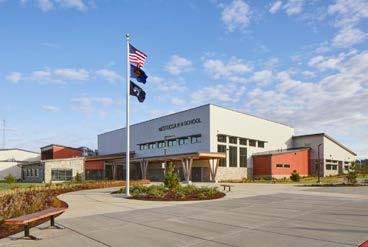

more information on this sale go to:www.oregonsheriffssales.org
1/7/25, 1/14/25, 1/21/25, 1/28/25
HH25-111 TRUSTEE’S NOTICE OF SALE. (Non-residential Trust Deed). The trust deed to be foreclosed pursuant to Oregon law is referred to as follows (the “Trust Deed”): Grantor: Cyril E. Jacob and Cyril I. Jacob, Original Trustee: Ticor Title Company of Oregon, Beneficiary: Todd A.Josi and Susan Josi, Date: September 30, 2022, Recording Date: September 30, 2022, County of Recording: Tillamook County. Recording Reference: 2022-006149. The Trust Deed covers the following described real property in the County of Tillamook and State of Oregon, (“the Property”): More commonly known as: 1865 Main Ave. North, Tillamook, OR 97141; 1867 Main Ave. North, Tillamook, OR 97141; and, 1885 Main Ave. North, Tillamook, OR 97141. Beneficiary appointed Gary L. Blacklidge, Esq., Jordan Ramis PC, 1211 SW Fifth Ave. FL 27, Portland, OR 97204, as Successor Trustee, to have all the powers of the Original Trustee by appointment recorded on September 12, 2024, in Tillamook County recording reference 2024-003870. The Grantor or other person owing the debt has defaulted as provided under the Trust Deed, and such default allows the Beneficiary to foreclose the Trust Deed and sell the Property to satisfy the obligations secured by the Trust Deed. The defaults for which foreclosure is permitted are the Grantor’s failure to maintain property insurance and to pay when due real property taxes, and missing four (4)regular monthly payments in calendar year 2024. By reason of the default, the Beneficiary has declared all sums owing on the obligation secured by the Trust
Deed immediately due and payable as follows: Principal Balance: $1,629,044.20, Unpaid Interest (accrued from 8/8/2024 to 10/16/2024): $ 18,427.00, Late Charges (7/1/2024 thru 10/1/2024): $ 3,907.92, Other Fees: $220.00, TOTAL BALANCE DUE AS OF 10/16/2024: $1,651,599.12, together with interest after 10/16/2024, at the rate of $267.0564 per day until paid. In addition there will be Trustee’s fees, attorney’s fees, foreclosure costs and any sums advanced by the Beneficiary

opportunities at Tillamook Maintenance Technician (Graveyard) - (Tillamook) - $ DOE Visitor Center Seasonal Application is NOW OPEN!
-
&
ALL installation costs! (Additional terms apply. Subject to change and vary by dealer. (Offer ends 3/30/25.) Call 1-855-341-5268.
Please check out our website for more information on these and other great opportunities www.tillamook.com or contact scunningham@tillamook.com H24871
Netarts-Oceanside Sanitary District 1755 Cape Meares Lp. Rd. W., Tillamook, OR 97141 (503) 842-8231 www.n-o-s-d.com

Sealed bids containing the bidders name, phone number, and the bid amount should be marked on the outside “Fuel Tank Bid” and submitted to: PCJWSA, PO Box 520, Pacific City, Oregon, 97135, Attention: John Wesely, Manager. Facsimile bids will be rejected. Bids must be received no later than 4:00 PM on Tuesday, March 11, 2025. Bids will be opened and read aloud at the March 11, 2025, regular business meeting of the PCJWSA Board of Directors. PCJWSA reserves the right to reject any/all bids if deemed in the public’s best interest to do so. Direct all phone inquiries to John Wesely, who is the sole point of contact in this matter, at 503-965-6636. H24863 ALL IN 1 GUTTER CLEANING AND ROOF MAINTENANCE FREE ESTIMATES GUTTER REPAIR 503-302-8171 LLC 200272292 H24754
hire.
Please call the phone number above, prior to picking up the application at the Netarts-Oceanside Sanitary District Office located at 1755 Cape Meares Lp. Rd. W., Oceanside, OR. Between 8:00 a.m. and 4:30 p.m. Monday
– Friday or go to www.n-o-s-d.com to download the Employment Application, job description & specifications. “NOSD is an Equal Opportunity Employer. Discrimination is prohibited by Federal Law.” Complaints of discrimination may be filed with the Secretary of Agriculture, Washington, D.C. 20250
Pacific City Joint Water-Sanitary Authority (PCJWSA) is accepting bids for two elevated fuel tanks with gravity flow systems. The fuel tanks are offered “as-is, where-is” and may be inspected at the PCJWSA office located at 34005 Cape Kiwanda Drive, Pacific City, Oregon. The fuel tanks are used, are 250 gallons each (one diesel and one unleaded gasoline) and have fuel filter nozzles. No warranty is expressed or implied as to the integrity of the fuel tanks by PCJWSA or its employees. It is the sole responsibility of the bidder to inspect the fuel tanks prior to bidding. The successful bidder is responsible for full payment and removal of the fuel tanks within 72 hours following award of bid. Property will not be released until payment has been verified.
the Trust Deed, to satisfy the obligations hereby secured and the costs, attorney fees and expenses of sale, including a reasonable charge by the Trustee. NOTICE OF RIGHT TO CURE The right exists for any person named under ORS 86.778, at any time that is not later than five days before the date last set for the sale, to have this foreclosure proceeding dismissed and the Trust Deed reinstated by doing all of the following: 1. Paying to the Beneficiary the entire amount then due (other than such portion of the principal as would not then be due, had no default occurred); 2. Curing any other default that is capable of being cured by tendering the performance required under the Trust Deed; and 3. Paying all costs and expenses actually incurred in enforcing the debt and Trust Deed, together with Trustee’s and attorney’s fees not exceeding the amounts provided by ORS 86.778. Without limiting the trustee’s disclaimer of representations or warranties, Oregon law
requires the trustee to state in this notice that some residential property sold at a trustee’s sale may have been used in manufacturing methamphetamines, the chemical components of which are known to be toxic. Prospective purchasers of residential property should be aware of this potential danger before deciding to place a bid for this property at the trustee’s sale. NOTICE: If the recipient of this notice is a veteran of the armed forces, assistance may be available from a county veterans’ service officer or community action agency. Contact information for a local county veterans’ service officer and community action agency may be obtained by calling a 2-1-1 information service. Contact information for Tillamook County veterans’ service officer is: Tillamook County Veteran Services, 201 Laurel Ave., (Basement, Room 12), Tillamook, OR 97141. (503) 842-4358 / ntorres@co.tillamook.or.us. In construing this notice, the singu-

Competitive wage, full time benefits including 401k, medical and paid vacation (obtained after probation period) and potential house available if relocating, must have Oregon hygiene license. Position open for full and part time available. Please stop by or email resume to: 2110 9th St. Tillamook, OR 97141 You can also email us at tillamookbaydental@gmail.com
The City of Rockaway Beach is seeking motivated individuals to join the Public Works team for the following full-time positions:

• Utility Worker I/II (depending on experience qualifications)
• Plant Operator I/II (depending on qualifications and experience) See position descriptions and our application form at our Employment – City of Rockaway Beach page. Submit resumes and applications to the City of Rockaway Beach, P.O. Box 5, Rockaway Beach, Oregon 97136, or by email to publicworks@corb.us. Position open until filled. First review February 14th, 2025.
The Utility Worker I position performs a variety of technical duties involved in the construction, maintenance, and operation of the City’s public infrastructure and equipment with an emphasis on the City’s water distribution and wastewater collection systems. This is an entry level position. Starting wage for Utility Worker I ranges from $21.60 - $25.04 per hour depending upon qualifications and experience.
The Utility Worker II is an intermediate level position, performing inspection, maintenance, and troubleshooting of the City’s water and wastewater systems. This position requires basic to intermediate knowledge of water distribution and wastewater collection systems and technical skills to interpret information and generate compliance reports. Starting wage for Operator II ranges from $25.79 - $29.90 per hour depending upon qualifications and experience.
$7,513.99 -$8,348.88 a month (up to $8,891.55 beginning July 1st) + full benefit package.
General Clerk: The City of Rockaway Beach is seeking a motivated individual to join the team as Administrative Assistant II – General Clerk This position assists the City Recorder and other staff with administrative and clerical duties required for the daily operation of the City. The position is a full-time 40hour per week position with competitive health, dental, vision, and retirement benefits. Wages range from $25.56-$33.34 per hour depending upon qualifications and experience. The City of Rockaway Beach has a vibrant tourism industry and provides a wide range of services to its residents and visitors.

Home to seven miles of uninterrupted sandy beaches and an annual operating budget of $26 million, the City of Rockaway Beach is now accepting applications for City Planner. This position administers the City’s Comprehensive Plan and performs advanced professional planning work, exercising considerable independent judgment. Responsible for current planning work including permit intake, permit reviews and tasks related to zoning code compliance.
Employment applications are available in person at 276 Hwy 101, Rockaway Beach, OR 97136 or via the City’s website at www.corb.us. The City of Rockaway Beach is an Equal Opportunity Employer. *First review to be conducted June 10, 2024. Open until filled.
The Plant Operator I position performs a variety of technical duties involved in the construction, maintenance, and operation of the City’s public infrastructure and equipment with an emphasis on the City’s water and wastewater systems. This is an entry level position. Starting wage for Operator I ranges from $21.32 - $24.72 per hour depending upon qualifications and experience.
The Plant Operator II is an intermediate level position, performing inspection, maintenance, and troubleshooting of the City’s water and wastewater systems. This position requires basic to intermediate knowledge of water and wastewater treatment plant operation and technical skills to interpret telemetry information and generate compliance reports. Starting wage for Operator II ranges from $26.22 - $30.40 per hour depending upon qualifications and experience.
Position descriptions and employment application are available in person, by appointment, at the front counter of City Hall (276 S. Hwy 101, Rockaway Beach, OR 97136) or online via the City’s website at www.corb.us The City of Rockaway Beach is an Equal Opportunity Employer.
* Open until Filled. First Review: February 14, 2025. *
The City of Manzanita is looking for a full time Operations Manager to join our team!
The Operations Manager will organize, schedule, assign and supervise the operations and maintenance activities of Public Works Field operations. Such services include the areas of water, parks, transportation, storm water and vehicle and equipment and facility maintenance. Identifies work and reviews work of subordinates and contractors by inspecting for compliance with City/state standards for production and quality of City water.
Minimum requirements include a High School Diploma, or equivalent OR any satisfactory equivalent combination of education and experience which ensures the ability to perform the essential functions of the position. An Oregon Water Distribution 2 & Treatment 1 certification must be obtained within 24 months of hire. Applicant must also have a valid driver’s license and an acceptable driving record.
Salary Range for the position is currently $5,280 - $6,418 monthly depending on experience, plus excellent benefits. For more information, please visit ci.manzanita.or.us Please send cover letter, resume, and completed application form to cityhall@ci.manzanita.or.us or mail to: Manzanita Public Works PO Box 129 Manzanita, OR 97130


POSITIONS:
District Office
Neah-Kah-Nie High School
Head Softball Coach, Posting #544
Assistant Softball Coach, Posting #545
Garibaldi Grade School
Special Education Teacher, Posting #543
Nehalem Elementary School
Neah-Kah-Nie Middle School
SUBSTITUTES NEEDED – PLEASE CONTACT ESS.COM
Teacher Substitutes Classroom, Secretarial, Cafeteria, and Custodial Substitutes Needed
To apply for any substitute position please go to ESS.com, click on Job Seeker, then type in Neah-Kah-Nie School District and follow the application process.
To apply for any of the positions, except for substitute positions, go to TalentEd at https://neahkahnie.schoolrecruiter.net/
For More Information Contact:
Kathie Sellars, Administrative Assistant
Neah-Kah-Nie School District
PO Box 28/504 N. Third Avenue
Rockaway Beach, OR 97136
Phone (503) 355-3506
Vacancy announcements can be found on our website at www.nknsd.org
Neah-Kah-Nie School District is an Equal Opportunity Employer
Click on this QR code to go straight to our current vacancies.

Visit https://corb.us/employment/ for job description, requirements and application. To apply, submit application, resume and cover letter to cityrecorder@corb.us or mail to: Melissa Thompson, City Recorder, City of Rockaway Beach, PO Box 5, Rockaway Beach, OR 97136. Questions may be directed to: citymanager@corb.us. FLSA Exempt Position. Equal Opportunity Employer. First review to be conducted February 21, 2025. Open until filled.




Stop messing around and put your time to good use with a part-time job. The Classifieds have many fulfilling opportunities. Subscribe today!
Call

Certified:





























• SpEd Teacher @ TJHS (260)
• Instructional Coach @ South Prairie


• Academic Interventionist @ South Prairie (













Seeking individual to join our team.






































Interested Applicants Applications available on website www.mariemillscenter.com OR Pick Up At: 1800 Front Street Tillamook, OR 97141 For More Information Contact: Holly Rico 503-842-2539 ext.2200





• Elementary Teacher, 2024/25 School Year Only
• Behavior Intervention Specialist @ Liberty (
• Language Arts Teacher, 2024/25 School Year
Classified:





























• Temporary Special Education Teacher, 2024/25 School Year @ East (
































• Bus Driver @ Transportation (332)



• General Educational Assistant- OYC, 7.5 hrs/day, 182 calendar@ WRS (300)





• General Educational Assistant, 3.75 hrs/day, 182 @ TJHS (323)


• SpEd/Special Care Educational Assistant, 7.5 hrs/day, 182 THS (304)
(503) 842-4414, ext. 1200
• SpEd/Special Care Educational Assistant, 7.5 hrs/day, 182-day calendar @ TJHS (335)
• SpEd/Special Care Educational Assistant, 7.5 hrs/day, 182-day calendar @ Liberty (345)
• SpEd/Special Care Educational Assistant, 7.5 hrs/day, 182-day calendar @ SP (347)
• Food Service Helper, 3.75 hrs/day, 183-day calendar @ East (349)
Extra Duty:
• Assistant Track Coach @ THS (275)
• Chess Coach, 2 Positions @ East (282)
• Assistant Track Coach @ THS (338)
• Assistant Baseball Coach @ THS (339)
• Assistant Softball Coach @ THS (340)
Substitute:
lar includes the plural, the word “Grantor” includes any successor in interest to the Grantor as well as any other person owing an obligation, the performance of which is secured by the Trust Deed, and the words “Trustee” and “Beneficiary” include their respective successors in interest, if any. DATED: October 24, 2024.
By: Gary L. Blacklidge, Successor Trustee. Jordan Ramis PC, 1211 SW Fifth Ave. FL 27, Portland, OR 97204, Telephone: 503598-7070, Fax: 503-598-7373.
Subject Property: 1865 Main Ave. North, Tillamook, OR 97141; 1867 Main Ave. North, Tillamook, OR 97141; and, 1885 Main Ave. North, Tillamook, OR 97141.
1/14/25, 1/21/25, 1/28/25, 2/4/25
HH25-116 City of Tillamook PUBLIC NOTICE Planning Commission Vacancy. The Tillamook City Council is currently accepting volunteer applications for appointment to serve on the City of Tillamook Planning Commission. The City of Tillamook has two (2) vacancies on the Tillamook City Planning Commission. These vacancies are a 4-year term that expires February 28, 2029. In-
terested persons should submit a volunteer application, along with a letter of interest to the City Recorder’s Office by Monday, February 10, 2025. Applicants should: Be a qualified elector under the laws of the State of Oregon and the City of Tillamook. Be available for evening meetings the 1st and 3rd Thursdays of each month and at special meetings as required. Have an interest in the future of our community. Must live or own a business within the Tillamook City Urban Growth Boundary. Please use one of the following methods to submit your application and letter: Email: cityrecorder@tillamookor.
gov. Drop off: Tillamook City Hall, 210 Laurel Avenue (office hours are 7:30a.m.-5:30p.m.. MondayThursday)
Posted January 8, 2025: Tillamook City Hall, City website: Tillamookor.gov
1/14/25, 1/21/25, 1/28/25, 2/4/25
HH25-118 PORT OF GARIBAL-
DI COMMISSIONER POSITION
VACANCY. The Port of Garibaldi has an opening on its commission for Position #2. Anyone living in the Port District is eligible to apply to fill the remaining term of Position #2 through June 30, 2025. Letters of Interest are due at the office of the Port of Garibaldi, 402 S. Seventh St. (P.O. Box 10), Garibaldi, OR 97118 by Noon 31 January 2025. Signed and dated Letters of Interest should include the candidates full name, physical and mailing address of candidate, contact phone number, amount of time as a resident within the district, reasons for desire to serve
on the board, and prior experience which may be beneficial to the Board and Port. The Commission hopes to interview candidates and make a decision at their next regular board meeting scheduled for Wednesday, February 12th at 7:00 p.m., though the Board President reserves the right to schedule a Special Meeting for the purpose of interviewing candidates outside the scope of a Regular Meeting. This is a non-paid position. Port of Garibaldi, (503) 322-3292, www.portofgaribaldi.org
1/21/25, 1/28/25
HH25-119 PURSUANT TO ORS CHAPTER 819. Notice is hereby given that the following vehicle will be sold, for cash to the highest bidder, on 2/3/2025. The sale will be held at 10:00am by BURDENS MUFFLER, TOWING, & CRANE, 10 MAIN AVE., TILLAMOOK, OR. 2021 TOYT HGH 4D VIN = 5TDGZRBH0MS549292. Amount due on lien $1270.00. Reputed owner(s) > BRIANNA NICOLE ECKWRIGHT
1/21/25 1/28/25
HH25-123 Vanderbilt Mortgage and Finance, Inc. v. Estate of Walter Huntington; Estate of Joan B. Huntington by and through Avery Scott Davis, Personal Representative; Bay Air Mobile Home Park, LLC, nka Dolo Properties, LLC; Unknown Heirs and Persons Claiming an Interest in the Property; and Occupants and Parties in Possession. SUMMONS - CASE NO. 25CV00364, IN THE CIRCUIT COURT OF THE STATE OF OREGON FOR THE COUNTY OF TILLAMOOK. TO: ESTATE OF WALTER HUNTINGTON, ESTATE OF JOAN B. HUNTINGTON, and ALL OTHER UNKNOWN HEIRS OR PERSONS CLAIMING AN INTEREST IN THE PROPERTY, three of the above-named defendants. You are hereby required to appear and defend the complaint filed against you in the above entitled action within thirty (30) days from the date of the first publication of this summons, and in case of your failure to appear and answer, plaintiff for want thereof will apply to the above entitled court for the relief prayed for in its complaint, to-wit: 1. For judgment that declares the sum owing to Plaintiff on the Contract is $17,095.90 which is comprised of the principal amount of $16,426.16; earned but unpaid interest of $636.74, accrued through January 17, 2025; plus late charges of $33.00; together with interest accruing on the principal amount from January 18, 2025 at the rate of 7.350% per annum ($3.31 per diem) until paid; plus up to $5,000 in Plaintiff’s reasonable attorney fees plus its costs and disbursements incurred herein; plus interest at the contract rate of 7.350% per annum on the full


amount of the judgment from the date judgment is entered until paid; 2. For the immediate recovery of possession of that certain 2007 Skyline Homes Westridge 1200CTC Manufactured Home, Serial No. 2F91-0113-W-B and 2F91-0113-W-A, Home ID No. 318083 to enable Plaintiff to foreclose its security interest therein by disposing of that Manufactured Home in accordance with the terms of the Contract and state law; 3. Directing the Tillamook County Sheriff, or any other law enforcement personnel from any other county, to take possession of and secure said Manufactured Home from whomever is in possession and wherever located and thereafter release it to Plaintiff, through its authorized representative; 4. Specifically authorizing Plaintiff and the Tillamook County Sheriff, or any other law enforcement personnel from any other county, to enter upon the real property owned by Defendant Bay Air Mobile Home Park, LLC nka DOLO Properties, LLC for the sole purpose of taking possession of and removing the Manufactured Home from said real property; and 5. For such other and further relief as the court deems just and proper. NOTICE TO DEFENDANT: READ CAREFULLY!! YOU MUST “APPEAR” IN THIS CASE OR THE OTHER SIDE WILL WIN AUTOMATICALLY. TO “APPEAR” YOU MUST FILE WITH THE COURT A LEGAL PAPER CALLED A “MOTION” OR “ANSWER”. A MOTION OR ANSWER MUST BE GIVEN TO THE COURT CLERK OR ADMINISTRATOR WITHIN 30 DAYS FROM THE DATE OF FIRST PUBLICATION SPECIFIED HEREIN ALONG WITH THE REQUIRED FILING FEE. IT MUST BE IN PROPER FORM AND HAVE PROOF OF SERVICE ON THE PLAINTIFF’S ATTORNEY OR, IF THE PLAINTIFF DOES NOT HAVE AN ATTORNEY, PROOF OF SERVICE UPON THE PLAINTIFF. IF YOU HAVE ANY QUESTIONS, YOU SHOULD SEE AN ATTORNEY IMMEDIATELY. IF YOU NEED HELP IN FINDING AN ATTORNEY, YOU MAY CALL THE OREGON STATE BAR’S LAWYER REFERRAL SERVICE AT (503) 684-3763 OR TOLL-FREE IN OREGON AT (800) 452-7636. If
you are a veteran of the armed forces, assistance may be available from a county veterans’ service officer or community action agency. Contact information for a local county veterans’ service officer and community action agency may be obtained by calling a 2-11 information service. This summons is published by order of the Honorable Mari Garric Trevino, Judge of the above-entitled Court made on the 10th day of January, 2025, directing publication of this summons once each week for four consecutive weeks in a newspaper of general circulation in Tillamook County, Oregon.
Date of first publication: January 21, 2025 Date of last publication: February 11, 2025. Eleanor A. DuBay, OSB #073755, Of Attorneys for Plaintiff, TOMASI BRAGAR DUBAY, 121 SW Morrison, Suite 1850
Portland, OR 97204
1/21/25, 1/28/25, 2/4/25, 2/11/25
HH25-124 PUBLIC NOTICE. The Port of Garibaldi has acquired vessel DONNA L after seizure, OR575YY. Sealed bids will be accepted for the purchase of the seized vessel. Continued moorage is subject to change and is at the discretion of the Port of Garibaldi. A reserve is set at $2,932. This auction is for real property only. Bidding will open January 27, 2025, and close February 7, 2025, at 3:00 p.m. The public is welcome to attend the opening of the sealed bids on February 10, 2025, at 10:00 a.m. Please submit your sealed bid, including contact information, to the Port of Garibaldi office at 402 S. 7th St Garibaldi OR 97118. For any additional information please call the Port office staff at (503) 322-3292. *THE PORT OF GARIBALDI HAS THE RIGHT TO ACCEPT OR REJECT ANY AND/ OR ALL OFFERS.
1/21/25, 1/28/25
HH25-125 APPLICATION FOR BOARD OF DIRECTORS SEAT. Tillamook County Transportation District Board of Directors consists of seven (7) elected members, each of whom serves a four (4) year term. Directors receive no compensation, with the ex-

ception of some pre-authorized training classes and/or seminars, which include reimbursement for meals and mileage, and a stipend for public meeting attendance. Commitment for this position includes attending regular business meetings that are held on the 3rd Wednesday of every month at 6:00 pm, as well as budget meetings, special meetings, and workshops called by the Board. The term of this position expires on June 30, 2025, and the person appointed by the Board of Directors to serve in this position must apply to the District no later than Friday, February 7, 2025.
1/21/28 1/25/28
HH25-127 IN THE CIRCUIT COURT OF THE STATE OF OREGON FOR THE COUNTY OF TILLAMOOK, Probate Department, Case No. 25PB00307. NOTICE TO INTERESTED PERSONS. In the Matter of the Estate


























Bay City
BAY CITY UNITED METHODIST CHURCH
A warm and friendly congregation.
5695 D Street, Bay City, OR, (503) 377-2679, Rev. Jonathan Mead.
Worship Service 10:30 a.m., Fellowship downstairs afterwards.
https://www.facebook.com/BayCityOregonUMC Open Hearts, Open Minds, Open Doors!
Cloverdale
WI-NE-MA CHRISTIAN CHURCH
Wi-Ne-Ma Campground. 5195 Winema Road, 7 miles south of Cloverdale Kyle French, Minister. (971) 237-2378
info@winemachurch.net
Sunday School 9:30 a.m.
Worship 10:45 a.m.
HEALING WATERS BIBLE CHURCH OF GOD
41507 Oretown Rd E Cloverdale, OR 97112 (541) 671-5588
11 a.m. Sunday Church Service
7 p.m. Wednesday Bible study
Friday 7 p.m. Pastor Bry’s Corner
Garibaldi
NORTH COAST CHRISTIAN CHURCH
309 3rd St., (503) 322-3626
Pastor Sam McRae
Sunday Worship Service 10:30 a.m.
We invite you to join us.
HIS GATHERING 111 Driftwood Ave, Garibaldi, OR 97118
www.hisgathering.net
Sundays at 10:30 a.m.
NEHALEM BAY UNITED METHODIST CHURCH
36050 10th Street, Nehalem, OR (503) 368-5612
Pastor Celeste Deveney + Sunday service 11 a.m.
Food Pantry
Open Friday, Saturday & Monday 10 a.m. to 2 p.m. Wednesday March - October 2 p.m. to 6 p.m.
November - February noon to 4 p.m.
Nehalem Senior Lunches
Tuesday & Thursday served at noon email: nbumcnsl2020@gmail.com
Netarts
NETARTS FRIENDS CHURCH
4685 Alder Cove Rd. West, (503) 842-8375
Email: friendschurchnetarts@gmail.com
Website: www.netartsfriends.org
Pastor Aaron Carlson, Adult & Youth
Worship Service: 9:30 a.m.
Children’s Sunday School: 9:30 a.m.
Nursery available Handicap Accessible Small Groups All are welcome!
Pacific City
NESTUCCA VALLEY PRESBYTERIAN CHURCH
35305 Brooten Road, (503) 965-6229
Rev. Ken Hood
www.nestuccavalleypc.org
Weekly Bible study group Fridays at 10 a.m.
Open communion the first Sunday of each month
Regular services Sunday 10 a.m.
Everyone is welcome
PACIFIC COAST BIBLE CHURCH
35220 Brooten Road
(Adjacent Post Office)
Pastor Dan Mason (503) 926-8234
Sunday Worship: 9:30 a.m.
Sunday School 11:15 a.m.
Website: pacificcoastbiblechurch.com
All are welcome!
ST. MARY BY THE SEA CATHOLIC CHURCH
275 S. Pacific St. (mailing: P. O. Box 390) Rockaway, OR 97136 (503-355-2661)
e-mail: stmarys1927@gmail.com
Administrator: Fr. MacDonald Akuti
Mass Schedule: Saturday (5 p.m.)
Sunday (8:30 a.m.) (10:30 a.m.)
Weekdays: Monday (9:30 a.m.)
Wednesday thru Friday (9:30 a.m.)
Confessions: Saturday (4 p.m.)
BETHEL BAPTIST CHURCH (CBA)
5640 U.S. 101 South 2 miles south of Tillamook (503) 842-5598
https://bbc-tillamook.faithlifesites.com
9:45 a.m. Sunday School for all ages
11a.m. Morning Worship
6 p.m. Evening Service Nursery provided for all services Everyone Welcome
TILLAMOOK NAZARENE
2611 3rd, (503) 842-2549
Pastor Josh Myers
Sunday: Growth Groups: 9:30 a.m.
Worship Service and Children’s activities:
9:30 a.m. and 11 a.m.
Tuesdays: Celebrate Recovery 5:30 p.m. Wednesdays: Youth Group 6:30 p.m. - 8 p.m. A place for the whole family to Connect, Grow and Serve.
REDEEMER LUTHERAN CHURCH (LCMS)
302 Grove Ave. (503) 842-4823
Sunday Services: 9:30 a.m. Adult Bible Class and Sunday School
10:30 a.m. Divine Worship Where love transforms hearts and lives.
Pastor K.W. Oster
LIFECHANGE CHRISTIAN FELLOWSHIP
3500 Alder Lane, Tillamook, OR 97141 (503) 842-9300
www.lifechangefellowship.com
Pastor Brad Smith Bible Study 9:30 a.m. Sunday morning followed by Worship and Message at 11 a.m. Come worship with us, enjoy the live music. Bible studies and an assortment of activities throughout the week. Let’s worship our Lord together. We will show you how much WE CARE!
ST. PETER LUTHERAN CHURCH (ELCA) 401 Madrona at 4th Street (503) 842-4753

Pastor Mary Peterson 10 a.m. Worship Everyone is Welcome EMMANUEL MISSIONARY BAPTIST CHURCH
Sunday: 10 a.m. Sunday School 11 a.m. Church Service
Wednesday: 7 p.m. Midweek Service 1906-A 3rd Street, Tillamook, OR 97141
Pastor Sterling Hanakahi (503) 842-7864
FIRST CHRISTIAN CHURCH 2203 4th St., (503) 842-6213
Senior Pastor: Dean Crist Sunday Prayer at 8:45 a.m. Worship Celebration at 9:15 a.m. Classes for all ages at 11 a.m. Casual attire. Nursery facilities and handicapped accessible. Programs available for youth of all ages. Travelers and newcomers welcome.
OCEAN BREEZE BAPTIST CHURCH
2500 Nielsen Road, (503) 842-1446
Pastor Kevin Birdsong
Sunday School 10 a.m.
Sunday Morning Service 11 a.m.
Sunday Evening Service 6 p.m.
Wednesdays: Prayer Meeting, King’s Kids and Teen Power Hour 6 p.m. “The end of your search for a friendly church.” www.oceanbreezebaptist.com
ST. ALBAN’S EPISCOPAL CHURCH
Rector Ali Lufkin, Deacon Lia Shimada 2102 6th St, Tillamook, OR 97141