Clatskanie students dig in to connect to community
LAUREY WHITE Chief Guest Article
There is an innovative program at Clatskanie Middle/ High School (CMHS) that the students say they love, although it involves no texting or connecting to Instagram. Instead, they are connecting hands-on to their environment at the Clatskanie Community Garden next to Cope’s Park.
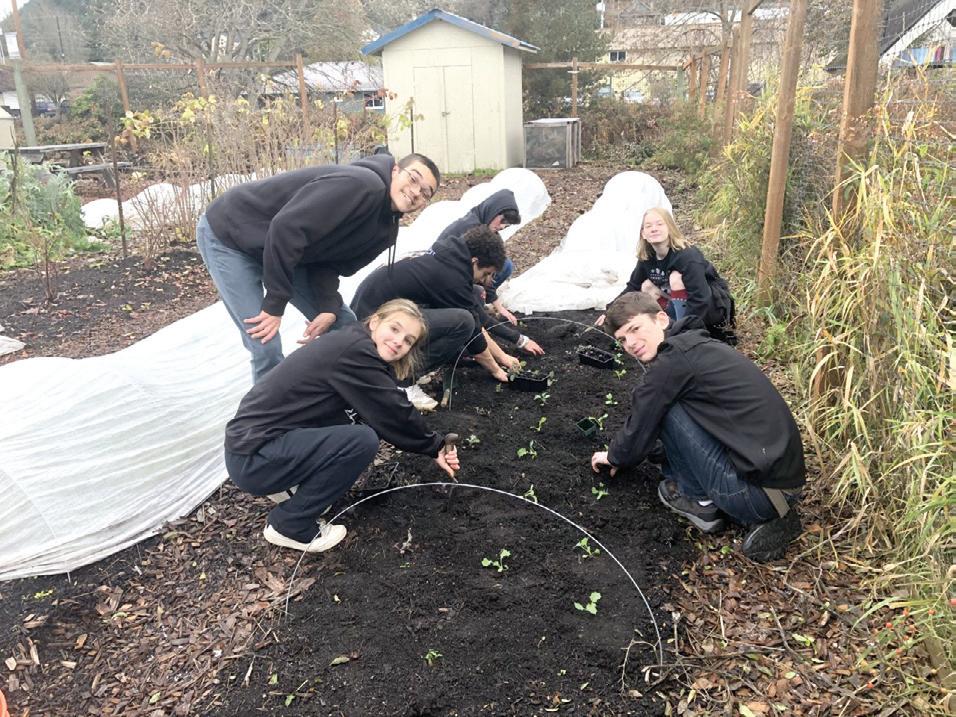
Taught by James Byrne, this sought-after agriculture class emphasizes sustainable decision making.
The connection
“By having their hands in the dirt and spending time manipulating their local habitat in the agricultural realm, they will feel empowered to manipulate it for the better,” Byrne said.
Integrating the connection to the land through their actions will enable them to see the value and importance of the resources involved and in turn care about them, according to Byrne.
“When they care, they can make choices about resource utilization with an eye towards sustainability and environmental improvement,” he said.
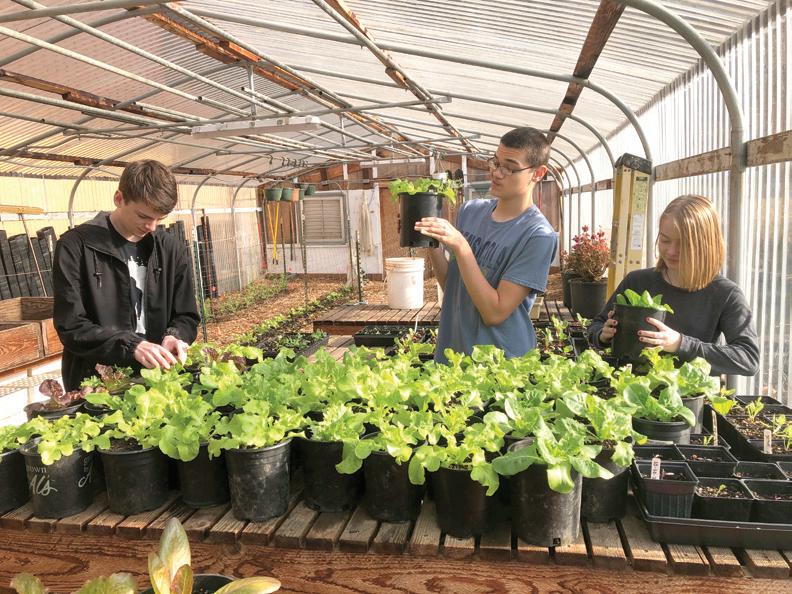
In addition to connecting students to the agricultural environment, the class is designed to connect each student to their local community. The students grow food, so far lettuce and tomatoes, that will directly go into the school lunches at CMHS.
This shows the direct impact they can have in feeding themselves and their peers. They also grow, harvest and sell food through the local Farmers Market which connects students to the larger community by showing them that their efforts
have value, and their products are desired.
CMHS student Chloe May said the agriculture class has been quite valuable to her.
“It has meant so much to me,” she said. “This is probably something I wouldn’t know anything about if I wasn’t in this class. I have started sharing some of the knowledge I have learned with other people who are interested and using this knowledge in my own garden.”
Byrne stresses the importance of the Farmer’s Market connection.
“This connection is so good because it lets people see the great things that the students are doing and it shows the students that there are avenues to be involved in through agriculture,” said Byrne.
Students are also being taught the value of resources. “We can’t move our society away from a disposable mindset towards a sustainable one unless students have an understanding of the value of things,” said Byrne. In Byrne’s class students learn the value of agriculture from start to finish. Such
important lessons include the cost of seeds, the germination rate, the cost of soil, how to make their own soil, how much is fertilizer and what should the final cost be for the completed produce. They then formulate how long the process took and determine their success in terms of sustainability.
“When students put all these facts together and see that they can make a profit and do so in a way that our value output is greater than our value input, then they will have a real connection to sustainability,” Byrne said.
Many successes
The students said they have realized many successes so far through
their participation in the class. These include:
• Preparing a growing space by removing dryer felt and raised beds and covering it with bark chips and compost.
• Growing and selling produce, on consignment, at the Farmer’s Market.
• Selling native plants and hanging flower baskets via a Mother’s Day sale.
• Growing herbs from cuttings.
• Growing and harvesting sunflower seeds and having each student prepare them in a taste test challenge.
• Maintains an active beehive which produces honey.
“We are currently growing peas, cucumbers, lettuces, radishes spinach and kale,” Byrne said. “We also experimented with Hugelkultur.”
Hugelkultur is a mound bed or a mound culture composed of decaying wood debris and other compostable biomass plant materials and later planted as a raised bed.
Another exciting venture for the class, Byrne said is experimenting with aquaponics. Aquaponics, according to the Aquaponics Source Guide, is putting fish to work. The work that these fish do, eating and producing waste, is the perfect fertilizer for growing plants. The pond that Byrne created is a sight to behold. Made of logs and stone, it serves as a complement to an out-of-use greenhouse that Byrne acquired and transplanted to the CMHS property.
“The agriculture program has been really inspirational for me,” student Taylor Crawford said. “I always have a sense of community
Clatskanie, Rainier to receive affordable housing funds
• McMinnville
Community and Shelter Assistance (CASA) in Oregon will receive $200,000 from the U.S. Department of Agriculture (USDA) to provide ongoing management of long-term affordable housing in communities all over the state, including Clatskanie and Rainier.
Oregon U.S. Senators Ron Wyden and Jeff Merkley announced funding Wednesday, Dec. 14.
“As we enter the coldest months of the year, I’m gratified to see federal dollars go to keeping roofs overhead for Oregonians in communities throughout the state,” Wyden said. “While building more long-term affordable housing remains an ongoing challenge, CASA is providing crucial services to maintain and expand the longterm affordable housing we already have. I will continue to fight so that in the wealthiest, strongest
nation on earth, all Oregon families have a warm, safe, affordable and stable place to call home.”

“Everyone should be able to afford a safe place to call home, and as we are faced with a housing affordability crisis, it is crucial that we support efforts expanding access to housing options,” Merkley said. “This funding, going to CASA of Oregon to support housing cooperatives across the state, will ensure Oregonians have greater access to affordable and reliable housing options.”
CASA, located in Sherwood, will use the Rural Development grant dollars from USDA along with $96,500 it raised to provide assistance to the following communities as they develop longterm, affordable housing options.
• Clatskanie
• Rainier
• Warrenton
• Gold Beach
• Leaburg
• Boardman
• Idleyld
• Dexter
• Cottage Grove
• Redmond
• Winston
• Estacada
• Madras
• Welches
• Newport
CASA provides ongoing technical assistance to housing cooperatives to ensure long term viability as affordable housing options.
“We are grateful for these much-needed resources that will allow us to find long-term solutions to the housing crisis that too many Oregonians—especially those living in rural areas face,” CASA’s Manufactured Housing and Cooperative Development Center Director Rose Ojeda said. “We look forward to working with our local partners to develop programs tailored to their unique needs that create more sustainable, healthy, and just communities.”
permit-to-purchase still paused


Harney County Judge Raschio has extended the temporary restraining order on the permit-to-purchase portion of Ballot Measure 114.
More legal arguments were expected in the case. Raschio had not issued a ruling as of Dec. 15 on the measure’s ban on the sale and transfer of high-capacity magazines.
According to the Associated Press, prior to the Tuesday, Dec. 13 hearing before Raschio, the state had agreed to delay the permit-topurchase portion of the law until Feb. 8 because of a lack of certified law enforcement to oversee the inperson gun handling training class that would be required.
Last week, the Oregon Supreme Court rejected a request from Oregon Attorney General Ellen Rosenblum to “immediately” review the temporary restraining order by Raschio, which prevents enforcement of Measure 114.

As the court cases into Ballot Measure 114 began, gun shops across the state saw heighten sales.

“This makes the pandemic look
like a walk in the park,” Lincoln City Electronics Superstore Store operator Bruce Polvi said. “It is crazier than we have ever seen it.”
Polvi said public concern over Ballot Measure 114 is driving the sales. Firearm permit approval requests through the state system have also skyrocketed since the measure passed, according to Polvi, who said people aren’t just purchasing one firearm.
“Usually people were purchasing one firearm, but now we are seeing people buy 12 to 24 firearms at a time,” he said. “A lot of them are thinking that this is shutting it off and so it is a panic situation.”
Pulvi said he is hearing from other gun and sporting good stores from around the state.
“We’ve been contacted by multiple gun and sporting good stores that are closing, or that have closed, and they are trying to get rid of their inventory, so that are asking us to buy their inventory because they didn’t what to get stuck with merchandise they couldn’t sell,”
Follow developments at thechiefnews.com and in the Friday print editions of The Chief.
VOL. 131, NO. 32 $1.50 FRIDAY, DECEMBER 16, 2022 Sentences Commuted Page A3 Christmas tree economics Page A2 Clatskanie Grows .... A4 Community Events .. A4 Classified Ads ......... A5 Legals ....................... A5 Phone: 503-397-0116 Fax: 503-397-4093 chiefnews@countrymedia.net 1805 Columbia Blvd., St. Helens, OR 97051 Contact The Chief Ballot Measure 114
Jeremy C. Ruark / Country Media, Inc. Gun sales have skyrocketed over the past several weeks following passage of Ballot
Serving the Lower Columbia Region since 1891
114.
Polvi said.
STAFF REPORT Country Media, Inc.
Metro Creative Connection
Clatskanie and Rainier will receive a share of the $200,000 in federal affordable housing funds.
STAFF REPORT Country Media, Inc.
Courtesy photo from James Byrne
The students give a smile as they work in the community garden.
Agriculture is something everyone should know. It is what keeps society together and is important for life.
~ CMHS Student Ben Hadley
Page A4
See CMHS
Oregon Christmas trees celebrate the holiday, create jobs
Tis the season when Oregonians will shop on the internet, bake cookies, and buy or cut a Christmas tree grown in their home state.
In fact, across the U.S. and Mexico, people will be purchasing a tree grown in Oregon, helping to create jobs.
An ancient tradition
According to Encyclopedia Britannica, the use of evergreen trees, wreaths and garlands to symbolize eternal life was a custom of the ancient Egyptians, Chinese, and Hebrews.
Tree worship was common among pagan Europeans such as the Vikings and Saxons and survived their conversion to Christianity in the Scandinavian tradition of decorating the house and barn with evergreens at the New Year and of setting up a tree for the birds at Christmas time. The pagan custom also survived in Germany by placing a Yule tree at the entrance or inside the house during midwinter holidays.
The modern Christmas tree is often traced to the “tree of paradise” used in a medieval European play about Adam and Eve given on December 24. These trees were decorated with apples to represent forbidden fruit and wafers that represent redemption.
By the renaissance, the apples were replaced by red balls and the wafers were replaced by various cookies.
Lights in the form of candles were added in 16th century Germany. The Christmas tree tradition in the U.S. is attributed to early German immigrants.
An important commodity in Oregon
Oregon is the number one Christmas tree producing state in the nation, accord-
ing to data from the Oregon Department of Agriculture, with roughly $106.9 million in sales in 2020. There were 4.7 million trees harvested in 2017. Most of the harvested trees are either Noble fir (54%) or Douglas fir (32%).
About 92% of Pacific Northwest Christmas trees were exported out of the region with 45% headed to California and 16% headed to Mexico. The balance were sent to other regions of the U.S, especially the Southwest states.
Employment
A lot of work goes into getting Oregon Christmas trees to market as fresh and green as possible. It starts with growing the trees, which will take at least six years for a tree to reach six feet tall, depending on the species. Then there are wholesale sales followed by a tight harvest window. Harvest is usually done with a chain saw for wholesale trees.
Fresh cut trees are shaken, baled and then hauled out of the fields by trucks or helicopters. Finally, there is transportation to market and retail sales.
However, counting employment in Oregon’s Christmas tree industry is difficult since the production and selling are included in several broad industries with other commodities. These include the following:
Nursery and tree production – comprises companies engaged in nursery stock, shrubbery, bulbs, and woody trees with a growth and harvest cycle of 10 years or less.
Other miscellaneous nondurable goods merchant wholesalers – comprises companies involved in merchant wholesale distribution of nondurable goods from agricultural products to pet supplies to textile bags.
Other direct selling establishments – comprises establishments engaged in nonstore retail sales by means such as in-house sales, truck or wagon
sales, and portable stalls.
Since Christmas tree growers are required to have a license from the Oregon Department of Agriculture, we can get a rough idea of the magnitude of the indus try. There were 335 licensed Christmas tree growers in Oregon in 2022, cultivating roughly 45,000 acres.
We can look at an annual trend of payroll employment in Christmas tree growing by matching company names from ODA licenses with records from the Oregon Employment Department’s Unemployment Insurance program. A search produced 54 matches.
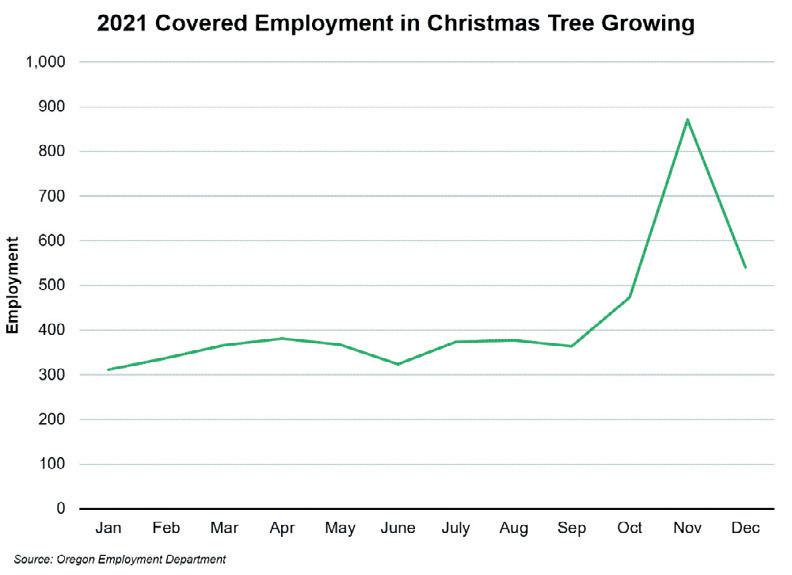
In 2021, payroll employ ment at these companies held steady in the spring and sum mer and then spiked with the harvest in November at little less than 900 workers. Annual average payroll employment was 424 with a total payroll of $16.9 million. Due to the seasonal nature of employ ment, annual average pay is relatively low at $39,764.
Obviously, many growers are sole proprietors or family farms that have little or no payroll employment and are not required to report to the UI program. Many of the growers tend the trees and then hire temporary workers for the harvest or contract out the harvest. With more than 280 growers not included in the payroll employment companies above, it is likely that hundreds, if not thousands more are employed growing Christmas trees over the year.
So, while you are decorating your tree, baking cookies or enjoying an eggnog this holiday season, remember the thousands of workers that hustle to get that Oregon Christmas tree to you as fresh and green as possible.
Brian Rooney is an Oregon Employment Department Regional Economist in Douglas and Lane counties. He may be reached at brian.t.rooney@employ. oregon.gov or at 541-3599546.
$30.5 Million for Columbia, Tillamook, Washington counties
STAFF REPORT Country Media, Inc.


Columbia, Tillamook and Washington counties have gained $30.5 million in forest funding.
The Oregon Department of Forestry’s (ODF) latest report from the Tillamook State Forest highlights social, economic and environmental accomplishments in fiscal year 2022, including distributing $30.5 million to Tillamook, Washington and Columbia counties along with local service providers.
~
At over 357,000 acres, the Tillamook State Forest is Oregon’s largest state forest.
Tillamook County and local taxing districts with state forestland received $14.9 million in fiscal year 2022, while Washington County and local districts received $13.3 million.
Additionally, a portion of
state forestland in Columbia County managed out of ODF’s Forest Grove District generated $2.2 million for the county. In addition to county governments, some revenue flows to local service providers such as schools, rural fire districts, recreation and transportation districts, and other public agencies Oregonians use and value.
ODF recently released its Council of Forest Trust Land Counties annual report, which highlights the array of social, economic and environmental contributions from approximately 729,000 acres of actively managed state forestland. It
includes a recap of timber sales and revenue distribution, conservation and forest health activities, and recreation use, including popularity and number of visitors, among other statistics.
Statewide, counties and local governments received revenues of $61.8 million in fiscal year 2022, collected from timber sales on stateowned forests. Revenues are distributed based on timber sales within a particular jurisdiction. Other highlights include replanting more than 3.6 million trees, hosting more than 26,000 campers at ODF campgrounds, and maintaining hundreds of miles of motorized and non-
motorized trails.
Counties and local service providers receive approximately 64 percent of net revenues from timber harvests on state forests. The remaining revenues finance most aspects of state forest management, including ODF’s recreational offerings, environmental enhancement projects, replanting after timber harvest, and forest road maintenance.
The state’s share of revenue was approximately $35.5 million in fiscal year 2022. The agency also receives a portion of allterrain vehicle operating permit fees.
“Oregonians have a lot to be proud of when it comes to their state forestlands,” State Forester Cal Mukumoto said. “These working lands provide so much to so many, including funding for vital local services, places to connect with nature, clean water, and habitat for some of Oregon’s most rare and sensitive species.”
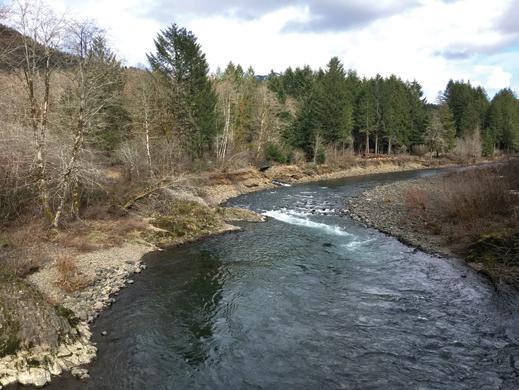
On the Tillamook State Forest, one environmental highlight included replacing a failing culvert on Whitney Creek with a bridge. The new bridge reinforces the connection to the Kilchis River, restoring fish passage and reconnected natural stream sediment transport processes.
Oregon adds 8,500 jobs, unemployment rate up slightly

Job gains
Oregon’s unemployment rate rose to 4.4% in November from 4.1% in October, according ro the Oregon Employment Department.
The unemployment rate increased 0.9 percentage point over the past four months from its recent low of 3.5% in May, June, and July. The last time Oregon’s unemployment rate was 4.4% or more was in October 2021 when the rate was 4.4%. In contrast, the U.S. unemployment rate has remained below 4%, as it was 3.7% in both October and November of 2022.
In Oregon, nonfarm payroll employment rose by 8,500 jobs in November, following a gain of 5,500 jobs in October. The gains in November were largest in government (+2,900 jobs); health care and social assistance (+1,400); wholesale trade (+1,100); and leisure and hospitality (+1,000). None of the major industries cut a substantial number of jobs in November.
Sector growth
All major sectors of government grew. Federal government added 900 jobs in November, with several firms adding jobs when they
normally would be shedding seasonal jobs heading into the winter slow period. State government added 300 jobs, continuing its slow growth this year. Local government added 1,700 jobs, but remained 2,400 jobs below November 2019, prior to the pandemic recession.
Oregon’s private sector added 5,600 jobs in November, reaching another all-time high of 1,688,400. This was 16,700 jobs, or 1.0%, above the pre-recession peak in February 2020.
Health care and social assistance continued its steady and rapid advances this year, adding 1,400 jobs in November, which was close to its average gain of
1,200 jobs per month this year. Social assistance grew the most, adding 5,100 jobs (+7.8%) in the past 12 months. Ambulatory health care services (+4,500 jobs, or 4.8%) and nursing and residential care facilities (+2,100 jobs, or 4.3%) also have expanded rapidly since November 2021.
Leisure and hospitality is still substantially below its pre-pandemic peak. But its revised gain of 2,000 jobs in October, coupled with its gain of 1,000 in November, put the industry back on its recent upward trajectory. Over the past 12 months it added 15,700 jobs, accounting for nearly a quarter of Oregon’s private-sector job gains during that time.
State forests managed by the Oregon Department of Forestry are distributed across 15 counties, with the largest being the Clatsop and Tillamook state forests on the north coast, the Santiam State Forest in the northern Cascade Range, and the Gilchrist and Sun Pass state forests in Klamath County.
Other scattered tracts can be found throughout western Oregon. Many State Forests employees also are part of Oregon’s complete and coordinated fire protection system, providing critical resources and expertise during fire season.
The ODF report now goes to the state forest trust land counties.
www.thechiefnews.com Friday, December 16, 2022 A2
North Columbia County’s trusted local news source
s
• •
Solution
for the Dec. 9, 2022 crossword puzzle
• •C rossword
olutions
Metro Creative Connection
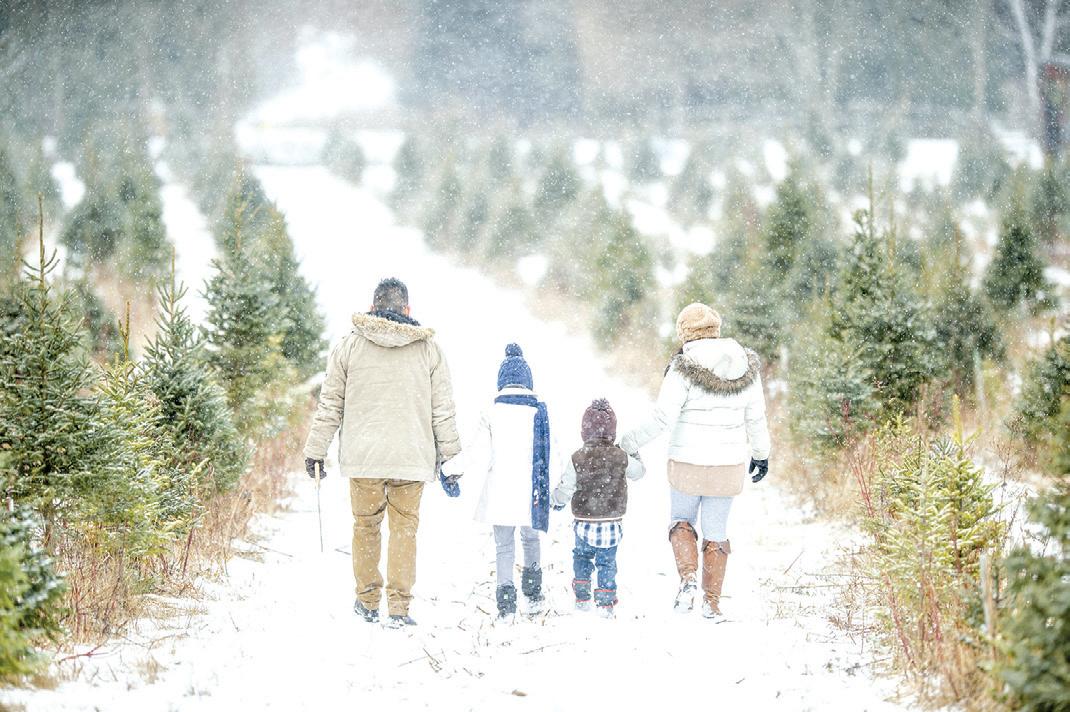
Residents across Oregon follow a tradition of cutting their own Christmas tree for the holiday.
BRIAN ROONEY Chief Guest Article
Courtesy from the Oregon Employment Department
Courtesy from ODF
The ODF’s report outlines $30.5 million distributed to Columbia, Tillamook and Washington counties.
Oregonians have a lot to be proud of when it comes to their state forestlands.
Cal Mukumoto, State Forester
REPORT Country Media, Inc.
STAFF
Oregon’s 17 death row inmates’ sentences commuted to life in prison

execution in this state. This is a value that many Oregonians share.
Using her executive clemency powers, Gov. Kate Brown has commuted the sentences of the 17 individuals on Oregon’s death row to life imprisonment without the possibility of parole.
“I have long believed that justice is not advanced by taking a life, and the state should not be in the business of executing people—even if a terrible crime placed them in prison.
“Since taking office in 2015, I have continued Oregon’s moratorium on executions because the death penalty is both dysfunctional and immoral. Today I am commuting Oregon’s death row so that we will no longer have anyone serving a sentence of death and facing
My hope is that this commutation will bring us a significant step closer to finality in these cases.
~ Kate Brown,
Oregon Governor
“Unlike previous commutations I’ve granted to individuals who have demonstrated extraordinary growth and rehabilitation, this commutation is not based on any rehabilitative efforts by the individuals on death row. Instead, it reflects the recognition that
the death penalty is immoral. It is an irreversible punishment that does not allow for correction; is wasteful of taxpayer dollars; does not make communities safer; and cannot be and never has been administered fairly and equitably. My action today is consistent with the near abolition of the death penalty that has been achieved through SB 1013.
“I also recognize the pain and uncertainty victims experience as they wait for decades while individuals sit on death row—especially in states with moratoriums on executions—without resolution. My hope is that this commutation will bring us a significant step closer to finality in these cases.”
Read Brown’s full order with this story at thechiefnews.com.
Oregon shares $10.7B in opioid-related settlements
STAFF REPORT Country Media,
Oregon has reached a national agreement with CVS and Walgreens for the pharmacies’ conduct in fueling the opioid epidemic.
Walgreens operates the second largest pharmacy store chain in the United States, behind CVS. Under the agreements, CVS will pay $5 billion and Walgreens will pay $5.7 billion, totaling $10.7 billion.
Metro Creative Connection

Respect for Marriage Act is a bill to repeal the Defense of Marriage Act (DOMA), require the U.S.
marriages in the United States, and
Respect for Marriage Act
The Respect for Marriage Act was expected to be signed into law this week by President Joe Biden.
“Everyone should be able to marry who they love,” Oregon U.S. Congresswoman Suzanne Bonamici (D-OR) said. “The Respect for Marriage Act enshrines this fundamental principle into federal law so same-sex and interracial marriages are protected and honored. Congress must continue to pass legislation to protect our hard-won freedoms and privacy, espe-
cially with the willingness of this extremist Supreme Court to erode longstanding precedent.”
The Respect for Marriage Act originally passed the House July 19. It came back to the House after Senate passage on November 29 because of changes in the bill’s language.
The Respect for Marriage Act is a bill to repeal the Defense of Marriage Act (DOMA), require the U.S. federal government to recognize the validity of same-sex and interracial
marriages in the United States, and to protect religious liberty.

Bonamici is a Vice Chair of the Congressional LGBTQ+ Equality Caucus and Chair of its LGBTQ+ Aging Issues Task Force.
As Chair of the Education Committee’s Subcommittee on Civil Rights and Human Services, Bonamici said she has also been a leader in efforts to pass legislation to protect the LGBTQ community against discrimination in housing, access to credit, and other services.
A certain number of states will need to sign onto the agreements for the full amount to be distributed, Oregon Attorney General Rosenblum said in announcing the agreement Dec. 12.

“Pharmacies were a key link in the supply chain that contributed to the greatest drug-induced public health crisis in modern America,” Rosenblum said. This may seem like a lot of money— and it is— but compared to the harm caused by America’s largest pharmacy chains, it barely scratches the surface.”
This now makes three settlements with a national pharmacy chain in the last month; A $3 billion settlement with Walmart was announced in November. In the Walmart settlement, all states have until the end of 2022 to join, which Oregon has recently done.
In addition, each of these agreements will need sign-on by Oregon’s counties and cities to maximize the amount of money the state will receive. Oregon stands to receive up to $173,150,000 over time as a result of the settlements with CVS ($65,430,000) Walgreens ($70,860,000) and Walmart ($36,860,000).
“Too many have died and too many families are broken by virtue of — plain and simple — corporate greed, and that includes pharmacies.
Americans place their trust in their pharmacy, and certainly do not expect it to cause them harm,” Rosenblum said.
“I appreciate that 100 percent of Oregon’s counties and cities signed onto our previous settlements with Johnson & Johnson and the three major opioid distributors.
I hope they will sign onto these settlements, as well, in order to maximize how much
Oregon can receive.”
In addition to the financial settlement, CVS and Walgreens have agreed to courtordered injunctive relief that requires the pharmacies to monitor, report, and share data about suspicious activity related to opioid prescriptions. This court-ordered injunctive relief will help ensure a crisis like this does not happen again.
The terms of these agreements will now go to the states for their review. Each state will have until the end of 2022 to join, after which the Walmart, Walgreens, and CVS agreements will go to local governments around the country for sign-on during the first quarter of 2023. A sufficient percentage of states and local governments must join the settlements for them to go into effect.
Most of Walmart’s amount will be paid during the first year; CVS’s payments will be spread over 10 years; Walgreens’ payments will be spread over 15 years. If there is sufficient sign-on, payments will begin during the second half of 2023.
Additional information about the previous settlement with Johnson & Johnson and the three largest distributors of opioids is online at https:// www.doj.state.or.us/oregondepartment-of-justice/officeof-the-attorney-general/ spotlight-opioid-abuse/.
www.thechiefnews.com Friday, December 16, 2022 A3 North Columbia County’s trusted local news source ACROSS 1.Make change 6. Used in combination to denote the middle 9. *Ammo material 13. Star____ 14. The “place with the helpful hardware folks” 15. Neutral shade 16. Orderly arrangement 17. Romanian monetary unit 18. Button on electrical outlet 19. *Frosty’s nose 21. *Gingerbread Man, e.g. 23. Drench 24. What a willow did? 25. Famous song by The Jackson 5 28. Cone-shaped quarters 30. *Snow mover 35. A bit of water 37. Pakistani language 39. Measured in knots 40. Tatted fabric 41. *”A Visit from St. Nicholas” poet 43. Tropical edible root 44. Paintings in Orthodox church 46. Not swim or swum 47. Frozen puddle accident 48. Small skullcap 50. Dresden’s river 52. Captain’s turf 53. Drop of sorrow 55. “Slippery” tree 57. *Frozen spike 60. *Three-horse sleigh ride 63. Words to live by 64. Caviar alternative 66. On D’Artagnan’s hat 68. Group of wives 69. Boiling emotion 70. Furnish with a fund 71. Travelers’ stops 72. Poetic “even” 73. Buy second-hand DOWN 1. Agha, alt. sp. 2. Artist Chagall’s first name 3. Poet Pound’s first name 4. Draws close 5. Fungus damage (2 words) 6. Shake’s cousin? 7. *____ fishing 8. Two, in cards 9. Station finder button 10. Not final 11. Curved molding 12. Kind of nurse 15. Bouillons 20. Laudanum ingredient 22. Saturn’s wife 24. As opposed to widow 25. Impromptu 26. Emergency pedal 27. *Hot treat 29. Major-leaguers 31. Prefers 32. Butcher shop offering, pl. 33. Ghostlike 34. Parkinson’s drug 36. Philadelphia’s Ivy League member 38. Russian mountain chain 42. *Fireplace glob 45. TV offering 49. Reef fish 51. Kind of bride 54. Eagle’s home 56. Hundred Acre Wood creator 57. A Flock of Seagulls’ 1982 hit (2 words) 58. European Council for Nuclear Research, acr. 59. Bad day for Caesar 60. Not quite an adult 61. Spiral-horned African antelope 62. Singer-songwriter Tori 63. Tai’s partner 65. Miner’s bounty 67. Female sheep STATEPOINT CROSSWORD
WINTER FUN
to crossword in next week’s issue of The Chief. • •C rossword P uzzle • •
THEME:
Solution
The
federal government to recognize the validity of same-sex and interracial
to protect religious liberty.
Courtesy photo Oregon is expected to receive up to $173,150,000 over time as a result of the settlements.
Inc.
Metro Creative Connection
Gov. Brown’s executive clemency order took effect Dec. 14.
STAFF REPORT Country Media, Inc.
Advertise in the newspaper! Email Jon at chronicleads@countrymedia.net or call 503-397-0116.
What you need to know about winter gardening
that order.
Here are December gardening thoughts
• Peach leaf curl finds its way into the buds on your peach tree this month and in January. Prevent the problem by spraying completely and often with lime sulfur (harder to find now) or copper. Four separate sprays are ideal. Temperatures should be well above freezing when you spray. Two to three hours of drying time is ideal. With copper fungicides, use a spreader-sticker if the label calls for one. While you’re at it, spray your apples, cherries, blueberries, and boysen/ marionberries. Both sprays are considered “organic.”
• Although there are conflicting opinions on this topic, many gardeners feel that there is benefit to fertilizing rhododendrons and evergreens with a slow-release nitrogen and sulfur product, such as your “long-lasting” lawn fertilizers. Put on about a pound per 100 square feet of garden bed. You will be rewarded with a deeper green foliage color by early spring. You could use some of the organic nitrogen sources which tend to be naturally slow release.
• While you are out there with the fertilizer, consider an application to your lawn, if you haven’t already put on any in the late fall.
• While there aren’t a lot of plants that bloom in the winter, those that do are richly appreciated. You might search out nurseries for their Hellebore, Witch hazel, and Sarcococca varieties.
• Shrubs and other plants under eaves may dry out during the winter. When that happens, they may either perish directly from lack of moisture or may be more susceptible to damage from cold weather.
• Give your houseplants lukewarm showers periodically throughout the winter. Your plants will really appreciate a vacation under banks of fluorescent lights at intervals through the dark days of winter.
• Protect outdoor container plants. Containers don’t provide the root protection to plants that regular garden planting provides. Temperatures in the low 20’s can damage the roots of plants that would have done fine in the ground. If there is a forecast of low temperatures, group the containers close together and wrap the pots in old blankets or insulation. Placing the plants under an eave next to the house may provide some protection as well.
• High prune roses to about eighteen inches so that they won’t be toppled by wind or snow.
• Fall/winter weeds are off and running. While they are small, winter annual weeds can be hand-pulled,
hoed on dry days, spot sprayed or mulched. Mulching may be effective on some species, but others will grow through the mulch. Mulch will slow new seed germination.
Giant pumpkin contest
Giant pumpkins have become an obsession for a select group of gardeners. These fanatics hold an annual weigh-off at various points in North America and Europe for both bragging rights and considerable cash. The Pacific Northwest test site has been, for the last few years, at Bauman’s Farm near Gervais.
Some years ago, I was asked to inspect the pumpkins to see that they weren’t diseased in any way. If they were, the pumpkin was disqualified. This is not easy when you are dealing with 1,000+ pounds (at that time) pumpkins. The regional winner that day was from Tenino, Washington. His entry topped the scales at 897.5 pounds. The North American winner was Bill Greer of Picton, Ontario, Canada who coddled his pumpkin to an obese 1,006 pounds. In fact, the top three finishers were all from Ontario. The speculation was that the long summer days of this northerly latitude combined with the continental heat give this region a leg up on the competition. The Canadians, of course, credited their skill and beer, not necessarily in
•C ommunity e vents
December 17 and 18
Christmas at the Castle Christmas at the Castle open houses from 1 p.m. to 5 p.m. each day at the newlyrestored Flippin Castle, home to the Clatskanie Senior Citizens and the Clatskanie Historical Society. The public is invited to visit and tour the 1900-era Victorian mansion, a National Historic Preservation Site, which includes the local history museum. Santa Claus will be in attendance from 2 p.m. to 4 p.m. on both open house days to hear Christmas wishes.
Parents are urged to bring their cameras. There is no charge for admission for the open houses, but donations are appreciated. The Castle is located at 620 SW Tichenor Street in Clatskanie. Additional parking is available in back of the Castle off of SW Bryant Street.
December 17 Spirit of Christmas in Scappoose
The Christmas Market will be open from 9:30 a.m. to 3:30 p.m. in the Scappoose annex gym. Santa and the Grinch will attend throughout the day.
December 17 and 18
Holiday Bazaar for Columbia
River Fire and Rescue Scholarship Fund
The Columbia River Fire & Rescue Volunteer Association Holiday Bazaar will be held from 10 a.m. to 4 p.m. at Columbia County Fairgrounds Pavilion, 58892 Saulser Road. in St. Helens. Door prizes on Saturday and a visit from the Grinch from noon to 2 p.m. on Sunday.
December 17 Wreaths
Across America Columbia Memorial Gardens wreath-laying ceremony at 11 a.m. at 54490 Columbia River Highway in Scappoose. This is part of the National Wreaths Across America Day. Fundraising groups have raised funds throughout the year to sponsor the placement of 136 veterans’ wreaths on the headstones of fallen service members laid to rest there. The public is invited to attend.
December 20 Commissioner Retirement Party Retirement Party for Columbia County Commissioner Henry Heimuller from 4 p.m. to 7 p.m. at the Columbia County Fairgrounds, 58892 Saulser Road in St. Helens.
RSVP to Jacyn.Normine@ columbiacountyor.gov. For more information, call 503387-4322 Ext. 8400.
December 22 Vaccination
Event
Columbia Health Services (CHS)/Oregon WIC to host a COVID and Flu Vaccination Event from 1 to 3 p.m. across the street from the St. Helens Post Office, 1560 Columbia Boulevard in St. Helens. Families can call CHS at 800-2444870 to schedule immunization needed before the school exclusion Feb. 15.
Ongoing Events
Caples Evening Programs
The cost for this evening and all our Fireside Chats will be only $5. Caples will be offering a different program the third Tuesday of each month
at 7 p.m. at 1925 First Street in Columbia City. For more information, call 503-3975390.
Lower Columbia River Watershed Council Meets at 7 p.m. every other second Tuesday. Meetings are currently held electronically by Zoom. For more information, contact Council Coordinator Allan Whiting at E-mail: allan@whitingenv. com, or call 503-789-9240. Visit the council’s website for agenda postings and Zoom at www.lowercolumbiariver.org/ events-page.
The Rainier Oregon Historical Museum (ROHM) is open from noon to 4 p.m. Saturday (except major holidays weekends). ROHM is located inside Rainier City Hall at 106 W B Street. For more information, call 360-751-7039.
The Rainier Public Library is open from 9 a.m. to 4:30 p.m. Tuesdays, Wednesdays and Thursdays, 10:30 a.m. to 4:30 p.m. on Fridays and 10:30 a.m. to 2:30 p.m. on Saturdays. It will be closed Sundays and Mondays.
Avamere at St. Helens hosts a Virtual Dementia Support Group – 3rd Wednesday of each month from 2 to 3 p.m. For more details, contact Jenny Hicks/Avamere at St. Helens at 503-366-8070.
To list an event in the Community Calendar, email details with a phone number that may be published, to chronicleclassifieds@countrymedia. net, or call 503-397-0116.
Well, times, genetics, and techniques have really changed. This year’s giant pumpkin, a world record, came in at 2,656 pounds! It was grown by Ian and Stuart Paton from Lymington, England. A United State grower from Minnesota had the number two monster, weighing a not at all shabby 2,560#s. The biggest Pacific Northwest pumpkin came from Pleasant Hill, near Eugene, and weighed 2,425 pounds which was the eighth largest in the 2022 Giant Pumpkin universe.

These maniacal growers are pretty generous, sharing most of their techniques and seed sources. They are very talented and plant savvy. In the end, after the prizes have been awarded, most of the pumpkins in NW Oregon go to the zoo where the elephants look forward to this feast every year. Some of the smaller ones are carved into round boats and used in a race on the Tualatin River.
Food preservation
You can get up-to-date and accurate answers to your food preservation questions by calling our office at 503397-3462 and ask to speak to Jenny Rudolph.
Important notes
• The OSU Extension Office is fully open from 8 a.m. to 5 p.m.
• Columbia County
Beekeepers event 6 p.m. Thursday, January 5 at the OSU Extension Office in St. Helens. The meeting will also be Zoomed. Educational topics to be determined. For more information and Zoom link email ColumbiaCountyOregonBeekeepers@gmail. com.
• Donate extra garden produce and/or money to the food bank, senior centers, or community meals programs. It always is greatly appreciated.
• The Extension Service offers its programs and materials equally to all people.
Have questions?
If you have questions on any of these topics or other home garden and/ or farm questions, please contact Chip Bubl, Oregon State University Extension office in St. Helens at 503397-3462 or at chip.bubl@ oregonstate.edu. The office
is open from 8 a.m. to 5 p.m. Monday through Friday.
Free newsletter
The Oregon State University Extension office in Columbia County publishes a monthly newsletter on gardening and farming topics (called County Living) written/edited by yours truly. All you need to do is ask for it and it will be mailed or emailed to you. Call 503397-3462 to be put on the list. Alternatively, you can find it on the web at http:// extension.oregonstate.edu/ columbia/ and click on newsletters.
Resource contact
Oregon State University Extension Service – Columbia County 505 N. Columbia River Highway St. Helens, OR 97051 503-397-3462
and satisfaction growing plants with my friends.”
Student Ben Hadley agrees with Taylor.
“To me, agriculture is something everyone should know,” Hadley said. “It is
what keeps society together and is important for life. For me personally, learning how to create and sustain my own garden is very helpful and is important in case of disaster and also to have healthy local crops.”
“None of these amazing things would be happening without the enthusiasm and hard work of the students
and mentorship and assistance of Brandon Schilling and his wife Jasmine Lillich, otherwise known as the Wild Locals,” Byrne said.
Schilling maintains the Clatskanie Community Garden.
For more information, call CMHS at 503-728-2146.
phone number (only the name and city of residence will be published). By submitting a letter, writers also grant permission for them to be posted online. Opinions expressed on this page are the writer’s alone and do not represent the opinion of the newspaper or its parent company, Country Media, Inc.

Obituaries
Obituaries received after noon on Wednesday may not be in time for that Friday’s paper. Obituaries may be emailed to chiefnews@countrymedia.net, sent via mail, or dropped off at the office. We also accept obituaries written by funeral homes. Include the address and daytime phone number of the person who submitted the obituary, so we can verify information as necessary.
www.thechiefnews.com Friday, December 16, 2022 A4 North Columbia County’s trusted local news source CONTACT US • Phone: (503) 397-0116 • Fax: (503) 397-4093 Website: www.thechiefnews.com Editorial: chiefnews@countrymedia.net ADVERTISE WITH US: Advertising Email: chronicleads@countrymedia.net Classified email: chronicleclassifieds@countrymedia.net The Chief The Chief (USPS 116-360) is published weekly by Country Media, Inc. 1805 Columbia Blvd, St. Helens, OR 97051 POSTMASTER: Send address changes to The Chief PO Box 1153, St. Helens, OR 97051 SUBSCRIPTION RATES: 1 month in county: $8 1 month out of county: $10 One year in county: $60 One year out of county: $80 Editorial policy Opinions expressed on this page are independent of The Chief views and are solely those of the writers expressing them. Letters policy This newspaper’s letters to the editor are limited to a maximum of 250 words and will be edited for grammar, spelling and blatant inaccuracies. Unsubstantiated or irresponsible allegations, or personal attacks on any individual, will not be published. Letters containing details presented as facts rather than opinions must include their sources. Writers are limited to one published letter per month. All submissions must include the author’s full name, local street address and tele
Vote online at thechiefnews.com 80.6% Yes 19.4% No What are you doing to easy holiday stress? Weekly Online Poll Last Week’s Results Should Ballot Measure 114 be scrapped?
Column •
• •
CHIP BUBL Clatskanie Grows Chief Guest
Courtesy photo from James Byrne The students working in the community green house
CMHS
Page A1 Taking frequent walks Drinking lots of coffee Spending time with family What stress?
From
dated as of July 3, 2021 and recorded on July 9, 2021 as Instrument No. 2021-08107 of official records in the Office of the Recorder of Columbia County, Oregon to-wit: APN: 17950 LOT 5, BLOCK 36, MOECKS


ADDITION TO THE CITY OF RAINIER, IN THE CITY OF RAINIER,
CC22-1707

sure is made is the Grantor’s failure to pay: Failed to pay payments which became due Monthly Payment(s): 1 Monthly Payment(s) from 02/01/2022 to 11/01/2022 at $22,233.40 Monthly Late Charge(s): By this reason of said default the Beneficiary has declared all obligations secured by said Trust Deed
2023 at the hour of 01:00 PM, Standard of Time, as established by Section 187.110, Oregon Revised Statues, Front Entrance, Columbia County Courthouse, 230 Strand Street, St. Helens, OR 97051 County of Columbia, sell at public auction to the highest bidder for cash the interest in the
CLATSKANIE PEOPLE’S UTILITY DISTRICT MEETING NOTICE
The Clatskanie People’s Utility District Board of Directors has scheduled the next regular Board meeting for Wednesday, December 21, 2022 at 6:00 pm in the community room of the District’s administration building located at 495 E Columbia River Highway, Clatskanie. A Board Workshop will be held at 5:30 pm. An executive session may be called at the workshop and/or meeting, pursuant to: ORS 192.660 (2) (h) to consult with counsel concerning the legal rights
and duties of a public body with regard to current litigation or litigation likely to be filed.
AGENDA CLATSKANIE PEOPLE’S UTILITY DISTRICT BOARD WORKSHOP Wednesday, December 21, 2022 5:30 P.M.
I. POLICY REVIEW: 318 District Building Preventative Maintenance Policy II. STAFF REPORTS UP-DATE CLATSKANIE PEOPLE’S UTILITY DISTRICT REGULAR BOARD MEETING Wednesday, December 21, 2022 6:00 P.M. I. PUBLIC
COMMENTS II. CONSENT AGENDA · Minutes of Board Workshop, November 15, 2022 · Minutes of Regular Board Meeting, November 15, 2022 · Review payment of bills for November 2022 III.
ACTION ITEMS · New District Operations Policy: #321 Legislative Advocacy Policy · Policy Review: #108 Net Metering and #317 Oregon Ethics Law IV. DISCUSSION / INFORMATIONAL ITEMS · Board Comments & Calendar V. EXECUTIVE SESSION VI. ADJOURNMENT
any person named in Section 86.753 of Oregon Revised Statutes has the right to have the foreclosure proceeding dismissed and the Trust Deed reinstated by payment to the Beneficiary of the entire amount then due (other than such portion of said principal as would not then be due had no default
CC22-1706
sale may have been used in manufacturing methamphetamines, the chemical components of which are known to be toxic. Prospective purchasers of residential property should be aware of this potential danger before deciding to place a bid for this property at the Trustee’s sale. In construing
gender includes the feminine
persons owing an obligation,
Successor Trustee Malcolm & Cisneros, A Law Corporation Attention: Nathan F. Smith, Esq., OSB #120112 c/o TRUSTEE CORPS 17100 Gillette Ave, Irvine, CA 92614 949-252-8300 Order Number 87215, Pub Dates: 12/2/2022, 12/9/2022, 12/16/2022, 12/23/2022, THE CLATSKANIE CHIEF
NOTICE OF REGULAR MEETINGS
Oregon House Bill 2788 (2011), requires State Agencies, Boards, Commissions, and Education Service Districts (ESDs) to post notices of public meetings. The Board of Commissioners for the Northwest Oregon Housing Authority will meet for its regular monthly business meetings on the first Thursday of each month. Meetings are convened at 10:00 am and may be conducted either in person or virtually. Until further notice, all NOHA board meetings will be
conducted virtually and the meeting link will be posted at www.nwoha.org at least one (1) business day prior to the scheduled meeting. The schedule for Calendar Year 2023 follows. • January 5, 2023 • February 2, 2023
• March 2, 2023 • April 6,2023 • May 4, 2023 • June 1, 2023 • July 6, 2023 • August 3, 2023 • September 7, 2023 • October 5, 2023
• November 2, 2023 • December 7, 2023. Members of the public are invited and encouraged to participate in the NOHA Board Meet-
ings. Regular meetings will include an opportunity for public comments. The Board of Commissioners reserves the right to convene in Executive Session during any board meeting. Executive sessions are held in accordance with all applicable Oregon regulations and laws. Typically, the board will discuss matters related to staffing or personnel, real estate and/or legal matters in Executive Session. No official actions will be taken during the Executive Session.
IN THE CIRCUIT COURT OF THE STATE OF OREGON FOR THE COUNTY OF COLUMBIA
of first publication of this notice to the personal representative at P. O. Box
459, Rainier, OR 97048, or the claims may be barred. All persons whose rights may be affected by the
the records of the Court, the personal representative or the attorney for the personal representative. Dated and
Personal Representative. STEPHEN D. PETERSEN, L.L.C. Attorney at Law, P.O. Box 459, Rainier, OR
www.thechiefnews.com Friday, December 16, 2022 A5
news source
North Columbia County’s trusted
local
CC22-1704
Probate Department In the Matter of the Estate of CARL LEUZINGER, Deceased. No. 2PB10406 NOTICE TO INTERESTED PERSONS NOTICE IS HEREBY GIVEN that the undersigned has been appointed personal representative of this estate. All persons having claims against the estate are required to present their claims, with vouchers attached, within four months after the date
TS No. OR07000175-22-1 APN 17950 TO No 220473436-OR-MSI TRUSTEE’S NOTICE OF SALE The Public Notice deadline is Wednesdays by noon. Late submissions are not guaranteed to make it into the paper. Let us know what YOU think EMAIL YOUR LETTERS TO: CHIEFNEWS@COUNTRYMEDIA.NET Having a Garage Sale? Contact The Chief at 503-397-0116 or chronicleclassifieds@countrymedia.net to get your garage sale in the classifieds.
Whale Watching Week returns to the Oregon Coast
For the first time since 2019, Oregon State Parks will host Whale Watch Week in person along the Oregon Coast Dec. 28 – Jan. 1.
Previous Whale Watching events were cancelled during the pandemic.
Every year thousands of Gray whales migrate south through Oregon’s waters at the end of December, and Oregon Parks and Recreation Department (OPRD) invites visitors to the coast to see their journey.

Trained volunteers will be stationed at most of the 17 sites to help visitors spot whales, share information and answer questions from 10 a.m. to 1 p.m. daily. The sites are some of the best places to watch for whales on the Oregon Coast.

“We really enjoy getting folks out to the coast for Whale Watch Week,” said Park Ranger Peter McBride.
“It’s something that Oregon State Parks has been doing for more than 40 years now, and we’re really glad to be able to bring it back in person,” he said.
A map of volunteerstaffed sites is available online on the official event webpage: https://oregonstateparks.org/index. cfm?do=thingstodo.dsp_ whaleWatching.

An estimated 19,000 Gray whales are expected to swim past Oregon’s shores over the next several weeks as part of their annual migration south
near Baja, Mexico. The end of December is the peak time for their migration; roughly 30 whales pass by per hour.
In a previous interview with Country Media, OPRD spokesman Chris Havel said people are fascinated by the whales for good reason.
“People are clever and good at inventing and building ways to survive and thrive, and wildlife, like whales, do the same thing through sheer awesome power,” he said. “There’s still some mystery about their lives, and seeing them in action is a thrill. Seeing them in real life is also a reminder of how we affect all marine life, and have a responsibility to eliminate pollution and be careful stewards of the planet’s resources.”
Havel adds that people are naturally attracted to the whales’ beauty, mystery, and power.
“But we also appreciate being reminded of our place in these natural systems,” and it makes us all feel part of the family,” he said.
The Whale Watching Center in Depoe Bay will be open 10 a.m. to 4 p.m. Wednesday through Sunday. Visitors to the center can enjoy interactive whale exhibits and take in the panoramic ocean views. Binoculars are provided. Rangers from Oregon State Parks will also be on hand to answer questions about the whales.
The Whale Watching Center in Depoe Bay will be open 10 a.m. to 4 p.m. Wednesday through Sunday.
Visitors to the center can enjoy interactive whale exhibits and take in the panoramic ocean views. Binoculars are provided. Rangers from Oregon State Parks will also be on hand to answer questions about the whales.
All Whale Watch Week visitors are encouraged to dress for the weather, to bring binoculars and to follow beach safety guidelines such as remaining out of fenced areas, knowing the
tide schedule and keeping an eye on the surf at all times. Go to https://visittheoregoncoast.com/beach-safety/ for a list of safety tips.
The OPRD urges beach visitors to take additional precautions along the shoreline due to the winter conditions.
• Take care to stay well back of cliff edges. There are fences in some places, and respect them, but not ev-
erywhere. Be your own best safety coach and be careful. After rain and windstorms, cliff edges are unstable and can give way without warning.
• Check the weather and bring the right clothing to stay warm and dry.


For more information about coast parks and campgrounds, visit oregonstateparks.org.
Fast Fact

www.thechiefnews.com Friday, December 16, 2022 A6
WE’RE HIRING! • Competitive Salary with 4-Tier Pay Progression • Profit Sharing Bonuses • Full Health Care Package $1,500-$2,000 SIGN-ON BONUS Become part of the Berry family around the globe. We foster workforce development to support and encourage our knowledgeable enployees. With more than 295 locations- we are pushing the limits of innovation and moving our industry forward. APPLY AT: WWW.BERRYGLOBAL.COM/CAREERS
North Columbia County’s trusted local news source
Country Media, Inc.
Courtesy photo from the OPRD
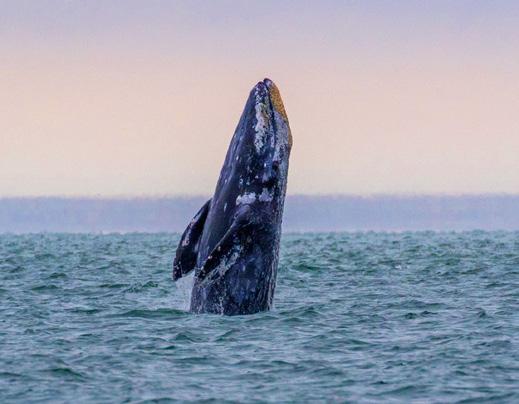
A whale emerges out of the ocean into the air along the Oregon shoreline.
An estimated 19,000 Gray whales are expected to swim past Oregon’s shores over the next several weeks as part of their annual migration south to the warm calving lagoons near Baja, Mexico.
Courtesy photo from the OPRD
The annual event attracts many alongside the shoreline hoping to capture a good view of the migration..
Courtesy from the OPRD The OPRD suggests looking for the spray to find the migrating whales off the shoreline.