Wildlife collisions rise in Oregon during fall, winter
JEREMY C. RUARK jruark@countrymedia.net
Encounters between drivers in Oregon and wildlife often cause human injuries and even death.
The Insurance Institute for Highway Safety reports 24 people in Oregon died in vehicle collisions with animals between 2011 and 2020.
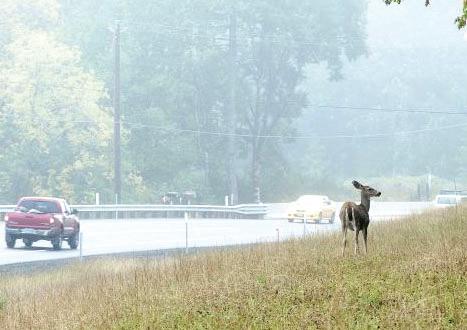
The Oregon Department of Transportation (ODOT) documents an average of more than 6,000 vehicle collisions with deer and elk each year. The actual number of collisions is likely higher, as many are not reported if there is minimal damage or no human injuries.
The vehicle collisions peak in October and No vember, when migration and breeding (the “rut”) puts the deer and elk on the move, making them more likely to be crossing roads. Fewer daylight hours and rainy weather also reduce driv ers’ visibility, increasing the danger of collision.
The Oregon Depart ment of Fish and Wildlife (ODFW) and ODOT are urg ing Oregonians to Watch out for Wildlife this time of year and follow these tips:
• Be careful when driving in areas that have special signs indicating the possible presence of wildlife. These signs are posted for a reason.
• Be alert in areas with dense vegetation along the road or while going around curves. Wildlife near the road
may not be visible.
• If you see one animal, stay alert. There may be oth ers nearby.
• If you see wildlife on or near the road, slow down and stay in your lane. Many seri ous crashes are the result of drivers losing control as they
swerve to avoid wildlife.
The same advice applies for smaller wildlife like rac coons; try to stay in your lane and do not swerve for these animals. They are less danger ous to vehicles than big game animals, and maintaining
control of your vehicle is most important.
• Always wear your seat belt. Even a minor collision could result in serious injuries.
ODFW, ODOT and part ner organizations are working to reduce the risk of vehicle-
wildlife collisions by building wildlife crossings. The cross ings allow wildlife to safely follow their migration patterns over or under a road. Data shows wildlife crossings on Hwy 97 near Sunriver have reduced vehicle-wildlife colli sions by nearly 90 percent.
The bipartisan infrastruc ture bill passed by Congress in 2021 is providing $350 million in competitive grants to the states for wildlife crossings and other mitiga tion. ODFW, ODOT and other partners will be working to secure grants for projects.
Oregon drivers can also show their support by pur chasing a Watch for Wildlife license plate. The revenue generated from license plate sales will benefit projects that help wildlife move within their range and between habi tat patches. Originally devel oped by the Oregon Wildlife Foundation, the license plate is now available at the DMV.
Roadkill salvagers: CWD testing is mandatory
As wildlife-vehicle col lisions peak, so does partici pation in ODFW’s roadkill salvage program. Since 2019,
Columbia County tax statements coming
STAFF REPORT chiefnews@countrymedia.net
As summer turns to fall, the leaves change color, tem peratures cool and Columbia County sends out tax state ments.
The following is from the Columbia County Finance and Taxation Department.
The Columbia County Finance and Taxation Depart ment will begin mailing taxpayers the county’s annual statements on Oct. 21. Pay ments are due by Nov.15.

Property taxes pay for a number of critical ser vices including public safety (law enforcement, fire, and emergency services), parks, schools, public transportation, public defense, elections, community justice, and a host of other vital public services according to a statement from the county department.
Columbia County will collect $93,852,753 in taxes from businesses and private landowners this year. But most of that amount does not get added to the county budget; only 9.44 percent, or roughly $8.9 million, goes into the county’s general fund. An additional 3.89 per cent, or $3.6 million, goes to the Jail Operation Fund from the local option levy ap proved by county voters.
Tax dollars disbursed to the general fund largely pay for county law enforcement and public safety, including the Columbia County Sher iff’s Office, jail operations,

and the district attorney’s office. The remainder pays for general county adminis tration, including the asses sor’s office, land development services, juvenile services, and the county commission.
More than 85 percent of property tax funds col lected are distributed to local schools, cities, and special districts, such as those that manage 911 services or soil and water conservation. The fire districts that protect the entire county, from Vernonia to Clatskanie to Scappoose,


receive more than 19 percent of the total. But the vast ma jority of taxes (47 percent) go towards education, including five school districts, one edu cational service district, and Portland Community College.
Here’s the breakdown:
• Schools: $44,623,284 –47 percent
• Fire Districts: $17,594,630 – 19 percent
• Columbia County Gov ernment: $12,509,900 – 13 percent
• City Governments: $9,001,087 – 10 percent
• Special Districts: $6,831,596 – 7 percent
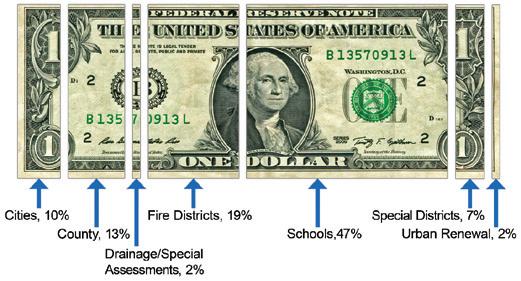
• Urban Renewal: $1,729,950 – 2 percent
• Drainage/Special Assess ments: $1,562,306 – 2 percent
Total: $93,852,753
Columbia County has 91 tax code areas that are com prised of various combina tions of taxing districts that
the money goes.
VOL. 131, NO. 24 $1.50FRIDAY, OCTOBER 21, 2022 State of the Port Page A3 Pet Behavior Study Page A6 Opinions ................... A4 Obituaries ................. A5 Community Events . A5 Classified Ads ......... A5 Legals ....................... A5 Phone: 503-397-0116 Fax: 503-397-4093 chiefnews@countrymedia.net 1805 Columbia Blvd., St. Helens, OR 97051 Contact The Chief
Courtesy photo
Drivers are urged to watch for close encounters with wildlife along roads and highways.
Courtesy photo
Where
See COLLISIONS Page A6 See TAXES Page A4
Paid for by Pixley for Sheriff (19374)
TERRYMASSEY4SHERIFF.VOTE
Collaboration Communication Accountability electkellyniles.com Paid for by Elect Kelly Niles ID # 21881
Rain expected to improve region air quality

Incoming rainstorms and cooler weather through the weekend, Oct. 22-23, is expected to clear away unhealthy air quality condi tions in the region.
The Oregon Department of Environmental Quality (DEQ) issued an air quality advisory Wednesday, Oct. 19 for Columbia, Clacka mas, Marion, Multnomah and Washington counties due to smoke from the Nakia Creek and Siouxon fires in Washington, and the Cedar Creek fire near Oakridge.
DEQ expects the air quality advisory to last until at least Friday, Oct. 21.
Smoke levels can change rapidly depending on weather. Check current conditions on the Oregon Smoke Information Blog, DEQ’s Air Quality Index, or by downloading the free OregonAIR app on your smartphone.
Smoke can irritate the eyes and lungs and worsen some medical conditions. People most at risk include infants and young children, people with heart or lung disease, older adults and pregnant people.
Protect yourself and your family when smoke levels are high:
• Stay inside if possible. Keep windows and doors closed. If it’s too hot, run air
conditioning on recirculate or consider moving to a cooler location.
• Avoid strenuous out door activity.
• Use high-efficiency particulate air (HEPA) filters in indoor ventilation systems or portable air puri fiers. Or create your own air
purifying filter by following these instructions.
• Be aware of smoke in your area and avoid places with the highest levels.
• When air quality improves to moderate or healthy (yellow or green on the Air Quality Index), open windows and doors to air out homes and businesses.
• If you have a breathing plan for a medical condi tion, be sure to follow it and keep any needed medica tions refilled.
Cloth, dust and surgical masks don’t protect from the harmful particles in smoke. N95 or P100 respirators ap proved by NIOSH may offer protection, but they must be properly selected and worn. Select a NIOSH-approved
respirator with a N, R or P alongside the number 95, 99 or 100. Learn how to put on and use a respirator.
Respirators won’t work for children as they don’t come in children’s sizes. People with heart or lung conditions should consult their health care provider before wearing a respirator.
Additional resources

Find a cleaner air space in your area: Visit org and search for “Wildfire Related Clean Air Shelters.” Or call 211 any time or day.
More information about air quality can be found at: http://www.swcleanair.gov and http://www.oregon.gov/ DEQ.
ODOT issues winter advisory for drivers
should prepare for wet and snow conditions during the day, and early morning ice.
Travelers heading to high elevation areas and through Cascade mountain passes in central and south west Oregon this weekend should be ready for winter weather.
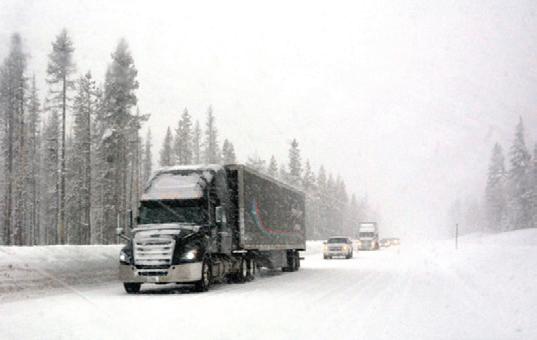
National Weather Service forecasts predict low temperatures and rain will bring several inches of snow to high Cascade areas and passes above 4,000 feet between Friday and Mon day, Oct. 21-24. Travelers
Oregon Department of Transportation (ODOT) District Manager Jeremiah Griffin said higher tempera tures at lower elevations can be deceiving.
“It may be warm when you start your trip, but as you head into or over the mountains, temperatures drop and conditions can change quickly,” Griffin said. “Prepare before you leave and be ready to adjust for changing road condi tions.”
ODOT road crews are prepared for snow and work continuously to keep roads clear, but they can’t be everywhere at once.
To prepare for winter driving:
• Carry tire chains in your vehicle and practice putting them on.
• Inspect your vehicle. Make sure that tires have good tread and windshield wipers are clean and in good condition.
• Make sure your car’s heater and defroster are
working well.
• Pack warm clothes, extra snacks and water, and any medications you may need if delayed.
• Check Tripcheck.com for up-to-date road condi tions along your route.
On the road, drivers should slow down, give other vehicles extra space, and drive according to con ditions. If you’re using GPS navigation, double-check its route. Some GPS systems may lead you down unmain tained back roads. Be safe and stick to main roads.
‘Finfluencers’ online scam warning
often targeted at people who have recently lost money on investments in cryptocur rency or stocks.
The Oregon Division of Financial Regulation (DFR) is warning investors to steer clear of online scams promis ing impossible-to-achieve rates of return to make up for recent market- and cryptorelated losses, specifically as “finfluencers” become more prominent across social media channels.
The division has learned of several online scams that are couched as “education” and “guidance” to investors in what are actually steer ing schemes. These schemes make numerous misrepresen tations about the investment and its rate of return through TikTok and Discord, making it difficult to later track down these misrepresentations and the individuals involved. The investment offerings are
“Scammers are enticing investors with promises to make up for past losses,” DFR Administrator TK Keen said. “Unfortunately, this has corresponded with the rise of finfluencers who may not be regulated by the state as financial professionals and may have undisclosed con flicts of interest.”
According to the North American Securities Ad ministrators Association (NASAA), a finfluencer is a person who, by virtue of their popular or cultural status, has the capability to influence the financial decision-making process of others through promotions or recommenda tions on social media.
They may seek to influ ence potential investors by publishing posts or videos to

their social media accounts, often stylized to be entertain ing so that the post or video will be shared with other potential investors.
As has been widely reported, cryptocurrencies continue to recede from pre vious record highs and some cryptocurrencies have com pletely failed. The volatility of these types of investments can make them risky choices for investors.
“The fundamentals of investing have not changed,” Keen said. “Do your home work, make sure you under stand the investment and its risks, and do not be swayed by those promising unreal istic returns, no matter their status on social media.”
Consumers who have questions about these schemes can call the divi sion’s advocates at 866-8149710 (toll-free).
Rainier Clatskanie Youth Soccer Club AGM

Tuesday, November 15th 2022 at 7pm. Zoom online meeting: https://us02web.zoom.us/j/8868438156 6?pwd=SGgzOGJwQ3lDS2R3NFNBN3 Q0KzJ4UT09
Meeting ID: 886 8438 1566
Passcode: soccer
This is an open meeting for everyone to attend, ask questions and meet board members. If you are interested in getting involved with youth recreational soccer, please join us. We are always in need of new members. All Board positions are open!
www.thechiefnews.com Friday, October 21, 2022A2
Metro Creative Connection
The online scams are promising impossible rates of return. STAFF REPORT chiefnews@countrymedia.net
STAFF REPORT
chiefnews@countrymedia.net
Courtesy photo from ODOT
Travelers should be prepared for winter conditions in Oregon’s moun tains and coast ranges this weekend.
STAFF REPORT chiefnews@countrymedia.net
Metro Creative Connection
The National Weather Service is forecasting rainstorms through the region over the next few days.
State of the Port: Job stability, economic strength

“unlawful in substance.”
ecutive Director Sean Clark of the Port of Columbia County said in his State of the Port address Thursday, Oct. 13, at Meriwether Place in St. Helens.
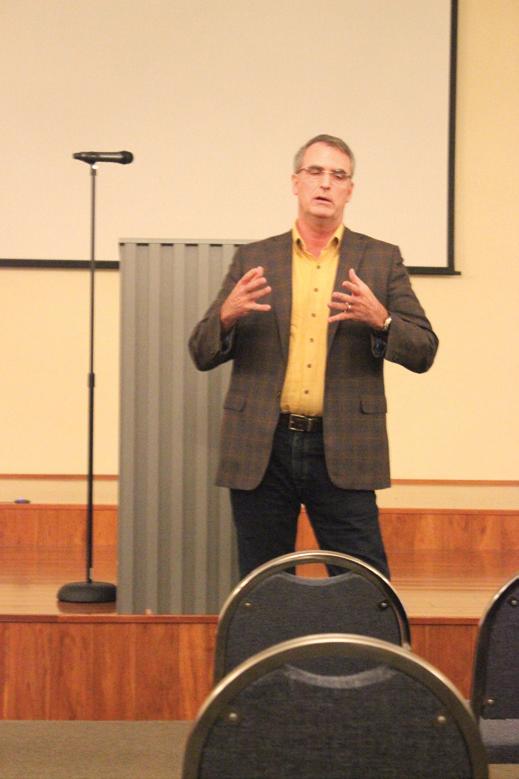
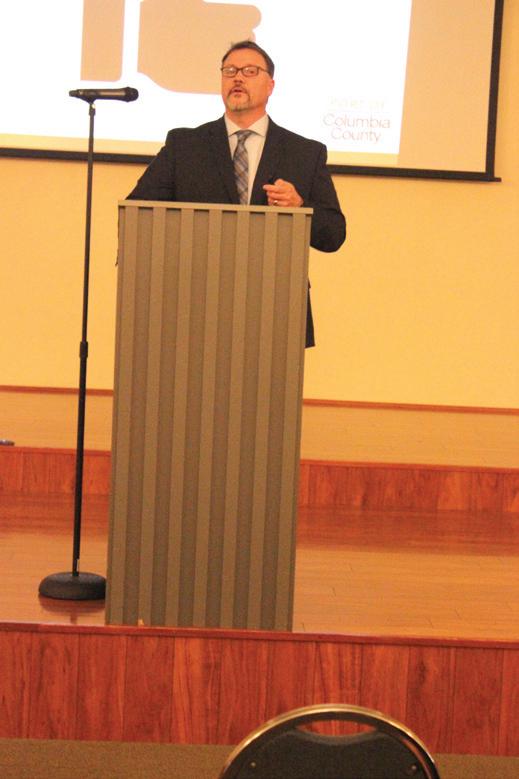
address by Christopher Efird, chief executive officer of the Houston-based NEXT Renewable Fuels, Inc., which is seeking to produce renewable diesel and sus tainable aviation fuel at the Port. About 40 people were in the audience.
“I worked at Trojan,” Clark said, “and have seen the nuclear plant closed and the jobs that left with it.” He mentioned other jobs that have departed, such as those of county residents who worked at the lumber mills and Reynolds Aluminum plant in Longview, Washing ton, and spoke of the impor
Business attracted recently Clark then reviewed the business the 2,400-acre port has been attracting recently. Calling the Scappoose Bay Marina “the number one tourist destination in Co lumbia County,” he said the port is working to improve access there for people with disabilities.
Regarding St. Helens, he then spoke of the mainte nance shop to be built at the Multnomah Industrial Park, where there ORPET has
received recyclable plastic bottles for 10 years, and the McNulty Business Park.
Turning to the Port Westward Industrial Park near Clatskanie, Clark spoke of the Beaver Dock, which was built during World War II to support the efforts in the Pacific theater, as an example of a place where business is needed to replace previous business. Port Westward now has several power generation plants.
Other accomplishments this year, he said, have included an industrial land inventory and a rail safety and mobility study. The lat ter has drawn attention be cause trains often stop traffic in St. Helens and Scappoose and cars sometimes stop on tracks. Building bridges over rails has been pro posed.
“We’ve marketed them to a wide audience,” he said.
The opportunities ahead, Clark noted, include the renewable fuels plant that
NEXT projects would reduce carbon dioxide emis sions by 7 million tons a year.
Top projects
Clark has said the top Port project for this year and next is rezoning. Port Westward has 837 acres zoned for agriculture. The Port wants industries in the area and for 12 years has been seeking a rezoning to resource industrial plan development (RIPD) zone.
Port Westward has direct access to the 43-foot naviga tion channel in the Colum bia River, which it has said would address the need for industrial land.
The Oregon Court of Appeals last year upheld a Land Use Board of Appeals (LUBA) rejection of a con tention by the environmental group Columbia Riverkeep er that LUBA’s decision to uphold Columbia County’s alternative sites analysis was
Hayes said in 2018 that a rezone would generate eco nomic development increase and that several companies had shown interest in the area and could create hun dreds of jobs.
boring property owners have said a rezone and expansion would threaten water quality needed for farming. Their contention has been backed by Columbia Riverkeeper and 1000 Friends of Oregon, both environment-oriented organizations.
Also on the list of proj ects are renewal diesel fuel production (see below) and sustainable aviation proj ects. Scappoose Airport is the second busiest non-tow ered airport in Oregon, and the Port is trying to get new hangar buildings leased out.
NEXT CEO speaks
“Here you have to follow
to build a plant on the site of a former plant in Clatskanie.

ceed,” he said. “Looking at the other side of the negotia tion, I am very impressed.”
He referred to an article in Biofuels Digest that said something to the effect that obtaining a permit in Oregon is “something like rowing in a lake of peanut butter.”
Efird said NEXT is work ing with the Army Corps of Engineers and Oregon’s congressional delegation on an environmental impact statement.
He called the dock at Port Westward “a gem in the rough” and said he thought Port Westward “has the ability to show this can be done.”
Oregon’s unemployment rate moving up
STAFF REPORT chiefnews@countrymedia.net
Oregon’s unemployment rate edged up to 3.8% in September from 3.7% in August.
Oregon nonfarm payroll employment shed 600 jobs in September. Although a small decline, this was the first drop in jobs following 12 consecutive months of gains.
Gains and losses
Losses in September were largest in other ser vices (-1,500 jobs), gov ernment (-1,100 jobs), and financial activities (-700). These losses were balanced
by gains in professional and business services (+1,400), health care and social assis tance (+1,000), manufactur ing (+800), and leisure and hospitality (+600).
Oregon’s private sector added 500 jobs in Septem ber, reaching an all-time high of 1,676,100. This was 4,400 jobs, or 0.3%, above its pre-recession peak in February 2020.
Other services—one of the smallest of the major in dustries, employing 61,200 in September—has pulled down overall jobs in recent months. It cut 2,700 jobs be tween July and September, following a spike upward of 4,200 jobs between April and July. In September, a
diverse grouping of estab lishments cut jobs including civic and social organiza tions, religious organiza tions, and nail salons.
Health care and social assistance rebounded sub stantially this year following a lackluster performance in 2021. It added 10,800 jobs during January through September 2022. Each of its four component indus tries added jobs during that time, with two growing at the fastest rate and adding the most jobs: ambulatory health care services (+4,500 jobs) and social assistance (+3,100).
Accommodation and food services continued to recover from the Pandemic
Recession, adding 2,400 jobs in September and gaining 16,100 jobs over the past 12 months. Despite this recent growth, it is still 6,500 below its pre-pandem ic high reached in February 2020.
Oregon’s latest unem ployment rate moved above the recent low of 3.5% reached in May, June, and July. The U.S. unemploy ment rate declined from 3.7% in August to 3.5% in September.
Despite slight differ ences in their movements in recent months, both the U.S. unemployment rate and Oregon’s unemployment rate have averaged 3.6% since March.
www.thechiefnews.comFriday, October 21, 2022 A3 North Columbia County’s trusted local news source ACROSS 1. Big splash, in the audi ence 6. Diminish 9. Miss America’s acces sory 13. Wear away 14. V 15. Nile’s mouth, e.g. 16. Enter password (2 words) 17. Poetic “even” 18. Misbehave (2 words) 19. *”Carpool Karaoke” James ____ 21. *”The Tonight Show” longest-serving host 23. Negative conjunction 24. One of Five Ws 25. Communications regu lator, acr. 28. Australian palm 30. Branch of traditional medicine, adj. 35. Monet’s water flower 37. Succotash ingredient 39. Indian side dish 40. Like dental exam 41. Administer 43. Frequenter 44. Town news announcer 46. Do like eagle 47. Recipe command 48. *Not Fallon 50. Like a “Vogue” ad 52. “Is it ____ wonder?” 53. Onion’s kin 55. Am is to I as ____ is to we 57. *Certain Barbarian’s namesake 60. *”Last Week Tonight with John ____” 63. Indifferent to emotions 64. Tokyo, in the olden days 66. Type of car 68. Not upright 69. Floor cleaner 70. Not mainstream 71. Gallup’s inquiry 72. Word for a nod 73. Particular manner DOWN 1. Electric swimmer 2. Gator’s kin 3. NBC’s peacock, e.g. 4. Deck out 5. Muscle to bone connec tor 6. Balanced 7. *”Full Frontal” Saman tha ____ 8. *Judge Wapner and Judge Judy “hosted” from it 9. 1/60th of min, pl. 10. Palo ____, CA 11. Like nonlethal gun 12. Accident 15. Squirrel or humming bird, moving-wise 20. ____ Kane of soap opera fame 22. Pleasurable interjec tion 24. Male witch 25. Bo-Peep’s sheep, e.g. 26. Wispy clouds 27. Request to Geico 29. Politicians, for short 31. Opposite of riches 32. Plants and animals 33. Did not go out for din ner (2 words) 34. *Late “Live” King of CNN 36. Original matter, according to Big Bang Theory 38. *Stewart’s successor 42. Judge Judy’s event 45. Remnant of the past 49. *Regis and Kathie 51. Critical situation 54. Hostile force 56. Black tie one 57. Football great Graham 58. Skin infection 59. Tiny river 60. “My bad!” 61. Whirlpool 62. Commuter line 63. Pine juice 65. Bambie’s mom 67. Clinton ___ Rodham STATEPOINT CROSSWORD THEME: TV HOSTS Solution to crossword in next week’s issue of The Chief. • •C rossword P uzzle • •
Metro Creative Connection
The monthly unemployment reports are a key indicator of the state’s economy.
HERB SWETT
chronicle1@countrymedia.net
Herb Swett / The Chief
Sean Clark reviews the year’s work of the Port of Columbia County.
Herb Swett / The Chief Chris Efird tells of his company’s plans for a plant at the Port.
Herb Swett / The Chief
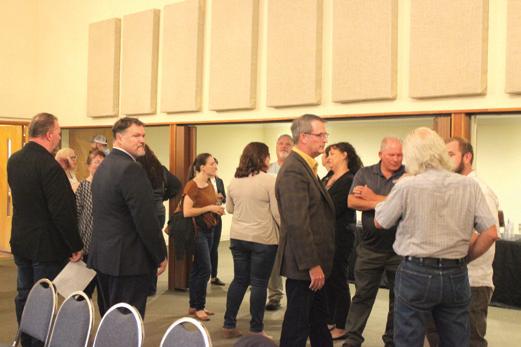
People in the audience converse before hearing Clark’s address.
petition demonstrating strong opposition to NEXT-backed deal in Beaver Drainage District
BRANDON SCHILLING Save Port Westward, Sponsored advertorial
If NEXT’s proposed deal were put to a vote in the Beaver Drainage District, it would fail.
October 21, 2022 (Port Westward, Ore.) - For months, Houston-based NEXT Renewables LLC has been pressuring the Board of Directors of the Beaver Drainage Improvement Company (BDIC) to sign a settlement agreement that would dramatically alter the operation, infrastructure, and water distribution in over 5,700 acres including prime, diked farmland at Port Westward for NEXT to build a major refinery and rail yard. Now locals have organized a petition showing the NEXT-backed settlement would fail if put to a vote.
In March 2022, the BDIC appealed a removal-fill per mit and mitigation scheme put forward by NEXT, citing
concerns about impacts to flood protection levees and drainage systems that pro vide irrigation water to area farmers. In response, NEXT proposed a settlement agree ment that is objectionable to many area residents. The deal would grant NEXT significant control over the BDIC’s operations, require the BDIC to drop its appeal and support NEXT, and open the door to changes that would alter significantly the wetlands, drainages, and agricultural character of the area.
In public meetings so far, most area residents have expressed deep skepticism about NEXT and the pro posed deal.
“This feels like a hostile takeover by an untrust worthy out-of-state corpora tion, aided and abetted by our public Port. The com munity deserves a direct say in this. NEXT knows full well they wouldn’t get peo ple to agree to sign off on altering the drainage district for a massive refinery and its pollution,” said Wendy
oi C es of the C
It’s the econo my, stupid
The Sunday Oregonian endorsed candidate Tina Kotek although they ad mitted, “She leans toward supporting a state education department recommendation to permanently remove a requirement that high school students prove proficiency in math, reading and language arts – opening the door for students to earn diplomas with no more than D’s on their report cards.”
I remember teaching remedial English and math classes in the evenings so my students could pass their Army vocational training classes the following day. What good is an education when a “graduate” can not read or understand spoken English, nor give change for a $20 bill?
The Oregonian also mentioned about her “broken promises, such as her abrupt cancellation of a powersharing deal with Republicans over congressional redistrict ing, mean she has challenges
Schmidt, a resident of the district. “We’ll fight for our community until NEXT goes home to Houston, and we’ll support the BDIC if they put this to a vote or drop the settlement altogether.”
Within a few days of the most recent October meet ing, local residents orga nized a petition opposing NEXT’s proposed deal - and in support of the BDIC’s ongoing legal challenge of NEXT’s permit. NEXT’s proposed, sweeping changes should require a vote and approval by a two-thirds majority of the drainage district members (one vote for each acre). The rapidlygathered petition shows that, if put to a vote of the families, farmers, and other residents within the Drain age District, the NEXTbacked deal would fail.
Residents and families rep resenting over 2,000 acres - more than one-third of the district - oppose NEXT’s proposal and support the BDIC’s legal challenge to NEXT’s removal-fill and mitigation plans. A clear
ommunity

ahead in rebuilding trust.”
After nearly four months of Democrat commercials shoving abortion down voters throats when in fact its not on the ballot; or how their opponents are “too” far right, what about the fact that the majority of Oregonians are not even members of a politi cal party? It’s the economy, stupid.
Joe Turner Columbia City
Support
Tina Kotek
I have been listening to a number of local political debates and discussions.
I do like Tina Kotek and what she is willing to do for our state. Her opponent is scary. It would appear that her opponent, Christine Drazan, does not believe a woman has a right to her own body. She says she believes in right to life but wants to make it easier to get guns and at the same time wants to re-insti tute the death penalty.
Another person is Brian Stout. He is running for State Rep against Anthony Sorace. Stout refuses to debate Sorace and refuses to be interviewed on the radio.
He says he wants to fight “creeping progressivism” and stop schools from teach ing “Critical Race Theory;” something that no school in Oregon teaches or has ever taught. When asked what he would do if elected, he answered “Vote no.” Sorace wants to do something about housing, children and the homeless; all Stout wants to do is “Vote no,” vote no on everything.
It is sad that our Oregon Republicans are so shallow. They are opposed to imagi nary threats and have nothing of real value to add. What is even sadder, is that there is a good chance that many of these empty-headed fools will be elected to positions of power. It is my belief that our very democracy is at stake and if we are not careful, we will lose it all.
William Eagle St. Helens
majority of votes that are not controlled by NEXT or the Port would go against the deal.
“If it were put to the community, the NEXT deal would be voted down. It’s that simple,” said Jas mine Lillich and Brandon Schilling, local farmers who helped organized the petition. “NEXT does not have the support of the community. We hope the Board respects the will of the people who rely on them to operate the drainage infrastructure that supports the agricultural community here. They should scrap the deal altogether.”
Questions remain about whether the NEXT project can proceed as currently proposed. The Oregon Land Use Board of Appeals (LUBA) is set to rule by the end of October on a legal appeal that could overturn Columbia County’s approv al of a 400-car rail yard, viewed locally as a major bait-and-switch for a project that arrived at Port West ward promising little use of
trains and a much smaller rail footprint. In September, Oregon DEQ denied a key Clean Water Act permit for the proposed refinery and rail yard, citing unresolved questions about the propos al’s impacts to water quality and potential runoff into area water resources. Addi tionally, the Army Corps of Engineers isn’t expected to release a draft environmen tal impact statement for the project until early 2023.
The proposed settlement isn’t NEXT’s first attempt to take greater control of the area. In 2021, Robert Rus sel, a NEXT investor who bought land in the district to increase NEXT’s influ ence in the area, attempted to gain election to the BDIC Board. He failed, and his opponent was overwhelm ingly elected.
“NEXT has undermined community trust at every step. They tacked on a huge rail yard to the refinery after promising not to use rail extensively. Then they tried to shoehorn one of their own investors onto
the Drainage District board. Having failed to do that, they continue to browbeat our neighbors into signing off on a project that would completely undermine the agricultural character of this area. This needs to stop,” said Craig Worsham, land owner in the district.
With their president fully recused, the two-member BDIC Board will discuss their DSL permit appeal and a decision on how to address the proposed settlement with NEXT at a special meeting Friday, October 21st at 3pm. Some landowners are considering a legal challenge because they believe a two-thirds landowner vote is required based on BDIC bylaws. Regardless of the outcome, the process has demonstrat ed deep-seated opposition within the local community to NEXT’s refinery, rail yard, and mitigation plan.
For more context, check Save Port Westward’s face book blog about the issue at facebook.com/portwestward.
Poll Last Week’s Results
inflation rising,

spending more
saving
Does a visit by the President of the United States to Oregon influence how you will vote in November?
www.thechiefnews.com Friday, October 21, 2022A4 Yes 8.6% No 91.4% With
are you
and
less? Yes No Weekly Online
•
•V
• •
phone number (only the name mission for them to be posted
Local residents organize
• • s P onsored C ontent • • Get your news directly from your mobile device, tablet, or computer SUBSCRIBE TODAY! 503-397-0116 www.thechiefnews.comONLINE DESKTOP COMPUTERS • MOBILE • TABLETS The Chief
Attention Landowners
We buy branches of red cedar, Port Orford-cedar, and noble;


from
Cell: 360-560-8488 or 360-703-2736
ATTENTION
Camp Host and/or Hosts wanted At the BRAND NEW Rivers Edge RV Resort in Clats kanie. Tasks would include greeting new registered guests as they arrive, up keep of restrooms, checking/cleaning the site once regis tered guests have left, if interested please email riversedgervres ortoregon@gm ail.com or call 503-957-5005.

CHIEF FINANCIAL OFFICER Columbia 9-1-1 Communications District (C911CD) is conducting a hir
ing process for a Chief Financial Of ficer. Apply online at www.columbia911.com/careers. Additional informa tion can be found on our website or by calling 503-3666978.
PORT OF COLUMBIA COUNTY
The Port is hiring for the following positions: Finance Manager, Property Manager. To learn more and apply, please visit our website www.portof columbiacounty. org/job. EOE
CLATSKANIE Mini Storage

Hoarder’s Paradise! 20 sizes, Inexpensive RV Storage, Carports, Hand trucks, Locks, Fully-lined, Insulated, Condensation free, all units lit. On-site Manager 503 728-2051 503 369-6503 Visa/MC/Amex
SAT-SUN 10/22 & 10/23: 9-6
BOTH DAYS: CASH ONLY:
Huge Curated Antique and Vintage 3 Generation Estate Sale. Estate has been in storage for decades. Southern Kentuckyborn, Civil War Great-Grandmother, Plantation Proper Linens and House wares, Handmade Cypress and Cherry Wood Furniture, Dining Room Sets, Beautiful Original Wooden Dental Cabinet, Persian Rugs (Cleaned), Crystals and Rocks, Porch Rockers, Quilts, Antique Ice Cream Molds, Hoosier, Wedgewood, Blue Peony Service for 30, Pottery, Glassware, Art, Costume Jewelry, Holiday, Vintage Christmas, Mid Century Modern Alumi num Christmas Tree, Thanksgiving & Holiday Serveware Galore, Antique Dolls, and so much more:
Public Notices
NOTICE OF SPECIAL MEETING OF THE BOARD OF DIRECTORS OF THE BEAVER DRAINAGE IMPROVEMENT COMPANY, INC.
Notice is hereby given that there will be a special meeting of the Board of Directors of the Beaver Drainage Improvement Company (BDIC), Colum bia County, Oregon. This
CC22-1692
meeting will be held Friday, October 21, 2022, at 3:00 p.m. at the Quincy Grange #321 located at 78314 Rut ters Road in Clatskanie, OR. This meeting is being held to consider and to determine
current and future status of BDIC’s pending appeal of the Department of State Lands removal fill permit ap proval for NEXT Renewable Fuels Oregon, LLC, Applica tion No. 63077-RF, includ
NOTICE OF COMMISSION MEETING
The Clatskanie Planning Commission will meet for a regular meeting on Wednes day, Oct. 26th, 2022, at 7:00 p.m. in the Council Chambers at City Hall, upstairs in the Clatskanie Cultural Center. Agenda
CC22-1693
items include but are not limited to the following: Approval of the minutes of the Sept. 28th, 2022, regu lar meeting and a Public Hearing on an application for a conditional use permit for Clatskanie Masonic
Lodge at 80 SE 2nd Street.
An updated agenda will be available at City Hall by Oct. 21st, 2022. Please visit our website, www.cityof clatskanie.com to access the link to attend the meet ing on Zoom.
NOTICE OF COUNCIL WORK SESSION
The Clatskanie City Council will hold a work ses sion on Tuesday, Oct. 25th, 2022, at 7:00 p.m. in the ballroom of the Clatskanie Cultural Center, 75 South Nehalem St. (2nd floor). The
October 26, 27, 28
The Columbia County Public Health Department will host free vaccination and booster clinics from 12 p.m. to 7 p.m. 26, 27, and 28 at the Columbia County Fairgrounds 4-H Build ing, 58892 Saulser Road in St. Helens. Walk-ins welcome. No appointment necessary. COVID-19 vaccinations include initial doses and boosters of Pfizer, Moderna, and Novavax brands available for ages 6 months and up. Monkeypox vaccinations will be available for ages 18 and up. For more details, call 503-397-7247 or email health@columbiacounty or.gov. See vaccine and testing opportunities at getvaccinated. oregon.gov.
November 8 Annual Veterans Breakfast 8 a.m. to 10 a.m. at Scap poose High School (SHS), 33700 SE High School Way in Scappoose. Food and live music by the SHS Band and Choir to be featured. RSVP requested to khagen@scap poose.k12.or.us or call SHS at 971-200-8005.
November 12 Arts & Crafts Faire
The 48th Annual Arts & Crafts Faire will be held from 9 a.m. to 4 p.m. at Christ Episcopal Church, 35350 E. Division Rd., off Hwy 30, in St. Helens. This faire features unique hand crafted items and a bake table with cookies, pies, breads and more.
purpose of the meeting is to review and revise pro posed Ordinance 706 which will amend the City Code regarding RVs, campers, and non-permanent structures for temporary human habita
November 12 Autumn Bazaar hosted by Mizpah OES
The Autumn Bazaar will be held from 10 a.m. to 3 p.m. at Columbia County Shrine Center, 315 N. 18th St. in St. Helens.

November 12 and 13 Caples House Museum Holiday Bazaar
The Caples House Museum Holiday Bazaar will be held from 10 a.m. to 4 p.m. at 1925 First St. in Columbia City.
November 19 St. Helens Senior Center Christmas Bazaar
The St. Helens Christmas Bazaar will be held from 11 a.m. – 5 p.m. at 375 S. 15th St., in St. Helens.
December 3 Sunset Park Community Church Annual Bazaar Bazaar will be held from 9 a.m. – 3 p.m. at 174 Sunset Blvd. in St. Helens.
December 3 and 4 Columbia City Elementary PTO Holi day Bazaar
The Holiday Bazaar will be held from 9 a.m. – 4 p.m. at Columbia City Elementary School, 2000 Second St. in Columbia City. Stop by for holiday décor and gifts.
December 10 St. Helens Band Patrons Lions Holiday Bazaar
The bazaar will be held from 10 a.m. – 4 p.m. at the St.

tion. Access to the meeting on ZOOM will be posted on the city website, www. cityofclatskanie.com. Please call City Hall at least 48 hours in advance if you need assistance.
ing, without limitation, to vote on the proposed Release and Settlement Agreement under said appeal. If and to the extent necessary and prior to adjournment of the special meeting, the BDIC
CC22-1694
Board may, in its discretion, convene an executive session pursuant to ORS 192.660(2) (h), for consultation with counsel concerning BDIC’s legal rights and duties under the pending litigation and in
connection with the proposed Release and Settlement Agreement. Dated this 19th Day of October 2022. Beaver Drainage Improvement Com pany, Turett Stolzenburg, Director.
IN THE CIRCUIT COURT OF THE STATE OF OREGON FOR THE COUNTY OF COLUMBIA
Probate Department In the Matter of the Estate of RANDALL LEE LILYA, Deceased. No. PB07382 NOTICE TO INTERESTED PERSONS NOTICE IS HEREBY GIVEN that the undersigned has been ap pointed personal representa tive of this estate. All persons having claims against the
estate are required to present their claims, with vouchers attached, within four months after the date of first publi cation of this notice to the personal representative at P. O. Box 459, Rainier, OR 97048, or the claims may be barred. All persons whose rights may be affected by the proceedings may obtain
additional information from the records of the Court, the personal representative or the attorney for the personal representative. Dated and first published October 21, 2022. Amanda Lilya Personal Representative. STEPHEN D. PETERSEN, L.L.C. At torney at Law P. O. Box 459 Rainier, OR 97048.
Helens High School Com mons.
December 17 Spirit of Christ mas in Scappoose
The Christmas market will be open from 9:30 a.m. – 3:30 p.m. in the Scappoose annex gym. Santa and the Grinch will be there throughout the day.
Ongoing Events
Vaccine Clinics Columbia County Public Health is providing primary and booster COVID-19 vac cinations from Moderna, Pfizer, and Novavax, as well as monkeypox. Vaccines will be available from Noon to 7 p.m. on Oct. 26, 27, and 28. Vaccines are available from noon to 7 p.m. today through Friday at the Co lumbia County Fairgrounds 4-H Building, 58892 Saulser Road, St. Helens. People needing transportation may call 503-366-0159 or email CCRiderinfo@columbiacoun tyor.gov.
Caples Evening Programs
The cost for this evening and all our Fireside Chats will be only $5. Caples will be offer ing a different program the third Tuesday of each month at 7 p.m. at 1925 First Street in Columbia City. For more information, call 503-3975390.
Lower Columbia River Watershed Council Meets at 7 p.m. every other second Tuesday. Meetings
are currently held electroni cally by Zoom. For more in formation, contact Council Coordinator Allan Whiting at E-mail: allan@whitingenv. com, or call 503-789-9240. Visit the council’s website for agenda postings and Zoom at www.lowercolum biariver.org/events-page.
The Rainier Oregon His torical Museum (ROHM) is open from noon - 4 p.m. Saturday (except major holidays weekends). ROHM is located inside Rainier City Hall at 106 W B Street. For more information, call 360-751-7039.
The Rainier Public Library is open from 9 a.m. to 4:30 p.m. Tuesdays, Wednesdays and Thursdays, 10:30 a.m. to 4:30 p.m. on Fridays and 10:30 a.m. to 2:30 p.m. on Saturdays. It will be closed Sundays and Mondays.
Avamere at St. Helens hosts a Virtual Demen tia Support Group – 3rd Wednesday of each month from 2 to 3 p.m. For more details, contact Jenny Hicks/Avamere at St. Helens at 503-366-8070.
To list an event in the Community Calendar, email details with a phone num ber that may be published, to chronicleclassifieds@ countrymedia.net, or call 503-397-0116.
Imogene Ruth Watts of Washougal, Washington, passed away peacefully at home on Oct. 3, 2022 at the age of 92. Imogene was born on Aug. 7, 1930 in Hines, Minnesota. Her par ents, Lawrence and Minnie Johnson, moved Imogene and her four brothers and three sisters to Clatskanie, Oregon, when she was two years old.

Imogene graduated from Clatskanie High School in 1948. In 1948, Imogene married her high school sweetheart John Watts and moved to Meridian, Mis sissippi. Over the years, Imogene and John’s family of four boys and three girls lived in Clatskanie, Oregon, South Bend, Washington, Meridian, Mississippi and Winslow, Arizona before settling in Washougal, Washington in 1971. Imo gene attended St. Thomas Catholic Church in Camas, Washington.
She was an accom plished seamstress and cre ated clothing for herself and the family. Imogene enjoyed cooking southern dishes and preparing pistachio dessert and cornflake cookies for everyone. Her home was always decorated reflecting her love for celebrating the holidays. Imogene accom panied her husband, John, who was an avid private pilot on numerous cross-
United States.
Imogene will be loved and missed by surviv ing sons, Mike (Jill), Tom (Sharon), Rick (Suzanne) and Roger (Julia); daugh ters, Teresa (Chip), Shelley (Greg) and Loretta (Ed); 24 grandchildren; 38 greatgrandchildren; and one great-great-grandchild. She was predeceased by her husband of 71 years, John; parents; brothers, Emery, Ernie, Rodney and Ronnie; and sisters, Ar lene, Lorraine and Laverne. Imogene had a great deal of pride in her husband and family. A celebration of life will be conducted in Clats kanie, Oregon.
www.thechiefnews.comFriday, October 21, 2022 A5 Marketplace Just call 503-397-0116It’s easy to place a classified ad in The Chief Listings are updated daily at www.thechiefnews.com 150 Misc Services 502 Help Wanted 502 Help Wanted
we will be paying per pound. We will be buying
September to November. For more information, contact us.
We buy CEDAR and NOBLE boughs. What we pay depends on the quality of your trees. We do all the work and won’t damage your trees.
LAND OWNERS For more information contact Jorge Martinez (360) 751-7723
NO EARLY CALLERS PLEASE ANOTHER MASSIVE ESTATE SALE AT THE BIG RED BARN ADJACENT SCAPPOOSE CREEK INN: Got Cedar and Noble trees? If so, we want your boughs! Paying 17 cents per pound. We do all the work, with over 20 years of experience. Call Crystal at 360-957-2578 or Ricardo 360-751-1045 860 Storage buy and sell in the classifieds Call The chief at 503-397-0116 to place your view classified ads in the Chief and online at thechiefnews.com Need a job? check the classifieds online at www.thechiefnews.com to find your perfect job offer Place your ad in The Chief. Email Jon at chronicleads@countrymedia.net. • •C ommunity e V ents • •
Imogene Ruth Watts Aug. 7, 1930 ~ Oct. 3, 2022 • • o bituaries • • CC22-1695
The Public Notice deadline is Wednesdays by noon. Late submissions are not guaranteed to make it into the paper.
Pet parenting style influences dog behavior, OSU finds
prior experiences of the dog.
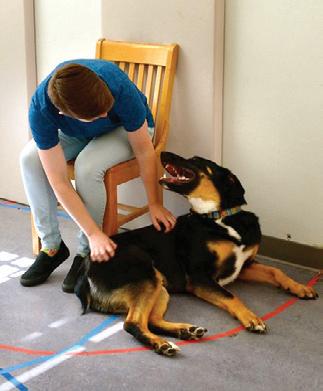
Dogs with owners who have high expectations and are highly responsive to their dog’s behavior and needs are more social, more secure when away from their owners and more persistent problem solvers, an Oregon State University study found.
“We found that pet parent ing style does predict patterns of dog behavior and cogni tion,” said Monique Udell, an associate professor at Oregon State and an expert on dog behavior. “This an important finding because it suggests that dog owners who take the time to understand and meet their dog’s needs are more likely to end up with secure, resilient dogs.”
The behavior and cognition of dogs have drawn increasing scientific interest during the past several decades, with a lot of research focused on how dog behavior is influenced by the home environment and
Now researchers are begin ning to study the bond owners have with their dogs and how this influences dog behavior. Many pet care companies have picked up on this bond and are now marketing their products to “pet parents” instead of pet owners.
In many ways, research on human-dog relationships paral lels human psychology re search, said Lauren Brubaker, a co-author of the paper who earned her doctorate in 2019 while working in Udell’s lab.
Parenting behavior is considered an important factor in a child’s development and has been found to influence many things, including mental health, intellectual success, social cognition, attachment and job performance, said Brubaker, who now works as a behavioral scientist.
The researchers’ study, published in the journal Ani mal Cognition, is one of the first to look at how the quality of a human-dog relationship may influence a dog’s per
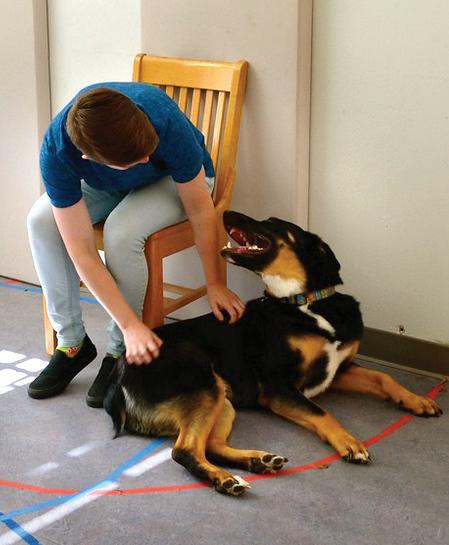
formance on behavioral and cognitive tests.
Brubaker recruited 48 dog owners and gave them a pet parenting style survey. Using the survey data, dog own ers were divided into three categories, which are similar to those used in human parenting research: authoritative (high expectations, high respon
REPORT chiefnews@countrymedia.net
Portland State University Infrastructure Resilience and Risk Senior Advisor Yu mei Wang is the lead author of the 2013 report highlight ing this risk.
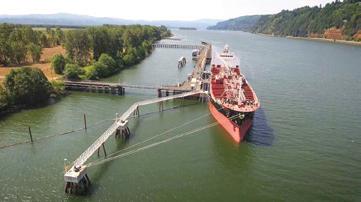
“Oregon’s fuel tanks are vulnerable to earthquakes,” Wang said. “These facility improvements are essential to protect Oregon and sup port rapid recovery from the megaquake we know is coming to the Pacific North west.”
implement the fuel tank seismic stability require ments enacted earlier this year in Senate Bill 1567. This bill requires opera tors of large capacity fuel handling facilities to assess their facility’s ability to withstand a magnitude 9 Cascadia earthquake event and propose mitigation to minimize risk.
ness.)
The dogs were then brought to Udell’s HumanAnimal Interaction Lab, where they participated in three behavioral tests.
The first test evaluated the dogs’ attachment to their
program
register in advance for the meeting. After registering, you will receive a confir mation email containing information about joining the meeting.
Wednesday, Oct. 26, 2022, 9 a.m. to 12:15 p.m.
• Join via Zoom: ordeq. org/ftss-rac1

owner. First, the owner and the dog were situated in the same room, with the owner interact ing with the dog when it came close. Then the owner left the room and finally returned, reuniting with the dog.
The second tested sociabil ity by having the owner and an unfamiliar person in the room with the dog and studying the interactions.
The third test involved the dog attempting to get a treat from a puzzle with different levels of help from the owner.

The researchers’ findings included:
• Dogs with authoritative owners were the most likely to have secure attachment styles, were highly responsive to social cues, showed a proxim ity-seeking preference towards their owner compared to an unfamiliar person and were more independently persistent in the puzzle task. Finally, only dogs in this group successfully solved the puzzle task.
• Dogs with authoritarian owners were more likely to
COLLISIONS
From Page A1
salvaging deer or elk struck by a vehicle has been legal in Oregon. Salvagers are required to fill out a free online permit available at https://myodfw.com/articles/ roadkill-salvage-permits.
be insecurely attached to their primary caretaker when com pared to dogs in the authorita tive group. These dogs also spent more time seeking the proximity of their owner com pared to the unfamiliar person in the sociability test.
• Dogs with permissive owners followed the social cues of the unfamiliar person but not their owner. The dogs spent comparable time in proximity with their owner regardless of whether their owner was attentive or not. These dogs were also less per sistent at the solvable task in the human-neutral condition.
“This research shows that the pet dog-human caretaker bond may be functionally and emotionally similar to the bond between a human parent and their child,” Brubaker said.
Sean Nealon is a news editor at Oregon State Uni versity’s University Relations and Marketing Department. He may be reached at sean. nealon@oregonstate.edu.
The Oregon Department of Environmental Quality (DEQ) has announced its first rules advisory commit tee meeting to discuss what rules will govern the new Fuel Tank Seismic Stability program.
The meeting, set for 9 a.m. Oct. 26, will include discussions on DEQ’s pro posed approach to the rules, what it means to minimize risk and how to ensure envi ronmental justice is incorpo rated into the process.
“These rules will be critical for protecting people and the environment and keeping communities safer in the event of a major earthquake,” DEQ Fuel Tank Compliance Manager Mike Kortenhof said.
A rules advisory commit tee is a group of people who provide input and sugges tions during the develop ment of new rules. The com mittee members represent a range of interested groups, including neighborhoods near the fuel tanks, local emergency management, environmental organiza tions, local government and regulated facilities – see full list of members below.
DEQ’s Fuel Tank Seis mic Stability Program will evaluate the vulnerability of fuel tank systems to earth quakes and require facilities to develop plans to mini mize risk.
These rules will apply to all facilities that can store over 2 million gallons of fuel in Lane, Multnomah and Columbia counties. All committee meetings are open to the public to listen. DEQ will post meeting in formation and materials on the Fuel Tanks and Seismic Stability rulemaking web page two weeks before each meeting. Join DEQ’s email list to get email updates about the rules process.
DEQ plans to hold a total of three committee meetings to reach its final proposed rules. Depending on committee discussions, DEQ may add meetings or make existing meetings longer. After the committee work is complete, DEQ will put the rules out for public comment and then present them to the Environmental Quality Commission for adoption.

This work is a result of Senate Bill 1567, passed in 2022. DEQ will also develop this program in consultation with the Or egon Department of Geol ogy and Mineral Industries and the Oregon Department of Energy.
Rules advisory committee members
• Amit Kumar, City of Portland Bureau of Devel opment Services
• Chris Voss, Multnomah County Emergency Manage ment
• Doug Lenz, Columbia Pacific Bio-Refinery
• Holli Johnson, Western States Petroleum Associa tion
• Jacque Wurster, Ready NW Eugene
• Lindsey Hutchison, Willamette Riverkeeper
• Nancy Hiser, Linnton Neighborhood Association
• Paul Edison-Lahm, NAACP Environmental Justice Committee
• Peter Dusicka, Portland State University
• Randy Groves, City Council for City of Eugene
• Tyler Gilligan, Kinder Morgan Pipeline
• Warren Seely, Beaver Drainage District

Summary
DEQ is beginning the rulemaking process to
DEQ’s goal is to have final rules adopted by fall 2023 to meet the statu tory deadline of completing facility assessments by June 1, 2024.

• Join via phone: (253) 215-8782 | Meeting ID: 816 0802 7330 | Passcode: 644638
People not on the steer ing committee may attend to observe but will not be able to participate. The commit tee may designate time on the agenda to hear com munity comments as time allows. Once DEQ develops proposed rules, they will go through a public comment process, including a public hearing.
Additional information
Since the program kicked off in January 2019, 5,027 permits have been issued. The most permits have been issued for black-tailed deer in Western Oregon, where there are more drivers.
Salvagers are also required to bring the head and antlers of all salvaged deer and elk to an ODFW office for testing within five days. This is so ODFW can test the animal for Chronic Wasting Disease (CWD), a fatal neurological disease that ODFW has been on the lookout for since it first appeared in the late 1960s in Colorado.
symptoms (which include loss of balance, drooling, emaciation or wasting and eventual death). Testing apparently healthy deer and elk early in the course of the disease when they are not showing symptoms is the most effective method to catch the disease before an animal has spread the disease across the landscape and to other animals.
“With the disease now much closer to the state’s borders, we just want to remind roadkill salvagers about the mandatory test ing requirements,” ODFW Wildlife Veterinarian Dr. Colin Gillin said. “The more animals the state tests, the more certain ODFW can be that the disease is not in the state. If it is detected, ODFW can implement its response plan to contain the spread of the disease.”
Stakeholder involvement

DEQ has appointed an advisory committee for this proposed rulemaking. The first virtual committee meet ing will take place at the date and time below. Please
To learn more about this rulemaking, go to the Fuel Tank Seismic Stabil ity webpage or sign up to receive future email or text notifications.
You can also obtain more information about this rule making by contacting Svet lana Lazarev, at Svetlana. lazarev@deq.oregon.gov.
The disease has never been detected in Oregon’s wildlife. But CWD testing regulations have taken on new urgency after it was detected in several wild deer and elk in northwest Idaho, about 30 miles from Or egon’s border, late last year.
Infected animals can spread the disease for sev eral years before showing
Test results are expected to take up to a month. If an animal ever tests positive for CWD, a biologist or veteri narian will phone the person who salvaged that animal directly.
Negative test results will be posted for roadkill sal vagers to individually check online at https://www.dfw. state.or.us/wildlife/health_ program/CWD-testing. To find your result, enter RSP before your permit number (e.g. RSP5001).
www.thechiefnews.com Friday, October 21, 2022A6
Solution for
the Oct. 14, 2022
crossword puzzle
• •C rossword s olutions • •
SEAN NEALON Chronicle Guest Article
Courtesy photo from OSU
Researchers are beginning to study the bond owners have with their dogs and how this influences dog behavior.
These rules will be criti cal for protecting people and the environment and keeping communities safer in the event of a major earthquake.
~ Mike Kortenhof, DEQ
Oregon’s Fuel Tank Seismic Stability
STAFF
Courtesy photo
WE’RE HIRING! • Competitive Salary with 4-Tier Pay Progression • Profit Sharing Bonuses • Full Health Care Package $1,500-$2,000 SIGN-ON BONUS Become part of the Berry family around the globe. We foster workforce development to support and encourage our knowledgeable enployees. With more than 295 locations- we are pushing the limits of innovation and moving our industry forward. APPLY AT: WWW.BERRYGLOBAL.COM/CAREERS