Gov. Kotek visits Columbia County
also met with and took questions from a fourth-grade class about the work the governor does, ways she can help, and more.
It is called, One Oregon Listening Tour, and Governor Tina Kotek brought the third stop of her tour to Columbia County Wednesday, March 22.
Kotek participated in three community conversations on the topics of education, mental health and recovery, and housing and homelessness.
“I heard from some of our youngest Oregonians who care about each other and their future,” Kotek said. “It puts a fine point on the need to invest in our children’s education so they have the chance to thrive. I was also impressed by the community service providers working hard to help their neighbors despite resource challenges and a large service area. They make up for those challenges through strong relationships across the community and their incredible ingenuity.”
The day started at Vernonia Elementary School where Governor Kotek met with first graders, read the picture book “Be Kind,” and discussed the importance of reading and kindness with the students. She

Kotek then led a roundtable discussion with school administrators and teachers. The discussion centered on efforts she is making to fund summer education and enrichment programs, with a focus on improving childhood literacy, and the increased mental health challenges facing students.
In St. Helens, Kotek toured Columbia Community Mental Health (CCMH), including a crisis stabilization center being developed on the organization’s campus.
CCMH offers holistic wraparound services from crisis intervention to residential and community services. In a subsequent behavioral health discussion, area providers noted the positive impact of the Measure 110 funding they received to expand service capacity, the successful work their outreach teams are doing, and the workforce challenges in a rural community.
Following the visit to CCMH, the Governor had lunch in St. Helens with Mayor Rick Scholl and discussed local economic develop-
ment opportunities and the ongoing efforts the city is leading to update its historic downtown.

Kotek ended the day with the Community Action Team (CAT), a community organization that works to provide supportive services for veterans, help people pay rent, find permanent housing for people experiencing homelessness, and more. CAT has 16 housing units on site to support Oregonians transitioning out of unsheltered homelessness and has successfully supported 45 individuals to reach permanent housing. The Governor heard about how CAT delivers services, followed by a roundtable discussion with regional service providers about the intersection between behavioral health and homelessness, social determinants of health, and the need to support veterans.
Kotek has said she will visit every county in Oregon within her first year in office through the “One Oregon Listening Tour” to foster trust and build strong partnerships across the state to get results for Oregonians, with a focus on housing and homelessness, mental health and recovery, and early learning and education.
Historic housing, homelessness legislation approved
Affordable Housing and Emergency Homelessness Response Package, House Bills 2001 and 5019, have passed the Oregon Senate with bipartisan support, following passage in the Oregon House.

What House Bill 2001 and House Bill 5019 will do:
• Fund the governor’s homelessness state of emergency to allow for a statewide and coordinated response to homelessness ($130 million)
• Extend homelessness support to rural and coastal Oregon ($27 million)
• Provide support for homeless youth by connecting them with rental assistance, shelter, culturally specific services and health care ($25 million)
• Increase production of affordable modular housing in Oregon ($20 million)
• Improve on-site workforce housing for farmworkers ($5 million)
• Grant renters faced with eviction for non-payment more time to access rental assistance and other services
• Make affordable housing production the state’s top planning priority and ensure the state will work with local partners to identify effective strategies and tools to increase production
“The Senate and the entire Legislature should be proud of what we achieved with this package,” Senate President Rob Wagner (D-Lake Oswego) said. “Faced with a statewide housing and homelessness crisis, we worked across the aisle and with our partners in the House and Governor’s office to put Oregon on a path toward a future where housing is available and affordable for everyone.”
House Bill 2001 and House Bill 5019 commit more than $200 million toward increasing Oregon’s housing supply, helping rehouse and shelter people experiencing homelessness and preventing future homelessness.
The package addresses the immediate needs facing Oregon communities and lays the groundwork for long-term solutions, Wagner said.
Sen. Dick Anderson (R-Lincoln City), was a co-chief sponsor of HB 2001.
“This bill highlights the value of taking a more collaborative approach between the public and private sectors,” Anderson said. “The state needs more housing of all types, and
we need it now. We must engage all of the development community to unlock capital and accelerate our housing supply if we are going to meet the ambitious production goals set forth by the Governor.”
“The people of Oregon need us to act,” Sen. Aaron Woods (D-Wilsonville) said. “We cannot allow the status quo of our homelessness and housing crisis to persist. This bill is critical to delivering real, meaningful change for communities in every corner of our state.”
Homelessness and housing availability are statewide problems, according to Woods. The package provides resources for each community around the state to address their specific affordable housing crises
Sen. Majority Leader Kate Lieber (D - Beaverton) issued a statement saying housing and homelessness are two of the most urgent crises facing our state.
“The people of Oregon need results now, and Senate Democrats are delivering,” Lieber said. “I am incredibly proud of our caucus members who worked to build consensus and pass this significant legislation. As the chair of the Senate Housing and Development Committee, Senator Kayse Jama ran an open and inclusive process that brought forward meaningful solutions to some of Oregon’s toughest problems. This
and make our communities more safe. It’s a strong foundation that we can build on to make Oregon work for everyone.”
“This is not a Republican or Democrat solution. This is an Oregon solution,” said Sen. Kayse Jama (D-Portland), co-chief sponsor of HB 2001, said. “This package is just a start, laying a foundation for what’s to come. This is a down payment on our longer-term investment in safe and affordable housing for every Oregonian.”
Gov. Tina Kotek issued a statement commending the Oregon Legislature for passing bipartisan legislation to address the state’s housing and homelessness crisis, including the urgent funding she proposed in response to the homelessness state of emergency that she declared on her first full day in office.
“I am deeply grateful to the housing providers, developers, landlords, advocates, impacted communities, and elected leaders on both sides of the aisle who have answered one of Oregon’s most pressing calls for help by supporting this response package,” Kotek said. “I want to extend a special thanks to the House Speaker Dan Rayfield and Senate President Rob Wagner for making sure this
Mass casualty impact, recovery preparedness
In 2023, there have already been 9,169 total gun violence deaths in the United States, according to the Gun Violence Archive. According to the source, there have already been
Opinions ................... A4
Community Events ... A4
Classified Ads ......... A5
Legals ....................... A5
Obituaries ................. A6
Sports.........................A8

Contact The Chief
Phone: 503-397-0116
Fax: 503-397-4093

chiefnews@countrymedia.net
1805 Columbia Blvd., St. Helens, OR 97051
117 mass shootings and 11 mass murders committed with firearms this year.
A mass shooting is characterized as having “a minimum of four victims shot, either injured or killed, not including any shooter who may also have been killed or injured in the incident,” according to the Gun Violence Archive. A mass murder is classified as an incident where four or more people are killed.
The Oregon Department of Emergency Management (OEM) has launched a 9-part Mass Casualty Impact and Recovery virtual seminar series. The program is the result of federal, state, and private sector partnerships aimed at raising awareness and increasing knowledge for companies and organizations about the impact and recovery of an active shooter or other mass casualty events.
To understand how Columbia County’s preparedness for an active shooter scenario, the Chief contacted the Columbia County Emergency Management team, St. Helens city officials, and the Columbia County Sheriff’s Office. (CCSO).

“The county’s active shooter preparedness has several facets,” Columbia County Public Information Officer Mark Pacheco said. “The county requires that its employees complete Active Shooter Training every two years. The Columbia County Sheriff’s Office staff will provide the county’s training sessions this year.”
In October of 2022, the St. Helens Police Department sent one of its officers to a 40-hour active shooter
response training program, Com munications Officer for St. Helens Crytal King said.
recognized by the FBI and the cur riculum is the adopted standard of several states and major cities across the United States,” King said. “The training our St. Helens officer received will now be used to train our other officers in the curriculum standards.”
nationally accredited “Train the Trainer” course for active shooter response. Several agencies in Columbia County, as well as others from across the country, attended this class. Since then, CCSO train ers have taught classes throughout Columbia County, including at the City of St. Helens and the St. Helens School District, according to Pacheco.
lumbia County Emergency Manage ment Department has also instated an Incident Preparedness Plan (IPP) to better define the county’s responses during all hazards, according to Pacheco. A Reunification Plan, which could be necessary after a mass shooting event, will be included in the upcoming Mass Care Plan per the IPP.
While prevention and preparedness are critical to handling active shooter and mass shooting incidents, collaboration across agencies is vital to best handle these incidents. On the county level, CCSO is working with several local fire districts on response planning for active shooter situations. In addition, CCSO is part-
to provide Active Shooter Preparedness Training.
“The EM Department has monthly meetings with county commissioners, local city management, CCSO, Fire Districts, and 9-1-1 Communications to maintain the close working relationships critical to emergency response,” Pacheco said.
For St. Helens, the St. Helens Police Department, the City of St. Helens, and the St. Helens City Council are working to ensure the safety of the city and are collaborating with other agencies and community partners.
“After 9/11, national response
federal level using a universal Incident Command System (ICS). This standardized response system is now used by all agencies across the nation, including all local, state, and federal agencies,” King said.
“It allows emergency responders to work more easily with each other using a shared system. ICS is scalable for any incident, and all emergency responders, including police, fire, medical, public works, and other government agencies, are trained to use ICS.”
In the case of an active shooter
Serving the Lower Columbia Region since 1891 VOL. 131, NO. 46 $1.50 FRIDAY, MARCH 24, 2023 CMHS sports Page A8 Cornelius Pass cameras Page A3
Courtesy photo
Governor Tina Kotek was expected to sign the legislation into law.
JEREMY C. RUARK Country Media, Inc.
WILL LOHRE Country Media, Inc.
Jeremy C. Ruark / Country Media, Inc.
See OEM Page A3
Law enforcement officers frequently conduct active shooter training sessions to be prepared for such an event.
Courtesy photo
The Governor visited Vernonia Elementary School. See more photos with this story at thechiefnews.com.
STAFF REPORT Country Media, Inc.
beer, wine price hike killed
temporarily and marginally raising beer and wine taxes to fund immediate access to detox and treatment, pay for primary prevention programs and provide law enforcement with increased resources to address Oregon’s addiction crisis.
Oregon’s beer and wine taxes are second lowest in the nation and have not been raised by the Legislature in over 40 years., according to Oregon Recovers.
Oregon has the 5th highest alcohol addiction rate in the country and six Oregonians die each day due to alcohol.
efforts to reduce underage and binge drinking.”


Alcohol is a toxic, addictive carcinogen and binge drinking costs the state economy $4.8 billion annually, according to the release.
sumption. The bottom line is the decision to kill this important bill prevents the state from saving lives.”
Metro Creative Connection
The temporary measure to increase beer and wine prices will reduce alcohol addiction from 12% to 5% and fund immediate access to addiction treatment, according to the state representatives.
STAFF REPORT Country Media, Inc.
That is the equivalent to three constituents dying each month in each House district,” Oregon Recovers Executive Director Mike Marshall stated in a release.

“Big Alcohol, organized by lobbyists for the beer and wine distributors, actively opposed the legislation, fearing it would diminish their profits,” Marshall said. “Comparatively, the House is moving forward with legislation to promote distilled liquor consumption and reimburse liquor store owners for diminished profits due to
“The state is in a crisis due to alcohol and it’s time for the Oregon Legislature to acknowledge that they have a drinking problem,” Marshall said. “Our elected leaders are ignoring that their constituents are dying from alcohol at alarming rates and instead spending their limited time advancing legislation to financially benefit Big Alcohol.”
“This decision once again demonstrates that the Oregon Legislature is not serious about dealing with the profound racial health inequities in this state,” Cielo Treatment Center Executive Director Solara Salazar said. “Native Americans die at 2 and half times the rate of white people due to the consumption of alcohol. Black and Latino Oregonians are more prone than white Oregonians to developing cirrhosis of the liver due to alcohol con-
The House Committee on Behavioral Health & Health Care has argued that there was not time to have a hearing on the Alcohol Harm Reduction Act, given the volume of legislation they are considering. The Committee did schedule hearings on the following bills:
• HB 3140, removes requirement Public Employees Benefit Board & Oregon Educators Benefit Board solicit new bids for actuarial or technical support every three years.
• HB 2420, directs Oregon Health Authority to adopt rules allowing county registrar to issue and sell records of live births and deaths occurring in any county.
While both are important issues neither bill is designed to address a crisis and save Oregonians’ lives.
At the request of the alcohol industry, the legislature has held hearings and voted to advance the following bills:
• HB 2976, at the request of Oregon Distillers Guild, will redirect General Fund resources to promote liquor consumption and block Governor Kotek’s effort to raise the current bottle fee from $0.50 to $1.
• HB 2502, will entitle liquor store operators to significant public funds if any laws designed to lower harmful alcohol consumption reduce their sales.
• SB 616, at the request of Oregon Brewers Guild, more than doubles the amount of beer and cider allowed for direct shipment to homes with children
“It’s a sad day in Oregon when the Legislature has an opportunity to address one of the largest Behavioral Health crises affecting our residents and does not give it the time of day,” Oregon Recovers Co-Chair Teri Morgan said. “People are dying and we have a strategic way to start changing that laid out in this bill. Honestly, this should be one of their TOP priorities. It makes no sense to me.”
Steadfast home after counter-narcotics patrol
The Coast Guard Cutter Steadfast and crew have returned to their Astoria home port following a 69-day counter-narcotics patrol in the Eastern Pacific Ocean.

Steadfast’s crew disrupted the flow of illegal narcotics on three separate occasions during their patrol preventing a combined total of more than 7,500 pounds of cocaine, valued at $85.6 million, from reaching the U.S. maritime borders.
The crew steamed more than 12,000 nautical miles conducting training, law enforcement missions, providing search-and-rescue coverage, and conducting helicopter operations while patrolling the waters from their Astoria home port to international waters off the coast of Central America.
Partnering agencies
The Steadfast deployed with a Jacksonville, Florida, based Helicopter Interdiction
Tactical Squadron MH-65
Dolphin helicopter and air crew along with temporarily assigned crewmembers from the Coast Guard Cutter Har riet Lane (WMEC 903), and soon-to-be-commissioned
Coast Guard Cutter Argus (WMSM 915).
During nighttime patrol operations, Steadfast person nel were notified by a Mari time Patrol Aircraft (MPA) of a suspected narcoticssmuggling vessel transiting international waters. Stead fast personnel launched an Over-the-Horizon (OTH) crew and boarding team who interdicted the vessel after a multi-hour pursuit. The suspected smugglers jettisoned contraband, resulting in the disruption of 2,260 pounds of cocaine, valued at $25.6 million.
Additionally, Steadfast’s crew tracked another suspected narcotics-smuggling vessel with the assistance of
Construction jobs
a Mexican Navy (SEMAR) surveillance aircraft and aircrew. Steadfast personnel launched an OTH boat crew and HITRON helicopter aircrew while the Mexican MPA tracked the vessel. Steadfast’s small boat and helicopter crews interdicted
the suspected narcoticssmuggling vessel and seized 3,300 pounds of cocaine valued at $37.5 million.
“The successful coordination between a U.S. Coast Guard cutter and Mexican MPA was a significant step in advancing our strategic
partnerships in combatting the flow of illicit narcotics in Eastern Pacific,” Coast Guard Cmdr. Commanding Officer Brock S. Eckel said.
The next day, Steadfast crew launched an OTH boat crew and HITRON aircrew to intercept another suspected smuggling vessel. The aircrew located the suspected smuggling vessel and worked with a nearby Mexican Naval vessel to vector in a Mexican Naval helicopter. This multinational effort resulted in the seizure of 1,984 pounds of cocaine valued at $22.5
“From battling heavy seas off the Oregon and California coasts, to overcoming equipment casualties, and multiple smuggling vessel interdictions in the darkest of nights, the determination, resilience, and professionalism of the Steadfast crew was simply exceptional,” Eckel said.
“The crew’s operational success was matched only by the strengthening of international and inter-agency
relationships along the way. Steadfast’s crew once again proved their proficiency in working with partner nations jointly executing the counternarcotics mission successfully.”
Unity of effort
The fight against drug cartels in the Eastern Pacific Ocean requires unity of effort in all phases from detection, monitoring, and interdictions, to criminal prosecutions for these interdictions by United States Attorney’s Offices throughout the country.
Commissioned in 1968, Steadfast is one of two 210-foot medium endurance cutters homeported in Astoria. The cutter and crew deploy along the western seaboard of North and Central America enforcing living marine resource laws and regulations, detecting and interdicting narcotics and migrant smuggling, and conducting search-and-rescue operations.
Construction employment rose sharply in February, reaching another record high of 122,700.
The industry added 7,500 jobs, or 6.5%, over the past 12 months. Since February 2022, all published components of construction are up between 3.8% and 9.3%, according to the Oregon Employment Department.

The component that grew the fastest was building equipment contractors, which added 3,000 jobs, or 9.3%, in that time. Both components within construction of buildings grew close to 4%, with residential building construction up 800 jobs, or 3.8%, and nonresidential building construction up 500 jobs, or 4.3%.
Government employment
rebounded above to its prepandemic high of early 2020, as it rose to 302,100 jobs in February. Local government education rose to 139,100 jobs in February, which was 6,500 jobs above its year-ago figure, and is now nearly back to its February 2020 total of 141,900. Local government, excluding education slowly expanded over the past eight months; it employed 97,700 in February.
In Oregon, nonfarm payroll employment declined by 100 jobs in February, fol-

ment.
Job losses in February were largest in manufacturing (-1,300 jobs) and financial activities (-1,000). Gains were largest in construction (+1,400 jobs), private educational services (+1,000), and government (+700).

Nondurable goods manufacturing experienced more job cuts than normal in both January and February. The industry employed 57,800 in February, which was close to its February totals of the prior two years. Food manufacturing comprises about half of nondurable goods manufacturing employment and, at 27,800 jobs in February, was close to its February totals of each of the past seven years.
Meanwhile, durable goods manufacturing hasn’t gained much ground lately, as it has hovered close to 137,000 jobs during the past eight months. Recent gains in machinery manufacturing have been offset by declines in computer and electronic product manufacturing.
Oregon’s unemployment rate was 4.7% in February, little changed from 4.8% in January. Oregon’s unemployment rate averaged 4.8% over the past six months. In February, the U.S. unemployment rate rose to 3.6%, from 3.4% in January.
www.thechiefnews.com Friday, March 24, 2023 A2 North Columbia County’s trusted local news source WE’RE HIRING! • Competitive Salary with 4-Tier Pay Progression • Profit Sharing Bonuses • Full Health Care Package $1,000+ SIGN-ON BONUS Become part of the Berry family around the globe. We foster workforce development to support and encourage our knowledgeable enployees. With more than 295 locations- we are pushing the limits of innovation and moving our industry forward. APPLY AT: WWW.BERRYGLOBAL.COM/CAREERS save more. STAY FLEXIBLE . Ask about our rates on money market accounts, checking, IRAs, & more 800.773.3236 waunafcu.org FEDERALLY INSURED BY NCUA Proposed
The Oregon House Behavioral Health & Health Care committee chose not to schedule a hearing for HB 3312, the Alcohol Harm Reduction Act by the Friday, March 17 deadline, effectively overlooking and killing the legislation. Sponsored by Rep. Tawna Sanchez, Rep. Travis Nelson and Rep. Lisa Reynolds, the Alcohol Harm Reduction Act was designed to reduce Oregon’s alcohol addiction rate from 12% to 5% by
STAFF REPORT Country Media, Inc.
Courtesy from the USCG
Steadfast’s crew prevented more than 7,500 pounds of cocaine, valued at $85.6 million, from reaching the U.S. maritime borders.
STAFF REPORT Country Media, Inc.
Metro Creative Connection
State issues first psilocybin license
The Oregon Health Authority (OHA) has issued the state’s first psilocybin license as part of the nation’s first regulatory framework for psilocybin services.
The manufacturer license was issued to a woman-owned business, Satori Farms PDX LLC, owned by Tori Armbrust.


As the nation celebrates Women’s History Month, this woman-owned business will bring communities one step closer towards accessing psilocybin services in Oregon, according to a release from the OHA.
“We congratulate Tori Armbrust of Satori Farms PDX LLC for being issued the first psilocybin license in Oregon’s history and for representing women leading the way for the emerging psilocybin ecosystem,” Oregon Psilocybin Services Section Manager Angie Allbee said. “We are committed to fostering an inclusive partnership with our regulated community to ensure safe, effective and equitable psilocybin services throughout the state.”
The role of Oregon
OEM
From Page A1
or mass shooting event, the agency with jurisdiction over the affected area would take the lead in response; however, law enforcement personnel county-wide will respond to assist. Pacheco said that Emergency Management would support the local lead agency response by activating the Emergency Operations Center (EOC) to coordinate Red Cross, ODHS, Community Action Team, and other efforts to support the incident commander.
“Law enforcement response is specific to the jurisdiction where an incident occurs. The lead agency in an incident where police are the primary responders is the law enforcement agency where the incident occurs,” King said. “Depending on the type of situation, multiple law enforcement agencies and other emergency response providers
Psilocybin Services (OPS) is to license psilocybin facilitators, manufacturers, service centers and laboratories, while ensuring that those licensees and their workers comply with Oregon law. OPS began accepting applications for the four license types on January 2, 2023. OPS expects to issue additional licenses to laboratories, service centers and facilitators in the coming months. Anyone interested in accessing psilocybin services can find service centers and facilitators once they are licensed on the OPS Licensee Directory website. The directory will contain licensee names and contact details for all licensees that have requested to have their information published. This may also provide opportunities for licensed psilocybin businesses to connect.
Under the Oregon Psilocybin Services Act, or ORS 475A, a client 21 and older may access psilocybin services and will be required to complete a preparation session with a licensed facilitator before participating in an administration
may be involved in response efforts which are coordinated under the umbrella of the lead agency.”
For those injured in a shooting incident, Columbia River Fire & Rescue is the emergency medical service agency for Columbia County. With no hospital in the area, their response would be how victims would get the medical attention they need.
“Initially, law enforcement agencies would work with responding fire and medical personnel to extract anyone who needs medical attention. Then, medical transportation would deliver those individuals to the closest hospitals capable of providing the required medical assistance,” Pacheco said.
“Finally, Emergency Management will work with state and local resources to ensure that affected county residents and their families receive support during their recovery.”
For notifications and information about an incident, King encourages the public to sign up for the alerts through
session. The client will only access psilocybin at a licensed service center during an administration session. Integration sessions will be made available after administration sessions to further support clients.
Psilocybin products must be cultivated or processed by licensed manufacturers and tested by licensed, accredited testing laboratories before being sold to licensed service centers. Service centers are the only licensee authorized to sell psilocybin products to clients and only for consumption at the licensed service center during administration sessions.
Oregon Psilocybin Services (OPS) has also begun publishing a Weekly Report on Applications for Licenses and Worker Permits. The new weekly report includes information about total number of applications received by type and status. OPS will update the report on a weekly basis. OPS encourages the public to visit the OPS website for more information and to sign up for updates on the section’s work.
https://www.columbia911. com/general/page/columbiaalert-network-can.
“Depending on the situation, the St. Helens Police Department and the City of St. Helens have multiple communication channels that we utilize to alert the public if there is an immediate danger to the community,” King said. “The Columbia Alert Network (C.A.N.) which is managed by Columbia 9-1-1 Communications District is one important tool that we can use to push out emergency alerts to impacted areas. C.A.N. uses the phone system to send a text message and phone call to people in its registry. Anyone with a landline is automatically part of the system.”
For more information in case of an active shooter, visit https://www.dhs.gov/xlibrary/ assets/active_shooter_booklet.pdf. To register for the free OEM seminar, visit https:// www.eventbrite.com/cc/pspr2seminar-series-1751269.
Cornelius Pass gets safety cameras
Many Columbia Country residents use the Cornelius Pass for daily commutes to the Portland Metro area.
Now, a new camera system along that route has been established. The Oregon Department of Transportation (ODOT) has activated two new cameras and other safety features in the steep S curve along Northwest Cornelius Pass Road between Skyline Boulevard and St. Helens Road, U.S. Highway 30.
The cameras are among a series of improvements between St. Helens Road and Tualatin Valley Highway, OR 8. The work marks the first major upgrades since March 2021 when ODOT took over operation of 8.1 miles of the road from Multnomah and Washington counties.
The new cameras are mounted on a pole in the S curve, one camera pointed north, one pointed south.
The cameras are live on www.TripCheck.com along with other sensors mounted on the pole, including a wind speed gauge, and air temperature and humidity sensors.
Northbound and southbound traffic on Cornelius Pass Road can see the cameras and the information on www.TripCheck.com before traveling on the steep road between St. Helens Road and Skyline Boulevard. The curvy road can become unsafe in winter conditions.
New traffic signal controllers and vehicle detection equipment have been put in place along Cornelius Pass Road at the signalized intersections between Northwest West Union Road and Southeast Lois Street. The upgraded traffic signal equipment and
additional detectors allow the agencies to continuously evaluate signal performance, which will improve safety and travel efficiency.
The segment of Cornelius Pass Road between U.S. 26 and U.S. 30 is now designated OR 127. The segment between OR 8 and U.S. 26 remains within the jurisdiction of Washington County.

This work was funded through a federal transportation grant focused on improving Intelligent Transportation Systems (ITS), with additional funding from Washington County and ODOT.
The section of the road between U.S. 26 and St. Helens Road plays an important part in the region’s transportation pattern. Trucks carrying hazardous materials cannot use the Vista Ridge Tunnel, sending many hazmat loads onto Cornelius Pass Road.
www.thechiefnews.com Friday, March 24, 2023 A3 North Columbia County’s trusted local news source
STAFF REPORT Country Media, Inc. Courtesy from ODOT ODOT has positioned two new cameras on signs at the steep S curve along Cornelius Pass Road along with other safety upgrades.
Urging ODF to stop the HCP
HAROLD KOTTRE Chief Guest Column
In February, the Oregon Department of Forestry (ODF) dropped a bomb on my community.
They announced their draft Habitat Conservation Plan (HCP) for state forests would result in a 34% reduction in harvests beginning next year—a reduction that would likely last for the next 70 years. On March 7 I left home before the sun came up
to travel to Corvallis to make sure the Board of Forestry understood just how bad the proposed HCP would be for me, my family, and our business. My name is Harold Kottre. I am an employee of a small, family-owned logging company in Tillamook. Kottre Tree Farms was founded over 30 years ago by my father and uncle. Today, these two men along with me, my brother, a cousin, and 20 others work side-by-side to move wood safety and
sustainably from the forest to local mills. Our annual payroll exceeds $1.4 million, and we provide paid sick leave, vacation, and full family health benefits. The average age of our employees is 34. I mention this because these are truly family wage jobs. Most of our employees support kids who attend local schools. We also subcontract with around 15 other small businesses in the community. Last year these businesses received $2 million from Kottre Tree Farms alone—
work we were able to provide because of state forest timber harvests. Kottre Tree Farms logs almost exclusively on state land. The current HCP will likely destroy our family business and leave people unemployed. For logging families, the equipment we purchase and maintain is also our retirement. This HCP will destroy my father’s and my uncle’s retirement as logging equipment is so specific it won’t have value in other industries. The same
goes for workers like me. The skills we have developed through years in the woods will be pretty useless to other industries. After years of hard work, we’d be forced to start at the bottom all over again.
All politics aside, the government’s goal isn’t to destroy livelihoods, increase wildfire frequency or severity, or contribute to raising housing costs. We have a lot of middle ground between protecting endangered species and maintaining our timber economy. The Board
of Forestry just needs the will to find it.
I don’t envy the position the Board finds itself in. While some seem to have their minds made up already, I still have hope that a couple are willing to listen and learn. That is why I stood before the Board of Forestry and asked them to take action to develop a new HCP that has a more equity for rural communities and businesses.
Harold Kottre is a Tillamook resident.
Cutting ‘seed’ potatoes, berry awareness
CHIP BUBL Clatskanie Grows Chief Guest Column
over the cut surface that will help protect the seed from disease once it is planted.
Control is complex
As all gardeners know, potatoes are clones, planted from tubers or pieces of tubers grown and stored from the year before.

“Seed” potatoes that are larger than eggs are generally cut into egg-sized pieces before planting. This saves on the seed needed since one large potato could easily provide four seed pieces. The process of cutting and curing the cut seed is important.
• First, never use a potato with any signs of disease, either cut or uncut.
• Second, after cutting, let the potatoes cure in a paper bag at 50-65 degrees for 4-6 days (gently shake the potatoes at day two) to develop the “corky” texture
•
• Third, consider dusting the seed pieces with sulfur at planting to further reduce disease concerns and to help protect the plant from potato scab. Finally, plant as soon as the potential for a 28-degree frost is over (usually around the third week in March but no guarantees). Cover with row covers if a frost is imminent.
“Worms” in berries – planning ahead
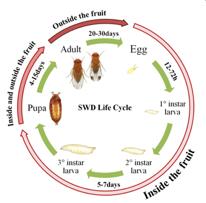
Did you notice small “worms” in your blackberries, raspberries, or blueberries last summer? Did the surface of the jam you were making start to wriggle? If so, I suspect you had larva (maggots) of the spotted wing drosophila (SWD).
SWD is a fly that lays its eggs in Marion berries and other blackberry varieties as well as strawberries, raspberries, and blueberries. Annual populations generally start slow, so Junebearing strawberries gener-
ally escape but day neutral strawberries that bear over a longer time, don’t. Blackberry issues depend on the ripening time of the fruit. Later fruit tends to be more infested depending on the timing of the SWD population development in each spring/summer year.
The female SWD is particular and won’t lay her eggs in unripe fruit. Only berries nearing the peak of flavor and sugars are good enough for her little maggot offspring. Unlike most fruit flies that need damaged fruit to be able to lay their eggs, the SWD female can saw her way in with a saw-tooth ovipositor (egg-laying device) that allows her to lay eggs in firm, but near ripe, fruit. Too clever by half.
•V oices of the c ommunity
Very little is actually being done
I just read the letter from Mr. Turner regarding homelessness in America.
I found little fact in his theory of why people are homeless and not one viable idea of how the problem could be addressed. He seems to be saying it is the banking industry and poor individual finance management causing the problem.
Most people living and the street have mental issues, drug problems, have suffered a major life changing event like the loss of a job which led to falling deep into debt. Does any really think people want to be homeless and on the street?
Once a person has found themself homeless and, on the street, it is very hard start over. The resources are limited. Where do the take a shower and get clothes to go to a job interview?
Homelessness is not as simple as Mr. Turner suggests. Another percentage of homeless population are veterans who may have resources available but do not know how to access them.
No one is searching them out to help them get off the street certainly not the government who they served.
The one think Mr. Turner is correct about, is that there is lot of empty talk about solving the problem but very little is actually being done.
Patrick Klein St. Helens
Support the forest management plan
The Oregon Department of Forestry is advancing a management plan of statemanaged forested land, the biggest chunk of which is in the Tillamook rainforest, a vibrant ecosystem spanning roughly 500,000 acres of public land between Portland and the Oregon coast.
The plan was developed with substantial public input to meet the requirements of the federal Endangered Species Act by protecting habitat for fish and wildlife, including endangered species.
It’s important that people
who want to see this reasonable plan be adopted let the Board of Forestry and your local elected leaders know that you support it, and that you want them to fight for the interests of average Oregonians over the interests of the timber industry, much of which is controlled by and benefits huge out-ofstate corporate interests.
Oregonians overwhelmingly support state ownership and management that prioritizes fish and wildlife habitat, clean water, carbon storage and recreation on state lands.
We don’t have to look very far to realize that prioritizing short-term economic gain through sales of timber does not benefit the average Oregonian. We are all suffering the effects of climate change, closed fisheries, unsightly and unhealthy clear-cuts, and increasingly difficult to maintain sources of clean water.
Do we want more of that, or do we want common sense measures to protect and improve what is left of our state-managed lands?
Nora Sherwood Lincoln City
The Chief
• First, destroy all dropped fruit/uneaten fruit which could harbor the little maggots.
• Second, there are ways to trap SWDs to assess their number and risk to your crop (contact me for more information). Trapping won’t control the SWDs but will tell you when you need to do something.
• Third, well timed sprays with a product containing spinosad will provide about five days of protection and good control of the adult female. Harvest/eating interval for blackberries is 1 day after spraying. From blueberries, it is three days.
Read and follow all label instructions.
One easily found home garden product with this active ingredient is Monterey Garden Insecticide. There are several others and all should work just fine. Spinosad is considered “organic” in most home garden formulations.
Finally, sanitation late season is super important. Clean up dropped berries. Keep an open, well-ventilated
canopy since the SWDs like cool and moist. And get rid of nearby “wild” blackberries since they provide sustenance for the SWDs that will overwinter. Picture: Oregon State University
Important notes
Food Preservation
You can get up-to –date and accurate answers to your food preservation questions by calling our office at 503397-3462 and ask to speak to Jenny Rudolph.
Donate
Donate extra garden produce and/or money to the food bank, senior centers, or community meals programs. It always is greatly appreciated.
Equal opportunity
The Extension Service offers its programs and materials equally to all people.
Have questions?
If you have questions on any of these topics or other
home garden and/or farm questions, please contact Chip Bubl, Oregon State University Extension office in St. Helens at 503-397-3462 or at chip.bubl@oregonstate. edu. The office is open from 8 a.m. to 5 p.m. Monday through Friday.
Free newsletter
The Oregon State University Extension office in Columbia County publishes a monthly newsletter on gardening and farming topics (called County Living) written/edited by yours truly. All you need to do is ask for it and it will be mailed or emailed to you. Call 503-3973462 to be put on the list. Alternatively, you can find it on the web at http://extension. oregonstate.edu/columbia/ and click on newsletters.
Contact resource
Oregon State University Extension Service – Columbia County 505 N. Columbia River Highway St. Helens, OR 97051 503-397-3462
90.9% Staycation
10.1% Vacation
0% Visiting Family
www.thechiefnews.com Friday, March 24, 2023 A4 North Columbia County’s trusted local news source • •V iewpoints • • CONTACT US • Phone: (503) 397-0116 • Fax: (503) 397-4093 • Website: www.thechiefnews.com Editorial: chiefnews@countrymedia.net ADVERTISE WITH US: Advertising Email: chronicleads@countrymedia.net • Classified email: chronicleclassifieds@countrymedia.net
The Chief (USPS 116-360) is published weekly by Country Media, Inc. 1805 Columbia Blvd, St. Helens, OR 97051 POSTMASTER: Send address changes to The Chief PO Box 1153, St. Helens, OR 97051 SUBSCRIPTION RATES: One month in county: $8 One month out of county: $10 One year in county: $70 One year out of county: $90 One year online only: $60 Joe Warren Publisher Jeremy C. Ruark Regional Executive Editor Will Lohre Associate Editor Jon Campbell Advertising Sales Kelli Nicholson Office Manager James Yang Creative Director Jon Lowrance Driver Vote online at thechiefnews.com Given the sting of inflation, are you saving more, or less for the future? More Less Weekly Online Poll Last Week’s Results What are your plans for Spring Break?
• •
ESTATE SALE




Sadly but true we’re hosting our last sale. We’ve saved the best for last. It is one of the largest. With a DIY room for our crafters, lots of yard art and room after room filled with furniture, kitchen items, office equipment, bedroom furniture and high end antiques. Not to mention a garage and shop. Truly something for everyone. Held on March 24th, 25th & 26th at 59169 Twin Oaks Drive. For questions call 503-410-9508 Rosemary Jeffrey
CC23-1752
IN THE CIRCUIT COURT OF THE STATE OF OREGON FOR THE COUNTY OF COLUMBIA

Probate Department In the Matter of the Estate of MARTHA JANE BENSON, Deceased. No. 23PB01905
NOTICE TO INTERESTED
PERSONS NOTICE IS HERREBY GIVEN that the undersigned has been appointed personal representative of this estate. All persons having claims against the
CC23-1750
Reference is made to that certain Trust Deed made by, AUDIS CHRISTOPHER JAMES SHEKER, A
SINGLE MAN as Grantor to TICOR TITLE as Trustee, in favor of MORTGAGE ELECTRONIC REGISTRATION SYSTEMS, INC. (“MERS”), as designated nominee for MANN MORTGAGE, LLC
DBA LIFE MORTGAGE, Beneficiary of the security instrument, its successors and assigns, dated as of June 16, 2017 and recorded on June 19, 2017 as Instrument No. 2017-005731 and that said Deed of Trust was modified by Modification Agreement and recorded April 14, 2022 as Instrument Number 2022-03510 and the beneficial interest was assigned to M&T Bank and recorded February 17, 2021 as Instrument Number 2021-
estate are required to present their claims, with vouchers attached, within four months after the date of first publication of this notice to the personal representative at P.O. Box 459, Rainier, OR 97048, or the claims may be barred. All persons whose rights may be affected by the proceedings may obtain
additional information from the records of the Court, the personal representative or the attorney for the personal representative. Dated and first published on March 24, 2023. Erick Martin Benson, Personal Representative. STEPHEN D. PETERSEEN, L.L.C. Attorney at Law, P.O. Box 459, Rainier, OR 97048.
01842 of official records in the Office of the Recorder of Columbia County, Oregon to-wit: APN: 26473 LOT 34, CEDAR GROVE ESTATES, RECORDED JUNE 20, 1979 IN PLAT BOOK 3, PAGE 72, COLUMBIA COUNTY, OREGON. Commonly known as: 73651 CEDAR GROVE DRIVE, CLATSKANIE, OR 97016 Both the Beneficiary, M&T Bank, and the Trustee, Nathan F. Smith, Esq., OSB #120112, have elected to sell the said real property to satisfy the obligations secured by said Trust Deed and notice has been recorded pursuant to Section 86.735(3) of Oregon Revised Statutes. The default for which the foreclosure is made is the Grantor’s failure to pay:
10/01/2022 to 03/15/2023 at $7,722.90 Monthly Late Charge(s): $331.56 By this reason of said default the Beneficiary has declared all obligations secured by said Trust Deed immediately due and payable, said sums being the following, to-wit: The sum of $194,031.89 together with interest thereon at the rate of 3.87500% per annum from September 1, 2022 until paid; plus all accrued late charges thereon; and all Trustee’s fees, foreclosure costs and any sums advanced by the Beneficiary pursuant to the terms of said Trust Deed. Wherefore, notice is hereby given that, the undersigned Trustee will on July 11, 2023 at the hour of 01:00 PM, Standard of Time, as established by Section 187.110, Oregon Revised Statues, Front Entrance, Columbia County Court-
Clatskanie People’s Utility District is seeking a Controller/Finance Manager

To help extend the life of Clatskanie PUD power poles, Davey Resource Group has been contracted to conduct our pole test and treat program for 2021. They will be working on our poles on the following roads and the surrounding areas: Swedetown Rd, Olson Rd, Alder Grove Rd, Lindberg Rd, Cedar Grove Rd, & Lost Creek. For questions or concerns, please call 503-728-2163.
Position depends on experience. This position will be responsible for providing leadership for general accounting, budget, and auditing functions, as well as, payroll and accounts payable processes. The successful candidate will have the opportunity to influence the strategic direction and fiscal performance of our hydro-powered, locally-owned electric utility and will be given the chance to develop professionally. The District is seeking someone detail oriented, professional, collaborative, and has an analytical disposition; experience in the electric utility industry is desired, but not required.
We’re looking for someone who is driven, organized, and passionate about handling the numerical storybook of a mission-focused organization! Are you a CPA? Do you love Excel unconditionally? Are you looking for a 4/10 schedule in the beautiful PNW in an industry that provides essential services to its local community? Give us a chance, apply today!

You’ll be joining Clatskanie PUD’s management team which is focused on executing both strategic initiatives and operational imperatives of the District. We strive to be Insightful, Professional, Collaborative, and Driven!
Compensation and position will be based on qualifications and experience with the pay range between $120,000 and $200,000, plus a generous benefits package. An application and full job description may be found on our website under About Us/Employment Opportunities at clatskaniepud.com. Submit completed application, résumé, and cover letter to Human Resources, PO Box 216, Clatskanie, OR 97016, secure fax 503-308-4884, or email: hr@ clatskaniepud.com. This position remains open until 5:00 pm PDT, March 27, 2023 or until filled, with a flexible start date in April 2023. If you have questions or need additional information, please contact Lynn Donner: ldonner@ clatskaniepud.com or 503-728-2163.
Clatskanie PUD is an equal employment opportunity employer, following all necessary federal and state employment laws required. Clatskanie PUD will make reasonable accommodations for those covered by the Americans with Disabilities Act. Veterans will receive hiring preference as required by law.
CC23-1751
NOTICE OF PUBLIC HEARING
Pursuant to ORS 477.250, notice is hereby given that a public hearing will be held at the Oregon Department of Forestry, Forest Grove District Office, 801 Gales Creek Road, in Forest Grove, Oregon, on Wednesday, April 12, 2023, at 3:00 pm, to receive from any interested persons suggestions, ad -
vice, objections or remonstrance’s to the proposed budget for the Forest Protection District. A copy of the tentative budget for the Forest Protection District may be inspected during normal working hours. To ensure the broadest range of services to individuals with disabilities, persons with disabilities requir-
ing special arrangements should contact Renae Shippey, at 503-359-7424 or 503-530-0271, or by email at renae.shippey@ odf.oregon.gov at least two working days in advance of the scheduled hearing.

OREGON DEPARTMENT OF FORESTRY, CAL MUKUMOTO, STATE FORESTER
house, 230 Strand Street, St. Helens, OR 97051 County of Columbia, sell at public auction to the highest bidder for cash the interest in the said described real property which the Grantor had or had power to convey at the time of the execution by him of the said Trust Deed, together with any interest which the Grantor or his successors in interest acquired after the execution of said Trust Deed, to satisfy the foregoing obligations thereby secured and the costs and expenses of sale, including a reasonable charge by the Trustee. Notice is further given that any person named in Section 86.753 of Oregon Revised Statutes has the right to have the foreclosure proceeding dismissed and the Trust Deed reinstated by payment to the Beneficiary of the entire amount then due (other than
such portion of said principal as would not then be due had no default occurred), together with the costs, Trustee’s or attorney’s fees and curing any other default complained of in the Notice of Default by tendering the performance required under the obligation or Trust Deed, at any time prior to five days before the date last set for sale. Without limiting the Trustee’s disclaimer of representations or warranties, Oregon law requires the Trustee to state in this notice that some residential property sold at a Trustee’s sale may have been used in manufacturing methamphetamines, the chemical components of which are known to be toxic.
Prospective purchasers of residential property should be aware of this potential danger before deciding to place a bid for this property
at the Trustee’s sale. In construing this notice, the masculine gender includes the feminine and the neuter, the singular includes plural, the word “Grantor” includes any successor in interest to the Grantor as well as any other persons owing an obligation, the performance of which is secured by said Trust Deed, the words “Trustee” and “Beneficiary” includes their respective successors in interest, if any.
Dated: March 8,2023 By: Nathan F. Smith, Esq., OSB #120112
Successor Trustee Malcolm & Cisneros, A Law Corporation Attention: Nathan F. Smith, Esq., OSB #120112 c/o TRUSTEE CORPS 17100 Gillette Ave, Irvine, CA 92614 949-252-8300 Order Number 90071, Pub Dates: 3/17/2023,
www.thechiefnews.com Friday, March 24, 2023 A5 North Columbia County’s trusted local news source Marketplace Just call 503-397-0116 It’s easy to place a classified ad in The Chief Listings are updated daily at www.thechiefnews.com Public Notices PROTECTING YOUR RIGHT TO KNOW 860 Storage 9-1-1 COMMUNICATIONS SPECIALIST Columbia 9-1-1 Communications District (C911CD) is conducting a hiring process for full̴time Dispatchers (Communications Specialists). Additional information and job description can be found on our website at www. columbia911.com/ careers or by calling 503-366-6978. Online applications will be accepted until 11:45 pm on April 28th, 2023. CLATSKANIE Mini Storage Hoarder’s Paradise! 20 sizes, Inexpensive RV Storage, Carports, Hand trucks, Locks, Fully-lined, Insulated, Condensation free, all units lit. On-site Manager 503 728-2051 503 369-6503 Visa/MC/Amex 502 Help Wanted
Ads Deadline for The Chief: Submit classified ads, legals, and display ads to The Chief by Wednesdays by Noon. Late submissions are not guaranteed to make it into the paper. Starting a
Get the word out in the paper and online by advertising with The Chief Call 503-397-0116 To advertise your business.
local business?
Failed to pay payments which became due Monthly Payment(s): 1 Monthly Payment(s) from
TS No. OR07000044-22-2 APN 26473 TO No 230061721-OR-MSI TRUSTEE’S NOTICE OF SALE The Public Notice deadline is Wednesdays by noon. Late submissions are not guaranteed to make it into the paper.
3/24/2023, 3/31/2023, 4/7/2023, THE CLATSKANIE CHIEF
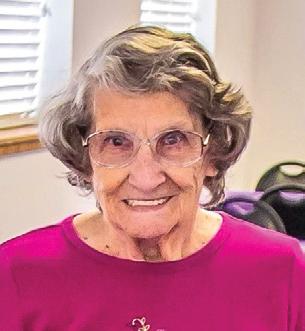
Irene Ruth Gibson
Jan. 16, 1933 ~ Feb. 24, 2023
Born Irene Ruth Jacob on Jan. 16, 1933 in Livingston, Montana and went home to be with her Lord and Savior on Feb. 24, 2023 at the age of 90. Irene was the oldest of seven children born to Elmer Nelson Jacob and Ruth Almina Jacob (Roggow). The family moved from Montana to Oregon while she was just a child so her father could find work.
Irene’s childhood was a new adventure to the Northwest where they found a place to call home in the Taylorville and Westport area and later moved to a place called Alston’s Corner where she grew up and attended Delena Grade School and one year at Rainier Union High. Life was not easy in the 1940s and many young people had to help their families to survive.
Around 1950, Irene met Bobby E. “Gene” Gibson who traveled to Oregon from Oklahoma and the two were married on Sept. 18, 1951 in Astoria, Oregon. Gene was a quick learner and worked in sawmills and later became a painter like Irene’s father Elmer. They traveled around the Northwest to places where Gene was painting bridges, grain silos and other commercial structures until Gene developed lead poisoning and had to quit painting.

They then moved back to the Alston’s Corner area where they began farming. Irene was instrumental in the success of the farming business keeping books for it and



keeping the boys supplied with food and soda. They also raised prized Polled Hereford cattle and she traveled to Reno Nevada with two of the boys where they were going to show the cattle. During that trip they were in a serious car accident that took months for her to heal.
Irene was very active in 4-H and with anything to do with helping kids to learn and read. She attended and was a member of Clatskanie Baptist Church for roughly 50 years and most recently attended Rainier Community Church of God. She loved to read her Bible. Irene did love to travel, and she noted some memorable trips to Alaska to see family, as well as trips to Disneyland with family.
Irene and Gene traveled to Montana to see family when one of their grandsons was born. Irene also booked a cruise and went along with other seniors.
In 2006 she realized the big house was just too much
for her to manage anymore and she moved to an apartment in Rainier where she then got involved in the Senior Citizens group and began volunteering her time at the center. She made many friends at the Senior Center and loved going to play cards and bingo on a weekly basis. She was also selected as a Senior Princess to represent Rainier at the Columbia County Fair. Irene enjoyed watching her grandkids in their numerous activities.
Survivors include sisters, Mary Ann Caulfield, Beatrice Caulfield, and Barbara Miller as well as brother Frederick Jacob, all of Rainier; daughter Beatrice Harrison; and sons Terry Gibson, Michael Gibson (wife Polly), Fredrick Gibson (wife Susan), and Roger Gibson (wife Jolynn) all of Rainier, as well as James Gibson (wife Leona) of Clatskanie; numerous grandchildren; great grandchildren; and great-greatgrandchildren. Preceding her in death were: her parents; husband Bobby E. (Gene) Gibson; sons, Elmer Benjamin and Allen Eugene Gibson; daughter Donna Kay Gibson; brothers, Nelson M. and David E. Jacob; son in-law Jerry Harrison; grandson James Paul Gibson; and Aaron J. Howe. A celebration of life service will be held at 2 p.m. on March 25, 2023 at Rainier Community Church of God, 321 West C Street, Rainier, OR 97048.
Douglas V. Mollenhour

Dec. 3, 1958 ~ March 6, 2023
Douglas V. Mollenhour entered into Eternal Life on Monday, March 6, 2023 at the age of 64. He was surrounded by loving family and caregivers at Columbia Care Center in Scappoose, Oregon.

Douglas was preceded in death by his parents, Roger and Veronica Mollenhour; brother Robert Mollenhour; and sister Patricia Uney. He is survived by two brothers, John (Cherie) Miller of Las Vegas, Nevada

and Phil (Sheri) Mollenhour of Clatskanie, Oregon; and two sisters, Marge Chambers of Kelso, Washington and Phyllis Hemeon; along with numerous nieces and nephews. He was an army veteran and a Tribal Elder of The Confederated Tribes of Grand Ronde. He was laid to rest by his family on March 9, 2023. Douglas was very free-
Patrick Dennis Wright
Oct. 9, 1939 ~ Feb. 28, 2023






Patrick D. Wright, of Rain ier, Oregon, passed away at his home on Feb. 28, 2023 at the age of 83. Patrick was born Oct. 9, 1939 in Los Angeles, California to Dennis and Gene (Paulson) Wright. He grew up in Lakeside, California and graduated from Grossmont High School, and then joined the military. Pat served in the Air Force and was stationed in the Philippines and then an instructor in Mississippi. He completed one year of college while in the Philippines and later completed a second year. After the military, Pat worked on his dad’s chicken ranches before starting work for US Customs. He worked for Customs for 32 years on the Southern California US border and at the Los Angeles Airport. In 1999 Pat retired from Customs and became a real estate broker. In 2006, he

ACROSS
1. Blood-related problem

5. Econ. measure
8. Blue
12. Domain 13. Fill college entrance


15. Archaic preposition 16. Chili seed 17. Ski run


18. *Swedish environmental activist 20. Makes lace 21. Pi meson, pl.







and his wife Susan decided to move up to Oregon to be closer to family, they resided in Rainier until his death.
Pat enjoyed being the family photographer, reading and wood working. He and Susan liked taking road trips together and he really loved their cruise to Alaska.
47. Benatar or Boone
48. Lacking clarity
50. Singer-songwriter Tori

52. *1969 Santa Barbara disaster
55. To some degree

56. Dig like a pig
57. Honoree’s spot 59. Apartments, e.g.

60. Swine and avian diseases

61. Primary source for Nordic mythology



62. Cash machine





63. It’s all the rage
64. Swallow’s house

1. PC “brain”


2. Christian fast
3. The Hippocratic one

4. Group of minstrels, e.g.
5. *Environmentallyfriendly


6. Draws close






7. Spasm of pain





8. See him run?




9. “The Sound of Music” backdrop


10. Yellow #5 in list of ingredients
12. Highly-ranked ecclesiasts


13. On the move
14. Arranged in advance
Pat is survived by his wife Susan; son Patrick M. (Elena); grandchildren, Sarah and Karina; stepdaughter Alicia (Jimmy); step-grandchildren, Aaron and Amelia; niece Natalie (Gordon); and sister Judith. He was preceded in death by his daughter Stephanie; sister Carolyn “Susie;” and his parents, Dennis and Gene.
A private graveside ceremony will be held at Forest View Cemetery in Forest Grove, Oregon. All are welcome to join the celebration of life being held at 1:30 p.m. on March 27, 2023 at Columbia River Event Center, 1070 Columbia Blvd., St. Helens, Oregon. Donations in his name can be made to The Columbia Humane Society, USO, or National Parks. Please sign our online guestbook at www. columbiafh.com.

19. Usually the last inning




22. Wound fluid

23. Delhi dresses
24. Absurd
25. Like a dryer trap



26. *Cuyahoga River disaster, Clean Water Act precursor


27. Omani and Yemeni
28. Tarantino in his own movie, e.g.

29. Ruhr’s industrial center
32. ____-friendly 33. Mourner’s wish
36. *Refuse turned fertilizer 38. Consumed (2 words) 40. Monotonous routine 41. Teenagers’ emotions 44. A mirage? 46. City in Netherlands 48. Between violin and cello 49. Not silently 50. Polly to Tom Sawyer 51. Disfigure 52. ____ Approach, music education 53. Serve soup 54. *Plastic tops of coffee cups 55. Sine ____ non 58. College

www.thechiefnews.com Friday, March 24, 2023 A6
11. A perch for Christmas partridge?
form
22. Digital map marker 23. *Rachel Carson’s “____ Spring” 26. Heater 30. “Wheel of Fortune” vowel request 31. Trouble, in Yiddish 34. Epochs 35. Type of single-story house
37. Noble title 38. Sandler and Driver 39. Not “out of” 40. Advice on shampoo bottle 42. *Pollinator of plants 43. ____ Cray, a.k.a. the father of supercomputing 45. *Earth Day founder
DOWN
entrance exam, acr. STATEPOINT CROSSWORD THEME: EARTH DAY Solution to crossword in next week’s issue of The Chief. ORDER TODAY & RECEIVE A $100 GIFT CARD Offer for new and qualifying former customers only. 3-year price guarantee requires credit qualification and 2-year commitment and covers core programming, local networks, and equipment. Early termination fee of $20/mo. remaining applies if you cancel early. Offer ends 4/12/23. 99% signal reliability based on data from set-top boxes. Not a guarantee of signal in all weather conditions. *Thursday Night Football: Internet connected Hopper and a Prime Video subscription required. A TV PRICE YOU CAN RELY ON 3-YEAR TV PRICE GUARANTEE A TV Price you can rely on - only from DISH ONLY FROM DISH 1-866-373-9175 Call us now! *Restrictions Apply 3-Year TV Price Guarantee Multi-Sport with NFL Redzone from NFL Network 99% Signal Reliability, now backed by our Reliability Guarantee *To qualify, consumers must request a quote, purchase, install and activate the generator with a participating dealer. Call for a full list of terms and conditions. REQUEST A FREE QUOTE CALL NOW BEFORE THE NEXT POWER OUTAGE (877) 557-1912 $0 MONEY DOWN + LOW MONTHLY PAYMENT OPTIONS Contact a Generac dealer for full terms and conditions Prepare for power outages today WITH A HOME STANDBY GENERATOR FREE 7-Year Extended Warranty* A $695 Value! Now’s the Right Time Take advantage of the new 30% Solar Investment Tax Credit (ITC) with PWRcell, Generac’s fully-integrated solar + battery storage system. PWRcell will help you save money on your electric bill and be prepared for utility power outages. Plus it’s compatible with most existing solar arrays. SAVE 30% WITH THE SOLAR TAX CREDIT Call to request a free quote! (844) 989-2328 ^Consult your tax or legal professional for information regarding eligibility requirements for tax credits. Solar panels sold separately. Promo Number: 285 *For those who qualify. One coupon per household. No obligation estimate valid for 1 year. **Offer valid at time of estimate only. 2The leading consumer reporting agency conducted a 16 month outdoor test of gutter guards in 2010 and recognized LeafFilter as the “#1 rated professionally installed gutter guard system in America.” Manufactured in Plainwell, Michigan and processed at LMT Mercer Group in Ohio. See Representative for full warranty details. Registration# 0366920922 CSLB# 1035795 Registration# HIC.0649905 License# CBC056678 License# RCE-51604 Registration# C127230 License# 559544 Suffolk HIC License# 52229-H License# 2102212986 License# 262000022 License# 262000403 License# 2106212946 License# MHIC111225 Registration# 176447 License# 423330 Registration# IR731804 License# 50145 License# 408693 Registration# 13VH09953900 Registration# H-19114 License# 218294 Registration# PA069383 License# 41354 License# 7656 DOPL #10783658-5501 License# 423330 License# 2705169445 License# LEAFFNW822JZ License# WV056912 1-855-536-8838 CALL US TODAY FOR A FREE ESTIMATE BACKED BY A YEAR-ROUND CLOG-FREE GUARANTEE Mon-Thurs: 8am-11pm, Fri-Sat: 8am-5pm, Sun: 2pm-8pm EST % % OFF OFF 20 + YOUR ENTIRE PURCHASE SENIORS & MILITARY! 10 FREE GUTTER ALIGNMENT + FREE GUTTER CLEANING* FREE INTERNET Qualify today for the Government Free Internet Program CALL TODAY (877) 390-0458 YOU QUALIFY for Free Internet if you receive Housing Assistance, Medicaid, SNAP, WIC, Veterans Pension, Survivor Benefits, Lifeline and Tribal. Bonus offer: 4G Android Tablet with one time co-pay of $20 ACP program details can be found at www.fcc.gov/affordable-connectivity-program-consumer-faq Call today and receive a FREE SHOWER PACKAGE PLUS $1600 OFF With purchase of a new Safe Step Walk-In Tub. Not applicable with any previous walk-in tub purchase. Offer available while supplies last. No cash value. Must present offer at time of purchase. CSLB 1082165 NSCB 0082999 0083445 1-833-395-1433 • • o bituaries • •
Council wants current ocean wind energy plans rescinded

The Pacific Fishery Man agement Council has joined a chorus of voices recom mending the Bureau of Ocean Energy Management (BOEM) rescind the current Oregon call areas designated for floating offshore wind energy development.
The council is also rec ommending BOEM start the siting process over using a spatial mapping tool focused on identifying deconflicted areas suitable for wind en ergy development.
Instead of using this approach to consider appropriate areas along the entirety of the Oregon Coast, BOEM has been using the mapping tool only to analyze the call areas identified last year.
Members of the fishing industry, environmental groups, tribes, and several of the council’s advisory bod-
ies have provided testimony to the council supporting a more widespread use of the mapping tool. The motion also included sending the same letter to Oregon Gov. Tina Kotek.
“The Council’s action sends a strong signal to BOEM that fisheries leaders
do not want to risk losing our productive fisheries, the scientific surveys on which our fisheries management depends, or the health of our ocean ecosystems due to offshore wind,” WCSPA Deputy Director and Co-Chair of the Council’s Marine Planning Committee
Susan Chambers said. “The California Current is one of the most productive ecosystems in the world. We need to get this right.” Seven council advisory bodies have provided detailed statements voicing concerns about the current process, with several bodies calling to rescind the current Oregon call areas. The advisory body statements were buoyed by oral public comment from 10 organizations and businesses, including the environmental organization, Oceana, as well as individual fishing businesses and fishing trade associations.
“We hear the climate crisis is so severe that collateral damage to birds, whales, the California current ecosystem, food security, even to fisheries, fishermen and rural community economies is an accepted part of the transition to cleaner energy,” Midwater Trawlers Cooperative Executive Director
Heather Mann and one of the leaders of the informal coalition Protect US Fishermen said in her testimony, “That is an unacceptable premise to me, and I hope it is to you as well.”
During a recent meeting, the motion passed unanimously, 10-0, with four abstention votes cast by the state representatives for Oregon, Washington, and California as well as the NMFS representative.
Tribal representative and Council member Joe Oatman reiterated concerns that have been expressed frequently about the lack of proper government to government consultation with tribes.
“Tribal concerns are not being given the due consideration that they deserve,” Oatman said. “Many potential impacts on the California current ecosystem and the aquatic resources on which they depend have not been adequately identified
or addressed by BOEM. We are very concerned that the cumulative impact of wave energy areas in California, Oregon and Washington and their individual environmental assessments will be inadequate to protect treaty fishing rights.”
Oregon Council Member Christa Svensson made the motion, explaining, “I’ve made this motion to rescind the current call areas in favor of a full Oregon coastline review utilizing the NCCOS spatial mapping tool.”
She noted that rescinding the current areas and starting again would, “signal to key stakeholders that BOEM is sincere in their goal to identify areas of development that have the least conflict.”
BOEM representative Lisa Gilbane noted on the record “I want to remind the Council that BOEM’s charge is not to avoid fishing conflicts in Oregon.”
$4.6M to assist Ukraine immigrants, refugees
Clatskanie, Rainier and other Oregon communities now have a funding source to help Ukraine immigrants and refugees.
Since February 2022, over 3,100 individuals from Ukraine have resettled in Oregon.
The Oregon Department of Human Services (ODHS) Refugee Program is inviting community partners to apply for a portion of $4.6 million in funding that is available to provide services and support to certain individuals from Ukraine or those who entered through the Uniting for

March 25 – April 15
Annual Spring Art Show
10 a.m. to 4 p.m., Tuesdays through Saturdays at the Cowlitz County Historical Museum, 405 Allen St., Kelso, Washington. Eileen Thompson is the featured artist. Admittance is free. For questions, contact www. columbianartists.org or columbianartists/ longviewwa on Facebook. There will be opportunity
Ukraine program.
The deadline to apply is March 17, and the application can be found online.
The U.S. Resettlement Program is operated by the U.S. Department of State through contracts with national non-profit organizations called resettlement agencies. The ODHS Refugee Program is responsible for some of the services that are outside of the initial resettlement provided by the resettlement agencies. The Refugee Program provides cash, medical, employment and acculturation services to refugees who are within 60 months of gaining their eligible immigration status. State officials said the
to purchase original art from local artists, starting at $35.00.
Ongoing
Caples Evening Programs
The cost for this evening and all our Fireside Chats will be only $5. Caples will be offering a different program the third Tuesday of each month at 7 p.m. at 1925 First
purpose of the request is to ask for applications from culturally and/or linguistically responsive organiza-
Street in Columbia City. For more information, call 503-397-5390.
Lower Columbia River Watershed Council Meets at 7 p.m. every other second Tuesday. Meetings are currently held electronically by Zoom. For more information, contact Council Coordinator Henry Franzoni ar 360-353-0937 or email to hjfranzoni3@gmail.
tions who provide services to immigrants or refugees (and those eligible for refugee services) to increase services
and supports.
Funding is available to support:
• Housing and food assistance services: $2 million
Statewide outreach, sponsor
• Coordination and connection to existing case management services: $200,000
• Employment services assistance: $221,800
• Health and mental health services: $675,000
• Child care: $100,00
• Legal services: $800,000
•Youth mentoring: $100,000
• School assistance: $515,000
• Senior services: $50,000


ents
com. Visit the council’s website for agenda postings and Zoom at www. lowercolumbiariver.org/ events-page.
The Rainier Oregon Historical Museum (ROHM) is open from noon to 4 p.m. Saturday (except major holidays weekends). ROHM is located inside Rainier City Hall at 106 W B Street. For more information, call
360-751-7039.
The Rainier Public Library is open from 9 a.m. to 4:30 p.m. Tuesdays, Wednesdays and Thursdays, 10:30 a.m. to 4:30 p.m. on Fridays and 10:30 a.m. to 2:30 p.m. on Saturdays. It will be closed Sundays and Mondays.
Avamere at St. Helens hosts a Virtual Demen -
Organizations may express interest in supporting more than one service area.
Community organizations are eligible to submit proposals for the funding.
About the Oregon Department of Human Services
The mission of the Oregon Department of Human Services is to help Oregonians in their own communities achieve wellbeing and independence through opportunities that protect, empower, respect choice and preserve dignity.
More information about the ODHS Refugee Program can be found online.
tia Support Group – 3rd Wednesday of each month from 2 to 3 p.m. For more details, contact Jenny Hicks/Avamere at St. Helens at 503-3668070.
To list an event in the Community Calendar, email details with a phone number that may be published, to chronicleclassifieds@countrymedia.net, or call 503-397-0116.
www.thechiefnews.com Friday, March 24, 2023 A7 North Columbia County’s trusted local news source
STAFF REPORT Country Media, Inc.
Courtesy photo
• • c
• •
The Oregon Department of Human Services (ODHS) Refugee Program is inviting community partners to apply for a portion of $4.6 million in funding to provide services and support to certain individuals from Ukraine.
ommunity e V
STAFF REPORT Country Media, Inc. Courtesy photo Offshore wind energy debate. At the Columbia County Fairgrounds: 58892 Saulser Rd. St. Helens, OR 97051 Saturday, May 20, 10 a.m. to 5 p.m. & Sunday, May 21, 11 a.m. to 3 p.m. Vendors wanted Contact Jon at 503-397-0116 Columbia County PRESENTED BY The Chronicle The Chief SPONSORED BY
• •
Courtesy photo

s ports
Spring has sprung for CMHS sports
WILL LOHRE Country Media, Inc.

After the water-logged winter months, spring marks the return to the field for Clatskanie High School’s outdoor sports programs.
Baseball update
Last season, the Tiger’s baseball team finished the season with an overall record of 7-13 while competing in the 3-A3 Coastal Range League. This season, Clatskanie Baseball is competing in the 2A-1 Northwest League. The season has started on a bumpy note, as the team has started with a 1-4 record. the team is currently ranked 34 of the 45 2A/1A Baseball programs, according to OSAA.com. Currently, Clatskanie is taking on

non-league opponents in the early stage of their season.
After tough losses to Horizon Christian, Naselle, and Weston McEwen/Griswold, the team notched its first victory in the first of a doubleheader against Pilot Rock / Nixyaawii / Ukiah.
They won the first game of the doubleheader 11-3 before losing the second game to Pilot Rock / Nixyaawii / Ukiah 11-1.
The Tigers’ next two games are also non-league contests, and they will Toutle Lake and Rainier at home on March 28 and 31, respectively.
Softball season
Like the baseball program, Clatskanie Softball will be competing in a new classification and league this season after finishing 3-13
in the 3-A3 Coastal Range League in 2022. This year in the 2A-1 Northwest League, the Tigers are off to a promising start.
In their first five games, the Tigers have won three and lost two. They are currently ranked 19 of the 47 programs in OSAA’s 2A/1A rankings. They started the season with big wins over Naselle and Rainier by scores of 15-4 and 15-12. After a loss to McEwen/ Griswold, the Tigers set out for a doubleheader against Pilot Rock / Nixyaawii / Ukiah. After losing the first game 2-0, they got their revenge with a dominant performance and a 13-3 victory. Their next two games are away fixtures against Scio and Astoria March 27 and 30.
Follow game results of Clatskanie Middle/High School sports at osaa.org and look for sports team and player features at thechiefnews.com and in the Friday print editions of The Chief.
Poetry and Pie at the Clatskanie Library will launch the 2023 Raymond Carver Writing Festival (RCWF) Poetry Contest from 5 p.m. to 7 p.m. Tuesday, April 4.
The Clatskanie Library is located at 11 Lillich Street in Clatskanie.
The poetry contest is open to youth living within the Clatskanie School District boundaries and adults from throughout the Lower Columbia region and will be judged in the following categories:
Adults Published and NonPublished


• Haiku Open to both youth and adults.
•

will be awarded.
The April 4 kick-off event will include the reading of Carver’s poem, Happiness, which contains this year’s contest theme: “Happiness. It comes on unexpectedly. And goes beyond, really, any morning talk about it.”
Work of Oregon’s Poet Laureate, Anis Mojgani, who will be the special guest at the RCWF’s culmination on May 19-20, will also be read. Stations with poetry games: Hakubes, Poetry Injustice, Paint Chip Poetry, and Poetry for Neanderthals, plus a magnetic poetry board, will be featured at the April 4 Poetry and Pie event, as well as homemade pie. There is no charge.

Entry forms for this year’s poetry contest will be available.
For more information about the poetry contest, and the May 19-20 RCWF events visit https://www.clatskanielibrary.org/raymond-carverwriting-festival-2023.
Friday, March 24, 2023 A8 Insurance for the vehicle you rely on daily. Car and truck insurance throughout the Pacific Northwest. HOME • AUTO • BUSINESS • EMPLOYEE BENEFITS • MEDICARE (503) 397-0123 | 1620 Columbia Blvd, St Helens, OR 97051 | haganhamilton.com
Solution for the March 17, 2023 crossword puzzle • c rossword s olutions • •
• Youth Ages 8-10, 11-12, 13-15, 16-18 •
Entries are limited to two poems per poet. Cash prizes
• •
Poetry, Pie at Clatskanie Library Event launches Writing Festival
Clatskanie Middle/High School spring sports have returned with varsity and junior varsity baseball and softball and coed track, each taking part in their first competitions of the new season.
High waves crashing against the shoreline at Cape Arago along the Oregon Coast.
Coast Moment
Metro Creative Connection
Let us know what YOU think EMAIL YOUR LETTERS TO: CHIEFNEWS@COUNTRYMEDIA.NET
For CMHS game results, visit osaa.org.