County’s gun safety ordinance ruled invalid
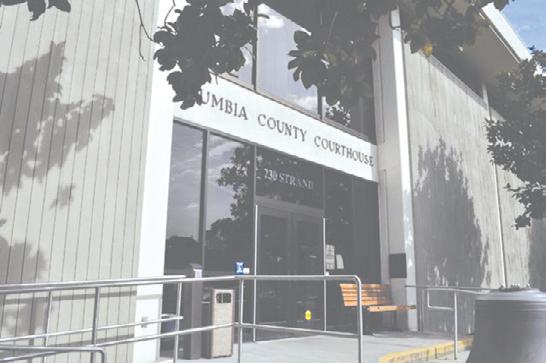
The Oregon Court of Appeals has invalidated a Columbia County ordinance that claims to nullify state and federal gun safety laws within the county.

The ordinance was adopted by the Columbia County Board of Commissioners in March of 2021. It had been preceded by two similar voter-enacted measures. After adopting the 2021 ordinance, the county brought a legal proceeding asking the courts to determine whether the ordinance is valid.
The Oregon Department of Justice (DOJ) argued that the ordinance violates state law and is invalid.
“Oregon’s gun safety laws exist to protect all Oregonians. Local ordinances declaring those measures to be unenforceable put people at unnecessary risk and they are illegal! The opinion by the Court of Appeals makes it clear that common sense requirements like
safe storage and background checks apply throughout Oregon,” Oregon Attorney General Rosenblum said. “Hopefully, other counties with similar measures on the books will see the writing on the wall. But we have successfully fought these measures in three counties so far, and we will keep fighting them!”
The trial court ultimately declined to rule on the measure, ruling that Columbia County could not instigate legal proceedings if it did not intend to defend the legality of its ordinance.
What the ruling means
In the Feb. 15 decision, the Oregon Court of Appeals first decided that the trial court was wrong to dismiss the matter. The purpose of validation proceedings is for state courts to decide whether local ordinances are valid, and a local government does not need to be confident its measure is valid in order to take advantage of the process.
Rosenblum said the Court of Appeals also determined that the Columbia County ordinance violates state law, as DOJ has argued all along.
The county will now decide whether to seek review in the Oregon Supreme Court. But the decision of the Court of Appeals is a statewide appellate decision with ramifications for other similar ordinances in other counties.
DOJ successfully fought similar nullification measures in Yamhill and Harney Counties, according to a release from Rosenblum’s office. Columbia County Public Information Officer Mark Pacheco told The Chief Wednesday afternoon, Feb. 15, that the county board of commissioners were currently reviewing the court’s decision.
“The county hopes to issue a statement by the end of the week,” he said.
Follow developments here online and in the Friday print editions of The Chief.
City looking for $16.1M for new sewer plant

Clatskanie City Manager Greg Hinkelman will be spending more time at the Oregon Capitol building in Salem over the next few weeks lobbying for $16.1 million dollars.
Hinkelman said the additional state funding is needed to allow his city to replace its aging sewer plant.
This follows Hinkelman’s successful work in gaining $10 million from the last Oregon Legislature to build the wastewater treatment facility and a $720,000 community development block grant for the engineering and design of the new plant that will be built at the same location of the current facility at 100 NW 4th Street in Clatskanie.
In a published interview with The Chief in December, Hinkelman said the required geo tec assessment needed for the plant construction revealed that the soils at the site are liquifiable.
“If we build on the existing the ground, the plant would likely not survive an earthquake, so we have to shore up the ground so that the new plant can meet seismic requirements,” he said.
This week, Hinkelman told The Chief he has gained support for the funding from local legislators, but still needs to qualify as the legislature reviews its capital funding requests.
Funding breakdown
Hinkelman said the additional funding will include costs for phase two and phase three of the new plant.
“We have to do significant preparations to the site in order to build on it,” he said. “Right now, that preparation cost is approximately $6 million. The additional cost would be for phases two and three of the project. That will include building a new lab, a shop, a new facility for the ultraviolet lights, which are part of the treatment process to kill additional bacteria, and a new storage facility for the sludge.”
The treated sludge, also known as cake, is the end process, which Hinkelman said is produced by pressing all the water from the waste material.
“We apply it to city owned lands,” he said. “It works as a fertilizer.”
Challenging history
The Oregon Department of Environmental Quality issued a $2,800 fine to the City of Clatskanie in Dec. 2022, following repeated sewer plant failures. The violations are of the DEQ’s National Pollutant Discharge Elimination System (NEPDES) permit that regulates the city’s wastewater treatment plant. This fine is a result of two incidents that happened within weeks of each other earlier this year, according to Clatskanie City Manager Greg Hinkelman.
“The sewer plant experienced failure of a seal within the clarifier that resulted in high levels of E.coli that were discharged into the Clatskanie River in January and March of this year,” Hinkelman said.
Following the discharge, the city closed the Clatskanie River and issued warnings to the public
not to use the river on both occasions of the plant failure.
The failure of the seal also impacted other categories of reporting that showed elevated levels of Effluent limits; Biological Oxygen Demand (BOD’s) and Total Suspended Solids (TSS), according to the DEQ.
Hinkelman said the city conducted a thorough review of each failing and determined that excessive debris was getting into the treatment system, which was caused by issues with the debris removal system, also known as the headworks, that required adjustments to a screen-cleaning brush and the replacement of a gear box.
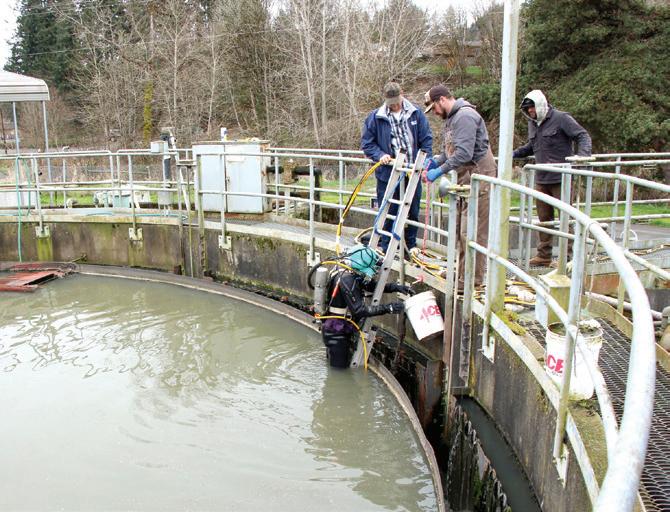
Part of the fix included hiring a diver to go into the wastewater area of the plant to remove the debris from the seal.
Next steps
Hinkelman acknowledges that asking for more state funding will be challenging.
“It is a pretty competitive process,” he said. “But inflation and supply chain issues are driving up costs. We are not the only entity facing such increasing funding challenges. COVID money has been appropriated, which means we now have to look for additional funding to cover the unanticipated soil issues and inflation.”
Hinkelman said he is also reaching out to Oregon’s congressional delegation for federal funding assistance.
Follow developments at thechiefnews.com and in the Friday print editions of The Chief.
Seed gathering effort to save Oregon Ash trees
Oregon Department of Forestry (ODF) staff has completed what officials are calling an unprecedented effort to collect seeds from populations of Oregon ash (Fraxinus latifolia) trees throughout the Oregon portion of the species range.
Contact
ODF officials said the collection was conducted before the Oregon ash trees are wiped out by an invasive pest.
Between 2019 and the end of 2022, five ODF staff members collected more than 900,000 seeds from 245 mother trees representing 27 distinct populations from the Oregon Coast Range throughout the Willamette Valley and the western Cascade foothills, and south to the California border.

The collecting effort was made possible by a federal grant from the USDA Forest Service. ODF Invasive Species Specialist Wyatt Williams coordinated the collecting and where the seeds were sent for safe storage and studies.
“We learned from our counterparts that almost all the native ash
in infested areas in the eastern half of the country were killed within 10 years or so after the arrival of the invasive emerald ash borer,” Williams said. “We sought a grant to help us collect a representative sampling of seeds so we could preserve as much of the genetic variation in Oregon ash as possible before it was lost.”
Williams said ash seed that was collected was cleaned and sorted at ODF’s JE Schroeder Seed Orchard facility in St. Paul, Oregon. A third of the seeds were sent to the primary long-term storage facility at the Center for Agricultural Resources
in Fort Collins, Colorado.
Equal amounts were also sent to the USDA Forest Service’s Dorena Genetic Resource Center in Cottage Grove and to the USDA Agricultural Research Service’s North Central Regional Plant Introduction Station in Ames, Iowa. This will allow both sites to help facilitate research on Oregon ash, the only species of ash native to the state, according to Williams.

“Researchers can plant some of the seeds in areas where emerald ash borer is present in significant numbers and see if any of the
seedling trees show resistance to the insect,” he said.
The first two genetic trials of ash were planted recently, using seed collected by ODF and others, and will serve as sentinels for resistance as EAB spreads to those areas.
“If some trees survive, those resistant trees could become the basis for reintroducing the species to western Oregon,” Williams said. “Resistant trees would be crossed with other Oregon ash to establish resistance while retaining genetic diversity.”
USDA Forest Service Forest Geneticist Richard Sniezko at Dorena said such a process could take many decades, based on results from programs to breed white pine trees resistant to white pine blister rust or Port Orford-cedar trees resistant to Port Orford-cedar root disease.
“We don’t know if we will find resistance or if we do, how durable it will be,” Sniezko said. “But by preserving the full range of genetic diversity in the species if we do find resistance we can ensure trees that
Serving the Lower Columbia Region since 1891 VOL. 131, NO. 41 $1.50 FRIDAY, FEBRUARY 17, 2023 Habitat restoration funding Page A3 CMHS Wrestling Page A8 Crossword ................ A3 Opinions ................... A4 Classified Ads ......... A5 Legals .................... A5-6 Obituaries ................. A6 Sports.........................A8 Phone: 503-397-0116
503-397-4093 chiefnews@countrymedia.net 1805 Columbia Blvd., St. Helens, OR 97051
Fax:
The Chief
Metro Creative Connection
The Oregon Department of Justice (DOJ) argued that the county ordinance violates state law and is invalid.
JEREMY C. RUARK Country Media, Inc.
STAFF REPORT Country Media, Inc.
from
ODF Between 2019 and the end of 2022, five ODF staff members collected more than 900,000 seeds from 245 mother trees. See SEEDS Page A8
Courtesy
the
JEREMY C. RUARK Country Media, Inc.
Jeremy C. Ruark / Country Media, Inc.
A diver returns to the surface of the sewer plant pool with debris pulled from the plant’s seal below the wastewater as part of a sprint 2022 plant repair.
Jeremy C. Ruark / Country Media, Inc.
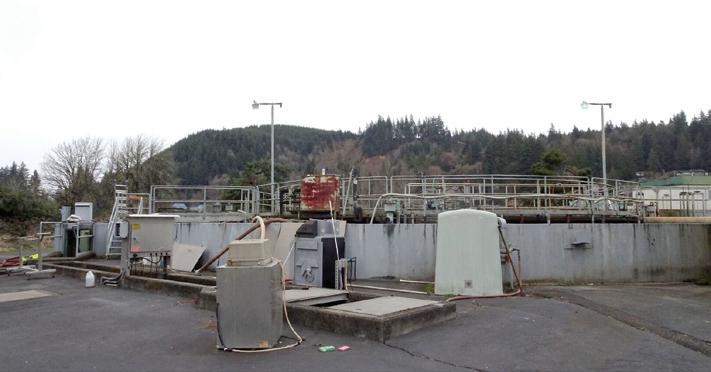
The city’s sewer plant is located at 100 NW 4th Street in Clatskanie.
Unveiling set for renovated performing arts center
Editor’s note: The following is reprinted from last week’s Chief with clarifications. The Chief is happy to set the record straight.
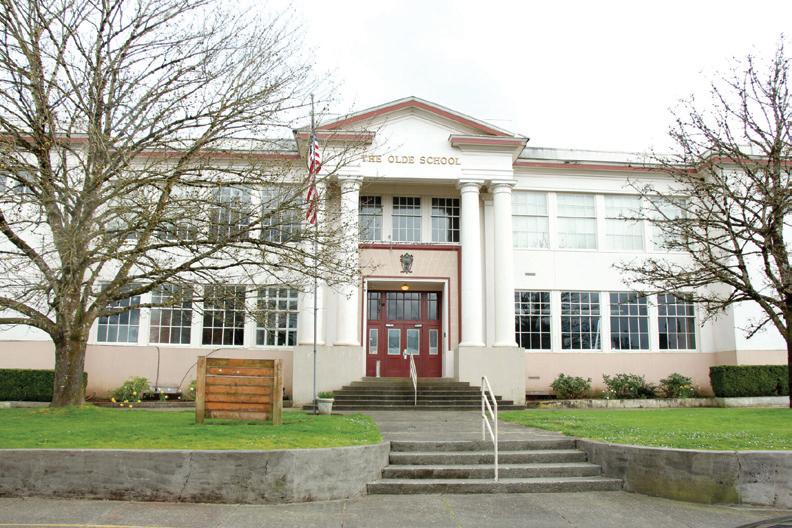
The new and improved Donavan Wooley Performing Arts Center at Clatskanie Middle/High School will be unveiled Feb. 23. The dedication follows a renovation of the center.
History
Donavan, or “Dee,” as he is called, came to teach in Clatskanie in 1968. When he first started teaching in this area, he taught classes at Quincy Grade School, Westport Grade School, Clatskanie Grade School and Clatskanie High School.
Dee taught beginning band, band and choir and traveled among the schools each day. As the music program grew, other teachers were hired to cover the grade and middle school. Dee then taught band and choir in the high school along with Stage Band (Jazz Band) at 7 a.m. each morning.
He also had a pep band at all the games and a marching band in the local parades.
The bands won several awards during his years of
teaching and his stage band competed at festivals in Oregon, in Vancouver, British Columbia and at the World’s Fair in Spokane, Washington. He retired in 1994.
The last concert before his retirement was a surprise as the music students met with the school board and requested the auditorium be renamed in his honor. It became the Donavan Wooley Performing Arts Center.
During the concert the various hair and clothing styles of Dee were lovingly revisited. Students talked about the impact he had on their lives and their love of music. The choir and the band ended the concert with a joint musical piece and the
announcement of the renaming of the auditorium. This event was held in May 1994. The community proved to be very supportive of the new auditorium when a bond levy was passed for the new high school. Before the auditorium, concerts were held in the grade school gym and all equipment had to be taken down the afternoon of the concert and loaded back up afterwards. Supporters of the school’s music program said the auditorium was a dream, not only from a performance aspect, but from the fact that the music groups could more easily rehearse in the space and move equipment easily across the hall from the band room.
But as years went on, the sound and lighting systems badly deteriorated and much more advanced systems were available. However, there was no budget for a total upgrade, according to school officials.
Gels (color filters) were replaced but the light systems became much dimmer. The sound system was old and had been installed in unideal locations.
“When I first arrived in Clatskanie eight years ago, I was so impressed by the auditorium, but the lighting system was failing,” CMHS teacher Jaime Erwin said. “I had a student and his father go through as many lights as possible to try and salvage
what we could. But the reality was they didn’t make the lights anymore. It was time to start investing in a new system.”
Donation drive
A new sign with a donor wall is in the works as part of the renovations, according to Ewrin.
“The donor wall started about five years ago and we raised about $5,550,” she said. “Then the COVID shutdown happened, and the project went on hold.”
The Clatskanie School District was successful in gaining voter approval of a bond measure for district building improvements, which Erwin said is help-
ing with the performing arts center’s renovation costs.
“Teachers Tim Kamppi and Deney Flatz, along with their Career Technical Education (CTE) classes are creating the music notes with each donor’s name (for the donor wall) plus a new Donavan Wooley Performing Arts Center sign,” Erwin said. “The sign design was created by student Hannah Isaacson, a sophomore. There is a pretty cool artistic surprise too. I am so excited to see the outcome.”
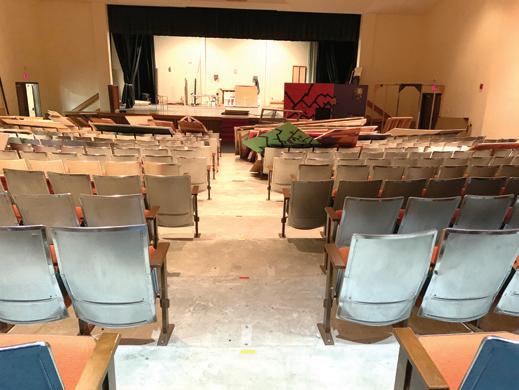
Erwin said the renovated auditorium space is almost completely transformed.
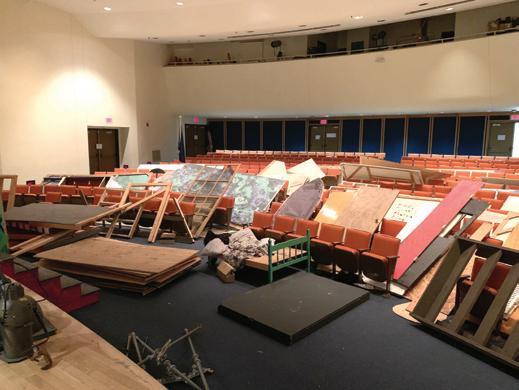
The Clatskanie Middle School Band, The Clatskanie High School Jazz Band and the high school choir will perform during an unveiling concert in the improved space at 7 p.m. Feb. 23. A dedication ceremony will be held at 6 p.m. The event is free to the public. Donations will be accepted at the door. The Clatskanie Arts Commission has announced that the Oregon Symphonic Band will be performing on the stage in April.
The Donavon Wooley Performing Arts Center is located inside Clatskanie Middle/High School at 471 SW Bel Air Drive. For more information, call CMHS at 503-728-2146.
Is Columbia County ready for an earthquake?
The death toll from two major earthquakes that rocked parts of Turkey and Syria has surpassed 40,000, according to media outlets.
A 7.8 magnitude earthquake first struck the region in the early morning Feb. 6, followed hours later by a 7.6 magnitude earthquake. The destruction as a result of the quakes has been cataclysmic. For Oregon and much of the west coast of the United States, this earthquake could be a warning of something to come. Scientists have long predicted a 9.0 magnitude earthquake originating from the Pacific NorthWest’s Cascadia fault. An earthquake of that magnitude could devastate much of the infrastructure on the coast and trigger a tsunami.
In Columbia County, measures and procedures are in place to handle seismic activity, although a disaster of such a significant scale may be difficult to navigate, ready or not. Columbia County
Public Information Officer

Mark Pacheco has provided
The Chief with information about what protective steps the county is taking and where people can find more information about what to do if there is a natural disaster.
Retrofitting projects
One major retrofitting project the county has undertaken is renovating the his-
the county is expanding on those to meet current standards,” Pacheco said.
Upon completion of the project, the county intends to assess which other buildings may need improvements to withstand seismic activity.
“The county will complete the John Gumm Building renovation project during the summer of 2024,” Pacheco said. “With the completion of that project, the county can then evaluate its other facilities to determine what seismic improvement opportunities exist.”
A prepared, coordinated, well-communicated response to emergencies is the best way to curb public panic.
~ Mark Pacheco, Columbia County Public Information Officer
Preventing public panic
If a catastrophe were to occur, Pacheco emphasized that a well-coordinated emergency response would be the most effective way to keep people safe and ensure that officials and emergency responders could minimize chaos.
“A prepared, coordinated, well-communicated response to emergencies is the best
nity-based organizations into public safety operations.
2. Operational Communication: The plan will improve resource integration by establishing specified lines of communication and methods of sharing information throughout the community ranging from nonprofit organizations to cities, county departments, and first responders.
3. Planning: The plan will better integrate and coordinate existing and future public safety plans.
4. Public Information and Warning: The plan will establish a standard of communication in various scenarios and spread best practices to make public safety agencies more effective.
5. Mass Care: This plan will coordinate efforts to provide mass care and shelter support to people, pets, and livestock.
Resources to help people prepare
To better prepare, Pacheco suggested people access the online resources provided by the state.
“The Columbia County Emergency Management Department recommends that all county residents visit the State of Oregon’s website for emergency preparedness planning information,” Pacheco said.
The information on these sites can give Oregonians information about what the potential dangers may be and strategies on what to do
is for each Oregonian to have

www.thechiefnews.com Friday, February 17, 2023 A2
Courtesy from Jaime Ewrin
The CMHS performing arts center renovation in the works.
Courtesy from Jamie Ewrin
LAUREY WHITE Chief Guest Article
The center seats became a holding place during the project.
WILL LOHRE Country Media, Inc.
Jeremy C. Ruark / Country Media, Inc.
Let us know what YOU think EMAIL YOUR LETTERS TO: CHIEFNEWS@COUNTRYMEDIA.NET
The John Gumm School building, at 251 St. Helens Street, in St. Helens.
$1.8M for habitat restoration and conservation
The Lower Columbia Estuary Partnership (LCEP) will be receiving $1,818,000 from the U.S. Environmental Protection Agency (EPA) for habitat restoration and conservation through the National Estuary Program.
Oregon’s U.S. Senators Jeff Merkley and Ron Wyden announced the funding Feb.
13.
terior and the Environment, wrote the legislation funding the EPA. “These EPA funds will help the Columbia River Estuary become more resilient to climate chaos, and at the same time provide opportunities for Oregonians of all ages to access, enjoy, and learn about what makes the Columbia River special.”
into our state add up to a greener and healthier future for the Columbia River Estuary and the surrounding communities.”
Metro Creative Connection
The habitat restoration projects include water trail non-motorized boat access and infrastructure projects that are focused on education and stewardship, stormwater and green infrastructure projects intended to improve water quality and reduce contaminates to the Lower Columbia River study area.
“Climate chaos and human actions are threatening to lead to the permanent loss of plants and animals that have defined Oregon, including salmon and steelhead,” said Senator Merkley, who, as Chair of the Appropriations Subcommittee on In-
“A healthy, resilient Columbia River Estuary protects our state’s natural treasures, such as our iconic salmon and steelhead populations as well as other essential drivers of our state’s economy and quality of life,” Wyden said. “These restoration resources now flowing
The EPA’s National Estuary Program (NEP) funds projects to restore water quality and ecological integrity across 28 estuaries of national significance and received funding from the Bipartisan Infrastructure Law. NEPs have also been at the forefront of addressing climate impacts and environmental justice disparities in their watersheds and is part of President Biden’s Justice40 Initiative, which aims to deliver at least 40% of the
overall benefits from certain federal investments to underserved communities.
The award to LCEP is for habitat restoration projects of varying size and complexity, water trail nonmotorized boat access and infrastructure projects that are focused on education and stewardship, stormwater and green infrastructure projects intended to improve water quality and reduce contaminates to the Lower Columbia River study area, and assessment and monitoring projects intended to provide data on the status and trends of ecosystem conditions in the estuary.
Respiratory virus hospitalizations declining
STAFF REPORT Country Media, Inc.
Recent declines in community spread of influenza and RSV are expected to continue into spring, and while state health officials monitor a recent uptick in COVID-19 activity, respiratory virus hospitalizations should keep dropping over the coming weeks, according to the Oregon Health Authority (OHA).
Reason for optimism
OHA officials said there’s ‘reason for optimism,’ which may mean eventually lifting mask requirement for health care settings.
OHA Health Officer and State Epidemiologist Dean Sidelinger said RSV activity has dropped significantly since its peak in late Novem-
ber, and the state is close to the end of RSV season.
Influenza activity is expected to decline following a slight and short-lived increase in influenza B cases. And Centers for Disease Control and Prevention modeling predicts that COVID-19 hospitalizations are likely to remain flat during February after declining since late December.
“We are now well into the new year, with spring rapidly approaching, and I’m happy to report there’s reason for optimism in the months ahead,” Sidelinger said speaking during the OHA’s monthly COVID-19 media briefing Feb. 9.
The improving conditions, if they continue, could allow OHA to eventually lift the state rule requiring workers in health care settings to wear masks, Sidelinger said. But any change to the
rule must be made carefully, in consultation with health care and local public health partners, and agency health advisors and leaders.
“As we move through this new phase of the pandemic, we are reexamining all pandemic-related policies in place, including masking in health care settings, and we’ll be sharing additional information as it becomes available,” Sidelinger said.
Operating under an emergency
The state is still operating under an emergency because of high hospitalizations of patients with respiratory diseases, Sidelinger said. That emergency gives the state’s health care system additional flexibility to care for patients.
“Members of our health care workforce have been on the front lines of Oregon’s
response to the COVID-19 pandemic throughout this public health emergency,” he said. “They have weathered Delta and Omicron surges. They, and people in their care, needed the added protection of masks,” State public health officials are “keeping an eye” on a recent uptick in COVID-19 activity – an increase in test positivity in the last two weeks – that is likely caused by the now-predominant XBB.1.5 Omicron subvariant. They also are staying alert to a possible second influenza wave driven by influenza B, which often fills the void left by plummeting influenza A activity late in the flu season.
COVID-19
But as the state closes in on the end of flu and RSV seasons and ramps down its
pandemic response with the rest of the country, state officials are seeing “more positive changes that speak to the normalization – and manageability – of COVID-19 in our lives,” Sidelinger said.
For example, the U.S. Food & Drug Administration has removed a requirement that patients must test positive for COVID-19 to be prescribed antiviral medicines, according to the OHA. And public health officials are emphasizing the importance of preparing for COVID-19 exposure and infection – especially those at high risk for severe outcomes – by knowing their risks, making a plan for when they get sick, and taking action if they test positive to protect themselves and those around them.
“And give yourself a leg up on reducing your risk of infection by getting
the COVID-19 vaccine and booster,” Sidelinger said.
Mpox outbreak status
During the media briefing, Sidelinger also discussed the state’s continuing response to the mpox outbreak. He said Oregon is still seeing a small number of mpox cases each month, which is expected to continue as the state settles into an endemic phase of the outbreak.
“We are working closely with local public health, health care and community partners to get the word out about the importance and availability of the Jynneos vaccine, and to promote vaccination events as they become available,” he said.
Follow developments at thechiefnews.com and in the Friday print editions of The Chief.
Turning Point Community Center receives bank grant
The Umpqua Bank Charitable Foundation has awarded 56 grants to local nonprofits across its footprint totaling $331,500.
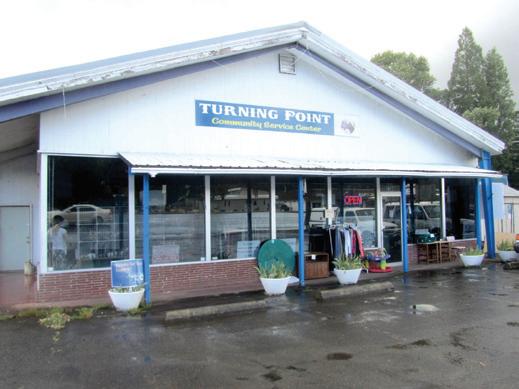
The grants include funds for Turning Point Community Center, Inc in Clatskanie. Turning Point is a social service agency located at 2020 E Columbia River Highway in Clatskanie.
Umpqua’s latest round of grants support nonprofit organizations across Oregon, Washington, California, Idaho, and Nevada, and are part of the bank’s overall foundation and corporate giving program that
has invested more than $17 million since the foundation was formed in 2014.
“We’re deeply committed to helping nonprofits provide critical community services that improve the economic prosperity for under-resourced individuals, families and small businesses,” said Randy Choy, Umpqua Bank vice president of community giving and managing director of the Umpqua Bank Charitable Foundation. “We look forward to continue aiding organizations through volunteerism and grants throughout 2023 and are
grateful for all the hard work by these nonprofits in our regions that help better the lives of others in need.”
These nonprofits, selected from among hundreds of applicants in the final of three grant cycles in 2022, demonstrated a steadfast commitment to serving low-to-moderate-income populations in at least one of eight categories: family engagement and resiliency; financial competency; housing stability and home ownership; college, career or technical readiness; entrepreneurship and business expansion; vibrant and
equitable neighborhoods; technical and digital connectivity; and small business support and financial guidance.
The next deadline for community grant applications is 5 p.m. PT on Fri., March 3, 2023. Learn more at www.UmpquaBank.com/ Community.
The recipients received grants of $5,000 to $15,000.

The Umpqua Bank Charitable Foundation is a 501(c)(3) organization of Umpqua Bank. Turning Point may be reached by calling 503-728-3126.
STATEPOINT CROSSWORD

ACROSS
1. Pampering places
5. *____ de trois
8. Lend a criminal hand
12. Toy block
13. As old as time?
14. Milan’s La ____
15. Drug addict
16. Craving
17. Some primatologists’ study object, for short
18. *Shoe, not a titular character in Henry James’ novel
20. What spirits and culprits have in common
21. Falstaffian in body
22. Jack Kerouac’s ___
Paradise
23. *Shoe, not lazy person
26. Concealing plant, in a painting (2 words)
30. Not leg
31. ____ ____ help
34. Poet Pound
35. *Sound of Wellington
boots
37. U.N. labor issues org.
38. Twig of a willow tree
39. Database command
40. Type of purse
42. “Platoon” setting, for short
43. Canadian province
45. Overly preoccoupied with something
47. Motion of assent
48. Louisiana swamp
50. Like list of chores
52. *Animated movie about a dancing penguin (2 words)
56. “All About Eve” star
57. Biblical birthright seller
58. Generic dog name
59. Are not
60. What snob puts on
61. Cogito, ____ sum
62. Mountain, in Germany
63. Trinitrotoluene, for short
64. Movie tape
1. Yarn defect
2. 100 centavos in Mexico
3. A long time ago
4. Somewhat (2 words)
5. City on the Seine
6. Pool growth
7. ____ but not heard”
8. *Rupturing this will take you off your feet
9. Can of worms
10. Deciduous tree
11. *Percussion with one’s feet
13. Piano adjusters
14. Scrawny one
19. Caribbean religious and healing practice
22. Noble title
23. Apple TV+ coach
24. Acrylic fiber
25. Amortization root
26. *0.3048 meters
27. Web mag
28. Domains
29. Agricultural enterprises
32. Narc’s unit
33. Contagious bug
36. *On your feet
38. Exclamation of delight or dismay (2 words)
40. El ____
41. Nutrias
44. Fowl perch
46. Bear pain
48. Bowl-shaped vessel
49. Like exes
50. Container weight
51. Last word on army
radio
52. Furnace output
53. Republic of Ireland
54. Part of a seat
55. Hammer or sickle
www.thechiefnews.com Friday, February 17, 2023 A3 North Columbia County’s trusted local news source
DOWN
56. Internet meme move
THEME: ON YOUR FEET Solution to crossword in next week’s issue of The Chief. • •C rossword P uzzle • •
Jeremy C. Ruark / Country Media, Inc.
Turning Point is a social service agency in Clatskanie.
The facts about the Clatskanie Cultural Center and City Hall
DEBORAH HAZEN Chief Guest Column
The letter in the Feb. 10 issue of The Chief from Russell Spaulding requires some factual corrections. The historic Clatskanie I.O.O.F. building, now renamed the Clatskanie Cultural Center, is owned and was restored by the all-volunteer Clatskanie Foundation, NOT the City of Clatskanie. The City leases its office space and council chamber from the Foundation which is a non-profit, 501c3 organization founded approximately 25 years ago for the purpose of enhancing the quality of life of the local community with a special emphasis on education.
Since that time, the Foundation has awarded approximately $400,000 in scholarships to local students, as well as acting as a vehicle through which freewill donations may be raised for other worthwhile community projects. The Foundation currently awards between $40,000 and $50,000 per year in scholarships and manages over $600,000 in perpetual scholarship funds donated by local individuals and families which will continue to help local students seek post-secondary education and training for many, many years to come.
In 2005, the Clatskanie Foundation was notified that it would receive a $500,000 bequest from the estate of C. Keith Birkenfeld, a descendant of local pioneers, but that the funds had to be used for a “bricks and mortar” capital improvement project, not scholarships. After long consideration and research,
A good place to go
Not long ago I visited Victorico’s in St. Helens. I ordered lunch at the “drive thru.” Accidentally, the order got pretty screwed up. After my discovery, I called
the all-volunteer Clatskanie Foundation board of directors agreed to use those funds to purchase the then-derelict and ramshackle former I.O.O.F. (Independent Order of Odd Fellows) building, built in 1926, and begin its restoration. The original $500,000 was used for purchase of the building, an engineering study, and facade restoration including seismic reinforcement. Seismic upgrades to the rest of the building were completed during the second phase of construction. Foundation volunteers then began a fundraising drive for the reconstruction of the interior. The following grants were received from private nonprofit foundations: $500,000 from the C. Keith Birkenfeld Memorial Trust at the Seattle Foundation, $500,000 from the Ford Family Foundation;, $295,000 from the Meyer Memorial Trust; $250,000 from the Murdoch Charitable Trust; $90,000 from the Collins Foundation; $50,000 from the Oregon Community Foundation; $30,000 from the James F. and Marion L. Miller Foundation, and $25,000 from the Wollenberg Foundation. We also received a $200,000 bequest from the estate of Dr. Charles Grayson, and several hundred thousand dollars worth of donations in money and in-kind services from local businesses, organizations, and families. The glass panels in the lobby of the Clatskanie Cultural Center list those who donated $1,000 or more. Additionally there are approximately 175 seat plaques in the Birkenfeld Theatre for which individuals and families paid $250 each. The only public
(taxpayer) money received or asked for during that fundraising drive was a $2,000 grant from the Columbia County Cultural Coalition, which comes from the State of Oregon Cultural Trust.
Knowing that the City of Clatskanie was facing major issues with its city hall next door to the Clatskanie Cultural Center/I.O.O.F., the Foundation and the City negotiated a deal - well-publicized and detailed in The Chief at the time and discussed at public meetings - that the Foundation would build office space and a meeting room (council chambers) for the city in the Cultural Center.
The old city hall was partly a cement block building that was constructed in the 1950s for two employees, and partly a converted fire truck garage. It’s roof leaked, it did not have enough office space, it was moldy and had ventilation problems, it was not compliant with the Americans with Disabilities Act, and it contained asbestos. The City did not have funds to fix it nor to build a new city hall.
The agreement between the City of Clatskanie and the Clatskanie Foundation provides that the City would receive 30 years of occupancy in a 2,600 square foot suite of offices, including the city council chambers, in exchange for the donation of the property where the old city hall stood and its parking lot, plus $175,000. That $175,000 did not come from water and/or sewer fees nor did it come from property taxes paid by City of Clatskanie residents. It came from a reimbursement to the sponsors of the Lower Columbia Mari-
time Enterprise Zone of which the City of Clatskanie is one. That reimbursement was paid by Georgia-Pacific Corporation which had received a tax exemption on a new paper machine at the Wauna Mill, but had failed to meet the increased employment requirements of the enterprise zone agreement.
The Clatskanie Foundation’s restoration fund paid the costs of tearing down the old city hall, including asbestos abatement, and paving and landscaping the parking lot. The City provides water and garbage service to the building. The City pays for the electricity it uses; the Reach the Stars dance studio, which rents the building’s ground floor retail space from the Foundation, pays its electricity, and the Foundation pays for the electricity in the rest of the building. The City moved into the Clatskanie Cultural Center in the summer of 2015. There are still over 22 years left before the City will have to pay anything more for its office space. When the current agreement expires in 2045, a new agreement will need to be negotiated between the Clatskanie Foundation and the City of Clatskanie. The only public money used in the restoration of the previously derelict I.O.O.F. hall was the $2,000 grant from the Columbia County Cultural Trust, and that $175,000 from the Georgia-Pacific tax abatement reimbursement plus the value of the lot that contained the asbestos/mold contaminated old city hall and its crumbling parking lot. The city retains ownership of the police station.
The Birkenfeld Theatre in the Clatskanie Cultural Center is managed by the Clatskanie Arts Commission which brings high-quality professional performers to the theater at ticket costs much less than audiences would pay for the same performances elsewhere. The 175-seat theater and the 2,400 square foot ballroom are available for a fee to the general public for meetings, weddings, banquets, dances, memorial services, nonprofit movies, etc. The fees go towards covering the costs of operating the building. In the past seven and a half years since the building opened in late August of 2015, hundreds of events enhancing the life of the community have been held there.
To summarize: the Clatskanie Foundation owns the Clatskanie Cultural Center and paid for its restoration with freewill donations from private foundations, businesses, organizations, families, and individuals. The City of Clatskanie leases its 2,600 square foot suite of offices and council chamber from the Foundation and has prepaid for 30 years what amounts to approximately $486 in rent per month, at zero cost to city water and sewer payers. The elected city councilors and mayor were the ones who approved the plan for the new “City Hall,” not City Manager Greg Hinkelman, although he agreed that it was and continues to be a very good deal for the city.
Additionally, the center of our community now has an attractive, historic, useful building, rather than a derelict eyesore.
In response to Mr. Spaulding’s comments regarding the PUD building, as the former editor/reporter for The Chief, I covered the planning and decision-making for the construction of the building and published many thousands of words as well as photos about it. The decisions were made by the elected PUD board. They could have decided to build a plain entrance and lobby area, but they decided to make it attractive at relatively little extra cost. The construction was completed over two years before Marc Farmer was hired. During Farmer’s first three years at the Clatskanie PUD, costs were cut by $1.4 million dollars and staff was reduced by 14 percent. The building is completely paid for and its architectural style has no impact on current electric rates.
What many people in Clatskanie don’t realize is that in terms of the amount of power sold - because of the huge industrial load from the Wauna Mill and Port Westward - the Clatskanie PUD is the sixth largest public power utility in the state. Because local industries pay the vast majority of the costs associated with the operation of the Clatskanie PUD, including its headquarters, we have the lowest residential electric rates in the state and the 11th lowest in the nation, as well as an attractive, energy-efficient, upto-date building that meets the operational needs of the utility.
Thank you for this opportunity to present factual information.
Deborah Hazen is the President Clatskanie Foundation.
the restaurant and talked to the manager.
I returned with my receipt and the evening manager “fixed” everything. My money was returned. The female manager expressed their concern over the error, and I left very satisfied.
At a time in our economy when good staff is hard to
come by and “customer service” doesn’t seem to matter, Victorico’s is the exception! This is a good place to go for tasty food and excellent service!
Sincerely,
Betsy Johnson Scappoose
•C ommunity e V ents
February 18 CAT Home Ownership Education Class
8:30 a.m. to 5 p.m. at Community Action Team (CAT), 125 N 17th Street in St. Helens. Food and drink provided. This class will cover making the decision to buy, preparing financially to own, mortgages and closing, shopping for your home, and protecting your investment. For more details, call 503-366-6549, or email nhellmich@cat-team. org.
February 22 Homebuyer
Class 5:30 p.m. to 7 p.m. at 2194 Columbia Boulevard in St. Helens, OR 97051. Class includes Amy Moore with Guild Mortgage. Please RSVP call or text to 503-369-7789.
February 23 Scappoose Garden Club Meeting
11 a.m. at 51555 SW Old Portland Road. The program includes a garden tea party and making garden hats. Bring a hat to embellish. Anyone is welcome to attend.
February 23 Columbia 9-1-1
Communications District
Board
9 a.m. at the Columbia 9-1-1 Communications District Board of Directors meeting room / Via Zoom. For instructions on how to join the meeting via Zoom, contact the administrative staff at 503-366-6973.
February 25 Columbia County Bridal Expo
11 a.m. to 4 p.m. at Meriweather Place, 1070 Columbia Boulevard in St. Helens.
Presented by Dianna’s Formal Affair. Stop by for photography, event planning, wedding cakes, accessories, catering music, flowers, giveaways,
samples and more. For more information, contact 503397-3026 or ColumbiaCountyBridalExpo.com.
March 4 Rodeo Fundraiser
Join the Columbia County Rodeo Committee for dinner, dancing, and a live auction at the Columbia County Fairgrounds at 58892 Saulser Road in St. Helens. Tickets are $35 per person or reserve a corporate table for eight people for just $300. Contact any Rodeo Committee member or call 503-397-1800.
Tickets are limited. 5 p.m. Social Hour. 6 p.m. Dinner. 7 p.m. Live Auction. 8-11 p.m. Live Music.
March 21 Ladies Motivational Night Out 6 p.m. to 7 p.m. at the Clatskanie Library. This event is free. Toni Dowrey is the guest. Dowrey is a motivational speaker, published author and certified life coach.
March 25 to April 15
Columbian Artists Associations 45th Annual Spring Art Show 10 a.m. to 4 p.m., Tuesdays through Saturdays at the Cowlitz County Historical Museum, 405 Allen St., Kelso, Washington. Eileen Thompson is the featured artist. Admittance is free. For questions, contact www. columbianartists.org or columbianartists/longviewwa on Facebook. There will be opportunity to purchase original art from local artists, starting at $35.00.
Ongoing
Caples Evening Programs The
ing a different program the third Tuesday of each month at 7 p.m. at 1925 First Street in Columbia City. For more information, call 503-3975390.
Lower Columbia River Watershed Council Meets at 7 p.m. every other second Tuesday. Meetings are currently held electronically by Zoom. For more information, contact Council Coordinator Henry Franzoni ar 360-353-0937 or email to hjfranzoni3@gmail.com. Visit the council’s website for agenda postings and Zoom at www.lowercolumbiariver.org/ events-page.
The Rainier Oregon Historical Museum (ROHM) is open from noon to 4 p.m. Saturday (except major holidays weekends). ROHM is located inside Rainier City Hall at 106 W B Street. For more information, call 360751-7039.
The Rainier Public Library is open from 9 a.m. to 4:30 p.m. Tuesdays, Wednesdays and Thursdays, 10:30 a.m. to 4:30 p.m. on Fridays and 10:30 a.m. to 2:30 p.m. on Saturdays. It will be closed Sundays and Mondays.
Avamere at St. Helens hosts a Virtual Dementia Support Group – 3rd Wednesday of each month from 2 to 3 p.m. For more details, contact Jenny Hicks/Avamere at St. Helens at 503-366-8070.
To list an event in the Community Calendar, email details with a phone number that may be published, to chronicleclassifieds@ countrymedia.net, or call 503-397-0116.
11.8% Conversational Hearts
29.4% Heart-shaped box of chocolates
47 % Hersey Kisses
11.8% M&Ms
www.thechiefnews.com Friday, February 17, 2023 A4 North Columbia County’s trusted local news source • •V iew P oints • • CONTACT US • Phone: (503) 397-0116 • Fax: (503) 397-4093 Website: www.thechiefnews.com Editorial: chiefnews@countrymedia.net ADVERTISE WITH US: Advertising Email: chronicleads@countrymedia.net Classified email: chronicleclassifieds@countrymedia.net The Chief The Chief (USPS 116-360) is published weekly by Country Media, Inc. 1805 Columbia Blvd, St. Helens, OR 97051 POSTMASTER: Send address changes to The Chief PO Box 1153, St. Helens, OR 97051 SUBSCRIPTION RATES: 1 month in county: $8 1 month out of county: $10 One year in county: $70 One year out of county: $90 Editorial policy Opinions expressed on this page are independent of The Chief views and are solely those of the writers expressing them. Letters policy This newspaper’s letters to the editor are limited to a maximum of 250 words and will be edited for grammar, spelling and blatant inaccuracies. Unsubstantiated or irresponsible allegations, or personal attacks on any individual, will not be published. Letters containing details presented as facts rather than opinions must include their sources. Writers are limited to one published letter per month. All submissions must include the author’s full name, local street address and telephone number (only the name and city of residence will be published). By submitting a letter, writers also grant permission for them to be posted online. Opinions expressed on this page are the writer’s alone and do not represent the opinion of the newspaper or its parent company, Country Media, Inc. Vote online at thechiefnews.com Are you ready for Spring? Yes No Weekly Online Poll Last Week’s Results What is your favorite Valentine’s Day candy?
• •V oi C es
C
• • •
• •
of the
ommunity
all
cost for this evening and
our Fireside Chats will be only $5. Caples will be offer-
Vendors Wanted!
Clatsop Fairgrounds
Saturday, March 11th
8 A.M. - 2 P.M.
C all C harlie (503) 325-3508 or Dorothy (503) 468-0006 H21498 502 Help Wanted
Pool Manager
Clatskanie Park & Recreation District is now accepting applications and resumes for a Pool Manager. Responsibilities : Train, manage and evaluate approximately 20 lifeguards; beginning in February and continuing into September. Plan, organize and schedule programs offered at our seasonal outdoor pool.
Be responsible for scheduling ad-

equate staff for the safety, supervision, cleanliness, water chemistry and mechanical operation of the pool for youth and families in our District. Maintain pool and employee records. Perform such other duties as assigned by the District Manager and/or Board of Directors from time to time. Knowledge and Skills: Strong administrative skills, recreational aquatic programming skills, leadership and managerial skills, pool maintenance and water chemistry skills and good public relation skills are a must. Thorough knowledge of policies, procedures and equipment used in daily outdoor pool operations helpful. Work with pool related chemicals and be familiar with State and Federal regulations regarding outdoor pool operations. Experience and Training: Experience preferred.
Or the willingness to work within an agreed upon time frame between applicant and Board of Directors to obtain the required and suggested certifications for the position; FirstAid, CPR, AED certifications, Lifeguard Instructor and Training, Water Safety Instructor and CPO (Certified Pool Operator) certifications. You can request an application by phone at 503-728-2757, by email at csp@ cni.net or on our website www. clatskanieparksandrecreation.com. Applications and resumes can be returned by mail to: Clatskanie Park & Recreation District, PO Box 737, Clatskanie OR 97016 or by email to csp@ cni.net. If you have any questions, please leave message at 503-7282757. Applications with resumes will be accepted until the position has been filled.
Want to Rent Wanted, actually needed, by early March, a room or roof over my head, from which my ac tivism regarding the peoples RIGHT TO TRAVEL may con tinue. If you would like to say goodbye to the DMV, look up or read the Oregon revised statutes, 801.305 and/or the active congress admitting Oregon to the union, sec tion 2 (February 14, 1859). Then call me at 971-4219567, Dick Horse.
860
Storage
CLATSKANIE Mini Storage

The Chief
I love local news special
Just
For
Hoarder’s Paradise!

20 sizes, Inexpensive RV Storage, Carports, Hand trucks, Locks, Fully-lined, Insulated, Condensation free, all units lit. On-site Manager
503 728-2051
503 369-6503
Visa/MC/Amex
Clatskanie People’s Utility District is seeking a full-time Groundman. This position is a Union, non-exempt, hourly position and compensation is based on the current IBEW 125 contract, qualifications, and experience. Clatskanie PUD offers a competitive benefit package.
To help extend the life of Clatskanie PUD power poles, Davey Resource Group has been contracted to conduct our pole test and treat program for 2021. They will be working on our poles on the following roads and the surrounding areas: Swedetown Rd, Olson Rd, Alder Grove Rd, Lindberg Rd, Cedar Grove Rd, & Lost Creek. For questions or concerns, please call 503-728-2163.
A complete job description and application are available at clatskaniepud.com under About Us/Employment Opportunities. Please submit completed application, résumé, and cover letter to Human Resources, PO Box 216, Clatskanie, OR 97016, secure fax 503-308-4884, or email hr@clatskaniepud.com. This position remains open until 5:00 pm on March 9, 2023. If you have questions or need additional information, please contact Sarah Johnson or Lynn Donner 503-728-2163. Clatskanie PUD is an equal employment opportunity employer
Public Notices
PROTECTING YOUR RIGHT TO KNOW
CC23-1730
CITY OF CLATSKANIE PLANNING COMMISSION PUBLIC MEETING NOTICE
The Clatskanie Planning Commission will meet for a regular meeting on Wednesday, February 22nd,2023, at 7:00 p.m. in the Council Chambers at City Hall, upstairs in the Clatskanie Cul-
CC23-1731
tural Center. Agenda items include but are not limited to the following: Approval of the minutes of the Dec. 28th 2022, regular meeting and a Public Hearing on a lot line adjustment for the Clatskanie
Public Library. An updated agenda will be available at City Hall by Feb. 17, 2022. Please visit our website, www.cityofclatskanie.com to access the link to attend the meeting on Zoom.
IN THE CIRCUIT COURT OF THE STATE OF OREGON FOR THE COUNTY OF COLUMBIA
Probate Department In the Matter of the Estate of HOWARD DEAN TAYLOR, Deceased. No. 22PB06792
NOTICE TO INTERESTED
PERSONS NOTICE IS HEREBY GIVEN that the undersigned has been appointed personal representative of this estate. All persons having claims against the
CC23-1720
estate are required to present their claims, with vouchers attached, within four months after the date of first publication of this notice to the personal representative at P. O. Box 459, Rainier, OR 97048, or the claims may be barred. All persons whose rights may be affected by the proceedings may obtain
additional information from the records of the Court, the personal representative or the attorney for the personal representative. Dated and first published February 17, 2023. Judy Greiner Personal Representative STEPHEN D. PETERSEN, L.L.C. Attorney at Law P. O. Box 459 Rainier, OR 97048
IN THE CIRCUIT COURT OF THE STATE OF OREGON FOR THE COUNTY OF COLUMBIA
Probate Department In the Matter of the Estate of GERALDINE ANDERSON, Deceased. No. 22PB11076
NOTICE TO INTERESTED
PERSONS NOTICE IS HEREBY GIVEN that the undersigned has been appointed personal representative of this estate. All persons having claims against the
estate are required to present their claims, with vouchers attached, within four months after the date of first publication of this notice to the personal representative at P.O. Box 459, Rainier, OR 97048, or the claims may be barred. All persons whose rights may be affected by the proceedings may obtain
additional information from the records of the Court, the personal representative or the attorney for the personal representative. Dated and first published February 3, 2023. Jon Anderson, Personal Representative. STEPHEN D. PETERSEN, L.L.C. At torney at Law, P.O. Box 459, Rainier, OR 97048.
Contact The Chief at 503-397-0116 or chronicleclassifieds@countrymedia.net to get your garage sale in the classifieds.
CC23-1715
IN THE CIRCUIT COURT OF THE STATE OF OREGON FOR THE COUNTY OF COLUMBIA
In the Matter of the Adoption and Change of Name of DESTINY LEE NICHOLS, a Minor Child. No. 23AP00011 To: CLARISSA MCATEE You are hereby required to appear and defend the petition for adoption and change of name filed in Columbia County, Oregon, United States, involving your child within THIRTY (30) DAYS from the date of service of this summons upon you, and, in case of your failure to do so, for want thereof, petitioner will apply to the court for the relief demanded in the petition
CC23-1722
for adoption and change of name. NOTICE TO THE RESPONDENT: READ THESE PAPERS CAREFULLY! You must “appear” in this case or the other side will win automatically. To “appear” you must file with the court a legal paper called a “motion” or “answer”. The “motion” or “answer” (or “reply”) must be given to the court clerk or administrator within THIRTY (30) DAYS of the date of first publication specified herein, along with the required filing fee. It must be in proper form and have proof of service on the petitioner’s attorney
or, if the petitioner does not have an attorney, proof of service upon the petitioner. The date of first publication of this summons is February 3, 2023. If you have any questions, you should see an attorney immediately.
If you need help in finding an attorney, you may call the Oregon State Bar’s Lawyer Referral Service at (503) 684-3763 or toll-free in Oregon at 1-800-4527636. Stephen D. Petersen, OSB #73235 Attorneys for Petitioner. STEPHEN D. PETERSEN, L.L.C., P.O. Box 459, Rainier, OR 97048, (503) 556-4120.
IN THE CIRCUIT COURT OF THE STATE OF OREGON FOR THE COUNTY OF COLUMBIA
Probate Department In the Matter of the Estate of RICHARD ALLAN FORREST, Deceased. No. 23PB00329 NOTICE TO INTERESTED PERSONS
estate are required to present their claims, with vouchers attached, within four months after the date of first publication of this notice to the personal representative at
additional information from the records of the Court, the personal representative or the attorney for the personal representative. Dated and first published February 3, 2023.
www.thechiefnews.com Friday, February 17, 2023 A5 North Columbia County’s trusted local news source Marketplace Just call 503-397-0116 It’s easy to place a classified ad in The Chief Listings are updated daily at www.thechiefnews.com 312 Events 502 Help Wanted 502 Help Wanted ANNUAL ASTORIA AUTOMOTIVE
MEET
SWAP
one year
and
3 MONTHS FOR FREE!
Purchase a
subscription
receive an additional
www.thechiefnews.com
mention this ad.
503-397-0116
Wanted to Rent
new and returning subscribers only 890
Chief Classified Ads Deadline: Wednesdays by noon. Late submissions may not make the paper.
a Garage Sale?
The
Having
Each candidate for an office listed above must file a declaration of candidacy (filing form SEL190) with the Elections Department of Columbia County within the period beginning on February 6, 2023 and ending no later than 5:00 p.m. March 16, 2023. Each declaration of candidacy must be accompanied by either a filing fee of $10.00 or a candidate nominating petition (form SEL-121) signed by at least 25 registered voters residing in the district. Filing forms are available on-line at the Oregon Secretary of State website (http://sos.oregon.gov/elections/Pages/electionforms.aspx). The forms are also available at Columbia County Elections Dept., 230 Strand St., St. Helens, OR. Dated this 15th day of February 2023.
Arnie William Sundberg
April 19, 1941 ~ Nov. 21, 2022
Arnie William Sundberg was born April 19, 1941. He lived in the area his entire life, graduating from Clatskanie High School in 1958.
Arnie served in the US Marine Corp from 1958 to 1976, he was a proud member of the American Legion Post #68 in Clatskanie Oregon. He was part of the Fox Company 2/7 from 1966 to 1967, also part of the Combat Action Platoon 2-9-2 from 1969 – 1970.
Arnie was awarded 2 Purple Hearts: the first in September of 1967, the second in April of 1970. Arnie was instrumental in getting the Clatskanie Veteran Me-

morial Wall in Clatskanie Oregon. Arnie worked for Oregon Fish and Wildlife from 1990-1997.
Question Shall District impose $1.2533 per $1,000 of assessed property value for general operations for five years beginning 2023-2024? This measure renews current local option taxes.
Summary A "YES" vote would renew the current Clatskanie Rural Fire Protection District local option tax of $1.2533 per $1,000 of assessed property value. This would provide the necessary funding for sufficient staffing, current and ongoing ambulance & fire services, the needed replacement equipment and supplies, and for maintaining and repairing the District's buildings and properties. The permanent tax rate alone is inadequate for ensuring the District has the resources necessary for adequate staffing and equipment for Ambulance and Fire response. Our communities continue to have an increased demand each year for emergency medical and fire response. Combining the permanent tax rate with a 5-year local option levy will help provide the District with funding to continue the necessary staffing and equipment to help ensure we are better prepared to respond to the increasing numbers of calls for service. This levy begins in the 2023-2024 fiscal year. The tax rate of $1.2533 on a property assessed at $225,000 would cost about $282 per year for 5 years. The proposed rate would raise approximately $1,270,567 in 2023-2024, $1,359,506 in 2024-2025, $1,454,672 in 2025-2026, $1,556,499 in 20262027, and $1,665,454 in 2027-2028 for a total amount of $7,306,698. The estimated tax cost for this measure is an estimate only based upon the best information available from the County Assessor at the time of the estimate and may reflect the impact of early payment discounts, compression, and the collection rate.
CC23-1726
IN THE CIRCUIT COURT OF THE STATE OF OREGON FOR THE COUNTY OF COLUMBIA
Probate Department In the Matter of the Estate of GERALD CARVER, Deceased. No. 23PB00328 NOTICE TO INTERESTED PERSONS NOTICE IS HEREBY GIVEN that the undersigned has been appointed personal representative of this estate. All persons having claims against
CC23-1729
the estate are required to present their claims, with vouchers attached, within four months after the date of first publication of this notice to the personal representative at P. O. Box 459, Rainier, OR 97048, or the claims may be barred. All persons whose rights may be affected by the proceedings may obtain
additional information from the records of the Court, the personal representative or the attorney for the personal representative. Dated and first published February 17, 2023. Linda Burleson, Personal Representative. STEPHEN D. PETERSEN, L.L.C. Attorney at Law, P.O. Box 459, Rainier, OR 97048.

NOTICE OF FINANCIAL REPORT

The 2021-22 fiscal year financial report for the Rainier Economic Development Council has been prepared and is on file with the City of Rainier. The information contained in the report is available to all interested persons. REDCO received approximately $292,997 through the division of taxes from
Meissner Road at mile post (MP) 3.5 is
Arnie is survived by sister Ione Harrison; brother Vilas Sundberg; and nieces, Tina (Eric) Weston, Jamie White, Stacie Sundberg, Hailey Sundberg, and Cheryl (Mike) Anderson.
Arnie was preceded in death by his parents, Arnie (1970), Ione (1983); sister Pat Sundberg (2015); and nephew Mallory Nelson (1995).
There will be a service at 1 p.m. on July 14, 2023 at Willamette National Cemetery in Portland Oregon. A celebration of life will be held at 1 p.m. on July 15, 2023 at The Clatskanie Legion Hall.

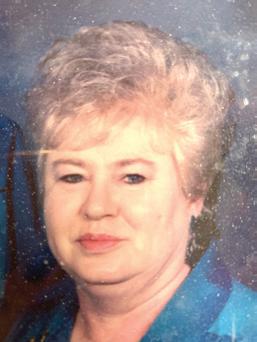
Joanne Jeraldine (Henry) Porter
June 7, 1942 ~ Feb. 8, 2023
Joanne Jeraldine (Henry)
Porter passed away to be with our Lord on Feb. 8, 2023. Joanne was born on June 7, 1942 to John and Madeline Henry. She was the oldest of six siblings and she grew up working on the family dairy farm as a kid in Myrtle Point Oregon.
Joanne graduated top of her class from Myrtle Point High School in 1961.
Later, Joanne moved to Bandon, Oregon where she met her first husband (Shorty Bratcher) and had two children, Connie and Fred. After Shorty passed away, Joanne moved with her children to the Clatskanie area where she met her second husband B.R.
Porter, who had five children from a previous marriage: Heidi, Bobby, Ava, Carla and Carolyn. Together they had daughter Reeca. Joanne was working locally in the hospitality busi-

ness and later went into the Real Estate field which she continued for many years, getting her broker’s license and buying Herb Clifford Real Estate and running that until she retired in 2013.
Joanne is survived by her husband B.R.; two daughters, Connie and Reeca; two brothers, Will and Dallas Henry; sister Susie Marquez; grandchildren, Brittany, Darrian, Chase and Sami; great grandchildren, Liam and Ashton; and numerous nieces, nephews, grand and great children on her husband’s side.
There will be a celebration of life at 11 a.m. on Sat., Feb. 18, 2023 at Clatskanie Baptist Church.
Columbia County Special Districts during that fiscal year. Of that, $275,000 was expected as a debt payment. An estimated $292,997 is expected to be received during the current 2022-23 fiscal year. REDCO has an annual debt payment for the USG Project of $275,000 on a total loan with $1,630,287 remaining in principle as of
January 2023. REDCO has committed all its TIF from Special Districts towards the repayment of the USG loan. No other projects are planned. Any affected taxing districts are advised to direct any questions to City Administrator W. Scott Jorgensen at 503-556-7301 or sjorgensen@cityofrainier. com.
www.thechiefnews.com A6 North Columbia County’s trusted local news source AMENDED NOTICE OF ELECTION OF DISTRICT BOARD MEMBERS February 15, 2023 Notice is hereby given that on Tuesday, May 16, 2023, an election will be conducted by mail for the purpose of electing board members to office for the following special districts: Clatskanie School District 6J Rainier School District 13 Scappoose School District 1J St. Helens School District 502 Vernonia School District 47J Clatskanie Rural Fire Protection District Columbia River Fire & Rescue Mist-Birkenfeld JT Rural Fire Protection District Scappoose Rural Fire Protection District Vernonia Rural Fire Protection District Clatskanie Library District Scappoose Public Library District Clatskanie Park & Recreation District Greater St. Helens Aquatic District Port of Columbia County Columbia 9-1-1 Communications District Rainier Cemetery District Electors residing within a district above may file a declaration of candidacy with the Clerk’s office of Columbia County, Oregon, beginning February 6, 2023, and ending March 16, 2023. The offices due to be filled at this election include those that must be filled due to vacancy. Positions/zones, terms of office and zone requirements (if any) are as follows: CLATSKANIE SCHOOL DISTRICT 6J Four Year Term Position 1 Position 2 RAINIER SCHOOL DISTRICT 13 Candidates must live in and be nominated by zone; elected by entire district Four Year Term Zone 3 Zone 4 Zone 6 (zone is at-large) Two Year Term Zone 2 SCAPPOOSE SCHOOL DISTRICT 1J Candidates must live in and be nominated by zone; elected by entire district Four Year Term Zone 1 Zone 2 Zone 6 (zone is at-large) Zone 7 (zone is at-large) ST HELENS SCHOOL DISTRICT 502 Four Year Term Position 2 Position 5 VERNONIA SCHOOL DISTRICT 47J Four Year Term Position 2 Position 3 Position 7 CLATSKANIE RFPD Four Year Term Position 4 Position 5 Two Year Term Position 3 (amended 2/9) COLUMBIA RIVER FIRE & RESCUE Four Year Term Position 1 Position 2 Position 3 MIST-BIRKENFELD RFPD Four Year Term Position 1 Position 2 SCAPPOOSE RFPD Four Year Term Position 1 Position 2 Position 4 VERNONIA RFPD Four Year Term Position 2 Position 3 Position 4 CLATSKANIE LIBRARY DISTRICT Four Year Term Position 3 Position 4 Position 5 SCAPPOOSE LIBRARY DISTRICT Four Year Term Position 3 Position 4 Position 5 CLATSKANIE PARK & REC Four Year Term Position 2 Position 3 Two Year Term Position 1 Position 5 GREATER ST. HELENS AQUATIC DISTRICT Four Year Term Position 4 Position 5 PORT OF COLUMBIA COUNTY Four Year Term Position 1 Position 2 Position 3 COLUMBIA 9-1-1 COM. DISTRICT Candidates must reside in, be nominated by and be elected by zone Four Year Term Zone 1 Zone 2 Zone 4 RAINIER CEMETERY Four Year Term Position 1 Position 5 Two Year Term Position 2 Position 4
Debbie
Columbia County Clerk This legal notice is to be published pursuant to ORS 255.075 by Debbie Klug, Columbia County Clerk NOTICE OF MEASURE ELECTION Filed in the Office of County Clerk NOTICE IS HEREBY GIVEN that a ballot title for a measure referred by Clatskanie Rural Fire Protection District has been filed with the Columbia County Clerk on February 9, 2023 The measure election will be conducted by mail and will be held on Tuesday, May 16, 2023. The ballot title caption is: Renewal of Five-Year Local Option Tax f or General Operations Caption RENEWAL OF CURRENT FIVE-YEAR LOCAL OPTION TAX FOR GENERAL OPERATIONS
Klug
IS HEREBY GIVEN that any elector may file a petition for review of this ballot title in the Columbia County
Court no later than 5:00 p.m. February 21st, 2023 (which is the 7th business day after receipt.) ORS 255.155 This notice is published pursuant to ORS 255.145(5) by Debbie Klug, Columbia County Clerk.
NOTICE
Circuit
• • o bituaries • •
CC23-1732 CC23-1727 Public Notices
scheduled to close Feb. 21 to repair slide damage between Clark (MP 2.5) and Janshaw (MP 4.5) Roads. The road is expected to be reopened March 28, according to a release from Columthe Oregon Department of Transportation. Detours will redirect traffic along the following routes: • North - Meissner to Apiary, Apiary to Old Rainier, Old Rainier to Hwy. 30 naan, Canaan to Hwy. 30 No other road closures are planned as a part of this construction. For more information, contact the Public Works Department at 503-397-5090 or by email at publicworks@ Meissner Road closing for slide repair 503-397-0116 For New and Returning Subscribers Only Purchase a One Year Subscription and receive an additional 3 months for FREE! Just mention this ad I Love Local News! Special Get your ad in The Chief Contact Jon at 503-397-0116 or chronicleads@countrymedia.net for rates and more information































www.thechiefnews.com Friday, February 17, 2023 A7 North Columbia County’s trusted local news source $45/ 888-486-0359 V S H lding C your local DIRECTV deale INTERNET OFFER: Subj. to change and may be discontinued at any time. Price for Internet 100 for new residential customers & is after $5/mo. autopay & paperless bill discount. Pricing for rst 12 months only. After 12 mos., then prevailing rate applies. Autopay & Paperless Bill Discount: Discount the monthly rate when account is active & enrolled in both. Pay full plan cost until discount starts w/in bill cycles. Must maintain autopay/paperless bill and valid email address to continue discount. Additional Fees & Taxes: AT&T one-time transactional fees, $10/mo. equipment fee, and monthly cost recovery surcharges which are not government-required may apply, as well as taxes. See www.att.com/fees for installation for full tech install, plus tax where applicable. Credit restrictions apply. Pricing subject to change. Subj. to Internet Terms of Service at att.com/internet-terms. ^AT&T Smart Wi-Fi requires installation of a BGW210, 5268AC, or NVG599 Wi-Fi Gateway. Standard with Internet plans (12M or higher). Whole home Wi-Fi connectivity may require AT&T Smart Wi-Fi Extender(s) sold separately. ††Internet speed claims represent maximum network service capability speeds and based on wired connection to gateway. Actual customer speeds are not guaranteed and may vary based on several factors. For more information, go to www.att.com/speed101. ©2021 DIRECTV. DIRECTV and all other DIRECTV marks are trademarks of DIRECTV, LLC. AT&T and Globe logo are trademarks of AT&T Intellectual Property. FEEL THE SPEED, EVEN AT PEAK TIMES No nual t t g, play throughout your home Power multiple devices at once everyone can en oy their own screen N ber of d depe ds O er 99% eliability E des DSL Based rk ilab ity ORDER TODAY & RECEIVE A $100 GIFT CARD Offer for new and qualifying former customers only. 3-year price guarantee requires credit qualification and 2-year commitment and covers core programming, local networks, and equipment. Early termination fee of $20/mo. remaining applies if you cancel early. Offer ends 4/12/23. 99% signal reliability based on data from set-top boxes. Not a guarantee of signal in all weather conditions. *Thursday Night Football: Internet connected Hopper and a Prime Video subscription required. A TV PRICE YOU CAN RELY ON 3-YEAR TV PRICE GUARANTEE A TV Price you can rely on - only from DISH ONLY FROM DISH 1-866-373-9175 Call us now! *Restrictions Apply Multi-Sport with NFL Redzone from NFL Network 99% Signal Reliability, now backed by our Reliability Guarantee *To qualify, consumers must request a quote, purchase, install and activate the generator with a participating dealer. Call for a full list of terms and conditions. REQUEST A FREE QUOTE CALL NOW BEFORE THE NEXT POWER OUTAGE (877) 557-1912 $0 MONEY DOWN + LOW MONTHLY PAYMENT OPTIONS Contact a Generac dealer for full terms and conditions Prepare for power outages today WITH A HOME STANDBY GENERATOR FREE 7-Year Extended Warranty* A $695 Value! Now’s the Right Time Take advantage of the new 30% Solar Investment Tax Credit (ITC) with PWRcell, Generac’s fully-integrated solar + battery storage system. PWRcell will help you save money on your electric bill and be prepared for utility power outages. Plus it’s compatible with most existing solar arrays. SAVE 30% WITH THE SOLAR TAX CREDIT Call to request a free quote! (844) 989-2328 ^Consult your tax or legal professional for information regarding eligibility requirements for tax credits. Solar panels sold separately. Promo Number: 285 *For those who qualify. One coupon per household. No obligation estimate valid for 1 year. **Offer valid at time of estimate only. 2The leading consumer reporting agency conducted a 16 month outdoor test of gutter guards in 2010 and recognized LeafFilter as the “#1 rated professionally installed gutter guard system in America.” Manufactured in Plainwell, Michigan and processed at LMT Mercer Group in Ohio. See Representative for full warranty details. Registration# 0366920922 CSLB# 1035795 Registration# HIC.0649905 License# CBC056678 License# RCE-51604 Registration# C127230 License# 559544 Suffolk HIC License# 52229-H License# 2102212986 License# 262000022 License# 262000403 License# 2106212946 License# MHIC111225 Registration# 176447 License# 423330 Registration# IR731804 License# 50145 License# 408693 Registration# 13VH09953900 Registration# H-19114 License# 218294 Registration# PA069383 License# 41354 License# 7656 DOPL #10783658-5501 License# 423330 License# 2705169445 License# LEAFFNW822JZ License# WV056 1-855-536-8838 CALL US TODAY FOR A FREE ESTIMATE BACKED BY A YEAR-ROUND CLOG-FREE GUARANTEE Mon-Thurs: 8am-11pm, Fri-Sat: 8am-5pm, Sun: 2pm-8pm EST % % OFF OFF 20 + YOUR ENTIRE PURCHASE SENIORS & MILITARY! 10 FREE GUTTER ALIGNMENT + FREE GUTTER CLEANING* C ONN E C T S FREE INTERNET Qualify today for the Government Free Internet Program CALL TODAY (877) 390-0458 YOU QUALIFY for Free Internet if you receive Housing Assistance, Medicaid, SNAP, WIC, Veterans Pension, Survivor Benefits, Lifeline and Tribal. Bonus offer: 4G Android Tablet with one time co-pay of $20 ACP program details can be found at www.fcc.gov/affordable-connectivity-program-consumer-faq Vendors wanted Contact Jon at 503-397-0116 Columbia County PRESENTED BY The Chronicle The Chief
Wrestlers ready for the State Championships
WILL LOHRE Country
Clatskanie High School’s boys and girls wrestling teams will send athletes to the State Championships.
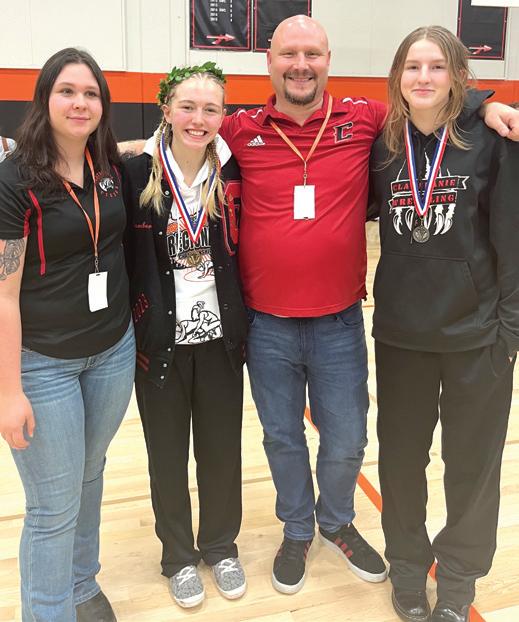
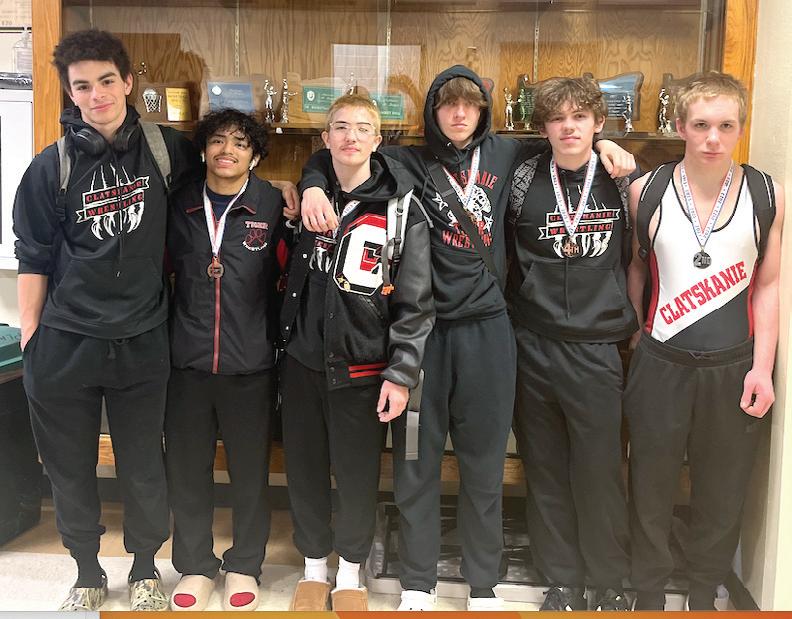
Two of the four girls in the program were able to qualify from districts, and the boys program will send three wrestlers. Head Coach Zach Davis said he is excited about how the season has finished and is proud of the team’s growth.
Every kid on the team has won; nobody has quit. If they try hard they will succeed. It may take a little bit of extra work, but it will pay off.”
“We are a pretty tightknit group. Not much adversity on our team,” Davis said. “They come together to help each other out both on the mat and in the classroom with grades to keep everyone eligible.”
Girls battling at districts
According to Davis, the team has “wrestled great this year.” Though they only brought three competitors to the districts, the team
SEEDS
From Page A1


are cross-bred and reintroduced are well suited to all parts of their habitat range.”
The Dorena center is a world-leader in resistant population development and has had success with several conifer species in other resistance breeding programs.


Background

Likely introduced on
finished 10th despite their low numbers.
Two standouts in their program were Joss Pember and Natalie Baker. Pember went 29-3 for the year with 24 pins, three tech falls, and two decisions. She won 1st place at girls 1A-4A regional tournament and qualified for the state meet on February 23-24. Baker, a sophomore, went 15-3 for the year and placed second at regional qualifying for state.
“Being a small team and in a new 2A league, it is hard to win a dual meet when we don’t have all the
wooden shipping material from Asia, emerald ash borer was discovered in the Michigan area in 2022. Despite numerous attempts to eradicate the pest, it proved impractical to stop the spread. It was first found in Oregon in Forest Grove in late June 2022. Monitoring since then has shown infested trees beyond the original site extending into nearby natural areas, where Oregon ash grows in abundance in wetlands and along streams. Emerald ash borer is readily transported in infested
weight classes full,” Davis said.
While having a small program makes it difficult to compete, the impressive individual showings from Pember and Baker will hopefully lead to good runs at the state tournament.
On the boys’ side
For the boys wrestling team, they will send two, maybe three, representatives to the state championship.
Senior Ernesto RojasBautista and junior Taylor Crawford both qualified for states finishing third and
wood, especially firewood. That’s one reason state and federal officials urge campers and others to buy firewood near where they plan to burn it, and not transport ash wood outside areas known to be infested.
“The strategy in Oregon is to slow the spread to give communities time to deal with the threat,” Williams said. “That way, communities will have more time to inventory their urban forest and identify all their ash trees, then make decisions about which ones to treat or remove
second in their respective weight classes.
Sophomore Ben Blackwood, who qualified for the state tournament last season, finished fourth in his weight division at districts and got a “wildcard” bid to state.
Rojas-Bautista won two tournaments during the regular season, and Davis believes he will have a chance of placing at state. For Crawford, this will be his first state tournament; Davis hopes he will be able to win some of his matches, but that he is competing in one of the toughest divisions.
pre-emptively. It also gives the time to make arrangements for what to do with all the ash wood that will become available as trees die.”
Williams said the cost to replace public ash trees in Portland, Oregon alone was estimated in 2017 to be $49 million, and is likely higher today. The state of Oregon began surveys for emerald ash borer in 2005, sponsored by USDA Animal Plant Health Inspection Service. ODF managed a statewide trapping program for EAB during the 2013-
Tournament format

The state championship has 14 different weight divisions, with ten participants in each division. Clatskanie will be representing 2A/1A-SD1 Special District 1. Each division is a double-elimination bracket, so if a wrestler loses twice, they are out of the tournament.
The Tigers will travel down to Portland Wednesday evening, Feb. 22. Over the next three days, each school division (6A, 5A, 4A, etc.) will battle it out. Davis is happy with the
2015 summer when adult emerald ash borers emerge. About 800 surveillance traps were set. No EAB were found at that time.
Oregon also used USDA funding to build and implement the Oregon Forest Pest Detector Program. This program, administered through Oregon State University Extension, educates tree care, forestry, and other professionals on how to find and report emerald ash borer. Started in 2015, over 500 people have
team’s progress and the students’ determination for the program overall this year, not just its state qualifiers.
“Every kid on the team has won; nobody has quit,” Davis said. “If they try hard they will succeed. It may take a little bit of extra work, but it will pay off.”
For Rojas-Bautista, Crawford, Pember, Baker, and Blackwood, the tournament should be a great opportunity to compete at the highest level.
Follow the high school state wrestling championships at osaa.org.

been trained at 29 workshops across the state.
ODF also secured USDA Forest Service grant funding to develop a statewide EAB Readiness and Response Plan. The plan was released in May 2018. Collecting ash seeds from Oregon’s native ash species aligns with recommended action items in the statewide plan regarding conservation and restoration of ash following arrival of emerald ash borer into Oregon.
www.thechiefnews.com Friday, February 17, 2023 A8 North Columbia County’s trusted local news source • • s P orts • • Solution for the Feb. 10, 2023 crossword puzzle • •C rossword s olutions • • save more. STAY FLEXIBLE . Ask about our rates on money market accounts, checking, IRAs, & more 800.773.3236 waunafcu.org FEDERALLY INSURED BY NCUA WE’RE HIRING! • Competitive Salary with 4-Tier Pay Progression • Profit Sharing Bonuses • Full Health Care Package $1,000+ SIGN-ON BONUS Become part of the Berry family around the globe. We foster workforce development to support and encourage our knowledgeable enployees. With more than 295 locations- we are pushing the limits of innovation and moving our industry forward. APPLY AT: WWW.BERRYGLOBAL.COM/CAREERS
Media, Inc.
~ Zach Davis
Courtesy photo Cameron Rowles 5th place 195 lbs, Ernesto Rojas Bautista 3rd place 126 lbs, Ben Blackwood 4th place 132 lbs, Russell Carver 6th place 145 lbs, Mike Hinsz 4th place 170 lbs, Taylor Crawford 2nd place 170 lbs.
Courtesy photo
Annemarie Davis Girls coach, Joss Pember 125lb 1st place, Zach Davis Head coach, Natalie Baker 120lb 2nd place.