School districts respond to graduation rate report
unavailable as the Oregon Depart ment of Education (ODE) last week released the annual statewide Graduation Rate Report.
The statewide rate for the class of 2022 is 81.3 percent, marking gains for every student group compared to the previous year. It is the secondhighest statewide graduation rate ever recorded in Oregon, according to the ODE. In this edition, the Chief is able to include comments from Clatskanie and Rainier School District officials concerning the graduation rates.
Clatskanie Interim Superintendent Ken Parshall and Clatskanie Middle/High School Principal Jeff Williams share their insight into the numbers in the following conversation with The Chief.
The Chief: What is the latest graduation rate for Clatskanie/ Middle High School and is that up or down compared to the past few years?
Ken Parshall/Jeff Williams:
The most recent 4 Year graduation rate moved from 67% for class of 2021 to 70.21% for the class of 2022. In addition, the five-year graduation rate moved from 62.5% to 74.47%.
The Chief: What are the factors that keep students from graduation?
Parshall/Williams: Factors that impact students from graduation today still have a gap in learning from covid, and student attendance due to covid. We are teaching students and staff what in person learning is and
we are closely monitoring current data to close the gaps.
place to help lead students to gradu ation?
Parshall/Williams: We have 9th grade success, a program that provides students the opportunity to build skill sets to be successful in learning. A certified staff member works with each 9th grade student to closely monitor grades, progress and sets up interventions for student learning. Also, this is the first year of a new Language Arts curriculum K-12 that is aligned to state standards. This year the district is planning on a new math K-12 adoption.
our tiered intervention system to address gaps in learning. We are working with staff to develop a weekly schedule which allows for additional time and support for students to learn essential standards for each course.
Rainier School District
The Chief also reached out to Rainier School District Superintendent Joseph Hattrick for his insight into the Rainier Jr./Sr. High School
graduation rate. The Rainier School District’s 4-year graduation rate has seen an increase every year (2017-18 was 87.3% and 21-22 was 89%) with the exception of 2020-21 school year which dropped to 65%, according to Hattrick.

“One can assume that the 2020-21 school year was at the height of the COVID-19 pandemic which decreased our entire county’s graduation rate to 67.57%,”
Hattrick said. “Over the past few years, the Rainier School District has done a great deal to address the learning needs of all students.”
Those efforts include:
• Summer school programming.
• After-school tutoring.
• Implementation of an internal assessment system to support educators targeting and addressing student learning needs.
• Inclusive practices for our student services department.
• Addressing school climate through increased instructional, administrative, and clinical staff.
“While we’re pleased that our graduation rate is above the state average, we believe that we still have work to do until every student graduates on-time,” Hattrick said. “As we progress through the school year, we continue to review all student data available to us as a means of modifying our interventions to make meaningful improvements for our students. These improvements will be reflected in our schools’ improvement plans.”
Statewide assessment
“Each graduate represents an individual and family success story, a point of pride for their
community, and a stronger future for Oregon,” Gov. Tina Kotek said. “It will take focused leadership and increased accountability to continue our recovery and ensure that all of Oregon’s children are better served by our investments in K-12 schools. All of our education investments must be paired with specific strategies to ensure we know how the dollars that are spent are connected to the education priorities that Oregonians care about. Every child is full of promise, and I am committed to creating the conditions for them to thrive.”
After a slight drop due to the impacts of the global COVID-19 pandemic, the statewide 2022 graduation rates are a positive sign that Oregon’s students and school systems are continuing to recover, according to ODE Director Colt Gill.
Notably, students completing two credits in an approved Career and Technical Education (CTE) Program of Study significantly exceeded the statewide average, graduating at a rate of 93.0 percent. Students who successfully completed English Learner programs prior to entering high school in Oregon graduated at 86.4 percent, 5.1 percentage points higher than the statewide average and an all-time high for that student group.
“When we combine the tremendous resilience of Oregon’s youth, the courageous, tireless, work of our educators, and the individualized, student-centered resources made available through the Student Success Act and other key initiatives, we’re able to make meaningful progress for Oregon’s students,” Gill said. “There is more work to do, and we are ready to keep working to make sure all students have what they need to succeed.”
Gov. Kotek outlines state budget priorities
Oregon Gov. Tina Kotek has unveiled her budget recommendations for the 2023-25 biennium, titled “Mission Focused.”

The recommendations focus on three top priorities:
• Building more housing and reducing homelessness.
• Improving access to mental health and addiction services.
• Improving outcomes in early literacy and K-12 schools.

“Every Oregonian, no matter their race or zip code, deserves to have the same chances,” Kotek said. “My mission as Oregon’s Governor will always be to deliver results and move the state forward to build the Oregon we all want to live in. This vision for Oregon’s future cannot be realized in one budget cycle. But this plan provides a roadmap for how we are going to reach our state’s longterm goals.”
Oregon is entering a challenging and complex budget environment with about $3.5 billion of one-time
Contact The Chief
funding, spurred by resources from the federal government, about to expire, according to Kotek, adding that the recommended budget still includes a path to make targeted investments because of prudent budget management to build historic reserves in recent years.
Kotek has recommended keeping the existing $2 billion of reserve funds in place, and redirect $765 million that would have been automatically added to these reserves into targeted investments aimed at better
serving Oregonians in these three key areas.
Highlights of the budget recommendations include:
Housing and homelessness
To reduce unsheltered homelessness, rehouse Oregonians, build and preserve more affordable housing, and increase homeownership, Kotek included the following investments: An urgent, $130 million package to reduce unsheltered homelessness.
The Governor is urging the legislature to move forward with this initial investment as quickly as possible, and released the details last week.
New affordable housing
$770 million: General obligation bonds to build more affordable homes for both renters and new homeowners.
Moving Oregonians out of unsheltered homelessness
$172.2 million: Rapid rehousing resources and connections to long-term rent assistance to maintain housing stability. This reflects the state’s first investment in an on-going, long-term rent assistance program.
New permanent, supportive housing
$130 million: Create new units of permanent supportive housing, and maintain the rent assistance and services needed for this housing.
Affordable housing preservation
$118 million: Lottery and General Fund to preserve existing afford-
able homes, including manufactured homes.
Ongoing homelessness prevention
$73 million: Create an on-going homelessness prevention program in Oregon.
Maintain shelter operations
$24.1 million: Maintain shelter operations in the state, including the operation of the 600 new shelter beds created through the early investment package and Project Turnkey projects.
Housing Production and Accountability Office (HPAO)

$2.2 million: Create a new state office to reduce land use and permitting barriers that stand in the way of building more housing.
Mental health and addiction services
To disrupt the harmful and
See KOTEK Page A3
Officials issue skin cream product warning
High levels of lead have been found in two tubes of a skin cream known as Diep Bao that’s advertised as treatment for eczema in young children.
State and local health officials are warning parents to avoid using the product while its safety is investigated. Two Portland-area children were recently found to have elevated blood lead levels. The children, one in Washington County and one in Multnomah County, are both younger than a year old.
The investigations
During investigations by state and local lead experts, parents of the children pointed to Diep Bao as the product they recently used on their babies’ faces to treat eczema, also known as atopic dermatitis, a condition common in young
children that causes dry, itchy and inflamed skin.
Oregon Health Authority’s (OHA) Childhood Lead Poisoning Prevention Program Coordinator Ryan Barker said laboratory tests on samples of the product provided by the families showed the product in the Washington County case contained 9,670 parts per million (ppm) lead, while the Multnomah County sample contained 7,370 ppm lead.
The Food and Drug Administration (FDA) has been alerted and is investigating. Only the two tubes of the cream have been tested so far, so whether lead is present in other tubes of Diep Bao is still being investigated.

Diep Bao is promoted primarily by online retailers in Singapore and Vietnam, with one seller advertising it as “a cream that supports skin problems such as eczema, heat rash, rash, redness, dry chapped skin, skin care, skin cooling, skin healing.” Health investigators say the product is manufactured in Vietnam.

OHA, Washington County Public Health and the Multnomah County Health Department are jointly investigating the cases. They are asking families who have the product to avoid using it while its safety is investigated.
What parents can do
Parents can help the investigation by providing tubes of Diep Bao in their possession to investigators so the product can be tested. They also are asking parents to learn about the risks of exposure to other lead-tainted products and make sure children’s blood levels are tested if they have been exposed to them.
“We are concerned this product caused or significantly contributed to the elevated blood lead levels in these children,” Barker said. “Any product containing high lead levels should be considered extremely
Serving the Lower Columbia Region since 1891 VOL. 131, NO. 39 $1.50 Exclusion Day ahead Page A2 Obituaries .................... A3 Opinions ...................... A4 Communtiy Calendar A4 Classified Ads ............ A5 Legals .......................... A5 World Cancer Day........A6 Phone: 503-397-0116 Fax: 503-397-4093 chiefnews@countrymedia.net 1805 Columbia Blvd., St. Helens, OR 97051
Metro Creative Connection
Graduation rates improve in Clatskanie and Rainier.
Courtesy photo from YouTube Oregon Gov. Tina Kotek’s budget priorities include funding for homelessness solutions, mental health and schools.
STAFF REPORT Country Media, Inc. See WARNING Page A3 Courtesy photo from the OHA State and local health officials are warning parents to avoid using the product while its safety is investigated.
World Cancer Day Page A6
JEREMY C. RUARK Country Media, Inc.
Parents urged to update children’s immunizations

Officials with the Oregon Immunization Program are encouraging parents to check to make sure their children are immunized. Children whose records show that they are missing immunizations may not be able to attend school or child care until the medical records are updated.
The law
Under state law, all children in public and private schools, preschools, Head Start and certified child care facilities must have up-todate documentation on their immunizations or have an exemption.
“Immunization is the best way to protect children against vaccine-preventable diseases such as whooping
cough and measles,” Oregon Health Authority (OHA) Public Health Division School Law Coordinator Stacy de Assis Matthews said. “Just a few years ago, we saw several measles cases in the Northwest, and Central Ohio just experienced a severe measles outbreak with more than 30 unvaccinated children hospitalized. There also were recent polio cases in New York state. We don’t want another disease outbreak in Oregon of on top of COVID-19. Immunizations are the most effective way to stop the spread of measles and other diseases, to keep kids and school communities healthy and safe.”
If a child’s school and child care vaccination records are not up to date by Feb. 15, the child will be sent home if they don’t have an exemption. In 2022, local health departments sent 26,149 letters to parents and
guardians informing them that their children needed immunizations to stay in school or child care.
A total of 5,118 children were kept out of school or child care until the necessary immunization information was turned in to the schools or child care facilities. This year, reminder letters to parent will be mailed by Feb. 1. COVID-19 vaccinations are not required for students in Oregon schools or child care. OHA strongly recommends everyone stay up to date with COVID-19 immunizations. Parents can check with their health care provider or pharmacist about current COVID-19 recommendations.
What parents need to do
Parents seeking immunizations for their children should contact their child’s pediatrician or local health
department or contact info by dialing 211 or visiting to 211info.org. No one can be turned away from a local health department because of the inability to pay for required vaccines. Many pharmacists can immunize children 7 and older; parents can contact their neighborhood pharmacy for details.
Additional information about school immunizations can be found at the Immunization Program website. Statewide school vaccination data is available on the OHA website, or at OHA’s new School Law Immunization Dashboard.
Personal stories about why people in Oregon are deciding to vaccinate can be viewed by visiting OHA’s Facebook and Twitter pages. OHA also invites people to join the conversation and share why they vaccinate by using the hashtag #ORVaccinates on social media.
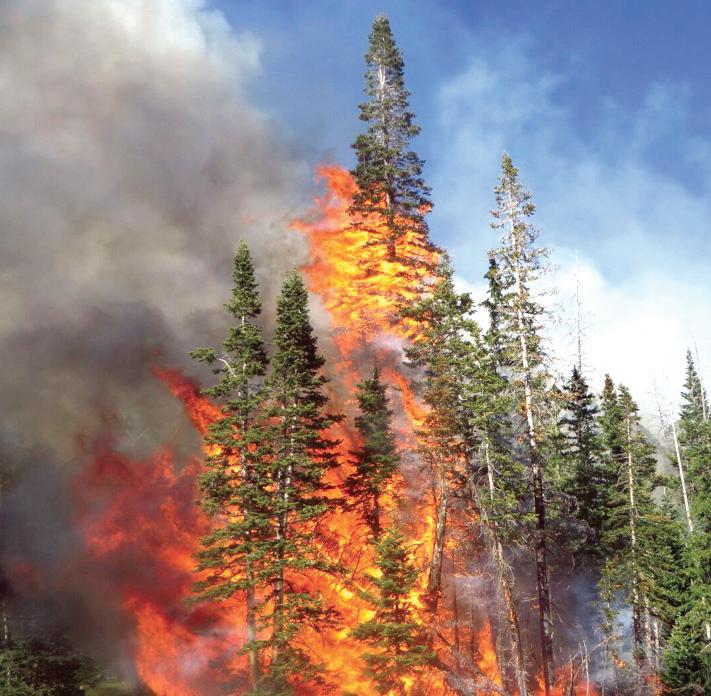
Congress considers Wildfire Emergency Act
Columbia County will see additional wildfire protection under new federal legislation proposed by Oregon
U.S. Senator Ron Wyden (D), California U.S. Senators Dianne Feinstein (D), and Alex Padilla (D), and Montana U.S. Senator Steve Daines (R).

The Wildfire Emergency Act, a bipartisan bill to reduce the risk of catastrophic wildfires, recognizes that the threat of wildfire is an emergency for the American West, according to a release from Wyden’s office.
The bill’s provisions include allowing the U.S. Forest Service to leverage private financing to accelerate forest restoration projects, creating a program to ensure critical facilities maintain power during wildfire disruptions, expanding a weatherization grant program to help low-income households fireproof their homes and establishing a prescribed fire-training center in the West.
What the Wildfire Emergency Act does:
• Provides up to $250 million to increase the pace and scale of forest restoration and wildfire resilience projects. These funds would allow large-scale forest restoration efforts on up to 20 landscapes of at least 100,000 acres each to achieve maximum benefit.
• The U.S. Forest Service would be granted pilot authority to bring together local stakeholders, conservationists and private financing groups to leverage additional funds to implement these projects faster. Each project could receive up to $50 million in new financing under this pilot authority.
• The bill requires a report to Congress on the impact of this pilot authority and any barriers to making the authority permanent.
• Establishes an energy resilience program at the Department of Energy to ensure that critical facilities remain
Community
center in Florida.
• Authorizes grants to professional organizations, state agencies and academic institutions to support training the next generation of foresters and firefighters. These grants would provide for increased outreach to interested students as well as support training and internships for interested individuals.
• Authorizes up to $50 million to support community grants of up to $50,000 for locally focused land stewardship and conservation.
essential upgrades to keep the lights on when disaster strikes and giving communities the firefighting workforce and latest technology required to get fires under control. Our bill also prioritizes mitigation work now to prevent wildfires from turning into the megafires that destroy lives and property. The climate crisis is here, and the West needs more support.
active during wildfire disruptions. Up to $100 million is authorized to make necessary retrofits for this purpose. Backup power would prioritize renewable fuels rather than diesel generators.
• Expands an existing Energy Department weatherization grant program to provide up to $13,000 to low-income households to make wildfire-hardening retrofits including emberresistant roofs and gutters.

• In many states, including California, insurance companies will automatically reduce fire insurance premiums for homeowners who
to

harden their homes against wildfire.
• Expedites the placement of wildfire detection equipment on the ground including sensors and cameras, as well as the use of spacebased observation to identify new fires faster and help firefighters respond more effectively.
• Authorizes funding for programs to expand the forest conservation and wildland firefighting workforce.
• Establishes a prescribed fire-training center in the West. Currently, the U.S. Forest Service operates just one prescribed fire training
“Wildfires throughout Western states, particularly California, are becoming deadlier and more destructive because of climate change. We must recognize this as the new normal and do all we can to help reduce the risk of devastating wildfires,” Feinstein said. “This bill approaches the problem of wildfires from multiple directions: it accelerates forest restoration programs that reduce the threat of fire, it funds programs to help communities mitigate local fire risks and it invests in technology and firefighter workforce training to better equip us to battle these fires. Every level of government and the private sector must be involved in this fight, and this bill will go a long way toward helping us prepare for a hotter, drier future.”
“To address the threat of catastrophic wildfires in the West an all-of-the-above approach is needed,” Wyden said. “This means making
“Climate change is accelerating the threat posed by wildfires in California and across the American West, making these catastrophic events the norm in our state,” Padilla said. “Now is the time to make meaningful investments in wildfire prevention by allowing private financing options to help local governments in their effort to keep communities safe. The Wildfire Emergency Act would bring more resources to save lives and protect communities. By improving forest management, shoring up critical energy infrastructure, and training more forest managers, we can limit the devastation caused by extreme wildfires.”
“Montanans are sick and tired of breathing in smoke as our forests continue to burn – we need to act now to mitigate the effects of yet another deadly fire season,” Daines said. “Our bill expedites critical forest management projects, invests in next-gen technology and research, and protects at-risk Montana communities. We must manage our forests before they manage us.
Town Hall
www.thechiefnews.com Friday, February 3, 2023 A2
STAFF REPORT Country Media, Inc. Courtesy photo Under state law, all children in public and private schools, preschools, Head Start and certified child care facilities must have up-to-date documentation on their immunizations or have an exemption.
Courtesy photo The Emergency Act includes appropriating $250 million for large-scale
restoration. STAFF REPORT Country Media, Inc.
forest
U.S. Senator Ron Wyden
scheduled an open-toall, in-person town hall in Columbia County for 1 p.m. 1,038 town halls overall statewide in fulfillment of his pledge to hold at least one town hall each year in each of Oregon’s 36 counties.
service is all about being accountable,
my commitment to hold annual town halls for each of our state’s 36 counties, I’m very much looking
to these upcoming town halls in Columbia and Benton counties.” • Columbia County 1 p.m. Saturday, Feb. 4 at Meriwether Place, 1070 Columbia Blvd., St. Helens. • Benton County, 5:30 p.m. Sunday, Feb. 5, at LaSTAFF REPORT Country Media, Inc. Let us know what YOU think EMAIL YOUR LETTERS TO: CHIEFNEWS@COUNTRYMEDIA.NET
invited
Congressional
has
“Public
with
forward
Arts Commission presents The Wardens
The Clatskanie Arts Commission presents The Wardens in concert at 7:30 p.m. Saturday, February 18.
The performance will be held at Birkenfeld Theatre inside the Clatskanie Cultural Center, 75 S. Nehalem Street in Clatskanie.
The Wardens, The Rocky Mountain-based band, share with their audience stories, songs and majestic photos rising from the very land they’ve protected as Canadian national park wardens.
With haunting threepart harmonies and chilling tales, the band’s mountain
WARNING
From Page A1
dangerous and parents should immediately stop using it on their children or any other family member.”
There is no Food and Drug Administration (FDA) regulatory limit on lead in medications, but for cosmetics it’s 10 ppm. This means the two creams that were tested contained nearly 1,000 times the maximum allowable amount of lead in cosmetics.
It’s unclear whether Diep Bao is considered a cosmetic under federal law.
The Washington County case was found to have a blood lead level of 11.8 micrograms per deciliter (µg/dL), while the Multnomah County case had a blood lead level of 7.3 µg/ dL. Oregon’s case definition for lead poisoning has been a
KOTEK
From Page A1
expensive homelessness-jailhospital pipeline, decrease preventable deaths from substance use and behavioral health needs, and stabilize the behavioral health workforce, Governor Kotek included the following recommendations:
Continue investments in substance use treatment and services
$278.9 million: Addiction treatment, overdose prevention, peer support services, housing assistance, and employment services – funded by Measure 110 grants and a 1115 waiver allowing for Medicaid coverage of substance use disorders (SUD) facility-based treatment and peer services.
Continue funding new 2021 investments
$195.7 million: Continued funding for aid and assist services, Certified Community Behavioral Health Centers (CCBHCs), Peer Respite Centers, co-occuring disorder treatment, System of Care Advisory Council, Interdisciplinary Assessment Teams for children and housing for transition-age youth.
Community mental health
$127.4 million: Continue 30% Medicaid rate increases for increased behavioral health worker wages.
Continue behavioral health provider incentives

$60 million: Loan repayment, scholarships and tuition stipends for licensed behavioral health providers and students in the workforce pipeline.
Oregon State Hospital
$50.2 million: Increase positions at the state hospital to support a sustainable 24/7 staffing model; establish a dedicated Health Equity Unit at the state hospital to address the needs of staff; support the OSH Complex Case Management Unit to meet the needs of patients with complex needs and ensure the safety of staff and patients; and upgrade OSH facilities to improve patient recovery and safety of both patients and staff.
Mobile crisis teams
$47.6 million: Ongoing funding for programs like CAHOOTS to divert individuals from hospital and jail, including response and stabilization services for youth and their families.
music – blending folk, roots and western styles –reflects Canada’s protected wilderness areas. Celebrating the return of wild buffalo, wrangling grizzly bears, lonely nights on the pack trail and reflecting on an environment in crisis, a performance by the Wardens has been dubbed “the quintessential mountaincultural concert experience”.
The band has performed widely across western Canada and in the US from Alaska to California. The group includes:
blood lead level of 5 µg/dL or greater, which is when public health agencies investigate and provide case management to families.
However, out of an abundance of caution – and to align with lead poisoning definitions of the Centers for Disease Control and Prevention (CDC) and FDA – public health agencies in Oregon have recently begun investigating cases with blood lead levels above 3.5 µg/dL.
Health danger
People with high blood levels of lead may show no symptoms, but the condition may cause damage to the nervous system and internal organs. Acute lead poisoning may cause a wide range of symptoms, including abdominal pain, muscle weakness, nausea, vomiting, diarrhea,
Increase residential and facility capacity
$40 million: Ongoing funding to support operation of additional mental health residential capacity funded in 2021 and to continue the state’s investment in the development of additional residential and facility capacity.
Harm reduction clearinghouse
$40 million: Continue support of the harm reduction clearinghouse to reduce preventable deaths associated with opioid use.
Health Care Provider Incentive Program
$20 million: Nearly double OHA’s Health Care Provider Incentive Program, with a priority to increase Oregon’s behavioral health workforce and to continue to recruit and retain diverse health care providers.
Crisis prevention system
$18.4 million: Fund 988 call centers, the nationwide service connecting people with the 988 Suicide and Crisis Lifeline.
Early learning and K-12 education
To improve student literacy, stabilize early childhood services and ensure Oregon children are better served by K-12 schools, Kotek included the following recommendations: Increase the state school fund
$9.9 billion: Kotek is recommending increasing the State School Fund to $9.9 billion and fully funding High School Success (formerly Measure 98) to help improve graduation rates and give students the tools to be career and college ready.
Ensure all kids are learning to read, and reading to learn
$100 million: Evidencebased, targeted literacy strategies to ensure preschool and elementary school educators have the training, time, materials, and ongoing coaching they need to integrate evidence-based literacy strategies with culturally responsive approaches.
Expanding physical capacity of early learning facilities
$100 million: Create and upgrade the physical space early learning providers need, along with technical assistance to navigate the expansion and renovation processes.
Scott Ward, songwriter and fingerstyle guitarist, has been a national park warden for over 30 years in Banff National Park. Scott’s music stems from a life lived in the deep wilderness of the Canadian Rockies as a horseman, search-and-rescue dog handler and technical alpine specialist. He is able to bring a modern take on a timeless musical tradition. Evoking the haunting fingerstyle guitar of Gordon Lightfoot with the mystique and presence of Ian Tyson, Scott’s music embodies Canadian authenticity.
weight loss, and bloody or decreased urinary output.
Children are particularly vulnerable to lead poisoning. If a child is exposed to enough lead for a protracted period (e.g., weeks to months), permanent damage to the central nervous system can occur. This can result in learning disorders, developmental defects, and other long-term health problems.
“If your child has a skin condition like eczema, consult with your health care provider about prevention and treatment options,” Washington County Health Officer Christina Baumann, M.D. said “If you have been using this Diep Bao cream, please talk to your provider about getting a blood lead test for your child.”
Perry Cabot, senior program specialist at Multnomah County Health Department and an investigator on the
Early Learning Program Enhancement
$62.5 million: Provide a living wage to early learning professionals to stabilize and value the workforce by enhancing rates for Oregon Pre-Kindergarten (OPK), Preschool Promise, Healthy Families Oregon, Relief Nurseries, and the Early Childhood Equity Fund.
Employment-Related Day Care (ERDC)
enhancements
$41.3 million: Increase rates for ERDC providers, provide funding for a limited caseload expansion for ERDC, support the transfer of ERDC from Oregon Department of Human Services, provide funding to make IT system changes to expand program eligibility, and support child care supply building and ERDC access.
Enrichment programming for all grades
$30 million: Continue to offer students opportunities to connect with each other to support their well-being following years of pandemicimpacted learning. Funding will be provided by Tribes and community-based organizations.
Literacy-focused summer programming provided by districts
$20 million: Evidencebased strategies and integrated with culturally responsive approaches for preschool and elementary (P-5) students. Requires districts to provide a 50% local match.
Expand and enhance existing targeted strategies
$18 million: Increase investments in Student Success Plans (e.g. American Indian/ Alaska Native State Plan, African American/Black Student Success Plan, LGBTQ2SIA+ Student Success Plan) and add funding for additional plans for Native Hawaiians/Pacific Islanders and Refugees and Immigrant student populations.
Kotek outlined her state budget proposal during a media briefing Tuesday, Jan. 31 in Salem.
Senate Republicans respond
In response to Kotek’s proposal, Oregon Senate Republicans released the following statement:
“According to the most recent revenue forecast, Oregon families will receive an average of $5,200 back on their taxes in the form of a surplus credit known as the “Kicker,” Oregon Senate Republican
Ray Schmidt, songwriter, upright bass, mandolin and guitarist, founded The Wardens in 2009 with Scott Ward during the national park warden centennial after discovering the rich depth of music and stories within this region of Canada.
Translating the high lonesome sound of the Kentucky hills to those of the Rocky Mountains, Ray’s vocals amplify the spirit of The Wardens’ Mountain music. Posted in Jasper National Park, Ray has worked in a number of parks including Banff, Gla -
lead exposures, said the lead poisoning cases were discovered through a combination of regular pediatric check-ups, parent engagement, and public health follow-up to “connect the dots.”
“All these factors highlight the importance of staying engaged in your children’s health, whether it’s you, your medical provider, or your local or state health program,” Cabot said.
OHA and county health officials are working with the FDA to investigate the cases and test more products as they become available. Until the source and scope of the lead contamination are better understood, local health officials are also asking anyone selling these products to stop selling them and remove them from their websites to protect their customers.
Local health officials
Leader Tim Knopp (R-Bend) said. “I’m relieved to see that the Governor’s proposed budget doesn’t pull money from the Kicker – it’s the right thing to do.”
“Oregonians across the state feel the impacts of inflation and other rising costs. They deserve to spend their hard-earned money how they see fit – to plan for emergencies and spur the economy,”
Oregon State Senator Daniel Bonham (R-The Dalles) said.
“The Republican Majority worked to enshrine the Kicker in Oregon’s Constitution in the 1990’s and we are still
cier and Mount Revelstoke. He is currently working with grizzly bears and the abundance of wildlife that abounds in Jasper.
Deputy Warden Scott Duncan has played fiddle on stage since 2017. His talents are evident, and it’s possible his pedigree has something to do with it. His grandfather - Herb Duncan - played fiddle for over 100 years in Maple Creek, Saskatchewan.
Tickets are available online at clatskaniearts. org, by calling Elsa at 503.728.3403, or if avail -
are working with culturally specific community groups and other partners to warn residents of potential risks associated with the eczema cream.
Resources
People who have a tube of Diep Bao, or other concerns about lead, can contact the following:
• Multnomah County Leadline: 503-988-4000 or leadline@multco.us. Interpretation is free. Those submitting product will get instructions on where to drop it off. More information about lead is at leadline.org.
• FDA: Consumers who have a complaint regarding the use of Diep Bao cream are encouraged to call the Oregon Consumer Complaint Coordinator or report the product through FDA’s Safety Report-
committed to protecting it today,” Oregon State Senator Kim Thatcher (R-Keizer) said.
“This session, we introduced legislation urging Congress to propose a balanced budget amendment to the U.S. Constitution. The Legislature needs to send a strong message to Congress in order to safeguard present and future generations from the undue burdens our growing national debt presents,” Oregon State Senator Fred Girod (R-Stayton) said.
“I look forward to giving testimony on this very
able, at the door the night of the performance.
Tickets: $25 for adults; $23 for seniors (60+) and students; $20 children 12 and under Here are calendar items for the rest of our season:
• Pianist John Nilsen, 3 p.m. Sunday, March 12, at Birkenfeld Theatre
• Oregon Symphonic Band, Sunday, 3 p.m. April 23, at Clatskanie Mid/High School
• Raymond Carver Writing Festival, May 19 and 20, Clatskanie Cultural Center.
ing Portal.
Risk of lead Oregon health care providers and laboratories are required by law to report certain diseases and conditions, including lead poisoning, to local health departments.
On average, 270 Oregonians are diagnosed with lead poisoning each year; about a third are children younger than 6. The most common cases are due to ingesting paint and paint dust containing lead, but exposures from traditional cosmetics and informally imported spices have been identified.
For more information, visit the CDC’s Childhood Lead Poisoning Prevention Program page. Childhood Lead Poisoning Prevention Program.
important piece of legislation and urge the Committee Chair to schedule a public hearing as soon as possible,” Knopp said. Senate Joint Memorial 1 was referred to the Senate Committee on Veterans, Emergency Management, Federal and World Affairs. Knopp is the Chief Sponsor and Girod the Regular Sponsor. It has not yet been scheduled for a public hearing. Follow developments at thechiefnews.com and in the Friday print editions of The Chief.
www.thechiefnews.com Friday, February 3, 2023 A3 North Columbia County’s trusted local news source
Addressing the youth mental health crisis
More than 130 children’s organizations recently called on President Biden to declare a national emergency in response to America’s youth mental health crisis.
That news came just days after an expert panel recommended that all children ages eight to 18 receive routine screenings for anxiety.
These developments drew new attention to a worsening situation. Yet too often, concrete strategies for improving youth mental health are missing from the discussion.
One strategy
One of those strategies should be expanded access to school counseling.
School counselors are
Welcome Nyjah McClain Allen
Courtesy
Nyjah McClain Allen was born on December 20, 2022, in Toledo, Ohio, to parents Krista and Andrew Allen. Krista and Andrew graduated from Rainier High School in 2009. He was 7 lbs. 7oz. and 20 inches long. This is the first child for both of them. Grandparents are Mark and Mary Harrington of Rainier, Oregon, Barbara Allen of Woodland, Washington and the late McClain Cloy of Seattle, Washington.

trained to help K-12 students reach their goals by addressing academic, career development, emotional, and social challenges. These professionals have a skillset that goes beyond assisting students with navigating classroom conflicts and college readiness. They also have the training to recognize mental health warning signs. School counselors can be a critical line of defense against worsening mental health conditions. And yet they remain all too uncom mon, particularly in schools that serve poor and marginal ized communities. We need more school counselors.
What triggered the decline
COVID-19 has taken a tragic toll on young people’s
well-being. Between 2016 and 2021, mental-healthrelated hospital admissions for people under 20 jumped by 61%, according to a recent analysis by the Clarify Health Institute.
But this decline in mental health began before the pandemic. A JAMA Pediatrics study published in 2019 found that nearly 8 million children between 6 and 18 reported at least one mental health condition.
The many causes of youth depression and anxiety matic experiences, marginalization, and school shootings. teens now worry that a shooting could occur at their own school, according to the Pew School counselors could -
ing trends. But roughly a fifth of all students in grades K-12 have no access to counseling in their school.
By the numbers
Whereas the American School Counselor Association recommends one counselor for every 250 students, the average ratio nationwide is about one to 400 -- and in some states, it’s one to more than 600. At least 20 states don’t even have school counselor mandates on the books. Black and low-income students are more likely than their peers to lack sufficient access.
But even these figures understate the severity of the counselor shortage. That’s because the kinds of guidance that school counselors provide can vary dramati-
•
cally. Within high schools, specifically, the counselor’s role is often confined to academics and college planning -- with little focus on students’ emotional and social well-being.
Hope
If we’re to have any hope of reversing the alarming youth mental-health deterioration, we must improve access to school counselors. The federal government has provided several rounds of emergency relief funds to schools since the start of the pandemic, some of which have gone to mental health. In October, the Biden Administration released an additional $280 million for this purpose. These funds are a welcome start, but we need addi-
tional action. Nationwide, all schools should be required to provide counseling services to their students and maintain appropriate counselorto-student ratios. And at the state level, curriculum designers should incorporate social and emotional learning as standard practice for K-12 students.
The youth mental-health crisis is all around us. Expanding access to school counselors could make these tragedies far less common, while giving students the support, guidance, and care they need to flourish.
Cameka Hazel, Ed.D., is an assistant professor for New York Institute of Technology’s Master of Science in School Counseling program. This piece originally appeared in Salon.
•C ommunity E v E nts
February 10 and 11 Quilt Show
Bethany Lutheran Church’s Annual Quilt Show is scheduled from 10 a.m. to 3 p.m. Feb. 10 and 11 at 34721 Church Road in Warren. Bring quilts to display from 9 a.m. to 2 p.m. Thursday, Feb. 9. Call Chris Mollenhour at 503-888-7540 for more information.
March 21 Ladies
Motivational Night Out
6 p.m. - 7 p.m. at the Clatskanie Library. This event is free. Motivational speaker, published author and certified life coach Toni Dowrey will be the speaker.
June 21, 1955 ~ Jan. 23, 2023
David Nelson Miller died unexpectedly of a heart condition on January 23rd. He was born in Portland, Oregon to Mary (Essig) Miller and Robert L. Miller in 1955. His younger days were spent in Portland, Port Townsend, and Clatskanie, Oregon where he graduated from high school in 1973. A lifelong musician and lover of music, Dave received his bachelor’s in music from the University of Oregon and did graduate work in music composition at the University of Southern California. After his time in Los Angeles, he lived in Seattle; Ananda Village, California; Assisi, Italy; Portland and Beaverton, Oregon.
Dave wrote and arranged music all his life, and his career in music reflects that passion: early jobs at Tower Records and Johnson Sheet Music were followed by years of composing, arranging and performing music for Crystal Clarity Publishers and the Ananda community. A proud member of ASCAP, his works include classical pieces both large and small, many arrangements, and choral music. His music was distributed and performed around the world. Recent choral pieces were written for the Pacific Youth Choir, Ananda, and Pacific University. At Ananda, David col-
laborated on many albums including The Mystic Harp, Secrets of Love, and Meditations for Piano. Ananda Cello is a digital album arranged by David for cello ensemble. Another example of David’s published work is his album Quiet Christmas. These are all published through crystalclarity.com.
In 2000, David returned to Oregon and a job at the Oregon Symphony. For nearly 20 years he lived in downtown Portland, a close walk to the concert hall. He enjoyed his work behind the scenes creating promotional materials and concert programs. For several years he was pleased to be asked to create and arrange pieces for the symphony’s annual children’s concert where his sense of humor and delight in bringing music to children were appreciated by many.
Everett Bozarth
Dave was a gentle and loving soul, always friendly and open hearted. His ready wit was never far away, as was often seen in the notes and poems shared with family and friends. He nurtured his nephews’ interest in music: holding Quinn in his arms at his first Oregon Symphony outdoor concert, introducing Quinn and Robert to the Pacific Youth Choir, and attending Robert’s many piano recitals. David was devoted to his family, whether babysitting the nephews, caring for his aging mother, or acting as the family historian.
Dave is survived by his brothers and sisters-in-law, Steve and Leslie (Hildula) of Portland, Jeff of Beaverton, Oregon, and Greg and Mary (Horrall) of Portland; nephews, Quinn and Robert; and many close friends.
He is preceded in death by his parents; uncle Leonard; and aunts, Betty Lou and Lorraine.
A celebration of life service is scheduled for 1 p.m., Sat., Feb. 4, 2023 at the Ananda Temple, 4855 SW Watson Ave., Beaverton, OR 97005. There is also a video of an earlier Ananda service at https://youtu.be/PnV7WSTF4uU.

Remembrances in lieu of flowers can be made to Ananda at anandaportland. org/donate.
Sept. 2, 1924 ~ Jan. 26, 2023
The Chief
Joe Warren Publisher Jeremy C. Ruark
CONTACT US • Phone: (503) 397-0116 • Fax: (503) 397-4093 •
Editorial policy
Opinions expressed on this page are independent of The Chief views and are solely those of the writers expressing them.
Letters policy

This newspaper’s letters to the editor are limited to a maximum of 250 words and will be edited for grammar, spelling and blatant inaccuracies. Unsubstantiated or irresponsible allegations, or personal attacks on any individual, will not be published. Letters
will be offering a different program the third Tuesday of each month at 7 p.m. at 1925 First Street in Columbia City. For more information, call 503-397-5390.
Lower Columbia River Watershed Council Meets at 7 p.m. every other second Tuesday. Meetings are currently held electronically by Zoom. For more information, contact Council Coordinator Henry Franzoni ar 360-353-0937 or email to hjfranzoni3@gmail.com. Visit the council’s website for agenda postings and Zoom at www.lowercolumbiariver.org/events-page.
Ongoing
Caples Evening Programs
The cost for this evening and all our Fireside Chats will be only $5. Caples
Hall at 106 W B Street. For more information, call 360751-7039.
The Rainier Public Library is open from 9 a.m. to 4:30 p.m. Tuesdays, Wednesdays and Thursdays, 10:30 a.m. to 4:30 p.m. on Fridays and 10:30 a.m. to 2:30 p.m. on Saturdays. It will be closed Sundays and Mondays.
Avamere at St. Helens hosts a Virtual Dementia Support Group – 3rd Wednesday of each month from 2 to 3 p.m. For more details, contact Jenny Hicks/Avamere at St. Helens at 503-366-8070.
The Rainier Oregon Historical Museum (ROHM) is open from noon - 4 p.m. Saturday (except major holidays weekends). ROHM is located inside Rainier City
To list an event in the Community Calendar, email details with a phone number that may be published, to chronicleclassifieds@ countrymedia.net, or call 503-397-0116.
Weekly
Poll
Results
containing details presented as facts rather than opinions must include their sources. Writers are limited to one published letter per month. All submissions must include the author’s full name, local street address and telephone number (only the name and city of residence will be published). By submitting a letter, writers also grant permission for them to be posted online. Opinions expressed on this page are the writer’s alone and do not represent the opinion of the newspaper or its parent company, Country Media, Inc.
North Columbia County’s trusted local news source
Are
Obituaries
Obituaries received after noon on Wednesday may not be in time for that Friday’s paper. Obituaries may be emailed to chiefnews@countrymedia.net, sent via mail, or dropped off at the office. We also accept obituaries written by funeral homes. Include the address and daytime phone number of the person who submitted the obituary, so we can verify information as necessary.
www.thechiefnews.com Friday, February 3, 2023 A4
Website: www.thechiefnews.com Editorial: chiefnews@countrymedia.net ADVERTISE WITH US: Advertising Email: chronicleads@countrymedia.net • Classified email: chronicleclassifieds@countrymedia.net
The Chief (USPS 116-360) is published weekly by Country Media, Inc. 1805 Columbia Blvd, St. Helens, OR 97051
Send address changes to The Chief PO Box 1153, St. Helens, OR 97051
One month in county: $8 One month out of county: $10 One year in county: $70 One year out of county: $90 One year online only: $60
Regional
Editor Jon Campbell Advertising Sales Kelli Nicholson Office Manager James Yang Creative Director Jon Lowrance Driver
POSTMASTER:
SUBSCRIPTION RATES:
Executive
Vote online at thechiefnews.com
Yes 87% No
much time do you spend on social media?
CAMEKA HAZEL Chief Guest Column
13%
How
Online
Last Week’s
you changing your diet because of the increasing price of eggs and other foods?
photo
• •
David Nelson Miller
• • o bituari E s • •
Everett Bozarth 98, of Rainier, Oregon, passed away Jan. 26, 2023 in Rainier, Oregon.
A service will be held at 4 p.m. on Sat., Feb. 4, 2023 at Groulx Family Mortuary, 25381 Wonderly Rd., Rainier, OR 97048.
Brief checks A few hours daily Several hours daily No time
CLATSKANIE Mini Storage

CC23-1718.1
May 16, 2023, an election will be conducted by mail for the purpose of electing board members to office for the
CC23-1715
IN THE CIRCUIT COURT OF THE STATE OF OREGON FOR THE COUNTY OF COLUMBIA
In the Matter of the Adoption and Change of Name of DESTINY LEE NICHOLS, a Minor Child. No. 23AP00011 To: CLARISSA MCATEE You are hereby required to appear and defend the petition for adoption and change of name filed in Columbia County, Oregon, United States, involving your child within THIRTY (30) DAYS from the date of service of this summons upon you, and, in case of your failure to do so, for want thereof, petitioner will apply to the court for the relief demanded in the petition
CC23-1722
for adoption and change of name. NOTICE TO THE RESPONDENT: READ THESE PAPERS CAREFULLY! You must “appear” in this case or the other side will win automatically. To “appear” you must file with the court a legal paper called a “motion” or “answer”. The “motion” or “answer” (or “reply”) must be given to the court clerk or administrator within THIRTY (30) DAYS of the date of first publication specified herein, along with the required filing fee. It must be in proper form and have proof of service on the petitioner’s attorney
or, if the petitioner does not have an attorney, proof of service upon the petitioner. The date of first publication of this summons is February 3, 2023. If you have any questions, you should see an attorney immediately. If you need help in finding an attorney, you may call the Oregon State Bar’s Lawyer Referral Service at (503) 684-3763 or toll-free in Oregon at 1-800-452-7636. Stephen D. Petersen, OSB #73235 Attorneys for Petitioner. STEPHEN D. PETERSEN, L.L.C., P.O. Box 459, Rainier, OR 97048, (503) 556-4120.
IN THE CIRCUIT COURT OF THE STATE OF OREGON FOR THE COUNTY OF COLUMBIA
Probate Department In the Matter of the Estate of RICHARD ALLAN FORREST, Deceased. No. 23PB00329 NOTICE TO INTERESTED PERSONS NOTICE IS HEREBY that the undersigned has been appointed personal representative of this estate. All persons having claims against the
estate are required to present their claims, with vouchers attached, within four months after the date of first publication of this notice to the personal representative at P.O. Box 459, Rainier, OR 97048, or the claims may be barred. All persons whose rights may be affected by the proceedings may obtain
additional information from the records of the Court, the personal representative or the attorney for the personal representative. Dated and first published February 3, 2023. Monica F. Forrest Personal Representative. STEPHEN D. PETERSEN, L.L.C. Attorney at Law, P.O. Box 459, Rainier, OR 97048.
IN THE CIRCUIT COURT OF THE STATE OF OREGON FOR THE COUNTY OF COLUMBIA
2023.
CC23-1720
Debbie Klug Columbia County Clerk
This legal notice is to be published pursuant to ORS 255.075 by Debbie Klug, Columbia County Clerk
IN THE CIRCUIT COURT OF THE STATE OF OREGON FOR THE COUNTY OF COLUMBIA
Probate Department In the Matter of the Estate of GERALDINE ANDERSON, Deceased. No. 22PB11076
NOTICE TO INTERESTED
PERSONS NOTICE IS HEREBY GIVEN that the undersigned has been appointed personal representative of this estate. All persons having claims against the
estate are required to present their claims, with vouchers attached, within four months after the date of first publication of this notice to the personal representative at P.O. Box 459, Rainier, OR 97048, or the claims may be barred. All persons whose rights may be affected by the proceedings may obtain
additional information from the records of the Court, the personal representative or the attorney for the personal representative. Dated and first published February 3, 2023. Jon Anderson, Personal Representative. STEPHEN D. PETERSEN, L.L.C. Attorney at Law, P.O. Box 459, Rainier, OR 97048.
CC23-1716
The Port of Columbia County is seeking proposals to assist the Port in updating its Strategic Business Plan. Interested and qualified firms may obtain the RFP documents
must be given to the court clerk or administrator within THIRTY (30) DAYS of the date of first publication specified herein, along with the required filing fee. It must be in proper form and have proof of service

on the Port’s website at https://www.portofcolumbiacounty.org/rfps; from the Port Office located at 100 E Street, Columbia City, OR, from 8:00 am to 5:00 pm Monday-Friday; or via

on the plaintiff’s attorney or, if the plaintiff does not have an attorney, proof of service upon the plaintiff. The date of first publication of this summons is January 13, 2023. If you have any questions, you should see an attorney immediately. If you need help in finding an attorney, you may call the Oregon State Bar’s Lawyer Referral Service at (503) 684-3763 or toll-free in Oregon at 1-800-452-7636. Stephen D. Petersen, OSB#73235 Attorney for Plaintiff. STEPHEN D. PETERSEN, L.L.C. P. O. Box 459 Rainier, OR 97048 (503) 556-4120.
email at sisco@portofcolumbiacounty.org. Submissions must be received by 5:00 pm on Monday, February 13, 2023. For questions, please call 503-397-2888.
www.thechiefnews.com Friday, February 3, 2023 A5 North Columbia County’s trusted local news source Marketplace Just call 503-397-0116 It’s easy to place a classified ad in The Chief Listings are updated daily at www.thechiefnews.com 312 Events 502 Help Wanted ANNUAL ASTORIA AUTOMOTIVE SWAP MEET Vendors Wanted! Clatsop Fairgrounds Saturday, March 11th 8 A.M. - 2 P.M. C all C harlie (503) 325-3508 or Dorothy (503) 468-0006 H21498 Facilities Services Technician I Columbia County, OR EOE Deadline 2/13/2023 Apply at ColumbiaCounty OR.gov. Public Notices PROTECTING YOUR RIGHT TO KNOW I love local news special Purchase a one year subscription and receive an additional 3 MONTHS FOR FREE! Just mention this ad. www.thechiefnews.com 503-397-0116 The Chief CC23-1719 CONSTANCE D. BUDGE, an individual, Plaintiff, and Jackie L. Gump, Trustee, or his successor(s) in trust, under the Evelyn B. Boursaw Revocable Living Trust dated August 8, 2012, an individual, Karen E. Johnson and Ryan O. Flori No. 20CV02279 Summons To: RYAN O. FLORI You are hereby required to appear and defend the Complaint filed against you in the above-entitled action within THIRTY (30) DAYS of the date of service of this summons upon you, and, in case of your failure to do so,
want thereof, plaintiff will apply to the court for the relief demanded in the Complaint. NOTICE TO
DEFENDANT:
PAPERS CARE-
You must “appear” in this case or the other side will win automatically. To “appear” you must file with the court a legal paper called a “motion” or “answer”. The “motion” or “answer”
for
THE
READ THESE
FULLY!
“REQUEST FOR PROPOSALS: STRATEGIC BUSINESS PLAN RFP”
NOTICE OF ELECTION OF DISTRICT BOARD MEMBERS February 1, 2023 Notice is hereby given that on Tuesday,
special districts:
Rainier
St.
District
CLATSKANIE SCHOOL DISTRICT 6J Four Year Term Position 1 Position 2 RAINIER SCHOOL DISTRICT 13 Candidates must live in and be nominated by zone; elected by entire district Four Year Term Zone 3 Zone 4 Zone 6 (zone is at-large) Two Year Term Zone 2 SCAPPOOSE SCHOOL DISTRICT 1J Candidates must live in and be nominated by zone; elected by entire district Four Year Term Zone 1 Zone 2 Zone 6 (zone is at-large) Zone 7 (zone is at-large) ST HELENS SCHOOL DISTRICT 502 Four Year Term Position 2 Position 5 VERNONIA SCHOOL DISTRICT 47J Four Year Term Position 2 Position 3 Position 7 CLATSKANIE RFPD Four Year Term Position 4 Position 5 COLUMBIA RIVER FIRE & RESCUE Four Year Term Position 1 Position 2 Position 3 MIST-BIRKENFELD RFPD Four Year Term Position 1 Position 2 SCAPPOOSE RFPD Four Year Term Position 1 Position 2 Position 4 VERNONIA RFPD Four Year Term Position 2 Position 3 Position 4 CLATSKANIE LIBRARY DISTRICT Four Year Term Position 3 Position 4 Position 5 SCAPPOOSE LIBRARY DISTRICT Four Year Term Position 3 Position 4 Position 5 CLATSKANIE PARK & REC Four Year Term Position 2 Position 3 Two Year Term Position 1 Position 5 GREATER ST. HELENS AQUATIC DISTRICT Four Year Term Position 4 Position 5 PORT OF COLUMBIA COUNTY Four Year Term Position 1 Position 2 Position 3 COLUMBIA 9-1-1 COM. DISTRICT Candidates must reside in, be nominated by and be elected by zone Four Year Term Zone 1 Zone 2 Zone 4 RAINIER CEMETERY Four Year Term Position 1 Position 5 Two Year Term Position 2 Position 4 Each candidate for an office listed above must file a declaration of candidacy (filing form SEL190) with the Elections Department of Columbia County within the period beginning on February 6, 2023 and ending no later than 5:00 p.m. March 16, 2023. Each declaration of candidacy must be accompanied by either a filing fee of $10.00 or a candidate nominating petition (form SEL -121) signed by at least 25 registered voters residing in the district. Filing forms are available on -line at the Oregon Secretary of State website (http://sos.oregon.gov/elections/Pages/electionforms.aspx). The forms are also available at Columbia County Elections Dept., 230 Strand St., St. Helens, OR. Dated this 1st day of February
following
Clatskanie School District 6J
School District 13 Scappoose School District 1J
Helens School District 502 Vernonia School District 47J Clatskanie Rural Fire Protection District Columbia River Fire & Rescue Mist-Birkenfeld JT Rural Fire Protection
Scappoose Rural Fire Protection District Vernonia Rural Fire Protection District Clatskanie Library District Scappoose Public Library District Clatskanie Park & Recreation District Greater St. Helens Aquatic District Port of Columbia County Columbia 9-1-1 Communications District Rainier Cemetery District Electors residing within a district above may file a declaration of candidacy with the Clerk’s office of Columbia County, Oregon, beginning February 6, 2023, and ending March 16, 2023. The offices due to be filled at this election include those that must be filled due to vacancy. Positions/zones, terms of office and zone requirements (if any) are as follows:
The Board of Directors for Clatskanie School District 6J will hold a public meeting February 8, 2023 at the Clatskanie Elementary Library, 815 Nehalem, at 6:00 PM. This is an in person meeting. Following the public meeting the Clatskanie School Board will hold an executive session meeting, under ORS 192.660(2a); To consider the employment of a public officer, employee, staff member or individual agent. NOTICE OF PUBLIC MEETING Need a job? check the classifieds online at www.thechiefnews.com to find your perfect job offer
CC23-1721
Hoarder’s Paradise! 20 sizes, Inexpensive RV Storage, Carports, Hand trucks, Locks, Fully-lined, Insulated, Condensation free, all units lit. On-site Manager 503 728-2051 503 369-6503 Visa/MC/Amex
Oregon cancer specialist sees hope for a cure

The Chief is proud to partner with our advertising clients to present the following special World Cancer Day presentation.
World Cancer Day, which is held every February 4, is the global uniting initiative led by the Union for International Cancer Control (UICC).
“By raising worldwide awareness, improving education and catalysing personal, collective and government action, we are all working together to reimagine a world where millions of preventable cancer deaths are saved and access to life-saving cancer treatment and care is equitable for all - no matter who you are or where you live,” the UICC states on its website.
While cancer is devastating, there is hope for a cure.

For insight into cancer research, The Chief talked with Dr. Flavio Rocha, the Physician-in-Chief at the Oregon Health & Sciences University (OHSU) Knight Cancer Institute in Portland.
The Chief: What do you see on the horizon in regard to cancer research? Is it positive?



Dr. Flavio Rocha: Cancer is not new. It has been with us since ancient times. It is part of our cellular makeup. Our cells have to divide and so the way cancer occurs is that there is a defect in that division process.
It is difficult to say how long it will be with us but what is encouraging is that we have made significant progress as we learn more about the




genetics, through profiling, as our drug discovery has improved, as our surgical techniques have improved and as our radiation technology has improved.




According to the American Cancer Society information released Jan. 13, the cancer mortality rate dropped by 33% since 1991, so I find that extremely encouraging. It just validates all the work that our cancer community has done, from cancer screening and prevention efforts to providers who take care of cancer patients, advocates who help us with patients so it has really been a community wide effort.
We will probably have about 2 million cancer diagnoses in the coming year, result-





The Chief: What do we look for? How do people know that they might be developing cancer?
Rocha: Typically, by the time that there are symptoms for some cancers, the ability for a cure may be rapidly closing. Things that we look for are onset of pain and blood in the stool. We try to catch this early through screening with mammograms, a colonoscopy, and prostate specific antigen (PSA) tests. Not all cancers can be screened. It puts us back a little bit in treatment.
The Chief: What is your

been diagnosed with cancer? What is the best approach to support those loved ones?







Rocha: This is where we get a lot of help from our patient advocates and there are lots of philanthropical organizations that are assisting, so sometimes it’s not all about the treatment, it is about the support. So, we rely heavily on our system of life care, so our colleagues help us with that management and we determine what the goals are of our patients. If families have a history of cancer, this is where screening can make a difference, so we do encourage
family members. Pre-testing is not for everybody and it comes with consequences. A medical advisor can help guide you through the process and help explain all that data. Our technology has evolved so rapidly, there are many things that we can do. We don’t just rely on chemotherapy. There are now drugs that stimulate the body’s own defense to treat cancer and this has been an unbelievable advancement. There have also been advancements in cervical cancer treatment. These are things that can be done to prevent cancer in folks that don’t have cancer.
As technology improves, we are also seeing new ways to detect cancer risks through blood draws. We do the work up and perhaps catch the cancer at an early stage and cure it. I am absolutely encouraged and positive and this is what keeps us going. We are making progress. We’d like to be moving at a more rapid pace but as new technology is being developed, we keep marching on.
About the OHSU Knight Cancer Institute


The Knight Cancer Institute at Oregon Health & Science University (OHSU) became an NCI-Designated Cancer Center in 1997 and was awarded comprehensive cancer center status in 2017. The Knight Cancer Institute is the only NCI-Designated Comprehensive Cancer Center between Sacramento and Seattle.


With its mission to end cancer as we know it, the institute is building on its groundbreaking expertise in targeted therapy to substantially improve outcomes for patients with advanced cancer and to enhance the ability to detect cancer at its earliest stages. From laboratory science to clinical trials of new treatments, to studying populations at risk, the institute’s scientists are advancing the understanding of the root causes of cancer and finding ways to improve detection, diagnosis, treatment, and prevention.
For more information, contact the OHSU Knight Institute at 503-494-1617.


www.thechiefnews.com Friday, February 3, 2023 A6 North Columbia County’s trusted local news source 401 Columbia River Hwy, Clatskanie, OR 503-728-2490 Ingredients for life. Supporting our local community. OHSU Family Medicine, Scappoose 51377 Southwest Old Portland Road Crossroads Plaza, Unit C, Scappoose, OR 97056 | 503-418-4222 | ohsu.edu Protect your health SCAPPOOSE Sand & Gravel Co. P.O. Box AF • 33485 E. Crown Zellerbach Rd. Scappoose, OR 97056 Phone: (503) 543-8821 • Email: scappoosesg@gmail.com www.scappoosesandandgravel.com • FAX: (503) 543-7997 Showing our support of World Cancer awareness Complete Engineering, Design, & Ecological Services Lower Columbia Engineering, LLC. 58640 McNulty Way • St. Helens, OR 97051 • 503.366.0399 1111 Columbia Blvd, St Helens • marketfreshonline.com 7 AM - 10 PM EVERY DAY • (503) 397-2288 from your friends at Wishing the best, 1805 St. Helens Street, St. Helens OR 97051 503-438-0016 • yogayounion.com 503-410-3134 • drsorber@columbiarivernaturalmedicine.com 503-893-3118 • www.columbiarivernaturalmedicine.com
Dr. Heather Sorber Naturopathic Physician
I approach health holistically
JEREMY C. RUARK Country Media, Inc. Metro Creative Connection strand insurance trust • integrity • security 503-728-2193 We are your trusted independent insurance agency. 475 S Columbia River Hwy Ste 100, St. Helens, OR 97051 Phone: (503) 397-0471 www.legacyhealth.org Let’s keep you healthy. Open Noon to 6 PM (971) 895-1239 2035 Columbia Ave, St. Helens
OR CCB # 154994 / WA VILAREI912P6 503-556-2951 • www.vilardielectric.com VILARDI ELECTRIC 503-556-2951 Professional Service Since 1995 Serving Columbia County for 63 years www.thechiefnews.com 503-397-0116 The Chief Hoping for the best for you and yours
February 4