Jeremy C. Ruark / The Chronicle
DAMON
Metro Creative Connection
The pandemic recession was not an equal opportunity offender. The largest job losses were concentrated in restaurants, hotels, tourism facilities, personal care services, and education.
Courtesy from CCSO Lt. Shawn McQuiddy
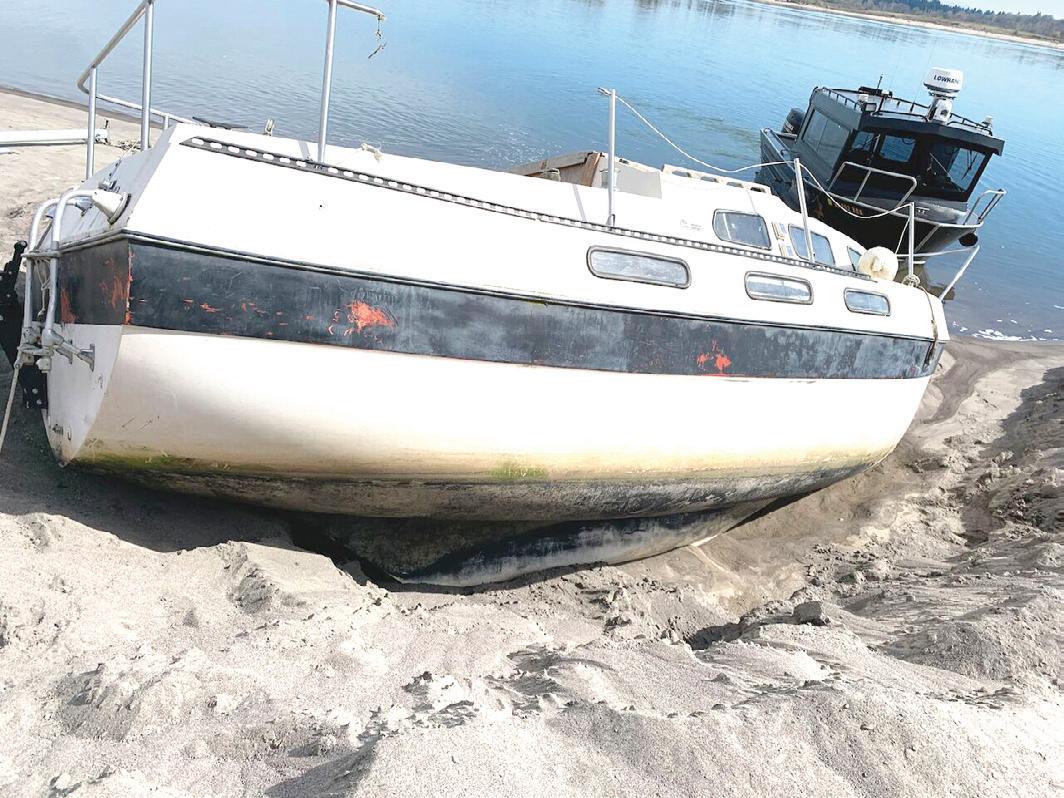
Serving Columbia County since 1881 thechronicleonline.com $1.50AugustWednesday,17,2022 $46 Million for childrenOregon Page A8 sentencedkidnapperConvicted Page A3 Vol. 140, No. 33 Opinion ..................... A4 Poll ............................ A4 Community Calendar A4 Obituaries ................. A5 Classified Ads ......... A6 Legals ....................... A6 Crossword ............... A9 Removing abandoned and derelict vessels from Oregon’s waterways will be a focus in coming months, according to state officials, who addressed the issue during the Aug. 9 meeting of the State Land Board meeting. Safety concerns Abandoned vessels along the Columbia River present a myriad of safety concerns including water, navigational, and envi ronmental hazards, according to Columbia County Sheriff’s Office Lt. Shaun McQuiddyMcQuiddy.saidthat vesselabandonment cases have tested of ficer capabilities on a state level. “These abandoned and der elict vessels have increasingly robbed our resources and time, statewide,” he said in previously published interview with The Chronicle.McQuiddy also said that the majority of abandoned and der elict boats are located in South Columbia County waterways from the Multnomah County line on the Columbia River down to Goble and the Multnomah channel. Penalties The penalties for vessel aban donment range from $440 on the low end to thousands of dollars on the high end. If the vessel becomes submerged, it becomes an even greater expenditure to remove the vessel that, for one boat owner, came out to a total of $55,000.Themost common types of offenders of abandoned vessels range from people living on their boat, to scrappers and owners of “fixer uppers,” he said. $40 million In June, the State Land Board directed the Department of State lion in general funds during the state budget process to address the hundreds of commercial and recreational vessels littering Or egon’sAbandonedwaterways.and derelict ves sels are a serious threat to water way health and safety, and they create both environmental and navigational hazards, according to For years, DSL has been work ing with state, federal, and local partners to clean up and remove vessels, Walker said. Collab orative efforts have resulted in removing hazardous vessels from waterways, said Walker, but lack of a statewide abandoned and derelict vessel program with dedi cated funding has meant ongoing impact to the Common School Fund. Since 2017, the Common School Fund has expended $12.9 million removing commercial and recreational vessels from public waterways.“Oregon’s schoolkids foot the bill for cleaning up abandoned and derelict vessels,” Walker said. “Every dollar spent cleaning up these messes is a dollar out of the classroom.”Duringthe State Land Board meeting Tuesday, Aug. 9, DSL officials outlined how the $40 million in general funds would be used, with emphasis on removing the 19 known commercial vessels of concern statewide, as well as hundreds of recreational vessels. Read the removal plan memo.
The Columbia County Sheriff’s Marine Patrol reports abandoned vessels are a continuing hazard along the Columbia River. See VESSEL Page A10
JEREMY C. RUARK jruark@countrymedia.net
JEREMY C. RUARK jruark@countrymedia.net
Election 2022: Johnson submits voter signatures in bid for governor
See WORKERS Page A10 Phone: 503-397-0116 Fax: St.1805countrymedia.netEmail:503-397-4093chroniclenews@ColumbiaBlvd.,Helens,OR97051
Oregon businesses are on the verge of fully recovering all jobs lost from the COVID-19 pandemic recession.AsofJune 2022, total nonfarm employment levels were only 0.9% below the previous peak. When looking over the recovery by indus try we see a fairly large disparity. For some industries, employment is now far higher than pre-pandemic levels, such as construction; trans portation, warehousing, and utili ties; real estate, rental, and leasing; and professional and technical services. Meanwhile other indus tries remain below their previous peak, such as educational services; leisure and hospitality; other ser vices; and local government. These disparate trends are not surprising. The pandemic recession was not an equal opportunity of fender. The largest job losses were concentrated in restaurants, hotels, tourism facilities, personal care services, and education. Employ ment in accommodation and food services, the sector that includes hotels and restaurants, remains roughly 6% below the previous peak. The industry is sitting with 6,200 fewer jobs than before the pandemic, yet there were nearly 10,800 new unique job ads between April and June as these employers try to ramp back up. Frustratingly slow Clearly the demand exists to lead the state’s accommodation and food services into a full recovery, but that recovery has been frustrat ingly slow for many employers with 77% of Oregon vacancies identified as difficult to fill this past spring. The most common response when businesses were asked why their vacancies were difficult to fill? A lack of applicants. If these restaurants and hotels remain far from recovered and yet the demand for workers is high, it begs the question: where did all the restaurant and hotel workers who were working in the industry before the pandemic go? RUNBERG Chronicle Guest Article
$40 million to address abandoned vessels
Where did all the hotel and restaurant workers go?
Collaborative work DSL is currently working with federal, state, and local partners to remove four commercial vessels from waterways. Emergency re moval of the Tourist No. 2, a for mer river ferry built in the 1920s, is underway in Astoria. Pollutants have been removed from the ves sel, according to Walker, but the vessel’s poor condition, proximity to a fuel dock and the navigational channel, and the continued impact of tides on the vessel’s structural integrity present an imminent threat to public health and safety. “Not taking action to remove this hazard from the water is not an option,” Walker said. “But Or egon’s schoolchildren are paying yet again to clean up a mess creat
Oregon gubernatorial candidate Betsy Johnson has announced that she has the required voter signa tures to qualify for the November General Election. In a release to the media issued Monday, Aug. 15, Johnson and her supporters said they would deliver the signature petitions to the Or egon Secretary of State’s Office in Salem at noon Tuesday, Aug. 16. As an Independent candidate running unaffiliated from any politi cal party, Johnson needs to collect 23,744 signatures to be certified for the Oregonballot. laws (ORS 249.008(2) and OAR 165-0110) allow the Oregon Elections Division to verify petitions based on a random or samples of the signatures rather than verifying all of the signatures. The number of random signatures selected is based on the number of signatures turned in for verification Once the signature petitions are submitted by the candidate, the Oregon Elections Division staff, trained in handwriting analysis, compare the petition signature to signatures on file in the signer’s voter registration record, according to the Oregon Secretary of State’s Office. If the signature does not have sufficient points of similarity, it is rejected.Earlier this summer, Johnson placed a large sign in Scappoose urging voter support and she held a signature gathering event at the Columbia County Fairgrounds in St. Helens.Johnson announced earlier this year that she was mounting her gubernatorial campaign as an Inde pendent and leaving the Democratic Party after serving as an Oregon legislator for years. “I think it’s a unique moment in time to select an Independent leader,” she told The Chronicle. Johnson is running against Democrat Tina Kotek, Republican Christine Drazan and Libertarian candidate R. Leon Noble. Follow this developing story at thechronicleonline.com and in the Wednesday print editions of The Chronicle.
Betsy Johnson placed this large sign at Scappoose earlier this summer to gather voter support as an Independent candidate for Oregon Governor.





While the virus has spread mostly in the LGBTQ community, Sidelinger em phasized anyone can catch it if they come into close contact with someone who has been infected. Most diagnosed cases “Right now, in Oregon and other states, most cases of monkeypox have been di agnosed in gay and bisexual men,” he said. “While this disease does not spread just among men and one’s sexual orientation does not make one more susceptible to the virus, the virus is spreading more among those groups.” Sidelinger said in re sponse to the growing cases and growing concerns, OHA is launching a new website dealing specifically with the virus. The page will share information on testing, vac cines and treatments and offer answers to many ques tions people may have. In addition, he said the state announced those get ting tested or vaccinated for the virus can now do so with no out-of-pocket expense. The cases in Oregon are spread across seven coun ties and are among the 9,500 cases in the United States and 31,800 cases worldwide. “Anyone can be diag nosed with monkeypox, and this not a gay disease,” Sidelinger said. Almost all cases of monkeypox are diagnosed after a person comes into close skin-to-skin contact with someone who has it. It can be passed by contact ing clothing, sheets, towels or other items used by an infected person, but those cases are rare. Symptoms “Monkeypox may start with a fever, achiness or sore throat, but it may also start with a rash or sores,” Sidelinger said. “If you have symptoms you believe to be monkeypox, contact your healthTheprovider.”vaccinefor monkey pox is effective and has a long record of success. But supplies are very limited. Since the first case was di agnosed in June, Oregon has received 6,803 doses, and fewer than 50 are available at OHA today. Individual county health departments across the state do have some vaccines, but they are being given to only the most at-riskSidelingerpeople.said the state is concentrating on get ting first doses to those at rick, with second doses often waiting fur up to three months. Only the most at-risk or pediatric cases, which there have been none so far in Oregon, will get the second dose at four weeks as recommended.“Anyonecan be infected by monkeypox,” Sidelinger said. “Plan ahead if you’re attending events where there may be close, skin to skin contact.”
Courtesy from the Centers for Disease Control and Prevention
As monkeypox cases con tinue to climb in Oregon, the state is working to control the outbreak before it be comes a statewide pandemic. Dr. Dean Sidelinger, the state health official, said the Oregon Health Authority (OHA) is working to spread information and a limited number of vaccines to help slow the spread of the virus, which has so far mostly im pacted gay and bisexual men. Case count As of Tuesday, Aug. 16, the OHA had confirmed 95 cases in seven counties across the state, including one case in Columbia Coun ty, with 92 cases among men. The three women infected are among the most recent cases confirmed in the state. Sidelinger said while an other pandemic on the heels of COVID-19 is disturbing, monkeypox is a vastly differ ent kind of virus. “It might seem like too much to now have another outbreak of another infec tious disease as we continue t recover from COVID 19,” Sidelinger said. “The good news is although monkeypox is a severe public health con cern, it is not another CO VID-19. It does not spread the same was as COVID 19. Fortunately, there have been no deaths in Oregon and the United States. We are not recommending vaccinations for the general population.”
www.thechronicleonline.com Wednesday, August 17, 2022A2 GeneralDriversShippingEmployeeMechanicalPowderTigSupervisorsMaterialSalesSalesIncluding:AdministratorCoordinatorHandlerWeldersCoatersAssemblyDevelopmentShopHelp STARTING WAGE RANGE $15/HR TO $34/HR DOE AND ABILITY THC FRIENDLY GeneralDriversShippingEmployeeMechanicalPowderTigSupervisorsMaterialSalesSalesIncluding:AdministratorCoordinatorHandlerWeldersCoatersAssemblyDevelopmentShopHelp APPLY AT WWW.PACIFICSTAINLESS.COM503-366-8265
COVID-19 Pandemic
a 15.4% decline from the previous biweekly total of 18,567. www.thechronicleonline.com 503-397-0116 • 1805 Columbia Blvd. Read the news online at thechronicleonline.com The Chronicle
STAFF REPORT chroniclenews@countrymedia.net Metro
As the monkeypox virus spreads across Oregon, health officials are urging residents to take precautions.
Fear and confusion Katie Cox, the executive director of the Equity Insti tute, which reaches out to the gay and lesbian community in Portland said there is a lot of fear and confusion in the LGBTQ community. “I’m hearing many of my community express confusion about hPMX4,” she said. “Several people I spoke to didn’t even know there was a vaccine avail able. Lack of urgency from the federal government has been concerning. Would that response look any different if it wasn’t based in a marginal community?” Like Sidelinger, Cox emphasized the virus is not a gay disease, and she feels the focus should be on behavior rather than orientation. “We need to focus on risky behavior and not identity,” Cox said. “Anyone who has skin can get this disease. At this point it’s not an if, but a when if will start impacting other communi ties. Gay, bisexual and queer men are not the only people engaging in skin-to-skin contact.”Coxurged the state and federal governments to sup port groups like hers that can reach the most at-risk people. “Information, health and risk access and vaccine availability is not widely known,” she said. “That is why it’s vital that community health organizations that are more nimble and tied into their communities get im mediate support.”
The Oregon Health Au thority’s (OHA) COVID-19 Biweekly Data Report shows a slight decrease in COVID-19-related hospital izations and deaths. The OHA reported 15,716 new cases of COV ID-19 from July 24 to Aug. 6, a 15.4% decline from the previous biweekly total of 18,567.During the two-week period of July 24 to Aug. 6, test positivity was 13.0%, down slightly from 13.8% in the previous two-week period.The Aug. 10 COVID-19 Biweekly Congregate Care Setting Outbreak Report shows 206 active outbreaks in care facilities, senior living communities and congregate care living set tings with three or more confirmed COVID-19 cases or one or more COVID19-related deaths. Cases by ZIP code update OHA published updates to the Oregon COVID-19 Cases by ZIP Code dash board report. Case rates were updated using 2020 data from the U.S. Census Bureau’s American Com munity Survey. OHA had previously been using 2010 U.S. Census Bureau data to calculate rates. This aligns OHA’s reporting of CO VID-19 cases by ZIP code with people vaccinated with at least one dose of any COVID-19 vaccine by ZIP code. Newly added filters let users explore data by county and urban/rural ZIP code designation. Changes to color coding better show the skewed distribution of case rates. Previously, case counts, and case rates were not displayed for popula tions under 1,000 people. Case counts, and case rates are now displayed for ZIP Code Tabulation Areas with 50 or more people. Case counts from ZIP codes with fewer than 10 cases, or with a case rate of 50,000 per 100,000 or more, will be reported in aggregate. This dashboard report will con tinue to be published weekly on Wednesdays.
15,716 new
OHA Dashboard Space This week, the CO VID-19 Case Demographic and Disease Severity dashboard will be removing and archiving the “Disease Severity” tab. Because case interviews are no longer required due to limited capacity, data used on the “Disease Severity” tab, such as underlying conditions, are no longer collected. The tab will be removed from the dashboard. For a comprehensive overview of COVID-19 infections and underlying conditions, please refer to the updates from the Centers for Disease Control and Prevention. Creative Connection Oregon Health Authority (OHA) reported cases of COVID-19 from July 24 to Aug. 6,
The
‘Slight decrease’ in hospitalizations, deaths
Is monkeypox our next pandemic? DAVID RIPKALVIS Country Media Inc.






• Acquisition of land, or a legal interest in land, in conjunction with the capital construction of a structure. • Planning and design-re lated activities may be eligible provided they are directly related to the capital construc tion activity.
Courtesy photo James Donald Cooley
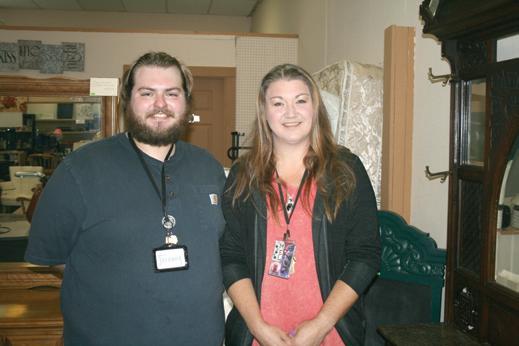
Where We Live: Top Notch with a ‘heartbeat’ Article Jeremy C. Ruark / The Chronicle The Top Notch Thrift Store is located at 1844 Columbia Boulevard in St. Helens. Courtesy photo from Herbert Swett Barbra Bynoe, left, and Kay Jillson have been volunteering since Top Notch opened.
$277,777 for fairgrounds renovations
years’ supervised release during sentencing
The Columbia County Fairgrounds is set to receive $277,777 for building renova tions.The funding will come from Business Oregon and is expected to be used to build a pole barn or to repair the fairground buildings’ roofs. “The pole barn is a barn supported by poles with a roof,” Columbia County Fair representative Hanna Russell said. “Each year we have to rent a tent to conduct the an nual youth livestock auction during the summer fair. With the pole barn, we would not have to rent the tent.” Russell said the Columbia County Fair Board is expected to review whether to use the $277,777 for the pole barn, or to repair aging roofs on all the fairgrounds buildings. That decision could come within the next few months. Where the cash comes from Business Oregon received $10 million in tax-exempt lot tery bond funding during the 2019-2021 legislative session to provide grants for capital improvement projects to county fairground facilities. Each of Oregon’s 36 counties celebrate a countyspecific fair which is either hosted at the fairgrounds or at a venue that contracts with the county fair board to host the fair. The first bond sale sup porting the lottery bond funding took place in spring 2022 and provided $5 million, with the remaining $5 million to become available with the next bond sale, anticipated in spring of 2023. Some of the grantees will receive funding in 2022 and the remaining grantees will be funded after the spring 2023 bondFollowingsale. discussions with the Oregon State Fair Association and legislative representatives associated with the appropriation, it was agreed the funds would be distributed evenly to the applicants, yielding $277,777 for each grantee. The projects completed with this funding must be used for direct capital improvement project costs. Capital construction includes, but is not limited to:
for
HERB SWETT Chronicle Guest
“We have a lot of custom ers in our store. We see them daily.”So said Jeremy Goudge, the manager of the Top Notch Thrift Store in downtown St. Helens.The store, associated with the St. Helens Senior Center, began in 2009 in a rather small part of its location at 1844 Columbia Blvd. The owner of the original building, Kathy Innocenti, added to it by buying adjacent stores, but the Senior Center owns the rights to the business. A sign on the store front reads, “Supporting the St. Helens Senior Center.” The concept of the store began in May 2009, and its grand opening was in Novem ber of that Availableyear.for prices that Goudge calls “lower than any thing you’ll find anywhere” are clothing, furniture, books, electronics, kitchen supplies, dishes, sewing supplies, and many other things. Store personnel were all-volunteer at the beginning. Founders besides Innocenti were Kay Jillson, Barbra Bynoe, and Sandy Holt. All still live in St. Helens except Holt, who lives in McMin nville. The Top Notch name was Jillson’s idea. “We went all over St. Helens looking for a place,” Bynoe said. She added that the first workers to be paid were the cashiers and that she and Jillson continue to be volunteers.Goudge, who took over in July, became the first paid manager. The store has an assistant manager, Melissa Watson, who also is paid. “Customers say they’ve never seen a store this nice,” Bynoe said. “We always had fun,” she added. “There was lots of laughter.”Bynoe said the store broke $1 million in sales several years“Theago.heartbeat of our store is Kathy’s heartbeat,” she said. Top Notch Thrift Store is open from 10 a.m.-5 p.m. Monday through Saturday. The store can be reached at 503-397-5386.
in
JEREMY C. RUARK jruark@countrymedia.net
ex-girlfriend and
www.thechronicleonline.comWednesday, August 17, 2022 A3 Columbia County’s trusted local news source Clean Woodwaste Recycling Yard Debris & Woodwaste Recycling $6 yard with $8 minimum charge We Deliver1 Unit Minimum! BEAVER BARK 503-543-3000 54000 West Lane Rd. Scappoose Mon-Fri 8-5 Call for weekend deliveries BEAVER BAR K Yard Debris & Clean Wood Waste Recycling $15 per yd Clean = No pressure treated, paint or stain Wood Waste = Lumber, branches, small stumps and logs We do not accept trash, plastic, dirt or sod Quality Bark at Competitive Prices Sold by yard or Unit for pick up or Delivery • Variety of Fir & Bark Dust • Mulch & Potting Soil • Cedar Chips & Trail Mix 54000 West Lane Rd Scappoose Oregon (503) 543-3000 www.beaverbar kllc.com Open Monday thru Friday 8am to 4pm
STAFF REPORT chroniclenews@countrymedia.net
• Construction, modifica tion, replacement, repair, remodeling, or renovation of a structure or addition to a structure.
Courtesy photo from Herbert Swett Jeremy Goudge and Melissa Watson now run the store. The heartbeat of our store is heartbeat.Kathy’s ~ Barbra Bynoe, Top Notch co-founder
ing
and
eral
A Rainier, Oregon man has been sentenced to federal prison kidnapping his transport her from her home Ilwalco, Washington to Rainier.James Donald Cooley, 61, received 120 months in fed prison three Monday, Aug. 15. on May 18, 2020, Cooley traveled from his home in Rainier to his exgirlfriend’s home in Ilwalco without notice or invitation. After parking his vehicle on the side of Highway 101 near his ex-girlfriend’s home, Cooley approached the woman and a confronta tion ensued. Cooley grabbed the woman’s arms, tied her hands with zip ties, and began pulling her toward the highway. Cooley drug the woman several hundred feet to his vehicle, put a knife to her throat, shoved her into the backseat, and began driv ing back to Rainier, threaten ing to kill her several times en route.When Cooley arrived at his residence, his sister, who also lives in Rainier, spotted Cooley’s ex-girlfriend at his residence. The ex-girlfriend told Cooley’s sister that she feared Cooley was going to kill her. Cooley’s sister immediately contacted the Columbia County Sheriff’s Office to report the incident. Sheriff deputies responded and arrested Cooley. On June 17, 2020, Cooley was charged by criminal complaint with kidnap ping. On February 11, 2022, Cooley waived indictment and pleaded guilty to the singleThischarge.casewas investigat ed by the FBI with assistance from Columbia County Sheriff’s Office. It was prosecuted by Greg Nyhus, Assistant U.S. Attorney for the U.S. Attorney’s Office in the District of Oregon. Domestic violence in volving a current or former partner is a serious crime that includes both physical and emotional abuse, according to a release from the Oregon U.S. Attorney’s Office. “Sometimes these crimes are hidden from public view with survivors suffering in silence, afraid to seek help or not knowing where to turn,” the releases states. “The traumatic effects of domestic violence also extend beyond the abused person, impacting family members and com munities.”Ifyouor someone you know are in immediate dan ger, call 911. If you need assistance or know someone who needs help, please contact the National Domestic Violence Hotline by calling 1-800799-SAFE (7233) or texting “START” to 88788. Many communities throughout the country have also developed support networks to assist survivors in the process of recovery.
According to court docu ments,
County man sentenced following kidnapping







Sharlyn Cox is Legacy Media Director for Set Or egon Free.
Movies by Moonlight Scappoose Public Library and the City of Scappoose offer free Movies by Moonlight
SHARLYN COX Chronicle Guest Column Ongoing Events Back to School Supply Drive
each Friday in August at Heri tage Park, 52469 SE Second Street, in Scappoose. A series of four family friendly movies will be shown with thematic activities and events each night. For up-to-date informa tion about the events, visit the Movies by Moonlight website link, Facebook page, or contact Jeff Weiss 503-5437123. Food vendors will be on site with snacks and full meals available for purchase. All movies start at dusk with pre-movie events beginning at 7 p.m. In the event of rain, the showing will be resched uled. Alcohol and smoking are not permitted in the park.
www.thechronicleonline.com Wednesday, August 17, 2022A4 Opinion Viewpoints Oregon’s gubernatorial race debates The Chronicle The Chronicle (USPS 610-380) is published weekly by Country Media, Inc. 1805 S. Columbia Blvd., P.O. Box 1153 St. Helens, Oregon 97051 Periodicals postage paid at St. Helens, OR 97051 POSTMASTER: Send address changes to The Chronicle PO Box 1153 St. Helens, 97051-8153OR SUBSCRIPTION RATES: One month in county: $8 One month out of county: $10 One year in county: $60 One year out of county: $80 CONTACT US • Phone: (503) 397-0116 • Fax: (503) 397-4093 • Website: www.thechronicleonline.com • Editorial: chroniclenews@countrymedia.net ADVERTISE WITH US: Display ads: chronicleads@countrymedia.net • Classified ads: chronicleclassifieds@countrymedia.net FOLLOW US • facebook.com/sthelenschronicle or twitter.com/shchronicle Joe Warren Publisher Jeremy C. Ruark Regional Executive Editor Jon Campbell Advertising Sales Kelli Nicholson Office Manager James Yang Creative Director Jon Lowrance Driver Editorial policy: Opinions expressed on this page are independent of The Chronicle views and are solely those of the writers expressing them. Write to us: We want to hear from you and encourage clude lists of people, organizations and businesses. Letters received after noon on Friday may not be in time for the following Wednesday’s paper. To verify authenticity, all letters must be signed and include your address and daytime phone number. We won’t stantiated or irresponsible allegations, or personal attacks on any individual, will not be published. Letters contain ing details presented as facts rather than opinions must include their sources. Writers are limited to one published letter per month. Vote online at thechronicleonline.com 60.2% Rick Scholl 39.8% Stephen Topaz Do you favor a twoyear ban on psilocybin products within the city limits of St. Helens? Yes No Weekly Online Poll Last Week’s Results If the election were held to day, of the two candidates who have filed so far for Mayor of St. Helens, who would you vote for? Editor’s Note: The fol lowing has been submitted by Set Free Oregon.
Dear Editors of the Or egon Newspaper Publishers Association:Iamwriting to thank you for hosting the first Guberna torial debate of this cam paign season. I was watching the debate you hosted and noticed something, or rather, some one, was missing. Of the multiple candidates running for Governor of Oregon, only three of them were invited to attend. A duly elected Libertarian candi date, R. Leon Noble, had been excluded and I would like to know why. Mr. Noble earned the nomination of the Libertar ian Party of Oregon during their Primary Election held last June. Unlike other “mi nor” parties, Libertarians do not need to spend millions of dollars on a primary cam paign in order to ensure bal lot access. With our closed primary rules, we are able to develop personal relation ships between candidates and constituents, not just throw dollars around trying to buyWasvotes.R.Leon Noble excluded because he is not a woman? Oh, I have your at tention now, don’t I? Or was he excluded because in this day of “Pay to Play” politics, he has yet to raise the mil lions of dollars already in the coffers of the three female politicians who appeared on the ONPA stage. Further more, Ms. Johnson is still in the process of collecting sig natures (as of the writing of this letter) in order to appear on the ballot in November. As mentioned above, Mr. Noble has no such hurdle to overcome, yet he was excluded from the debate. Could it be in this age of political correctness, white privilege, and toxic masculinity, that the ONPA doesn’t want to hear from a white man? Are you trying to silence candidates who haven’t “paid their way” into the Governor’s Race? Or is it Mr. Noble’s ideas that you are afraid of? Are you concerned that the people of Oregon might hear a mes sage that disturbs the status quo? Most Oregonians can agree that neither Ms. Kotek, Ms. Drazen, nor Ms. John son represent them. Why can’t those disenfranchised voters hear from a candidate who will? I don’t know about you, but the platform of Safety & Security, Liberty & Equal ity, and the Economy sounds to me like just what Oregon needs to hear right now.
If you would like to learn more about the Libertarian candidate for Governor, R. Leon Noble, please visit his website: SetOregonFree.com Or better yet, give him the opportunity to reach the voters of Oregon that was previously denied him and invite him to the debate that is planned for October of this year.Thank you for your time and consideration.
Community eVents Let Us Know What YOU Think. Have an Opinion on Current Events? EMAIL YOUR LETTERS TO: CHRONICLENEWS@COUNTRYMEDIA.NET
It’s that time of year - Back to School! And Columbia County is hosting a Back to School Supplies Drive. Students often need basic school sup plies such as pencils, mark ers, crayons, glue, scissors, paper, folders, notebooks, and backpacks. Your contri butions will stay within the county to help local students prepare for a successful school year. Donation boxes are located at the Columbia County Courthouse on Strand Street, the Columbia County Sheriff’s office on Port Av enue, or at the Public Works Department on Oregon Street in St. Helens. Donations will be accepted until Sept. 9. 13 Nights Annual St. Helens waterfront music concerts at the Colum bia View Park amphitheater. Thursdays from 6 p.m. to 8:30 p.m. at the Columbia View Park amphitheater. See the concert schedule and feature stories about the performers at thechronicleon line.com.
Farmers Market The 20th season of the Scappoose Market 9 a.m. to 2 p.m. Saturdays. For more information, contact poosefm@gmail.com.scap Lower Columbia River Wa tershed Council Meets at 7 p.m. every other second Tuesday. Meetings are currently held elec tronically by Zoom. For more information, contact Council Coordinator Allan Whiting at E-mail: allan@whitingenv. com, or call 503-789-9240 Visit the council’s website for agenda postings and Zoom www.lowercolumbiariver.org/at events-page. Resonate Recovery Meets at 7 p.m. to 8 p.m. Wednesday - Sundays. This is a Bible based, Christ-centered spiritual recovery meeting for those struggling with addictions and compulsive behavior at 220 S. 1st St., St. Helens. Everyone is loved and welcomed. Free childcare available. For more informa tion call Debbie at 503-5600521 or check the Resonate Facebook page. Columbian Toastmasters Promoting positive learning and leadership through public speaking. Anyone is wel come! Meeting virtually via Zoom from 12 p.m.-1 p.m. every Thursday. Call 503-3690329 for more information. Overcomers Outreach Meetings are held every Sat urday at 9 a.m. at Creekside Baptist Church, 51681 SW Old Portland Rd., Scappoose. Call Fred 971-757-6389. To list an event in the Com munity Calendar, email details with a phone number that may be published for anyone that might have questions, to 503-397-0116.countrymedia.net,chronicleclassifieds@orcall

Eleanor Jean DeLonais Aug. 8, 1927~Aug. 7, 2022
www.thechronicleonline.comWednesday, August 17, 2022 Columbia County’s trusted local news source Space donated by Columbia Funeral Home • Serving Columbia County since the early 1900’s • 503-397-1154 Summer is almost over but we’re still enjoying every minute at Caples House. 1925 First St Columbia City • Come see our new model train display! Two trains with two tracks. • Step back in time on our tours Friday1-5Sunday$5 503-397-5390 • Come for Tea and Sweets, Fridays 2-4 $5. Sit outside for the golden days of Summer • Book a refresherHomeschool The “Soot Bust er s” Inc. WOOD, PELLET, GAS FIREPLACES & INSERTS COMPLETE CHIMNEY SERVICES * CLEANING REPAIRS * PIPE REPLACEMENT Fireplace Shop & Chimney Services 1370 Col. Blvd. 503 397 0390 Repairs * Most Brands Vacuum B & Belts Kirby Repair Center 1370 Col Blvd Saint Helens 503 397 4495 05-02-12 1x9D SootBusters:Layout 1 4/30/12 11:31 AM Page 1 The “Soot Bust er s” Inc. WOOD, PELLET, GAS FIREPLACES & INSERTS COMPLETE CHIMNEY SERVICES * CLEANING REPAIRS * PIPE REPLACEMENT Fireplace Shop & Chimney Services 1370 Col Blvd 503 397 0390 Repairs * Most Brands Vacuum&Bags Belts Kirby Repair Center 1370 Col Blvd Helens 503 397 4495 05-02-12 1x9D SootBusters:Layout 1 4/30/12 11:31 AM Page 1 www.thesootbustersinc.com The “Soot Bust er s” Inc. WOOD, PELLET, GAS FIREPLACES & INSERTS COMPLETE CHIMNEY SERVICES * CLEANING REPAIRS * PIPE REPLACEMENT Fireplace Shop & Chimney Services 1370 Col Blvd 503 397 0390 Repairs * Most Brands Vacuum&Bags Belts Kirby Repair Center 1370 Col Blvd Saint Helens 503 397 4495 05-02-12 1x9D SootBusters:Layout 1 4/30/12 11:31 AM Page 1 Retail Store closed, moved to home office. Call for 503-397-0390appointment obituaries running back. of Portland’s chapter of the and Penny divorced and he became the Prudential Insur ance Agent for the Scappoose Area. He married Debbie McOmie and had two more children, Andrew and Megan. He eventually returned to real estate appraisal working as an appraiser for Colum bia County and Clackamas County. Don and Debbie later divorced. Don finished his ing in the Cantores in Ecclesia choir, along with Andrew and Megan, while the choir toured throughout Europe in 2001 singing at several churches. The things Don loved the most: his faith, his children and grandchildren, music, the military, and athletics. He was preceded in death by his parents and will be laid to rest next to them at Mt. Calvary Catholic Cemetery in Portland.Heis survived by his sister Janet Lutus of San Francisco; children, Tim (Heather) Leader of War ren, Oregon; Chris (Heather) USAF Major Andrew Leader; has 12 grandchildren, David Jr., Adam, Ben, Abby, James, Cole, Charlie, Nick, Jacob, Reese, Owen, and Ethan. Don is also survived by two nephews, Mike and Peter Lu tus; and one niece Rosemary Lutus.Don’s funeral will be a sung Latin Requiem Mass at 10:30 a.m. on Tues., Aug. 16, 2022 at Our Lady of Fatima Traditional Catholic Church, 13400 NE 28th St., Vancou ver, WA 98682. All are invited to the funeral and lunch recep tion to follow. Private family burial later that afternoon at Mt. Calvary.
Roger Warren Lain 1946 ~ 2022
Marilyn Jane Evans Oct. 9, 1934 ~ Aug. 4, 2022
Marilyn Jane Evans (Boyd), age 88, of St. Helens, Oregon passed away on Aug. 4, 2022. She was born Oct. 9, 1934, in Port Angeles, Wash ington.Marilyn’s parents met and married in Port Angeles, Washington, where they lived until World War II, at which time they moved to Seattle, Washington. From there, they moved to Skagway, Alaska. Marilyn attended and gradu ated from high school there as Salutatorian and left with a scholarship to Pullman Col lege in Spokane, Washington. She went back to Port Angeles, which is where she met Verne Evans. They married in 1954 and lived in Port Angeles until 1972, which is when they moved to St. Helens, Oregon. Having settled in St. Hel ens, Marilyn worked at the St. Helens Public Library. Outside of work, she was an avid read liked to do crossword puzzles, solitaire, gardening, was a Bunco Member, an adept knit ter, and took great pleasure in travelling after retirement. Marilyn was a devout Catholic, having been a mem ber of St. Frederic Catholic Church for 50 years, and participated in the Cursillo movement that flourished in the Marilyn70’s. is survived by her children, Ronald V. Evans (Barbie Adams), Luci J. Chambers (Craig), David M. Evans, James A. Evans, and Mark F. Evans; grandchildren, Andrew Evans, Peter Evens, Claire Chambers, Johanna Chambers, Levi Chambers, Laurel Evans, and Zoe Evens; and afh.com.guestbookOregon.CatholicAug.beVernebyM.BeverlyTylerCasengreat-grandchildren,Evans,JacobEvans,Evans,RubyEvans,Evans,andAletheiaChambers-Stengel.Shewasprecededindeathherhusbandof58years,K.Evans.AmemorialMasswillheldat11a.m.onSat.,20,2022atSt.FredericChurchinSt.Helens,Pleasesignouronlineatwww.columbi
Eugene Grant Hoffman April 21, 1941 ~ Aug. 9, 2022
Roger Warren Lain was born April 7, 1946, in St. Helens, Oregon at the old hospital on 4th Street to Lind say (millworker) and Violet (homemaker) Lain. Roger had three siblings: Larry, Nyla, and Lynette.During high school, Roger met Margaret Anderson and they married on Dec. 22, 1965. Roger and Margaret had four children: Andy Lain, Jennifer Bowen (Ken), Rodney Lain and Jamie ImmediatelyYarnell.after high school, in St. Helens, Roger started working at Boise Cascade Mill where he worked for 43 years and eight months. He worked as a chip digger, removing chips from rail cars, then to working in the beater room and on the yard crew. Mill work was interrupted by the Vietnam draft, which is when Roger entered the U.S. Army, spending time at Ford Ord, Fort Gordon, and Fort Benning, before being de ployed to Vietnam. Roger was honorably discharged in Octo ber 1967 after being wounded in a hospital in San Francisco. He was awarded the Purple Heart and a Heroism Medal with a “V” for Valor, as well as Vietnam Service Medal with two Bronze Service Stars, Re public of Vietnam Campaign Medal, National Defense Ser vice Medal, Parachutist Badge, Marksman (rifle), and Army Commendation Medal. Quite a distinguished tour. Besides Roger’s family his hobbies, joys in life, and family observations include spending time with his family, swinging in his yard while visiting the passersby, and going to the Saturday Market to people watch. Roger also enjoyed tuna casserole and cream beef on toast. He was a no discipline dad (would laugh when spanking), a no chicken man, and a quiet man. Roger passed from this life surrounded by his family. He is survived by his three children, Jennifer Bowen (Ken), Rodney Lain, and Ja mie Yarnell; ten grandchildren, Brittany, Alex, Kaysha, Brigh ton, Austin, Breanna, Cody, Michael, Jenna and Lindsay; and great-grandchildren, Evan, Layne, Brinlee, Dawson, Bos ton and Brixton. He was preceded in death by his wife Margaret; dad Lindsay; mom Violet; son Andy; and sister Lynette. You are invited to a cel ebration of life potluck from 1 p.m. – 4 p.m. on Sat., Aug. 20, 2022 at Roger’s home, 115 N. 2nd Street, St. Helens. Please bring your favorite dish to share. Please sign our online guestbook at www.columbi afh.com
Eleanor Jean (West) DeLonais was born in War ren, Oregon on Aug. 8, 1927, to Gabe & Signe (Kallberg) West. She attended Warren Elementary Grade School and graduated from Scap poose Union High School in 1945. On March 14, 1946, she married Melvin DeLonais and they enjoyed 52 years together before he passed in 2002. Jean lived her entire life in Warren, Scappoose and St. Helens, Oregon. She never drove a car, never rode on a train, and never flew on an airplane but was still able to explore the great northwest during countless camping trips and Sunday rides with her family, and friends. Diane and Jerrie were with her when she passed peaceful ly to her final reward at 7:30 p.m. on Aug. 7, 2022, one day shy of her 95th birthday. She is survived by her sister Carolyn Walker; daugh ter Diane (Jerrie) Cate; two grandchildren, Jeff (Heather) Cate and Jennifer (Daniel) Walters; ten great-grandchil dren, Tiana, Logan, Cedric, Lydia, Jeran, Gilligan, Baylee, Jerrie, Jasper, and Jesiah; West,Lonais;herLutheranextendedandDanyell,great-great-grandchildren,threeJuliet,andDraiden;manymembersofherfamilyatBethanyChurchinWarren.ShewaspredeceasedbyhusbandMelvinDebrothers,MelvinandGilbertWest,and her first grandson, Jerold B. CateAJr.graveside service to celebrate her life will be held at 11 a.m. on Aug. 19, 2022 at Bethany Memorial Cemetery. In lieu of flowers, dona tions in her name can be made to the Bethany Memorial Fund at Bethany Lutheran Church, 34721 Church Rd., Warren, OR 97053, or to a charity of your choice.
Milo Wold of St. Helens, Oregon passed away at the age of 79. Born in Grid ley, California in 1943 and graduated from Sutter Union Highschool in Sutter, Califor nia in 1961. He attended Yuba College before moving to Oregon.Heworked many years for Taylor Made Products in Scappoose, Oregon. Milo was very dedicated to his recovery from alcoholism and was 35 years sober at the time of his death. In addition to recovery, Milo found fellowship, friendship, and opportunities to support others through Alcoholics Anonymous.Miloissurvived by one brother, Roy Wold of Pome roy, Washington and by five nephews and nieces. He was preceded in death by his brothers, Carl Wold of Yuba City, California and Lawrence E. Wold of Davis, California.Milowill be buried in Sutter, California next to his mother Genevieve R. Wold and father Lawrence I. Wold. Those wishing to make a donation in his memory are asked to consider the St. Hel ens Alano Club 215 N 6th St, St. Helens, OR 97051-1423. A private service will be held in Sutter, California.
Milo Harold Wold July 7, 1943 ~ July 27, 2022
Eugene Grant Hoffman, a resident of St. Helens, passed away on Aug. 9, 2022. A Broken Circle celebration will be held from 1 p.m. – 3 p.m. on Sat., Aug. 20, 2022 at The Moose Lodge, 57317 Old Portland Rd., Warren, Oregon. There will be food available to order.
503-397-0116 thechronicleonline.com 1805 Columbia Blvd. St. Helens, OR 97051
The Chronicle Keep up to date on local stories, events, ads, and counci news by thechronicleonline.com.visiting Local news online















www.thechronicleonline.com Wednesday, August 17, 2022A6 Classifieds Listings are updated daily at thechronicleonline.com 502 Help Wanted 502 Help Wanted 502 Help Wanted 702 Garage Sales 105 Cleaning Services 702 Garage Sales 706 Estate Sales 730 Building Supplies www.pdxaa.org(503)AnonymousAlcoholicsInfo-line,366-0667 502 Help Wanted EnforcementSergeant Columbia County, OR EOE. Deadline view deadline: 9/ 9/22. Equal oppor tunity employer. Help Wanted Looking for person with chainsaw to help cut dry peach wood at 2365 Columbia Blvd, St. Helens in the morning. Will pay. Please call 503964-0275. The City of St. Helens is hiring a RecreationSeasonalAssistant 18+ years old. Temporary Parttime $16.00 per hour. Apply on line. oregon.gov.www.sthelensOpen until filled. Equal Opportunity Em ployer. coming a part of the Columbia River PUD team, please visit our website at www.crpud.net to view and apply for open positions or call us at (503) 397-1844 to have an application mailed to you. The City of St. Garage Sale Aug 19-20 9:004:00. 59835 Battle Mt. (by reservoirs on Pittsburg Rd.) Misc. Household items & Clothing. Garage sale Friday and Satur day August 19th and 20th 9 a.m. to 5 p.m. 60030 Bonney Lane, 1 MovingContinuedSale Alot more items added. Fri & Sat, 8/19-20, 9 am to 3 pm. Cash Only. Reasonable Offers Accepted. 35266 Firlok Park Blvd, St Helens. GarageLargeSale lumbia City, from 9-4. Fri 8/19 & hold items, piano, jewelry, rugs and at 53303 Columbia River Hwy, behind 8/21 from 8 am-5 pm. Furniture, tools, jewelry, yard tools, and vintage books. Too much to list. 730 Building Supplies For Sale: 6 ft Cedar fence boards, 4x4x8 posts, 2x4x8 ft rails and 2x6x8 ft boards. Please call 503-396-1884. COMPOSTFREE Horse manure. We load, U Haul. Please call for 503-543-7406Info: 750 Misc for Sale FOR SALE: 15 ft aluminum boat, motor and trailer $2000. 30 inch riding lawn mower $350. 15 HP Evinrude short shaft motor $250. 8 HP wood chipper shredder $200. Kerosine marine stove 503-556-3901.$20. ASPHALT PAVING Offering Quality Asphalt Paving Services to Columbia County and surrounding areas. Call todayJimat (503) 509-8657 Quality Workmanship At Affordable Prices COMMERCIAL • RESIDENTIAL • INDUSTRIAL Driveways Roadways Subdivisions Parking Lots City, County, State Specification Products EstimatesFREE Having a Garage Sale? Contact The Chronicle at 503-397-0116 or chronicleclassifieds@countrymedia.net to get your garage sale in the classifieds. Waterman Garage Doors Scott WatermanOwner Advertise your business in the Business & Service Directory. Call 503-397-0116 for more information YOUR AD HERE Columbia County BUSINESS & SERVICE DIRECTORY www.thechronicleonline.com GarageSpecial!Sale Advertise your garage sale in the paper and online for only $10 for up to 14 lines! Email chronicleclassifieds@countrymedia.net to advertise! CH22-1166 NOTICE OF PUBLIC HEARING Three team members at Schultz Financial Services of Scappoose have achieved their National Social Security Advisor (NSSA) certificate from the National Social Security Association LLC in Cincinnati.Thethree receiving the designation are owner and certified financial planner Jeff Services with the knowledge to counsel clients on the best way to claim Social Security benefits in order to optimize lifetime Social Security income.“AtSchultz Financial Services, we focus on all things retirement and Social Security is such a major build ing block of most retirees’ training and prepares profes sional advisors for the myriad of questions that their clients are asking. The training also advisors to guide their clients through the many Social Security options that are avail able. For more information about Schultz Financial Local financial advisors gain NSSA certificationPublic Notices PROTECTING YOUR RIGHT TO KNOW Get the word out in the paper and online by advertising with The Chronicle. Call us at 503-397-0116 or email chronicleads@countrymedia.net Starting a business?local









www.thechronicleonline.comWednesday, August 17, 2022 A7 Columbia County’s trusted local news source

“There is potential for large fire growth,” he said, “We did see a large amount of precipitation over spring and early this summer, and while there is still some moisture retained in the ground fuels moisture, with a lot of wind, increasing hu midities and the steep terrain, which would allow fires to move quickly, we not out of the woods yet.”
The danger Scappoose Rural Fire Protection District (SRFPD) Chief Jeff Pricher warned there is still a significant wildfire danger in Columbia County and throughout the Pacific Northwest. He said he is most concerned about additional significant summer heat waves.
• Leadership, planning and coordination.
The Oregon Department of Human Services (ODHS) has received approval from the federal government to provide additional food benefits for young children whose families received Supplemental Nutrition As sistance Program (SNAP) benefits between September 2021 and May 2022. These additional food benefits will provide ap proximately $46 million in additional food assistance for 80,000 young children in Oregon. The additional food benefits will be issued to families’ existing EBT cards in Fall 2022, with the exact dates yet to be determined. “We are grateful to be able to provide these ad ditional food benefits to families with young chil dren in Oregon,” ODHS
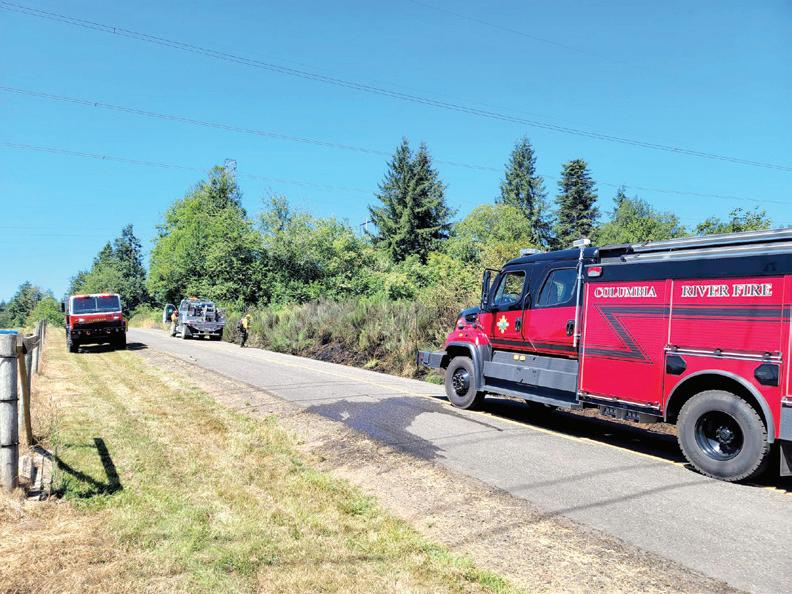
Wildfire season not over yet Local fire district officials are urging public aware ness and caution about the mid-summer wildfire season following two brush fires in north Columbia County. Columbia River Fire & Rescue (CRFR) rushed crews to the first blaze on Wonderly Road in Rainier Sunday af ternoon, Aug. 14. Clatskanie Rural Fire Protection District firefighters also responded to assist.The crews were quickly able to knock down the fire that was approximately 30-by-100 feet, according to CRFR.Ashort time later, CRFR crews responded to a second brush fire on Meserve Road in Rainier.Thecause of both of the fires remained under inves tigation as of Monday, Aug. 15. CRFR officials stress that open burning is banned in the county due to the wildfire danger.
• Families will receive the additional food benefits for every month during this period that: • One or more children in their household were ages 5 and younger • The family was receiv ing SNAP benefits. Eligible families will receive an extra $63 food benefit per child on their EBT card for every month the children were ages 5 or younger and their family was receiving SNAP ben efits. Families can receive up to $567 in additional food benefits for each child who is eligible.
$46 million
STAFF REPORT chroniclenews@countrymedia.net
www.thechronicleonline.com Wednesday, August 17, 2022A8
of two agreements and is referred to as the Distribu tor and Janssen Settlement Agreements.The18-member, gov ernor-appointed Opioid Settlement Prevention, Treatment and Recovery (OSPTR) Board will be responsible for making funding decisions that align with approved opioid prevention, treatment and recovery strategies listed in Exhibit E of the settlement and Oregon’s Strategic Plan for Substance Use Services developed by the state Alco hol & Drug Policy Commis sionA(ADPC).portionof the state’s funds must go toward a unified and evidence-based state system for collecting, analyzing and publishing data about the availability and efficacy of substance use prevention, treatment and recovery services state wide.The governor will ap point the board based on the OSPTR Board member ship requirements defined in House Bill 4098. The OSPTR Board is expected to begin meeting in late fall 2022.About $333 million will be awarded to Oregon from the Distributor and Jans sen Settlement Agreements over the course of 18 years, beginning this year. Fortyfive percent of the opioid settlement funds will be allocated to a new Opioid Settlement Prevention, Treatment & Recovery fund managed by OHA; 55% will be paid directly to cities and counties with populations of more than 10,000. About $503 million is going directly to tribes from the Distributor and Janssen Settlement Agreements. All federally recognized tribes are eligible to participate in the Tribal Opioid Settle ments, regardless of whether that tribe filed an opioid lawsuit. Oregon’s tribes are eligible to receive a portion of the $503 million settle ment.Oregon followed the model developed through the national opioid settle ment to determine how much funding each eligible city and county would re ceive. This allocation for mula is based on population and public health metrics. Oregon anticipates receiving additional opioid settlement funds from other lawsuits. However, the tim ing, amount and allowable uses of these funds have yet to be determined. Generally speaking, the funds must be used for opioid prevention, treatment and recovery strat egies that are listed in the settlement. They may not be used for other purposes. Cities and counties will decide how their funds are used.Oregon drug overdose deaths more than doubled between 2019 and 2021, an alarming trend driven largely by misuse of the powerful synthetic opioid fentanyl, an OHA analysis found. Preliminary data indicate this trend continued in 2022.Areview of State Un intentional Drug Overdose Reporting System (SU DORS) and Oregon death certificate data by analysts from OHA’s Injury and Violence Prevention Section found that 2019deathsundeterminedunintentional/drugoverdoseincreasedfrom496into1,072in2021.The 2021 figure doesn’t include all fourth-quarter overdose deaths, which are still being tallied and analyzed. The number of news-media-releases/state.or.us/media-home/settlementtionalof2019325–lanttional/undetermined164%fromsharplytanylfromundetermined14.3%theoverdosefentanylduedeathsdetermined509,2019moreyltional/undeterminedunintenfentanoverdosedeathsjumpedthan600%betweenand2021,from71torespectively.Ofallunintentional/undrugoverdosein2021,47.5%weretofentanyl;in2020,caused32.1%ofdeaths;in2019,drugwasresponsibleforofoverdoses.Overall,unintentional/overdosesopioids,includingfenandheroin,alsoroseduringthattime,280to739deaths–aincrease.Unintenstimu–methamphetamineoverdosesdoubled,fromto658deathsbetweento2021.TheOregonDepartmentJusticeprovidesaddiinformationaboutthebelow:https://www.doj. gets $330M in opioid settlement
• Treatment and services for incarcerated populations.
• Warm handoff recovery programs and services.
oregon-receives-firstpayment-from-historicmedium=email&utm_opioid-settlements/?utm_ source=govdelivery. Oregon
• Find a food pantry: oregonfoodbank.org
Courtesy photo SNAP is an assistance program designed to help approximately 1 mil lion eligible, low-income families and individuals in Oregon, including many older adults and people with disabilities, with emergency food allotments and other benefits.
• Naloxone distribution and education.
JEREMY C. RUARK jruark@countrymedia.net
Columbia County’s trusted local news source
STAFF REPORT chroniclenews@countrymedia.net
These additional food ben efits are part of the Pandemic EBT (P-EBT) program, a tem porary COVID-19 program meant to provide additional food support for children whose access to adequate and quality food may have been impacted by COVID-19. Families whose EBT card has been lost or stolen should call the toll-free replacement card line at 1-855-328-6715 to request a replacement card as soon as possible. The replace ment line is open Monday through Friday from 8:30 a.m. to 4:30Visitp.m.pebt.oregon.gov for more information about the P-EBTP-EBTprogram.doesnot replace any child nutrition program already offered and families are encouraged to continue to participate in meal programs in their communities. P-EBT food benefits are issued in addition to regular SNAP benefits including emergency allotments that are also being issued due to the impact of COVID-19. P-EBT benefits are not considered in a public charge test. Resources to help meet basic needs
Courtesy from CRFR CRFR crews on the scene of the first brush fire in Rainier, Sunday, Aug. 14.
• Prevention programs.
• Dial 2-1-1, or text your zip code to 898-211, 211info. org
• Families must have re ceived SNAP benefits at any time between September 2021 and May 2022.
• Data Collection and Research.TheOregon Opioid Set tlement Funds site, at themulti-statement,oregon.gov/opioidsettlewww.hasbackgroundonthelitigationagainstpharmaceuticalindustry of which Oregon was a party and links to national settle ment agreement sites. It also describes how the settlement funds will be distributed in Oregon, how much money is available and what it can be usedInfor.addition, the site of fers people the opportunity, if interested, to apply to serve on the Oregon Opioid Settlement Prevention, Treatment and Recovery Board, which will deter mine how the state uses its share of funds from the settlements with the opioid industry.“These settlement funds will provide
• Learn about government programs and community resources for older adults and people with disabilities: Aging and Disability Resource Con nection of Oregon at 1-855673-2372 or adrcoforegon. org.
Interim Director Jana McLellan said. “As com munities continue to be impacted by COVID-19 and the rising cost of food, we know that many families are experiencing hardship and are struggling to get enough healthy food for them selves and their children. We encourage anyone who is struggling to meet their basic needs to contact our partners at 211, the Oregon Food Bank and their local Community Action Agency for support during this dif ficult time.” Eligibility for P-EBT food benefits
Self-Sufficiency Programs
• Find local resources and support by contacting your local Community Action Agency: caporegon.org/findservices/ • Oregon Department of Human Services COVID-19 help center in additional food assistance for children
• Children in the family who were age 5 and under at any time during this period are eligible to receive ad ditional food benefits.
• Syringe services. • Medication-assisted treatment, treatment and services for pregnant and postpartum people.
Metro Creative Connection Oregon drug overdose deaths more than doubled between 2019 and 2021, an alarming trend driven largely by misuse of the powerful synthetic opioid fentanyl, an OHA analysis found. Preliminary data indicate this trend continued in 2022.
Pritcher said fire agen cies are taking a wait and see approach.“Weare just waiting to see what will happen next, but we are prepared,” he said. Using a $35,000 state grant, the SRFPD has hired two additional firefighters to staff an additional brush engine for increased commu nity protection. “The two firefighters will be utilized Friday, Saturday and Sunday, able to respond over 12-hour periods dur ing the day,” Pritcher said. “Historically, the majority of the fire starts that we have are human caused and more people are recreating and are out and about throughout the weekend.”TheCRFR brush rig crew has been on the job since earlier this month. Mist and Vernonia fire districts also received such a grant for ad ditional fire protection. Even with the stepped-up fire protection, Pritcher and other fire agency administra tors caution that the public needs to be aware of the wildfire danger. County burn ban A ban on open burning debris was ordered July 11 by Columbia County Fire Districts. The fire districts include Clatskanie Fire calprivate,ofandcue,Columbiatrict,Mist-BirkenfeldDistrict,FireDisVernoniaFireDistict,RiverFire&ResScappooseFireDistrict,theOregonDepartmentForestry.Theburnbanaffectscounty,state,andlogovernmentlandswithin the fire districts of Columbia County’s boundaries. Open burning within the city limits of the fire districts are regulated by those local government entities. The penalties for violat ing the open debris burning ban will vary by the author ity having jurisdiction, and could include the cost of suppressing the fire, includ ing the fire apparatus costs, water, foam usage, admin istrative time preparing the bill, and damage to equip ment and employee costs of all the employees suppress ing the fire and involved with the response, according to the SRFPD. Be prepared Pritcher said the best prevention plan is to be prepared for wildfire before it strikes. He urges residents to take steps to protect their homes and property, have and practice an escape plan, and to be ready to quickly leave their home or office if the danger escalates into evacuations.Hesuggests following Ready, Set, Go! Be ready Create and maintain defensible space and harden your home against flying embers. Get set Prepare your family and home ahead of time for the possibility of having to evacuate. Ensure you have a plan of what to take and where to go. Ask friends or relatives outside your area if you would be able to stay with them, should the need arise. Check with hotels, motels and campgrounds to learn if they are open. Also get set by learning about your community’s re sponse plan for each disaster and determine if these plans have been adapted because of COVID-19. Be ready to go! When wildfire strikes, go early for your safety. Closely follow emergency alerts. Take the evacuation steps necessary to give your fam ily and home the best chance of surviving a wildfire. See additional fire safety prevention information online at the Oregon Fire Marshal’s office website. Call your local fire district or fire agency for more information.
• Neonatal abstinences syndrome treatment.
Oregon will receive ap proximately $330 million from a historic $21 billion settlement with the three largest distributors of opi oids — Cardinal, McKes son, and AmerisourceBer gen.The Oregon Health Authority (OHA) has launched a new website to share updates and informa tion on opioid settlement funds, which will be used to support opioid prevention, treatment and recovery ef forts around the state. Specifically, the settle ment agreement outlines that the funds will be used for:
2021.ofreachedpublic.healthdownplayingwhileingandfuelingforandmanufacturers,becomedistributedpartnersto“We’reJohnopioidSystemslastnesscausedhealingtheircountiesopportunitiesmuch-neededforcitiesandinOregontohelpcommunitiesbeginfromtheravagesbythepervasiveofthesedrugsoverthedecade,”OHAHealthDivisionstatetreatmentauthority’sMcIlveen,Ph.D.,said.lookingforwardworkingwithourlocaltogetthesefundsassoonastheyavailable.”ThelawsuitsholdopioiddistributorsretailersaccountabletheirroleincreatingandtheopioidepidemicforaggressivelymarketprescriptionopioidssimultaneouslytheirriskstocareprovidersandtheTheStateofOregonresolutionwithfourthesecompaniesinJulyTheresolutionconsists


is a hallucinogenic substance obtained from certain types of mushrooms Voters to decide psilocybin ban JEREMY C. RUARK jruark@countrymedia.net ACROSS 1. ‘90s Don Johnson TV 5.characterIndia’s smallest state 8. Light on one’s feet 12. Arctic floater 13. Mouthful, swallowed 14. Rocks at mountain base 15. Reading helper 16. Serve soup 17. Clean & ____, in a 18.workout*QB’s target 20. Wholly engrossed 21. Religious ritual table 22. Scot’s woolen cap 23. Relating to milk 26. Oil-producing plant 30. Shakespearean “fuss” 31. Crowd 34. Like the White Rabbit 35. Chip feature 37. Mozart’s “L’____ del 38.Cairo”Asian goat antelope 39. Turn sharply 40. Yield 42. Compass bearing 43. *When QB changes play at line of scrimmage 45. ____ identity 47. Failed Molotov cocktail 48. Alicia Keys’ instrument 50. Final notice 52. *It results in change of possession in football 55. Off-white color 56. Actor Pitt 57. Type of ore 59. Classic TV’s “lovely 60.lady”Stiff hair 61. Vegetative state 62. Distinctive elegance 63. Prior to, prefix 64. *Tom Brady’s 2008, 2018 or 2021 award DOWN 1. *Professional football 2.org.Relating to armpit 3. Not all 4. Jazz subculture hip ster 5. Tropical juice flavor 6. Comparative form of #40 Down 7. Imitator 8. *QB’s run 9. SAT or ACT ____ 10.courseCatch one’s breath 11. “Owner of a Lonely Heart” band 13. Malfunction 14. Hair product 19. Chosen few 22. Dress like Ancient Greeks 23. Butterfly, pre-meta 24.morphosisBye,to …lisabeth 26.25.BorneEncrypted*a.k.a.hike 27. Dog-____ pages 28. Do penance 29. Not as old 32. Casanova, e.g. 33. Two before Dec. 36. *NFL playing field 38. Shorthand 40. Antediluvian 41. Idi Amin’s country 44. Butane derivative 46. Not an expert 48. Less adulterated 49. All worked up 50. Like Joe Biden’s 51.office____ Bora 52. Chef’s amt. 53. Son of Aphrodite 54. Boisterous play 55. *____ the kicker 58. “Uh-uh” STATEPOINT CROSSWORD THEME: FOOTBALL Crossword puzzle Solution to crossword in next week’s issue of The Chronicle. Crossword solution Solution for the Aug. 10, 2022 crossword puzzle $5,000 for local food bank Columbia County Com missioners have presented the Columbia Pacific Food Bank (CPFB) with $5,000. “The Columbia Pa cific Food Bank does a tremendous job of working closely with the local food pantries and Helens.tionatribbonbank’smadeHeimullerCommissionerlies,”themthathunger.neighborsorganizationscharitabletohelpourstrugglingwithWearepleasedthisdonationwillhelpcontinuetohelpfamiColumbiaCountyHenrysaid.ThepresentationwasduringthefoodgrandopeningandcuttingceremonytheCPFB’snewlocaFriday,Aug.12inSt. County’s regional food bank, delivering food to 38 food pantries, meal programs, and produce H.E.L.P. Food Pantry in St. Courtesy photo Columbia Pacific Food Bank Executive Director Alex Tardif and Columbia Pacific Food Bank Board Chair Carol Ford, left, pictured with Columbia County Commissioners Casey Garrett and Columbia County Com missioner Henry Heimuller. STAFF REPORT chroniclenews@countrymedia.net Advertise in the newspaper! Email Jon at chronicleads@countrymedia.net or call 503-397-0116.
www.thechronicleonline.comWednesday, August 17, 2022 A9
Cities in Columbia County are reviewing their legal avenues concerning Oregon’s efforts to allow psilocybin products to be sold to treat mental health issues, such as depression. Psilocybin is a halluci nogenic substance obtained from certain types of mush rooms that are indigenous to tropical and subtropical regions of South America, Mexico, and the United States, according to the National Drug Intelligence Center.The Johns Hopkins Center for Psychedelic and Consciousness Research is leading the way in exploring innovative treatments using psilocybin, according to the center’s website. “The molecular struc ture of psilocybin, a natu rally occurring psychedelic compound found in ‘magic mushrooms,’ allows it to penetrate the central ner vous system,” the website states.Studies by John Hop kins University researchers and others have shown that psilocybin can help with
Columbia County’s trusted local news source
depression.Oregon has the one of the highest prevalence of mental illness among adults in the nation and an estimat ed one in every five adults in Oregon is coping with a mental health condition. Gov. Kate Brown has declared addiction as a pub lic health crisis in Oregon and has proposed spending over $2.8 billion on mental health and behavioral health programs.TheOregon Psilocybin Services (OPS) Section at Oregon Health Authority (OHA) has released a new set of proposed rules related to psilocybin products, test ing and training programs under Ballot Measure 109, also known as the Oregon Psilocybin Services Act, which directs OHA to license and regulate psilocy bin products and the provi sion of psilocybin services. Oregon Measure 109, which legalized the use of psilocybin products to those over 21 in a controlled clini cal setting, was passed in November 2020. Cities want more time However, the St. Helens City Council has decided that a voters should make the decision concerning a proposed 2-year ban on such sales of psilocybin products in St.“InHelens.St.Helens, the measure was close to a 50/50 split among voters, according to St. Helens City Administrator John Wash, who added that it will likely take the OHA several years to fully develop rules to administer this measure. According to Walsh, Oregon cities have a few options in responding to this measure.They can do nothing and allow the immediate use of psilocybins without final ized rules from OHA being completed yet: Put a twoyear moratorium on the use of psilocybins until OHA has time to develop rules; or ban this type of use by busi nesses inside city limits.
“Because the vote was close in St. Helens and OHA has not yet had time to de velop regulations related to Measure 109, the city coun cil has decided to place the decision before voters and see if they want a two-year moratorium on psilocybin businesses operating inside St. Helens city limits,” Walsh said. “This will allow OHA time to fully develop rules related to these types of businesses and give the city clear guidance moving forward.”TheClatskaien City Council also decided to refer the issue to voters. During the regular monthly Clatskanie City Council meeting Aug. 3, the council members voted 3-2 to refer the ban to voters in the November General Elec tion. Councilor Gary Jones abstained, saying he needed more information before making his decision. “There were a lot of people who testified against the ban during the council’s meeting,” Hinkelman said. “Those opposed to the ban were very much in favor of having the psilocybin products available for their medicinal purposes.” Hinkelman said the two-year ban would allow the Oregon Health Author ity to define and adopt rules to help guide cities and counties in regulating the psilocybin products.
Courtesy photo from the S.U. Drug Enforcement Administration Psilocybin




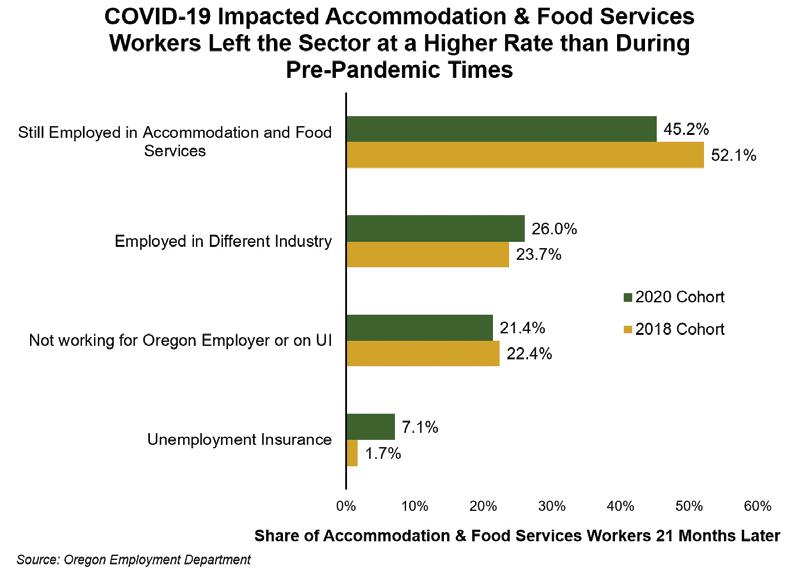
rest the theory that there was an increasing share of labor force dropouts among these restaurant and hotel workers during the pandemic. Why has it been difficult for restaurants and hotels to find workers? Much of the workforce left the industry. A higher share of workers moved to different industries compared with a more normal period during non-pandemic times. We also saw a higher share of these workers claiming unemployment insurance even after labor demand re bounded. Unemployed work ers represent an opportunity for the many businesses try ing to hire. Looking for work is a prerequisite for gaining unemployment insurance, which means those folks on UI were active job seekers. In fact, where we are today many of those workers have likely landed back in the workforce. The number of workers on a UI claim in Or egon dropped 31% from the end of 2021 to June 2022. This was an analysis of the existing workforce em ployed by a restaurant or ho tel just before the pandemic. However, another potential contributing factor of the labor shortage faced by these businesses is the incoming workforce. With a high de mand for labor across many industries it is also possible that many workers entering the workforce (largely young people) who would typically find a job in a restaurant or hotel are finding work in dif ferent industries with more consistent hours and less seasonality. Damon Runberg is a regional economist with the Oregon Employment Depart ment. He may be reached 0779.oregon.govdamon.m.runberg@employ.atorat541-706-
ActionCommunityTeam Building Bridges to Self Sufficiency
It’s not a myth…it’s the real thing. Berry Global offers competitive pay starting at $18.00/hr. ➢ 4 Tier Pay Progression within first 2yrs. ➢ Monthly Bonus Programs ➢ Full Benefit Package after 30 days A unique team environment, and a workplace culture with career advancement that makes me even want to come out of hiding to join their team. Apply online at: www.berryglobal.com/careers
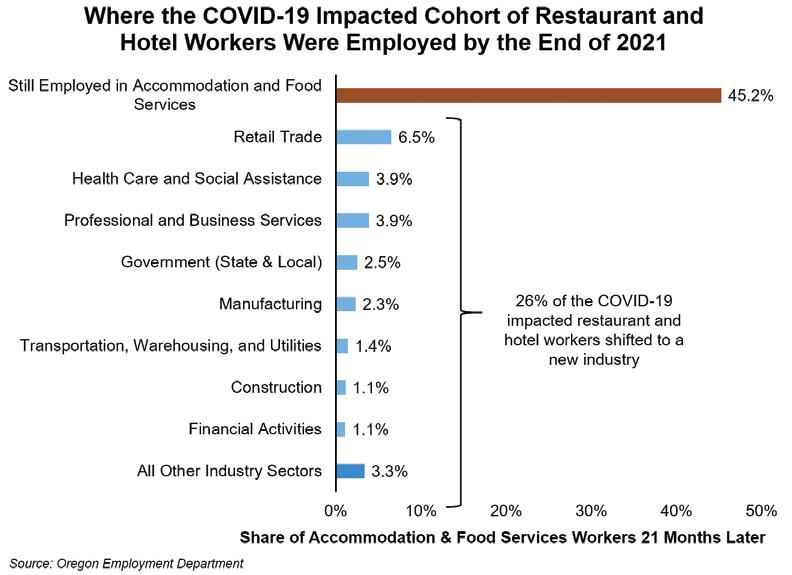
Where did the workers go? The industries that received the most restaurant and hotel workers by the end of 2021 were retail trade (6.5% of the original cohort); professional and business services (+3.9%); health care and social assistance (+3.9%); and manufactur ing (+2.3%). There are not a lot of patterns to draw from this industry chang ing. Industry hopping tended to be towards industries less impacted by pandemic closures, higher paying industries, and less seasonal industries.Thosewho left restaurant and hotel jobs to different in dustries during the pandemic only account for about onethird of the increased churn out of the industry compared with a more normal period of time. The other large differ ence in churn in this period is movement to an unem ployment insurance claim. In the fourth quarter of 2021, 7% of the COVID-19 cohort of restaurant and hotel work ers claimed at least one week of unemployment insurance. This was a considerable increase over the 2% of the 2018 restaurant and hotel workforce on UI. The higher share of restaurant and hotel workers on an unemploy ment insurance claim in fourth quarter 2021 explains roughly two-thirds of the drop in retention compared with the 2018 cohort. There are a couple of rea sons why a higher share of COVID-19 impacted restau rant and hotel workers were claiming UIoftionsship,failures,thatquarterwasonlyustheselaboremploymentthestillonsetmassiveDeltahotelsmodestly2021,theexperiencedlater.insuranceunemploymentnearlytwoyearsThisCOVID-19cohortmasslayoffsinspringof2020.Inlatehiringdemandwanedforrestaurantsandduetothesurgingvariant.Despitethelayoffshockattheofthepandemic,itissurprisingtosee7%ofworkforceclaimingunatatimewhendemandwashighforworkers.Thesecountsdon’ttellthelengthofUIclaims,thatatleastoneweekclaimedinfourth2021.Itispossibleincreasedbusinesschangesinownerandotherreorganizacouldaffectthesharetheworkforceclaiminginthestretchbetween jobs after a layoff that oc curred much later than the initial COVID-19 mass layoff events. Some of these claimants could have worked for a restaurant or hotel that closed or changed owner ship in summer or fall 2021, and their claim would show up here. We don’t yet have complete data on business dynamics through 2021, but it has certainly been a tough time to be in the restaurant and hotel business, charac terized by labor shortages, unsteady supply chains, and rapidly increasing business costs.
To answer this question, we tracked the cohort of pre-COVID accommodation and food services workers (employed in the industry in first quarter 2020) through the end of 2021 using wage records and unemployment insurance (UI) claims. If an Oregon business re ported payroll earnings for a worker or a worker was on an Oregon UI claim, this worker showed up in our data. Unfortunately, we don’t know anything about those workers who dropped out of the labor force (retired, back to school, etc.) or moved outside the state. Of the 181,700 workers who had a primary job in accommodation and food services before the pandemic in early 2020, roughly 45% were still employed in the industry by the end of 2021. To put it another way, over half the workers churned out of the industry after nearly two years. Churn or turnover is very common in this in dustry as it is highly season al, employs large numbers of young workers, and tends to offer lower-paying jobs on average. To get an idea about how normal the turnover was for this COVID-19 impacted cohort of restaurant and ho tel workers, we looked back at a cohort of workers from early 2018 and tracked their employment patterns over the same amount of time. The churn was high for this 2018 cohort of restau rant and hotel workers by the end of 2019, with only 52% of the workforce still primar ily employed in a restaurant or hotel. Retention of these workers in the COVID-19 cohort was around 7 per centage points lower than our comparison cohort from 2018. The first place to look for workers who left the indus try is to check if they are still employed in Oregon, but in a different industry. Around 26% of the COVID-19 co hort of restaurant and hotel workers had moved their primary job to a different industry by the end of 2021, a higher share than 24% of the cohort from 2018. There was increased job hopping into different industries dur ing the pandemic.
• Approved a permanent easement for the replace ment of the Youngs River Road Bridge in Clatsop County. Additional information about these agenda items is available in the meeting packet. Meeting video is available on DSL’s YouTube Channel. Page A1
VESSELS From
Berry Global is an equal opportunity employer
One thing we known for certain By fourth quarter 2021, the expansion of unemploy ment insurance through the CARES act and other federal legislation had ex pired. Workers who claimed unemployment in fourth quarter 2021 were no longer receiving the more generous weekly UI benefits. Around 78% of the prepandemic accommodation and food services workers have been accounted for by the end of 2021. There were those who remained employed in the industry (45%); those who are now employed in a different industry (26%); and those who had an unemployment insurance claim (7%). The remaining 22% are no longer working a payroll job or claiming pandemic.wereranttheshareareareasons.ofwithoutOregon,ingmayinsuranceunemploymentinOregon.Theybeself-employed,workforabusinessoutsideofretired,unemployedUI,inschool,oroutthelaborforceforotherThismayseemlikehighshareofworkerswhounaccountedfor,buttheisnearlyidenticalto2018cohortofrestauandhotelworkerswhonotimpactedbytheThishelpsputto
From Page A1
Other State Land Board news
www.thechronicleonline.com Wednesday, August 17, 2022A10 Columbia County’s trusted local news source Contact your Veteran Service Officer • 503-366-6580 You may be entitled to benefits for serving your country. Are you a veteran? Call CAT at (503)397-3511 to find out if you qualify. Rental and energy assistance applications are available at 125 N. 17th St., St. Helens, OR. Also available on our website at www.CAT-TEAM.org
WORKERS
Follow me to Berry Global in St. Helens for Big Pay, Big Career, and Big Success $1,000 -$1,500 SIGN -ON BONUS
• Approved a quitclaim deed exchange to clarify land ownership along the Willamette River in Benton County.
• The State Land Board also has appointed Dr. Karina Nielsen to the Oregon Ocean Science Trust; approved transferring management of about 5,000 acres of school forestlands from the Oregon Department of Forestry to DSL.
Courtesy from the Oregon Employment Department Courtesy from the Oregon Employment Department ed by an irresponsible vessel owner. The Department will take every action to recoup the more than $1 million this cleanup will Collaborativecost.”work is also continuing to remove the Sakarissa, Alert, and Tiffany, three vessels the Land Board in June directed the Department to address. The goal is to have all three vessels removed from the Columbia River by the end of 2022.Walker emphasized the importance of collabora tion to successfully remove these and other vessels – and the importance of engaging widely to refine the resourc es requested for the upcom ing 2023-25 biennium. “This is complex work, and the importance of ongo ing collaboration to identify problems, priorities, and solutions cannot be under stated,” she said. “DSL is committed to working with legislators, state and federal agencies, local governments, ports, and other partners to develop long-term com prehensive solutions for addressing abandoned and derelict vessels.”