$2.1M in illegally grown marijuana seized

Columbia County Sheriff’s deputies have confiscated 6,611 marijuana plants and 133.5 pounds of processed marijuana with a street value of approximately $2,181,011, in the agency’s latest enforcement.
Search and seizure
In a release, the CCSO said the operation was conducted on March 1, with deputies serving search warrants for illegal marijuana grows in Scappoose, Deer Island, and Clatskanie.

During the service of these search warrants, CCSO deputies also recovered over $69,000 in cash.

Specific details about suspects have yet to be released following the search operation. Columbia County Sheriff Brian Pixley told The Chron icle that all suspects were referred to the Columbia County District Attor ney’s Office for charges.
Specific details were also not im mediately available about what led to the search and seizure operations.
“These are the first of many search warrants that our Street Crimes team will serve over the next few years,” Pixley said. “We appreciate the participation of our partner agen cies, including the Scappoose Police Department, Yamhill County Sheriff’s Office, the Oregon State Police, and the Federal Bureau of Investigation.”
The Illegal Marijuana Market Grant, awarded to CCSO in 2022, funded this latest investigation.
Background
In July 2022, The Chronicle reported that the CCSO was seeking new manpower to establish an illegal marijuana enforcement team. In that published story, Pixley told The Chronicle his agency was seeking three enforcement deputies and three corrections deputies.
“We recently received a $940,000 grant from the Criminal Justice Commission (CJC) to put together an illegal marijuana enforcement team,” Pixley said. “So, we are hiring to back fill spaces for this team and also for an open position.”
Public safety concerns
Pixley said this specialized enforcement team has been needed for quite some time and the concern is twofold.
“The first is the human trafficking component,” he said. “Often times these illegal grows are tied to organized crime from either a Mexican or Chinese cartel. As such, they often will use “indentured servants” to work these grows to pay off some form of debt owed to the cartel. In my
Follow this developing story at thechronicleonline.com and in the Wednesday print editions of The Chronicle.
Is Oregon’s COVID pandemic over?
Feb. 28, 2020, was the date of the first COVID diagnosis in Oregon.
Three years later, we are still navigating the waters of the pandemic, but the storm has calmed considerably. After three years of uncertainty, lockdowns, masks, and immunizations, a return to normalcy seems within grasp.
To find out the state of the pandemic and where we go from here, The Chronicle spoke with Kaiser Permanente Northwest Chief of Infectious Disease Dr. Katie Sharff.
“COVID is never really over. I mean, we’re anticipating that this virus will be here, circulating for the next several years, decades; it just may not be at the forefront,” Sharff said.
Public health regulations rolling back
On Jan. 30, 2023, the Biden Administration announced its intent to end the national emergency and public health emergency declarations on May 11, 2023, related to the COVID-19 pandemic. This cessation of the state of emergency does
not mean COVID will resolve itself completely, but it marks a new stage for dealing with the virus.
“I think the ending of the public health emergency is more a signal that we will start to treat COVID like a routine illness, such as Influenza or RSV,” Sharff said. “I think that what will happen is that this pandemic will transition to what we call the ‘endemic phase,’ which means that the infection will impact a stable number of individuals but not be causing substantial illness across the globe all at the same time. It’s going to be a respiratory virus that we manage along with all of the other respiratory viral infections that we’re already currently managing.”
Oregon is seeing policy changes that also reflect the decreasing threat of COVID. On Mar. 3, the Oregon Health Authority announced that it would rescind the mandate that requires workers in healthcare settings to wear masks. The requirement had been in place since August 2021. In some ways, Dr. Sharff feels that these official changes reflect the sentiments of the public.
“I think the U.S. population has kind of declared COVID over just by our own behavior. We’re focusing our attention on other risks, other things, and accepting a certain level of disease and risk within the com-
Metro Creative Connection
“If you haven’t been infected, you will probably get infected at some point, and if you’ve already been infected, there’s a very high likelihood that in the future, you will get reinfected; that’s just the nature of this virus. But the tools we have through vaccination and anti-virals do work,” ~ Dr. Katie Sharff, Chief of Infectious Disease for Kaiser Permanente Northwest

munity,” Sharff said. “So, I think the U.S. population has already moved on, and the end of the public health emergency is really just catching up with the current opinion of the U.S. population.”
The current scope of COVID
Currently, the most common variant is the XBB1.5 Omicron variant. According to Sharff, the CDC is actually reporting that transmission numbers are up through their detection of wastewater and case

counts. However, case count data is not as reliable as it was earlier in the pandemic.
“In the beginning of the pandemic, we really paid such close attention to case counts, but as people are testing at home, or not even testing, or not reporting, those case counts have really lost accuracy,” Sharff said. “But based on wastewater and what is being reported, it appears that case counts have gone up, but I guess the silver lining is that hospitalizations have been very stable; they’ve plateaued at about 250 per day and
are forecasted to stay at this rate.”
Sharff attributed this drop in hospitalization rates to the increased immunity to COVID through vaccination or prior infection. Sharff said that experts are not sure what the future of the virus will look like. One of the concerns would be a variant that evades immunity from immunization or prior infection. However, Sharff said this has not happened yet, and so the next steps are difficult to predict. Sharff said what health officials expect will be handling COVID on a more seasonal basis. Like a seasonal Influenza vaccine, an updated shot may be administered to help address the ebbs and flows of illness.
In the future
In terms of vaccines, there’s this shift toward an annual COVID vaccination, similar to an annual Flu shot. [The advisory committee] are actually evaluating this right now,” Sharff said. “I think for high-risk populations, so those who are elderly, or those who are immunocompromised, or those who have significant medical conditions, it makes sense to have that boost in immunity each year with an updated COVID shot.
See COVID Page A9
Several escape house fire, 1 dog dies
Several
At 11:08 p.m. March 2, Scappoose Fire was dispatched to a reported structure fire in the 5200 block of 3rd Street. Initial reports stated that people were evacuating, and animals were still trapped in the structure, according to a release from the fire agency.

The first fire engine crew arrived in five minutes from the time of dispatch and reported the fire was moving through the house and burning outside of several windows. The initial report was that 30% of the home was on fire. Smoke was down
within one foot of the floor.
There were two occupants and three animals in the structure at the time of the fire. When the fire crews first arrived, the occupants were just leaving. The first dog was located and removed within 10 minutes. A second dog was located two minutes later. Scappoose Fire medical
equipment, Scappoose Police, an Oregon State Police trooper and a good Samaritan assisted with resuscitation efforts on the animals while firefighters were bringing the fire under control. According to media reports, one dog perished following the fire.
The fire was knocked down quickly by the crews and was under control in 15 minutes.
The fire displaced several people, however, they were assisted by the local American Red Cross.
One person was treated for smoke inhalation. The cause of the fire remained under investigation at press time.
The initial response included volunteers and career staff bringing two fire engines, an ambulance, and a chief officer. Columbia River Fire & Rescue, Oregon State Police, Columbia River PUD, Scappoose Police, and Columbia 9-1-1 Communications District assisted.
Scappoose Fire encourages everyone to always have a safety plan.

“Planning and prevention are the keys to preventing fires,” the release states. “Constant vigilance to fire safety makes most fires preventable.”

Serving Columbia County since 1881 thechronicleonline.com $1.50 Wednesday, March 8, 2023 $60M for Wildfire risk reduction Page A2 Vol. 141, No. 10 Opinion ..................... A4 Poll ............................ A4 Community Calendar A4 Obituaries ................. A5 Classified Ads ......... A6 Crossword ............... A6 Legals ....................... A6 Sports ..................... A9 Girl Scouts .............. A10
Courtesy from the CCSO
The CCSO released this photo of one of the grow rooms found during the search operation.
JEREMY C. RUARK Country Media, Inc.
Courtesy from the CCSO
This tray of processed marijuana was also seized in the searches.
Courtesy from the CCSO
A total of over $69,000 was confiscated during the enforcement operation.
WILL LOHRE Country Media, Inc.
people and one dog have escaped a burning house in Scappoose, the other family pet could not be saved.
to
Courtesy from Scappoose Fire Scappoose Fire on the scene of the blaze in the 5200 block of 3rd Street.
A10
JEREMY C. RUARK Country Media, Inc. National Girl Scouts Day 2023 Page
clean drinking water in Oregon
Oregon will receive $18.9 million from the Bipartisan Infrastructure Law to address emerging contaminants like Per- and Polyfluoroalkyl Substances (PFAS) in drinking water.
Metro Creative Connection
The EPA announced the funds for Oregon as part of a $2 billion nationwide investment so that states and territories can source water treatment for pollutants, like PFAS and other emerging contaminants, and to conduct water quality testing.
Oregon received this funding through the U.S. Environmental Protection Agency’s (EPA) Emerging Contaminants in Small or Disadvantaged Communities (EC-SDC) Grant Program that assesses and improves access to safe and clean water in small, rural, and disadvantaged communities while
supporting local economies. The Bipartisan Infrastructure Law invests $5 billion over five years to help communities that are on the frontlines of PFAS contamination reduce PFAS in drinking water. The EPA announced the funds for Oregon as part of a $2 billion nationwide investment so that states and territories can source water treatment for pollutants, like PFAS and other emerging contaminants, and to conduct water quality testing.
“Oregonians deserve clean, safe drinking water,”said EPA Region 10 Administrator Casey Sixkiller.”Thanks to this
historic investment from the Bipartisan Infrastructure Law, EPA is delivering on its commitment to address PFAS and emerging contaminants by providing more than $18 million to safeguard Oregon’s drinking water and protect communities from these dangerous chemicals.”
Oregon U.S. Senators Ron Wyden and Jeff Merkley have supported the funding.
“Access to clean drinking water is a human right that is undermined by the presence of PFAS and other contaminants that often go unaddressed in too many water systems around the state due to outdated infrastructure,” Wyden said. “These dollars

will go a long way to identify the communities affected by PFAS contamination, neutralize the pollutants, and then safeguard our state’s future drinking water sources.”
“PFAS contamination represents an urgent public health threat across our nation, with millions of Americans consuming PFAS-contaminated water that could put them and their children at higher risk for cancer, birth defects, and other devastating health outcomes,” Merkley said. “This funding to promote clean and safe drinking water for all Oregonians is vital as we work to combat PFAS contamination across the country.”
$60B proposed to reduce wildfire risk

U.S. Senators Ron Wyden, D-Ore., Michael Bennet,
and John Hickenlooper, D-Colo., have introduced the Protect the West Act to make a $60 billion investment in the nation’s forests to reduce wildfire risk, restore watersheds and protect communities.
“Major investment is urgently needed to protect Western forests and watersheds from increasingly dangerous wildfires and droughts,” said Wyden.
“The Protect the West Act will ensure Congress funds much needed fire mitigation and restoration efforts — so communities stay safe and so that future generations can continue to enjoy Oregon’s beautiful natural treasures.”
The Protect the West Act would:
• Establish an Outdoor Restoration & Watershed Fund to increase support for local efforts to restore forests and watersheds, reduce wildfire risk, clean up public lands, enhance wildlife habitat, remove invasive species, and expand outdoor access. The bill establishes an advisory council of local, industry, conservation, Tribal, and national experts to advise funding priorities, coordinate with existing regional efforts, and provide oversight.
• Empower local leaders by making $20 billion directly available to state and local governments, Tribes, special districts, and nonprofits to support restoration, drought resilience, and fire mitigation projects. These funds would
Break-in at Bertucci’s
empower local leaders to bring diverse voices to the table to develop solutions.
• Partner with states and Tribes to invest $40 billion to tackle the backlog of restoration, fire mitigation, and resilience projects across public, private, and Tribal lands.
• Create or sustain over two million good-paying jobs, primarily in rural areas, to support existing industries like forest-product, agriculture, and outdoor recreation.

• Save landowners and local governments money by investing in wildfire prevention and natural hazard mitigation on the front end, which is thirty times more cost-effective than recovering forests and watersheds after natural disasters have struck.
The bill is supported
The legislation includes an effort to empower local leaders by making $20 billion directly available to state and local governments, Tribes,
Courtesy photo
by The National Wildlife Federation, the Southern Ute Indian Tribe, National Association of State Foresters, The Freshwater Trust,
American Forests, National Wild Turkey Federation, National Audubon Society, Family Farm Alliance, Theodore Roosevelt Conservation
Partnership, Western Landowners Alliance, Western Resource Advocates, Trout Unlimited, and Conservation Legacy.
WILL LOHRE Country Media, Inc.



ment officers were continu ing a search this week for two robbery suspects following a break-in at Bertucci’s Chocolates, 2117 Columbia Boulevard, in St. Helens.

According to SHPD investigators, the break-in occurred at approximately 5:50 a.m. Feb. 21.
Bertucci’s Chocolates owner Shannon Vaerewyck said the infiltrators gained access by allegedly throwing a rock through the front door of the establishment.
The two entered the business and took the cash register drawer. The suspects did not touch anything else or take any other merchandise, she said. Police are reviewing se-
forced Vaerewyck to close her business for a few days.
“We were down for a few days, and then, of course, it snowed, so we would have been closed anyway,” Vaerewyck said. “It’s disheartening that people feel they need to do that.”
Vaerewyck later fixed the break-in damage and has reopened her shop.
“We got our window replaced, we’re back open, we’re running, we’re making it work,” Vaerewyck said.
“It was irritating, but you know, what do you do?”
Anyone with information about the break-in, or about the suspects, should call SHPD at 503-397-1521.

www.thechronicleonline.com Wednesday, March 8, 2023 A2 Columbia County’s trusted local news source WE’RE HIRING! • Competitive Salary with 4-Tier Pay Progression • Profit Sharing Bonuses • Full Health Care Package $1,000+ SIGN-ON BONUS Become part of the Berry family around the globe. We foster workforce development to support and encourage our knowledgeable enployees. With more than 295 locations- we are pushing the limits of innovation and moving our industry forward. APPLY AT: WWW.BERRYGLOBAL.COM/CAREERS $18.9M for
STAFF REPORT Country Media, Inc.
D- Colo.,
STAFF REPORT Country Media, Inc.
special districts, and nonprofits to support restoration, drought
resilience, and fire mitigation projects.
Courtesy from SHPD
thechronicleonline.com • thechiefnews.com 1805 Columbia Blvd., St. Helens, OR 97051 Contact Jon at 503-397-0116 or chronicleads@countrymedia.net National Distracted Driving Awareness Month Spring Car Care The Chronicle and The Chief will be doing two specials on this topic that is targeted towards your industry. Build customer awareness of your business and brand. 4 Ads for one great price. Ad deadline - March 16th Spring Car Care - March 22nd The Chronicle & 24th The Chief National Distracted Driving Awareness Month - April 12th The Chronicle & 14th The Chief
SHPD investigators have released these screen shot images of the two suspects captured on security camera footage.


www.thechronicleonline.com Wednesday, March 8, 2023 A3 Vendors Wanted Contact Jon at 503-397-0116 chronicleads@countrymedia.net At The Columbia County Fairgrounds: 58892 Saulser Rd. St. Helens, OR 97051 $3 admission at the gate Call 503-397-0116 to request free tickets May 20 Saturday 10am - 5pm May 21 Sunday 11am - 3pm PRESENTED BY The Chronicle The Chief Columbia County
Opinion
Where and when to plant vegetables

First, what is the right place for vegetables?
The more sun you have, the better. We ask these plants to grow quickly and give us lots to eat and preserve. The more sun vegetables have, the better. Lettuce and a few other greens can stand a little shade, but no vegetables do well in deep shade.
Time to plant some vegetables is dependent on last frost date (about April 20 in St. Helens and perhaps a few days earlier in Clatskanie). But timing for all vegetables is dependent on how wet and cold the soil is.
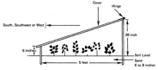
they plant. Row covers on a “hoop” framework can help all the outside planted vegetable (seed or transplanted) get a better start. Cold frames (see picture) can be used to grow good transplants.
Mid-spring plantings include lots of crops, early April in St. Helens and a bit earlier in Clatskanie, all the cabbage family including broccoli, cabbage, kohlrabi, cauliflower, turnips, kale, and arugula; carrots; parsnips (be patient with parsnips, they can take almost 30 days to emerge after planting); chard; and early potatoes.
Be ready to protect from a “killing” frost (28 degrees) if needed. Most of these can be planted again for extended harvest. Warming the soil and/or using transplants that are acclimated to being outside before transplanting.
If you have raised beds, your soils will warm faster and are easier to prepare for planting. Working wet soil can create an ugly, cloddy mess. We used to get a week of nice weather in February but not this year! And March isn’t starting out too nice either. But here we go:
Early spring plantings are asparagus, lettuce transplants, onions from sets or transplants started from seed, radishes, peas, and spinach if soil temperatures are at least 40 degrees, and rhubarb. Some farmers and savvy gardeners cover the soil with clear plastic to warm and dry out the soil earlier. Then
Late spring, the heat loving crops are planted: green beans, corn, cucumbers, summer and winter squash, and tomatoes. Peppers do best if it is warmer so hold off transplanting until midMay or later depending on how what kind of weather we are getting. Last year, it was cold all the way to early June (I have described it as three straight months of March) but once it warmed, it stayed warm well into October, so
most gardens fared quite well. And gardeners have learned that green beans can be successfully transplanted. They can be started when the soils/weather is a bit cool in containers either in a cold frame, green-house, or sunny window in your house.
Early summer plantings can include replanting of some of the cabbage family, later potatoes, and later plantings of green beans.

Mid-summer plantings are for crops that will be eaten in the fall and can stand a frost. These include beets, carrots, radishes (plant often if you like them), rutabagas, turnips, chard, lettuce, and spinach.
It is important to note that the actual weather leading up to a planting cycle and what is projected for the following several weeks afterward is important.
Warm soils are good. Get a soil thermometer and test the top two inches of your soil. Blistering heat is not (except for peppers, many squash, and sweet potatoes). Transplanting in the evening seems to work better than transplanting in the morning. Attention to watering the
Community EvEnts
March 8 Vaccination Clinic
Consejo Hispano and Columbia County’s Public Health Department free vaccination clinic from 4 p.m. until 8 p.m. at the St. Wenceslaus Catholic Church, 51555 SW Old Portland Road in Scappoose. In addition to Flu and COVID-19 vaccinations, food and beverages, food boxes, crafts for kids, and assistance with the Oregon Health Plan (OHP) will also be available. All for free. Please call 503217-2049 for more information or need assistance with transportation to the event.
March 9 Transportation
Open House

The Columbia County Public Works Department will host a Statewide Transportation Program (STIP) open house from 4 p.m. to 6 p.m. at Healy Hall 1054 Oregon Street in St. Helens. The open house is designed to provide the public details about STIP and what projects are proposed for Columbia County. Community feedback is integral to the process and will help ensure that STIP funds programs for this area. Accessible parking is located by the entrance on the left side of the building. If you need accommodations, call 503313-6812 at least 48 hours before the meeting. An online version of STIP will also be available for review and comments. For information, visit https://www.oregon.gov/ odot/STIP/Pages/2024-2027STIP.aspx.
March 14 Gardening
with Chip Bubl 7 p.m. at Caples House Museum, 1925 1st Street in Columbia City. OSU Exten-
sion Service’s Chip Bubl will discuss how to make your garden look fabulous. Fee is $5. Call 503-395-5390 for addition information.
March 17 St. Patrick’s Day at The Caples House Come by for dinner: corned beef, cabbage, potatoes, Black Beer, Irish Whiskey and more. $25/Adults and $5/Kids. 1925 1st Street in Columbia City. Reservations required. Call 503-397-5390.
March 21 PUD Meeting
The Columbia River PUD regular monthly meeting is scheduled for 6 p.m. in the PUD community room, 64001 Columbia River Highway in Deer Island. For more details, call 503397-1844.
Ongoing events
Lower Columbia River Watershed Council Meets at 7 p.m. every other second Tuesday. Meetings are currently held electronically by Zoom. For more information, contact Council Coordinator Henry Franzoni ar 360-353-0937 or email to hjfranzoni3@gmail.com. Visit the council’s website for agenda postings and Zoom at www.lowercolumbiariver.org/ events-page.
Resonate Recovery Meets at 7 p.m. to 8 p.m.
Wednesday - Sundays. This is a Bible based, Christcentered spiritual recovery meeting for those struggling with addictions and compulsive behavior at 220 S. 1st Street in St. Helens. Everyone is loved and welcomed. Free childcare available. For more
information call Debbie at 503-560-0521 or check the Resonate Facebook page.
Columbian Toastmasters
Promoting positive learning and leadership through public speaking. Anyone is welcome to visit! Lunch meetings at Warren Country Inn, 56575 Columbia River Hwy, Warren, OR 97053 from 12 p.m. to 1 p.m. every Thursday. Call 503-369-0329 for more information.
Overcomers Outreach
Meetings are held every Saturday at 9 a.m. at Creekside Baptist Church, 51681 SW Old Portland Road in Scappoose. Call Fred 971-7576389.
Celebrate Recovery
For anyone struggling with addiction, hurts, habits, and hang-ups. Doors open at 6:30 p.m. for coffee, snacks, and fellowship. The meeting starts at 7 p.m. The first Monday of each month at 6 p.m. the doors open for a free dinner. Yankton Community Fellowship, 33579 Pittsburg Road in St. Helens. 503-3967091. Childcare is available. www.yanktoncommunityfellowship.com.
Watch Spring Fridays 2 p.m.-4 p.m. Have tea and a sweet in the Caples’ Cottage, 1925 1st Street in Columbia City. $5.
To list an event in the Community Calendar, email details with a phone number that may be published for anyone that might have questions, to jruark@countrymedia. net or chronicleclassifieds@ countrymedia.net, or call 503-397-0116.
Gardening-related events
March and April
March 11
Columbia County Small Woodlands Tree Sale
The Columbia County Small Woodlands Association has an annual tree sale in St. Helens. You can purchase a variety of trees in very small quantities. Forest tree seedlings, native shrubs, and ornamental tree seedlings will be for sale. The sale this year will be at the Lawrence Oil parking lot, 845 N. Columbia River Highway, in St. Helens from 8:30 a.m.to 1:30 p.m. Get there early for the best selection. It is very well attended.
March 23
What Gardeners Need to Know About the Emerald Ash Borer
Scheduled speaker is OSU Extension Forester Alex Gorman. Columbia County Master Gardener Chapter meeting. The program, which is first, is open to the public at
the OSU Extension office at 6:30 p.m.
April 6
Columbia County Beekeepers Monthly meeting
7 p.m. Topic: Swarming and Catching Swarms. The group will meet in person at the Columbia County Extension Office in St. Helens and by Zoom. Contact columbiacountyoregonbeekeepers@ gmail.com for Zoom info.
April 8
Scappoose Bay Watershed Council’s Native Plant Sale
Join the Watershed Council for its Spring Native Plant Sale from 9 a.m. to 2 p.m. at the SBWC nursery, located at Scappoose High School. Look for signs – go east on SE High School Way and turn into the parking lot between the high school and the school ball field areas. This is their semi-annual event to get you ready for spring and summer planting. They have lots of new plants at great prices – all native to our area. Staff and volunteers are available to help chose plants suggest gardening ideas and provide information on establishing and maintaining native vegetation. For more information see https://www. scappoosebay-wc.org/nativeplant-nursery.
Important notes
• You can get up-to-date and accurate answers to your food preservation questions by calling our office at 503397-3462 and ask to speak to
Jenny Rudolph.
• The OSU Extension Office is fully open from 8 a.m to 5 p.m.
• Donate extra garden produce and/or money to the food bank, senior centers, or community meals programs. It always is greatly appreciated.
• The Extension Service offers its programs and materials equally to all people.
• Free newsletter: The Oregon State University Extension office in Columbia County publishes a monthly newsletter on gardening and farming topics (called County Living) written/edited by yours truly. All you need to do is ask for it and it will be mailed or emailed to you. Call 503-397-3462 to be put on the list. Alternatively, you can find it on the web at http://extension.oregonstate. edu/columbia/ and click on newsletters.
Have questions?
If you have questions on any of these topics or other home garden and/or farm questions, please contact Chip Bubl, Oregon State University Extension office in St. Helens at 503-397-3462 or at chip. bubl@oregonstate.edu. The office is open from 8 a.m. to 5 p.m. Monday through Friday.
Contact resource
Oregon State University Extension Service – Columbia County 505 N. Columbia River Highway, St. Helens OR 97051 503-397-3462.
Editorial policy: Opinions expressed on this page are independent of The Chronicle views and are solely those of the writers expressing them.
Write to us: We want to hear from you and encourage you to write letters to the editor. Because of space limitations, shorter letters have a better chance of being printed. We may edit your letter for style, grammar and clarity, although we do as little editing as possible. If you don’t want your letter printed under those conditions, just let us know. Thank-you letters are limited to a general thanks and summary of
an issue or action. We reserve the right to exclude lists of people, organizations and businesses. Letters received after noon on Friday may not be in time for the following Wednesday’s paper.
To verify authenticity, all letters must be signed and include your address and daytime phone number. We won’t print your street address or phone number (just your city of residence). Submissions may be emailed to chroniclenews@countrymedia.net, sent via mail, or dropped off at the office.
Letters policy: This newspaper’s letters to the editor are limited to a maximum of 250 words and will be edited for grammar, spelling and
blatant inaccuracies. Unsubstantiated or irresponsible allegations, or personal attacks on any individual, will not be published. Letters containing details presented as facts rather than opinions must include their sources. Writers are limited to one published letter per month. All submissions must include the author’s full name, local street address and telephone number (only the name and city of residence will be published). By submitting a letter, writers also grant permission for them to be posted online.
Opinions expressed on this page are the writer’s alone and do not represent the opinion of the newspaper or its parent company, Country Media, Inc.
www.thechronicleonline.com Wednesday, March 8, 2023 A4 Columbia County’s trusted local news source Vote online at thechronicleonline.com What is your favorite type of movie? Weekly Online Poll Last Week’s Results What is your favorite pet? The Chronicle The Chronicle (USPS 610-380) is published weekly by Country Media, Inc. 1805 S. Columbia Blvd., P.O. Box 1153 St. Helens, Oregon 97051 Periodicals postage paid at St. Helens, OR 97051 POSTMASTER: Send address changes to The Chronicle PO Box 1153 St. Helens, OR 97051-8153 SUBSCRIPTION RATES: One month in county: $8 One month out of county: $10 One year in county: $70 One year out of county: $90 One year online only: $60
CONTACT US • Phone:
•
(503)
•
www.thechronicleonline.com • Editorial: chroniclenews@countrymedia.net ADVERTISE
ads: chronicleads@countrymedia.net • Classified ads: chronicleclassifieds@countrymedia.net FOLLOW US • facebook.com/sthelenschronicle or twitter.com/shchronicle
(503) 397-0116
Fax:
397-4093
Website:
WITH US: Display
Metro Creative Connection CHIP BUBL Garden Plots Chronicle Guest Column 67.3% Dog 22.4% Cat 2.0% Bird 8.2% Other Comedy Drama Romance Horror Action Documentary
Tualatin Valley
solution

Problem Gambling Awareness Month
Nationwide, Problem Gambling Awareness Month is a grassroots effort that brings together public health organizations, advocacy groups and gambling operators to let people know hope and help exist.

Oregonians who are struggling have free access to treatment and counseling through the Oregon Problem Gambling Resource (OPGR) website. Historically, the number of people seeking assistance increases during March due to focused marketing and outreach efforts around problem gambling.
“Across Oregon, during Problem Gambling Awareness Month, and throughout the year, the Oregon Council on Problem Gambling is committed to raising public awareness about what problem gambling is, and most importantly, the resources available to get help,” OCPG Executive Director Gina Parziale said. “Through this program, we have seen families and relationships strengthened due to the many treatment options offered.”
For more information about problem gambling treatment resources or to chat with a specialist, go to Oregon Problem Gambling Resource at opgr.org or call 1-877-MYLIMIT. Help is free, confidential and it works.
Over the past few years of the pandemic, stress, isolation, and financial uncertainty may have caused some to turn to gambling, according to OCPG. In 2022, 2,100 calls were made to the help line and more than 200 chats and texts came in for assistance.
“Creating awareness of problem gambling and available resources is a statewide commitment,” Oregon
Lottery’s Senior Manager of Product Marketing Stacy Shaw said. Shaw also serves on the OCPG board.
“It’s important to keep the conversation going beyond March so Oregonians know they don’t have to worry about seeking help yearround,” Shaw said.
Since 1992, one percent of Oregon Lottery profits have funded problem
gambling treatment and prevention efforts throughout Oregon. Since that time, over $128 million in Lottery funds has supported those services, according to the Oregon Lottery.
For more information about problem gambling treatment resources or to chat with a specialist, go to Oregon Problem Gambling Resource at opgr.org. or call 1-877-MYLIMIT. Help is free, confidential and it works.
About the Oregon Council on Problem Gambling
The Oregon Council on Problem Gambling is the state affiliate to the National Council on Problem Gambling. Its purpose is to promote the health of Oregonians by supporting efforts to minimize gambling related harm. Board members include individuals from the gaming industry, the treatment and prevention field, the recovery community and state and county administrators.
Veterans service sessions scheduled
cial service sessions hosted by The Oregon American Legion, District 1.
American Legion staff and members will be available to discuss veterans’ benefits, The American Legion’s legislative efforts, membership opportunities and service to the community on the following days and locations:
• Saturday, March 11: 11 a.m. – 4 p.m., Moose Lodge, 57317 Old Portland Rd., Warren, OR 97053 (Lunch is from 11 a.m. to Noon)
OR 97141.


A veteran’s service officer will be available to discuss VA claims and other VA benefits questions, to include the recent passing of the PACT Act.


In keeping with the over 100 years of tradition of The American Legion, the American Legion posts in this area will focus on community service and assistance to veterans. The scope and nature of the posts’ community service is determined by its members

Legion, the world’s largest veteran service organization, has been a key advocate for veterans and has been responsible for strategic legislative initiatives such as the G.I. Bill and the creation of the Department of Veterans Affairs.
In addition to veteran advocacy, The American Legion supports children and youth activities, patriotic American values, a strong national defense and quality-of-life issues for those serving in today’s armed forces.
Military veterans in and around the Northwest Oregon area are invited for spe -


Charles “Chuck” Franklin Klobes, 68 years old, of Scappoose, Oregon, passed away on Feb. 8, 2023 at Legacy Good Samaritan Hospital in Portland, Oregon due to medical complications caused by cancer.

Chuck was born Dec. 30, 1954 in Minot, North Dakota to his parents, Charles and Gwendolyn Klobes.
Chuck grew up in Minnesota before moving to Scappoose in 1971. He graduated from Scappoose High School in 1973 and joined the United States Navy in which he honorably served from 1974-1978.

He returned to Scappoose and married the love of his
• Monday, March 13Wednesday, March 15: 11 a.m. to 4 p.m., Elks Lodge, 1907 3rd St., Tillamook,




Charles “Chuck” Franklin Klobes
Dec. 30, 1954 ~ Feb. 8, 2023




married for 42 years when Chuck was unfortunately widowed in March 2022.
Chuck was a postman in Portland before he eventually settled in with a career working for Columbia County Animal Control. After retirement, he kept busy transporting local produce from Fazio Farms. Chuck enjoyed fishing and spending time with his family and friends.
life Gail (Collie) Klobes on Aug. 16, 1980. They welcomed their son Dakota in 1983, and four years later in 1987, their daughter Karly. Chuck and Gail were
Jerald Edward Davis
Nov. 17, 1941 ~ March 1, 2023
Chuck is survived by his son Dakota Klobes; daughter Karlene Boss (Wade); grandchildren, Jagger and Halsey Boss; sisters, Kadis Liday (Jimmy) and Judy Albrecht (Jim); brother Jeff Klobes (Gwynn); sister-in-
law Carolyn Collie; and numerous nieces and nephews. Chuck is preceded in death by his wife Gail Klobes; parents, Charles and Gwendolyn Klobes; motherin-law Betty Collie; and brother-in-law Gary Collie. A graveside service with military honors will be held at 2 p.m. on Fri., March 17, 2023 at Columbia Memorial Gardens cemetery in Scappoose, Oregon. A celebration with food and refreshments will follow at 4 p.m. at Parish Hall at St. Wenceslaus Catholic Church in Scappoose, Oregon. On behalf of Chuck’s children and family, all are welcome to attend.


Monna Rae Griffith
Aug. 2, 1936 ~ Feb. 4, 2023

Monna Rae was born on children; and three great-




www.thechronicleonline.com Wednesday, March 8, 2023 A5
the March
2023 crossword puzzle Tualatin Valley FUNERAL ALTERNATIVES Direct Cremation $895 Cremation Services Provided By Hoyt Crematory, Forest Grove Direct Burial $1095 Plus Casket and Cemetery Costs Beaverton Location (across from post office) 12270 SW First Street Beaverton, Oregon 97005 503-641-9060 office@fuitenrosehoyt.com Fax: 503-357-4421 Hillsboro Location (across from Bruce Chevrolet) 1050 SW Baseline Street, Ste. A8 Hillsboro,Oregon 97123 503-693-7965 office@fuitenrosehoyt.com Fax: 503-357-4421 tualatinvalleyfa.com Tualatin Valley FUNERAL ALTERNATIVES Direct Cremation $895 Cremation Services Provided By Hoyt Crematory, Forest Grove Direct Burial $1095 Plus Casket and Cemetery Costs Beaverton Location (across from post office) 12270 SW First Street Beaverton, Oregon 97005 503-641-9060 office@fuitenrosehoyt.com Fax: 503-357-4421 Hillsboro Location (across from Bruce Chevrolet) 1050 SW Baseline Street, Ste. A8 Hillsboro,Oregon 97123 503-693-7965 office@fuitenrosehoyt.com Fax: 503-357-4421 tualatinvalleyfa.com
Crossword
Solution for
1,
FUNERAL ALTERNATIVES Direct Cremation $895 Cremation Services Provided By Hoyt Crematory, Forest Grove Direct Burial $1095 Plus Casket and Cemetery Costs Beaverton Location (across from post office) 12270 SW First Street Beaverton, Oregon 97005 503-641-9060 office@fuitenrosehoyt.com Fax: 503-357-4421 Hillsboro Location (across from Bruce Chevrolet) 1050 SW Baseline Street, Ste. A8 Hillsboro,Oregon 97123 503-693-7965 office@fuitenrosehoyt.com Fax: 503-357-4421 tualatinvalleyfa.com tualatinvalleyfa.com 33520 SW EDWARD LN., SCAPPOOSE, OREGON 503-543-3530 SCAPPOOSECINEMA7.COM ALL SHOW TIMES VALID EVERYDAY, unless otherwise specified All showings before 6pm are Matinees = $8.00 per person All showings after 6pm are General Admission = $10.00 per person Children under 11, Seniors 62 and over, and Military with ID are all $8.00 per person *Specials: On Tuesdays tickets are $5.00 Open 365 days a year, Doors Open 15 minutes before the first show 1925 First Street, Columbia City www.capleshouse.com (503) 397-5390 Everything is GREEN next week at Caples House Museum! How to Make Your Garden Flourish! Tuesday, March 14, 7pm $5 Chip Bubl, Extension Service St. Pats Dinner Friday, March 17, 7pm RSVP $25/Adults - $5/Kids Corned Beef, Cabbage, Potatoes, & More. Black Beer, Irish Whisky, Song ad Fun.
Courtesy photo
American Legion staff and members will be available to discuss veterans’ benefits, The American Legion’s legislative efforts, membership opportunities and service to the community.
Courtesy photo
Jerald Edward Davis wear Bibles out from read
Let us know what YOU think EMAIL YOUR LETTERS TO: CHRONICLENEWS@COUNTRYMEDIA.NET
Deadline to apply: 3/31/23. Equal Opportunity Employer.
Sweeper Trick Driver
To the local retired, night owl’s, and those with extra time who want a simple income: Help keep our local lots clean by driving sweeper truck routes at night! We offer a set and predictable schedule, consistent income, and a relaxed and independent job with nothing to worry about! All that we ask



Regular full-time. Starting at $3,780/ month. Apply online at www.sthel ensoregon.gov.

Crossword PuzzlE

STATEPOINT CROSSWORD THEME:
25. Obelus, pl.

26. Oddball’s attempt? (2 words)
27. *Each player gets 5 before disqualification 29. *Org. 31. Witty Coward
32. Dress up or deck out (2 words) 33. Blue-Green scum 34. *Easiest shot?
24.

www.thechronicleonline.com Wednesday, March 8, 2023 A6 Columbia County’s trusted local news source Classifieds Listings are updated daily at thechronicleonline.com Waterman Garage Doors Scott Waterman Owner Advertise your business in the Business & Service Directory. Call 503-397-0116 for more information YOUR AD HERE Columbia County BUSINESS & SERVICE DIRECTORY www.thechronicleonline.com Get your ad in the paper and reach out to potential customers. Call 503-397-0116 to place your ad in the newspaper and online. Garage Sale Special! Advertise your garage sale in the paper and online for only $10 for up to 14 lines! Email chronicleclassifieds@countrymedia.net to advertise! 502 Help Wanted 502 Help Wanted 301 Health & Nutrition Alcoholics Anonymous Info-line, (503) 366-0667 www.pdxaa.org 312 Events ANNUAL ASTORIA AUTOMOTIVE SWAP MEET Vendors Wanted! Clatsop Fairgrounds Saturday, March 11th 8 A.M. - 2 P.M. C all C harlie (503) 325-3508 or Dorothy (503) 468-0006 H21498 Corrections Deputy Entry Columbia County, OR. EOE. Open until filled. Apply at Columbia CountyOR.gov. Corrections Deputy Lateral Columbia County, OR. EOE. Open until filled. Apply at Columbia CountyOR.gov. Engineering Technician I Columbia County, OR. EOE. Deadline: 3/29/2023. Apply at Columbia CountyOR.gov. PORT OF COLUMBIA COUNTY The Port is hiring the following positions: Finance Manager. Facilities Maintenance fulltime. Scappoose Bay Marina summer parttime staff. To learn more and apply, please visit our website www. portofcolumbia county.org/jobs. EOE. Road Maintenance Worker I (Vernonia &
ier).
County,
Open until filled. Apply at
CountyOR.gov.
City of
Helens is hiring a Utility Worker
Rain-
Columbia
OR. EOE.
Columbia
The
St.
I
for is an insurable driving record, a minimum age of 25, consistency and attention. Please send your information to anoasphalt@ gmail.com and we will follow up. Transit Driver PT, Temp, On-Call. Columbia County, OR. EOE. Open until filled. Apply at ColumbiaCounty OR.gov. 702 Garage Sales Moving Sale: Sat. & Sun., March 11 & 12 from 10 am - 4 pm at 32762 Bellcrest off of Vernonia Hwy (last house). Kayak, inflatable paddle board, grill, smoker, snow shoes, tools, gardening, furniture, kids stuff and more. Cash or venmo. No earlies. Family on site. 502 Help Wanted 502 Help Wanted Get the word out in the paper and online by advertising with The Chronicle and The Chief Call us at 503-397-0116 or email chronicleads@countrymedia.net Starting a local business? ACROSS 1. Matt Damon/Ben Affleck 1999 movie 6. *Top seed 9. *Player’s target 13. Earth Day month 14. State V.I.P. 15. ____ firma 16. Rationalistic theology 17. Former name of Tokyo 18. Formed a curve 19. *One-____-____ rule 21. *Last year’s NCAA men’s tournament winner 23. Lenon’s wife 24. E-mail command 25. Bug spray brand 28. “By ____ of” or “by means of” 30. Like certain floss 35. Life stories, for short 37. Gulf War missile 39. Dough 40. Tiny purse or case 41. Mandarin’s headquarters 43. Like an omelette 44. Jaunty rhythms 46. Derived from capable 47. Party in Maui 48. Trouser measurement 50. L in SNL 52. *Encouragement from coach 53. Foretell 55. Lt.’s subordinate 57. *J in NJCAA 60. *Gambling scheme 64. Dick Van Dyke’s “____ ____ a Happy Face” 65. Freudian topic 67. Kind of ray 68. Silly 69. Mudbath site 70. Artemis’ companion 71. Type of salmon 72. College entrance exam 73. Instagram videos DOWN 1. Bit of baby talk 2.
Precedes sesame
3. Power system
4. Botch
5. Marcona nut
*Like
of
“____ the crowd goes wild!”
6. Curved molding 7. Endorsement 8. Call forth 9. Not his 10. Aquarium show star 11. Mine deposits 12. Water lily leaf 15. One behind the other 20.
crowd
fans? 22.
Misstep
49.
call 51. Bewitch 54. One
to
56.
call 57. Elliot
role 58. Home of
59. Unacceptable, to a baby 60. Gravy holder 61. ACL location
“and elsewhere”
amounts 64.
36. Location 38. Hero shop 42. Never say what? 45. Abduction of the ____ Women, Roman myth
Farm
step
success?
Close
Page’s 2007
Jazz
62. Short for
63. Small
Selfie, e.g. 66. *Qualifying ____, eligibility criterion
COLLEGE BASKETBALL
Solution to crossword in next week’s issue of The Chronicle.
Public Notices
PROTECTING YOUR RIGHT TO KNOW
CH23-1270
IN THE CIRCUIT COURT OF THE STATE OF OREGON FOR THE COUNTY OF COLUMBIA
Probate Department In the Matter of the Estate of DAVID LEE ESTERLINE, Deceased. Case No.
23PB00214 NOTICE TO
INTERESTED PERSONS
NOTICE IS HEREBY
GIVEN that the undersigned has been appointed personal representative of this estate. All persons
CH23-1277
having claims against the estate are required to present their claims, with vouchers attached, within four months after the date of the first publication of this notice to the personal representative at 52490 SE 2nd Street, Suite 100, Scappoose, OR 97056, or the claims may be barred.
All persons whose rights may be affected by the proceedings may obtain additional information from the records of the Court, the personal representative, or the attorney for the personal representative. DATED and first published, March 1, 2023. Patricia J. Olson, Personal Representative.
NOTICE OF PUBLIC HEARING
NOTICE IS HEREBY GIVEN that a public hearing will be held before the City of St. Helens Planning Commission on Tuesday, March, 21, 2023 at or after 6:05 PM in the City Council Chambers, located in the City Hall building at 265 Strand Street, St. Helens, OR. Access into City Hall for this hearing will be from the plaza side entrance. Zoom will also be available to participate. Virtual access information to join the hearing will be available on the applicable agenda. Agendas can be found on the City’s website: https://www.sthelensoregon. gov/meetings. The purpose of this hearing is to consider an application as follows:
File No: Conditional Use
Permit CUP.1.23 and Sensitive Lands Permit SL.1.23
Applicant: City of St. Helens
Request: Establish existing building used as secondary recreation facility as a public facility too Location: 1810
Old Portland Road Map No: 4N1W-9AB-100 & 101 Testimony from the public
in both oral or writ-ten form is invited. The hearing will be conducted in accordance with those procedures found in the City Development Code (SHMC Title 17) Chapter 17.24 and any rules of procedure adopted by the City Council. The Planning Commission is authorized to approve, deny, or approve this application with conditions, based on the following criteria: SHMC 17.100.040 – Conditional Use criteria
Chapter 17.46 SHMC –Floodplains and Floodways standards Failure to raise an issue, including constitutional or other issues relating to any proposed conditions of approval, in this hearing, in person, or by letter, or failure to raise an issue accompanied by statements or evidence sufficient to afford the approving authority an opportunity to respond to the issue precludes appeal to the applicable appellate jurisdiction (e.g., the Land Use Board of Appeals, LUBA) on that issue, and precludes an action for damages in
circuit court. The application file is located at City Hall (265 Strand Street, St. Helens, OR) and all documents in the file are available for inspection. A copy of the staff report will be available for review at least seven (7) calendar days prior to the hearing. There is no cost to inspect the file or staff report; copies are available at a reasonable cost. The report for this application will also be available on the City’s website at https://www.sthelensoregon.gov/meetings. Questions should be directed to the City Planning Department by phone: 503-3976272, e-mail: jgraichen@ sthelensoregon.gov, mail: 265 Strand Street, St. Helens, OR 97051, or in person at City Hall. The meeting location is accessible to persons with disabilities. A request for an interpreter for the hearing impaired or for other accommodations for persons with disabilities should be made at least 48 hours before the meeting to City Hall at 503-397-6272.
CH23-1280
NOTICE OF PUBLIC HEARING
NOTICE IS HEREBY GIVEN that a public hearing will be held before the City of St. Helens Planning Commission on Tuesday, March 21, 2023 at or after 6:30 PM in the City Council Chambers, located in the City Hall building at 265 Strand Street, St. Helens, OR. Access into City Hall for this hearing will be from the plaza side entrance. Zoom will also be available to participate. Virtual access information to join the hearing will be available on the applicable agenda. Agendas can be found on the City’s website: https:// www.sthelensoregon.gov/ meetings. The purpose of this hearing is to consider an application as follows: File No: Conditional Use Permit CUP.2.23; Variances V.1.23, V.2.23, and V.3.23 Applicant: James Casey McGuirl Request: Mixed use development consisting of 9 dwelling units and up to three commercial suites, all within a single three-story building Location: NW corner of Columbia Boulevard/N. 6th
CH23-1269
Street intersection Map No: 4N1W-4AA-600 Testimony from the public in both oral or written form is invited. The hearing will be conducted in accordance with those procedures found in the City Development Code (SHMC Title 17) Chapter 17.24 and any rules of procedure adopted by the City Council. The Planning Commission is authorized to approve, deny, or approve this application with conditions, based on the following criteria: SHMC 17.100.040 – Con -
ditional Use criteria SHMC 17.108.050 – Variance criteria Failure to raise an issue, including constitutional or other issues relating to any proposed conditions of approval, in this hearing, in person, or by letter, or failure to raise an issue accompanied by statements or evidence sufficient to afford the approving authority an opportunity to respond to the issue precludes appeal to the applicable appellate jurisdiction (e.g., the Land Use Board of Appeals, LUBA) on that issue, and precludes
an action for damages in circuit court. The application file is located at City Hall (265 Strand Street, St. Helens, OR) and all documents in the file are available for inspection. A copy of the staff report will be available for review at least seven (7) calendar days prior to the hearing. There is no cost to inspect the file or staff report; copies are available at a reasonable cost. The report for this application will also be available on the City’s website at https:// www.sthelensoregon. gov/meetings. Questions should be directed to the City Planning Department by phone: 503-397-6272, e-mail: jgraichen@sthelensoregon.gov, mail: 265 Strand Street, St. Helens, OR 97051, or in person at City Hall. The meeting location is accessible to persons with disabilities. A request for an interpreter for the hearing impaired or for other accommodations for persons with disabilities should be made at least 48 hours before the meeting to City Hall at 503-397-6272.
IN THE CIRCUIT COURT OF THE STATE OF OREGON FOR THE COUNTY OF COLUMBIA PROBATE DEPARTMENT
In the Matter of the Estate of HELEN YOLANDA STAGER, Deceased. No: 23 PB 01088 NOTICE TO INTERESTED PERSONS NOTICE is hereby given that the undersigned, Inez LaRena Glaze, has been appointed personal representative of the above estate. All persons having claims against the estate are required to present the same within four months
CH23-1278
from this date at the office of VanNatta, Petersen & Anderson, P.O. Box 748, St. Helens, Oregon 97051; and if not so presented, they may be barred. All persons whose rights may be affected by the proceeding may obtain additional information from the records of the Court, the personal representative or the attorneys for the personal representative. First
published: February 22, 2023.Inez LaRena Glaze, Personal Representative. Personal Representative: Inez LaRena Glaze c/o VanNatta, Petersen & Anderson, P.O. Box 748, St. Helens, OR 97051. Attorney for Personal Representative: Robert P. VanNatta, VanNatta, Petersen & Anderson, P.O. Box 748, St. Helens, OR 97051, Phone: (503) 397-4091.
NOTICE OF BOARD VACANCIES APPOINTED POSITIONS
Northwest Regional Education Service District is seeking candidates interested in filling the remaining term of the appointed board position: Social Services as well as candidates interested in filling the appointed board position: Business. The five elected members of the NWRESD Board
CH23-1281
will vote for both appointed ESD board members by June 30, 2023. The newly elected board members will take office immediately upon appointment. The term for the Social Services position will end June 30, 2025. The term for the Business position will end June 30, 2027. Candidates
may apply online at www. nwresd.org under Board of Directors Elections. The dead-line for filing is no later than April 15, 2023 at 11:59 p.m. Questions may be directed to the Northwest Regional ESD Superintendent’s Office at 503-6141401 or vwhite@nwresd. org.
IN THE CIRCUIT COURT OF THE STATE OF OREGON FOR COLUMBIA COUNTY PROBATE DEPARTMENT CASE NO. 23PB01861

In the matter of the TEUBNER LIVING TRUST dated October 16, 2014, as amended NOTICE IS HEREBY GIVEN RE: COLUMBIA COUNTY CASE NO. 23PB01861:
Eric Strecker is the acting Trustee of the Teubner Living Trust dated October 16, 2014, as amended. All persons having claims against Trustor, Herbert
CH23-1279
Martin Teubner, or against the Teubner Living Trust dated October 16, 2014, as amended, are required to present them to the Trustee in care of Caress Law, PC, 9400 SW Barnes Road, Suite 300, Portland, OR 97225, within four (4) months after the date of first publication of this notice or the claims may be barred. All persons whose
rights may be affected by this proceeding may obtain additional information from the records of the Court, the Trustee, or the attorneys for the Trustee. Dated and first Published March 8, 2023. Eric Strecker, Trustee Tasha Lyn Cosimo, OSB# 116120, Caress Law, PC Attorney for Trustee, 9400 SW Barnes Road, Suite 300, Portland, OR 97225.
NOTICE OF BOARD VACANCIES ELECTED POSITIONS
Northwest Regional Education Service District is seeking candidates interested in filling the elected board positions below. School boards within Zone 2 and Zone 5 will vote for ESD board members by June 30, 2023. The newly elected board members will take office July 1, 2023 and their term will
end June 30, 2027. These positions are based on the following school district residency zones: Zone 2: Astoria, Banks, Forest Grove, Jewell, Knappa, Neah-Kah-Nie, Nestucca Valley, Seaside, Tillamook, and Warrenton-Hammond School Districts Zone 5: Beaverton School District (Aloha, Southridge &
Westview attendance areas) Candidates may apply online at www.nwresd.org under Board of Directors Elections. The deadline for filing is no later than April 15, 2023 at 11:59 p.m.
Questions may be directed to the Northwest Regional ESD Superintendent’s Office at 503-614-1401 or vwhite@nwresd.org.
www.thechronicleonline.com Wednesday, March 8, 2023 A7 Columbia County’s trusted local news source
FUND 201 - VISITOR TOURISM RESOURCES AMOUNT EXPENDITURES AMOUNT Local Taxes 160,000 Materials & Services 462,000 Misc. 200,000 TransfersFund Balance Available 190,000 Contingency 88,000 TOTAL = 550,000 TOTAL = 550,000 New Event Contract changed the process and accounting for Annual City Special Events FUND 203 - COMMUNITY ENHANCEMENT RESOURCES AMOUNT EXPENDITURES AMOUNT Charges for Services 20,000 Materials & Services 580,800 Intergovernmental 358,200 TransfersTransfer 130,000 Contingency 24,400 Fund Balance Available 97,000 TOTAL = 605,200 TOTAL = 605,200 Receipt of unexpected grants for specific Community Programs FUND 205 - STREETS RESOURCES AMOUNT EXPENDITURES AMOUNT Intergovernmental 1,600,000 Personnel Services 570,000 Charges for Services 30,000 Materials & Services 604,000 Misc. 205,000 Debt Service 60,000 Fund Balance Available 1,000,000 Capital Outlay 1,200,400 Contingency 400,600 TOTAL = 2,835,000 TOTAL = 2,835,000 New ODOT grant and inflationary costs of Columbia Blvd Sidewalk project FUND 601 - WATER RESOURCES AMOUNT EXPENDITURES AMOUNT Charges for Services 3,815,000 Personnel Services 1,076,000 Misc. 25,000 Materials & Services 2,281,000 Fund Balance Available 3,919,000 Debt Service 500,000 Capital Outlay 1,844,000 Contingency 1,223,000 Unapp Fund Balance 835,000 TOTAL = 7,759,000 TOTAL = 7,759,000 Primarily a result to changes in Capital Improvement Projects NOTICE OF SUPPLEMENTAL BUDGET HEARING A Public hearing on a proposal supplemental budget for the City of St. Helens, Oregon, for fiscal year July 1, 2022 to June 30, 2023, will be held at 265 Strand Street, St. Helens, Oregon. The hearing will take place on the 15th day of March 2023 at 6:30 PM. The purpose of the hearing is to discuss the supplemental budget with interested persons. A copy of the supplemental budget document may be inspected or obtained on or after March 8, 2023, at 265 Strand Street, St. Helens, 97051, between the hours of 8:30 AM and 5:00 PM. SUMMARY OF SUPPLEMENTAL BUDGET 1 of 2 NOTICE OF SUPPLEMENTAL BUDGET HEARING FUND 702 - IT SERVICES RESOURCES AMOUNT EXPENDITURES AMOUNT Fund Balance Available 102,600 Transfer Out 102,600 TOTAL = 102,600 TOTAL = 102,600 FUND 704 - FACILITY MAJOR MAINTENANCE RESOURCES AMOUNT EXPENDITURES AMOUNT Fund Balance Available 350,000 Transfer Out 350,000 TOTAL = 350,000 TOTAL = 350,000 Please note the City Funds illustrated above reflect only budget adjustments that exceed 10% of Adopted total fund appropriations per ORS 294.471. Additional reappropriations will be reviewed at the meeting of March 15th and included in the Public Hearing for City Council consideration. Facility services has moved from Fund 704 - Facility Major Maintenance to Fund 703 - Public Works Operating. IT Services has moved from Fund 720 - IT Services to Fund 100 - General Fund CH23-1282
New research shows climate urgency
An international collaboration led by Oregon State University scientists has identified 27 global warming accelerators known as amplifying feedback loops, including some that the researchers say may not be fully accounted for in climate models.
They note that the findings, published today in the journal One Earth, add urgency to the need to respond to the climate crisis and provide a roadmap for policymakers aiming to avert the most severe consequences of a warming planet.
In climate science, amplifying feedback loops are situations where a climatecaused alteration can trigger a process that causes even more warming, which in turn intensifies the alteration. An example would be warming in the Arctic, leading to melting sea ice, which results in further warming because sea water absorbs rather than reflects solar radiation.
OSU College of Forestry postdoctoral scholar Christopher Wolf and distinguished professor William Ripple led the study, which in all looked at 41 climate change feedbacks.
“Many of the feedback loops we examined signifi-
























cantly increase warming because of their connection to greenhouse gas emissions,” Wolf said. “To the best of our knowledge, this is the most extensive list available of climate feedback loops, and not all of them are fully considered in climate models. What’s urgently needed is more research and modeling and an accelerated cutback of emissions.”

The paper makes two calls to action for “immediate and massive” emissions reductions:
Minimize short-term warming given that “climate disasters” in the form of wildfires, coastal flooding, permafrost thaw, intense storms and other extreme weather are already occurring.
Mitigate the possible major threats looming from climate tipping points that are drawing ever-closer due to the prevalence of the many amplifying feedback loops. A tipping point is a threshold after which a change in a component of the climate system becomes selfperpetuating.
“Transformative, socially just changes in global energy and transportation, shortlived air pollution, food production, nature preservation and the international economy, together with population policies based on education and equality,


are needed to meet these challenges in both the short and long term,” Ripple said.
“It’s too late to fully prevent the pain of climate change, but if we take meaningful steps soon while prioritizing human basic needs and social justice, it could still be possible to limit the harm.”
Ripple, Wolf and coauthors from the University of Exeter, the Potsdam Institute for Climate Impact Research, the Woodwell Climate Research Center and Terrestrial Ecosystems Research Associates considered both biological and physical feedbacks. Biological feedbacks include forest dieback, soil carbon loss and wildfire; physical feedbacks involve changes such as reduced snow cover, increased Antarctic rainfall and shrinking arctic sea ice.
Even comparatively modest warming is expected to heighten the likelihood that the Earth will cross various tipping points, the researchers say, causing big changes in the planet’s climate system and potentially strengthening the amplifying feedbacks.

“Climate models may be underestimating the acceleration in global temperature change because they aren’t fully considering this large and related set of amplifying feedback loops,” Wolf said. “The accuracy of climate models is crucial as they
help guide mitigation efforts by telling policymakers about the expected effects of human-caused greenhouse gas emissions. While recent climate models do a much better job of incorporating diverse feedback loops, more progress is needed.”
Emissions have risen substantially over the last century, the researchers note, despite several decades of warnings that they should be significantly curbed.
The scientists say interactions among feedback loops could cause a permanent shift away from the Earth’s current climate state to one that threatens the survival of many humans and other life forms.
“In the worst case, if amplifying feedbacks are strong enough, the result is likely tragic climate change that’s moved beyond anything humans can control,” Ripple said. “We need a rapid transition toward integrated Earth system science because the climate can only be fully understood by considering the functioning and state of all Earth systems together. This will require large-scale collaboration, and the result would provide better information for policymakers.”
In addition to the 27 amplifying climate feedbacks the scientists studied were seven that are characterized as dampening – they act to stabilize the climate system.
An example is carbon dioxide fertilization, where rising concentrations of atmospheric CO2 lead to increasing carbon uptake by vegetation.
The effects of the remaining seven feedbacks, including increased atmospheric dust and reduced ocean stability, are not yet known.
The paper in One Earth has a corresponding website that features more about climate feedback loops, including infographics and interactive animations.
Steve Lundeberg is a researcher and writer for Oregon State University Relations and Marketing. He may be reached at steve. lundeberg@oregonstate.edu.
Record snow storm triggers statewide blood shortage
STAFF REPORT

Country Media, Inc.

Red Cross Cascades Region is urging people to roll up their sleeves and give blood or platelets after a late record snowfall forced the cancellation of more than two dozen drives, which resulted in the loss of nearly 700 units of blood.

“We essentially lost a days’ worth of blood,” Red Cross Cascades Region Blood Services Executive Angel Montes said, “and winter isn’t over yet.”
Every day, the Red Cross must collect approximately 12,500 units of blood and nearly 3,000 platelet donations for patients who are currently undergoing medical procedures and treatments, at about 2,500 hospitals and transfusion centers nationwide.
All eligible donors, especially platelet donors and
blood donors with type O blood, are urgently needed to help restock the shelves for these hospital patients.
How to donate blood
Simply download the American Red Cross Blood Donor App, visit RedCrossBlood.org, call 1-800-RED CROSS (1-800-733-2767) or enable the Blood Donor Skill on any Alexa Echo device to make an appointment or for more information. All blood types are needed to ensure a reliable supply for patients.
A blood donor card or driver’s license or two other forms of identification are required at check-in. Individuals who are 17 years of age in most states (16 with parental consent where allowed by state law), weigh at least 110 pounds and are in generally good health may be eligible to donate
blood. High school students and other donors 18 years of age and younger also have to meet certain height and weight requirements.

Blood and platelet donors can save time at their next donation by using RapidPass® to complete their predonation reading and health
history questionnaire online, on the day of their donation, before arriving at the blood drive. To get started, follow the instructions at RedCrossBlood.org/RapidPass or use the Blood Donor App. The American Red Cross will say thanks to all who come to give blood, platelets
or plasma in March with a $10 Visa® Prepaid Card by email. Plus, those who come out in March will be automatically entered for a chance to win a $3,000 Visa Prepaid Card. There will be five lucky winners! Terms apply; visit rcblood.org/help for details.
*Oregon and Washington still require face masks be worn at all blood drives and donation sites.
Amplify your impact and volunteer
Another way to support the lifesaving mission of the Red Cross is to become a volunteer blood donor ambassador at Red Cross blood drives. Blood donor ambassadors help greet, check-in and thank blood donors to ensure they have a positive donation experience.
Volunteers can also serve as transportation specialists,
playing a vital role in ensuring lifesaving blood products are delivered to nearby hospitals. For more information and to apply for either position, visit redcross.org/ volunteertoday.
About the American Red Cross
The American Red Cross shelters, feeds and provides comfort to victims of disasters; supplies about 40% of the nation’s blood; teaches skills that save lives; distributes international humanitarian aid; and supports veterans, military members and their families.
The Red Cross is a nonprofit organization that depends on volunteers and the generosity of the American public to deliver its mission. For more information, please visit redcross.org or CruzRojaAmericana.org, or visit us on Twitter at @RedCross.
Oregon gets $420,000 in securities settlement
in process of settling with all 50 states and additional North American securities regulators for total of $25 million. The Oregon Division of Financial Regulation (DFR) will receive $424,528.30 via a payment plan with the final payment due Nov. 20, 2023. Out of that total, $42,452.83 will go to the DFR financial education account.
of return. Many state regulators have agreed to the terms of a settlement with Nexo to resolve its past unregistered activities. More jurisdictions are expected to follow.
The North American Securities Administrators Association (NASAA) and the U.S. Securities and Exchange Commission (SEC) have announced a settlement with Nexo Capital, Inc. (Nexo) as related to the sale of certain crypto asset lending products.
Nexo was found to offer and sell unregistered securities throughout the U.S. and failed to disclose material information relating to the investments. In Oregon, more than 1,400 people invested more than $11 million. Nexo is
In the past year, a working group of state regulators conducted a comprehensive investigation into Nexo’s alleged offer and sale of unregistered securities in the form of its Earned Interest Product (EIP), wherein investors would deposit their crypto assets with Nexo in exchange for promised rates
Nexo is a Cayman Islands corporation established in 2018 that provides virtual currency-related financial services to retail and institutional borrowers in the U.S., including trading, borrowing, and lending services. The investigation discovered that EIP investors could passively earn interest on digital assets by loaning those assets to Nexo.
Nexo maintained total discretion over the revenuegenerating activities used to earn returns for inves-


tors. The company offered and promoted the EIP and other products to investors in the U.S. via its website and social media channels, suggesting in some instances that investors could obtain returns as high as 36 percent.

Nexo failed to comply with state registration requirements and, as a result, investors were sold unregistered securities in violation of state law and also were deprived of critical information and disclosures necessary to understand the potential risks of the EIP.
“All financial services companies, including new companies offering services for crypto assets, must comply with Oregon’s
investor protection laws,” DFR Administrator TK Keen said. “In partnership with NASAA and other state agencies, the division continues its efforts to protect Oregonians’ retirement savings investments and ensure that companies operating in Oregon do so in accordance with the law. Cryptocurrencies and related investments are typically a volatile investment product with higher risks. Investors need to read through all of an entity’s disclosures –including what may be quite a bit of fine print – to fully understand the risks, which underscores the importance of consumers having the opportunity to read through these materials.”

www.thechronicleonline.com Wednesday, March 8, 2023 A8 Columbia County’s trusted local news source AT&T INTERNET 100 $45 mo 888-486-0359 Contact your local DIRECTV dealer Subj. to change and may be discontinued at any time. Price for Internet 100 for new residential customers & is after $5/mo. autopay & paperless bill discount. Pricing for rst 12 months only. prevailing rate applies. Autopay & Paperless Bill Discount: Discount o the monthly rate when account is active & enrolled in both. Pay full plan cost until discount starts w/in 2 bill cycles. Must maintain autopay/paperless bill and valid email details. Installation: $99 installation for full tech install, plus tax where applicable. Credit restrictions apply. Pricing subject to change. Subj. to Internet Terms of Service at att.com/internet-terms. ^AT&T Smart Wi-Fi requires installation of capability speeds and based on wired connection to gateway. Actual customer speeds are not guaranteed and may vary based on several factors. For more information, go to www.att.com/speed101. ©2021 DIRECTV. DIRECTV and all other DIRECTV marks are trademarks of DIRECTV, LLC. AT&T and Globe logo are trademarks of AT&T Intellectual Property. FEEL THE SPEED, EVEN AT PEAK TIMES No annual contract G t t g, f t Wi-Fi t ork d pl y th oughout y h Power multiple devices at once everyone can enjoy their own screen N mber of d v es depe ds o c een ze es u on Over 99% reliability E c udes DSL Base on network v ilab it ORDER TODAY & RECEIVE A $100 GIFT CARD Offer for new and qualifying former customers only. 3-year price guarantee requires credit qualification and 2-year commitment and covers core programming, local networks, and equipment. Early termination fee of $20/mo. remaining applies if you cancel early. Offer ends 4/12/23. 99% signal reliability based on data from set-top boxes. Not a guarantee of signal in all weather conditions. *Thursday Night Football: Internet connected Hopper and a Prime Video subscription required. A TV PRICE YOU CAN RELY ON 3-YEAR TV PRICE GUARANTEE A TV Price you can rely on - only from DISH ONLY FROM DISH 1-866-373-9175 *Restrictions Apply 3-Year TV Price Guarantee Multi-Sport with NFL Redzone from NFL Network 99% Signal Reliability, now backed by our Reliability Guarantee *To qualify, consumers must request a quote, purchase, install and activate the generator with a participating dealer. Call for a full list of terms and conditions. REQUEST A FREE QUOTE CALL NOW BEFORE THE NEXT POWER OUTAGE (877) 557-1912 $0 MONEY DOWN + LOW MONTHLY PAYMENT OPTIONS Contact a Generac dealer for full terms and conditions Prepare for power outages today WITH A HOME STANDBY GENERATOR FREE 7-Year Extended Warranty* A $695 Value! Now’s the Right Time Take advantage of the new 30% Solar Investment Tax Credit (ITC) with PWRcell, Generac’s fully-integrated solar + battery storage system. PWRcell will help you save money on your electric bill and be prepared for utility power outages. Plus it’s compatible with most existing solar arrays. SAVE 30% WITH THE SOLAR TAX CREDIT Call to request a free quote! (844) 989-2328 ^Consult your tax or legal professional for information regarding eligibility requirements for tax credits. Solar panels sold separately. Promo Number: 285 *For those who qualify. One coupon per household. No obligation estimate valid for 1 year. **Offer valid at time of estimate only. 2The leading consumer reporting agency conducted a 16 month outdoor test of gutter guards in 2010 and recognized LeafFilter as the “#1 rated professionally installed gutter guard system in America.” Manufactured in Plainwell, Michigan and processed at LMT Mercer Group in Ohio. See Representative for full warranty details. Registration# 0366920922 CSLB# 1035795 Registration# HIC.0649905 License# CBC056678 License# RCE-51604 Registration# C127230 License# 559544 Suffolk HIC License# 52229-H License# 2102212986 License# 262000022 License# 262000403 License# 2106212946 License# MHIC111225 Registration# 176447 License# 423330 Registration# IR731804 License# 50145 License# 408693 Registration# 13VH09953900 Registration# H-19114 License# 218294 Registration# PA069383 License# 41354 License# 7656 DOPL #10783658-5501 License# 423330 License# 2705169445 License# LEAFFNW822JZ License# WV056912 1-855-536-8838 CALL US TODAY FOR A FREE ESTIMATE BACKED BY A YEAR-ROUND CLOG-FREE GUARANTEE Mon-Thurs: 8am-11pm, Fri-Sat: 8am-5pm, Sun: 2pm-8pm EST % % OFF OFF 20 + YOUR ENTIRE PURCHASE SENIORS & MILITARY! 10 FREE GUTTER ALIGNMENT + FREE GUTTER CLEANING* FREE INTERNET Qualify today for the Government Free Internet Program CALL TODAY (877) 390-0458 YOU QUALIFY for Free Internet if you receive Housing Assistance, Medicaid, SNAP, WIC, Veterans Pension, Survivor Benefits, Lifeline and Tribal. Bonus offer: 4G Android Tablet with one time co-pay of $20 ACP program details can be found at www.fcc.gov/affordable-connectivity-program-consumer-faq
Every
Jeremy C. Ruark / Country Media, Inc.
day, the Red Cross must collect approximately 12,500 units of blood and nearly 3,000 platelet donations for patients who are currently undergoing medical procedures and treatments, at about 2,500 hospitals and transfusion centers nationwide.
STEVE LUNDEBERG Chronicle Guest Article
Courtesy from OSU
An example would be warming in the Arctic, leading to melting sea ice, which results in further warming because sea water absorbs rather than reflects solar radiation.
1,400
Courtesy photo In Oregon, more than
people invested more than $11 million.
David Mayo still in the pros, offered new contract
2011 Scappoose grad
David Mayo has been offered a contract to again play with the Washington Commanders for the 202324 season. Mayo played for Santa Monica JC out of high school having been overlooked by Oregon State where he so wanted to play. After leading the defense at middle linebacker to the first bowl game for Santa Monica in 10 years, he was offered four years to play three by Texas State.
While earning his degree in business, Mayo played three years as starting middle linebacker. During his senior year he produced 154 tackles in 12 games ranking #2 in the nation for all of Division 1 schools. In his best game, Mayo put up 22 tackles.
Drafted #169 by former Chicago linebacker Carolina head coach Ron Rivera, Mayo did his apprenticeship under Thomas Davis

and Luke Kuechly for four years. He signed with San Francisco, got cut, then got immediately picked up by the New York Giants. Mayo played two years having an outstanding year in 2019 gaining a PFF rating of 90.1; second highest in
the NFL against the run.
During his second year with Giants, Mayo was marred by injury that kept him out of the rotation. Mayo has been with Washington for two years.
When Cole Holcomb went down with a foot injury,
Mayo took over at middle linebacker with the head set the last three games, recording 25 tackles and one sack, including stopping a crucial 4th-and-1 against the 49ers. Mayo has played in 115 regular season games, started 26 times, forced
one fumble. recovered two, defended five passes, had 12 tackles for loss, been credited with three sacks in cluding one on Tom Brady.
He’s also credited with three additional quarter back hits.
He’s made 143 solo tackles and 93 assists.

Elks SHHS Teen of the Month selected
much information or discussion; Theo just soaked it all in and wanted more.”

St. Helens High School is pleased to announce that Theo Janke has been selected as the Elks Student of the Month for January.
Theo is an outstanding student, leader, and person who works extremely hard at everything all of the time. As a student, Theo took a very rigorous course of study and was still able to come to school every day with a smile and a mind that was interested in what was being taught. One of his teachers, Mr. Meeuwsen, had this to say.
“It did not seem to matter the chapter, he was interested and asked questions and was like a sponge where there was never too
As a leader, Theo is involved in the National Honor Society and as a secretary for the Gender and Sexuality Alliance. In the National Honor Society, he took the leadership role in the winter clothes drive that was put on. It was a very successful event, and most of the reason for the success was dedication and encouragement of Theo. Theo is also a lifeguard at Eisenschmidt pool. His coworkers and boss saw what type of leader he is and quickly promoted Theo, who is now a head lifeguard.
Theo is a terrific artist, according to Mr. Sumsion, the Art instructor at the high school. He also said, “Theo is just outstanding and not afraid to make
Pet of the Month


changes and work extra long on a project to get it just right.” Theo plans on attending the Pacific Northwest College of Art and focusing on illustration and then going on to make graphic novels.
As for his best quality, according to Theo, it would have to be vision, whether in art or a goal. His goal in 8th grade was to get all A’s in high school, and he has done that. The other goal was to make strides as an
artist to have a career as an artist, and that dream is still alive and well. Theo is just an outstanding person, and one SHHS is very proud to call Elks Student of the Month.
Congratulations, Theo!
Courtesy photo
The Elks Teen of the Month is a partnership between the St. Helens Elks and St. Helens High School designed to highlight the achievements of local students.

Local student makes Dean’s List
Emily Howard, of St.
COVID
Page A1
Although the timing, should it be in the fall or should it be in the spring, or when it should be administered, is still uncertain.”
As COVID becomes more embedded in our society, Sharff wanted to ensure people that the measures our health systems have put in place do work. Vaccines provide good protection against the disease, according to Sharff. Additionally, anti-viral medications like Paxlovid are good measures for preventing severe illness.
“If you haven’t been
The honor rolls consist of regularly enrolled undergraduates above freshman standing who earned a 3.4 or better grade-point average, and freshmen who
get infected at some point, and if you’ve already been infected, there’s a very high likelihood that in the future, you will get reinfected; that’s just the nature of this virus. But the tools we have through vaccination and anti-virals do work,” Sharff said.
Takeaways from the first three years
Three years into the pandemic, Sharff wanted to draw attention to the loss of trust in public health messaging. As a result, there has been a dip in routine childhood vaccinations such as Flu, Measles, and Polio. Sharff wants the public to know that these routine childhood vaccines are “safe
have earned a 3.25 or better grade-point average. To be eligible, students must have been enrolled for a minimum of 12 credit hours taken for letter grades.

“Despite the polarized discussions that we’ve had, with all of the politics of COVID, that it’s really important to stay up-to-date on your routine vaccinations,” Sharff said. “We don’t want to see a resurgence on some these diseases that we’ve finally gotten control of, like Measles, like Polio, like Pertussis.” As a worker on the front lines, Sharff said that the pandemic has taught us about “humility, and constantly learning new information, and flexibility to shift our thinking as new information arises.” Despite issues with bed shortages or lack of healthcare workers, this pandemic has been an exercise in “humility and collaboration” for Sharff

www.thechronicleonline.com Wednesday, March 8, 2023 A9 Sports 253 S. 1st Street, St Helens, OR 97051 503.329.7269 mobile urbanpacificrealestate.com urbanpacific REALESTATE Columbia County Division
Luz
shy when she
people and
her
girls
kiddos that would
new homes
Luz and Lucia
Luz & Lucia are looking to find a forever home together. These sisters are approximately 6 months old and are as sweet as can be.
can be a little more
meets new
relies on her sister to help
get comfortable in new situations. These
are healthy happy
love to find
Meet
ST.
SUBMITTED BY THE
HELENS SCHOOL DISTRICT
From
Helens, has been named to The University of Wyoming 2022 fall semester academic Dean’s and Dean’s Freshman Honor Rolls.
David lives with his wife Columbia County resident Wayne Mayo is the father of David Mayo.
WAYNE MAYOR Chronicle Guest Article
Courtesy photo from Wayne Mayor David Mayo makes a tackle.
All Of Your Columbia County News... Wherever You Are! SUBSCRIBE TODAY! 503.397.0116 • www.thechronicleonline.com ONLINEThe Chronicle DESKTOP COMPUTERS • MOBILE • TABLETS
Courtesy photo from Wayne Mayor Young David Mayo suited up and ready for competition.
National Girl Scouts Day
Girl Scout cookie season is approaching, and for Columbia County’s six girls scout troops, this marks the busy season.





The troops have already made their initial orders, and their digital cookie-selling sites have been set up, receiving orders for delivery and shipping.


The weekend of Mar. 10, the Columbia County troops will get their shipments of cookies and begin making deliveries. The scouts will begin their storefront sales on Mar. 17. They will continue each weekend until Apr. 23. If people want more information on where they can find these pop-up locations, a “cookie locator app” can be downloaded once the selling operation is up and running.

More than just a lesson in sales



Cookie sale proceeds go to funding the troops’ goals. What these goals look like varies for each scout and troop. Service Unit Leader

Shannon Vaerewyck has been involved with the Girl Scouts for more than 20 years now, and she says the cookie selling provides more than just money.
“Yes, we’re selling cookies, and the public loves them. It’s a tradition and we really enjoy doing it, but the girls learn so much from selling cookies; it’s not just about making money,” Vaerewyck
goal setting, it’s about working together as a team.”
The Girl Scout Cookie lineup features the usual suspects and some new options. Thin Mints and Somoas are the top two sellers, with Tagalongs right behind, according to Vaerewyck. Last year’s new addition Adventurefuls will be in stock after supply chain issues last year. A new cookie this year, the Raspberry Rally, is available for online purchase.
The troops in Columbia County represent a broad range of ages, from kindergarten to seniors in high school. While adults assist each troop, Vaerewyck said this looks different for the different age groups.
“The whole goal is, even if they’re in kindergarten, just to say, ‘Would you like to buy a box of cookies?’, is a huge thing for a little kid to talk to somebody that they don’t know,” Vaerewyck said. “Of course, we have adults there assisting them, but by the time they get to be in high school, us adults are standing there supervising, the girls are running it, they are making the change, and they’re doing all of the questions and the stocking of the cookies, and they’re running their booth. Usually, by the time they’re 3rd grade, they should be efficiently running their cookie season with just the parents driving them there.”
The goal of the leaders is to get the girls to the point where they are running the show, and the leaders are

said there has been a shortage of leaders for the program. Vaerewyck also trains scout leaders, and she said getting parents to understand that they can juggle their responsibilities and be involved with the scouts has been difficult.
“We really are struggling, and this is not just our county; it’s just across the board, is getting adults to step up and volunteer as troop leaders, and, you know, help change a girl’s life,” Vaerewyck said. “So that’s why we offer all of this training for them. We try to make it as easy as possible, but I don’t know where that magic line is that makes them go, ‘Oh, I can hop that line, and we’re ready to go,’ I don’t know.”
For Vaerewyck, leaders’ experience can be just as influential as their impact on their scouts. According to Vaerewyck, some of her most powerful experiences have been interacting with her former scouts and having them recognize her positive role in their experience.

“You get a lot out of it as an adult as well. You’re not just there. As far as personal growth, it’s a huge thing. There’s a lot of personal growth at the adult level, including the girl level, by becoming a troop leader,” Vaerewyck said. “I honestly would not do it if I didn’t think that I was helping change a girl’s life in a positive manner.”
For people interested in getting involved with the Girl Scouts or want more information, visit www.girlscoutsosw. org.

“Support your girls. They live local, they work hard local, our volunteers are all local, and the girls are changing the world,” Vaerewyck said.
“These girls are true leaders.”
Lic# 980700011


A Columbia County’s trusted local news source Espresso • Music Accessories • Gourmet Foods • Gifts Sugar Free Candies • Greeting Cards • Assorted Candies Mon-Fri 9-5, Sat 10-4 503-366-9602 2017 Columbia Blvd., St. Helens, OR save more. STAY FLEXIBLE . Ask about our rates on money market accounts, checking, IRAs, & more 800.773.3236 waunafcu.org FEDERALLY INSURED BY NCUA 4 / leachitwood@remax.net Building Relationships for a Lifetime! Maple St, Scappoose OR Lea Chitwood 503.730.4554 cell Principal Broker 503.730.4554 / leachitwood@remax.net Building Relationships for a Lifetime 33465 SW Maple St, Scappoose OR Lea Chitwood 503.730.4554 cell Principal Broker leachitwood@remax.net Lic# 980700011
Lea Chitwood
Re/Max Power Pros
503.730.4554 / leachitwood@remax.net 33465 SW Maple St., Scappoose OR www.leachitwood.com
Courtesy photos