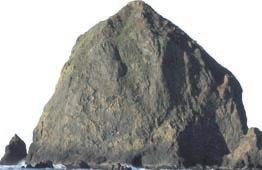
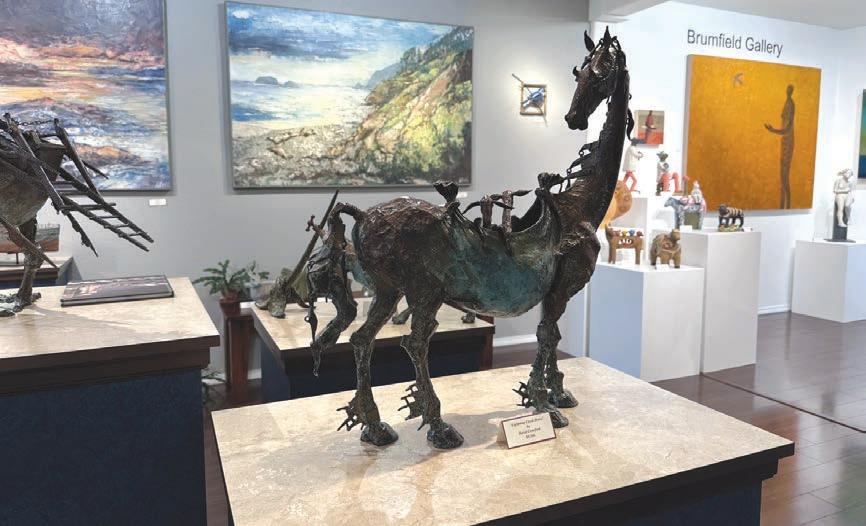
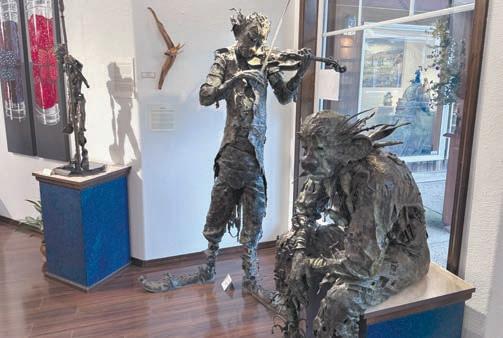
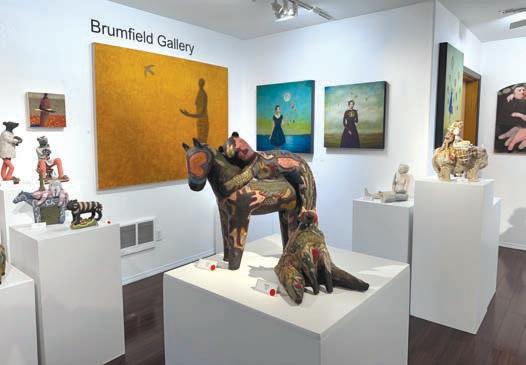
Cannon Beach’s Stormy Weather Arts Festival returned from November 1-3, with galleries across the city hosting classes, artist demonstrations, musical performances and other special events.
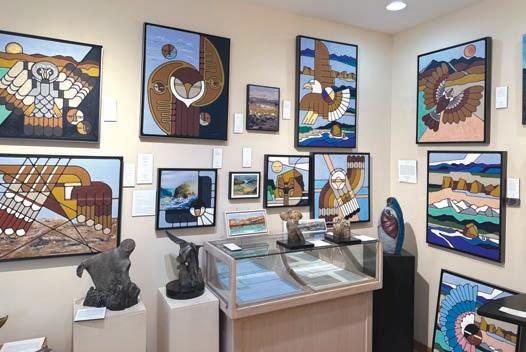
Every year an artist is chosen as the Artist of the Year, and this year it was Donald Scott Masterson, an artist who works in multiple genres and mediums, ranging from ceiling murals to projects with Disney World and Universal Studios.
PIERCE BAUGH V for the Gazette
“I’m comin’ home again/ I’ve been east and west, but baby I like best the road that leads to you” “Hotels all look the same/ Just seem to drive me insane”
“It’s true, I’m not sure if you knew/ I’m comin’ home to you”
In their song “Comin’ Home” on the 1974 album “Hotter than Hell,” KISS sings about traveling the world, but longing to be home.
The band, formed in New York in the ‘70s, has a member who’s had a lifelong connection to and sense of home in Cannon Beach.
Tommy Thayer was just a teenager when KISS released their first album, “Kiss,” in 1974. Born and raised in Oregon and growing up in Beaverton, Thayer was musically inclined from a young age. According to his brother, John, Thayer played saxophone but wanted to play guitar, so his mother made a deal with him: if he stuck with the saxophone throughout high school she’d get him a guitar. He stuck to the deal. But a teenage Thayer had no idea just how far the guitar would take him.
Since 2002, Thayer has been the lead guitarist for KISS. When Ace Frehley left the band, Thayer became the new Spaceman.
Thayer’s connection to Cannon Beach has been lifelong. Even now, on his Instagram profile, he can be seen spending time at Cannon Beach and wearing a shirt referencing it.
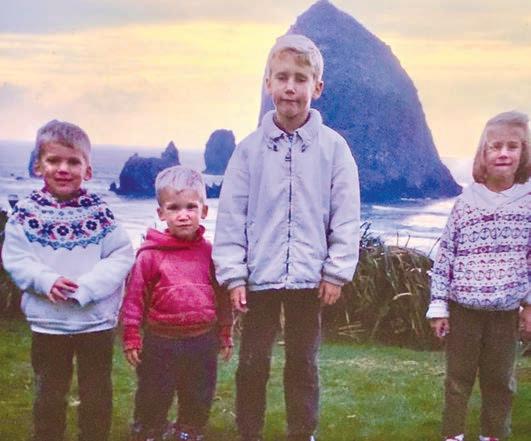
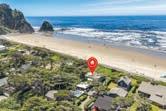
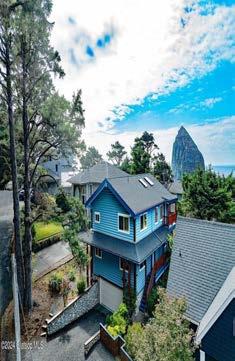
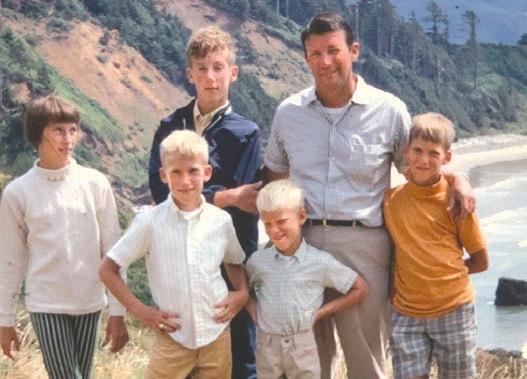
His parents, James and Patricia, took him and his siblings to Cannon Beach often during Thayer’s early years, usually visiting for two weeks at a time and renting a house at the north end of town. In fact, Cannon Beach was where James and Patricia honeymooned. Bonfires on the beach, swimming—despite the cold water—playing with Tonka trucks in the sand and climbing the dunes were fixtures during his childhood visits. Their
father would film it all with a Super 8 camera. Thayer and his siblings would roam the beach, collecting sand dollars and starfish, putting the latter in a bucket filled with water. James Thayer loved Dungeness crab and would go to Warrenton to buy it. He was also a fan of I.W. Harper whiskey and would use the bottle to crack open the crab shells. The family would have crab sandwiches and crab chowder.
Cannon Beach had been the setting of some of Thayer’s most pristine memories.
“It’s very special. Probably one of the most special places in the world for me, just because of our family history there,” says Thayer of Cannon Beach. “It’s a place that I can really go to unwind and get away from everything.”
Cannon Beach holds a special place in Thayer’s past
Project future murky as council race remains too close to call WILL
Cannon Beach voters soundly rejected an advisory vote seeking support for the NeCus Elementary project and its projected $7.8-million budget for completion.
As of the last week in November, votes counted showed that nearly 60% of voters had come out against the proposal, leaving the project, which the city has already spent some $4 million on, with an uncertain future.
The proposed $7.8-million budget to complete the project as a cultural and historical center with a focus on the native American village that was once located at the site of the disused Cannon Beach Elementary School was originally approved by council in April of this year. However, a group of citizens concerned by the project’s budget and scope filed a lawsuit challenging the decision and asking for it to be referred to voters and in August, city council agreed to put the advisory measure on the ballot to settle the suit. While the measure was
PIERCE BAUGH V for the Gazette
Recently, many museums have been returning to the roots of the land they’re built upon. And by returning to their roots, they’re returning to the people who have been rooted here long before the Mayflower landing in 1620 or Viking expeditions in the 10th Century.
The Columbia River Maritime Museum in Astoria has opened two new native Exhibits: The Cedar and Sea Exhibit and Atsayka Ilíi Ukuk–This is Our Place.
Opening on November 1, the first day of National Native American Month, the Cedar and Sea Exhibit highlights the Indigenous peoples of the Pacific Northwest, from southern Oregon up to Yakutat, Alaska. It features the voices of contemporary Indigenous artisans, showcasing their work and traditions and the blend of new and old technologies. Some of what’s featured include tools made from stone, bone, shells and wood among other natural materials. Cedar and Sea is a permanent exhibit. This Is Our Place opened on September 15 and focuses on the Chinook Nation, which is composed of five tribes—Clastsop, Kathlamet, Wahkiakum, Lower Chinook and Willapa—spread out from
northwestern Oregon near Wheeler to southwestern Washington near Westport and out east toward Longview, Washington.
The exhibit features photos of the Chinook taken by photographer Amiran White who has been photographing them for eight years.
“It’s truly been an honor,” says White, of her experience capturing the Chinook ways of life in pictures.
“Everybody has just been so friendly and open.”
The Columbia River Maritime Museum also houses the Chinook’s canoes when they are not in use during the winter season as per an agreement with Chinook Nation. Located in the middle of the gallery, tribal members will even work on canoes while visitors can watch.
Caroline Wuebben, the Columbia River Maritime Museum’s director of external engagement feels that the museum, which sits at the mouth of the Columbia River, has an obligation to tell the stories of the people who have called the land home since well before Europeans arrived. She said the museum realized there was a gap in how it told the story of the area and that the native people deserved more recognition. “We really can’t feel like we’re telling the complete story without sharing this Indige-
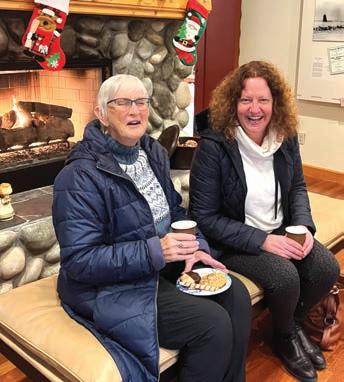

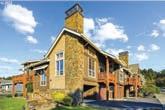
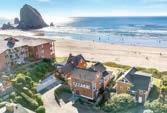
The Cannon Beach His
tory Center & Museum is thrilled to host two special events to bring the commu
nity together and celebrate the holiday season. On Saturday, December 14th, from 11:00 AM to 4:00 PM, the museum will host
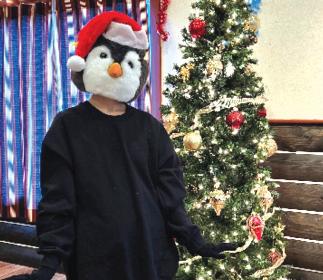
The highlight of the day will be a visit from the beloved Christmas Puffin, a unique and joyful addition to the festivities. There will also be a selection of vendors on-site, offering unique and thoughtful gifts—perfect for last-minute holiday shopping!








The celebration continues Sunday, December 15th, at 11:00 AM with a guided cookie decorating class led by Rainy Day Boards and Bakery. This interactive workshop offers participants a chance to learn the art of sugar cookie decorating while creating four beautiful holiday-themed designs. The class lasts approximately 90 minutes and includes decorating materials, cookies, and light snacks. It is recommended for ages 10 and up, though modified cookie kits can be provided for younger participants upon request. Tickets are $40 per person, which includes a $10 donation to
support the museum. With only 10 spots available, early registration is encouraged at cbhistory.org.
Both events will take place at the Cannon Beach History Center & Museum, located at 1387 South Spruce Street, Cannon Beach, OR 97110. These festive gatherings are a wonderful opportunity to enjoy holiday fun, connect with the community, and support the museum’s mission.
For more information or to register for the cookie decorating class, visit cbhistory.org.
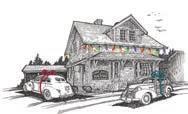
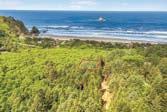









gifted them the signed pictures which hang proudly. Thayer is also concerned for the well-being of the city. In September, Thayer wrote an op-ed in the Cannon Beach Gazette, voicing his concern about the ever-growing sand dunes and their possible negative impacts on people.
But the boy who grew up making cherished memories at Cannon Beach never would have imagined that he’d become a man playing for one

of the greatest bands in rock history.
“I’m on stage at Madison Square Garden in the Spaceman outfit in eight-inch platforms, it’s a pretty cool feeling. And you think, ‘God, I don’t know how I did this, but I did,’” said Thayer of being in KISS.
Jennifer Goodenberger and Shelly Loring will perform a holiday concert in Cannon Beach, December 22nd, at 3pm, at Cannon Beach Community Church, located at 132 E. Washington St. in downtown Cannon Beach.

Jennifer Goodenberger will
Though musically proficient from a young age, he had no childhood dreams of being a rock star. “When I was a kid, I never aspired to be a rock star,” he says. “The thing that always drove me was just my passion for rock and roll, guitar and the bands that I grew up on and the music. That’s really what inspired and drove me; I think I wanted to emulate that and do it myself.”
Thayer’s parents were supportive of their son’s nontraditional path. “Tommy wanted to go to the school of hard rock,” says his brother John. “They never said, ‘You need to get back here and get a real job.


This is never going to work out. Only one in a million odds are way against you.’ They never said anything like that,” says John Thayer of his parents.
“They were very supportive.”
He started in a garage band and eventually formed Black ‘n Blue in the ‘80s. The band was even an opening act for KISS.
Thayer kept in touch with the band and when Frehley left, it was Thayer’s turn to don the face paint and black spandex.
His first show as the official lead guitarist for the band was at a stadium concert in Melbourne, Australia that was being filmed and recorded.
“Those were big shoes to fill,” says Thayer. They were big shoes to fill in every sense.
Replacing a beloved member of the band wasn’t easy, and while many KISS fans welcomed him, there were the naysayers.
“It’s hard sometimes, because you read all this stuff, and you gotta figure 99% of
the fans were really supportive, and they’re always behind me, but there’s always those people, those dissenters out there that try to rip you apart. And I went through all that,” says Thayer. “I took a lot of wrath.”
Though it was the early aughts, and this was pre-social media, there were still brutal corners of the internet. Some KISS fans would write about their disapproval of Thayer joining the band.
One fan kept sending him critical emails. Thayer emailed him back and invited him to a show and even arranged for him to have a backstage pass. His generosity changed the fan’s opinion of him, and they stayed in touch. The fan still loves KISS to this day, something Thayer is proud of.
Having been in the band for over two decades, many of the original dissenters have warmed to him.
“One of the things my dad always told me ‘Was make sure
perform her originals along with holiday favorites. Goodenberger will be joined by flutist Shelly Loring. This concert is free and open to the public, part of the 2024 7th Annual Fall Steinway Piano Concert Series hosted by Community Church in Can-
non Beach. This concert will also feature carol singing, with audience members encouraged to choose a favorite carol to sing together. Jennifer Goodenberger, long-time resident of Astoria, Oregon, is a pianist, composer, visual artist and poet. Her original
people like you. You need to make people want to be around you,’” says Thayer.
Easygoing and laidback, Thayer took his father’s advice to heart. Having been in the rock scene, an environment that can inflate egos and prey on insecurities, Thayer has managed to stay true to himself. Despite being the Spaceman on stage, he’s always Tommy.
“People get wrapped up and thinking they have to be a certain way or a certain persona, just be yourself and relax,” he says. He’s accomplished what so many have dreamt of. He

credits persistence with helping him get to where he is. “It’s just persistence more than anything, you know, not getting discouraged and giving up and quitting,” he says. He also set realistic goals for himself. “Those goals became more realistic and achievable because they weren’t as lofty,” he says.
“Sometimes, if you just stay focused on just doing the things that you’re doing this week or this month, it’s amazing where that can take you when you add it all up over time,” he says. “It’s interesting where life takes you sometimes.”

works range from deeply healing and spiritual compositions to passionate and romantic creations. Her music is a mesmerizing fusion of classical, improvisational and contemporary styles. Goodenberger has been performing for over 30 years.









Compensation:
About the Role: Join Country Media as a Multi-media Advertising Sales Representative. In this role, you’ll identify, qualify, and sell digital and print advertising to businesses. You’ll grow an established client list and attract new advertisers in the Cannon Beach market with and its associated publications, digital products, and events.
Responsibilities:
•
Qualifications:












By PHYLLIS BERNT Library Volunteer
The holidays are a time to celebrate the importance of community, of being connected to others in a spirit of kindness, generosity and shared joy. Cannon Beach is fortunate to be a vibrant community and the library is grateful to be part of it.
There would be no library without the goodwill and support of the city’s residents, visitors, city workers, local merchants, hospitality workers and hotel owners. Each year, the library thanks the Cannon Beach community for its support with a Holiday Tea, an afternoon filled with hot tea, mulled cider, delectable home-baked treats and holiday spirit.
This year’s Holiday Tea is
from 1 to 4 p.m. on Saturday, December 7, at the library, 131 N. Hemlock in downtown Cannon Beach. Everyone is invited to share in delicious goodies and good fellowship before the annual lamp lighting. The holiday spirit and sense of community will continue at 1 p.m. on Saturday, December 14, when the library, in cooperation with the Chamber’s Haystack Holidays, presents Santa Story Time. Santa will be there to read “The Night Before Christmas,” while volunteers will read holiday stories in English and Spanish. Children in attendance will receive a free holiday book, as well as take-home hot cocoa bombs donated by Bruce’s Candy Kitchen. All ages are welcome. The Cannon Beach Reads book club will discuss another example of a strong community when they meet at 7 p.m. on Wednesday, December 18, to discuss “Last Call at Coogan’s: The Life and Death of a Neighborhood Bar,” by Jon Michaud. This will be a hybrid meeting with participants able to take part in the discussion in-person at the library or virtually (contact book club coordinator Joe Bernt at berntj@ohio.edu for the Zoom link).
Coogan’s Bar and Restaurant was an Irish bar that improbably opened in the high-crime Dominican neighborhood of New York City’s Washington Heights in 1985. It closed during the pandemic in 2020.
In its 35 years of existence, Coogan’s was an integral part of a multi-ethnic, majority-immigrant neighborhood that faced many challenges, suffering from the highest crime rate in NYC in the late 1980s and early 1990s, then losing many of its longtime residents because of gentrification in the 2010s.
Through it all, Coogan’s provided a safe space for everyone, regardless of race, ethnic origins or attitudes toward policing. Michaud introduces the reader to the bar’s owners and to some of its more lively regulars, as he explores how Coogan’s created a community that was important to neighborhood residents, local politicians and celebrities like Lin-Manuel Miranda, who fought to keep the bar open despite financial challenges.
Jon Michaud is an author and librarian. He was head librarian at The New Yorker and then at the Center for Fiction before becoming the Collection Management Librarian at the Milburn Free Public Library. His debut novel, “When Tito Loved Clara,” was named a best book
of the year by Barnes & Noble Review.
Mary Lloyd will lead the discussion on December 18. Coffee and cookies will be provided at the library. The book club meets on the third Wednesday of each month at 7 p.m. New participants are always welcome, even if they haven’t read the book.
And speaking of books and communities, a recent addition to the library collection, “The Mighty Red” by Louise Erdrich, presents a compelling and thought-provoking look at a fictional community in the Red River Valley of North Dakota.
In the midst of the 2008 financial crisis, the major industry in Tabor, North Dakota, is the cultivation and processing of sugar beets, an inescapable fact for Crystal Frechette, as she hauls sugar beets from the fields to the processing plant from 6 p.m to 6 a.m. every night in a side loader dump truck.
Crystal, a member of the Ojibwe tribe, doesn’t get much help from her husband, a failed actor with expensive tastes. She works long hours because of her daughter, Kismet, a smart, perceptive young woman Crystal is sure will have a bright future once she has graduated and is safely in college.
Kismet, however, is being pursued by Gary Geist,
heir to the town’s sugar beet empire, and a careless, clueless high school football star whose guardian angel must be working overtime because he miraculously escapes one dangerous incident after another. Eighteen-year-old Gary is desperate to marry Kismet because, for reasons he doesn’t understand, she makes him feel safe and able to divert his attention from the damage his carelessness has caused his closest friends.
Kismet, who finds Gary boring, lets herself be won over by his obvious need for her and reluctantly marries him, despite her feelings for Hugo Dumash, a brilliant, home-schooled, nerd who learns about life through the books in his mother’s bookstore and who heads to the oil fields to make a fortune so he can win Kismet back from Gary.
Erdrich uses this teenage love triangle as the backdrop for a commentary on pending environmental disaster, uneven power relationships and the importance of community. As the newly wed Kismet finds when she tries to grow a garden, the town’s reliance on sugar beet cultivation, complete with engineered crops and strong fertilizers,
is destroying the fertile soil of the Red River Valley, a fact ignored by her sugarbeet-growing father-in-law. Kismet’s situation as a poor, Native American, former-Goth high school student who marries into the richest family in town, gives Erdrich the opportunity to examine the power dynamics underlying the town’s social structure. A strong community of women makes it possible for Kismet to escape her hasty marriage to build a better life, while Gary seeks redemption for his staggering act of thoughtlessness by recognizing his responsibility to the community he has damaged.
“The Mighty Red” has been described as a dramatic novel with comedic undertones. In addition to almost lyrical descriptions of the countryside and artfully drawn characters, Erdrich brings a subtle humor to the story, both in her plot and characters.
Louise Erdrich, a member of the Ojibwe tribe, is the author of novels, poetry and children’s books featuring Native American characters, themes and settings. Many of her 28 books have earned prestigious awards, including the Pulitzer Prize and the National Book Award.
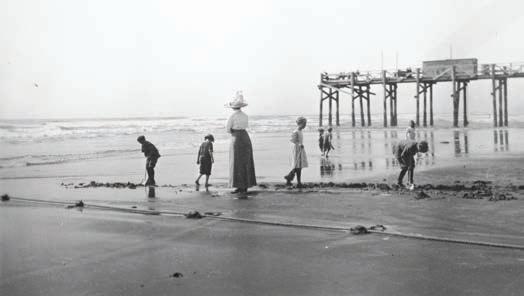
The Cannon Beach History Center & Museum is excited to announce the opening of Places by the Sea, a traveling exhibit from the Oregon Historical Society, on December 10, 2024. The exhibit will run through December 31, 2024, offering a glimpse into the history of Oregon’s coastline as both a popular vacation spot and a peaceful retreat.
The exhibit features photographs taken between 1906 and 1920, showcasing the coast as a place of bustling activity and solitude. Commissioned by the Spokane, Portland & Seattle (SP&S) Railway, the images capture
From Page A1
nonbinding, the decisive margin of defeat signals that a rethinking of the project is likely, with city council election results increasing that likelihood even further. In the race for two open seats on the city council, Erik Ostrander, who voiced his opposition to the project’s high budget as a candidate, was on track to win one position with 587 votes, while the race between Deanna Hammond and Mike Bates for the other open seat was too close to call. As of late November, Hammond had received 473 votes against 471 for Bates, meaning the race was likely headed for a recount. Hammond was a vocal critic of the project’s budget as a candidate, while Bates did not have a strong position on the issue, saying that he thought the city faced larger issues. As of the end of the month, the current city council had not discussed the project following the
From Page A1
vacationers enjoying clamming, swimming in natatoriums, and strolling boardwalks. The photographs also highlight the serene beauty of the coast, accompanied by postcard-inspired stories from the Oregon Historical Society’s collection. Before 1890, reaching Cannon Beach was a lengthy journey involving riverboats, stagecoaches, and horseback rides. By the 1890s, a train to Seaside shortened travel time, but travelers still navigated the winding Ecola Toll Road. Road improvements in the mid-20th century reduced the trip to just 90 minutes today. The museum will have
vote, but Councilors Gary Hayes and Nancy McCarthy generally discussed the issue at the monthly coffee with councilors meeting on November 18.
Hayes said that he was very disappointed in the outcome of the advisory vote and that he though the project would only have been to the benefit of the community. He said that he thought the project’s impacts on tourist growth had been overstated and that he felt the no vote endangered the project’s possibility to serve as a community and cultural center.
Hayes also said that in talking with voters, those who had voted no were not of a unified mind on how to proceed, with some opposing any project in the tsunami inundation zone, while others just wanted to see a reduction in the project’s scope and budget. However, Hayes wondered how they would propose cutting costs as any items large enough to materially impact the budget, such as declining to renovate one of the buildings or build out the park, would seriously detract from the project. In addition to these
special hours for this exhibition, open daily from 11 a.m. to 4 p.m., except on Sundays, through December. Places by the Sea will be on display at the Cannon Beach History Center & Museum December 10 –December 31. The museum is located at 1387 South Spruce Street. Admission is by donation.
This exhibition is sponsored by the Oregon Historical Society. To learn more about OHS, visit https://www. ohs.org/
For more information, visit www.cbhistory.org or contact the museum at 503-4369301.
concerns, Hayes said that in talking with members of the Clatsop-Nehalem Tribe who had been involved with the project’s development, they had felt hurt by the result and were now wary of the city.
Hayes said that he felt the no vote meant the council would be forced to restart the public process around the project, which originally took place over four years beginning in 2020.
City Manager Bruce St. Denis then gave a rundown of the facility’s current condition, explaining that the roof was in poor shape, lots of seismic upgrades were still needed and the facility did not have working restrooms. St. Denis said that the building was unoccupiable in its current state.
Hayes then detailed the city’s spending on the project so far, which has totaled $4 million for the purchase of the property, removal of hazardous materials, the replacement of the school building’s roof and money spent on the public process. Hayes also pointed out that the site’s archaeological significance meant that any path for-
ward, including razing the two buildings for a parking lot or public park, would take significant work and monetary resources.
Former Mayor Sam Steidel, a vocal critic of the project’s high price tag, then offered his opinion on the vote and the path forward. Steidel said that the city did not need to restart the public process from square one and that they could use the already completed work as a starting point for paring back the project’s scope to meet a more conservative budget. Steidel also argued that the city council needed to develop an operational plan for the project before working to complete a design.
McCarthy said that the council would discuss next steps for the project at one of their December meetings.


confident that it will happen. But for now, he hopes the new exhibit will educate visitors about the first people.
Halloween • Thanksgiving
Christmas • New Years
nous culture that’s been here thousands of years and is still actually thriving,” says Wuebben. “I’m pretty excited for people to really understand who was here before Lewis and Clark showed up.” Tony Johnson, chairman of the Chinook Nation oversaw the development of the Ntsayka Ilíi Ukuk–This is Our Place exhibit. “The Chinook Indian Nation is excited to welcome visitors to and celebrate our cultural heritage
at the Museum with this new exhibit,” said Johnson. The new exhibit is particularly important for the Chinook given their recent history. In 2001, the Chinook obtained federal recognition. Johnson’s father, Gary, who was the then-chairman, even signed the paperwork for the Chinook’s federal recognition. However, their recognition was rescinded 18 months later. “It’s hard to describe just how damaging that has been to us,” says Johnson. Johnson hopes that the new exhibit will bring attention to the Chinook’s plight for federal recognition, and he’s
help get the word out with affordable online marketing packages.
“This exhibit does a nice job of showing that Chinook are here today, that we’re not going anywhere, and that we’re engaged in the preservation of and revitalization of our culture and language and lifeways,” says Johnson. Johnson wants people to see that even though the Chinook are still seeking justice, their lives are vibrant: “While we have a struggle for justice, we also refuse to not thrive in our own place.”

As the heartwarming journey of two orphaned North American river otters comes to a successful conclusion, the Wildlife Center of the North Coast (WCNC) stands proud as a pivotal force in their rehabilitation and release back into the wild. Through dedication, innovation, and compassion, the team at WCNC has demonstrated their unwavering commitment to wildlife conservation and rehabilitation.
A Dedicated Approach to Wildlife Care
Upon their arrival at WCNC, the otter pups, initially found in a dire state, began a carefully structured rehabilitation process. The center’s staff, led by Rehabilitation Coordinator Ginger Nealon, employed meticulous strategies to ensure the otters developed the necessary skills to thrive independently. Minimal human contact was main-


tained, with staff donning ghillie suits to disguise their presence, thus preserving the otters’ natural instincts and behaviors. The otters were housed in a specially designed enclosure that mirrored their natural habitat. This space

included varied terrain and pools that encouraged the exploration and development of essential survival skills. The WCNC team implemented an enrichment program that included innovative feeding methods, promoting natural hunting behaviors while minimizing human association.
to minimizing human interaction while providing essential care is truly commendable.”
Supporting the Mission of WCNC






Ensuring Successful Reintegration into the Wild






nbumcnsl2020@gmail.com
To feature your spiritual organization on this panel: Contact Katherine at (503) 842-7535, headlightads@countrymedia.net
After five months of dedicated care, the otters were deemed ready for release. Their transition back to the wild was a testament to the careful planning and execution by WCNC. The otters were transferred back to Central Oregon, where they were released into a carefully selected riparian habitat. This location ensured they would have the best chance of survival and adaptation.
“The commitment and expertise demonstrated by the Wildlife Center of the North Coast were crucial in ensuring that these otters could return to their natural habitat,” said Pauline Hice, Director of Wildlife Rehabilitation at Think Wild.
“Their innovative approach
As a non-profit organization, the Wildlife Center of the North Coast relies heavily on community support to continue their invaluable work. Donations are vital to furthering their mission of rescuing and rehabilitating injured, sick, orphaned, and displaced native wildlife.
To contribute to this cause, donations can be made directly through WCNC’s website at www. CoastWildlife.org. Every contribution helps ensure the continued success of their rehabilitation and conservation efforts, allowing more creatures to return safely to their natural habitats.
The Wildlife Center of the North Coast remains dedicated to their mission, and with community support, they will continue to make a lasting impact on wildlife conservation and education. Join them in their journey to protect and preserve the beautiful creatures that share our world.
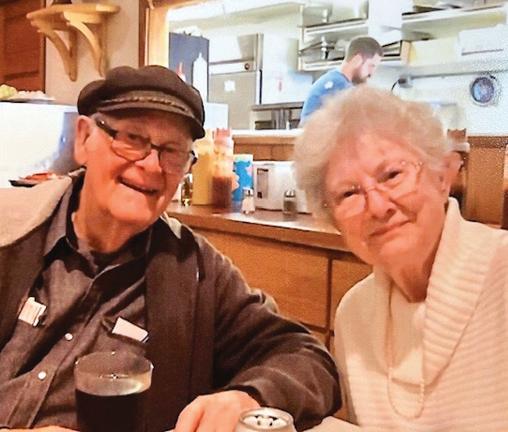
William and Sarah Steidel have passed, Bill on October 18th, Sally on October 21st. The Celebration of their lives together will be held December 28th, at the Coaster Theatre, doors opening at 1 p.m. for cider and hugs, Music at 2 p.m. and formal speaking will begin at 2:30 p.m., to go until finished and no earlier.
Bill has had a gallery in Cannon Beach since the ‘60s and his son expects to keep the gallery open and offer Bill’s art for years to come with old and new never seen images from the archives.
Bill served in the Coast Guard from ’52 to ’56 out of Astoria on the ‘Mallow’ and the ‘Bonham’. William ‘Bill’ Steidel was born in Goshen NY, July 24th, 1928, to Robert F. and Edna Steidel. Bill graduated at Pratt Institute of Industrial Arts, Columbia University, UoO, and UoA. Worked briefly at Disney and Simon & Schuster. Sally was a teacher at Broadway middle school and then in Astoria as a student teacher coordinator. She developed a business
in Cannon Beach at Sandpiper Square 1979 into the ‘90s.
Sarah ‘Sally’ Keeley was born in Haynesville Louisiana on October 15th, 1930. Her youth in Magnolia Arkansas where her mother’s family operated a hotel and her mother had a millinery and clothing store. Eventually to move to Clackamas Oregon where her father worked in the war time ship yards. She went to college at both OSU and UoO to study medical illustration and teaching. Summers off she held jobs at a clothing/ wedding dress store in Portland as a model or at Stehekin, serving at the Golden West lodge. Together they have had five galleries in Cannon beach, helped the community design for the future, helped create a theater and establish Cannon Beach as thee Oregon community for the arts. Bill and Sally are survived by son Sam Steidel, Daughter-in-law Deborah Laws-Steidel