MICHIGAN COUNTRY LINES
Tapping into the Sweet Tradition of Michigan’s

Tapping into the Sweet Tradition of Michigan’s
April 18: A Day to Thank Lineworkers
Art Helps Veterans Take Flight
2026 Scholarship Opportunities


and it can provide you with total home comfort
You may not realize it, but your home is sitting on a free and renewable supply of energy. A WaterFurnace geothermal comfort system taps into the stored solar energy in your own backyard to provide savings of up to 70% on heating, cooling, and hot water. And with a 5 Series hydronic unit, you can get radiant floor heat that’s just as comfortable as the air for total home comfort. That’s money in the bank and a smart investment in your family’s comfort. Contact your local WaterFurnace dealer today to learn how to tap into your buried treasure. YOUR LOCAL WATERFURNACE DEALERS
Allendale Allendale Htg & Clg (800) 327-1937 allendaleheating.com
Berrien Springs
WaterFurnace Michiana (269) 473-5667 gogreenmichgeothermal.com
Big Rapids
Stratz Htg & Clg, Inc. (231) 796-3717 stratzgeocomfort.com
Cadillac Wilder Htg & Clg (231) 645-4822 wilderheatingandcooling.com
Filion/Bad Axe
Air-O-Dynamic Htg & Clg (989) 582-0137 aod-hvac.com
Gaylord Family Plmb & Htg (989) 732-8099 familyplumbingandheating.com
Grand Rapids
Bel Aire Htg & Clg 1-888-235-2473 belaire.com
Hart
Adams Htg & Clg (231) 873-2665 adamsgeothermal-mi.com
Holland
G.H.P. Systems Inc. (616) 396-5833 ghpsystems-inc.com
Indian River M&M Plmb & Htg (231) 238-7201 mm-plumbing.com
Lansing Candor Mechanical (517) 920-0890 candormechanical.com
Michigan Center Comfort 1/Aire Serv of Southern Michigan (517) 764-1500 airserv.com/southern-michigan/
Mt Pleasant Walton Htg & Clg (989)772-4822 waltonheating.com
Muskegon TMC Mechanical LLC (231)865-1114 www tmcmechanicalllc.com
Portage Bel Aire Htg & Clg 1-888-235-2473 belaire.com
Portland ESI Htg & Clg (517) 647-6906 esiheating.com
Sparta West Michigan Geothermal (616) 887-1290 westmigeothermal.com
Sunfield Mark Woodman Plmb & Htg (517) 886-1138 mwphonline.com
Three Rivers
Bel Aire Htg & Clg 1-888-235-2473 belaire.com
Traverse City Geofurnace Htg & Clg (231) 943-1000 geofurnace.com
CO-OP REBATE INCENTIVES
$2,250 rebate available through your co-op.
MICHIGAN COUNTRY LINES
EXECUTIVE EDITOR: Casey Clark
EDITOR: Christine Dorr
GRAPHIC DESIGNER: Karreen Bird
RECIPE EDITOR: Christin Russman
COPY EDITOR: Yvette Pecha
CONTRIBUTING EDITOR: Emily Haines Lloyd
PUBLISHER: Michigan Electric Cooperative Association
Michigan Country Lines, USPS591-710, is published monthly, except August and December, with periodicals postage paid at Lansing, Mich., and additional offices. It is the official publication of the Michigan Electric Cooperative Association, 201 Townsend St., Suite 900, Lansing, MI 48933.
Subscriptions are authorized for members of Alger Delta, Cherryland, Great Lakes, HomeWorks Tri-County, Midwest Energy & Communications, Ontonagon, Presque Isle, and Thumb electric cooperatives by their boards of directors.
POSTMASTER:
Send all UAA to CFS.
ASSOCIATION OFFICERS:
Chris O’Neill, HomeWorks TriCounty Cooperative, chairman; Gabe Schneider, Cherryland Electric Cooperative, vice chairman; Shaun Lamp, Great Lakes Energy Cooperative, secretary-treasurer; John Kran, president and CEO.
CONTACT US/LETTERS TO EDITOR: Michigan Country Lines 201 Townsend St., Suite 900 Lansing, MI 48933 248-534-7358 editor@countrylines.com
CHANGE OF ADDRESS: Please notify your electric cooperative. See page 4 for contact information.
The appearance of advertising does not constitute an endorsement of the products or services advertised.
MICHIGAN’S ELECTRIC COOPERATIVES


See details on page 10. Grilled to Perfection, due April 1; Chill Out! No-Cook Recipes, due May 1. Win a $100 bill credit!
GUEST COLUMN
See details on page 18. Share your fondest memories and stories. Win $200 for stories published!
MYSTERY PHOTO
See details on page 18. Win a $100 bill credit!
To enter contests, submit reader content & more, visit countrylines.com/community
6 UNDERSTANDING POWER SURGES
How to safeguard your home electronics from unexpected voltage spikes.
10 MI CO-OP KITCHEN
Global Comfort Foods: Taste the world, from home.
14 TAPPING INTO THE SWEET TRADITION OF MICHIGAN’S MAPLE SYRUP SEASON
The rhythm and rewards of sugaring season.
18 GUEST COLUMN
Sounds of the Past: A journey through summer sounds from a bygone era.

BOARD OF DIRECTORS
District 1—Big Bay
Darryl Small
906-345-9369 • d1director@algerdelta.com
District 2—Harvey/Deerton
Karen Alholm
906-249-1095 • d2director@algerdelta.com
District 3—Grand Marais
Tim Jenkins
586-306-2141 • d3director@algerdelta.com
District 4—Cedar River/Palestine Bill Wotruba 414-507-9787 • d4director@algerdelta.com
District 5—Gourley/LaBranche/Cornell/Harris Steve Wery
906-295-1255 • d5director@algerdelta.com
District 6—Nathan/White Rapids Jesse Betters 715-923-4946 • d6director@algerdelta.com
District 7—Stonington/Rapid River Kirk Bruno 906-399-1432 • d7director@algerdelta.com
District 8—Nahma/Isabella Don Johnson 906-280-0867 • d8director@algerdelta.com
District 9—Hiawatha/Maple Ridge Stephen Dausey 906-202-3899 • d9director@algerdelta.com
GENERAL MANAGER: Mike Furmanski mfurmanski@algerdelta.com
HEADQUARTERS: 426 N. 9th St, Gladstone, MI 49837 906-428-4141 • 800-562-0950 Fax: 906-428-3840 • admin@algerdelta.com algerdelta.com
OFFICE HOURS
Monday–Friday 8 a.m.–4 p.m. (EST) Alger Delta Cooperative is an equal opportunity provider
By Mike Furmanski, General Manager

Appreciation Day is April 18. National studies consistently rank power line installers and repairers among the most dangerous jobs in the country, and for good reasons. Laboring high in the air wearing heavy equipment and working directly with high voltage creates the perfect storm of a dangerous and unforgiving profession. But electric lineworkers are up to the task. These brave men and women are committed to safety, as well as the challenges of the job.
Alger Delta’s lineworkers are responsible for keeping power flowing day and night, regardless of national holidays, vacations, birthdays, weddings, or other important family milestones. Beyond the years of specialized training and apprenticeships, it takes internal fortitude and a mission-oriented outlook to be a good lineworker. In fact, this service-oriented mentality is a hallmark characteristic of lineworkers. The job requires lineworkers to set aside their personal priorities to better serve their local community.
To perform their jobs successfully, lineworkers depend on their years of training, experience, and each other to get the job done safely.
Equally important is their reliance on a strong support system at home. A lineworker’s family understands and supports their loved one’s commitment to the greater
community during severe storms and power outages.
This means in times of prolonged outages, the family and their lineworker may have minimal communication and not see each other for several days. Without strong family support and understanding, this challenging job would be all the more difficult.
In the Upper Peninsula and across the country, electric co-op lineworkers’ mission-focused mentality of helping others often extends beyond their commitment to their work at the co-op. Lineworkers are often familiar figures in the community. They can be found coaching youth sports teams, volunteering for local charities and organizations, and serving on local advisory boards.
Saturday, April 18, is Lineworker
Appreciation Day. Given the dedication of Alger Delta’s lineworkers, both on and off the job, I encourage you to take a moment and acknowledge the many contributions they make to our local community. And if you see their family members in the grocery store or out and about in the town, please offer them a thank-you as well.
Effective April 6, 2026, to Sept. 18, 2026, Alger Delta will begin summer office hours as follows: Monday–Thursday, 7 a.m. to 5 p.m. EST. For after-hours emergencies, please call (800) 562-0950.
As the “first responders” of the electric co-op family, lineworkers perform around-the-clock duties in dangerous conditions and challenging situations to keep power flowing and protect the public’s safety. These brave members of our community go above and beyond to restore power to their neighborhoods and towns, often in the most hazardous environments. That’s why electric co-ops have designated April 18 as National Lineworker Day. This is a day when we honor the hardworking men and women who keep the lights on. Resolutions adopted by the National Rural Electric Cooperative Association (NRECA) explain it best: “Whereas lineworkers leave their families and put their lives on the line every day to keep the power on; Whereas lineworkers work 365 days a year under dangerous conditions to build, maintain and repair the electric infrastructure; Whereas there would be no electric co-ops without the brave men and women who comprise our corps of lineworkers. Lineworkers everywhere deserve this special day of recognition. These highly skilled men and women light our homes and businesses every day. They endure

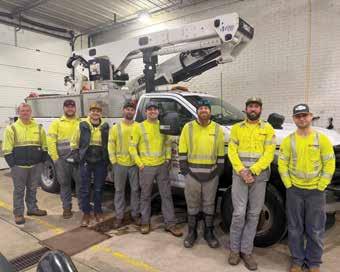
harsh weather and long hours, all to make our lives more comfortable.”
On April 18 (and every day), please take a moment to thank them. Lineworkers are the heart of the co-op nation, proud and strong and the backbone of operations at Alger Delta Electric Cooperative.
Late December 2025 brought a severe weather event to the U.P., deemed a “bomb cyclone winter storm” by local forecasters. Up to three feet of heavy, wet snow blanketed the area. Combined with high winds, the storm caused widespread and prolonged power outages. Alger Delta line crews worked to restore power under some of the worst weather conditions the U.P. has ever experienced.
Outages began Dec. 28 and, in some cases, lasted until Jan. 1. During that time, more than 7,000 Alger Delta households lost power.
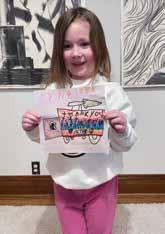
One of those households belonged to 6-year-old Jane and her family. Jane’s cousin, Penelope, was visiting with her parents for the holidays, and together they waited patiently for the lights to come back on.
When power was restored, Jane and Penelope decided to draw pictures to show the lineworkers how much they appreciated their efforts.
“Some people were mad and stuff, and we thought we could help them by making these drawings for them,” Jane said.
Touched by the gesture, the lineworkers who restored power later stopped by Jane’s home to return the favor with a special visit.
“Moments like these remind us why our crews do what they do—and how much a simple ‘thank you’ can mean,” an Alger Delta representative said. “We’re proud of our lineworkers and grateful for families like Jane’s who brighten our days.”

A power surge is an unexpected increase in voltage, and it can occur from a variety of sources. Regardless of the cause, power surges can majorly damage electronic devices and equipment in your home.
Let’s take a look at common causes of power surges and how you can protect your sensitive electronics.
One of the most common causes of a power surge is lightning.
Most of us have experienced this during a severe thunderstorm. When lightning strikes an electrical system, the excess current must be channeled somewhere— unfortunately, in many cases, it’s sent through a home. Your best bet is to unplug all unused devices and electronics during severe thunderstorms.

Another common cause of power surges is electrical overload.
This happens when devices or appliances are plugged into an outlet that can’t handle the required amount of voltage, or if multiple devices are plugged into one outlet through an extension cord. If you’re experiencing power surges due to electrical overload, it’s time to call a qualifi ed electrician to evaluate your home’s circuits and electrical needs.
Faulty wiring in a home can also cause power surges. Damaged or exposed wires can cause spikes in voltage, creating a potentially dangerous situation. If you notice signs of faulty wiring, like visible burns on outlets, buzzing sounds from outlets, or frequently tripped circuit breakers, your home may be due for electrical wiring repairs and updates.
Surges can also occur after a power outage. Sometimes, when electricity is being restored and reconnected, it’s common to experience a quick surge in current. Similar to advice for a surge caused by lightning, it’s best to unplug sensitive electronics during the outage— then wait to plug them back in after power is fully restored.
Aside from unplugging devices when you suspect a power surge, there are two ways you can take additional precautions to protect electronics in your home.
Point-of-use surge protection devices, like power strips, can protect electronics during most surges. But remember, not all power strips include surge protection, so read the packaging label carefully before you buy, and don’t overload the power strip with too many devices. You can also install specialized electrical outlets that offer additional surge protection. Talk to a trusted electrician to learn more.
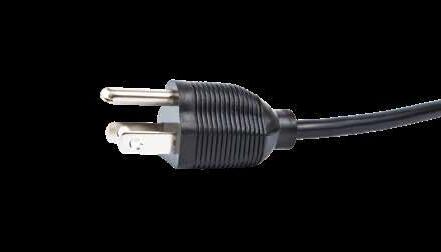
protection prices vary based on the size of the home and suppressor. Whole-home suppressors should always be connected by a licensed electrician, so consider the cost of installation as well.
Another option is a whole-home surge protector, which can help protect your home from larger, more powerful surges. In most cases, whole-home suppressors are connected to your home’s service panel and include features like thermal fuses and notifi cation capabilities that indicate when a device has been impacted by a surge. Whole-home surge
Occasional power surges are inevitable, but by unplugging devices when you think a surge may occur and using additional levels of protection like power strips or wholehome suppressors, you can better safeguard your sensitive electronics and devices.
Scammers and cybercriminals look for weak points to exploit before software companies can fix them. Update software programs on your computer, tablet, and mobile phone as soon as possible when a newer version becomes available. Software updates often contain critical patches and protections against security threats. Turn on automatic updates to automatically update your security software, internet browser, operating system, and mobile apps.
Source: consumer.ftc.org
A regular air conditioning tune-up is one of the best ways to prepare your home for warmer weather. Even when your system appears to be running normally, routine maintenance can improve performance, efficiency, and reliability before summer demand puts extra strain on your equipment.
Over time, normal wear and tear can reduce your system’s performance, even if everything seems to be working fine. A professional tune-up ensures your A/C is operating efficiently before the hottest months of the year. Scheduling an air conditioning tune-up is one of the simplest ways to protect your comfort and your investment.
When components are clean, properly adjusted, and running smoothly, your system doesn’t have to work as hard to cool your home. This improved efficiency can reduce energy use, which may lead to lower electric bills.
During a tune-up, a trained technician can identify minor issues before they turn into major, costly repairs. Catching problems early can help avoid inconvenient system failures when you need cooling the most.
Regular tune-ups can extend the life of your air conditioning system. Just like a car that receives routine maintenance, an A/C system that’s properly cared for tends to last longer and perform more reliably. This can delay the need for a costly replacement and help you get the most value from your equipment.
To make routine maintenance even more worthwhile, qualifying A/C tune-ups are eligible for a rebate credited directly to your electric bill. This incentive helps offset the cost of maintenance while encouraging energy-efficient operation.
Visit algerdelta.com/energy-waste-reduction-rebatesresidential to learn more about all the rebates and energy-saving incentives Alger Delta Electric is offering.
Get your system ready for warmer days and earn a rebate on your energy bill! Benefits of regular maintenance include:
• Improved system efficiency
• Reduced energy use
• Fewer unexpected and costly breakdowns
Complete a qualifying A/C tune-up this spring and receive a rebate credited directly to your Alger Delta Electric bill. Visit algerdelta.com/energy-wastereduction-rebates-residential for more information on rebates and to view all available energy-saving incentives!

Scan the QR code to view eligible rebates or visit algerdelta.com/energy-waste-reduction-rebates-residential








1. Heavenly reflection— Tourist Park, Marquette. Kirsten Blackstock
2. Farmer’s sunset. Bill Quinn
3. Blazing Christmas Day sunset. Judi Hanson
4. A beautiful end to a beautiful day! Diane Lang
5. Peaceful view. Todd Nowak
6. Sunset on Menominee River. Cherie Chartier
7. Fall sunset over Big Bay Garden. Carol Segerstrom
8. The sun rises on a ‘72 Chevy. Adam Winkler
Submit a photo &
Submit Your Photos & Win A Bill Credit! Alger Delta members whose photos we print in Michigan Country Lines during 2026 will be entered in a drawing. Four lucky members will win a $50 energy bill credit on their December 2026 bills!
Upcoming Photo Topics and Deadlines:
• Birds, due March 25 (May/June issue)
• Cute Pets, due May 25 (July/Aug. issue)
• Iconic Landmarks, due July 25 (Sept./Oct. issue)
To submit photos, go to http://bit.ly/countrylines We look forward to seeing your best photos!
Taste the world, from home.

Watch a video of this month’s winning recipe at micoopkitchen.com/videos

Adrienne Kral, Presque Isle Electric & Gas Co-op
1 (16-ounce) bag wide egg noodles
6 tablespoons butter, divided
1 pound kielbasa, cut into thin, round slices
1 large yellow onion, fi nely sliced or chopped
1 medium head green cabbage, 2–3 pounds, cored and roughly chopped
2 cloves garlic, minced
1 cup cottage cheese, optional
½ teaspoon salt (or to taste)
¼ teaspoon freshly ground black pepper (or to taste)
Cook egg noodles to al dente, according to package instructions. Drain, reserving ¼ cup of pasta water and set aside. To a large skillet or Dutch oven over mediumhigh heat, add 2 tablespoons butter and melt. Add kielbasa and cook until browned, 3–4 minutes, stirring occasionally. Remove slices with a slotted spoon and set aside (keeping any remaining liquid in the pan). Reduce heat to medium, and add 2 more tablespoons of butter and the onions. Sauté until the onions are translucent. Add cabbage and garlic. Cook 8-10 minutes until cabbage reaches desired tenderness, stirring occasionally. Add the cooked noodles, kielbasa, remaining 2 tablespoons of butter, and reserved pasta water. Mix well and cook until heated through. Stir in cottage cheese, if using. Season with salt and pepper, to taste. Serve immediately.
Grace Nelson, Cherryland Electric Cooperative
2 tablespoons canola oil
1 large onion (or 2 small), peeled and chopped into large cubes
1 medium/large potato, peeled and cut into large cubes
3 carrots, peeled and cut into round chunks
2 stalks celery, fi nely diced
2 cups water
1 cup brown or green lentils, rinsed
3 cups vegetable or beef broth
2 tablespoons apple cider vinegar (or white wine or balsamic)
1 tablespoon fresh chopped thyme (or 1 teaspoon dried)
2–3 German-style sausages (bratwurst, etc.), cut into chunks
• salt and pepper, to taste
2 tablespoons fresh chopped parsley (or 2 teaspoons dried)
• Tabasco sauce (red), a few drops
In a large skillet over medium heat, sauté the onions in canola oil for a few minutes until soft. Add the potato, carrots, and celery and continue to sauté, adding more canola oil if necessary. Add the water and lentils and bring to a light boil. Simmer until the lentils start to absorb the water. Add the vegetable broth, vinegar, and thyme. Bring back to heat, then allow to simmer until the lentils are soft to taste, about 35 to 45 minutes (green lentils will take longer to cook). Add the sausage and bring to heat. Simmer an additional 4–5 minutes, or until the sausage is thoroughly cooked. Season with salt and pepper, to taste. Sprinkle with parsley. Serve with tabasco sauce and crusty bread.
Julie Kenney, Great Lakes Energy
1 cup raisins
1 cup dried cranberries
½ cup Irish Mist whiskey (or whiskey of your choice)
½ cup (1 stick) butter, softened (for brushing/greasing)
8 slices fresh bread (not day-old)
2 cups heavy whipping cream
6 large eggs
½ cup white sugar
½ cup packed brown sugar
1 teaspoon Irish mixed spice (see right)
2 teaspoons pure vanilla extract
Whiskey sauce:
• reserved whiskey from soaking fruit
1 cup sugar
¾ cup heavy whipping cream
1 teaspoon pure vanilla extract
½ teaspoon Irish Mixed Spice
Katie Schneider, Midwest Energy
Rice:
2 cups jasmine rice
2½ cups water
¼ teaspoon salt
Curry:
2 tablespoons coconut oil
1 onion, diced
4 cloves garlic, minced
2 tablespoons curry powder
1 teaspoon ground turmeric
1 teaspoon ground coriander
1 teaspoon ground ginger
1½ pounds boneless chicken thighs, cut into bite-size chunks
1 (13 ½-ounce) can full-fat coconut milk
1 cup chicken broth
1 tablespoon brown sugar
1 tablespoon soy sauce
1 red bell pepper, sliced
1 cup sliced carrots
1 cup fresh baby spinach
• juice of ½ lime
• salt, to taste
• black pepper, to taste
• chopped cilantro for garnishing, optional
Rinse the jasmine rice until the water runs clear, then combine it with the water and salt in a medium saucepan. Bring to a simmer, cover, and cook for about 15 minutes, or until the water is absorbed and the rice is tender. Remove from heat and set aside. Meanwhile, heat the
Irish mixed spice (makes more than needed):
1 tablespoon ground cinnamon
1 teaspoon ground coriander
1 teaspoon ground nutmeg
1 teaspoon ground allspice
½ teaspoon ground cloves
½ teaspoon ground ginger
½ teaspoon mace (optional, for extra warmth) Combine the cinnamon, coriander, nutmeg, allspice, cloves, ginger, and mace (if desired) to make the Irish mixed spice mix; set aside. Soak the raisins and cranberries in the whiskey for several hours or overnight, then drain the fruit and reserve the soaking liquid for the sauce. Preheat the oven to 400°F and butter a 7x11-inch baking dish, then butter both sides of the bread slices and cut them diagonally. In a medium bowl, whisk together the heavy cream, eggs, white sugar, brown sugar, Irish mixed spice, and vanilla extract. Layer the bread and soaked fruit in the prepared dish, pour the cream mixture over the top, and press gently so all the bread is well soaked. Place the filled dish into a larger

coconut oil in a large skillet or wide saucepan over medium heat. Add the diced onion and cook for about 5 minutes, until softened, stirring occasionally. Then add the garlic and cook for 1 minute, stirring frequently. Stir in the curry powder, turmeric, coriander, and ginger and cook for 1 to 2 minutes, stirring constantly, until fragrant. Add the chicken pieces and stir to coat them in the spices, cooking for 3 to 4 minutes until the chicken begins to turn opaque. Pour in the coconut milk, chicken broth, brown sugar, and soy sauce, stirring to combine, then add the bell pepper and carrots. Simmer uncovered for 15 to 20 minutes, stirring occasionally, until the chicken is fully cooked and the sauce thickens slightly. Stir in the baby spinach just until wilted, remove from heat, add the lime juice, and season with salt and black pepper to taste. Spoon the curry over the cooked jasmine rice and garnish with chopped cilantro if desired.

9×13–inch pan, carefully add hot water to the larger pan until it reaches halfway up the sides of the smaller dish, and bake for 40–50 minutes until set and lightly golden. While the pudding bakes, combine the reserved whiskey, sugar, heavy cream, vanilla, and Irish mixed spice in a saucepan, bring to a boil, and cook for 1–2 minutes. Remove from heat and let stand. Once the pudding is done baking, slowly pour the warm whiskey sauce over the hot pudding a little at a time, pressing gently to help it absorb the sauce. Allow it to cool slightly before serving.

Order your copy and share the gift of community and care. Each purchase supports two deserving Michigan charities— Feeding America Local Food Banks and Cooperative Family Fund.
Just scan the QR code or go to amazon.com and search “Michigan Country Lines Cookbook.”
Grilled to Perfection, due April 1; Chill Out! No-Cook Recipes, due May 1. Submit your favorite recipe for a chance to win a $100 bill credit and have your recipe featured in Country Lines with a photo and a video. Submit your recipe at micoopkitchen.com, or send it via email (include your full name and co-op) to recipes@countrylines.com
By Yvonne Whitman
Honor Flight Network is a national nonprofit organization created solely to honor America’s veterans for all their sacrifices. The Upper Peninsula Honor Flight is a local hub of the National Honor Flight Network that endeavors to pay a small tribute to those U.P. veterans who gave so much.
U.P. Honor Flights began in 2011 and provide a memorable, safe, and rewarding tour of honor for our U.P. veterans. Those selected are flown on a one-day whirlwind tour to Washington, D.C., to visit and reflect on the memorials that stand in their honor. While all veterans are eligible to apply, priority is given to WWII, Korean, and Vietnam veterans along with other veterans who may be terminally
ill. This “Tour of Honor” is free to the veteran, with airfare, meals, deluxe tour bus, t-shirts, and other items provided at no cost to the participants.
Rapid River resident, and Alger Delta member, David Badgett is endeavoring to assist the Honor Flight in its fundraising efforts in a unique way. David was a proverbial “military brat.” His father was a career lieutenant commander in the United States Navy and his mother also served in the Navy as part of the WAVES (Women Accepted for Volunteer Emergency Service), working in an ordnance plant in Chicago that produced millions of bombs, mines, and rocket components for the war effort. David grew up in Memphis, Tennessee, but it was his

mother’s U.P. roots that convinced him to bring his own family here in 1981 and call it home. His mother, Alice, originally hailed from the small U.P. town of Foster City, where her family owned a cheese factory and David had spent many summers while growing up. “It looked like a good place to raise a family,” he says. A self-described “fix-it kind of guy” who likes to rebuild things, he opened B & B Tool, a tool and equipment repair business, as well as other business enterprises. “The U.P is full of opportunity if you work hard,” he says with a grin.
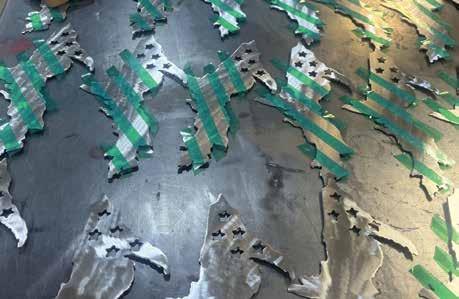
In 2019, he began creating and manufacturing plasma cut metal art. His interest in this all began with a children’s 1968 Ford pedal tractor toy. “I went to a sale and saw this rusty little tractor. I bought it, sandblasted and powder coated it, and made it look new again,” he said. Shortly after the purchase, a neighbor of his let him know that he was going to sell all of his plasma equipment. “I bought every bit of it. That’s why I call the toy tractor my $20,000 toy tractor,” he says with a laugh. The neighbor gave David some initial lessons and things just took off from there. He began making the flat metal art plaques including some in

the shape of the U.P with the stars and stripes of the United States flag superimposed on them.
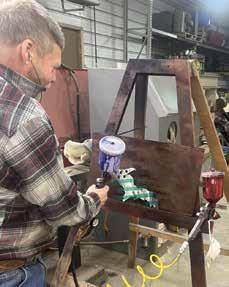
The seven-step process to create each flag begins with a 4-by-10-foot sheet of “pickled in oil” steel, from which the computer-aided design cuts out 32 U.P. shapes. This material gives the flags a beautiful and unusual sheen and it also helps prevent them from rusting. In batches of 30, he then hand applies tape to each piece in preparation for the “flag striping.” It is then sprayed with blue and red dyes to create the “flag effect.” The tape is removed and the flags get rolled to the back of his workshop for powder coating. After this, they are baked for about one hour at 375 degrees.
While he makes plaques for retail, he also began giving the “U.P. flags” out free of charge to local firefighters, police officers, and veterans. “My soft spot is for veterans,” he thoughtfully says.
David’s “soft spot” was particularly evident on Sept. 17, 2025, when Honor Flight XXVII took off from Escanaba and he gifted each participating veteran on the flight with one of his “U.P. flag” plaques. “The reason I did this was for my parents and my son. He signed up during the Iraq war,” he said. While David’s parents have passed away, his son Jack currently serves as a Sergeant First Class in the United States Army. David accompanied his mother Alice when she participated in the very first Honor Flight on Sept. 22, 2011.
But David wanted to do more. He found out that each donation-funded Honor Flight costs about $135,000 and he wanted to contribute. David approached the U.P. Honor Flight Board of Directors and offered to make and donate 1,000 of his U.P. flags at $25 per flag to help pay for the annual flights. “I’m retired and I want to do a little good work. This is something I can do to make a difference,” he said.
U.P. Honor Flight Board Member Julie Hoffmeyer began working with David on how they could begin selling the

“I’m retired and I want to do a little good work. This is something I can do to make a difference.”
plaques locally. She reached out to local financial institutions to see if they would allow the Honor Flight to sell these at their banks. They agreed and David then created signage for the lobbies. The original stock of plaques at each bank sold out within one week. “We have not been able to keep up with the demand. People are stunned when they see how beautiful the plaques are,” she excitedly states.
Along with setting up the selling locations, Julie assists David with labeling and bagging each numbered plaque for distribution.
David humbly states, “I can’t do this without Julie’s help. What she does is just as important as what I do.”
And as for that toy tractor that started it all? David says, “I have seven grandkids and each one of them now have a pedal tractor.”
If you are interested in purchasing a plaque to support the next Honor Flight, please visit uphonorflight.org/ store/Misc/MetalUpperPeninsulaFlag.

By Cassondra Scott
As spring begins to emerge in Michigan, a sweet seasonal tradition takes center stage—maple syrup production. It’s a time when communities, farmers, and producers gather to tap maple trees, harvesting nature’s satisfying reward. Whether it’s visiting a sugar shack, attending a festival, or enjoying a stack of pancakes drizzled with fresh maple syrup, Michiganders celebrate the simple pleasures of maple syrup season, one drop at a time.
Maple syrup production is the oldest agricultural enterprise in the United States, a process dating back to the earliest Native Americans. It’s not only the fi rst farm crop of the year but an integral part of the state’s agricultural heritage. Maple sugaring contributes millions of dollars to the state’s economy, from agriculture to tourism. Michigan produces an average of 136,000 gallons of syrup per year, maintaining its status as fifth in the nation for maple syrup production.
Collecting Liquid Gold
The state’s forests are rich with sugar maple trees, providing the perfect
environment for this age-old practice. As spring days grow longer, more sunshine brings warmer temperatures, and sugar maple trees begin to release their sap. With a natural sugar content of about 2%, sugar maples are the star of Michigan’s syrup season.
Sugaring season is short but sweet, typically lasting just four to six weeks. In southern Michigan, producers may begin tapping trees as early as February, while the season can stretch well into April in the Upper Peninsula. Timing matters, and no two seasons are exactly alike.
Maple syrup depends on Michigan weather doing what it does best— changing its mind.
Alternating warm days and freezing nights create pressure inside the tree, encouraging sap to fl ow. Each freezethaw cycle can trigger a steady drip for eight to 15 hours, continuing as long as the temperature pattern lasts.
But the window is narrow. Once buds begin to form on the trees, sap production stops and the fl avor changes, signaling the end of the season. For producers, it becomes a race against the calendar and the forecast.
Producing maple syrup blends generations-old tradition with modern effi ciency. Michigan is home to an estimated 500 commercial producers, along with roughly 2,000 hobbyists and backyard sugar makers who tap trees for personal use.
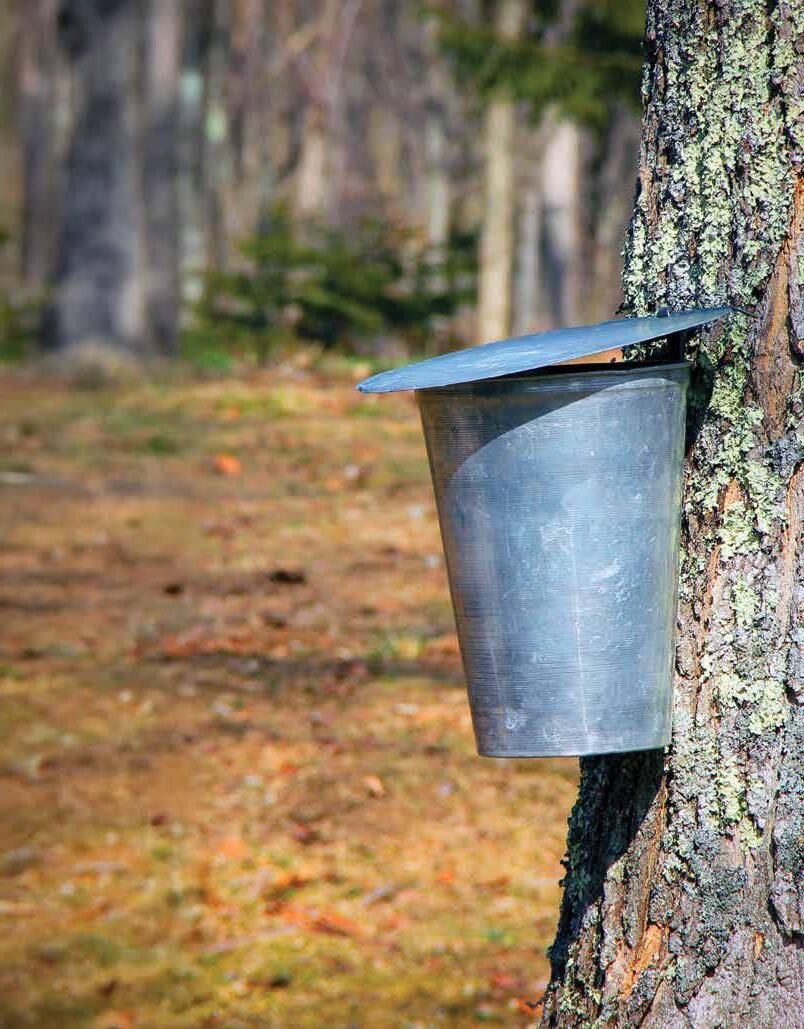
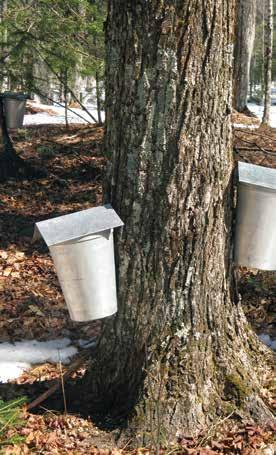
The process begins with a small hole drilled into a sugar maple and a tap, also called a spile, inserted into the trunk. Clear, watery sap is collected in buckets or tubing systems and transported to a sugarhouse for processing. It takes about 40 gallons of sap to make just one gallon of syrup. In an average season, each tap yields roughly 10 gallons of sap, enough for a single quart of syrup.
That sap, which is about 98% water, becomes syrup when it is boileddown at 219 degrees Fahrenheit. This evaporation removes excess water, leaving behind the thick, golden sweetness Michigan families know well.
Many modern sugarhouses use advanced tools such as reverse osmosis machines and high-
effi ciency evaporators to speed up the process. Others stick with wood-fi red boilers and traditional techniques, valuing the hands-on approach and the fl avor it produces.
As sap begins to fl ow and syrup makers fi re up their boilers, communities across Michigan celebrate a tradition that blends agriculture, history, and a bit of springtime magic. Maple syrup festivals invite visitors to experience the sights, smells, and tastes of the season fi rsthand.
Mary Ann Hayes, co-president of the Vermontville Maple Syrup Festival—the longest running maple syrup festival in the state—has been involved in the planning of their annual event for 20 years. Her husband Steve, president of the organization, has been involved even longer since a random day when he offered help to some men building a platform for the upcoming festival in the 1990s. She’s watched the event grow from maple syrup stands, a pageant, and a fl ea market to a juried arts and crafts show, vendor market, food trucks, and fair rides.
“We love that we’ve been able to grow the festival, but also keep it free for our community,” said Mary Ann. “We have this great opportunity to celebrate maple syrup and all the amazing people who make the industry so great.”
From forest to festival, maple syrup season is a reminder that some of Michigan’s best traditions arrive quietly, one drip at a time. Whether touring a sugarhouse, attending a local festival, or pouring syrup over a stack of pancakes at home, each golden drop reflects patience, craftsmanship, and the sense of community that defines spring in Michigan.


Multiday festivals draw thousands each year with pancake breakfasts, parades, craft shows, and live entertainment, including:
• Vermontville Maple Syrup Festival (since 1940), April 24–26 syrupfest.org
• Shepherd Maple Syrup Festival, April 23–26 shepherdmaplesyrupfest.org
Sixteen sugarhouses across the state will also open their doors during Michigan Maple Syrup Weekends, giving visitors the chance to tour sugar bushes, see tapping demonstrations, learn how sap becomes syrup, and sample pure Michigan maple products.
Michigan Maple Syrup Weekends 2026 michiganmaple.org
• Southern Lower Michigan, March 21–22
• Northern Lower Michigan, March 28–29
• Upper Michigan, April 11–12
Meet the sugar makers who work their maple magic, discover new recipes, and even learn how to try sugaring yourself.

Cassondra Scott is a content creator, writer, and social media influencer at Cassondra Wanders—sharing small businesses and sights to see all over the state of Michigan.
Alger Delta Electric Cooperative is proud to contribute to the community it serves and to promote education. Two $1,000 scholarships are being offered for 2026.

Criteria for the scholarships is as follows:
1. The student (or their parent, grandparent, or legal guardian) must be a member of Alger Delta Cooperative.
2. The student must be a high school senior graduating in 2026.
3. The student must submit an essay. Essays should be on the theme: Our Community Connection: The Value of Cooperative Power. Essays should be between 500 and 1,000 words—typed and double-spaced—and include the following information on the cover:
• Student’s first and last name
• Home address
• Phone number
• Name of parent(s), grandparent(s), or legal guardian
• Utility account information (name on account, billing address, and account number)
4. High school senior must plan to attend a technical college or university.
5. Deadline for submitting: Essays and a cover letter must be received no later than April 13, 2026, via email at admin@algerdelta.com or postmarked by April 13, 2026, and sent to: Alger Delta Electric Cooperative Association, 426 N. 9th St., Gladstone, MI 49837

Supporting Our Local Students!
Alger Delta recently donated two retired Dodge Ram pickups from their fleet to the Delta Schoolcraft Intermediate School District’s and the Menominee County Intermediate School District’s automotive programs. These trucks will give students valuable hands-on experience working with real vehicles as they learn the skills needed for future careers in the automotive and technical trades.
Alger Delta is proud to support local education and the next generation of skilled workers right here in our communities.
Pictured: Alger Delta Office Manager Shannon Priebe (furthest left, front row) and Operations Coordinator Jason Ebbesen (furthest right, front row) pose with Delta County ISD automotive students and the donated Dodge Ram truck.
OneUP Hidden Coast Festival
In January 2026, the OneUP Hidden Coast Festival was held at the Ruth Bulter building at the UP State Fairgrounds. This high-energy, hands-on collaborative festival was put on by Mind Trekkers—a program of Michigan Technological University. Mind Trekkers is a nationally acclaimed traveling science and engineering roadshow that inspires youth to explore the excitement of career pathways in STEM (science, technology, engineering, and mathematics). The show uses hands-on fun activity stations to illustrate to students the possibilities in STEM-related careers. Up to 600 students were invited to participate in more than 50 engaging career exploration activities, each hosted by a company or college student role model.

The Upper Peninsula depends on retaining young people with the hightech skills needed to grow our economy. Early exposure and access to career exploration in these fields plants the seeds for our UP youth to follow a career in these areas and stay rooted in the Upper Peninsula.
Alger Delta was proud to not only sponsor this program through a financial donation but to also provide representation by having Distribution Engineer Jeanne Avendt and Lead Lineworker/Meter Technician Cody Warren at an activity table for the all-day event.
Carbon Monoxide And Ventilation
• Using a generator indoors can kill you in minutes Exhaust contains carbon monoxide, a deadly, poisonous gas you cannot see or smell.
• NEVER run a generator indoors or in partly enclosed areas, such as garages.
• ONLY use outdoors and far from windows, doors, vents, and crawl spaces, and in an area where adequate ventilation is available and deadly exhaust gas cannot accumulate.
• Using a fan or opening doors and windows will not provide sufficient ventilation.
• It is recommended that you install battery-operated carbon monoxide alarms/detectors indoors according to manufacturer’s instructions/recommendations.
• Do not overfill the fuel tank. Always allow room for fuel expansion.
• If the tank is overfilled, fuel can overflow onto a hot engine and cause fire or explosion.
• Never add fuel while the unit is running or hot. Allow the generator and engine to cool entirely before adding fuel.
• Never store a generator with fuel in the tank where gasoline vapors might reach an open flame, spark, or pilot light.
• Many generator parts are hot enough to burn you during operation and while the generator is cooling after turning off. Avoid coming into contact with a hot generator.
• Do not connect your generator directly to your home’s wiring or into a regular household outlet.
• Connecting a portable electric generator directly to your household wiring can be deadly to you and others. A generator that is directly connected to your home’s wiring can “back feed” onto the power lines connected to your home and injure neighbors or utility workers.
• Only start or stop the generator when no electrical loads are connected.
• Overloading your generator can seriously damage your valuable appliances and electronics. Do not overload the generator. Prioritize your needs; do not operate more appliances and equipment than the output rating of the generator. A portable electric generator should be used only when necessary and only to power essential equipment.
• Use the proper power cords. Plug individual appliances into the generator using heavy-duty, outdoor-rated cords with a wire gauge adequate for the appliance load. Overloaded cords can cause fires or equipment damage. Do not use extension cords with exposed wires or worn shielding.
• Do not operate the generator in wet conditions such as rain or snow.
• The generator must be properly grounded. If the generator is not grounded, you run the risk of electrocution. Check and adhere to all applicable federal, state, and local regulations related to grounding.
• Allow at least five feet of clearance on all sides of the generator when operating.
• Generators can be used during a wide variety of weather temperatures, but should be protected from the elements when not in use to prevent shorting and rusting.
• Operate the generator only on level surfaces and where it will not be exposed to excessive moisture, dirt, dust, or corrosive vapors.
• Inspect the generator regularly.
• Always disconnect the spark plug wire and place the wire where it cannot contact the spark plug to prevent accidental starting when setting up, transporting, adjusting, or making repairs to the generator.
Source: American Red Cross with technical advice from the Centers for Disease Control and Prevention, the National Fire Protection Association (publisher of the National Electric Code®) and the U.S. Consumer Product Safety Commission.
Always read the owner’s manual and instructions for your generator. Do NOT cut corners when it comes to safety. These tips are merely supplemental and are not intended as a substitute for reading the owner’s manual.
Statement Of Nondiscrimination
In accordance with Federal civil rights law and U.S. Department of Agriculture (USDA) civil rights regulations and policies, the USDA, its Agencies, offices, and employees, and institutions participating in or administering USDA programs are prohibited from discriminating based on race, color, national origin, religion, sex, gender identity (including gender expression), sexual orientation, disability, age, marital status, family/parental status, income derived from a public assistance program, political beliefs, or reprisal or retaliation for prior civil rights activity, in any program or activity conducted or funded by USDA (not all bases apply to all programs). Remedies and complaint filing deadlines vary by program or incident. Persons with disabilities who require alternative means of communication for program information (e.g., Braille, large print, audiotape, American Sign Language, etc.) should contact the responsible Agency or USDA’s TARGET Center at (202) 720-2600 (voice and TTY) or contact USDA through the Federal Relay Service at (800) 877-8339. Additionally, program information may be made available in languages other than English. To file a program discrimination complaint, complete the USDA Program Discrimination Complaint Form, AD-3027, found online at http://www.ascr.usda.gov/complaint_filing_cust.html and at any USDA office, or write a letter addressed to USDA and provide in the letter all of the information requested in the form. To request a copy of the complaint form, call (866) 632-9992. Submit your completed form or letter to USDA by:
1. mail: U.S. Department of Agriculture Office of the Assistant Secretary for Civil Rights, 1400 Independence Ave., SW, Washington, D.C. 20250-9410;
2. fax: (202) 690-7442; or
3. email: program.intake@usda.gov. This institution is an equal opportunity provider
By Martin Stec, a Presque Isle Electric & Gas Cooperative member
The following story is based on the memories of Marty Stec of Parrot’s Point and was composed by his daughter, Nicole Heggelund.
These days, the sound of Mullet Lake on a summer afternoon is the growl of an outboard motor or the drone of a jet ski. But it was not always this way. The sound I remember from my childhood on Mullet Lake is the sleepy, rhythmic creak and splash of wooden oars at sunset.
It was the summer of 1947, and I was 6 years old. The creaking oars belonged to Mr. and Mrs. Schrek of Parrot’s Point, a kind elderly couple who hosted me for a season on the east side of Mullet Lake. In the evenings, Mr. Schrek would ready his rowboat, and Mrs. Schrek, her oversized sun bonnet a dash of color against the sky, would climb in, ready for the sunset fishing trip.
As the dusk deepened, home they would return, Mrs. Schrek’s bonnet hid her face, and he patiently pulled the oars. Waiting by the shore, the strained croak of oar against oarlock was the only sound other than the gentle lapping of waves at the shore.
As night fell, I would lie in bed and listen to the low rumble of Mr. Schrek’s rocking chair against the old fl oorboards. Next to him was the brass spittoon, and occasionally a ping sounded from within, courtesy of Mr. Schrek’s chewing tobacco. The kerosene lamp flickered, and to these sights and sounds, I drifted to sleep.
Morning would arrive, and the lake glimmered in buttery August light.
The sound of a stainless steel can opener popping the seal on a can of sweet PET milk signaled that breakfast had arrived. In this way, dreamy summer days passed until the arrival of fall.
School days at the one-room Koehler Township schoolhouse on Hackleberg Road had a unique soundtrack. I remember working on arithmetic at my desk while listening to the iron clang and squeal of the water pump. Under the watchful eye of our teacher, Mrs. Hackleberg, my classmates and I would take turns filling the class water pail and hauling it to the tank that supplied our faucet.
Oct. 31 had a sound all its own. On that magical night, when the wind smacked gray waves to the shore, and the leaves rustled, I would rub rosin on a string, preparing to surprise our neighbors, who would gamely pull their shades and wait for their prank. Outside their window, I ran my fi ngers along the rosined string, creating an unearthly howl. From inside, the mock terrifi ed shout of “Halloweeners!” could be heard. Moments later, they opened the door to distribute treats to the “monster” waiting outside.
More than 70 years have passed since those days, and now, along with the sound of motorboats and the pop of fi reworks, I hear my grandchildren splashing and playing in Mullet Lake. I appreciate these sounds, but some evenings I wish I could, once again, fall asleep to the sounds of an earlier time and hear that old rowboat come home once again.
GUEST COLUMN Win $200 for stories published! Share your fondest memories and stories. Win $200 for stories published. Visit countrylines.com/community to submit.

About the Author: Martin is a former Wayne County Deputy Sheriff, retired after 33 years of service. He enjoys fishing and swimming on Mullet Lake. His family has been a customer of PIE&G since electricity came to Parrot’s Point on Mullet Lake.
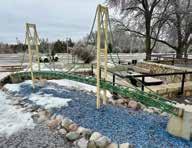
MYSTERY PHOTO Win a $100 energy bill credit! Identify the correct location of the photo above by March 25 and be entered into a drawing to win a $100 electric bill credit. Enter your guess at countrylines.com/community
JANUARY 2026 WINNER! Our Mystery Photo winner is Crystal Fox, a Thumb Electric Cooperative member who correctly identified the photo as the bear statue outside of Wood Winds Restaurant in Onaway, Michigan.

Our hybrid design makes the most e cient heating & cooling technology a ordable for rural homeowners.
Our hybrid design makes the most e cient heating & cooling technology a ordable for rural homeowners.


Attaches to your home’s existing heating system, it does not replace it.
Delivers 90% on average of your home’s heating needs and 100% of your home’s cooling needs.
If you have a well and are heating with propane, fuel oil, electric, or wood, your current heating and cooling cost is likely greater than it would be to fully finance and heat & cool with a Well-Connect.
Installs in one day, any time of year. No drilling required.


Severe winds, lightning, and even squirrels can temporarily cause the power to go out. We understand power outages of any length can be frustrating, especially when your fridge is stocked with perishable foods.
Extended power outages are rare, but when they occur, it’s important to understand food safety measures to take to avoid illness.
Here are a few food safety tips to keep in mind before, during, and after a power outage.
A good rule of thumb is to keep an emergency supply kit on hand. Be sure to include nonperishable food items like bottled water, powdered milk, canned goods, cereal, and protein bars in your emergency kit.
If you have advance warning that an outage is possible, fill a cooler with ice—just in case the outage spans several hours. Having a cooler ready to go can buy extra time for your refrigerated, perishable items.
If an outage occurs, do not open the refrigerator or freezer unless absolutely necessary. An unopened refrigerator will
keep food cold for about four hours. A half-full freezer will keep food frozen for about 24 hours, and a full freezer will do so for about 48 hours. If it looks like the power outage will last longer than four hours, move your important perishable items to an ice-filled cooler.
If refrigerated foods have been exposed to temperatures higher than 40 degrees for more than two hours, the American Red Cross recommends discarding the items. If any foods have an unusual color, odor, or texture, they should be thrown away.
While most perishable foods should be thrown out after an extended outage, there are a few items that are safe to consume after a two-hour exposure to 40+ degrees:
• hard cheeses that are properly wrapped
• butter or margarine that is properly wrapped
• taco, barbecue, and soy sauces
• peanut butter, jelly, mustard, ketchup, and relish
The best way to avoid illness from spoiled food during or after an outage is to follow the four-hour rule of thumb. After an outage, always smell and inspect foods before consuming, and remember: When in doubt, throw it out.