
Wolverine is not just ready for the future—we are helping shape it. “

Gerry Bundle Wolverine Power Cooperative Board Chair
To boldly go where no one has gone before paraphrases part of the crew’s mission statement on my favorite television show of all time and also informs my view of Wolverine’s ongoing journey.
Progress does not happen by accident. It comes from leaders who are willing to look beyond what they know, make smart decisions, and move forward with confidence. At Wolverine, being bold has meant taking on hard work, making longterm investments, and leading even when the job is difficult and the answers are not always clear.
As a Board, our responsibility is to help Wolverine stay focused on what comes next. We look beyond today’s challenges, think about what is coming, and support decisions that keep the cooperative strong over time. To us, being bold means knowing when it is time to act and being committed to seeing that work through.
That confidence did not appear overnight. It has been built through years of experience. Wolverine has grown its capabilities by taking on work that requires careful planning, technical know-how, and persistence. Each major effort made the organization stronger. Each challenge sharpened our understanding of how best to serve our members.
Our long-term commitment to secure power from the Palisades Nuclear Power Plant is a clear example of that approach.
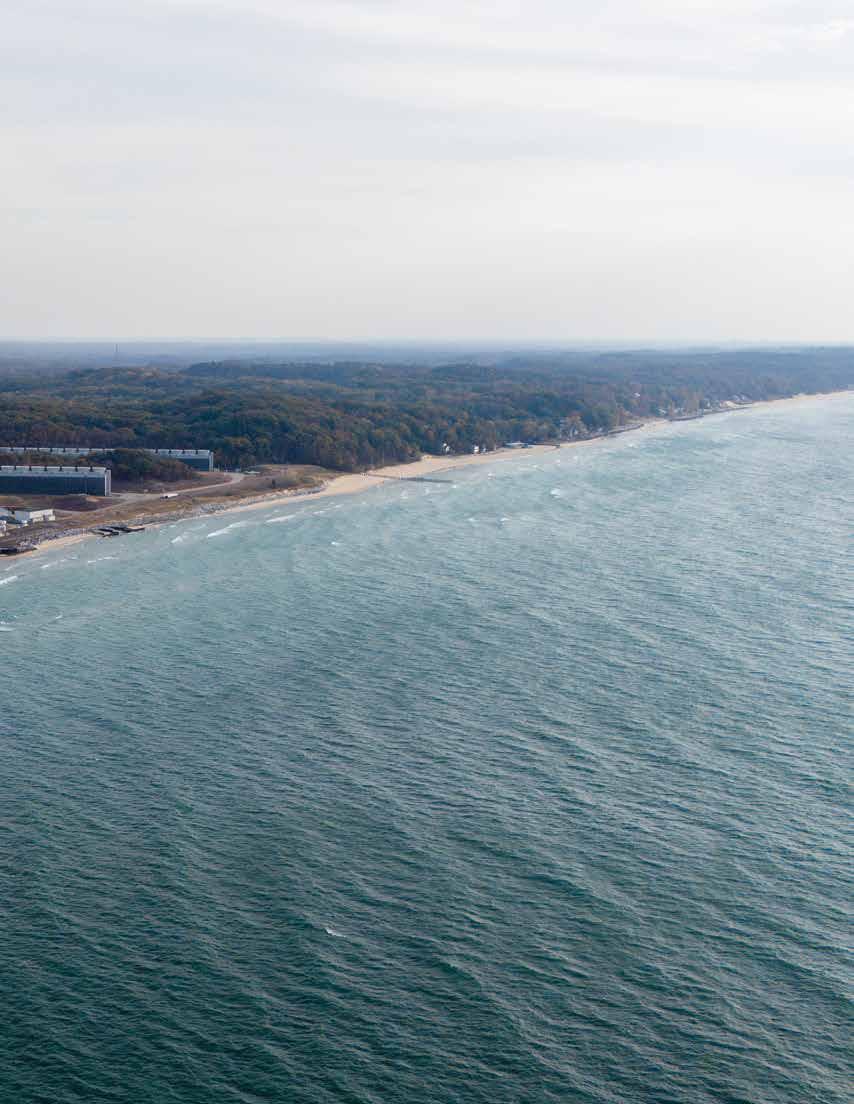
Restarting a nuclear facility is highly complex. It takes partners you can trust and decisions grounded in experience. We’ve brought cooperative discipline to the table, collaborating closely and staying focused on what matters most: dependable, carbon-free baseload power and long-term stability for the members we serve.
From the Board’s perspective, this is what bold, responsible leadership looks like. It comes from strong alignment between governance, management, and employees who understand the mission and take ownership of carrying it forward. It also comes from trusting the planning, the data, and the people who show up every day ready to tackle tough challenges and follow through.
The energy landscape will keep changing, bringing new questions, new opportunities, and new challenges. Wolverine is ready to meet what lies ahead. We will not wait for everything to be certain. Instead, we will move into new territory with confidence, even when the work is demanding and the stakes are high.
On behalf of the Board of Directors, I want to thank our leadership team, members, and employees for stepping forward, taking on tough work, and delivering on what matters. Because of that commitment, Wolverine is not just ready for the future—we are helping shape it.
I am excited about what lies ahead, and what we will deliver for our members as small steps multiply.” “
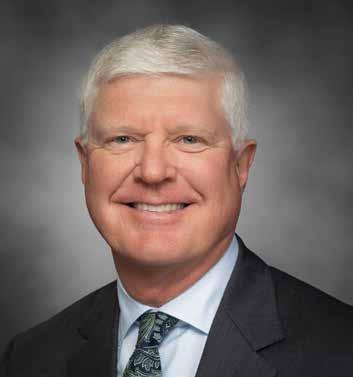
Eric Baker President & CEO, Wolverine Power Cooperative


Fifteen years ago, my climbing companions and I made our third attempt to complete a legendary traverse in Washington’s Cascade Mountains. On our third night, we camped at White Rocks Lake, perched on the north side of a vast high mountain basin. It was unquestionably the most beautiful and intimidating night I’ve ever spent in the wilderness. Despite the spectacular views, Dana Glacier loomed on the opposite side of the basin. To reach it, we faced an arduous scramble around the basin, followed by a 2,000-foot roped ascent using ice axes and crampons. It was our only viable path out.
The next day, we began the step-by-step slog around the basin, repeatedly crossing steep snowfields and rocky bands. There was no trail to follow, just one painstaking step after another guided by the judgment of the lead climber. When we finally stopped for lunch, I felt dejected. We had been moving for hours, and we still were not around the basin, let alone onto the glacier. We ate in silence, gazing down into the huge valley, when a teammate shouted suddenly. He had located our prior night’s campsite in the distance, and he made a profoundly simple observation I needed to hear: “Look how far we hiked today.”
I have thought a lot about this trip lately and how many of my Washington climbing experiences parallel Wolverine’s progress over the past 30 years. At times, that progress has felt slow, even unmeasurable. Careful, steady steps moved us forward, and along the way we built skills, sharpened judgment, and developed the muscles we needed to take on greater challenges. We also developed our ability to see new possibilities and better define where we wanted to go next.
The year 2025 marks the point when sustained small steps begin to multiply, and important objectives are finally within reach. Last year, we completed our 1,000th mile of transmission rebuild, a project that began in 2007. We completed major overhauls on two gas turbines, brought our transport fiber network into operation, and provided more than 8,600 labor hours of support to Great Lakes Energy and Presque Isle Electric & Gas Co-op following the devastating spring ice storm. We added new training opportunities for employees and improved operational readiness with a drone program. We completed two major senior team hires for the MECA statewide and Wolverine Power Marketing following Craig Borr’s retirement.
Wolverine also executed a new renewable agreement with an Illinois wind project that stemmed from our strong working relationship with Hoosier Energy, and we initiated several important strategic objectives that position Wolverine well for the upcoming year.
Wolverine stands in a remarkable place, reached by taking careful steps, working hard, and learning through our experiences. We developed a sharpened eye for identifying new, exciting possible paths and were supported by our Board and members when strategic opportunities arose. I’m so thankful to work with so many talented people who care and work hard for our mission of service to rural Michigan. I appreciate this chance to recognize how far we have journeyed. I am excited about what lies ahead and what we will deliver for our members as small steps multiply.



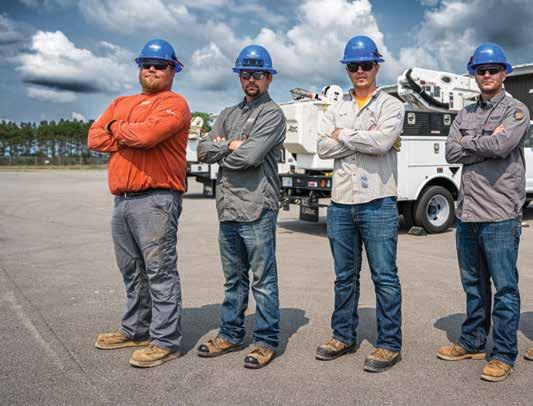
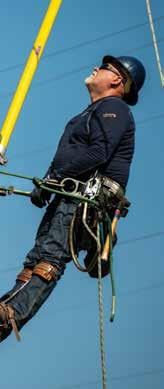


Wolverine Power Cooperative is powered by people. Across 14 locations statewide, 180 dedicated employees bring expertise, ingenuity, and a shared commitment to solving complex challenges in service of our members. An entrepreneurial mindset guides our work, encouraging thoughtful action, collaboration, and continuous improvement.
Our member cooperatives are at the center of everything we do. They are the reason we exist and the lens through which every decision is made. We work with focus and determination to anticipate their evolving needs, delivering reliable, affordable power and responsive service they can count on.
Each investment reflects a long-term commitment to system reliability, financial responsibility, and smart innovation. By pairing experience with fresh thinking, Wolverine continues to strengthen the foundation that supports our members and the communities they serve—today and for the future.
2025 YEAR IN REVIEW
Strong outcomes are built, one decision at a time.
Our strategic mindset is rooted in awareness. Recognizing a problem or opportunity, weighing real options, acting thoughtfully, and circling back to ask what’s next.
Recognize threat or opportunity
Reassess
Evaluate options
Implement plan
The stories in these pages show some real life examples. You will see crews using updated tools and training to work safely and restore service faster. You will see long-term investments that strengthen the grid, mile by mile. And behind all of it, a steady commitment to tackle a new challenge tomorrow.
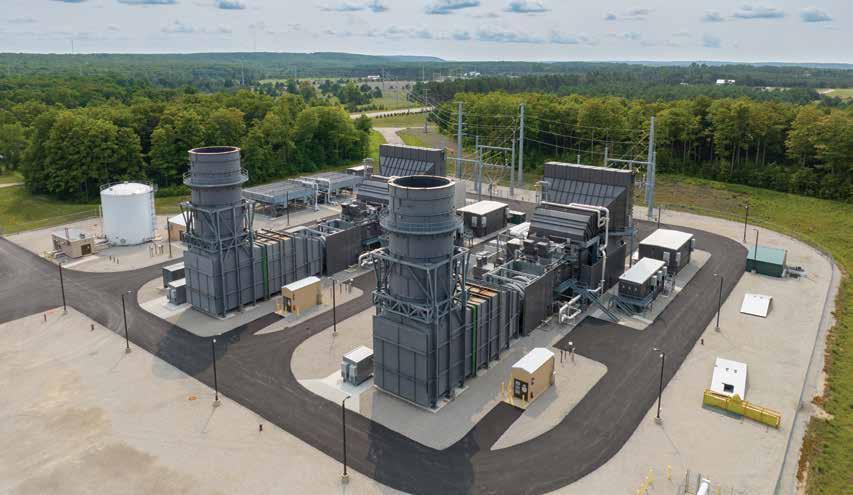
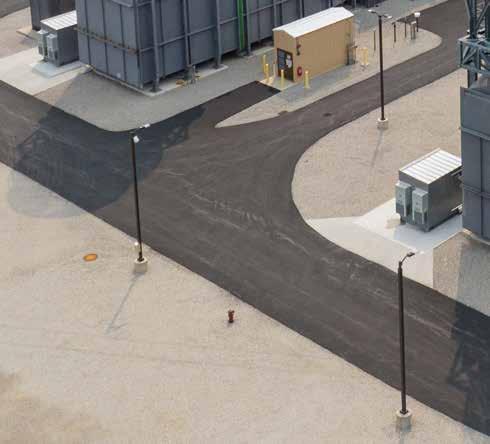
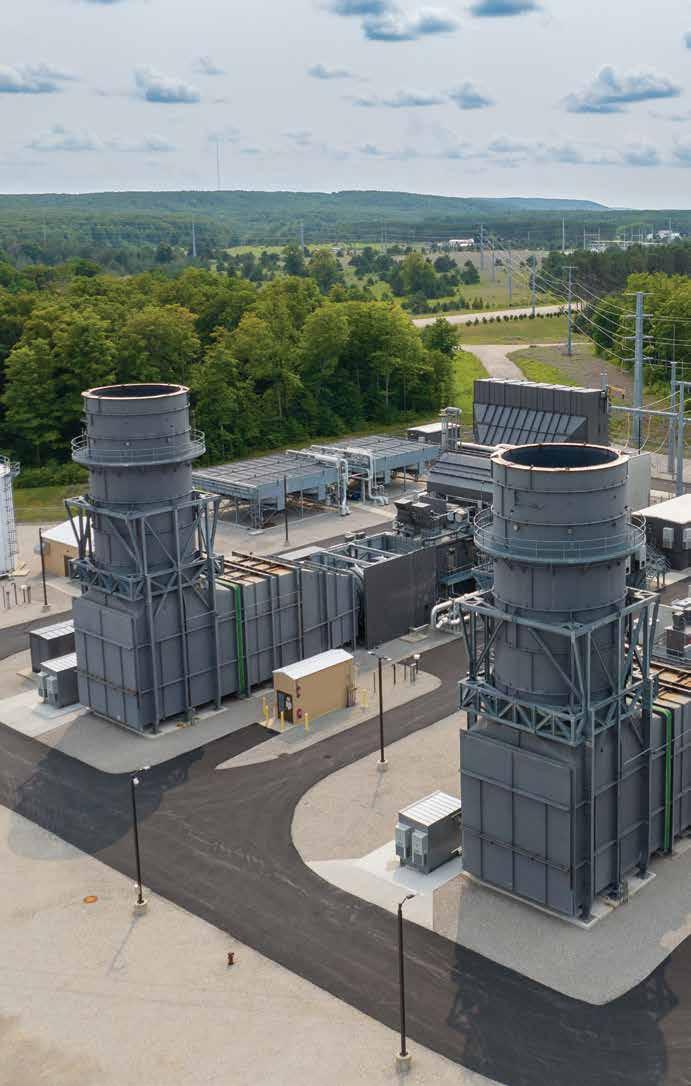
When something feels off, Wolverine’s generation team does not ignore it. They investigate.
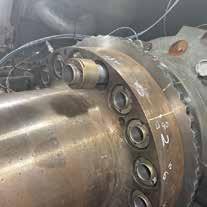
At Alpine, operators noticed an immediate vibration change in Unit #1 that was still within manufacturer specs. While outside experts declared the data within limits, the team’s deep familiarity with their equipment said otherwise. Something was off.
Because Wolverine has intentionally invested in building in-house expertise over time, the team had the confidence to trust their judgment.
They disassembled the load gear covers and found the cause. A three-pound nut had loosened on a critical bolt due to improper torque. Left unaddressed, it could have led to a major failure. The crew replaced the hardware, re-torqued the assembly, and brought in specialists to independently verify the repair. Accessing the area was difficult, but the team pushed through. The issue was resolved because they trusted their people and their training.
“When something like this comes up, it’s all hands on deck,” said Wolverine VP of Generation & Operations Dan Calverley. “We’ve learned over the years that when it comes to our equipment, we are the experts.”
That same discipline showed up again at the Hersey Generating Facility. During a routine annual camera inspection, the generation team identified significant turbine erosion in Unit #10 and immediately launched a complex, tightly coordinated repair effort.
The turbine, roughly the size of a jet engine, was carefully removed, transported by truck from Hersey to Chicago, and loaded onto a 747 bound for London. From there, it made the final leg of its journey by truck to Aberdeen, Scotland, where specialists rebuilt and rebalanced the unit. Coordinating across time zones, managing customs paperwork, and tracking every step of the shipment required constant communication and precise execution. Within just a month, the refurbished turbine was back on-site, reinstalled, and running smoothly, an incredible feat of planning, collaboration, and determination.
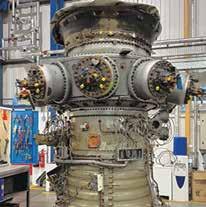
These outcomes were not coincidences. They are the result of years of deliberate decisions to train, trust, and cultivate internal experts at Wolverine.
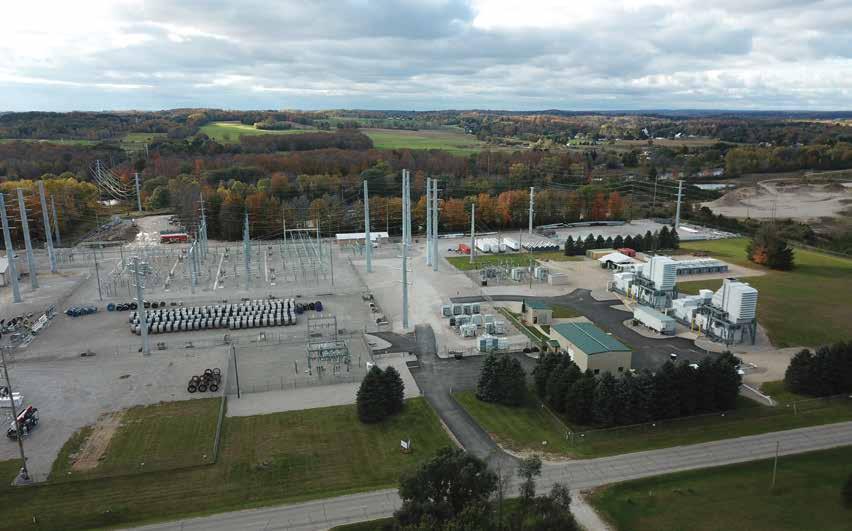
In 2025, the Wolverine Power Cooperative reached a new milestone, but the bigger story is how the cooperative was prepared for it.
During an intense June heat wave, Wolverine set a new all-time system peak demand of 741.6 megawatts on June 23, surpassing the previous record of 731 megawatts set in July 2020. As temperatures climbed and air conditioners ran across the Lower Peninsula, Wolverine’s system responded exactly as designed.
“We’ve continued to invest in a diverse portfolio of generation over the last 20 years, and plan yearround to ensure we are ready for moments like this,” said Wolverine COO Zach Anderson.
Wolverine serves nearly 300,000 memberconsumers through its member electric cooperatives. Meeting a record peak is not about a single day or a single unit. It reflects years of disciplined investment in a diverse and flexible generation portfolio built to handle both rising demand and extreme weather conditions.
Wolverine’s peaking plant fleet plays a critical role in that readiness. Designed to respond quickly during periods of high demand, the fleet consistently performs at the highest level in the MISO region. That performance is the result of intentional decisions, ongoing maintenance, and operational discipline that allow the system to respond when conditions are most demanding.
“Breaking a peak record reflects growing member needs and a changing energy landscape,” Anderson said. “It is a milestone we were prepared for and one that reinforces the importance of long-term planning and strong partnerships.”
“
99.1%
RELIABILITY
RATING: the highest reliability rate of any peaking fleet in the MISO footprint
We’ve continued to invest in a diverse portfolio of generation over the last 20 years, and plan year-round to ensure we are ready for moments like this.”
4
TRANSMISSION STATIONS REBUILT
MILES OF TRANSMISSION LINES REBUILT
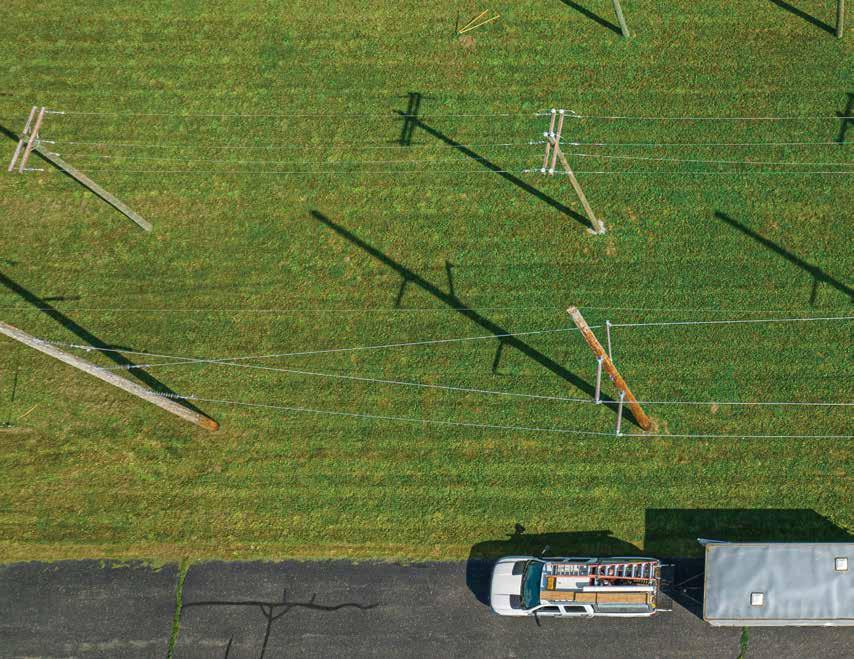
At Wolverine, operations teams continue to combine decades of experience with evolving tools and training to strengthen the grid and reduce restoration times. 78
Staying current with technology is one of those small steps that adds up. Drone inspections and advanced GIS mapping have become a critical part of our efforts to support the reliability of our system. While not new, our continued investment ensures these technologies remain integrated and effective. High-resolution imagery allows crews to assess transmission corridors more efficiently, identify issues earlier, and plan work with greater precision. When outages occur, that preparation translates into faster, more informed restoration.
The same mindset applies to how crews work in the field. Wolverine has been
2
NEW DISTRIBUTION SUBSTATIONS
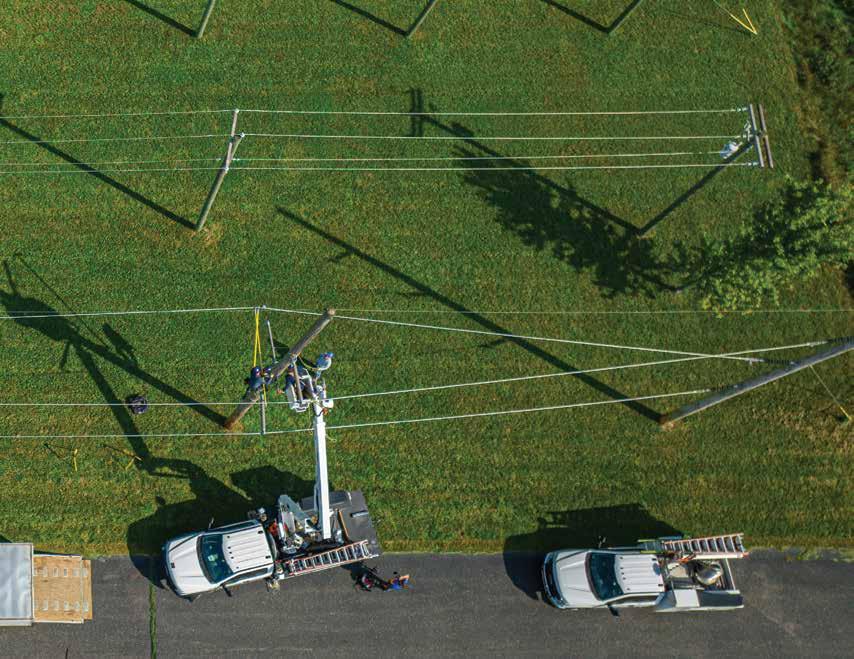
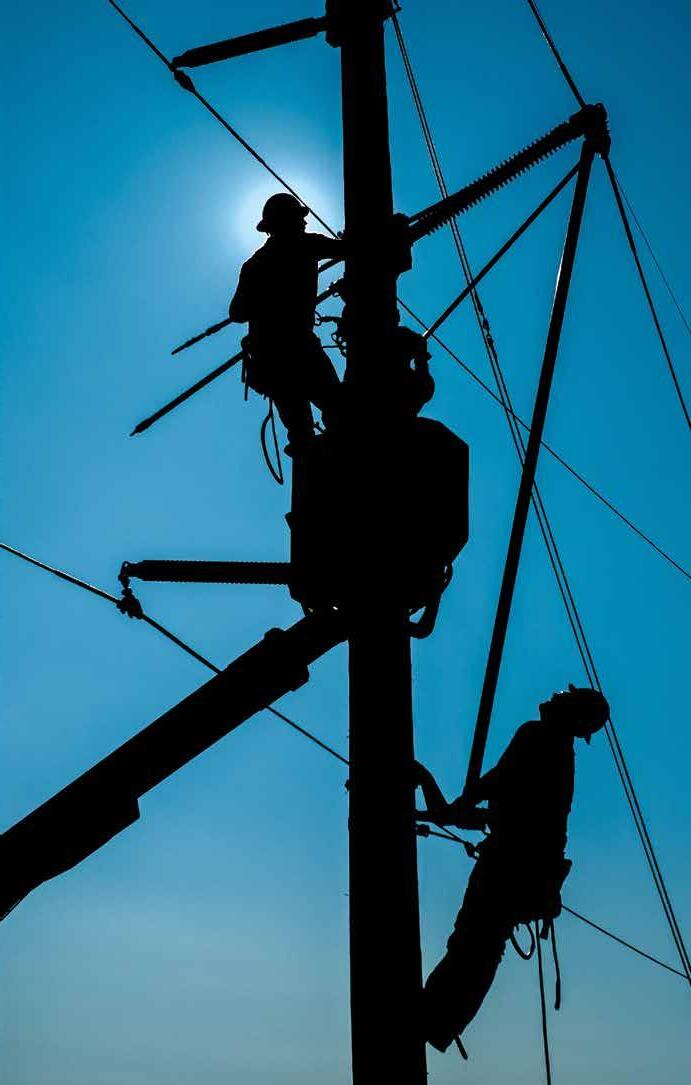
climbing transmission poles for generations, but the system itself continues to change. New steel pole designs and climbing techniques require updated training, new and different safety equipment, and constant learning. Each improvement builds on what crews already know, strengthening safety practices while making the system more durable.
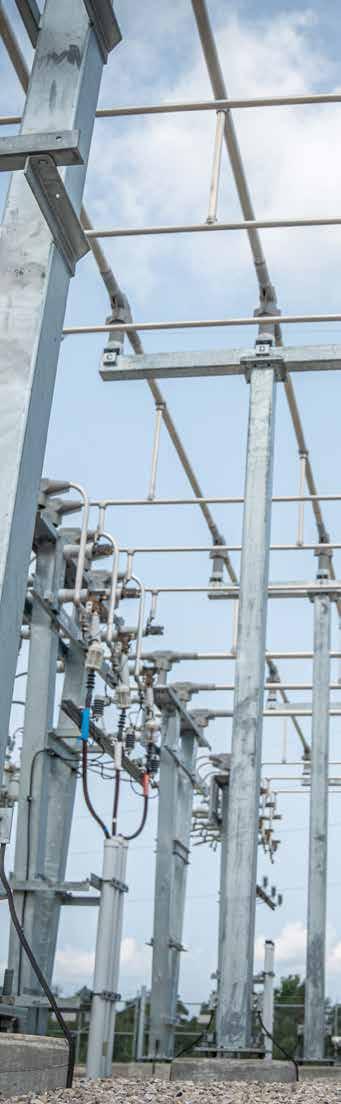
In 2025, Wolverine reached mile 1,000 of a 1,200-mile transmission rebuild which began in 2007. It is the kind of commitment that does not make headlines every year but shows up in the reliability members count on every day.
IN 2025, WE COMPLETED MILE
1,000 OF OUR 1,200-MILE TRANSMISSION REBUILD PROJECT

Wolverine and Hoosier Energy first worked closely together on the restart of the Palisades Nuclear Power Plant, building trust through shared goals, transparency, and collaboration. That foundation opened the door to additional ways to strengthen both cooperatives’ generation portfolios.
As part of that ongoing partnership, Wolverine sold capacity to Hoosier Energy, and Hoosier transferred its contractual interest in the Rail Splitter Wind Farm in Central Illinois. Through conversations with project owner EDP Renewables, Wolverine learned that additional capacity was available. Because the relationship was already in place, the organizations were able to move quickly and expand the agreement.
Today, Wolverine has secured 100 megawatts of wind energy from Rail Splitter for the next decade and beyond, enough renewable power to serve approximately 25,000 homes each year. The addition supports Michigan’s renewable standards while maintaining longterm rate stability.
“We’re grateful for the partnership we’ve built with Hoosier Energy,” said Wolverine CEO Eric Baker. “Working together with a spirit of trust and creativity has opened up opportunities that benefit the members of both cooperatives.”
Wolverine and Michigan’s electric cooperatives have been ahead of the curve on renewable energy for decades.
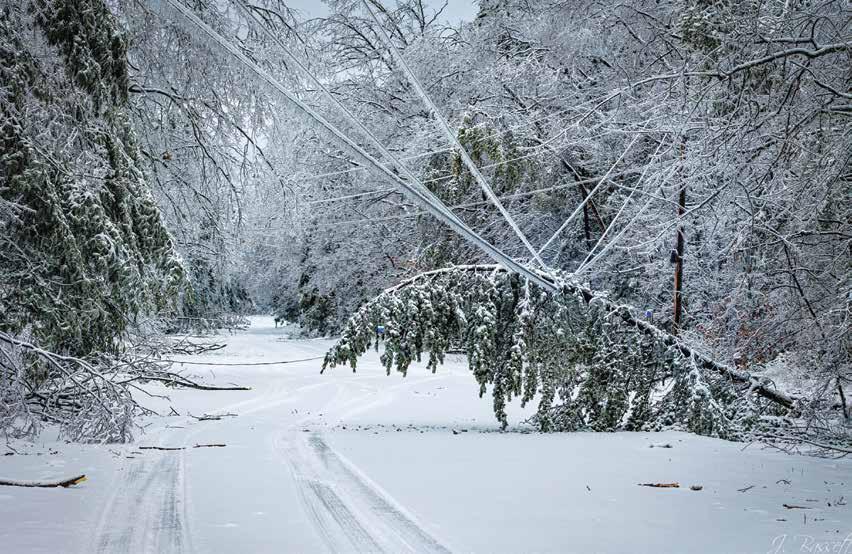
In March 2025, a once-in-a-generation ice storm swept across Northern Michigan, snapping trees, breaking poles, and leaving nearly 100,000 cooperative member homes and businesses without power. Great Lakes Energy and Presque Isle Electric & Gas Co-op were among the hardest hit, and in the most heavily damaged areas, restoration efforts continued for nearly three weeks.
As the cooperatives worked to restore service to their members and stand up Storm Camp in Gaylord, mutual aid poured in from across the state and the country. Wolverine was proud to support that response.
In all, 78 Wolverine employees, both union and non-union, contributed 8,642 hours to storm response efforts, including 1,560 volunteer hours. From helping support crews at Storm Camp to assisting with logistics, communications, and operational needs,
Wolverine provided more mutual aid support for this event than ever before.
In the face of a historic storm, Wolverine was proud to play a small part in supporting its member cooperatives during an unprecedented restoration effort.
8,642 MARCH 2025 STORM RESPONSE HOURS

13,266
TOTAL MUTUAL AID HOURS FOR 2025
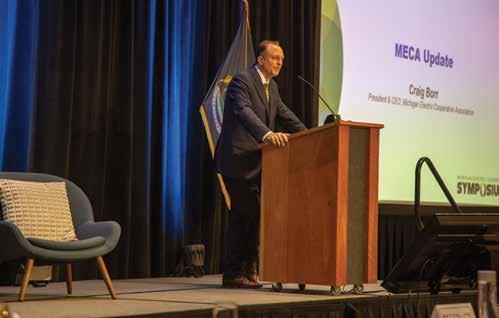



Craig Borr, who passed away unexpectedly on March 17, left a lasting mark on Wolverine Power Cooperative, rural Michigan, and the cooperative community. Over a career that spanned four decades, he served as Executive Vice President at Wolverine, President & CEO of the Michigan Electric Cooperative Association, and President & CEO of Wolverine Power Marketing. In each role, he did what he always did: connected people, connected ideas, and found ways to use both to the advantage of Michigan’s cooperative members.
Few people embody the cooperative spirit as fully as Craig did, as a colleague and as a leader. He read voraciously and had an instinct for turning

information into action and acquaintances into allies. He was a driving force behind many of the initiatives that helped shape these organizations and the broader industry, and his commitment to rural Michigan never wavered.
John Kran now serves as President & CEO of MECA, carrying forward the organization’s role as a trusted advocate and collaborative partner for Michigan’s electric cooperatives. Erin Hunzeker leads Wolverine Power Marketing as its CEO, continuing a strong focus on service, integrity, and disciplined market strategy. Each brings experience, perspective, and continuity to the organizations Craig helped build.
As this annual report reflects on progress and the road ahead, it also recognizes the lasting impact of a leader whose influence will continue to be felt for decades to come. Craig’s legacy lives on in the people he mentored, the partnerships he strengthened, and the organizations he helped prepare for the future.
“
Craig was the ultimate teammate and a relentless champion for cooperative interests. He had a gift for connecting people in ways that helped all of us accomplish more together.”
—ERIC BAKER
Wolverine continues to demonstrate strong financial performance, with both Standard & Poor’s (S&P) and Fitch reaffirming the cooperative’s “A” credit rating with stable outlooks. These ratings reflect a continued commitment to financial stability, reliability, and long-term planning. Through the dedication of Wolverine’s finance team, the cooperative remains well-positioned to deliver value and stability to its members.
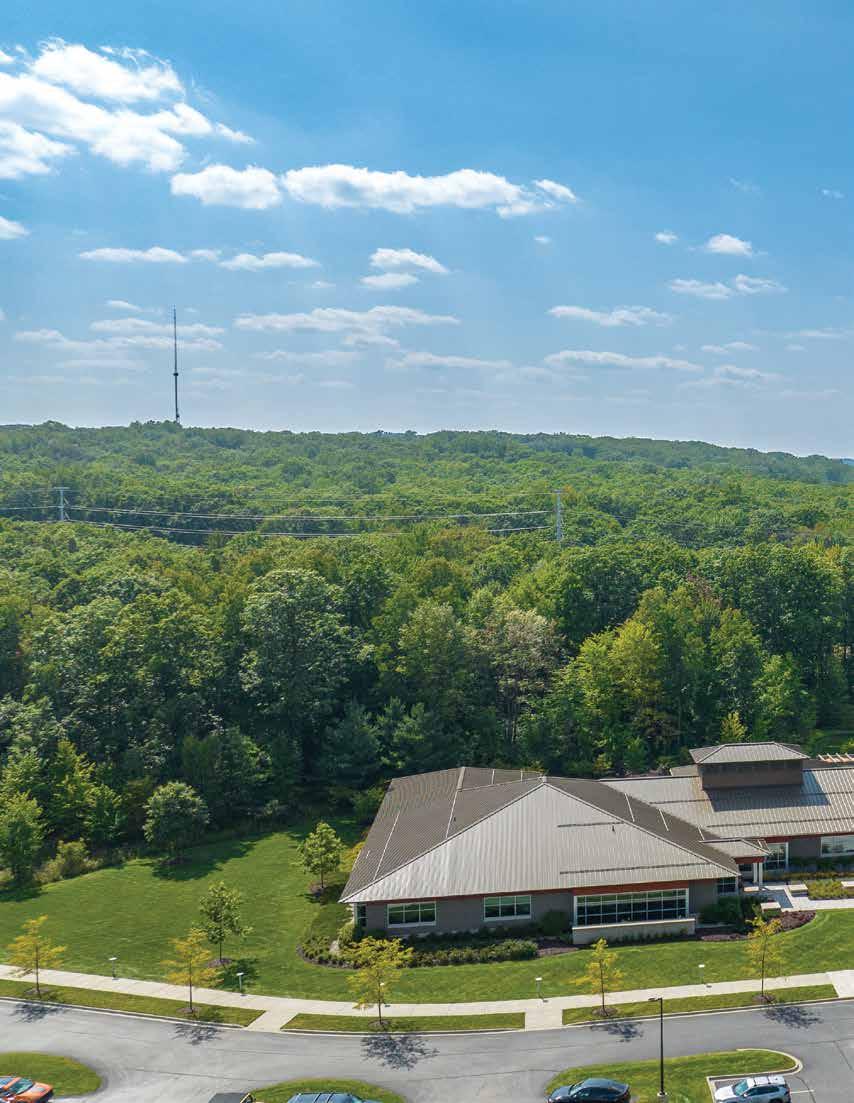
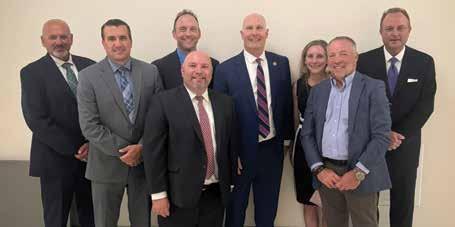
At the heart of Wolverine Power Cooperative is a board of directors committed to our members and our mission. These dedicated individuals bring diverse experiences, from business to farming, working together to shape the future of our cooperative.
As members themselves, they understand the needs of our communities and are personally invested in our success. Their leadership ensures Wolverine remains strong, reliable, and ready to power generations to come.















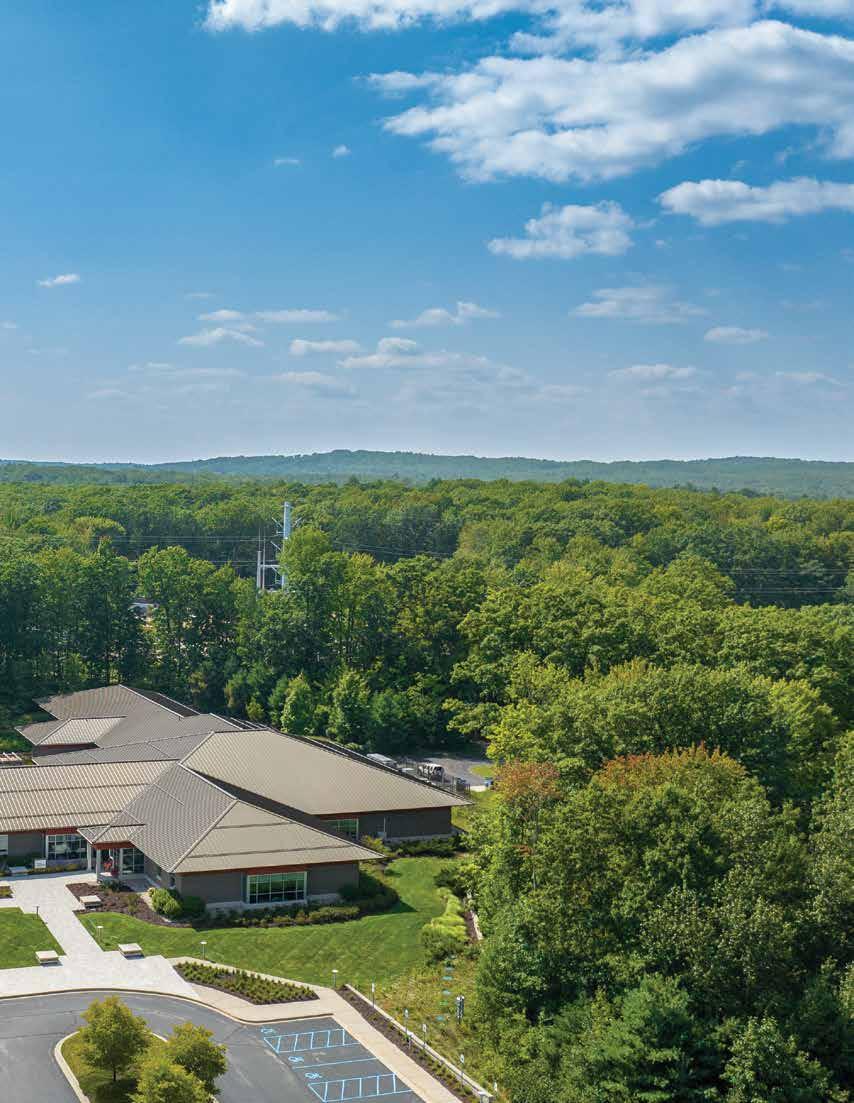












Wolverine’s senior leadership team is a group of decision-makers. They are passionate leaders dedicated to shaping our cooperative’s future. With a commitment to innovation, collaboration, and excellence, they guide our operations and culture, ensuring we deliver reliable, competitive power to our members.
Their leadership focuses on strategy and fostering a workplace where ideas thrive and challenges become opportunities.

CHERRYLAND ELECTRIC COOPERATIVE
Rachel Johnson, CEO
Headquartered in Grawn, Michigan, Cherryland Electric Cooperative’s membership includes more than 39,000 homes and businesses spanning six counties and 1,400 square miles.
In 2025, Cherryland returned $500,000 in capital credits to its members. The cooperative also facilitated more than $642,000 in economic development and community support, including $176,000 in scholarships, grants, and sponsorships to local nonprofits and $466,000 through three new economic development loans.
Cherryland’s employee-funded member assistance program paid out $8,044 to 17 members in need in 2025. Gifts included Visa gift cards, help with electric bills, and donations to the Northwest Michigan Area Agency on Aging and Benzie Schools Student Support Program. The cooperative matches all employee contributions, and the fund is overseen by a volunteer group of employees.

Chris O’Neill, President & CEO
Headquartered in Portland, Michigan, HomeWorks serves more than 23,000 electric members across 13 counties in rural mid-Michigan. In 2025, the cooperative helped members save over 740,000 kWh and earn nearly $270,000 in rebates through its Energy Optimization program. The co-op continued to fulfill its mission to serve the underserved by expanding its HomeWorks Connect fiber internet network to nearly 13,500 homes by the end of the year. Additionally, HomeWorks continued to provide reliable propane service through HomeWorks Tri-County Propane, which grew to over 4,400 customers by December. 2025 saw the co-op embracing Cooperative Principle #6: Cooperation Among Cooperatives by sending several employees to assist fellow electric co-ops with power restoration in the wake of the historic ice storm that hit northern Michigan in the spring. Throughout the year, HomeWorks fostered its commitment to supporting local communities through $50,000 in Tri-County Electric People Fund grants and $80,000 in community sponsorships, classroom grants, and scholarships

GREAT LAKES ENERGY COOPERATIVE
Shaun Lamp, President & CEO
Great Lakes Energy (GLE) serves more than 130,000 meters spanning 26 counties with over 14,500 miles of power line. With eight offices and nearly 300 full-time employees, GLE is the largest cooperative utility in Michigan and fourth largest in the country in terms of miles of power line.
In March of 2025, GLE’s northern service district experienced a catastrophic ice storm that caused significant damage to the cooperative’s electric and fiber infrastructure. The team of employees supported by more than 1,000 contractors worked safely and diligently to rebuild and restore power and internet to members, replacing over 3,100 poles in a matter of weeks.
Started in 2018, GLE continues to build out the Truestream fiber network and completed construction of 1,016 miles of fiber in 2025. Truestream ended the year with a total of 28,829 Truestream internet and voice subscribers.

Terry Rubenthaler, President & CEO
MEC built 1,150 miles of fiber, ending the year with nearly 36,000 broadband customers, and putting fiber customers on track to surpass electric customers in 2026.
The cooperative also received its initial BEAD funding approval of nearly $60 million to extend fiber to 9,400 customers. MEC completed its first RESAP assessment in more than 25 years, earning strong marks for employee attitudes and safety culture. Propane sales hit a record, exceeding 6 million gallons delivered to nearly 9,000 customers.
Economic development continued with the SMART Park. MEC signed a purchase agreement with Fibrosan, a Turkish fiberglass manufacturer. The company plans to break ground in 2026 on a $17.35 million facility that will bring 32 jobs to Cassopolis. Community involvement remained strong, with 895 volunteer hours, 1,000 people reached through hotline demonstrations, and 2,200 pounds of meat donated to food pantries.
Wolverine Power Cooperative is owned by eight members who are at the heart of everything we do. Our six distribution co-ops, Cherryland Electric Cooperative, Great Lakes Energy Cooperative, HomeWorks Tri-County Electric Cooperative, Midwest Energy & Communications, Presque Isle Electric & Gas Co-op, and Thumb Electric Cooperative, power nearly 300,000 homes and businesses across Michigan’s Lower Peninsula, while Spartan Renewable Energy drives innovation in clean energy and Wolverine Power Marketing Cooperative serve large commercial and industrial customers. Our members are dedicated community partners, working to create a brighter, more sustainable future for all. Here’s a look at their achievements over the past year.

Allan Berg, CEO
2025 was a year of resilience, renewal, and purpose for PIE&G.
The devastating March ice storm, the most damaging event in the cooperative’s history, tested its infrastructure, resources, and endurance in unprecedented ways. Yet it also revealed the very best of its employees, members, and communities, who came together to demonstrate the strength and spirit of a cooperative.
Under the leadership of CEO Allan Berg, PIE&G remained focused on restoration, financial stewardship, and long-term reliability. The team rebuilt stronger, investing in system improvements to better withstand future storms while continuing to expand its fiber network to support connectivity for work, education, and everyday life.
The challenges of the past year strengthened the cooperative’s resolve. As PIE&G moves into 2026, it remains committed to reliability, strong communities, and a brighter future for those it serves.

SPARTAN RENEWABLE ENERGY
Kacy Wickenhauser, CEO
Based in Cadillac, Michigan, Spartan Renewable Energy drives innovation in clean energy for Wolverine Power Cooperative and its members. In 2025, Spartan transitioned away from its electric choice market business and deployed new renewable projects. With its Market-Based Rate authority at FERC, Spartan maintains the flexibility to evaluate select non-member sales, an opportunity the team continues to assess as part of its commitment to a sustainable and connected future.

THUMB ELECTRIC COOPERATIVE
Brad Essenmacher, General Manager
Headquartered in Ubly, Michigan, Thumb Electric Cooperative (TEC) serves more than 12,300 members across three counties in the Thumb. In 2025, TEC completed its first year as a member of Wolverine Power Cooperative (WPC).
TEC Fiber continued expanding in 2025, completing 100% of its member buildout. Expansion to non-members, supported by RDOF and ROBIN funding, is expected to be finished by the end of 2026. Nearly 1,400 new customers were connected during the year, bringing total subscribers to more than 4,800. TEC Fiber also provided free Wi-Fi at the Bad Axe Little League fields, with plans to expand service to additional communities in 2026.
Internally, TEC reorganized its accounting and engineering departments following retirements, began discussions with WPC on long-term use of sub-transmission, and took steps toward retiring its 23 MW generation fleet.

WOLVERINE POWER MARKETING COOPERATIVE
Erin Hunzeker, CEO
Based in Cadillac, Michigan, Wolverine Power Marketing Cooperative (WPMC) provides reliable energy solutions to more than 20 commercial, industrial, and university members in Michigan’s electric choice market. In 2025, WPMC saw steady membership while achieving a 15% increase in energy sales. With a service territory stretching from the Keweenaw Peninsula to southern Michigan, WPMC remains committed to delivering competitive and dependable power across the state.

Wolverine Power Supply Cooperative, Inc.
Opinion
We have audited the consolidated financial statements of Wolverine Power Supply Cooperative, Inc., which comprise the consolidated balance sheets as of December 31, 2025 and 2024, and the related consolidated statements of operations and comprehensive income, equity, and cash flows for the years then ended, and the related notes to the financial statements.
In our opinion, the accompanying consolidated financial statements present fairly , in all material respects, the financial position of Wolverine Power Supply Cooperative, Inc. as of December 31, 2025 and 2024, and the results of its operations and its cash flows for the years then ended in accordance with accounting principles generally accepted in the United States of America.
Basis for Opinion
We conducted our audits in accordance with auditing standards generally accepted in the United States of America (GAAS). Our responsibilities under those standards are further described in the Auditor’s Responsibilities for the Audit of the Financial Statements section of our report. We are required to be independent of Wolverine Power Supply Cooperative, Inc. and to meet our other ethical responsibilities, in accordance with the relevant ethical requirements relating to our audits. We believe that the audit evidence we have obtained is sufficient and appropriate to provide a basis for our audit opinion.
Management is responsible for the preparation and fair presentation of the consolidated financial statements in accordance with accounting principles generally accepted in the United States of America, and for the design, implementation, and maintenance of internal control relevant to the preparation and fair presentation of consolidated financial statements that are free from material misstatement, whether due to fraud or error.
In preparing the consolidated financial statements, management is required to evaluate whether there are conditions or events, considered in the aggregate, that raise substantial doubt about Wolverine Power Supply Cooperative Inc.’s ability to continue as a going concern for one year from the date the financial statements are available to be issued
Our objectives are to obtain reasonable assurance about whether the consolidated financial statements as a whole are free from material misstatement, whether due to fraud or error, and to issue an auditor’s report that includes our opinion. Reasonable assurance is a high level of assurance but is not absolute assurance and therefore is not a guarantee that an audit conducted in accordance with GAAS will always detect a material misstatement when it exists. The risk of not detecting a material misstatement resulting from fraud is higher than for one resulting from error, as fraud may involve collusion, forgery, intentional omissions, misrepresentations, or the override of internal control. Misstatements are considered material if there is a substantial likelihood that, individually or in the aggregate, they would influence the judgment made by a reasonable user based on the financial statements.
In performing an audit in accordance with GAAS, we:
Exercise professional judgment and maintain professional skepticism throughout the audit.
Identify and assess the risks of material misstatement of the consolidated financial statements, whether due to fraud or error, and design and perform audit procedures responsive to those risks. Such procedures include examining, on a test basis, evidence regarding the amounts and disclosures in the consolidated financial statements.
Obtain an understanding of internal control relevant to the audit in order to design audit procedures that are appropriate in the circumstances, but not for the purpose of expressing an opinion on the effectiveness of Wolverine Power Supply Cooperative Inc.’s internal control. Accordingly, no such opinion is expressed.
Evaluate the appropriateness of accounting policies used and the reasonableness of significant accounting estimates made by management, as well as evaluate the overall presentation of the consolidated financial statements.
Conclude whether, in our judgment, there are conditions or events, considered in the aggregate, that raise substantial doubt about Wolverine Power Supply Cooperative Inc.’s ability to continue as a going concern for a reasonable period of time.
We are required to communicate with those charged with governance regarding, among other matters, the planned scope and timing of the audit, significant audit findings, and certain internal control–related matters that we identified during the audit.
Our audits were conducted for the purpose of forming an opinion on the consolidated financial statements as a whole. The consolidating balance sheets and consolidating statements of operations and comprehensive income are presented for purposes of additional analysis of the consolidated financial statements rather than to present the financial position and results of operations of the individual entities and are not a required part of the consolidated financial statements. Such information is the responsibility of management and was derived from and relates directly to the underlying accounting and other records used to prepare the consolidated financial statements. The consolidating information has been subjected to the auditing procedures applied in the audits of the consolidated financial statements and certain additional procedures, including comparing and reconciling such information directly to the underlying accounting and other records used to prepare the consolidated financial statements or to the consolidated financial statements themselves, and other additional procedures in accordance with auditing standards generally accepted in the United States of America. In our opinion, the information is fairly stated in all material respects in relation to the consolidated financial statements as a whole.
Crowe LLP
Columbus, Ohio
March 26, 2026
Years Ended December 31
Years Ended December 31
Years Ended December 31
Wolverine Power Supply Cooperative, Inc. (“Wolverine” or the “Cooperative”) is a not-for-profit generation and transmission electric cooperative incorporated in Michigan. It provides wholesale electric service to its eight members, also located in Michigan.
For the year ended December 31, 2025, Wolverine’s six distribution cooperative members were Cherryland Electric Cooperative, Great Lakes Energy Cooperative, HomeWorks Tri-County Electric Cooperative, Midwest Energy & Communications, Presque Isle Electric & Gas Co-op, and Thumb Electric Cooperative. For the year ended December 31, 2024, Wolverine served five distribution cooperative members, as Thumb Electric Cooperative became a member effective January 1, 2025 pursuant to an agreement executed on October 30, 2024.
The member cooperatives purchase generation and transmission services from Wolverine and resell electricity to approximately 283,000 retail member-customers,
The accompanying consolidated financial statements include the accounts of Wolverine, its wholly owned subsidiary, Peninsula Generation Cooperative (Peninsula), and its majority-owned member, Spartan. All significant intercompany transactions and balances have been eliminated upon consolidation.
The preparation of financial statements in accordance with generally accepted accounting principles (GAAP) in the United States requires management to make estimates and assumptions that affect reported amounts and disclosures. Actual results may differ from these estimates.
Revenue from contracts with customers: Wolverine generates revenue primarily through the provision of wholesale electric services to its members, as well as energy, transmission, and other related services to non-members. Wolverine’s principal customers include its member
primarily located throughout Michigan’s Lower Peninsula. Thumb Electric Cooperative serves approximately 12,000 retail member-customers primarily in Michigan’s eastern “thumb” region. Services are provided pursuant to allrequirements power purchase agreements that expire on December 31, 2057. Effective January 1, 2026, these agreements were extended through December 31, 2060.
Wolverine’s other two members, Spartan Renewable Energy, Inc. (Spartan) and Wolverine Power Marketing Cooperative (WPMC), operate as licensed alternative electric suppliers in Michigan.
The Federal Energy Regulatory Commission regulates most aspects of Wolverine’s business, including the rates it charges its members. While the Michigan Public Service Commission regulates certain aspects of Wolverine’s eight members’ operations, it does not regulate the rates they charge to their customers. NOTE
cooperatives, market administrators, and a transmission administrator. For the years ended December 31, 2025 and 2024, all operating revenues were derived from contracts with customers.
Revenue from the sale of energy and related products: Wholesale power sales consist of energy and related charges billed to members under power purchase and transmission service contracts, sales to non-members under bilateral agreements, and energy sales into the Midcontinent Independent System Operator (MISO) and PJM Interconnection markets. These revenues are accounted for as revenue from contracts with customers and are recognized over time as energy is delivered or transmitted, based on metered quantities at applicable contractual or market rates.
Member rate schedules include a power cost adjustment mechanism that adjusts billings based on actual power costs compared to planned costs for specified revenue and expense categories. Variable cost adjustments are recognized monthly. Fixed cost adjustments resulted in a credit to members of $7,579,992 and charges of $8,364,461, which are included in accrued expenses and other current liabilities
and accounts receivable on the consolidated balance sheets at December 31, 2025 and 2024, respectively. Settlement of these amounts occurs in the subsequent year in accordance with the applicable rate provisions.
Revenue from the sale of capacity and related products:
Revenue from wholesale capacity sales is derived from ensuring demonstrated capacity is available in the applicable market for the required contractual period. Revenue is recognized over time as the performance obligation is satisfied.
Revenue from transmission fees and related products:
Transmission revenue consists of charges for the transmission of electricity under MISO tariff rate schedules and other integrated transmission agreements. This revenue is accounted for as revenue from contracts with customers. The performance obligations associated with providing transmission services are highly integrated and interdependent and therefore are not separately identifiable. Transmission revenue is recognized over time as the Cooperative satisfies its stand-ready obligation to provide access to and operate the transmission system, or as electricity is transmitted, in accordance with the applicable tariff provisions.
Revenue from distribution substation fees: Wolverine owns and maintains substations for its members and co-owns certain substations with other parties. Revenue is earned through monthly service fees and is recognized over time as services are provided.
Revenue from miscellaneous programs and services:
Miscellaneous revenue includes management services agreements for accounting and other administrative support provided to members and third parties. Performance obligations are generally not separately identifiable, and revenue is recognized over time either monthly or as services are performed in accordance with contract terms.
Revenue from the sale of renewable energy credits: Revenue from renewable energy credits primarily relates to sales to Spartan and WPMC customers, as well as compliance-related credit sales. Performance obligations are satisfied at a point in time when electricity is delivered.
Significant payment terms: Payment terms vary by contract. Certain contracts require payment within 10 days of the invoice date, while others require payment within 30 days. Invoices are generally issued at month-end.
Contract balances: Accounts receivable represent invoiced trade receivables associated with the revenue streams described above. As of December 31, 2025 and 2024,
Wolverine had no contract assets or contract liabilities recorded on the consolidated balance sheets.
Cost to obtain or fulfill a contract: As of December 31, 2025 and 2024, Wolverine had no costs to obtain or fulfill contracts.
Electric plant is recorded at historical cost. Expenditures for additions and improvements that extend the useful life of an asset or increase its capacity are capitalized, while expenditures for maintenance and repairs are expensed as incurred. Upon retirement or disposition of electric plant assets, the related cost and accumulated depreciation are removed from the respective accounts, and any resulting gain or loss is recognized in the consolidated statements of operations.
Capital expenditures for individual assets with a cost of $5,000 or greater and an estimated useful life exceeding one year are capitalized. Depreciation is computed using the straight-line method over the estimated useful lives of the related assets.
Construction work in progress (“CWIP”) represents the cost of electric plant projects that are under construction and not yet placed into service. Costs capitalized to CWIP include direct labor, materials, equipment, contracted services, applicable overhead allocations, environmental and regulatory expenditures, and capitalized interest, when applicable. Upon completion and placement into service, such costs are transferred to electric plant in service and depreciated over the estimated useful lives of the related assets.
Construction projects primarily consist of additions or upgrades to transmission lines, fiber infrastructure, substations, generation facilities, service centers, and general plant assets necessary to support member growth and maintain system reliability.
CWIP also includes materials and supplies acquired for use in the construction of electric plant assets. These materials may be designated for specific capital projects or held for future capital use and are recorded at cost. Materials included in CWIP are evaluated periodically for obsolescence.
At December 31, 2025 and 2024, CWIP totaled $102,746,337 and $99,658,909, respectively, including $65,122,431 and $36,337,232, respectively, related to materials and supplies. The Cooperative expects the majority of active construction projects to be completed and placed into service within the next 12 months.
CWIP is evaluated for impairment when events or changes in circumstances indicate that the carrying amount may not be recoverable. No impairment losses were recognized for the years ended December 31, 2025 and 2024.
The Cooperative evaluates long-lived assets for impairment whenever events or changes in circumstances indicate that the carrying amount of an asset may not be recoverable. Recoverability is assessed by comparing the carrying value of the asset to the estimated undiscounted future cash flows expected to result from the use and eventual disposition of the asset. If the estimated undiscounted cash flows are less than the carrying value, an impairment loss is recognized for the excess of the carrying value over the asset’s estimated fair value. The determination of impairment requires management to make significant estimates and assumptions.
No impairment losses were recognized for the years ended December 31, 2025 and 2024.
Intangible assets consist primarily of contractual and usage rights. Intangible assets are recorded at cost and amortized on a straight-line basis over their estimated useful lives.
The Cooperative determines whether an arrangement contains a lease at inception based on the terms and conditions of the contract. Leases are classified as either operating or finance leases at the commencement date. The Cooperative did not have any finance leases during the years presented.
Operating leases are recognized as right-of-use (“ROU”) assets and corresponding lease liabilities on the consolidated balance sheets. Lease liabilities are presented as current and noncurrent based on the timing of payments. ROU assets and lease liabilities are recognized at commencement based on the present value of future lease payments. Because the implicit rate in the Cooperative’s leases is generally not readily determinable, the Cooperative uses the risk-free rate in effect at lease commencement to discount lease payments.
Short-term leases with an initial term of one year or less are not recognized on the consolidated balance sheets, and lease expense for these arrangements is recognized on a straightline basis over the lease term. The Cooperative has elected not to separate lease and fixed non-lease components for all
asset classes. Variable lease payments that do not depend on an index or rate are expensed as incurred.
Wolverine and Spartan apply materiality thresholds under which lease liabilities of $200,000 or less for Wolverine and $12,000 or less for Spartan, whether individually or in the aggregate for similar leases, are not recorded on the consolidated balance sheets. Lease payments associated with such arrangements are recognized as incurred.
Deferred financing costs represent debt issuance costs incurred in connection with the Cooperative’s line of credit arrangements. These costs are capitalized and amortized on a straight-line basis over the term of the related credit agreement.
Wolverine holds investments in other cooperatives and related entities in connection with its financing and operating activities. Investments include patronage capital allocations, equity securities without readily determinable fair values, membership interests, and other cooperative capital securities.
Patronage capital allocations from other cooperatives are recognized as income in the consolidated statements of operations and comprehensive income when earned. The cumulative unpaid patronage allocations are recorded as investments on the consolidated balance sheets.
Investments in equity securities without readily determinable fair values are recorded at cost, adjusted for observable price changes, less impairment, if any. Impairment is recognized when events or circumstances indicate that the carrying amount is not recoverable. No impairment losses were recognized during the years ended December 31, 2025 and 2024.
Other investments, including membership interests and capital securities, are recorded at cost.
The Cooperative considers all cash and short-term, highly liquid investments with original maturities of 90 days or less to be cash and cash equivalents.
Accounts receivable are stated at net invoice amounts. The Cooperative monitors its accounts receivable and records
an expense for potential credit losses. Factors considered in determining these estimates include the length of time trade receivables are past due, prior loss history, and the customer’s current ability to meet its obligations. Economic conditions, industry-specific factors, and overall economic outlook are also considered. As of December 31, 2025 and 2024, management determined that no allowance for credit losses was necessary.
Material and supplies inventory primarily consist of parts used for standard operations and maintenance. This inventory is recorded at the lower of average cost or net realizable value.
The Cooperative’s equity consists of the following components:
• Memberships represent non-refundable $200 membership investments required for cooperatives to become members of Wolverine.
• Allocated Patronage Capital represents the allocation of net margins to members. Such allocations are recorded as increases to members’ capital accounts.
• Accumulated other comprehensive loss reflects changes in the financial position related to Wolverine’s defined benefit pension plan and a post-employment benefit plan. These amounts are recognized in net margins over time as the related benefit costs are recognized (see Note 8).
• Retained earnings in subsidiary represents the accumulated net income of Wolverine’s for-profit subsidiary, Spartan.
• Non-controlling interest in subsidiary represents the portion of equity in Spartan attributable to the minority shareholder.
Wolverine and Peninsula are not-for-profit corporations that are generally exempt from federal income taxation under Section 501(c)(12) of the Internal Revenue Code. Income derived from non-member activities is subject to federal income tax. Wolverine and Peninsula had no federal income tax liability as of December 31, 2025 and 2024.
Spartan accounts for income taxes under the liability method in accordance with ASC 740, Income Taxes.
Deferred tax assets and liabilities are recognized for the future tax consequences attributable to temporary differences between the financial statement carrying amounts and the tax bases of assets and liabilities. Deferred tax assets and liabilities are measured using enacted tax rates expected to apply in the periods in which the temporary differences reverse.
A valuation allowance is recorded when it is more likely than not that some portion or all of a deferred tax asset will not be realized.
Income tax expense consists of the amount of tax currently payable or refundable for the period and the change in deferred tax assets and liabilities during the year.
Uncertain tax positions are evaluated in accordance with ASC 740. A tax position is recognized only if it is more likely than not that the position will be sustained upon examination by the applicable taxing authority. The amount recognized is the largest benefit that is more than 50% likely to be realized upon settlement.
Spartan is subject to federal income tax. Wolverine and its subsidiaries are subject to the Michigan Corporate Income Tax; however, for Wolverine and Peninsula, only income related to non-member activities is taxable. Wolverine files a unified Michigan income tax return.
Wolverine is no longer subject to examination by federal and state taxing authorities for tax years prior to 2022 and 2021, respectively. Management does not anticipate any significant changes in unrecognized tax benefits within the next 12 months.
Interest and penalties related to income tax matters are recognized as interest expense and income tax expense, respectively. As of December 31, 2025 and 2024, no amounts were accrued for interest or penalties.
Accounting principles generally require that revenues, expenses, gains, and losses be included in net income. However, certain changes in assets and liabilities are excluded from net income and are reported as components of other comprehensive income. These items primarily relate to changes in the funded status of defined benefit pension plan and other post-retirement benefit plan, including actuarial gains and losses, prior service costs, and transition assets or obligations. Such amounts are recorded as adjustments to equity on the consolidated balance sheets and, together with net income, comprise total comprehensive income.
Revenue: For the years ended December 31, 2025 and 2024, revenue derived from members represented approximately 57% and 64% of total operating revenue, respectively. Revenue from a market administrator accounted for approximately 14% and 8% of operating revenue, respectively, and revenue from a transmission administrator accounted for approximately 12% and 13%, respectively.
Accounts receivable: As of December 31, 2025 and 2024, accounts receivable from members represented approximately 70% and 76% of total accounts receivable, respectively.
Cash and cash equivalents: As of December 31, 2025 and 2024, Wolverine maintained cash and cash equivalents of $45,052,177 and $28,731,969, respectively, at multiple financial institutions and one brokerage firm. Bank deposits are insured by the Federal Deposit Insurance Corporation (FDIC) up to $250,000 per account. Brokerage accounts are protected by the Securities Investor Protection Corporation (SIPC) up to $500,000 per account, including a $250,000 limit for cash balances. At December 31, 2025 and 2024, cash and cash equivalents exceeded insured limits by $43,998,205 and $27,568,650, respectively.
Workforce: As of December 31, 2025 and 2024, Wolverine employed 184 and 178 individuals, respectively. Approximately 38% of employees were covered under a collective bargaining agreement in both years.
Certain reclassifications of amounts previously reported have been made to the accompanying consolidated financial statements to maintain consistency between periods presented. The reclassifications had no impact on net margins.
The Cooperative evaluated subsequent events through March 26, 2026, the date the consolidated financial statements were available to be issued. Subsequent events requiring disclosure, including the power purchase agreement extension (Note 1) and the New ERA grant award and Palisades restart update (Note 11), are described therein. No other events require recognition or disclosure.
Electric plant assets are summarized as of December 31 as follows: Depreciation expense for 2025 and 2024 was $42,481,379 and $38,685,772, respectively.
Intangible assets consisted of the following as of December 31:
Intangible assets
Accumulated amortization
Amortization expense was $8,229,288 and $6,927,815 for 2025 and 2024, respectively. Estimated future amortization expense for intangible assets is as follows:
Deferred financing costs consisted of the following as of December 31:
The noncurrent portion is presented as deferred financing costs, with the current portion included in prepaid expenses and other current assets.
Amortization expense related to deferred financing costs for the years ended December 31, 2025 and 2024 was $166,373 and $161,307, respectively.
As of December 31, the Cooperative’s investments consisted of the following:
CFC Capital Securities: Wolverine participates in a capital securities program sponsored by the National Rural Utilities Cooperative Finance Corporation (CFC) to provide additional member capital. These securities earn interest at 5% and mature on March 10, 2044.
Unpaid Patronage Allocations: Wolverine is a member of several cooperatives, including CFC and CoBank, that operate for the benefit of their members. These cooperatives allocate annual margins to members based on participation levels. Allocations are retained as patronage capital and are periodically retired and paid in cash at the discretion of the issuing cooperative.
CFC Unsecured Subordinated Securities: As a condition of membership and borrowing privileges with CFC, Wolverine purchased unsecured subordinated securities that accrue interest and mature between 2070 and 2080. These investments are recorded at cost.
OVEC Common Stock: Peninsula holds 6,650 shares of common stock in OVEC in connection with its power supply arrangements.
ACES Membership: Wolverine holds a membership interest in Alliance for Cooperative Energy Services Power Marketing LLC (ACES), which facilitates market transactions on behalf of the Cooperative. This investment represents the initial membership contribution.
Long-term debt consisted of the following as of December 31:
On August 4, 2009, Wolverine issued and sold $20 million of its Series 2009A Notes, with a fixed interest rate of 7.25%. The notes mature on August 1, 2039, with principal and interest payments made monthly. Under this note, Wolverine is required to adhere to certain financial covenants, including a minimum debt service coverage ratio of 1.0 and a minimum equity ratio of 10%. $ 9,111,110 $ 9,777,777
On December 9, 2009, Wolverine issued and sold $50 million of its Series 2009B Notes, with a fixed interest rate of 5.78%. The notes mature on December 1, 2039, with principal and interest payments made monthly. Under this note, Wolverine is required to adhere to certain financial covenants, including a minimum debt service coverage ratio of 1.0 and a minimum equity ratio of 10%. 23,333,333 24,999,999
On May 20, 2010, Wolverine issued and sold $120 million of its First Mortgage Bonds, Series 2010A, with a fixed interest rate of 5.04%. The bonds mature on May 31, 2040, with principal and interest payments made semi-annually. 58,000,000 62,000,000
On December 2, 2013, Wolverine issued and sold $170 million of its First Mortgage Bonds, Series 2013A, with a fixed interest rate of 4.21%. The bonds mature on December 2, 2043, with principal and interest payments made semi-annually. 102,000,008 107,666,674
On September 10, 2015, Wolverine issued and sold $115 million of its First Mortgage Bonds, Series 2015A, with a fixed interest rate of 3.83%. The bonds mature on September 10, 2045, with principal and interest payments made semi-annually. 76,666,667 80,500,000
On September 15, 2015, Wolverine issued and sold $20 million of its First Mortgage Bonds, Series 2015B, with a fixed interest rate of 3.70%. The bonds mature on August 31, 2030, with principal and interest payments made semi-annually. 7,692,304 9,230,766
On May 21, 2019, Wolverine issued and sold $200 million of its First Mortgage Bonds, Series 2019A, with a fixed interest rate of 3.87%. The bonds mature on May 21, 2049, with principal and interest payments made semi-annually. 156,666,667 163,333,333
On February 17, 2021, Wolverine issued and sold $75 million of its First Mortgage Bonds, Series 2021A, with a fixed interest rate of 3.19%. The bonds mature on February 17, 2051, with principal and interest payments made semi-annually. 68,303,571 70,982,143
On February 17, 2021, Wolverine issued and sold $75 million of its First Mortgage Bonds, Series 2021B, with a fixed interest rate of 2.78%. The bonds mature on March 31, 2051, with principal and interest payments made semi-annually. 63,750,000 66,250,000
On June 22, 2022, Wolverine issued and sold $100 million of its First Mortgage Bonds, Series 2022A, with a fixed interest rate of 3.22%. The bonds mature on June 22, 2052, with principal and interest payments made semi-annually. 88,333,333 91,666,667
On January 15, 2025, Wolverine issued and sold $125 million of its First Mortgage Bonds, Series 2025A, with a fixed interest rate of 5.59%. The bonds mature on January 15, 2055, with principal and interest payments made semi-annually. 122,916,667 -
Total
683,443,473 Less: current portion (36,555,312) (32,408,412)
Long-term portion $ 736,822,356 $ 651,035,061
All of Wolverine’s long-term debt is secured under its indenture, which grants the trustee a pledge over nearly all of Wolverine’s tangible assets and certain intangible assets, including key contracts, for the equal benefit of all debt holders. The indenture includes two primary financial covenants. First, Wolverine must set its rates to maintain a margins-forinterest ratio (an interest coverage ratio that accounts for annual interest charges on all secured debt while excluding capitalized interest) of at least 1.10. Second, patronage capital distributions are restricted if Wolverine is in default under the indenture or if the equity-to-total long-term debt and equity ratio falls below 20%.
Projected principal payments on long-term debt as of December 31, 2025 are:
Debt issuance costs are deducted from the debt’s carrying value and amortized over its term. This amortization is recorded as interest expense in the consolidated statements of operations and comprehensive income.
Wolverine capitalizes interest as part of the cost of self-constructed plant assets. The table below presents the total interest incurred by Wolverine in 2025 and 2024, categorized into interest expense, capitalized interest, and debt issuance costs.
As of December 31, 2025 and 2024, the following line of credit agreements were effective:
Wolverine maintains a syndicated line of credit with Bank of America, N.A., as administrative agent, and four participating lenders. During 2025, the agreement was amended to increase total borrowing capacity to $250 million (previously $200 million) and extend the maturity date to October 28, 2030 (previously September 17, 2026). Borrowings bear interest at variable rates based on either the Secured Overnight Financing Rate (SOFR) plus an applicable margin or the prime rate. The effective interest rates on outstanding borrowings were 4.84% and 5.58% as of December 31, 2025 and 2024, respectively, and interest expense was $3,284,164 and $5,549,899 for the years then ended. The agreement includes customary financial covenants, including a minimum debt service coverage ratio of 1.0 and a minimum equity ratio of 10%. As of December 31, 2025 and 2024, $13,943,316 and $800,000, respectively, were reserved for outstanding letters of credit, reducing the amount available for borrowing under the facility. $ 30,000,000 $ 40,000,000
Wolverine maintained a $50 million line of credit agreement with CFC. During 2025, the agreement was amended to extend the maturity date to December 18, 2030 (previously November 9, 2026). The facility requires annual repayment in full and a zero outstanding balance for a minimum of five consecutive days each year. Borrowings bear interest at a variable rate established periodically by CFC. The effective interest rates on outstanding borrowings were 5.75% and 6.50% as of December 31, 2025 and 2024, respectively. Interest expense associated with this facility was $119,877 and $204,795 for the years then ended.
Wolverine maintained a $50 million line of credit agreement with CFC. This facility automatically renews indefinitely unless either party requests cancellation, which requires at least 90 days’ notice before the maturity date. It was subsequently renewed on March 9, 2026, with a scheduled maturity date of March 9, 2027. The credit line carries a variable interest rate, periodically adjusted by CFC, with effective rates of 5.55% and 6.30% as of December 31, 2025 and 2024, respectively. Interest expense on this line of credit were $230,069 and $279,718 for the years 2025 and 2024, respectively.
Spartan held a line of credit agreement with CoBank totaling $2 million. This line is set to mature on December 16, 2026, and offers interest rates based on SOFR plus an applicable margin, with effective rates of 5.16% and 5.78% as of December 31, 2025 and 2024, respectively. There was no interest expense on this line of credit for the years 2025 and 2024. This line of credit is guaranteed by Wolverine, who is required to adhere to a minimum debt service coverage ratio of 1.0.
Spartan previously entered into a long-term operating lease for a solar array with an original expiration date of December 31, 2030. The agreement included a renewal option, which Spartan did not intend to exercise. Lease payments were structured to decrease beginning in December 2027 to reflect the anticipated decline in energy production over the remaining lease term.
Spartan was responsible for insurance, sales taxes, property taxes, and maintenance costs associated with the solar array, which were expensed as incurred.
In December 2025, Spartan executed an agreement to purchase the solar array and terminate the remaining lease term. In connection with the buyout, Spartan derecognized the related operating lease liability and right-of-use asset, each with a carrying amount of $634,742, and recorded the acquired solar asset at cost. Following the transaction, no operating lease assets or liabilities remained outstanding as of December 31, 2025.
The lease liability was discounted using a rate of 1.73%. Operating lease expense was $128,341 and $140,008 for the years ended December 31, 2025 and 2024, respectively.
Wolverine provides several retirement benefits and deferred compensation plans for its employees and directors.
Wolverine has two qualified defined benefit pension plans for both union and non-union employees. These plans are part of the Retirement Security Plan (RS Plan), a multi-employer plan administered by the National Rural Electric Cooperative Association (NRECA). The RS Plan is a tax-exempt, defined benefit pension plan qualified under Section 401 and exempt under Section 501(a) of the Internal Revenue Code. It is classified as a multi-employer plan under accounting standards and a multiple-employer plan under the Employee Retirement Income Security Act of 1974. The RS Plan sponsor’s Employer Identification Number is 53-0116145, and the Plan Number is 333.
In both 2025 and 2024, Wolverine’s contributions to the RS Plan accounted for less than 5% of the total contributions made by all participating employers. Wolverine contributed $3,611,354 in 2025 and $3,527,417 in 2024.
The RS Plan determines separate annual contribution rates for each employer based on employee compensation, average age, years of service, and specific pension benefits provided. Pension benefits under Wolverine’s plans are primarily based on years of service, employee compensation, and a benefit multiplier. Wolverine’s collective bargaining agreement does not mandate minimum future contributions to the union-defined benefit plan.
The Pension Protection Act of 2006 does not require a “zone status” determination for the RS Plan. Additionally, accumulated benefit obligations and plan assets are not allocated separately for individual employers. NRECA reported that the RS Plan was over 95% funded as of January 1, 2025 and January 1, 2024, based on the Pension Protection Act’s funding target and actuarial asset valuation.
Because the RS Plan is not subject to certain Pension Protection Act provisions, funding improvement plans and surcharges do not apply. Future contribution requirements are determined annually based on actuarial valuations and may be adjusted depending on plan experience.
The financial risks associated with participation in multiemployer plans differ from those of single-employer defined benefit plans in several ways:
• Multi-employer plans may have reduced investment risk due to their larger scale, which allows for dedicated investment management resources.
• All plan assets are pooled and used to fund benefits for any plan participant, without individual employer asset segregation. As a result, contributions made by one employer may support benefits for employees of other employers.
• If a participating employer defaults on its contributions, the remaining employers may bear responsibility for the plan’s unfunded obligations.
Wolverine sponsors two defined contribution (401(k)) plans, one for union employees and another for non-union employees. Wolverine contributed $984,116 in 2025 and $916,268 in 2024 to these plans.
Wolverine provides healthcare and life insurance benefits to retired employees through several unfunded postretirement benefit plans. In 2025, Wolverine paid $112,612 in benefits under these plans, up from $97,906 in 2024. As of December 31, 2025 and 2024, Wolverine’s consolidated balance sheets reflected accumulated other comprehensive loss of $294,558 and $320,793, respectively, related to these unfunded plans.
Additionally, Wolverine maintains an unfunded, deferred compensation plan for its directors who served prior to December 31, 2010. Although future benefit accruals under this plan were suspended in 2010, accrued benefits continue to be paid over time. In 2025, Wolverine paid $102,900 in benefits under this plan, compared to $94,800 in 2024.
Accrued post-retirement liabilities are summarized as of December 31 as follows:
The components of federal income tax expense for the years ended December 31 were as follows:
Spartan had no current or deferred state income tax expense for the years ended December 31, 2025 and 2024.
All income tax expense for the years presented relates to continuing operations.
As of December 31, 2025 and 2024, income taxes payable totaled $1,607 and $12,129, respectively, and are included in taxes payable on the consolidated balance sheets.
Spartan claimed federal investment tax credits (ITCs) related to solar array projects as follows:
• In 2016, Spartan claimed an ITC of $853,501 (the “2016 vintage ITC”) related to a solar array placed in service during that year. The credit is available for utilization through 2036.
Activity related to the 2016 vintage ITC carryforward for the years ended December 31 was as follows:
In 2018, Spartan claimed an ITC of $353,627 (the “2018 vintage ITC”) related to a solar array placed in service in 2018. The credit is available through 2038. No portion of the 2018 vintage ITC has been utilized, and the carryforward balance at December 31, 2025 and 2024 remains $353,627.
ITCs are applied against current federal income tax liabilities and carried forward as permitted under applicable tax law.
Deferred income taxes reflect the future tax effects of temporary differences between the financial reporting basis and tax basis of assets and liabilities.
Deferred tax liabilities primarily relate to accelerated and bonus tax depreciation associated with Spartan’s solar arrays and to patronage capital allocations recognized as revenue for financial reporting purposes but taxable when received.
Deferred tax assets primarily arise from expenses recognized for financial reporting purposes that are deductible for tax purposes in future periods, as well as from available tax credit carryforwards.
Deferred tax assets and liabilities are presented net on the consolidated balance sheets within prepaid expenses and other current assets.
The components of deferred tax assets and liabilities at December 31 were as follows:
Wolverine provides management and administrative services to its member, WPMC. Fees billed to WPMC are reported as operating revenue in the consolidated
statements of operations and comprehensive income. In 2025 and 2024, these amounts were $720,619 and $622,181, respectively.
Wolverine has power and capacity purchase agreements with multiple counterparties to supplement the energy and capacity needs not covered by its owned generating units. These agreements have terms ranging from one to 20 years, with the longest contract expiring in 2041. The table below outlines the energy volumes Wolverine is committed to purchasing under these agreements as of December 31, 2025, for the next five years and beyond.
Peninsula procures electric power from OVEC under the Inter-Company Power Agreement. While Peninsula has the option to decline energy from OVEC, it remains obligated to cover its 6.65% share of OVEC’s non-energy-related costs. For the years ended December 31, 2025 and 2024, Peninsula’s portion of these costs amounted to $24,148,792 and $30,928,915, respectively. Non-energy-related costs over the next five years are projected to remain within a similar range.
Beyond its committed energy purchases and OVEC obligations, Wolverine has also committed to procuring certain equipment and services. The table below details these commitments as of December 31, 2025, for the next five years and beyond.
On September 11, 2023, Wolverine entered into a longterm Power Purchase Agreement (“PPA”) with Holtec Palisades, LLC (“Holtec”) for a portion of the output from the 800-megawatt Palisades Nuclear Generating Station (“Palisades”). Under the agreement, Wolverine has committed to purchase 54% of Palisades’ output at a fixed price, with the remaining output to be purchased by Hoosier Energy Electric Cooperative (“Hoosier”) under a separate arrangement for the same contract period.
The term of the PPA extends from the date commercial operations resume following restart of the facility through the end of the plant’s subsequent operating license period, which is dependent upon the timing of license renewal expected in 2031. Based on the anticipated license renewal, the PPA is expected to terminate between 2051 and 2053. Holtec has indicated a targeted restart window between spring 2026 and spring 2027.
Subsequent to year-end, on February 13, 2026, Wolverine was awarded funding under the New ERA program administered by the Rural Utilities Service (“RUS”) in connection with power purchases from Palisades. The award provides for total funding of up to $651,624,032 over a 20-year period. Eligible power purchase costs may be reimbursed at up to 25% annually, subject to program requirements and compliance with grant terms.
40,167,388
As an owner of electric generation, transmission, and distribution assets, the Cooperative is subject to various federal, state, and local environmental laws and regulations governing the discharge of materials and environmental protection. To ensure compliance, the Cooperative has established policies and maintains insurance coverage for certain environmental matters.
However, there is no guarantee that existing or future federal, state, or local laws and regulations will not require the Cooperative to incur significant costs to remain in compliance.
Balance Sheet
December 31, 2025
December 31, 2024