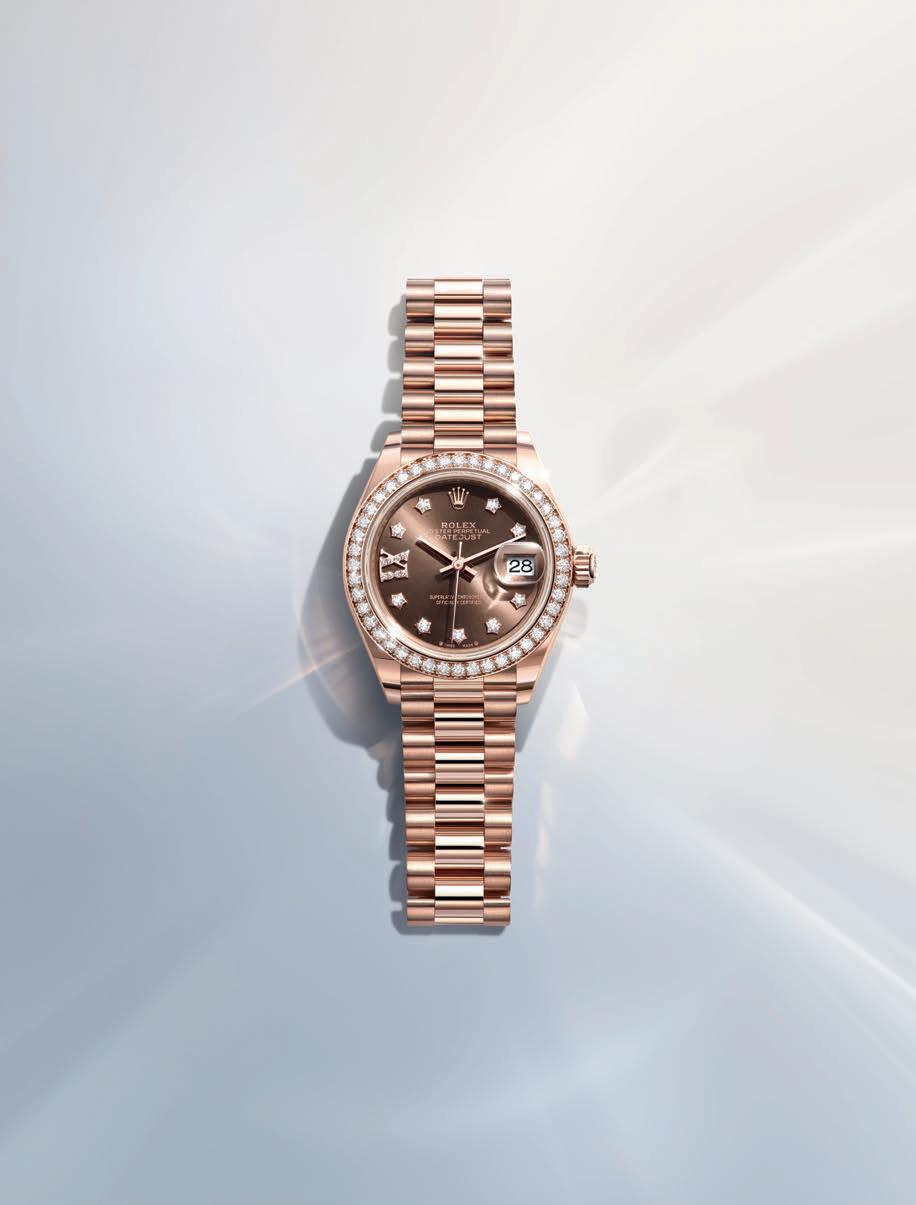

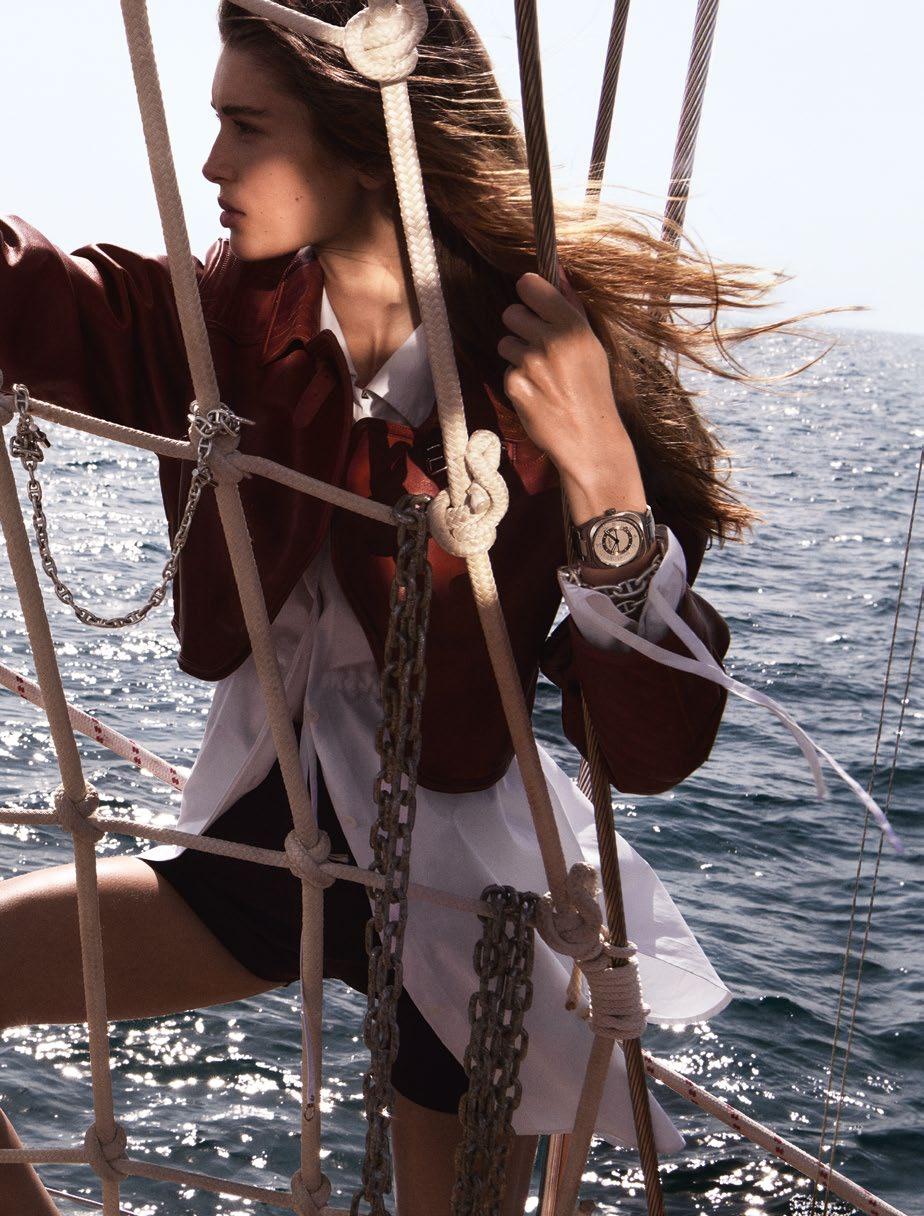







Alice B-B asks for restful slumber and a sleep retreat delivers (p20), and chef Jackson Boxer shares his recipe for joy (p22).
Ti anie Darke salutes high street heroes (p26); Juliet Herd (p28) and Shane C. Kurup (p39) s ingle out stand-outs for the season, whether for wedding or Wimbledon; and Simon de Burton has new watches worth adding to the wish list (p43).
—
It’s festival season – and we bring you Hay’s star-studded, Glasto-meets-Davos bill (p52) and a rst look at the secondever Chelsea Arts Festival (p54) Belinda Bamber interviews Ruth Ozeki (p53), and ll your shelves with our round-up of hot new releases . Plus, Charlotte Metcalf meets Christine Dawood, who traded places with her son on the doomed Titan submersible (p62). Ed Vaizey celebrates civic pride and British surrealism (p56), while Olivia Cole discovers a London artist who has caught the eye of Dua Lipa and Tate Modern (p57)
—
From Hollywood premieres to a $300m venture asking us to rethink how we live, Suzy Amis Cameron tells Lisa Grainger why she is taking global action (p74) Vivobarefoot’s Galahad Clark walks Fleur Britten through his ‘free your feet’ revolution at his Somerset ‘Nature HQ’ (p78), and Jeremy Taylor meets the Oxfordshire man turning our classic cars electric (p84). Plus, Nicole Smallwood shoots sizzling summer style (p64)
— 89
From advancements in hair-loss treatments to our obsession with K-Beauty, our annual Aesthetics Guide (p89) has become an indispensable look at the industry through a holistic lens. As ever, we’ve gathered the best writers in the business, who all bring their frontline experience to bear.


We launch our expert Beauty Briefing, brought to you by Nathalie Eleni (p142), and Olivia Falcon shares why peptides are the new frontier (p138). Plus, Camilla Hewitt delves into the mouth’s all-important microbiome (p139), and Dr Federica Amati advises on how to reset our appetite (p144).
—
From vitamin D showers to the recurrent vogue for under-counter skirts, our kitchen and bathroom special is a smörgåsbord of inspiration. Designers share tips on how to create the perfect aesthetic, whatever the postcode (p178); Hatta Byng probes our fascination with pantries (p166); and Busola Evans spotlights bathrooms as salve and sanctuary (p174) Carole Annett previews WOW!house (p187) and catches up with industrial designer Stefan Diez (p182).
—
Stoke curiosity with Caroline Eden’s journey through Kazakhstan (p206) and hark back to the golden age of flying on the rebooted Kangaroo Route with Margaret Hussey (p197). New travel editor-at-large Kerry Smith reflects on rewriting the rules amid global unrest (p202); Lucinda Baring unlocks Venice’s hidden gardens (p216) ; and Tessa Dunthorne has everything you need for summer feasting (p220).
— 224
Harland Miller on cold swims, caffeine and sticking to his guns















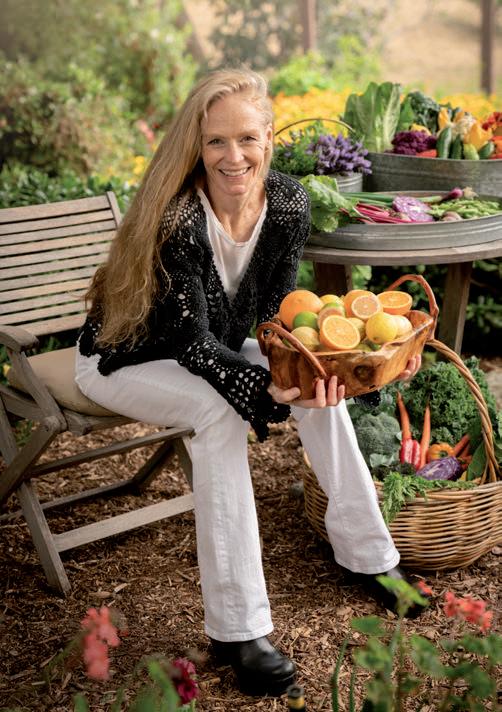





ex and red meat: sounds like the ingredients for some X-rated content, but actually it’s the subject of a documentary that Suzy Amis Cameron is working on. Together with her husband, lm director James, whom she met on the set of Titanic and subsequently fell in love with, she ditched eating animal products in 2000 and has never looked back. And while I read that concern with ultra-processed foods is driving us more towards whole protein sources, including meat, t here is a strong argument not to allow your carnivore instincts to take over. Not least for your sex life. Intrigued? Read Lisa Grainger ’s fascinating interview with her on page 74. She really does put her money where her mouth is. As aesthetic treatments cross over more into beauty and wellbeing, our approach to the subject has always been through a holistic and curious lens. As lling and cutting make way for less invasive yet equally e ective ‘tweakments’, the industry is developing at pace. We are here to keep you abreast of it with the most trusted voices in the business, who have tried and tested experience. Step forward Kathleen Baird Murray, who wrestles with the delicate subject of hair-loss (p108); Alice Hart Davis on little-discussed dry eyes (which are a sign of ageing and if unchecked, can get worse; p106); and Nadine Baggott ’s absolute devotion to K-Beauty (p122). So convinced was I by her evangelism that I bought all her recommended products.
And while we care for our faces, we’re also looking at our spaces in our kitchen and bathroom special. Saunas, vitamin D showers, ultra-hygienic loos – we’ve got it all. Plus, Hatta Byng peeks into some perfect pantries (p166) – something I’ve always lusted a er but are slightly less a ordable than my K-Beauty products.
We’re also sticking up for boredom. Which is really just a gateway into a state of daydreaming; hours staring out of the window on a car journey without being conscious of it. It’s so good for us, but takes practice as we’re so dopamine-addicted.
Let’s bring boredom back (p213).
Enjoy the issue.






Fleur writes about sustainability, travel, lifestyle, interiors and brilliant people ghting the good ght.
Who would you take to space? Christina Koch. I’m totally obsessed. Resilient, persevering, calm, level-headed. Favourite garden or green space? Postman’s Park in the City of London. It’s also full of commemorative plaques to unsung Victorian heroes. Just everyday folk who saved a life. Best podcast this year? The Grave Robbers about criminal gangs stealing inheritances. Anything by Sue Mitchell is brave, important and brilliant.

A beauty journalist for 35 years, Nadine’s mantra for all things in life is minimum e ort, maximum results.
Who would you take to space? My aesthetician Dr Wassim Taktouk. Zero gravity doesn’t mean zero sagging. Favourite garden or green space? My own. Small, perfectly formed and mainly evergreen with white owers. How do you nd balance? By nding pleasure in small things, from my cats to a perfect white camellia.
The one thing you can’t live without? My cats and laughter – proper uncontrollable belly laughs.
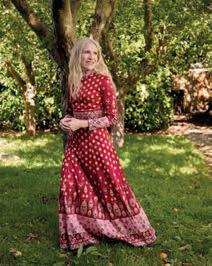
A regular contributor to The Telegraph , Grazia and Sunday Times Style, Laura lives in London with her family and foolishly acquired a dog.
Who would you take to space? Prince and Fred Again. They’d talk, I’d listen. How do you nd balance? I don’t believe any working mother can have balance without a lot of support. I would rather be honest than say ‘sleep and yoga’. Best book this year? Nobody’s Girl by Virginia Giu re – not the ‘best’ but surely one of the bravest and most important. The one thing you can’t live without? Crisps. I just love them.
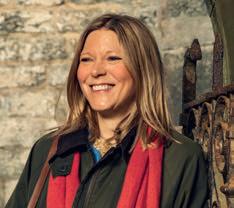
Based in Edinburgh, Caroline has published ve books, all with a focus on the culture of Central Asia.
Who would you take to space? My beloved beagle, Darwin, who sadly is no longer with us. He was curious and would make the ideal space companion. Best book this year? Alone in Japan: A Journey to the Future by Tom Feiling, an eye-opening portrait of love, sex and loneliness in contemporary Japan.

C&TH ’s new travel editor-at-large began as PA to the editor of Marie Claire, which was a bit like The Devil Wears Prada
Who would you take to space? Dervla Murphy, who cycled from Ireland to India in the 60s with a revolver and a notebook. The one thing you can’t live without? My camera – which means my phone. Best podcast this year? Real Survival Stories. I now have unfounded con dence I could survive almost anything.

Lucy Cleland Editorial Director
Deputy Editor Lucinda Baring
Editor-At-Large Alice B-B
Associate Editor Charlotte Metcalf
Junior Sub Editor & Production Assistant Evie Calver
Fashion Director Nicole Smallwood
Beauty Director Nathalie Eleni
Interiors Director Carole Annett
Travel Editor-at-Large Kerry Smith
Culture Editor Ed Vaizey
Wellness Editor Camilla Hewitt
Executive Retail Editor Juliet Herd
Men’s Style Editor Shane C. Kurup
Food & Drink Editor / Features Writer Tessa Dunthorne
Sustainability Editor Lisa Grainger
Property Editor Anna Tyzack
Motoring Editor Jeremy Taylor
Digital Director Rebecca Cox
Digital Editor Ellie Smith
Digital Culture Editor Olivia Emily
Digital Style Editor Charlie Colville
Digital Assistant Isabel Dempsey
Social Media Manager Mckenzie Mullany
Creative & Production Director Parm Bhamra
Design & Production Manager Mia Biagioni
The Editor editorial@countryandtownhouse.co.uk Advertising advertising@countryandtownhouse.co.uk
Country & Town House is a bi-monthly magazine distributed to AB homes in Barnes, Battersea, Bayswater, Belgravia, Brook Green, Chelsea, Chiswick, Clapham, Coombe, Fulham, Hampstead, Holland Park, Kensington, Knightsbridge, Marylebone, Mayfair, Notting Hill, Pimlico, South Kensington, Wandsworth and Wimbledon, as well as being available from leading country and London estate agents. It is also on sale at selected WHSmith, Waitrose, Marks & Spencer and Sainsbury’s stores and independent newsagents nationwide. It has an estimated readership of 150,000. It is available on subscription in the UK for £39 per annum. To subscribe online, iPad, iPhone and Android all for only £9.99/month, visit: exacteditions.com/read/countrytownhouse. For subscription enquiries, please call 020 7384 9011 or email subscribe@countryandtownhouse.co.uk. It is published by Country & Town House Ltd, Studio 2, Chelsea Gate Studios, 115 Harwood Road, London SW6 4QL (tel: 020 7384 9011). Registered number 576850 England and Wales. Printed in the UK by William Gibbons and Sons Ltd, West Midlands. Paper supplied by Gerald Judd. Distribution by Letterbox. Copyright © 2026 Country & Town House Ltd. All rights reserved. Reproduction in whole or in part without written permission is strictly prohibited. Materials are accepted on the understanding that no liability is incurred for safe custody. The publisher cannot be responsible for unsolicited material. All prices are correct at the time of going to press but are subject to change. While every care is taken to ensure information is correct at time of going to press, it is subject to change, and C&TH Ltd. takes no responsibility for omissions or errors.
Publisher Ellie Rix
Head of Fashion Emma Marsh
Head of Beauty Bandi Manzini
Head of Interiors Emma Redmayne
Senior Account Director, Homes & Interiors Olivia McHugh
Account Director Serena Knight
Account Manager Cosima Woodard
Digital Business Development Director Joey Goldsmith
Project Management & Sales Support Executive Charlotte Ryan
Managing Director, C&TH Events Louise Close
Events Director, C&TH Events Josie Williamson
Technical Director Mark Pearson
Chief Financial O cer Gareth Morris
Finance Controller Lauren Delgado
Finance Administrators Ria Harrison & Klodi Sade
Human Resources Consultant Zoe Jones
Chief Commercial O cer Tia Graham
Chief Operating O cer James Thrower
Managing Director Jeremy Isaac
Contributing Editors
Belinda Bamber, Hatta Byng, Ti anie Darke, Simon de Burton, Fiona Duncan, Olivia Falcon, Daisy Finer, Avril Groom, Lauren Ho, Annabel Jones, Dylan Jones, Francisca Kellett, Juliet Kinsman, Emma Love, Mary Lussiana
Accounts accounts@countryandtownhouse.co.uk
Subscriptions subscribe@countryandtownhouse.co.uk


What to do with Country & Town House when you’ve nished reading it
Ideally, we’d love you to pass it on to a friend or a community place which might enjoy it (doctor or dentist surgery, community centre), but you can also rest assured that your issue (including cover) can be disposed of in your paper waste recycling bin.
countryandtownhouse.com



Alice B-B learns the elusive art of deep and restorative slumber
SLEEP... remember when it used to just happen? End of the day, you’d get into bed and conk out ’til morning. No big deal; no ‘sleep hygiene’; no supplements; no apps telling you bedtime stories. So what the hell happened? These days I have to gra hard for a good night’s kip (no booze, no sugar, no fun). And just when I think I’ve cracked it, something new pops up – like my hormones throwing me a surprise party at 3am.
So I never turn down the chance to learn more about sleep – particularly when it’s The White Company gathering a crack team of specialists for a sleep retreat at Heck eld Place (possibly the nicest hotel in the land). All angles were covered with longevity specialist Dr Mark Mikhail, nutritionist Rosemary Ferguson, breathwork coach Rob Rea, and scent specialist Rachel Vosper.
We learnt about why we sleep and how it’s the single most e ective thing we can do to reset our brain and body every day. We analysed the bloody annoying things that stop us sleeping and learnt trouble shooting tips for those middle of the night wake-ups. We took a morning walk to reset our circadian rhythm, tuned into the importance of balancing blood sugar, and learned how to signal safety to our mind and body through scent and ritual.
The day ended with Rea delivering a sound bath and breathwork session. Then to my heavenly bedroom for an actual warm bath before slipping between the sheets (the Savoy collection – crisp and smooth), slathered in the new White Company Spa Sleep hydrating balm. It worked! I slept like a kitten. thewhitecompany.com

THERE’S EXERCISE ... and then there’s the Warrior Flow class beneath infrared panels at Heartcore in Bayswater. Sorry to use the ‘j’ word – but it truly is an emotional journey. Leader Jessie Blum brings her German-born precision, Californian-lived positivity and heart full of sunshine to create a way of moving that combines inward meditation and outward expression. I leave each session supercharged, ready to take on the world, feeling like Uma Thurman in Kill Bill.
So a few months ago I decided to dive deeper: a ve day retreat in Marrakech, with Blum’s movement sessions twice a day, massage, trips to the souk, hikes in the Atlas mountains or lazing by the pool, followed by delicious, long dinners with nourishing food and chat. A time to dream, consider life, feel free and get strong. And have a right laugh. If you get the chance… do it. weareheartcore.com ■
THIS MONTH I’LL BE...
↓ KNOTTING
The hot new accessory: the oversize bow (georgerubanlibre-paris.fr)

DINING
At restaurant and member’s club Celeste – the chic of Mayfair with the cool of Notting Hill (celestenotting hill.com)
↙ SIPPING Finnish-grown functional mushroom tinctures (super oom.life)


POWERED BY
EXOSOMES
Cellular renewal & deep regeneration.
VITAMIN C
Brightens, evens tone & defends against oxidative stress.
Stabilises Vitamin C & amplifies its efficacy.
Firms, plumps & restores skin elasticity.
99.4% Natural origin ingredients

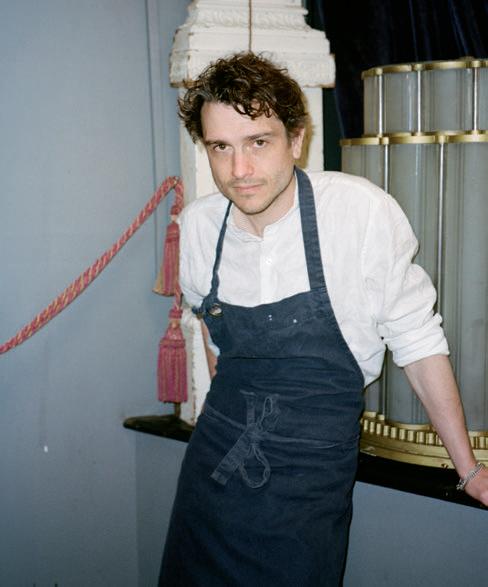
Chef-restaurateur Jackson
Boxer has the recipe for eternal optimism
What’s bringing you joy at the moment? London. I feel like there’s a whole new generation coming through. While no good thing, the economy being less buoyant has meant spaces that might have been snapped up for a shopping centre are able to provide room for art projects, performances, libraries, reading rooms. For a while it felt like London was becoming a city that was too expensive for [culture] to happen. The tide has shi ed.
Of course, in life, there will be annoyances; it’s beholden on us to relegate those annoyances relative to hope
What’s annoying you most right now? Lots of things make me hopelessly depressed about the world today, but there are lots that ll me with optimism, too. Of course, in life, there will be annoyances; it’s beholden on us to relegate our annoyances relative to hope. Interviewers who ask for my death row meal annoy me – it’s too miserable to consider.
Your greatest triumph? Seeing my children grow up. And the loving, powerful, supportive, kind, funny relationship I have with my wife; that we are still really good friends.
Your greatest failure? I have lots, but not many I’d consider particularly great. Everyone will fail at stu and you have to move on. Otherwise it is a handicap.

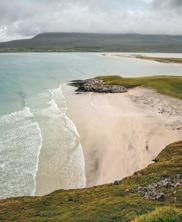
Where do you go to escape? The Outer Hebrides – every summer since I was a child. It is astonishingly beautiful and wild. With no phone signal, it’s the only place in the world I can shut o .

Advice you’d give to your 15-year-old self? I wouldn’t; my 15-year-old self would laugh in the face of the 40-year-old me. I’d think I was ridiculous.
What did you imagine you’d be when you grew up? A grown-up, really. I ended up a chef as it was the only thing that paid me money to live. When I started Brunswick House, it was meant to be a six-month residency. Fi een years later...
How can we save the world? I remain convinced there are better ways for us to live, in relation to each other and the world around us. How that revolution in thinking and living comes about, I’m very poorly quali ed to answer. ■
Jackson Boxer is opening Vesper, a new restaurant at 8-10 Exmouth Market, in May. @jackson_boxer

This is not a photo studio. This is a place called Flacht. It’s where our racecars come from. No polished scenery, just a garage – running on dedication. What’s born here, lives in every single Porsche out there. Because every Porsche is and always will be: Raceborn.


Nothing says summer like a jaunty nautical stripe. DeMellier’s Stockholm bag is the ultimate smart take on the theme, moving seamlessly from beach to bar. demellierlondon.com
Can you find responsible, ethically made clothes at high street prices?
Yes you can, says Tiffanie Darke
Imagine if you knew everything about your clothes. Where the bre was grown, which factory processed it, where it went to be cut, who designed it. How many miles it travelled, its carbon impact, who owned it before if it’s second hand, how you could rent it out.
Well, these heady days are coming – by 2028, EU law will require it. The gathering of information needed for a Digital Product Passport (DPP) has got the frilly knickers of the fashion industry in a twist. Some, however, are getting ahead of the game. First out the gates? British high street darling, Nobody’s Child.
Once the go-to brand for the ubiquitous midi dress and plimsoll trend (remember that? Heady, easy days), the ambition of Nobody’s Child was already far ahead. Founded by a techpreneur and with a passionate CEO at the helm, its mission is to show that sustainable best practice can be a ordable. It now has seven stores, three in London.

comfortable place to be – not so cheap you can chuck it away a er a few wears, but not so expensive you have to live in Mayfair to a ord it.

Its spring collection is a colourful story of feminine blouses, baggy trousers, cropped jackets and light cotton dresses that present joyful solution dressing priced £70 to £100, with jackets, trenches and coats pushing into the £150 to £250 bracket. This is a
FROM TOP: You can feel eminently chic and responsibly chuffed wearing Nobody’s Child, Finisterre x Amy Powney and swinging a Ganni handbag
The brand is successfully managing the tightrope of a ordability and responsibility, having achieved B Corp status, guided by a material matrix that balances practicality with impact and impeccable supply chain partnerships. Sustainability o cer Philippa Grogan says her supply chain managers are the most powerful women in the business: relationships with factories come rst. I recently invested in a £125 aubergine trench in brushed cotton. The DPP delightfully revealed it was made in China, was transported by truck, has a carbon footprint of 19.64kg CO2e (of which 82 percent came from the fabric), and invited me to consider channels for repair, re-use and rental.
‘For decades fashion has had this closed door where no one asks questions,’ says Grogan.
‘Suddenly in this age of radical transparency, people are asking to read their diaries.’ ■
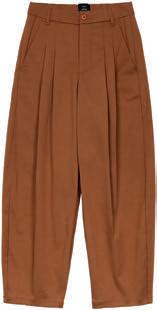
FINISTERRE’s collab with Amy Powney is back in production: their Tencel and organic cotton Pleat Front Trouser, £125, comes with a detailed impact report; REFORMATION’s organic cotton Eli shirt has impeccable CBK vibes £148, while GANNI, which has led the way in biomaterials and circularity, is doing its iconic Bou bag in a delicious butter yellow for £380








PHILLIPA LEPLEY
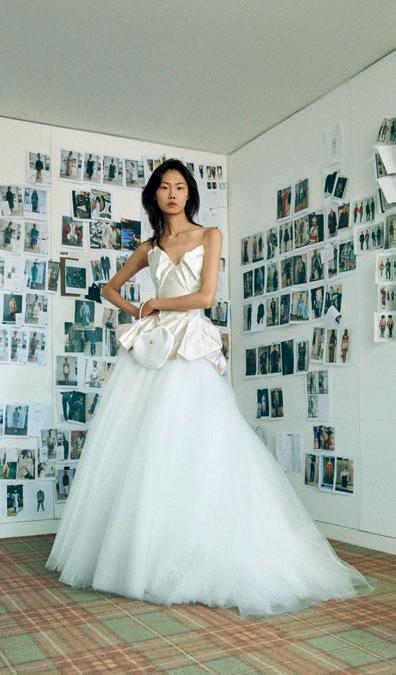
Isadora Vintage Rose gown, £POA. phillipalepley.com

Whether bride or partygoer, romance is in the air this summer, says Juliet Herd
Forget what we’ve been told a wedding dress should look like. When it comes to bridal fashion today, the modern bride is choosing to update classic silhouettes with so er construction, considered detailing and lighter fabrics.
Phillipa Lepley celebrates 40 remarkable years in couture with the Chapter Forty collection, inspired by love, luck and enduring romance: ‘Strong shoulders, small trains and clean centrefront closures are key design details.’
Beulah London’s signature silhouettes are reimagined in lace and cream crepes for its rst wedding capsule, Milk & Honey. Epitomising the modern bride, all six midi dresses are designed to have a life beyond the big day.
And nothing says wedding like a Vivienne Westwood dress. The ru es on the Raven corset add uidity to this beautifully romantic, light-as-air full tulle-satin skirt. Worth saying ‘I do’ for.





Longer, so ershaped dresses in unique fabrics are a focus for Lalage Beaumont this season. Enjoy picking out accessories to match one of the embroidered, multi-coloured dots on this silk chi on Sof midi dress in sky blue, £1,650. lalagebeaumont.com

Nailing timeless elegance is Suzannah London’s forte. A highlight this season is the Atelier collection, featuring elevated couture styles. Lisse double-faced cloqué sculpted dress, £6,590. suzannah.com
From Royal Ascot to Wimbledon, Holland Cooper’s sharp blazers, tailored separates and statement dresses o er a seamless skip from one event to the next. Paros shirt dress in pink polka dot, £299. hollandcooper.com








From farm to fashion’s front line: Mulberry has launched a very special collection in collaboration with British Pasture Leather
If you want a beautiful bag that combines cool storytelling with sustainability and a truly British supply chain, look no further. This new collection from Mulberry can trace its leather right back to the West Country eld it came from – bringing with it a tale of rst-in-class apprentices, dogged entrepreneurship and a passion for regenerative farming.
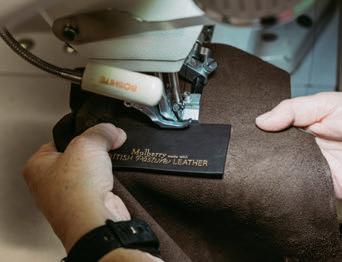
Created in partnership with British Pasture Leather, this edition of 80 pieces comes in four designs – the iconic Mulberry Bayswater and Boston bags, as well as two pouches – all produced in leather from farms that practice regenerative principles in the south-west of England. The leather is then tanned at Thomas Ware in Bristol – one of the last remaining British tanneries – and nished at Blenkinsop Leathers, a family-run rm in Northamptonshire. Each piece is then cut and cra ed by skilled artisans at The Rookery, Mulberry’s agship Somerset factory.
Sustainability has been part of Mulberry’s ethos since the brand’s inception in Somerset in 1971. In 2021, the brand announced its Made to Last manifesto, detailing its commitment to becoming regenerative and circular across every aspect of the business and centred around ‘The Three Cs’: climate, circularity and community.
Since 2022, 100 percent of Mulberry’s leather sourcing has been from environmentally accredited tanneries, making Mulberry the rst fashion brand to achieve this, and it has approved science-based targets to reduce its greenhouse emissions. Its Lifetime Service Centre has been operating for nearly 40 years; last year, the team repaired over 9,000 bags. ‘That can be anything from changing a padlock to dyeing the leather blue,’ says Nick Towe, head of group quality
at Mulberry. The Mulberry Exchange programme turned over £1m in 2025, showing that circularity is a commercial opportunity as well.
As for community, alongside celebrating ve years as a Living Wage employer, plenty of charity initiatives and the brand achieving its B Corp certi cation in 2024, Mulberry is proud to have created the rst ever leather apprenticeship scheme in Britain. It launched in 2006 in partnership with Bridgwater College, and many of its graduates still work in The Rookery and The Willows (Mulberry’s other Somerset factory) today.
The British Pasture Leather collaboration has been almost ve years in the making. ‘The founders Sara Grady and Alice Robinson saw our manifesto and reached out to us to understand whether they could play a part,’ says Mulberry head of group sustainability, Rosie Wollacott. ‘They were a start-up back then, trying to help us answer the question “can we connect leather with regenerative agriculture?” The way Mulberry has been able to do this is through partnering with their expertise. They have been doing the groundwork to create a supply chain that connects us to a really small network of British farms that are certi ed to Pasture for Life.’
The partnership represents a shared commitment not just to the regeneration of nature – and of an acceptance that there is a di erent way of sourcing leather separate to global farming supply chains in which cattle may never see a blade of grass; they could be raised on concrete, fed soy to fatten them for the meat industry and the hides go to waste – but to the revitalisation of a dwindling British leather industry. It is about the creation of a connected community, from the farmer right into the hands of the Mulberry customer.
Which brings us back to the new collection. For now, there are two colourways – Antique Oak and Vintage Ebony – but there is an ambition to grow the scope of the collaboration. ‘This is the start of “what’s next?”’ Wollacott continues. ‘What colours can we develop?’ The collection champions the British leather industry’s traditional methods using vegetable tannins, which is natural and low impact, and results in each piece developing its own unique burnishing, marks that re ect its character and story.
‘Nick’s got an old line – “The only thing better than a new Mulberry bag is an old Mulberry bag” – and there’s nothing truer,’ Wollacott says. ‘We really see that come to life in the British Pasture Leather collection. The more they are used, the more beautiful they are. How you use that bag will tell the story of what you’ve done with it. That bag will tell the story of the animal it came from, and then the story of your life.’
The limited edition collection is on sale at Mulberry’s Regent Street store and online at mulberry.com







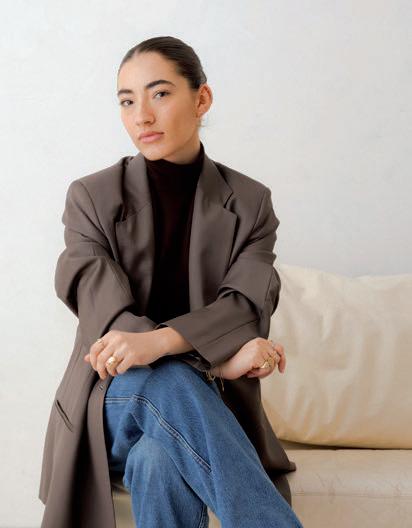
The Matilde founder shares her style fixes




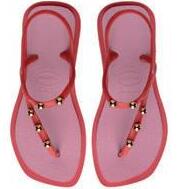
collection in the perfect shades with Bond-Eye Swim, launching in June. I spend much of my summer in Portugal so a pair of Havaianas are a must, and I have a white linen shorts and shirtset from WNU that I wear on repeat with di erent swimwear and accessories. I also love Christopher Esber and Casoná for elevated summer pieces.
Favourite accessories? Jewellery. I built my brand around a timeless staple philosophy: jewellery that works from day to night and that you barely feel you have on but subtly elevates your look. I never take o my Marquise diamond necklace and I love a layered ear, using studs and huggies from our Matilde Daily collection.
Night out? A great top, low-waist black trousers and a fun pair of Jimmy Choos.
The piece that gives instant wow? A vintage Christian Dior bag from 2003, sourced by Nunu Vintage.
And the one that makes you stand taller? Anything borrowed from my mum. I’ll have to give it back eventually, so I maximise the time I have with it.
Under-the-radar labels? Al e Paris is a favourite, as well as Cloey’s and Klayd.
Timeless or trend-led? Timeless. Giving names to every trend – ‘the clean girl’, ‘quiet luxury’, ‘ballet-core’ and so on –takes away individuality.

Daily uniform? A great pair of jeans – from Agolde, Redone and DL Denim, plus I have a few Chanel ones that are special – and a perfect T-shirt by Eterne, Skims or Derek Rose. In London, I’ll throw a cashmere jumper over, from Khaite or The Row, and recently I bought a cardigan from The Gather. I am usually in ats or trainers: my favourites right now are my Miu Miu trainers and Chanel black slingbacks. I love a bigger bag, like the large Call It By Your Name tote, and I treasure my timeless black Birkin.
Go-to pieces in your wardrobe for summer? I’ve been working on a

Style hacks? The best advice I’ve ever received is to always remove the last thing I’ve put on. It’s usually too much. ■
1. Matilde 0.5ct lab-diamond, 14k recycled gold necklace, £1,285. matildejewellery.com
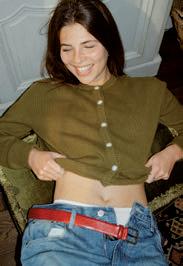
2. The Gather Poppy cardigan in olive green, £188. thegather.shop
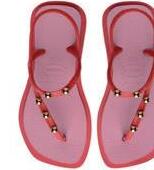
3. Havaianas Flash Fusion sandals, £38. havaianas-store.com
4. WNU Seersucker shirt, £100; shorts, £65. withnothingunderneath.com
5. Call It By Your Name Quilted LOVE Tote, €280. callitbyyourname.fr
6. Reformation High-rise wide-leg jeans, £178. thereformation.com
7. Matilde Continuous 14k recycled gold, 0.034ct lab-diamond huggies, £220, matildejewellery.com
8. Chanel Goatskin and grosgrain slingbacks, £930. chanel.com

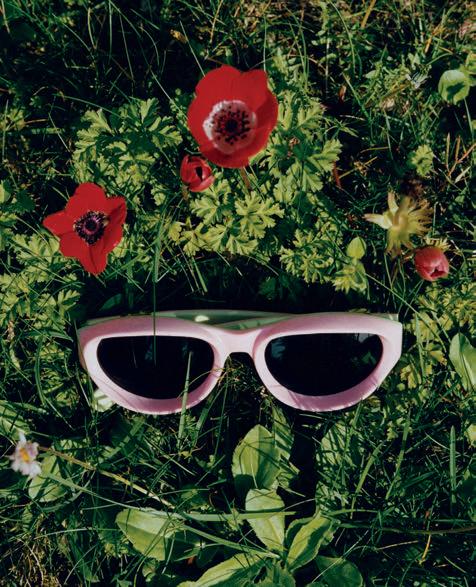
Delight in Jonathan Anderson’s playful new collection
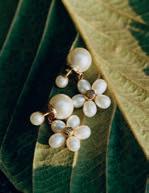
Florals for spring? Absolutely! Dior’s new ready-to-wear collection delivers fresh and colourful energy across the collections, from swimwear and silk scarves to summer shoes, bucket hats and whimsical bag charms – available in store, and at pop-ups and resort boutiques from the Cipriani to Saint Tropez.
Melding lightness and Mediterranean glamour, pieces come in a reimagined toile alongside Dior Arabesque, a print celebrating the natural world, bringing the work of Christian Bérard – one of Monsieur Dior’s closest friends – joyously to life.
For men, owing casual shirts and shorts are complemented by the new vintage-like Dior Chester loafers and boat shoes and colour-bright Dior Rivage sandals, while the signature Dior Oblique motif is reinvented for trainers, from denim to summer stripes.
The maison’s most iconic bags feature minimalist new prints and contemporary summery materials, including a fabulous terry cloth Dior Book Tote. Playful nishing ourishes include colour-popping rhinestone jewellery invoking fruit and owers – including Monsieur Dior’s beloved hortensia. And bringing the Dioriviera world into sunny summer entertaining, Dior Maison has created tableware and accessories to ensure garden parties sparkle with the same intoxicating new energy. ■
The Dioriviera Collection is available at 196-198 Sloane Street and dior.com



Think if each piece in Messika’s 20th anniversary Moderniste collection as a wearable work of architecture. These new hexagonal sculptural beauties come in polished or brushed gold. messika.com
New-season spring blooms and structural simplicity are catching Juliet Herd ’s eye
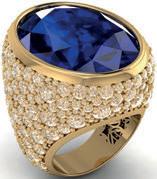
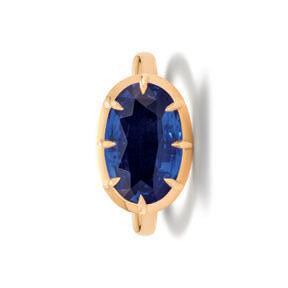
A moment for newcomer Henry & Henry’s 42ct royal blue Ceylon sapphire stonker, set in 18ct yellow gold and surrounded by more than 250 natural champagne diamonds. Armour d’amour. henryandhenry.com
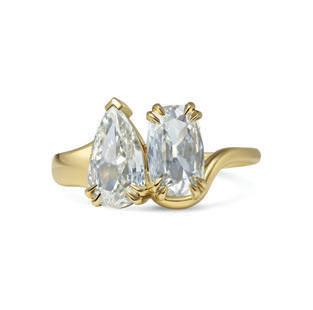
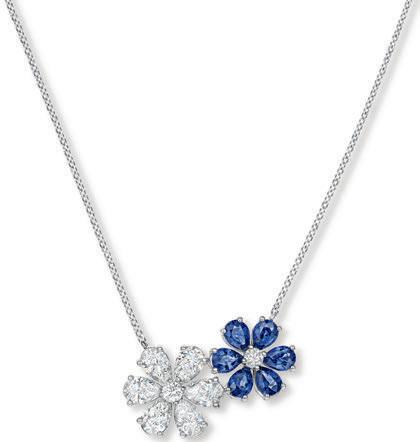
Honouring one of nature’s most delicate wild owers is Harry Winston’s Forget-Me-Notcollection. Drum roll, please, for a new addition: sapphire and diamond twin pendant set in platinum. £POA, harrywinston.com
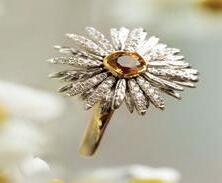
↑ IN A SPIN
This spinning cocktail ring with uttering petals evokes the nostalgia of childhood play. Part of Annoushka’s Daisy Chain collection, it launches just in time for a twirl around Chelsea Flower Show. annoushka.com
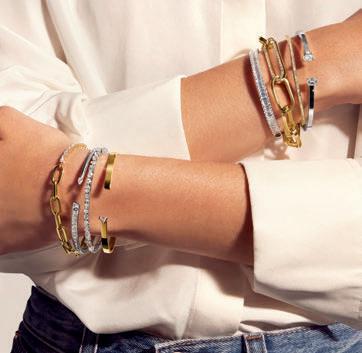

↑ IN A TWIST
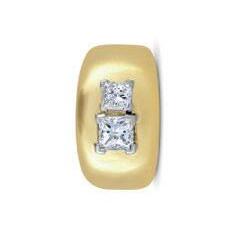
It’s all about maximalist stacking for spring, and Bucherer’s bold bangles o er the perfect layering pieces. Mix your metals for added impact. bucherer.com



↑ MENSWEAR MECCA
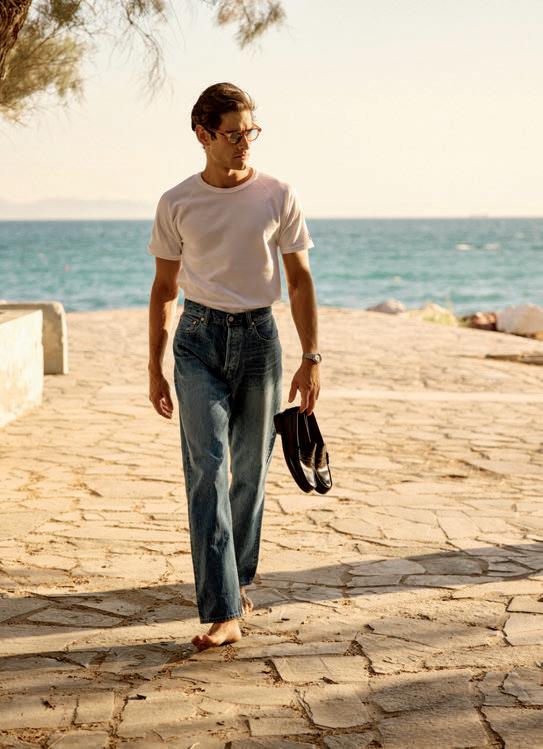
Knightsbridge’s most fashionable one-stop shop is upping the ante on its menswear oor with a series of exclusive pop-ups. New for spring are Blue Blue and Stretch Fraise, showcasing the best Americanainspired Japanese selvedge denim and cult vintage-feel tees and sweatshirts, straight from the streets of Tokyo to London Town. Available in store and online until June. harveynichols.com

Re-tune your look as the season shifts to a warmer gear, says Shane C. Kurup Smell of sweet victory with these dynamic spritzes

↑ GO OUTSIDE
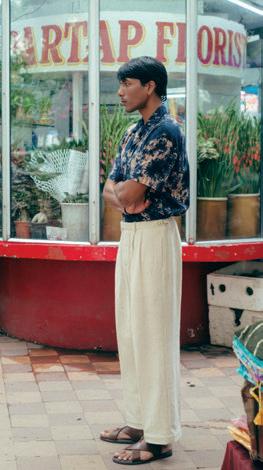
Danish label forét underscores the Nordic connection to nature with its considered collections celebrating the quiet rituals of life outdoors. This season’s hiking-inspired pieces, hardy workwear jackets and embroidered accessories can be donned for everything from an hour spent trimming the box hedge to a Sunday pub lunch. foretstudio.dk




Tamil Nadu-based Oshadi built its label on a ‘seedto-sew’ ethos, which emphasises sustainable farming methods. It cultivates organic cotton and other mindful materials, which it has supplied to luxury labels like Stella McCartney. Its SS26 line, entitled Navanker – Sanskrit for ‘tender’ or ‘new shoot’ – spotlights Indian handcra s such as Rajasthani plant-dye block printing, supporting cra communities of the Deccan plateau.
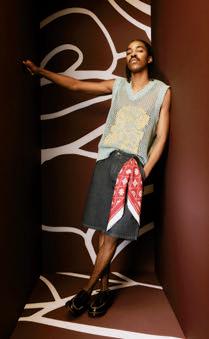
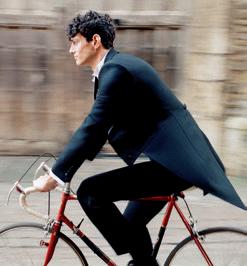
Oliver Brown, the Chelsea tailor and o cial top hat licensee to Royal Ascot, has just opened its doors in Cambridge, the famed city of punts and scholarly pursuits. In such a locale, warm-weather linens and dressing for the occasion never goes a miss. oliverbrownlondon.com
←
Britain’s favourite department store, John Lewis, has been pulling out the stops with its menswear collaborations and this spring sees the launch of its second line with Londonbased label, Labrum. Drawing on indigenous West African and western stylistic elements, the collection combines textural tailoring, openwork knits and utilitarian denim that will have your urban wardrobe sewn up. From £39 at johnlewis.com
Ace the codes this tennis season


Maestro 3.0 Chronograph Clay, £21,900 exc. VAT geraldcharles.com

Engraved check tie bar, £190. burberry.com

£350. tomwoodproject.com





What’s on yours, asks Simon de Burton, who clocks some new timely arrivals
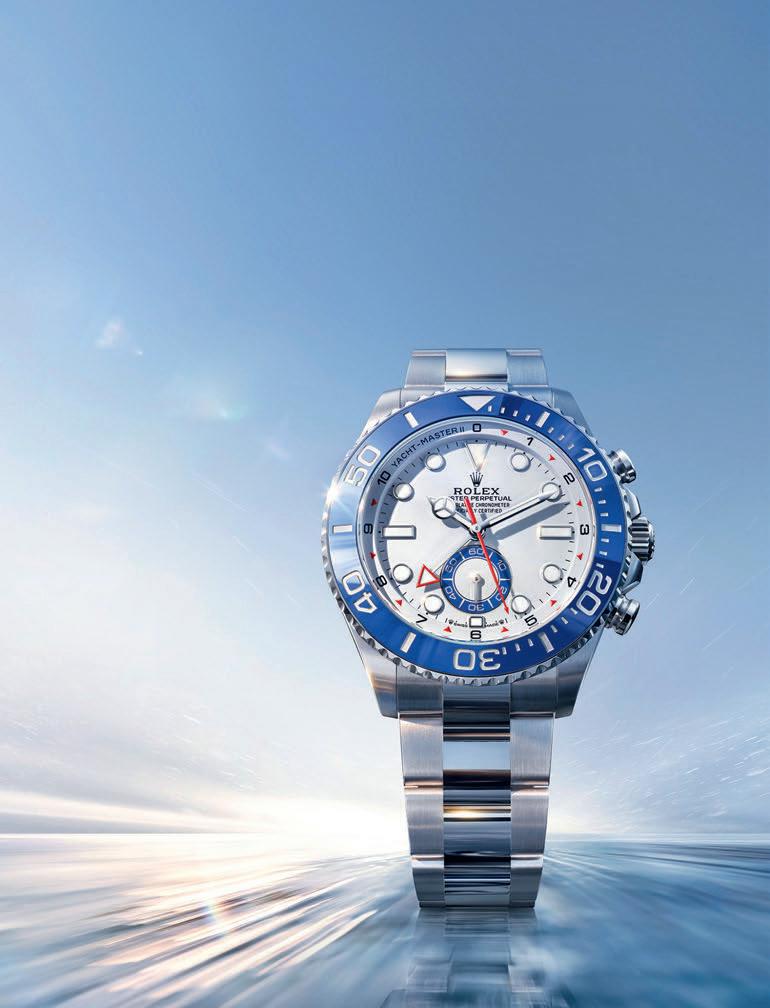
Fancy rolling back the tides of time? Try this new Rolex aimed at salty sea dogs. It features a chronograph that runs backwards rather than forwards, enabling regatta competitors to keep an accurate track of the ten-minute countdown before the crack of the start gun. Available in tough Oystersteel for serious sailors or 18 karat yellow gold for those who prefer to be securely anchored to the yacht club bar, the watch is replete with nautical tropes such as capstan-shaped chronograph pushers and a small seconds marker based on the look of a ship’s wheel. Rolex Yacht-Master II, from £16,950. rolex.com
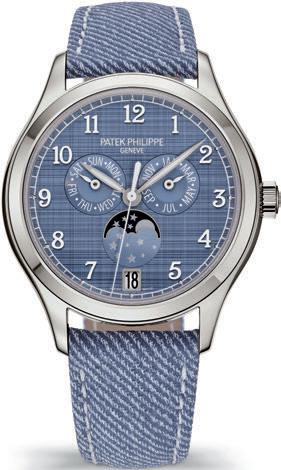
Patek Philippe is marking 30 years since the arrival of its ingenious annual calendar watch (which automatically adjusts to all the months with short dates save for February) with the introduction of this 38mm white gold version. The blue-grey dial gets a horizontally and vertically-brushed nish to give the e ect of silk shantung fabric, while the light blue calfskin strap has been given a denim e ect treatment. Technical bods will love gazing at the 319-part automatic movement through the sapphire case. Patek Philippe Annual Calendar Ref 4946G-001, £49,350. patek.com
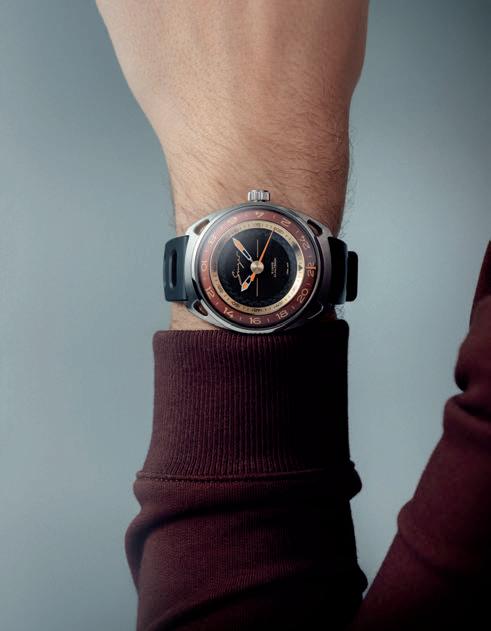
Singer Reimagined is the Geneva-based horological department of Californian Porsche restoration rm Singer Vehicle Design –which sells exquisitely rebuilt classic 911s for up to £3m apiece. This latest Singer timepiece, aimed at the car arm’s jet-setting clientele, features a unique movement that drives a constantly moving peripheral disc with 24-hour markings for an at-aglance check of second timezone in addition to the one displayed on the central dial. Choose from green or red disc nishes. Singer Reimagined Dualtrack, CHF22,500. singerreimagined.com

It may be 23 years since a Concorde supersonic passenger plane made a graceful ascent into the skies en route to shattering the sound barrier, but that hasn’t stopped Breitling creating this special edition to commemorate the legendary aircra . Based on the Navitimer pilot’s chronograph, the watch features a blue dial ‘in the shade of the stratosphere as seen from the plane’ and will be made in 593 examples – a reference to Concorde’s mighty Olympus 593 Turbojet engines. Breitling Navitimer Concorde, £8,100. breitling.com
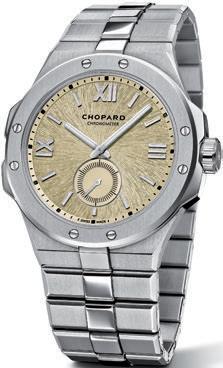
Chopard’s rst steel-cased sports watch was called the St Moritz and was created in 1980 by the then 22-yearold Karl-Friedrich Scheufele, who is now the brand’s copresident. Fast forward to 2020 and his own son, Karl-Fritz, had the idea of revisiting the design with a reinterpretation called the Alpine Eagle – which has proved to be a soaraway success. This new version gets an ultra-slim, 41mm case in recycled ‘Lucent Steel’ and a luscious dial in a champagne-coloured hue called ‘Mountain Glow’. Chopard Alpine Eagle 41 XPS, £25,000. chopard.com
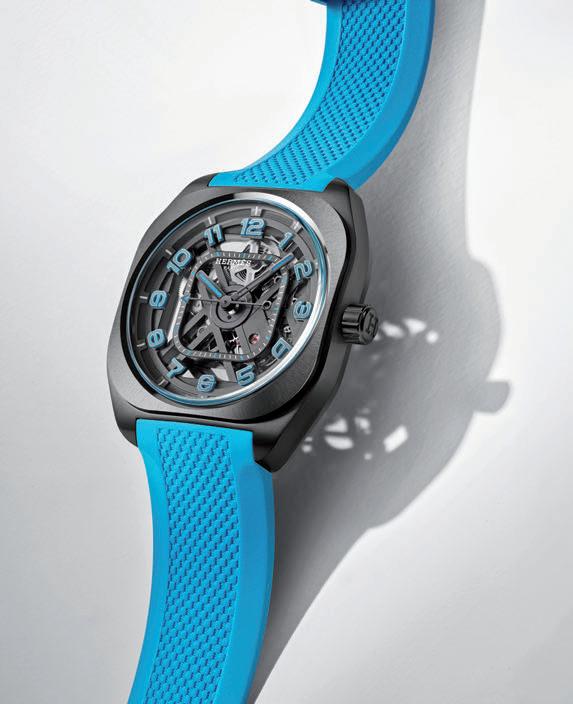
Hermès hit the jackpot with the2021 launch of its ‘so square’ H08, a distinctive sports watch which has since been produced in everything from steel to gold and from glass bre to ceramic. Now the H08 gets stripped back to basics with this titanium-cased version featuring a fully skeletonised dial that gives a view onto its in-house, selfwinding movement. Blue and grey versions of the 42mm by 39mm watch are available, each with matching rubber straps. Hermès H08 Skeleton, £17,500. hermes.com
Bremont’s just ‘launched’ Supernova is set to become the rst British watch to land on the moon this summer. An example of the specially-developed chronograph will be integrated into the chassis of a research vehicle called the FLIP rover which is being sent to the moon’s lunar south pole by US aerospace company Astrolab. Armchair astronauts can buy the regular version of the Supernova, which features a dial based on the ‘geometry of spacecra solar arrays and solar sail panels’. Bremont Supernova, from £6,950. bremont.com

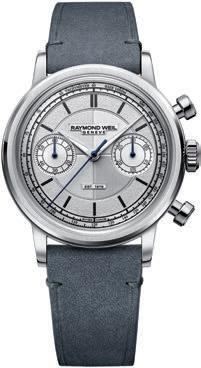
Raymond Weil established his eponymous dial name in 1976 when the traditional Swiss watch industry was deep in the doldrums a er the arrival of cheap quartz movements. But Weil de ed the odds and the family-owned business has continued to thrive since his death in 2014, aged 87. It now marks its half-century with this limited edition chronograph powered by a vintage, hand-wound Valjoux movement that’s been fully restored, hand-decorated and tted into a ‘retro-sized’ 37mm case. Raymond Weil ‘The Fi y’, £9,250. raymond-weil.com
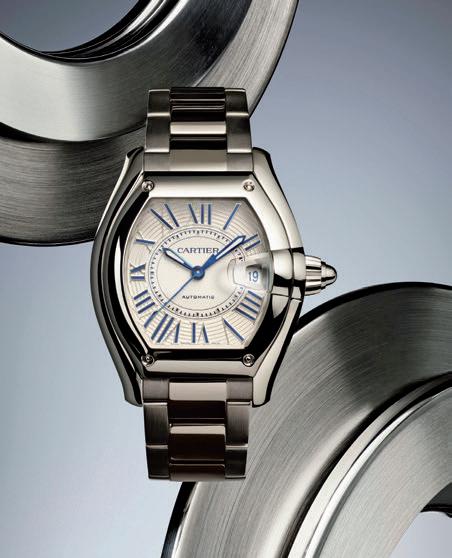
Back in 2002 the ‘king of jewellers and the jeweller of kings’ surprised us all with the launch of an uncharacteristically large and statementmaking watch called the Roadster featuring a dial inspired by a car speedometer and a crown based on the bulging hubcaps of a 1950s Porsche 356. The Roadster was phased out in 2012 – but now it comes roaring back in this less brash, more subtle design. Cartier Roadster, from £7,950. cartier.com

Chanel’s all-ceramic J12 sports watch launched in 2000 went on to become one of the greatest horological hits of the 21st century. First made only in black, it became available in white in 2003 before a small range of limited edition blue models were unveiled last year to mark the J12’s 25th anniversary. The ‘Bleu’ now becomes a permanent addition to the J12 range with the arrival of new, 38mm and 33mm models with automatic movements. Chanel J12 Bleu, from £6,500. chanel.com
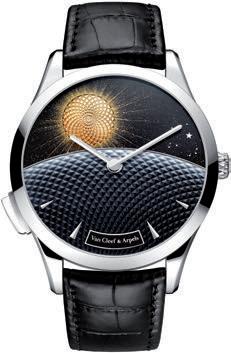
Art, the universe and haute horlogerie collide in this spectacular interpretation of the ‘moonphase’ watch. The 42mm, white gold case houses a black Murano glass dial decorated with a shimmering bronzecoloured horizon which serves as a night sky background. Behind it, two discs representing the moon and the sun move at di erent speeds, enabling the celestial bodies to alternately emerge above and disappear behind the horizon in perfect synchronisation with the moon’s 29.5 day cycle. Genius. Van Cleef & Arpels Midnight Jour Nuit Phase De Lune, £POA. vancleefarpels.com ■







This May, Photo London moves to its new home at Olympia, fresh from a £1.3bn overhaul led by Thomas Heatherwick. The bolder, expanded edition of the UK’s leading photography fair includes close to 100 galleries across the globe and a special collection of fashion portraits taken in 1990s London by Steven Meisel, Photo London’s Master of Photography 2026. Chicas 8 by Argentinian artist Carolina Baldomá. Photo London, 14-17 May, photolondon.org
Olivia Emily has this season’s hot tickets
Hay returns with its mashup of big names – Emerald Fennell, Maggie O’Farrell, Emma Thompson – and thrilling new talent

Since its humble beginnings in 1988, Wales’s Hay Festival has grown into one of the nation’s best known (and best loved) festivals. As CEO Julie Finch puts it, ‘It’s part Glastonbury, part Davos’. Opening on 21 May, it is the linchpin in a global Hay o ering that now reaches from Kenya to Mexico, Ukraine and Peru.
Originally taking place across a smattering of venues in Hay-on-Wye, since 2005 there has been a dedicated site just south of the Town of Books. ‘Hay-onWye is a book-lover’s paradise and our location feeds into the programme,’ Finch says. ‘Half our events o er classic literary talks and conversations, while the other half might be music, comedy, performance and immersive experiences. It is free to enter too, so you can enjoy pop-up sessions without spending a penny.’
This year’s line up promises a gaggle of ‘writers, readers, thinkers and dreamers,’ says Finch. ‘Where else would you nd Emma Thompson, Malala Yousafzai, Gisèle Pelicot, Maggie O’Farrell, David Miliband, Dawn French, Tom Allen, Emerald Fennell, Jamie Laing, and Prue Leith all in the same tent?’
Never visited before? ‘Leave space in your day to book something random and in the moment,’ Finch suggests. ‘O en it’s these sessions – the debut novelist, the thrilling new poet, the just-added space scientist – that stick with you the longest.’ 21–31 May, hayfestival.com
Feverishly anticipated summer reads

LAND by Maggie O’Farrell
Beginning on a windswept peninsula in the 19th century, a father-son duo set out to map the entirety of Ireland when an unsettling encounter nudges them o course.
Out 2 June (Headline, £25)

JOHN OF JOHN by Douglas
Stewart
Shuggie Bain’s author is back. This time we are on the insular Isle of Harris, where a tale of art, landscape and the corrosive e ects of leading a double life unfolds. Out 21 May (Pan Macmillan, £20)
Five More Fabulous Festivals
1
CHIPPENHAM FOLK FESTIVAL
Now in its 53rd year, 13 stages will be scattered across the Wiltshire market town for its popular four-day Folk Festival, which celebrates the resurging genre in all its forms. There are more than 70 dance and ceilidh events, and 69 folk artists and bands on the packed schedule. 22–25 May, chippfolk.co.uk
2 NORTH WALES PAGANFEST
Fancy a weekend celebrating nature, paganism, druidry and meditation? Head to Holywell’s atmospheric Halkyn Castle woodland for a summer’s weekend ahead of the summer solstice on 21 June. 5–7 June, tickettailor.com
3
HEVENINGHAM CONCOURS, Su olk
This is like a mini Goodwood Revival with the added charm of a country fair. Expect an intimate atmosphere, a gorgeous collection of rare cars and a smattering of vintage aircra backdropped by pretty Heveningham Hall. The highlight? A mini hill sprint that o ers views of exotic cars in full ight. 27–28 June, heveninghamconcours.com
4
THE BIG RETREAT, Pembrokeshire
Billed ‘an adventure for all ve senses’, The Big Retreat combines music, books, storytelling and wellness on the Pembrokeshire coast. Expect tness classes, mindset talks, creative classes and nutrition workshops, and recharge at Soul Space, a sanctuary complete with wood- red hot tubs, wild swimming and gong baths. 22–25 May, thebigretreatfestival.com
5
BLENHEIM PALACE FOOD
FESTIVAL, Oxfordshire
Blenheim is a ne setting for events year round – but May spells time for foodies. Enjoy three days of artisan delights and wine tasting, plus demos, workshops and Q&As with top chefs, including Raymond Blanc, Sabrina Ghayour and Matt Tebbutt. 23–25 May, blenheimpalace.com

WHISTLER by Ann Patchett
A tale about memory and the meaning of family, we open in NY’s Metropolitan Museum of Art, where Daphne bumps into a man she hasn’t seen in 45 years – her stepfather. Out 2 June (Bloomsbury, £20) PHOTOS:
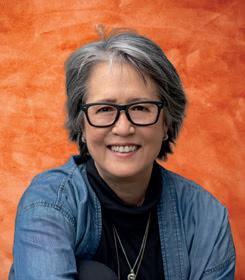
Ruth Ozeki talks to Belinda Bamber about her new book of short stories, the power of fiction and why it’s okay to be unhappy
The title story, The Typing Lady, plays with our curiosity about whether the typist in the library is in fact you. Why do you blur reality and ction? I’m half-Japanese and half-Caucasian American so straddling racial and cultural identities has been central to my experience. I came of age in the 1960s and 70s – before the publishing industry realised people of colour liked to buy books too. I extrapolated that mixed-race girls would not become novelists; when I nally tried, it felt natural to write about someone like me. But I had a problem white male authors did not have: readers assumed she was me. So I leaned into it. I upend distinctions between reality and ction, creating (I hope) playful intimacy between writer-reader-character. As a mixedrace person, I’m most comfortable in grey areas with blurry boundaries.
How does being a Zen Buddhist priest impact your writing? I think of writing as a fullbodied sensory practice, not unlike meditation. In Buddhist physiology, the mind is a sense organ. Thoughts and feelings are objects of perception, not so di erent from sounds or smells. If my senses are alert, I can tune into the body and minds of my characters more
easily. Meditation is a practice of noticing and letting go; writing is a practice of noticing and capturing. I think meditation makes me a better writer.
You’ve said we read to nd ourselves. Do you write to nd yourself? I’m not convinced there is a self to be found. But I do write to nd out about myself, or rather my selves. In Buddhism, the self is a uid construct. Every novel is an exploration of these ctional selves and their interplay with the world. Thankfully, none of my novels has brought enlightenment. That would be terrible. I’d have no reason to write.
Why do you delight in feisty older characters? It comes from my mother. She had Alzheimer’s and my husband and I took care of her. She was tough, from Japanese samurai stock, but grew more gentle and patient as she aged. She was also very funny, right up to the end.
Can ction change the world? A er publication of My Year of Meats , an Israeli lawyer told me the book successfully brought media attention to a class-action suit over the use of diethylstilbestrol, a hormone given to pregnant women with terrible consequences. Kurt Vonnegut called artists ‘canaries in poison coal mines’ – our squawking does have some homeopathic impact on how we live.
Why do you write that ‘it’s okay to be unhappy’? This is a rephrasing of Buddhism’s First Noble Truth. Su ering exists and is natural. When I rst heard this, I felt a tremendous sense of relief. It’s not my fault! Su ering is also the First Noble Truth of Literature, which is good news for authors or we’d have nothing to write about.

You’re a droll observer of human frailty. Is anything beyond humour? I don’t see humour and grief as opposites; as we know from Shakespeare, tragedy needs a few clowns. The problem in the US now is that we have too many. ■
Read the full interview at countryandtownhouse.com culture/cth-book-club

‘I wonder why people never say anything real,’ ponders Artie Dam, an inspirational teacher in small-town Massachusetts, whose family life has been rocked by tragedy and whose geniality conceals an existential crisis. When his son Rob reveals a terrible secret, Artie decides that life is just a web of lies. The Things We Never Say moves away from Strout’s usual community of characters, though it is seamed with the insights that keep us coming back to her: everyday loneliness, betrayal, self-doubt, and yet... the heartening possibility of nding grace. Artie is as endearingly mixed-up as Olive Kitteridge and Lucy Barton; a er the nal page I went back to the beginning. I missed him. BB
Published on 7 May (Penguin, £18.99)
Evie Calver shares a first look at Chelsea Arts Festival’s captivating line-up
The second-ever Chelsea Arts Festival, a C&TH event in partnership with Cadogan, is coming this September. The streets of SW3 and its surrounds will soon be alive with the sound of music – and much, much more.
↗
World-renowned dance company Rambert is stopping o at this year’s festival as part of a year-long celebration of its 100th anniversary. The contemporary ensemble will bring work from its centenary programme This Is Rambert, a topical, experimental and extraordinary performance which embodies the essence of the company. As the rst British dance company to reach 100, Rambert’s visit to Chelsea is a milestone moment to cherish.
Saturday 19 Sept, 11.30am, Cadogan Hall
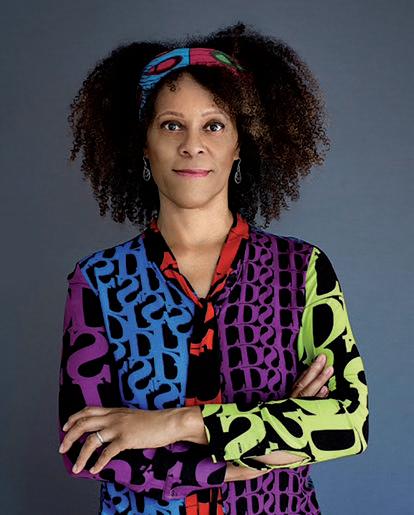
The festival kicks o with a joyous exploration of women’s writing at Cadogan Hall, presented by the esteemed Women’s Prize for Fiction. Works by established and emerging writers take centre stage in a diverse programme of readings, curated by trailblazing author Bernardine Evaristo (right) and brought to life by a host of acclaimed actors and performers. A year a er receiving the Women’s Prize Outstanding Contribution Award for her decades-long dedication to upli ing underrepresented voices, Evaristo’s celebration of female perspectives in literature is set to be a gripping and unmissable opening night. Thursday 17 Sept, 7.15pm, Cadogan Hall



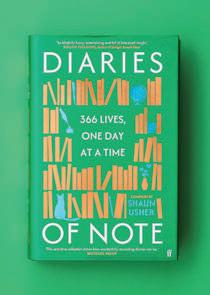
Peek into the private lives of historic gures such as Nelson Mandela and Frida Kahlo at this live edition of Shaun Usher’s Diaries of Note
The bestselling author and creator of Letters
Live is joined on stage by a cast of performers to uncover private thoughts penned by remarkable people. Expect to laugh, shed a tear and re ect, all within the space of an hour. Sunday 20 Sept, 3.30pm, Cadogan Hall


From secret street-corner cafés to historic hotel dining rooms, there’s nothing more tasty than London’s eclectic culinary scene. Ahead of the launch of his new book Table Hopping: The Secret History of London Restaurants, journalist and author Dylan Jones will be in conversation with three of the city’s most in uential restaurateurs Jeremy King, Angela Hartnett and Martin Kuczmarski. Friday 18 Sept, 2.30pm, Cadogan Hall
Allie Esiri (below) returns to Chelsea Arts Festival for another celebration of her award-winning poetry anthologies, this time marking the tenth anniversary of A Poem for Every Night of the Year. Esiri and a host of stars will perform a selection of poems from the collection, inviting audiences to experience how the meaning of poetry can shi and change when read aloud. Friday 18 Sept, 7pm, Cadogan Hall



Enthralled by London’s rich history? Blue Plaques Talk Back Live returns for a second year with a deep dive into the inspirational people and places that have shaped the city. Discover the stories behind – and lasting impact of – four of Chelsea’s iconic plaques through conversations with an exciting line-up of guests, which last year included Sir Stephen Fry (on Oscar Wilde; pictured le ), Dennis Morris (on Bob Marley) and Kathryn Hughes (on George Eliot). Friday 18 Sept, 1pm, Cadogan Hall
When punk exploded in 1976, its notorious epicentre was at none other than 430 King’s Road – otherwise known as SEX, Vivienne Westwood and Malcolm McClaren’s boutiquecum-bondage shop. With the movement and its raw, rebellious spirit still a rm part of Chelsea’s cultural identity, where better to mark 50 years since it tore through the UK? Saatchi Gallery hosts A Night of T/ Reason, an evening of music, art and talks re ecting on punk’s enduring in uence with a host of special guests. Just make sure to bring an attitude. Friday 18 Sept, 6pm, Saatchi Gallery


Chelsea Arts Festival runs from 17-20 September 2026. Tickets on sale now at chelseaartsfestival.com

My favourite arts charity is Art UK. I love it even more than the Art Fund, which does so much to acquire works of art for museums and encourage visitors. I love Art UK because it was funded on a shoestring. Over many years it has taken digital photographs of more than one million works of art housed in 3,500 institutions, from hospitals and libraries to town halls and local museums.
One of those institutions is Southampton City Art Gallery. It embodies an astonishing cultural tradition that has somewhat fallen into abeyance. From the 19th century up until about the Second World War, almost all our major cities bene ted from local benefactors who donated personal collections of art to their community, and o en built buildings in which to house them.
One such benefactor was Southampton pharmacist Robert Chipper eld, who in 1911 le his collection of artworks to the city as well as money to build a gallery. Rather quaintly, he also stipulated that any subsequent purchases should only be undertaken in consultation with the director of The National Gallery (Tate did not exist then, but is now involved). I wonder if there is an annual ceremony where the directors of The National Gallery and Tate travel to Southampton on a special train, to be met on the platform by civic leaders so they can be whisked to the gallery to lay hands on any proposed acquisition. If there isn’t, there certainly should be.
Chipper eld’s bequest was realised – and then some. Southampton City Art Gallery’s collection is now some 5,300 artworks strong and tells the story of western art from the Renaissance to the present day. It includes pieces by most of the Turner Prize-winning artists. They are all housed in the civic centre building, the rst of its kind and a magni cent monument to Art Deco.
This superb celebration of British Surrealism also spotlights the importance of civic pride, says Ed Vaizey

This gallery is home to one of the most outstanding collections of Surrealist art to be found anywhere in the country – and this summer, it is being brought to London to be exhibited at Treasure House Fair, the capital’s pre-eminent interdisciplinary art fair, founded in 2023 by Thomas WoodhamSmith and Harry van der Hoorn. The exhibition, British Surrealism and Beyond: Treasures from Southampton City Art Gallery, will bring together celebrated gures such as Paul Delvaux and Giorgio de Chirico alongside prominent British Surrealists Roland Penrose and Paul Nash, plus lesser-known voices. Women who thrived within Surrealism will also be represented, among them Eileen Agar, Ithell Colquhoun (the subject of a glorious Tate retrospective last year) and Catherine Yarrow. It’s a splendid celebration of Surrealism – but also a reminder of the importance of civic pride. ■
Treasure House Fair, 24-30 June (treasurehousefair.com); southamptoncityartgallery.com
Lauren Baker’s peripatetic art has drawn collectors from Lewis Hamilton to Dua Lipa, finds Olivia Cole

Working mostly in neon and other mediums of sculpture, British artist Lauren Baker has captured the attention of an impressive list of art lovers, from Lewis Hamilton to Dua Lipa, who have taken her sustainable message to heart. In public spaces, too, from the deserts of Nevada and Saudi Arabia to the Venice Biennale, she works where art meets activism. At Tate Modern, Baker created an interactive sound-wave installation as ‘an apology to Mother Earth on behalf of humans for the last 500 years of damage and decay’.
‘We're guardians of Earth. This is our watch,’ she tells me, her works intended as ‘gentle ripples’ that can make us all more conscious of our impact. And it’s not just about ideas: she has undertaken to plant 8,888 trees in the Amazon, funded through her print sales. Representation by MTArt Agency has helped her amplify her message and reach new audiences globally.
Baker’s interest in nature extends to other dimensions. She takes inspiration from transcendental meditation, numerology, star-gazing and o grid travels to alternative cultures. She quotes Nikola Tesla: ‘If you want to nd the secrets of the universe, think in terms of energy, frequency and vibration.’
A favourite mantra in her work, which o en incorporates text, is ‘the trees are watching’. We all know that plants are alive,
but as Tesla would have it, they are vibrating at a frequency that is within the eld of human consciousness. ‘Rocks are alive as well. We’re made of stardust. Our ancestors are like fossils in the rocks.’ This sense that natural objects are sacred inspires her Earth Totem works, which can be small enough to collect or made to a larger scale – for example, for Burning Man festival.
As the proud daughter of a midwife and an engineer, her time with her dad involved travelling with him and her brothers in Africa. These family trips were a world away from day to day life in a tough part of Middlesborough; at home, her favourite view from the family’s high-rise was of the night skies.
Today, she loves getting into the raw landscape, exploring the Peruvian Amazon and other remote parts of South America, using the Gallery Climate Coalition to track her own impact. At home, her routine starts with being in nature on the canal in London Fields with her dog. Appropriately for an artist so inspired by the mystical, she lives in a converted chapel. Here and in her studio, she is a night owl, so work in earnest might start as late as midnight. Some things don’t change, and a er dark is still the best time to dream her way to new perspectives.
Lauren Baker is exhibiting at the Jaro Gallery in Jersey in November (laurenbakerart.com) ■

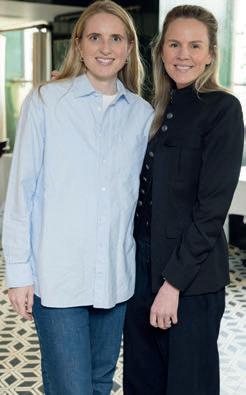
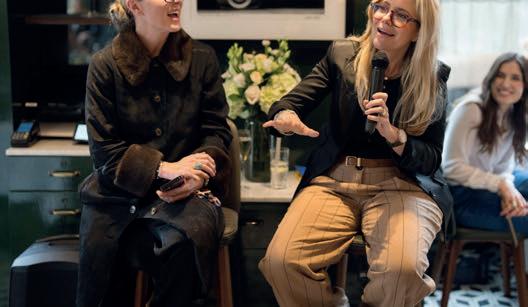

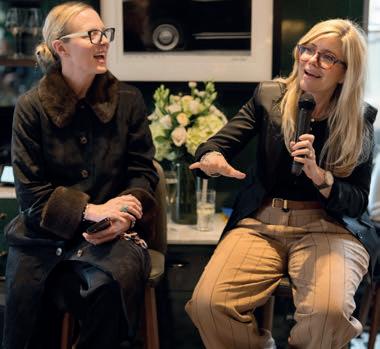
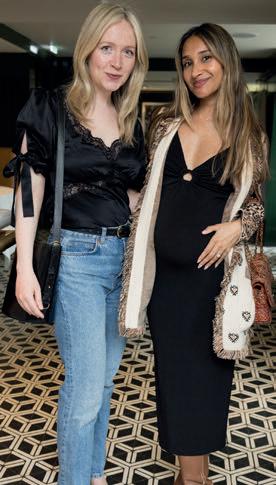
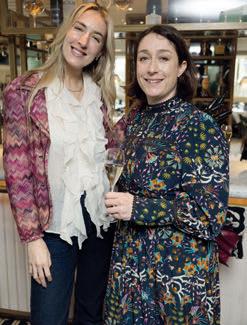

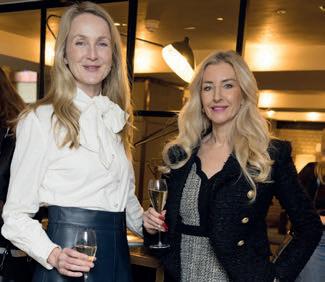
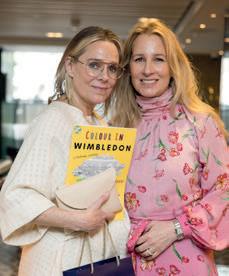
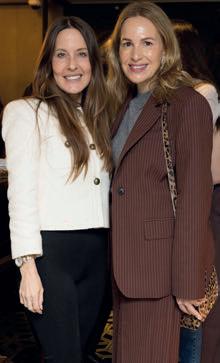
You might know Emma Barnett as one of the anchors from BBC Radio 4’s Today Programme , Europe’s most listened to political show. However, did you also know she founded her own business, Colour Your Streets, with her husband Jeremy? Having survived a bout of nasty u and having not had a public appearance since being grilled by Kemi Badenoch at a charity lunch, Emma was back on sparkling form at the annual C&TH Female Founders lunch, co-hosted with JPR at the Hari Hotel. In a far more relaxing chat with editorial director, Lucy Cleland, Emma spoke candidly, generously and hilariously about maternity rights, equal pay, illness, ‘having it all’, getting your hair done and carving your own path. Guests were lavished with gorgeous Dr Sebagh and Matiere Premiere goodies. ■





THE RETURN OF…




17–20 September 2026
A Weekend of Arts & Culture: Inspiring Talks, Performances & Outdoor Entertainment



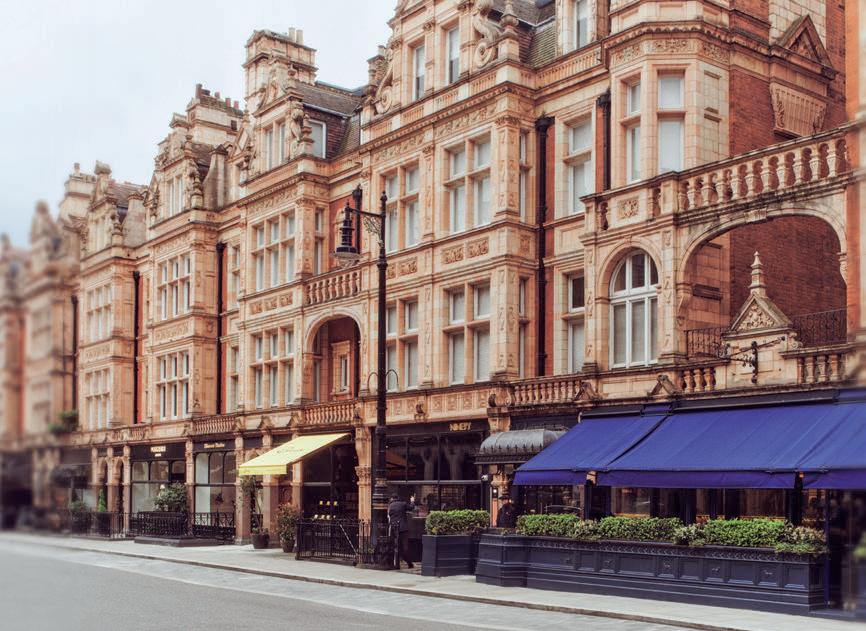
Mount Street Neighbourhood Festival returns this June – a gathering of art, craft, books and conversation across Mayfair and beyond
Mount Street is one of Mayfair’s most unique streets: archetypal red-brick townhouses; a world-class collective of galleries, restaurants and retail; and a long history of cultural occupancy. Sir Winston Churchill lived at no. 105 for half a decade, and the street has been home to Britain’s leading art dealers, writers and gentry for generations. This June, Mount Street Neighbourhood Festival – encompassing South Audley Street, Carlos Place and neighbouring destinations – returns for its second edition.
Timed to coincide with London Gallery Weekend, the programme has a particular emphasis on art while also drawing on the neighbourhood’s deep foothold in publishing, fashion and food. A cultural hub at 62 South Audley Street will anchor the programme, with contributions from Thames & Hudson, Kathryn Maple, By Walid and Le Monde Béryl, among others. Mount Street will also be bursting with new openings, including Adam Lippes and Foundrae.


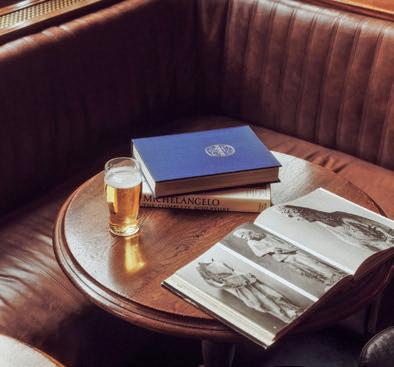
A curated selection of rare and vintage editions – including signed and limited runs – across art, photography and fashion will be available throughout the festival, alongside a series of talks. Alexander Fury will speak on Vivienne Westwood; former V&A photography curator Susanna Brown on George Hoyningen-Huene; and art historian Alexandra Loske on her book The Artist’s Palette , with further programming to follow.
The festival’s artist in residence will paint, cut and compose new work inspired by Mayfair’s Mount Street Gardens, working from the 62 South Audley Street hub. A group of her recent collages and drawings will also be on view in the space. Kathryn will lead community sessions outdoors, including a series of drawing workshops in the gardens.
BY WALID’S
From 15 to 20 June, couture home and style studio By Walid –which works exclusively with antique textiles – will present a singular new collection. It includes furniture upholstered in a rescued 17th-century Flemish tapestry, wall panels cra ed from 19th-century opera gloves, and one-of-a-kind coats made from antique Chinese and Italian embroidery. All pieces will be available to purchase.
Founded by Katya Shyfrin and Lily Atherton Hanbury, Le Monde Béryl will showcase new, exclusive styles, available to purchase at 62 South Audley Street from 4 to 13 June during the festival.
Thames & Hudson will host a series of children’s workshops, led by author Joséphine Seblon and illustrator Robert Sae-Heng.
Flowers Flowers Flowers will be on South Audley Street throughout the festival with seasonal bunches.
Neighbourhood restaurants and tenants will contribute further programming across the festival weeks – details to follow.
The festival is presented by Grosvenor, opening London’s summer cultural calendar ahead of the RA Summer Exhibition and the Serpentine summer party.
4-20 June 2026 (opening weekend 4-6 June). mountstreetneighbourhood.com; @mountstreetneighbourhood




Charlotte Metcalf meets Christine Dawood, who gave up her seat on the Titan submersible, only to lose her husband and son when it imploded
PHOTOGRAPHY —— ALEXANDRA DAO
Ch ristine Dawood’s story, though unforgettable, might have receded into the background had it not been for her decision to write Ninety-Six Hours, a minute-by-minute account of her time waiting for news of her husband and son aboard the Titan submersible, which imploded in 2023 on a dive to explore Titanic. All Dawood knew was that Titan only contained enough oxygen for 96 hours.
Like any story with a known, dreaded ending, it’s a harrowing read, but so ened – and all the more engaging – for its vignettes of family life. Yet no conventional publisher supported the book. ‘They said no one would be interested,’ Dawood tells me. ‘But it turned out for the best. By selfpublishing I’ve kept control over how I represent my voice and those of my husband and son.’
Dawood met Shahzada in 2000, when they were both studying at university in Germany. ‘I was smitten,’ she laughed.’ They married, had a son and daughter, and moved to Lahore for a few happy years before settling in Surrey.
It was Dawood who came across a newspaper ad inviting people to join Titan . ‘Shahzada wasn’t even speci cally interested in Titanic but I knew his appetite for doing unusual things.’ A er they signed up, their son, Suleman, was so excited by the idea, Dawood gave up her place but went along, with his sister, to be on the ship cheering them on.
I tell her I thought Titan looked more like a toy than a robust piece of engineering. ‘Though adventurous, we never liked leaving our comfort zone. We loved to learn but always took a good guide who knew how to handle any situation. Yes, Titan was small, but there was so much expertise around it – they were diving with the CEO of OceanGate who built it, Stockton Rush, and the naval explorer Paul-Henri Nargeolet, who’d done 37 dives already. What could possibly go wrong?’
The dive begins and then Dawood puts the reader rmly in her shoes as Titan loses contact. I ask her how she kept her daughter calm but she
prefers we don’t speak about her, to prevent her from being de ned by the story.
When the time nally came to leave the ship, Dawood describes how supportive and loving Shahzada’s family was and continues to be. ‘Knowing they had own to be with me when I disembarked enabled me to keep going,’ she says. ‘It wasn’t easy facing people. One person told me, “I’ve never lost somebody but I did lose a dog so I know what you’re going through,” and I thought, “No, you really don’t!” It’s better admitting you don’t know what to say than to come out with Hallmark platitudes. The most helpful thing was when someone just squeezed my hand, and said nothing. Because what is there to say?’
I ask what made her start writing: ‘Any grief counsellor would advise you to keep a journal and mine did. It was quite cathartic at rst. I walk a lot, so I’d just pour my feelings into my phone. I interwove the family memories so readers would know the humans behind the story rather than just see us as victims.’ The book describes her 400-mile walk to raise money for The Suleman and Shahzada Dawood Foundation. ‘Walking was mine and Suleman’s thing,’ she smiles. ‘He was at university in Glasgow and was planning to walk home from there. So, on the second anniversary of their deaths I decided to walk to Glasgow and raise money to set up a centre for trauma, loss and grief.
‘I’d looked for a safe haven when I was grieving but couldn’t nd one anywhere in Britain. We’re herd animals and need people and companionship to heal. I’m creating somewhere where you can just be, and be looked a er.’ Dawood has identi ed three beautiful potential properties on Dartmoor. ‘I needed this purpose. I have a lot of angels in my life who have helped me. It’s time to give back.’ ■
All proceeds from Ninety-Six Hours: A Wife and Mother’s Desperate Search for the Lost Titan Sub (published on 12 May) go to Dawood’s foundation. pathwayo ight.co.uk/donate/
BOOK THAT’S INFLUENCED YOU MOST Becoming by Michelle Obama
BOOK THAT’S HELPED YOU THE MOST Krankheit als Weg (Illness as a Path) by Rüdiger Dahlke
WHERE YOU’RE MOST AT PEACE Walking barefoot on moss in a Bavarian mountain forest
LAST PLAY YOU ENJOYED Wicked, one of my favourite musicals
FAVOURITE PAINTING
Dal Í’s Persistence of Memory with those melting clocks
AN ARTWORK THAT HAS MOVED YOU
The Inner Child, by Ukrainian Alex Milov. It was at Burning Man and perfectly shows how children connect when adults can’t
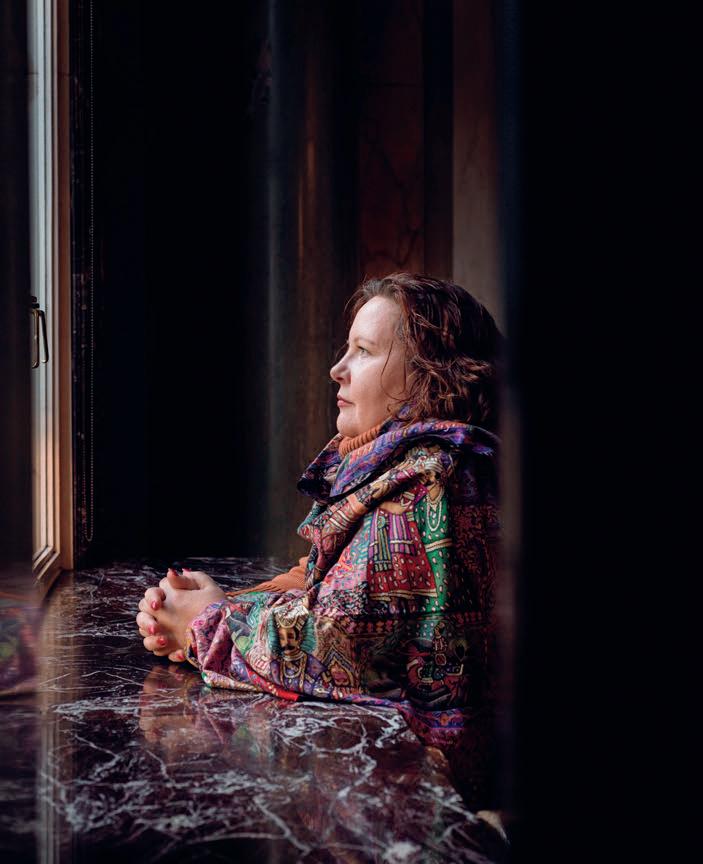
‘Yes, Titan was small, but there was so much expertise around it – they were diving with the CEO of OceanGate who built it and the naval explorer Paul-Henri Nargeolet, who’d done 37 dives already. What could possibly go wrong?’
Christine Dawood
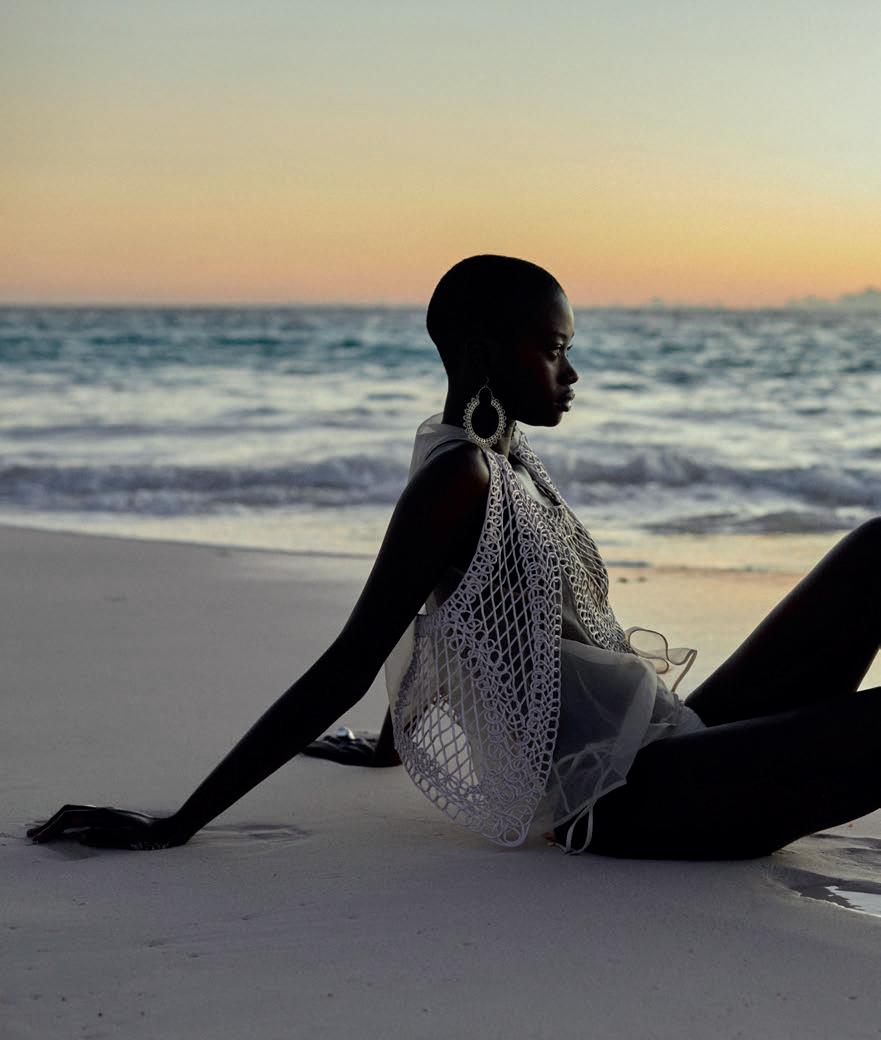

FASHION DIRECTION
PHOTOGRAPHY




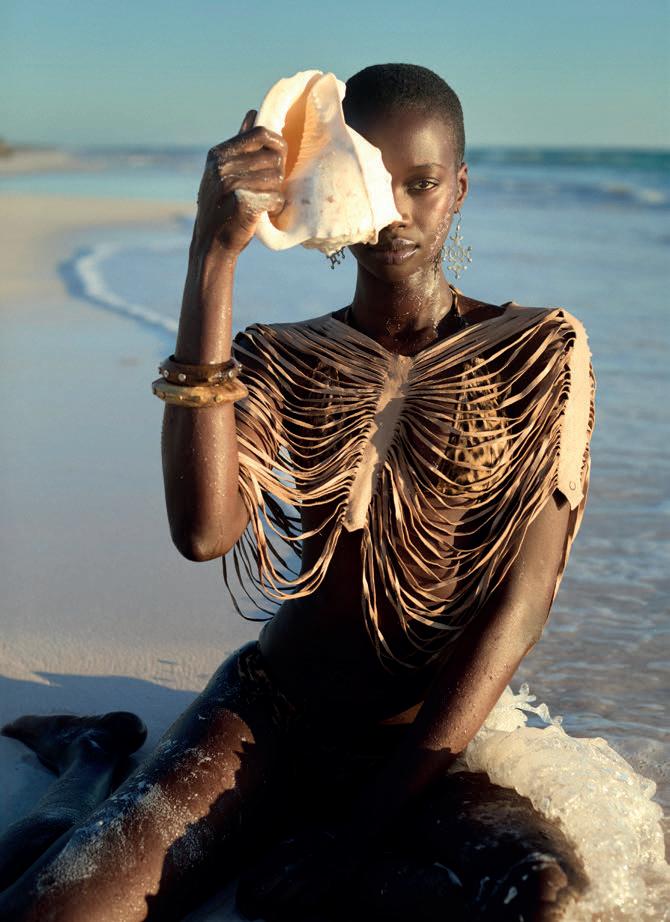


How the C&TH fashion team found themselves hanging out on a branch off Harbour Island

The Lone Tree – a large piece of dri wood thought to have arrived during Hurricane Andrew in the 1990s – has become a well-known landmark on Harbour Island, a tiny speck in the Bahamas, 60 miles east of Nassau. Reaching it involves wading through shallow water for 15 minutes, and masterminding a fashion shoot here was not without its challenges.
‘I carried the clothes around my neck,’ says C&TH fashion director Nicole Smallwood. ‘The crew had to hold onto Fatou while she changed on the branch, while also keeping the cameras dry, and we were all on shark watch too.’
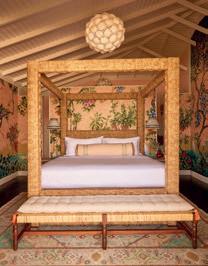
The team were staying at Coral Sands Inn & Cottages, a beautifully refurbished coral-pink palace plum in the middle of Harbour Island’s renowned Pink Sands beach, three-and-a-half miles of powderne blush sand met by rolling warm turquoise surf. Here, 41 rooms are split across the hotel, 14 cottages and three beach houses, the tropical gardens – with chickens – tracing down to the shoreline.
For Smallwood, the hotel’s beauty was in the details – the scalloped shells embossed on the (pink, of course) shower tiles; jars of cookies in the rooms; gi bags with tees and gorgeous striped beach bags. ‘Plus the com est beds I’ve slept in my entire life and huge walkin cupboards – amazing when you’ve brought enough clothes for an eightpage fashion shoot.’
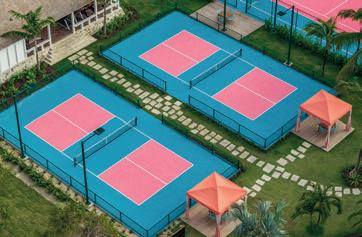
The whole place is ‘Instagram Paradise’, says Smallwood – ‘a visual explosion not unlike a tray of cupcakes’, where the panel and tennis racquets match the colours of the courts, the towels, the balls. ‘The food was delicious and we’d have these beautiful sundowners on the beach,’ though, Smallwood admits, not actually at sun down as they were still shooting. ‘Coral Sands works because there’s an opulence to it all but it feels homely too, somewhere you want to just be.’
The cover shot took place on the team’s last morning, all of them whizzing to the shore with one giant suitcase full of clothes balanced on the golf buggy (there are no cars on Harbour Island).
‘We had to wait for the right tides. It was all a balancing act but in the end it was a magical moment. Just us, the branch and the sea.’ And no sharks… this time.
Doubles from $950, coralsands.com ■


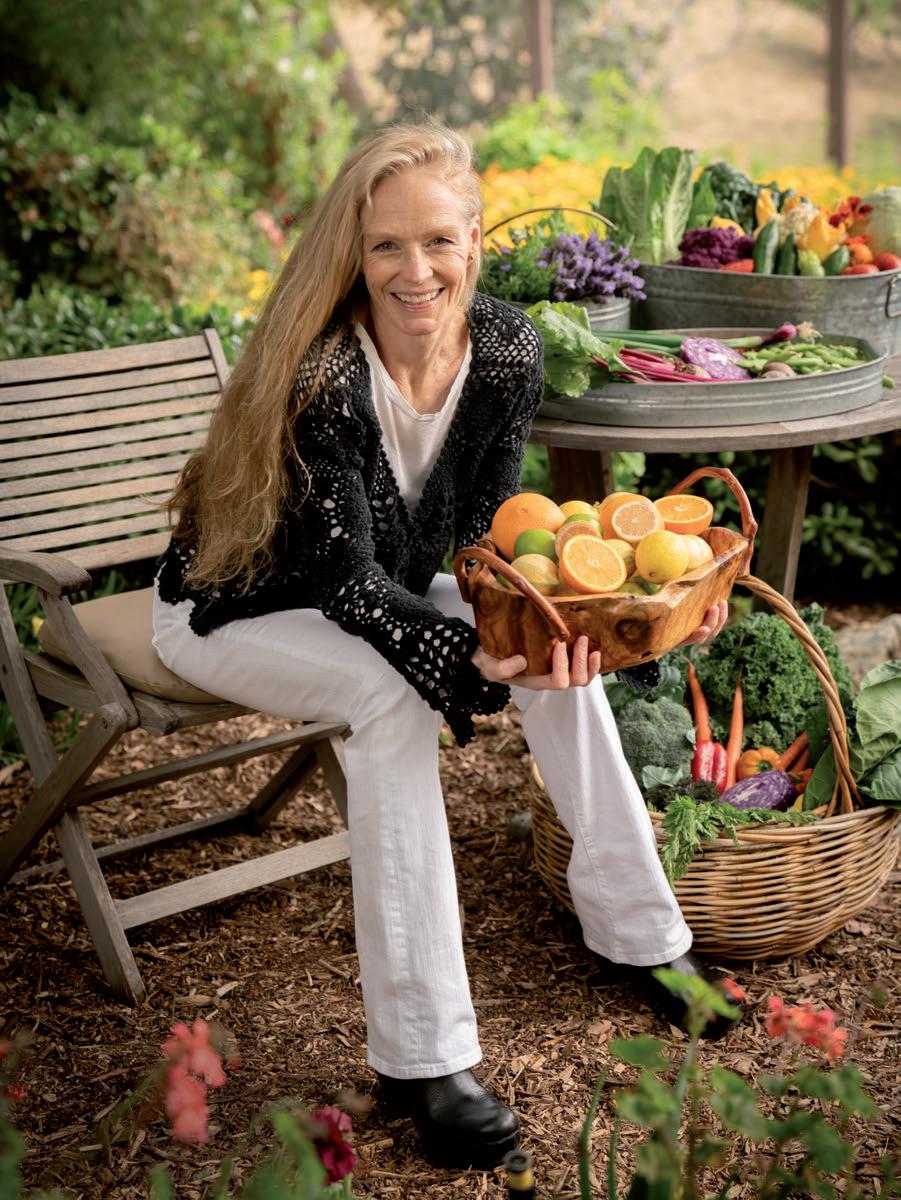
From Hollywood to a $300m systemchanging venture, Suzy Amis Cameron is asking us all to rethink what we eat, wear and invest in, says Lisa Grainger
uzy Amis Cameron is clearly still buzzing from the LA premiere of her husband James’ latest lm, Avatar: Fire and Ash . ‘We hadn’t realised just how spectacular the whole thing was going to be,’ she says over Zoom from Paris, a warm smile illuminating her nely boned, pale, freckled face, framed by a mass of tousled, waist-length, blonde hair. ‘We were coming up Hollywood Boulevard and there was this huge “A” on re – just a single letter in ames. And the rst responses have been o the charts, which is great.’
There is very little that this remarkably un-starry but powerful couple do that isn’t o the charts. Alongside James’ well-documented career as one of Hollywood’s leading directors of lms – including Avatar and Titanic, (two of the highest-grossing ever), as well as Terminator 2 and Aliens, earning him 65 global awards – he’s a deep sea explorer and outspoken environmentalist.
The person who has helped drive his devotion to the latter is his h wife Suzy, whom he married in 2000 and has three children with (alongside one each from their previous marriages). It was Suzy who persuaded him, a er watching Forks Over Knives, a movie about the meat industry, that they had to give up eating animal products. ‘An amazing educator, Elliot Washor, was always telling me we had to read the book The China Study [by Dr. T. Colin Campbell], on which the lm was based,’ she says. ‘One day I grabbed the DVD and watched it on the treadmill. A erwards, I literally was just… I felt gut punched.’
The lm revealed to her not only the truth about poor animal welfare on farms, but the lies most families had been fed: that eating and drinking animal products was healthy. ‘Growing up in Oklahoma,’ she says, ‘we grew cows, we grew pigs, we ate them. And my mom was constantly saying how much we needed to drink our milk, three glasses a day at least, for our strong bones and teeth.’
And that, she learnt, wasn’t true. ‘Not only is it not good for our bodies, but is actually detrimental to our health. [Dr Campbell found that] casein, the protein in dairy, is a carcinogen.’ She continues, ‘You know when you go to the doctor and they ask you what your family history is with heart disease and cancers and diabetes? Well, now I know that over 90 percent of health issues are because of what you eat. It’s not genes.’
When James got home that night, she asked him to watch the lm. A erwards, they walked into the kitchen and ‘24 hours later, our whole pantry and refrigerator was cleaned up’. That was 2012 – and they’ve both been strict vegans (or what James calls a ‘futurevore’) ever since.
Having switched to a plant-based diet, Suzy then made the bold move of doing the same at Muse, the environmental school she’d started in California with her sister Rebecca. By then, James had given Suzy a book to read about the connection between animal agriculture and climate change. She’d had no idea, she adds, that forests were being decimated around the world to produce plant feed for cattle – and that animal agriculture produces more climate-changing gases than planes, trains and cars combined. ‘So that was another gut punch. Previously, I thought I was feeding everyone at home and at school in the most beautiful, perfect way. We had grass-fed beef, free-range chicken, organic dairy, cage-free eggs, la-la-la…’
But if Muse claimed it was an environmental school, Suzy says, it had to change what it was feeding the children. And that meant a plant-based diet. Transforming the school meals wasn’t straightforward, she admits; the parents in particular took some persuading. ‘We took 18 months and every month we had a speaker come in, which might have been a vegan athlete, or author, or chef. We had climate scientists, we had doctors. And then at night, we would have the families and teachers come in, we fed them beautiful vegan food, give them a glass of wine. We literally did that for 18 months.’ She also worked with pro-plant-based doctors, like Neal Barnard and Dean Ornish, to create documents for the families – some of whom were worried their child’s brain wasn’t going to grow properly. What she showed them was that statistically, ‘children have a higher IQ and are taller if they are raised on a plant diet’.
Like most things Suzy does, it took guts. When in the autumn of 2015 Muse announced it was the first plant-based school in North America, it promptly lost 50 percent of its families. Others would drop their children o saying, ‘Good luck, my kid doesn’t eat anything green’, and then pick them up with treats of cheese sticks and beef jerky. But within a month, the children had turned. ‘It’s positive peer pressure because we’ve got a very robust seed-to-table programme. The children are growing their own food – learning how to plant, nurture and harvest it, and then prepare it and compost it – so it’s full-circle.’ And the food’s delicious, she adds with a grin.
By the following year, the school’s intake was up on the year before. ‘We even had families moving here from Europe.’ And this year, it opened its second campus, in Santa Monica. A key thing, Suzy adds, was saying to the parents, ‘It’s only one meal a day’ – a mantra that became her bestselling book Only One Meal and then a movement, signed up to by in uencers such as Oprah, persuading people to try just one plant-based meal a day. ‘And then they’d realise they didn’t have that a ernoon dip a er
lunch, they didn't snore at night or have acid re ux, or things like that. And so they’d add a second one.’ She began to understand that people o en live with their head in the sand – and only when confronted with facts, with backing from science and people they respect, do they listen.
The problem is, she says, once a mask has been li ed, you question other things – for instance, the sustainability of fashion. When she and James fell in love on the set of Titanic (what they laughingly now refer to as ‘The Love Boat’), few people in Hollywood knew much about sustainable fashion or considered wearing ethical clothing to glamorous events. It’s taken decades, she says, for truths about fashion companies to come out.
It was this constant reaction of people – ‘Oh my god, I had no idea’ – that made her realise her next project should be bringing together all she’d learnt about fashion, lm and food into one place. So in May 2025 she launched her biggest project yet: Inside Out. With backing of $300m – including $65m of her own money – the company was created to bring together ‘a global community of changemakers across food, fashion, education, media, wellness, science and technology, collaborating with some of the world’s top universities and institutions to drive systems-level transformation’. In essence: to try and make better products for people and planet, with a focus not just on a return on investment, but on integrity and impact too.
Alongside working with institutions such as MIT, the Georgia Institute of Technology, and Texas Tech University to ensure everything from food to fashion has a scienti c basis, one of the key drivers of the company is communication, she says: delivering truths to audiences so they can’t say ‘I had no idea’. So far, she has executive produced the award-winning documentary The Game Changers (about plant-based food), Milked (the dairy industry), Let Them Be Naked (the toxins in clothing) and docu-series Junk (fast fashion).
The charismatic co-author and host of Junk , Matteo Ward, was lured to be head of the fashion, textiles and home division at Inside Out, whose HQ opened last year in Rome. Part of his role is overseeing brands the company has invested in, such as The Simple Folk, which produces ethical clothing for children, and sustainable knitwear Sheep Inc., which recently opened its rst store, in London.
The choice of Rome for the HQ was deliberate, Suzy says, and Ward’s idea. It was there that the textile industry began, centuries ago. By planting its sustainable ag there, Inside Out hopes to revive what was a thriving industry but in an ethical way, while sharing solutions in an open-source
‘It’s always been, “Yeah, real men eat meat”. But once they go vegan, there’s no going back. Sex life is better, for sure’
Suzy Amis Cameron
manner so others can share their learnings.
So there’s a lot going on, the lithe 63-year-old admits with a rueful laugh. As well as accompanying James on his premiere circuit (wearing, in LA, a long dress accessorised with a train made from an old piece of silk, and in Paris, a dress created from deadstock fabric), they have ve children and several grandchildren. At their farm in Wellington, New Zealand, where they’ve lived since 2012, they have the ‘biggest organic veggie operation in the country’ and have launched a beauty range based on Manuka honey. Plus, Suzy is working on a new documentary lm about the positive e ects of a vegan diet on men’s sex lives titled, appropriately, Hot Sex, Cool Planet, based on research at Monte ore Hospital in New York.
Erectile dysfunction is a topic men don't talk about but should, she says. ‘They go to the urologist and he gives them a little blue pill, when what he should be saying is: “You need to run to your cardiologist, because erectile dysfunction is the canary in the coal mine for heart failure”.’
The lm won’t be suitable for all the family, she admits, pale skin blushing as she describes the case studies they’ve followed. And the link between meat-eating, cholesterol and poor circulation is something the meat industry doesn’t want advertised. ‘It’s always been, “Yeah, real men eat meat”. But once they go vegan there’s no going back. Sex life is better, for sure.’
And if that doesn’t put more people – men and women –on Suzy Amis Cameron’s vegan pathway, nothing will. ■ liveio.global
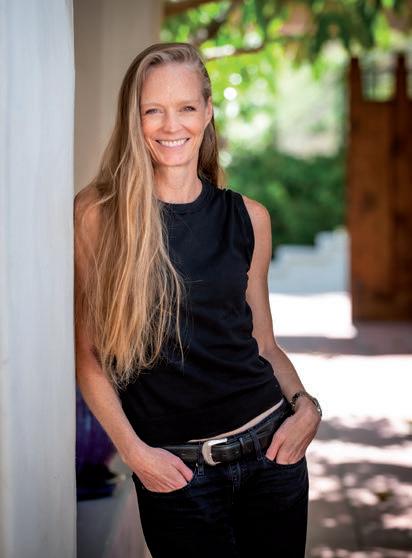


At ‘Nature HQ’, Vivobarefoot’s Galahad Clark is rewriting the rules of leadership, says Fleur Britten
t is, admittedly, an unlikely-looking office. Overlooking an Arcadian patchwork of elds and woodlands in Somerset’s Yeo Valley, the headquarters of Vivobarefoot – the shoe brand on a mission to ‘free the foot’ from the unhealthy constraints of conventional footwear – is housed within a magni cent Victorian walled garden and glasshouse. In clement weather, meetings, lunch and even parties are held outside, alongside its impressive vegetable garden, in the apple orchard or by the swimming pond.
I’m here to meet Galahad Clark, Vivo’s CEO and seventh-generation shoemaker (he co-founded the pioneering brand in 2012 with his cousin Asher Clark, Vivo’s chief design o cer). As we walk past row upon row of rhubarb, curly kale, leeks, parsnips, herbs, etc – all of which are cooked up for team lunches from Tuesdays to Thursdays, sold in the honesty fruit and veg shed or donated to local charities and food banks – I feel the immediate sense of a shoulder-dropping, feet-on-earth nature reset. It’s an extraordinary vision of what a workplace can be.
This is ‘Nature HQ’, and it’s not just about rewarding sta with pretty scenery and homegrown veg. Nature HQ is about bringing Vivo’s team of over 150 employees into alignment with its philosophy, explains Clark, or ‘G’, as everyone calls him. ‘The mission is basically about reconnecting people to nature,’ he says, as we tour the ten acres of land (Vivo also rents the estate’s country house for overnight visitors and sta , which has a 20-acre ancient yew wood).
Eighteen months ago, the B Corp was headquartered in a ‘concrete box’ in Covent Garden, which ‘made less and less sense’, says Clark. That’s because instead of running a company in the usual, ‘mechanistic’ way, where cold, business-y concerns such as e ciency, control and short-term output are prioritised, Clark sees Vivo as a living organism – one that, like nature, is permitted ‘fallow periods’ as well as ‘bursts of growth’, that embraces change over control, and that aims to be regenerative, not extractive. And instead of a ‘military-style hierarchy’, he says, ‘there’s a atter ecosystem’, as in nature. It’s a modus operandi inspired by the teachings of Sussex-based leadership coach Giles Hutchins, with whom Clark has worked since 2019.
‘One of the simple things we say is, “Make the big decisions in nature, in the woods, around a re – with the literal sense of being in a living system,”’ Clark tells me, as we sit down in the glasshouse-turned-canteen/workspace for some wild venison stew with Jerusalem artichokes, onions, carrots and leeks from the garden.
Clark gets that most people don’t naturally think like this, so in the past Vivo teams would attend nature-immersion workshops with Hutchins, though these tailed o : ‘As you can imagine, some people thought it was excessive,’ says Clark. (If Hutchins’ coaching is about encouraging honesty and authenticity, Clark clearly got the memo, o en starting sentences with, ‘The truth is’. But then he’s also a Quaker, ‘from a family of Quakers’, and those values of integrity, community, equality and stewardship seem central to him.)
‘But you notice when the culture starts to dissipate and people start to misalign and dri apart’ – especially, he adds, ‘in these bloody hybrid, disconnected times’ (Vivo staff are expected in the o ce two days a week). Nature HQ is, he says, ‘our attempt to bring everyone back together.’ So, there’s an ‘innovation barn’ here for R&D – an ivy-clad timber cabin currently full of 3D-printed, zero-waste ip- ops; the design team are housed in another outbuilding, and coming soon are a pond-side sauna and, in another barn, the boardroom – though they o en hold meetings outside, sitting on rocks, logs or just the ground: ‘Chairs are almost as bad for you as shoes,’ says Clark.
Not all employees are ‘barefoot fanatics’, he admits. ‘Some resist it a bit’ (about 60 remain in the London o ce). To ease the adjustment, the onboarding process includes nature-based workshops and retreats to Bantham on the south Devon coast (where the Clarks enjoyed barefoot summers as children). There are also quarterly feasts, ‘around the equinoxes and solstices’ (naturally), held in teepees in the orchard, complete with a Vivo awards ceremony. ‘We use the awards to build the culture,’ explains Clark. ‘They’re linked to our values.’ Yes, there’s even a posture prize, because that’s one of the ‘essential tenets of natural movement’ – posture is also symbolic, signifying alignment to Vivo’s mission. And there’s an annual three-day summer camp in Bantham, with swimming in the Avon Estuary, sound baths, camp res, meditation, dancing and all those other nature-immersing wellness rituals.
‘You can’t underestimate how powerful it is to bring groups of people together in a shared philosophy,’ he explains. ‘Solutions come much more quickly.’ Indeed, ‘business has done well in this period, and gone from £30m to over £100m.’ This summer, Vivo is opening its rst US store, in New York City. But it’s a system that’s open to abuse. ‘Sometimes people use it to excuse going o the boil – so all of those dynamics are alive all the time.’
When con ict strikes, you can expect Clark to lean into it – though he prefers the word ‘tension’. ‘I’m always in favour of surfacing tension and having messy meetings, because we’re making


‘I’m always in favour of surfacing tension’
Galahad Clark

di cult choices all the time. The more you hold the tension, the better the answer.’ Tension, he explains, is inevitable when the bottom line is about more than just profit. ‘If it’s purely shareholder capitalism, then the answer is obvious –just do whatever makes the most money. But if you’re also trying to do it the right way, there’s always a tension.’
Clark corrects the assumption that Vivo is cushioned by family wealth (Galahad, his cousin and co-founder Asher and immediate family are Vivo’s main investors, holding just under 70 percent of the shares). ‘The truth is,’ he says, ‘that the [wider] Clark family and business have nothing to do with Vivo. My cousin and I inherited some [Clarks] shares, and went all in on Vivo. We both have mortgages –we’re not cash-rich beyond Vivo.’
In the last 12 months, he admits, ‘things have gone relatively unwell. Last year we lost money for the rst time in many years. Cash ow is a very real [issue] – we’re sometimes like, “Whew, it’s a little tight.”’ That’s partly down to ‘ guring out how to deal with 100 new barefoot brands’ (no exaggeration), and ‘having the patience to go through those periods’. It’s also partly because, he says, ‘we’ve been braver –it’s harder to coordinate a atter, more networked organisation than a very strict one. It has not gone perfectly – there’s no question we’ve been a less pro table, less effective, less efficient business through this process, by misstepping and overstepping.’
What Clark most wants to avoid is being at the mercy of ‘impatient capital’ (ie, investment focused on short-term returns). It’s essential, then, that Vivo stays pro table in order to remain independent. Having to court new investors would mean that ‘being a business as a force for good is almost impossible’. Indeed, he adds, ‘There
LEFT & BELOW: Nature HQ, where meetings are often held outside and staff are treated to nature-based workshops and retreats
are tens and tens of companies – Pukka Herbs, Farrow & Ball – who built beautiful, purpose-led businesses, which then get sucked into an impatient capital trap.’ (Pukka’s former nance director, John Collins, is now Vivo’s chief nance o cer.)
Thanks to Covid, Trump and the woke capitalism backlash, the landscape for sustainable brands is increasingly tough. While the 2010s were a heyday –‘Adidas was working with Patagonia and Parlay, and was genuinely talking about the triple bottom line,’ says Clark. Nike had Nike Considered, even Walmart was getting involved – it’s now harder for companies trying to do the right thing. ‘People got paralysed in corporate America,’ he says, ‘and now we’re behind where we were in 2016.’
What can we hope for in the next decade? Well, back in the walled garden, Vivo has been hosting other businesses to share their learnings. Clark doesn’t see this so much as mentorship but a twoway support system: ‘There aren’t many independent companies of a certain size that aren’t yet slaves to impatient capital or owned by bigger [corporations]. We need to hold hands and give each other moral support to stay independent.’
The point is, he adds, ‘This should just be normal. Patagonia is one of the only companies that has scaled and stayed true to its purpose. We need a lot more Patagonias. If business isn’t a force for good, then there’s going to be a worse world for us all.’ ■

Four British companies prioritising purpose and hope
One hundred percent employee-owned since 2023, Riverford’s ‘co-owners’ get an equal share of the pro ts (plus free fruit and veg from its grade-out store). A B Corp with a top ve percent score, the planet is a key priority: 70 percent of its delivery vans are electric, it’s invested ‘well over six gures’ into agroforestry and is funding the development of peat-free horticultural alternatives. riverford.co.uk
2
Having pioneered the concept of putting nature on the board, this B Corp has embedded nature-based decisions in all operations. For example, its two UK sites are both powered by renewable energy, sta work four-day weeks, and are given ‘nature connection’ sessions and access to mental health rst-aiders, who o er green social prescribing. faithinnature.co.uk
3
A er making ‘Mother Nature’ a director in 2023, the interiors brand has walked the talk by swapping out feather cushions for regenerative wool, switching to organic cotton, and developing plant-based paint and wallpaper from plant waste. Sta work four-day weeks to enjoy ‘nature Fridays’. houseofhackney.com
4
A B Corp-certi ed subscription service for re llable personal care products, each plastic pouch is reused about eight times before being recycled. Nature days for sta are encouraged, with annual beach and river cleans for all; they also donate products to local food banks and charities. bowercollective.com

If you are a brand or individual that deserves recognition, enter today to become part of a growing and thriving community. It’s your chance to be in the room – and make a change.

At Electrogenic’s Oxfordshire HQ, the world’s most beloved classic cars are silently being electrified, says Jeremy Taylor
Electrogenic is a team of modern-day alchemists who breathe new life into the legends of the road, including the Jaguar E-Type, Citroën DS and the company’s most popular electric conversion, the classic Land Rover
e might blush if you suggest it, but Steve Drummond is England’s answer to Mate Rimac. Sat in the Oxfordshire HQ of Electrogenic, the 63-year-old mechanical engineer and renewable energy expert can understand why some people might make such a comparison.
Rimac, the billionaire electric car innovator and CEO of Bugatti Rimac, is himself o en referred to as ‘Europe’s Elon Musk’. The 38-year-old began his career by electrifying old cars in the garage and went on to build a global empire.
‘There are similarities, but Electrogenic is on a slightly di erent scale,’ smiles Drummond. We employ 25 people in our Cotswolds workshop. Most of them are diehard automotive bo ns, passionate about creating EVs from a driver’s point of view.’
The sign above one door says it all: ‘Saving the world one car at a time.’ However, the Electrogenic story is not one of loud engines and exhaust fumes but of silent, seamless power.
Electrogenic is a team of modern-day alchemists who breathe new life into the legends of the road, including the Jaguar E-Type, Citroën DS and the company’s most popular electric conversion, the classic Land Rover. Other high-pro le cars to have passed through the workshop include a stunning 1929 Rolls-Royce Phantom II. Fitted with a 200bhp electric motor, the breathtaking one-o was commissioned by Game of Thrones actor Jason Momoa.
Comedian Jimmy Carr also came to Electrogenic to prove that even the most iconic of British sports cars can embrace a future without emissions. His 1967 Aston Martin DB6 was ingeniously converted to run on battery power.




Drummond, 63, says the story of Electrogenic isn’t about replacing the past, but rather preserving it. ‘Every conversion is designed to be entirely reversible. It means that while these cars now glide silently through modern cities, their soul remains untouched for generations to come.’
While the company is famous for bespoke masterpieces, Electrogenic’s vision extends further. It has since developed exportable drop-in conversion kits for icons like the Porsche 911, Triumph Stag and original Mini, allowing classic car lovers everywhere to future-proof their vehicles.
The company’s technology even reaches into the Ministry of Defence, where it helps electrify military-spec Land Rovers for stealthier, more e cient operations. ‘We’ve been in existence for about ten years but the business is fast-evolving; we have become the world’s only electric vehicle powertrain and so ware provider,’ explains Drummond. ‘Other conversion companies can electrify your classic car but they aren’t designing their own so ware, which is the crucial bit. Our so ware is now proven in a whole range of vehicles and the drop-in kits we make can be tted anywhere. More than half our business is for export.’
Every kit features a high voltage e-motor, with a single-speed transmission and a battery pack – pre-assembled and ready to bolt into a speci c classic, resting on the existing mounting points. Remarkably, with a quali ed engineer, the whole operation can easily be completed in a day.
‘People convert their cars for different reasons,’ says Drummond. ‘E-Type customers get fed up with their Jag constantly breaking down; Land Rover owners don’t want to make black smoke and love the economy of an e-motor when it’s been tted; DeLorean drivers suddenly have a car that isn’t horrible to drive!’
For other Electrogenic customers, electrifying a vehicle is a necessity. With regular fuel shortages in northern Kenya caused by ooding, local safari eco-lodge company Sarara approached Electrogenics to convert a eet of Land Rover Defenders so the wildlife reserve could remain operational year round.
‘These Land Rovers had been ferrying people around for 40 years and were towards the end of their life,’ explains Drummond. We shipped three kits out and sent two technicians. They did the job in the most basic of workshop conditions in a couple of weeks.’
As Electrogenic’s reputation continues to grow, in the last 18 months mainstream manufacturers have started approaching the Kidlington company to design powertrains for their own EVs, too.
The Mate Rimac of the Cotswolds? Even the Croatian billionaire couldn’t argue with that. ■















































Edited by Annabel Jones
For: Discolourationprone skin
For: Blemishprone skin



For: Ageing skin









When it comes to Vitamin C serums, SkinCeuticals is the only brand I recommend.








Dr. Emma Craythorne, Consultant Dermatologist “ “


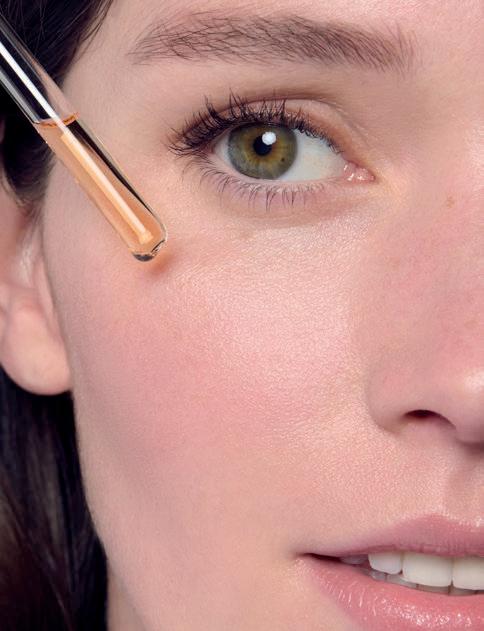


It had been percolating for some time, but now that filler fatigue has officially set in, we can all breathe a collective sigh of relief. Not because the hyaluronic acid injectable itself hasn’t any merit, but because it was being over-prescribed and distastefully injected by unscrupulous practitioners who sullied its reputation, prompting the rise of bio-stimulators and skin boosters that improve skin quality by stimulating the body’s own repair mechanisms. Every cloud...
Still, if the ‘pillow face’ era has taught us anything, it’s that less is almost always better when it comes to aesthetics. Which leads me to the theme of this issue: the return to natural.
No one does natural beauty quite like the French. Laura Craik ’s interview with Dr Marine Vincent, founder of The French Pharmacy in London, gives insight into the Parisian insouciance the Brits covet (p100). Vincent’s new book, The French Skincare Bible , is, writes Craik, ‘an encyclopaedic wisdom of all things French and beautybased, from cult products to insider tips’.
On the opposite side of the Atlantic and the aesthetic spectrum, our interview with ‘beauty broker’ Melinda Farina is a compelling read (p112). A cosmetic surgery concierge to the stars, Farina says that, even in Hollywood where ageing is seen as not an option, women (and men) are moving away from ‘over lled, over-operated looks towards more structural, surgical precision and natural restoration’.
Nipping over to Asia, Nadine Baggott dives into K-Beauty in her cut-out-and-keep guide to Korean skincare, from the ingredients to know to the best a ordable buys (p122).
With complexion goals in mind, Ingeborg van Lotringen gets the dermatologists’ take on redness and pigmentation, unpacking the treatment protocols that work (p116).
As a lesser known sign of ageing, dry eye disease is a common bugbear that so o en goes untreated. Alice Hart-Davis explores the solutions available on page 106.
The guide wouldn’t be complete without probing into the complex issue of hair thinning, as Kathleen Baird-Murray has done on page 108.
As always, our aim is not to push cosmetic tweakments, but to examine the wider beauty culture and then investigate genuine solutions – some of which we’ve road tested ourselves (p127).
And if you’re new to aesthetics, our list of top practitioners is a smart place to begin (p134).
A formula ahead of its time: two decades on, SkinCeuticals’ C E Ferulic remains a gold standard antioxidant serum
Proven in clinical studies to visibly reverse up to ten years of ageing signs , C E Ferulic is SkinCeuticals’ hero antioxidant serum. Considered a gold standard by dermatologists worldwide, two decades a er its launch it continues to prove its iconic status.
Vitamin C is widely known to be a powerhouse ingredient, protecting the skin from environmental damage while brightening, rming and reducing ne lines and wrinkles.
And yet the antioxidant responsible for neutralising free radicals caused by UV light and environmental stress varies radically from one formulation to another. It is not only the quality of the ingredients that matters – formulating a highly e ective product is down to a balancing act of recipe, dosage and pH.
‘C E Ferulic is the best and original vitamin C serum – every vitamin C product that came a er it is a spin-o of the research and science that Dr Sheldon Pinnell at Duke University did 20 years ago,’ says Dr Wassim Taktouk from The Taktouk Clinic in London. ‘What he discovered is that vitamin C is not only a brilliant antioxidant, but when combined with vitamin E and ferulic acid it becomes eight times more e ective.’
makes
L-ascorbic acid is the most proven, bioavailable form of vitamin C, helping to target signs of ageing caused by collagen loss and to brighten the skin. Its Achilles heel, however, is that it is a highly unstable molecule that oxidises easily, which is why many of the ‘dupes’ available at a fraction of the cost opt for less potent alternatives with a longer shelf life.
SkinCeuticals takes the long view, utilising the most e ective, purest form of vitamin C and formulating it at just the right pH (below 3.5) with two complementary antioxidants at optimum concentration. To this day, explains Dr Taktouk, SkinCeuticals formulates every bottle to a strict protocol known as the Duke Parameters. ‘The science shows there’s a sweet spot that delivers stability with optimum bene ts and little to no irritation.’
Dr Taktouk believes faithful dedication to this delicate orchestration is what drives consumer loyalty, despite it costing more. ‘C E Ferulic is expensive
in comparison to many other vitamin C products, therefore it’s important that clients see the value they are getting from their investment,’ he says.
The results, reports Dr Taktouk, range from an immediate dewy glow to long-term brightening and evening out of the complexion, alongside a so ening of ne lines and a rmer, bouncier quality to the skin.
Still, anecdotal evidence does not cut it in today’s crowded skincare market. Younger consumers especially are uent in skincare parlance, from the latest ingredients to best practice. Therefore, SkinCeuticals continues to put its most iconic product through rigorous scienti c trials.
‘The original scienti c research was focused on its contribution to reducing the damaging e ects of UV exposure. Twenty years later, studies have shown C E Ferulic’s ability to defend against other types of environmental aggressors such as ozone, pollution and metals,’ explains Dr Taktouk.
A common criticism of topical vitamin C is its propensity to destabilise once it has been opened – this is evident in its colour, which tends to darken over time. Knowing this, says Dr Taktouk, SkinCeuticals tested the product six months a er it had been opened and found it was as stable as on day one.
‘Four to ve drops a day is the recommended dose, which – if followed meticulously – will last around three months. This means each bottle is delivering results to the very last drop, even when you take into account a missed day or week here and there,’ he adds.
Known to brighten and rm the complexion, leaving skin supple and radiant, C E Ferulic has much more to o er. An in vivo clinical study, conducted over 20 weeks with 50 subjects, utilised expert visual grading to con rm signi cant improvement across eight key markers of ageing**. Results demonstrated up to a 36 percent reduction in wrinkle appearance and up to 39 percent reduction in discolouration, alongside increases of up to 44 percent in radiance and up to 37 percent in rmness. Beyond these results, the latest – and most signi cant – scienti c milestone has demonstrated the formula’s ability to visibly reverse up to ten years of ageing signs*.
Clinical study on 32 subjects (aged 55-65) after 12 weeks. Average results, visual grading. Equivalence in years of improving the appearance of firmness, radiance and fine lines. Clinical study of 50 subjects after 20 weeks, visual grading. If you are considering an aesthetic treatment, always consult a Medical Professional. C E Ferulic is a cosmetic skincare product for topical use. Only apply on healed skin.
‘C E Ferulic is the best and original vitamin C serum –every vitamin C product that came after it is a spin-off’
Dr Wassim Taktouk

Dr Christine Hall is a GMC-quali ed general practitioner in medical aesthetics who has become a leading expert in Korean beauty – speci cally how to achieve the sought-a er ‘glass skin’ e ect many clients ask for.
Of the thousands of must-have products praised on social media in any given week, Hall counts a topical vitamin C serum as one of three nonnegotiable products, alongside broad-spectrum SPF. C E Ferulic is her choice not only for daily use but
SkinCeuticals C E Ferulic has been rigorously tested and found to improve eight key signs of ageing, including a reduction in the appearance of wrinkles by up to 36 percent and an increase of firmness by up to 37 percent**
for post-procedure healing.
‘Working in an aesthetics clinic, I perform a lot of di erent treatments including lasers and microneedling. One of the big problems we face is knowing what is safe to put onto the skin a erwards because, as doctors, we are always looking for an evidence-based product that’s going to enhance recovery, not make things worse,’ says Hall, adding:
‘C E Ferulic has been clinically tested and shown to not only improve recovery a er these treatments but improve the outcome .’

‘SkinCeuticals’ C E Ferulic is an antioxidant that is generally well tolerated by all ages and skin tones unless you have particularly sensitive skin or rosacea,’ says Dr Hall.
‘We know that vitamin C helps to reduce melanin production because it inhibits an enzyme called tyrosinase and, e ectively, that means that people who are prone to hyperpigmentation and dark spots –which tend to be those with darker skin tones – bene t very nicely from vitamin C.’
C E Ferulic is best applied as your rst step a er cleansing. You only need a few drops – four to ve is recommended – and, as it is a liquid formula, a little goes a long way, says Dr Hall.
‘It’s something that is very easy to incorporate into your routine. It doesn’t peel, it doesn’t feel too sticky, and pairs well with whatever it is that you’re going to apply on top, which should include daily SPF,’ she says, adding: ‘Don’t forget to apply whatever you have le to your neck and the backs of your hands.’

Dr Wassim Taktouk is a respected expert in non-surgical facial rejuvenation. He is known for his re ned, natural approach to aesthetic treatments and his deep understanding of skin health. He regularly recommends SkinCeuticals’ C E Ferulic as part of a post-treatment plan.
There is no question that C E Ferulic is the hero in SkinCeuticals’ vitamin C line-up. Mainly this is due to its proven prowess on everything from wrinkles to dullness. Users o en cite its ability to impart radiance for its enduring likeability.
‘Clients love the glow that it gives the skin immediately upon application. Then brightening and rming come a er, which takes only a few weeks to see,’ says Dr Taktouk.
He adds: ‘We always give clients a coolingo period a er their rst consultation to allow them space to consider treatment options before rushing in. If skin quality is one of their biggest concerns, we’ll o en send them home with skincare samples to try, including C E Ferulic. By the time they come back for their second appointment, they o en tell us they’re hooked on the healthy glow they get from using it even for a short period of time.’
However, SkinCeuticals also o ers a line-up of additional vitamin C serums to target each skin type and concern. They are as follows:
Best for sensitive skin: SERUM 10
‘Not many people know this but Serum 10 was the original vitamin C serum and it still has its place today,’ says Dr Taktouk. Formulated with 10 percent L-ascorbic acid, at a slightly lower dose it is suitable for those who are new to vitamin C or those with slightly sensitised skin. ‘I o en prescribe Serum 10 to younger patients who want to prevent signs of ageing and protect their skin from damage but are not yet suitable for stronger active ingredients,’ says Dr Taktouk.
Best for discolouration: PHLORETIN CF
Formulated with 10 percent L-ascorbic acid, 0.5 percent ferulic acid and 2 percent phloretin – an anti-pigment compound that helps to combat pigmentation. Without the addition of vitamin E, it can also be suitable for oily skin types.
Best for blemish-prone skin: SILYMARIN CF
All the brightening and rming bene ts of 15 percent pure vitamin C with 0.5 percent ferulic acid. The addition of 0.5 percent salicylic acid for blemish control and 0.5 percent silymarin, an antioxidant derived from milk thistle that can help to reduce oiliness and the appearance of blemishes, makes it ideal for those who su er with breakouts.
Best for visible signs of ageing: C E FERULIC
The marriage of 15 percent L-ascorbic acid, 1 percent alpha-tocopherol (vitamin E) and 0.5 percent ferulic acid – another antioxidant that helps to neutralise free radicals and stabilise the formulation. The triple antioxidant protection provides 48 percent less oxidative damage from UV, pollution and metals . Less oxidative damage means a deceleration in ageing.
Along with the brightening and rming attributed to improved ageing signs due to lack of collagen synthesis, this is the holy grail for anyone looking to maintain exceptional skin quality as they age. Suitable for normal and dry skin types.
skinceuticals.co.uk
Measure of 4 hydroxynonenal (4HNE) lipid peroxidation marker indicative of oxidative stress. Four-day in vivo clinical study, 13 subjects. C E Ferulic applied daily vs untreated. Skin samples collected for 4HNE protein analysis at the end of study. Note: sunlight interacts with oxygen or molecules in skin to form free radicals. C E Ferulic does not contain sunscreen




















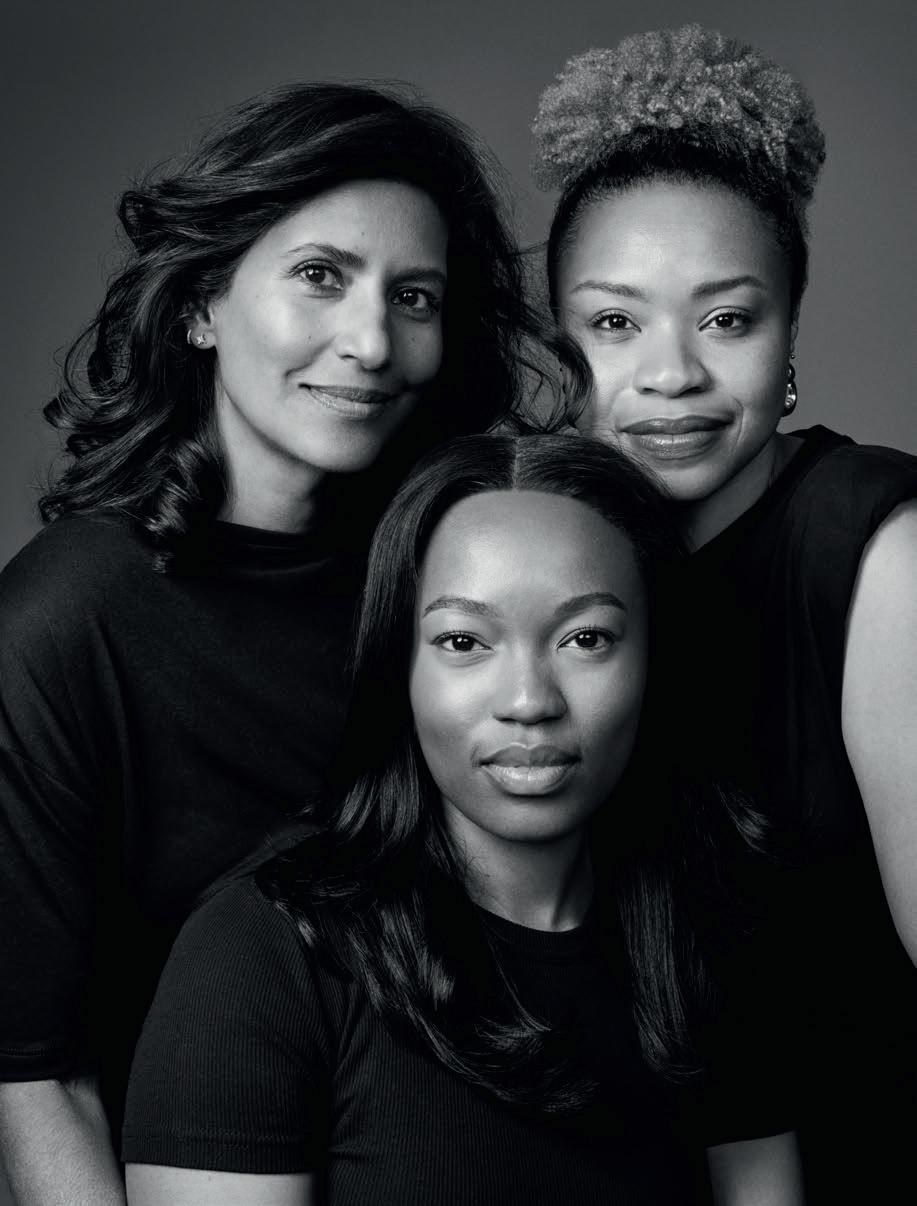
The French are renowned at holistically rejuvenating the skin, hence why Dr Sebagh invented the Ultimate Skin Booster treatment. A combination of PRP or PRF, polynucleotides, exosomes (either autologous or plant derived), hyaluronic acid skin boosters, multivitamins and peptides, Ultimate Skin Booster is a minimally invasive treatment that stimulates broblast production. A smart way to boost collagen and improve texture and tone in one go, the treatment costs £800. Alternatively, you can apply Dr Sebagh’s clever new skincare product, the Exo C booster, a next-generation antioxidant serum combining vitamin C and exosomes to restore glow and support collagen production. £68, drsebagh.com

↑ MAKE SENSE OF YOUR MOUTH
Increasing research highlights the connection between oral health and wider systemic conditions, including cardiovascular disease and metabolic health. By identifying imbalances early, clinicians can tailor personalised prevention plans rather than waiting for symptoms to develop. Ten Dental in London is among the rst clinics in the UK to o er advanced oral microbiome testing, using a simple saliva sample to analyse the bacteria living in the mouth. The £350 test is then processed by a specialist laboratory, which maps the balance between protective and harmful bacterial strains and assesses risk factors for gum disease, tooth decay and oral in ammation. While the idea may seem extra cautious, getting granular with your oral health could help to prevent disease – and avoid dear dental costs further down the line. For more about oral health, see Camilla Hewitt’s column on page 139. tendental.com

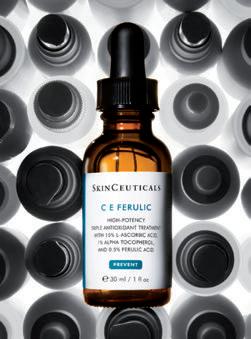
SPF is crucial, but it’s not the whole picture. Antioxidants play a vital role in sun protection, helping to prop up the skin’s defence mechanisms from UV exposure. It’s been 25 years since Dr Pinnell published a study about the parameters necessary for formulating a stable vitamin C serum in The Journal of Dermatologic Surgery – the landmark research that led to Skinceuticals’ C E Ferulic. A formulation of three synergistic antioxidants, the serum not only reduces ne lines and dark spots, it has recently been shown to speed up recovery from cosmetic procedures. Super cially? You get an instantaneous glow. £169, skinceuticals.co.uk
As La Roche-Posay celebrates its 50th anniversary, we’re reminded that new isn’t always best. While we love a fresh innovation, especially when it's the UVAir SPF50+ tinted sunscreen, an addition to the Anthelios range of weightless SPFs, we are rarely without a tube of Cicaplast Baume B5+. This hard-working multitasker has endless uses, from quenching dry skin to soothing cuts or bites. £11, boots.com
These products are so light and hydrating that you actually look forward to applying them

CERAVE HYDRATING FLUID SUNSCREEN
There’s so much to love about this SPF 50+, from its ability to lock in hydration for 24 hours to its fast absorption. It also builds barrier strength while being non-comedogenic. £17.90, boots.com

TATCHA THE MILKY SUNSCREEN
This SPF 50+ does more than protect from UVA. It corrects past sun damage like dark spots, redness and lines while Okinawa aloe soothes and moisturises. £49, tatcha.co.uk

ULTRA VIOLETTE MINI MATE
This Aussie brand has nailed the issue of reapplication by introducing its SPF 50+ sunscreen in a dispenser that’s at enough to slip unnoticed into a back pocket. £34, spacenk.com

A jolly good mani-pedi remains all-important in the upkeep of a youthful veneer. So we were delighted to hear that Milly Mason, the beautician and nail expert to those in the know (Lily Allen and Ashley Graham are two of her regulars), has taken up residency at The Dorchester hotel in Mayfair. Known for her clean, glassy pedicures, Mason is so thorough that heels and toes are le as so as a pebble. Her menu includes standard manicures and pedicures with or without gel polish, a dedicated men’s treatment, and more complex jobs like toenail reconstruction. She also o ers lash extensions. Treatments from £300, dorchestercollection.com


Debbie Thomas is the Harry Potter of skin lasers, casting magic over the trickiest of skin conditions. She created Cellis by Debbie Thomas, a four-product line-up of skincare essentials designed to simplify your routine without compromising on results (from £18, cellis.com). Plus, if you’re London-based, treat yourself to her new signature treatment, the Cellis Barrier Reset facial. It harnesses the skincare protocol alongside an enzyme peel and Byonik cold laser to target cellular repair and soothe in ammation. £225 for 40 minutes, dthomas.com
Lasers are used in dermatology to reduce wrinkles and even out skin tone. If only there was a light machine that could improve energy stores... Erchonia’s new Rainbow Reset treatment does just that by boosting mitochondria e ciency. Mitochondria act as the battery supply in our cells that determine not only how much energy we have, but how well we sleep and recover. Whether you have a speci c health condition such as bromyalgia whereby mitochondrial function is chronically impaired or you’re simply burnt out, Rainbow Reset is proven to work on a cellular level. With no downtime, the full body treatment is gentle and non-invasive. Available at Dr Munir Somji’s MediSpa clinics. From £1,000 for a course of six, drmedispa.com
Nutritional supplements have become more complicated than a tax return. Luckily, these three newcomers are more helpful than HMRC.
& PM SYSTEM
Streamline your supplements with just two bottles: Dr. Jack’s AM and PM. The morning protocol improves energy and protects cells from environmental damage, while the evening capsules put your body into repair mode. £170 for both, drdavidjack.com

A liquid curcumin supplement that’s 185 percent more bioavailable. Extracted cleanly from turmeric root using CO2, it delivers one of nature’s most powerful antiin ammatory ingredients in a form your body can actually absorb. £89, kurk.life

NEWROAD 30
A pure food supplement made up of 30 organic fruits and vegetables, and nothing else. No llers, no additives, no petrochemical nasties. Great for people with gut health imbalances who could do with more bre. £45, johnbellcroyden.co.uk ■
*Study of 78 Consultant Dermatologists Jan-April 2025. For more info visit https://www.laroche-posay.co.uk/en_GB/no1claim2025.html
Behind every French woman is a treasure trove of beauty secrets worth knowing. Laura Craik discovers some skin savoir faire
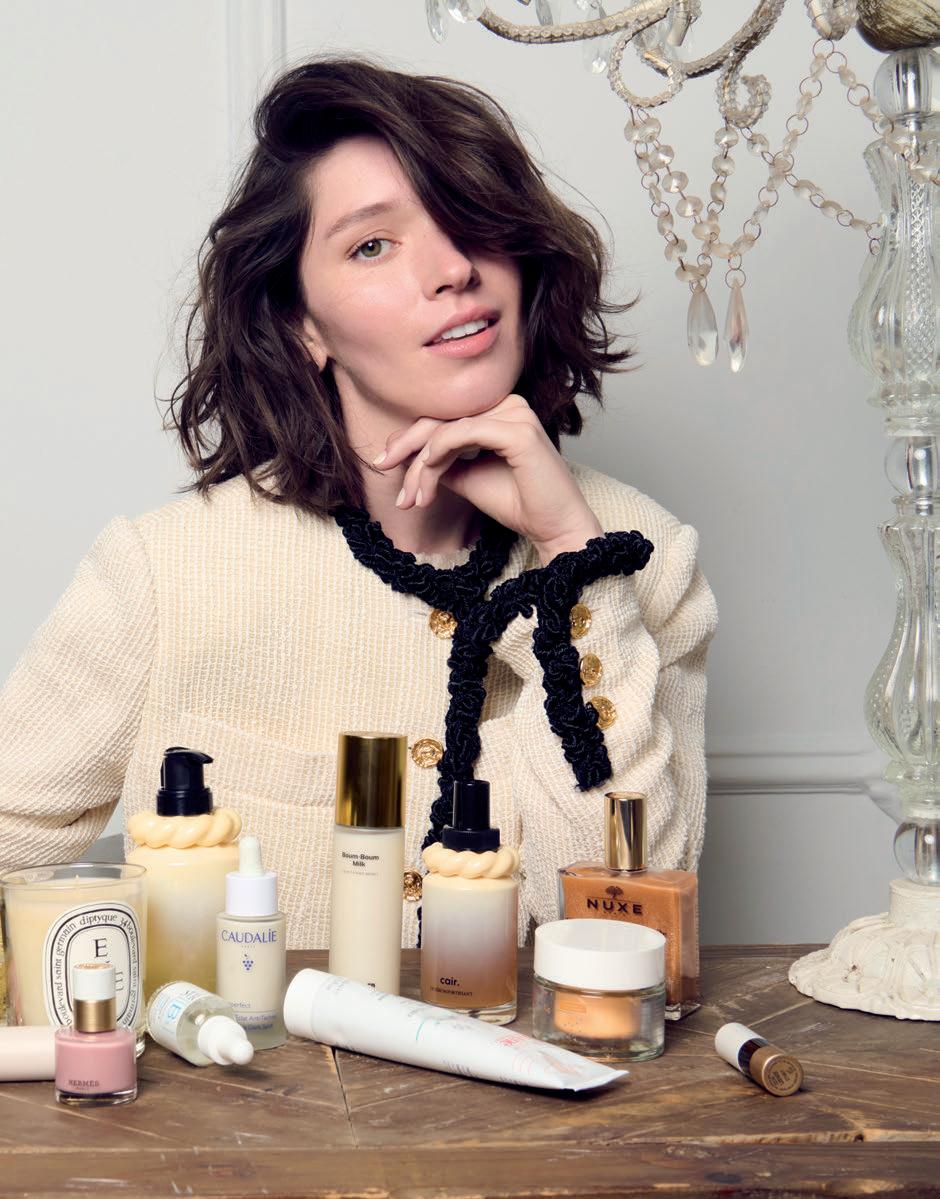
In the UK, pharmacies are functional, visits are perfunctory and stock is limited to prescription medicine, bathroom essentials and beauty cabinet basics. Not so in France. ‘Les o cines’, as they are known, are mythical places: treasure troves of age-old beauty secrets whose shelves groan with cult products established and new, dispensed by pharmacists with deep knowledge of everything from cough syrup to cellulite.
A er ten years working as a pharmacist in the NHS, and 20 years of living in London, Dr Marine Vincent decided to bring French wisdom to British shores by opening The French Pharmacy in Marylebone, London, in 2016. ‘I created the pharmacy that I dreamt of, and really missed,’ she says simply. ‘In Paris, you have one every 200 metres – they’re part of the cultural and medical environment.’
Ten years later, her new book, The French Skincare Bible , documents on paper what visitors to her two London pharmacies have had the good fortune to experience face to face: an encyclopaedic wisdom of all things French and beautybased, from cult products to insider tips.
‘In France, skincare is an essential part of health and wellbeing,’ Vincent explains. ‘If you have a skin issue, your pharmacist is your rst port of call. They give the best advice, and trust builds every time you ask a question.’
British women have been fascinated with French style for decades, a fact which Vincent pondered o en while writing her book. ‘It’s a cultural thing,’ is how she explains it. ‘The fashion industry is
big in France, and that creates a fascination. The collective imagination views French women as very simple, very elegant, never overdone.’
The same principles are evident in their approach to beauty. ‘Simplicity and consistency,’ Vincent smiles, asked to summarise the French way. ‘When you enjoy what you do, it makes you excited to have your routine. If you do a ten step routine, which I don’t agree with at all, it’s too complex to invest in. In terms of consistency, we’re very loyal to the products we like – Weleda, Nuxe, Bioderma. It’s probably why a lot of French pharmacy products have become so iconic, because we don’t tend to explore or experiment with other products as much as I’ve seen British women do.’
Would it be fair to say that Brits are more keen on a quick x, whereas French women are more willing to invest longterm? ‘It’s what I believe,’ she nods. ‘In France, it’s a lot more about prevention. You go to see your doctor every two minutes! You see your dermatologist, and have your blood tested, once a year, even if you don’t really have an issue. We are proactive and interactive, which avoids going into panic mode, where suddenly it’s too much to sustain for the long term.’ Cellulite prevention starts young, too, and is built into the daily routine. ‘I was raised with my grandmother and mother not telling me, but showing me [how to prevent it], so I copied.’
A er 20 years in London, Vincent says she’s noticed fundamental differences in British and French women’s attitude






1.
6.
7.
8.
9.
10.
All products available at thefrenchpharmacy.co
to ageing. ‘Regardless of your culture, the way you embrace getting older is very personal. But in general, I’d say we embrace it a little bit more, and tend to do less – less Botox, less treatments. For me, Brigitte Bardot was iconic in how she embraced her age. She was considered one of the most beautiful women on the planet, and then decided to do nothing. I think that’s so empowering. I wouldn’t say French women do nothing, because that would be a lie. But we don’t like overdoing things. It has to look natural.’
Perhaps it’s useful to equate their approach with the ‘quiet luxury’ trend, but applied to the face? Vincent agrees. ‘We love everything intellectual, so to overdo things is a big “no”. We like things to look a bit “o ”. You can have lovely clothes, but they don’t need the double “C” of Chanel. The Mar-a-Lago face would be a big no-no in France. To show you’ve got your money via your face is very vulgar.’ Faceli s are less common, too. ‘Except for certain celebrities and very wealthy women, we don’t see those a lot. They also [tend to] happen when someone is much older.’
Although there is one trend that even the nonchalant French aren’t impervious to, and that’s GLP-1s. ‘Oh my god, yes. They’re the number one new thing worldwide – in France as well. I’ve heard a lot of people tried to get access to it, but access is more di cult in France. You will never have access through a website – only through a pharmacist.’
Overall, the French have a pragmatic approach to diet. ‘You have to take care of the inside as well as the outside. We love our herbal teas at night. In France, we are very much about naturality [sic] – herbs and owers. If you’re having problems with digestion, you go rst to the plants. It’s a cultural thing.’ Where many British women of a certain age switch to a plantbased diet, the French are more reluctant to give up the bene ts of meat. ‘We tend not to be vegetarian too much – instead, we’d cut down our portions, eating a bit less and starting to be a bit more active. But it’s gentle: it’s not suddenly deciding to run a marathon. It would be a readjustment rather than a complete change. Again, that’s more likely to work long-term.’
It all sounds very sensible: self-care administered with a generous dose of selflove. ‘We are very bad at self-hating,’ she smiles. ‘If we want to have a good meal with friends, we will do it, and a glass of wine as well. Dry January is not as big in France, because we prefer to reduce than to cut completely.’
Given British women’s penchant for self-reproach and denial, Vincent’s book should prove indispensable in illustrating

‘Regardless of your culture, the way you embrace getting older is very personal. But in general, I’d say we embrace it a little more, and tend to do less – less Botox, less treatments’
Dr Marine Vincent
a more measured, laidback approach to beauty. ‘I really put a lot of myself into it,’ she says of the labour of love that took her 18 months to write. ‘I’ve tried to make it as simple as I do when I’m in store, giving advice to my customers. I’m nervous to see how people will respond, but I hope it will be helpful for a lot of people.’ Mais bien sûr. ■
The science of skin recovery: why Cicaplast Baume B5+ is the essential partner for all your skincare needs
When it comes to French pharmacy brands, there’s one that stands head and shoulders above the rest. La Roche-Posay was founded in the 1970s by a pharmacist, Dr Georges Guérin, who wanted to harness the properties of the thermal waters of La Roche-Posay (yes, it’s a real place) in NouvelleAquitaine, a region in the west of France. He worked with dermatologists to create products that addressed skin conditions such as acne and eczema, cementing the brand’s reputation as a go-to for skin saviours grounded in science that endures to this day.
As for the hero product, it has to be Cicaplast Baume B5+, considered the ultimate dermatological Swiss Army knife because of its ability to do it all. Rummage in the bathroom cabinet of most French homes and you’ll probably nd this multi-tasking wonder in there. From daily grazes to e ectively soothing and hydrating skin post-sunburn, Cicaplast is extensively proven to provide immediate relief when the skin barrier has been compromised by UV exposure.
So what exactly is La Roche-Posay Cicaplast Baume B5+, and what’s the science behind this heavy-hitter?
At its heart, it’s a cream based on water and shea butter, but dig a little further into the ingredients and you’ll nd some incredible skin-nurturing compounds. There’s ve percent panthenol, also known as vitamin B5, which has anti-in ammatory and moisturising properties and is renowned for its ability to soothe and accelerate skin barrier recovery. You’ll also nd madecassoside, an extract from centella asiatica, a herbaceous plant that grows in moist, tropical regions. Legend has it that tigers rub their wounds against it when injured in the wild, but in humans it has been shown to help with skin renewal. However, what’s really innovative is Cicaplast’s Tribioma prebiotic complex, which was introduced when the balm was reformulated in 2022. The skin’s microbiome is the invisible layer of living organisms that sits on the surface of the skin. In exactly the same way that optimising the gut microbiome is the key to improving digestion, scientists have discovered that optimising the skin microbiome is essential when it comes to skin healing. Because while the ‘wrong’ bacteria can actually slow down the body’s natural
healing process, making it less e cient and more likely to scar, the ‘right’ bacteria can do the opposite, improving healing e ciency and reducing scarring.
‘The composition of the skin microbiome is directly associated with wound healing and scar formation,’ explains Anne Laure Demessant-Flavigny, who trained as a pharmacist and is now scienti c communication director for La Roche-Posay. ‘We discovered that while certain pathogenic bacteria prolong in ammation and increase scarring, other bacteria decrease in ammation and accelerate repair to reduce scars. Our patented prebiotic complex, Tribioma, rebalances the skin microbiome by inhibiting the pathogenic bacteria and promoting the species that control in ammation and support repair.’
And this isn’t just important when it comes to soothing nappy rash. It’s essential in aesthetic clinics, where doctors carry out controlled damage to the skin – lasers, microneedling, peels and more – with the intention of harnessing the body’s natural repair processes to boost levels of collagen and resurface the skin for a brighter, plumper, more even complexion.
At its heart, Cicaplast Baume B5+ is a cream based on water and shea butter, but dig further into the ingredients and you’ll find incredible skin-nurturing compounds
Dr Angela Tewari, a London-based consultant dermatologist, is a fan. ‘I’m very keen to use products that have good science behind them,’ she says. ‘And as well as the anti-in ammatory aspects to Cicaplast Baume B5+, it also contains ingredients that further help the skin self-heal. It’s an excellent option for a er treatments such as microneedling or laser.’
And Dr Tewari’s views are borne out by 24 clinical studies and tests on 30,000 patients proving that La Roche-Posay’s Cicaplast Baume B5+ not only starts repairing the skin from the rst application, but has also been tested and approved for use on 14 di erent skin indications, including a er laser resurfacing and a er a facial peel.
Although once you get your hands on one of these iconic tubes, you’ll no doubt nd dozens of uses for it. Some swear it’s the perfect makeup primer, while others insist it makes a brilliant overnight repair mask. If a brand is the number one dermatologistrecommended brand in Great Britain and trusted by more than 90,000 dermatologists worldwide, it’s doing something right.
boots.com; laroche-posay.co.uk
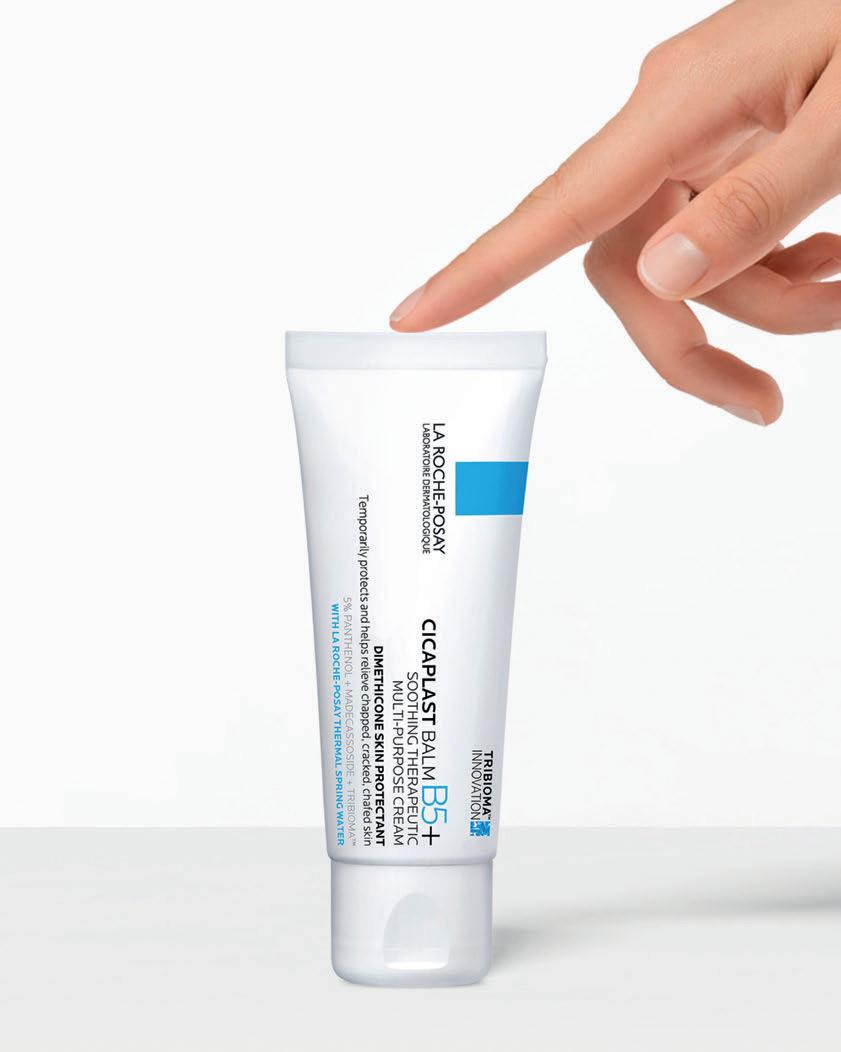
‘Dry
Dry eyes can cause havoc for those suffering. But, says Alice Hart-Davis, treatment options are aplenty
Of all the small indignities of ageing, dry eyes is one of the least discussed. If you nd your eyes sting, blur and water at the rst sign of wind or cold, it tends to be dismissed as ‘just one of those things’, particularly for women in mid-life.
Burning, gritty-dry or wet-and-watery eyes may be more common in middle age, particularly for women, but they’re all signs of Dry Eye Disease (DED), a chronic medical condition, which tends to get worse unless we take steps to treat it.
There are two main types of DED, as optometrist and dry-eye specialist Sharon Flora explains. ‘In one, the eyes simply don’t produce enough tears, and in the other, far more common version, the tears we produce evaporate too quickly due to a lack of the eye’s natural oil lm that helps them stay put.’
Those oils are secreted by the tiny meibomian glands in our eyelids. Every time we blink, they should release oily lipids to support the tear lm. But if those glands become blocked or sluggish, the tears evaporate too fast. Then, your poor dry eyes water like mad, trying to maintain the balance.
So many things contribute to dry eyes, from wearing contact lenses to too much screen time (it reduces our blink rate), eyelash-growth serums and retinoids (best kept away from the eye area). Hormones play their part, too. As we lose oestrogen, mucosal tissues in the eyes become drier, just as they do in the mouth and vagina. ‘Women are o en told dry eyes are just part of menopause,’ Flora says. ‘Yes, hormonal changes can trigger dry eyes. But that does not mean persistent discomfort is something you simply have to live with.’
So what can you do? On a daily basis, the unglamorous basics matter. Blink more. A warm (not hot) compress, used for ve to ten minutes, helps soften and loosen blocked oils in the glands. Gentle eyelid cleansing, with a hypochlorous
spray or dedicated eyelid cleanser, reduces in ammation and bacterial build-up.
Then there are the high-tech clinic treatments. Intense Pulsed Light (IPL), long used in dermatology for rosacea, is now employed to calm in ammation around the eyelids and to improve gland function. A friend had striking success with IPL and low-level laser at the Tom Davies Dry Eye Clinic in Sloane Square, reporting less redness and markedly improved comfort a er a short course over a few weeks. Under the care of optometrist Tuija Kankaanpaa, several scans and measurements – such as conjunctival redness and tear break-up time, which measures how quickly the tear film evaporates after blinking – were taken. These were then retested a er the nal treatment – just 20 minutes a pop – and improvements were noted across all four measurements.
Tom Davies
I’ve tried a course of Envision, which uses radiofrequency energy to heat up the oil in the meibomian glands (this is then squeezed out carefully by the optometrist using tiny forceps, which is no fun but e ective), followed by IPL to bring down the redness in the eyelids. I had half a dozen treatments and it made a big di erence, though a year later, I can tell I need a refresher treatment.
Eyewear IPL and LLLT (low-level light therapy), costs £1,350 for four treatments spaced a month apart. tdtomdavies.com
InMode Envision
Costs from £295 per session with Sharon Flora. theeyeretreat.co.uk
OptiLight
Costs from £400 per session. treatmydryeye.com
OptimEyes
Priced at consultation and based on the extent of treatment needed. facerestoration.com
For an even more comprehensive approach, oculoplastic surgeons
Professor Jonathan Roos and Rachna Murthy of Face Restoration have developed the ‘OptimEyes’ protocol. Eyes are scanned to assess underlying rosacea, too. ‘Blocked glands can be due to underlying rosacea,’ says Professor Roos, ‘which is best treated with OptiLight (IPL), low-level light therapy and microbiome-friendly skincare.’
‘Rosacea is due to gut dysbiosis,’ adds Dr Murthy. ‘The microbiome in the gut communicates with the microbiome in the skin, and also with the microbiome in the eyes. One in ten people worldwide have rosacea, and of them, 80 to 90 percent will have dry eyes.’ ■
FIVE TIPS & PRODUCTS
EYE DROPS
These are a must have for dry eye su erers. Try Hycosan eye drops, about £11.99, widely available.
EYE SPRAY
If you can’t abide drops, try a spray like the Optase Comfort Dry Eye Spray, £13.99, ocushield.com
3 WARM COMPRESS
You can use a annel wrung out in warm water or a microwaveable heatbag type eye mask, £7.99, wheatybags.co.uk
4 HEATED EYE WAND
Used gently around the eye area to warm the meibomian glands and so en the meibum (oil), this is a useful tool. Try the optometrist-approved one from peepclub. co.uk , £85.
5 EYELASH GROWTH SERUM
Sweed’s version is one of the few that doesn’t contain prostaglandin analogues which have been linked to meibomian gland dysfunction. £42, sweedbeauty.com
Forget a facelift. The most transformative thing you can do is to fight for your hair, says Kathleen Baird-Murray
Aboyfriend once called it the ‘cash crop’. My hair, in its prime, was – and I say this without vanity – really quite spectacular, not that I remotely appreciated it back then, aged 20-something. So long, thick and glossy that it starred in a series of Pantene commercials.
I credit my part-Burmese heritage for making my hair game strong. But along with the genetic pro le possibly came a strong predisposition for premature grey. My Irish grandfather was grey in his 20s, my mother too. From my early 30s I was touching up roots every couple of months. Now, at 58, I make do with L’Oréal Paris Magic Retouch spray every third week, between monthly appointments with legendary colourist Nicola Clarke.
The grey is one thing. But then menopause arrived, and I dabbled with GLP-1s. The body thinning was marvellous. The hair thinning less so. I haven’t needed to do what my erstwhile colleague Olivia Falcon has done: a partial hair transplant, documented on her Instagram (@theeditorslist) – but I’m aware that if I don’t tackle it now, I may have to.
As I scroll through my phone, I’m served a relentless parade of DHT blockers, minoxidil serums, scalp injections and growth factor treatments. My scepticism has so ened, though, as I’ve dug deeper. Once you lter out the obviously AI-generated nonsense, there are some real solutions out there. And the science in 2026 is genuinely exciting. Here is what actually works.


Hair thinning in women over 45 is, above all, a hormonal story. DHT –dihydrotestosterone, the androgen that drives female pattern hair loss – begins shrinking follicles as oestrogen declines in perimenopause until the strand produced becomes so fine it barely registers, and eventually the follicle fuses shut. Dr Sharon Wong, consultant dermatologist and founder of Dose (dosemyhair.com), is unambiguous: ‘Hair loss due to a progressive condition cannot be cured. Treatments can stabilise and slow progression, and in some cases restore thickness, but they require longterm commitment.’
What does she think about those Instagram ads promising to go from visible scalp to a full head of hair in weeks? ‘Anything that claims to cure hair loss should immediately raise a red ag,’ she says matter-of-factly. Even if we think we’re prepared for menopause, it rarely arrives cleanly either. Stress, iron de ciency and – should you choose to take them – GLP-1 medications all accelerate shedding simultaneously, which is why starting treatment early and addressing each contributing factor is so important.
You cannot get far in any hair rebooting conversation without hearing about minoxidil. Originally developed as a blood pressure medication, its hair-growing side e ects were soon noticed and it remains the cornerstone of treatment. It works, but the loss returns once you stop using it. For some, the side e ects also aren’t worth the transformation, so do check in with your doctor. Dose’s F2 formula, created for peri and postmenopausal women, intelligently combines minoxidil with oestradiol, medroxyprogesterone and nasteride (a DHT blocker), addressing both the circulatory and hormonal drivers of thinning in one fast-absorbing serum.
For those who prefer not to use daily medicated applications, Dr Wong recently introduced Tricopat into her clinic and is one of only a handful of doctors in the UK to o er the treatment. Developed with the University of Bologna, it combines micro-patting, electrical iontophoresis (to drive growth factors deep into the scalp without needles), and LED phototherapy (to energise follicles). Clinical studies show hair density improving by up to 15 percent in four to six months. At £395 per session it is not inexpensive, but many patients see visible results a er just three sessions.
PRP – platelet-rich plasma therapy –
‘Hair loss due to a progressive condition cannot be cured. Treatments can stablise and slow progression, and in some cases restore thickness, but they require long-term commitment’
Dr Sharon Wong, consultant dermatologist
has been a clinic staple for several years: drawing the patient’s own blood, spinning it to concentrate the growth factor-rich platelets, and injecting the resulting plasma into the scalp. Newer exosome therapies, derived from stem cells, are increasingly o ered alongside PRP and may prove even more potent at triggering regrowth. For a fully bespoke approach, Ouronyx, a skin and hair aesthetics clinic led by Dr Marco Nicoloso, o ers some interesting new programmes built around diagnostic mapping. One option is the anti-in ammatory injectable treatment, which uses polynucleotides to help repair scalp tissue and stimulate robust follicular activity. A new, blood-based, regenerative treatment that requires only one session rather than monthly visits is coming soon, and promises – according to early clinical trials – ‘excellent results’.
Tom Smith, founder of Aevum, a salon in Bloomsbury which treats hair condition and health with the same rigour as colour and cut, likens your hair to an orchestra. ‘As we age,’ he says, ‘the musician who creates pigment leaves; then the one who hydrates the hair; then the one who maintains density. The music still plays, the hair still grows, but the richness is diminished.’ His mission is to recall those players and, as salons go, his approach feels refreshingly different. His main tool for hair loss and thinning is Calecim Advanced Hair
System, a bioactive complex derived from umbilical cord lining stem cells, ethically sourced from red deer in New Zealand post-birth. Its active ingredient, PTT-6, increased dermal papilla cell proliferation by up to 20 percent in laboratory studies, with results comparable to minoxidil but without the dependency or irritation. Full disclosure: I tried it for a month at home and saw nothing. Neither did my sister. But Smith (and several others) tells me, that’s where we both went wrong. Try any hair treatment for three consecutive months, and consider yourself lucky if you see results from six weeks (Smith takes before and a er images of his clients pre and post long-term Calicem treatments, and the results are quite staggering).
At Aevum, Smith combines Calecim with red light therapy and begins every treatment with chelating (removing mineral residue), a bond-building extract and a K18 peptide mask (£30, cultbeauty. co.uk), le in for four minutes to rebuild the hair structure’s polypeptide chains. I’ve tried the K18 at home and it is genuinely brilliant – whack it in, leave it in, done.
What about nutritional supplements? Smith recommends a TrichoTest first, which delivers DNA analysis from a cheek swab and identifies which treatments you’ll actually respond to. ‘I have no interest in telling you to take biotin unless we know you’re de cient in it,’ he says.
None of the above addresses the grey. Nicola Clarke, acclaimed hair colourist whose clients include Madonna, Cate Blanchett and Kate Moss, is refreshingly frank. ‘Grey equals age. That’s the reality. Embracing grey was a wonderful cultural moment – it removed a stigma. But it does age you.’ Her solution is glow-lights, a technique she invented with fellow stylist and hair colourist Zoë Irwin of John Frieda: a solid base, then tiny ecks of hair painted a golden, summery blonde around the face and through the top layer. ‘As if you’ve been in the sun for a month,’ Clarke says. The e ect is youthful without being obvious. It’s less a colour treatment, and more a general impression of vitality. For thinning hair specifically, she recommends chunkier, layered cuts that create body and movement over anything at that emphasises loss.
As for grey repigmentation – please let this be science’s next frontier – Dr Wong acknowledges there is no clinically proven product yet, though research into preserving melanocyte stem cells is active and ongoing. Smith reports that some of his clients using Calecim anecdotally notice new hair coming through with its original pigment. The brand makes no official claim. But those orchestra players, gradually returning to their instruments, might just bring the colour section back with them.

While all of the above works its long game at follicle level, there is still the question of what to do tomorrow morning. Sam McKnight MBE, session legend and the man behind the styling and conditioning haircare range Hair by Sam McKnight, offers advice that is immediately actionable. For volume, use a thickening shampoo and conditioner rst, then a styling product matched to your actual routine. A volumising foam with heat protection is great if you nd yourself blow-drying a lot; a root-li ing spray is essential if time is the enemy; a dry texture mist applied straight onto dry hair will give you an instant li in seconds. His velcro roller set, which has sold out three times since launch, is more easy to use than it looks, and delivers big volume and a glossy
nish. For shine, squeeze rather than rub with your towel a er washing – rubbing roughens the cuticle. Point the hairdryer down the hair sha when blowdrying, and nish with a lightweight oil.
The cash crop may no longer be what it was. But with the tools and products available now – be they treatments in salon, serums, or the magic of having a colourist who can paint sunshine into your hair with a brush – I might just have saved myself from a faceli . ■

No copy-and-paste face here. Laura Craik speaks to Melinda Farina, the world’s most revered personal cosmetic surgery shopper
In the fashion world, personal shoppers are nothing new. In the aesthetics world, they’re almost unheard of. Which is remiss, given that a bad faceli has far more serious, permanent rami cations than a bad out t.
This is certainly Melinda Farina’s view. Better known as The Beauty Broker, the 44-year-old former dental assistant is one of the most indemand names in plastic surgery, despite never so much as picking up a scalpel. Her stock in trade isn’t collagen, but connection. A er a thorough consultation, Farina (or one of her 13-strong team) connects the right client with the right surgeon according to their budget and need, a process that costs between $350 and $12,150. ‘We charge patients for our time,’ she says. ‘Doctors do not pay us. We don’t take one penny from a surgeon. We’re not brokers – we’re advocates.’
While she’s discerning about the surgeons she recommends, she’s equally discerning about the clients she takes on. ‘They have to pass a litmus test. [They should have] reasonable asks. We won’t take on body dysmorphic patients. It has to be a procedure that’s going to make a meaningful impact in their lives.’
Farina is brilliantly blunt, possessed of a straight-talking honesty that must feel reassuring to her clients, given the opacity of the aesthetics industry. ‘I think what the world is turning plastic surgery into is disgusting, to be very honest. It’s
not why I entered the industry. I hate trends. Trends are dangerous in plastic surgery. When it comes to surgery and medicine, we should do what is right for each individual. If there is an aesthetic trend, I try to educate my patients not to follow. That’s very important, because they’re usually permanent changes that are very hard to undo if you’re not happy a decade from now. You could change your hair, clothes, nails, home. But it’s hard to go in and surgically change things once we’ve made those alterations to our face.’
Much as she might disapprove, trends exist in aesthetics just as they do in fashion. Which trends – ahem, shi s – has she noticed recently? ‘We’ve gone from “more” to “better”,’ she says. ‘There’s a move away from the over lled, over-operated looks towards more structural, surgical precision and natural restoration. Subtlety has become the new luxury. There’s more attention to surgery with strategy. Patients are planning smarter interventions a bit earlier, rather than chasing xes later on, which means fewer procedures, better timing, better sequencing.’
Another shi has occurred due to the huge popularity of GLP-1s. ‘With rapid weight loss comes rapid de ation, meaning people need li s all over: breast, body, arm, thigh, brachioplasties, full circumferential lipectomies. We see it all.’
She’s also noticed an increase in medical tourism. ‘People are willing to travel further

for better prices, because there’s been a lot of price gouging. A lot of patients are being turned o by this, and doctors are becoming more courageous to speak up about it, because it’s extremely unethical. South America is a hot spot. Brazil is a huge hub for destination plastic surgery. Europe has become very popular, but the European doctors are starting to raise their fees as well. There are phenomenal surgeons all across the world – it’s not just the seven people that we see on Instagram. That is why consultancies exist: to help people make smart decisions within their budget.’
One shi she disapproves of is the ‘copy-and-paste face’. ‘I don’t like it. I won’t work with people who are looking for that copy and paste aesthetic. I work with people who want to enhance their own natural features, because I believe everyone should look uniquely
individualised.’ She’s equally against the ‘forever 35’ trend. ‘Everyone wants to nd that fountain of youth, but you have to do it in a healthy way, and have a realistic outlook when it comes to achieving your goals. Doctors are not magicians. Doctors are also human.’
But her most vocal disapproval is reserved for llers. ‘We don’t recommend any injectables to our patients. We’re a ller-free consultancy. We’ve had to undo so much catastrophe from injectables over the past few decades.’
Such as? ‘Lots of Malar Edema (an accumulation of uid under the eyes that look like bags), facial unevenness, people doing too much because the injectors don’t know the limitations. Sometimes it’s hard to undo these issues, because that material gets trapped in places where it’s di cult for surgeons to reach.’ Despite all the headlines to
In terms of the bare basics, a good sleep really is essential. A lot of people overlook that.
What goes in is what shows on the outside. I rmly believe that what you’re consuming on a daily basis will a ect your appearance.
You have to have a healthy outlook in all areas – including what you’re feeding yourself mentally.
It’s crucial to use a good retinoid or retinol every single night, and a great SPF every single day.
When searching for a plastic surgeon, make sure that they’re board-certi ed. Look for consistency and results you can relate to from a full gallery of their work. It’s more important to look for the ‘before’ photo, than the ‘a er’.
the contrary, she hasn’t noticed the age at which A-listers have faceli s becoming lower. Typically, she says, her clients start thinking about faceli s at 43-44, but only ‘pull the trigger up’ at 45-47. ‘What a lot of people are claiming to be faceli s are actually not faceli s,’ she adds. ‘People are claiming that actresses – who are actually our clients – have had faceli s, when they absolutely have not. There are a lot of “in uencers” putting out posts on social media about these A-listers having certain procedures, when they couldn’t be more incorrect.’ Such as? ‘I hate these people with a passion, but I won’t name names.’
She’s equally tight-lipped about the identities of her clients, although when pressed for an example of a celebrity who’s had good work, she namechecks Gwyneth Paltrow. ‘She’s one of our clients, and looks phenomenal. She’s done tiny little things that make her look like her natural, unique self, and she’s never wanted to change the way she looks.’ ■
thebeautybrokers.com @beautybrokero cial
From lasers and microneedling to skin peels and dermabrasion, aesthetic treatments increasingly have a role to play in the world of beauty. And, while these procedures can give excellent results in the long-term, the short-term damage and sensitisation that they can cause to the skin barrier can not only be uncomfortable, but demands specialist skincare that can soothe without overloading.
Enter Cellcosmet’s brand new HydraSoothing Mask, developed and manufactured in Switzerland to pharmaceutical standards, and especially formulated for sensitive, sensitised or temporarily weakened skin.
At the heart of Cellcosmet’s approach lies a clear principle: to respect the biological integrity of the skin while supporting its natural recovery mechanisms. To that end, this fragrancefree formula contains 11 carefully selected active ingredients known for their soothing and restorative properties and has been dermatologically tested on sensitive skin.
A rinse-o mask that can also be le on overnight – making it suitable for use both inclinic and at-home – the Cellcosmet HydraSoothing Mask has undergone rigorous clinical testing, including tests on individuals following a chemical peel. According to Cellcosmet Chief Science O cer, Dr Jérémie Soeur, the results were impressive.
‘In our clinical evaluation on post-peel skin, 100 percent of participants reported an immediate neutralisation of burning and heat sensations upon application of the mask. Instrumental measurements also showed a rapid improvement in skin hydration (50+ percent) immediately a er the rst application, together with a marked restoration of the skin barrier function — which is typically disrupted a er a chemical peel.’
For patients who want the results that aesthetic procedures can o er, but are less keen on the discomfort and downtime, this is good news as it means greater comfort, reduced redness and sensitivity, and a smoother recovery process.
And this isn’t just theoretical. A notable doctor has worked with Cellcosmet for several years and regularly recommends the brand’s products in his practice. He has seen rst-hand the impact of the mask.
‘In aesthetic medicine, post-procedure care is essential,’ he says. ‘The HydraSoothing Mask has shown excellent tolerance on sensitised skin. Patients particularly appreciate the immediate soothing e ect and the visible calming of redness following treatment.’
Whether you’re booked in for a peel, su er from sensitive skin are-ups or just want an SOS rescue mask on hand for days when you feel like your skin needs a little extra TLC, Cellcosmet’s Hydra-Soothing Mask is a trusted staple.
Cellcosmet Hydra-Soothing Mask, £145, harrods.com


Redness and pigmentation are on the rise. Ingeborg van Lotringen finds out how to treat inflammation for good
Whether you’ve always had a tendency to ush or have recently become more prone to redness, you’re not alone. Dermatologists note a rise in the number of patients worried about redness and rosacea, and blame stress, overuse of active skincare, tweakments, and pro-in ammatory diets, alongside hormonal shi s that happen during perimenopause.
The latter poses a particular conundrum: middle age comes with signs of ageing, and traditionally, the most potent wrinkleghters and dark spot-faders (think retinoids, acids, lasers) work via a measure of controlled in ammation. In healthy skin, this initiates a healing response that results in fresher, younger-acting cells. But excess in ammation makes skin age faster, not slower, so for skin that’s already fragile, the principle is counterproductive.
The good news is that an in ux of new treatments – from serums to injectables to quantum mechanics – is successfully inverting traditional thinking. But before we look at how, let’s focus on the basics of treating redness-prone skin, which can occur in all skin types and tones.

Deep red flushes, dilated veins, an uncomfortably hot and prickly face, and upsetting acne-like bumps are to be expected and can be a struggle to manage
‘Skin’s protective lipid barrier can be compromised from birth, often manifesting conditions like rosacea and eczema from a young age,’ says Pamela Marshall, clinical aesthetician and co-founder of Mortar & Milk (mortarandmilklondon.com). This type of genetically sensitive skin is less common than sensitised skin, which is prone to rashes, flushing, dryness and sometimes even welts and blisters due to lifestyle factors which, in addition to the ones mentioned above, include smoking, drinking and sunbathing.
If your flushing is recurring or chronic, it’s typified as rosacea. It’s more common than you think: up to one in ten of us are thought to have it, although for many it’s low-level and not always noticeable. Ignore it, however, and it can worsen. Deep red flushes, dilated veins, an uncomfortably hot and prickly face, and upsetting acnelike bumps are to be expected and can be a struggle to manage. That’s why early intervention is key. ‘Fundamentally, sensitive or sensitised skin on any level needs similar treatment,’ says Marshall.
In dark skin, ‘redness’ is of course a misnomer: ‘Flushing and blotching present sometimes as pimples, sometimes as pigmentation, and sometimes you can’t see it at all, though you might be able to feel the heat,’ says cosmetic physician Dr Kai Rezhaw Luca (drkai.co.uk). GP and co-founder of Evidence Skincare Dr Ginni Mansberg adds there is emerging evidence that rosacea is ‘as common in skin of colour as it is in white skin’ and should be managed as assiduously.
Consultant dermatologist Dr Justine Hextall ( justinehextall.co.uk ) pegs persistent redness as ‘usually a confluence of issues presenting in the skin’. This means simply slapping on a soothing serum isn’t going to cut it. From skincare to diet to lifestyle, it’s about what to avoid as much as it is what to use. Here are some of the most important things to focus on.
WHAT TO AVOID: ‘Anything skin barrierstripping is out: alcohol (o en hiding in toners and serums), fragrance (including essential oils), and sulphates in foaming cleansers,’ says Marshall. For advanced, bumpy rosacea, cut out face oils as well. Potent cell turnover-boosting ingredients such as AHA exfoliants, retinoids and ascorbic acid will aggravate skin, risking deeper, not so er, wrinkles.
WHAT TO USE: Only use no- or minimalfoam hydrating cleansers. Polyhydroxy acids (PHAs) boost skin turnover and hydrate without irritation. Anti-bacterial, anti-in ammatory azelaic acid is one of the most helpful rosacea-settling ingredients available, as is niacinamide; both also help with signs of ageing. Pick moisturisers designed for barrier repair featuring ceramides, prebiotic ferments and anti-in ammatory ingredients like panthenol, cica or next-gen irritation calmers, such as soothing peptides or neurocosmetic ingredients. The latter includes neurosensine and neurophrolin, designed to soothe skin by targeting the nervous system, as well as PDRN, barriersupporting DNA fragments derived from salmon. Lastly, a light-textured SPF50+ is an absolute daily essential.
For severe cases, dermatologists will prescribe medications such as ivermectin or brimonidine (to calm in ammation, redness, pustules and rosacea-triggering mites), prescription-strength azelaic acid, and sometimes the antibiotic metronidazole.

La Roche-Posay Cicaplast Baume B5+ One of the best instantly calming creams available. £19.50, boots.com

Dry Touch Fluid Sunscreen SPF50+ Broad-spectrum, nonirritating protection. £17.90, boots.com


Calming products that really work

Althea PDRN Reju 5000 Cream PDRN-powered redness reduction and collagen boosting. £22.30, boots.com

with gentle ingredients. £22.50, uk.mederbeauty.com

WHAT TO AVOID: ‘Stress directly a ects gut health and, as a result, skin barrier function, promoting redness,’ says Dr Hextall. Heat is also a trigger, so it’s best to minimise saunas, hot yoga, spicy foods, very hot showers and sharp temperature changes.
WHAT TO EMBRACE: Anything you can do to promote stress relief and goodquality sleep is a plus. This includes regular exercise, although it’s best to avoid whatever leaves you red and ustered. Applying a thick layer of moisturiser before taking a warm shower or a walk in the biting cold can prevent ushing. All of this becomes increasingly pertinent with age: ‘Perimenopausal skin is more prone to rosacea,’ emphasises Dr Kai.
WHAT TO AVOID: ‘Evidence is mounting as to how microbes in the gut play a crucial role in regulating immunity and in ammation, and how those with rosacea have less favourable gut microbiomes than those without,’ says Dr Hextall. ‘So eating to support a healthy gut is crucial.’ Excess sugar, alcohol and ultra-processed foods can feed bad bacteria and aggravate skin, so may be best ditched from your diet.
WHAT TO EAT: Dr Hextall o en starts her rosacea patients on probiotic supplements such as Symprove, while encouraging a prebiotic diet to feed healthy bacteria. ‘This should include plenty of bre-rich fruits and veg; fermented foods such as kimchi and ke r; and beans, pulses, nuts and seeds.’

REXONAGE 3 QUANTUM MOLECULAR
The newest technologies de-age skin by dampening in ammation on a cellular level, which allows cells to focus on their intrinsic self-repair and regenerative prowess, resulting in calm, even skin with fewer signs of ageing. These have been tried, tested and approved by our team of experts – including me.
RESONANCE: A practitioner administers a gentle facial massage with gloves attached to a machine emitting painless, high-frequency electrical signals. This puts skin stem cells into super-active repair mode, resulting in malfunctioning cells being fixed, inflammation dampened, and peak collagen and elastin regeneration reinstated in skin of any colour. Results can also include reduced lines and pigmentation.
In my case, hard-to-treat perioral dermatitis and low-level rosacea were eradicated, as evidenced not just by my even-toned, glowing face but also by my medical under-the-skin pictures, which proved significant underlying in ammation was almost entirely gone.
£3,000 for six sessions, with a £700 maintenance session every seven to eight months advised. genevivclinic.com
POLYNUCLEOTIDES: Polynucleotide jabs (similar to PDRN but injected under the skin) were everywhere in 2025 for their collagen-supporting, brightening e ects, but doctors quietly admit their greatest strength is calming chronic in ammatory skin conditions. ‘These DNA fragments improve skin barrier resilience and modulate in ammation over time, rather than just temporarily suppressing it,’ says cosmetic physician Dr Paris Acharya.
Polynucleotides are administered as tiny injections all over the face (a er numbing cream). Three initial sessions are needed, with top-ups every six to nine months. Suitable for all skin tones, ideally Dr Acharya cycles them with injectable skin boosters and mesotherapy ‘as part of a broad regenerative strategy; you don’t “switch o ” rosacea, you retrain it’.
£1,400 for a three-session course. theardourclinic.com
Redness and rosacea is one form of unevenness, but it isn’t the only condition preventing your skin from looking its personal best.
Hyperpigmentation – brown spots, blotches, mottling – is almost impossible to avoid unless you live under a rock. UV radiation, pollution, inflammation, hormones, medications and genetics all play a part in its development.
Cosmetics and aesthetics can greatly improve discolouration – if you diagnose it correctly and take your skin colour into account. ‘Treating the wrong diagnosis will likely make things worse,’ says consultant dermatologist Stefanie Williams. ‘You have either environmental or hormonal pigmentation [melasma], and both require quite di erent treatment.’ Generally, the former is caused by chronic sun exposure (photodamage, often exacerbated by other factors such as pollution), or by irritation or inflammation (post-in ammatory hyperpigmentation, or PIH).
Melasma, meanwhile, is primarily hormonal: triggered by pregnancy, the pill, menopause, medications or genetic factors.
What are the best pigmentation protocols?
Three dermatology experts – Dr Stefanie Williams, Dr Amiee Vyas and Dr Mary Sommerlad – share their advice for di erent skin tones.
‘In light skin tones, this mostly presents as small, round-ish brown spots on sun-exposed areas. These solar lentigines can be sprinkled all over the skin, creating a mottled appearance where they join up,’ says Dr Williams.
‘In darker skin tones including Fitzpatrick type IV [which can look pale but tans very readily], it’s often post-inflammatory,’ says cosmetic dermatology specialist Dr Vyas. ‘Acne, eczema, hair removal, burns, bruises, minor injuries, and any irritation can set off this localised post-in ammatory hyperpigmentation.’ In the darkest skins, ‘sun damage will present as dark and light [hypopigmentation] marks on the face, o en around the eyes and body’, adds consultant dermatologist Dr Sommerlad.
‘Melasma appears as larger, often darker, demarcated patches with a bizarre outline, across the cheeks, temples, upper lip and forehead, but typically not on the body,’ says Dr Williams. ‘It’s more common in those who tan easily.’
‘It tends to develop more gradually than environmental pigmentation,’ adds Dr Vyas. ‘In South Asian skin particularly, we see pigmentation that closely resembles melasma but is not hormonal.’ It can also look di erent in dark skin depending on the trigger: ‘If it’s due to PCOS or diabetes, you can see increased darkness in the folds of the face,’ says Dr Sommerlad. ‘When caused by hormonal uctuations [pregnancy, HRT], it can darken lips, genital skin and nipples.’ Always seek professional advice if pigmentation is symmetrical, spreading or persistent despite good skincare and diligent sun protection, advises Dr Sommerlad.
‘In Caucasian skin, if there’s good contrast between pigmented lesions and surrounding skin, courses of laser and IPL will be quite e ective at fading the pigment. We can treat underlying redness, vascular damage and collagen loss with these as well,’ says Dr Williams. But when it comes to melasma, she says, ‘absolutely no lasers, IPL or any energy-based devices such as Morpheus 8 [radiofrequency microneedling]. You risk seeing the pigmentation improve only to return with a vengeance a few months later – and it’s o en darker.’ Williams likes to calm skin physiology, and therefore melasma, with the help of the injectable skin booster Sunekos, ‘which helps stimulate elastin and collagen’.
Dr Vyas does the latter with injectable polynucleotides, which calm inflammation on a cellular level. ‘I’ve seen excellent results on pigmentation as well as skin tone and resilience,’ she says. ‘If melanin-rich skin is resilient and stable, then I may introduce carefully selected peels or lasers like the coldbre UltraClear laser.’ But, she warns, ‘precision and minimally aggressive settings are crucial, and that requires a doctor who understands melanin-rich skin in all its nuances’.
Provided they’re done by a dark skin tone specialist, ‘my preferred in-clinic treatments are microneedling (with no heat), super cial to medium-depth peels, and Nd:YAG laser’, says Dr Sommerlad. She warns against trying IPL and BBL due to the post-inflammatory hypopigmentation risk. ‘All this applies to hormonal pigmentation, but not without addressing underlying medical issues rst.’ ■
Three doctors’ recommendations
1. Delo Rx The Youth Matrix Activator: has four different gentle retinoids. £165, delorx.com
2. ESK Enlighten Gold Cream: a non-aggressive, multi-pathway pigment fighter. £77, eskcare.com
3. Skin Diligent Vitamin C Serum-in-Oil: a high-grade vitamin C serum. £62, skindiligent.com
4. Neostrata Enlighten Illuminating Serum: a great tyrosinase inhibitor. £76, facethefuture.co.uk
5. Olay Brighten & Glow Vitamin C Fluid SPF 50+: a patient favourite. £26, boots.com
6. Heliocare 360 Pigment Solution Fluid SPF 50+: superior sunscreen. £32.99, boots.com
7. Garnier Vitamin C Brightening Serum: great brightening technology and accessible. £13.99, boots.com
8. Cellis Overnight A Complex: a fantastic formula for skin of colour. £195, cellis.com
9. Merit The Uniform Tinted Mineral Sunscreen SPF 50: my first choice for melasma-prone darker skin. £34, sephora.co.uk
Korean Beauty has taken the UK by storm and it’s the perfect partner to aesthetic treatments. Nadine Baggott reports



Ihave been a beauty editor for 35 years and the extraordinary takeover of Korean Beauty is unlike anything I have ever seen. K-Beauty sales have risen ve-fold in the past year and a K-Beauty skincare item is sold once every 11 seconds in Boots. There has been a Korean cultural zeitgeist from Squid Games to K-pop to Korean Beauty and food, something known as ‘Hallyu' or Korean wave.
Just four years ago I was lming with Dr Christine Hall, an Anglo Korean aesthetic doctor and pharmacist, tracking down the cult K-Beauty buys. We had to frequent dark alleys in London’s Theatre District to nd the must-have products – now you can walk into any Superdrug or Boots and see dedicated aisles stacked high and surrounded by customers three-deep sharing notes. Why?
K-Beauty is the perfect reaction to the previous trend in skincare, the dreaded multi-step routine based on strong acids and active ingredients. The result was an outbreak of sensitive skin prone to are ups and dermatitis. The solution? Look at skincare that repairs, calms and soothes – and that is essentially what Korean skincare is all about.
‘My mother is Korean, and I was raised to double cleanse my skin morning and night, to hydrate and moisturise and to wear sunscreen every day. These were non-negotiable,’ explains Dr Hall. Her Omma (Korean Momma) not only has the beautiful skin which bears testament to this simple routine, but she also raised the perfect daughter to put her cultural



attitude to skin into action. ‘I knew from the age of about 11 that Korean skincare was the best, I just had to convince the British.’
Korea is a culture with a strange dichotomy of beauty ideals. ‘It is not unusual for parents to pay for cosmetic surgery procedures like double eye lid surgery or a nose job to celebrate a teenage girl or boy’s 16th or 18th birthday. And pale, beautiful skin is still revered,’ explains Dr Hall. ‘But Korean skincare is the opposite of invasive; its hallmarks are cool, soothe, hydrate, repair. This makes it perfect for me to use and recommend to my own patients post procedures.’
That’s not to say that K-Beauty isn’t at the cutting edge of regenerative ingredients. Where we in the West are obsessed with vitamins C and A to brighten and repair our complexions, in Korea they are obsessed with PDRN, spicules, exosomes, snail secretions and cica. ‘Any trending ingredient in skincare right now originated in Korea, and they are not only on the high street, they are revolutionising aesthetic treatments too,’ says Dr Christine.
Usually derived from salmon or sturgeon sperm – yes, really – these tiny particles contain DNA repair messengers that are thought to trigger your skin to repair itself. They can be injected into the skin in clinic but are also available in serums and creams. The truth is that they are large

molecules which cannot penetrate the skin but, like collagen, they appear to super charge your skin’s hydration to give the much vaunted ‘glass skin’. This is known as Chok Chok skin in Korea, i.e. healthy hydrated skin that bounces back light.
Put simply, snails secret a slime that is wound healing. The slime carries peptides, humectants and signalling molecules telling snail-skin to heal. In K-Beauty, they are cleansed and used to hydrate skin. As a side note, if you can’t stand the thought of your snails being ‘milked’ of their secretions, vegan versions are available.
These are tiny shards of a sea sponge which act like miniscule microneedles. In skincare they can penetrate the outer layer of your skin (the stratum corneum), making tiny tears so skincare ingredients can penetrate more e ectively. Think of them as a safer, more gentle version of athome micro-needling.
In Korea and Japan the most valued plant extracts are those for sensitive skin, and nothing is better researched than cica or centella asiatica. Cica repairs your skin’s barrier function (ability to keep water in and irritants out), calms redness, is anti-
inflammatory and, therefore, is ideal post-procedure and for everyday use on stressed skin.
So, should we be using every one of these sci- ingredients in every product? ‘No, the myth of the 12-step glass skin routine is US marketing stamped over K-Beauty ideals to sell more products,’ warns Dr Christine. ‘Instead, try introducing one or two hydrating, soothing products and see how you get on.’ You should also consider Korean sunscreens. They are some of the best and have revolutionised western sunscreen formulations to become lighter, fresher and nicer to use.
Finally, in addition to great products for sensitive skin (Brits are especially susceptible to this thanks to the frequent weather changes), the rise of K-Beauty is also about representation. Founder of Yepoda (Korean for Pretty), Sander Joonyoung van Bladel, a Korean-Dutch entrepreneur, told me, ‘I grew up in Holland looking different and being castigated for that. Now I get to see my skin and my looks celebrated.’ Dr Hall agrees. ‘I was raised in the Cotswolds where no one looked like me. I was bullied at school for looking the way I did. Now I not only see someone who looks like me in K-Beauty campaigns, I have the satisfaction of knowing that 11-year-old me was right all along: Korean Beauty products and routines are better for everyone.’ ■
Nadine can be found on Instagram @nadinebaggott where she answers all of your beauty questions
Dr Haus Dermatology now offers a new endocrinologist-led weight management service
Losing weight has never seemed so easy thanks to the arrival of so-called ‘skinny jabs’. But demand has also led to a booming black market in counterfeit products.
Prescription-only drugs, known as GLP-1 receptor agonists, work by regulating appetite and boosting metabolic health. While they remain highly regulated in the UK and only registered healthcare professionals can legally dispense them, products bought from illicit online sources can expose people to serious health risks.
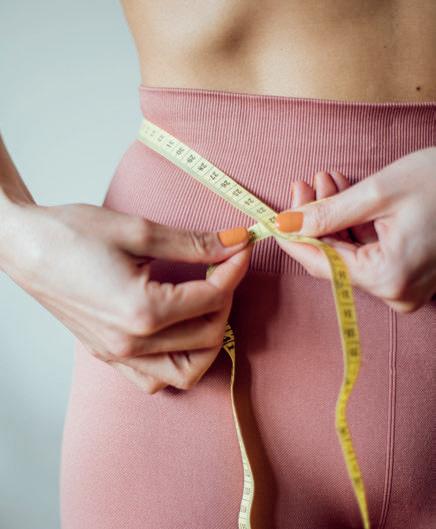
In response to increasing demand from patients seeking safe, medically supervised treatments, leading London clinic Dr Haus Dermatology has launched a new endocrinologist-led weight management service. One of the few private clinics in London to o er endocrinologist-led treatments, this renowned medical and aesthetic skin health pioneer is committed to delivering evidence-based expert care that puts patient safety rst.
Heading up the service is consultant endocrinologist Dr Edson Nogueira, whose expertise spans obesity, metabolic health, endocrine hypertension, diabetes and cardiovascular risk management. Known for his holistic approach, he will ensure every patient receives a thorough medical assessment, careful monitoring and support throughout their treatment journey.
‘My focus is on understanding each patient’s metabolic and hormonal pro le, providing careful clinical assessment, and supporting them with ongoing specialist care throughout their journey,’ says Dr Nogueira, Hypertension Services lead at Chelsea and Westminster Hospital NHS Trust.
GLP-1 medications work by mimicking a hormone that regulates appetite and blood sugar levels. These treatments can reduce hunger, slow gastric emptying and support gradual weight loss. However, they are
not suitable for everyone. Dr Nogueira will assess whether medication is appropriate by identifying any underlying conditions such as thyroid disorders, insulin resistance or metabolic syndrome.
Initial consultations take place at the Harley Street clinic, with follow-up appointments available via video consultation. As part of this fully-integrated pathway, any clinically prescribed treatment will be delivered directly to the patient’s home.
And for those experiencing the ‘loose skin’ side e ects of weight loss medication, the clinic also o ers a full range of non-surgical skintightening treatments, including Ultherapy, Emface, and Thermage radiofrequency skin tightening.

‘Patient safety and medical excellence have always been central to our clinic,’ says Dr Haus.
‘The introduction of our endocrinologistled medical weight management service re ects our commitment to providing carefully supervised, evidence-based care.’
To book a consultation with Dr Nogueira, call 020 7935 6358 or email appointments@drhausdermatology.com. drhausdermatology.com
Ten tweakments carefully assessed by our crack team of beauty experts
Regenerative SkinGevity 7-in-1 treatment
BEST FOR: When you want the platinum treatment with immediate and long-lasting results.
WHAT HAPPENS: Hand yourself over to Dr Uliana Gout, pioneer in regenerative aesthetic medicine, for a highly bespoke 7-in-1 treatment that leaves the face, neck and décolleté feeling smoother and tighter. Taking two hours, the treatment begins with layering pH-centric molecules to enhance absorption of personalised cocktails of active ingredients, chosen to support cell renewal, reactivation and calm pigmentation. Powerful multipolar and B-mode radiofrequencies are then delivered deep into the tissues to stimulate production of fresh collagen, elastin and hyaluronic acid. Exosome cocktails are then infused via DermoElectroporation – electrical
pulses to create temporary micro-openings in the skin (meaning no needles and no downtime) – to further boost collagen synthesis. Now comes a high concentration of personalised polynucleotides (with over nine billion molecules in concentration) delivered via teeny-tiny injections to stimulate cellular regeneration. Finally, Dr Gout’s signature skin training micro-injections infusing blends of hyaluronics, peptides, antioxidants, vitamins and minerals re ne ne textural lines, gently contour cheeks and de ne natural-looking lips. As a nal ourish, cosmetic injections are delivered to smooth key facial lines before a soothing diode delivers powerful red light to calm in ammation and support cellular repair. Phew!
RESULTS: For a results-driven treatment, look no further. Skin appears tighter, li ed, contoured, smoother, rmer and more luminous straight away, with continued improvement in V-shaping, lip contouring, and airbrushing of lines, wrinkles and texture over time.
BOOK IT: From £1,650 per treatment. londonaesthetic-medicine.com; +44 (0)7858 668579

BEST FOR: Firming under-eyes and diminishing dark circles. WHAT HAPPENS: Dr Marwa Ali inserts a cannula into the cheek which is then gently pushed beneath the skin towards the under-eye area. The solution is distributed here evenly without bruising or damage, a sensation that feels weird and uncomfortable. The whole thing is made more tolerable by squeezing two spongy stress balls. Polynucleotides are DNA fragments derived from salmon or trout sperm that signal a rejuvenation response within skin cells, boosting collagen and therefore firming and
smoothing the area. Unlike hyaluronic acid filler which relies on volume to instantly disguise dark circles and ll in hollowing, polynucleotides work naturally over time to de-age the skin, reducing ne lines and di using the appearance of blood vessels beneath thinning, translucent skin. It takes two treatments spaced between two and four weeks apart to fully appreciate the results.
RESULTS: Some brightness is noticed immediately but the best results come gradually over several weeks. While for some the improvements are dramatic, for others it’s more subtle. Our tester preferred the outcome to tear trough ller.
BOOK IT: £800 per treatment. thewellnessclinic@harrods.com
BEST FOR: In ammatory skin conditions and anyone interested in anti-ageing treatments that are strictly needle-free.
WHAT HAPPENS: A 007-worthy skin treatment, Rexonage uses clever quantum molecular resonance (QMR) technology to switch o in ammation while stimulating dermal stem cells. Targeted frequencies deliver gentle micro-vibrations, promoting skin cell repair and regeneration. Think of it as a system reboot and so ware upgrade for your skin’s internal functionality: in ammation is reduced and your repair ability is optimised. The treatment is like a facial massage: completely injection-free, heat-free, trauma-free, and requires no downtime, making it suitable for all ages and skin tones.
RESULTS: Despite the gentle nature of Rexonage, over a course of treatments results are noticeable: healthier, clearer, calmer, brighter skin, with improved texture and a subtle tightening effect. Your skin just appears to work better, as though its battery has fully charged. After your initial six-week course, maintenance treatments are advised every three to four months.
BOOK IT: £550 per treatment, with a course of six recommended. drbrendankhong.com
BEST FOR: Naturally restoring facial volume and improving skin laxity.
WHAT HAPPENS: Quickly becoming the go-to treatment for natural skin tightening and subtle volume restoration, Juläine is the perfect entry-level tweakment – ideal for those a er the ‘your face, only better’ result. A collagen-stimulating injectable harnessing ultra-puri ed poly-L-lactic acid, Juläine is delivered via a cannula to lax areas of skin, where its microscopic spheres integrate seamlessly to stimulate type one and type three collagen, responsible for elasticity, structure and bounce. Juläine’s LaSynPro technology supports a non-in ammatory, gradual regeneration process, creating smoother, more predictable results. Unlike ller, it encourages the skin to restore itself, creating natural-looking volume rather than an overly enhanced e ect.
RESULTS: Slow and steady wins the (face) race. No sudden volume, no dramatic shi s and no downtime needed for the skin to settle. Treatments are carried out in two to three sessions spaced four to six weeks apart, with results developing gradually. The best results are typically seen four to eight months a er the second or third treatment, when everyone will be telling you how ‘well’ you look, not asking what you’ve had done. What more could a girl ask for?
BOOK IT: From £1,500 per course. drbrendankhong.com
BEST FOR: Targeting multiple skin concerns in a single session
WHAT HAPPENS: Dubbed the Ferrari of intense pulsed light treatments, this next-generation, non-

invasive phototherapy device can address everything from pigmentation and redness to ne lines, acne scarring and skin laxity on both the face and body. The BBL (BroadBand Light) uses light energy to penetrate the deeper layers of skin, where it gently breaks down pigmented cells and super cial blood vessels that cause redness and ushing. At the same time, the treatment stimulates broblasts to increase collagen and elastin production, leaving skin smoother and rmer. Studies show that BBL can even change the gene expression in skin cells to make them ultimately behave more like younger skin. No wonder the likes of Victoria Beckham and Kim Kardashian are fans. Sessions last between 30 and 60 minutes with minimal downtime.
RESULTS: Expect smoother, rmer and brighter skin. For best results, three treatments spaced a month apart are recommended.
BOOK IT: From £690 per treatment. facialsculpting.co.uk
BEST FOR: Thread veins and spider veins on legs, bums and tums.
WHAT HAPPENS: VBeam Prima is an advanced pulsed dye laser that treats even the most stubborn thread veins with precision and success. At The Taktouk Clinic, dermatology professor Firas Al-Niaimi harnesses the 1064-nanometre wavelength for maximum penetration, making this treatment particularly e ective for more stubborn vessels that have not responded to previous treatments. The patented cooling technology is a godsend and, crucially for this kind of laser, keeps the treatment comfortable – unlike old-school variants.
RESULTS: Most patients see a signi cant reduction in visible veins a er two to six sessions, with continued improvement as the body clears the treated vessels.
BOOK IT: From £600 per treatment. drwassimtaktouk.com
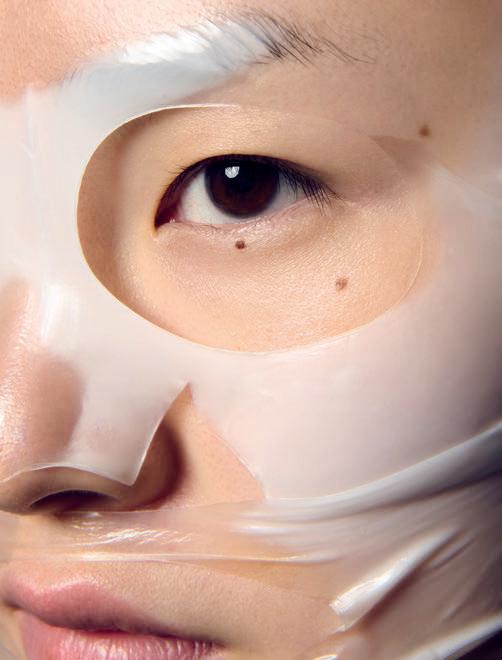
7DR. DAVID JACK
BEST FOR: A facial treat while you shop.
WHAT HAPPENS: Tucked away inside Liberty London, book in for this high-performance, multi-modality facial as an antidote to shopping. Developed by head aesthetician Izabela Pawlitka, it combines electrical muscle stimulation (like a workout for your muscles to plump up), radiofrequency (stimulates skin at a deep level) and Korean fractional nanolaser technology with targeted peptide infusions to li , rm and re ne. The result is an immediate tightening e ect with longer-term remodelling going on beneath the surface. If you want to supercharge it, you can pair Nano Li with polynucleotide
injectables – a next-generation treatment that stimulates broblast activity within the dermis, boosting collagen and elastin while improving hydration, density and resilience. Options such as Nucleofill, Plinest or Ameela help to so en ne lines and support long-term repair. Be warned, there can be a bit of discomfort (topical numbing cream is available) with the application of the polynucleotides, and expect some small bumps that will go away within a day or two.
RESULTS: Taken together, the results are more noticeable, but it is advised to have two or three polynucleotide treatments to get the full effect. Without the polynucleotides, you’ll come out glowing (a little ushed) and ready to resume your browsing of the Liberty rails.
Blepharoplasty is a surgical solution for heavy upper eyelids
BOOK IT: From £950 per treatment. drdavidjack.com 8
BEST FOR: Those seeking a surgical solution for hooded or heavy upper lids.
WHAT HAPPENS: Heavy lids can a ect your vision quality and make you look perpetually knackered. An upper eyelid blepharoplasty takes around 30 minutes, focusing on the area between the eyebrow and eyelashes to create a more de ned eyelid crease – o en taking a good ten years o your face. A er consultations to agree on your bespoke treatment, oculoplastic surgeons Dr Rachna Murthy and Dr Jonathan Roos perform the procedure under local anaesthetic. Excess skin and muscle are removed, and underlying fat is either repositioned or reduced to create a more youthful, refreshed appearance. Working together shortens surgery time and allows the luxury of two expert pairs of eyes to deliver the most natural and precise results. After surgery, you’re sent home with appropriate painkillers and prescription topicals, and can be back in the o ce and wearing glasses within three days. The clinic’s unique Scars-less programme supports faster healing and optimal postoperative recovery, helping to minimise visible scarring. Follow-up appointments and a 24/7 on-call WhatsApp team are reassuring to have on hand.
RESULTS: The long-term results are genuinely game-changing; rejuvenating the eye area li s and de-ages the entire face. Recovery varies, but for most patients bruising subsides quickly and the incision line settles within a few weeks. Concealer can be applied a er one week until redness fades.
BOOK IT: From £7,950 per procedure. facerestoration.com
Suffer Ozempic face no more with Sofwave’s ultrasound technology
The Ozempic era has reshaped more than waistlines. As many celebrate their newfound gures, they are also confronting an unexpected side e ect – looser skin, reduced de nition and a loss of smoothness across the face, neck and body.
The solution increasingly discussed in aesthetic circles? Sofwave – the ultrasound treatment that restores rmness and subtly sculpts the skin.
Across leading clinics, experts are seeing growing demand for treatments that address the e ects of rapid weight loss. As facial fat reduces, skin can appear so er or less supported, particularly around the jawline and neck, while wrinkles become more visible. Rather than turning to injectables or surgery, many patients are choosing technologies that stimulate the body’s own collagen production, strengthening the skin’s natural support structure.

Sofwave has quickly become one of the most talked-about treatments in aesthetics. Using advanced ultrasound energy, the technology targets the mid-dermal layer of the skin – where collagen is naturally produced. Controlled pulses of energy gently heat this layer, triggering the body’s regenerative response and encouraging the formation of fresh collagen over time.
The results are gradual but noticeable. As new collagen forms, skin appears rmer and more structured, so ening lines and subtly sculpting areas such as the cheeks, jawline and neck. The e ect is not dramatic or arti cial, but re ned – delivering a refreshed appearance that still looks entirely natural.
Part of Sofwave’s appeal lies in its simplicity. Treatments typically take under an hour and require little to no downtime. The combination of clinical sophistication and convenience has earned the treatment a loyal following among celebrities, clinics and patients alike.
Across the UK, several leading clinics have become destinations for those seeking Sofwave delivered with exceptional expertise. At the Rita Rakus Clinic in Knightsbridge, Dr Rita Rakus remains one of London’s most respected gures in aesthetic medicine. Her clinic is known for re ned,
natural-looking results and attracts clients who value discretion and clinical excellence.
In Marylebone, Dr Munir Somji at Dr Medispa is widely recognised for his meticulous, anatomy-led approach to facial aesthetics. His clinic combines advanced technology with carefully tailored treatment plans, and Sofwave has become a popular option for patients seeking to restore de nition and improve skin quality following weight loss or early signs of ageing.
Just outside London, at Atelier Clinic in Egham, Dr Aggie Zatonska has built a reputation for her regenerative philosophy of aesthetic medicine, focusing on strengthening the skin from within and supporting long-term collagen production. Meanwhile, The Montrose Clinic in Belgravia o ers a calm, surgeon-led environment where patients o en choose Sofwave for subtle tightening of the face and neck without disrupting daily routines. For those navigating the e ects of rapid weight loss – or simply seeking a restorative approach to skin health – Sofwave represents a new era of regenerative treatment, helping li , sculpt and restore the skin’s natural resilience.
To discover your nearest Sofwave provider, visit sofwave.com

BEST FOR: Those looking for a film star smile without the commitment to braces or months of orthodontics.
WHAT HAPPENS: Digital dentistry is where it’s at, creating a designer smile that can be widened and whitened and can improve facial contours. The A.B.C. Smile method, created by Dr Edward Li and Dr Tanya Patel, fuses high-tech innovation with traditional cra smanship to deliver smiles that are not only beautiful and natural-looking, but also functional and long-lasting. Ultra-personalised using 3D scanning and detailed photographic analysis, every smile is mapped to suit your
individual face, features and skin tone. Porcelain composites are handpainted to your perfect shade. A bespoke ‘smile prescription’ may include composite contouring to subtly build and re ne the front teeth, giving the lower face the most attering li (honestly, genius), alongside gentle reshaping to enhance symmetry without losing character.
RESULTS: Finished results can be achieved in under three months and are completely pain-free. What you really notice is how balanced everything suddenly looks: your features feel more harmonious, your face is subtly li ed, and your smile is brighter and more polished without looking overdone.
BOOK IT: £190 for initial consultation. abc.dental
BEST FOR: A real skindeep clean. WHAT HAPPENS: This super popular treatment uses patented technology to cleanse, extract and deeply hydrate the skin. A vacuum-like wand is passed over the face in a series of steps, exfoliating and power-washing away dead skin cells before infusing targeted serums tailored to your speci c concerns. Suitable for all ages and stages, it’s the ultimate maintenance facial, delivering a thorough reset without any drama. The treatment nishes with a calming LED mask to boost results and soothe the skin. There’s no real downtime, though it’s best to skip makeup a erwards to let the bene ts fully sink in.
RESULTS: Expect clearer, smoother, more re ned skin, with pores appearing smaller and tone more even. While you’ll see an immediate glow, a course of treatments – ideally monthly – will deliver the most noticeable, long-lasting results.
BOOK IT: Price per treatment varies by provider. hydrafacial.co.uk ■ A course of treatments like the Hydrafacial is recommended to
When it comes to
eyes,
there’s no one more experienced that Dr Elizabeth Hawkes
We all know that the eye area is one of the rst to start showing signs of ageing, and so naturally might be one of the rst parts of the face you’d consider for cosmetic surgery. But many of us are –understandably – wary of interventions around the eye, fearful that in our quest to perfect form, we might impede function.
That’s why Dr Elizabeth Hawkes (pictured) is so highly sought a er. Widely regarded as one of the UK’s leading surgeons in her eld, her rare dual expertise in both ophthalmology and oculoplastics means she has a profound understanding of the internal structures of the eye, coupled with a meticulous, light touch approach to aesthetics. The results are transformative, yet imperceptible, leaving patients li ed, brightened and so ened – and o en with improved peripheral vision – a fresher version of themselves, rather than ‘done’.
A graduate of Imperial College, London, Dr Hawkes continued her studies at Harvard Medical School, Boston and St Mary’s Hospital, London, before embarking on a career in ophthalmic surgery. She completed her specialist training on the prestigious Oxford rotation and spent time at Moor elds Eye Hospital, London. She continues to be involved in surgical training, working as an examiner for the Royal College of Ophthalmologists and is dedicated to improving both knowledge and safety standards within the eld.
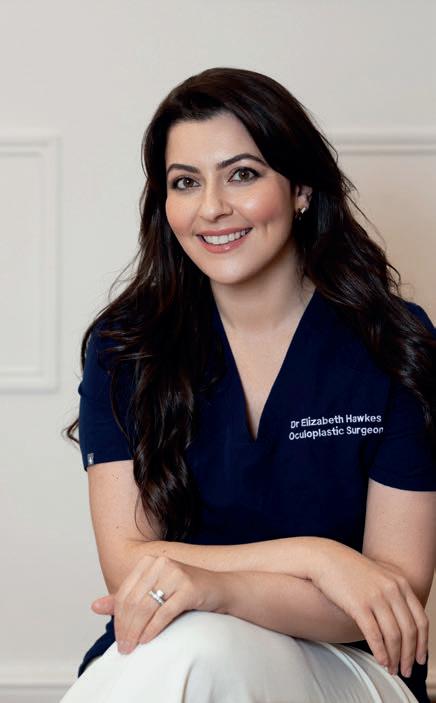
combination of subtle and precise incisions, and gentle repositioning of the fat. Such minimal intervention means recovery time is swi , with most patients resuming normal life within two weeks, and results that typically last a decade.
Despite Dr Hawkes’ own extensive education and skill, she prioritises patient understanding with a gentle bedside manner that aims to explain her approach in terms that everyone can understand.
Her special interest and expertise is in cosmetic eyelid surgery and, as a result, her most requested procedure is the upper blepharoplasty, an operation that addresses excess skin on the upper lids. Her signature is her ability to give the eye a more li ed and open appearance, while still preserving its natural shape, and she achieves this using a
Dr Hawkes also specialises in lower blepharoplasty – reducing under-eye pu ness caused by bulging fat pads. As with her approach to the upper eye, here again she repositions and redistributes fat in the tear trough, restoring youthful volume and reducing any bags.
A true professional who combines artistry and science with skill and understanding, it’s little wonder that, when it comes to oculoplastics, those in the know have their eye on Dr Elizabeth Hawkes.
drelizabethhawkes.com
Whether it’s optimising skin health, brightening teeth or tightening jowls, these are the names we know and trust to deliver an exceptional service
DR AGGIE ZATONSKA
A former ENT surgeon, Dr Zatonska is known for her subtle, natural-looking injectable work. She takes a 360° approach to aesthetics, combining injectables with advanced skin treatments to improve long-term skin quality. @atelier.dr.aggie; atelier.clinic
DR AHMED EL MUNTASAR
Dr El Muntasar entered the University of St Andrews at 16, making him one of its youngest ever medical students. He has completed extensive training in aesthetics and takes a patient-centred approach to treatment, focusing on natural, balanced results. @theaestheticsdoctor; theaestheticsdoctor.com
DR ALEXIS GRANITE
Trained at Weill Cornell Medicine in New York, Dr Granite is a US boardcerti ed dermatologist practising in London. Her work spans medical dermatology, including skin biopsies, through to aesthetic treatments – for which her motto is ‘less is more’. @dralexisgranite; dralexisgranite.com
DR ANJALI MAHTO
A consultant dermatologist based on Harley Street, Dr Mahto treats a wide range of concerns including acne, rosacea and hyperpigmentation. She takes a holistic approach, incorporating lifestyle, prescription skincare and in-clinic treatments. She is author of The Skincare Bible @anjalimahto; dranjalimahto.co.uk
New Entry
DR ANITA STURNHAM
A GP specialising in dermatology, Dr Sturnham is the founder of Decree, an evidence- rst skincare approach that puts barrier health front and centre.
Harnessing her experience as a GP, Dr Sturnham understands that great skin is the con uence of multiple factors, such as in ammation to hormonal and metabolic in uences. Her integrative approach has gained her a loyal following among skincare enthusiasts.
@dranitasturnham; thedecree.com
DR ARIEL HAUS
A genius with lasers and now o ering a new, endocrinologist-led weight management service, dermatologist Dr Haus and his sta are renowned for their professional and welcoming manner at his state-of-the-art clinic on Harley Street. From speci c concerns like acne and rosacea to holistic aesthetic treatments, Dr Haus is the king of skin. @drarielhaus; drhausdermatology.com
DR ASHWIN SONI
A UK- and US-trained plastic and reconstructive surgeon, Dr Soni specialises in nonsurgical facial procedures, including rhinoplasty using injectables and biostimulators like Sculptra and polynucleotides, with a focus on safety. With a passion for skincare, his skin-focused approach is a hit with clients looking for a healthy glow.
@thesoniclinic; thesoniclinic.com
New Entry
DR BRENDAN KHONG
One of London’s most sought-a er new-gen aesthetic doctors, Singapore-born Dr Khong combines Eastern and Western practices using cutting-edge techniques. A member of the Royal College of Physicians and the British College of Aesthetic Medicine, Dr Khong is a specialist, teacher and speaker who’s developed a reputation for elegant hyper-natural results. @drbrendankhong; drbrendankhong.com
DR CHRISTINE HALL
A GP and former pharmacist, Dr Hall has a strong interest in K-Beauty and aesthetic medicine. She has also worked in emergency medicine, bringing a broad clinical perspective to her practice. @drchristinehall; drchristinehall.com
DR DANIEL EZRA
A senior consultant surgeon at Moor elds Eye Hospital, ophthalmic and oculoplastic surgeon Dr Ezra specialises in both functional and aesthetic eyelid surgery, as well as non-surgical treatments for the eye area. @eyesbyezra; danielezra.co.uk
DR DAVID JACK
A er 14 years in the NHS full-time, Dr Jack set up his private practice in 2014. With his delicate touch, you’ll never look overdone with his ‘naturally beautiful’ approach. If you’re nervous about injectables, Dr Jack is your go-to guy. @drdavidjack; drdavidjack.com
DR DEAN RHOBAYE
Dr Rhobaye has developed a bespoke method of facial harmonisation using dermal llers and neurotoxins to achieve beautiful results. A former winner of the nonsurgical facial beauti cation category at the annual AMWC Aesthetic Medicine Awards, Dr Rhobaye is undoubtedly a cut above your average injector. @deanrhobaye; sloaneclinic.co.uk
DR EDWARD LI & DR TANYA PATEL
Combining dental expertise with aesthetic precision, Dr Li and Dr Patel specialise in cosmetic dentistry and smile design, using advanced techniques to deliver believable results. @theabcsmile; abc.dental
DR FRANCES
PRENNA JONES
Known for her use of LED and light-based therapies, Dr Jones focuses on skin rejuvenation and achieving a healthy, radiant complexion. @drfrancesprennajones; drfrancesprennajones.com
MR GEORGIOS ORFANIOTIS
Mention the deep plane faceli and Orfaniotis’ name is inevitably mentioned. With a plastic surgery fellowship from the Royal College of Surgeons, Mr Orfaniotis is on the GMC specialist register for plastic surgery. He has over 16 years’ experience in some of the most advanced facial rejuvenation techniques. @dr_georgios_orfaniotis; orfaniotis.co.uk
DR GEORGINA WILLIAMS
A co-founder of Montrose London, Dr Williams is a consultant plastic surgeon and fellow of the Royal College of Surgeons, specialising in facial and breast plastic surgery and microsurgery. She divides her time between her NHS surgical practice and her private clinic at Montrose, where she focuses on non-surgical work such as Botox and llers. @drgeorginawilliams; montroseclinics.com
MR HAGEN SCHUMACHER
A highly quali ed plastic and reconstructive surgeon and a well-regarded NHS consultant, Mr Schumacher’s private practice, Adore.Life, is located in London and Cambridge. His main interests include breast surgery, rhinoplasty, eyelid surgery, chin alteration and faceli s, but whatever the concern, his guiding principle is to improve the con dence and self-esteem of his patients. @hagenschumacher; adore.life
DR GALYNA SELEZNEVA
Dr Selezneva specialises in non-invasive body contouring and skin tightening using advanced technologies. With a reassuring bedside
manner, she has a loyal female client list.
@dr_galyna; drgalyna.com
DR IFEOMA EJIKEME
Dr Ejikeme’s Instagram pro le is a landing place for targeted skincare advice, from the low-down on the most-asked about ingredients like retinol to pregnancy skincare advice. As founder and medical director of Adonia Medical Clinic, she o ers state-of-the-art treatments such as PRP (platelet-rich plasma) for hair loss and microneedling for skin rejuvenation. @dr_ifeoma_ejikeme; adoniamedicalclinic.co.uk
DR JOANNA CHRISTOU
Being a dual-quali ed dentist and medical doctor has enabled Dr Christou to pursue a special interest in facial musculature when performing non-surgical procedures and creating the discrete, holistic results she is renowned for.
@drjchristou; cosmeticskinclinic.com
DR JOHANNA WARD
An award-winning cosmetic doctor, GP and cosmetic laser expert, Dr Ward is a leading gure in the science of preventative anti-ageing medicine from both a clinical dermatology and nutrition standpoint. @drjohannaward; cosmeticskinclinic.com
DR JEAN-LOUIS SEBAGH
A pioneer in non-surgical facial rejuvenation, Dr Sebagh is known for treatments designed to li and tighten the face and neck using technologies such as ultrasound, mesotherapy and injectables. @drsebagh; drsebagh.com
New Entry
DR JENNIFER OWENS
Like many great aesthetic practitioners, Dr Owens began her medical career in dentistry. She opened The Glow Clinic in 2018, an award-winning practice with locations in London, Dublin and Cork. With a reputation for innovation, Owens’ clinics are known for their cultural and clinical sensitivity when
it comes to complex skin concerns like melasma, hyperpigmentation and post-in ammatory pigmentation. @thedailyglow_; theglowclinic.ie
DR JONEY DE SOUZA
A pioneer in new technologies, Dr Souza delivers luminous skin quality through his layering of laser modalities to reduce pigmentation, rm facial contours and tighten sagging jawlines. @drjoneydesouza; drjoneydesouza.com
DR JUDY TODD
Dr Todd is the expert celebrities trust for a non-surgical faceli . Renowned for transforming the neck and lower face, she’s a master of high-tech machines like Morpheus8, FaceTite and NeckTite, the device lauded for Shirley Ballas’ and Nikki Chapman’s facial transformations. @dr_judy_todd; cadoganclinic.com
MR KSHEM YAPA
A GMC-certi ed consultant plastic surgeon who works between the NHS and his private practice, Mr Yapa specialises in faceli s and rhinoplasty. His deep plane face li incorporates the specialised deep plane technique with fat gra ing to replace lost volume naturally. @yapaplasticsurgery; yapaplasticsurgery.com
DR LIZZIE TUCKEY
A member of the Royal College of Medicine and the British College of Aesthetic Medicine, Dr Tuckey’s advanced surgical training has given her an edge in both facial rejuvenation and body contouring, with a huge emphasis on achieving a natural look. @drlizzietuckey; drlizzietuckey.com
DR MANAV BAWA
Dr Bawa is a member of the Royal College of Surgeons (MRCS) and the Royal College of General Practitioners (MRCGP). He is passionate about facial aesthetics and is getting proven results with his hair loss scalp treatment. @drmanavbawa; time-clinic.com
DR MUNIR SOMJI
Founder of Dr MediSpa, Dr Somji is a key opinion leader in aesthetic medicine with a reputation for excellence in a number of modalities, from skin health and tightening to hair loss and injectables. @drsomji_skin; drmedispa.com
DR MARCO NICOLOSO
Expert injector Dr Nicoloso isn’t one for aesthetic trends. He takes a holistic approach to the face, treating it like a piece of ne art that needs gentle restoration rather than reinvention. He is renowned for creating a subtle look, which has gained him a loyal following of discerning clients. @drmarconic; ouronyx.com
DR MARWA ALI
With a global client base, men and women travel far and wide for Dr Ali’s expertise. Never one to overdo it, light injectable enhancements are her thing – from artful Botox to undetectable tear trough ller. She combines these with HIFU and IPL to give her clients the luminous skin quality they desire. @dr_marwaali; harrods.com
DR MARYAM ZAMANI
An oculoplastic surgeon, Dr Zamani has a passion for facial aesthetics and works both in the US and UK. With a bestselling skincare line, which includes her sell-out LED mask, Dr Zamani knows that great skin is all about balance. @drmaryamzamani; drmaryamzamani.com
DR MICHAEL PRAGER
O ering what he calls ‘cosmedical wellbeing’ at his Knightsbridge clinic, Dr Prager specialises in natural-looking injectables that boost your con dence without looking as though you’ve had anything done. @dr_michael_prager; drmichaelprager.com
DR MITUL SHAH
A renowned periodontist and implant specialist, Dr Shah is an expert in cosmetic gum improvements such as crown lengthening, with extensive experience managing complex gum issues, including recession. He is one of the most trusted names in oral health. @chelseadentalclinic; chelseadentalclinic.co.uk
DR NINA BAL
Italian-born Dr Bal was a professional skier before she studied to be a dentist, and later an advanced aesthetic doctor specialising in facial sculpting treatments. A TV personality and social media star, Dr Bal’s clients head to her for natural-looking injectables and signature sculpting technologies such as Endoli . @drninafacialsculpting; facialsculpting.co.uk
DR PARIS ACHARYA
A former dentist and maxillofacial surgeon, Dr Paris is known for her holistic interpretation of aesthetics. O ering hormone therapy, in-depth blood work and body scans (bone density, for example) alongside her skin-centric menu of injectables, mesotherapy and advanced body treatments such as neck and decolletage rejuvenation. If that wasn’t impressive enough, Acharya continues to work part-time in the NHS as an A&E doctor. @drparis. aesthetics; drparis.co.uk
New Entry
DR PRIYA VERMA
With multiple letters a er her name, Dr Verma trained as an NIHR (National Institute for Health and Care Research) Academic Clinical Fellow at King’s College London. A fully quali ed GP who is accredited by Save Face, she has gained a reputation for her personalised, sciencebacked treatment
plans that garner stunning, natural-looking results through a layered approach, utilising injectables and non-invasive technologies to target multiple layers precisely and subtly.
@ dr_priyaverma; art-clinic.co.uk
DR RHONA ESKANDER
Dr Eskander is an award-winning cosmetic dentist specialising in everything from can’t-tell ‘contact lens’ veneers and minimally invasive smile enhancements. If you’re looking for a youthful smile enhancement, she is a class above. @drrhonaeskander; chelseadentalclinic.co.uk
DR SABRINA SHAH-DESAI
Oculoplastic aesthetic surgeon Dr Shah-Desai is the go-to eye expert if you su er from hollow under-eyes. Her knowledge is unparalleled and her signature treatment, Eye Boost, combines tear trough ller with complementary modalities to refresh the eyes.
@drsabrinashahdesaio cial; perfecteyesltd.com
DR SELENA LANGDON
A trained plastic surgeon, Dr Langdon is the founder of Berkshire Aesthetics, a patient-focused clinic specialising in long-term skin health. A skilled injector and CoolSculpting expert, Dr Langdon is internationally renowned for her body treatments. @berkshireaesthetics; berkshireaesthetics.com
DR SINDHU SIDDIQI
A champion for enhancing individual beauty, Dr Siddiqi is a GP and aesthetic doctor who grew her practice entirely from word of mouth. Dr Siddiqi has further quali cations in endocrinology and women’s health, making her popular with female patients. @no ltercliniclondon; no lterclinic.com
DR SOPHIE SHOTTER
From face tightening to delicate lip rejuvenation, Dr Shotter, who is the new president of the British College of Aesthetic Medicine, believes all work should look invisible to the naked eye. She’s the go-to injector for beauty editors and is a pioneer in regenerative aesthetic medicine. @drsophieshotter; drsophieshotter.com
DR STEFANIE
WILLIAMS
A highly regarded dermatologist, Dr Williams is a genius at correcting all kinds of pigmentation with her medical-grade facials and combination approach of peels, laser, IPL and freezing techniques to achieve clear, even-toned skin. @drstefaniew; eudelo.com
DR TRACY MOUNTFORD
With her bespoke, intuitive approach to rejuvenation, Dr Mountford has decades of experience with injectables and knows how best to treat each face by eye. She combines injections with devices like Ultherapy that target the deeper layers of skin for longer-lasting results. @the_cosmetic_skin_clinic; cosmeticskinclinic.com
DR ULIANA GOUT
As member and former chair of the British College of Aesthetic Medicine, Dr Gout’s approach is hyperpersonal. Her extensive knowledge has led her to develop her ‘intelligent aesthetic’ technique, using complementary procedures that target every layer of the face from the bone to the muscle to the skin surface for the most natural-looking results. @ulianagout; londonaesthetic-medicine.com
DR VICKY DONDOS
As author of The Positive Ageing Plan , Dr Dondos unsurprisingly believes in a gentle, inside-out approach to natural beauty. Beauty editors prize her injectable skills as being rejuvenating and undetectable. She is the best for a subtle refresh. @drvickydondos; medicetics.com
DR VICTORIA MANNING & DR CHARLOTTE WOODWARD
Known for a holistic approach – including o ering nutrition and tness advice with minimally invasive treatments – Dr Manning and Dr Woodward are leading experts in Silhouette So , a subtle thread li treatment that reduces sagging. @river_aesthetics; riveraesthetics.com
DR WASSIM TAKTOUK
Dr Wassim Taktouk is the insiders’ go-to doctor. A master at subtle facial contouring, he is loved by women and men looking for a subtle tweakment. Last year, he launched his second Taktouk Clinic at The Chancery, Rosewood on Grosvenor Square. @drwassimtaktouk; drwassimtaktouk.com
DR YUSRA AL-MUKHTAR
A dental surgeon and medical aesthetic clinician, Dr Al-Mukhtar notched up several years’ experience in maxillofacial and skin cancer surgery before focusing on aesthetic medicine. She is known for her natural, non-surgical faceli s combining dermal ller, thread li s and advanced devices. @dryusra.almukhtar; dryusra.com ■
Undergoing any cosmetic procedure has risks. While we take every e ort to personally visit and check the credentials of each practitioner mentioned in this guide, our aim is not to persuade our readers to embark on cosmetic interventions, but rather to report on the topics people want to know about in a measured, informative way. We recommend doing your own personal due diligence before embarking on an aesthetic or medical treatment of any kind.







































This issue, we’re launching the Beauty Briefing, edited by Nathalie Eleni, to keep you in the know and ahead of the curve
Move over, polynucleotides. Peptides are the next frontier for fabulous skin, says Olivia Falcon
For the past couple of years, something slightly under the radar has been happening in beauty’s inner circles: those in the know have been biohacking peptide injectables. Many peptides (such as GHKCu, a copper tripeptide which boosts skin vitality) are currently unlicensed as injectables in the UK. They are often stacked with other peptides to boost brainpower, libido and pretty much any ageing ailment you can imagine. But now, there is a new wave of peptides designed to improve skin texture – and they are available and very much on the treatment menu in aesthetic clinics.
Peptides are essentially short chains of amino acids that act as cellular messengers. Microneedled or injected, they signal the skin to repair, regenerate and produce more collagen. At her clinic in Marylebone, Dr Paris Acharya (drparis.com) is offering the ABG Lab MesoEye C71 treatment (£525 per session), which is injected over upper and lower eyelids. It works to increase microcirculation and decrease puffiness; boost (rather than block, like fillers) the delicate lymphatic system around the eyes; strengthen capillary walls to reduce dark circles; and stimulate collagen to smooth dreaded crow’s feet.
Dr Yusra Al-Mukhtar (dryusra.com) is one of the first to offer Celora Vita, a new, amino acid-charged skin booster

There is a new wave of peptides designed to improve skin texture – and they are licensed and very much on the treatment menu in aesthetic clinics

Bouf Flouf Factor Growth shampoo
Bish, bash… Bouf! Putting the swag back into thinning hair, this formula contains patented ingredients to tackle FGF5, a protein responsible for hair shedding. £19.95, bouf.com
that supports the production of key skin proteins to smooth crepiness. For best results, a course of three treatments every three weeks is recommended, with results lasting nine months.
Word is also spreading about the benefits of Sunekos, a patented blend of hyaluronic acid and amino acids which triggers natural production of collagen and elastin with tremendous effect. At her clinics, Dr Sophie Shotter (drsophieshotter.com) recommends three to four sessions (from £550 each), spaced about three weeks apart.
In between clinic visits, I’ve been sifting through piles of peptide-charged skincare too – and after six months of testing a fair amount, one of the stand-outs has been SkinC euticals’ P-Tiox (£135, skinceuticals.co.uk), a super glossy serum that contains neuropeptides clinically proven to soften different types of contraction lines. And to supercharge the rest of my routine, I’m loving the Lab31b Need.L micropeptide serum (€79.95, lab31b.com), which contains peptideinfused hyaluronic acid crystals that create microchannels in the skin for deeper product penetration. The power serum feels a little gritty as you rub it in, but it delivers hyaluronic acid, bakuchiol (a gentle plant-derived alternative to retinol) and the brand’s patented peptides for a megawatt glow. ■

Kind Patches Mood+ patches A perky pick-meup, these clever transdermal patches are ideal for supplement dodgers who find pills hard to swallow. They regulate mood and emotional wellbeing. £12, kindpatches.com

Ripple+Home x Houseplant incense droplets Seth Rogan isn’t your usual suspect for scenting your home but his brand Houseplant’s collab with Ripple+Home hits all the right notes. A great sustainable, non-toxic way to perfume rooms. £25, boots.com
Outside–In Silk serum foundation Camouflaging redness, this effortlessly blends the benefits of a serum with the coverage of a foundation for beautiful, dewy skin. £61, theoutsidein. com

There’s a lot more to good oral hygiene than just brushing your teeth, says Camilla Hewitt
When it comes to maintaining our health, brushing our teeth may not be the rst habit that comes to mind. However, oral hygiene is more closely linked to overall wellbeing than many of us realise. ‘The mouth contains complex communities of bacteria and highly vascular tissues,’ explains consultant dentist Harry Shiers, ‘meaning in ammation or infection in the oral cavity can a ect the rest of the body.’
Poor oral hygiene can lead to gum disease, particularly periodontitis, a chronic in ammatory condition
that a ects the structures supporting the teeth. ‘When this occurs, bacteria and in ammatory mediators can enter the bloodstream through in amed gum tissue, potentially contributing to systemic in ammation.’
A growing body of research has linked poor oral health with a range of conditions, including cardiovascular disease, poor glycaemic control in type 2 diabetes, and pregnancy complications such as preterm birth. These associations highlight why good oral hygiene should be considered part of maintaining overall health.
Brushing alone reaches only around 60 percent of the tooth, meaning oss or interdental brushes are essential in helping remove plaque from the areas between teeth where both cavities and gum disease frequently develop. So beyond brushing twice daily, here are the core oral health habits Shiers recommends:
1Consider timing. ‘A er consuming acidic foods or drinks – such as citrus, so drinks or wine – enamel is temporarily so ened. Brushing immediately a erwards may contribute to enamel erosion, so I recommend rinsing with water and waiting roughly 30 minutes before brushing.’
2
Be mindful of snacking. ‘Oral bacteria metabolise sugars to produce acids that demineralise enamel. Importantly, the frequency of sugar exposure is o en more damaging than the total quantity consumed, so frequent snacking tends to increase cavity risk.’

3
Stay hydrated to support saliva production. ‘Saliva neutralises acids, helps clear bacteria and supports enamel remineralisation. Dehydration, certain medications and mouth breathing can reduce saliva ow and increase susceptibility to decay.’
4
Clean your tongue.
‘The tongue harbours oral bacteria, so gentle tongue scraping can help reduce bacterial load and improve oral hygiene.’ ■
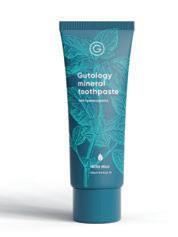
‘The mouth is home to a complex microbiome that plays a fundamental role in systemic health,’ says Dr Seb Lomas, biological dentist and ambassador for Gutology, a toothpaste that claims to support the mouth’s natural microbiome. ‘The goal isn’t to sterilise the mouth, but to create balance.’
Dr Lomas recommends ditching harsh, alcoholheavy mouthwashes that disrupt microbial diversity for ones that support remineralisation and healthy bacteria.
‘Ingredients like hydroxyapatite are biomimetic – it mirrors the natural structure of enamel – helping to strengthen teeth without upsetting the ecosystem.’
While good habits can make a di erence to both our oral hygiene and long-term health, Shiers says that professional care remains essential.
‘Routine check-ups allow early detection of cavities, removal of tartar and monitoring of gum health,’ he says. ‘Early warning signs that warrant professional attention include bleeding gums, persistent bad breath, gum recession, tooth sensitivity or loose teeth.’
SAINT Jō founder Allyse Cirillo has one motto: skincare should contain everything you need and nothing you don’t
In the hyper-saturated landscape of modern skincare, the ‘more is more’ philosophy has long dictated our regimes. We are told we need ten steps, 20 active ingredients and a chemistry degree to navigate our own bathroom cabinets. But for Allyse Cirillo, the founder of plant-based beauty brand SAINT Jō, the path to great skin shouldn’t feel like a maze. It should be simple and e ective.
SAINT Jō was born from a moment of profound professional and personal disconnection. A er 13 years in the high-octane worlds of fashion and product development, Cirillo found herself at a crossroads. ‘I spent over a decade working in fashion and beauty but during that time, I wasn’t taking care of my own body or skin,’ she shares. ‘I was killing it in my career, but I was neglecting myself.’
This realisation that the very industry she served was failing to serve her became the catalyst for creating a beauty brand laser-focused on an easyto-follow, ve-step routine formulated only with ingredients your skin needs, and nothing it doesn’t.
Cirillo’s journey to skincare wasn’t traditional and she counts that as one of her greatest strengths. Her background in designing women’s shapewear and bras taught her the intimacy of the ‘ rst layer’. When the company she was working for acquired a brand formulated by a naturopathic doctor, Cirillo saw a huge opportunity. ‘I was working with the largest organ in the body –the skin – and became conscious of the materials and ingredients that touch it across underwear and skincare.’ The formulas in this natural beauty brand were plant-based but lacked enough skin actives to actually move the needle. Cirillo came to understand the di erence between ‘the overwhelming things we
are accustomed to using to take care of our skin and the things we actually need’. Some of the hottest brands on the market were laden with sulphates and hormone disruptors to preserve margins. ‘I just knew we had to stop cutting corners.’
Creating a beauty brand and looking at it from a consumer perspective is perhaps why the SAINT Jō formulas are both so e ective and so popular. Not only have more than 10,000 women raved about it on shopsaintjo.com, but the brand also sold out in its rst week at John Bell & Croyden. It’s all because Cirillo felt empowered to challenge the status quo, requiring chemists to justify every single additive. ‘If I’d been in the industry for 15 years, I probably wouldn’t have asked the questions,’ she says. ‘I challenged them: “Take out that ingredient. What is that for? Explain this to me.”’

The result is a line that is circa 97 percent plant-derived but built with the rigour of clinical science and testing. Every ingredient is there for a purpose, from the plantsourced preservatives to the bioavailable glycerins. Transparency is baked into the brand’s DNA through a full ingredient glossary that translates the technical into the understandable.
At the heart of the range is a commitment to ingredients the skin actually recognises. While the beauty world currently obsesses over buzzy trends like peptides, Cirillo takes a more grounded approach.
SAINT Jō uses a plant-based peptide in its Defend serum not because it’s a marketing buzzword, but because it delivers results you can actually feel.
The rst step in the protocol starts with a nourishing cleanser. ‘It was really important to start from that rst base layer – making sure the pH levels are all balanced so the formulas don’t cancel each other out, and

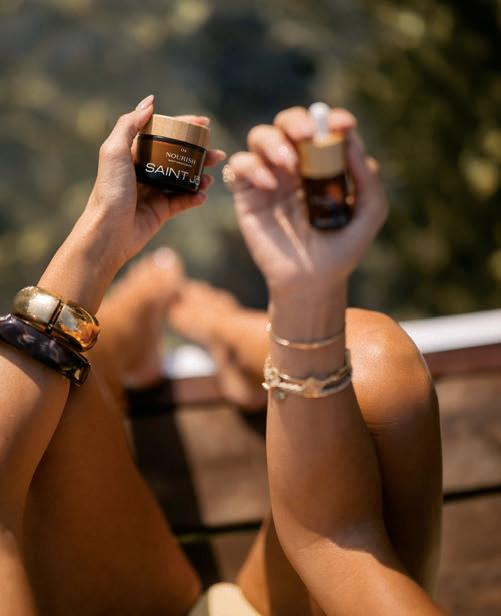
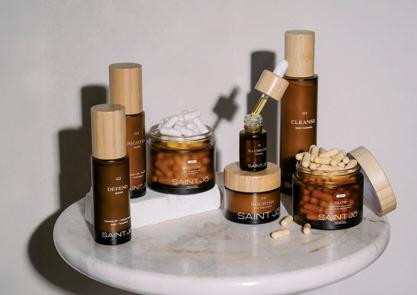

‘I spent over a decade working in fashion and beauty but I wasn’t taking care of my own body or skin. I was killing it in my career but neglecting myself’
Allyse Cirillo
making sure the ingredients don’t have any reaction,’ says Cirillo.
Two serums come next: ceramide-rich Defend for barrier repair and then Brighten, a gentle radiance-boosting serum packed with antioxidants including a hyper-tolerable vitamin C derived from the Australian Kakadu plum. The goodness is locked in with Nourish, a daily moisturiser designed to hydrate, soothe and repair with zero irritation.
Step ve, Illuminate, wasn’t originally on the cards. ‘I wanted to add more antioxidants to the existing formulas but it wasn’t possible to do safely without counteracting other ingredients. It needed to be an oil base, and because of solubility, this had to come at the end,’ says Cirillo. The oil-soluble vitamin C ‘gives that one last penetration through to your cellular rejuvenation level’.
This holistic approach extends beyond the surface to repair and support skin from within. Understanding that stress damage is an internal and external battle, there is an additional two-step ritual in the form of AM and PM supplements. AM contains plant-based actives like red orange complex and DracoBelle Nu, proven to support collagen production, while PM features poria mushroom, an adaptogen used to calm the mind and promote restful sleep.
Cirillo recalls a customer undergoing treatment who told her that simply looking at the SAINT Jō bottles made her feel a sense of dignity. ‘She said, “I want to feel feminine, but the products I have to use are not pretty and they smell bad.” That was part of our DNA. We just wanted women to feel good.’ The praise is not just anecdotal, either. The brand boasts a 40 percent re-purchase rate in an industry where eight percent is the norm. For Cirillo, it’s proof that women are hungry for formulas that actually work.
SAINT Jō is available at John Bell & Croyden and at shopsaintjo.com
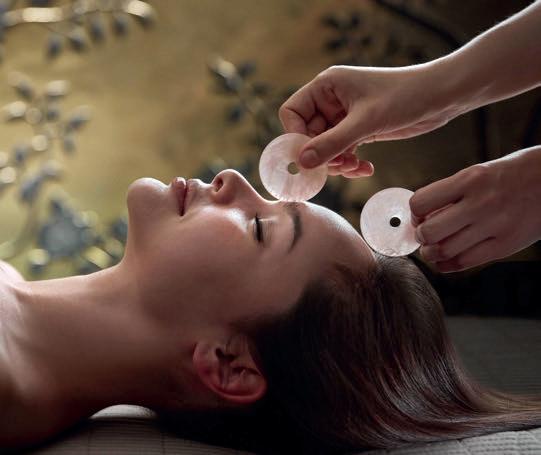
From the latest news to things we’re loving, Nathalie Eleni keeps you in the know



Restorative wellness retreats in London are having quite a moment. The polished Mandarin Oriental Hyde Park has quietly evolved into a hub for next-level wellbeing, with a roster of experts available by appointment to tick every alternative health box imaginable. From gong therapy with Leah Powell to sessions with human performance specialist Phil Learney, the hotel’s wellness retreats can be tailored to recalibrate both mind and body. Paired with an overnight stay and breakfast on your private balcony, it just might become your new go-to reset button.
From £400, mandarinoriental.com


↑ READY, SET, TECH Swedish brand Foreo, known for its beauty tech solutions, introduces the fourth iteration of its Issa hybrid sonic toothbrush, delivering a full year of brushing on one charge. Three modes – ‘deep clean’, ‘whitening’ and ‘sensitive’ – allow you to personalise your routine with comfort and precision. Designed to remove up to 30 percent more plaque than manual brushing, it can also improve oral hygiene by up to 140 percent in just a month –giving you something to smile about. £89, foreo.com
→
This summer, I’ll be wearing the D&G Beauty Everkiss liquid lipstick in shade 105: Respect. A gorgeous, go-to nude with attitude. £40, harrods.com

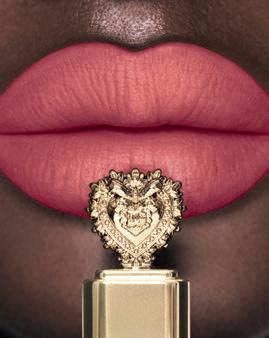

Be your own hairstylist (and your friends’ too) with Dyson’s new Airwrap Co-anda2x multi-styler. Improved curling, faster drying and more e ective straightening mean less e ort is needed to achieve polished, voluminous results – rivalling many a Chelsea blow-dry. £579.99, dyson.co.uk

Elemis’ iconic
Pro-Collagen cleansing balm melts into a silky oil when you massage it into your skin, leaving it both deeply cleansed and hydrated. Now, hooray, it's available not just for the face but the body too. £45, uk.elemis.com
We’ve tried them and we love them
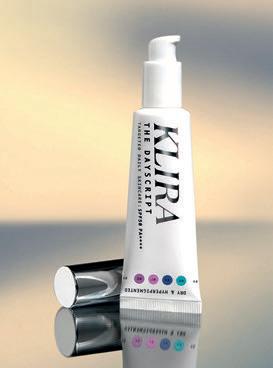
KLIRA THE DAYSCRIPT For a minimalist routine with maximalist results. An all-in-one formula that covers every base. £82, klira.skin
→
Leading aesthetic clinician Dr Marwa Ali is rede ning results-led skin treatments with the launch of Pico by Seriderm. This nextgen laser is designed to tackle pigmentation, acne scarring and even tattoos with precision. With no downtime, the radiant, glowing skin results speak for themselves. From £850 at Harrods Wellness Clinic, harrods.com


SUQQU AQUFONS
WATER TUNING GEL
Like a sheet mask in a tube, this translucent veil hydrates your skin all day. £54, uk.suqqu.com

LISA ELDRIDGE
VELATURA BALM
Shade Meeting The Ex is a pink pop of colour for lips and cheeks. £27, spacenk.com

CLARINS DOUBLE
SERUM FOUNDATION For that coveted ‘your skin, but better’ finish, giving a radiant, lit-from-within glow. £49, clarins.co.uk

TRINNY LONDON
MIRACLE BLUR DIFFUSER Wear alone or over makeup for instant blurring and smoothing in seconds. £28, trinnylondon.com

For many people trying to eat well, appetite feels like the enemy – hunger appears unpredictable, cravings relentless. But the science tells a di erent story, and what really determines whether appetite works for or against you is satiety. This biological process is not a single signal but a coordinated conversation between the gut, brain, hormones, microbiome, and even the physical structure of the food you eat. When these signals function properly, hunger rises naturally when you need energy and fades once your body has what it needs.
This intricate system begins in the gut. As food enters the stomach and small intestine, specialised cells release hormones such as GLP-1, peptide YY and cholecystokinin, which communicate with the brain to signal that nutrients have arrived and help slow digestion so the body has time to absorb them. At the same time, stretch receptors in the stomach detect the volume of food being consumed. Together, these signals travel along the vagus nerve to the brain’s appetite centres.
The trillions of microbes that live in the colon also play an important role. When we eat bre-rich plant foods, the microbiome ferments those bres and produces short-chain fatty acids. These in uence metabolism, reduce in ammation and interact with appetite-regulation pathways. In other words, the bacteria living in your gut help shape how full you feel.
For most of human history, this system worked well. Today, foods are engineered to be eaten quickly and easily, o en combining re ned carbohydrates, fats and salt that maximise palatability while minimising satiety. These move rapidly through the digestive system and deliver large amounts of energy before the body’s fullness signals have time to catch up.
The encouraging news is that the biology of satiety has not disappeared; it simply needs the right inputs. Research consistently shows that diets built around whole, bre-rich foods help restore the body’s natural appetite regulation. Fibre slows digestion, supports the microbiome and strengthens satiety signals. Plant diversity also matters, and many of world’s healthiest diets are plant-forward. Vegetables, legumes, whole grains, nuts, seeds and fruit provide bre, micronutrients and bioactive compounds. Plus, these foods tend to have a more intact food matrix, meaning they take longer to eat and digest.
Dr Federica Amati advises how to reset the appetite so it becomes friend not foe
There is absolutely space for highquality animal foods. The issue is not complete exclusion, but proportion. What has gradually fallen away from many modern plates is the sheer quantity and diversity of plants. When that balance shi s back, something remarkable happens: blood sugar stabilises, energy levels improve and appetite begins to settle. Rather than relying on constant restraint, the body’s satiety signals start doing much of the work.
Our bodies are not broken; they are incredibly adaptive. When we eat in ways that support our biology, appetite becomes easier to manage and eating well feels like the natural rhythm it was always meant to be. ■
The Appetite Reset: How to Eat, Drink and Thrive Before, During and A er GLP-1s by Dr Federica Amati is published on 25 June (£25, Michael Joseph)
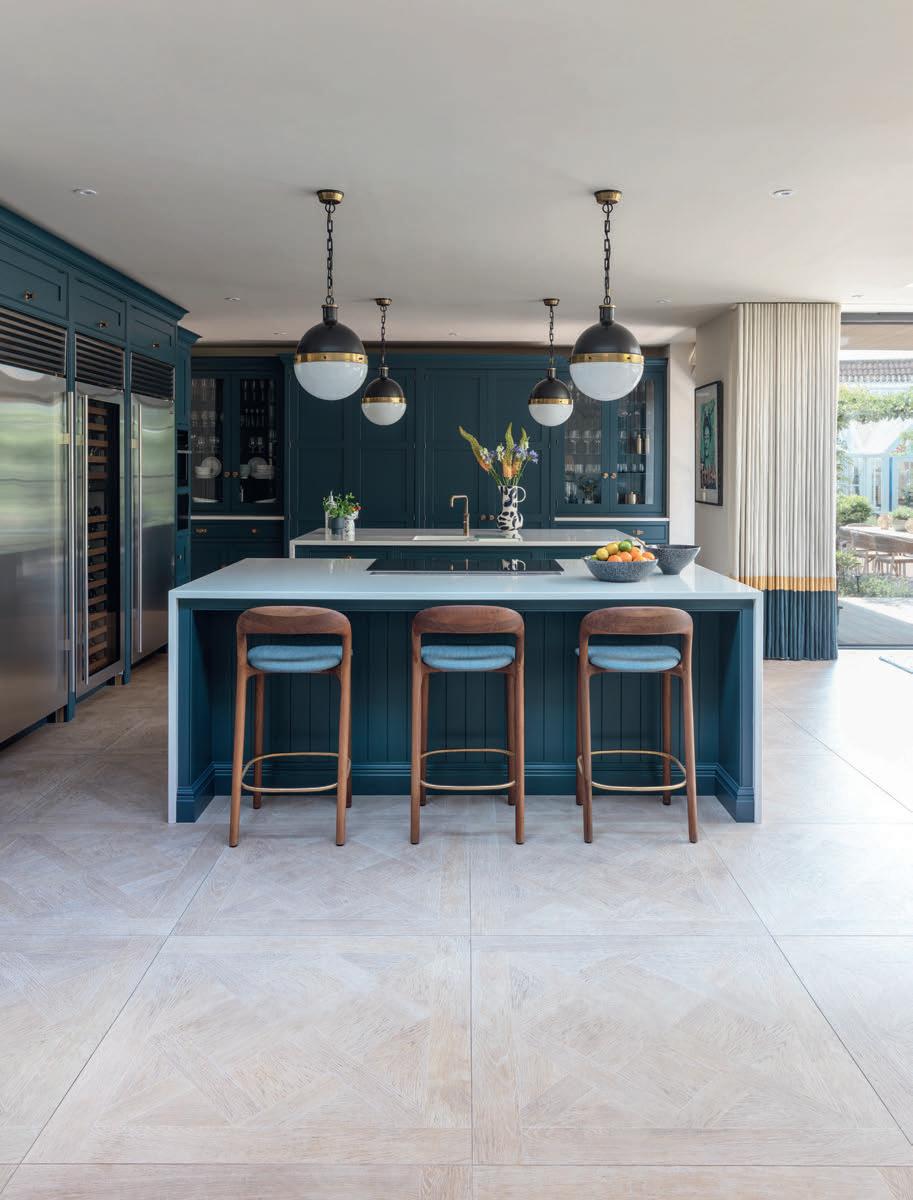
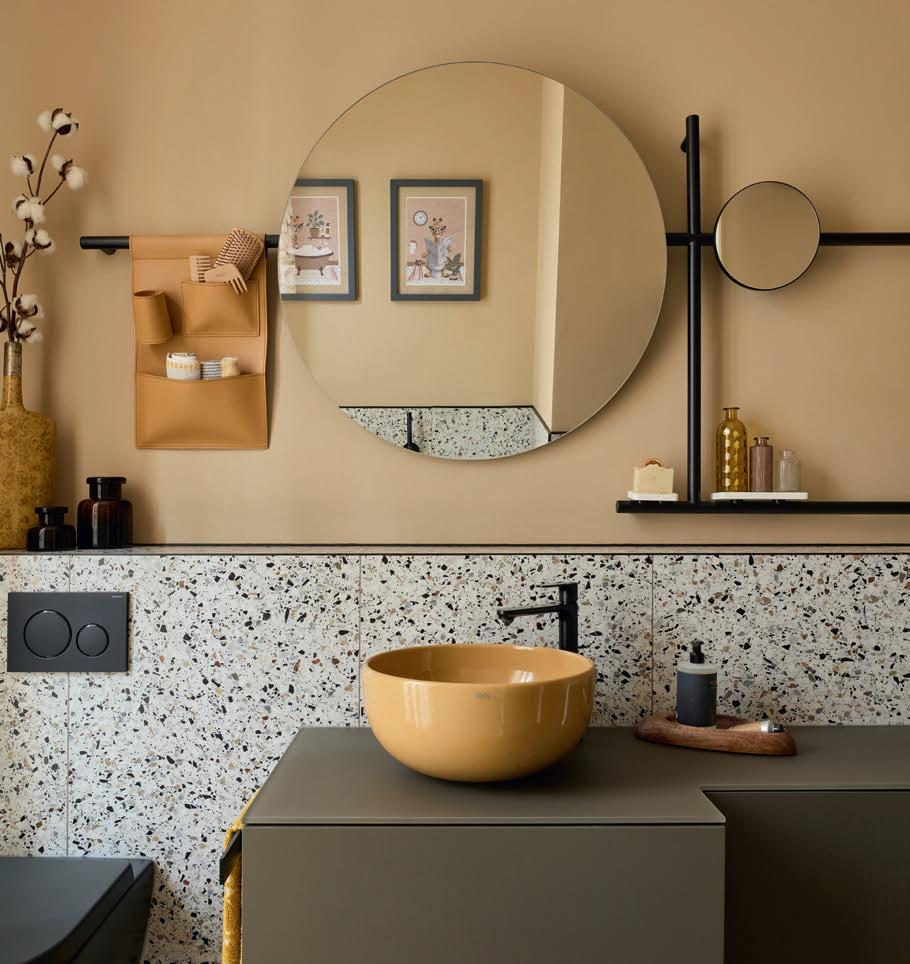


BATHROOMS | TILES | WELLNESS | DESIGN & INSTALLATION
Create a bathroom that’s anything but ordinary. It begins with booking an appointment.
SPEAK WITH OUR EXPERTS
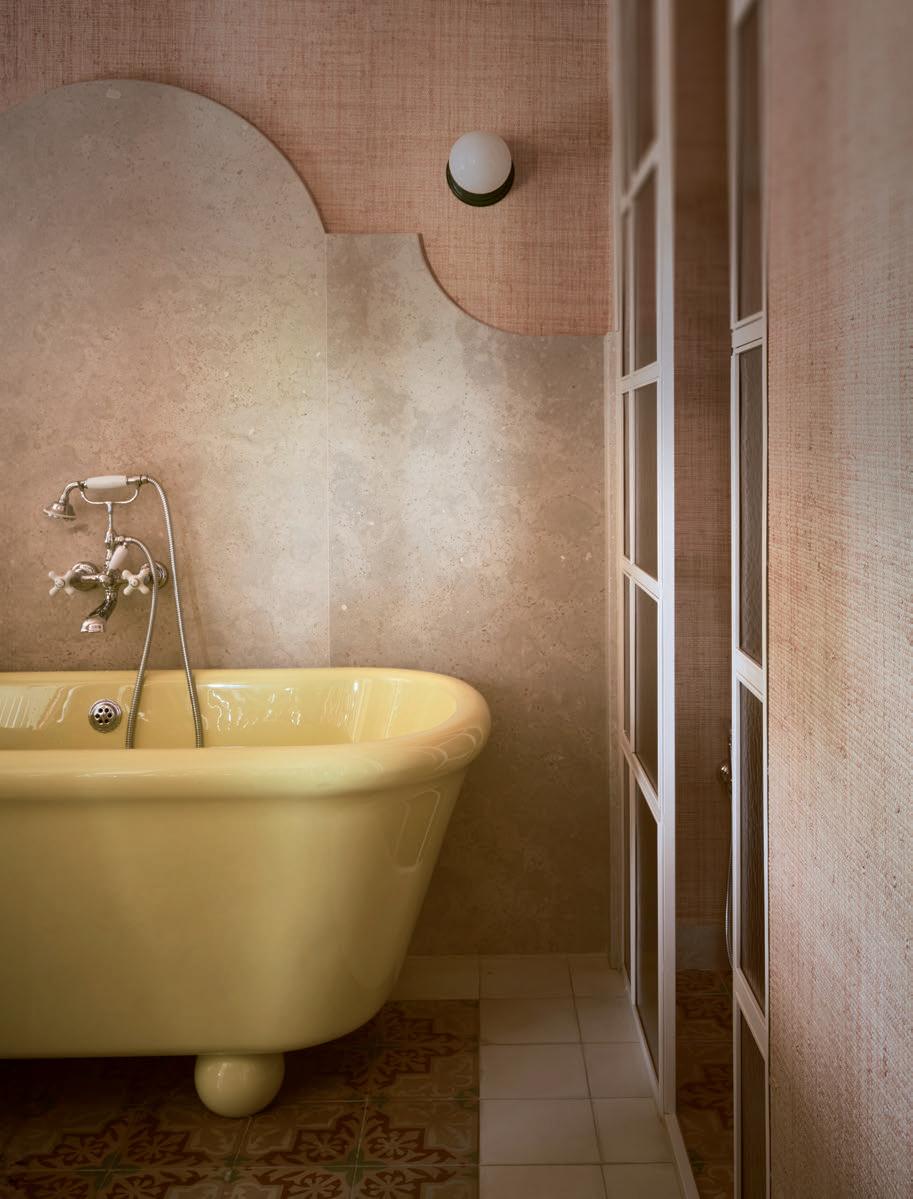
Edited by Carole Annett


TUESDAY 2 JUNE – THURSDAY 2 JULY 2026
BOOK TICKETS: DCCH.CO.UK OR SCAN

DESIGN CENTRE, CHELSEA HARBOUR, LONDON, SW10 0XE
Turnell & GigonGroupDrawing Room by Albion Nord. Illustration by Albion Nord for WOW!house 2026.

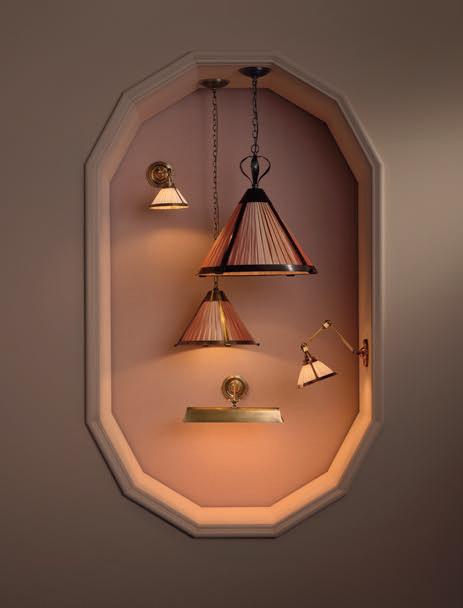
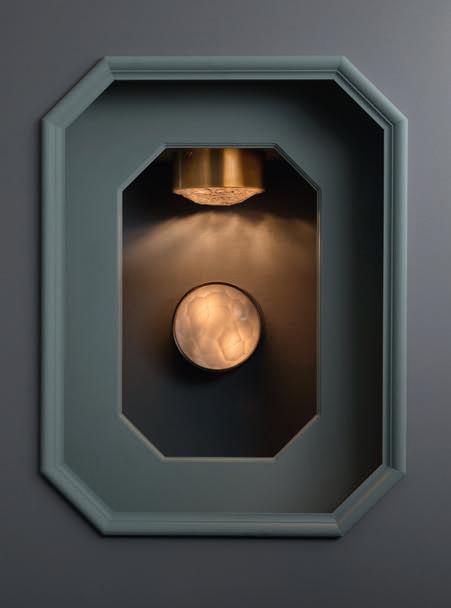
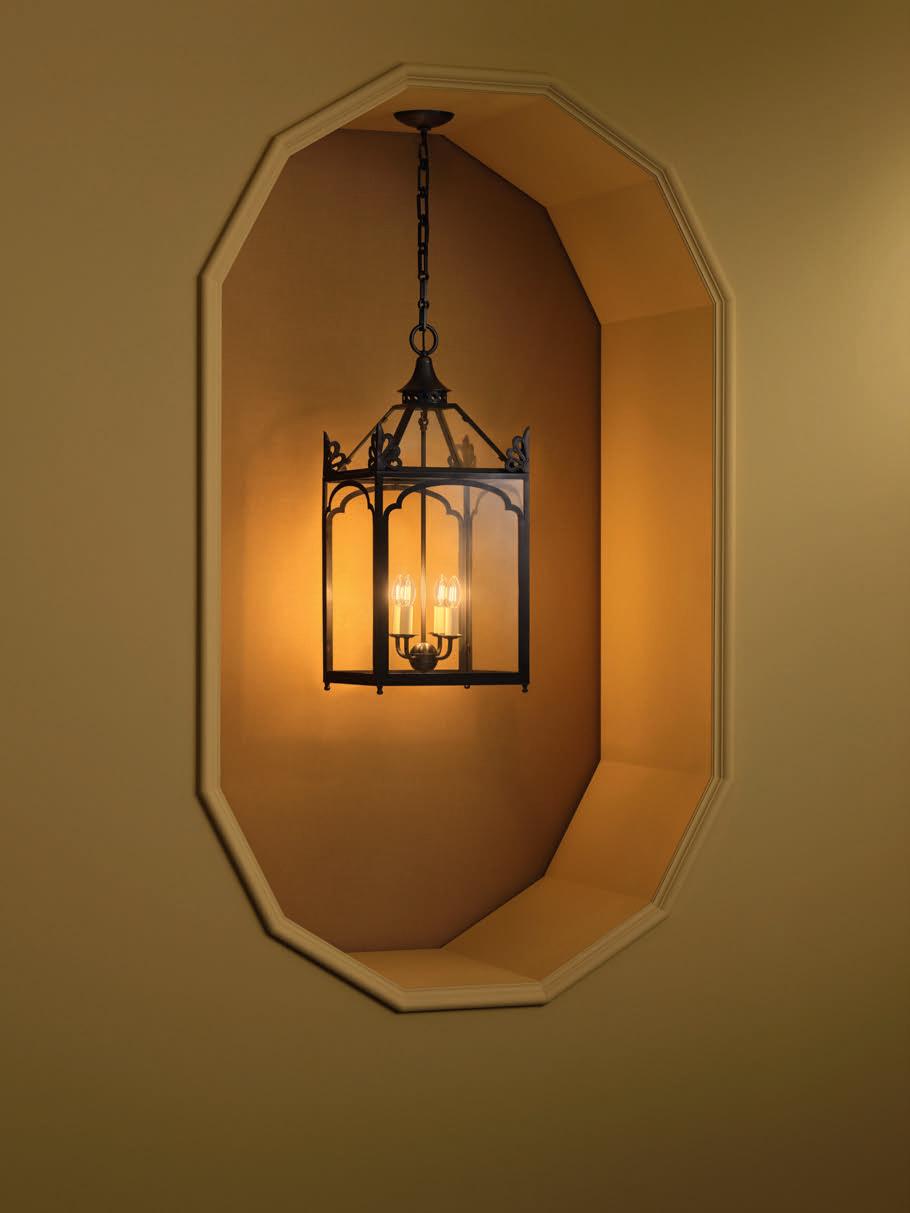

BESPOKE DESIGN, MASTERFUL CONSTRUCTION, IMPECCABLE EXECUTION

Design Centre Chelsea Harbour See us at WOW!house, 2nd June to 2nd July


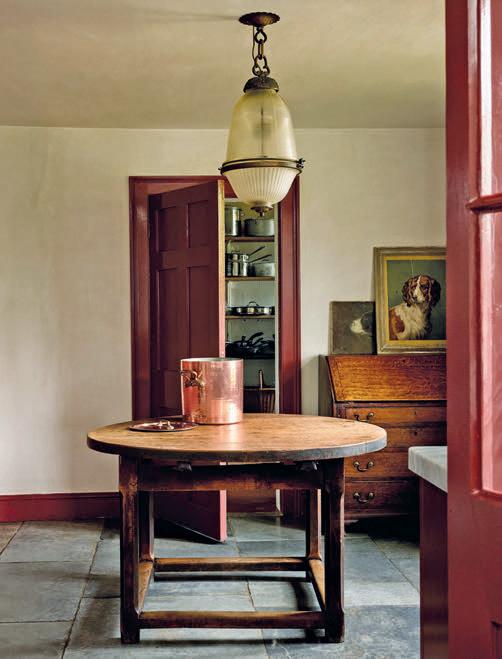


1. Top of Carole’s wish list: a wellappointed pantry. berdoulat.co.uk
2. The new small but perfectly formed home collection from Hermès launched in Milan. Hand-hammered metal and cassia jug. hermes.com
3.The bliss of instant boiling water – Quooker’s hot water tap in patinated brass. quooker.co.uk
4. Elena ceramic pendant light with saddlery leather detail. hectorfinch.com

In this issue, we focus on the hardest working rooms in a home – kitchens and bathrooms – where functionality is as important as aesthetics. I spend more time in my kitchen than any other room. It acts as my o ce as well as doubling up as a social space. I occasionally cook in it, too – lots of roast chicken over the years. The cabinetry is pink (painted in Edward Bulmer’s bestselling dusky Cuisse de Nymphe Emue) and I absolutely love it.
What I don’t have, but o en yearn for, is a pantry. Hatta Byng delves into our fascination with this behind-the-scenes hideaway on page 166, and shows us beautiful examples lled with rows of perfectly decanted jars along with expert advice on how best to create one if space is at a premium.
The bathroom has evolved into so much more than a place to simply wash; it’s a sanctuary – and the fastest growing addition? The sauna. Beloved of Nordic countries, the use of steam generated from water on hot coals has been traced back to the Stone Age. While sauna designs have evolved from a primitive hut to rather more lavish structures, the numerous health bene ts have stayed the same. Read Busola Evans ’ feature on page 174 to discover more, as well as the latest ways to make bathrooms havens of wellbeing. Country & Town House encapsulates both city and rural living and Charlie Colville o ers a feast of design ideas for di erent tastes and postcodes (p178). And nally, it’s almost time for one of my favourite events in the design calendar: WOW!house. Read our preview on page 187. The month-long extravaganza is an opportunity to see the work of world-class interior design talent, o en hidden behind closed doors.
See you there.












“LIGHTMAKERS OF DISTINCTION”

67

Carole Annett curates pieces to bring our hardest-working rooms to life
Aqualisa’s S-Range showers allow every household member to set their own user pro le, meaning no lever ddling before stepping in. Operated by remote control, voice activation or HD display, Aqualisa’s app also shows water use and shower duration. Aqualisa S2 smart shower adjustable head and xed ceiling head in brushed brass, from £1,672.61. aqualisa.co.uk
Create Academy’s online courses are an excellent resource for aspiring interior designers and DIY renovations. Learn how Emma Sims Hilditch designed her Wiltshire kitchen as well as a Cotswold project including a pantry and back of house. £147 as a single purchase or subscribe for £240 per year with access to all content. createacademy.com
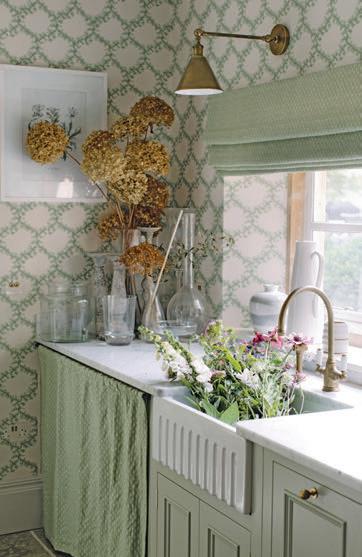
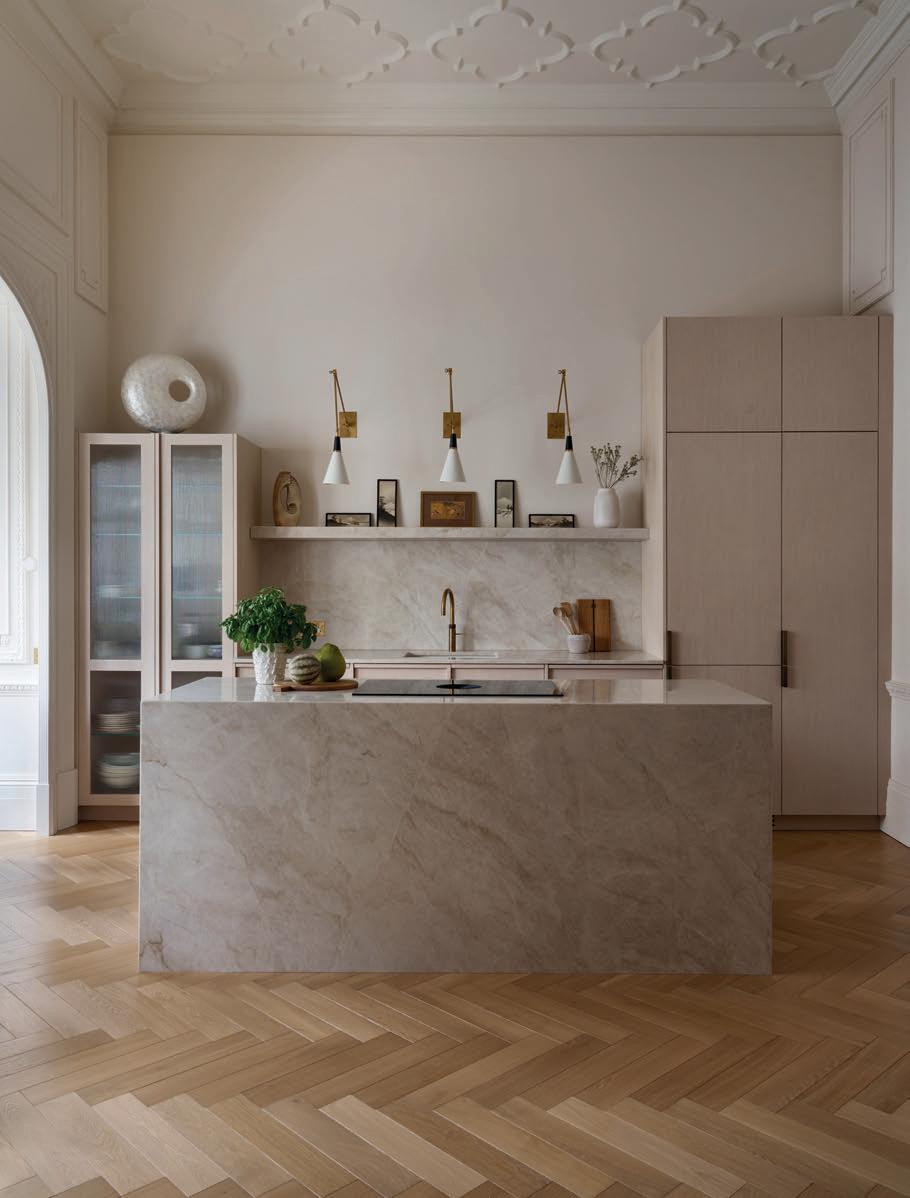




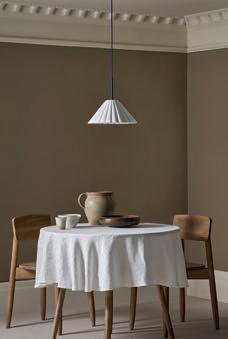
→
Solid brass with a choice of a brushed brass, brushed nickel, brushed copper, matte black or chrome nish, ABI Interiors’ Kingsley shower rail set balances beauty with everyday functionality. From £399.99, abiinteriors.co.uk

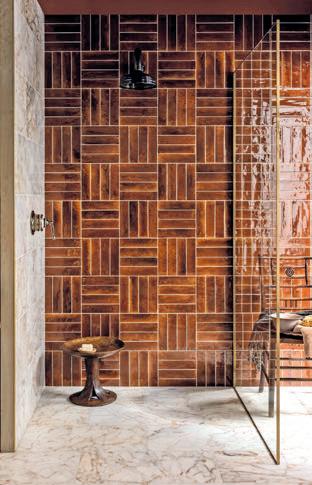
↓ GREAT GATSBY
Ideal in a bathroom, with hand-ribboned glass for a so , di used light, this can be hung vertically or horizontally. Gatsby brass wall light, £189. soholighting.com

← MOUTHWATERING
Mandarin Stone’s Hoxton glazed tiles in To ee combine rich caramel shades with terracotta undertones. £0.72 each, mandarinstone.com




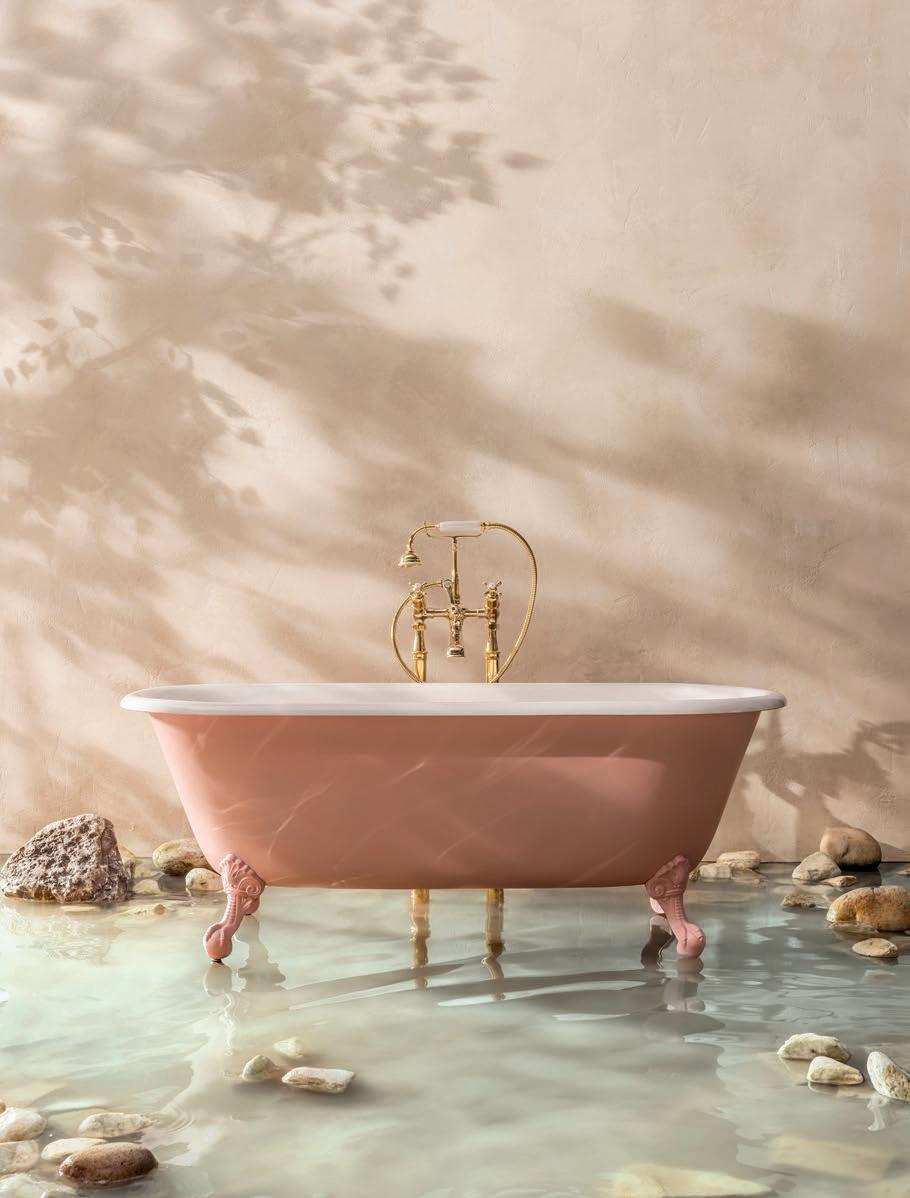
This bespoke kitchen was designed to align seamlessly with the room’s striking architecture and original mouldings. An island of Taj Mahal quartzite is mitred to achieve the appearance of a sculptural monolith. From £55,000, solakitchens.com

↓ BATHING BEAUTY
This Catchpole & Rye copper bateau is highly polished inside and out for a gleaming nish. £6,500,catchpoleandrye.com

↑ SUPER COOL
David Rockwell
Dream wool rug for Roche Bobois, £3,180. roche-bobois.com


CHEF’S KITCHEN →
The Atherton Collection by Smallbone is designed with Michelinstarred chef Jason Atherton. smallbone.co.uk



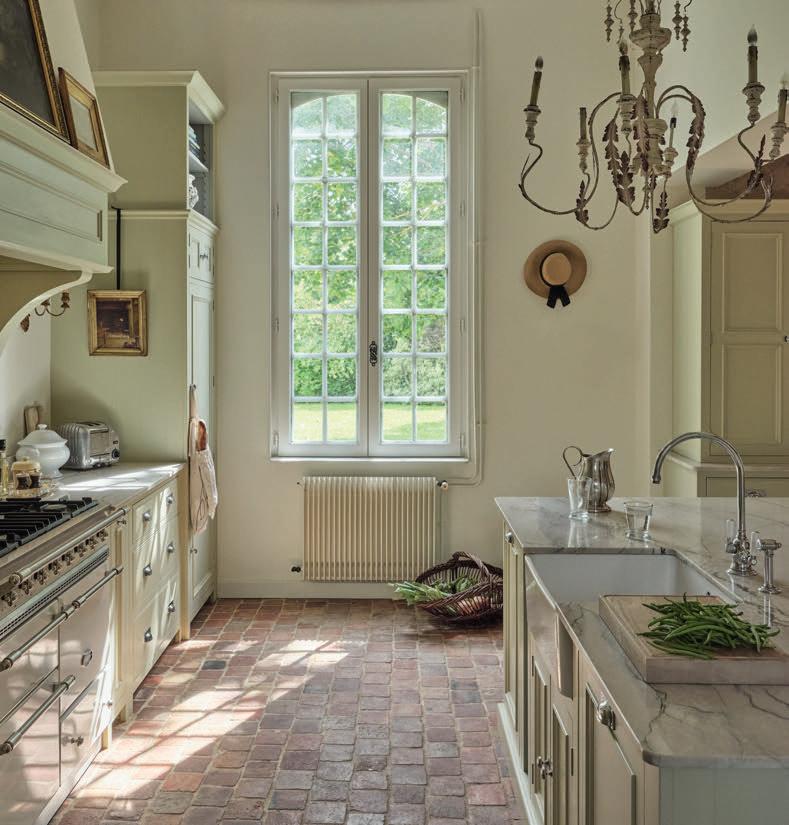
What makes a design last generations? Is it exceptional craftsmanship? Is it honest materials? Is it timeless design? For us, it’s all of these. at’s what makes a Neptune home.
Whether a status symbol or chaotic hide-all, these hardworking back-of-house rooms are worthy of the spotlight, says Hatta Byng


Our obsession with back-ofhouse rooms – and pictures of covetable pantries, sculleries and larders with smart joinery, appealing paint colours, rows of perfectly decanted jars and pretty, skirted counters – has been quietly gathering pace.
You’d be forgiven for feeling slightly faint if instead, you have a half-eaten packet of Weetabix poised to tumble from a crammed cupboard and no time (or desire) to label and decant into Instaperfect rows of glass jars. And surely, a skirt just gets grubby. But there are good reasons for having one (or two, or even three if you’re lucky) of these hard-working spaces – ‘even if it’s a cupboard tted under the stairs’, says interior designer Nicola Harding. She has been known to make a kitchen smaller in order to accommodate a pantry or scullery, such is their usefulness.
For most of us, the kitchen is where we spend much of our time. As a result we want to furnish it more like a room, with elegant furniture, a comfortable armchair or two and less storage, particularly of the wall-hung kind.
Hence the need for a harder-working room behind the scenes that allows the kitchen to breathe. A scullery tends to be more of a second kitchen, with a sink for washing-up, a second dishwasher and so on, while a pantry is, strictly speaking, for storage (although these days many of us mix the two). Our ‘pantry’ is the room where we do most of our washing up, but it also houses a big larder cupboard where we keep all dry food, a surface for the microwave and Magimix, our main fridge, and a separate freezer.
‘A reality of life is we’ve all got so much stu ,’ says Harding, ‘and we are all happier with a bit of order.’ A pantry helps deal with the chaos of a busy household. ‘Try to have your pantry close to the door where your groceries come in, so they land here rst rather than on your kitchen table.’
If space allows, a pantry means dirty dishes and messy prep can happen away from the kitchen itself, so you don’t have to hang out among it all and a door can close it o , out of sight. ‘A walk-through space is ideal for ow and ease of use,’ says Patrick Williams of interiors practice Berdoulat, who has gained a name for his atmospheric, immaculately detailed back-of-house rooms. He readily admits these are the rooms he gets most excited about. ‘A richly stocked pantry is like a microcosm of a food market, where you can walk in and get ideas.’
He o en carves out a pantry space from the kitchen using a glazed partition. He doesn’t mind looking at open shelves – even if there is the odd bit of supermarket packaging – as the items being behind a glass divider brings a sense of order. In his own home he uses specially blown glass, its wibblywobbliness adding texture and at night re ecting the candlelight; when the family eats supper with the pantry lights dimmed, it gives the kitchen a warm glow. Recently, a client asked for an unheated pantry for optimal food storage, so Williams added copper dra exclusion to seal the doors and keep the cold in.
Anthony Earle, lead designer at Artichoke – in my opinion, the RollsRoyce of kitchen and joinery specialists – also talks about the joy in designing these spaces, o en taking ideas from National Trust houses. A recent house included separate pickling and dairy rooms, inspired by the below-stairs rooms at Castle Drogo in Devon. The di erence is these rooms will be used by his clients rather than any household sta . In another project, individual drawers labelled for di erent ingredients were inspired by a large house that had handpainted inscriptions like ‘Barley Sugar, Cocoa and Chocolate’ and ‘3 Types of Almonds’. For Earle, ‘it’s all about bringing pleasure to everyday tasks’. Of course, he is lucky to work with extraordinary budgets to bring order to his client’s lives in this way. But as Harding says, a working pantry does not have to cost a lot of money. This is where the under-counter skirt comes

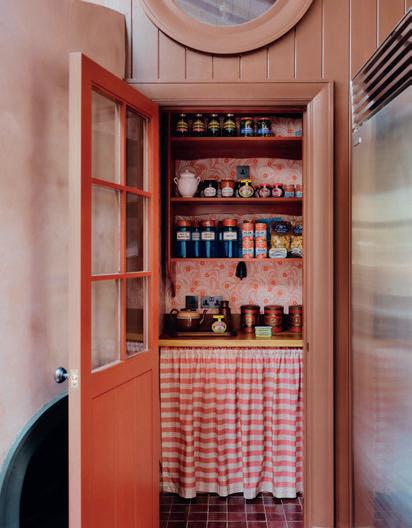
in: it’s not only pretty, but also a relatively inexpensive way of hiding things like the ice cream maker or large pans you don’t use every day. Just avoid putting a bin or dishwasher anywhere close, and make sure there are plenty of gaps so you can easily nd what you need.
Even the simplest of pantry spaces can be made visually pleasing by choosing a good paint colour – and you can a ord to be braver here as you might only be passing through. Harding plans oor-to-ceiling turquoise tiles for her own pantry. Williams likes dark colours: ‘They contain the visual noise better and your clobber melds into the shadows.’ When it comes to planning the details of the storage, be honest with yourself. Organiser extraordinaire Susanna Hammond of Sorted Living is not an advocate of decanting into glass jars unless you really have the time and inclination to do so (and if you do, she suggests putting a label on the underside with the ‘use by’ date). She always asks her clients how much time they have for unpacking their shop. If, like me, it’s ten minutes maximum, she says the most e ortless way to keep things in order is
to keep packages clipped shut and grouped in labelled boxes or baskets. For ease of cleaning, she favours plastic containers over baskets.
Hammond also suggests thinking about what tasks will be carried out where. For instance, if you have a KitchenAid on a surface, you might want baking ingredients and its spare parts in the drawers below. Obvious, you might think, but currently I have our picnic paraphernalia below our Magimix.
If space is the issue, a tall larder cupboard with double doors in the kitchen or a passage can do a good job of containing everything we need for day-to-day cooking. As I search for things at the very back of ours, I think of Neptune co-founder John Sims-Hilditch’s solution to the problem. The furniture company’s deep larder cupboards have inner doors with shelves on either side that open out to magically reveal the things stored at the back. Thankfully, there are people like him (and the others mentioned here) who have put a great deal of thought into how to make our lives so much easier and bring joy to otherwise dreary domesticity. ■




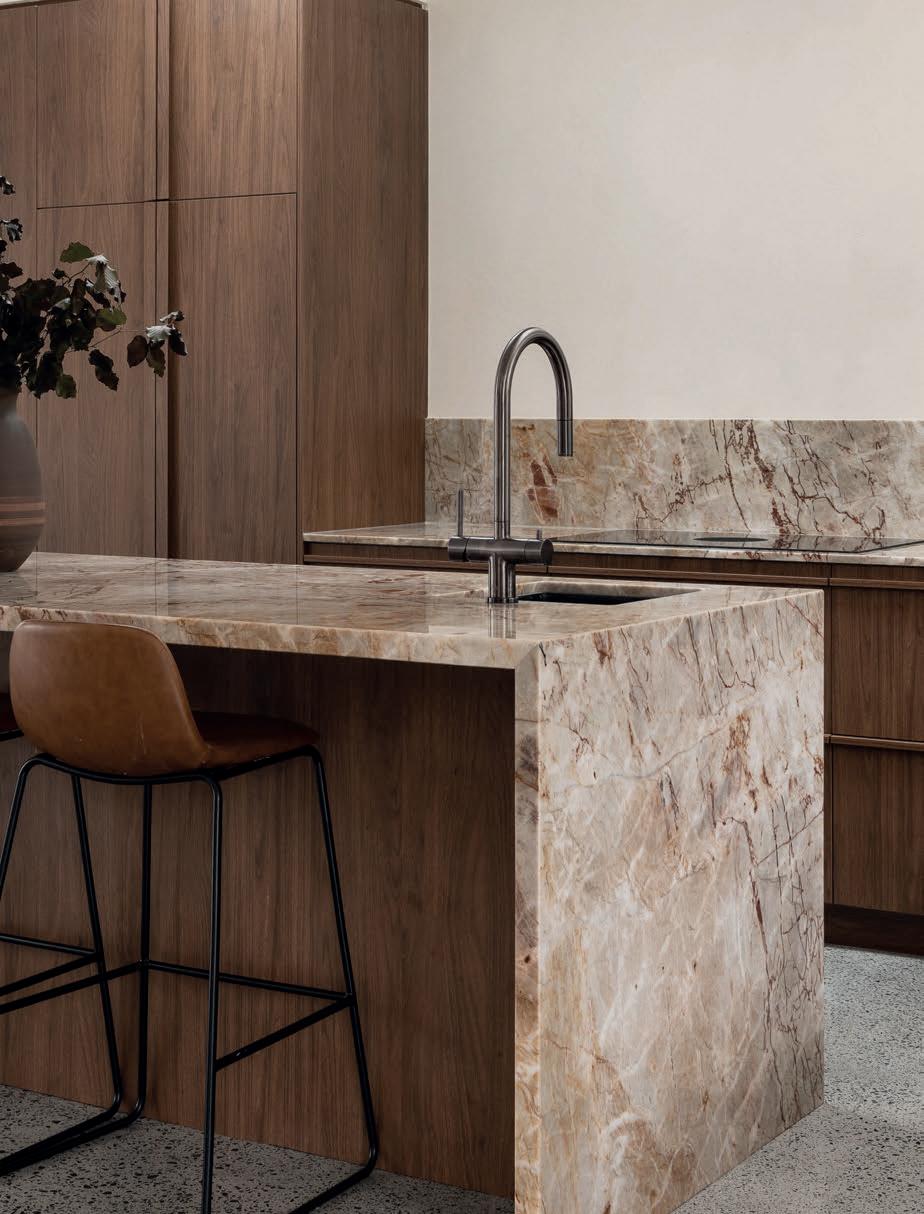
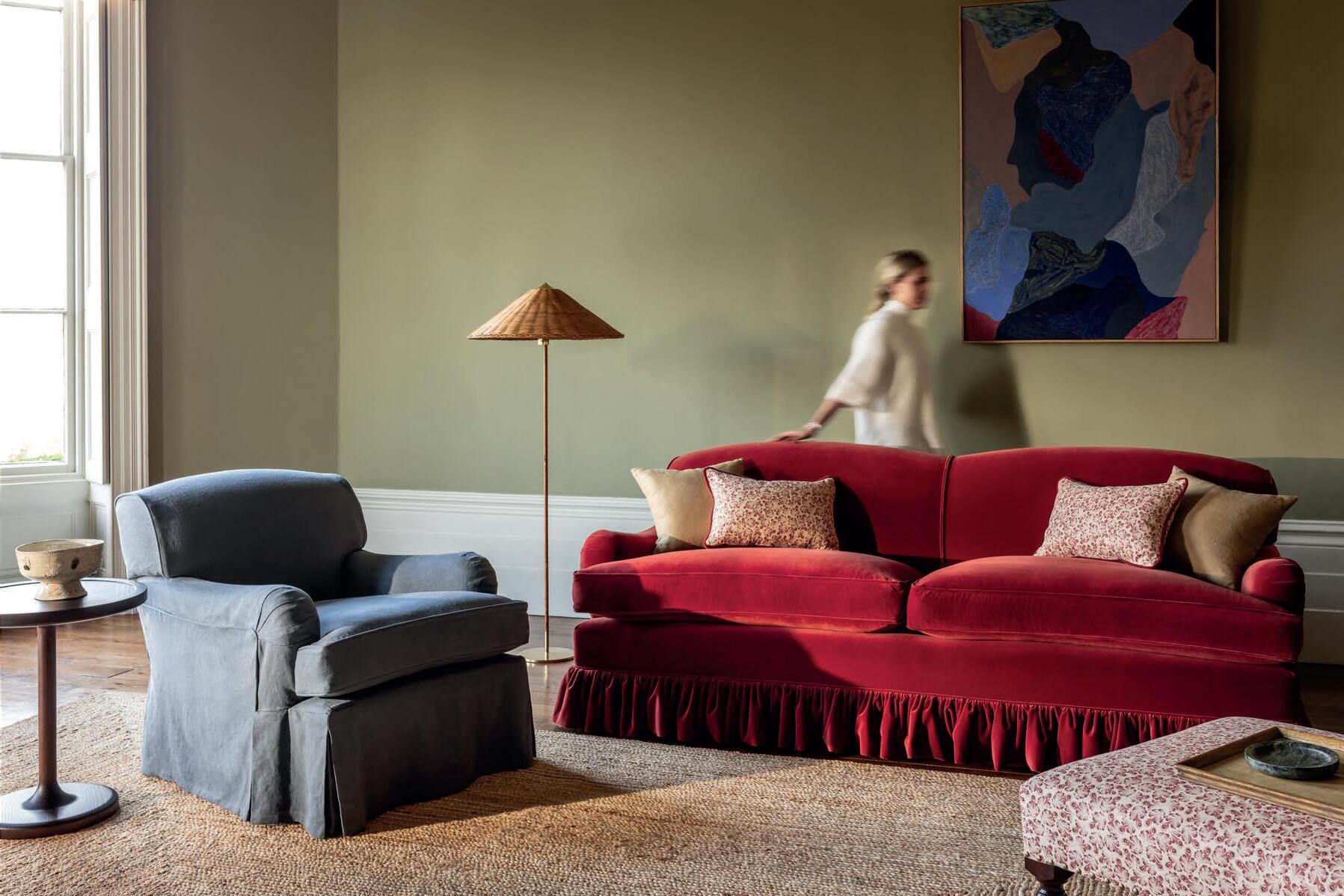
































From infrared saunas to vitamin-infused showers, the bathroom is becoming a space for restoration, says Busola Evans
Just a few years back, a decent shower pressure and a generous-sized bathtub were considered ultimate bathroom indulgences. Not anymore. Today, the bathroom is enjoying something of a glow-up and is being reimagined as a space for restoration, rather than just routine washing.
The most contemporary designs have wellness in mind and as a result, weave in thoughtful materials and quietly sophisticated technology. So welcome to the new world of showers infused with vitamin light, compact infrared saunas and lighting to support your circadian rhythm.
‘Consumers are increasingly inspired by the tranquillity of high- end hotels and spas, and this shi has driven strong demand for designs that promote relaxation, comfort and sensory wellbeing,’ says Martin Carroll, managing director of bathroom manufacturer Duravit.
‘We’re doing a big project in Chelsea where the bathroom will have a spa, ice-cold plunge pool, sauna and steam room’
Tommaso Franchi, interior designer
Tommaso Franchi, the celebrated interior designer behind London’s newest luxurious wellness destination Tramp Health – launched by Tramp owner Luca Maggiora – agrees.
‘We’re doing a big project in Chelsea where the bathroom will have a spa, ice-cold plunge pool, sauna and steam room,’ he says.
‘Previously, you would see wellness requests just in the biggest properties. Now, we get them for two-bedroom apartments – so instead of a standard shower, for instance, we are asked for a steam-integrated one.’
Steam is a feature that is becoming increasingly desirable. For example, a special generator from E e called Inside is designed to t neatly into a standard wall cavity. ‘With the addition of a bench and a steam-proof door, a regular shower can become a compact steam room,’ says Yousef Mansuri, design director of luxury bathroom brand C.P. Hart.
One of the fastest-growing additions to bathrooms
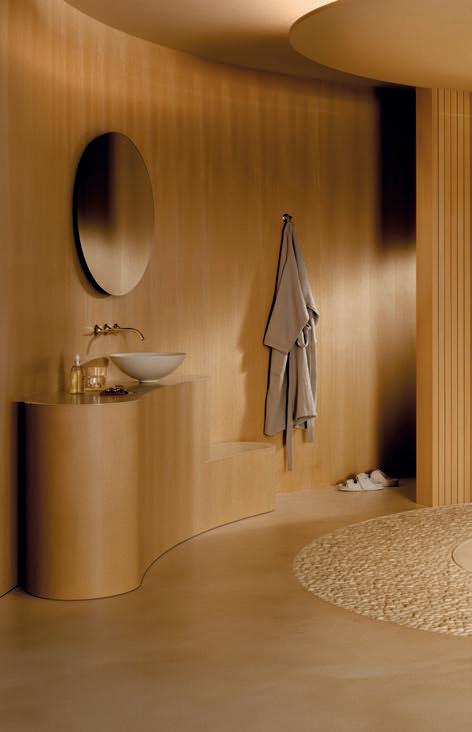
is the sauna, the use of which is linked to less stress, lower blood pressure and improved blood circulation. But unlike the bulky versions o en associated with gyms or spas, many of today’s designs are ‘plug and play’ installations – electrically powered dry saunas that require no plumbing. An example is the Natural IR sauna, again by E e. ‘It is designed speci cally for domestic spaces and compact enough to t in an average bathroom,’ explains Mansuri. Modern saunas also incorporate infrared panels, which use gentle heat to stimulate circulation and ease muscle tension.
The shower has also become a focus for innovation. Today’s multifunction shower heads – from brands such as Dornbracht, Gessi and Hansgrohe – combine rainfall, mist and waterfall settings, o en within
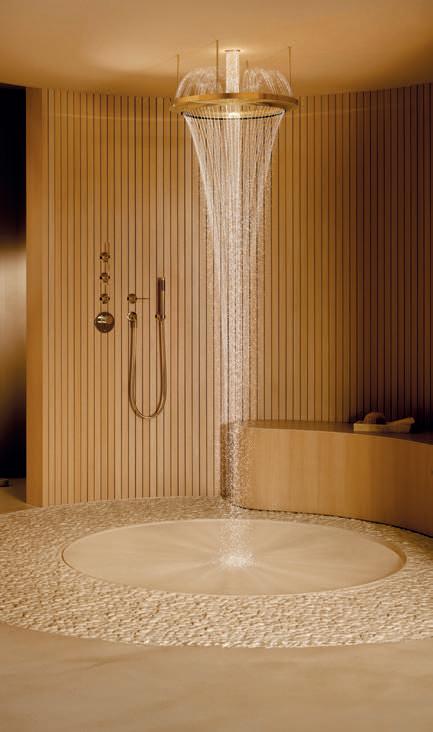

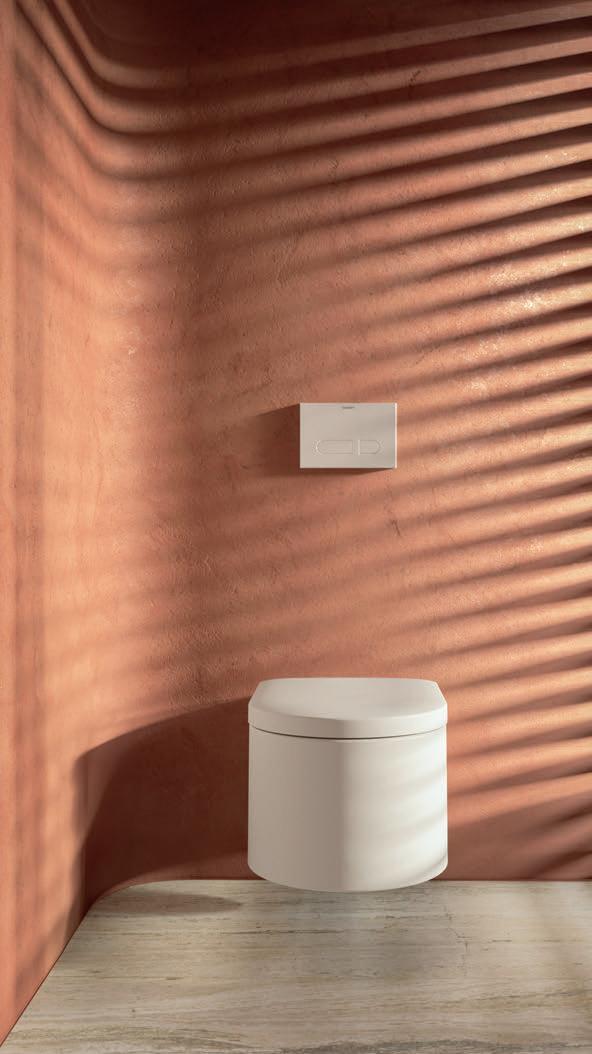

a single tting. Chromotherapy – coloured lighting in the shower designed to boost your mood – is also gathering momentum.
A more intriguing advancement is the Sunshower (from the same-named brand), a light panel installed in the shower that mimics natural sunlight. The idea of the panel, which emits both UV and infrared light, is to stimulate the body’s natural production of vitamin D while also boosting circulation and the immune system. ‘This can help with energy levels, sleep and general wellbeing – especially during the winter months in Britain, when natural light is limited,’ says Mansuri. Similarly, Keuco’s shower light has an integrated showerhead that can be set or dimmed to echo daylight and sunset accordingly.
Traditional baths are taking on spa-like guises. ‘Our whirl systems have become
increasingly popular,’ says Duravit’s Carroll. With ve whirl options available across various bath models – each o ering a soothing blend of water and air, enhanced by integrated LED lighting – users can create their own immersive bathing environment. Luxury brand West One o ers the Rio whirlpool tub with built-in water jets and chromotherapy.
Even the loo has undergone a quiet transformation. ‘Shower toilets have grown rapidly in popularity as people look for more comfortable and hygienic solutions,’ says Carroll, who points out that in the UK alone, sales have surged by 400 percent in just four years. Duravit’s SensoWash models have features that include the ‘rearwash’ and ‘ladywash’ – not only removing the need for using toilet paper but allowing water temperature and the water jet position to be adjusted to preference. Other brands such as Toto, VitrA and Paris-based Trone have models that o er a host of features including automatic lids, remote controls and heated seats, which are said to help the digestive system by relaxing tense muscles.
There’s more: mirrors have turned smart with built-in lighting that mimics natural daylight. Common features include anti-fog systems, built-in speakers and voice assistants. Others, such as the Beauty Smart mirror by Mues-Tec, even analyse skin quality and o er tailored skincare solutions.
The choice of materials is also a key factor, says architect and interior designer Claire Sá. As co-founder of De Rosee Sa, she is creating a luxurious bathroom with tile specialist Ca’ Pietra for WOW!house at Design Centre Chelsea Harbour in June. ‘There’s something calming in the natural grain of a material. So I always think it’s nice to use real materials like marble as opposed to anything arti cial or plastic.’
Lighting is equally crucial. ‘It is very important for the mood and atmosphere,’ says architect Darren Price, a director at Adam Architecture. ‘I’m working on a subterranean bathroom where, instead of putting in a conventional roof light above, I’m creating strips along the edges that allow light to ood down the wall instead. It’s about creating a space that is very calm and monastic.’
It seems that what was once purely a functional room has evolved to be the one that o ers the most self-care. ‘In this digital age when we’re all very busy, I’m designing spaces that intentionally slow people down,’ adds Price. ‘This is where the bathroom has become really interesting, because our daily rituals give us moments for emotional recalibration.’ ■

Design studios share the details behind these country and town house kitchens and bathrooms with Charlie Colville
This Victorian house was redesigned to suit a family.
Drawing on their Sri Lankan heritage, it showcases natural materials and rich colours.
‘Green cabinets are paired with walnut on the island for warmth,’ says design director Alicia Meireles, ‘and a large archway opens to the dining room for free- owing space.’
‘This compact kitchen belongs to a young woman who loves to entertain,’ says Emma Sherlock. Appliances are hidden in under-counter drawers, with oor-to-ceiling cupboards providing plenty of storage, leaving the main space free for guests.
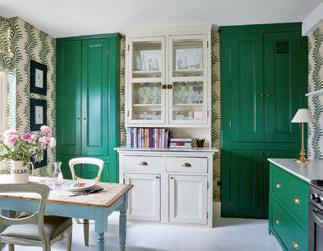
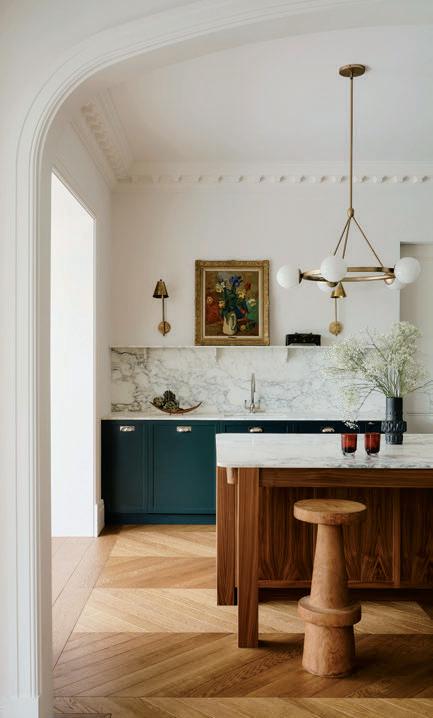
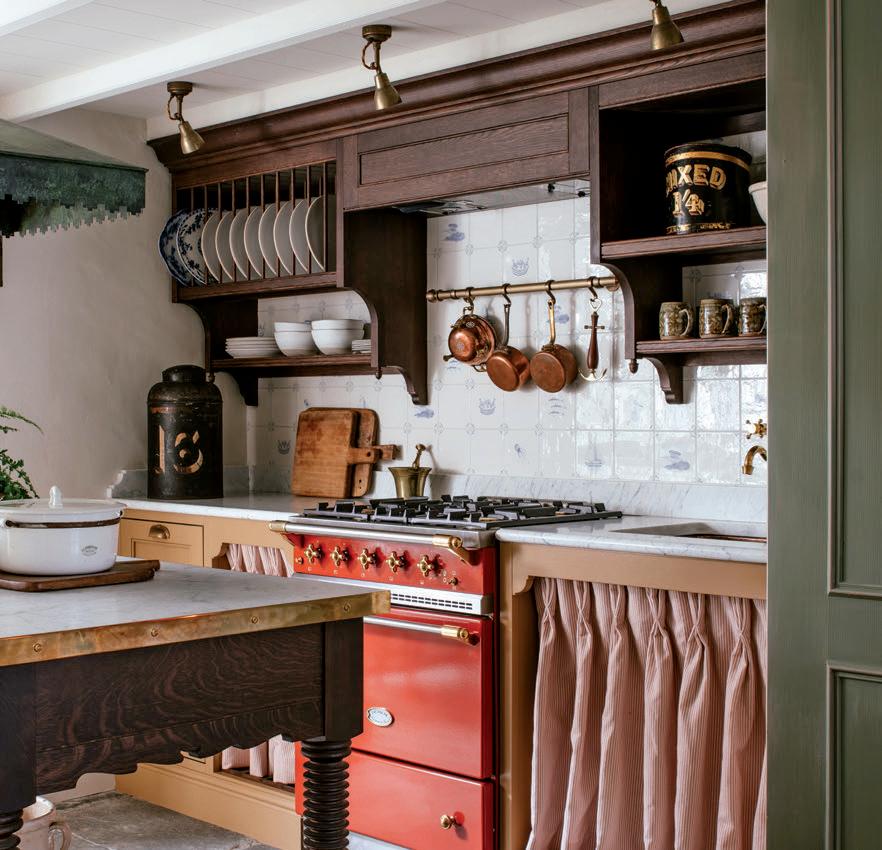
This Cornish kitchen builds on both historic and local design traditions. ‘We drew inspiration from the great Georgian kitchens of English country houses – spaces that were hardworking but full of life and accumulated detail,’ explains Tom Cox, CEO and chief creative. ‘We kept the original Cornish Delabole slate for the oor, adding a freestanding island based on a Georgian dairy table.’ The handpainted Del tiles were made by local Cornish company Decorum. ‘The motifs –mackerels, seagulls, sailing boats – felt completely right. We loved the local folklore woven into those tiles and were particularly drawn to the stargazy pie, a nod to the traditional pilchard dish from Mousehole.’
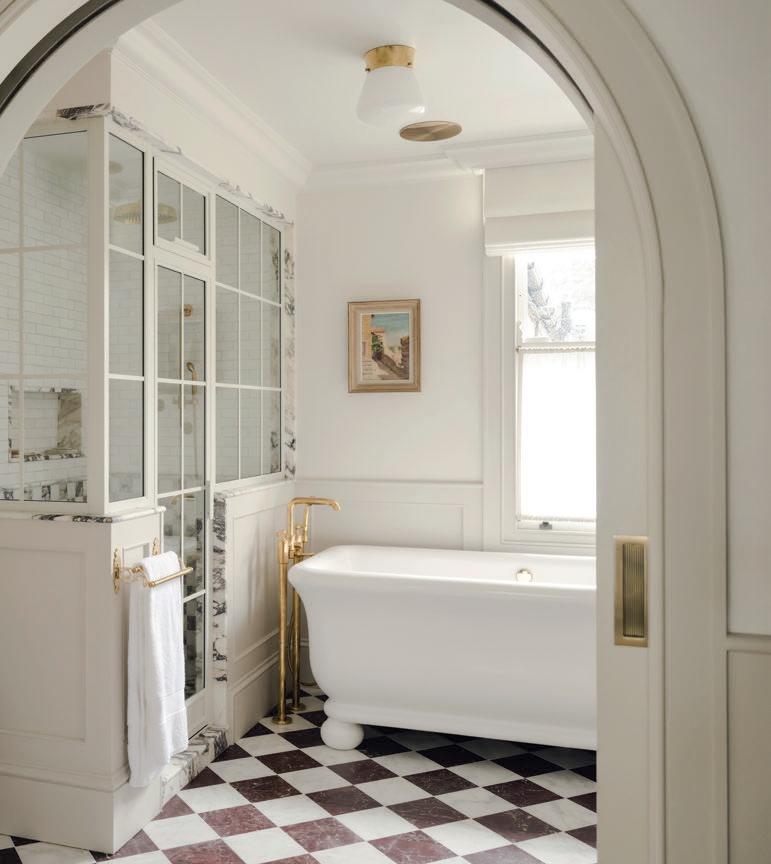
‘The bespoke, conservatory-style shower was the creative catalyst for the whole room,’ says Louise Ashdown, head of design at West One. ‘Drawing on Victorian conservatories, its o -white frame brings a beautiful industrial in uence, so ened by its warm palette.’ So ness is also introduced through the Senator bath and gold-hued La Fayette towel rail and taps, while the checked oor tiles courtesy of Ca’ Pietra are classic with a twist. ‘The chequerboard is a nod to the classic townhouse aesthetic, yet its distinctive purple-grey veining is completely fresh. It brings richness with a playful and characterful edge.’
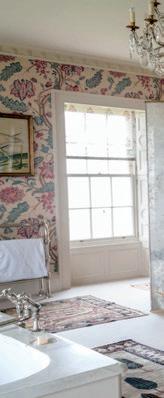
The Pierre Frey wallpaper was the starting point here. ‘I was drawn to the freshness and the painterly quality of the oral trellis motif,’ says founder Sarah Peake. ‘We vaulted the ceiling, which introduced a wonderful sense of height and airiness.’ The space was lled with an antique washstand and bespoke storage mirrors, as well as a trefoil ottoman and similarly sculpted pendant light from Soane. ‘We wanted to create an elegant country house atmosphere with surprises in the detailing.’
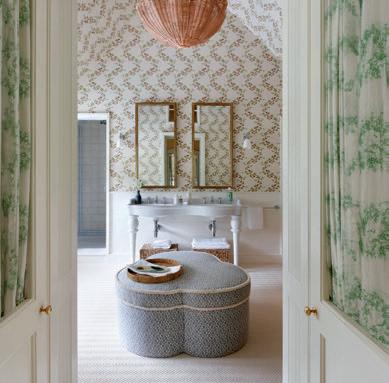
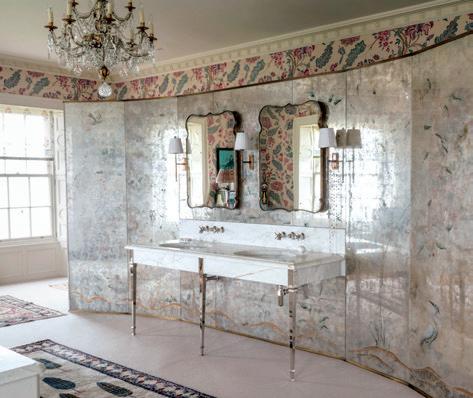

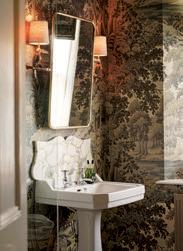
← RUPERT BEVAN
The bespoke glass screen combines practicality and opulence. ‘It separates the loo and shower from the rest of the bathroom,’ says designer Rupert Bevan, ‘and is covered in decorative verre églomisé with handpainted branches, birds and leaves that nod to the scenery outside.’
Sculpted details give an architectural feel, ‘while the pearlescent wallpaper adds light’, explains co-founder Tim Butcher. The bathtub, by Drummonds, balances heritage with midcentury Scandi style. ‘It’s at ease within a rural space but the overall language is quieter,’ says creative director James Lentaigne.
The existing basin was elevated with a marble splashback using an o cut from a previous project, but it’s the House of Hackney wallpaper that’s the de ning feature. ‘There’s a romanticism that feels appropriate for a Cotswolds setting,’ says founder and creative director Brian Woulfe. ■
Where are you based? I’m nomadic. The studio is in Munich, where I started 20 years ago, but I recently moved to Italy. I also teach in Vienna at the University of Applied Arts.
How did you become an industrial designer? Both my parents come from cabinetmaker backgrounds. I grew up in my father’s workshop and because both my parents were busy, I was unsupervised for most of the day. Leaving me alongside all the machines was the best childhood I could have had. I learnt that using your hands to make something as a way of explanation is extremely helpful for a designer.
Have you always cared about the environmental aspect of design? Sustainability was never a word when I was growing up, but being in uenced by a cra background, everything was sustainable because it was produced locally. We bought trees from the sawmill

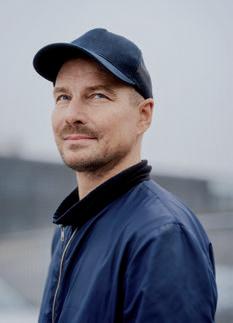

and wood was already expensive so whatever you made had to last.
What makes something as simple as a bathtub special? I like working on products that are for life – probably every child in Germany has sat in a Kaldewei bath – and that don’t show o . I designed the Nuio Duo as if it was a piece of porcelain, which helped bring a sense of weightlessness. I can’t tell you how satisfying it is to show Mr Kaldewei the di erence between a good and a better design. We had all these bathtubs next to each other and pointed out the details. Words don’t exist for these nuances, but the eye can see it and you can feel it. Mr Kaldewei asked me, ‘If you were able to make the inside di erent, would you change it?’ and I said yes. So he said, ‘Let’s do it’. That was fucking cool.
Why is teaching important to you? I’ve been teaching since 2008. It’s very re ective and interesting to talk to a new generation and to be in dialogue. I think questioning your own ideas is a very good starting point for design.
What do you tell young designers in your lectures? Don’t think you’re special and don’t start by making meaningful things. You create meaning through years of practice. Keep it simple. Respect the materials. There are so many beautiful processes around us – in Italy, Japan, India. Go out and explore. I like to be surprised by ingenious ideas that simplify everything, like a magic trick. ■
For the full interview, listen to C&TH’s interiors podcast House Guest , hosted by Carole Annett and on all major platforms


































A








Sit back and relax while you enjoy a live, one-on-one demonstration of the revolutionary Quooker on your smart TV or computer. See it in action as one of our expert team show you how this revolutionary boiling water tap could help save you time, energy and money whilst making everyday tasks easier and the kitchen safer for the whole family.
Want to know how it works? How easy is the installation? Or like to know more about specific benefits? Just ask. We’ll tailor the session to what matters most to you.
So why not join us live from our Customer Experience Centre, at a time of your choice and experience the innovative Quooker for yourself.
Book your personalised demonstration today!

Top chefs on the kitchen gadgets and gear they can’t live without. By Tessa Dunthorne

ADAM BYATT, Trinity
A great kitchen set-up starts with three simple things: sharp knives, a great quality chopping board and excellent pans. For the latter two: Apex rubber boards are a gamechanger – so on your knives, gentle to work with, easy to clean – and look great, while my perfect pan is by Hestan. Copper bond is my go-to, but they all have excellent heat retention.


I love a Bamix blender. They last for years; my parents are still using their one, which was a wedding present. It takes up so little space in my kitchen and is brilliant for last minute mayos, blitzing ingredients for pesto or salsa verde, and making soups. What’s more, washing them takes a minute.
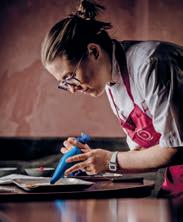
EMILY ROUX, Caractère
I recently bought a good quality ceramic rice cooker from Sakura, and it’s changed my life. I can’t believe I’ve lived my life up until now without one. I’m cooking rice two to three times a week, and it gives the best texture. At the moment, I’m experimenting with mixing it up with stocks, seasoning, herbs, onions and garlic, across all types of rice (long, short, brown, sushi).


ADEJOKÉ BAKARE, Chishuru
When we were based in Brixton, we neighboured a sushi restaurant and its chef, Shaulan, persuaded me of the virtues of Japanese knives. I use a feather-light 27cm sujihiki by Yoshimi Kato.

JOSÉ PIZARRO, Pizarro
If you have one good knife, you can do everything. I use knives made by British cra sman Will Spence. They’re very natural in the hand – almost like they belong to you from the rst moment.
DARA KLEIN, Tiella
You’ll always need a generic paring knife. I can’t peel garlic or de-top cherry tomatoes without one. My picks are Wüsthof and Victorinox –both o er very sturdy, reliable and a ordable options.

Who is going to swipe the oxygen at WOW!house 2026? Carole Annett previews some of the creatives behind this year’s decorating extravaganza
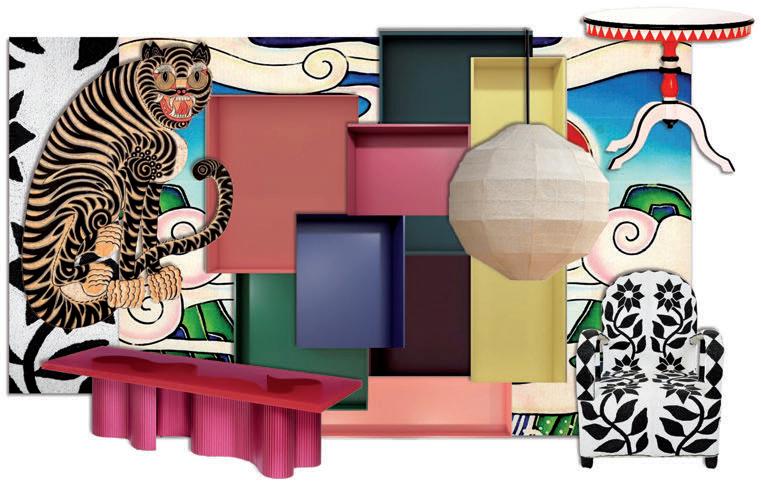
‘I want a room that feels vibrantly colourful, joyous, and completely enveloping,’ says New York-based interior designer Young Huh, ‘and we knew we had to go absolutely maximalist with colour.’ Huh’s Minwha salon concept was inspired by the Millions room in the Schönbrunn Palace in Vienna, which is decorated with Indian miniature paintings set within baroque panelling. ‘I thought it would be fun to do a room that told the story of Minwha or Korean folk art, which re ects my own Korean heritage,’ says Huh. ‘Within a playful modern design, we’ve decorated the surfaces with high contrast colours, which you o en nd in Minwha. I hope the room surprises and delights.’ younghuh.com
‘I thought it would be fun to do a room that told the story of Minwha or Korean folk art’

← JASON STEWART, RIGBY & RIGBY
‘We are currently doing a lot of work in Asia,’ says Jason Stewart, creative director at Rigby & Rigby, which inspired the WOW!house principal bathroom. Designed in collaboration with Samuel Heath, Stewart has chosen Samuel Heath taps for the bathroom, but the hunt is on for the perfect ofuro bath –a traditional Japanese, deep soaking tub which takes centre stage. The design also includes sound technology: ‘I want a digital and sound narrative –it’s not just about visual appeal,’ says Stewart. rigbyandrigby.com




‘I want a digital and sound narrative - it’s not just about visual appeal’

→ TIFFANY DUGGAN, STUDIO DUGGAN
‘I imagined a principal reception room within the grandest of apartments for a woman of discernment and style to live, work and entertain,’ says Duggan, of the courtyard room she’s designed in collaboration with fabric house Romo. The room is reminiscent of a chocolate box – tempting and theatrical with a billowy tented ceiling, cream fabric cascading from overhead contrasts with chocolate-brown, linen-wrapped wall panels. The space o ers a subtle Italian sensibility – decorative scrolls, tassels and painterly elements that are tactile and inviting. A pistachio-hue table acts as a desk, or a perfect vantage point to sip cocktails. For the oor, Duggan commissioned a Jennifer Manners carpet: ‘I think a border frames a room and helps make a scheme feel considered.’ Her favourite element? ‘Possibly the ‘secret’ bar – I love a reveal!’ studioduggan.com
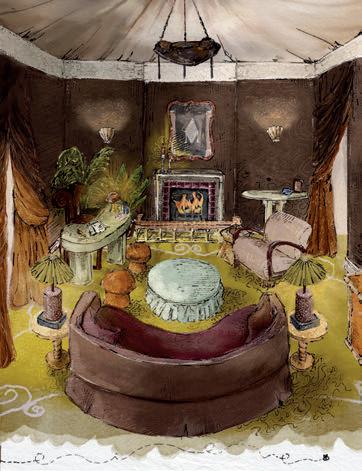
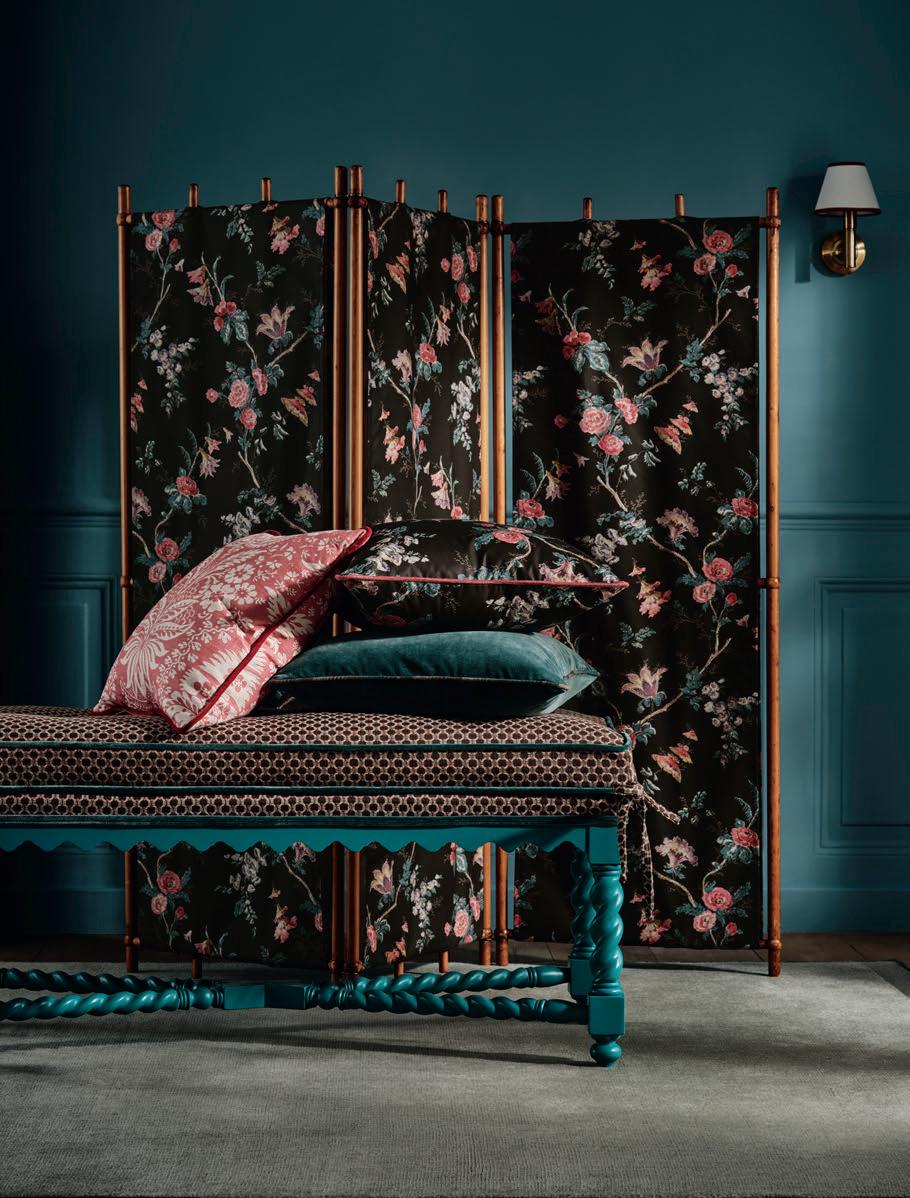


‘I’ve sourced from various eras, building the kind of layered, well-travelled feel that comes from a lifetime of collecting’
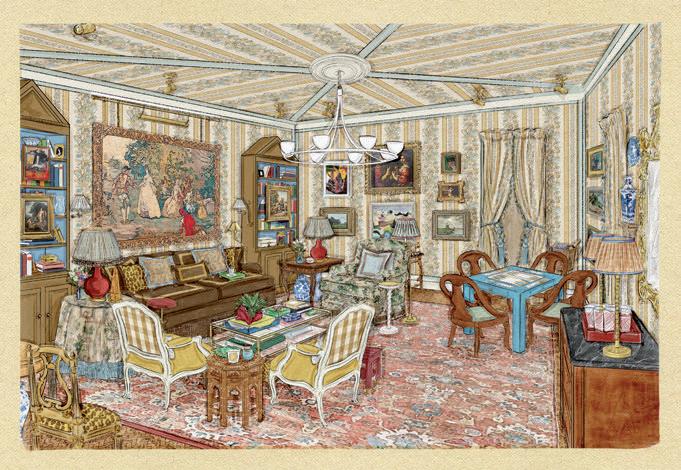

↑ SEAN SYMINGTON INTERIOR DESIGN
‘Our imaginary client is a glamorous, well-travelled collector with a discerning eye and a lifetime of beautiful objects. This room sits within her English countryside base: a modern ladies’ lounge where Park Avenue meets the English manor house,’ explains Sean Symington of the room he has designed with Cotswolds-based wallpaper specialist Zardi & Zardi. ‘The starting point was a Georgian withdrawing room,’ he explains, ‘traditionally a space for ladies to retire and entertain a er dinner. Reinterpreting that idea for today, we imagined something layered, enveloping, and indulgent.’ seansymington.com



↑ MARTIN KEMP DESIGN
‘It began with a simple idea,’ says Martin Kemp of WOW!house’s parlour. ‘I was inspired by a photograph of an old house where the longer you looked, the more details emerged. That sense of gradual discovery became the starting point.’ Renowned for creating spaces that unfold in layers, most of Kemp’s projects are for clients who value their privacy and hence are not shared. ‘That is the brilliance behind WOW!house,’ he says, ‘it gives designers like me a chance to show their work.’ martinkempdesign.com
‘That sense of gradual discovery became the starting point for the parlour’
→ SAMANTHA BARTLETT
Samantha Bartlett’s kitchen design for Martin Moore is de ned by a shared commitment to cra smanship and the use of luxurious natural materials. Linear grain fumed oak pairs with bronze handles and veined marble creating a kitchen that is both timeless and modern. More than a functional space, the kitchen transitions from convivial evenings to slow, contemplative mornings. Materials have integrity and durability, patinating and evolving, telling a story over time. samanthabartlett.com ■
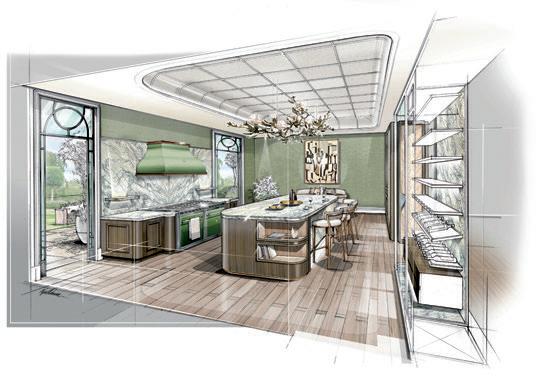
WOW!house is one magni cent ‘house’ with 22 immersive spaces designed by leading interior design studios. It runs from 2 June to 2 July at Design Centre Chelsea Harbour. Tickets from £29. dcch.co.uk

As the first ever official air conditioning partner of WOW!house, Calibre Climate demonstrates AC designed to disappear
When the rst real heat of an English summer arrives, opening a few windows rarely brings real relief. For many years, air-conditioning was seen as unnecessary in UK homes, but as the country’s summer temperatures continue to climb, comfort is becoming a far more pressing consideration.
A family business with heritage dating back to 1975, Calibre Climate is a specialist in bespoke residential air conditioning. Rather than supplying o -the-shelf systems, each is developed in response to the unique property and the preferences of those who live there. Every detail is tailored to suit the architecture, interior design and individual brief, resulting in air conditioning that delivers comfort quietly and discreetly without compromising the look and feel of a space. From early design consultancy through to installation and ongoing maintenance, the Calibre approach is characterised by meticulous attention to detail and pursuit of perfection.
‘Many people still think of air conditioning as noisy with highly visible equipment, because they are unaware of the options available for residential installation,’ says
Laura Powell, one of the directors at Calibre. ‘But when approached in the right way, the level of cooling, noise, visibility and method of control can all be tailored to suit individual preferences.’
The results of the brand’s design-led approach can be experienced at WOW!house 2026, where Calibre is the event’s rst o cial air conditioning partner. Across the 22 full-size rooms at Design Centre Chelsea Harbour, visitors will experience an invisible layer of comfort as they move through spaces created by some of the world’s leading interior designers. Discreetly integrated throughout the showhouse to maintain comfortable temperatures, it will be a demonstration of air conditioning at its very best.
Now also an industry partner of the British Institute of Interior Design, Calibre continues to build on its longstanding reputation for quality, care and discretion with the recent opening of an appointment-only showroom on the prestigious King’s Road.
Calibre’s bespoke AC can be experienced at WOW!house 2026 from 2 June to 2 July. calibreclimate.com
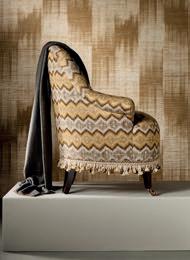
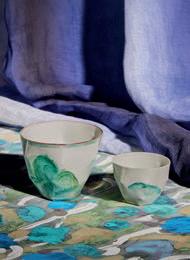
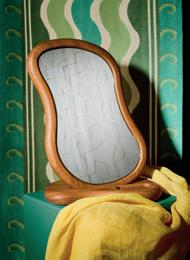
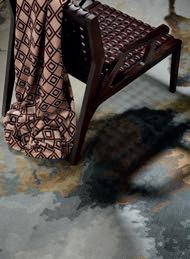

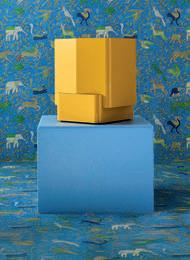
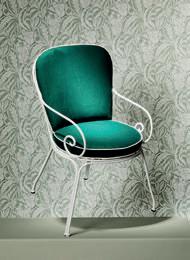
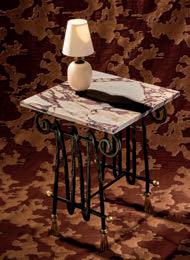

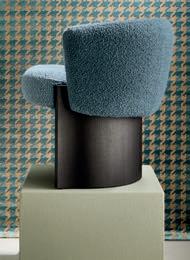
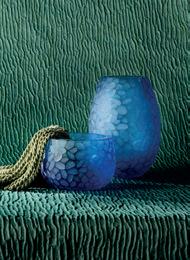


Nicky Goulder MBE, founder and CEO of Create charity, shares why creative arts can be life-changing for vulnerable children and adults
As a charity, we fundamentally believe everybody needs creativity in their lives. There’s masses of evidence to show creativity is absolutely core to mental health, physical health and living a longer life.
As well as delivering projects across the UK with isolated and vulnerable people, we host Create Week – now in its third year – to promote the importance and power of creativity.
This year’s theme is ‘connect’, which is one of the ve ways to wellbeing according to the NHS. We want people to be able to connect with themselves, with other people, with the environment and with the present moment.
How can readers get involved? This year, we have one activity per day, each designed by our professional artists and lasting just ten minutes. These will be available on our website a few weeks before Create Week starts. They are all free – you just have to register.
We really hope people – either individually, in o ces or with friends and family – will turn o their devices and give themselves that all-important time to connect with themselves and be creative.
Who does Create work with? We work with children in psychiatric hospitals; unpaid young and adult carers; children and adults who are disabled or have special education needs; children in care; isolated and vulnerable older people, including many with dementia; prisoners; and other vulnerable groups of children and adults, including survivors of modern slavery, young refugees and asylum seekers, and inner city schoolchildren and their teachers.
Why is creativity so important? The creative arts are fundamental for mental health, reducing stress and bringing people together. The groups

we work with really stand to bene t the most because they are o en isolated and least able to pay for creativity.
All of Create’s activities are free and aim to achieve two areas of social value. One is skills for life, education and work – things like communication and teamwork skills, being creative and developing an artistic skill. The other is quality of life: enhancing people’s wellbeing, increasing their con dence and allowing them to feel heard.
All of our projects are designed for and with the participants. Create will turn 23 in July, and we know from the huge amounts of data we have collected across every programme since we started that the impact on our participants is fundamentally life-changing.
What was the impetus to start Create Week three years ago? Here at Create, because of the way we recruit our artists, trustees and sta , everybody has a passion for the participants we work with and for the creative arts. But I’m very conscious that we’re operating in a bit of a bubble. We really wanted to nd a way to promote nationally the reason Create exists, the bene ts that everybody can get from taking time to be creative, and the way creativity connects you in a completely di erent way with people.
The arts are a brilliant leveller. They enable people to express their feelings; to share ideas; to produce something, either individually or collaboratively, that gives them a voice.
Create Week takes place from 1-7 July. createweek.org
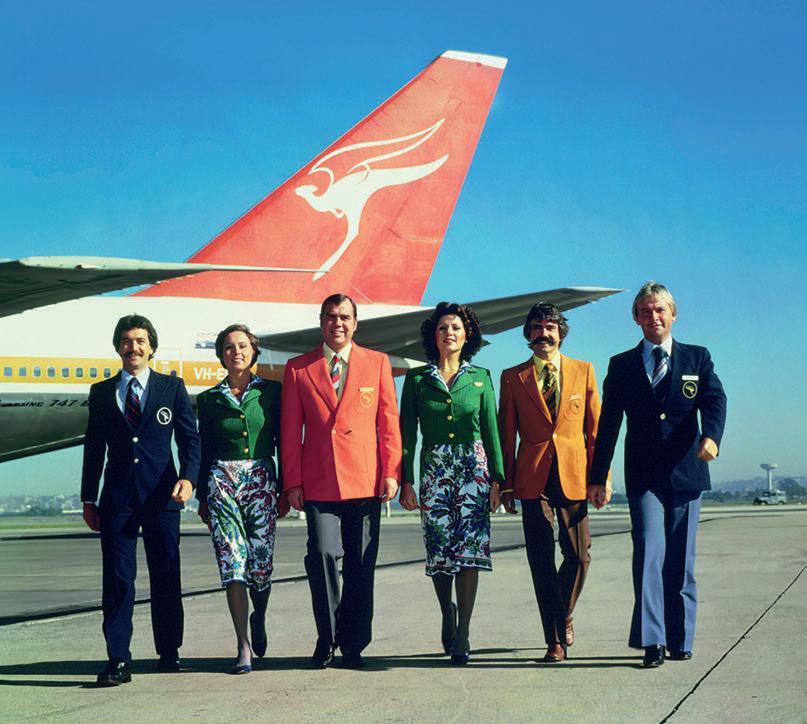
Joining a reimagining of the iconic Kangaroo Route, Margaret Hussey experiences a rebirth of the golden age of flying
Standing at the huge foot – or rather paw – of the Great Sphinx of Giza, I felt dwarfed by its majesty. To be that close to such a magni cently carved creature was just one of many magical moments on my trip from Cairo to London.
I had joined part of the reimagining of the Kangaroo Route, which in 1947 made its epic air voyage from Sydney to London stopping at Darwin, Singapore, Kolkata, Karachi, Cairo and Tripoli in just four days.
Nearly 80 years on, bespoke travel company Captain’s Choice was giving it a 21st century spin with a specially chartered Qantas A330. This time the one-o spectacular was taking two weeks and again setting o from Sydney, stopping at Darwin, Singapore, Kolkata and Colombo before the nal leg from Cairo, where I joined, to Rome, Toulouse and London.
To capture the Kangaroo Route’s pioneering spirit, in my ve days I experienced everything from the pyramids at Giza to a behind-thescenes guided tour at the Vatican Museums, a stroll through the unexpected delights of Toulouse and dinner under Concorde’s wings.
First up was Cairo. The awe-inspiring Sphinx is said to have been carved from a single limestone ridge around 2500 BCE while the Great Pyramid of Giza, one of the Seven Wonders of the Ancient World, was made from two million blocks of limestone and held together by pressure and ingenuity.
Ancient Egyptians were master innovators and engineers and we got to see that up close at the Grand Egyptian Museum, or GEM, which opened last year. Costing over £900m and taking more than 20 years to build – some estimate as long as the pyramids themselves – the museum holds over 100,000 artefacts and you could easily spend a day here.
The big draw for us was the Tutankhamun galleries. For the rst time since Howard Carter and his team discovered the young king’s tomb in 1922, all objects – almost 5,400 – have been brought together in one place. There’s the 110kg gold co n, his gold mask, thrones and chariots, as well as his walking sticks. King Tut is thought to have been about 19 when he died from a combination of a fractured leg and malaria.
Later that evening we returned to the pyramids for an exclusive dinner and light show. All food and excursions are included with Captain’s Choice and they go above and beyond to make it extra special. Being an Aussie company, everything and everyone was very laidback.
I loved the bonhomie of the group – they were all grown-ups with a sense of fun and adventure. As this was a one-o trip, there were over 130 passengers – an unusual number as groups normally number 25 to 30. You could mingle as much (or as little) as you wanted to; I

chatted with everyone from an art gallery owner to a politician, healthcare worker to accountant.
Despite so many passengers, there was loads of room on the plane and the specially-selected Qantas crew dressed up for each destination. Leaving Cairo, some donned pharaoh costumes and there was one Cleopatra, who, I learned at the GEM, was a Macedonian Greek.
Next stop was Rome, where a private nighttime tour of the Vatican Museums was a cultural highlight. Avoiding the queues we got to see a snippet of some of its 20,000 works up close. The plaster cast replica of Michelangelo’s Pietà (the original marble version is behind shatterproof glass in St Peter’s Basilica following a vandal attack in 1975) was still hugely moving. It captures the moment when Jesus was taken down from the cross and his mother Mary tenderly held him.
The Sistine chapel was being cleaned when we visited but the other artworks from Raphael’s School of Athens to Nero’s bathtub and the Gallery of Maps more than made up for it.
This being Italy, food was factored in too. We nished the evening most unexpectedly with delicious pasta overlooking St Peter’s Dome. Rome in a beautiful nutshell.
The next day I woke up early to wander around the Eternal City. Our hotel was

Ancient Egyptians were master innovators and engineers and we got to see that up close at the Grand Egyptian Museum, which opened last year. Costing over £900m and taking more than 20 years to build – some estimate as long as the pyramids themselves – the museum holds over 100,000 artefacts
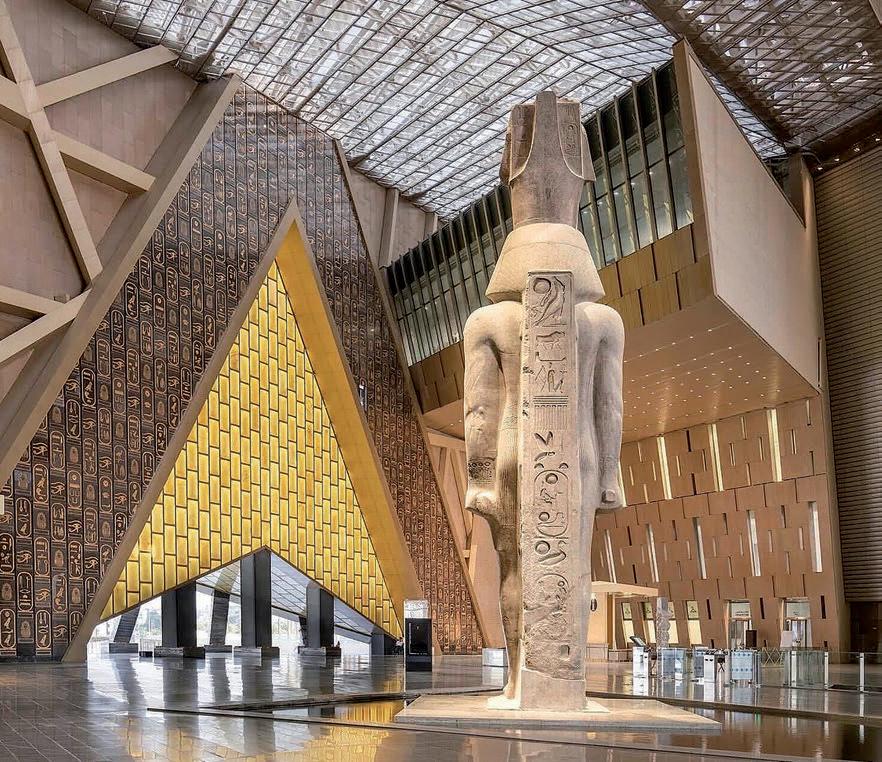



minutes from the Spanish Steps and the designer shops of Via Dei Condotti. Rome still feels like a lm set, with Piazza Navona one of my favourites spots and less crowded than the Trevi Fountain, where you now have to pay €2 to reach the viewing area.
It was time for food again, and where better than the Alfredo alla Scrofa restaurant? This is the home of fettuccine Alfredo – the butter, pasta and parmesan dish created around 1908. This classic old-school restaurant’s walls are lined with pictures of celebrities who’ve enjoyed the simple dish from Marlon Brando and Audrey
Hepburn to Sophia Loren and Jimi Hendrix.
Full and happy, we thankfully had designated drivers for our next escapade – a vintage car tour through the streets of Rome. I was in an opentop Morris Minor and our convoy of about nine cars included vintage Fiats.
We whizzed through the Italian capital with police motorbike escorts stopping tra c for us. It was thrilling, fun and wholly Roman with our o cers enjoying it just as much as us as we passed the wedding cake (otherwise known as the Victor Emmanuel II monument), the Colosseum and Circus Maximus, where centuries ago Rome’s chariot racing took place.
The next day was the home straight to London, via Toulouse. On the plane we were welcomed back as friends. It’s how you wish air travel could always be: relaxed and fun. Captain’s Choice also has its own doctors as well as culinary, history and cultural experts on trips, so no stone was le unturned when it came to service.
With my glass of champagne just nished, we landed in France’s third biggest city. It’s the home of the Airbus, so some aviation fans went to explore its history. I meandered through the pretty streets and ended up at the Victor Hugo market where there was a lot of duck, foie gras and cassoulet, as well as the best-looking loaves of bread I have seen in a long time. It’s a great place for people watching – groups were standing around drinking the local Fronton wine and snacking on cheese.
And then it was back on the plane for the nal stop. Captain’s Choice calculates the emissions from each trip and o sets it through its partnership with everclime, which helps support Forever Wild Narndee, a biodiversity hotspot in Australia, and the Indian Wind Project in India.
Landing at Stansted, there was a farewell dinner at the Imperial War Museum at Duxford, Cambridgeshire, with emotional speeches of memories made. Under the wings of an iconic Concorde, it was a tting end. ■
BOOK IT: Captain’s Choice o ers all-inclusive luxury travel experiences with ve-star accommodation, gourmet dining and guides. Explore more journeys at captains-choice.com
Margaret’s ights to Cairo, Rome, Toulouse and London had a carbon footprint of 1,135kg of CO2 e (ecollectivecarbon.com)

































In 2016, I was working on a feature called Iran for Beginners . For four decades, Iran had been shrouded in mystery for Western visitors but was tentatively inching back onto the map. British Airways was relaunching its Tehran route, suspended four years earlier amid sanctions and political instability. My beginner’s guide took me to Balochistan, improbably home to a edgling surf scene. Tālā , the London-raised singer-producer, recalled how her Iranian father played Googoosh over her mother’s Tom Jones LPs. Meanwhile, Jonny Bealby’s Wild Frontiers had introduced a walking tour through The Valleys of the Assassins, staying with Shahsevan nomads.
For travellers, the map is never fixed. Countries drift in and out of reach. Some disappear for decades; others flicker briefly into view before slipping back again
A few months later, I was writing about Noga in south Tel Aviv – a grid of cobbled streets and the place to eat Levantine syrup-soaked pastries and shop for minimalist knitwear spun from locally sourced fabrics. For both countries, it was a moment of possibility. Today, both sit on the Foreign O ce’s ‘do not travel’ list, in a region reshaped by war.
For travellers, the map is never xed. Countries dri in and out of reach. Some disappear for decades under war, sanctions or state collapse. Others icker brie y into view, tentatively reopening before slipping back again. A place can be culturally alive and administratively open, yet e ectively unreachable once airlines withdraw, insurers hesitate or tour operators step back. Others remain technically visitable, but no longer feel imaginable.
When parts of the world become unreachable, curiosity about the world doesn’t disappear –it reroutes, says Kerry Smith
Yemen has been on my travel wish list for years, ever since discovering the otherworldly photographs of one of its islands, Socotra, taken by the award-winning Dutch photographer Marsel van Oosten. The size of Cornwall, Socotra lies adri in the Indian Ocean – a landscape of red mountains, bone-white beaches, time-twisted bottle trees and a biodiversity to rival the Galápagos. As a destination, Yemen was always niche but rmly on the serious traveller’s map until it became o limits in 2011. Likewise, Syria and Afghanistan, once sold on Silk Road romance and ancient cities, have been absent for more than a decade.
Then there are the returns. Since the 1980s, the map has steadily widened. China and much of Southeast Asia have moved from closed to accessible. South Africa, Botswana and Namibia have re-emerged. I was one of the rst Westerners to visit Moldova and Romania a er the Iron Curtain fell – a thrilling, slightly edgy trip that took us inside Ceaușescu’s palace.
More recently, Rwanda, long de ned in the global imagination by the 1994 genocide, has rebuilt itself into one of Africa’s most tightly managed wildlife destinations. It is a country that has moved decisively back into view. And Saudi Arabia, once largely closed to outsiders, has opened its doors.
The human tragedy in the Middle East will inevitably shape the choices of those of us fortunate enough to travel. Fallon Lieberman, a former chief vacation o cer turned expert advisor, now curates complex, multi-destination itineraries at Arrival360, part of Internova’s Global Travel Collection. Her clients, she explains, are ‘very aware of geopolitical dynamics and tend to avoid regions with any perceived instability. Israel was a destination we saw meaningful interest in prior to the current con ict, but that demand has paused.’
When one region becomes unreachable, another absorbs the attention. A er the Iranian Revolution in 1979, hippies searching for enlightenment hit a geopolitical roadblock and switched to Africa and Latin America, and similar detours are already taking shape now. ‘Demand doesn’t disappear, it simply reroutes,’ Fallon continues. ‘What we o en see is a shi towards destinations that o er a similar level of culture or uniqueness but with a greater sense of ease and predictability, or destinations that are closer to home.’ Emerging frontiers give way to established classics; longhaul ambitions contract into closer horizons; complexity cedes to simplicity.
Where is the curiosity of travellers rethinking the Gulf settling this time? Fallon’s ultra-high net worth clients are ‘rerouting to southern Europe, Japan, Indonesia and parts of Africa, where they feel con dent in both the experience and the infrastructure’.
Working with a di erent clientele, Intrepid Travel o ers bespoke, small-group adventures that journey beyond the Instagrammable sights. Managing director Zina Bencheikh explains: ‘We haven’t seen the con ict in the Middle East dampen travel demand, but people have become more considered about their choices, thinking more broadly about the destinations they visit.’
If sustained, the shi may favour the undersung over the overrun: the Baltics rather than Barcelona, lesser-known southern fringes. Closer to home, Britain stands to bene t too, not as fallback but as rediscovery – whether that’s Cornwall, the Hebrides or the quiet edges of the Lake District.
In such an uncertain world (and with soaring fuel prices), the temptation might be to never leave home again. Tanzania is one of the most stable and peaceful countries in East Africa. Yet even there, travellers last year found themselves cut o and then stranded
when the government shut down the internet during elections as tensions ared. In January, Caribbean winter sun seekers had their plans scrambled a er the US closed parts of Caribbean airspace during the Venezuelan military operation. More than 1,100 ights were cancelled across the board. Those disruptions will almost certainly not be the last.
But, Bencheikh says, ‘with so much going on in the world, from Covid to con ict, travellers are becoming more resilient and accustomed to navigating changes to their travel plans’.
If anything, moments like this underline why travel matters. It has never been about escape so much as encounter. As Mark Twain wrote in The Innocents Abroad , the sharp account of his journey through Europe and the Middle East, travel is ‘fatal to prejudice, bigotry, and narrow-mindedness’. More than a century on, that still holds: the more unsettled the world becomes, the more valuable travel feels. ■


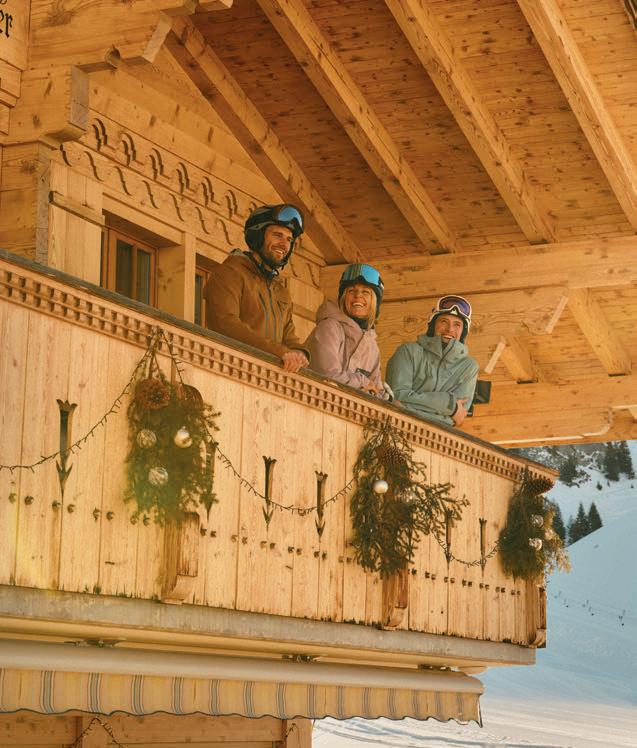
The great outdoors, R&R, design... whatever genre you seek, there’s a perfect Swiss hotel for you
A rustic farmhouse surrounded by owering meadows, romantic patrician villas with lake views, cosy mountain hotels with views of glaciers and peaks… these embody the spirit of Switzerland. From the comfort of these bucolic boltholes, enjoy walks amid awe-inspiring scenery, cosseting homes-from-home and authentic regional cuisine. Think characterful, ambient and precise Swiss hospitality – in spades.
R&R
Not only is the very landscape of Switzerland a regenerative one, the topography houses award-winning spa and wellness hotels and lodgings in which to further rest the soul. Embrace the sauna or experience world-leading medi-spa technologies. Plus, make sure to get outside for trail runs, altitude training and outdoor yoga. All this in one place, so body and mind can relax and harmonise.





Swiss hotels know what families like: professional care, practical facilities, imaginative playrooms for the little ones, sports facilities, and adventures for teenagers. Parents can enjoy undisturbed wellness, activities and candlelit dinners – valuable respites from everyday life. The choice of accommodation is colourful: campsites close to nature, resorts with indoor pools, or exclusive luxury hotels for fun-loving guests of all ages.
Make a pit stop along some of the world’s most beautiful mountain bicycle trails – these lodgings o er bike garages, repair services, maps, vitality cuisine, and much more. Ideal for active adventure tours, sporting challenges and inspiring rides, these hotels are the perfect moment to comfortably shi down a gear.
Discover a hidden Swiss gem, each one unique. Whether avant-garde, romantic or artistic, these hotels are refreshingly unconventional and perfect for a travel trendsetter: some of the iconic hideaways and design discoveries are well hidden in secluded valleys or winding alleyways.
To develop shared visions, it’s worth changing the scenery and discovering new territory as a team. All without stress – because Switzerland’s inspiring seminar hotels organise tailor-made workshops, conferences and events in a highly professional and individual way. This makes every visit a relaxed success. Envisage stimulating group activities, state-of-the-art infrastructure and particularly inspiring locations.
Like treasure chests that combine tradition and zeitgeist. Within beautifully restored walls, guests experience a unique atmosphere and immerse themselves in times gone by. Whether a charming country estate, nostalgic city hotel or idyllic mountain chalet, each Swiss Historic Hotel tells its own thoroughly instructive story.
Give the gi of a romantic getaway or celebrate lavish family celebrations in splendour: this collection combines magni cent locations and deep cocooning. Haute cuisine, private cinemas, helicopter shuttles, cookery courses, picnic hikes and delicious wine-and-cheese tastings guarantee rst-class memories. Dreams come true here.
Nothing beats carving a fresh Swiss piste – except, perhaps, the hotels located on each downward slope. Surrounded by snowdusted trees or facing sweeping white vistas, these hotels might revolve around your winter sport of choice but it hardly stops there: think delicious lunches, relaxing spas and superlative lodgings – all reached via mountain railway.
Discover every genre of hotel and lodging; Switzerland has the perfect stay for every individual. switzerland.com/hotels

A twin-city trip to Kazakhstan makes for a different sort of getaway for the culturally curious, says Caroline Eden

Like a horse-riding nomad stampeding across the steppe, Kazakhstan is a country on the move. Sitting at the very heart of Asia – with China to the east, Russia to the north and west and Uzbekistan to the south – the country’s vast wealth, gained via deposits of oil and natural gas, has gradually been injected into its two primary cities: the former capital and cultural hub, Almaty, and Astana, the young northern capital. And it is there, in those cities, that today’s traveller is rewarded with revitalised historic cafés, newly opened art galleries and stunningly designed mosques architecturally unlike anywhere else. For the culturally curious, combining the two cities makes for an immersive and unusual getaway.
Five years had passed since my last visit, and 15 since my rst time in Central Asia, so I knew not to take for granted these changes. As Dennis Keen, who runs the tour company Walking Almaty, half-jokingly said when we met up, ‘a decade ago you’d likely have a lunch of kotleti [meat patties] in a canteen-style restaurant. Nothing wrong with that, but today there are so many di erent dining experiences available.’
The country’s vast wealth, gained via deposits of oil and natural gas, has gradually been injected into its two primary cities

I thought of Dennis’s words as I stepped inside Kazakhstan’s most celebrated restaurant, AUYL (which means ‘village’), located on the outskirts of Almaty, close to Medeu, the famous Soviet-era speed skating rink. Aisana, one of the servers, showed me around explaining how the building was once the summer residence of Kazakhstan’s former leader Dinmukhamed Kunayev, and that the handsome 1970s mural above the door, depicts the last khan of the Kazakh khanate, Kenesary Qasymuly, on a hunt. Sitting at an altitude of 1,700m, the building itself is fascinating, and that’s before you see the interior or taste the food.
Inside, during a busy lunch service, waiters ferried plates of freshly baked baursak (pu y little doughnuts), marrow bones dressed with lazjan (a ery chilli sauce), smoked horse meat and tandoor-baked atbreads. These are avours harking back to not just pre-Soviet times, but to the pre-Islamic era when Kazakh nomads worshipped Tengri, the eternal blue Sky God. So that means dishes based on ingredients familiar to nomads: water, our, dairy and meat.
A erwards, a visit to the Almaty Museum of Arts, which opened last year, is just the ticket. Covering almost 10,000 sq/m, and designed by Chapman Taylor of London, it marks a signi cant new cultural landmark and it could not be more di erent to the older museums in the city dominated by archaeological nds and stu ed animals. Founded, and funded, by Kazakh entrepreneur and collector Nurlan Smagulov, it showcases works by the pioneering female artist Aisha Galimbaeva and also Rustam Khal n, considered the father of modern Kazakh art, as well as some heavyhitter international artists.
The next day, before leaving for Astana to see what has changed in the new-ish capital, I had lunch at Akku, a café in the centre of the city located by the KazakhBritish Technical University, nally rebuilt a er a re destroyed it 25 years ago. Its opening last autumn got residents talking as Akku is closely tied to the city’s collective memory. During the 1960s, 70s and 80s, it was a community space, somewhere that songs were sung, debates raged and people fell in love.
Inside, it isn’t hard to imagine the old version of Akku as the design is decidedly retro and the furniture has all been handcra ed locally in Almaty to recreate the bygone style. On shelves, by the door as you come in, are jars of pickles, loaves of bread and vintage teapots while the menu o ers bowls of
porridge (including millet that is traditional in Kazakhstan), local horse meat sausages and thick potato pancakes.
Such history is harder to get a feel for in Astana – a two-hour-ish ight northwards. Since the capital was moved from Almaty in 1997, the city has been almost entirely built anew and its image as a lonely windblown metropolis, lled with government workers, has been hard to shake o . But, things are changing. A fabulous place to begin is in the centre of the city at the Astana Opera house, fronted by a statue of golden galloping horses. Inside, memorabilia – posters, programmes and photographs – ll display cases but it is the intricately stitched costumes, set on mannequins, for operas such as Verdi’s Attila and ballets such as The Nutcracker that catch the eye, all sewn in the opera house’s warren of workshops.
The place to stay is the St Regis, a tenminute drive from the opera house. The decor throughout the hotel has local touches: carpets that re ect traditional local rugs, and framed pictures of yurts.
The biggest surprise, though, was the Central Mosque, which opened in 2022, and was unlike any place of worship I have ever visited. The long cool marble corridors lead past little shops and models of Kazakhstan’s other mosques – all wildly di erent architecturally, from the 19th-century double minaret mosque of Semey to the futuristic shuttlecock shaped one in the northern city of Pavlodar. These miniature mosques encouraged dreams of further explorations of this vast country (it is the ninth biggest in the world). Welcoming, futuristic, spotlessly clean, and not another tourist in sight, the visit made for a fascinating insight into modern-day faith in Central Asia. On my last visit in 2019 I sensed little soul in Astana –this time I found a city nally settling into itself.
Inside the mosque, I’d also noticed that the temperature was ‘just so’ and, for worshippers, that is important in a city of serious weather. Temperatures range from minus 40°C in winter, when wind whips across the frigid surrounding steppe, to a sweltering 40°C-plus come summer. Astana is in fact the world’s second coldest capital a er Mongolia’s Ulaanbaatar. Thankfully, though, nowadays it is a little less breezy, and not by chance. I know this because in Almaty, I had an interesting chat with Saginbek Shunkeyev of the Halyk Foundation who told me about the role trees have played in balancing Kazakhstan’s extreme hypercontinental climate and its fragile ecosystem.
‘In Astana 20 years ago it was very windy,’ he told me, ‘so much so that small ladies couldn’t even walk because of the wind! The president launched a project, called the green belt of Astana, and trees were planted surrounding the city, like a bu er zone. Now, it’s not so windy.’
Since the project started in the late 1990s, over 100,000 hectares around the capital has been forested, resulting in a slight rise in temperatures and lower average wind speeds, plus a drop in snowstorms and fog.
Back in Almaty, I had a couple of other things to tick o before leaving. First, a pitstop at the Forum shopping mall, where I made a beeline for Adili, a local design studio, to shop for silk scarves with Kazakh designs, pyjamas and wash bags.
I also made sure I had time for one more glass of Kazakh riesling, from the Ak Arba winery in the Assa Valley near Almaty. Yes, really. I too would have once sco ed but the riesling is perfection: crisp, light and refreshing on the palate. I wasn’t surprised to learn that their wines have won various medals, including at the Decanter Asia Wine Awards. It tastes distinctly sunny, I thought to myself, but then that is tting, too, as Almaty gets 2,400 hours of sunshine per year, while London gets only 1,400. This wine is, in many ways, just like these two fast-changing cities, ripe for discovery and more than ready to reward the adventurous. ■
Caroline’s return ights from Edinburgh to Almaty had a carbon footprint of 1,659.4kg of CO2e (ecollectivecarbon.com)




Lauren Ho scopes out the latest global travel news
When Delano rst opened in 1995, it rewrote the rules of hospitality, turning its lobby into theatre and its pool into South Beach’s uno cial catwalk. Having now reopened at its 1947 Art Deco home on Collins Avenue, the 171-room hotel returns to a city that has evolved from hedonistic playground to global cultural capital. The makeover preserves terrazzo oors and white columns and reintroduces brand signatures such as the Rose Bar and a the charming ‘apple a day’ amenity, while four new dining concepts and a wellness studio aim to position Delano as a serious contender in Miami’s next chapter. delanohotels.com


THE NEWT’S NEW SIBLING Expanding beyond the estate, The Newt reveals Yarlington Lodge, a restored Georgian house three miles down the road sleeping up to 16, with a spa, pool, tennis court, cinema, orchards and estate-led feasting. thenewtinsomerset.com

A HOME IN ROME
J.K. Place’s h property and second Roman address, Casa J.K. Place, o ers 15 stylish one- and two-bedroom residences in an 18th-century palazzo complete with kitchens, a gym, lounge and butler service. jkplaces.com

SO COOL
With 43 villas (each with a private pool) speckled among 51 hectares of pine forest, rice elds and dunes, Sublime Sand joins the OG Sublime Comporta in the super trendy beach retreat on Portugal’s southern coast. sublimehotels.pt

MANSION
In Mexico City’s bohemian Roma Norte, El Cortés transforms a former presidential mansion into a 15-room hideaway with original staircases, leafy courtyard, roo op terrace, and Lotti, helmed by Swiss chef Luc Liebster. elcortes.mx

Long de ned by its ancient landmarks, Athens has developed a new-found con dence that extends well beyond the Acropolis. The expanding Athens Epidaurus Festival, Greece’s leading performing arts platform, is attracting heavyweight international talent: directors such as Ivo van Hove and Romeo Castellucci have featured in recent line-ups, while galleries are multiplying across Kypseli and Pangrati as international collectors increasingly turn their attention to the Greek capital. Meanwhile, along the Athenian Riviera a new wave of beach clubs, restaurants and design-led hotels is reshaping the coastline into a region with serious clout. as a younger generation of chefs and creatives brings serious know-how to food, fashion and interiors, nally putting Athens on the much-deserved cultural map.
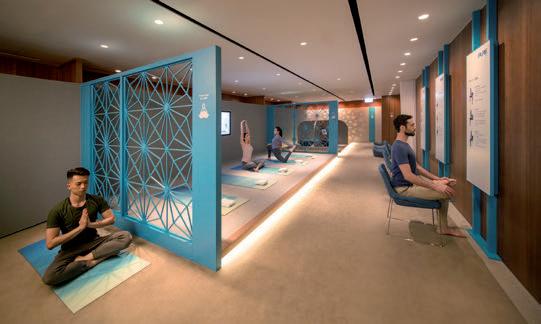
Once little more than beige holding pens, airport lounges have evolved into design-led sanctuaries that feel more like private members’ clubs than transit zones. Designed by Ilse Crawford, Cathay Paci c’s Hong Kong lounges rst set the bar with a full-service restaurant, the famous noodle bar, as well as The Retreat, which features day suites and complimentary foot massages. Meanwhile, new carriers such as Riyadh Air have enlisted Yabu Pushelberg to shape forthcoming agship spaces. As airports become lifestyle destinations in their own right, lounge access now in uences route choice, with some travellers deliberately scheduling longer layovers to make the most of the experience.
5 MINUTES WITH...

1
What makes a hotel timeless? Remaining anchored to your roots while being projected into the future.
2
What have your hotels taught you? For me, true hospitality isn’t just opening the doors of your home, but opening the doors of your heart.
3
What does Italy do best? Italians made the art of living a true brand. What is ‘la dolce vita’ if not long lunches, warm conversations, and an unshakable belief that we need to share the exceptional beauty we have with the rest of the world?
4
What does Sense of Lake – your online boutique –capture beyond the hotel stay? It makes magic through objects of beauty, keeping your most precious memories alive of a journey that becomes everlasting.
























Jemima Sissons is in praise of the ‘let them get bored’ method of travelling with children – and psychologists are on her side. We could all do with a little more boredom
Growing up in the 1980s, summers for me meant embracing boredom on a regular basis. Having been raised on European road trips, where air conditioning was considered a luxury (which we didn’t have) – let alone visual entertainment – it meant a lot of staring blankly out of the window, a fair amount of sibling bickering and, when the hallowed Sony Walkman arrived one Christmas, listening to Madonna on repeat. Constantly chastised at school for daydreaming, were I to learn later on in life that this can be a ‘superpower’ I would have stuck at it.
I vowed that any o spring of my own would not spend their heads in screens, so last summer we took o on a three-week jaunt to Saint-Jean-Cap-Ferrat in the South of France and back. We hoped to drum up excitement with our action-packed itinerary, from the mini golf courses of Le Touquet to the crumbling châteaux of mid France. However, the only thing Amelia (seven) and Beatrice (four) cared about was whether their iPads would work in the car.
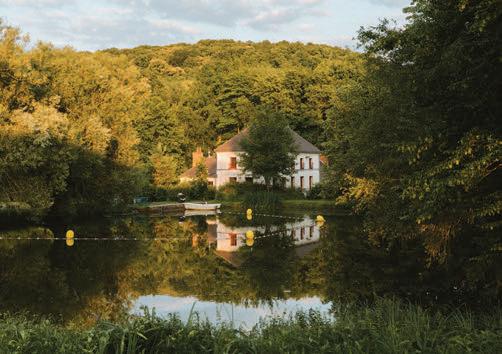
Explaining that no, they wouldn’t, the summer of boredom commenced. Armed only with a few activity books and hours of cinematic Gallic vistas for inspiration, we began our grand tour. I told my girls, as they whined about how ‘boring’ the eight-hours-a-day drive would be, that it is about the journey, not the arrival.
As we pulled up to the arcadian estate Le Barn, only two hours from Le Touquet, the ennui had already set in and ‘I spy’ had run its course (the agricultural swathes of northern France had started to lose their appeal). Yet, as the sun cast its glow on a palomino lly and her foal in knee-high grass, a calm overtook the girls. The hotel recalled holidays of a golden age: there is no kids’ club (even as their greatest fan, if there is one culprit for not bringing back holiday boredom, kids’ clubs might be it). Instead, there is a single swing, a badminton net and a swimming pond with acres of forests beyond.
A few days here, and everyone started to reset. Adult phones were downed as we walked through ferny forest to the sound of birdsong. A sole archery set provided diversion for the bunch of multilingual children who followed each other like an Enid Blyton tribe.
The road trip a er this took a turn for the better. As we snaked south towards Provence, our eight-hour stint punctuated by multiple stops for jambon baguettes, the girls began to create their own entertainment. They counted car colours; paper dolls were cra ed from hankies and became princesses for the day. Then at some point, between the vineyards of Whispering Angel and the golf courses of Terre Blanche, our next stop, I spotted a familiar look: the middle-distance stare that kept me going for never-ending stretches during my own childhood.
By the time we drew up to the fairytale Grand Hôtel du Cap-Ferrat, the girls’ minds were full of their own fantasy lands – and we realised we hadn’t heard ‘I’m bored’ for the last four days.
Two months later and I have checked into Palazzo Fiuggi, nestled in the Ernici mountains
CLOCKWISE FROM LEFT: There is no kids’ club at Le Barn, just acres of forest to explore; being in nature helps children get used to stillness; Palazzo Fiuggi, which prescribes ‘doing nothing’ for dopamine addiction; by the time the Sissons family reached Terre Blanche, the ‘I’m bored’ refrain had all but vanished

in Italy, to test drive a new metabolic health retreat, part of which is about reducing dopamine spikes. Overlooking pine-swathed hills, Dr Fabrizio Di Salvio explains just how bene cial ‘doing nothing’ is. He prescribes this alongside herb-scented trail hikes and contrast therapy.
‘In a culture that is almost terrified of stillness, boredom may be one of the last remaining doorways back to the self’
Fiona Arrigo
‘Boredom is good for you. We have become too dopamine-addicted through overstimulation and could all do with a dopamine detox,’ he explains. ‘When the brain is no longer constantly stimulated, it shi s into what neuroscience calls the “default mode network”. Reducing continuous digital and cognitive stimulation helps lower chronic cortisol exposure, supporting autonomic balance and sleep quality.’
Louisa Canham, clinical psychologist and founder of La-Eva, adds: ‘Against a backdrop of continuous overload, boredom teaches us patience and the opportunity to tolerate – or even better, enjoy – less external stimulation,’ she says. ‘Boredom can be a portal to one of the brain’s most deeply restorative states: mind wandering. Daydreaming is in many respects an opposite state to what we experience when we are focused on a screen, scrolling or watching a programme.’
When we mind wander, we are essentially in a state of free- owing association. Thoughts, images and ideas pop up
and we follow along with them, not seeking any speci c outcome, not always nishing the train of thought. ‘Research has shown that when we daydream, we feel less stressed and put upon,’ says Canham. Going back to the 1950s, psychologists have demonstrated an impressive list of bene ts of our minds owing freely: increased creativity, higher curiosity, improvements in planning, a future-focused mindset, better problem-solving.’
In her fascinating book The Upside of Downtime , Sandi Mann says that our frenetic lives mean ‘we are losing the ability to tolerate the routine and repetition of everyday [...] and it is the motivation to reduce this ennui that leads us in a never-ending quest for stimulation’. The psychologist argues that we need to embrace rather than ght boredom, as it instils ‘creativity, intelligent thinking and re ection’.

Through constant overstimulation – from screens to having things available immediately (for those of us who remember Sunday opening hours and IRL-only shopping, the day of rest was exactly that) – we have forgotten how to wait for things, how to be needy for things. The more stimulation we get, the more we require, so to stabilise our dopamine receptors we need to carve out periods of time. This can mean walking and not doing anything other than putting a foot in front of one another. Who remembers seeing people sitting on park benches doing nothing, staring into space? They had the right idea. Helicopter parenting and the carnival of a er-school clubs have lled the space that previously belonged to the aimlessness of childhood (‘I’m bored’; ‘Well go and nd something to do’ was the frequent refrain, alongside ‘only boring people get bored’).
‘In a culture that is almost terri ed of stillness, boredom may be one of the last remaining doorways back to the self,’ says Fiona Arrigo, biodynamic psychotherapist and founder of The Arrigo Programme. ‘Boredom is not an absence, it is a threshold. Beneath boredom lies creativity.’
So, as I have told my children – and myself –never be a bore if you can help it, but sometimes doing less really is more. ■

Think of Venice, and it’s unlikely it’s the gardens and green spaces that come to mind. Its waterways, basilicas and palazzos have naturally stolen the spotlight. Yet La Serenissima is home to more than 500 gardens – some secreted for centuries behind palazzo walls, others sacred or shared. Many (around 60) can be visited with Club Wigwam Giardini Storici Venezia, a small society working to protect historic Venetian gardens.
The society’s president – Mariagrazia Dammico –collects me from my hotel, Ca’ di Dio on the waterfront overlooking the main lagoon. Its position, in quieter Castello, is – she explains – perfectly in the middle of a broad promenade created by Napoleon linking Giardini Reali (The Royal Gardens, recently restored, just o Piazza San Marco) and Giardini della Biennale (The Napoleonic Gardens), a 65,000sq/m public park created by the Emperor in 1808, and host of the Biennale. By vaporetto we pass along the Grand Canal to the 16th-century Palazzo Nani Bernardo, home to Contessa Elisabetta Lucheschi. Its garden is hidden from the water and, like many, was damaged by 2019’s acqua alta , the second highest ood in Venetian history.
The much-loved garden is now gloriously restored. Only one tree survived, a palm thought to be the highest in Venice, and around it paths and formal hedging spill into beds of peonies, owering sage, pittosporum (growing easily and wild in Venice), white hydrangeas, showers of roses and fragrant honeysuckle. The wisteria tumbling o the pergola is the oldest in Venice. Inside, we sneak a glimpse at faded grandeur – original Fortuny and Rubelli silks, old gondola chairs and china – before emerging onto the second oor terrace overlooking the Grand Canal.
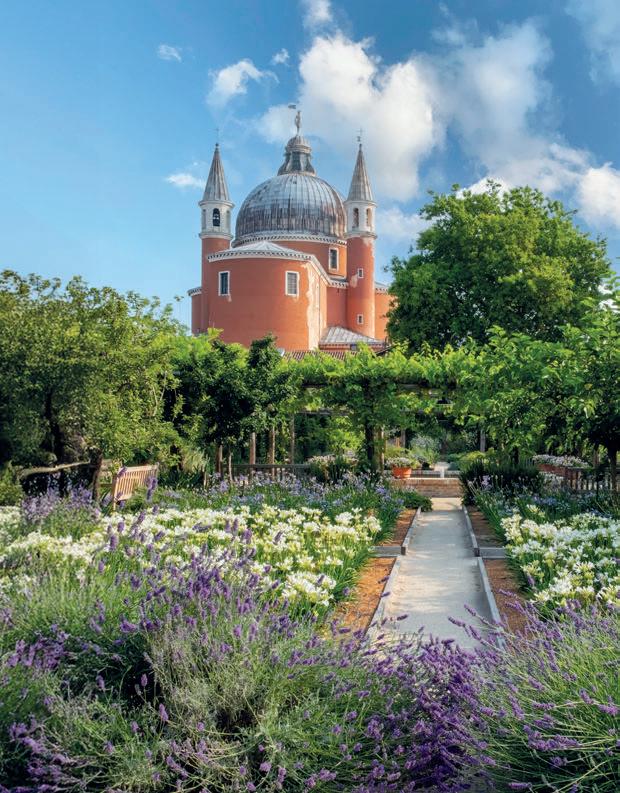
and Saturdays since 2024, following a very considered €3m restoration by the Venetian Garden Foundation (the bigger, ‘much richer’ cousin to Dammico’s society).
Dammico whisks me across the water to Giudecca. More southern, residents here have long capitalised on its Mediterranean micro-climate by planting vineyards and artichoke elds. Its more isolated position –there were no public boats to the island until the late 19th century – made it a popular spot for convents and monasteries, while industrialists built factories (including Fortuny, still a working factory, and Molino Stucky, Venice’s largest our mill, now a hotel).
We are here to visit Il Redentore, Andrea Palladio’s basilica built in 1576 to thank God for ending the plague that decimated half of Venice. Its vast garden was tended by Capuchin friars, who also operated a big apothecary from medicinal herbs. The gardens, private for centuries, have been open on Thursdays, Fridays
We walk through an olive grove with stations of the cross carved in stone running along the walls and through the cloisters, emerging into 10,000 sq/m of gardens leading to the southern lagoon, where benches invite stillness looking to Venice’s outer islands.
Mirroring the original medieval design, the gardens are divided cross-like into four parts – planted with vegetables (including purple artichokes), fruit trees, owers (roses, lavender, agapanthus) and herbs (the varieties used in the apothecary) – and bordered by pergolas draped in grapes, wisteria and the pink trumpet owers of bignonia contessa sara. Mature trees – Quercus, pine, olive – cast pockets of shade.
Many more Venetian gardens – some containing a religious space, a working community orchard, a place for the elderly – await unhurried discovery away from the crowds. And all at the society’s ngertips.

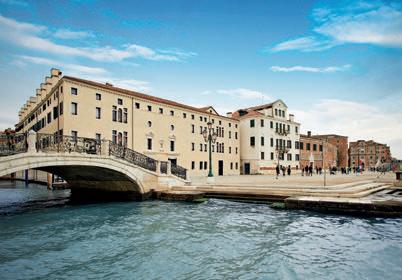

Take a vaporetto or private water taxi to wander the charming, hyper-colourful streets where the sherman’s houses are painted according to pre-assigned shades. Stop for lunch at the excellent Trattoria al Gatto Nero (family-run since 1965, with a Michelin star and Chef Ruggero Novo still in the kitchen) and gelato (pistachio) at Crema.
Take a door-to-door vaporetto from Ca’ di Dio to San Giorgio Maggiore island to see the excellent Horst exhibition at Le Stanze della Fotogra a (until July). Standouts of this major retrospective include his most celebrated pics for Vogue, letters from Diana Vreeland, portraits of endless famous friends and a series taken in 1947 Venice. Pop into the soaring basilica too.
Ca’ di Dio’s amiable concierge, Ivan Romanello, can arrange everything from secret garden visits to a walk around Castello and Arsenale to see where real Venetians live (and take co ee), glassblowing on Murano and a tour of the Doge’s Palace (queue skipping included).
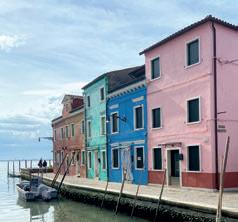
← CA’ DI DIO
The Patricia Urquiola-designed Ca’ di Dio – meaning House of God – has 66 rooms across the former monastery. Perfectly positioned (eight minutes from Piazza San Marco one way, the same distance to the Biennale the other, yet somehow away from the fray), its courtyard bar is the place for summer aperitivos or eat on Vero’s terrace overlooking the lagoon to San Giorgio Maggiore, its bells li ing across the water. From €400 per night, including breakfast.
PALAZZO GRIMANI AI SERVI
A circular boxwood maze encloses seasonal blooms, (especially roses and peonies) and the long pergola culminates dramatically in a mirror re ecting the garden.
ORTO DEL CAMPANILE AI CARMINI
A secret community garden behind the 14th-century Carmini Church where the owers and vegetables are tended with love by a group of Venetian volunteers.
PALAZZO CONTARINI DAL ZAFFO
Once one of the largest Renaissance gardens in Venice where Titian, Giorgione and other artists would meet, is now place of respite devoted to Venetian women and nuns. ■
BOOK IT: Private garden visits with Club Wigwam Giardini Storici Venezia can be booked as a guest of Ca’ di Dio hotel (vretreats.com).
Lucinda’s return ights from London Stansted to Venice had a carbon footprint of 343kg of CO2e (ecollectivecarbon.com)
Jeremy Taylor escapes to the Notswolds in the new blisteringly fast Audi e-tron
Liam Gallagher is moving in to a Cotswolds village three miles from me. The singer posted he will ‘come in peace’, joining Ellen DeGeneres, the Beckhams and plenty of others who make the region a hotspot for chau eur-driven Range Rovers.
With rumours of Jay-Z and Beyoncé on a property hunt in Gloucestershire too, plus a new series of Rivals adding to the frenzy, perhaps this is a moment to o er some friendly advice: why not check out the Notswolds instead?
A haven of bucolic calm, the Welland Valley in Leicestershire is the unsung alternative – and even closer to London. At the bar in The Nevill Arms, a honeycoloured country pub in the historic village of Medbourne, talk of signi cant arrivals is restricted to a glossy ibis spotted on the River Welland, and the otters moving in near Summer Leys.
Situated between Uppingham and Market Harborough, Medbourne is every bit as postcard-perfect as the Cotswolds. Despite a £3m overhaul, the boutiquehotel-cum-local has managed to retain a cosy feel. It’s buzzing in the restaurant and all ten bedrooms are full; outside, only a babbling brook disturbs the peace. Perish the thought, then, of ring up a noisy supercar here. Instead, I’ve crept in stealth-like, over the medieval stone bridge, driving a sporty, all-electric Audi RS e-tron GT. This is no ordinary RS, either: the Performance Carbon

Vorsprung model is a top-of-the-range electric grand tourer, o ering enough blistering acceleration to give a lowslung Lamborghini a fright. An upgraded version of the e-tron GT, it is a major rival to the more pricey Porsche Taycan and, thanks to the ni y air suspension system, every bit as quick on the sweeping A-roads of the Notswolds. Even pesky potholes don’t throw it o .
An e-tron o ers rst-class engineering inside and out, but it’s not as impressive as the 82-arch Welland Viaduct in Harringworth. Surrounded by spires and grazing land, this architectural gem truly feels like the centre of England, which arguably this hidden corner of Leicestershire is. Nearby, visit bustling Market Harborough, which has managed to retain a wide range of independent shops as well as an indoor market. Rockingham Castle, built by William the Conqueror, is just down the road, as well as pretty market town Lutterworth.
Back at The Nevill Arms, there’s time to chat with bar sta about one of Medbourne’s more unlikely claims to fame: the annual Hare Pie Scramble and Bottle Kicking contest, held on Easter Monday. A pie blessed by the vicar is broken up and thrown into a baying crowd, followed by a erce competition between two villages to move wooden barrels across parish boundary streams. Just imagine the local estate agent trying to explain that to Jay Z and Beyoncé. ■

At Foxton Locks, Britain’s longest staircase ight of canal locks – which raised boats travelling from the Thames to the East Midlands 75 up an escarpment. canalrivertrust.org.uk
The Nevill Arms serves locally grown produce and meat reared on its own farm at nearby Great Easton. Tuck into a duo of venison or nibble on braised beef fritters. Welcoming sta , real ales –what’s not to like? nevillarms.co.uk
Built in the 13th century, Nevill Holt is a painstakingly restored, Grade I-listed country house. Sneak a peek at beautiful gardens packed with modern art during the Nevill Holt Festival this season or via the National Garden Scheme. ngs.org.uk




TOWN HALL IS A NEW LANDMARK VENUE IN KING’S CROSS CURATED BY BOTTACCIO FOR A RADICAL NEW ERA. CULTURAL EXPERIENCES, PRIVATE DINNERS, CORPORATE EVENTS
EACH SHAPED BY FIRST-CLASS SERVICE AND STATE-OF-THE-ART TECHNOLOGY. YOUR EVENT, EXTRAORDINARY BY DESIGN.
JOIN THE COMMUNITY.

Tessa Dunthorne asks the experts for their seasonal insider tips and tipples

↓ THE SUPPER CLUB: THE WILD TABLE
If you go down to the woods in May, you’re in for a wild surprise. Each year, south London stalwart The Laundry Brixton transplants to Tey Brook Orchard in Essex. Created in collaboration with Browning Bros, a h generation family-run organic farm an hour from London, the menu promises ‘farm-to- re-to-fork’ feasting on ultra-local, seasonal ingredients, enjoyed under the forest canopy. Stay overnight in a yurt or bell tent to fully enjoy the wine pairings. 15 to 17 May and 18 to 20 September. £80 dinner only; £170 for glamping and breakfast for two (thelaundrybrixton.com).


Provence rosé kicked o a global pale pink wine revolution and the OG is from Bandol, a region that was among the rst in France granted an appellation status in the 1940s. Made mostly from the Mourvèdre grape, it usually comes with a he y price tag so to nd one under £20 (and on supermarket shelves) is a boon. Fresh with vibrant red berry fruit avours and a squeeze of citrus, serve this chilled alongside anything from the sea. Taste The Di erence Bandol Rosé, £16.25 at Sainsbury’s. Chosen by Helen McGinn, author of The Supermarket Wine Guide, out 21 May (£14.99)
British cook and social media darling Alexandra Dudley’s go-to restaurant and dish? ‘Dover Street Counter,’ says the chef, ‘for the lamb meatballs and disco fries, which are topped with all manner of deliciousness. If you are a martini drinker, this is the place to be – they even exchange the glass midway through if your martini has been sitting a while, ensuring that it is always ice cold.’ Ina Yulo Stuve
← CEDRIC GROLET AT THE BERKELEY You’re not afeared of the £10 status symbol pastry – rather, it fears you.
COPAINS You’re a much-neglected coeliac and entering this Parisian export bakery in Islington (or Covent Garden) was probably your Charlie and the Chocolate Factory moment. Welcome to having choice; this is how everyone else feels at Gail’s.
BUNHEAD You’re socially-conscious if you like this Palestinian-owned bakery in Herne Hill, and you probably love a funky avour combo (i.e. its rose and cardamon buns). But you surely can’t have a job if you’re hitting that queue on a week-day. One for ladies of leisure.

How to book London’s most in-demand tables, by Ellie Smith
THE DOVER
Booking Notice
21 days for dinner
The Hack Use the ‘alert me’ option to scoop up a cancellation slot
NINA
Booking Notice
Six months in advance
The Hack Try a late evening (post 9.30pm) walk-in
THE DEVONSHIRE
Booking Notice
Three weeks in advance
The Hack
Be ready to login on the dot at 10.30am on Thursday mornings, or follow chef Rogers on Instagram
(@McMoop) to grab a last-min cancellation slot from his stories
CARBONE
Booking Notice
60 days in advance
The Hack Aim for mid-week, as these aren’t too tricky to secure

Bollinger popped the cork on its latest vintage (La Grande Annee 2018, £125) with a glitzy Ritz party in March (the rst ever private takeover of the restaurant by a company). This oaky champagne is 66 percent Pinot Noir and 34 percent Chardonnay, from 19 crus, with a tart sugar dosage of 6g/L. And with notes of orchard fruits, expect utter seasonality.
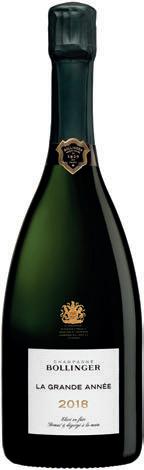
The margarita has been king for the last few years, but if you’ve been drinking them for that long, a) I don’t know how you still have the stomach – the acidity! – and b) you’re probably looking for your next ‘upper’. I’m predicting that the caipirinha will be drink of the summer. More bars are running them; they’re exotic, aesthetic, and not over-intense in alcohol. For a Brazilianstyle classic, muddle a lime in a tumbler with 2-3tsps of sugar, then add crushed ice and 50-60ml of cachaça. Add seasonal fruits. Pictured: a miyagawa and chilli caipirinha I made for Decimo at the Standard. Zoe Burgess, author of The Cocktail Cabinet (£20)

Indie salad dressing brand All Dressed Up has cropped up out of nowhere to dominate healthy bowls everywhere. Its latest is made in collaboration with Wahaca and Thomasina Miers, and is a jalapeno green goddess drizzle to liven up leafy greens, rice dishes and burritos. £6.29 at Wholefoods.
Three natural wine and food pairings to try

The nutty avours and rm texture of Comté cheese from the Jura Mountains in eastern France pair beautifully with the similar characteristics found in Macvin, a unique, long-aged Jura wine made from fresh unfermented grape must with spirit added. This pairing is a stunning way to nish a meal.
C&TH pick: Low intervention Macvin du Jura blanc, £48. bbr.com or hedonism.co.uk

A crisp sourdough crust, topped with melted or di latte cheese and a few anchovies, deserves a good wine. Look for a red wine based on Sangiovese, a grape grown throughout central Italy (Tuscany, Umbria, and Lazi). The grape’s rustic notes are attered by an acidity that draws out the dough’s fermented notes.
C&TH pick: Podere Ortica 2024, £21. morenaturalwine.co.uk

With rich salty, spicy food like fried chicken, your best bet is a perfectly cold, zzy wine. It’s well known that bubbles and acidity work together to cut through the fat and richness of fried food. Like it spicy? Slather on that mayo-sriracha sauce –the zzy wine will calm down the tingling on your tongue.
C&TH pick: M&S English Pét Nat Rosé, £15. Available via M&S Food Halls or ocado.com ■
Daylesford’s pretty, handpainted white and milk chocolate stalks contain (thankfully) none of the real thing and they make a cute and tasty hazelnut pralinelled gi . £18, daylesford.com

The asparagus menu at TOZI, the Venetian cicchetti restaurant in Victoria, celebrates the little spears across four dishes, and, in this case, simply. Poached asparagus topped with parmesan and brown butter. tozirestaurant.co.uk
Sober curious, but not quite enough to chuck the ABV completely? Enter midstrength wines: a new bumper crop of bottles that halve the ABV from 12 to six are hitting supermarket shelves and, in turn, glasses. And it’s not just a boon for hangover prevention – they boast signi cantly fewer calories per drink, too. Set fair for spritzer-fuelled evenings ahead. 6Percent Merlot Cabernet Sauvignon. £15.99, 6percent.wine
Listening bars were a craze that first took over Tokyo in the 1920s – a century on, London has caught up. In Notting Hill, Slavic wine bar Sova has partnered with Rough Trade for vinyl sets; in Peckham’s Hausu, head upstairs for a salted tomartini and hi-fi tunes; and in Mayfair, Greek taverna Maza has an 80s-inspired music space.
The Glenturret Distillery boasts more than just venerable status as Scotland’s oldest working operation: its Lalique Restaurant was the rst distillery restaurant to win a Michelin Star (and now holds two). This spring it has launched a whisky ight, where, under the tutelage of head sommelier Margaux Houghton, you can browse an archive of 400 whiskies, alongside a snacking menu from chef Mark Donald. Get schooled (and squi y). theglenturret.com

How does artist and writer Harland Miller find his happy place?
First thing in the morning I… Go for a swim in the sea where I live in Norfolk and then have breakfast at the one tiny café on the beach, called Frenchie’s. I grew up in Whitby and swam every day when I was a kid, too. Even when I lived in Manhattan, I had to nd somewhere on Long Island to get into the ocean.
I feel unhinged when… I haven’t had any ca eine. I’m reading Playback by Raymond Chandler and when Marlowe answers the phone, he says: ‘I’m old, tired and full of no co ee.’ I can relate.
I let my hair down by… Having a gin and tonic. My wife makes gin; Hogarth’s Gin Lane and all those poor women come to mind, but gin is transformative.
My greatest vice is… Staying up all night. It’s easiest to get fully immersed in work once everyone else is in bed and has stopped calling –aside from the fuckers in LA. There’s an intoxicating, never-ending quality to the night, the way it stretches out ahead of you.

My greatest virtue is… I was re-reading The Great Gatsby and Nick Carraway says everyone suspects themselves of possessing at least one virtue. His was being a good listener; I think mine is too.
A wise person once told me… To stick to my guns. In the late 90s, painting had been guillotined and a lot of artists changed what they were doing. I held rm and consequently didn’t sell any work. I started writing to support my family and sold my rst novel for a big advance, and there was a bidding war
‘I am grateful for so many things. Today, it’s my herd of seven alpacas. One, Jilly Johnson, has just had a baby’
for the movie rights. That never would have happened if I’d been a successful artist. When I was struggling to write a second novel, painting took o again.
I am grateful for… So many things. Today, it’s my herd of seven alpacas. One, Jilly Johnson, has just had a baby. I am also grateful for love, in a universal way.
My relationship with my phone is… Great. I got my rst phone when my wife Jane was pregnant 27 years ago and I never looked back. When I rst moved to London, I had a girlfriend in Leeds and I used to take columns of 10ps down to the local phone box. I still associate the smell of piss with being in love.
I wish I could… Slow down time.
My greatest luxury is... A vintage Seiko I bought in Berlin. For years, the date has been stuck on Tuesday – Dienstag in German, abbreviated to ‘Die’. I like that I’m still alive.
I had an ah-ha moment when… I bought a box of secondhand books when I was living in Paris in 1991. I emptied it onto the studio oor and the typographic covers of these old Penguins jumped out at me. I stayed up all night and made my rst Penguin painting. The next day, I was meeting my art dealer and by the time I got to the studio, he had sold the painting. That was the start of the Penguin series, and I have just made my very last ones, called The Final Five. ■
An exhibition of Harland Miller’s work is at Nevill Holt Festival, where he is speaking on 12 June (nevillholtfestival.com)