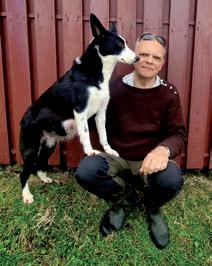
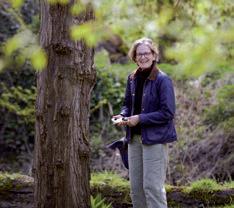
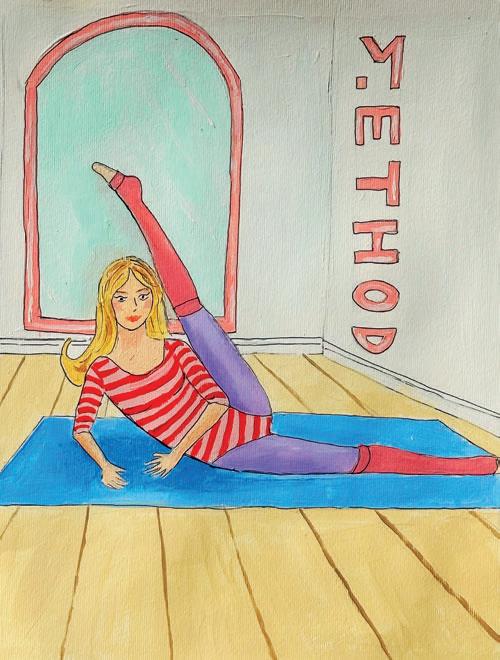
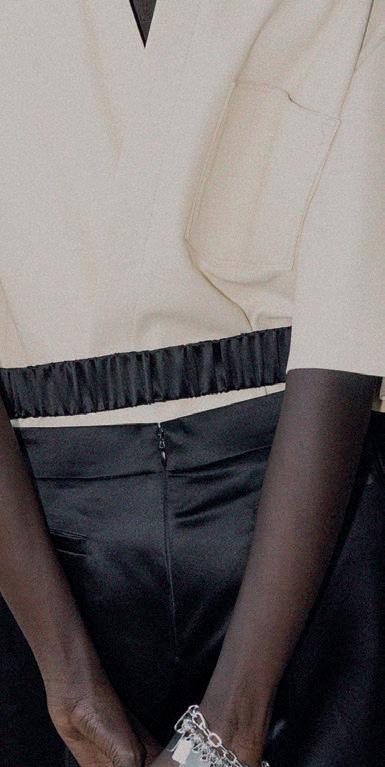
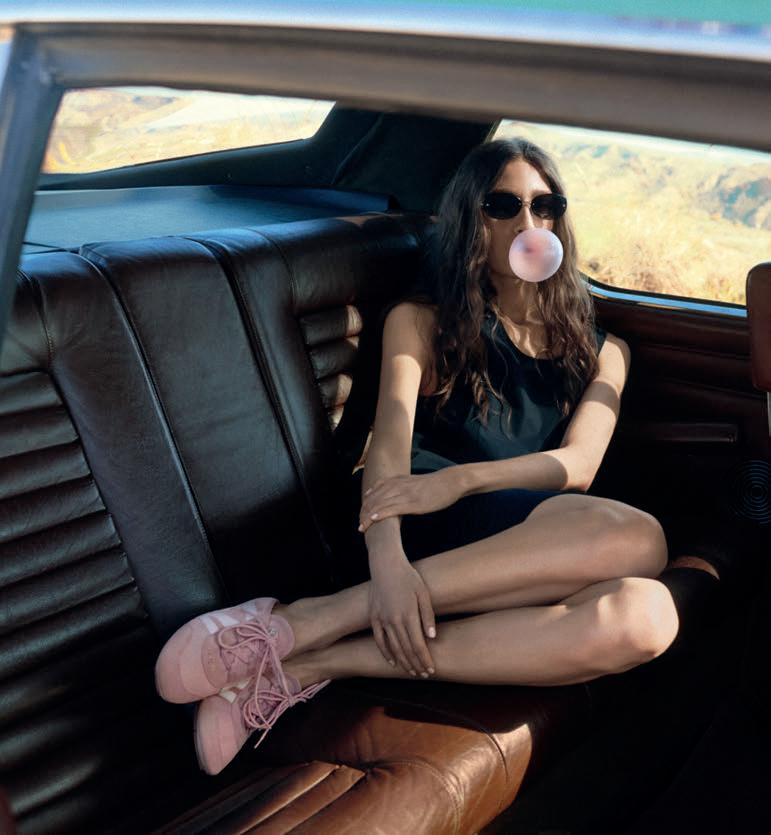
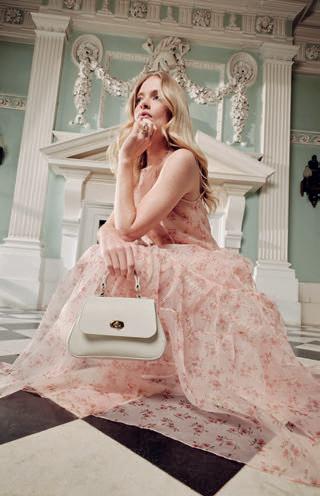
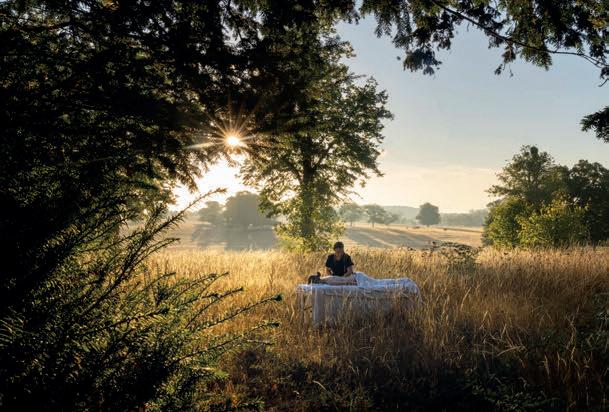
Alice B-B pulls on the legwarmers and takes LSD – that’s lengthen, shape and de ne, natch – to reduce dementia risk (p18), while Adolescence writer Jack Thorne delves into fatherhood, friendship and nding new life as a martialis heureka (p21) — 25
Style
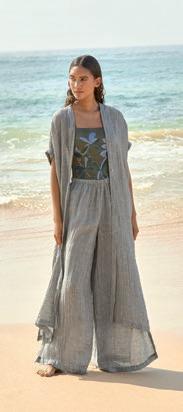
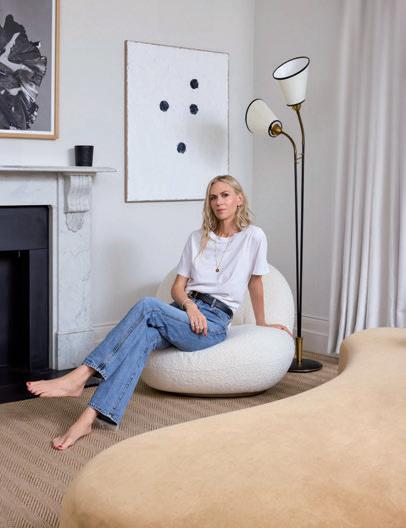
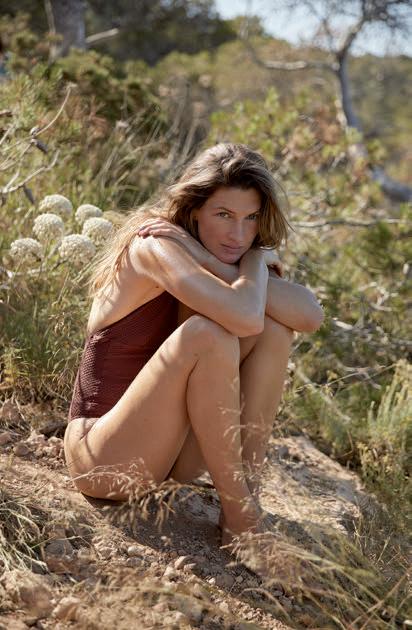
Pack up! Juliet Herd and Shane C. Kurup head to the beach (p28 and p36); Ti anie Darke has the pick of the best British bags (p26); and jeweller Sophie Lis shares her style secrets (p30). Plus, Felicity Carter gets under the skin of Louis Vuitton’s Regeneration 2030 project (p32).
— 41
Culture
Bernardine Evaristo tells Zing Tsjeng why she has launched a new literary prize (p42) and Baroness Batters meets Charlotte Metcalf to discuss sexism in farming and becoming the rst female president of the NFU (p52) Ed Vaizey looks at the nuanced future of our national cultural institutions (p48); partially sighted Tracey Emin protégée Bianca Ra aella opens her new studio to Olivia Cole (p45); and Belinda Bamber speaks to author Donal Ryan about grief and grit (p44), while Lisa Grainger is moved by the paddleboarder tackling our polluted waterways (p50)
— 54
Features
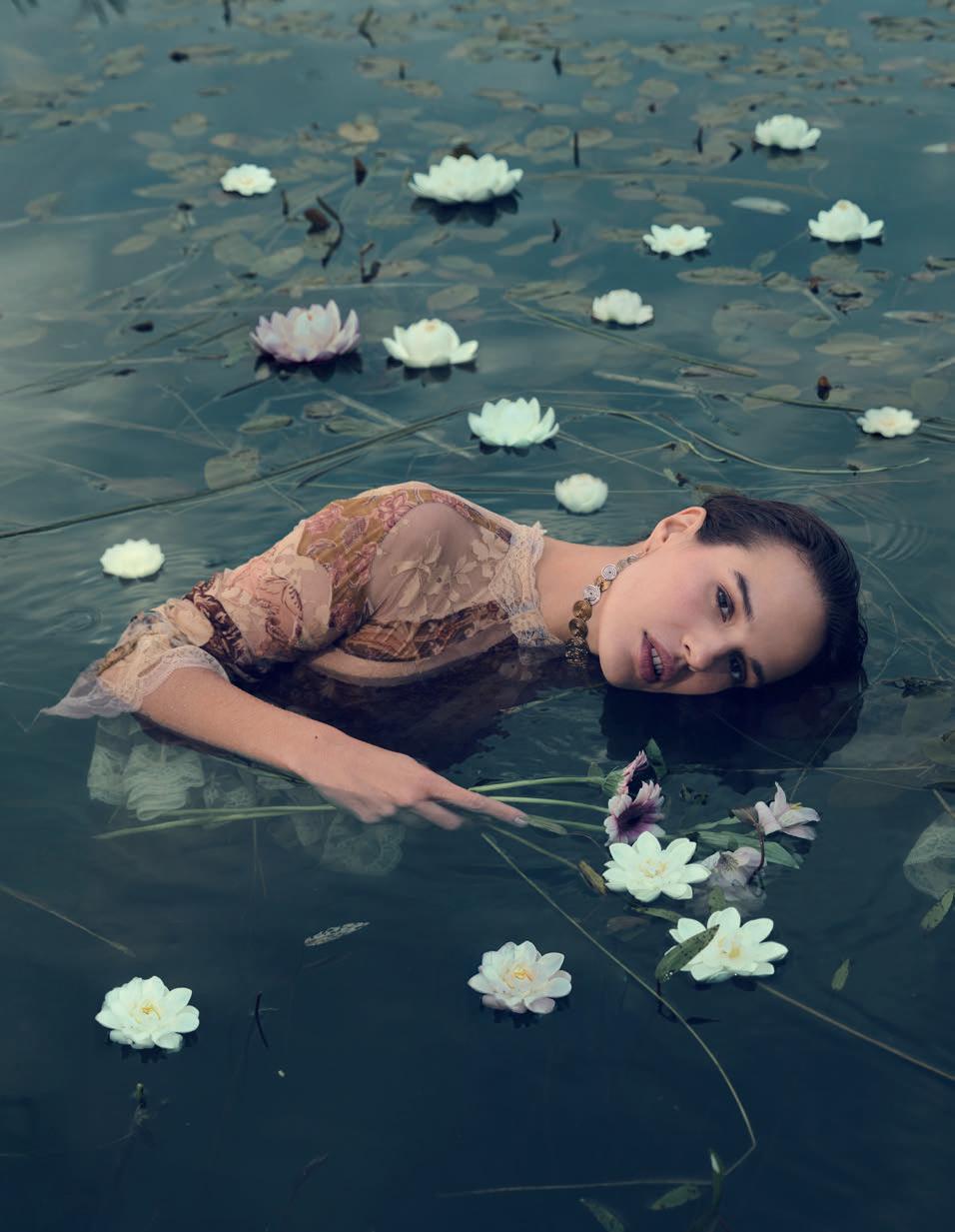
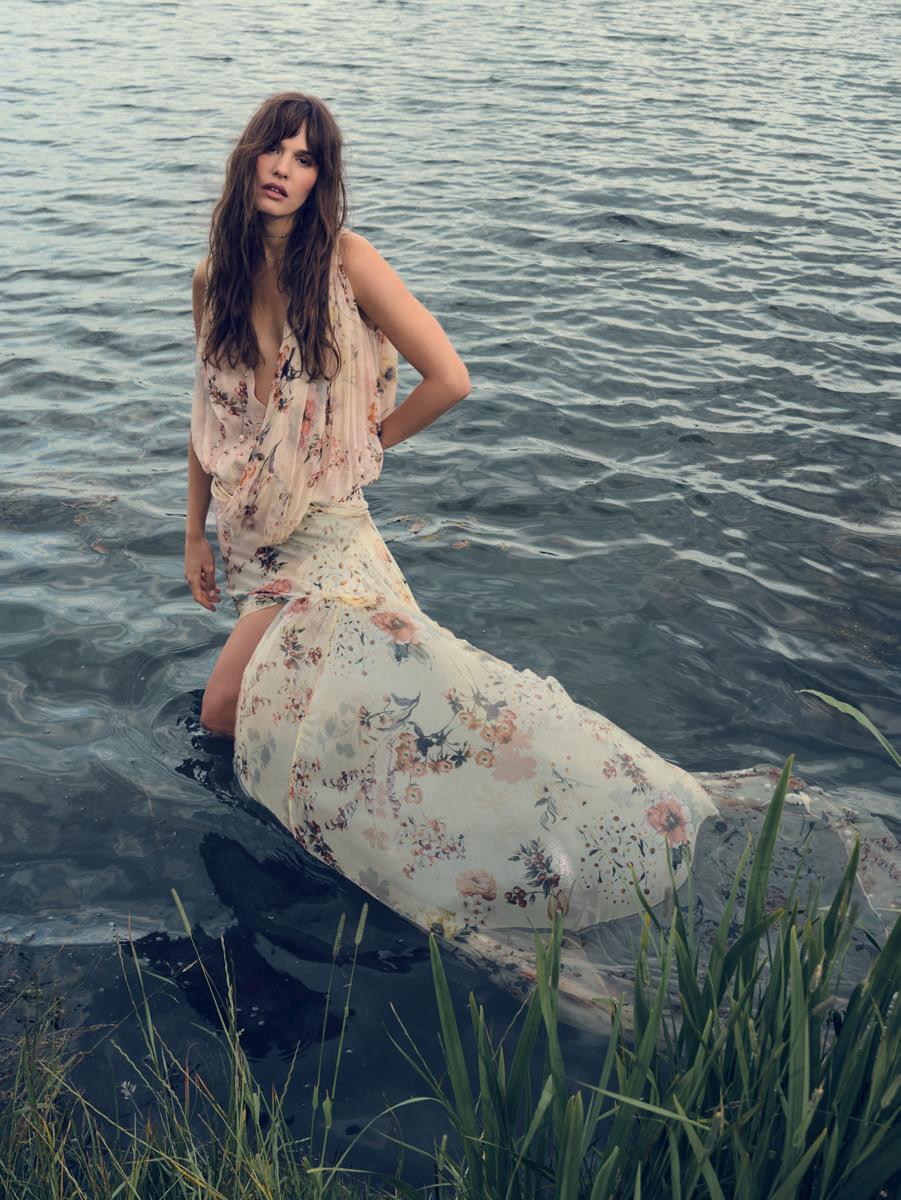
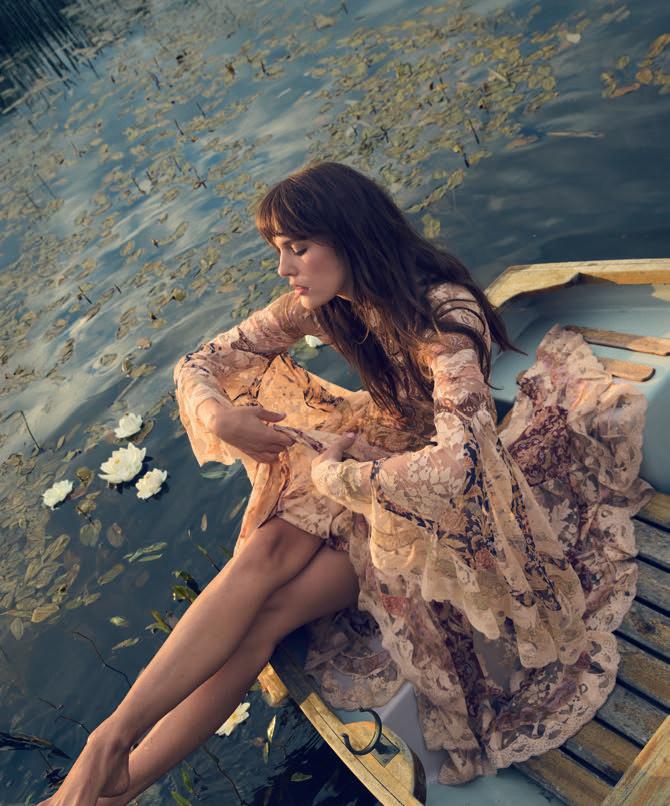
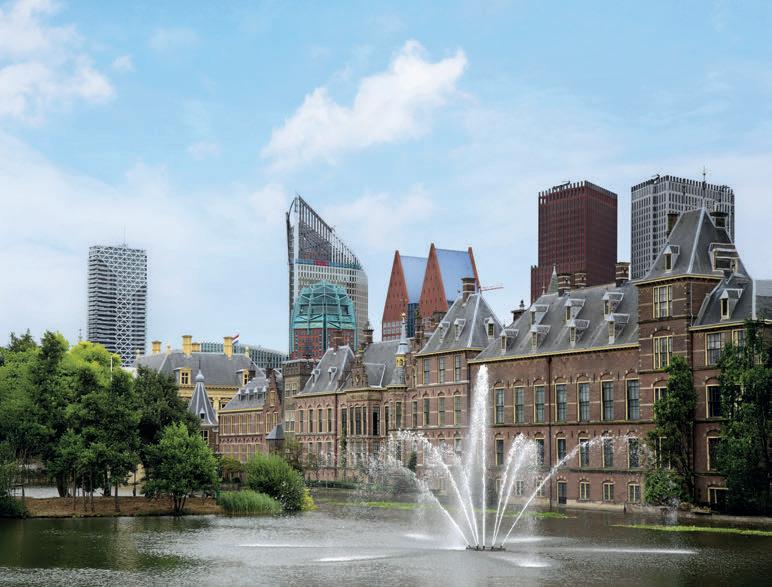
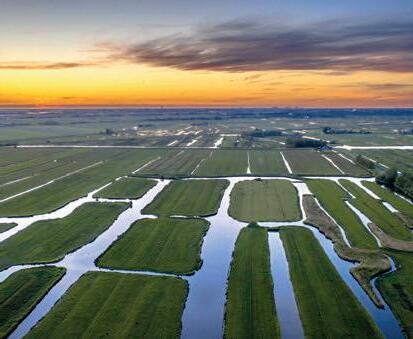
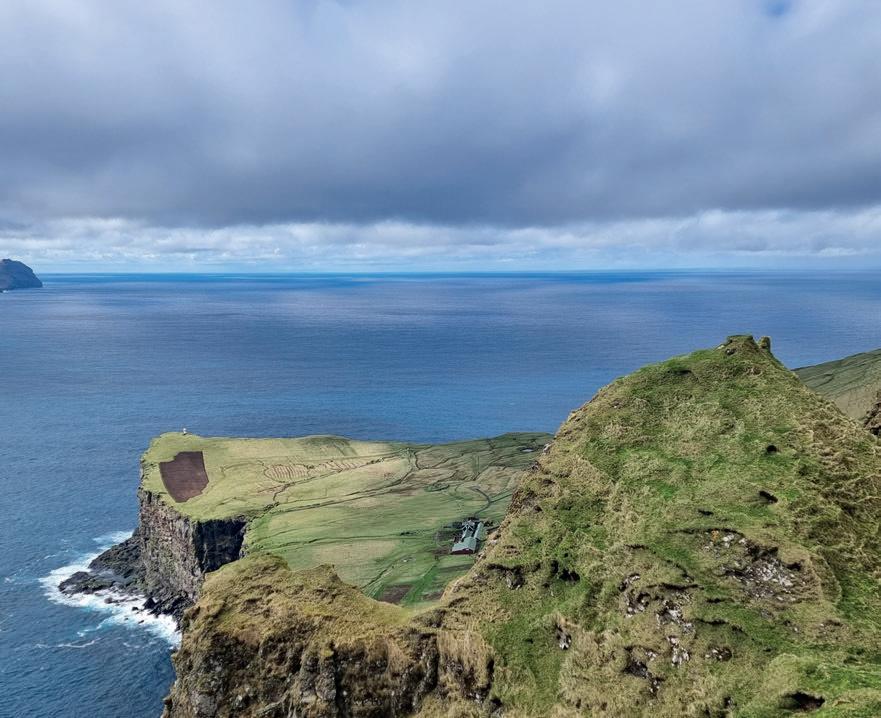
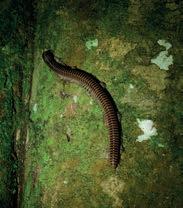
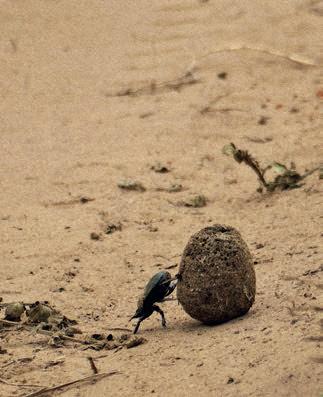
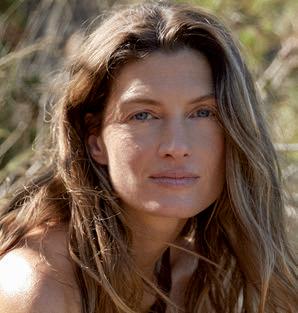
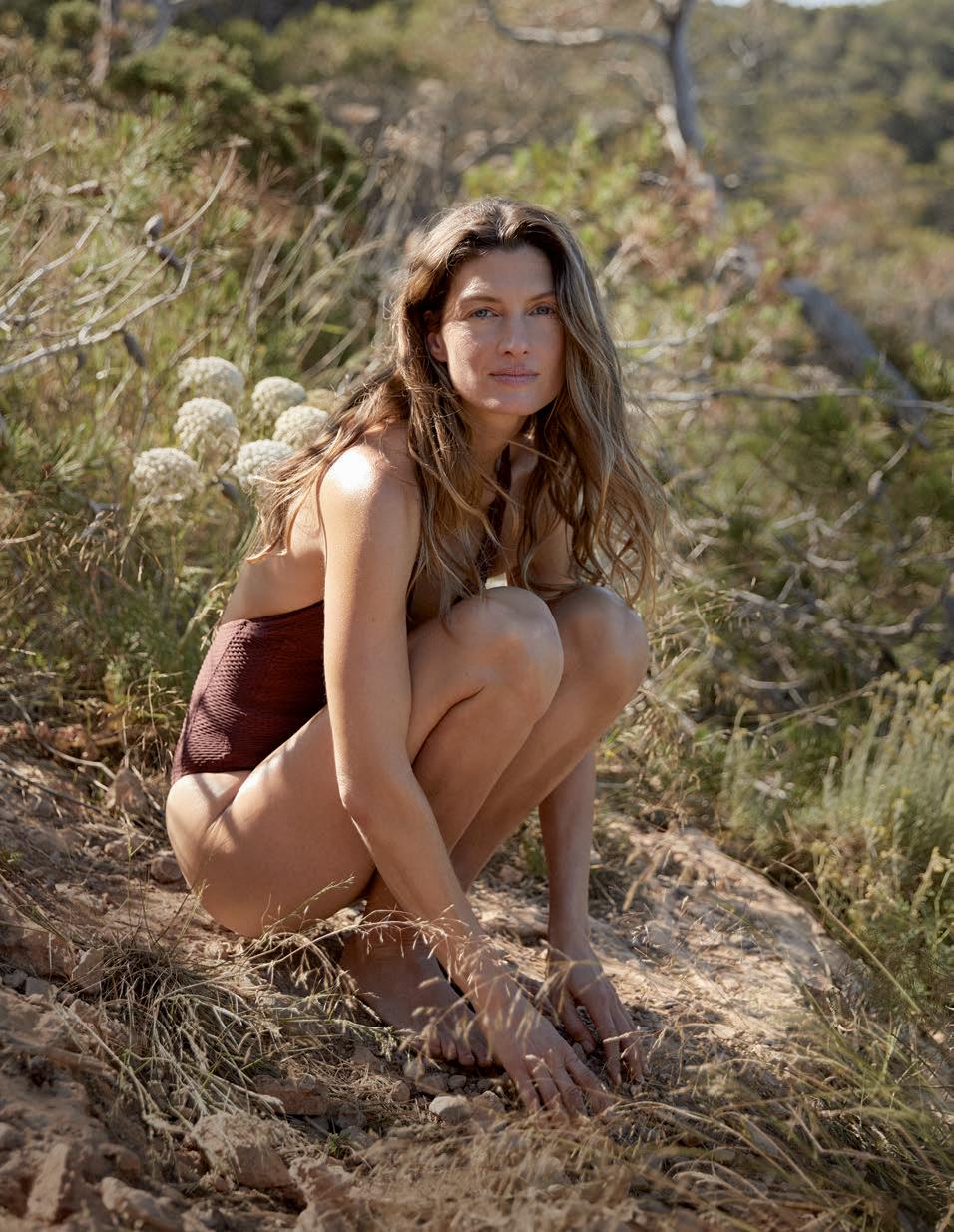
For our water-themed regeneration issue, Sarah Langford looks at the land stewards using our soil to help control and conserve this most precious resource (p70), and Tessa Dunthorne learns lessons from The Hague (p76) Annabel Heseltine takes tea with Satish Kumar, the peace activist who walked 8,000 miles for nuclear disarmament (p64); Luke Abrahams laments the lack of buzz and bite as he does an insect tally (p82); and Tim Ecott nds refuge in the remotest Faroes (p78) Plus, Nicole Smallwood summons Ophelia in her summer fashion cover shoot (p54) JUL AUG 2026
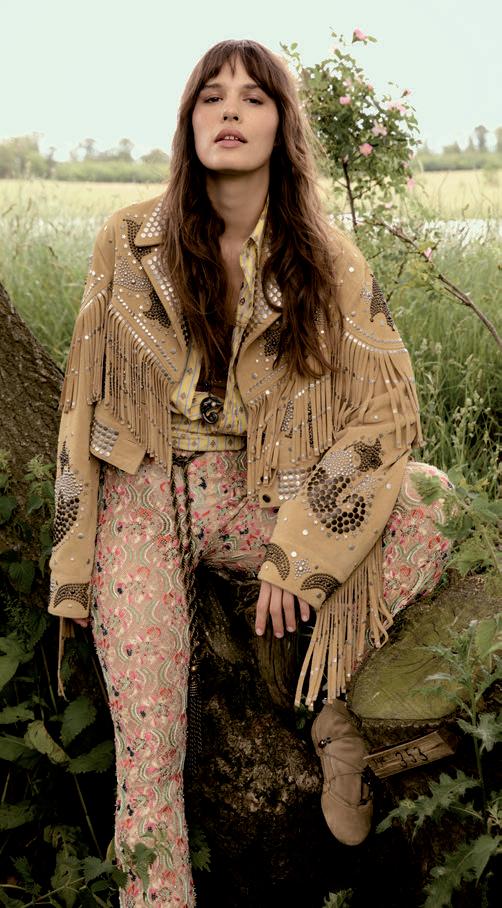
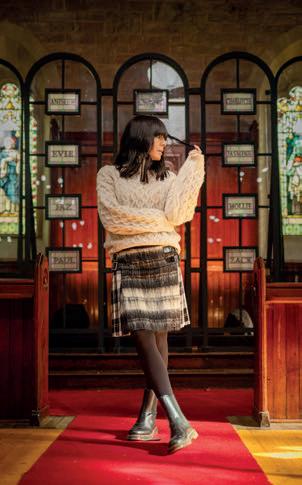
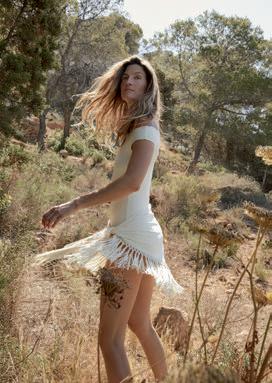
Shirt, jacket, trousers, necklace and belt Etro Boots Isabel Marant
— 87
Beauty & Wellbeing
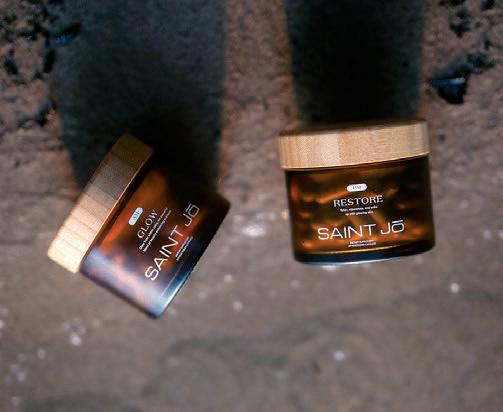
From mainstay makeup that will survive summer sheen (p88) to beating water retention (p92), our experts have just the tonic. Olivia de Courcy shares the supplements worth your money (p96) and the brands seeking standout ingredients from regenerative sources (p97).
— 99
Interiors & Property
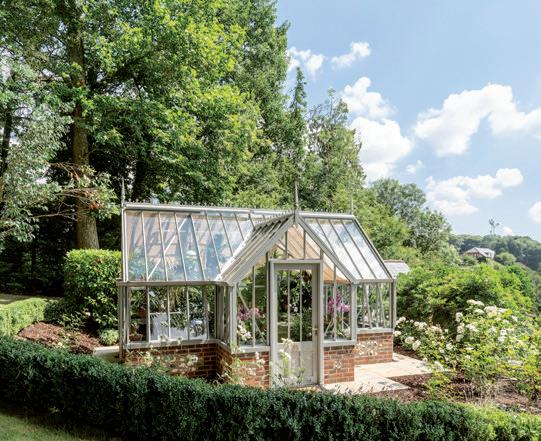
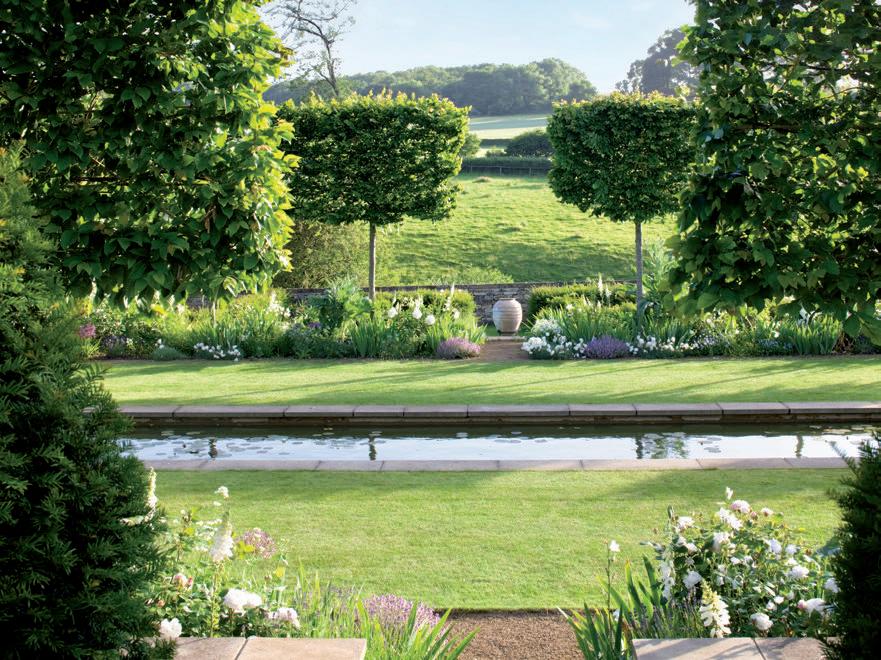
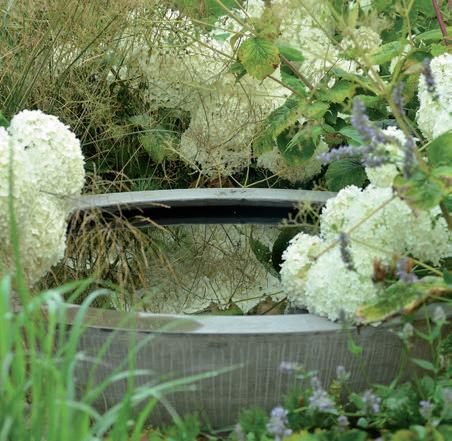
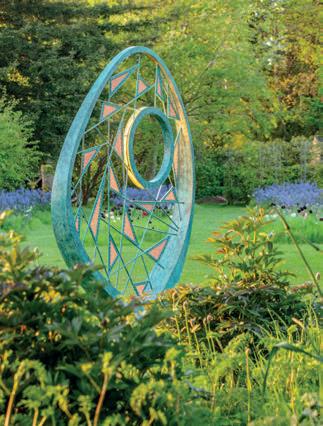
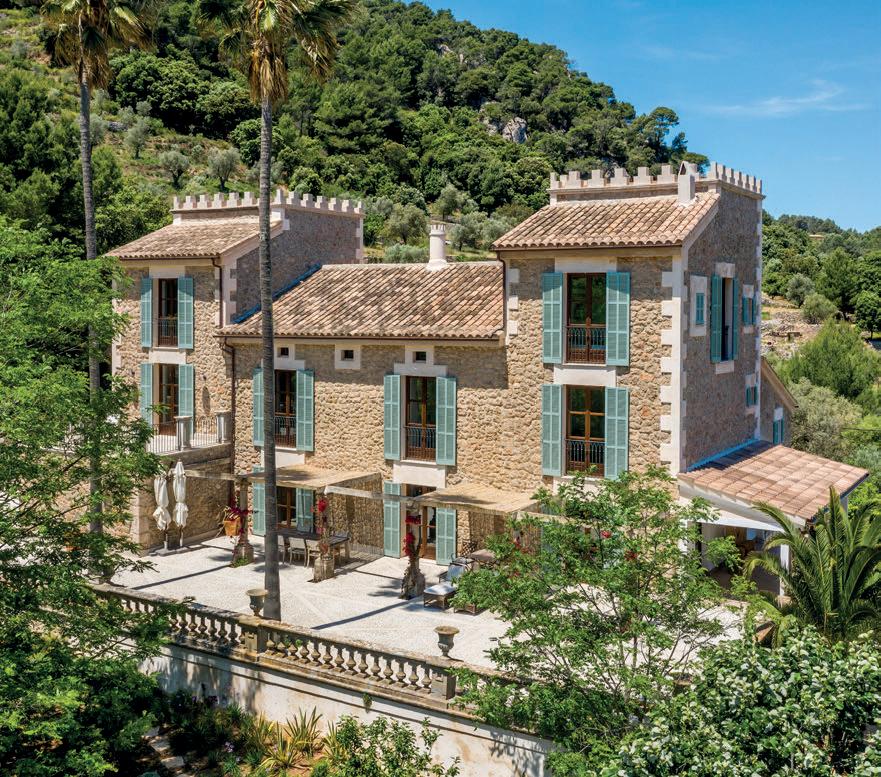
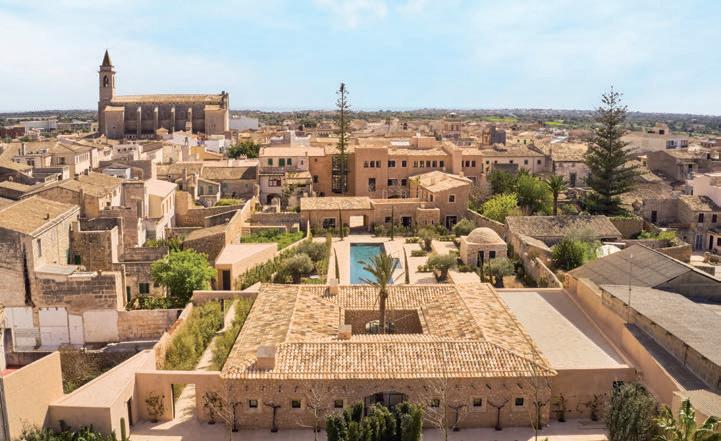
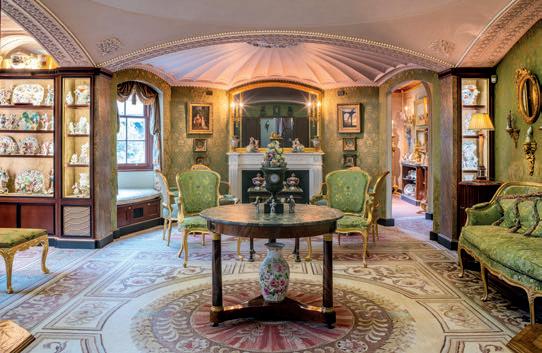
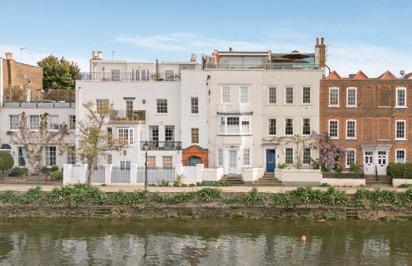
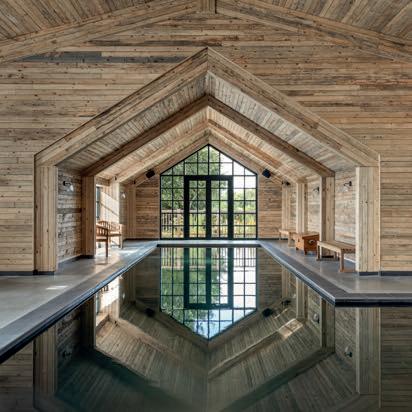
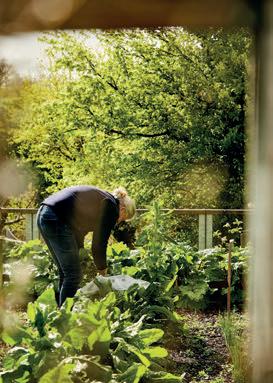
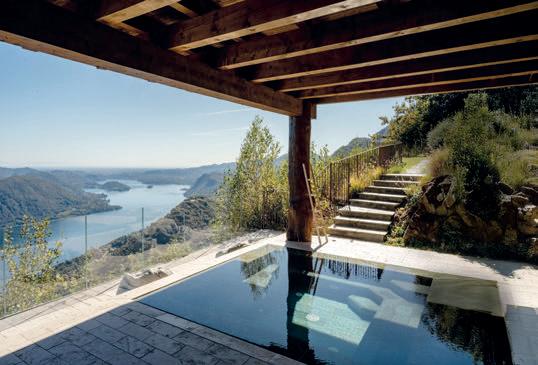
Kendra Wilson pens an ode to water (p102) and Carole Annett steps into the garden (p104), while Anna Tyzack spotlights movers and shakers in the Balearics (p106)
—
113
Elemental Wellbeing Guide
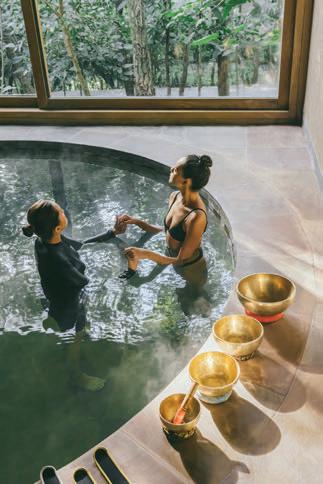
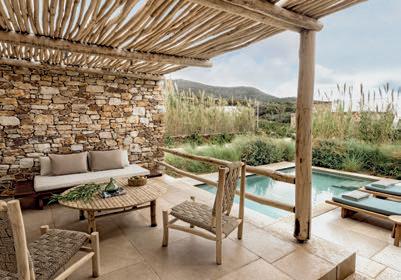
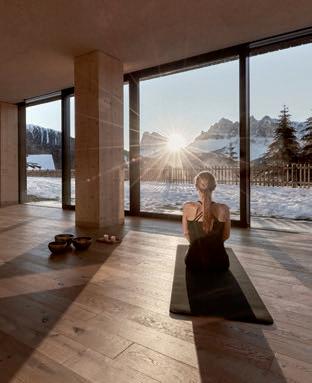
Earth, wind, re and – yes – water: Daisy Finer discovers how to reclaim our wellbeing through nature .
— 131
Travel & Food
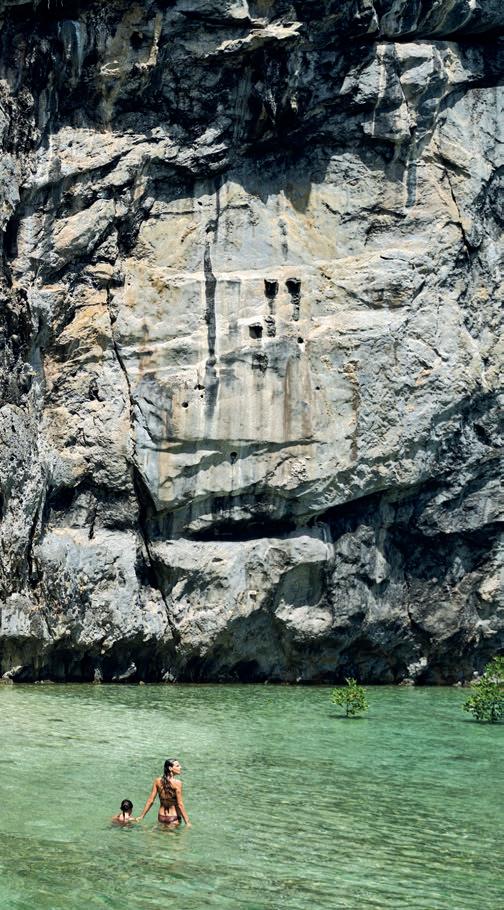
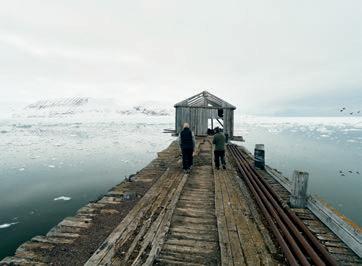
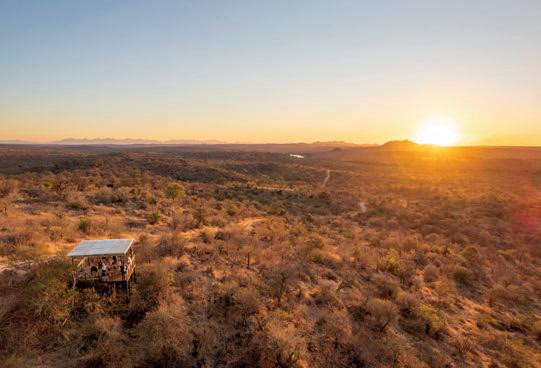
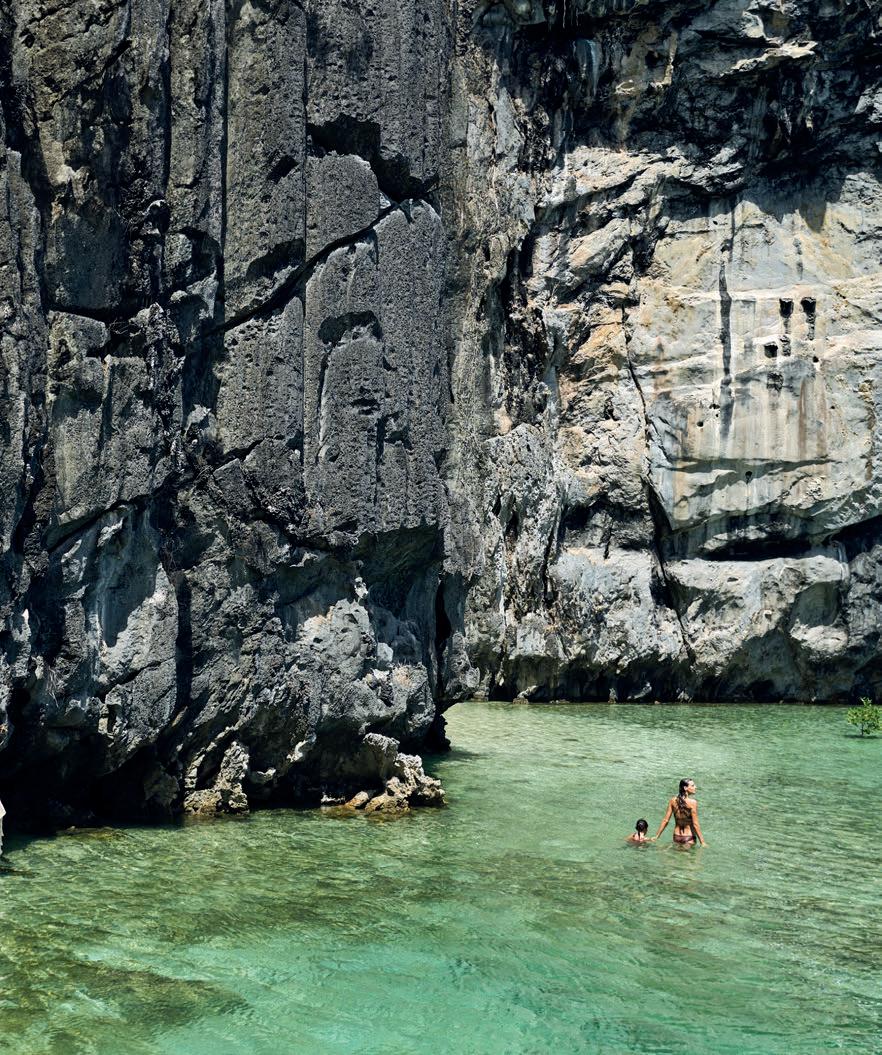
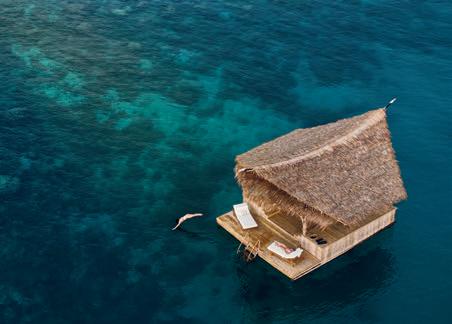
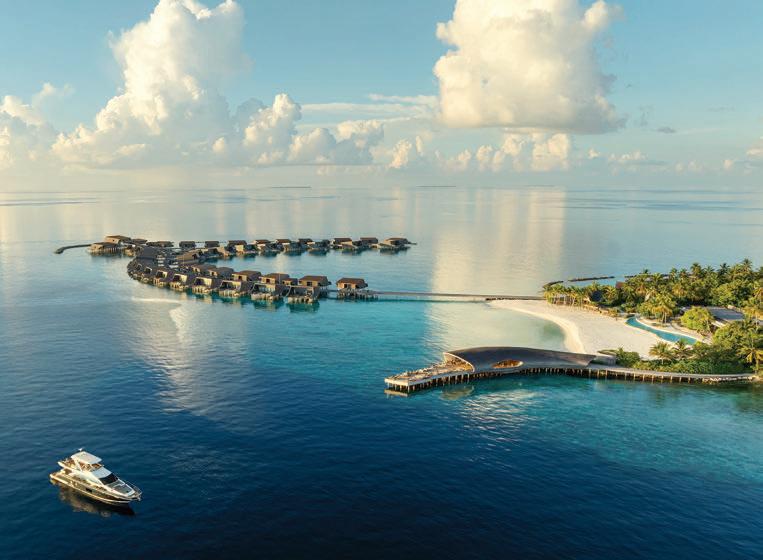
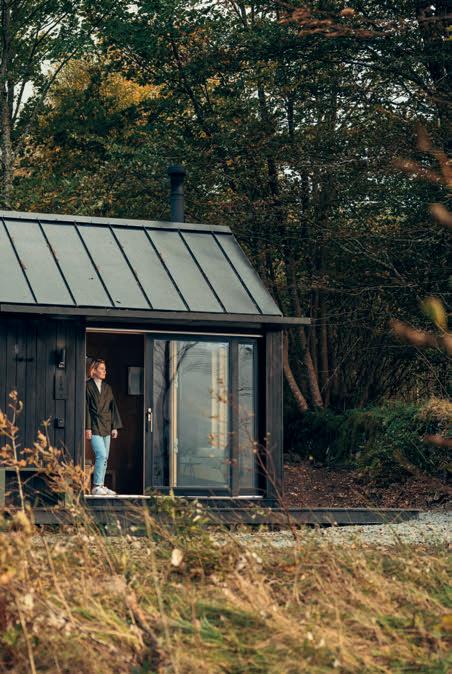
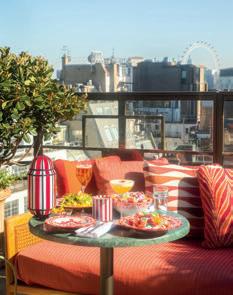
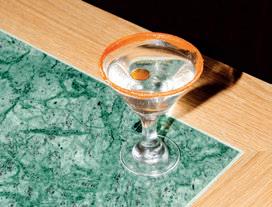
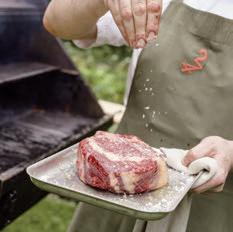
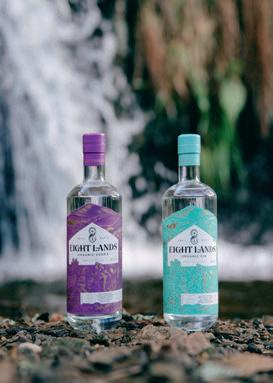
Head to the edge of the world with Harriet Compston (p131), and unpack why more women are travelling solo with Kerry Smith (p136). Plus, Evie Calver on the British spirits prizing their water supply (p150)
— 152
A Life in Balance
Ludovic du Plessis on how he stays grounded (p152).
ON THE COVER Model wears dress by Zimmermann and earrings by Sam Ubhi. Hair and make up by Alexis Day using Half Magic and Oribe. Directed by Nicole Smallwood and photographed by Annie Noble
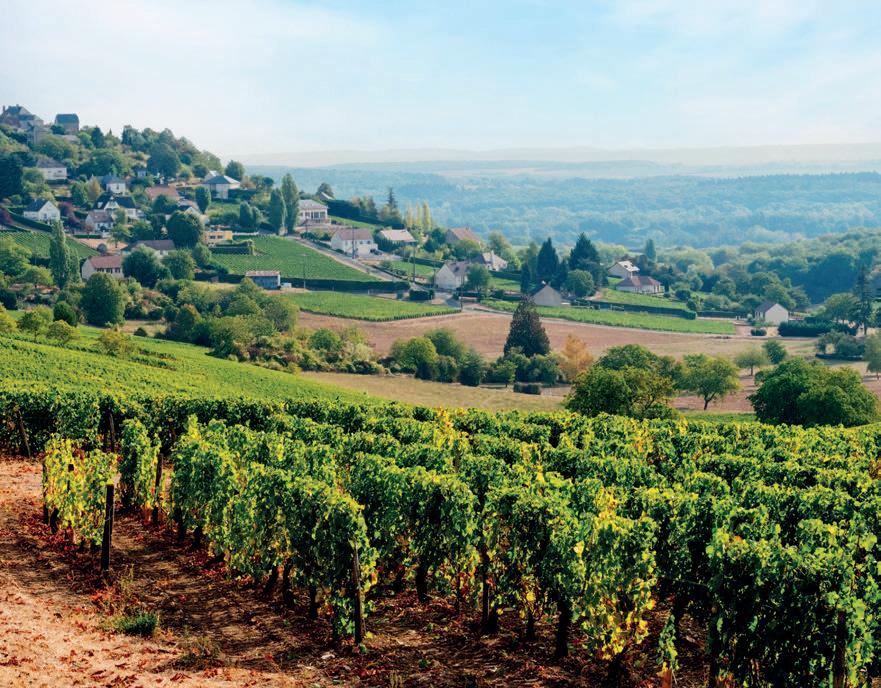
AT THE HEART OF PINOT NOIR
EDITOR’S LETTER
EDITOR’S PICKS
1. No chance of not recognising my suitcase on the carousel. Thank you, Briggs & Riley
2. Couldn’t have put it better myself, Lulu Guinness
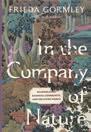
3. Learn what a regenerative business really looks like with the founder of House of Hackney Frieda Gormley’s new book In the Company of Nature
It’s 37°C degrees outside as I write this. I’m dreaming of a walk in a cool damp wood, a dip in a stream, a glass of iced water. Water is pretty much the only thing that can comfort me today. Of course, without it, we’re all cooked. And yet we’ve concreted our urban spaces, lled our ditches, chased o the beaver, and polluted every single waterway in the UK. So this issue is dedicated to our most precious resource.
We get serious (and hopeful) with Sarah Langford’s investigation into how farmers and land stewards are getting radical in the ways in which to hold more water on their land (both for when the droughts come and for ood prevention) on page 70. Tessa Dunthorne o ers a companion piece to Sarah’s a er a trip to The Hague to see how the Netherlands (a third of which lies below sea level) contends with its own water issues –there are lessons for us all and we’d do well to learn them (p76).
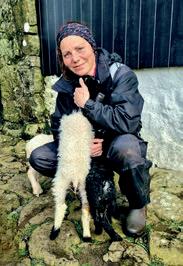
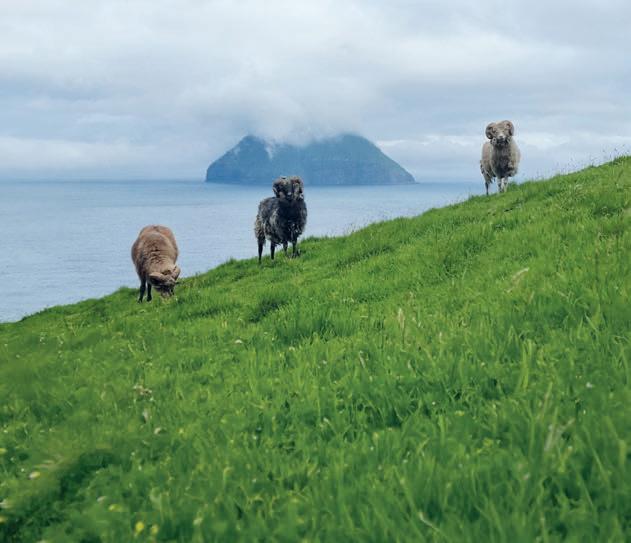
Land management and farmers are also on Minette Batters’ mind, our Scarfes Bar interviewee on page 52, while Tim Ecott pro les life on Stóra Dímun, the smallest inhabited island in The Faroes (p78). Eva and Jógvan Jón live there alone with pretty much no access other than by helicopter – the lowest point on Dímun is 120m above the shore. Unimaginable? For Tim, their friend, it’s the splendid isolation that enchants him; for the couple, it’s their duty, their home and their survival.
Have we reached peak optimisation? Are we sensing a backlash against the relentless tracking, monitoring and biohacking of our minds and bodies, in the relentless pursuit of perfection? Daisy Finer thinks so and brings us our most holistic Wellbeing Guide yet –where wisdom and ancient practice take precedent over electrolytes and Oura rings (p113).
4. Meet Killabrush, the world’s first active antimicrobial hairbrush – it makes your hair pretty swishy, too
The nal word, though, must belong to the peace activist Satish Kumar, our interviewee on page 64, who celebrates his 90th birthday this year. ‘Our bodies are soil transformed,’ he says, ‘so what we do to nature we do to ourselves.’ This seems particularly tting for this issue.
I hope you enjoy it.
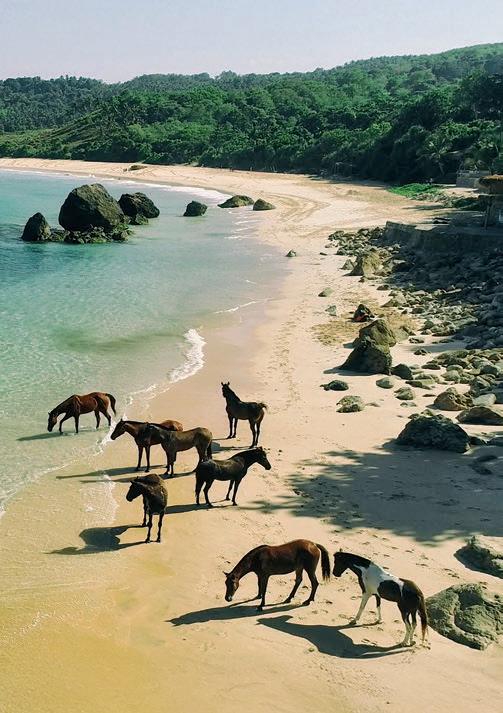
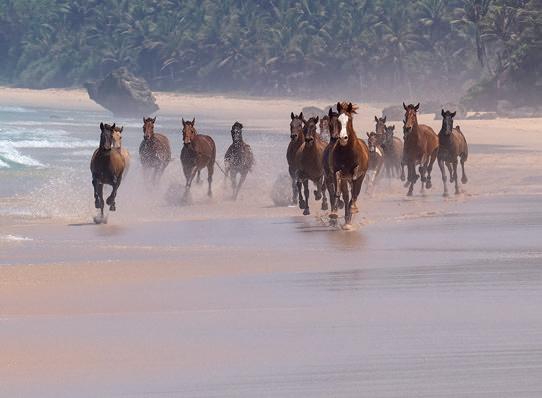
Finding the rhythm of the horse at Nihi Sumba in our Elemental Wellbeing Guide
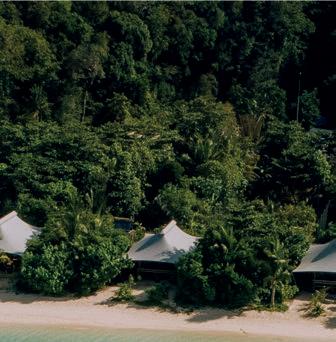
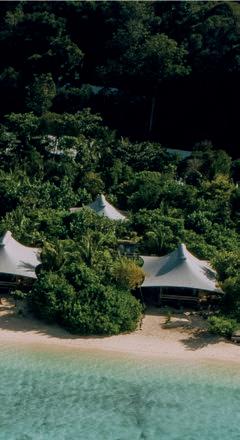
Photo Credit: Bawah Reserve
CONTRIBUTORS
Tim Ecott
The journalist and naturalist is obsessed with the Faroes, the subject of his third book about the islands he visits several times a year.
I’d like to have a summer dalliance with the bird-nesting season on Stóra Dímun. There are no roads on the island and the snipe; the oystercatchers and the storm petrels ll the air, day and night.
To me, regeneration means watching the lambs grazing on new grass a er a long hard winter, and waiting for the pu ns to nally return to their burrows on the cli tops.
Zing Tsjeng
The London-based journalist, former editor-in-chief of Vice UK and broadcaster is also author of Forgotten Women , a retelling of 190 important female gures in history.
I’d like to have a summer dalliance with a Greek island. I’m eyeing up Ana , but I’m open to suggestions for anywhere hot and populated by friendly cats. The body of water I yearn for is the sea around the San Blas Islands between Panama and Colombia. I sailed through them on a converted shing boat as a broke 20-something-year-old. The shallows felt like bathwater.
Rosalyn Wikeley
Specialising in Sicily, skiing and boutique hotels with soul, the travel and style journalist is the author of three guidebooks for Glimpse Guides.
I’d like to have a summer dalliance with time. I want to break with routine and take the children to the beach for an evening supper, wear pyjamas in the garden, and not roll my eyes at the summer holidays but slice them into delicious morsels of time together. The body of water I yearn for is Shell Bay in Studland. I’ve felt that Caribbean-so sand beneath my feet and bath-warm shallow sea around them since I was two.
Kendra Wilson
The garden writer has published two books this year, Britain’s Best Gardens and Gardenista: The Low-Impact Garden , published in New York.
I’d like to have a summer dalliance with the swimming pool at Buscot Manor, ideally in the company of the 2nd Lord Faringdon and friends in the 1930s. This summer I’m going to enjoy the Notswolds. The annual open garden at Nevill Holt is worth marking in the diary.
Daisy Finer
For this year’s Wellbeing Guide, the writer and editor explores the evergrowing wellness arena through nature’s ve elements.
This summer I’m going to be moving house, to the market town of Cirencester in Gloucestershire. I’ve only ever lived in villages.
To me, restoration means laughter. It really is the best medicine. It shakes out stress and lls you with love.
A British summer hotel tour in a Polestar, p141
Elemental wellbeing, p113
Meeting Bernardine Evaristo, p42
An island life like no other on Stóra Dímun, p78
Water in your garden, p102
Lucy Cleland Editorial Director
Deputy Editor Lucinda Baring
Editor-At-Large Alice B-B
Associate Editor Charlotte Metcalf
Junior Sub Editor & Production Assistant Evie Calver
Fashion Director Nicole Smallwood
Beauty Director Nathalie Eleni
Interiors Director Carole Annett
Travel Editor-at-Large Kerry Smith
Culture Editor Ed Vaizey
Wellbeing Editor Camilla Hewitt
Executive Retail Editor Juliet Herd
Men’s Style Editor Shane C. Kurup
Food & Drink Editor / Features Writer Tessa Dunthorne
Sustainability Editor Lisa Grainger
Property Editor Anna Tyzack
Motoring Editor Jeremy Taylor
Digital Director Rebecca Cox
Digital Editor Ellie Smith
Digital Culture Editor Olivia Emily
Digital Style Editor Charlie Colville
Digital Assistant Isabel Dempsey
Social Media Manager Mckenzie Mullany
Creative & Production Director Parm Bhamra
Design & Production Manager Mia Biagioni
The Editor editorial@countryandtownhouse.co.uk Advertising advertising@countryandtownhouse.co.uk
Senior Account Director, Homes & Interiors Olivia McHugh
Account Director Serena Knight
Account Manager Cosima Woodard
Digital Business Development Director Joey Goldsmith
Project Management & Sales Support Executive Charlotte Ryan
Managing Director, C&TH Events Louise Close
Events Director, C&TH Events Josie Williamson
Senior Marketing Executive Katey Ng
Technical Director Mark Pearson
Chief Financial Officer Gareth Morris
Finance Controller Lauren Delgado
Finance Administrators Ria Harrison & Klodi Sade
Human Resources Consultant Zoe Jones
Chief Commercial Officer Tia Graham
Chief Operating Officer James Thrower
Managing Director Jeremy Isaac
Contributing Editors
Belinda Bamber, Hatta Byng, Tiffanie Darke, Simon de Burton, Fiona Duncan, Olivia Falcon, Daisy Finer, Avril Groom, Lauren Ho, Annabel Jones, Dylan Jones, Francisca Kellett, Juliet Kinsman, Emma Love, Mary Lussiana
Accounts accounts@countryandtownhouse.co.uk
Subscriptions subscribe@countryandtownhouse.co.uk
What to do with Country & Town House when you’ve finished reading it
Ideally, we’d love you to pass it on to a friend or a community place which might enjoy it (doctor or dentist surgery, community centre), but you can also rest assured that your issue (including cover) can be disposed of in your paper waste recycling bin.
countryandtownhouse.com
THE GOOD LIFE
If dancing reduces dementia risk, Alice B-B is all in, legwarmers included
EYES CLOSED… and in my head, I’m an extra in the Eric Prydz Call On Me pop video. You know the one. But then I foolishly open my eyes and – oh God –catch a glimpse of myself in the oorto-ceiling mirrors. I’m going le , while all the hot young things are going right. Mortifying. Thankfully, the gorgeous teacher – with her mesmeric out t of hot pants with a thong over the top –hasn’t noticed. This is The Method, the shiny new tness palace that Notting Hill didn’t know it needed, but has embraced like a goddess. In a funny old Flat Iron-type building, which for years was a meeting point for local dri ers and boozehounds, it has had the glossiest glow up and now poses like a perfectly lit Hollywood starlet.
My class was called LSD (that’s lengthen, shape and de ne) and was fun and intense (weights strapped to ankles and so on). I realise that much of my daily movement is linear and my trips to nightclubs infrequent, so to have a chance to dance in a group feels great. Plus – as I discovered while undergoing the ‘Brain Potential Programme’ at Clinique La Prairie in Switzerland –dancing is better than conventional exercise for signi cantly increasing BDNF (Brain Derived Neurotrophic Factor), a protein that can improve memory and reduce dementia risk. So, wins all round. A er class, I cooled my red face (from both exertion and embarrassment) with a smoothie from the Nathalie café – slurped while sitting beneath Tracey Emin and James Turrell light sculptures (this is Notting Hill a er all). Members can get even colder (and
hotter) with the sauna and ice bath in the basement. I’m into it. I may take my Gen X ‘Kids from Fame’ fantasy a step further and buy some legwarmers.
WHAT TO BLOODY WEAR… I have a cupboard full of clothes, but nothing to wear. As a former stylist, I probably should have worked it out by now. But, ouch my ears… the fashion noise is so loud. The drip-feeding ‘newness’ (that word should be banned) while everyone, everywhere shouts ‘buy this, wear that’. Exhausting. I miss the oldschool simplicity: two drops a year and Vogue declaring the rules. My dream is to wake up and nd that stylist Gabriele Hackworthy (@gabrielehackworthy, one of the coolest girls I know) has overnight replaced my hotchpotch of chaotic clothes with a sharp, chic edit of vintage YSL dinner jackets, excellent denim and a slip of lace. I’ll have what she’s having. ■
THIS MONTH I’LL BE...
FINE TUNING my nervous system with Sona, the most advanced vagal nerve trainer (sona.help).
← SPORTING the ultimate chore jacket (niwaki.com).
↓ DREAMING of French island life at new Ile de Bendor (zannierhotels.com)
Channel Fame at LSD classes at new gym palace The Method in Notting Hill
THE RURBANIST
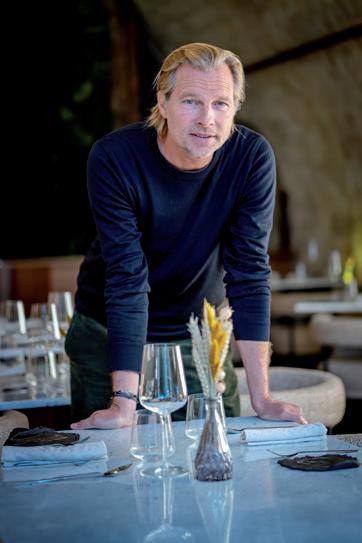
Jack Thorne on capturing collective imagination and making the late Queen laugh
What is your greatest treasure?
My son Elliott and the TV Access Project. They’re my favourite things I’ve ever been part of making.
What’s annoying you most right now? Me. Always me. I’m the most annoying person I know. Also people who know the answers to things. Also not enough people knowing the answer to things.
What keeps you awake at night? The hate I see around me. From all sides.
I was born in the hospital which used to be the exterior for Casualty. I was literally blessed at birth by television
What could you have been arrested for? Being part of a group who shut down a Vodafone store ten or so years back to make a statement about their nonpayment of taxes. There were other groups similarly targeted by an organisation called UK Uncut. I still believe tax avoidance is the forgotten issue in our modern world of outrage.
A conversation that changed everything? One with Shane Meadows, my friend and writing partner, about how to be a dad. I can’t tell you what was said, but I can say it changed how I felt about how to do it.
Best life hack? Sleep is a superpower.
Where do you go to escape? I’m one of those terrible people who like cold water swimming. I know. I hate me too.
What would you like to come back as? A martialis heureka [an ant from the Brazilian Amazon].
What’s the best way to put a smile on your face? A hug from my son.
You wouldn’t know it but… I was born in the hospital which used to be the exterior for Casualty. I was literally blessed at birth by television.
What does sustainability mean to you? An answer to the problem of carbon and carbon capture.
Your greatest triumph? The mad surprise of getting married. It wasn’t something I expected to do. I’m still shocked she likes me.
Your greatest failure? I wasn’t there enough for a friend and he died.
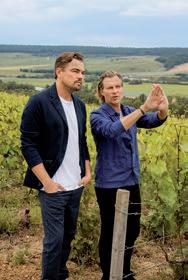
FROM TOP: Jack Thorne is a multi-BAFTA winning British playwright (Harry Potter and the Cursed Child; Stranger Things: The First Shadow) and screenwriter (Adolescence; His Dark Materials); he loves cold water swimming
What’s bringing you joy right now? Watching Indiana Jones with my son.
Advice you’d give to your 15-yearold self? Enjoy your hair. At 15 I have ten years before it leaves me. And maybe calm down a bit.
What should we bring back to Britain? Optimism would be nice.
What book inspires you most? My Brilliant Friend . I think Elena Ferrante captures something about humanity that is both beautiful and profound.
What is your comfort dish? Spaghetti Bolognese.
If you could change one thing? Hair. A new respect for disability. Less hate.
What has been your most embarrassing moment? I bowed too low in front of the late Queen and she laughed. Not really my most embarrassing moment, but the most palatable of an array of embarrassing moments.
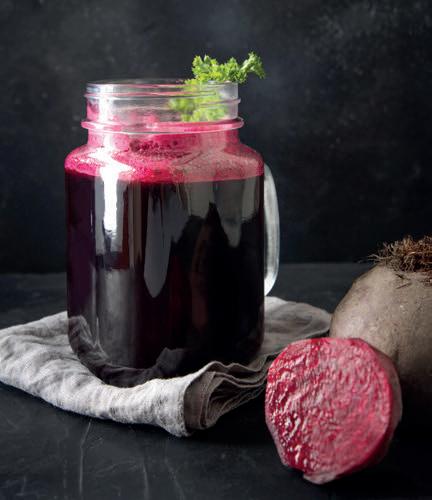
What drink do you order repeatedly? I have a place I get juice where they know what my usual is – they trust me to allow me to order o menu – and it’s spinach, carrot, beetroot and ginger.
What do you love best about Britain? That moment when we all feel like we’re excited about the same thing – be it the Olympics or Celebrity Traitors
What do you keep by your bed? A book and a bag with headphones in it. I’m a terrible sleeper.
We’re in 2050: what does it look like? Baldness has been eradicated, and AI has helped nd an answer to carbon capture. But it’s a strange one.
Your epitaph would read... He tried really hard.
Enola Holmes 3 – written by Thorne and starring Millie Bobby Brown – is released on 1 July
FROM TOP LEFT: Thorne’s regular drink order; an inspirational read; watching Indiana Jones with his young son brings him joy; cultural moments like Celebrity Traitors can bring people together
PHOTOS: ISTOCK
STYLE
THE STYLIST
Brits
are leading the way when it comes to beautifully made bags, says
Tiffanie Darke
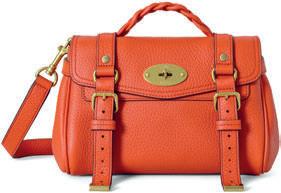
If, like me, you still have your Mulberry Alexa from 2010, you’ll be happy to hear that in September, Scottish fashion darling Christopher Kane will show his rst collection for the brand. Naturally there will be ready-to-wear, but Mulberry will always be about arm candy.
Those heady days of Alexa (she was dating an Arctic Monkey and killing it in NYC) recall a moment when British style was a global asset. Mulberry brought cra – including a generations-old factory in Somerset – and cool in equal measure. The cra remains (see Mulberry’s partnership with regenerative farming champion British Pasture Leather), and while the brand lost its way creatively, Mulberry is back on solid ground.
A slew of other British handbag brands are now also ourishing in the space.
Strathberry you’ll know – another Scottish darling that has everyone from Ellie Bamber to the Princess of Wales hooked. Designed in the brand’s Edinburgh atelier, the bags make use of Spanish leather cra smanship at an extremely attractive price (Bamber and the Princess both love the Multrees chain wallet). ‘We’re proud to shine a light on our country while championing its creativity and skill,’ says founder Leeanne Hundleby. ‘That sense of Scottish warmth helps us connect with customers.’
Ruskin is based in Oxford, and although the leather and cra smanship hails from Italy, it was the Lake District’s hardy
NEW BRIT GIRL BAGS
herdwick sheep that inspired founder Alli Abdelal. While herdwick wool is too tough for knitwear, Abdelal developed a herdwick tweed that is now used across a range of styles, from backpacks to messenger bags (just the right size for a laptop).
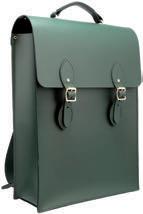
Cambridge Satchel is the runaway UK manufacturing success; its Leicester factory produced 35,000 of the brand’s famous satchels last year. The new Artisan collection revives the classic style in black, oxblood and racing green, using modern machinery alongside original heritage presses, some dating from the late 19th century.
Also manufacturing in England is Tusting, a h-generation family business in Berkshire. The brand recently collaborated with Harrods on a capsule collection, which has already sold out twice. ‘We’re not trying to make massproduced, identical products,’ says director Alistair Tusting. ‘Every bag is unique because every piece of leather is unique, and in its uniqueness it shows beauty.’ Watch out, Alexa: there are some new kids in town. ■
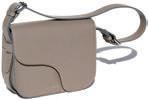
RUSKIN The Camille in mud, £730 STRATHBERRY Multrees chain wallet in vanilla, £295
TUSTING Holly in tan, £490
FROM TOP: Tusting
Mini Holly in cloud, £415; Mulberry Mini Alexa in coral orange, £995; Cambridge Satchel The Artisan backpack in racing green, £325
← ELEVATED JELLIES
The one must-pack item this summer? A pair of jelly ip ops. Comfortable, nostalgic and ridiculously versatile, they take you e ortlessly from beach to bar. Made from recyclable PVC, these come in a range of shades. Jelly ip op, £95. ancient-greek-sandals.com
THE EDIT
Sunshine, surf and summer scents – let the great escape begin, says Juliet Herd
↑ HAZY DAYS
Burberry goes poolside with a range of separates including tops, skirts and shirts cut from cotton voile, and cover-up dresses woven from a tonal Burberry check and deckchair-inspired stripes. Check cotton shorts, £455, Pavilion check sandals, £490, and cropped tropical gabardine Mayfair trench, £1,460. burberry.com
Adriatic Gold eau de parfum, 75ml, $210. ullajohnson.com
CHANEL 1957 extrait de parfum with case, 30ml, £390. chanel.com
FARINA Jasmin Méditerranée extrait de cologne, 100ml, €181.51. farina1709.com
DOLCE & GABBANA Light Blue eau de parfum, 100ml, £135. dolcegabbana.com
ONE STOP HOLIDAY SHOP →
Treasured British swimwear brand Heidi Klein is back in west London with a popup for all your oaty getaway essentials.
‘Notting Hill has this luxury nonchalance, so aligned with our ethos,’ co-founder Penny Klein tells us. Scala coral halterneck dress, £295. heidiklein.com
← BEACH RAYS
Beach necklace with Paraiba tourmaline and diamonds set in 18ct SMO yellow gold, £9,600. boodles.com
↑ FLOAT AWAY
This might just be the blouse of the summer. Cra ed from the so est Oeko-Tex linen, it features a lace-trimmed frill and handembroidered buttons. Matilda ivory blouse, £280. bysoren.com
← POETRY IN MOTION
Cra ed by in-house designers, an admirable 99 percent of Poetry’s summer collection is made from natural fabrics. Edge-to-Edge linen jacket, £169, trousers, £175, and swimsuit, £189. poetryfashion.co.uk
MANOLO BLAHNIK
Hangrillahi navy cotton crystal-embellished espadrilles, £995. manoloblahnik.com
MULBERRY Raffia coral orange and chalk bucket hat, £145. mulberry.com
Luxe plunge longline one piece, £120.
MY STYLE
Jeweller Sophie Lis shares her summer staples
can double up as a wrap a er swimming. And silk slip dresses that can be worn for anything, from beach to black tie.
Favourite accessories? Always jewellery. Every piece you own should tell a story.
Daily uniform? Jeans (Khaite’s Danielle in non-stretch denim), a crisp COS t-shirt and a great tailored jacket, probably Saint Laurent. I throw on a cap for bad hair days and dress up or down.
Style crush? Phoebe Philo forever. Her less is more vibe deeply resonates.
Go-to pieces for summer?
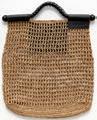
I pack light: Eres swimwear, oversize linen shirts from WNU, cut o vintage Levis, great sandals (The Row), sunglasses (Bottega, Saint Laurent), a few books, Dermalogica SPF and a ra a bag. I love a headscarf for a touch of nostalgic elegance, which
Night out? A great tailored suit gives me con dence, paired with a beautiful lace, sheer or silk top, which is feminine and alluring without revealing anything. Jewellery, a fab pair of heels, a clutch and I’m o
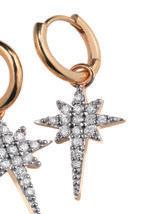
The piece that gives instant wow? Diamond earrings really draw the eye and light up the face. They are anti-aging too as the sparkle illuminates the skin. My all-time favourites are my Fallen Star earrings.
And the one that makes you stand taller? I’m 6 but not afraid of a heel and being the tallest in a room. Aquazzura are my go to (the most comfortable shoes in a variety of heights) and Jimmy Choo’s spin on the classic pump.
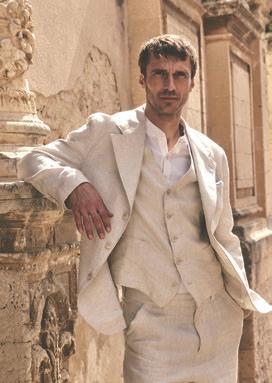
Under-the-radar labels? I love supporting friends’ brands. Everything Alex Eagle does is knockout; Skim Paris for wide leg leather trousers (Bottega vibes); Galvan for a black tie gown or evening coat; Piece of White, another Notting Hill brand, has a to-die-for three-piece linen suit.
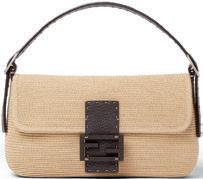
Style hacks? Shop against trends. I set up alerts for pieces I am looking for on resale platforms like Vestiaire Collective and auction sites. I recently got lucky with a little Fendi baguette. I love the excitement of the hunt and satisfaction of a bargain. The aim is to build an archive of classics to pass down to my daughters. ■
1.
2.
3.
4.
5.
6.
7.
Sophie Lis Fallen Star hoop earrings, 22kt gold vermeil with white diamonds, £460. sophielis.com
Jimmy Choo Ixia 80 black leather pumps, £750. jimmychoo.com
Nili Lotan Cami silk-satin gown, £660. net-a-porter.com
Alex Eagle Studio The Kew lace top, $440. alexeagle.com
PHOTOS: KATE MARTIN
The earrings Lis designed for her wedding led to the creation of her eponymous brand beloved by celebrities
HANDLE WITH CARE
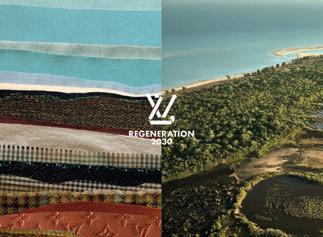
Luxury brands are considering their impact like never before. Felicity Carter welcomes Louis Vuitton’s Regeneration 2030
Founded in 1854 with the creation of a travel trunk – handcra ed and built to cross continents – Louis Vuitton has long been known for pieces designed to last. With its Regeneration 2030 programme, the house applies that same thinking to how materials are sourced and cared for.
‘Today, we rmly believe that experiencing the world’s beauty comes with the responsibility to preserve it. However, with the current pressures of climate change, biodiversity loss and the depletion of natural resources, our longstanding commitment to preservation now demands more,’ says Christelle Capdupuy, the luxury brand’s senior vice president of sustainability.
Regeneration 2030 marks the next phase of Louis Vuitton’s sustainability roadmap within LVMH’s LIFE 360 framework, centred on ‘creative circularity’, Capdupuy explains. ‘While “traditional” sustainability o en focuses on mitigating negative impacts and preserving resources, “regeneration” rede nes our strategy by actively restoring ecosystems. Instead of merely reducing impacts, we are now committed to actively restoring natural cycles and ecosystems adopting a logic of contribution. Across leather, cotton, wool and alcohol, we’re working with suppliers and farmers to implement regenerative agricultural practices that restore biodiversity, capture carbon and create living soils.’ More than 150 farmers across eight countries are already involved as part of a wider goal to help restore one million hectares of biodiversity by 2030.
The house’s repair services span a global network of 400 artisans across 11 repair ateliers in eight countries and over 500 stores. Around 600,000 items are restored annually, and by the end of the decade every product category is expected to o er care, repair or re ll solutions. ‘The ability for a product to be repaired is integrated at the earliest stages of product design. This is exempli ed by evaluating all new bags against an “LV repairability index” to ensure they can be maintained and restored, extending their lifespan and honouring the brand’s heritage of lasting quality.’
Responsibly sourced and certi ed raw materials reached 98 percent in 2025, up from 52 percent ve years earlier. ‘Understanding the journey of every material, from its origin to our ateliers, allows us to verify its authenticity and inherent excellence,’ Capdupuy notes. This traceability is supported by Aura blockchain technology, which already provides digital certi cation for the LV Diamonds collection.
Traditional savoir faire continues through these developments. As Capdupuy adds: ‘For Louis Vuitton, the evolution of luxury production is about honouring our past while innovating for a more sustainable future, ensuring that our exquisite cra smanship continues to set the standard for generations to come.’ ■
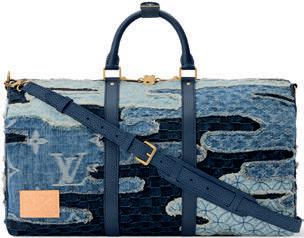
Louis Vuitton Keepall Bandoulière 50 bag in boro denim, £4,100. Part of the brand’s Reuse Initiatives, its denim is sourced from existing stock and handles crafted from 100 percent lower-impact leather sourced
tanneries
PHOTOS: LOUIS VUITTON
A Tradition of Safari since 1812. The Bournbrook Travel Bag Collection draws on our heritage in bespoke sporting arms and safari out tting.
↑ ROMANTIC YEARNING
We’re imagining Margot Robbie as Wuthering Heights’ Cathy in one of these romantic freshwater pearl, diamond and enamel chokers. Fittingly, the Once Upon A Time collection explores themes of love and longing. All in 18k gold. cecejewellery.com
THE MAGPIE
Tap into your emotions with these deeply personal pieces, says Juliet Herd
← CAPTURING JOY
Embracing joy in the moment is the theme of Beirut-born Nada Ghazal’s recent collection. Cra ed in 18k gold and ablaze with precious stones, the pieces transform eeting emotion into lasting form. nadaghazal.com
SEASIDE SPIRIT →
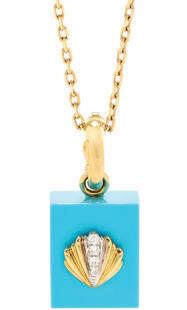
Turquoise Cubo (€870) with detachable Nano shell stud (€500) and 9k yellow gold chain (€950). yvonneleon.com
↑ SUMMER FLING
Marking three decades of Robinson Pelham is the Summer of ’96 collection, invoking the energy of the 90s through bold colour, sculptural gold and signature diamonds. robinsonpelham.com
←
SENSE OF SELF
Family and heritage are at the heart of Boulo’s debut ne jewellery study, Shapeless Family. These amorphousstyle pieces by the Londonbased Turkish brand are hand-cra ed in Istanbul. bouloworld.com
Rings in 14k yellow gold and precious gemstones,
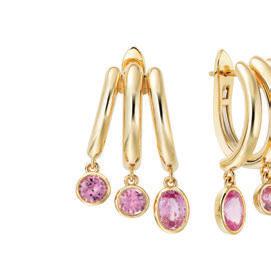
Treble drop pink sapphire earrings, £7,895
LA DOLCE VITA →
Hailing from Umbria, Brunello Cucinelli knows a thing or two about dressing for a sultry summer. Its new high-summer capsule collection, aptly titled ‘Mediterranea’, is a lesson in warm-weather sartorialism with its lightweight linens, negauge polos and smart swimwear. And there’s homeware, too, if you fancy giving your casa an Italianate upgrade. Mediterranea capsule collection, from £230. brunellocucinelli.com
MAKING TRACKS
Mid-summer is all about escapism –so get packing, says Shane C. Kurup
↑ BAGGAGE RECLAIM
In our age of pay-for-everything no-frills airlines, the golden age of aviation might feel like distant memory, but at least you can conjure some of its style as you traverse the terminal with Carl Friedrik’s new handsome suitcase. Made from reinforced anodised aluminium with clever compression pads and straps, this will be the most stylish case to circuit the carousel. Aluminium carry-on case, £645. carlfriedrik.com
BEACH BUM
Drift in style from beach to bar
LOEWE Raffia and calfskin anagram bucket hat, £550. loewe.com
GUN ANA UV body mist SPF50, 150ml, £40. gunanaskincare.com
MANOLO BLAHNIK Nello suede blanket stitch sandals, £815. manoloblahnik.com
TOMBOLO Monkey Business Tencel shirt, $158. tombolocompany.com
FRESCOBOL CARIOCA Trancoso signature bat set, £245. frescobolcarioca.com
VARA OPTICAL Gold Chelsea SW3 sunglasses, £185. varaoptical.com
VILEBREQUIN X 3.PARADIS Dove-embroidered swim shorts, £220. vilebrequin.com
CMMN SWDN Raffia tote bag, £344. cmmn-swdn.com
BEYOND THE SAVANNAH
Expedition clothing created for warmer climes cuts a dash,
says Shane C. Kurup
The intrepid spirit has long informed the practical nature of menswear – the kit designed for expeditions across frozen tundra and covert military operations has heroic, rugged appeal in spades. Just look around at the ubiquitous presence of hiking boots, waxed Barbours and utility shirts on our city’s streets.
The style legacy of warm-weather expedition gear is well illustrated on the silver screen, in seminal icks like Out of Africa , The English Patient and 1987’s White Mischief. ‘These lms bring to life landscapes shaped by heat, dust and distance – and a style of dress de ned by practicality, travel and understated elegance,’ says Stephen Humphries, creative director of Westley Richards, which has been producing considered safari and expedition wear and ri es since 1812. ‘King Solomon’s Mines is particularly interesting, as its lead character, Allan Quatermain, is said to be inspired by F C Selous, one of the great gures of African exploration and conservation – and a notable Westley Richards customer.’
In the 1970s and 80s, powerhouse designers like Yves Saint Laurent and Ralph Lauren popularised the style away from the savannah. Saint Laurent was particularly fond of stepping out in a safari jacket on the streets of the Rive Gauche; it became a signature look. And there’s good reason why these designs translate well from a sun-baked backdrop to city street: airy fabrics, neutral hues and a surplus of pockets. ‘In an urban landscape, you are navigating, carrying things, moving between environments and di erent temperatures, but still need to look considered,’ says Giles Deacon, creative director of Purdey – another stalwart of expedition attire. ‘A well-cut eld shirt in a linen-cotton worn with a ne knit
3.
works as well in Marylebone as in Marrakech. And the palette has that quality of belonging to landscape rather than standing apart from it.’
‘These garments were designed around real use ,’ adds Humphries, ‘and remain just as relevant in the city as they were in the eld.’ Despite the practical and aesthetic merits that come with expedition gear, wearing the pieces outside their original setting requires some ne tuning. Pair them with more contemporary pieces, advises Humphries.
‘A lightweight safari jacket can be worn over a simple shirt, polo or T-shirt in the same way as an overshirt or unstructured blazer.’
British tailoring brands that capture the utilitarian feel but are easier to wear in an everyday context are also a good port of call. Hackett’s new high summer collection with its lightweight linens and earthy palette is a prime example. What intrepid adventures you choose to have in your gear – on savannah, plain or pavement – is up to you. ■
David Gandy fronts Hackett’s ‘The Journey of a Man’ SS26 collection
SUIT & GOWN
Portman Marylebone is your one-stop shopping destination to prepare for the wedding season
As summer arrives, so does the wedding season. This year, why not ditch the digital circus of online shopping and inevitable returns in favour of heading to an in-real-life, one-stop shopping destination? At Portman Marylebone in London, you’ll nd everything you need.
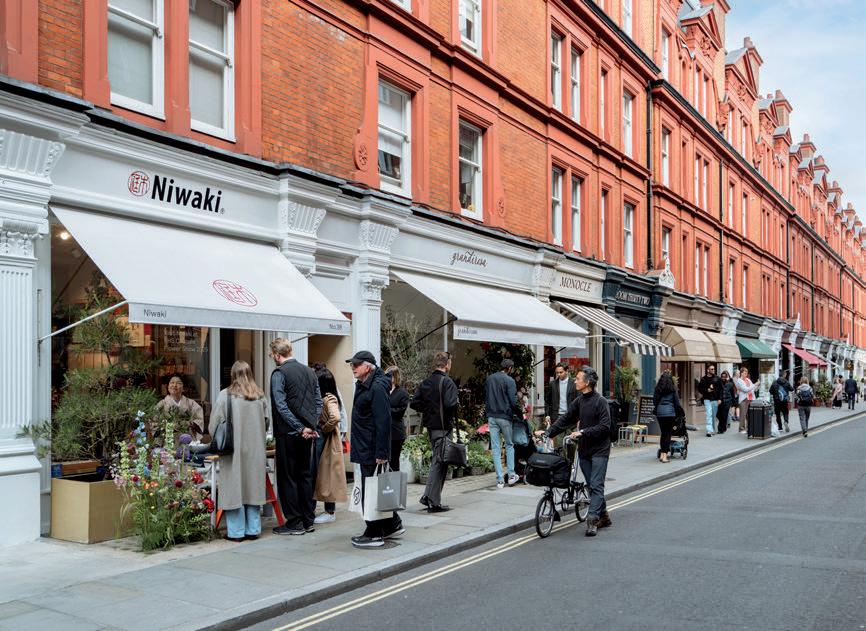
One of London’s most recognisable independent shopping districts, Portman Marylebone is situated between Oxford Street, Edgware Road and Crawford Street. It boasts the iconic redbrick Chiltern Street, New Quebec Street with its premium specialist shops, and Seymour Place’s parade of accoladed restaurants. It is a neighbourhood brimming with independent makers, artisans and brands, many of whom are led by designers and cra speople whose names sit above each door. With generational expertise, sharp cra s and strikingly individual shops to pick from, Portman Marylebone is the ultimate destination for anyone seeking wedding clothing, styling and accessories.
Portman Marylebone is a charming neighbourhood for all your shopping needs
WOMENSWEAR
Be you guest or bride, Portman Marylebone can dress you stylishly from head to toe – literally. Start at Suzannah London (10 New Quebec Street) to nd a couture-inspired gown for the event that has on numerous occasions been given royal approval. From here, meander moments down the road for your accessories: Emmy London (3 New Quebec Street) has pairs upon pairs of elegant yet comfy heels, each handmade in Portugal, while John Boyd Hats (16A New Quebec Street) is a historic millinery house that designs the nest made-to-measure fascinators and hats. Meanwhile, Crispins Shoes (28-30 Chiltern Street) specialises in beautiful footwear in larger sizes, cra ed in partnership with expert makers in Europe and the US. Mother of the bride or groom? Nigel Rayment Boutique (13 New Quebec Street) stocks beautifully coordinated out ts and hats for this very special occasion.
MENSWEAR
The men of the wedding party have their pick of exceptional tailoring houses, whether ready-to-wear, made-to-measure or bespoke, with pieces they will be able to wear again and again beyond the big event. Grooms will want to book a one-hour appointment at the Casely-Hayford agship store (3 Chiltern Street) and browse its 3,000 fabrics from all around the world, resulting in a fabulously constructed two or three-piece suit. William Crabtree & Sons (15 New Quebec Street) has guests catered for with seasonal, relaxed tailoring, including e ortlessly cool linen jackets, which will withstand an outdoor reception.
ACCESSORIES
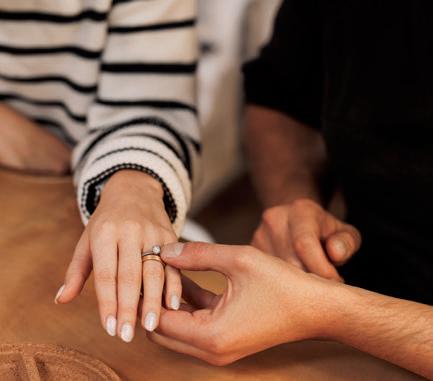
Portman Marylebone is also a destination for couples seeking extra special rings. Cox & Power (10-12 Chiltern Street) has a workshop and boutique allowing unique commissions using Fairtrade metals and colourful gemstones, which can then be made on site. For the conscious couple, Kimaï (24 Chiltern Street) creates fully traceable engagement and wedding bands using recycled 18 karat gold and lab-grown diamonds that are indistinguishable (at a chemical level) from mined stones. Your nal touches – from the perfect accompanying bouquet to a scent to de ne the day – can be found at Grandirosa (36 Chiltern Street), for artistic, seasonal owers that deliver locally in London, and Perfumer H (19 Chiltern Street), which stocks fragrances made from natural materials.
Discover Portman Marylebone and its wedding season potential, portmanmarylebone.com
FROM ABOVE: Suzannah London, Casely-Hayford and Cox & Power
CULTURE
INTO THE BLUE
Forty pictures taken by British portrait and music photographer Andy Earl are on display at London’s Bankside Yards on the River Thames. This image of Sir David Attenborough sits alongside portraits of King Charles and many international musicians such as Prince, Pink Floyd and Madonna, part of a portfolio that also includes 120 album covers. Until 8 August (banksideyards.com)
GIRL, WOMAN, PIONEER
Bernardine Evaristo talks to Zing Tsjeng about chasing creativity, balancing optimism and complacency and why she’s giving away her latest prize money to writers over 60
An Evening with Bernardine Evaristo and Friends, including Gugu Mbatha-Raw, presented by the Women’s Prize, is at Chelsea Arts Festival on 17 September (chelseaarts festival.com)
Conventional wisdom holds that the closer you are to the stage at an awards ceremony, the more likely you are to win. At least, that was Bernardine Evaristo’s experience. When the Girl, Woman, Other author was seated one table over from Margaret Atwood at the Booker Prize ceremony, she thought, ‘I have a good feeling about this’. Both women ended up sharing the prestigious ction award, with Evaristo becoming the rst black British winner in its decades-long history.
Today, Evaristo greets me at the door of her home on the hottest day of the year yet, ushering me into a spacious, open-plan house. ‘It was a career-de ning, career-changing moment,’ she says of her Booker win. Sales rocketed from a few thousand to 1.5m copies; her older work was republished and her 2013 novel Mr Loverman , following the lives of a closeted Antiguan man and his wife, has been turned into a BBC television adaptation. She rearranges herself in an armchair, reupholstered in African wax-print fabric in a nod to her Nigerian roots, and smiles: ‘I mean, I did Desert Island Discs!’
The RSL Pioneer Prize will redistribute Evaristo’s prize money to ten living writers. ‘It felt right to share it. Not because I’m some kind of sanctimonious prick, but just because that’s what I believe’
Winning catapulted the wryly charismatic writer into the heart of the literary establishment. Seven years on, she has served as the second ever female president of the Royal Society of Literature and is the creator of several schemes to diversify publishing, one of which includes personally loaning out her seaside cottage for a writing residency. ‘As somebody who’s been an activist pretty much all my professional life,’ she tells me, ‘I am always looking at producing projects that ll in a gap or meet a need.’
Thinking of others clearly comes naturally to the Londoner, whose rst instinct is to ll a jug with ice-cold water and turn on a fan for her guest. Evaristo was 60 when she won the Booker. It’s clear that age is on her mind. She recently diverted her winnings from the Women’s Prize Outstanding Contribution Award – given last year in recognition of her books and her tireless support of underrepresented writers – to set up a prize for writers over the age of 60. Over the next decade, the RSL Pioneer Prize will redistribute her prize money to ten living writers – all £100,000 of it. ‘It felt right to share it,’ she says, adding with a ash of dry wit, ‘not because I’m some kind of sanctimonious prick, but just because that’s what I believe.’
Born in southeast London to an English schoolteacher and a Nigerian factory worker,
Evaristo is one of eight children. ‘I grew up in a household where community was considered very important,’ she tells me. Her parents subscribed to the Socialist Worker newspaper and took her on anti-fascist marches; her father later became the rst black councillor in the Borough of Greenwich. Evaristo would walk to the school with a nose buried rmly in a library book: ‘From the age of ve or so, reading was what I did all the time.’
Joining her local youth theatre group proved the making of her: ‘It was my introduction to the creative world.’ It inspired her to sew her own clothes, including a Technicolour Dreamcoatstyle knitted coat, scandalising her suburban grammar school classmates. Her out t today – navy dungarees, a colourful headscarf and bright yellow Birkenstocks – is only a little more low-key by comparison. ‘Theatre gave me a sense of being proud to be who you are,’ she re ects. ‘I was never going to belong because I was a black girl. So why didn’t I make a virtue of my di erence?’
At drama school, she wrote one-woman plays and went on to found the pioneering Theatre of Black Women with friends from college. When the group closed down in 1988, she had an epiphany: she wanted to spend her life writing. ‘It felt like an impossible kind of career choice. How do you make a career as a writer?’ Over the intervening decades, she took on part-time work in the arts while poring over her manuscripts at night. O en described as her breakout novel, Girl, Woman, Other is actually her eighth work of ction – an expertly observed, polyphonic novel featuring 12 voices, mostly belonging to black British women living in the UK, spanning wildly di erent classes, occupations and ages.
‘Older women don’t appear very o en in ction,’ Evaristo notes. The same thing applies, she adds, to authors themselves. ‘The whole point of the Pioneer Prize is that writers –women writers in particular – disappear as they get older. I would have disappeared,’ she adds. Does she honestly think that? ‘For sure,’ she says equably. In Manifesto, her memoir slash call to creative arms, she describes winning the Booker at 60 as the ‘perfect age’ for it to happen. ‘Early success can be very damaging,’ she explains. ‘Later success is just so appreciated.’
With a string of accomplishments to her name, Evaristo is clearly one of life’s great doers. Even the darkening political climate isn’t cause for despair. ‘You can’t a ord to be pessimistic – that’s not my default,’ she says. ‘[But] liberal people are too complacent, and that will be our downfall.’ Reform pushed two lea ets through her door ahead of the local elections: ‘Labour sent none. That’s complacency.’
If optimism is one lesson to draw from Evaristo’s example, the other is that it is never too late to chase a dream: ‘If somebody has a creative urge, they should pursue it… otherwise you will live to regret it.’ She remains gleefully schtum on the question of her next book: ‘Nothing to say! I keep [things] very close to my chest.’ If her past achievements are anything to go by, I don’t doubt she’s cooking up multiple projects in the background. ■
BIBLIOFILE
Donal Ryan talks to Belinda Bamber about beauty, grief and the deep-rooted grit of the Irish
What’s the story of Where are the Kings? It’s about two years in the life of a boy, Jack, who has lost his whole world.
Do you relate to Jack’s adolescent awkwardness? I used to hide under the kitchen table at home in Tipperary when my mum’s friends called around. Some days it seemed like every woman in the village was in our kitchen. I loved the smell of fags, perfume, and baking bread; their mad hilarity, their profanity and wicked turns of phrase. The dads and uncles were a howl as well. I was learning to be a writer by watching and listening to this mysterious grown-up world.
Why is grief such a deep vein in your writing? Because it’s a major theme in life. I was always braced for grief, even during my happy childhood.
Where do you nd joy when loss feels overwhelming? Everywhere. In his uncles’ car workshop, Jack comes to love the sound of engines and the way oil smells, but he feels undeserving of those simple pleasures because of what’s happened to his family. It’s natural to feel guilty about pleasure when there’s so much
su ering in the world, but beauty reminds us of the wonder of it all.
Why is time such a strong theme? In my early teens I was obsessed with Shakespeare’s Sonnet 60 about the inexorability of time. ‘Like as the waves make towards the pebbled shore.’ I use it as a pace-setter when I run, a syllable per step; one recitation is a tenth of a mile at a nine-minute pace.
What makes you angry? Self-importance pisses me o . People convinced of their rectitude worry me: absolutists and ideologues have caused terrible problems for the world.
You’ve created a community of characters who reappear in di erent novels. Why is Jim Gildea in this one? I love Jim Gildea. He’s an old-fashioned, sensible, kind cop, with vast stores of emotional intelligence and empathy. I wish I was more like him.
Why do many of your characters struggle with the impulse to end it all? It’s a more common impulse than we admit to ourselves. The end of all possibility of pain; the relief of extinction.
Why is Jack’s multi-generational family so important? The idea of the wise and benevolent grandparent is vanishing. Mine were beautiful, hardworking, faithful, loyal, loving country people and they still in uence me. My paternal grandmother was a caretaker farmer who ran an underground railroad in censored books by Edna O’Brien, JP Donleavy, Kate O’Brien – all secreted behind a couch.
How do you capture the lilt of Irish vernacular so beautifully? I love, and am deeply indebted to, the slang and grit of my own people.
What’s the most de ning aspect of your Irish roots? Our ancestors struggled for the bones of a thousand years to live free, and we are de ned by the sacri ces they made for us. ■
Read the full interview at countryandtownhouse.com/ culture/cth-book-club
ALSO ON THE READING LIST...
Frazer and Caitlin are childhood sweethearts, devoted to their autistic son Jamie but stressed by nancial worries and the toxic mould in their Glasgow at. A new council house seems to Caitlin like the solution to all their problems, but Frazer drags his feet, unwilling to leave the place where he grew up, in which every mouldy corner contains precious memories of his parents. Can they survive this crisis, especially when new love interests start to threaten any hope of reconciliation? Insightful, raw and funny, this engaging relationship story has profound symbolic resonance, and neurodivergent writer Newlands retains the distinctive voice that won him devoted readers with his award-winning debut, Only Here, Only Now BB
Published on 13 August (Phoenix, £20)
Where Are the Kings by Donal Ryan is published on 13 August (Doubleday, £16.99)
ARTIST’S STUDIO
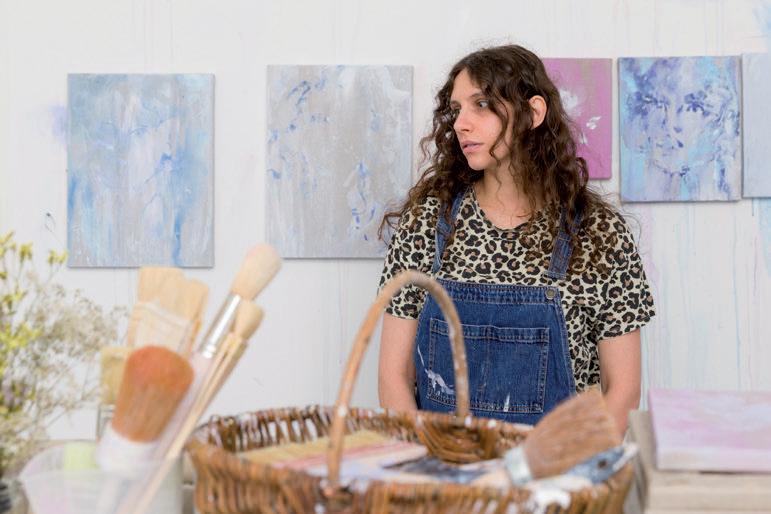
Tracey Emin protégée Bianca Raffaella tells Olivia Cole how she uses sensory cues to inform her textural painting
Everything changed for partially sighted painter Bianca Ra aella when she was the inaugural choice for Dame Tracey Emin’s Margate artist in residency programme (known as TEAR) in 2023/2024. Here, in Margate’s TKE Studios, she was given the freedom of painting in a purposebuilt studio for 18 months, ‘being allowed to nd myself as an artist,’ she says. ‘It was a life-changing experience. I went from being unemployed – having been dismissed as a domiciliary care worker for not being able to navigate to di erent houses – to supporting my family through my art. I feel eternally grateful.’
Of Emin’s rolling residencies, created to support artists and boost her deprived hometown (a rich source of inspiration for artists from JMW Turner to John Keats), Ra aella remains one of her most exciting discoveries. Now rmly on the map and represented by Flowers Gallery, she last year held a memorable show of her sensual atmospheric paintings. Faced with the visceral detail of the way she uses paint, it can seem hard to fathom how severely the artist’s sight is impaired (a result of congenital toxoplasmosis). She uses all of her other senses to experience what’s around her and to translate it onto the canvas. Her base is now the Isle of Wight, where she’s taking care of her newborn son and nalising plans for her studio at the bottom of the garden, tucked under overgrown honeysuckle and
surrounded by lilacs and weeping birch. Inside, one half is for stretching and priming linen, the other for painting canvases directly on the wall with ample natural light. ‘Knowing the space intimately is the only way I can work.’
It’s a new landscape, as an artist and new mum, but also a familiar one. As a child, Ra aella spent many holidays in a small family cottage here. ‘My parents knew it was a safe place where I could learn the surroundings. My rst independent journey was a memorised walk to the post box at the end of the road, while my mother watched from the gate. I have a deep a nity with the wild coastline of the “back of the Wight”. It feels like home.’
In the studio, she o en has real cut owers to hand. ‘I nd them grounding,’ she says. ‘Holding them helps me access the subject, and their scents are reassuring.’ But she dislikes being labelled a ‘ ower painter’. ‘My work re ects the harsh realities of sight loss: the haze of white glare, fragmentation, and missed forms.’ It is no surprise she has inspired many fans, keen to savour what she does next. For now, that is ‘making the most of the space I have as a severely sight-impaired new mum: a compact, well-known studio in a beautiful location’. ■
Handpicked: Painting Flowers from 1900 to Today is at Kettle’s Yard until 6 September (kettlesyard.cam.ac.uk)
Partially sighted painter Bianca Raffaella says the Tracey Emin Artist Residency was life-changing
Bernardine Evaristo
Women’s Prize
Elizabeth McGovern
Rambert
Joelle Taylor
Susie Cave
John Pawson CBE
Tamsin Greig
Mishal Husain
Sir Derek Jacobi
Bella Freud
Katherine Rundell
Gugu Mbatha-Raw
Diaries of Note
Nish Kumar
Jacqueline Crooks
Lucas Jones
50 Years of Punk
A Poem for Every Night of the Year
THE EXHIBITIONIST
Our cultural national institutions are integral to Britain’s soft power. And yes, they need more money – but the picture is much more nuanced than one of inevitable decline, argues Ed Vaizey
The recent news that the National Gallery has an £8m de cit and is set to cut a huge number of jobs has added to the gloom that surrounds the future of our great national institutions.
Let me declare an interest from the outset. I sit on the board of Tate, so I have a ringside seat on the travails surrounding this sector. It is true that at Tate, we lead a hand-to-mouth existence, with constant meetings about how to balance our budget. We have been through at least two series of redundancies.
A lot of the problems facing museums stem from Covid. While the government of the day stepped in to o er nancial support, visitor numbers have been slow to recover, and for many remain below pre-pandemic levels. Our national museums are also a ected by the drop in overseas visitors.
But the picture is much more nuanced than one of inevitable decline. As arts minister, I was always struck by the di erence between inputs and outputs (an inelegant phrase, I grant you). I was judged always on how much money the government was spending (the input), not on the actual health of the arts sector (the output). A small library closing in Brent was deemed a national disaster. A new central library opening in Birmingham, costing hundreds of millions, did not make the front page.
So consider the picture for our national museums today. The National Gallery has just revamped the Sainsbury wing to coincide with its 200th anniversary. It has just received two huge donations, amounting to more than £300m, to open a new wing to showcase 20th-century art. Tate is currently refurbishing Tate Liverpool a er 40 years, putting a new garden in front of Tate Britain, and has plans to expand Tate St Ives. The V&A has opened V&A Storehouse, the most exciting museum in a generation; completely rebuilt its museum of childhood; and opened V&A East. The Science Museum has a new state of the art storage system in Wiltshire. The British Museum is hosting the Bayeux Tapestry and has ambitious plans for a £1bn reimagining of its building. The Natural History Museum is receiving more visitors than ever before and tops the league table.
our so power, and among the best in the world. But all is far from lost.
There is now an interesting debate about how to fund the arts. Two cities – Manchester and Edinburgh – are introducing tourist taxes. In theory, the sums raised would be ring-fenced for the arts, though given the behaviour of politicians, it’s anybody’s guess how long that self-denying ordinance would last.
Astonishingly, the Labour government is also toying with introducing charges for our national museums. For Labour, this is literally blasphemous. When I was arts minister in David Cameron’s government, I would not touch this issue with a barge pole, although privately I was agnostic. I knew that if a Tory government even hinted that charging was being considered, the arts would turn their backs on us. But a recent review by Labour grandee Margaret Hodge has suggested that international visitors could be charged. This would depend on a workable ID scheme, so it will never happen, but it is astonishing that Labour is allowing the debate to begin, and how the art world’s reaction has been so sotto voce. Maybe they have become more realistic, or simply despairing that any government would fund them properly.
Manchester and Edinburgh are introducing tourist taxes. In theory, the sums raised would be ring-fenced for the arts, though given the behaviour of politicians, it’s anybody’s guess how long that selfdenying ordinance would last
From my perspective at Tate, I am against charging. Tate competes in the contemporary art world – which is awash with cash – and big institutions like MoMA. But there is no doubt that the fact that we are free marks us out as unique. We depend on our relationships with artists, and they regard it as important that we remain clearly a public institution, open as far as we can be to all (we charge, of course, for major exhibitions). But what is right for us is not necessarily right for others. The Natural History Museum has continued to issue free tickets long a er Covid, as the data it collects is so valuable, and this has helped it increase its visitors through better marketing. It will not be the end of the world if some museums decide to charge – but charging should not be an excuse for Government to scale down its nancial support, much as The Treasury might yearn to.
There is no doubt that our national museums, and the arts in general, could do with more money. It is absurd that the very small sums required are not made available, for what are major tourist draws and institutions central to
Absent from all of this debate is a discussion about what a museum is for in the 21st century. Tate has the largest membership of any museum, and is a global brand. There is no need for us to be con ned to our four walls. The next stage for all our museums is to build a global digital audience, willing to pay for content and engagement, to make them truly open to all. ■
PADDLE POWER
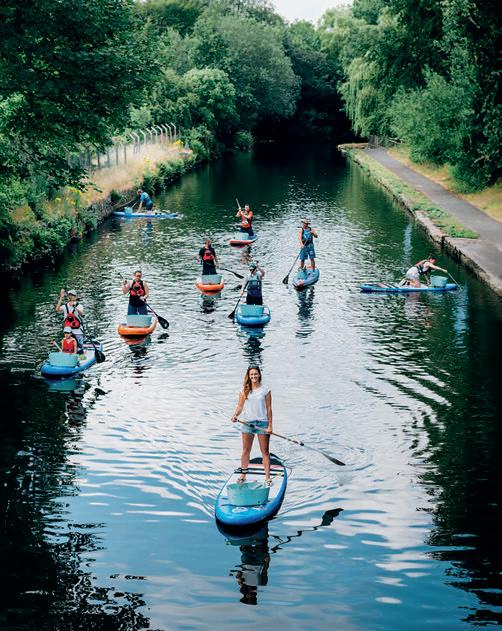
Lizzie Carr went from fighting for her life to tackling global pollution – one waterway at a time, finds Lisa Grainger
Survivors of cancer o en say their experiences were life-changing. Lizzie Carr MBE is one of them. ‘My diagnosis [in 2012] was my worst nightmare and also my greatest blessing,’ the 40-year-old tells me from her home outside Nottingham.
An unexpected one, it turns out, was paddleboarding. Staying with her dad on the Isles of Scilly to regain her strength, Carr saw someone paddleboarding out at sea. ‘It looked so peaceful,’ she says. ‘I went to the sailing club and that was that: I fell in love with it. It gave me space to think – or not to think.’
It also gave the former marketing specialist a new life focus: the terrible pollution of our waterways. Out on her board, Carr was distressed to see how much litter was in the water, with bird nests even woven from bits of plastic. ‘It was heartbreaking. I was using the water as a place to help me recover and heal; I developed this protectiveness.’
Most people might have done a litter pick or donated to the RSPB. Carr resigned from her job, le London and devoted herself to raising awareness of our global water pollution crisis by completing three world- rsts on a paddleboard. She traversed the length of England’s connected waterways (400 miles over 22 days), carrying her tent, mini stove and clothes on her board. Then she crossed the English Channel. And nally, she paddled all 170 miles of New York’s Hudson River in eight days.
On each trip, she mapped the pollution she saw – and launched an app, Planet Patrol, on which anyone can pinpoint litter across the world. So far, it has gathered 670,000 reports from 97 countries, which can be used for scienti c papers and, ultimately, to hold manufacturers, dumpers, farmers, mines and water companies to account. Planet Patrol also sends out citizen science water-testing kits, allowing anyone to test the quality of what they’re swimming, shing or rowing in. This has produced ‘scary results’: England now doesn’t have a single waterway that isn’t polluted with chemicals, from raw e uent to mining chemicals, fertilisers and PFAS (a group of chemicals found in everything from clothing to cookwear that don’t break down and ‘just accumulate, whether in the water or the human body’).
Because our waters are connected across our planet, it’s everyone’s problem, Carr reminds me. The more people who monitor waste, the closer we will be to solving the problem. Already, families are using the app on walks; communities are applying for water-testing kits; and companies are signing up sta to do clean-ups and testing on team-building days, thereby funding Planet Patrol along the way. ‘If everyone became a citizen scientist, there would be pressure on governments to make changes,’ she says. ‘We all need to play our part.’
Early next year, Carr will tour cities across the UK with her documentary lm, made with Visionary Pictures, to raise awareness of invisible pollutants. ‘When I got cancer, there was no family history. I need to know if being on the water is increasing my chance of it coming back. I want to know what my daughter will inherit, and try and make that world better.’ ■
Lizzie Carr (at the front) leading a paddleboarding litter pick for Planet Patrol. Download the app at planetpatrol.co
Olivia
Emily spotlights a summer of music
With opera brilliantly staged in a different setting each evening, Wild Arts lets the magical location do the talking
Only a few years into its existence, charity Wild Arts has gathered the kind of devoted following most opera companies take decades to build. Why? Because every summer they hit the road (or, more accurately, rails), transforming fabulous British places from stately homes to festival grounds for one night only. This year, the 27 venues include Borde Hill in West Sussex, Somerset’s historic Forde Abbey, Cornwall’s matchless Minack Theatre and plenty more.
Each performance takes on a new avour thanks to stripped back sets that let the location do the talking, while operating according to the Theatre Green Book standards, minimising equipment, focusing on costumes over large sets and utilising train travel and electric cars for transport.
This year, The Marriage of Figaro, Mozart’s comedy of intrigue, mistaken identity and love winning against impossible odds, is directed by international soprano Danielle de Niese and conducted by Orlando Jopling, who have created a new translation for the orchestra and nine-strong cast (singing in English).
Beyond the summer opera, Wild Arts runs a year-round programme of recitals and an emerging artist scheme. There’s an education strand too, introducing opera to the next generation through workshops and performances connected to the summer production. wildarts.org.uk
GOING OUT STAYING IN
New music to stream in the garden
CONFESSIONS II by Madonna
Sabrina Carpenter features on Madonna’s 15th album, which serves as a sequel to her bestselling 2005 record Confessions on a Dance Floor Out 3 July
FOREIGN
TONGUES by The Rolling Stones
The Rolling Stones return with their 25th album this summer, featuring Paul McCartney, Steve Winwood, Robert Smith, Chad Smith, and drummer Charlie Watts’ nal recording before his death in 2021. Out 10 July
Further en plein air thesp fests
1
CAMBRIDGE SHAKESPEARE FESTIVAL
Now in its 39th year,this sees the Bard’s greatest hits performed al fresco in Cambridge’s prettiest college gardens, usually closed to the public – including A Midsummer Night’s Dream in Trinity College Gardens. To make the most of it, arrive early for a picnic. 13 July to 29 August, cambridgeshakespeare.com
2WATERPERRY OPERA FESTIVAL, OXFORD
Established to make opera more accessible, this festival presents a pair of operas (this year, Puccini’s La bohème and Donizetti’s The Elixir of Love) in its al fresco auditorium. The ornamental gardens and lily ponds are worth a glimpse, plus there’s dining at The Lawn Restaurant. 7-16 August, waterperryoperafestival.co.uk
3
OVO ROMAN THEATRE OPEN AIR FESTIVAL, ST ALBANS
There’s nothing quite like an open air theatre, and this is the oldest in the country. In July, audiences can enjoy The Importance of Being Earnest and Sondheim’s Company, before August makes way for As You Like It and Twel h Night Until 31 August, ovo.org.uk
LOVELAND by Suki Waterhouse Model, actress and musician Suki Waterhouse mines motherhood, identity and personal growth on her forthcoming third album, produced by long-standing Taylor Swi collaborator Aaron Dessner. Out 10 July
SIGN UP for our daily Staying In or Going Out newsletters straight to your inbox
Charlotte
Metcalf
meets
Baroness Batters,
who battled sexism as a young farmer and rose to become the first female president of the NFU
PHOTOGRAPHY —— ALEXANDRA DAO
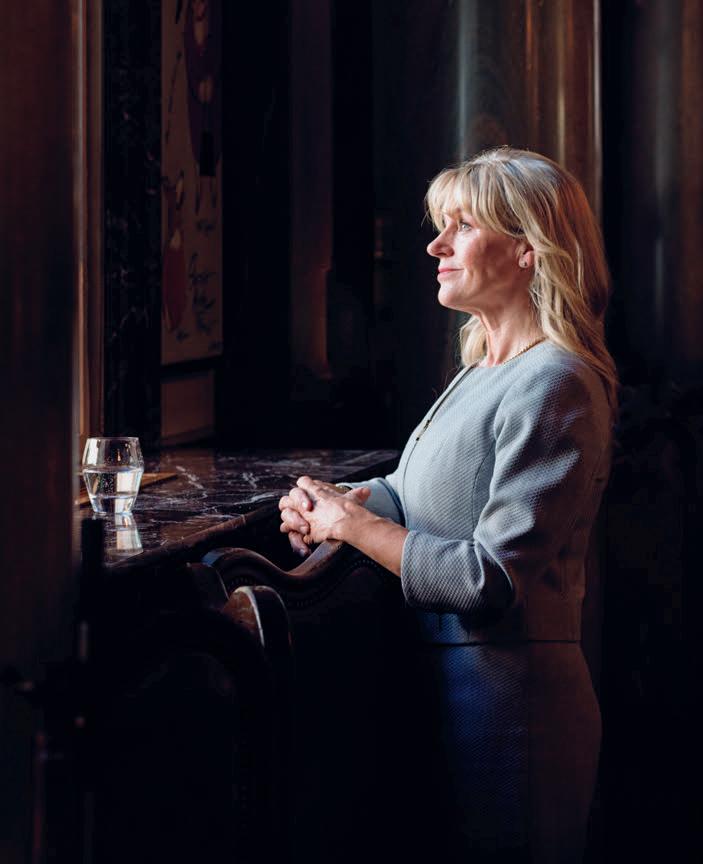
Reading Harvest, a new book by Baroness Batters charting her role as the rst female president of the National Farmers’ Union (2018-2024), during which time she weathered both Covid and Brexit, I became shamefully aware of how little I knew about farming. But what struck me more was that most of our politicians and policymakers have proved just as woefully ignorant.
‘When I started at the NFU, I was shocked by how many people assume food appears on the shelves as if by magic,’ she tells me. ‘Unlike Finland – the world’s happiest country – or Japan, Britain has encouraged people out of the elds and into business parks and the service-based economy. No-one goes holiday fruitpicking anymore. Children don’t learn fundamental life skills like cooking at school, and unlike in Europe, farmers’ markets are seen as the preserve of the well-heeled. Instead, we rely on plastic-wrapped supermarket food. Everybody should have the right to nutritious, a ordable British food, but we need the policies to deliver it.’
Minette Batters was born in 1967 on a farm near Salisbury. Her passion was riding, but her father dissuaded her from staying in the racing world and she duly trained as a Le Cordon Bleu chef and set up a catering business. The more she realised her real passion was farming, the more adamant her father became that she should not take over the family farm. ‘Farming was seen as something men did,’ she says. Still, she took it on aged 31 and joined the National Farmers’ Union.
‘It was tough, and juggling children with aspects you can’t control like bad weather, calving and lambing could feel overwhelming.’ One reason for writing Harvest, she adds, was to say to other women, ‘This is how it is, but it can be done’. Batters also wanted to put the debate about importing chlorine-washed chicken and hormonetreated beef a er Brexit into the public domain. ‘Campaigning with Jamie Oliver, within
a month we got a million people signing up against importing food that would be illegal to produce here. By changing hearts and minds, momentum built and Boris Johnson realised the government had to do something.’ We talk about Johnson and how his default position was to laugh. ‘He was very good at that,’ Batters concedes with a grin. ‘He’d be cracking jokes all the time, but I could see the toll the job was taking and how de ated he became.’
Family farms are ailing: ‘Our 47,000 farmers are struggling on an average income of just £34,000. If only we realised what those farms o er. I dream that alongside supermarkets, we’ll have locally produced food and local processing. Take the huge success of microbreweries or Jeremy Clarkson’s The Farmer’s Dog pub, reviving that connection between pub, shop and community.’
Batters tells me housing developers are not planting fruit trees or vegetables because biodiversity net gains exclude them. ‘Government policy is keeping allotments and orchards out of new garden cities. It’s a tragic, bonkers mistake to exclude food from our landscape.’
She has recently produced a report for government with 57 recommendations; one is that children must be taught about food. ‘All young people can learn to cook from scratch. Instead of just focusing on food’s pro tability, what will get us through a crisis is reconnecting people to food.’
On her farm, Batters now also grows cut owers and runs a successful wedding business. Her daughter is a nurse and her son wants to be an accountant, but she hopes the farm will feature in their futures. As a crossbench peer, she continues ghting to close the urban-rural gap. ‘I won’t stop until people really value the countryside and young people see farming as a viable career. A er all, medicine increasingly shows how important our gut is in both physical and mental health. Food has the uncharted potential to drive enormous change for good, and we must put it back on the curriculum and centre stage.’ ■
IN BRIEF
A BOOK THAT CHANGED ME
James Rebanks’ The Shepherd’s Life
FAVOURITE VIEW
From my farm I can see Salisbury Cathedral’s spire to the north, and the Downton church if I look south
DESERT ISLAND DISC
500 Miles by The Proclaimers. It reminds me of happy weddings we’ve had in our barn
WHERE I RELAX
I don’t, unless I leave the farm behind me. Only then do I give myself permission to stop
DINNER GUEST
David Attenborough. I’d love to talk to him about the opportunities of food and agriculture
FAVOURITE ARTWORK
As a child I was intrigued by Monet’s Water Lilies, but there’s a picture at home I love of sheep on a Shropshire hillside
‘Government policy is keeping allotments and orchards out of new garden cities. It’s a tragic, bonkers mistake to exclude food from our landscape’
Baroness Batters
Still Waters
Nymph of mere and meadow
FASHION DIRECTION
PHOTOGRAPHY
NICOLE SMALLWOOD
ANNIE NOBLE
LEFT: Dress Elie Saab
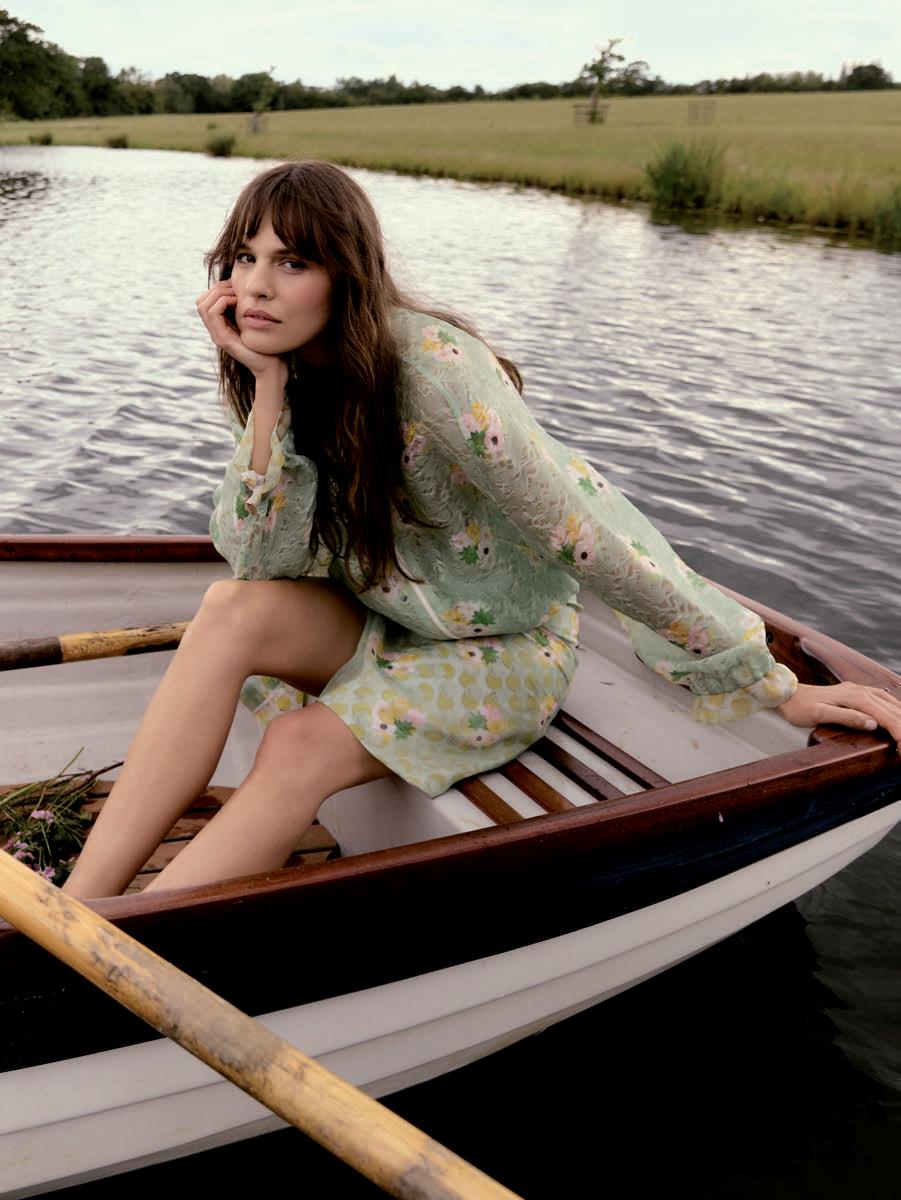
THIS PAGE: Dress Zimmermann
THIS PAGE: Dress Dior Necklace in yellow gold, freshwater pearls, diamonds and lacquer Dior Joaillerie
Shoes Isabel Marant
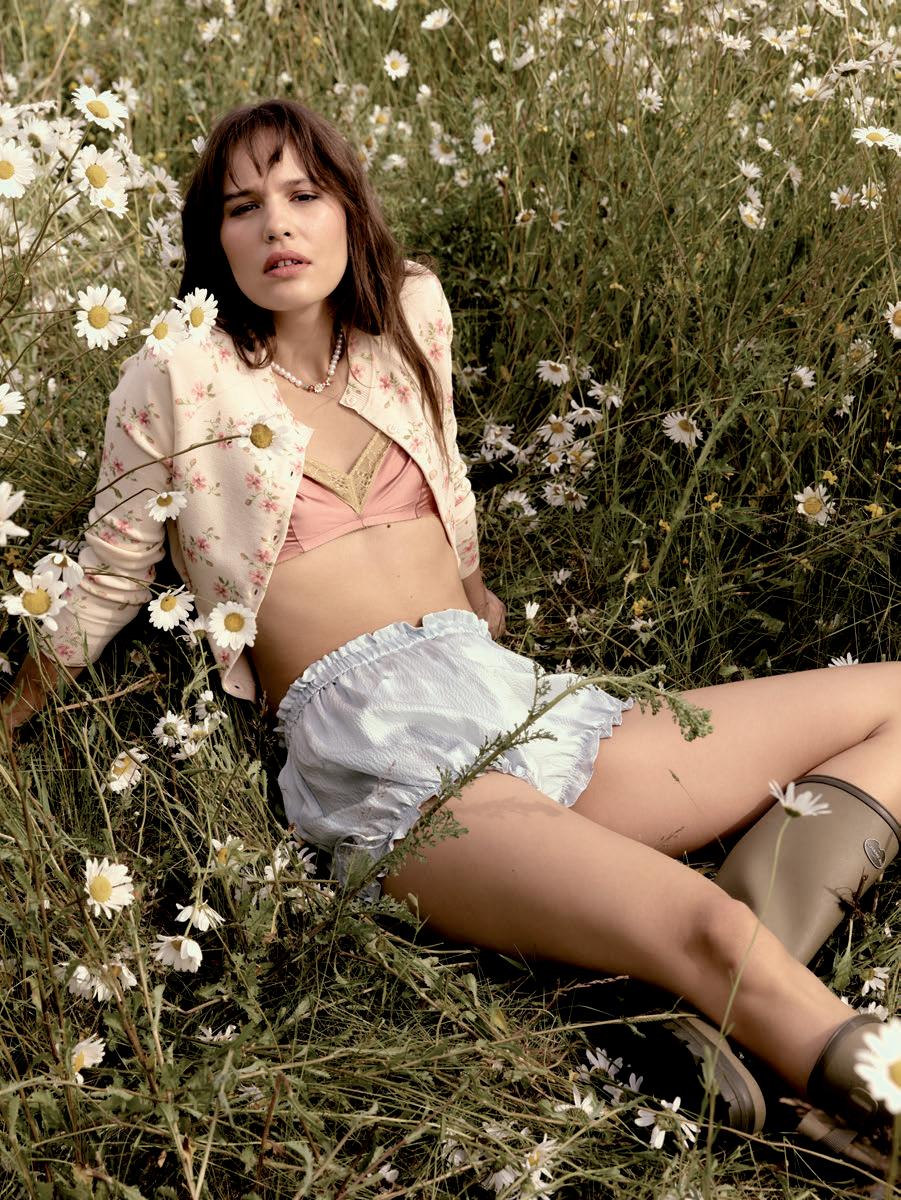
RIGHT: Cardigan Simone Rocha
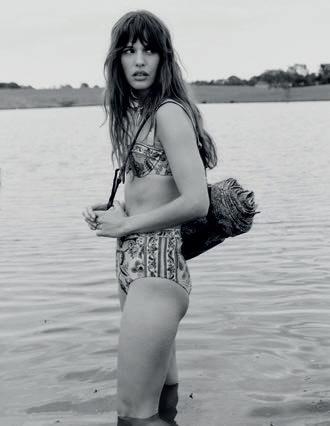
Bra Eres Shorts Lisa Necklace in yellow gold, freshwater pearls, diamonds and lacquer Dior Joaillerie Wellington boots Le Chameau
LEFT: Shirt Isabel Marant
THIS PAGE:
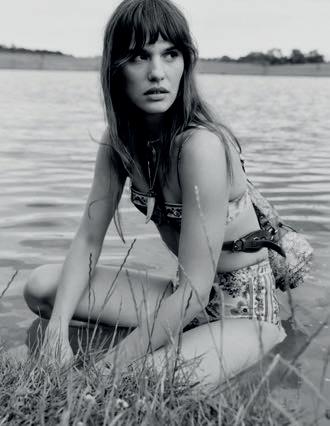
Bikini Zimmermann
Earrings Isabel Marant
Horseshoe necklace Isabel Marant
Horn necklace Sam Ubhi
Blanket bag Isabel Marant
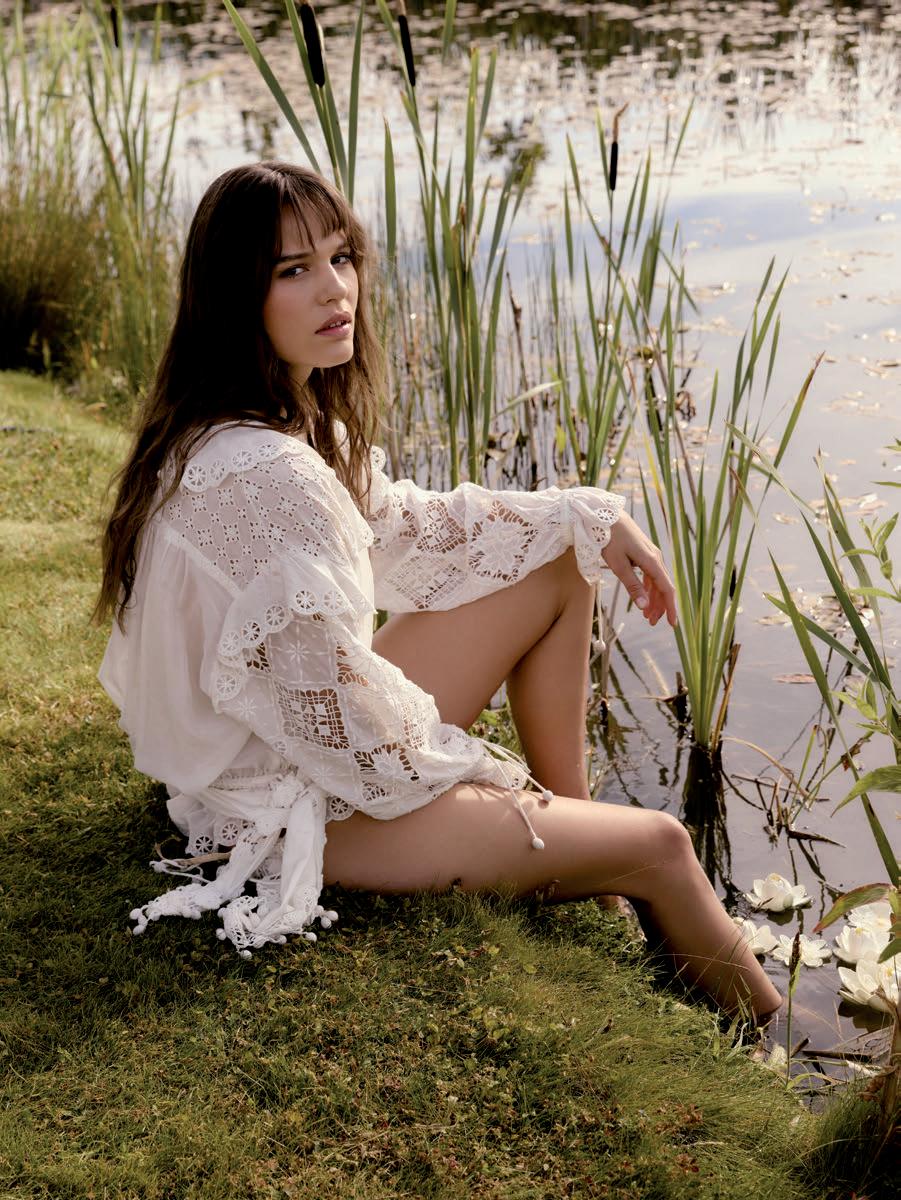
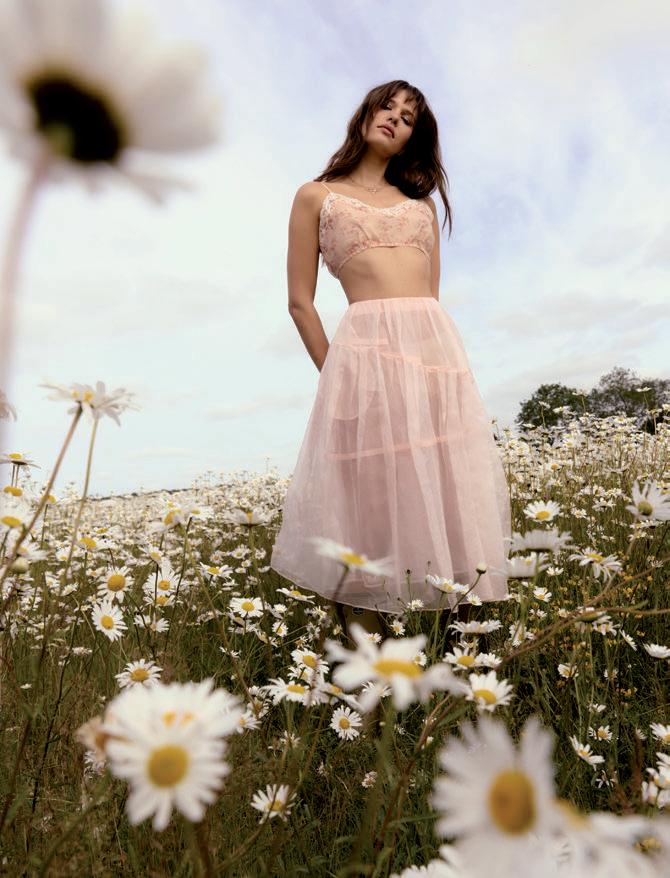
THIS PAGE: Bralette Simone Rocha
Skirt Simone Rocha Necklace in rold gold and diamonds Dior
Joaillerie
RIGHT: Jacket Fendi Skirt Fendi
TEAM Fashion assistant: Lacie Gittins
Photographer’s assistant: George Read
Make up: Alexis Day using Half Magic Hair: Alexis Day using Oribe
Model: Dee @ Models1
Casting director: Elizabeth Miles
Video: Tracer Ital @ Adrenalin Photographic
On Location
The C&TH fashion team take to the water at Wilderness Reserve in Suffolk
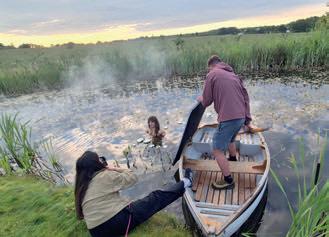
For C&TH ’s annual regeneration issue, Wilderness Reserve in Su olk – 6,000 rewilded acres of parkland, woodland and lakes – overdelivered. The entire shoot was centred around the water – this issue’s theme. ‘Because I o en don’t meet the model until the day, I never know how game they will be,’ says fashion director Nicole Smallwood. ‘Although I did check in advance whether she could swim.’
Smallwood was the guinea pig, con rming the lakebed was so and squidgy underfoot. ‘We had to get Dee into the boat, then sitting on the side of the boat, and then into the water. The biggest challenge was getting her out again wearing a super-long Elie Saab dress. She was freezing but then she hopped into the hot tub, which was right next to the water.’
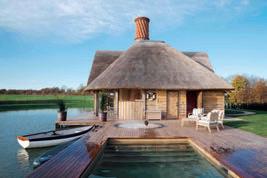
Wilderness Reserve spans three estates and can sleep more than 250 guests across 27 properties – including a 14-bedroom listed Georgian manor house, an 18-bedroom restored 15th-century barn and a clutch of thatched ‘lost’ cottages. ‘They are very cleverly positioned so you feel like you’re totally alone,’ Smallwood con rms. ‘Like you’re in the middle of nowhere and all you can see are rolling hills for miles and miles.’
Committed for several decades to conservation and rewilding, the reserve has planted over a million trees and introduced wild ower meadows, nesting sites and grasslands encouraging a proliferation of birds, animals and plants. ‘We tried to wrangle the swans into the shot, but they weren’t they playing ball,’ laughs Smallwood. With new lakeside spa Otter Lodge and the revamped village pub opening soon, guests – whether a couple or larger private party –can meld wildness with a cosseting stay and awless service.
A huge sh approached the model during one shot, and Smallwood reassured her she wasn’t its type. ‘I’m everyone’s type,’ Dee replied. ‘She was a good sport,’ Smallwood says. ‘She just wanted to get the picture.’ ■
Accommodation
ranges from lakeside ‘lost’ cottages to the Georgian Sibton Manor
BRINGING ART TO LIGHT
MasterLight by TM Lighting | International art lighting specialists
British design, craftsmanship, and manufacture of award-winning, patented products illuminating the world’s most exceptional interiors and private art collections
Walking Walk the
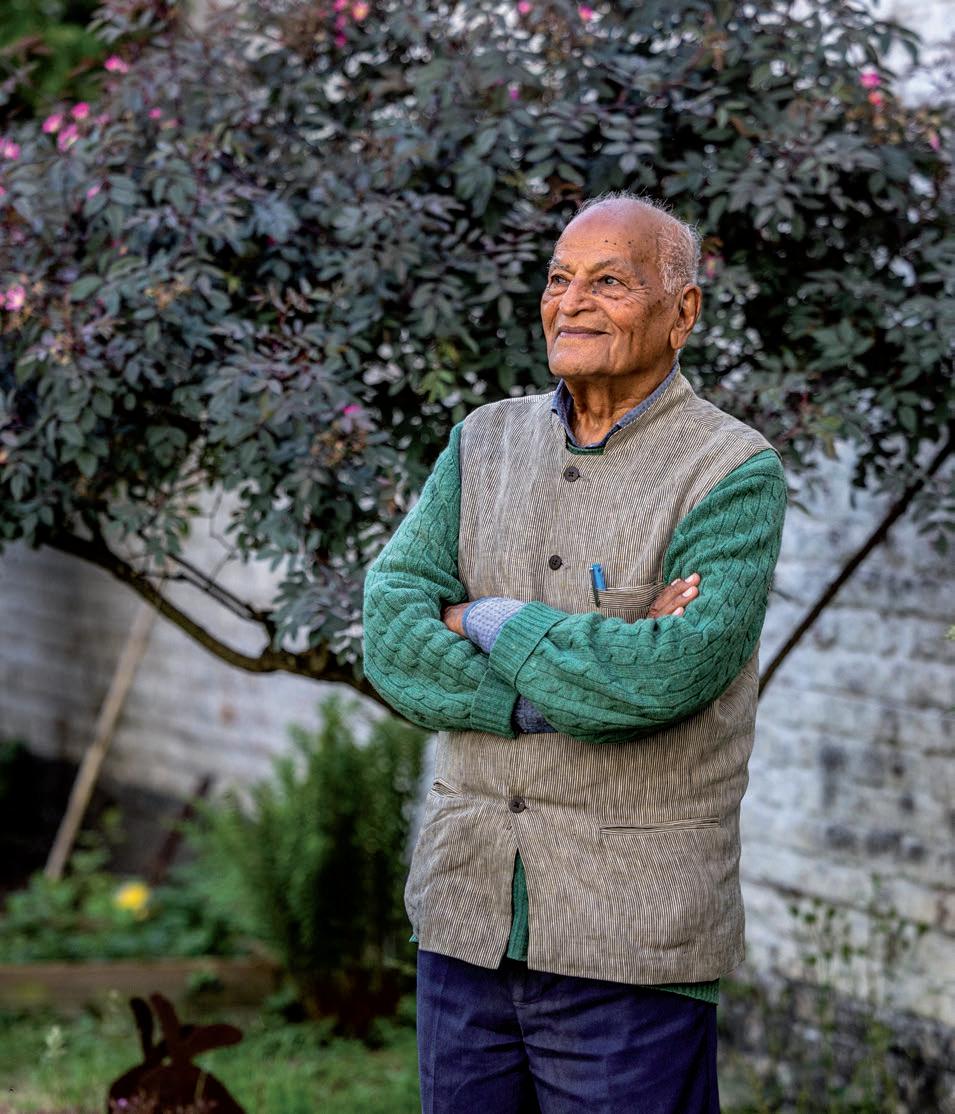
As Satish Kumar turns 90 this year, Annabel Heseltine meets the peace activist who walked 8,000 miles for nuclear disarmament in the 1960s, to discover why his activism is more relevant than ever
PHOTO:
n a quiet corner of coastal Cornwall far from Westminster, the brightest eyes the colour of polished conkers sparkled from a dark corner of a lovely old stone farmhouse. ‘Our crisis is not climate change, not economic growth but aesthetics. We have lost our sense of balance, proportion and harmony. We don’t use our heart and our hands,’ says Satish Kumar, editor emeritus of Resurgence & Ecologist magazine and founder of Schumacher College, who this year will be celebrating his 90th birthday. Kumar has been calling for a radical reimagining of our relationship with the natural world for over six decades, arguing that we need to shi our emphasis from economic growth to human and planetary wellbeing. His in uence stretches far beyond the eco-chamber. When Jane Goodall interviewed Paul Polman, the former CEO of Unilever who transformed the corporate giant by placing sustainability at the core of its business model, he quoted Kumar. ‘When they teach economy, they should also teach ecology,’ he said, and, ‘humanity comes from the Latin word humus, meaning earth’.
‘Satish Kumar has changed the world, because he is the catalyst for other people to do things. He articulates possibility, and paints a picture of what could be, lling you with optimism and hope,’ says Louise Chester who introduced Polman to Kumar. Chester, a high- ying nancial analyst who was overseeing billions of funds before she founded Mindfulness at Work, a not-for-pro t which coaches compassionate leadership to CEOs, lists a global collective of in uential changemakers mentored by Kumar. This includes activist Vandana Shiva, who established seed banks across India to resist the commodi cation of agriculture. ‘I really don’t think I would be the person I am without Satish. I have a very close relationship with him but so do thousands of others,’ says Chester.
Jonathon Porritt, former director of Friends of the Earth, credits Kumar with inspiring thousands through Schumacher College, which he founded in 1991 to o er a more holistic education through ‘the three h’s’ – heart, hands as well as head, including the right brain hemisphere valuing intuition and imagination. The college has become a global centre for ecological thinking and environmental humanities, attracting students from more than 60 countries.
‘Satish and I occasionally disagree,’ says Porritt. ‘I’m much angrier about the current situation than he is; and he’s uncomfortable with angry people. He thinks that’s a negative emotion and not helpful, but however choppy the waters we’re all navigating, somehow Satish in his little boat always seems to be sailing along on an even keel. He is imperturbable, which is astonishing.’
Kumar’s views are shaped by experience, conviction and courage. Raised in a Jain family in India, he scandalised his family by running away from a monastery to join the Gandhian movement, realising he could better spread the message of peace in the wider world. In 1962, aged 25, he embarked on his famous 8,000-mile peace walk, inspired by outrage at the imprisonment of the 89-year-old philosopher Bertrand Russell for demonstrating against nuclear weapons. He walked from Gandhi’s grave in Delhi to Washington DC delivering packets of peace tea to the four nuclear capitals, urging leaders to pause and think. Advised by his mentor, Vinoba Bhave, Gandhi’s embodiment who spearheaded land reform in India, to take no food or money, he entrusted himself to the hospitality of strangers. Being vegetarian wasn’t easy among Hindu Kush tribesmen.
It was when he was on his way home a er the walk, in 1966, that he met the economist E F Schumacher (a er whom the college was named), author of Small is Beautiful Schumacher persuaded him to become editor of Resurgence & Ecologist (formerly Resurgence magazine), arguing that there were many Gandhis in India but there would only be one in England.
PHOTOS:
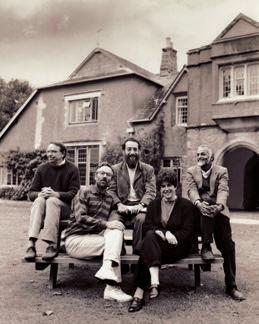
FROM ABOVE: Satish Kumar on his peace pilgrimage in 1962; the core facility of Schumacher College in 1999 (from left to right): Brian Nicholson, Guy Claxton, Stephan Harding, Helen Challoner and Satish Kumar
‘Our bodies are soil transformed, so what we do to nature we do to ourselves.
If we pollute our water, we have to drink it. If we pollute our air, we have to breathe it’
Satish Kumar
Kumar’s message is simple: that we build ecology into the economy and we treat each other with respect and love, in celebration of difference, not in spite of it
Kumar spent the next four decades shaping one of the most in uential environmental magazines in the world. He created a platform for pioneering ecological thinkers like James Lovelock, Arne Naess, Fritjof Capra and Joanna Macy, and challenged readers to confront di cult questions around sustainability, economics and population growth long before such debates entered the mainstream.
‘The problem is our attitude,’ he explains. ‘We consider ourselves owners of nature. If we seriously want to address the root cause of global warming, we have to shi the paradigm from ownership to relationship.’ He contrasts Descartes’ duality, ‘I think therefore I am’ with the Sanskrit phrase So Hum, ‘You are, therefore I am’, a philosophy rooted in interconnectedness with the universe outside of ourselves.
He calls for a reframing of most aspects of modern life: leadership, education, economics, farming, planning and our relationship with nature, in that when we are killing the planet, we are killing ourselves. He advocates more respect for farmers; that schools should nurture imagination as much as intellect; that children should be ‘eco-literate as well as computer literate’; and that communities should care for one another rather than depend on centralised government.
It’s to nature that we return again and again in our conversation. It’s his spiritual practice, his mentor and his respite. He describes the rolling Cornish coastline and its changeable weather as a metaphor of life and reminds us of the generosity of the soil. ‘Soil is very forgiving. It does not ask if you have a Visa card. Out of one seed comes 50 tomatoes.
‘When I started writing about renewable energy in Resurgence in the 1970s, people said we were “naive, idealistic fools in cloud-cuckoo-land”,’ but what seemed radical then feels only too relevant now a er decades of biodiversity collapse, oods and res, polarisation and blinkered leadership. ‘Our bodies are soil transformed,’ he says, ‘so what we do to nature we do to ourselves. If we pollute our water, we have to drink it. If we pollute our air, we have to breathe it.’
I caught up with Kumar between appearances at the Oxford Union and Darwin College, Cambridge where he was discussing alternative leadership styles. In June, he spoke at Eton College. His 90th birthday tea party will be hosted by Frieda Gormley, co-founder of the B Corp House of Hackney (which put nature on its board) who persuaded the Oxford English Dictionary to include humans in its de nition of nature. His retreats based on his books Radical Love and Soil, Soul & Society are sell-outs. Other books include The Buddha and the Terrorist, No Destination , a memoir about that two-year peace walk, and his ninth book, Peace is Possible, has just been published.
He believes modern society suffers from a failure of courage and trust. ‘We want the world to be nice, but without standing up for it,’ he says. ‘Mahatma Gandhi talked about “[being] the change you wish to see in the world”.’
For Kumar, that means teaching young people resilience, compassion and respect for di erence. He worries about a world increasingly shaped by division and intolerance, where people seek to destroy opposing viewpoints rather than understand them. ‘We have to dream and to imagine that a slightly less imperfect world is possible,’ he says. ‘We need to train young people to be statesmen, not politicians, to embrace diversity, not to make everyone like ourselves.’
As the sun falls over the Cornish coast, Satish Kumar turns on a light. The 89-year-old peace activist is no longer sitting in the shadows but glowing with vitality. He leans forward, those brown eyes shining even more brightly. ‘You know, Annabel, I know I sound like an idealist. But what have the realists done for us? Realism is overrated. Realists haven’t given us anything except climate change and wars, and they don’t even win them. It’s time to give the idealists a chance.’ ■
PHOTOS:
“COMING HERE HAS BEEN A LIFELINE FORME”
Nearly one million older people in the UK are frequently lonely.
Eileen lives alone and rarely goes out. She took part in six weeks of visual arts workshops delivered by Create’s professional artist, sharing: “When I wake up, I’ve got somewhere to go, and that makes a difference." The workshops didn’t just give her a creative outlet; they gave her routine and a sense of community.
Research from Age UK shows that loneliness can have a profound impact on older people’s physical and mental health. Creative projects offer something vital: regular
connection, shared purpose, and the opportunity to express identity beyond age or diagnosis. One of the most effective ways to build connection is through shared experiences. When people work towards a common goal, conversations happen more naturally, confidence grows and communities begin to form.
At Create, we bring the creative arts to those who need them most, delivering free artist-led workshops with vulnerable people of all ages across the UK.
Find out how you can bring the power of the creative arts to more people.
& Town House Charity Partner
Everywhere Water, Water,
From flooding to droughts, our water supply is under threat like never before. Who’s doing what to help and why aren’t we doing more? Sarah Langford investigates
was recently awoken by the loudest dawn chorus I have ever heard. When I told my host, she said the surround-sound birdsong was the work of local Stroud farmer, Peter Cli ord, who had blocked the drains on the arable eld behind her house. Wheatland had turned into wetland, and the birds were back.
Cli ord is not alone. Across the UK, those who manage land are choosing radical ways to hold water on it. They have good reason. While government ministers and corporate boardrooms have focused attentions on greenhouse gas emissions and carbon footprints, a water crisis has been unfolding in plain sight.
In a country with a reputation for rain, there is grim irony in facing the reality of both running out of water and then being drowned by it. But as the last ve years brought one record-breaking weather event a er another, this is now the story of Britain’s water supply. Our complacency that the tap will always turn on leaves us woefully underprepared. Last summer nine million people were placed on hosepipe ban, a restriction that came a year a er downpours ooded 5,000 homes. The Environment Agency has warned that without urgent action, England faces water shortages of ve billion litres a day by 2055, a third of our current daily use. Meanwhile the insurer, Aviva, predicts the number of homes vulnerable to ooding will rise over a quarter by 2050, warning that surface water ood risk in densely populated urban areas such as London and Manchester is now so high it may render homes uninsurable.
While the government presses ahead with plans to build 1.5m new homes by 2029 – one in nine in ood risk areas – it has simultaneously committed £10.5bn in ood defences. With two reservoir projects being fast-tracked in Cambridgeshire and Lincolnshire at a combined cost of £4.8bn, the cost of our water crisis is climbing. Now pioneering farmers and land managers are suggesting the government may be looking – and spending – in the wrong direction. Instead, the solution may be right under our feet.
Andy Cato, regenerative farmer and co-founder of eld-toplate food business Wildfarmed, is clear the answer lies in the soil. ‘Healthy soil acts like a sponge,’ Cato says. Wildfarmed works with Professor Andrew Neale, a soil microbiologist at Rothamsted Research, whose work found that increasing soil organic matter by just one percent can improve the water-holding capacity of some soils by 354,000 litres per hectare, the equivalent of a 200-acre farm absorbing 7.5 Olympic swimming pools more water. ‘This is the one a ordable route to better ood and drought resilience,’ says Cato. ‘It’s not di cult and can happen quickly. We just need to make it viable for farmers to do it.’
It seems a false economy, then, for a government facing annual ood bills (of £2.4bn and rising) to scrap the modest payment rewarding farmers for soil management from its 2026 sustainable farming incentive. With public payments shrinking, Wildfarmed have found a solution in the private market. It now facilitates a growing number of water companies to make direct payments to Wildfarmed growers in their catchments, who must all comply with third-party audited standards that regenerate soils whilst improving water quality, ranging from £75 to £250 per hectare. One, Affinity Water, claims that for every £1 invested into regenerative farming they receive a £6 return. Given the Rivers Trust’s declaration that not one of England’s rivers is now in good health, paying to prevent pollution rather than bearing the cost of cleaning it up is just good economics. ‘It’s a spectacular three for one deal,’ says Cato. ‘Managing soils to hold water means they also hold more carbon, and the plants doing the work measurably increase biodiversity. All of which comes with a resilient food system thrown in for free.’
While some farmers are improving soils to prevent ooding, others are embracing it. For decades, war-time government grants saw natural oodplains drained to improve agricultural production. Lasting long into peacetime, in the 1980s at their peak 111,000 hectares of land was drained each year, an area the size of Greater London. That same land is now ooding towns downstream, and the state is paying again, this time to put some back. So enthusiastic was the reception to DEFRA’s £37m Species Recovery and River Restoration that the programme was oversubscribed. Of 56 projects submitted, three
Andy Cato of Wildfarmed says healthy soil acts like a sponge, helping to control heavy rainfall and flooding
Given The Rivers Trust’s declaration that not one of England’s rivers is now in good health, paying to prevent pollution rather than bearing the cost of cleaning it up is just good economics
have moved from planning to delivery, the largest being the Evenlode project, led by Tim Coates, executive director of the North East Cotswolds Farmer Cluster. Comprising over 140 farms it is restoring more than 3,000 hectares of habitat, slowing winter ooding, holding water and nutrients on ood meadows, all backed by a £100m nance model blending public money with private cash.
Near the Welsh border a similar project has brought some 50 landowners together in an e ort to change not just land management, but narrative. The Wyescapes project is well timed. This April, the largest pollution lawsuit ever brought in the UK reached the High Court a er 4,500 residents brought a group action against industrial poultry producers and Welsh Water for pollution to the River Wye. Wyescapes o ers a solution to restoring a river that has become an environmental lightning rod. Planned over 30 years, it includes 2,000 acres of new oodplain meadow, 220 acres of new wetland and the reversion of 1,385 acres of arable land to grassland. The objective, says programme manager Max Eckert, is to ‘achieve a more natural exchange of water between land and river, slowing the ow of water in heavy rains and providing water resources when it is drier – all while producing food’. It will be funded through a blended nance model, including credits for nutrient reduction, biodiversity net gain and ‘Volumetric Water Bene ts’, which measure the value of increasing water storage on farmland.
One member, Ben Andrews, a fourth-generation tenant of 600-acre Broadwall Hall Farm who organically farms beef, cereal crops and vegetables, is clear the environmental pressures upon farmers are complex. Fields that once grew potatoes and brassicas now regularly sit under ve feet of water from October to April. ‘They are no longer nancially viable as farmland,’ says Andrews. The security o ered by reliable income from programmes such as Wyescapes, he says, ‘is really important’ for those paying agricultural rates on unfarmable land. Completing a Nu eld Scholarship on agriculture’s role in the causes and solutions of ooding and pollution, Andrews points out that paying farmers to restore oodplains reaches far beyond the eld: protecting local infrastructure and business from ooding, saving insurers sizeable sums.
Another unlikely saviour is making its way into the fray. Hunted to extinction in Britain some 400 years ago, beavers have long been championed as natural ood engineers. Their dam-building does what hard infrastructure cannot: slow, store and lter water, but at little cost. Up until the 1970s, government grants saw rivers dredged, straightened and channelised to improve agricultural production. The fast owing water increased erosion, exacerbating downstream ooding, obliterating habitats like oxbow lakes, reed beds, wet meadows and bankside woodland that meandering rivers had taken millennia to develop. Now escapee beavers and rewilders have proved their point. Between 2013 and 2016, 13 beaver ponds on the River Otter added 18,000 sq/m of water storage, holding an additional one million litres of water. During storm events, water took longer to pass through the system and ood ows reduced by up to 60 percent. The rst o cial wild beaver release in England took place in Dorset in March 2025. While 85 percent of the UK population now lives in urban areas, the idea that ooding is a rural problem is misplaced – 42 percent of city gardens have been paved over, a gure that worries insurers picking up the ooding tab when heavy rainfall has nowhere to go. The Environment Agency’s national ood risk assessment indicated a 43 percent increase in the number of properties at risk from surface water ooding in 2024. Meanwhile, Labour’s new homes are still being planned without the mandatory water harvesting or greywater recycling requirements – when lightly used wastewater is ltered and reused for toilets or garden irrigation – adopted in other countries, despite hydrology experts calling for the roll out of drainage solutions that mimic nature, such as roofs or ditches lled with plants.
Urban dwellers may have much to learn from e orts being made in our countryside, adapting techniques into their city equivalents with porous pavements, green roofs and tearing up astroturf. But bene ts go beyond reduced insurance and water bills, as the curlew, snipe, redshank and cranes that now visit Peter Cli ord’s wetland show. Almost a third of all wild birds have been lost in Britain since 1970. A er 50 years of silence, being woken by the dawn chorus not just in Stroud but Southwick may become the metric that really matters. ■
Beavers are natural flood engineers, their dams slowing, storing and filtering water at little cost
PHOTO: PEXELS
The Art of Polderen
The Dutch forged a country from flooded land through consensus. In a world plagued by water issues, could we learn something from them? By
Tessa Dunthorne
‘God created the world, but the Dutch created the Netherlands’ goes the phrase. In Den Haag, the Dutch political capital, canals – controlled by electronic ood gates – crawl through the city like capillaries. When heavy rain threatens to overwhelm the historic centre, those gates open at the push of a button, releasing water elsewhere. For centuries, this exchange has been carefully balanced. But climate change threatens to tip it: as seas rise, parts of the city – half of which sits on peat and clay – are sinking faster than Venice.
The Dutch answer, however, may not be technological. Instead, it lies in a philosophy of environmental governance known as polderen . Derived from the polders – low-lying tracts of land reclaimed through dikes and canals –polderen describes a culture of consensus built around the practical necessity of managing water together. ‘An art,’ says Piet-Hein Daverveldt, dike reeve, or chair, of the local water board, the Del and.
Meeting Daverveldt in the Gemeenlandshuis, the Del and’s HQ, I am struck by the building itself – more Oxford college than utility o ce, with its lateGothic intricacies and gilded coat of arms. ‘The Del and predates the constitutional monarchy,’ explains Davervelt. ‘It was the first form of governance in the Netherlands.’ The Del and is a publicelected authority, meaning it answers to voters – including on matters like tax rises. ‘We will run a general assembly so the public can have a say,’ continues Davervelt; those in attendance will help de ne the exact gure of the tax hike, which then goes to water system and puri cation levies.
the privatisation. ‘And it’s now very clear it has failed. Eighty-two percent of Britons across all voter groups are in support of public ownership.’
The contrast is not simply public versus private ownership. The Dutch model asks citizens to view themselves as participants in land and water management, not just recipients of it. (Admittedly, this is possibly easier in a system where citizens have the ability to participate in making change via democratic process.)
The Dutch model asks citizens to view themselves as participants in land and water management, not just recipients of it
That becomes obvious elsewhere in The Hague. In a local thri shop, Arjen Kapteijns – e ectively the deputy mayor – sits beside competitive sprinter Je rey Vanan, the city’s energiecoach , speaking directly with residents about reducing water use at home. Here, they are handing out water-saving showerheads; earlier this year they fronted a scheme to subsidise garden water butts in paved-over communities. Vanan’s presence, in particular, is intended to reach those who might otherwise never consider attending a municipal meeting. In all, thanks to these meetings and devices, there is a sense of communal responsibility in managing water – the art of polderen – and the need to bring everyone on this journey at play. There are limits to consensus, of course. Critics argue that polderen can dampen the political will of governments. The Netherlands itself is struggling to meet its climate change goals, with only a ve percent chance of hitting net zero targets by 2030, and zero of its waterways hitting cleanliness benchmarks, much like the UK. Nonetheless, where the nation has stood on an international stage at climate talks, polderen has been a credit (for one, at COP28 the Netherlands co-launched an international coalition dedicated to phasing out fossil fuel subsidies).
Professor David Hall of the University of Greenwich says there is a ‘strong’ correlation between nationalised services and public engagement with water management. He points to two inverse examples in the UK: ‘the rst very hot summer a er privatisation in 1992 – the public response was grudging’, versus ‘an accepted sense that the public ought to limit its consumption during the drought of 1976, when water was still public’.
And for the Dutch, that sense of ownership can produce unusual forms of civic participation. In 2021, The Hague made international headlines a er winning a national ‘tile-whipping’ competition. Residents ‘whipped’, or removed, more than 200,000 paving stones from driveways and gardens, replacing them with permeable greenery.
‘When faced with short-duration rainfall,’ says Daverveldt, who helped orchestrate the competition, ‘you don’t have time to guide water elsewhere – you have to capture it where it falls. This kind of extreme rainfall is becoming more frequent, so it’s important to take residential measures that allow it to in ltrate the soil.’
From a British perspective, this degree of public participation feels unusual. Under Thatcher, England and Wales privatised their water systems in the 1980s; public frustration with pollution and infrastructure failures has grown steadily since, as private water companies land controversy a er controversy in the headlines.
‘It was an extreme ideological experiment,’ says Cat Hobbs, director of campaign group We Own It, of
And when it comes to fostering a sense of communal responsibility, the Netherlands has it nailed. Perhaps it’s time for the UK to embrace a bit of Dutch courage? The art of polderen is proof that when frontline communities have the opportunity to buy in, they will step up. ■
FROM LEFT: The Dutch parliament is forefronted by the Hofvijver, a small lake; polders are tracts of low-lying land reclaimed from water through engineering feats, and the idea of polderen is derived from their governance through stakeholder consensus
Life at the Loneliest Farmhouse
With no access other than by helicopter, Tim Ecott reports on a way of life unimaginable to most. Not, however, for Eva and her husband
Jógvan Jón, who farm for survival on Stóra Dímun
n the island of Stóra Dímun, Eva is at the window of the farmhouse looking across the home pasture towards the cliff edge. Five kilometres away, the uninhabited sister island of Lítla Dímun rises from the Atlantic. The ocean has the misty darkness of a sapphire and the low northern hemisphere sun is surprisingly strong. ‘The tide is easterly now,’ Eva observes. ‘In Faroes, we say it’s either running east or west, and it’s most dangerous when the current goes one way and the wind is in the opposite direction. In the old days it was important to know about the tides as we have no harbour, and to get o the island we had to lower a boat from the cli s into the sea.’
The wild ocean is the main obstacle to living here. Stóra Dímun (pronounced stow-ra doyee-mun) is the smallest inhabited island in this archipelago of 18 basalt outcrops around 200 nautical miles northwest of Shetland. Eva lives here alone with her husband Jógvan Jón and she is the eighth generation of her family to farm the island. They have a small tractor for use on the at pasture around the farmhouse, but the rest of the island is too steep for any vehicles, even quad bikes. Five sheepdogs are the key to gathering and driving the ve ocks that inhabit di erent areas of the island. There are also half a dozen fattening bullocks, and a vague number of geese, ducks
and chickens. In summer the new lambs swell the sheep population to around 1,200. Their meat provides Eva’s main income, but she and Jógvan Jón also grow kohlrabi and turnips to sell, and plant some potatoes for themselves. The meat is highly prized – avoursome due to the excellent grazing on grass which is fertilised by the abundant bird life. This lifestyle is only possible thanks to a government subsidised helicopter service that calls at the island three times a week.
‘We live on an island, but we are cut o from the sea,’ Eva observes. The lowest point on Dímun is 120 metres above the shore, and it’s the only place on the island where a narrow path allows those who are t and able to get down to where the old rowing boats used to dock. The path is barely a metre wide even at its widest, and at its base there is a jumble of enormous boulders that must be negotiated before a rough foreshore leads to a tiny inlet that once served as a fair-weather harbour. Before the helicopter service, everything that needed to be carried on and o the island had to t into a rowing boat. Supplies, and even live cattle, had to be hauled up and down the sheer cli s on a rope attached to a pulley. The winch sits about 130 metres above the rocks, but elsewhere the cli s rise just over 400 metres from the water. People, sheep and dogs have fallen here with frightening regularity.
For Eva and her husband, island life is no romantic idyll. Like most farmers, they work
Eva is the eighth generation of her family to live and farm on Stóra Dímun, a onesquare mile island in the remotest Faroes
‘Once you abandon the old ways of doing things, there’s no going back’
Jógvan Jón
long hours for a very modest income. However, she believes that producing food is one of the most important jobs in the world. The weather here means vegetables grow slowly, but they are sweeter and tastier. And she insists that using traditional techniques is important. They remove wool from the sheep with hand shears. ‘Once you abandon the old ways of doing things,’ she says, ‘there’s no going back.’ Jógvan Jón has the same opinion. ‘We could automate things a little but machines cost money, and they break, especially here, and power and fuel is costly and hard to get to the island.’
Many people dream of living in splendid isolation, of creating a private kingdom where we can hold the wider world at bay. It’s a fantasy fuelled by stories like Treasure Island , Robinson Crusoe and Swiss Family Robinson . The ultimate status symbol is a private island epitomised by Richard Branson’s Necker in the Caribbean, or Marlon Brando’s coral-fringed Tetiaroa in Polynesia. But here on Stóra Dímun, a good summer’s day will see the air temperature reach 16˚C, perhaps 19˚C in a heatwave. It rains a lot. Fog, even in summer, o en disrupts the helicopter schedule, as do high winds at any time. For me, the attraction is its isolation, the simple silence of early mornings broken only by the shrill call of the snipe that hide in the rough grass around the farm. Even more thrilling is the gentle hluuu-hluuu-hluuu of their specially adapted tail feathers that vibrate as they y.
Roughly one square mile in size, Dímun is rst and foremost a working farm. Eva loves the island, but she also sees it as her family’s legacy, and she knows the history of her forebears inside out. Several of the heads of family died falling from the cli s while catching seabirds to eat. Others drowned at sea, and all too o en their bodies were never found.
Even the sheep on
have to be tough – to endure the weather, rough pasture and perilous cliffs
Life is not easy for the livestock here either. Sheep are not brought inside for winter, and the lambs are born without human assistance. ‘We don’t want ewes that need help,’ Eva explains, ‘they must be able to survive here. It’s not easy pasture, so they need to be tough.’
Eva is happiest on the island, although she visits the mainland regularly. ‘People always ask if I get lonely,’ she smiles, ‘but I’ve never felt that here. I can feel lonely in a city when I look out at the lights in other people’s houses and realise that I don’t know the people who live in them.’
Dímun is its own world, where the farm exists in balance with the migration of the birds and life cycle of the sheep. Eva and Jógvan Jón have made a life that ebbs and ows with the seasons too. Friends in the Faroes capital, Tórshavn, o en ask if I have cabin fever a er staying on the island. Similarly friends in England wonder if I have escaped to a land of make-believe where I can avoid reality. It’s quite the opposite. Life on Stóra Dímun seems much more real than anything we experience in our modern urban world, where we are insulated from the seasons and where food is easily bought without much thought for the e ort it took to produce it.
Eva asked me recently if my impression of the island had changed much since my rst visit a decade ago. I certainly love it, and Eva and Jógvan Jón make me feel like part of their family when I’m there. I answered that I felt more at home on the island because I know it so much better, and I have participated in everything from planting and harvesting the crops to shearing, slaughtering and butchering the sheep. But then I realised that what has really changed is that I no longer think of it as a small island. For me, Dímun is very much a living thing, it breathes the sea breezes and it has a heart that thrums like the snipe’s tail. ■
Stóra Dímun
If you are a brand or individual that deserves recognition, enter today to become part of a growing and thriving community. It’s your chance to be in the room – and make a change.
A Bug’s
Attention is often centred on the conservation of bigger, furrier beasts. Meanwhile, our insect populations are dying in their billions – which could have devastating effects, says Luke Abrahams
nsects are dying in their billions. This is fact, not hyperbole; the global decline is catastrophic. O en dubbed by entomologists as the ‘insect apocalypse’, the die-off is not only threatening already vulnerable ecosystems, but also human existence.
I cannot recall the last time I saw a butter y uttering around London. My concern is not unique. Across the globe, insect populations have declined at an alarmingly fast rate. Habitat loss driven by the destruction of forests, wetlands and grasslands, alongside agrochemicals, broad-spectrum herbicides and the worldwide e ects of global warming, have depleted populations by their quintillions on a near daily basis, say scientists. Why does this matter? Insects support a colossal 75 percent of the food chain, and without keystone pollinators like bees and even mosquitoes, global food webs would break down, leaving plants unable to reproduce and scavengers unable to recycle biowaste. An unfathomable number of birds, reptiles and mammals would face swi extinction – including us.
The importance of a healthy insect ecosystem is, in other words, the critical conservation story of the moment. The question now is, why is nobody talking about it? One reason is, of course, funding – but there are others. ‘Insects, except cute bumblebees, are simply not sexy,’ says Dr Tom Oliver, resident entomologist at The Newt in Somerset. The UK in particular is under extreme threat, with over 60 percent of ying insect populations decreasing in the last two decades. Wasps, for example, are reportedly declining throughout England as we see more rainy days and ooding, impacting pollination and ecosystems. Despite numerous campaigns to help save them, including those
A jewel beetle (left), one of tens of thousands of species found in the Congo Basin (above), where insects are a crucial cog in the food chain
‘Apes rely not just on plant life to survive, but also on insects like ants, termites, caterpillars and various grubs as their largest protein source. Without them, apes would be extinct’
Will McAdam
PHOTOS: LUKE ABRAHAMS
CLOCKWISE FROM
TOP LEFT: Apes rely on insects for survival; Luke Abrahams came across spiny flower mantises, giant millipedes and dung beetles on his trek through the Congo Basin
from Sir David Attenborough over the years, species like bumblebees and butter ies have recently recorded their lowest numbers since monitoring began (in the mid to late 1970s). Again, England is the worst hit thanks to continued habitat destruction, urbanisation, destructive farming practices (the use of agriculture pesticides especially) and, as Oliver notes, the continued threat of climate change. While the The Newt estate has, under his watch, become chemical free and implemented several initiatives to help the problem at farmland level, Oliver admits this approach would have to be widespread across the country for it to make any positive impact.
Like the UK, the Congo Basin – the world’s secondlargest tropical rainforest a er the Amazon – is also under threat. Known as the ‘lungs of Africa’, the basin spans 500 million acres across multiple countries and is critically important for global climate regulation. It acts as Earth’s largest forest carbon sink, sustaining unimaginable biodiversity, especially below ground. Kamba, operator of the only luxury safari camps in Odzala-Kokoua National Park in the Republic of the Congo, works with several NGOs and researchers to educate guests on the importance of biodiversity in African ecosystems.
Beyond its exceptional wildlife – from gorillas to chimpanzees and forest elephants – this part of the Congo Basin holds great ecological signi cance not just for Africa, but also the entire planet. Insects form a key part of the food chain: most birds, bats, rodents and many other animal groups depend on them as a food source, and various human communities rely on them as key protein sources. ‘Their diversity is immense and still not fully understood or recorded,’ says Congo-based entomologist Gaël Ruboneka Vande Weghe. ‘We are talking about tens of thousands of species. Butter ies alone in the central African rainforest count for more than 2,000 species.’
Insect life here may appear to thrive, but it is under severe threat from rapid climate change, deforestation, illegal logging, over-harvesting and increased mining. As Vande Weghe notes, ‘the collapse of the central African rainforest ecosystem would lead to massive social disruption and population displacements due to lack of pollinators for food’. While the long-term data sets and trends for insect depopulation in Africa still remain fully unknown, insects are ‘the biggest pillar of biodiversity on the planet and have a huge indicator role – and yet, ironically, they are still less talked about in the conservation space’.
In addition, the continued destruction of host trees in particular are directly annihilating indigenous insects –many of which the forests rely on for biological control, from decomposition to nutrient recycling and pollination. ‘The Congo is single-handedly the most important carbon sink
on the planet and is a crucial, undisturbed refuge for some of the planet’s rarest mammals and insect species, says Dylan Smith, head guide of Kamba lodges Ngaga, Lango and Mboko, which o er a number of wildlife itineraries such as the 11-night Odzala Discovery (kambaafrica.com) ‘With the loss of insect life and keystone pollinators, the Congo would disappear in a generation, leading to the widespread collapse of the planet as we know it.’
I witness the problem rsthand. On an early morning trek to nd a family of western lowland gorillas, the insect kingdom remains elusive. Over four days, I spot only a handful of species, including praying mantises, assassin ies, jewel beetles, giant millipedes, dung beetles, hornet wasps, spiders and butter ies. On stumbling upon the magni cent apes, I am bitten to death by a colony of driver ants, whose nest I had accidentally disturbed through sheer excitement. As Kamba guide Will McAdam notes, ‘apes like these friendly giants rely not just on plant life to survive, but also on insects like ants, termites, caterpillars and various grubs as their largest protein source. Without them, apes would be extinct.’
It is not all doom and gloom. Elsewhere in Africa, there are continuous e orts to bolster insect populations across sub-Saharan nations. Justdiggit (justdiggit.org), a grassroots non-profit, partners with hundreds of farmers, pastoralists and safari brands like The Safari Collection in countries like Kenya and Tanzania to help restore dry and degraded soil. As of 2025, the organisation has replanted over 23 million trees and regenerated half a million acres of land through continued community development, ensuring sustainable, long-term impact on both food and water shortages throughout the continent. By improving soil quality, Justdiggit has managed to replenish and sustain key biomass sites where insect life is able to thrive.
In Asia, while the numbers concerning insect health and distribution are still hotly contested, there is further evidence to suggest the continent is su ering just as much as the rest of the planet. A study from 2003 to 2020 on Beihuang Island in China found an average 7.6 percent drop in migratory insects, indicating a downward trend of 0.4 percent annually. As seen elsewhere, and despite high biodiversity on the continent as a whole, studies have shown a sharp decline in migratory insect populations, mirroring other global decline trends. As a result, many rare butter ies, beetles and dragon ies are now being classi ed as endangered species.
Without insects, freshwater ecosystems would collapse, leading to mass extinctions and severe famine for humanity. The major irony is that we continue to tear down forests in order to farm and by doing so, many entomologists agree we are sealing our own fate. Already, agricultural production chains across the world are feeling the e ects of insect loss. Solutions are scarce and costly; over the years, countries such as China have implemented hand pollinating techniques to increase crop yield. Hand pollination is notoriously costly, but it is becoming increasingly necessary for farmers worldwide, ultimately driving up domestic food prices and a ecting quality. While traditionally seen as annoying pests, insects are more important than most think. ‘Without them, we will die long before they do,’ concludes Oliver at The Newt. Only time, and action, will tell. ■
BEAUTY& WELLBEING
WILD AT HEART
Seed to Skin is part of a new generation of skincare proving where ingredients come from matters as much as the final formula (p87).
THE BEAUTY BRIEFING
Nathalie Eleni brings you her summer beauty staples, plus a scent she can’t live without
← STAYING IN THE CITY Luxury just got supercharged at Corinthia London’s new Biome spa, where all our wellness needs can be found under one beautifully designed roof. Inside, discover high-performance skincare brand Wildsmith Skin’s dreamy and naturally transformative face and body treatments, and renowned osteopath Nadia Alibhai’s posture realigments. There are also sessions with eco-psychologist Amy Steadman, who brings mindful connection, nature and gentle movement into the experience, plus Augustinus Bader’s cult longevity facials. An overnight stay turns the experience into the ultimate luxury reset. From £275, corinthia.com
↑ RED HOT SUMMER
Rouge Louis is the shade responsible for making red lips my summer staple. It’s a classic yet modern matte red that takes you from sunsoaked a ernoons to late-night cocktails, doing all the hard work for e ortless glamour. Louis Vuitton LV Rouge matte lipstick, £120. louisvuitton.com
Keune Air Flow priming lotion Get a soft, frizz-free finish on air-dried hair, solving bad holiday hair days. £24.95, keune.com
Flora Lab Paris Miracle spray No. 1, in Flora À Hokkaido Strengthens and delicately scents hair strands. £98, harrods.com
Eyeam De-Bloat lymphatic drops Helps to reduce bloating and support lymphatic drainage. £35, eyeamworld.com
Estrid The Mini razor and case set, in Bloom Mini but mighty, with skin moisturising blade bars designed for silky-smooth skin. £8.95, boots.com
READY, SET, TECH →
No longer are hairdryers just for drying hair. Shark Beauty’s next-gen tools use intelligent heat technology designed to prevent damage while delivering a salonworthy nish to all hair types. Shark FlexStyle, £269.99. sharkninja.co.uk
↓ BRITISH BEAUTY
SPOTLIGHT
Wrap your skin barrier in silk with award-winning cream. Regenerative technology hydrates and strengthens even the most compromised complexions, making as skin so as silk. This Is Silk rich silk cream, £165. johnbellcroyden.co.uk
EVERYONES
TALKING ABOUT →
At Reborne Longevity in London, preventative health has gone beyond skin deep. The DEXA scan is the medical-grade go-to for measuring bone density and body composition, giving a precise, detailed insight into everything from osteoporosis risk to visceral fat levels. Quick and entirely painless, it’s the new smart way to take control of your long-term health. £350, rebornelongevity.com
← CAN’T LIVE WITHOUT Marc-Antoine Barrois’ latest scent, B87.135, was created to celebrate Harrods’ iconic Brompton Road address. Notes of sa ron, tobacco, myrrh and iris butter will have strangers stopping you to ask for your fragrance secret. £295 for 50ml, harrods.com
THE SCOOP
Reishi and reiki are rewarding
Charlotte Cole this issue
↓ A-LIST AURAS 9
Who sorts out the energy issues of the A-list? Meet Nieve Tierney – former art director turned energy coach, whose client roster runs from Hollywood actors to elite athletes. A session with her is like hours of therapy: she reads your energy, intuits your issues like a wizard and sets to work shi ing your energetic frequency. nievetierney.com
↓ VA-VA-SHROOM
Two pipettes a day from a ‘drink me’ bottle – Superoom’s clinicalgrade liquid mushroom formulas are the perfect way to get a more potent dose of these magical fungi than in traditional powder form. Try lion’s mane in the morning for focus and reishi in the evening to calm the nervous system. £39.99 each, superoom.life
I LOVE LUCIE → Beauty concierge service Lucie (founded by Lucy Russell, pictured) connects you with the very best massage therapists, facialists, hairstylists and makeup artists, plus tness classes and medical treatments – all vetted by the team and bookable in your home or hotel. The bespoke service also means you can take your favourite therapists with you just about anywhere. lucieapp.co.uk
PHOTOS: VICKY POLAK STUDIO
Image: Liz Collins
PUFF MUMMY
Olivia Falcon on how to ditch the bloat, boost circulation and turn your shower into a skin-optimising ritual
My number one beauty rule? Stay hydrated and drink two litres of water per day for a glowing complexion. I’m currently supercharging my glass with Zooki Electrolytes+ skin radiance sachets (£12.99, zooki.com), a palatable pomegranate avour with magnesium, which helps retain water in the cells. But what happens if, like me, you are susceptible to water retention –which manifests in my face with pu ness around the eyes and a heavy jawline?
With so many face tools out there it’s hard to know what works, but US-based aesthetician Cecily Braden is having a moment with her lymphatic brush (from £70, thelymphaticbrush.com), a must-have patented design that moves uid through the face and neck. Far superior to gua sha tools, which leave me red, blotchy and tender, the brush gently yet e ectively tackles dark circles, pu y cheeks and a heavy lower face, giving a streamlined contour. Pro tip: use on clean, dry skin and spritz regularly with the IsoClean makeup brush cleaner (from £6, iso-clean.co.uk) which leaves zero residue on the brush or your face. A er washing with London’s hard water, my skin feels tight and dry, but two small
Blue Lagoon Skin
Science is powered by silica, algae, minerals and healing geothermal seawater from Iceland
MAGIC WATERS
ELEVATE
Santa Maria Acqua bath and shower gel
Inspired by the Medici fountains, this sumptuous gel softens rather than strips, blending neroli and herbs originally paired for Catherine de Medici’s wedding. £50, smnovella.com
SOOTHE
The Nue Co Water Therapy Salty and woody, this fragrance mimics the calming effect of being near water. Less about seduction, more about soothing the nervous system. £125, thenueco.com
changes have made an enormous di erence. First, I have invested in Hello Klean’s new shower head (£125, helloklean.com), which removes heavy metals from water by trapping iron, copper, zinc, chlorine and even arsenic and mercury in its lter, improving water purity without harsh chemical treatment. It reduces limescale, which can make hair lank and skin aky, and has a built-in temperature alert to avoid the water getting too hot and stripping oils from the skin.
I have also discovered Blue Lagoon Skin Science (skinscience. bluelagoon.com), a brilliant skincare range powered by silica, algae, minerals and healing geothermal seawater found in the Blue Lagoon in Iceland, which has just become available to buy in the UK. I visited the lagoon for a spa weekend about ten years ago and have never forgotten how so my skin felt a er one dip. I can report using the BL+ cream (from £70) on my face has really helped smooth crow’s feet; three weeks in and I have much less eye crinkling when I smile. I’ve also been using the silica mud mask (from £38) on my teenage daughter’s eczema with great e ect –a blessing as my previous attempt to smuggle some home from Iceland ended in a volcanic eruption in my wash bag. ■
ENHANCE
Skin Rocks The Amplifier hydrating essence Apply after cleansing to prime skin and enhance every step that follows – vitamin C, peptides, retinoids – while boosting hydration. £70, libertylondon.com
POLISH
Takami Skinpeel essence
J-Beauty’s latest import accelerates skin turnover to unclog pores, refine texture and boost clarity with zero downtime. Use morning and night for smoother, brighter skin. £55, spacenk.com
BACK TO BASICS
Why are we all getting so hung up on hydration, asks Camilla Hewitt
Wellness trends have seeped into almost every part of daily life –hardly surprising given that brands are eager to tap into an industry worth over £200bn in the UK alone. Amid the noise, even staying hydrated has become complicated. We’re constantly encouraged to stack new habits onto existing routines: collagen, adaptogens, electrolytes, nootropics, probiotics, prebiotics. For this water-themed issue, we’re cutting through some of the information – and misinformation – we’re all attempting to absorb. Water underpins almost every physiological process in the body, from maintaining blood volume and transporting nutrients to supporting
digestion, cognitive function and temperature regulation. Even mild dehydration can a ect energy, concentration and mood. But does that mean we should all be aiming for six to eight glasses a day?
Nutritional therapist Eve Kalinik suggests that thirst is a more sophisticated guide than we give it credit for. ‘The “six to eight glasses” rule is a useful baseline, but hydration needs vary hugely depending on body size, activity levels, diet and environment. A more practical approach is to use thirst alongside urine colour – pale straw is a good sign you’re well-hydrated.’
She also points out that hydration isn’t just about water. ‘Electrolytes such as sodium, potassium and magnesium help regulate how uid moves in and out of cells. Without adequate electrolytes – especially when you’re sweating or under stress – water alone isn’t always enough.’ That said, she believes electrolyte supplements have been somewhat overmarketed. ‘Most people eating a balanced diet will meet their needs through food; vegetables, fruits, dairy, nuts and even a pinch of mineral-rich sea salt can go a long way. Powders can be useful during intense exercise, travel or illness, but they’re not essential for everyday hydration.’
The same measured view applies to functional drinks. While adaptogens and nootropics such as ashwagandha or ginseng may o er subtle support for stress or focus, the doses in most drinks tend to be low. More concerning is the overall formulation: many combine functional ingredients with sweeteners or sugar, which can slow uid absorption and o set the bene ts. Kalinik’s preference is for simpler alternatives: lightly sparkling water with added magnesium, herbal infusions or coconut water for gentle, natural electrolytes.
As for tap water, she is reassuring. ‘In the UK, tap water is generally safe and well-regulated. A simple carbon lter can reduce chlorine by-products and improve taste, which encourages better hydration overall. You don’t need anything overly complex.’ Back to basics, then. ■
HYDRATION STATION
BetterYou Hydrate magnesium water Replaces magnesium lost through exercise and stress. £1.99, hollandandbarrett.com
Ancient + Brave True Hydration supplement
A coconut water-based formula rich in natural electrolytes, including potassium, magnesium and calcium, to support energy, focus and recovery. £19.20 for 15, ancientandbrave.earth
LARQ PureVis water bottle
You have many bottles, but not one that selfcleans and has a water puri cation system. Cue LARQ, which will keep your H2O cold for up to 24 hours. £89, livelarq.com
SAINT
INSIDE JOB
Olivia de Courcy delves into the science of feeding your skin from within
Do you feel like you’re on a never-ending quest for healthy, radiant skin? The answer may not lie in something you apply, but rather in something that works from within.
‘The skin is the body’s largest organ and it re ects what’s happening internally far more than most people realise,’ explains dietitian Reshma Patel. ‘When the gut microbiome is out of balance, it triggers in ammatory signals that show up on your face.’
Skincare alone has its limits. Serums and moisturisers work at the surface, but the raw materials for healthy skin all arrive via the bloodstream. ‘What you eat – and where needed, what you supplement – provides the foundation. Everything else sits on top,’ says Patel.
Yet the supplement market is frankly mindblowing. ‘Look for products that supply clinically relevant doses,’ advises Patel. ‘A nutrient at two to ve percent of your daily requirement is unlikely to make a meaningful di erence. Having 1,000 percent is also unnecessary.’
An antidote to supplement overwhelm can be found in the skincare aisle. Take SAINT Jō, a plant-based brand built around a ve-step skincare protocol, with extra steps six and seven being AM and PM supplement capsules. Founder Allyse Cirillo worked closely with formulators to ensure rigour from the outset. ‘There was signi cant clinical research involved in de ning what we wanted to achieve,’ she explains. ‘The supplements were designed to complement the topical line by supporting beauty and skin wellness from within, while staying true to the same standards we apply across the brand: potent ingredients, no unnecessary llers and nothing the body does not need to process.’
It’s not just what you take. When you take your supplements can also have a profound e ect, and SAINT Jō taps into a growing biohacking trend, aligning our daily routines to the body’s natural circadian rhythm. ‘Timing antioxidants in the morning to support daytime defence, and restorative nutrients in the evening, aligns with how the body naturally functions,’ explains Patel.
Ayurveda, the 3,000-year-old holistic system of medicine that originated in
Jō’s skincare protocol includes AM and PM supplements, made with potent ingredients and no unnecessary fillers
India, looks at the entire body rather than the skin in isolation. ‘Many of us are living in a near-constant state of low-grade stress, which in Ayurvedic terms disrupts vata – the inner quality of air and ether. This shows up as skin sensitivity, dryness, dullness and premature ageing,’ explains Mauli Rituals co-founder Anita Kaushal. The key is to follow routines that so en the stress response and gently guide the body back into a state of rest and repair.
Hair also bene ts from this insideout thinking. Biotin is a well-established ingredient for supporting skin, hair and nail health, and in Chāmpo’s Pitta hair gummies it is paired with selenium and zinc alongside six Ayurvedic botanicals recognised for their role in hair health. The supplement makes no grand promises – wisely so – and is instead designed to provide internal support to an external nourishing routine.
If there is one ingestible that has come to de ne the ‘beauty from within’ conversation, it is collagen. We know this sca olding of our skin (and cartilage around joints and bones) declines rapidly as we age. Hydrolysed marine collagen is generally deemed the most e ectively absorbed by the bloodstream rather than competing with digestion, and Revive Collagen’s liquid format o ers a point of di erence in a market saturated with powders and capsules.
term skin outcomes when combined with good-quality skincare,’ explains Dunne. Through his surgical work, he has seen the bene ts of consistent use rsthand: ‘Supplements improve outcomes following facial reconstruction and aesthetic operations such as blepharoplasty and deep plane faceli s, where the demands on the skin and underlying tissues are signi cantly increased.’ So how long do they take to work? According to Wild Nutrition, changes may not be immediate but become more apparent from weeks six to eight.
SAINT Jō taps into a growing biohacking trend, aligning our daily routines to the body’s natural circadian rhythm
As with all supplementation, though, patience is required. Dr Jonathan Dunne, consultant plastic surgeon and founder of Montrose London, urges realistic expectations: while consistent use of collagen over eight to 12 weeks may bring modest improvements in skin hydration and elasticity, he notes that changes tend to be subtle rather than transformative, and that collagen’s clinical role in skin rejuvenation remains limited.
Across the board, supplementation is a long game. ‘Supplements that support skin health may have limited visible impact in isolation, but they become materially relevant for long-
If the ‘inside-out’ approach has an external complement, it lies in treatments that work on the body’s inner systems. Down an unassuming ight of stairs in Soho lies a cocooning treatment space that bridges both worlds. The Grown Alchemist Rejuvenating body massage works on the surface of the skin while targeting internal systems: neurolymphatic re ex points stimulate the lymphatic system, and myofascial trigger points release key muscle groups. True skin health has always been an inside job. The most sophisticated skincare routine can only go so far without the internal foundations to support it. What the best brands in this space understand – and what the science increasingly con rms – is that beauty and wellness are not separate pursuits. They are, and always have been, the same conversation. ■
1. SAINT Jō Glow AM and Restore PM supplements, £85 and £90 for a 30-day supply, johnbellcroyden.co.uk
2. Chāmpo Pitta hair gummies, £34 for a 30-day supply, champohaircare.com
3. Revive Collagen Menopause Max collagen sachets, £81.99 for a 28-day supply, revivecollagen.com
4. Mauli Rituals Organic triphala powder, £32 for a 30-day supply, maulirituals.com
FIELD NOTES
Olivia de Courcy singles out the brands proving that the source of an ingredient can be as powerful as the formula itself
From the outside, Borgo Santo Pietro looks like an Italian idyll: honey-hued stone buildings, cypress avenues and a swimming pool framed by Tuscan hills. But for naturopath Jeanette Thottrup, founder of natural skincare brand Seed to Skin, the estate is something else entirely. It is a working farm, distillery and laboratory, where the land is central to the product.
Her motivation was personal: struggling to start a family, she turned to alternative healing and discovered just how transformative nature – allied with the right science – could be.
All botanicals for Seed to Skin products are grown in seed form, and around 50 percent directly on the Borgo San Pietro estate. ‘I won’t grow anything that won’t naturally thrive here,’ explains Thottrup. ‘If an ingredient has better bioavailability in India, I’ll source it from there.’ But that doesn’t stop her from trying. She recently had success growing ashwagandha, a herb native to Asia and Africa that is known for reducing stress-induced in ammation. The rest is outsourced to partner farms, carefully vetted so the brand can retain 100 percent supply chain control.
In the lab, formulas are led by biotechnology – a process that can be thought of as amplifying nature rather than replacing it. In a 30-day clinical trial, a routine using hero moisturiser The Cure, The Alche’Mist serum spray and The Midnight Miracle night oil delivered a 30 percent increase in the skin’s natural collagen production – a result that speaks directly to skincare’s current most coveted goal.
Seed to Skin is part of a growing cohort of brands proving that where the ingredients in skincare come from – whether grown on regenerative farms, harvested from resilient wild ecosystems, or cultivated in environments that make them naturally purer and more potent – matters just as much as the nal formula. These ingredients work harder, with better e cacy, less irritation and a far smaller footprint on the land they came from.
Among Iceland’s volcanic landscape sits Bioe ect’s outdoor barley elds, where epidermal growth factors (EGF) are grown from barley for its products. These proteins are an under-sung dermal powerhouse. They are our cells’ very own personal trainers, acting as messengers to activate di erent processes in the skin, like chivvying collagen production or soothing in ammation. They occur naturally in our skin, but due to regulations, human growth factors are not permitted in skincare. The alternative, it turns out, is plants.
The environment in which they are grown is key. Iceland naturally bene ts from some of the purest rainwater in the world, and along with the mineral-rich volcanic soil, Bioe ect sidesteps one of the industry’s quiet problems: much EGF on the market is produced via
bacteria or yeast, a process that generates endotoxins (byproducts that can irritate skin). Bioe ect’s method produces none of them.
While some ingredients are grown in controlled environments for a speci c purpose, others are simply harvested where they thrive – and are all the more potent for it. Take seaweed, which needs to be harvested and cut back to encourage regrowth. On the Isle of Lewis in the Outer Hebrides, mineral and antioxidant-rich seaweed is harvested by Ishga for its organic skincare. Hebridian variants fucus serratus and fucus vesiculosus feature in its new Hydra+ face and hair oil, delivering natural abundance of antioxidants, vitamins and hydrating compounds from a single wild-harvested ingredient.
In New Zealand, Katey Mandy founded Raeso in 2022 having grown up on a farm, which taught her to see plants as intelligent ecosystems. As such, she is scrupulous as to where her ingredients are sourced. ‘We choose botanicals not only for e cacy, but for the environments that have shaped their resilience,’ says Mandy. Raeso’s alpine botanicals – such as red marine algae – are sourced from New Zealand’s South Island, where harsher growing conditions create more resilient plants. Antarctic currents also enrich the waters with minerals, creating extraordinary stress-adapted actives.
of haircare. The man behind it? Sir James Dyson. ‘We spent over a decade experimenting and investing in precision farming,’ he says. In the process, his passion turned to haircare. The Lincolnshire farm’s 800,000 sun owers produce nutritious oils for Dyson’s Omega range to fortify and strengthen hair, and each year 2,500 tonnes of spring barley produced in Oxfordshire goes into the new Amino leave-in scalp bubble treatments. ‘We’ve harnessed barley’s amino acid pro le to support scalp barrier function and hydration,’ says Dyson.
‘We choose botanicals not only for efficacy, but for the environments that have shaped their resilience’
Katey Mandy, Raeso
Back in Britain, the country’s largest farming business has turned its engineeringrst approach to agriculture to fuel the creation
And at Heck eld Place in Hampshire – the brand C&TH named Responsible Skincare Brand of the Year in its Future Icons Awards – Wildsmith is biodynamically farming ingredients for its formulas. On Heck eld Home Farm, roses and chamomile grown in the modest market garden produce hydrolats (plant-based waters collected during the steam distillation of essential oils), which are used in the brand’s face mists as well as its new hand and body wash. Wildsmith is also revolutionising one of skincare’s most stubborn problems: packaging. More and more Wildsmith products come in a home-compostable material called Vivomer, made by London-based startup Shellworks. It entirely degrades in a year. Packaging, ingredients, harvesting… it takes a lot to ensure every step of the process is monitored and e ective. And as these brands demonstrate, skincare that gives back may currently be small, but goodness is it mighty. ■
WILDSMITH Active Repair copper peptide cream, £120. wildsmithskin.com
FROM LEFT: Borgo Santo Pietro in Tuscany, where Seed to Skin has a working farm and laboratory; its founder Jeanette Thottrup (far left) and her production team; Ishga harvests antioxidant-rich seaweed on the Isle of Lewis for its organic skincare
SEED TO SKIN The Recovery cream, £218, seedtoskin.com
Holland Cooper has launched the Tablescape Collection, the brand’s first foray into interiors. Tablecloths and napkins made in Britain in 100 percent cotton and with a pretty scalloped edge come in two prints: The Orangery and Chateau Blue (pictured). hollandcooper.com
Tablecloth in Chateau Blue, from £89; napkins in Chateau Blue, £59 for four; napkin rings in Vintage Gold, £79 for four
↑ SUMMER’S HERE
‘Colourful garden furniture brings a sense of optimism, especially when balanced with natural textures,’ says Birdie Fortescue. Curato garden dining chairs, £350 each, and Arles oak dining table, £3,500 . birdiefortescue.co.uk
↓ SOAK IT UP
Med-inspired, Burford-based Indigenous sells everything from tubs to tumbled tiles. Oxidised copper bath, from £2,997, Butter y chair, £300, and Branchwood stool, £120. indigenous.co.uk
DESIGN NOTES
Take it outside, says Carole Annett
WOOD’NT YOU? →
Designed and cra ed in locally sourced hardwoods by The Marchmont Workshop, this Canopy lounge chair is inspired by the woodland in the Scottish Borders that surrounds the workshop. £5,000, thenewcra maker.com
↓ LIGHTEN UP
This rechargeable Stefan lantern in Moss is by Pooky x The Novogratz. £320, pooky.com
Neptune has launched its rst outdoor kitchen, Broadway, so we can all pretend we live in the South of France. From £12,000, neptune.com
↑ BROLLY GOOD
Habitat x Scion garden parasol in Jackfruit print, £30. habitat.co.uk
CALL OF THE WILD
↓ LIVE THE DREAM
Named a er Tatton Park, the Tatton greenhouse by Alitex features an extended lobby, creating a welcoming entrance space while allowing ample room in the central area for freestanding planters and relaxed seating. From £36,800, alitex.co.uk
FEATHERED FRIEND Forest Findings partridge tile by Maria Yiannikkou. £25, capietra.com
SIGHT HOUND Olive Hound handpainted lampshade by Jane McCall. From £95, bloomsburyrevisited.co.uk
PULL THE OTHER ONE
Bobbin milking stool, handmade in Sussex. £525, alfrednewall.com COCK-A-DOODLE-DO Rooster handpainted tumblers. £1,050 for six, bonadea.com
FULL BLOOM
This large Amaryllis Rilona placemat is handmade in England. £25, nina-d.co.uk
POINT OF REFLECTION
Our best garden designers are transforming how we capture, store and celebrate every drop of water, says Kendra Wilson
If you think about your favourite gardens in the British Isles, the chances are they will feature water. And not just in the form of a water feature – but in a meandering stream, a river tributary, or an unfussed-over lake. Shaded in parts, the sounds are di erent as well as the sights, with a wider variety of birds and eye-catching insects than are noticeable in more formal areas. Here, a splashing fountain or a silently owing rill is also a magnet. We are simply attracted to water – it’s primal. We couldn’t survive without it. Having long been used to a reliable amount of rain in the UK (on average every three days), we are not in the habit of considering water as a precious resource. Now, our lived experience is di erent, and over six months we can have prolonged rain followed by drought, followed by a protracted heatwave, followed by ooding. Water is also quite expensive, so it makes sense to have some autonomy at home in the face of weather events that are beyond our control. Diverting every downpipe towards water storage, which irrigates the garden while
FROM LEFT: An award-winning Cotswolds garden by landscape designer Jinny Blom; Studio Bristow will work water into any garden, big or small
taking pressure o drains, is a good start.
The best garden designers are happily accepting the challenge of improving the ecological function of their clients’ gardens.
For internationally renowned landscape gardener Jinny Blom, water has always been a concern, having spent some of her youth living o -grid in the South of France with no local water source. At her house in Oxfordshire she has installed a ‘substantial’ below-ground tank, which stores water from the farmhouse roof.
‘I can’t bear wasting fresh water. It only comes from the sky; we can’t make it,’ she says. ‘It’s a gi that needs treasuring.’
On large projects, Jinny Blom Studio will focus not only on rainwater storage but also slowing, spreading and diverting storm water. Methods of surface drainage are out in the open, there for all to see. ‘We create seasonal ponds to take surface water runo . These
ponds naturalise, ll with reeds and rushes, and become excellent uctuating damp or wet habitats,’ Blom says. ‘They also look good.’ A series of ephemeral ponds can move water towards a useful destination, such as a lake.
An unclogged channel, variously known as a culvert, swale or just plain ‘ditch’, is another way of keeping a valuable resource on site.
‘I’ve always made them where we are altering ground signi cantly,’ says Blom. ‘To aid drainage, modulate the land, protect buildings and to manage water where you want it to go.’
Swimming pools were often hidden behind tall hedges, their Mediterranean blue looking reproachful in bad weather. A pond, on the other hand, looks perfectly at home with raindrops hitting the surface, and has a different kind of beauty in frost. In every season it has something to offer
Ponds and lakes are having a renaissance; increasingly, people are attracted to plunging into something that looks natural. Twentieth-century swimming pools were o en hidden behind tall hedges, their Mediterranean blue looking reproachful in bad weather and their covers looking even worse in winter. A pond, on the other hand, looks perfectly at home with raindrops hitting the surface, and has a di erent kind of beauty in frost. In every season it has something to o er.
In a small enclosure, a scaled-down fountain or pond holds attention, distracting from imperfect structures beyond the boundary. Conversely, a natural swimming pond – built from scratch, with an engineered, natureoriented ltration system – can deepen appreciation of a terri c view. Snowdoniabased Studio Bristow built a swimming pond overlooking a farming landscape in Herefordshire: it re ects the sky in a proscribed space, bringing human scale into the foreground. As a foreground element, water has more depth than a patch of grass.
Adding native plants to a pond means more will naturally come in. The studio’s founder Dan Bristow plants owering rush and marsh cinquefoil into ponds; water mint and water forget-me-not may follow. A natural swimming pond is a good solution in a bigger garden, he says, ‘when the desire to attract wildlife is as strong as wanting a cool dip’.
‘People are becoming aware that gardens can help with wider environmental issues, rather than simply being decorative spaces,’ says Tom Massey, Chelsea Flower Show star and author of RHS Waterwise Garden . Clearly, it’s chic to be water-wise. ‘Many of the things that help a garden function better ecologically also make it feel better emotionally, and aesthetically.’ ■
Suzani recycled plastic Pomegranate cushion in blue, £65. weavergreen.com
SEA BREEZE
THE SMART SET
Chaise longue with buttoned cushion, £3,941. heveningham.co.uk
DRAWING THE EYE
Nexa woven bronze metalwork and copper mesh sculpture, £36,425. davidharber.co.uk
FAMILY FORTUNES
Tavole Calde is a family business based in East Sussex supplying Mediterranean mosaic table tops and bases. Table tops from £201 (plus VAT), mosaic-table.co
SNIP SNIP These flower scissors are from Devon-based Holly Bennett’s brand This Home Grows. £43, thishome grows.com
PICTURE THIS A collaboration with Nottingham-based artist Katrin Moye, these Balineum tiles are a playful homage to Delftware, designed and made in the Midlands. £47.92 each, balineum.co.uk
SENSE OF PLACE
Buyers in the Balearics are no longer seeking the ubiquitous white box, finds Anna Tyzack. They want a finca with soul
CLOCKWISE FROM ABOVE: S’Atalaya, a 12th-century former monastery in Mallorca, is being restored by art collector Drew Aaron; a project in Mallorca’s Santanyí by Bastidas Architecture, incorporating new annexes into an existing heritage property
Villa Otzoup, a cli top property in Mallorca’s fashionable beach resort Nova Santa Ponsa, was built in 1981 by architect Pedro Otzoup to capture the coastal views and sunsets. It is remarkably intact, with Otzoup’s signature built-in seating, tilework and original outdoor kitchen; there’s even a tree growing up through the living room, in keeping with the architect’s organic aesthetic.
Yet when it went on the market last year, Hans Lenz, managing director of Engel & Völkers Mallorca Southwest, feared a new buyer would replace it with a modern house. ‘Five years ago, this type of house would’ve been attened, which would have been a shame as there aren’t many like it le . The new owner surprised us by resolving to restore it instead.’
Across the Balearic Islands, there’s an increasing appetite to restore and preserve rather than pull down and start again, according to Lenz. ‘Buyers are telling us they don’t want to be shown a white box. They want a nca or an older Mediterraneanstyle home with soul.’ Not only does renovating cost substantially less than rebuilding, but younger buyers prefer houses with a sense of heritage and place. ‘They don’t want a home that could be anywhere in the world. They want something that says they’re in Mallorca or Ibiza, and they’ll decorate it with local art and homewares.’
a house is demolished, building materials must be recycled, adding extra cost. Yet Lenz believes the new generation of property buyers have a deeper respect for local vernacular.
‘Younger buyers don’t want a home that could be anywhere in the world. They want something that says they’re in Mallorca or Ibiza and they’ll decorate it with local art and homewares’
Hans Lens, Engel & Völkers
‘Even in new-build properties, we’re seeing a lot more local stone and wood,’ Lenz says. In Mallorca, Bastidas Architecture, a family-led company that has been around for over 40 years, melds traditional Mallorcan cra smanship, architectural style and building materials with contemporary design. Meanwhile in Ibiza, a modern-rustic nca by Blakstad Design Consultants is considered a status symbol. These modern properties are orientated to maximise air ow and light – just as they were in the 18th and 19th centuries – and o en feature a central courtyard, further reducing the demand on air conditioning. Designers are also returning to traditional nishes such as limewash to protect the walls from coastal humidity without using chemicals.
The ‘make do’ approach is driven in part by a lack of development land and the fact that when
Away from the fashionable beach towns, however, the trend is to regenerate older properties. When Drew Aaron, a serial entrepreneur and art collector from the US, moved to Mallorca with his family in 2017, he was drawn to the peace of Alaró and bought Turmalina, a historic country estate originally built by the Swarovski family. ‘I liked the idea of breathing new life into a property and living somewhere my children could roam free and I could grow fruit and vegetables,’ he says.
Since the pandemic, space and privacy have become major priorities for wealthy investors, says Aaron, who founded Lionsgate Capital and then Gallery RED in Palma, which has 18 exhibition spaces across Spain. ‘The trend can be seen across the world. Here, buyers want rural ncas with ten or 20 acres, olive groves and a couple of donkeys.’ The interest in older, rural properties is putting new areas on the map. In Menorca, purchasers are exploring hamlets around Sant Lluís and the rolling valleys of Alaior and Es Mercadal in the centre of the island. The rugged northern coastline around Fornells is another popular choice. Buyers in Ibiza are eyeing ncas in the far north of the island, around Cala Xarraca and Portinatx, where Six Senses Ibiza opened in 2021. In Mallorca – where property prices have risen by 55 percent in the last ve years – the ‘golden corridor’ in the southwest still commands the highest prices, but Lenz has noticed buyers looking to villages throughout Mallorca. According to Engel & Völkers, the highest transaction value was recorded in the southwest of the island, where a property was sold for €50m. ‘People long for nature; they want to go horse riding, hiking and feel connected to the environment,’ says Lenz.
Drew Aaron went on to buy S’Atalaya, a 12th-century former monastery near Valldemossa, which he is restoring, planting hundreds of olive trees across its 12 acres. He sits on the board of Mallorca Preservation, part of the Conservation Collective network co-founded by Ben Goldsmith, to engage a uent and in uential expats who have relocated to the island. The charity has been supporting regenerative and organic agriculture, promoting new crops and recovering traditional varieties to enhance biodiversity and adaptation to climate challenges. The hope is that by 2030, 25 percent of Mallorca’s farmland will be farmed organically.
For years, the established view across the Balearics was that the only way to protect the environment was to curtail tourism, Lenz says. The growing interest in heritage and regeneration among those investing in the islands, however, is inspiring locals to take a more proactive approach. ‘We’re reengaging with the land again: restoring woodland, managing forests, protecting beaches,’ he says. ‘There’s a sense that all of us are rediscovering what was already here.’ ■
OLD & NEW
↓ TO RENT
Nova Santa Ponsa, Mallorca
Pedro Otzoup’s 1980s Villa Otzoup enjoys a frontline yet completely private position, surrounded by pine trees. Inside, the villa opens into a spacious and light- lled living area with panoramic views of the Mediterranean and a fully equipped kitchen. There are indoor and outdoor dining areas, three bedrooms and a private pool. From €2,570 per night, ev-mallorca.com
↑ FOR SALE
Santa Eulalia, Ibiza
A newly nished Blakstad nca on a hilltop in the centre of the island, ten minutes from Ibiza Town and Santa Eulalia. The property stretches across one level and includes open plan living spaces with views over the valley, ve bedrooms, and ve bathrooms. Outside are outdoor dining areas, landscaped gardens and a pool. The interior decor is included in the price. €7.75m, ev-ibiza.com
TAKE ME TO THE RIVER
Isabel Dempsey rounds up the best London homes on the Thames
ST KATHARINE BY THE TOWER
Described as the prettiest country house in the heart of London, this Grade II-listed home enjoys views towards Tower Bridge. The property was drawn up by architect Philip Hardwick – best known for Goldsmiths’ Hall and The Doric Arch, Euston – in 1827, with a later extension and redesign inspired by Sir John Soane. The sizable garden features a riverside terrace, millennium folly and an ornamental koi carp pond. Dockmaster’s House, £15m. carterjonas.co.uk
SPOTLIGHT
Country properties by the sea
CHISWICK
Spread across ve oors with its own roof terrace, this ve-bedroom, Grade II-listed, Queen Anne-style house (with a separate two-bedroom annexe with a kitchen) o ers the perfect spot to sit back, relax and enjoy the Thames. Strand on the Green, £3.95m. savills.com
DEVON
SOUTH BANK
Designed by Natalia Miyar Atelier, this two-bedroom riverside apartment draws on the designs and artworks exhibited at The Festival of Britain. SEVEN, Southbank Place, £4.6m. southbank-place.com
It’s believed King George V once visited this cli side home and that its former owner, the governor of Dartmouth Castle, doubled as a smuggler, using tunnels said to link to the cove below. Redlap House, £10m. bluebookagency.com
CORNWALL
An Arts and Cra s masterpiece by renowned architect John Campbell, this Grade II-listed property enjoys sensational coastal vistas across the Cornish coast. The Gate House, £3.5m. lillicrapchilcott.com
SCOTLAND
SHARD PLACE
Fancy living next door to The Shard? Home to London’s highest outdoor swimming pool, this 27-storey development o ers residents oor-to-ceiling views up and down the Thames. Shard Place, from £760 per week. shardplace.com
Set above the white sands of Argyll’s Ronachan Bay, in a secluded position on the Kintyre peninsula, this 13-bedroom property is rich in Victorian detailing. Ronachan House, £2.1m . struttandparker.com
Elemental
Wellbeing Guide
Edited by Daisy Finer
Brown halterneck waffle detail swimsuit by ME+EM
Reclaiming Inner Wellbeing
Daisy Finer reflects on the complex world of modern wellness and our need to return to the simplicity of nature
Recently I received a press release announcing the rise of ‘dusking’ – apparently a new trend of pausing to watch the day so en into night. How is it that a natural occurrence that has soothed humans for centuries is being packaged and renamed as a ‘wellness phenomenon’? Or that, as Ozempic and Mounjaro are prescribed far beyond the NHS, the medi-clinic scene in Europe is now giving rise to GLP-1 and lifestyle integration programmes? They cost at least £4,000 (before ights and doctorprescribed add-ons). And yet, this is where we nd ourselves.
Never before have we had such excessive access to information about health, healing and what it means to live well. And never has it felt harder to discern what is genuine and nourishing from what is simply being sold to us. Ancient practices once rooted in lineage and landscape circulate at speed, o en detached from the cultures that rst shaped them. DNA tests sit alongside sound baths. Metrics compete with intuition. AI-generated answers arrive faster than embodied understanding, while personal branding eclipses quieter, received wisdom. Across social media platforms, human su ering is increasingly repackaged into content: trauma recovery transformed into branding, vulnerability into performance, healing into something to monetise and display. Beneath much of this language lies the implication that if we are conscious or
evolved enough, we can somehow bypass the messiness of being human. Having observed and participated in the wellbeing industry for more than 25 years, I admit there are moments when I feel disenchanted. If I see one more in uencer lming their dinner or promoting expensive sachets of electrolytes, I may lose the very peace I suspect we are all searching for in the rst place. Can we take an ice bath without photographing it?
Never before have we had such excessive access to information about health, healing and what it means to live well. And never has it felt harder to discern what is genuine and nourishing from what is simply being sold to us
Health today is in danger of becoming a pursuit of perfection.
If we attempted to follow every expert directive earnestly presented, we would barely leave the house. We would spend our days measuring, monitoring, supplementing, tracking and self-policing. There would scarcely be time to inhabit our actual lives, let alone embrace the spontaneous, unforeseen moments through which we are so o en restored.
I believe true wellbeing requires us to widen the lens beyond the goals of a relentlessly optimised self. Perhaps we heal not in isolation, but through relationship: to the soil beneath our feet, the water we drink, the food we grow and share, the animals, rivers and ecosystems that sustain us, the res we gather around, the communities we belong to, and the music that moves us.
BELOW
Cetara square neck swimsuit
Heidi Klein
TEAM FOR PHOTOGRAPHY THROUGHOUT
Photographer:
Chloe Mallett
Fashion editor: Ursula Lake
Make up: Lauren Webster using SkinCeuticals and Caudalie sun protection
Hair: Kim Roy @ One
Represents using Hair by Sam McKnight
Model: Vanessa Breuer
@ Boundary London
The Western medical model tends to divide the body into parts: organs, hormones, systems and symptoms. While this has led to extraordinary advances, it also reinforces the idea of separateness. By contrast, ancient traditions such as Ayurveda and Traditional Chinese Medicine understand the body as a microcosm of nature itself. Blood ows like rivers through us. Breath moves like wind. Earth gives the body structure. Fire represents not only digestion and transformation, but the spark of consciousness itself. The elements are not viewed as something outside us, but something that lives within us.
This idea is not just poetic. Water makes up 60 percent of the human body. Modern neuroscience also recognises that our brain cells, known as dendritic arbors, mirror the branching patterns of trees. We are patterned like nature because we are nature.
And yet much of modern society continues to behave as though human wellbeing exists in isolation from the health of the planet itself. The global wellness economy is now worth almost seven trillion dollars – but recent UN reports suggest that for every dollar invested in protecting nature, 30 are spent destroying it. How can we pursue wellbeing while degrading the natural world upon which all life depends?
Our grandmothers regulated their nervous systems without ever knowing the phrase – by watching birds, hanging laundry out to dry, chatting over long, happy lunches and eating cheese made by a local farmer. They likely trusted the hedgerow more than famous strangers. They weren’t optimising; they were simply living in contact with the world.
The tension at the heart of this moment is this: dominating voices o en tell us we can engineer a better self, while older healing traditions begin from the premise that we are already whole beneath the noise. One direction says: improve, optimise, elevate. The other says: slow down, breathe in the sky, listen, remember what it means to be human.
Modern wellbeing culture has helped popularise the idea that our lifestyles matter and have a direct e ect on our biology. But if we become too self-centric, we risk losing sight of something equally essential: our need for meaningful connection. Which is why this guide turns to nature’s regenerative power. The elements – water, re, earth, air and ether – are not aspirational, but rather foundational. Walking barefoot. Swimming in a lake. Snoozing by an open re. Everyday rituals that nourish our souls. Rose oil to open our hearts. Watermelon soup to cool us during the heat of summer. A feeling of returning to something true. Nature o ers us perspective, humbles us, and reminds us that mystery and wonder still exist. We need and embrace scienti c advances, but the closer we live in harmony with nature, the more harmonious we ourselves feel. Perhaps the future has an ancient heart. ■
Earth
Earth is about grounding and offers a simple way to reconnect with yourself and return to the present
CLOCKWISE FROM LEFT: Louma (left) and Fowlescombe (below) are two of the new stars on the UK hotel scene that offer something rich and connected; Broughton is in a category of its own: a shining beacon of hope and light
UK RURAL HIDEAWAYS
Across the British countryside, a new generation of rural retreats is placing farming, food production and regeneration at the centre of the guest experience. In Dorset’s Marshwood Vale, Louma Country Hotel stretches across 100 acres of working farmland, vineyards and pasture overlooking the Jurassic Coast. Guests can join farm tours, feed the animals, forage, go yogic or settle into communal suppers of farmto-fork beef, sh, wild mushrooms and honey (loumacountryhotel.co.uk). Further west, on the fringes of Dartmoor, Fowlescombe Farm o ers a similarly grounded experience across 450 acres of farmland. Bristol-based artisan Lizzi Mann has created handwoven wall hangings inspired by the surrounding landscape; even the mattresses are cra ed from wool sourced from the farm’s own ock (fowlescombe.co.uk). Further north, Broughton Sanctuary remains the UK’s most progressive retreat centre – a model of what happens when ancient land, active rewilding and serious inner work converge. Set within 3,000 acres of Yorkshire countryside, home to the Tempest family for over 900 years, it now harbours beavers, all ve species of British owl and all manner of ora and fauna (maybe even fairies). The state-ofthe-art Avalon Wellbeing Centre hosts a rota of retreats of genuine depth, whilst outside, woodland saunas, wild swimming, a Bronze Age stone circle, a Fire Temple and moor-top moon baths await. Transformative in every way (broughtonsanctuary.co.uk)
VISIONARIES
A growing number of British thinkers and musicians are helping reawaken a deeper relationship with the land. Guy Hayward has revived pilgrimage as a form of slow, re ective walking rooted in myth, landscape and community. His charity, the British Pilgrimage Trust , o ers both guided walks and self-led routes across Britain, alongside a growing Sanctuary Network where pilgrims can sleep in churches, village halls and sacred community spaces for as little as £10 a night (britishpilgrimage.org). Meanwhile, Ben Pollard’s Mighty Fine Oaks grows new generations of trees from the acorns of Britain’s oldest oaks, preserving ancient lineages for future landscapes (mighty neoaks.com). And musician and storyteller Sam Lee leads his Singing with Nightingales gatherings deep into ancient woodland, where people sit beside res, under the stars, and listen to the liquid song of one of Britain’s most mythologised birds (samleesong.co.uk)
URBAN GROUNDING
Inhabit Queen’s Gardens has teamed up with movement collective Sanctum to create guided walks every Tuesday evening through the gardens of London. Sessions invite you to move energy through your body with a mix of breathing, walking, inspiring music and re ective pauses. inhabithotels.com
Brown halterneck waffle detail swimsuit by ME+EM
THE NORDIC WAY
In Norway, connection to nature is so deeply woven into daily life that it has its own philosophy: frilu sliv, or ‘open-air living’. In the dramatic landscapes of the Sunnmøre Alps, experiential travel company 62°NORD curates journeys designed to immerse guests in the elemental beauty of ords, forests and mountains (62.no). Or head to the Swedish island of Gotland, where Sibbjäns – a working farm where hens, sheep and Mangalitza pigs wander – has been transformed by two couples into a beautiful design-led retreat. Days revolve around yoga, herbalism workshops, cooking with chefs, farm tours, cold swims, wood- red saunas, cycling, horse riding and kitesur ng. During the endless light of Nordic summers, retreats explore the healing power of plants alongside yoga, breathwork and deep rest (sibbjans.se/en).
SAFARI RETREAT
South Africa’s Sashwa River of Stars sets a blueprint for what travel today should look like. Stepping deliberately away from the traditional safari model, a stay here is not about ticking o the Big Five, although you may see them. Instead, expect a more intentional approach which deepens connection to landscape. Expert guides bring the bush alive, from the urgency of rhino poaching to the environmental importance of termites. Back at camp, enjoy daily yoga, breathwork, meditations, muscle-melting treatments and an art studio. Most inspiring of all, owner Peter Eastwood runs Sashwa as a social enterprise. One hundred percent of pro ts are funnelled into neighbouring Koru Camp, which provides South African village children (and sometimes grannies) with the opportunity to experience the wildlife of their own country. sashwa.com
SURRENDER TO SIMPLICITY
Experience the ultimate in jungle living at Ulpotha in Sri Lanka , a hushed retreat with no doors or electricity (so yes, no wi or phone reception), surrounded by paddy elds and a lotus-bobbing lake that has sustained the village for generations. Adobe huts are handbuilt from mud and local timbers, with nothing but a sarong and a so breeze between you and the dawn chorus. You wash your own underwear and food is cooked over open res; the curries and sambals taste of the earth they come from. Sit on oor cushions and share stories with fellow yogis drawn by the world-class rota of teachers, or come simply for the Ayurvedic treatments and silky waters. A rare, protected microcosm. ulpotha.com
DESERT ADVENTURES
Desert specialist Amelia Stewart curates smallscale journeys into some of the world’s most elemental landscapes. Her camping expeditions include, for example, an exploration this November into the Ténéré — the desert within a desert — and the labyrinthine canyons of UNESCO-listed Tassili n’Ajjer, Algeria, where 8,000-yearold paintings survive on cave walls (ameliastewarttravel. com). Or, for a di erent kind of desert, White Desert’s Whichaway Camp sits within a rare Antarctic ice oasis of frozen lakes and sculptural ice formations. A wellness dome overlooking the glacier o ers a space for meditation, breathwork and stillness, while saunas and cold exposure heighten your awareness of the raw polar environment. At $68,500 for six days, it is unquestionably a privilege but there’s nowhere else like it (white-desert.com). ■
FROM TOP: Elemental connection is unavoidable at 62°Nord; new to South Africa is Sashwa River of Stars which is run as a social enterprise
The clean collagen for everyday wellbeing
Award-winning Arella Collagen combines science-backed VeCollal® with carefully selected vitamins and nutrients including retinol, hyaluronic acid, vitamin C and vegan D3 to support skin, hair, nails, joints and overall wellbeing.
Water
Humans have long sought healing in water –it induces a sense of calm and inspires movement
CLOCKWISE FROM TOP LEFT: Spa by the shore at Gleneagles; a watery immersion at Euphoria Retreat, Europe’s leading centre for Traditional Chinese Medicine; soak in sulphur-rich thermal springs at Adler Thermae
SCOTTISH FRESHWATER IMMERSIONS
Gleneagles’ new Frandy Water experience takes wellbeing out of the spa and straight into the ruggedness of Perthshire’s landscape, just a tenminute Defender drive from the hotel. On the edge of the Glendevon Reservoirs, with views across the water and surrounding hills, the shingle-covered, wood- red outdoor sauna ts up to six guests and forms part of a restorative contrast therapy ritual, complete with a spacious changing area, viewing deck and jetty for cold plunges. Guests can also explore canoeing, kayaking and trout shing with expert ghillies (gleneagles.com). Further north, Wildland – the Scottish Highlands conservation mission created by Anne and Anders Holch Povlsen – is restoring vast areas of land, heritage buildings and fragile ecosystems across the Highlands while curating a collection of deeply atmospheric places to stay. Walk, swim, paddle, plant trees, forage, hike waterfalls, enjoy sound bowl healing sessions, and feast on re-cooked lunches in remote bothies (wildland.scot)
DEEP HEALING
Euphoria Retreat is Europe’s leading destination for those seeking to understand Traditional Chinese Medicine. Inspired by founder Marina Efraimoglou’s own health journey, the elements not only sit at the heart of the programmes – with welcome consultations, turn-down services (a foot bowl with fresh lavender) and advice centred on balancing your dominant constitution – but are literally embedded in the design. The four-storey Byzantine-inspired spa is extraordinary –particularly the sphere pool, which is a literal manifestation of water into which you plunge for an experience of total release and rebirth, with music playing beneath the surface and light to guide you. Try a Five Elements dance class or a massage with orange and cinnamon oils to light your inner re. No one leaves the same as they arrive. euphoriaretreat.com
ANCIENT SPRINGS
In the UNESCO-protected landscapes of Tuscany’s Val d’Orcia, Adler Thermae sits just outside the spa hamlet of Bagno Vignoni, where warm, sulphur-rich thermal springs have surfaced for over a thousand years. The spa resort’s steaming pools are fed directly from the natural source and the mineral-rich waters form the basis of its balneotherapy o ering. Guests move between thermal pools, saunas, otherworldly steam grottos and an underground salt cave, while Adler Med o ers health checks, diagnostics and longevityfocused programmes. adler-resorts.com
THERMAL HERITAGE
The Gainsborough Bath Spa remains one of the few places in the city where guests can immerse themselves directly in Bath’s mineral-rich thermal waters. At the heart of the hotel is the so ly lit and cocooning spa where you embark on a self-guided hot-cold circuit, moving between thermal pools, steam rooms, saunas, and an ice chamber framed by Romanesque columns. Invigorating, fun and relaxing, the experience revives the ancient ritual of social bathing – and some of the bedrooms even have roll-top tubs fed directly by thermal waters. thegainsboroughbathspa.co.uk
Cetara square neck swimsuit
Heidi Klein
THE ART OF FRENCH THERMALISM
Water cures are something of a national obsession in France. At So tel Quiberon Thalassa , on Brittany’s wild Atlantic coastline, guests can choose from programmes lasting up to six days or dip into a treatment menu of purifying seawater baths, regenerative wraps (mud to relieve painful joints; seaweed to replenish skin) and invigorating group cold water sessions. Days extend beyond the spa into paddleboarding, aqua jogging and long coastal walks, before seafood suppers overlooking the ocean (so tel-quiberon-thalassa.com)
Further east, at Evian Resort on the shores of Lake Geneva, the entire spa philosophy is rooted in Evian’s legendary mineral water, ltered slowly through the Alps for over 15 years. Here, hydrotherapy pools, thermal rituals and body-temperature immersion circuits create a gentler, more meditative experience of water and weightlessness (evianresort.com)
Meanwhile, in Nice’s Old Town,
Hôtel du Couvent – a beautifully restored 17th-century convent – revives the ancient ritual of Roman bathing: guests move between caldarium, frigidarium and tepidarium pools before retreating to rooms that de ne monastic-chic (hotelducouvent.com).
GEOTHERMAL BATHING
Set within Iceland’s ancient geothermal landscape, the newly opened, mineralrich Laugarás Lagoon , tucked between Geysir and Gullfoss, is fed by geothermal springs and cooled with glacial water from the Hvítá river. Guests dri between steaming pools, forest-lined saunas and an icy plunge pool, while a hidden grotto o ers space for silent meditation. A walk-behind waterfall cuts through the centre. A erwards, the experience continues at the Ylja restaurant, where chef Gísli Matt cooks over an open re using ingredients from nearby geothermal farms. Expect the most tomatoey tomatoes you’ve ever tasted. laugaraslagoon.is
RHYTHMIC MOVEMENT
When Country & Town House spoke with rower and double Olympic gold medalist Alex Gregory, he re ected: ‘There’s one thing I miss more than anything else a er retiring from competition, and that’s watching my ngertips leave land every morning.’ He described how that simple action can create a powerful sense of physical separation from everyday life – something many of us need. This idea inspired his Mind Body Row Experience, which invites guests to try on-water rowing in Portugal’s Alentejo region. Over the course of a venight retreat, participants can get to grips with their technique while also bene ting from the meditative rhythmic motion of rowing. mindbodyrowexperience.com ■
FROM TOP: Water is Evian’s raison d’être; the steaming baths of Iceland’s Laugarás Lagoon
CALM WATERS
Drink in cool Alpine air and storied glamour at Bürgenstock, one of the world’s great wellness resorts
The Bürgenstock Resort Lake Lucerne is rarely mentioned without reference to its spas. And no wonder: the Bürgenstock Alpine Spa, one of two spa worlds, is the largest hotel spa in Europe at 10,000sq/m, and award-winning to boot. Its in nity pool borders an unbroken panorama of undulating Swiss landscape and overlooks a stretch of sparkling water. Yet it is not its spa – or its spa alone – that tempts back its celebrity guests year a er year.
Bürgenstock Resort is simply one of the most glamorous escapes in the world, even on rst meeting. Your arrival starts on catamaran over Lake Lucerne – cutting through still waters like an action hero –before boarding a historic funicular that elevates you 500m until your head literally peeps over the clouds. It’s from here that you enter one of its three hotels, which each generate charm in spades.
Those seeking the best lake views will want to visit the Bürgenstock Hotel & Alpine Spa. The Heritage is for those who want to kip in the original grande dame, or for something with James Bond appeal, there’s
The Contemporary with its cli -edge drama and stark glass frontage. And there’s something cosier for travellers (Taverne 1879, a woodenbeamed chalet) and for wellness seekers (The Waldhotel by Bürgenstock), too. Each is distinct so returning guests have somewhere new to discover.
Indulge in the resort’s 12 restaurants, bars and lounges, which o er vast choice for guests but are united in a philosophy that champions locality. You can, for example, meet the dairy farmer behind the cheese (he lives in the resort valley), or see the bees providing your honey in action in the resort’s beehives. Should you choose to venture, there’s an on-site vineyard, some of the best hikes in Switzerland, wild swimming, cycling, golf, and more. Come winter, this resort transforms into the ideal bookend to a ski holiday (replete with fondue). This might be one of the world’s greatest spa resorts – and the spa is but the beginning.
Discover Bürgenstock Resort Lake Lucerne this summer. burgenstockresort.com
The lofty heights of the Bürgenstock Resort, which overlooks Lake Lucerne and has attracted storied guests including Audrey Hepburn and Sophia Loren
Fire
Across cultures, fire purifies and transforms – but unchecked, it tips into inflammation and burnout
MUD & STEAM
Hidden beneath The Mandrake in Fitzrovia, DAMU is one of London’s most seductive new wellbeing spaces. The standout experience is the Mud Caves: steam- lled chambers where you can cover yourself in mineral-rich clay sourced from the Austrian Alps before wallowing in the heat like a happy hippo. A erwards oat in the Origin Pool — a warm, Epsom-infused experience combining sound, colour and water therapy. themandrake.com
HOT HAMMAMS
Could Royal Mansour be home to the world’s most sumptuous hammams? Step into the heat and steam of Royal Mansour Marrakech , where black soap, kessa gloves and centuriesold Moroccan bathing rituals turn cleansing into a ceremony that leaves skin baby-so . Or visit the brand’s newer outpost on the Moroccan coast — Royal Mansour Tamuda Bay — where sea air, hydrothermal pools and contemporary Medi-Spa treatments bring a more modern edge to the hammam tradition. In either destination, heat is the medicine. royalmansour.com
BURNOUT PREVENTION
Since 1976, The Original Mayr Medical Resort has been teaching exhausted humans how to properly rest, chew, breathe and digest. Set beside Austria’s Lake Wörthersee, this legendary medi-clinic has evolved far beyond the old-fashioned starvation clinic stereotype into something so er, smarter and more emotionally intelligent. Think daily bracing lake swims, parsley soup with lemon foam, stomach massages, interesting bodywork, meditations, psychotherapy and early nights – all designed to calm overloaded nervous systems and ignite your inner energy. original-mayr.com
Nada plunge neck swimsuit by Kikki.G
PHOTO: FASHION DIRECTION BY URSULA LAKE; PHOTOGRAPHY BY CHLOE MALLETT
INDIAN INNER FIRE
At Dharana at Shillim , sacred re rituals are performed in an ancient stepwell, o ering guests an intimate ceremony considered both cleansing and illuminating (dharanaretreat. com). Meanwhile, at Six Senses Vana , exquisite sound healing sessions begin with an invitation to write down and burn (literally) that which no longer serves you – one of many thoughtful rituals within a retreat that skilfully blends Ayurvedic, Tibetan, Chinese and European healing modalities (sixsenses.com)
MAYAN RITUALS
Once the private hideaway of an Italian duchess, Hotel Esencia pairs barefoot luxury with Mexican healing traditions, including temazcal-inspired treatments, hot stones, steam rooms and heat-led bodywork. The atmosphere shimmers with ickering candles, copal smoke and your own salt-warmed skin. Leaves you glowing from the inside out. hotelesencia.com
SACRED HEAT
Few European destinations channel Eastern healing traditions as beautifully as The Rooster on Antiparos. Inspired by Ayurveda and Tibetan medicine, treatments use heat to release physical and emotional tension. Think warm oils, heated poultices, re cupping and Ku Nye massage. For those running too hot – emotionally or physically – there’s also Takradhara, where chilled medicated buttermilk is poured slowly across the forehead to quieten an overstimulated mind. theroosterantiparos.com ■
FROM TOP: Combine barefoot luxury with deep-rooted healing at Hotel Esencia; Six Senses Vana offers Ayurvedic, Tibetan, Chinese and European treatments; The Rooster excels at Eastern healing traditions
Air
These experiences invite us to move, flow, expand our lungs, breathe fully and feel alive
CLOCKWISE FROM TOP LEFT: Try ‘Wyda’ at Forestis; a new star to be born will be Eha Retreat in Estonia; horse power at Nihi Sumba; liquid fasting with results at Buchinger Wilhelmi
BREATH OF THE DRUIDS
Inspired by the Celtic Druids once believed to have lived in this part of the South Tyrolean mountains, FORESTIS, a 62-suite retreat with endless mountain views, o ers ‘Wyda’. It combines breathwork, movement and meditation –and a er just one session, you’ll wonder why the technique isn’t more widely known. Leaves you breathing more deeply, thinking more clearly, feeling more freely. forestis.it
NORDIC EXHALE
On the remote Estonian island of Hiiumaa, deep inside a UNESCO Biosphere Reserve, Eha Retreat is built around the idea that humans are not machines and shouldn’t live like them. Opening this September, with just eight suites and three forest cabins, nature will shape the rhythm. Think bog walks, forest bathing, stargazing, herbal rituals, reside storytelling and long exhalations beneath enormous skies. eharetreat.com
RIDE THE WIND
On a remote Indonesian island, NIHI Sumba o ers the chance to ride the island’s rare Sandalwood horses through jungle trails and traditional villages before riding bareback into the ocean at sunrise. New equine-led wellbeing retreats explore intuition, energy and non-verbal communication (nihi.com). Meanwhile, in the American West, Ranchlands works with ranches striving for ecological restoration. Stay at Paintrock Canyon Ranch, sleeping in safari tents in Wyoming’s Bighorn mountains. Ride all day and sleep next to the white noise of the creek. ranchlands.com
LIVING ON AIR
What’s not to love at Buchinger Wilhelmi on the shores of Lake Constance? Ten days of liquid fasting might not sound like everyone’s cup of apple skin tea (so good it keeps hunger pangs at bay), but the lake swims, medical check-ins, herbal broths, hiking, early nights and absence of sugar and alcohol instigate profound change. Your senses sharpen, you sleep deeply; dreams return. buchinger-wilhelmi.com
AERIAL YOGA
At Four Seasons Resort Maldives at Landaa Giraavaru, aerial yoga takes place in silk hammocks suspended above the Indian Ocean, allowing you to stretch, oat and literally shi perspective mid-air. The sensation is both playful and liberating — part yoga, part suspension therapy, part ying dream (fourseasons.com). F Zeen Kefalonia in Greece also o ers aerial yoga on open-air decks alongside sound healing, meditation and reformer Pilates. Because sometimes hanging upside down helps us to see life di erently ( fzeenretreats.com).
DANCE FREELY
We o en lose the creativity and playfulness we once had as children. At Schloss Elmau, hotelier Dietmar Mueller-Elmau has introduced Gaga, a movement language developed by acclaimed choreographer Ohad Naharin. Gaga embraces improvisation, inviting participants to let go of selfconsciousness and cultivate a sense of lightness. A er an hour of loosening joints and building uidity, the room is alive with individuals dancing in their joy. The next full retreat is scheduled for 14-18 March 2027. schloss-elmau.de ■
Romy off the shoulder swimsuit with matching fringed sarong Taller Marmo
Ether
Finding somewhere to simply be is increasingly difficult. But there are still places that exist to cultivate a meditative state of mind
STILLNESS & SPACE
Perched high above Italy’s Lake Orta, Mandali Retreat Centre has become one of Europe’s most respected centres for meditation, contemplation and conscious living. Founded in 2017 as a not-for-pro t sanctuary in the Piemonte mountains, retreats o er a thoughtful mix of yoga, self-inquiry, breathwork, sound healing and silence. Special hosts o er the likes of qigong, Su sm and energy work. Meditation spaces are ooded with natural light; there are mindful forest walks, vegetarian feasts (fresh-from-thegarden salads, roasted chicory), and vast views stretching towards the Alps with clouds that look like dragons. mandali.org
SCIENCE MEETS SPIRIT
A new arrival in Kerala, Tulåh Clinical Wellness welcomes Indian wellbeing into the 21st century with an unexpected mix of Ayurveda, MRI scans, genome mapping, longevity diagnostics and sports science, all overseen by teams of both allopathic and Ayurvedic doctors. Set against the hazy backdrop of the Western Ghats, this futuristic retreat is gaining a reputation for balancing cutting-edge technology with experiences that feel far more intangible: sound healing inside the Sonorium dome (the world’s largest, where two therapists play dream-sounding instruments), meditation beneath 80-year-old rain trees, and yoga overlooking the ancient mountains. Expect blissed-out, almost out-ofbody states and sound frequencies so pure they seem to dissolve thoughts entirely. tulah.life
Cassiopée gathered swimsuit Eres
GUIDED BY THE STARS
Long before telescopes, the ancient citadels of the Peruvian Andes were mapping the sky. Through Kind Human’s immersive journeys, researcher Andres Adasme guides travellers through sites such as Machu Picchu, Písac and Sacsayhuamán, reading their solar and stellar alignments like a language. In the isolated village of Choquecancha, perched above the Sacred Valley, Indigenous communities still live by Ayni – the Quechuan principle of reciprocity – and share astronomical knowledge that has never been written down. Beneath wide-open, sparkling skies, feel the freedom of nothing but space. kindhumantravel.com
RELEASE INTO PEACE
We spend so much time in our minds, while the emotions hidden behind our smiles quietly accumulate in our bodies. Tucked into the Himalayan foothills of Nepal, Divine Door is about simplicity, sincerity and daily practice. Don’t expect luxury: to stay here is to get back in touch with what is real and unadorned, in a place that will touch you deeply. Guests stay in private rooms or shared dormitories, drawn by the in-house and visiting retreats as well the fresh vegan food. There are at least three di erent meditations daily, with minimal sitting. For example, Osho’s one-hour dynamic meditation takes you through a series of hu s, then catharsis (think shouting it out and punching a pillow), then a repeated verbalised mantra of ‘hu, hu, hu’ while you stamp and raise your arms, before a nale of free- ow dancing – all with an eye mask on. Radically e ective for soul liberation. divinedoornepal.com ■
FROM TOP: Mandali has become one of Europe’s most respected retreats for meditation; Tulåh is new to the Ayurvedic scene in Kerala; be guided by the stars on one of Kind Human’s immersive journeys
TRAVEL & FOOD
WHERE THE WORLD RUNS OUT
Harriet Compston discovers Palawan’s far-flung archipelago El Nido, where barefoot luxury meets conservation-led design
Lagen Island Resort is an ecoluxury sanctuary nestled in a cove in El Nido, Palawan
Dinosaur. Helicopter. Human face. My guide Dean and I debate the shapes of the giant limestone cli s jutting out from the emerald water. We are making the 25-minute boat journey from the mainland to private island resort Pangulasian in El Nido, an archipelago of 45 islands in Palawan – known as the ‘last frontier’ of the Philippines. It’s only a 90-minute ight from Manila but feels like another world.
El Nido was historically known for edible nests produced by swi lets, Dean tells me. Highly prized as the key ingredient for China’s famous bird’s nest soup, they were once heavily harvested until populations declined. Today, many nesting sites are protected, and tourism continues to grow, spearheaded by homegrown El Nido Resorts. The company has pioneered eco-tourism here since 1982, when two Japanese divers founded the rst resort, Miniloc. Pangulasian followed in 1993 and Lagen Island in 1998. Soon the luxury grew; El Nido Resorts now sits under Ayala Hospitality, part of the Philippines’ largest and longest-standing family-run real estate groups, whose portfolio includes Ra es Makati and the forthcoming Mandarin Oriental in Manila.
village squeezed among the mangroves. We island-hop on, picnicking on the boat before gliding into caves, stalagmite-lined and pitch black but for a single sha of light.
Dusk is falling as we return to Pangulasian. The sun burns pink, purple and orange; shing boats pop up one by one as the stars appear. Dinner follows on the beach: velvety lobster bisque, seafood kare-kare and calamansi meringue pie. It’s magical – and topped o with a blood moon.
The following day, we make the 20-minute boat ride to sister property Lagen Island. Fresh from a year-long renovation, the hotel reopened in December 2025, with a new design centred on Palawan’s three main cra s: the woodcarving of the Tagbanua tribe’s bangka shing boats, weaving, and terracotta pottery.
I swim off the beach to discover the coral-strewn sea. It’s been hard fought for, with ongoing efforts to control the coraleating crown-ofthorns starfish
Despite its corporate backing, Pangulasian has retained its remote beauty. We moor at the jetty before I am shown to my beach villa, one of 24 lining the sand. The light and airy interiors are pared back, with a generous veranda overlooking the beach. There are also four Kalaw villas, six pool villas and eight canopy villas, tucked into the lush foliage.
Later, I swim o the beach to discover the coral-strewn sea. It’s been hard fought for, explains Dean, who is part of ongoing e orts to control the coral-eating crown-of-thorns star sh. Fortunately, it’s working. A neon blue damsel sh ashes past, a pu er sh dri s by, and a zebra angel sh ickers through. A clown sh hovers in its anemone.
The next day, we head to the ‘S’-shaped Snake Island beach, where I take in the small shing
We putter into a cove of 18 overwater villas, stilted and thatched in a nod to the traditional Filipino bahay kubo houses. A thick napuro forest unfolds behind. Joanna, the general manager, greets me in a beautifully embroidered shirt, cra ed by T’boli artisans from Mindanao. They are known as ‘dreamweavers’, whose delicate patterns are said to be inspired by dreams sent by the goddess Fu Dalu.
In my villa, the design narrative continues: a grid of handmade, cylindrical ceramics lines the exterior, inspired by the geometric giyanggangan pattern of Palawan’s Batak tribe. The look inside is contemporary, with cream walls, pale woods and a coral stone bathroom. Rattan-woven table legs and lamp bases add texture, alongside turquoise cushions decorated with indigenous motifs. Floor-to-ceiling glass windows lead out to the balcony, suspended over the water.
Gian Lopez, sustainability o cer at El Nido Resorts, explains only 12 acres of the island’s 766 acres have been touched. He points to the 24 forest rooms and suites, moulded around the trees. ‘We build with nature, not over it. We don’t want to disturb any of the natural habitat so we can protect what is already here.’
A cove on Lagen Island, the fourth-biggest island in the El Nido archipelago
Indeed, nature is abundant. Sunbirds hover over tropical hibiscus, bougainvillea spills across walkways and a Palawan hornbill calls overhead. I lunch on lobster roll in the ocean-facing restaurant, which is dramatically decorated with bold local artwork. Two children swim in the pool before scampering o to play ‘biodiversity bingo’ with one of the Lagen team. Eighty percent of the sta are local and know the ora and fauna inside out.
Over the next few days, I explore El Nido’s lagoons. I squeeze through limestone crevices to reach the ‘secret lagoon’ and kayak through gaps in the rock to the ‘small lagoon’, an inlet of crystal-clear turquoise water, surrounded by soaring cli s.
Back at Lagen, I try the newly designed spa, once again set on stilts with large glass windows maxing out the sea view. Here, ESPA treatments sit alongside the more local, including healing sessions inspired by the rituals of the Babaylan (pre-colonial Filipino shamans). But I plump for the relaxing traditional hilot massage, which uses hot stones to rebalance body energy.
In the evening, a er a cocktail made with lambanóg (a Filipino distilled palm liquor) in the new beach bar, I settle down for dinner at the water’s edge. Lopez has told me to look out for a civet cat; I don’t spot one, but the chorus of cicadas and candle-lit beach is beautiful. So is the ginataang alimango (braised mud crabs in a creamy coconut-lime milk).
The next morning, I rise early to learn where the crabs came from, heading with Lopez to meet 54-year-old sherwoman Gina. I watch her step into the mangroves barefoot to pull out the three traps, each containing one crab. She ties the claws and puts them in a plastic bucket for us to take back to the kitchen.
As we return to Lagen, Lopez says: ‘We want to turn people into storytellers and to make nature that story. Once you understand why something is here and how it belongs, that’s where the conversation about conservation begins.’ I certainly leave with lots of stories to tell and well aware this paradise needs protection. ■
BOOK IT: Pangulasian o ers doubles from £961 B&B and Lagen Island from £918 B&B. ayalalandhospitality.com
Harriet’s return ights from London to El Nido had a carbon footprint of 2,894kg of CO2e (ecollectivecarbon.com)
FROM ABOVE: Pangulasian has 24 villas on the beach; a floating lounge just off shore
GOING SOLO
Kerry Smith charts the rise of the
independent female traveller – clue: it’s no longer about Eat Pray Love epiphanies
One of the most wonderful a ernoons of my life happened on an autumn day in New York. It was freezing, I was jetlagged, and because I was travelling solo, I gave myself permission not to rush o to see Campbell’s Soup Cans at MoMA or march along the High Line. Instead, I did very little. I was staying at The Marlton Hotel, just o Washington Square Park, which feels like the kind of New York hotel that belongs to another era – dim lighting, worn velvet, marble-topped tables. The tiny rooms, with their dark wood panelling, made the city outside feel even bigger. I sat by the re in the lounge, eavesdropped on the conversations dri ing around me and read The Gold nch while slowly making my way through a bottle of Burgundy.
For a long time, solo female travel was framed as an act of bravery or reinvention. Increasingly, though, it feels less dramatic
Of course, travelling alone does not necessarily mean being alone. There was the time I travelled solo to a bush camp in South Africa, delighted by the prospect of several days entirely in my own company. On my rst night, however, the whole camp headed up a nearby mountain for a starlit dinner, which would have been utterly magical had the sta not felt sorry for me and assigned a bewildered 21-year-old as my dinner companion. Once we got past the initial awkwardness, though, we had a great evening. That is the other unexpected pleasure of solo travel: the conversations you would never otherwise have. For a long time, solo female travel was framed as an act of bravery or reinvention: the territory of backpackers and post-divorce Eat Pray Love epiphanies. Increasingly, though, it feels less dramatic. The sharpest rise in solo travel is among women in their ies and sixties*: women who are nancially independent, successful, and no longer willing to compromise on where they go or how they travel.
Debbie Flynn, co-founder of the luxury women’s travel club Club Avandra, says the shi is about far more than holidays. ‘Women are more con dent and ambitious now. They want to do things on their own terms,’ she tells me. Increasingly, she believes, women are looking for ‘a new community’ – people outside the xed circles of partners, school-gate friendships and long-established routines.
Part of the appeal lies not simply in solitude, but in novelty: new conversations, new perspectives and temporary connections formed outside everyday life. ‘You realise you know everything there is to know about each other,’ Flynn laughs of one long-standing friendship group. ‘What’s really interesting is the energy of talking about your lives and interests totally separately.’
Flynn launched Club Avandra a er suggesting a trip to the Galápagos to her husband, who promptly told her to go with friends instead. ‘But either they didn’t want to go or couldn’t a ord it,’ she says. ‘And I suddenly thought: why should the fact that my friends or family don’t want to go stop me?’
She believes many women are reaching a similar point, which is the idea behind Club Avandra’s smallgroup trips for women travelling independently: independence without isolation. The appeal of this kind of ‘solo together’ travel, she argues, is that it o ers both freedom and companionship: the chance to disappear for an a ernoon into museums, cafés or a good book, then reappear later over dinner, swapping stories with women from entirely di erent worlds.
None of the Club Avandra trips feel particularly Eat Pray Love. Instead, author Kathy Lette will be leading women along sections of the Camino de Santiago before ‘wine-soaked lunches’
in Galician vineyards; and the Finnish wellbeing pioneer, Marja Putkisto, will be touring Helsinki for slow Nordic living, saunas and cold-water swimming.
Intrepid Travel has meanwhile launched new women-only expeditions in Peru, Cambodia and Bhutan, including trekking the Himalayas and tuk tuk tours in Siem Reap with all-female crews.
But not all solo travellers are looking for company. In Costa Rica, the SOFIA Network connects women with femaleled guides, hotels and experiences, whether that means sur ng on the Nicoya Peninsula or heading deep into the jungle lodges of the Osa Peninsula. Japan, meanwhile, with its immaculate trains, tiny vinyl listening bars and the world’s most normalised culture of eating alone, o ers the rare luxury of solitude without selfconsciousness. In Kyoto, travellers can spend an a ernoon learning the meditative art of Zen raking with Sone Zoen, the landscaping house behind the gardens of the city’s most celebrated
Buddhist temples — the kind of absorbing, le - eld experience that feels particularly suited to solo travel.
And for the solo travellers who really do want to be alone, retreats such as Kabn on Loch Fyne are reimagining solitude itself: charredlarch cabins, wild swimming, woodburning stoves and long evenings where the only real commitment is deciding whether to light the re.
The real luxury of solo travel isn’t isolation so much as the freedom to follow your own instincts for a while – to wander into a bar you hadn’t planned on visiting, to fall into strange conversations with people you would never otherwise meet or spend three hours reading Donna Tartt in a hotel lounge by a re because nobody is waiting for you to get moving. Perhaps that is why I still think about that a ernoon at The Marlton Hotel: the re, the burgundy, the snow outside, and the pleasure of having absolutely nowhere else to be. ■
FROM LEFT: Find true solitude in Scotland with KABN; Intrepid Travel has launched new women-only expeditions, including to Peru
THE ESCAPIST
Lauren Ho looks out the
AMANVARI ARRIVES IN BAJA
A er 38 years and 36 properties across the globe, Aman’s rst foray into Mexico lands on Baja California’s East Cape, a stretch of coast Jacques Cousteau once called the world’s aquarium, where desert meets estuary and the turquoise waters of the Sea of Cortez. Amanvari – Sanskrit for ‘peace’ and ‘water’ – has just 18 casitas, designed by Elastic Architects in sand-hued concrete and tropical hardwood. Each sits at elevation above three distinct landscapes, their open-air courtyards framing views of the Sierra de la Laguna mountains and the wide Baja sky. A contemporary temazcal, signature spa houses, and Italian and Japanese dining complete the o ering, all within the 1,500-acre Costa Palmas estate – with three miles of swimmable beach, a yacht club and a deep-water marina waiting beyond the door. aman.com
NEW OPENINGS
COOL IN COPENHAGEN
Locke makes its Nordic debut in Postbyen, Copenhagen’s new district built on the city’s former postal terminal. Interiors by London studio A-nrd unfold over 234 rooms and suites across two rotunda towers. lockeliving.com
On Estonia’s remote, UNESCOprotected Hiiumaa Island, the Eha nature- rst retreat o ers eight suites and three forest cabins, ve seasonal wellness programmes, and menus by Michelin green star chef Peeter Pihel. eharetreat.com
The rst address outside France for the collection behind Versailles’ only hotel, Airelles lands on Giudecca island facing St Mark’s Square, with 45 rooms, three restaurants, a cicchetti bar and a one-hectare garden. airelles.com
Set on the historic Sutherland Estate, Uga Ghiri features 15 private villas and a restored colonial-era manor overlooking tea plantations and the Nine Arch Bridge, with the Kandy–Ella train passing below. ugaresorts.com
ISLAND BEAUTY
WHEN IN VENICE
SRI LANKAN STUNNER
SEOUL STEPS INTO ITS CULTURAL PRIME
With K-pop, K-drama and K-beauty conquering the world, South Korean culture shows no sign of slowing down. In New York, Atomix, the Korean ne dining restaurant run by chef Junghyun Park and his wife Ellia, became the only US entry in The World’s 50 Best Restaurants 2025. In Seoul itself, a new wave of ambition is reshaping the city, with Hannam emerging as a major contemporary art hub. International galleries including Thaddaeus Ropac, Esther Schipper and Pace have set up shop, while names like Gagosian and Hauser & Wirth (pictured above, at Frieze Seoul) activate the city through temporary exhibitions. Meanwhile, Mingles earned its third Michelin star last year, and both Aman and Rosewood are set to open soon, cementing Seoul’s place on the global luxury map.
TREND
BOOKBOUND
From Jane Austen pilgrimages to Hemingway bars, literary tourism has always existed, but the trend is picking up pace driven by BookTok and the revival of independent bookshops. Hotels in literary cities are building reading rooms and writer-in-residence programmes, while The Luxury Holiday Company’s new 19-day Paris-to-Egypt journey traces the routes that shaped Agatha Christie, taking in the Venice Simplon-OrientExpress and Pera Palace Hotel in Istanbul (pictured) where she wrote Murder on the Orient Express. Closer to home, the University Arms hotel in Cambridge now o ers a dedicated book butler: a one-on-one over tea is followed by a handpicked selection from its Heywood Hill-curated library, delivered to your room on a silver tray.
5 MINUTES WITH...
Michael Shayo, Tanzanian guide and co-founder of Enduata Camp
1
A non-negotiable on a safari is to never rush. The most profound moments happen when you let wildlife set the pace. Wait, observe and let the natural behaviour unfold.
2 Sustainability on the ground means limiting wildlife pressure (and managing vehicle numbers) and ensuring local communities genuinely bene t. Without both, sustainability doesn’t exist.
3
The Serengeti is misunderstood. People expect constant drama, but the Serengeti is about scale and rhythm – quiet stretches where the landscape itself is the story.
4
The future of luxury safari looks quieter, more intentional and more meaningful. Today’s travellers seek depth, authenticity and a real connection to landscape, wildlife and guide.
BY A COUNTRY MILE
Rosalyn Wikeley sets off on a road trip designed by B Corp-accredited Exclusive Collection, from Sussex vineyards to the Cotswolds
The problem with a British staycation is, in my humble opinion, that it’s over too quickly. One minute you’re rattling down the M3 or the M40 towards some Georgian beauty with croquet and spa ambitions; next – poof – you’re sitting on your case again, squashing in the tennis-swimming-lounging kit for check-out, wondering how two days of garden martinis and walks can whip by at breakneck speed.
An increasingly popular solution to this is to take more time o and map out a road trip. Conveniently, upmarket country stay connoisseur, Exclusive Collection, has sprinkled its hotels across England’s most bucolic patches, from Sussex to the Cotswolds and beyond.
I’m joining the dots between four properties – or more correctly, the enormous screen of our Polestar 3 is. Much to my two small daughters’ delight, a scenic zig-zagged road trip has been mapped out to take in swimming in Sussex vineyard country, a Surrey spa stay, a cookery school at a country house hotel outside Winchester, and nally a postcard-perfect Cotswolds village of rose-smothered cottages and old pubs, of which The Castle Inn is Exclusive Collection’s very own. The hotels are all well-equipped
FROM LEFT: The spa at South Lodge in West Sussex; Wikeley boards her Polestar 3 for her allelectric UK road trip
with charging stations for the Polestar, and play to the unique character of the building and landscape they occupy.
None more so than South Lodge, where curved timber and steel lodges The Reeds overlook a lake (which brave guests swim in) and vines grown in partnership with Ridgeview sparkling wine. These are then harvested for South Lodge’s signature vinotherapy treatments and products made exclusively with Pelegrims. The wine is delicious, actually – best enjoyed, it turns out, from a hot tub, overlooking the lake, in the rain. Something close to euphoric.
South Lodge’s big draw is its wild swimming pools, incorporated into its impressive spa with a freshwater pool (reeds, algae and all) as well as the lake we’re hovering over while tucking into a Famous Five -esque breakfast hamper delivered through a cubby-hole. We load up on warm pastries, eggs (with clever cooking devices stocked in the blonde-wooded kitchen) and local orchard jam on toast in preparation for a morning rally on the tennis court.
Following a spanking-fresh kitchen garden lunch at the spa’s dairy-free and zero waste Botanica restaurant and a brief vineyard mooch, my daughters are excited to be back in the car, staring at the large screen, anticipating her next trick. Organising our next route via my vocal instruction was an easy win. ‘Hurry, Polestar already said she’s ready to go.’
We zoom northwest via Bagshot train station to scoop up my husband. He’s here for the UK hotel hopping, but also crucially to allow me to clock o and fully sink into the sprawling spa complex we’re bound for. Pennyhill Park sits conveniently just outside the capital, three miles south of Ascot in leafy Surrey, luring those in need of a soak and a stew in its various tubs, steam rooms, saunas and salt rooms
On re ection, the four-course Sunday carvery at Hill eld – featuring an oyster
As the evening rolls on, it all feels rather idyllic – ye olde England against a backdrop of Lainston House’s wisteria-browed and rose-freckled façade
station, Ottolenghi-style salad bu et, enormous hunks of prime steak and spicy pork belly, plus classic English puddings – should have rounded o a spa session rather than preceding it.
Stu ed, we’re relieved to discover a woodland trail that winds through Pennyhill’s leafy grounds via fruit orchards, giant oaks and sweet meadows carpeted with cowslip and wild daisies. While my husband mans the sprogs I hotfoot it to the many therapy pools outside, dunking myself in and out of hot tubs (complete with waterfall jets) and cold plunges before opping onto a sun lounger to soak in the a ernoon rays.
Next stop, Hampshire. The Polestar is a thrilling mix of comfort, agility and power, giving it a teleporting quality as if you’ve dozed o in business class and woken up in a new land, or listened to a podcast in Bagshot and bam – found yourself in Winchester.
We swing into Lainston House. This magni cent Georgian property sits in acres of manicured gardens and emerald grounds, and is known for its superb cooking school, Season, where you can learn everything from barbecuing with a Big Green Egg or Gozney oven to cooking with star chefs. One of them, Tom Hamblet (winner of MasterChef: The Professionals 2023) runs the hotel’s ne dining restaurant, The Avenue. But a er reading the papers and exploring the pretty, topiary maze of gardens bursting with roses and lavender, we head to the more easygoing The Wellhouse.
Tucked in a charming conversion with gnarled beams and exposed brick, The Wellhouse exclusively (and sensibly) smokes, or plonks, its produce over a wood re. We tuck into kitchen garden beetroot, carrots and richly marinated mini pork belly as the children (who’ve polished o their cod and those thick, u y pub chips) inspect the estate’s original well, encased in glass with an eerie light glowing faintly in the murky depths.
The evening rolls on far too late for little people as we revel in the balmy weather and Lainston House’s so , watercolour gardens. It all feels rather idyllic – ye olde England against a backdrop of the main house’s wisteria-browed and rose-freckled façade.
I can’t decide if I’m more impressed by the elaborate mahogany four-poster in our Walnut room, the TV screen by the bath, or the smallbut-mighty detail that the minibar snacks and drinks are complimentary (available in certain rooms). Peak luxury, surely? To sneak a few squares of chocolate – or, god forbid, sparkling water – without the £15 sting. One of many details Exclusive Collection has clearly really thought about. No one, no matter how successful, enjoys being hoodwinked into a pricey minibar.
A er a greedy, locavore breakfast in the grand salon (with its contemporary, salmonpink twist) the following morning, we head to our last destination: the Cotswolds.
The biblical rain clears as we glide through the North Wessex Downs, then oat high above the picturesque valleys surrounding Bath. Sunlight stencils its way through a thick wood, and the lanes narrow as we approach Castle Combe. In this postcard-pretty village – where roses climb old stone cottages and frenzied spaniels cool down in sequin rivers – sits our nal stop in the Exclusive Collection road trip.
The Manor House is an imposing 17thcentury pile wrapped in so lawns, fountains and tiered Italianate gardens reminiscent of those in Lake Como. Behind them lie charming cottages where guests can hunker down, while still enjoying all the spoiling hotel facilities.
It’s all quintessentially English: croquet on the lawn, deck chairs by white, wrought iron pavilions and a ernoon tea on the terrace. The latter, much like The Manor House’s gardens, is a tiered delight – a feast of just-baked scones lathered in clotted cream and jam, cucumber and dill nger sandwiches, and sweet fancies.
We walk o the cream with a game of giant chess, a competitive croquet match and a breathy traipse up the mottled stone staircase via statues, rosebushes and beds ablaze with foxgloves, lavender and dahlias.
Michelin-starred Bybrook seems a tting spot for the last supper. A seasonal, best-ofBritish tasting menu sprinkled with road-trip anecdotes from the last few days. The verdict is overwhelmingly positive – and as I sit on my suitcase squashing in all our stu , there’s still time for one last garden martini. ■
Exclusive Collection is a B Corp-accredited hotel group with eight country house hotels and estates across England. Doubles from £315 B&B, exclusive.co.uk
FROM TOP LEFT: Spa cabanas at Pennyhill Park; the Georgian Lainston House near Winchester; one of Wikeley’s daughters, who came along for the ride; The Manor House in postcardpretty Castle Combe in the Cotswolds
THE GREEN LANE
Jeremy Taylor takes on California’s Big Sur in a hybrid Bentley convertible
Highway One cuts a treacherous path across Monterey County between the Paci c Ocean and the lo y Santa Lucia Mountains. This rugged, unspoilt landscape was once the epicentre of hippie counterculture – a laid-back nirvana that lured Sixties free spirits towards a Bohemian lifestyle.
Today, the 90-mile stretch of road between Carmel-by-the-Sea and San Simeon ghts a losing battle with the elements to stay open. Closed for three years due to a massive landslip, the road was only made safe again for tra c in January – just in time for the 250th anniversary of the Declaration of Independence on 4 July.
I’ve chosen the ultimate grand tourer to experience one of the world’s greatest driving routes. The Bentley Continental GTC is open-roof luxury at its nest, blending supercar performance with British cra smanship.
Equipped with a hybrid power plant, batteries drive the GTC more than 50 miles before the punchy V8 petrol engine needs to kick in. My journey starts just up the coast in San Francisco, the birthplace of ower power and 1967’s Summer of Love. The sustainably minded 1 Hotel (1hotels.com) looks out across the wharfs and waterfront ferry buildings, beautifully decked out in reclaimed wood and recycled materials. For an even groovier view of the high-
rise skyline, beeline the hotel’s Bamford Wellness Spa, where relaxation is waiting in a stone bath on the roof.
Do you know the way to San Jose? From San Francisco, take Highway 101 south and then keep on going to Monterey. California’s rst capital was immortalised by John Steinbeck in the novel Cannery Row. The town boasts a world-class aquarium, but check into or dine at the Monterey Plaza (montereyplazahotel.com) for mesmerising views of sea otters, harbour seals and sea lions in the bay below.
Fi een minutes on down the coast is Carmel, fronted by a white sand beach and pretty wooden cottages. Clint Eastwood once served as mayor here but obviously didn’t canvass for car parking, so I’m forced to turn the Bentley round and continue the journey south.
Hastily repaired and scarred tarmac suggests it won’t be long before another mud slide carries this stretch of road down to the sea once more. The twists and turns of Highway One remain mesmerising, but heavy tra c curtails my average speed to around 40mph.
Not that a Continental GTC needs to be hurried. Roof down, the Bentley wa s along, adaptive air suspension soaking up the bumps, with a top-class Naim sound system providing the soundtrack. From dramatic redwoods to charming seaside towns, Highway One epitomises the classic Californian drive. ■ ↑ SEAL OF APPROVAL
Watch seals and sea otters play from the terrace window of the award-winning Schooners restaurant, high above the seafront at Cannery Row in Monterey. montereyplazahotel.com
CATCH OF THE DAY
Sample Chef Helene An’s mouthwatering garlic noodles or whole-roasted Dungeness crab at Crustacean, San Francisco’s legendary Vietnamese seafood restaurant. crustaceansfpine.com
HOME, JAMES
Skip pricey airport parking fees in the UK and arrive at your US hotel in style. Blacklane is a premium, prebooked chau eur service operating at key destinations around the world. blacklane.com
SUITE LIFE
The freshly revamped Dunalastair Hotel Suites offer boutique Highland charm and loch views in spades, without the crowds
Though Loch Lomond has its charms, one could scarcely expect a quiet retreat at its shores. The discerning traveller seeks instead an alternative untouched by the masses. Pretty Kinloch Rannoch, centrally located in Highland Perthshire, is just that – an area at the heart of a vibrant regeneration by Loch Rannoch Estate. There’s no better place to experience this true hidden gem than its most recently relaunched boutique hotel, the Dunalastair Hotel Suites, which is experiencing a renaissance as part of The Rannoch Collection.
INSIDE THE RELAUNCHED DUNALASTAIR HOTEL SUITES
The Dunalastair Hotel Suites is a stay that o ers genuine heritage without compromise; step inside this historic Victorian sporting lodge to discover a truly contemporary escape. Its 32 supremely comfortable suites are designed in understated tones – inky blues, warm whites and greys (the tones of a Scottish sky, perhaps) – and serenely set up. Rooms enjoy their own private lounges, beds are topped in crisp Egyptian
linens, and bathrooms are stocked with Arran Sense of Scotland toiletries.
A commitment to Scottish produce is no better re ected than in the hotel’s two new restaurants: at The Tipsy Stag you might try local whiskies alongside small plates, while at MacNab the menu tours the best seasonal Scottish produce and game. This is an area world-renowned for its traditional country sports, with seasonal shoots and managed deer stalking on a number of local estates. More broadly, Kinloch Rannoch is a year-round destination, and nature is your playground here: sh, sail and swim in its wild (and quiet) loch, or hike and stargaze in scenic surrounds. And then there’s the spa, set within its sister property Loch Rannoch Hotel, with Ishga treatments and a heated indoor pool, plus a soon-to-open outdoor spa. Combined with the wild landscape, the Dunalastair Hotel Suites is the last word in untapped travel, in what is becoming one of Scotland’s most compelling destinations.
Discover the relaunched Dunalastair Hotel Suites at dunalastairhotelsuites.com
The Dunalastair Hotel Suites – part of The Rannoch Collection – has had a sympathetic redesign, marking it as one of Scotland’s most exciting boutique launches for 2026
STAYING IN
The maritime climate of the Isle of Wight and its sunny Arreton Valley have lent its tomatoes world-class status. This small-batch oak-smoked tomato balsamic vinegar is the ideal ourish for an already blushing caprese salad. iowtomatoes.co.uk
GASTRO GOSSIP
The latest in lunches with Tessa Dunthorne
In Season
Tomatoes
↑ ORIENT EXPRESS
In 2023, Morocco set the ambitious goal to double the footfall of its tourism by 2030, and nowhere has this worked better than the Red City. For a taste of Marrakech closer to home, look to Soho until the end of August. One of the imperial city’s fabulous design hotels, El Fenn, has created a transportive roof terrace on top of the Broadwick hotel, featuring, of course, a North African menu. broadwicksoho.com
IT’S ALL ROSINA
Adam Byatt –whose Michelinstarred Clapham restaurant, Trinity, is a finishing school for up-and-coming chefs – is opening his first new place in over ten years. Located in his own neighbourhood of Wandsworth, the dining room will serve Italian-ish fare and is named Rosina for his daughter, Rosie. rosinarestaurant. co.uk
SMALL BUT FIERCE
Notting Hill wine bar Ria’s opened its Soho outpost last year. It exclusively o ers its garden-fresh Tiny Tomato ’Tini, a wet gin martini served with drizzles of tominfused olive oil and a tom-powder rim. rias.world
↓ IF YOU GO DOWN TO THE WOODS TONIGHT
Goodwood Art Foundation will mark its rst summer gathering with an almighty carve-up. The Whole Beast Feast will draw the tables together to watch dramatic live- re cooking from head chef Harry Cartwright in an art- lled woodland. Expect perfectly charred beef, lamb and pork served alongside Goodwood Home Farm’s organic produce. 29 August, £85, goodwoodartfoundation.org
GO WITH THE FLOW
Discover the Loire Region – and its world-famous appellations – by tracing its legendary waterways
Fed by Europe’s last wild river, the Loire – a UNESCO World Heritage Site – boasts a spectacular and varied 800km wine route. Following the tributaries of the Loire River can unlock a multitude of microclimates, from which world-famous appellations are borne, such as the oceanic climes of Nantes or the fullbodied and continental sunshine zones of Haut-Poitou. Along its banks you’ll nd more than 2,500 wine estates alongside glorious châteaux and towns o ering culturally rich experiences for intrepid travellers eager to thread culture, food, wine and landscape together within one trip.
The Loire Valley is a UNESCO World Heritage Site that is fed by Europe’s last ‘wild river’
Follow the Loire
NANTES
In seaside Nantes, the climate has translated to taut, salty wines. Take a half-day hillside tour of the vineyards of Nantes via Route des Corbeillères, where you can delve into the history of its most-famous export at historic Château du Cléray.
Notable appellation: Muscadet, only made with Melon Blanc. Jérémie Huchet, Muscadet Sèvre et Maine sur Lie, 2024. £13, greatwine.co.uk
ANJOU
Experienced cyclists can explore the complete schist and tu eau country in a single 24km ride with Loire à Vélo. You will encounter vineyards, forests and picturesque villages –as well as Richard the Lionheart, whose stone tomb is located in the Royal Abbey of Fontevraud.
Grape varieties: Chenin Blanc, Sauvignon Blanc and Chardonnay. Château de Plaisance, Anjou, Ronceray, 2022. £35.95, leaandsandeman.co.uk
CHINON
Dine in Chinon’s chalk caves where, traditionally, Cabernet Franc wines have been aged. The Charles Joguet Estate o ers a hand-harvest and lunch experience that immerses you in its 30 hectares of organic black grapes – taste and feel.
Grape varieties: 100 percent Cabernet Franc for red wines, known for full-bodied and robust flavours.
Philippe Alliet, Chinon, 2018. £23.50, bbr.com
SAUMUR
We can credit Jean-Baptiste Ackerman for Crémant de Loire, as he pioneered traditional-method sparkling wine here. Near Saumur and its lovely medieval architecture, is his 19th-century cellar, cut 500m underground – tour and taste in the troglodytic caves.
Finish your journey in style at Touraine’s grand Château de Chenonceau, a waterside palace on the Cher, a tributary of the Loire. Its wines are characterised by clay and limestone soils, as well as inty sands. The Château also runs starlit tasting and live music events.
Grape varieties: Côt, Cabernet Franc –known for aging well. Domaine du Vaux Saint-Georges, Touraine-Chenonceaux, 2024. £16, majestic.co.uk
THAT’S THE SPIRIT
Britain’s distilleries are rethinking their relationship with water, says Evie Calver
‘That’s like having to choose my favourite child,’ laughs Martin Pieroni when I ask him which alcohol he most likes to drink. The bespectacled Scot, who was ‘semi-raised on campari but [has] always been a gin drinker’, is distillery manager at Glenrinnes Distillery near Keith. The founder, Alex Christou, has a similar palate: a vesper martini made with gin, vodka and a twist of lemon is his tipple of choice.
But rather than a love of spirits, it was the natural environment of 6,000-acre Glenrinnes Estate that led Christou, with his stepfather, to found the distillery in 2019 and create the Eight Lands brand. ‘I knew we had freshwater springs – this wonderful untapped resource we weren’t using,’ says Christou. The original idea was to bottle ‘Adam’s ale’, aka water, but a er discovering botanicals like cowberry and native sorrel growing on the estate, upgrading to a booze like gin seemed a natural choice.
Last July, a number of Glenrinnes’ Speyside neighbours were forced to halt whisky production early for the summer as the Spey river – their water source – dried up. Such an event could be fatal for a small-batch distillery: the liquid is vital for multiple parts of spirit production, including mashing (steeping grains in hot water), cooling and diluting. But with ‘somewhere around 50 to 100 times more water
FROM LEFT: Forest Distillery works with Moors for the Future, which replants moss, preserving vital water supplies; steamy copper stills at Witchmark Distillery; Eight Lands is family-run vodka and gin brand that uses its own freshwater springs
coming out of the spring than we’re using, we’re lucky to have a lot of head room’, says Pieroni, who previously spent 15 years working with Scottish distilleries to improve their water supplies. ‘We will be OK in the short-to-medium term, but [drought] is a growing concern for the industry.’ According to the Centre of Expertise for Waters, drought events in Scotland are expected to increase from one in every 20 years to one in every three – a rise of 567 percent –thanks to climate change.
Distilleries all across the UK are putting water-saving methods into practice to help future-proof their spirits, and at Witchmark in Wiltshire, protecting the vital resource is key to its identity as a modern brand. As England’s highest-scoring B Corp distillery, ‘not doing things this way was never an option’, says co-founder Jon Carson.
Underneath visitors’ feet lies an aquifer, from which the distillery abstracts just under 16,000 litres per production day through a borehole that previously belonged to the Environment Agency. A er being used to create gin, vodka and whisky (the latter is due to be uncasked next year), all le over water is sent to a nearby biodigester where it generates electricity for the grid by breaking down local organic waste. Both water and waste are then used to feed and grow local crops –including Glass Pharms, Britain’s rst legal cannabis farm, located minutes from Witchmark.
the pond and the condenser, in a design inspired by European wild swimming pools. Happier still, the pond is now home to a thriving population of newts, dragon ies and wagtails. While Greensand Ridge uses mains water for all other parts of the process, at Forest Distillery in the Peak District, using anything other than its own spring is simply not an option. At 1,689 above sea level, it is the UK’s highest-altitude distillery and so is not connected to a mains supply. But here, the issue of water goes beyond the distillery grounds. The Peak District moors are in crisis: rising temperatures are causing native plants to struggle, including sphagnum moss, which crucially acts as a sponge for rainwater. ‘We work with [partnership project] Moors for the Future to replant this moss, which holds water in the hills and reservoirs and stops the towns below from ooding,’ explains cofounder Karl Bond.
Why is being involved in such a project so important? ‘We’re part of the environment around us; it’s a big aspect of who we are,’ says Bond. ‘Protecting it bene ts us all.’ Back at Witchmark, Large puts it simply: ‘We set up in the last few years with the knowledge that resources are not limitless. If a distillery launches in the 21st century without sustainability written right through it, I frankly don’t think it has a place in the future.’ ■
‘If a distillery launches in the 21st century without sustainability written right through it, I frankly don’t think it has a place in the future’
Alasdair Large, Witchmark Distillery
‘We set up a resource-hungry business,’ says Carson’s cofounder, Alasdair Large. ‘Soon we want to double our production, and my task is to do that without doubling the water we abstract.’ He is currently planning a wetland system, where two-thirds of the distillery’s wastewater – around 160,000 litres per month, with the other third going to the cannabis farm – will be ltered through reeds before replenishing the aquifer and, in time, nding its way back into Witchmark’s bottles. The surrounding ecosystem will bene t too, Large adds, including local animals who struggle to nd enough surface water due to Wiltshire’s chalky landscape, and invertebrates looking for a marshy habitat.
At Greensand Ridge in Kent, founder Will Edge built a wildlife pond six years ago to address the most water-intensive step of creating spirits: cooling. At many older distilleries, hot alcoholic vapour is cooled back into a liquid using a stream of water that is destined for the drain. Edge’s wildlife pond instead minimises much of that wastage (which can account for 80-90 percent of overall water consumption) by recirculating water between
A LIFE IN BALANCE
Ludovic
du Plessis, president of Champagne Telmont,
is effervescent
First thing in the morning I… wake up with the light and remind myself how lucky I am and what I’m living for. Then I take my co ee and head out.
I feel unhinged when… my family and friends are not around.
I let my hair down… by keeping it long.
I am grounded by… riding my Brompton bike to work. I live in Paris and head to Champagne three days a week. I cycle 30 minutes to the train station and another 25 minutes on the other side. I do this even when there’s a storm. On those days, I’ll put a video on social media just to say: ‘oh, you think it’s fun to work in Champagne?’
My greatest vices are… the three Cs: champagne, cognac, and cigars. Telmont or an iconic Louis XIII, paired with a Trinidad Fundador. Wow.
My relationship with my phone is... too much: i.e. we call each other very o en. I have yet to nd a way to get rid of my iPhone, but I will.
I really can’t stand… frost, like any winemaker.
I wish I could… cool the planet, as contradictory as that sounds. Twenty years ago I met Leonardo DiCaprio and it changed my way of thinking about climate change. We became friends; he’d send me documentaries like Can We Cool The Planet and Ice on Fire . Please watch these documentaries.
I escape by… meeting people who love escaping the rules, whether they are chefs, athletes or creators.
I had an aha moment when… I met the then-cellar master of Dom Pérignon, Richard Geo roy, 25 years ago. I organised a champagne tasting for a
‘I will pay it forward by helping the luxury industry move forward’
cigar brand I was working for; Dom Pérignon sent me six bottles –and Geo roy. I fell in love with the man; the poetry with which he spoke of wine. I told him at the end of the tasting, ‘That’s it, I’m going to resign and work for you’.
I will pay it forward by… helping the luxury industry move forward. Pleasure matters, but we must enjoy ourselves in a more sustainable way. That’s the whole Telmont project: how can we cra the best champagne with no compromise on sustainability? We’re seeing double-digit growth while being organic, regenerative, radical and fun. I want to give everybody the desire to embark on a similar journey. To create a movement.
Last thing at night… I drink stars and fall asleep happy.
A wise person once told me… the wine is good if the earth is beautiful. ■
Ludovic with Leonardo DiCaprio
YOUR STAGE TO THE EXTRAORDINARY
TOWN HALL IS A NEW LANDMARK VENUE IN KING’S CROSS CURATED BY BOTTACCIO FOR A RADICAL NEW ERA. CULTURAL EXPERIENCES, PRIVATE DINNERS, CORPORATE EVENTS
EACH SHAPED BY FIRST-CLASS SERVICE AND STATE-OF-THE-ART TECHNOLOGY. YOUR EVENT, EXTRAORDINARY BY DESIGN.