



















































































































CABINET OF CURIOSITIES
Bentleys is chock-full of treasures
28 HAMMER TIME
Nazy Vassegh has the inside track on bidding at auction
32 TOP OF THE LOTS
Showstopper artworks in the May sales for the serious collector
35 WHAT’S YOUR FETISH?
Three collectors share the pieces that capture their imagination
39 RYE GUY
Mike Gibson meets lm director Guy Ritchie to discuss his new Herefordshire-made single malt
44 THE ULTIMATE POSTER GIRL
Meg Gage Williams is queen of classic travel posters
48 A VERY BRITISH AUTOMOTIVE OBSESSION
Simon Mills is transported to Land Rover nirvana at Daylesford
55 THIS OLD THING
Avril Groom on the vintage gems in vogue with new-gen collectors
61 A MAN IN FULL
From art and cars to cult movie ephemera, Robert Rubin has it all, says Simon de Burton
66 BETWEEN THE SHEETS
Olivia Emily spotlights the best shops for curious books
70 TURNING OVER A NEW LEAF
Cigars are the new luxury asset class, says Tom Chamberlin
72 SHIP SHAPE
Pragnell’s eye-catching replica of an 18th century chronometer



When it comes to collecting, I abide by one golden and intractable rule: quantity over quality. I blame my genes.
Mother was an antiques dealer and auctioneering had been the family business on the old man’s side since the early 19th century, so accumulating stu I didn’t know I needed has always been second nature. Some people look at my ve classic cars, 25 motorcycles, dozens of watches, drawers full of fountain pens, hundreds of paintings and thousands of books wearing quizzical expressions that simply ask: ‘Why?’
Not George Bamford, though. He understands the a iction that makes a person feel it’s his or her mission in life to rescue things simply because other people don’t want them. In Bamford’s case, it’s Land Rovers which, as he tells Simon Mills on p48, he has become so shamelessly addicted to that he now owns at least 20, possibly more than 30.
Ask the experts and they will o en say a collection must be ‘focused’. It’s probably a good idea, but it’s not one I espouse to – and neither, it seems, does Bob Rubin, whose accumulation of ‘not art, just stu ’ spans everything from rare Ferraris to multi-million-pound paintings, Chinese opium pillows and Steve McQueen’s restaurant card. Rubin is the most interesting person I’ve met in years, and it was an honour and delight to interview him for our feature on p61.
However, many serious collectors are speci c about the types of things they buy – as you’ll discover from Captain Thomas Potzsch (Montblanc pens), Cora Sheibani (Berlin ironwork) and JeanBaptiste Bacquart (tribal art) on p35.
All of this demonstrates just how incredibly diverse the world of collecting really is – not to mention its sustainability (because it usually involves preserving something) and its accessibility (rich or poor, young or old; anyone can collect).
So get out there, start hunting, and don’t let anyone try to stop you.



The journalist is a wine, whisky and watch lover. As former editor of a London food magazine, he spent his 20s in restaurants and bars all over the capital.
2026 is the year of the… Drinkable asset. The secondary market for whisky and spirits isn’t what it was. The moral? Buy drinks you want to open and enjoy. Have you ever made a collecting mistake? My rst Swiss watch, bought at half price from a big jeweller. I saw the bargain and used my excitement to justify the purchase before realising I didn’t like the watch and selling it at a loss. I’ve learned to be patient.

Formerly CEO of Masterpiece and having spent 19 years at Sotheby’s, Vassegh is an independent art advisor and founder/ curator of Eye of The Collector.
Where do you hunt for treasure? Smaller auction houses, artist’s studios and I love spontaneous nds while travelling. If money was no object, what would you buy? A Dorothea Tanning or Leonora Carrington.
Have you ever made a collecting mistake? I don’t think you ever make a mistake when you buy art, but there are a few that got away and that always feels like a mistake.

What began at her university newspaper a century ago has turned into a career as a fashion, ne jewellery and watch writer.
If money was no object, what would you buy? Just about anything by Suzanne Belperron. She was so modern yet timeless, and original in her thinking.
2026 is the year of the… Georgian revival. Delicate pearls and old-mine cut diamonds that demand candlelight. Have you ever made a collecting mistake? Not being vigilant. I was very fond of a little, gold, 1970s Omega watch, which was pinched as I wrestled with a ticket machine at King’s Cross.
The art director specialises in ne jewellery and watch shoots and has contributed to C&TH for over ten years.
Where do you hunt for treasure?
On my travels. Recently I bought some 19th-century botanical drawings in the Marché aux Puces de Paris Saint-Ouen. What’s the most beautiful thing that’s passed through your studio? Couture pieces from Christian Dior. The cra manship was extraordinary. If money was no object, what would you buy? A Matisse. Open Window, Collioure (1905) or Gold sh (1912) are two paintings I could happily look at forever.

The journalist and writer is bespoke editor at Wallpaper*.
2026 is the year of the… Dinosaur. Prehistoric bones are going for fortunes right now. Get down to Dorset and dig. If money was no object, what would you buy? A Lamborghini Miura P400 SV. Have you ever made a collecting mistake? Plenty. Through lack of con dence and a shortage of funds I have missed out on watches, nice cars and a tasty, bargain-priced Gilbert & George over the years. More recently, I sold a Rolex for a stupidly low price. It is now worth Lamborghini money.

Simon de Burton Editor
Editorial Director Lucy Cleland
Deputy Editor Lucinda Baring
Editor-At-Large Alice B-B
Associate Editor Charlotte Metcalf
Junior Sub Editor & Production Assistant Evie Calver
Fashion Director Nicole Smallwood
Beauty Director Nathalie Eleni
Interiors Director Carole Annett
Culture Editor Ed Vaizey
Travel editor-at-large Kerry Smith
Wellness Editor Camilla Hewitt
Executive Retail Editor Juliet Herd
Men’s Style Editor Shane C. Kurup
Food & Drink Editor / Features Writer Tessa Dunthorne
Sustainability Editor Lisa Grainger
Property Editor Anna Tyzack
Motoring Editor Jeremy Taylor
Digital Director Rebecca Cox
Digital Editor Ellie Smith
Digital Culture Editor Olivia Emily
Digital Style Editor Charlie Colville
Digital Assistant Isabel Dempsey
Social Media Manager Mckenzie Mullany
Creative & Production Director Parm Bhamra
Design & Production Manager Mia Biagioni
The Editor editorial@countryandtownhouse.co.uk Advertising advertising@countryandtownhouse.co.uk
The Collector 2026 is distributed to AB homes in Barnes, Battersea, Bayswater, Belgravia, Brook Green, Chelsea, Chiswick, Clapham, Coombe, Fulham, Hampstead, Holland Park, Kensington, Knightsbridge, Marylebone, Mayfair, Notting Hill, Pimlico, South Kensington, Wandsworth and Wimbledon.
For subscription enquiries, please call 020 7384 9011 or email subscribe@countryandtownhouse.co.uk.
It is published by Country & Town House Ltd, Studio 2, Chelsea Gate Studios, 115 Harwood Road, London SW6 4QL (tel: 020 7384 9011). Registered number 576850 England and Wales. Printed in the UK by William Gibbons and Sons Ltd, West Midlands. Paper supplied by Gerald Judd. Distribution by Letterbox. Copyright © 2026 Country & Town House Ltd. All rights reserved. Reproduction in whole or in part without written permission is strictly prohibited. Materials are accepted on the understanding that no liability is incurred for safe custody. The publisher cannot be responsible for unsolicited material. All prices are correct at the time of going to press but are subject to change. While every care is taken to ensure information is correct at time of going to press, it is subject to change, and C&TH Ltd. takes no responsibility for omissions or errors.
Publisher Ellie Rix
Head of Fashion Emma Marsh
Head of Beauty Bandi Manzini
Head of Interiors Emma Redmayne
Senior Account Director, Homes & Interiors Olivia McHugh
Account Director Serena Knight
Account Manager Cosima Woodard
Digital Business Development Director Joey Goldsmith
Project Management & Sales Support Executive Charlotte Ryan
Managing Director, C&TH Events Louise Close Events Director, C&TH Events Josie Williamson
Technical Director Mark Pearson
Chief Financial O cer Gareth Morris
Finance Controller Lauren Delgado
Finance Administrator Ria Harrison
Acting Finance Administrator Klodi Sade
Human Resources Consultant Zoe Jones
Chief Commercial O cer Tia Graham
Chief Operating O cer James Thrower
Managing Director Jeremy Isaac
Accounts accounts@countryandtownhouse.co.uk Subscriptions subscribe@countryandtownhouse.co.uk


What to do with The Collector 2026 when you’ve nished reading it
Ideally, we’d love you to keep it, but if not do pass it on to a friend or a community place which might enjoy it (doctor or dentist surgery, community centre). However, you can also rest assured that your issue (including cover) can be disposed of in your paper waste recycling bin.
countryandtownhousemagazine countryandtownhouse country-and-town-house countryandtownhouse

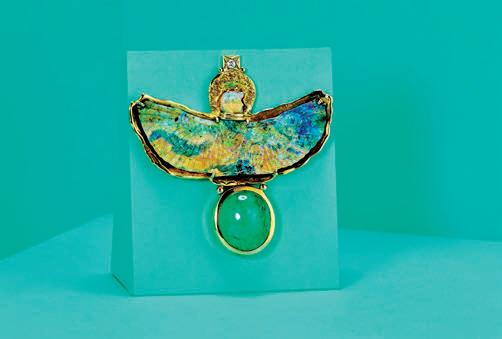
British jeweller Elizabeth Gage turned to Horus for her exquisite Solar Prince Pin. The pro le of the Egyptian sun god sits above outspread wings made from boulder opal that zzes with myriad colours when caught by the sun’s rays. Beneath the wings hangs a 27ct cabochon emerald, while above a single brilliant-cut diamond is the jewel in a ‘halo’ of granulated yellow gold. Feel free to pin it on, in exchange for £46,500. elizabeth-gage.com
↓
It was way back in the year 2000 that the forward-thinking folk at Compass Box made it the rst Scotch whisky producer in history to place the image of a woman at the centre of its label. In 2023, the distillery decided to make it an annual occurrence and, this year, a special edition from its Hedonism range featuring an image of Inverness-born Avengers and Doctor Who actress Karen Gillan is available. The 38-year-old star is depicted in a preRaphaelite style portrait by artist Emma Hack. The blended edition is on sale now, priced at £89.95. compassbox whisky.com


Back in the 1950s, British Racing Motors – better known as BRM – had plans to produce six examples of its spectacular P15 V16-engined Formula One car, but only completed three due to the team being mothballed in 1974. Fast forward to 2019 and the descendants of the late team owner Sir Alfred Owen set out to revive BRM and to build the three outstanding cars using original chassis. Two have now been completed, with one being retained by BRM for demonstration use and the other going to leading racing car collector Richard Mille. That leaves one last chance to buy one of the most evocative cars in Grand Prix history –although it does carry a seven- gure price tag. Fancy it? Contact simon@britishracingmotors.co.uk










→
Luxury car customisation house
Over nch has rekindled a partnership it rst entered into with blue-chip gun maker Holland & Holland in 2010 to create an all-new H&H Range Rover SV. Just 25 of the exquisitely appointed oroaders will be produced in celebration of Holland & Holland’s top speci cation shotgun, The Royal. Amid myriad bespoke features you’ll nd a cabin inspired by the gun’s aesthetics and tted with electric tables and a concealed fridge. In the boot, meanwhile, there are two companion chests for storing booze, crystal champagne utes, cigars, plates and cutlery – plus, of course, a couple of shotguns. Price depends on exactly how many ‘extras’ are speci ed. But go for everything and add a pair of ‘Royals’ on top, and the tally could easily hit £750,000. over nch.com



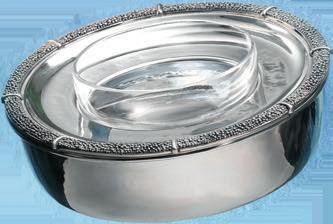
Anyone with a penchant for top class wines who also fancies themselves as a modern-day Hercule Poirot might want to head to London Victoria on 29 June, magnifying glass in hand. That’s when wine merchant Berry Bros. & Rudd will take-over the British Pullman for an ‘immersive murder mystery experience’. Sleuths will down a glass of Leclerc Briant champagne to sharpen their instincts before pulling away, with a ve-course dinner to follow. Guests will be challenged to discover ‘whodunnit’ before pudding. Book through bbr.com – or call 0203 301 1585 to reserve one of two private compartments at £4,000.
Birmingham-based writing instruments maker Yard-o-Led might be thoroughly British, but that didn’t prevent it from celebrating China’s ‘year of the re horse’ with this covetable fountain pen. The latest in a line of Zodiac Collection special editions, it features a Sterling silver cap and barrel chased with the image of a horse in full stride, complete with a tail of ames that engulf the body of the pen in an expression of speed. The cap is embedded with a single red gemstone, while the base of the barrel is decorated with a circle of engraved horses within an inlay of black enamel. Just 126 of the £1,900 pens will be available. Choose from ne, medium or broad 18 karat gold nibs. yard-o-led.com

↗ ON THE HOOF
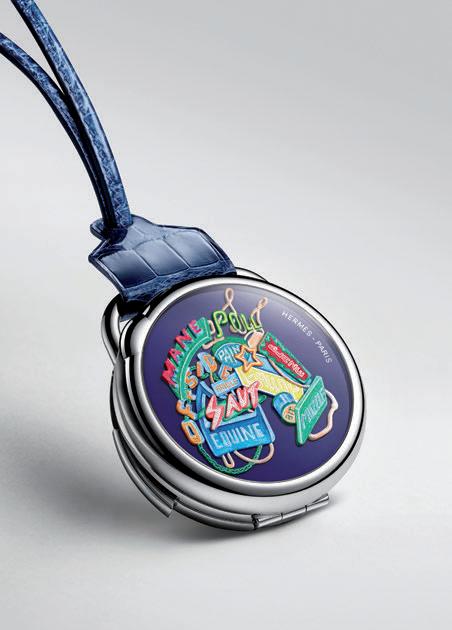
Strong colours and vivid imagery are the signatures of Athens-born artist Elias Kafouros, making him an obvious candidate to create fresh designs for the silk scarves which have been synonymous with Hermès since 1937. A er being commissioned in 2013, Kafouros looked to the brand's roots as a saddle and harness maker before producing 16 sketches, which have since been used on scarves, ashtrays and now on this limited edition white gold pocket watch. Made in just three examples, the Arceau Chevaloscope Neon features a hand enamelled cover decorated with images of neon signs arranged in the shape of a horse’s head. £POA. hermes.com


← BOMBAY MIX
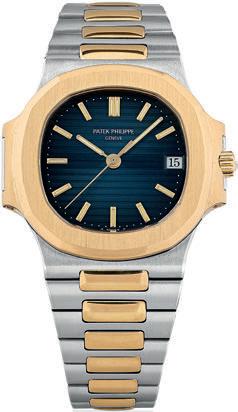
Indian auction house AstaGuru was established in Mumbai 18 years ago to specialise in art, antiques, and collectibles – and has since grown to hold 40 percent of the country’s market share in the ‘digital- rst’ saleroom business. AstaGuru has now landed in London, where its rst online sale (dedicated to watches) will be held next month under the expert eye of Tim Bourne, an auction house veteran who previously worked at Sotheby’s before moving to Bonhams to manage the Hong Kong watch department. AstaGuru’s most recent timepiece sale in India was led by a bi-metal Patek Philippe Nautilus at $55,500 (pictured) and a diamond-set Breguet cocktail watch, which sold for $54,806. The inaugural London auction takes place on 27 May. astaguru.com
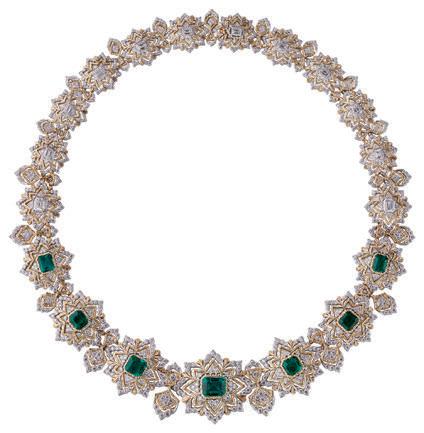
← BOBBY DAZZLER
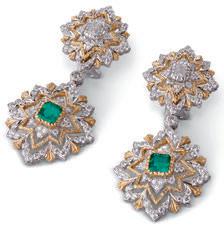

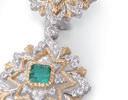




Italian jewellery house Buccellati brought a dose of Latin air to last month’s TEFAF Maastricht fair in the Netherlands by unveiling this dazzling Mosaico necklace, which revisits an aesthetic introduced in the 1970s by Gianmaria Buccellati, the most creative of founder Mario’s four sons. The original necklace was made in white gold set with tourmalines and diamonds – now the house has reinterpreted the design as a parure (necklace and pendant earrings) featuring diamonds and emeralds set in a yellow gold framework. The unique pairing is ‘POA’ (if you have to ask...) buccellati.com

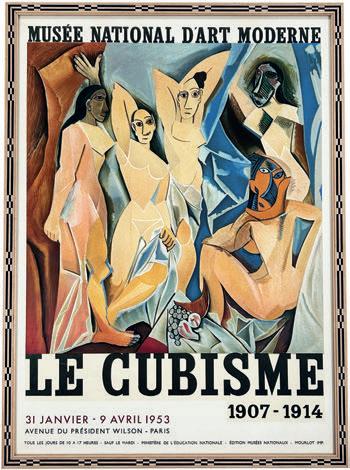
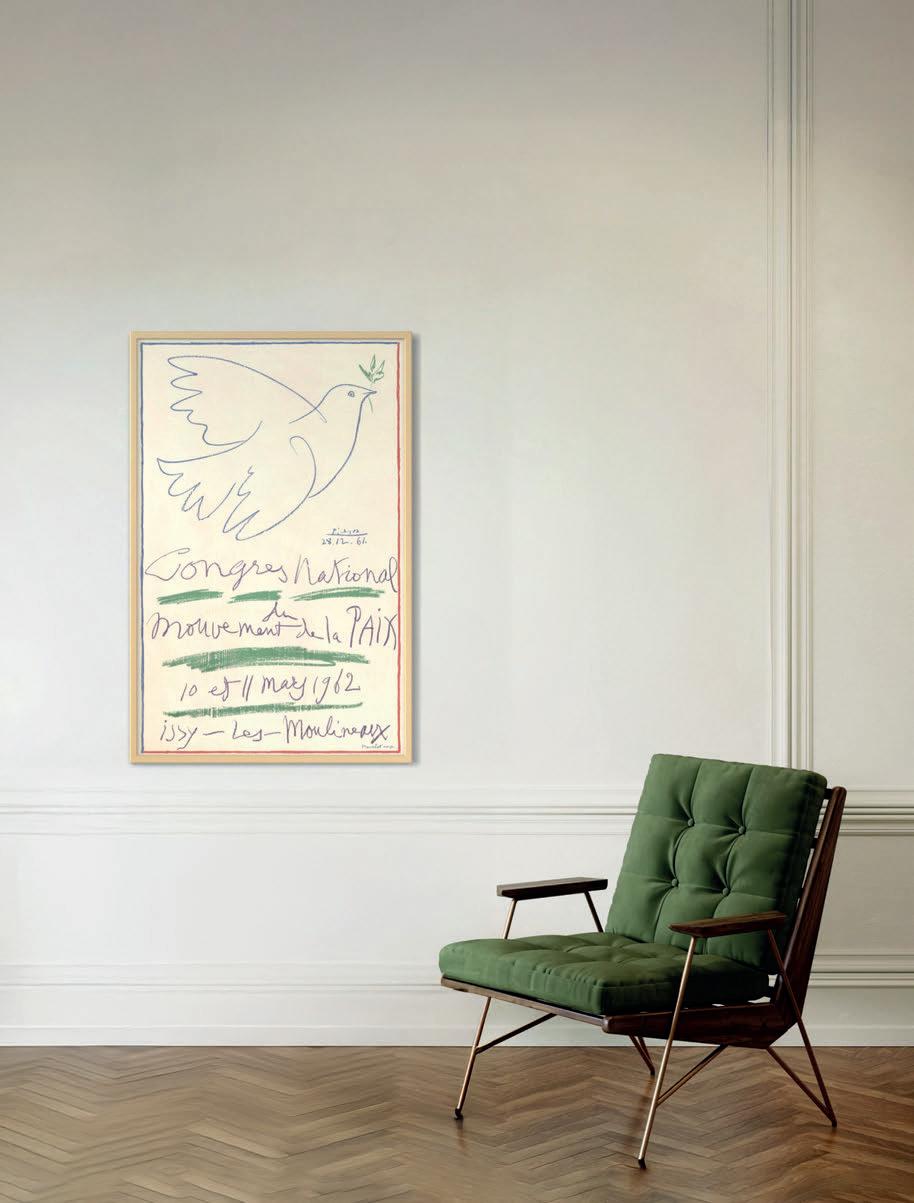
At rst glance the newly-opened Hommage Gallery on Chelsea’s King’s Road looks like a place that sells posters. Which it is, but not just any old posters – these are special old posters, the original advertising bills for exhibitions staged by some of the most celebrated artists of the 20th century. The top quality pieces were hand-designed by the artists they promoted and printed by leading lithography press Mourlot of Paris. Posters announcing exhibitions by and from Georges Braque to Joan Miró are all up for grabs, plus a selection which form an exhibition dedicated to Picasso that’s running until 19 April. Prices start at less than £400. hommage-art.com

←
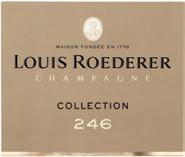
‘Exuberant and eccentric, elegant and re ned’. No, we’re not talking about Angela Rayner, but Camille OlryRoederer, the ‘resourceful widow’ who championed the Louis Roederer champagne house from 1932 to 1975 following the death of her husband, Leon. Now current CEO Frederic Rouzaud – the seventh generation family member to run the business –has created a selection of still wines in honour of his great grandmother, each made from grapes harvested from single vineyards. Named ‘Hommage à Camille,’ reds and whites are available. Approx £180 bottle, more at louis-roederer.com
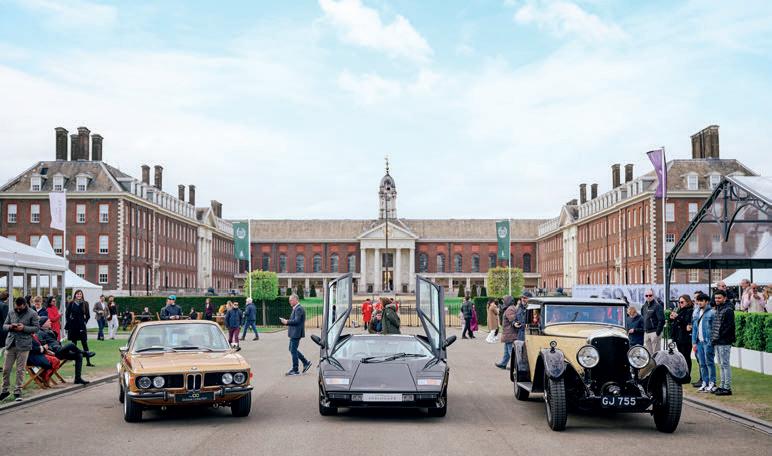
It’s 20 years since the inaugural Salon Privé car show took place in the grounds of the genteel Hurlingham Club – but it outgrew that venue and now takes place in and around the pristine lawns of the Royal Hospital, Chelsea. Special features for 2026 include displays by hypercar maker Koenigsegg, celebrations of the Porsche Club GB’s 65th anniversary, the Lotus Drivers’ Club’s 50th and a ‘curated colours’ supercar show. And don’t forget ‘Ladies Day’ on Friday. 16 to 18 April, salonprivelondon.com ■



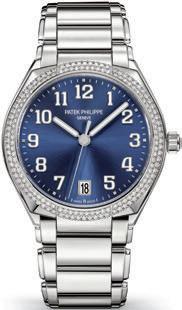
PATEK PHILIPPE ↘
Twenty-4, 36mm, steel, diamond set. £26,550, patek.com
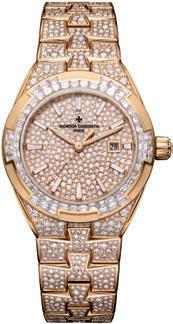
↗ VACHERON CONSTANTIN
Overseas High Jewellery, 35mm, white or yellow gold, diamond set. £POA, vacheronconstantin.com
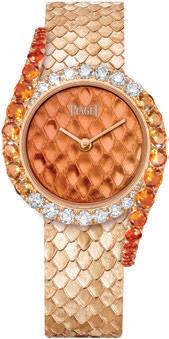
↙ PIAGET Limelight Gala, 32mm, rose gold, cognac diamonds. £POA, piaget.com
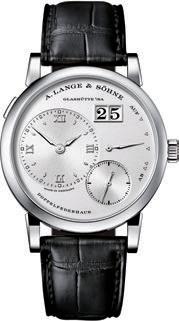
↙ A LANGE & SÖHNE Lange 1, 38.5mm, white or pink gold. £43,600, alange-soehne.com
↗ JAEGERLECOULTRE
Reverso Tribute Chronograph, 49.4mm X 29.9mm, pink gold. £36,600, jaeger-lecoultre.com
Elegant and ever more sophisticated cocktail watches for him and her are back in the limelight

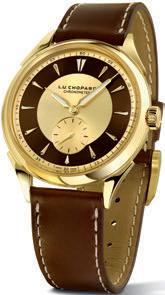
↖ CHOPARD L.U.C Qualite Fleurier 20th Anniversary, 39mm, ethical gold. £29,500, chopard.com


↑ IWC Porto no
Automatic Day & Night, 34mm, silver-plated and 18k 5N gold, diamond set. £15,700, iwc.com
↖ FEARS
Arnos Pewter Blue, 40mm x 22.6mm, steel. £4,350, fearswatches.com
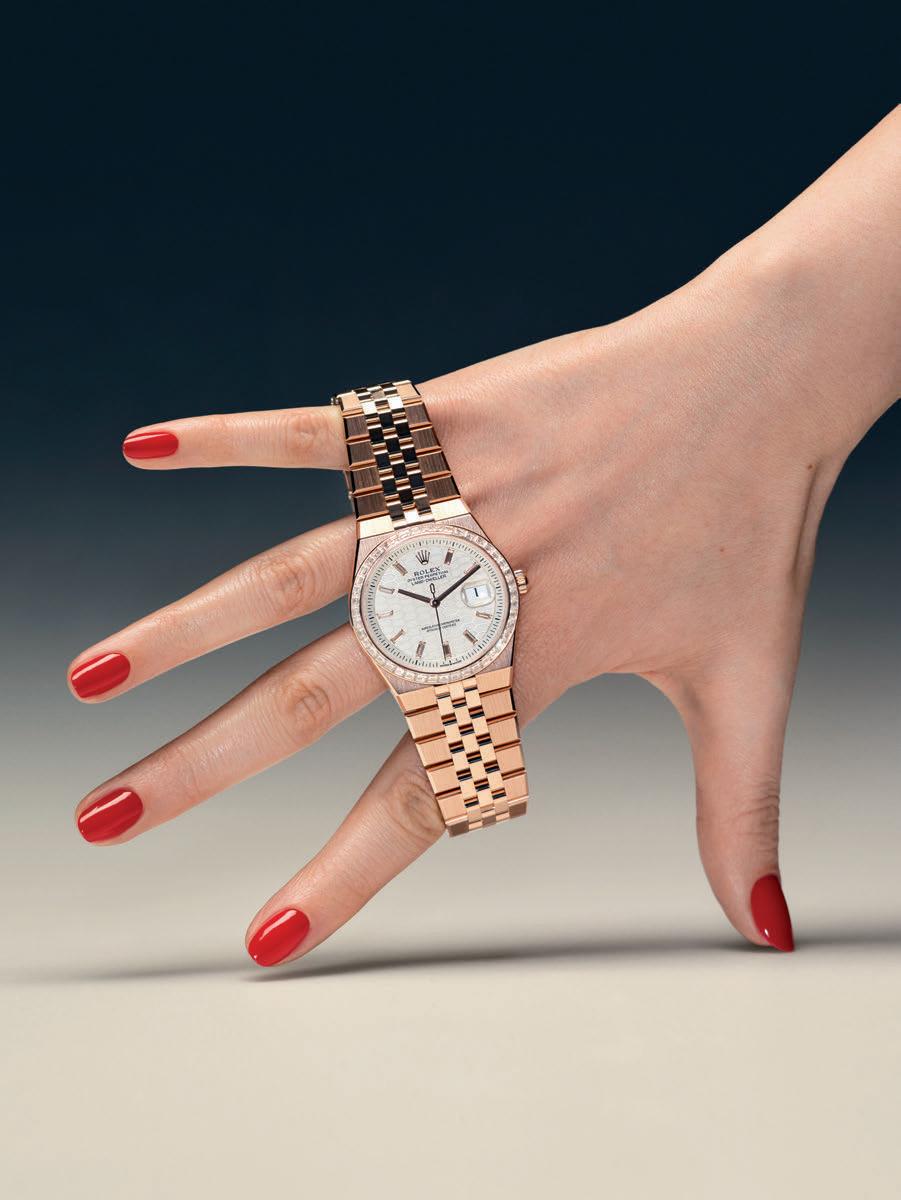
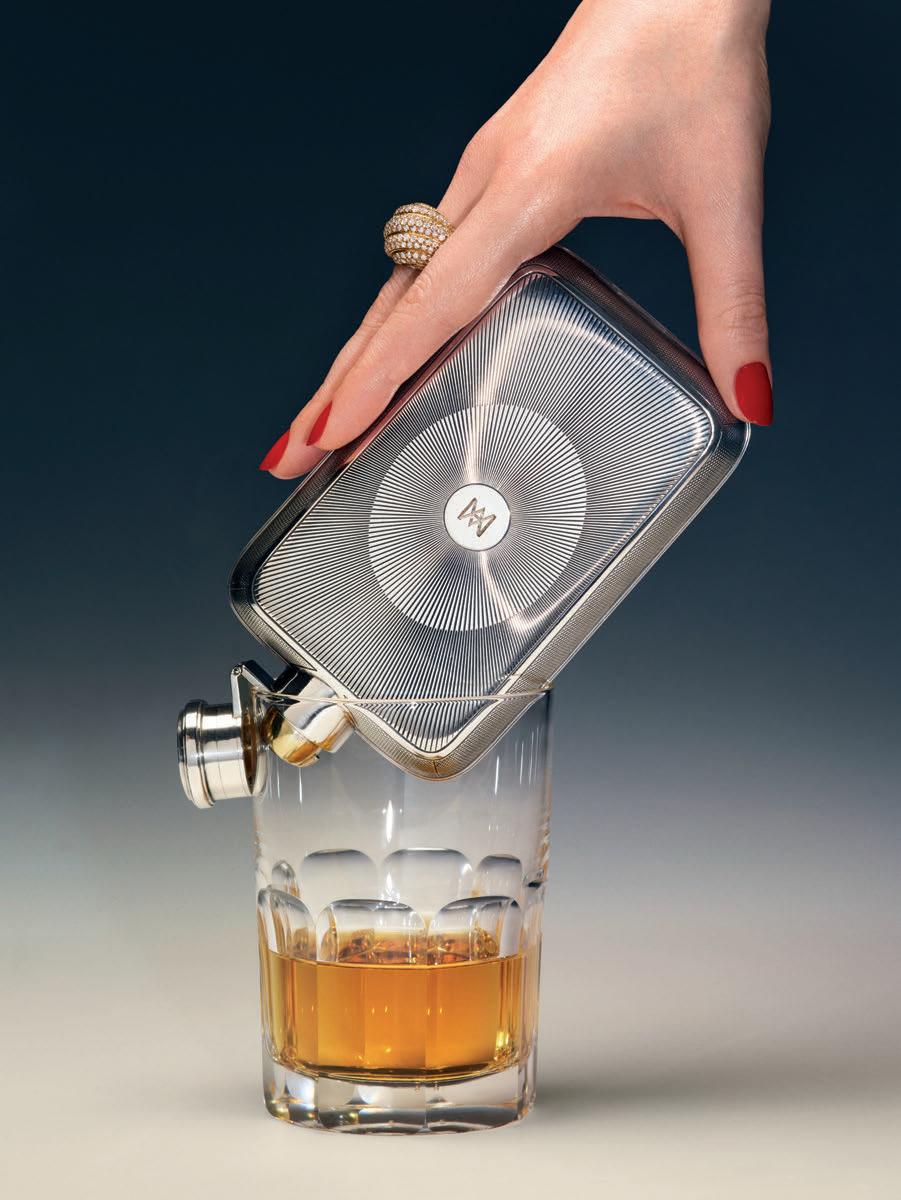
Tucked between Chelsea and Pimlico, Bentleys has become a haven of eclectic gems from a golden age of craftsmanship, says Simon de Burton
If you’ve ever walked along Chelsea’s Lower Sloane Street, chances are you’ll have stopped to peek at the temptingly decorated window of number 91: the home of Bentleys, the celebrated purveyor of beautifully preserved objects from a golden era of cra smanship.
Founder Tim Bent set up the business during the 1980s as a humble stall on Notting Hill’s Portobello Road Market, opening his rst shop on Chelsea’s swish Walton Street in 1996 and moving to the current premises around a decade ago.
‘Eclectic’ is perhaps the best word to describe the variety of objects that can be found in the shop, a glittering, bijou space that gives the feeling of stepping back to a time when quality really was considered all-important.
‘I went straight into work a er leaving school, initially for a Cambridgeshire estate agent based near where I lived,’ says Bent, 59. ‘The rm also had an auctioneering arm, and that’s what got me interested in buying and selling these sorts of objects.’
He believes the demise of local events such as tabletop sales and even jumble sales – once a rich source of interesting nds – has reduced availability, although the arrival of the internet has made it easier to track down items that might previously have been impossible to nd.
The shop itself is also a vital tool for attracting the right objects. ‘We get plenty of passing trade, and people regularly call in to o er us items that their parents or grandparents might have bought when the sort of things we sell were rst recognised as collectables. There are also still instances of people buying houses and nding, say, a Louis Vuitton trunk that’s been le in the attic.’
‘We get plenty of passing trade and there are still instances of people buying houses and finding, say, a Louis Vuitton trunk that’s been left in the attic’
Tim Bent, Bentleys
In the 30 years since the opening of that rst Bentleys shop, the business has developed into the go-to source for everything from vintage Louis Vuitton trunks to luxury smoking accessories; from sterling silver cocktail shakers to campaign furniture and exquisite scale models.
Inevitably, the market has changed during those three decades. ‘It has de nitely become harder to source things, because there was a period when so much was sold that a lot of good stu disappeared from the market,’ says Bent.
Bent says the buyer demographic has changed too, with more than half of his customers now coming from overseas. ‘Americans were once core, but now interest in the sort of things we sell has spread much further, most notably to Asia, and today’s buyers o en take a di erent outlook than those of a few years ago.
‘In the old days, for example, we would probably turn down buying a lovely old leather suitcase if it had someone’s initials painted on it. Now people can be appreciative of that – not only if the initials happen to be theirs, but also if they help them discover who previously owned it.
‘An object that’s beautiful in itself is always desirable. But it’s even better if there’s a story to go with it.’ ■
bentleyslondon.com
Former auction house specialist, art advisor and founder of
The Eye of The Collector Nazy Vassegh explains how modern salerooms are about a whole lot more than just a nod and a wink
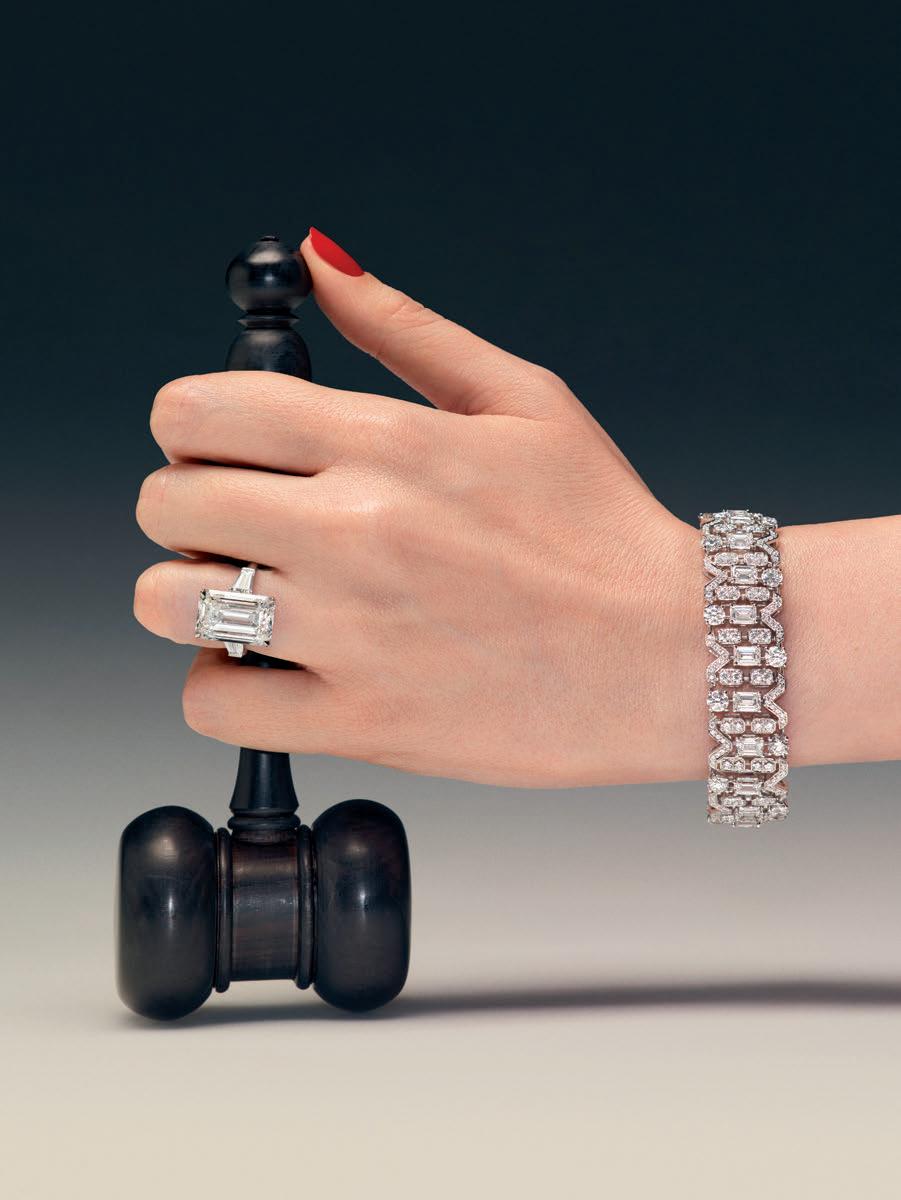
he world of the auction house is always in ux. In many ways it is in the nature of the business as new artists appear, new collectors emerge and new technologies make processes simpler and information instantly global.
In the old days, works were sold with the nod of the head, a tap of a hat or even a wink. Auctions were usually populated by a relatively small group of bidders, complemented by an even smaller number of saleroom sta bidding on behalf of clients on the phone.
Today, billions of dollars are passing hands. While in the old days deals were done on a handshake and a set of standard terms and conditions, we now live in a world of deal ow, structured nance and online bidding.
The latter has been the biggest game changer, signi cantly transforming the auction industry. It’s accessible, convenient and less opaque, with comprehensive listings of works, good imagery, condition reports and videos.
This transparency has signi cantly increased the participation of youthful bidders, including Millennials and Gen Z, with all auction houses reporting growing numbers of online bidders last year, and younger bidders being the number one growth area.
Another signi cant change around higher-end works has been driven by the growth in private sales. If you have a work that’s in demand, you can now o er it through an auction house without it ever going to auction.
Private sales departments can o er all the contacts of an international saleroom without the risk or visibility of sending a work across the block. The ‘auctioneers’ are in essence becoming brokers.
As a buyer you don’t have the risk of being outbid, and grati cation is instant. You want it, you pay for it, you get it. For the auction houses it provides steady income with lower associated costs.
It doesn’t work for everyone, though. Seasoned collectors may prefer their chances of selling exceptional works in the traditional auction arena. This age-old spectacular allows experts from around the world to pit their collectors against each other, o en in high-pro le
evening sales, for a gladiatorial battle. Guarantees – usually o ered by auction houses when there is competition in winning the business – are demanded more and more by the owners of blockbuster lots as part of their selling package.
The auction houses must analyse the risk vs opportunity here, and o en look to third parties to help mitigate their risk by entering into an irrevocable bid agreement. These bids guarantee to buy key lots at an agreed price below the low estimate.
If the work goes to another bidder above this guaranteed reserve, then the commission is split between the auction house and whoever placed the irrevocable bid. For those placing bids like these it’s like gambling on the potential upside of a lot, with the worstcase scenario being landing the work at a good price –so it’s mostly the realm of dealers.
If a work ‘ ies’ they make money without investing capital. For the auction house, it mitigates risk – popular with the business heads running the company, and popular with vendors as it guarantees a sale (albeit at a slightly reduced level). These bids are highlighted in the catalogue with the symbol ¥.
Auctioneers’ commission rates remain a contentious issue, with the big houses increasing fees to buyers and sellers in an attempt to cover escalating costs. Generally the buyer’s premium is higher than the seller’s commission. One auction house that recently tried to change this reversed the decision not long a erwards.
ATTEND
Pre-sale viewings. They are free and open to the public.
DO YOUR RESEARCH
Authentication is important and greatly affects value.
Read listings carefully and learn to interpret catalogues – as an example, ‘attributed to’ often means the auction house has been unable to prove authenticity.
STAY INFORMED
Make the most of monitoring apps and Google alerts –although some argue they can confuse things, I find them useful.
ASK FOR HELP
If you’re not an expert, take guidance from someone who can help you navigate auctions and the art world in general. It will pay off financially.
AND LASTLY...
If it seems too good to be true, avoid.
But the newest kid on the block is priority bidding – a bidder guarantees to buy a work at auction at an agreed price (usually around the low estimate) in return for a reduced buyer’s premium.
This guarantees the auction house a sale (again popular in a nance-led operation) and it’s popular with sellers as it mitigates their risk of being le with an unsold work.
All of which demonstrates how much auctions have changed in the last two decades, driven by the changing art market, geographical factors, technology and the evolving demographics of collectors. There is much more global participation and greater diversity, which shows in the breadth of works now sold. You are no longer con ned to the traditional categories of European painting, furniture and classical decorative arts.
With the growing global art market and an expanding global collector, auction houses have grown and diversi ed their o ering, championing new categories like luxury handbags, Chinese contemporary art, contemporary design and vintage cars.
Is it good to buy at auction? I think what is good is the breadth and depth auction houses provide. They are the perfect environment for seeing a variety of works, training your eye and broadening your knowledge.
Honing your eye and building your con dence is key.
Sotheby’s is the temporary custodian of some of the world’s most rare, remarkable and coveted art and objects.
Our global specialists are connoisseurs and market experts in 40 countries and 70 collecting categories. They will be your guides, exploring the signi cance and journey of an extraordinary work with those who know it best.
Your weekly dose of wonder is available now.

Standout artworks for serious collectors from the forthcoming May sales
MAGRITTE at Bonhams
‘I am trying to discover what it is in a tree that belongs to it speci cally, but which would run counter to our concept of a tree.’
Painted in 1935, the giant leaf became one of the Belgian surrealist’s most recognised motifs. Le Miroir Vivant by Rene Magritte, 20th and 21st Century Art evening sale at Bonhams, New York, 13 May.
Estimate $1.2–2m


ANDY WARHOL at Phillips
Hollywood siren Marilyn Monroe had not been gone long before pop art supremo Andy Warhol began to immortalise her, initially with the seven-foot screenprint painting Gold Marilyn Monroe, now belonging to MoMa. 4 Colored Marilyns (Reversal Series) by Andy Warhol, Modern and Contemporary Art, Phillips, New York, 19 May. Estimate $4-6m

BROWN at Christie’s
First recognised by Charles Saatchi in 1997, Brown has enjoyed a stratospheric career. The more one looks at her trademark combination of the gurative and abstract, the more one sees. Want more? Her solo show Picture Making runs at Serpentine South until 6 Sept. Bedlam Vacation by Cecily Brown, 21st Century evening sale at Christie’s, New York, 20 May. Estimate $5-7m

MARK ROTHKO at Sotheby’s
Investment banker Robert Mnuchin retired from Goldman Sachs in 1990 to pursue his lifelong love of art as a New York dealer. Following his death last year, 24 works from his collection (including two Rothkos and a de Kooning) will come under the gavel. No. 1 by Mark Rothko, Sotheby’s, New York, 14 May. Estimate $15-20m ■

Since 1986, Scott Dunn has transformed travel into an art form.
With our seamless service, insider insight and carefully curated collection, we create bespoke luxury holidays that deliver one-of-a-kind experiences. Delve deep into destinations on privately guided tours, enjoy exclusive access to the world’s most sought-after sites and embark on journeys that are truly out of the ordinary, each one designed uniquely for you.
From luxurious resorts to secluded lodges, our Travel Specialists will find your perfect stay. ®























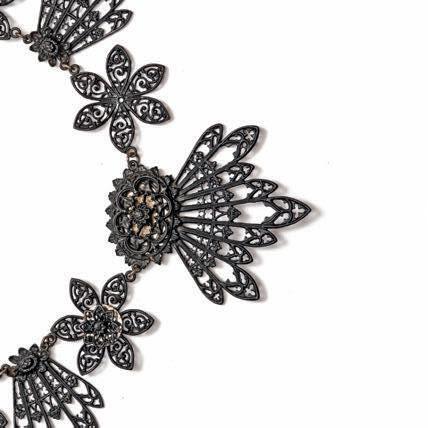

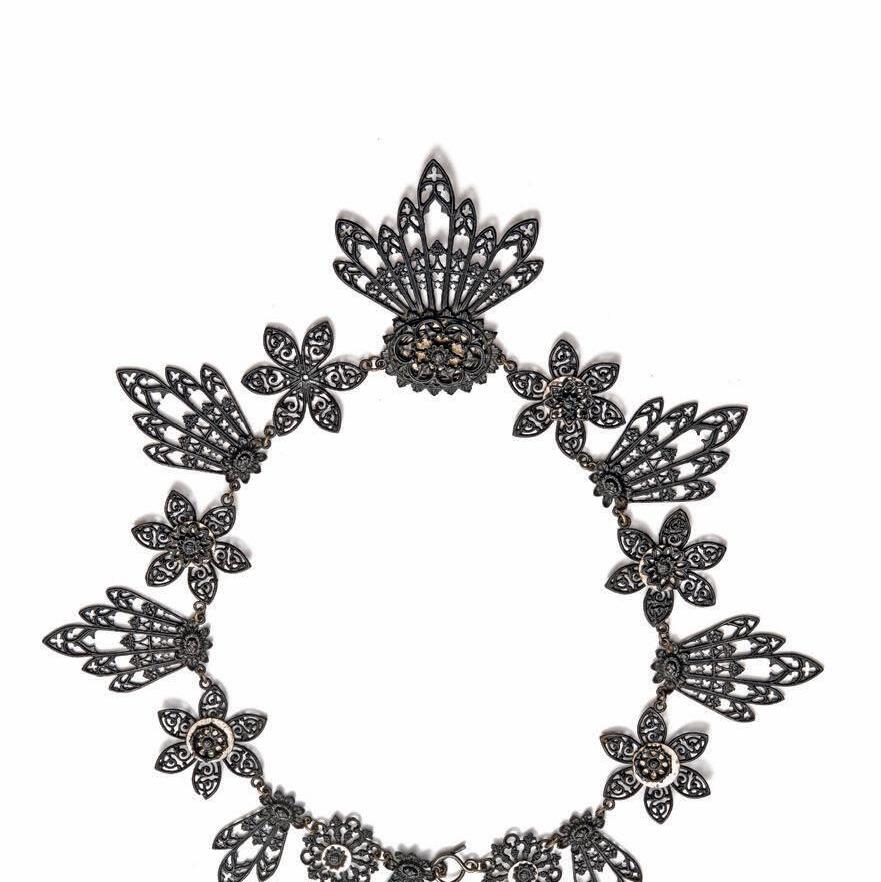
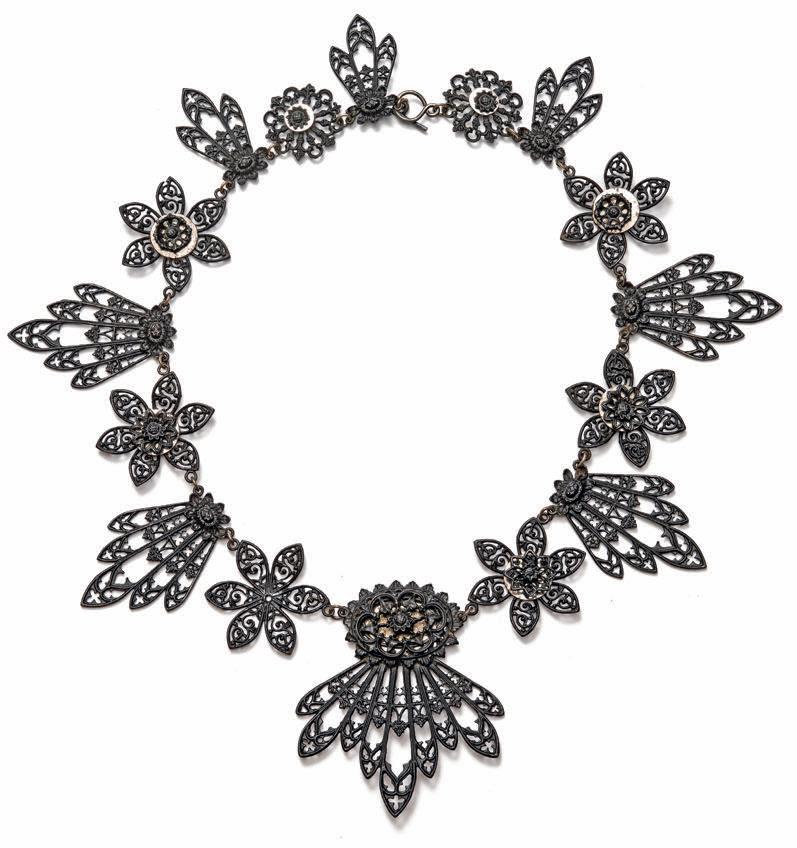
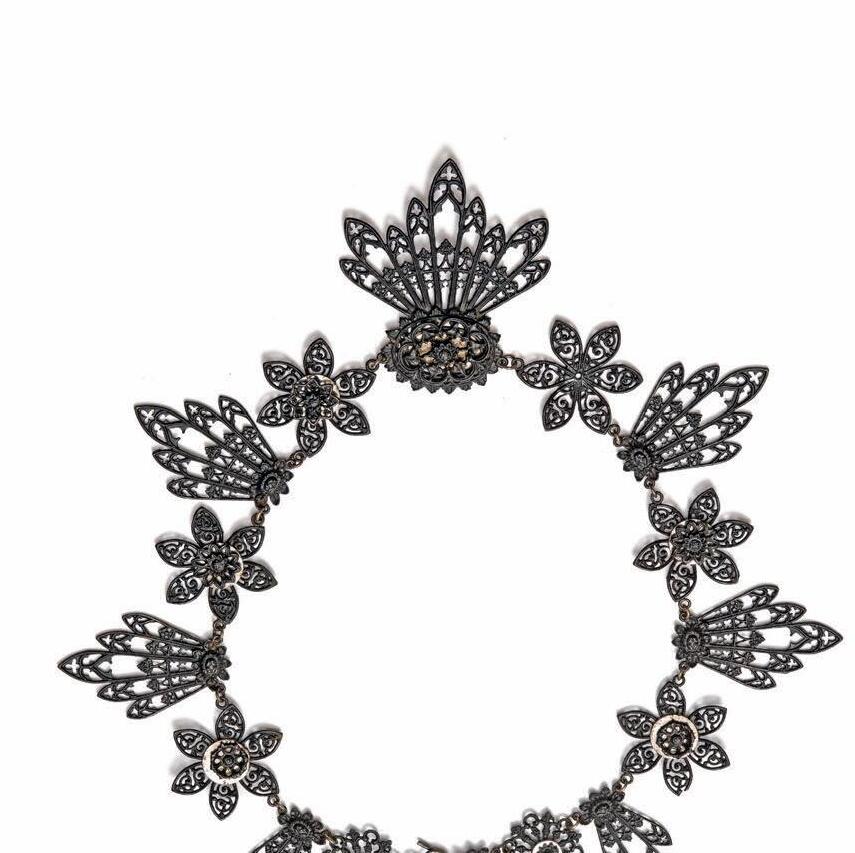
Three collectors reveal the objects that captivate them – and the very different philosophies behind their passions

‘I run CTP, a 100-year-old logistics and shipping company based in Hamburg. In 2021, I decided the period of globalisation had paused and, like other shipping companies, we had been investing heavily in real estate. Not wanting to have too many eggs in one basket, I went looking for alternatives and decided the spirit of collecting in some ways re ects the company.
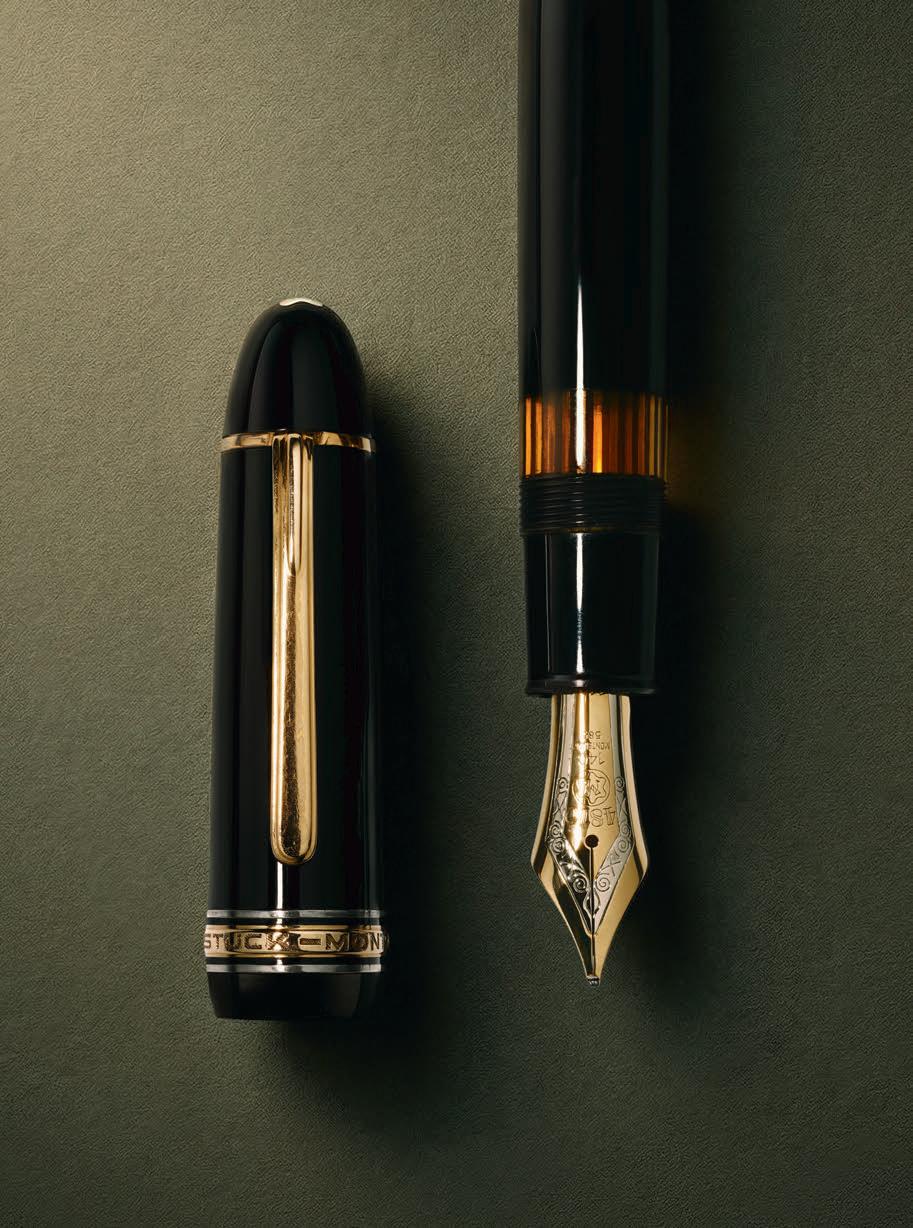
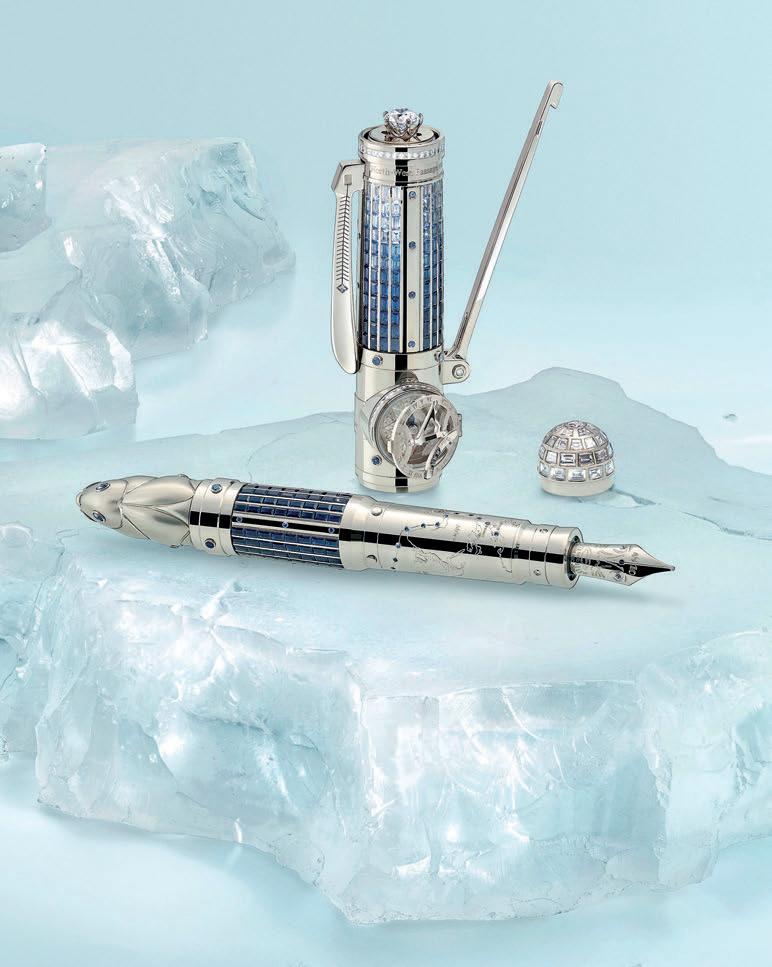
For many years we had been buying Montblanc Meisterstück pens in batches of 20 or 30 to present to customers, and in 2012, the manager of the brand’s Hamburg boutique told me about a very special limited edition from the High Artistry collection.
It was a Serpent model decorated with an entwined snake made from precious metal and jewels, and with a cap set with a diamond. It cost €800,000.
It led to a meeting with Montblanc’s then-CEO, Jérôme Lambert, which turned into a partnership and the start of our pen collection (which now runs to around 1,500 pieces). We have an example of every Montblanc pen made since 1992, and the collection’s value is now in the high double-digit millions.
We have worked with Montblanc to contribute to new designs, including one with a Van Cleef & Arpels gem and a diamond-set spider, which can be removed from the pen and, for example, added to a bracelet as a charm.
The pens are a strategic investment because they are genuine limited editions and we only buy examples where the hard value (the value of the precious materials) covers the majority of the cost. An edition of 300 may take two or three years to sell out, during which time the prices rise ve to ten percent a year, according to in ation.
A few years ago, we took six Montblanc pens in exchange for a Kandinsky painting worth around €240,000. The pens are now valued at almost £1m.’

‘I came to tribal art completely by accident. I was working at Sotheby’s in London as a specialist in classical antiquities, Islamic art and carpets when I was contacted by the head of the tribal art department in New York. They were planning a branch in London and, because so many major collectors and collections are based in France and Belgium, they needed a French speaker. So I took the job, started to learn about the subject and fell in love with it. I became head of the department and stayed with Sotheby’s until 2002, at which point I started my own business in Paris, which is the strongest market.
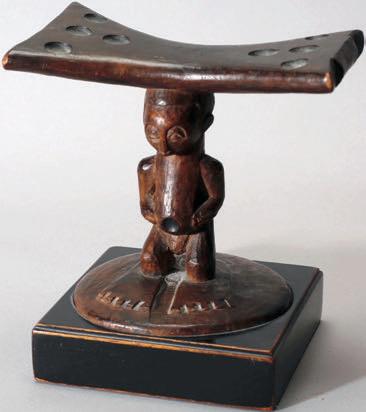
My particular love is for African and Oceanic art, and while people o en think tribal art is all about scary masks and fetish gures – which are a very important aspect of it – I am more drawn to some of the beautifully made domestic objects.
Probably my two favourite pieces are both neck rests. One is a very simply but beautifully carved piece made in Tonga in the late 18th or early 19th century – it has a really lovely patina. The other is an anthropomorphic neck rest made by a member of the Nsapo Nsapo tribe from the Democratic Republic of Congo. Both are for sale: the rst is priced at €12,000 and the second at €24,000, but it’s possible to nd good and interesting examples of tribal art for as little as €1,500.
It’s important to consider that by the turn of the 20th century, many, many pieces were made speci cally to be sold to tourists. They can be very cheap today, but they are of no interest to true collectors and don’t really have a resale value. The pieces to look out for are the older ones made by tribes for their own use. Prices for the best pieces can be huge. In 2024, Christie’s sold a Fang reliquary head that had not been on the market since before WW2 for €12.6m – a world-record price for tribal art.’

‘My father is the Swiss art dealer Bruno Bischofberger, so I grew up surrounded by amazing paintings by artists from Andy Warhol and Jean-Michel Basquiat to Yves Klein and Julian Schnabel. I studied art history at New York University but ended up becoming a jeweller in 2002, launching my debut collection four years later.
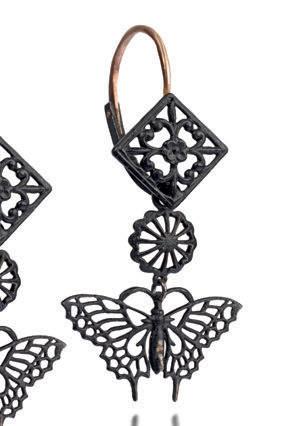
The jewellery I really love speaks of its time, but I couldn’t a ord most of it when I started collecting – then I discovered Berlin ironwork. It was rst created in the early 19th century, notably at the Royal Berlin Foundry when the Prussian royal family were encouraging citizens to give up their gold and silver jewellery in exchange for iron to help fund the country’s e orts in the Napoleonic wars. I started hunting for pieces and eventually found a pair of earrings, which I later matched up with a necklace I spotted on Instagram.
To me, collecting is about enjoying a process, not satisfying an immediate desire. I enjoy learning more about this incredibly graphic, neo-Gothic, and, in some ways, bizarre jewellery. I went to see the V&A’s study collection and discovered that Berlin ironwork became high fashion during the Victorian era because it tted with the Queen’s decision to wear only black a er the death of Prince Albert.
Germany and the UK are the best sources, and although I keep an eye on the auctions, they are not always the best places to buy. Really great pieces tend to yo-yo from dealer to dealer.
My least expensive piece is a choker with a cross, which cost around £800. Bracelets o en come in sets, but it’s possible to nd individual ones at good prices. I like to wear the pieces I own, but you have to be careful – many of them are held together with tiny links and, because cast iron is extremely brittle, it can shatter if you drop it.’ ■


MasterLight by TM Lighting | International art lighting specialists
British design, craftsmanship, and manufacture of award-winning, patented products illuminating the world’s most exceptional interiors and private art collections



Filmmaker Guy Ritchie has teamed up with the Chase family to shape a distinctly English single malt, says Mike Gibson
n empty distillery is a sad thing. But when Chase Distillery closed its doors in the bucolic Herefordshire countryside, it was not something to mourn for its founders. In fact, it was a gilt-edged opportunity.
The Chase family had sold the site and the brands that had made it a household name – Chase Vodka and Chase Gin – to drinks giant Diageo in 2021. But when Diageo moved Chase’s operations to Scotland last year, the family made plans to buy back the distillery – along with just under 500 casks of whisky they had been laying down since 2012.
Back in the family’s hands, and renamed Rosemaund Farm Distillery, there was a new mission for co-founders James and Lorna Chase: to blend and bottle those casks to make an English single malt in collaboration with blender and whisky-industry maven Tristan Stephenson – and later, legendary lm and TV director Guy Ritchie.
The latter happened by chance. James and Lorna were discussing the project with Leonid Shutov, owner of Soho restaurant Bob Bob Ricard, who
‘Rosemaund feels different: its tied to the land, rather than trying to copy what’s come before’
Guy Ritchie
felt an introduction would be a good idea. ‘We met Guy over lots of whiskies and talked about the love of cra , the English countryside, and doing things the right way,’ James recalls, when I meet him and Lorna at the distillery on a brisk March morning.
‘I rst developed a strong interest in whisky when I ran my rst pub,’ says Ritchie. ‘Since then, I’ve made it my business to learn more. What I’ve come to appreciate most is how much character whisky picks up from where it’s made and matured.’
If Guy Ritchie was going to be involved in a whisky, it probably should be an English one. From The Gentlemen to Snatch , the majority of his work has captured English personalities, o en English idiosyncrasies, from the inner city to beautiful estates in the country. ‘What interested me was that English whisky is still young and nding its identity,’ he says. ‘Projects like Rosemaund feel di erent because they’re tied to the land and to farming, rather than trying to copy what’s come before. It didn’t feel manufactured; it felt grown out of the land around it.’
‘I think about a year passed chatting and talking,’ says James, ‘and then Guy came on board and we established the company and got the WildKitchen set up.’ Ritchie’s fabled outdoor cooking suites, which he rst developed at his Ashcombe Estate home in Wiltshire, have become cult hits for businesses and individuals looking for a luxurious, elemental outdoor cooking and dining space with no expense spared.
Made to sky-high speci cations from wrought iron and steel and with woodand charcoal- red barbecue stations, Rosemaund’s WildKitchen seats 24 guests for communal dining events, with the whole thing encased under canvas for cosy evenings and open to the elements in sunnier months. Feasting dinners are paired with tours and tastings, all of which have become a cornerstone of the in-person, experiential side of the Rosemaund brand.
We discuss this over grilled bavette steak with Béarnaise sauce, coalroasted potatoes and Tenderstem broccoli, cooked for us in the WildKitchen by distillery manager Will Skinner. The heat o the grills keeps the chill of the early-spring a ernoon at bay. ‘With most people who come to the WildKitchen, one is a whisky lover,

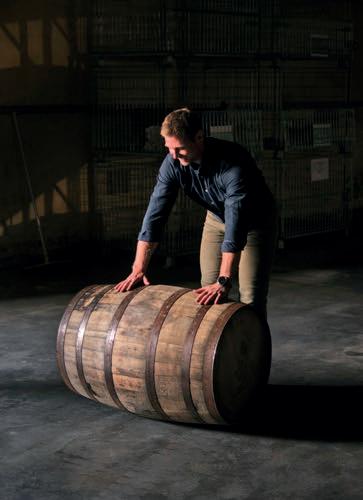
first ten-year-old single malt was released last year in a limited edition of 2,700 bottles; the distillery is laying down new casks this spring for the first time since 2021


and one isn’t,’ says Lorna. ‘The challenge is to get them to love it as well. O en people will come here not really thinking they’re a whisky drinker, but leaving feeling like they are. That means so much to us – to try and welcome a new generation of whisky fans.’
What unites English spirits producers is harnessing a sense of place, having the visitor experience front of mind, and the knowledge that a local crowd can be a cornerstone of success. It’s something that was a huge part of the Chase Distillery story. ‘It was such a community in those days,’ Lorna says. ‘We welcomed over 10,000 visitors a year; we were the number one visitor attraction in Herefordshire. People would walk here with their dogs for a gin and tonic. When it closed its doors, it was a sad time for local tourism.’
The family cut their teeth on drinks that were quick to distil, bottle and release – the opposite end of the scale to Rosemaund, as an aged spirit blended from a relatively small number of casks. The inherent collectability of Rosemaund, though, was an advantage when the brand’s ten-year-old single malt was released last year. Limited to just 2,700 bottles, it promptly sold out via ballot, with a small number also available at retailers including The Whisky Exchange. ‘People had seen the whisky casks ageing here,’ says Lorna, ‘so they did know in certain circles that we were making whisky. And it’s a rst release, so you’re going to get a level of interest because people buy to collect.’
A premium whisky that is released in small batches and has an element of scarcity may be a smart recipe for nancial success, but producers generally want people to enjoy it, too. ‘The test will be, do customers come in again and buy another bottle because they drank the rst, or do they want a collection?’ says James. ‘And then when the bars reorder, do they buy another bottle because they’ve sold through the last one? All the bars we work with have been countryside hotels, and the bartenders really got behind us because for them, it’s supporting something local.’
‘It was made to a standard rather than a price,’ says Lorna, when I mention Rosemaund’s distinctive bottle shape. ‘We were very inspired by Somerset perfume Ffern, which celebrates the seasons and releases perfumes in a ballot. In terms of whisky, Da mill was a big in uence too. They are farmers rst, same as us.’
This spring holds more exciting developments: not just Rosemaund’s second release, but also the distillery ring up the stills once again and laying down new casks for the rst time since 2021. ‘The Chase family have farming in their blood and a very clear vision for what English whisky could become,’ says Ritchie. With their vast experience, a new team, and creative nous in the form of a famous collaborator, you wouldn’t bet against them. ■
Enter the ballot for Rosemaund’s second release at rosemaund.com; buy the rst release at thewhiskyexchange.com (£125)

When starting a whisky collection, you need to know why you’re doing it. Are you collecting because you love the spirit or is your goal to buy bottles that will appreciate in value over time? Or maybe you’re looking for bottles to pass on to the next generation. These thoughts will help steer you to the right whisky for you.
I’d always recommend buying whiskies you like. If all else fails, cracking them open and enjoying a dram can be great fun. You can’t do that with an artwork!
The best way to curate a well-rounded whisky collection is to nd a theme and stick to it. This could be regional or thematic; you could stick to closed distilleries or new ones as they release their rst bottlings. For collections built purely for investment, it’s easier to monitor a small section of the market, making it more likely that you’ll spot the perfect time to sell.
Always use a reputable and licensed platform. It might be tempting to buy from a friend or from social media when the prices look great. Remember: if it looks too good to be true, it probably is. If you’re building a collection gradually, dedicated whisky auction websites like Whisky.Auction can be a fantastic place to get a bargain in a safer environment. At Whisky.Auction every
bottle goes through a strict authentication process with a team of experts before it goes into a live auction to give the buyer peace of mind. If you’re looking to build a collection more quickly, our sister company, The Whisky Exchange, o ers a private client service with a dedicated team who help customers curate their dream collection.
For sellers, I recommend using dedicated whisky auction sites. Whisky.Auction reaches a global audience and handles all delivery and duty payments, which can be tricky (and in some cases illegal) to arrange yourself.
Between casks and bottles – choose bottles. As has been exposed recently by the BBC, investing in casks of whisky can be a mine eld. It’s not well regulated and bottling the whisky from your cask isn’t as easy as it sounds.
The great thing about whisky is there’s a price point to suit every budget. Look beyond the distillery bottlings. Independent bottlers o en produce excellent whisky from leading distilleries with slightly lower price tags, especially at auction. Buying bottles from private casks at auction is another great way to start building a collection with lower investment.
Gemma de Jesus is head of Whisky.Auction (whisky.auction)
A maverick move to Sri Lanka to indulge a passion for surfing resulted in Meg Gage Williams becoming queen of

During the late 2000s, Meg Gage Williams and her partner Philip le the UK for an idyllic life in a surf hotel in Sri Lanka. They divided their time between sur ng, raising their two small children and collecting James Bond movie artwork. The latter led to a chance discovery of a pile of advertisements for Ceylon tea printed the early 1900s – which inspired the couple to found Stick No Bills, a company dedicated to creating licensed ne art prints from graphic advertising’s golden era.
Meg, tell us about life before posters? Before posters, I ran an intelligence department providing ground-truth-informed advisory services for clients working in high stakes humanitarian aid, reconstruction and infrastructure projects. My life is full as, along with single-parenting my two teenage girls and trying to spearhead a renaissance in poster art, I continue to consult for the same British enterprise – originally known as Olive Group but now called ESSURA. I’m especially passionate about supporting sustainable development throughout the Middle East, South America, South Africa and Indonesia.
What triggered the decision to found SNB? An urge to go o -piste took me and my late husband, Philip, to Sri Lanka. We originally went there to make the most of the surf, but ended up establishing the original Stick No Bills outlet. Forging our own path wasn’t easy, but the fact that SNB is entering its 16th year of trading seven days a week in Galle, and is now also at Hiriketiya Beach, is down to our original, deep-rooted belief in Sri Lanka’s potential. The steady growth of Stick No Bills in Europe and the Middle East since we launched the sister businesses in Spain (2016) and the UAE (2023) vindicates that same sense of conviction in other destinations where our art deco-style images ourish. People love to take a slice of cool cultural heritage home with them. Now it’s amazing to see Vienna overtaking Palma, and Berlin catching up with Barcelona in terms of individual poster sales.
What was the rst SNB poster design? A rough and ready advert for the Galle Fort Flea Market, which we launched in 2010.
When did you open the rst SNB Gallery? On 4 July, 2011. A failed hairdressing salon called


Fort Locks was reborn as Stick No Bills when we used our last $5,000 to transform an old Dutch merchant’s two-up, two-down house at 35 Church Street in Galle Fort. The UNESCO living heritage city – home to over 300 families – was a ghost town back then, at the tailend of Sri Lanka’s civil war. We threw a wild opening party in collaboration with The Fort Printers next door, invited what was le of Colombo’s glitterati and crossed our ngers.
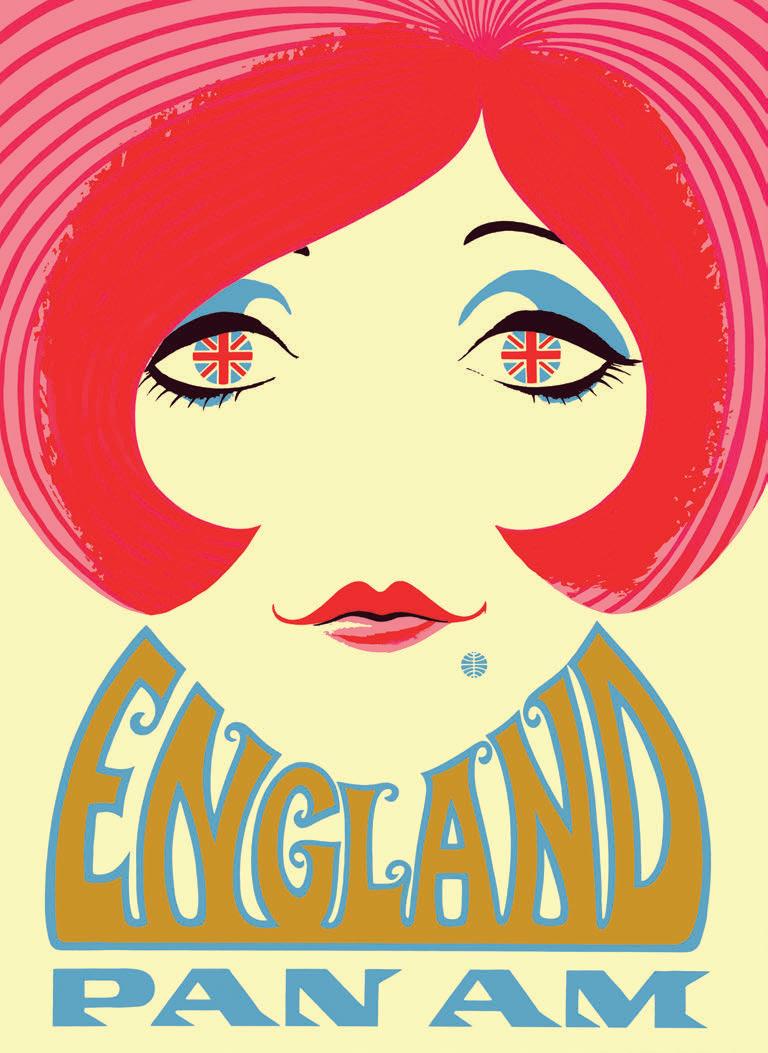
Which poster designs have been most successful? Mod Girl, aka ‘Mary Quant by Pan Am’, is trending at the top of our list of vintage artworks revived under licence. She is a clever one. In the entire 150-year history of the travel poster, the greatest designs – telling the best stories about the greatest places – are the best sellers. I am biased because my family has been based in Cornwall since the 1500s, but the Cornwall collection we launched in 2025, as a geographic subsection of the British Railway Collection – licensed to us by The Science and National Railway museums – gained instant traction, especially the 1930s posters for Newquay, which is where we now live. Sur ng, yacht racing, skiing, tennis, equestrian, golf, motor sports, pioneering airline and winter cruise posters – reminiscent of the golden days pre-mass tourism – are all popular niches.
What is the appeal of travel posters? They serve as aspirational time-machines. They transport you to other worlds and to the past which is a safe place that can be forever rewritten and rediscovered. And they give you hope for the future.
How and where are the valuable master editions created? The Stick No Bills Master Editions are the most prestigious pieces in our portfolio of 800 images that we can print across 19 available formats. Each one is printed by our master printer, Roberto Aguiló Mora, at our gallery and printworks, the century-old Imprenta Nueva Balear in Palma de Mallorca, and nished with 24k gilding by royal yacht signwriter Julian Godbolt. Master Editions need castle-size walls which – along with price tags of up to £16,500 – explains why they sell at a slower pace than our smaller prints. But they are all one-o , museumgrade examples of iconic posters housed behind antire ective, UV defence Plexiglas in shatter-resistant frames. That means they are as light as possible and can be hung with just two Rawlplugs and two screws.
Do you need to be careful where these special posters are displayed? We use the latest pigmented inks, archival cotton fabric and conservation-grade frames because we want these posters to still be fresh and vibrant in 100 years’ time. They really are intended to be heirloom pieces.
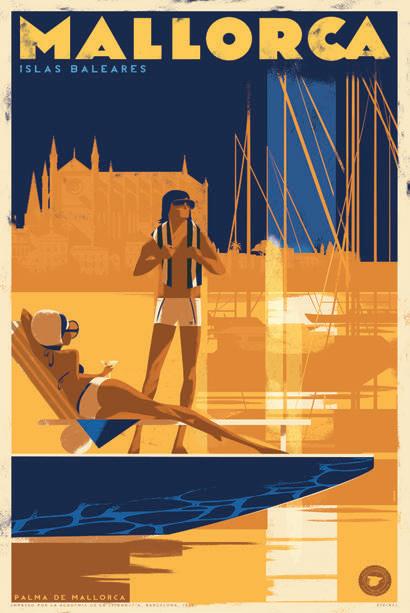
How many designs has SNB produced since the start – and which is your favourite? Eight hundred and counting. And my favourite is ¿Donde Ahora? aka ‘Where next?’. I mean, who doesn’t want to be either that girl or that guy? ■
George Bamford transports Simon Mills to Land Rover heaven on his family’s Daylesford Estate


eorge Bamford describes his hobby as ‘Landy-spotting’. Like trainspotting and birdwatching, it is addictive and obsessive. Only more expensive, gas guzzling and spatially consuming.
The proprietor of the Bamford Watch Department and scion of the famous JCB multinational could be on an Oxfordshire lane near his farm or heading to a Mayfair meeting when his keen eye locks onto a target. A note will be le on the windscreen, a doorbell will be buzzed, inquiries will be made: ‘The old Land Rover out there… is it for sale?’
A few years back, Bamford was heading to East Midlands Airport when he glimpsed the briefest ash of unloved, battleship-blue quarry outside a remote car mechanic’s yard.
At a glance, Bamford knew exactly what his nely honed Landy-spotter vision had clocked: a rare Series III pickup with a heavy-duty winch on the back. He had to have it. Rushing for a ight and with no time for even a quick tyre kick, he bunged his driver a crisp 50 and instructed him to ‘make enquiries’.
‘Good news’, came the call, seconds before take-o . ‘The owner wants to sell.’
Now, the sensitively restored pickup – its Harbour Freight crane fully functioning and its fresh paint festooned with imaginary motoring logos inspired by the names of his children – is parked at the back of Bamford’s huge agricultural hangar.
Conforming to Bamford house rules, the old grease monkeys’ beast remains in frequent, practical use – with the strict provision that only pickup-based Bruce Springsteen songs may be played from its dashboard CD.
Ready to haul any broken-down old cars in the area, it sits a few feet away from a Porsche 911, a brace of Bentleys, a Rolls-Royce shooting brake with a wild op-art paint job, a £2m Ferrari 275 GTB, and the 20 or so other Land Rover models in his extraordinarily butch utility collection.
‘Actually…’ says Bamford bashfully, ‘this isn’t all of them. There are a few more in another garage.’
Here’s a fully restored, bright red Land Rover Series I Fire Engine – still with its original buckets and hoses – gi ed to Bamford when a contact discovered it in a property slated for demolition. ‘Come and get it. But be quick,’ he was told.
Saved from the wrecking ball and still sporting its original, Trumptonesque bell, the ‘appliance’ is now a favourite with the kids. It shares oor space with a Land Rover Series III that used to belong to Queen Elizabeth, the Queen Mother, and a monster, Lara Cro -style Defender in doomy matt black. ‘Spotted it in London. Le a note under the wipers,’ recalls Bamford.
This apparently unstoppable, toutterrain obsession started 11 years ago and almost immediately went into high-revving overdrive.
‘My wife bought me this as a birthday present,’ he says, tapping the bonnet of a slate-grey 2015 Land Rover 110 Adventure. ‘Straight away I thought, “This thing gets me. I can do some really stupid shit in this.”’ And then, perhaps to prove a point, he promptly drove it into a hedge.
A bomb-resistant Army Defender that had seen service in Northern Ireland soon joined the collection, along with a Baywatch -chic beach rescue truck found rust-free in a Cornish village (complete with ship-to-shore coastguard comms still working).
A few years ago, Bamford even
‘None of my Land Rovers are show ponies. They all get driven. And pushed to the limits’









found the holy grail for Landy-spotters: a 1949, wood-framed Tickford Land Rover Station Wagon. Coachbuildercra ed with leather seats and heating, it carries seven in civilian comfort.
Less than 20 survive and, as Bamford invites me for a sit behind the wheel and an inhale of the post-war interior, I get the impression that it’s his favourite… or does that accolade belong
to the once olive-drab, now blacked-out Land Rover Forward Control?
Originally built as a military gun tractor for the Rapier missile system, its 101-inch wheelbase, cab-over-engine con guration and capacious rear have since been recon gured for fun and peaceful ‘designated driver’ service by Yorkshire’s Black Paw 4x4.
‘I bought it to take my mates to the pub so they wouldn’t need to worry about getting home,’ Bamford explains. I’m not a big drinker, so I do the driving and everyone else can drink as much as they like.’ O en, just for a bit of fun, he’ll take the vehicle (nicknamed Black Bee) on a bumpy route across his family’s Daylesford estate – a route he demonstrates at high velocity.
Later, he guides me to a trio of gleaming, dune-ready Land Rover Camel Trophy competition vehicles: a Range Rover which served as a press car, a Discovery, and a Freelander (another gi from wife Leo).
All wear the cigarette brand’s distinctive Sandglow livery, which became synonymous with the series of gruelling, o -road competitions that took place from 1980 to 2000 at locations as diverse as Brazil, Borneo and Mongolia.
Bamford’s Camel Trophy originals are all immaculately restored, complete with correct Mantec snorkels, auxiliary fuel tanks, Brownchurch roof racks –and Hella spot and fog lamps still bolted on fast. ‘I call them the Three Kings,’ he says proudly. ‘They came from afar and travelled across the desert.’
Meanwhile, a gentle Cotswolds country drive is suggested. We climb aboard the most individual vehicle in the portfolio: a matt-black, custom Defender with JCB digger-spec rubber on each corner and dual winches on its chopped ‘tray’ back.
We strap in and head for the Daylesford estate’s o -road course. ‘Speed is key on single tracks,’ I’m assured – as we become airborne.
‘None of my Land Rovers are show ponies,’ insists Bamford, his windscreen now facing an almost vertical drop into sloppy Cotswolds earth. ‘They all get driven. And pushed to the limits.’ ■




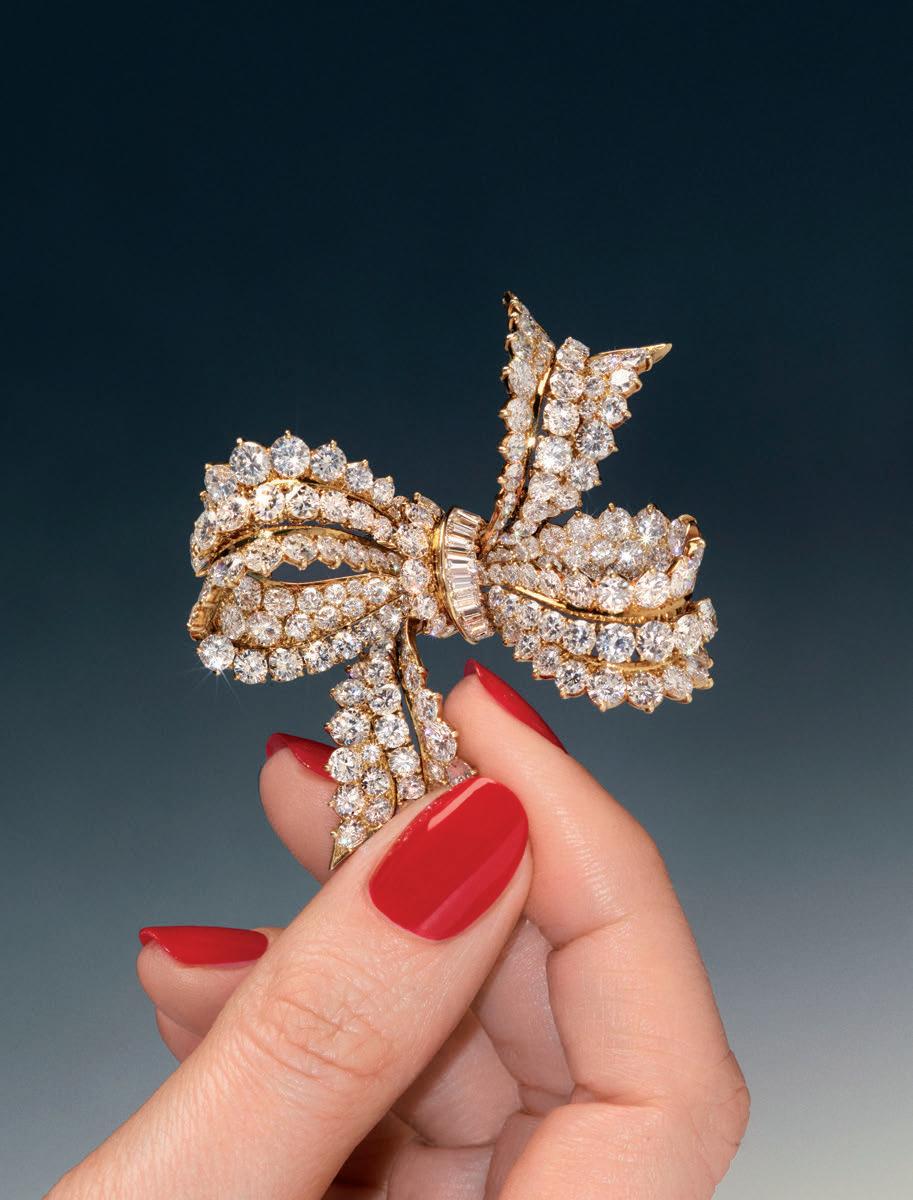
he rule book is broken,’ says Antiques Roadshow jewellery expert Joanna Hardy. By ‘rules’ she means the buying criteria that auctioneers and dealers impress on collectors: beauty, rarity, provenance, cra smanship and quality. But today’s global crises are causing market reactions. ‘We watch the news every day for unexpected events that will a ect prices,’ says Ilias Kapsalis, manager of London antique jewellery specialist Bentley & Skinner.
According to the World Gold Council, the precious metal was £2,150 per ounce at the start of 2025. This year, it was more than 50 percent up at £3,300 – causing a knock-on e ect on vintage jewellery values which, says Henry Bailey of Christie’s, has made pieces incorporating gold ‘a safe haven commodity’.
‘Traditionally, western consumers buy jewellery not for investment, but to wear and keep,’ says the World Gold Council’s John Mulligan. ‘Now they are aware of the cost of high-carat gold, the design and cra smanship still come rst, but rising value means demand exceeds supply as people keep gold jewellery, banking on further rises.’ Kapsalis adds: ‘The price of other metals, notably silver, has also risen fast, and the past decade has seen big hikes in rare, coloured gems, especially historic diamonds.’
Unique pieces from classic eras such as the Art Deco period or the 19thcentury garland style are unlikely to let you down, and will be top dollar with a name like Cartier attached. Add famous provenance, and the value soars: a transformable diamond tiara belonging to Princess Margaret’s ladyin-waiting, Lady Anne Glenconner, sold at Bonhams in December for £127,400 against a low estimate of £50,000.

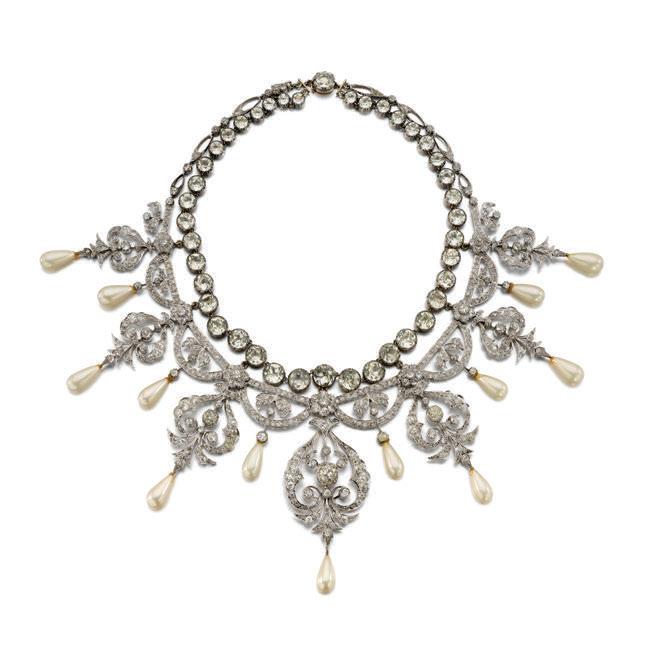
Both Kapsalis and Sotheby’s London jewellery specialist Tabitha Downer also cite the ‘Bridgerton e ect’ for sparking interest from younger buyers in delicate Georgian jewellery shown in the drama’s Empire-style fashion – though worn more casually, Downer says. ‘But check the settings and fastenings, because age makes pieces like this vulnerable and easy to break.’
‘So many such pieces were broken up or altered that complete originals are now rare and desirable,’ says Bonhams jewellery expert Jennifer Tonkin. ‘A more economic buy,’ agrees Kapsalis, ‘is early Edwardian jewellery. It’s more delicate than heavier Victorian styles but less rare than Georgian pieces.’ Charlie Pragnell, managing director of his eponymous family rm, says his hottest tickets are ‘Victorian and Georgian crosses, early charms and old cut diamonds’.
Hardy says renewed interest in old mine cut diamonds is down to their ‘so shapes, warmth and individuality’, while Tonkin partly attributes it to the viral images of Taylor Swi ’s old mine cut engagement ring. But Downer from Sotheby’s warns against buying without advice. ‘Ask for condition reports, magni ed pictures and daylight videos to show the “life” of old cut stones.’
Tonkin says Art Deco is now o cially antique (i.e. more than 100 years old) and is soaring in price – especially pieces from top French houses such as Cartier and Van Cleef & Arpels, or from smaller supplying workshops like

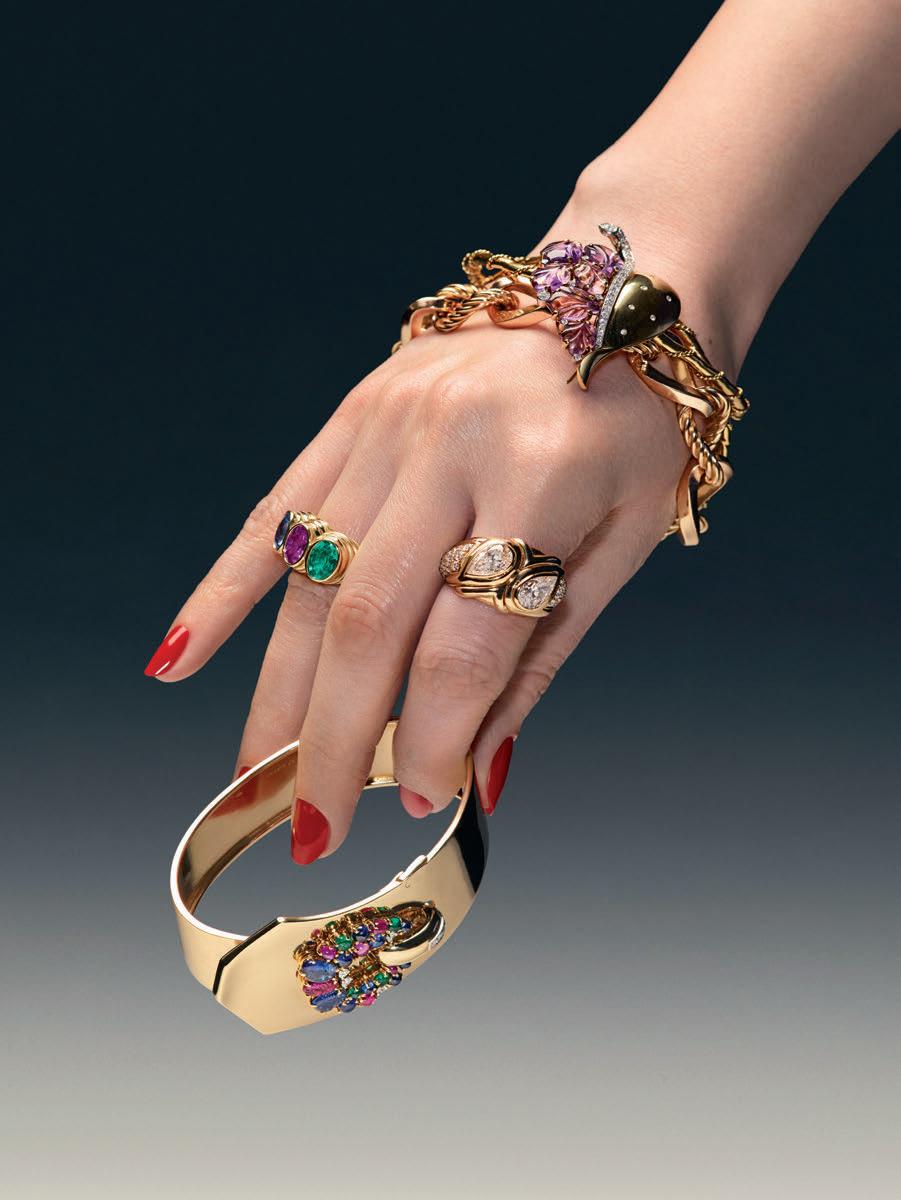
Rubel Frères in Paris, or the family-run Hennell of London.
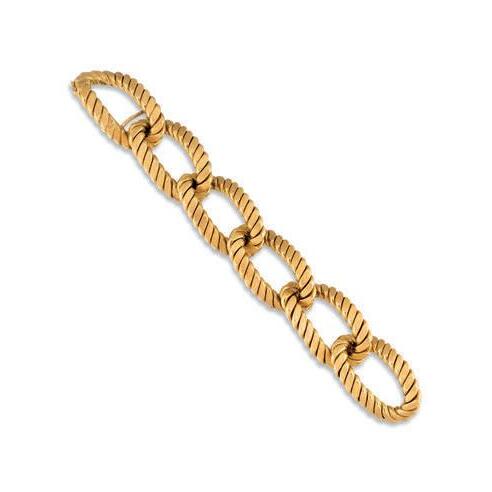
Guy Burton, managing director of London specialist Hancocks, says the rm is seeing ‘a surge for bold, post-war, gold-only jewellery’. Vintage pieces by Cartier, Van Cleef and Bulgari are especially popular, thanks to the reduced margin between their commodity price and maker value.
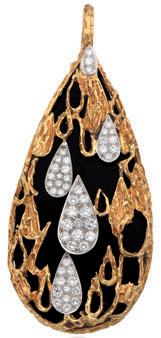
Jewellery’s next creative explosions straddled the mid-20th century and have been ying high in recent years, even before the new gold rush. From the late 1930s and 1940s, American designers Paul Flato and David Webb set the pace, and their return to popularity was seen when Bonhams sold a 1970s Webb brooch from the aforementioned Glenconner collection for £7,680.
In Europe, inventive designers including Jacques Lenfant and Gilbert Albert produced sometimes unsigned but always distinctive work for themselves and for the great houses, with Britain owering in the early 1960s with a small group of designers led by Andrew Grima. These creatives focused on skilfully worked yet o en
organic-looking gold, set with unconventional gemstones.
Gold had been prominent since the late 1930s, making Lenfant’s handmade bracelets ultra-desirable.
Such is also the case with later pieces including a white gold and diamond Bulgari suite sold by Christie’s in November for £177,800, a whopping six times the estimate.
Suites are currently having a moment because of their versatility, suggests Bailey. ‘You get more variety for less than the cost of several single pieces.’ Pragnell, meanwhile, expects statement cu s and stacking combinations to gain momentum.
The experts also highlight unsigned pieces that are likely to be from top workshops but are tricky to attribute. Mid-century was the last period when most jewellery was handmade, and high-quality pieces from this time are increasing in value. But some of the era’s rst mass-produced jewellery has also become collectable. Tonkin notes a cult following for 1960s British brand Kutchinsky, describing it as ‘unusual, well-made and evocative of its time’.
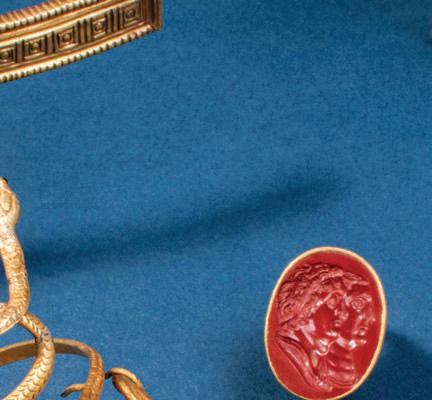
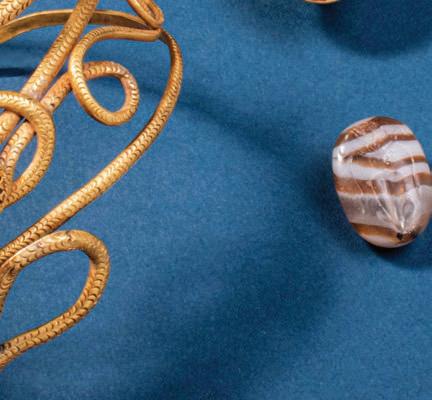
Rare and exquisite jewellery from top contemporary designers is prized, too. The ultimate is Paris-based American jeweller JAR (Joel Arthur Rosenthal), who reputedly turns down as many clients as he accepts, so will therefore never have a vast body of work in the market – meaning prices are vast.
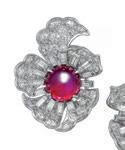
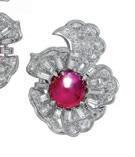
Distinctive jewels that blur the border with art also excite, with Munich-based Hemmerle, Indian designer Viren Bhagat, and James de Givenchy’s New York-based brand Ta n most frequently mentioned. They appeal, says Bailey, ‘to clients who may have come over from our modern art department’.
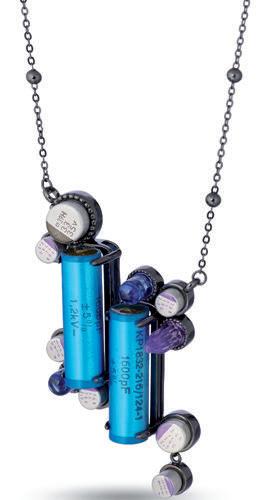
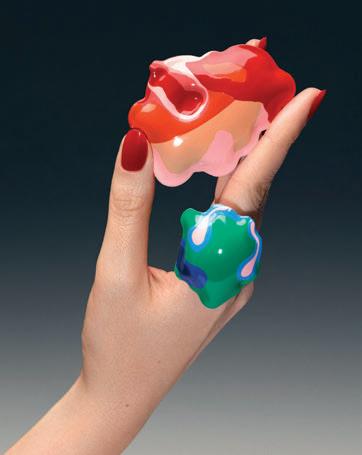
The nal frontier is taking a punt on young designers working with nonjewellery substances ranging from fabrics, resin and paint to e-waste. Hardy sees potential in these ‘mother of invention’ materials for start-up designers unable to a ord much gold. She is intrigued by Xinyi Chen, who uses silver paired with bright, discarded electric components as ‘gems’, and Ruth Laird and Inca Starzinsky, who combine bold paint with precious metals.
Find them at the annual Goldsmiths’ Fair, which has recently encouraged non-traditional materials. ‘Whether they are future resale stars is a gamble,’ says Hardy. ‘But being ahead of the game is always a thrill.’ ■











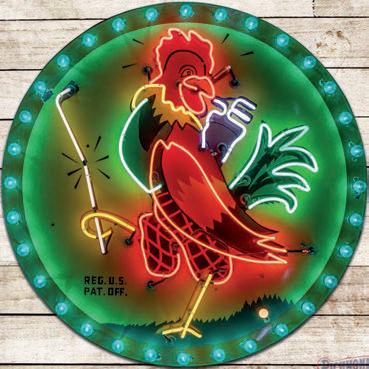
A neon chicken may be the one that got away, but Bob Rubin’s remarkable collections range from blue-chip contemporary art to historic racing cars, so he shouldn’t be too concerned, says Simon de Burton
ob Rubin is annoyed. He may own multi-million-dollar works by some of the world’s most soughta er contemporary artists, cars that any petrolhead would covet, and an historic modernist property that’s been described as ‘the best house in Paris’ – but, like many insatiable collectors, the thing he wants most is the one that got away.
In this case, it’s a four-and-a-half-foot neon sign depicting a cartoon chicken carrying a set of golf clubs. ‘I’m totally pissed that I missed it,’ says Rubin, a er discovering a bit too late that the vintage sign for the Chicken in the Rough restaurant chain was heading to auction in South Carolina. ‘It would have looked great in the clubhouse,’ he says. ‘It made $27,000. I o ered to pay the buyer double, but he didn’t want to sell.’
When Rubin says ‘clubhouse’, he’s referring to the postmodernist building that sits on the highest point of The Bridge golf course, the 500plus acres of spectacularly verdant land that he owns in the Hamptons, the summer playground of the US elite.
Rubin acquired the rst chunk of the property in 1981 when it was home to the historic Bridgehampton motor racing circuit, which opened in 1957. He gradually took ownership of the entire site, saving the track and operating it until 1998 when local

pressure led him to shut it down and convert what is now a hugely valuable piece of real estate into the golf course (on which Rubin stages an annual, invitationonly car show in honour of the location’s past).
Membership starts at $1.2m, numbers are capped at 150 – and, unlike most golf course clubhouses that are decorated with bits of silverware and old blackand-white photographs of members past, the one at The Bridge is bedecked with blue-chip artworks from Rubin’s remarkable collection.
On the way in, visitors pass a larger-than-life bronze of a racing driver created by contemporary art wunderkind Daniel Arsham, while inside you’ll nd a Richard Prince painting executed on the bonnet of a McLaren that caught re at Le Mans, an Andy Warhol portrait of gol ng legend Jack Nicklaus, one of the celebrated crushed car installations created by French artist César and a ‘kinetic’ work by Swiss sculptor Jean Tinguely. But this is just the tip of the iceberg in terms of Rubin’s collections, which he modestly describes as ‘not art, just stu …’
Among that stu is the aforementioned Paris house – the remarkable, glass-walled Maison de Verre designed by French modernist architect Pierre Chareau, which served as a creative hub throughout the 1930s where artists such as Pablo Picasso, Max Ernst, Jean Cocteau and Yves Tanguy frequently met.
In the past, Rubin’s enthusiasm for ‘collecting’ property also led to him buying a prefabricated tropical house designed by Jean Prouvé, on which he spent more than $1m to bring it from West Africa to Paris, restore it and send it on a world tour (from MoCA in LA to Tate Modern). Rubin has also collected Americana, silver, porcelain, furniture and historic racing cars by Ferrari, Maserati and the American marque Miller – a quintessential example of which he donated to the Smithsonian Institution.
But it’s not only ‘big stu ’ that’s hunted down by this polymath, who has written books about everything from architects Le Corbusier and Prouvé to the cult 1971 car chase movie Vanishing Point. He also owns objects as unexpected and diverse as the production design sketches for the ‘bunny’ costumes featured in Apocalypse Now and the Bates Motel from Psycho; druguse ephemera from the 1960s; and the vinyl soundtrack recordings from seven obscure biker movies.






So when did the collecting bug rst bite Rubin, who worked as a local newspaper reporter during the 1970s before going on to make his fortune as a Wall Street bullion trader?
‘I guess I must have been seven or eight years old when I started collecting baseball cards, which soon got me interested in nding out how many were out there and the hierarchy of desirability,’ he says. ‘Then came postage stamps. I would buy rst-day covers and mail them to myself, and then records – I started buying jazz albums when a label called Riverside Records closed down and the albums were being sold o cheaply. I still have most of the stamps and many of the records.’
Right now, however, Rubin’s collecting passion is focused on original screenplays, which he started to acquire in around 2008 with the script for 1982’s Blade Runner. Since then, he has amassed ‘between two and three thousand’ screenplays for lms dating back to the silent era, many of which are for classics such as Citizen Kane, Dr Strangelove, multiple Hitchcock lms and Orson Welles’ Touch of Evil
‘The guy who sold me the Blade Runner specialised in scripts, and I started to see what was out there,’ recalls Rubin. ‘As I became more familiar with the market, I became interested in the idea that there were multiple writers and multiple versions of screenplays. As a result I have, for example, every conceivable variant of the screenplays for Citizen Kane.’
Aside from screenplays, Rubin continues to add to the collections in the clubhouse at The Bridge – not least, he says, because the walls of his New York apartment are ‘completely full’.
‘In a sense, having to turn the race track into a golf club and build a clubhouse gave me the space to start a new collection focused on art that has to do with cars, golf or both,’ he says. ‘If I was forced to choose a favourite piece from in there, it would have to be a work by Richard Prince – he’s a personal friend, but I really think he’s one of the greatest artists out there.
‘But,’ he adds with a noticeable slight sense of irritation, ‘I do wish I had got that chicken. I can’t think of anything else that’s more in my wheelhouse…’ ■




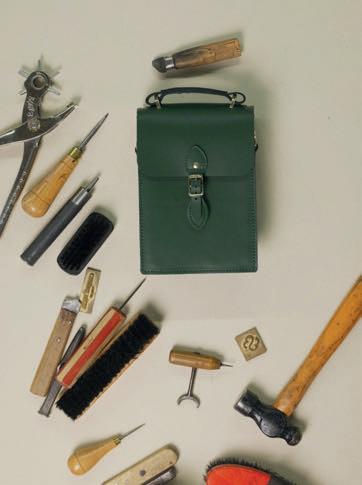
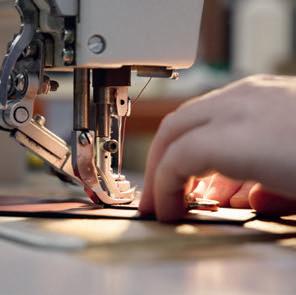
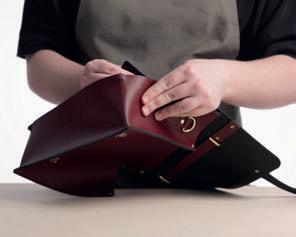
Cambridge Satchel was founded in 2008 and very rapidly saw an explosion of success contrary to popular narratives around the slowdown of the cra industries. Today, the release of its Artisan Collection celebrates the heritage at the heart of the brand. Proudly made in England, each item in this collection shines a spotlight on the skilled artisans whose expertise, and attention to detail, have de ned Cambridge Satchel since its beginnings nearly 20 years ago.
Each piece is cra ed in its Leicestershire workshop using time-honoured leatherworking techniques that underpin the brand’s approach to design. The pieces are made from smooth, so er-split leather, ensuring a relaxed feel in a preppy package, and are designed
as a modern interpretation of the classic satchel. The collection also brings back an old favourite, The Artisan, alongside newer additions: the Artisan Backpack and the Artisan Binocular Bag, in black, oxblood and racing green colourways. Each stage of the process re ects the exceptional skill of the brand’s expert leatherworkers, from the careful cutting of leather to the nish of each edge.
Cambridge Satchel’s collections, and their iconic silhouettes, truly represent timeless design, in both conception and e ect.
The Artisan Collection is available exclusively at cambridgesatchel.com and in Cambridge Satchel stores in the UK and Paris, with prices from £175
Despite
our screen addiction, we are
a
nation of book lovers.
Olivia Emily hunts some unusual collections, often in some of the most beautifully designed stores
CLIMAX BOOKS
Former Dazed editor-in-chief and former Acne Studios CMO Isabella Burley founded Climax Books in 2020, a distributor of rare erotica and cultural ephemera. Its rst physical appearance arrived via Hardcore, a 2023 exhibition of erotic works at Sadie Coles HQ, before developing into a permanent presence with locations in London and New York. The London shop, signalled by its pink glass doors on Herbal Hill, keeps its interiors deliberately – even provocatively – pared back. The restraint heightens the intrigue: shelves carry hard-to- nd periodicals, vintage VHS tapes, anthologies and books spanning erotica, photography, art and counterculture, o ering material that ranges from provocative to historically fascinating. 8a Herbal Hill, London EC1, climaxbooks.com
WATKINS BOOKS
Few bookshops have cultivated a reputation as steeped in the arcane as Watkins Books on Cecil Court. Its story begins in 1893, when theosophist John Maurice Watkins launched Book-Notes, a publication dedicated to spiritual and occult literature. From these beginnings grew a bookshop that has spent more than a century attracting readers drawn to Eastern philosophy, Western mysticism and the many philosophies that connect them. Over the years its visitors have included WB Yeats, AE Waite, GRS Mead and Aleister Crowley. Today, shelves of esoteric texts share space with crystals, tarot decks and talismans, creating one of the most extensive collections of spiritual literature anywhere in the world. 19-21 Cecil Court, London WC2, watkinsbooks.com
For collectors seeking the upper tiers of the rare book trade, Peter Harrington is the benchmark. The business began in 1969 with a stall at Chelsea Antiques Market and has since developed into one of the world’s most respected antiquarian booksellers, with shops in Fulham, Mayfair and, more recently, New York’s Upper East Side. Today, a team of more than 30 specialists sources exceptional material spanning ction, philosophy, travel writing, science and children’s books. The range can be surprisingly wide, encompassing everything from landmark scienti c works to jazz ephemera or early texts on climate change. Along the way, the rm has collaborated with names such as Dior, Fendi and Paul Smith – proving the rare book trade can be as stylish as it is scholarly. peterharrington.co.uk
IDEA
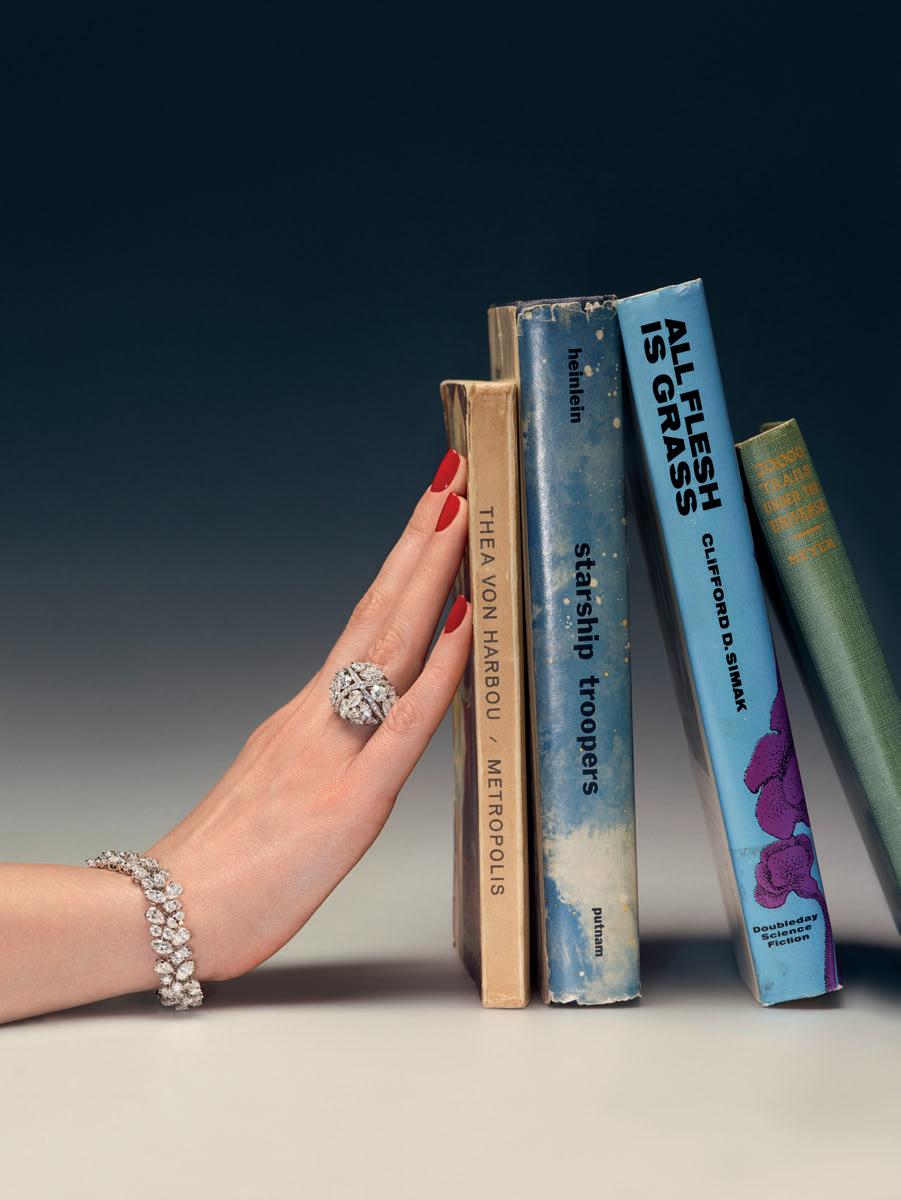
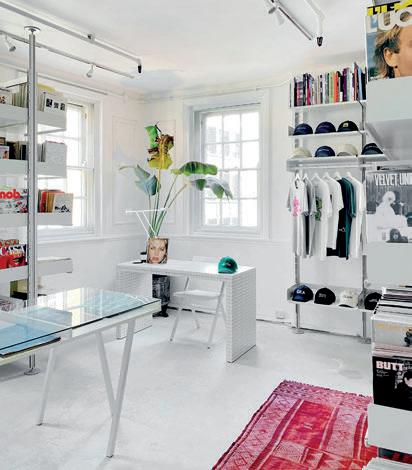
Idea began with two passionate collectors. David Owen and Angela Hill had spent the 1990s hunting down rare fashion and photography books, selling some through the legendary Paris boutique, Colette. In 2009 they gave the pursuit a home, in London, and a name: Idea. The shop quickly developed an international following, ampli ed by a sharp Instagram presence, though its Soho ‘book room’ remains accessible by appointment only. Inside are rare and vintage titles and magazines charting the evolution of fashion, art and photography over recent decades. 101 Wardour Street, London W1; Dover Street Market, 18-22 Haymarket, London SW1. ideanow.online
MURDER & MAYHEM
Hay-on-Wye has long been synonymous with books, and Murder & Mayhem adds a dash of intrigue to its literary reputation. Established in 1997 as a companion to Addyman Books, founded ten years earlier by Derek Addyman
and Anne Brichto, the shop specialises in British crime ction in all its forms. Shelves brim with classic whodunnits, ghost stories and true crime, while the golden age of detective ction receives particular attention. Collectors arrive from across the world in search of elusive rst editions and forgotten mysteries. 5 Lion Street, Hay-on-Wye, murder-mayhem.com
Marchpane is a portal to the imaginative worlds of childhood. Since opening in 1989, the Cecil Court shop has specialised in collectable children’s and illustrated books. Lewis Carroll enthusiasts are particularly well-served: the shop carries hundreds of illustrated and translated editions of Alice’s Adventures in Wonderland and Through the Looking-Glass. Beyond Wonderland, the collection includes early editions of classics such as Winnie-the-Pooh, Peter Pan and The Wind in the Willows Signed rst editions of Harry Potter add a modern chapter to this curated storybook archive. 16 Cecil Court, London WC2, marchpanebooks.com
TREADWELL’S, London
Since opening in 2002, Christina Oakley Harrington’s Bloomsbury bookshop has become a gathering place for London’s occult community, o ering both antiquarian and contemporary titles alongside tarot readings and regular events. treadwells-london.com
MARCUS CAMPBELL
ART BOOKS, London
A specialist dealer focusing on rare and secondhand publications devoted to 20th- and 21st-century art, from exhibition catalogues to hard-to- nd monographs. marcuscampbell.co.uk
PEMBERLEY
BOOKS, Iver
Pemberley Books was established in 1989 and specialises in the natural sciences, with an extensive catalogue covering zoology, botany, geology, palaeontology and other elds of natural history. pemberleybooks.com
THOMAS HENEAGE
ART BOOKS, London
Founded in 1977, this longstanding trove is now the UK’s largest art bookshop and a leading international source for scholarly and collectible titles on art and architecture. heneage.com
SHAPERO RARE
BOOKS, London
An internationally respected antiquarian dealer known for its expertise in ne illustrated books, travel narratives, natural history and rare children’s literature spanning the 15th to the 20th centuries. shapero.com ■


Enjoy a year of great art with a Friends membership




Cigars are no longer just a symbol of indulgence, says Tom Chamberlin. They are fast becoming one of the most lucrative luxury collectibles
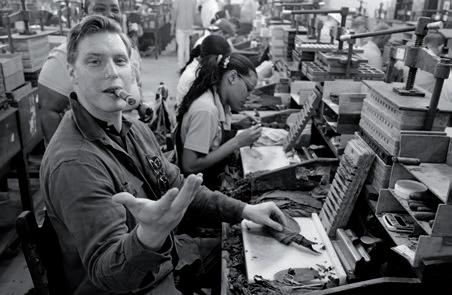
There’s an awful lot of chat about gold at the moment – people are going berserk over how the value of bullion has been going up and up and up.
I checked, and since 2014, the price of gold (in USD) has risen by over 130 percent. I chose this year as I wanted to measure gold’s appreciation in conjunction with Cohiba’s 2014 limited edition cigar, the Robusto Supremos. As I expected, gold is small fry. If you bought a box of these cigars on release and they remain untouched, they will have appreciated by around 1,450 percent.
today without a sampling lounge or cigar terrace are very much in the minority.
Such spaces are manned by highly trained cigar sommeliers who will help nd the perfect cigar for the amount of time you have, the strength you can manage, and the drink you should pair it with. Yet, as wonderful as they are, it is not the great hotels that are helping this movement, but that old chestnut, social media. The internet may not really work in Fidel Castro’s ancestral island, but its most prestigious export is fuelled by it.
Forget the posers who just want to be seen with an expensive cigar. That world of in uencing is dying a death in place of people who genuinely want to educate others on the in nite complexities and deliciousness created by fermented tobacco leaves.
Our smartphones are today’s home entertainment, and people watch them as if tuning into the latest episode of The Traitors. YouTube is the most-watched ‘television channel’ in the world – and on it are creators like Kirby Allison, who has thrown himself down the fragrant rabbit hole and emerged with a vast back catalogue of cigar content. The nal episode of his four-part documentary on the prestigious Cohiba Behike is nearing ve million views. He also owns Cigar Keep, the popular global community website for collectors and enthusiasts of Cuban cigars.
‘The internet may not really work in Fidel Castro’s ancestral island, but its most prestigious export is fuelled by it’
Cigars are the new luxury asset class. Long a symbol of a uence and decadence, in today’s world where provenance, cra smanship and connoisseurship are at a premium, cigars have got the lot. And while it may seem counterintuitive, there is a strong argument that the best thing you can do with certain cigars is not smoke ’em.
The community of cigar lovers is burgeoning, despite the industry having been under legislative re of late with the incoming tobacco ban (making it illegal to sell tobacco products to anyone born on or a er 1 January, 2009). All the same, London hotels and clubs that wish to open
Elsewhere you have Jasim Ahmed (@jasimahmed.o cial) and Alex Stipčić (@alex_cigar_dandy) and, of course, characters have been created online, like the very popular Edward and Eddie Sahakian of Davido of London and writer Nick Foulkes. But this is not just a man’s game: no Cuban cigar enters the UK unless through Jemma Freeman, chairman of Hunters & Frankau and arguably the most powerful cigar gure in the whole of Europe.
Despite the best recent e orts of the Labour government, the cigar world thrives – not just because Cuban cigars appreciate (frankly, they could plug the hole in public debts), but because today’s online currency is curiosity, knowledge, and a chance to slow down in a hectic world. And cigars are a aming, fragrant fast-track to all three. ■

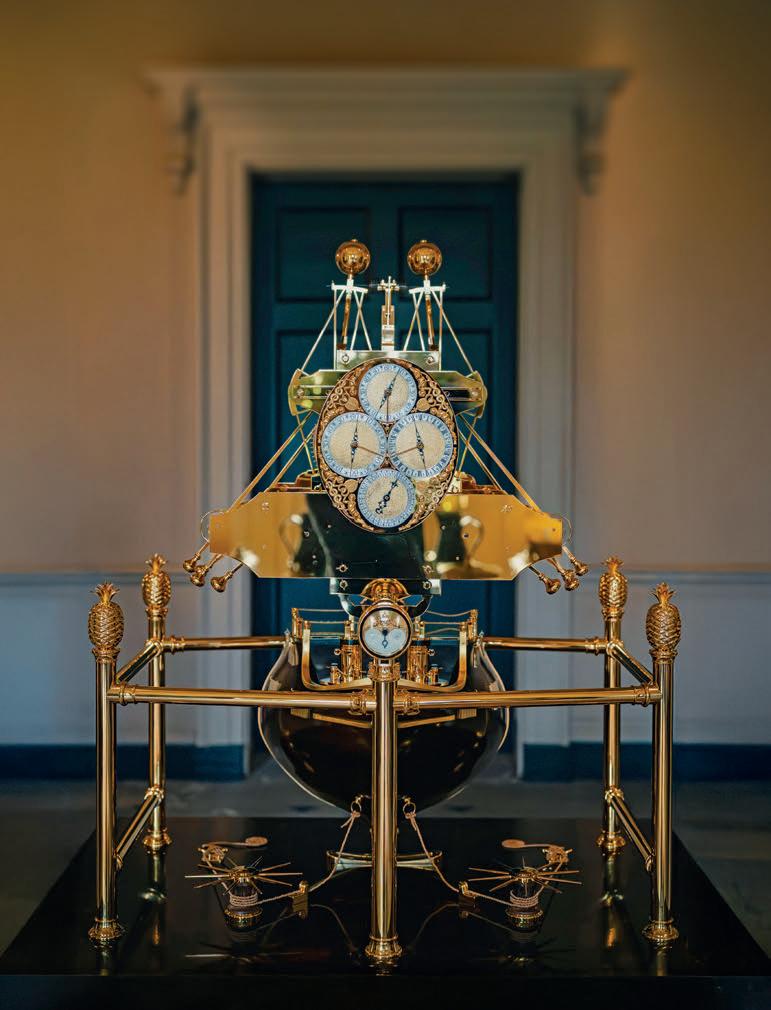
Pragnell has collaborated with horologist Bob Bray on a meticulous replica of H1, John Harrison’s original 18th-century chronometer
180
4
9
di erent materials used individual components
3,450 years between concept and completion hours to build kilos in weight cm in height further clocks will be made to order, priced at £575,000
158
1,500

5


BEGIN YOUR OWN TRADITION