2023 Youth Tour winners announced page 5

11
Be prepared this spring when storms start brewing

Sometimes a storm pops up or changes direction without any warning, while other times it is forecast days in advance and follows its predicted course. In either case, knowing what
to do before, during and after a storm can help keep you safe.
When a storm hits
When stormy winds blow, follow these weather-related reminders from FEMA and the Red Cross:
The Steps to Restoring Power
• Never seek shelter under an isolated tree, tower or utility pole, since lightning tends to strike tall objects.
• Immediately vacate elevated areas such as hills and mountain ridges and peaks.
• Get away from ponds, lakes and other bodies of water.
• Stay away from objects that conduct electricity, including wires and fences (and golf clubs). Approximately 5 percent of annual lightning deaths and injuries in the United States happen on golf courses, according to the National Oceanic and Atmospheric Administration.
• Never lie flat on the ground.
• Pick a safe place in your home, away from windows and doors, for family members to gather during a thunderstorm.
• Know the difference between a watch and a warning for extreme weather such as a tornado or severe thunderstorm. A watch means that the weather is possible in
and near the area. A warning means that severe weather has been reported by spotters or indicated by radar. A warning is more serious than a watch and means that there is imminent danger to life and property.
After the storm
Once the storm is over, follow these safety tips:
• Never step into a flooded basement or other standing water. The water could be covering electrical outlets, appliances or cords. Never touch (or use) electrical appliances, cords, wires or switches while you are wet or standing in water.
• After a storm, a downed power line could be covered by standing water or debris. Never go near a downed line and warn others to stay away.
If you see a downed line, call 9-1-1, and a crew will be dispatched to de-energize the power and address the problem safely.
• The same safety knowhow applies to a downed power line you might encounter
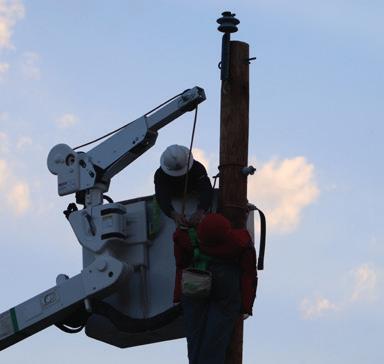
Work Zone Awareness Week sheds light on safety
National Work Zone Awareness Week, April 17–21, 2023, is a good time to learn more about work zone safety. However, to help save lives, work zone safety should be observed 365 days a year.
Cars or trucks that speed through a work zone not only endanger workers on the ground. Driving too fast or too close to a work truck can also put an elevated worker in danger by causing their raised bucket to move or sway.
Streets and highways are lined with pow-
The power cost adjustment now being applied to bills mailed after April 1, 2023, is $0.01210 per kWh.
On a member’s average bill of 1,300 kilowatt hours (kWh), this will amount to a charge of $15.73 on the April bill.
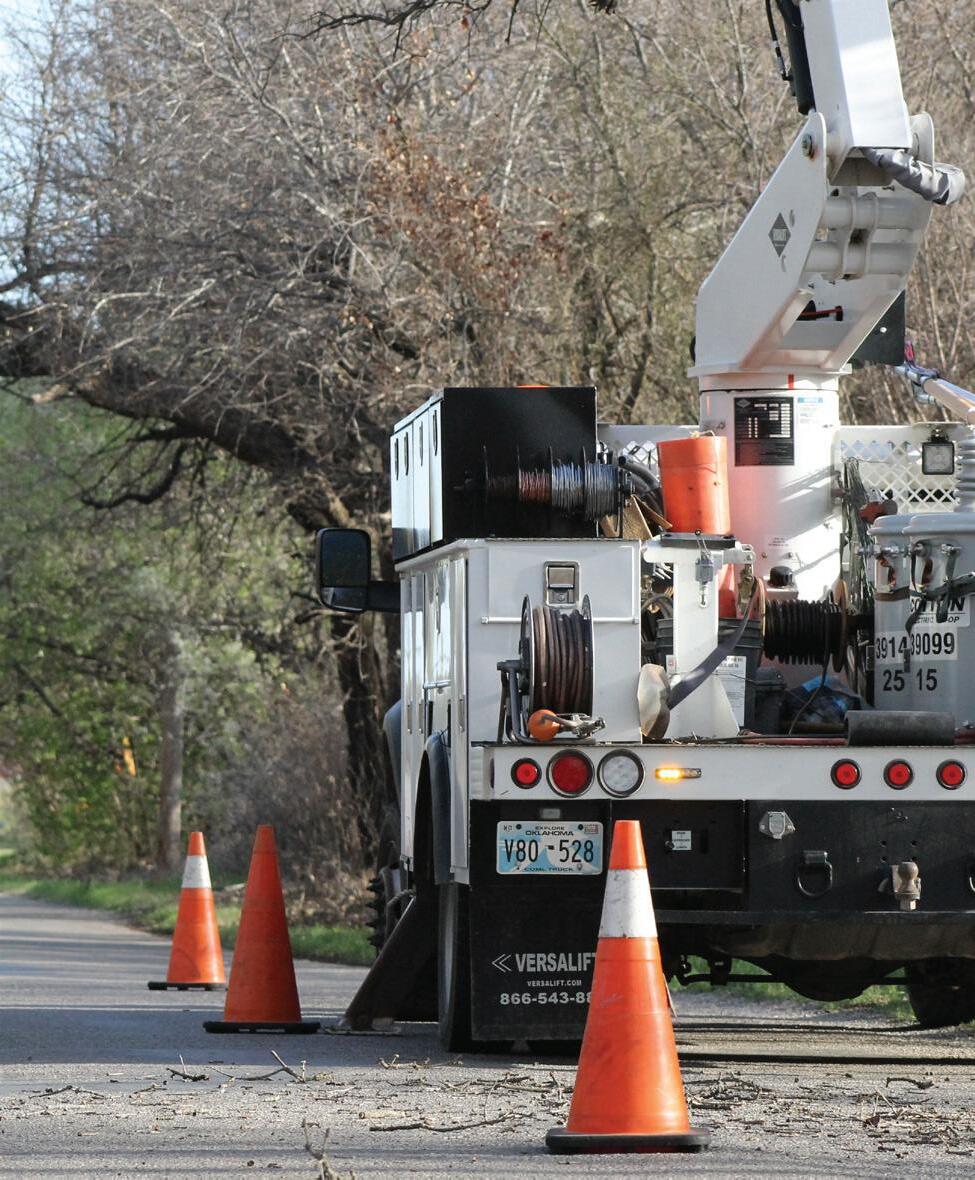
er poles and electrical equipment, and narrow roadways often require crews like ours to place their equipment in or near traffic lanes. Be alert to utility and other work zone crews for their safety and yours. Besides our crews, you might encounter road workers, other utility crews, tree trimmers or first responders working in or on the side of the road.
According to the National Work Zone Safety Information Clearinghouse, 774 fatal crashes and 857 deaths occurred
in work zone crashes in 2020 (at the writing of this article, data was not available for 2021). Many other work zone crashes result in injuries. In 2020, 102,000 work zone crashes occurred.
To help keep roadside crews safe:
• Keep a safe distance between your vehicle and traffic barriers, trucks, construction equipment and workers.
• Be patient. Traffic delays are sometimes unavoidable, so allow time for unexpected setbacks.
• Obey all signs and road crew instructions.
• Merge early and be courteous to other drivers.
• Use your headlights at dusk and during inclement weather.
• Minimize distractions. Avoid activities such as texting, operating a radio, applying makeup or eating.
Remember, slow down when approaching a work zone and move over for first responders and work crews. Do your part to help everyone return home safely at the end of the day.
Source: SafeElectricity
Cotton Electric HVAC tune-up rebate applications are open and must be received by June 30, 2023. Tune-ups must be completed between April 1 and June 20, 2023.
The next issue of The Current should arrive in mailboxes on May 8, 2023.
while driving or after an auto accident. In either case, do not get out. Instead, call 9-1-1 to report the downed line (pull over first if you are driving). If you must exit your vehicle after an accident because of a fire or smoke, make a solid, clean jump out, landing with both feet together. Then make solid hops with your feet together, hopping as far away as you can.
• If your home has been damaged by a flood, turn off the power to your house if it is safe to do so. (Do not turn power off at the breaker box while standing in water or in damp conditions.)
• If the wiring, electrical system or appliances have been damaged by water, have your home inspected by an electrician; also, have appliances serviced by a qualified technician before using them.
For more information about electrical safety, visit www. cottonelectric.com/safety.
Source: SafeElectricity
VOLUME 66 April 10, 2023 NUMBER 8 A Publication of Cotton Electric Cooperative Inc. The Current “The Current - Informing
What’s Inside March 2023 Temperature Extremes Power Cost Adjustment Calculated Did You Know? Contact Us Do you have a story idea for The Current or do you need to place an ad? If so, let us know. We can be reached at 580-875-3351 or by email at TheCurrent@ cottonelectric.com. You can also drop us a line at Cotton Electric Current, 226 N. Broadway, Walters, OK 73572. Mission Statement Our mission is to safely deliver reliable and affordable power, provide excellent member service, and improve the quality of life in the communities we serve.
Our Members Since 1957”
a major outage occurs, our crews restore service to the greatest number of people in the shortest time possible – until everyone has power. 4. Individual Homes and Businesses After main line repairs are complete, we repair lines that serve individual homes and businesses. 2. Distribution Substations Crews inspect substations, which can serve hundreds or thousands of people. 3. Main Distribution Lines Main lines serve essential facilities like hospitals and larger communities. 1. High-Voltage Transmission Lines These lines carry large amounts of electricity. They rarely fail but must be repaired first.
When
The people behind your power page
Say Goodbye to Basic Brunch page 15
Day High Low Avg. 1 67 41 54 2 57 40 49 3 65 39 52 4 70 34 52 5 82 37 60 6 76 45 61 7 55 42 49 8 58 44 51 9 57 45 51 10 58 38 48 11 90 49 70 12 59 41 50 13 45 36 41 14 58 30 44 15 71 34 53 Source: srh.noaa.gov/oun/ Day High Low Avg. 16 75 39 57 17 54 32 43 18 53 28 41 19 52 25 39 20 60 33 47 21 78 49 64 22 83 58 71 23 69 52 61 24 69 45 57 25 73 37 55 26 65 41 53 27 63 36 50 28 59 37 48 29 68 35 52 30 68 52 60 31 77 46 62
Average Daily High: 66 Average Daily Low: 40
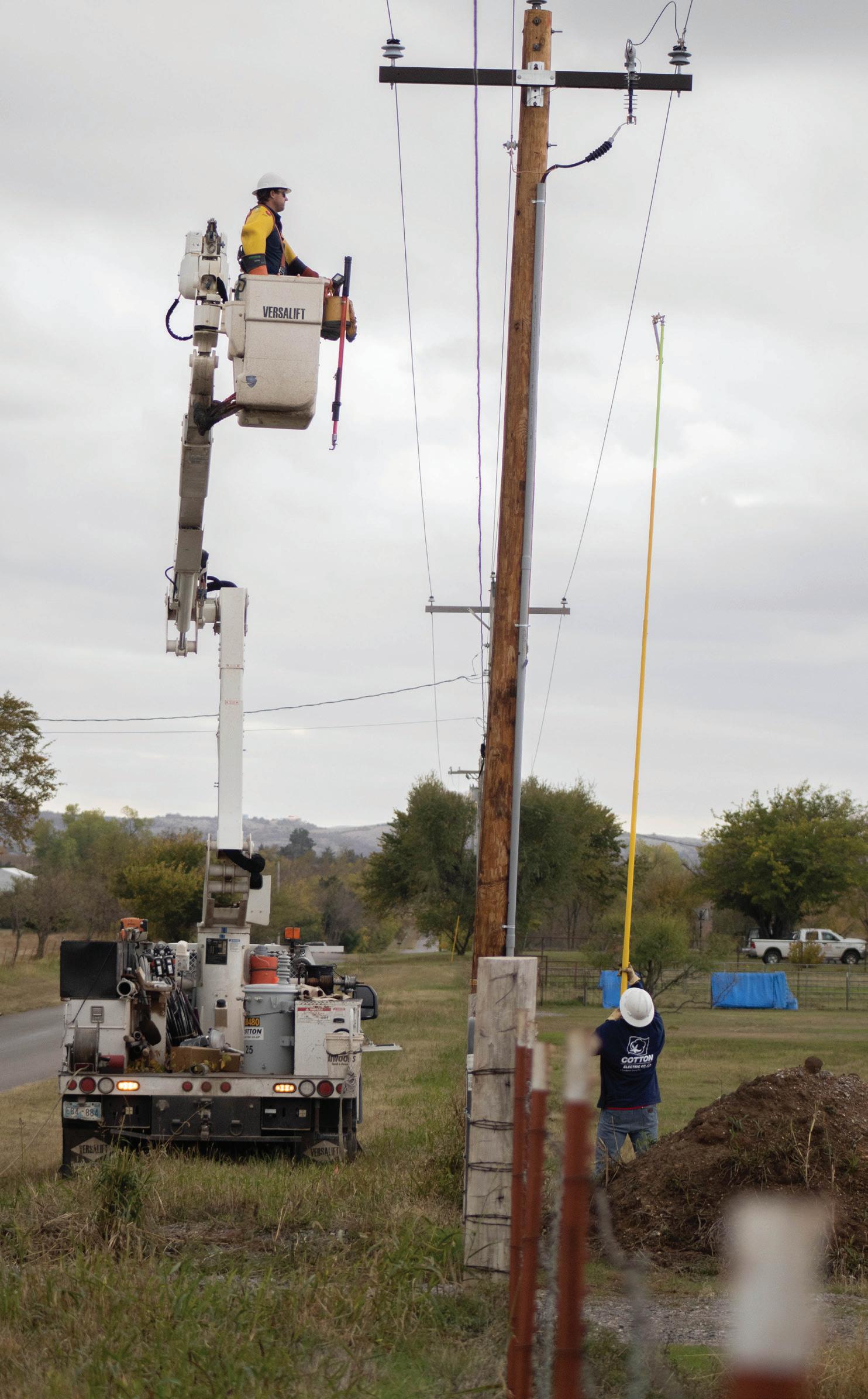
Cotton Electric crews place orange cones in the road to keep employees and the public safe near work zones.
From the CEO Thank a lineworker on April 10
If you were asked to associate an image or a person with Cotton Electric Cooperative, I bet you would picture a lineworker. One of the most visible employees of the coop, lineworkers work tirelessly to ensure our community receives uninterrupted power 24/7.
Linework can be hazardous, so extra care and safety precautions are taken as they perform detailed tasks near high-voltage power lines. Regardless of the time of day, they brave stormy weather and other challenging conditions, climb 40 feet in the air, and often carry heavy equipment to get the job done.
Being a lineworker is not a glamorous or easy profession. It takes years of specialized training, ongoing education, dedication, and equally important, a sense of service and commitment. How else can you explain

the willingness to leave the comfort of your home to tackle a challenging job in difficult conditions, when most are sheltering comfortably at home? This dedication and sense of service to the community is truly what sets them apart. That’s why we set aside the second Monday in April to celebrate and recognize the men and women who work around the clock to keep the lights on.
While lineworkers may be the most visible employees at Cotton Electric, it’s important to note that there is a team of highly skilled professionals working behind the scenes. Dispatchers monitor weather and crews, serving as the first line of communication with workers in the field. Engineers provide ongoing expertise and guidance on the operations side of the co-op. Marketing and member service
representatives are always standing by to take your calls and questions. Metering and transformer technicians ensure the integrity of our metering system and prepare equipment to be installed. Our information technology (IT) experts are continuously monitoring our system to help safeguard sensitive data. Garage and warehouse staff work hard to keep our vehicles on the road and our warehouse stocked with the materials needed. Accounting makes sure invoices are paid and the cooperative’s financials are in order. And, Cotton Electric Services Inc., a high voltage test lab that is a subsidiary of the co-op, ensures the safety of lineworkers across the country as they test the rubber goods and equipment used in the field.
These are just a few of the folks who work together to ensure we can deliver the service and reli-
Jennifer Meason, CEO

ability you expect and deserve. Without them, our lineworkers wouldn’t be able to “bring the light” to our community.
Our dedicated and beloved lineworkers are proud to represent Cotton Electric Cooperative, and they deserve all the appreciation and accolades that come their way on Lineworker Appreciation Day.

On April 10, and any time you see a lineworker, I hope you’ll join me in thanking them for their exceptional service. I also hope you’ll remember that you have a dedicated team of professionals working behind the scenes at the co-op whose commitment to service runs deep.
Tip of the Month
This planting season, include energy efficiency in your landscaping plans. Adding shade trees around your home can reduce surrounding air temperatures as much as 6 degrees. To block heat from the sun, plant deciduous trees around the south side of your home. Deciduous trees provide excellent shade during the summer and lose their leaves in the fall and winter months, allowing sunlight to warm your home.
February 2023 Operating Stats

Source: Energy.gov
Upcoming Deadlines for The Current
Shane Bowers Vice President
Zach Young Director Carli Eubank Communications Specialist
Cotton Electric Cooperative, Inc.

Board of Trustees
Shan Files, Velma, President
Brian DeMarcus, Meers, Vice President
Steven R. Robinson, Cache, Sec./Treas.
Tony High, Walters, Asst. Sec./Treas.
Ken Layn, Marlow
Clifford Dunham, Chattanooga
Todd Clark, Duncan
Nichole Scott, Central High
“Cotton
Page 2 Current News April 10, 2023
2023 2022 Total Amount Billed/Accrued $6,667,660 $7,064,076 Cost of Purchased Power 4,825,855 5,139,607 Taxes 145,493 157,174 Total Operating Expense Per Mile 1,199 1,298 Average Farm and Residential Bill 172 186 Average Farm and Residential kWh 1,395 1,598 Total Meters Billed (farm, residential) 19,165 19,125 Miles Energized 5,255 5,223 Density Per Mile 3.65 3.66 New Service Connects YTD 55 55 Services Retired 19 11
Jennifer Meason CEO
Electric
(USPS
is published monthly by: Cotton Electric Co-op, 226 North Broadway, Walters, OK 73572 Periodicals Postage paid at Lawton, OK 73501-4649
Send #3579
The Cotton Current 226 North Broadway Walters, OK 73572 This institution is an equal opportunity provider & employer.
Current”
#134-020)
Postmaster
To
May Ad Sales April 21 Classified April 21 Publish May 8 June Ad Sales May 26 Classified May 26 Publish June 12
Energy Efficiency
Efficiency upgrades to help you save this summer
Spring and summer are opportune times for home upgrades and DIY projects. If you’re planning to make improvements to your home, consider upgrades that promote better efficiency.
Here are a few projects that can help you save energy and money–and increase the comfort of your home.
• Installing a smart thermostat is one of the simplest ways to manage home energy use and keep summer bills in check. Smart thermostats are easy to install and allow you to control your heating and cooling system from your phone. You can purchase an ENERGY STAR®-certified smart thermostat for as low as $100, which can save you 8% on annual heating and cooling costs, about $50 per year. This upgrade will quickly pay for itself, and you’ll gain insight into better ways to heat and cool your home.
• Speaking of smart, additional devices like smart LED bulbs also offer convenient control and help boost energy savings at home. With smart lighting, you can set a schedule for


when and how your lights should be turned on or off. And the next time you head out to run errands and realize you left the lights on, all you have to do is turn them off through your phone. Smart lights come in a variety of shapes, colors and brightness levels––and you can purchase bulbs for indoor or outdoor use. Schedule outdoor smart lights to illuminate your home at night and when you’re out of town for better security.

• While it’s not as trendy as incorporating smart technologies, sealing air leaks around your home is a simple, effective way to save energy and lower your bills. Applying new (or replacing old) weather stripping around doors and windows can instantly make your home more comfortable and reduce energy waste. Applying caulk to fill gaps can also improve the seal of your home. Caulk can be applied to a variety of areas, including windows, doors, bathtubs and sinks.
• If your home feels too warm during summer (and too chilly during winter) even after you’ve sealed with weather
stripping and caulk, your home may need additional insulation. Insulation is considered a more expensive efficiency upgrade; however, if your home is under-insulated, additional insulation can make a big impact on reducing energy use and costs. The cost of new insulation depends on a variety of factors like materials, size of the home and whether you use a contractor. Typically, the project costs can be recouped in a few years and your home will immediately feel more comfortable.
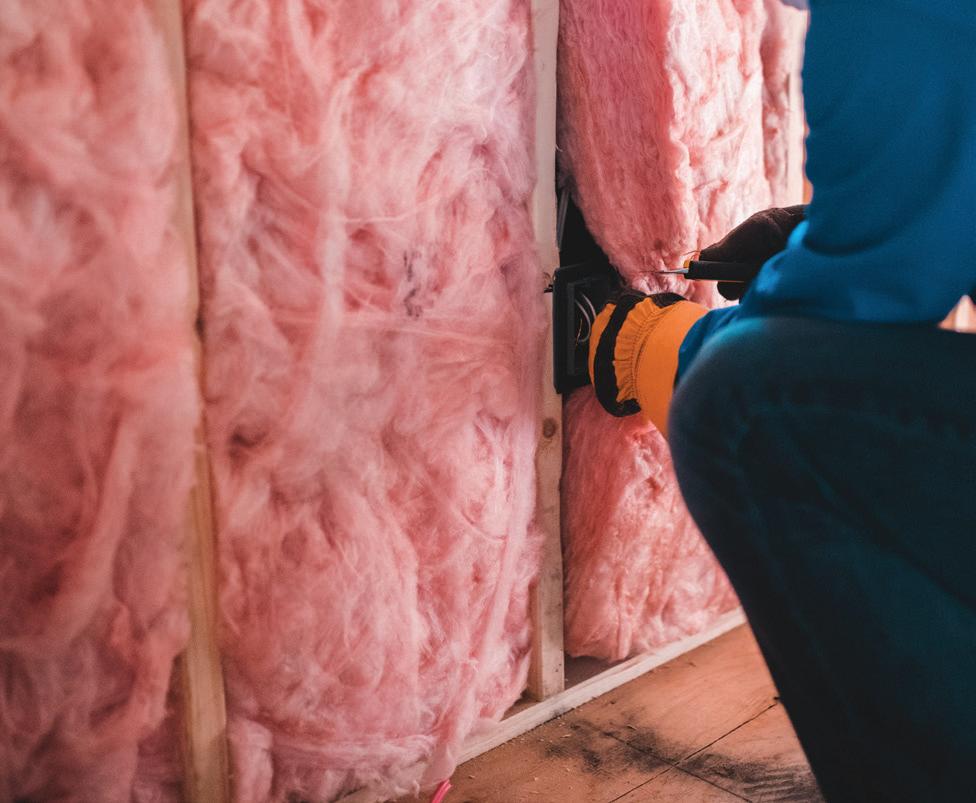
Of course, there are additional efficiency upgrades that can make a big impact on energy use, like replacing old appliances with ENERGY-STAR® models or replacing old, leaky windows with new, energy efficient windows. But these upgrades can be a bit pricey.
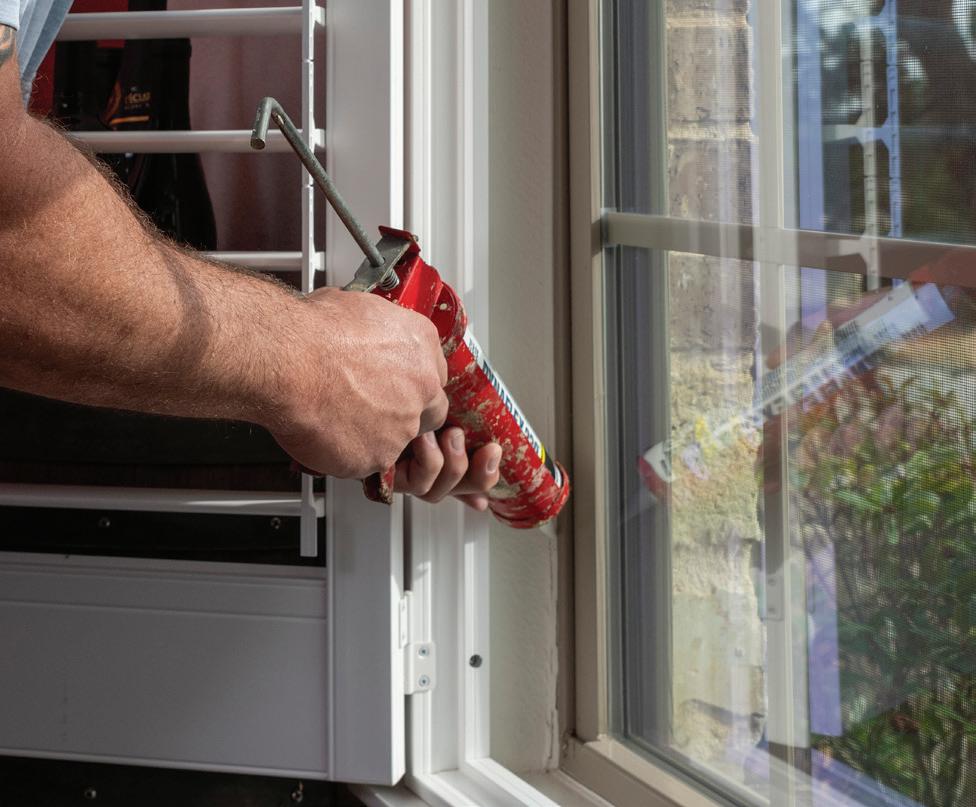
If you’re wanting to make your home more energy efficient but you’re not sure where to start, your best bet is to enlist the help of an expert to conduct an energy evaluation of your home. Cotton Electric provides free energy efficiency home evaluations for mem-


Heath Morgan, Energy Efficiency Coordinator

bers. Performed by the co-op’s energy efficiency coordinator, careful measurements and inspections are taken of your home’s foundation, floors, walls, doors, windows and attic. Results are explained and given to the member once the evaluation is completed. An energy evaluation can easily identify areas to boost efficiency, and then you can determine the projects you want to tackle first based on your budget and needs.
For more information or to schedule an energy efficiency home evaluation, call 580-875-3351.
April 10, 2023 Current News Page 3
WE’RE PROUD TO POWER YOUR LIFE. BUILT by our community. SHAPED by our community. LED by our community.
WHAT’S THE ORANGE SIGN FOR? It’s not a suggestion. It’s the law. 2020 Work Zone Statistics* Crashes and Injuries 102,000 105 51 Estimated total crashes 44,000 Estimated injuries Fatalities 857 Total fatalities 244 Fatalities involving commercial motor vehicles Pedestrian Fatalities in Work Zones Pedestrians (non-workers) Pedestrian workers Do your part to help everyone return home safely. The orange sign is not meant for everyone else; it is meant for everyone. *most recent data available Sources: National Work Zone Awareness Week (nwzaw.org), National Work Zone Safety Information Clearinghouse, American Traffic Safety Services Association Life is fast paced, but speeding or multitasking in a work zone is not worth losing your life or taking someone else’s. To help save lives and reduce injuries, follow orange sign directives every time you approach a work zone.
offer convenient control scheduling when lights turn on and off.
and caulk can help control hot or
your house.
Smart LED bulbs
Weather stripping
cold air leaking from
Insulation can help reduce energy use and costs during the summer months.
Cotton Electric Charitable Foundation


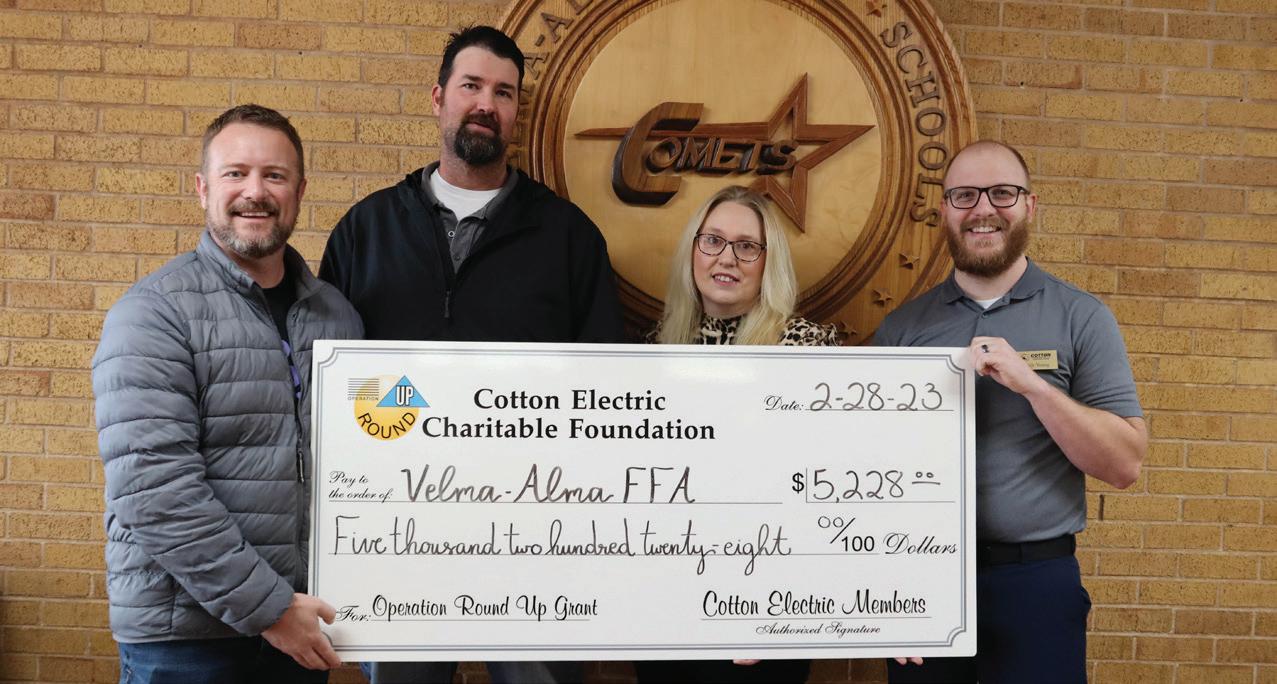
A Cotton Electric Charitable Foundation (CECF) grant was awarded to Velma-Alma FFA for installation of heaters in their show barn. Pictured left to right: Jerry Garrett, Velma-Alma Middle School and High School principal; Jamie Davies, Velma-Alma agriculture education teacher; Nicki Brant, Velma-Alma federal programs director; and Zach Young , Cotton Electric Marketing and Communications Director.
A recent CECF grant will help provide items for a calming area at Will Rogers Elementary School. Pictured left to right are Will Rogers Elementary School employees: Katelyn Roberson, Pre-K Teacher; Jane Loafman, Pre-K Teacher; Marcia Vaugn, Pre-K Special Education Teacher; Kelle Jeffrey, Will Rogers Principal; Judy Dittner, Licensed Professional Counselor; and Carli Eubank, Cotton Electric communications specialist.

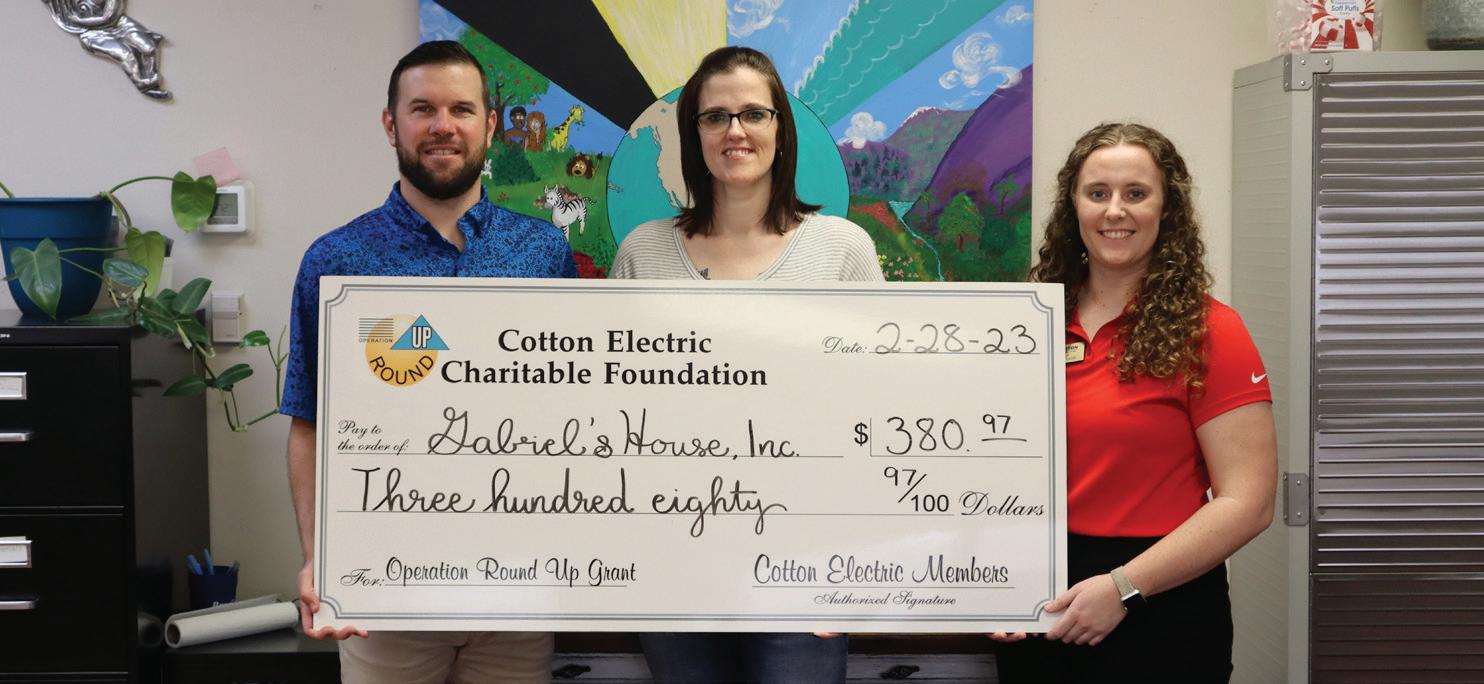
Gabriel’s House, Inc. recently received a CECF grant to purchase a SmartTV at the organization’s Empire location. Pictured left to right are Tyler Garrett, board president; Jana Bowen, executive director; and Carli Eubank, Cotton Electric Communications Specialist.

A CECF grant was awarded to Comanche Fire Deparment to help purchase new SCBA tanks for the crew. Pictured left to right are Scooter Bivins, Comanche Fire Chief, and Zach Young, Cotton Electric Director of Marketing and Communications.

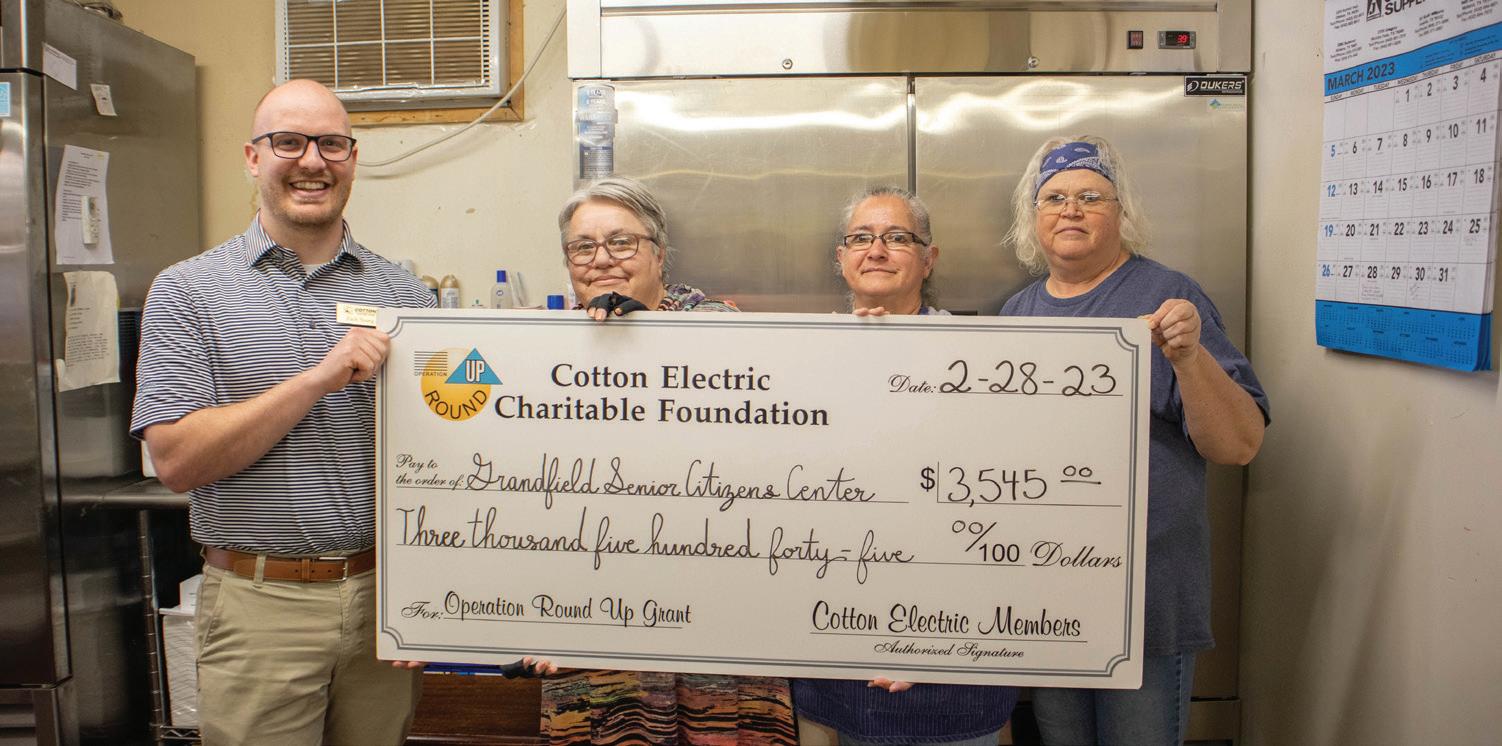
Grandfield Senior Citizens Center received a CECF grant for a commercial refrigerator. Pictured left to right: Cotton Electric Director of Marketing and Communications Zach Young, the Center’s Project Coordinator Rachel Berry, and the Center’s cooks, Eduarda Cunningham and Carla Walden.
A recent CECF grant will help provide a commercial mixer for the Indiahoma Public Schools cafeteria. Pictured left to right: Carrie Thompson, Indiahoma Public Schools counselor/principal; Don Wise, Indiahoma Public Schools superintendent; and Carli Eubank, Cotton Electric Communications Specialist.
Teen Court, Inc. was awarded a CECF grant to purchase a refurbished color copier. Pictured left to right: open board meeting guest and his son; Teen Court Board Members Pam Brisolara, Leigh Smallwood, Pam Benskin, Marcia Frazier, Director, Devon Jenkins, Det. Marcus Rucker; and Cotton Electric Marketing and Communications Director Zach Young.

We embrace New and Innovative Treatments that emerge each year in the Fight Against Cancer. Our doctors and nurses are cancer specialists and our staff is highly trained to support you as a cancer patient.
We encourage you to help us fight cancer by getting annual cancer screenings. Early detection improves outcomes and saves lives.

Page 4 Current News April 10, 2023
ALTUS 1200 East Broadway Altus, OK 73521 580.379.6000 LAWTON 104 NW 31 St. Lawton, OK 73505 580.536.2121 DUNCAN 2110 Duncan Regional Loop Rd. Duncan, OK 73533 580.251.6600 CHICKASHA 210 Mary Bailey Drive Chickasha, OK 73018 405.222.9222
Is Our Fight Your Fight Home is where healing begins MAIN STREET DUNCAN CHISHOLM TRAIL THE E 07 2 0 ST. 20 GOOOD T TIMEES GOOOD F FOOD G GOOOD P PEEOOPPLE 2 3 April 22 Car & Motorcycle Show Registration begins 8 am 12th & Main Awards at 4pm Summer Breeze performs 1:30-3:30 pm
Youth Tour winners will represent Cotton Electric in Washington D.C.
After advancing through an essay competition, a video interview, and an oral presentation of their written essay, we are happy to announce Eli Hutson and Mason Meza of Cache High School are the winners of Cotton Electric’s 2023 Scholarship Contest and will represent the co-op in
Washington D.C this summer at Youth Tour.
Hutson and Meza showed great efforts of speaking ability, knowledge of subject, poise and personality throughout the competition.
During Youth Tour, students will meet Oklahoma’s congressional dele-

gation and learn about the cooperative form of business. They will also meet other Youth Tour winners from across the country, while touring the historic sites at our nation’s capital.
Below, you can read the winning essays inspired from the following topic: “Cotton Electric Cooperative oper-


It’s the Principle!
By Eli Hutson
ples that Cotton Electric consistently abides by. Cotton Electric has seven main cooperative principles, but three especially stick out to me.
I’m a teenager. The highest-earning job I’ve held so far was mowing lawns for a man who owned a nice array of rental properties. If I’m going to be completely honest, business in any form isn’t really a big part of my life, at least not in obvious ways right now. Yet somehow, the principles of one big business in my local area still resonate with me. I’m young, and I have relatively little knowledge, but I can already see the value in the princi-




The first is their principle of “Voluntary and Open Membership.” Cotton Electric holds no discrimination in any way. Anyone who is willing to do their part as a member of the cooperative is allowed to join and gain the welcome responsibilities of membership. In all aspects of my life, when it comes to working with other people, choosing discrimination in any form would get me nowhere, and possibly even backwards. I’m glad to see that Cotton Electric easily realizes that in their own setting, and that they under no circumstances would ever discriminate.
The second principle they hold is that of “Education, Training, and Information.” Cotton Electric extensive-


ly educates and trains all of their members. In my own life, I hate the feeling of being unprepared, or not understanding something when everyone else does, or the feeling of falling behind others information-wise. I doubt anyone else enjoys feeling that way either. Knowing that Cotton Electric strengthens their team and makes sure their members know what they’re doing is a comfort to me.
The final principle of Cotton Electric that significantly sticks out to me is their “Concern for Community.”
While Cotton focuses on developing their business, they keep in mind why they do what they do. They participate in programs like “Adopt-a-Community,” where members of Cotton do all they can in their power to provide service to those in need, the majority of the service taking place after normal hours. I try to serve whenever I am
Cotton Kingdom
By Mason Meza
Thinking of the seven principles, three resonate most with me: cooperation, independence, and concern for community. I believe that these three principles are crucial not only just for cooperatives, but also in everyday life. In fact, the value of the principles bring to mind a story….
A long time ago, the year 1638 to be exact, there was a king named King Cotton and the king ruled over a vast kingdom with many villages. There

was a problem in his kingdom though, many of the villages were isolated because there were no roads that went from the main castle to the villages, so the king gathered groups of people together from all the villages to build roads. He called his team the Touchstone Road Layers and, on September 15, 1638, gave them 5,000 gold coins (valued at $230,000 by today’s standards) and tasked them with building roads to connect all the villages of his kingdom.
They got to work laying roads, but soon two problems emerged. First, the team didn’t know how to work together efficiently; they misplaced bricks and bickered amongst themselves. The second problem was that King Cotton wasn’t a very concerned leader; he let neighboring kings interfere with his kingdom and the construction of the

roads. One day a wise wizard came to visit the king and he told the king three values that would make him a great, wise leader. The wizard told the king that he needed to be independent and not let his neighbors, who did not care for the best interest of the kingdom, interfere, so King Cotton sent away the other kings. Next, the wizard told the king to promote cooperation in his team because a team that did not work together could not function. Lastly, the wizard advised that the king pay heed to the problems of his team, so that he could address them properly which would make the team happy. Then, the wizard departed as swiftly as he came. King Cotton respected the wizard and decided to implement all the principles into the way he ruled. With the new principles in place, the Touchstone Road Layers worked
ates on the Seven Cooperative Principles. Which three of these resonate most with you, and why?”
This is just one way the co-op creates opportunities and excites us about the future of our communities. Congratulations to Eli Hutson and Mason Meza.
able. While I do have my own needs, I can recognize when my own needs don’t come first. I often enjoy participating in service through my church, school, and community. The fact that Cotton Electric knows that they aren’t above helping others succeed, and that they’ve made that a core of their business, is genuinely impressive.
When I find a job in the future, I know that I don’t need to compromise on these aspects of my potential career that I want because I know that there are trustworthy businesses like Cotton Electric that understand that these principles are essential to a good team. Cotton Electric gives me hope for my future, and at the same time, they make me proud. Proud that I know I can trust them, proud that they are active heroes in their communities, and proud that they serve in my area.
at an unprecedented pace, and, just a year later, laid roads connecting all the corners of the kingdom. On August 6, 1639, the last brick was laid, and the day was referred to as “the day of travel,” by all villagers of the Kingdom. Finally, the villages were not isolated, and the people could freely travel and ship goods. From then on, the villages of the kingdom were connected and all the citizens’ lives were made easier. Similarly, Cotton Electric and its larger cooperation, Touchstone Energy, strive to supply communities with electricity; much like how King Cotton wanted to connect his kingdom with roads. By sticking to its core principles, Cotton Electric not only provides reliable electricity to thousands
April 10, 2023 Current News Page 5
Apache Auction Market Thursday 8 a.m. Apache Video Wednesday 10 a.m. 800-926-9696 580-588-3840 Livestock Marketing, Inc. Stockers, Feeders, Cows, Bulls & Pairs Saturday, April 15 9:30 AM @ Brink Auction Yard 205 W. Main, Marlow 580-658-2295 Marlow Real Es Debbie Lynn Benton Broker/Owner GRI Cell: 580-658-1177 debbie@marlowrealestate.com “Selling our listings, would like to sell yours.” Always Ready to go the “Extra Mile” for you. www.marlowrealestate.com www.realtor.com D~N~A Ranch Custom Bermuda Grass Sprigging David Edgmon 580•574•0068 1 Yr. Cylinder Lease $40.95 Starlite Welding Supplies 506 Industrial Ave.--By Duncan Cemetery Mon.-Fri., 8 am -5 pm; Sat., 8 am -12 noon Home-owned by Kenneth/Jeff Golay Since 1991 580-252-8320 SPECIALS on Welders/Generators Torch & Regulator Repair Welder-Torch Kit Specials BermudaGrass Midland of 99 sprigs and roots for sale! Call HC McGee 580-512-3569 Sprigging
Supporting area schools has always been a priority for Cotton Electric Cooperative. It is our privilege to provide educational presentations, sponsorships and assistance when needed.
The membership of Cotton Electric makes a substantial impact on local schools in several ways. For example, electric cooperatives in Oklahoma are levied a 2% gross receipts tax on the revenue at both the wholesale and retail level in lieu of an ad valorem tax.
When Cotton Electric members pay electric bills, the cooperative remits the 2% gross receipts tax to the state, and 95% of those funds go directly back to local school districts. During 2022, $2,961,689.10 was apportioned back to the 31 school districts in our service area. The amount in 2021 was $3,033,932.63.

On a percentage basis, electric cooperatives contribute more tax dollars to local school districts
than other utilities. In Oklahoma, investor-owned utilities pay ad valorem taxes instead of gross receipts tax, and only 58% of these tax monies go to school districts within which investor-owned utilities own property. Municipal utilities contribute no tax money to public schools.
The Oklahoma Tax Commission oversees the apportionment of the gross receipts tax. The amount paid to each school is based upon the number of miles of power lines that Cotton Electric Cooperative and Western Farmers Electric Cooperative (WFEC) have in each school district. WFEC, Oklahoma’s largest locally-owned power supply system, is a generation and transmission cooperative owned by 21 distribution cooperatives, including Cotton Electric.
The table shows the miles of line serving each district and an estimation of amounts contributed through the 2022 gross receipts tax.
2022 Gross Receipts Tax by School Districts
UNCOMFORTABLE?
Does your home have any of these symptoms?
Rooms that get too hot or too cold?
High utility bills?
Thermostat wars with your spouse?
High humidity in summer?
House just never seems comfortable?
There doesn’t seem to be enough airflow?
Dust buildup within 2 days of dusting?
Problems with your system since it’s been installed?
Anyone with allergies or asthma?
AC starts and stops frequently or runs all the time, and house is still not cool?
Have been told by other contractors that the problem cannot be fixed?
If you answered YES to any of these questions, we can help!
Pippin Brothers has specialists that can pinpoint and correct these problems and, in many cases, you don’t even have to replace your equipment, with the solution usually being easier and costing a lot less than you may think. There is no other contractor in Lawton more qualified than Pippin Brothers at diagnosing and correcting these annoying, inconvenient, unhealthy, comfort-compromising and energywasting concerns. Call us today and let us make your home Feel As Good As It Looks! After all, your home is your largest investment and you and your family deserve to be comfortable - don’t you?

Call Today: 580-248-7924
www.PippinBrothers.com


Investment ideas for business owners
By definition, business owners put a lot of their financial resources into their enterprises. But as an owner, you may need to invest in more than inventories and payroll to help achieve the future you’ve envisioned.

Here are a few investments you may want to consider:
• Retirement account –Depending on the nature of your business and how many
employees you have, you can choose from a variety of tax-advantaged retirement plans, such as an owneronly 401(k), an SEP-IRA and a SIMPLE IRA. By contributing regularly to one of these accounts, you can avoid being entirely dependent on the sale of your business to pay for your retirement years. To fund your 401(k) or other retirement plan, you’ll have many investment options — stocks, bonds, mutual funds and so on. And if you “max out” on your retirement plan, you may even be able to build a separate investment portfolio. In any case, keep in mind that you’re already putting
a lot of money into your business, so, to achieve a level of diversification, you may want to concentrate your investment choices in areas outside your industry. However, while diversification can help reduce the impact of market volatility on your portfolio, it can’t guarantee profits or protect against losses in a declining market.
• Property – Your physical space is a key part of your business’ success. So, you may want to invest some time in comparing the pros and cons of renting versus owning. Of course, owning your building may require a big financial commitment, and it may not be feasible,
but it could free you from worrying about untimely rent increases.
• Disaster protection – If a fire or a weather-related disaster should strike your business, would you be prepared? It’s important for you to create a disaster recovery plan, which can include business interruption insurance to pay for your operating costs if you’re forced to shut down for a while.
• Emergency savings –While a disaster protection plan with appropriate insurance can help keep your business afloat, it’s unlikely to cover other types of emergency needs, such as a major medical bill or
AUCTION ORDER:
(1) All 5 Tracts of Land sell first at 9:30 a.m.
(2) Farm & Ranch Equipment at approx.
Lots 3 & 4 & the S ½ - NW ¼ - 2 3S 12 WIM Cotton County, OK (Homeplace)
TRACT #5: SW ¼ - 26 - 4S 12 WIM, Cotton County, OK
TERRY H. BRINK, Auctioneer Frederick, Oklahoma 73542 580/335-4126 Lic. #OKS-118-006033 www.brinkauction.com Auction Service
an expensive repair to your home. For these unexpected costs, you may want to build an emergency fund covering at least a few months’ worth of living expenses, with the money kept in a liquid account. Without such an emergency fund, you may be forced to dip into your 401(k), IRA or other longterm investment vehicle.
You’ll also want to invest the time and energy into creating a business succession plan. Will you keep the business in your family? Sell it to outsiders or a key employee? If you do sell, will you do it all at once or over time? Clearly, the answers to these types of questions will make a big
difference in your ultimate financial security.
Finally, invest in help – Enlist the services of a financial advisor and business-planning professional, so you’ll be able to make the decisions that work best for your business and you.
Your business may well be a lifelong endeavor — so make sure you’re investing whatever it takes to earn a lifetime of benefits.
Edward Jones, Member SIPC


Page 6 Current News April 10, 2023
Cotton & Cotton District WFEC Taxes miles of line Apache $44,235.55 1.26 Big Pasture 95,640.01 237.49 Bishop 331.16 1.27 Bray 131,222.45 141.09 Cache 127,247.30 214.87 Central 109,382.46 240.81 Chattanooga 252,520.71 321.38 Comanche 230,621.38 316.49 Davidson 28,199.51 33.45 Duncan 103,129.92 198.75 Elgin 111,818.07 339.47 Empire 98,198.96 243.46 Fletcher 46,076.88 27.10 Flower Mound 375.47 1.44 Fox 4,514.63 17.03 Frederick 76,447.47 6.18 Geronimo 60,010.09 170.06 Grandfield 54,433.50 163.08 Grandview 58,940.27 114.61 Indiahoma 79,850.98 158.05 Lawton 49,101.86 125.13 Marlow 62,176.46 240.03 Ringling 65,351.86 23.90 Rush Springs 164,379.32 154.65 Ryan 47,272.67 120.40 Sterling 76,214.46 171.08 Temple 63,549.75 229.90 Terral 18,223.33 69.74 Velma 350,165.17 517.49 Walters 234,740.35 297.20 Waurika 117,317.10 246.38 Totals $2,961,689.10 5,143.24 Electric co-ops contribute more than $2.9m to area schools Estate Auction Selling 800 + Acres of Cotton County Farm & Ranch Land with Improvements (sold in 5 separate Tracts) plus a large amount of Farm and Ranch Equipment Tuesday, April 11, 2023 • 9:30 a.m. Randy Miller Estate, Owner LAND AUCTION LOCATION: Community Building, 314 Ave. D - Randlett, OK (next to Randlett Fire Dept.) EQUIPMENT AUCTION LOCATION: From Cookietown, OK, travel 4 miles North on Hwy. 277 then 1 mile East on CR EW 1850, then ½ mile South on CR NS 2550 (watch for signs) (Cookietown is located 7 miles North of Randlett, OK on Hwy. 277) TRACT #1: NW ¼ - 32 4S 13 WIM, Cotton County, OK TRACT #2: SE ¼ - 14 - 4S 13 WIM, Cotton County, OK TRACT #3: NW ¼ - 36 3S 13 WIM, Cotton County, OK TRACT #4:
12:00 Noon
“Comfort Without Compromise”
Kelsey Avants 1110 N. 10th Street | Duncan, OK 73533 | 580-255-4408 kelsey.avants@edwardjones.com | www.edwardjones.com
Audiology & Hearing AID of Duncan ServingDuncanSince1995 Hearing Evaluations Hearing Aids Hearing Aid Supplies All Brands Repaired *Pack of Batteries-$3.00* *ReSound Dealer* a Hearing Evaluation Assistive Listening Hearing Conservation Hearing Aids 580-252-9005 2126 N HWY 81, STE 26B • CHISHOLM MALL, SOUTH ENTRANCE Cynthia Reidenbach - Hearing Aid Tech Matt Campbell - M.S., CCC-A AUDIOLOGIST Audiology & Hearing AID of Duncan ServingDuncanSince1995 Hearing Evaluations Hearing Aids Hearing Aid Supplies All Brands Repaired *Pack of Batteries-$3.00* *ReSound Dealer* a Hearing Evaluation Assistive Listening Hearing Conservation Hearing Aids 580-252-9005 1206 N HWY 81, STE 26B • CHISHOLM MALL, SOUTH ENTRANCE Cynthia Reidenbach - Hearing Aid Tech Matt Campbell - M.S., CCC-A AUDIOLOGIST *We Accept Insurance* *Pack of Batteries, $3* * Resound Dealer* SHOWMAN’S CHOICE FOR ALL YOUR HORSE TACK & SHOW SUPPLY NEEDS. HOURS MON-FRI 8:00-5:30 SAT 10:00-2:00 1205 SW SHERIDAN RD LAWTON, OK 73505 580-355-7469 FIND US ON FACEBOOK! HOLT ELECTRIC Over 30 yEARS eXPERIENCE Residential Commercial Industrial Estimates Remodeling New Construction 24 hour Service 580-365-4147 P.O. Box 131 * Sterling OK 73567*Lic#OK10531
Understanding service interruptions
Cotton Electric strives to safely deliver quality electric service to our members. Our average system reliability was 99.96% in 2021, with most outages being caused by weather, animals and other events. However, we know another key measure of service quality in the eyes of our members is the number of times their lights blink, dim or go out.

Power Blinks
Power blinks are brief service interruptions, typically caused by a fault (short circuit) on a power line or a protective device that is working in reaction to the fault. Faults can occur through a variety of instances, like squirrels, birds or other small animals contacting an energized power line; tree branches touching a power line; or lightning and other similar events.


Any of the events noted above can cause your power to blink, but you may also experience a brief interruption when protective devices that act like circuit breakers are working to detect the fault. Brief power blinks caused by protective devices are good because that means the equipment is working as it should to prevent a prolonged outage.
Let’s talk a bit about how the grid is designed as a backdrop to how technology is improving reliability by reducing blinks and outages. Along the power lines that bring electricity to your home, Cotton Electric installs protective devices in the form of fuses and reclosers (high-voltage circuit breakers). Fuses and reclosers serve the same purpose as the
fuses and circuit breakers in your home.
A fuse is a one-shot device. When a fault occurs, the fuse blows and everyone downstream from it loses power.
Reclosers are multi-shot devices, meaning they can operate a certain number of times before they stay open and an outage occurs. A common setting is what’s known as a triple-shot. Here’s how it works:

A tree limb contacts the power lines and creates a fault. The recloser senses it and opens, creating the first blink.
Here’s where a recloser differs from your home circuit breaker. It waits a certain amount of a time (typically a few seconds), then recloses to try and complete the circuit. If the fault is still there, it opens again. This creates the second blink. Triple-shot settings allow the device to reclose a third time and if the fault is still there, it stays open and the members downstream experience a power outage.
Blinks are a nuisance, but they eliminate a lot of extended outages by protecting wires and equipment from serious damage. Because of their short duration, they do not register as an outage in our metering system and we may not be aware of the issue. We want to hear from you when you experience blinks so our crews can inspect the line and make necessary repairs.
“Our members are a great source of information and the more detail they can provide, the better,” said Mike Ottinger, Vice President of Engineering and Operations.

“Our linemen are very good at taking small details and piec-
ing them together to diagnose the issue.”
That’s what happened recently when a member called in to let us know that they had experienced several blinks in one day. Crews were sent to investigate, and during the investigation, a neighboring member told the linemen that he’d recently seen sparking on a pole. The crews were then able to locate the problem: a lightning arrestor that had been struck by lightning and was beginning to fail. Thanks to the member reporting the blinks and the observations of their neighbor, the arrester was quickly changed out and the problem resolved.
Dimming and Half-Power


Occasionally members report that their lights are dimming. One of the common reasons for dimming is the residence or business may have outgrown the available power capacity. For example, a new building addition has been made or new home appliances or equipment may have been installed. If members experience dimming with their lights, call the co-op so that crews can check the current voltage and put together a plan to resolve the issue. It’s important that members are present when crews are onsite, said Ottinger.
Half-powers typically happen on underground equipment to a house when one of the service wires have failed. When this occurs, a portion of the house may have power while another does not. Crews can assist in finding where the issue is located and, if neces-

sary, work with the member’s electrician to resolve the issue.
“I encourage members to call any time they experience disruptions in their electric service,” said Ottinger. “It may seem like a small thing but if

we can address the issue early, we can prevent a longer duration outage from happening in the future.”



Members can reach the cooperative at 580-875-3351 or 800-522-3520.



Page 8 Current News April 10, 2023
SERVICE SERVICE IINTERRUPTIONS NTERRUPTIONS TAKE M A D E i n A M E R I C A ! SIMMONS CENTER THEATER 7:30 pm April 29 A Melting Pot of Cultures and Music. Sponsored by t b B A N K C H I S H O L M T R A I L A R T S C O U N C I L C CHISHOLM TRAIL ARTS C O U N C I L For Tickets 580-252-4160 or online www.chisholmtrailar ts.com MC CASLAND F O U N D A T O N 5755 N. Highway 81, Duncan, OK www.dehartair.com 580-252-2205 1201 S. 4th St. Chickasha, OK 73018 www.dehartac.com deharts7@yahoo.com Seth DeHart ENGINEERING SERVICE & CONTRACTING Cotton Electric Co-Op Rebates Available On: *16 Seer, 17 Seer, 18 Seer(+) Air Source Heat Pumps. *New Water Heaters And Mini-Splits. *New Geo-Thermal Systems & Replacement Systems. Dehart Air Conditioning offers maintenance plans to keep systems healthy! *Rebates Available in many OMPA Member cities *Restrictions apply 30% Federal Tax Credit for Geothermal Systems 30% Federal Tax Credit EXTENDED Through 2032! Call us today for more information! 580-252-2205
Medicine Park Aquarium and Natural Sciences Center
Providing up-close experiences to native animals

Oklahoma is known for its diverse regions with many animals within those natural environments. Native animals aren’t frequently spotted in the outdoors, but Medicine Park Aquarium and Natural Sciences Center provides visitors an up-close experience of what’s within our state.


Medicine Park Aquarium and Natural Sciences Center is a non-profit eco-tourism business that opened its doors to the public June 2017 and later became a Co-op Connections partner in 2021. Their discount offers 10% off admission or 10% off family or individual annual memberships for Cotton Electric members.

Medicine Park Aquarium has over 100 native and non-native species on exhibit, along with their six-acre botanical garden that features many plants native to the area. Visitors can see an array of fish species drifting through cool, dim waters. Exotic, colorful frogs resting on dense logs. Bobcats enjoying a nap in the warm sun with native grasses blowing against their coats.
“We mostly have native species, except for a few exotic animal displays,” said Nicole Brown, Medicine Park Aquarium and Natural Sciences Center deputy director. “The exotic species allows us to show comparisons and contrasts with animals that can be found in our native environments.”


There are a lot of fun, educational experiences for all ages at Medicine Park Aquarium. The daily Wildlife Discovery Program showcases some of the Medicine Park Aquarium Animal Ambassadors and

their unique qualities. Visitors can also watch one of the Feeding Shows for different animals, including frogs, fish, eels, and others. Many people gather around to watch otters splash out of the water trying to catch their midday crawfish snack. Check the schedule posted in the gift shop for weekly feeding time changes based on the animals’ needs.
Children can learn more about the outdoors at the kids camps that Medicine Park Aquarium hosts during spring and summer school breaks. The Medicine Park Aquarium is a popular choice for tours, school field trips and other educational experiences, as well. Special event packages are offered for birthdays, weddings and other private events.
“We encourage people to come experience what’s in your backyard up-close,” Brown said. “We pride ourselves in education through conservation, allowing visitors to see native animals without disturbing them in their natural habitat.”
Don’t have your Co-op Connections card? No problem! They are available to all members and can be downloaded in the app, printed online, or picked up at Cotton Electric offices in Walters or Duncan. You can also visit www.connections.coop.com or www.cottonelectric.com under the Member Services tab to discover how you can be part of this free, money-saving opportunity.




To learn more about Medicine Park Aquarium and Natural Sciences Center, visit their website at www.mpmns.org, or call 580-529-3601.
April 10, 2023 Current News Page 9
Otters are one of the animals visitors can watch at the feeding show.
Photo by Carli Eubank.
There are approximately 80 fish species at the Medicine Park Aquarium. Photo by Carli Eubank.
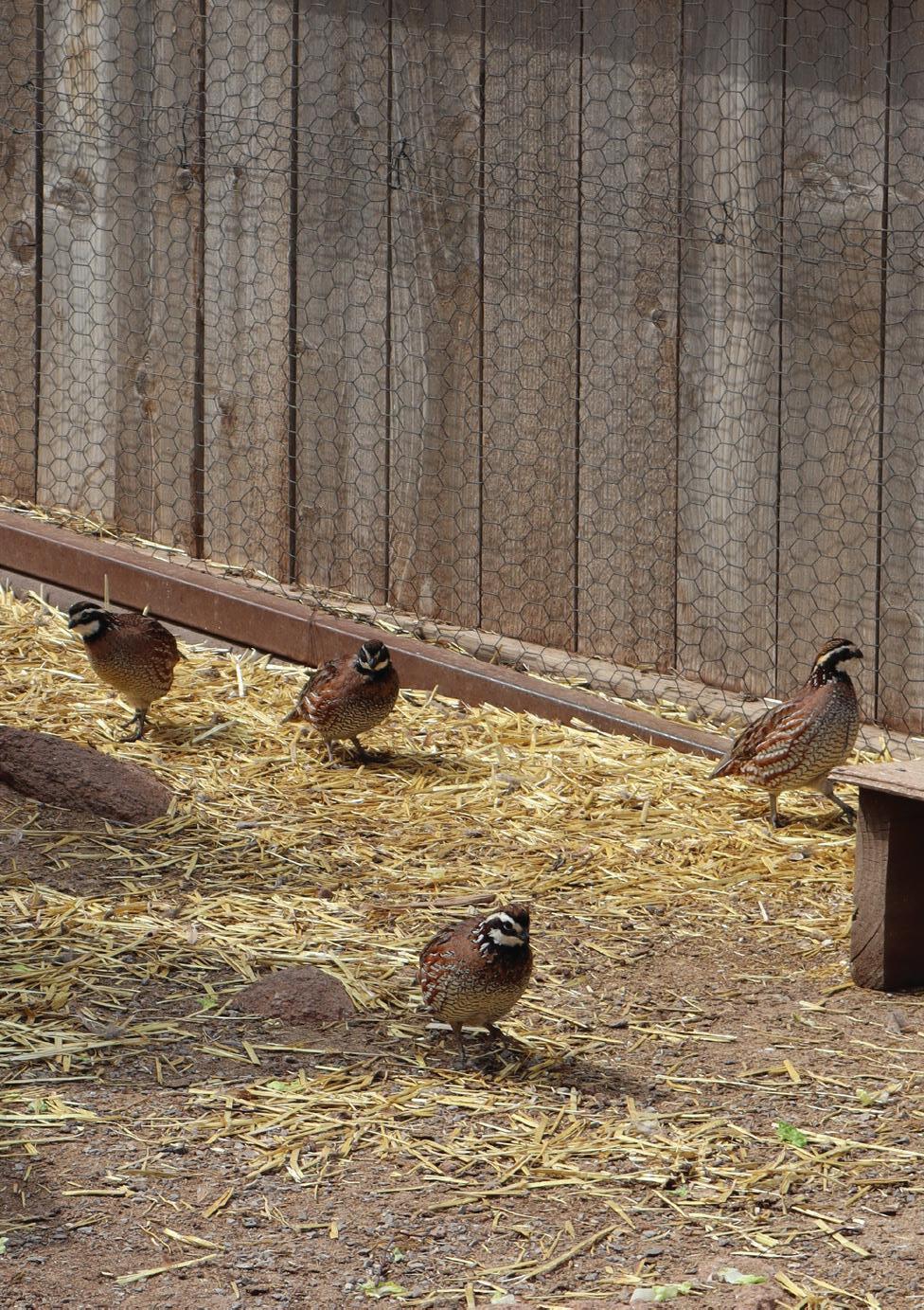
Visitors can purchase food cups to feed the quail.
Photo by Carli Eubank.
HOME • COMMERCIAL • LIFE • AUTO • BOAT • MOTORCYCLE • CAMPER JAMIE SLATE AGENCY 1040 W. Main St. Duncan, OK 73533 jslate@farmersagent.com Office (580) 786-4771 Fax (918) 512-4899 WE HAVE MOVED! SecondBowie’sMonday has evolved into one of the largest flea markets on five acres! SECOND MONDAY TRADE DAYS takes place the weekend prior to the second Monday of every month. May 5-7 NEXT TRADE DATES Business Hwy 287 & Hwy 81 (Wise Street), Bowie, TX 76230 940-872-4861 Information Hours Event Hours Monday - Friday • 8am - 5pm Saturday & Sunday • 8am - 5pm www.cityofbowietx.com 2ndmondayTrade Days FOLLOW US secondmonday@cityofbowietx.com 10% discount on admission or family/individual memberships
Poison Dart Frogs are one of the exotic animals species displays. Photo by Carli Eubank.
Offer valid only at Cinnabon location in Central Plaza.
Cosmetic Specialty Labs, Inc. 50% off open stock products.



Debbie’s Little Books 10% off of regular purchase price of personalized books.
Edwards Family Vision 10% off of complete glasses.
Horse Sense Graphics 15% off orders over $100.


Infinity Computer Systems 10% off all labor.



Johnson & Johnson Locksmith and Door 10% off of all services. Card must be present at time of service and prior to any ordering of parts.

Ligon’s Garden Center 10% off your purchase.
Linda and Sarah’s Carpets Free vacuum cleaner with purchase of $2,000 on Stainmaster carpets.

Marlow Kwik Lube $5 off full service oil changes.
Medicine Park Aquarium & Natural Sciences Center 10% off admission or annual passes.
Nita’s Flowers 10% discount.
Pink Rebel Clothing Co. 15% off all regular priced purchases.

Rick Wylie Construction 5% discount on 8x10 & 6x8 storm shelters; 10% discount on 8x12 and larger.

Showman’s Choice 10% off Professional’s Choice merchandise.

Stephens County Humane Society $10.00 off adoption fee.


Sue Cabelka, Realtor $500 off seller’s closing costs.
Sylvan Learning Schedule an assessment and $40 will be deducted from the cost.

The Salt Cellar 15% off non-sale items, excluding boxed cards and gift cards.
Wichita Furniture 10% off new purchases.


Page 10 Current News April 10, 2023 SAVE MONEY. SHOP LOCAL. Visit Connections.coop to Save Connections.coop to Save SAVE ON – DINING – TRAVEL – HEALTH + MUCH MORE LOCAL AND NATIONAL DISCOUNTS DOWNLOAD TODAY 3B Industries Free wash token with purchase of 10. AA Computer Services, Inc. 20% off service. Not allowed to redeem with any other offers or apply to services already on special. ABC Transmission & Motor Company 10% off any service, excluding already discounted or sale services. A Scent for You Member Discount on Monthly Specials. Arvest Bank Open new checking account, receive a free financial review. Valid at Lawton, Duncan and Chickasha branches. Billingsley Ford of Lawton, Inc. 10% discount on all service department repairs, up to a $40 discount. No parts or body shop repairs included. Billingsley Ford Lincoln Mercury of Duncan, Inc 10% discount on all service department repairs, up to a $40 discount. No parts or body shop repairs included. Brooks Meat Market 10% off meat purchases over $20. Cast & Bang Outfitters Authorized ASF Dealer 10% Off ASF Products and 5% Off Guided Hunts. Discount can not be applied to transportation quotes for ASF products. Discount can not be applied to food and lodging on guided hunts.
Trail Heritage Center $1 off admission per card, per visit.
Buy a Classic Cinnabon get a free coffee.
Chisholm
Cinnabon
For more information: Call 580-875-3351 or download the Co-op Connections app. WWW.DARBYSFURNITURE.COM COMMISSION FREE SALES STAFF Sat April 22nd 10 AM Sign Up We Are Indiahoma 5k & 1 Mile Proceeds to Indiahoma Fire Dept Indiahoma Schools WeAreIndiahoma.net
Co-op Life
The people behind your power
 By Carli Eubank
The night sky cools down the evening while dark storm clouds slowly roll in the distance. The wind begins to howl and raindrops fall heavier as each minute goes by. Roars of thunder echo all around and suddenly, the only light coming into your home is from the sporadic flashes of lightning zipping across the sky. You and your family gather in a safe place during the storm, prepared for an outage. Cotton Electric linemen are also prepared for an outage, leaving their family at home, as they walk out the door to brave the brutal weather conditions and bring power back to members.
Every second Monday in April, we recognize our linemen during National Lineman Appreciation Day. This year the official 2023 calendar date falls on April 10. Even though National Lineman Appreciation Day is recognized one day out of the year, any day is good to show your appreciation.
Going through the lineman program is no easy course. Crewmen are entered into the lineman apprentice program after being on the job a minimum of six months. Apprentice linemen then spend three years studying, taking tests and receiving on-the-job training before officially becoming a lineman.
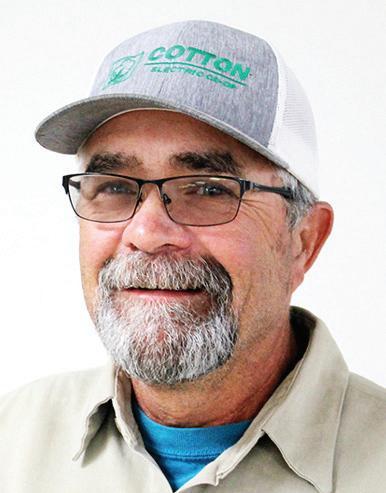
Ely King has been with Cotton Electric for almost five years and is currently an apprentice lineman. King started at the co-op on the Vegetation Management crew before working to become a lineman.





“Each day is different, depending on which crew I am on at the time,” King said. “I am currently with the underground crew, and some of my daily tasks include connecting services to new structures, digging trenches, and pulling wire.”
Days are filled with different jobs as a lineman, but working with a great group helps make the days better and get the challenging jobs done, King added.
“I really enjoy working with my colleagues,” King said. “Everyone on the Operations crews like to work hard and have fun while completing a job. The work atmosphere is something money can’t buy.”
After an additional year in the field, a lineman may be considered for a journeyman position.

For the past five years, Braylin Dowlen has worked through each program before becoming a journeyman lineman for Cotton Electric in July 2022. Dowlen has lived and learned many experiences during his career at the co-op.






















“A few qualities that describe the lifestyle of a lineman are commitment, safety and strength,” Dowlen said. “You have to have mental strength, along with physical strength to overcome obstacles and safely restore power.”
Whether it’s a cold winter night or a beautiful spring day, lineman always have to be ready for the call – sometimes leaving your family, not knowing how long it will take to restore power and return home.
“It’s not only my commitment to the cooperative, but it’s a family commitment, as well,” Dowlen said. “Every one of us have to be ready at any moment and leaving my family for a call is always the toughest part of the job.”
While Cotton Electric crews maintain power lines, fix broken poles and keep electricity running, their dedication to membership flows throughout our local communities.
“To me, a lineman has always meant someone willing to go the extra mile for not just the company, but for anyone in need,” King said. “The reward is definitely worth the risk.”
More than 7,000 hours of training for each individual. Over 5,000 miles of line to maintain in eight counties. More than 20 linemen, crewmen and heavy equipment operators on call 24/7, 365 days a year. These are just a few statistics that represent Cotton Electric Cooperative linemen, not including the incalculable amount of heart and determination they devote to their goal: To serve our members while keeping the lights on.
Thank you, linemen.
April 10, 2023 Current News Page 11
Chad Cowan Operations Superintendent
Clint Ingram Operations Superintendent
TJ Birdwell Apprentice Lineman
Larry Crowell Journeyman Lineman
Conner Daniel Journeyman Lineman Scott Dennis Journeyman Lineman
Braylin Dowlen Journeyman Lineman Michael Edgmon Apprentice Lineman Prestin Green Lineman Evan Hayes Journeyman Lineman
Justin Hill Apprentice Lineman
Case Hurst Lineman TJ James Journeyman Lineman
Bill Kennard Lineman Ely King Apprentice Lineman
Kyle Linthicum Journeyman Lineman
Ronnie Mansel Journeyman Lineman
Quaid Ogletree Lineman
Keeton Sallee Journeyman Lineman
Taylor Rains Apprentice Lineman
Bobby Shortt Journeyman Lineman Skyler Smith Apprentice Lineman Zack Smith Crew Chief Dillon Thompson Journeyman Lineman
Terry Turner Journeyman Lineman
Shayne White Journeyman Lineman Dillon Wiygul Journeyman Lineman
Marc Bohall Journeyman Lineman
If you would like your community event listed in the May issue, please submit information by calling 580-8753351 or send an email to TheCurrent@ CottonElectric.com by April 21. Only events occuring after May 8 will be published in the next issue.


Editor’s Note: We recommend checking for cancellations with local sources before attending any event.
Southwest Coin Show
Buy, sell, trade or admire coins, currency and more at the Southwest Coin Show. There is no admission fee. The event is open Friday from 10 a.m. to 5 p.m. and Saturday from 9 a.m. to 5 p.m. April 21-22 at the Stephens County Fairgrounds, 1618 S. 13th St. in Duncan. For more information, call Ed at 580-475-4570.
Fundraiser helps local school
Grab a pair of running shoes for the We Are Indiahoma 5K and 1 Mile run. There will also be a Senior Stroll. Registration opens the morning of the race at 8:30 a.m. There is a $25 registration fee. Proceeds benefit Indiahoma Public School and Indiahoma Volunteer Fire Department. The event begins at 10 a.m. on April 22 at the Indiahoma Public School auditorium. To register for the event, visit www. WeAreIndiahoma.net.
Plant swap in Duncan
The Stephens County Oklahoma Home and Community Education (OHCE) clubs will sponsor a plant swap in Duncan. Attendees should bring at least one of the following (pest-free and tagged): plant, cutting that has rooted, bulb, rhizome, tuber, seed (may be saved or unused), bush, or tree. The plants may be houseplants or outdoors, as long you would like to share them. The purpose is to share extras and nourish a love of plants. The event is from 10 a.m. to noon on April 22 in the Heritage Room of the Conference Center at the Stephens County Fairgrounds, 1618 S. 13th St.

in Duncan. For more information, call 580-255-3460.







Grand opening in Walters
Pack Mule Cigars will open their doors to the public for their official Grand Opening. The day will be filled with fellowship, cigars, food and games. One dollar from every cigar sold will go to the Comanche Masonic Lodge Restoration Fund. The event is April 22 and located inside Horse Sense Graphics, 629 E. Missouri Ave. in Walters. For more information, 580-512-9452 or 580-512-7047.

Annual Poker Run

The Cache Valley Lodge #530 will be hosting their third annual Southwest Oklahoma Mason’s Poker Run. Routes will take riders through local Masonic Lodges to collect different cards varying points, as well as a chance to enter into raffle prizes drawings. Registration begins at 9 a.m. on April 29 at Diamondback Harley Davidson in Lawton. For more information, visit the Southwest Oklahoma Masons Facebook page or contact Jamon Kelley at 580-512-7047.


Grief group meets monthly
The Heritage Oaks Church of The Nazarene will be hosting a “Grief and Bereavement” group starting at the beginning of January. The focus of the group, led by Phil and Nancy Evans, is to offer a safe place for those who have gone through the passing of a loved one to share their feelings, to create an environment where it is conducive to find friendship with others going through the grief process, and to bring healing and hope to those who have struggled with loss.
Starting Jan. 3, the group will meet each Tuesday of the month at 6:30 p.m. at the Heritage Oaks Church of The Nazarene, 4595 W. Beech, Duncan. For more information, please contact the church at 580-255-2869 or Pastor Jon at 580-730-9431.
Page 12 Current News April 10, 2023 Cotton Electric member Dawn Dettlaff has bright, beautiful pansies blooming in Marlow. Enter your “best shot” in our Photo of the Month contest. The theme for May is Hobbies! Entries can be emailed to TheCurrent@CottonElectric.com or mailed to The Current, 226 N. Broadway, Walters, OK 73572. Winners will receive a Cotton Electric prize. PHOTO MONTH OF THE ESTATE AUCTION Donald Waller Estate Saturday, May 6 10:00 a.m. 6 Mile & Caddo Rd., Marlow, OK Guns – Autos – Shop Equipment – Tools – Slot Machines Furniture – Antiques & Much, Much More YOU DO NOT WANT TO MISS THIS! * Preview available Friday, May 5 from 10:00 am to 4:00 pm * AUTOS 1966 Chevy SNB, 350 Automatic Recently restored with new bed, bumpers, grill, fender, all new interior, new tires and wheels and much more. 1964 Chevy LNB. Restored 2016. Many new parts. Very nice truck 2014 Buick Enclave 1977 Chevrolet SHOTGUNS Browning BS 12 ga - Remington 1100LT-20 Magnum 20 ga - Browning BPS Hunter 12 gaBrowning BPS Upland 20 ga - Winchester M-1500 XTR 12 ga - Browning Citori Grade V 20 ga Browning Ultra Over/Under 12 ga Mossburg Model 500E 410 Pump ComLanber Over/Under 12 ga NIBRemington 870 Super Mag 12 ga NIB - Remington M-1100 12 ga - SKB Arms Co. Model XL 12 ga AutoRemington Model 11-48 28 ga Auto Stevens Model 48 Dbl Barrel 12 ga LEVER ACTION RIFLES 1873 Replica 45 Colt (Made in Italy) - Winchester Model 94 Wrangler 44 mag Loop Handle NIB - Marlin 1895-GS SS 45/70 NIB - Marlin M1894S 44 mag - Marlin M-1895G 45/70 - Ruger Model 96 44 mag - Browning BL 22 Lever Action Winchester Model 94 30/30 (Made in 1928) Model 1894 25/20 - Henry Repeating Arms 45 Colt - Winchester Model 1894 32/40 (Made in 1907) Model 11873 32 cal RIFLES M1 Garand w/Scope Browning A-Bolt SAS 300 Win Mag w/Scop Weight 6.5 x 55 mm w/Scope - Ruger M77 Mark 2 SS 7mm mag w/Scope w/Engraved Receiver 223 cal w/Scope Ruger M77 Mark 2 SS 300 Win Mag NIB w/Scope - Marlin MR-7 30-06 w/Scope - Rossi Gallery Rifle 22 cal NIB w/Custom Stock 223 cal w/Scope Norinco ATD Rifle 22 cal NIB w/Scope Parker Hale 7 x 57 mm Kimber M-82 22 WMR w/Scope - Remington Woodmaster M-81 300 Savage - Weatherby Mark V 240 WBY - Winchester M-70 SA Bull Barrell 308 cal w/Scope - Marlin Model 336-RC Micro Groove Barrel 30/30 - Winchester Model 1903 22 cal Auto Savage Model 93R 17 HMR Single Shot Stevens Arms Co., Single Shot 22 LR- Taurus Model 62 22 LR Pump Winchester Model 70 SS 7 mm mag - Winchester Model 94 22 Win Mag - Remington 32 cal Single Shot - Savage model 10 243 SHOP TOOLS Kerosene Heater - Hand Tools - Garden Tools - Aluminum/Fiberglass 6’ Step Ladder - Boxes of Sheetrock Screws – Lumber - Stainless Rolling Shop Vanity - Craftsman Table Saw - Gas HeaterStainless Work Benches w/Light & Pegboard - Heavy-Duty Metal Lift Welding Lead - Honda 2500 Generator - Cordless Drills - Radial Arm Saws - Homecraft Scroll Saw - Ammo Cans - Flexible Gas LinesPlastic Gas Cans - Chop Saw - Right Angle Grinder - Mover’s Dolly - Hose Reel - Electric Drills - Motor Stand - - Tackle Box - Delta 10” Miter Saw - Band Saw - Work Benches - Limb Saws - Magna Force 6.5 hp Air Compressor - Weed Eater - Another Craftsman Table Saw - Rolling Stainless Table - Tackle Box - Patton High Velocity Shop Fan - Big Proto Open-End Wrenches (1 7/8” to 2 ½”) - Pallet Jack - Air Hoses - LevelsExtension Cords - Freon Gauges - Heavy-Duty Shop Shelving, 3 sections - Bar Clamps - Grease Guns - Shop Racks - 8’ Fiberglass Step Ladder - Extra Heavy-Duty Shop Shelves - Come-Alongs - Shelving Live TrapChicken Wire - Wheel Barrow - Yard Tools - Stock Tank - Shop Dolly – Fertilizer - Spreader - Coleman Lanterns – Chains - Electric Wire - Hand Saws - Assortment of Table Saws – Drill Presses - Heavy-Duty Post Driver - T-Square - Bench Sander - Bench Grinders - Mac Rolling 20 Drawer Tool Box - Tool Boxes - Limb Saw Poles - Matco 6-Drawer Rolling Tool Box ANTIQUES Old Records & Albums - Old Milk Can - Hand Planes & Rasps - Singer Treadle Sewing Machine - Cedar Wardrobe - Lots & Lots of Hand Tools HOUSEHOLD Weber Gas Grills – Walker - Firewood Racks - Glider Chair Set - Poly Folding Tables - Little Red Wagon - File Cabinet - Upright Freezer - Chest Freezer - Stereo - Fishing Rods & Equipment * This has to be the biggest and best collection of guns I have ever seen. Many are new in box (NIB). Some are very old. Some are very unique. All are in extraordinarily good condition. Once in a lifetime chance to own or even see some of these guns. Donald Waller Estate Saturday, May 6 10:00 a.m. 6 Mile & Caddo Rd., Marlow, OK Guns – Autos – Shop Equipment – Tools – Slot Machines Furniture Antiques & Much, Much More AUTOS 1966 Chevy SNB, 350 Automatic. Recently restored with new bed, bumpers, grill, fender, all new interior, new tires and wheels and much more. 1964 Chevy LNB. Restored 2016. Many new parts. Very nice truck. 2014 Buick Enclave. 1977 Chevrolet. SHOTGUNS Browning BS 12 ga - Remington 1100LT-20 Magnum 20 ga - Browning BPS Hunter 12 ga - Browning BPS Upland 20 ga - Winchester M-1500 XTR 12 ga - Browning Citori Grade V 20 ga - Browning Ultra Over/Under 12 gaMossburg Model 500E 410 Pump - ComLanber Over/Under 12 ga NIB - Remington 870 Super Mag 12 ga NIB - Remington M-1100 12 ga - SKB Arms Co. Model XL 12 ga Auto - Remington Model 11-48, 28 ga Auto - Stevens Model 48 Dbl Barrel 12 ga LEVER ACTION RIFLES 1873 Replica 45 Colt (Made in Italy) - Winchester Model 94 Wrangler 44 mag Loop Handle NIB - Marlin 1895-GS SS 45/70 NIB - Marlin M1894S 44 mag - Marlin M-1895G 45/70 - Ruger Model 96, 44 mag - Browning BL 22 Lever Action - Winchester Model 94 30/30 (Made in 1928) - Marlin Model 1894 25/20 - Henry Repeating Arms 45 Colt - Winchester Model 1894 32/40 (Made in 1907) - Model 11873, 32 cal RIFLES M1 Garand w/Scope - Browning A-Bolt SAS 300 Win Mag w/Scope - Winchester M-70 XTR Feather Weight 6.5 x 55 mm w/Scope - Ruger M77 Mark 2 SS 7mm mag w/Scope - Remington M-700 BDL w/Engraved Receiver 223 cal w/Scope - Ruger M77 Mark 2 SS 300 Win Mag NIB - Browning A-Bolt 25-06 w/Scope - Marlin MR-7 30-06 w/Scope - Rossi Gallery Rifle 22 cal NIB - Ruger Mini 14 Ranch Rifle w/Custom Stock 223 cal w/Scope - Norinco ATD Rifle 22 cal NIB - Browning BAR Grade 2, 30-06 cal w/Scope - Parker Hale 7 x 57 mm - Kimber M-82 22 WMR w/Scope - Remington Woodmaster M-81 300 Savage - Weatherby Mark V 240 WBY - Winchester M-70 SA Bull Barrell 308 cal w/Scope - Marlin Model 336-RC Micro Groove Barrel 30/30 - Winchester Model 1903 22 cal Auto - Savage Model 93R - 17 HMR Single Shot - Stevens Arms Co., Single Shot 22 LR- Taurus Model 62 22 LR Pump - Winchester Model 70 SS 7 mm mag - Winchester Model 94 22 Win Mag - Remington 32 cal Single Shot - Savage model 10 243 HAND GUNS Colt (The Duke) New Frontier 22 Revolver NIB - Mitchell Arms Victor Target 22 LR SS Automatic - Ruger Red Hawk SS 357 mag w/Scope Revolver - Ruger Vaquero 44 mag Revolver NIB - Ruger Red Hawk SS 44 mag Revolver - Ithica 45 Auto - Smith & Wesson Model 645 SS 45 Automatic - Smith & Wesson Model 1989 SS 45 cal Automatic - Smith & Wesson Model 659 SS 9 mm Automatic - Smith & Wesson Model 4006 SS 40 cal Automatic - Smith & Wesson Model 457 45 Automatic - Smith & Wesson M-910, 9 mm Automatic - Colt Target Model SS 22 LR Automatic - 18 Marlin Model 336-A 32 Special - Ruger Mark II Target 22 Auto - Taurus Groucho 45 Colt Revolver - Charter Arms Bulldog 44 Special Revolver - Colt Series 80 Mark IV Gold Cut National Match 45 Auto - Colt Army Special 32/20 WCF Revolver - Model 1873 Replica Colt 45 Revolver - Black Powder Musket Eagle Engraved Grips - Black Powder Musket Eagle Engraved Grips - Black Powder Musket (Made in Spain) SHOP TOOLS Kerosene Heater - Hand Tools - Garden Tools - Aluminum/Fiberglass 6’ Step Ladder - Boxes of Sheetrock Screws – Lumber - Stainless Rolling Shop Vanity - Craftsman Table Saw - Gas Heater - Stainless Work Benches w/Light & Pegboard - Heavy-Duty Metal Lift Welding Lead - Honda 2500 Generator - Cordless Drills - Radial Arm Saws - Homecraft Scroll Saw - Ammo Cans - Flexible Gas Lines - Plastic Gas Cans - Chop Saw - Right Angle Grinder - Mover’s Dolly - Hose Reel - Electric Drills - Motor Stand - - Tackle Box - Delta 10” Miter Saw - Band Saw - Work Benches - Limb Saws - Magna Force 6.5 hp Air Compressor - Weed Eater - Another Craftsman Table Saw - Rolling Stainless Table - Tackle Box - Patton High Velocity Shop Fan - Big Proto Open-End Wrenches (1 7/8” to 2 ½”) - Pallet Jack - Air Hoses - Levels - Extension Cords - Freon Gauges - Heavy-Duty Shop Shelving, 3 sections - Bar Clamps - Grease Guns - Shop Racks - 8’ Fiberglass Step Ladder - Extra Heavy-Duty Shop Shelves - Come-AlongsShelving Live Trap - Chicken Wire - Wheel Barrow - Yard Tools - Stock Tank - Shop Dolly – Fertilizer - Spreader - Coleman Lanterns – Chains - Electric Wire - Hand Saws - Assortment of Table Saws – Drill Presses - Heavy-Duty Post Driver - T-Square - Bench Sander - Bench Grinders - Mac Rolling 20 Drawer Tool Box - Tool Boxes - Limb Saw Poles - Matco 6-Drawer Rolling Tool Box ANTIQUES Old Records & Albums - Old Milk Can - Hand Planes & Rasps - Singer Treadle Sewing Machine - Cedar Wardrobe - Lots & Lots of Hand Tools HOUSEHOLD Weber Gas Grills – WalkerFirewood Racks - Glider Chair Set - Poly Folding Tables - Little Red Wagon - File Cabinet - Upright Freezer - Chest Freezer - Stereo - Fishing Rods & Equipment YOU DO NOT WANT TO MISS THIS! * Preview available Friday, May 5 from 10:00 am to 4:00 pm *
METAL BUILDINGS METAL ROOFING PURLIN TUBING 1706 N. 2nd Street, Marlow, OK Metal Building Components for Commercial, Residential, Farm, & Ranch 580-658-1156 BARKER’S Trailer Parts Cache, OK 580-429-3822 Jimmy Barker, Owner k LARGE & SMALL ANIMAL k GROOMING k BOARDING k QUALITY PET FOODS HOURS M, T, W, F: 7:30 - 5:30 TH & SAT: 7:30 - 12:00
To learn more, call us at 580-875-3351 or visit cottonelectric.com Your quality electric utility
John Rector, DVM Comanche, OK
Diet, exercise and Parkinson’s disease
manage medication side-effects, and improve quality of life while living with Parkinson’s disease.
For diet, general advice for individuals with Parkinson’s encompasses all the habits outlined in the U.S. Dietary Guidelines for Americans. Some care teams will recommend further modifications like a plant-based diet and specific diets like the Mediterranean Diet and the DASH diet.


ercise regimen that includes 150 minutes a week of vigorous exercise, employing two or three days of strength training, balance exercises, and stretching. Research suggests that 2.5 hours of exercise per week can result in better quality of life for individuals living with Parkinson’s disease.
April is Parkinson’s Awareness Month. According to the Parkinson’s Foundation, one-million Americans live with Parkinson’s disease, making it the second most prevalent neurodegenerative disease behind Alzheimers.
Given that getting older increases your chances of developing Parkinson’s, the prevalence is projected to continue to rise with the advancing age of the U.S. population. Researchers continue to seek answers to the cause, prevention, and treatment of the disease. While the world waits for a cure, medical advancements improve the quality of life and life expectancy of individuals with Parkinson’s. Of particular interest is how diet and exercise play a role in the management of the disease.
Scientists believe Parkinson’s disease is caused by a mix of environmental and genetic factors. The quality and quantity of food

It is most important that the healthy diet is individualized for your tastes, preferences, and changing dietary needs as medication side-effects and disease symptoms arise. Individuals with Parkinson’s may experience taste and smell changes, constipation, increased calorie burning due to tremors, muscle loss, bone loss, and, as the disease advances, with difficulty eating, swallowing, and digesting.
Many of the medications used to treat Parkinson’s have side effects like nausea, dry mouth, and constipation that can negatively impact food intake. These symptoms and side-effects happen over the course of the disease, so starting with a healthy diet and then modifying as needed is essential.
The recommendations for exercise are consistent - exercise can attenuate debilitating symptoms by keeping muscles as healthy as possible, contributing to greater quality of life even as the disease progresses.
The Parkinson’s Foundation collaborated with the American


There are several not-for-profit organizations that offer healthy eating and exercise suggestions for individuals with Parkinson’s disease and their families and caregivers. Reviewing websites for the Michael J Fox Foundation and the Parkinson’s Foundation are a good start, but it is essential to seek out individualized nutrition and exercise recommendations from your physician, a registered dietitian, and a physical therapist so a diet and exercise regimen can be customized to your medications, disease symptoms, and food environment.
Ready for a new opportunity? We’re hiring! We have several open positions. APPLY TODAY!
For full job descriptions, deadlines and applications see www.greatplains.edu/jobs Great




Simple changes make a big difference and add up to savings. Learn more at TouchstoneEnergy.com or CottonElectric.com.


April 10, 2023 Current News Page 13
INTERNET • PHONE • TV Always Innovating because every community matters (580) 529-5000 HILLIARY.COM
Kim Bandelier, MPH, RD, LD
Plains
General Help Wanted Cotton Electric_Layout 1 3/1/2023 3:12 PM Page 1 Home • AUTO • FARM • commercial life • RV's • motorcycle • boat 403 W Main St. Marlow, OK 73055 graham insurance 580-658-3077 Some care teams recommend following the Mediterranean diet for those with Parkinson’s disease. Turkey Terrace RV Park Turkey Terrace RV Park 2909 S Whaley Rd 2909 S Whaley Rd Marlow, OK Marlow, OK 580-721-0403 580-721-0403
is an Equal Opportunity Employer.
7 garden growing basics for beginners
can root firmly and grow healthy and sturdy to support their bounty. Quality soil also allows for ample drainage. Organic matter like compost, leaf mold or aged manure all help improve soil quality.
4. Keep water close.
Growing your own produce is an all-around smart practice, from the money you’ll save at the grocery store to the contributions you can make toward a cleaner planet.
Maintaining a garden takes some effort, but it’s a project even a beginner can tackle with ease. Consider these tips to start growing your at-home garden:


1. Select a perfect spot.
You’ll want to place your garden in an area where you see it often so you’re reminded to weed and care for it regularly. Find a flat area you can access easily, where erosion and other pitfalls (including hungry wildlife) won’t be a problem.

2. Choose between ground and containers.

There are pros and cons to gardening in containers vs. the ground, and there’s no universal right choice. Rather, the best garden depends on your goals and preferences. A ground garden usually offers more space and may provide a better growth environment for roots. However, a container garden is often easier to maintain and may be all you need if you wish to grow just a few plants.

3. Understand the importance of quality soil.
You may think any dirt will do, but keep in mind the soil you plant in will be the primary source of nutrients for your produce. Not only that, but quality soil provides stability so plants
Lugging water can quickly eliminate the pleasure of tending your garden, so be sure you’re situated near a hose. You’ll know it’s time to water when the soil is dry about an inch below the surface.
5. Plan for plenty of sun.
A bright, sunny spot is a must, since most vegetables, herbs and fruits depend on six or more hours of sun every day. Remember the sun’s path changes throughout the year, and as trees and foliage grow, they may produce more shade with each growing season.
6. Consider what you’ll grow.
Starting with veggies you know you like is a smart starting point since you’ll be pouring sweat equity into making them grow. Over time, you might add new varieties, but early on, keep your focus on foods you know you like so you can see a meaningful return and avoid waste. You’ll also need to consider what you can grow to maturity within your area’s growing season. If necessary, you might want to start transplants you can nurture indoors before moving them outside when the temperatures allow.
7. Plant according to a calendar.



Knowing how long it takes different foods to mature will help you create a planting calendar. You don’t want to harvest everything at once, and if you stagger planting and replant what you can, you’ll have a garden that produces food for your family for a longer period of time.
Find more helpful tips for managing your home and garden at eLivingtoday.com.
Photo courtesy of Unsplash
Page 14 Current News April 10, 2023 (First Responder and Military Discounts) EARNHART AUTOMOTIVE AND TRUCK PARTS, INC. 580-470-0570 2297 N HWY 81 Duncan, OK 73533 Hours: Mon - Fri, 8 - 5:30 Saturday, 8 - 2:00 Sunday, Closed • Automotive/Truck • Heavy Truck • Hoses (Hydraulic & A/C) • Paint and Body COME SEE US FOR ALL OF YOUR NEEDS! www.naturescapelawton.com 580-699-0626 11703 NW Cache Road Lawton, OK 73505 Rooted in Quality Annual Arbor Day Tree Giveaway April 22, 2023 Gates open at 9:00 a.m. Open until 5:00 p.m. or until all trees are given away. Now has Porta Potties available! BK Equipment GIVE US A CALL 580-252-0013
The same old brunch menu week after week can become tiresome and dull. It’s bland, boring and your tastebuds get used to the same flavors repeatedly.
It’s time to add something new to the table with fresh ingredients and simple instructions to enhance your weekend spread.
Try this recipe for an Easy Brunch Quiche that is sure to have your senses swirling with every bite. This quiche is layered with many tastes and a variety of ingredients to give it crave-worthy flavor.
To create this dish, start with one package of broccoli and cheese then microwave it for 5 minutes until heated through.
Add 12 slices of chopped bacon to a skillet. While cooking, add 1/2 cup of green onions. Cook for 2 minutes then add 1 cup of mushrooms to the skillet. Cook for 4 minutes and drain the grease.
In a small mixing bowl, combine four eggs and 1 cup of milk. Whisk together. Add egg mixture to the broccoli and cheese. Also add 1 cup of shredded cheese and stir the ingredients together.
In two separate pie shells, spoon in the bacon mixture then pour the egg and broccoli mixtures over the top. Sprinkle with a little more cheese then bake for 35-45 minutes at 350 F.
With a range of ingredients from broccoli to bacon, this quiche is a brunch hero. While baking, the cheese gets all melty, and with every bite the mushrooms add texture and earthy flavor. The ingredients combine together to make something warm, hearty and fresh.
Find more brunch recipes and cooking ideas at Culinary.net.

Easy Brunch Quiche

Serves: 12
1 package (10 ounces) frozen broccoli with cheese
12 slices bacon, chopped
1/2 cup green onions, sliced
1 cup mushrooms, sliced
4 eggs
1 cup milk

1 1/2 cups shredded cheese, divided
2 frozen deep dish pie shells (9 inches each)
Heat oven to 350 F.


In medium bowl, add broccoli and cheese contents from package. Microwave 5 minutes, or until cheese is saucy. Set aside.

In skillet, cook chopped bacon 4 minutes. Add green onions; cook 2 minutes. Add mushrooms; cook 4 minutes, or until bacon is completely cooked and mushrooms are tender. Drain onto paper towel over plate. Set aside.

In medium bowl, whisk eggs and milk until combined. Add broccoli and cheese mixture. Add 1 cup cheese. Stir to combine. Set aside.
In pie shells, divide drained bacon mixture evenly. Divide broccoli mixture evenly and pour over bacon mixture. Sprinkle remaining cheese over both pies. Bake 40 minutes.

Allow to cool at least 12 minutes before serving.
Note: To keep edges of crust from burning, place aluminum foil over pies for first 20 minutes of cook time. Remove after 20 minutes and allow to cook uncovered until completed.


April 10, 2023 Current News Page 15 NOW HIRING APPLY AT EZGOSTORES.COM/OUR-EZGO-TEAM Fuel your future and satisfy your hunger to succeed! Full and Part Time positions available! EZ GO #44 & Back Forty Barbeque Mile 21, H.E. Bailey Turnpike (I-44) 5 miles west of Walters, OK 73572 Starting pay: $ 14 /hr Call Today 580-248-7924 www.PippinBrothers.com Minerals in your water form scale deposits that build up inside your pipes, water heater, shower heads, and other water using equipment like cholesterol in your arteries. These deposits significantly decrease the efficiency of your plumbing systems. Drinking water and icemakers are also negatively affected, as are health quality of water and taste. Hard water is not safe for you, your family or your home. Is Your Water Safe? Maintain healthy calcium & magnesium levels No sodium added to water No waste water vs. up to 10,000 gallons per year with salt softeners No environmental discharge of salt or chemicals Reduces iron staining Benefits of a No-Salt Water Conditioning System: Give Your Back a Break…Stop Adding Salt to Your Softener Extends appliance life by 50% or more Descales inside of pipes & water heater Cleaner bodies, clothes, and dishes 25% or more reduced detergent use Clothing will last longer Cleaner more refreshing water Improves water heater efficiency and thus lowers energy bills Brandon Smiley 580.251.1215 redlinetrailersandmore@gmail.com Duncan, OK Stock • Utility • Dump • Equipment • Tilt Free trailer lock with purchase of a trailer! SimmsGarageDoorService Residential Garage Door Replacement & Repair Call 580-736-5414 KELLY SIMMS FAST PROFESSIONAL SERVICE! Custom Bermuda Grass Sprigging Custom Hay Baling & Cutting 580-550-0036 or 580-704-4126 STORM PREPAREDNESS CHECKLIST: FLASHLIGHT BATTERIES GENERAC WHOLE-HOME GENERATOR Exclusive to co-op members Contact Heath Morgan for details at 580-875-3351 Do You Have To Wrestle With Your Insurance Company? Insurance, it’s probably the only thing you keep paying for that you hope you never have to use. But when an unfortunate situation does occur, you shouldn’t have to fight with your insurance provider to get the claim award you deserve. At Bartling, we’re always on your side and we’ll do everything we can to expedite any claim you make in a timely manner. We’re also proud to say that we offer the finest coverage for your health, your home, automobile and commercial property. Put the strength of a solid performer behind you. Call us now for a free, no obligation, price quote assessment of your current insurance needs. Comanche 580-439-8809 Waurika 580-228-2085 INSURANCE
SPRING EFFICIENCY WORD SCRAMBLE
Did you know there are several ways you can save energy during spring months?
Read the efficiency tips below and unscramble the bolded letters to reveal how you and your family can save energy during springtime. Don’t forget to check your work in the answer key below!
1. Sealing air leaks around doors and diwwson saves energy and keeps your home comfortable.

2. LED hlgist typically use 75% less energy than traditional incandescent light bulbs.


3. Unplug devices and electronics that consume energy even when they’re not in use, like phone scragher

4. Planting shade esrte around your home can block unwanted heat from the sun.
5. Ceiling fans cool people, not rooms. Turn them off when you leave the room to save yengre


Fun By The Numbers
Like puzzles? Then you’ll love sudoku. This mind-bending puzzle will have you hooked from the moment you square off, so sharpen your pencil and put your sudoku savvy to the test!
Here’s How It Works:
Sudoku puzzles are formatted as a 9x9 grid, broken down into nine 3x3 boxes. To solve a sudoku, the numbers 1 through 9 must fill each row, column and box. Each number can appear only once in each row, column and box. You can figure out the order in which the numbers will appear by using the numeric clues already provided in the boxes. The more numbers you name, the easier it gets to solve the puzzle!
Page 16 Current Classifieds April 10, 2023
Answer Key: 1) windows 2) lights 3) chargers 4) trees 5) energy
Eck Drug & Gift Toll Free: 1-800-259-2384 Fax: 580-228-3290 Bus: 580-228-2383 Dana “Biff” & Valerie Eck Doctors of Pharmacy 101 S. Main Waurika, OK 73573 For all your prescription needs! SPIVEY INSULATION CO. 5801 HOPE ROAD, MARLOW, OK 73055 - FREE ESTIMATESSPRAY-ON POLYURETHANE FOAM FOR METAL BUILDINGS BLOWN FIBERGLASS - ATTICS - BATTS. COMPLETE INSULATION SERVICES Owner Operated Since 1974 Don Spivey Duncan, OK 580-251-0331 Farming and Ranching Needs Fertilizer Chemicals Feed & Seed Farm Supplies Your Co-op can blend and apply either Dry or Liquid Fertilizer 580Walters Co-op 580-875-3345 We Appreciate Your Business -Call and Schedule your NeedsWe Service All Major Brands of Electric & Portable Welders Warranty – Service – Parts 109 Bois D’Arc, Duncan 580-255-0207 www.WelderRepair.net welderrepairs@att.net Welding Equipment 7758 US-277, Elgin, OK 73538 (580) 454-1756 Ochsner Dozer-Trackhoe Service 580-704-2226 For estimate on your job call Jeff Pond, Terraces, Tree Clearing, Building Pads, NRCS Work, etc. KINDERTHE AGENCY 580-875-3314 NMLS ID 2177036 212 N Broadway, Walters, OK More than just insurance, we offer Financial Protection & Peace of Mind. Medicare & Health Options Home, Auto, & Life Insurance Mortgage Financing z z KINDERTHE AGENCY 580-875-3314 NMLS ID 2177036 212 N Broadway, Walters, OK More than just insurance, we offer Financial Protection & Peace of Mind. Medicare & Health Options Home, Auto, & Life Insurance Mortgage Financing z zKINDERTHE AGENCY 580-875-3314 NMLS ID 2177036 212 N Broadway, Walters, OK More than just insurance, we offer Financial Protection & Peace of Mind. Medicare & Health Options Home, Auto, & Life Insurance Mortgage Financing z zKINDERTHE AGENCY 580-875-3314 NMLS ID 2177036 212 N Broadway, Walters, OK More than just insurance, we offer Financial Protection & Peace of Mind. Medicare & Health Options Home, Auto, & Life Insurance z z KINDERTHE AGENCY 580-875-3314 NMLS ID 2177036 212 N Broadway, Walters, OK More than just insurance, we offer Financial Protection & Peace of Mind. Medicare & Health Options Home, Auto, & Life Insurance Mortgage Financing z z KINDERTHE AGENCY 580-875-3314 NMLS ID 2177036 212 N Broadway, Walters, OK More than just insurance, we offer Financial Protection & Peace of Mind. Medicare & Health Options Home, Auto, & Life Insurance Mortgage Financing z z
Current Classifieds
Classified & Display Ad Deadlines
The deadline for classified ads for the May issue is April 21. Display ad space must be reserved by April 21.
If your ads are not received by this deadline, they will not be published in the next issue.
Please limit ads to 30 words. There is a $5 charge for ads over 30 words.
Classified Cost
Cotton Electric members are entitled to two free ads per membership per month. Additional ads or ads over 30 words can be purchased for $5 per ad. Not a member, but still want to advertise? Ads must be prepaid, so enclose $5 with your ad to guarantee placement.


Real Estate
Lots/Land
Want to lease cultivation/ pasture around Indiahoma/ Cache/Chattanooga areas. Call Richard Duncan at 580-335-4236.

Land for sale: 1-3-acre tracts. Owner finance. Randlett and Walters areas. Call 580-591-1042, ask for Leon. FarmsRanchesLand.com. 580-252-3880.
2 lots in Eagle’s Nest on Waurika Lake. Closest lots to the water in the addition. Lot size is 2.6 acres. $14,000. Covenant restrictions. 580-585-0495.
Homes
House for sale. Great starter home or investement. Handyman special. 3 bed, 1 bath, central heat and air, laminate flooring. $25,000. 104 S Ross St., Walters. 580-512-1949 or 580-5124850.
Manufactured Homes


Mobile home lots for rent or sale. Randlett and Walters areas. 580-591-1042, ask for Leon.
Contact Us
Ads can be sent in the mail or be dropped off at Cotton Electric, 226 N. Broadway, Walters, OK 73572. Ads can also be dropped off at the Duncan office, 1101 W. Oak. Ads can be emailed to classifieds@cottonelectric.com. Place an ad by phone by calling 580-875-3351.

REAL ESTATE
14’X60’ MOBILE HOME FOR SALE: To be moved, 1971 Town & Country, good condition, new water heater, water lines, & faucets, CH&A w/condenser, refrigerator, stove, vent hood, awning, porches. $12,000. 580-215-2192.
For sale: 12x30 small house, wired, on skids, insulated, full kitchen, bathroom fixtures, air conditioned. Also 20x10 covered porch unattached. 940631-4453.
For sale: 14’x60’ mobile home, to be moved, new water heater and water lines, CH&A including condensing unit, refrigerator, kitchen stove, and vent hood. Includes 10’x30’ awning and porch. $15,000. 580-215-2192.
Rentals
Need a space for that upcoming birthday party, baby shower, family reunion, or holiday dinner? Walters Senior Center has event space available for just $25 per day! Call 580-875-3870 to schedule your upcoming event.
Have your next event here!


Cotton County Fairgrounds is available to rent for private functions and special events. Different size rooms and ample parking. For pricing details and availability call 580-8753136.
Animals
Cattle

Limflex and fullblood Limousin bulls and heifers for sale. Registered and commercial. Call 580-6413516.
Longhorn calves for sale, one heifer and one bull. $450/each. 580-467-1779.
Angus, Hereford and Black Maine bulls for sale. Extensive AI program. John Johnson, 580-467-7433.
Angus beef for sale. Grass-fed, grain-finished, no growth hormones, no antibiotics, local livestock producer, butchered by state-inspected custom processor. Sold by the side or whole. You decide the cuts of meat. 580-5852691.
For sale: Longhorn heifer and young bull. $450 each. Call 580-467-1779 or 580467-2533.
For sale: Up to 8 bred Brangus registered heifers with bulls now for April and October calves. Will trade for good hay. Tom Beck, Beckwards T Ranch, Pumpkin Center area. 580-351-4439
Place Your Ad
Classified Ad Policy
Gentle registered Brangus bulls: black, calving ease, heat-tolerant, high-weaning, no excess leather. Bulls start at $2,000. Beckwards T Ranch, Tom Beck, Pumpkin Center, 580-351-4439.
“Never argue with a fool. A bystander might not be able to determine the difference.” – Mark Twain. 87 pretty, black heifers with black babies. Bruce Prater. 641-1952.
Dogs
Need loving homes: Fox Terrier Mix puppies born Nov. 1, 2022. Have all vaccinations, very smart, full of love, energetic. Wonderful, mid-sized breed. $40 each. Call Bambie at 580-6566838.
Donkeys
Donkeys: Sons and daughters of “Jack” for sale. Great pets or guards. $150 and up. 405-612-0002.
Fowl
Extra-large, fresh brown eggs laid in Lawton. $5 per dozen. Inside-outside hens. 580-699-4875.

Horses
For sale: 2 Reg. Palomino mares, 8 years old, 15 hands. $1,500 for both. Don’t have time to mess with them. Call Steve Fento at 580-656-5346 or 580678-1442.
Cotton Electric Cooperative offers many special services to its members. Among them are the classified ads in The Current. Members are entitled to two free classified ads per membership account per month, regardless of the number of meters on the account.

Members are asked to limit ads to 30 words. Ads over 30 words may be purchased for $5. Non-members may also purchase ads for $5.
M&M Trailer Service, LLC
to 10:00 pm

April 10, 2023 Current Classifieds Page 17
ANIMALS Run for (circle one): 1 month 2 months 3 months 4 months 5 months 6 months Name _________________________________________________ Address _______________________________________________ Clip and Mail to: City _________________________ Zip Code _________________ Cotton Electric Current Phone _________________________________________________ 226 N. Broadway Cotton Electric Account # _________________________________ Walters, OK 73572
11:00 am to 9:00 pm Friday & Saturday: 11:00 am
$ $ $ 5 5 5 OFF OFF OFF Get $5 off your next full service oil change when you present this coupon. Cable MEAT & FOOD SERVICE Food Service Office Hours: Monday - Friday, 5:00 a.m. - 4:00 p.m. Place orders 24/7 on our mobile app or online at cablefoodservice.com Wholesale delivery within 75 mile radius of Marlow. Wholesale Food Distributor Retail Store Hours: Mon. - Fri. 8 - 4 MADE IN AMERICA Real STIHL Find yours at STIHLdealers.com From our factory in Virginia Beach to thousands of dealers across the nation, many of our battery and gas-powered tools are made and sold right here in America. THREE WORDS NOT EVERYONE CAN SAY °A majority of STIHL products sold in America are made in America of U.S. and foreign materials. Batteries and chargers sourced internationally. All prices are DSRP at participating dealers while supplies last. The actual listed guide bar length may vary from the effective cutting length based on which powerhead it is installed on. Check out these reviews and others on the product pages at STIHLdealers.com. ©2022 STIHL °Made in America of U.S. and foreign materials. Batteries and chargers sourced internationally. HANDHELD BLOWER BG 50 $00000 "Powerful and lightweight." - Kevin2376 TRIMMER FS 40 C-E $00000 "This trimmer is a great value." - Alwaysstihlin CHAIN SAW MS 250 "A great value and dependable." - Holly501 $00000 battery charger. BATTERY TRIMMER FSA 57 "I am so happy with it. It works great!" – Pamj $00000 MADE IN AMERICA ƒ Real STIHL Find yours at STIHLdealers.com From our factory in Virginia Beach to thousands of dealers across the nation, many of our battery and gas-powered tools are made and sold right here in America. THREE WORDS NOT EVERYONE CAN SAY °A majority of STIHL products sold in America are made in America of All prices are DSRP at participating dealers while supplies last. The actual listed guide bar length may vary from the effective cutting length based on which powerhead it is installed on. Check out these HANDHELD BLOWER BG 50 $00000 "Powerful and lightweight."TRIMMER FS 40 C-E $00000 "This trimmer is a great value." - Alwaysstihlin CHAIN SAW MS 250 "A great value and dependable." - Holly501 $00000 battery and AL 101 charger. BATTERY TRIMMER FSA 57 "I am so happy with it. It works great!" – Pamj $00000 *15% off only valid during event. Good toward STIHL professional serial-numbered tools only. Accessories excluded. Prices/promotions subject to change. At participating dealers while supplies last. © 2023 CDC-BME STIHL You’re invited! STIHL Open house STIHL Professional Tools: 15% off!* Come see us for Open House specials and our line of STIHL professional products! Ace Hardware 3209 N Highway 81 Duncan, OK 73533 (580) 255-3500 Scan to shop STIHL April 14th: 8:00a - 7:00p April 15th: 8:00a - 7:00p *15% off only valid during event. Good toward STIHL professional serial-numbered tools only. Accessories excluded. Prices/promotions subject to change. At participating dealers while supplies last. © 2023 CDC-BME You’re invited! STIHL Open house STIHL Professional Tools: 15% off!* Come see us for Open House specials and our line of STIHL professional products! Ace Hardware 3209 N Highway 81 Duncan, OK 73533 (580) 255-3500 Scan to shop STIHL April 14th: 8:00a - 7:00p April 15th: 8:00a - 7:00p 15999 17999 14999 40999
Sunday-Thursday:
Is Your Trailer Road Safe? 580-658-6510 280276 W. HWY 7, Marlow, OK mmtrailerservice@yahoo.com HITCHES •Gooseneck •Receiver •5th Wheel• See us for all your trailer part, hook-up & flooring needs! Authorized dealer for Shelby Trailer Flooring For Inquiries: mmtrailerservice@yahoo.com Authorized dealer for Shelby Trailer Flooring For inquires: mmtrailerservice@yahoo.com ●Gooseneck ●Receiver ●5thWheel 580‐658‐6510 166494 Heffington Rd, Marlow, OK mmtrailerservice@yahoo.com See us for all your trailer parts hook-ups & flooring needs!! ●Repairs, Maintenance ●Brakes, Lights, Wiring ●Sand Blast & Paint ●DOT Inspec�ons ●Hook‐ups ●Floors– Shelby X‐Lug, Tongue & Groove, Plank or Wood •Repairs, Maintenance •Sand Blast & Paint •Brakes, Lights, Wiring •DOT Inspections •Hook-ups •Floors- Shelby X-Lug, Tongue & Groove, Plank or Wood Lawton Farmers Market Saturdays 8:00 a.m.-1:00 p.m. 77 SW 4th St. A year-round market located in the heart of downtown Lawton, Oklahoma. For vendor inquiries please call: Cindy Nocton (580) 678-9472 LawtonFarmersMarket.com Need to make a payment by phone? Call our automated system at 1-855-730-8711 Have your Cotton Electric account number and credit card or banking account numbers ready before making the call.
Adair Masonry: brick, block, stone and all masonry repairs. Fireplaces and outdoor kitchens. No job too big or too small. 20 years of experience. 580695-3132.
Cash for your junk vehicles. Call Bo’s Salvage at 580255-3545.
Brush hog work: Central, Empire and Comanche areas. $45 per hour with a 2-hour minimum. 580-4751744 or 580-467-2145.
The Glorious Gecko, 130 N. Broadway, Walters, has new and nearly-new, medium-to-3X women’s namebrand clothing. Hours M-F 10 a.m. to 4 p.m.
Cash for coins: Buy or sell. Call 580-475-5132 in Duncan. We buy and sell gold coins and silver bullion.
Foundation repairs, house lifting and leveling. Slab –pier and beam specialist. Goldstarr Construction. 580-917-0057.

Need an estate sale? Let J & J Estate Sales work for you. Contact Janet Terry at 580-678-1719 or Janie Dupler at 580-512-2245.
Honest/Trustworthy/Dependable.
Tree B Gone. Trimming, removal and stump grinding.
Insured. State-licensed.
Free estimates. 580-4754973. Serving Duncan area.


Best Barns & Carports. No one beats our quality or price. Free installation!
Come see our displays.
Land Pros Real Estate & Auction, 1705 S. Hwy. 81, Duncan. 580-252-3880.

Phipps Backhoe & Storm

Shelters LLC: All septic system. Below-and aboveground concrete storm shelters. 580-467-1018 or 467-3514.
Want to buy silver and gold coins or jewelry, and coin collections. Paying cash.

Call Ed at 580-475-4570.
M&B Handyman Services LLC. You dream it, we build it. Call us today for a free estimate. Call 580-7211864.
Cuzzort Construction LLC. Specializing in DECORATIVE CONCRETE, sidewalks, driveways, stamping, staining, dirt work and metal buildings. Free Estimates. No job too big or too small. Call Michael at 580-251-0297.

Daffern’s Auto Service now has wrecker and towing. Factory-trained with over 35 years of experience on all makes and models: brakes, heating, A/C, major engine and transmission repair, fuel injection service and restorations. 412 NW 2nd in Lawton. 580-3531600 or 580-512-8661. Clean out those stock ponds! Long-reach 60-foot dredging trackhoe and bulldozer. Demolition services, too. Sparks Construction: 580-450-3673. Need welding? Rod iron fences and gates, pipe fences and gates, aluminum, outside A/C unit security cages or any type of welding done in shop and portable. Call 580-7042963.
Mud Creek Creations – a unique shopping experience. Main Street, Comanche. Open Tuesday – Saturday, 10 a.m. – 5:30 p.m. Come see what you’ve been missing!

Equipment
For sale: 2 Sun Star infrared heating systems. There are two 40-foot systems. The model number is SPS6040-N5. The systems are new and in the original boxes. Call 580-695-0851.
“Never attribute to malice that which can be explained as stupidity.” 2017 John Deere 210 G track hoe. 8,000 hours. Very nice. Has thumb.

Tractors
For sale: Great Bend self-leveling loader with bucket and hay spike. Brackets fit a Case IH magnum tractor. $4,500. Call 580-704-7755.
Trailers
Nice 5x16 gooseneck stock trailer. $2,750 or best offer. 580-475-8096.
Does your trailer need a little TLC? Parts, lights, brakes, axles, DOT inspections, flooring and friendly service! M&M Trailer Service LLC. 580-658-6510.


We can hook you up! Check with us for your gooseneck, receiver, or 5th wheel hitches and brake controls! M&M Trailer Service LLC. 580-658-6510.
Furniture and Appliances

For sale: Twin XL Sleep Number bed. Paid $3,500; will sell for $1,000. Only used 2 months and is in perfect condition. Head, foot control and firmness are controlled by a remote. Telephone number is 580695-2540.
Balers
For sale: 570 New Holland Square Baler. $7,500. Call 580-512-6762.
Clothing

The Glorious Gecko, 130 N. Broadway, Walters, has new and nearly-new, medium-to-3X women’s namebrand clothing. Hours M-F 10 a.m. to 4 p.m.
Firearms
Ruger LCR 38+P 3” bl. $450. Ruger SR 40 cal., 2-15 Rd clips. $350. Savage 30/06 model 110 with scope. $460. Local pickup. Hastings. 580-641-1140.
Dunn’s Nursery 05160 N. 5th St., Duncan. Cell: 580656-7273. Shade trees for sale: Bald Cypress, Bradford Pear, Chinese Pistachio, Lacebark Elm, Red Maple, Red Oak, Redbud, Shantung Maple and Crepe Myrtle.

Portable Buildings and Sheds
12x12 metal shed, 46x72 door, insulated walls and ceiling, four 110v plugs, four-foot light fixture, two circuit breakers, 4x4 wood skid base, 3/8 plywood wall surface, sheet metal ceiling. Inside floor 11’ 9” x 11’

Page 18 Current Classifieds April 10, 2023
SERVICES
8”. Lawton. $1,750. 580678-9005. Cars For sale: 2015 Cadillac XTS 4-door Sedan. 17,900 miles. Showroom condition. $28,500. Call 580512-9859. Farm & Ranch Lawn & Garden Merchandise Puzzle Answers Transportation Services FARM & RANCH MERCHANDISE 580-255-0183 climatecontrolco.net GIVE US A CALL WARM STAY THIS WINTER westerncommissioncompany.com OKLAHOMA CITY Mon/Tues 8am Ben I. Hale 405.235.8908 940.631.2333 COMANCHE Wednesday 9am Peyton D. Hale 580.439.8865 817.888.0657 Visit us on Facebook for weekly Market Reports Garcia’s Fencing PIPE BARBED WIRE CORRALS GATES ETC. PANCHO GARCIA (580) 736-0583 (580) 467-7622 Spark S Con S tru C tion DOZERS • TRACKHOES 60' long-reach dredging trackhoe Clean out or enlarge stock ponds DEMOLITION SERVICES 580-450-3673 Ricky Sparks
Wanting to buy: old, unwanted cars or truck. Working or not. Will pick up. Call 580-704-2963.
Recreational Vehicles
For sale: 2017 – 19-foot Micro Lite trailer by Forest River with one slide out. Queen bed, electric awning, hail resistant, large corner shower. Used very little. Good tires and battery. $15,000. 580-5851212.
Turkey Terrace RV Park. 2909 S. Whaley Rd, Marlow. 580-721-0403. Serene country living by the lake at Stephens County’s newest RV park. Call for more information.
Cycles & ATVs
Old John Deere gator. $2,240 or best offer. 580475-8096.
Miscellaneous
For sale: firewood. $120 per rick. Pick your rick. Mixed –split – seasoned. Only 20 ricks left. Woodchips. West Lawton. 580-917-0057.
Quilting strips, blocks, rectangles; bow tie and fan blocks; small fabric pieces 25 and up; cone thread. 580-699-4875.
Third annual Southwest Oklahoma Mason’s Poker Run hosted by Cache Valley Lodge #530. Registration at 9 a.m. on April 29 at Diamondback Harley Davidson in Lawton. Visit the Southwest Oklahoma Masons Facebook page or contact Jamon Kelley at 580-512-7047.
Find out how the little changes add up to big savings at TouchstoneEnergy. com or CottonElectric.com.


MISCELLANEOUS MISCELLANEOUS
Gospel/Country jam sessions on Friday nights from 6:30 p.m. to 9:30 p.m.
Hosted by Lakeside Baptist Church. Call Sherry 580704-3178.
For sale: Generac
GP7000E Portable Generator. 7000 running watts/8750 starting watts. Electric start. $350. Call or text 580-658-8401 for more information.
For sale: 2 Sun Star infrared heating systems. There are two 40-foot systems. The model number is SPS6040-N5. The systems are new and in the original boxes. Call 580-695-0851.
Wanted: small upright freezer, updated cell phone, backpack sprayer, channel master antenna rotor or any analog antenna. “Freddie, please call me.” 580-512-5550. Text or leave a voicemail.
Need a dock to fish off of or to enjoy the beautiful sunset? Let Bryon share with you a maintenance free solution. 580-641-2781 or ezdocktexas.com.

Need an estate sale? Let J & J Estate Sales work for you. Contact Janet Terry at 580-678-1719 or Janie Dupler at 580-512-2245. Honest/Trustworthy/Dependable.
Stitching Memories Quilt Guild is seeking donations of cotton fabric for their community service projects. Contact Diana Davis at 580-574-8428 for more information.

14’X60’ MOBILE HOME
FOR SALE: To be moved, 1971 Town & Country, good condition, new water heater, water lines, & faucets, CH&A w/condenser, refrigerator, stove, vent hood, awning, porches. $12,000. 580-215-2192.

Angus beef for sale. Grass-fed, grain-finished, no growth hormones, no antibiotics, local livestock producer, butchered by state-inspected custom processor. Sold by the side or whole. You decide the cuts of meat. 580-5852691.
Southwest Coin Show: free admission. April 21-22 at the Stephens County Fairgrounds, 1618 S. 13th St. in Duncan. Hours: Friday from 10 a.m. to 5 p.m.; Saturday 9 a.m. to 5 p.m. For more information, call Ed at 580-475-4570.
Grand Opening for Pack Mule Cigars. Fellowship, cigars, food and games. April 22. Located inside Horse Sense Graphics, 629 E. Missouri Ave. in Walters. 580-512-9452 or 580-5127047.
For sale: 14’x60’ mobile home, to be moved, new water heater and water lines, CH&A including condensing unit, refrigerator, kitchen stove, and vent hood. Includes 10’x30’ awning and porch. $15,000. 580-215-2192.
Have your next event here!
Cotton County Fairgrounds is available to rent for private functions and special events. Different size rooms and ample parking. For pricing details and availability call 580-8753136.
April 10, 2023 Current Classifieds Page 19 MISCELLANEOUS MISCELLANEOUS MISCELLANEOUS
TRANSPORTATION 401 School Rd. - Temple, OK (855) 212-5809 Newly Remodeled, 1, 2 or 3 Bedroom Apartments Extra Storage, Central H&A, Stove & Refrigerator, Carpet & Mini Blinds, Washer/Dryer Hookups & On-Site Laundry. Rental Assistance HUD Section 8 Accepted. This institution is an equal opportunity provider & employer. Apartment Homes TDD 711 ParkVillagePlaza 505 N. 5th - Rush Springs, OK (580) 476-2655 Contact Julie Tuesday & Thursday : 8am - 12pm TDD 711 RUSH CREEK VILLAGE Apartments 1, 2 and 3 Bedroom Apartments Available For Rent. CHA, carpet & mini blinds, stove & refridgerator, washer/dryer hookups, laundry facility & playground on site. Rental assistance available for qualified applicants. HUD Section 8 Accepted 401 E. James, Sterling, OK (580) 215-4762 2 or 3 Bedroom Apartments Central Heat & Air, Stove & Refrigerator, Carpet & Mini Blinds, On-Site Laundry. Rental Assistance available for qualified applications HUD Section 8 Accepted. This institution is an equal opportunity provider & employer. Apartments TDD 711 Sterling Village
Parting Shots
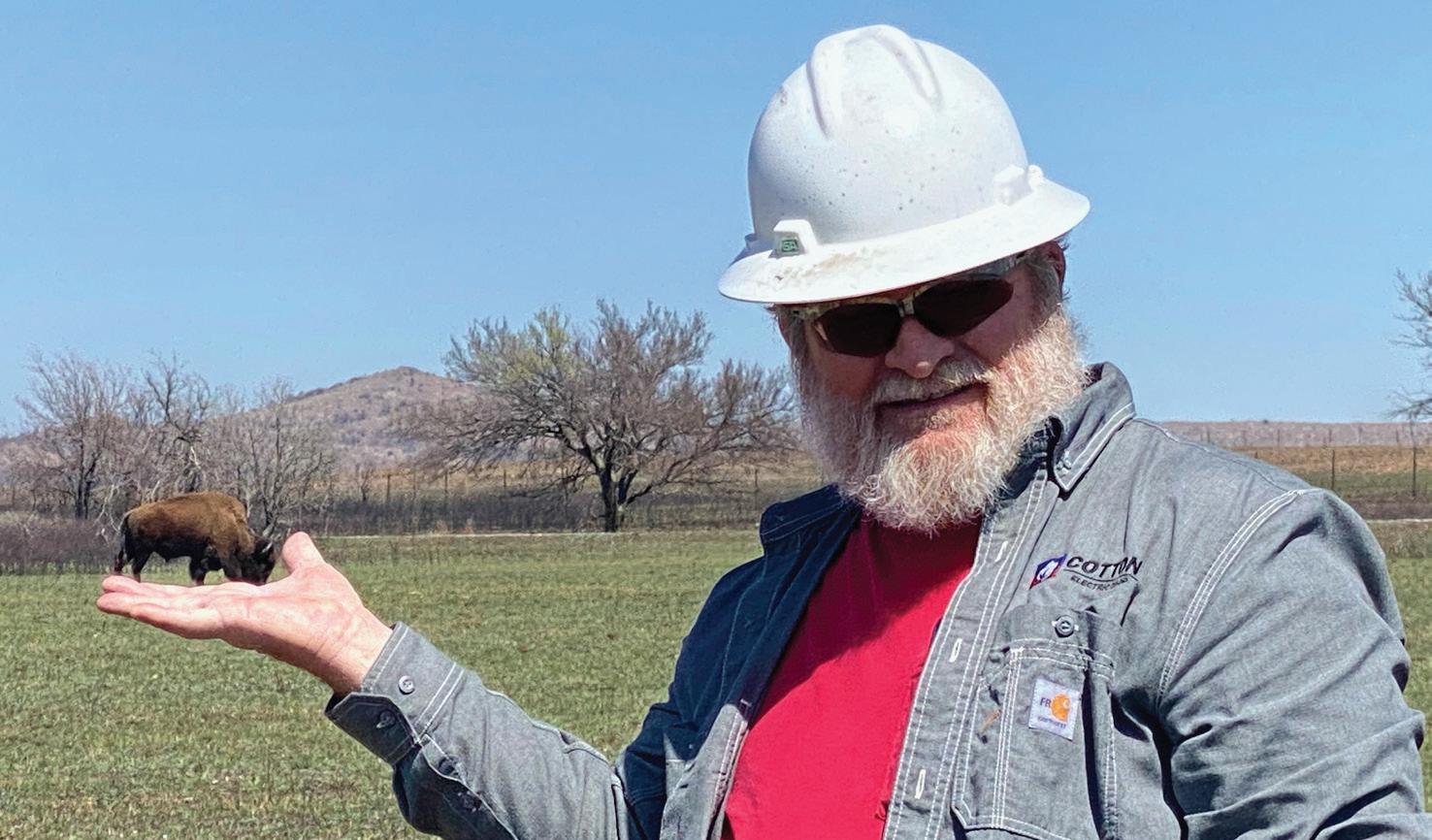
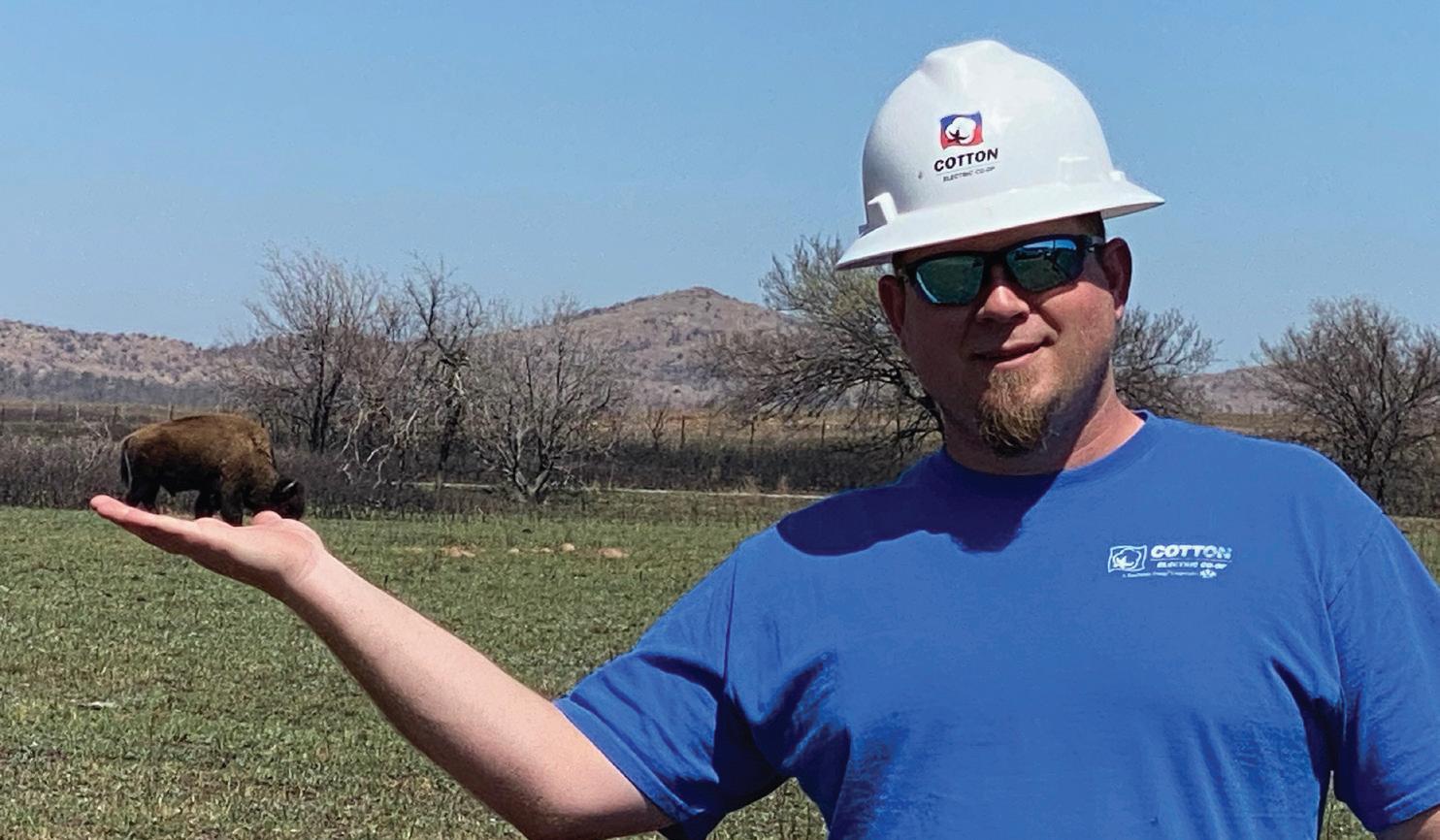
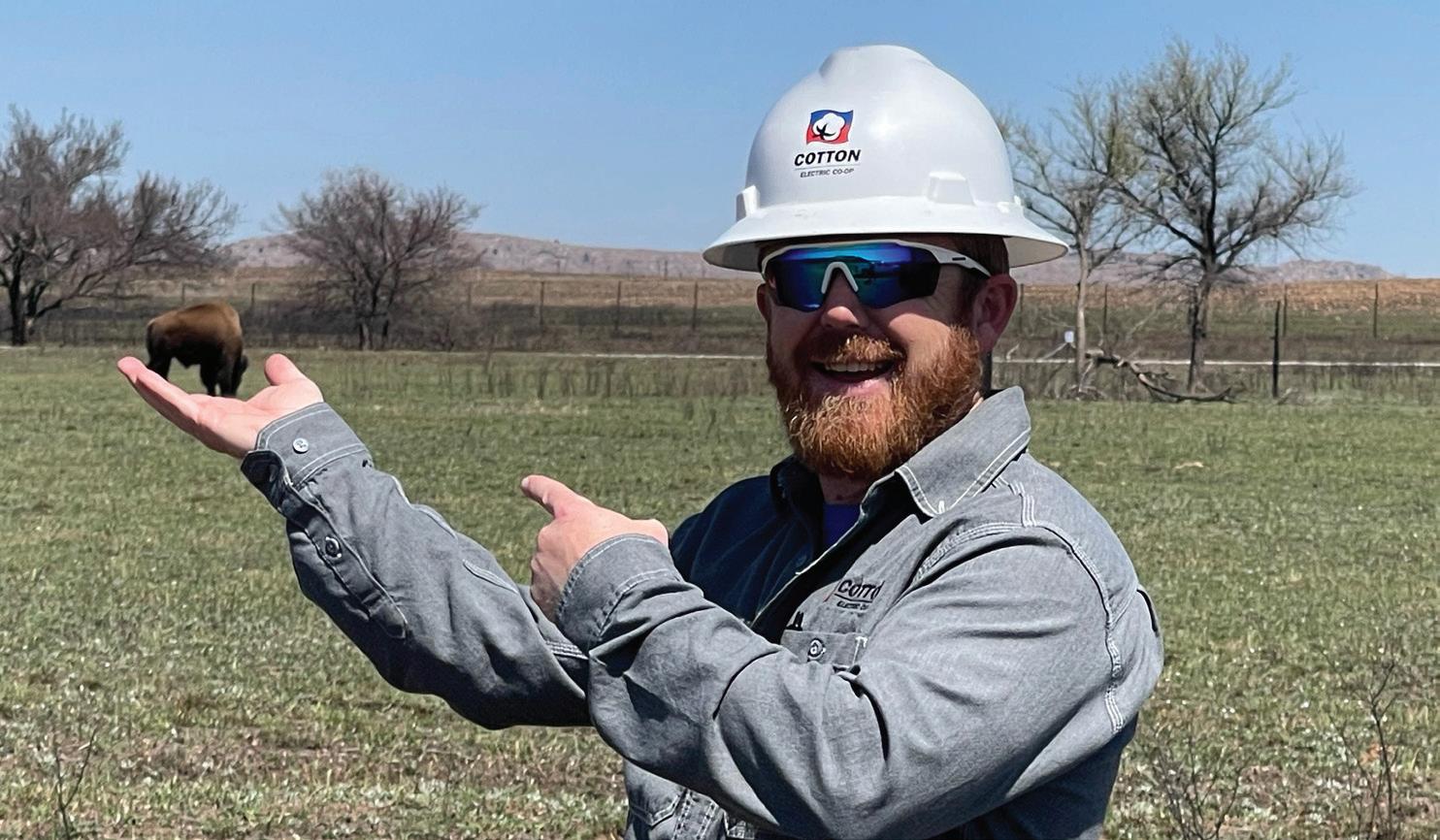


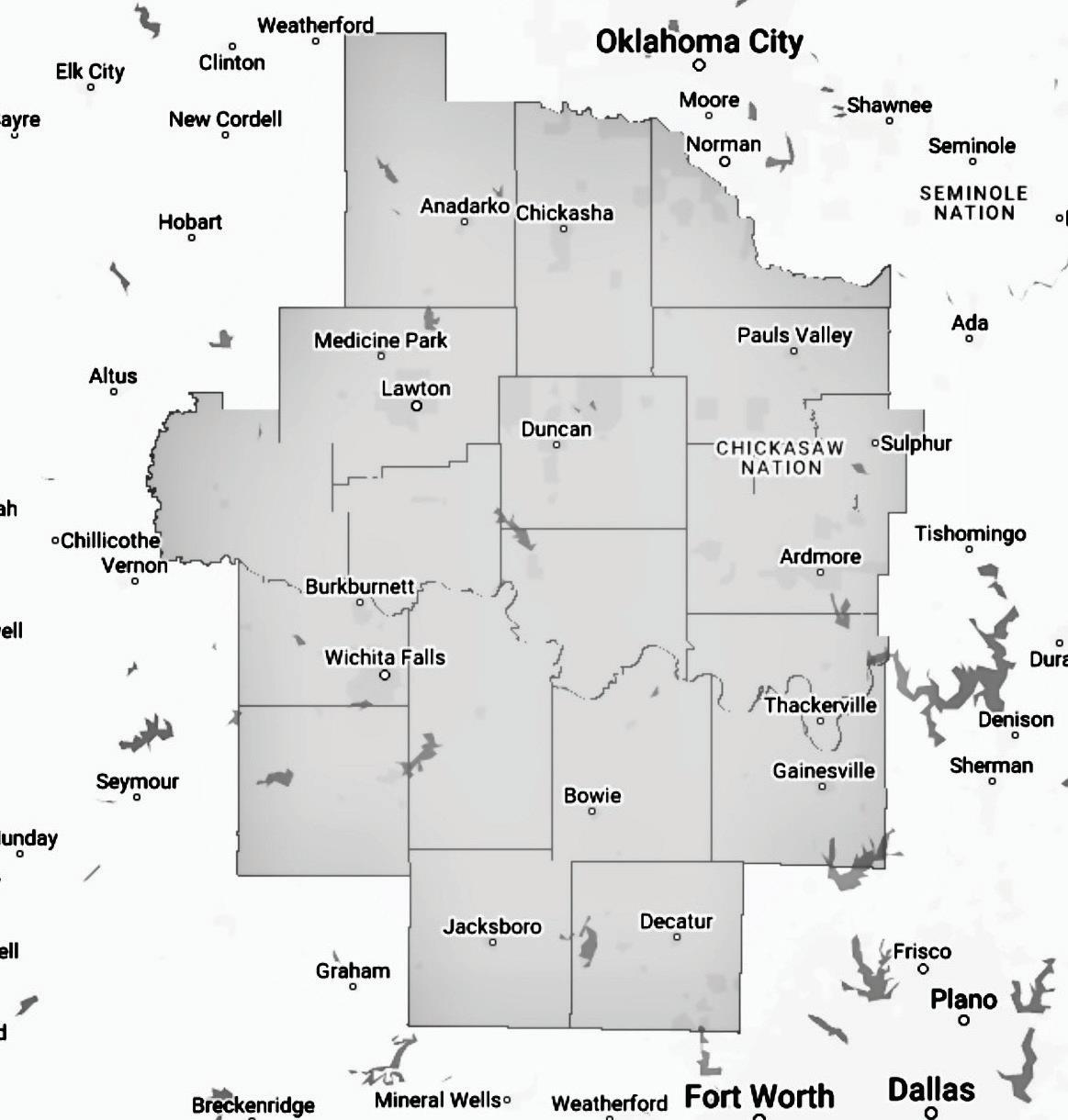




Page 20 Current News April 10, 2023
Serving the Southwest Area -Farm Pond and Lake ConstructionBuilding Farm Ponds & Private Lakes In the Cotton Electric Service Area “Wealth is not measured in dollars.” Call Bruce At- 580-641-1952 • Fence Rows • Building Pads • • Land Clearing • Dredging • Pond Repair • Bulldozers, Trackhoe Scrapers & Loaders portable Toilet RENTALS 940-285-1471 sanitation Cotton Electric
Meter Technicians
some fun
Field
had
on a
job
near the Wichita Wildlife Refuge. Pictured top to bottom: Cotton Electric Apprentice Field Meter Technician, Bryan Goode and Journeyman Field Meter
Technicians
Rex Hiebert and Josh Belcher.
