
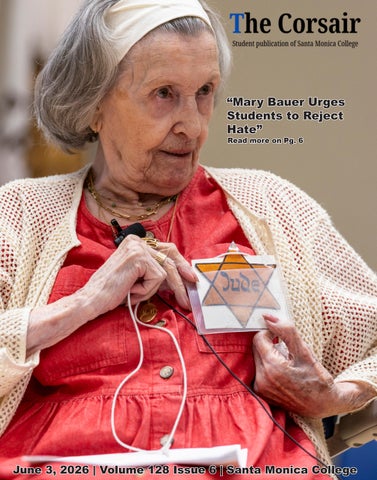
“Mary Bauer Urges Students to Reject Hate”
Read more on Pg. 6

“Mary Bauer Urges Students to Reject Hate”
Read more on Pg. 6
the wise Phoebe Bridgers once said in her song “Motion Sickness,” I have emotional motion sickness right now. I, again, procrastinated my letter because who would I be if I wasn’t? It’s kind of settling in now that this is my last week, probably ever, in the Corsair Newsroom. It is my last week as Editor in Chief. This role has been a huge part of my life for a year now, which is insane to think about. A year of being the face of this publication went faster than I could’ve imagined.
June reminds me of a lot of things. It’s the end of the semester — an end and a new beginning, you could say. June reminds me of warmth, humidity and melty ice cream. It reminds me of the start of a very hot summer, and it reminds me of growth. I hope to grow more than I already have. I hope I won’t suffocate in the heat —- I hope I’ll eat lots of snowcones or something. It also reminds me of Pride, which, now that I’m mentioning it, Happy Pride!
Every person I’ve met because of The Corsair is someone I’ll remember, and I am proud of all of my editorial staff. As most are transferring to other schools or are graduating from SMC, I want to acknowledge the achievements and all of the work each person has contributed. Specifically, I want to shout out my managing editor, Sofia, someone I’ve been eternally grateful for, and a friend I won’t forget. :-)
I know The Corsair will be left in great hands for semesters to come. Journalism holds a special place in my heart because the work we do as journalists matters. Presenting news with due diligence and providing insight on our college and the communities that surround us — it matters now more than ever.
Goodbye, goodbye, goodbye, fellow Corsairs! I will miss you.


Editor in Chief
Katie Easterson
Managing Editor
Sofia Kieser
Photo Editor
Elizabeth Bacher
Assistant Photo Editor
Tom Rosholt
News Editors
Kayjel J. Mairena
Patrick Conlon (Assistant)
Arts & Culture Editor
Vicki Mehdizadeh
Opinion Editor
Jaqueline Martin
Sports Editor
Ciara Burris
Copy Editors
Harley Morgan
Maria Lebedev
Multimedia Editors
Jenna Tibby
Tim Sim
Raphael Lopez
Social Media Editor
Jeffrey Berrios
Advisers
Gerard Burkhart || Photo Adviser
Staff Writers
Harley Morgan, Alexandra Gorgij, Kollin Zullo, Malaika Kamau, Christine Muñoz, Leo Williams, Izabel Enrique, Natalia Zabala, Addison Koepke, Kayvon Nili-Esfahani, Cam Brewster, Sean Mendoza, Caelen Perkins, Maria Isabel Carias, Victoria Cue, Vicki Mehdizadeh, Joanna Rivas, Paola Carrasco, Alejandro Contreras, Luca Lopez
Photographers
Andrew Starnes, Victoria White, Jinhao Tian, Guillermo De La Barreda, Silke Eichholz, Karina Custodio, Jordi Garcia Sosa, Michael Diebert, Tori Campbell, Juliana Frame, Maria Lebedev, Katelynne Dubeau, Gregory Davis, Kantapong Wongjirasawad, Masie Najafi, Danny Sanchez, Ada Greatrix, Masanori Aguayo
Social Media Staff
Roxanne Solar, Clarissa Moreno, Cayman Carter, Donnisha Mukes, Gia Rush, Darlene Cabanillas, Seandrea Brady (Nicole), Tiwana Floyd

Sharyn Obsatz || Writing Adviser
Samantha Nuñez || Social Media Adviser
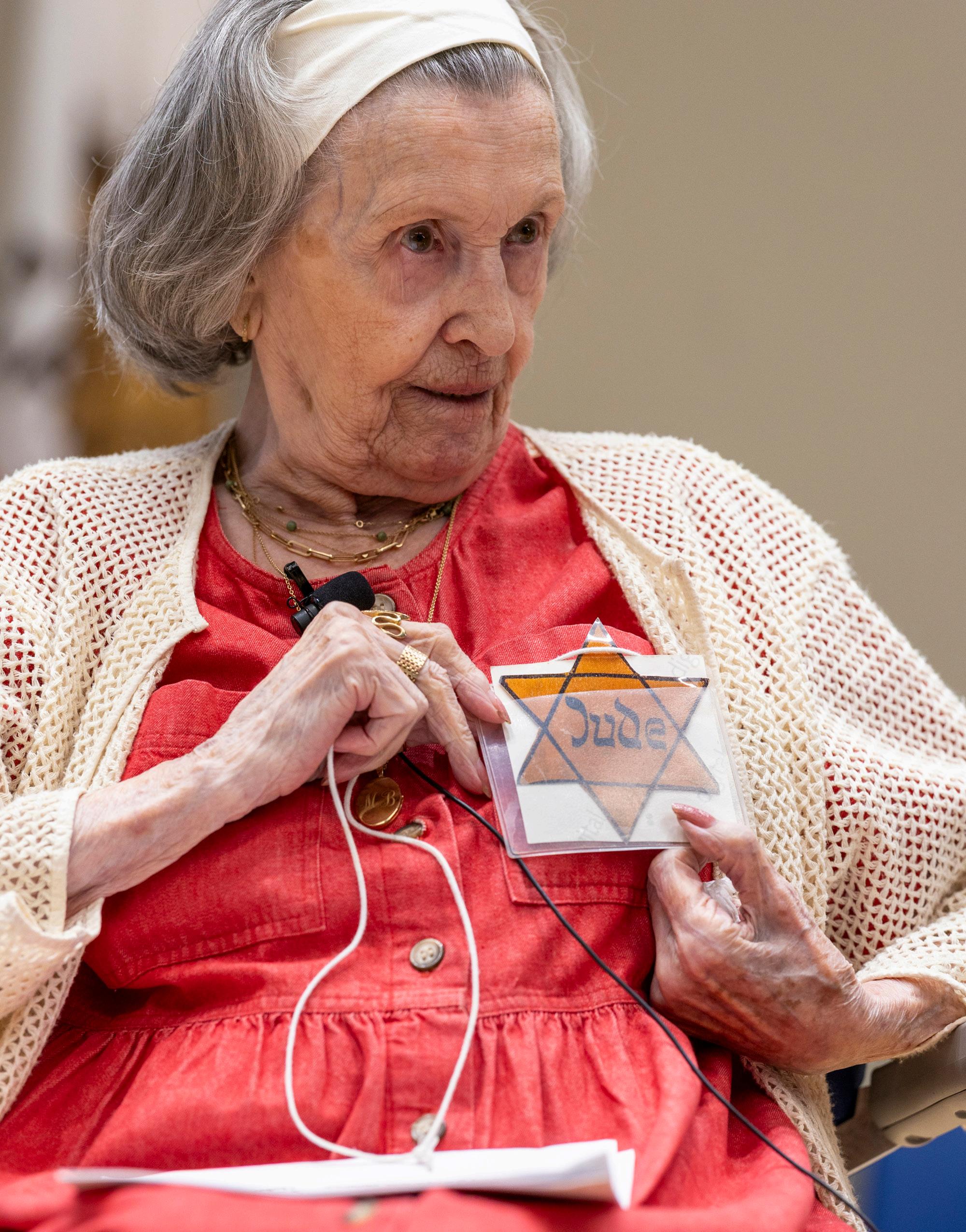
Front Cover: Mary Bauer, a Holocaust survivor, holds a badge in the shape of the Star of David with the German word ‘Jude,’ meaning “jew,” over her heart during ‘A Conversation with Holocaust Survivor Mary Bauer’ on Thursday, May 21, 2026, at the SMC Student Services Center Orientation Hall on Main Campus, in Santa Monica, Calif.
Silke Eicholz | The Corsair
Inside Cover: Santa Monica College dancers perform the Hobule’a dance “The Double-Hulled Canoe” choreographed by Keali’i Ceballos, during the Global Motion, Dance Company dress rehearsal at BroadStage at SMC’s Performing Arts Center, Santa Monica, Calif, on May 13, 2026. Tom Rosholt | The Corsair
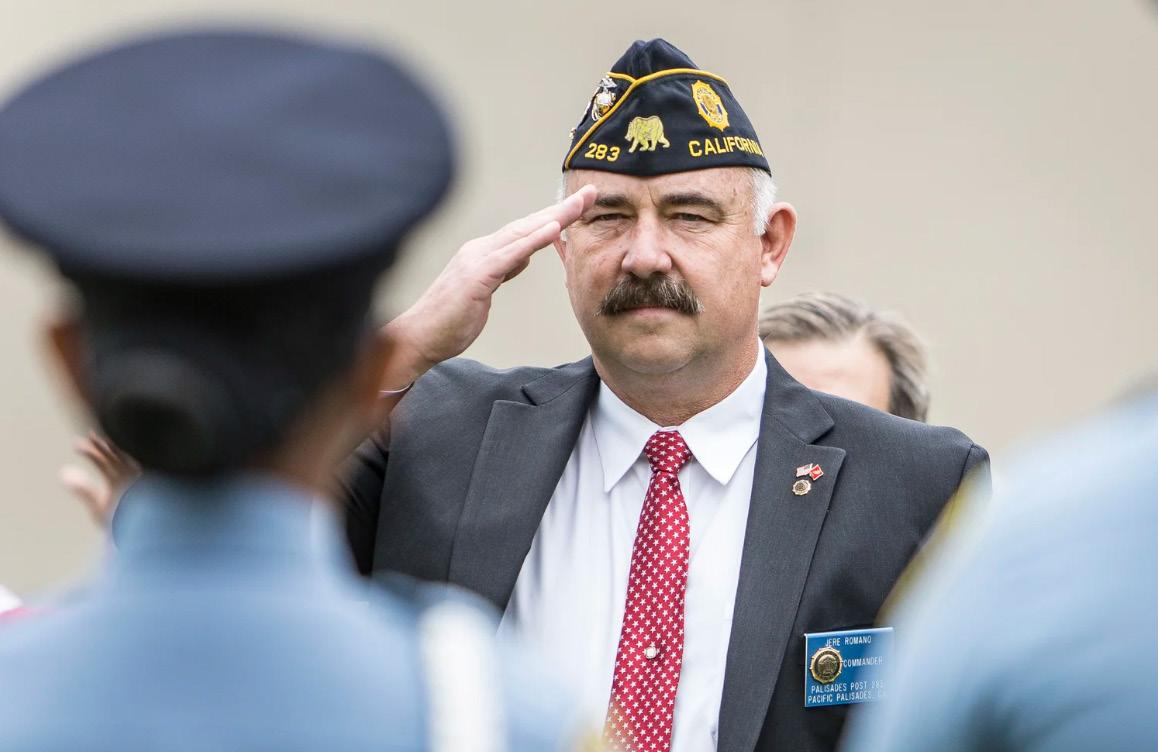
After 30 years in the SMCPD, Capt. Jere Lee Romano left behind a legacy of service and dedication to students and veterans.
A longtime Santa Monica College police captain who received honors for his response during the 2013 campus shooting died March 5, 2026, at age 58 from cancer.
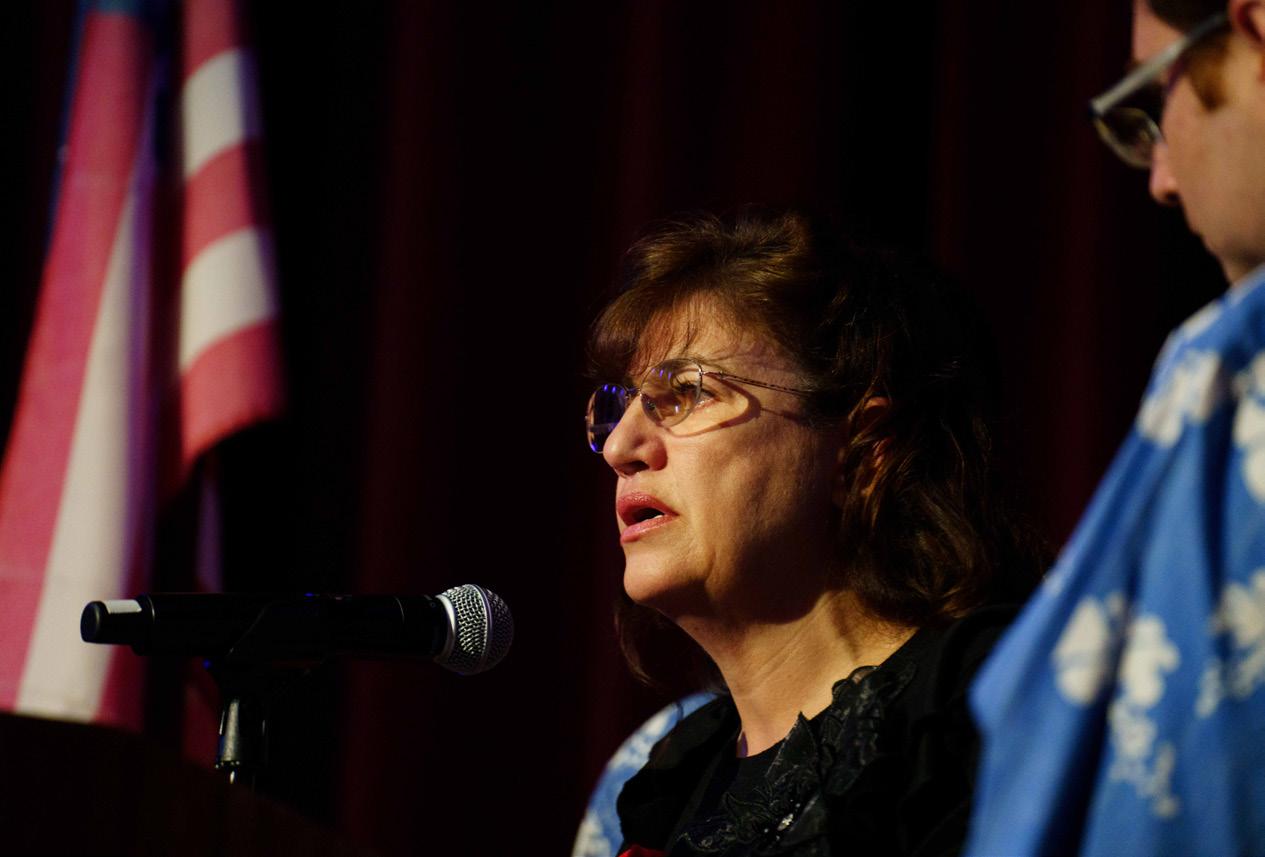
Jere Lee Romano’s memorial was held on March 21 at the Holy Cross cemetery in Culver City. A celebration of life was held at American Legion Post 43 in Hollywood on May 16. He is survived by his widow, Martha Romano, and eight children.
Jere Romano was born on Sept. 14, 1967. He was the grandchild of World War II veterans who joined the

military because of their influence. After the Marine Corps, he attended Citrus College in Glendora, Calif., his hometown.
He entered the Santa Monica College Police Department as a trainee in November 1993 and retired as a captain in January 2024.
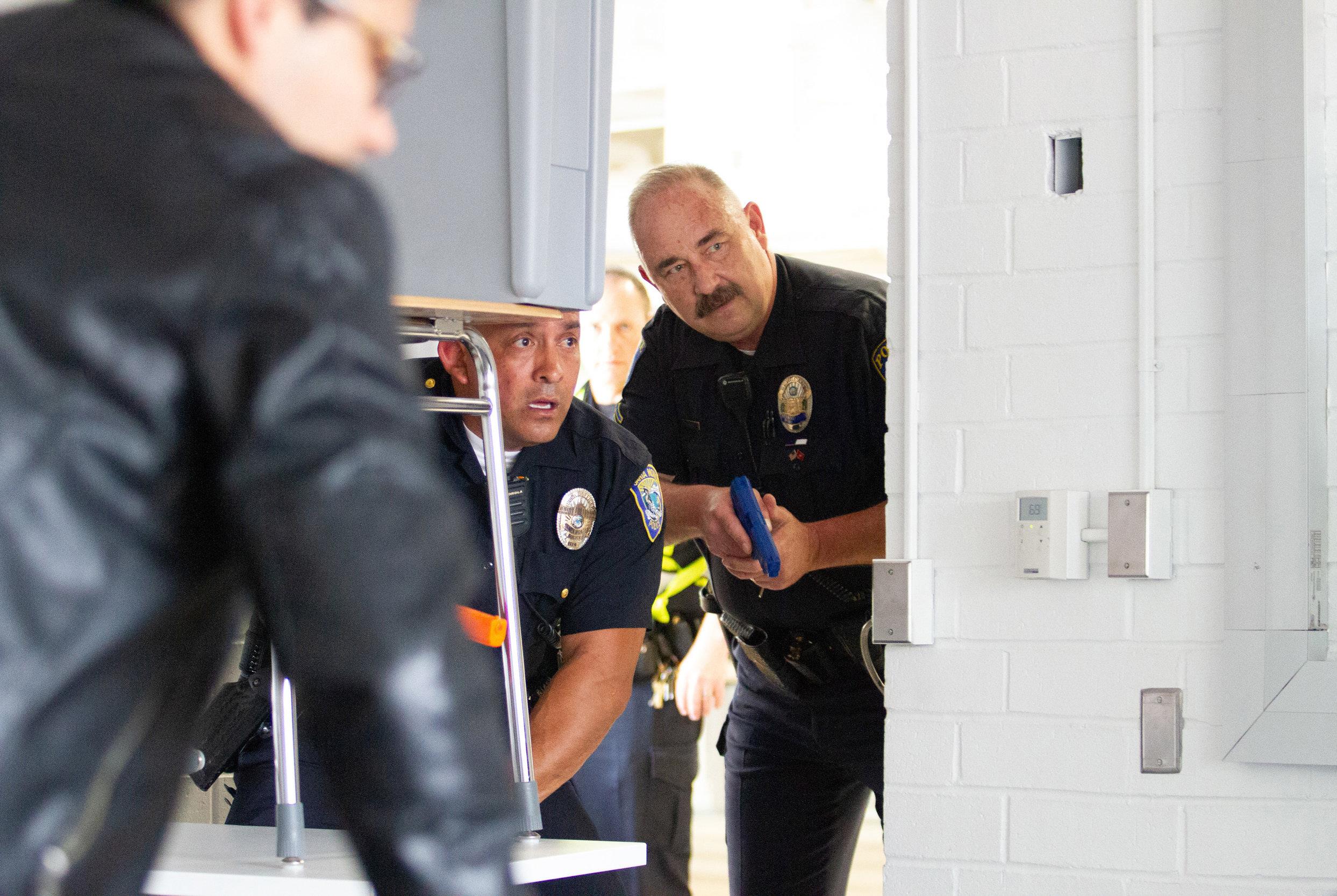
Jere Romano’s actions during an on-campus active shooter situation in 2013 earned him numerous awards. He evacuated a building “while undergoing fire.”
“He saved multiple people’s lives without any
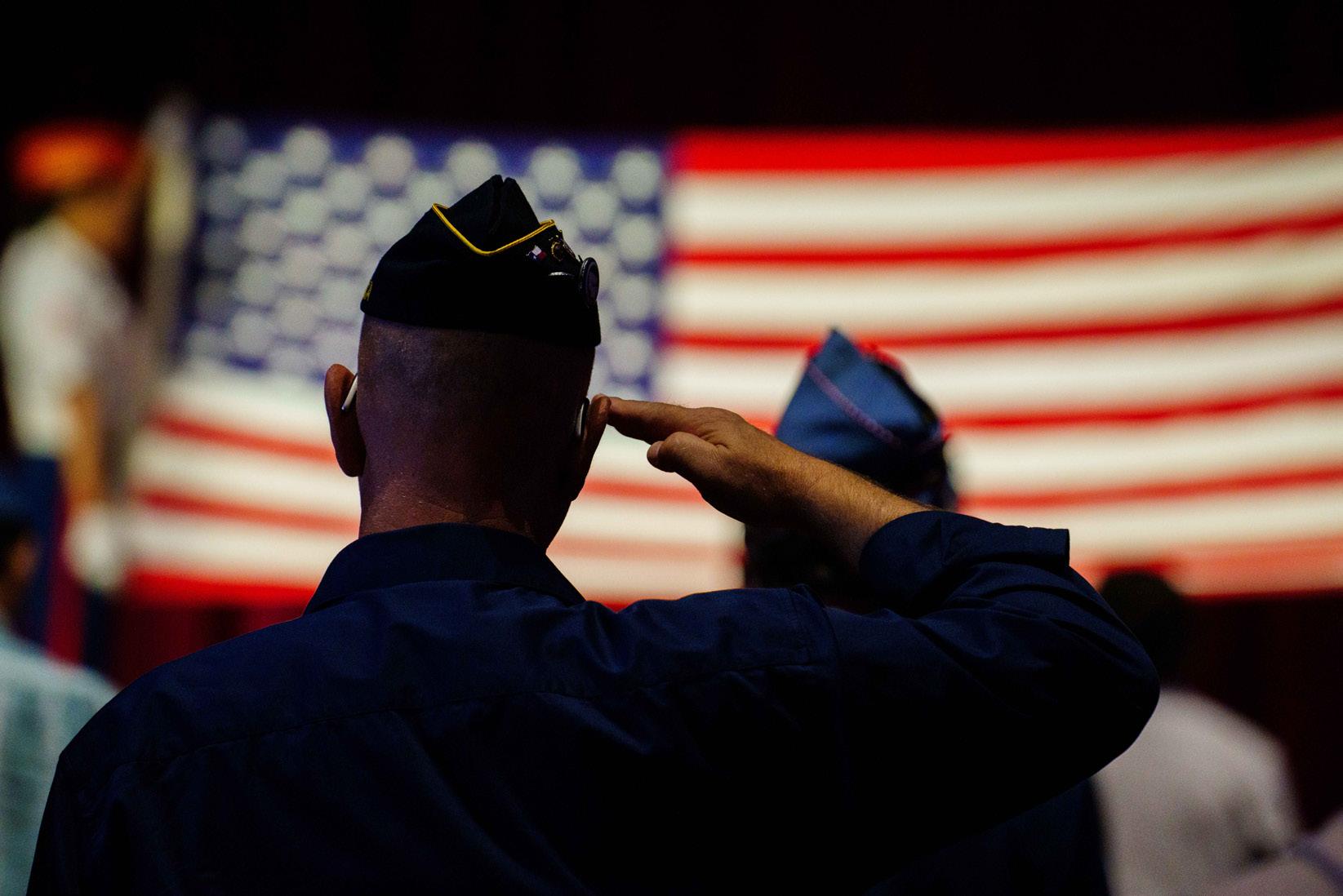
09/14/1967 - 03/05/2026
additional backup,” said Chief of Police Johnnie Adams.
Colleagues of Jere Romano describe his death as a significant loss to the community. He participated in different fundraising efforts and worked with the American Legion to get the SMCPD body cameras, according to Adams.
Jere Romano also built comradery by creating deparment-wide initiatives.
Adams said his favorite challenge wound up in him and Jere Romano wearing kilts.
Upon his retirement, Jere Romano dedicated his time to serving veterans at SMC and the American Legion. Additionally, he worked alongside Congress to address issues in the military community, according to Martha Romano.
He offered guidance, sup-
port and a steady presence to those navigating life after service, stated Martha Romano in an email to The Corsair.
She noted that her late husband’s titles weren’t what made him extraordinary — what made him special was the way he made people feel.
“During natural disasters, fires, hurricanes and other crises Jere mobilized communities. He organized
“He organized food and supply efforts across California and into neighboring states, bringing people together and making sure help reached those who needed it most.”
-Martha Romano
food and supply efforts across California and into neighboring states, bringing people together and making sure help reached those who needed it most,” Martha Romano stated.
“Not out of obligation, but out of genuine care for others,” she stated.
In an email to The Corsair, President and Superintendent Kathryn Jeffery noted that Jere Romano’s legacy lives on in at SMC and in the lives of the people he
protected and mentored.
“It continues in all of us who carry forward what he stood for: service, integrity, and an unwavering commitment to others,” Jeffery stated.
The SMC Foundation created the Jere Lee Romano Memorial Scholarship in honor of the former police captain. Students interested in learning more or donating can visit the college’s website.

Mary Bauer introduces herself at the podium.
Bauer said, “Next week, I am going to be 99. And I hope that a year later, I can come back and you have another picture of me. If I make it, I will come back!”
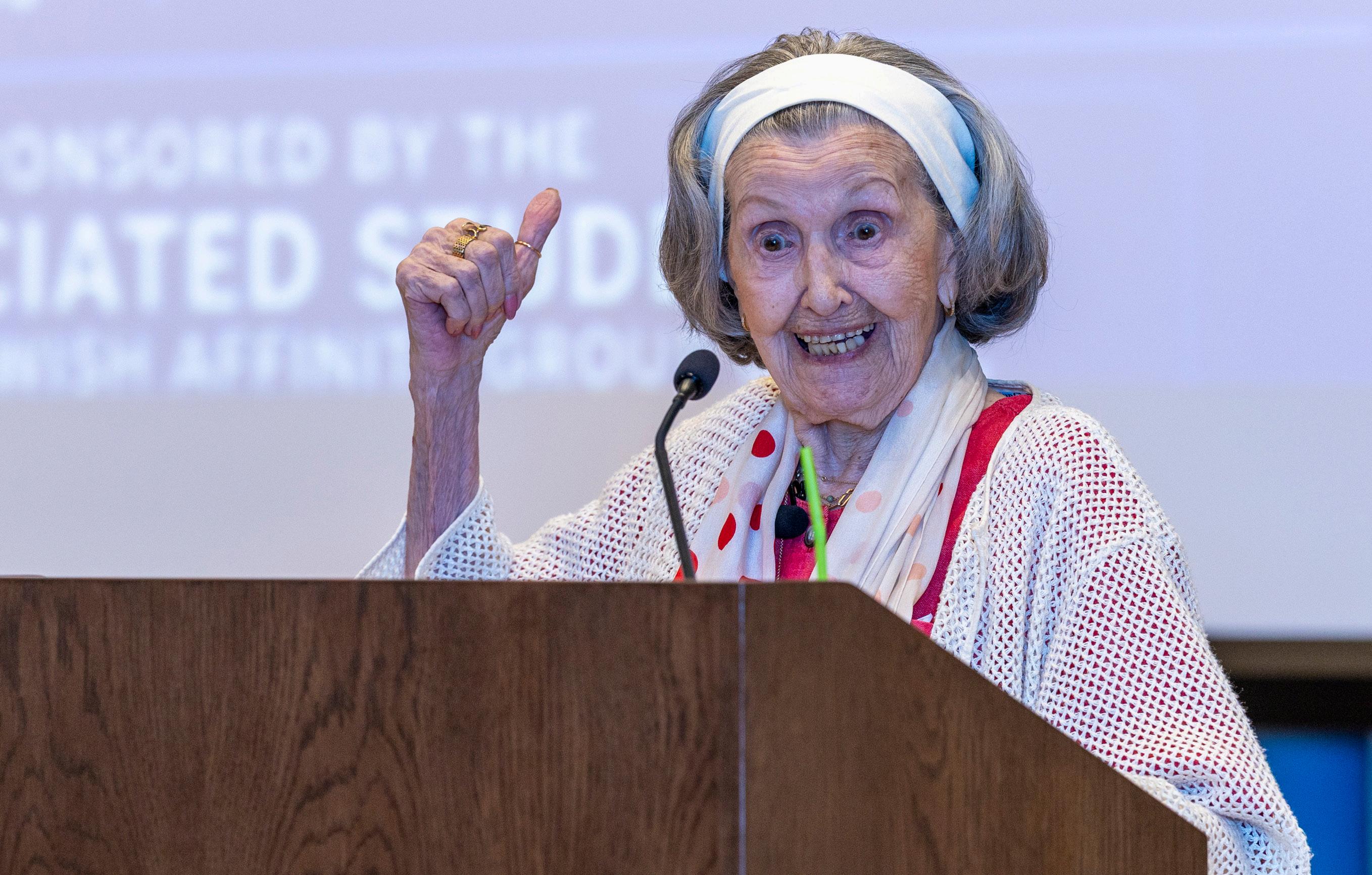
Holocaust survivor Mary Bauer reflected on Auschwitz, discrimination, and the importance of remembering history.
Written by Silke Eichholz and photographed by Silke Eichholz and Elizabeth Bacher
“A Conversation with Holocaust Survivor Mary Bauer” was held at Santa Monica College and was organized by the Associated Students in conjunction with the Jewish Affinity Group. Nearly 99-year-old Holocaust survivor Mary Bauer spoke to students on Thursday, May 21, about the significance of overcoming hate and preserving historical memory.
Bauer, born May 29, 1927, in Budapest, Hungary, faced imprisonment at Auschwitz-Birkenau, Ravensbrück concentration camp, a death march, and ultimately survived the Holocaust. Throughout the presentation, Bauer stressed the importance of rejecting hate and learning from history.
“I have become living history,” Bauer said to the audience. “Since I am a witness to my story… you are a witness to me!”
She explained that sharing these stories has become increasingly important as fewer Holocaust survivors remain alive to speak firsthand about what happened.

She explained that sharing these stories has become increasingly important as fewer Holocaust survivors remain alive to speak firsthand about what happened.
Bauer began by sharing Pastor Martin Niemöller’s warning about silence and persecution. “When they came to take me, there was nobody left to help me.” She urged students to speak up against discrimination before it gets out of hand.
During the presentation, Bauer described being forced to wear a yellow Star of David, a symbol synonymous with Judaism that the Nazis used to identify Jewish people. She recalled returning to school after the law was imposed and hearing a former friend tell her, “I don’t want to sit next to a dirty Jew.”
“What does this represent?” Bauer said while discussing the Star of David. “It means an identification to make a wall between them and us.”
Mary Bauer, a nearly 99-year-old Holocaust survivor, shows her tattoo on her left arm during the event ‘A Conversation with Holocaust Survivor Mary Bauer’. Bauer was marked with the tattoo upon arrival at Auschwitz-Birkenau, the largest concentration camp in Nazi-occupied territory during World War II. “That’s my color”, Bauer said, who decided not to remove the tattoo. “They forced that on me… I’m going to live with it.”
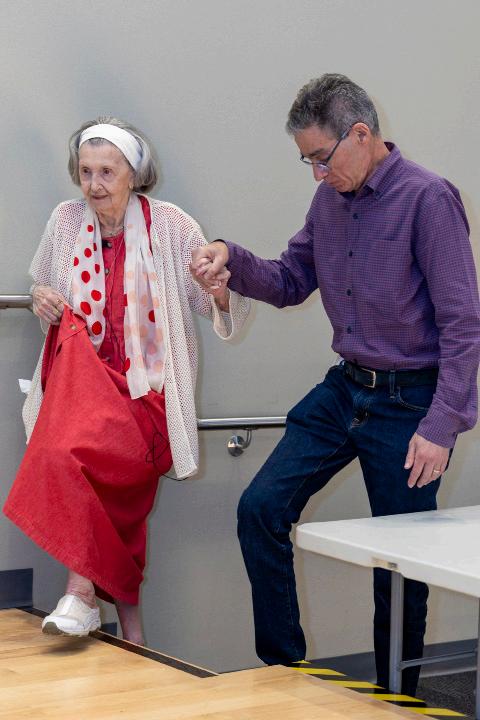
(L-R) Mary Bauer, a nearly 99-year-old Holocaust survivor, walks to the podium with the support of her longtime friend and Dean of Education Enterprise Mitchell Heskel to open the event.
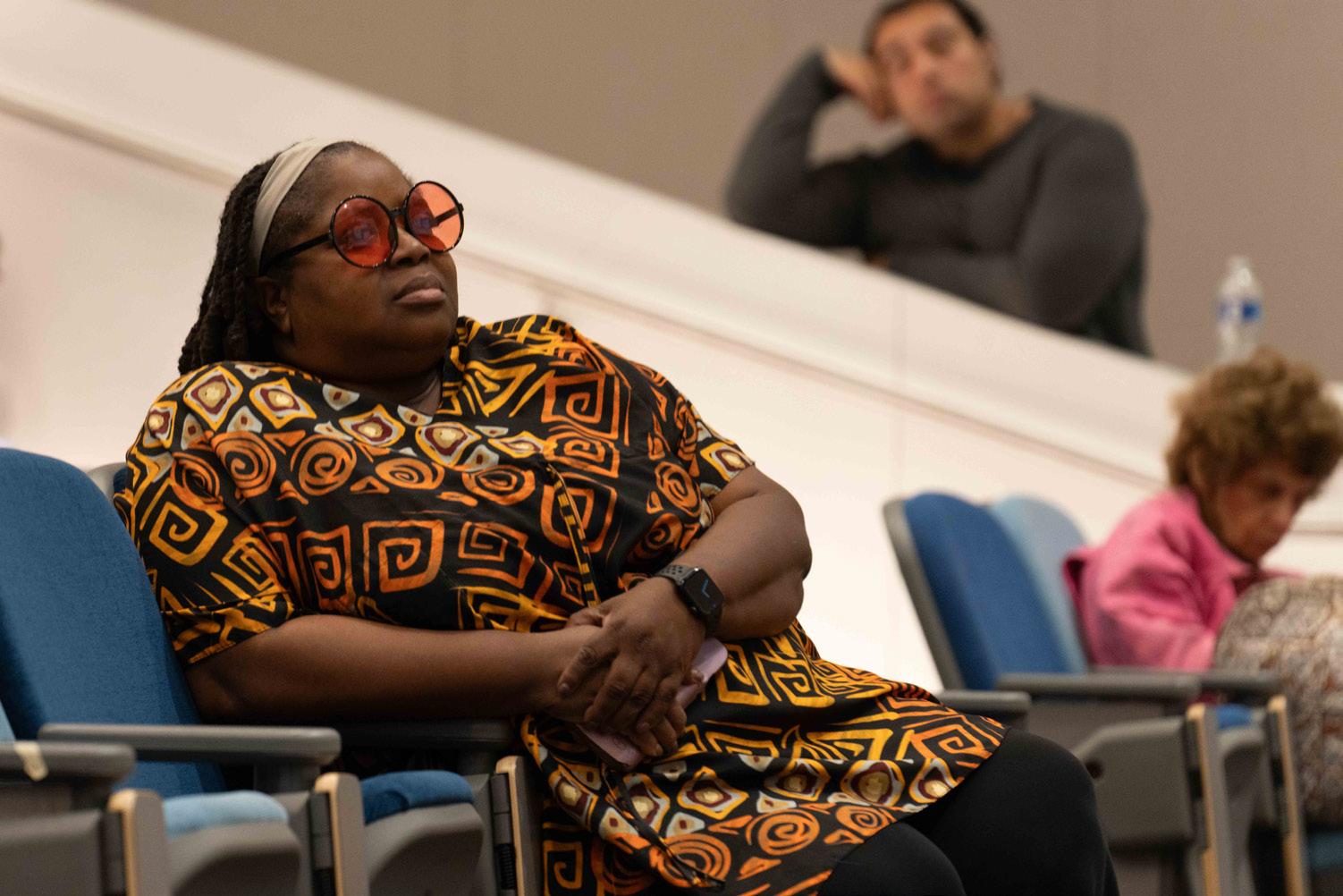
Santa Monica College Media and Communication Department Chair Redelia Shaw (L) during a presentation by Holocaust survivor Mary Bauer. Bauer spoke about her own experiences as well as current issues with diversity and equality in society.
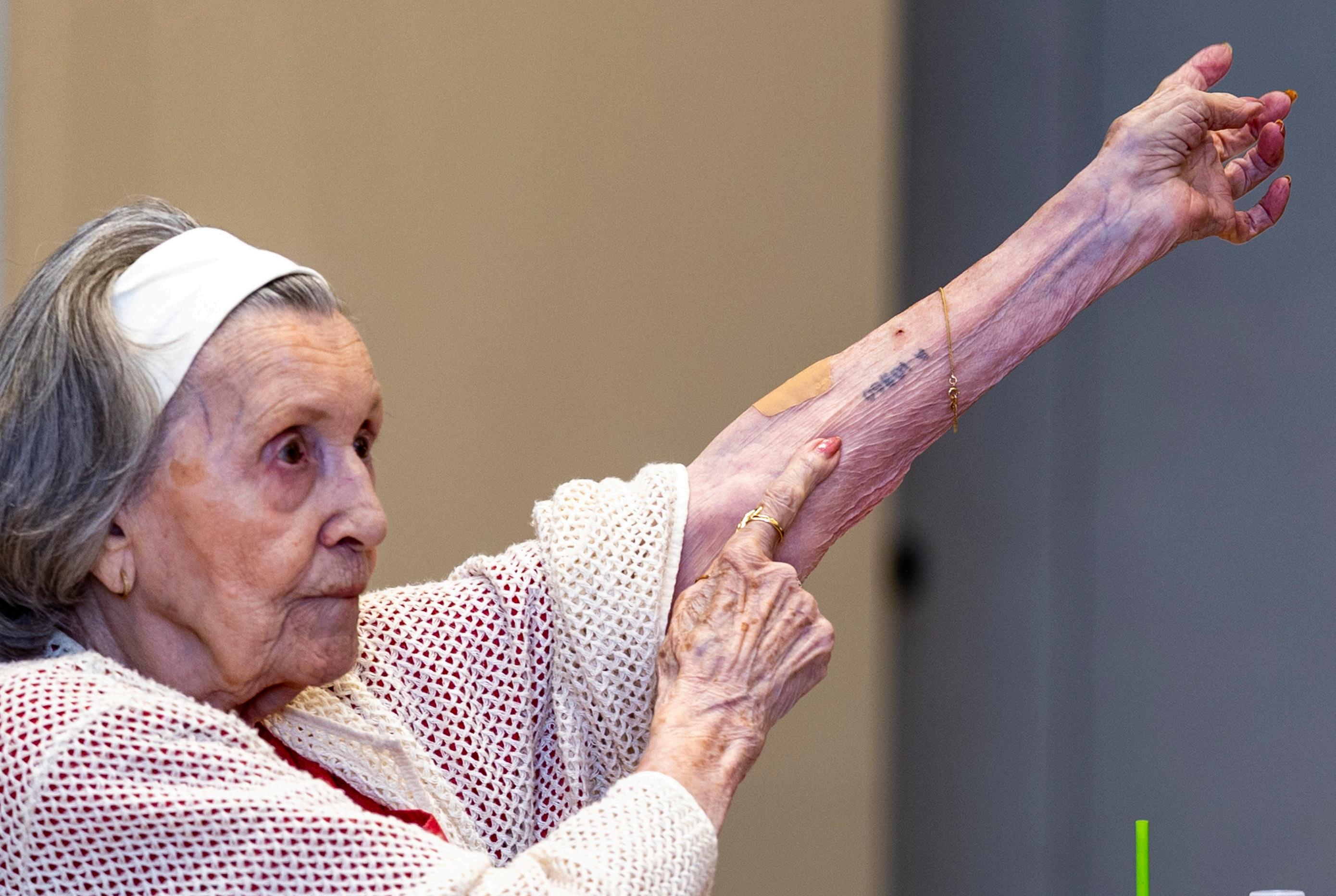
Mary Bauer shows her tattoo on her left arm during the event ‘A Conversation with Holocaust Survivor Mary Bauer’. Bauer was marked with the tattoo upon arrival at Auschwitz-Birkenau, the largest concentration camp in Nazi-occupied territory during World War II. “That’s my color”, Bauer said, who decided not to remove the tattoo. “They forced that on me… I’m going to live with it.”
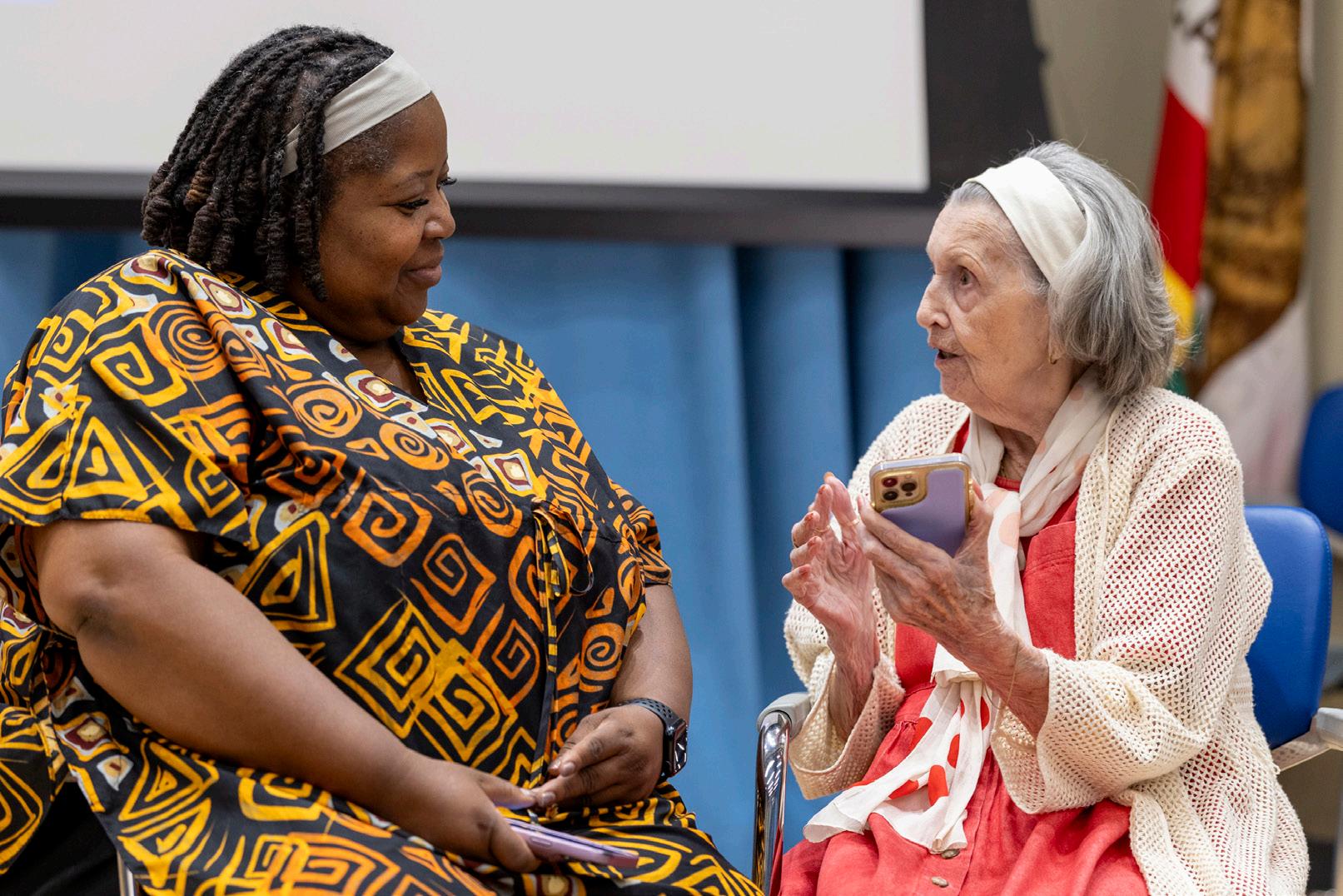
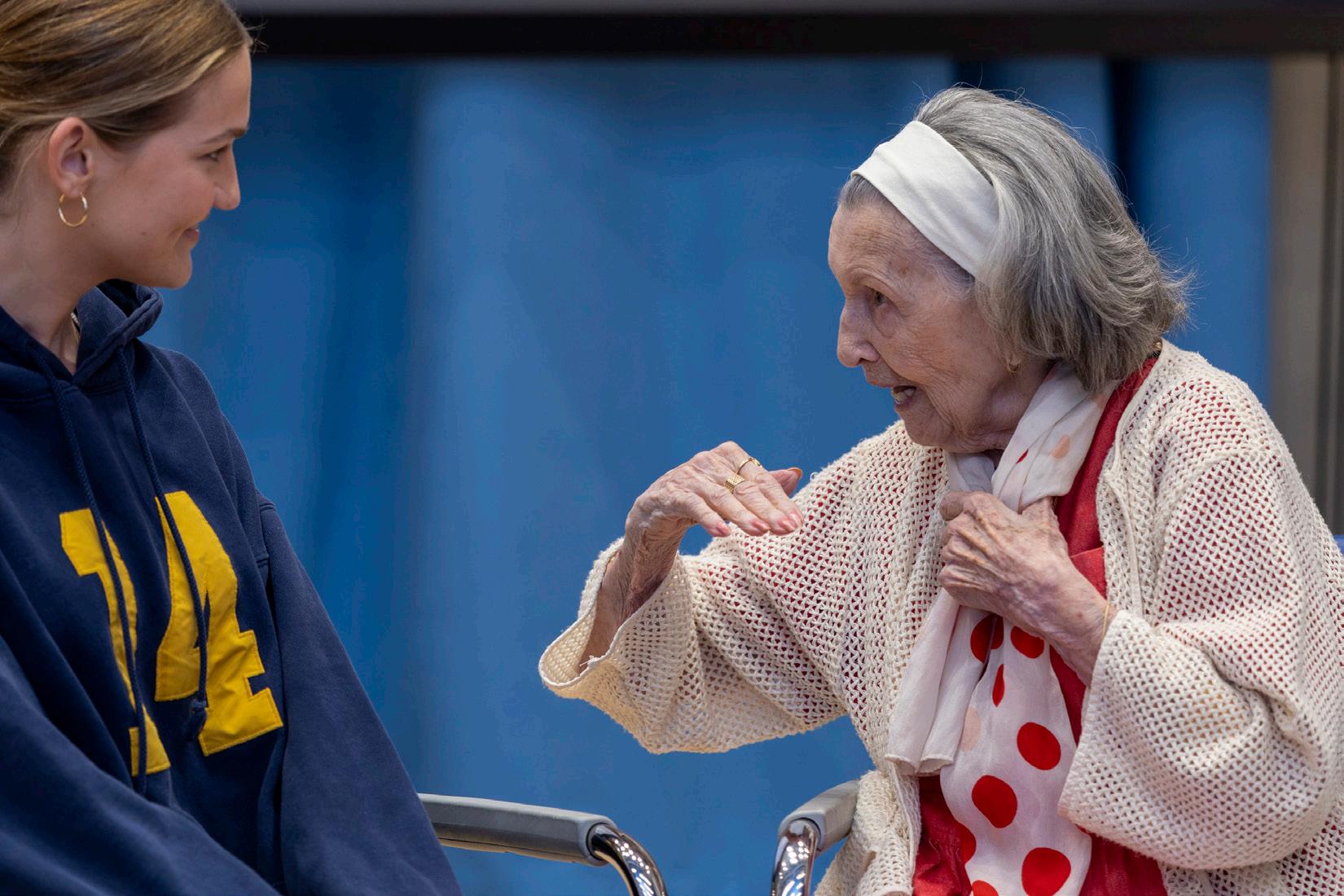
(L-R) Redelia Shaw, SMC Chair of Communication, listens to Mary Bauer, a nearly 99-yearold Holocaust survivor, during a one-on-one conversation after the event ‘A Conversation with Holocaust Survivor Mary Bauer’.
“Take a picture of me so that you identify the number with a person”
Mary Bauer, Holocaust survivor
Bauer also spoke about the six-digit number tattooed on her left lower arm upon her arrival at Auschwitz, a system that was used to identify all prisoners. She explained that students often ask to photograph the tattoo, but she encourages them to focus on the person wearing it instead.
Later on, she shared a story about a woman mistaking the tattoo for a phone number. Bauer recalled responding emotionally, explaining that the tattoo represented survival and the duty of Holocaust survivors to tell future generations about “this hell, which people created, for people who are unwanted.”
Bauer talked about how she managed to survive without hate, even after everything she went through.
“My life is winning,” Bauer said. “Winning… the fact that I am not full of hate.”
Several times during the event, Bauer linked what she went through in World War II to the political and social issues we see today. She warned about the danger of silence and dehumanization, as well as growing up with filtered information, experi-
encing segregation after arriving in the U.S. and noticing how quickly discrimination can seem normal.
“Some horrible big things can start with little things,” she told students, urging them to stay informed, vote thoughtfully and speak out before hate escalates.
During the conversation, Dean of SMC Noncredit and External Programs Dr. Scott Silverman, who moderated the event, described Bauer’s way of comparing the past and present as “real sober.” He thanked her for keeping on sharing her stories and experiences with students.
Bauer added that she hopes to continue speaking to students for as long as she is physically able, underscoring the urgency of preserving survivors’ testimonies while they can still share them in person.
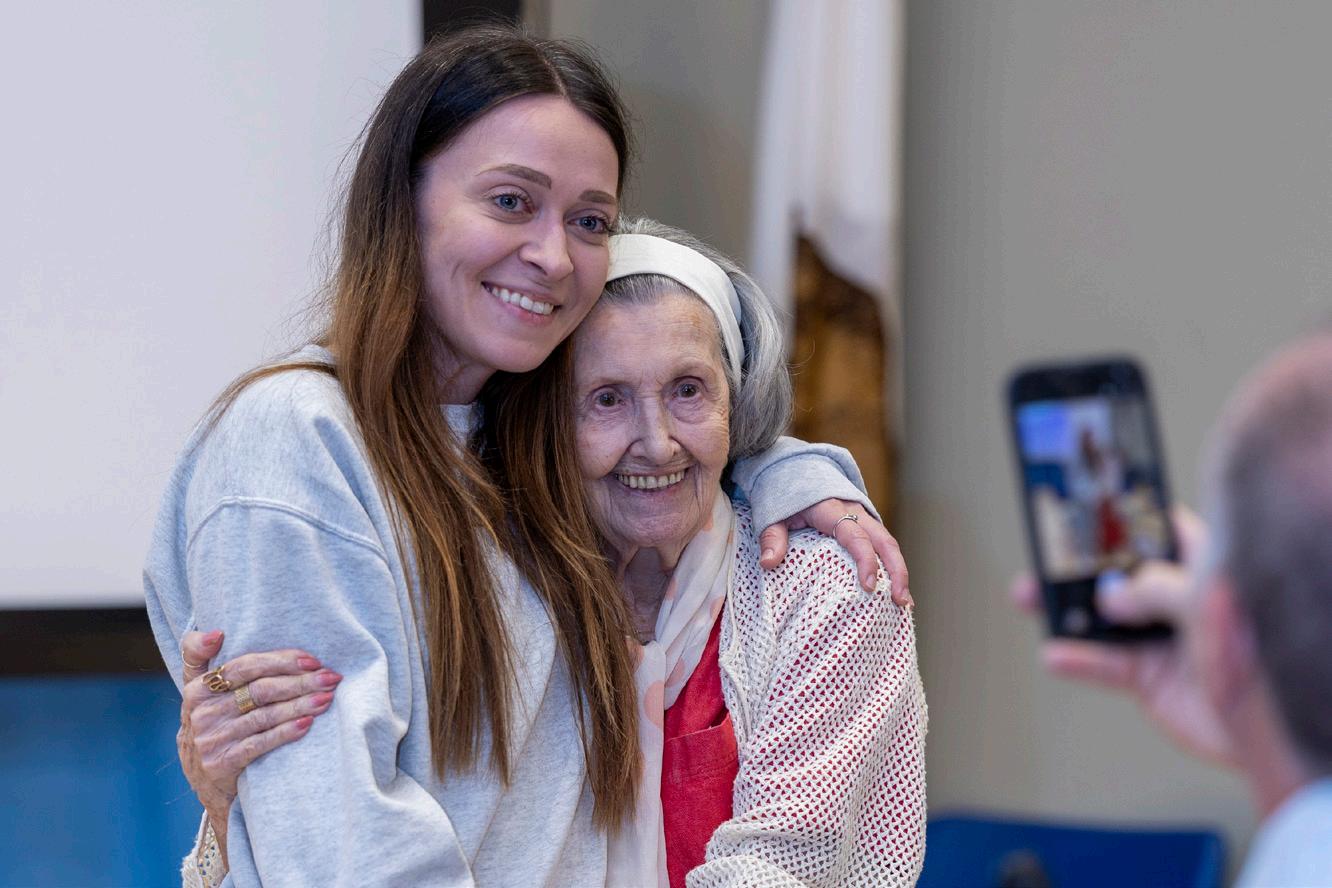
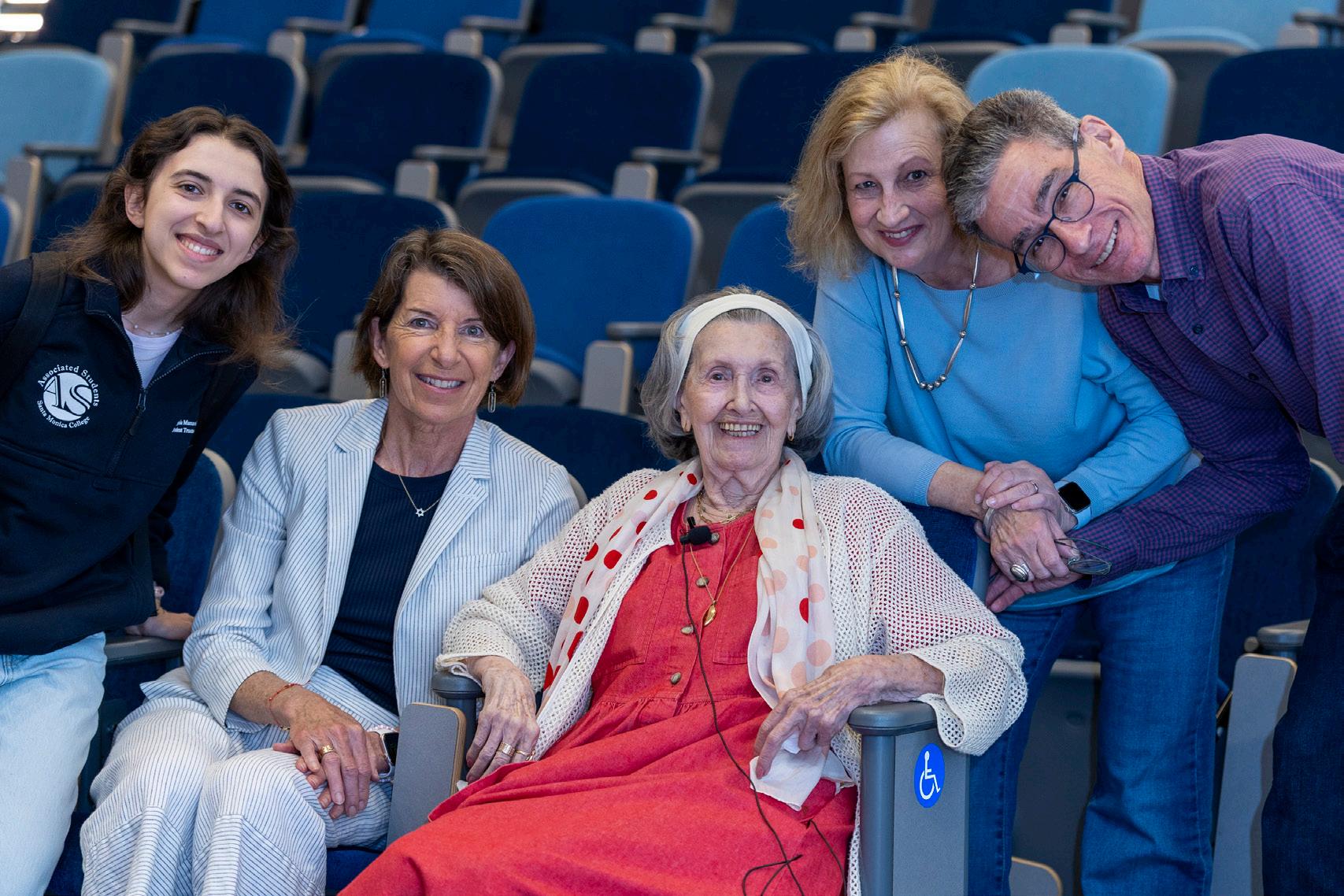
The event concluded with students gathering around Bauer for personal one-on-one conversations. They asked personal questions, took selfies and kept talking about her experiences and message of tolerance.


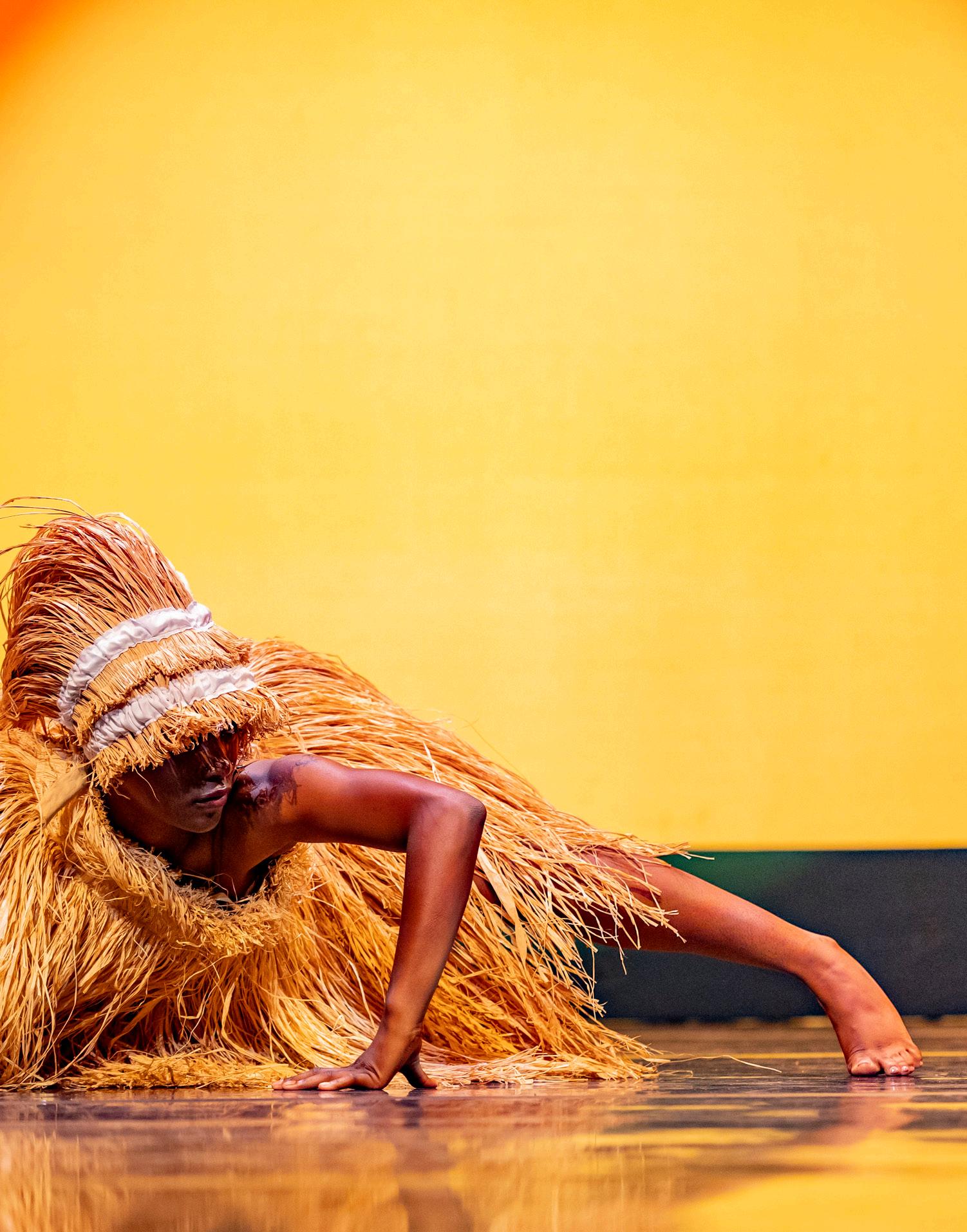
Kailyn Ferguson of Santa Monica College (SMC) World Dance Company performs a West African dance called ‘Manjani (Mendiani)’, choreographed by Angela Jordan, during a dress rehearsal for the upcoming show ‘Global Motion’, on Wednesday, May 13, 2026, at BroadStage at the SMC Performing Arts Center in Santa Monica, Calif. ‘Mendiani’ is a title for virgin girls who are specially initiated into a secret society of dancers. The girls must not only be good dancers, but also fearless, for they must perform their dance moves on the shoulders and head of a man. The Medniani wear a special costume to perform, which they are not allowed to wear after they have lost their virginity.
The Global Motion Dance performance took place at the Eli & Edythe BroadStage. Paola Carrasco | Staff Writer
The SMC Dance Department hosted the Global Motion Dance performance on May 16 and 17 at the Eli & Edythe BroadStage.
Student dancers from Santa Monica College performed 10 styles of dance on the evenings of May 16 and 17. The Eli & Edythe BroadStage was full, as many family and friends supported the dancers, choreographers and musicians who produced the show. The founder and former Artistic Director of Global Motion is Professor Judith Douglas. The artistic directors are Raquel Ramírez and Sri Susilowati.
The first performance was a Hawaiian/Tahitian dance named “Hōkūle’a” otherwise known as “The Double-hulled Canoe,” choreographed by Keali’i Ceballos. It was highly energetic and captivated the audience’s attention early on in the evening. Keali’i’s performance was followed by a tap dance choreographed by Joseph Wigan. The performance was accompanied by “Almost Like Being in Love” by Frederick Loewe. The song’s beat perfectly synced up with every foot movement the student dancers made.
As the night progressed, student choreographer Liz Maldonado’s Afrobeats Fusion dance was performed. The dance originates from South Africa and Nigeria and is known to be a very energetic style of dance. Alongside her number was a Cuban-inspired Mambo entitled “A Night at the Palladium” choreographed by faculty member, Laura Canellias. The set, lighting and costuming was full of colors and fast-paced music from Tito Puente, a popular bandleader.
Burlesque, “Take and Tease” choreographed by student choreographers and fellow dancers Marissa Aniel and Kara Alexys, based its choreography on the idea of rebelliousness portrayed in a comedic tone.
After the intermission, “For Us, In Shadow and Light,” a street dance performance choreographed by student Jamie “Nova” Rush, who also performed, told a story that the dancers go through. Each dancer had a solo and everyone started clapping and screaming in excitement.
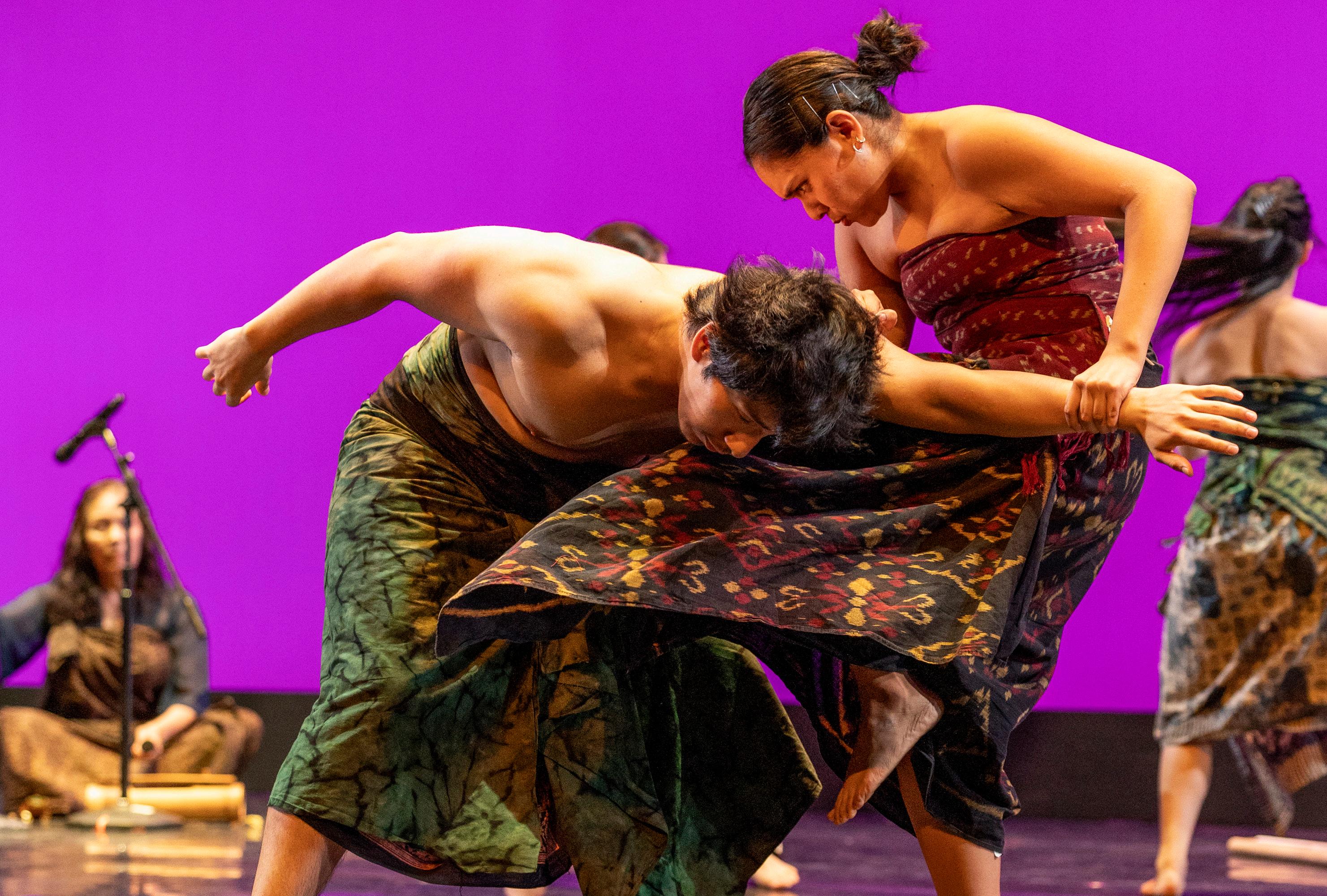
(l-R) Abraham Ceron and Maite Garcia, Santa Monica College (SMC) World Dance Company dancers, fight in a Balinese dance performance called ‘Ring Galah Hening – In Moments of Dawn’, choreographed by Dewa Ayu Dewi Larassanti, during a dress rehearsal for the upcoming show ‘Global Motion’, at BroadStage at the SMC Performing Arts Center in Santa Monica, Calif.
“El Jarabe Tapatio (The Mexican Hat Dance)” was one of the acts from “Cuadro de Jalisco.” It is known for its Charro attire and China Poblana costuming and features a man and woman who dance around a hat placed on the floor. As they both dance around it, the love and passion between them continues to grow. Afterwards, “A Medley of Jalisco Sones,” a traditional Jalisco’s folklórico known for its vibrant dresses and zapateados, or high-energy foot movements, was performed. Both were choreographed by faculty Raquel Ramirez.
“Ring Galah Hening — In Moments of Dawn” a traditional Balinese Dance with guest choreographer Dewa Ayu Dewi Larassanti, featuring detailed movements from all the dancers. The dancers began from outside the room and made their way onto the stage using hand movements and eye contact that made the crowd more attentive. They created music from natural materials using their hands, bamboo and their voices.
“Fusion” was a belly dance by guest choreographer Ariel Kasha. The Egyptian dance featured many lower-body movements that require hip control. The dancers wore flowy, shimmery two piece costumes that emphasized their hip movements.
The last performance, “Manjani (Mendiani),” was choreographed by faculty member Angela Jordan and was rooted in the Djembe Dance, a West African dance technique. It started with Djembe drums that were played with bare hands. All the dancers interpreted the rhythms being played on the drums, which matched their movements.
Throughout their performances, the dancers demonstrated their passion for dance. These performances were all well received by the audience whose applause filled the theater. The SMC Dance Department will be hosting a free Dance Open House Showcase on Wednesday, May 27 from 11:15 a.m. to 12:30 p.m. in the Core Performance Center on the SMC Main Campus.



Santa Monica College (SMC) World Dance Company dancers swing their hips during a Moroccan Belly Dance called ‘Fusion’, choreographed by Ariel Kasha, during a dress rehearsal for the upcoming show ‘Global Motion’, on Wednesday, May 13, 2026, at BroadStage at the SMC Performing Arts Center in Santa Monica, Calif. This piece is a collaboration of traditional African and Middle Eastern dances from Egypt, Morocco, Algeria, Turkey, Lebanon, and Greece.

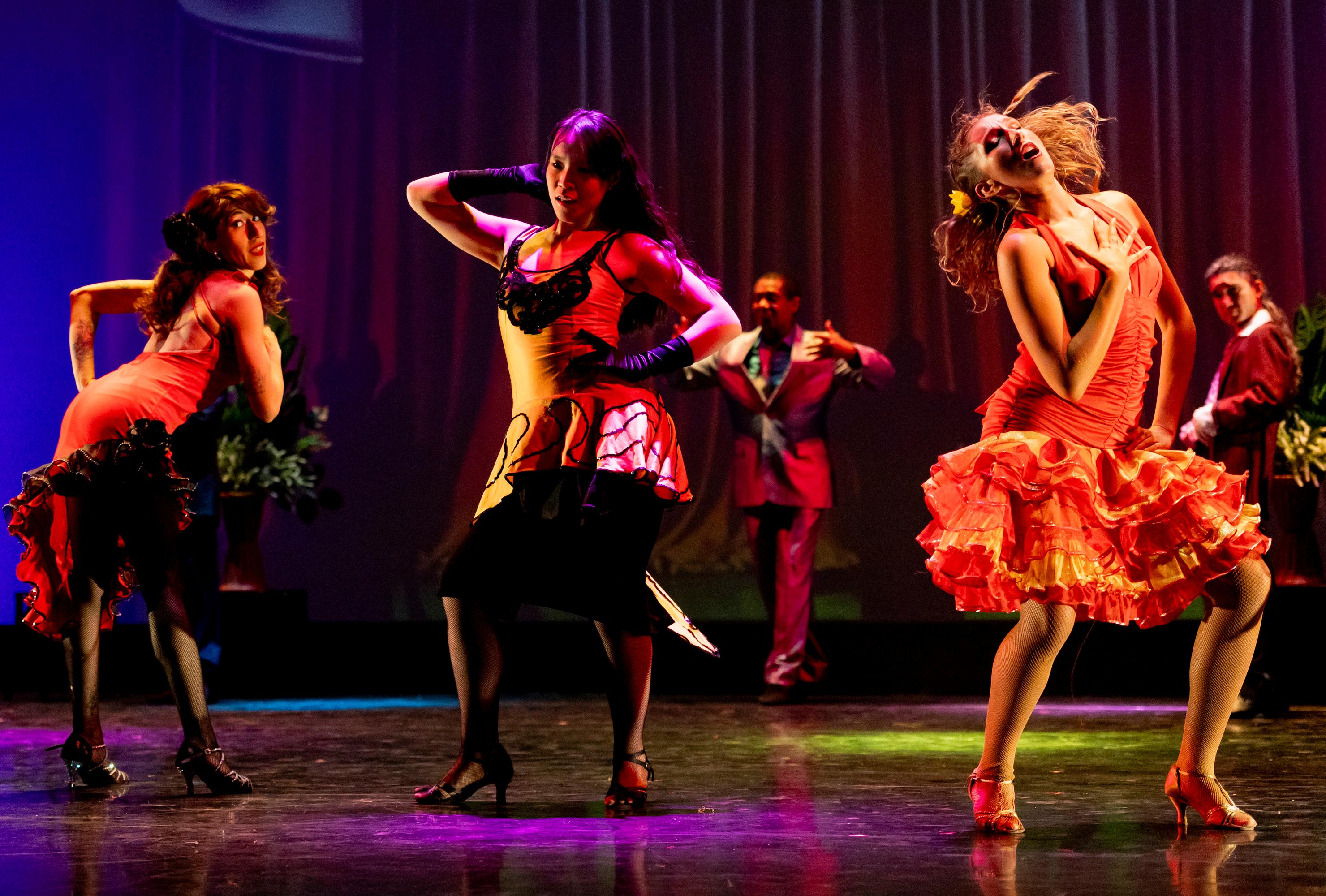

Silke Eichholz | The Corsair (L-R) Santa Monica College (SMC) World Dance Company dancers Bella Limon, Jessica (Ching Yuan) Hua and Kara Alexys perform a Cuban Mambo dance called ‘A Night at The Paladium‘, choreographed by Laura Canellias, during a dress rehearsal for the upcoming show ‘Global Motion’, on Wednesday, May 13, 2026, at BroadStage at the SMC Performing Arts Center in Santa Monica, Calif.
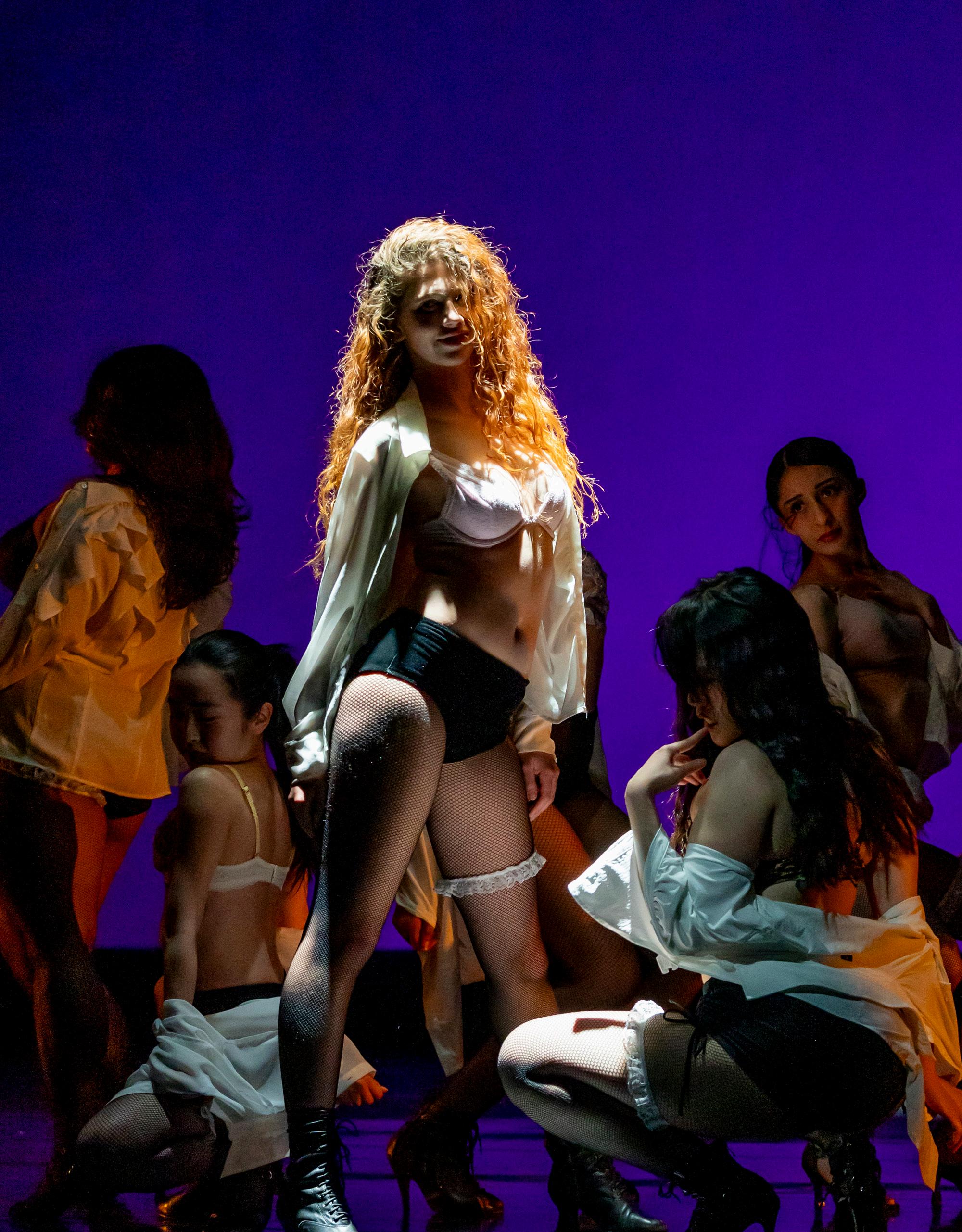

Santa Monica College (SMC) World Dance Company dancers perform a west African dance called ‘Manjani (Mendiani)’, choreographed by Angela Jordan, during a dress rehearsal for the upcoming show ‘Global Motion’, on Wednesday, May 13, 2026, at BroadStage at the SMC Performing Arts Center in Santa Monica, Calif. ‘Mendiani’ is a title for virgin girls who are specially initiated into a secret society of dancers. The girls must not only be good dancers, but also fearless, for they must perform their dance moves on the shoulders and head of a man. The Medniani wear a special costume to perform, which they are not allowed to wear after they have lost their virginity.

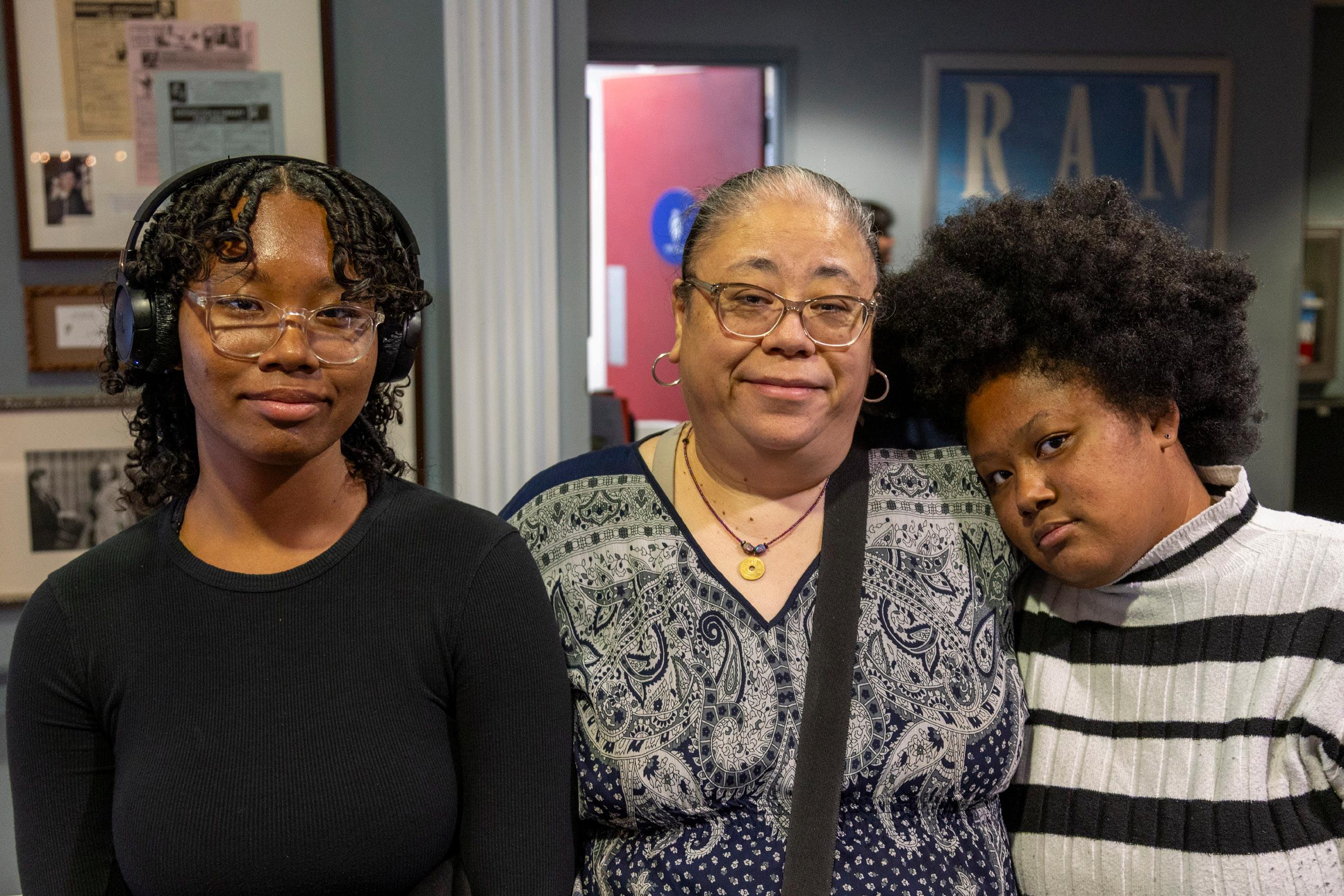
Ayame Fields, Shirley Tanaka, and Naomi Fields, left to right, members of Willie Mae “Big Mama” Thornton’s family, attend the showing of the eponymous documentary film “Big Mama Thornton”, directed by Robert Clem, at the Laemmle Royal Theatre.
Written
and photographed
by Juliana Frame
Atthe Laemmle Royal theater, a crowd gathered for the screening of the documentary “Big Mama Thornton” on Thursday, May 14, in Los Angeles.
The film celebrates the life and legacy of Willie Mae “Big Mama” Thornton, an accomplished Black blues singer and the original performer of the song “Hound Dog,” later popularized by Elvis Presley.
According to the film, Presley covered the song without permission or credit to Thornton, effectively erasing her from the popular history of the song.
Director and producer Robert Clem felt the need to tell her story, as she would have turned 100 years old this December.
Multiple members of Thornton’s family, including her nephew Lamont Fields, and Mike Stoller, co-writer of “Hound Dog,” attended the screening.
Clem’s telling of her story shows how Thornton, a commanding stage presence, gained prominence as a “blues woman” and sheds light on an otherwise forgotten figure in blues history.

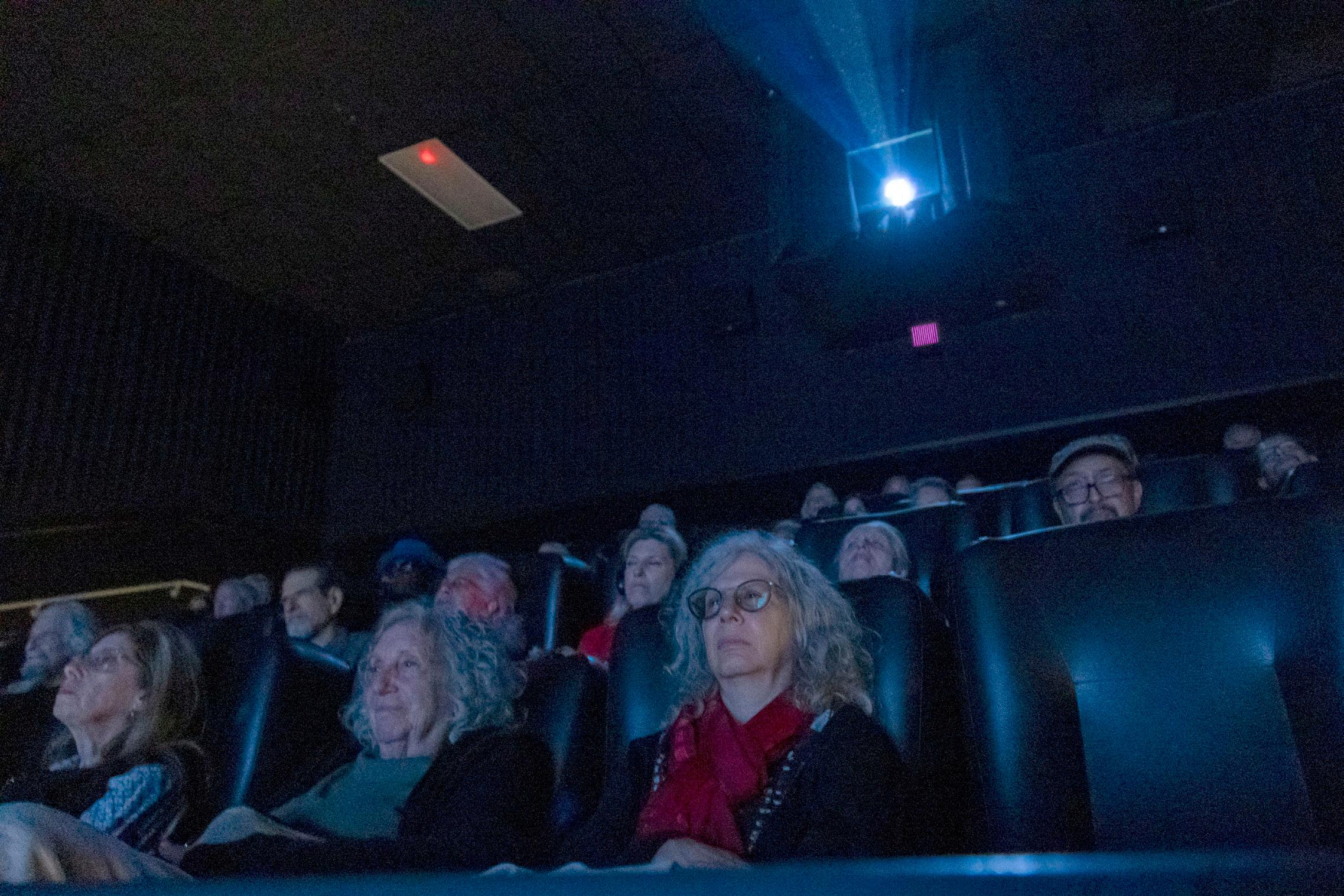

Moviegoers attend the Los Angeles showing of the documentary film “Big Mama Thornton”. Multiple members of Thornton’s family, as well as Mike Stoller, the songwriter of “Hound Dog”, attended the showing.
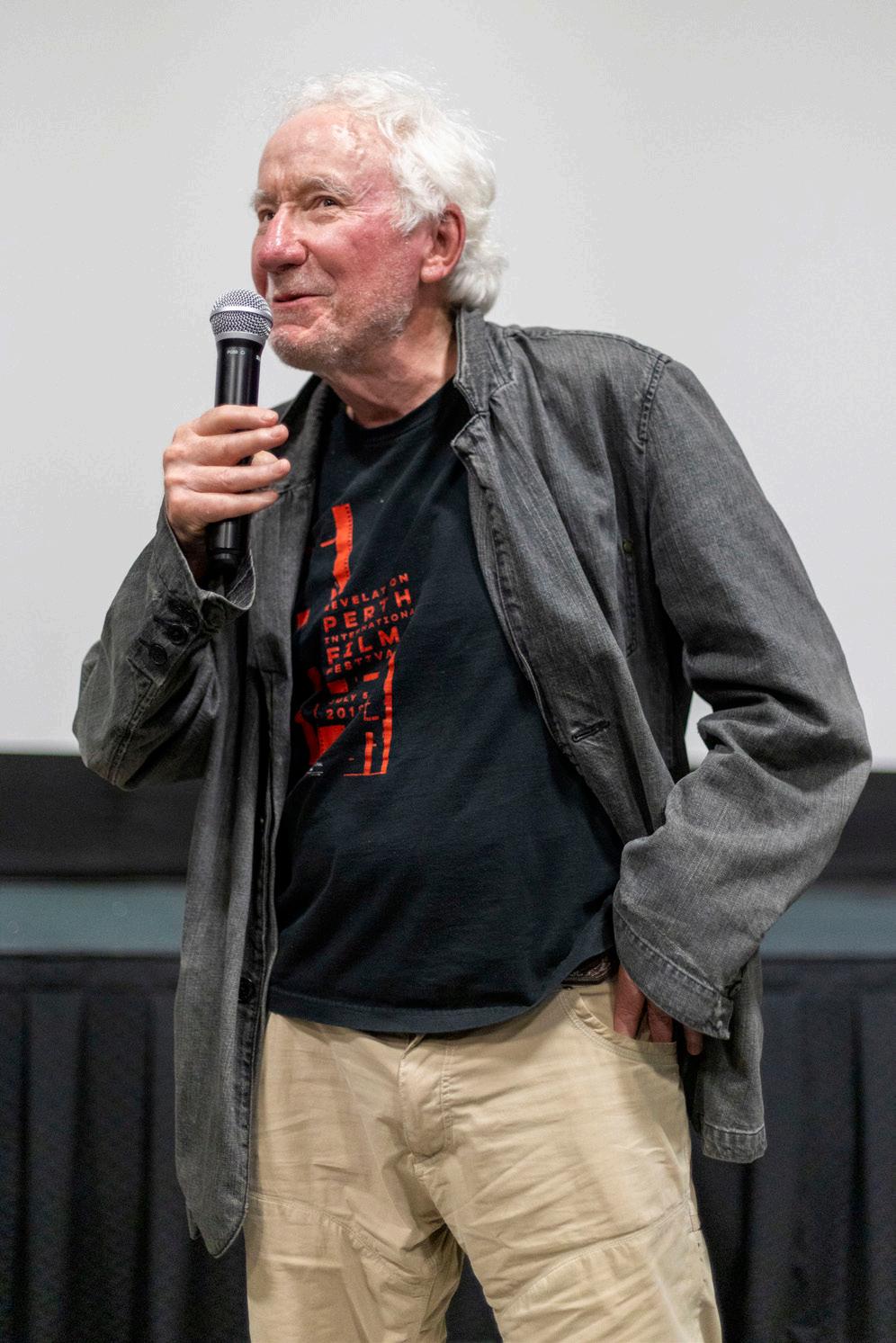
Robert Clem, director of the documentary film “Big Mama Thornton” speaks after its showing Clem felt the need to create the documentary after hearing about her story on another shoot in Alabama.
Outside the Laemmle Royal Theatre in Los Angeles, after the showing of the documentary film “Big Mama Thornton”.
Santa Monica College (SMC) dancers, perform Jalisco “Cuadre de Jalisco” choreographed by Raquel Ramirez, during the Global Motion, Dance Company dress rehearsal at BroadStage at Santa Monica College’s Performing Arts Center, Santa Monica, Calif, on May 13, 2026. Jalisco dance represents the Charro (Mexican cowboy) and the Mariachi melodies.