Window Tinting and Bird Safety: Understanding the Impact and Solutions

Window tinting has become a popular choice for homeowners seeking to enhance privacy, reduce energy costs, and improve the aesthetic appeal of their homes. However, concerns have been raised about its potential effects on bird safety. This article explores whether window tinting is harmful to birds and outlines strategies to mitigate any negative impacts.
The Interaction Between Birds and Window Tinting
Birds often collide with windows, mistaking reflections and transparent surfaces for open skies or vegetation. The presence of window tinting can influence this behavior in several ways. Depending on the type and quality of the tint, it may either exacerbate or reduce the likelihood of bird collisions.
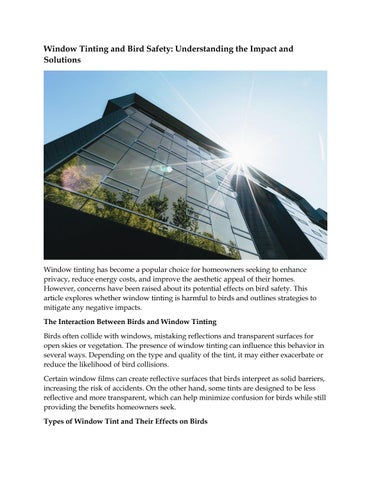
Certain window films can create reflective surfaces that birds interpret as solid barriers, increasing the risk of accidents. On the other hand, some tints are designed to be less reflective and more transparent, which can help minimize confusion for birds while still providing the benefits homeowners seek.
Types of Window Tint and Their Effects on Birds
1. Reflective Window Films: These films produce a mirror-like surface that can be highly attractive to birds, leading to more frequent collisions. The intense reflection mimics the appearance of open space, misleading birds into thinking they can fly through.
2. Low-Reflective or Anti-Reflective Films: These tints reduce glare and reflections, making windows appear more transparent to birds. By minimizing the visual confusion, these films can help decrease the number of bird strikes.
3. UV-Blocking Films: While primarily designed to protect interiors from UV rays, these films can also reduce the overall brightness of windows. This can make the glass less noticeable to birds, thereby lowering collision risks.
Mitigating the Risks of Window Tinting for Birds
Homeowners can take several steps to ensure that window tinting does not negatively impact bird safety:
Choose the Right Tint: Opt for low-reflective or anti-reflective window films that decrease the likelihood of birds mistaking windows for open space. These films maintain the benefits of tinting while being more bird-friendly.
Apply Decals or Stickers: Adding patterns or decals to windows can help break up reflections and make glass surfaces more visible to birds. Placing these markers near the top of windows is particularly effective.
Limit Tint Darkness: Selecting window tints that are not overly dark can help maintain visibility for birds. Balancing light reduction with transparency ensures that windows are less confusing for avian species.
Consult Professionals: Seeking advice from experts can help in selecting the most appropriate window tint. For those in Philadelphia, searching for home window tint Philadelphia can connect you with local professionals who understand both aesthetic and environmental considerations.
Cost Considerations and Local Services
When considering window tinting, understanding the Home window tint Philadelphia cost is essential. Prices can vary based on the type of film, the size of the windows, and the complexity of the installation. Investing in high-quality, bird-friendly tinting solutions may have a higher initial cost but can provide long-term benefits for both homeowners and local bird populations.
Additionally, finding a reliable installer is crucial. Searching for home window tint near me can help you locate trusted professionals who offer tailored solutions to meet your specific needs while considering environmental impacts.
Conclusion
Window tinting offers numerous advantages for homeowners, including enhanced privacy, energy efficiency, and improved home aesthetics. However, it is important to be mindful of its potential effects on birds. By selecting appropriate window films and implementing bird-friendly practices, homeowners can enjoy the benefits of tinting without compromising local wildlife. Making informed choices and consulting with experts ensures that your window tinting project supports both your home environment and the well-being of birds in your area.