
After
six months of confusion, judge concludes that arresting police ofcers had
‘overreacted’
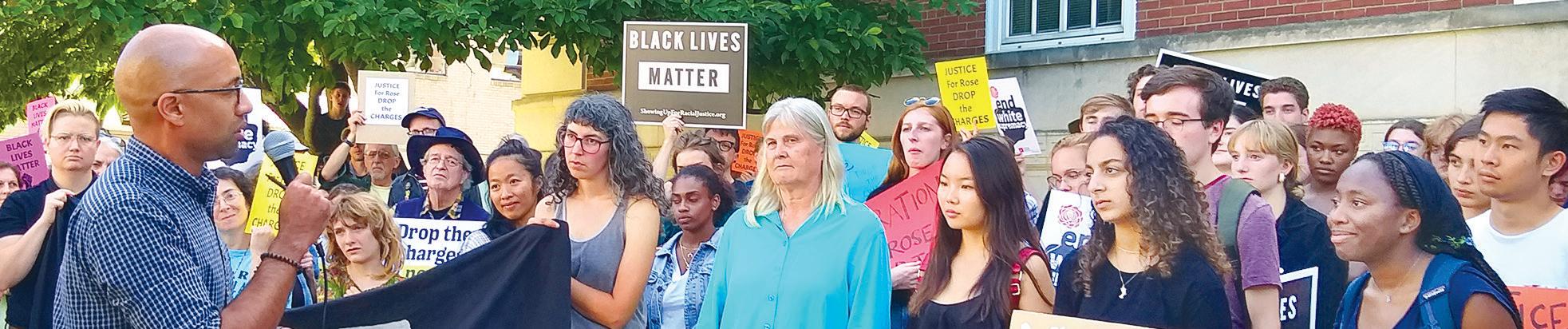
Tompkins County Judge John C. Rowley dismissed charges against Ithaca resident Rose de Groat, cutting her indictment in a decision on Friday. The Ithaca Police Department officers “overreacted,” Rowley wrote, ending a case that brought national conversations around police conduct and racism to Ithaca.
His decision cited discrepancies in the officers’ testimony
and body camera footage from the April arrest during which police say that de Groat punched an officer and scratched another on his face as they tried to detain her and another resident, Cadji Ferguson. The judge also posited that de Groat would not have needed to get involved at all if police had acted differently.
“In the Court’s view, Ms. DeGroat reacted instinctively to protect Mr. Ferguson in this fast moving and bewildering situation,” Crowley wrote in his decision. “If not for the regrettable actions of the police, she likely would not have intervened.”
By
Crowds of people gathered in the Ithaca Commons this weekend for Tompkins County’s Apple Harvest Festival, an annual celebration of New York’s apple growers and cider makers. Entering its 37th year, the three-day festival has been a long-standing tradition that marks the beginning of fall and highlights local small businesses.
From Friday to Sunday afternoon, area college students and locals enjoyed the wide variety of music, carnival games, tastings and seasonal treats offered to attendees. Over 20 local farmers had stalls centered on the Commons and surrounding streets, selling products and ingredients sourced from Ithaca’s hinterlands, notably
including at least five apple donut vendors — long one of the festival’s crowd favorites.
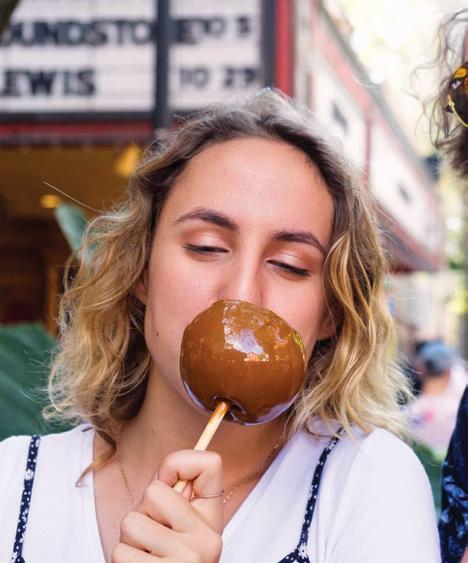
The festival typically receives over 120 vendors and 30,000 visitors throughout its three days of operation.
Beyond Upstate New York’s apples, food vendors also featured international cuisines, such as Greek gyros, West Indian dishes, and Himilayan food from Tibetan Momo.
Ximena Sanchez ’22 said she “looks forward to it every year,” explaining that “this is my fifth year going” and provides a chance “to support local busi- nesses and local growers.” Families stopped to listen to live music as local bands such as Raquel & the See APPLES page 4
An internal investigation of the officers’ conduct concluded that the police officers had not breached policy, Police Chief Dennis Nayor said in July. De Groat and Ferguson’s futures remained in limbo for much longer. Court documents filed by de Groat’s attorney, Edward Kopko, and District Attorney Matthew Van Houten show that since April, charges have slid back and forth. De Groat

By ANGELA LI
David Hogg and Samantha Fuentes — young activists and survivors of the February 2018 Marjorie Stoneman Douglas High School shooting in Parkland, Florida — recounted the lessons they learned spearheading a movement that has made waves in politics and the media in a talk to Cornell students on September 28. Fuentes called herself an “accidental activist,” someone who once was a “bystander, uneducated, uninterested, and more than anything, numb” to social problems, such as gun violence.
But after the deadly shooting, during which Fuentes was shot in the legs and “riddled with shrapnel,” she became “absorbed” into activism to “influence other survivors of gun violence to share their stories in order to enact change for the better.”
Hogg similarly said that his journey to high-profile activist was an accidental twist of tragic fate. In first grade, when Hogg struggled with learning to read due to dyslexia and “possibly ADD,” he was plagued
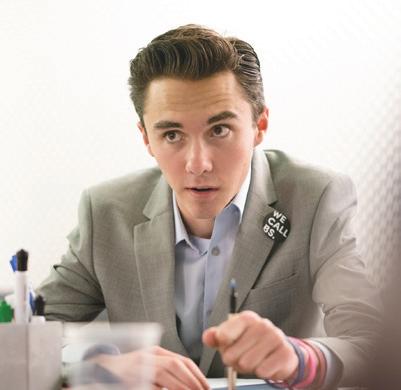
by insecurity and “felt like a broken toy.” When Hogg was 15, he and his family moved to Florida. There, Hogg overcame his childhood insecurities and found a “passion for speech and debate” — where debate topics on universal background checks served as an introduction to gun
Tomorrow Today
Labor Economics and Applied Economics Workshop 11:40 a.m. - 1:10 p.m., 115 Ives Hall
Activism in Latin America, Latin American Studies Program Weekly Seminar Series 12:15 - 1:10 p.m., G01 Stimson Hall
The Influence of Local and Global Discourses On Parental Beliefs and Practices by Indian Parents 12:15 p.m., G08 Uris Hall
Department of Physics Colloquium, Bethe Lecture Series
4 - 5 p.m., Schwartz Auditorium, Rockefeller Hall
Global Health Summer Programs Information Session 4:30 - 5:30 p.m., T01 Human Ecology Building
Intro to Laser Cutting 4:30 - 6:30 p.m., Mann 112, Mann Library
Panel on Cornell 2020 Biennial amd Artist Competition
5 - 6:30 p.m., Guerlac Room, A.D. White House
Be the Change Workshop: Mentorship as Community Engagement and Leadership Development 5:30 - 7:00 p.m., 105 Kennedy Hall
Classical Piano: Daniil Trifonov and Sergei Babayan 8 - 10 p.m., Bailey Hall Auditorium
day,
Fashion & Feathers Exhibition
T
Work TalksWork Authorization for International Students 10 - 11 a.m., 276 Caldwell Hall
Border Communities, Racial Inequalities and Human Rights 11:40 - 1:10 p.m., G08 Uris Hall
Panel on Interdisciplinary Leadership Noon - 1:30 p.m., 423 Morrill Hall
Making the Most of Your First Year
3:30 - 5:30 p.m., Balch Hall, tatkon Center
Remembering the Present: Anthropology Seminar
4:30 p.m., Guerlac Room, A.D. White House
Queer Sexual Violence Training Program 4;30 p.m., Seminar Room 3343, Tatkon Center
Toni Morrison M.A. ’55: A Life in Letters
4:30 p.m., Africana Studies and Research Center
Migrations Global Grand Challenge: Launch Event
4:30 - 6:30 p.m., Herbert F. Johnson Museum of Art


By MEGHNA MAHARISHI Sun Staff Writer
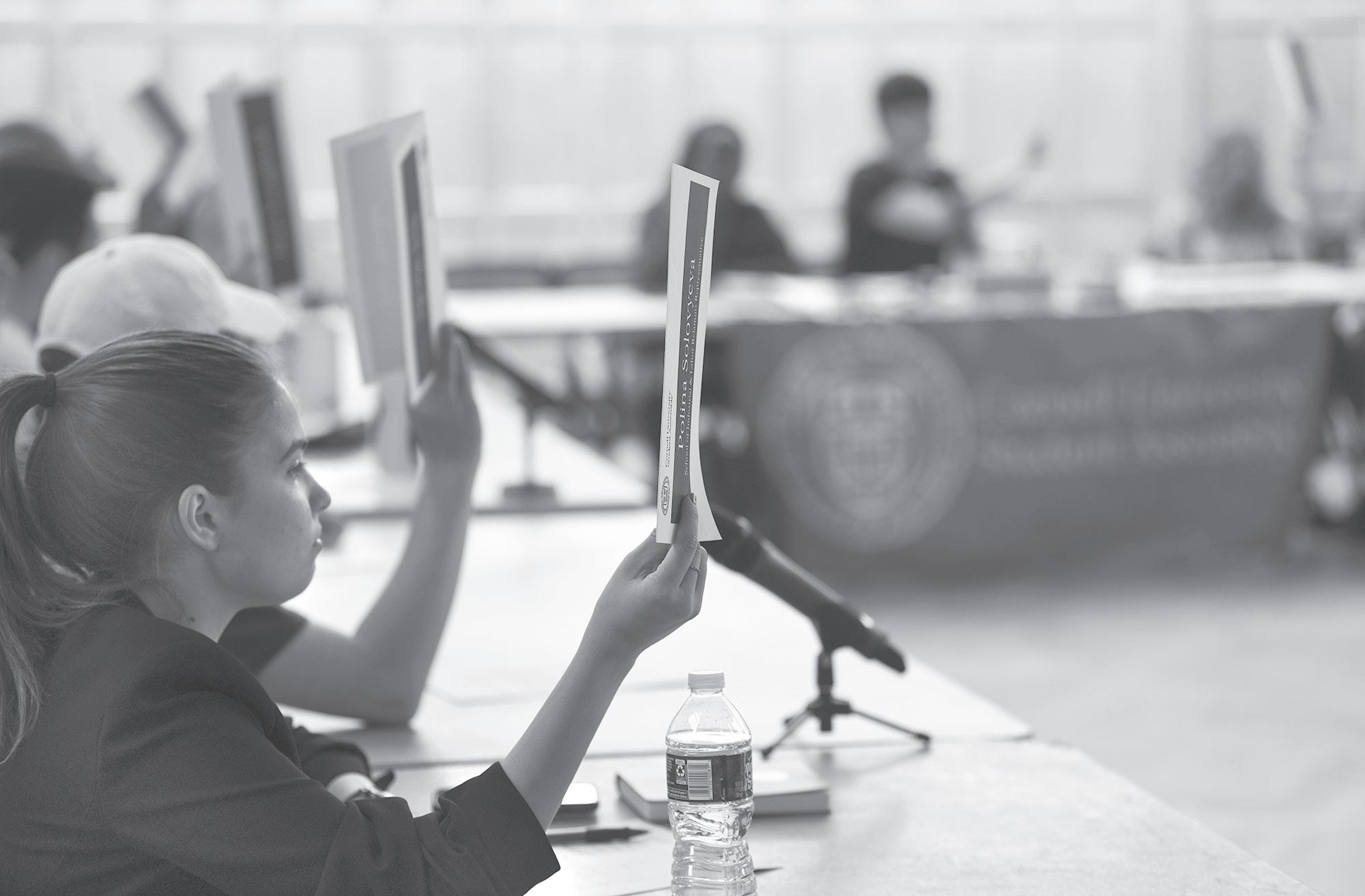
The Student Assembly unanimously passed a resolution Thursday to establish an Office of the Student Advocate, a student-run office which would provide counsel to students struggling to navigate Cornell’s administration.
If implemented, the Office of the Student Advocate would be comprised of undergraduate caseworkers who would help their peers with issues such as conduct violations, grade disputes, enrollment issues, financial aid problems, residency concerns, discrimination and harassment. The office will guide students to Cornell’s other administrative offices to handle their concerns, while offering legal advice and support.
“I’ve heard directly from students through testimonies how
“I’ve heard directly from students through testimonies how the University is failing to serve as an accessible contact point.”
Liel Sterling
’21
the University is failing to serve as an accessible contact point when their rights are being violated,” said Liel Sterling ’21, who co-sponsored the resolution with S.A. Executive Vice President Cat Huang ’21.
Sterling added that during the summer, many students she didn’t know had contacted her with concerns over issues ranging from Title IX violations to professors. As a result, she felt that an Office could serve as a direct point of contact for students mired in Cornell’s bureaucracy.
According to the resolution, the Office of the Student Advocate would include a student advocate, a chief of staff, a director for student and campus life, a director of academic affairs, a director of student finance and a slew of student caseworkers. The first student advocate would be appointed
and confirmed by the S.A., and all successors would then be nominated by the outgoing office.
A student advocate would work with the S.A. on the office’s priorities, create training programs for staff members, monitor any data the office collects and facilitate relationships with other University offices.
The office will consist of directors who will specialize in
By LUCAS REYES
Staff Writer
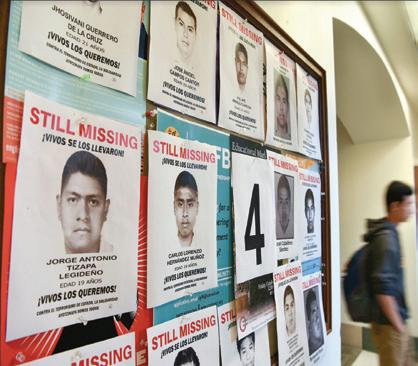
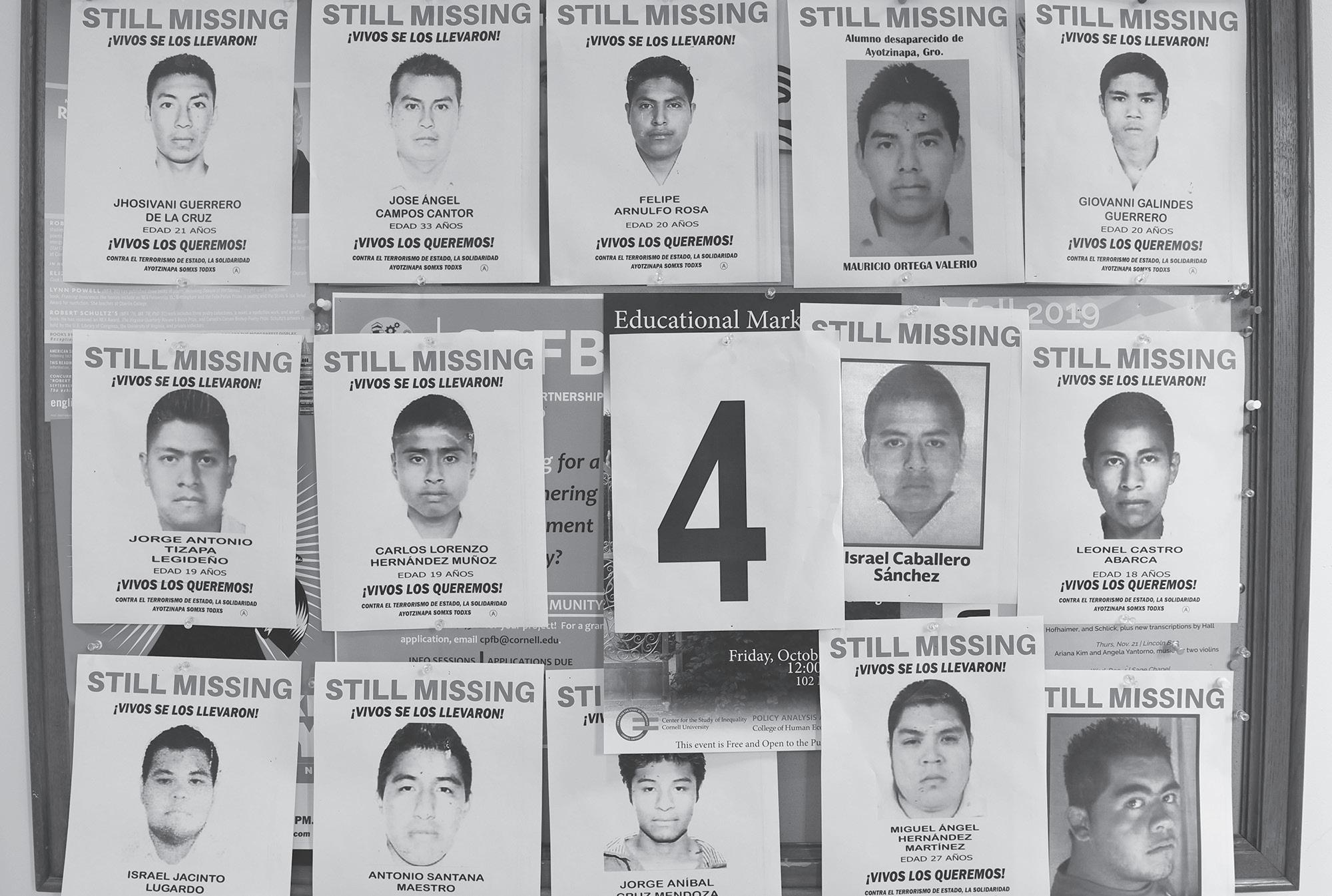
The faces of 43 Mexican students were plastered on bulletin boards in Goldwin Smith Hall Thursday, giving students a glimpse of the victims of one of Mexico’s largest unsolved political crises.
Just five years ago, 43 Mexican students from Ayotzinapa Rural Teachers College were abducted on their way to a protest commemorating the anniversary of the 1968 Tlatelolco Massacre.
The Mexican government reported that the students were taken by local authorities and killed by the “Guerreros Unidos gang,” but independent investigators and a 2018 U.N report contended that the government fabricated evidence, and the whereabouts of the victims or their remains are still unknown.
This is the history that the e-board of MEChA de Cornell, the student organization responsible for the posters, wants Cornell students to understand.
MEChA, which stands for Movimiento Estudiantil Chicanx de Aztlán, has historically been a politi-
cal activist group representing students of Mexican descent on high school and university campuses, but in recent years has expanded its mission to include all Latinx people and groups.
The organization placed posters in both Goldwin Smith and Carpenter hall, locations with high student traffic according to Tarcan, with the goal of spreading the student’s stories to as many Cornellians as possible.
“We should all be caring about these missing Mexican students because at the end of the day, they were students just like us,” said Steve Tarcan ‘20, political chair of MEChA.
“If we can just bring about awareness even on this small campus then we’re hoping it could be sort of a domino effect,” said Tarcan. “They can tell their family members they can tell their friends and eventually it’ll spread on and onwards.”
This is the second year that MEChA de Cornell has commemorated the disappearances with posters.
traverse legal, financial aid and other issues faced at Cornell.
particular issues. The director of student and campus life would oversee caseworkers handling issues like Title IX disputes or any other student-conduct related violations.
The director for academic affairs would supervise caseworkers dealing with issues of grade and enrollment disputes
By STEPHANIE TOM Sun Contributor
With homecoming approaching this weekend, students and alumni look forward to the chance to celebrate the return of Cornell football. But for the Cornell University Gay and Lesbian Alumni Association, the upcoming festivities will serve as an opportunity to honor a trio of achievements beyond the gridiron: “50+ years of LGBTQ+ Advocacy at Cornell,” the 25th anniversary of the LGBTQ Resource Center and the grand opening of the Loving House, a new LGBTQ program house that opened this semester.
CUGALA began as a small student organization in 1969, but the scale and presence of its alumni network has grown over the past 50 years. Now, as one of the oldest and largest LGBTQ university alumni networks in the country, it includes over 3,000 members as well as straight allies. From Ithaca and beyond, CUGALA aims to foster a more welcoming space for members of the LGBTQ community with its increasingly active executive board.
Although this is not CUGALA’s first time attending homecoming at Cornell, this is the first year the group is planning bigger events designed to engage both alumni and current students of the LGBTQ community.
“We always just join the Diversity Alumni Program tail-
gate, but we’re adding to it this year,” said Kim Gillece ’04, vice president of CUGALA. “The more we can engage with students, the more they realize they can join our supportive network after graduation as well.”
This year, CUGALA plans on kicking off homecoming weekend on Friday with a student and alumni reception at the Physical Sciences Building before walking to North Campus for a tour of the new LGBTQ+ program house — the “Loving House” — in Mews Hall. On Saturday, following the tailgate and football game, there will be an off-campus alumni and upperclassmen dinner, featuring speaker Carlisle Douglas, the first permanent coordinator of the LGBT Resource Center at Cornell.
“We’re really happy that we have a stronger presence now nationwide and on campus as well,” Gillece said, “especially since Loving House has been an idea for the longest time, and seeing it finally come to fruition for students to finally feel a sense of community, is really wonderful.”
Currently, CUGALA works with Christopher Lujan, associate dean and director of the LGBT Resource Center at Cornell, to host and coordinate events back on campus, and is looking forward to collaborating with Loving House to involve the community in future reunions and events as well.
PARKLAND
Continued from page 1
policy — as well as photography, TV production and “telling others’ stories.” Those activities set the stage for Hogg’s future role in gun violence prevention activism.
Feb. 14, 2018 in Parkland was “a freezing cold day of about 55 degrees,” Hogg joked before diving into the day’s tragic events. He was in his A.P. Environmental Science class when he heard the first telltale “pop.”
“My table partner and I both looked at each other, and it’s a look that I will never forget, because it’s a look that only our generation knows, where you know that pop wasn’t anything else,” Hogg said.
He described initially thinking it was just an active shooter drill, until the “stampede of footsteps” of other students that caused his class to panic and unknowingly “run towards the shooting,” and the “miraculous” intervention of a janitor and a culinary teacher, who hid Hogg’s group of 60 classmates in a classroom.
It was then that his sister, a freshman at the same high school, called him, asking what was going on and that her friends were “posting videos on their Snapchat stories saying ‘my fucking school is getting shot at,’” Hogg recalls.
“How do you respond to that?” he asked.
For Hogg, his way of “being calm in that situation” was to interview other students in that classroom on how they felt honestly about “the current situation on gun violence in the United States and the NRA.”
“If we did die, then even if our bodies were left behind, our
voices would echo on,” he said. “People can’t say you’re politicizing tragedy if the people that died in that shooting said ‘You need to do something about this because this is unacceptable.’”
After the shooting, the young survivors-turned-activists channeled their anger, energy and grief into organizing March for Our Lives in Washington, D.C., an event that ended up drawing over a million people and jumpstart a youth-led gun violence prevention movement.
They also focused on voter turnout in “districts that the NRA held … to elect politicians that could protect children, not guns” and succeeded in generating “one of the highest youth voter turnouts ever” and “took back more NRA-backed congressional seats than ever before in American history” in the 2018 midterm election, according to Hogg.
Both activists drew attention to the fact that “mass shootings are only a small percentage of the gun violence that affects America,” Fuentes said.
“The story of gun violence doesn’t begin with Columbine. It begins with indigenous genocide,” said Hogg, pointing out that “we never hear about mass shootings in terms of the Battle of Wounded Knee” or that “the number one predictor of where gun violence occurs is where communities were redlined in the 1930s and 1940s.”
“The communities most affected by gun deaths are those just like Ithaca,” Hogg said, referring to rural and suburban areas where older white men have the highest rates of suicide by gun in the country.
Despite it all, Hogg and Fuentes both expressed optimism for their cause in the future. Hogg in particular expressed faith
Continued from page 1
Wildflowers and Kitestrings performed throughout each day. Street performers also provided ambiance, playing flutes, trombones, harmonicas, and other unique instruments.
Andrea Bonds ’20, said that she plays “a little bit of classical and then I’ll do lyrical pieces as well,” explaining that “classical shows off my technical skill, but lyrical kind of captures people’s attention.” The flute-player said this was her fourth year participating as a street musician
during AppleFest.
The festival also featured a Cider Passport trail, where people could sample cider from restaurants on the commons like the Moosewood Restaurant and Ithaca Coffee Company. Downtown Ithaca’s website, one of the festival’s organizers, explained that “downtown businesses will be offering delicious ciders by the glass, tastings, pairings, and mixed cider cocktails” and would be entered to win gift cards to shops and eateries in Ithaca.
Cait Wyman can be reached at cew245@cornell.edu.
in the electoral system, the power of the vote and democracy.
After their speeches, Hogg and Fuentes were asked several pre-submitted questions from Cornell students.
On the topic of balancing mental and physical health with the strains of activism and advocacy, Fuentes emphasized the importance of “knowing what the word ‘no’ means” when it comes to delegating time and energy to a cause.
“My one-woman show came with many sacrifices, energy, and re-traumatization,” she said of the countless interviews and events she did after the shooting, “less than a week after being out of the hospital” with shrapnel still embedded in her face.
“I was recklessly dispensing my time and energy and everything,” she said. “There is a more strategic, graceful and fulfilling way to be an activist that doesn’t involve using every waking moment of your life.”
When asked how they “maintain focus and hope” in the face of the incremental pace of social change, Fuentes replied, “You cry a little bit.”
“Organizing with people who are … focused on accomplishing the same things as you is very important when it comes to keeping up that hope and that energy, because if you are alone and you have no one supporting you, it can make everything look a little more hopeless,” she said.
Tamara Kamis contributed reporting to this article.
Angela Li can be reached at ali@cornellsun.com.
DISMISSED
Continued from page 1
was originally charged with two felony counts of attempted assault in the second degree and misdemeanor charges for resisting arrest and obstructing governmental administration.
Within a week of the arrest, Van Houten’s office recommended reducing de Groat’s charges in a letter addressed to Judge Scott Miller of the Ithaca City Court, according to documents in Kopko’s omnibus motion.
The D.A.’s office stated in the letter they “prefer not to prosecute this case at a felony level.”
A month later, the grand jury ruling came out, and it was not the reduced charges that de Groat and her team were expecting. Instead, de Groat was charged with two felonies and a misdemeanor, and a trial date was set for November.
Over the summer, Van Houten proposed setting up mediation to work towards preventing a permanent record for de Groat. In July, Van Houten and Kopko seemed close to a plea agreement — so close that mediation dates were proposed by both parties. Ultimately, though, Van Houten rescinded the offer, criticizing Kopko for violating the terms by disclosing the mediation to the media. Kopko, in turn, accused Van Houten of violating the terms first.
On Sept. 20, de Groat told The Sun at a “die-in” protest in favor of dropping the charges against her that she was not very hopeful about her case’s outcome.
“I do not really feel optimistic because of the way the D.A. has reacted, and redacted all of the offers and statements he has made,” she said.
On Aug. 26, de Groat’s attorney, Kopko, asked the court to stem
the charges in an omnibus motion, arguing that all charges should be dismissed due to the terms agreed on in the mediation agreement, applicable due to “specific performance.”
According to Cornell’s Legal Information Institute, specific performance is a “contractual remedy in which the court orders a party to actually perform its promise as closely as possible, because monetary damages are somehow inadequate to fix the harm.”
In this case, during the discussions on the mediation agreement, Van Houten sent a letter to Kopko proposing to “dismiss the indictment in its entirety and unconditionally.” Kopko argued that even though there was no final agreement, charges should be dropped because of this initial proposal.
The case has caught and kept the attention of the Ithaca community since the arrests were first made due to concerns of police brutality and systemic racism.
Black Lives Matter Ithaca, Showing Up for Racial Justice and Ithaca’s Multicultural Resource Center, have been highly active in organizing community support for the two residents, packing the Tompkins County courtroom, staging a “die-in” and hosting multiple rallies in support. Cadji Ferguson was found not guilty of disorderly conduct due to lack of evidence on Sept. 2.
“Finally, and thankfully, Judge Rowley had the courage to put an end to this racial injustice,” Kopko told The Sun. Neither the D.A. nor deputy D.A. was available for comment at the time of publication.
Maryam Zafar can be reached at mzafar@cornellsun.com. Girisha Arora can be reached at garora@ cornellsun.com.

Continued from page 3
and professor conduct violations. The director of student finance will specialize in issues of financial aid and student employment.
Caseworkers will be supervised by directors. They will also handle student inquiries and direct students to the appropriate administrative office to handle their complaints. Sterling also said that she would want the Office of the Student Advocate to have a diverse staff of students from a range of backgrounds.
Since caseworkers would be students handling personal and confidential complaints, Nick Matolka ’21, undesignated at-large representative, expressed concern over training them.
“The Ombudsman’s office ... [does] as much as they can, but sometimes, it’s not enough.”
functions — including the Title IX and financial aid office. Students also have the option to visit the Office of the University Ombudsman, a resource that allows students to confidentially and openly discuss any issues they may have with the University.
Tomás Reuning ’21, LGBTQ representative, questioned how the Office of the Student Advocate would differ from the University Ombudsman.
But Sterling, for her part, believed that the Office of the Student Advocate would be more accessible for students as compared to the Ombudsman office.
“From what I’ve understood from students who have had contact with the Ombudsman’s office is that they do as much as they can, but sometimes, it’s not enough,” Sterling said. “I think that the Ombudsman’s office is useful for some things, like grade disputes, professors, but there are other offices in Cornell that are more specific to certain kinds of issues. [The Ombudsman’s office] is also not as clear as, say, the student advocate, that will directly deal with students’ rights.”
Liel Sterling ’21 POSTERS Continued from page 3
“Would these students [be] handling confidential material — where is the accountability coming into play, in terms of if that breach of confidentiality is broken?” Matolka said.
Sterling said that while caseworkers will have to log student issues, the Office of the Student Advocate wouldn’t necessarily have the names of the students filing these complaints.
At the meeting, Sterling also clarified that students interested in joining the Office of the Student Advocate would not need to have a pre-law background, as the office will plan to provide extensive training in conjunction with Cornell Law School, the University and the SA.
But for students experiencing many of the issues the Office of the Student Advocate seeks to address, Cornell currently already offers a number of administrative
In a statement to The Sun, Linda Falkson, Ombudsman office director, maintained that the Office of the University Ombudsman had a neutral stance regarding the resolution.
“As a designated neutral, we advocate for fair and equitably administered processes but we don’t advocate on behalf of any individual in the organization nor do we enforce any rules or regulations or get involved in formal processes,” Falkson wrote. “We don’t advocate for or against resolutions or polices.”
Masa Haddad ’21, human ecology representative, questioned how the Office of the Student Advocate would help students not get “stuck in a cycle” when dealing with the administration.
Since caseworkers will be knowledgeable on all of the University’s offices and are meant to serve a direct point of contact for students, they will be able to guide students through any bureaucracy, Sterling stressed.
Meghna Maharishi can be reached at mmaharishi@cornellsun.com.
Since 2014, the organization has used social media campaigns, a “die-in” held at Olin Library and posters to spread awareness of the Ayotzinapa disappearances.
Passing Cornellians noted that the posters inspired contemplation and curiosity. The Sun spoke to Gideon Amoah ’19 and Tarangana Thapa ’21 about their reactions to the posters.
“Seeing these faces shows that there’s a story to every person and I’m more curious to figure out their story their life, what happened,” Thapa said.
“I was just curious,” Amoah said. “I think everybody who sees it would want to know.”
Both had no prior knowledge of Ayotzinapa disappearances, but told The Sun that they wanted to learn the context after seeing the posters.
Both Tarcan and Diane Ceron ’20, the co-chair of MEChA, expressed frustration with the Mexican government’s past efforts to uncover what happened to the victims, and with an attempt by Mexico’s current President, Andres Manuel Lopez Obreador.
“Last year they did start up, or try to build a new search to
be able to find these students but it was more of a publicity stunt,” Tarcan said. “ It’s essentially because they’re not trying and its because they feel like people don’t care.”
“The first thing is acknowledging that it happened because I feel like the government has definitely been tip toeing around this issue and not even being held accountable … especially Peña Nieto,” Ceron said.
Enrique Peña Nieto served as the president of Mexico when the Ayotzinapa incident rippled through the country and generated protests against his administration’s handling of the disappearances.
In 2018, Mexican Human Rights Commissioner Luis González said that the Peña Nieto investigation had “ grave human rights violations”. In an earlier report the U.N. Human Rights Office said that Mexican authorities had tortured dozens of people during the inquiry.
“We just want to show other Cornell students this is the reality of some people’s lives,” Tarcan said. “We should be caring and we should be doing something to make it known.”
Lucas Reyes can be reached at lreyes@cornellsun.com.
On this campus, Taylor Swift is one of the safest bets if you want to start a conversation with someone. Chances are you both like her. Chances are she is one of the few celebrities with whom our parents and we have reached the rarity of common admiration. For the young adults of our generation, Taylor Swift has been the public figure many of us look up to –– often perceived as a strong, smart and sweet woman. Here at Cornell, the discourse on Taylor Swift follows this consensus of appraisal. The agenda is usually framed by her cult followings — those who take pride in referring to themselves as “Swifties” and organize in an army-like way on social media.
At the beginning of the semester, fellow arts columnist Andrea Yang ’20 wrote an article on how Taylor Swift reclaimed her narrative with her new album Lover. She argues that Swift made a “genius power move” by incorporating her response to public scrutiny into her lyrics, directly altering the way she is portrayed in media through music. She further concludes that Lover is a “textbook case study for manipulating public discourse,” yet I would like to shed light on an alternative lens to revisit her activism endeavors for her Lover campaign. As a pop megastar, Taylor Swift still has a long way to go before she knows how to be an effective activist.
A few weeks ago, in my media communication class, we discussed the music video of Swift’s song “You Need To Calm Down” in terms of media literacy. Perhaps most people felt critical enough to praise the blatantly obvious and meticulously timed LGBT campaign embedded in the visual like product placement, most of the comments are about just how great it is that Taylor Swift stepped up and is now using her mega-platform to voice for contested social issues and to empower others. To me, it is baffling to see her leveraging her massive platform to disseminate such lukewarm and softened political messages. For contemporary allyship, it is ignorant for her to put herself at the center of the narrative and equate her personal struggle with online bullying with the daily struggles LGBT people face. The whole rhetoric bears a resemblance to the outdated catch-all but failedto-capture-any LGBT campaigns of 2012 when the public conversation has long moved forward to accentuate the understanding of the unique experiences of each LGBT individual. It left out the current more controversial discourse on queerness and fluidity. Pride always sells, unless you’re selling “Make America Great Again” hats. Rather than a reinvention of her past apolitical self, the release of “You Need To Calm Down” is more like a grandiose status update similar to the effect of a calculated move of rainbow-washing to leverage the publicity of Pride by temporarily using the rainbow filter on her profile picture. We live in a network era in which there’s an increasing expectation for pop stars to be publicly political. Taylor Swift has an issue with her nearblank political profile, and she feels the need to change it now. The first decade of Swift’s career can be summarized as a near-silence on essentially any issue that matters. By no means am I blaming Taylor Swift for the disturbing misogyny she is subjected to. Like all of pop’s golden girls, Taylor Swift suffers from her lack of control over the way the media frames her image. The media framed her feud with Katy Perry as a catfight, reinforced Kim Kardashian’s remake of her as a snake when her controversy with Kanye West backfired and

associated her with white supremacy, alt-rights and neo-nazis who called her an “Aryan goddess.” Adding on to the fact that she has her roots in the world of country music, this hyper-political pop music landscape is, in fact, something relative to her. For years, Swift suffered from the toll public scrutiny takes on her life. Whenever she attempts to respond to the media, her comment will mostly like be framed as manipulative and inauthentic. In contrast to her frustration over controlling the ways media portray her, Swift, as a social media guru, dominates her narrative on social media. She is well versed in cultivating her loyal fanbase into her cyber army that helps disseminate her message. Swift is known for interacting with her fans on social media by liking, commenting on and even sharing her fans’ social posts. Her social media persona puts on an impressive campaign on feminism that consolidates her popularity among young girls and women. So what resulted in this division between her social-media-savvy persona and her demonized public image? Perhaps she has not adapted to the new age of social news. When the news landscape is so intertwined in the world of social media in the age of information, there are increasingly more opportunities for the public to engage in a conversation with the news outlets. As Swift attempts to cling onto her appeal to a wide cross-section of fans while venture out into the world of activism, her recent comments on media are all too meticulously crafted that the true messages lost in vagueness.
Taylor Swift said she’s now obsessed with politics. That is exactly what you will read in the news and what the algorithms will lead you to when you look up Taylor Swift online now. After her recent in-depth interview with Rolling Stone, she dominates the narrative in a very structured and strategic tone. It is so consistent all across different major media outlets that they sound more like press releases than interviews to me. And what exactly are the policies she endorses when she is suddenly so passionate about something she happened to espouse for ten years? Swift said she regretted not getting involved in politics earlier as she was “living in this sort of political ambivalence [since] the person I voted for had always won.” Essentially, she is saying that it is a political thing to say you are political. To promote her new album, Swift is turning this I-become-political thing into its own campaign without concrete political messages which, in terms of policies, is worse than Trump as you can neither disagree nor agree with her. Yes, she voiced her disdain toward white supremacy and directly stated her endorsement of the Democrats, but that’s more like something on the checklists when one sign up to be a pop star. The values behind her bland statements remain obscure to the public. When her rare direct interaction with the media left so much to be desired, there is no one else but herself to blame when she is framed as inauthentic in the interactive digital culture.
Still, I hate to see the misogynistic backlash Swift . . .
To continue reading this column, please visit www.cornellsun.com.
Stephen Yang is a sophomore in the College of Agriculture and Life Sciences. He can be reached at sy364@cornell.edu. Rewiring Technoculture runs alternate Mondays this semester.
ANNA GRACE LEE SUN CONTRIBUTOR
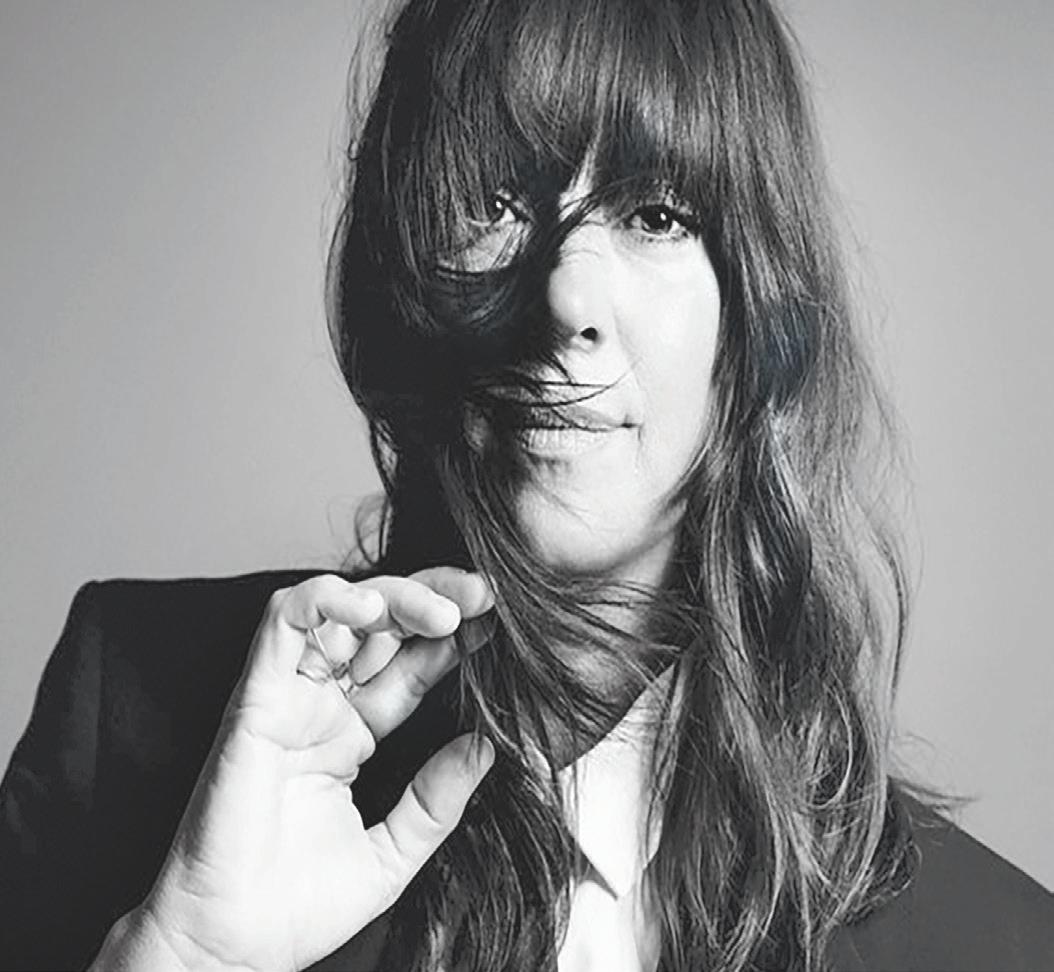
Saturday night at the State Theatre, Cat Power’s band began the show with slow guitar strums and keyboard chords synced in an entrancing rhythm, like a call to prayer. After a few beats, the legendary singer-songwriter (born Chan Marshall) floated onstage to join her band. Marshall began her 1998 song “He Turns Down,” whisper-singing in that ethereal, classic Cat Power way. She wore a black velvet dress and held a single stick of burning incense, in a manner that seemed all at once to cleanse the space and transform Marshall into the conductor of her own performance. The show that followed was joyful, strange and completely unique.
This tour is in honor of her 2018 album Wanderer, her first in six years and 10th under the Cat Power moniker. The opening band was ARSUN, an experimental folk rock band led by 20-yearold New York City native Arsun Sorrenti, son of prolific fashion photographer Mario Sorrenti. At first, I was skeptical of a band i-D claimed to be “resurrecting vintage rock,” but after seeing their performance, I am convinced. Sorrenti has a voice that evokes Lou Reed, or Crash Test Dummies’ Brad Roberts. It’s a startlingly deep and delightful drone. His warm stage presence and sense of humor complemented the band’s slew of moody songs, which included a Velvet Underground cover. Sorrenti’s earnestness in telling the crowd how to spell his band’s name (“A-R-S-U-N,”) was endearing, and their performance felt like something from a dream. I got the sense that they genuinely loved having the chance to open for an icon like Cat Power, and were grateful to the audience for being there to see them play.
From the very beginning of Cat Power’s own set, deep red lighting bathed the stage and obscured Marshall’s face. The audience — a mix of Gen Xers, professors, locals and the occasional pocket of students — seemed to wait with baited breath for the big reveal, some climactic song and a brightening of the lights. The lights never came up, and Marshall spent the show eluding the spotlight as she glided across the stage. As unorthodox as this tech decision was, it seemed intentional, perhaps meant to shift the audience’s focus away from Marshall herself and towards the sheer wonder of her voice. Whatever the motivation, it worked, and the audience seemed completely under Marshall’s spell. We stood when she asked, moved when she offered spots in the front and swayed along with her mood.
One of the show’s best moments was when Marshall paid homage to Nico, melding Nico’s version of “These Days” with Marshall’s song, “Song to Bobby.” Marshall sang: “I’ve been out walking / Don’t do too much talking these days / These days, / These days I seem to think a lot about the things that I forgot to do / Please don’t confront me with my failures / I have not forgotten them.” The song then rolled seamlessly into “Song to Bobby,” Marshall’s conversational ode to her youthful infatuation with and love for Bob Dylan.
Ultimately . . .
To continue reading this article, please visit www.cornellsun.com.
Anna Grace Lee is a senior in the College of Arts and Sciences. She can be reached at agl63@cornell.edu.
BY NICK SMITH SENIOR STAFF WRITER
The words “Cornell Cinema” may bring only vague memories of defunding-related outrage to mind but rest assured, Willard Straight Hall’s basement-ridden movie junkies are still hard at work. Although the undergraduate Student Assembly voted to fully defund the theater — a cut of nearly 40% of the Cinema’s total funding at the time — with the aid of temporary increased plans from the graduate and professional Assemblies as well as replacement funding from the College of Arts & Sciences and one sizable, anonymous individual donor, it’s business as usual for Mary Fessenden and Doug McLaren, Cornell Cinema’s Director and Cinema Manager.
Despite the new sources of funding all but matching past years’ budgets, small reductions will result in around 30 to 40 less showings spread over the entire academic year, a change that Fessenden and McLaren described as nearly unnoticeable. I had the chance to sit down with the two a few weeks ago to discuss the Cinema’s plans for the semester as well as its new All-Access Pass.
Whereas in the past you would have needed to brave Willard Straight’s deepest recesses to secure a physical flicksheet, this year Cornell Cinema’s gone paperless for the first time in its history and a full lineup of the theater’s upcoming films can be found on its updated website. Of this semester’s more ‘big-name’ offerings, A24’s Midsommar (playing this weekend, Sept. 27, 28 and 29), Toy Story 4 (next weekend, Oct. 4 and 5), The Rocky Horror Picture Show (Oct. 25 and 26) and Once Upon a Time In Hollywood (Nov. 14, 16 and 17) all stick out as immediately recognizable.
Too often in the background, however, are some of the more niche offerings the Cinema serves up, frequently with added commentary from filmmakers or professors in related fields. Sept. 28 marked the second showing of For All Mankind, a NASA documentary honoring the 50th anniversary of the moon landing. For All Mankind is a part of the Cinema’s “Cornell Alums Make Movies” series, which also includes Spider-Man: Into the Spider-Verse, for which
Christine Steinberg ’88 served as a producer, Paul Thomas Anderson’s There Will Be Blood (Nov. 7), for which Lori Balton ’81 scouted locations in Los Angeles, and The Kitchen (Nov. 15), for which writer and director Andrea Berloff ’95 will be returning to campus.
Other recurring series include “Human Flow: Stories of Global Migration,” “Japanese Cinema: A Survey” and “Recent Digital Restorations.” The latter includes Sergei Bondarchuk’s War and Peace, showing all together on Nov. 3 or showing in four parts — Chapter I, Andrei Bolkonsky (Oct. 20); Chapter II, Natasha Rostova (Oct. 27); Chapter III, The Year 1812 (Nov. 3) and Chapter IV, Pierre Bezukhov (Nov. 6), the last of which will be accompanied by an informal discussion and reception hosted by Olga Litvak, Professor of Modern European Jewish History. Additionally, the Cinema will play host to eight in-person presentations throughout the remainder of the semester, during which the audience will be able to engage directly with filmmakers. Among those special presentations will be My First Film (Oct. 10), an extraordinary multimedia performance in which Zia Anger, an Ithaca College alum, will use realtime text and interaction to demonstrate how artists relate to their audiences.
And while these more ‘out-there’ titles might seem intimidating to the average cinephile whose fondness of motion pictures starts and ends with the Marvel Cinematic Universe, Fessenden and McLaren assured me they are anything but intimidating. The Cinema’s managers wake up with purpose every morning not to cater to movie fanatics whose views are already iron-clad and well-informed, but to try and introduce more and more people to different kinds of films they’re truly passionate about.
Perhaps the biggest change instituted by the Cinema is its new All-Access Pass, which grants graduate and professional students, undergraduates and Ithaca community members, for $10, $20 and $30 respectively, entrance to all of the Cinema’s 150 regularly-priced titles. The math here works out quite favorably, as standard tickets go for $5.50 to graduate and professional students, $7.50 to undergraduates and $9.50 to everyone else. Read: if you think you’ll see
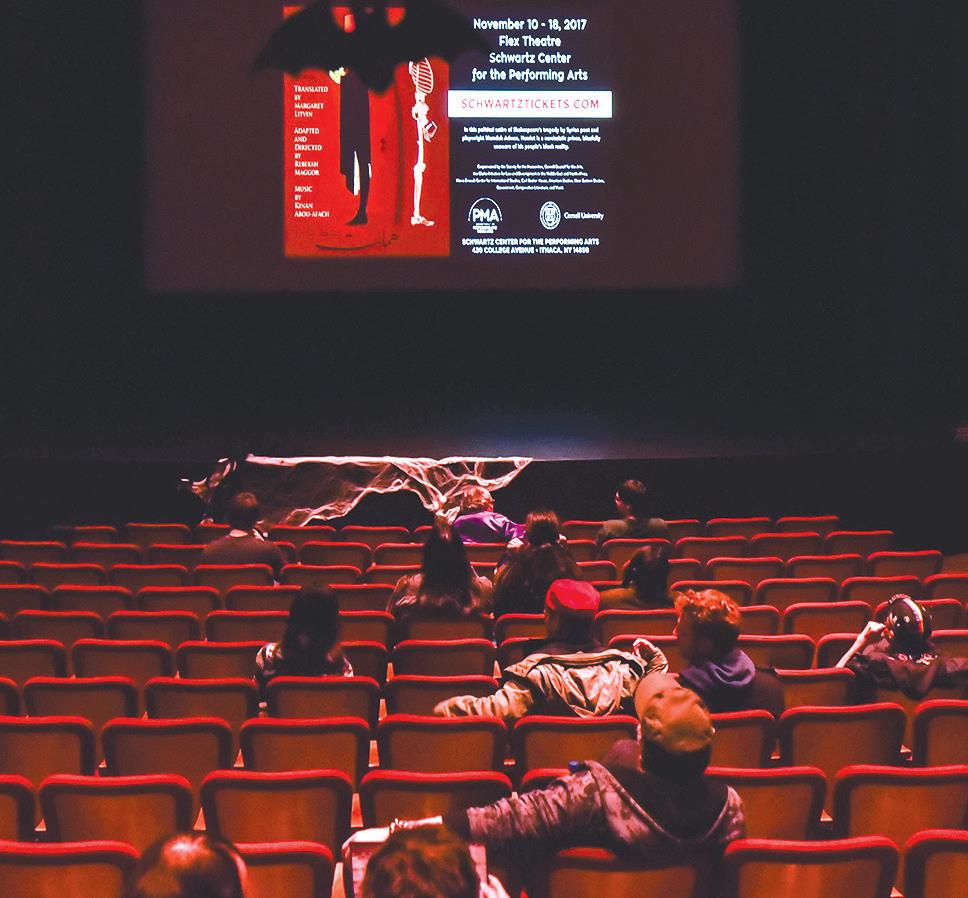
two or three movies, you might as well get the Pass. Though optional, Pass-holders can guarantee their seat in any given showing by reserving a ticket online and arriving at least 10 minutes before showtime. Exclusions to what the Pass will get you are quite minimal and will themselves be discounted for Passholders.
Cornell Cinema is rapidly approaching its 50th anniversary, something Fessenden calls “a triumph and a testament to the power of film on a college campus,” and I can’t help but finish this article with some of my own thoughts on the value of going to the movies. Not Netflix, Hulu, Prime Video, HBO or YouTube TV, but physically going to the movies.
It feels like I’ve been watching movies my whole life — I grew up with our eyes glued to a seat-back DVD player in the back row of my parent’s Honda minivan. My budding passion for film only grew when my mom first took me to the vaguely butter-scented AMC near our house.
I graduated from G to PG, then PG-13
and finally to R. Movies were achievements back then — kids with ‘cool’ parents got to see The Dark Knight in the theater.
I walked by my high school’s psychology teacher after the midnight premiere of The Force Awakens the night before the AP exam — she shook my dad’s hand and nodded in approval. Since coming to college, some of my fondest memories have been escaping from the stress of Cornell life for the friendly confines of a theater.
To be engulfed in a crowd of people whose sole focus is on one cohesive artistic expression is to do something quintessentially human in an increasingly unique way. Cornell Cinema’s been a stalwart of campus life since 1970 despite the influx of home video and streaming services because it offers an experience no at-home platform will ever be able to provide, and that’s not changing any time soon.
Nick Smith is a senior in the College of Arts and Sciences. He can be reached at nks53@ cornell.edu.
ARTS DEPARTMENT
Saturday Night Live debuted its 45th season last night to an incredibly lukewarm reception. Lots has happened since last season’s finale in May, so there was no shortage of topics for the cast to dig into. Hosted by Woody Harrelson, SNL’s season opener tackled Trump’s impeachment proceedings, the Democratic Debates and . . . the World’s Largest Cheeto? Sun contributors Nkem Obodo ’22 and Greta Gooding ’22 and Sun assistant arts editor Dan Moran ’21 are here with their unabashed thoughts on the season premiere.
Thoughts on Cold Open and Opening Monologue?
D.M.: This was like the liberal version of one of those really bad Netflix specials that’s just some former college Republican in a standup skit entitled “Triggered.” I don’t think Woody Harrelson had one funny moment in his entire monologue. The cold open was solid, but I was hoping it would reach
the highs of the Matt Damon cold open about the Kavanaugh hearing from last year, and it was nowhere close.
N.O.: The opening monologue was, in a word, painful. Though Harrelson’s intentionally offensive punchlines were in reference to Shane Gillis — a potential cast member fired for his racist and homophobic language — they were unseasoned and difficult to endure.
G.G.: That was incredibly sleepy. Even Liev Schrieber couldn’t resuscitate the lackluster writing to anything funny or meaningful.
What Did They Do Well?
G. G.: Maya Rudolph mercilessly took on Sen. Kamala Harris in a way which hadn’t been explored. I didn’t feel that many stones were left unturned. The fan on her face and the staging fit exactly within the context of Harris’s grandiose rhetoric. The skits eloquently evoked Democratic anxiety — so these are our choices . . .
N.O.: As expected, Woody Harrelson’s impression of former Vice President Joe Biden in the Impeachment Democratic Debate skit echoed the many critiques surrounding Biden’s 2020 Presidential campaign strategy. Specifically, Harrelson ends his incoherent story with the phrase, “long story short, Barack” underscoring the growing concern that Biden invokes his term with Obama when convenient.
Additionally, the skit encapsulated the bohemian spirit of author and spiritual leader Marianne Williamson, who, in the first democratic debate, assured viewers she would win the election simply by “harnessing the power of love.”
What Opportunities Did They Miss?
G.G.: The writing about Vice President Joe Biden was spot on. Woody Harrelson, not quite as much.
D.M.: The Greta Thurnberg plug at the end was so forced. It probably would have been worth
it to have one skit related to that considering how much it’s dominated the news this week. Maybe take out the Cheeto one instead?
Also, where was Pete Davidson?
The Marianne Williamson bit had the perfect setup but I thought they fumbled the joke by trying too hard.
Which cast member stood out the most or surprised you the most?
G.G.: Kate McKinnon is still flawless. She’s a shape shifter and I sometimes wish the entire show was just her.
N.O.: Kate McKinnon radiates with talent. As usual, I watched SNL enthusiastically waiting for her to appear on screen.
D.M.: Michael Che, Colin Jost and Pete Davidson all let me down. The Weekend Update is usually the most consistent part of SNL, but it was mediocre at best in this episode. There were so many good opportunities for the special guest and they picked . . . David Ortiz? Imagine how good
this section could have been if they had Greta Thurnberg as the guest here, or threw in Pete Davidson and his Resident Young Person act to talk about juuling or literally anything in Politics. Hell, maybe they could have even incorporated Billie Eilish here as a Resident Young Person. Either way, there were way too many missed opportunities from my favorite part of the show.
Favorite Sketch?
G.G.: The “Inside the Beltway Sketch” was masterful. . .
To continue reading this review, please visit www.cornellsun.com
Nkem Obodo is a sophomore in the College of Arts and Sciences. She can be reached at npo2@cornell. edu. Greta Gooding is a sophomore in the College of Arts and Sciences. She can be reached at gfg39@cornell.edu. Daniel Moran is a junior in the College of Human Ecology. He can be reached at arts@cornellsun. com.
ANU SUBRAMANIAM ’20
JOYBEER DATTA GUPTA ’21
Manager
Business
PARIS GHAZI ’21
Associate Editor
NATALIE FUNG ’20
Web Editor
ISARAH SKINNER ’21 Managing Editor
KRYSTAL YANG ’21
MEREDITH LIU ’20
Assistant
Ad Layout Krystal Yang ’21
Production Deskers Jenny Huang ’22
Mei Ou ’22
News Deskers Amanda Cronin ’21
Johnathan Stimpson ’21
Design Desker Jamie Lai ’20
Xiangyi Zhao ’22
Photography Desker Jing Jiang ’22
Arts Desker Peter Buonanno ’21 Working on Today’s Sun
Sports Desker Raphy Gendler ’21
collapsed into a chair in Libe with my third coffee of the day in hand.
It was a typical college experience: running on little to no sleep for the third night in a row, desperately trying to cling on to every single neuron as I tried to finish everything before I lost another night of sleep. As I let out a long sigh, my friend shot daggers at me with her eyes.
“What?” I asked, not entirely hiding my exasperation.
“This is the second plastic straw you used today,” she replied, angry at my apparent lack of environmentalist fervor.
I slumped further into my chair, trying not to let my eyes roll as I prepared my already numbing mind to an onslaught of shame.
recognized that talking to people about changing their minds or actions should not always be in the form of anger or accusation. Antagonizing others for acts that may have unfavorable consequences causes rifts in the narrative of activism and turns people away from any form of change. A measured conversation not only allows the other person to talk about their thoughts, but also for fruitful discussion on the subject matter without automatically turning people into defense mode.
n the first day of a higher level engineering class I took last semester, the professor, who taught the introductory course, mentioned he read our course evaluations from the previous semester. But after addressing that we had universally complained that his labs were tedious, time consuming and not conducive at all to learning and that we wanted fewer of them, he laughed and said that was too bad, because this class had even more of the same. The TAs for his previous class were never in their office hours because they would walk in at the beginning, see that no one was there and walk out. Another one of my major classes was 75 minutes long and included nothing except the professor droning on at the front of the room while writing on a piece of paper projected on the wall. All of these classes functioned on the old framework of lectures, weekly problem sets and labs. With an approximate $30,000 engineering education price tag per semester for taking about 20 credits, I spent a total of $24,000 on required classes taught by these two professors. I learned little in any of them.
The students of the College of Engineering deserve an education fitting of a world renowned University, which shouldn’t come second to the professors research. To do this, the College of Engineering needs to work to hold its professors more accountable to their students.
It seems like more training goes into teaching me how to teach — a student teaching a supplementary class — than the engineering professors.
But that’s not to say no one’s trying. There’s a growing movement spearheaded by Kathy Dimiduk hidden away in the corner of Rhodes Hall, where she is the director of a small, little-known operation called the James McCormick Family Teaching Excellence Institute. Yeah, I also had no idea it existed. In her decade at Cornell, she’s done the absolute best she can to wrangle the engineering faculty into being better teachers pretty much any way she can. If you’ve ever noticed the higher teaching quality of the newer hires, you can thank her. All incoming engineering faculty have to go through a two-day teaching seminar run by her.
It is more important to do a couple of things well than to commit to many things but perform in a
mediocre way.
“I’m sure this isn’t your first cup of coffee today, so how many straws have you used so far just today?” she asked. “It really doesn’t take that much effort to give a shit about a small action that you can take. You can literally get reusable straws anywhere, so there’s really no excuse.”
I mustered up the energy to reply but couldn’t seem to do so with the looming deadlines and lack of sleep weighing on my mind. In the end, I promised her I would buy a reusable straw and left Libe to seclude myself in another hole on campus, hopefully free from environmental judgement.
I did end up buying that straw, and I carried it with me religiously for about four months before realizing that it was nearly impossible to keep the silicone inside clean enough. I got a set of metal straws for free for home use, and still keep those with me.
This antagonizing conversation, however, shut me down completely from environmental activism on an individual level for a very long time. Even putting aside that our proactive, singular actions in a lifetime are miniscule compared to the harm that massive companies inflict on the environment in one day, I felt demonized by my friend for something that I had done in desperation to cling onto my comfort and sanity in Olin. My friend, like many sustainability spokespeople on campus, had good intentions, but the round of jabs came when I was at my most exhausted.
I care about the environment. I actively try to recycle, reduce my waste, reuse bags and a host of other things. However, through this experience, I
Burnout in advocacy is also a buried issue. I recently spoke with the dean of students Vijay Pendakur about my own burnout with advocacy on campus and beyond. He imparted onto me some important advice: it is more important to do a couple of things well than to commit to many things but perform in a mediocre way. Or, as Ron Swanson in Parks and Recreation says, “Never half-ass two things. Whole ass one thing.”
My conversation in Libe also made me realize just how difficult it is to focus on some issues. I bought a set of reusable straws the next day on Amazon without having to skip a meal. I have the time to meticulously wash this straw every day. Not everyone has the time or money to be able to support such an expense, even if someone truly wants to help the environment, one straw at a time. Even the Global Climate Strike that happened last week was not accessible to everyone. People had classes they could not miss as not all professors are forgiving of absences, some people cannot walk in the march due to accessibility reasons, and others had a host of other responsibilities. I was unable to participate because I was trying to calm myself down from a panic attack, but I still felt guilty for not being able to attend even though I was simultaneously glad that I took that time to take care of myself. It is important to remember that privilege plays a role in many aspects and activism is not immune to it.
The next time you grab a straw in Libe, think to yourself whether you can afford to buy a reusable straw. If you can, use your next distracted study break to buy one. If you can’t, don’t beat yourself up over it, and use the caffeine you’re intaking to power your brain to change the world for the better in another way.
Joanna Hua is a senior in the College of Arts and Sciences. She can be reached at jh2278@cornell.edu. Cup of Jo runs every other Friday this semester.
I teach math classes for engineering freshmen navigating their brutal introductory classes. Now in my fourth semester in the job, the messages I hear in the trainings are pretty familiar: how to fulfill the basic administrative duties of the job, how to create an inclusive environment, how to teach effectively. But this time around, it struck me that it seems like more training goes into teaching me how to teach — a student making near-minimum wage teaching a supplementary class — than the engineering professors who actually instruct the course. And that’s absolutely ridiculous.
Education research lately has focused on active learning techniques to increase comprehension.
It seems like the higher levels of the engineering school just don’t care enough about improving the quality of engineering education.
This encompasses anything from engaging students with the material with I-Clicker questions during lecture to class discussions. The world of higher education is starting to catch onto these active learning methods, but the engineering college is slow on implementation. My engineering classes almost all follow the old, tired pattern of monotoned lectures accompanied by a weekly problem set and lab with periodic exams.
The track to become an engineering professor involves years of grueling classes and research, writing papers and dissertations, but shockingly little education on how to teach effectively. This creates a staff of accomplished and intelligent researchers who can write scientific papers favorably representing the University, but fails to ensure a well-developed education for the students who they should primarily be responsible for.
Unfortunately, Dimiduk doesn’t get the same jurisdiction over senior professors. She’s actually reads every single mid-semester feedback survey we submit, which made me feel awful about what a dismal job I’ve done in the last two years filling those out. The only way she can get ahold of our senior professors who are teaching classes the same way they’ve taught them for 40 years is by making them meet her about issues in those surveys when they get low reviews. When I met with her, her main request was that I get the word out to fill out the mid-semester surveys coming out in a few weeks, and fill them out well. Come on guys, do it for Kathy. She’s really trying and it’s the least we can do for her and our tuition dollars. These give her leverage to convince the professors to change their ways and actually be engaging and help us retain information past the final.
Despite her best efforts, it seems like the higher levels of the engineering school just don’t care enough about improving the quality of engineering education. Her “department” is just her, two postdocs who devote about 10 percent of their time to the institute and an assistant. Only because of low ratings will senior faculty be held accountable — otherwise, administrators think they don’t need any supplementary training. As long as they’re churning out enough research papers or have tenure, they’re content to allow the professors to keep doing whatever they want — an unfortunate complacency for its students who are burying themselves in debt to get a “world-class” education.
Michaela Bettez is a junior in the College of Engineering. She can be reached at mlb434@cornell. edu. Bet on It runs every other Friday this semester.
WhileHollywood has in recent years swooned over space blockbusters like Interstellar and Ad Astra, it has reminded us of the dangers that befall those bold enough to make the first step into the unknown. The whole beauty of these movies is the uncomfortable vagueness to them. What made sense down here on earth is tossed out for something far more foreign — think Titanesque waves, space pirates and power surges that shake the foundation of our solar system. Watching these films is less a suspension of belief than an improvisation of law. The rules, as the characters learn, are made up for them as they go along.
The themes in these films cross my mind as I follow Andrew Yang, his very chill presidential campaign and the expensive crusade to give away as much money as possible. He’s polling anywhere from fourth to sixth for the Democratic ticket, and for the first time in a very long time, there’s a relevant Asian American candidate in our national conscience this late into the cycle.
In a race that began with enough wealthy white men to fill a VC firm, Yang’s background — a son of Taiwanese immigrants, entrepreneur and modestly wealthy in comparison to others — was an early separator. His warm explanations on his signature universal basic income stand starkly with his ominous warnings about the dangers of automation and general likeability. It’s not hard to see why he’s surged past other early contenders.
But this distinction of getting this far into the race — an achievement, really — isn’t a gift that unconditionally gives. Everything that relates to the Asian American community in a very public manner suddenly becomes a referendum on the entire population. Any incident could blaze into a phenomena. It’s what happens when a demographic, so shunted out of the national spotlight, latches onto anything, or anyone, that might speak to them. And so, we return to Andrew Yang. Yang has charted into unmarked territory with his successful campaign, and he finds himself unprepared, just like the astronauts on our movie screens, as he faces and then reconciles with a host of issues on Asian American discourse that have never been given the chance to breathe. In responding to these issues, he has been a little uneven to say the least.
He first made some questionable comments at the most recent Democratic National Debate, joking “Now I am Asian, so I know a lot of doctors” in response to a healthcare inquiry. The Asian doctor trope, which is entirely played out (thanks,
Ken Jeong), plays into the image of Asian students being studious grade churners who make up a lack of personality for scores. It’s a flat portrayal of Asian Americans in general, ignoring the diversity of the group and feeding into a self-perpetuating model minority myth that manages to clump the community into high achievers while disparaging other communities for not following their example.
It also really doesn’t help counter the stereotypes that Yang, in response to Trump’s general oafishness, has started selling hats with “I love math” and proclaiming “The opposite of Donald Trump is an Asian who likes math.”
“Asian American” is a largely pointless term. It’s an umbrella identity that somehow has
loaded implications.
He hasn’t committed any grievous misstep, but the general clumsiness of the whole scheme speaks to a shaky compass. He’s riffing on the spot, going with what he sees fit — jokes he grew up with and probably laughed at.
But griping about these prolonged quips should not be entirely directed at Yang. The cultural and social consciousness of the Asian American community has always been tempered. Political activism and defining yourself through a wider culture of the country have never been tenants of the community. The community’s motto is to keep your head down and hope for the best. And when the community has arisen — think Peter Liang, the NYPD cop who shot an unarmed black man and was jailed for his crime in 2016 — the response from them has been uncomfortable, with mass protests citing MLK quotes in defense of a cop who killed an unarmed man. There’s a lack of experience in this matter, and grappling with our social identity and relationships has produced some half-baked results, with little etiquette spared.
It also doesn’t help that the broader term “Asian American”
Canaan Delgado | No Church in the Wild
Fis confusing at best, and discriminatory at worst. No one has quite defined what it means to be Asian American. Factually, Asian Americans are a minority in this country. In reality, quite literally no one considers them to be actually that. In college admissions, Asian Americans are beset with a higher bar, but they face hurdles as well outside of that — assimilation, language, alienation from others who don’t quite understand our culture. It leaves us in a precarious spot, with no foothold or niche.
Jay Caspian Kang said it best: “Asian American” is a largely pointless term. It includes Indian Americans, Chinese Americans, Korean Americans, Vietnamese Americans, Filipino Americans, Singaporean Americans, Thai Americans, Bhutanese American and so on, with a variety of economic backgrounds and upbringings. It’s an umbrella identity that somehow has loaded implications, but lacks any coherent meaning. Somehow, someway, I’ve been almost implicitly expected to be able to relate to someone who grew up in a Japanese American or Pakistani American household, when I have a better shot connecting to someone from German American or Brazilian American household. It’s a mess — ripped out shreds of cultural fibers, spewed onto the floor with little to no logical arrangements. It’s up to us to rearrange it into something sensible.
Yang — entrepreneur, presidential nominee, social astronaut — probably isn’t going to win this election. But his arrival is a mediation between watershed moments of our community, from culturally risk-averse to something a little more daring. A few months ago, Yang warned about the recent tensions between Asia and America, and then the general insecurity of the country to the general Asian community might lead to “shooting up a bunch of Asians.” Growing up, I would have laughed if anyone said that. Instead, when I read what he said, an uneasy thought that been lurking in my head snapped into place.
“Do no harm,” my mother told me once, “and everyone will treat you well.” The rules are being rewritten, unfortunately. It’s 2019: Andrew Yang is a serious presidential candidate, I no longer recognize who I am and the astronauts of our dreams are the people who we wake up to.
William Wang is a senior in the College of Agriculture and Life Sciences. He can be reached at wwang@cornellsun.com. Willpower runs every other Friday this semester.
oreign powers implicate President Trump once again in the investigation of his domestic political adversaries. This time, all talk of Russian collusion is taking a backseat to the new situation with Ukraine.
The Washington Post released information which alluded to a whistleblower in the intelligence community. The whistleblow-
role as U.S. Vice President, threatened to withhold $1 billion in loans from Ukraine in order to get rid of the then-prosecutor general, Viktor Shokin, who was investigating Burisma Group and its owner for money laundering and potential abuses of power. Shokin was ousted in March 2016, and President Trump has apparently sat on this information since then, waiting to see if Biden would become a potential rival.
I am in favor of impeachment, but am skeptical of the process and its ability to produce the desired outcome.
er, a C.I.A officer, according to the New York Times, raised concerns over communication between President Trump and the Ukrainian President Volodymyr Zelenksy. The report has not been deemed urgent by the Intelligence Community Inspector General Michael Atkinson, which makes many left-leaning writers suspect a cover-up.
I believe that President Trump requested foreign interference against his most dynamic Democratic opponent, Joe Biden, in an attempt to destabilize his position in this upcoming election cycle.
On July 25, President Trump reached out to Zelensky to investigate allegations that could damage Biden and his son, Hunter, who is on the board for the Ukranian energy company Burisma Group. On eight separate occasions during their phone call, President Trump requested that Zelensky send any findings to Trump’s personal lawyer Rudy Giuliani. Trump also insisted that Zelensky speaks to Attorney General Willaim Barr to launch an inquiry on the prior Vice President. President Trump’s team has claimed that Biden, in his former
Over the past summer, the U.S. withheld $250 million in security and military assistance, which the Ukrainian government desperately needed. This is an important point, as it appears that the Trump administration has engaged in the exact behavior that it is accusing Biden of. After the whistleblower business was publicized, the funds were released to Ukraine.
In July 2016, President Trump called on powers such as China, Russia and other major hacker organizations to leak Hillary Clinton’s personal email account. This was not the first indication of one of President Trump’s most dangerous positions. President Trump seems to believe that anyone who disagrees with him is guilty of some imagined crime.
On May 1, 1989, Trump aided the media craze around the Central Park Five jogger rape case, which falsely convicted five male teenagers of color for sentences ranging from five to 15 years, by requesting the return of the death penalty for them. After the convictions were vacated and the real perpetrator came forward in 2002, Trump continued to deny their innocence. On Oct. 7, 2016, he restated his position on the guilt of the Central Park 5 in spite of irrefutable DNA evidence to the contrary.
In 2008, Donald Trump unsuccessfully sued Deutsche Bank for $3 billion after
their attempts to collect $40 million which he had personally guaranteed to the company. In February 2011, Trump helped launch the “birther movement,” a national campaign by some far-right proponents to discredit Obama’s educational history, to question his religious affiliation, to deny his State of Hawaii birth certificate and to accuse him of being involved in the untimely death of a Hawaiian state official.
In July, President Trump accused the chairman of the House Oversight Committee, Elijah Cummings (D-Md.) of stealing billions of dollars that could have aided Baltimore’s residents. Trump’s proposed investigation of Cummings has not been carried out yet, as it does not have any basis on existing information. The most recent known activities of Rep. Cummings had been confronting Homeland Security Secretary Kevin McAleenan over the horrible conditions of the holding facilities at the U.S.-Mexico border, and beginning investigations into White House aides over potential mishandling of official information.
What do all of these allegations say about Trump? They’re generally meaningless and are only used for self-gain.
President Trump is attempting to undermine Biden, one of the Democratic frontrunners. Speaker Nancy Pelosi (D-Calif.) has been pressured by many Democrats to impeach President Trump, which would be the ultimate consequence for his unruly meddling. I am in favor of impeachment, but am skeptical of the process and its ability to produce the desired outcome. The House of Representatives has a Democratic majority whose passionate members are largely willing to indict President Trump. However, the Senate has a Republican majority, and a significant
portion of Democrats who are determined to appear moderate to continue to receive votes and satisfy corporate interests, which will most likely acquit President Trump. Pelosi also has sought to protect vulnerable Democrats in GOP-leaning districts who could face voter backlash over impeachment, which has caused her to resist the urge for impeachment. However, as of Sept. 25, Pelosi has called for an inquiry of impeachment, stating that “[the president] is not above the law” and that “[he] needs to be held accountable.”
Many Americans wanted Trump gone before his tenure as U.S. president had started. Even before he had a chance to do anything overtly unconstitutional, President Trump’s long record of detrimental behavior made him unworthy of his office. This new issue with Ukraine will likely be covered up by a strategic reshuffling of cabinet members, firings and re-hirings in the intelligence community and new outrageous tweets by President Trump. The
The best move is to put our focus on replacing Trump in 2020, as opposed to trying to fight someone who has been doing whatever he wants for years with few consequences.
best move is to put our focus on replacing President Trump in 2020, as opposed to trying to fight someone who has been doing whatever he wants for years with few real consequences.
Canaan Delgado is a junior in the College of Engineering. He can be reached at demassa-delgado@ cornellsun.com. No Church in the Wild appears every other Tuesday this semester.
Fill in the empty cells, one number in each, so that each column, row, and region contains the numbers 1-9 exactly once. Each number in the solution therefore occurs only once in each of the three “directions,” hence the “single numbers” implied by the puzzle’s name. (Rules from wikipedia.org/wiki/ Sudoku)
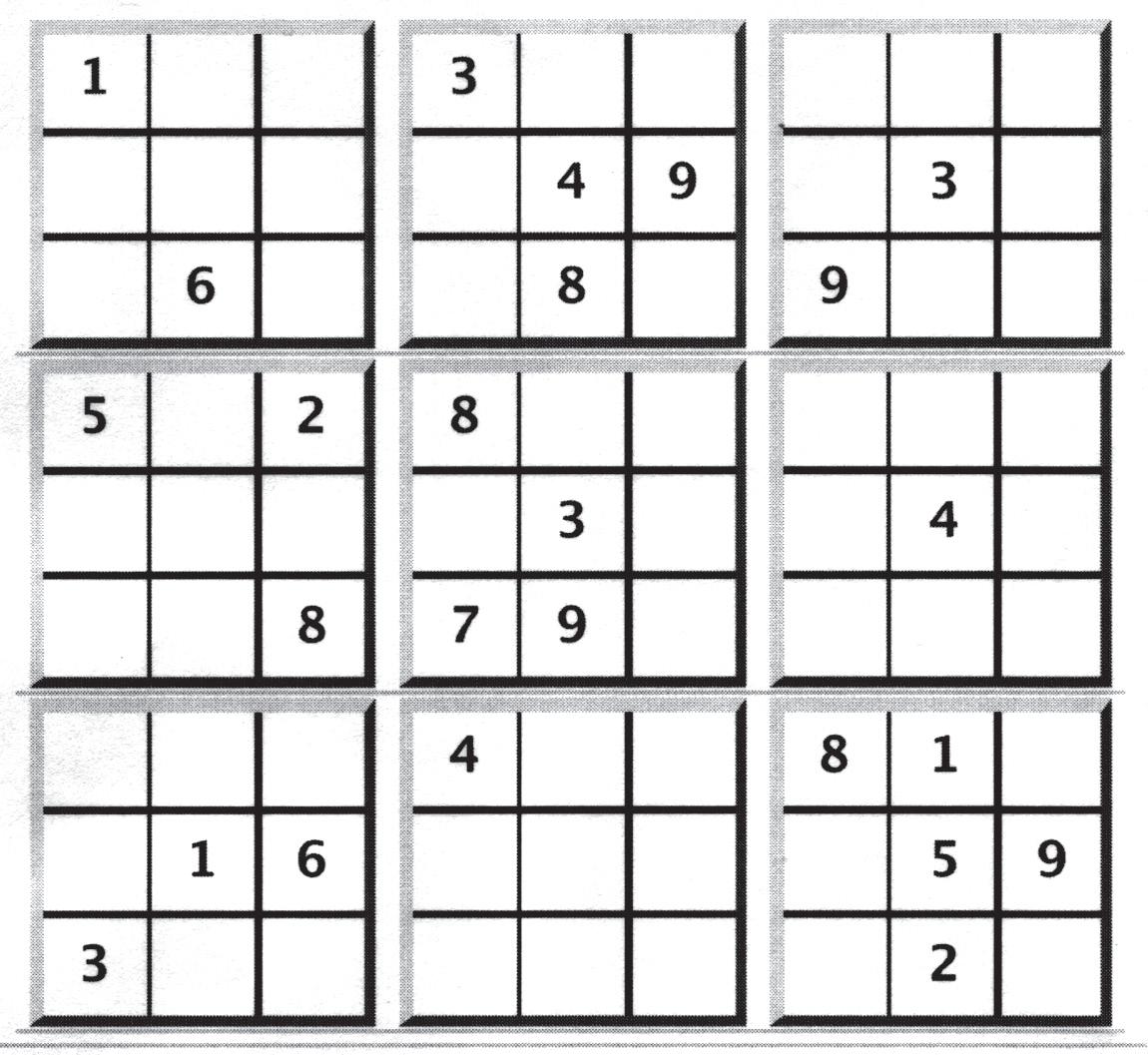
by Alicia Wang ’21
“We’ll
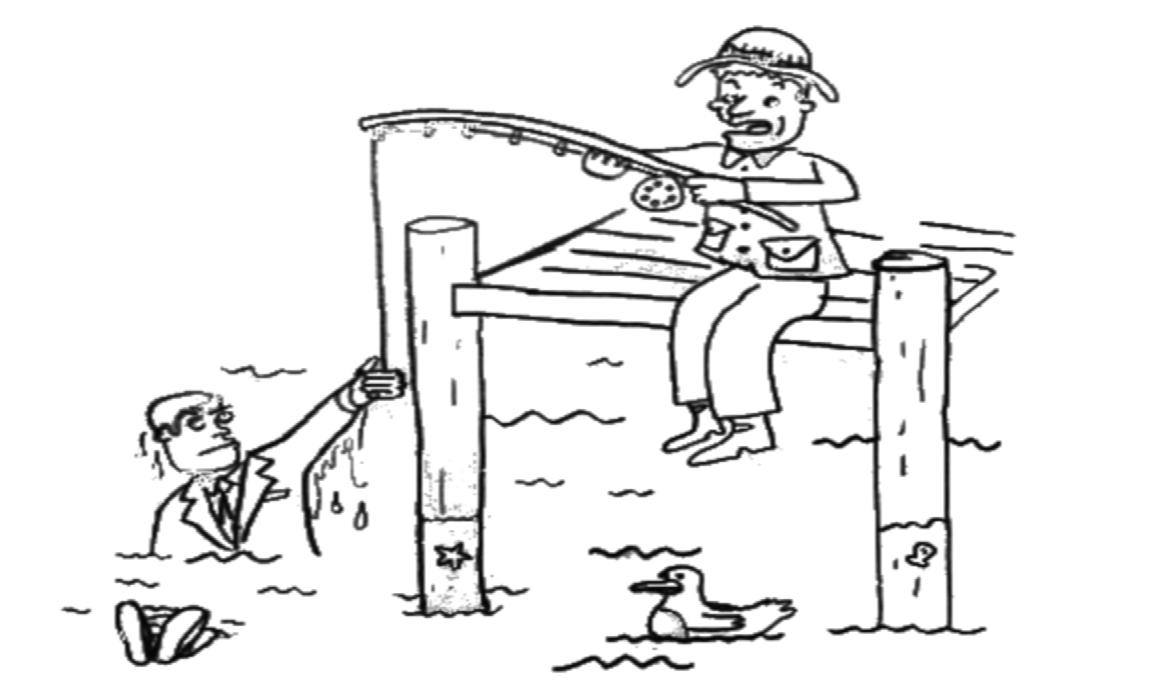
never get that sunken treasure if you keep coming up for air.” —Anthony Notaroberta Jr. ’19
To submit your caption for this week’s contest, visit sunspots.cornellsun.com.



Houses,
YALE Continued from page 12
League is going to be a knockdown, drag out fight every week, every opponent, every game,” Archer said.
We
collegetownterraceithaca.com office@ithacastudentapartments.com (607) 277-1234

The second half started with a missed opportunity for Cornell. A negative play, penalty and sack turned a potential scoring drive into a missed 45-yard field goal.
But the Red wasted no time on its next drive. Kenney took advantage of a breakdown in Yale’s coverage, finding Harrell for the running back’s first career touchdown. Harrell caught the pass and sprinted down the sideline, tiptoeing his way into the endzone to give the Red its first lead of the day.
Cornell’s next series also only lasted one play. Only this time, it was a player in a navy blue jersey trotting into the end zone. Kenney misfired on a screen pass and Thomas quickly tied the game at 10.
In the fourth quarter, Yale flexed its offensive muscles and Kenney and co. fell apart. Kenney’s second interception (again to Thomas) set up the Bulldogs with excellent field position, but a mistake by Rawlings — and a nice interception by junior cornerback Kenan Clarke — gave Cornell
the ball back and kept the Red in the game.
Kenney’s next throw sailed over the head of an open senior tight end John Fitzgerald. Then a deep ball on third down was intercepted, giving Yale the ball leading by a touchdown midway through the final quarter. A long drive resulting in a field goal seemingly put the game out of reach for Cornell. Harrell’s second touchdown of the day briefly made things interesting, but the blocked PAT and onside kick returned for a touchdown slammed the door on Cornell’s hopes at achieving a road upset.
“[Kenney will] be the first one to tell you he wishes he could have some of those plays back,” Archer said, adding that “Richie managed the game and gave us a chance to win at the end.”
Coles again led the way for the Cornell offense, rushing 17 times for 141 yards, tying a career high. Runs of 17 and 33 yards before halftime helped set up Patla’s field goal.
After splitting a pair of road contests to start the season, Cornell returns to Schoellkopf Field next weekend for its Homecoming game against Georgetown.
Raphy Gendler can be reached at rgendler@cornellsun.com.
SOCCER
Continued from page 12
who successfully scored. Tomar scored in the 65th minute off a give-and-go in the Red’s box. A quick fifteen minutes later, Temares added another goal for Columbia, widening the gap for a potential Cornell comeback.
Looking into the rest of the Red’s Ivy Season, Hornibrook was optimistic — “we have great soccer players on this team,” he said. But to improve performance for the rest of the season, Hornibrook will look to build the team to its maximum fitness.
“When you run out of strength, you lose your confidence,” he explained. “We need more conditioning to play as well in the second half as we do in the first.”
Collegetown
Hornibrook believes that w orking on the team’s strength and conditioning will produce the stamina and consistency the Red needs to win future games. The Red will have a chance to test that theory this coming Saturday, when the team will travel to Philadelphia to face the University of Pennsylvania.
Emily Dawson can be reached at etd28@cornell.edu. www.cornellsun.com

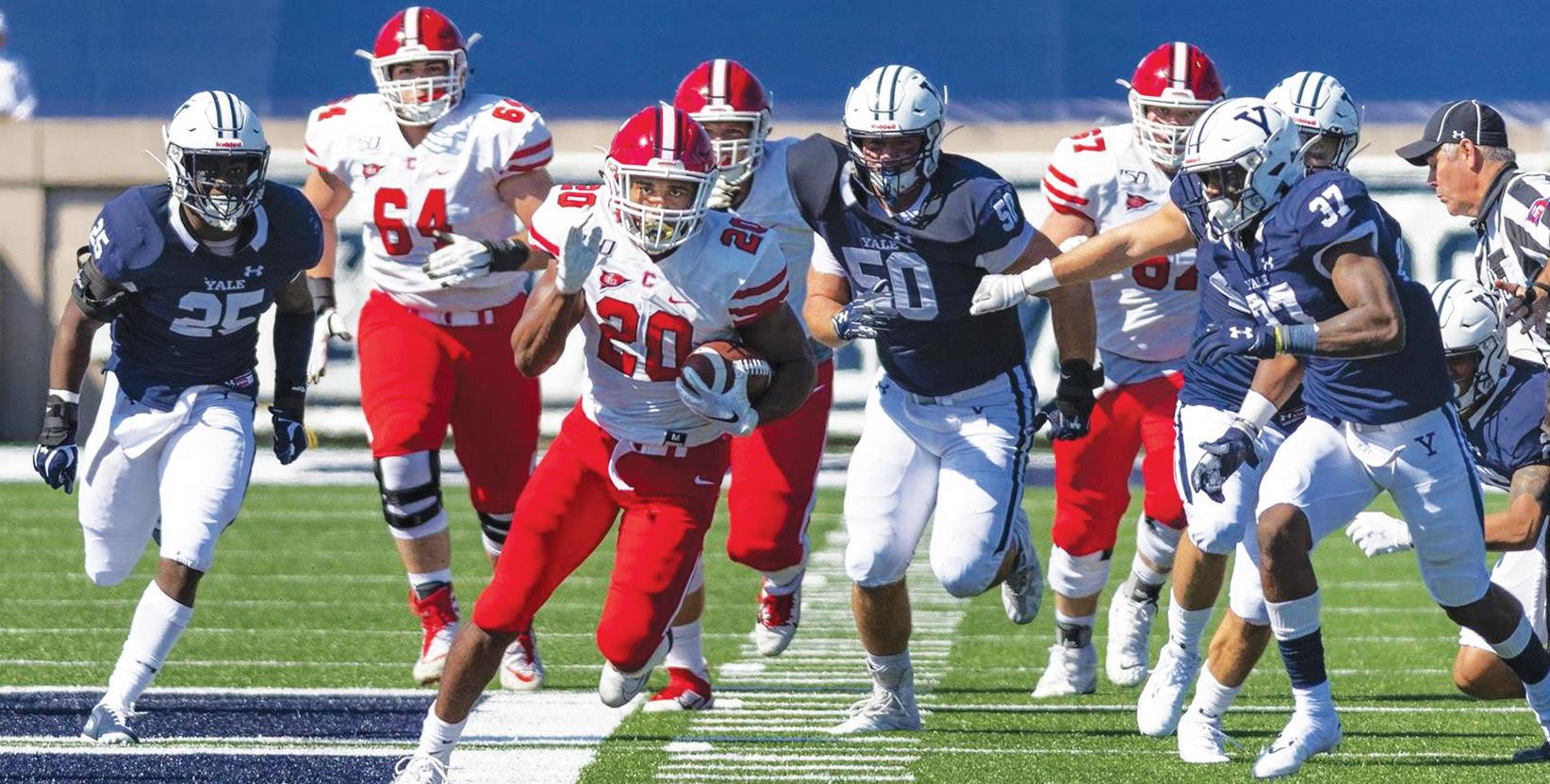
By RAPHY GENDLER Sun Sports Editor
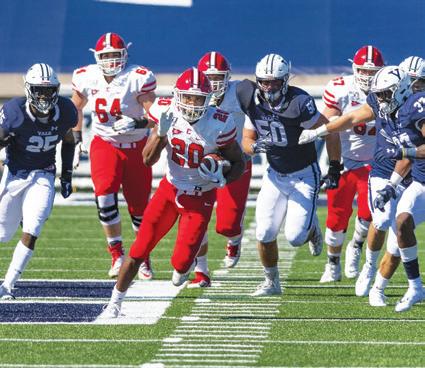
Cornell’s defense turned in a strong first half performance and the Red entered halftime tied 3-3 with Ivy League preseason favorite Yale in New Haven on Saturday. But junior Richie Kenney — who threw four second-half interceptions in his first career start — and the Cornell offense couldn’t keep up, and the Red suffered a 27-16 loss to the Bulldogs.
“We thought we were going to be able to deliver the knockout punch and we just couldn’t.”
Head Coach David Archer
“We thought we were going to be able to deliver the knockout punch and we just couldn’t,” head coach David Archer ’05 said of his offense.
An 89-yard touchdown pass from Kenney to sophomore running back Delonte Harrell gave Cornell (1-1, 0-1 Ivy) a 10-3 lead in the third quarter. But on the Red’s next drive, Kenney overthrew senior running back Harold Coles,
resulting in a pick-six for Yale’s Rodney Thomas II.
After splitting a pair of road contests to start the season, Cornell returns to Schoellkopf Field next weekend for its Homecoming game against Georgetown.
Yale (2-0, 1-0) later scored on a touchdown pass from Kurt Rawlings to Mason Tipton, and the Cornell offense — which was without senior quarterback Mike Catanese, who missed the game with an injury — couldn’t put up any more points until the game’s final minutes.
Kenney finished the game 14-of-28 for 210 yards and two touchdowns to go along with the four picks. He had just five completions go for 10 yards or more.
Catanese was hampered by cramps late in last week’s 21-7 win at Marist, but Archer suggested that he’d be good to go for Saturday’s contest. The team announced on Twitter before the game that the signal-caller — who has been hampered by injuries for a while and missed the last six games of last season — would be unavailable. Archer said he knew on Thursday that Catanese would be unavailable.
Kenney found Harrell for a 20-yard touchdown with 1:55 to play. The extra point attempt was blocked, and the ensuing onside kick bounced right to Yale’s JP Shohfi, who easily ran it back for a touchdown, quickly erasing Cornell’s comeback bid and inflating the final score margin.
To start the contest, Cornell’s defense picked up where it left off last week, denying the high-powered Bulldog offense
By EMILY DAWSON Sun Contributor
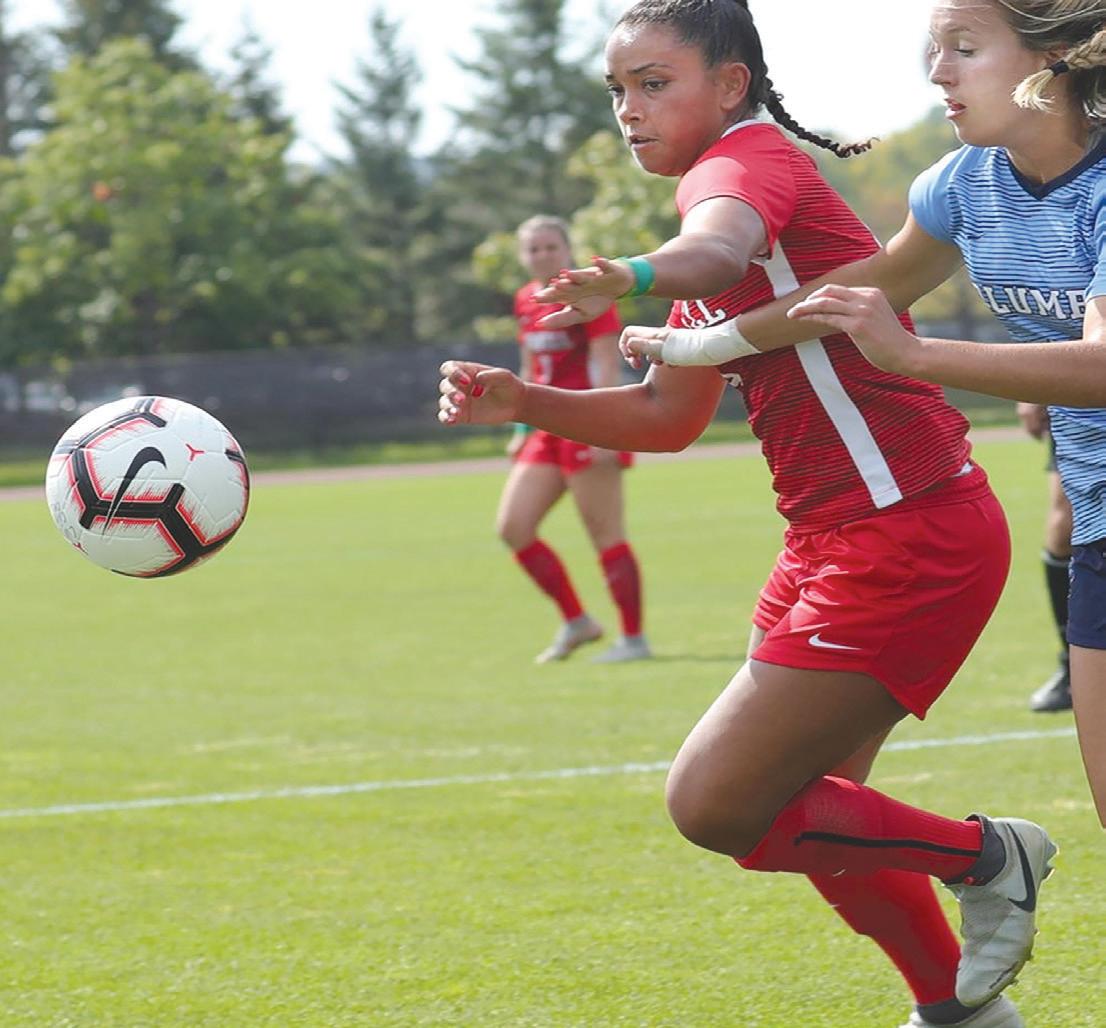
As the sun beat down on Saturday, the Red took to their home turf Berman Field to face the Columbia Lions in the first match of the Ivy season. Despite a strong first half, the Red was unable to fend off Columbia, losing the game 2-0.
After the game, Coach Dwight Hornibrook said his team “played a great half” — but “we need to play the second as well as the first.”
Cornell headed into the game with 4-2-1 overall, evenly matched to Columbia’s 4-2-1. The first half of the game reflected that evenness: Both teams played aggressively, resulting in no points on the board.
Senior Chrissy Mayer was in goal and made six saves in the second half, skilfully sending the ball back out when Columbia put pressure on the Red.
“I was ready for the pressure,” Mayer said. “Ivy
games are always at a high level.”
Mayer’s athleticism was on full display as she jumped to tip the ball over the top of the bar during an attempt on goal.
“It was a good one,” Mayor recalled, “but I couldn’t think about it too hard because it resulted in a corner kick and I needed to be ready for that.”
And in the final few minutes of the half, the Red had regular control of the ball and played mostly on Columbia’s side of the field, giving Cornell more possession time.
Senior forward Kennedy Yearby put forth two shots, one in each half. Sophomore forward Victoria Bubrick and sophomore midfielder Evanthia Spyredes both made shots on goal, but neither made it into the net.
Ultimately it was Columbia sophomore forward Mallaika Tomar and senior midfielder Maddie Temares
on the goal line. After Yale’s opening drive ate up more than six minutes, the Red stuffed running back Zane Dudek on fourth-and-goal, keeping the game scoreless.
“People are going to say ‘holy crap these guys are tough to run the ball against in short yardage,’” Archer said of his defensive front. “That’s true because they are.”
Later in the opening quarter, a 36-yard connection from Rawlings to receiver Reed Klubnik had Yale again knocking on the door. But this time the Bulldogs opted for a field goal and a 3-0 lead.
The teams exchanged punts until late in the half, when junior kicker Garrett Patla converted on a chip-shot field goal to tie the game at 3. Patla handled the kicking duties while senior Nickolas Null — still dealing with a quad injury — served as Cornell’s punter.
Archer said that Null’s quad injury prevented him from kicking off and trying field goals, but that he felt healthy enough to punt.
While Rawlings’ athleticism helped him avoid a sack and find his man to give the Bulldogs the lead, Cornell’s defense impressively slowed Rawlings, Dudek, Klubnik and the star-studded Yale offense. After two weeks, it seems that Cornell’s defense is legit.
“If this is any indication it certainly seems that the Ivy
See YALE page 11