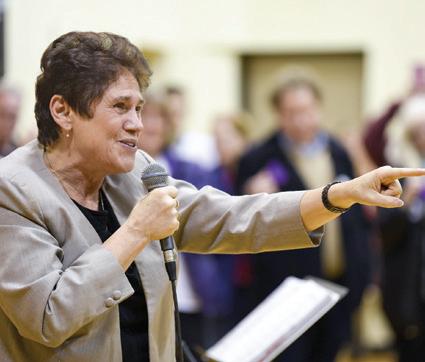
J.D. ’95, currently vying for New York’s 23rd District.
Largest single-day increase since March Pollack: 100 cases will not shut down
By MEGHANA SRIVASTAVA and SEAN O’CONNELL
Tompkins County Health Department announced 25 new cases on Wednesday night, 14 of which are associated with a previously-identified Cornell-related cluster.
The cluster, which was first reported last Friday, began with nine identified cases, and then grew by an additional 12 to 21, the health department said on Tuesday. With today’s 14 additional cases, the cluster has grown to a total of 35 — accounting for the vast majority of Cornell’s 42 new cases reported in the past week.
Four of the new cases are students from Tompkins Cortland Community College — which announced that it would go remote on Thursday and Friday to allow for contact tracing — while the remaining cases are local residents.
The health department attributed the sharp increase to “multiple small gatherings where social distancing and mask-wearing were not adhered to.” Specific locations or the size of the gatherings were not disclosed.
The health department reiterated that even in small gatherings, individuals must adhere to mask wearing and social distancing procedures.
“A small number of people have had a large negative impact on our community and their peers. This is not the way any of us hoped to start the semester, but it is the reality we are living,” wrote TCHD Public Health Director Frank Kruppa in a press release.
The first Cornell cluster prompted a stern email from Vice President of Student and Campus Life Ryan Lombardi on Sunday, who similarly urged students that “now is not the
By ALEX HALE Sun News Editor
On a day when Tompkins County’s new COVID-19 cases spiked to their highest point since the pandemic began, President Martha E. Pollack said that the number of positives needed for Cornell to halt in-person operations is getting smaller.
“A small number of people have had a large negative impact on our community and their peers.”
TCHD Public Health Director Frank Kruppa
time to test boundaries.” According to Lombardi, some students were placed on temporary suspension for violating Cornell’s Behavioral Compact, which places strict limits on the size of gatherings and mandates the use of face coverings.
The previous largest single-day increase in Tompkins County cases was on March 27, when 16 new cases were announced. The county currently has 57 active COVID-19 cases — also the highest recorded number since the start of the pandemic.
Meghana Srivastava can be reached at msrivastava@cornellsun.com.
In an email sent to the Cornell community on Wednesday night, Pollack explained the implications of Gov. Andrew Cuomo’s (D-N.Y.) order requiring colleges with more than 100 new cases reported in a single week to temporarily halt in-person instruction.
Just hours later, the Tompkins County Department of Health announced that 18 more Cornell students had tested positive for the virus, bringing the lastweek total to 42 cases.
The sharp uptick comes just as the University is set to roll out its surveillance testing today, an ambitious program that will dramatically increase the pace and scope of coronavirus monitoring. As Cornell inches closer to the threshold under which students would have to go online, Pollack cautioned that the increased testing means staying under 100 new weekly cases will become even more challenging.
“Staying below the new limit will be extremely difficult, and make no mistake: there is no guarantee of success,” the President wrote, striking a pessimistic note on the odds the University
semester
will be able to meet New York State’s new rules.
“We’re testing so many people, with the very goal of identifying all of the cases of the virus — even in asymptomatic people,” further explained Vice President for University Relations Joel Malina at a Wednesday Ithaca Common Council meeting. “So, with that approach we are going to have a higher number of cases than if we hadn’t done that. It means more than likely we will reach this threshold.”
If Cornell’s COVID-19 cases reach more than triple digits in a single week, campus life will have to become more socially-distant than it already is. It would not, however, end Cornell’s attempt to have an on-campus semester or fully shut operations down, according to President Martha E. Pollack.
Instead, in-person activities would have to be cut down even more for a period of 14 days.
“For a two-week period, all teaching moves online, dining halls move to take-out meals only and a variety of other campus activities are reduced or suspended,” Pollack wrote.
Students would not have to quarantine in their residences in this scenario, either. The president said that only those “who are in quarantine for cause” — meaning they have tested positive or were connected to someone who did — would have to isolate during this period.
Cuomo’s order came just days after Provost Michael Kotlikoff announced Cornell’s self-imposed guidelines, which suggested that the University could experience around 250 new weekly cases before being forced to reconsider its current plans.
Alex Hale can be reached at ahale@cornellsun.com.
TCHD Reports 25 COVID-19 Cases on Wednesday Missing Financial Aid Still Looms Over Students
By FAITH FISHER and TAMARA KAMIS Sun Staff Writers
Students crisscrossed the Arts Quad and logged into Zoom meetings as the fall semester kicked off on Wednesday — but for some students, the question of how they will pay for the upcoming semester still remains unresolved.
As classes begin, many students have said that they still don’t have financial aid, raising concerns about whether they will have the help they need to pay tuition and avoid being put on financial hold. The deadline for the first tuition payment is Sept. 7, less than five days away.
“I have not yet received my
2020-21 financial aid offer. When can I expect it?” is on the Financial Matters FAQ list for Cornell, indicating that financial aid delays may be a widespread concern. The administration has not yet explained the slowdown, which has compromised some students’ ability to pay tuition for the upcoming semester. After multiple phone calls and an email, Cornell Media Relations referred the Sun to the Financial Matters FAQs. Notably, these financial aid delays are not normal — in previous years, many students reported receiving their financial aid offers for the fall semester during the previous spring semester. And those delays can prove to
be costly. Students unable to pay for tuition may have to deal with a hold on class registration, according to a financial responsibility agreement signed before enrollment, as well as difficulties dealing with the costs of living in Ithaca.
Tomás Reuning ’21, one of the students who has not yet received his financial aid, says the delay could jeopardize his ability to pay rent. Reuning said he has not been given a reason for the delay.
Some students initially received insufficient financial aid packages, like Olubunmi Osias ’21, who was not told what had caused the error. Her aid was subsequently increased to reflect her role as a West Campus residential advisor by not requiring work study or
student contribution.
Nick Cicero ’21 just got his financial aid package resolved on Sept. 2. Although he is relieved to have received his aid before the billing deadline, the process was piecemeal, time-consuming and frustrating.
He first received the information that he had documents missing from his application in mid-August. According to Cicero, he called the office every day for a week to get questions answered and struggled to get clear information in a reasonable timeframe.
“There were some days where they would answer right away, and somewhere I would be on hold for over an hour,” Cicero said. “They wouldn’t give me an exact date as
to when I would have a decision. I just said, ‘how am I supposed to pay my tuition by Sept. 7 if I don’t have my financial aid by then?’” Cicero finally got his financial aid on the first day of classes, just five days before his bill is due. According to Cicero, he would often provide the office with additional documentation only to be told the office required even more paperwork from him.
“It was frustrating that they couldn’t just tell me all at once what was missing. If they had told me at first everything I was missing, I wouldn’t have just gotten my decision today,” Cicero said.
Faith Fisher can be reached at fsher@cornellsun.com.
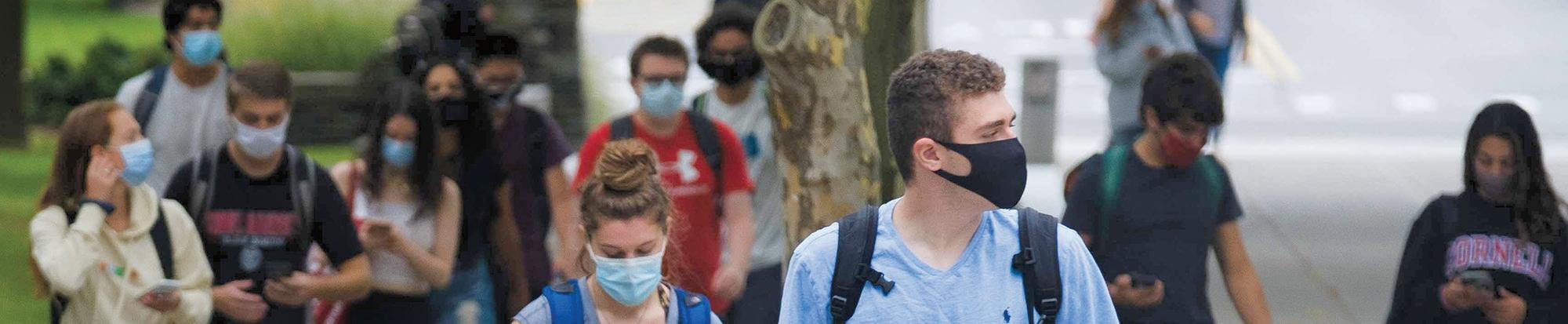
Homecoming | Students don masks on Ho Plaza on the first day of classes.
She calls her opponent ‘racist’; he calls her a ‘radical’: catching up with Tracy Mitrano J.D. ’95
By AMANDA H. CRONIN Sun Senior Editor
Tracy Mitrano J.D. ’95 drives a Jeep Wrangler, owns a gun and has accused her opponent of racism — she’s running for Congress against Rep. Tom Reed (R-N.Y.) in a district tinted red.
If her name sounds familiar, it’s because she’s done this before. This is Mitrano’s second bid for New York’s 23rd Congressional District, after she lost by nine points in 2018. This time, she’s feeling better about her chances.
Her opponent, four-term congressman Reed frequently calls her a “radical liberal.” (He had previously dubbed her an “Extreme Ithaca Liberal,” but pledged to drop that tag for this campaign cycle.) Mitrano disputes this label. She distinguishes herself from the more progressive members of her party by pointing to her policy positions on healthcare and gun control.
In the 2020 Democratic Primary, Mitrano said her favorite candidate was Sen. Amy Klobuchar (D-Minn.). Mitrano admired her ability to “get things done” and “appeal to people in both parties,” something she hopes to do in the House if elected.
Contrary to the party’s banner-carrying progressives, Mitrano stops short of fully supporting Medicare for All and strict federal gun control legislation.
“I support the ideas behind Medicare for All, but not the plan itself,” she said. She values that Americans have access to afford able and reliable healthcare, but isn’t con vinced that Medicare for All is the means by which Congress could achieve that goal.
law enforcement,” she said. “To pit those two things against each other. That’s racist.”
The agriculture industry, which employs thousands of people in the district, is another. In her opinion, Reed “has been on the wrong side of farmers every single time.”
Dairy is the number one most profitable agricultural industry in New York State. In recent years, dairy farms in the district have taken a nosedive. “The dairy industry has been vanquished,” Mitrano said. She mentioned the recent uptick in suicides among dairy farmers, one of them she knew through a
Pandemic pushes Rep. Tom Reed’s caucus to
By ALEC GIUFURTA Sun Senior Editor
Rep. Tom Reed (R-N.Y.) is campaigning by doing: As the pandemic rages on, he’s prioritizing his day job. As co-chair of a House bipartisan group, the crisis is top of mind, especially as stimulus package negotiations have stalled.
In a late August interview with The Sun, Reed shared his vision for New York’s 23rd District, which includes Tompkins County, and his plans to move the legislative machine
objections were the removal of qualified immunity and a proposed amendment to Title 18, Section 242 of the federal code that would lower the threshold required to convict law enforcement officers of misconduct. Reed, however, said that he supports the other provisions in the bill.
“There’s a tremendous amount of agreement on things like going after bad actors in law enforcement with a database,” he said. “Also making sure that our law enforcement, from a carrot perspective, has the resources like body cameras.”
She pointed to the failed presidential campaigns of Sens. Bernie Sanders (D-Vt.) and Elizabeth Warren (D-Mass.) as a signal that popular support for more progressive policies is not wide-spread among Americans, let alone N.Y.-23 voters.
“I am for the goals of affordability, availability, and efficiency,” Mitrano said.
The former Cornell professor supports reforms like increasing teachers’ wages and interest-free loans for college students struggling to pay tuition, but won’t go as far as supporting tuition-free college. She identified the central problem as interest rates on loans, and proposes a reduction on those rates to help students avoid debt.
“We also need to address the predatory nature of for-profit higher education,” Mitrano said. “If we do that, and address the interest rates, we can begin to reset the compass for colleges and university costs.”
Mitrano’s own campaign manager has a background in education. Paula Younger recently left her post as Executive Director of Government and Community relations at Ithaca College to help run the show. The Mitrano campaign hired Younger mere days after the death of George Floyd, and the surge in Black Lives Matter protests that followed.
Mitrano supports the Justice in Policing Act, which bans chokeholds, requires police misconduct investigations and supports community-based safety programs. She counts herself as a longtime supporter of the BLM movement, referencing a Higher Ed Insider blog post she authored in 2015 on police brutality.
Racial justice is one area where Mitrano said she will act more decisively than Reed.
Mitrano claimed Reed attempts to “pit people who want justice and appropriate law enforcement, working with not against communities, with [people who] support
with farming families across the district, Mitrano identified the key problems as a limited migrant workforce, increased trade tariffs, lack of aid amid the coronavirus pandemic and a shrinking market for milk. Mitrano wants to use her power in Congress to address these key problems.
Looking ahead to November, Mitrano’s campaign is encouraging all her supporters to vote “in whatever way is most comfortable.” She is urging Gov. Andrew Cuomo (D-N.Y.) to again allow people to vote via absentee ballot without requiring a reason on the application, as was the case in the June Democratic primary.
Amanda H. Cronin can be reached at acronin@cornellsun.com.
with the House Problem Solvers Caucus, which he co-founded in 2017.
The caucus, a bipartisan group of 50 representatives, aims to forge common ground in legislation and forgo the otherwise “out of control” partisanship that has enveloped Washington, Reed and the group’s other co-founder, Rep. Josh Gottheimer (D-N.J.) wrote at the time.
In Congress, 2020’s historic reckoning on racial injustice in America came with The George Floyd Justice in Policing Act. Reed noted that the Problem Solvers caucus is “neck deep” in current negotiations for the legislation — which passed the House, but was met with opposition in the Republican-controlled Senate.
Reed voted against the bill. His two
Reed, who stands in his support for President Donald Trump’s agenda — he co-chairs the president’s New York reelection committee — broke with the president once this summer on an issue that gained somewhat of a cult following: support for the United States Postal Service, which has faced billions in losses in the pandemic.
“[The President] wanted us to vote no,” Reed said, referencing the Delivering for America Act, which would bar the agency from making service changes and set standards for the processing of election mail. “I said look, I disagree. I think we should support them and send the message that we’re going to support the postal service through this election.”
And although Reed acknowledged that the bill is likely dead on arrival in the Senate, he’s “pretty confident” the COVID-19 stimulus package will include funds for the embattled agency.
But with that second stimulus package, Reed said negotiations remain stalled, despite spending hours with White House Chief of Staff Mark Meadows, House Speaker Nancy Pelosi (D-Calif.) and Senate Minority Leader Chuck Schumer (D-N.Y.), in attempts to move the needle.
“The two sides aren’t even talking to each other, officially,” Reed said. “A lot of politics has overtaken where the two sides are at because the election is getting closer each and every day.”
And for reelection, Reed’s legislative activities are in the spotlight. He acknowledged the campaign has taken a “secondary role” because of the pandemic. The nonpartisan Cook Political Report rated New York’s 23rd Congressional District as “Solid Republican” for 2020.
Alec Giufurta can be reached at agiufurta@cornellsun.com.
TRACY MITRANO J.D. ’95
REP. TOM REED (R-N.Y.)
Your source for good food
Quarantine With Cornell Dining? Te Consensus Seems Clear: Boring
By GRACE KIM Sun Contributor
When stuck inside with nowhere else to go, food may be the only exciting part to a student’s day. The rush of dopamine and their taste buds return to life when eating vibrant, tasty food can motivate a student to push through another day of quarantine. One opening of the lunchbox could reveal a variety of cuisines ranging from pasta to tofu scramble … at least that’s what students hoped for when picking up their Cornell Dining meals, provided three times a day by the University during students’ mandatory 14-day quarantine upon reaching campus. Instead, one word described the quarantine meals given to students: Repetitive.
The majority of students I spoke with wished there could have been a greater variety.
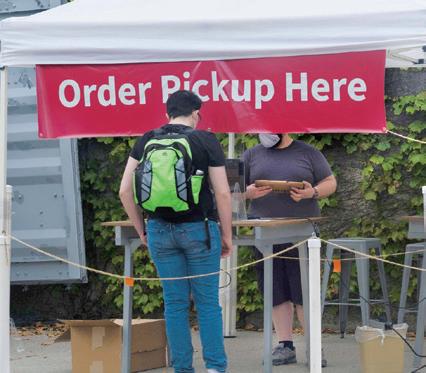
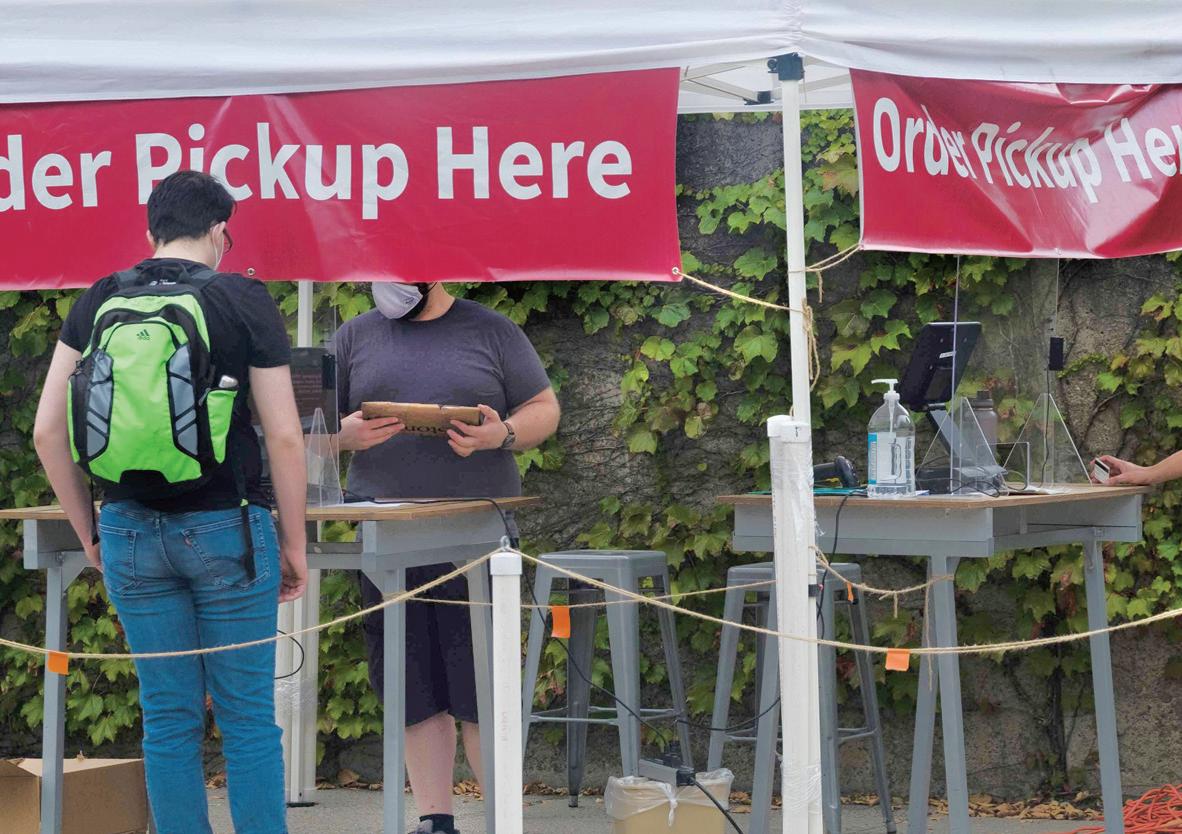
As students began to move in on Aug. 17 to begin their 14-day quarantine on campus, they were provided with three free meals each day and were expected to pick them up at the Cornell Dining tents in front of Keaton and Court-Kay-Bauer. Each morning, students were seen carrying their reusable Big Red Bag to pick up meals, which came in cardboard boxes and a plastic bag filled with a variety of snacks such as yogurt, chips and fruit cups.
On the first day of meal pick-up, a student with dietary
restrictions said she was initially impressed with how much food she received: “There were a lot of snacks, and I think they were the best parts because you could space those throughout the day.” However, as the days passed, she noticed the meals were becoming repetitive. Some days, she would even receive the same sandwiches or wraps for consecutive meals. Due to her dietary restrictions, she ended up receiving one falafel wrap after another with the occasional sandwich in between. With extra food piling up, she said that she had no choice but to resort to the snacks or order delivery once in a while. “I typically wouldn’t eat the full meal, so I would save things I liked a little bit more and put them in the fridge.” Currently, she has a bag of apples and Lays chips ready to be eaten or given away. Along with the recurring menu, students also noticed that some sandwiches and fruit cups in their meal boxes were past the expiration date. “I got watermelon one time, and I thought it tasted funny only to realize that it had expired,” one student said. “I’ve had a couple of other items that were past their expiration date too.”
When looking back at the 14-days worth of quarantine meals, the majority of students I spoke with wished there could have been a greater variety of sandwiches and wraps and even
some hot meals in between. “I was definitely disappointed, but I also know I was very fortunate to be provided with this much food for free,” another student said.
“I’m grateful for everything they’ve given us, but I wish there were more options.”
Cornell Dining hopes to maintain both student and staff health along with high quality meals.
Students not under quarantine were able to access the recently opened dining halls
under new restrictions and guidelines. According to Cornell Dining’s website, students are now required to RSVP via OpenTable for dine-in and takeout orders to prevent a cluster of students from forming.
Furthermore, Cornell Dining has implemented a new contactless pay system where students will use the GET app for meal swipes
and BRBs instead of the usual Cornell ID card swiping. To skip the line, students can use the GET order app to place an online order and get their meal directly from the pick-up station.
With strict guidelines such as disinfecting surfaces every 15 minutes and self-service stations under place, Cornell Dining hopes to maintain both student and staff health along with high quality meals as the fall semester begins.
Grace Kim is a freshman in Cornell School of Hotel Administration. She can be reached at gmk73@cornell.edu.
Pick-up place | Students can pick up their Cornell Dining quarantine meals at tents similar to this one in front of Keeton and Court-Kay-Bauer Hall.
MICHAEL SUGUITAN / SUN STAFF PHOTOGRAPHER
ARTS & ENTERTAINMENT
An Interview With Bad Religion Frontman And Evolutionist Greg Grafn Ph.D. ’03
By ASHLEY RAMYNKE Sun Contributor
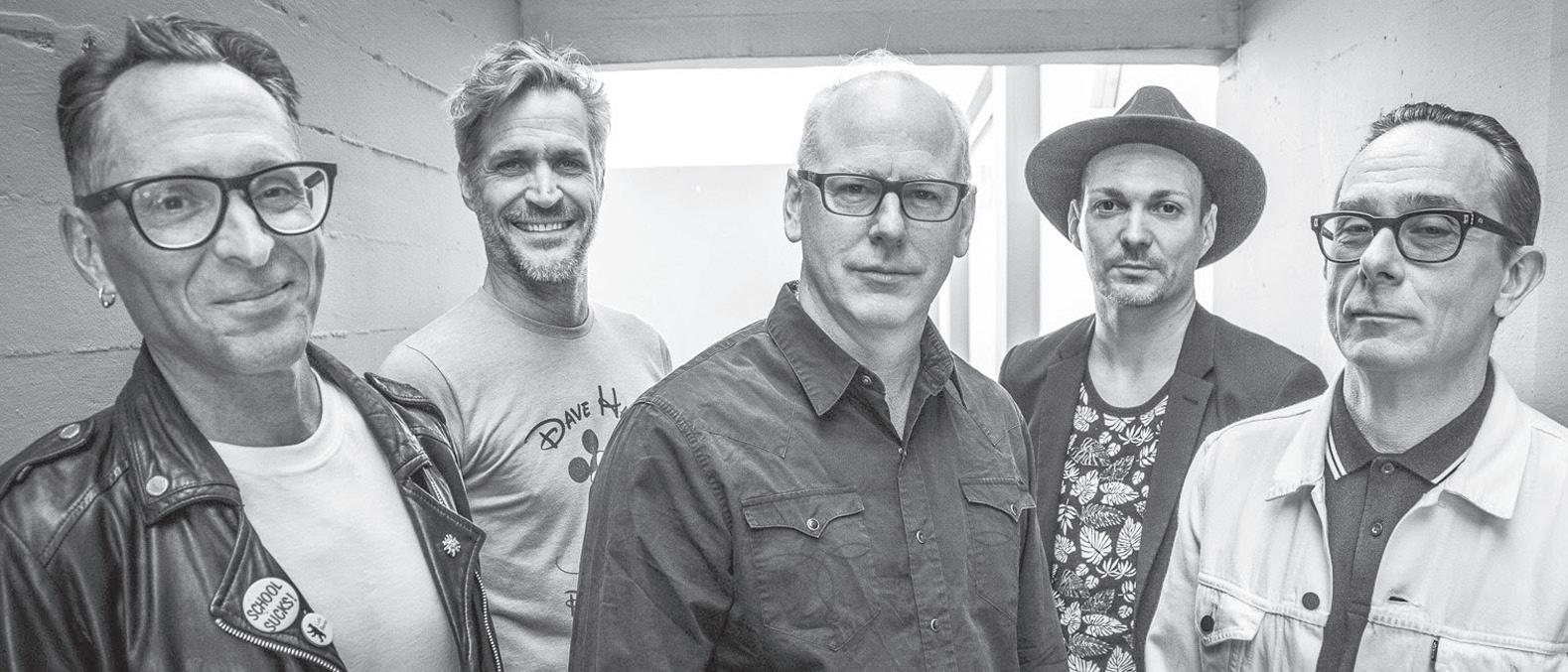
In a San Fernando Valley garage situated north of the decrepit glamour and clubs that composed Hollywood, hardcore punk band Bad Religion set the stage for their next 40 years together. By amalgamating their interests in science and literature with unequivocal sonic riffs and support from the Adolescents and the Circle Jerks, the band has become one of the most pivotal acts in the genre’s history. At the forefront of Bad Religion is Wisconsin born, California raised and New York transplant, Greg Graffin Ph.D. ’03. In pursuit of receiving his doctorate in zoology from Cornell University, Graffin continued with the band despite being on the opposing coast. His work with Bad Religion now spans 17 studio records, and his other pursuits include three solo records, four books and hours upon hours spent at Cornell, where the former Ph.D. student now lectures on evolution.
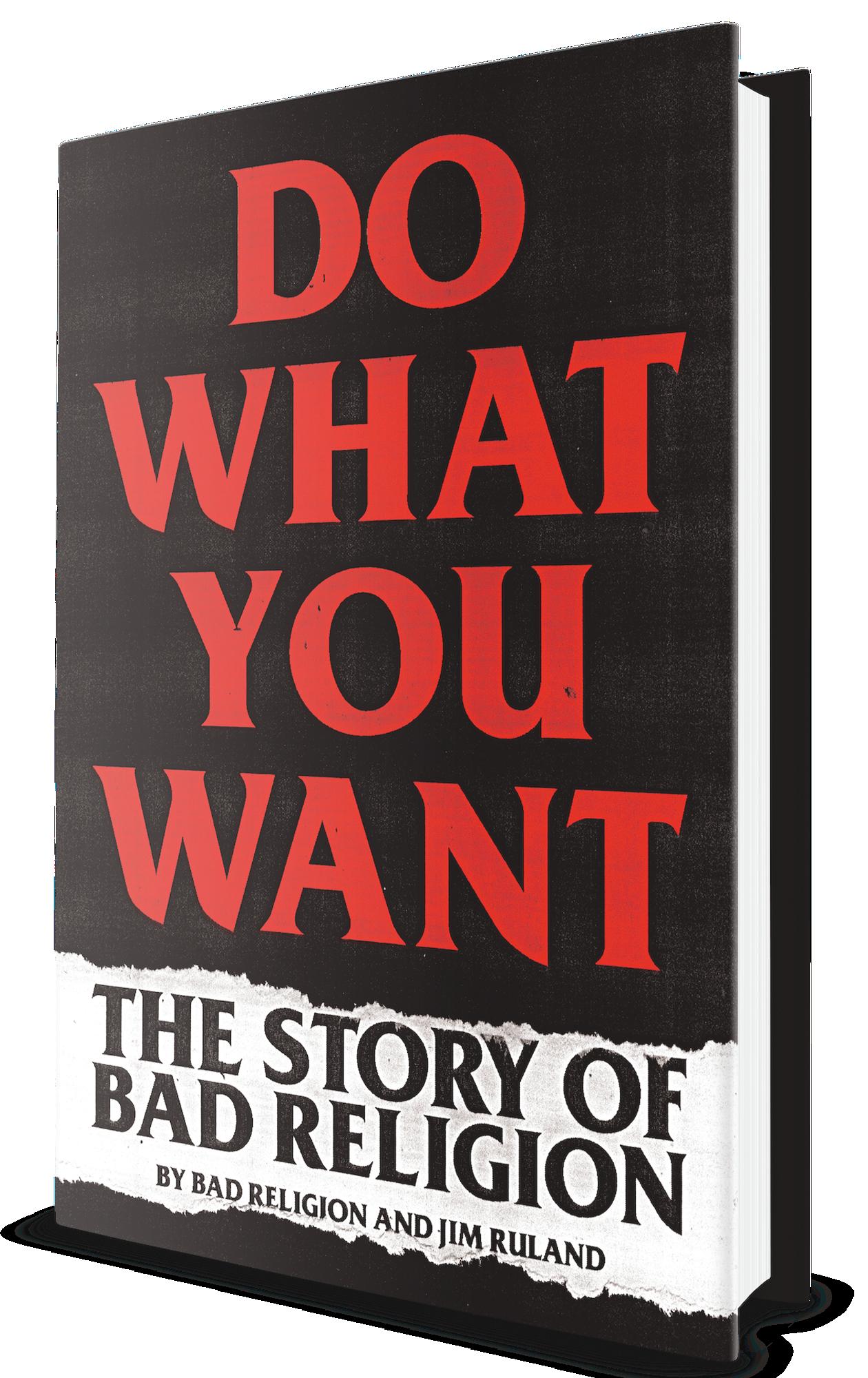
To commemorate the band’s extensive history, Graffin has worked with past and present members of Bad Religion and co-author Jim Ruland on the autobiog raphy, Do What You Want: The Story of Bad Religion , released Aug. 18. Prior to the book’s release, I had the pleasure of talking to him about the correlation between his musical and academic pursuits and the timeless notions of human existence encapsulated on their records.
A SHLEY R A MYNKE section between punk rock and evolu tionary biology?
G R E G G RA FFIN
really interesting question because it’s not immediately obvious that they have anything to do with one another. I think you learn that by becoming a scientist, or becoming actually any kind of academic pursuit — you want to learn to think critically. But you also have to do that in songwriting. Even though the genre that we belong to is called punk rock, we’ve always con sidered ourselves songwriters, [and] I’ve always considered myself a singer. In order to do that well, you have to really construct ideas in a critical fashion. It’s very similar actually to academic pursuits — putting together a good research paper, for instance. They are the same skills of creativity and criti cal thinking. In that sense, I’ve always found a nice parallel between the two worlds.
More recently, I’ve been thinking a little bit more about the genre of punk, and I’m surprised at its longevity. There’s something about it that is going to stick around a long time. It seems like there’s something universal about punk music that people gravitate towards. It’s not necessarily the things you would identify with it immediately. It’s not the nihilism; it’s not the violence — that’s
not what’s interesting. It’s this critical thinking about the world and challenging the norms. This countercultural strain that goes through the music has been there in popular music for a long time, even before punk hit the scene in the late ’70s with the Sex Pistols. There
waited 20 years to publish his discovery about the origin of species. He had come to the conclusion that species originate by natural selection, but he didn’t publish it for 20
years. That’s because it was so foreign to polite Victorian society that if he were to publish it early, he and his family could have easily been shunned by the very scientific community that he was aspiring to. So he kept it quiet, but ultimately he published evolution by natural selection, On the Origin of Species [by Means of Natural Selection, or the Preservation of Favoured Races in the Struggle for Life] in 1859. When he did, there was a firestorm [and] there was still a backlash. It was against all the polite social interactions of scientists at the time to suggest that humans and chimpanzees, for instance, could be closely related by a common descent. His countercultural revolt was overturning the currently held view that they call[ed] natural theology, which today we call creationism. But creationism was the norm when he published his theory, so there was a tremendous social backlash to the Darwinian story. That’s why it’s interesting to social scientists, as well as biologists, because, in a sense, he was partaking in this countercultural strain that’s been part of human existence ever since. Most theories that have been presented overturn the currently held view, and there’s something appealing about that if
A.R.: Why do you believe punk rock, and specifically Bad Religion, : That’s a really tough question. I can only answer it from personal experience, and that is, I’ve seen our music grow in popularity, and I’ve seen it maintain its interest among people over generations. We get as many new fans every year who are coming to discover
Bad Religion as we do old fans who have been there for 40 years. Our audience now is mixed of multigenerational families who come to the shows. But what I would say is that it’s because of, from our perspective, at least, we have not compromised on the songwriting. We’ve tried to write songs that have relevance to human existence. We started in a garage, in the San Fernando Valley at 15-years-old. We knew when we started that we didn’t want to be just a pop band that was writing about the current trends. We wanted to write about things that were puzzles of human existence. In that sense, there’s a lot of overlap between human evolution and our style of punk. One of the first songs I ever wrote was about human existence, and the song’s chorus was “We’re only going to die from our own arrogance,” and that was inspired by my studies in high school of human evolution. So we were always interested in writing about topics that were timeless. And we were lucky we stumbled upon the band name Bad Religion, because religion is one of those timeless topics, and there’s a tension between religion and evolution.
A.R.: Do you think students have the capability to enact change?
G.G.: Yes, of course, I do. I believe strongly in the youth and their ability to guide us to the future. But that means that they still have to think critically and they have to be able to analyze themselves. That’s the key — asking yourself “Am I committed to this idea because it’s good for me, or is it good for other people?” I think something as simple as wearing a mask is where that really comes into focus. “Do you really think we’re trying to take our rights away from you? Or are we asking you to think about other people for a minute?” That’s the kind of stuff that I think you learn that by going through … you can learn it anywhere really. But I think the student body has to be reminded of it, just like everybody else.
Ashley Ramynke is a junior in the College of Arts and Sciences. She can be reached at aer285@cornell.edu.
The Corne¬ Daily Sun
Independent Since 1880
138th Editorial Board
MARYAM ZAFAR ’21
Editor in Chief
JOYBEER DATTA GUPTA ’21
Business Manager
PETER BUONANNO ’21
Associate Editor
MEGHNA MAHARISHI ’22
Assistant Managing Editor
CHRISTINA BULKELEY ’21
Sports Editor
BORIS TSANG ’21
Photography Editor
CAROLINE JOHNSON ’22
News Editor
ALEX HALE ’21
News Editor
ARI DUBOW ’21
City Editor
EMMA ROSENBAUM ’22
Science Editor
BENJAMIN VELANI ’22
Dining Editor
JOHN MONKOVIC ’22
Multimedia Editor
MIKE FANG ’21
App Editor
OLIVIA WEINBERG ’22
Assistant News Editor
MADELINE ROSENBERG ’23
Assistant News Editor
LUKE PICHINI ’22
Assistant Sports Editor
HANNAH ROSENBERG ’23
Assistant Photography Editor
BRIAN LU ’23
Assistant Arts & Entertainment Editor
ANNABEL LI ’21
Assistant Money & Business Editor
LEI ANNE RABEJE ’22
Layout Editor
JOHN COLIE ’23
Blogs Editor
JOHN MONKOVIC ’22
Multimedia Editor
WINNY SUN ’20
Newsletter Editor
AMANDA H. CRONIN ’21
Senior Editor
RAPHY GENDLER ’21
Senior Editor
ALEC GIUFURTA ’21
Senior Editor
JOHNATHAN STIMPSON ’21
Managing Editor
KRYSTAL YANG ’21
Advertising Manager
JASON HUANG ’21
Web Editor
NIKO NGUYEN ’22
Design Editor
PALLAVI KENKARE ’21 Opinion Editor
SEAN O’CONNELL ’21 News Editor
KATHRYN STAMM ’22
Editor ANIL OZA ’22
EMMA PLOWE ’23
Arts & Entertainment Editor
MAIA LEE ’21
Money & Business Editor
ANYI CHENG ’21
Compet Manager
CATALINA PEÑEÑORY ’22
Assistant News Editor
MEGHANA SRIVASTAVA ’23
Assistant News Editor
EMILY DAWSON ’21
Assistant Sports Editor
BEN PARKER ’22
Assistant Photography Editor
Assistant
DANIEL MORAN ’21
’21
’22
WANG ’21
OU ’22
Editor AMBER KRISCH ’21 Blogs Editor
SARAH SKINNER ’21 Senior Editor PARIS GHAZI ’21
NICOLE ZHU ’21
JEREMY MARKUS ’21 Senior Editor
Working on Today’s Sun
Ad Layout Mei Ou ’22
Production Deskers Sarah Skinner ’21
Ben Mayer ’21
News Deskers Sean O’ Connell ’21
Meghana Srivastava ’23
Design Deskers Lei Anne Rabeje ’22
Dining Desker Paris Ghazi ’21
Sports Desker Luke Pichini ’22
Arts Desker Daniel Moran ’21
Letter to the Editor
Re: ‘ Te paradox of fall semester’
To the Editor:
Sun writer Anil Oza quotes from President Martha E. Pollack on the scientific basis for opening Cornell and Andrew V. Lorenzen highlights some important issues with that decision in his column. On a broader scale, science often involves making a model and testing it. Cornell leadership has, under very difficult circumstances, overseen the development of a COVID-19 model and plan in which the Provost and President strongly believe. As many Cornell students are taught, confidence in a model depends on how well predictions of the model have been tested and supported. The Cornell model has not been tested, but the first test involving all of us is imminent. Maybe the outcome will be in accord with the model (hopefully!) and maybe not. But, even if one chooses belief over science and trusts a model without testing it, the implementation so far is faltering. Cornell is not meeting important assumptions of the model that they control. They are no longer handling the quarantine of arriving students from high COVID-19 states to assure it happens. To my knowledge, they also have not shown (weeks away from the experiment) that they can achieve the massive scale of the essential weekly or biweekly pooled testing of all of the many thousands of students. They might have assured this by testing thousands from the broader Ithaca community multiple times in a week. Cornell seems far from the scale of COVID-19 testing they assumed in the model. I think it is important that Cornell students understand that good science and scientists invest little belief in untested models. They also make sure that an experimental test of a model takes place under conditions in which the model’s assumptions under their control are satisfied. Otherwise, the experiment is not performed. That is what makes for quality science.
Prof. Joseph R. Fetcho, neurobiology and behavior
Letter to the Editor
In response to Cornell’s TikTok star breaking the behavioral compact
To the Editor:
Thursday’s Washington Post carried the story of Cornell students’ petition to expel a student who had violated the Cornell Covid-19 behavioral compact and posted a video of her exploits on TikTok. Even though in view of the student’s young years and evident immaturity I’d rather she be suspended than expelled. I signed the petition to stand with Cornell students who are doing everything they can to safeguard their educational experience and the health of their community. These students give us hope. Over the last week, on my daily trips to and from the Ithaca campus where I work, I’ve been gladdened by the sight of masked students sitting in distanced circles and talking, walking around campus with luggage, boxed meals and books, or just looking at the beauty of Beebe Lake and the gorges. They are going about their university lives as best as they can. Cornell developed a meticulously thought-out plan so that this could happen, so that students, teachers, researchers and everyone who works so hard to make this the great university it is, can go on with their lives, despite the virus.
These days we hear from every corner that we have to choose between the horns of a terrible dilemma: Shut down and stay home, otherwise people will die from the virus, or open up, otherwise people will die because they will have no work. As university after university fails to contain the spread of the virus and shuts down in-person activities, proponents of this logic are crowing, “I told you so!” But as the example of Taiwan and other countries has shown, a third way is possible, and Cornell’s reactivation plan gives us this third way. Those who disregard the measures Cornell has clearly laid out for us to succeed in returning to campus this fall put our whole community at risk, and should be sent away.
Prof. Rachana Kamtekar, philosophy and classics
Barbara Regenspan | Guest Room
College Knowledge and Common Knowledge
Wednesday’s news about the Ithaca City Schools having delayed their reopening plans until early October, when more data about the impact on the broader community’s health of Cornell’s re-opening is available, is mostly heartening. In this time of so many well-earned desperate feelings on the part of all employees of the district, as well as its students and their parents, the confirmation that the ICSD administration struggled to listen to many divergent voices with a willingness to re-evaluate its own earlier decision-making, reminds us that democratic values remain alive in Ithaca.
Of course, many in the community share distress that the tensions between college versus public school openings were not resolved in reverse, with Cornell delaying reopening in order to privilege the public education of the broader community’s young people. The current crisis confirms what a good kindergarten teaches: When we humans face unavoidable tensions in any social negotiation, our priorities should reflect deeper concern for the human beings whose needs and promise are typically undervalued. In this case, our children — who have already suffered months of absent social stimulation and erratic-at-best educational opportunities — were undervalued. Related, should in-person classroom life resume in October, paraprofessionals cannot be placed in the untenable position of being present in classrooms where teachers have opted to work remotely. Rank and file members of all three associations representing teachers, paraprofessionals, and all other employees of ICSD have already voiced opposition to such a scenario, made possible by the administration having offered the choice to teachers only about whether they would work remotely or in person. The hope now is that absent a spike in coronavirus infections between now and October, the reasonable fears of most of the teachers who were wary of returning to the classroom will be allayed. Of course, should infections spike, both Cornell and the public schools will need to reconsider
their reopening plans.
The above highlights another related important social justice issue, which is the fact that not all employees of the ICSD earn a liveable wage. Given the current heightened focus of all of us on the horrific costs to whole communities of unconscionable levels of wealth inequality, and related racism, we are in a moment when this injustice needs to be corrected. Cornell President Martha E. Pollack has eloquently pledged to act against the social inequalities that led to the murder of George Floyd. What a perfect opportunity to invite Cornell to fund the necessary increase in the wages of all employees of the ICSD so that those who contribute to the local educational mission at all levels are guaranteed a liveable wage — the receipt of which marks the community’s agreement that a person has the right to live.
Finally, another impetus for delaying school reopening was the need to complete the costly work of ensuring better ventilation of the ICSD buildings. Here again is an opportunity for Cornell to fulfill its pledge to address the deadly costs of social inequality in this community and to help compensate for the losses incurred by our children and their families when Cornell put its own needs before those of the broader public educational mission.
The days when universities can claim that the specific dedications of endowment funds prevent their use to achieve their broadest mission – the enrichment of the lives of humanity through teaching, innovative research and service — are over. Cornell has the power to model for our community and for the world that institutions of higher education can remain relevant in this era by refusing to deny what the least educated among us already know.
Barbara Regenspan taught “Challenges of Modernity” in Cornell’s summer session for the past two years, is Emerita Professor of Educational Studies at Colgate University and is the author of Haunting and the Educational Imagination (Sense, 2014). Comments can be sent to opinion@cornellsun.com. Guest Room runs periodically this semester.
Fill in the empty cells, one number in each, so that each column, row, and region contains the numbers 1-9 exactly once. Each number in the solution therefore occurs only once in each of the three “directions,” hence the “sigle numbers” implied by the puzzle’s name. (Rules from wikipedia.org/wiki/ Sudoku)
Niko! by Priya Malla ’21
Pizza Rolls by Alicia Wang ’21
Mr. Gnu by Travis Dandro
Mr. Gnu by Travis Dandro
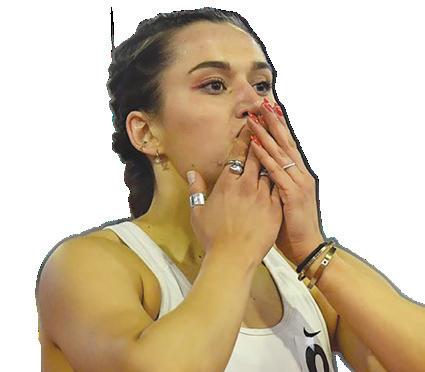
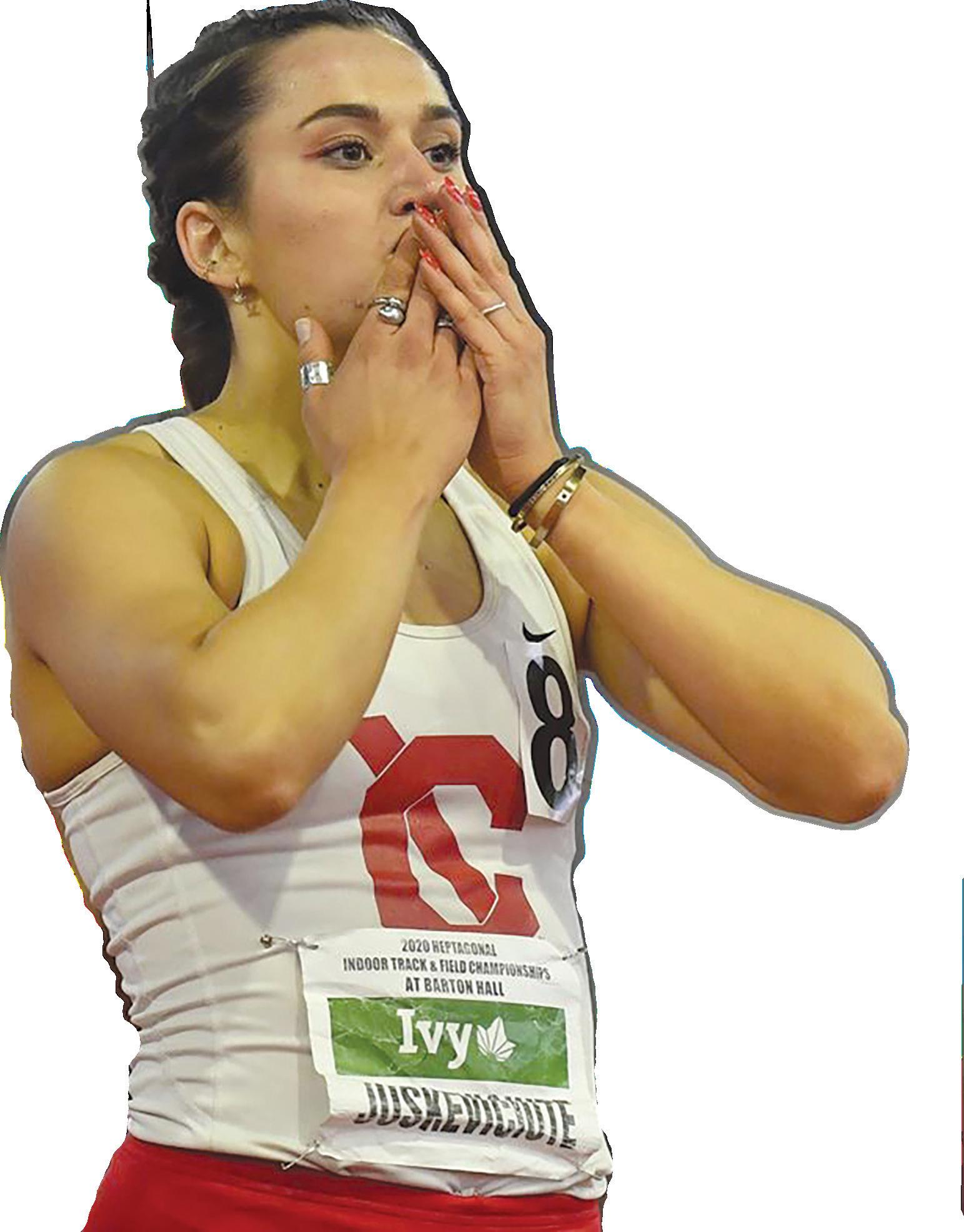
Junior Heptathlete Tells Her Athletic Tale Juskeviciute emerges as one of Cornell’s biggest stars with Olympic aspirations
By MITCH HOY Sun Staff Writer
Beatrice Juskeviciute never envisioned herself as a star in women’s track and field. Hailing from Kaunas, Lithuania, Juskeviciute grew up having little interest in the sport.
“My
Despite her persistent effort to avoid getting involved in track, Juskeviciute was eventually convinced, and after two years at Cornell, she has accumulated a bevy of awards. Emerging as one of the team’s biggest stars, the junior boasts the Cornell record in the heptathlon, the freshman Cornell record in the pentathlon, and was named first team AllIvy freshman year and sophomore year and USTFCCCA All-American her sophomore year.
would always have to do it. My PT teacher would always say, ‘you should do track,’ and I was like, ‘I will never do track. I’m not interested — it’s the most boring sport.’”
A club team coach who spotted her natural ability later pleaded with her to come to a practice. Juskeviciute made up an excuse that she was leaving for vacation, but the coach asked for her phone number to connect with her after her “vacation.”
PT teacher would always say, ‘you
should do track,’ and I was like, ‘I will never do track. I’m not interested — it’s the most boring sport.’”
Beatrice Juskeviciute
Juskeviciute clearly has a bright future with two years left on East Hill, but in her youth, she made numerous efforts to not participate in track in spite of encouragement from those around her.
“I said I would never do track,” she recalled. “Back home, we don’t have high school sports, but once a year, [there was] sort of like a cross country meet. You would run one kilometer for your school so I
“I just made up a number … and she was like ‘can you repeat it?’ I couldn’t repeat it and I gave her my real number,” Juskeviciute said.
That nudging from her club coach propelled Juskeviciute into a sport in which she clearly excelled. From an early age, Juskeviciute succeeded as a sprinter in Lithuania, but she began to unlock her true potential after her introduction to the heptathlon.
The heptathlon is a combined contest in women’s track and field in which each competitor participates in seven different events, which usually includes 100-meter hurdles, high jump, shot put, 200-meter dash, long jump, javelin and the 800-meter run.
While all of those may sound intimidating — especially bunched together — Juskeviciute was hooked after her first taste of a heptathlon.
Juskeviciute soon began looking for a summer camp outside of Lithuania to further improve her skills,
On the national stage, she also finished 19th in the country at the NCAA Division I Outdoor Championships in the heptathlon. She finished her first year ranked No. 2 in the Ivy League for the heptathlon, only behind only Carly Paul, a then-senior at Brown. Her shortened sophomore year consisted of setting her own records and proceeding to break them — all while dominating the conference competition.
She broke the Barton Hall pentathlon record at the Ivy League Championships, finished first in the pentathlon at the Upstate Challenge and finished first in the pentathlon at the Ivy League Indoor Heps Championships. By the end of the year, Juskeviciute was ranked No. 1 in the Ivy League for the pentathlon. Juskeviciute attributes her success both on the floor and in the classroom to her time management.
“If you don’t stay ahead of your work you’re not going to be able to get sleep, and if you’re not going to be able to get sleep you’re going to struggle during practices,” Juskeviciute explained. “If you want to feel good in practice, you have to do your work. I sort of try to do a lot of work early in the morning, while also using all of the time in between classes.”
Juskeviciute seemed destined for another record-breaking campaign this year, but the COVID-19 pandemic has erased the possibility of any varsity competition during the fall semester. The indoor track season, which begins late in the fall semester, could either be postponed or canceled entirely.
While this development could potentially hamstring Juskeviciute’s career, there are still workarounds, even
“If you don’t stay ahead of your work you’re not going to be able to get sleep, and if you’re not going to be able to get sleep you’re going to struggle during practices.”
Beatrice Juskeviciute
in a world where athletic competition has come to a standstill.
“[In September], you can get things done. You can run up Libe Slope, and it’s still physical conditioning,” Juskeviciute said.
But when the weather inevitably turns colder, outside training will become less feasible. In addition, she is currently unable to train with Cornell coaches given the current limits on practice during the fall semester.
Juskeviciute is currently eligible to compete in the Olympics, and if she was to compete on that stage, she would represent her home country of Lithuania. To qualify for the Olympics, she needs to record a 6000-point heptathlon in order to make the cutoff for Olympic trials. During her freshman year, she recorded a 5504-point effort.
Given the postponement of the Olympics until next summer, the fall semester may present a perfect opportunity for Juskeviciute to get in peak physical shape and continue to reach her maximum potential when the Olympic trials take place in June 2021.
Some naysayers have told Juskeviciute that she isn’t built to be a heptathlete and that she should just stick to sprints due to her being only 5 feet 5 inches. But one would only need to look at the 2012 Olympic champion in the heptathlon to dispel that notion.
Jessica Ennis-Hill, who also stands at 5 feet 5 inches, captured the gold medal in the heptathlon at the 2012 Summer Olympics. Ennis-Hill is Juskeviciute’s idol and serves as proof that height doesn’t matter, especially if the athlete has a phenomenal work ethic. With Juskeviciute’s talent and hard work, she could be poised to become an Olympic medalist in the sport that she sought to avoid in her childhood.