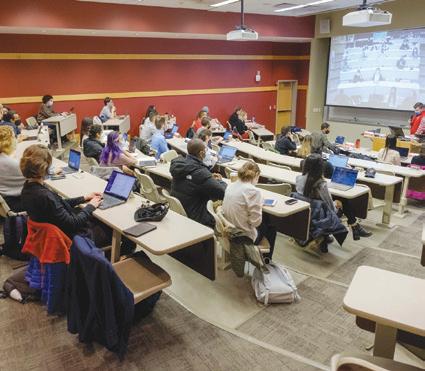


In collaboration with United States government development agency USAID, Cornell’s Spanish Debate Team will host an Oct. 6 show debate to celebrate Hispanic Heritage Month.
Part of the Cornell Speech and Debate Society, the Sociedad de Debate en Español, or Cornell Spanish Debate Team, competes worldwide in Spanish-language debate tournaments. The team has a history of successes:
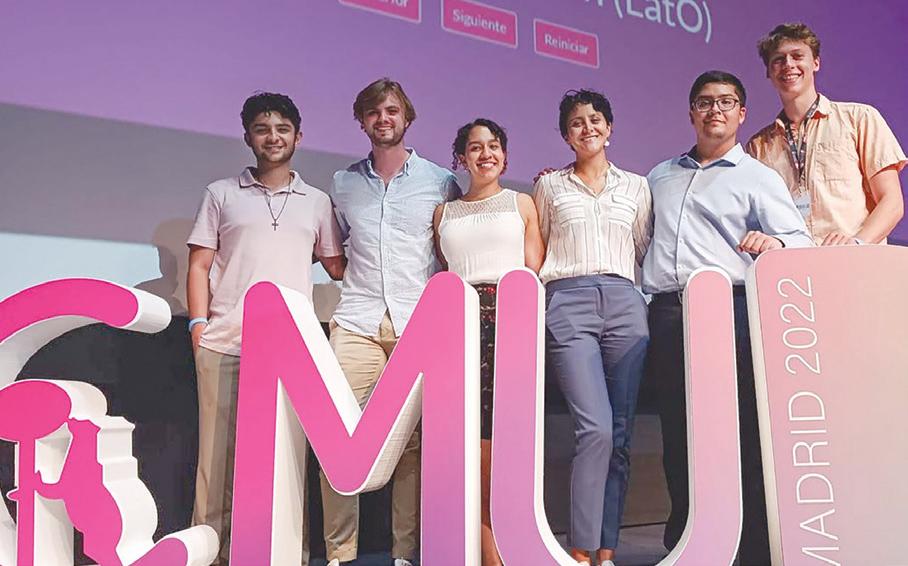
it made it to the semifinals of the 2019 Spanish-language world debating championship, won the 2018 and 2019 world championships in the Spanish as a Second Language category, won the 2019 Portuguese world championship and won the 2020 Spanish-language US national championship.
For its members, however, the team is about more than competition. According to Jacobo Carreon ’23, the Spanish Debate Team has been a source of community, especially for Hispanic students.
“Obviously, the Spanish-speaking population is a minority — in Cornell at least. The language itself is something that helps a lot of minority groups unite and feel more comfortable,” Carreon said.
In addition to competing, the team hosts demonstration and community-building events. One such event is their upcoming show debate on the question “Should we prioritize vocational education over higher education?” Spanish debate team director Júlia García Güell grad said USAID wanted to collaborate on the event due to its extensive work in Central and South America and desire to give a platform to talented Spanish speakers in the United States.
Güell said her team is strengthened not just by their hours of practice and research but by their open-minded approach.
“A good debater can be anyone who is willing to open
When Reggie Fils-Aimé ’83 was applying to be the head of marketing and sales at Nintendo in 2003, he did something unusual. Although he was at this point an experienced executive, he refused to take a job at Nintendo before having a video conference with the global president to see if their visions for the company aligned.
“I learned that my request really had created quite a stir within Nintendo. Who’s this brash American asking to speak with our global president? He’s not even an employee,” Fils-Aimé said. “But my mentality was that I needed to make sure that I could partner with a global for success.
Passing those lessons on to the next generation, Fils-Aimé has written a book, “Disrupting the Game: From the Bronx to the Top of Nintendo,” in which he writes about overcoming obstacles, showing resilience and leadership under pressure. The book is part of his participation in the Dean’s Distinguished Lecture Series for the Dyson School of Applied Economics and Management. Dean of the Dyson School Jinhua Zhao selected the book to be read by incoming Dyson freshman and sophomore transfer students and to serve as a thematic guide for those students’ education.
But Fils-Aimé wasn’t always an industry legend. He worked his way up, starting off as a child of Haitian immigrants, born in the Bronx before moving to Brentwood, New York where he attended middle and high school.
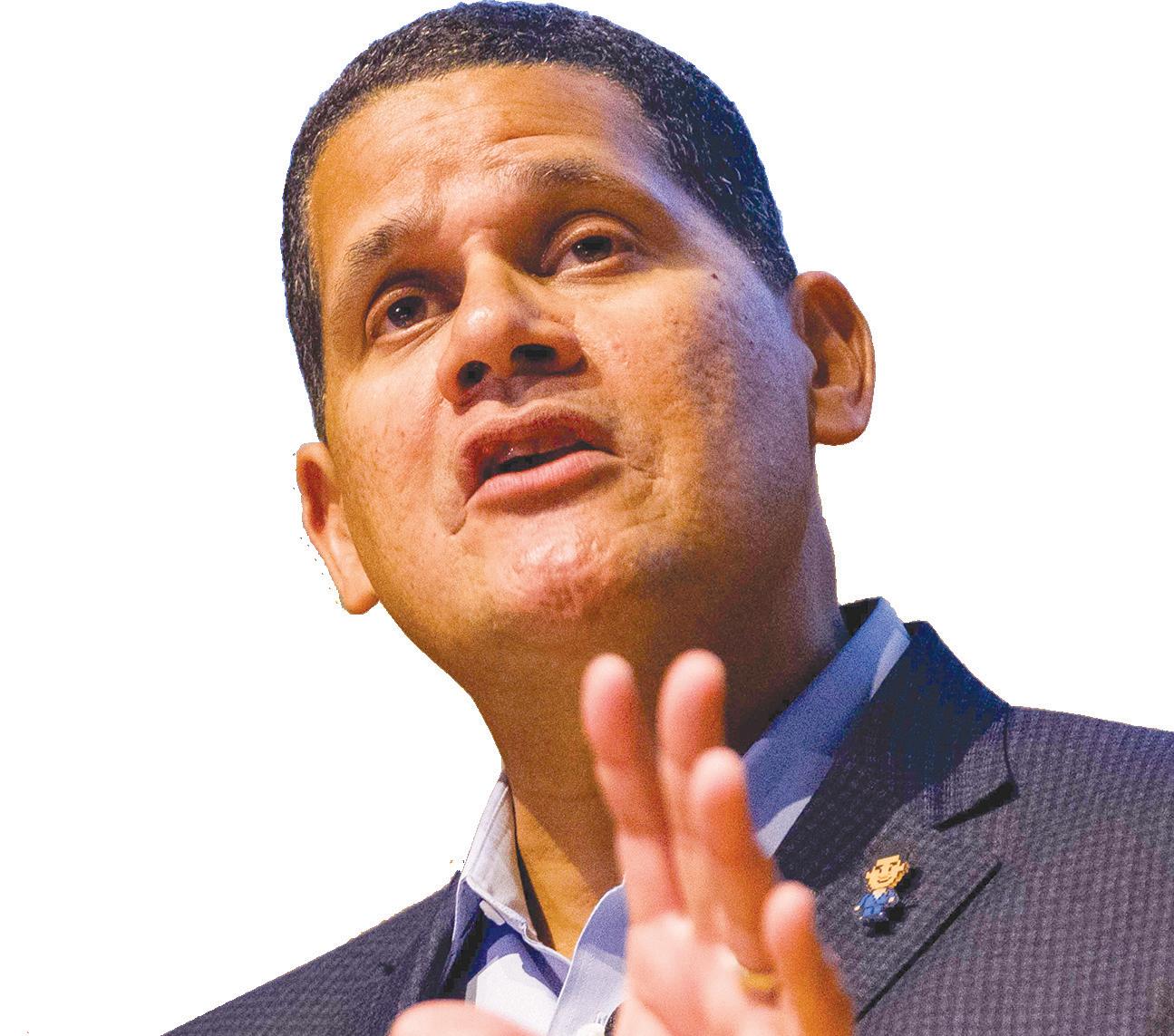
”It really did shape me as a first generation American,” Fils-Aimé said. “Someone who, really early in life, was hearing all of these stories and things about Haiti and all the challenges and strife... that shaped a mentality of focus on education and a mentality to really envision being able to overcome obstacles, having a sense of resilience and grit to drive my life forward.”
Fils-Aimé knew he wanted to go to college, but he was alone in navigating the college admissions process and paying for his education. He was accepted to Cornell with an
their mind… it’s not about being the person who knows the most specific knowledge of geopolitics… or who has the best public speaking,” Güell said. “It’s about being open to challenging yourself and the things that you believe.”
The team also draws from its members' experiences for inspiration in arguments on everything from the environment to the economy.
“We use some of the examples from our lived experiences as Latino or Hispanic people, or people who know about Hispanic or Latino culture, and we use that in our arguments,” said team president Matilde Cardoso ’23. “It’s not something that we try to do, but something that happens because of our backgrounds.”
Senior lecturer Sam Nelson, Industrial Labor Relations, is the program director for the Cornell Speech and Debate Society. He says the Spanish show debate is a great way for the team to have an impact beyond Cornell.
“We want to do other things that help society at large and also the students. One of the great benefits to any kind of social justice student engagement project is that the students often learn as much or more than the people they're supposed to be [helping],” Nelson said.
Carrero expressed a similar outlook, and hopes that the team can be an example to other communities.
By SAM JOHNSTONE Sun Contributor
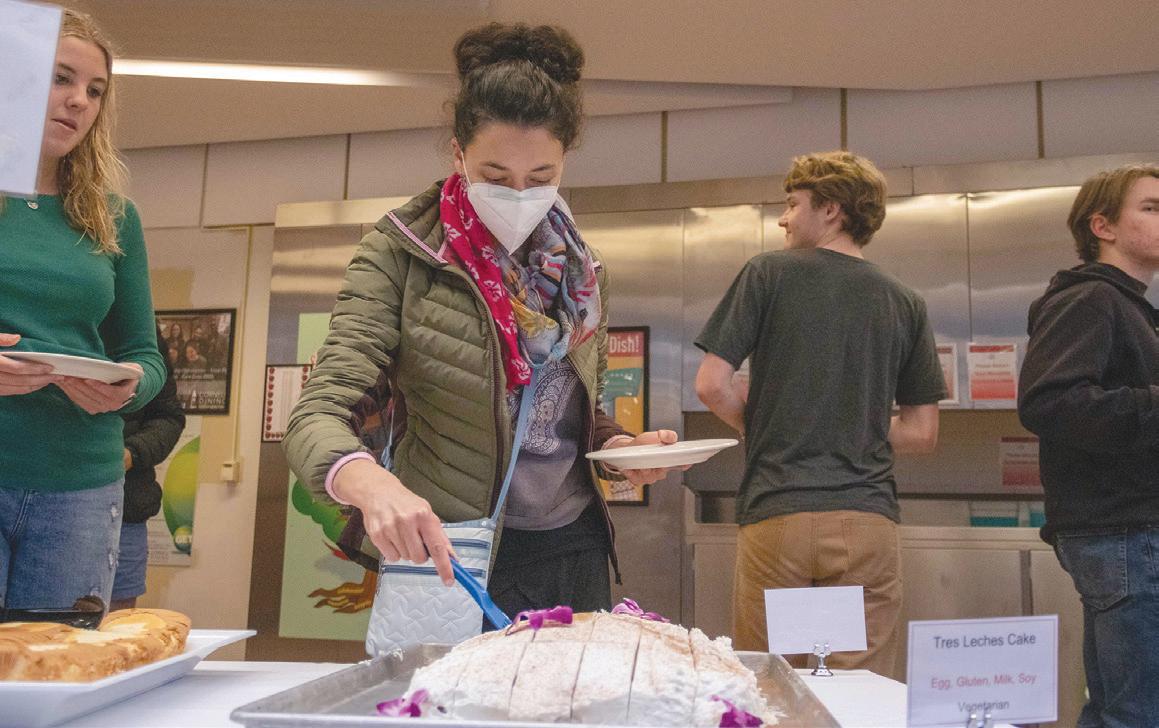
After living in eight different locAfter a two-year hiatus due to the COVID-19 pandemic, weekly house dinners on West Campus have returned to the excitement of students and professors alike. Pre-pandemic, the weekly dinners were a trademark of West Campus living, featuring residents-only dining, unique menus and live entertainment. The dinners, which are hosted every Wednesday evening from 6 p.m. to 7 p.m., returned with the beginning of the fall 2022 semes-
ter, an exciting and new experience for most students on West. Becky Lee ’24 lives in Flora Rose House and attended her first house dinner on Wednesday.
“It was very nice to be able to connect with other people and have these conversations with residents and also house fellows,” Lee said.
Lee said that one of the main goals of house dinners is to connect students with faculty and professors in a casual setting, encouraging engagement and relationship building.
Thursday, September 29, 2022
How to Use Your Breath to Soften Testing Anxiety
11 a.m. - noon, Cornell Health 127A
Leaders, Bureaucracy and Miscalculation in International Crisis 11:25 a.m. - 12:40 p.m., Uris Hall G08
Supporting Your Student As They Navigate Their 21st Century College Journey Noon - 1 p.m., Virtual Event
The Climb: Latinx Leaders Reflect on Career Advancement & Identity Noon - 1:15 p.m., Virtual Event
Gatty Lecture — Unbecoming: Exploring Filipinx Trans Identity Through Literary Fiction 12:30 p.m., Kahin Center
African Development: “We Will Not Follow You Like Sheep”: Language, Officialdom and Generational Politics in the Digital Age 2:40 - 4:35 p.m., Uris Hall G08
State of Disaster: The Failure of U.S. Migration Policy in an Age of Climate Change
4:30 - 5:30 p.m., Olin Library 107
“TALKING BLACK in AMERICA-ROOTS” Film Premiere and Q&A with Associate Producer John Rickford 4:30 - 6 p.m., Willard Straight Theater
Solmaz Sharif Poetry Reading 5 p.m., Klarman Hall G70
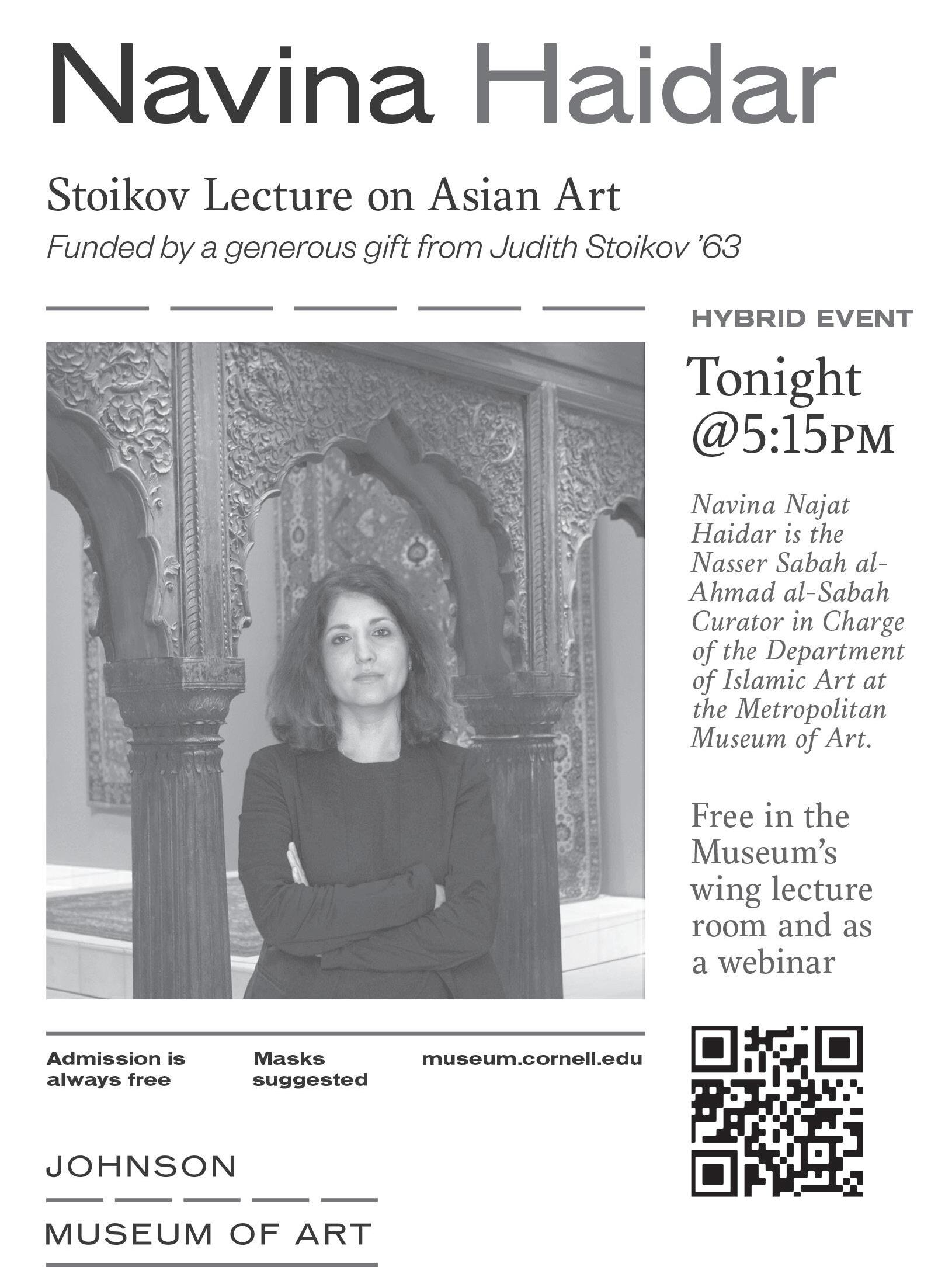
Stoikov Lecture on Asian Art: Navina Haidar 5:15 p.m., Johnson Museum of Art, Wing Lecture Room
Taste of Chemung Dinner — Cornell Cooperative Extension
6 - 8 p.m., Ill Eagle Taphouse 200 E. Church St. Elmira, N.Y. 14901
Piano: mine but for its sublimation New York Premiere 8 p.m., Barnes Hall

NINTENDO
Continued from page 1
ROTC scholarship for his first two years and then continued to work on campus to fund his tuition.
While at Cornell, Fils-Aimé was president of his fraternity, Phi Sigma Kappa, which served as both his social network and favorite pastime. He said he remembers Cornell fondly for the lifelong friends he met while on campus.
Fils-Aimé graduated in 1983 from the Dyson School with a job lined up at Procter and Gamble, a multinational consumer goods corporation.
“[I] really made the pivot from a pure finance banking pathway to more general management [at Procter and Gamble],” Fils-Aimé said. “From there, it was continuing to hone my business skills running bigger and bigger businesses, having greater responsibility for people and leading teams.”
After around six years at the company, Procter and Gamble was in decline, according to Fils-Aimé. He authorized an overspending of the budget — the exact thing he was told not to do when he first started.
“I was aggressive. I was impatient. And we put in place these programs and the programs worked,” FilsAimé said. “But because I had overspent my budget, my career was over at Procter and Gamble.”
This experience taught Fils-Aimé more about himself and his need for a fast-paced work environment.
“I don’t have a lot of patience. I want to grow things. I want to drive things,” Fils-Aimé said.
After Procter and Gamble, Fils-Aimé started working in the restaurant industry, first at Pizza Hut as the senior director of national marketing, then as the head of marketing for Guinness and later as senior vice president of Panda Management Company. Then in 2003, Fils-Aimé switched industries again and joined Japanese video game company Nintendo as their head of sales and marketing.
“It was a combination of experience and turning around businesses. An ability to perform in high-paced visible businesses, a demonstrated ability to lead teams and to really put in place plans that would overcome the business challenges,” Fils-Aimé said. “Those were all the things that led me to join Nintendo.”
According to Fils-Aimé, when he joined Nintendo in 2003, the company was in a difficult position. Sony’s PlayStation 2 was dominating the market, while Nintendo’s GameCube was underperforming in comparison. It was around this time that Microsoft also entered the video game industry.
“Nintendo needed to think through how it would
differentiate itself, how they would be able to compete against these other massive players, and find a way to win on their terms,” Fils-Aimé said. “That was the situation that I walked into.”
The first product Fils-Aimé worked on at Nintendo was the Nintendo DS, a two-screen handheld device that, according to Fils-Aimé, was one of the first products with a touchscreen on the market. Typically, Nintendo launches products first in Japan and then expands to other international markets, such as the market that Fils-Aimé had jurisdiction over — the United States, Canada and Latin America.
“I advocated that my marketplace needed to launch this device first in the world, in order for us to create momentum and to be successful,” Fils-Aimé said. “This market… is the largest contained video game opportunity market in the world. And so having strong success here would lead us to have success in other markets.”
Fils-Aimé also said he convinced the company to include a demo of a compatible Nintendo DS game with the first few million units of hardware.
“Nintendo hates giving away content for free, I mean, it’s just not what they believe in,” Fils-Aimé said. “But I was able to convince them that… this system is so different that we need to give the player just a little taste of what it could be and how it could perform in the market.”
In part due to the success of Nintendo DS, FilsAimé was promoted to president of Nintendo over the course of two and a half years.
After retiring from Nintendo in 2019, FilsAimé now spends his time holding positions on various boards, including Brunswick Corporation, GameStop and Spin Master.
“It’s just a way for me to provide the benefits of my knowledge, perspective, experience in a better way than being tied to one particular company,” Fils-Aimé said.
As a member of the Dyson School advisory board, Leader in Residence at Dyson and participant in the Dean’s Distinguished Lecture Series, Fils-Aimé returns to the Cornell campus frequently. Part of the joy of this work is the ability to help Cornellians like himself.
To continue reading this article, please visit cornellsun.com.
Sofa Rubinson can be reached at srubinson@cornellsun.com. Gabriella Pacitto can be reached at gpacitto@cornellsun.com.
DINNER
Continued from page 1
“House dinners are a hallmark of student-faculty interaction on West Campus,” Cornell Dining Director Paul Muscenet said.
These intimate interactions are exactly what drew Aaron Friedman ’25 to live in Alice Cook House.
“The buildings are smaller, the dining halls are smaller. It just feels more personal compared to North Campus,” Friedman said.
Friedman explained that at the first house dinner he attended, he was seated next to a retired Cornell professor. Over dinner, the former professor talked to Friedman about his journey andshared stories from his personal life.
“It was kind of helpful,
“...the desserts are better than usual — they have things like eclairs.”
Laura Wang ’25
because it was during the first few weeks of school and at Cornell, it can sometimes be an overwhelming place,” Friedman said. “So, to have a retired professor, who has lived his entire life, trying to give advice — it just felt really cool.”
Students described the dinners as “fancier” than typical weeknight dinners, with table settings and more sophisticated food offerings, such as homemade pasta and pink lemonade in the Flora Rose House.
“My favorite thing about the house dinners is that the desserts are better than usual — they have things like eclairs,” Laura Wang ’25, resident of Alice Cook House said.
Despite Wang’s appreciation for treats, she doesn’t find all aspects of the dinners to be as sweet. She said that residents must attend the dinner of the house they reside in, thus being unable to dine at other West Campus houses if the limited menu offering is not to their liking.
The menus are put together by each house chef, tailored to a certain culinary theme. Last Wednesday, Becker House Dining Room featured an Ethiopian-inspired menu while Jansen’s Dining Room at Bethe House served a Latinx-inspired menu.
“Chef BJ Wojtowicz, general manager, says the dinners have been going well this month, with each House Chef stretching out, trying new things,” Muscente wrote in an email to The Sun.
As the semester continues, West Campus residents can look forward to more Wednesday night dinners supplemented by entertainment.
“Each House will have the opportunity to bring in faculty or community speakers, performers or other engaging guests,” Muscente said. opportunity to bring in faculty or community speakers, performers or other engaging guests,” Muscente said.
Sam Johnstone can be reached at scj54@cornell.edu.
By OWEN SPARGO Sun Contributor
On Monday, the Graduate and Professional Student Assembly met to discuss which of its members will be attending the 2022 Ivy+ Summit, which will take place at Columbia University Oct. 21-23.
The Ivy Plus conference is a yearly meeting bringing together representatives from graduate student bodies like the GPSA at each of the eight Ivy League institutions, Massachusetts Institute of Technology and the University of Chicago. The conference is a way for representatives to share information on the status of their respective assemblies and projects they are developing to fit the needs of their student bodies.
“Every year, all of our GPSA counterparts from the Ivy League plus schools get together to discuss the state of our groups as well as initiatives we’re working on. It’s a kind of networking plus sharing of information and strategy,” said GPSA president Preston Hanley grad.
Each day of the conference features events ranging from presentations given by the different GPSA presidents to workshops where representatives can collaborate on improving their initiatives.
According to Executive Vice President Kate Carter-Cram grad, who attended the conference last year, the conference covers crucial issues such as diversity and inclusion practices, graduate student stipends and unionization, and helps its participants be better student leaders at their universities.
“One thing from last year was that there was a big battle around unionization of different GPSAs and that’s something we brought back,” Carter-Cram said. “We are not unionized, but we did end up implementing a stipend for some GPSA members and that follows suit with several of the schools that we interacted with last year.”
This year, returning members will find at least one thing about the conference changed: Ivy+ is now allowing ten delegates to be sent from every school, which is an increase from the limit of four in previous years.
“The President and the executive board went last year to the conference at [the University of Pennsylvania], but this year is going to be different because they are allowing other members of the board to come,” said Norielis Perez grad. “I think this is very important because it will not only be the executive board [attend-
ing], but other people who want to create an impact in GPSA coming this year.”
Perez, who serves on the GPSA’s diversity and inclusion committee, said that she plans to attend the conference in order to learn how her committee can be more effective in helping Cornellians.
“I want to learn how to create impact within the diversity and inclusion committee because I don’t want the committee just to talk, I want to have action,” Perez said. “I believe that if I go to the summit, I will gain knowledge of how other schools are taking action.”
Annika McGraw grad, chair of the student advocacy committee, is in charge of gathering student perspectives on relevant campus issues and creating a platform for students to share their opinions. She plans to use the summit to learn more techniques to use in doing that job.
“Attending the Ivy+ Summit would be beneficial to anyone in my position, as it is a great way to understand how other campuses successfully… gather student perspectives and create initiatives on campus that address student issues,” McGraw said.
Cornell’s Ivy+ delegates are not only looking forward to learning
from others but to sharing their experiences as well. According to Carter-Cram, over the last year and a half, the GPSA has improved its engagement with campus and its functionality as an assembly — and they look forward to helping other assemblies do the same.
“This year we’re looking forward to sharing how we’ve been able to foster… engagement and
how universities can rebound from COVID-19, especially when other universities are still facing issues of creating generational knowledge and engagement,” Carter-Cram said.
“I’m excited to share that with other people and hope that they will be able to get something out of that.”
Owen Spargo can be reached at oks3@cornell.edu.

By EMMA LEYNSE Associate Editor
Amid this weekend’s homecoming festivities, I witnessed something truly horrible in a West Campus dining hall. Let me set the scene. It was around 6:30 p.m. in Bethe dining hall, the crowd was moderate and an air of excitement filled the room. Students were stopping in for a bite to eat and a break from the busy day before heading out to whatever celebratory evening plans they had.
As I waited in line to grab my food, I suddenly look over to see a (red-eyed) guy cut the line and violently grab the serving tongs, throw food onto his plate, get said food all over the floor and into the other food containers and then proceed to literally throw the tongs halfway across the counter and leave.
Everyone around me was notably disgusted by this rude behavior, but I cringed for more reasons than the flagrant disrespect and straight up slobbery: he messed up the food, getting the beans into the meat and the cheese into the lettuce containers. Not only is this rude, but this is dangerous for people with food allergies and restrictions — people like me.
While perusing the dining halls, you might have noticed Cornell’s allergy labeling for each dish, outlining what major allergens are in the food and if it’s vegan or not. As you probably know, this is very important for people with food allergies and restrictions to know about when selecting food. From my own experience, Cornell’s allergy labeling is very helpful (especially compared to that at other schools), meaning that I don’t have to constantly ask about ingredients when I go to the dining hall.
So, stupid behavior like what I saw in Bethe last weekend not only is rude to the overworked dining staff who have to clean it up, but also puts fellow students with food allergies in danger. What happens when you want lettuce but there’s cheese in it? Then you’ll have a lettuce-less taco (very sad).
While that behavior is by far out of the norm, there are nevertheless problems with the allergy system on campus on the part of both students and the dining halls. Starting with the students, it’s honestly pretty simple — please be careful not to mix food when serving yourself at the dining hall. Letting that cheese slip into the neighboring container can mean ruining it for someone else. Simply being aware of why keeping
the food separate is important can help make dining halls a more pleasant experience for everyone (and save the workers from extra cleanup).
Other than the students needing to be overall less messy, the dining halls themselves can take a few very easy steps to save people from allergic reactions. First, they should avoid placing particularly messy food containing major allergens next to food without allergens. What immediately comes to mind is the salad bar or the toppings line for taco nights. Putting loose cheese right next to other toppings is a recipe for cross contamination. By separating the allergen toppings from the others, that would avoid the problem of allergens falling into the wrong container.
But beyond food placement, there is a small but prominent gap in Cornell Dining’s food allergy labels in almost all dining locations: the label “tree nut.” Let me explain. For those of you who may not know, the allergen tree nut officially encompases a variety of different foods that fall within the broad category of tree nut, the six main tree nut allergens being walnut, almond, hazelnut, pecan, cashew and pistachio. This is an important differentiation from peanuts, which is a separate allergen but does have some overlap.
However, Cornell Dining uses the term tree nut too broadly to encompass another sub-category of allergen that does not always overlap: coconut. While coconut can be
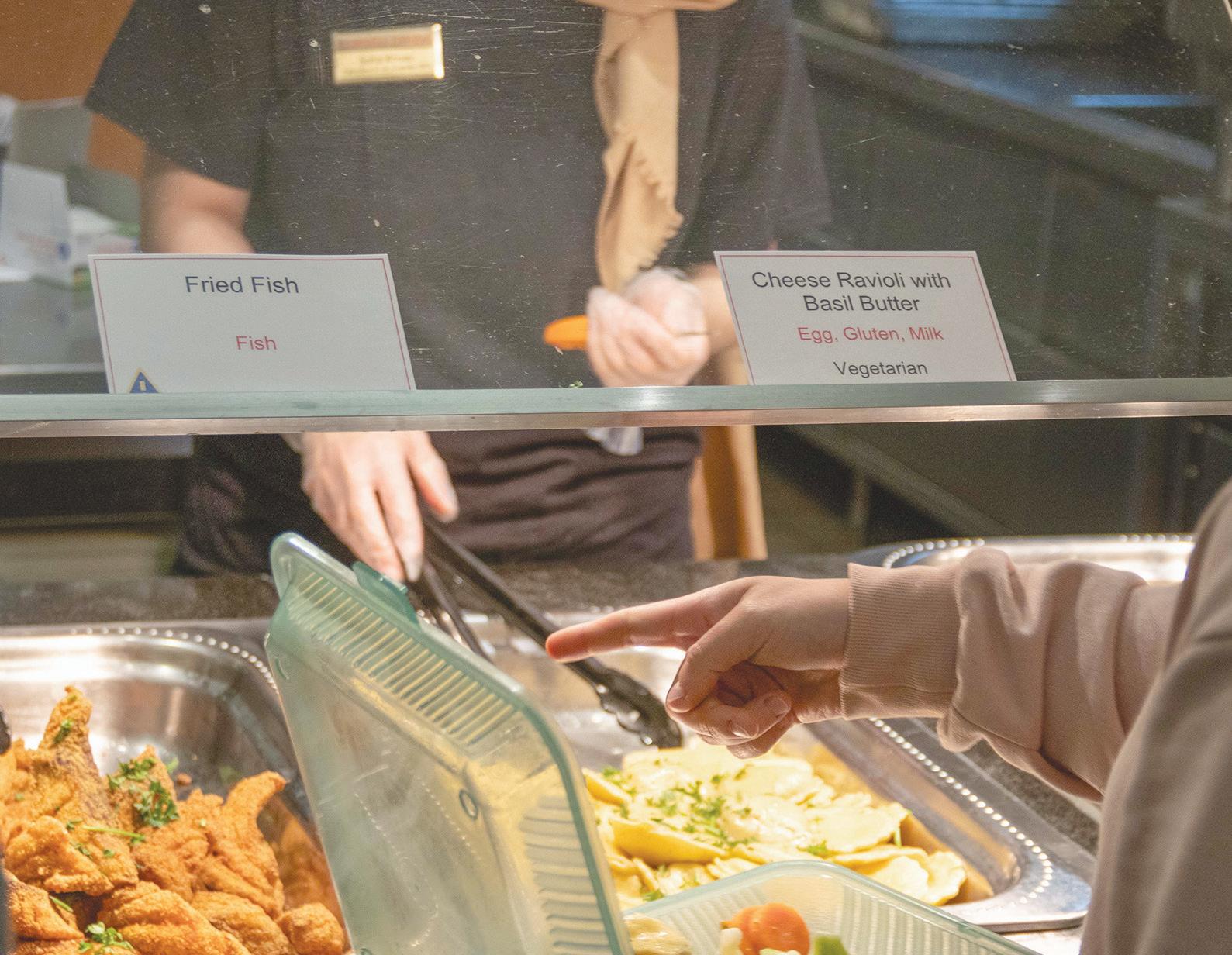
technically considered a tree nut, not everyone with a tree nut allergy is allergic to coconut, and not everyone allergic to coconut is allergic to tree nuts. So, you can imagine why the “tree nut” label can be confusing when you encounter it in the dining hall, especially when (in my experience) a majority of the time the label actually refers to coconut and not tree nuts.
While coconut is not one of the major allergens, people with coconut allergies are often misled by Cornell’s labeling (I know a friend who had an allergic reaction from this confusing

labeling).
This is a major flaw with the labeling that could be easily fixed by differentiating between tree nut and coconut on the label. If the label tree nut was used in conjunction with coconut, such as “tree nut/coconut” to refer to the allergen being coconut, and the plain label “tree nut” used when there are nuts such as almonds in it, it would be much easier to students to quickly identify what’s safe to eat in the dining hall.
Food allergies are serious — students and dining halls alike have to pay more attention to cross contamination and label-
ing. While Cornell has made great strides to make its dining halls accessible and safe to everyone, they must refine their labeling process to be more specific when it comes to the label “tree nut” and be careful about container placement. And students, please don’t be stupid; be careful when it comes to food, because there’s more at stake than just what’s on your plate.
Emma Leynse is a senior in the College of Arts and Sciences. She currently serves as the associate editor on the 140th editorial board. She can be reached at eleynse@cornellsun.com.

SERENA HUANG ’24
Business Manager
EMMA LEYNSE ’23
Associate Editor
SURITA BASU ’23
NAOMI KOH ’23 Assistant Web Editor
ELI PALLRAND ’24
ESTEE YI ’24
KAYLA RIGGS ’24
JULA NAGEL ’24 Photography Editor
MEHER BHATIA ’24
KATRIEN DE WAARD ’24
PAREESAY AFZAL ’24 Assistant
JIWOOK JUNG ’25 Assistant
ADITI HUKERIKAR ’23
Assistant Arts & Culture Editor
JASON WU ’24
GRAYSON RUHL ’24
KEVIN CHENG ’25
HANNAH ROSENBERG ’23
JYOTHSNA BOLLEDDULA ’24
VEE CIPPERMAN ’23
BUNAY ’24
’24
FLORES ’24
YAO ’23
RUBINSON ’24
’23
ED Plowe is a senior in the College of Arts and Sciences. She can be reached at eplowe@cornellsun. com. With Gratitude runs every other Tuesday this semester.
Content Warning: This article contains mention of racist killings.
We all know what woke means, or rather, what it has come to mean for conservatives who fear “woke” people corrupting their schools. White liberal culture has appropriated the word from its origin in African American Vernacular English (AAVE), and conservatives love to respond to the appropriated concept.
ABRAHAM ’24
DANIEL BERNSTEIN ’23
MADELINE ROSENBERG ’23
Ad Layout Katrien de Waard ’24
Managing Desker Surita Basu ’23
Associate Desker Emma Leynse ’23
Dining Desker Jimmy Cawley ’25
News Deskers Eli Pallrand ’25
Pareesay Afzal ’24 Science Desker Meher Bhatia ‘24
Photography Desker Julia Nagel ’24
Want to give your take on a campus issue?
The Sun thrives on your feedback. Continue the conversation by sending a letter to the editor or guest column to associate-editor@cornellsun.com.
Letters should be no longer than 250 words in length. Columns are 700-900 words
Please include graduating year if applicable.
All voices welcome.
In the song “Master Teacher Melody” Erykah Badu repeats “I stay woke” as she describes her search for herself and beauty in a racist society. Written by soul singer Georgia Anne Muldrow, who sings the refrain “I stay woke,” the song imagines a hopeful future for African Americans while acknowledging the reality of the systemic issues they face.
How can we learn from Black culture, rather than appropriating it, in amplifying the message of heightened social and self awareness?
Can we step away from woke as an appropriated buzzword and recognize AAVE wokeness’ role in social and psychological healing? How can we learn from Black culture, rather than appropriating it, in amplifying the message of heightened social and self awareness? What could it mean to awaken or to be in awakening, for all people?
Awakeness is worth exploring in a time of immense global change and promising interest in cultural harmony. Our generation buckles under a mental health crisis, yet we are also working hard to create social and organizational connections where there was previously estrangement, to heal and learn together.
Awakening is an ongoing awareness that we live in an unstable world built on the cruel labor of people who were colonized, and it is learning how to accept negative emotions (anxiety, guilt, rage, fear) so we may learn how to have hope and to repair through relationships. Without processing emotion, it is difficult to take the next steps.
Most of us are in a stage of awakening, whether it is existential, social or both. Many are expanding and contracting, feeling pain and suffering — or are blocking it out.
People are ignoring their emotions as global consciousness begins to shift — and I understand why. The labor of
emotional social dialogue and earnest self-reflection would be unbearable, I imagine, for someone who did not grow up in a setting where honesty was readily practiced and modeled.
We must model appropriate emotional honesty to one another. We must also recognize the symptoms and systems of ignorance which allow people to lie to themselves about their existences. The psychological and physical toll of racism and other systems of marginalization weighs heavily on all of us. Breaking through these burdens is a slow and deliberate process of awakening.
Awakening to one’s social identity tends to begin with a shock to the system, but it shouldn’t have to. For many white people in our generation, for example, awakening to the power of racism begins with highly publicized killings of Black people — this should not be the case. The pandemic was also a huge shock to society which caused a cascade of diverse awakenings, situating the individual in societal issues from of racist healthcare to the ongoing rise of domestic violence. Lockdown was a time where many were forced to self-reflect on one’s social power, and as a result, many participated in mutual aid. We should not have needed a pandemic for social awareness and community citizenship.
We shouldn’t need to wait for the next climate disaster to steward our planet. We shouldn’t need to wait for sexual assault headlines to educate young people about consent. We shouldn’t need to wait for another shooting to advocate for gun control. The list goes on.
Awakening takes hard, active work and rest. Don’t forget that we are never alone as we figure out how to exist in 2022. Let your peers know if they seem too stressed, and show them that it is okay to
Awakening to one’s social identity tends to begin with a shock to the system, but it shouldn’t have to.
take a break. Self-care is not extra, nor is it optional. Awakening is not going to be comfortable, but we all go through it so we can build conscientious lives and an ethical world.
Students may consult with counselors from Counseling & Psychological Services (CAPS) by calling 607-255-5155. Employees may call the Faculty Staff Assistance Program (FSAP) at 607-255-2673. An Ithaca-based Crisisline is available at 607-272-1616. For additional resources, visit caringcommunity.cornell.edu. To connect with peer support from the Empathy Assistance & Referral Service (EARS), visit https://www. earscornell.org.
Fill in the empty cells, one number in each, so that each column, row, and region contains the numbers 1-9 exactly once. Each number in the solution therefore occurs only once in each of the three “directions,” hence the “single numbers” implied by the puzzle’s name. (Rules from wikipedia.org/wiki/ Sudoku)





By JESSICA DAI Sun Staff Writer
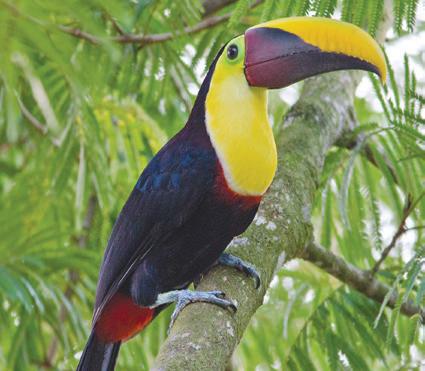
Halfway down the east slope of the Andes in Ecuador, sightings of the luminous yellow beaks of the chestnut-mandibled toucan are abruptly replaced by the colorful beaks of the white-throated toucan. Narrow elevation residences of tropical mountain birds like these have baffled scientists for centuries and have been assumed to be attributed to changes in temperature.
However, a new study out of the Cornell Lab of Ornithology finds that these limited altitude residencies are due to interspecific competition where individuals of different species compete for the same resources. The study, published in Science, was conducted using eBird data from 4.4 million citizen science observations of 2,879 bird species around the world.
The tropical mountains are home to incredible biodiversity with unique and distinct species that inhabit very narrow elevation ranges. This is unlike temperature mountains, areas of mild temperature, where species commonly inhabit more broad elevation ranges.
Scientists have long assumed that the distinct distribution in the tropical mountains was attributed to changes in temperatures with elevation. The differences in climate, from the hot lowlands to the cold highlands, were believed to create a variety of ecological niches and a myriad of unique species.
Now, the research team from Cornell
and University of British Columbia show that interspecific competition plays a much greater role in shaping the biodiversity of tropical mountains than previously thought. The eBird data used revealed a strong correlation between interspecific competition and bird elevation inhabitation.
For example, different species of birds fall into different elevation boundaries. At the elevation boundary, these birds strongly interact with one another which suggests that competition is important, according to co-author Eliot Miller.
“If one [bird species] was removed, the other would expand into its range,” Miller said. Such data, collected across 31 montane regions supports the idea that competition, not climate, is the main factor that drives bird species into very narrow elevation ranges. These findings provide insight into the impact of climate change on tropical ecosystems.
As global warming continues, birds in the tropical mountains will move up slope towards cooler climates. This upwards migration may start to directly affect competition between species, possibly resulting in a loss of certain species.
“It’s more evidence that the web of interactions in these tropical ecosystems is really important in structuring how communities respond [to climate change],” Miller said.
In the future, Miller looks forward to investigating how speciation occurs

between close relatives and why one group of individuals may be more dominant than the other, allowing them to occupy their ancestral climate while pushing others to another habitat. Others in the Cornell Lab of Ornithology, like Ben Van Doren, are interested in how tropical mountain ecosystems are shifting with climate change.
Large datasets for research like this, couldn’t have been collected without con-
tributions from citizen scientists, allowing researchers like Miller and others to continue monitoring bird populations around the world.
“It’s really powerful that we have this many people in the world who are interested in nature because it means they’re willing to help protect it,” said Miller.
By CAROLINE MICHAILOFF
Contributor
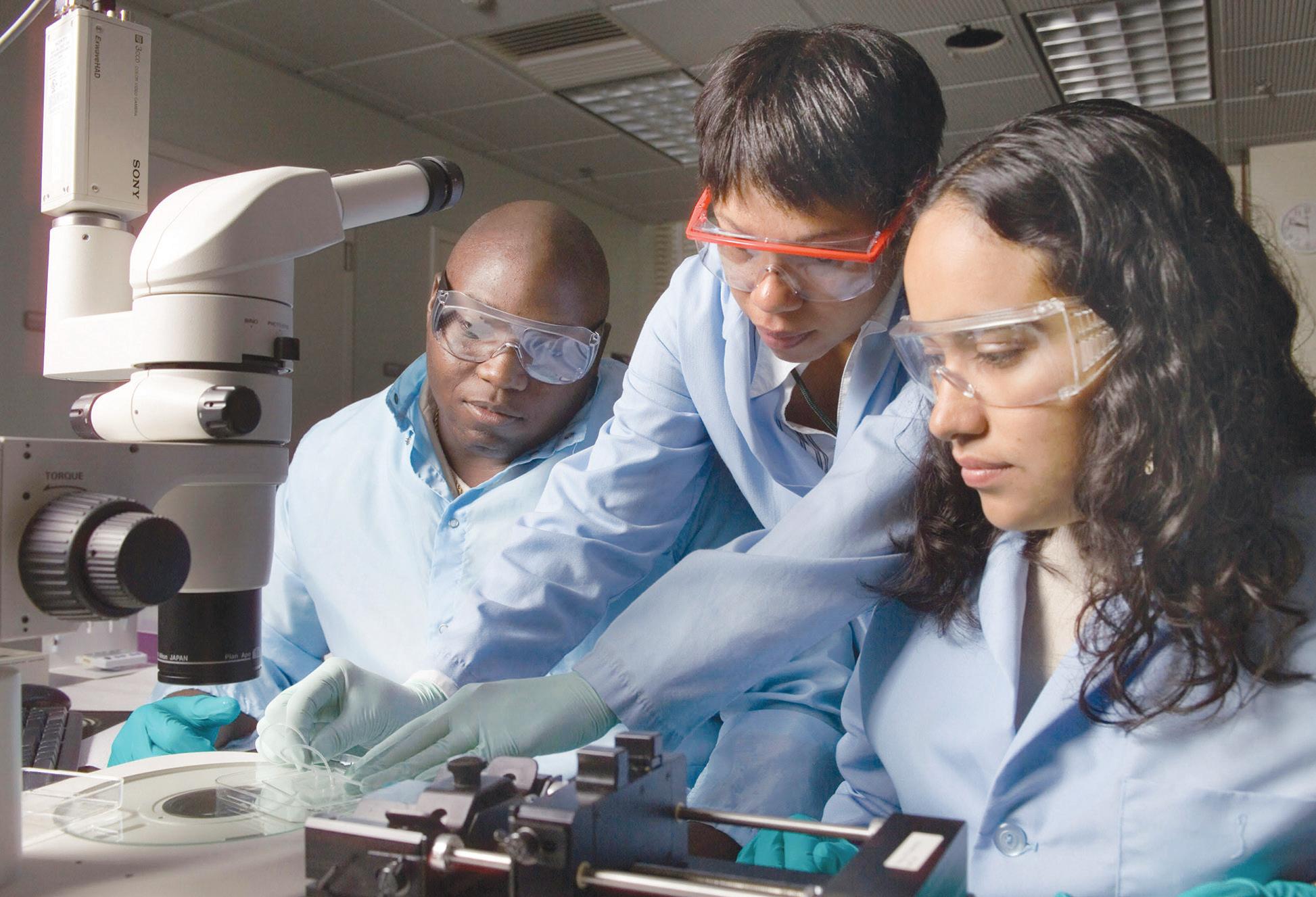
The National Science Foundation has granted Cornell $15 million over five years to oversee the establishment of the Innovation Corps Hub, a group that will support science and technology entrepreneurship in rural and economically underserved regions.
Cornell has had an NSF I-Corps Site since 2011. The NSF grant funds the partnership for the I-Corps to work with Cornell faculty, Ph.D. students and postdoctoral asso-
ciates to help them figure out how to turn an invention in the lab, like clean energy inventions, into a commercially viable new venture.
The Interior Northeast I-Corps Hub aims to expand the nation’s geography of innovation by developing a regional I-Corps innovation network that can become a repeatable, inclusive model of education and workforce training designed for and by innovators based in rural regions and small cities. For Cornell, students can gain experience that can lead to innovation of new products
and companies.
The program officially launches on Jan. 1. Cornell, along with partnering universities, will lead the charge in administering regional courses and entrepreneurial curriculum, to build an innovative and inclusive network of innovators in the area. Using the scientific method to inform business model design, STEM researchers participating in I-Corps courses work to connect with potential customers and ensure the solutions they’re developing fill a pressing market need.
“The idea is that the grant
funds will be used to develop entrepreneurial skills and capability in technologists, which will increase the impact of research, number of new ventures formed, and likelihood of success of those new ventures,” wrote Tom Schryver, founding executive director of Center for Regional Economic Advancement and IN I-Corps director in a statement to the Sun.
IN I-Corps covers areas from New Hampshire to West Virginia and seeks to restore economic vitality in areas that are economically underrepresented.
According to Schryver, the $15 million will be split across 10 recipients over five years. The main use of funds is to run what NSF calls “regional cohorts”, which areI-Corps courses that are run for innovators. Each partner institution will then recruit participants and lead regional cohorts using the central curriculum and courseware resources.
“The grant will enable us to develop and grow the innovation economy throughout our region, catalyzing the impact of the bright ideas and world-leading research coming out of the Northeast in our ongoing effort to solve society’s big challenges,” College of Engineering Dean Lynden A. Archer wrote in a statement to The Sun.
Prof. David Putnam, biomedical and biomolecular engineering, is also a faculty lead
member for IN I-Corps and associate dean of innovation and entrepreneurship. “What this means for Cornell is that our students get active training and mentorship that can lead to new products and companies,” Putnam said.
Cornell, as its lead institution, is responsible for the infrastructure of the IN I-Corp which involves managing the programs and courseware and curriculum as well as track student participation and outcomes.
There are also funds for new research focusing on identifying effective support systems and practices in helping aspiring tech entrepreneurs succeed. The courses place an emphasis on improving diversity within the entrepreneurial community and helping individuals settle down in rural regions, as opposed to big cities like New York City, where most venture capital money has been historically deployed.
“Students are trained very well about how to do science through their University training, but without an entrepreneurship mindset, these great technological advances would not leave the academic lab and will be lost, ” Putnam said.
“This grant will help to create societal impact because new products can be brought to the market to benefit society.”