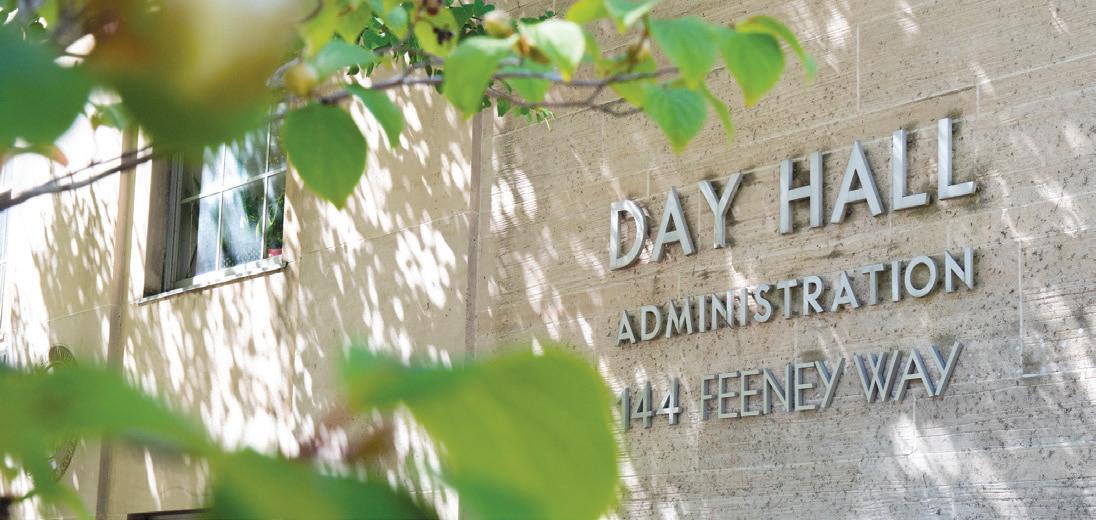
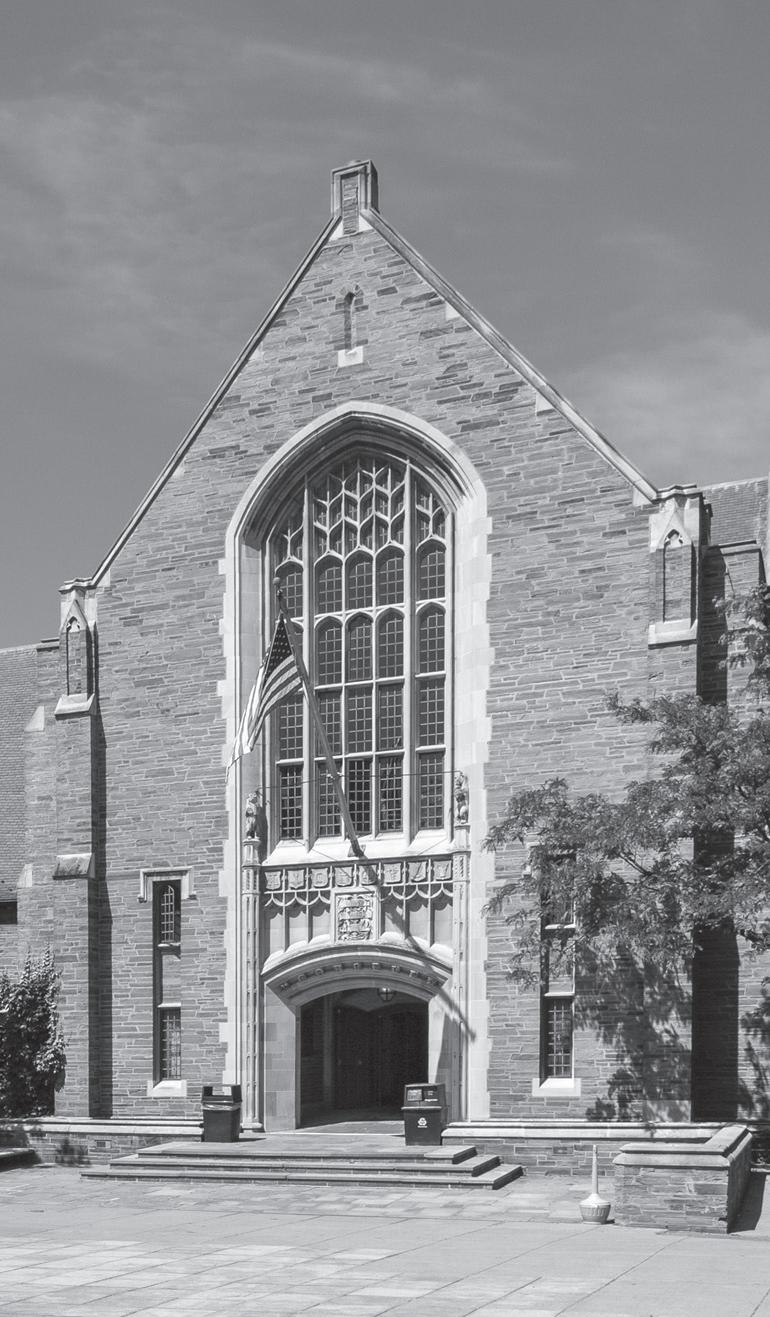
Nearly two years after the death of Antonio Tsialas ’23, hundreds of Cornell students participated in a week of anti-hazing events renamed after him.
While Greek life organizations make up the majority of Cornell student organizations that have been charged by the University with hazing in recent years, all students on campus were encouraged to participate in last week’s events.
According to Kara Miller, Director of Sorority and Fraternity Life,
Students Seek Out New Tatkon Center Location
By SARAH JAVKHLAN Sun Staff Writer
After a year and a half of mostly virtual classes, students have been eager to seek out in-person academic support at the Learning Strategies Center and the Tatkon Center to help them succeed academically and socially.
The Learning Strategies Center offers supplemental courses for some of Cornell’s most popular introductory courses such as economics, phys ics and calculus. These cours es review lecture material in a smaller classroom setting and provide addi tional practice opportunities for students.
Mehler ’23 vie for vacant position
By JOHN YOON Sun City Editor
Since Mayor Svante Myrick ’09 successfully ran for the Fourth Ward during his years at Cornell, multiple Cornellians have attempted the same. This election cycle, George Defendini ’21 and Robert Cantelmo, a fourth-year doctoral candidate in the government department, are running for Common Council seats.
Now, two more Cornellians are throwing their hats in for the Fourth Ward seat.
On Sept. 22, members of the Common Council interviewed candidates Patrick Mehler ’23 and Katie Sims ’20 to fill in for the Fourth Ward –– which includes parts of West Campus and Collegetown –– after Steve Smith’s (D-4th Ward) resignation in August.
“I
The candidate will serve until December 2022 until a special election can be held for the seat and the remainder of the alderperson’s seat. To make the decision, the participants applied to the position and interviewed Mayor Svante Myrick ’09, Graham Kerslick (D-4th Ward) and Ducson Nguyen (D-2nd Ward).
motivation for applying to fill in the Fourth Ward came from having the opportunity to impact the community that she loves.
“I love Ithaca. I moved here for college and I couldn’t leave because I liked it too much,” Sims, a former Sun associate editor, said. “I really want to put time and effort into this community.”
Sims has previously worked for the board of directors for The Cornell Daily Sun and is currently involved in the Tompkins County Human Services Coalition Board of Directors as a community volunteer.
Mehler also expressed his concerns about affordable housingg. Mehler said he believes that Common Council is the direct avenue to making sure that both students and Ithaca’s permanent residents have access to affordable housing.
hope that my time on the council can be one in which a new era is started of bringing back the young voices.”
Patrick Mehler ’23
The Common Council votes on matters regarding the City of Ithaca, with two alderpersons per ward to represent the concerns and desires of their constituents. Ithaca has five wards in total.
Mehler, who is also a Sun columnist, emphasized the need for the Common Council to engage with students and make sure their voices are being heard — an effort he says he can help with due to his experience increasing voter participation and his experience as a student.
“There’s really an opportunity here to create and rekindle that fire between students within this
Speaking with The Sun, Mehler expressed that improved communication between the city, Cornell and developers can help to address affordable housing. Knowing how many students are projected to be admitted by Cornell can help the city know how many affordable rooms are needed, influencing the development projects already underway in Ithaca, according to Mehler.
Sims discussed economic development and strategies for ensuring that the city can continue to develop new buildings without making housing unaffordable.
“The challenge is how to allow this expansion and create these economic benefits for the city while also making sure that people still have a place to live,” Sims said.
Sims suggested negotiating with developers to increase the mandatory availability of affordable housing and lower the cost of what affordable housing means, ultimately finding what would most benefit community members.
Sims further elaborated on various other challenges in the Fourth Ward — including the dangers of the traffic and walking infrastructure in Collegetown for cyclists and pedestrians, the best ways to reimagine public safety and how academic institutions can con-
While acknowledging that he would have only a year in the role, Mehler said he’s confident he could get people involved in Common Council. He referenced his experience with increasing voter participation at Cornell both as the president of Cornell Votes, a student organization that works to increase voter participation, and as the director of elections for the Student Assembly. Sims said she believes local governments are essential for making sure
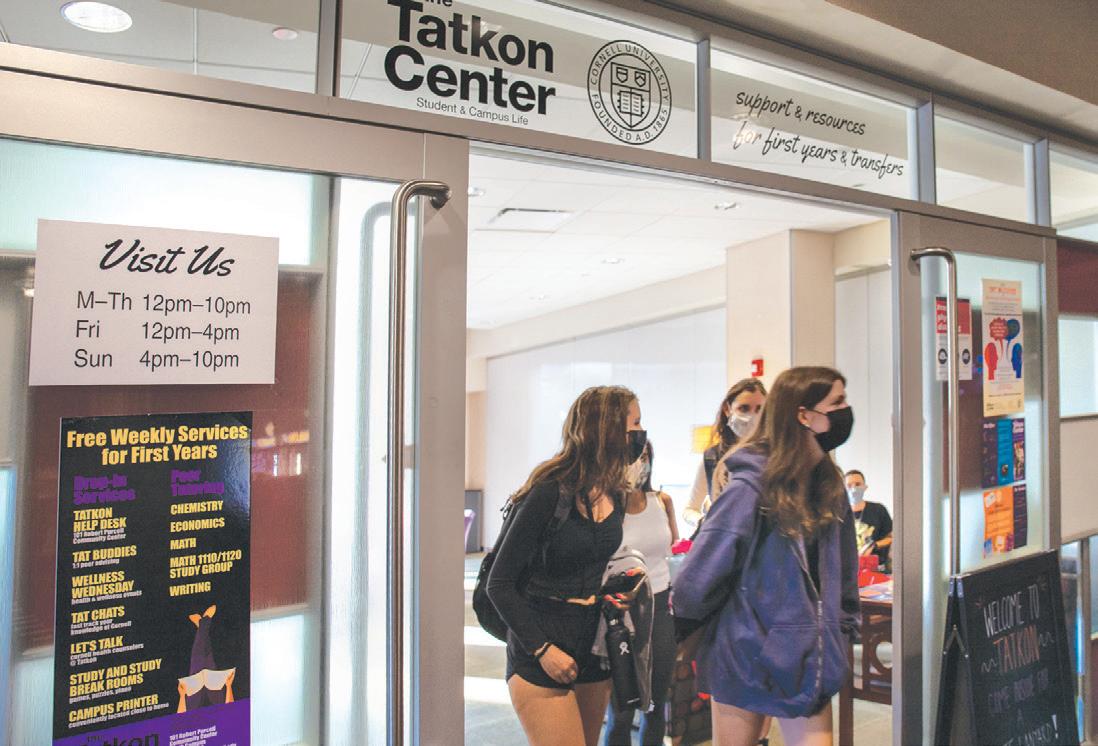
Tutoring | Students walk out of the new RPCC Tatkon Center. After semes ters of remote resources, the Tatkon Center is back hosting in-person events.
Tuesday, September 28, 2021
A LISTING OF FREE CAMPUS EVENTS
Today
Cornell Climate Change Program Work Team Meeting: Launching the Cornell Climate Stewards Program 9 a.m., Virtual Event
GET SET Workshop: Effective Grading and Feedback 11 a.m., Virtual Event
Behavioral Economics Workshop: Tatiana Homonoff 11:15 a.m., Sage Hall 141
Integrated Parasite Management for Goats and Sheep Workshop - Herkimer Noon, CCE Herkimer County
Public Safety Advisory Report Feedback Session Noon, Willard Straight Hall Memorial Room
Graduate and Professional School Fair
1 p.m., Virtual Event
Spanish Conversation Hour
3 p.m., Stimson Hall G25
Biomedical and Biological Sciences Signature Seminars 4 p.m., Virtual Event
Turkish Conversation Hour 4:30 p.m., Stimson Hall G25
The Silence of Others With Introduction by Cecelia Lawless (Romance Studies)
7 p.m., Willard Straight Theatre
Tomorrow
Paradigm of Movement
8 a.m., Human Ecology Building, Jill Stuart Gallery
Midday Music for Organ 9/29: C.U. Music 12:30 p.m., Anabel Taylor Hall
5 Things Stressing Your Kids Out This Back-to-School Season ... and How You Can Help Them 1 p.m., Virtual Event
Navigating New Work-Life Realities 2 p.m., Virtual Event
Migration as Practice: Pedagogy Workshop 3 p.m., Uris Hall Einaudi Conference Room G08
Public Safety Advisory Report Feedback Session 4:30 p.m., Willard Straight Hall, Memorial Room
American Sign Language Conversation Hour 4:45 p.m., Virtual Event
Rachel Weil, Custodial Detention in Early Modern England, 1550-1800
5 p.m., Klarman Hall, K164
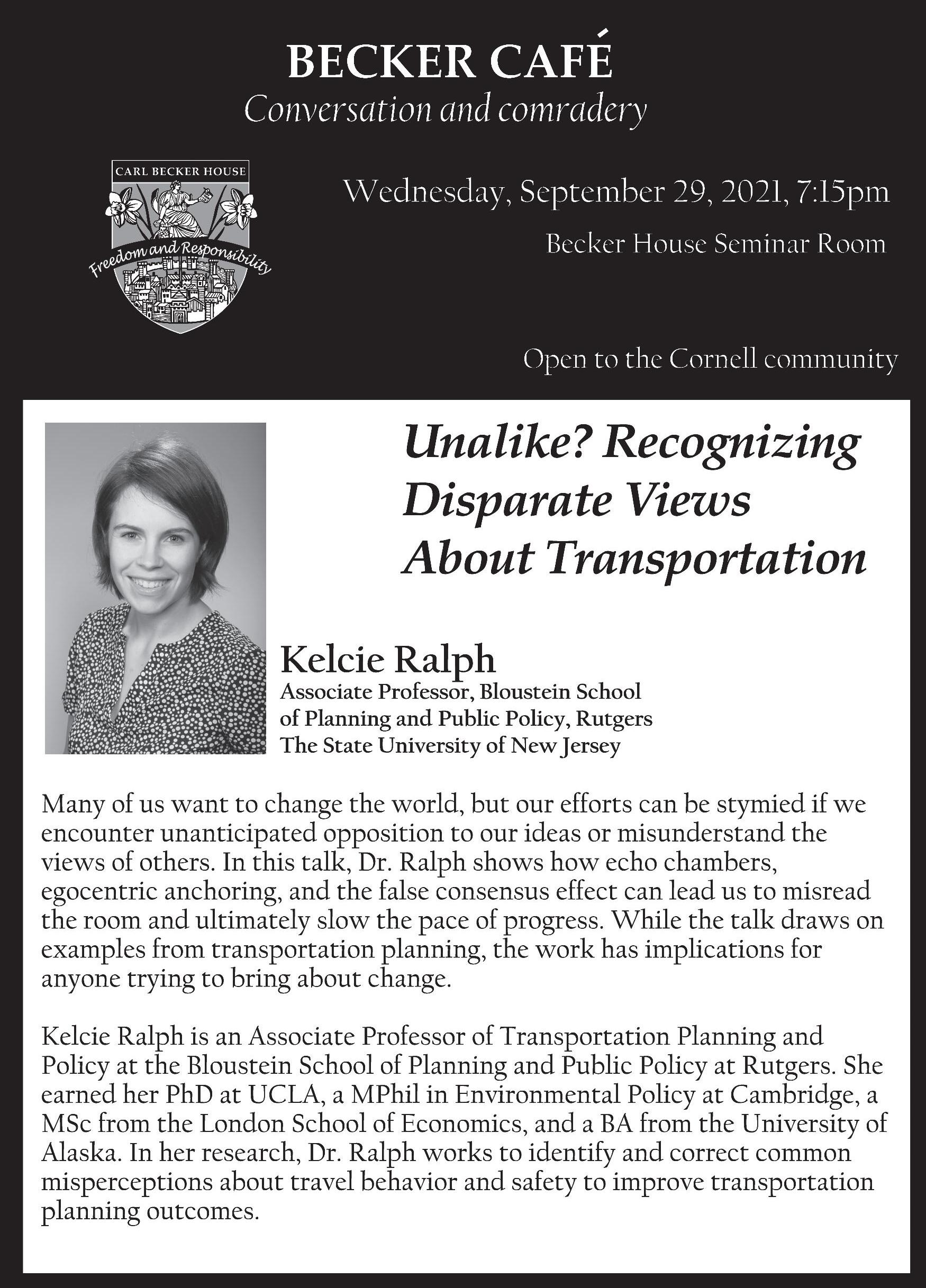
Wellness Wednesday: Board Games @ the Tatkon Center 8 p.m., Tatkon Center for First-Year Students RPCC 222
Cornellians Vie to Fill 4th Ward Council Seat
COMMON COUNCIL
Continued from page 1
people’s everyday needs are met and thinks her flexible work schedule as a social media specialist at 350.org –– an organization working to eliminate and advocate against fossil fuels –– would make her a good alderperson.
“The federal government can assign priorities and can get together funding, but it’s really up to the local governments to decide what goes where,” Sims said. “It’s the local governments that need to
be most responsive to the needs of the community and can make huge impacts on people’s day to day quality of life through little things like what their walk to work looks like.”
When discussing the challenges the Fourth Ward currently faces, Mehler referenced the city’s past challenges in communicating with students. According to Mehler, many students were not aware of Smith’s resignation, and he wants to make sure the students in the Fourth Ward are heard as part of the governance process.
“As a current student and somebody who is
Cornellians Find Support, Resources at New Takton, Learning Strategy Center
TUTORING
Continued from page 1
Juliette DeSpirito ’25 and Gabriella Elcsics ’25 are enrolled in the supplemental course for an introductory-level physics course. Both said that the supplemental course has helped them grasp the difficult material.
Elcsics added that the supplemental course has helped make the workload more manageable, especially as she transitions from more than a year of online high school to in-person college classes.
“It was definitely overwhelming coming here,” Elcsics said. “In the beginning I didn’t know how to time manage my work, so it eventually piled up and I really didn’t know what to do or what resources would help me.”
Genie Enders ’25 has been attending weekly tutoring sessions for her calculus class at the Tatkon Center. Enders said she appreciates the in-person aspect of Tatkon Center tutoring services — where pods of students are huddled together inside one of RPCC’s study rooms.
“You can hang out with your friend to go get the homework done and get tutoring at the same time,” Enders said. “It’s definitely been a smoother transition than I initially believed.”
The Tatkon Center has returned to in-person programming, from math tutoring to friend speed dating — a drastic change from last year, when all programming was virtual.
“We’ve been pretty ambitious with our programming this year because we want to make up for a lot of the lost experience from things being virtual last year,” said Alizeh Khan ’22, a student staff member at the Tatkon Center.
The Tatkon Center runs events to help students connect with one another in a more relaxed social setting, including their Wellness Wednesday events — a space for students to
unwind from the stresses of the academic week. Khan said she has noticed a greater demand for these wellness events, more than what it was before the pandemic.
“Our wellness and socializing events have been way through the roof,” Khan said.
Khan described one particular Wellness Wednesday event, where students got the chance to assemble their own “self-care kits.” They had expected 20 to 30 students to show up — but close to 50 students ended up attending.
The increased demand for these events have added some challenges for the center to adequately support everyone who comes in — according to Khan, the center has been understaffed this semester.
The center has also been operating in RPCC this year due to the closure of Balch Hall for quarantined students — limiting the amount of space available for programming. However, Khan said that the center has adjusted to the increased demand.
“I really think it’s the social aspect that they’re missing the most,” Khan said.
Despite the increased demand for academic and general support, some students feel like their peers are not taking advantage of the numerous academic resources available to them.
“I would say I’ve met a fair amount of people who didn’t know they existed in the first place,” Enders said. “Even when I told people about it, some people still don’t show up.”
Still, many students are glad to have access to in-person tutoring and academic support during a major transition in their academic careers.
“Being able to go somewhere I know I can get help [and] get the work done on time has been really relieving for me,” Enders said.
Sara Javkhlan can be reached at sjavkhlan@cornellsun.com.
[interconnected to this community] ... I will be one more link for every single person in the Fourth Ward, to take their experiences in Cornell and connect it with the city,” Mehler said to The Sun. The Common Council Selection Committee will have a public meeting about the two candidates before passing their recommendation onto the council.
John Yoon can be reached at johnyoon@cornellsun.com.
Anti-Hazing Events Hosted in Remembrance
National Hazing Prevention Week named after Antonio Tsialas ’23
ANTI-HAZING
Continued from page 1
National Hazing Prevention Week aims to increase student knowledge about hazing awareness and inspire people to speak out about hazing.
Tsialas was an 18 year-old first-year student studying economics and math who loved to play soccer and spend time with friends and family. He was found dead in Fall Creek Gorge in October 2019 after a dirty rush event at the Phi Kappa Psi fraternity, which has had its recognition indefinitely revoked.
“The loss of Antonio was a tragedy within and outside of our campus community,” Miller wrote. “It is our hope that by honoring his memory through efforts to raise awareness and education about hazing, we can help make a significant change in our Cornell community so other families do not experience the loss that Antonio’s family has suffered.”
“We
According to the Student Code of Conduct, students convicted of hazing face possible sanctions including community service, fines, educational steps, suspension and expulsion, depending on factors including the severity, impact and context of their actions as well as any previous disciplinary history. Student organizations face similar possible penalties.
One of the week’s events included a message-writing campaign on stickers placed on signs on the Arts Quad on Friday. More than 300 students participated, writing reasons why they condemned hazing. Miller acknowledged that students joining organizations on campus this year may be particularly vulnerable to hazing after the isolation of remote learning, and encouraged organizations to treat new students safely.
“Students’ need for social belonging, connection, and friendships may be especially heightened this year after a prolonged period in which many have felt lonely, isolated, or disconnected,” Miller wrote.
can help make a
“It’s important that the increased desire for meaningful connection with others be supported and not be exploited.”
significant
The Student Code of Conduct defines hazing as an act in which the condition or initiation, recruitment, admission or membership of a group puts participants at risk of any kind of harm. This can include the consumption of alcohol or drugs, unpalatable substances, illegal actions, and menial tasks.
change in our Cornell community.”
Kara Miller
Last week, Cornell students were encouraged by the University to sign an anti-hazing pledge created by a national anti-hazing organization, in which they promised to work to prevent, stop and report hazing, as well as empower others to do the same. The pledge also includes recognition of the harm that hazing causes, condemnation of hazing of all kinds, advocating for hazing prevention and admonishment of those who facilitate hazing.
“No student should ever have to face physical or emotional harm for the sake of joining an organization that is supposed to stand for brotherhood or sisterhood,” Ashley Acosta ’22, president of the Multicultural Greek and Fraternal Council, said in a University press release.
Cornell encouraged students to participate in anti-hazing event options within their own organizations, which included watching and discussing films, reading and talking about hazing-related articles, listening to and conversing about hazing-related podcast episodes and other educational activities.
Students who want to learn how to prevent hazing can participate in How to Recognize and Respond to Hazing, a training made by the Skorton Center for Health Initiatives at Cornell Health. If students are aware of hazing activities that they want to report, they can contact the University by phone call or online hazing reporting form.
“If you suspect or learn that someone you know is experiencing hazing or uncomfortable pressures or challenges related to joining a group, team, or organization, you can help them by being supportive,” Miller wrote. “You can talk with the person you’re concerned about directly and share that you care about them and are concerned. You can also encourage the person to report hazing or you can make a report yourself.”
According to Miller, Cornell’s anti-hazing events this fall are not over yet –– there will be an anti-hazing keynote presentation on Nov. 8 at 7 p.m. in Statler Auditorium.
Tamara Kamis can be reached at tkamis@cornellsun.com.
Sex Education ’s Season 3 Continues To Educate and Impress
The third season of Netflix’s Sex Education opens with — no suprise here — a sex montage as students, parents and teachers hook up to the sound of the 80s classic “I Think We’re Alone Now.”
Set the summer after the conclusion of Season 2, a great deal has changed for the characters in their idyllic British countryside home — Otis (Asa Butterfield) has been secretly having casual sex with popular girl Ruby (Mimi Keene), his mom Jean (Gillian Anderson) is very pregnant and has yet to tell her ex-boyfriend about the baby, Adam (Connor Swindells) and Eric (Ncuti Gatwa) are adjusting to their relationship becoming public, Maeve (Emma Mackey) is dealing with the aftermath of calling the police on her mom and her sister being placed in foster care and Mooredale Secondary has a new head teacher.
There’s a lot happening, and indeed the first few episodes of the season are almost too busy to keep track of the various storylines. Sex Education has a lot of points to make, and with only eight episodes, the season is pretty jam-packed.
Though it still provides structure for the show, the focus on Otis and Maeve has lessened so that the lives of smaller characters are allowed to shine through — and many of these subplots, both new and ongoing, are successful. Adam’s character development, as he navigates being in a gay relationship and confronting his vulnerabilities, is wonderful to watch, and Swindells’ subtle facial expressions communicate so much emotion. Meanwhile, new student Cal (Dua Saleh) makes Jackson (Kedar Williams-Stirling) aware of the many constrictive cisnormative options that non-binary people face. The friendship between the two is candid yet playful, and Cal’s nonchalant manner of introducing their pronouns normalizes being non-binary in a refreshing way. Maeve and Otis are still not on speaking terms, as their feelings for each other con-
tinue to be besmirched by different factors (in this case, Otis’s love-declaring voicemail being deleted from Maeve’s phone by jealous neighbor Issac). Maeve and Aimee’s (Aimee Lou Woods) friendship continues to be an incredible portrayal of female
touching aspects of the season. To top it off, Aimee’s struggle as she deals with the trauma of her sexual assault in the last season is honest and deftly handled.
As school begins again, the students are confronted by a new headteacher,
their shared identities, but because of their respect for each other’s differences, pride in their designation as “Sex School” and obligation to protect identities under attack.
Identity is the key word of Season 3, and the identity struggles the characters
Sex Education is well worth the watch. It made me laugh out loud, cry and examine my own identity.
friendship, with all of its humor, emotion, loyalty and fights, and is one of the most
Hope (Jemima Kirke), whose mission is to clean up Mooredale Academy’s reputation of “Sex School” and instill some discipline into the students. Hope’s new restrictions include school uniforms, sex education classes promoting homophobia, abstinence and the shaming of sexual desire, on top of her general uniwillingness to support the identies of students.
What begins as a commentary on the pertinent dangers of these types of policies quickly turns tyrannical, with levels of treatment and punishment from Hope that border on abuse and diminish the strength of important social criticism.
However, Hope’s presence does create the opportunity for students to bond and fight back — not necessarily because of
grapple with are diverse: gender orientation, sexual orientation, sexual desire and preference, appreciating one’s body, discovering and accepting one’s passions and learning to prioritize oneself over a relationship are just some of the particularities that characters come to terms with.
It seems that almost anyone can see a facet of themselves in a plotline or theme of the show.
Sex Education’s world occasionally fails to be relatable; the 80s style costumes, homes, and cars are fun yet sometimes distracting, and Maeve’s trailer park home is more aesthetically pleasing than anything else. Yet in the picturesque bubble of Moordale, the complications and themes are universal. A focus on adult characters as well as students showcase how obstacles evolve with age, but remain rooted in the basic issues of insecurity, behavioral patterns and societal pressure.
The season successfully teaches the importance of fulfilling relationships and acceptance of personal identity without becoming too preachy. The characters may be specific and well-defined, but close your eyes and you will likely hear your own experiences in their words.
Overall, despite its imperfections, the third season of Sex Education is well worth the watch. It made me laugh out loud, cry and examine my own identity and those around me — exactly what a show about teenagers in the modern-day should accomplish.
Eliza Salamon is a sophomore in the College of Arts and Sciences. She can be reached at ecs287@cornell.edu.
COURTESY OF NETFLIX
ELIZA SALAMON SUN CONTRIBUTOR
COURTESY OF NETFLIX
Awful Anachronisms: A Cinderella Review
Fairy Tales, especially those featuring princesses, are nostalgic. Most people raised on Western media know the stories of Snow White, Sleeping Beauty and Cinderella. It may be popular Disney adaptations or the bedtime stories that originated from ancient European folktales. Their notoriety makes it easy to modernize these stories by transporting them to a different place in space-time. High fantasy adult Snow White? Steampunk sleeping beauty? And uh… Cinderella directed by Kay Cannon.
These are the perfect stories to be retold because of their universality and their unlimited potential for fluidity in presentation. However, one should not strip so many elements of the original story that it becomes bland, nor abuse the fluidity to ignore worldbuilding. Cinderella (2021) does both.
The movie opens with happy townsfolk dancing and singing while doing their everyday tasks. Billy Porter, the narrator and the fairy godmother, zooms in on Cinderella’s family. The stepmother (Idina Menzel) and two stepsisters (Maddie Baillio, Charlotte Spencer) are introduced, donning a 60’s housewife aesthetic that clashes with their pseudo-Victorian house. Cinderella (Camila Cabello) is, of course, the classic mistreated stepdaughter.
But, there are two twists to this classic story: the stepmother desires to marry Cinderella off and Cinderella desires to
Cinderella (2021) is a neoliberal fever dream with an uncharming patched aesthetic. It tries too hard to be current and political, thus making itself irrelevant and complacent.
start a dressmaking shop. After seeing the stepfamily abuse Cinderella and demean her dreams, the directionless and wildly immature prince charming, Robert (Nicholas
Galitzine), enters onto the screen. The time-tested Cinderella story progresses from there, with a few modern twists. The biggest downfall of this musical is perhaps its aversion to consistency. The director does not decide on a musical style, which is not an issue in itself, but the multiple cover songs that are emblematic of a certain era make the soundtrack feel out of place with the plot. Hearing the stepmother sing Madonna’s “Material Girl”, which
represents the 80’s and also possesses undertones of modern material commodification, to convince her girls to accept betrothal, while a prince at a ball shouts “Seven Nation Army” seems out of place.
The biggest downfall of this musical is perhaps its aversion to consistency.
The cast covers such iconic songs with little attention to adaptation in the writing, making the movie feel uncreative and underwhelming (who would prefer Galitzine’s vocals singing “Somebody to Love” to Freddie Mercury’s?).
Anachronistic language also limits immersion. The prince’s sister addressing him as “dude,” the fairy godmother dropping “yasss” and a royal woman referring to herself as “a frickin’ queen,” makes the movie feel less like a high fantasy, and more like a high school drama. That sort of language coexisting with the mentions of “dysentery” and exclamations like “huzzah!” make an odd combination. It would have been better to choose between a classic YA high school setting or a high fantasy rather than trying to mush the two together. The movie tried to be relatable rather than be escapist, and it ended up being neither. The other objection to this movie is its misplaced usage of politics. The prince’s younger sister attempts to share her opinion on kingdom
politics with her father, suggesting they use windmills for renewable energy and reduce the catapult budget. These quips are clumsy references to current politics, barely veiled and barely adapted to the time period the movie occurs in. While Gwen suggests progressive reforms and the movie shows its feminist undertones, the class politics are extremely regressive.
When Cinderella is confronted with discrimination because of her involvement in business, her solution is supposedly in “Open-minded people with cash to spare.” She is told by the fairy godmother before the ball that she will “...meet a bunch of rich people who will change your life.” This glorification of bourgeois patronage of entrepreneurs is uncomfortable, to say the least, the implication being that: Cinderella needs to rely on the Enlightened upper class to save her from her ignorant peasant village. Cinderella (2021) is a neoliberal fever dream with an uncharming patched aesthetic. It tries too hard to be current and political, thus making itself irrelevant and complacent. Her fixation on running a dress-making business over a life of luxury is an American capitalist idea disguised as a feminist one.
The movie posits a worldview where the only path to achieving your dreams is hard work, luck and rich sympathizers. Although it glances toward systemic change, it settles for a “girl not like other girls achieves success because she’s virtuous and has dreams” trope. These tales are not revolutionary, but rather cruel optimism attempting to glorify the American entrepreneurial ideal.
Sophia Gottfried is a junior in the College of Arts and Sciences. She can be reached at sdg222@cornell.edu.
SOPHIA GOTTFRIED SUN CONTRIBUTOR
COURTESY OF SONY PICTURES
COURTESY OF SONY PICTURES
ANUSHYA ALANDUR ’23
Business Manager
CATHERINE ST. HILAIRE ’22
Associate Editor
PRANAV KENGERI ’24
Advertising Manager
ODEYA ROSENBAND ’22
Opinion Editor
JYOTHSNA BOLLEDULA ’24
News Editor
TAMARA KAMIS ’22
News Editor
CAMERON HAMIDI ’22
App Editor
KRISTEN D’SOUZA ’24
Design Editor
HANNAH ROSENBERG ’23
Photography Editor
OMSALAMA AYOUB ’22
Science Editor
PUJA OAK ’24
Layout Editor
ANNIE WU ’22
Production Editor
MIHIKA BADJATE ’23
Assistant News Editor
SERENA HUANG ’24
Assistant Business Editor
ANGELA BUNAY ’24
Assistant News Editor
JOHN COLIE ’23
Assistant Arts & Culture Editor
AMELIA CLUTE ’22
Assistant Dining Editor
WILLIAM BODENMAN ’23
Assistant Sports Editor
AARON SNYDER ’23
Assistant Sports Editor
MEGHANA SRIVASTAVA ’23
Compet Manager
KATHRYN STAMM ’22
in Chief MADELINE ROSENBERG ’23
Editor
KOH ’23
OZA ’22
HEO ’24
CIPPERMAN ’23
NOOREJEHAN UMAR ’23
PLOWE ’23
YOON ’23
VELANI ’22
PICHINI ’22
TYAGI ’22
MENDOZA ’24
ARANDA ’23
BASU ’23
RIGGS ’24
LEYNSE ’23
NAGEL ’24
’24
’22
Noah Do Noah’s Arc
Noah Do ‘24 is a sophomore in the College of Human Ecology. He can be reached at ntd35@cornell.edu. Noah’s Arc runs every other Monday this semester.
Is Introversion a Hoax?
For those who have read my first column, it should come as little surprise that I am a self-proclaimed introvert. Amidst the chaos of a bustling college campus, I greatly value my alone time and am usually averse to crowded social situations. I spend a lot of time in introspection and am easily occupied with just my thoughts. Consequently, I’ve developed an acute sense of self-awareness. I spend a lot of time reflecting on simple exchanges I have with people and try to be cognizant of non-verbal cues. This awareness means I am usually good at reading people’s moods and can adjust my own behavior to achieve better social harmony. But this awareness has its own pitfalls.
Being an “introvert” is a safe label that allows me to stay within my comfort zone without feeling like I’m missing out.
ad layout Annie Wu ’22
desker Catherine St. Hilaire ’22
desker Madeline Rosenberg ’23
news deskers Tamara Kamis ’22
Kayla Riggs ’24
production desker Annie Wu ’22
layout deskers Kristen D’Souza ’24 Puja Oak ’24
photo desker Hannah Rosenberg ’24
Arts desker John Colie ’23
science desker Srishti Tyagi ’22
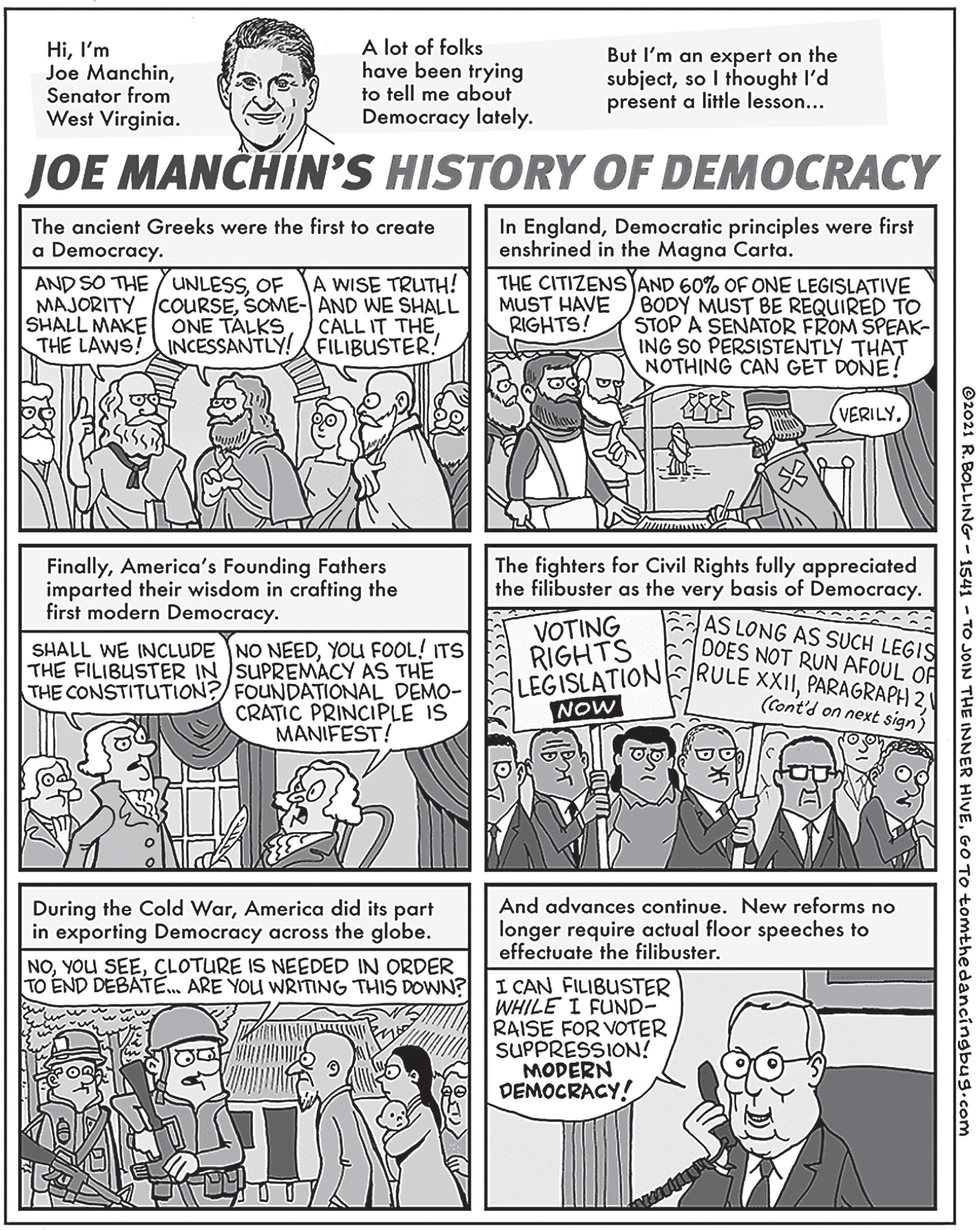
by Ruben Bolling
Many of my social interactions are fraught with insecurities and self-conscious neuroticisms. Something as simple as waiting in a lecture hall can be an arduous process as my brain is constantly scanning the room to gauge how others might be assessing me. I can never seem to get out of my head and live in the moment.
If I take a step back, I realize that no one is as occupied with me as I seem to think they are. Most people are just doing their own thing, completely unaware of the small quirks that I obsessively worry about. Despite this understanding, I’m unable to let go of the possibility that maybe someone out there has picked up on my insecurities and that maybe my flaws are more glaring than I initially thought.
My tendency to keep to myself and preference for alone time are traits that I take complete ownership of, but ones that I also recognize are partially rooted in my own self-consciousness.
A study conducted by Duffy et al. (2018) measured the positive affect and cognitive capacity in individuals after socializing. The study found that although “less extraverted individuals [are expected] to feel worse after socializing”, “all but those extremely low in extraversion (17% of sample) actually [experienced] an increase in positive affect after socializing” and “did not show reduced cognitive capacity.” Ownership of introversion can create baseless expectations for social interaction, causing introverts to forgo social opportunities just because of their preconceived notions that they won’t enjoy them. Introverts are not alone in our fear-driven behaviors, though. As an introvert, I find that my comfort with being alone allows me to reconcile the less desirable parts of my personality. I am truly okay with who I am and have learned to find pride in my strengths and acceptance in my weaknesses. Extraverts, on the other hand, often find alone time to be uncomfortable as they are forced to confront inner feelings that they may have been able to avoid by interacting with others.
This is the backdrop to my introversion. If I’m being honest with myself, it’s largely driven by fear. My tendency to keep to myself and preference for alone time are traits that I take complete ownership of, but ones that I also recognize are partially rooted in my own self-consciousness. This raises the question: is introversion founded out of fear really introversion at all?
I find myself tending to use my inversion as a crutch. When I accept introversion as part of my personality, I become okay with my own social laziness as a manifestation of who I am. I can avoid reaching out to new people and stepping out of my comfort zone because that’s just not the kind of person I am. It’s not a shortcoming, it’s a unique dimension of my personality. There are countless social opportunities that I’ve completely missed out on under the guise of exercising my “introversion.” In most cases, I know what to say and how to say it, but lack the courage to break the mold that I’ve arbitrarily made for myself.
If we’re all honest with ourselves, introversion and extraversion are little more than defense mechanisms that help us put words to our anxieties. Those who allow themselves to be controlled by the perceptions of others label themselves as “introverts” so they can avoid truly confronting these perceptions and how to overcome them. For people who struggle to come to terms with their innermost thoughts and feelings, “extraversion” serves as a great distraction from the discomfort of nuanced self-awareness.
So, is introversion a hoax? I’d say yes. From my experience, introversion can be characterized by an avoidance of social interaction that leads to a preference for alone time, rather than the other way around. In the same way, extraversion is also a hoax - one big illusion to avoid the tough questions that come with introspection.
I’d encourage readers, especially fellow introverts, to live beyond these labels and question whether your intro/extraversion is really a core aspect of your personality, or just an attempt to excuse yourself from stepping outside of your all-too-comfortable box.
Tom the Dancing Bug
Fill in the empty cells, one number in each, so that each column, row, and region contains the numbers 1-9 exactly once. Each number in the solution therefore occurs only once in each of the three “directions,” hence the “single numbers” implied by the puzzle’s name. (Rules from wikipedia.org/wiki/ Sudoku)
Mr. Gnu
Travis Dandro
Mr. Gnu
Travis Dandro
By
SC I ENCE
Cornell Center for Health Equity Creates Mentorship Program for Marginalized Students
The undergraduate student chapter of the Cornell Center for Health Equity is organizing affinity groups to support and build community among BIPOC, and LGBTQ+ students, and students with disabilities. The groups will officially begin meeting in October.
Raksha Krishnan ’22 and Simone Lee ’22, co-presidents of the CCHEq undergraduate chapter, explained that for students with marginalized identities, the challenges of adjusting to Cornell can be compounded by the additional stresses associated with fitting in and gaining a sense of community.
These obstacles are exactly what Krishnan and Lee said they hope to address with affinity groups, spaces where individuals of a shared identity can meet to discuss their experiences as Cornell students, voice their concerns and offer support to one another.
These CCHEq affinity groups will be built on a mentor-mentee framework, Krishnan said.
“Our program is very customized to what needs you might have,” Krishnan said. “A lot of mentor programs can feel so organized that some students may not feel a sense of belonging. The biggest thing we want to make apparent is that you belong here, and you matter.”
Krishnan and Lee said their own experiences as first-year students, as well as conversations they had with new students, motivated them to start these affinity groups.
As the first student from her high school to attend Cornell, Lee recalled feeling lost and overwhelmed at first, an experience she has found common among her peers.
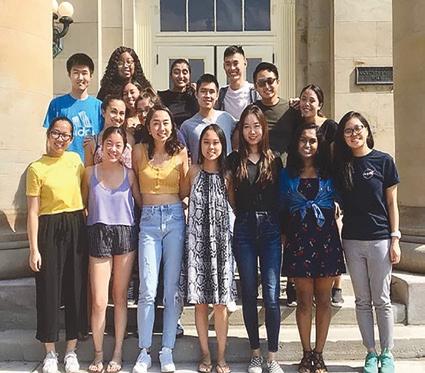
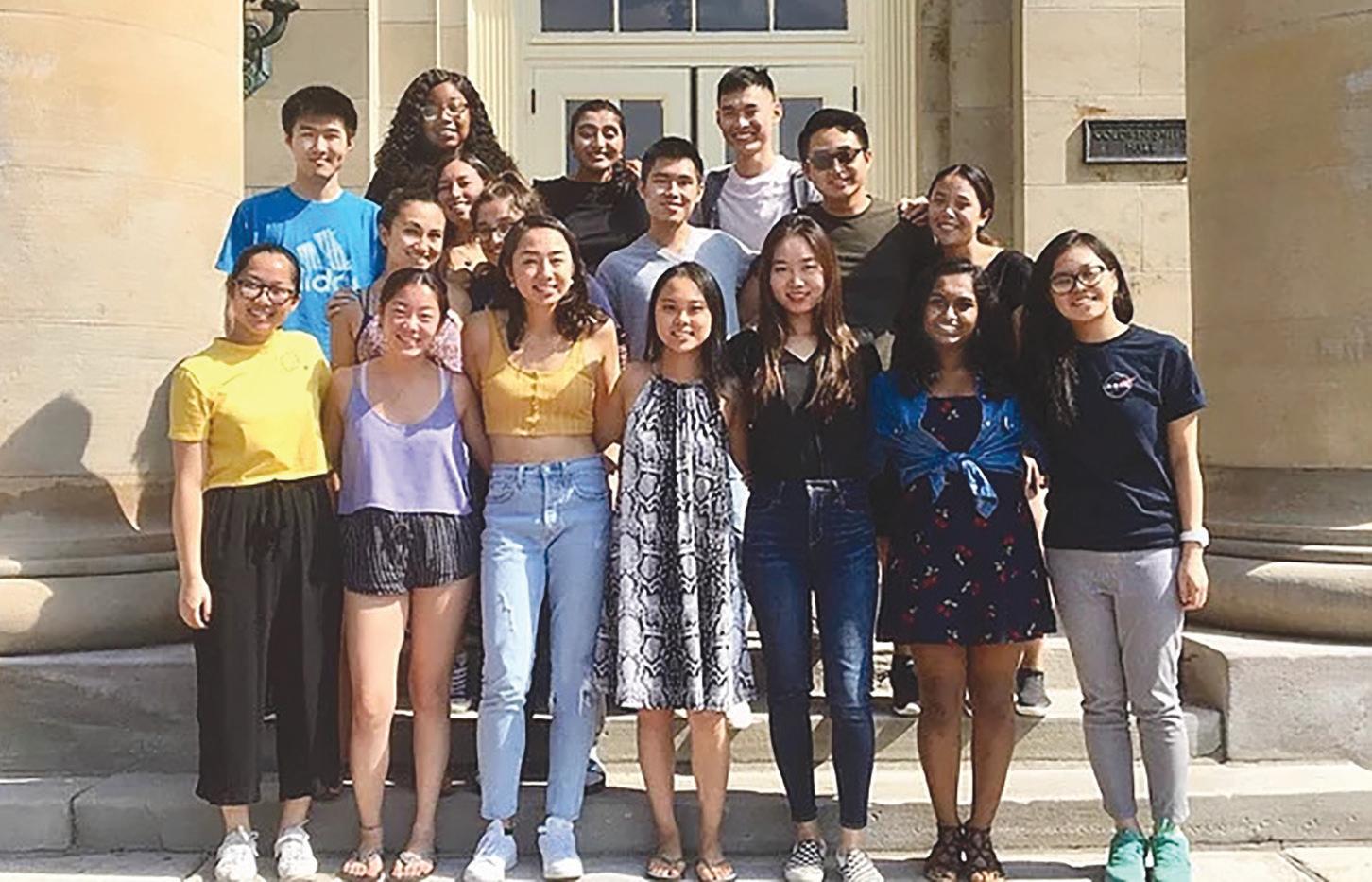
Affinity groups | Members of the 2019-2020 Cornell Center for Health Equity pose for a photo outside Goldwin Smith Hall. Current members will launch an affinity group program for marginalized students this October.
“I’ve gotten to know new students and transfers who will ask me how they can find people within our community on campus,” Lee said. “That support group [can be] hard to initially build.”
Beyond drawing from their experiences, Krishnan and Lee have also used data to better understand the challenges facing new students, particularly those with marginalized identities.
“Simone and I worked closely with our members to analyze the mental health review reports to understand what was affecting students, and how we can help improve conditions for them,” Krishnan said. They found that imposter syndrome was a common obstacle for new students.
This issue was apparent in the 2019 Cornell Undergraduate Experience Survey,
which reported that 25 percent of Black students surveyed said they felt out of place on campus “very often,” compared to 11 percent of their white peers.
While Krishnan acknowledged the efforts of the Cornell administration in fostering spaces for conversations about the challenges fitting in with different identities, she also said she felt these programs can fall short of what students need.
Krishnan and Lee reflected on their experiences in the required Intergroup Dialogue Project session they attended as first-year students, in particular recalling the awkwardness that they felt discussing their individual experiences.
“Sometimes it’s easier to talk about the issues you face with people who have seen [similar] struggles,” Krishnan said.
She explained that the affinity group program will be centered on groups where mentors and mentees have a shared identity to create a supportive and honest dialogue.
Krishnan also explained the importance of intersectionality in developing their program, and emphasized that students will be able to join multiple affinity groups, both as mentors and mentees.
While the program is only just launching, Krishnan and Lee said they hope to organize more social events, including a picnic for mentors and mentees. They also plan to collaborate with other organizations on campus, including the South Asian Council, the Black Bio-medical and Technical Association and Haven, to connect students with more community support.
Krishnan and Lee said they see the affinity program as connected with the broader goal of CCHEq, which uses research, education, service and advocacy to mitigate health disparities across diverse communities.
Lee cited results from Cornell’s Perceptions of Undergraduate Life and Student Experiences surveys, which have shown that Black, Hispanic and Asian students are more likely to report having experienced mental health challenges that impacted academic performance relative to their peers. These disparities were highest among Black and Hispanic students, and have been consistently reported in surveys since 2005.
Krishnan and Lee said they hope their program can create additional spaces of support for BIPOC and LGBTQ+ students, and students with disabilities.
Anirudh Sharma can be reached at asharma@cornellsun.com.
Cornellians Express Excitement for In-Person Labs
By BROOKE GREENFIELD Sun Staff Writer
As many courses transitioned smoothly from in person to online instruction at the start of the pandemic, Cornell laboratory instructors completely transformed their courses to accommodate for the lack of one key component — hands-on learning.
Now back in person, both students and professors expressed enthusiasm about the return to normalcy in the laboratory.
“The pedagogy is so much
better in person,” said Prof. Cole Gilbert, entomology. “I like teaching and meeting students, especially in a lab class. It’s a place where we can see who might have good hands and who’s a good thinker, and maybe [if] they’re interested in working in our labs.”
As the online instructor of Entomology 2120: Insect Biology in spring 2021, Gilbert said that students did not get to practice the essential hands-on skills of looking at insects with advanced laboratory microscopes. Still,
Gilbert said he tried his best to make the most of the limitations of virtual lab instruction.
Gilbert ordered his students digital microscopes that connect to a laptop by a USB cable, allowing students to view specimens as a dynamic image on their computer screen. While not as complex as the equipment used for in-person labs, the digital microscopes still had a wide array of functions to facilitate learning, such as recording videos of specimens students were viewing.
Even with equipment in place, students had to overcome another barrier to learning in an online entomology lab — finding bugs to look at. Typically, students can observe specimens that the University provides.
But Gilbert explained that for remote labs, students were sent supplies — such as a bug net, killing jar or collection box — to collect their own insects to view in their microscopes. Students had to venture into their yards and scavenge for insects to learn about ecological diversity as well as insects’ behavioral characteristics.
For some experiments, data collection was another challenge to replicate online, Gilbert said.
Data that students collect on their own is often imperfect, with outliers and obscure data points that students must account for.
To account for these outliers, Gilbert prepared artificial data sets so students could have a similar feel as if they were collecting it themselves with experimental error.
Now that students can perform their own procedures again, some — like Archana Sadangi ’22 — said they are excited to have more authority in their learning.
“Being back in person makes it feel more like a lab class again, as opposed to a different kind of lecture class,” Sadangi said.
The lecture format of lab classes involved professors performing the lab for students. Now that students are back to completing the procedure on their own, they are a lot more involved with the learning process.
As a student of Molecular Biology and Genetics 4400: Laboratory in Biochemistry and Molecular Biology, Sadangi said she can set up her own experiments and collect results, which allow her to understand how lab techniques work on a deeper level.
“It is closer to if we were in an actual research lab, where we are learning to do all of the techniques on top of the conceptual background information,” Sadangi said.
According to Sadangi, online laboratory courses focused on experimental design and walked students through each step. Now, Sadangi and her classmates must carefully set up and practice their own experiments — a more challenging yet enriching experience.
Though Sadangi said the concepts were taught well online, she said if she were asked to go into a lab and perform it without looking up information, she would struggle to do so.
“It’s different when you have actually done something versus when you’ve seen it done,” Sadangi said.
Despite the hurdles Gilbert and his students had to overcome in his online course, Gilbert said he was impressed by the way students adapted and succeeded in the class.
“[We made] the best of a bad situation,” Gilbert said.
Brooke Greenfeld can be reached at bgreenfeld@cornellsun.com.
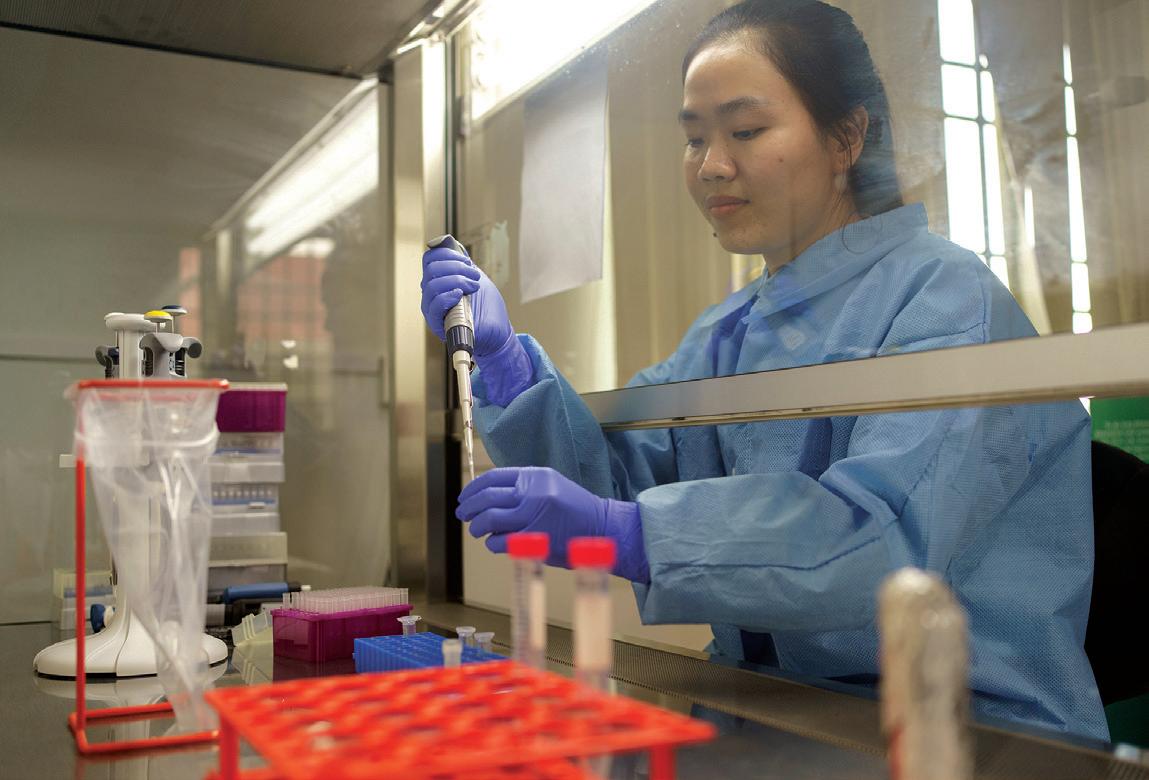
Pipetting precision | Gone are the days of online lab simulators — students are now pipetting their specimens in person.